Starting a new sewing project feels like opening a door to endless creativity and personal expression, but a cluttered workspace can quickly dampen that excitement. When your fabric scraps are overflowing and your thread spools are a tangled mess, finding the right supplies takes longer than the actual stitching. An organized sewing environment is not just about aesthetics; it is essential for maintaining your creative flow and protecting your expensive equipment. By implementing smart storage solutions, you can transform a chaotic room into a serene sanctuary where every needle and notion has a dedicated home. This guide explores thirty practical ways to reclaim your space and enhance your daily crafting experience.
1. Sewing Pegboard Wall
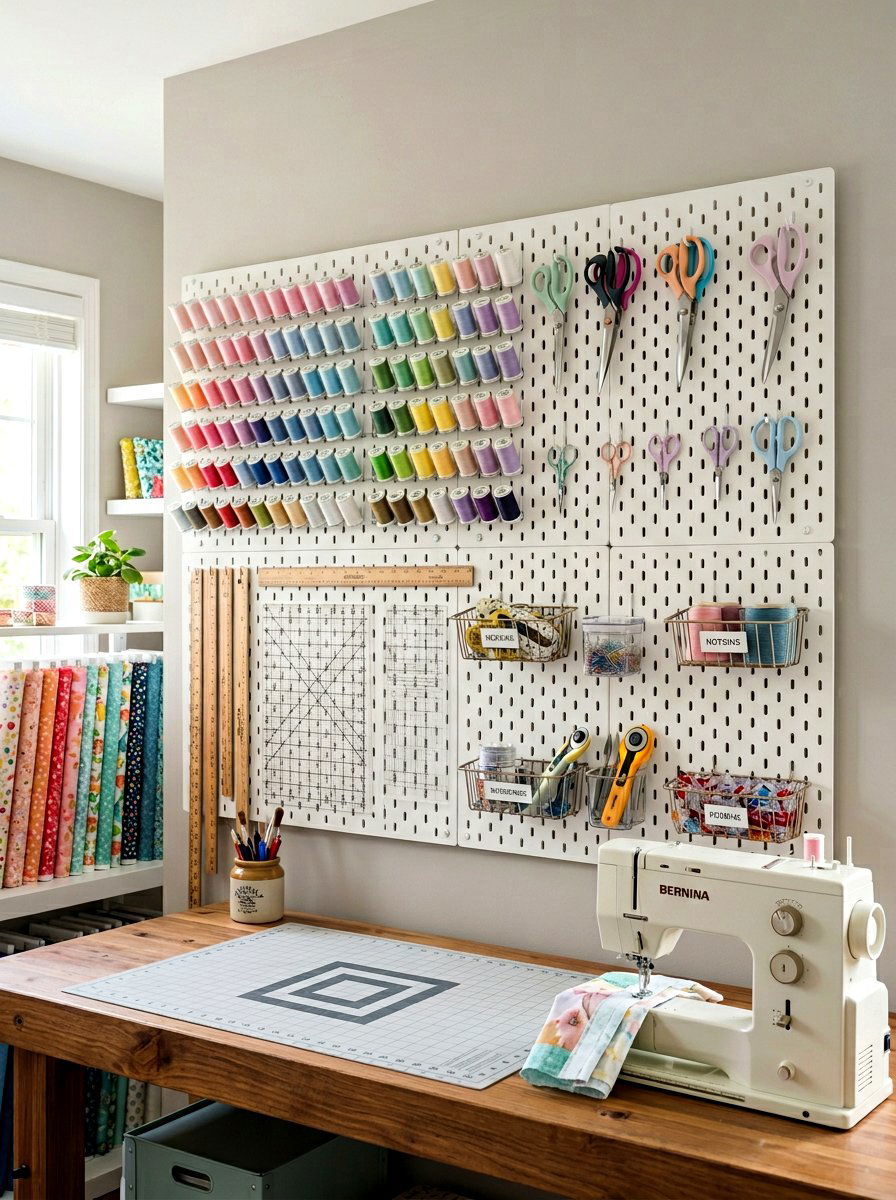
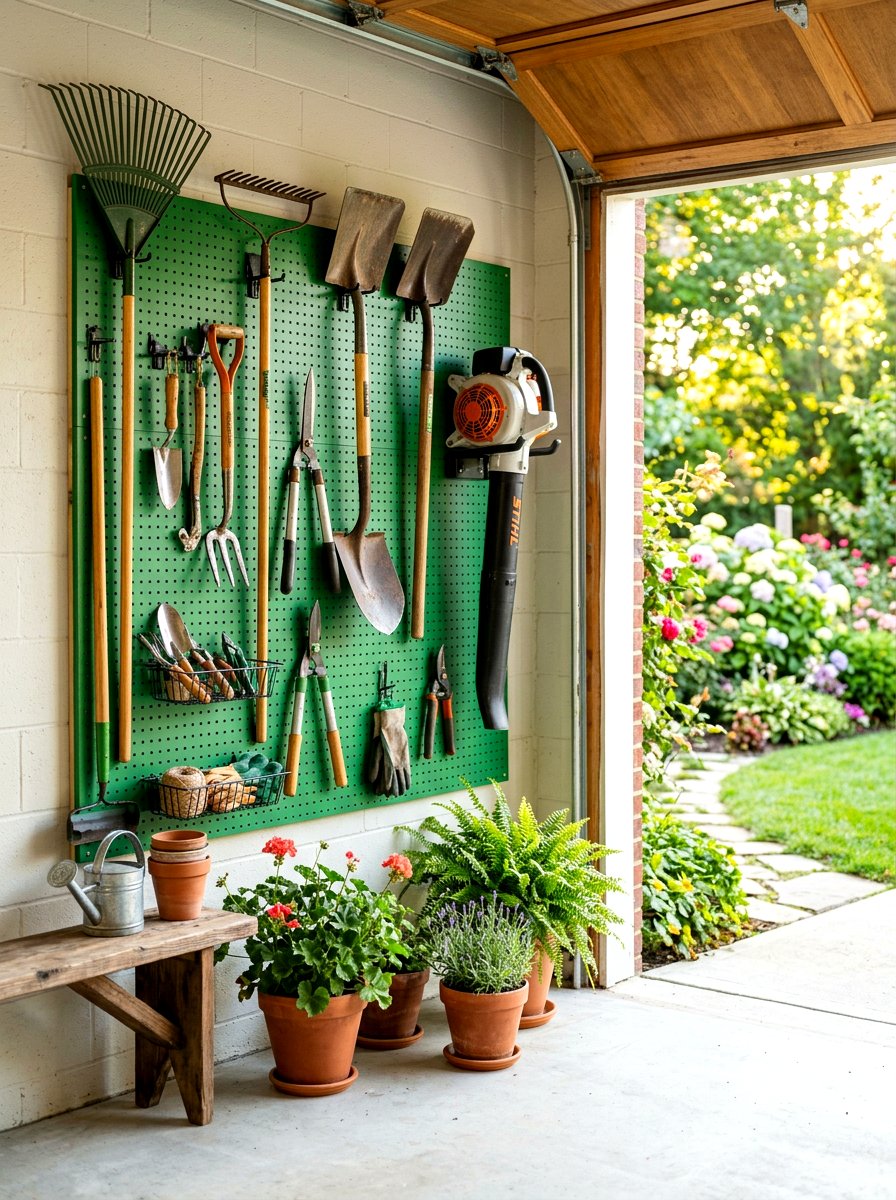
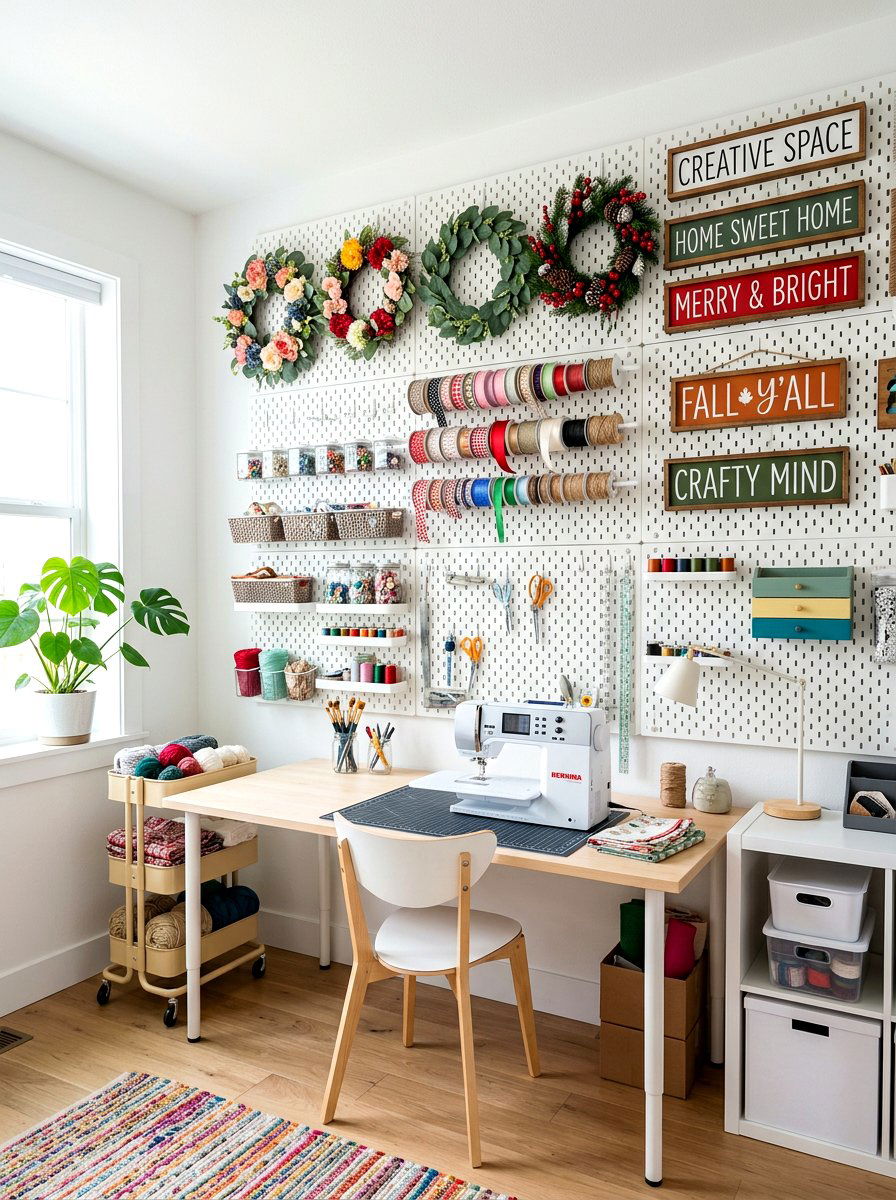
Imagine walking into your creative space and seeing every single scissor, ruler, and marking tool perfectly displayed right at eye level. A pegboard system offers incredible flexibility for anyone who loves to keep their most-used items within arm 's reach while working on a garment. You can paint the board a bright white or a soft pastel color to match your room' s aesthetic perfectly. Adding small hooks and wire baskets allows you to customize the layout whenever your collection of tools grows or changes. This vertical solution keeps your desk surface clear for cutting fabric and prevents small items from getting lost in deep drawers. It truly transforms a messy wall into a functional and beautiful art display.
2. Thread Storage Rack
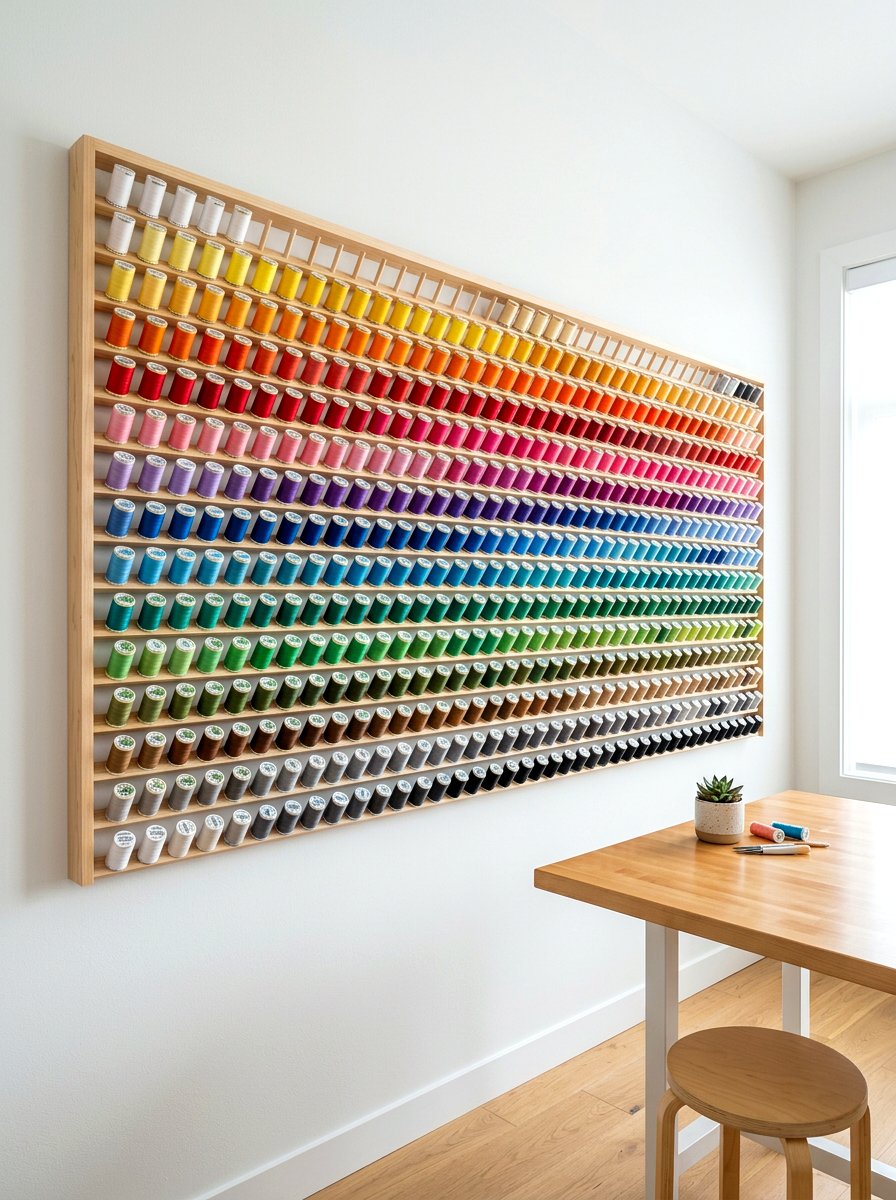
Have you ever struggled to find the exact shade of blue thread while your sewing machine is already threaded and waiting? A dedicated thread storage rack solve this problem by displaying your colorful spools in neat, visible rows that resemble a rainbow. These racks can be mounted directly onto the wall or placed on a tabletop for easy access during projects. Many sewists prefer wooden racks because they are sturdy and provide a classic look that fits well with traditional sewing furniture. Organizing your thread by color family not only makes it easier to find what you need but also protects the thread from becoming tangled or dusty over time.
3. Rolling Sewing Cart
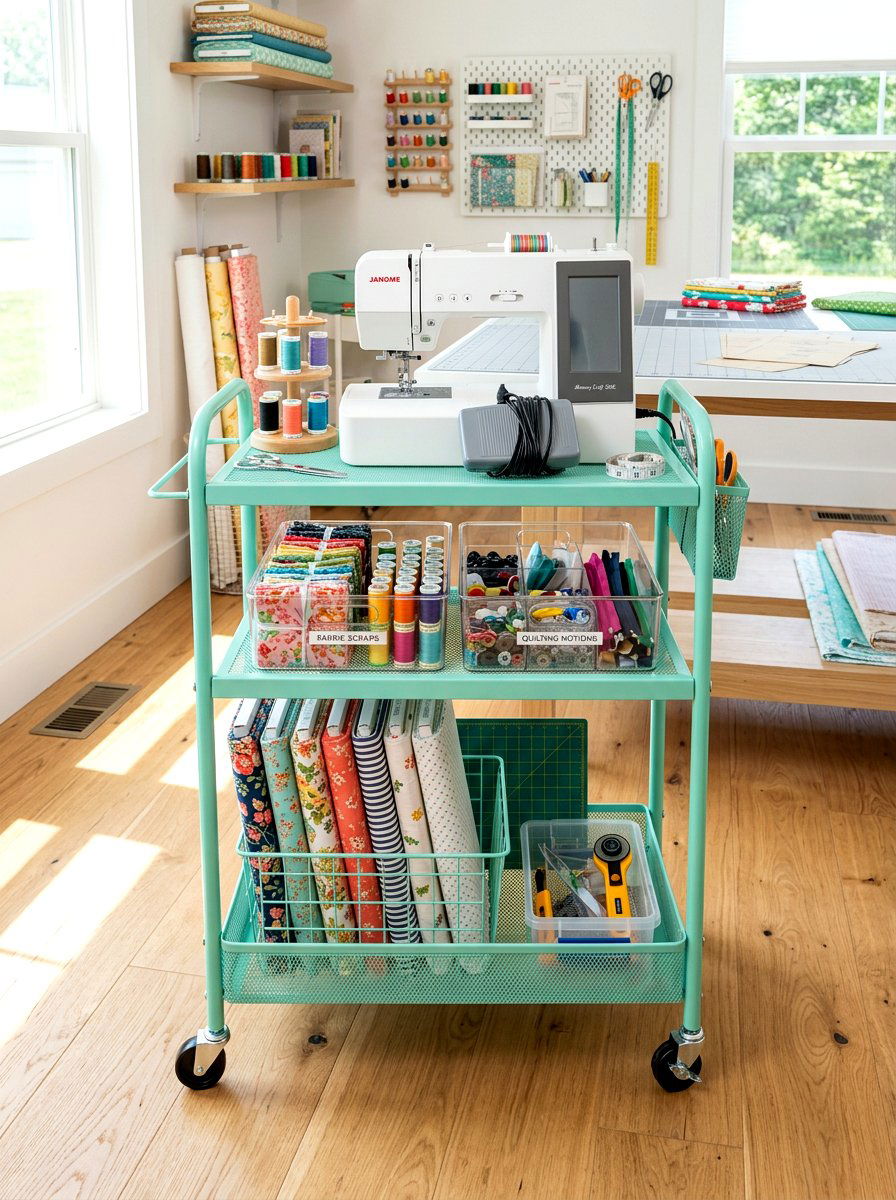
A rolling sewing cart is a game-changer for anyone who works in a multi-purpose room or lacks a permanent crafting corner. These mobile units usually feature three tiers of baskets, making them perfect for holding your sewing machine, iron, and pressing mat all in one place. You can easily glide the cart out of a closet when inspiration strikes and wheel it back out of sight when guests arrive. The deep bins are excellent for storing current works in progress, ensuring that your fabric pieces stay together throughout the construction process. It provides a compact yet highly efficient workstation that adapts to your daily needs and maximizes every square inch.
4. Fabric Storage Cabinet
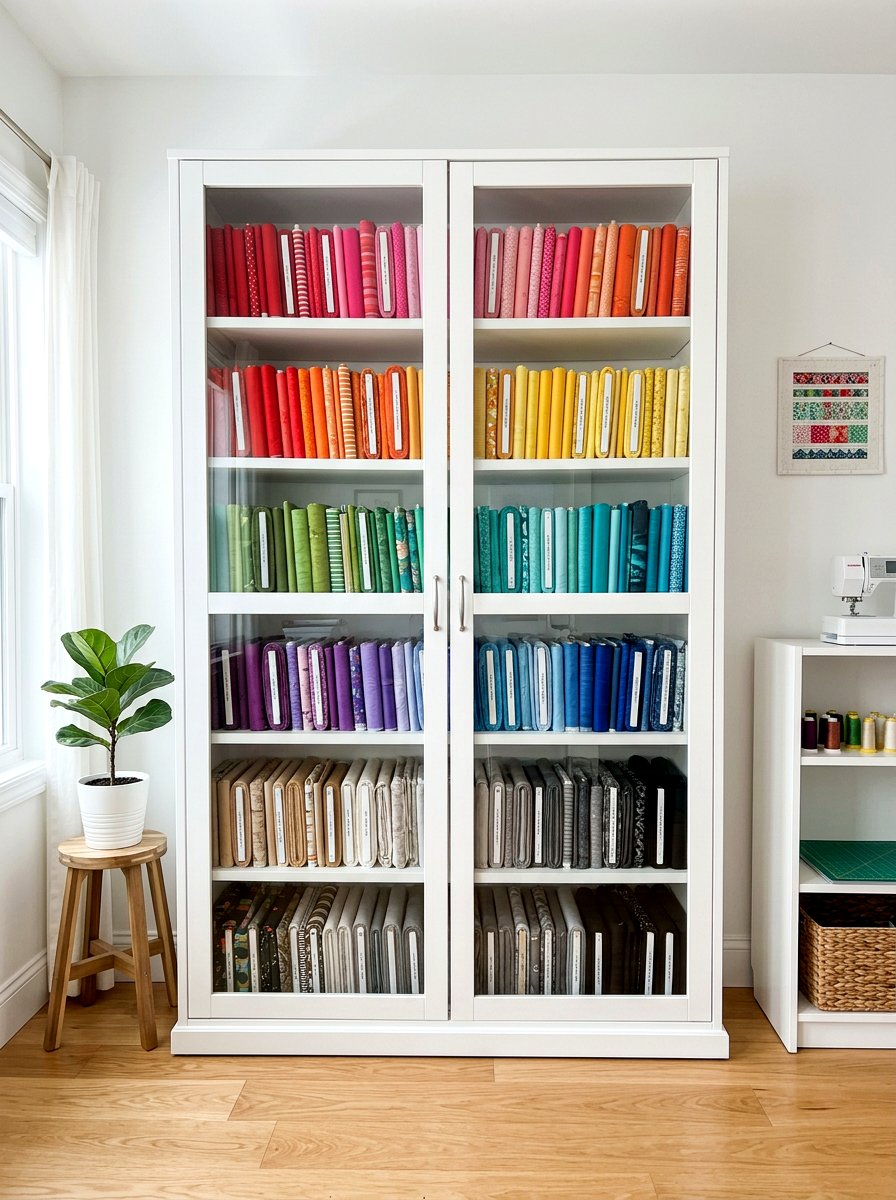
Storing a growing fabric stash requires a solution that prevents deep creases and protects delicate fibers from harmful sunlight. A glass-front fabric storage cabinet is an elegant way to keep your textiles organized while allowing you to enjoy their colors and patterns daily. You can fold your yardage onto comic book boards to create uniform "mini bolts" that stand neatly on the shelves like books. This method prevents the bottom of a stack from becoming a wrinkled mess and makes it simple to slide out exactly what you need. A closed cabinet also keeps dust away, ensuring your expensive silks and cottons remain in pristine condition for your next big project.
5. Sewing Table Drawers
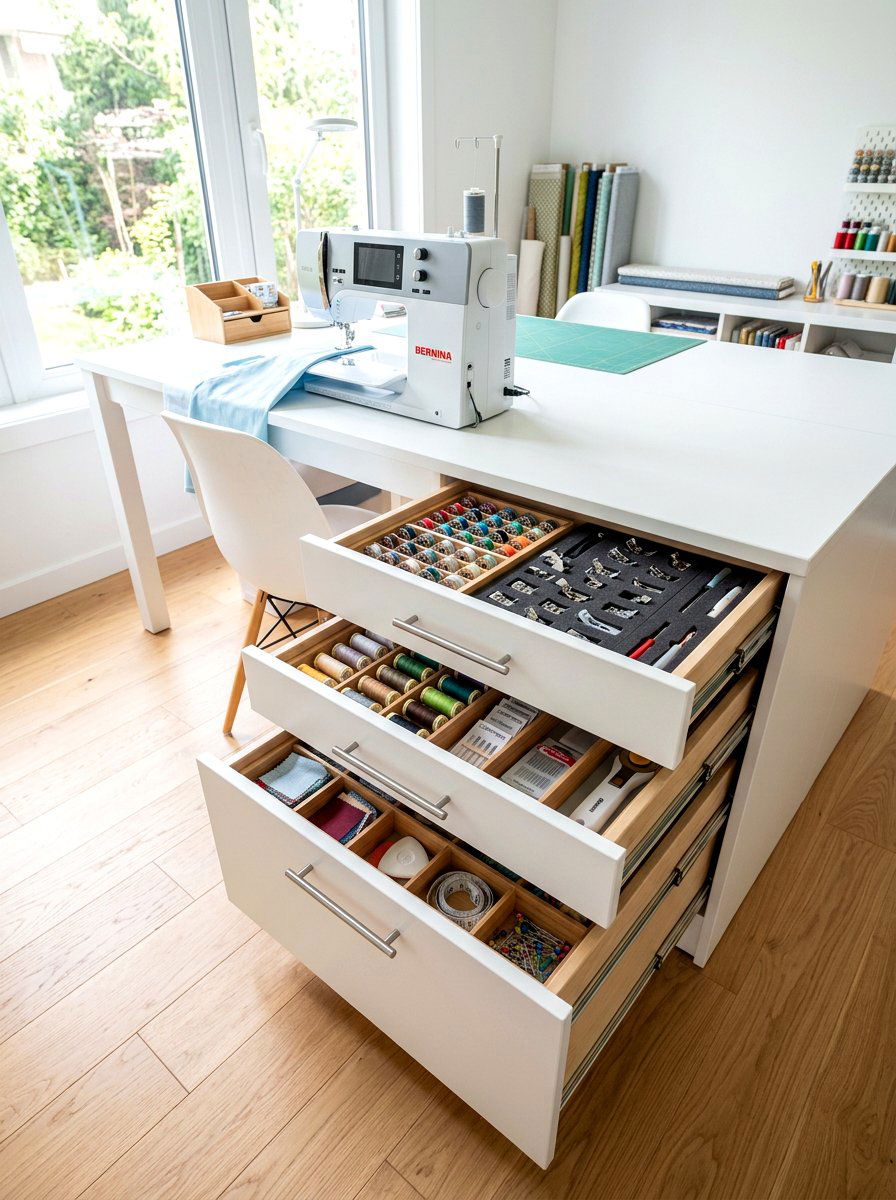
A high-quality sewing table with integrated drawers is the foundation of a well-organized workspace where everything has a specific place. These drawers are often designed with shallow profiles, which are perfect for holding bobbin cases, seam rippers, and various presser feet. Adding customizable dividers inside the drawers prevents your small tools from sliding around every time you open or close them. This setup ensures that your most vital instruments are always within reach without cluttering the main workspace where you guide your fabric. Having a dedicated drawer for machine maintenance tools like oil and lint brushes helps you keep your machine running smoothly and extends its overall life.
6. Magnetic Pin Holder
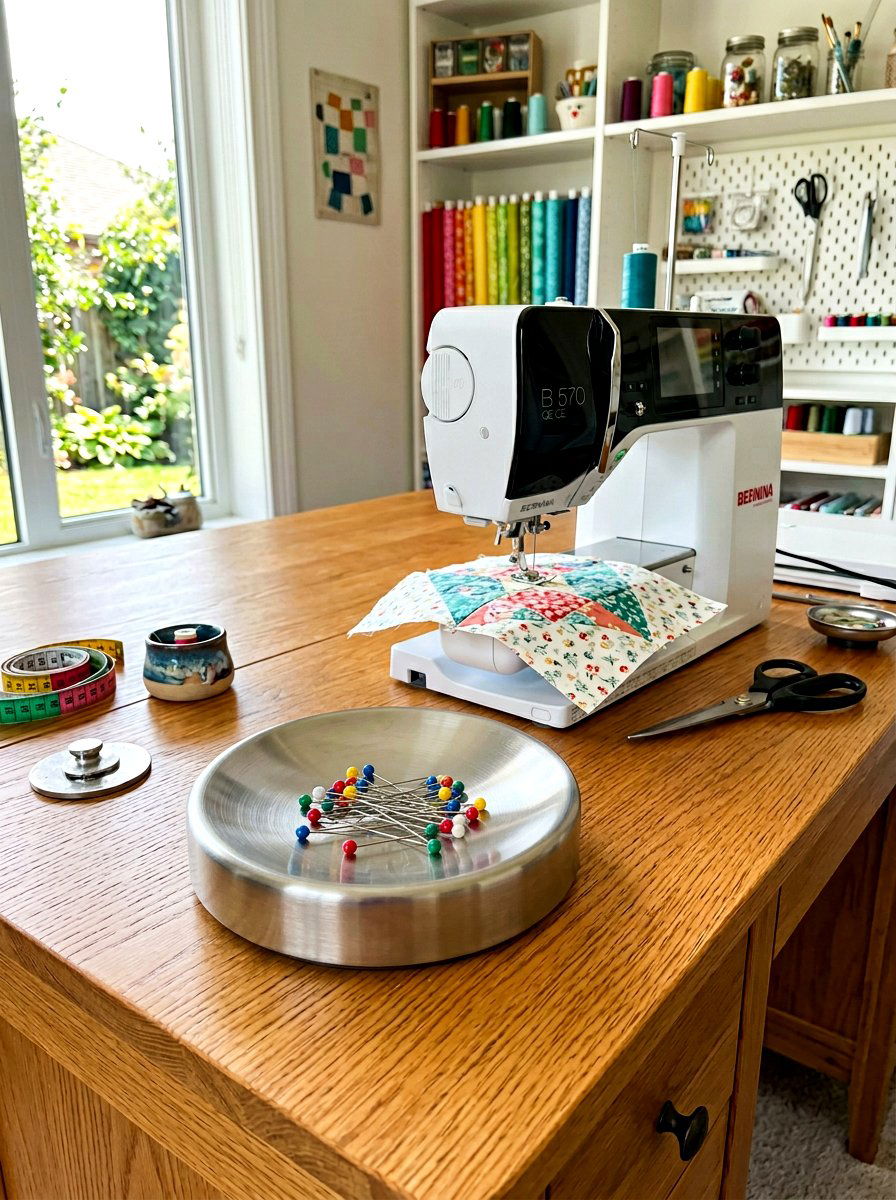
Pins and needles are notorious for disappearing into carpets or hiding in the folds of fabric, creating a potential safety hazard. A magnetic pin holder is a simple yet effective tool that keeps your sharp notions securely in one place with minimal effort. Unlike traditional fabric pincushions, a magnetic dish allows you to simply hover your hand over it to drop pins safely. You can also use it to quickly sweep over your floor to pick up any stray needles that might have fallen during a frantic sewing session. Many versions come with a protective lid, making them portable and safe to toss into a travel kit for classes or retreats.
7. Clear Fabric Bins
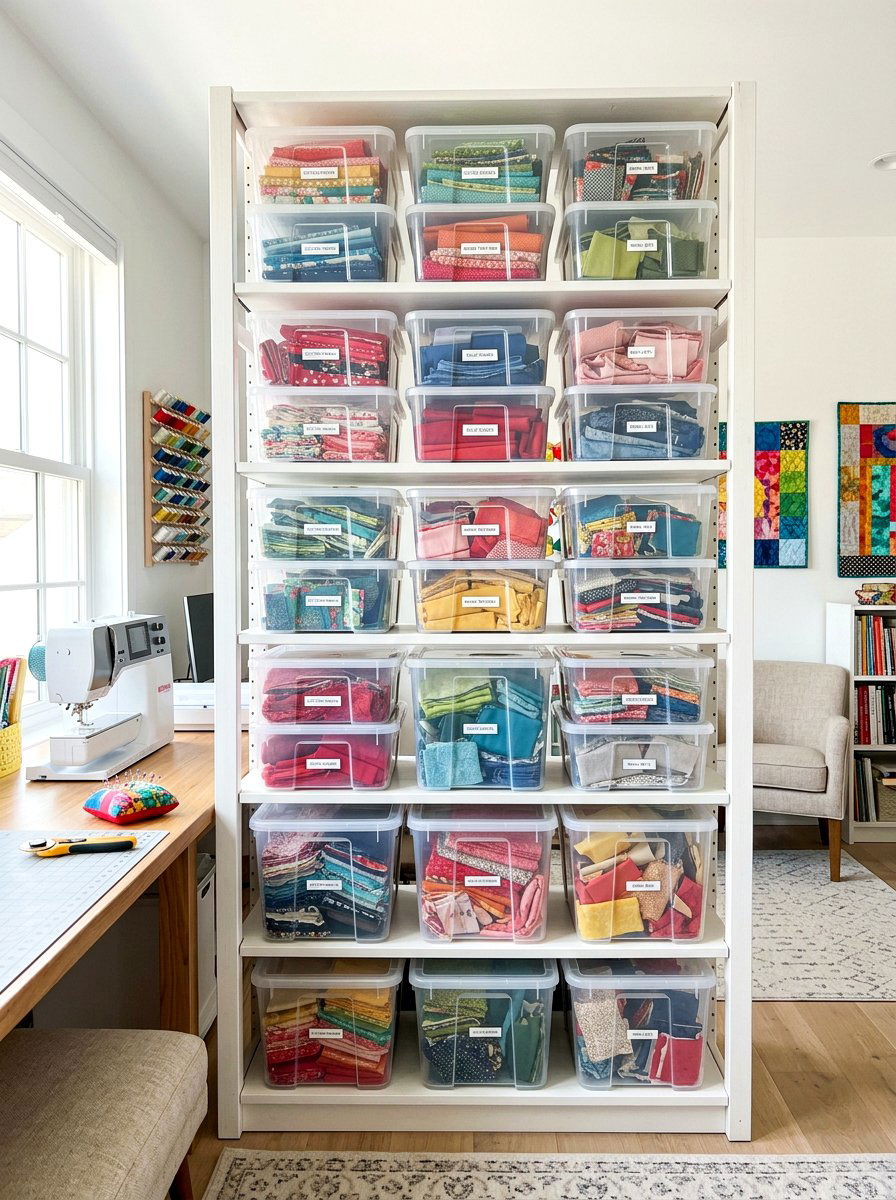
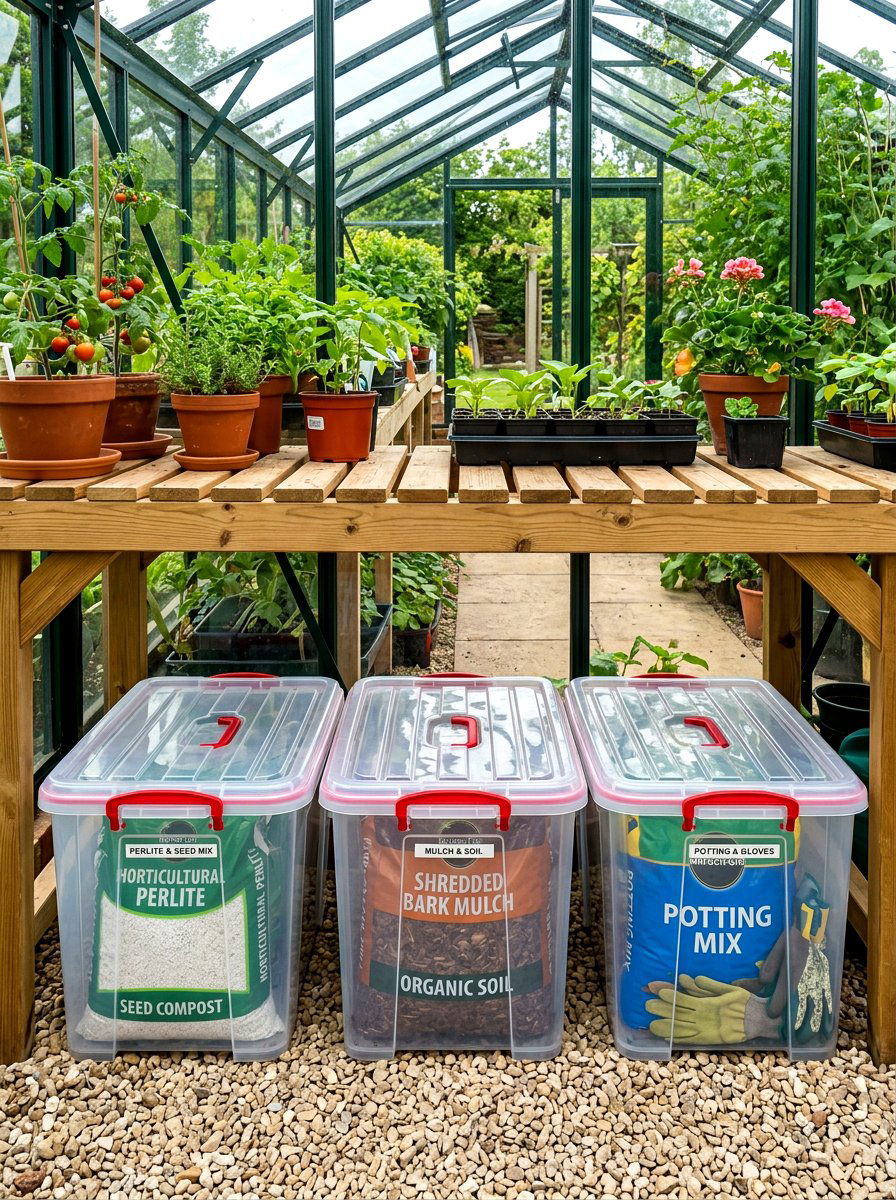
Visibility is the most important factor when you are trying to manage a large collection of fabric scraps and fat quarters. Clear fabric bins allow you to see exactly what is inside without having to unstack every box or dig through a dark cupboard. These containers are easily stackable, allowing you to utilize vertical space in your closet or on open shelving units effectively. You can sort your scraps by color or fabric type, such as knits, woven cottons, or upholstery fabrics, to streamline your selection process. Keeping the lids closed ensures that your materials stay clean and free from pet hair or household dust while they wait to be used.
8. Hanging Notion Organizer
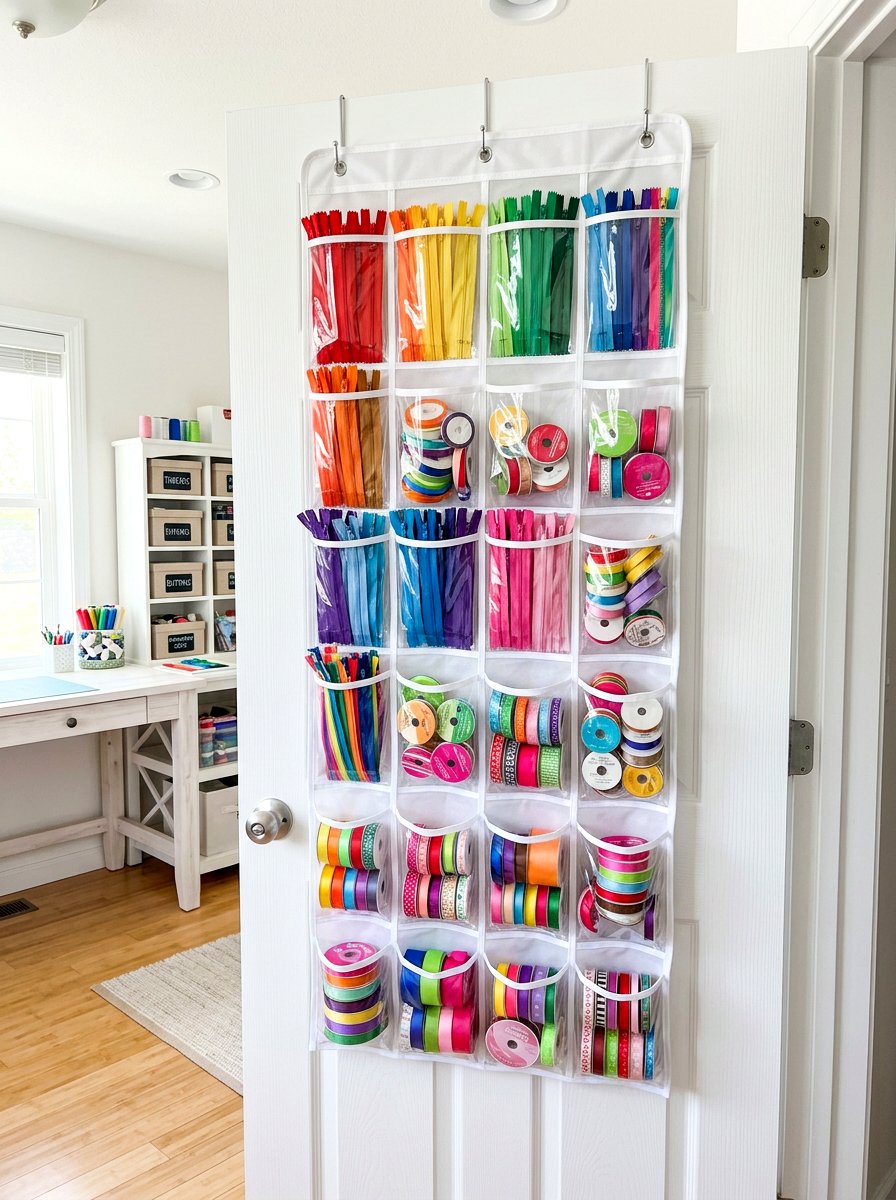
When you are working in a small apartment, utilizing the back of a door is one of the smartest storage moves you can make. A hanging notion organizer with clear pockets is perfect for storing zippers, bias tapes, and long rolls of elastic that often get tangled in drawers. Because the pockets are transparent, you can easily inventory your supplies at a glance and avoid buying duplicates of things you already own. This solution keeps your small items organized vertically, freeing up valuable floor and desk space for your larger equipment. It is an affordable and non-permanent way to add significant storage capacity to any room without needing power tools.
9. Vintage Sewing Suitcase
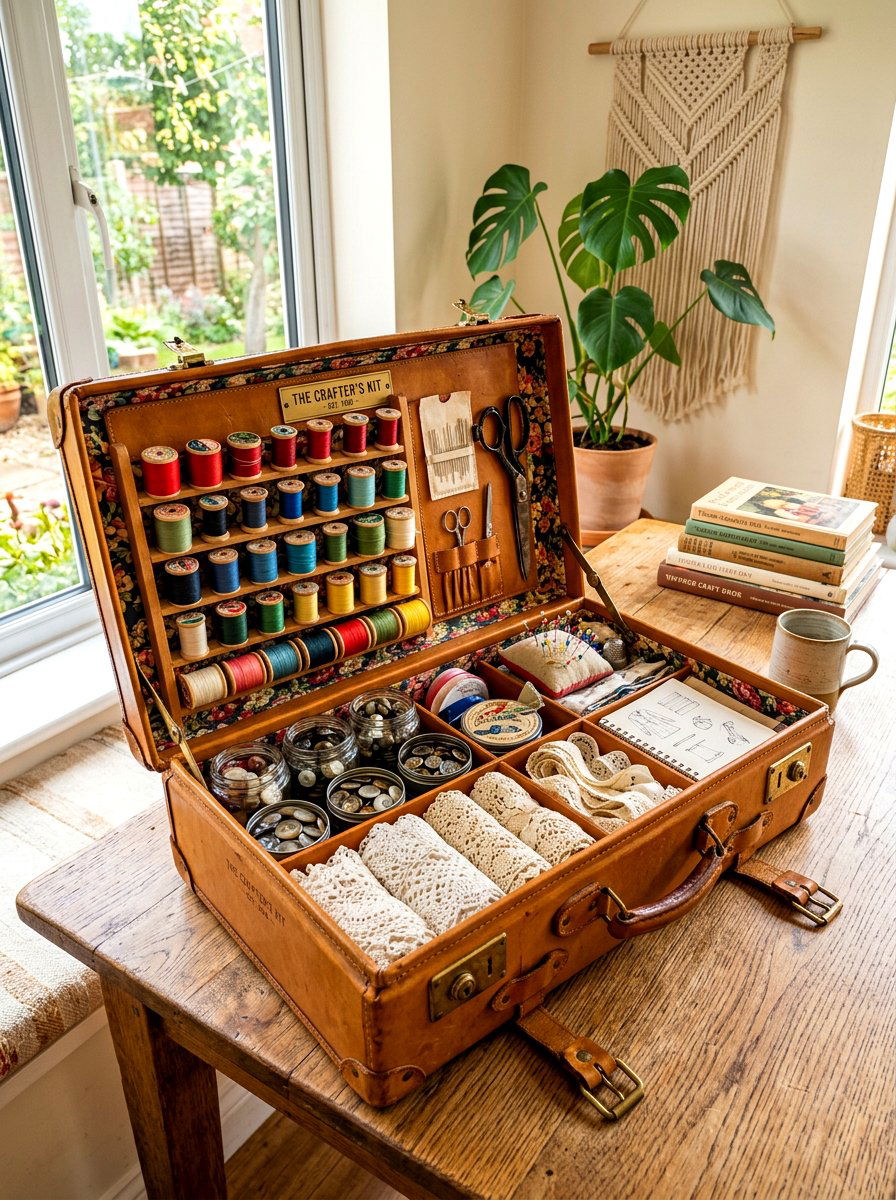
There is something incredibly charming about repurposing a vintage sewing suitcase to hold your most precious lace trims and antique buttons. These hard-shell cases provide excellent protection for delicate items and add a touch of nostalgic style to your craft room decor. You can use the internal pockets to keep your hand-sewing needles and embroidery hoops organized for on-the-go projects like sashiko or quilting. If you frequently travel to sewing circles or workshops, a dedicated suitcase makes it easy to pack up your essentials and go. It serves as both a functional storage unit and a beautiful piece of furniture that tells a story about your love for the craft.
10. Ribbon Spool Holder
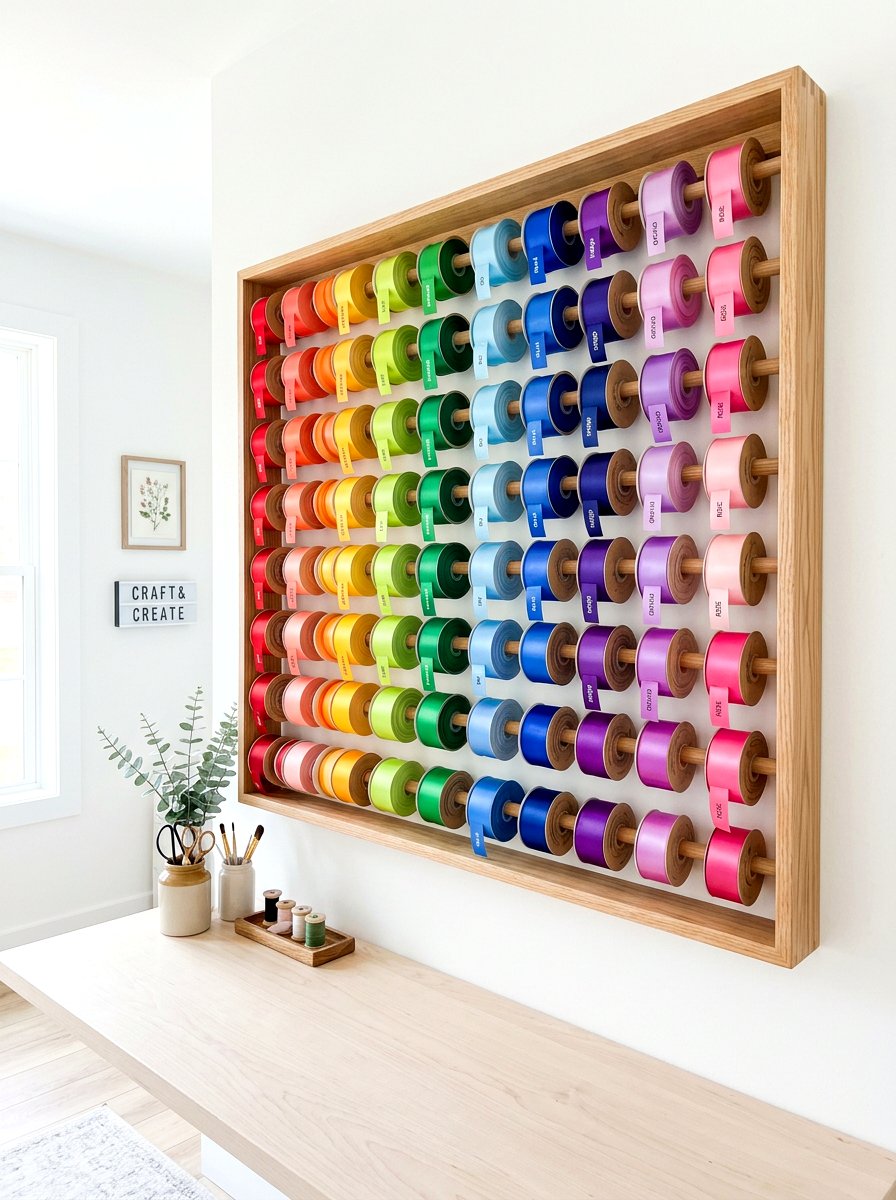
Satin ribbons and decorative trims can quickly become a tangled "bird's nest" if they are simply tossed into a drawer without any support. A ribbon spool holder keeps your rolls neat and allows you to pull off exactly the length you need without removing the entire spool. You can build a simple wall-mounted rack using wooden dowels or buy a tiered desktop version that fits your aesthetic. This system prevents the ends of the ribbon from fraying and keeps the delicate surfaces of the trim from getting crushed. Organizing them by width or color creates a stunning visual display that can inspire your next garment embellishment or craft project.
11. Sewing Pattern Boxes
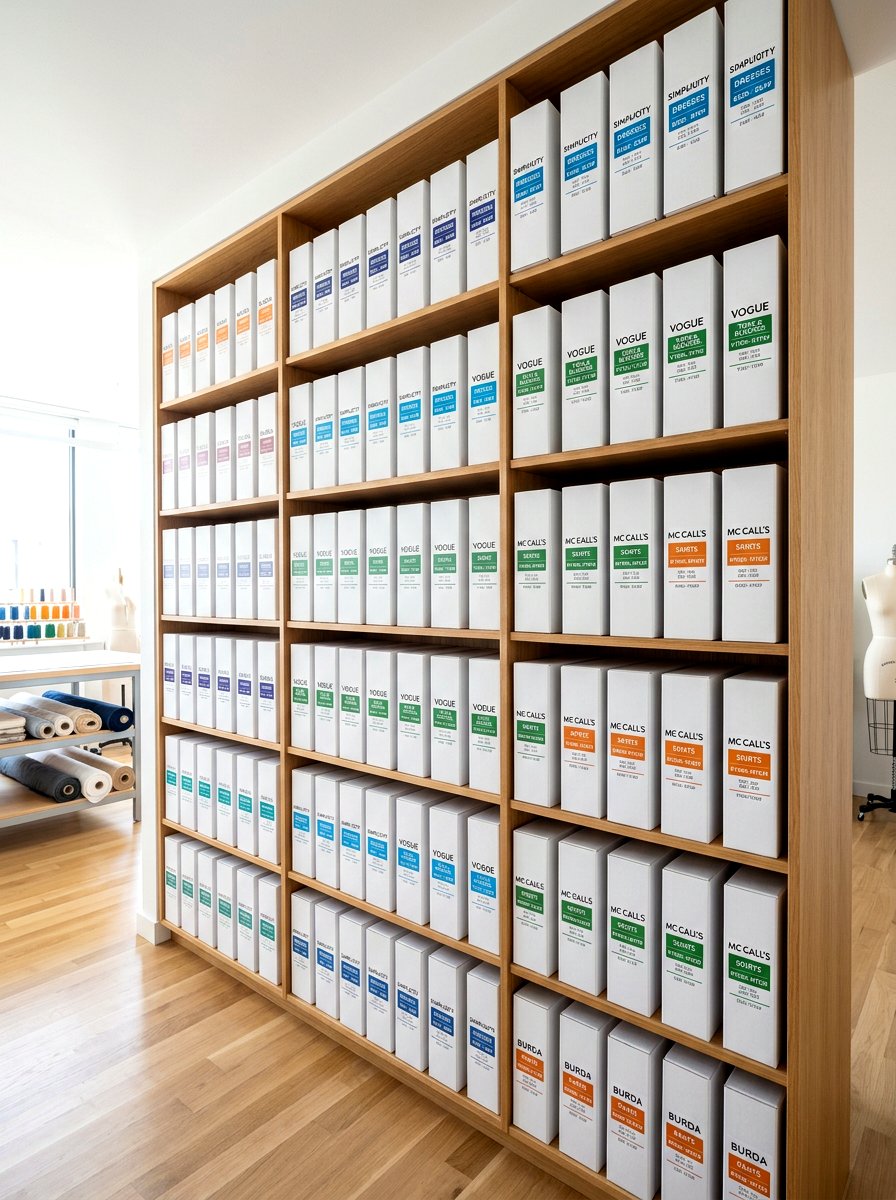
Sewing patterns are thin and fragile, making them difficult to store without causing damage to the delicate tissue paper inside. Specialized sewing pattern boxes allow you to file your envelopes vertically so you can flip through them like a library catalog. You can use dividers to categorize your patterns by garment type, such as dresses, trousers, or children's clothing, to save time during the planning phase. For PDF patterns, using large envelopes or binders with sheet protectors keeps your printed instructions and taped pieces together and flat. Storing these boxes on a shelf keeps your collection organized and prevents the edges of the envelopes from becoming bent or torn over time.
12. Closet Sewing Space
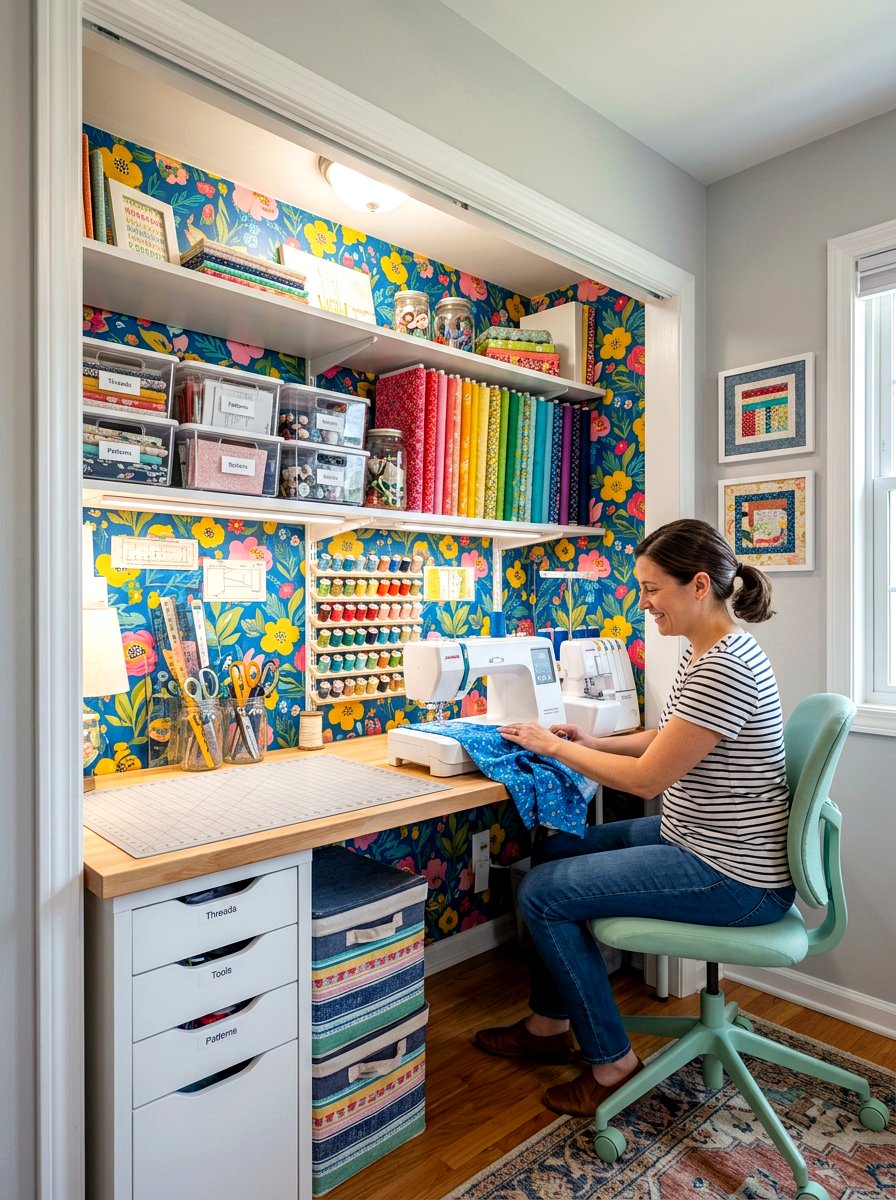
Transforming a spare closet into a dedicated sewing space is a brilliant way to hide your creative "mess" while maintaining a functional home. By removing the lower clothing rod and installing a sturdy desktop, you can create a compact studio that can be closed away at a moment's notice. Use the upper shelves for bulky fabric bins and the back of the door for a thread rack or pegboard to maximize every inch. This setup is ideal for those who sew in a bedroom or living area and want to maintain a tidy appearance for guests. It creates a cozy "cloffice" environment that feels like a private retreat for your favorite hobby.
13. Under Table Storage
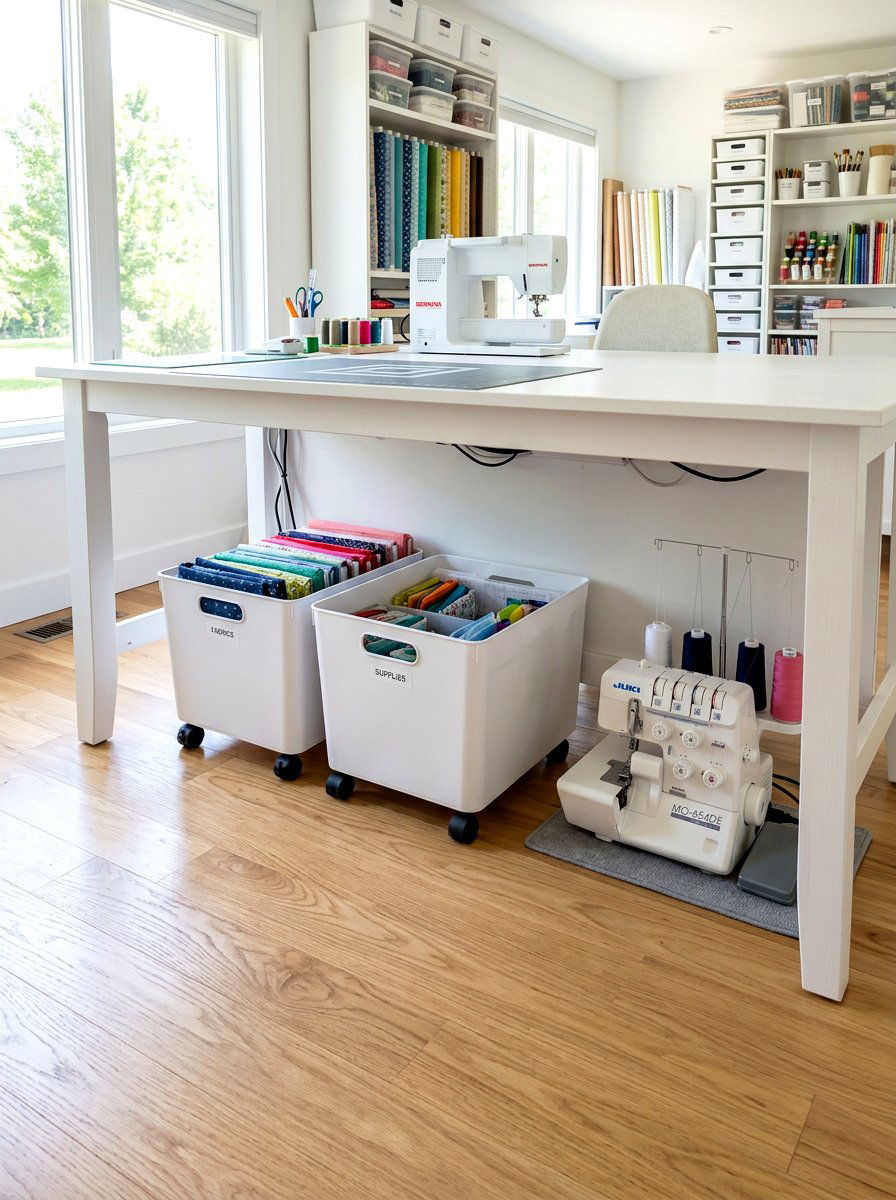
The space beneath your sewing desk is often overlooked, but it is a prime location for storing heavy items or large cutting mats. Sliding bins or low-profile rolling units can tuck neatly under your table, keeping your floor clear while providing easy access to supplies. This is an excellent spot for storing your serger or a secondary sewing machine when they are not in active use. You can also keep your iron and heavy-duty pressing equipment here to keep your work surface uncluttered. Utilizing this hidden area ensures that your room feels spacious and organized, even if you are working with a significant amount of professional-grade sewing gear.
14. Sewing Bobbin Ring
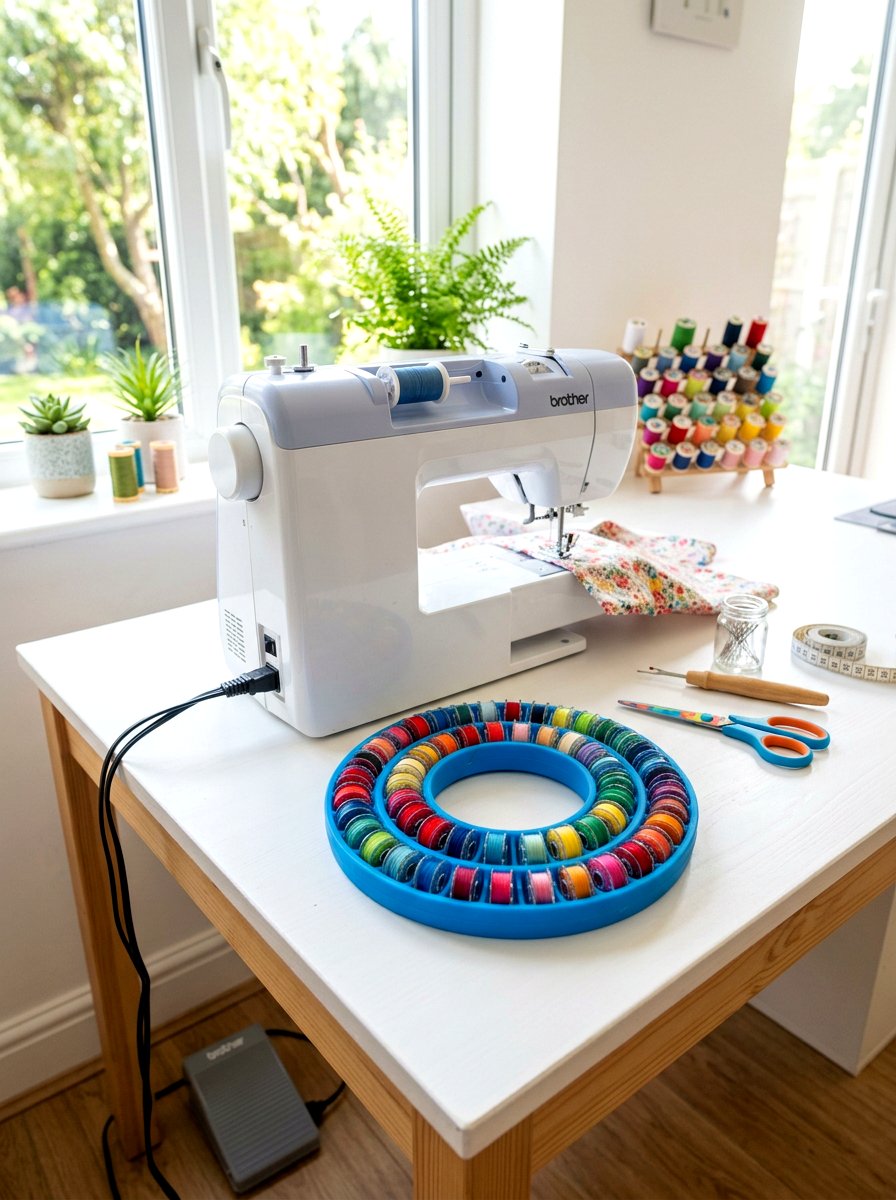
Bobbins are tiny and notorious for unwinding, creating a tangled mess of loose threads in the bottom of your sewing kit. A silicone sewing bobbin ring is a clever invention that holds dozens of bobbins securely in place using friction. This flexible ring prevents the threads from tangling and allows you to see all your available colors at a single glance. Because the bobbins are held tightly, you can toss the entire ring into a travel bag without worrying about a thread disaster. It is a simple, inexpensive, and highly effective solution for one of the most common organizational headaches that every person who sews eventually faces.
15. Modular Shelving Unit
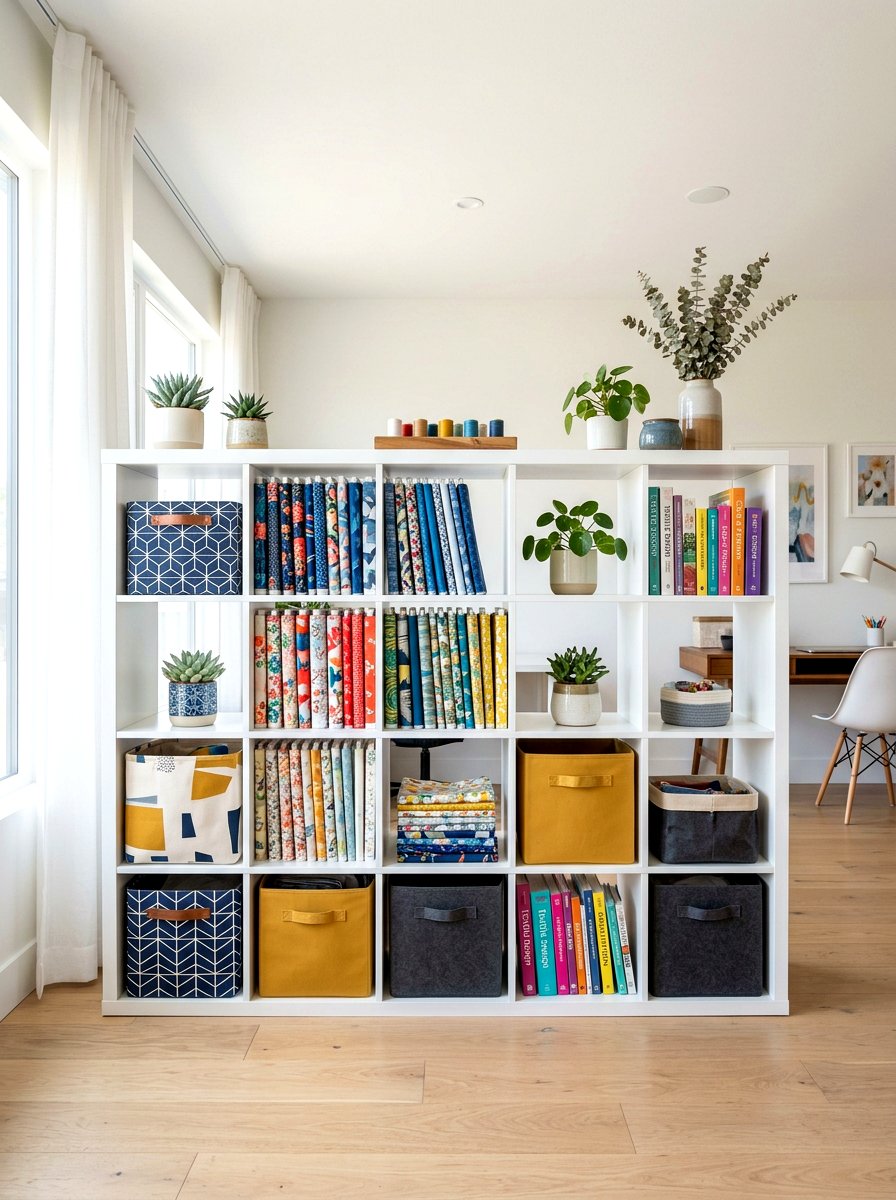
A modular shelving unit provides the ultimate flexibility for a growing craft room because you can add more sections as your collection of supplies expands. These units often feature square cubbies that perfectly fit standardized bins, baskets, or even your sewing machine when it is being stored. You can mix and match open shelves for displaying beautiful fabric bolts with closed drawers for hiding away less attractive notions and tools. The flat top of a waist-high unit can also serve as an extra surface for a small ironing board or a photography station. This versatile furniture piece anchors the room and provides a structured home for everything from heavy books to delicate lace.
16. Mason Jar Organization
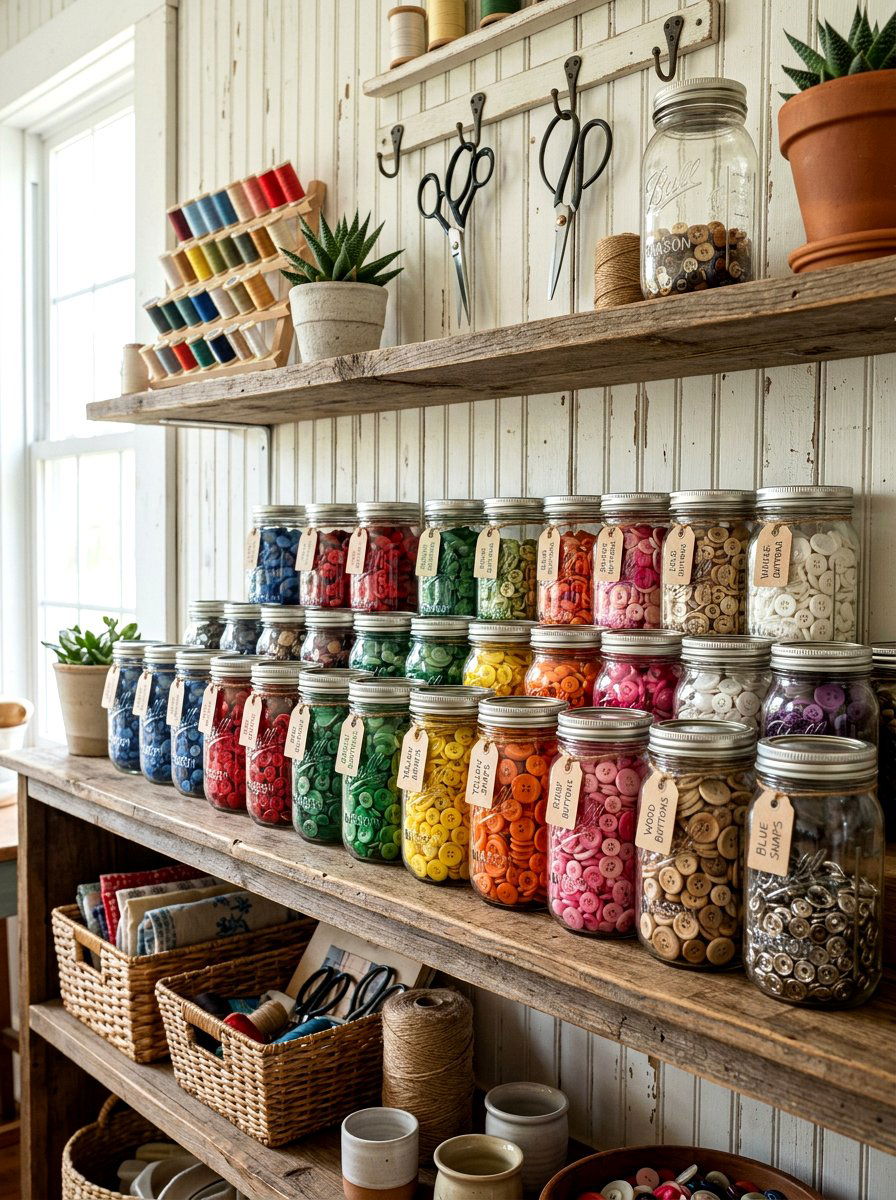
Mason jars are a classic and affordable way to store small, colorful items like buttons, snaps, and safety pins. The clear glass allows you to appreciate the visual texture of your supplies while keeping them sorted and protected from humidity or dust. You can even glue a small pincushion to the lid of a jar to create a charming all-in-one sewing kit for hand-stitching projects. Lining up a row of jars on a shelf creates a beautiful, vintage-inspired look that adds personality to your workspace. They are easy to relabel and wash, making them a sustainable choice for anyone looking to reduce plastic waste in their creative environment.
17. Pull Out Drawers
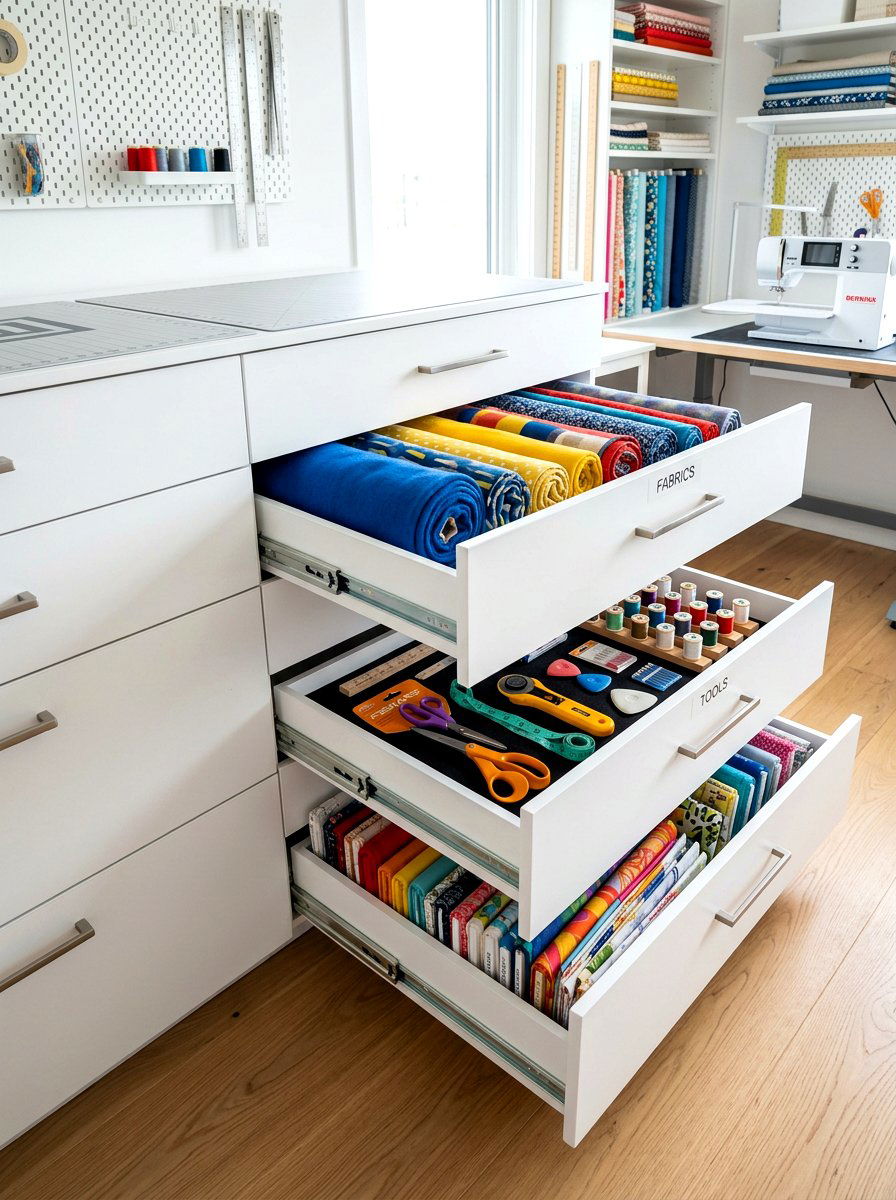
Deep pull-out drawers are an excellent choice for storing large pieces of fabric or heavy-duty sewing equipment that is difficult to reach on high shelves. These drawers allow you to see the entire contents at once without having to dig through layers of supplies. You can use drawer dividers to create specialized zones for different types of notions, such as elastic in one section and zippers in another. This prevents your items from shifting and becoming disorganized over time, ensuring a stress-free experience every time you start a new project. Investing in high-quality drawer slides ensures that even your heaviest fabric stash can be accessed with a smooth and effortless motion.
18. Corner Sewing Station
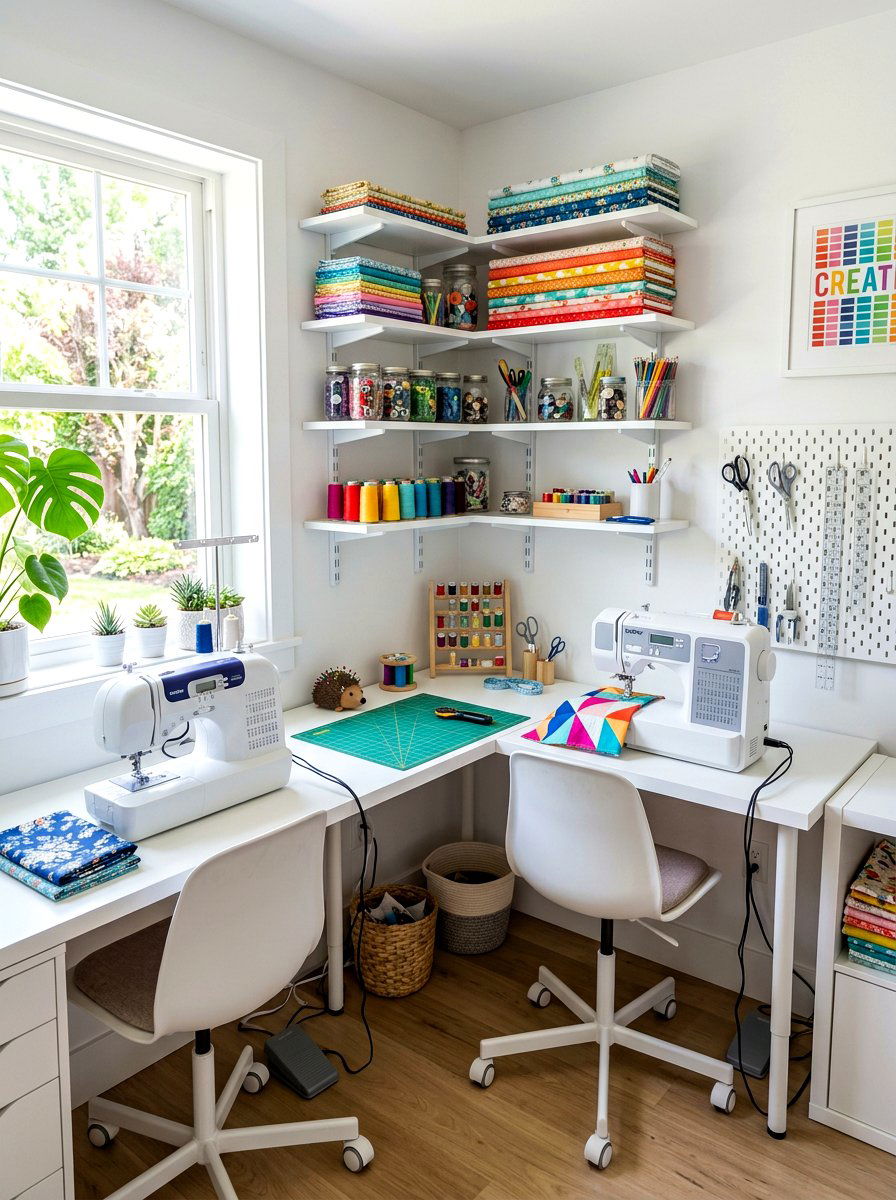
A corner sewing station is a smart architectural solution for small rooms because it utilizes space that often goes to waste. An L-shaped desk provides a large surface area where you can have your sewing machine on one side and your serger on the other. This layout allows you to simply pivot your chair to switch between different machines, making your workflow much more efficient and productive. You can install floating shelves above the desk to hold your thread racks and pattern boxes, keeping your main workspace clear. This dedicated "zone" helps define your creative area, even if it is located in the corner of a larger multi-use room.
19. Over Door Organizer
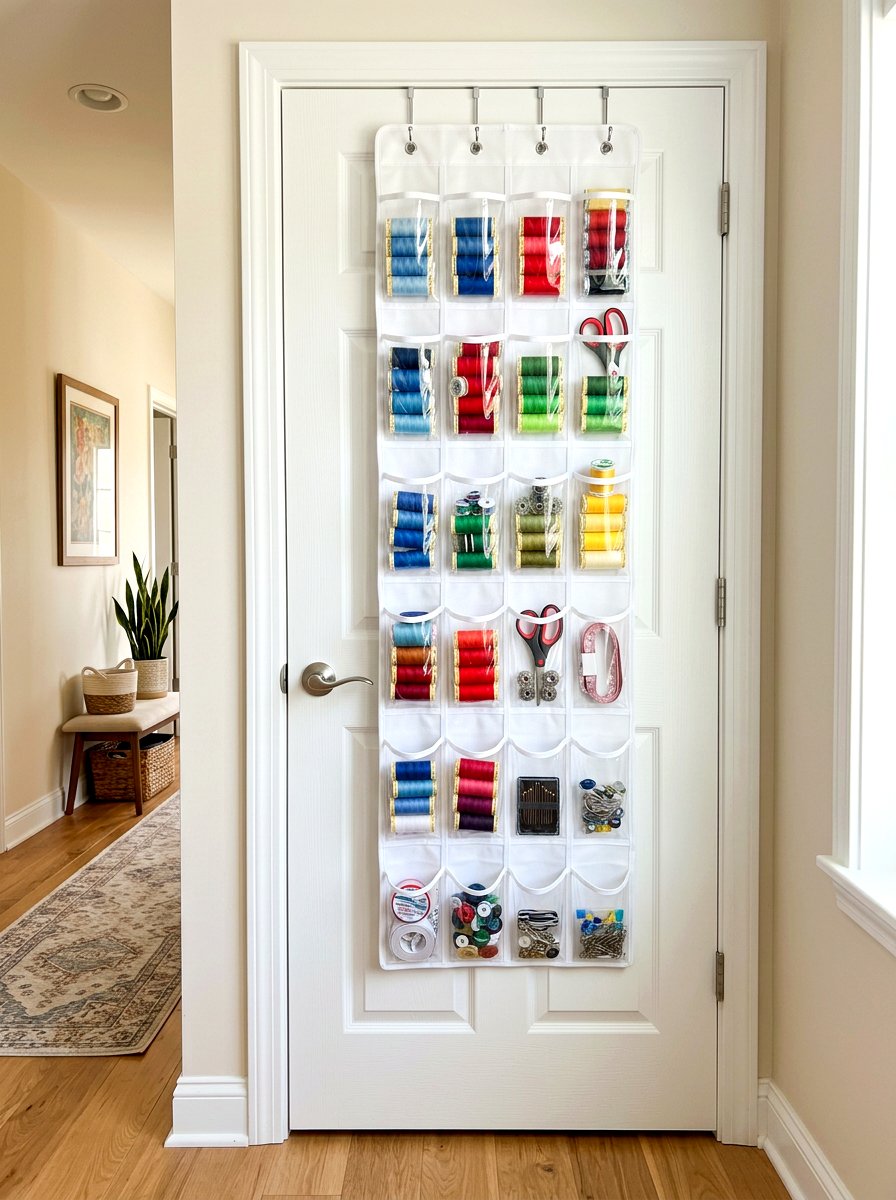
An over-the-door organizer with clear plastic pockets is a fantastic way to store lightweight items like interfacing, stabilizers, and small fabric remnants. Because it hangs vertically, it takes up zero floor space, making it a perfect addition to a laundry room or a shared guest bedroom. You can assign each pocket a specific category, such as "knitting needles" or "measuring tapes, " so you never have to search for the basics again. This solution is particularly helpful for keeping track of small items that often get buried in the bottom of large storage bins. It is a low-cost, high-impact organizational tool that helps you stay focused on your creative work.
20. Cube Storage Shelves
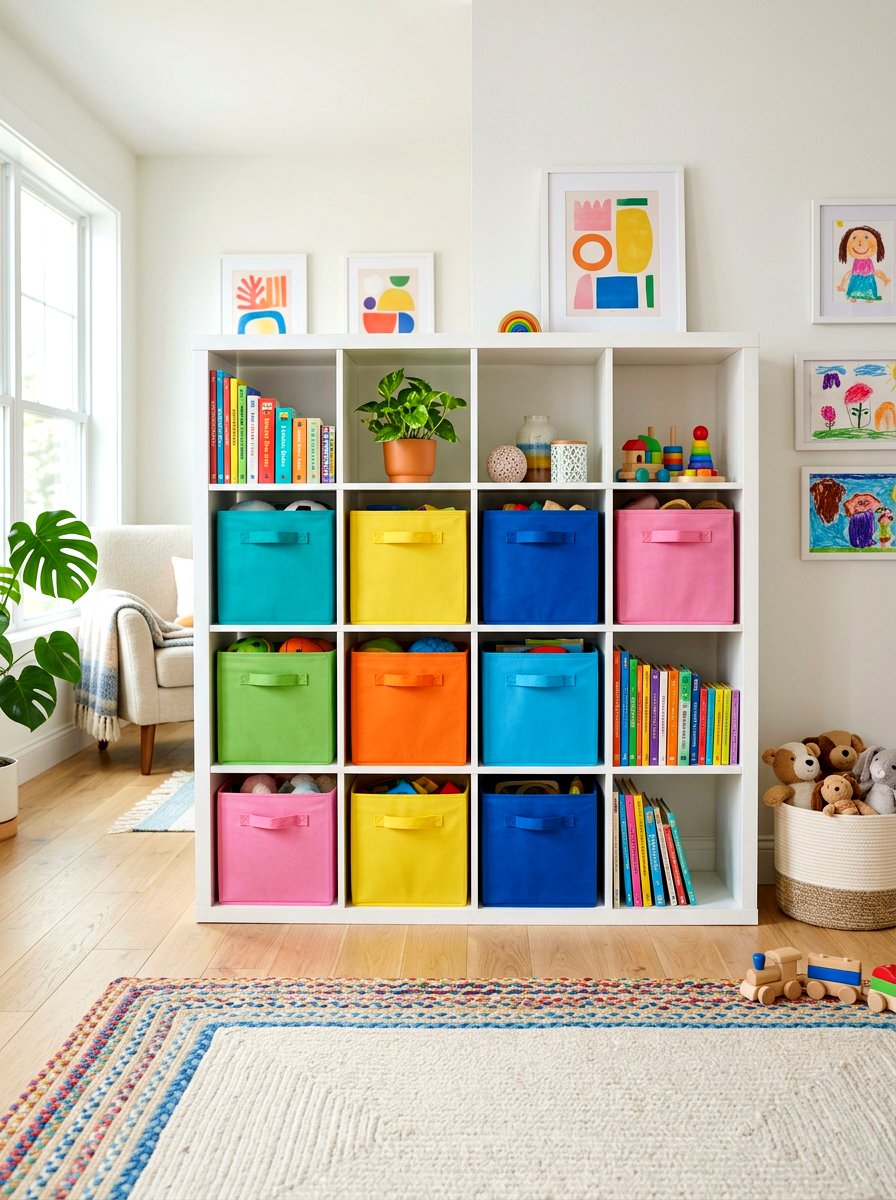
Cube storage shelves have become a staple in many sewing rooms because they offer a clean, modern look and incredible versatility for different items. You can leave some cubes open to showcase your favorite colorful fabric bolts and use fabric bins in others to hide cluttered scraps. These units are sturdy enough to act as a base for a large cutting table if you place two of them back-to-back with a tabletop. The standardized size of the cubes makes it easy to find accessories like wine racks, which can be repurposed to store rolls of specialized stabilizers. It is a highly customizable system that can be adapted to any room size or style.
21. Magnetic Scissors Strip
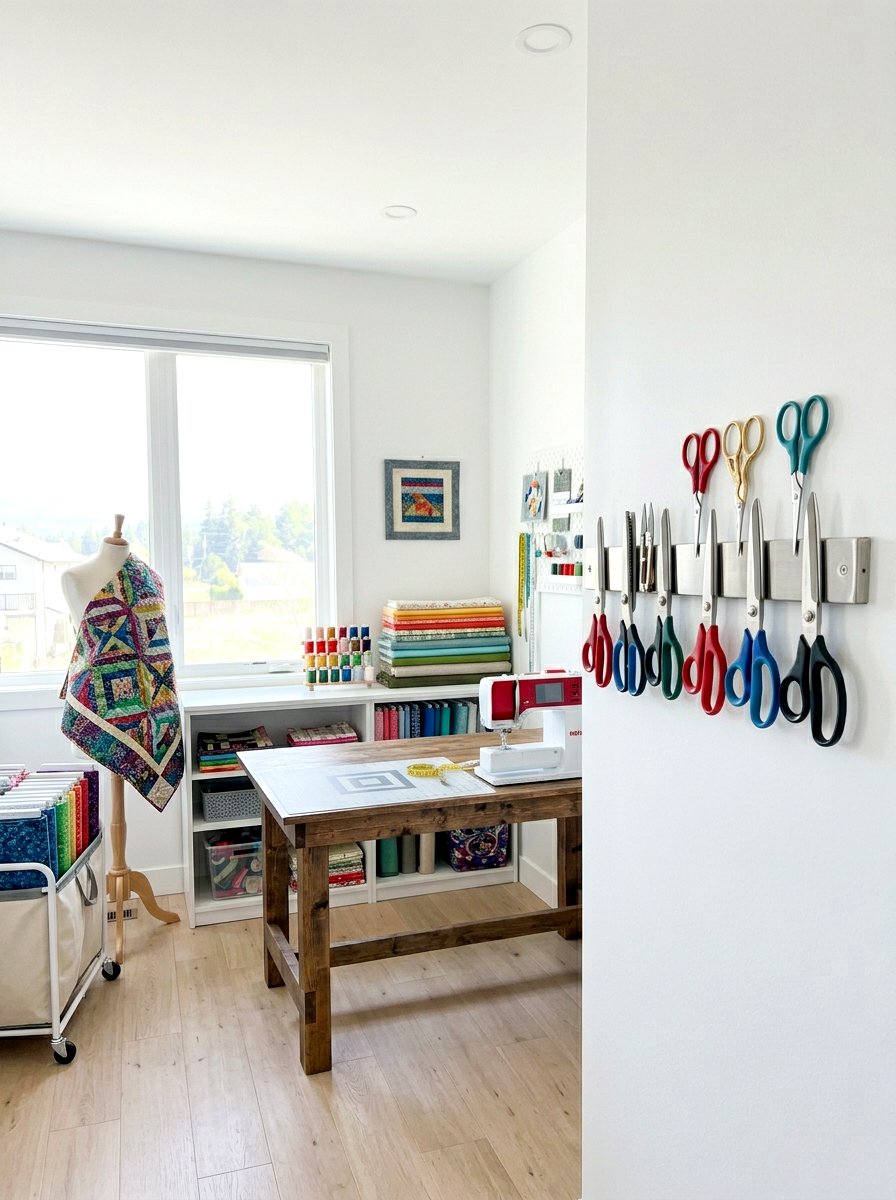
Keep your sharpest cutting tools safe and accessible by installing a magnetic scissors strip on the wall above your sewing or cutting table. This solution, originally designed for kitchen knives, is perfect for holding heavy fabric shears, rotary cutters, and small embroidery snips. By storing your scissors vertically, you prevent the blades from getting nicked or dulled by clashing with other metal tools in a drawer. It also keeps these sharp objects out of the reach of small children while keeping them perfectly positioned for you to grab. The industrial look of the magnetic strip adds a professional and modern touch to your overall sewing room decor.
22. Folding Cutting Table
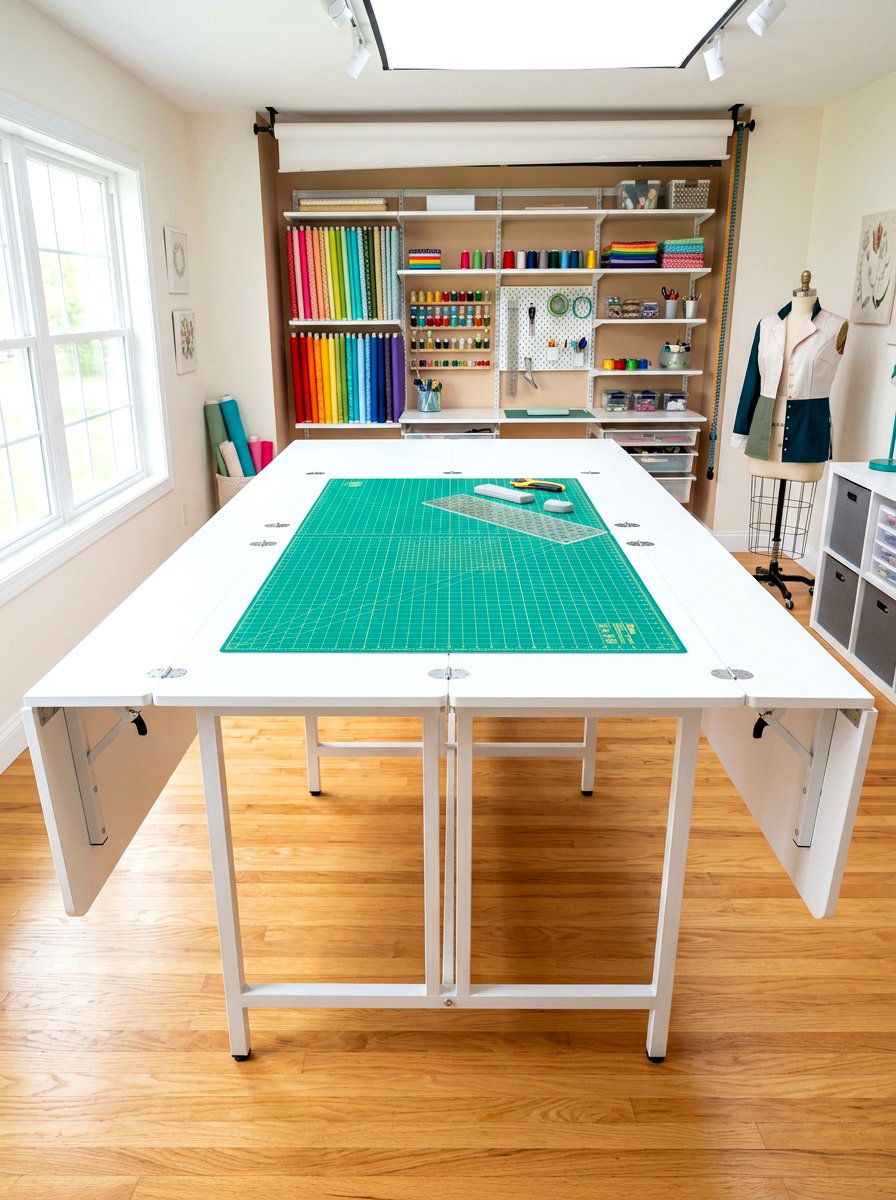
A large, flat surface is essential for accurately cutting out patterns, but most people do not have room for a permanent full-sized table. A folding cutting table can be expanded when you are ready to work and collapsed into a narrow console when the project is finished. Many of these tables are built on high-quality casters, allowing you to roll the station into the center of the room for 360-degree access. Some models even include integrated storage shelves or drawers on the sides to hold your rotary mats and heavy pattern weights. This flexible piece of furniture ensures that you never have to cut fabric on the floor again, saving your back.
23. Storage Bin Labels
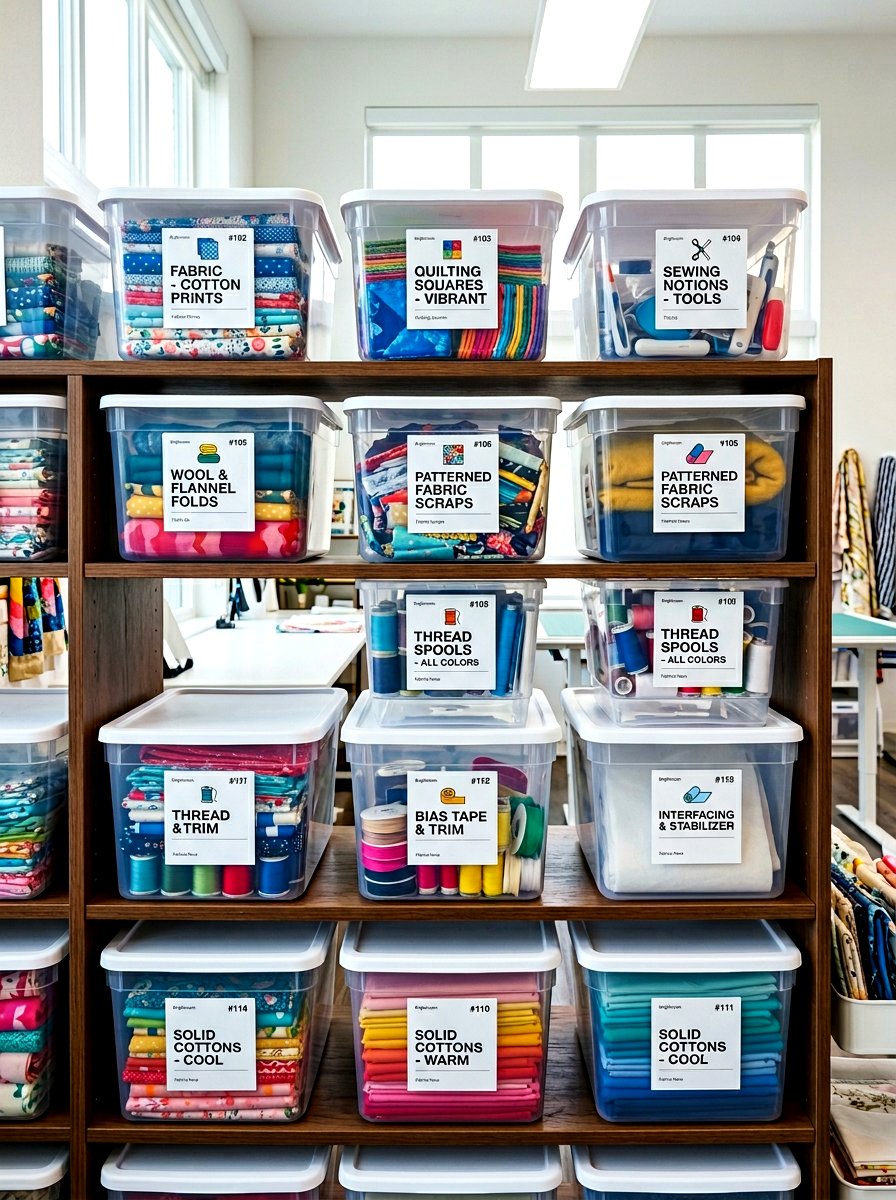
Even the most expensive storage system will fail if you cannot remember what is hidden inside each opaque box or drawer. High-quality storage bin labels are the final touch that ensures your sewing room remains organized for the long term. You can use a classic label maker for a uniform look or create beautiful handwritten tags with decorative string for a more artisanal feel. Labeling your fabric bins by fiber content, color, or project name makes it easy to find exactly what you need without opening every container. This simple habit saves you hours of frustration and helps you keep an accurate inventory of your growing collection of craft supplies.
24. Wall Height Shelving
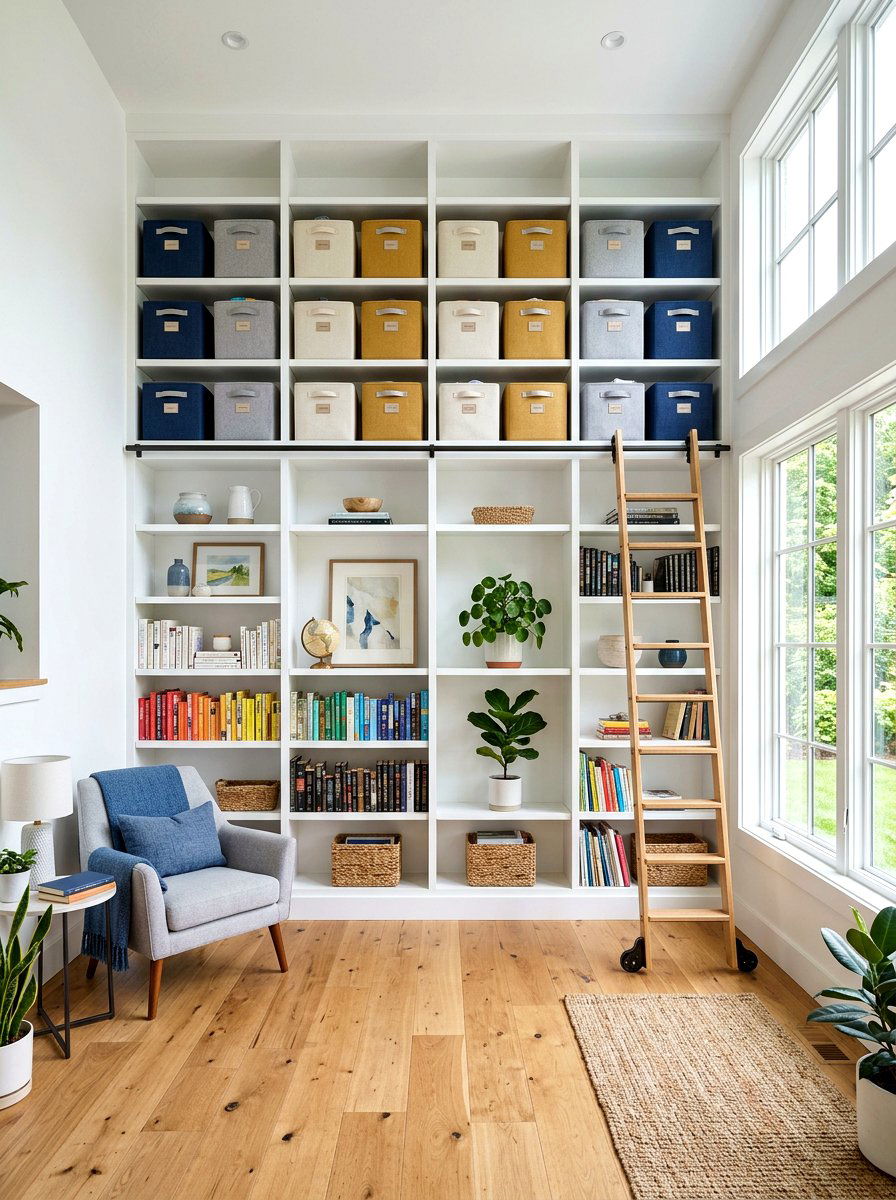
If you have a small floor plan but high ceilings, wall height shelving is the best way to store items that you do not use daily. You can install long shelves near the top of the room to hold your seasonal fabrics, extra batting, or bulk rolls of interfacing. Using matching bins on these high shelves creates a clean, cohesive look that prevents the room from feeling cluttered or overwhelming. Keeping a sturdy step stool nearby ensures that you can safely access these items whenever you need them for a specific large-scale project. This strategy maximizes your storage capacity without making your creative space feel cramped or closed in by bulky furniture.
25. Fold Down Desk
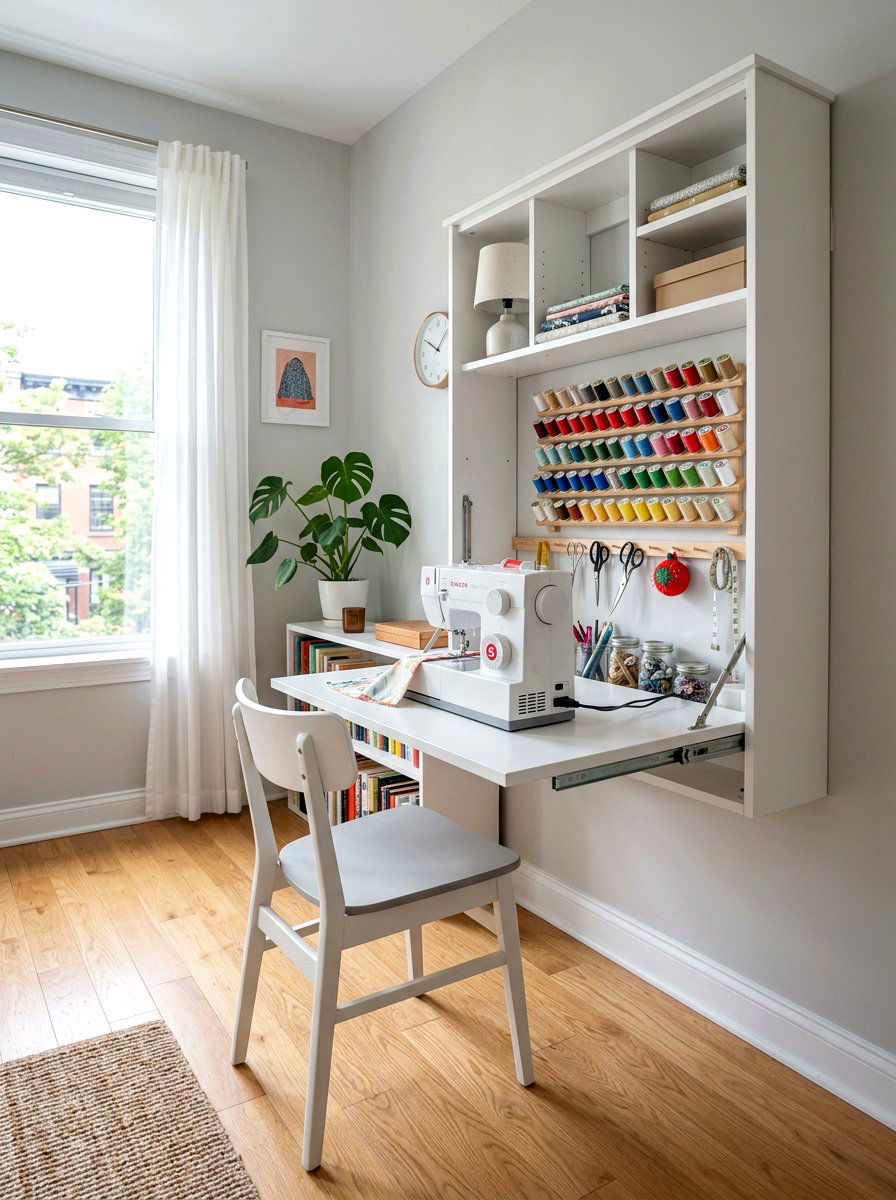
A fold-down desk, often called a Murphy desk, is a brilliant solution for someone who sews in a hallway or a very small bedroom. This unit stays flat against the wall when not in use and drops down to reveal a sturdy workspace for your sewing machine. The interior often features small shelves and cubbies that are perfect for storing your basic thread, needles, and a few essential tools. Once you are finished with your project, you simply fold the desk back up, and your room returns to its original purpose instantly. It is a clever architectural trick that allows you to have a dedicated sewing spot in even the tiniest home.
26. Tiered Tray Organizer
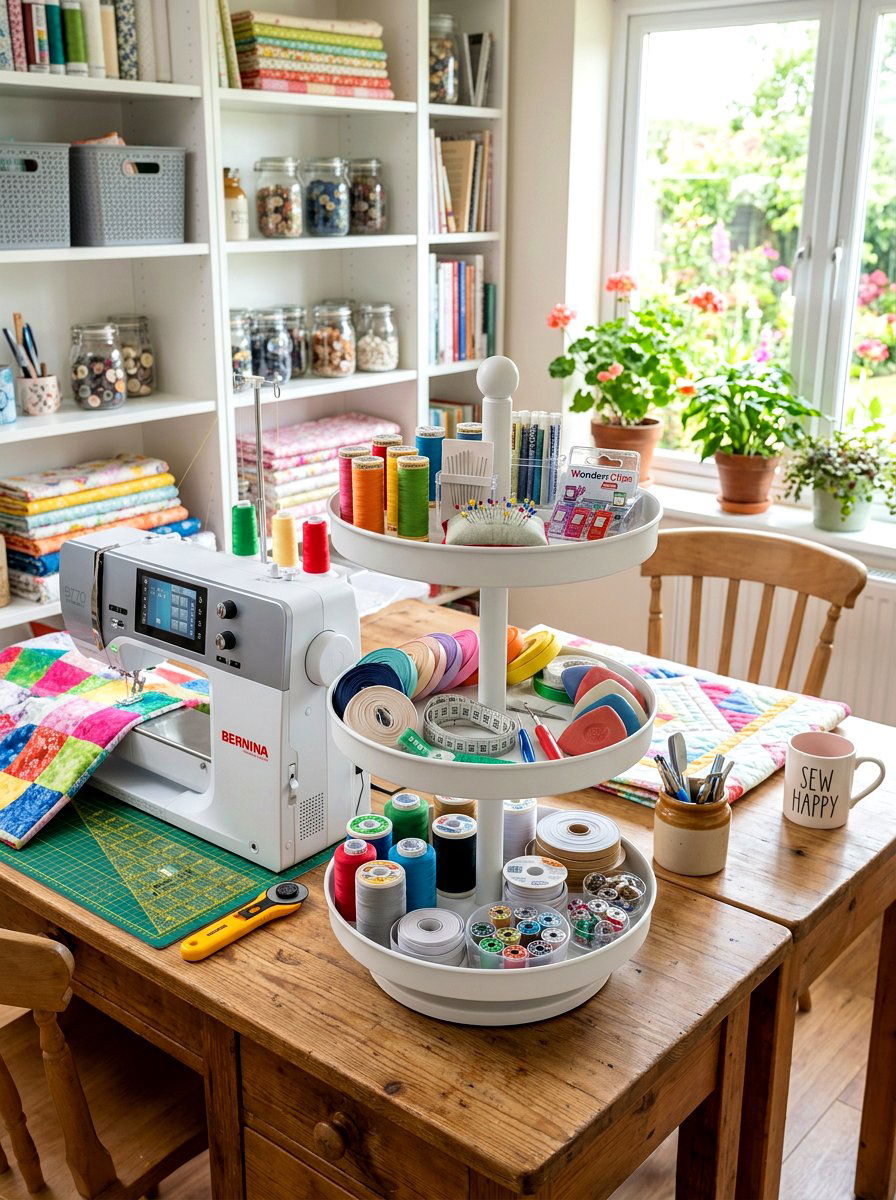
A tiered tray organizer is a perfect desktop companion that keeps your smallest and most frequently used items neatly grouped together. You can use the different levels to separate your seam rippers, marking pens, and small clips so they don't get mixed up while you work. These rotating carousels allow you to access anything you need with a quick spin, preventing you from having to reach across your machine. They are often made of beautiful materials like wood or tiered metal, adding a stylish and functional element to your sewing table. This compact solution helps maintain a clear workspace, which is essential for accurate stitching and a calm, focused creative mind.
27. Sewing Machine Cover
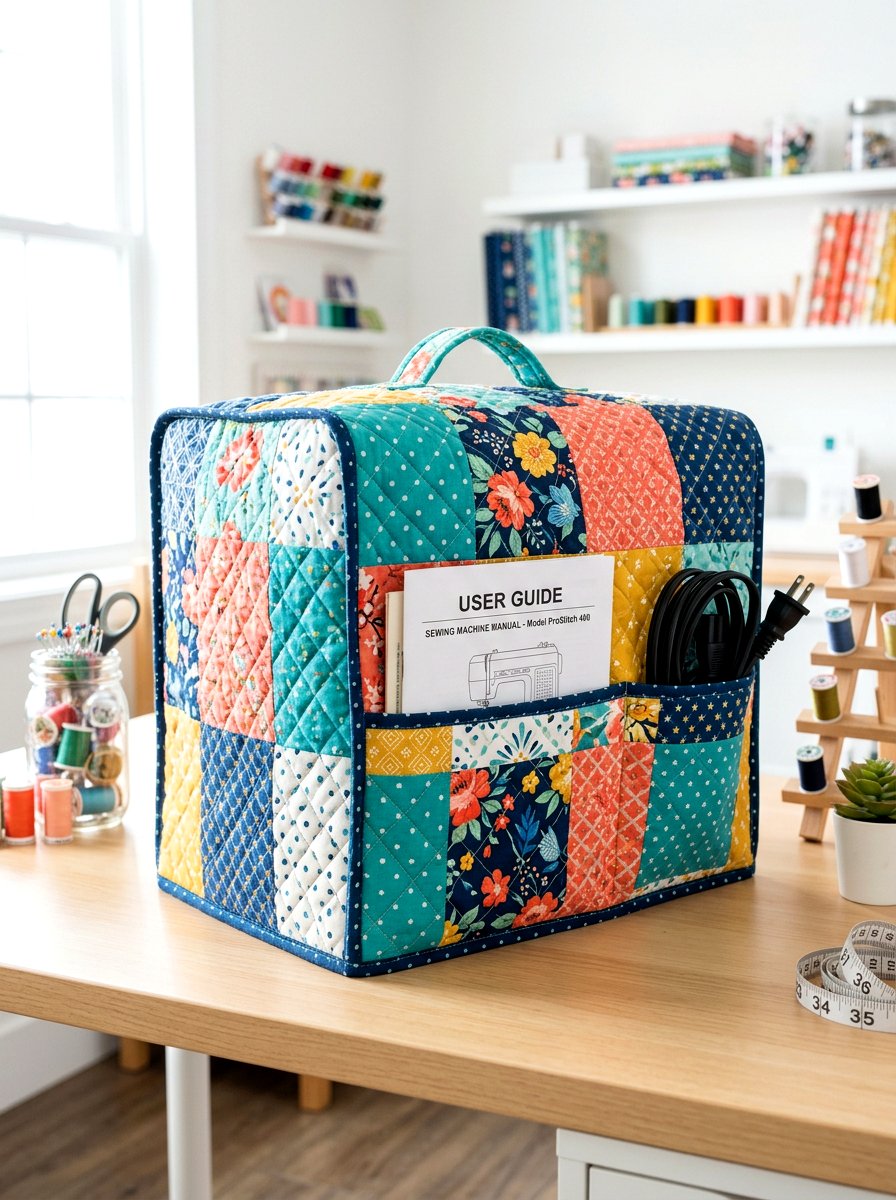
A custom-made sewing machine cover is more than just a way to keep dust out of your machine’s delicate internal gears and computer. By adding deep pockets to the sides of the cover, you can create a built-in storage unit for your foot pedal, power cord, and manual. This is particularly helpful if you need to move your machine frequently or if you take it to quilting classes and retreats. Using a beautiful fabric for the cover also turns your machine into a decorative element in the room when it is not in use. It is a simple DIY project that provides significant organizational value while protecting your most important investment in your hobby.
28. Dresser Fabric Storage
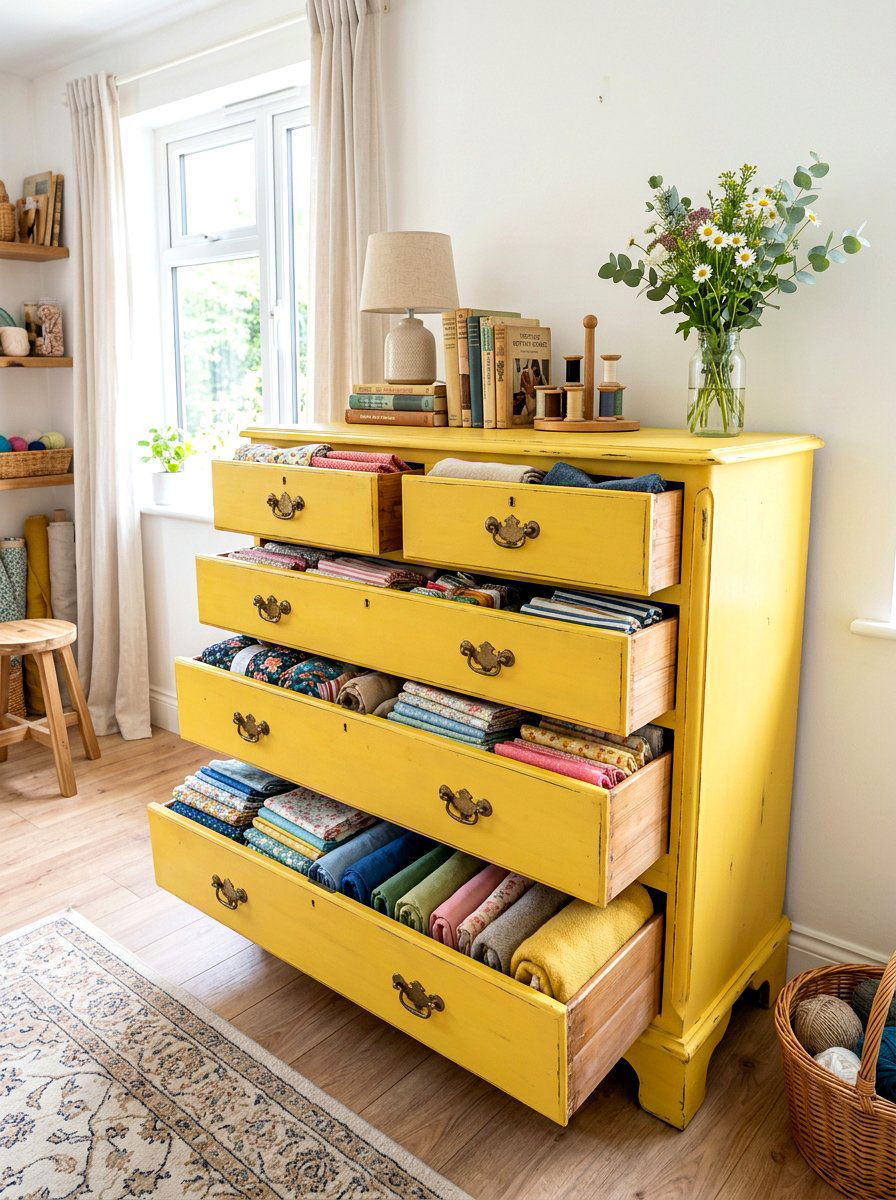
Repurposing an old dresser is a fantastic and budget-friendly way to create massive amounts of storage for a large fabric collection. The deep, sturdy drawers can hold hundreds of yards of fabric when the textiles are folded neatly or rolled into compact tubes. You can use the top of the dresser as a secondary pressing station by adding a heat-resistant wool mat and a small iron. Painting the dresser a bright, cheerful color can instantly refresh the look of your room and make it feel like a professional studio. Drawers keep your fabric completely protected from fading caused by sunlight, ensuring that your colors stay vibrant and beautiful for years.
29. Wire Basket Wall
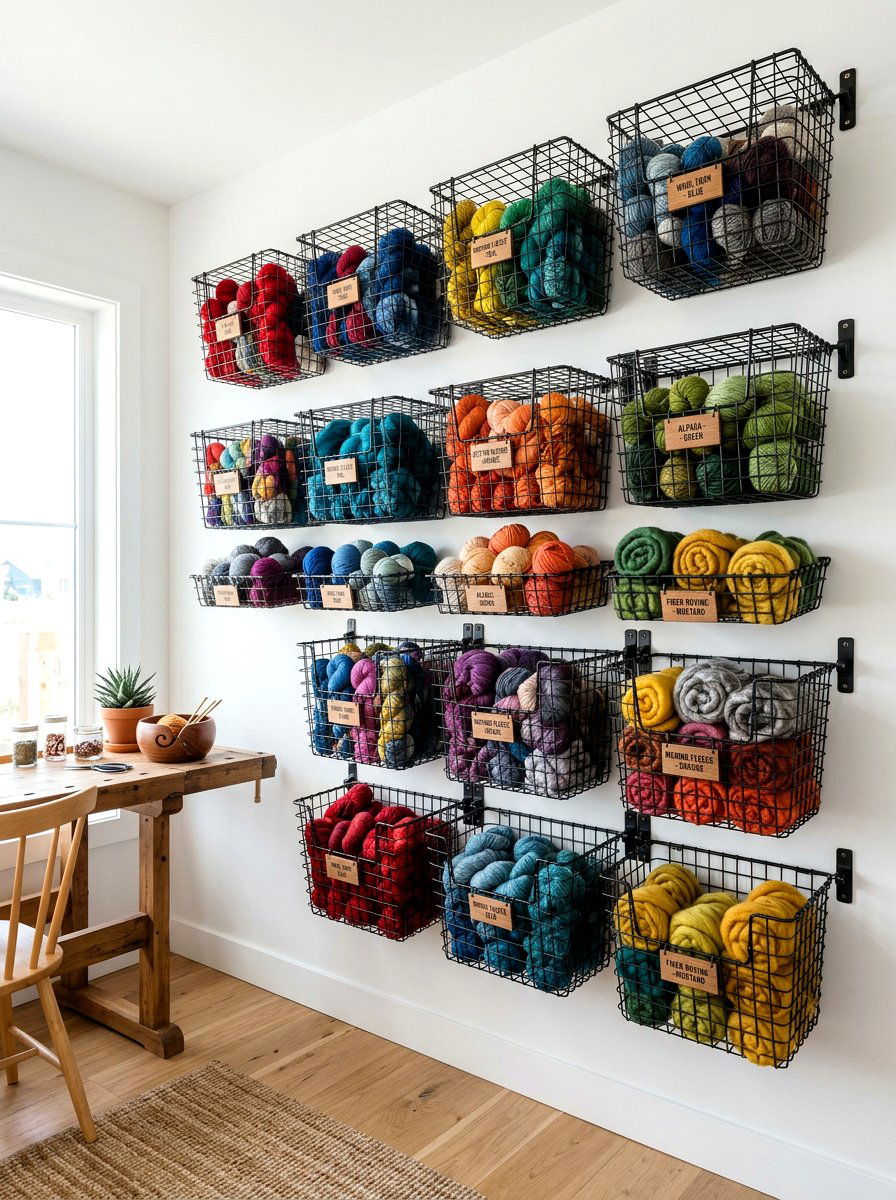
A wire basket wall is a trendy and highly functional way to store lightweight items like yarn, fleece scraps, or rolls of stabilizers. These baskets can be mounted in a grid pattern on your wall, allowing you to see all your colorful supplies while keeping them off your desk. The open-weave design ensures that your fabric can "breathe" and prevents the buildup of musty odors in your storage area. You can easily unhook a basket and bring it over to your sewing machine when you are working on a specific project. This vertical solution adds texture and visual interest to your room while providing easy access to your most-used materials.
30. Industrial Metal Cart
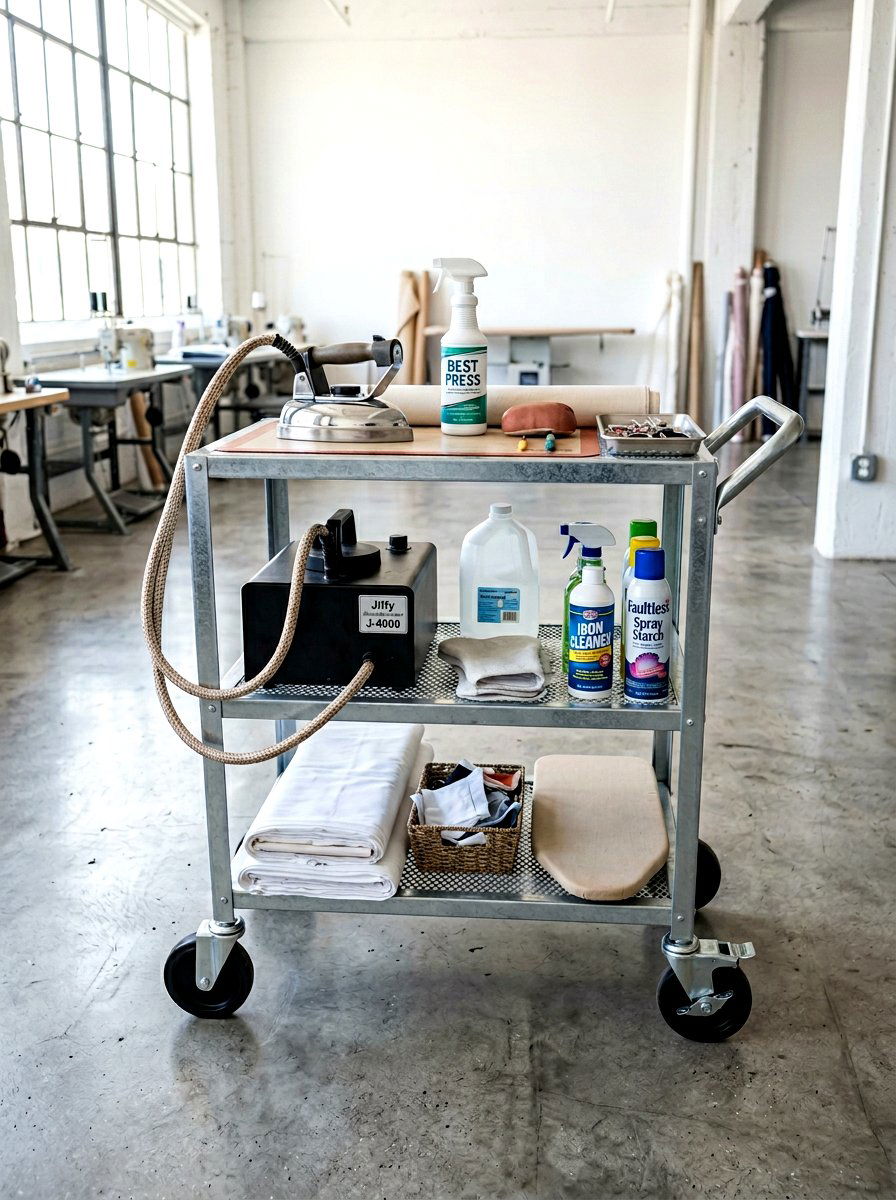
An industrial metal cart is the perfect heavy-duty storage solution for bulky items like your iron, gallon-sized bottles of starch, or heavy serger. These carts are incredibly durable and can withstand the heat and moisture often found in a professional-grade pressing station. Because they are typically on wheels, you can move your heavy equipment closer to your sewing machine during the assembly process and tuck it away later. The open shelves make it easy to grab what you need without fumbling with doors or small drawers while your iron is hot. It provides a sturdy, reliable foundation for your most hardworking tools, ensuring they are always ready for action.
Conclusion:
Creating an organized sewing room is a journey that significantly enhances your productivity and overall enjoyment of the craft. When every thread, needle, and yard of fabric has a designated home, you can spend less time searching for tools and more time focused on your creative designs. Whether you choose a high-end modular system or repurpose vintage items, the key is to prioritize visibility and accessibility in your layout. An orderly workspace not only protects your expensive equipment but also provides a serene environment that invites inspiration and allows your imagination to flourish. Start small, stay consistent, and enjoy the peace of mind that comes with a perfectly tidy sewing sanctuary.

Related posts: