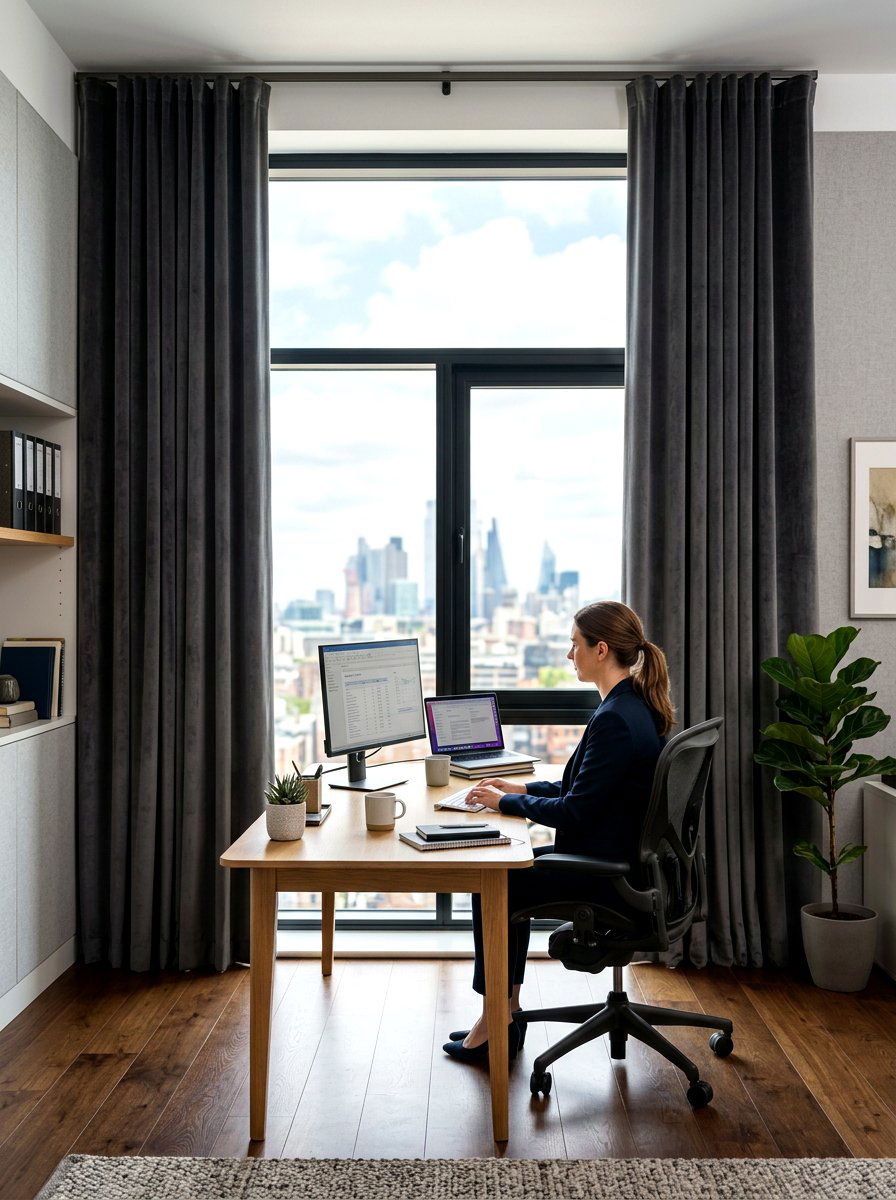
Creating a peaceful and high-quality audio environment in your home starts with understanding how sound interacts with your furniture and walls. Many modern living rooms feature hard surfaces like hardwood floors and glass windows, which often cause annoying echoes and muffled conversations. By integrating acoustic solutions into your design, you can transform a noisy room into a serene sanctuary for relaxation or entertainment. These ideas go beyond basic utility, offering stylish ways to improve sound clarity while enhancing your home's overall aesthetic. Whether you are a music lover or just want a quiet space, these professional acoustic strategies will help you achieve a perfectly balanced and beautiful living area.

1. Slat wood wall paneling
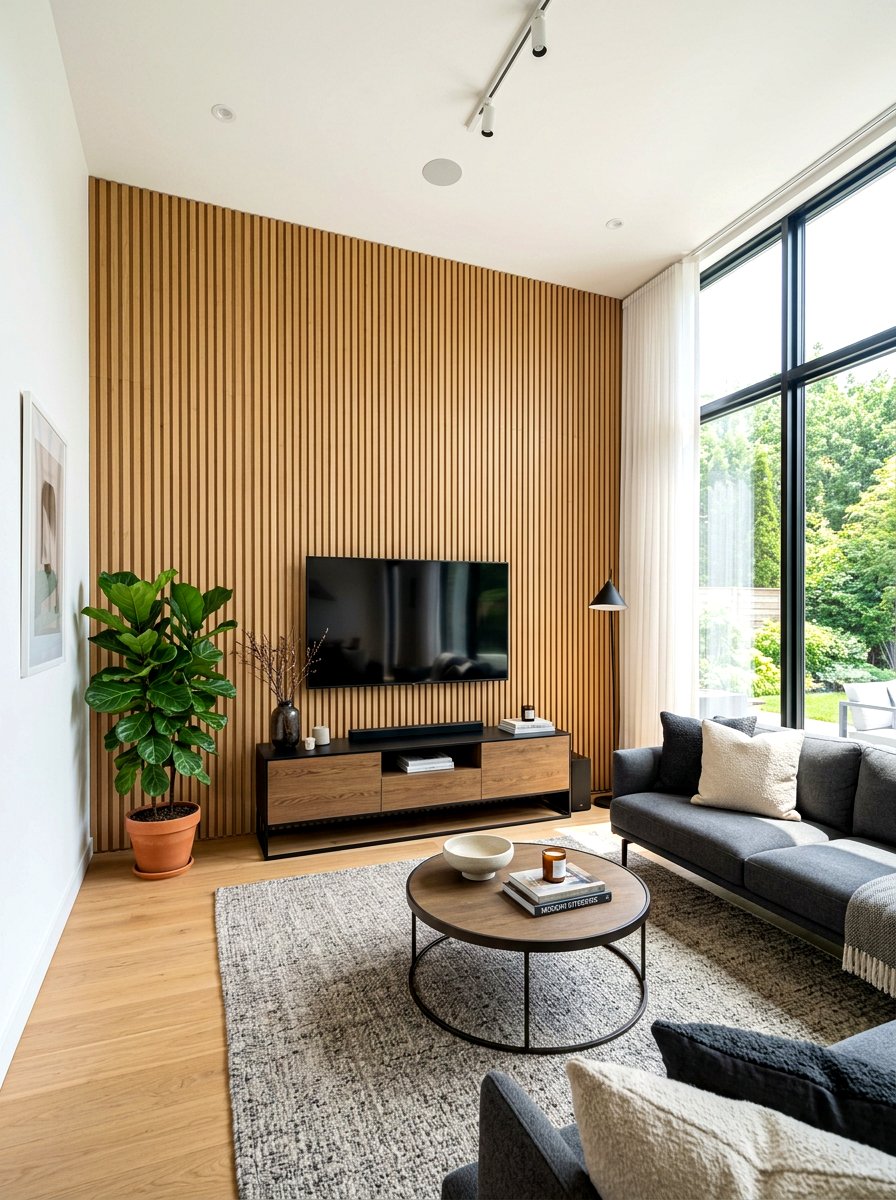
Slat wood wall panels are a top choice for homeowners who want to combine modern style with excellent sound management. These panels feature thin wooden strips mounted onto a thick felt backing that effectively absorbs mid and high-frequency sounds. The vertical lines create a sense of height in the room while adding a warm, organic texture to the walls. You can install them as a full accent wall behind your television or use them sparingly as decorative strips. This setup reduces the harsh bouncing of sound waves, making your movies and music sound much clearer. It is an ideal solution for achieving a high-end, professional look in any contemporary living space.
2. Acoustic felt wall art
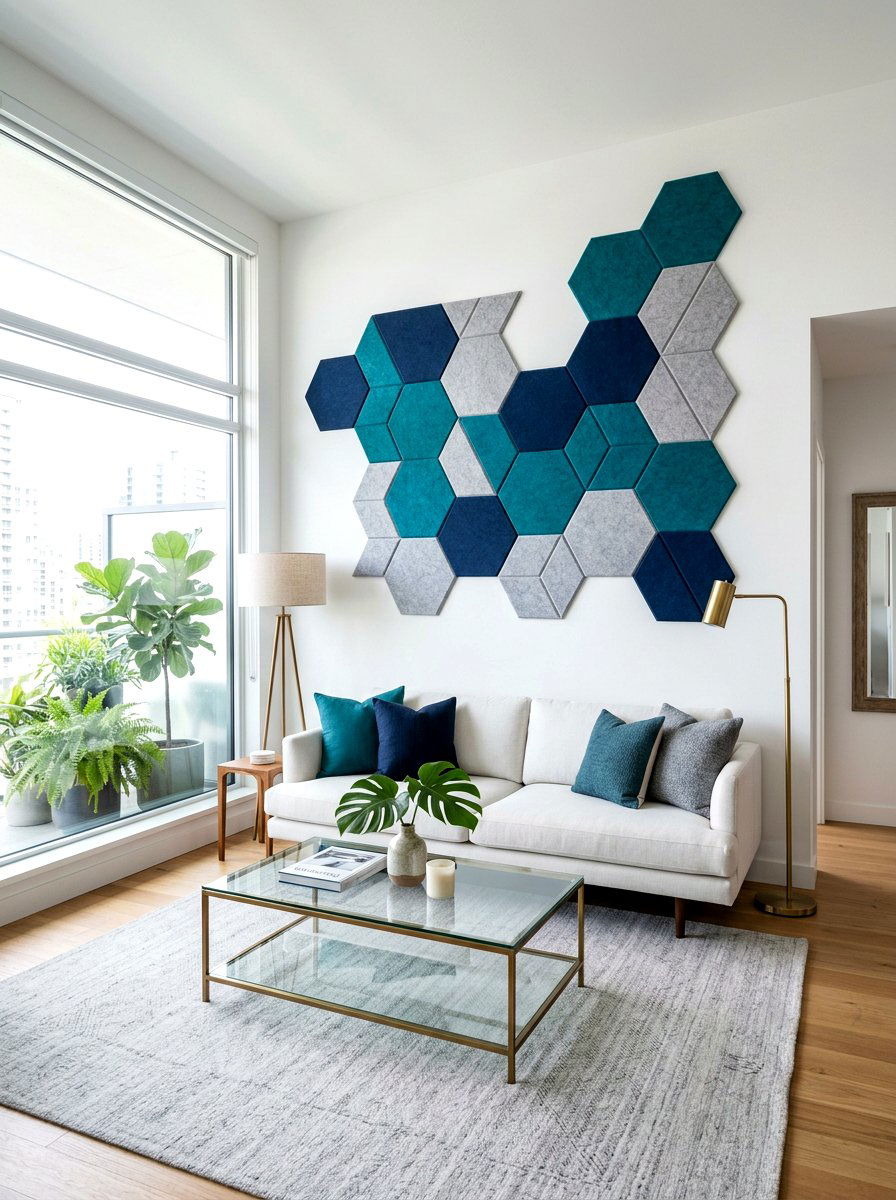
Acoustic felt wall art offers a brilliant way to treat your room without making it look like a recording studio. These artistic pieces come in various geometric shapes, colors, and 3D patterns that double as modern gallery installations. The dense recycled felt material is specifically engineered to soak up excess noise and eliminate distracting echoes in large rooms. You can arrange different tiles to create a custom mural that fits your personal color palette and interior design style perfectly. This functional art is lightweight and easy to install on any flat surface. It provides a soft, tactile quality to the walls that balances out hard flooring and metal furniture.
3. Heavy velvet curtains
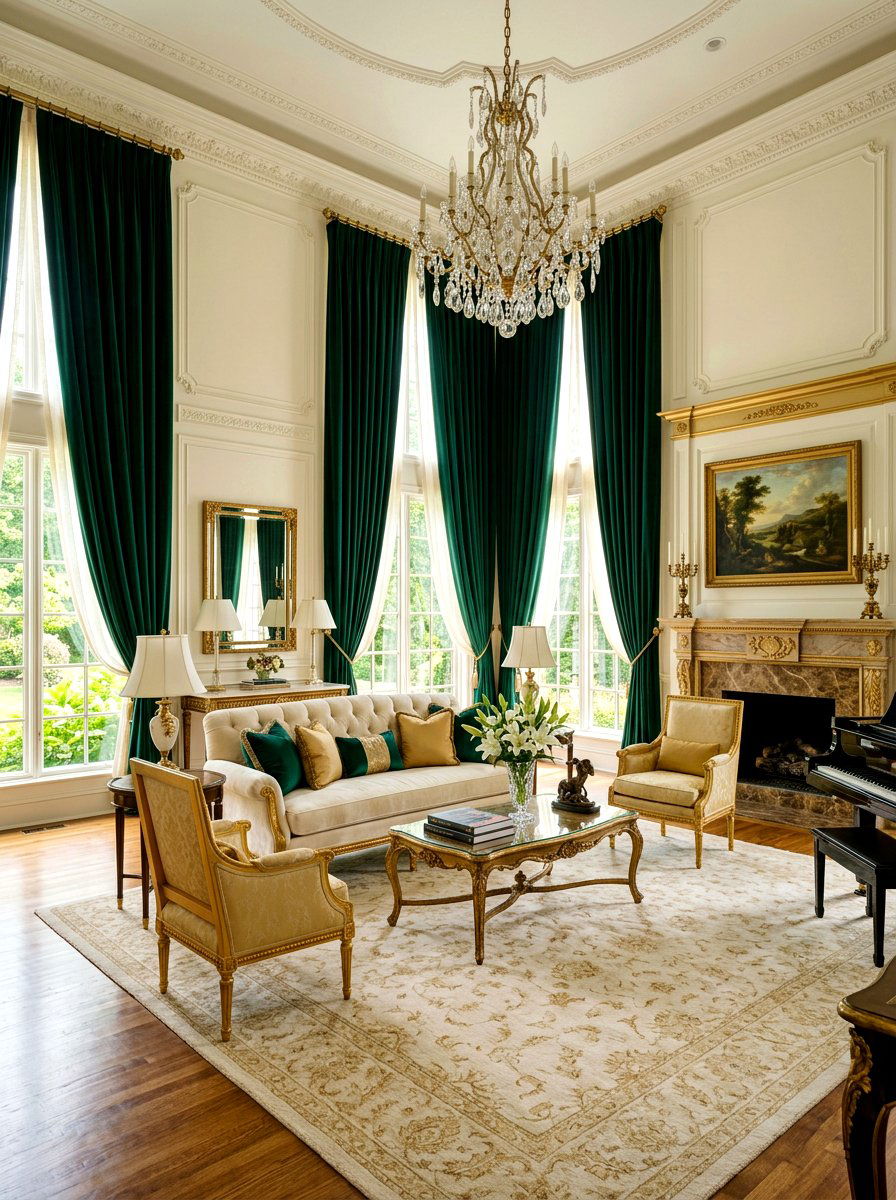
Heavy velvet curtains serve as a powerful acoustic barrier that also adds a layer of luxury to your windows. The thick, dense fibers of velvet are naturally gifted at trapping sound waves before they reflect off hard glass surfaces. By hanging these curtains from the ceiling to the floor, you create a soft wall of fabric that significantly dampens outside street noise. This creates a much more intimate and quiet atmosphere for evening relaxation or movie nights with the family. Choose rich jewel tones or soft neutrals to complement your decor while gaining the practical benefits of sound insulation. They are especially effective in rooms with large, panoramic windows.
4. Large plush area rug
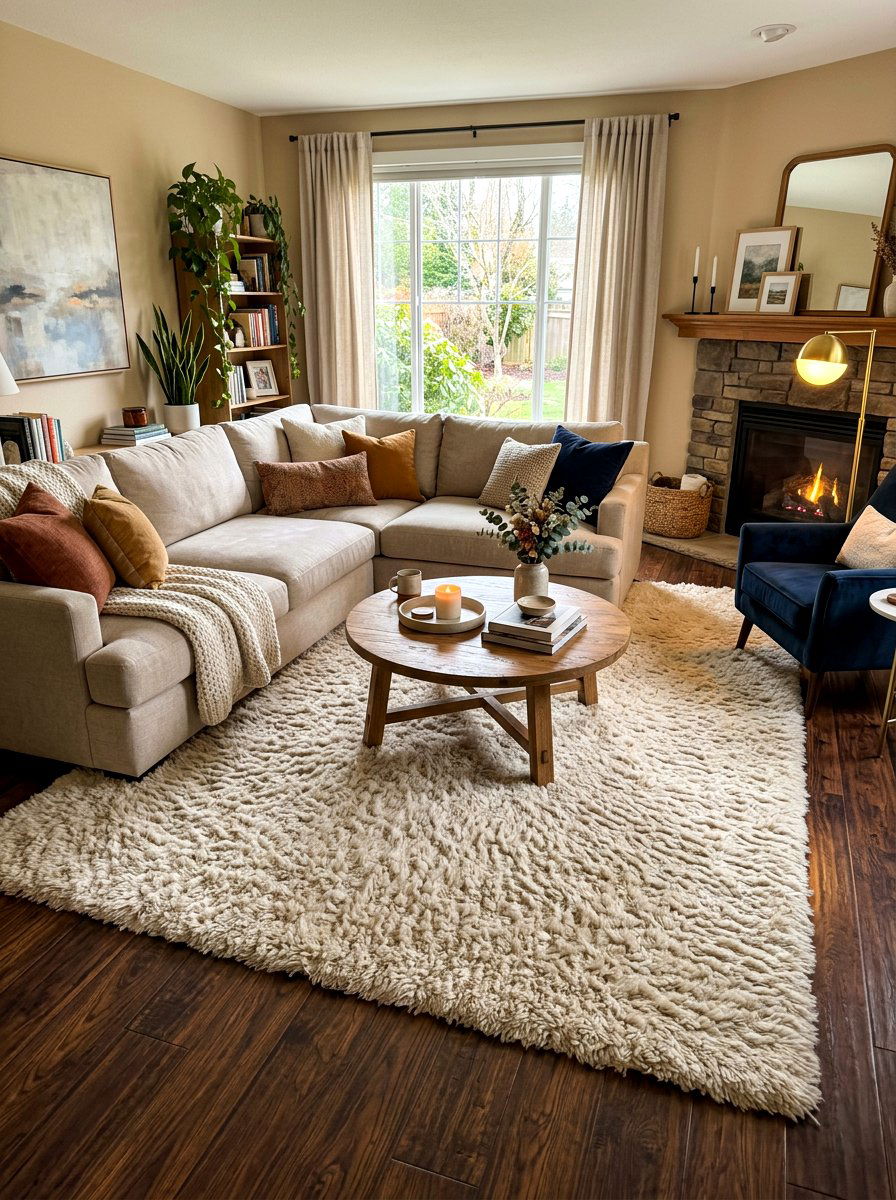
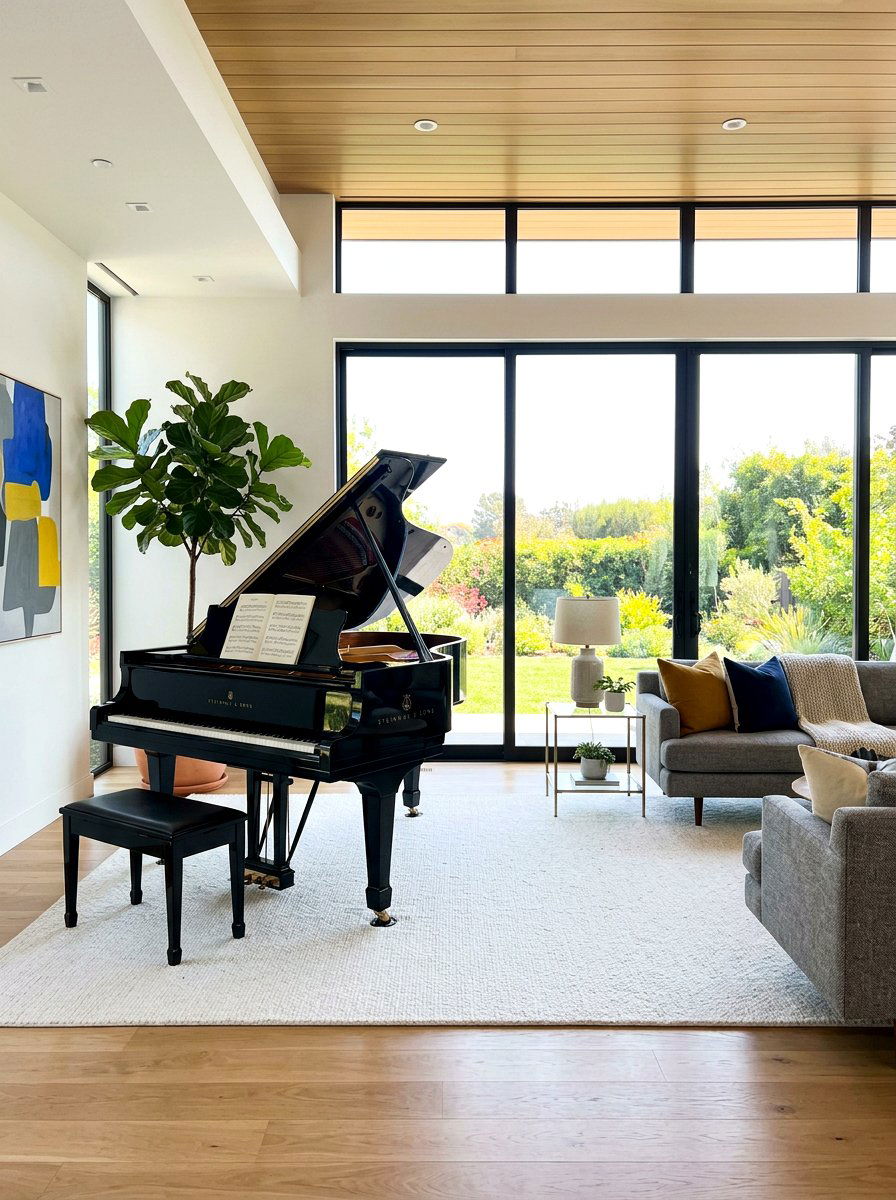
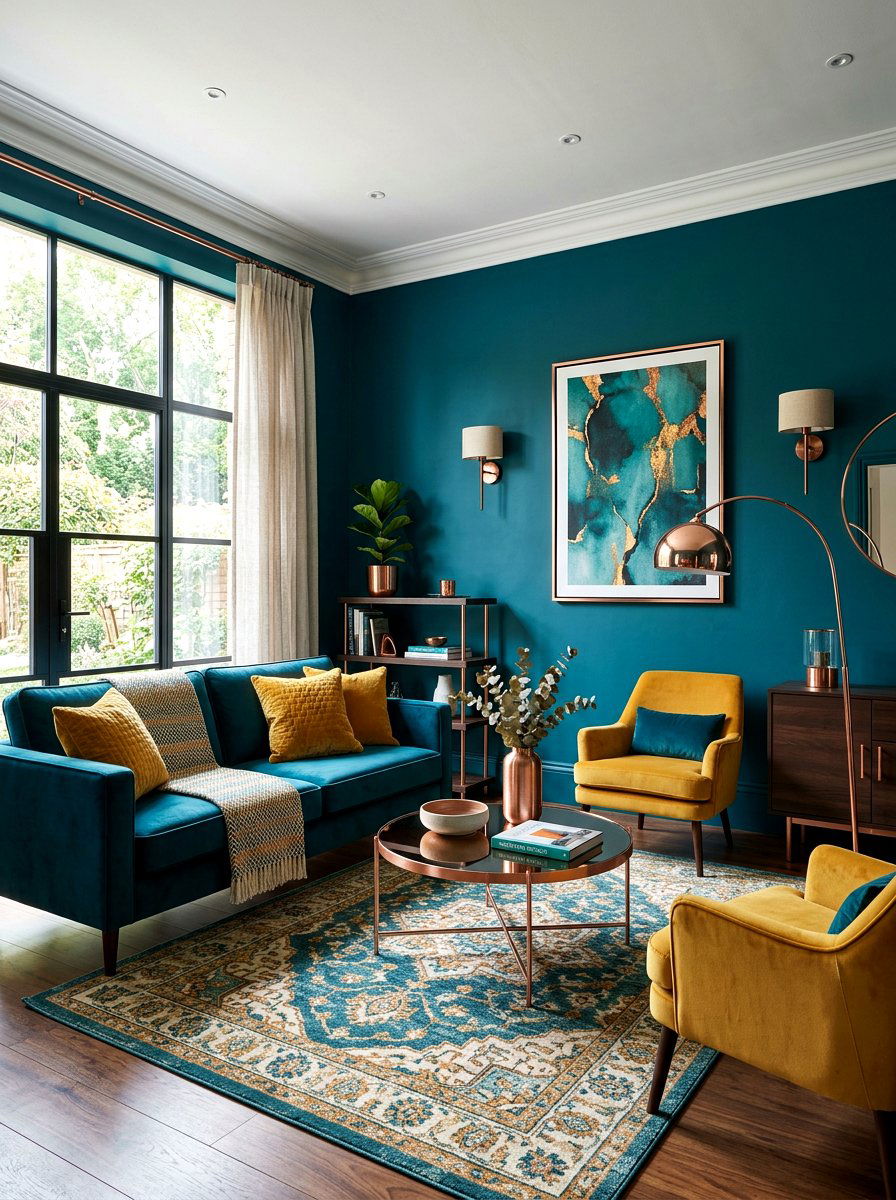
A large plush area rug is one of the most effective ways to manage sound from the ground up. In rooms with hardwood or tile floors, sound waves bounce aggressively between the floor and the ceiling, causing a hollow ringing effect. A thick rug with a high-quality pad underneath acts like a massive sponge for these unwanted vibrations. It helps to ground the seating area while making every footstep much quieter and more comfortable. For the best acoustic performance, look for rugs made from natural wool or dense synthetic fibers. This simple addition makes a dramatic difference in how cozy and sound-balanced your entire living room feels.
5. Fabric wrapped acoustic panels
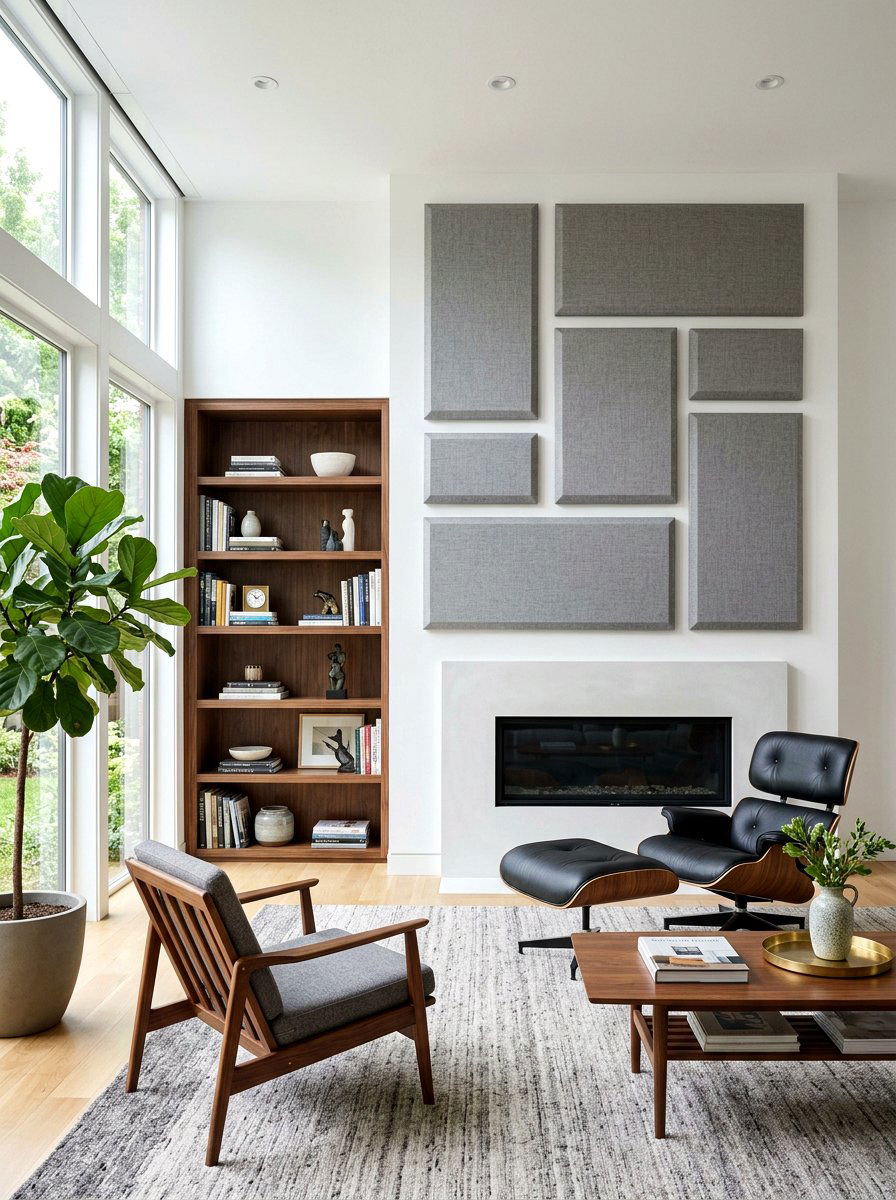
Fabric wrapped acoustic panels are the standard for professional sound treatment because they offer incredible versatility and high performance. These panels consist of a rigid sound-absorbing core covered in breathable decorative fabric that allows sound to pass through and be trapped. You can customize the fabric to match your sofa or wallpaper, allowing the panels to blend seamlessly into the existing environment. Mounting them at ear level on the primary reflection points of the room will drastically improve speech intelligibility. This means you will not have to strain to hear dialogue during movies or conversations. They provide a clean, tailored appearance that works well in any sophisticated home design.
6. Sound absorbing ceiling clouds
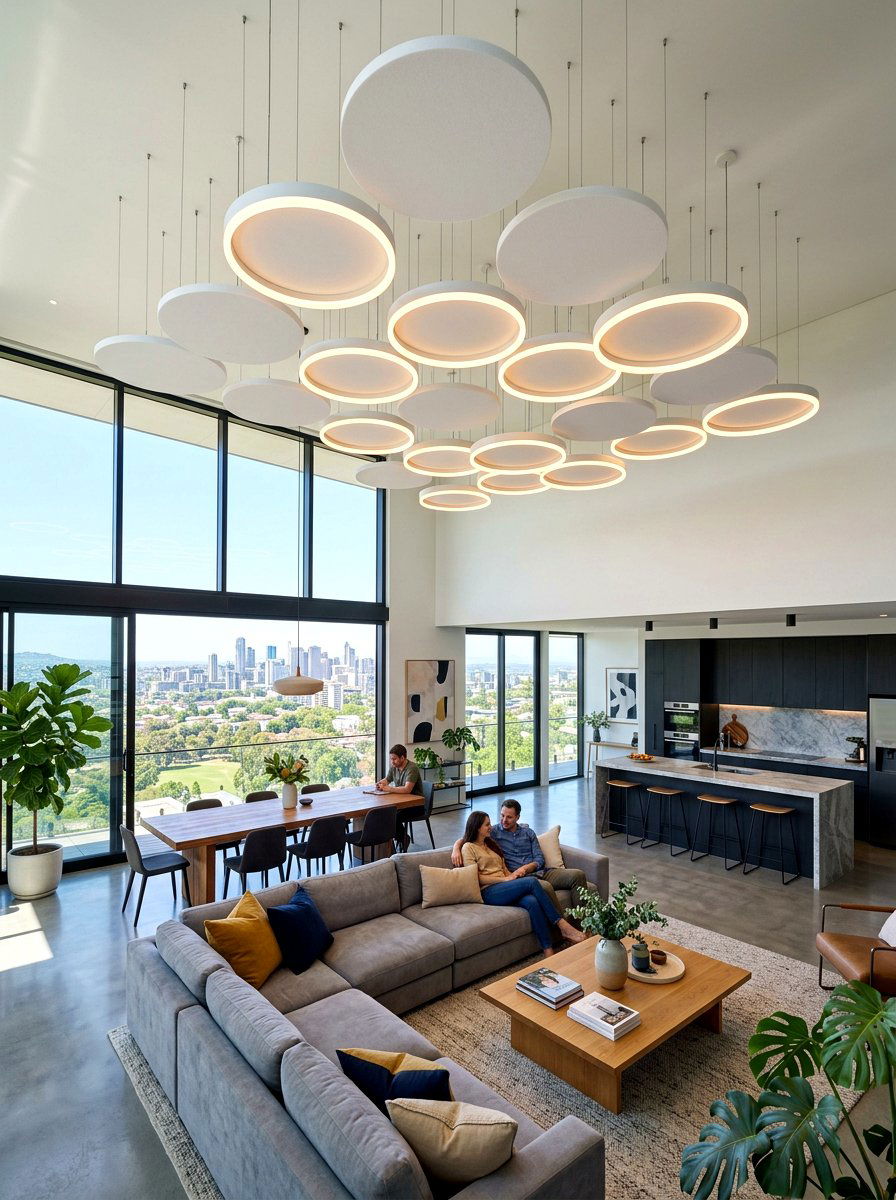
Sound absorbing ceiling clouds are suspended panels that hang horizontally from the ceiling to capture rising noise. They are particularly useful in living rooms with very high or vaulted ceilings where sound tends to get trapped and swirl around. By breaking up the large flat surface of the ceiling, these clouds prevent sound from reflecting back down into the seating area. You can find them in various shapes like circles, rectangles, or even custom organic curves to add architectural interest. Integrating recessed lighting into these clouds creates a stunning focal point while simultaneously making the room feel much more peaceful. They are a professional-grade solution for open-concept homes.
7. Decorative cork wall tiles
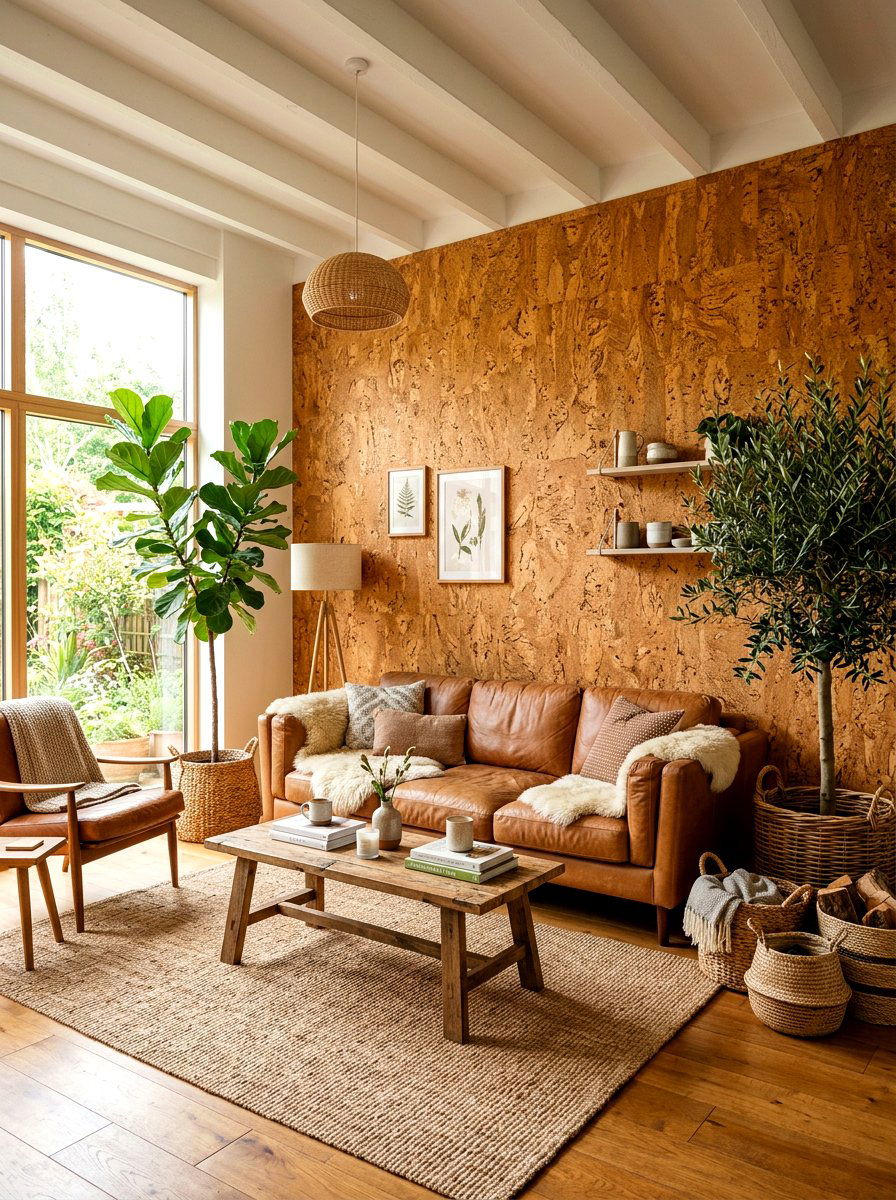
Decorative cork wall tiles provide a natural and sustainable way to improve the acoustics of your living area. Cork is a unique material containing millions of tiny air pockets that naturally dissipate sound energy and provide thermal insulation. These tiles come in many different textures, from smooth and polished to rugged and bark-like, adding a rustic charm to your walls. They are very easy to install as a DIY project and can be used to cover entire walls or small sections. Beyond sound absorption, cork is also antimicrobial and eco-friendly, making it a healthy choice for your home. It creates a warm, quiet backdrop that feels incredibly inviting and grounded.
8. Bookshelf room divider
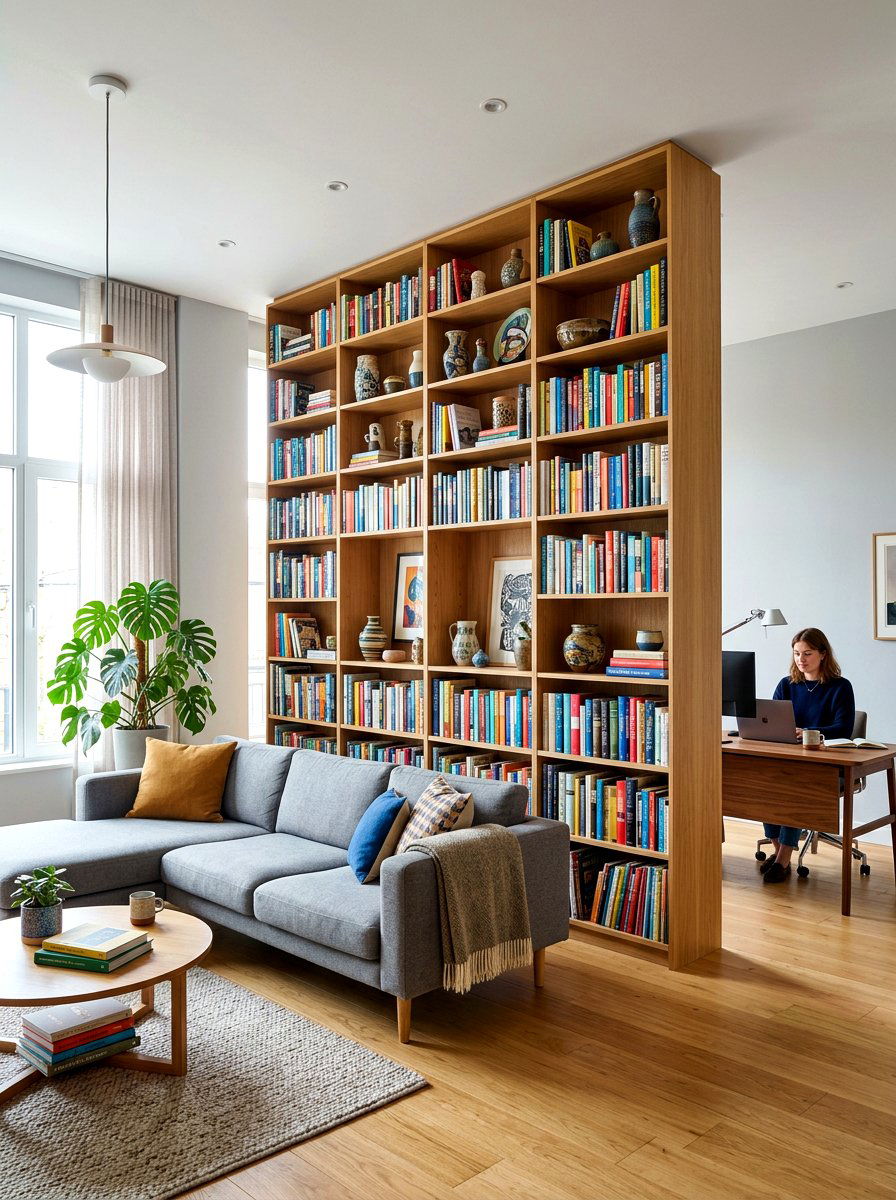
A bookshelf room divider is a clever architectural trick that uses physical mass to block and diffuse sound waves. Filling a large, open-backed bookshelf with books of varying sizes creates an irregular surface that scatters sound in different directions. This prevents the formation of standing waves and reduces the overall noise level in open-plan living spaces. The dense paper of the books also helps to absorb a significant amount of sound energy, acting as a functional acoustic treatment. Using a bookshelf to separate the living room from a dining area or hallway adds privacy and storage. It is a practical and stylish way to manage sound without specialized equipment.
9. Upholstered wall panels
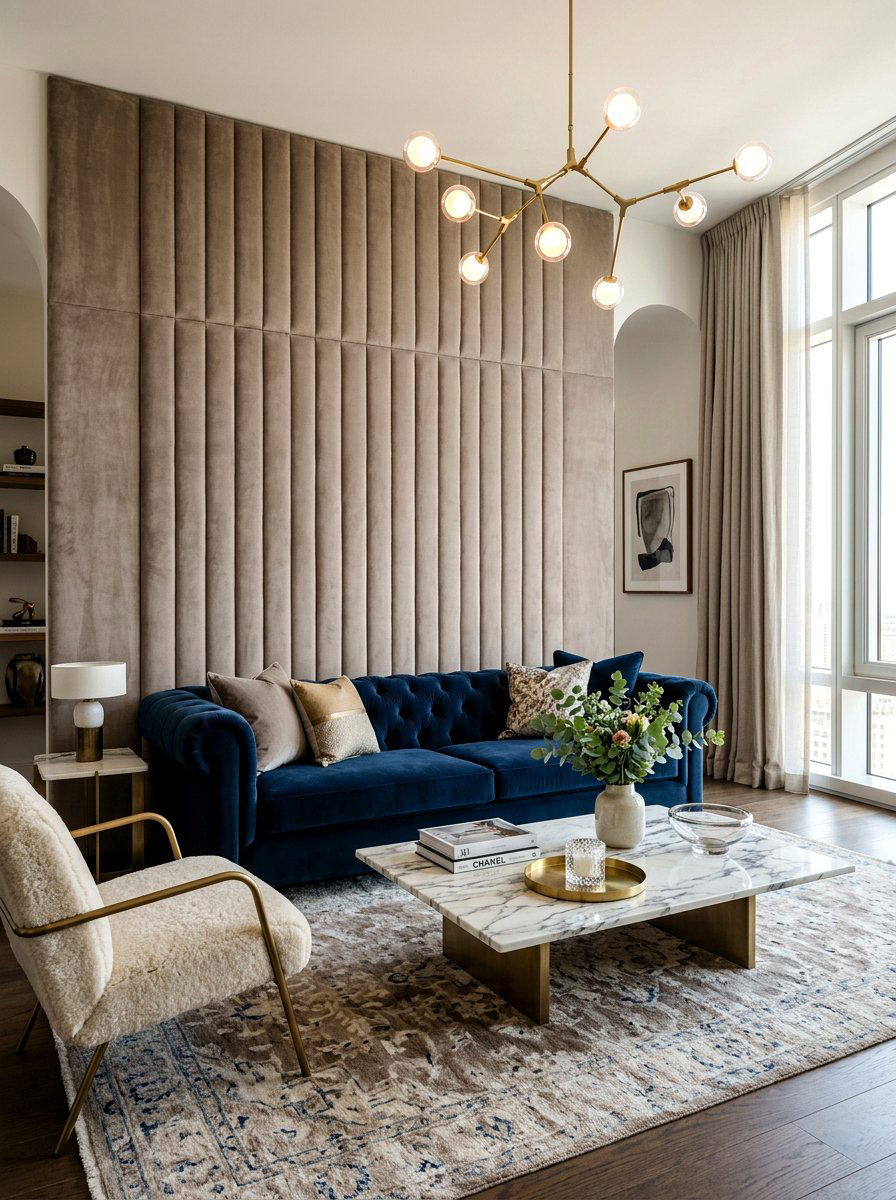
Upholstered wall panels bring the ultimate sense of comfort and quiet to a high-end living room design. These custom-made panels are typically padded with foam and covered in soft fabrics like linen, suede, or velvet. They can be installed behind a sofa to create a floor-to-ceiling headboard effect that feels incredibly cozy. The soft padding absorbs sound beautifully, making the seating area feel like a private cocoon away from the rest of the house. You can use tufted designs or sleek, minimalist rectangles to match your specific style. This approach adds a layer of sophisticated luxury that also serves a very important acoustic function in your home.
10. Perforated wood panels
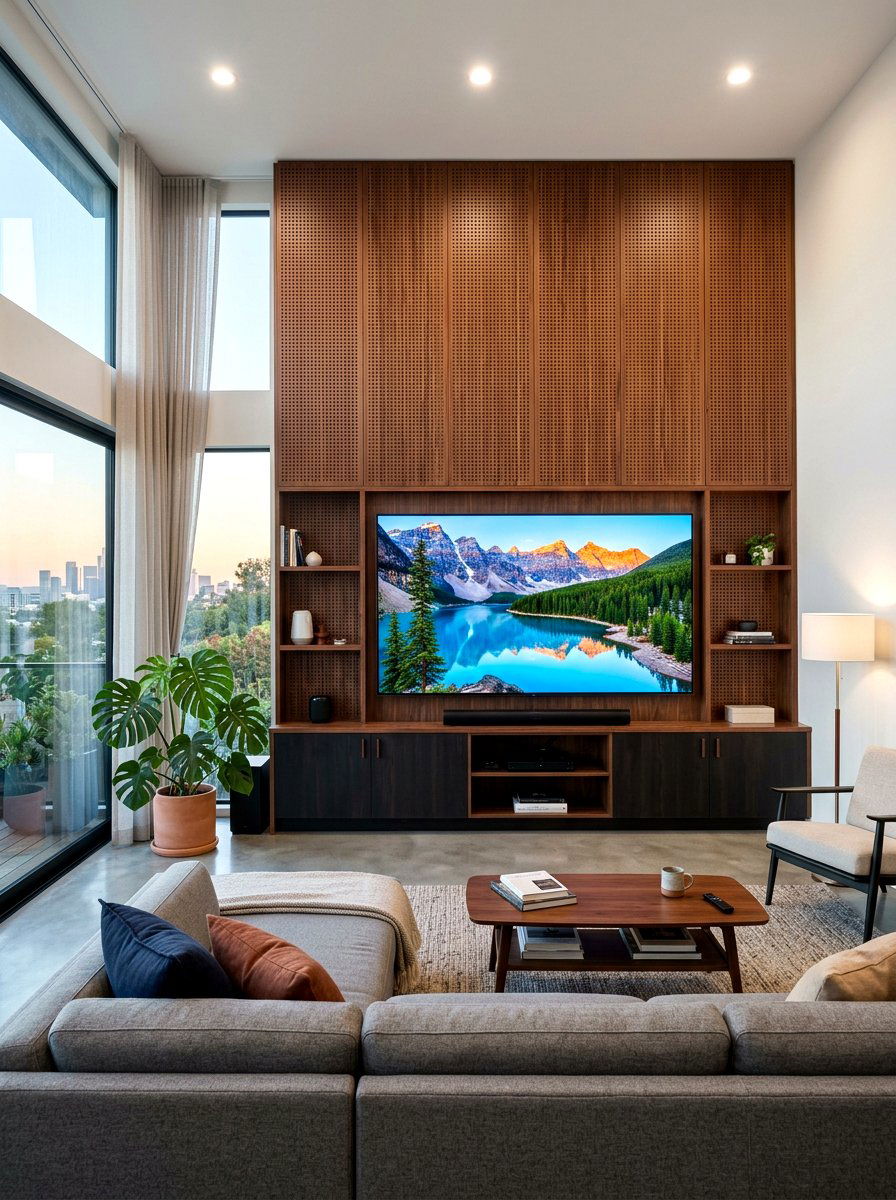
Perforated wood panels offer a high-tech acoustic solution with a very sleek and refined aesthetic. These panels feature thousands of tiny, precision-drilled holes that allow sound waves to enter and become trapped in an absorbent backing. From a distance, they look like solid, high-quality wood, but they perform like professional acoustic treatments. They are perfect for modern living rooms where you want the warmth of timber without the echoing noise of solid surfaces. You can find them in various finishes, such as walnut, oak, or cherry, to coordinate with your furniture. These panels provide a clean, architectural finish that is common in luxury theaters and high-end residential projects.
11. Soundproofing foam tiles
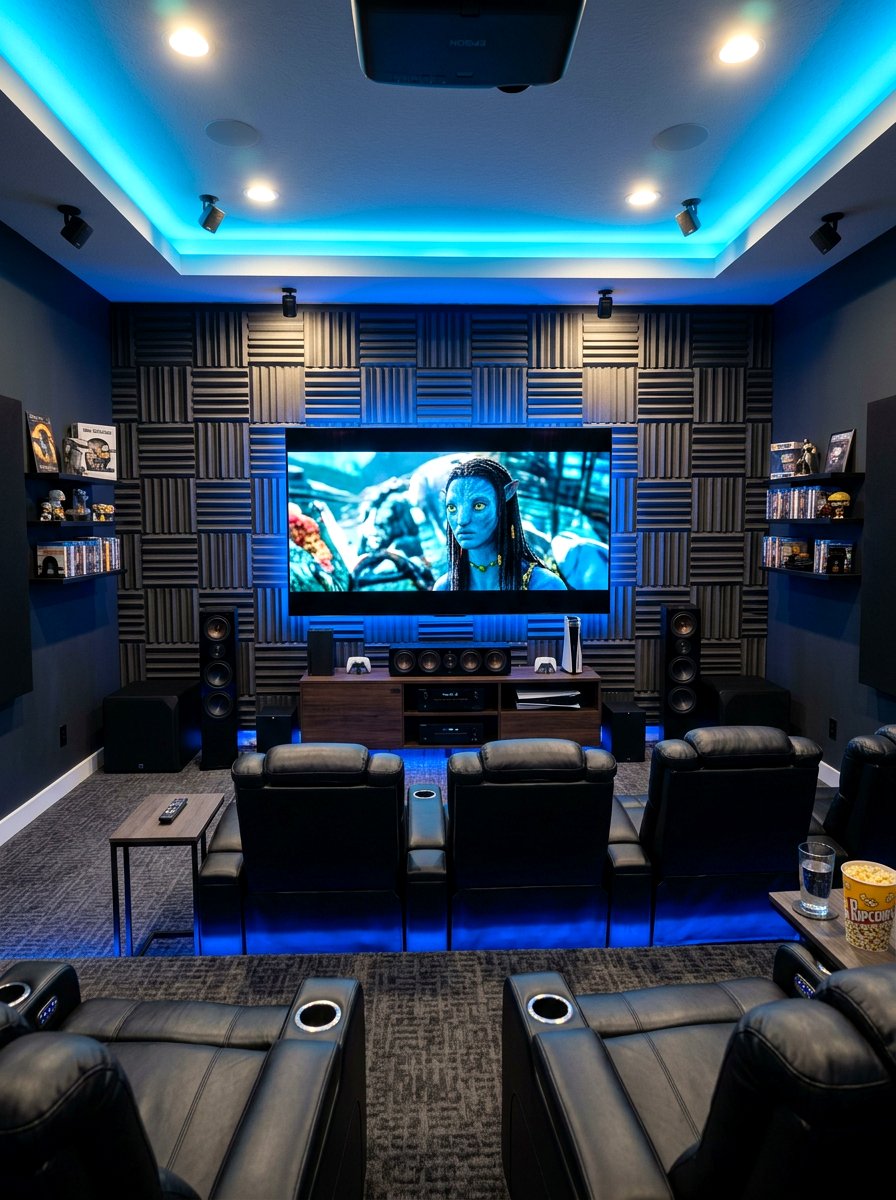
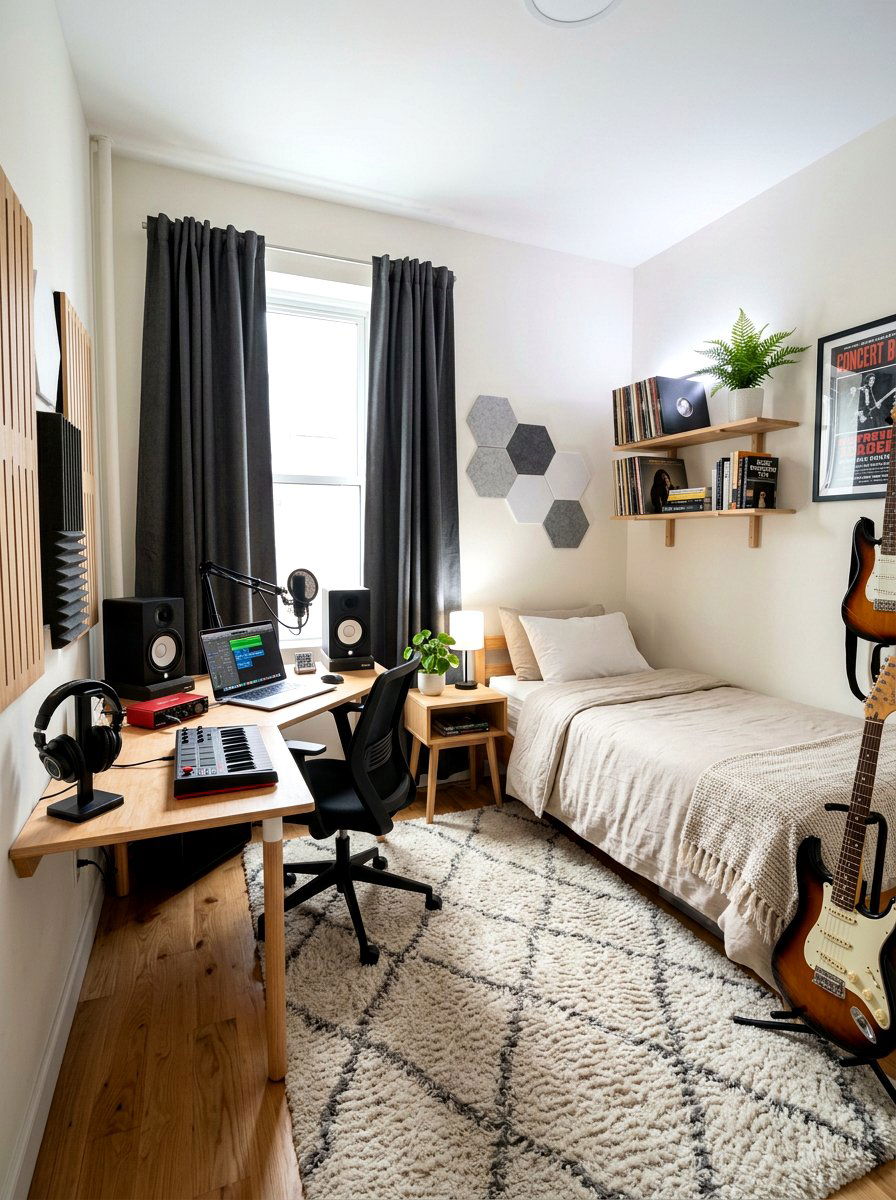
Soundproofing foam tiles have evolved from basic studio gear into stylish design elements for modern homes. Modern versions feature sophisticated 3D patterns, such as wedges, pyramids, or waves, that add a futuristic look to a wall. While they are very effective at absorbing high-frequency sounds, they also serve as a visual statement piece in a media-focused living room. Many brands now offer these tiles in a wide range of colors beyond the standard grey or black. You can mix and match different shapes to create a unique mosaic that reflects your personality. They are a cost-effective and lightweight option for anyone looking to quickly improve their home’s audio performance.
12. Thick wool carpet
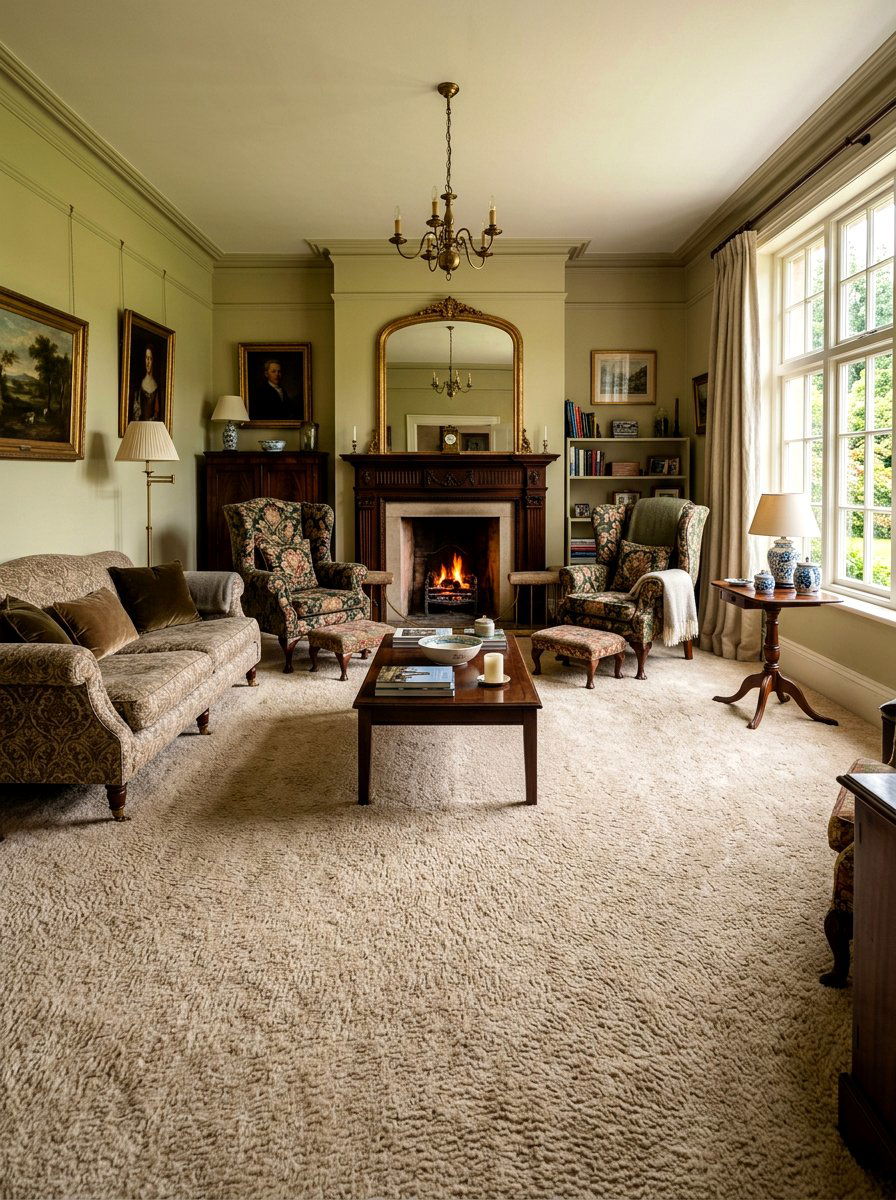
Choosing a thick wool carpet for your living room is a timeless design decision that offers immense acoustic benefits. Wool is a naturally dense and resilient fiber that excels at dampening the sound of foot traffic and furniture movement. It also absorbs airborne noise, helping to lower the overall decibel level of a busy household. Wall-to-wall carpeting provides the most comprehensive sound coverage, but even a large custom-cut wool rug can transform the space. The natural scales of the wool fiber help to break up sound waves rather than letting them bounce back. This creates a soft, muffled environment that is perfect for a quiet reading nook or a home theater.
13. Custom acoustic wall mural
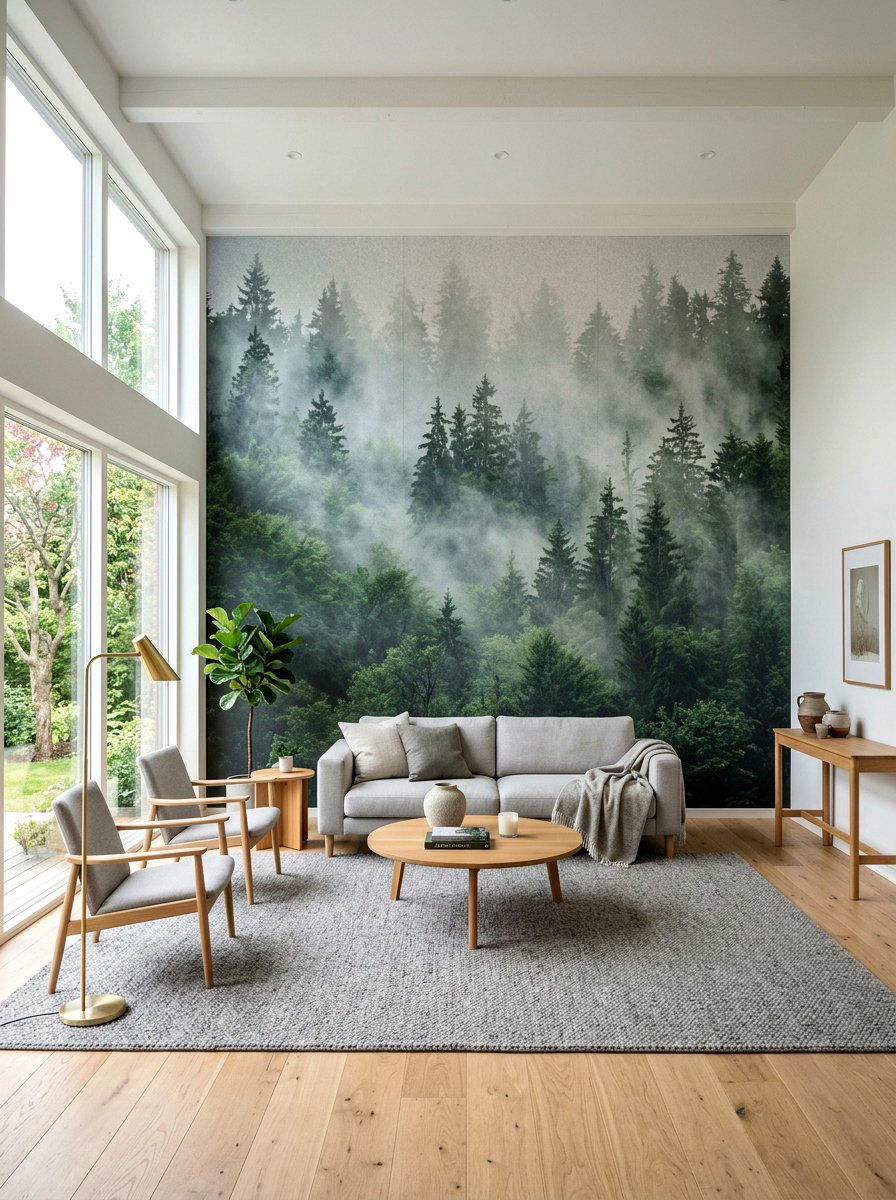
A custom acoustic wall mural allows you to hide high-performance sound treatment behind a beautiful, large-scale piece of art. These systems use a special acoustically transparent fabric that is printed with a high-resolution image of your choice. Behind the fabric sits a thick layer of professional sound-absorbing material that works to eliminate echoes and noise. You can choose a stunning landscape, an abstract pattern, or even a personal photograph to cover an entire wall. This is the perfect solution for homeowners who want the benefits of a sound-treated room without any visible panels. It turns a functional necessity into the most striking and personalized feature of your living room design.
14. Hexagon felt tiles
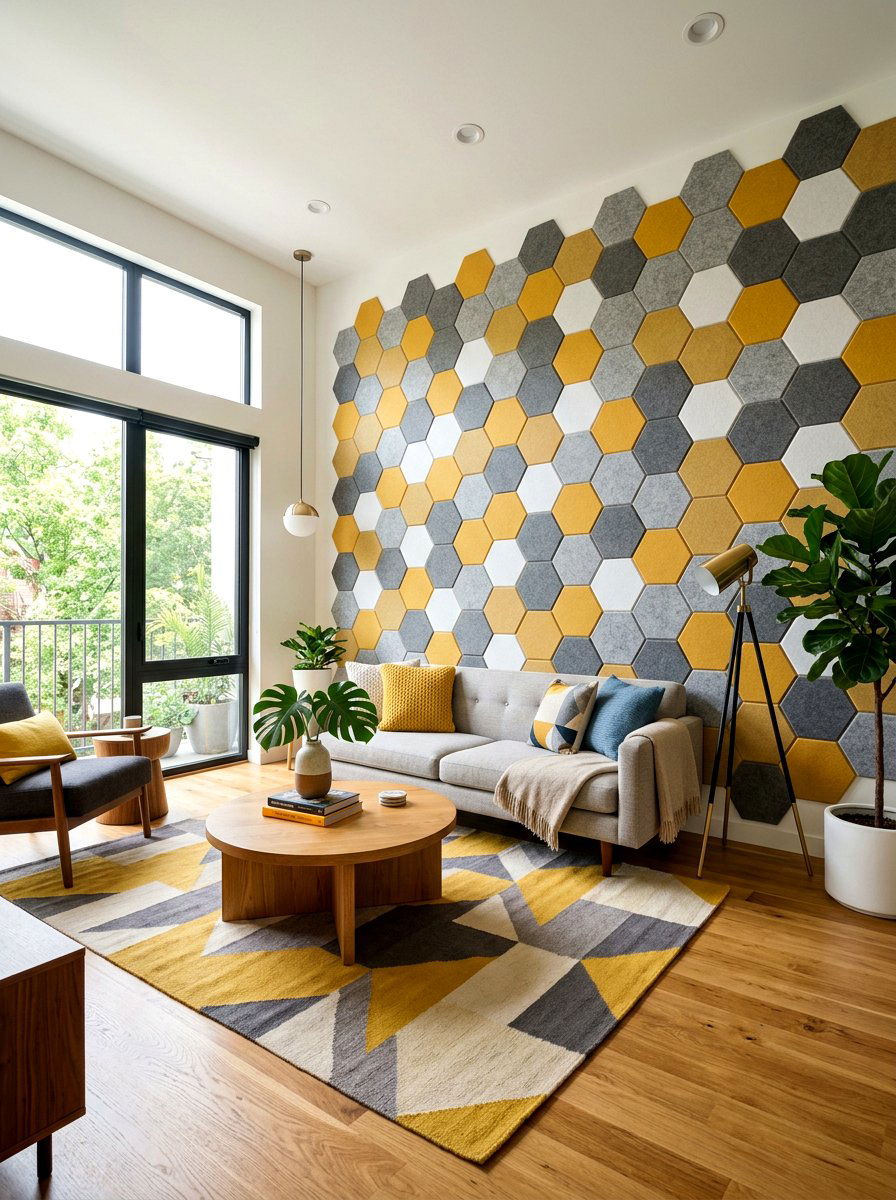
Hexagon felt tiles are a popular and playful way to introduce acoustic treatment into a modern or bohemian living room. These modular tiles can be arranged in countless configurations, allowing you to create a "honeycomb" effect that grows across the wall. The felt material is excellent at softening the acoustics of a room, making it feel less hollow and much more intimate. Since they come in many different shades, you can create a beautiful ombre effect or a bold, colorful pattern. They are particularly useful for targeting specific areas where sound bounces most, such as behind the couch or near a sound system. Their geometric shape adds a trendy, architectural touch.

15. Bass traps for corners
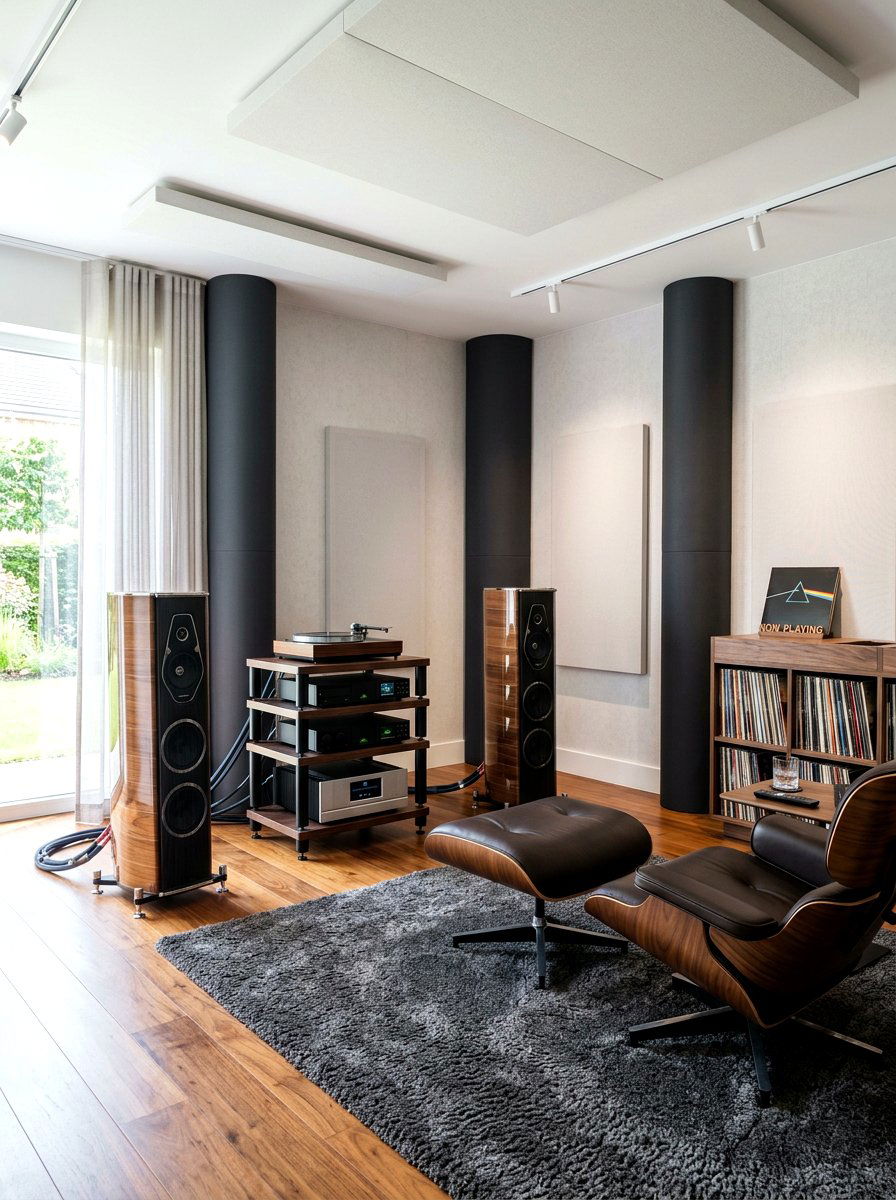
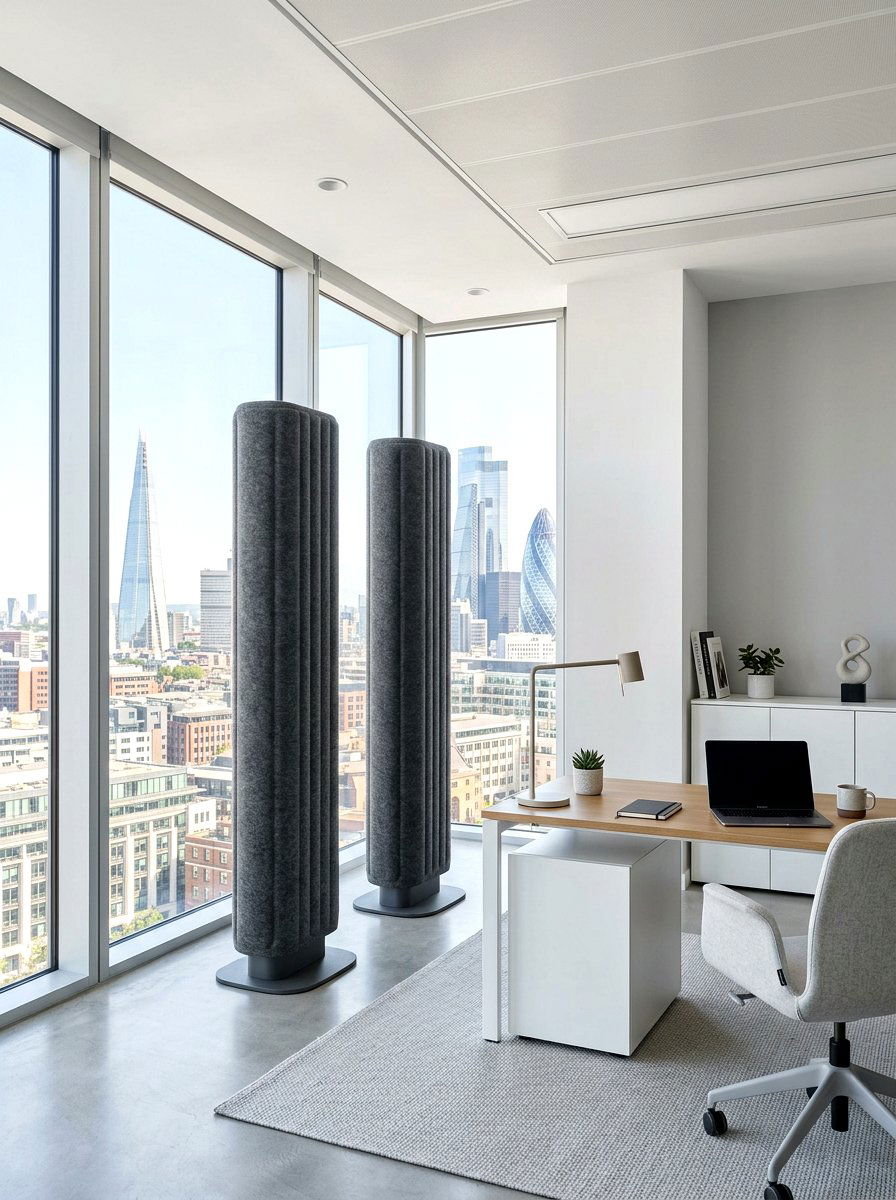
Bass traps for corners are specialized acoustic devices designed to capture low-frequency sound energy that tends to pool in the corners of a room. Without these, your living room might suffer from a "boomy" or muddy sound during movies or music playback. Modern bass traps are designed to look like sleek, vertical columns or integrated architectural features that fit snugly into the wall corners. They help to balance the sound across the entire frequency range, ensuring that every note is crisp and clear. By treating the corners, you solve the most common acoustic problem in rectangular rooms. These units are essential for anyone who takes their home audio or cinema experience seriously.
16. Acoustic window inserts
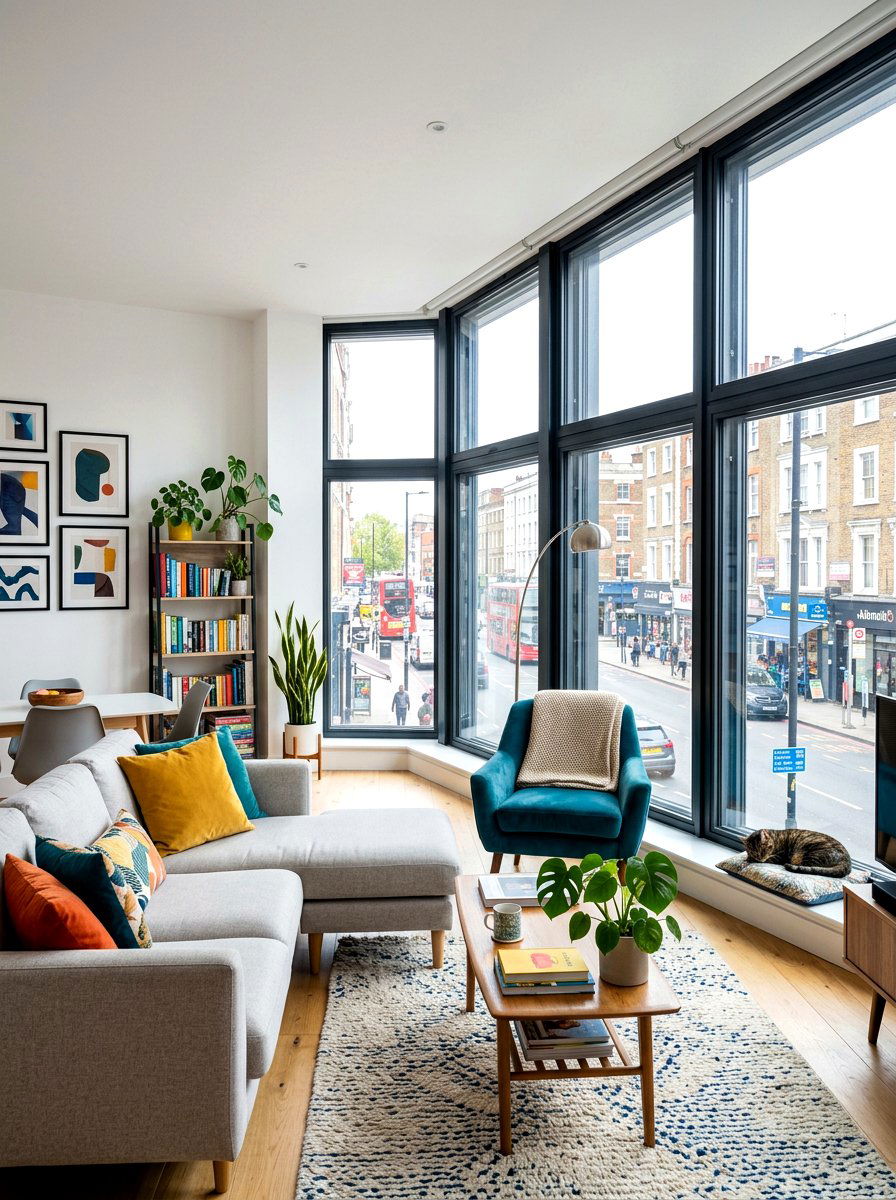
Acoustic window inserts are a smart solution for living rooms that suffer from significant noise coming from the outside world. These clear, lightweight panels fit inside your existing window frame and create an airtight seal that blocks traffic, sirens, and construction noise. Unlike heavy curtains, they allow you to keep your view and maintain all the natural light while enjoying a quiet interior. They also provide an extra layer of thermal insulation, helping to keep your home warmer in the winter and cooler in the summer. This is an ideal choice for urban dwellers who want the benefits of a peaceful suburban environment without moving house. They are virtually invisible once installed.
17. Tufted velvet sofa
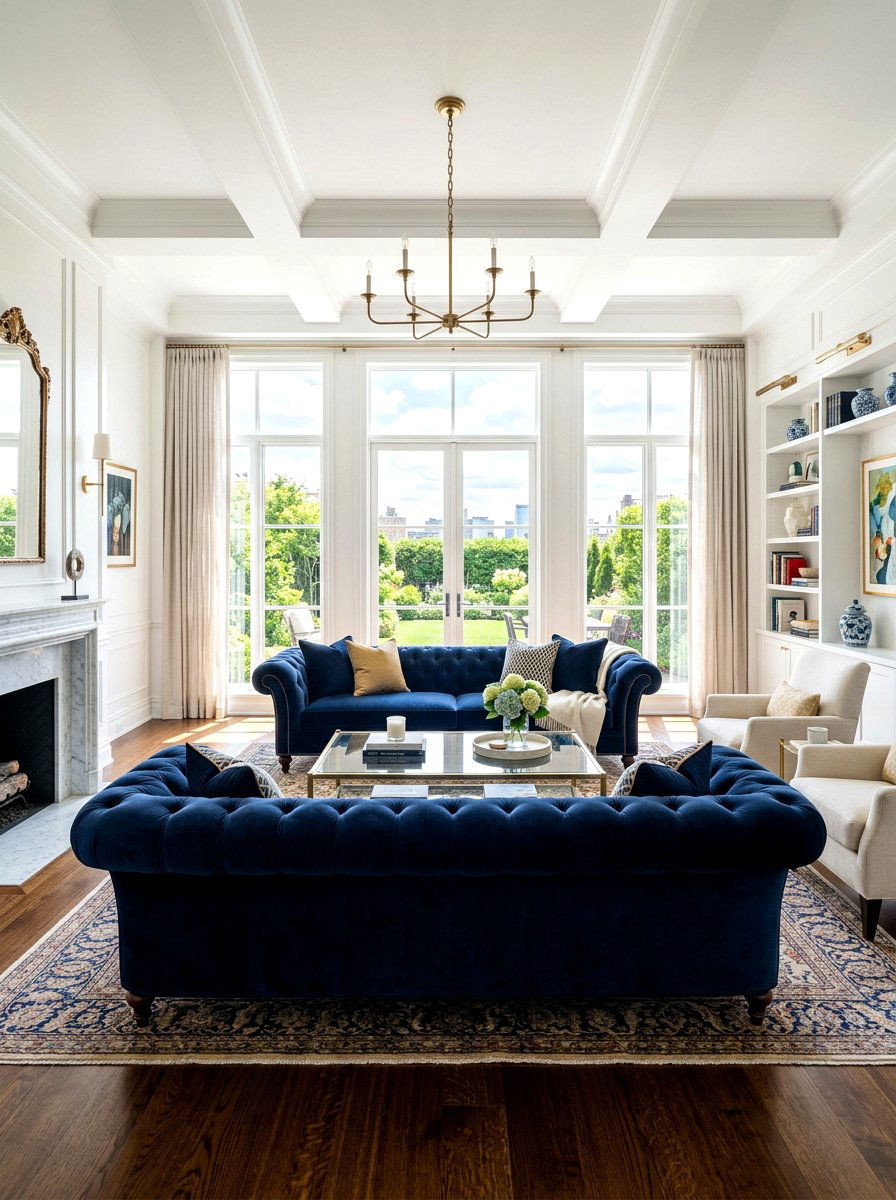
An oversized tufted velvet sofa is not just a piece of furniture; it is a massive sound-absorbing element for your living room. The deep tufting creates an irregular surface that breaks up sound waves, while the thick velvet fabric and internal padding soak up noise. In a room with many hard surfaces, a large upholstered sofa can act as the primary acoustic stabilizer. It prevents sound from bouncing between the walls and the floor, making the entire seating area feel much quieter. Choosing a sofa with high arms and a deep back will provide even more sound-dampening benefits. It is a luxurious way to improve your room's acoustics through smart furniture selection.
18. Suspended acoustic baffles

Suspended acoustic baffles are vertical panels that hang from the ceiling, offering a more industrial and architectural look to a living space. Because both sides of the panel are exposed to the air, they have twice the surface area to absorb sound compared to wall panels. They are excellent for controlling echo in rooms with very tall ceilings or open-plan designs that span multiple levels. You can hang them in rows or random clusters to create a sense of movement and depth overhead. Available in felt, fabric, or wood finishes, they can be styled to match any decor from ultra-modern to rustic. They provide a highly effective way to manage large volumes of sound.
19. Reeded wall panels
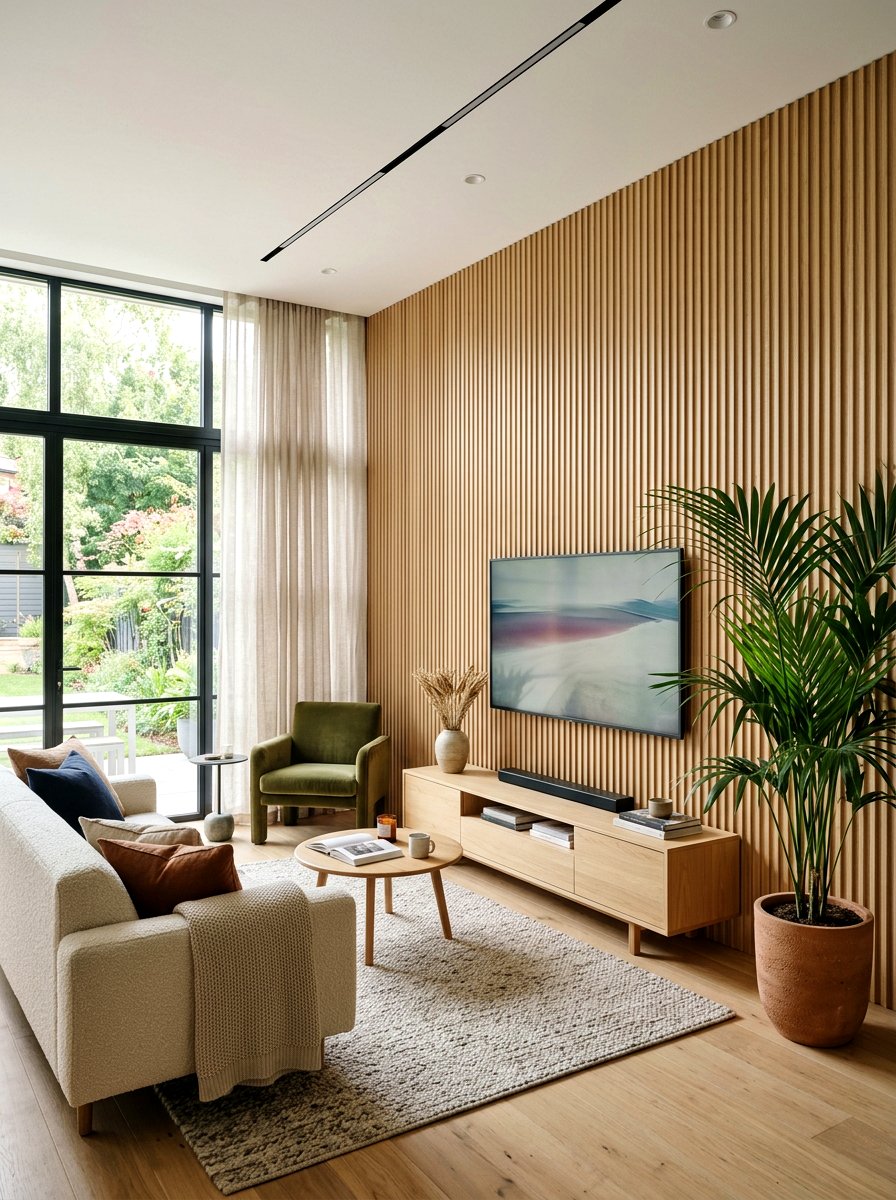
Reeded wall panels feature a series of rounded, vertical grooves that look incredibly elegant while serving a functional acoustic purpose. This textured surface acts as a natural sound diffuser, scattering sound waves in multiple directions instead of reflecting them straight back. This helps to eliminate "dead spots" in the room and creates a more even and immersive listening experience. Reeded designs are currently very trendy in interior design, often used on fireplace surrounds or as backdrops for media centers. The play of light and shadow on the rounded slats adds a sophisticated visual rhythm to the room. They offer a beautiful balance between modern architectural style and practical sound management.
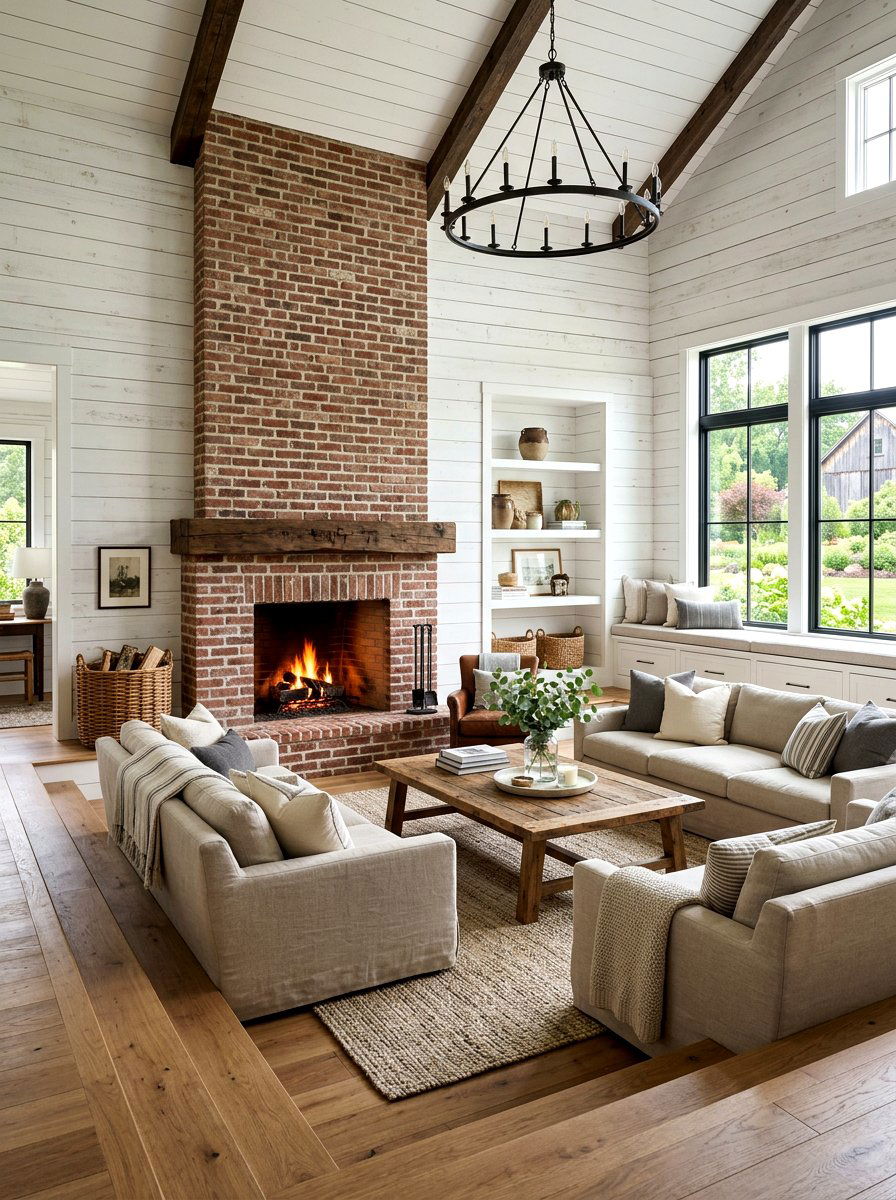
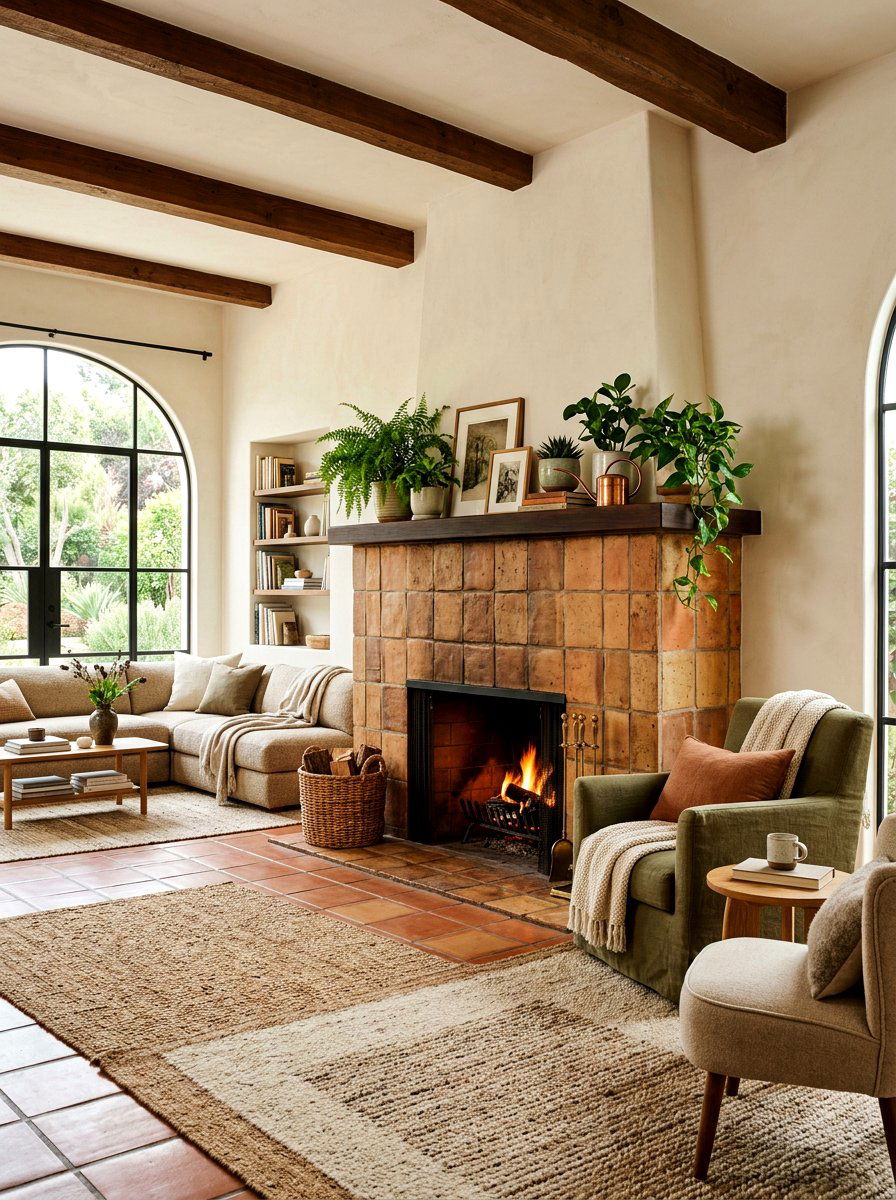
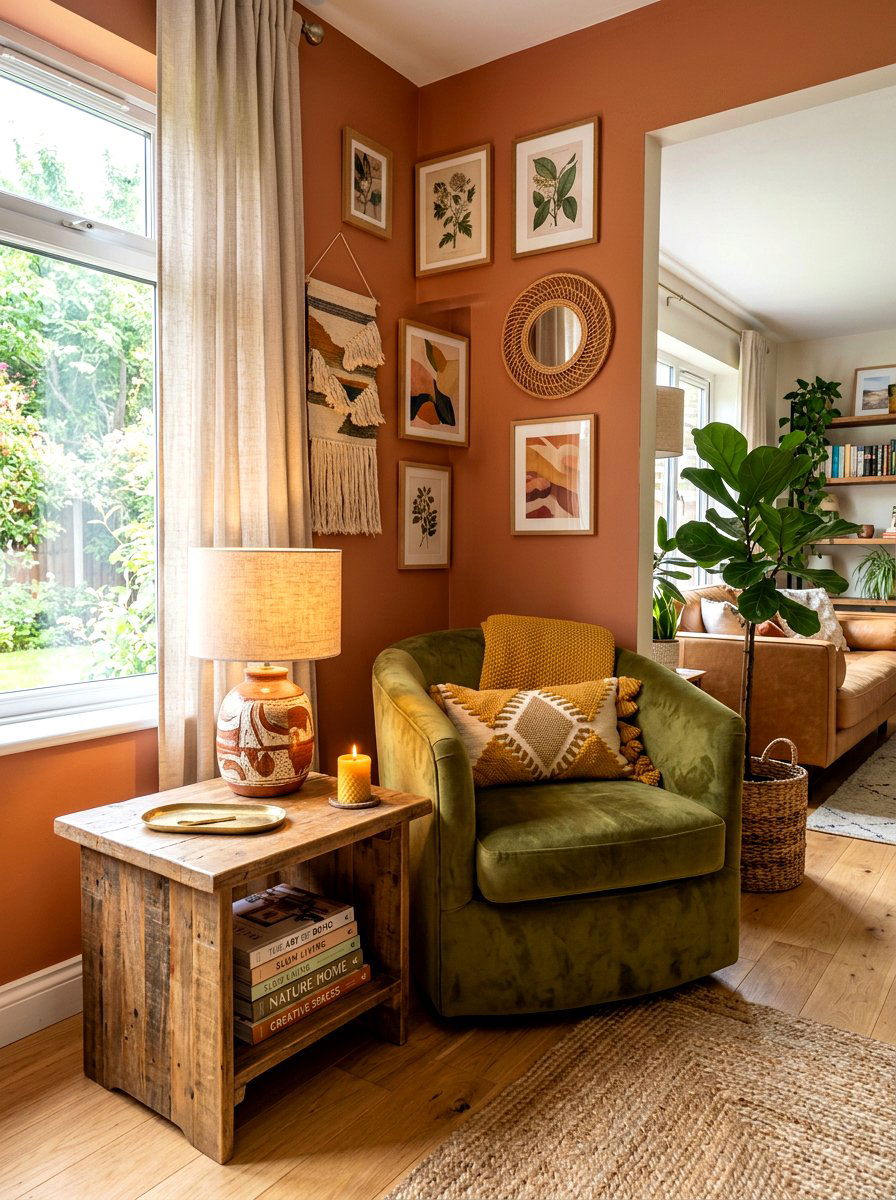
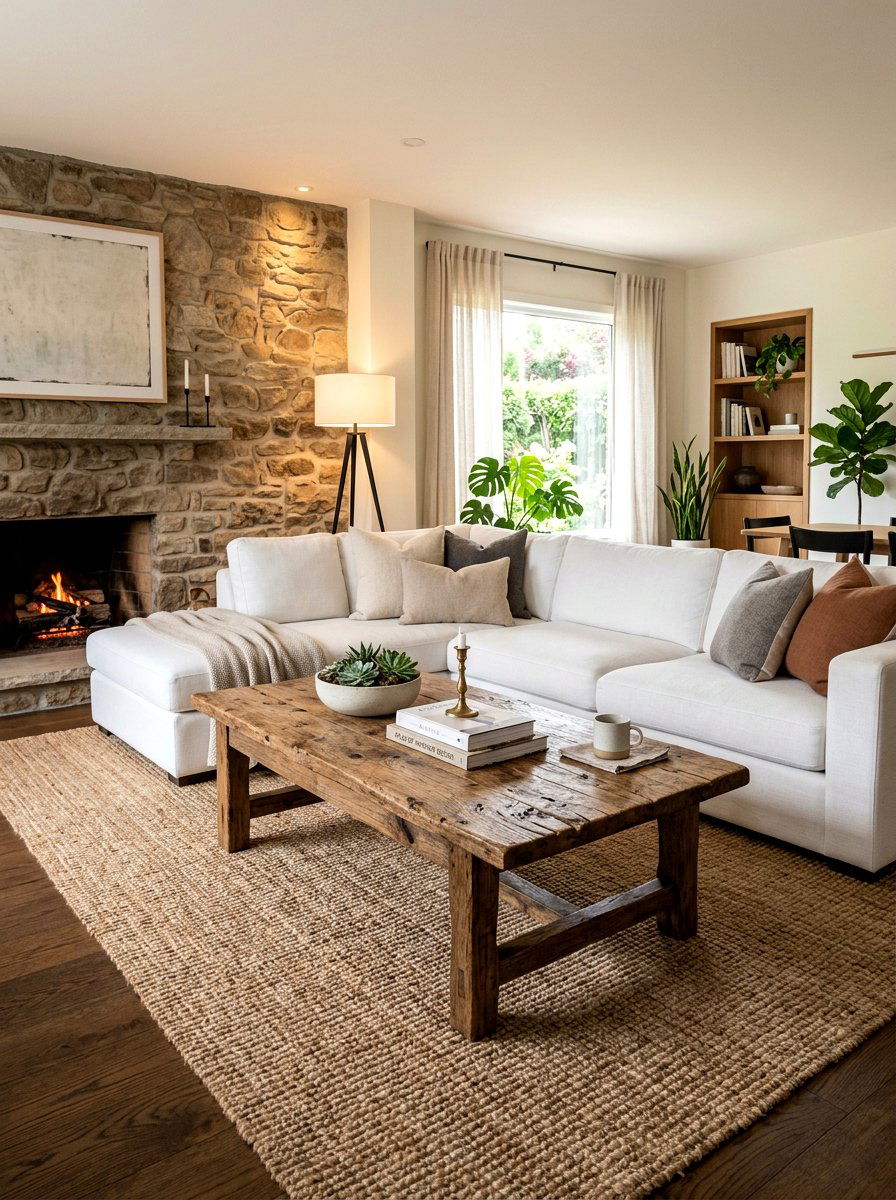
20. Sound absorbing wallpaper
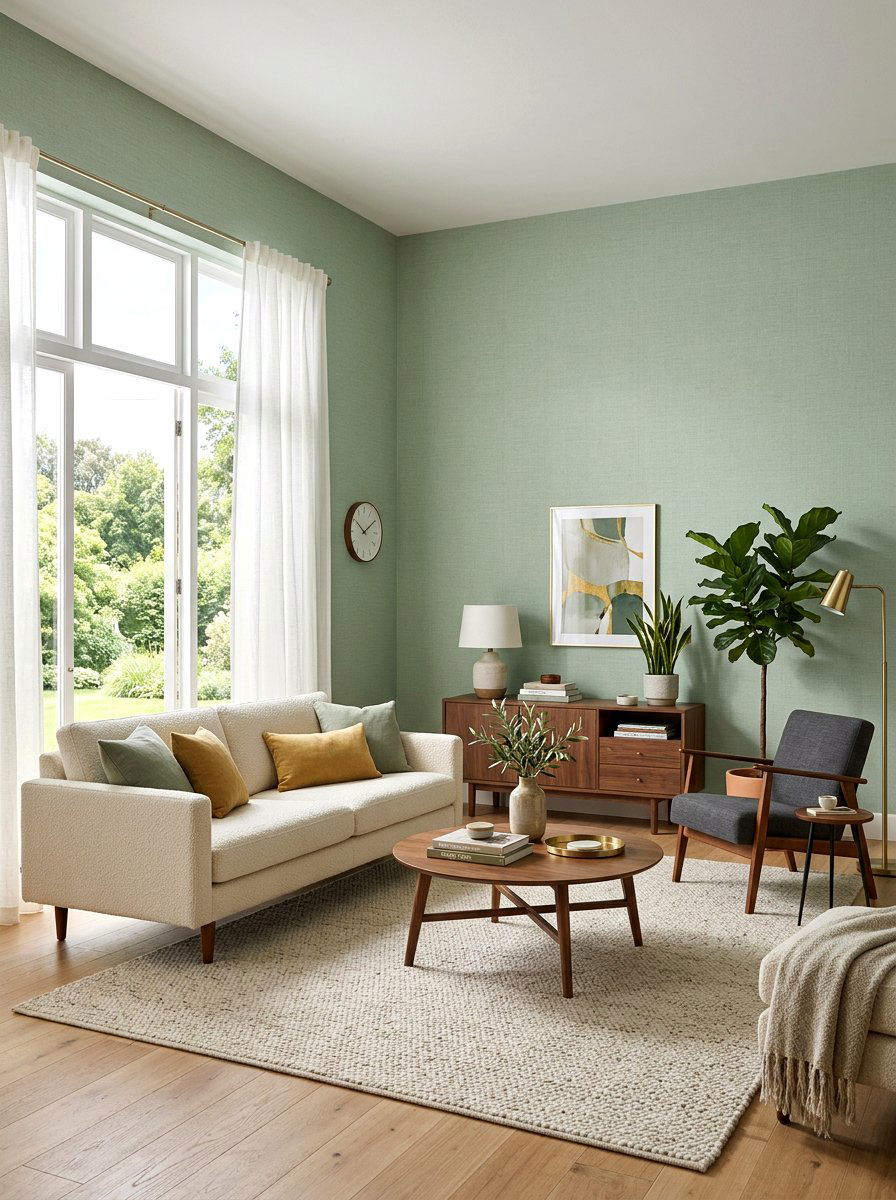
Sound absorbing wallpaper is a revolutionary product that allows you to treat your entire room with a simple roll of paper. This wallpaper is much thicker than standard versions and features a specialized backing that dampens vibrations and absorbs higher frequencies. It comes in a wide variety of beautiful patterns, textures, and colors, ranging from linen-look weaves to embossed geometric designs. While it does not offer the same level of absorption as a thick panel, it significantly reduces the overall "brightness" and echo of a room. It is a perfect solution for those who want a subtle and seamless way to improve acoustics across every wall in their living space.
21. Canvas art sound panels
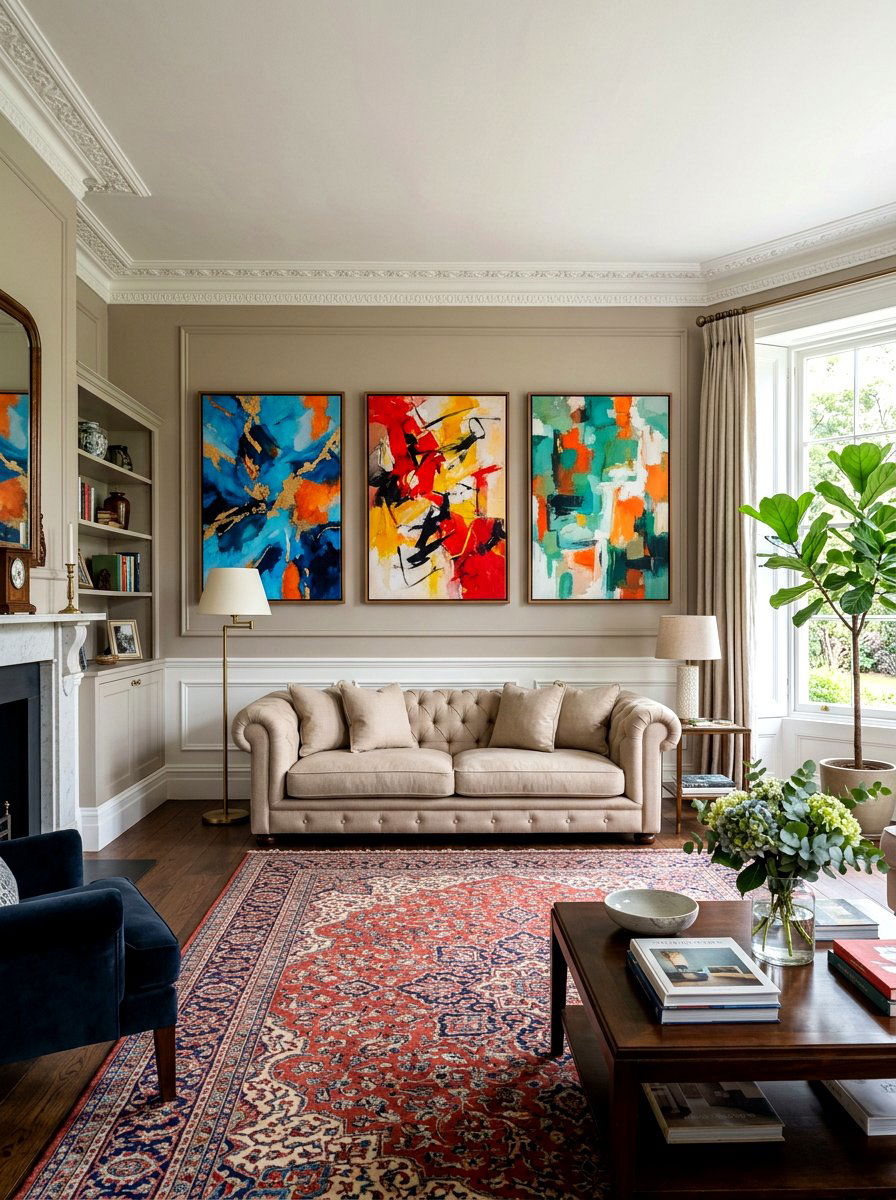
Canvas art sound panels look exactly like high-quality gallery paintings but hide professional acoustic technology within their frames. These are perfect for homeowners who want to maintain a traditional art aesthetic while solving noise issues in their living room. The "canvas" is actually a specially woven fabric that allows sound to pass through to the hidden absorbent core. You can buy pre-made designs or have your own digital art and family photos printed onto the surface. Hanging these on opposite walls will prevent sound from bouncing back and forth across the room. It is a discreet and beautiful way to integrate sound control into your home decor without anyone noticing.
22. Moss wall art

Moss wall art is a stunning biophilic design trend that also happens to be a fantastic natural sound absorber. Preserved reindeer moss and other varieties have a complex, porous structure that is highly effective at trapping sound waves and reducing ambient noise. These green installations bring a touch of the outdoors inside, creating a calming and peaceful atmosphere. They require no watering or sunlight, making them a very low-maintenance way to add texture and sound dampening to your living room. A large moss panel can act as a natural acoustic buffer, softening the acoustics while making a bold, organic statement. It is the perfect blend of nature and modern technology.
23. Wooden acoustic diffuser
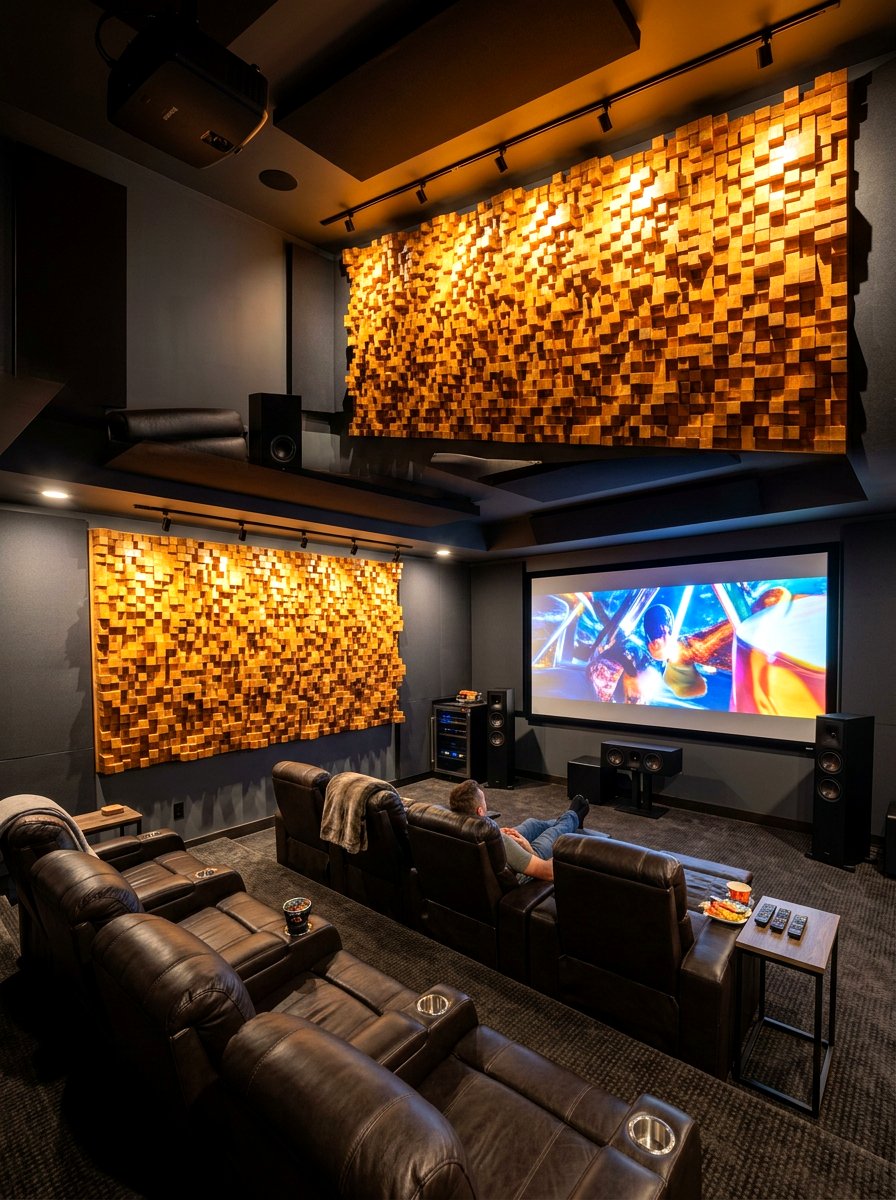
A wooden acoustic diffuser is designed not to absorb sound, but to scatter it evenly throughout the room to prevent echoes. These panels feature a series of blocks or slats at different depths, which break up sound waves and spread them in many directions. This creates a much more "live" and natural-sounding environment, which is ideal for dedicated music rooms or home theaters. The intricate, mathematical patterns of the wood blocks also look like sophisticated modern sculpture on your wall. They are typically made from beautiful hardwoods like oak or walnut, adding a premium feel to the space. Using diffusers alongside absorbers creates the most professional and balanced acoustic environment possible.
24. Ceiling coffers
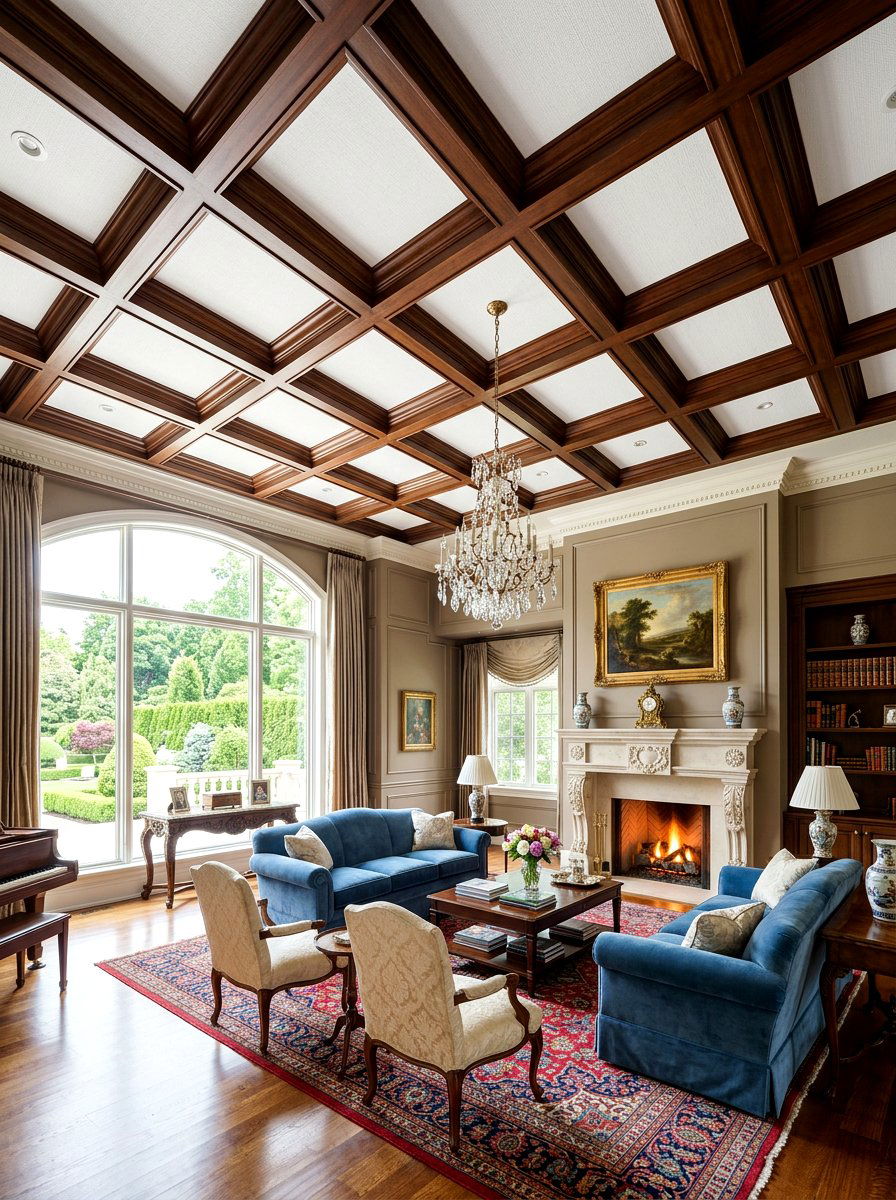
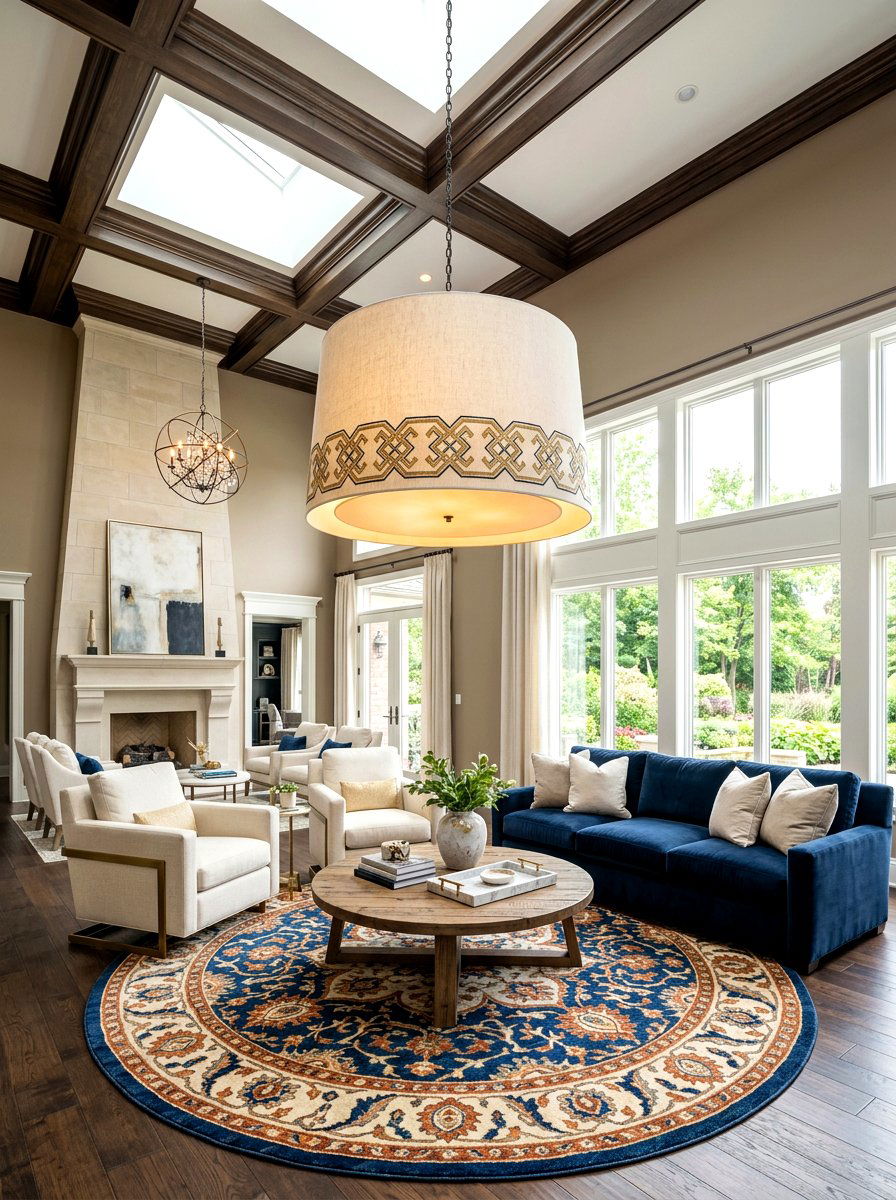
Ceiling coffers are an architectural feature consisting of sunken panels that create a grid pattern on the ceiling. While they are a classic design element, they are also incredibly effective at breaking up large flat surfaces where sound often bounces. By adding acoustic infill or felt within the recessed sections of the coffers, you can create a high-performance sound-trapping system. This keeps the traditional and elegant look of a coffered ceiling while gaining modern sound management benefits. It is a sophisticated way to handle noise in a formal living room or a library-style space. The depth of the coffers naturally helps to diffuse sound and reduce the overall room reverb.
25. High pile shag rug
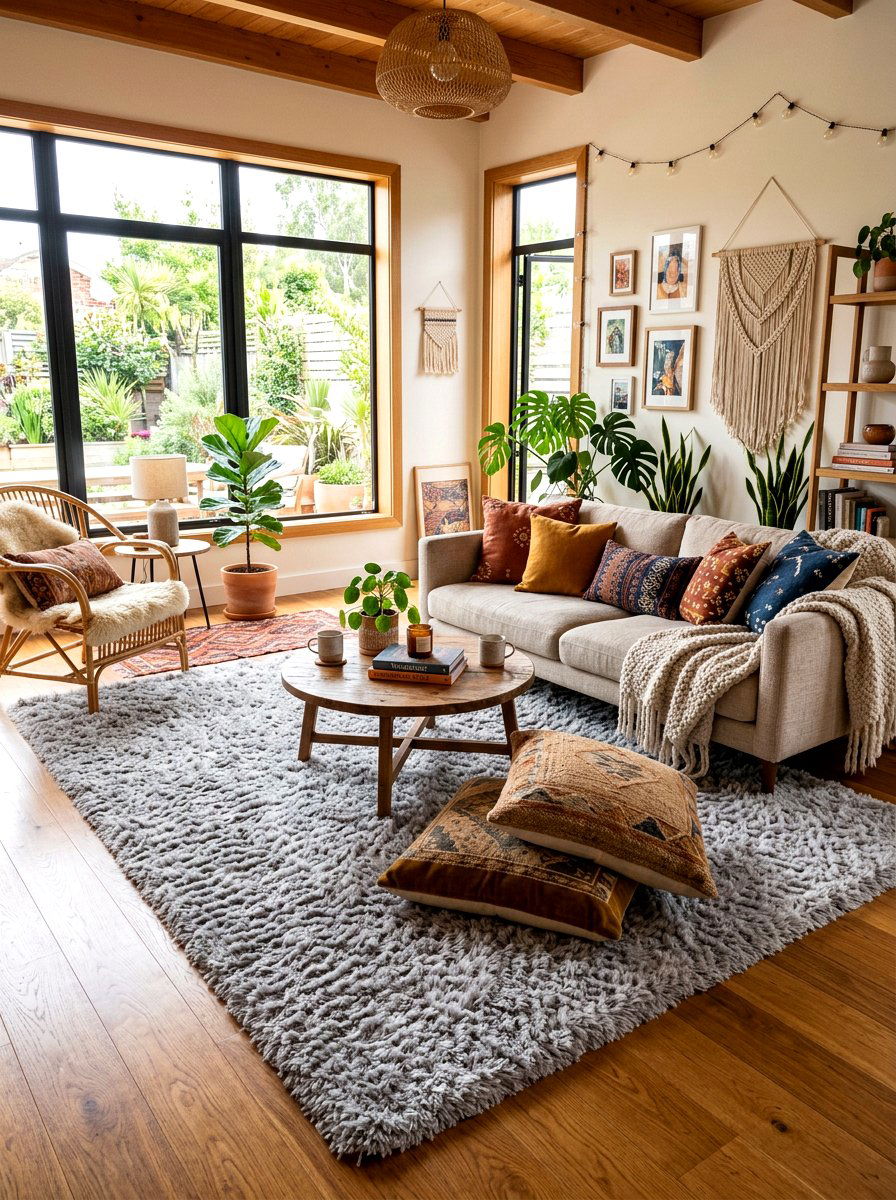
A high pile shag rug is a fun and stylish way to add a massive amount of surface area for sound absorption. The long, loose fibers of a shag rug are excellent at capturing sound waves from all angles, preventing them from reflecting off the floor. This makes the living room feel much softer and more intimate, which is perfect for lounging and conversation. Modern shag rugs come in sophisticated solid colors and subtle patterns that fit well with contemporary decor. Beyond the acoustic benefits, they provide a very comfortable and warm surface for kids or pets to play on. It is a simple, high-impact addition for a more peaceful and cozy home.
26. Fabric ottoman
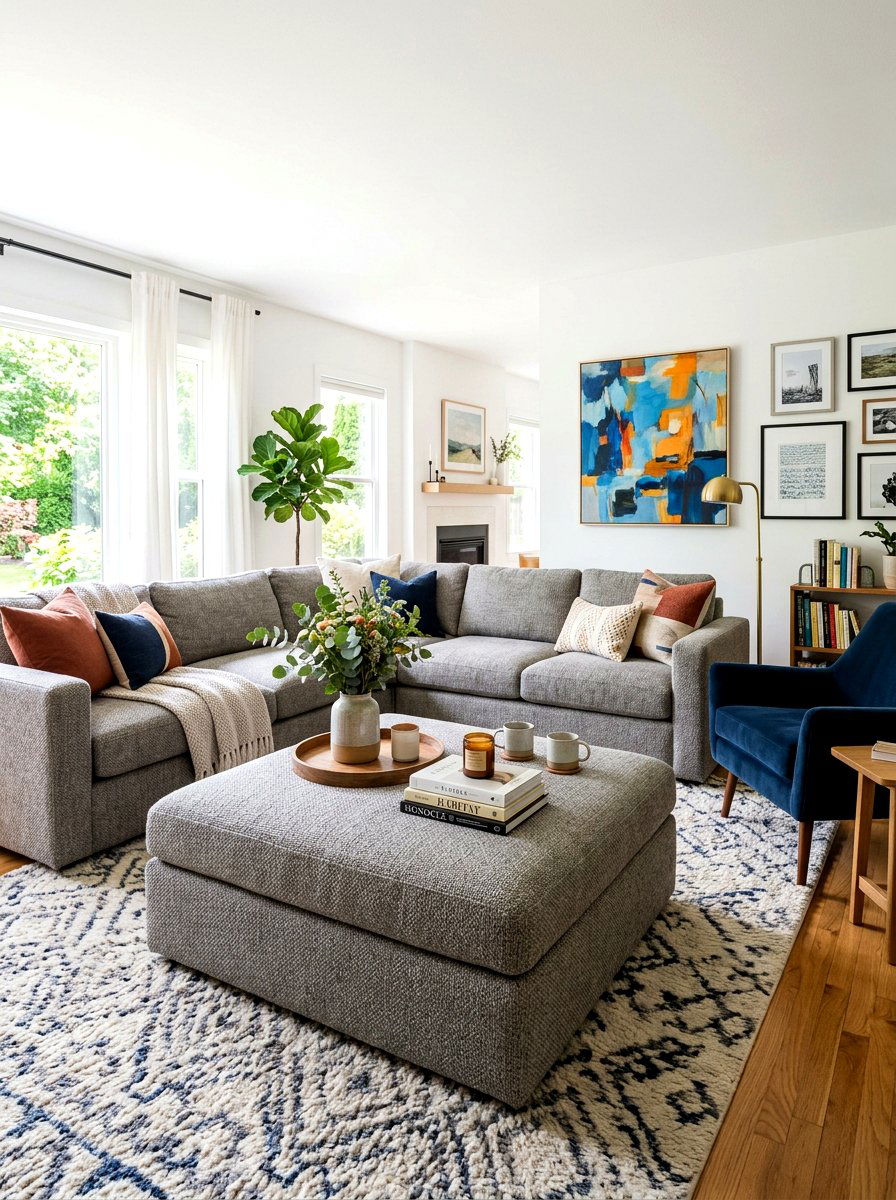
Replacing a hard coffee table with a large fabric ottoman can significantly improve the acoustics of your central seating area. Soft, upholstered surfaces are much better at absorbing sound than wood, glass, or metal. An ottoman provides a large, flat area of padding right in the middle of the room, which helps to catch sound waves as they travel across the floor. You can choose a tufted or smooth design in a durable fabric like performance velvet or thick linen. This simple furniture swap makes conversations easier to follow and reduces the sharp clatter of objects being placed on the table. It adds a soft, inviting touch to the room's layout.
27. Soundproof door seal
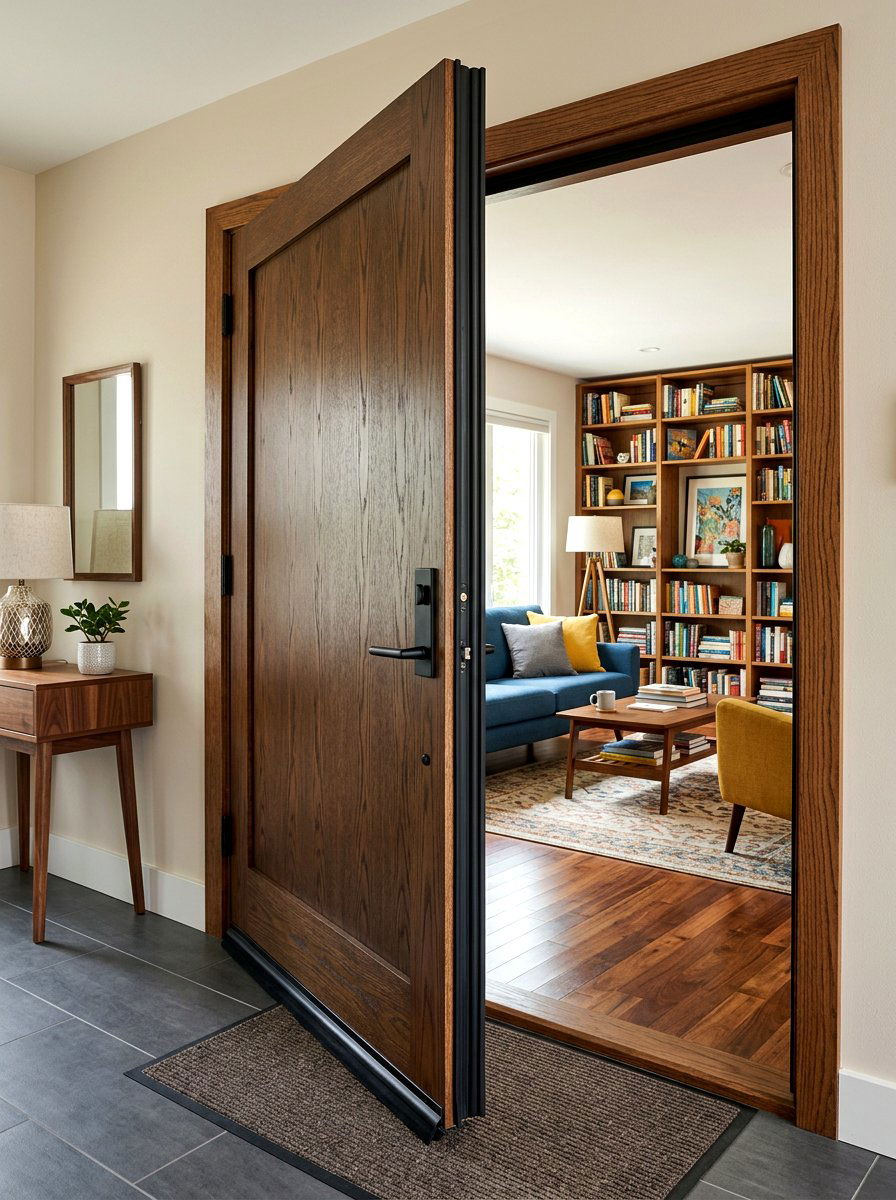
A soundproof door seal is a small but critical detail for keeping your living room a truly quiet sanctuary. Most noise from the rest of the house enters through the small gaps around the edges and bottom of the door. Installing a heavy-duty door sweep and specialized weather stripping creates an airtight barrier that blocks unwanted sound from hallways or kitchens. This is especially important if you have an open-concept living area that you want to keep quiet for movies or reading. These seals are easy to install and can be color-matched to your door frame for a seamless look. It is an affordable way to dramatically increase the privacy of your space.
28. Macrame wall hanging
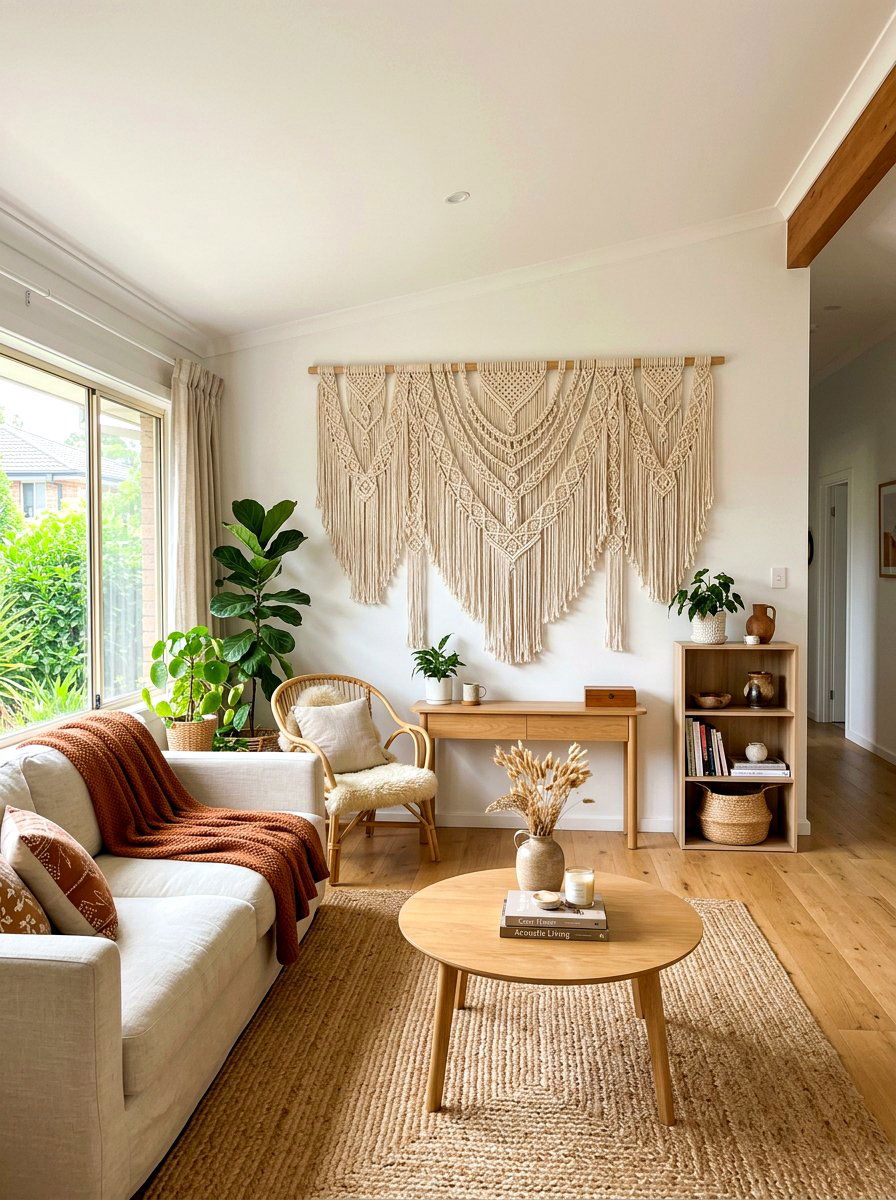
A large macrame wall hanging is a beautiful bohemian decor piece that also provides a surprising amount of sound dampening. The dense, knotted cotton ropes create a soft, textured surface that helps to break up and absorb sound waves on a flat wall. Because they are often quite large and thick, they act similarly to a small acoustic panel while adding a handmade, organic feel to the room. They are perfect for softening the acoustics in a rental home where you cannot install permanent wall panels. Hanging a series of these can create a soft, quiet vibe that feels relaxed and cozy. It is a stylish way to use textiles for noise control.
29. Sound dampening floor underlay
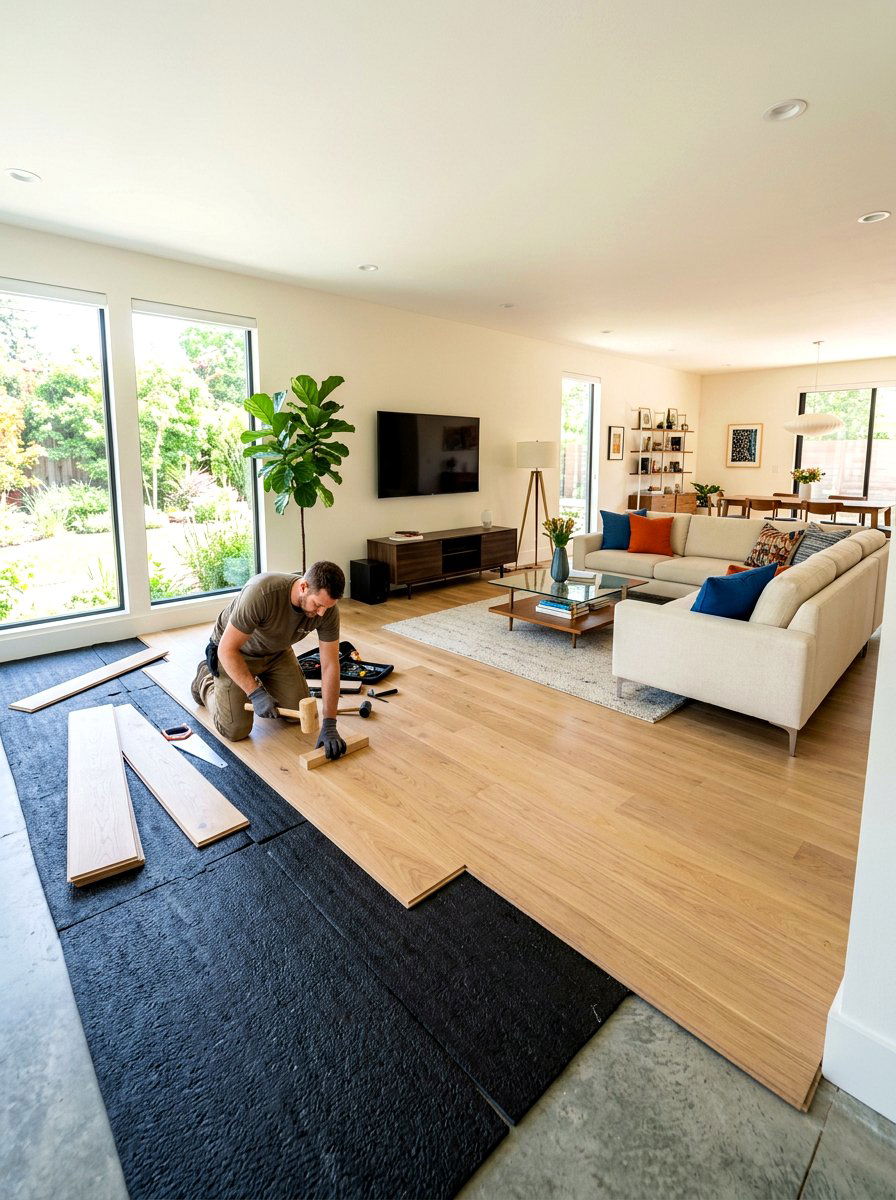
If you are planning to install new hardwood or laminate flooring, a high-quality sound dampening floor underlay is a must. This hidden layer is installed beneath the floorboards to absorb impact noise and prevent vibrations from traveling through the structure of the house. It makes your floors feel more solid and significantly reduces the hollow "click-clack" sound of walking across the room. Many modern underlays are made from recycled rubber or dense foam specifically engineered for acoustic performance. While you won't see this treatment, you will certainly hear the difference every time someone walks into the room. it is the foundation of a truly quiet and professional living space.
30. Grooved timber wall
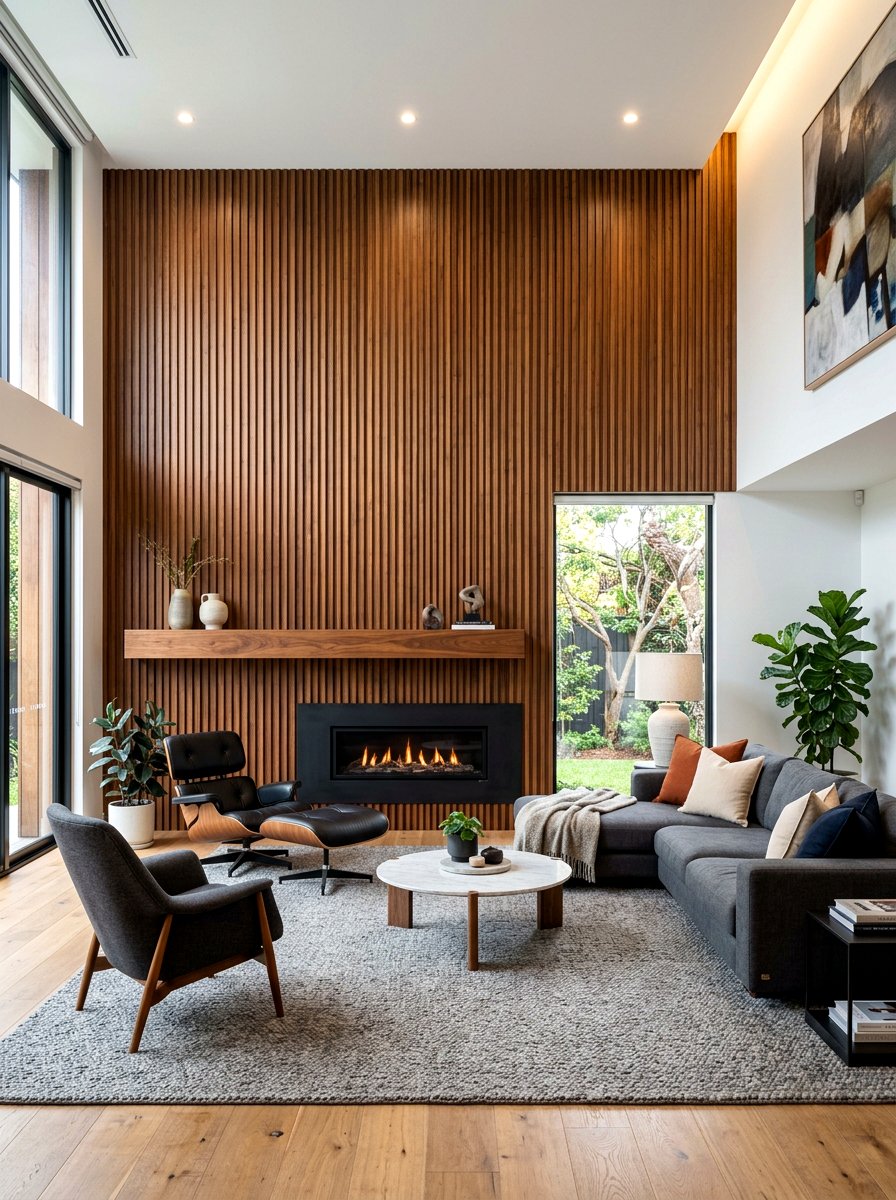
A grooved timber wall provides a stunning architectural focal point while offering natural sound diffusion for your living room. The rhythmic pattern of the grooves catches sound waves and scatters them, preventing the formation of harsh echoes. Unlike a flat wooden wall, the texture of the grooves helps to soften the acoustic environment and creates a more balanced soundscape. This design is particularly popular in mid-century modern and Scandinavian interiors where natural materials are celebrated. You can use large sheets of grooved paneling for a seamless, floor-to-ceiling look that feels warm and expensive. It is a timeless design choice that improves both the visual and auditory quality of your home.
Conclusion:
Investing in the acoustic quality of your living room is a powerful way to enhance your daily comfort and overall well-being. By thoughtfully combining soft textiles, architectural panels, and strategic furniture placement, you can create a space that looks as good as it sounds. These 30 ideas demonstrate that functional sound management does not have to be an eyesore; instead, it can be a beautiful and integral part of your home's personality. Whether you choose the warmth of slat wood or the modern flair of felt art, your living room will become a much more enjoyable place for family gatherings and quiet relaxation.

Related posts: