Designing a catering kitchen requires a unique blend of industrial-strength durability and highly specialized organizational systems to handle large-scale food production. Unlike a standard residential kitchen, these spaces must prioritize workflow efficiency, food safety compliance, and the ability to plate hundreds of meals simultaneously without chaos. Whether you are setting up a professional commercial space or a high-capacity home-based business, every square foot must serve a functional purpose. From the selection of non-porous surfaces like stainless steel to the strategic placement of high-BTU appliances, the right layout can transform a stressful service into a seamless operation. These concepts focus on maximizing productivity through smart zoning and professional-grade equipment integration.
1. Commercial Grade Kitchen Appliances
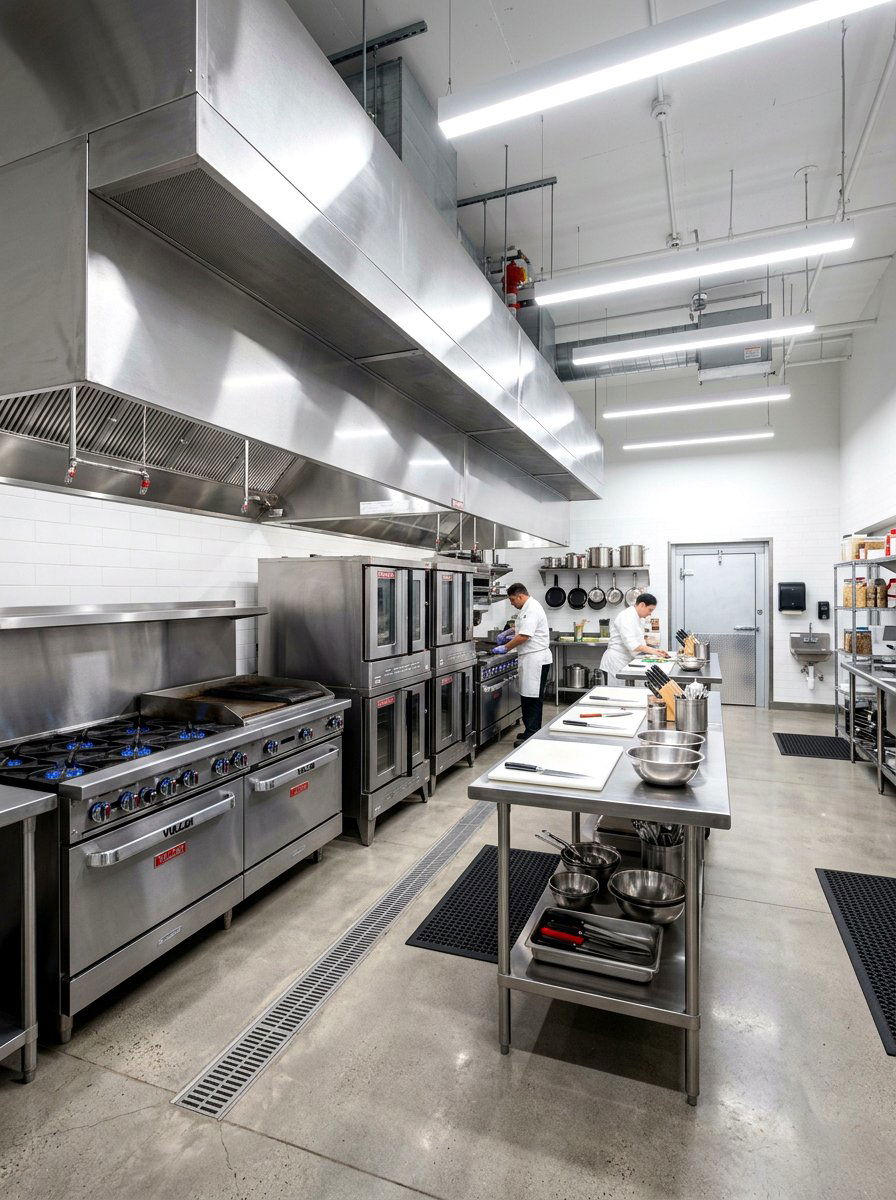
Have you ever wondered how professional chefs maintain such high-speed output during a busy event without their equipment failing? The foundation of any serious catering operation is a suite of heavy-duty appliances designed to withstand constant use and high temperatures. This includes high-BTU gas ranges that provide instant heat control and powerful convection ovens that ensure even browning for large batches of pastries or roasted meats. Choosing professional-grade gear means looking for robust stainless steel construction, thick handles, and simplified controls that won't break under pressure. Integrating these units into a cohesive layout allows your team to move quickly between tasks while relying on the consistent performance of industrial machinery.
2. Stainless Steel Prep Station
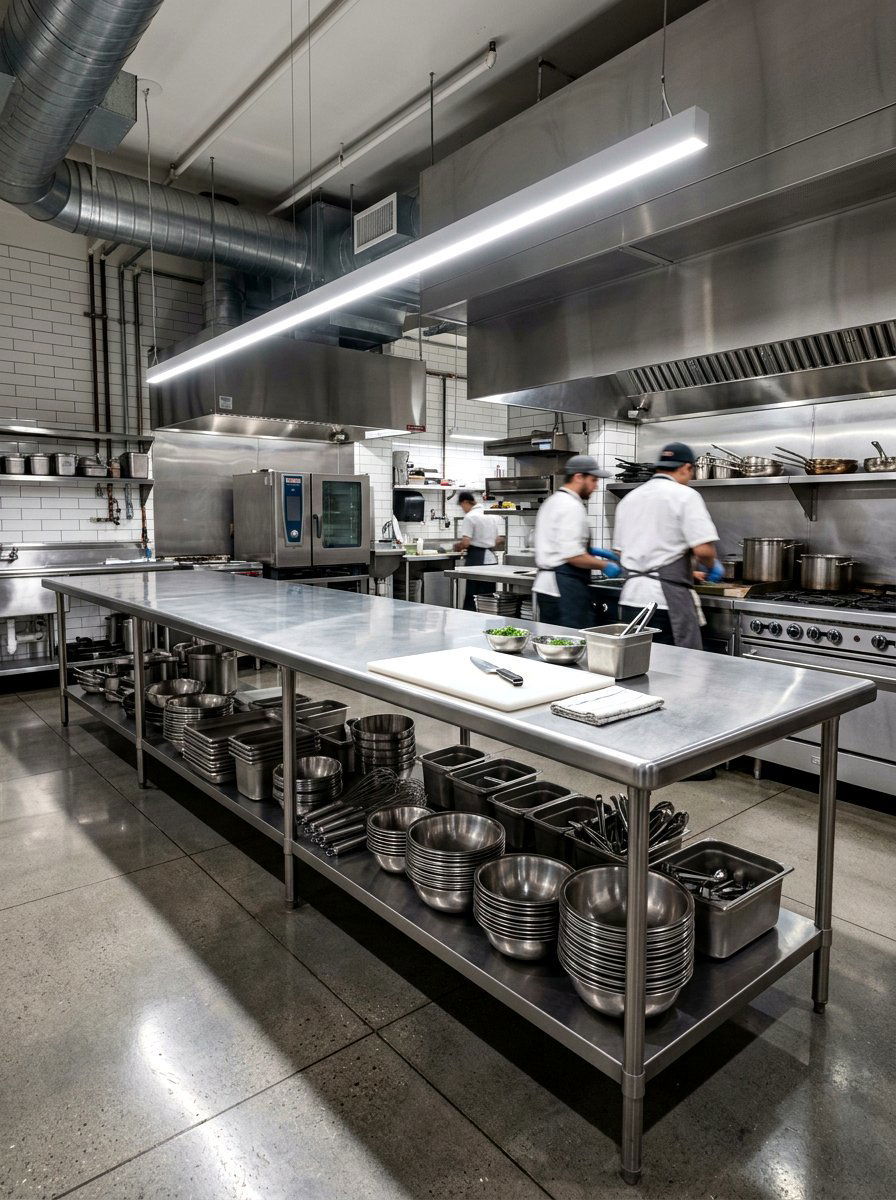
Imagine a workspace where every surface is completely non-porous, incredibly easy to sanitize, and virtually indestructible under the heaviest kitchen tools. A dedicated stainless steel prep station is the gold standard for catering because it offers a hygienic environment for handling raw ingredients and hot pans. These stations often feature built-in undershelves to keep mixing bowls, cutting boards, and frequently used utensils within arm’s reach during a busy shift. By grouping multiple tables together, you can create a massive surface area that accommodates several staff members at once. This setup is essential for maintaining a clean workflow and preventing cross-contamination during complex food preparation stages.
3. Walk In Pantry Storage
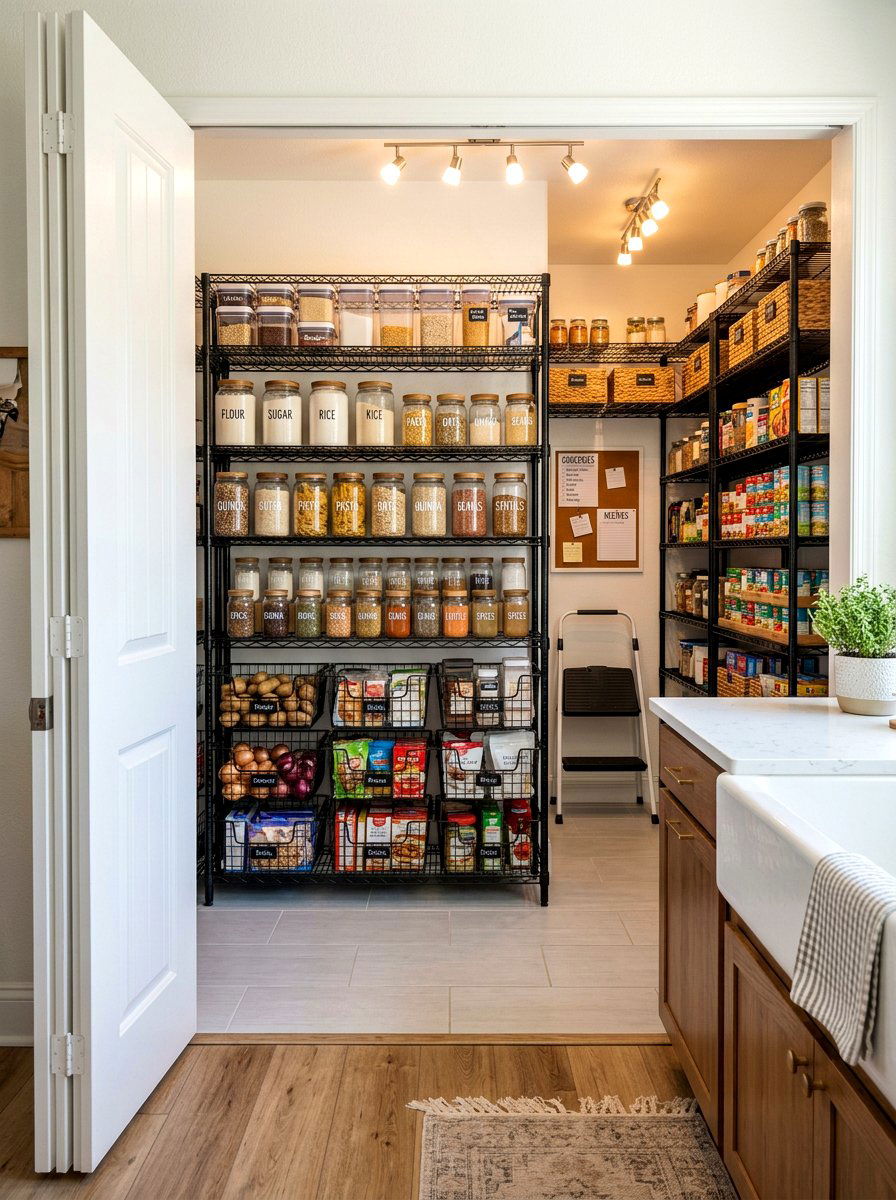
When you are managing ingredients for hundreds of guests, a standard cabinet simply won't provide the capacity or organization needed for success. A walk-in pantry serves as the centralized hub for dry goods, bulk grains, and specialized catering equipment like chafing dishes and large platters. Utilizing floor-to-ceiling wire shelving allows for maximum air circulation and easy visual inventory checks, so you never run out of staples in the middle of a project. Placing heavy items on lower dunnage racks keeps the space safe and compliant with health codes while ensuring everything is easy to find. This organized storage system is vital for keeping the main kitchen floor clutter-free.
4. Industrial Ventilation Hood System
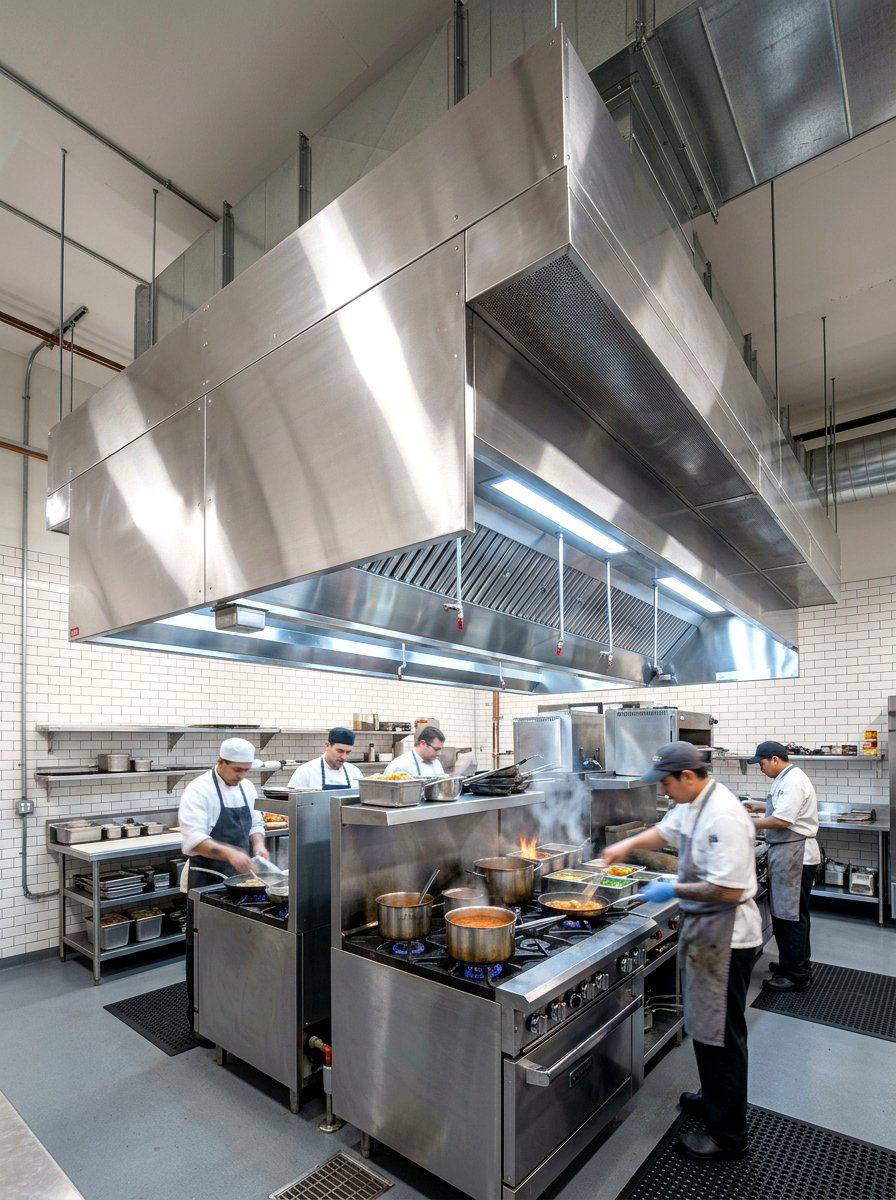
The intense heat and steam generated by multiple commercial burners can quickly make a workspace unbearable without a high-performance ventilation system. An industrial-strength range hood is a non-negotiable feature that pulls grease, smoke, and odors out of the air to maintain a comfortable environment. These systems are typically constructed from stainless steel for easy cleaning and include removable filters that catch airborne particles before they settle on surfaces. Beyond comfort, proper ventilation is a critical safety requirement for fire prevention and meeting local building codes. A well-designed hood should span the entire cooking line, ensuring every appliance is properly vented during high-volume production sessions.
5. Commercial Walk In Refrigerator
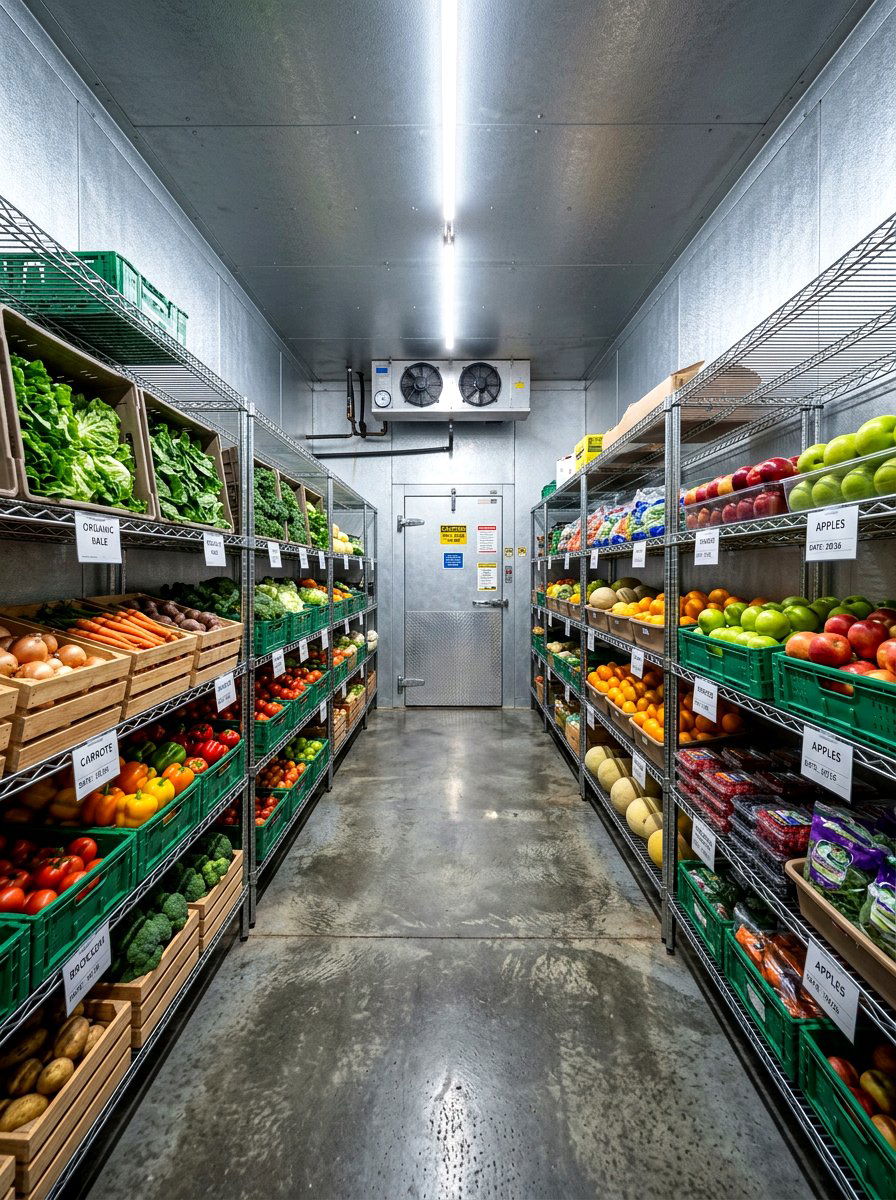
Storing bulk quantities of perishable ingredients requires more than just a standard fridge; it demands a dedicated walk-in cold storage room. This feature allows caterers to store entire sheet pans of prepped appetizers, large crates of fresh produce, and bulk proteins at precise temperatures. The interior should be outfitted with rust-proof epoxy-coated shelving that stands up to high humidity while keeping items organized. Having a walk-in unit also simplifies the delivery process, as suppliers can move large orders directly into the cooling space. This design element is the heart of food safety, ensuring the cold chain remains unbroken from the moment ingredients arrive until they are served.
6. Double Wall Oven Configuration
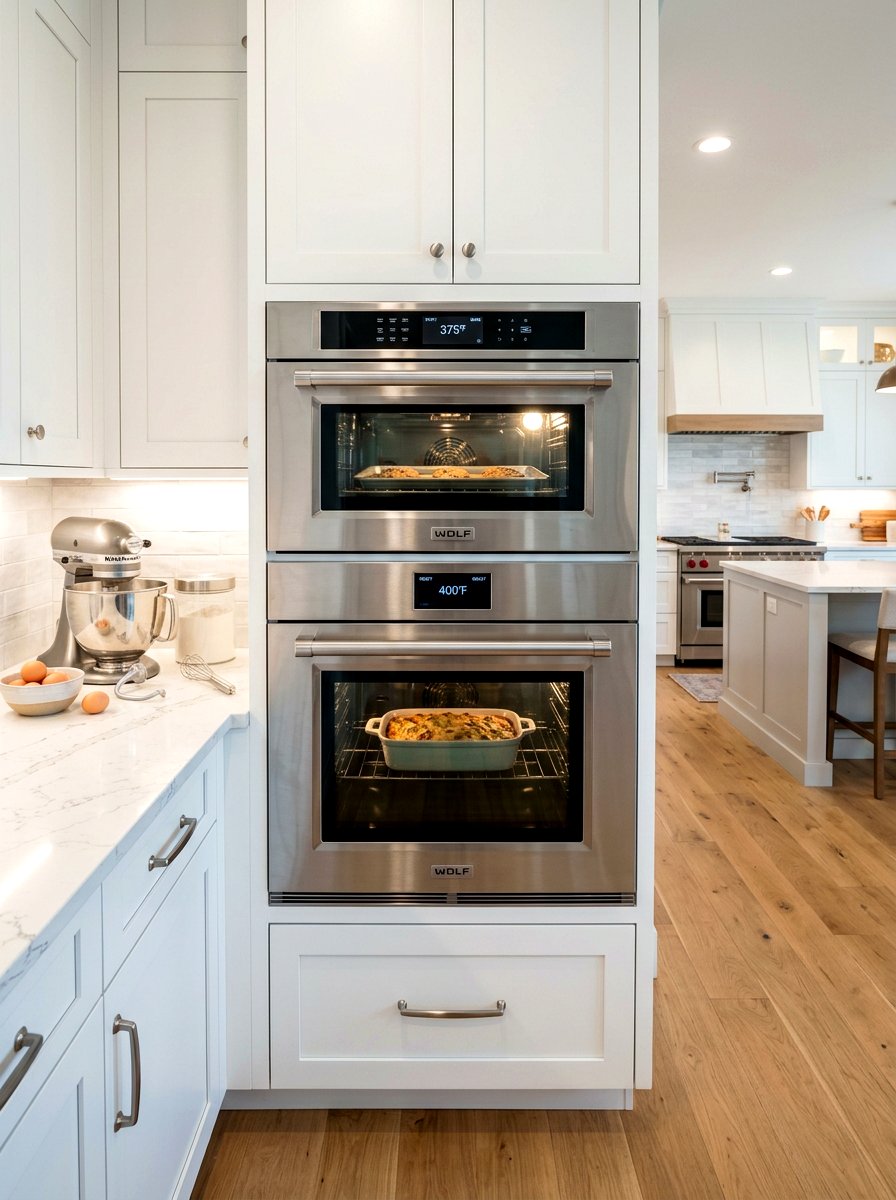
How do you manage roasting several turkeys while simultaneously baking hundreds of dinner rolls for a large-scale wedding or corporate event? A double wall oven configuration provides the vertical cooking capacity needed to handle diverse menu items at different temperatures without taking up extra floor space. This setup allows chefs to keep a close eye on multiple dishes at eye level, reducing the physical strain of constant bending. Modern professional models often feature programmable settings and moisture control to ensure consistent results across every rack. By installing these units into a reinforced cabinetry wall, you create a dedicated baking and roasting zone that streamlines your kitchen’s overall production.
7. Large Central Island Workstation
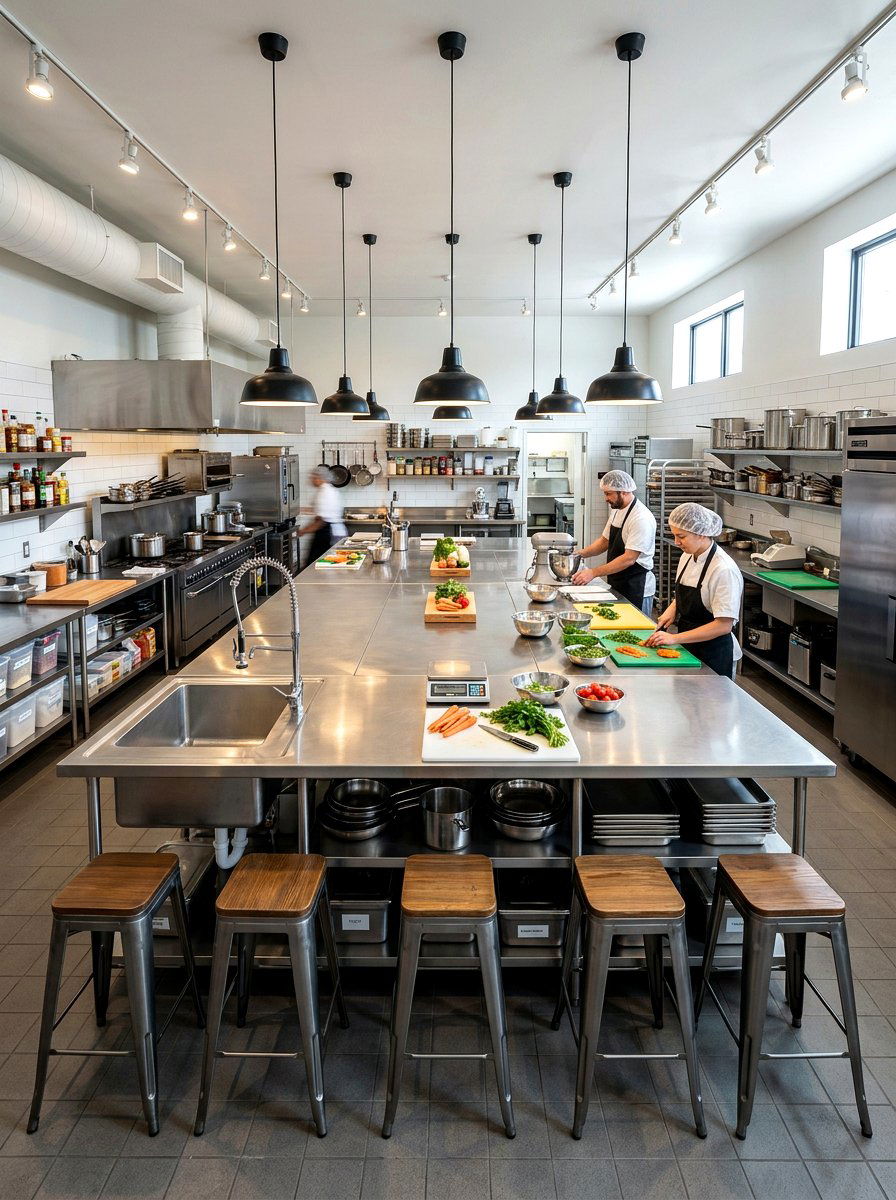
Can a single piece of furniture actually dictate the entire rhythm of your kitchen’s daily operations and staff communication? A massive central island serves as the primary staging area where final plating, garnishing, and assembly occur before food is sent out for service. This design choice provides a 360-degree workspace, allowing team members to collaborate and pass items across the surface without crossing paths. Integrating a small prep sink or electrical outlets directly into the island adds another layer of functionality for using handheld blenders or mixers. This central hub anchors the room and ensures that the most critical assembly tasks have a spacious and dedicated home.
8. Commercial Dishwasher Station
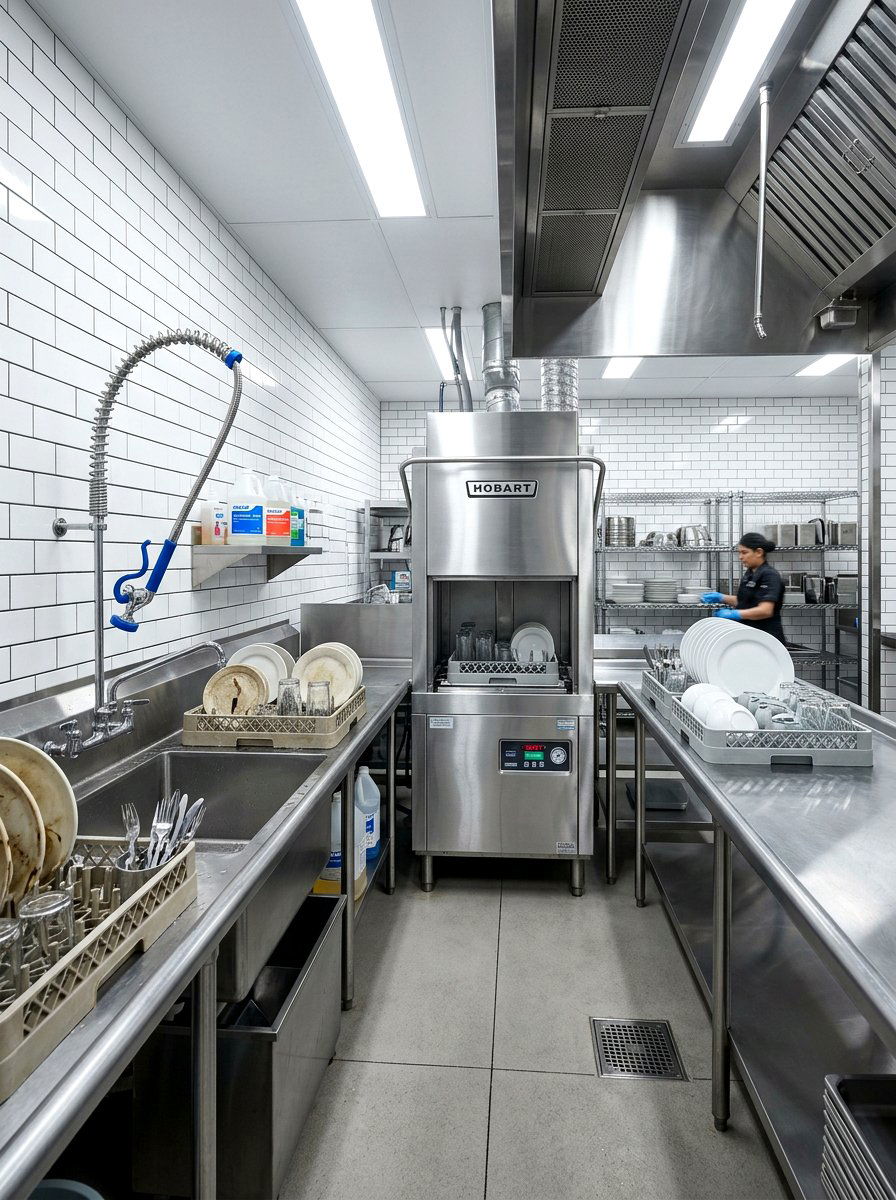
Speed and sanitation are the two most important factors when it comes to managing the massive influx of dirty dishes during an event. A high-temperature commercial dishwasher can sanitize a rack of plates in just minutes, which is essential for keeping the service moving smoothly. This station should be designed with plenty of "dirty" and "clean" landing space to avoid bottlenecks and prevent clean items from touching contaminated surfaces. Incorporating a pre-rinse sprayer over a deep sink allows staff to remove heavy food debris before loading the machine. A dedicated dish zone keeps the mess away from food prep areas, maintaining a professional and hygienic environment.
9. Multi Level Open Shelving
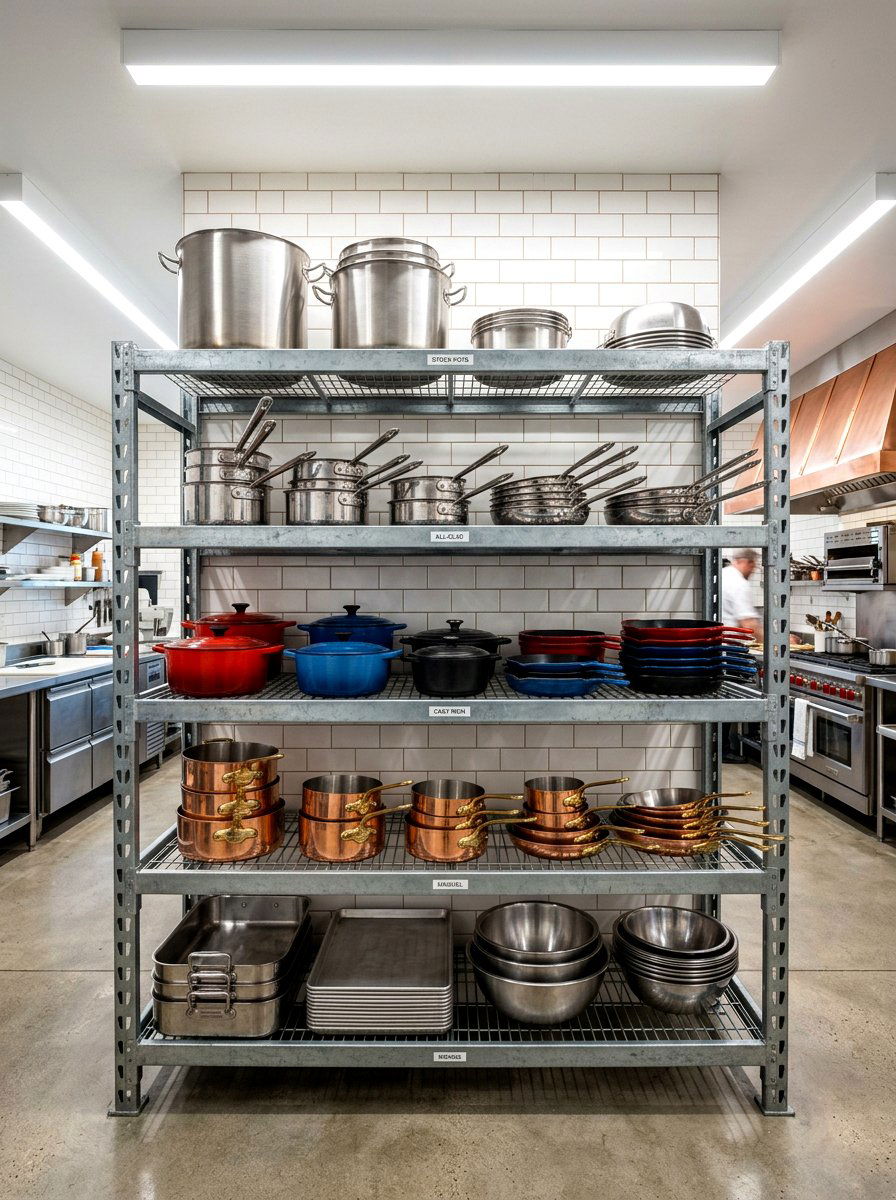
Visual access is one of the most underrated tools in a high-pressure catering environment where searching for a lost tool can waste minutes. Multi-level open shelving made from heavy-duty wire or stainless steel keeps all your pots, pans, and dry ingredients perfectly visible and accessible. This design choice eliminates the need for opening and closing cabinet doors with messy hands, which significantly speeds up the cooking process. By organizing items by frequency of use — placing daily staples at eye level and specialty equipment higher up — you create a logical system that anyone on the team can navigate. It also makes the end-of-day cleaning and inventory checks much faster.
10. Heavy Duty Pot Filler
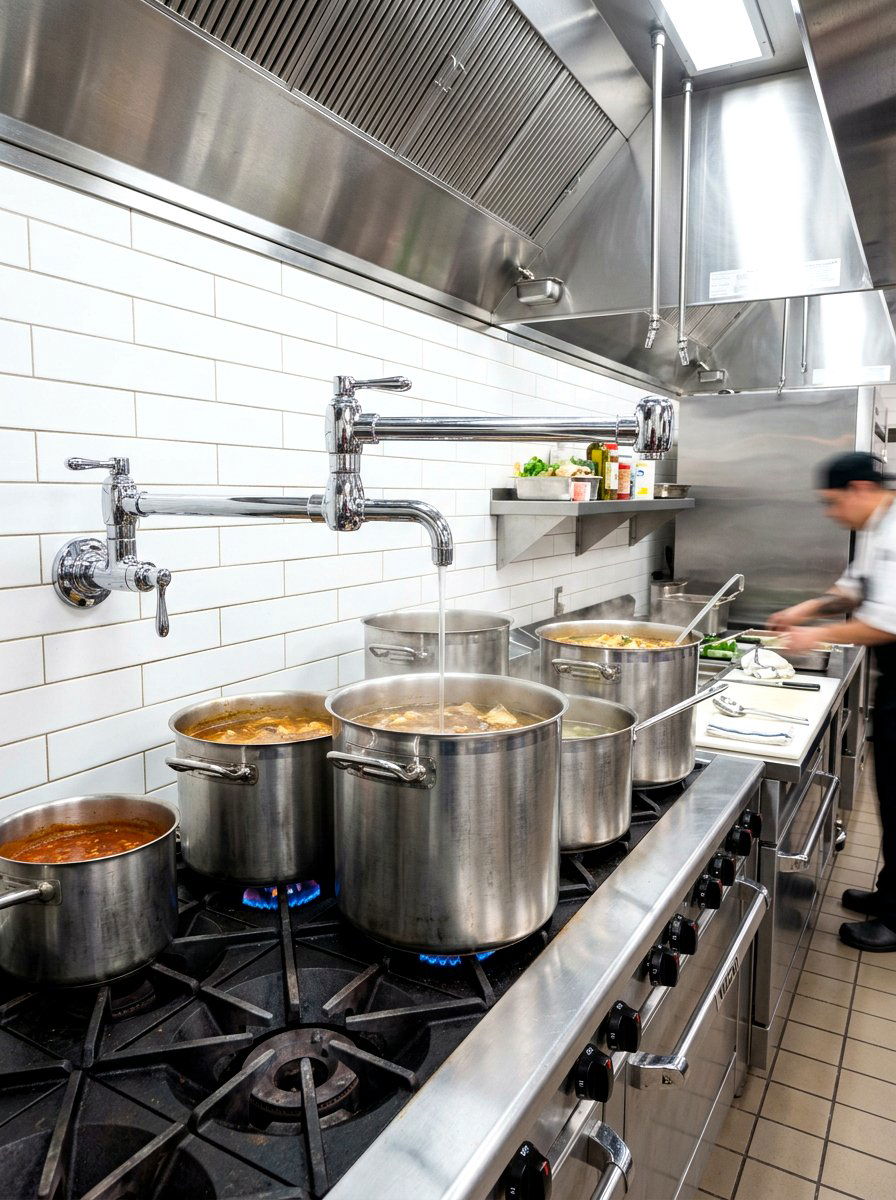
The physical toll of carrying heavy, water-filled pots from the sink to the stove can lead to fatigue and potential accidents in the kitchen. A heavy-duty pot filler faucet installed directly over the range allows you to fill large stockpots exactly where they will be heated. This small but powerful addition saves time and energy, especially when preparing large batches of pasta, soup, or stocks that require significant amounts of water. The articulated arm of the faucet can reach multiple burners and then fold flat against the wall when not in use. It is a hallmark of a professional-grade kitchen that prioritizes ergonomics and operational efficiency.
11. Professional Food Warming Drawer
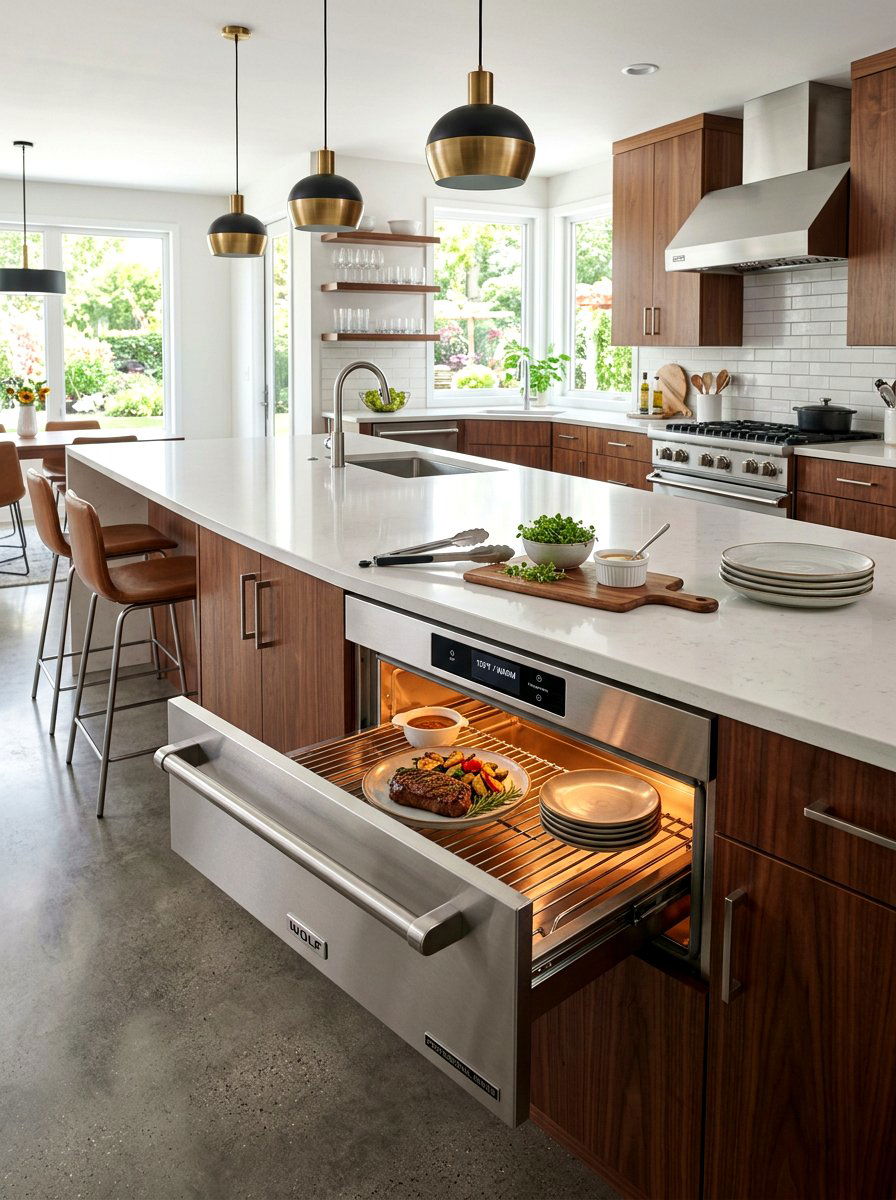
Keeping prepared meals at the perfect serving temperature without drying them out is a constant challenge for caterers managing large guest lists. Professional warming drawers provide a controlled environment where appetizers, sides, or main courses can stay hot while the team finishes the remaining elements of the meal. These units are often integrated directly into the cabinetry or under a prep counter for easy access during the plating process. With adjustable humidity controls, you can ensure that crispy foods stay crunchy while moist dishes remain tender. This feature is a lifesaver when coordinating the timing of a multi-course dinner or a long-duration buffet service.
12. Mobile Kitchen Prep Cart
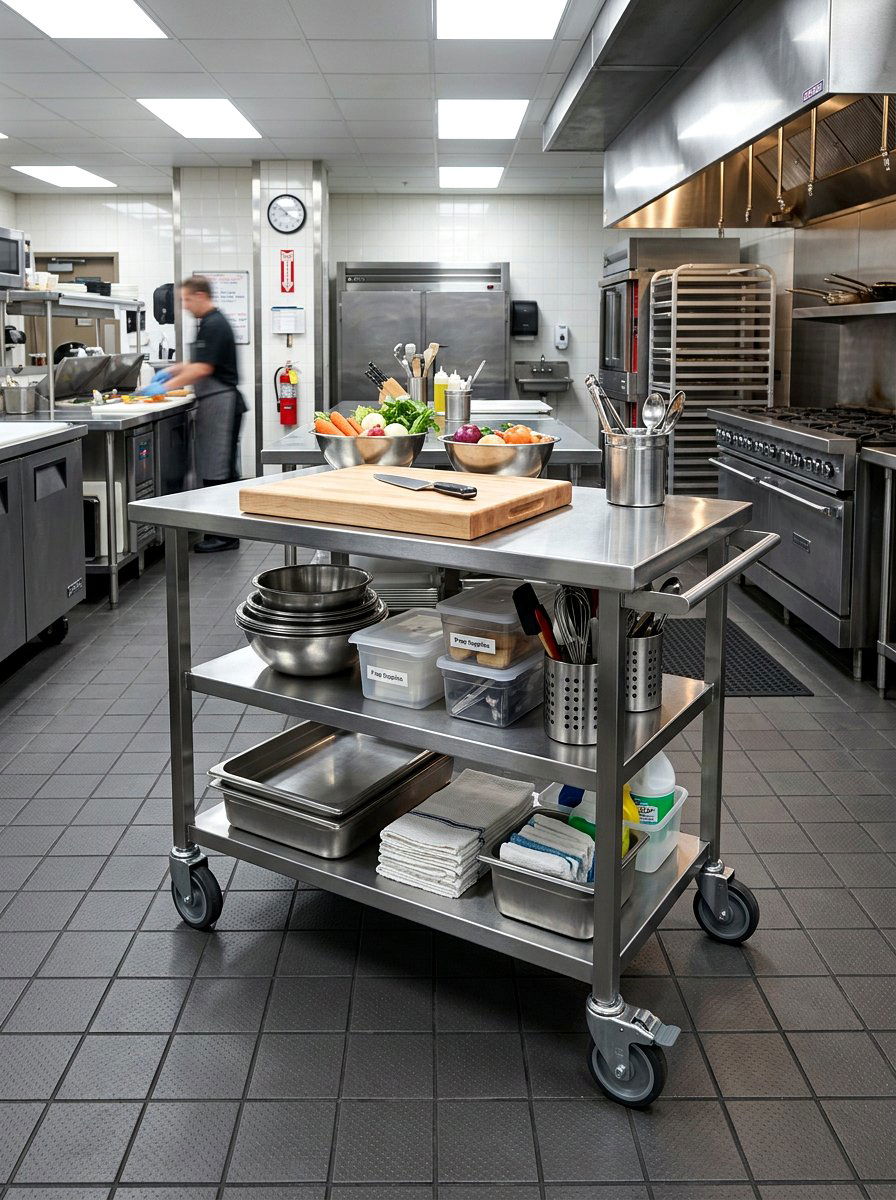
Flexibility is the key to a successful catering operation that needs to adapt its layout based on the specific requirements of the day. Mobile kitchen prep carts on heavy-duty locking casters allow you to create extra workspace exactly where it is needed most. These carts can serve as portable spice stations, rolling baking centers, or even a mobile plating line that can be moved toward the exit for faster transport. When the carts are not in use, they can be tucked away against a wall to clear the floor for cleaning or deliveries. Their versatility makes them an essential tool for maximizing the utility of every square inch.
13. Three Compartment Commercial Sink
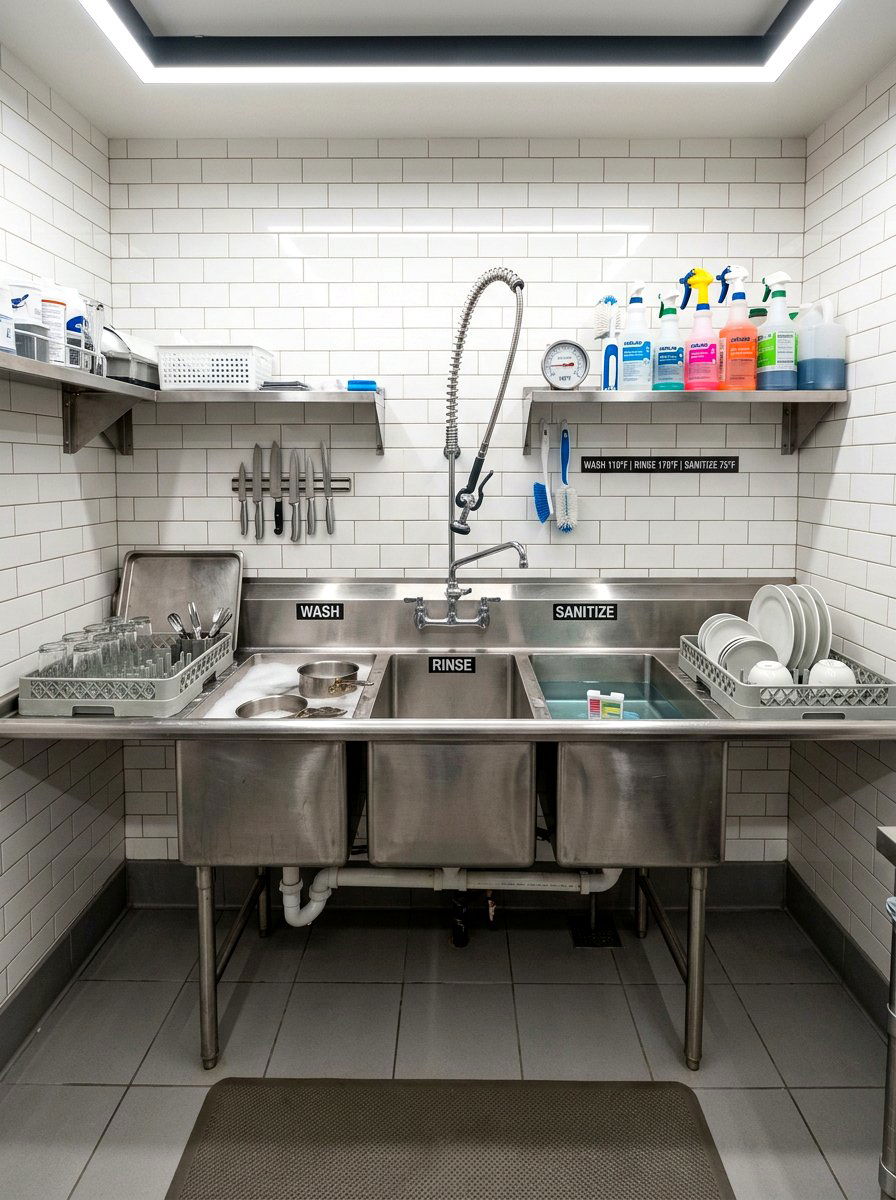
Sanitation standards are strictly enforced in professional food service, and a three-compartment sink is often the cornerstone of a compliant washing station. This setup consists of three deep basins dedicated to washing, rinsing, and sanitizing large pots and pans that won't fit in a standard dishwasher. The deep basins prevent water from splashing onto surrounding surfaces, while the long drainboards provide space for air-drying items. This design ensures that every piece of equipment is thoroughly cleaned and chemically sanitized according to health regulations. Placing this sink near the dishwashing machine creates a comprehensive sanitation zone that keeps the rest of the kitchen clean and dry.
14. Non Slip Ceramic Tile Flooring
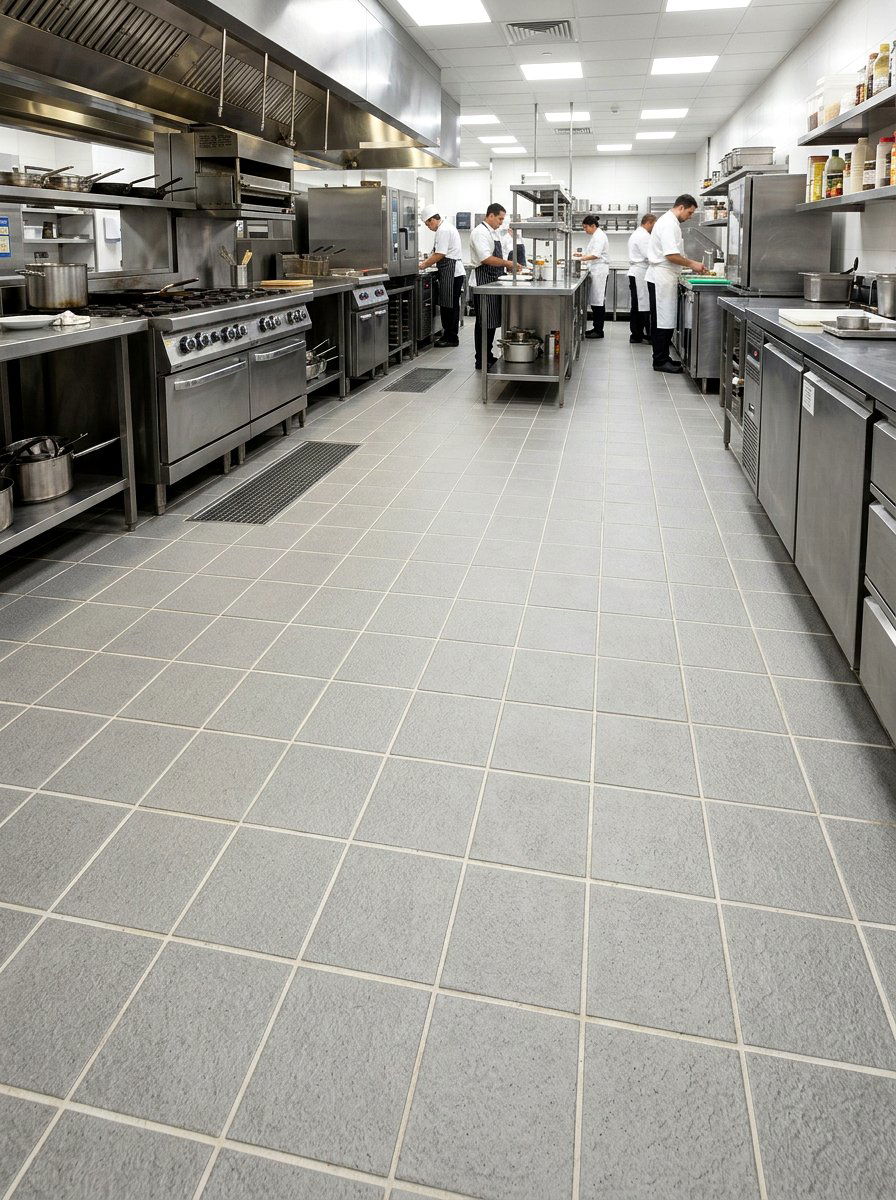
In an environment where spills are frequent and staff members are constantly on the move, the choice of flooring is a critical safety decision. Non-slip ceramic tiles are highly favored in catering kitchens because they are incredibly durable, water-resistant, and easy to scrub clean at the end of a shift. The textured surface provides essential traction for workers carrying heavy loads or moving quickly during a rush. Additionally, ceramic tile can withstand the weight of heavy appliances and the heat of dropped items without sustaining permanent damage. Choosing a neutral, light-colored tile helps with visibility, making it easier to spot spills or dropped items before they become a hazard.

15. Zoned Prep and Assembly Line
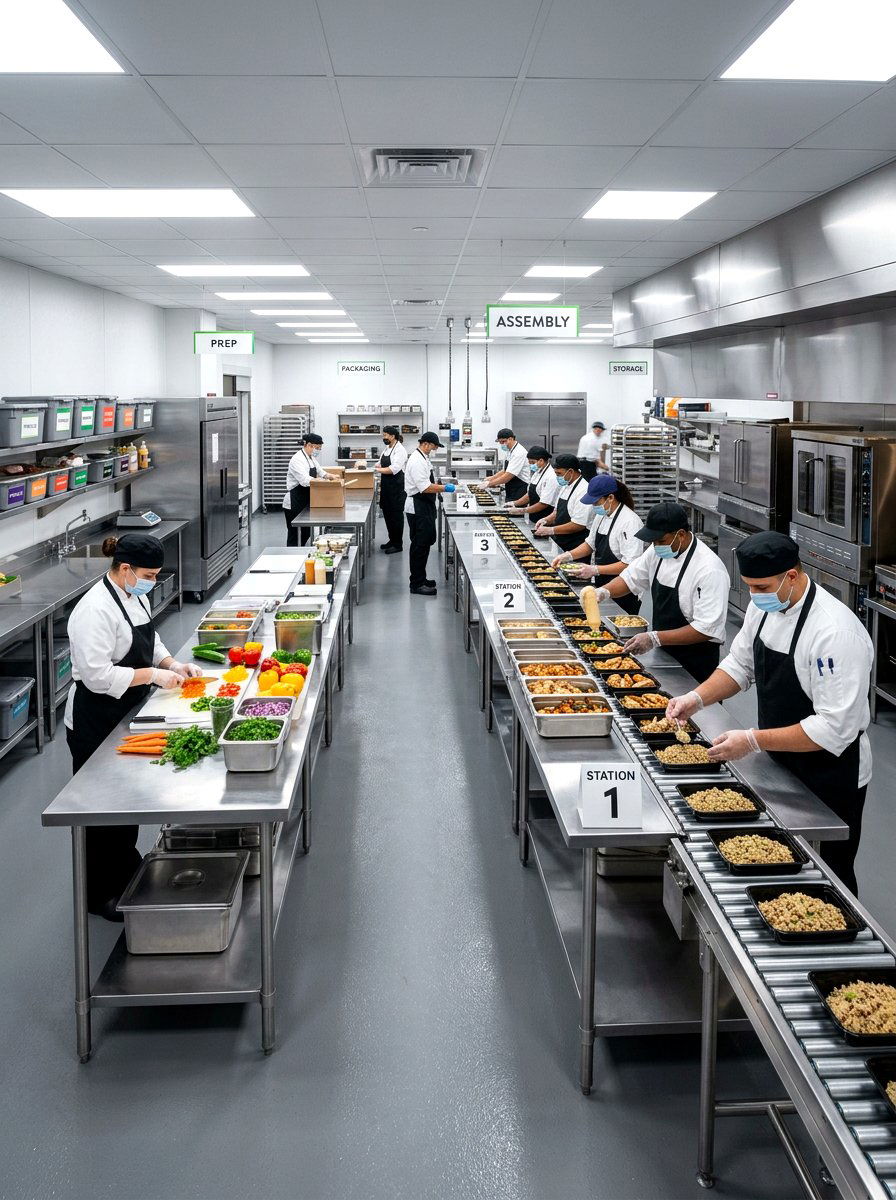
Efficiency in a high-volume kitchen is achieved by creating a logical flow that prevents staff from bumping into each other while working. A zoned layout divides the space into specific areas for receiving, cold storage, prep, cooking, assembly, and cleaning. This "assembly line" approach means that ingredients move through the kitchen in a one-way direction, from the delivery door to the final plating station. By keeping the "dirty" zones like dishwashing separate from the "clean" zones like plating, you minimize the risk of cross-contamination. This strategic organization allows a team to function like a well-oiled machine, even when the pressure of a deadline is looming large.
16. Magnetic Wall Knife Rack
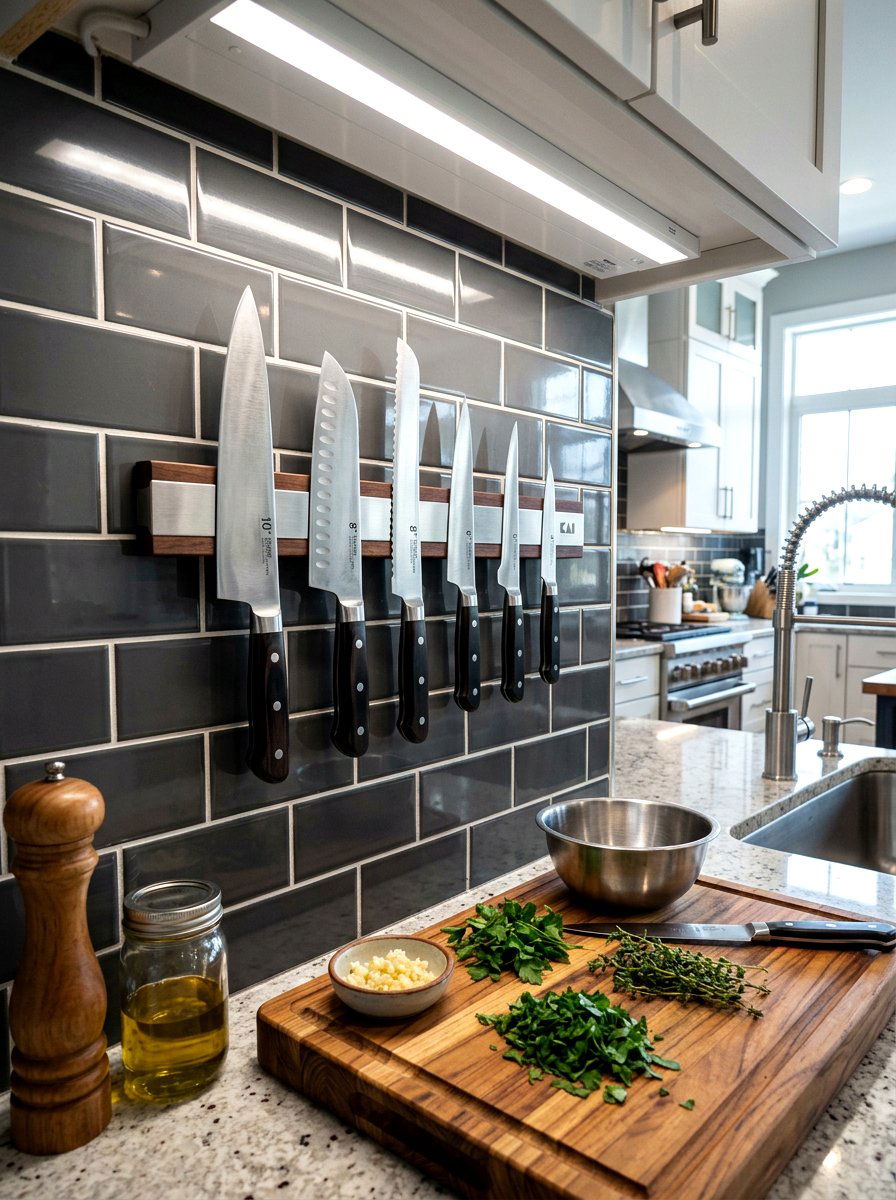
Keeping your most important cutting tools organized and safely stored is essential for both speed and the longevity of the blades. A wall-mounted magnetic knife rack is a professional solution that keeps your chef’s knives, paring knives, and serrated blades within reach but off the crowded countertops. This storage method allows blades to air dry completely, preventing the rust or bacteria buildup that can occur in traditional wooden knife blocks. It also allows chefs to identify the exact tool they need at a glance, which is a major benefit during fast-paced prep sessions. Mounting these strips above a prep station ensures the right tool is always exactly where it belongs.
17. Under Counter Reach In Cooler
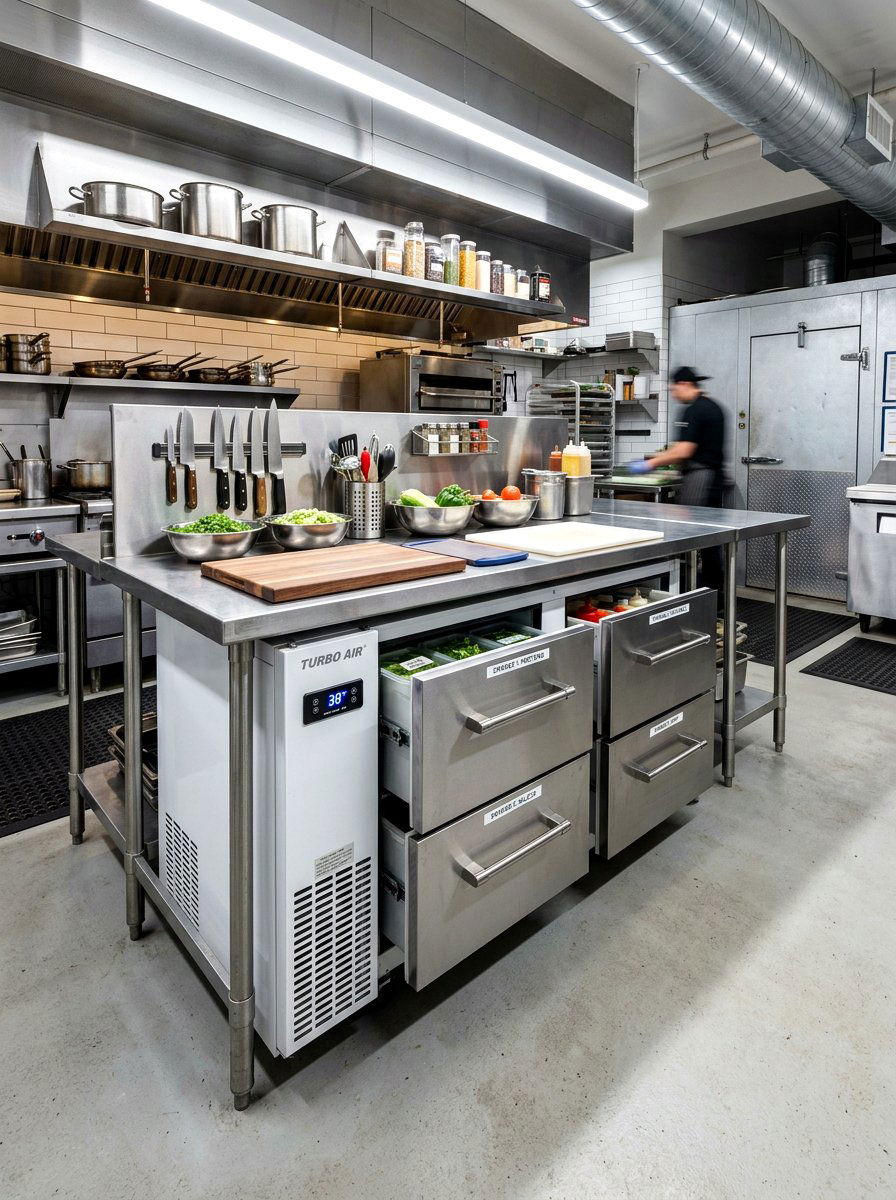
Sometimes you need quick access to small quantities of ingredients like butter, sauces, or garnishes without walking all the way to the main refrigerator. Under-counter reach-in coolers are compact refrigeration units that fit perfectly beneath your prep tables, providing a convenient cold storage solution right where you work. These units are ideal for keeping high-use perishables at the correct temperature throughout a shift, reducing the number of trips across the kitchen. Many models feature drawers instead of doors, which makes it even easier to view and retrieve items during a busy service. This addition enhances the "point-of-use" efficiency that is so critical in professional catering environments.
18. Indoor Herb Garden Station
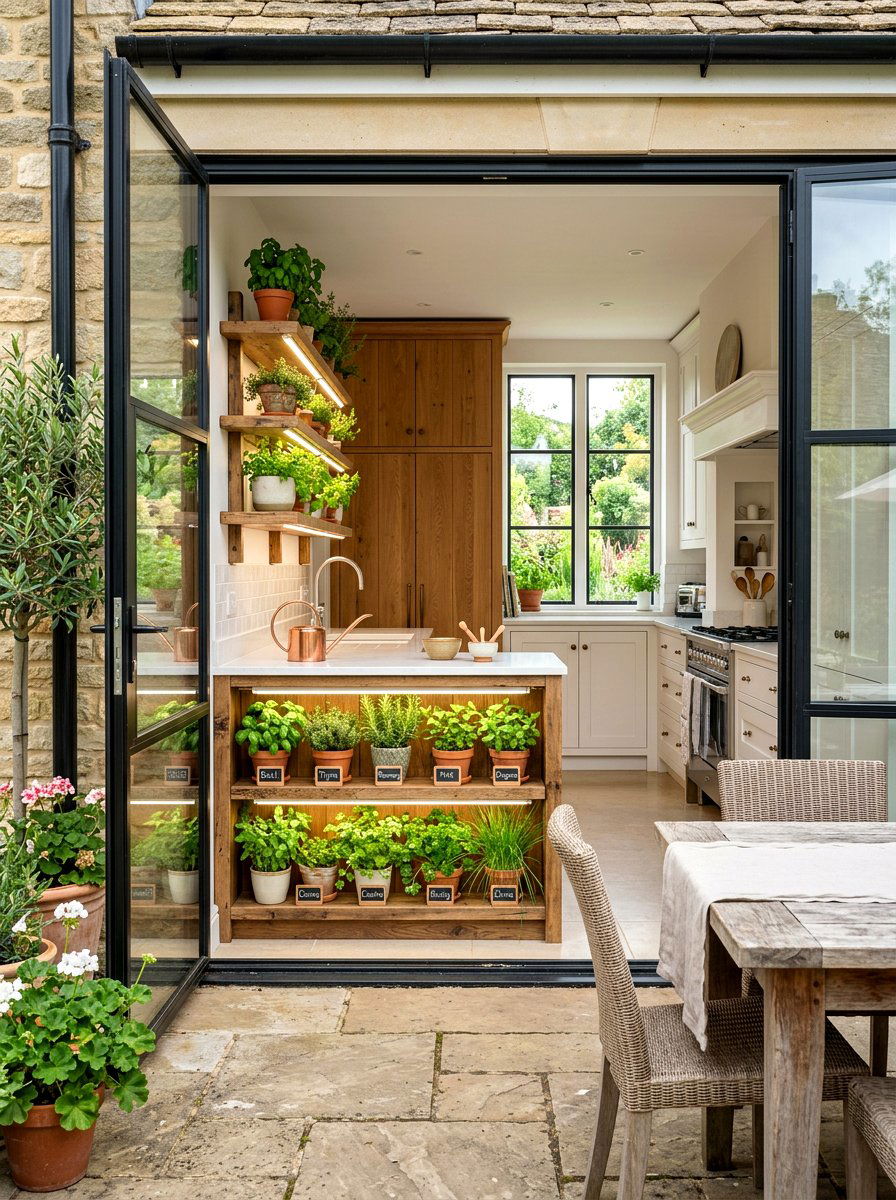
Freshness is a major selling point in the catering world, and having a dedicated indoor herb garden station can elevate your dishes with vibrant flavors. This station typically includes tiered shelving with integrated LED grow lights and a self-watering system to keep basil, cilantro, and parsley thriving year-round. Beyond the practical benefit of having fresh garnishes at your fingertips, an herb station adds a touch of natural beauty and a pleasant aroma to the workspace. Placing this station near the prep or plating area ensures that the freshest possible ingredients are used at the very last moment. It's a small detail that communicates a commitment to high-quality, artisanal cooking.
19. Dedicated Coffee and Beverage Bar
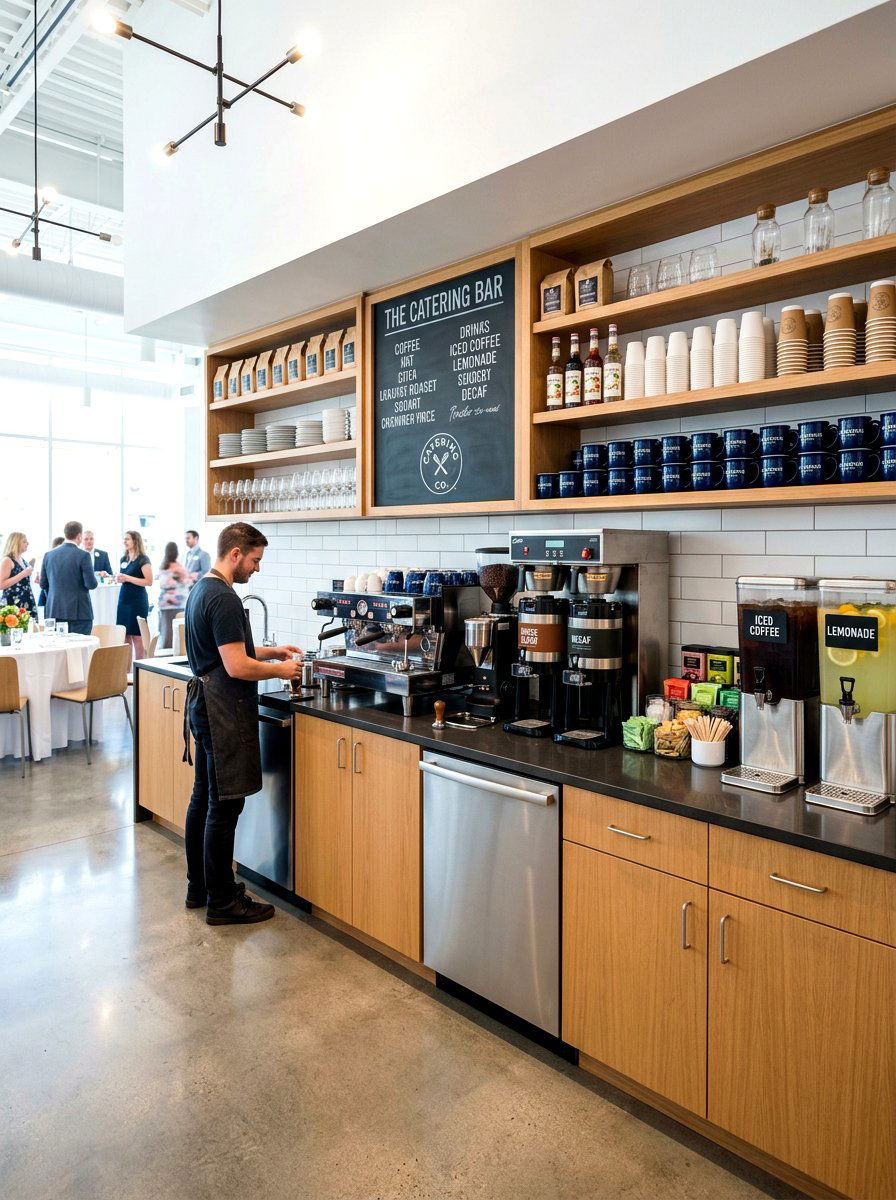
Beverage service is a significant part of most catering contracts, yet it often gets pushed into a corner of the main kitchen where it creates a bottleneck. Creating a dedicated beverage bar with its own water line, brewer, and storage for mugs and carafes streamlines the process. This area should include plenty of counter space for setting out creamers, sweeteners, and tiered displays of tea bags. Having a separate zone for drinks allows staff to prep coffee and tea service without interfering with the main food production lines. This organizational strategy is especially helpful during large events where multiple rounds of beverage service are required throughout the day.



20. Chalkboard Menu and Prep Board
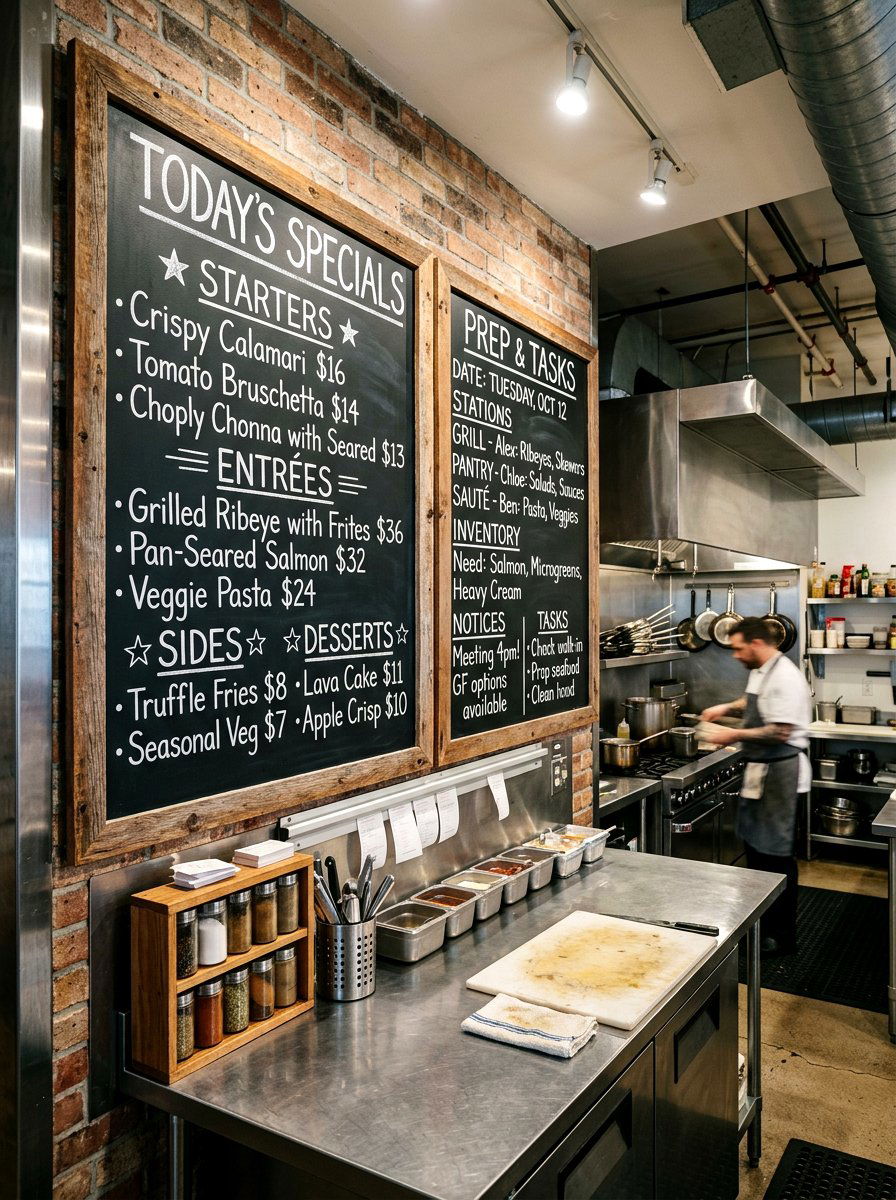
Communication is the glue that keeps a catering team together, especially when managing multiple menus and tight timelines. A large, wall-mounted chalkboard serves as a central communication hub where you can list daily prep tasks, upcoming event deadlines, and specific menu requirements. This low-tech solution is incredibly effective because it is visible to everyone in the room and can be updated instantly with a piece of chalk. Using the board to track progress through a long prep list helps the team stay focused and motivated as they cross off completed items. It also serves as a visual reminder of any allergies or special requests for the day’s service.
21. High Capacity Dry Goods Storage
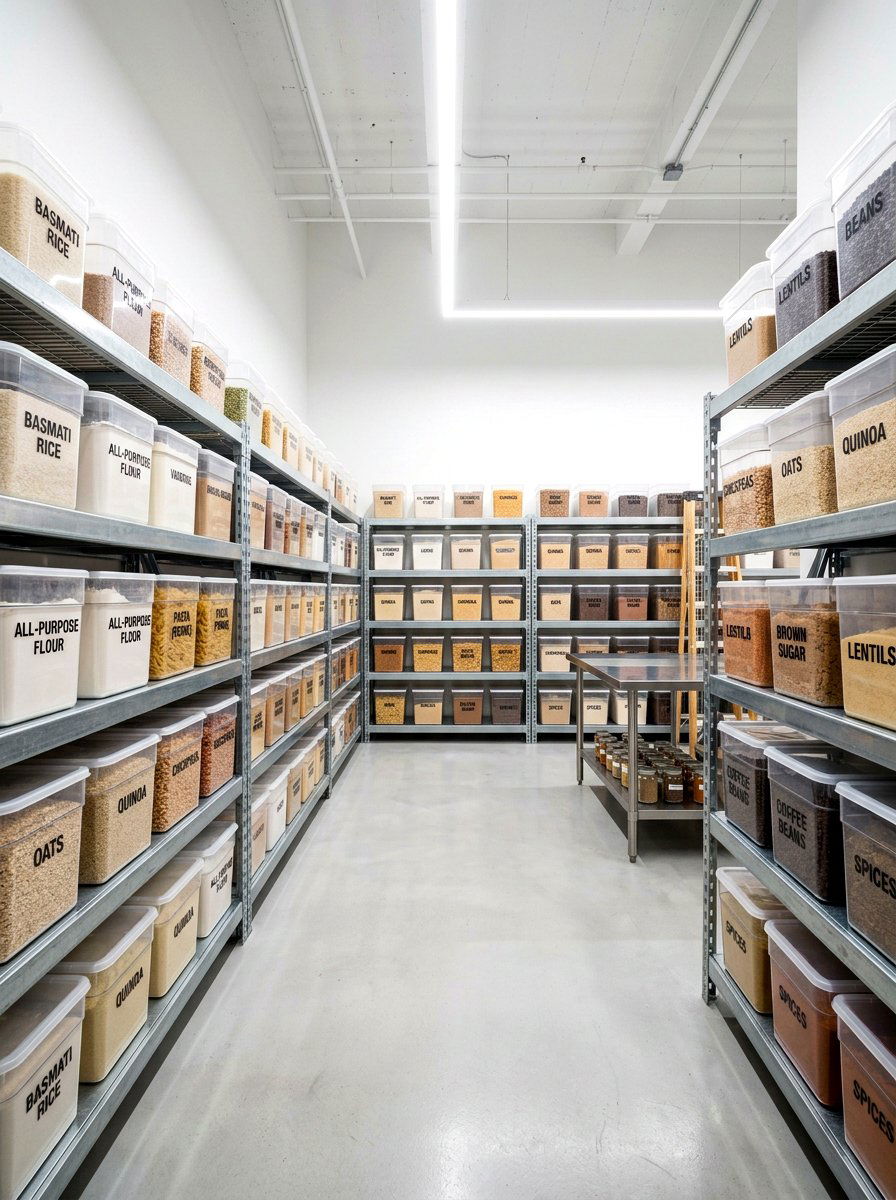
Bulk purchasing is a standard practice in catering to save money and ensure consistency, but it requires a robust storage system to manage. High-capacity dry goods storage involves using clear, airtight bins on heavy-duty shelving to organize flour, sugar, grains, and spices. These bins should be clearly labeled with the contents and the "received" date to ensure a proper "first-in, first-out" inventory rotation. Using clear containers allows you to see exactly how much of an ingredient is left, preventing the disaster of running out during a big job. An organized dry storage area reduces waste and makes the entire kitchen feel more professional and controlled.
22. Recessed Task Lighting System
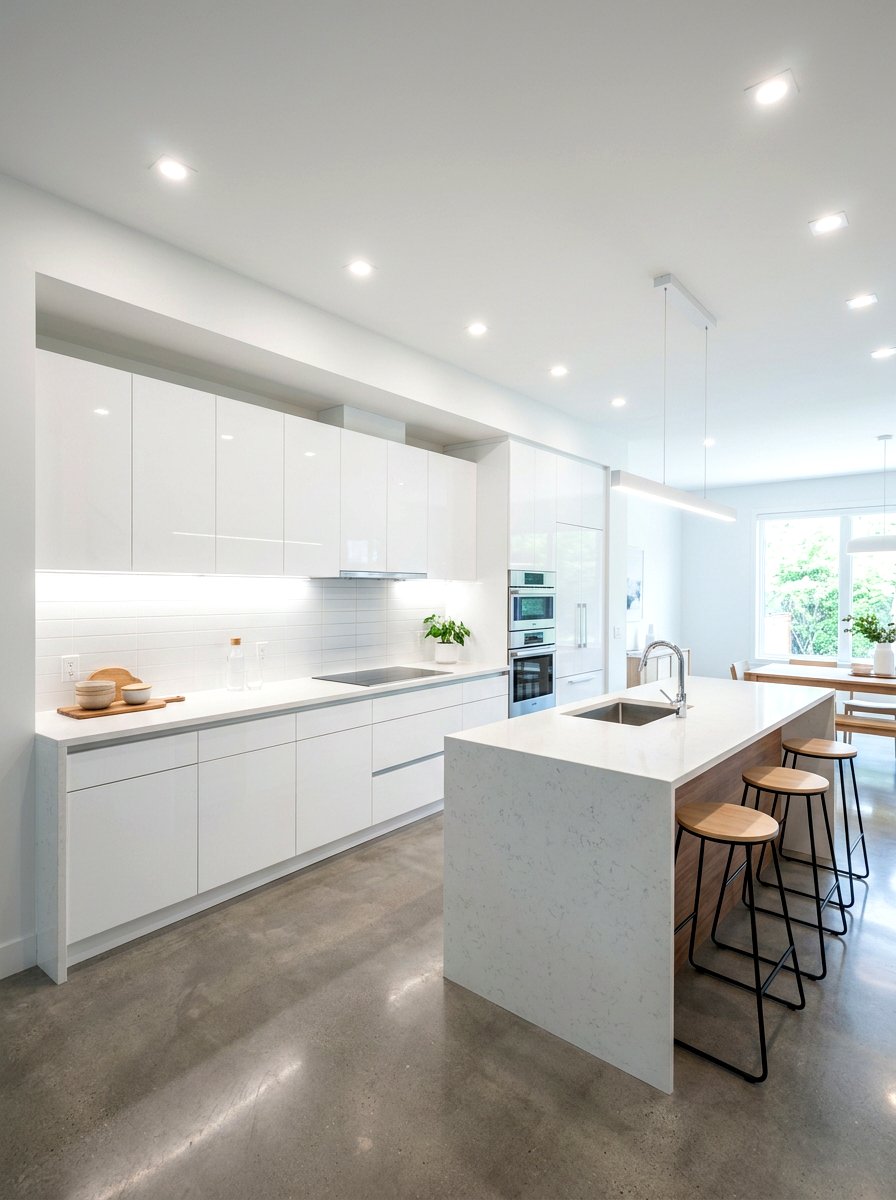
Working with sharp knives and precision measurements requires a brightly lit environment that eliminates shadows on the work surfaces. A recessed task lighting system uses powerful LED fixtures installed directly into the ceiling or under cabinets to provide focused illumination exactly where it is needed. Bright, white-balanced light is essential for accurately checking the color of seared meats or identifying imperfections in fresh produce. Unlike decorative pendant lights that can collect grease and dust, recessed lights are easy to keep clean and stay out of the way of tall equipment. A well-lit kitchen is not only safer but also helps maintain high standards of cleanliness and food quality.
23. Industrial Butcher Block Island
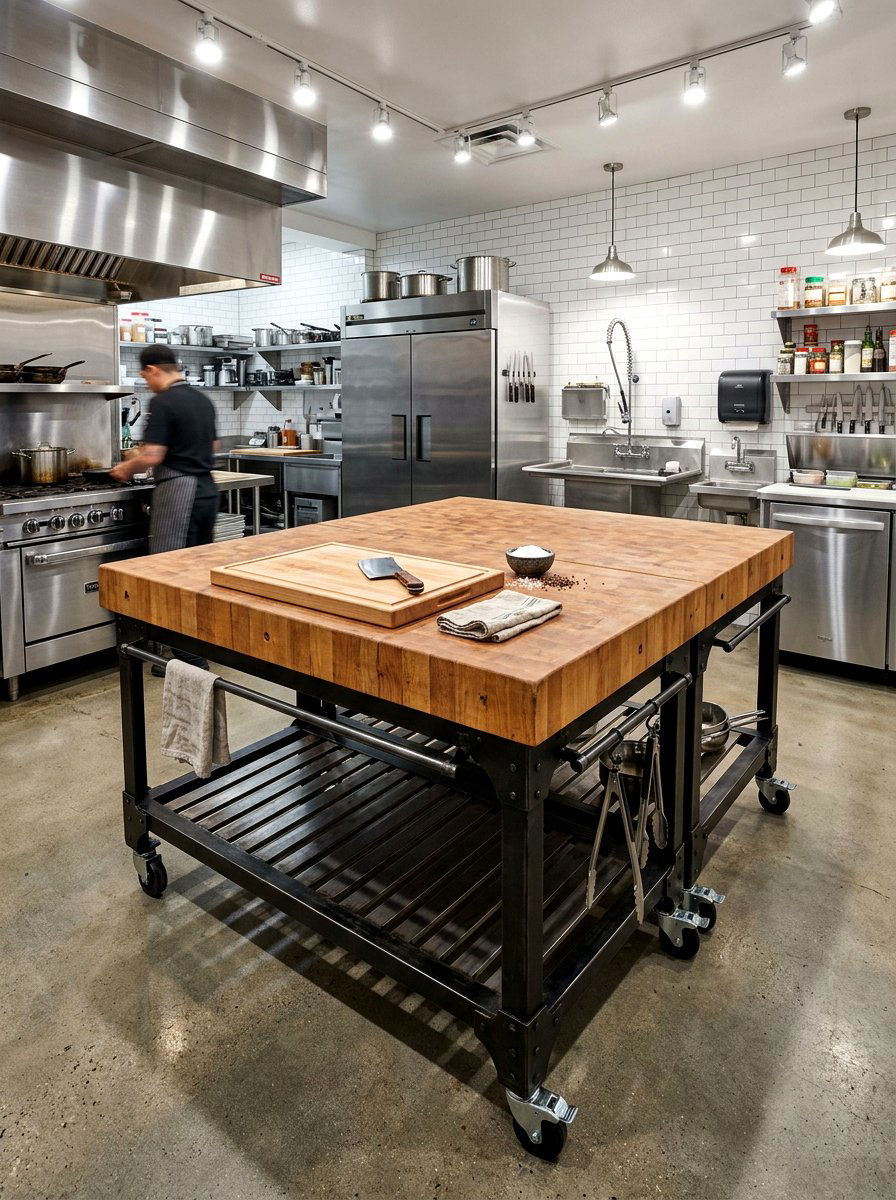
For heavy-duty chopping, dicing, and deboning, nothing beats the durability and "forgiving" surface of a thick, end-grain butcher block island. Unlike hard stone or metal surfaces that can dull knives quickly, a high-quality wood block provides a stable and resilient surface that can last for decades with proper care. These islands often serve as the dedicated "meat and produce" station where the most intense prep work happens. The natural warmth of the wood also provides a beautiful contrast to the sterile look of stainless steel, adding a touch of character to the professional workspace. Regularly oiling the surface ensures it remains sanitary and resistant to moisture and deep grooves.
24. Pull Out Waste and Recycling Center
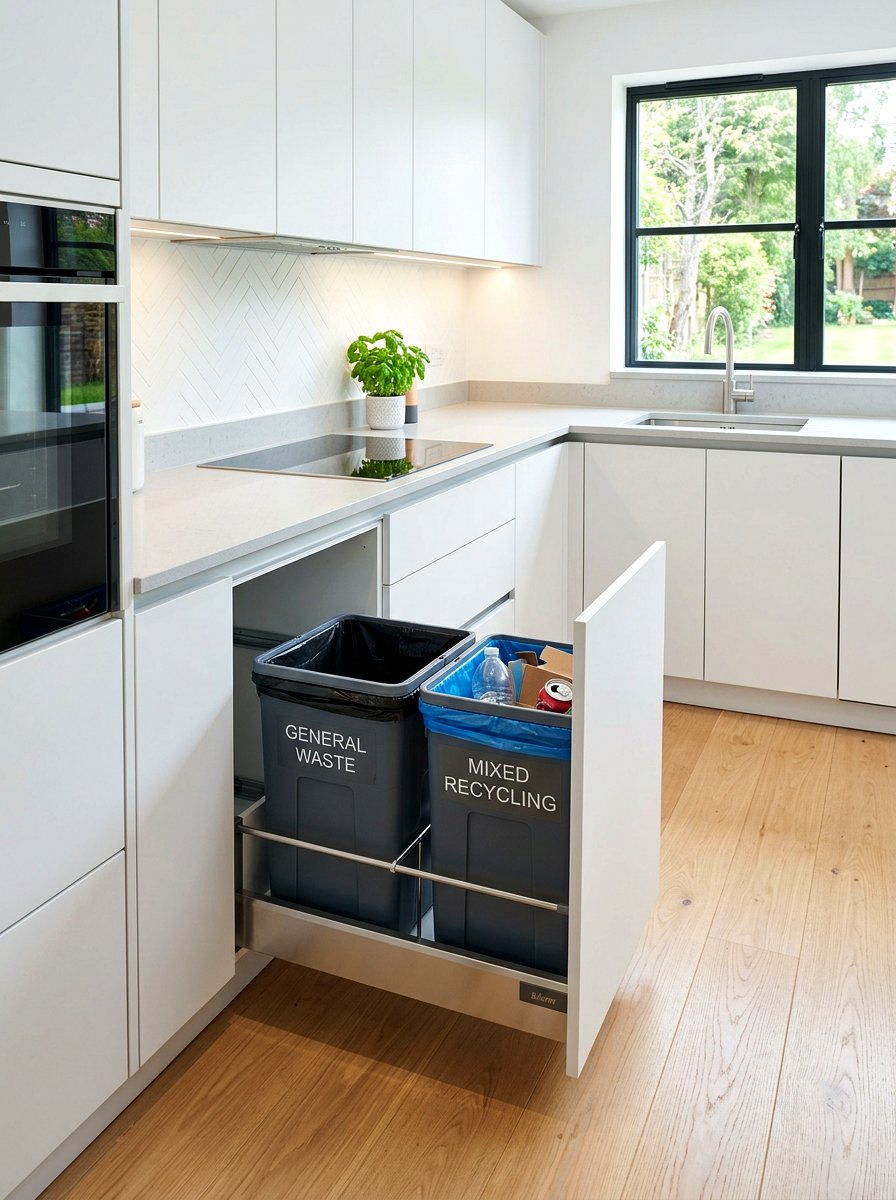
Managing the large amount of waste generated during a catering shift can quickly become a messy and unhygienic problem if not handled correctly. A pull-out waste and recycling center integrates large trash bins directly into the cabinetry, keeping them off the floor and out of the way of foot traffic. These systems usually feature heavy-duty slides that can handle the weight of full bags of food scraps and packaging. Having separate bins for general waste, compost, and recycling encourages the team to sort materials correctly as they work. This design keeps the kitchen looking tidy and prevents the odor and pest issues associated with open-top trash cans.


25. Smart Inventory Management System
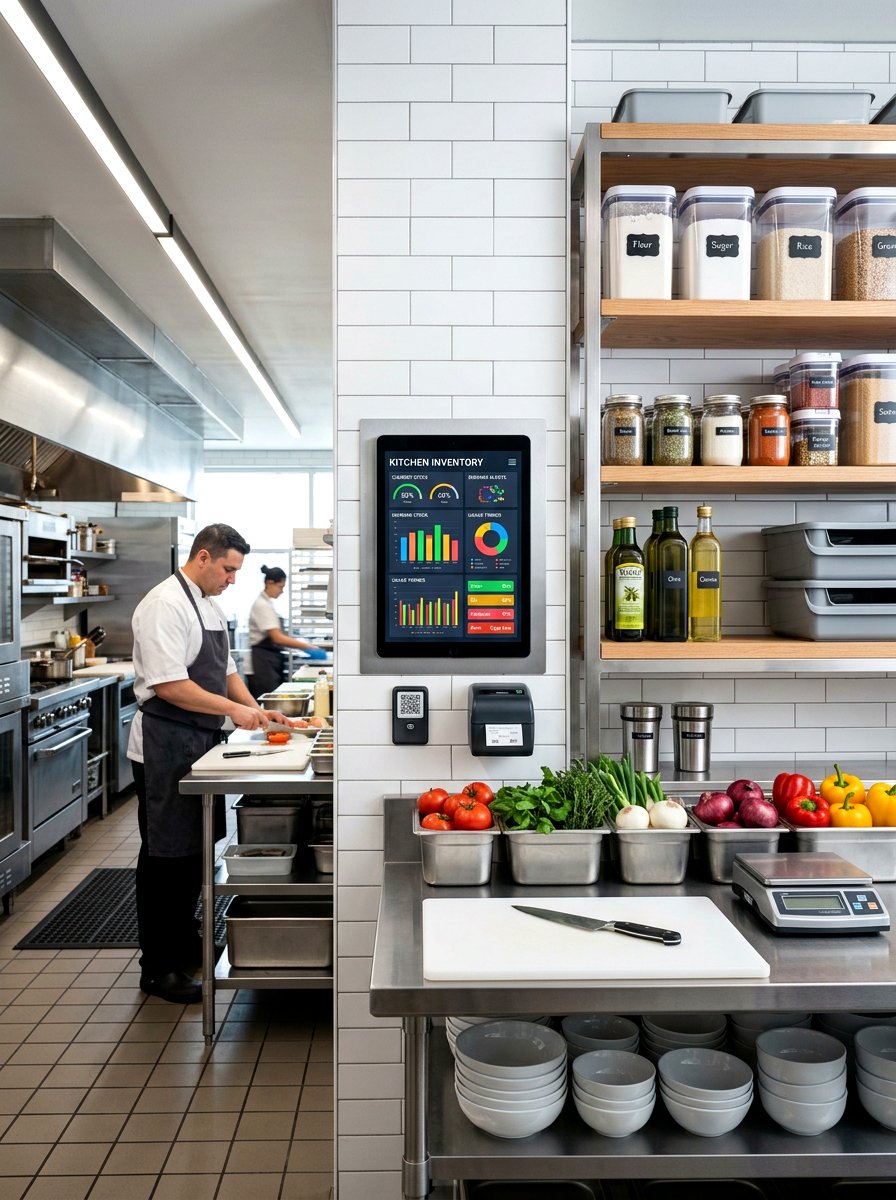
In the modern catering world, keeping track of thousands of dollars worth of inventory can be simplified with the use of smart technology. A smart inventory management system can include a wall-mounted tablet that tracks stock levels, expiration dates, and digital order forms for suppliers. Some advanced systems even use weight-sensitive shelving to automatically update quantities of bulk items as they are used. This digital approach eliminates the guesswork of manual inventory counts and ensures that you always have the right ingredients for every event. It also helps with cost control by providing detailed reports on waste and usage patterns over time, boosting your overall profitability.
26. Professional Hand Washing Station
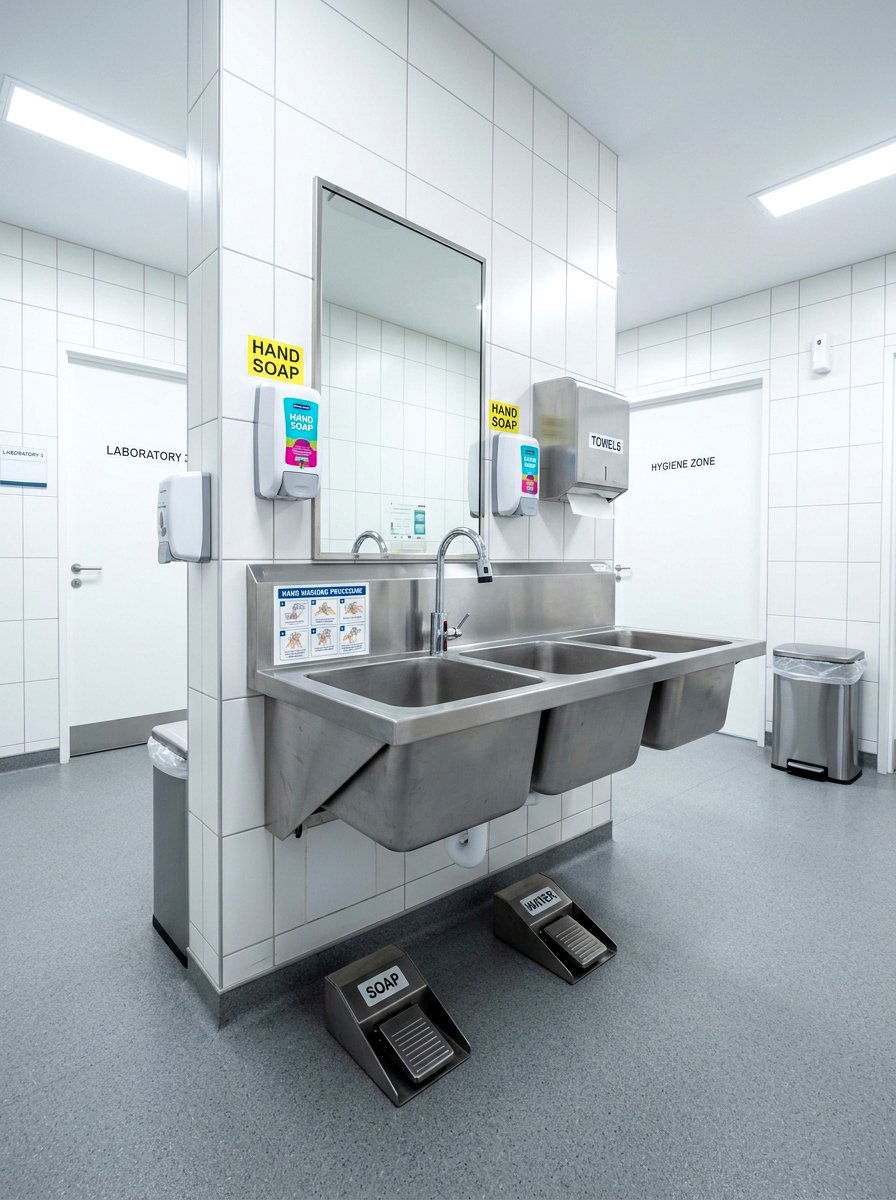
Food safety regulations strictly require a separate, dedicated sink for hand washing that is never used for food prep or dish cleaning. A professional hand-washing station should be easily accessible from all parts of the kitchen and equipped with hands-free foot pedals or motion-sensor faucets to prevent cross-contamination. It must include a permanently stocked dispenser for soap and single-use paper towels, as well as a small trash bin for disposal. Placing this station near the entrance ensures that every staff member cleans their hands immediately upon entering the workspace. This dedicated feature is a non-negotiable hallmark of a truly professional and compliant catering environment.
27. Glass Front Storage Cabinet
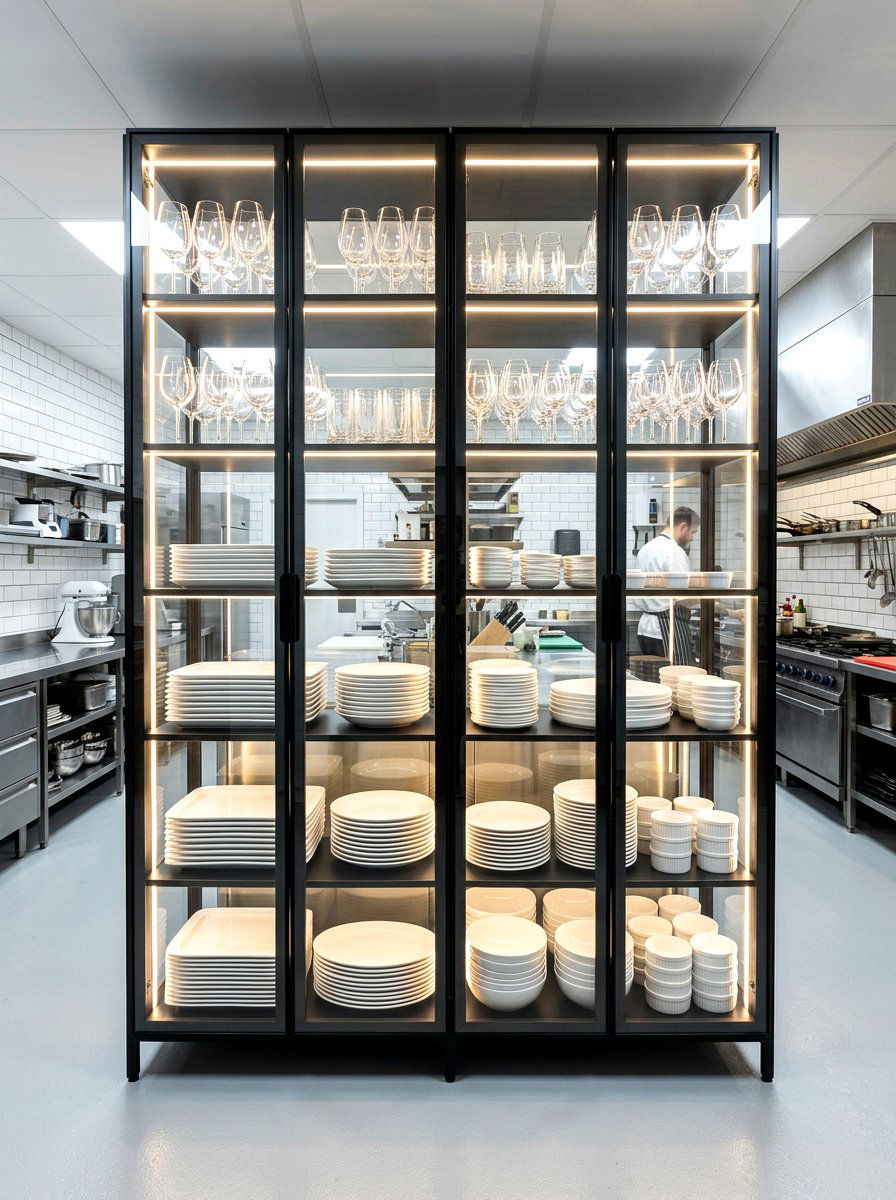
While open shelving is great for daily tools, some items like delicate glassware, fine china, and silver serving pieces need protection from the dust and grease of a working kitchen. Glass-front storage cabinets provide the perfect middle ground, offering a clear view of the contents while keeping them clean and organized. This design allows you to showcase your specialized serving collections, making it easy to grab the right platters for a specific event without hunting through closed cupboards. The glass panels also help the kitchen feel more open and airy, reflecting light and adding a layer of visual sophistication to the industrial setting. It is a beautiful and practical storage solution.
28. Floor Drain Cleaning System
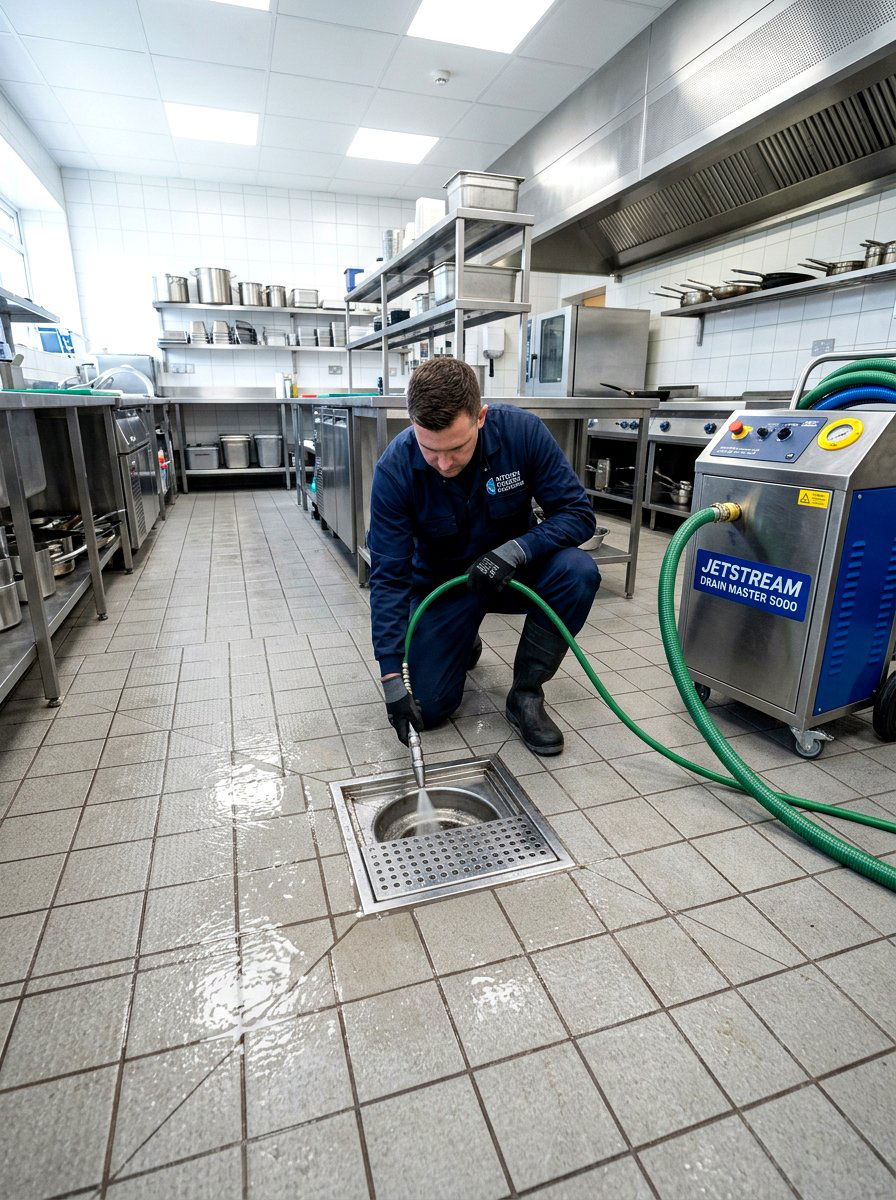
At the end of a long catering shift, the ability to "wash down" the entire kitchen floor is a massive time-saver for deep cleaning. A floor drain system involves sloping the tile toward a central drain equipped with a removable basket to catch debris. This allows you to use a squeegee and floor cleaner to move all water and dirt directly into the drainage system, ensuring a truly sanitary finish. This feature is particularly common in high-volume commercial kitchens where hygiene is the top priority. It eliminates the need for slow mopping and ensures that the floors are completely dry and safe for the next day’s work.
29. Loading Zone and Delivery Access
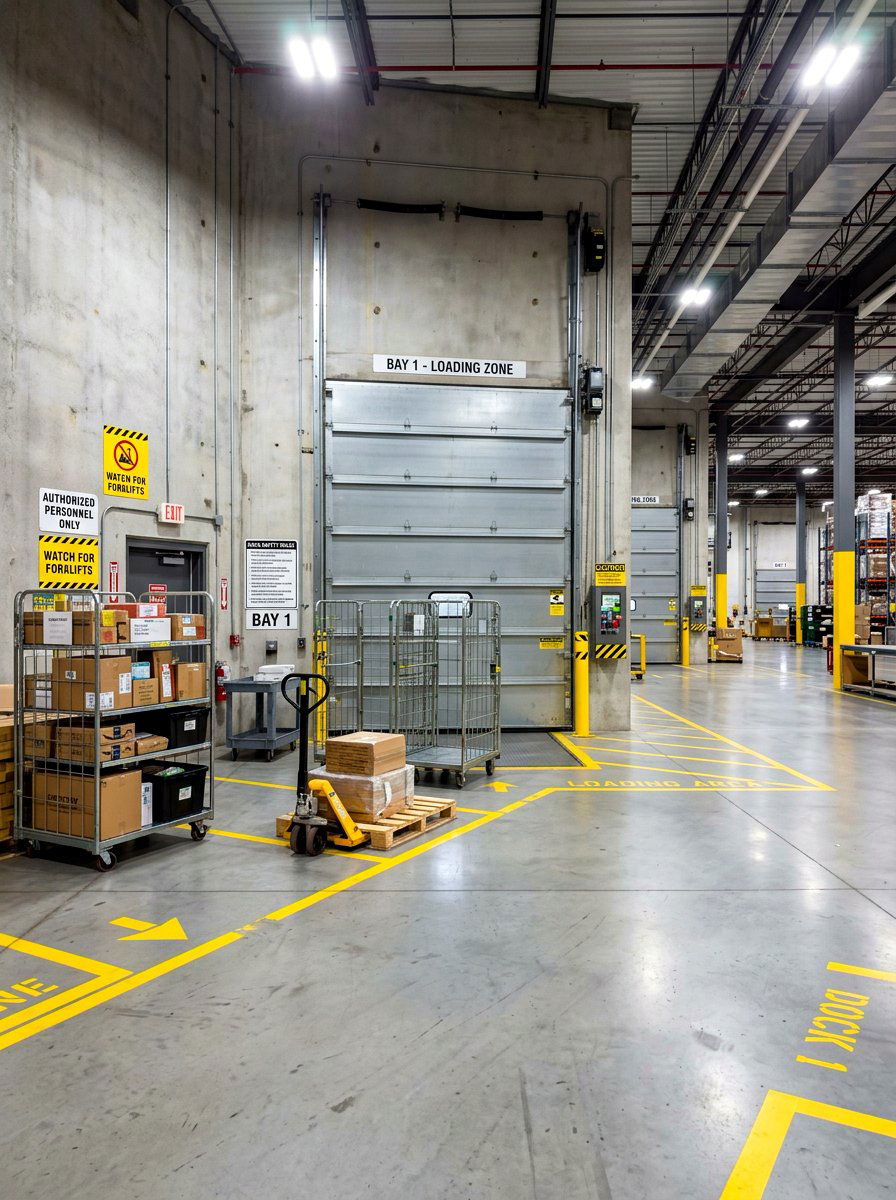
The logistics of getting ingredients into the kitchen and finished meals out to the event site are often overlooked in the design process. A dedicated loading zone near a wide delivery door is essential for a smooth workflow and preventing bottlenecks at the main entrance. This area should be large enough to accommodate delivery trucks and have a clear, flat path for rolling heavy equipment and insulated food carriers. If the kitchen is on an upper floor, a high-capacity service elevator is a must. Designing your kitchen with the "in and out" process in mind ensures that the hardest parts of the job — transporting heavy items — are as easy as possible.
30. Basement Catering Kitchen Layout
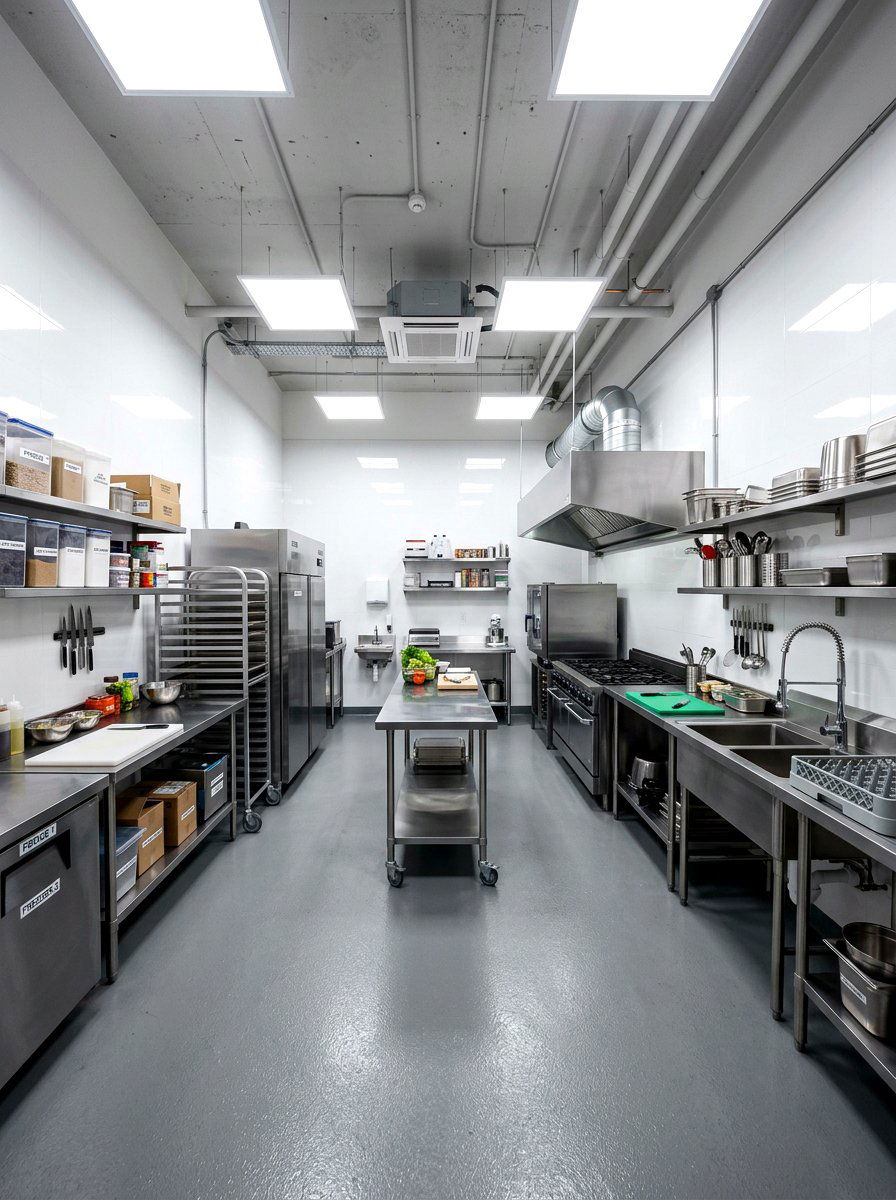
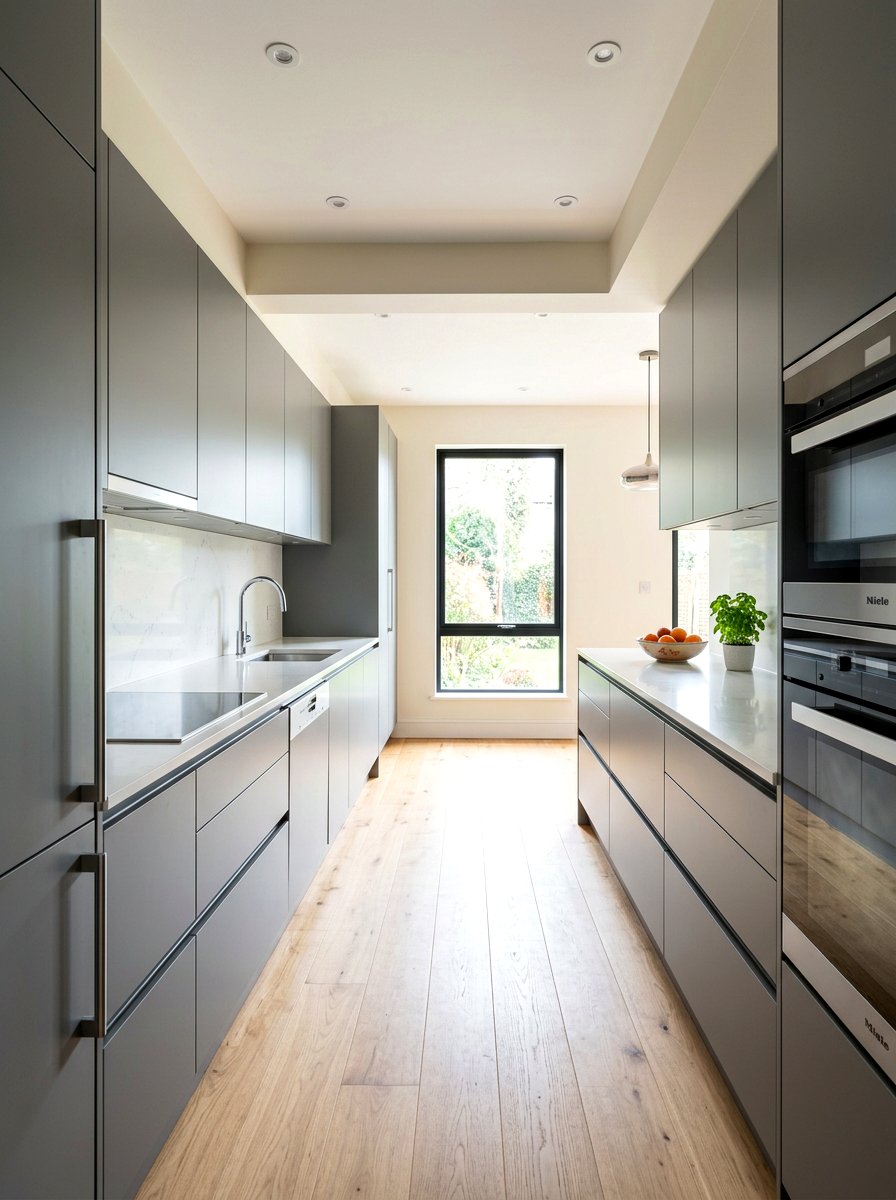
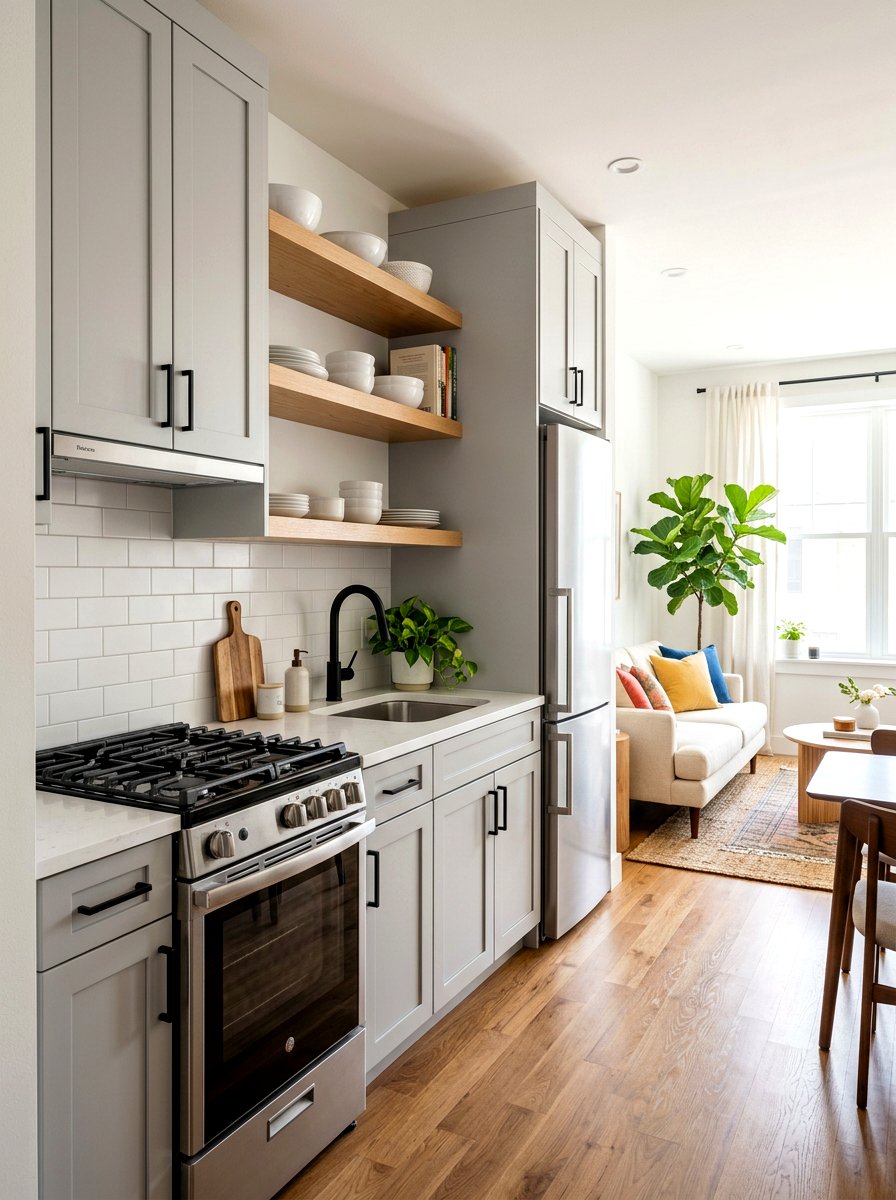
For home-based caterers or small businesses with limited street-level space, a basement catering kitchen can be a highly efficient solution when designed correctly. This layout focuses on maximizing a compact area by using vertical storage and specialized lighting to overcome the lack of natural windows. It requires careful planning for ventilation and plumbing to ensure the space remains comfortable and meets all building codes. A basement setup can offer a quiet, focused environment away from the distractions of the main house or storefront. By utilizing a "U-shaped" or "galley" layout, you can create a high-functioning prep space that rivals much larger commercial facilities in its output capacity.
Conclusion:
Building a catering kitchen is an investment in the long-term success and scalability of your culinary business. By prioritizing a logical workflow and selecting heavy-duty materials like stainless steel and ceramic tile, you create an environment that supports your team's best work rather than hindering it. Every design choice, from the placement of a pot filler to the organization of a walk-in pantry, should focus on reducing unnecessary movement and maximizing sanitation. A well-organized kitchen not only improves food quality but also reduces stress and enhances the overall safety of your operation. When your infrastructure is solid, you can focus entirely on creating exceptional food for your clients.

Related posts: