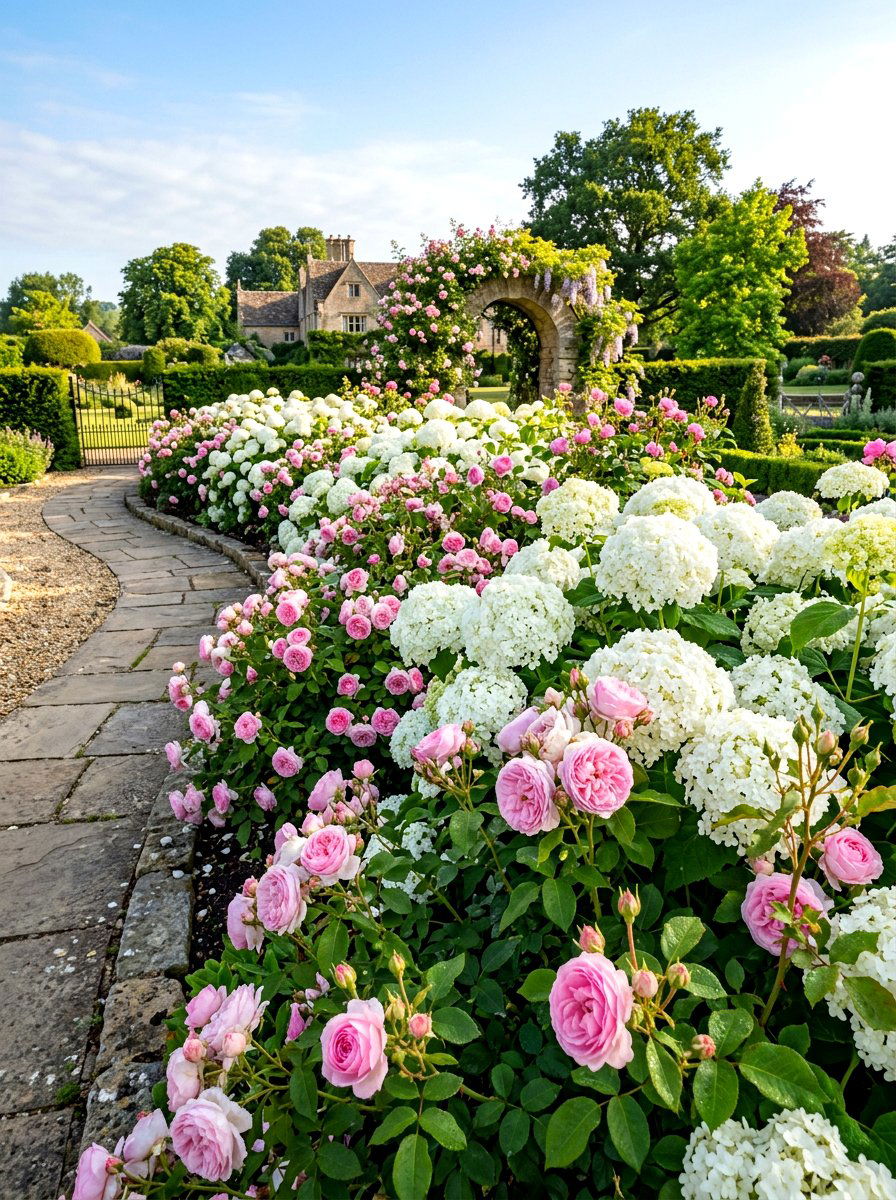
Hydrangeas provide a timeless elegance that few other shrubs can match in a residential landscape. These versatile plants offer lush foliage and massive blooms that create a stunning visual impact throughout the summer months. Using them as a border is a brilliant way to define your outdoor spaces while adding a touch of sophisticated charm. Whether you prefer a formal look or a wild cottage aesthetic, there is a hydrangea variety that fits your specific needs perfectly. Growing these beauties requires some knowledge of soil and sun, but the payoff is a breathtaking sea of color. Transform your yard into a professional garden retreat with these creative landscaping concepts that emphasize texture and vibrant floral displays.
1. Blue Mophead Hydrangea
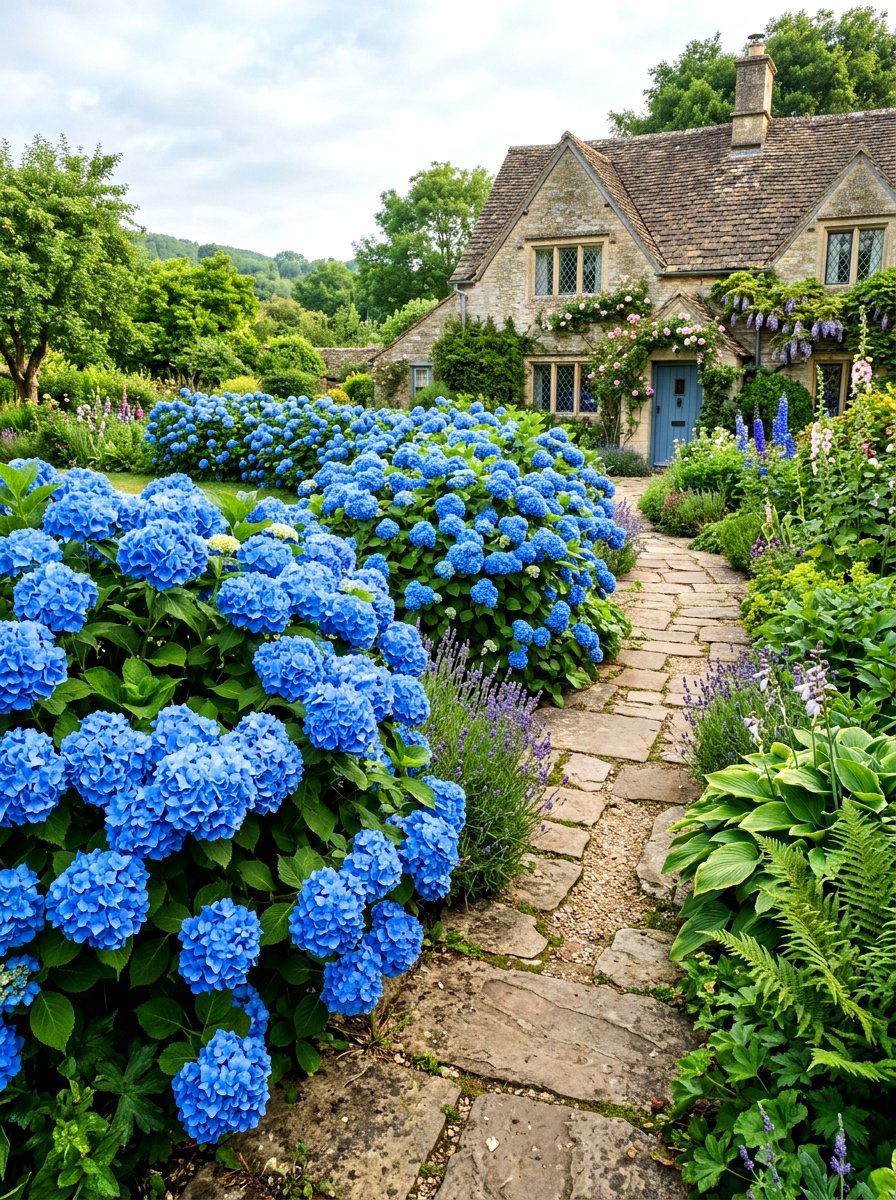
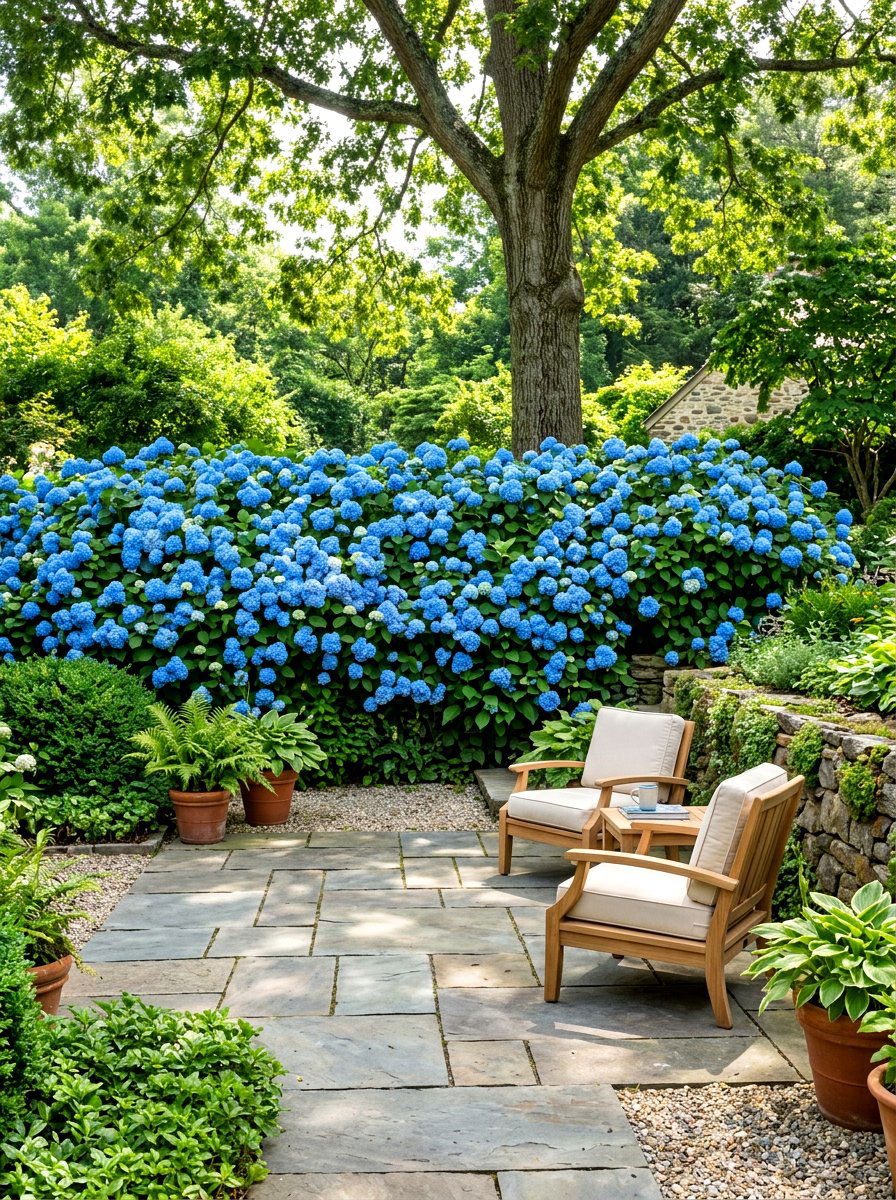
Can you imagine a more iconic summer flower than the classic blue mophead hydrangea lining your garden path? These stunning shrubs are famous for their large, spherical flower heads that can range from a soft sky blue to a deep sapphire. To achieve this vibrant blue hue, you must ensure your soil is acidic, often requiring specific soil amendments like aluminum sulfate. Planting them in a row creates a soft, cloud-like texture that feels incredibly inviting and serene. They thrive in spots with morning sun and afternoon shade to prevent their delicate petals from wilting in the heat. This classic choice brings a sense of traditional coastal charm to any suburban backyard.
2. White Hydrangea And Boxwood Hedge
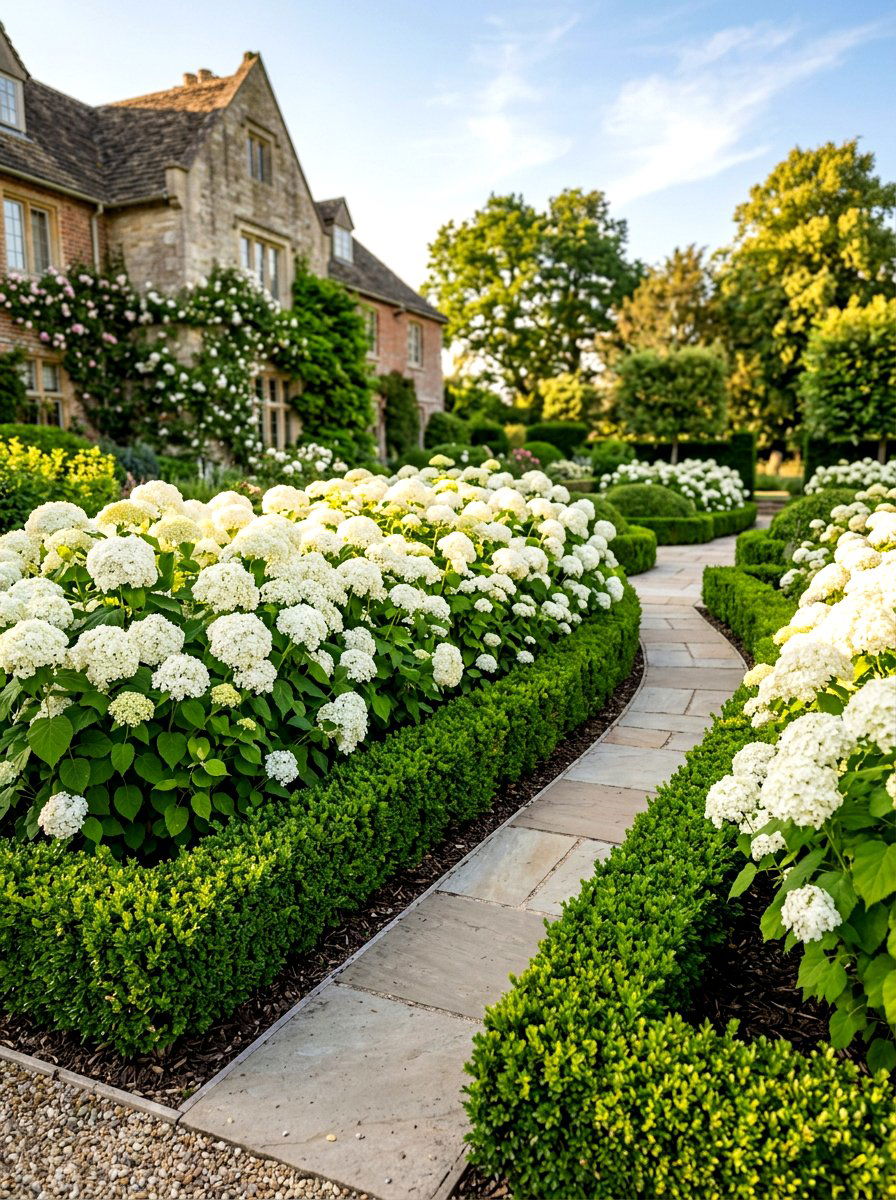
Combining the airy softness of white hydrangeas with the structured crispness of a boxwood hedge creates a formal and sophisticated garden border. This pairing is a favorite for traditional estates because it provides a clean, polished look that stays green even when flowers are not in bloom. You can plant the boxwoods in the front to act as a short, evergreen frame for the taller hydrangea shrubs behind them. This layering technique adds depth and ensures your garden looks intentional and well-designed throughout the year. The contrast between the dark green leaves and the bright white blossoms is striking, especially during the twilight hours when the flowers seem to glow.
3. Pink Hydrangea Cottage Garden
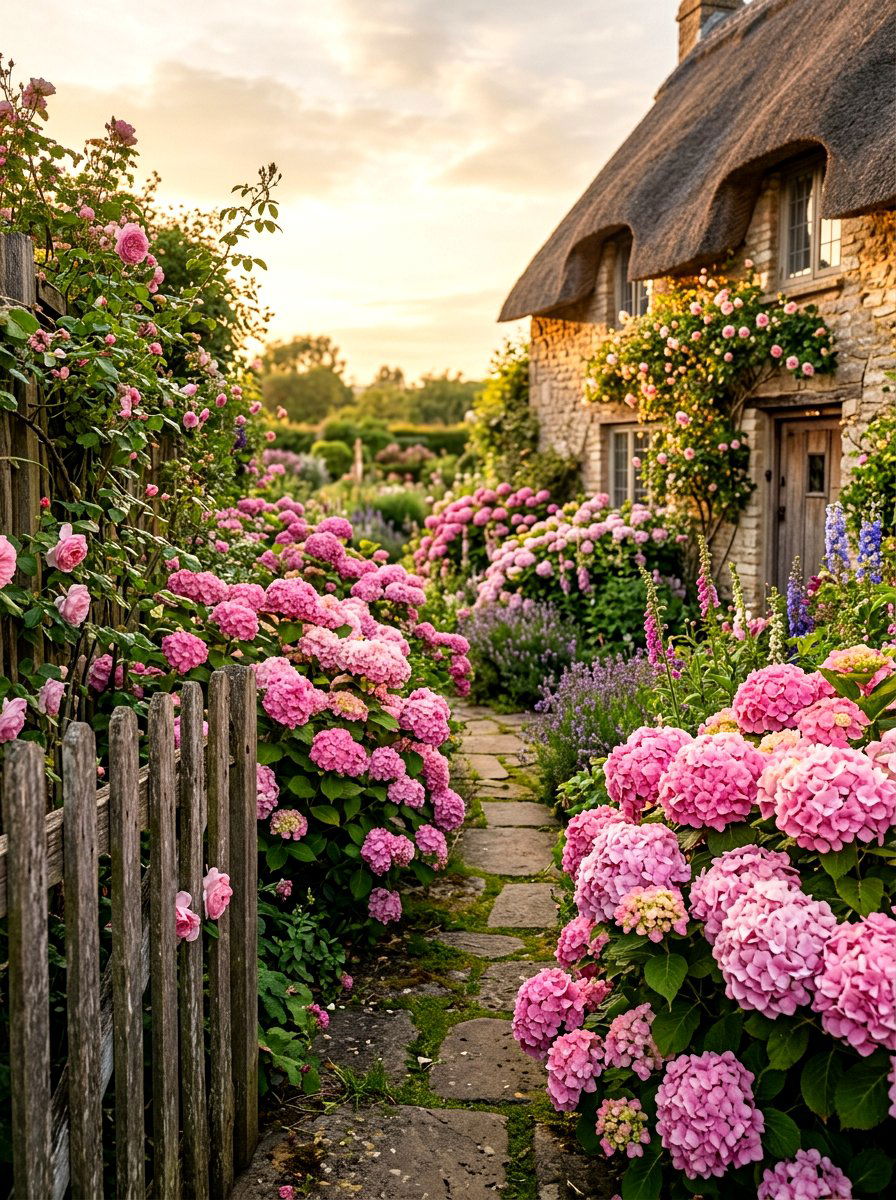
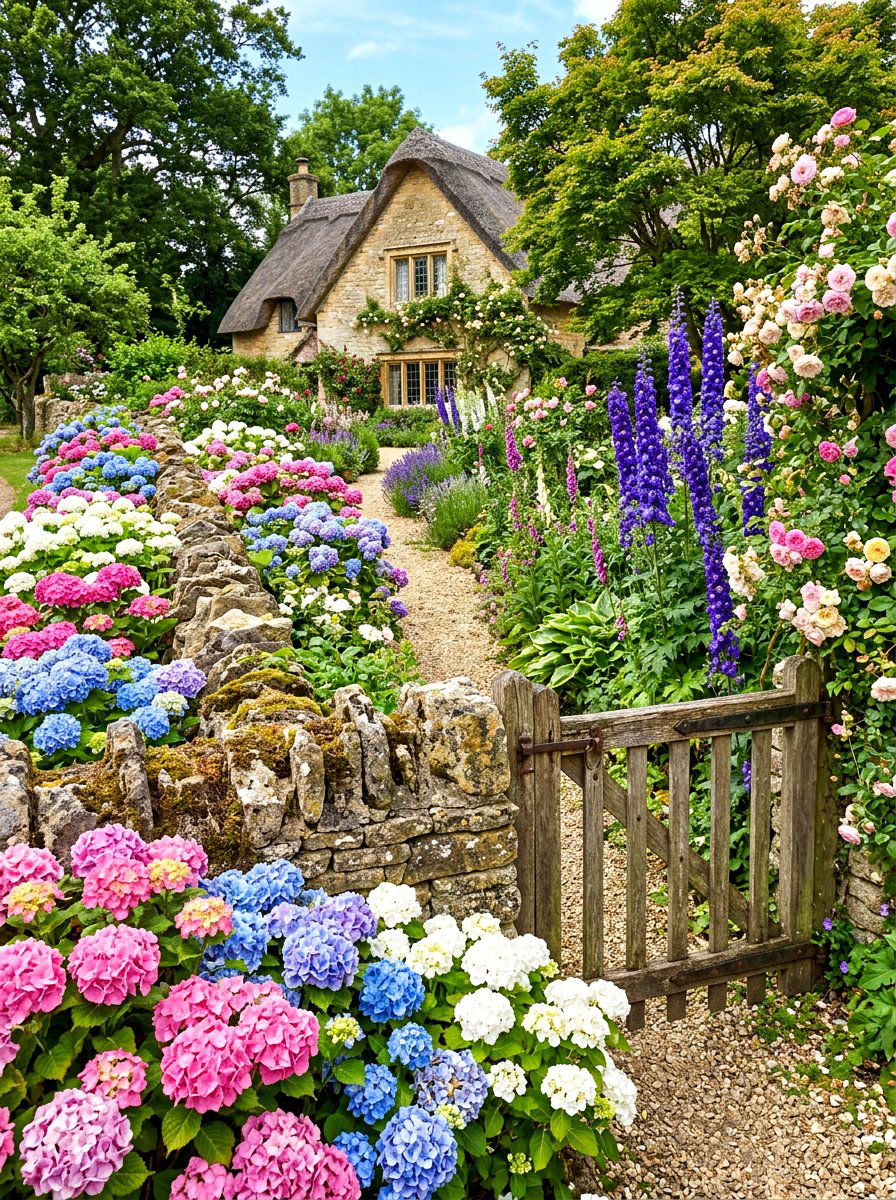
For a romantic and whimsical atmosphere, nothing beats a lush border of pink hydrangeas in a classic cottage garden setting. These flowers offer a soft, feminine touch that pairs beautifully with rustic elements like weathered wood fences or stone birdbaths. To get those beautiful pink tones, your soil should be more alkaline, which you can manage by adding garden lime. These shrubs look best when they are allowed to grow into their natural, billowing shapes rather than being pruned into tight spheres. Surround them with other classic perennials like foxgloves or delphiniums to complete the fairy-tale look. This style celebrates abundance and a relaxed, natural growth pattern that feels cozy.
4. Dwarf Hydrangea Walkway Edging
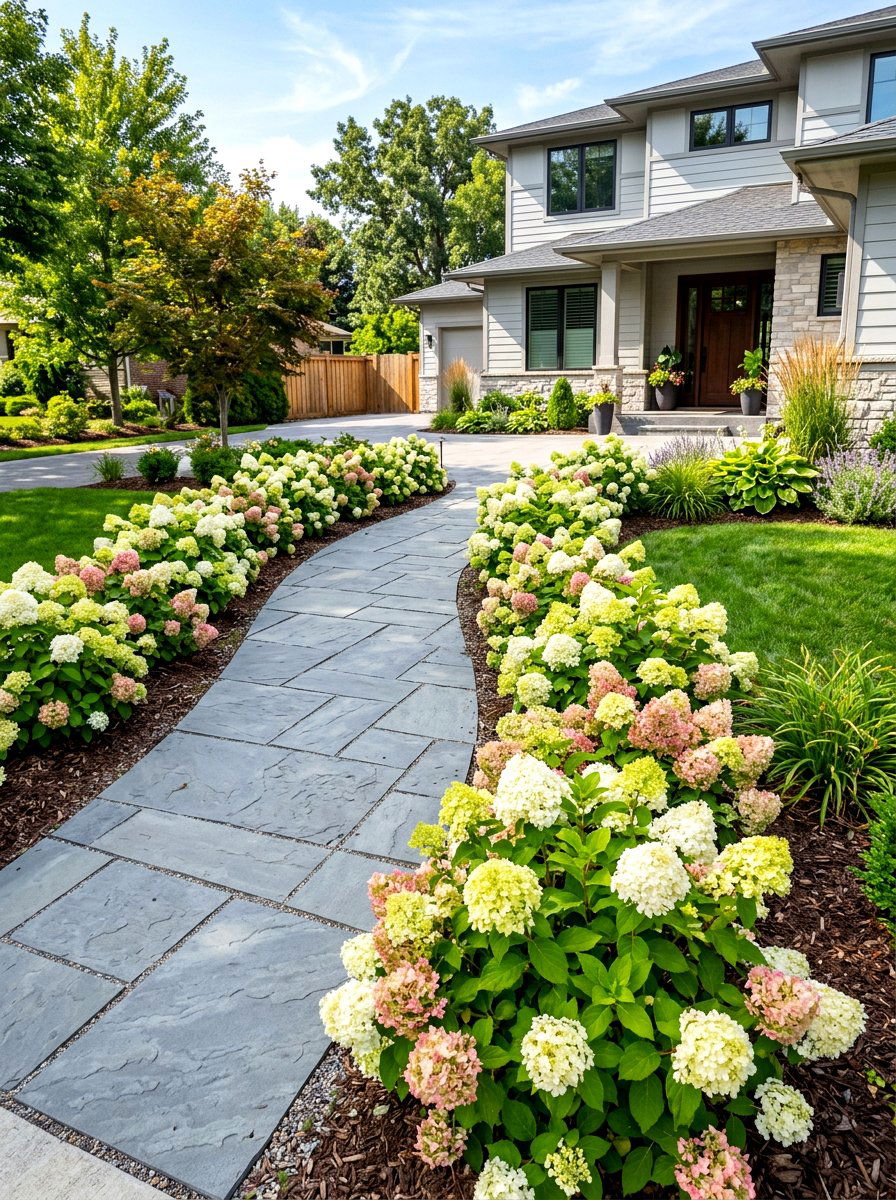
If you have a narrow path or a smaller yard, dwarf hydrangea varieties are the perfect solution for creating a manageable border. These compact plants offer all the beauty of their larger relatives but stay at a much shorter height, usually under three feet. Planting them along a stone walkway creates a beautiful transition between your hardscaping and your lawn. They provide a dense, colorful edge that does not overgrow the path or require constant heavy pruning to maintain its size. This is an excellent choice for modern landscapes where space is limited but visual impact is still a high priority for the homeowner.
5. Panicle Hydrangea Privacy Screen
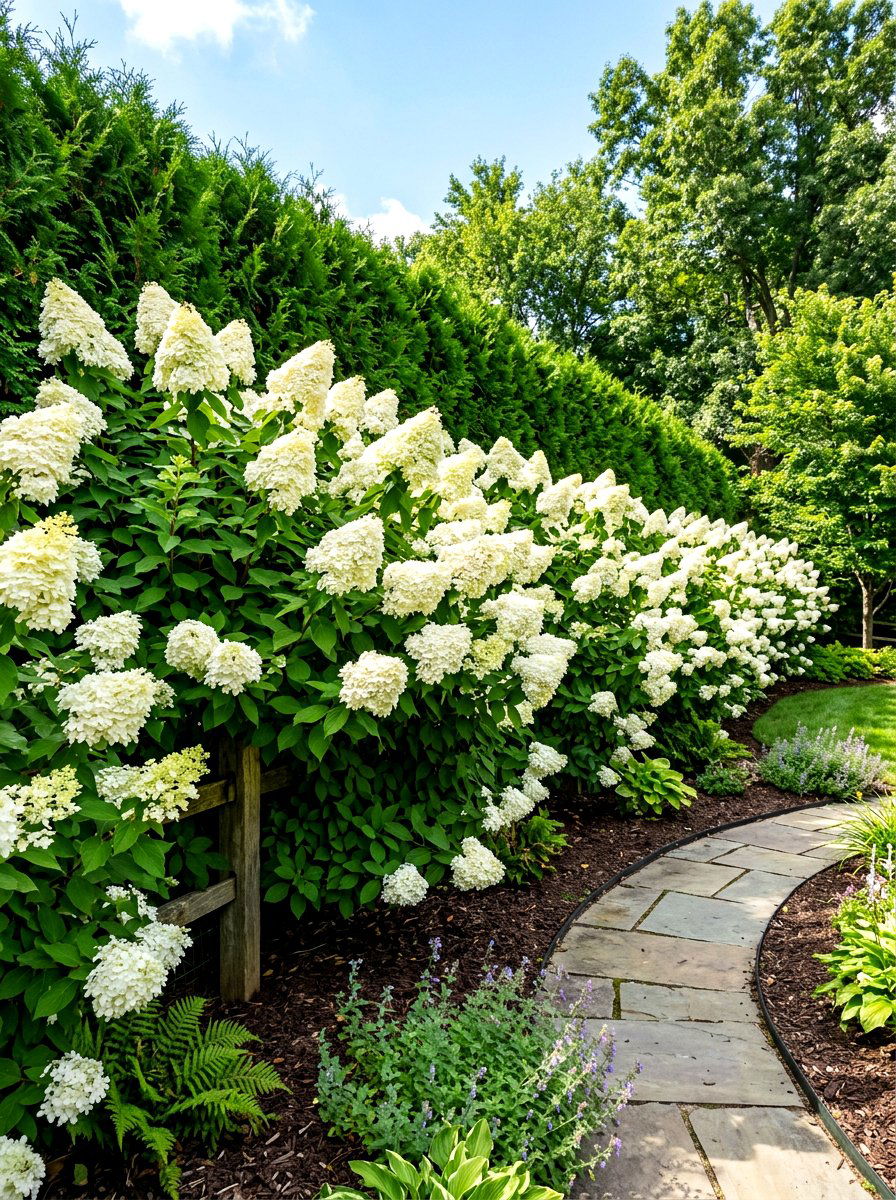
Panicle hydrangeas are known for their impressive height and cone-shaped flower clusters, making them ideal for creating a natural privacy screen. When planted in a dense row along a property line, these fast-growing shrubs can reach up to ten feet tall. They provide a lush, green wall that blocks unwanted views while offering a spectacular floral display from mid-summer into late autumn. Unlike some other varieties, panicle hydrangeas are quite sun-tolerant and sturdy, meaning they can handle exposed areas without drooping. Their blooms often transition from white to a dusty rose as the weather cools, providing long-lasting interest throughout the changing seasons.
6. Hydrangea And Hosta Shade Border
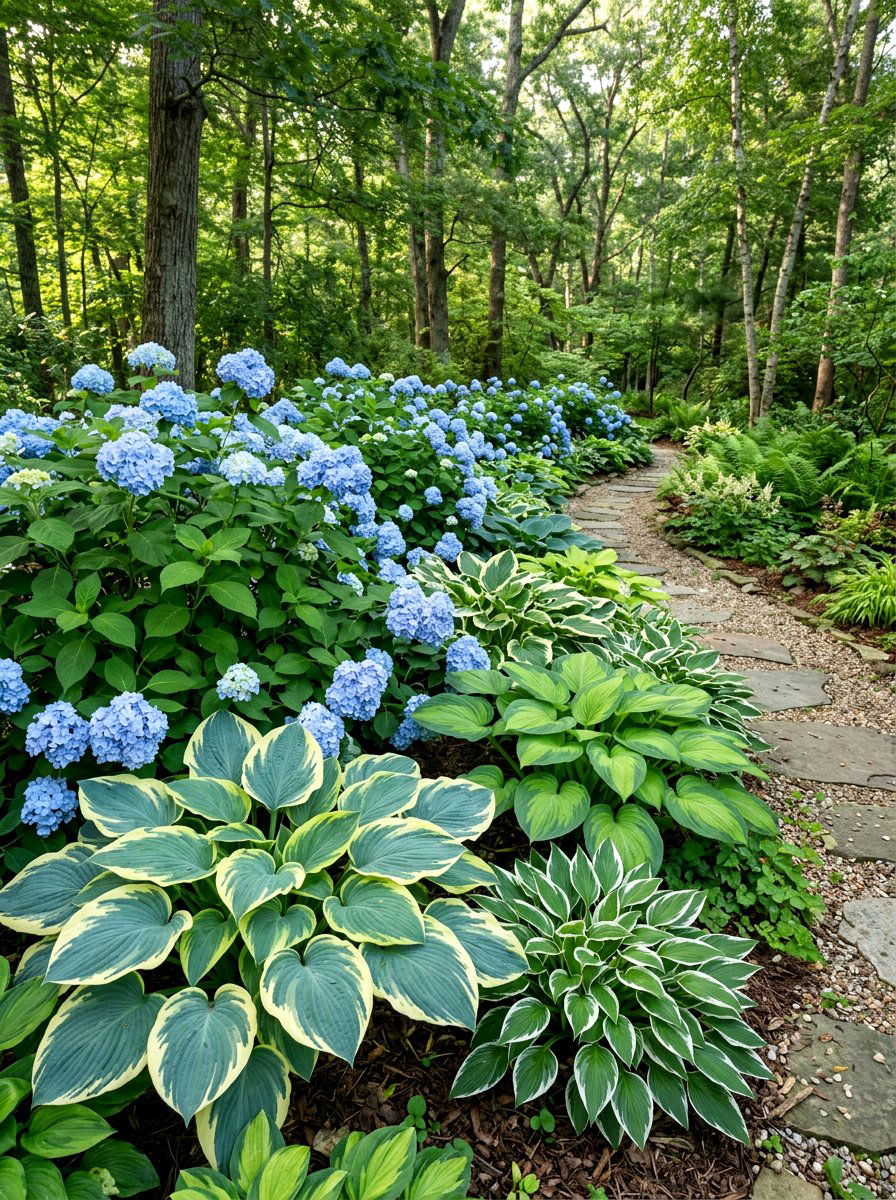
Gardening in a shady corner can be challenging, but a combination of hydrangeas and hostas creates a lush and thriving ecosystem. Both plants love filtered light and consistent moisture, making them natural companions for a low-light border. The large, bold leaves of the hostas provide a beautiful ground-level texture that complements the upright structure of the hydrangea shrubs. You can mix different varieties of hostas, such as those with variegated or blue-green leaves, to add even more visual variety to the space. This pairing creates a cool, tranquil retreat that feels fresh and vibrant even in the hottest parts of the summer.
7. Limelight Hydrangea Backyard
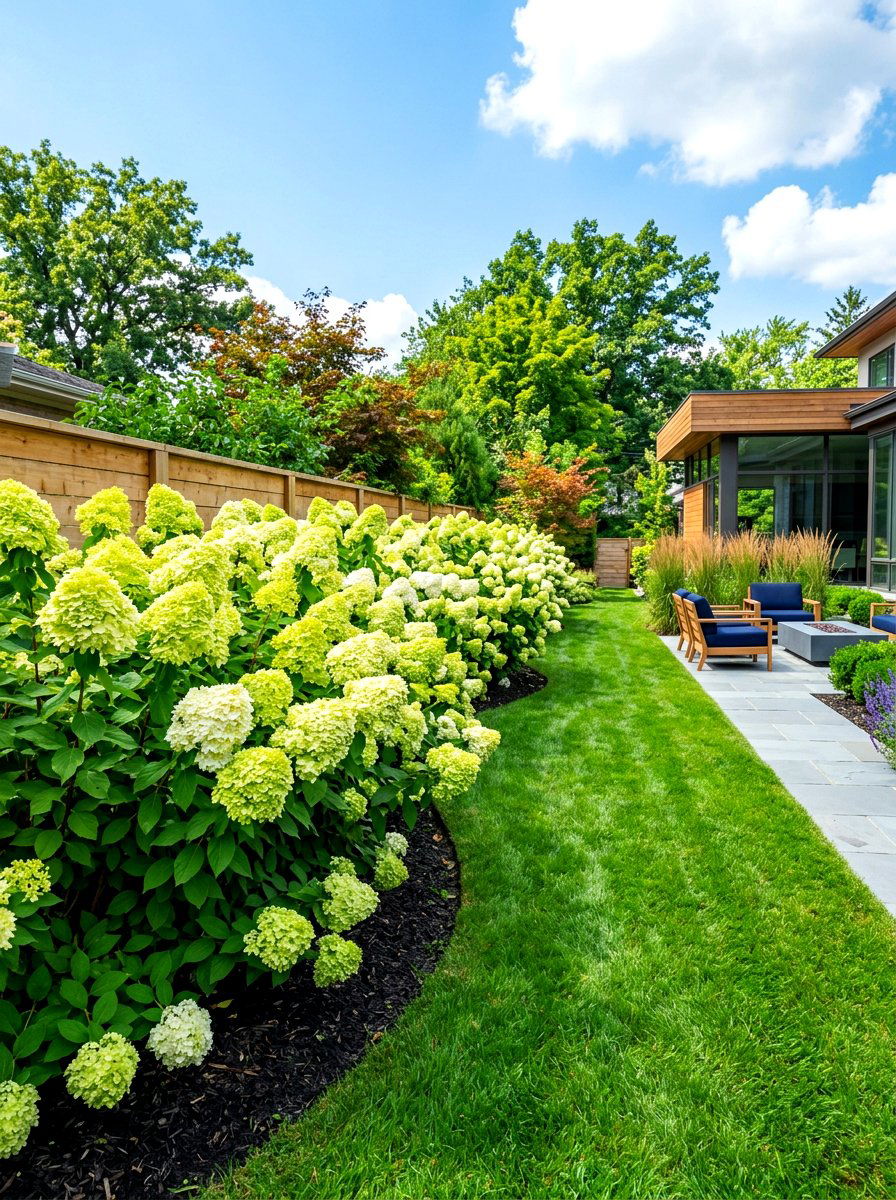
The Limelight hydrangea is a superstar in the world of landscaping because of its unique lime-green flower heads and incredible reliability. This variety is perfect for a backyard border where you want a modern, refreshing color palette that stands out from the crowd. These shrubs are very hardy and can produce an abundance of flowers even in less-than-ideal conditions. As the summer progresses, the green flowers gradually turn to a crisp white and eventually a beautiful pinkish-bronze in the fall. Because they bloom on new wood, you can prune them back in early spring to keep them looking tidy and productive every year.
8. Oakleaf Hydrangea Woodland Border
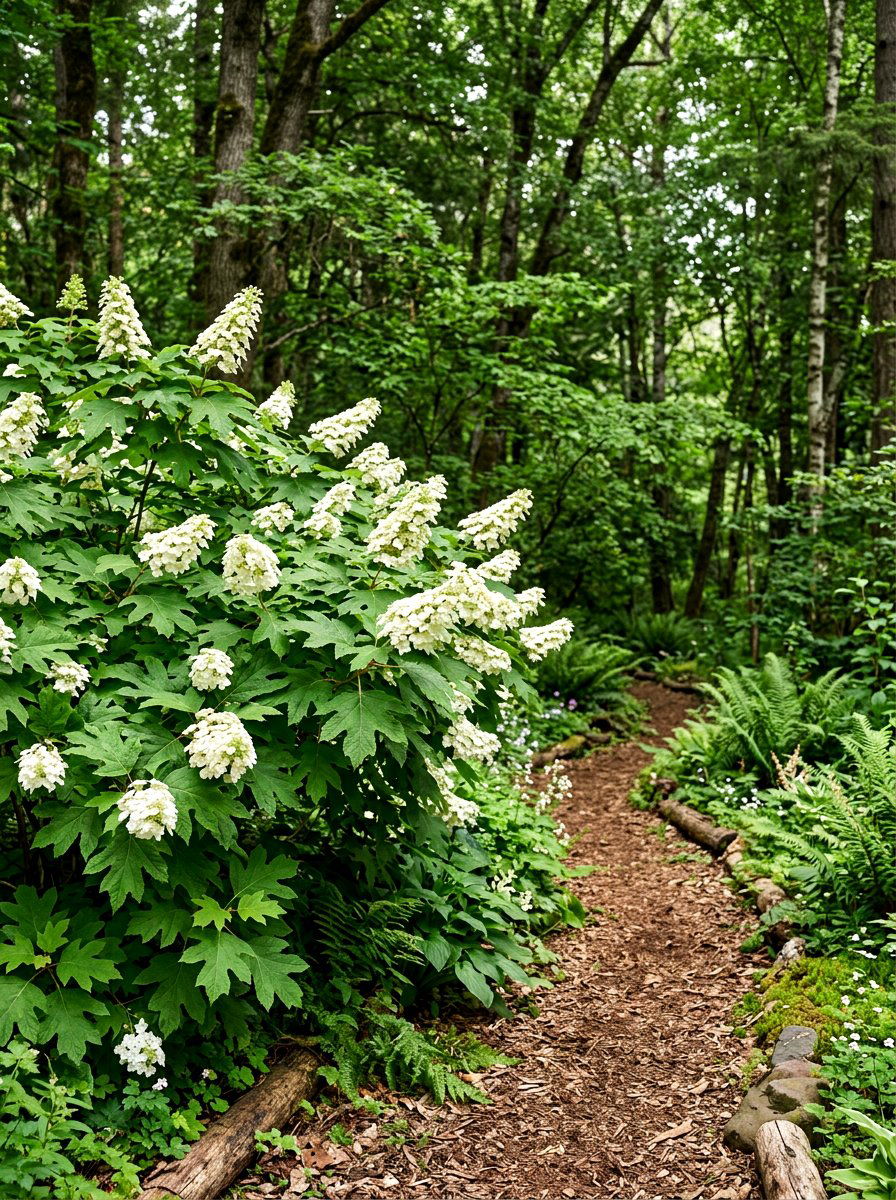
For a more naturalized and native look, the oakleaf hydrangea is an exceptional choice for a woodland garden border. This plant is easily identified by its deeply lobed leaves that resemble oak foliage and its stunning white flower panicles. It is one of the few hydrangeas that offers incredible fall interest, as the leaves turn brilliant shades of red, orange, and purple. Planting them along the edge of a wooded area creates a seamless transition from the manicured lawn to the wilder parts of your yard. They are also more drought-tolerant than mophead varieties once they are established, making them a practical and beautiful choice.
9. Hydrangea And Lavender Sunny Border
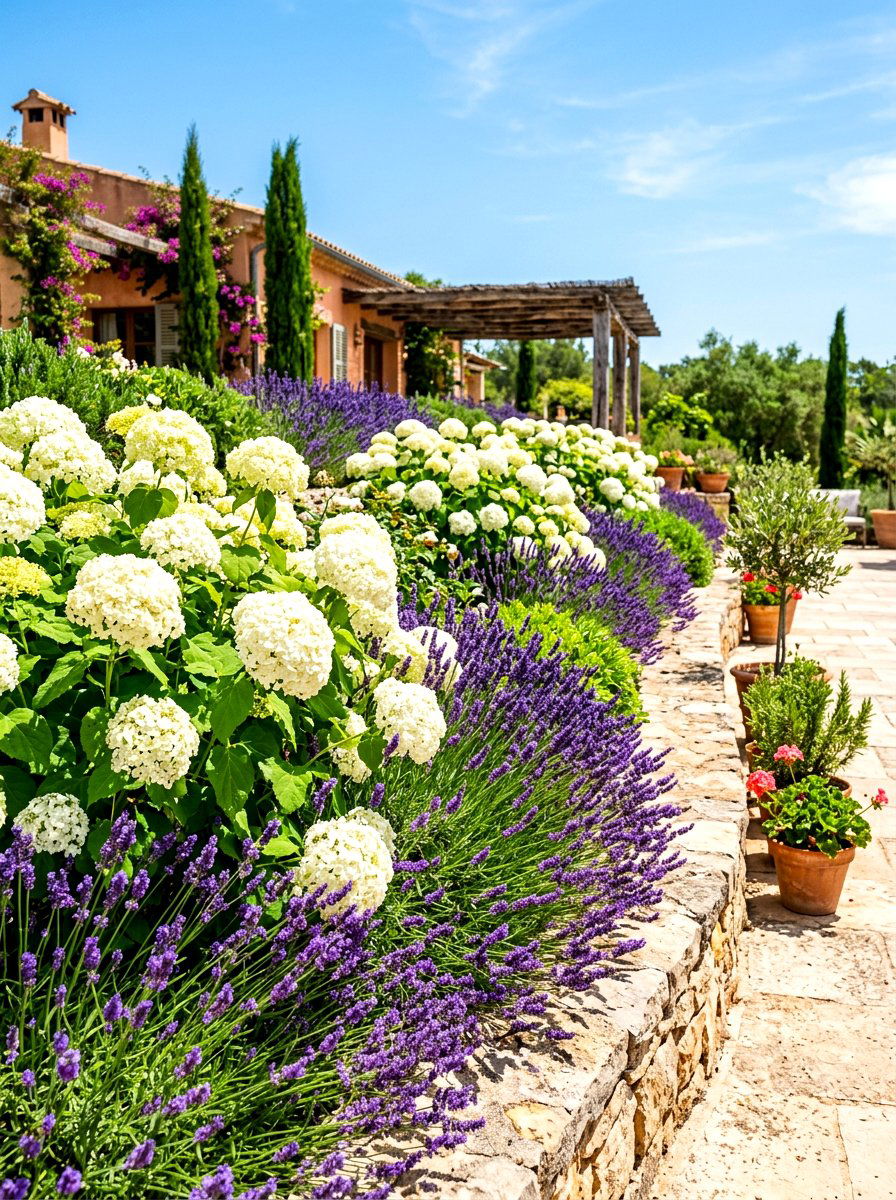
Creating a border with hydrangeas and lavender offers a sensory experience that combines stunning visuals with a relaxing fragrance. While many hydrangeas prefer shade, sun-tolerant varieties like panicle hydrangeas can thrive alongside the heat-loving lavender. This combination works best when you ensure the soil is well-draining to keep the lavender happy while giving the hydrangeas enough water. The silvery foliage of the lavender provides a beautiful contrast to the deep green leaves of the shrubs. This pairing is perfect for a sunny front yard or a patio edge where the scent can be enjoyed by everyone who walks by during the warm summer months.
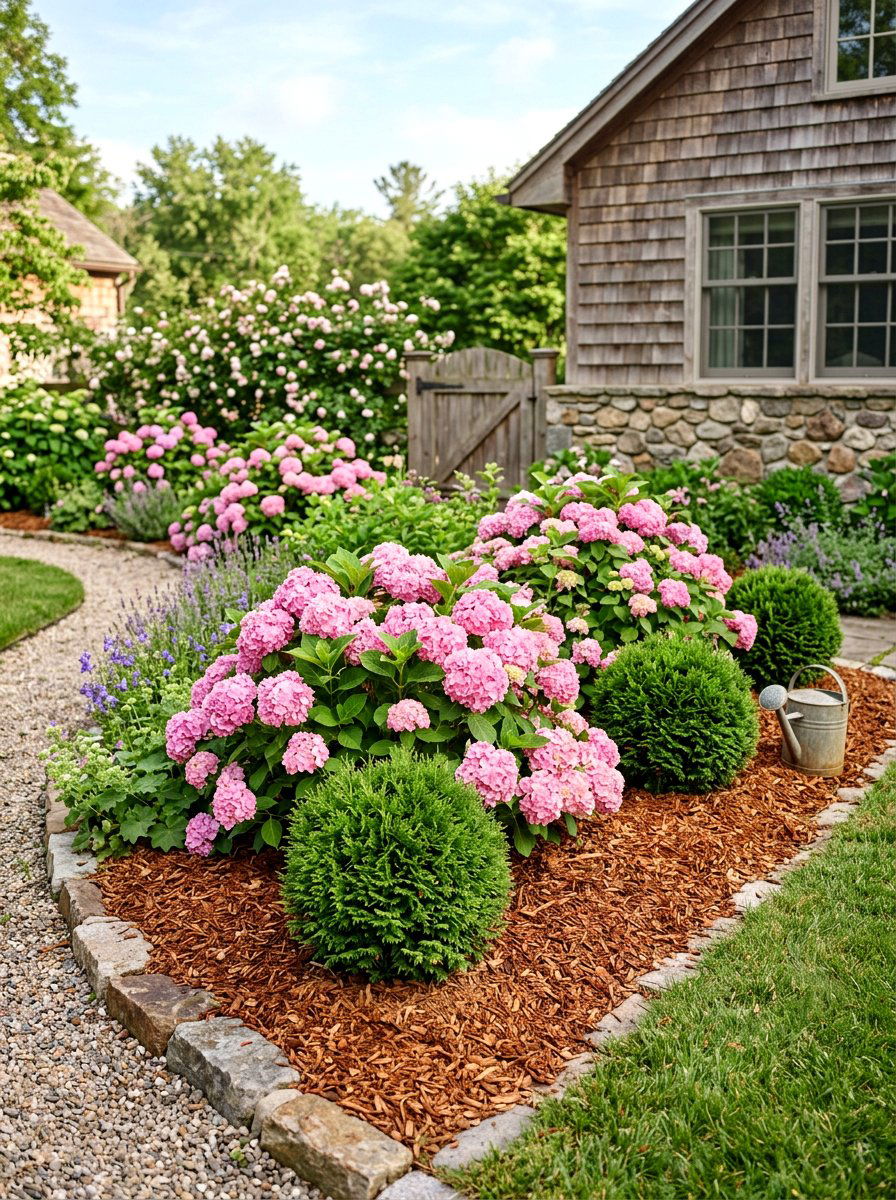
10. Mixed Color Hydrangea Garden
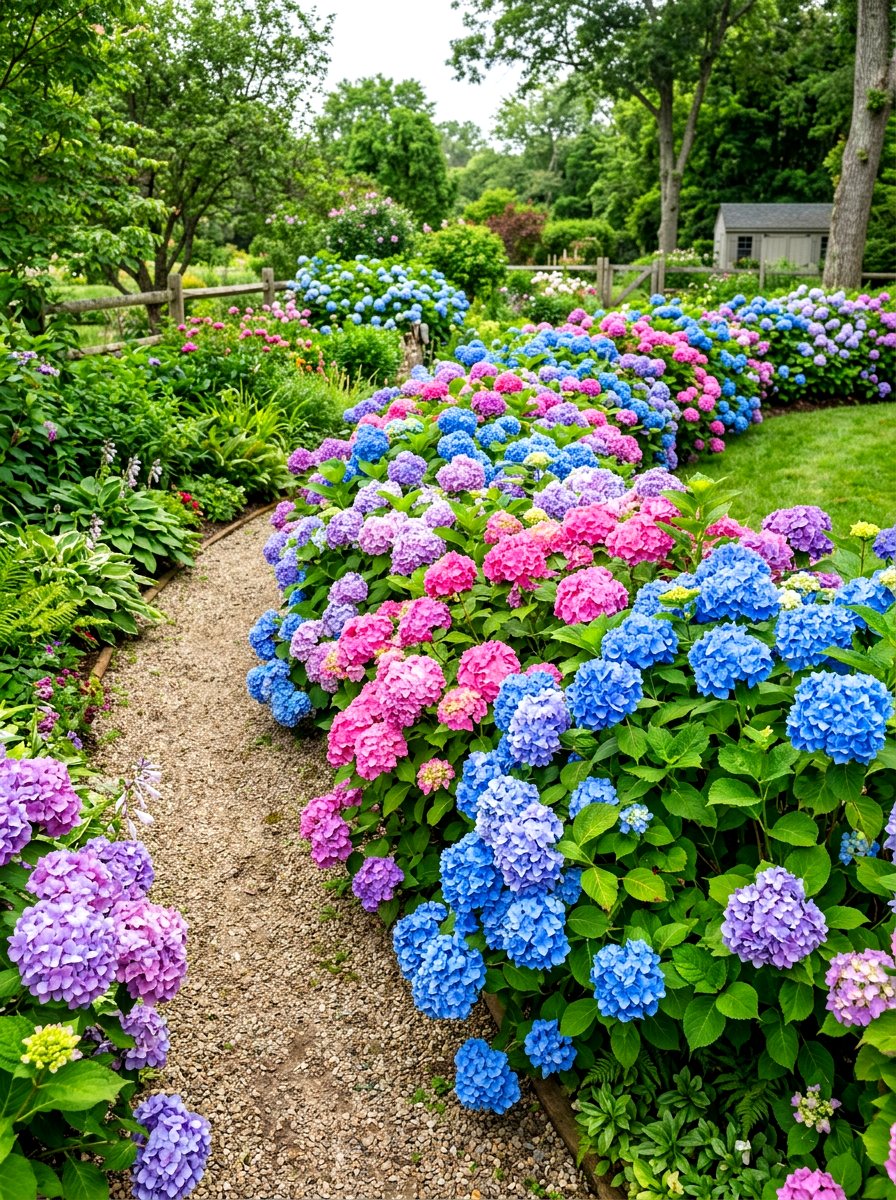
If you cannot decide on just one color, a mixed hydrangea border offers a playful and vibrant display that catches the eye. By slightly varying the soil pH in different sections of the bed, you can achieve a mix of blue, purple, and pink blooms. This multi-colored approach creates a dynamic look that feels energetic and full of life. It works best when you use the same variety of hydrangea throughout the row to maintain a consistent plant shape and size. This technique turns a simple garden border into a living rainbow that serves as a major focal point for your entire outdoor landscape design.
11. Annabelle Hydrangea Driveway
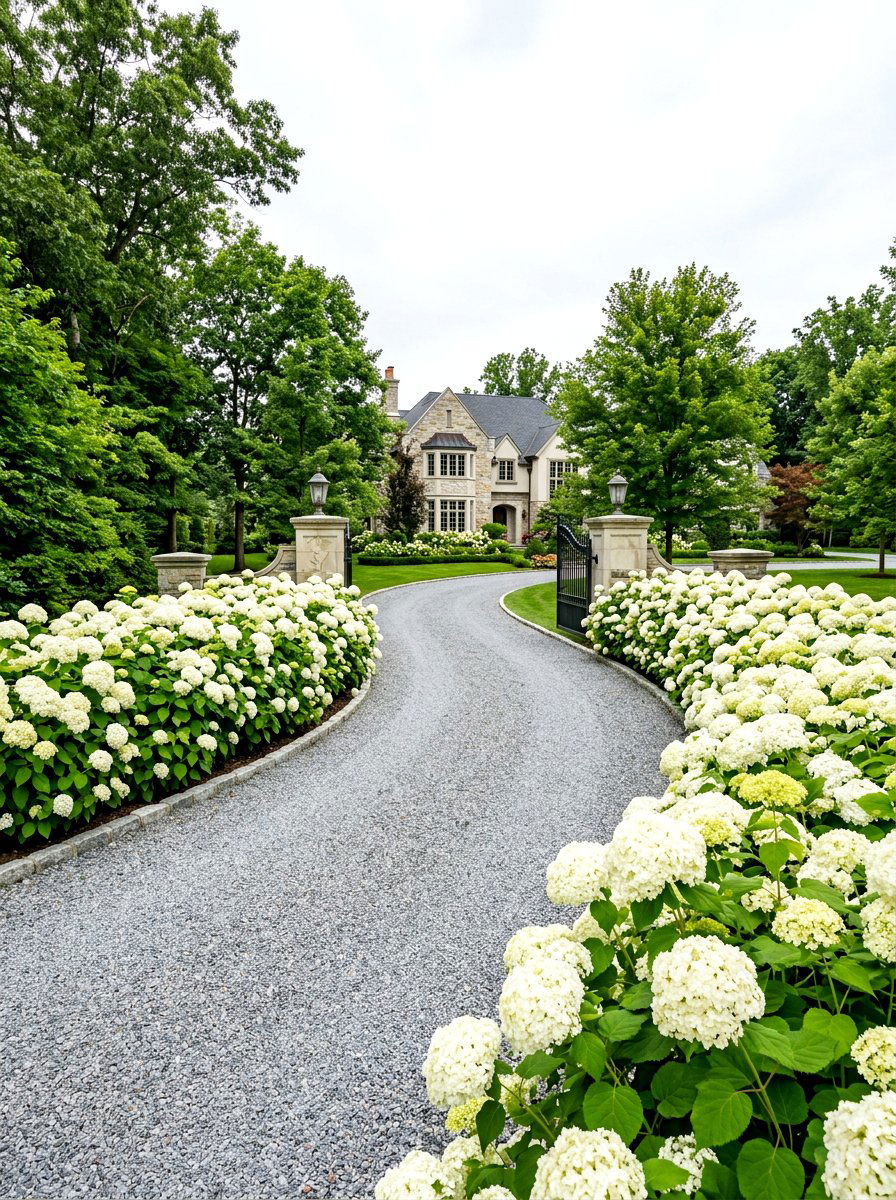
Annabelle hydrangeas are famous for their massive, snow-white flower heads that can reach the size of a basketball. Planting a row of these stunning shrubs along a driveway creates a grand entrance that feels both welcoming and luxurious. Their bright white color provides a clean contrast against the dark asphalt or grey gravel of a driveway. Because they have somewhat soft stems, they look best when planted close together so they can support one another as the heavy blooms open. This variety is incredibly hardy and reliably produces flowers every year, making it a favorite for homeowners who want maximum impact with relatively low maintenance.
12. Hydrangea And Rose Flower Border
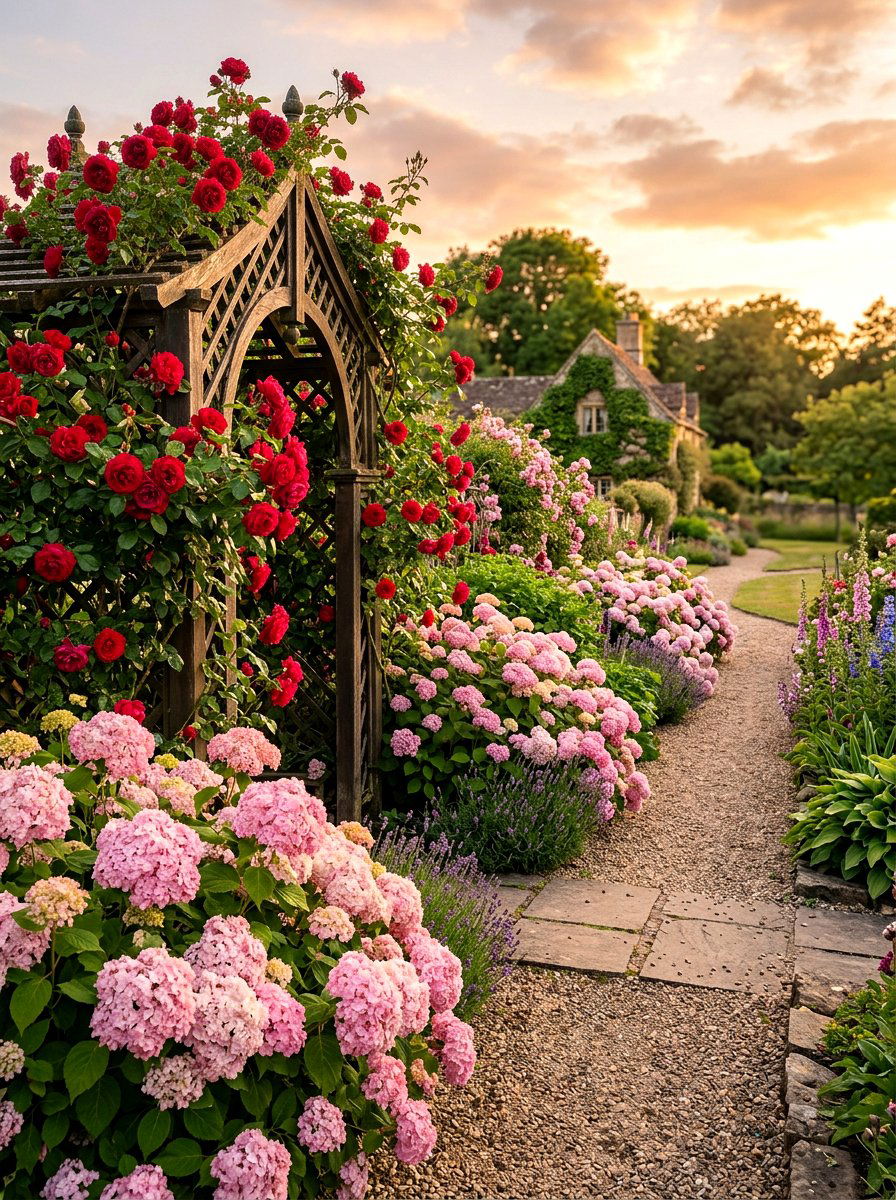
Pairing hydrangeas with roses is the ultimate way to create a classic, romantic garden border that feels timeless and elegant. Both of these plants are prized for their spectacular blooms, and together they create a tapestry of color and texture. You can choose climbing roses to grow on a trellis behind the hydrangeas or use shrub roses to fill in the gaps between the larger bushes. The contrast between the delicate, multi-petaled roses and the dense, clustered hydrangeas is visually captivating. This combination requires a bit more care in terms of feeding and pruning, but the result is a breathtaking garden that looks like it belongs on a postcard.
13. Low Growing Hydrangea Front Yard
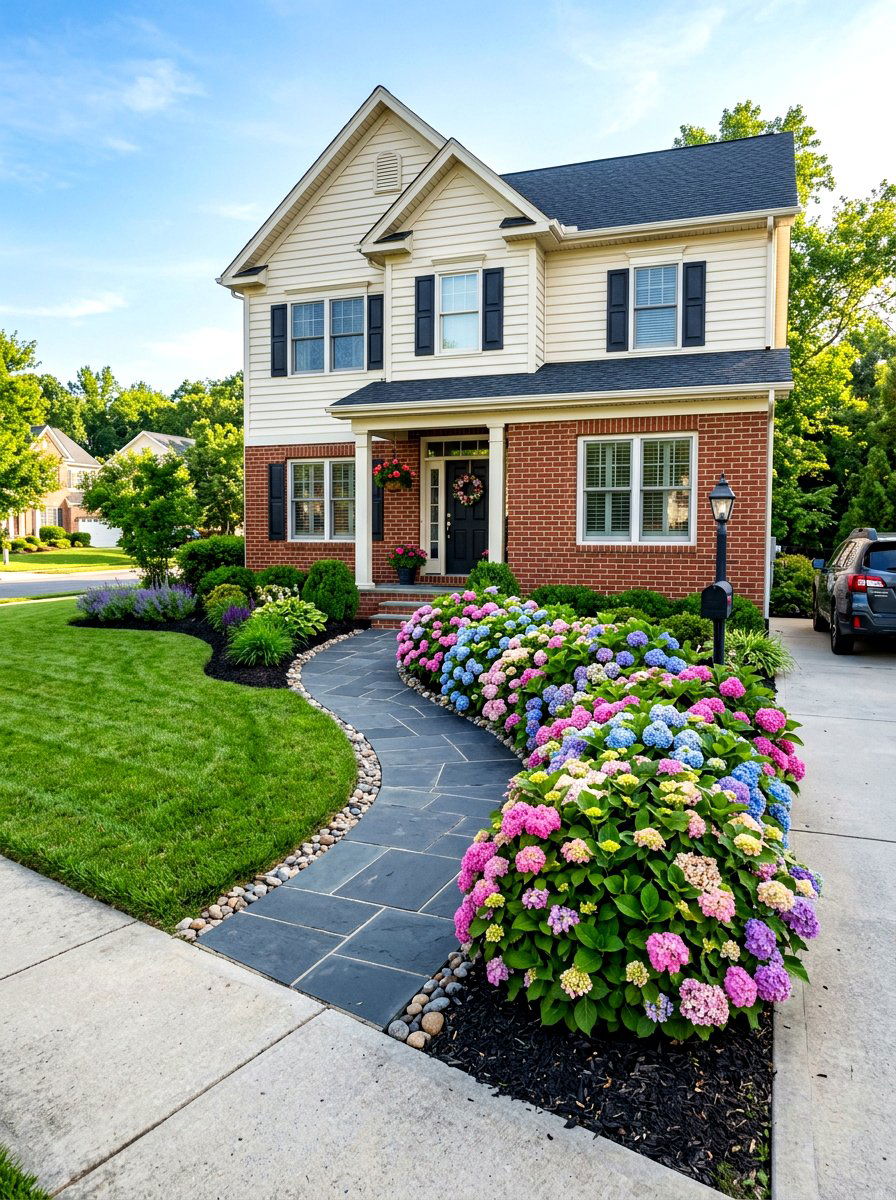
For a front yard that needs a boost in curb appeal, a low-growing hydrangea border offers a neat and inviting look. These smaller varieties are perfect for planting under windows or along the foundation of your home without blocking the view. They provide a soft, mounded shape that helps to ground the architecture of the house and integrate it into the surrounding landscape. Choosing a reblooming variety ensures that your front yard stays in color from early summer all the way through the first frost. This approach creates a polished and friendly atmosphere that makes your home stand out in the neighborhood for all the right reasons.
14. Hydrangea And Fern Shade Garden
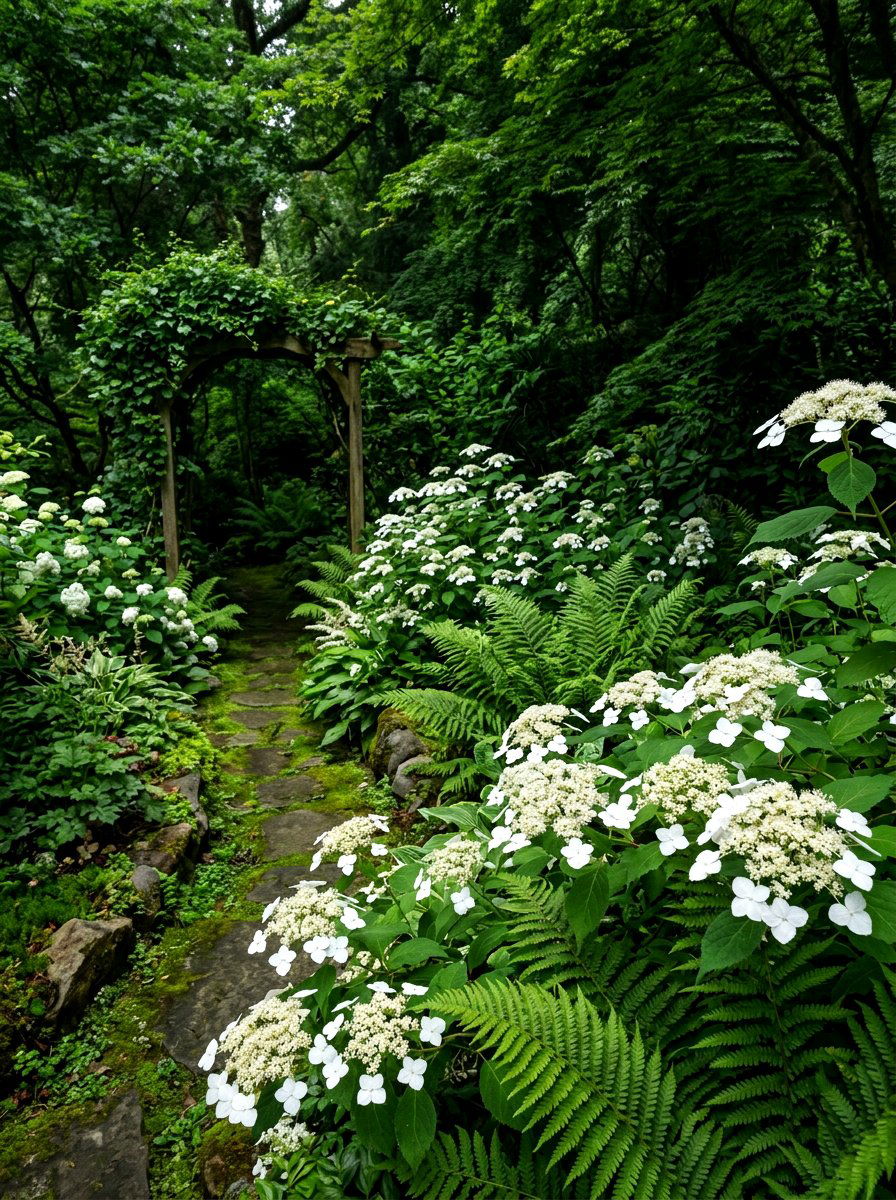
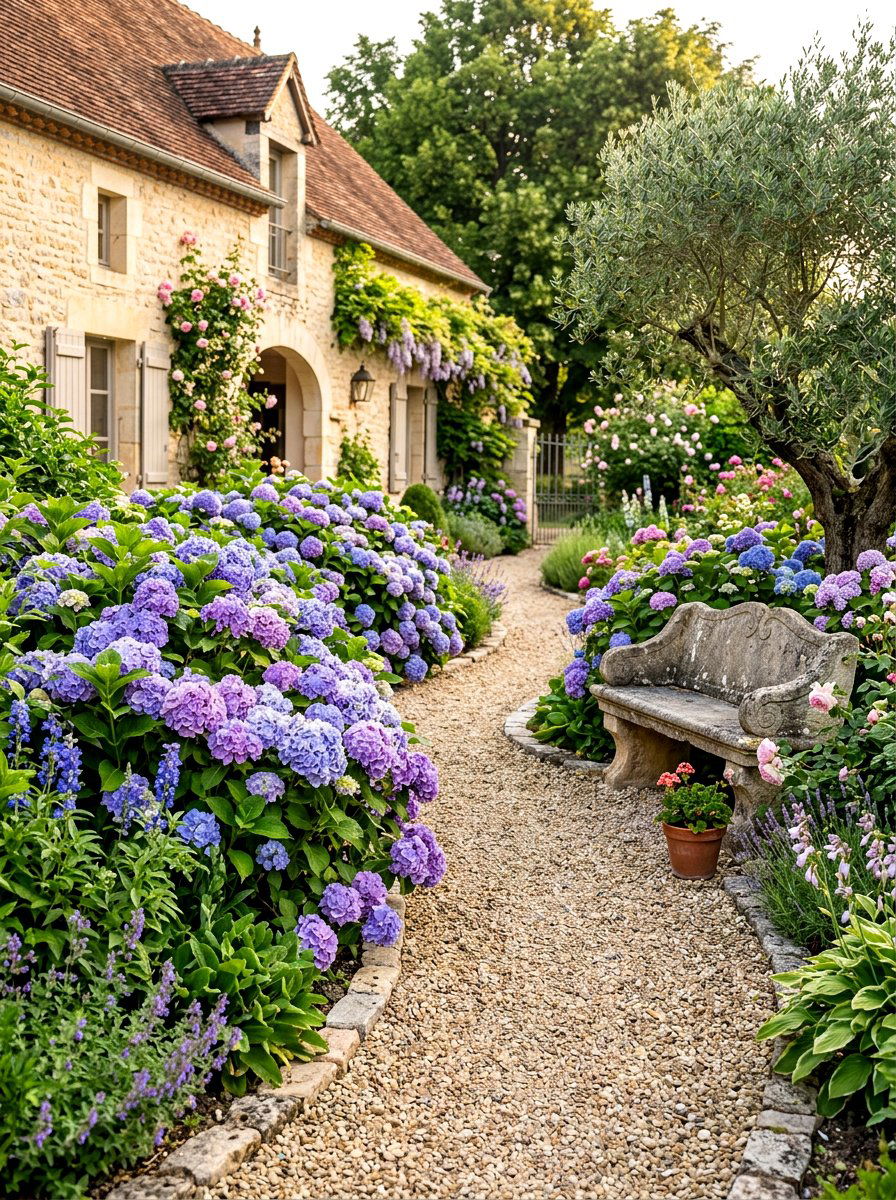
A border featuring hydrangeas and ferns is the perfect way to bring a touch of the forest into your own backyard. Ferns offer a delicate, feathery texture that contrasts perfectly with the broad, bold leaves of the hydrangea shrubs. This combination thrives in damp, shaded areas where other flowering plants might struggle to survive. You can use different types of ferns, such as Japanese painted ferns or ostrich ferns, to add layers of green and silver to the base of the shrubs. This creates a cool and refreshing environment that feels like a hidden sanctuary away from the hustle and bustle of everyday life.
15. Potted Hydrangea Patio Edging
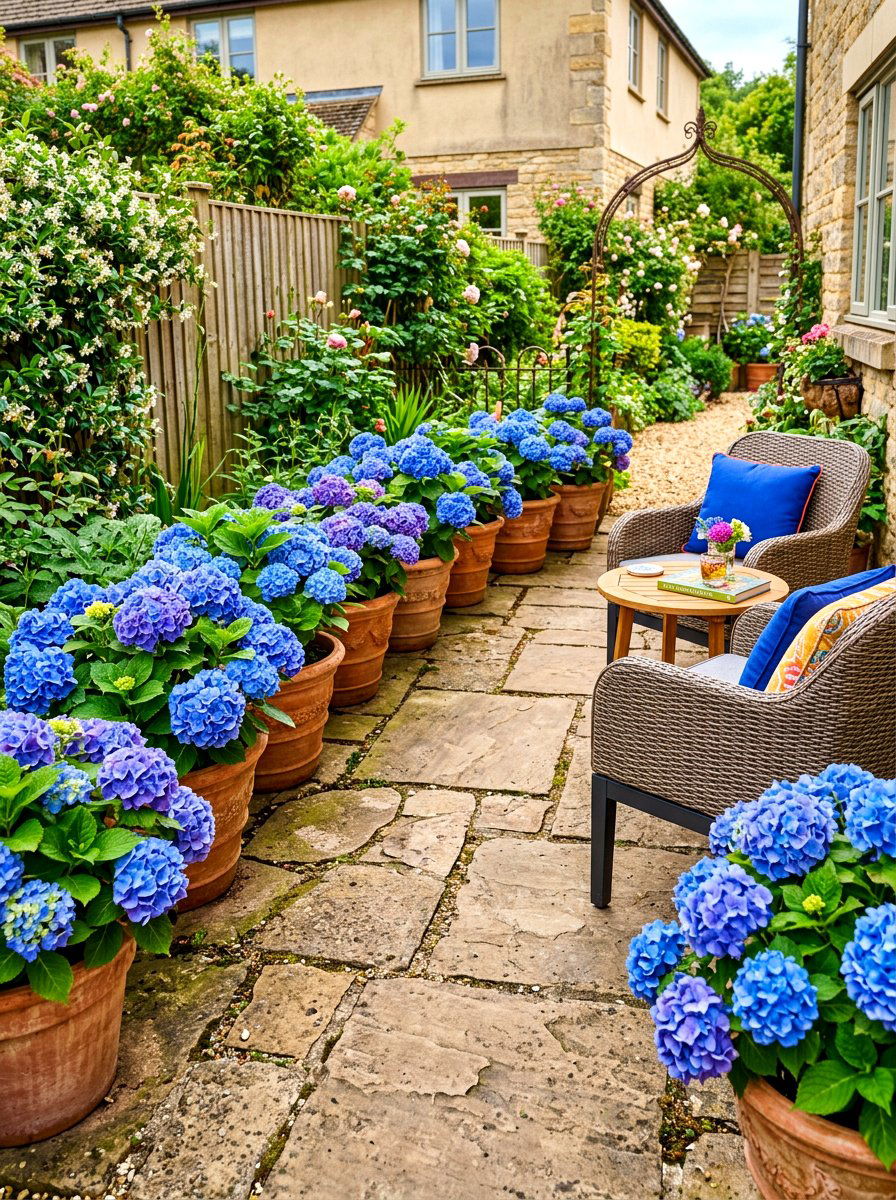
You do not need a large garden bed to enjoy a hydrangea border if you use large, decorative pots on your patio. Lining the edge of your seating area with potted hydrangeas creates a portable and flexible border that can be moved as needed. This is an excellent solution for renters or those with mostly paved outdoor spaces who still want to enjoy lush greenery. Choose large containers to give the roots plenty of room to grow and ensure they stay hydrated during the hot summer days. The elevated blooms bring the color right to eye level, making your patio feel like a cozy, flower-filled outdoor room.
16. Incrediball Hydrangea Modern Border
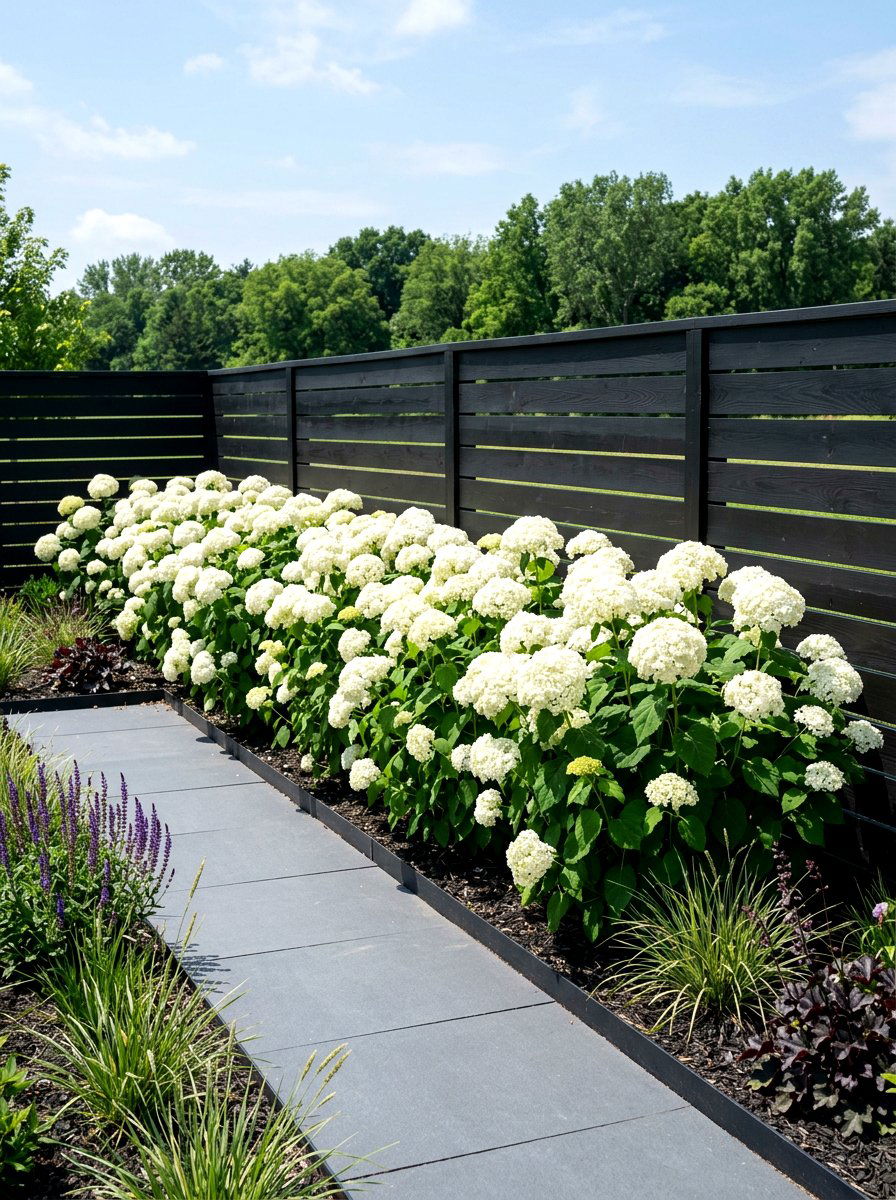
The Incrediball hydrangea is an improved version of the classic Annabelle, featuring even larger blooms and much sturdier stems that do not flop. This makes it a perfect choice for a modern garden border where clean lines and architectural strength are important. These shrubs look spectacular when planted in a straight, geometric row against a dark fence or a contemporary stone wall. The massive white spheres provide a bold, minimalist look that is both simple and incredibly high-impact. This variety is very reliable and can handle a variety of soil types, making it a practical choice for busy homeowners who want a stylish yard.
17. Hydrangea And Ornamental Grass
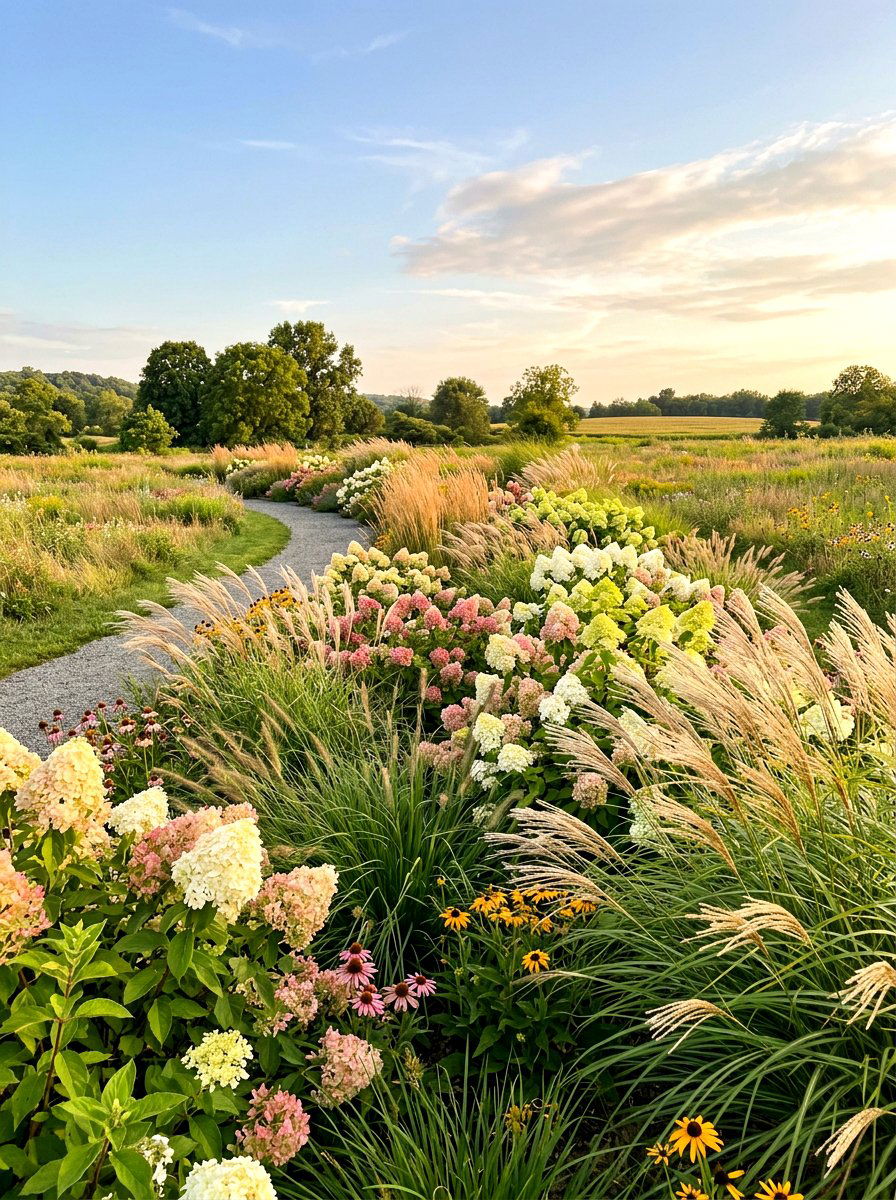
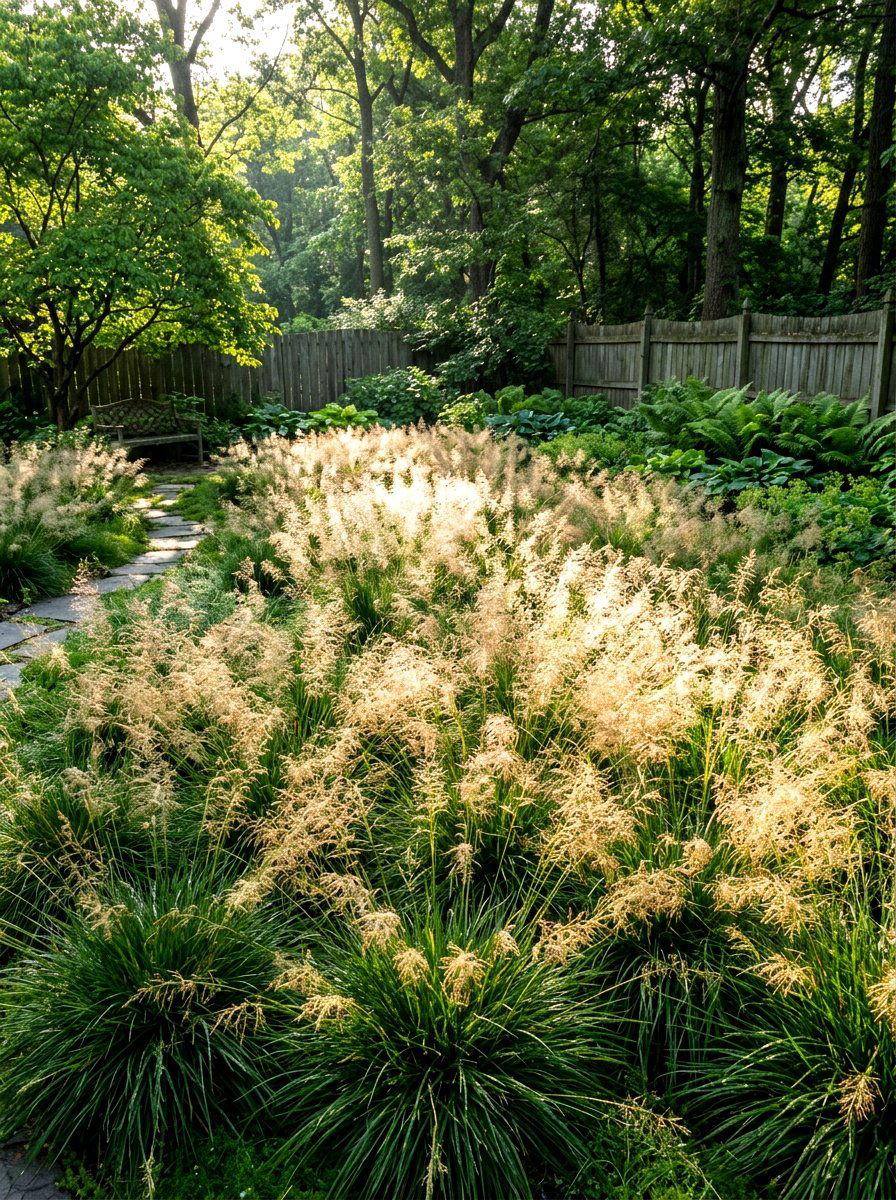
Mixing hydrangeas with ornamental grasses creates a border with incredible movement and a relaxed, natural feel. The stiff, upright structure of the grasses provides a beautiful backdrop for the soft, heavy blooms of the hydrangea shrubs. In the late summer and fall, the seed heads of the grasses add a new layer of texture and interest as the hydrangea flowers begin to fade. This combination is particularly effective in larger landscapes where you want to create a sense of rhythm and flow. The golden tones of the dried grass in winter also look lovely against the architectural shapes of the dormant hydrangea branches.
18. Endless Summer Hydrangea Floral Border
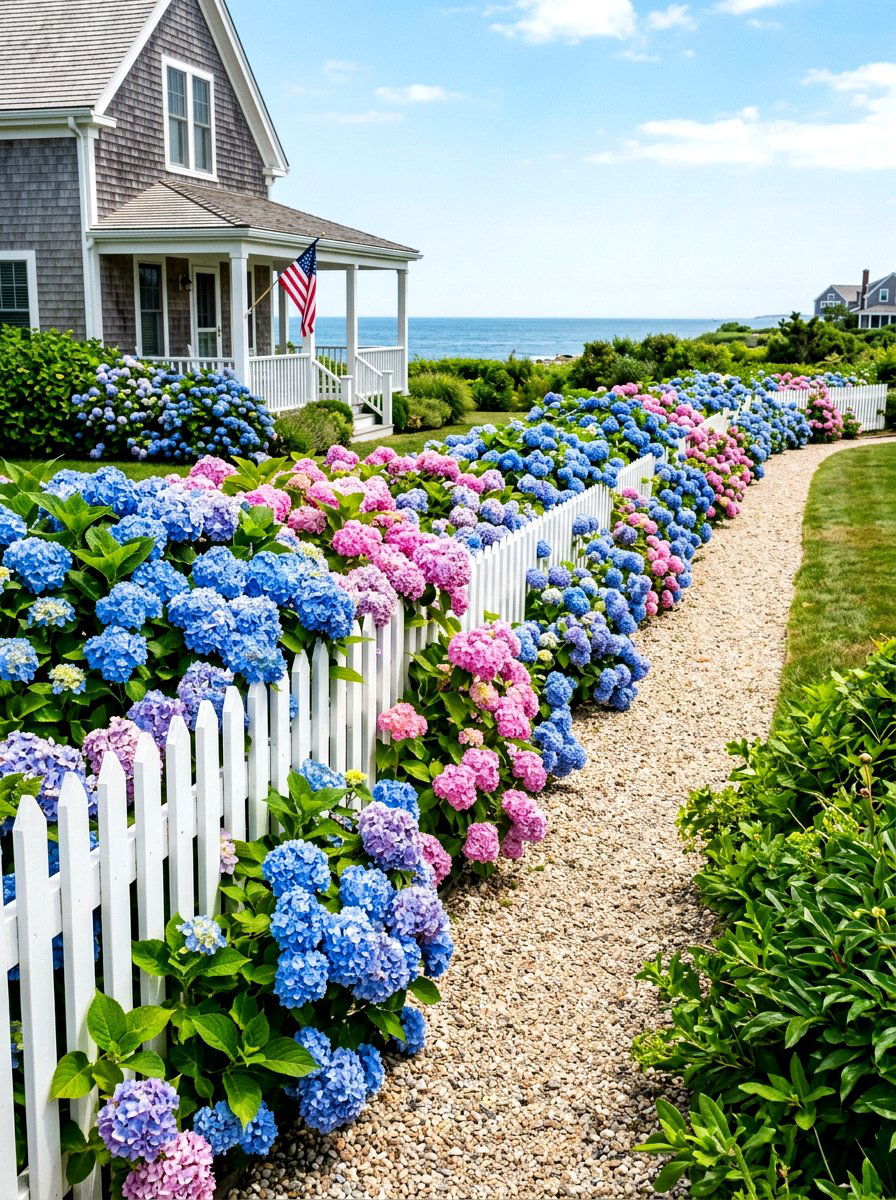
The Endless Summer series revolutionized the garden world by offering hydrangeas that bloom on both old and new wood. This means you get a much longer blooming season, with new flowers appearing throughout the summer and into the fall. Planting these in a long border ensures a consistent and reliable display of color, even if a late spring frost damages the early buds. They are available in both mophead and lacecap varieties, allowing you to choose the specific look that fits your garden style. These are a great investment for anyone who wants a garden that remains vibrant and beautiful for several months.
19. Hydrangea And Salvia Purple Border
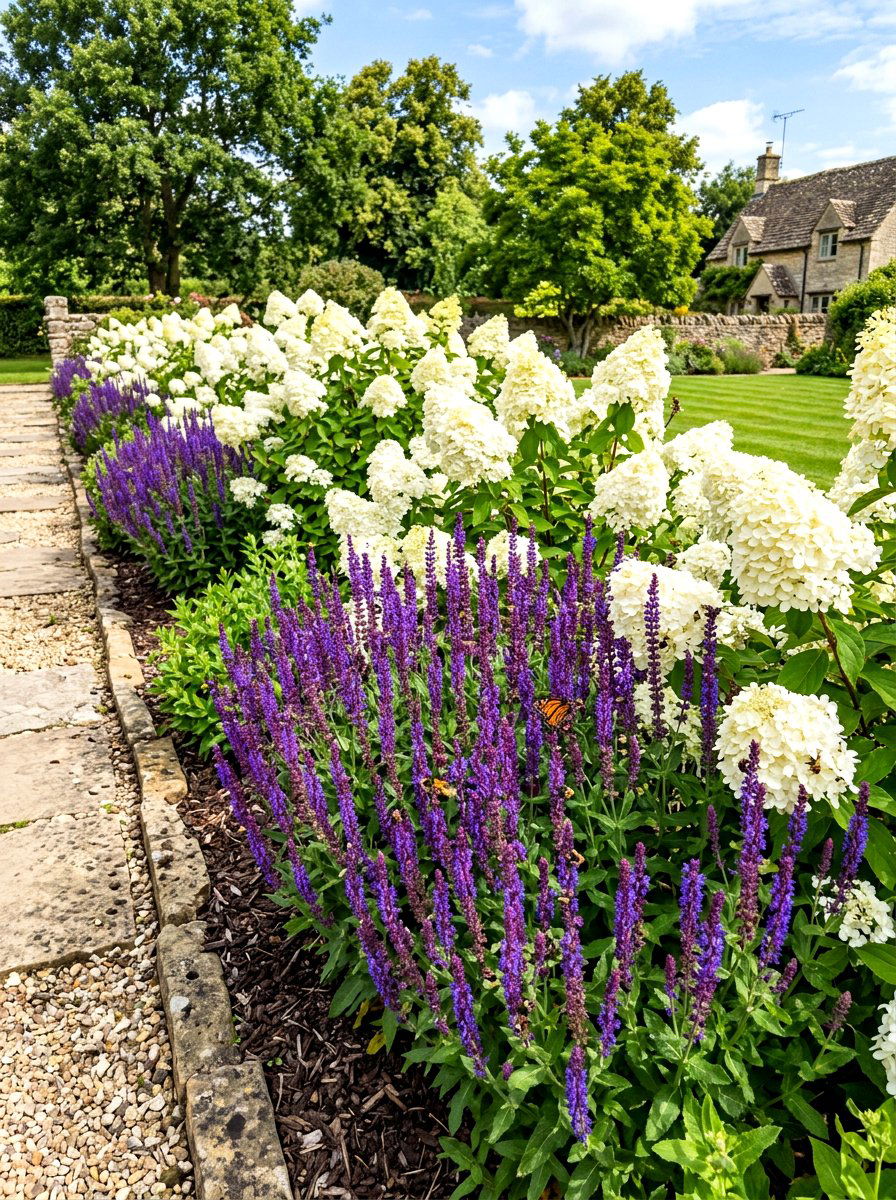
For a high-contrast and pollinator-friendly garden, try a border that combines hydrangeas with vibrant purple salvia. The upright spikes of the salvia provide a sharp, vertical contrast to the rounded, billowy form of the hydrangea shrubs. This combination is a magnet for bees, butterflies, and hummingbirds, bringing your garden to life with activity. Choose a sun-tolerant hydrangea variety to ensure both plants thrive in the same light conditions. The deep purple of the salvia makes the pink or white hydrangea blooms pop, creating a color palette that is both sophisticated and exciting. This pairing is perfect for a lively backyard or a sunny walkway.
20. Climbing Hydrangea Wall
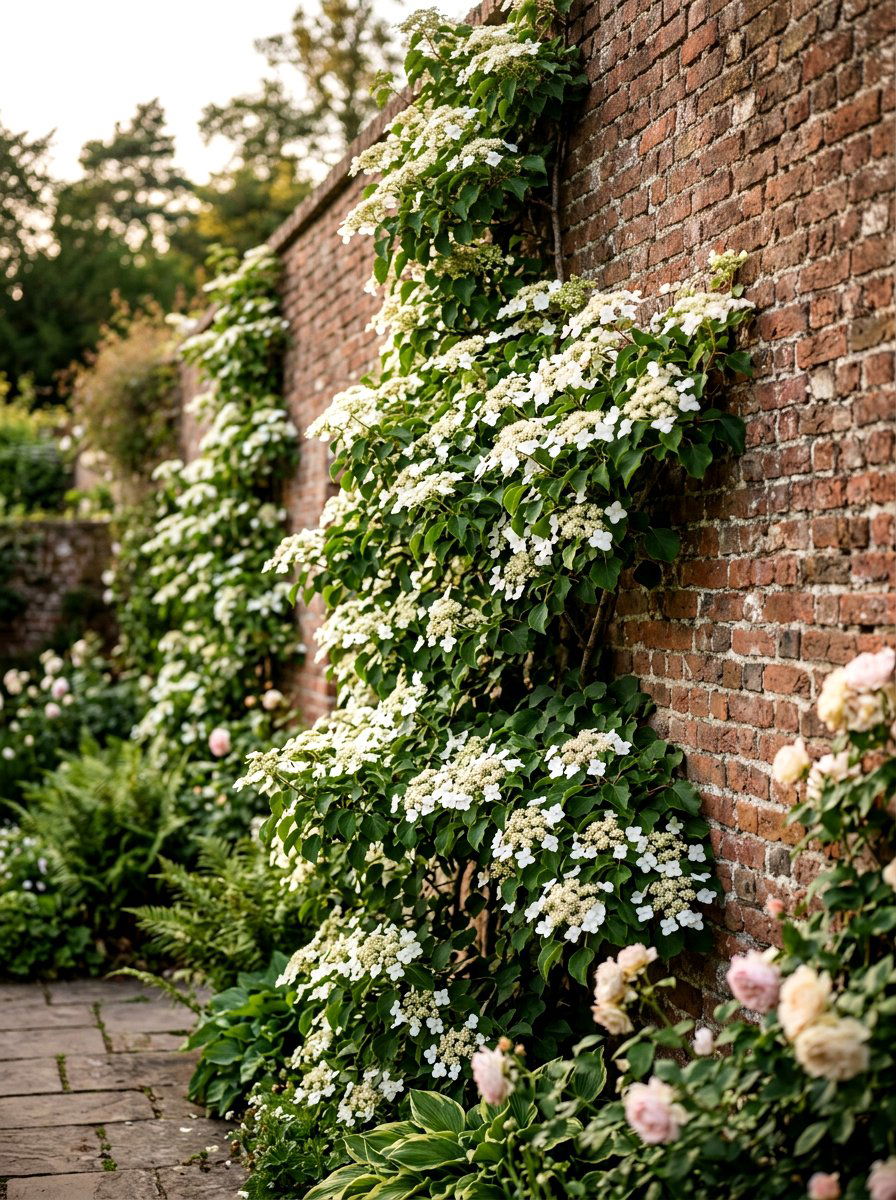
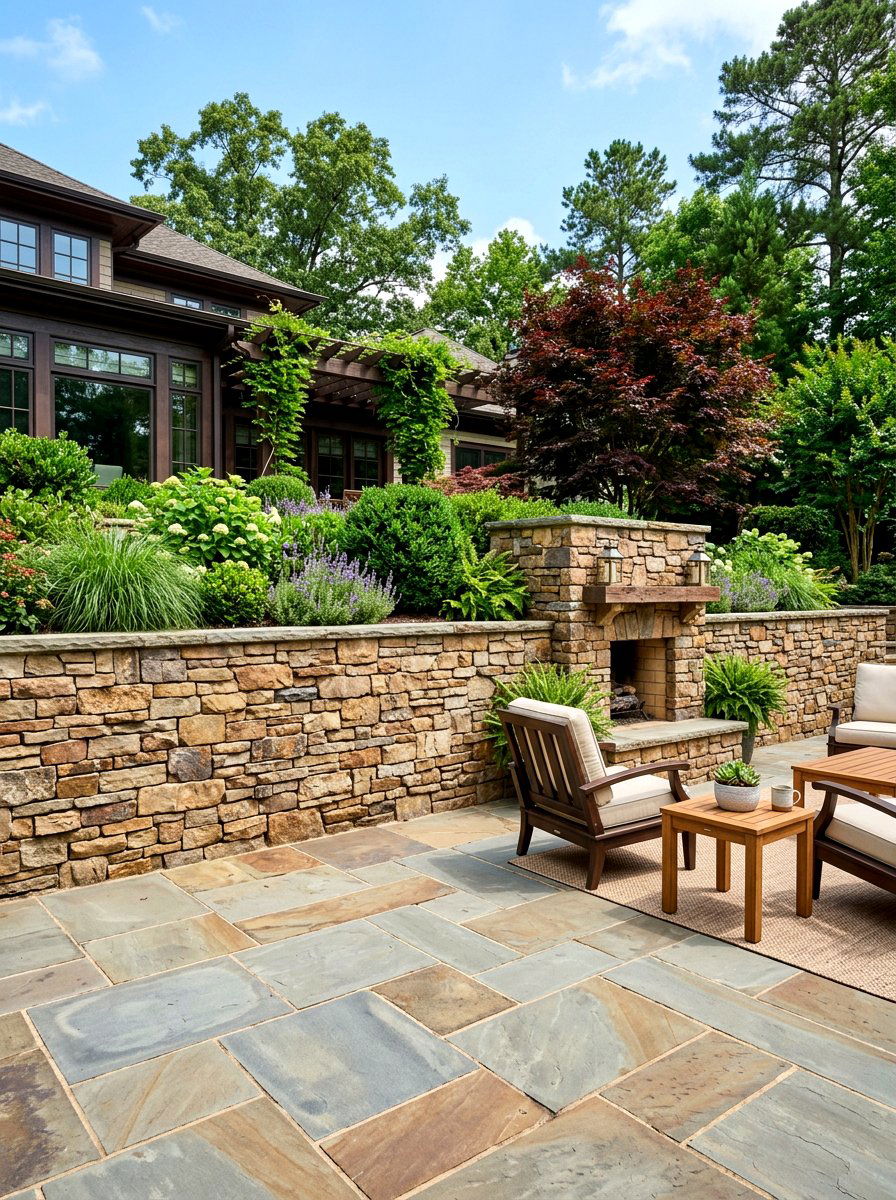
While most hydrangeas are shrubs, the climbing hydrangea is a vigorous vine that can transform a bare wall or fence into a living border. It uses small rootlets to attach itself to surfaces, eventually creating a thick mat of green leaves and delicate white lacecap flowers. This is an excellent way to add height and vertical interest to a narrow garden space where there is no room for wide bushes. It takes a few years to get established, but once it starts growing, it provides a lush and romantic backdrop for the rest of your garden. The peeling bark also offers interesting visual detail during the winter months.
21. PeeGee Hydrangea Tree
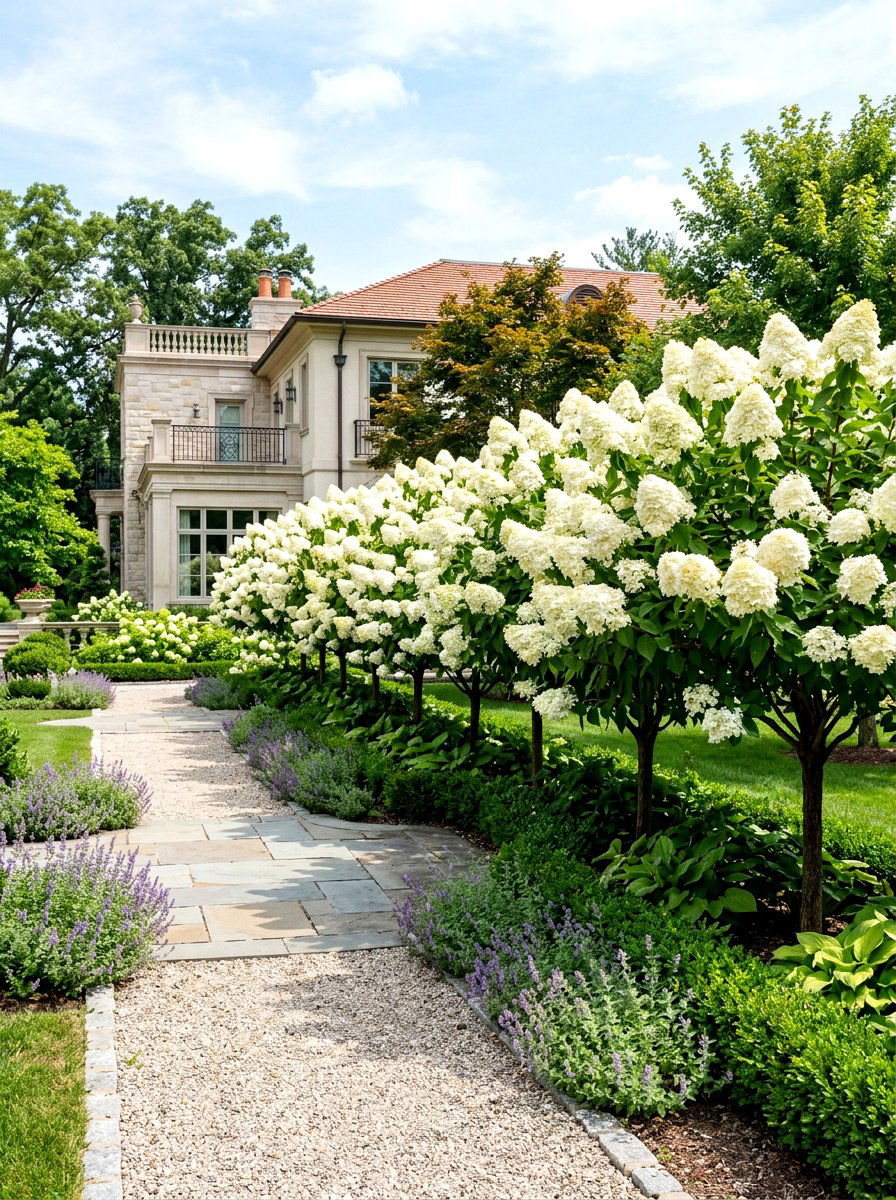
PeeGee hydrangeas can be trained into a small tree form, offering a unique and elevated way to create a garden border. By pruning away the lower branches, you create a clear trunk with a canopy of spectacular cone-shaped flowers on top. This allows you to plant smaller perennials or groundcovers underneath, maximizing the use of your garden space. Using these hydrangea trees as a border along a path or a property line adds a sense of height and drama to the landscape. They are very hardy and can grow quite large, making them a significant architectural element in any backyard or front yard design.
22. Hydrangea And Allium Spring Border
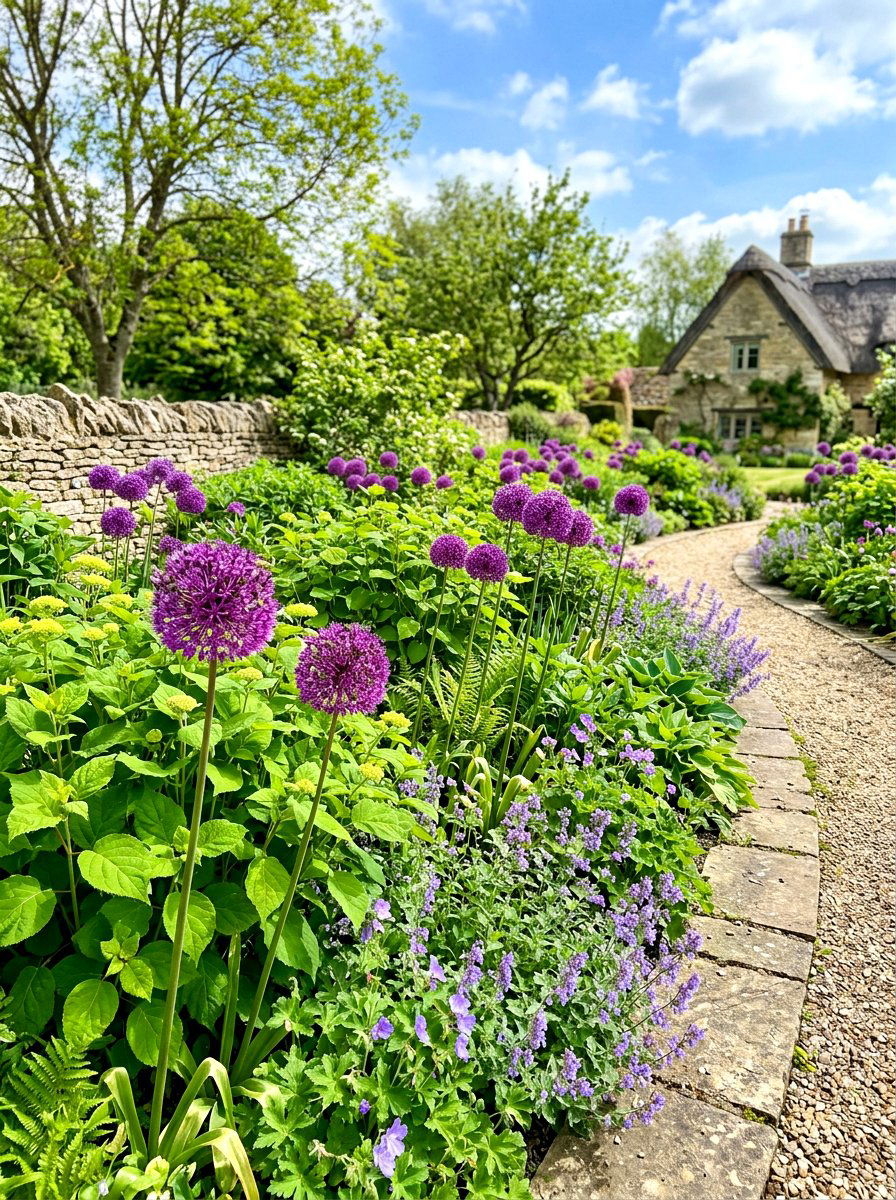
To extend the season of interest in your hydrangea border, consider interplanting with spring-blooming bulbs like alliums. The large, purple globes of the alliums appear in late spring, just as the hydrangea leaves are filling out but before the shrubs begin to bloom. This ensures that your garden border has a focal point even in the early part of the growing season. As the allium foliage starts to wither, the growing hydrangea leaves effectively hide the dying stems, keeping the border looking tidy. This clever layering technique provides a seamless transition of color from the bright days of spring into the lush heat of the summer.
23. Lacecap Hydrangea Delicate Border
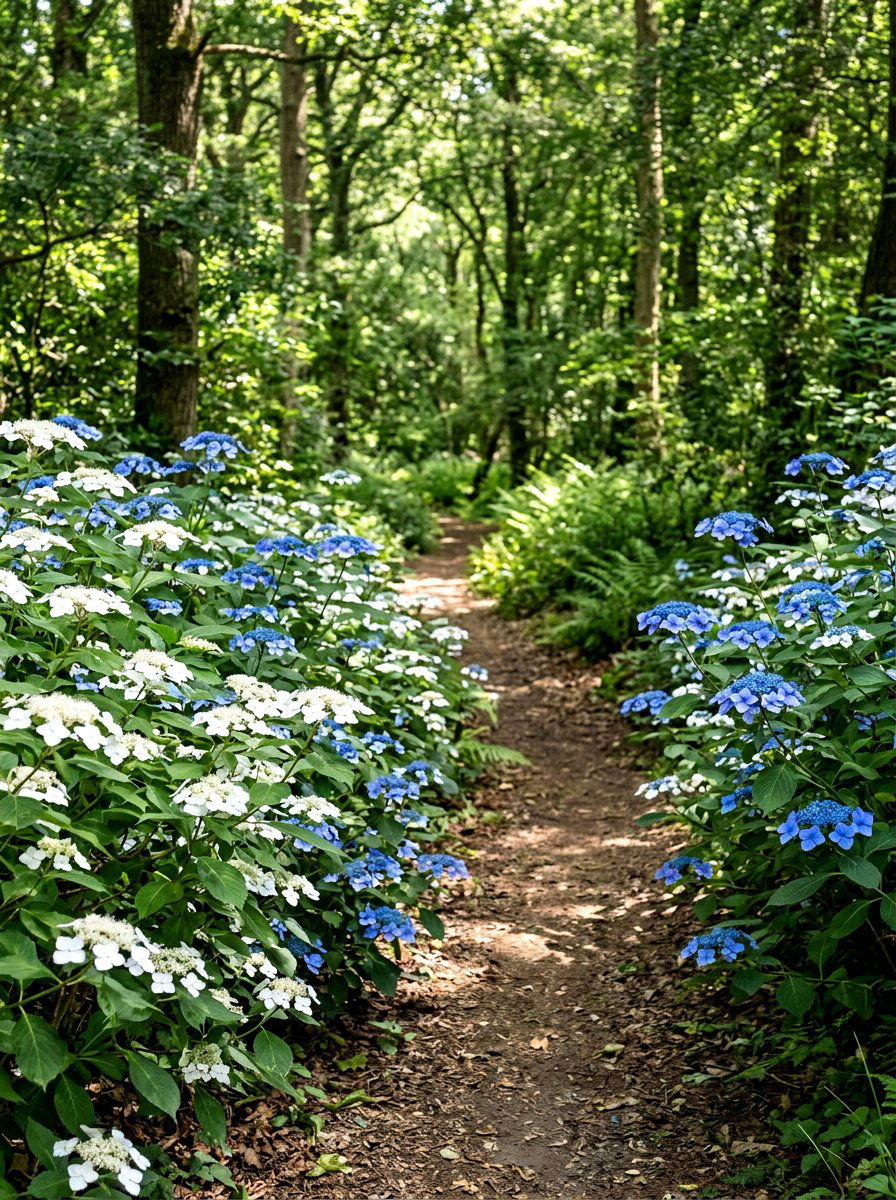
Lacecap hydrangeas offer a more subtle and delicate look compared to the bold, heavy mophead varieties. These flowers feature a center of tiny, fertile buds surrounded by a ring of larger, showy petals, creating a flat and airy appearance. They are a wonderful choice for a border where you want a more natural, refined aesthetic that does not overwhelm the space. Lacecaps are often preferred by pollinators because the fertile centers are easily accessible. Planting them in a row creates a soft, hazy effect that looks beautiful in the dappled light under a large tree or along a shady side of the house.
24. Hydrangea And Daylily Summer Border
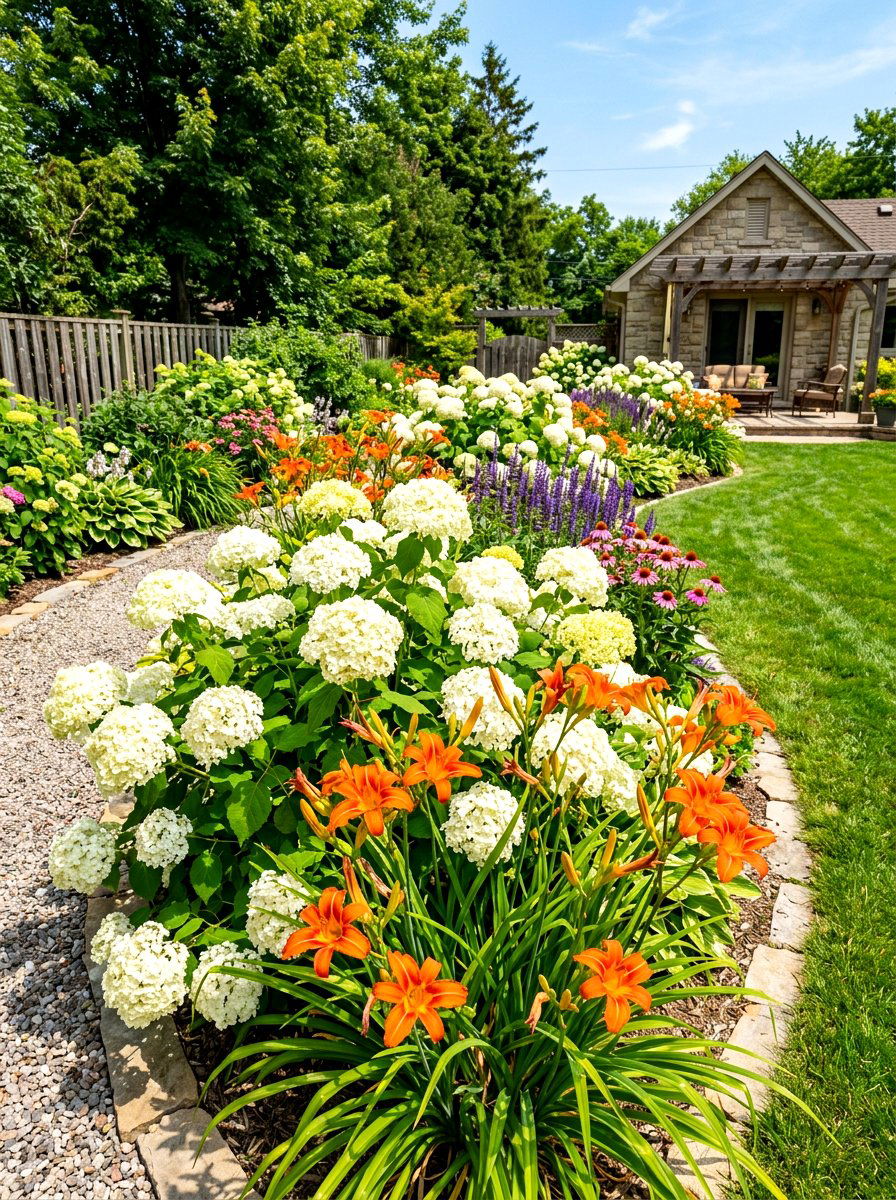
Daylilies are incredibly tough and reliable perennials that pair perfectly with hydrangeas for a vibrant summer border. Both plants bloom during the same period, allowing you to create stunning color combinations. You can pair orange or yellow daylilies with white hydrangeas for a sunny, cheerful look, or use purple daylilies to complement blue blooms. The strappy, grass-like foliage of the daylilies provides a nice textural contrast to the large, rounded hydrangea leaves. This combination is very easy to care for and can handle a variety of soil conditions, making it a great choice for beginner gardeners who want a high-impact floral display.
25. Purple Hydrangea Landscape
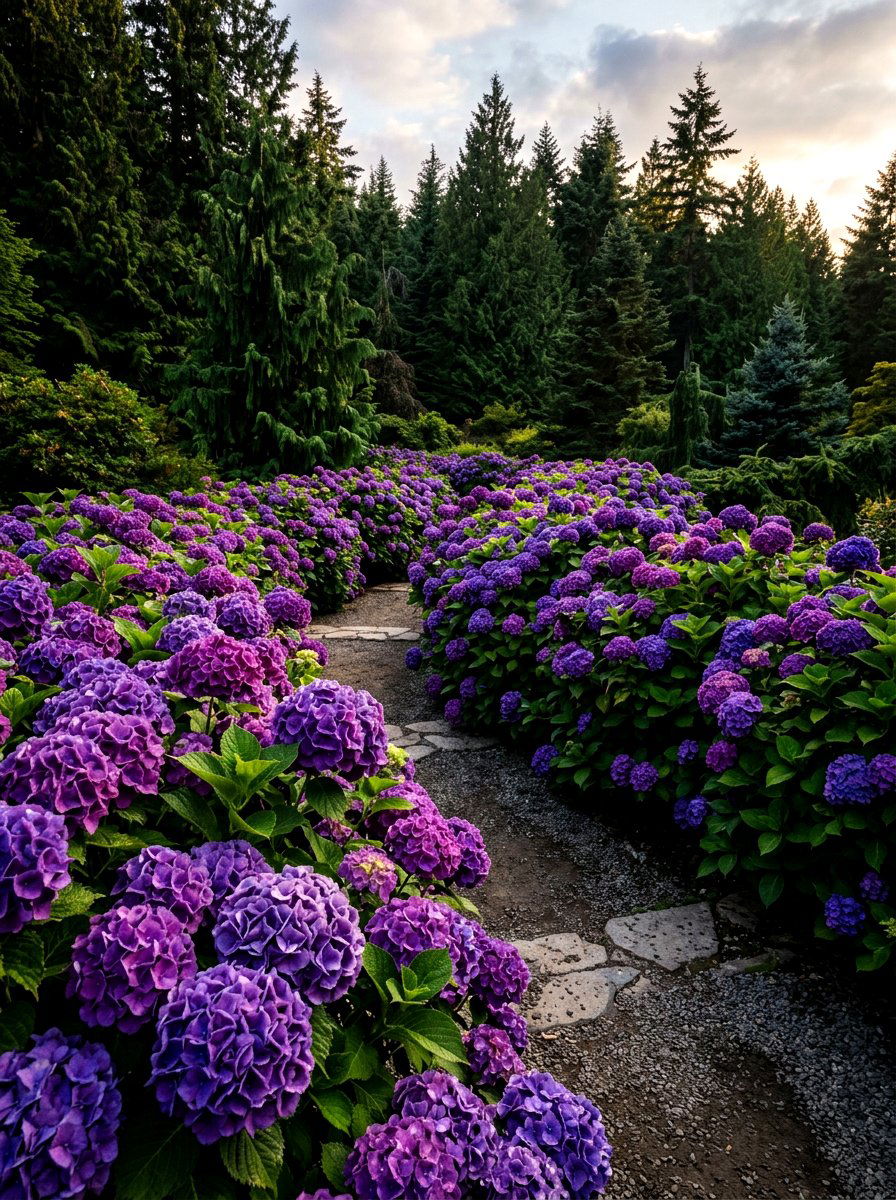
A dedicated border of deep purple hydrangeas creates a sense of luxury and mystery in the garden. This color is achieved in acidic soil and offers a rich, saturated tone that looks particularly beautiful in the late afternoon sun. Purple flowers tend to recede visually, which can make a small garden feel deeper and more expansive. You can enhance the effect by planting them against a dark green backdrop of evergreens or a black-painted fence. This monochromatic approach is very trendy and provides a high-end, designer look that is sure to impress. It is a bold choice that turns a standard garden bed into a work of art.
26. Hydrangea And Peony Lush Border
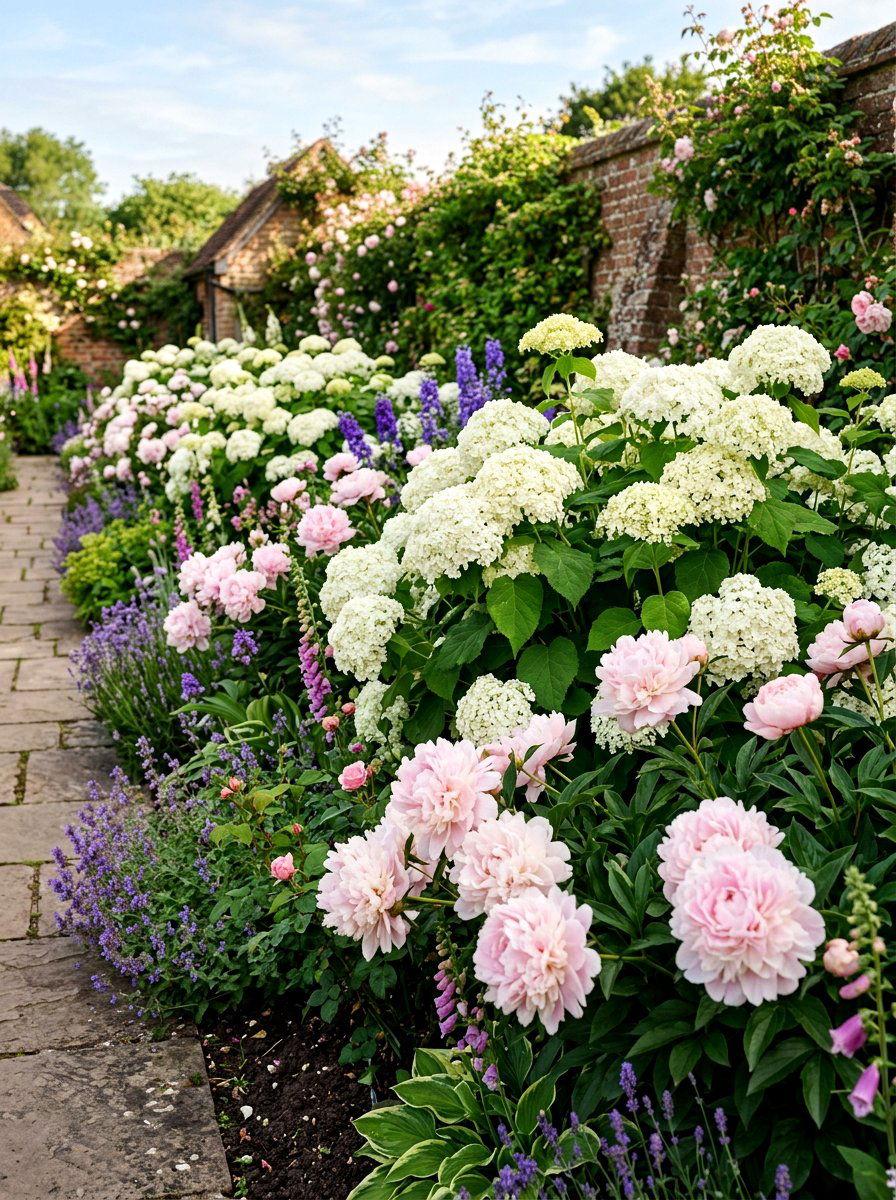
Combining hydrangeas and peonies creates a garden border that is the epitome of floral abundance and romantic beauty. Peonies provide spectacular, fragrant blooms in the late spring and early summer, handing off the floral display to the hydrangeas for the rest of the season. Even after the peonies have finished flowering, their dark green, deeply cut foliage provides a beautiful texture at the base of the hydrangea shrubs. This pairing ensures that your border remains lush and interesting for the entire growing season. Both plants enjoy rich, organic soil and plenty of water, making them very compatible neighbors in a well-maintained flower bed or landscape.
27. Multi Layered Hydrangea Flower Bed
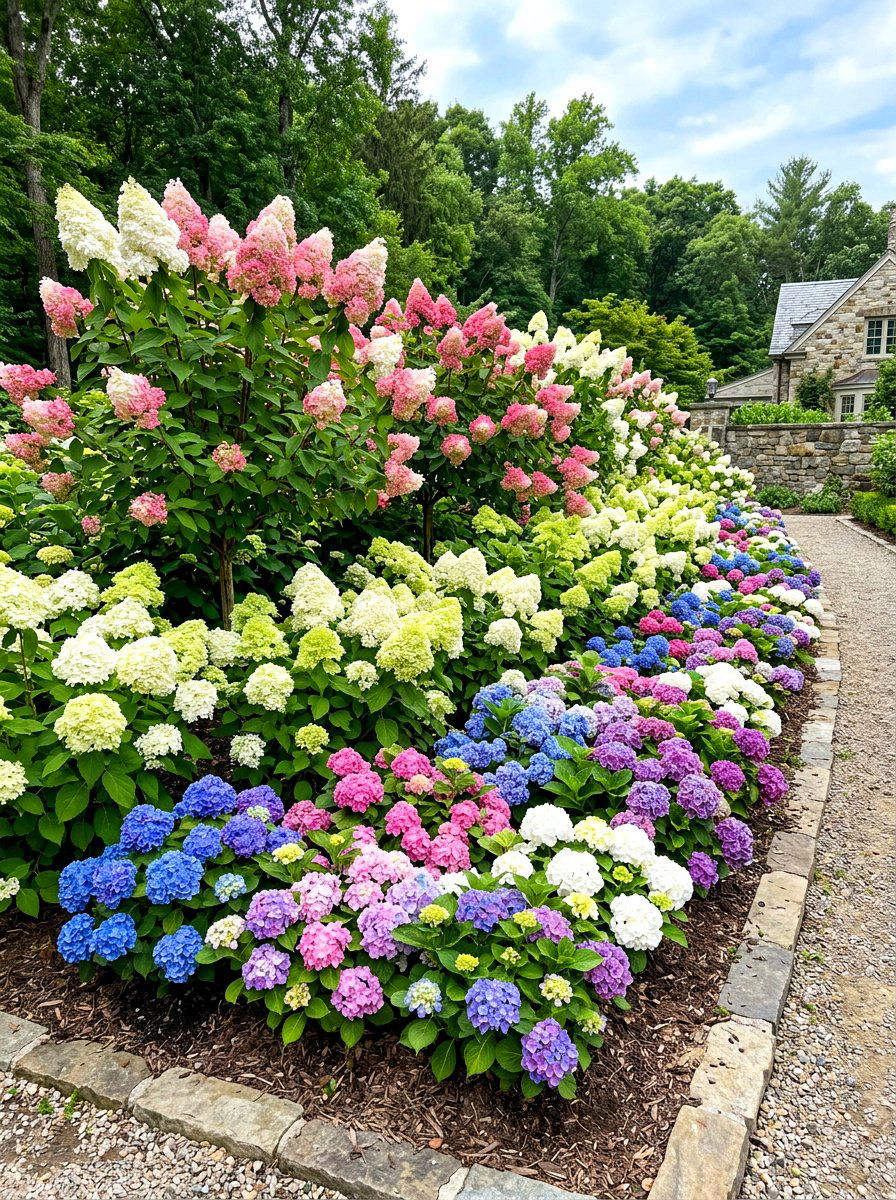
To create a border with maximum depth and interest, try a multi-layered approach using different types of hydrangeas. You can plant tall panicle varieties in the back to provide height and structure, followed by mid-sized mopheads in the center for a burst of color. Finish the border with dwarf varieties or low-growing groundcovers in the front to create a full, cascading effect. This technique ensures that every inch of the garden bed is filled with lush greenery and beautiful flowers. It creates a professional, high-end look that mimics the complexity of a natural woodland edge while remaining organized and intentional for a home garden.
28. Hydrangea And Catmint Blue Border
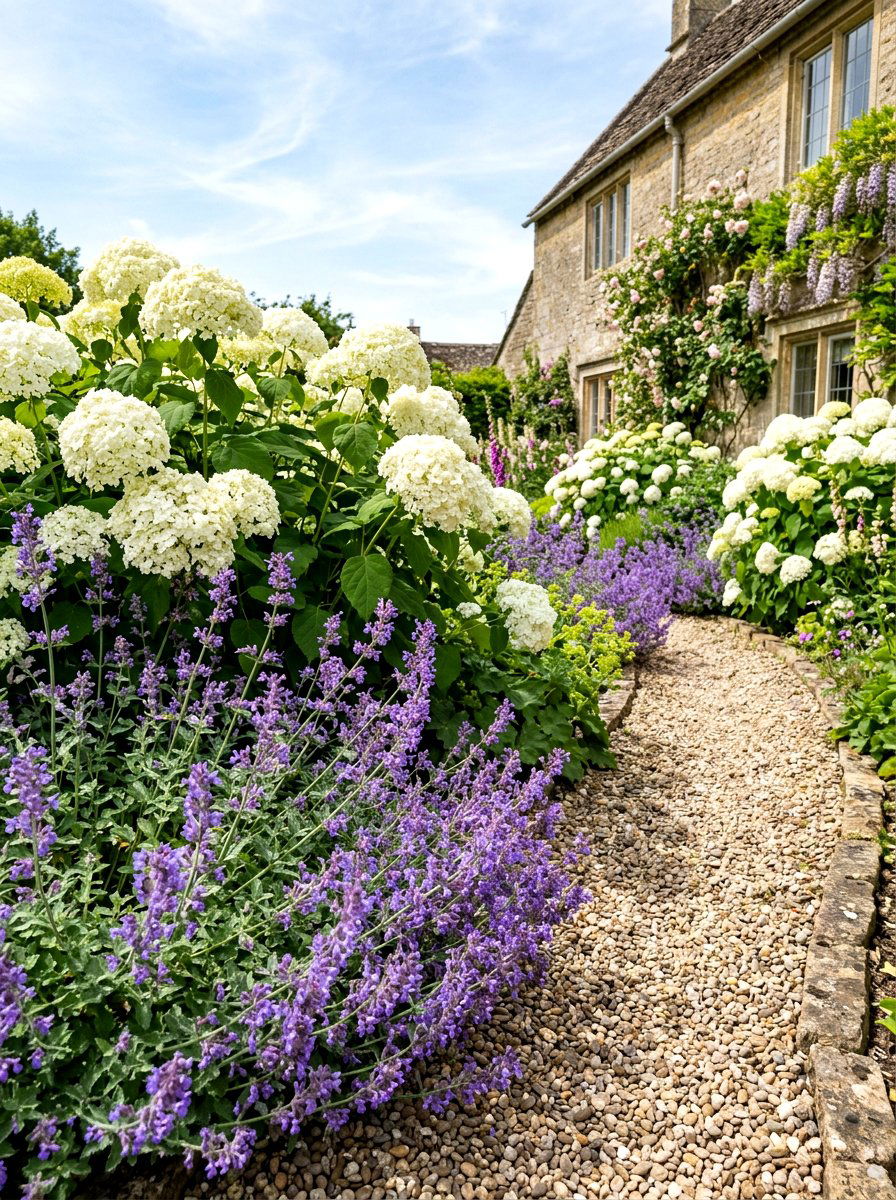
Catmint is a fantastic companion for hydrangeas, offering a cloud of soft lavender-blue flowers and aromatic foliage. It is a very hardy perennial that spills over the edges of a border, softening the lines of a walkway or lawn. When planted at the base of hydrangeas, it creates a beautiful "frothy" look that complements the larger, more solid blooms of the shrubs. This combination is particularly effective for blue or white hydrangea varieties, as it reinforces the cool color palette. Catmint also has the added benefit of being deer-resistant and attracting a wide variety of beneficial insects and pollinators to your garden space.
29. Bobo Hydrangea Small Garden
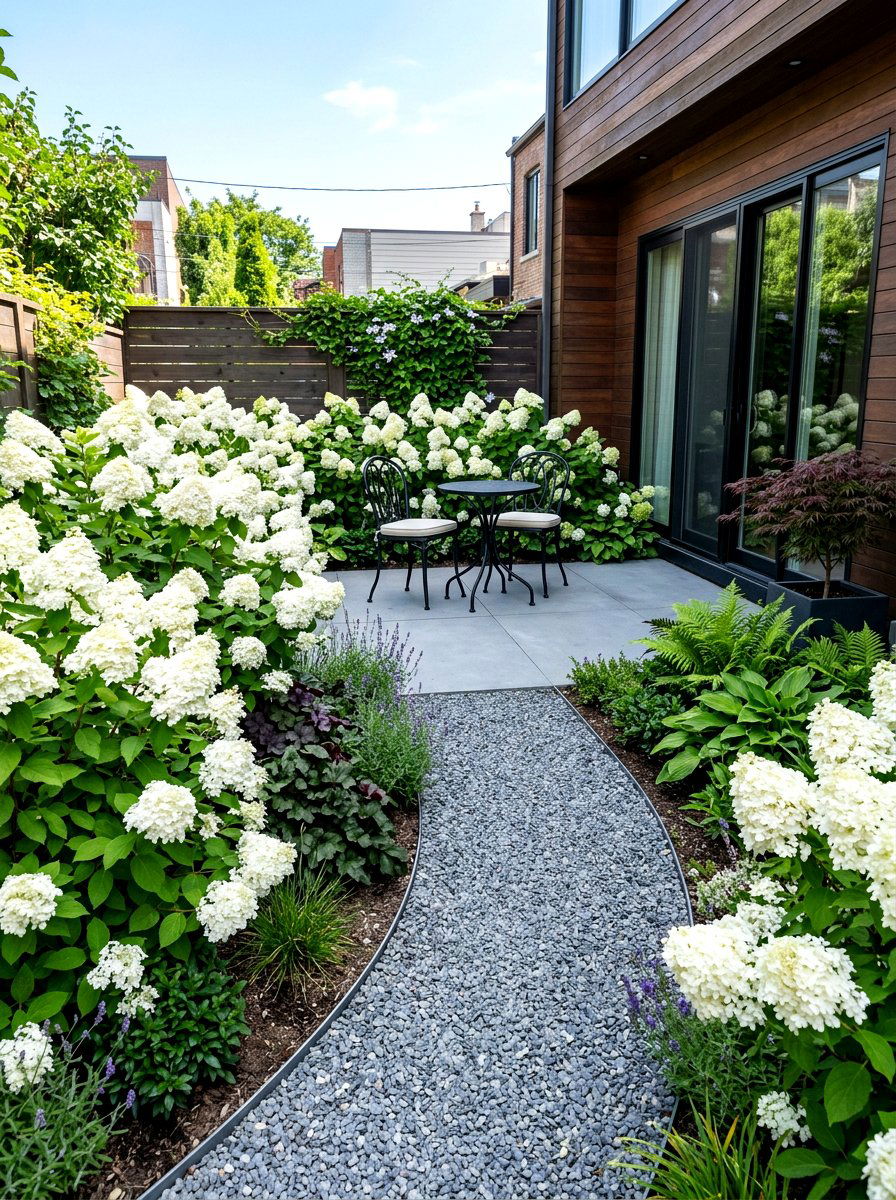
The Bobo hydrangea is a dwarf panicle variety that is beloved for its tiny size and massive amount of white flowers. It stays very compact, making it the perfect choice for a small garden border where you still want the look of a classic hydrangea. These plants literally cover themselves in blooms from top to bottom, creating a solid wall of white that eventually turns pink in the fall. They are extremely easy to grow and can fit into tight spaces where other shrubs would be too large. This variety is a game-changer for urban gardeners or those with small patios who want a big floral impact.
30. Mountain Hydrangea Rock Garden
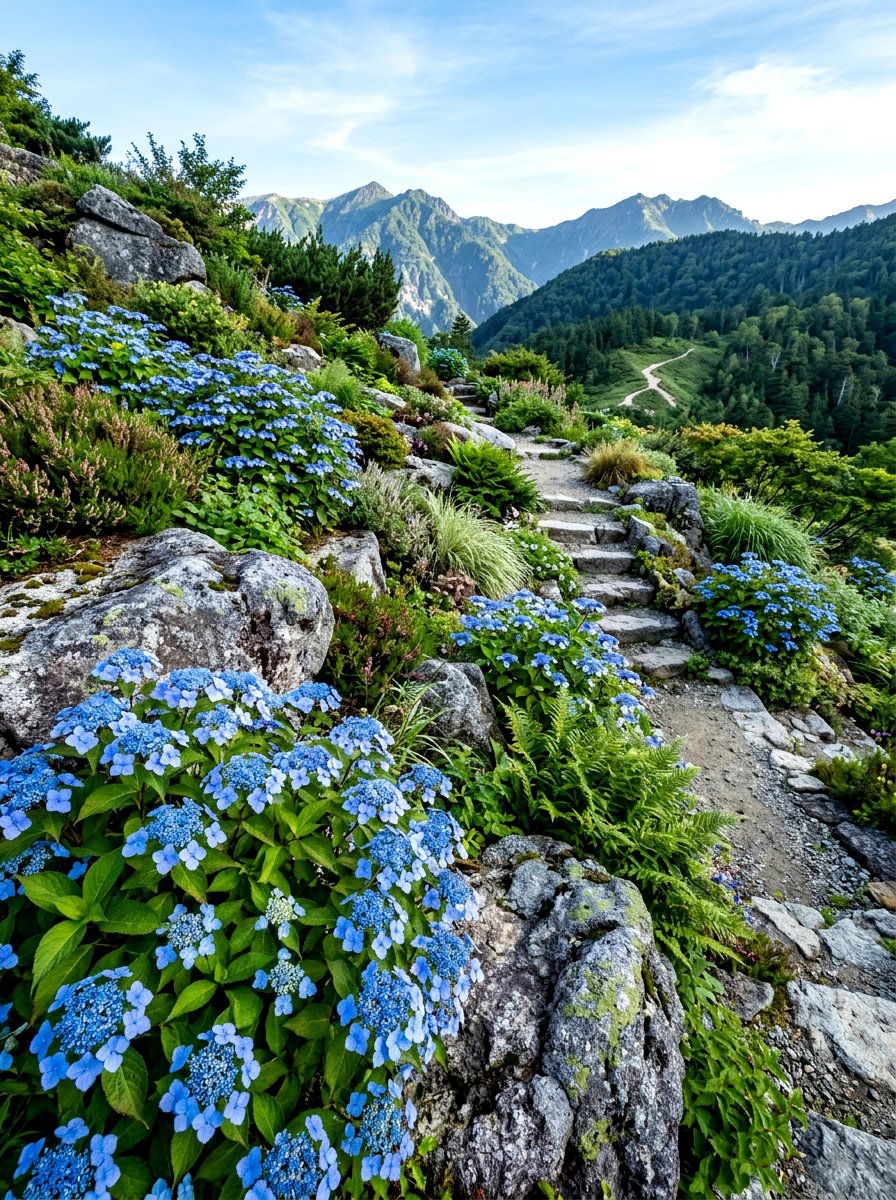
Mountain hydrangeas are smaller and tougher than their bigleaf cousins, making them an excellent choice for a rock garden border. They are native to cold, mountainous regions and can handle more challenging conditions while still producing beautiful lacecap flowers. Their foliage is often more delicate and can even take on dark, burgundy tones in the autumn. Planting them among large stones or on a sloped border adds a touch of rugged elegance to your landscape. They provide a unique, textured look that feels very different from the typical suburban garden, offering a more adventurous and naturalistic approach to hydrangea landscaping in a residential setting.
Conclusion:
Designing a hydrangea garden border is one of the most rewarding projects you can undertake to enhance your home's outdoor beauty. These incredible shrubs offer a variety of shapes, sizes, and colors that can adapt to almost any architectural style or personal preference. By carefully selecting the right varieties and companion plants, you can create a landscape that provides visual interest from early spring through the late fall months. Whether you choose the massive blooms of the Annabelle or the delicate charm of a lacecap, your garden will benefit from their lush presence. Start planning your hydrangea border today to enjoy a lifetime of spectacular summer flowers.

Related posts: