Creating a vibrant summer annual border is the most effective way to breathe immediate life into your outdoor landscape. These seasonal plantings provide an unparalleled explosion of color that can transform a standard lawn into a professionally designed sanctuary. Unlike perennials that may only bloom for a short window, annuals are the workhorses of the garden, often blooming from late spring until the first frost. This longevity makes them the perfect choice for homeowners looking to maximize their curb appeal throughout the warmest months of the year. Planning a successful border involves understanding light requirements, soil health, and how different growth habits complement one another in a cohesive space.
1. Full Sun Flower Border
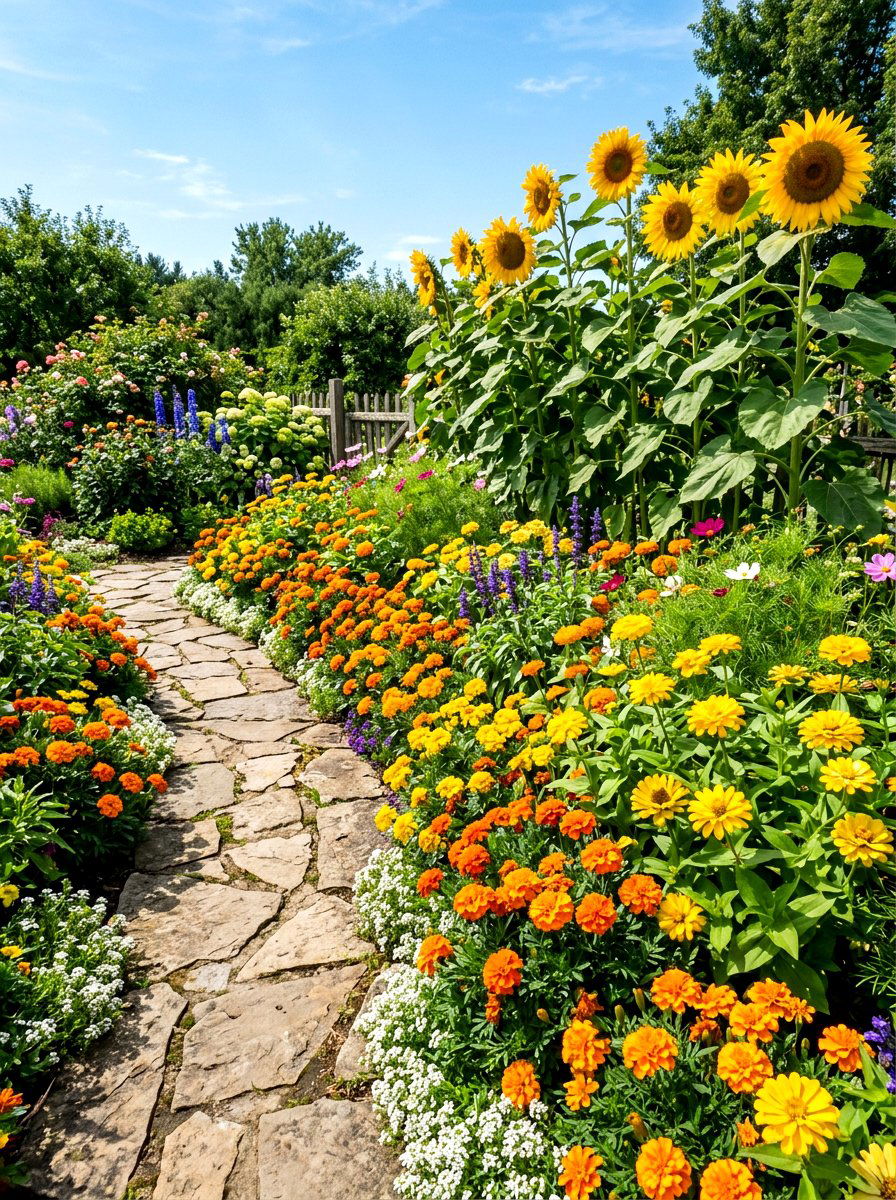
For areas of your yard that receive at least six hours of direct sunlight, a high-impact border filled with heat-loving annuals is essential. These spaces often thrive with a mixture of marigolds, zinnias, and petunias, which can handle the intense afternoon rays without wilting. Incorporating silver-toned foliage like dusty miller can help reflect light and provide a cooling visual contrast to the saturated reds and yellows. To keep these sun-drenched beds looking their best, consistent watering and deadheading are necessary tasks that encourage continuous bloom production. A well-maintained sunny border creates a welcoming and energetic atmosphere that defines the perimeter of your property with cheerful, long-lasting color.
2. Shade Garden Flower Bed
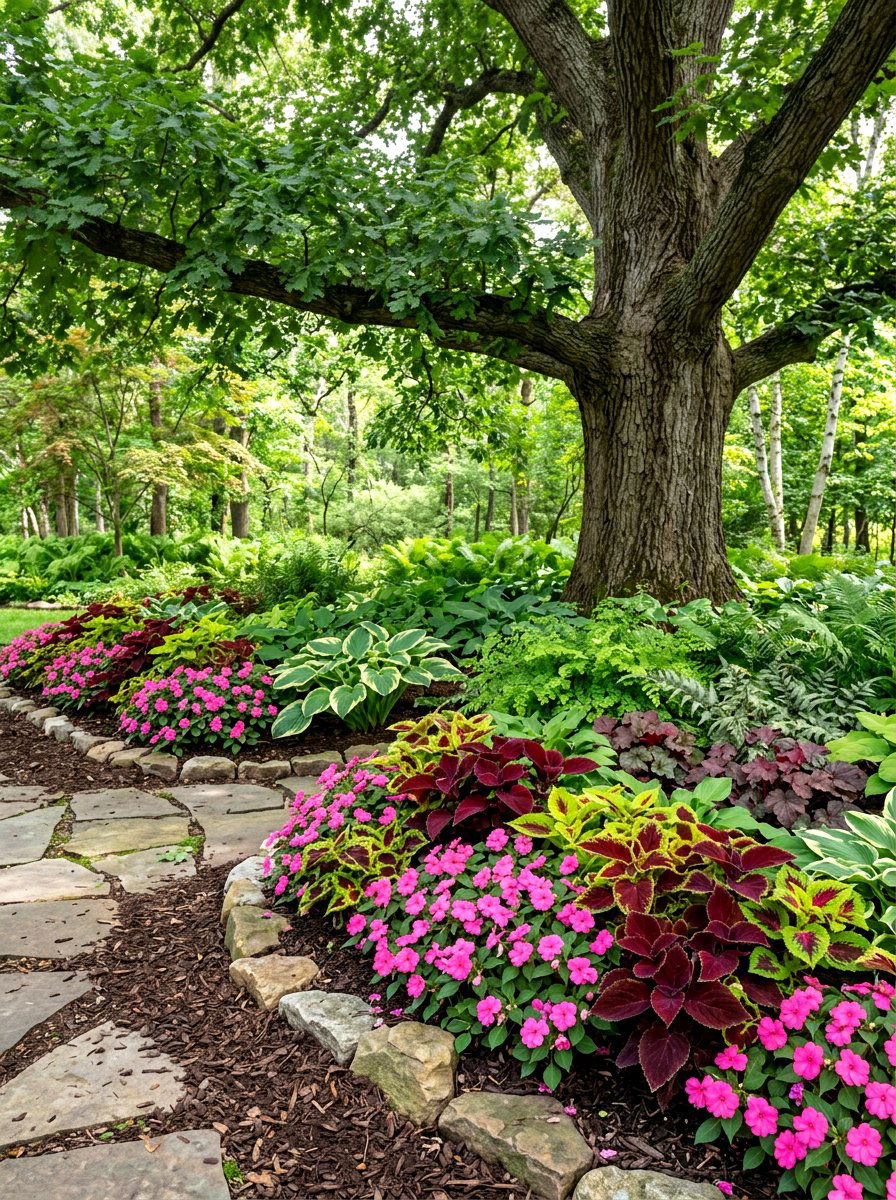
Shady corners of the garden do not have to remain dark or boring when you utilize colorful annuals designed for low-light conditions. Impatiens and begonias are classic choices for these areas because they produce abundant flowers even when tucked under a dense tree canopy. You can enhance the visual interest by adding coleus, which offers stunning leaf patterns in shades of lime green, burgundy, and deep pink. Using light-colored flowers like white or pale pink is a clever design trick to brighten up the shadows and make the space feel larger. A lush shade border provides a cool retreat during the hottest days of summer, offering a serene and sophisticated look.
3. Low Maintenance Edging Plants
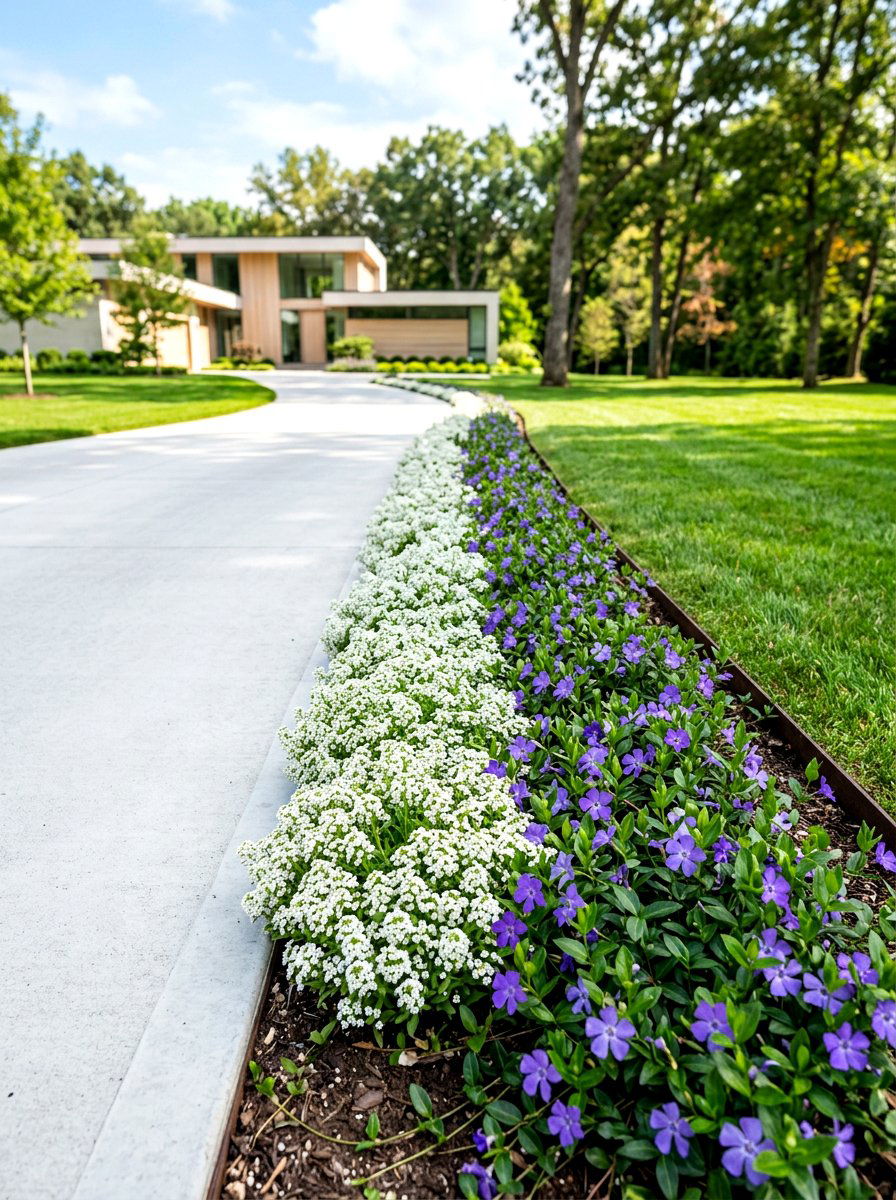
Busy homeowners often prefer a summer border that looks beautiful without requiring constant attention or expert gardening skills. Choosing hardy annuals like sweet alyssum or vinca allows you to create a neat edge that suppresses weeds and stays compact. These plants are generally resistant to common pests and can tolerate occasional dry spells once they have established their root systems. Grouping these low-fuss varieties in large drifts creates a modern and clean aesthetic that complements any home style from traditional to contemporary. By focusing on reliable species, you spend less time working in the dirt and more time enjoying the lush beauty of your colorful outdoor living area.
4. Tall Flower Garden Backdrop
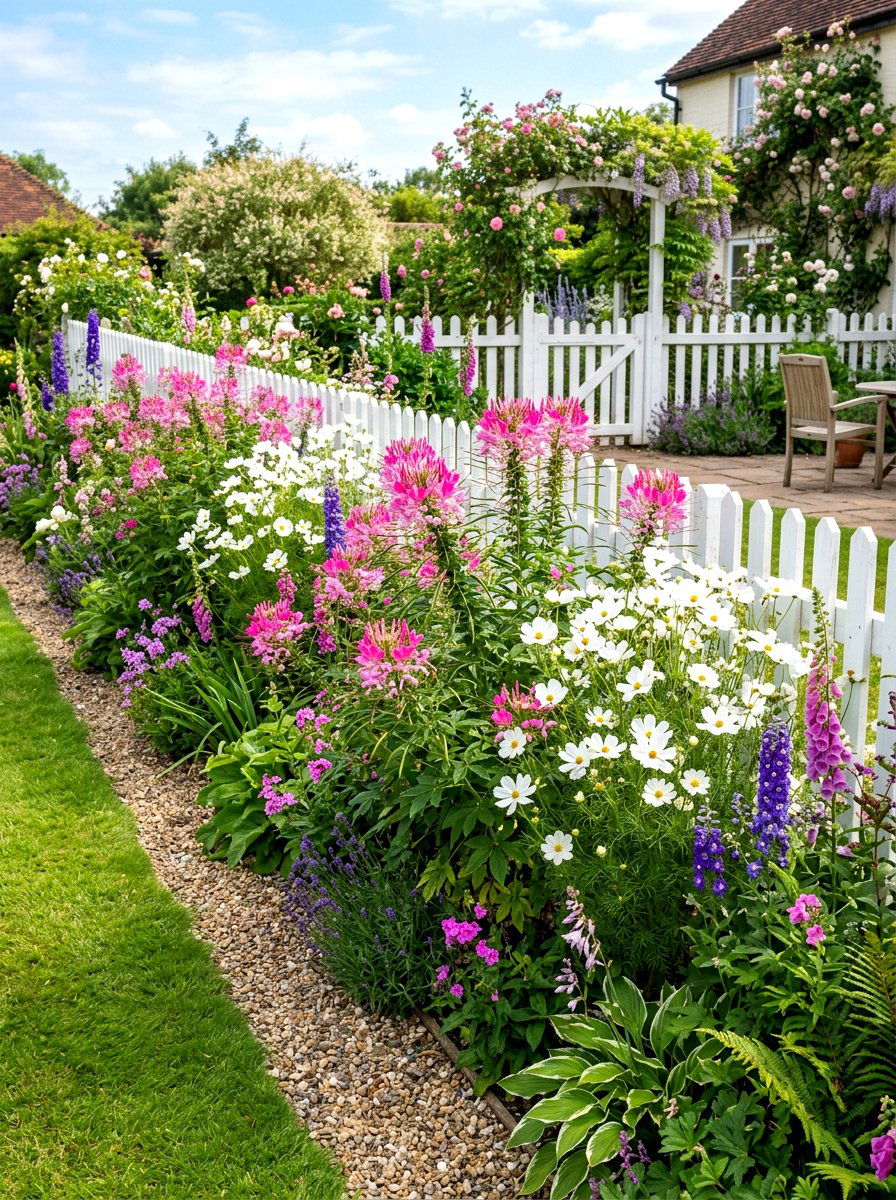
Creating height at the back of a garden bed is a fundamental design principle that adds depth and drama to your landscape. Tall annuals such as sunflowers, cleome, and cosmos serve as the perfect living wall to hide fences or provide privacy from neighbors. These soaring plants also provide a vertical element that draws the eye upward, making a small garden feel much more expansive. When planting a tall backdrop, it is important to provide adequate support or staking for species that might lean during summer storms. This structural layer provides a beautiful green and flowering frame for the shorter, more delicate blooms positioned in the foreground.
5. Cottage Style Flower Border
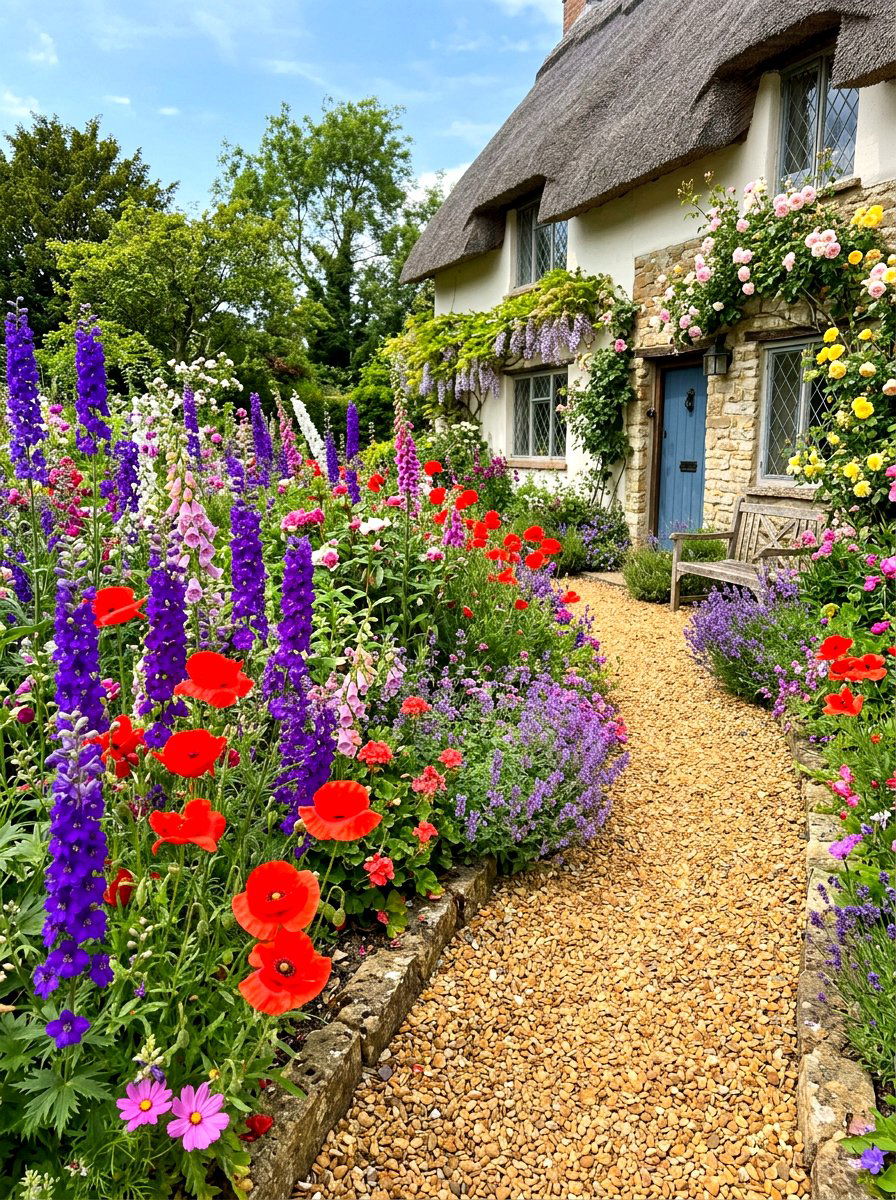
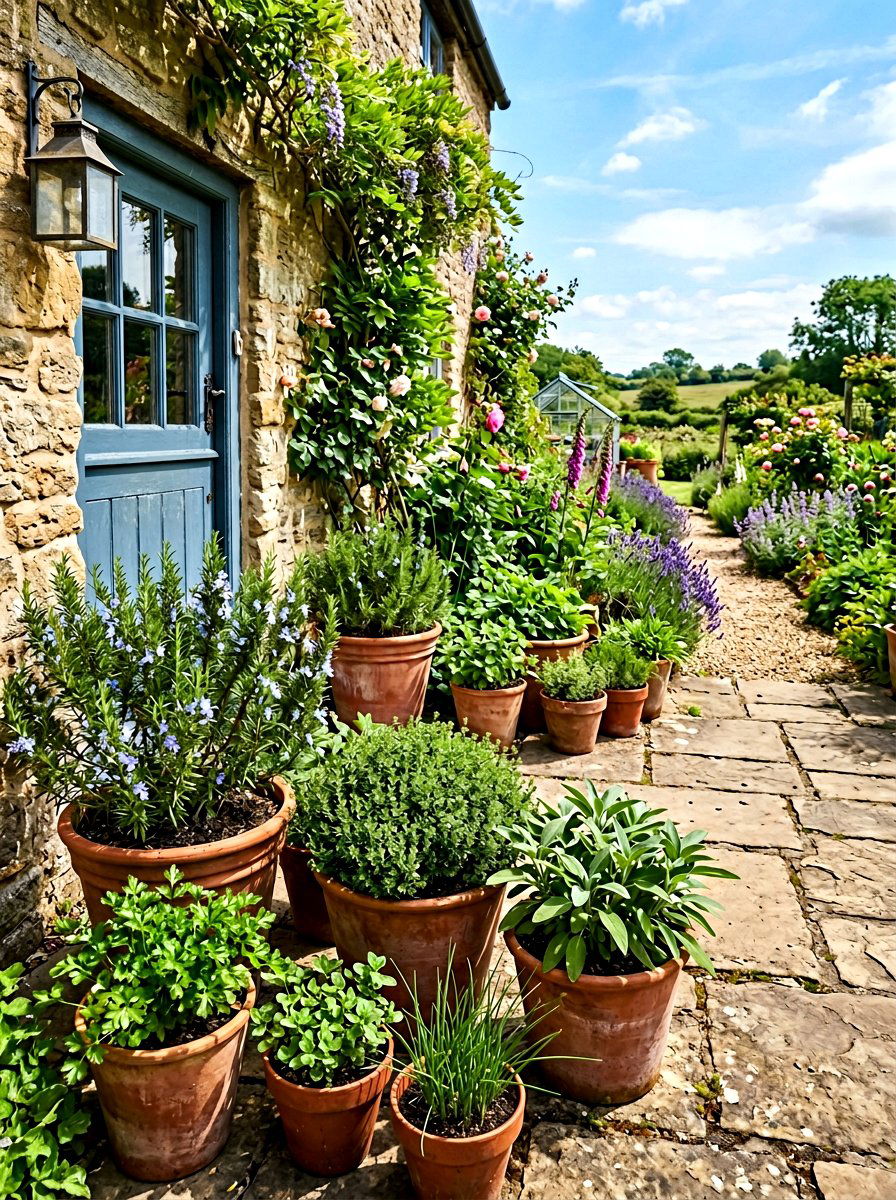
The charm of a traditional cottage garden lies in its intentional lack of rigid structure and its abundance of mixed flowering plants. You can achieve this look by blending various annuals like snapdragons, larkspur, and poppies in a dense, multi-layered arrangement. This style celebrates a romantic and whimsical atmosphere where colors bleed into one another and plants spill over the walkway edges. Incorporating a few self-seeding varieties ensures that your garden will have a natural and evolving feel as new sprouts appear in unexpected places. A cottage-style border is perfect for creating a cozy, inviting environment that attracts local birds and adds a sense of history.
6. White And Green Flower Garden
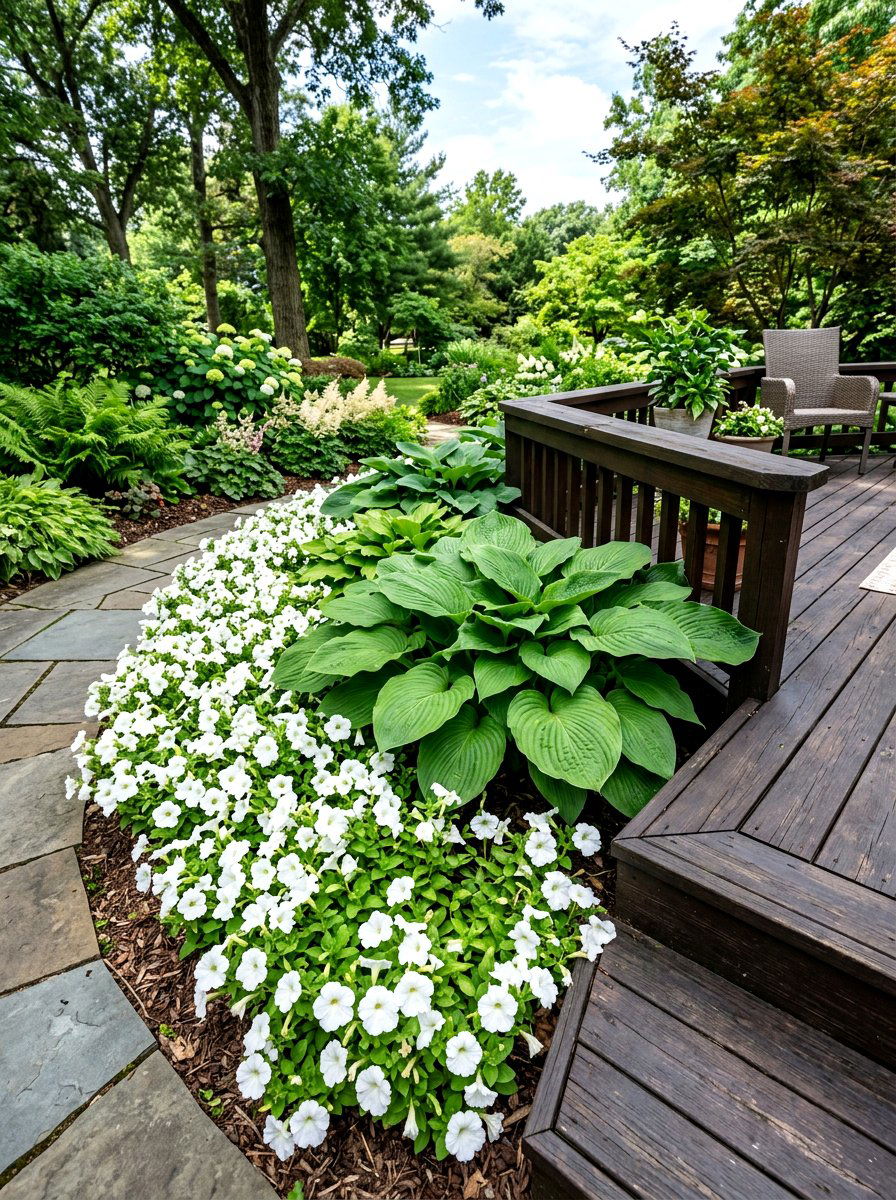
A monochromatic palette focused on crisp white flowers and lush green foliage creates a cooling and elegant effect in the summer heat. Using white petunias, geraniums, and bacopa against a background of dark green hostas or ferns produces a sophisticated look that shines at night. These "moon gardens" are especially popular near patios or outdoor dining areas where the pale blooms reflect the moonlight beautifully. The simplicity of a two-tone color scheme makes the entire garden feel more organized and peaceful compared to multi-colored beds. This clean aesthetic works exceptionally well for modern homes or formal landscapes that require a high-end, polished appearance.
7. Tropical Leaf Flower Border
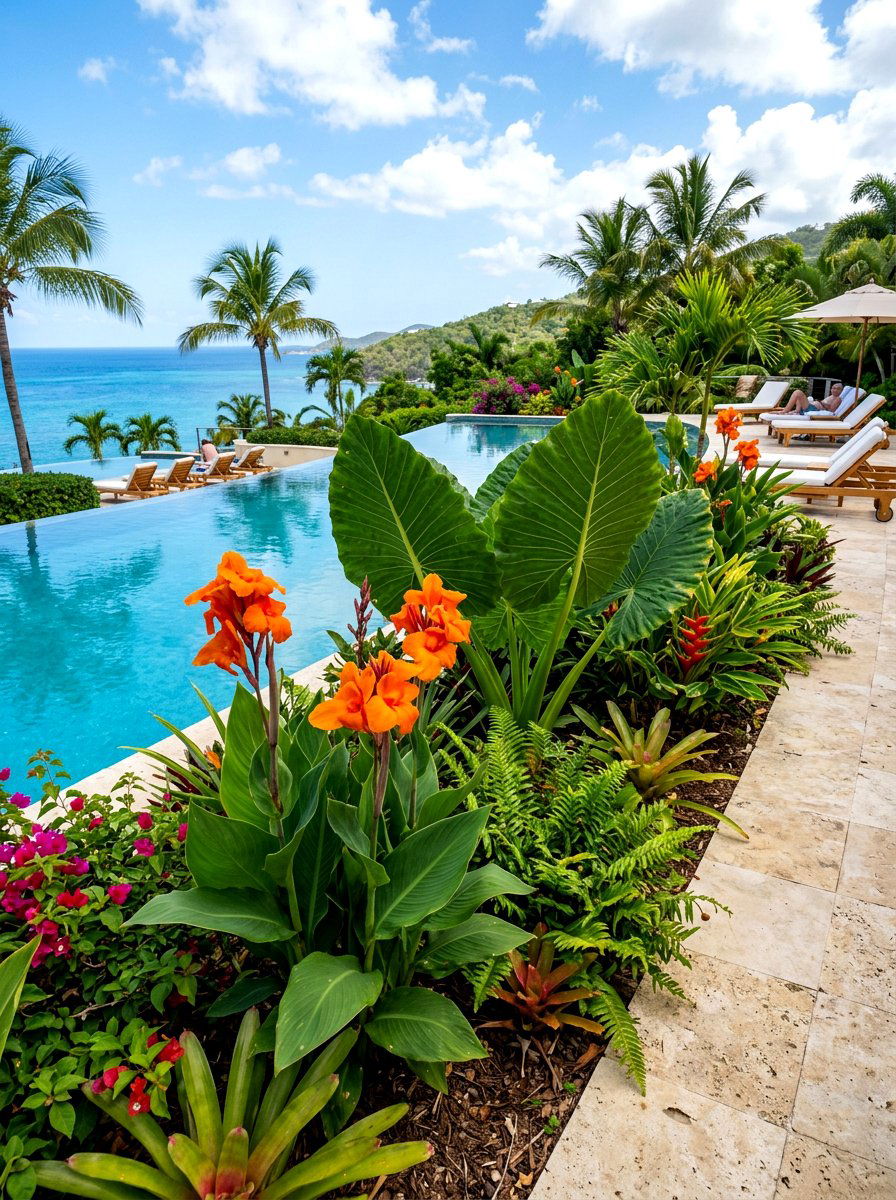
Bringing a touch of the tropics to your backyard is easy when you incorporate annuals with oversized, bold foliage and exotic blooms. Canna lilies and elephant ears provide an immediate architectural presence with their massive leaves and striking heights in the garden center. Complement these giants with the bright, neon flowers of lantana or hibiscus to complete the island-inspired theme near your pool or deck. The heavy textures and saturated colors of tropical plants create a vacation-like atmosphere that feels luxurious and adventurous. Because many of these plants love heat and humidity, they will thrive during the peak of summer when other species might struggle.
8. Pollinator Friendly Flower Bed
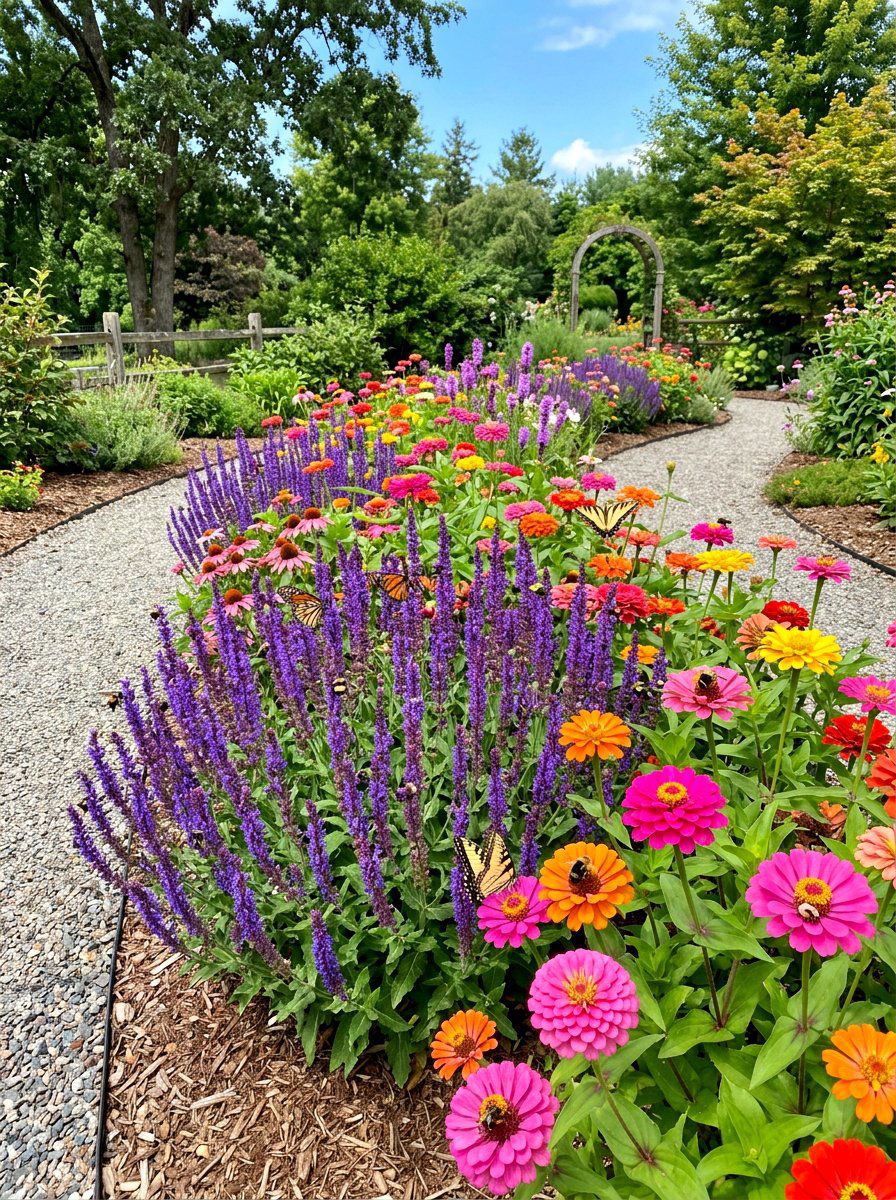
Supporting local wildlife is a rewarding goal that you can achieve by selecting annuals specifically known for attracting bees, butterflies, and ladybugs. Plants such as zinnias, salvia, and sunflowers are rich in nectar and provide essential food sources for beneficial insects throughout the season. Designing a border with a variety of flower shapes ensure that different types of pollinators can access the blooms easily. Avoid using heavy pesticides in these areas to keep the visitors safe as they move from flower to flower in your yard. A buzzing, active pollinator garden adds a layer of life and movement that makes your landscape feel more connected to nature.
9. Purple And Yellow Flower Combination
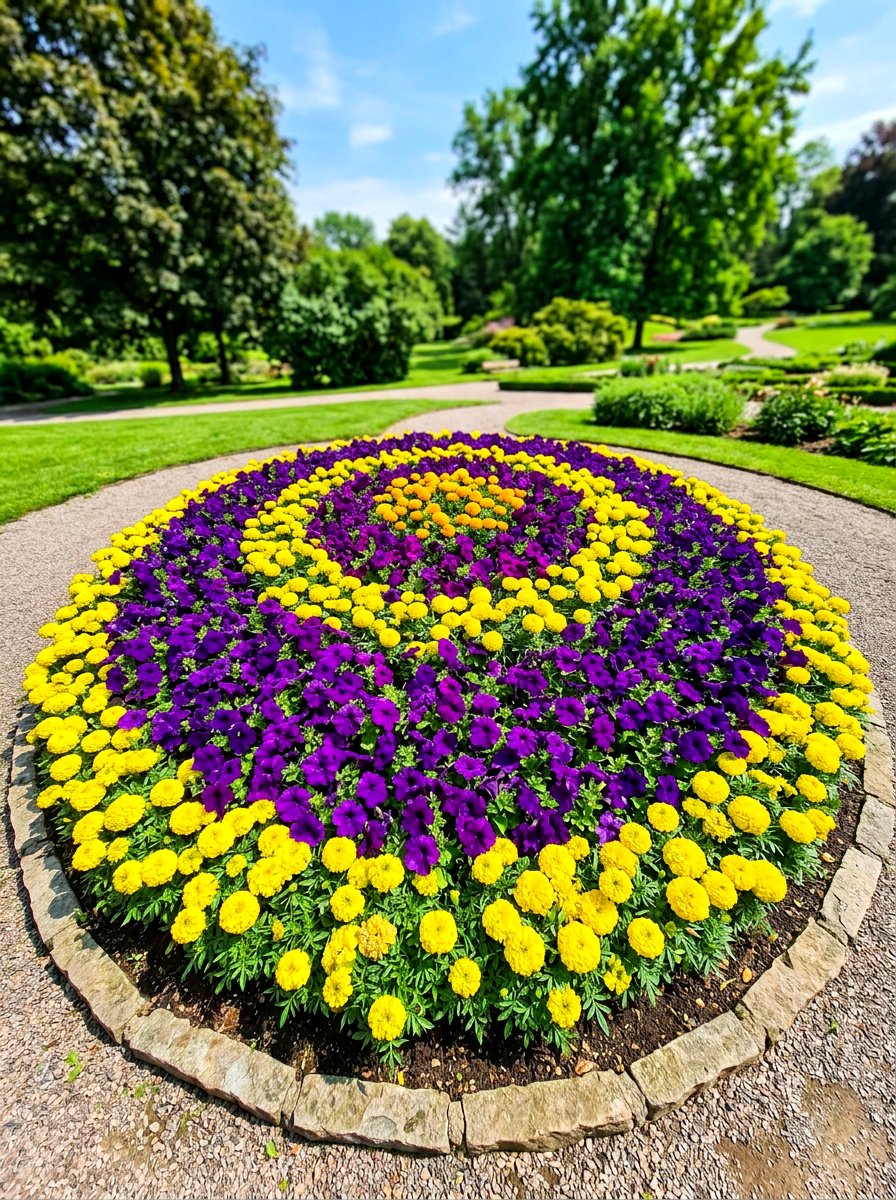
Using complementary colors on the color wheel is a classic design technique that creates a vibrant and high-contrast look in the garden. Pairing deep purple petunias or salvia with bright yellow marigolds or coreopsis makes both colors appear more intense and visually striking. This energetic combination is perfect for a front yard border where you want to grab the attention of passersby and neighbors. You can balance the intensity by adding a few neutral green foliage plants to provide a resting place for the eyes. This bold palette is a timeless favorite for summer because it mimics the natural colors of a sunny meadow in full bloom.
10. Drought Tolerant Flower Bed
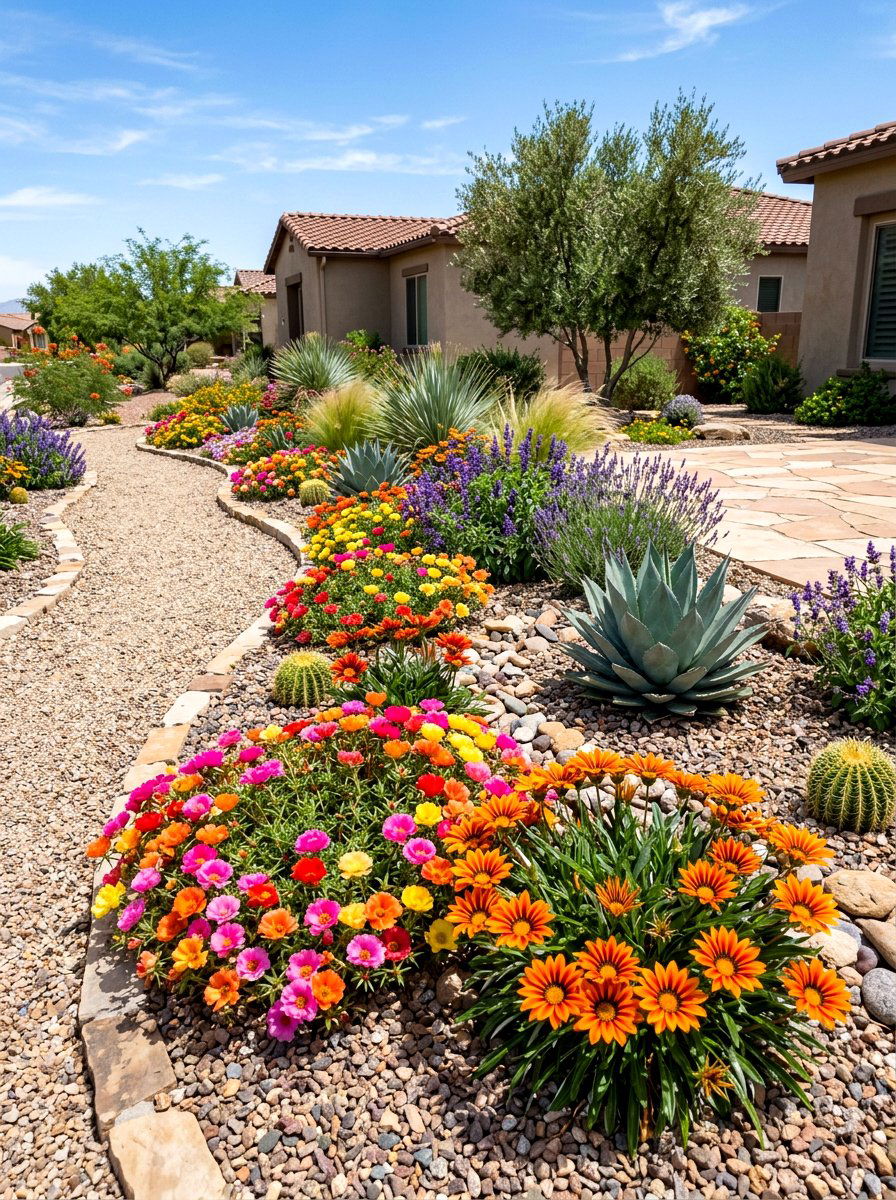
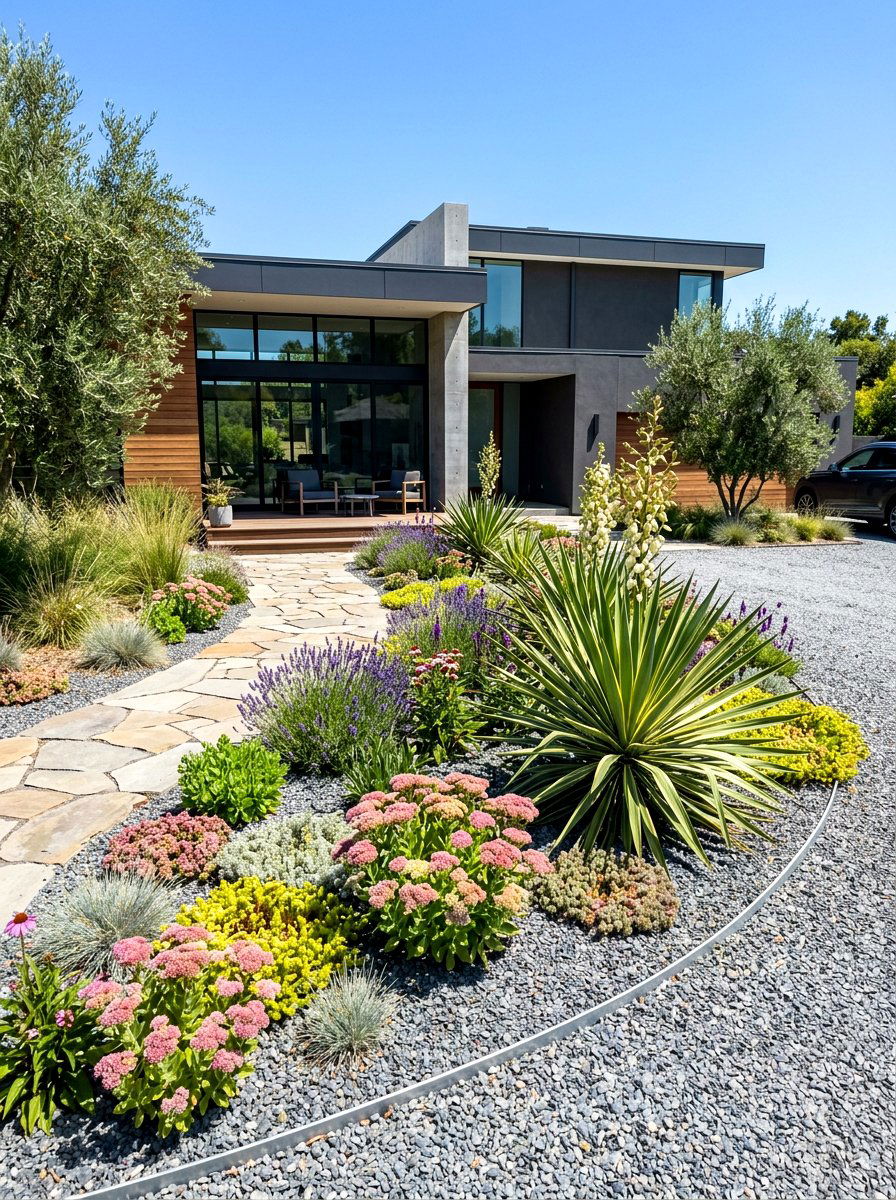
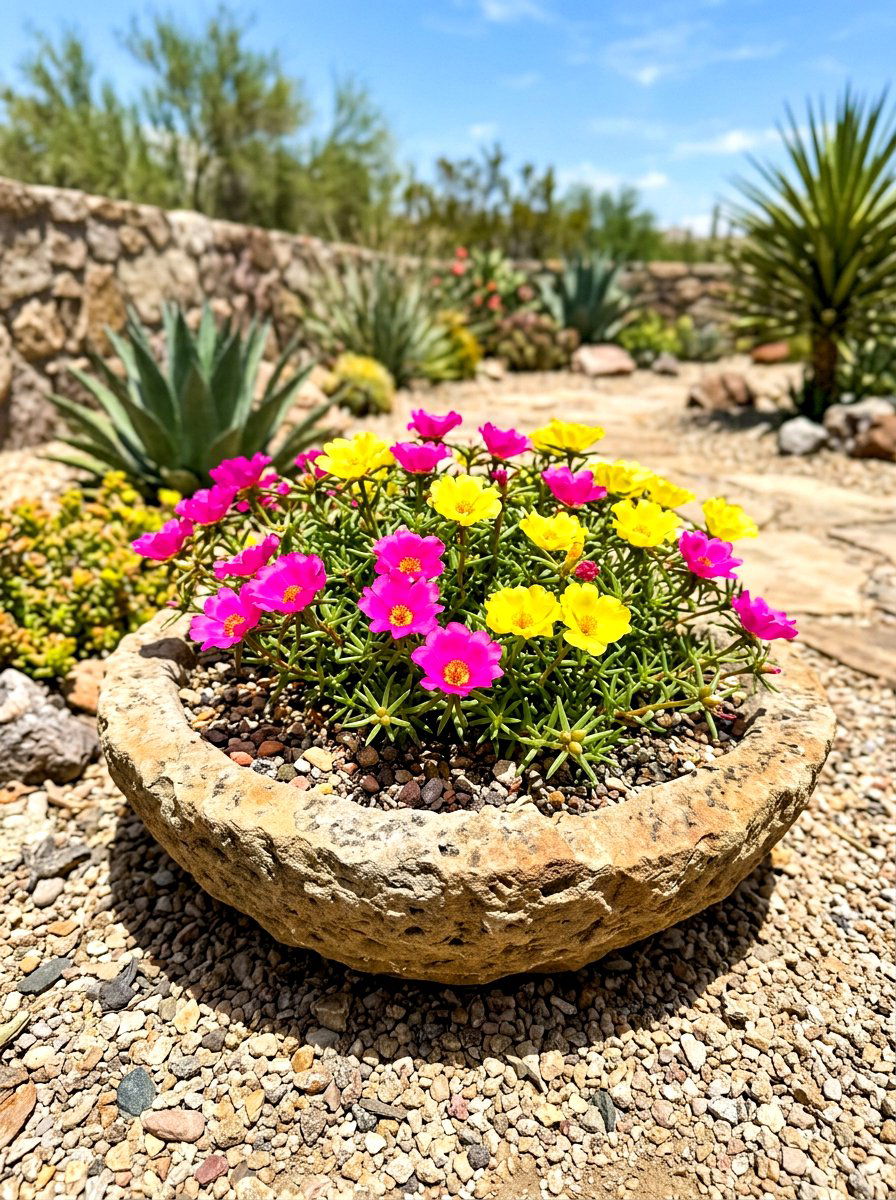
In regions with water restrictions or for gardeners who prefer an eco-friendly approach, a drought-tolerant annual border is a smart choice. Succulent-like annuals such as moss rose or portulaca thrive in poor soil and require very little supplemental irrigation once they are established. Other options include gazania and celosia, which have evolved to handle intense heat and dry conditions without losing their vibrant color. Mulching these beds heavily helps retain what little moisture is available while also keeping the roots cool during heatwaves. A water-wise garden can still be incredibly beautiful and colorful while significantly reducing your monthly utility bills and maintenance time.
11. Fragrant Summer Flower Border
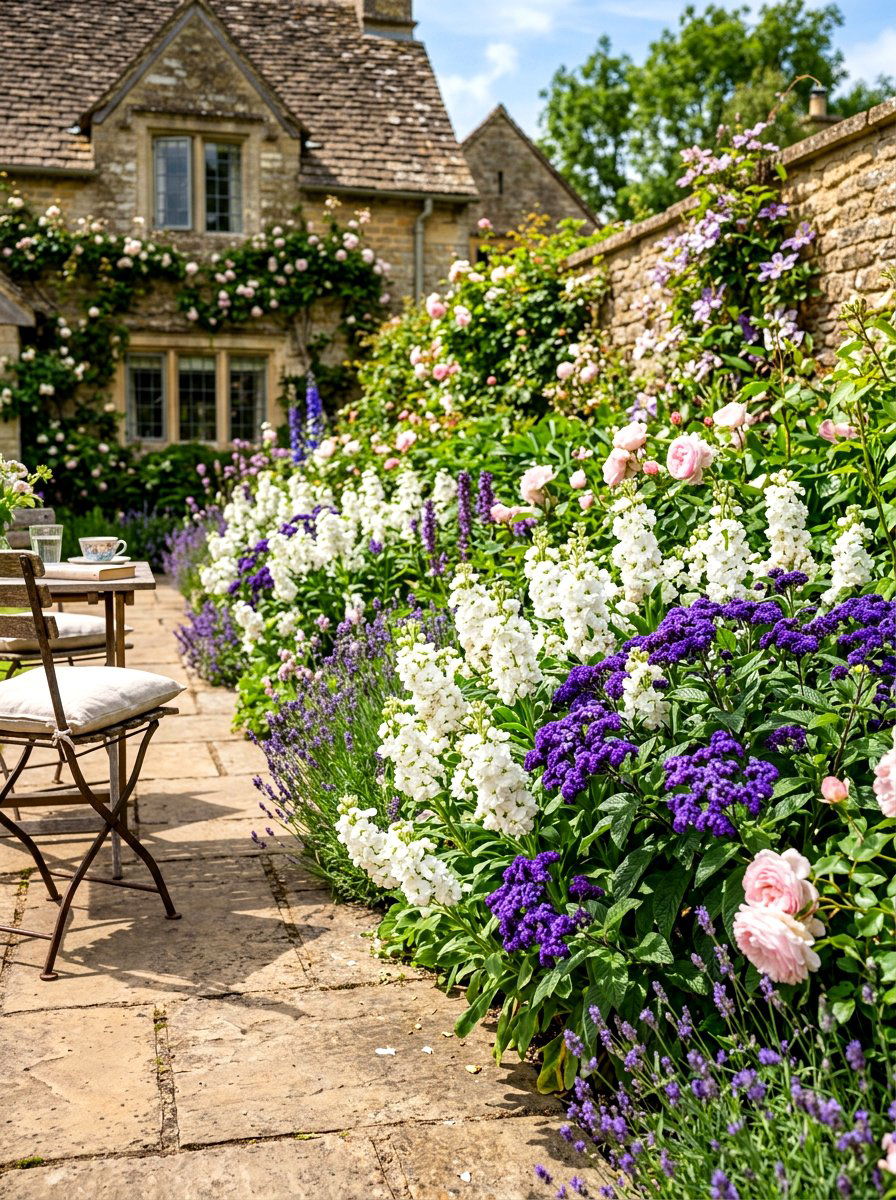
Engaging the sense of smell adds another dimension of enjoyment to your outdoor space, especially near windows or frequently used seating areas. Sweet peas, heliotrope, and stocks are famous for their intoxicating scents that fill the air on warm summer evenings. Planting these fragrant annuals in a border along a walkway allows you to enjoy their perfume every time you enter or leave your home. Many scented flowers also have beautiful, delicate forms that look just as lovely as they smell in a mixed bed. Prioritizing fragrance creates a sensory-rich environment that feels more private and relaxing for you and your guests to enjoy.
12. Pink And Silver Garden Palette
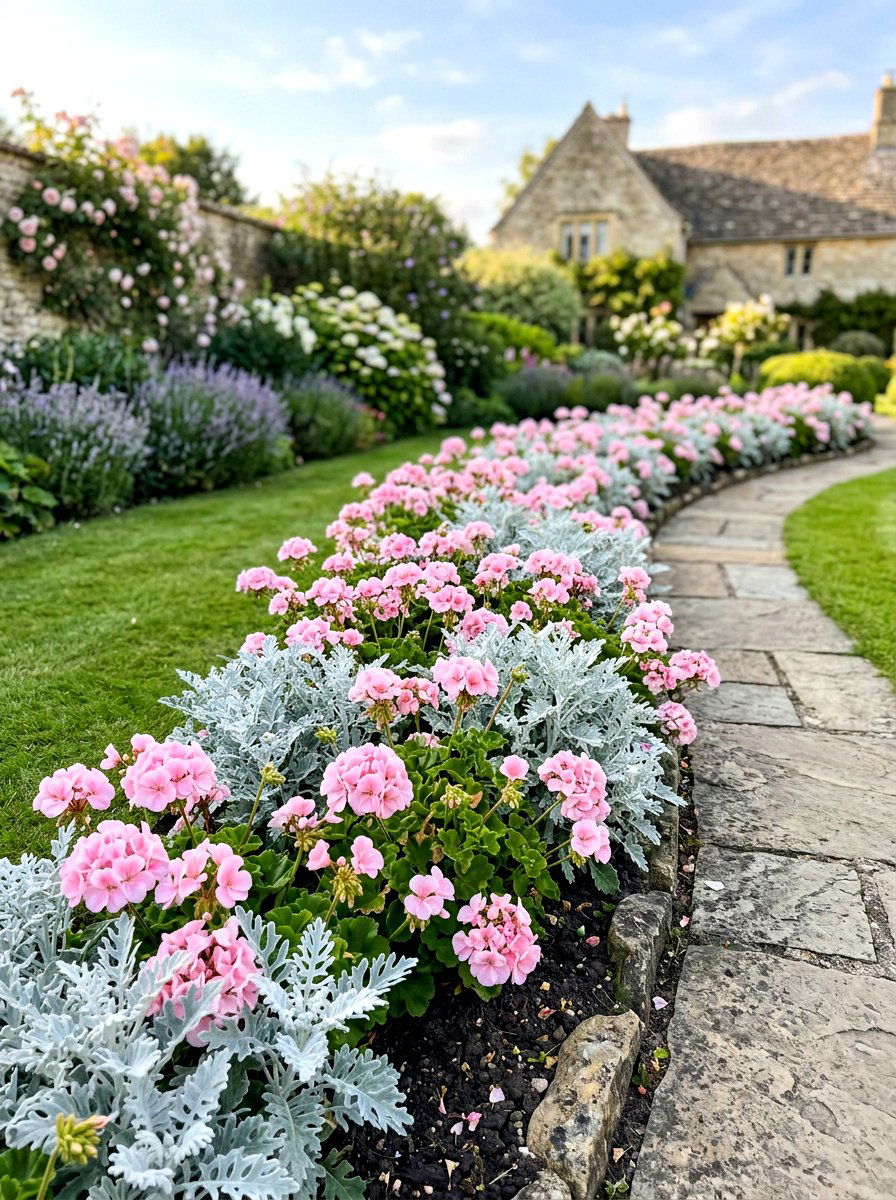
A soft and feminine look can be achieved by combining various shades of pink flowers with shimmering silver or gray foliage. Pair dusty miller or artemisia with pink geraniums, begonias, and cosmos to create a romantic and airy aesthetic in your garden. The silver leaves act as a neutral backdrop that makes the different pink tones stand out without looking too busy or overwhelming. This color scheme is particularly effective in full sun where the light catches the metallic sheen of the foliage and the brightness of the petals. It offers a gentle and calming visual experience that is perfect for a backyard retreat or a side garden.
13. Container Garden Border Edging
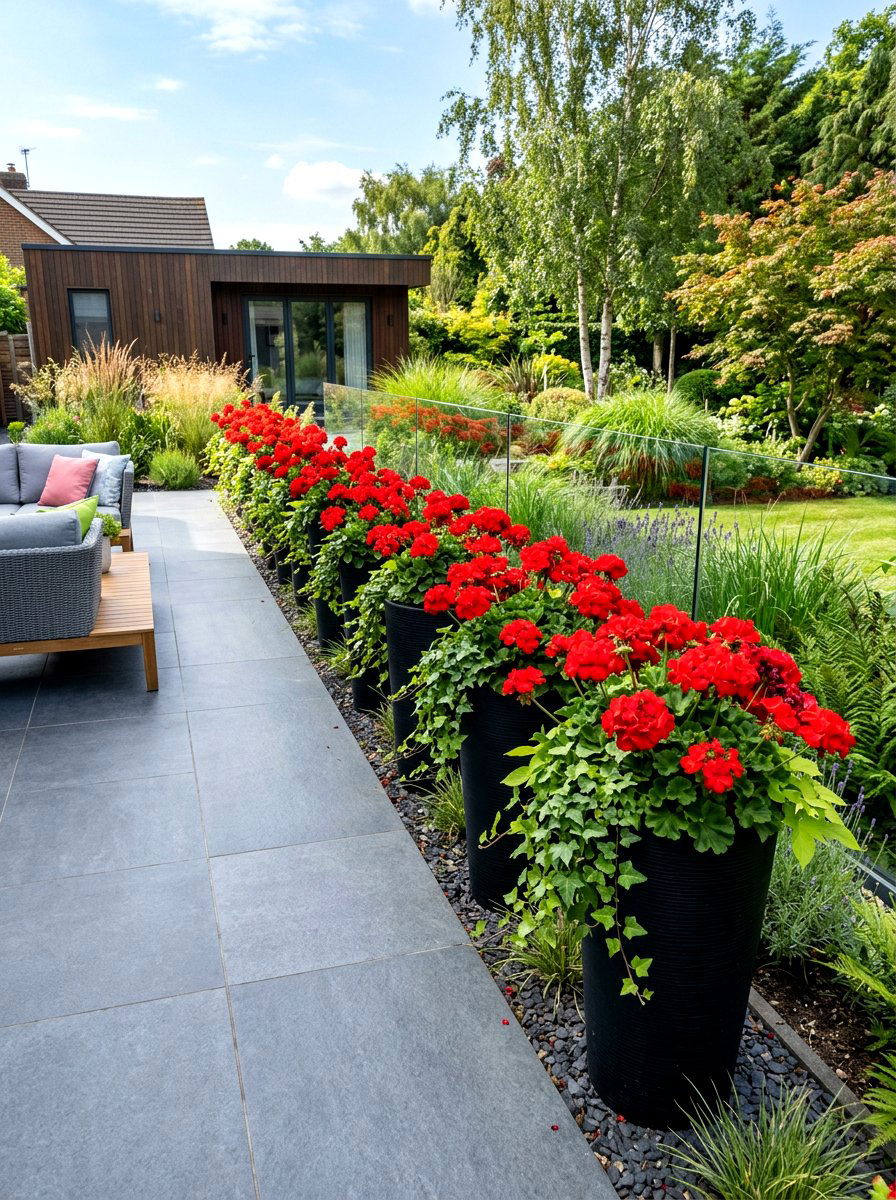
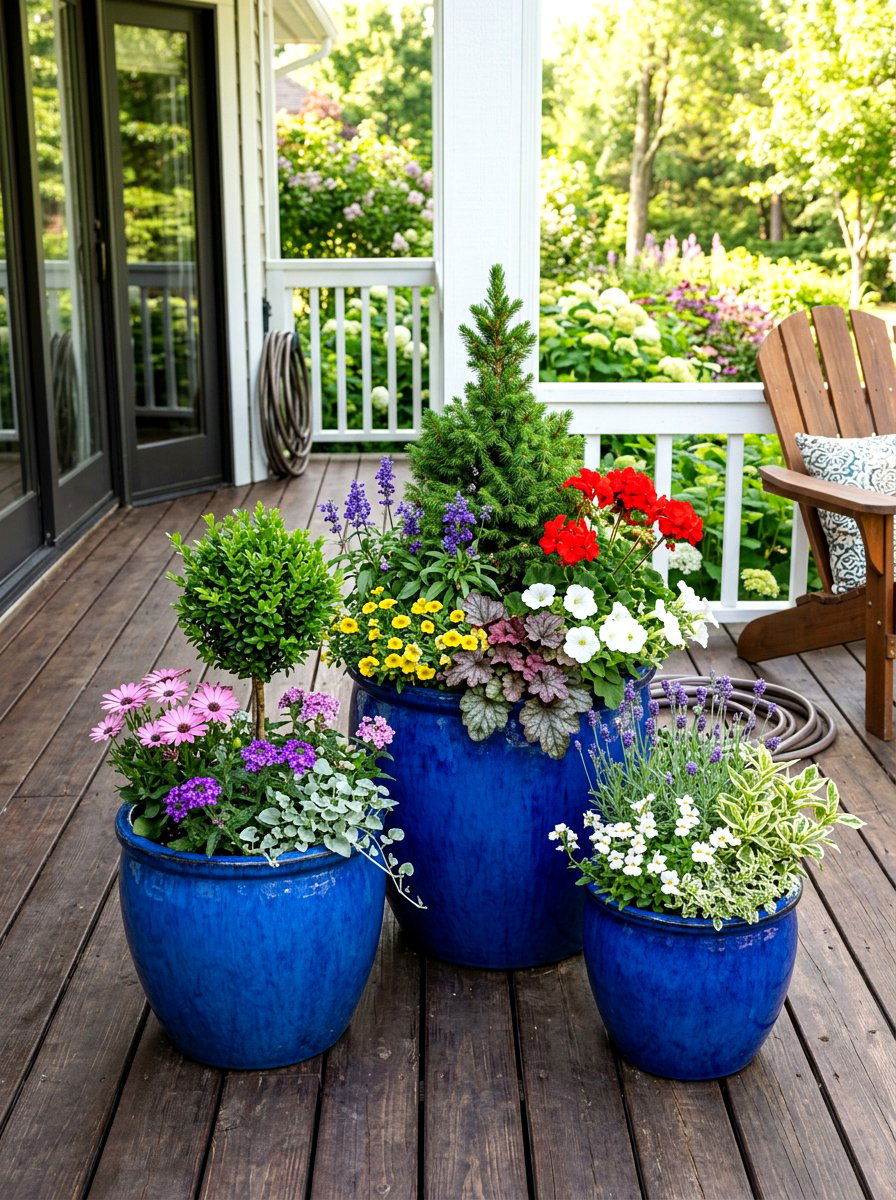
If you have a paved patio or a deck without soil, you can still create a beautiful border by using a row of matching containers. Lining up large pots filled with a mix of upright and trailing annuals mimics the look of a traditional ground bed while offering more flexibility. You can easily swap out plants that have finished blooming or move the pots to change the layout whenever you desire a fresh look. This approach is also great for controlling soil quality and drainage, ensuring your annuals have the best possible environment to grow. Potted borders add structure and color to hardscaped areas, making them feel much warmer and more inviting.
14. Red And Orange Hot Border
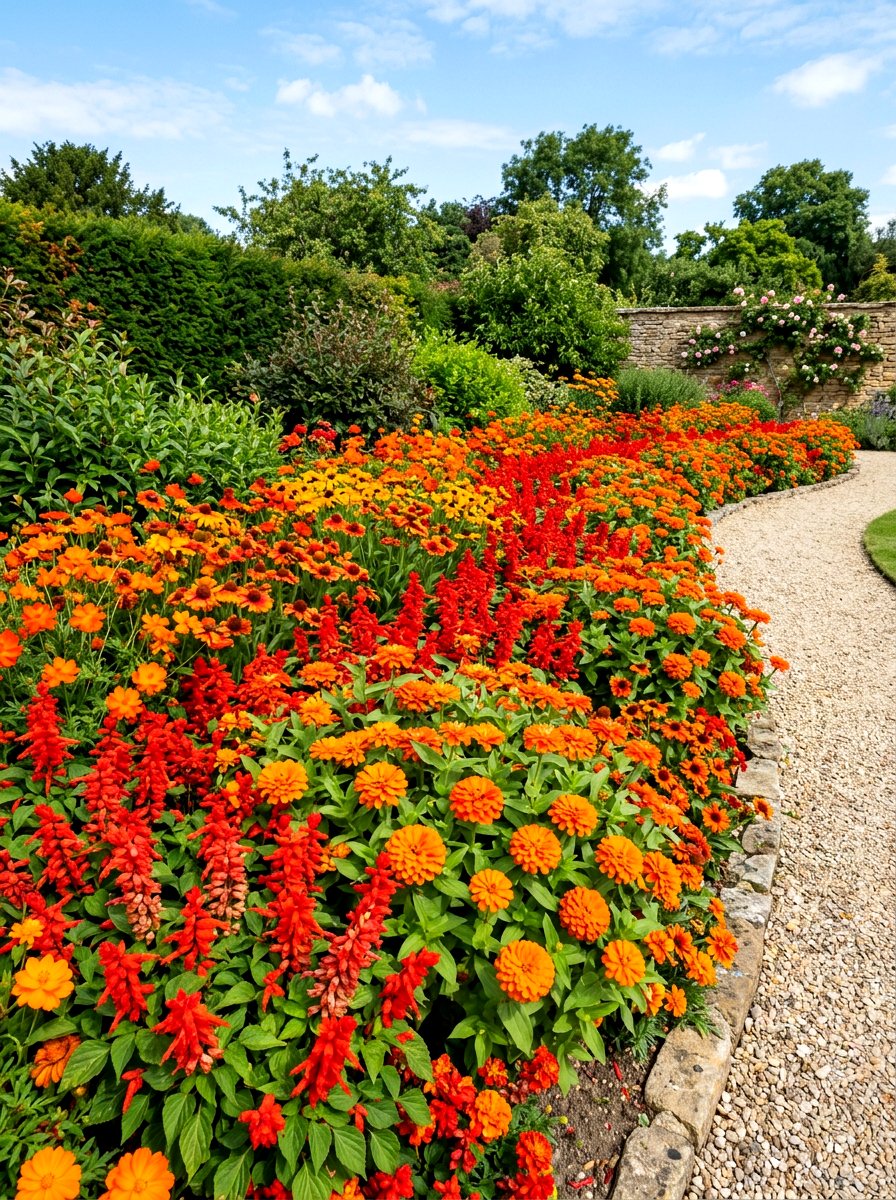
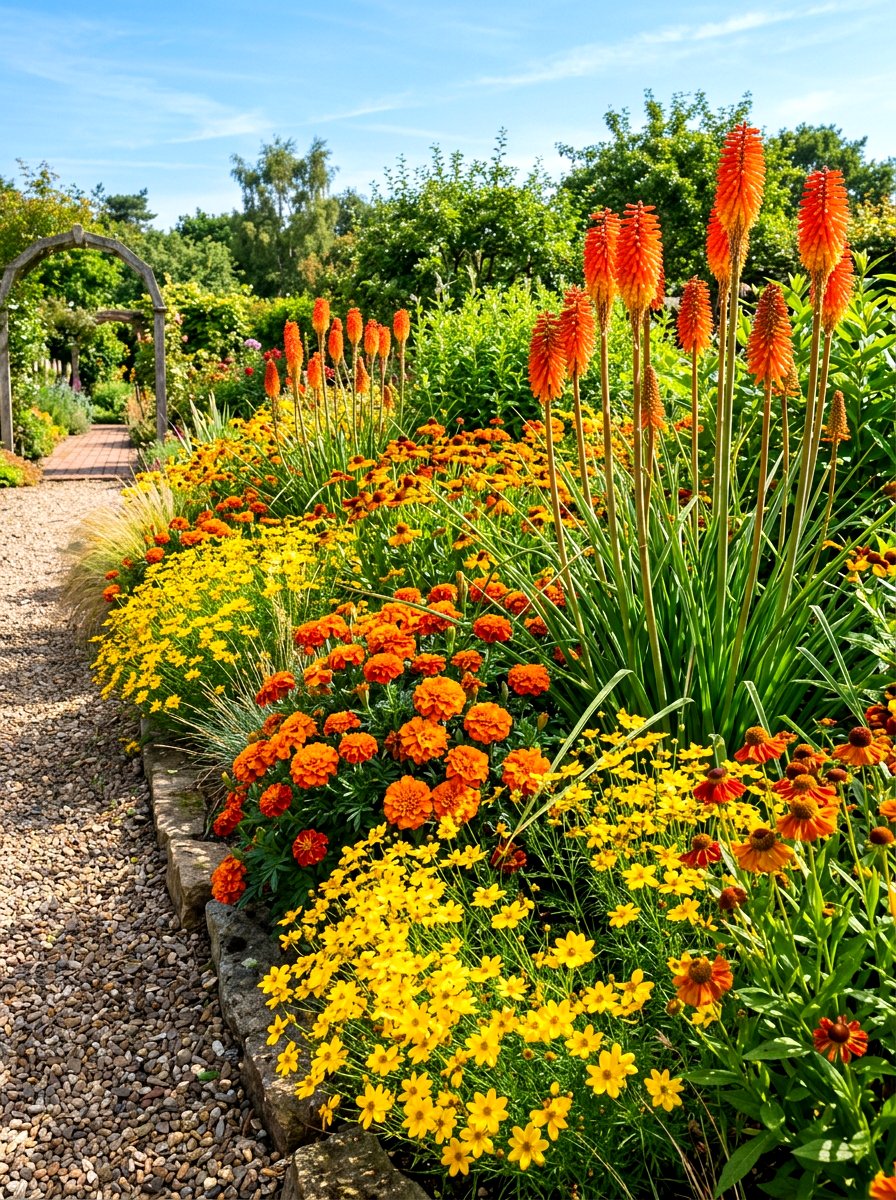
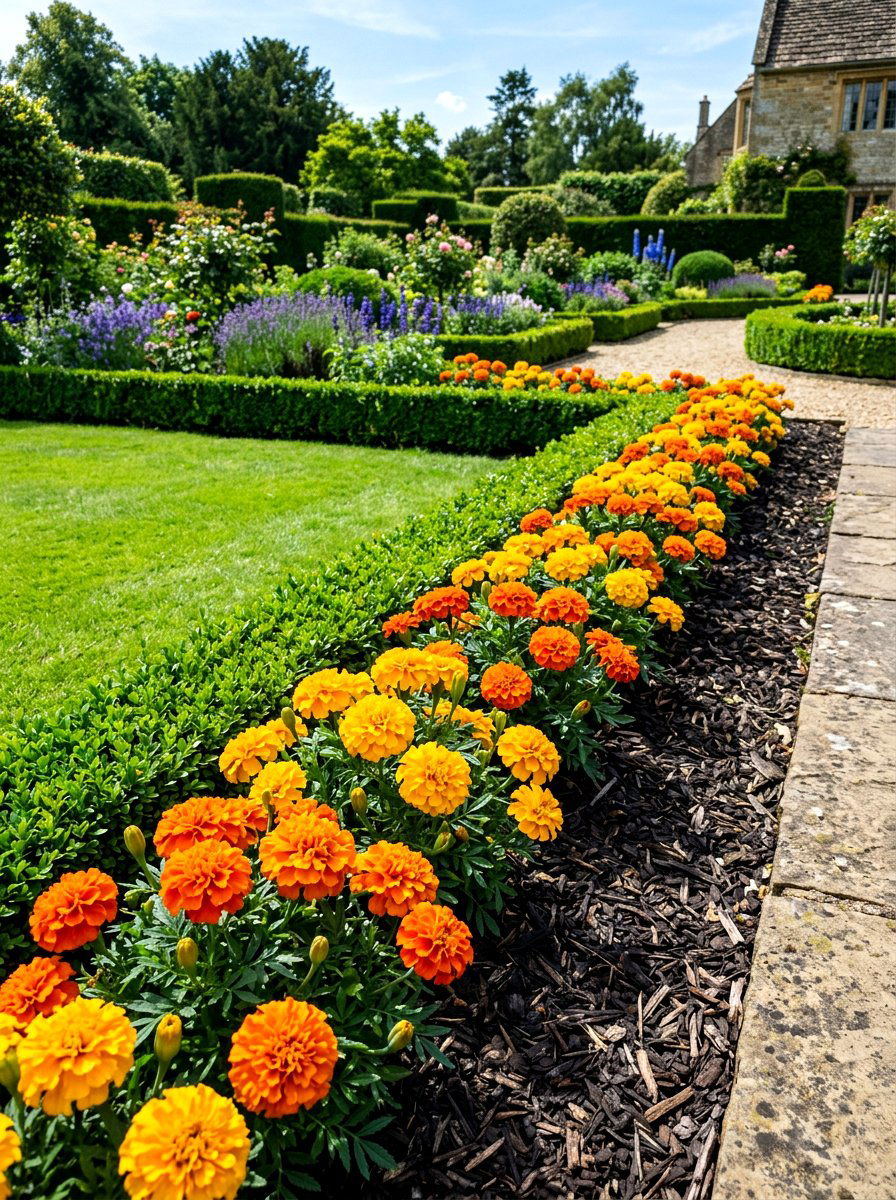
For a garden that radiates warmth and excitement, a "hot" color palette featuring reds, oranges, and deep yellows is the perfect solution. Use bold plants like red salvias, orange zinnias, and yellow marigolds to create a fiery display that commands attention from across the street. These colors are known to visually advance toward the viewer, which can make a large, distant border feel closer and more intimate. This high-energy theme is ideal for the peak of summer when the sun is at its strongest and the atmosphere is naturally warm. It creates a passionate and lively look that celebrates the intensity of the season in every bloom.
15. Blue Summer Flower Bed
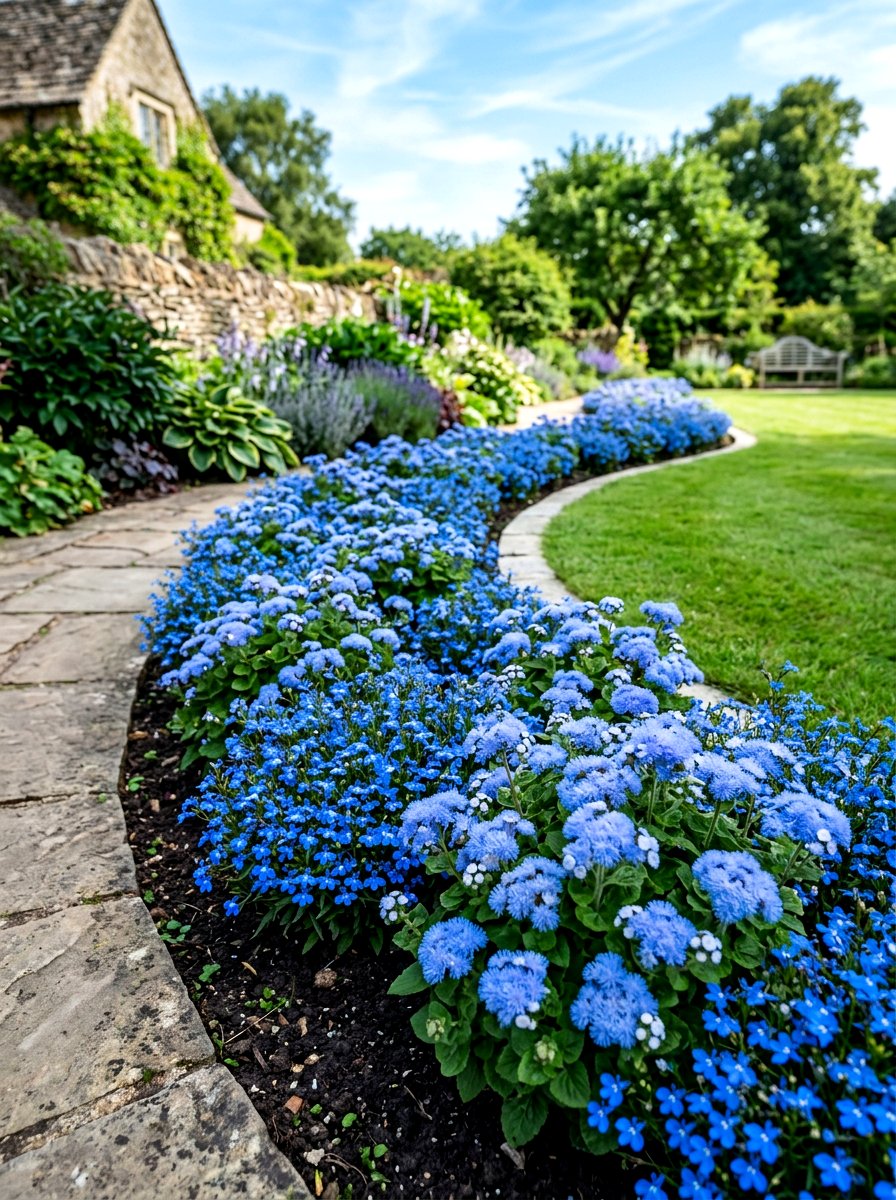
True blue flowers are somewhat rare in the plant world, which makes a blue-themed annual border feel unique and incredibly refreshing. Species like lobelia, ageratum, and evolvulus provide cool tones that can make a hot summer afternoon feel more comfortable and serene. Blue flowers often look best when paired with white or silver accents to help the darker blue shades pop against the green leaves. This calming palette is perfect for a meditation garden or a quiet corner where you want to reflect and relax in peace. A blue border offers a sophisticated and understated beauty that stands out for its rarity and its tranquil, water-like appearance.
16. Mixed Texture Foliage Border
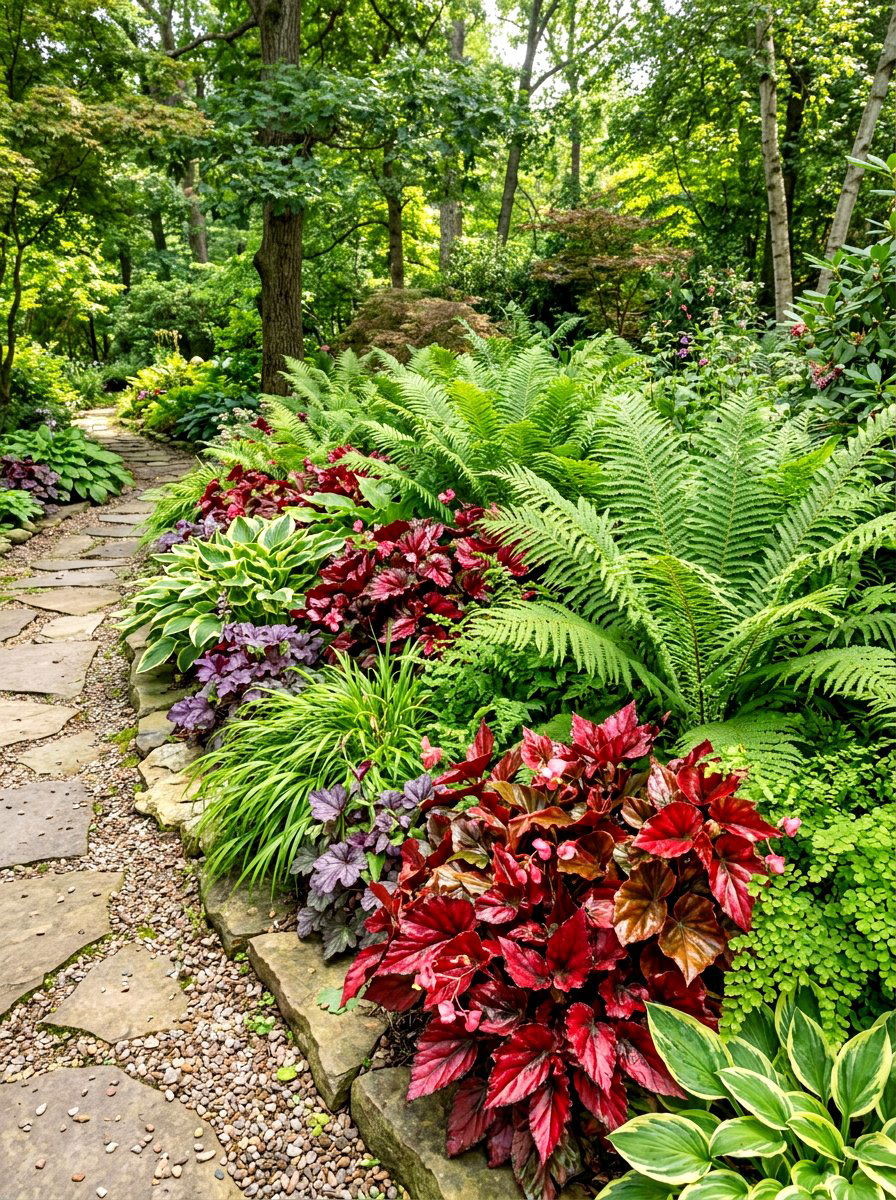
While flowers often take center stage, a border that focuses on contrasting leaf textures can be just as stunning and visually interesting. Combining the feathery leaves of cosmos with the broad, waxy foliage of begonias and the spikey blades of ornamental grasses creates a complex tapestry. Using plants with variegated leaves, such as certain types of coleus or plectranthus, adds even more detail and color without relying on constant blooming. This approach ensures that the garden looks full and attractive even during the brief periods between flowering cycles. A texture-focused border is a sophisticated way to demonstrate your gardening expertise and create a professional-looking landscape design.
17. Hummingbird Garden Flower Border
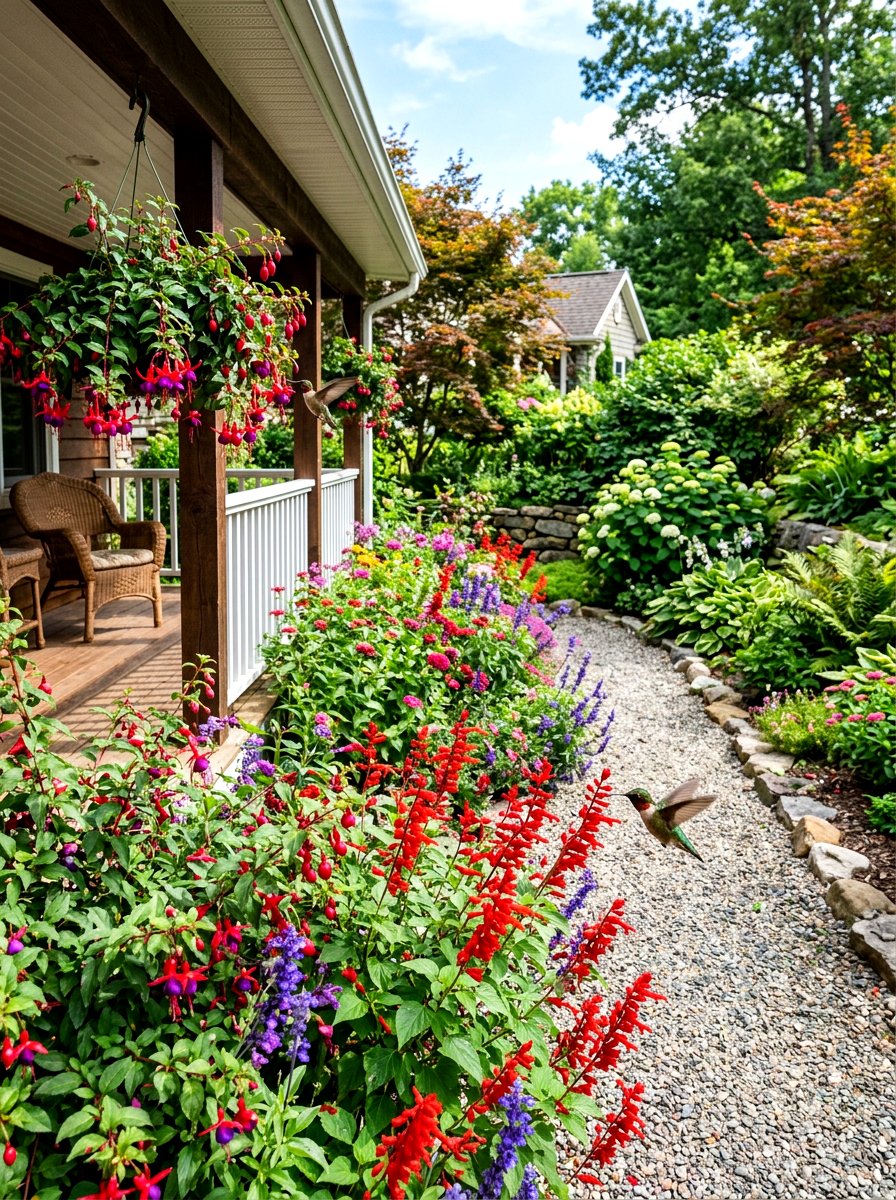
Attracting tiny, fast-moving hummingbirds to your yard is a delight that can be achieved with a border filled with tubular-shaped annual flowers. Red salvia, fuchsia, and petunias are among the top choices for these feathered visitors who seek out bright colors and nectar-rich blooms. By planting these in a concentrated border, you create a reliable feeding station that encourages hummingbirds to return to your garden every day. Placing the border near a window allows you to observe their fascinating behavior from the comfort of your home without disturbing them. A hummingbird-friendly space adds a magical sense of wonder and excitement to your daily summer routine.
18. Trailing Flower Garden Edge
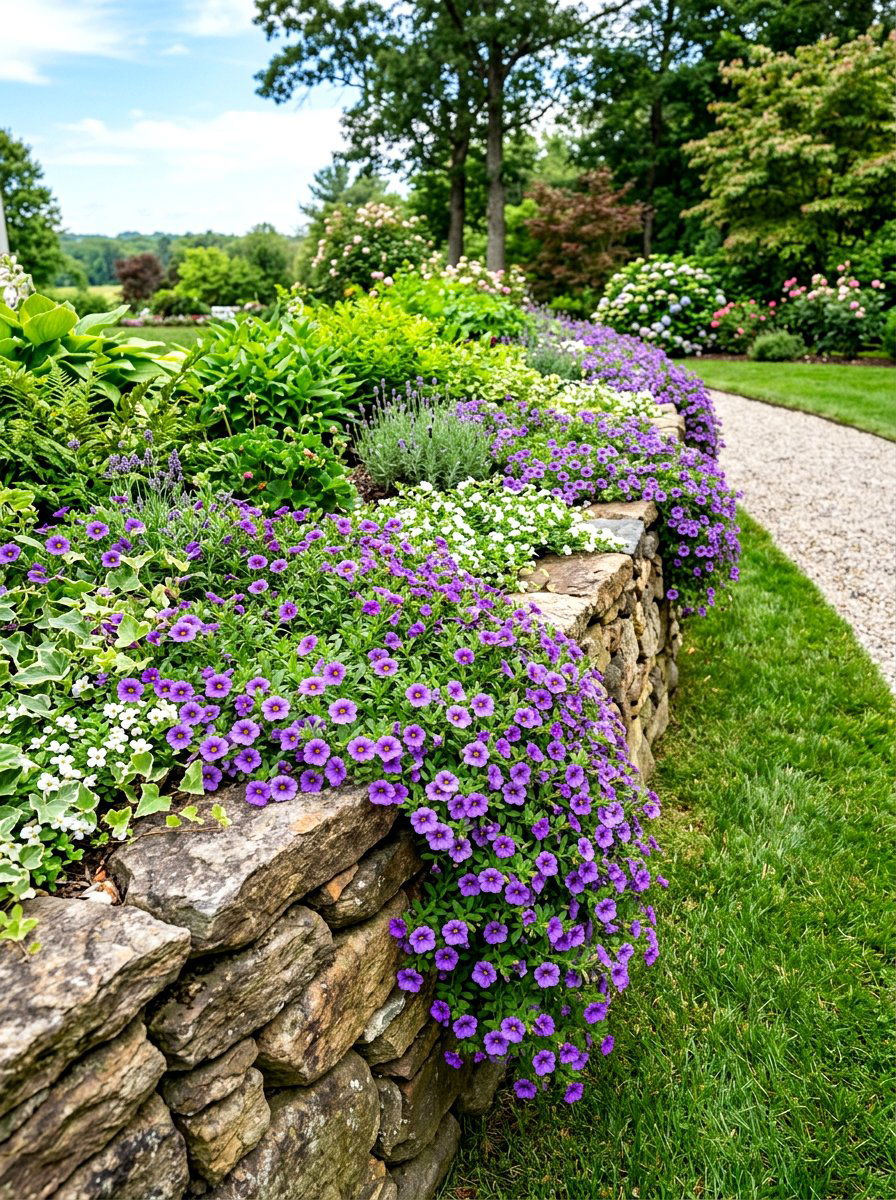
Softening the hard lines of a garden wall or a walkway is easy when you use annuals with a vigorous trailing or spreading habit. Plants like calibrachoa, lobelia, and silver falls dichondra will naturally spill over the edges of your border, creating a lush and flowing effect. This design choice helps to blend the planting bed with the surrounding hardscape, making the transition feel more natural and integrated. Trailing plants also help to cover any bare spots of soil at the front of the bed, giving the entire garden a more established and abundant appearance. They are the perfect finishing touch for a professional and polished summer landscape.
19. Layered Height Flower Border
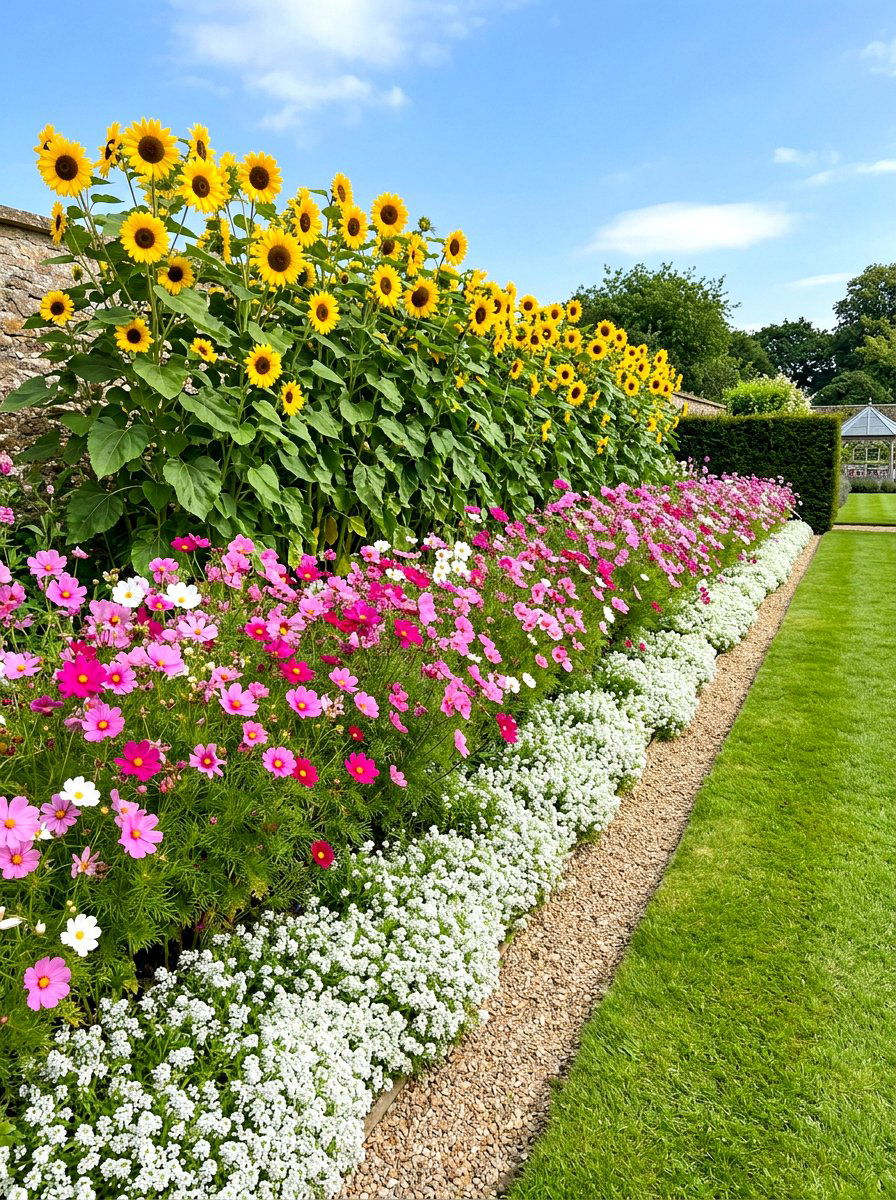
Success in garden design often comes down to the careful arrangement of plants based on their ultimate mature height and growth habit. A classic three-layer approach involves placing the tallest annuals in the back, mid-sized plants in the center, and low-growing varieties at the front. This ensures that every single flower is visible and receives the appropriate amount of sunlight and airflow throughout the day. Using this staggered layout prevents taller plants from overshadowing the smaller ones, which can lead to leggy or unhealthy growth. A well-layered border looks organized and intentional, providing a sense of order and professional craftsmanship to your outdoor area.
20. Modern Geometric Garden Edge
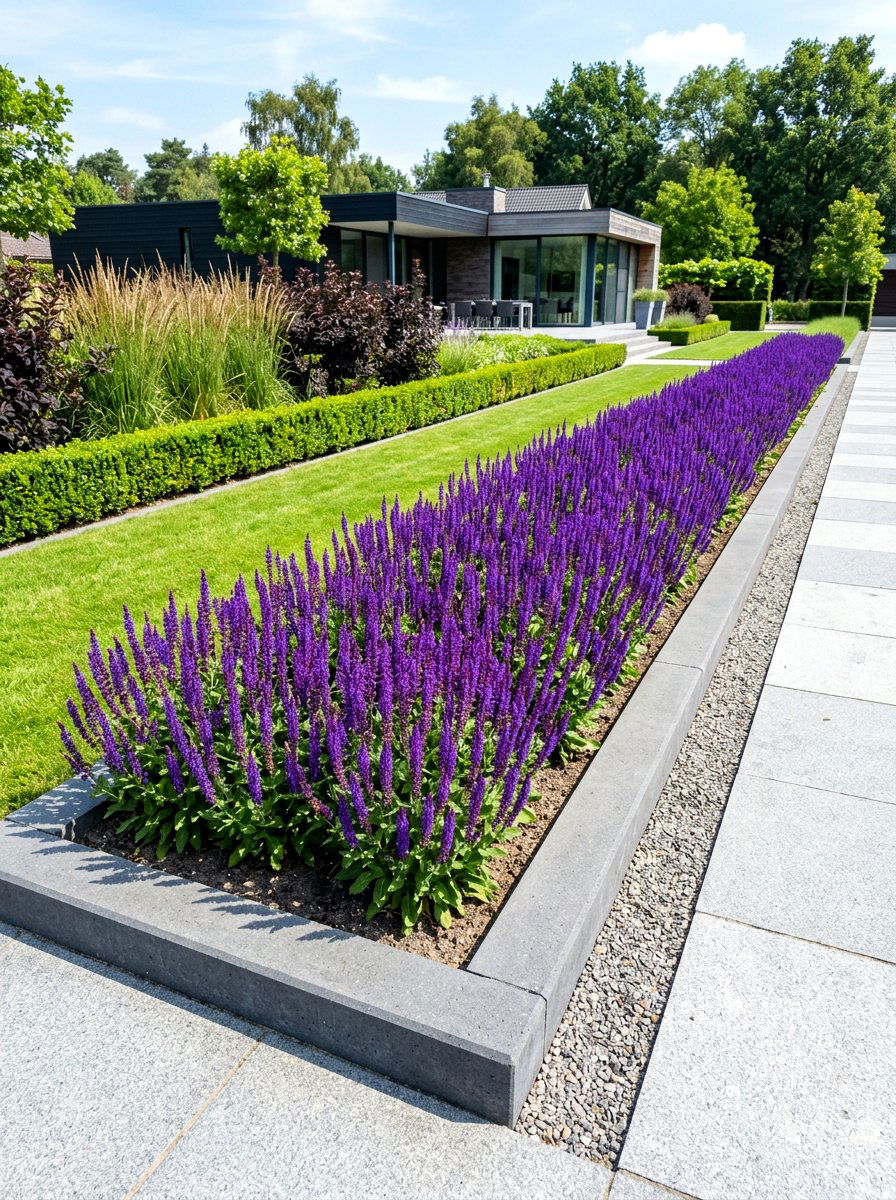
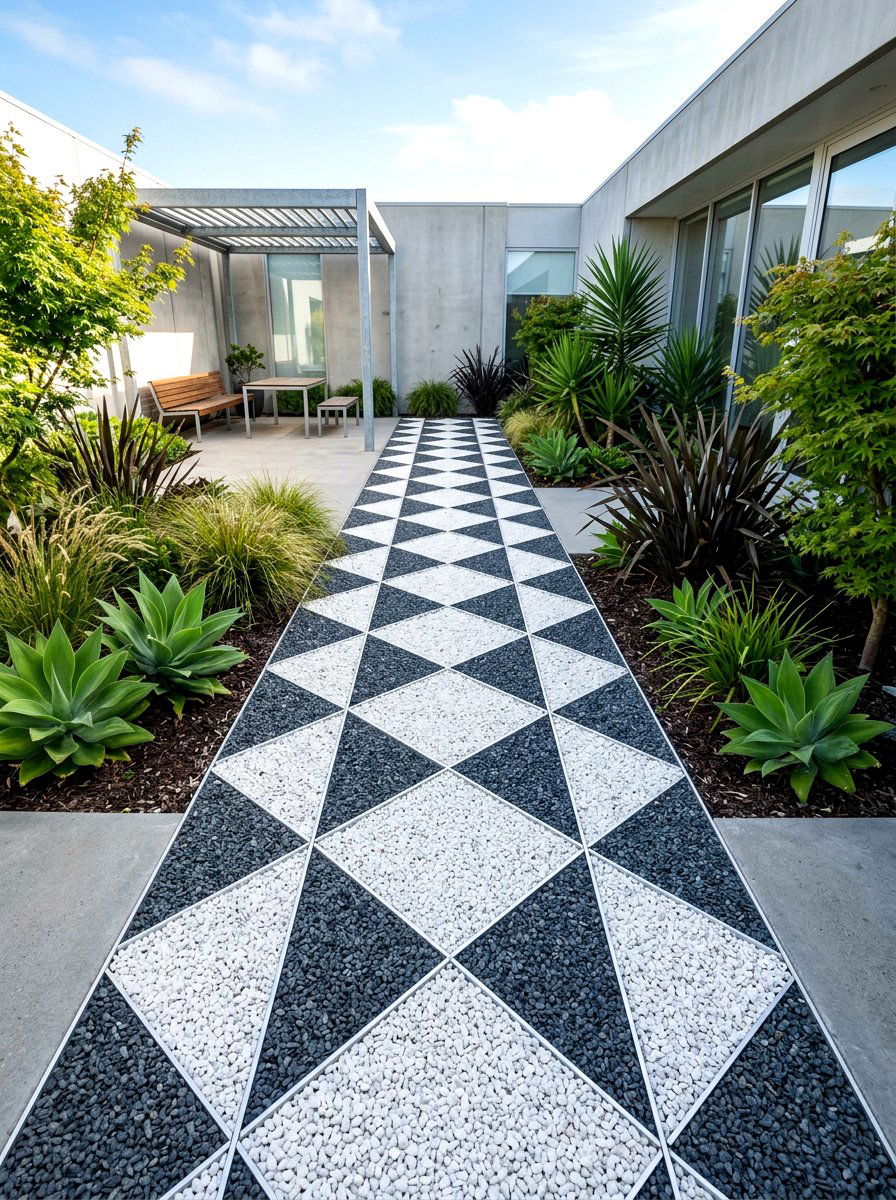
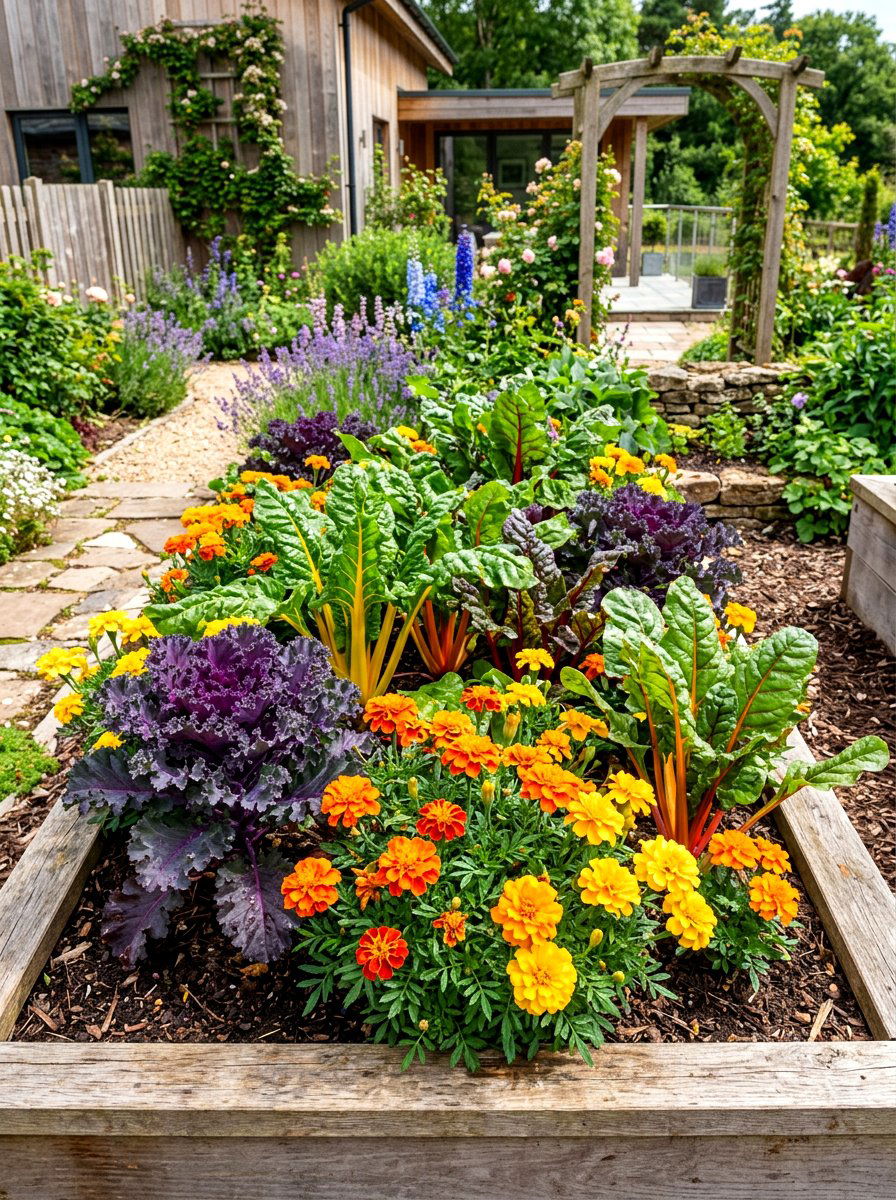
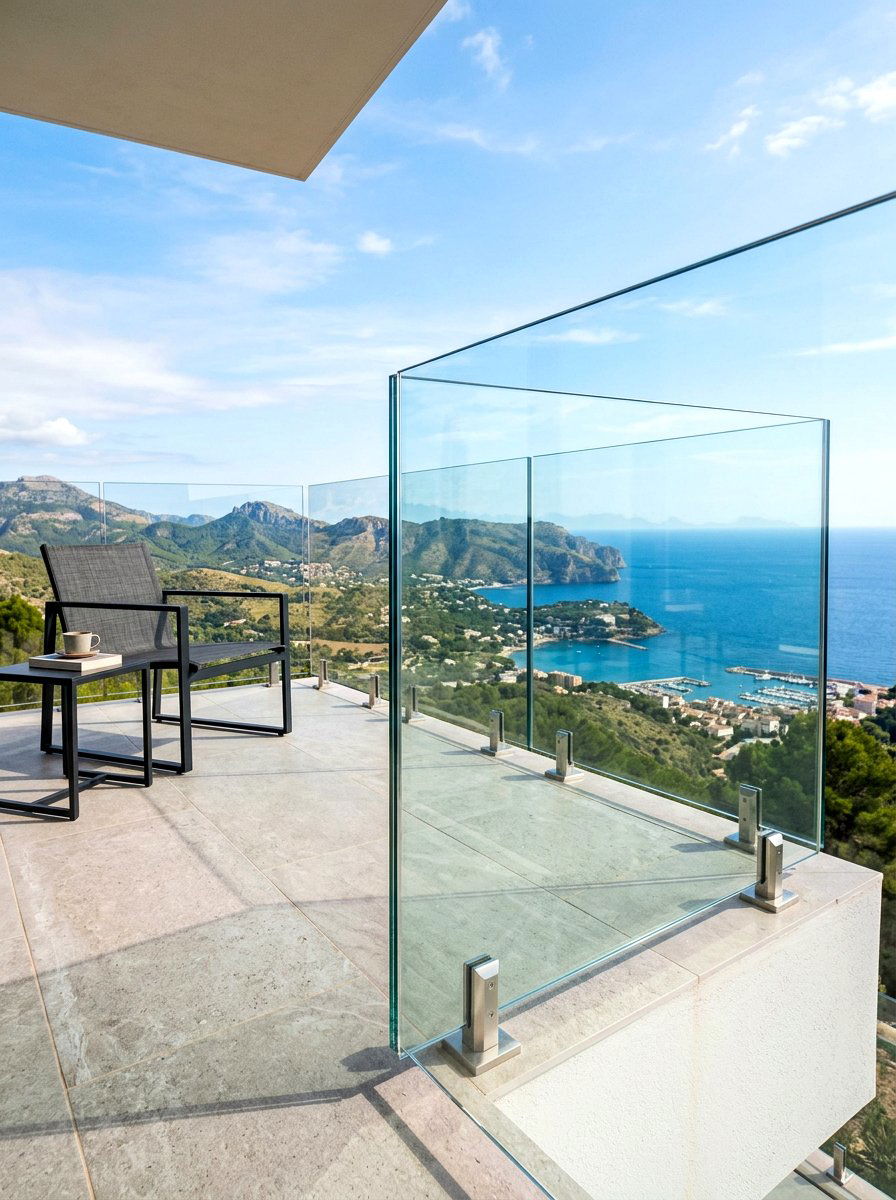
For homes with contemporary architecture, a border with clean lines and a geometric layout can enhance the overall aesthetic of the property. Instead of a traditional curved bed, consider using straight lines and repeating patterns of the same annuals to create a minimalist look. Mass planting a single species, such as white geraniums or purple salvia, in a perfectly rectangular bed provides a bold and graphic visual statement. This style is often easier to maintain because there are fewer varieties to manage and the boundaries are clearly defined by the landscaping. A modern border reflects a sense of precision and intentionality that perfectly matches a sleek and updated home.
21. Pastel Color Flower Border
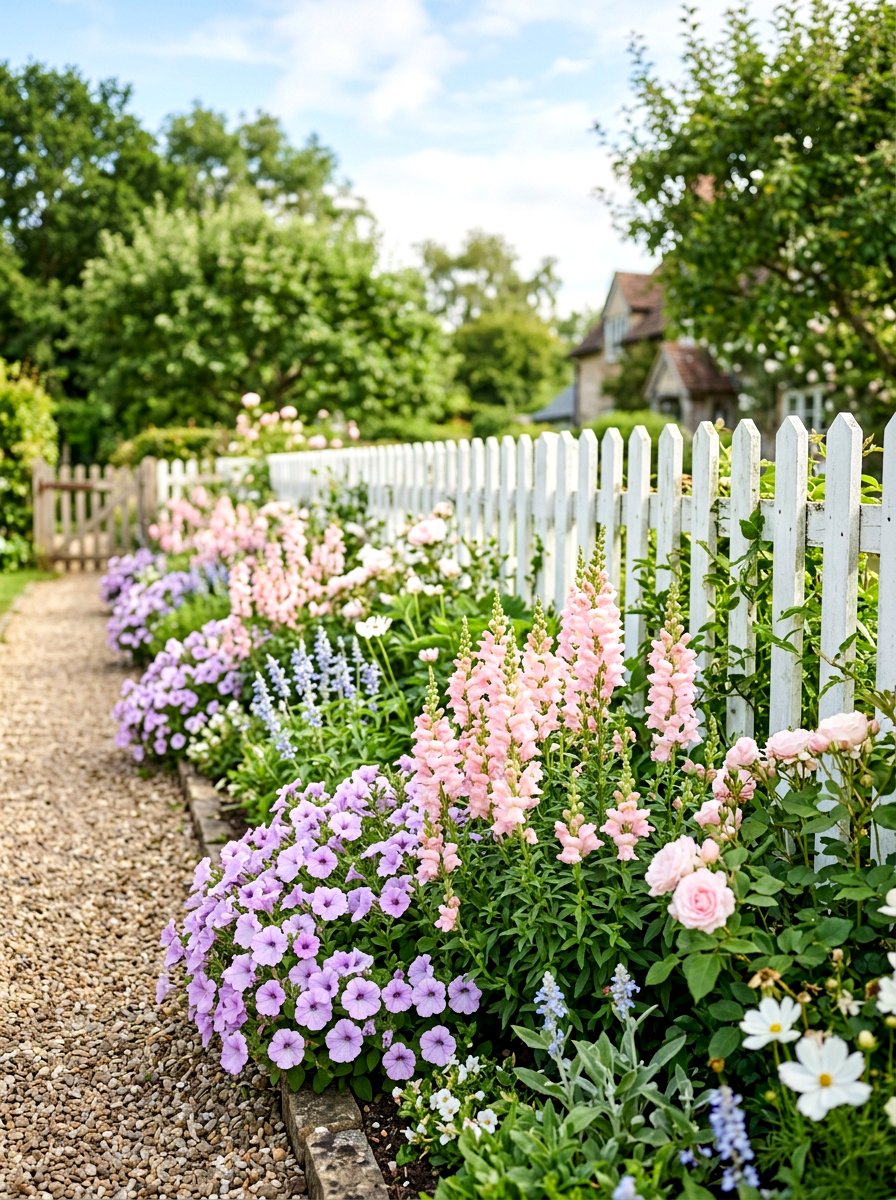
If you prefer a soft and dreamy atmosphere, a pastel-colored annual border featuring light pinks, lavenders, and soft yellows is a beautiful choice. Use plants like snapdragons, stocks, and pale petunias to create a gentle wash of color that feels romantic and soothing to the eyes. Pastel colors are particularly effective in the early morning or late afternoon light when the sun is less intense and the colors appear more luminous. This palette works well with white-painted fences or light-colored stone walkways, creating a cohesive and traditional garden look. It offers a timeless elegance that feels classic and refined without being too bold or overwhelming.
22. Cut Flower Annual Garden
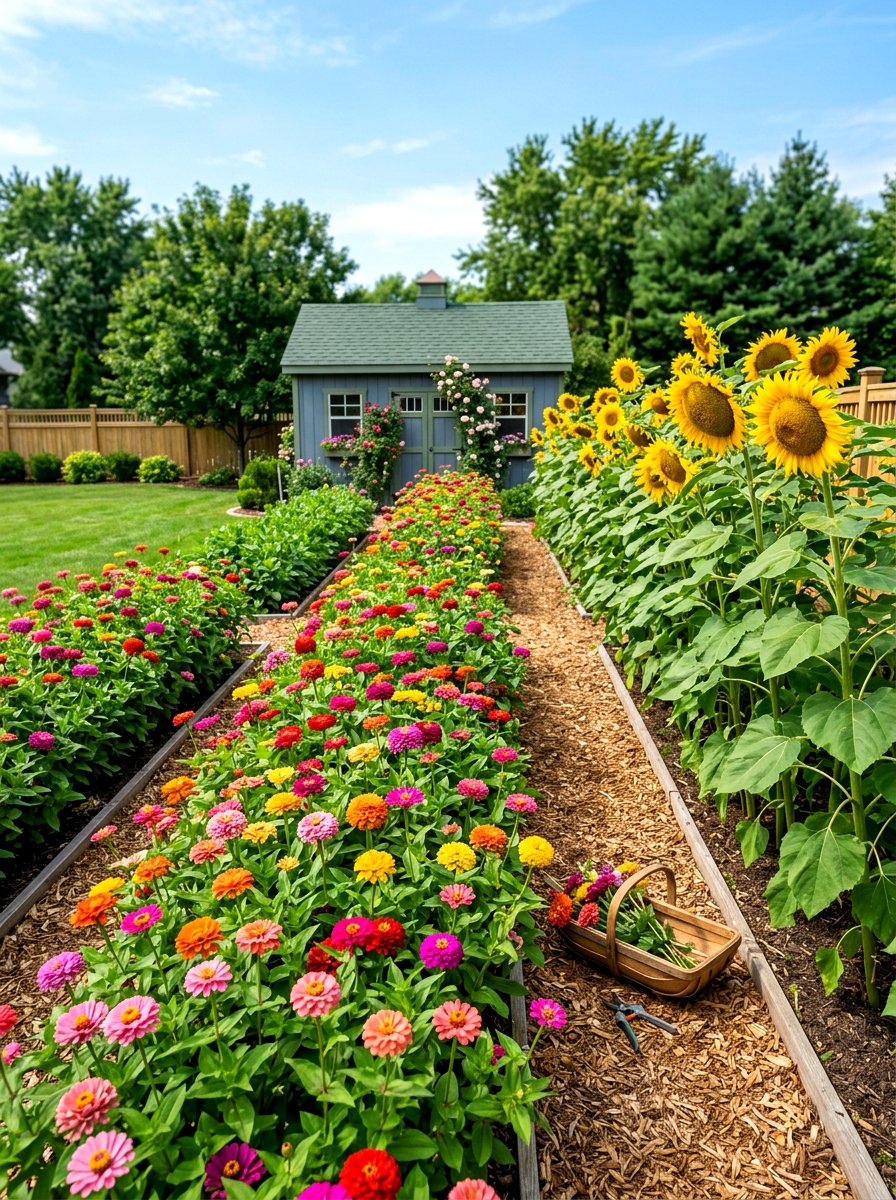
Many homeowners love the idea of bringing the beauty of their garden inside by creating a border specifically designed for cutting. By selecting annuals with long stems and a good vase life, such as zinnias, cosmos, and sunflowers, you can enjoy fresh bouquets all summer. Planting these in a dedicated border allows you to harvest the blooms without making the rest of your landscape look empty or bare. The more you cut these specific types of flowers, the more the plants will produce, leading to an endless supply of indoor decor. A cutting border is a functional and beautiful addition that extends the joy of gardening into your home.
23. Butterfly Garden Flower Bed
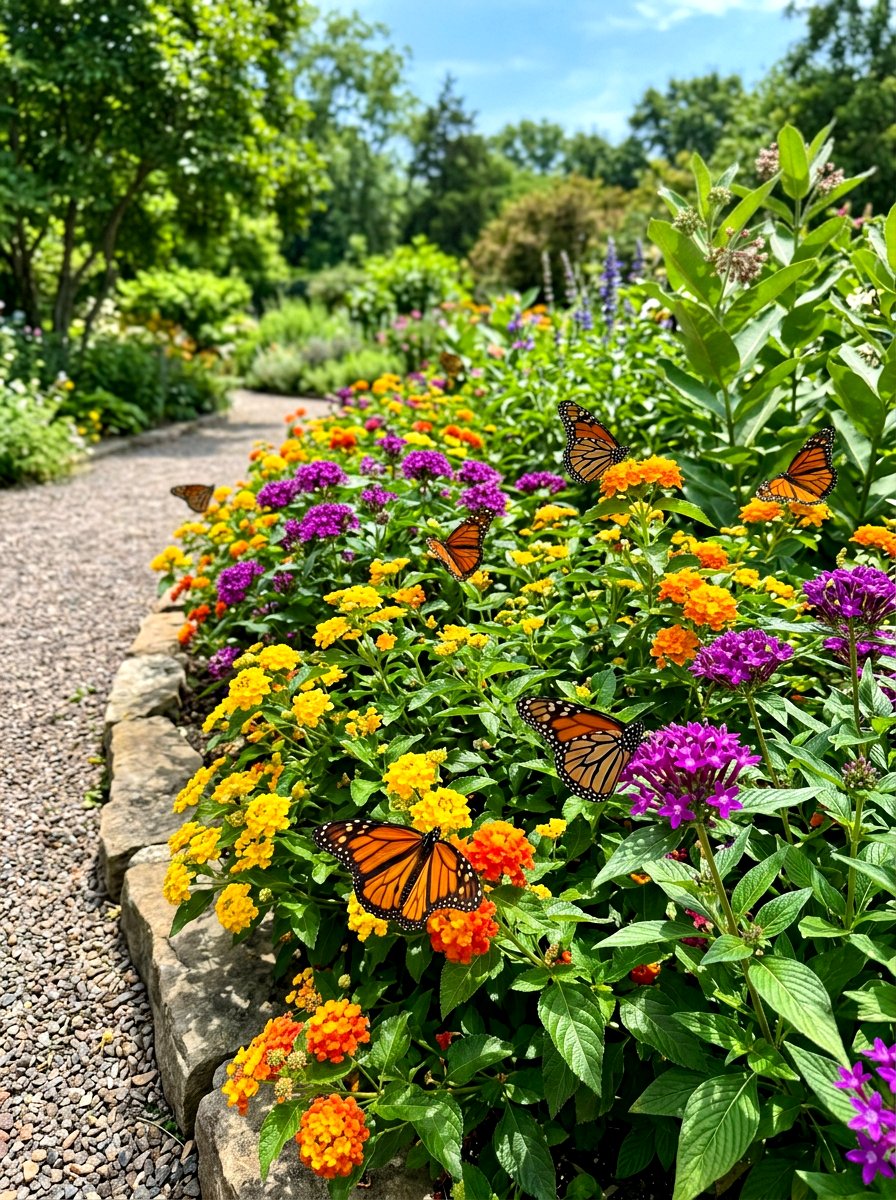
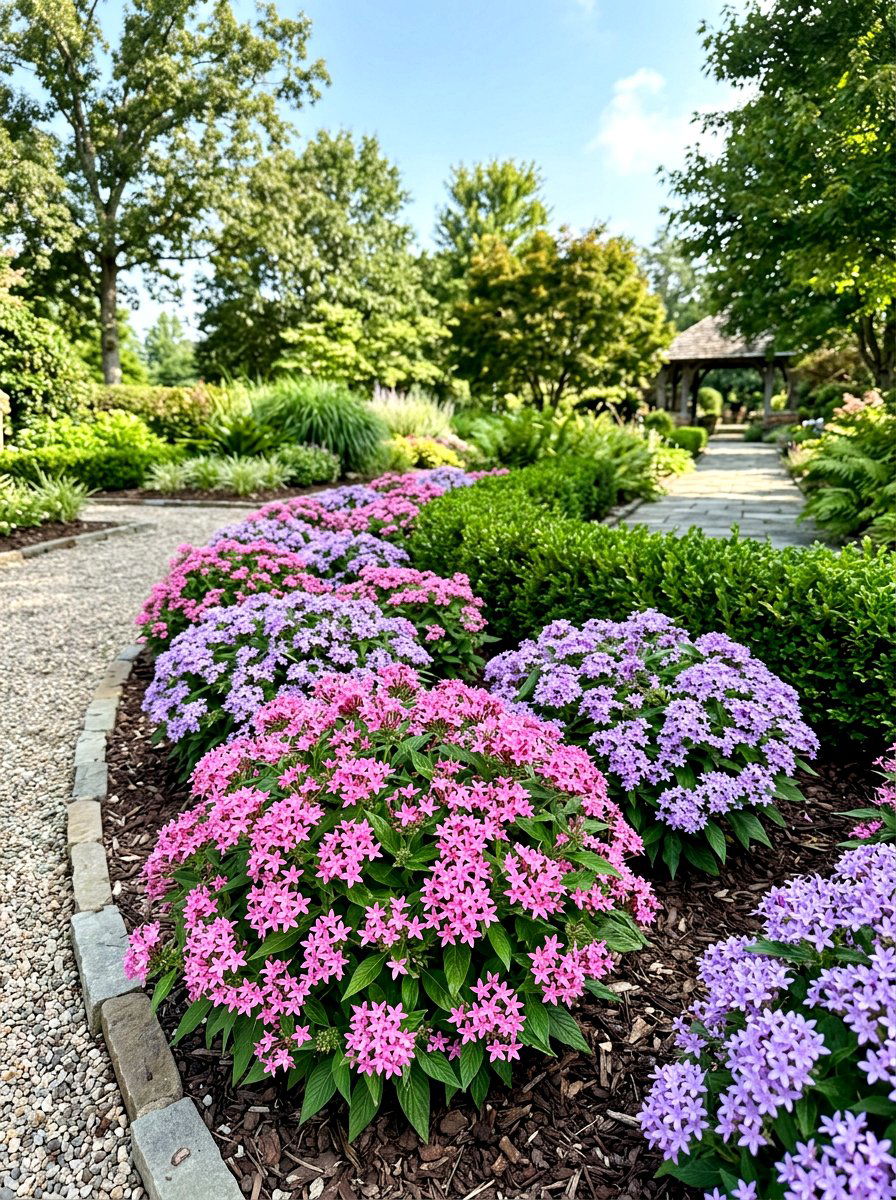
Watching colorful butterflies dance through your yard is a quintessential summer experience that you can encourage with the right plant selection. Annuals like zinnia, lantana, and pentas are well-known for their ability to attract a wide variety of butterfly species with their bright colors. It is important to include some host plants, such as milkweed or parsley, if you want to support the entire life cycle from caterpillar to butterfly. Creating a sunny, wind-sheltered spot for your border will make it even more attractive to these delicate insects as they look for places to rest. A butterfly garden is an educational and enchanting feature for families and nature lovers.
24. Vertical Annual Flower Border
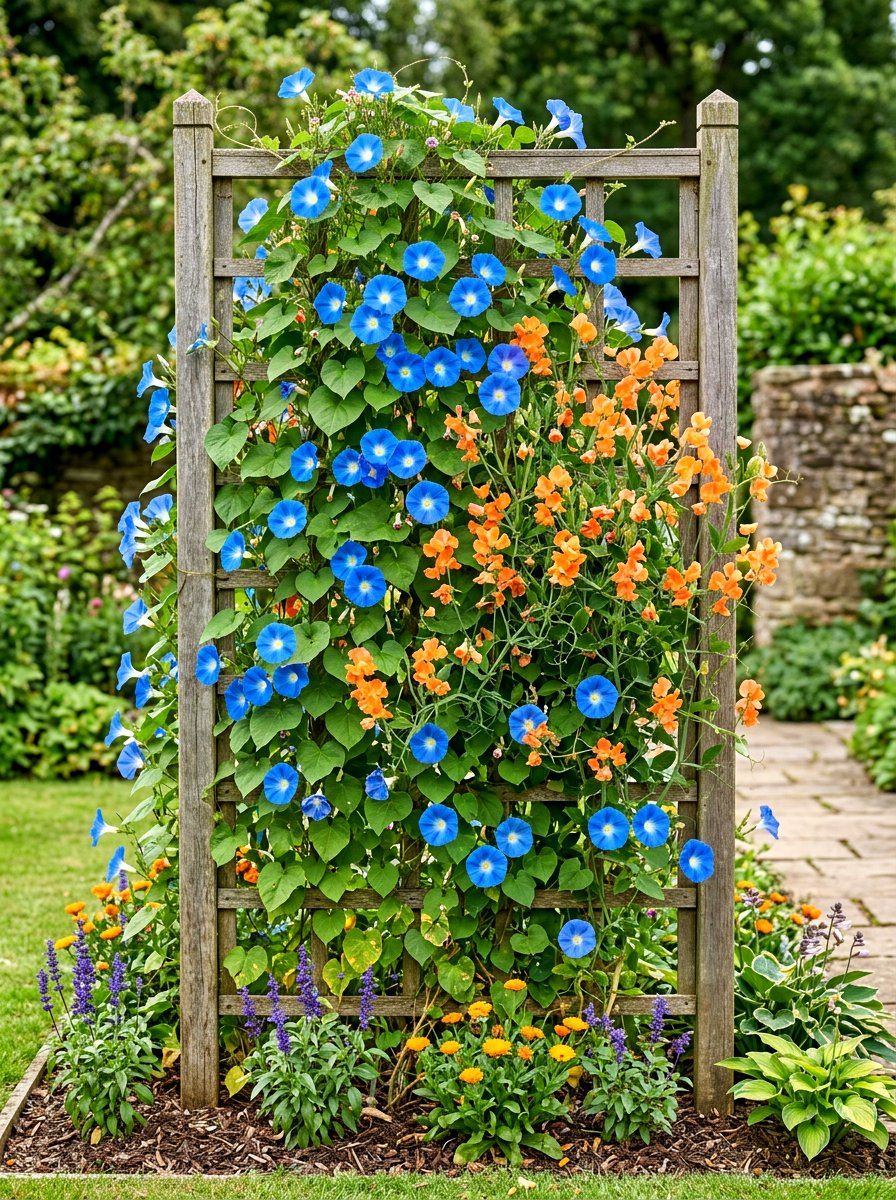
When ground space is limited, you can still enjoy a lush summer border by utilizing vertical gardening techniques and climbing annual plants. Morning glories, black-eyed Susan vines, and sweet peas can be trained to grow up a trellis or a fence at the back of a narrow bed. This adds a wall of color and greenery that takes up very little horizontal room while providing significant visual impact and privacy. Combining these climbers with shorter annuals at the base creates a complete and tiered look that maximizes every inch of your available garden space. Vertical borders are an excellent solution for urban yards, balconies, or small townhouse patios.
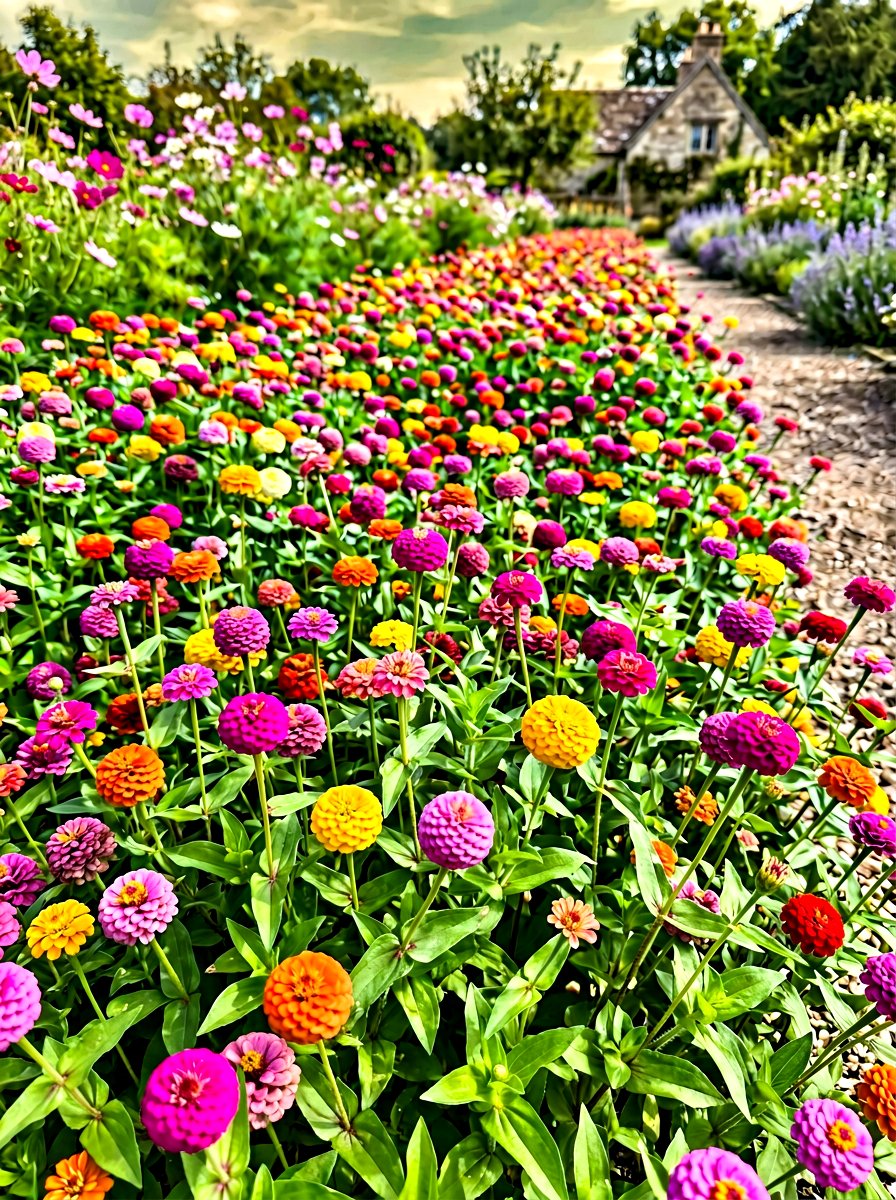
25. Deer Resistant Flower Border
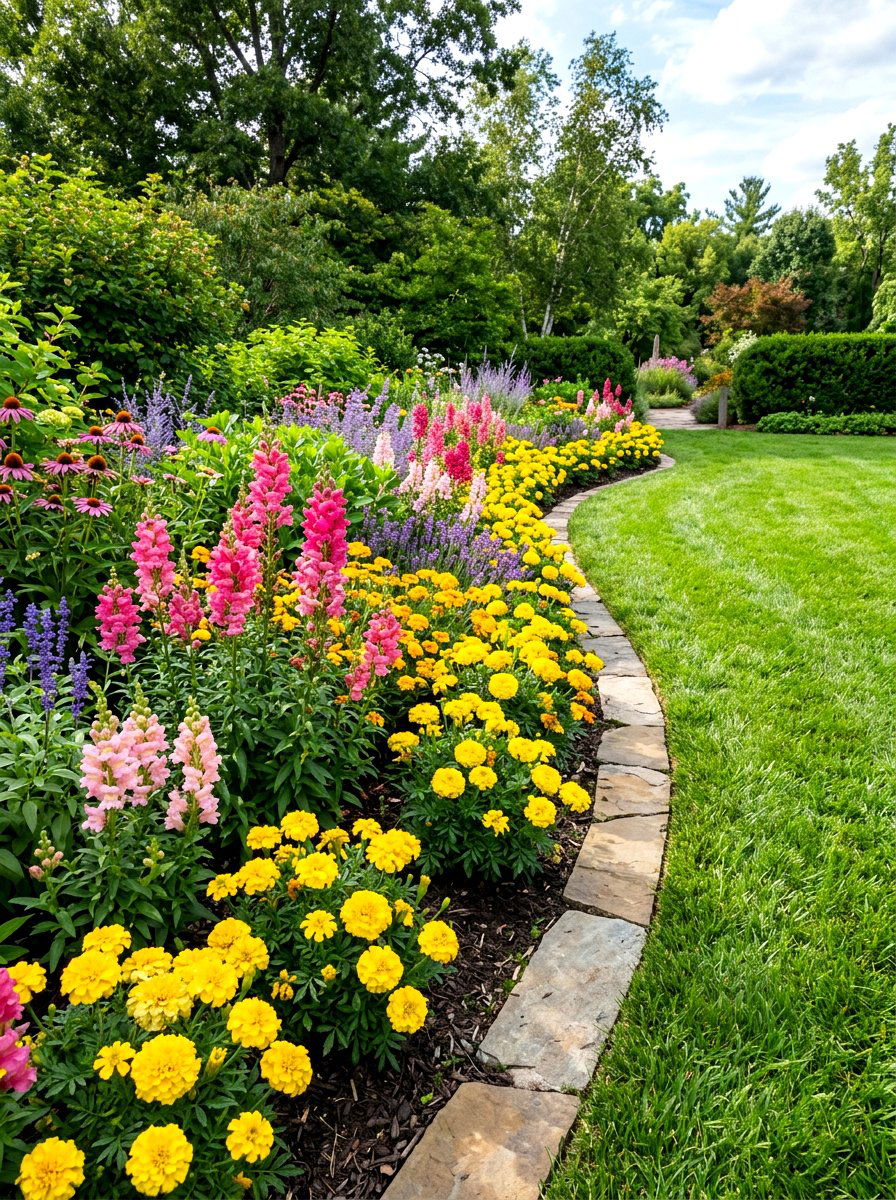
Gardeners who live near wooded areas often struggle with local deer treating their beautiful flower beds as an all-you-can-eat summer buffet. Choosing annuals that deer find unappealing due to their scent or texture, such as marigolds, snapdragons, and cleome, can save your landscape from destruction. Many of these resistant plants have strong fragrances or fuzzy leaves that naturally deter foraging animals without the need for ugly fences or chemical sprays. By planning your border with these smart choices, you can enjoy a full and colorful garden that remains untouched by wildlife throughout the season. A deer-resistant bed provides peace of mind and reduces the frustration of lost plants.
26. Early Summer Bloom Border
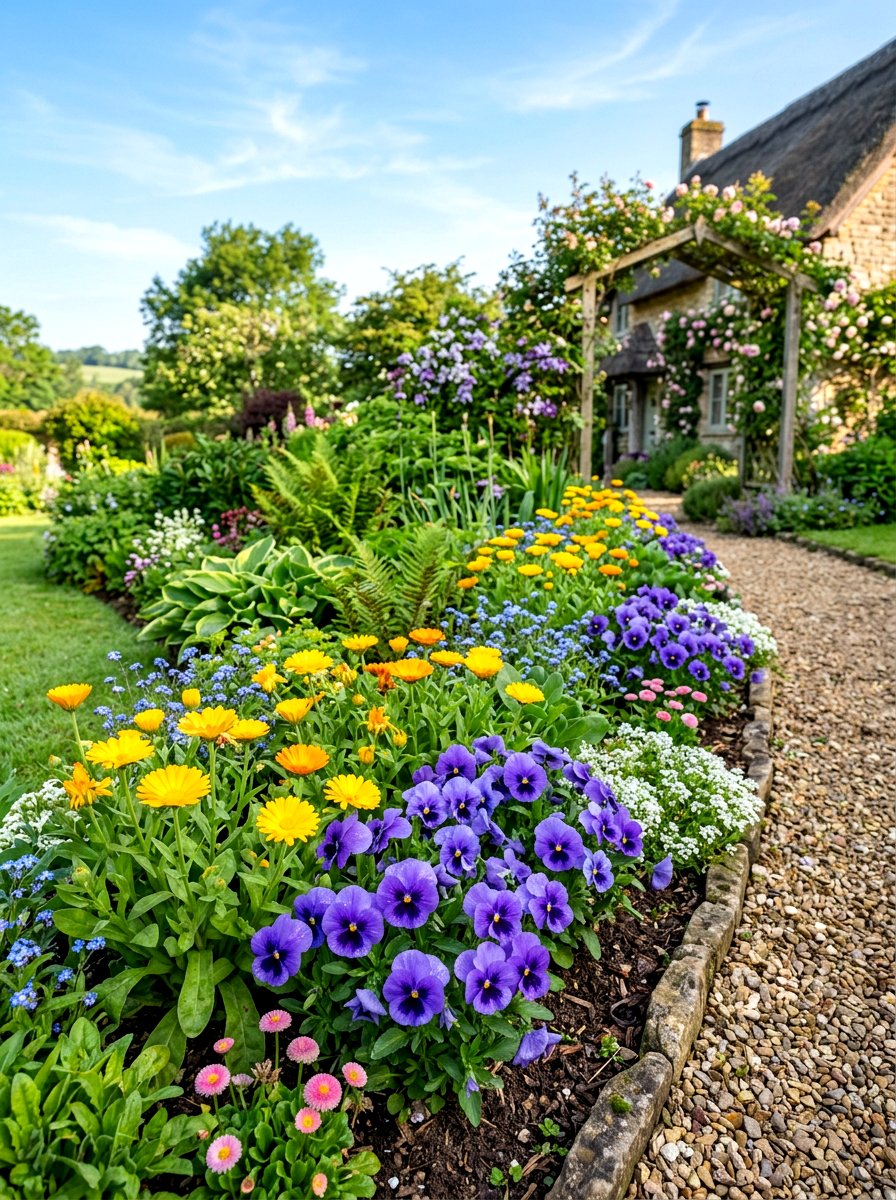
To ensure your garden looks its best from the very beginning of the season, focus on annuals that reach maturity quickly and bloom early. Varieties like pansies, violas, and calendula can often be planted as soon as the threat of a hard frost has passed in the spring. These early performers set the stage for the rest of the summer, providing immediate color while the heat-loving species are still getting established. Integrating these with your later-blooming plants ensures there is never a gap in the visual appeal of your home's exterior landscape. An early-season border jumpstarts your curb appeal and makes your yard look cared for and vibrant.
27. Late Summer Heat Border
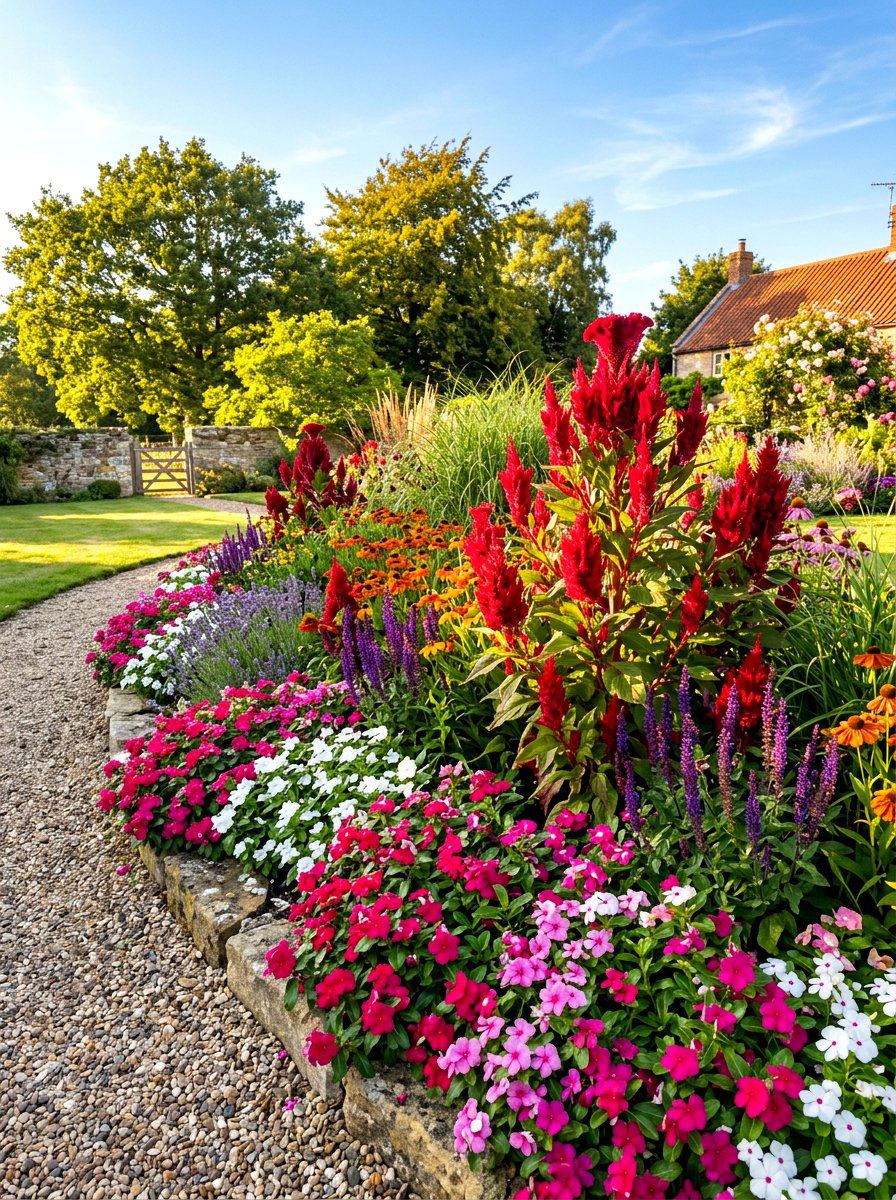
As the intense heat of August arrives, some annuals may begin to fade, making it important to include varieties that actually thrive in high temperatures. Lantana, vinca, and celosia are famous for their ability to look fresh and vibrant even during the most punishing heatwaves of the late summer. These plants are the endurance athletes of the garden world, maintaining their bloom production when other species might require extra care or replacement. Planning for this late-season surge ensures that your home continues to look beautiful through Labor Day and beyond. A heat-tolerant border is a resilient and practical investment that keeps your landscape looking professional and healthy.
28. Narrow Walkway Flower Border
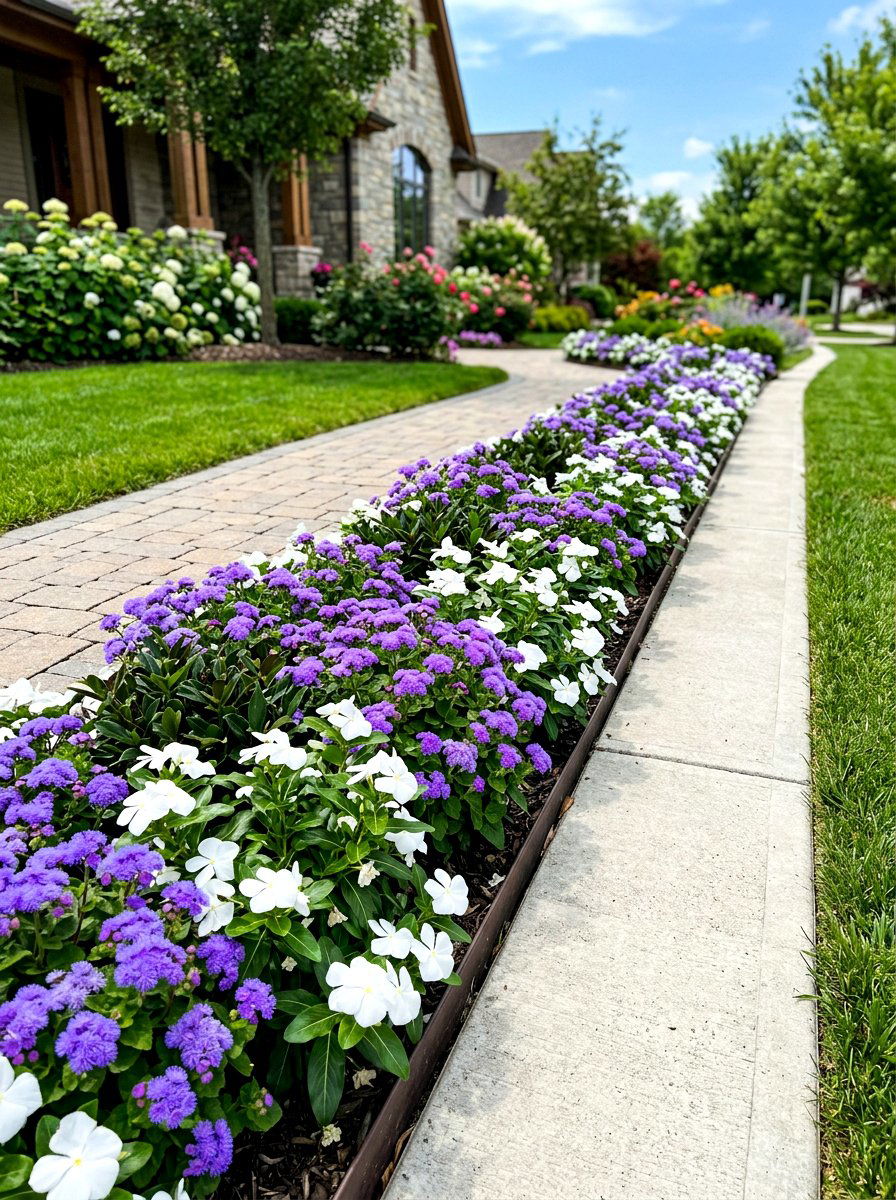
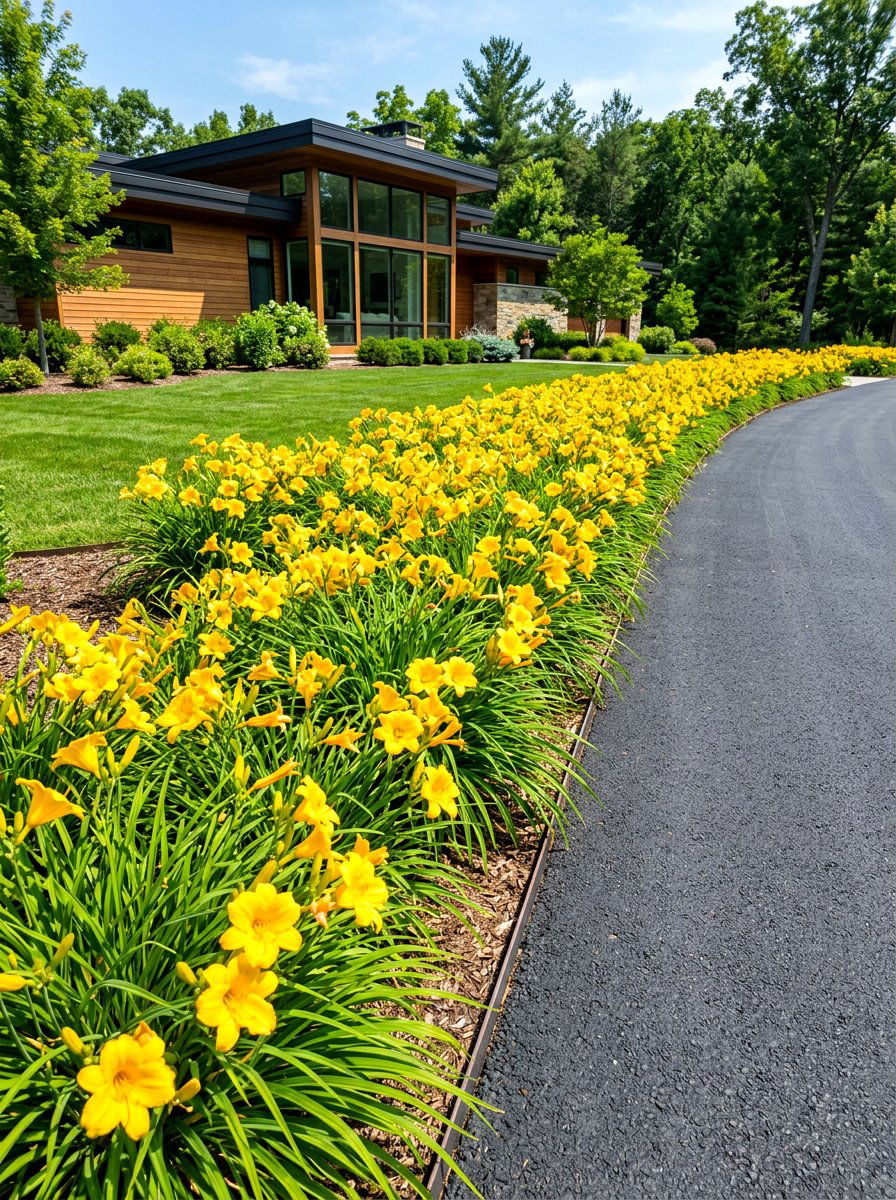
Landscaping the thin strip of land between a driveway and a sidewalk requires annuals that stay compact and do not overgrow their boundaries. Choose low-growing and upright varieties like dwarf marigolds, ageratum, or vinca to create a neat and tidy edge that does not interfere with foot traffic. Using a repeating pattern of just two or three colors can make a long, narrow space feel more cohesive and intentionally designed rather than cluttered. These small-scale borders are essential for defining paths and guiding guests toward your front door with a cheerful and welcoming display. They add a significant amount of charm to the most functional parts of your yard.
29. Raised Bed Flower Border
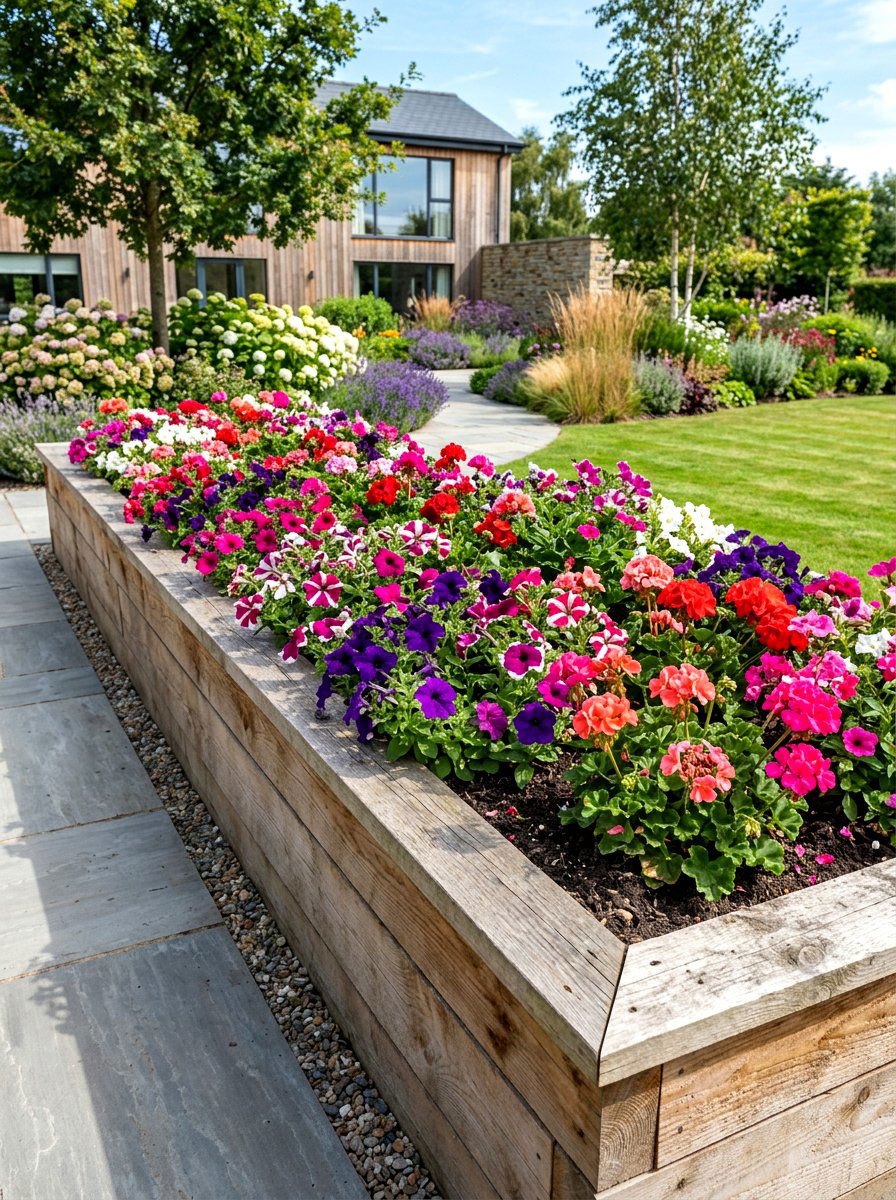
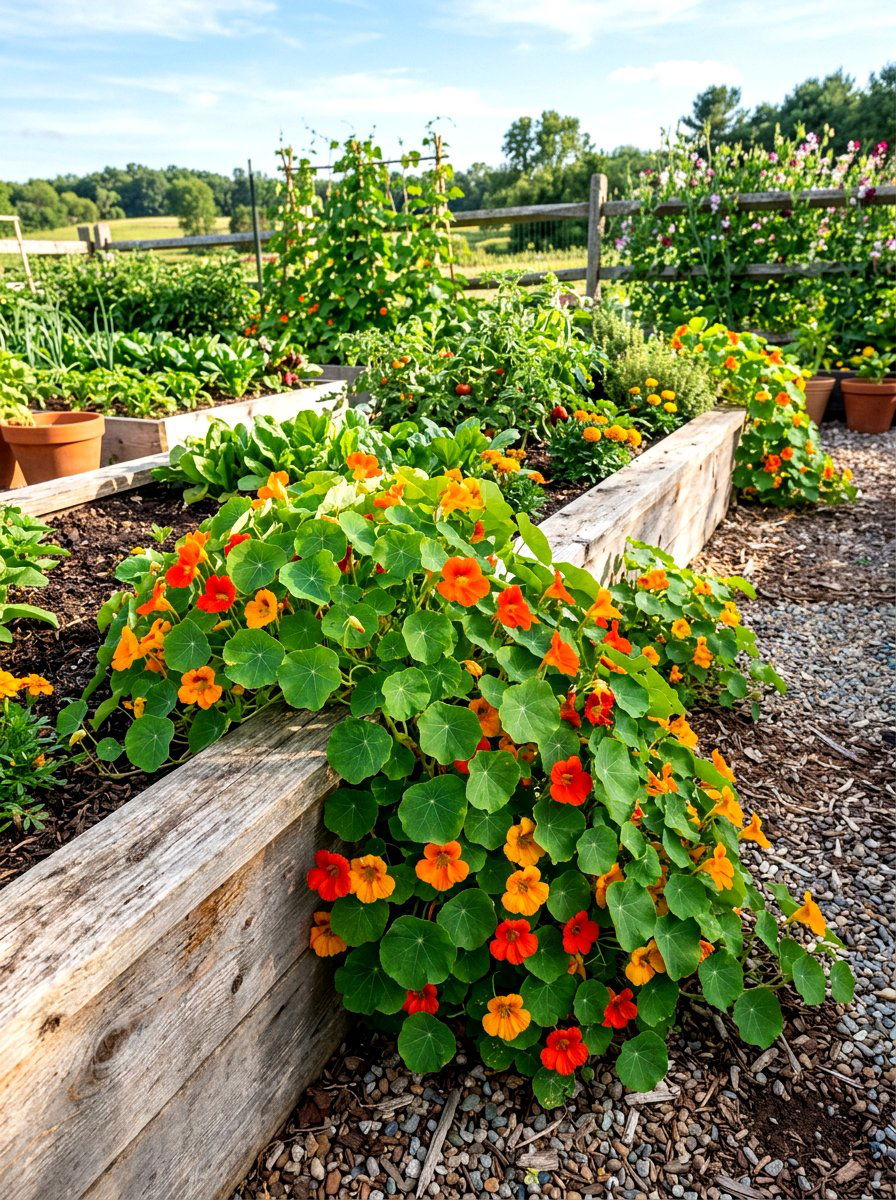
Installing raised beds is a great way to create a defined summer border while also improving soil quality and making maintenance much easier on your back. Elevated beds allow you to control the exact composition of the soil, which is perfect for growing demanding annuals that require excellent drainage and nutrients. You can also incorporate built-in seating or decorative caps on the edges of the beds to make the garden more functional for outdoor entertaining. The height of a raised border brings the flowers closer to eye level, allowing you to appreciate the intricate details and fragrances of your plants more easily. It is a modern and practical landscaping solution.
30. Monochromatic Flower Border
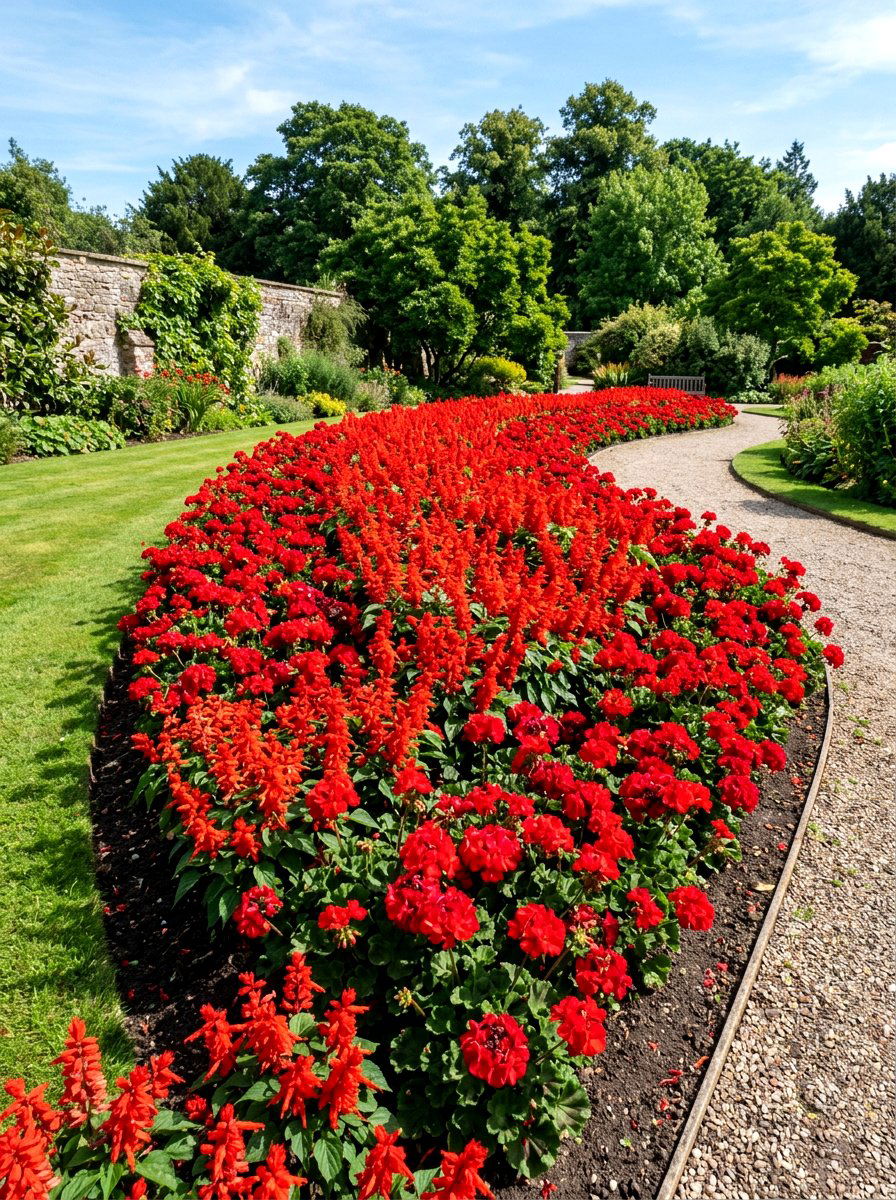
Sticking to a single color for your entire summer border is a bold design choice that creates a high-end, sophisticated, and very organized look. Whether you choose all red, all yellow, or all purple, the impact of a large mass of a single hue is undeniably powerful and memorable. Using different species of plants within that color family adds subtle variations in texture and shade that keep the display from looking flat or boring. For example, a red border could include scarlet salvias, crimson geraniums, and ruby-toned petunias for a rich and complex visual experience. This focused approach shows a high level of design confidence and curb appeal.
Conclusion:
Designing a summer annual border is a journey that blends personal creativity with the natural beauty of seasonal flowers to enhance your home. By considering factors like light, height, and color, you can create a customized landscape that reflects your individual style and meets your maintenance needs. Whether you prefer the wild charm of a cottage garden or the sleek precision of a modern geometric edge, annuals provide the flexibility to change your look every year. These vibrant plantings not only beautify your property but also provide a sanctuary for local pollinators and a source of daily joy for your family. Start planning today for a spectacular and colorful summer season.

Related posts: