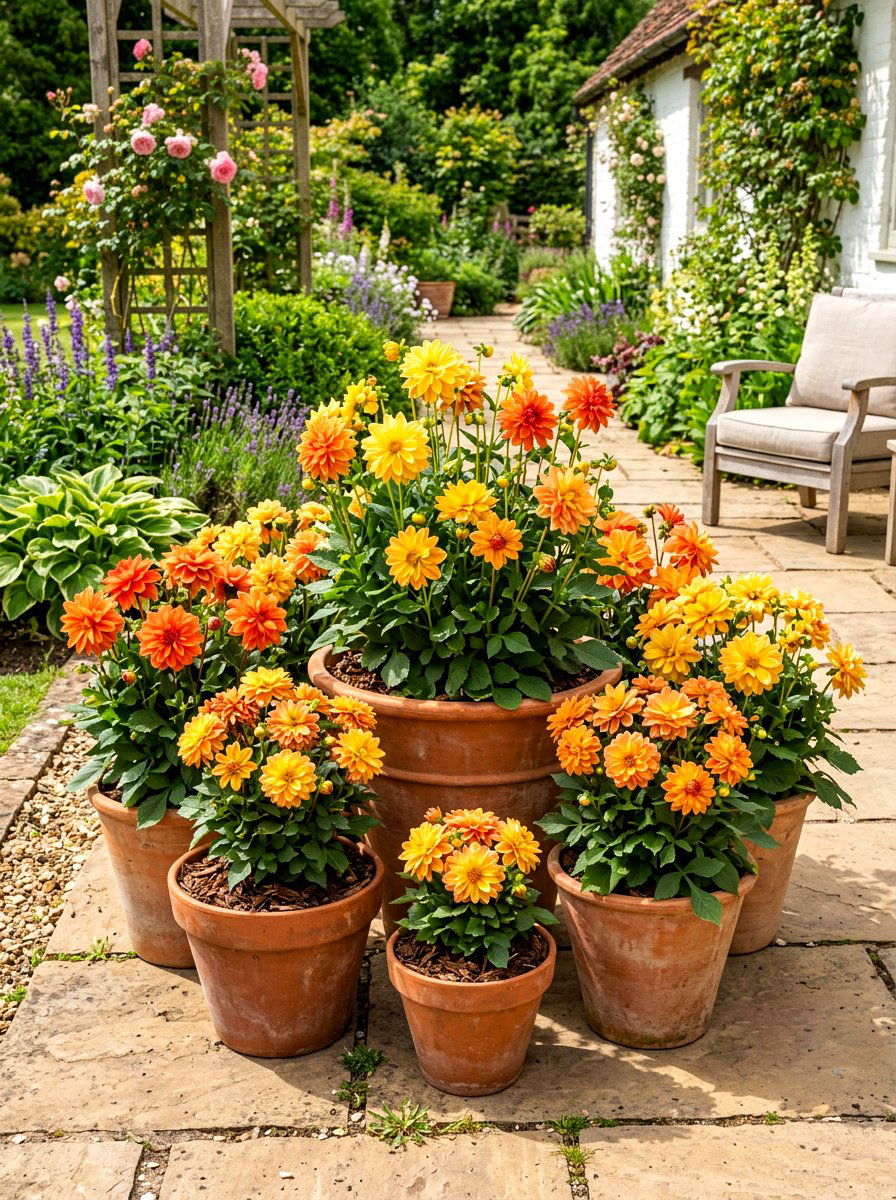
Creating a vibrant garden starts with selecting the right annual flowers to build beautiful borders. Annuals are perfect because they provide instant, season-long color and allow you to change your landscape design every single year. Whether you want a neat edge along a stone walkway or a wild, cottage-style explosion of blooms, these plants offer endless variety. They bridge the gaps between perennials and bring a refreshing energy to your outdoor space. In this guide, we explore thirty distinct ways to use annuals to define your garden beds. From height layering to color coordination, you will find inspiration to transform your yard into a professional, floral masterpiece that catches every eye.
1. Petunia border garden
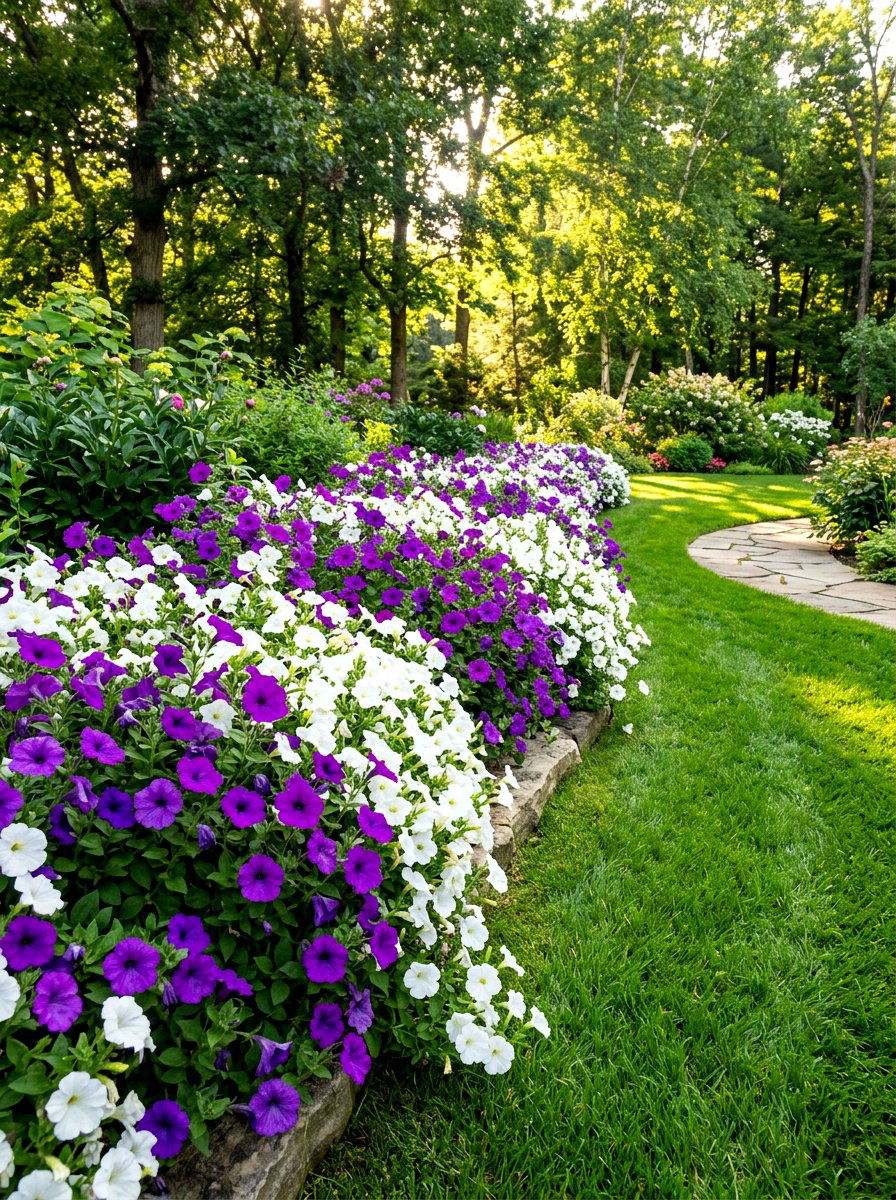
A classic petunia border garden offers a lush carpet of continuous color that lasts from late spring until the first frost. These versatile annuals come in nearly every shade imaginable, making them ideal for creating specific color themes. For a cohesive look, try mass planting a single variety or mixing two complementary tones like purple and white. They thrive in full sun and require regular deadheading to stay bushy and productive. Some modern varieties, however, are self-cleaning and need very little maintenance. Their trailing habit allows them to spill over the edges of garden beds, softening the transition between your lawn and the floral display with a soft, cascading effect.
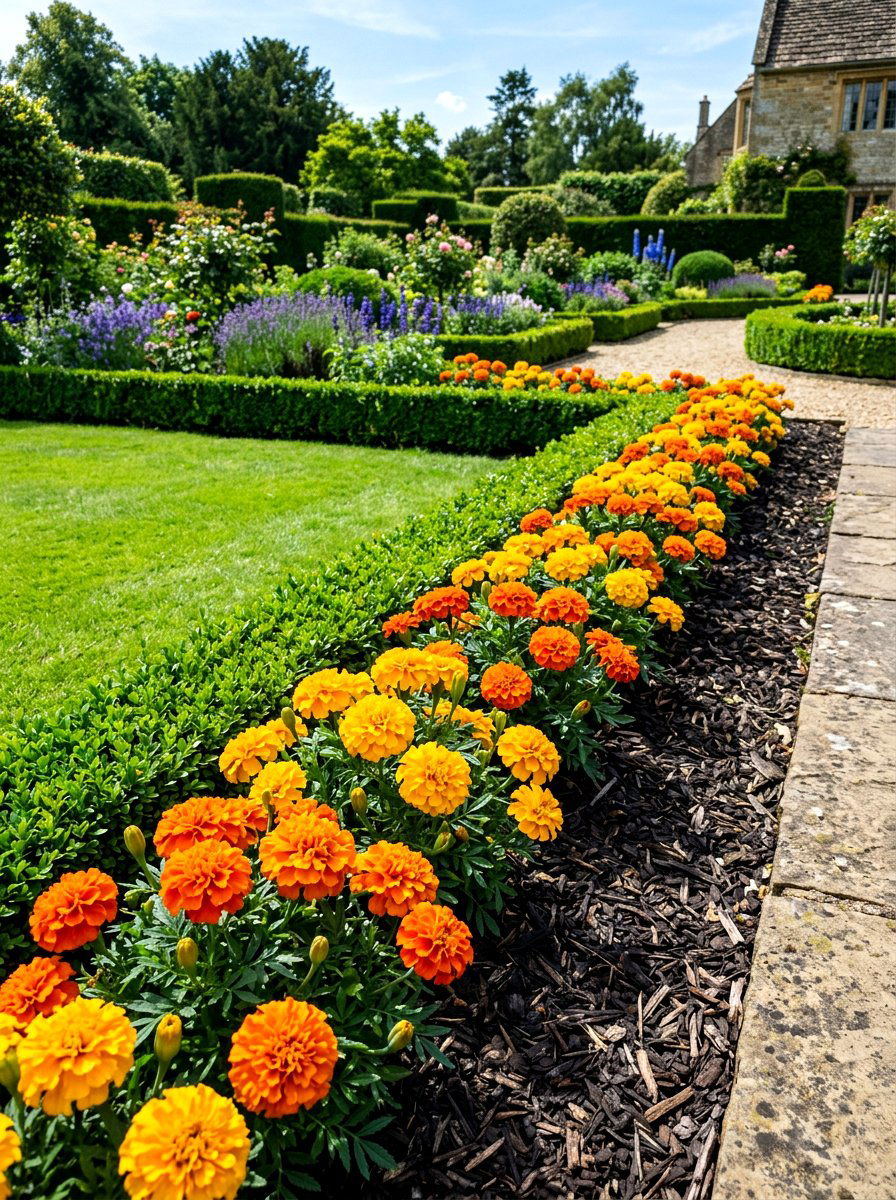
2. Marigold edging plants
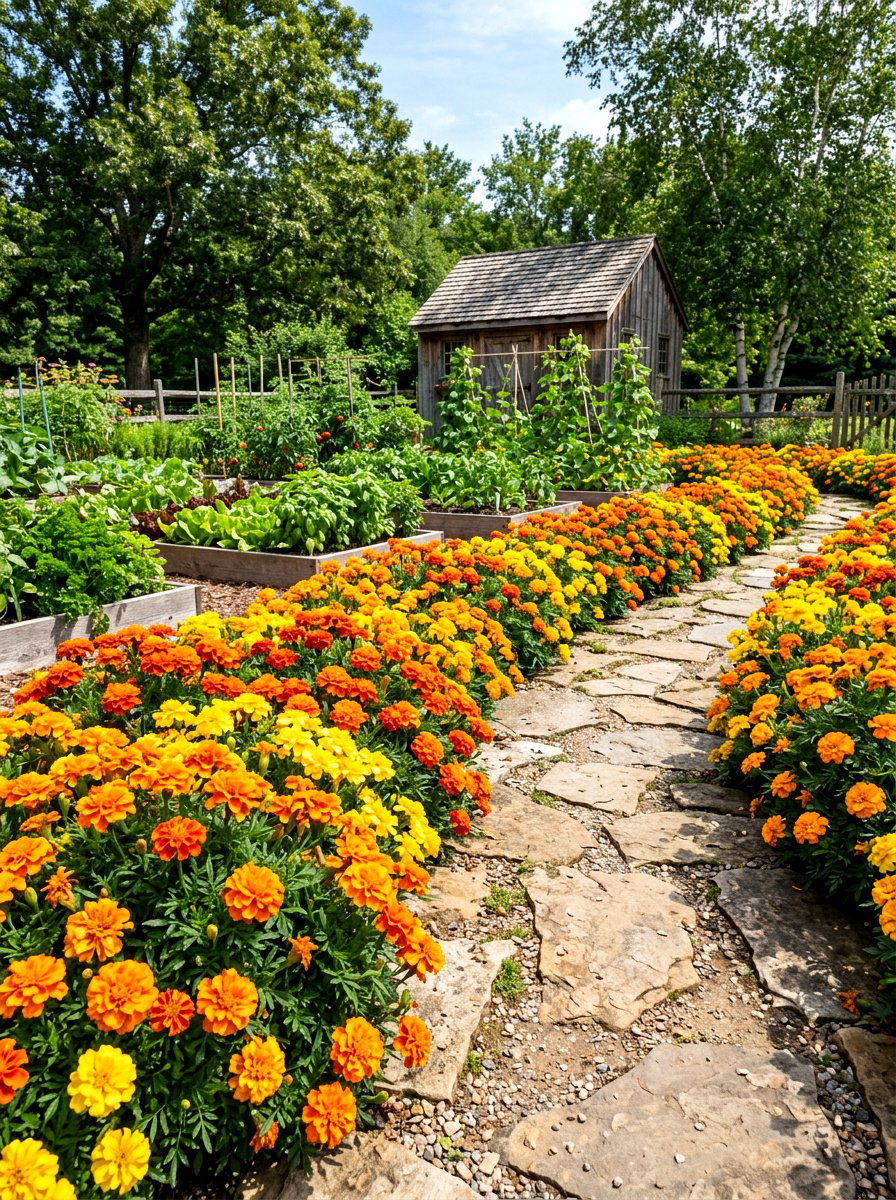
Using marigold edging plants is a timeless way to define the perimeter of your vegetable or flower beds. These hardy annuals are famous for their bright yellow, orange, and mahogany tones that bring a sunny warmth to any landscape. Beyond their visual appeal, marigolds are excellent companions for other plants because their strong scent often repels common garden pests. You can choose compact French marigolds for a low, neat border or taller African varieties to create a medium-height hedge. They are incredibly easy to grow from seed, making them a budget-friendly option for large areas. Their ruffled blossoms add a unique texture that contrasts beautifully with fine-leaved greenery.
3. Zinnia flower bed
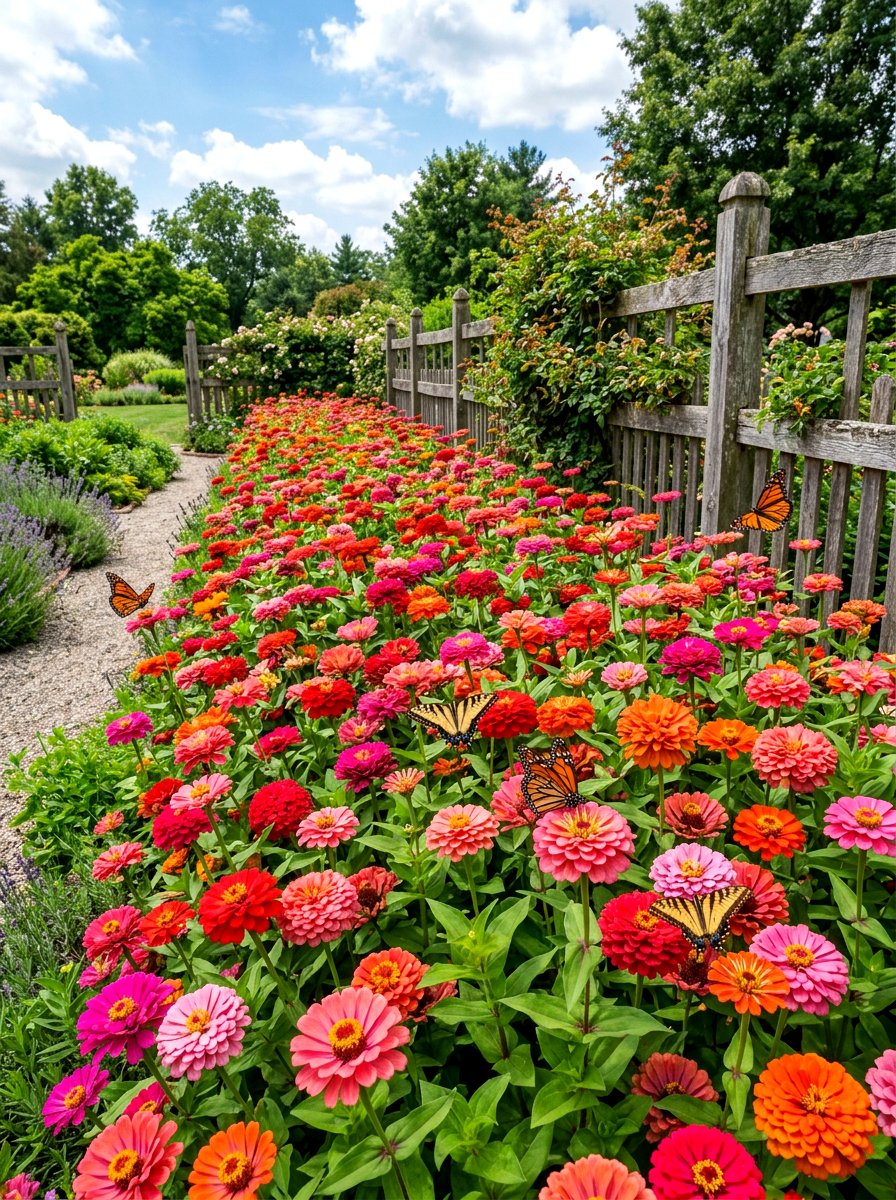
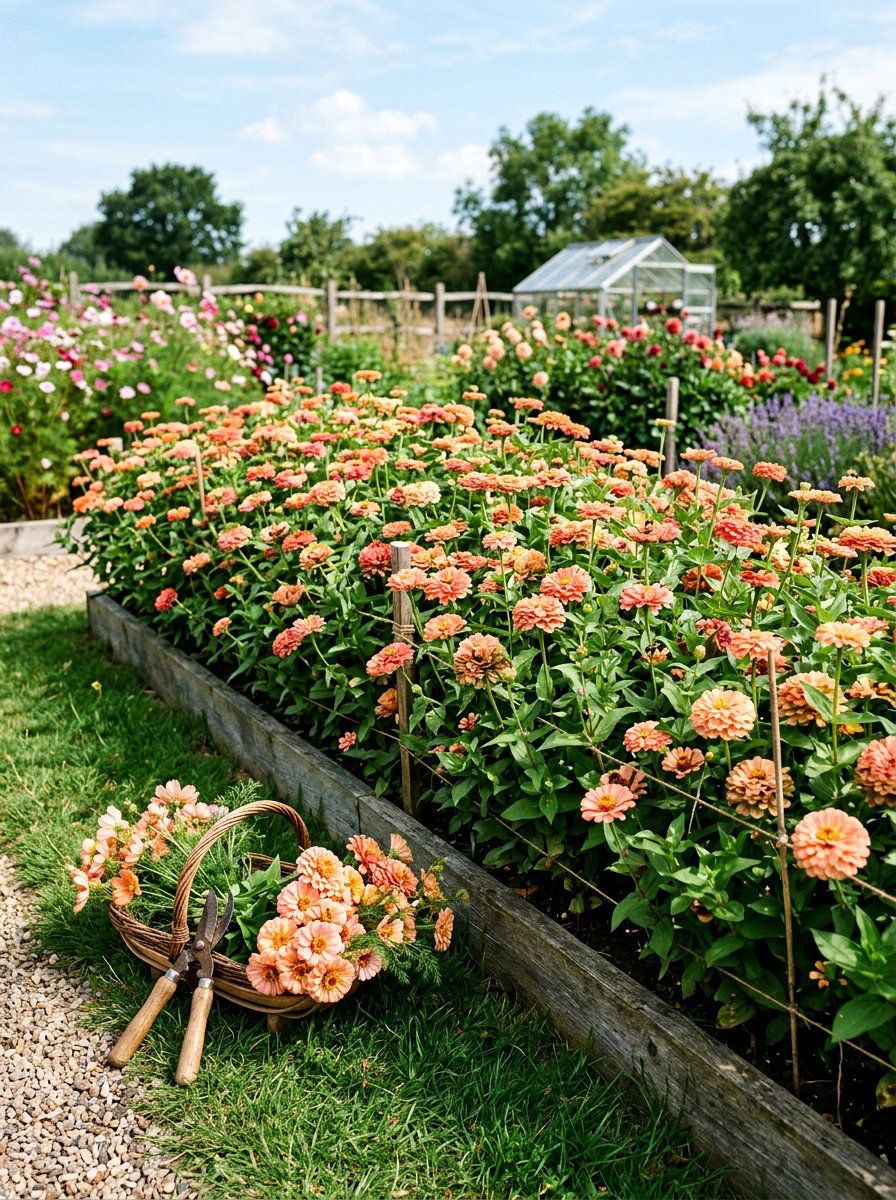
A zinnia flower bed is perhaps the best way to invite pollinators and vibrant color into your backyard during the hottest summer months. These heat-loving annuals come in a stunning array of shapes, including pom-poms, cactus-flowered, and single-petal varieties. To create a professional-looking border, plant them in dense clusters rather than thin lines. This creates a bold block of color that stands out from a distance. Zinnias are also fantastic for cutting, so you can enjoy fresh bouquets inside while your border continues to bloom. Make sure they have plenty of air circulation and sun to prevent powdery mildew. They will reward you with nonstop flowers until autumn arrives.
4. Cosmos cottage garden
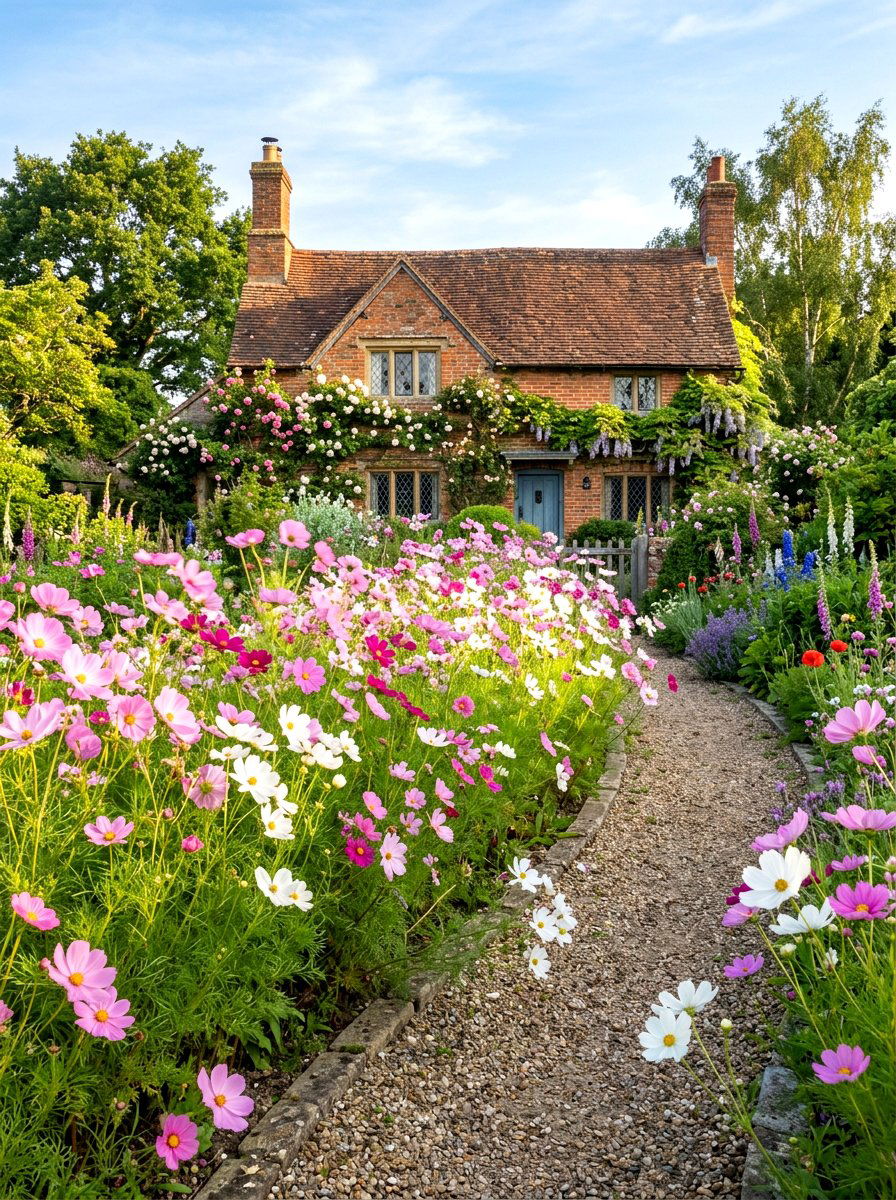
The cosmos cottage garden style is perfect for those who love a whimsical, airy, and natural look. These plants feature delicate, fern-like foliage and daisy-shaped flowers that sway gently in the breeze. Because they can grow quite tall, they work best when planted in the middle or back of an annual border. They help fill empty spaces quickly and provide a soft backdrop for shorter, more structured plants. Cosmos are remarkably drought-tolerant and actually bloom better in soil that isn't overly rich. By choosing soft pinks, whites, and deep magentas, you can create a romantic atmosphere. Their seeds often drop and regrow, giving you a head start next year.
5. Sweet alyssum border
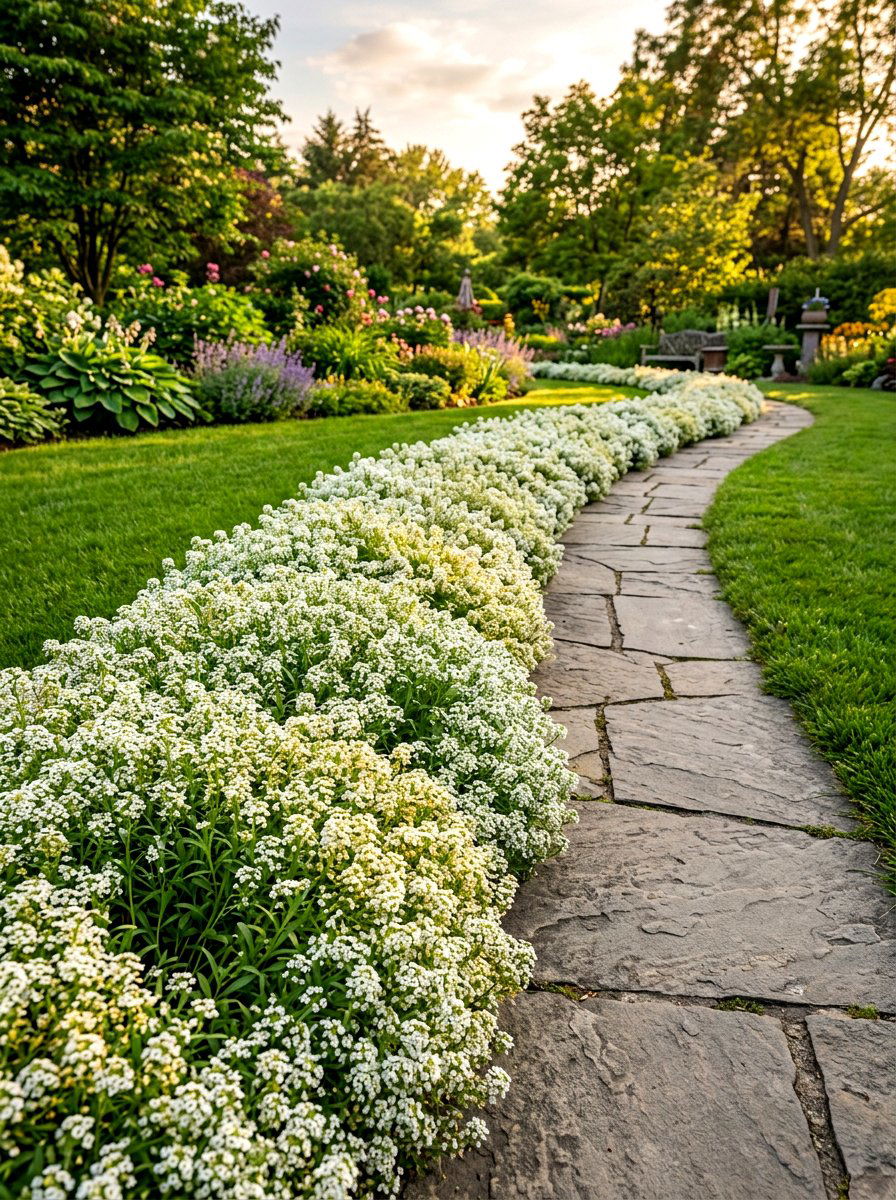
A sweet alyssum border provides a delicate, lace-like edge that smells as wonderful as it looks. These low-growing annuals create a dense mat of tiny flowers in shades of white, violet, or soft pink. They are perfect for filling the gaps between larger plants or lining the very front of a garden bed. The honey-sweet fragrance is most noticeable on warm, sunny days, making your garden walkways a sensory delight. Because they grow close to the ground, they act as a living mulch, keeping the soil cool and suppressing weeds. Alyssum is also a magnet for beneficial insects like ladybugs, which help keep your entire garden healthy and balanced.
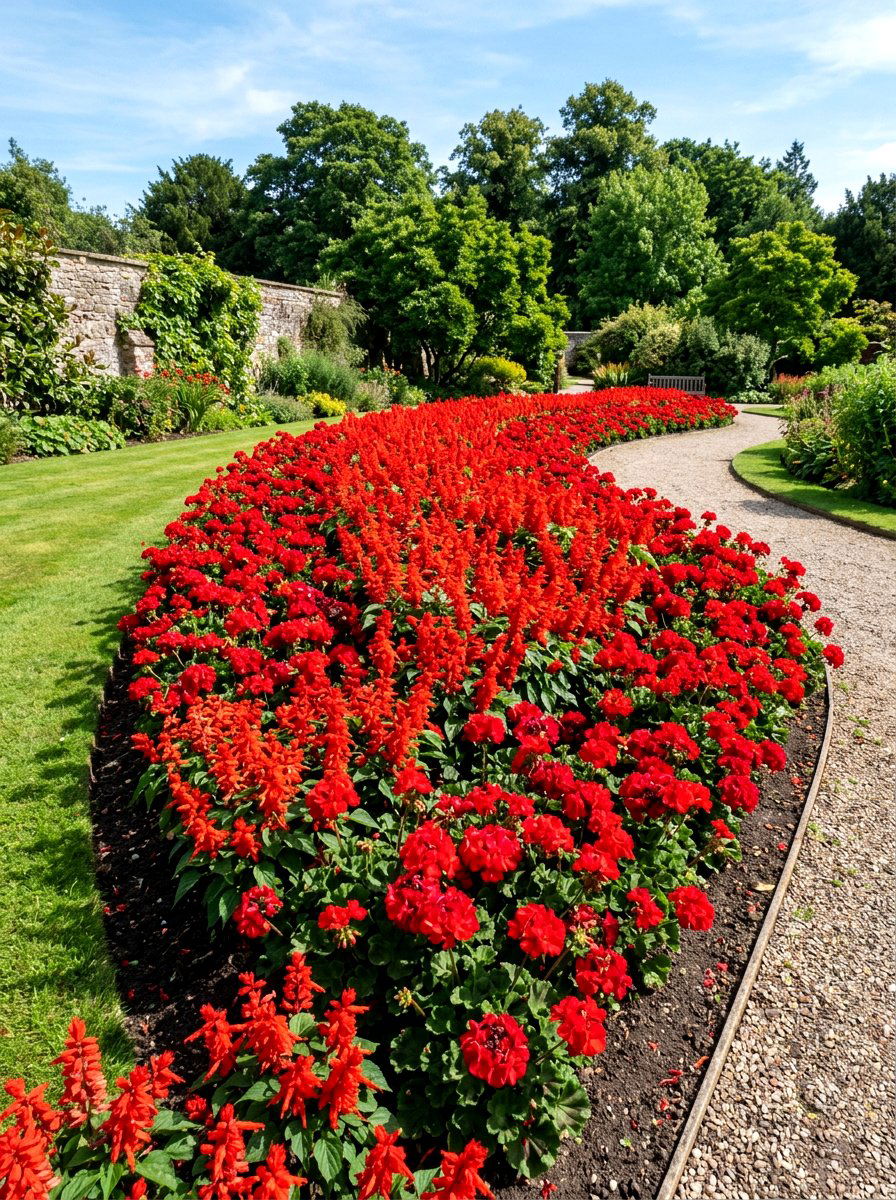
6. Red salvia landscape
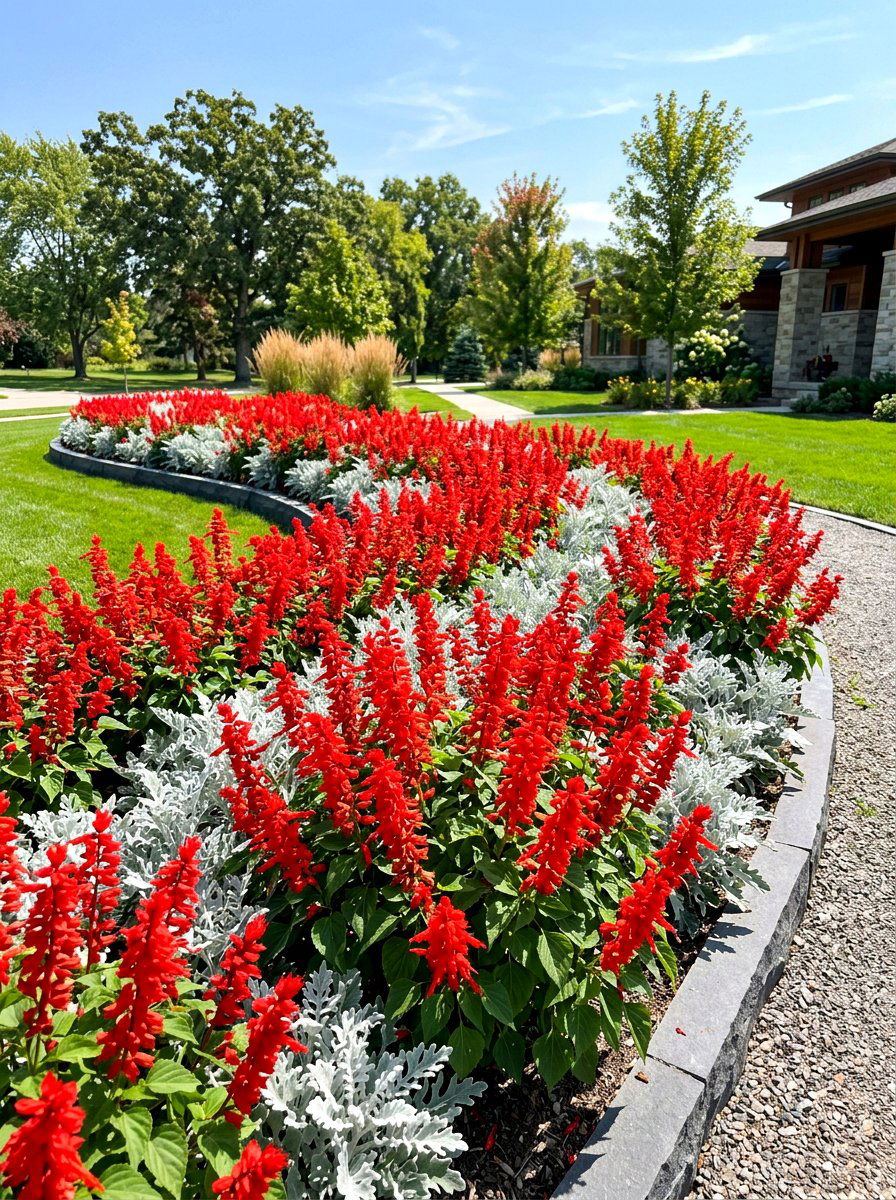
For a high-impact, energetic look, a red salvia landscape is hard to beat. These upright plants produce tall spikes of fiery red blossoms that command attention against dark green foliage. They are a favorite for hummingbirds and butterflies, bringing your garden to life with movement. Salvia is very reliable and can handle hot, sunny conditions with ease. To make the red pop even more, consider bordering it with silver-leafed plants or white annuals. This contrast creates a sophisticated and modern aesthetic. Whether you use them in a formal row or in staggered groups, these flowers provide a strong vertical element that adds structure and height to your border design.
7. Pink geranium garden
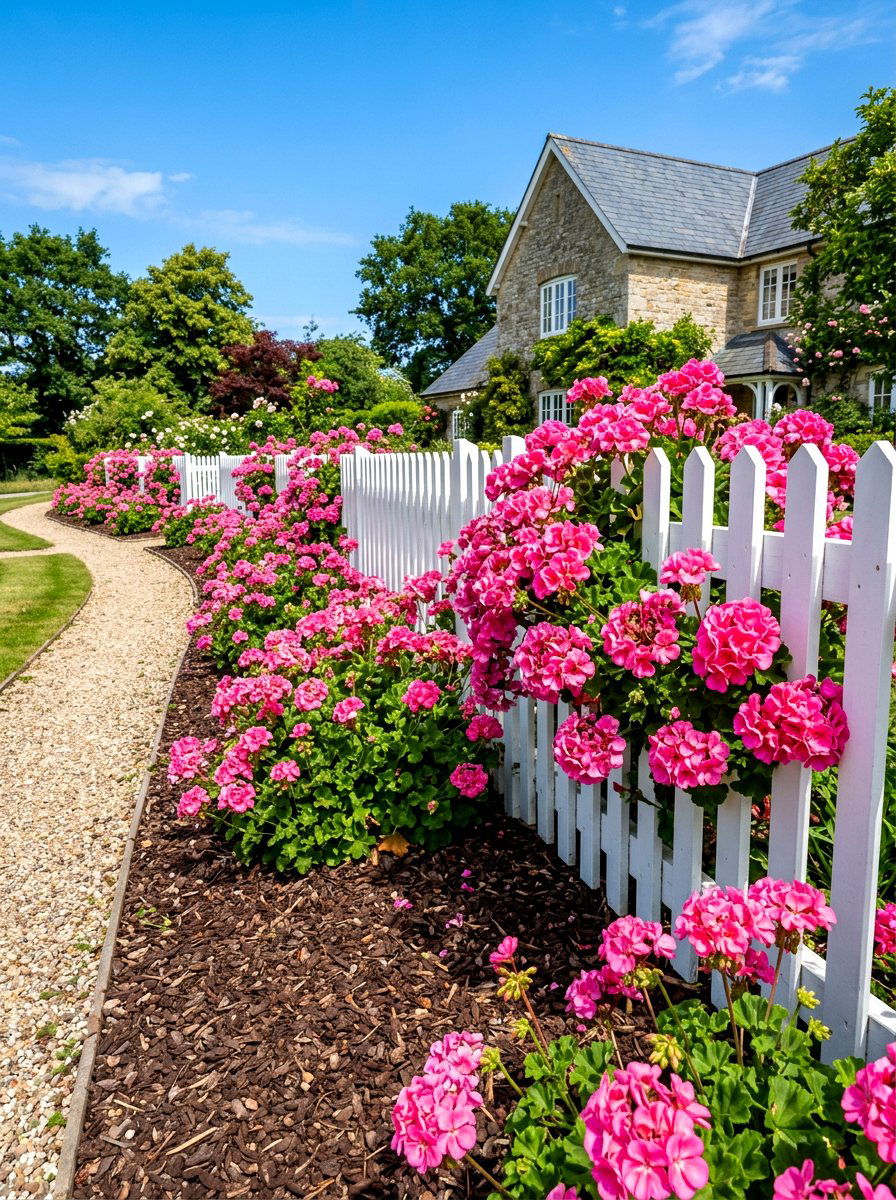
Designing a pink geranium garden brings a traditional and elegant feel to your home’s exterior. Geraniums are known for their large, spherical flower heads and distinctive, scalloped leaves. They are very sturdy and can withstand periods of dry weather once they are established. For a stunning border, plant them close together to form a solid line of color along a patio or porch. You can mix different shades of pink, from soft blush to vibrant fuchsia, to add depth and interest. Removing spent blooms will encourage the plant to keep producing new flowers all summer. Their upright habit makes them perfect for maintaining a tidy and organized garden look.
8. Blue lobelia edging
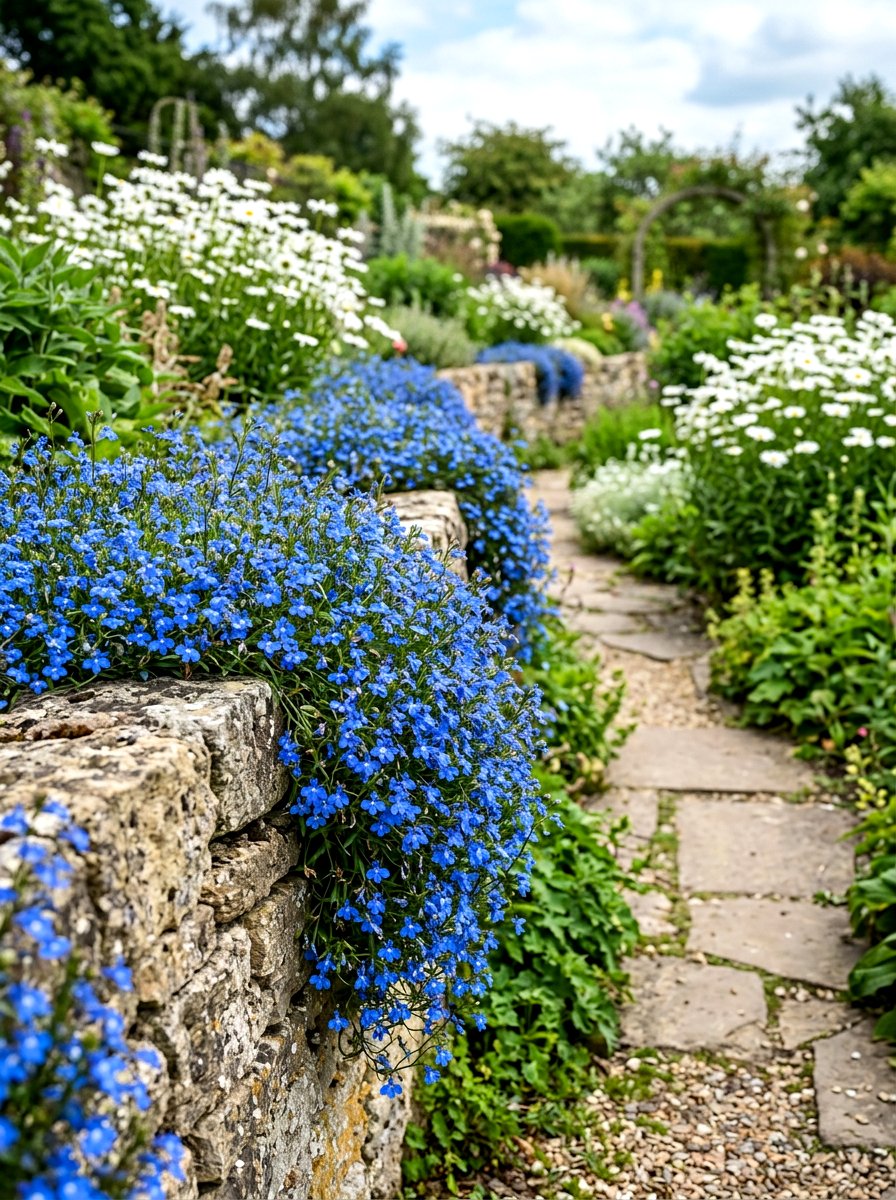
Blue lobelia edging is a fantastic choice for gardeners who want to incorporate cool, calming tones into their landscape. The intense, true blue color of these flowers is relatively rare in the plant world, making them a special addition to any border. Lobelia has a mounding or trailing habit, which allows it to flow beautifully over the edges of garden beds or between rocks. While they love the sun, they appreciate a little shade in the hottest part of the afternoon to keep their blooms fresh. These plants look stunning when paired with bright yellow or white flowers, as the high contrast makes the blue appear even more vivid and deep.
9. Mixed pansy border
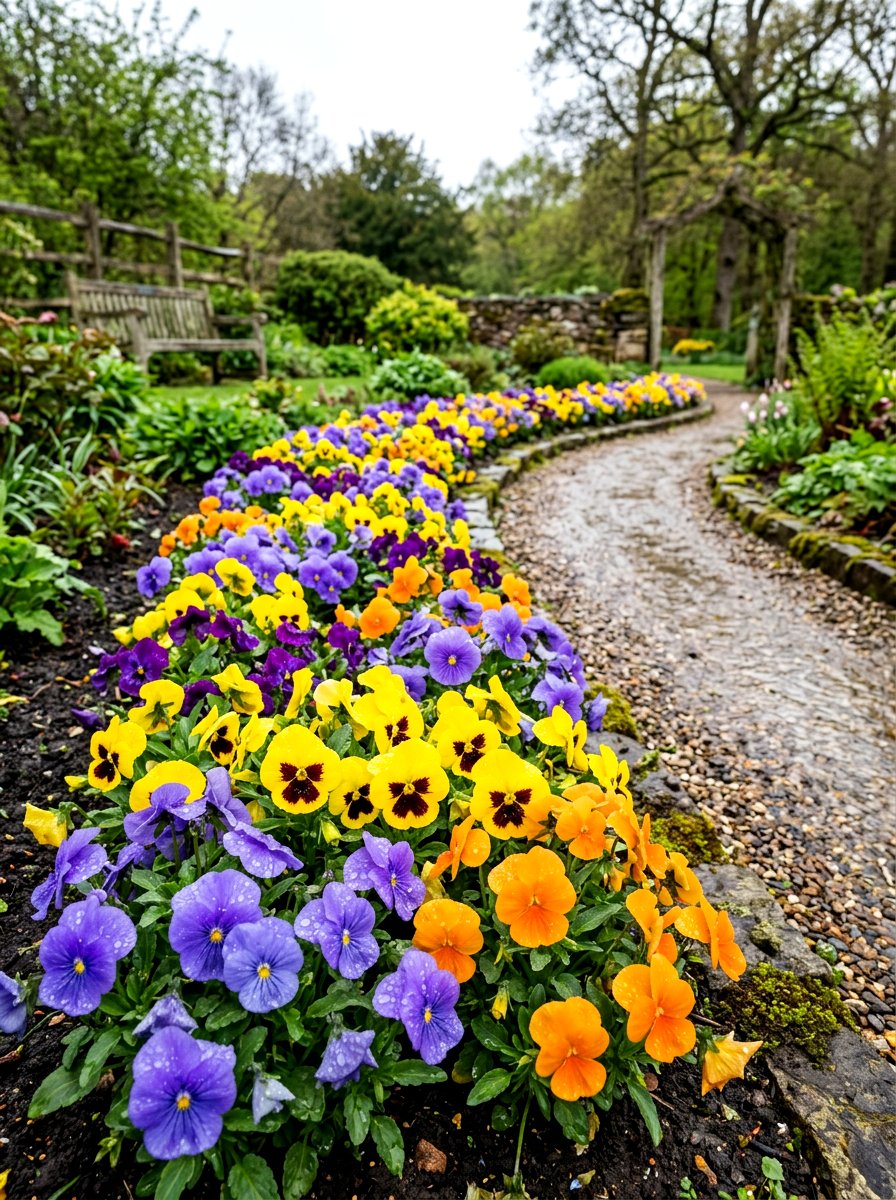
A mixed pansy border is the ideal solution for adding early spring or late autumn color when other plants are still dormant. Pansies are famous for their "faces" and come in a vast range of bi-colors and solid hues. They are exceptionally cold-hardy and can even survive a light frost, making them the first flowers to brighten your yard after winter. Planting them in a dense border creates a cheerful, multi-colored ribbon along your garden path. Because they stay low to the ground, they are perfect for the very front edge of a bed. As summer heat intensifies, they can be replaced with heat-loving annuals for a continuous display.
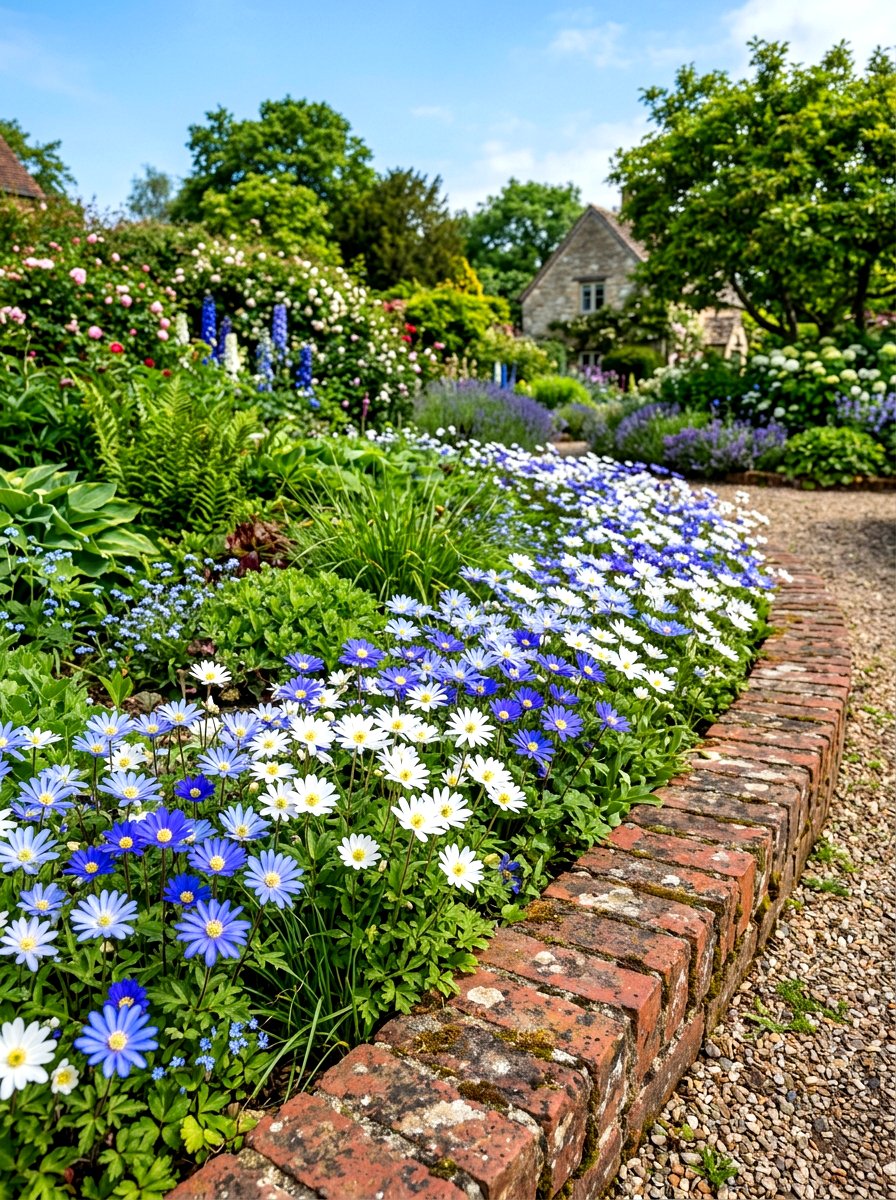
10. Tall sunflower backdrop
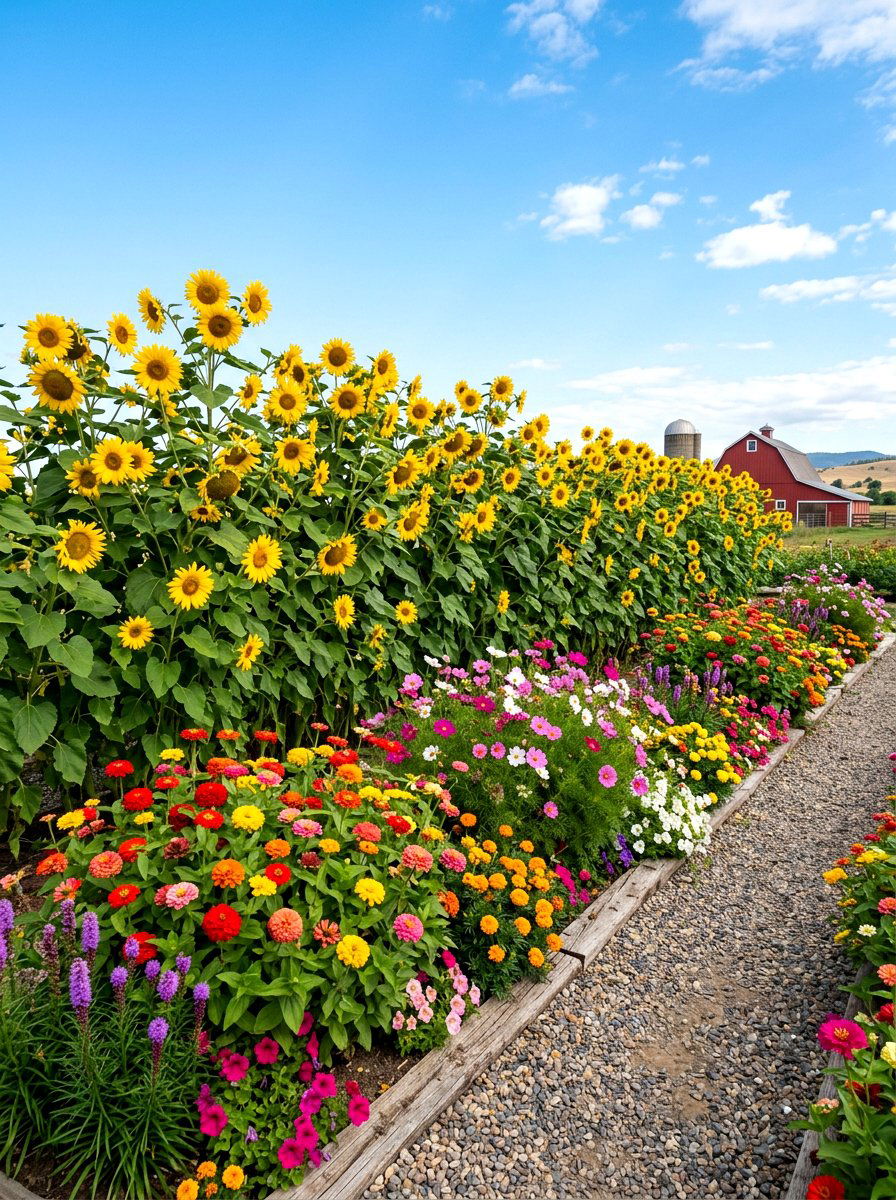
Creating a tall sunflower backdrop adds a sense of height and drama to your annual flower border. Sunflowers are fast-growing and provide a spectacular focal point that can reach several feet high. For a border, look for "branching" varieties that produce multiple flowers on a single plant rather than just one large head. This ensures a longer season of bloom and more visual interest. Position them at the very back of your garden bed so they don't shade out shorter plants. The golden-yellow petals and dark centers are iconic and bring a rustic, cheerful vibe to the yard. They also provide plenty of seeds for local birds.
11. Caladium shade border
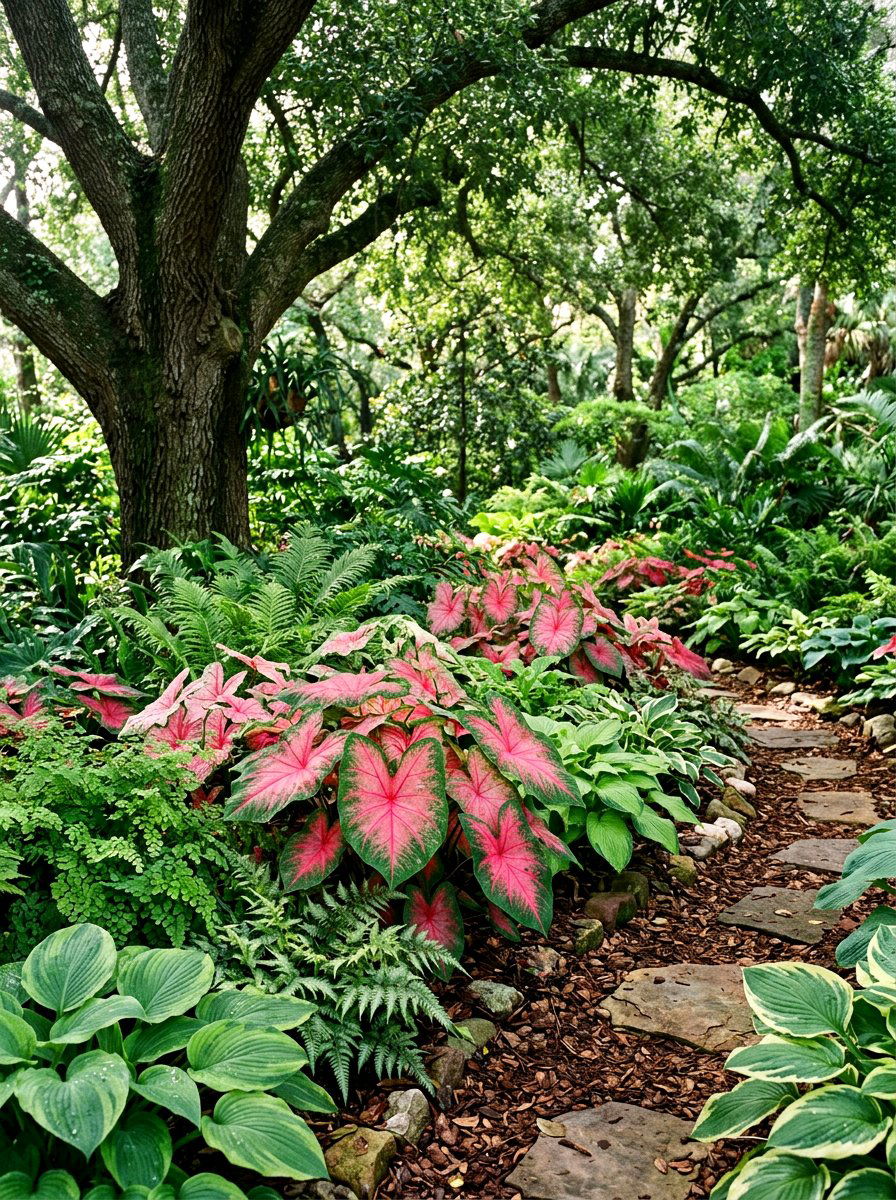
A caladium shade border relies on stunning foliage rather than flowers to provide color in darker corners of the yard. These tropical plants feature large, heart-shaped leaves with incredible patterns in white, pink, and deep red. They are perfect for areas under trees or along the north side of a house where most flowering annuals struggle. Caladiums create a lush, exotic feel and maintain their color consistently throughout the entire growing season. You can mix different varieties to create a tapestry of patterns. Pairing them with fine-textured ferns or hostas enhances the broad-leaved beauty of the caladiums, making your shade garden feel like a peaceful and cool woodland retreat.
12. Begonia garden edge
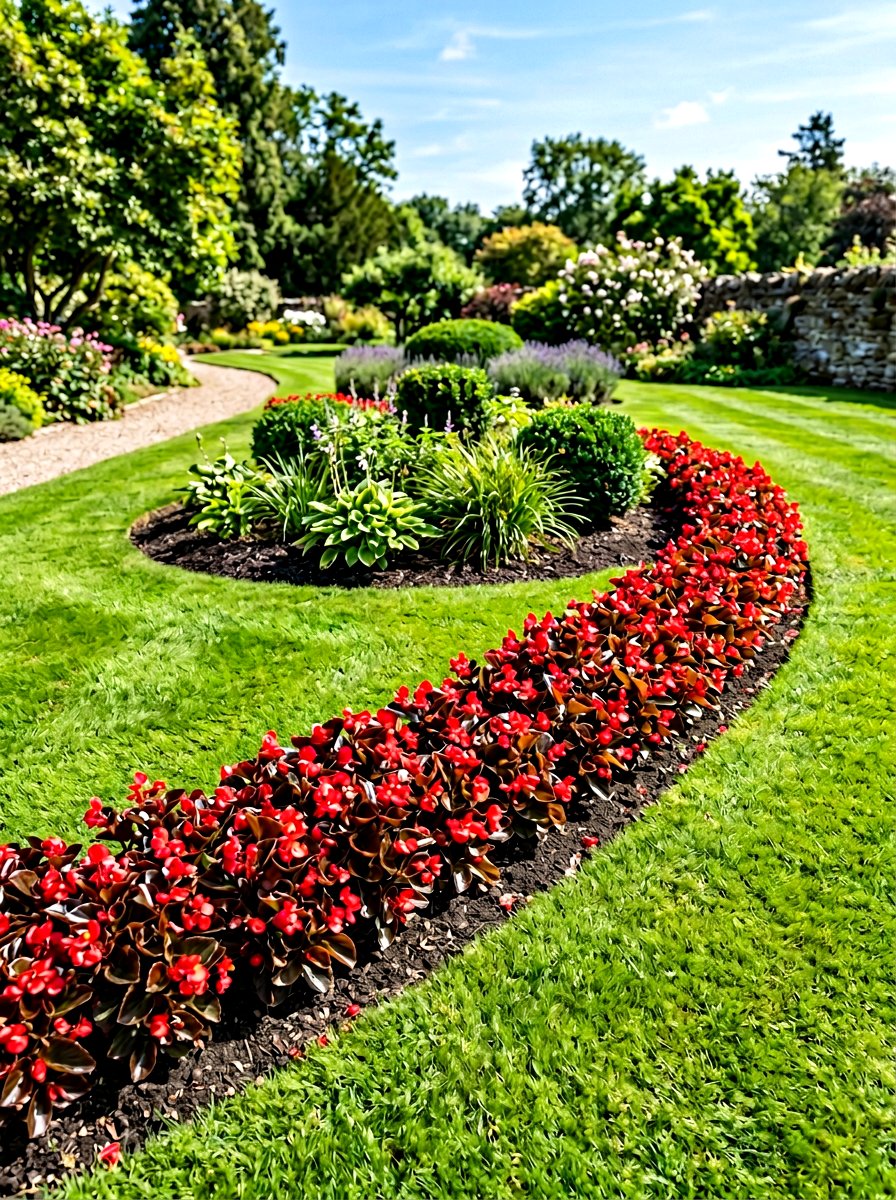
A begonia garden edge is a versatile and low-maintenance option for both sun and shade. Wax begonias, with their shiny green or bronze leaves and clusters of small flowers, are particularly effective for creating neat, uniform borders. They are very resilient and can handle various soil conditions as long as they get regular water. Bronze-leafed varieties are especially popular because they can tolerate more direct sunlight and provide a beautiful dark contrast to the bright pink, red, or white blooms. Because they naturally grow in a compact, rounded shape, they require very little pruning or shaping to look their best. They provide a steady, reliable carpet of color.
13. Impatiens walkway flowers
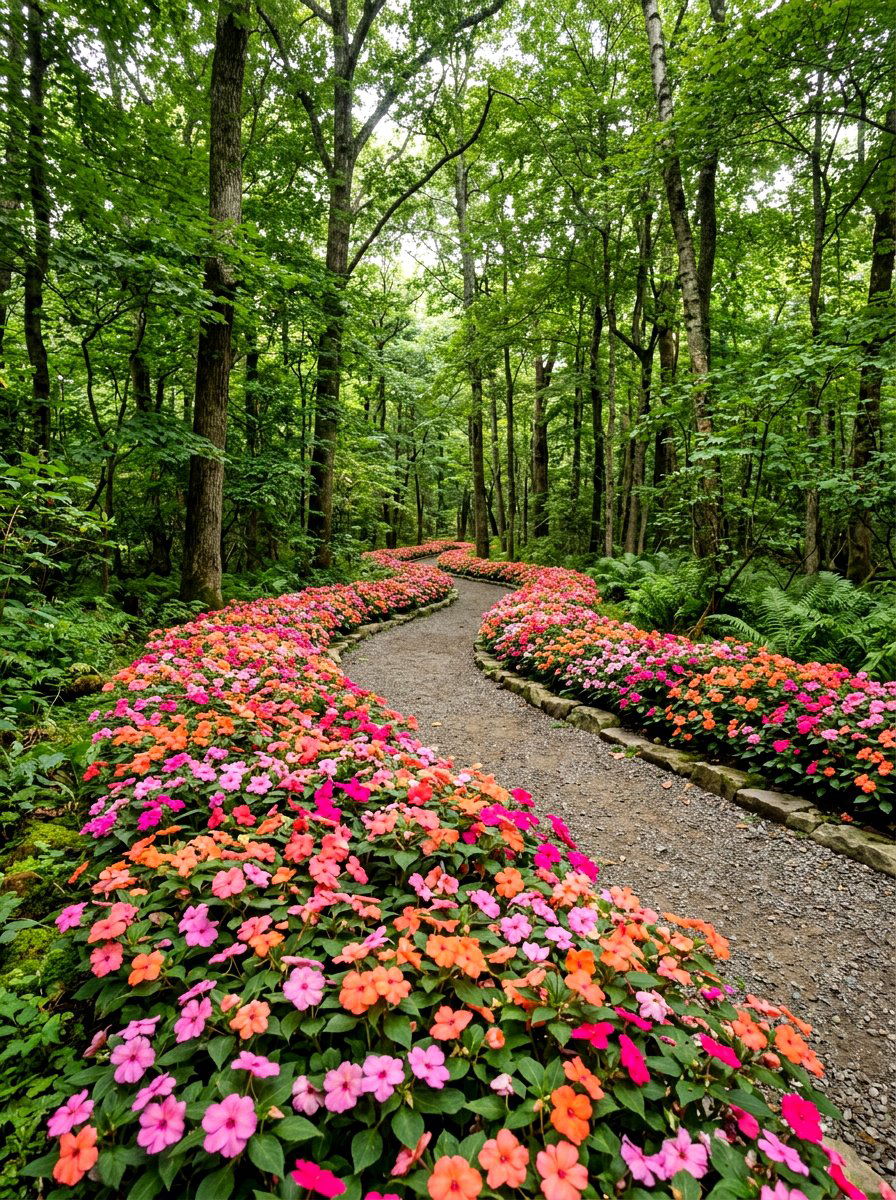
Impatiens walkway flowers are the gold standard for adding bright color to shady paths. These plants are loved for their ability to bloom profusely even in low-light conditions. They form soft, mounding heaps of flowers that can quickly fill in a border with a solid wash of color. For a walkway, consider using a single color to create a formal, clean line that guides the eye toward your entrance. Alternatively, a "tropical" mix of oranges and purples can create a more festive look. Regular watering is key for impatiens, as they prefer consistently moist soil. Their lush, green stems and vibrant petals stay fresh all the way until frost.
14. Snapdragons flower bed
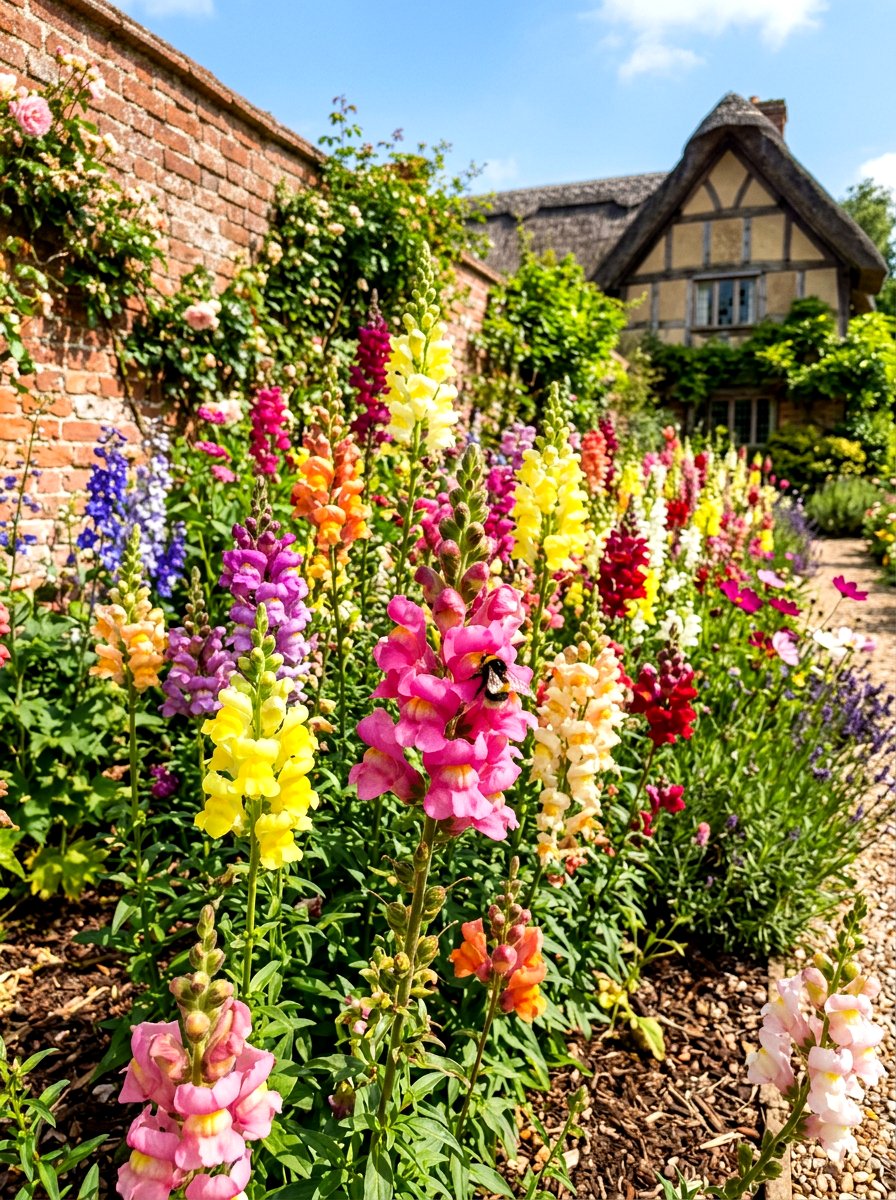
A snapdragons flower bed adds delightful vertical interest and a touch of nostalgia to your garden. These annuals produce tall, sturdy spikes covered in unique, "jaw-like" flowers that children love to play with. They come in three main sizes — dwarf, medium, and tall — allowing you to layer them perfectly within a border. The taller varieties may need staking, but they offer a dramatic height that looks incredible against a fence or wall. Snapdragons prefer cooler weather, so they are often at their best in early summer and again in the fall. Their wide palette of colors, including bicolors, makes them easy to coordinate with other garden plants.
15. Dusty miller silver foliage
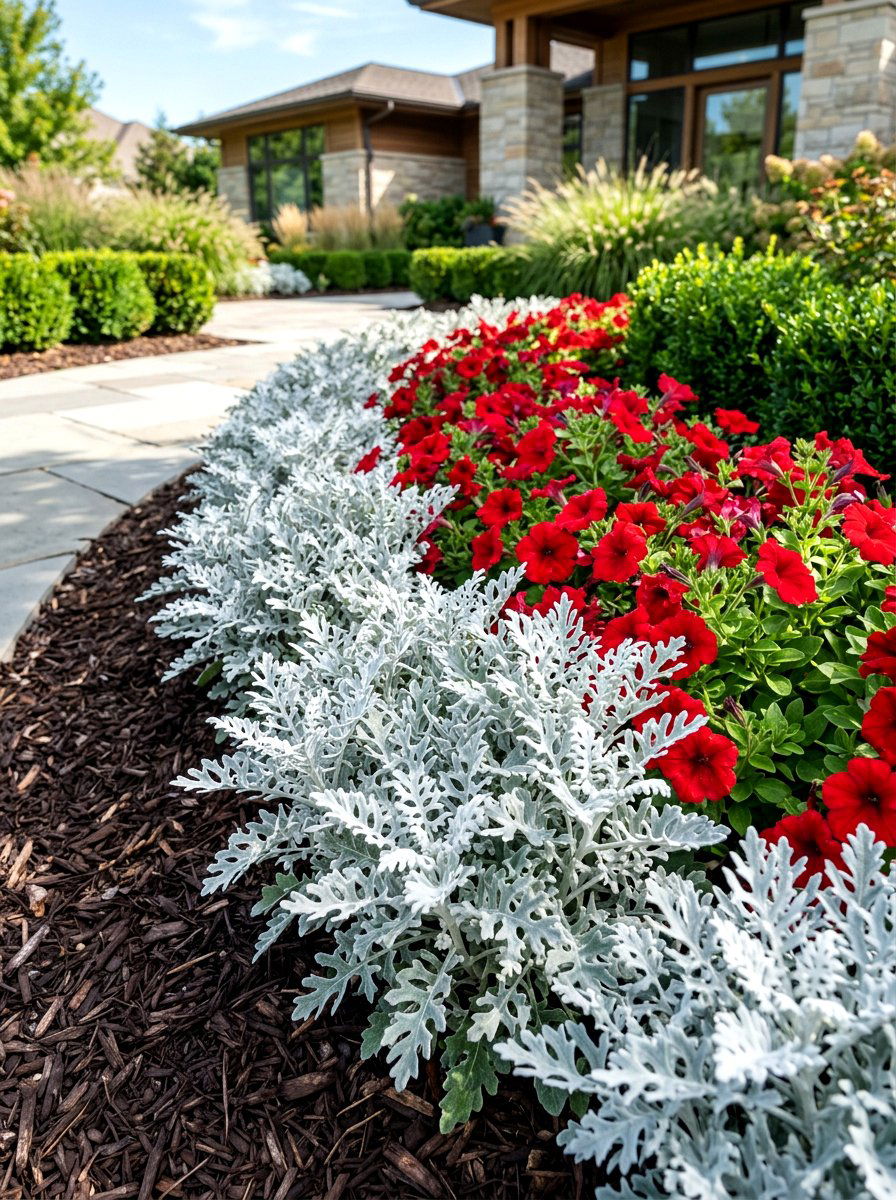
Dusty miller silver foliage is a secret weapon for garden designers who want to make their floral colors pop. This plant is grown primarily for its soft, felt-like, silver-gray leaves that feature intricate, lacy cutouts. It provides a stunning neutral background that makes vibrant reds, purples, and pinks appear much brighter. In an annual border, dusty miller is often used as a transition plant between different flower types. It is extremely drought-tolerant and maintains its shape well throughout the season without needing much attention. The silver color also catches the moonlight, making your garden look magical and ethereal during the evening hours when other colors might fade away.
16. Verbena purple border
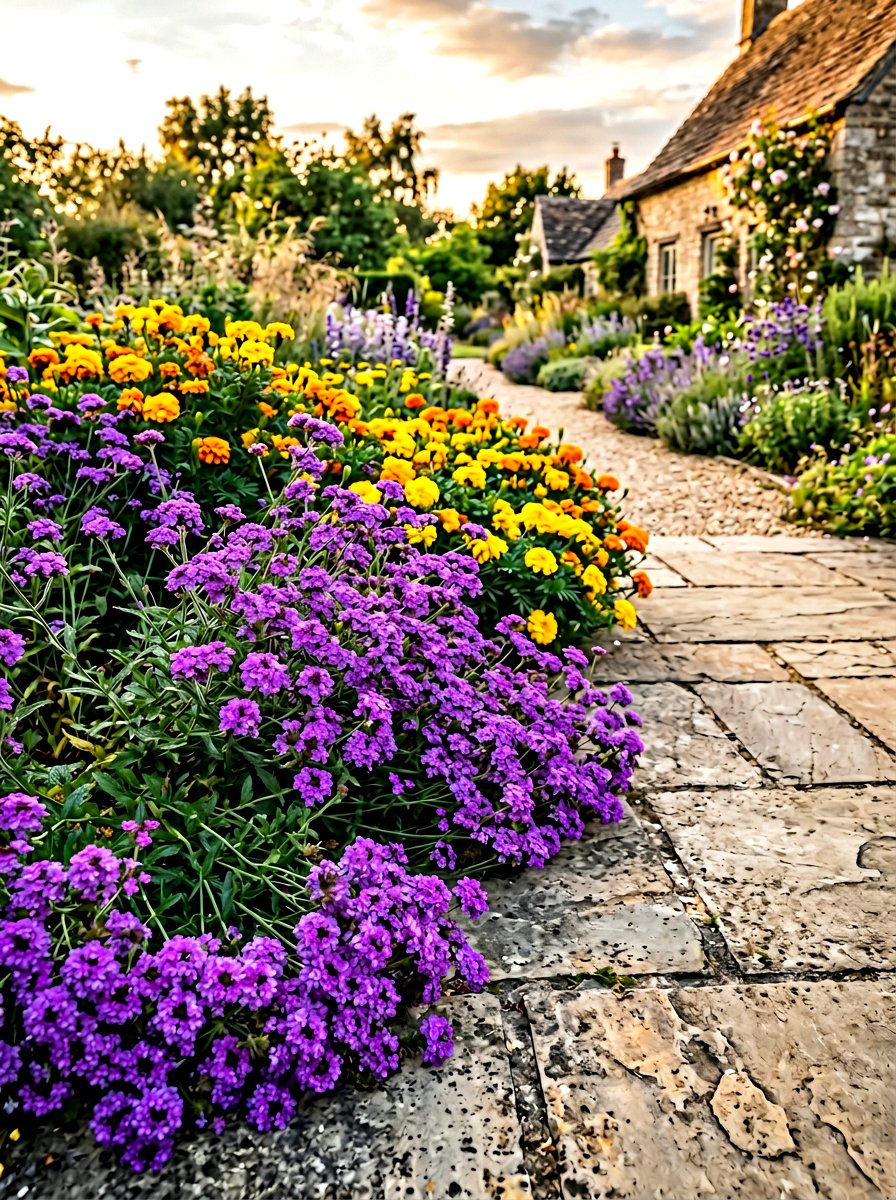
Creating a verbena purple border is a great way to add a relaxed, trailing element to your garden design. These plants produce clusters of small, star-shaped flowers that are highly attractive to butterflies and bees. Many varieties of verbena have a spreading habit, making them ideal for the edge of a border where they can spill over and soften hard lines. The rich purple tones provide a sophisticated look and pair beautifully with yellow or silver plants. Verbena is very heat-tolerant and continues to bloom through the peak of summer. Regular deadheading helps keep the plant looking tidy and encourages a constant supply of new, nectar-rich flowers for your garden.
17. Marigold and petunia mix
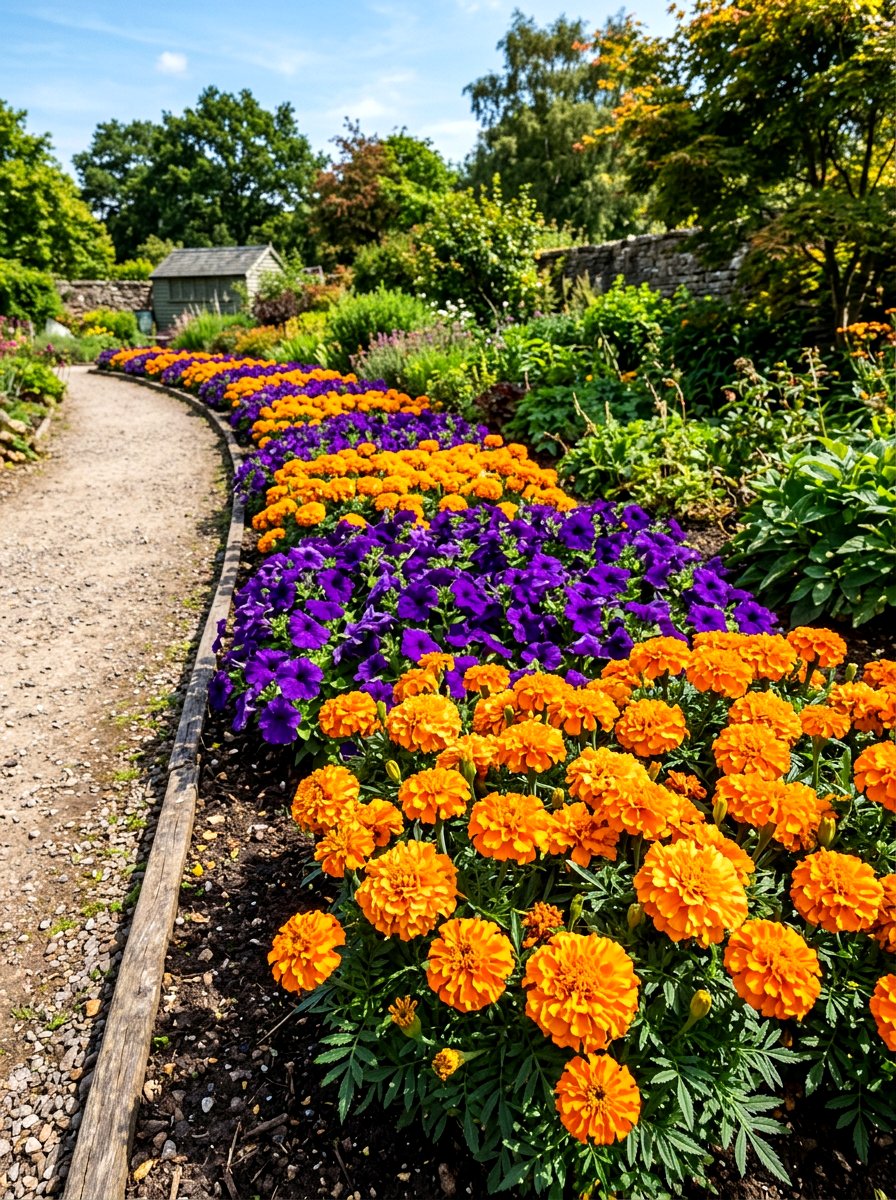
A marigold and petunia mix creates a classic, high-contrast border that is both cheerful and functional. The sunny oranges and yellows of the marigolds contrast sharply with the cool blues, purples, or pinks of the petunias. This combination is popular because both plants have similar sun and water requirements, making them easy to care for together. The marigolds provide a more structured, upright form, while the petunias offer a softer, cascading growth habit. Planting them in alternating groups or a checkerboard pattern creates a vibrant ribbon of color that defines the garden space. This pairing is a reliable choice for beginners looking for a colorful, long-lasting summer display.
18. Coleus colorful foliage
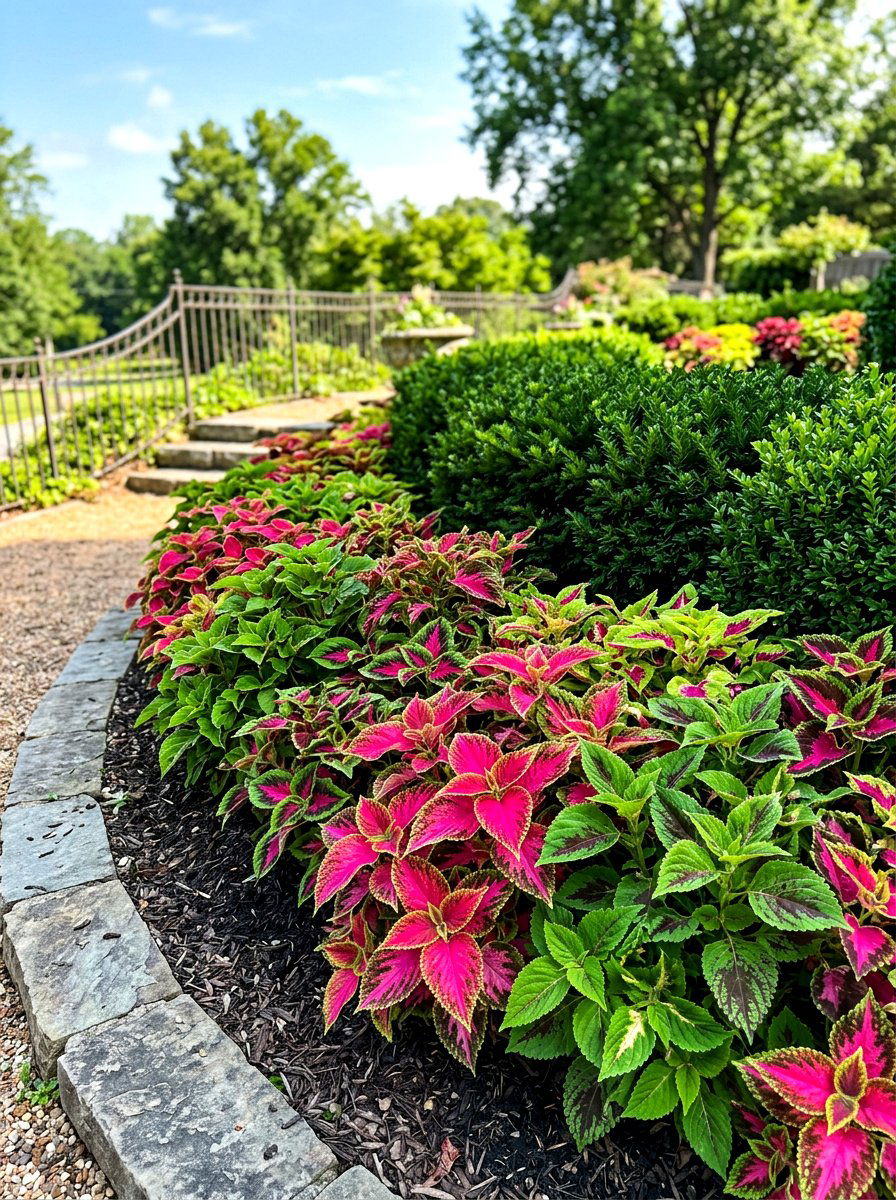
Coleus colorful foliage offers a spectacular alternative to flowering annuals for adding high-impact color to your borders. These plants are famous for their incredibly patterned leaves, which can feature combinations of neon green, hot pink, deep burgundy, and bright orange. While some varieties prefer shade, many newer cultivars are bred to thrive in full sun. In a garden border, coleus provides a consistent and bold presence that doesn't rely on a bloom cycle. You can use them to create intricate patterns or as a filler between flowering plants. Pinching off the small flower spikes will encourage the plant to stay bushy and keep its foliage looking its best.
19. Cleome tall annuals
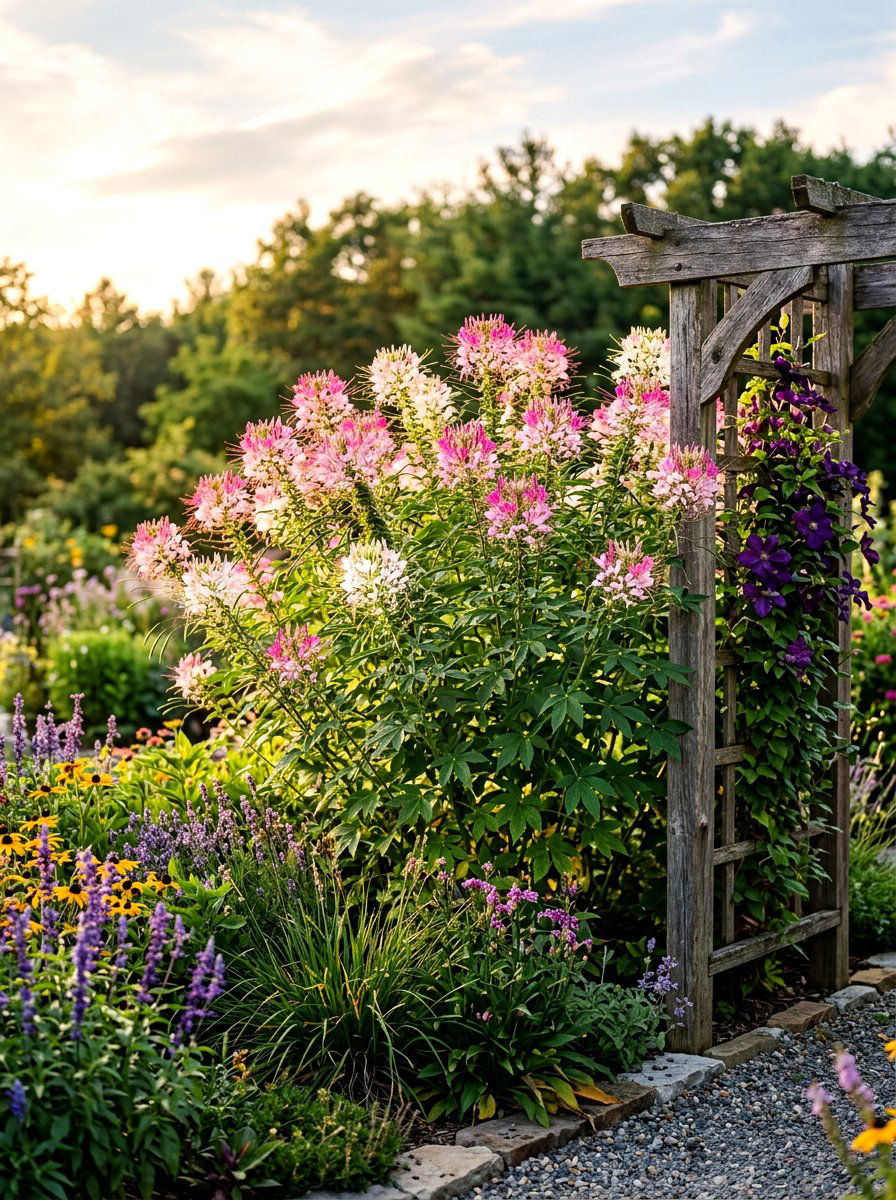
Cleome tall annuals, also known as spider flowers, bring a unique architectural quality to the back of an annual border. They feature large, airy flower heads with long, wispy stamens that resemble spider legs. These plants can reach four or five feet in height, making them a fantastic vertical element that doesn't require much support. Cleome is very drought-tolerant and thrives in the heat of mid-summer. Their presence adds a sense of movement to the garden as they sway in the wind. Available in shades of white, pink, and violet, they work beautifully in cottage-style gardens where a more relaxed and wild aesthetic is desired for the landscape.
20. Nasturtium edible border
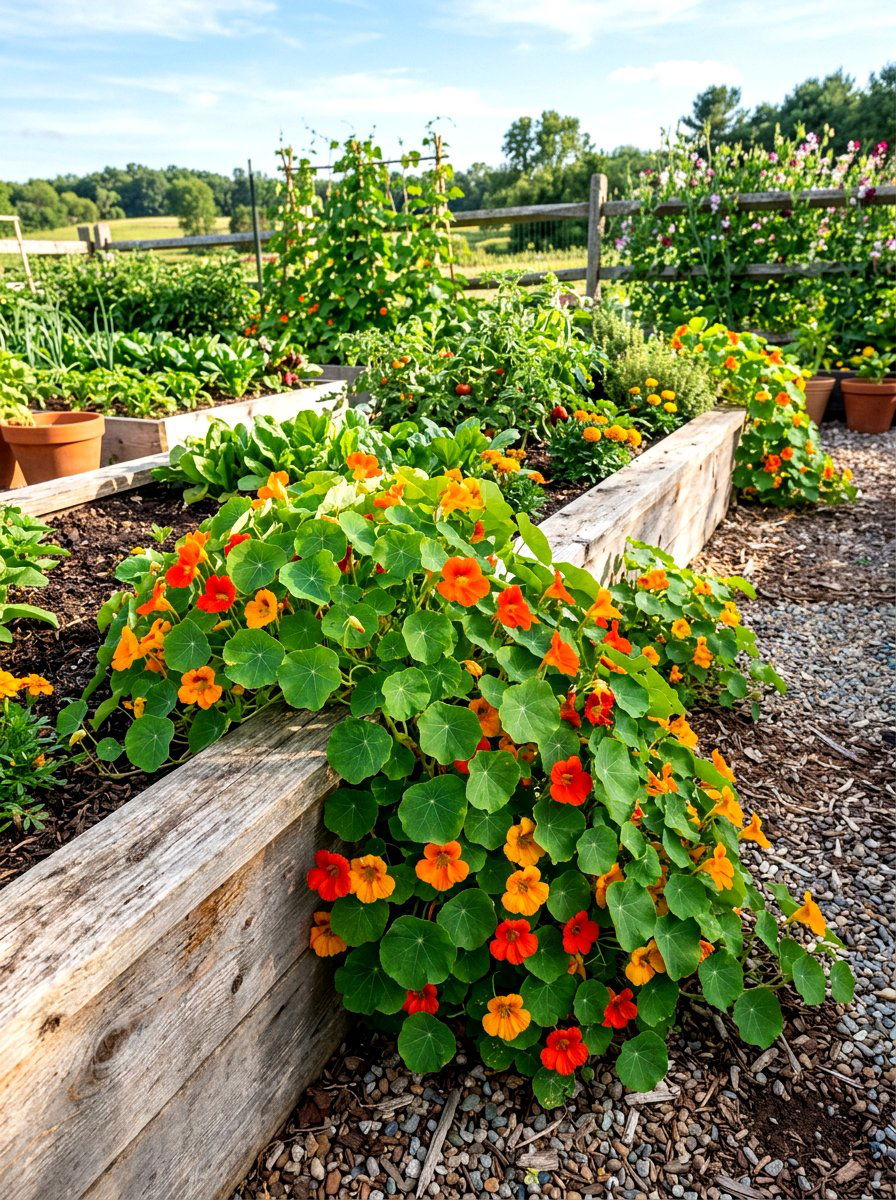
A nasturtium edible border is as practical as it is beautiful. These annuals are famous for their round, shield-shaped leaves and vibrant, trumpet-like flowers in warm shades of orange, red, and yellow. Nasturtiums are incredibly easy to grow and actually prefer "poor" soil, making them a great choice for tricky spots. They have a trailing or mounding habit that quickly fills in the edge of a garden bed. Both the leaves and the flowers are edible, offering a peppery kick to salads. Beyond the kitchen, they act as a trap crop, drawing aphids away from your more delicate plants. They provide a lush, green, and productive border all summer.
21. Vinca drought tolerant garden
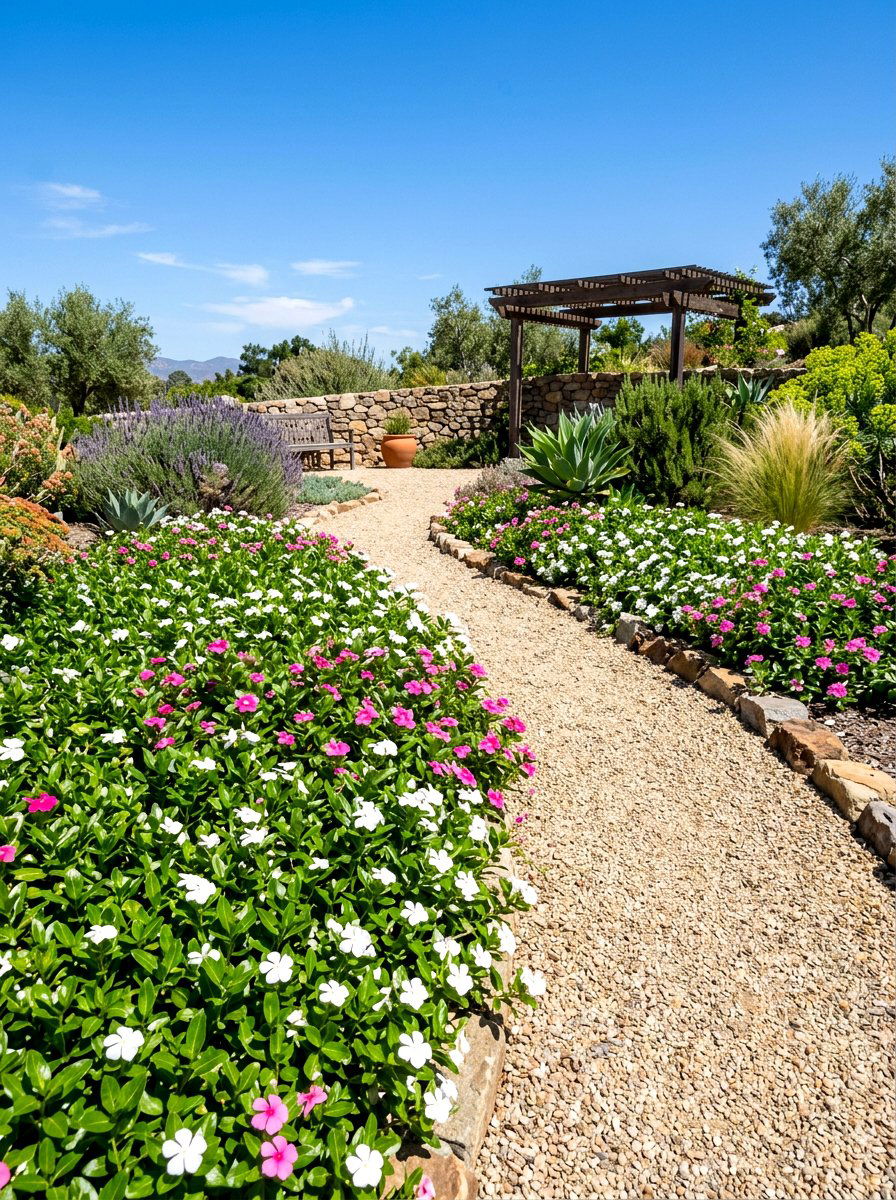
Designing a vinca drought tolerant garden is perfect for those who live in hot climates or want a low-maintenance landscape. Annual vinca, also known as Madagascar periwinkle, looks very similar to impatiens but can handle much more sun and heat. They feature glossy green leaves and flat, five-petaled flowers with a distinct "eye" in the center. Because they are so resistant to pests and disease, they stay looking pristine even in the middle of a heatwave. Planting them in a solid row along a driveway or sunny path creates a clean, professional look. They come in shades of white, pink, and purple, providing a reliable and cooling aesthetic.
22. Ageratum blue flowers
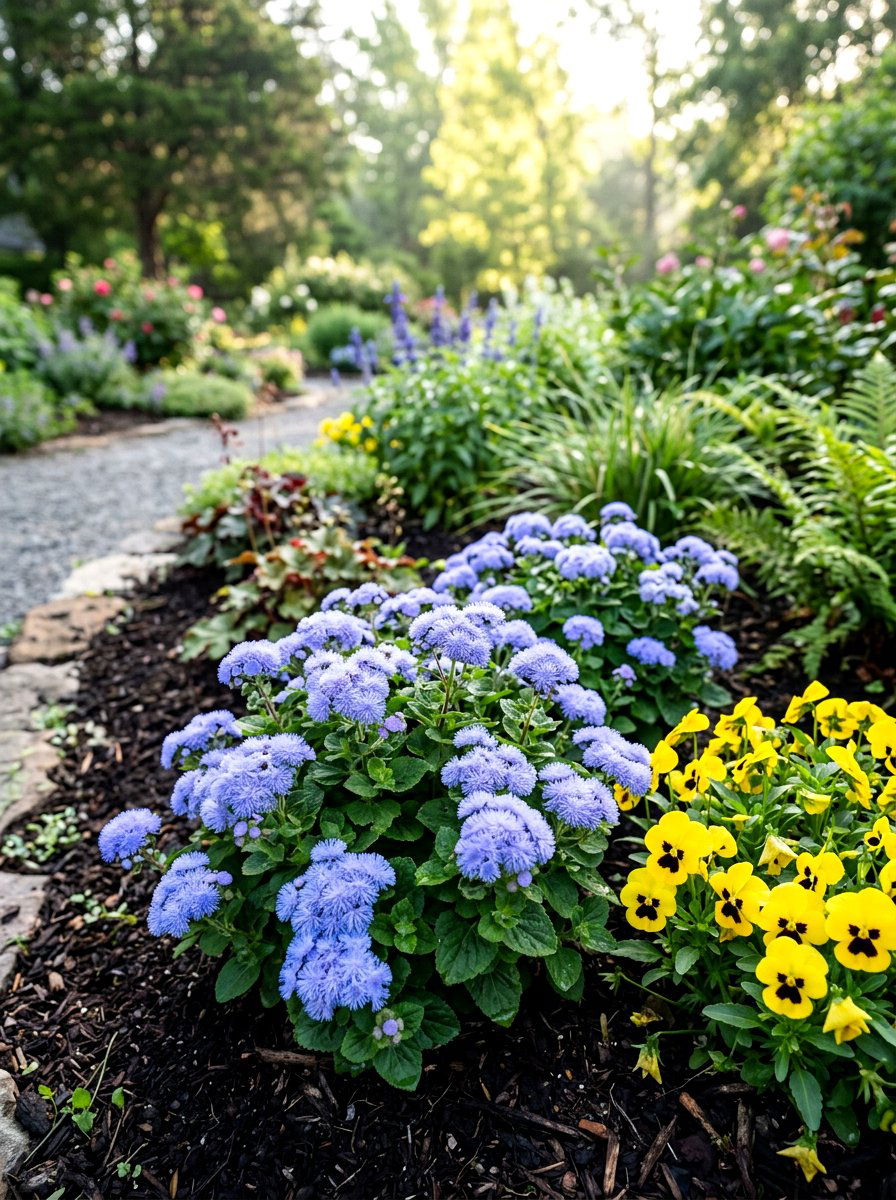
Ageratum blue flowers provide a unique, fuzzy texture that is rarely found in other annuals. Often called floss flowers, they produce dense clusters of small, fringed blooms in a soft, periwinkle blue. These plants are excellent for the front of a border because they typically stay quite compact and tidy. The cool blue tone is very soothing and helps to tone down more aggressive colors like bright red or orange. Ageratum is a favorite of butterflies, adding even more life to your garden beds. While they are relatively easy to care for, they do appreciate consistent moisture to keep their delicate, pom-pom flowers from wilting in the afternoon sun.
23. Moss rose rock garden
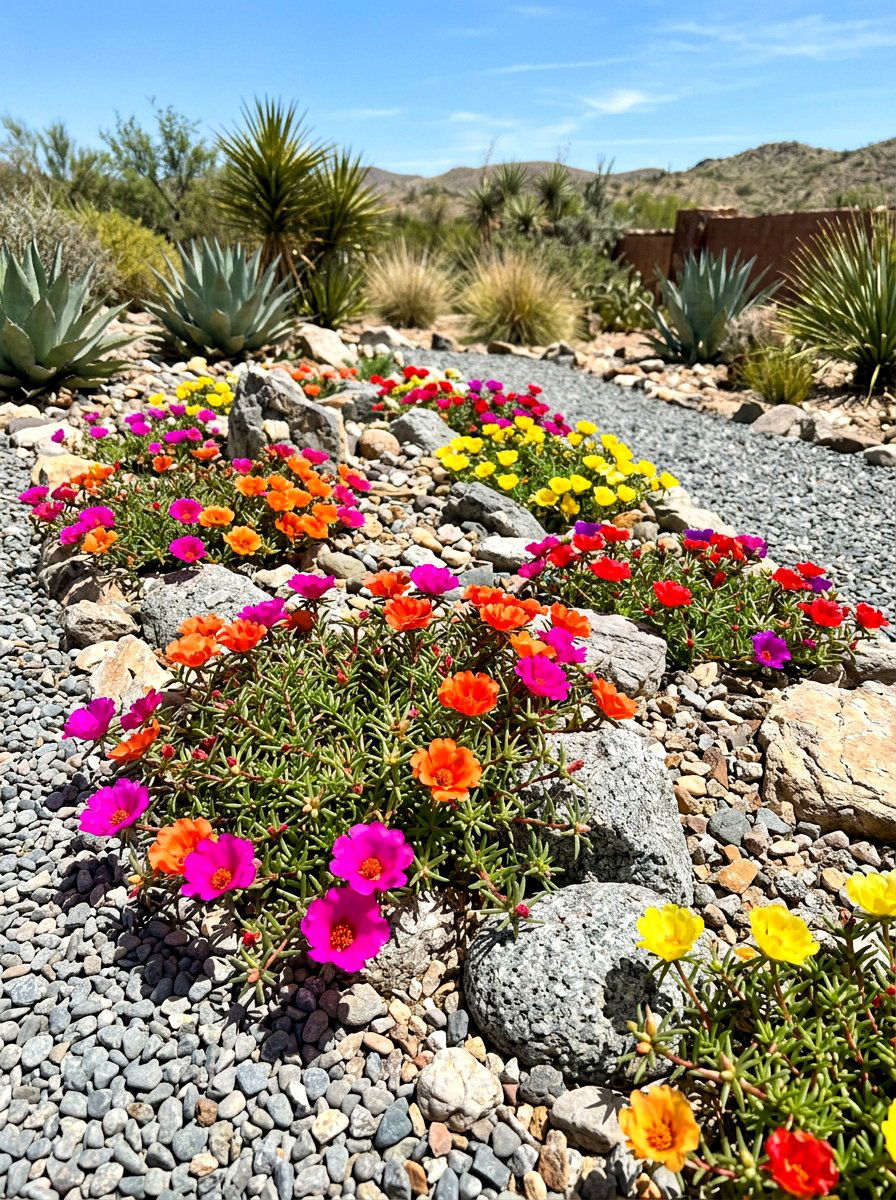
A moss rose rock garden border is the ultimate solution for sunny, dry spots where other plants might fail. Also known as portulaca, these succulents feature needle-like leaves and brilliant, jewel-toned flowers that look like miniature roses. They thrive in rocky, sandy soil and require very little water once established. The flowers typically open in the morning and close in the evening, adding a dynamic element to your garden's daily cycle. Because they grow very low to the ground and spread out, they are perfect for lining stone paths or filling in the gaps between pavers. Their vibrant neon colors bring a fun, energetic vibe to the landscape.
24. Celosia vibrant border
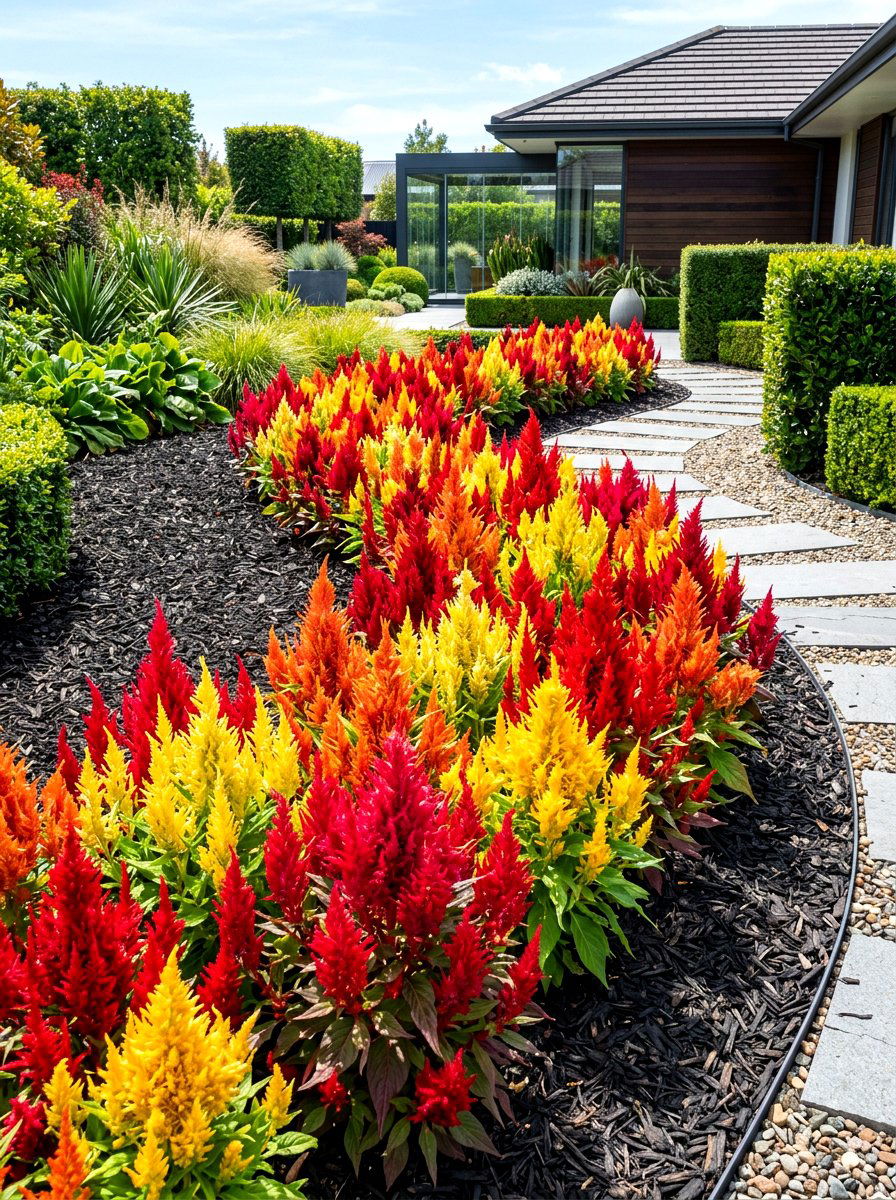
A celosia vibrant border adds an exotic and bold touch to your summer garden. These plants come in two main forms: the plumed variety, which looks like colorful feathery flames, and the cockscomb variety, which features unique, brain-like ridges. Both types offer incredibly saturated colors in shades of electric yellow, hot pink, and deep orange. They are very heat-tolerant and keep their color for a long time, even in the drying sun. In a border, they provide a distinct texture that contrasts beautifully with more traditional, round-petaled flowers. They are also excellent for drying, allowing you to preserve a piece of your summer garden for indoor arrangements later.

25. Lantana butterfly garden
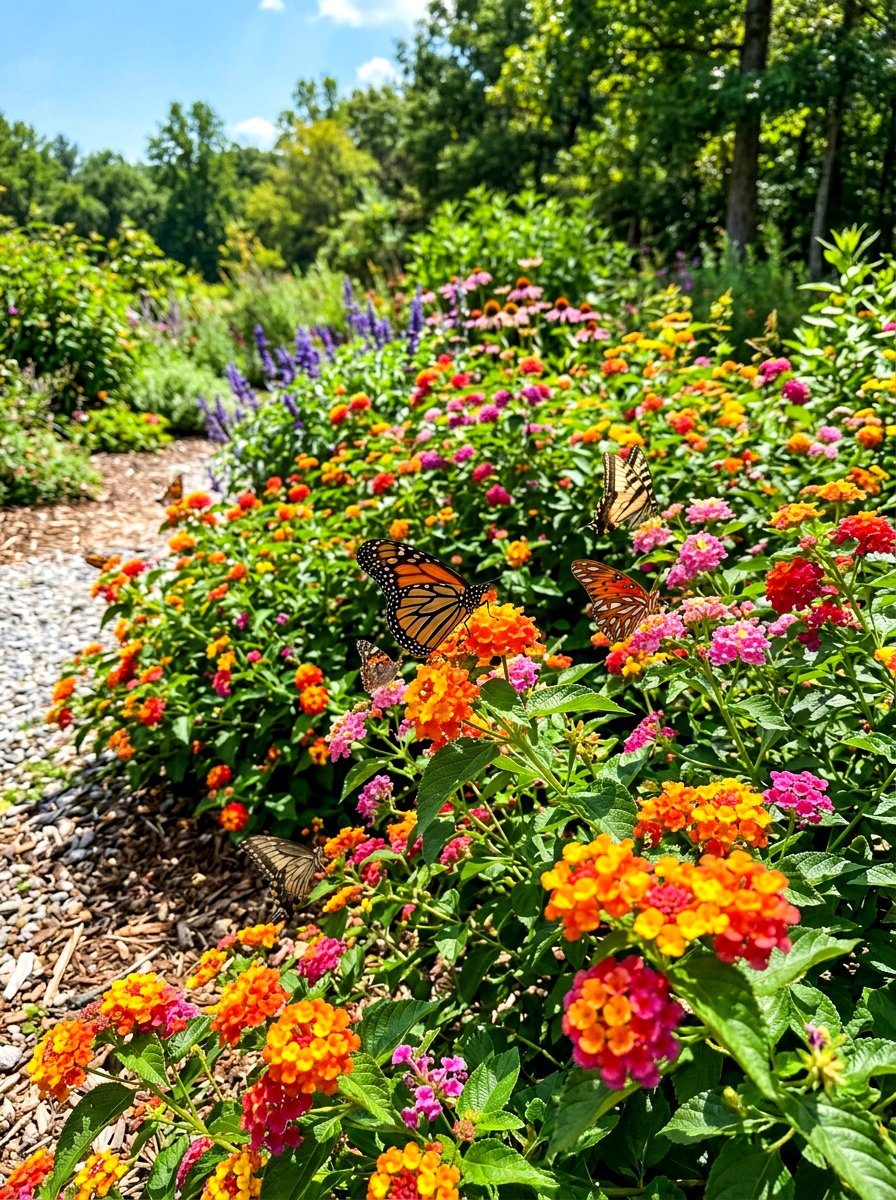
A lantana butterfly garden border is a powerhouse of color and activity. These woody annuals produce clusters of tiny flowers that often change color as they age, creating a multi-toned effect on a single plant. They are exceptionally tough, handling intense heat, humidity, and drought with ease. Because they are so rich in nectar, they are a primary destination for butterflies and hummingbirds. Lantana can grow quite large and spreading, so they are perfect for filling a wide border or covering a sunny slope. Their aromatic foliage is also a natural deterrent for deer, making them a great choice for rural gardens where wildlife might be an issue.
26. Gomphrena dried flowers
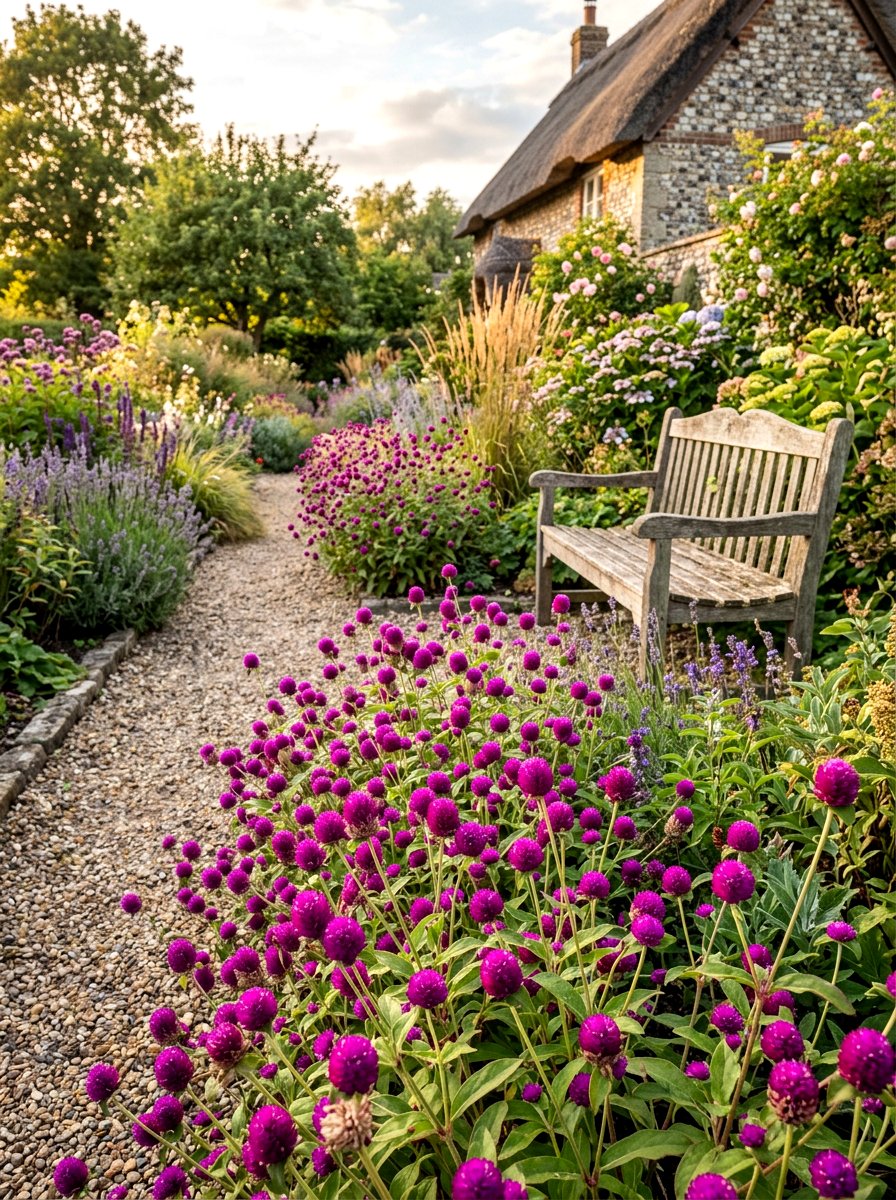
Gomphrena dried flowers, or globe amaranths, are charming annuals that produce small, clover-like flower heads on stiff stems. They are most famous for their papery texture and the fact that they hold their color perfectly when dried. In a garden border, they add a sweet, old-fashioned look in shades of purple, pink, and white. Gomphrena is a "workhorse" plant, meaning it is very reliable and can withstand tough conditions like high heat and poor soil. They look best when planted in groups, where their ball-shaped blooms can create a playful, dotted effect throughout the bed. They provide a long-lasting display that keeps the garden looking full until autumn.
27. Morning glory fence
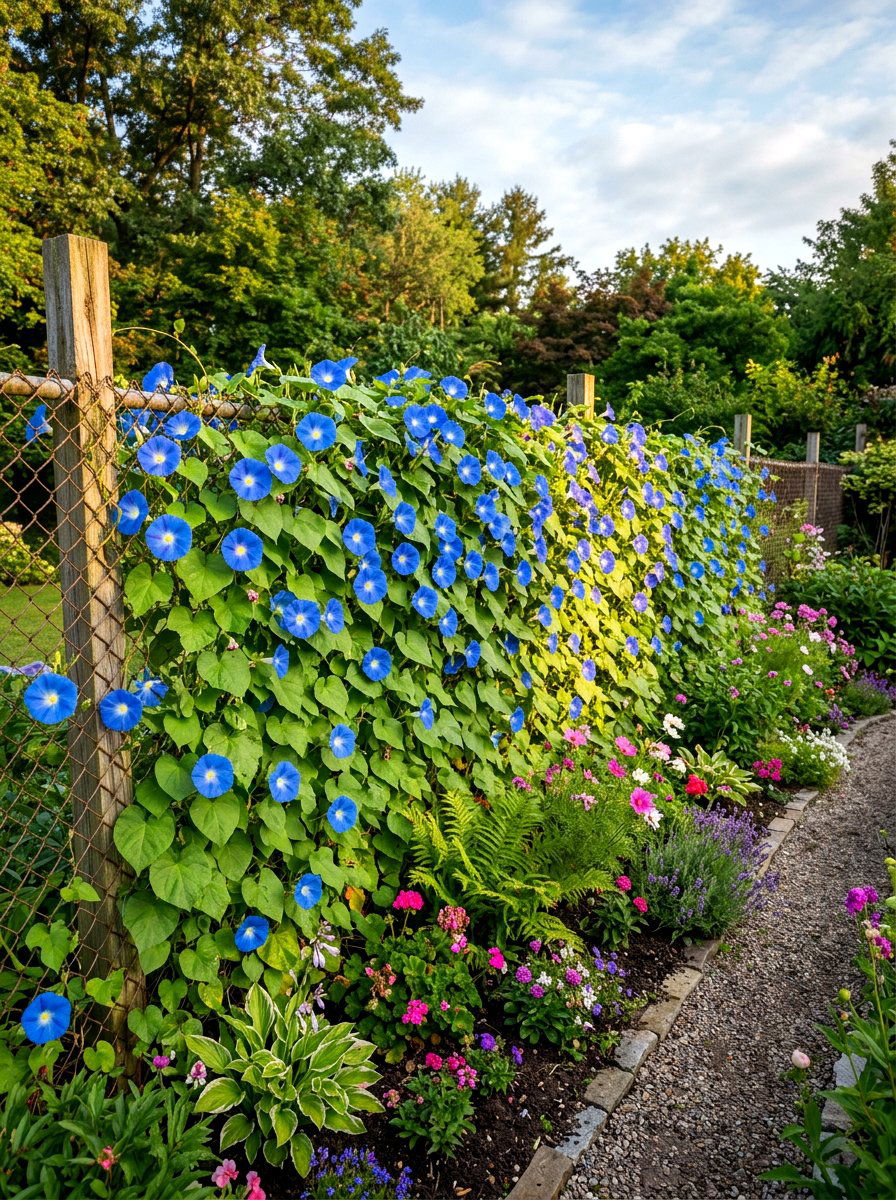
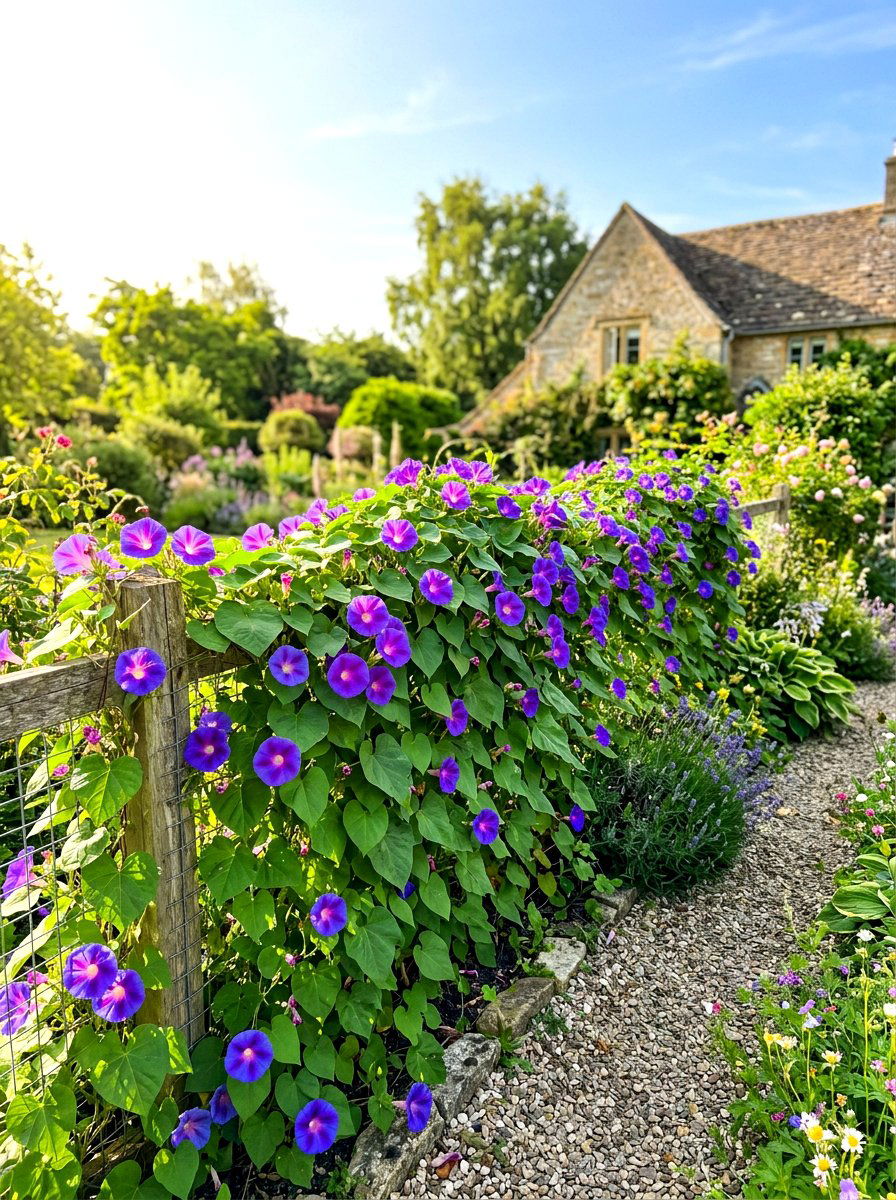
Using a morning glory fence as the backdrop for your annual border is a clever way to add vertical interest and privacy. These fast-growing vines produce large, heart-shaped leaves and stunning, trumpet-shaped flowers that open fresh every morning. While they need a support structure like a trellis or chain-link fence, they can quickly transform a plain boundary into a wall of color. For a border, plant them at the very back and let them climb. The classic sky-blue "Heavenly Blue" variety is a favorite, but they also come in deep purples and whites. They bring a sense of vertical abundance that complements the lower-growing flowers at their feet.
28. Stocks fragrant border
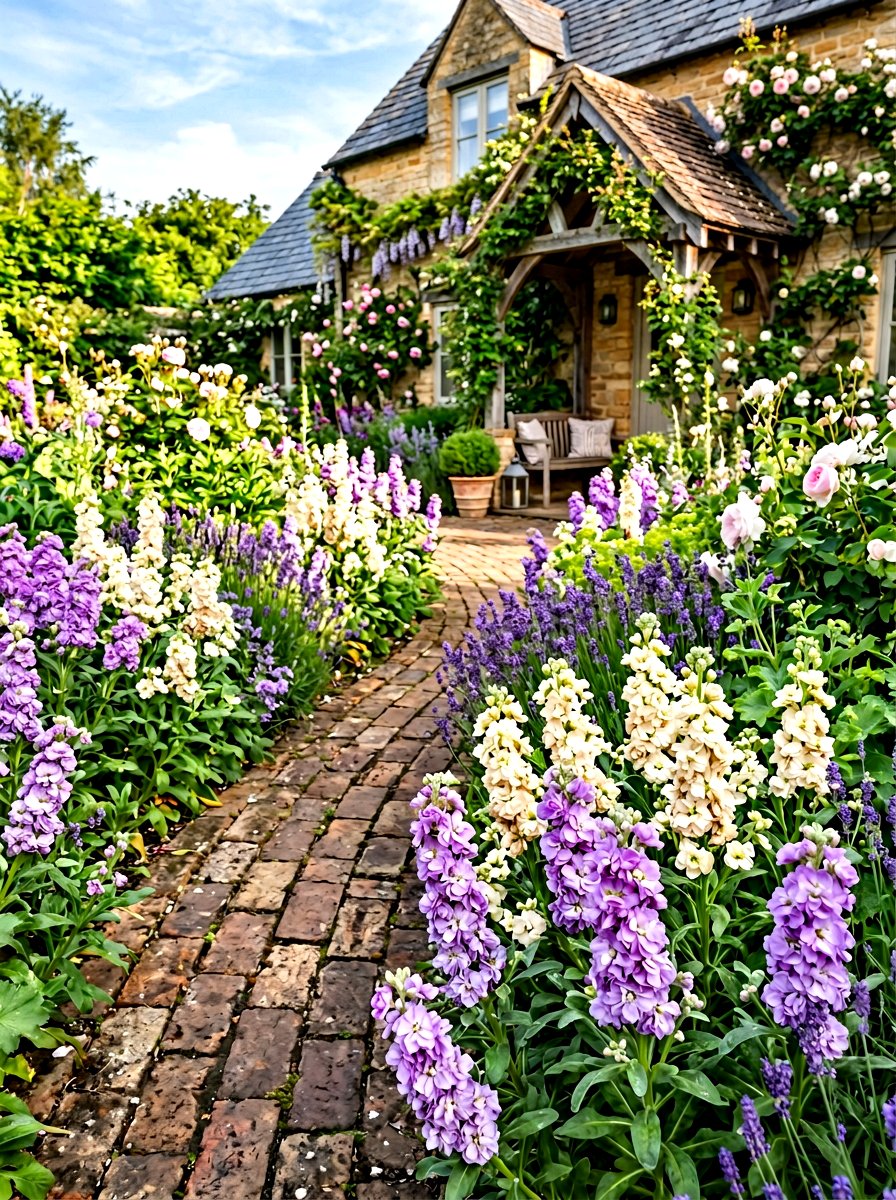
A stocks fragrant border is a must-have for anyone who wants their garden to smell as beautiful as it looks. These plants produce dense spikes of ruffled, clove-scented flowers in soft pastel tones like lavender, cream, and blush pink. They are a cool-season annual, meaning they thrive in the spring and early summer before the extreme heat arrives. Planting them near a doorway, window, or seating area allows you to enjoy their spicy-sweet perfume throughout the day. Their upright, structured form makes them an excellent "filler" plant for the middle of a border. They offer a classic, romantic feel that is perfect for traditional or vintage-style garden designs.
29. California poppy meadow
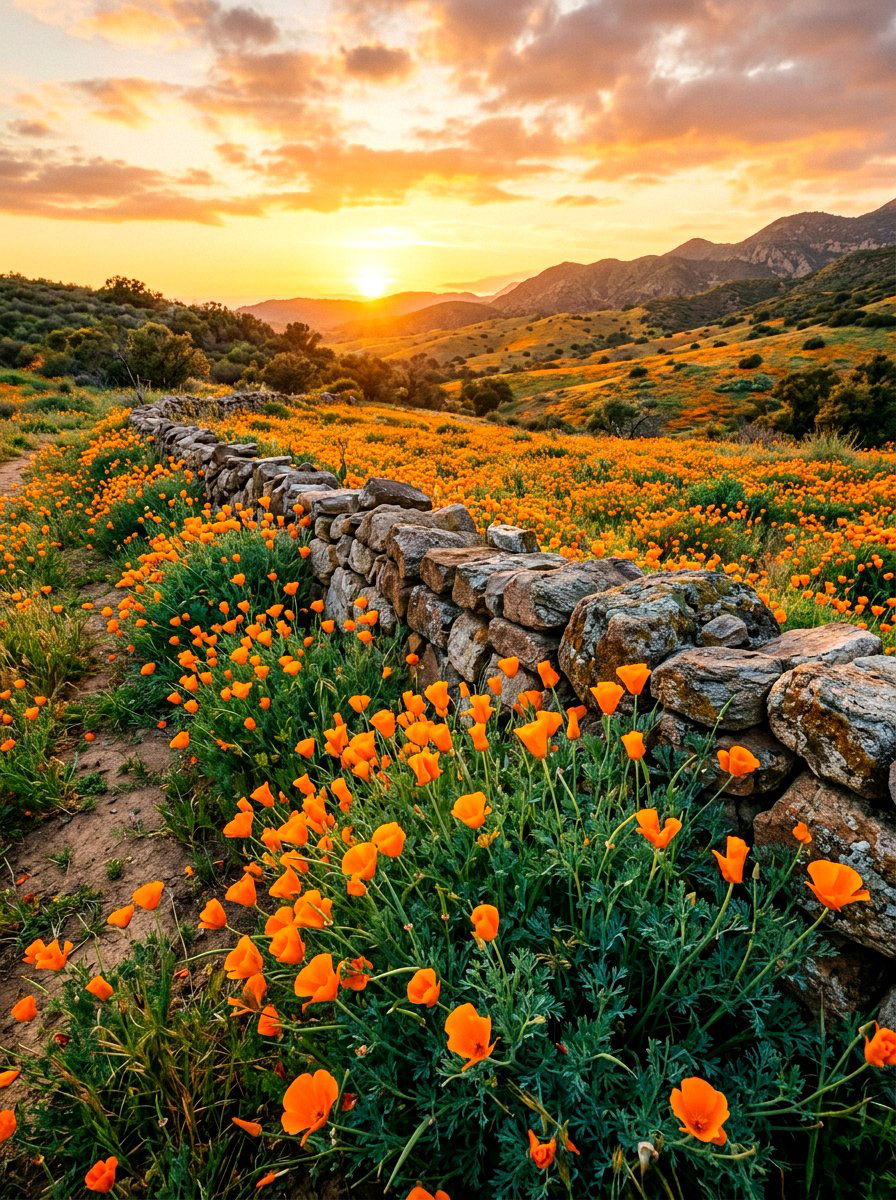
The California poppy meadow style is perfect for a relaxed, low-maintenance border that feels like a slice of the wild. These flowers are famous for their brilliant orange, cup-shaped blooms and fine, blue-green foliage. They are extremely easy to grow — often you can just scatter the seeds on bare soil. They love full sun and well-drained soil, making them ideal for sandy or gravelly spots. In a border, they create a soft, informal look that works well in a naturalistic landscape. As a bonus, they often self-seed, meaning they may return year after year. Their bright orange glow is especially beautiful when backlit by the late afternoon sun.
30. Calendula medicinal garden
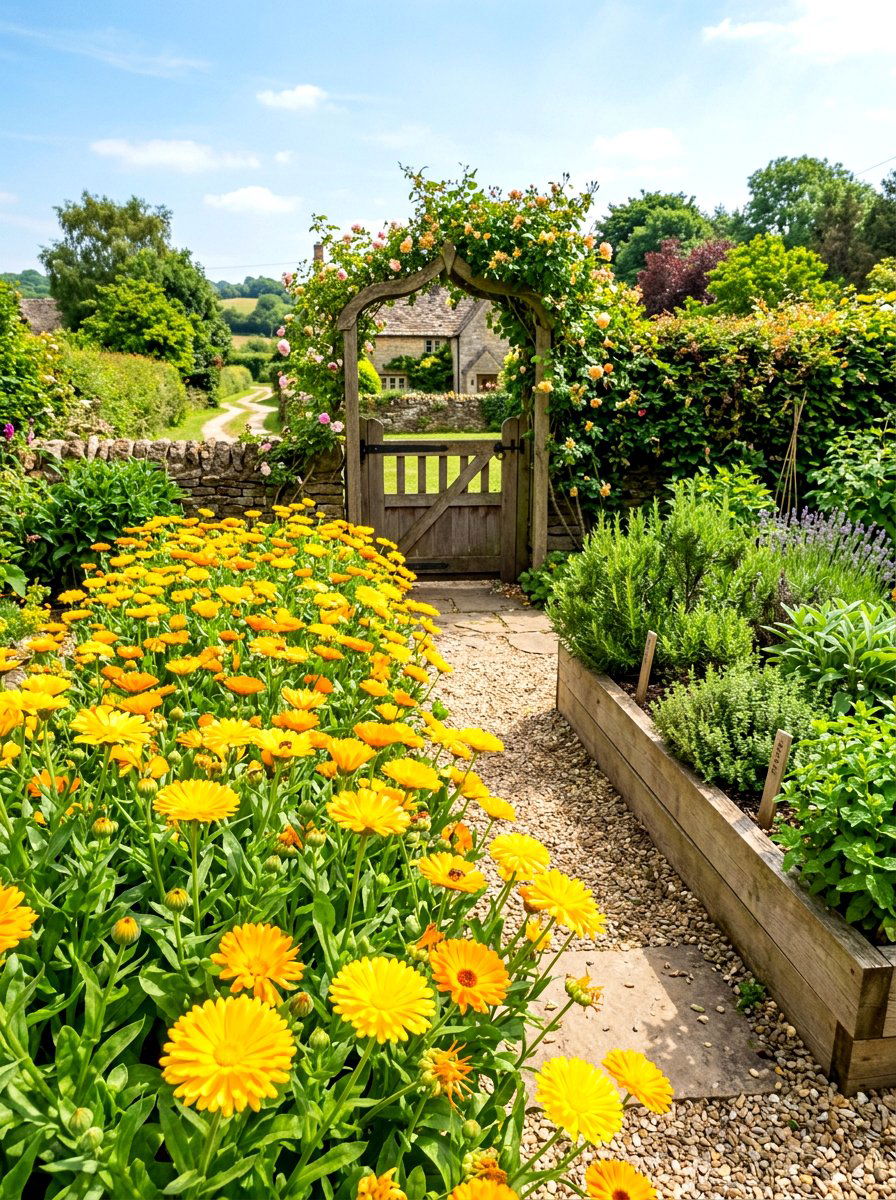
A calendula medicinal garden border combines beauty with utility. Also known as pot marigold, these hardy annuals produce bright, cheerful daisy-like flowers in shades of yellow and orange. They are easy to grow and can handle cooler temperatures, often blooming well into the fall. Beyond their looks, calendula flowers have been used for centuries in skin balms and teas. In the garden, they are excellent companions for vegetables because they attract beneficial insects that prey on pests. Their petals are also edible and can be used to add a golden tint to rice or salads. They provide a bright, sunny, and productive edge to any garden space or backyard.
Conclusion:
Planning a successful annual flower border is a rewarding way to express your creativity and enhance your home’s curb appeal. By choosing plants that vary in height, texture, and color, you can create a professional-looking landscape that changes with the seasons. Whether you prefer the structured look of a marigold edge or the airy charm of cosmos, annuals provide the flexibility to experiment every year. Remember to consider the sunlight and water needs of your chosen flowers to ensure they thrive. With a little care and inspiration, your garden borders will become a vibrant, living tapestry that brings joy to everyone who visits your beautiful outdoor space.

Related posts: