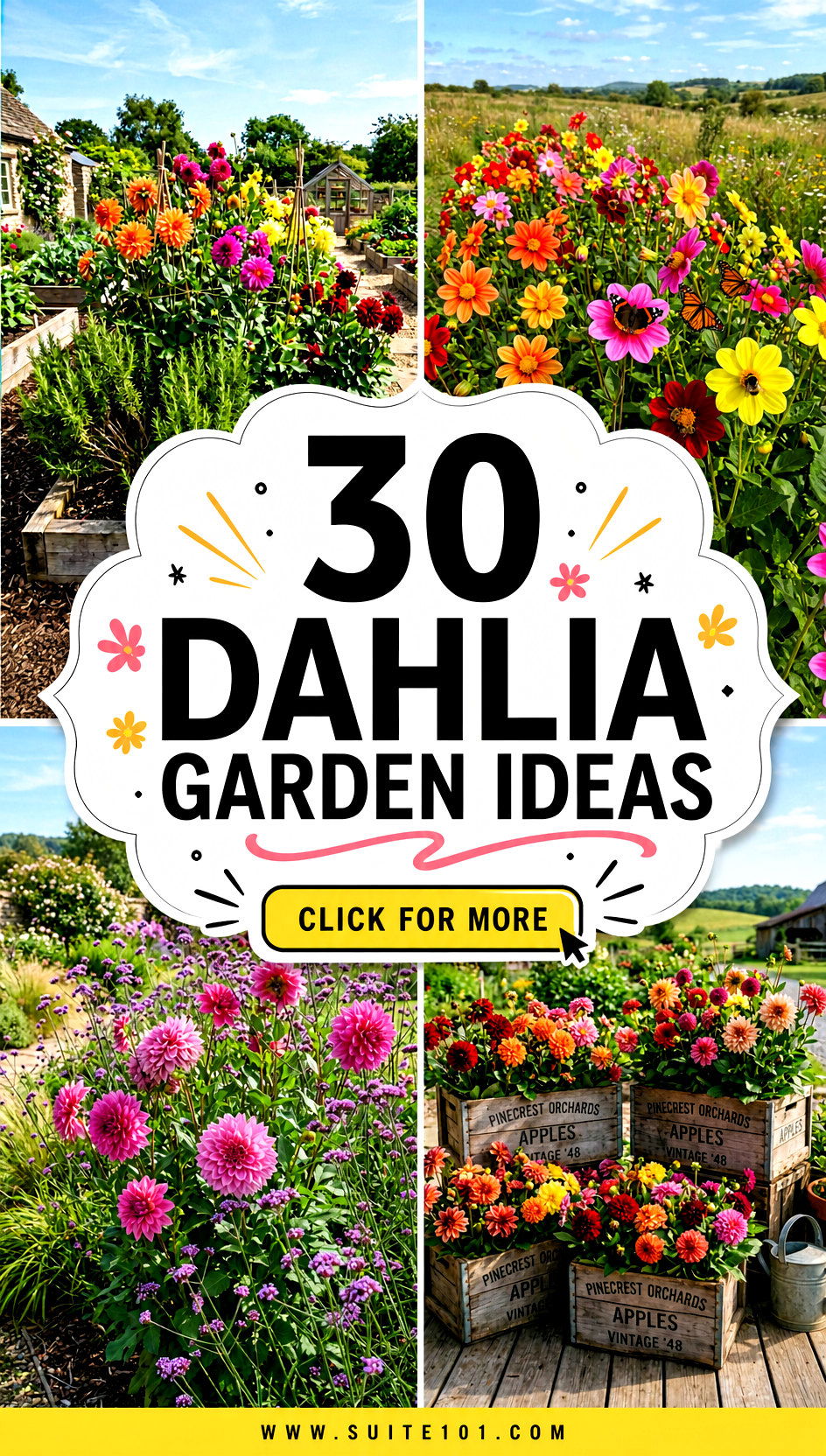
Dahlias are the undisputed stars of the late summer landscape, offering an explosion of color and variety that few other plants can match. These versatile tubers provide a massive range of bloom shapes, from the intricate geometry of pompons to the massive, shaggy heads of dinnerplate varieties. Whether you are aiming for a structured formal look or a whimsical cottage aesthetic, dahlias adapt beautifully to almost any garden theme. Their long blooming season starts in mid-summer and continues until the first frost, making them essential for a vibrant autumn display. Planning a dahlia garden requires a balance of proper sun exposure, well-draining soil, and creative companion planting to truly make the blooms pop. By exploring different layouts and color stories, you can transform a simple backyard into a professional-level floral sanctuary that looks incredible in person and on social media.
1. Raised Bed Cut Flower Garden
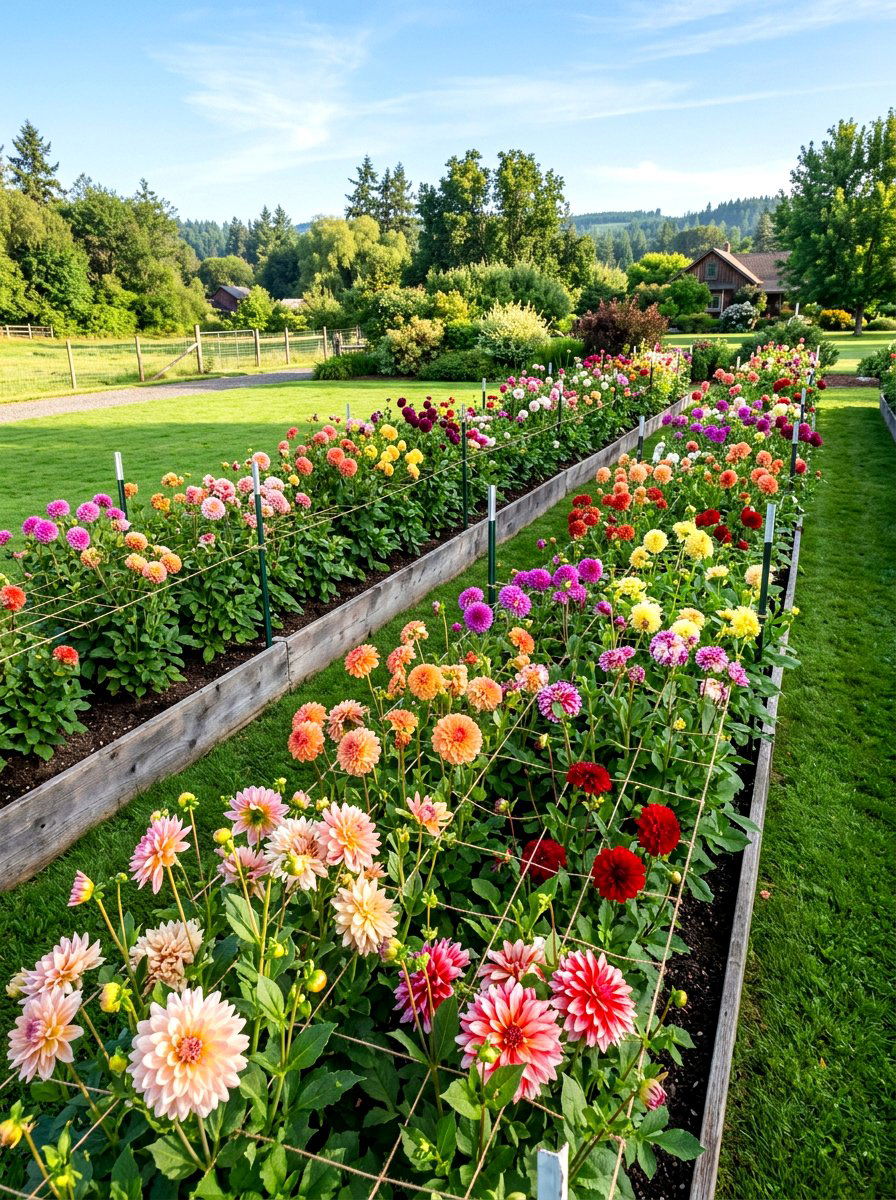
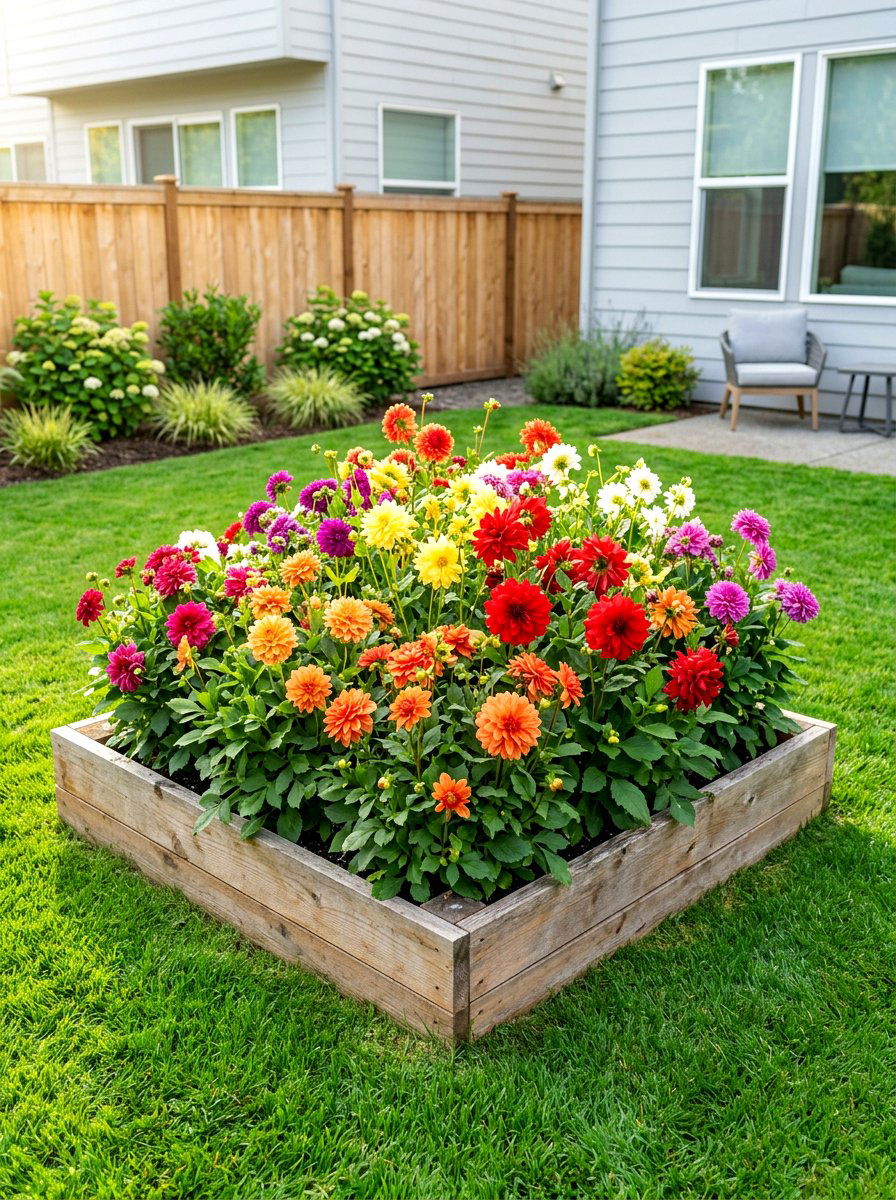
Creating a dedicated space for harvesting blooms is a smart way to manage your dahlia collection. Raised beds provide the excellent drainage that dahlia tubers require to prevent rot during rainy seasons. By clustering different varieties together, you can easily install a grid support system to keep heavy stems upright. This layout allows for intensive planting, which maximizes your flower yield in a small footprint. You can organize rows by color or bloom size to make picking bouquets a much faster process. Using high-quality compost in these beds ensures the plants have the nutrients needed for continuous flowering. This structured approach keeps the rest of your yard tidy while providing endless fresh centerpieces for your home.
2. Monochromatic White Dahlia Border
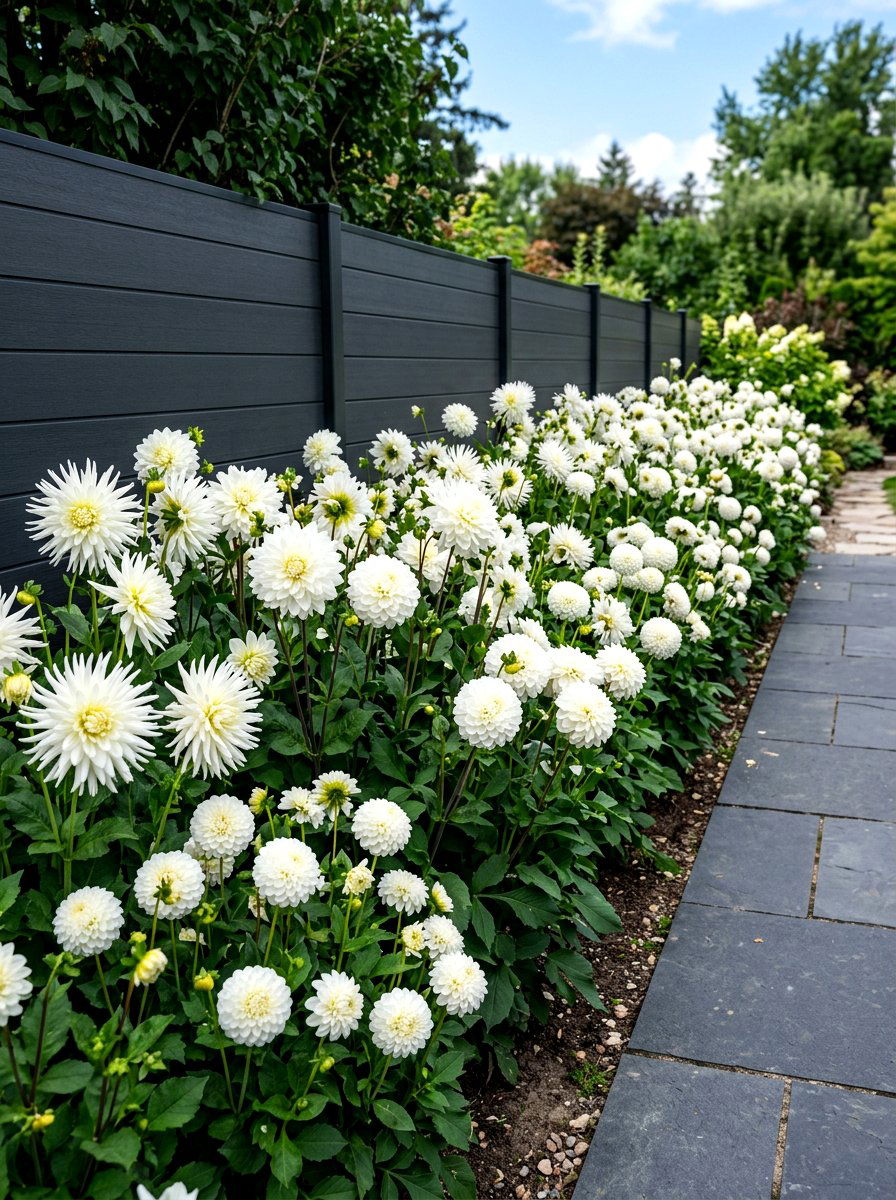
A monochromatic white garden offers a sophisticated and serene look that remains luminous even during the twilight hours. Using various white dahlia shapes, such as the spiky cactus types and rounded ball varieties, adds essential texture without breaking the color theme. This design style works exceptionally well against a dark green hedge or a black fence, which makes the bright petals stand out. Integrating white varieties like 'Small World' or 'Boom Boom White' creates a clean and modern aesthetic that feels timeless. To maintain visual interest, you can layer the heights by placing taller dinnerplate whites in the back and shorter border types along the front edge of the walkway.
3. Dinnerplate Dahlia Focal Point
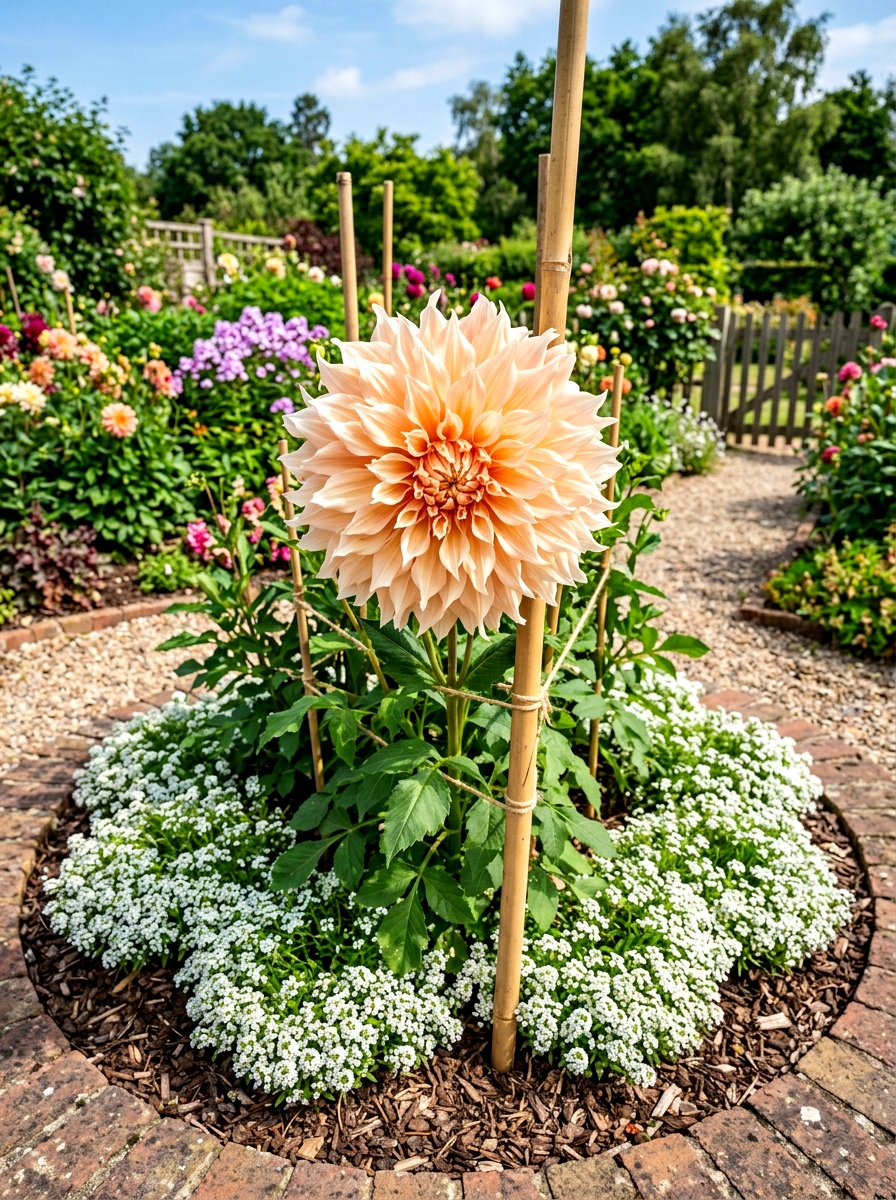
Dinnerplate dahlias are famous for their massive blooms that can reach up to twelve inches in diameter, making them natural showstoppers. To use them effectively, plant them as a central focal point in a large circular bed or at the back of a wide border. Because of their significant size and weight, these varieties require sturdy individual staking to prevent the stems from snapping in the wind. Varieties like 'Café au Lait' offer a romantic, creamy palette that anchors the garden with elegance. Surrounding these giants with smaller, airy plants helps to emphasize their scale and dramatic presence. This strategy ensures that your garden has a clear visual hierarchy that draws the eye immediately.
4. Cottage Garden Dahlia Mix
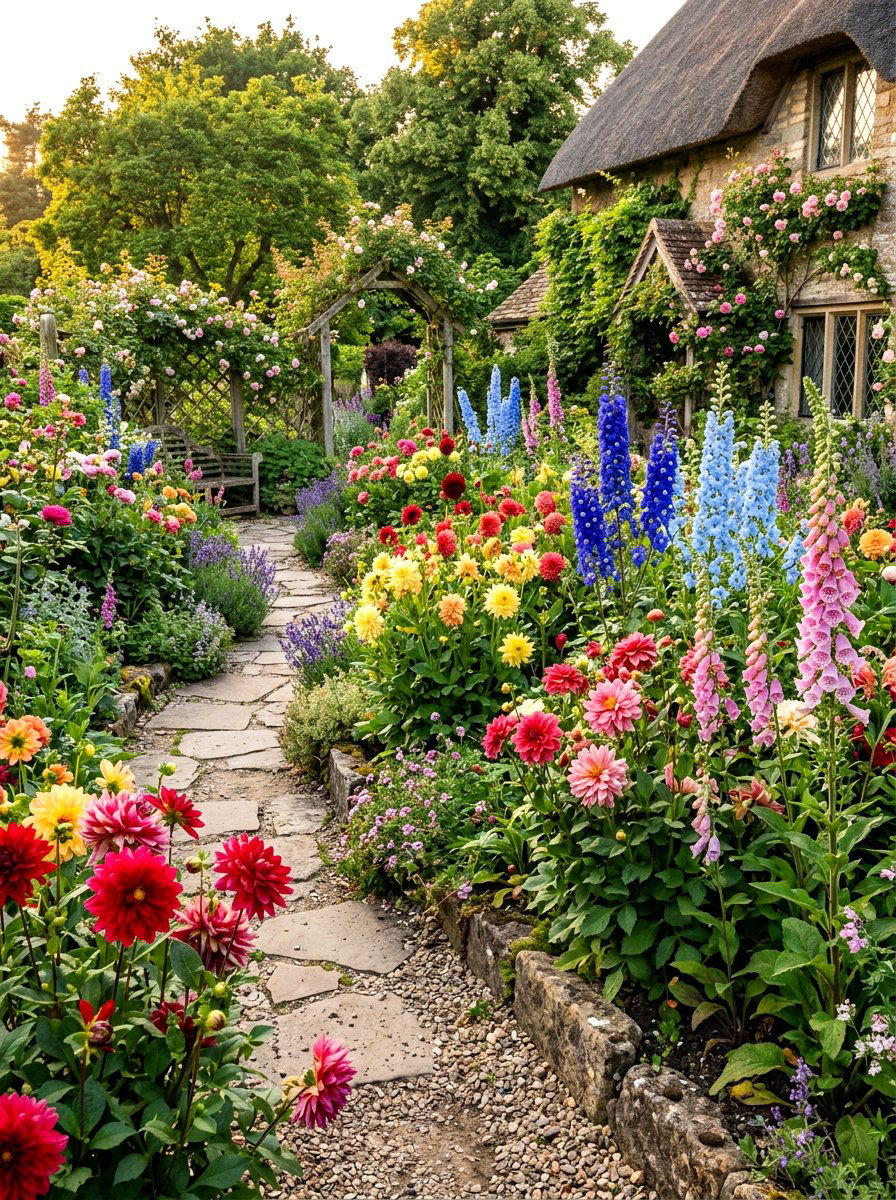
The informal charm of a cottage garden is perfectly suited for the exuberant growth habits of different dahlia varieties. In this setting, you can intermingle dahlias with traditional perennials like delphiniums, foxgloves, and roses for a lush, layered look. The goal is to create a sense of organized chaos where blooms peek out from every corner. Mixing different flower forms, such as single-flowered dahlias and ruffled decorative types, contributes to the whimsical and romantic atmosphere. Using a variety of heights prevents the garden from looking flat and encourages a sense of discovery. This style of gardening celebrates biodiversity and creates a welcoming habitat for bees and butterflies throughout the entire summer season.
5. Dark Foliage Dahlia Contrast
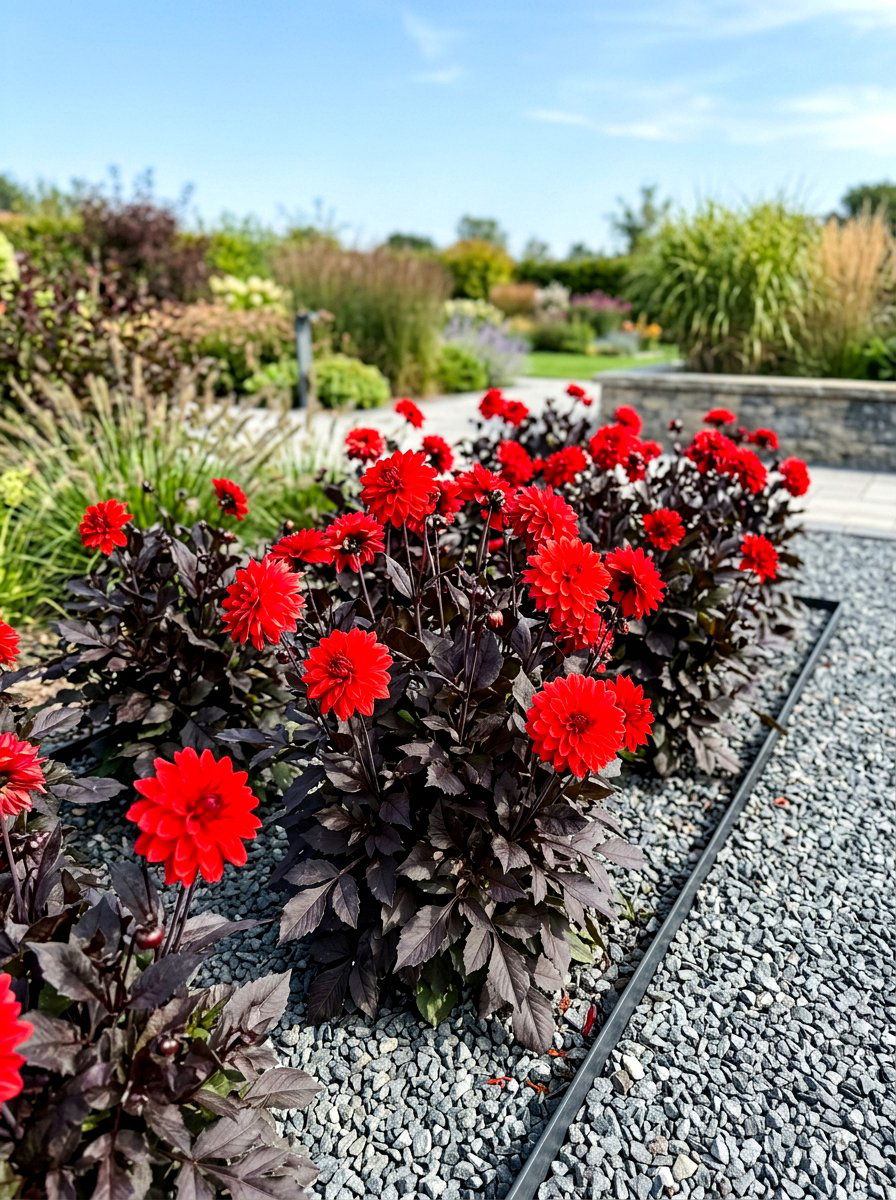
Selecting dahlias with dark, near-black foliage adds a dramatic and moody element to your outdoor landscape. Varieties like 'Bishop of Llandaff' or 'Mystic Illusion' feature deep mahogany or purple leaves that provide a stunning backdrop for their bright blooms. This contrast makes the flower colors appear more vivid and saturated than they would against standard green leaves. You can pair these dark-leaved plants with silver-toned foliage or lime-green companions to create a high-contrast color palette. This design choice is particularly effective in modern gardens where bold shapes and textures are prioritized. The dark foliage remains attractive even when the plant is not in bloom, providing structural interest.
6. Terracotta Pot Dahlia Display
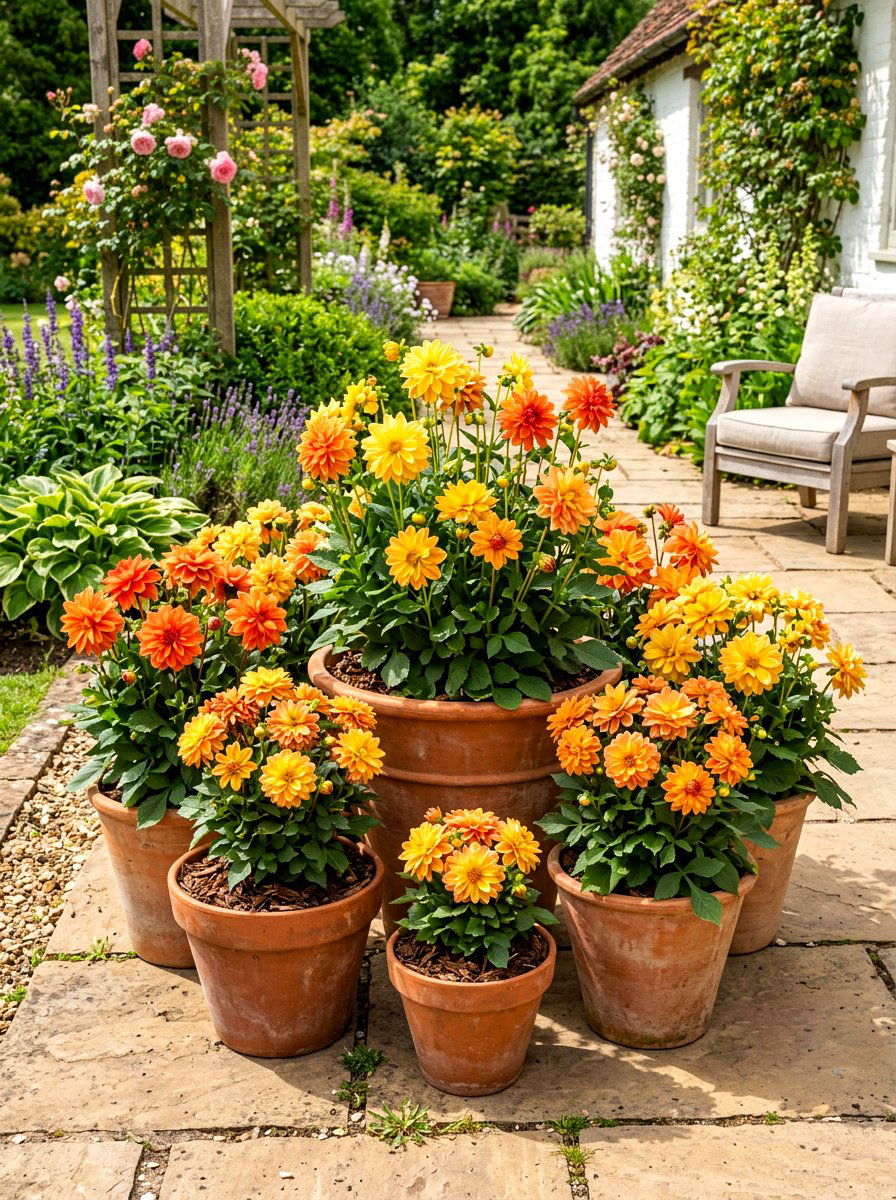
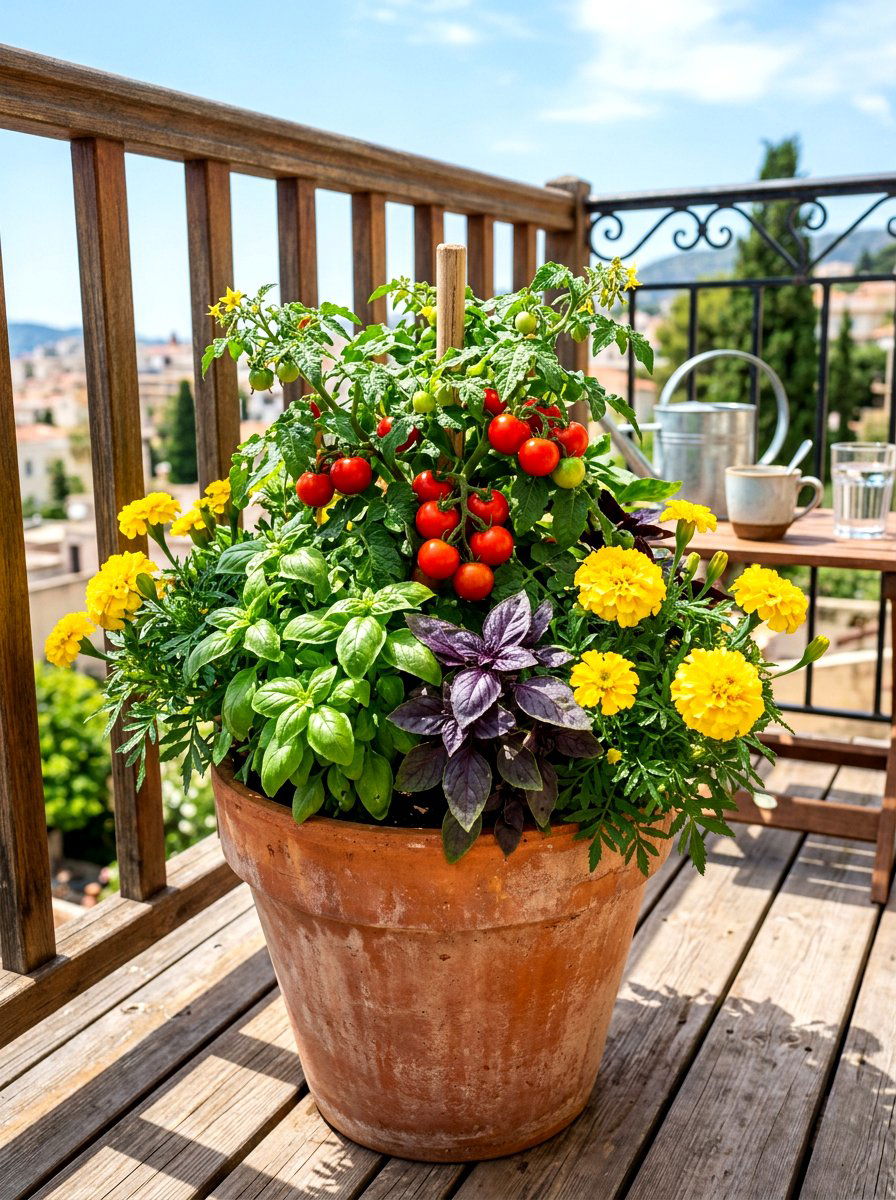
Container gardening allows you to bring the beauty of dahlias to patios, balconies, and decks where ground space is limited. Using large terracotta pots provides a classic look while offering the weight necessary to keep taller plants from tipping over. Choosing dwarf or border dahlia varieties ensures the plants remain proportionate to their containers without needing extensive staking. You can group several pots of different sizes together to create a tiered floral arrangement that feels like a mini-garden. Regular watering and liquid feeding are crucial for container-grown dahlias to maintain their health and flower production. This portable garden solution lets you move the blooms to follow the sun or decorate specific areas.
7. Dahlia And Ornamental Grasses
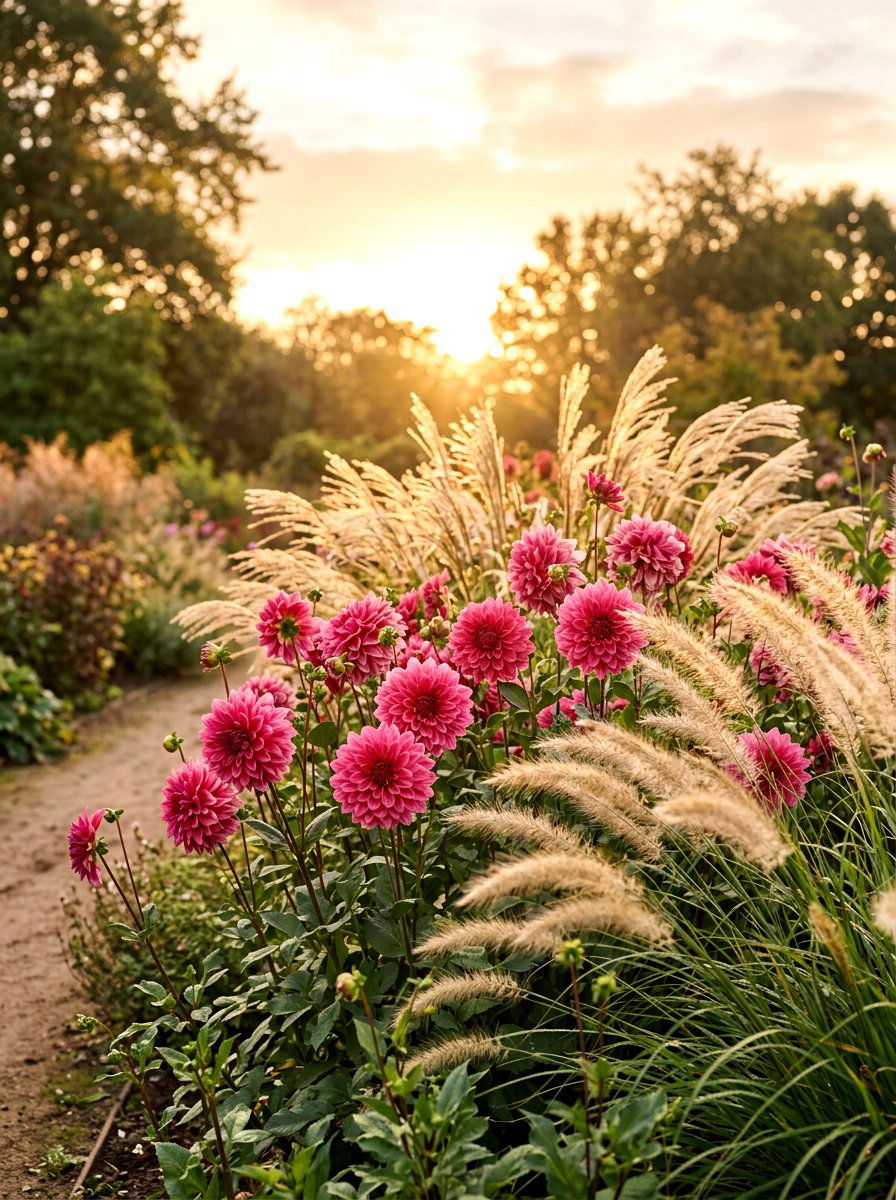
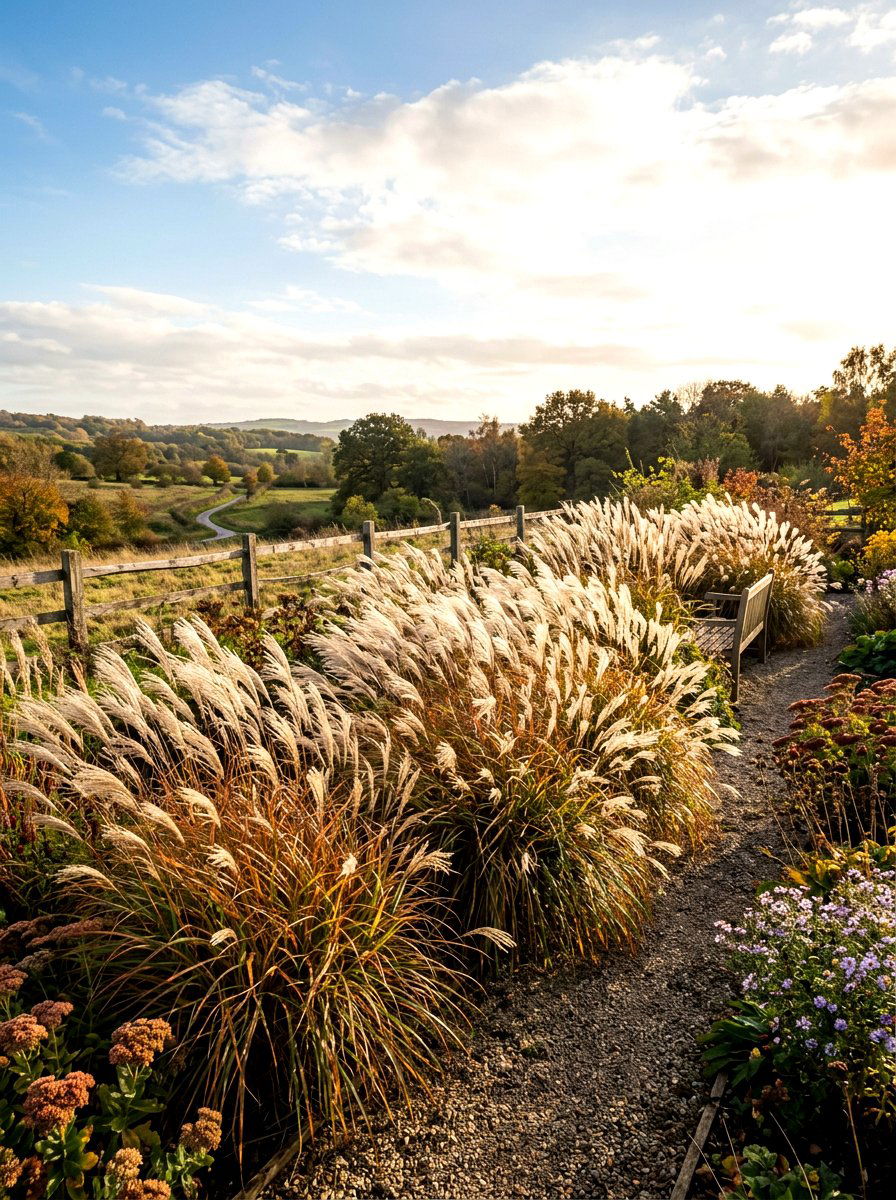
Mixing the bold, structural heads of dahlias with the fine, airy texture of ornamental grasses creates a beautiful professional landscape look. Grasses like Pennisetum or Miscanthus add movement and a soft rustling sound that complements the stationary brilliance of the flowers. As the grasses catch the late summer light, they provide a golden frame for the vibrant dahlia petals. This combination is particularly effective for late-season interest when many other garden plants begin to fade. The contrast between the broad dahlia leaves and the slender blades of grass adds a level of sophistication to any border. This pairing works well in both naturalistic meadow designs and more structured contemporary garden layouts.
8. Vertical Dahlia Trellis
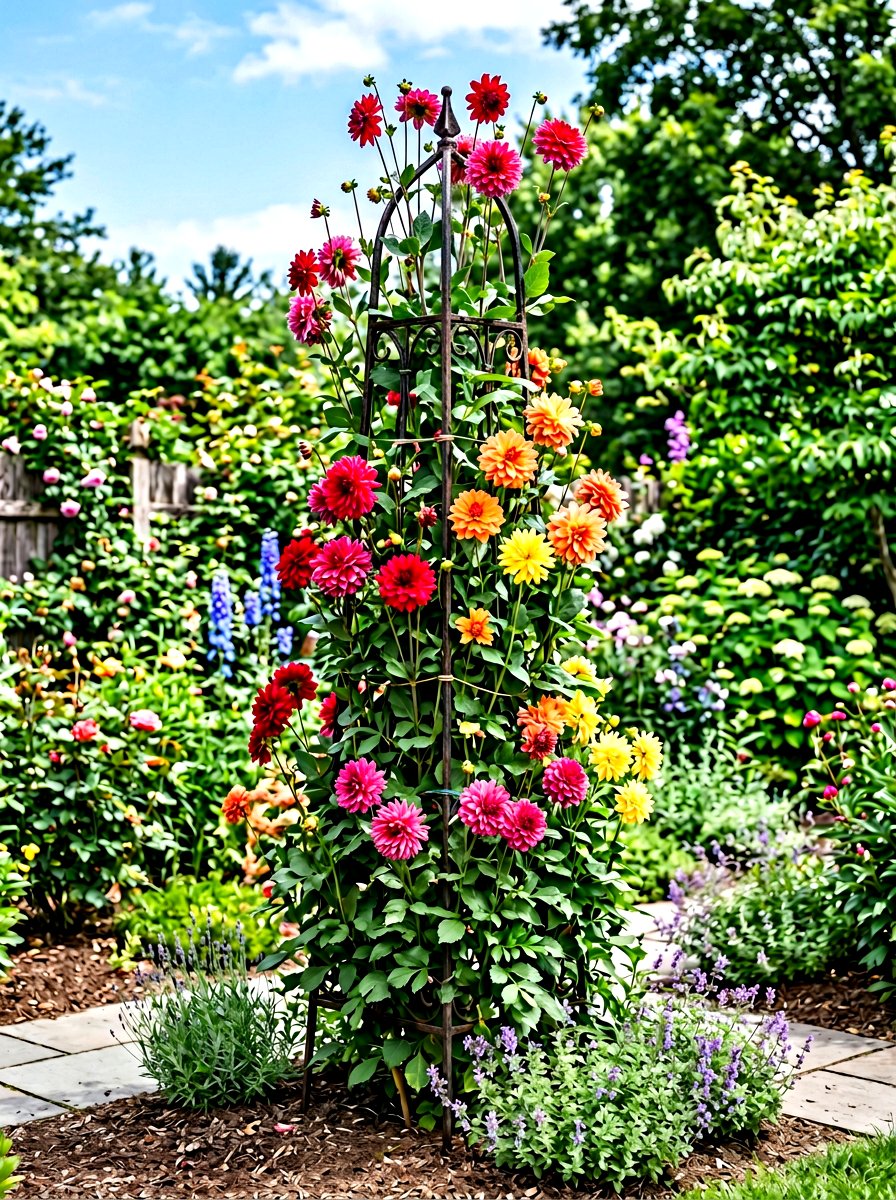
While most dahlias grow as bushes, tall varieties can be trained against vertical structures to save ground space and add height. Using a wooden trellis or a decorative metal obelisk provides the necessary support for stems that reach five or six feet. This technique is ideal for masking plain fences or creating a living privacy screen during the peak of summer. You must carefully tie the main stems to the structure as they grow to ensure they don't lean or break. This vertical approach allows you to appreciate the intricate details of the blooms at eye level. It also improves air circulation around the foliage, which helps to prevent common issues like powdery mildew.
9. Rainbow Dahlia Garden Path
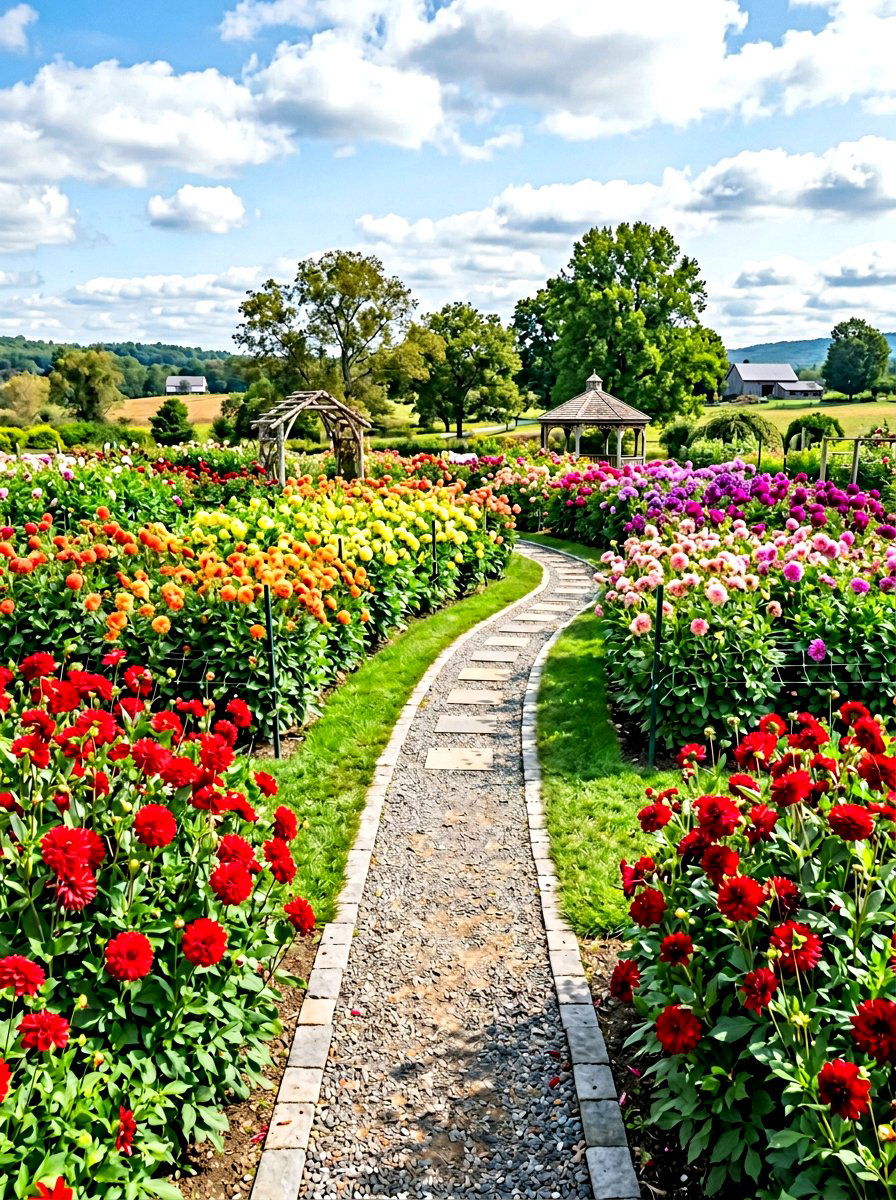
A colorful walkway lined with a spectrum of dahlia hues creates an unforgettable entrance to any home or backyard area. By planting a row of dahlias in a gradient, from deep reds and oranges to soft pinks and purples, you guide the visitor through a visual journey. Using consistent plant heights for the path ensures a neat and tidy appearance that frames the walkway perfectly. This design works best with prolific bloomers that provide a solid wall of color for several months. Regular deadheading is essential in this high-visibility area to keep the display looking fresh and vibrant. A rainbow border is a cheerful way to celebrate the full color palette available in the dahlia world.
10. Cactus Dahlia Rock Garden
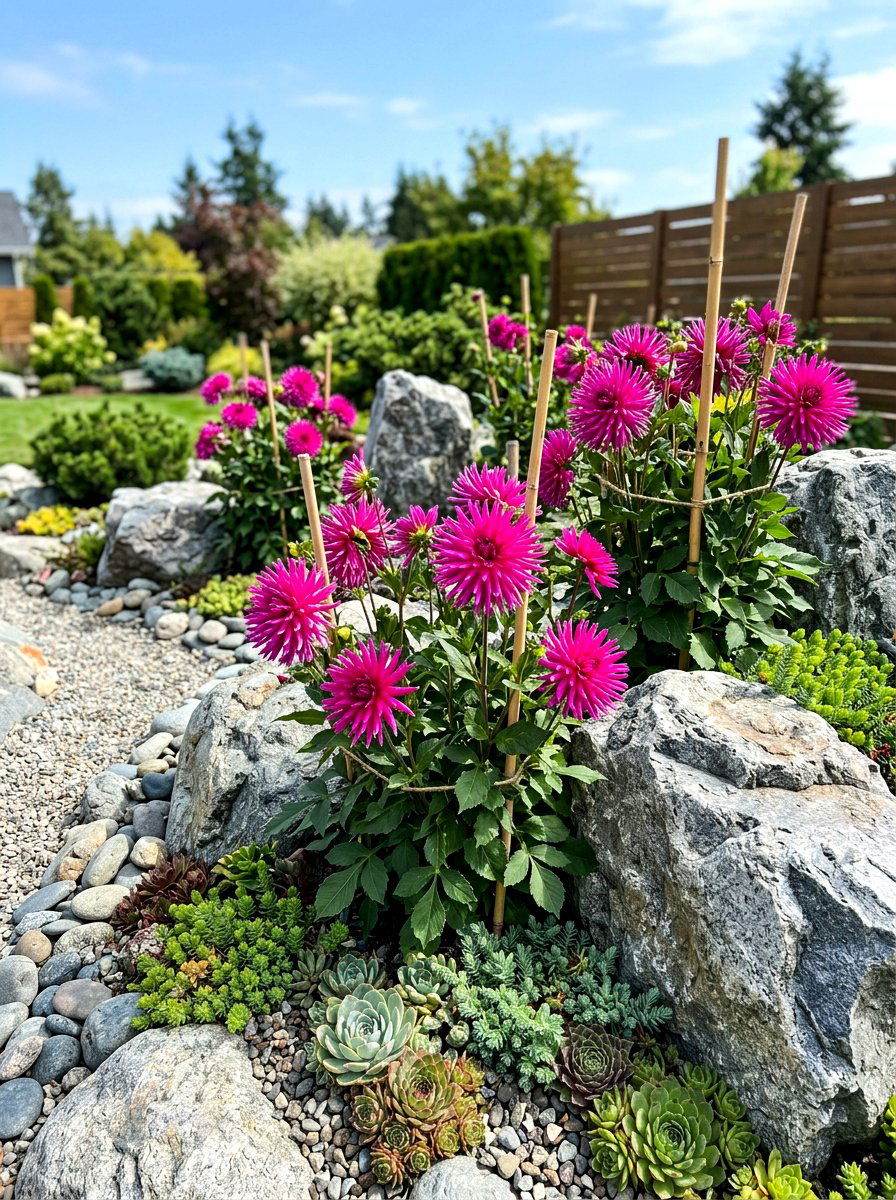
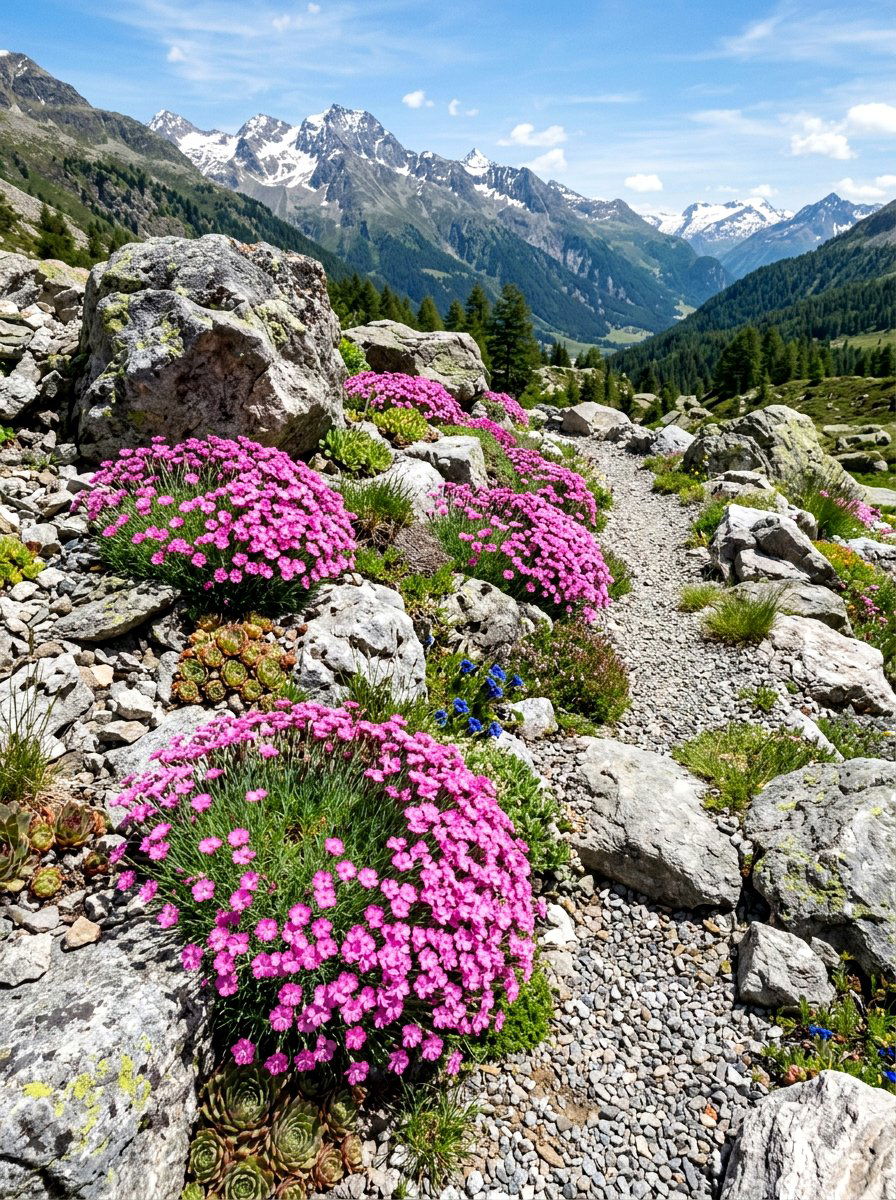
Cactus dahlias feature unique, narrow petals that curve backwards, giving them a spiky and architectural appearance that fits well in a rock garden. Their distinct form contrasts beautifully with the smooth surfaces of large stones and gravel mulch. These dahlias often have a more upright and sturdy habit, which makes them suitable for the well-drained, sunny conditions of a rockery. Pairing them with low-growing succulents or alpine plants creates a diverse texture story that highlights the dahlia's exotic look. The sharp lines of the petals echo the rugged nature of the stones, creating a cohesive and modern landscape. This style is perfect for gardeners who want a low-maintenance but high-impact floral display.
11. Pompon Dahlia Bed Edging
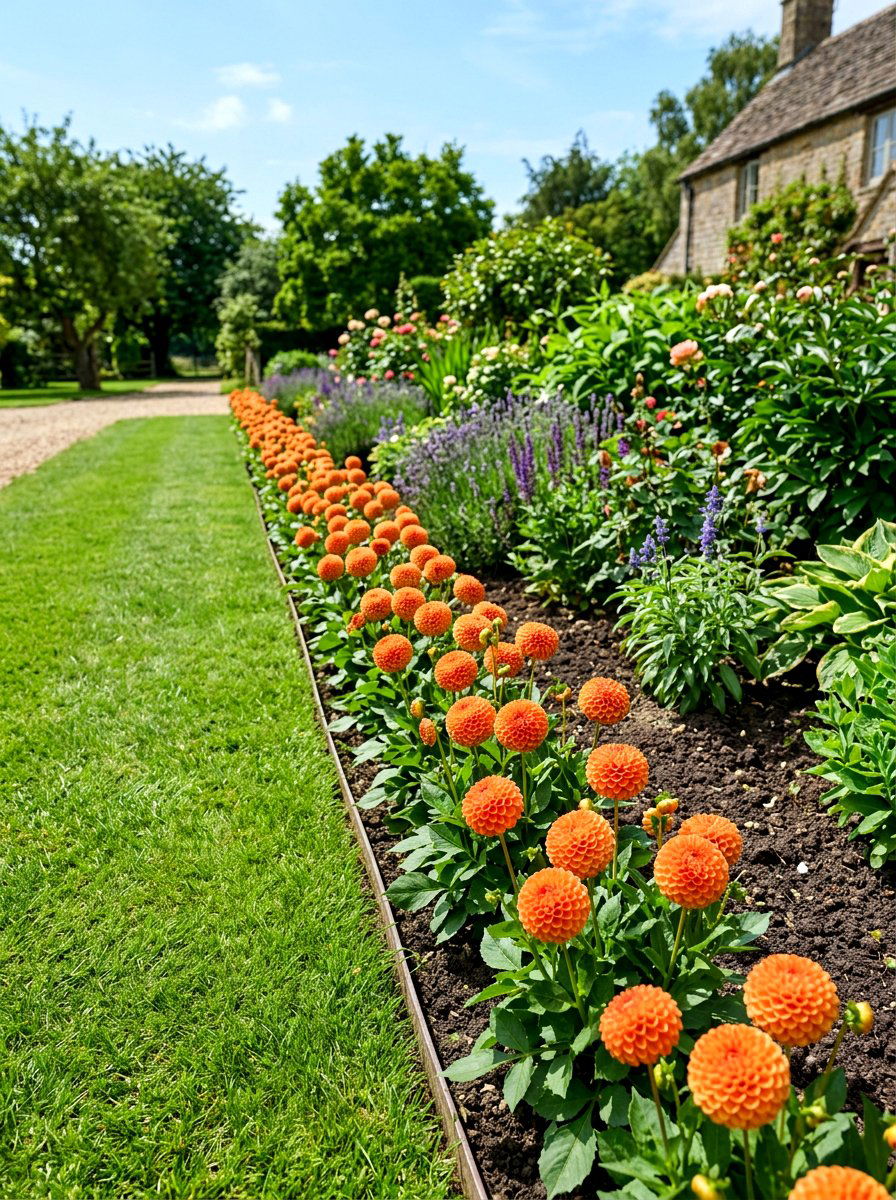
Pompon dahlias are prized for their small, perfectly spherical blooms that feature a mesmerizing honeycomb of petals. Because these plants are often more compact, they make excellent choices for edging the front of a garden bed. Their neat and tidy growth habit prevents them from flopping over onto lawn areas or pathways. Planting a long row of a single pompon variety creates a repetitive pattern that brings a sense of order to a mixed border. Their petite size also makes them less prone to wind damage compared to their larger cousins. These little globes of color provide a delightful detail that rewards closer inspection by guests walking through your garden.
12. Sunset Colored Dahlia Row
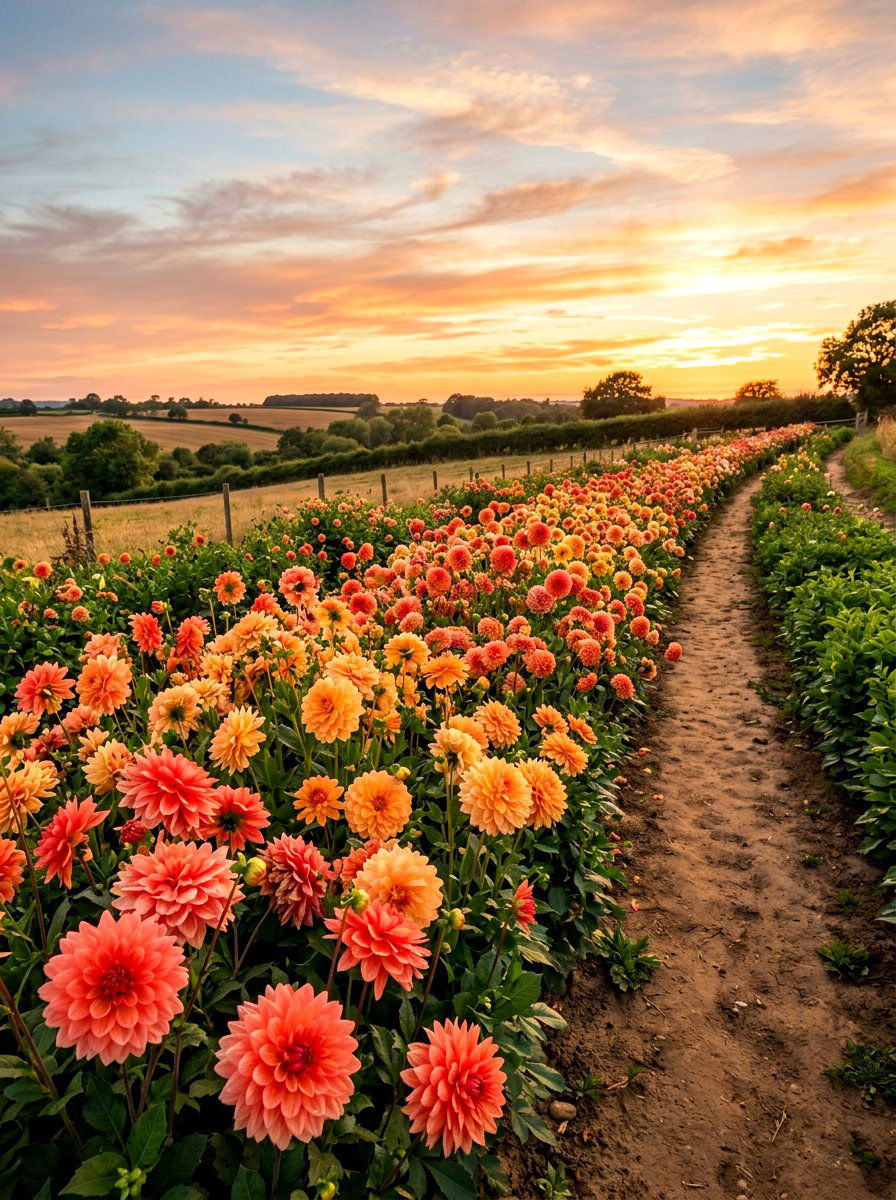
Capturing the warm tones of a summer sunset can be achieved by grouping dahlias in shades of apricot, peach, coral, and gold. This color scheme creates a glowing effect that looks particularly magical during the "golden hour" of the late afternoon. Varieties like 'Peaches n' Cream 'or ' Labyrinth' offer blended hues that transition smoothly between these warm colors. Planting them in a long, continuous row maximizes the impact of the color wash across your landscape. This palette feels inviting and energetic, making it a popular choice for backyard entertaining spaces. To enhance the sunset theme, consider adding bronze-foliaged plants that echo the deeper tones of the sky as day turns to night.
13. Dahlia And Salvia Pairing
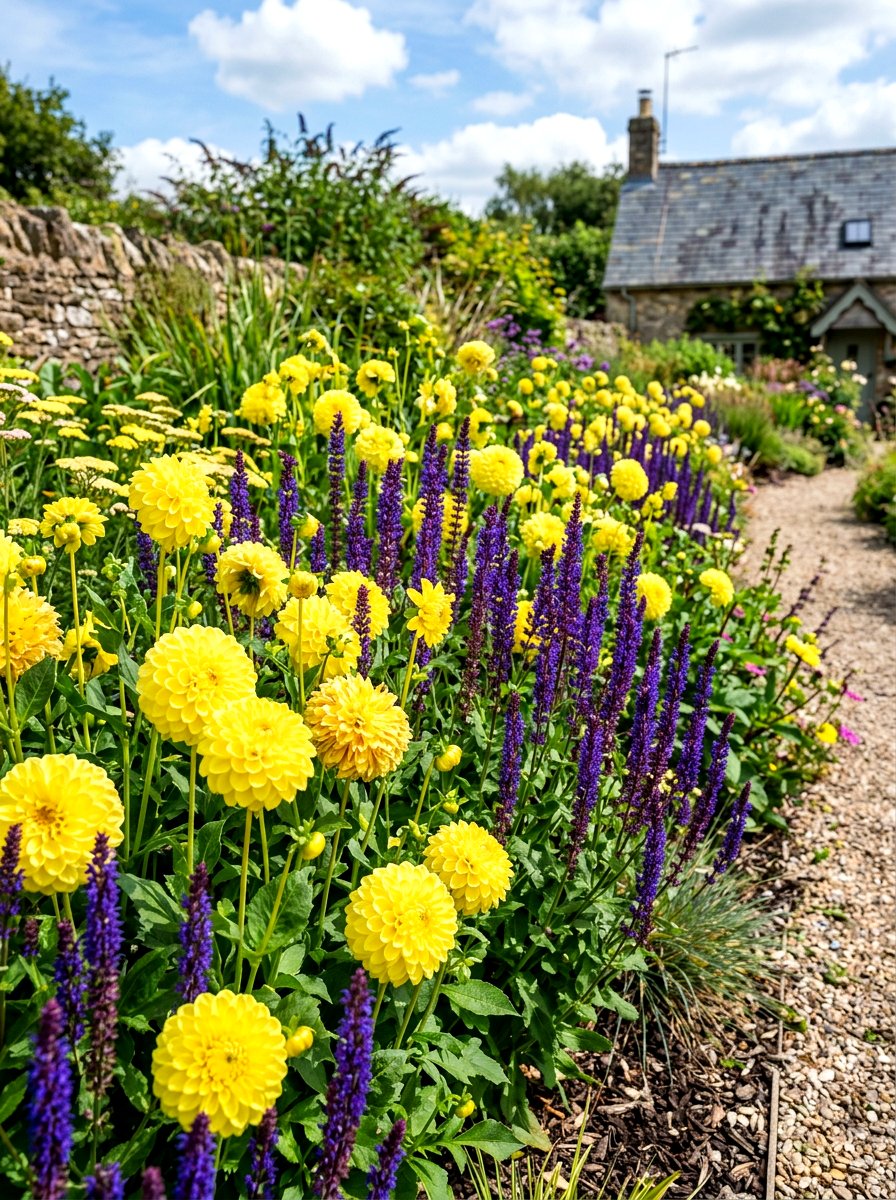
Pairing dahlias with the upright spikes of salvia creates a classic garden combination based on contrasting flower shapes. The rounded, heavy heads of the dahlias are balanced by the slender, vertical lines of the salvia blooms. This duo is also highly beneficial for local pollinators, as salvias are a favorite for bees and hummingbirds. Choosing purple salvias to go with orange or yellow dahlias creates a vibrant complementary color scheme that catches the eye from a distance. Both plants thrive in similar conditions of full sun and regular moisture, making them easy garden companions. This combination ensures that your garden beds look full and professionally designed with minimal effort on your part.
14. Woodland Edge Dahlia Garden
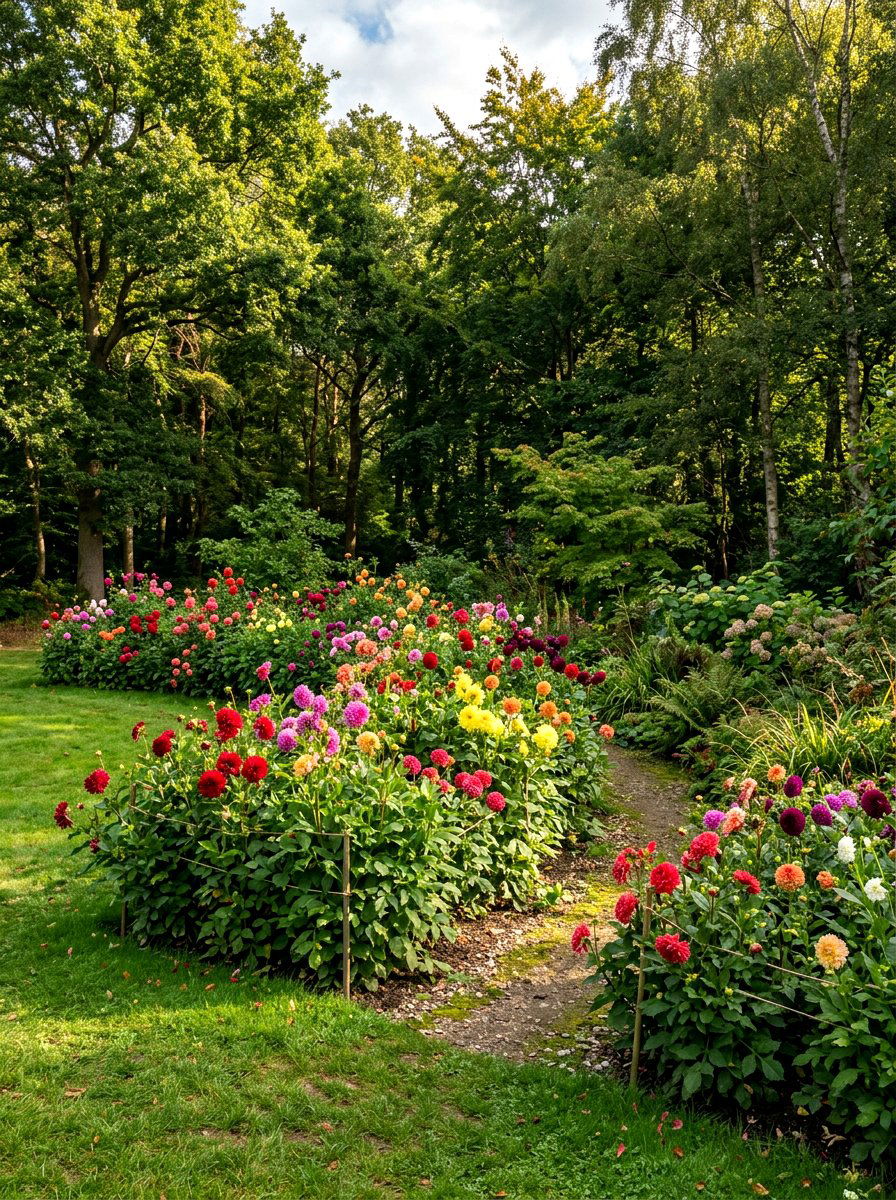
While dahlias generally prefer full sun, they can thrive on the sunny edge of a woodland area where they receive morning light. This transition zone allows you to blend the wild, natural look of the woods with the cultivated beauty of hybrid flowers. Using dahlias in this setting adds a surprising pop of color against the deep shadows of mature trees. It is important to ensure the tubers are not competing too heavily with tree roots for water and nutrients. Choosing more natural-looking single or semi-double dahlia varieties helps the plants feel integrated into the surrounding landscape. This placement creates a beautiful bridge between the structured garden and the more untamed parts of your property.
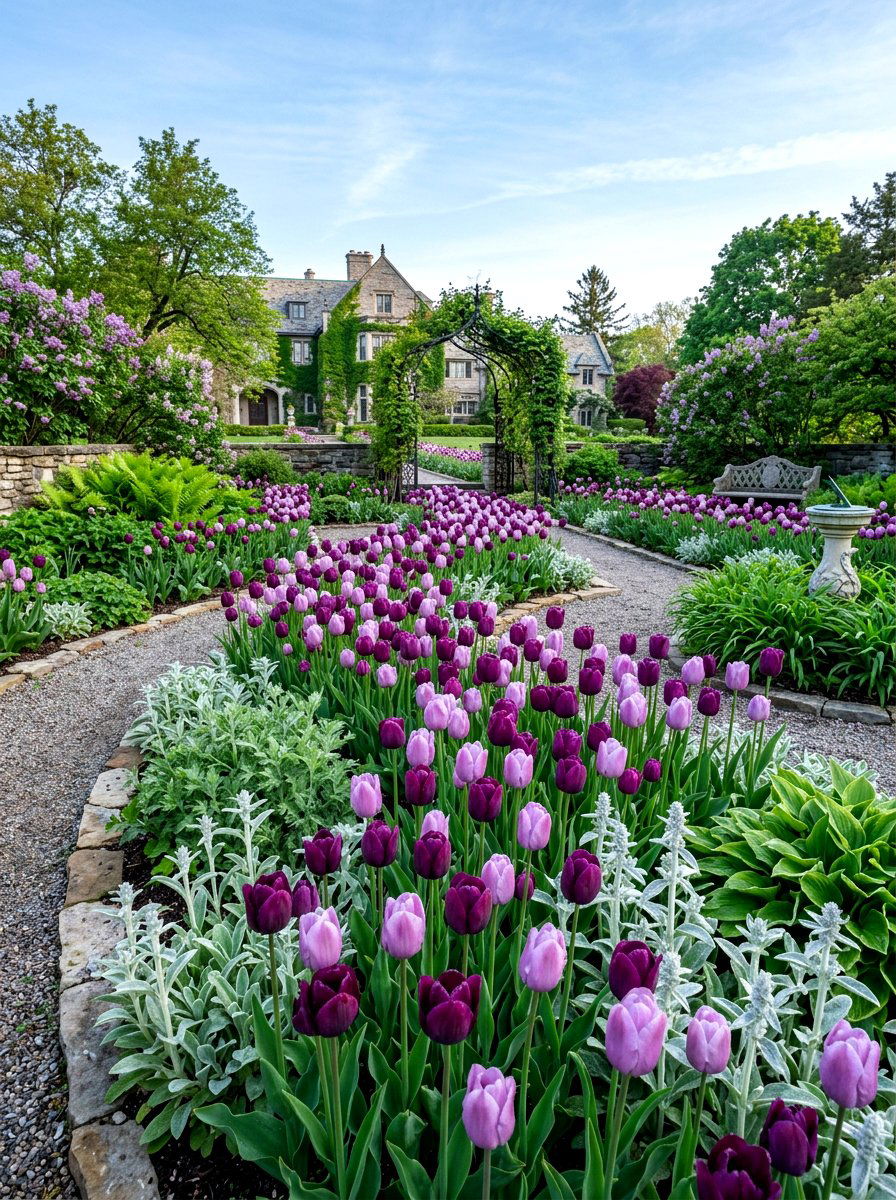
15. Minimalist Modern Dahlia Planters
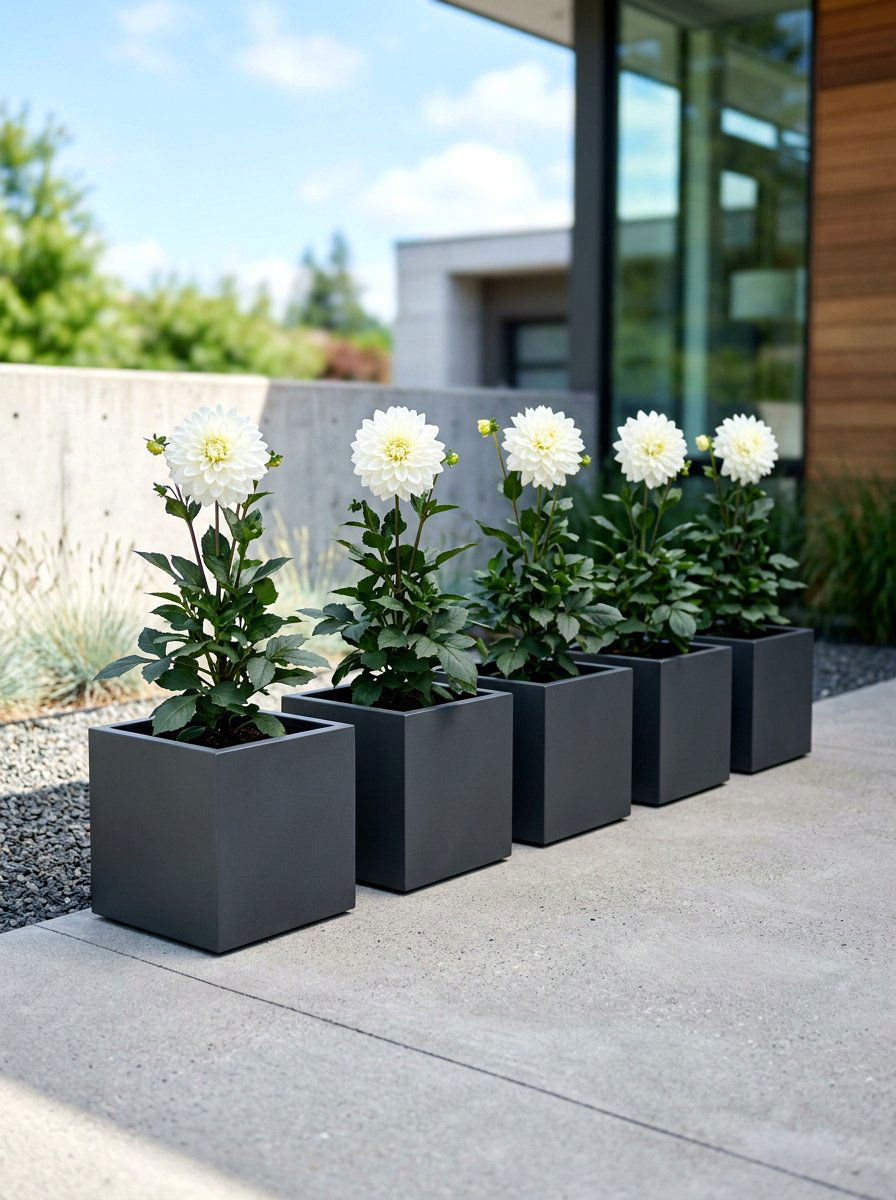
For a sleek and contemporary look, use minimalist planters with clean lines and neutral colors like charcoal, white, or concrete. Planting a single, architectural dahlia variety in each container emphasizes the plant's form and makes a bold statement. This approach works well in urban courtyards or on modern patios where simplicity is the key design principle. You can line up identical planters to create a rhythmic, repetitive element along a wall or a pool edge. Selecting dahlias with striking flower shapes, such as the orchid or anemone types, adds to the artistic feel of the display. This style proves that dahlias can be just as sophisticated as they are traditionally charming.
16. Waterlily Dahlia Reflection Pool
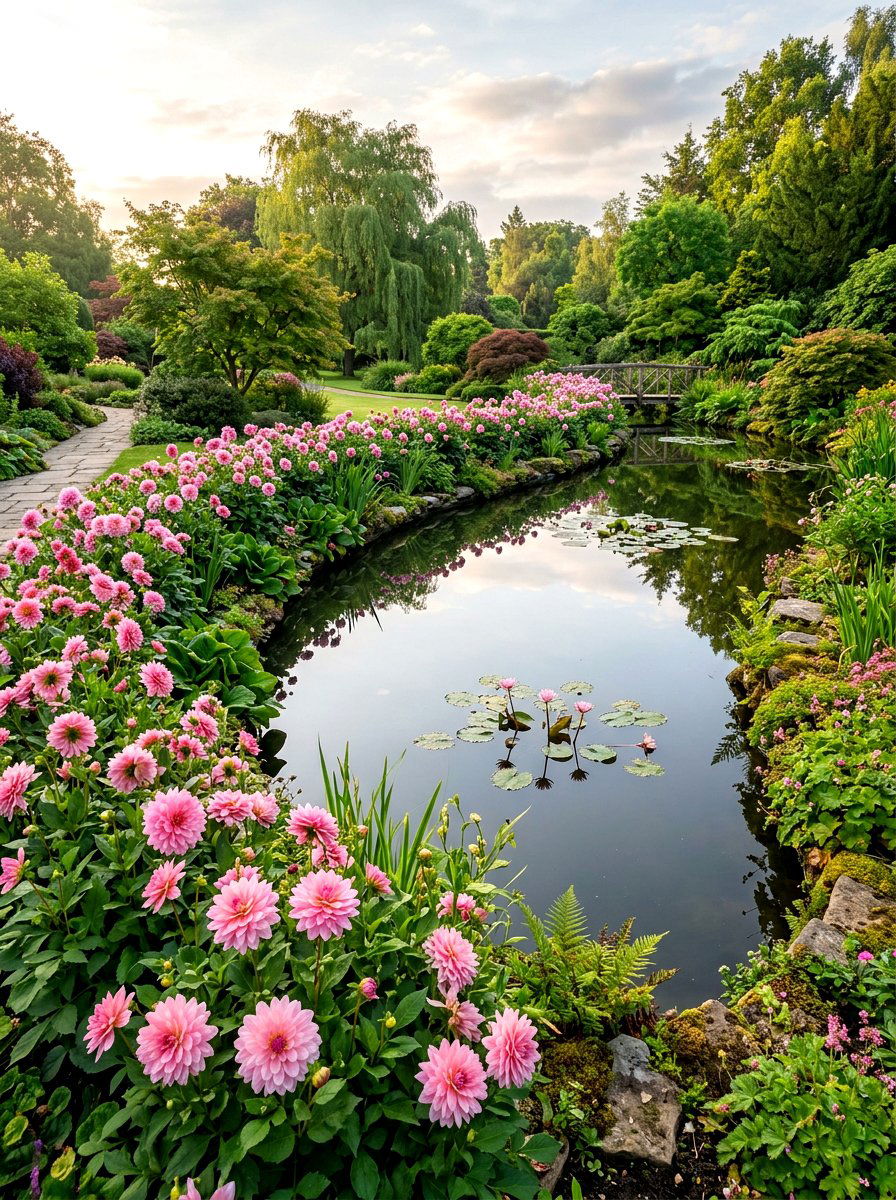
Waterlily dahlias are named for their resemblance to aquatic lilies, featuring broad, flat petals that curve gently upwards. Planting these specific varieties near a garden pond or a formal reflection pool enhances the water-themed aesthetic of the area. The symmetry of the blooms is mirrored in the still water, creating a tranquil and artistic scene. Varieties like 'Gerrie Hoek' offer a soft, romantic pink that looks particularly beautiful when reflected. Surrounding the pool with these dahlias provides a lush, colorful frame that softens the edges of the water feature. This design strategy turns a simple garden pond into a high-end landscape focal point that feels deeply peaceful and curated.
17. Companion Herb And Dahlia Bed
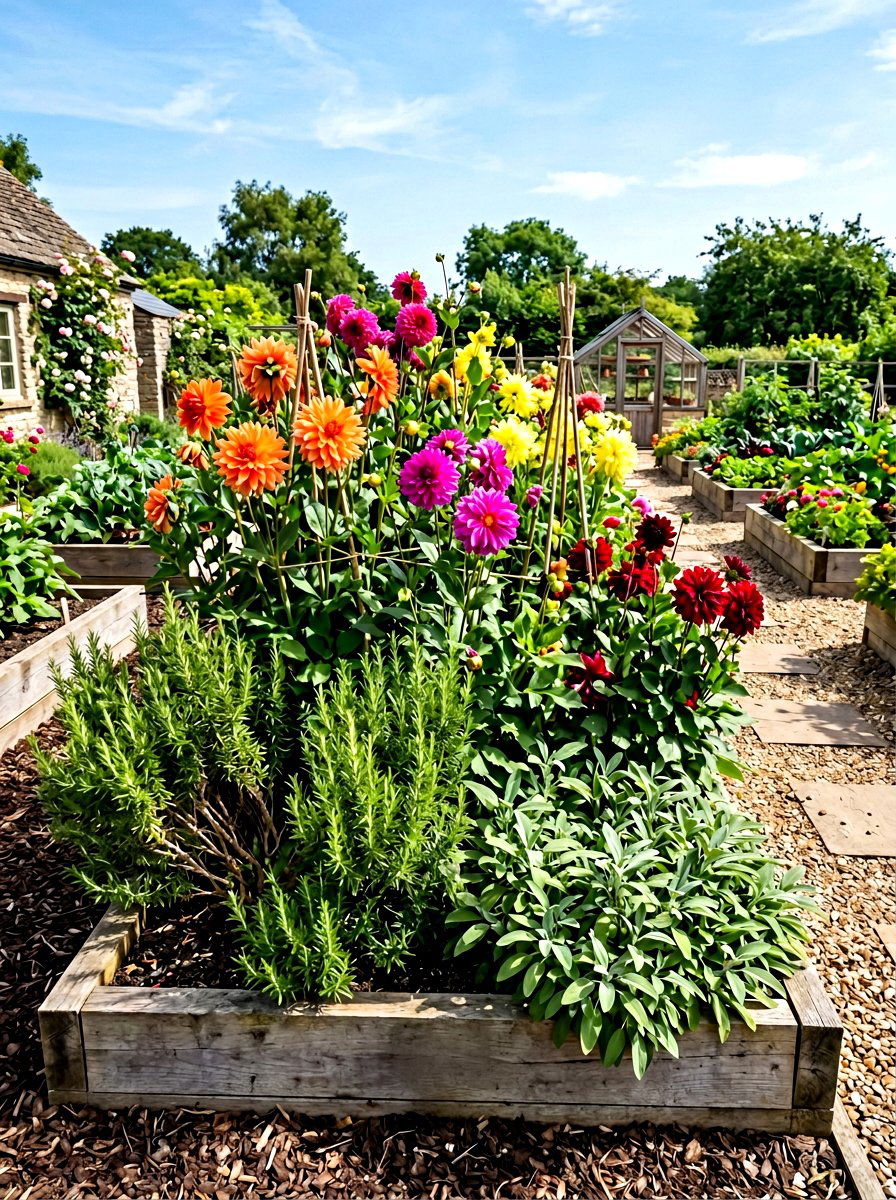
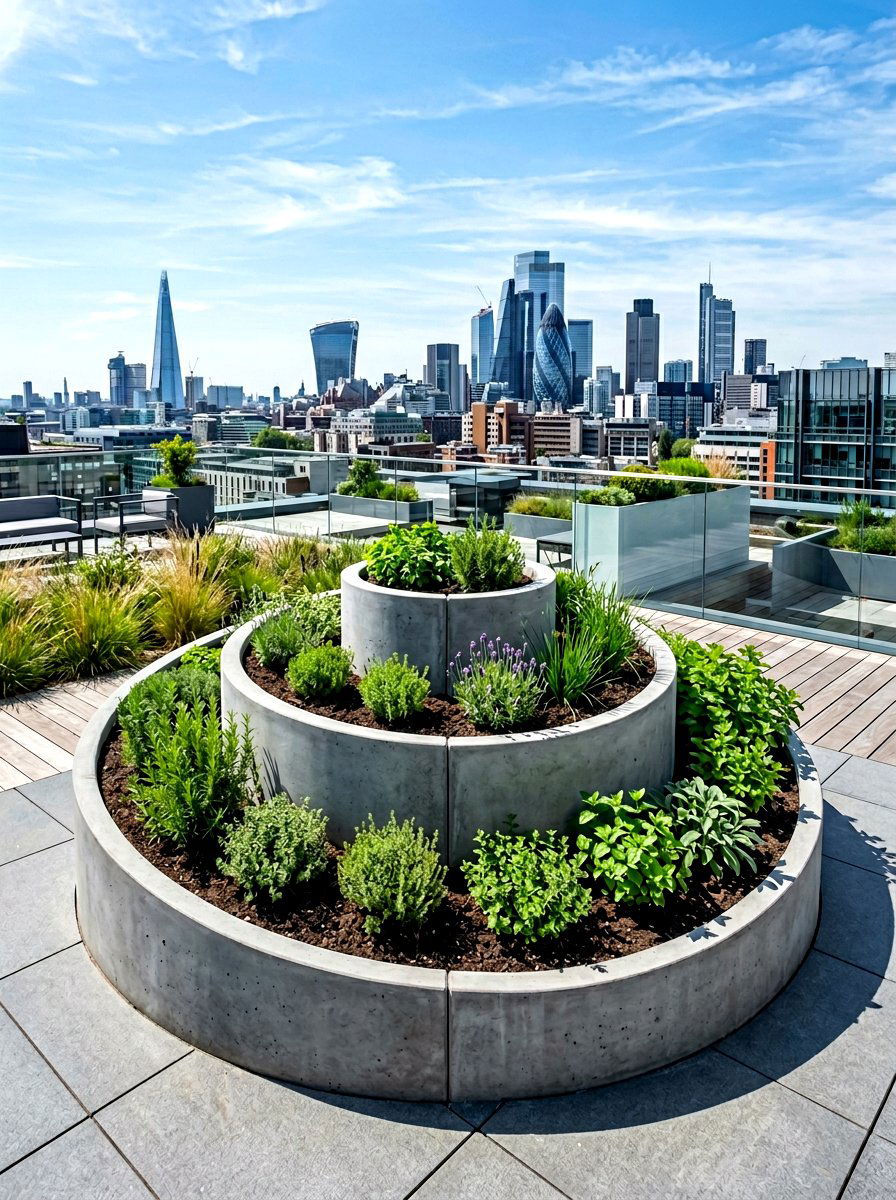
Integrating dahlias into a kitchen garden or herb bed is both functional and visually appealing. The pungent scents of herbs like rosemary, sage, and mint can help deter pests that might otherwise target your dahlia foliage. In return, the tall dahlia plants provide some light afternoon shade for more delicate herbs that might struggle in intense heat. The mix of edible foliage and ornamental flowers creates a rich, sensory experience for anyone harvesting fresh ingredients. Using dahlias with open, single blooms also attracts beneficial insects that help protect your food crops. This holistic approach to gardening maximizes the utility of your space while keeping it looking beautiful throughout the season.
18. Pollinator Friendly Single Dahlia Patch
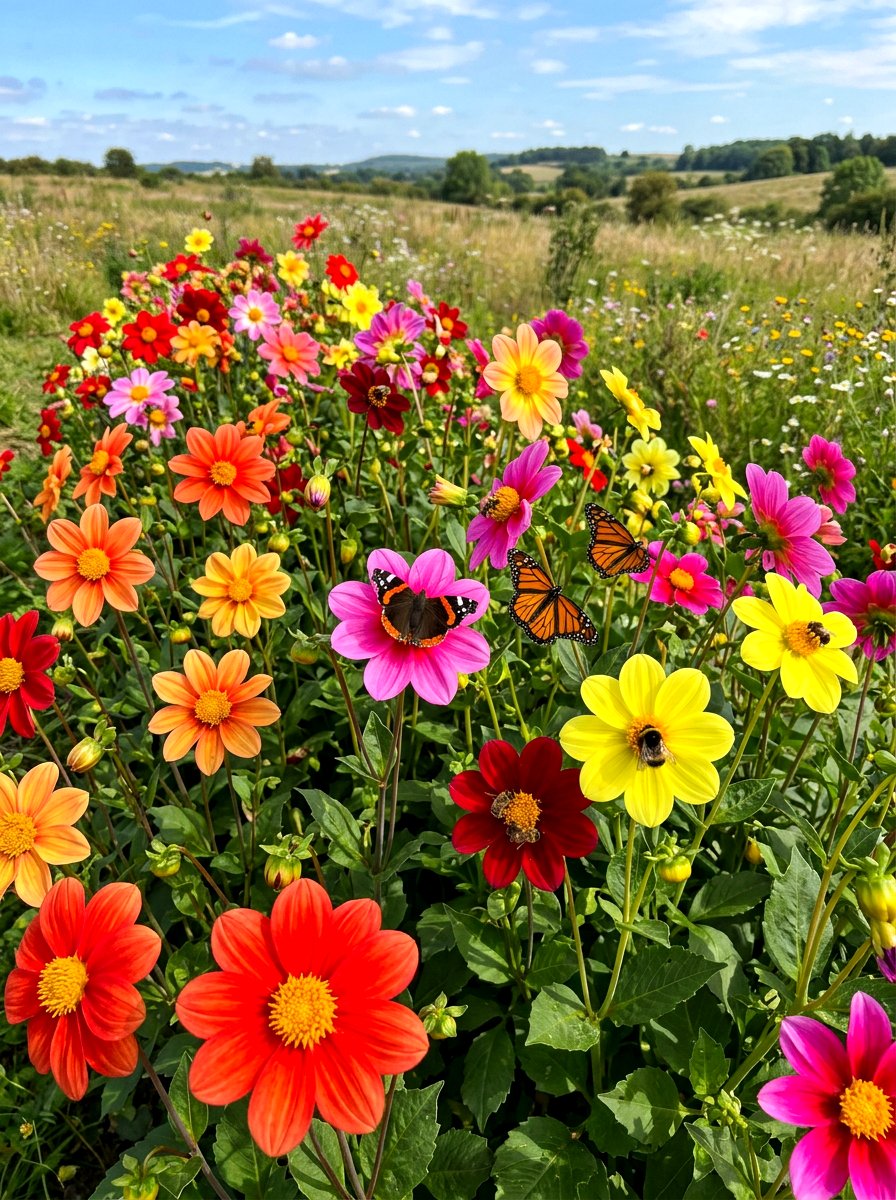
Single-flowered dahlias, which have a simple row of petals around an open center, are the best choices for supporting local wildlife. Unlike the dense double varieties, single dahlias provide easy access to nectar and pollen for bees, butterflies, and hoverflies. Creating a dedicated patch of these varieties ensures that your garden is a buzzing hub of activity all summer long. These plants often have a more airy and graceful habit that fits well in a wildlife-friendly or meadow-style garden. You can mix different colors of single dahlias to create a vibrant, "wild" look that feels natural and unforced. This choice prioritizes the health of your local ecosystem while still providing plenty of beauty.
19. Peach And Apricot Dahlia Border
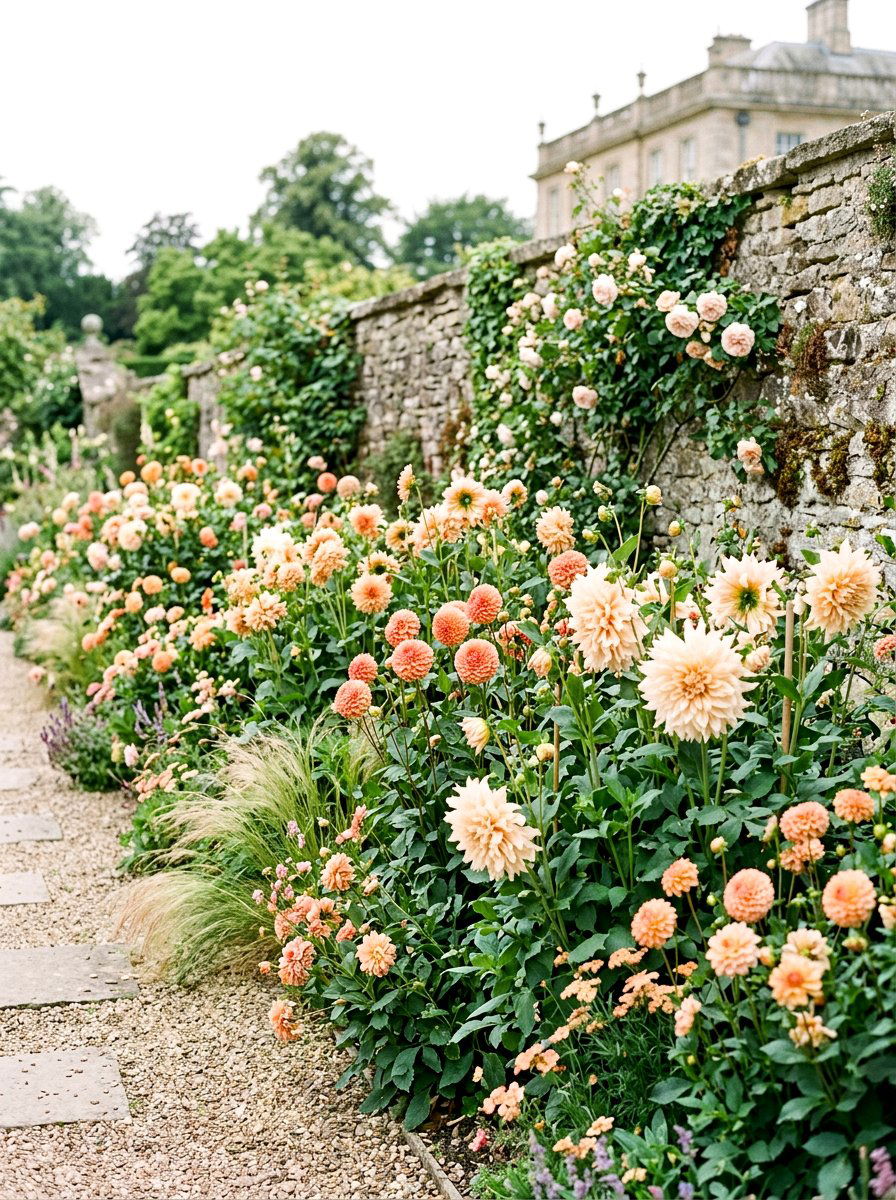
A soft palette of peach and apricot creates a warm, sophisticated border that feels more subtle than bright reds or yellows. These "nude" tones are currently very popular in floral design and look stunning when paired with silver or blue-toned foliage. Varieties like 'Linda' s Baby 'or ' Snoho Doris' offer a perfect round shape and consistent peachy hues. This color scheme is particularly effective at creating a sense of depth in the garden, as the soft colors seem to glow in the light. This border style works well as a transition between different garden rooms or as a soft frame for a lawn area. It provides a romantic and high-end feel that is perfect for summer garden parties.
20. Formal Symmetrical Dahlia Garden
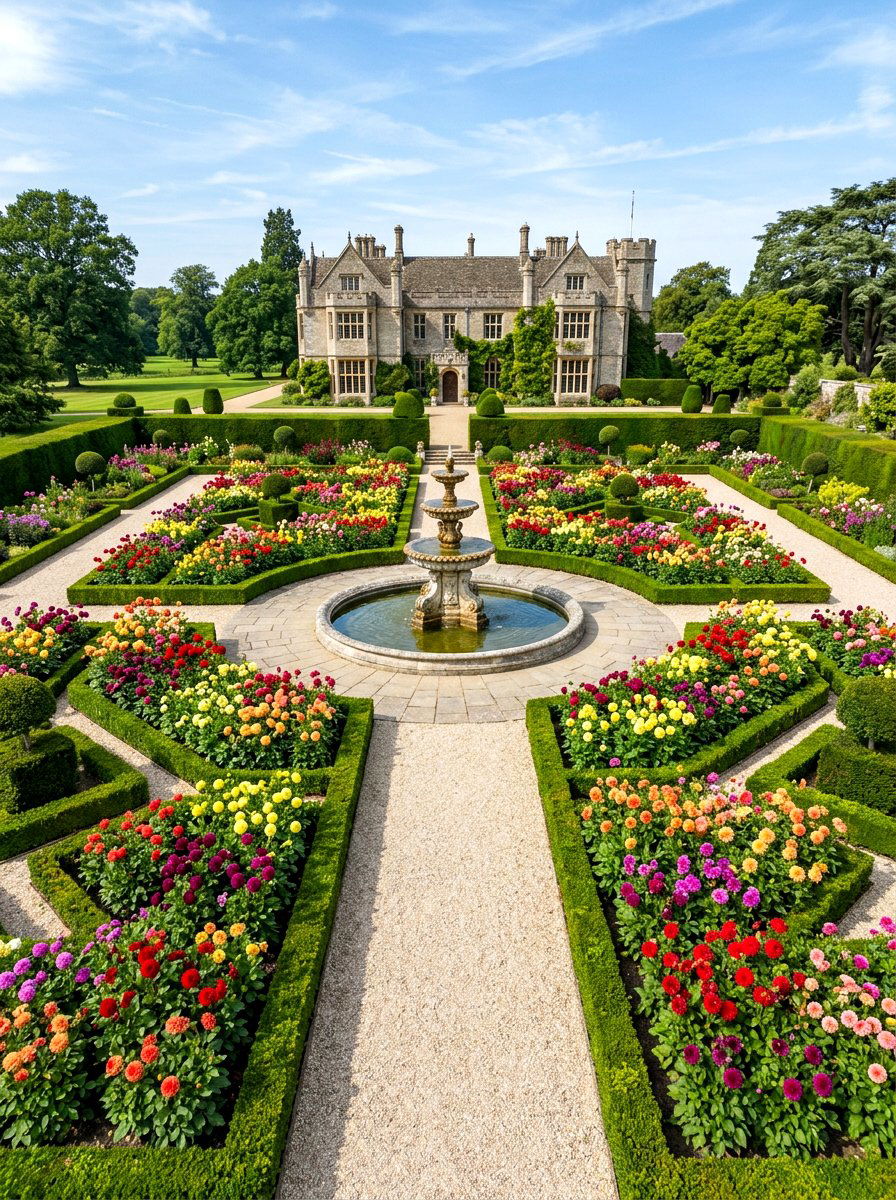
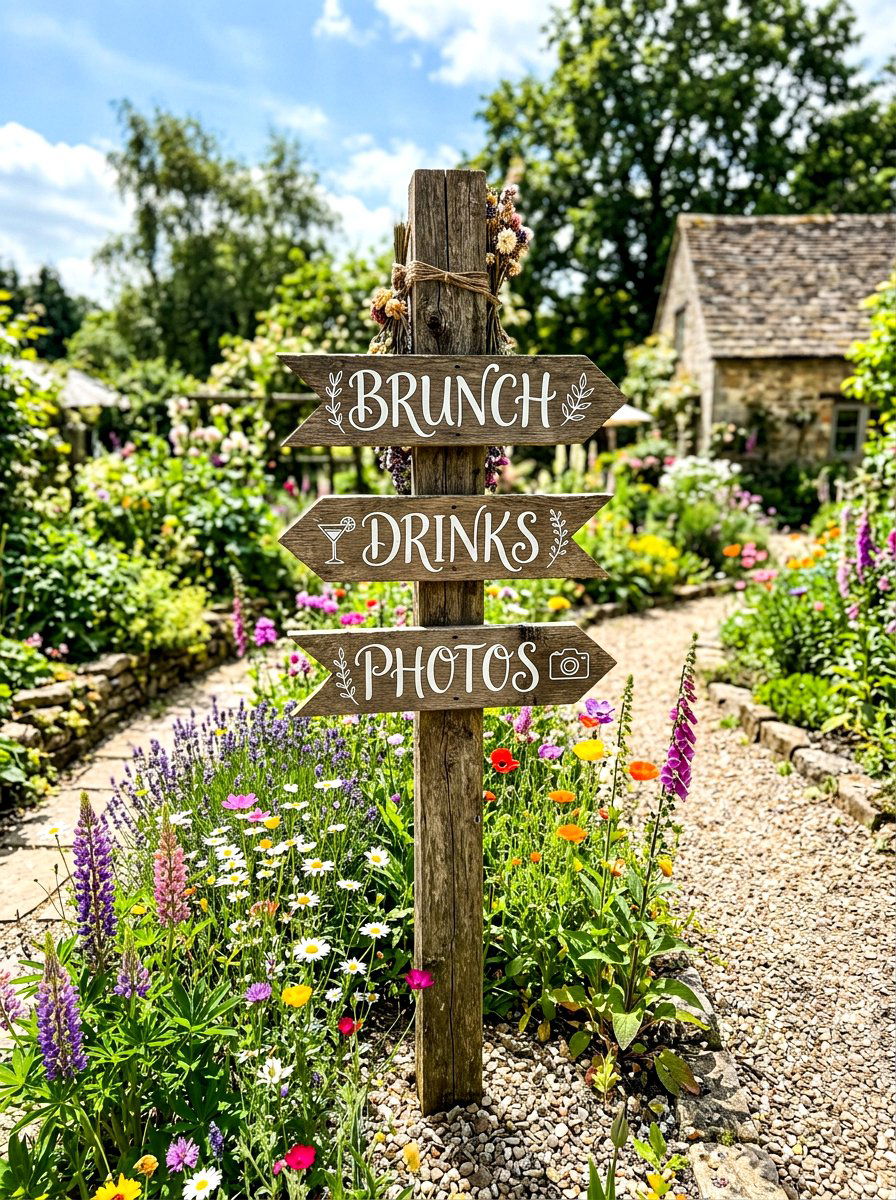
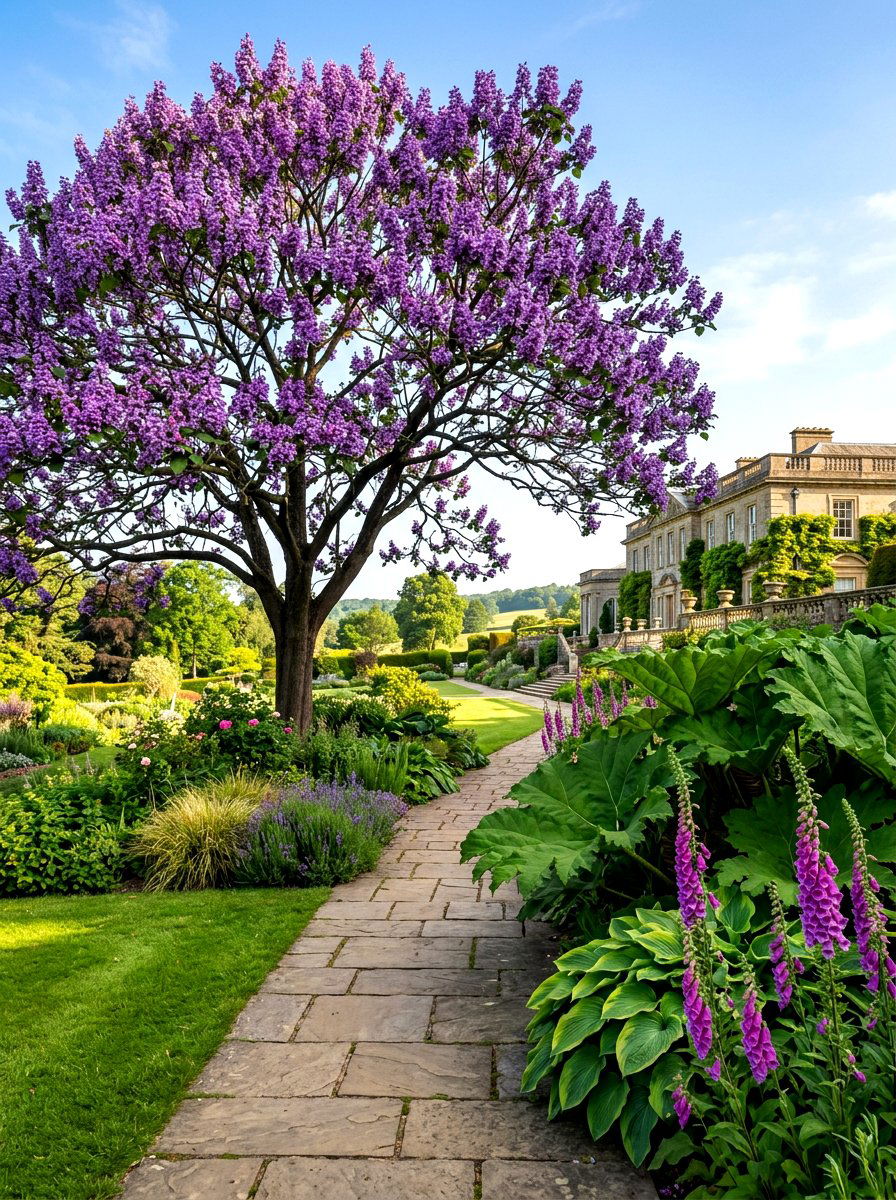
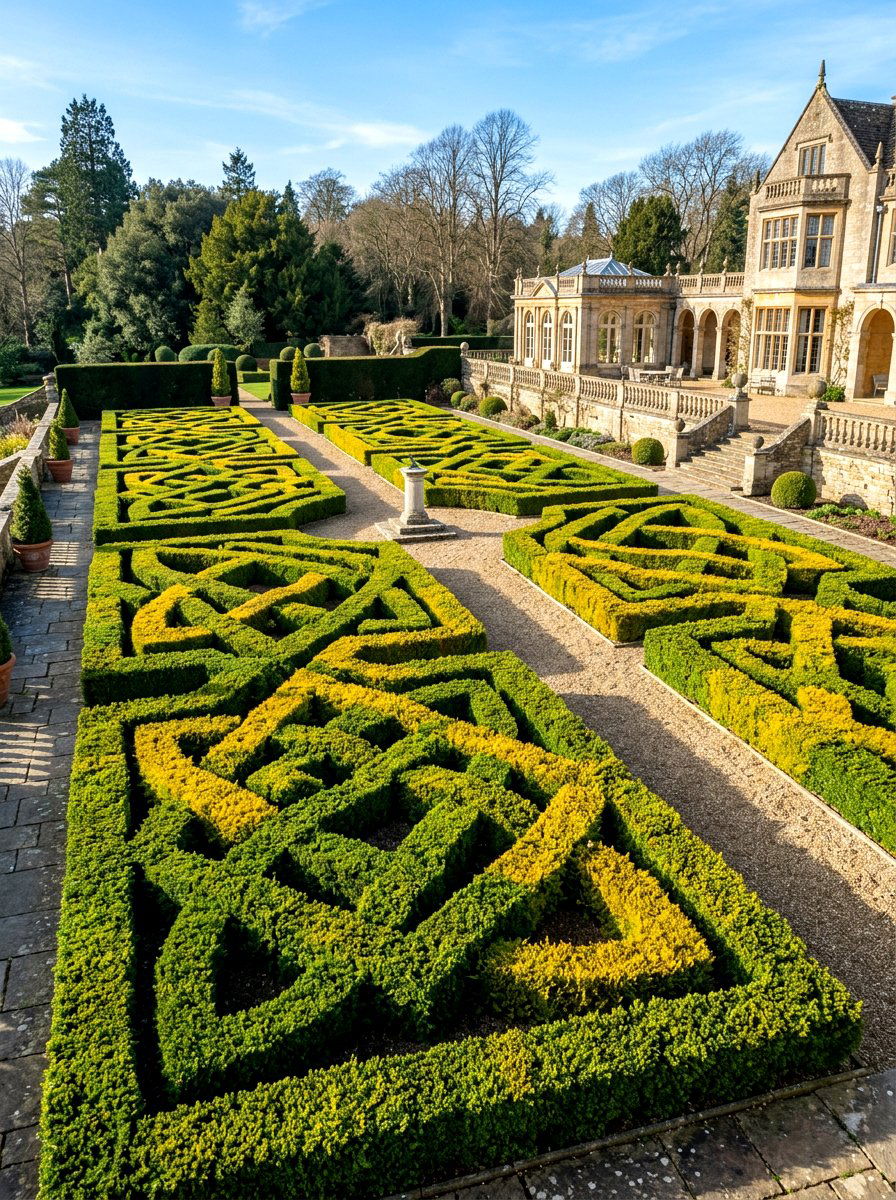
For those who prefer structure, a formal dahlia garden using symmetrical layouts and geometric beds provides a sense of grand elegance. Centering a fountain or a sundial and surrounding it with mirrored dahlia plantings creates a classic European estate feel. Using identical varieties on either side of a central path reinforces the balance and harmony of the design. Ball and pompon dahlias are ideal for this style because their perfectly round shapes contribute to the overall mathematical precision of the space. Keeping the edges of the beds neatly trimmed and using consistent mulching materials finishes the professional look. This approach turns your backyard into a stately garden that feels permanent and well-planned.
21. Dahlia And Verbena Airy Mix
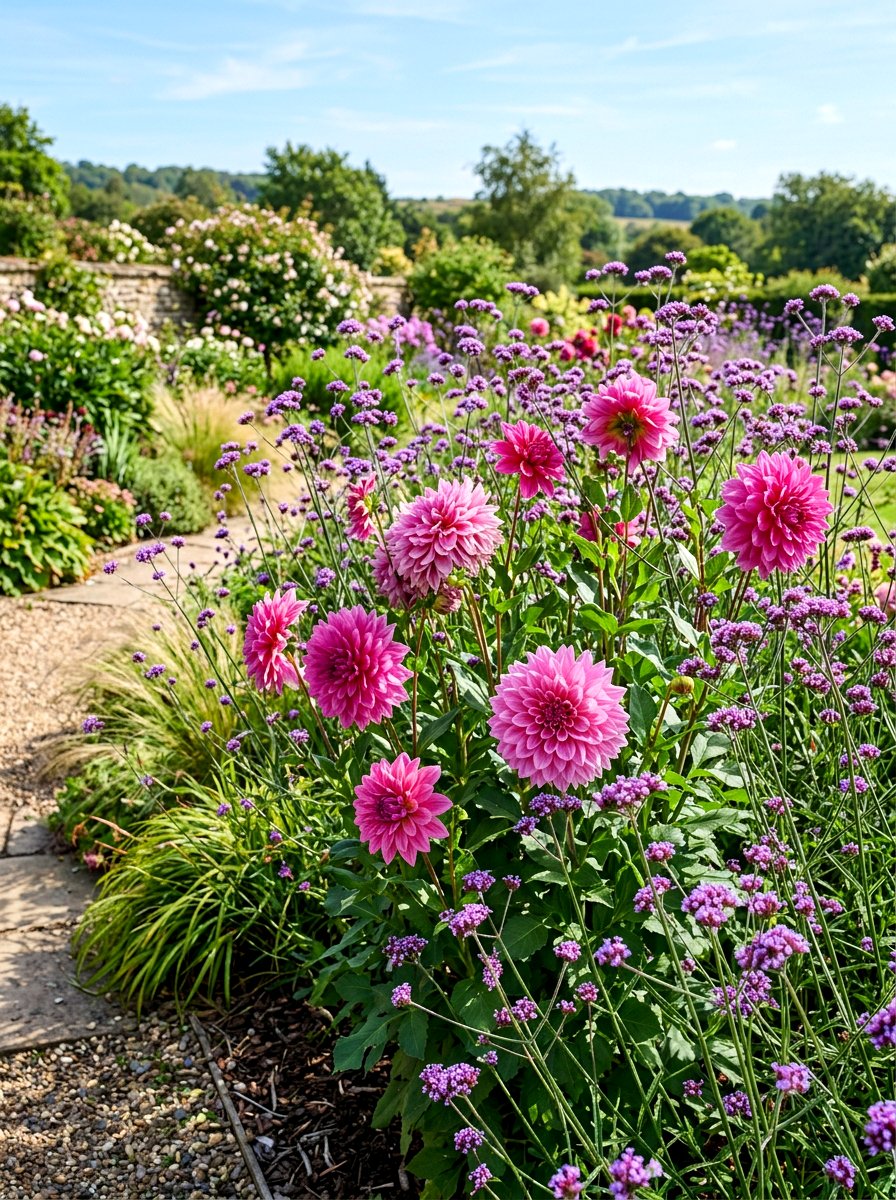
Verbena bonariensis is a tall, wiry plant with clusters of small purple flowers that seems to float in the air. When interplanted with dahlias, it fills the gaps between the heavy blooms with a light, transparent purple haze. This combination is excellent for adding a sense of height and movement without blocking the view of the star performers. The purple tones of the verbena make almost any dahlia color pop, especially yellows, oranges, and hot pinks. Because verbena is so thin, it doesn't compete for space, allowing you to plant more densely for a fuller look. This pairing is a favorite among professional garden designers for its effortless and modern charm.
22. Rustic Wooden Crate Dahlia Display
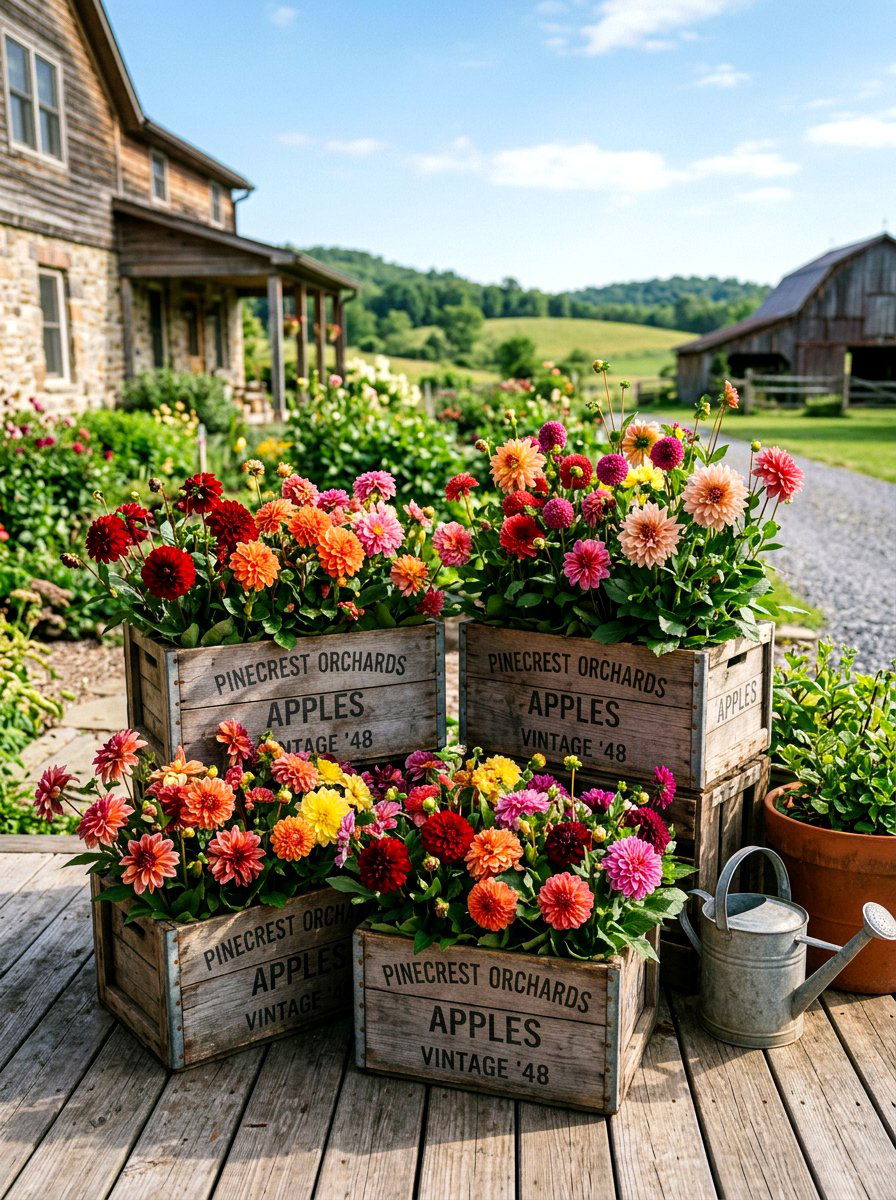
Using reclaimed wooden crates as planters adds a rustic, farmhouse touch to your dahlia garden. This upcycled look is perfect for casual backyard settings, porches, or even as a temporary display for a garden event. You can line the crates with landscape fabric to hold the soil and ensure proper drainage through the slats. Planting a mix of colorful, shaggy-headed dahlias in these crates creates a "just-picked" look that feels cozy and lived-in. Grouping several crates at different heights on a set of wooden steps or a pallet shelf adds vertical interest. This low-cost styling idea is a great way to recycle materials while showcasing the natural beauty of your flowers.
23. Anemone Flowered Dahlia Bed
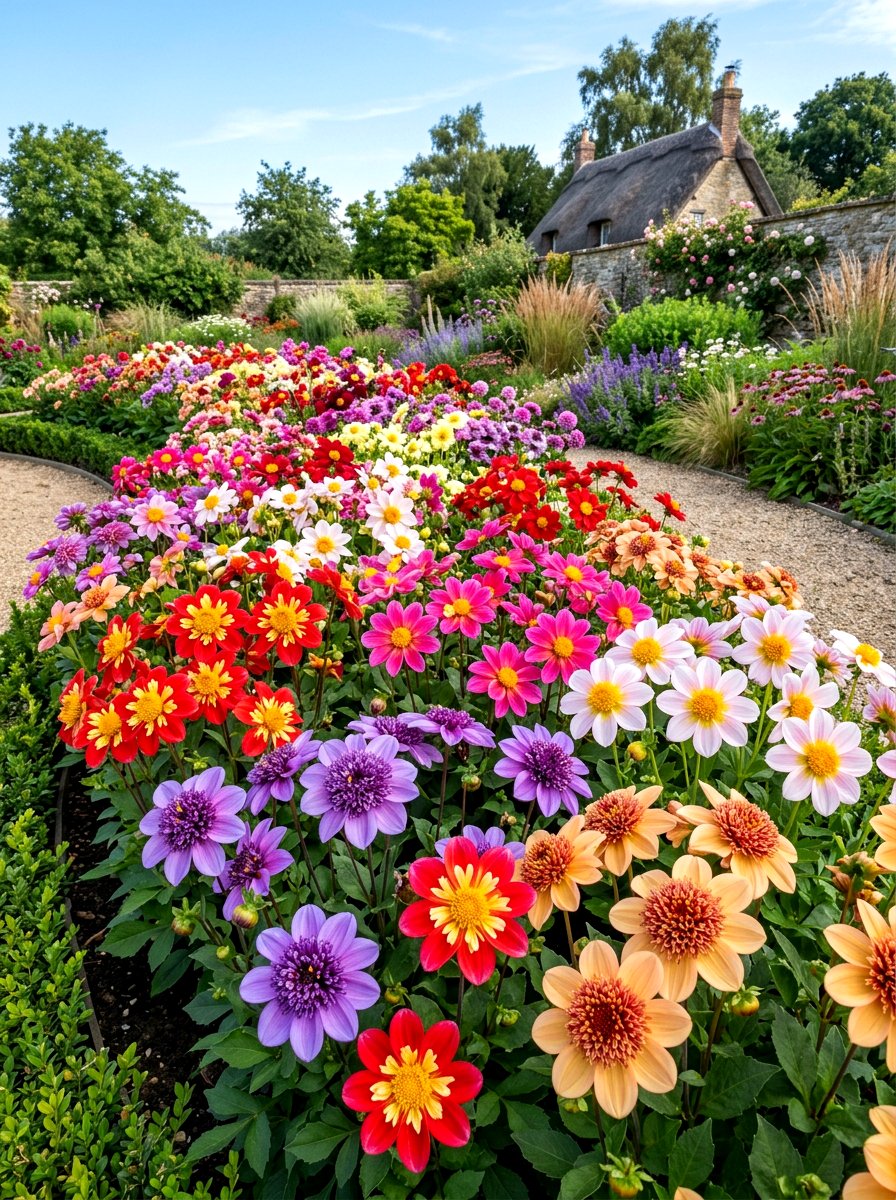
Anemone dahlias have a unique look with a central pincushion of tubular florets surrounded by a ring of larger flat petals. This unusual form adds an architectural and exotic element to any mixed flower bed. Because they look so different from standard dahlias, they often become a conversation piece for visitors. Planting them in a group allows you to appreciate the intricate details of their centers, which often come in a contrasting color to the outer petals. These varieties are generally medium-sized, making them versatile for the middle of a border. Their distinct shape provides a welcome break from more traditional rounded flower forms, keeping your garden design feeling fresh and interesting.
24. Low Growing Border Dahlia Walkway
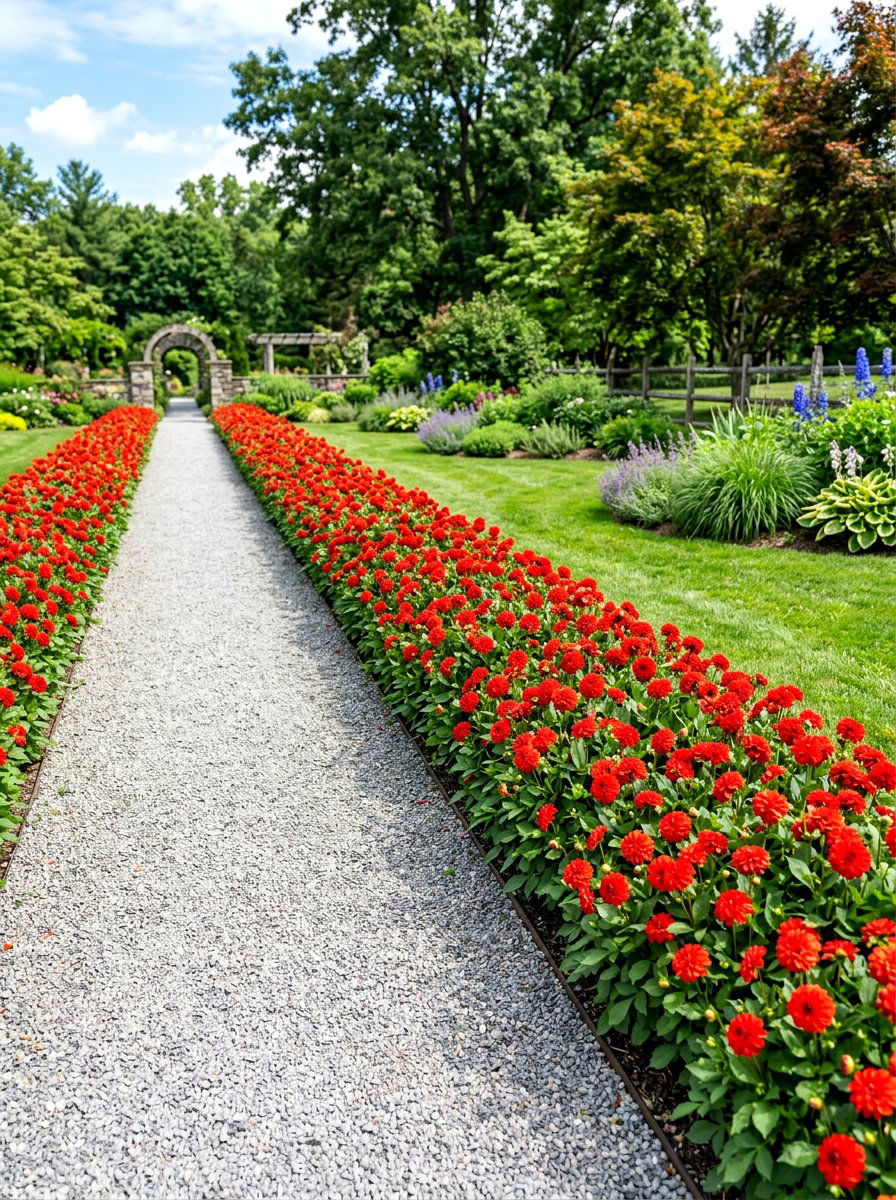
Specifically bred border dahlias stay short, usually under eighteen inches, making them the perfect choice for lining a narrow walkway. These compact plants are incredibly prolific, often covering themselves in so many blooms that the foliage is barely visible. Because they are short and bushy, they never require staking, which makes them a low-maintenance option for busy gardeners. Planting a single color along both sides of a path creates a clean, intentional look that guides the eye forward. These little powerhouses will continue to bloom right up until the frost, ensuring your walkways stay colorful and inviting for as long as possible. They are the ultimate solution for small-scale landscaping.
25. Romantic Pastel Dahlia Garden
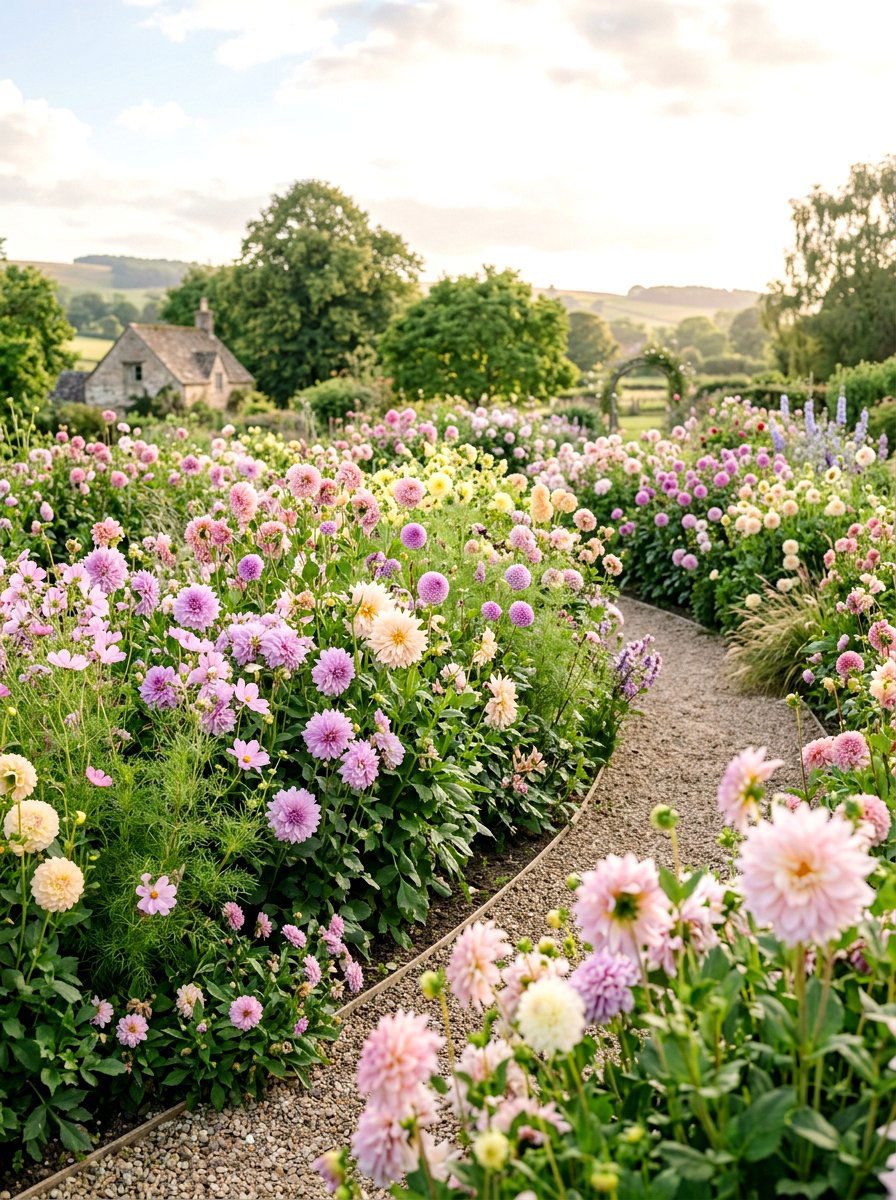
A romantic garden theme relies on soft, ethereal colors like blush pink, lavender, pale yellow, and creamy white. Using a variety of dahlia shapes in these pastel tones creates a dreamlike atmosphere that feels soft and welcoming. This color palette is a favorite for wedding-inspired gardens and photography backdrops due to its gentle light-reflecting qualities. Pairing these dahlias with fine-textured plants like baby's breath or silver dusty miller enhances the delicate feel. This style of garden is best enjoyed during the cooler parts of the day when the soft colors appear most vibrant. It provides a peaceful retreat from the world, focused on beauty, fragrance, and the gentle side of nature.
26. Dahlia And Zinnia Cutting Patch
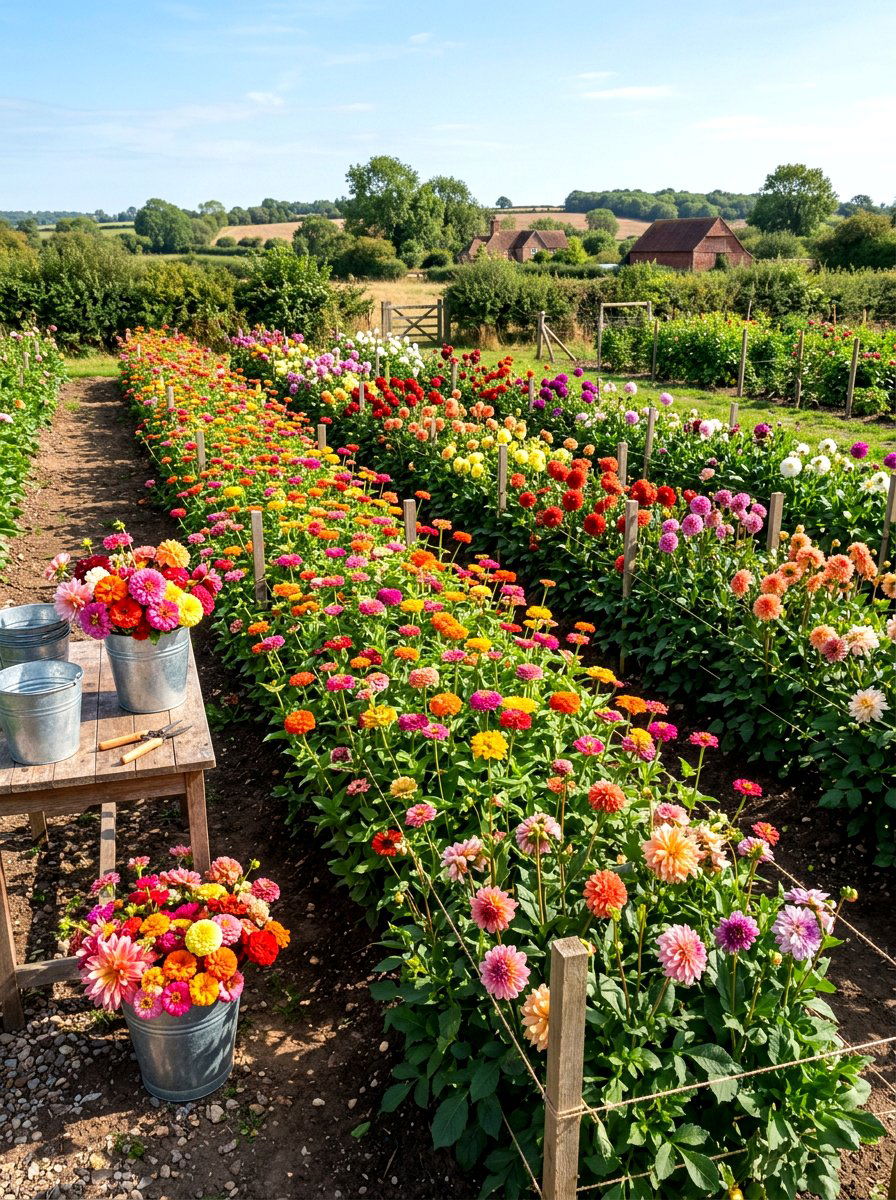
If your primary goal is to have enough flowers for large bouquets, planting dahlias alongside zinnias is the ultimate strategy. Both plants are heat-loving, productive, and come in a nearly identical range of vibrant colors. Zinnias provide a different flower structure and leaf texture that complements the dahlias perfectly in a vase. By planting them together in long, easily accessible rows, you can harvest both at the same time for instant, multi-textured arrangements. This "working" garden area focuses on high-yield production and can be tucked away in a sunny corner of the yard. The more you cut from this patch, the more both plants will produce, giving you endless flowers all season.
27. Moody Purple Dahlia Scheme
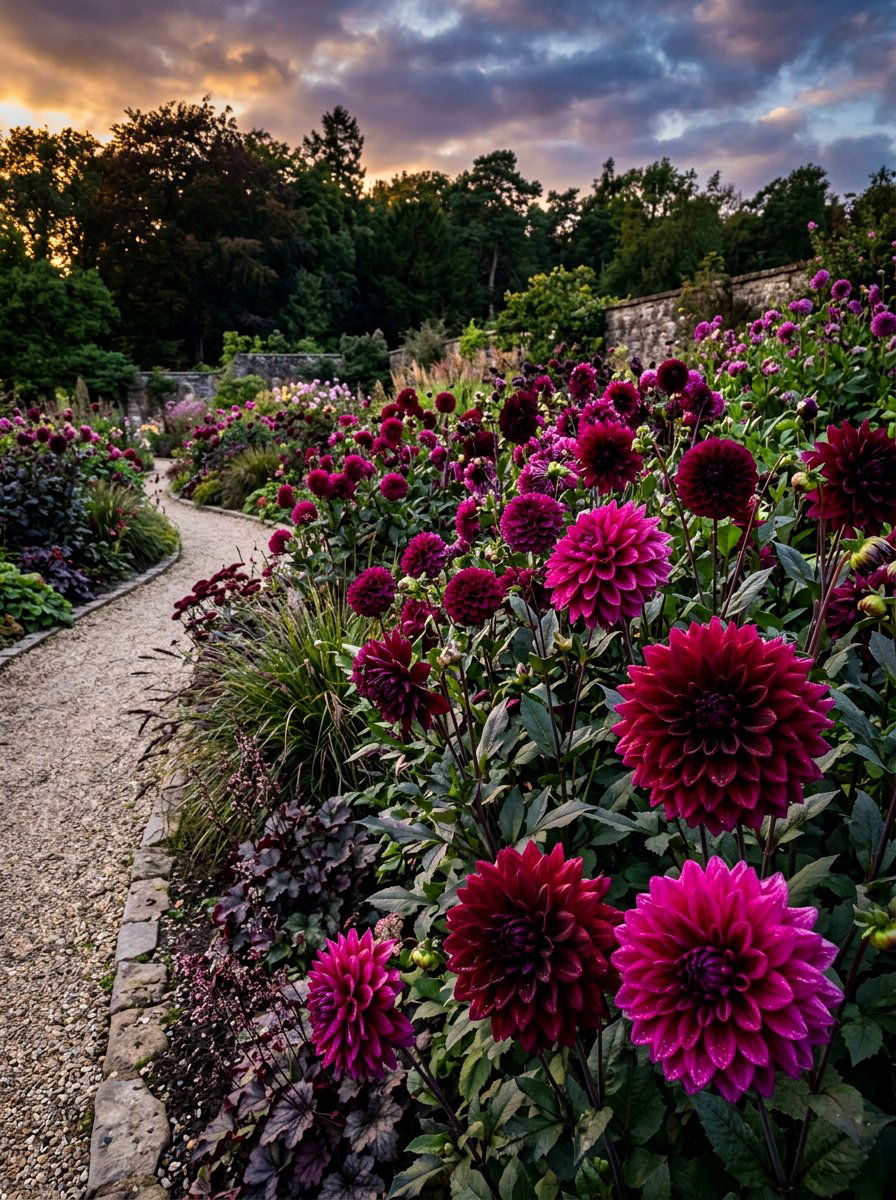
A moody garden palette focusing on deep purples, magentas, and burgundies creates a sophisticated and high-drama environment. Varieties like 'Thomas Edison' or 'Arabian Night' offer velvety, dark petals that absorb the light and add depth to the border. This color scheme looks particularly rich when paired with dark green or bronze foliage and occasional pops of bright lime for contrast. Deep purple dahlias feel regal and mysterious, making them perfect for a semi-shaded corner or a formal evening garden. These dark colors also tend to last longer in the sun without fading, maintaining their intensity throughout the peak of summer. This is a bold choice for a gardener looking to make a statement.
28. Small Space Balcony Dahlia Tubs
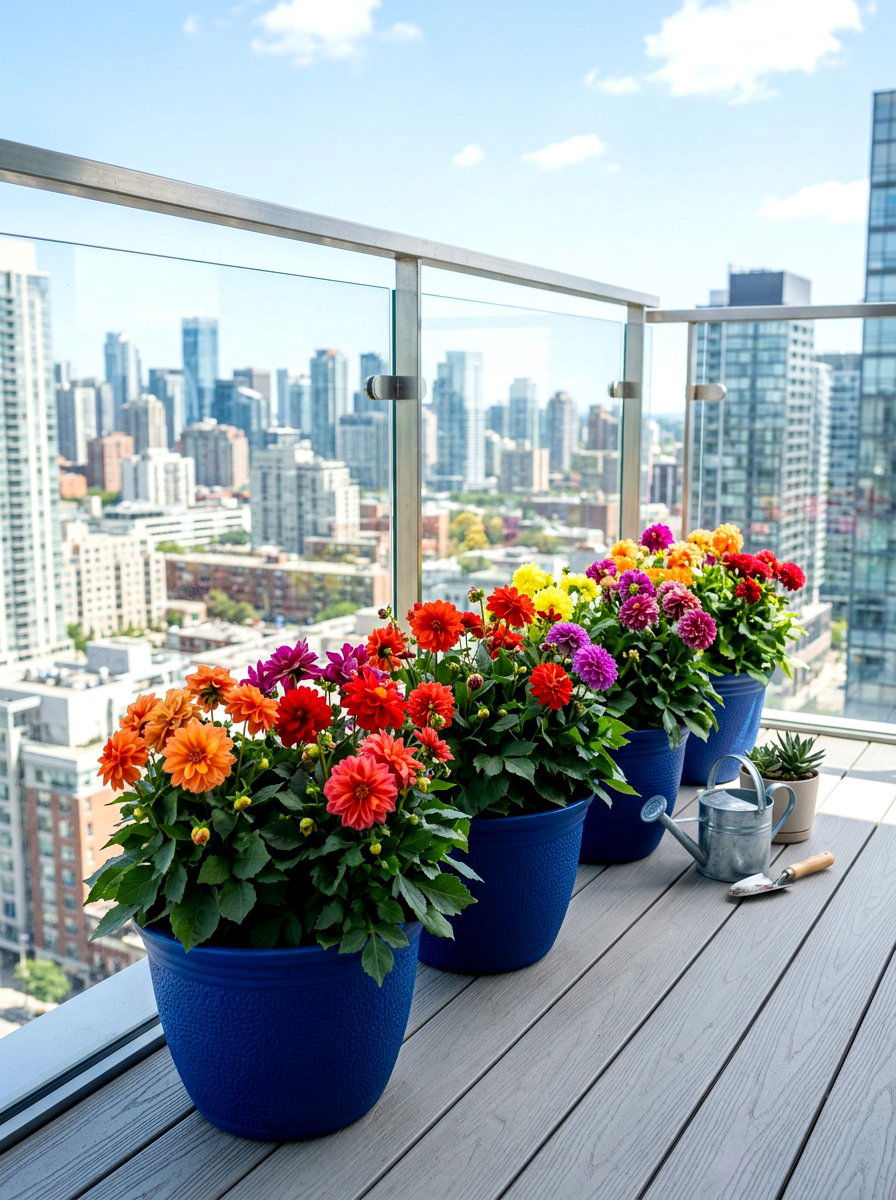
Even if you only have a small balcony, you can grow stunning dahlias in deep plastic or resin tubs. These lightweight containers are easy to move and can hold enough soil to keep the tubers cool and hydrated. Choosing "gallery" or "topmix" dahlia series ensures that the plants stay miniature while still producing full-sized, beautiful flowers. You can attach trellis netting to the balcony railing to provide extra support for the plants as they grow. This urban gardening solution proves that you don't need a large backyard to enjoy the rewards of growing your own flowers. A few well-placed tubs can turn a concrete balcony into a lush, private floral oasis.
29. Dahlia And Lavender Border
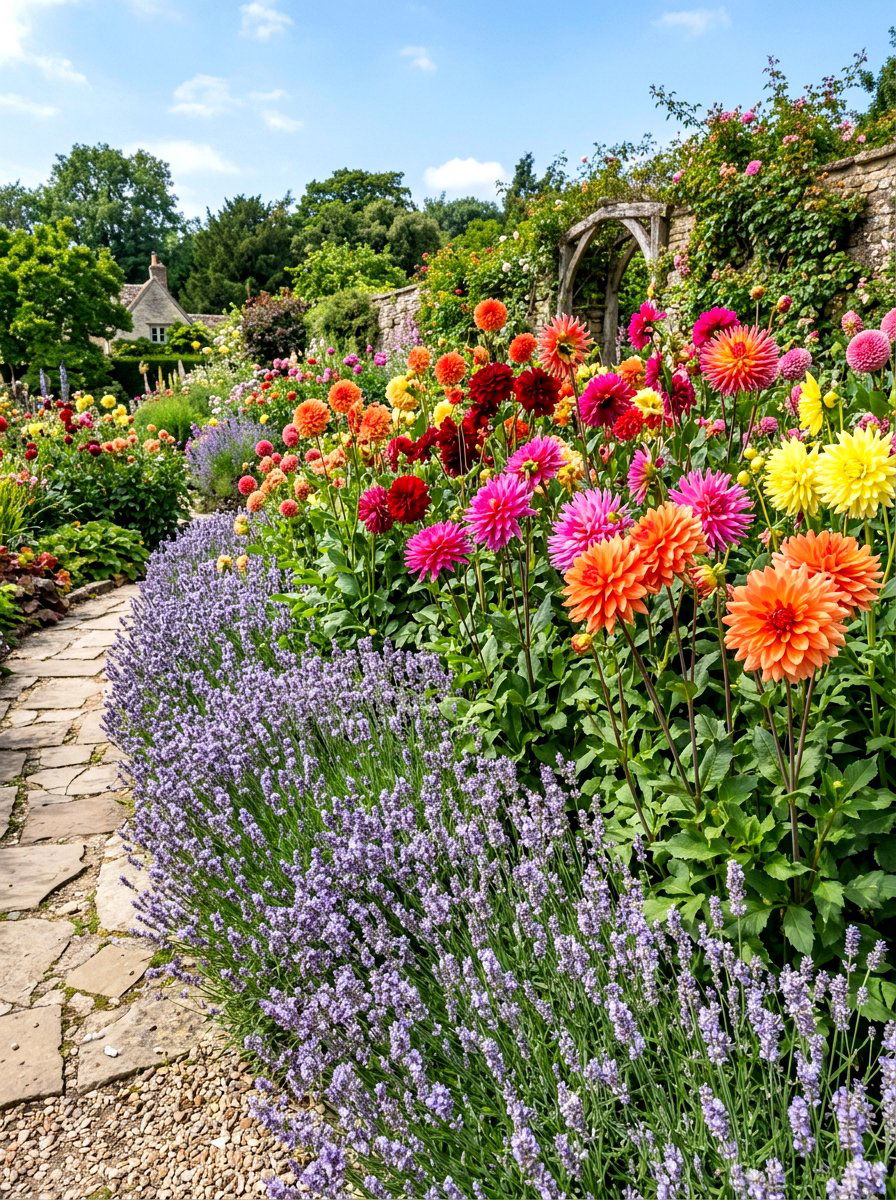
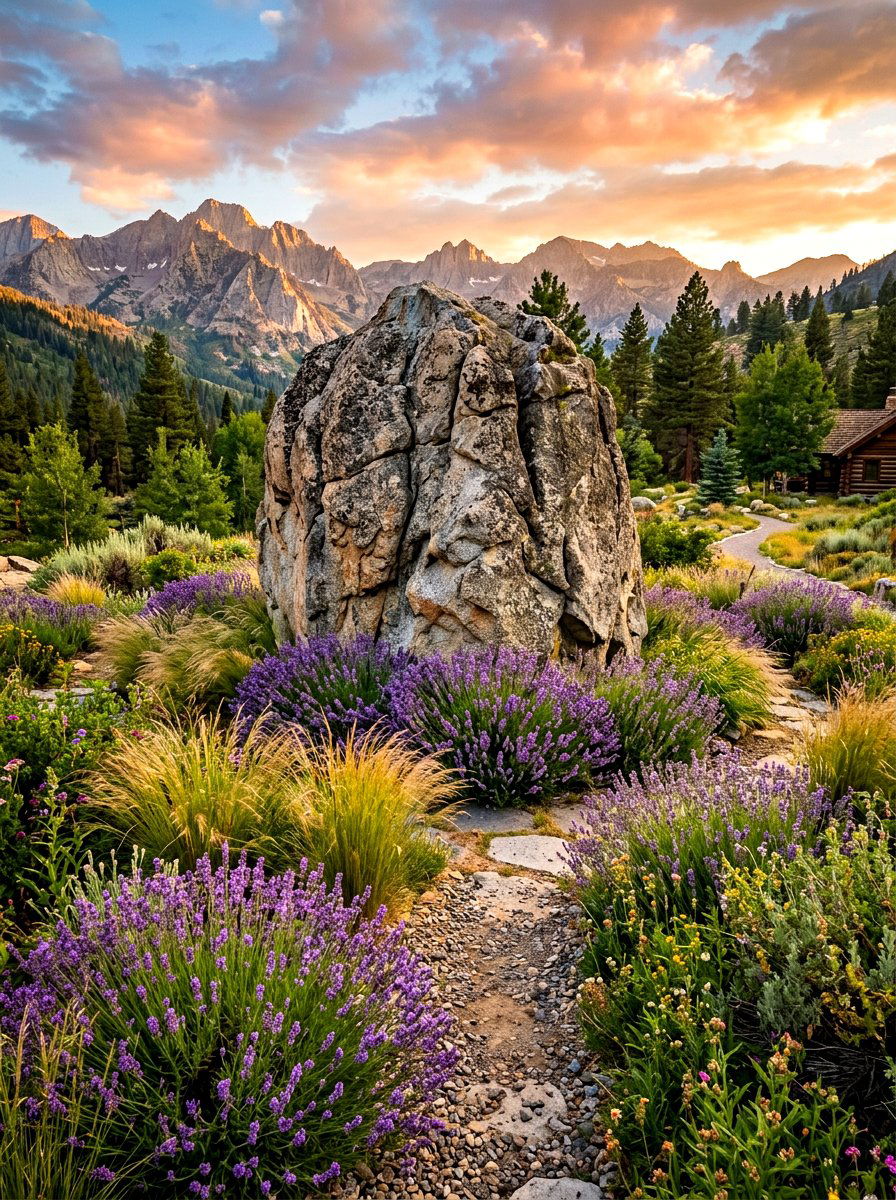
Combining the structural, vibrant blooms of dahlias with the silver-green foliage and aromatic spikes of lavender is a sensory delight. The lavender acts as a fragrant groundcover that hides the lower, often less attractive stems of the dahlia plants. The cool blue-purple of the lavender provides a beautiful neutral base that makes the warm dahlia colors really stand out. This pairing also benefits from similar environmental needs, as both enjoy well-drained soil and plenty of sunshine. The scent of the lavender adds another layer of enjoyment to the garden, especially when you are working among the plants. This classic combination feels both Mediterranean and traditionally English, offering a timeless look for any home.
30. Autumnal Bronze Dahlia Display
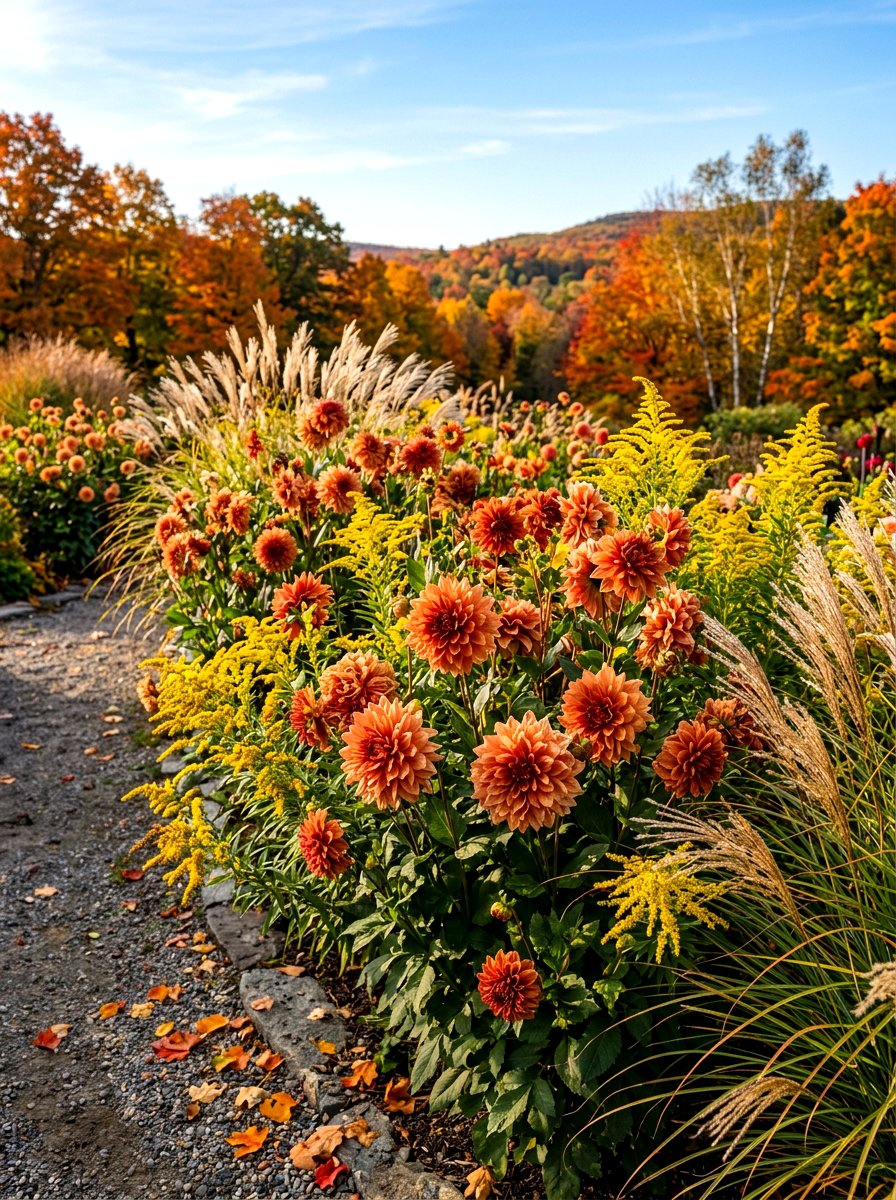
As the season transitions into fall, a garden focused on bronze, copper, and burnt orange dahlias feels perfectly in sync with the changing landscape. Varieties like 'Cornel Bronze' or 'David Howard' offer rich, earthy tones that echo the color of turning leaves. This palette looks fantastic when mixed with late-season perennials like rudbeckia, helenium, and goldenrod. The warm, metallic hues of these dahlias glow under the lower angle of the autumn sun, providing a spectacular finale to the gardening year. By planning for this late-season peak, you ensure that your garden remains a vibrant and essential part of your outdoor living space even as the temperatures begin to drop.
Conclusion:
Designing a dahlia garden is a rewarding journey that allows for endless creativity and personal expression through color and form. From the massive presence of dinnerplate varieties to the delicate charm of single-flowered types, there is a dahlia for every corner of the landscape. By considering elements like height, color harmony, and companion planting, you can create a space that feels both professional and deeply personal. These plants are not just beautiful; they are resilient performers that provide months of joy and armloads of fresh flowers for your home. Whether you have a sprawling estate or a small urban balcony, incorporating these dahlia ideas will elevate your outdoor space and provide a stunning, viral-worthy display every single year.

Related posts: