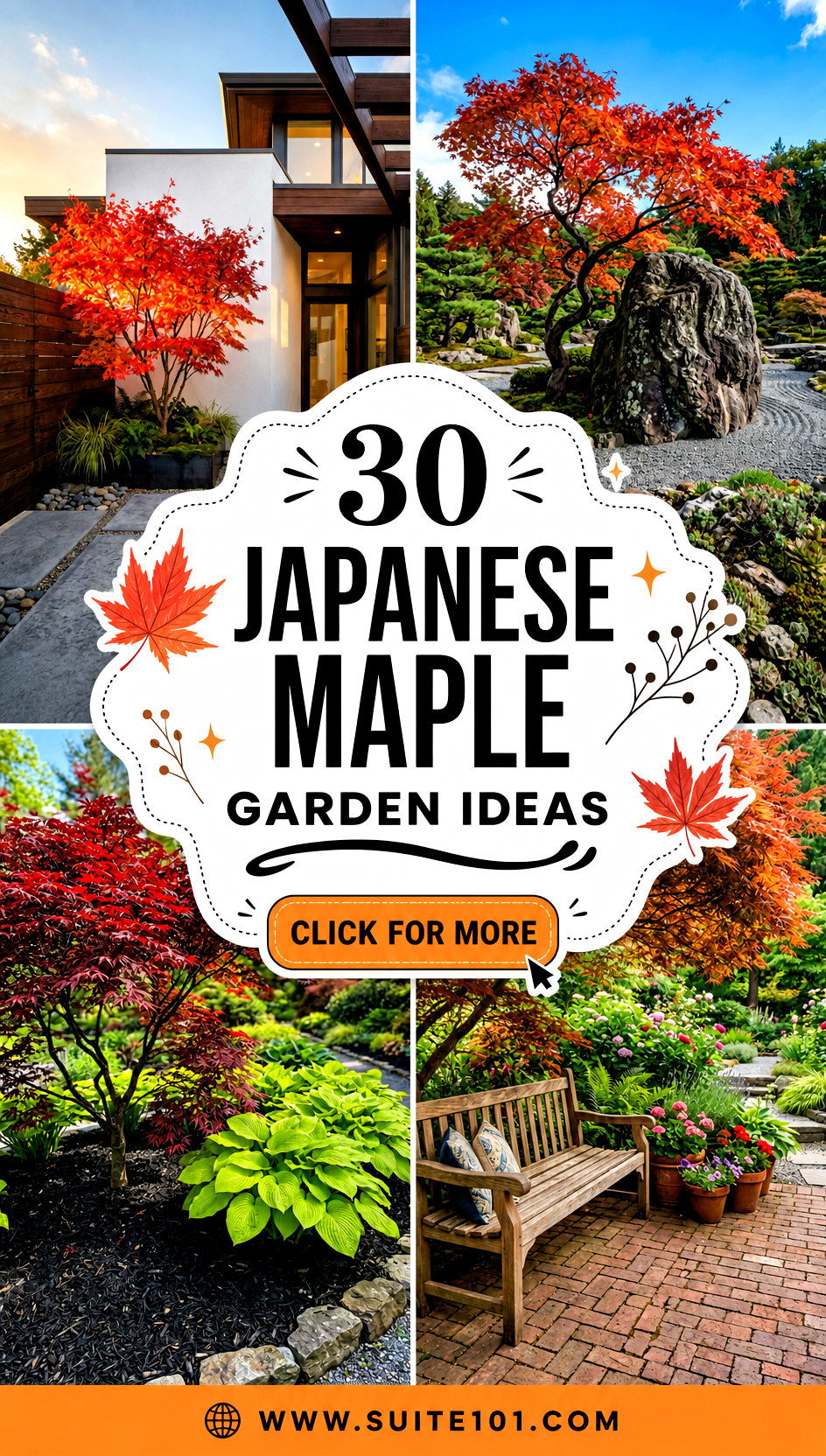
Creating a serene outdoor sanctuary often starts with the timeless elegance of a Japanese maple. These stunning trees are cherished for their delicate, lacy foliage and dramatic seasonal transitions that captivate the eye throughout the year. Whether you have a sprawling backyard or a tiny urban balcony, there is a variety perfectly suited to enhance your landscape’s architectural beauty. From the fiery reds of autumn to the soft chartreuse of spring, these trees offer a living canvas of changing colors and textures. Incorporating them into your garden design brings a sense of tranquility and artistic flair that few other plants can provide. Let’s explore how these iconic maples can transform your outdoor space into a peaceful and inviting retreat.
1. Koi Pond Japanese Maple
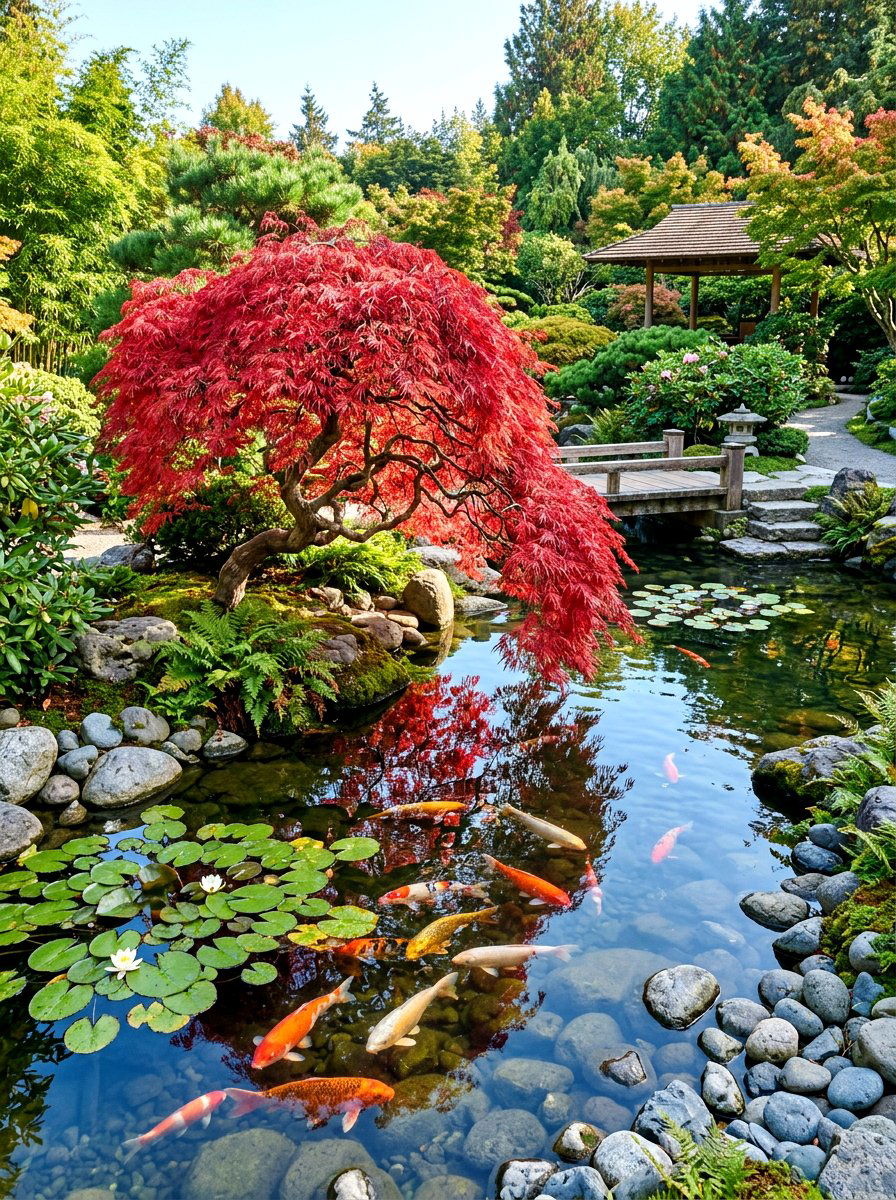
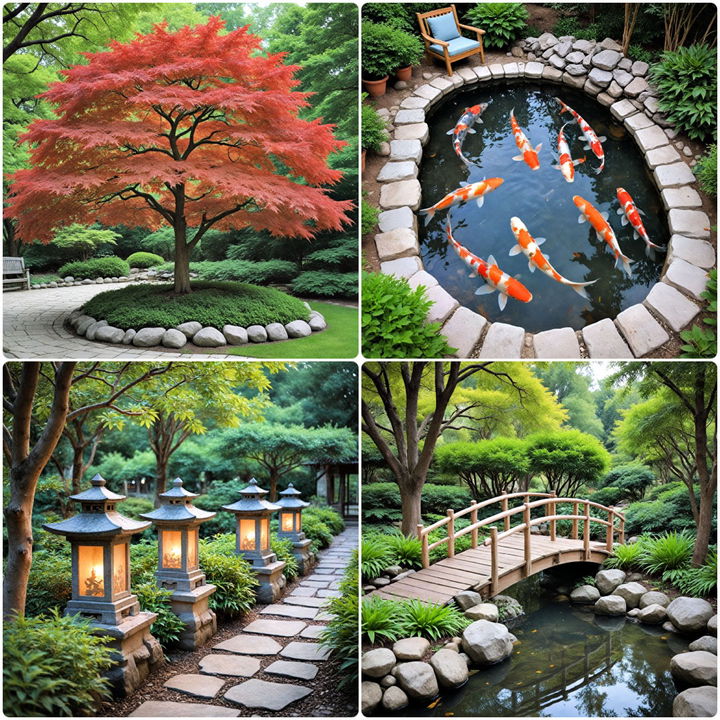
Imagine the tranquil sight of vibrant red leaves reflecting off the glassy surface of a backyard koi pond. Positioning a weeping Japanese maple at the water’s edge creates a natural, soft silhouette that mimics the movement of the pond itself. The delicate, arching branches often reach toward the water, providing essential shade for the fish while adding a layer of sophisticated texture to the hardscape. During the fall, the fallen leaves float like tiny jewels on the water, enhancing the Zen atmosphere. This combination of flowing water and colorful foliage makes for a breathtaking focal point that encourages deep relaxation and quiet contemplation in any traditional or modern garden.
2. Zen Rock Garden Maple
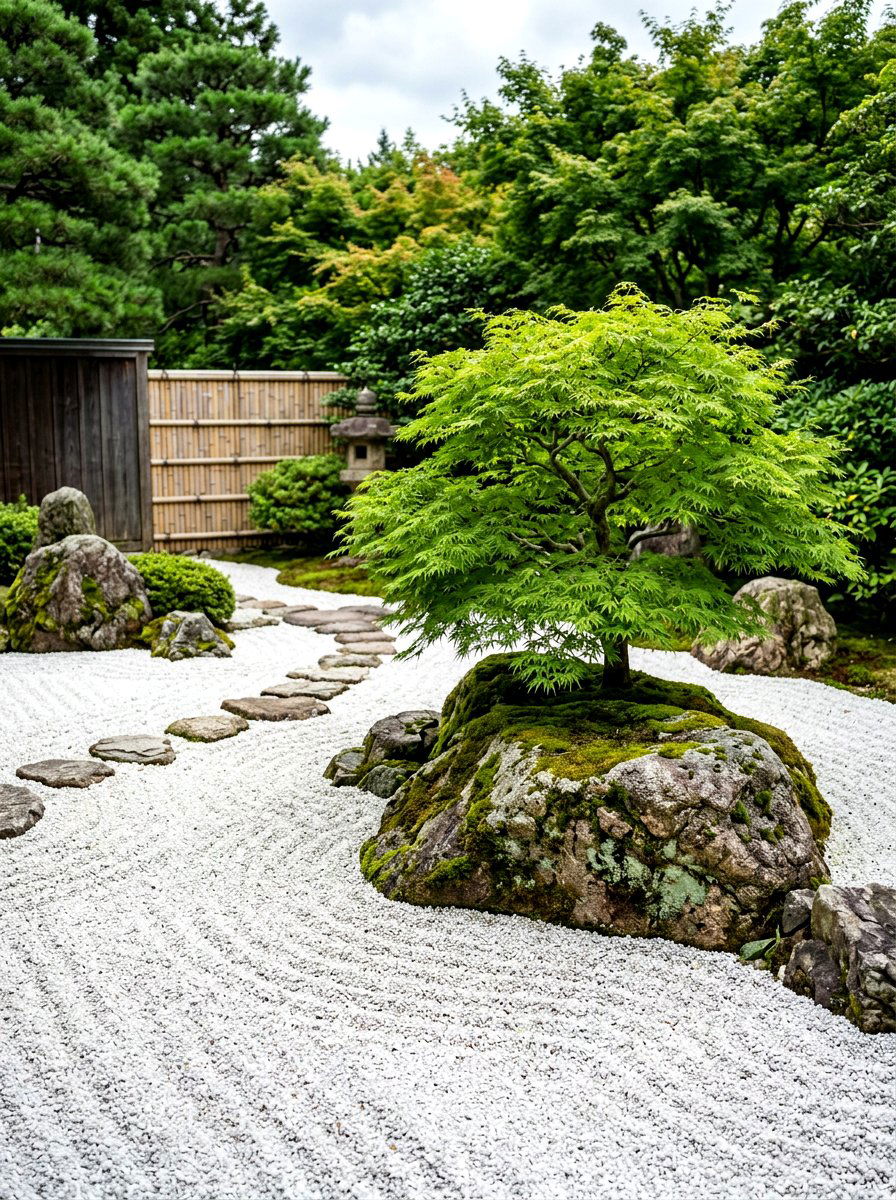
A minimalist Zen rock garden finds its perfect companion in the architectural form of a dwarf Japanese maple. Set against a backdrop of carefully raked white gravel and large, moss-covered boulders, the tree stands as a living sculpture. Its intricate branch structure and seasonal color shifts provide a striking contrast to the static, earthy tones of the stones. This design emphasizes negative space, allowing the unique character of the maple to shine without competing with nearby flowers. The simplicity of the gravel waves combined with the organic shape of the tree evokes a sense of balance. It is an ideal solution for small spaces or courtyards where tranquility is the primary goal.
3. Winding Stone Path Maple
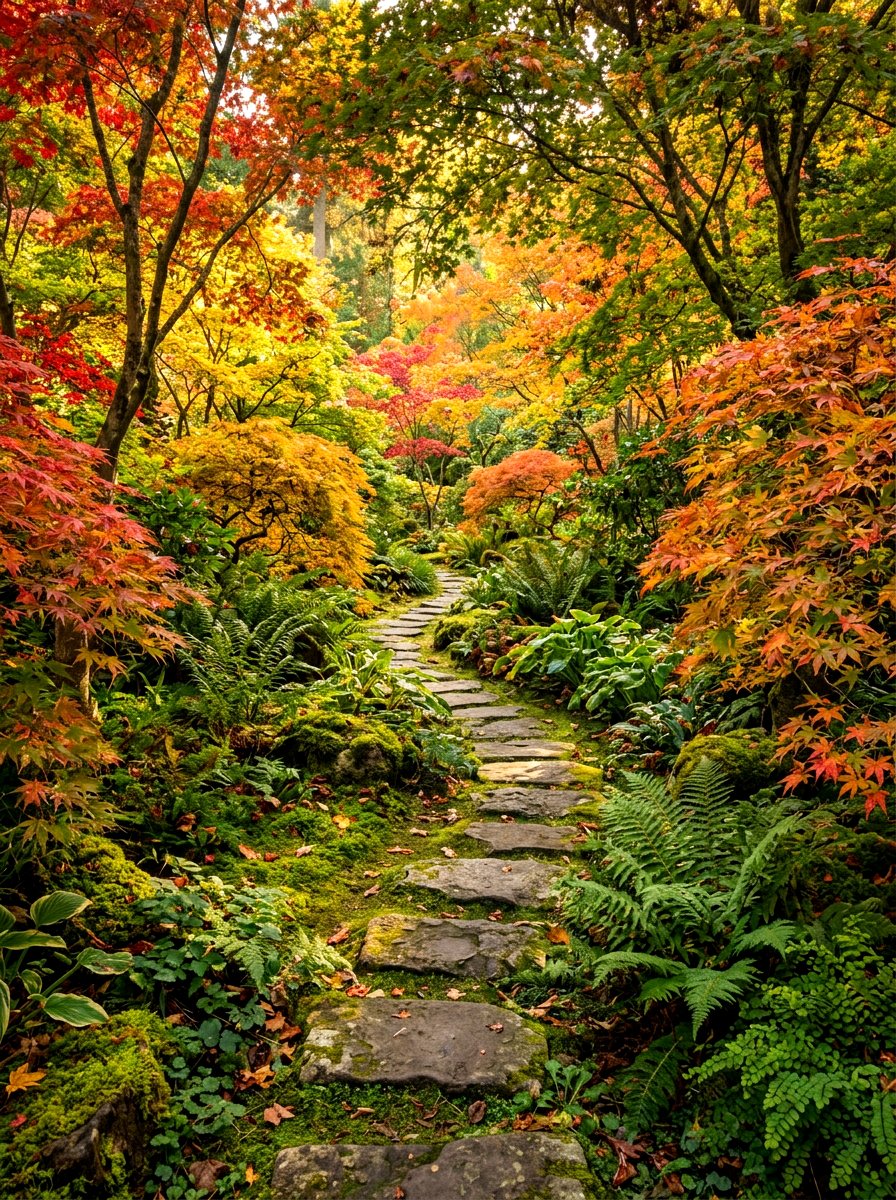
Walking through a garden becomes a magical journey when a winding stone path is lined with graceful Japanese maples. As you navigate the curves of the walkway, the low-hanging canopy of colorful leaves creates an immersive tunnel effect that feels like a secret escape. Using varieties with different heights and leaf colors adds depth and visual interest to the transition between different garden rooms. The soft rustle of the leaves overhead provides a gentle soundtrack to your stroll, while the dappled sunlight filtering through the lacy foliage casts beautiful patterns on the stones below. This layout turns a simple path into an enchanting experience that celebrates nature's layered beauty.
4. Courtyard Corner Japanese Maple
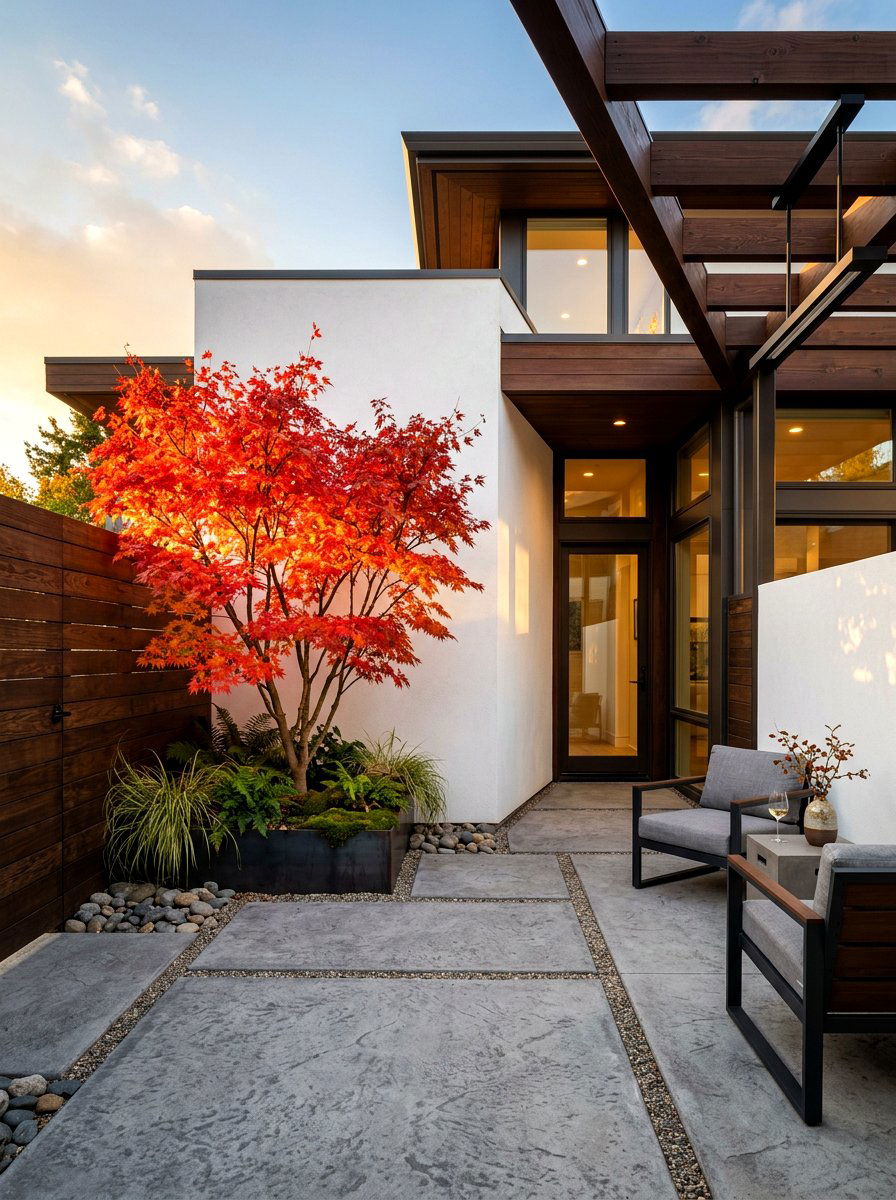
Tucking a Japanese maple into a courtyard corner can instantly transform a neglected space into a vibrant architectural highlight. Because many varieties are slow-growing and have non-invasive root systems, they are perfect for planting close to walls or in confined areas. A single upright maple can provide vertical interest against a stucco or brick backdrop, creating a sophisticated look that feels both modern and timeless. Pairing the tree with low-lying ferns or hostas softens the corners and adds lushness to the ground level. This design choice maximizes the impact of the tree's seasonal color changes, making the courtyard feel like a cozy, private oasis that is beautiful throughout every single month.
5. Bonsai Display Japanese Maple
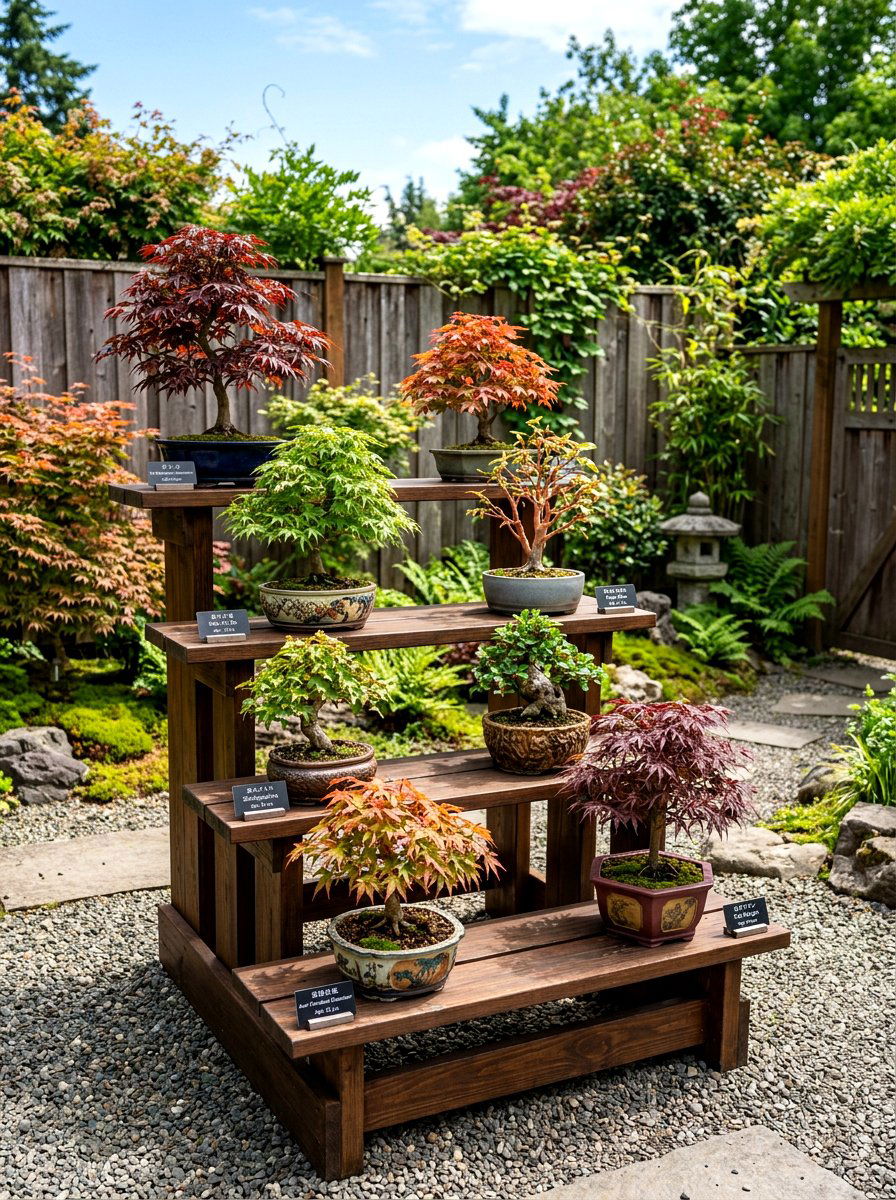
Creating a dedicated display area for bonsai-style Japanese maples brings the ancient art of miniature landscaping to your patio or deck. By growing maples in decorative ceramic pots, you can showcase their intricate trunk shapes and delicate leaf patterns at eye level. Placing these containers on pedestals or tiered wooden benches allows for a curated, gallery-like feel that highlights each tree's unique personality. This approach is perfect for urban dwellers who want the elegance of a maple without the need for a large yard. The portability of the pots means you can rearrange your miniature forest to suit your mood, ensuring your outdoor seating area always feels fresh and artistically balanced.
6. Bamboo Privacy Screen Maple
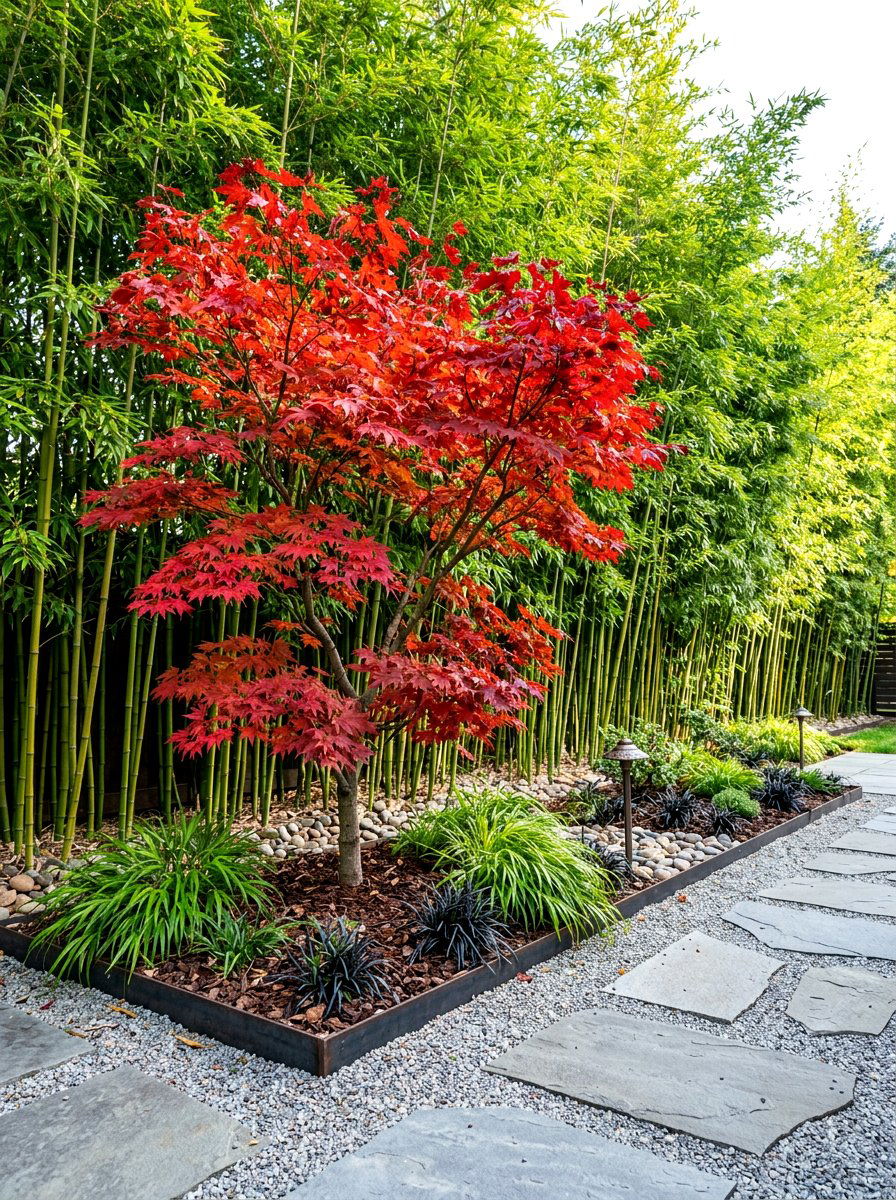
Combining the sturdy vertical lines of bamboo with the airy, colorful canopy of a Japanese maple creates a beautiful and functional privacy screen. The dense green stalks of the bamboo provide a solid background that makes the maple’s red or variegated leaves pop with intensity. This layered approach to landscaping offers more visual depth than a standard wooden fence while maintaining a natural, organic feel. The rustling sound of the bamboo leaves in the wind pairs perfectly with the gentle movement of the maple branches, creating a multisensory experience. This design is particularly effective for shielding a patio from neighbors while adding a sophisticated, Asian-inspired aesthetic to the perimeter of your garden.
7. Moss Meditation Nook Maple
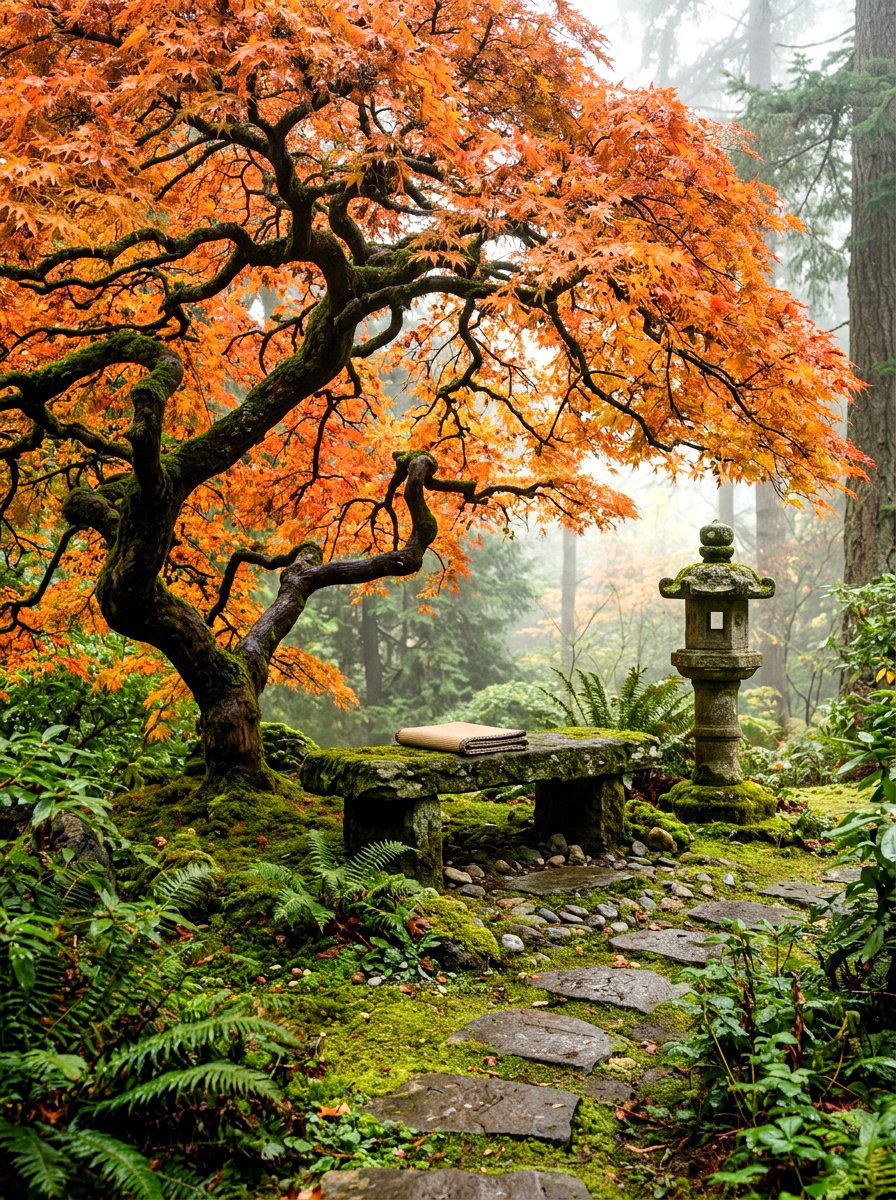
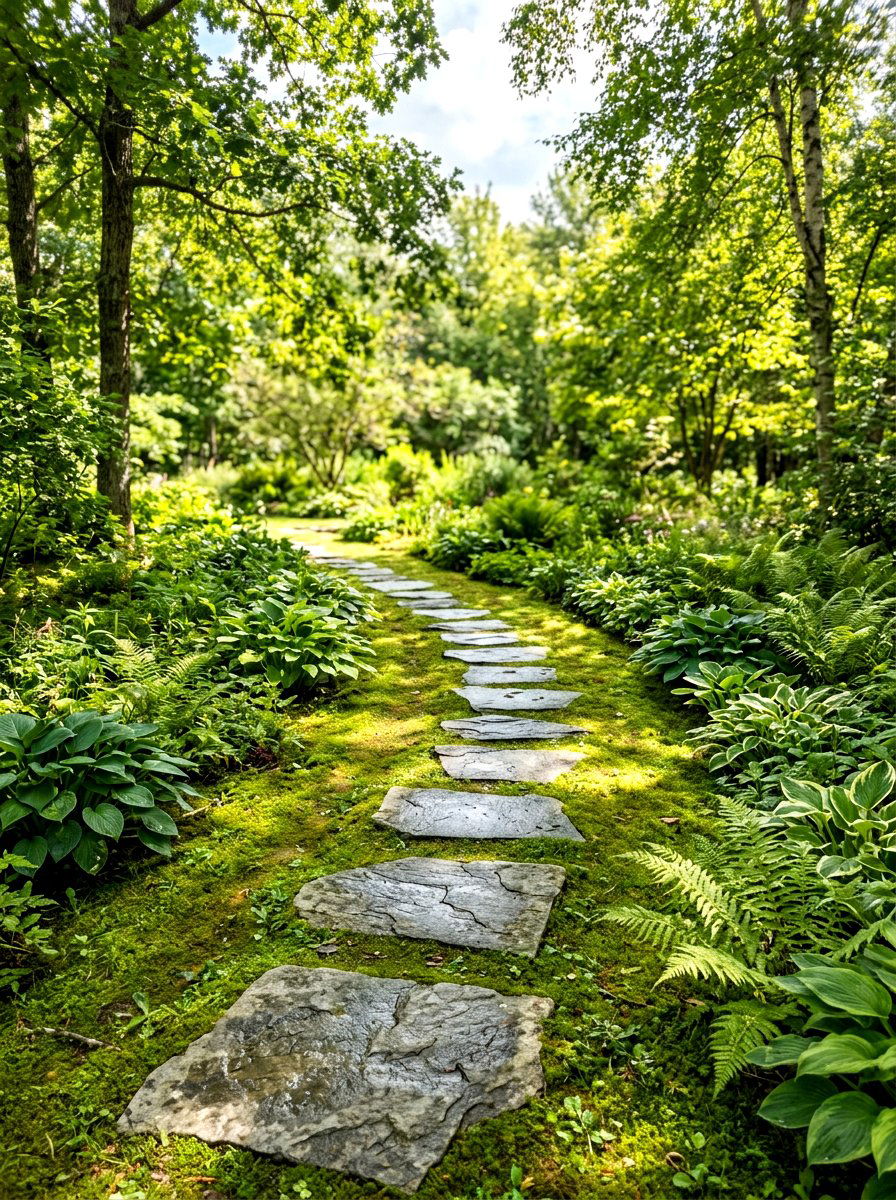
A quiet meditation nook tucked under the shade of a wide Japanese maple offers the ultimate retreat from a busy lifestyle. Planting a lush carpet of soft green moss beneath the tree’s branches creates a cool, damp microclimate that feels incredibly peaceful. Adding a simple stone bench or a flat meditation rock provides a dedicated place to sit and reflect while surrounded by natural beauty. The low canopy of the maple provides a sense of enclosure and protection, helping to block out external distractions. This design relies on subtle textures and a limited color palette to promote a sense of inner calm, making it a perfect sanctuary for daily mindfulness.
8. Gravel Courtyard Japanese Maple
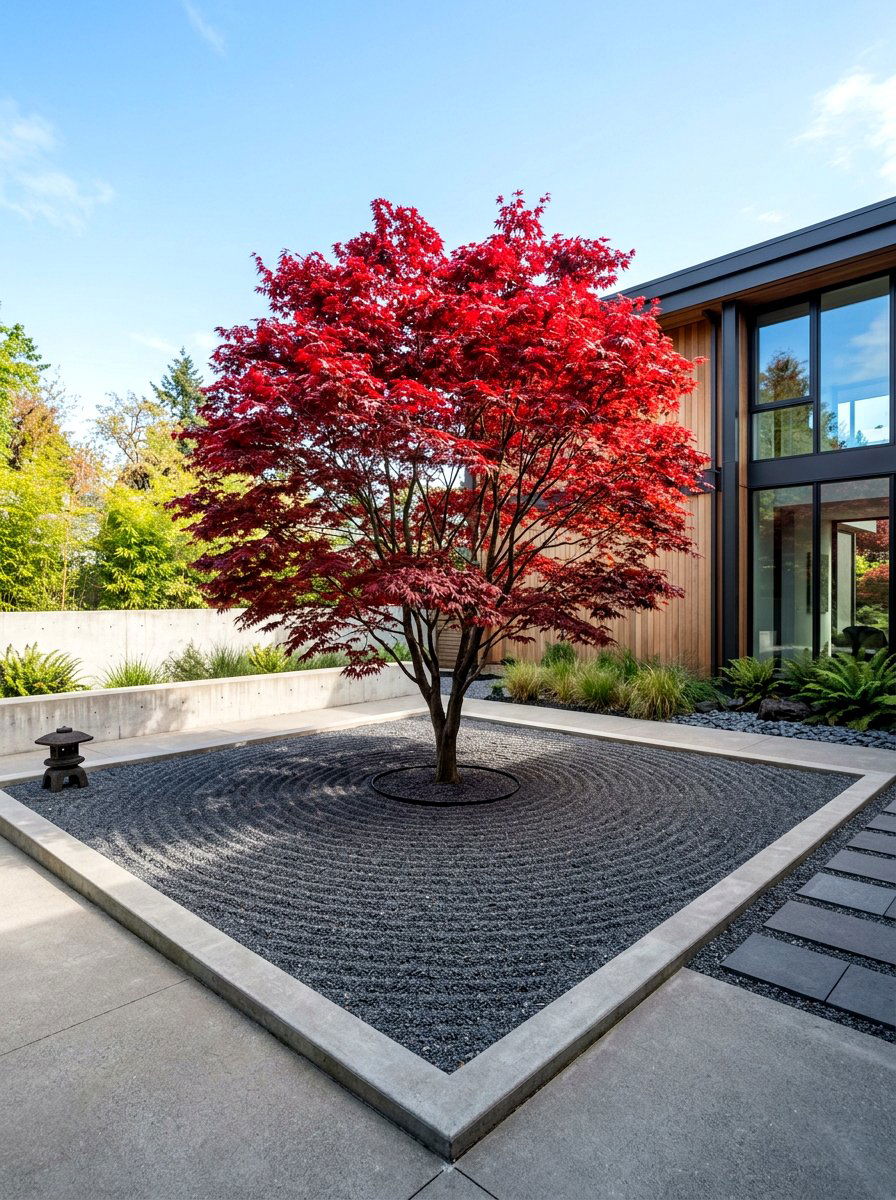
A modern gravel courtyard becomes a sophisticated outdoor room when centered around a single, majestic Japanese maple. The clean lines of the gravel provide a neutral canvas that allows the tree’s vibrant foliage and interesting trunk structure to take center stage. Raking the gravel into circular patterns around the base of the tree adds a touch of artistic flair and reinforces the Zen-inspired aesthetic. This low-maintenance design is ideal for front yards or small backyards where you want a high-impact look without the need for constant mowing. The contrast between the crunch of the gravel and the soft, feathery leaves of the maple creates a satisfying sensory balance.
9. Stone Lantern Maple Setting
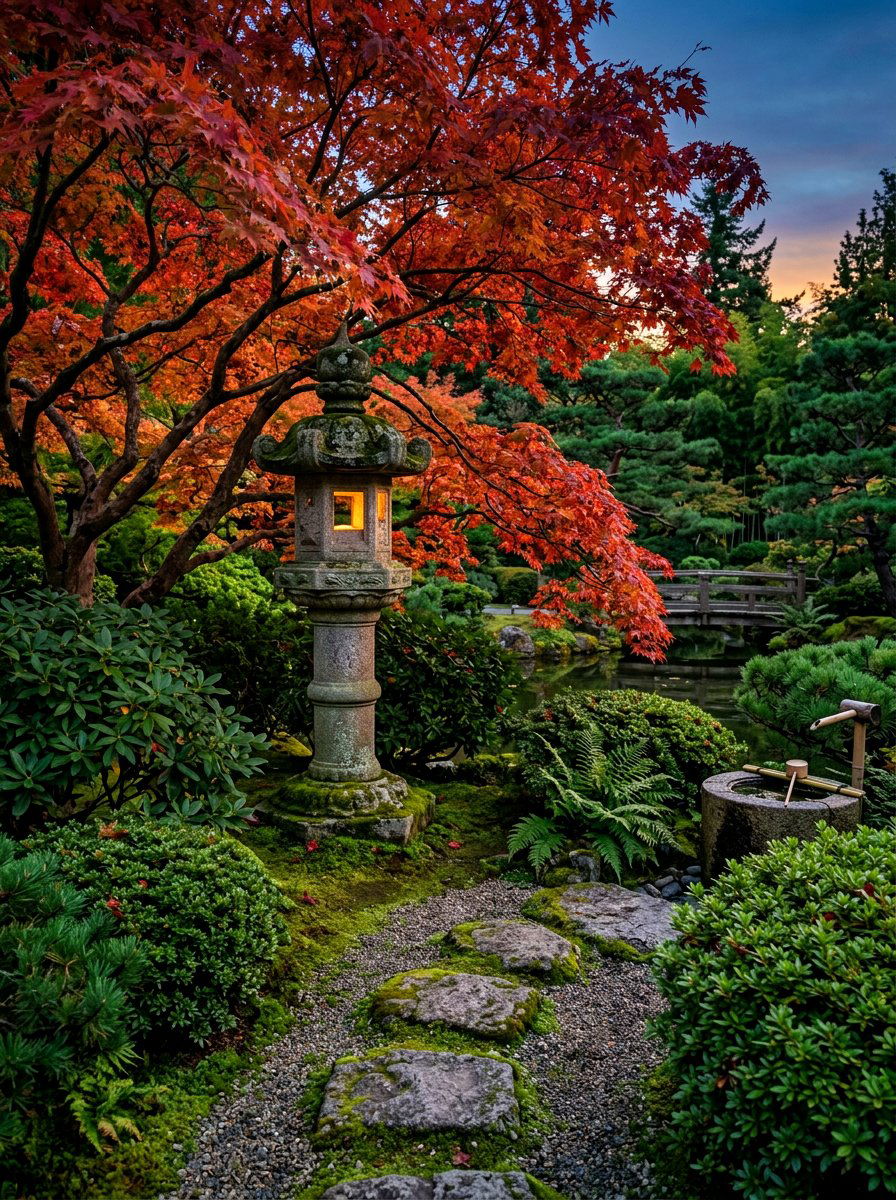
Pairing a Japanese maple with a traditional stone lantern is a classic way to introduce cultural authenticity and charm to your garden. Placing the lantern beneath the arching branches of the tree creates a stunning visual vignette that looks beautiful both day and night. During the evening, the soft glow from the lantern highlights the intricate leaf patterns and casts dramatic shadows against the nearby foliage. This setup works particularly well near an entrance or at the turn of a path, acting as a welcoming beacon for guests. The combination of weathered stone and delicate plant life perfectly captures the Japanese aesthetic of finding beauty in the natural and the permanent.
10. Bamboo Water Feature Maple
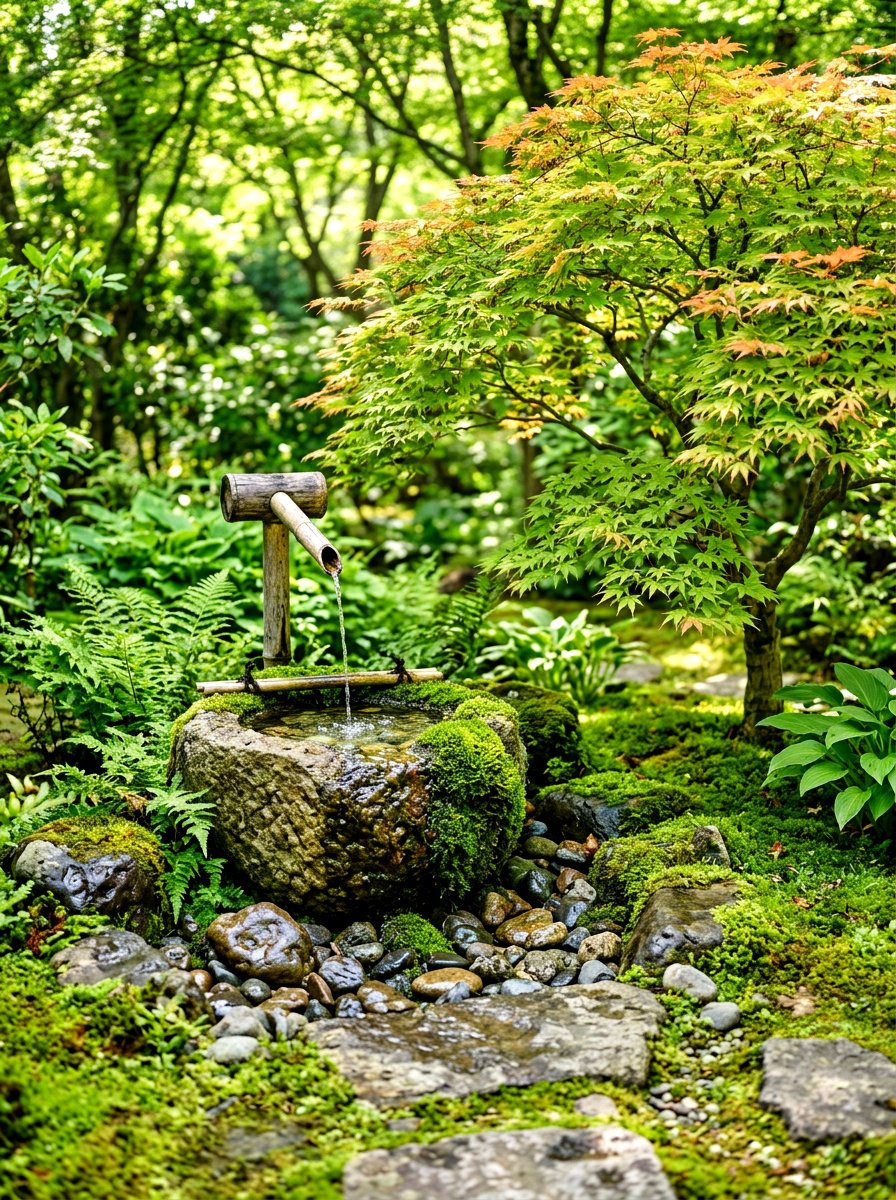
The soothing sound of a bamboo water spout, or shishi-odoshi, is perfectly complemented by the presence of a nearby Japanese maple. As the water trickles into a stone basin, the reflection of the maple’s colorful leaves adds an extra dimension of beauty to the scene. The moisture from the water feature creates a favorable environment for the tree, helping to keep its delicate leaves hydrated during warmer months. This design combines movement, sound, and color to create a peaceful atmosphere that feels like a hidden forest spring. It is a wonderful way to bring life and energy to a small garden corner or a dedicated patio area for relaxation.
11. Stepping Stone Circle Maple
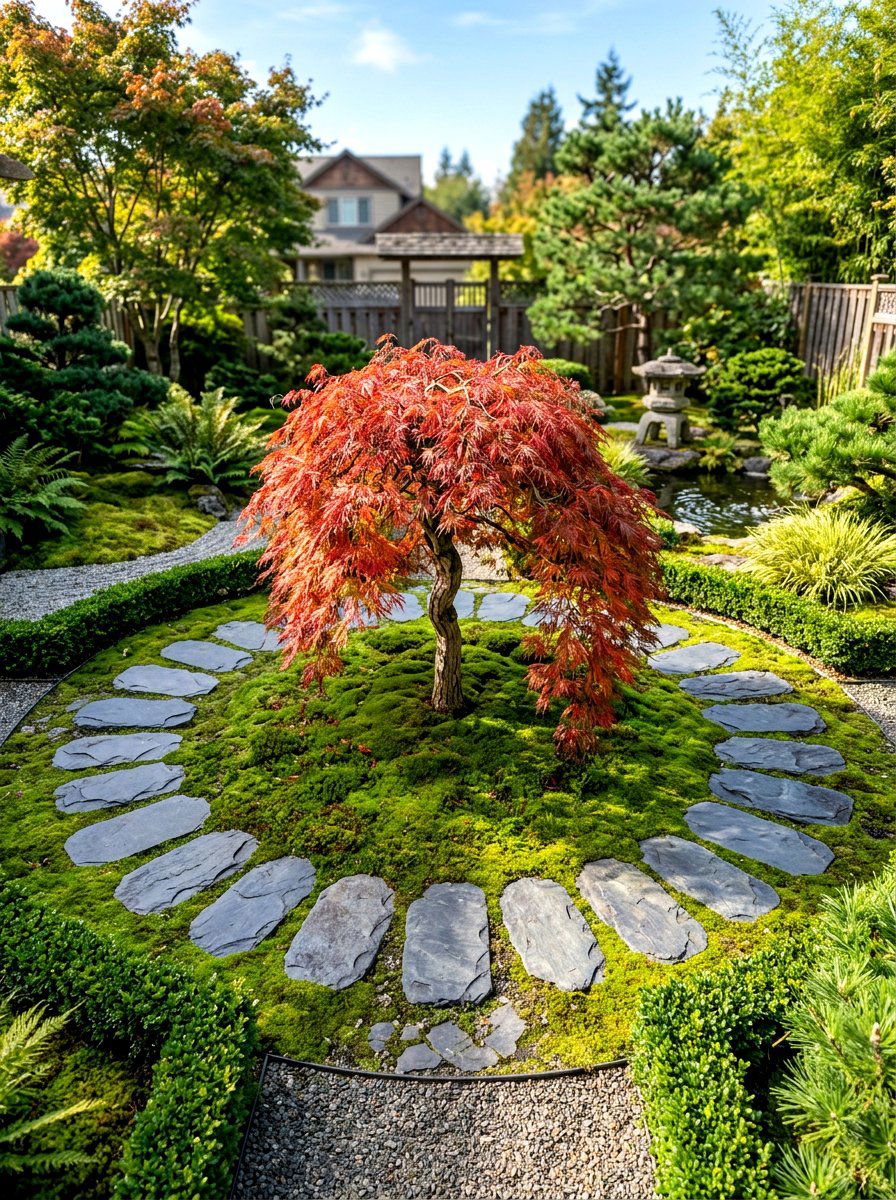
Designing a circular arrangement of flat stepping stones around a central Japanese maple creates a striking and symbolic focal point in the yard. The circle represents unity and harmony, drawing the eye toward the tree’s artistic form and vibrant seasonal colors. This layout works well in the middle of a lawn or a gravel area, providing a structured path to admire the tree from every angle. Choosing a variety with a weeping habit ensures the branches cascade elegantly toward the stones, blurring the lines between the plant and the path. This design is both functional and decorative, offering a clear sense of purpose and destination within your larger landscape plan.
12. Low Hedge Border Maple
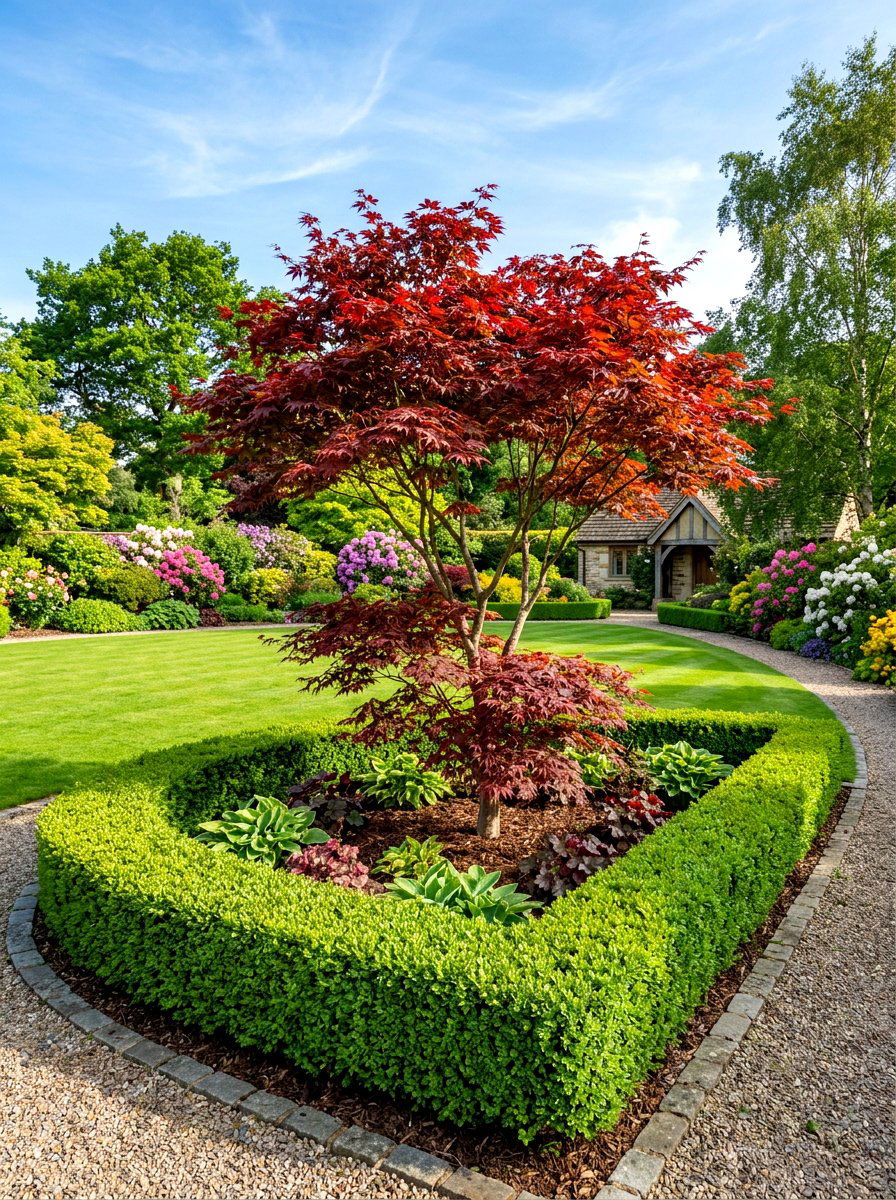
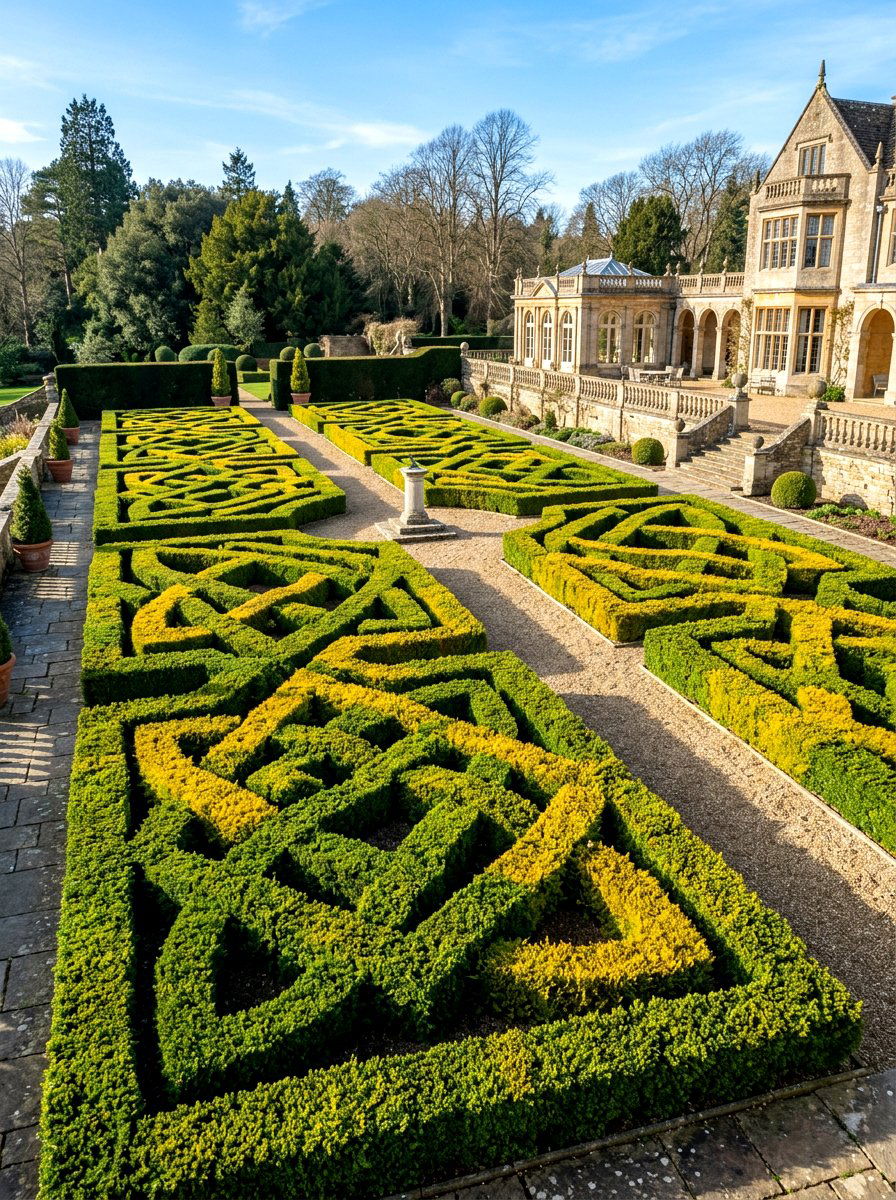
Framing a Japanese maple with a low, neatly trimmed evergreen hedge provides a structured base that highlights the tree’s airy and informal growth. The solid green border of boxwood or yew acts as a frame, grounding the maple and making its delicate foliage appear even more ethereal. This design choice is perfect for formal gardens or front yard landscapes where you want a clean, polished look. During the fall, the fiery red or orange colors of the maple create a stunning contrast against the dark green of the hedge, providing a powerful burst of seasonal interest. It is an effective way to define garden beds while maintaining a sense of elegance.
13. Minimalist Gate Entry Maple
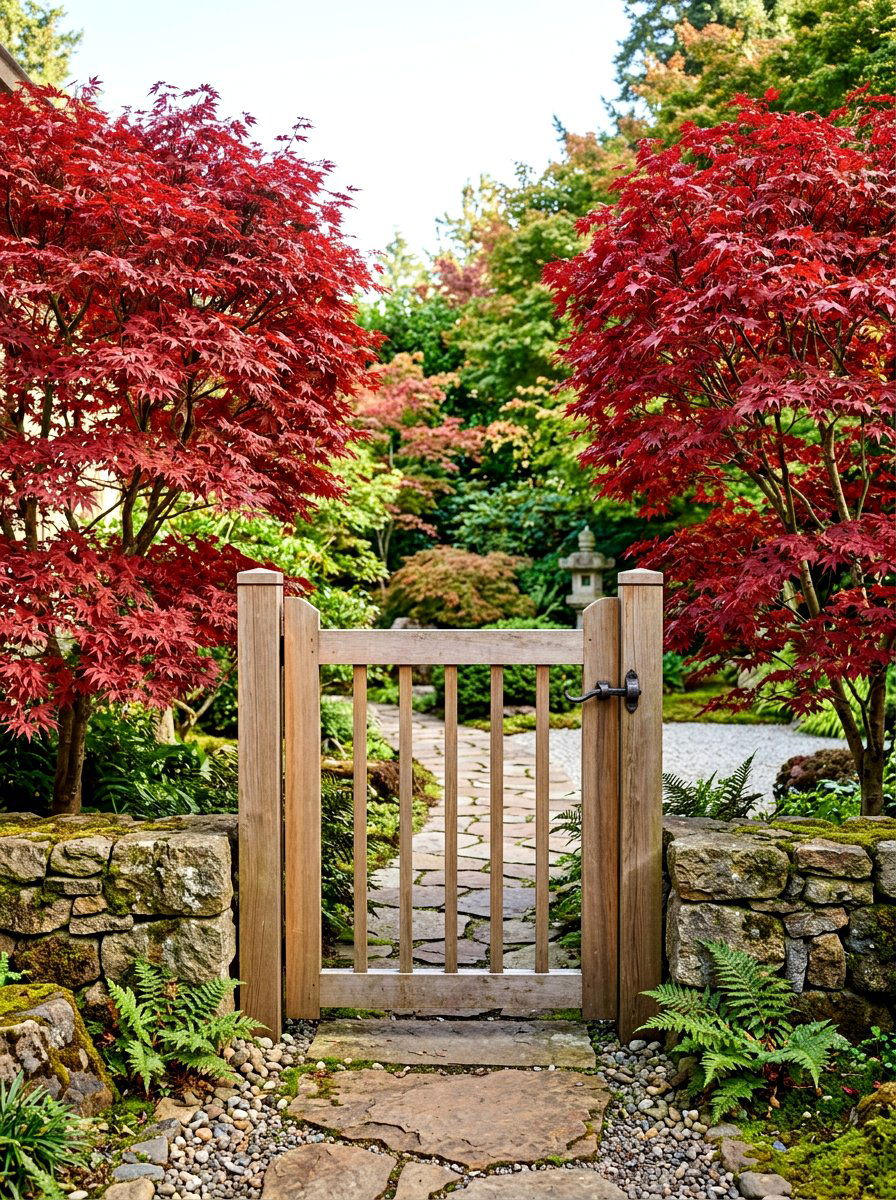
A minimalist wooden gate framed by two symmetrical Japanese maples creates a grand and inviting entrance to any home or garden. The trees act as natural pillars, their soft foliage softening the hard lines of the gate and welcoming visitors with a burst of color. This setup establishes a clear transition from the public street to your private sanctuary, setting a peaceful tone right from the start. Choosing varieties with bright spring foliage ensures the entryway feels fresh and lively throughout the growing season. This design is simple yet incredibly effective, adding curb appeal and a sense of sophisticated hospitality to the front of your property at any time.
14. Woodland Understory Japanese Maple
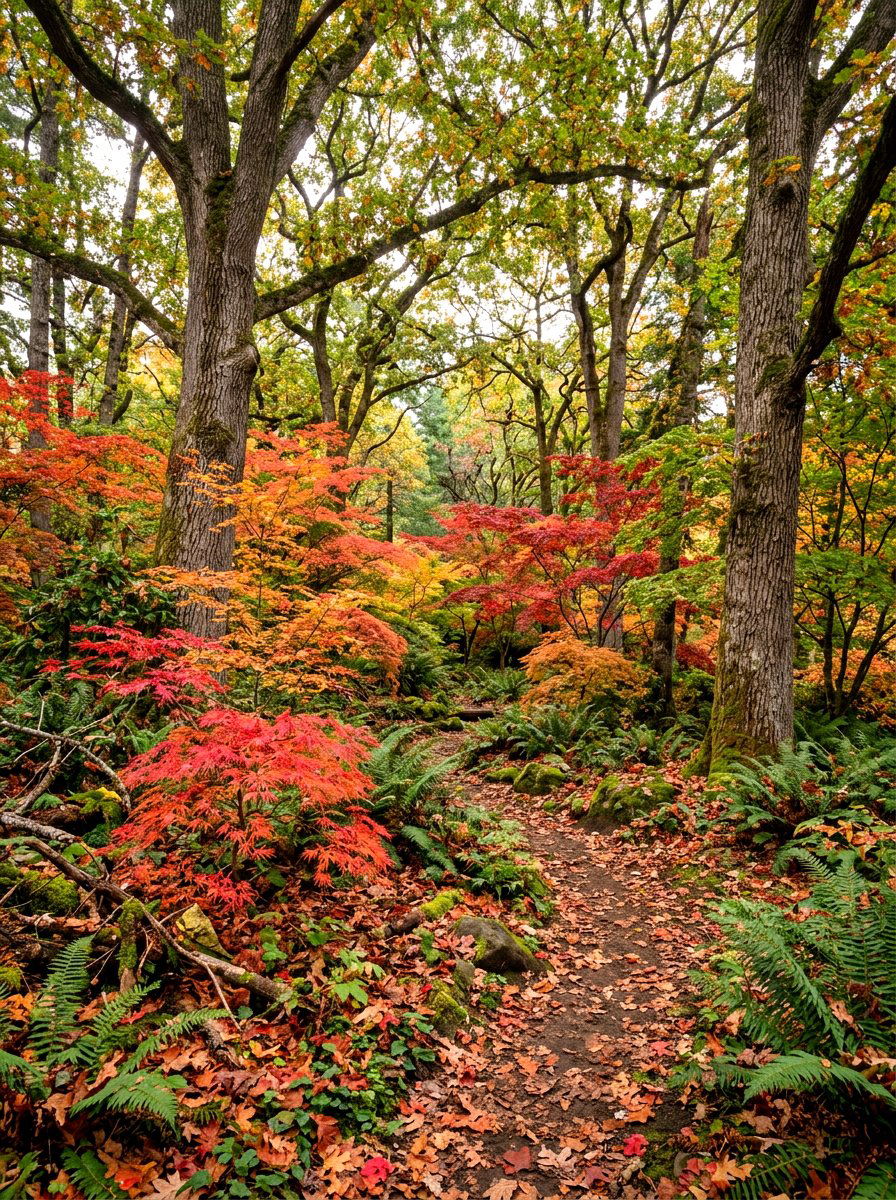
In a larger garden with mature trees, Japanese maples thrive as understory plants, bringing light and color to the shaded areas beneath the canopy. Their ability to tolerate partial shade makes them ideal for filling the middle layer of a woodland-style landscape. Planting several different varieties in clusters creates a naturalistic look that mimics the way these trees grow in their native habitat. The contrast between the heavy trunks of large oaks or pines and the delicate, lacy leaves of the maples adds incredible texture and depth. This design creates a lush, layered environment that feels like a tranquil forest escape right in your own backyard throughout the seasons.
15. Container Patio Japanese Maple
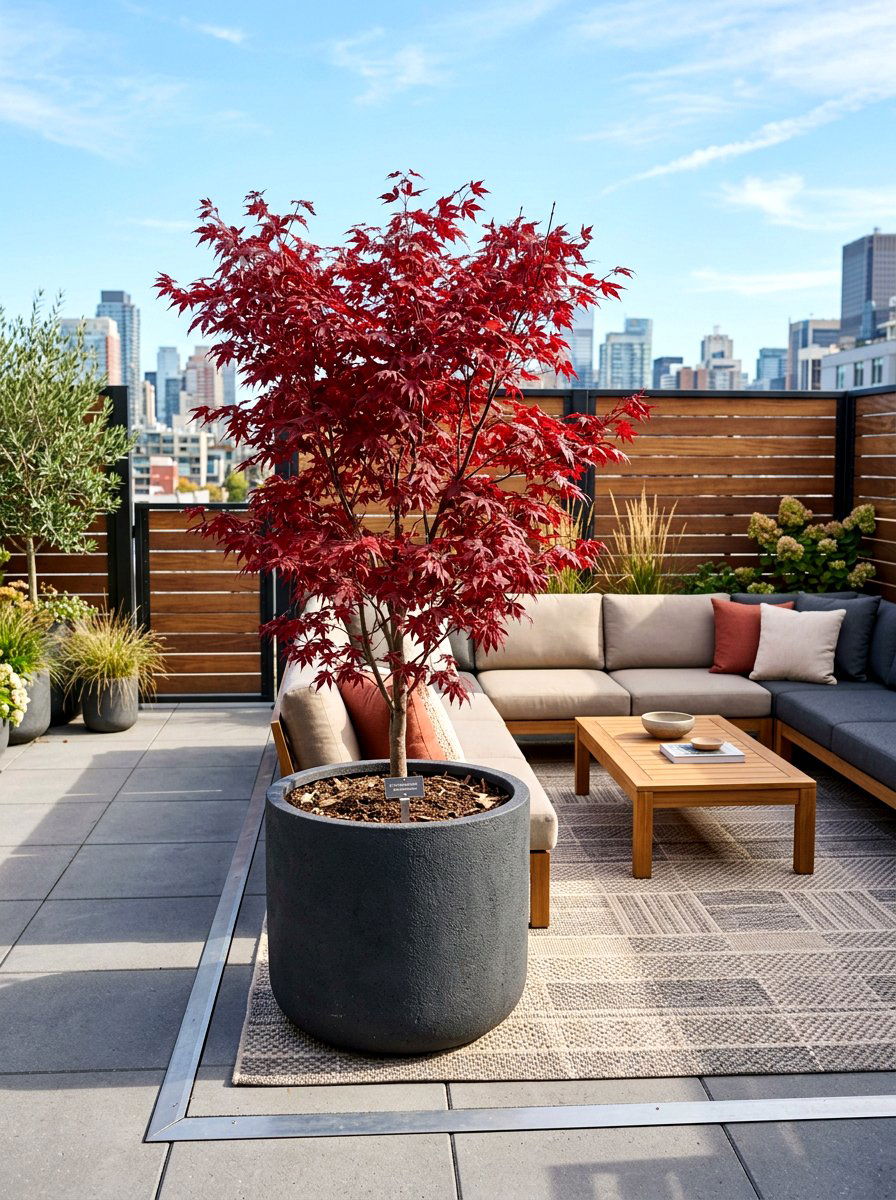
For those with limited ground space, growing a Japanese maple in a large, stylish container on the patio is a perfect solution. A well-chosen pot can complement the tree’s foliage color and provide a mobile focal point that can be moved to suit your seasonal decor. Maples are naturally suited to container life because of their slow growth and manageable size, making them a favorite for small urban spaces. Surrounding the base of the tree with trailing ivy or silver ponyfoot adds an extra layer of texture and softens the edges of the pot. This setup allows you to enjoy the beauty of a maple up close while lounging outdoors.
16. Rock Garden Specimen Maple
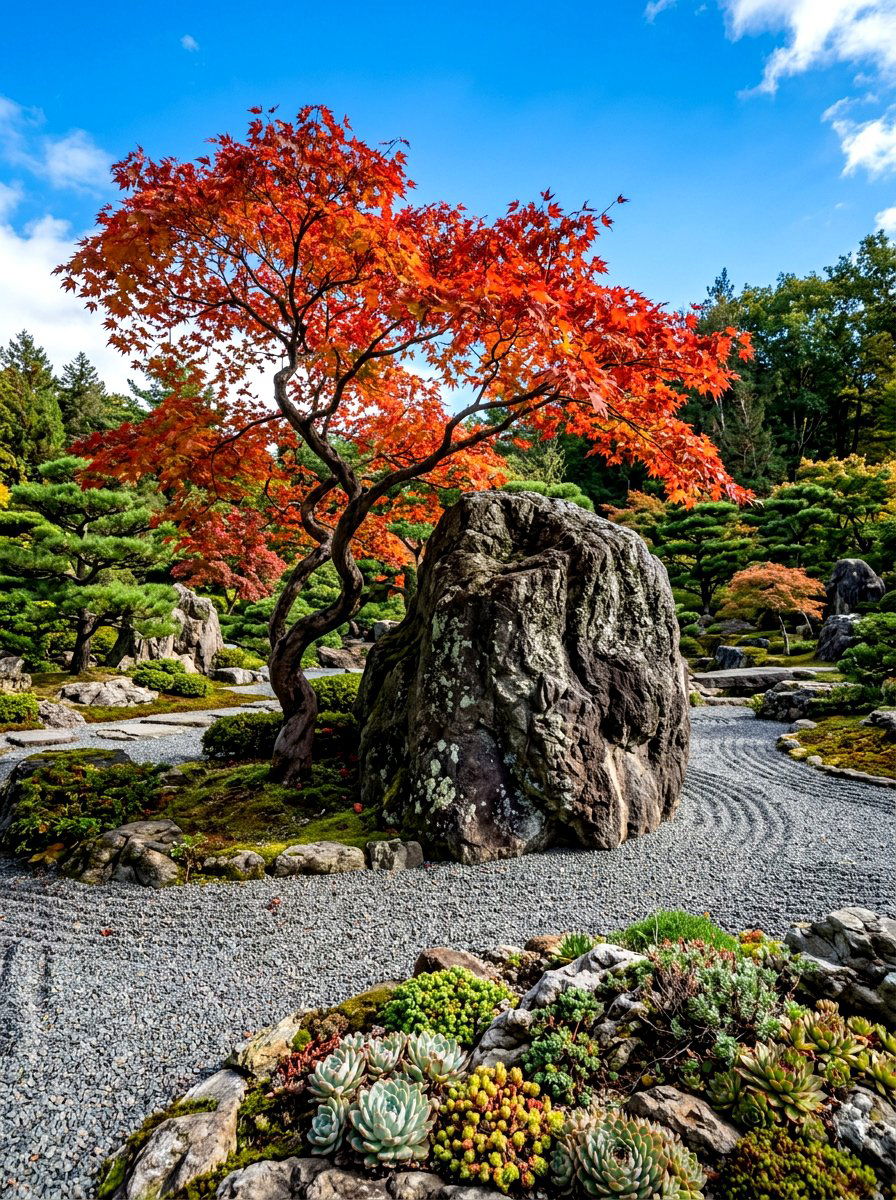
A large, weathered boulder serves as the perfect pedestal for a specimen Japanese maple in a dedicated rock garden. The contrast between the solid, unyielding stone and the delicate, swaying branches of the tree creates a dynamic and balanced visual. Surrounding the base with smaller river rocks and alpine plants further enhances the naturalistic, mountainous feel of the design. This approach highlights the tree as a unique piece of living art, encouraging viewers to stop and appreciate its specific form and leaf structure. It is an excellent way to add height and drama to a flat area of the yard while maintaining a cohesive and natural aesthetic.
17. Foundation Planting Japanese Maple
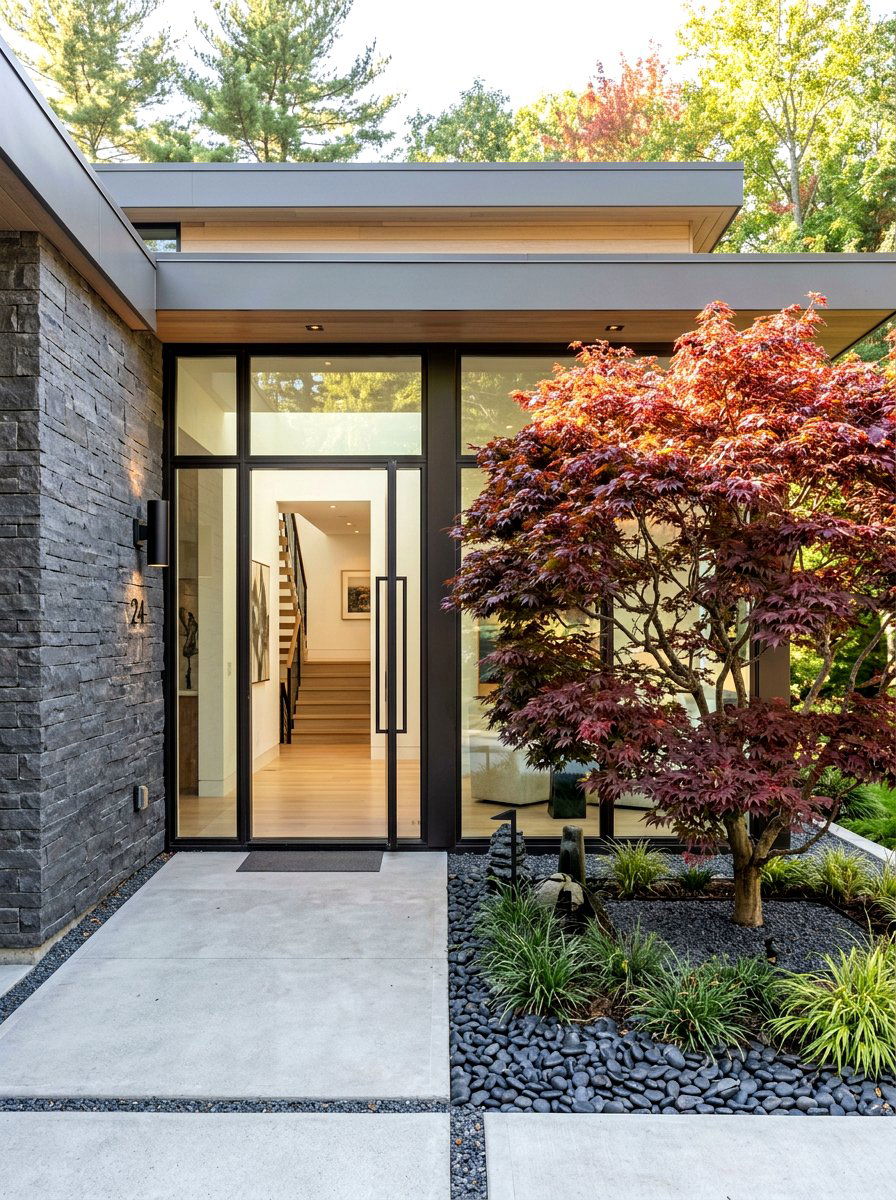
Using a Japanese maple as part of your home’s foundation planting can break up long, horizontal lines and add much-needed vertical interest. Because they have non-invasive root systems, you can safely plant them closer to the house than many other tree species. An upright variety placed near a corner or an entryway provides a soft, organic contrast to the hard materials of the building. The tree’s seasonal color changes will keep the front of your home looking dynamic and well-designed throughout the year. This choice elevates the overall look of your property, giving it a high-end, professionally landscaped feel that enhances your home's curb appeal significantly.
18. Red Leaf Contrast Garden
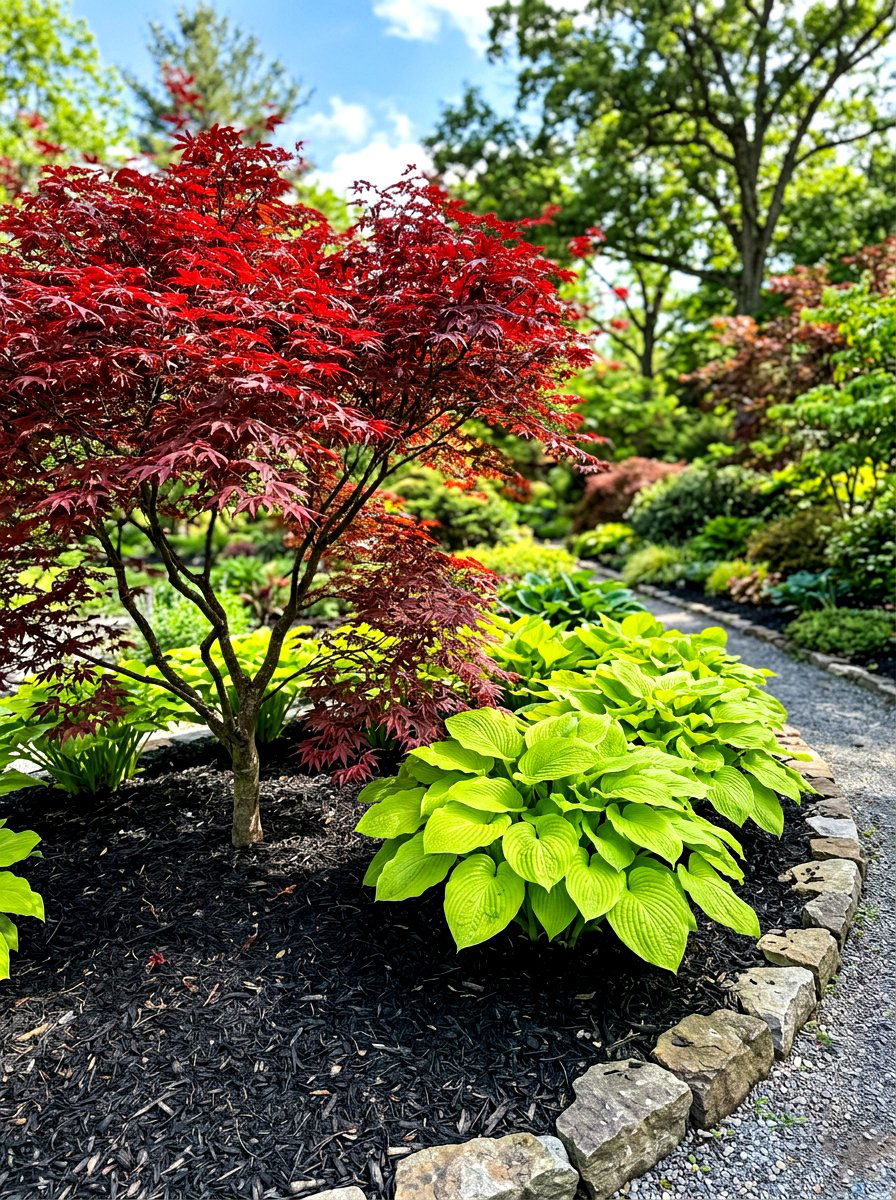
Creating a garden bed specifically designed to highlight red-leafed Japanese maples is a bold way to introduce year-round color to your landscape. Pairing these maples with lime-green hostas or yellow-gold forest grass creates a high-contrast look that is visually stimulating and modern. The dark burgundy or bright crimson leaves of the maple stand out vividly against the lighter green foliage of its companions, making the entire bed feel more energetic. This design strategy is perfect for drawing attention to specific areas of the garden, such as a seating nook or a path entrance. The result is a vibrant, multi-layered display that celebrates the power of color in nature.
19. Winter Bark Interest Garden
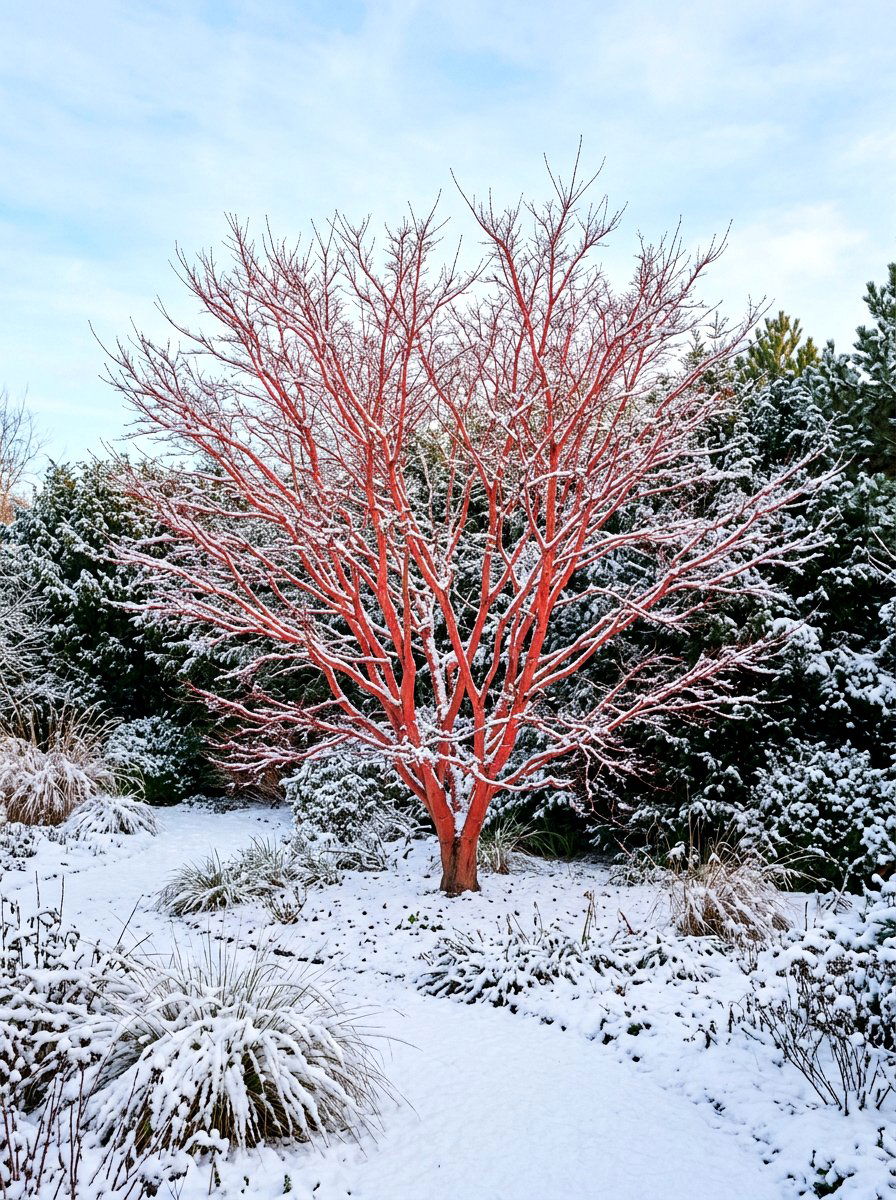
While maples are famous for their leaves, the Coral Bark Japanese maple is prized for its brilliant red stems that provide stunning winter interest. In a winter garden, where most plants are dormant and brown, the vibrant red branches of this variety stand out like glowing embers against the snow or grey sky. Planting them where they can be seen from inside the house ensures you have a beautiful view even during the coldest months. Pairing them with evergreen shrubs ensures the garden maintains structure and color year-round. This design choice proves that a garden can be just as captivating in the winter as it is in the spring.
20. Elevated Hillside Japanese Maple
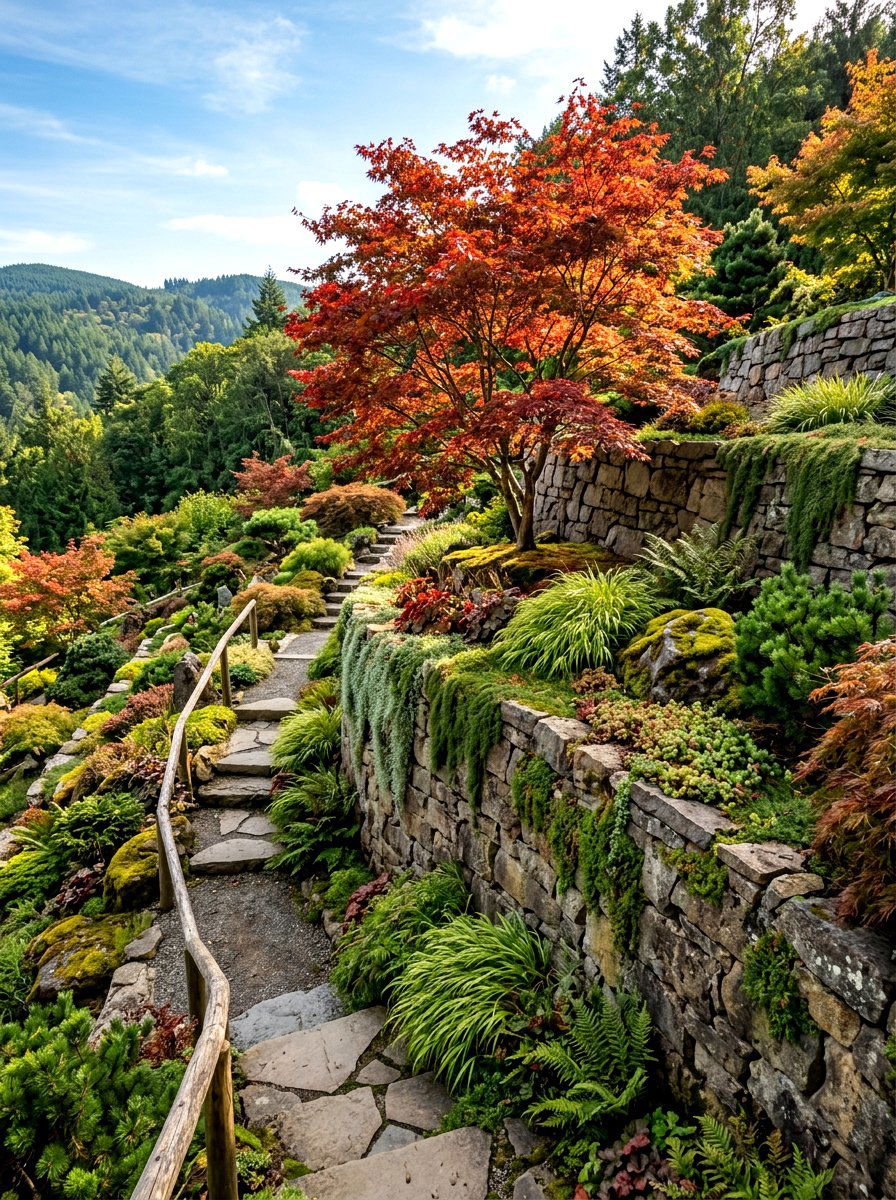
Planting a Japanese maple on an elevated hillside allows you to appreciate its form and foliage from a unique perspective. Looking up into the canopy from a lower path reveals the intricate branching structure and the way light filters through the delicate leaves. This placement also ensures excellent drainage, which is vital for the health of the tree. Using a weeping variety on a slope creates a stunning "waterfall" effect as the branches cascade down the hill toward the viewer. This design turns a challenging landscape feature into a breathtaking asset, making the most of vertical space to create a sense of drama and natural beauty.
21. Raised Bed Japanese Maple
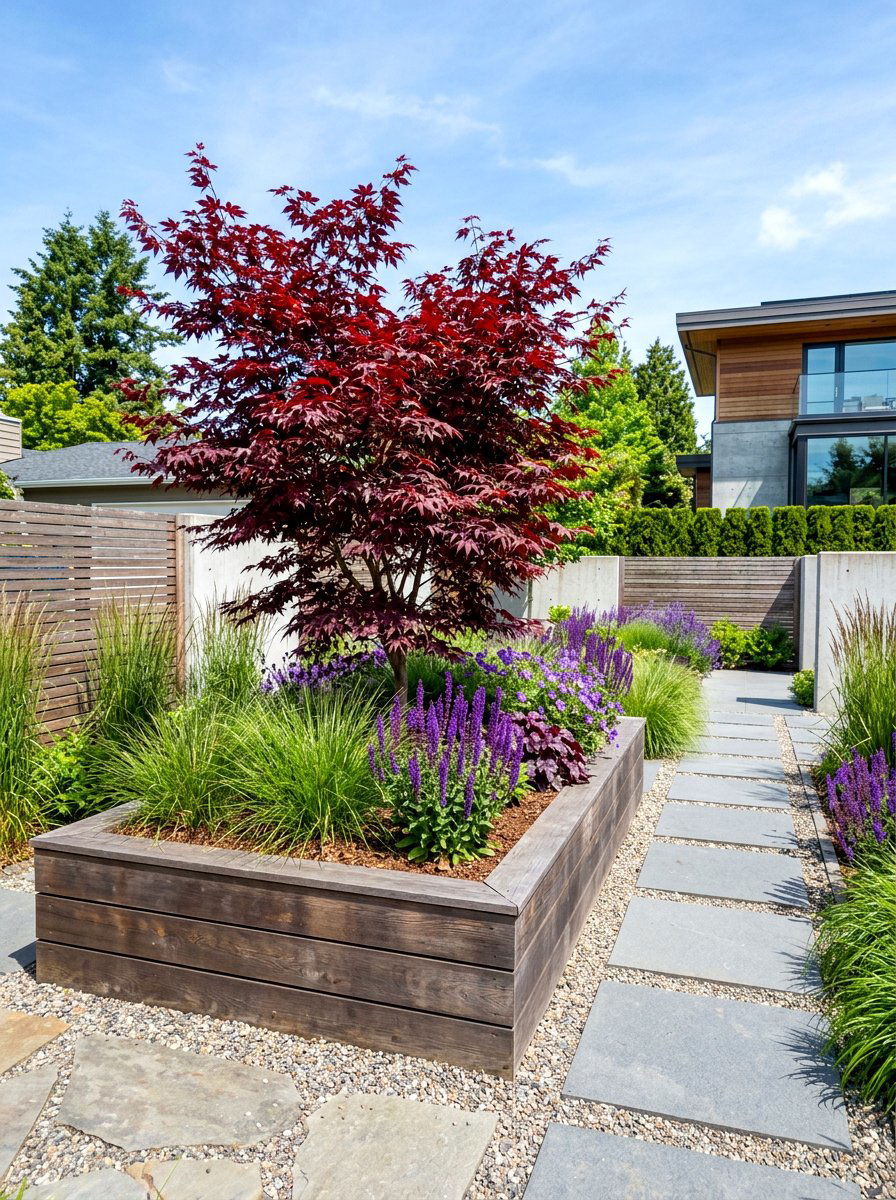
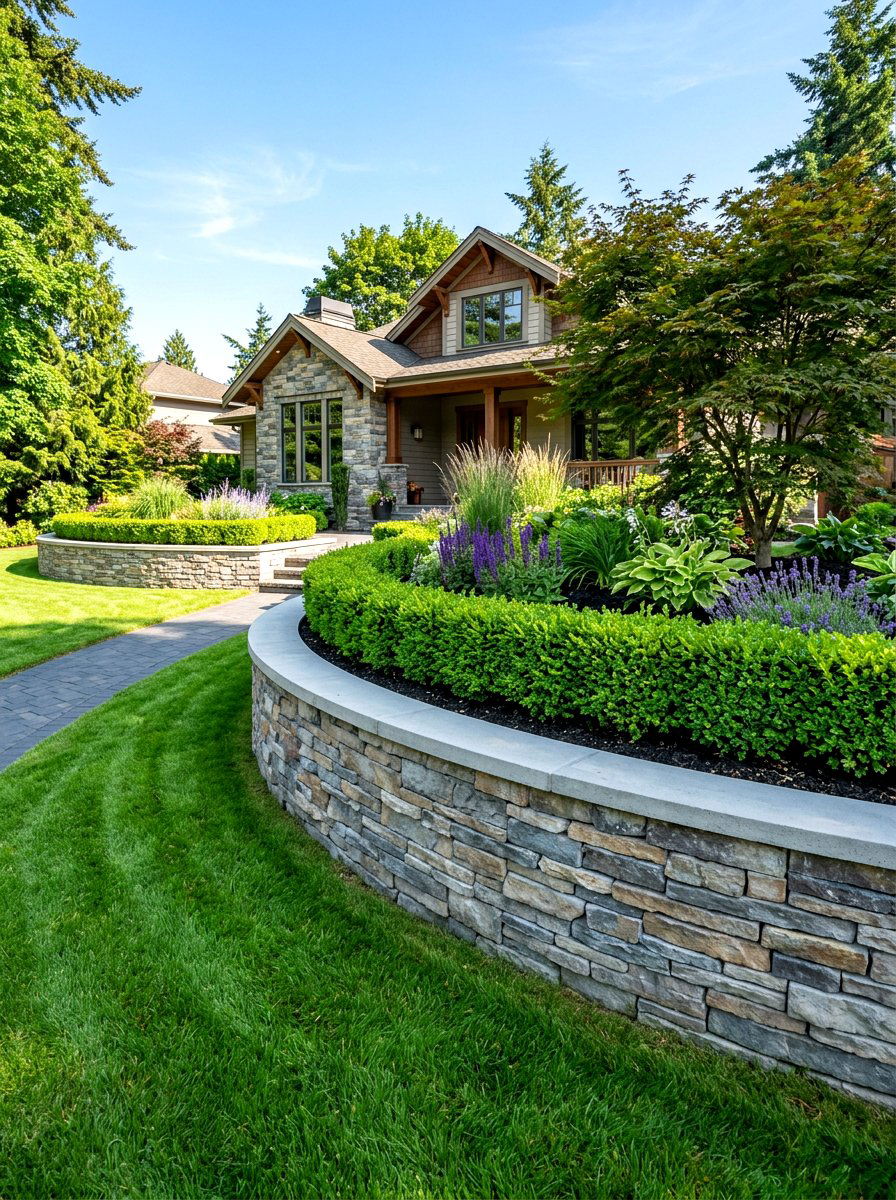
A modern raised bed built from wood or stone provides the perfect stage for a Japanese maple focal point. Elevating the tree not only improves drainage and soil quality but also brings the foliage closer to eye level for better appreciation. Surrounding the maple with a mix of perennials and ornamental grasses creates a lush, tiered look that adds volume to your garden design. The clean lines of the raised bed provide a structured contrast to the organic, flowing shape of the tree, resulting in a balanced and contemporary aesthetic. This setup is particularly effective in small backyards where every inch of planting space needs to be utilized thoughtfully.
22. Urban Balcony Japanese Maple
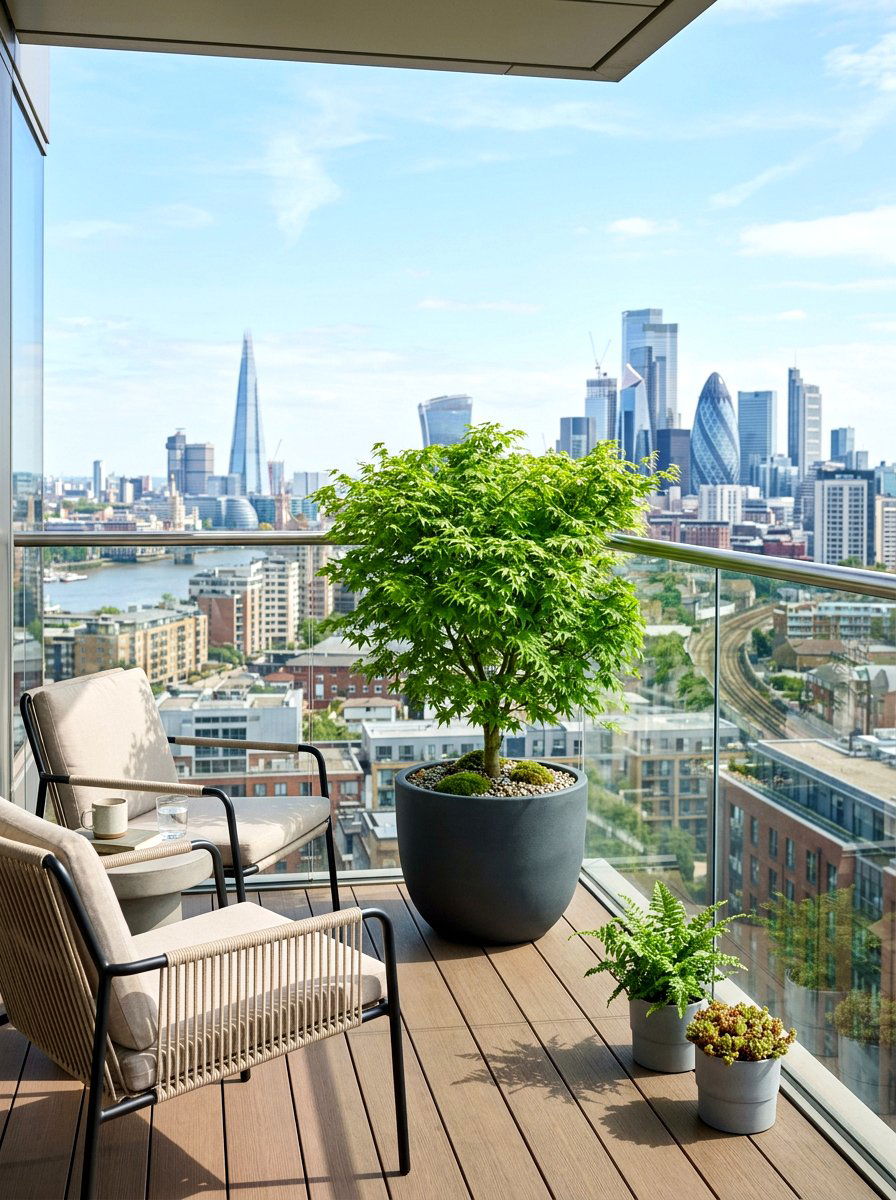
Transforming a small urban balcony into a green oasis is easy with the help of a dwarf Japanese maple in a decorative pot. Its compact size and slow growth rate make it perfectly suited for life in a high-rise setting. The tree provides a sense of nature and seasonal rhythm in an otherwise concrete environment, offering a peaceful place to enjoy your morning coffee. Using a variety with variegated leaves can help brighten up a shaded balcony and add a touch of sophistication. This design proves that you don't need a massive yard to enjoy the artistry and tranquility that a Japanese maple brings to an outdoor space.
23. Bridge Accent Japanese Maple
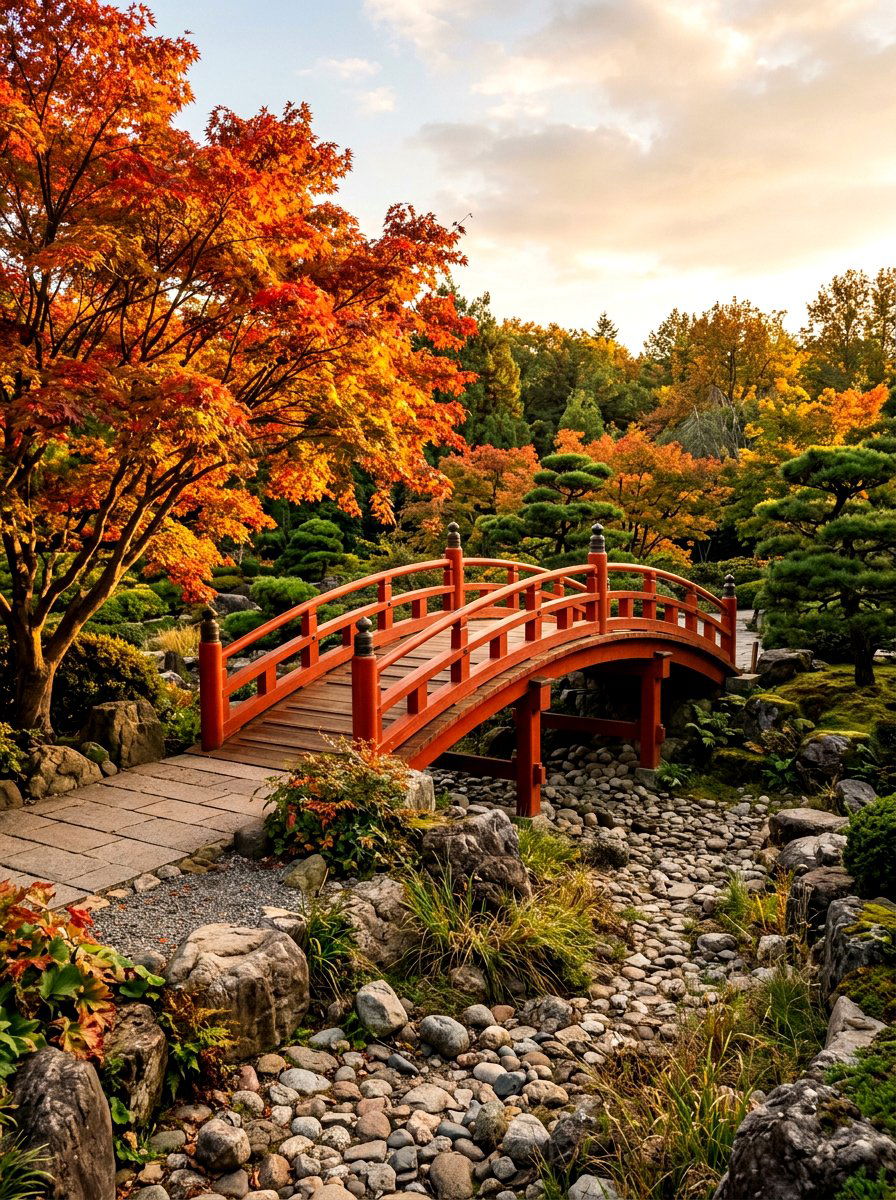
A traditional wooden moon bridge arching over a dry river bed or pond is beautifully enhanced by a Japanese maple planted at either end. The tree’s soft, overhanging branches frame the bridge, creating a picturesque scene that feels like something out of a classic landscape painting. This setup highlights the journey across the bridge, making the transition feel special and intentional. During the autumn, the colorful leaves that fall onto the wooden planks add a touch of seasonal romance to the scene. This design choice is a fantastic way to introduce architectural interest and a sense of timeless elegance to a larger garden or a backyard pond.
24. Shade Garden Japanese Maple
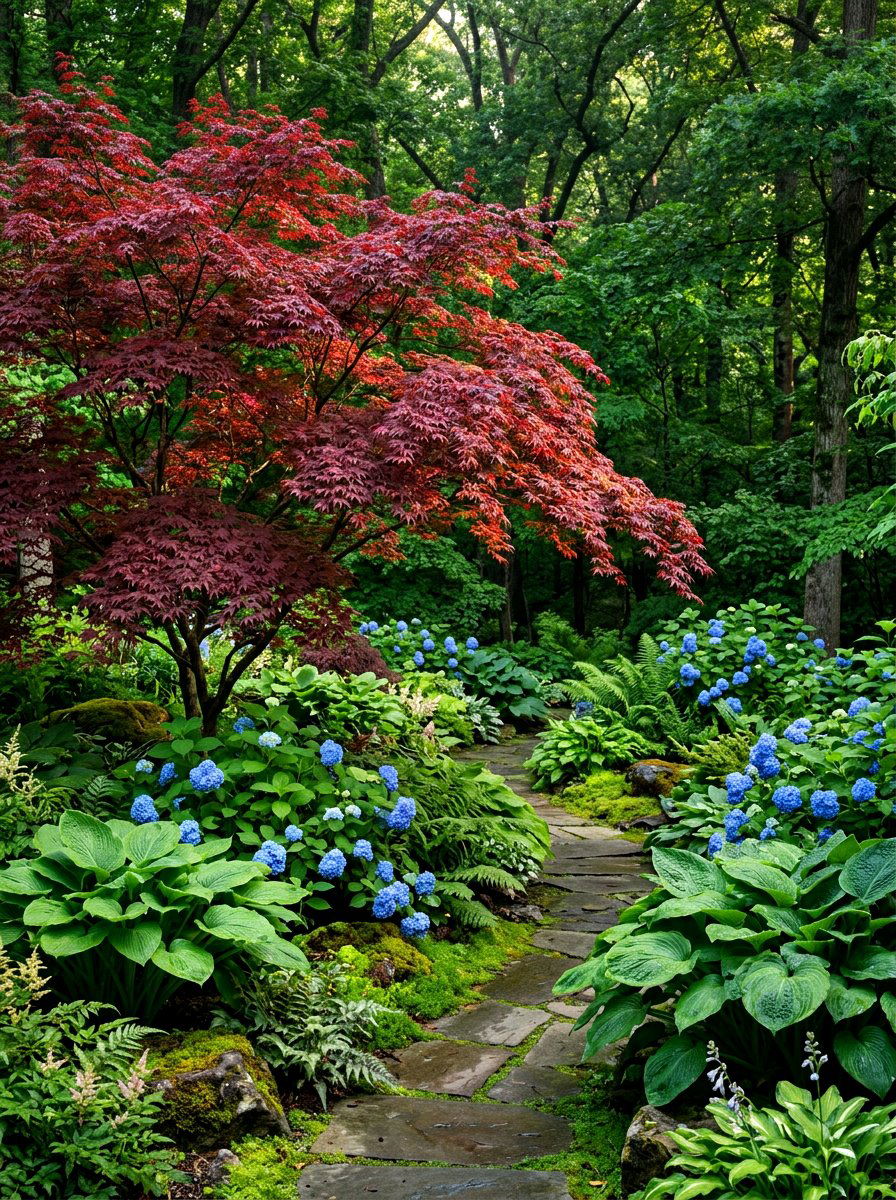
In a dedicated shade garden, a Japanese maple acts as the perfect anchor, providing structure and height among low-light plants. Its lacy foliage pairs beautifully with the broad leaves of hydrangeas and the delicate fronds of ferns, creating a rich tapestry of textures. Because maples prefer protection from the hot afternoon sun, they are naturally at home in these cooler, protected areas of the yard. The subtle color variations in the maple’s leaves can help light up dark corners, making the entire space feel more vibrant and inviting. This design creates a lush, sanctuary-like atmosphere that is perfect for escaping the summer heat in total peace.
25. Four Season Border Maple
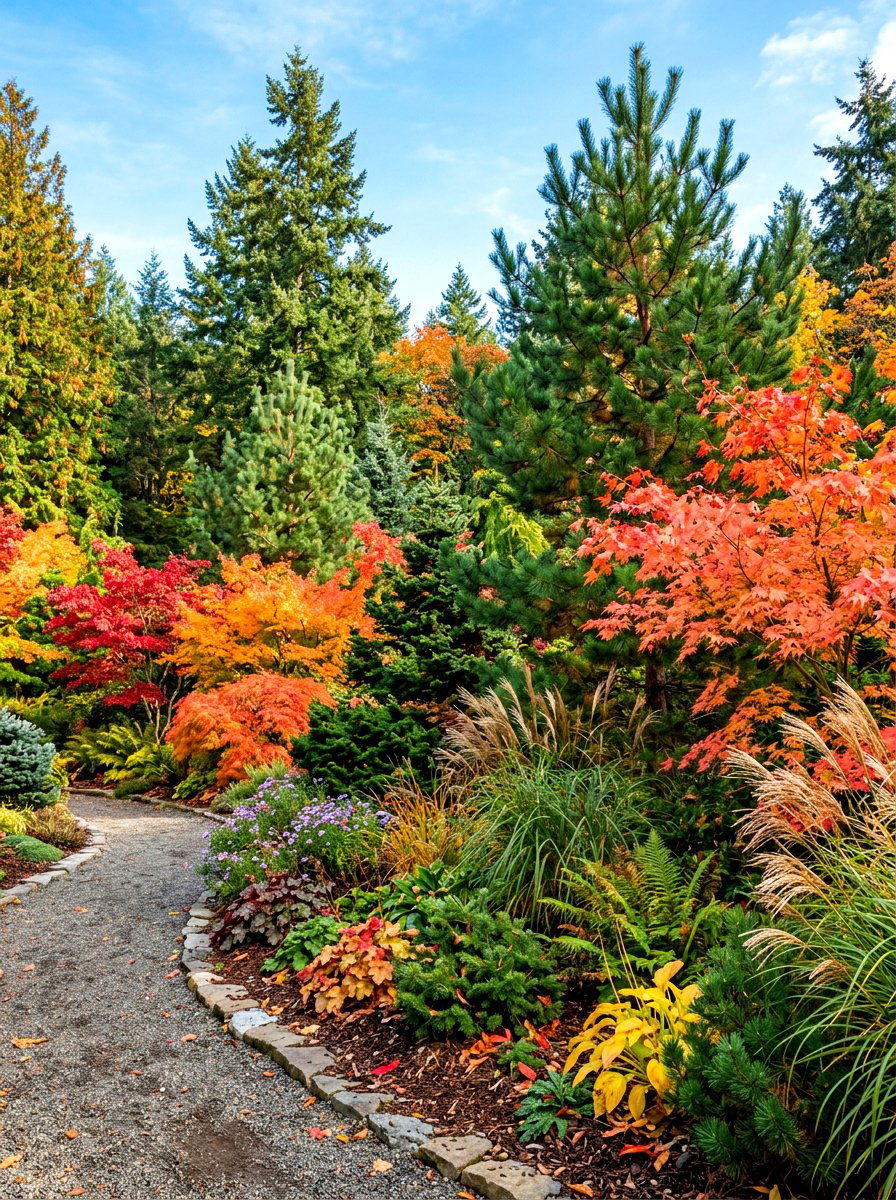
Designing a garden border with a mix of evergreen conifers and Japanese maples ensures that your landscape remains beautiful through all four seasons. During the spring and summer, the maples provide soft textures and bright colors that contrast with the dark green of the pines. In the fall, they take center stage with their fiery transitions, while the evergreens provide a steady, structural backdrop. Once the leaves fall in winter, the unique branch patterns and bark colors of the maples are highlighted against the snowy or green background. This layered approach creates a dynamic and resilient garden that offers visual interest every single day of the year.
26. Front Yard Focal Maple
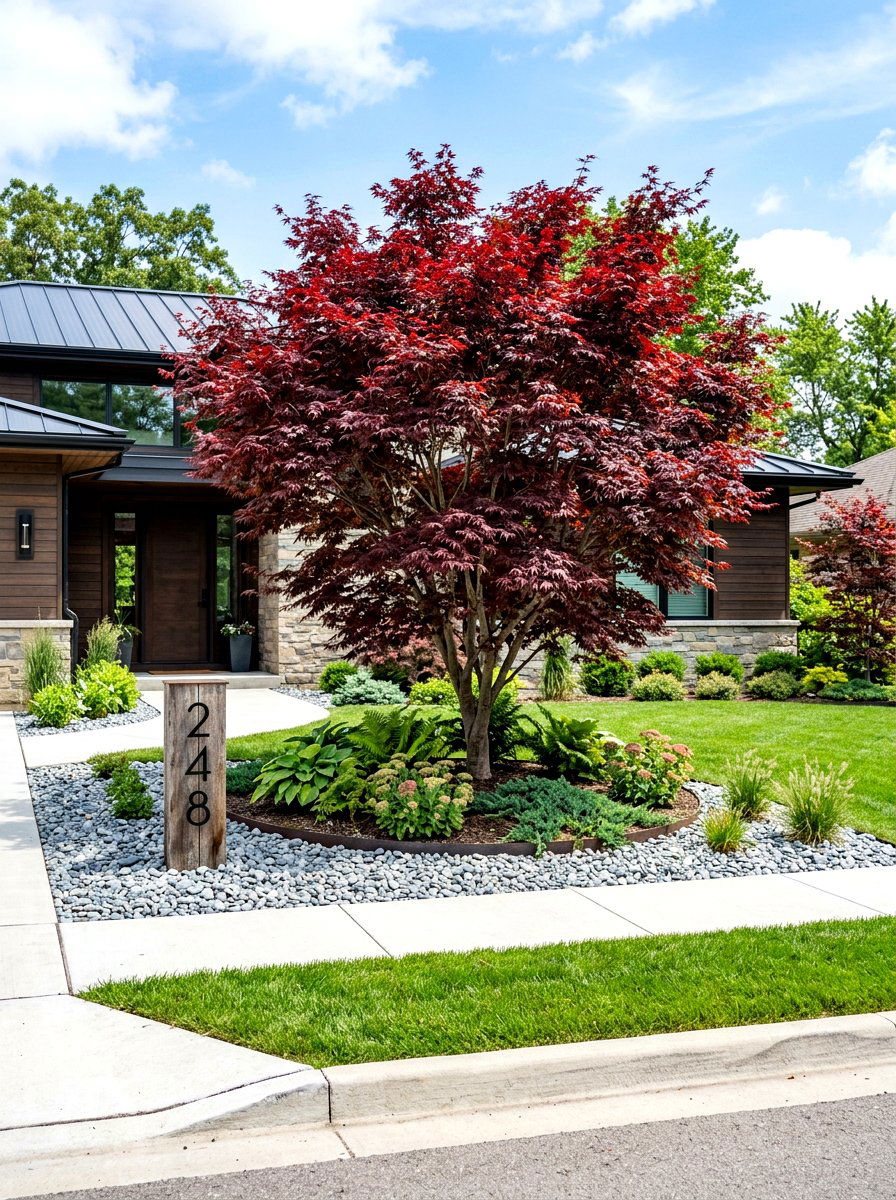
Replacing a traditional lawn with a stunning Japanese maple focal point can dramatically improve your home’s curb appeal and reduce maintenance. Planting a single, large upright maple in the center of a mulch or gravel bed creates a high-impact look that feels modern and intentional. Adding a few strategically placed boulders and low-lying ground covers completes the scene, giving it a professional, landscaped appearance. This design draws the eye and makes a bold statement about your personal style, setting your home apart from the rest of the neighborhood. It is a smart and beautiful way to create a welcoming and sophisticated first impression for every guest.
27. Dry River Bed Maple
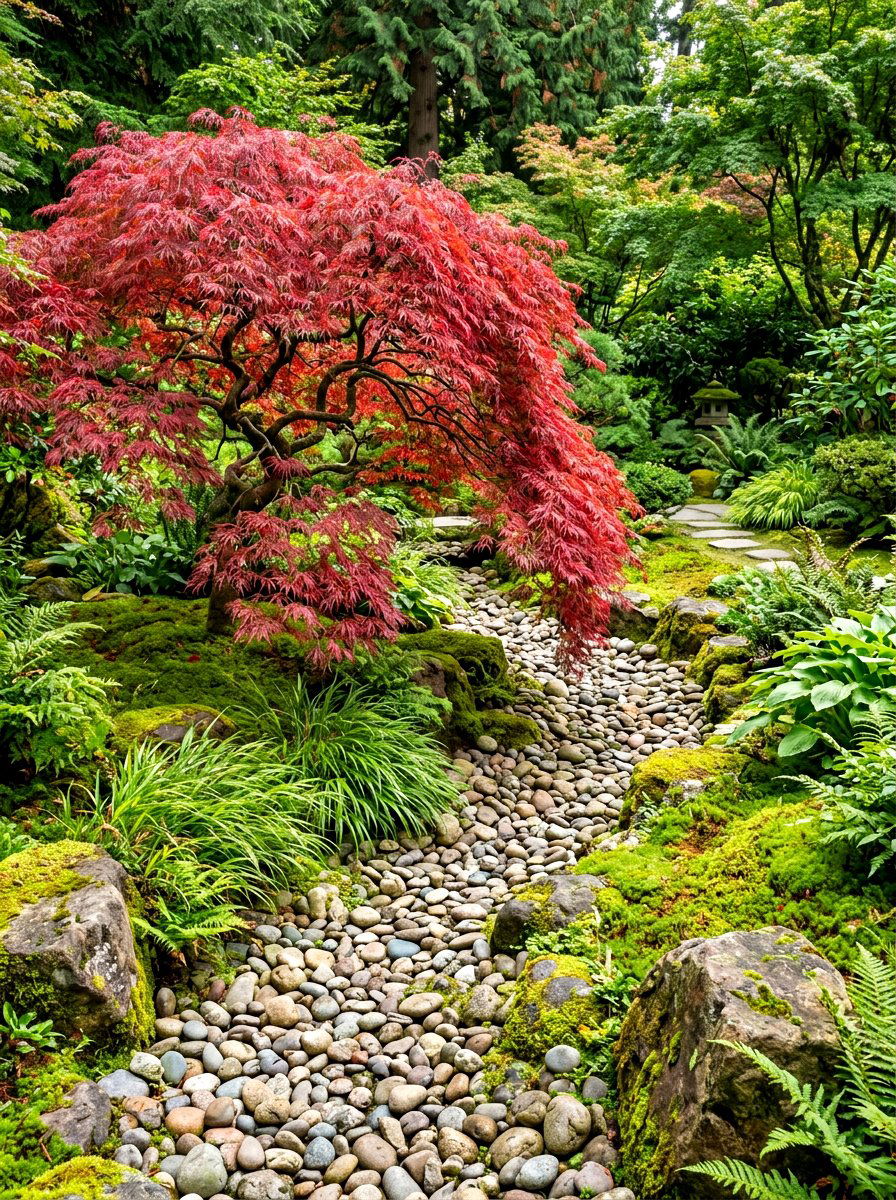
A dry river bed made of smooth river rocks and gravel is the perfect setting for a weeping Japanese maple. The tree’s cascading branches mimic the flow of water, reinforcing the illusion of a stream running through your garden. This design is not only visually stunning but also functional, as it can help manage drainage issues in the yard. Placing the maple near a "bend" in the river adds to the naturalistic feel and creates a sense of movement in the landscape. This low-maintenance setup is ideal for those who want the beauty of a water feature without the upkeep of an actual pond or fountain.
28. Gazebo Surround Japanese Maple
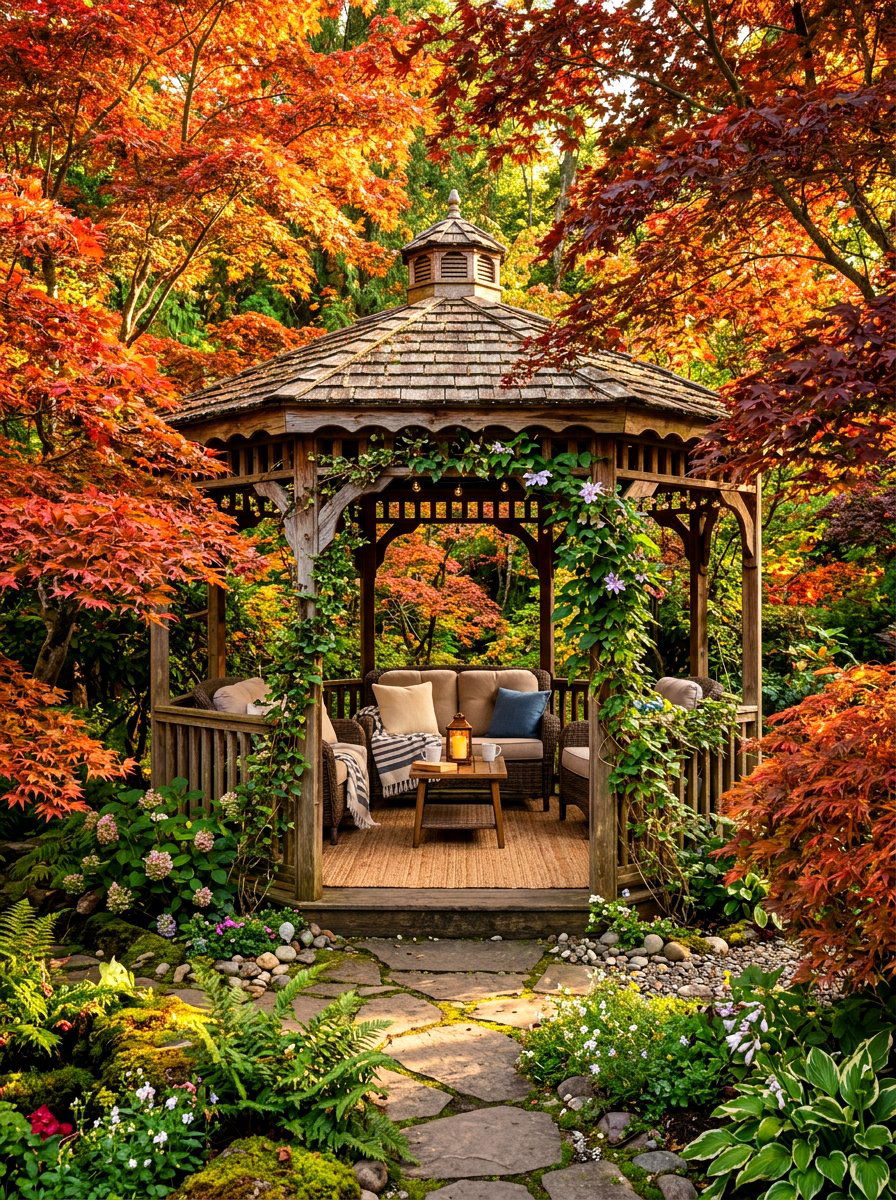
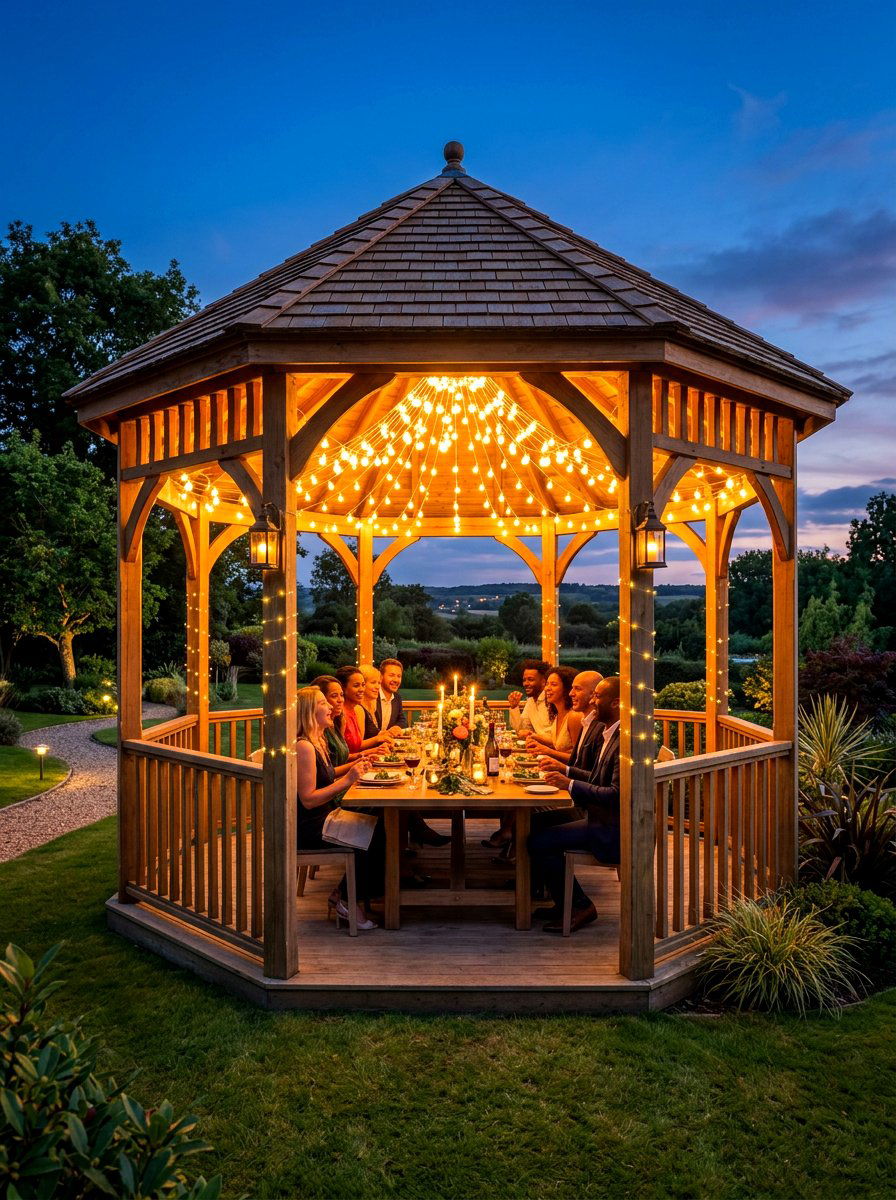
Surrounding a garden gazebo or pergola with Japanese maples creates a private and enchanted seating area that feels like a hidden forest room. The low-hanging branches of the trees provide natural shade and a sense of enclosure, making the space feel cozy and protected. As you sit inside, you can enjoy the close-up view of the delicate leaves and the birds that are often attracted to the dense canopy. This design turns a simple outdoor structure into a destination, offering a peaceful place for reading, dining, or chatting with friends. The seasonal color shifts ensure that your favorite outdoor hangout always feels fresh and visually inspiring.
29. Seating Area Shade Maple
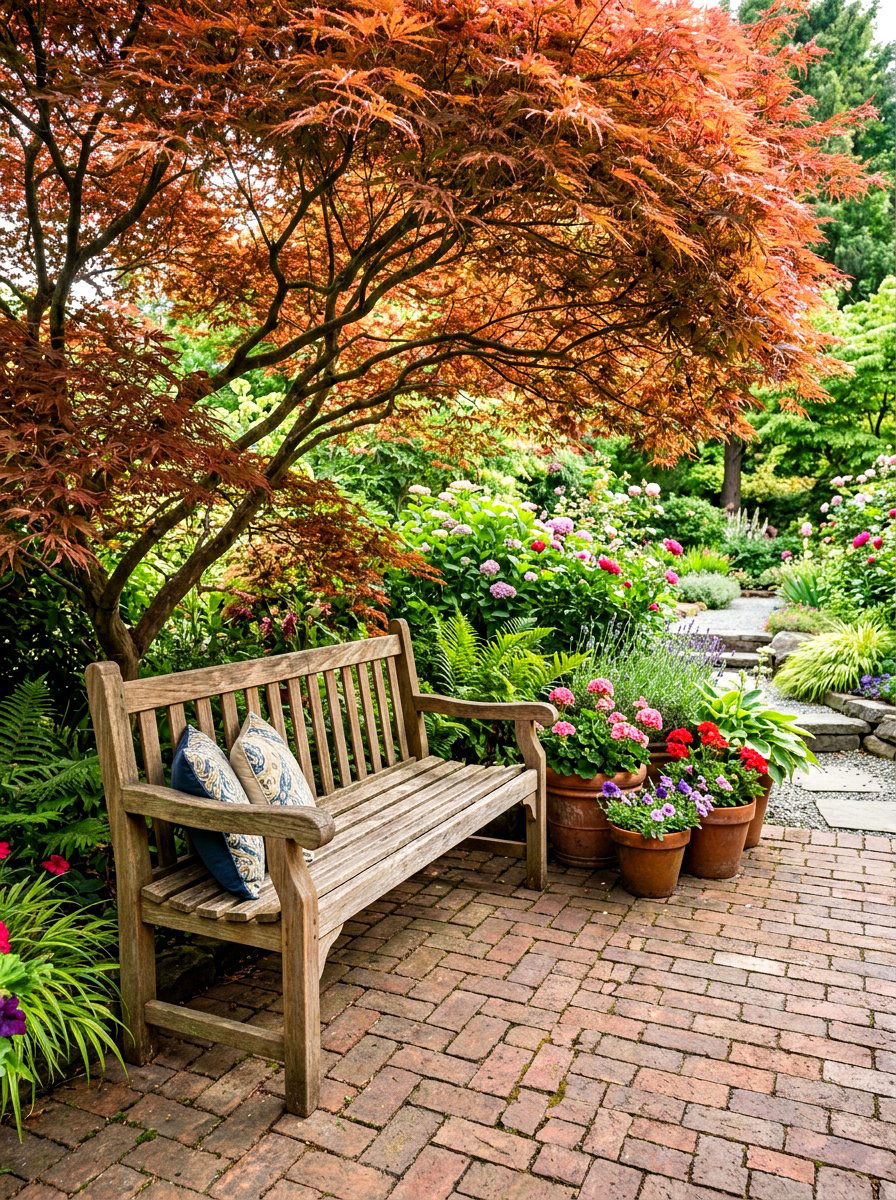
Placing a comfortable garden bench directly under the wide, spreading canopy of a mature Japanese maple offers the perfect spot for relaxation. The dappled shade provided by the lacy leaves is cool and inviting, making it a favorite place to sit during the warmer parts of the day. The tree’s architectural beauty is best appreciated from below, where you can see the intricate patterns of the branches against the sky. This simple design intervention turns a corner of the yard into a functional and beautiful retreat. It encourages you to spend more time outdoors, connecting with nature in a very personal and direct way throughout the year.
30. Entryway Welcome Japanese Maple
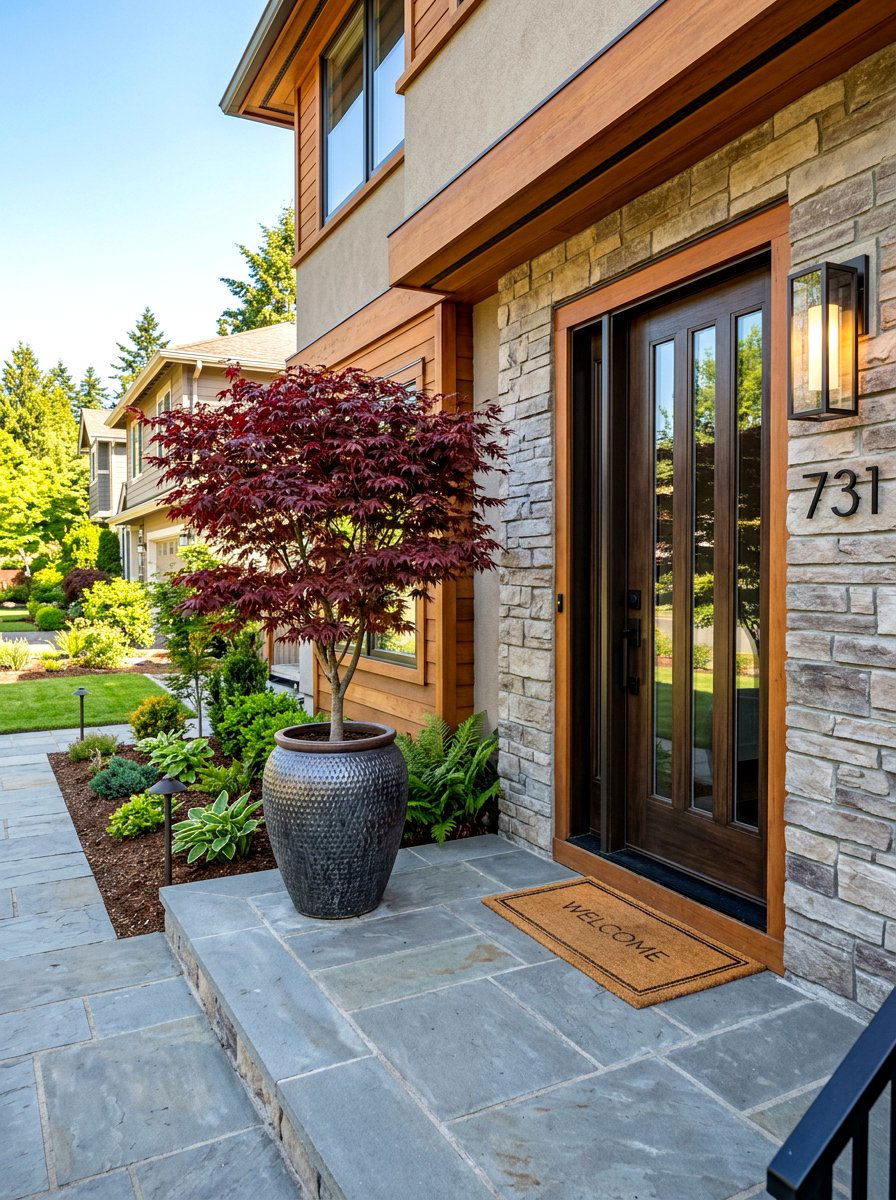
A single, well-placed Japanese maple near your front door acts as a living "welcome" sign for everyone who enters your home. Its elegant form and vibrant colors create a sense of warmth and hospitality that hardscaping alone cannot achieve. Whether you plant it in the ground or in a large, stylish pot, the tree adds a layer of sophistication to your entryway. Choosing a variety that changes color dramatically with the seasons ensures your home’s entrance always looks festive and intentional. This design choice is a simple way to elevate your home’s exterior and create a peaceful transition from the outside world to your private living space.
Conclusion:
Integrating a Japanese maple into your garden is one of the most rewarding ways to enhance your outdoor living space. These versatile trees offer a unique combination of architectural structure, delicate texture, and breathtaking seasonal color that few other plants can match. Whether you choose to make one the focal point of a Zen rock garden or use it to add shade to a quiet meditation nook, the result is always a more peaceful and visually interesting landscape. By thoughtfully selecting the right variety and placement, you can create a sanctuary that brings joy and tranquility to your home for many years to come.

Related posts: