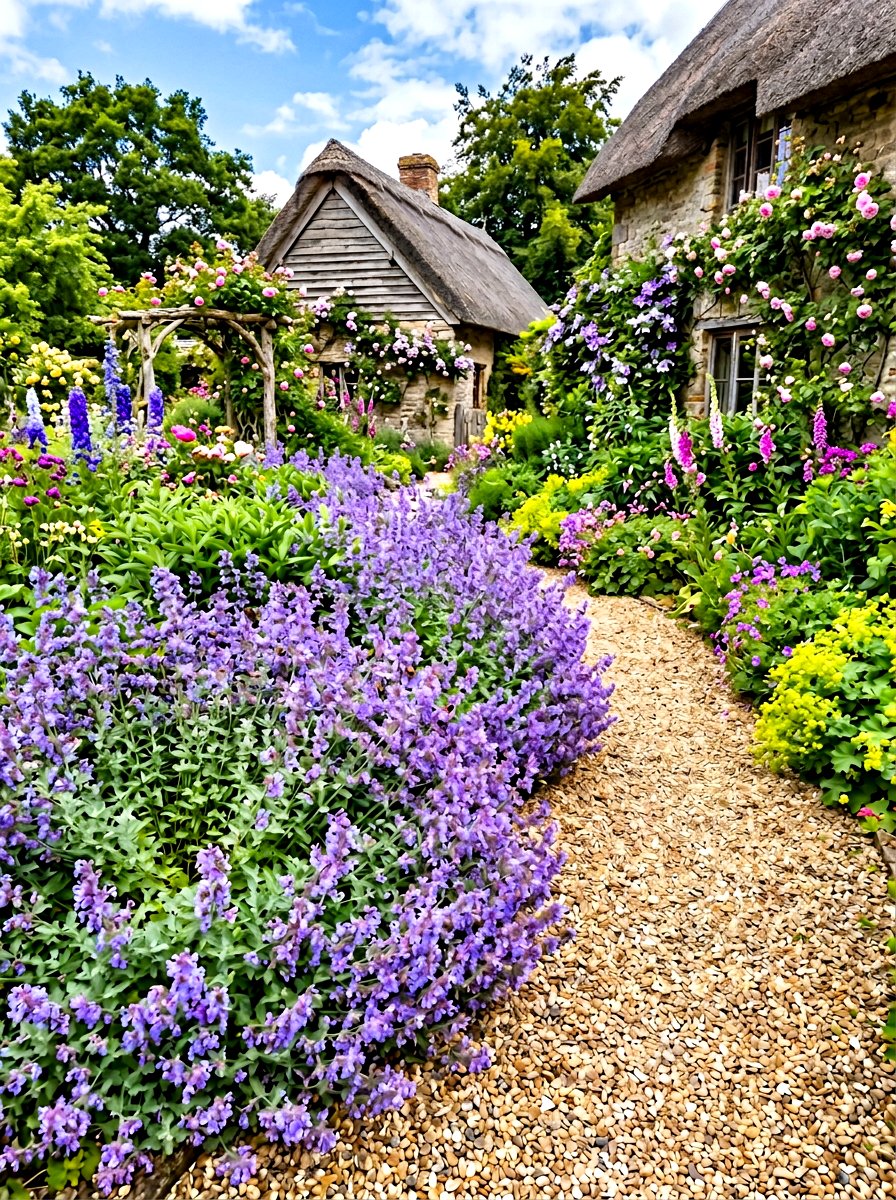
Springtime brings a profound sense of renewal to any outdoor space, and nothing signals this change quite like the arrival of tulips. These iconic flowers offer an incredible variety of shapes, sizes, and colors that can fit any gardening style. Whether you are looking to create a formal estate look or a cozy backyard retreat, tulips provide the versatility needed to achieve your vision. Planning your bulb garden in the fall ensures a breathtaking explosion of color once the frost melts away. From bold mass plantings to delicate container arrangements, the possibilities for creative expression are nearly endless. Let’s dive into thirty unique ways to transform your home landscape with these stunning spring blooms.
1. Mass Planting Tulips
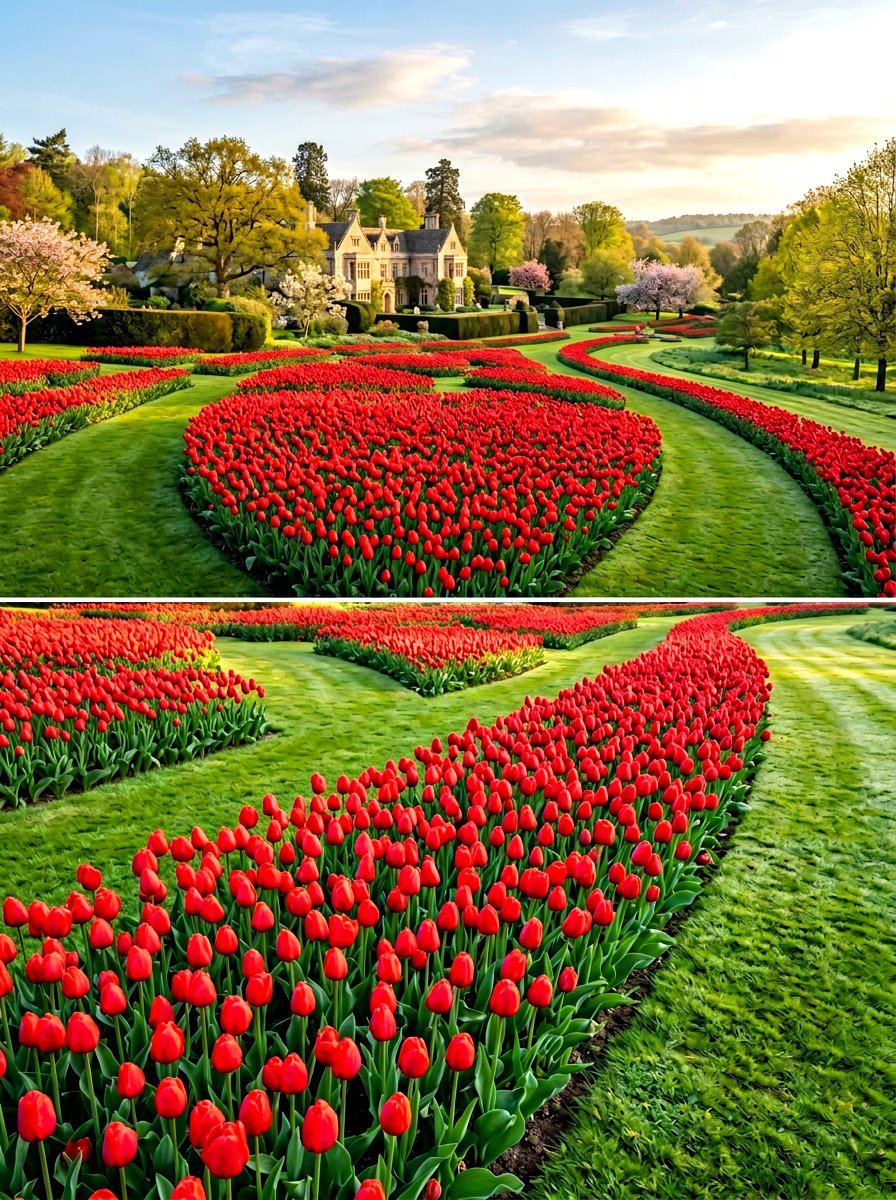
Imagine walking out your front door to see a vibrant sea of uniform color stretching across your entire lawn. Mass planting is a powerful landscaping technique where you group hundreds of tulip bulbs together to create a dense, carpet-like effect. This method is often seen in public botanical gardens because it provides a massive visual impact that individual flowers simply cannot match. By choosing a single variety or a tight color palette, you create a professional and high-end look for your property. The sheer density of the blooms creates a rich texture that captures the sunlight beautifully. It is a surefire way to make your garden the envy of the neighborhood.
2. Container Tulip Garden
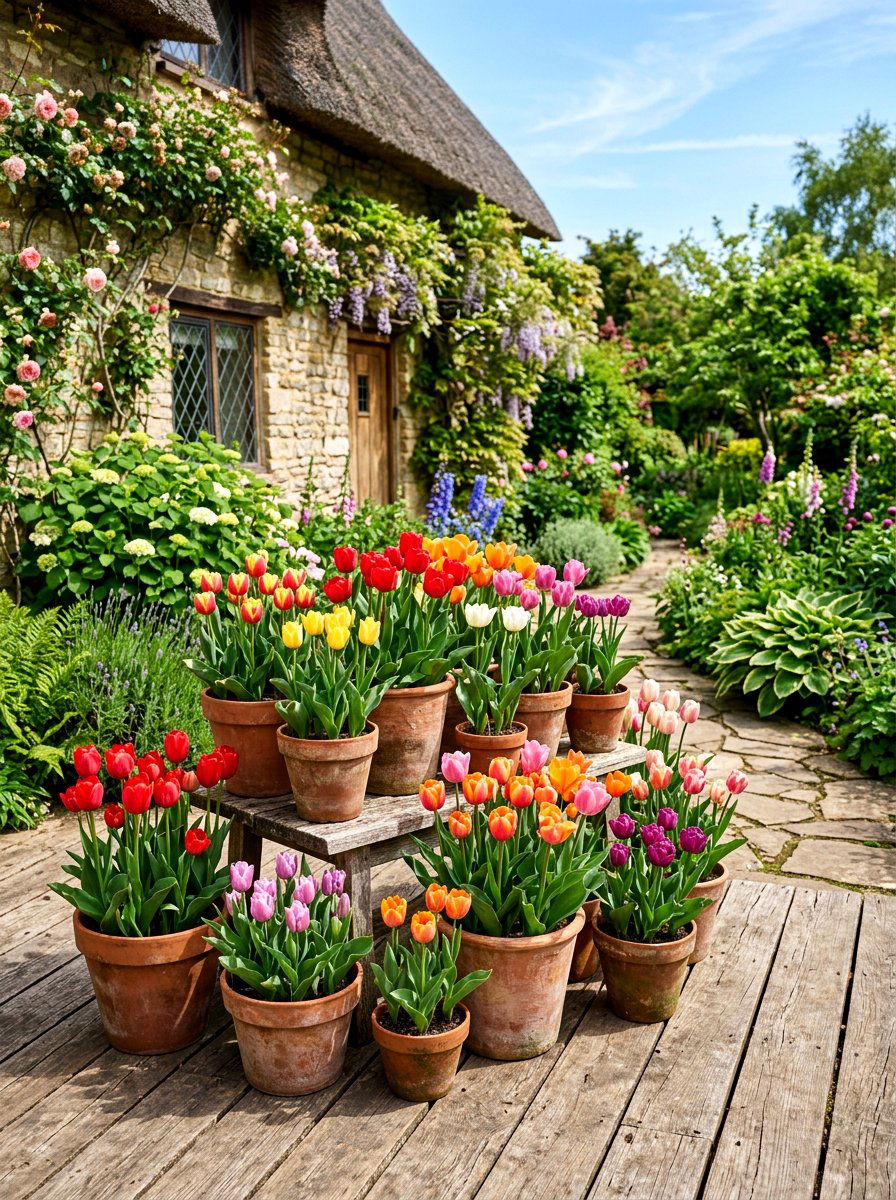
If you have limited space or want to add a splash of color to your patio, container gardening is the perfect solution. Tulips perform exceptionally well in pots, allowing you to move them around to find the best light or to decorate your entrance. You can experiment with different pot materials like classic terra cotta, sleek modern concrete, or rustic wooden barrels. For a professional look, try "lasagna planting" where you layer bulbs at different depths to ensure a long-lasting bloom period. This technique maximizes every inch of soil and creates a full, lush appearance. It is an easy way to bring the beauty of spring directly to your doorstep.
3. White Tulip Landscape
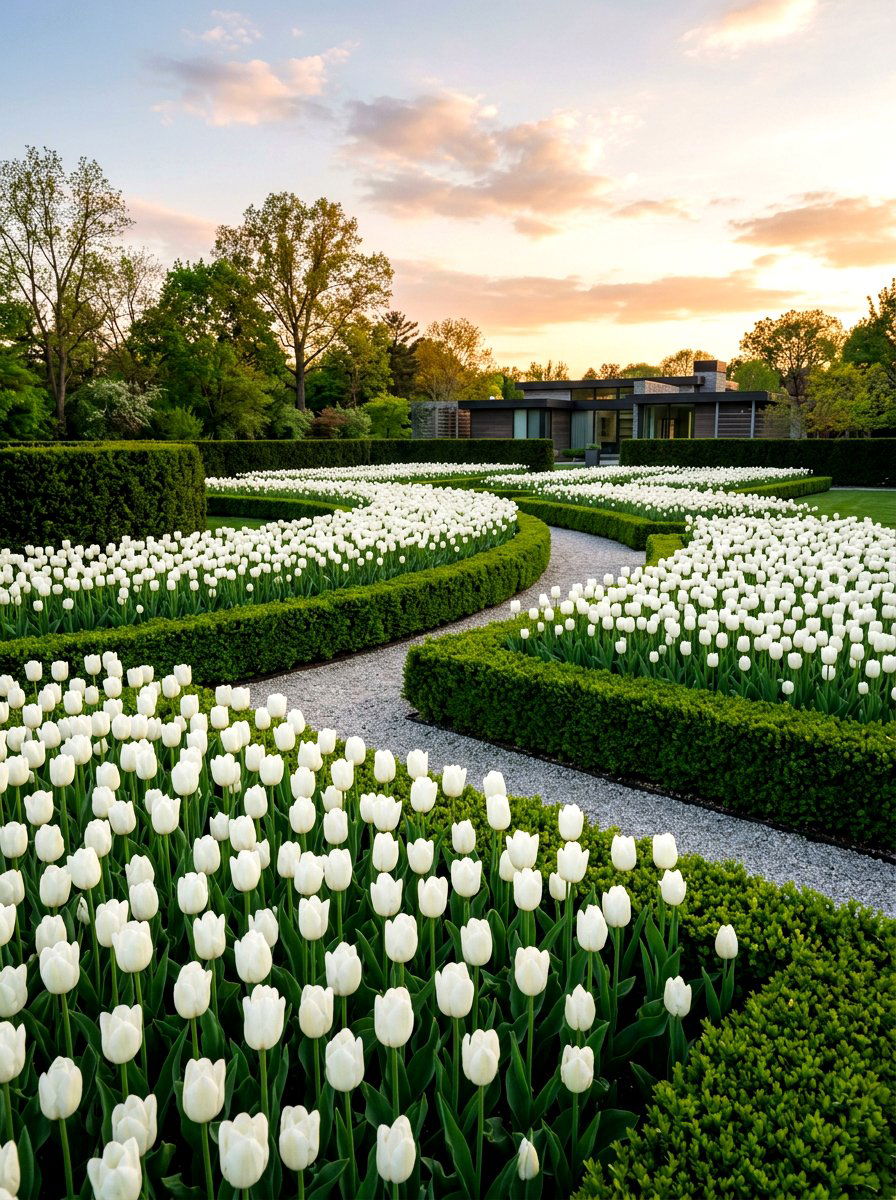
For a garden that feels peaceful, elegant, and sophisticated, a monochromatic white landscape is an unbeatable choice. White tulips against a backdrop of deep green foliage create a crisp and clean aesthetic that looks stunning both day and night. This color palette is particularly effective in modern or minimalist garden designs. You can mix different types of white tulips, such as fringed, parrot, or double late varieties, to add textural interest without breaking the color theme. White flowers also have a unique ability to glow in the twilight, making your garden look magical during the evening hours. It is a timeless look that never goes out of style.
4. Mixed Bulb Garden
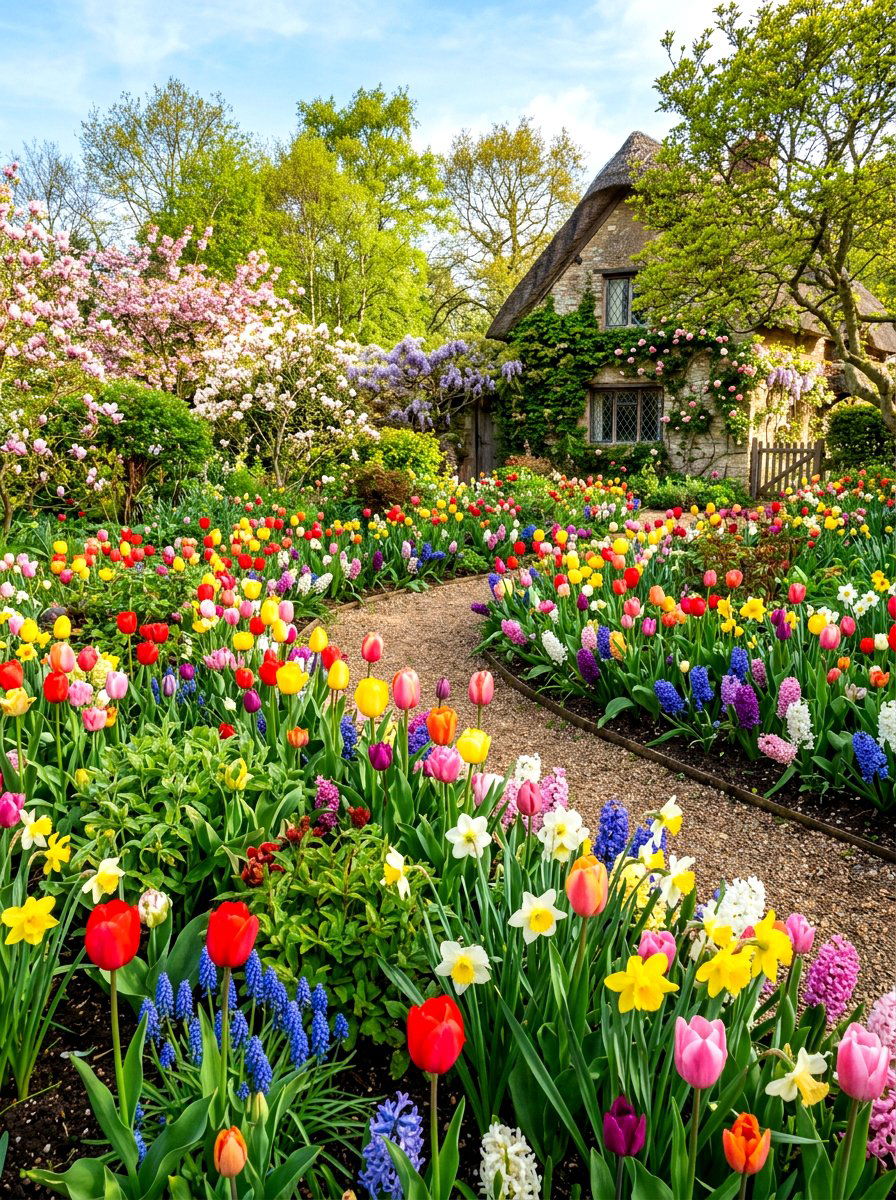
Creating a diverse garden ecosystem often involves mixing different types of bulbs to ensure a long and varied blooming season. By combining tulips with other spring favorites like hyacinths, crocuses, and alliums, you can achieve a layered and complex visual display. This approach allows for a succession of colors and shapes that evolve as the weeks pass. You should consider the different heights and bloom times of each species to ensure that no plant is hidden. A mixed bulb garden feels more natural and whimsical than a rigid formal bed. It provides a constant source of surprise and delight as new flowers emerge and take center stage.
5. Pink Tulip Border
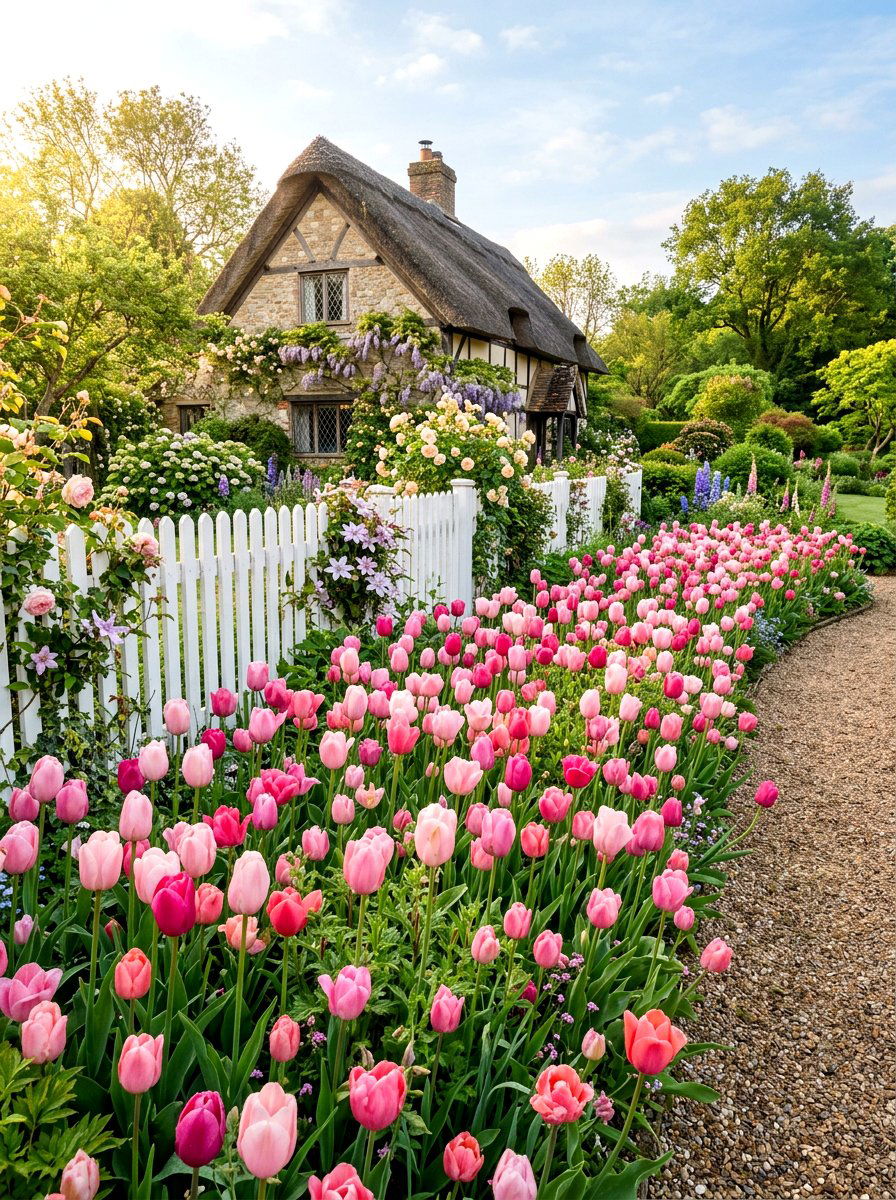
A soft and romantic aesthetic can be easily achieved by lining your garden beds with a delicate pink tulip border. These charming flowers come in shades ranging from pale blush to deep magenta, allowing you to create a beautiful gradient effect. Planting them in long, flowing rows along a fence or a walkway adds a sense of structure while maintaining a gentle feel. Pink tulips pair wonderfully with silver-leafed plants or white perennials, enhancing the overall sweetness of the scene. This design choice is perfect for cottage gardens or front yards where you want to create a warm and inviting atmosphere for all your guests.
6. Spring Cottage Garden
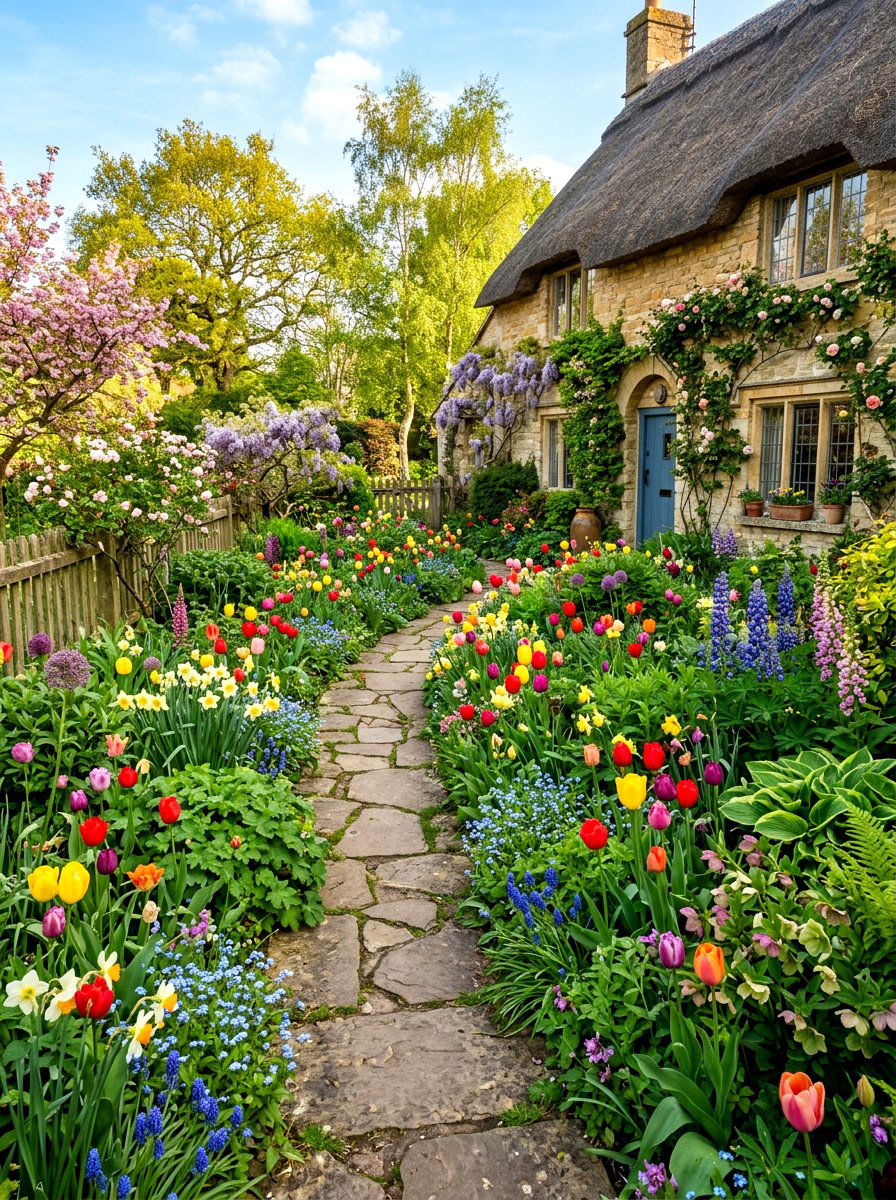
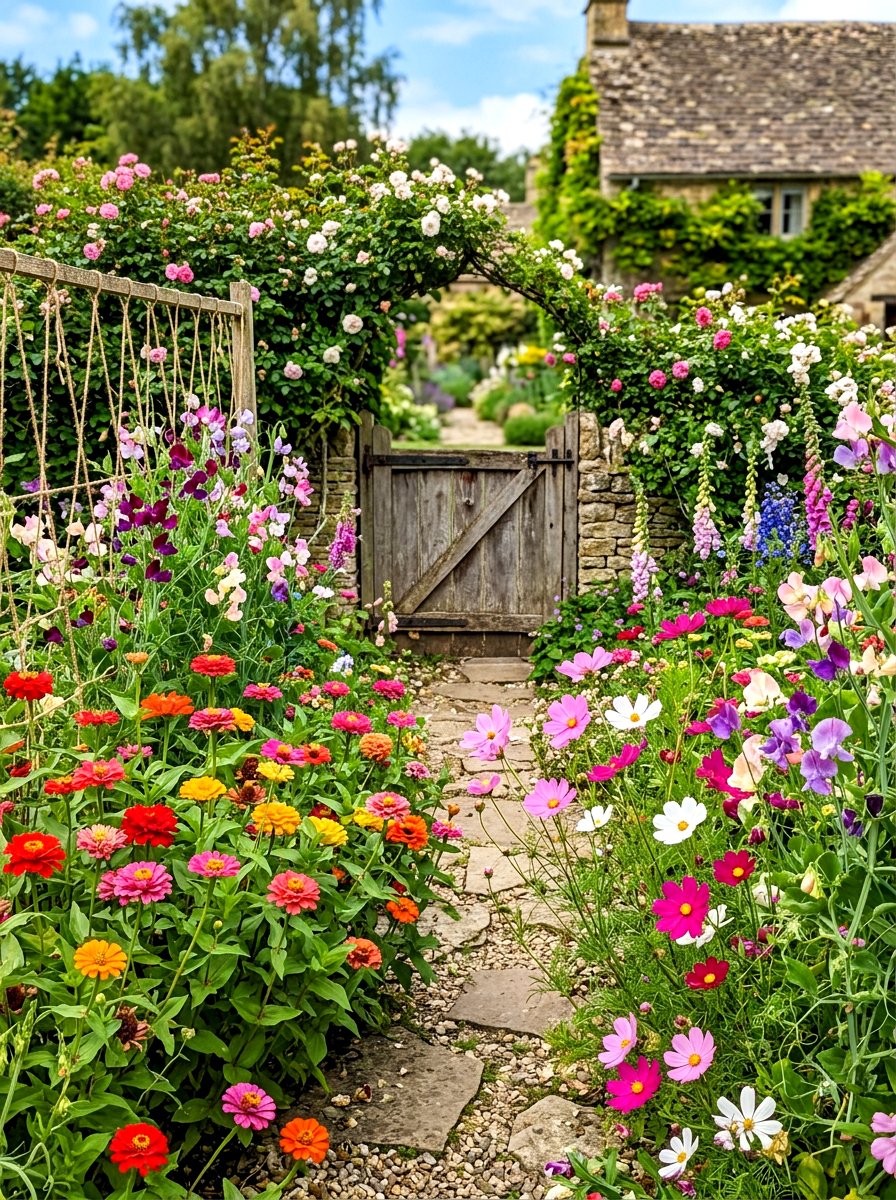
The hallmark of a cottage garden is its effortless, overstuffed, and somewhat wild appearance. Tulips are essential components of this style, as they can be tucked into every available corner for a burst of spring energy. Instead of planting in neat rows, scatter your bulbs in informal clumps among emerging perennials and flowering shrubs. This creates a lived-in feel that celebrates the beauty of organized chaos. Choose a variety of heights and colors to mimic the look of a natural meadow. The result is a charming and nostalgic space that feels like it has been part of the landscape for many generations to come.
7. Red Tulip Bed
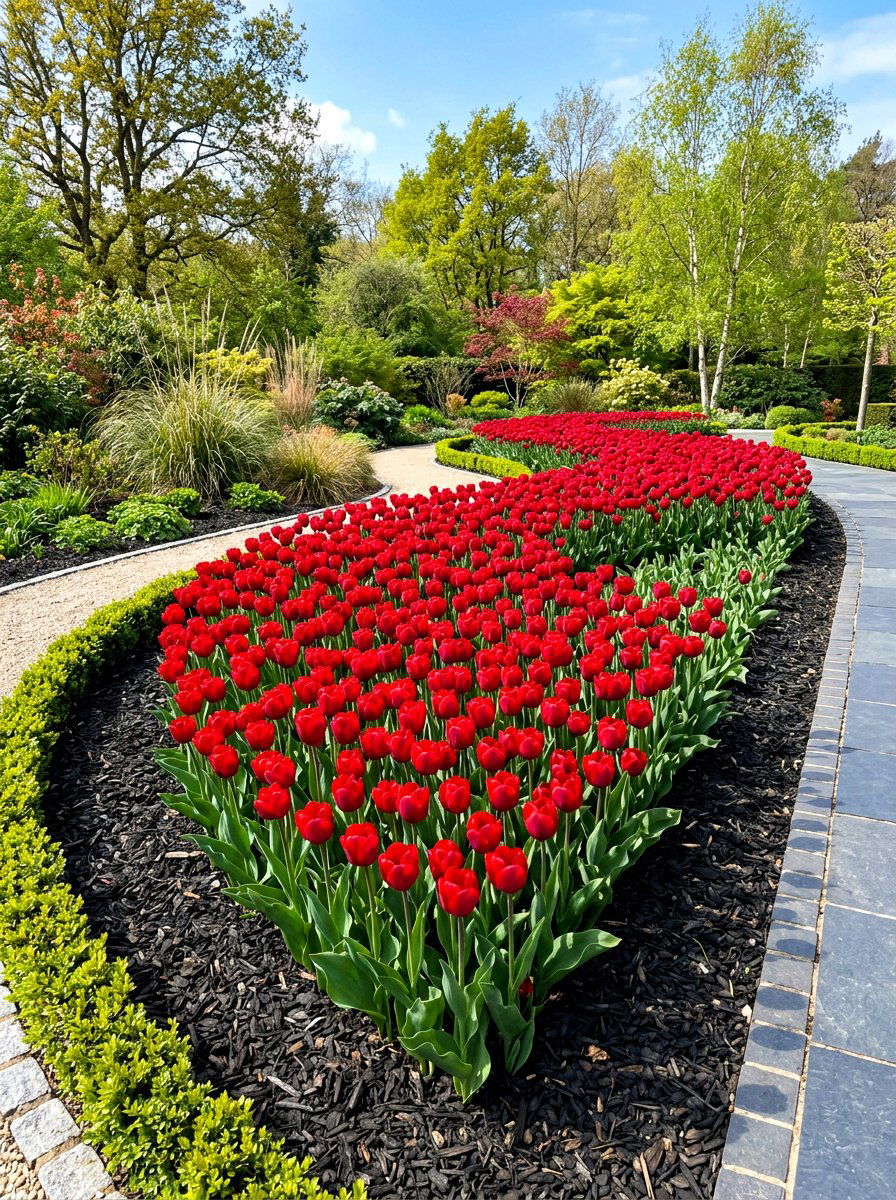
For those who want their garden to make a bold and energetic statement, a dedicated red tulip bed is the way to go. Red is a color of passion and strength, and a dense planting of these fiery blooms will draw the eye from across the street. This look works exceptionally well when framed by dark mulch or a low boxwood hedge to provide contrast. You can choose classic single red tulips for a traditional look or go with ruffled parrot varieties for added drama. Regardless of the type, a red-focused garden bed provides a high-energy focal point that celebrates the return of the warm spring sun.
8. Tulip Walkway Border
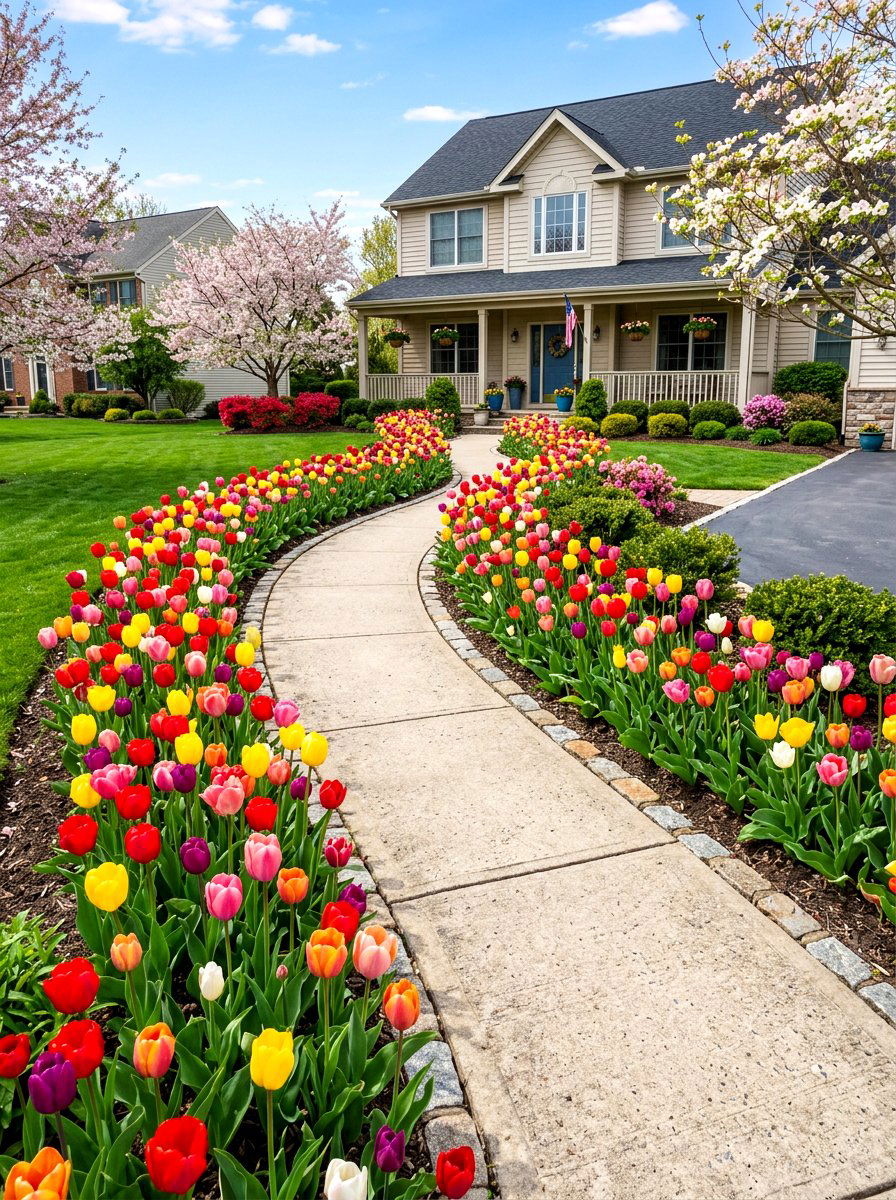
Greeting guests with a colorful path is one of the most rewarding ways to use spring bulbs. A tulip walkway border involves planting rows of flowers on both sides of a sidewalk or garden path. This creates a tunnel of color that guides visitors through your outdoor space. Using medium-height varieties ensures that the flowers are at eye level for small children and pets, making the experience even more immersive. You can use a single color for a formal look or a mix of bright shades for a festive feel. This simple design transformation can turn a functional concrete path into a breathtaking floral journey.
9. Raised Bed Tulips
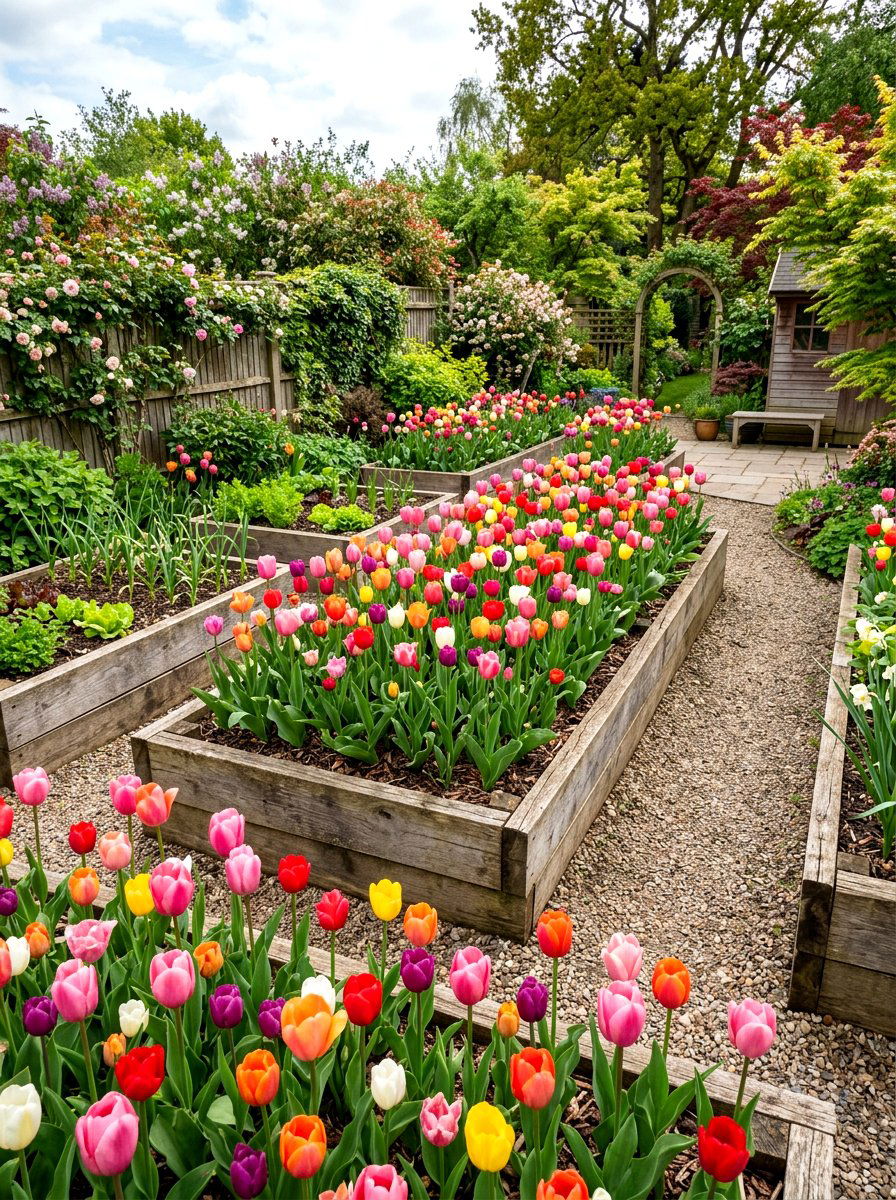
Raised beds offer excellent drainage and controlled soil quality, making them an ideal home for tulip bulbs. Planting in these elevated structures allows you to view the intricate details of the petals without having to bend down. It also helps protect the bulbs from certain ground-level pests. You can fill the entire bed with a single variety for a dense block of color or create a miniature landscape within the frame. Raised beds also make it much easier to dig up and store bulbs once the season is over. This practical and stylish solution is perfect for urban gardeners with limited ground space for planting.
10. Yellow Tulip Garden
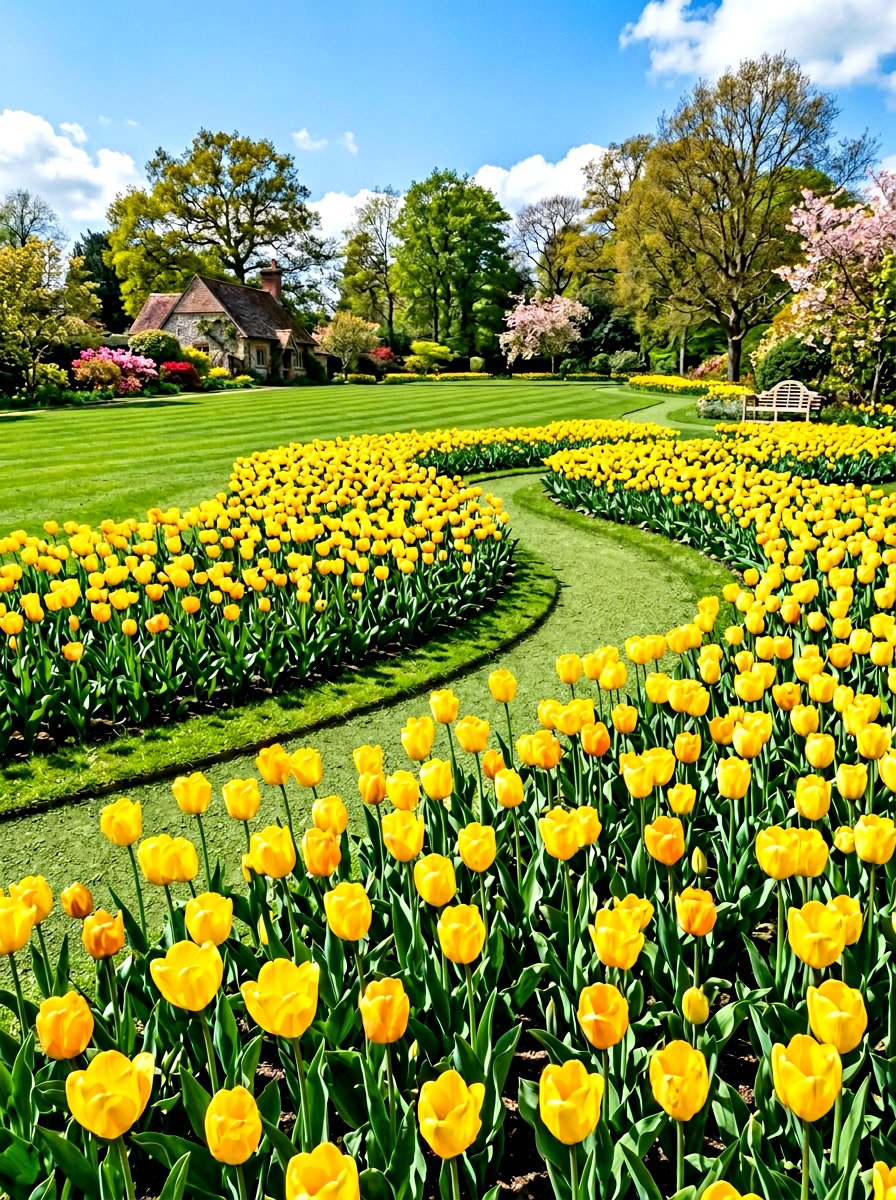
Bring a touch of perpetual sunshine to your yard by focusing on a vibrant yellow tulip garden. Yellow is the color of joy and optimism, making it the perfect choice for the first flowers of the spring season. These bright blooms pop against the brown earth and greening grass, acting as a beacon of warmth. You can mix bright lemon tones with deeper golden hues to create a sense of depth and dimension. Yellow tulips look particularly striking when planted near blue flowers like muscari, as the complementary colors make each other appear even more vivid. It is a cheerful way to start the year.
11. Tulip And Muscari Combination
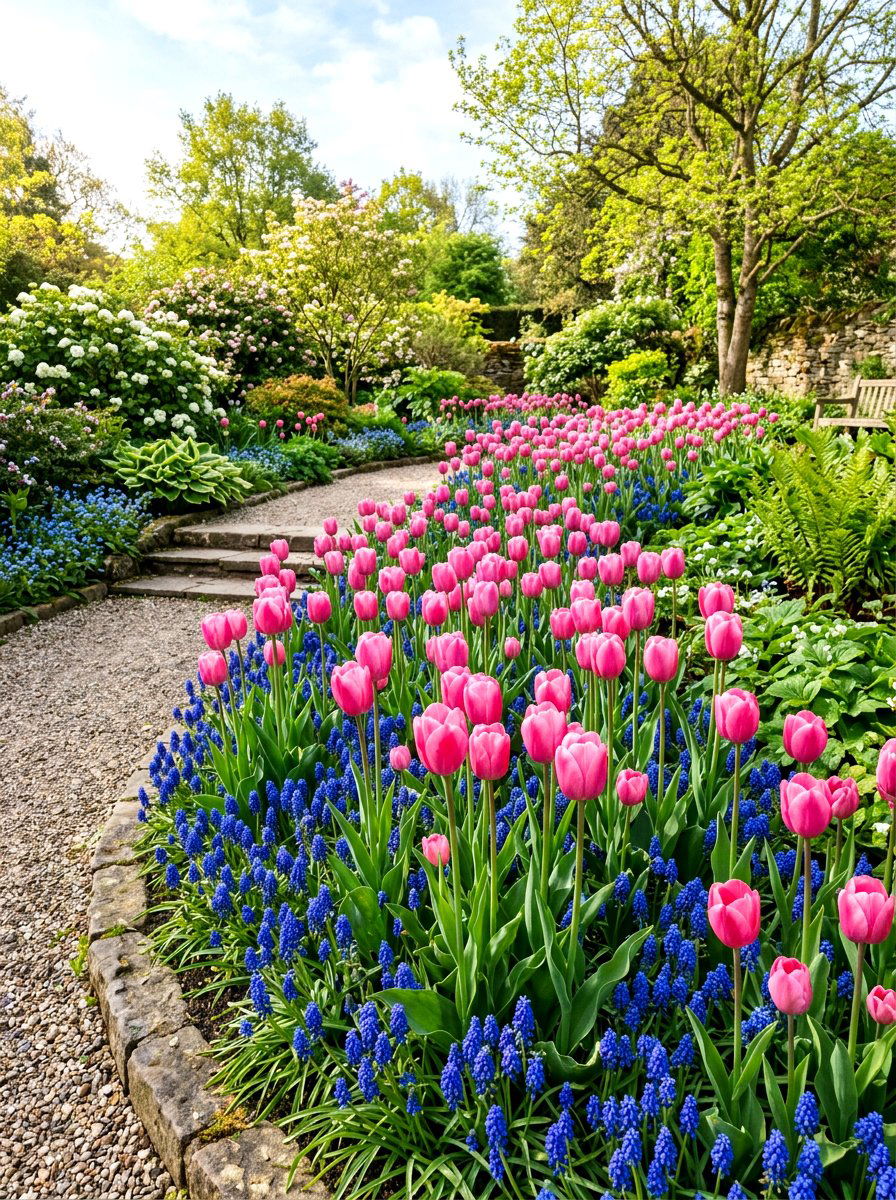
One of the most classic and visually satisfying pairings in the gardening world is tulips combined with muscari, also known as grape hyacinths. The low-growing, bell-shaped blue flowers of the muscari provide a stunning "under-planting" layer that offsets the tall, upright stems of the tulips. This duo creates a multi-dimensional look that fills the entire vertical space of the garden bed. The contrast between the deep blues of the muscari and the bright yellows or pinks of the tulips is breathtaking. This combination is easy to achieve and provides a professional, layered look that works in both large garden beds and small patio containers.
12. Naturalized Tulip Lawn
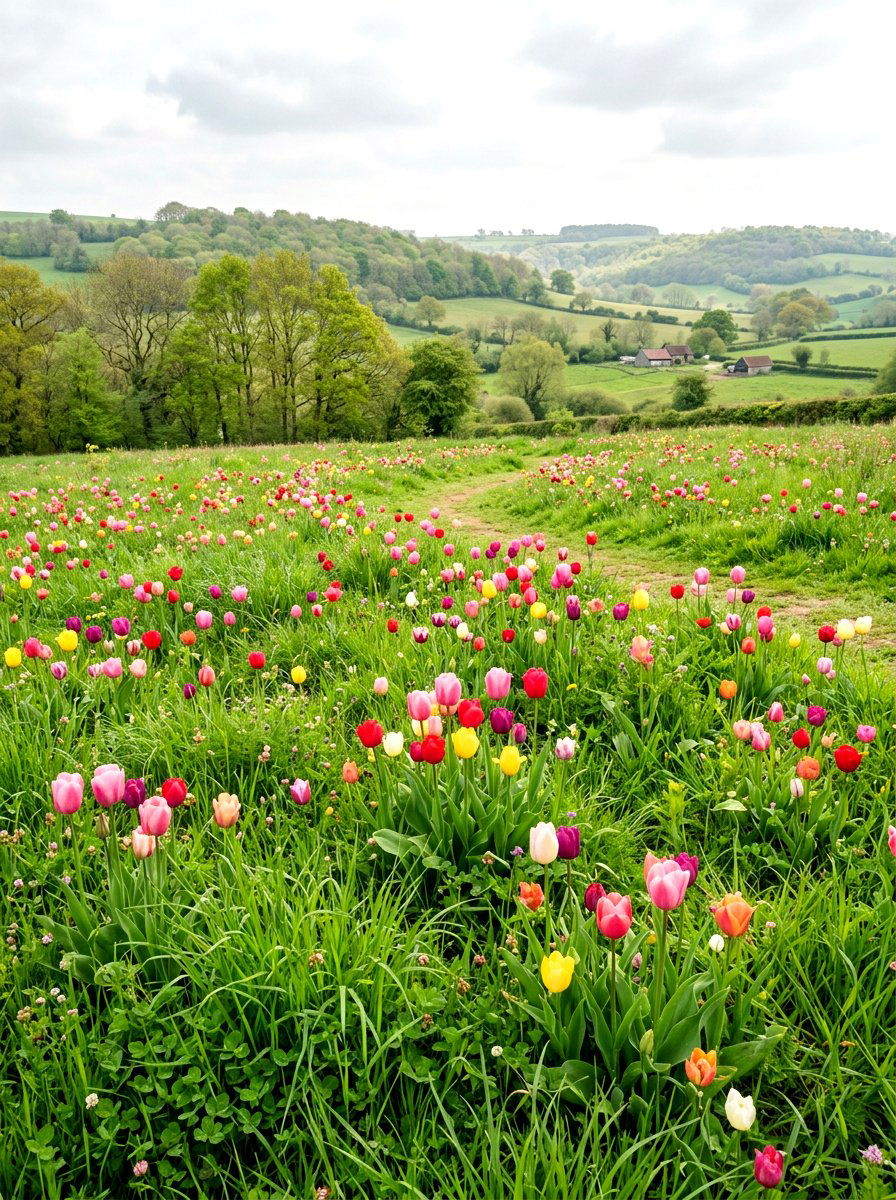
If you prefer a look that feels more like a wild meadow than a manicured garden, consider naturalizing tulips directly into your lawn. This technique involves scattering bulbs randomly across a grassy area and planting them where they fall. In the spring, the flowers will pop up through the grass, creating a whimsical and enchanting scene. It is important to choose "species tulips" for this method, as they are more likely to return and spread year after year. This approach requires less maintenance than traditional beds, as the foliage can simply be mowed over once it has turned yellow and the bulbs are dormant.
13. Purple Tulip Garden
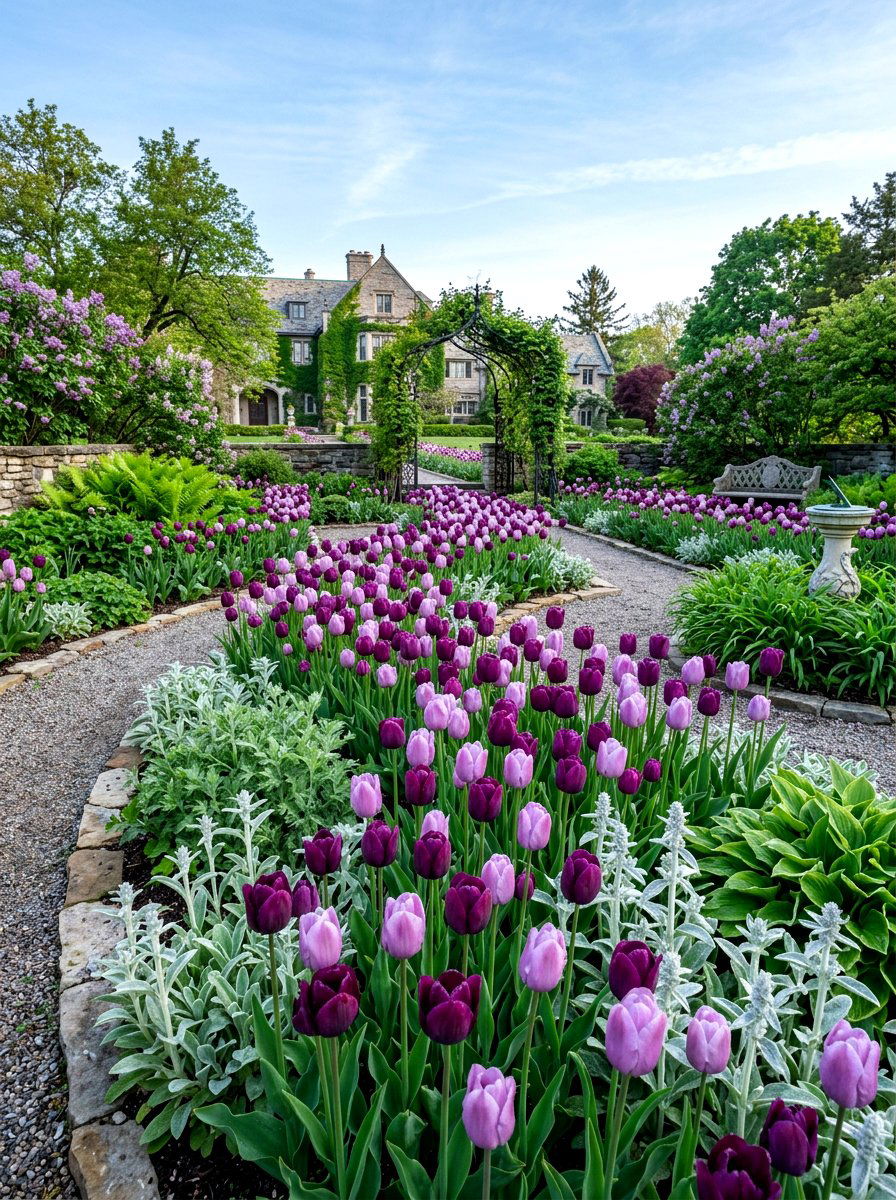
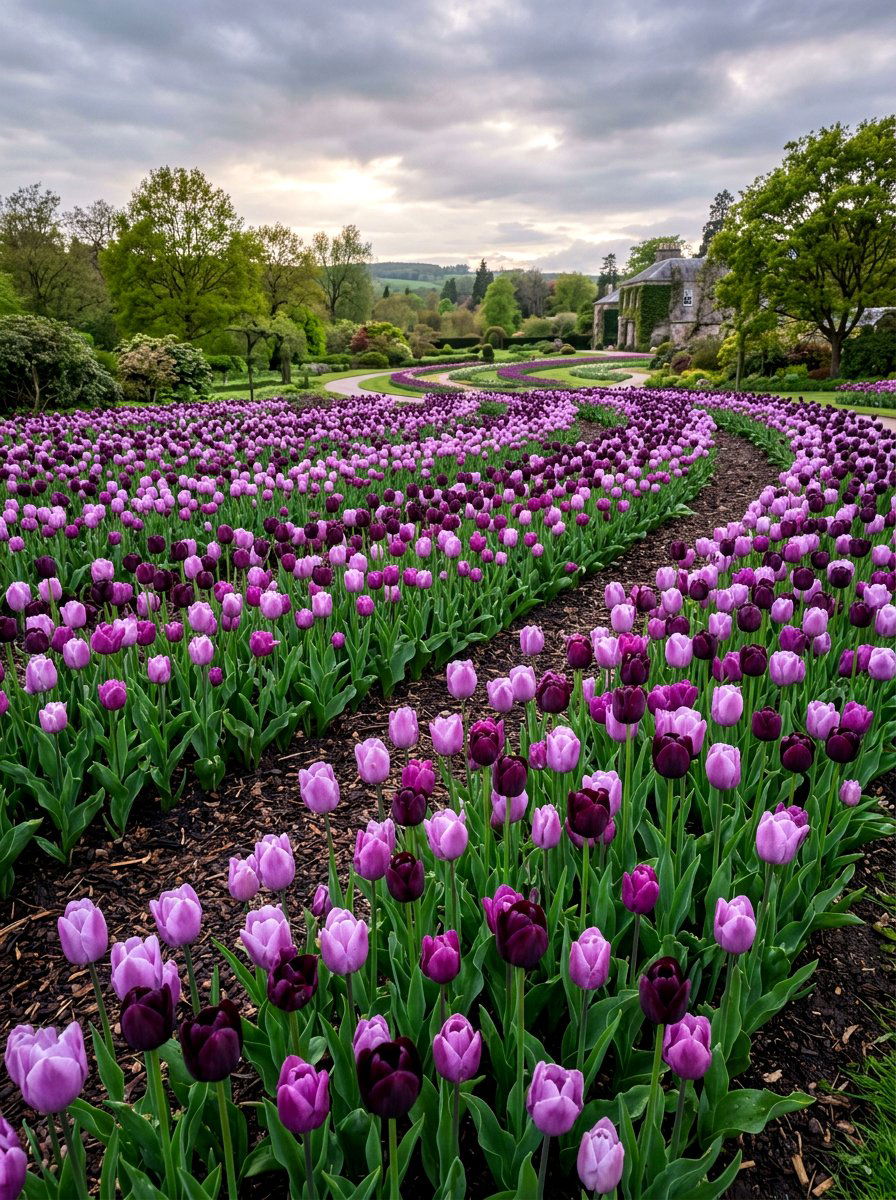
Purple tulips offer a sense of luxury, mystery, and regal elegance that can transform a standard garden into something truly special. From the nearly black "Queen of Night" to the softest lavender shades, purple provides a sophisticated palette for your landscape. These colors look particularly beautiful when planted in large groups, where the different shades can blend and create a rich tapestry of color. Purple also pairs exceptionally well with silver or lime-green foliage, which helps the dark petals stand out. It is a great choice for a quiet backyard sanctuary where you want to promote a sense of calm and peaceful relaxation.
14. Modern Tulip Landscaping
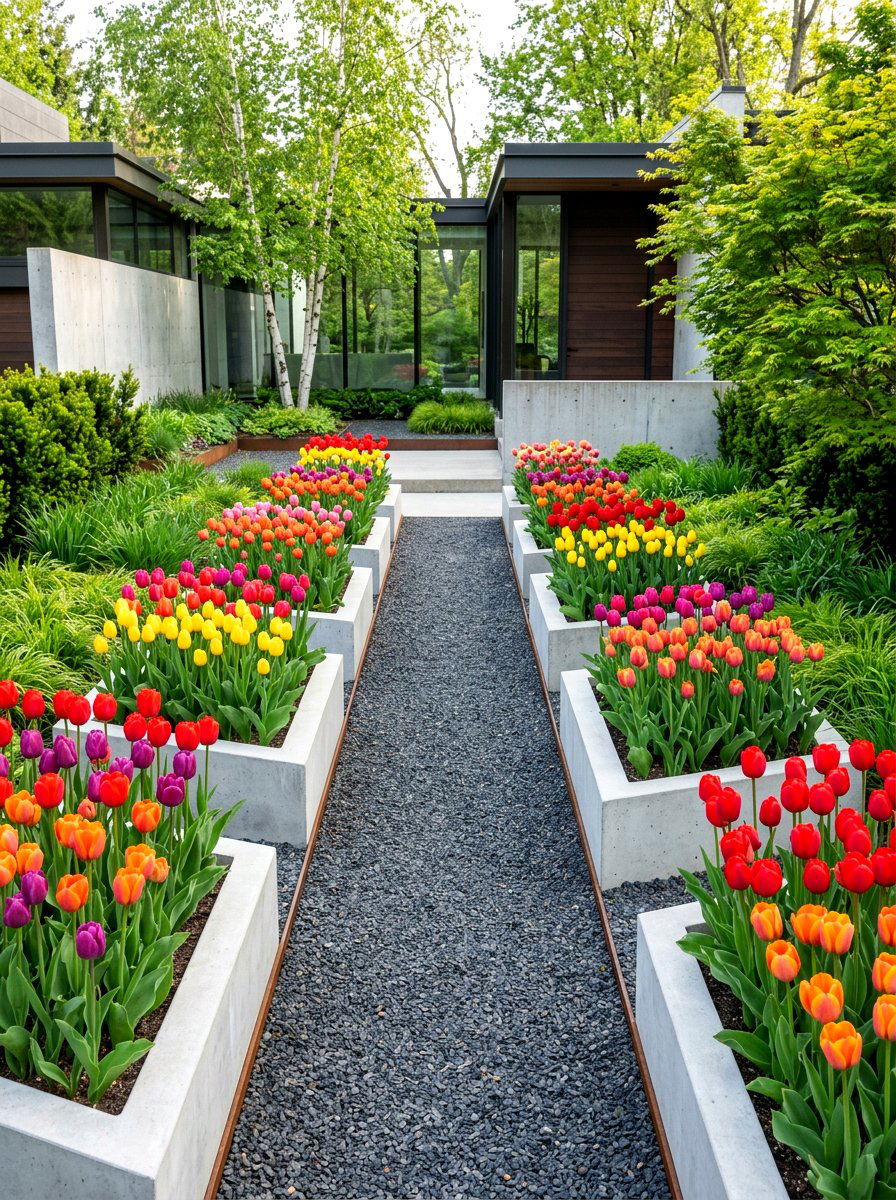
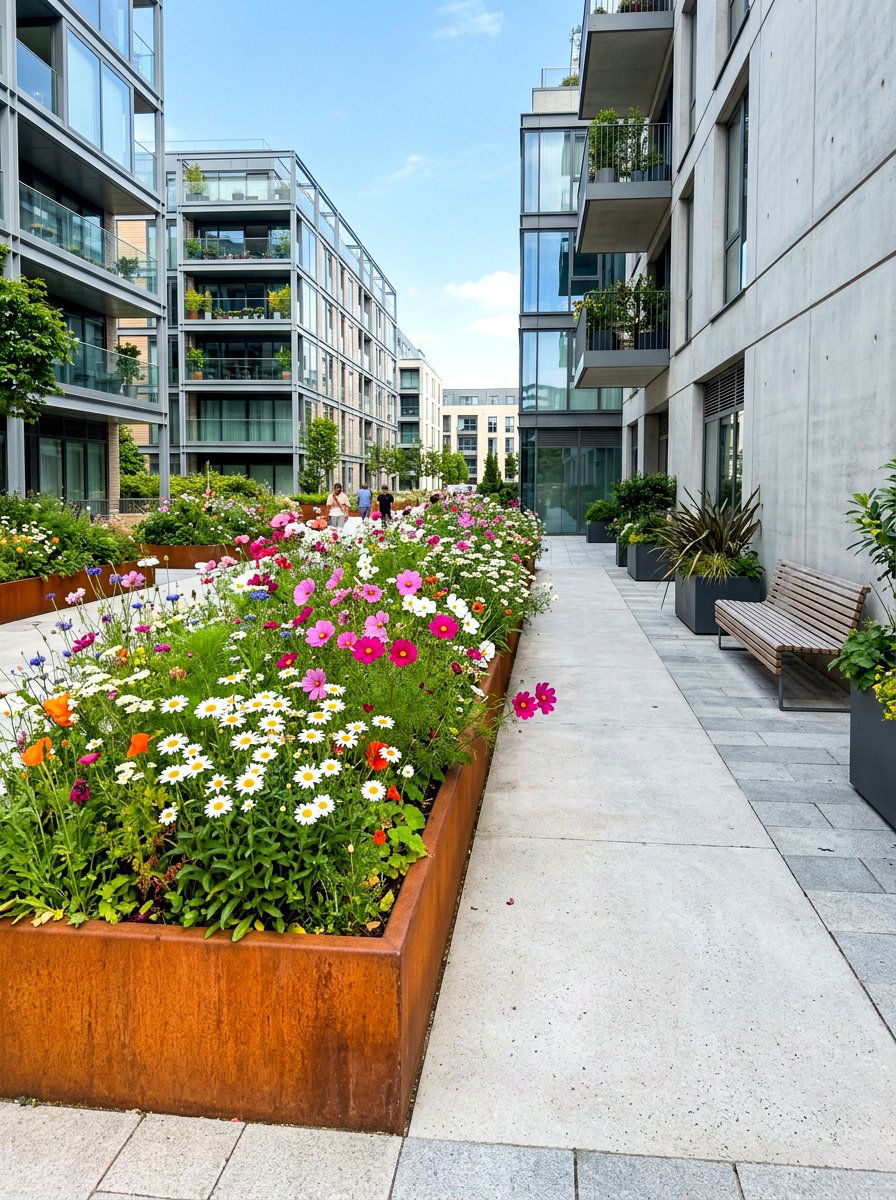
Modern landscaping often focuses on clean lines, geometric shapes, and a limited color palette. To achieve this look with tulips, consider planting them in perfect grids or long, straight rectangular beds. Using a single variety of tulip with a strong, architectural stem will enhance the minimalist feel. Pairing the flowers with modern materials like Corten steel, smooth concrete, or dark basalt gravel creates a striking contrast between nature and industrial design. This approach treats the garden as a piece of living art. It is a sophisticated way to incorporate seasonal color into a contemporary home exterior without cluttering the overall aesthetic of the space.
15. Tulip Garden Path
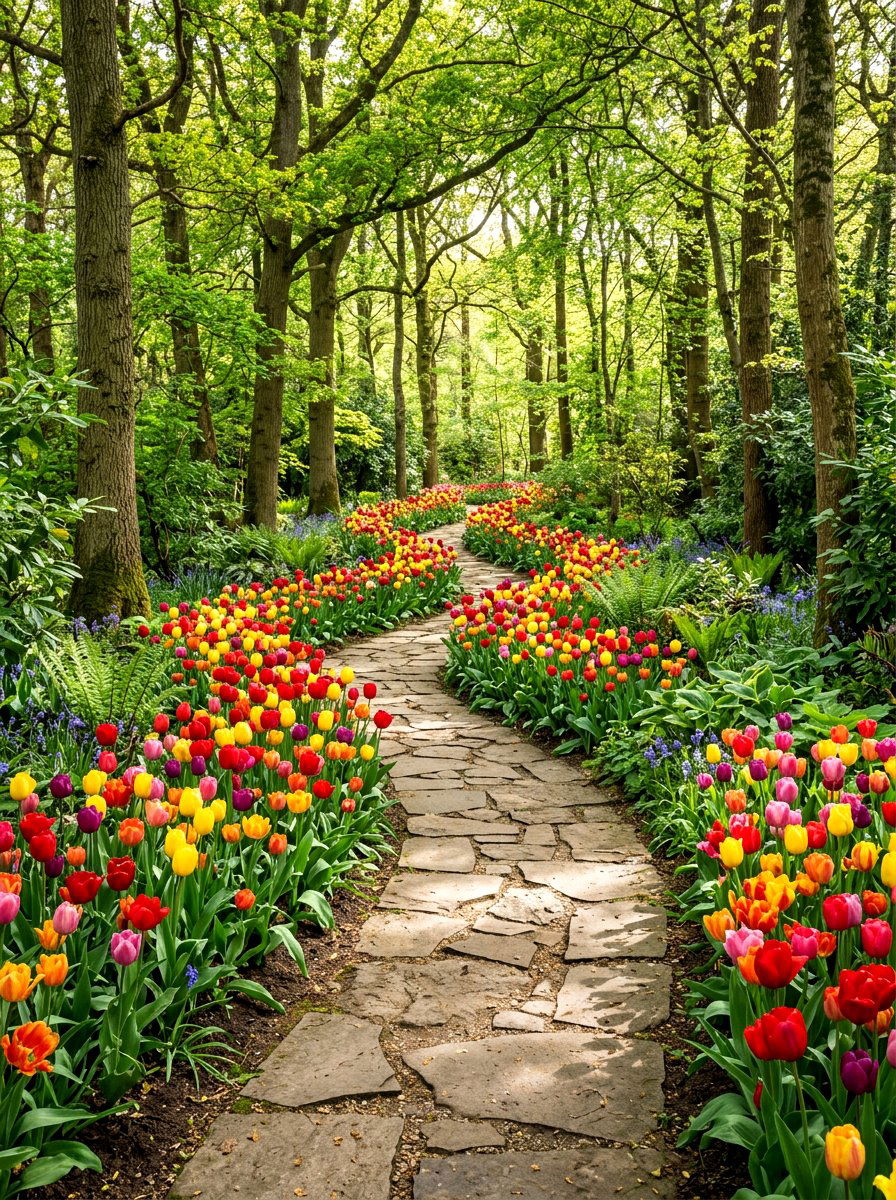
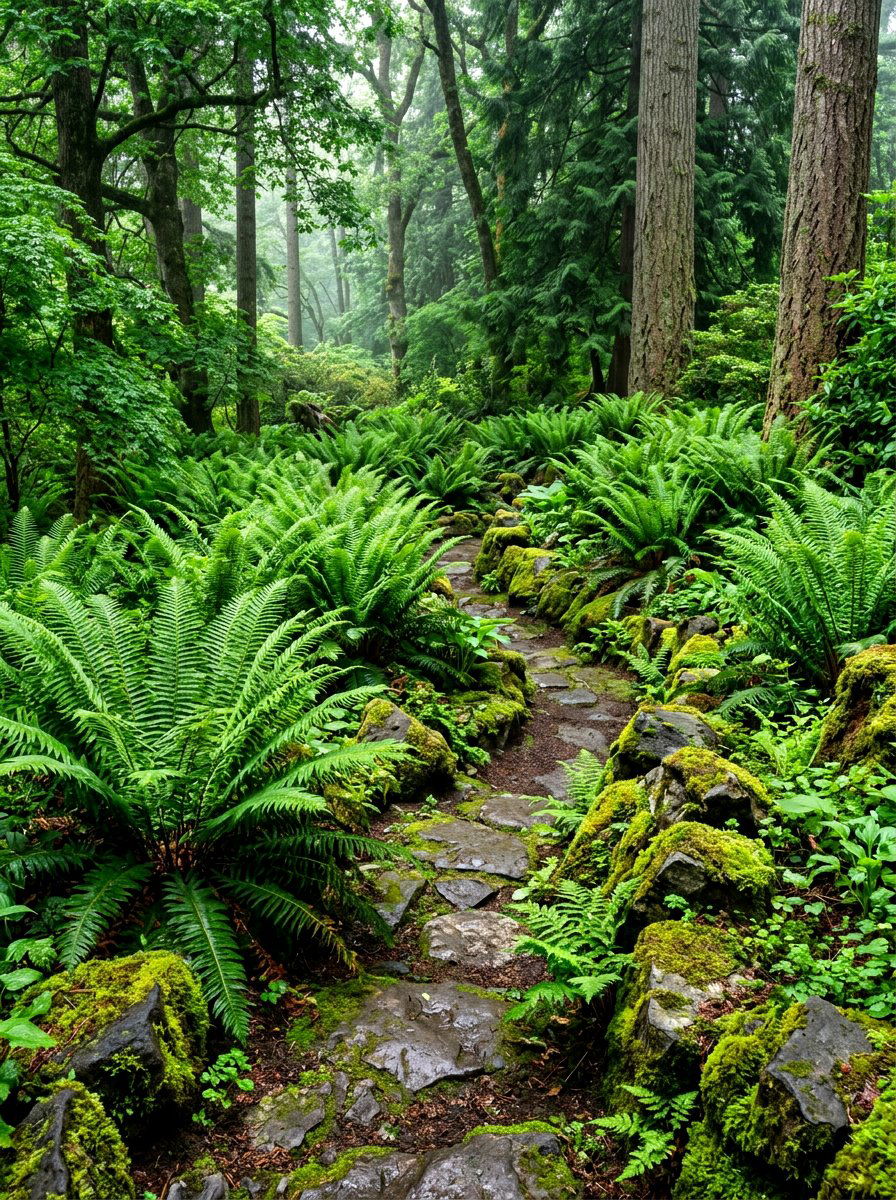
A garden path doesn't have to be just a way to get from point A to point B; it can be a sensory experience. By lining a winding woodland path with clumps of tulips, you create a sense of discovery and magic. As visitors walk through the garden, they encounter different varieties and colors around every corner. Using fragrant tulips in these areas adds another layer to the experience, as the scent drifts on the spring breeze. This design works best when the tulips are mixed with ferns and other shade-loving plants to create a lush, forest-like environment that feels secluded and very private.
16. Multi Colored Tulip Bed
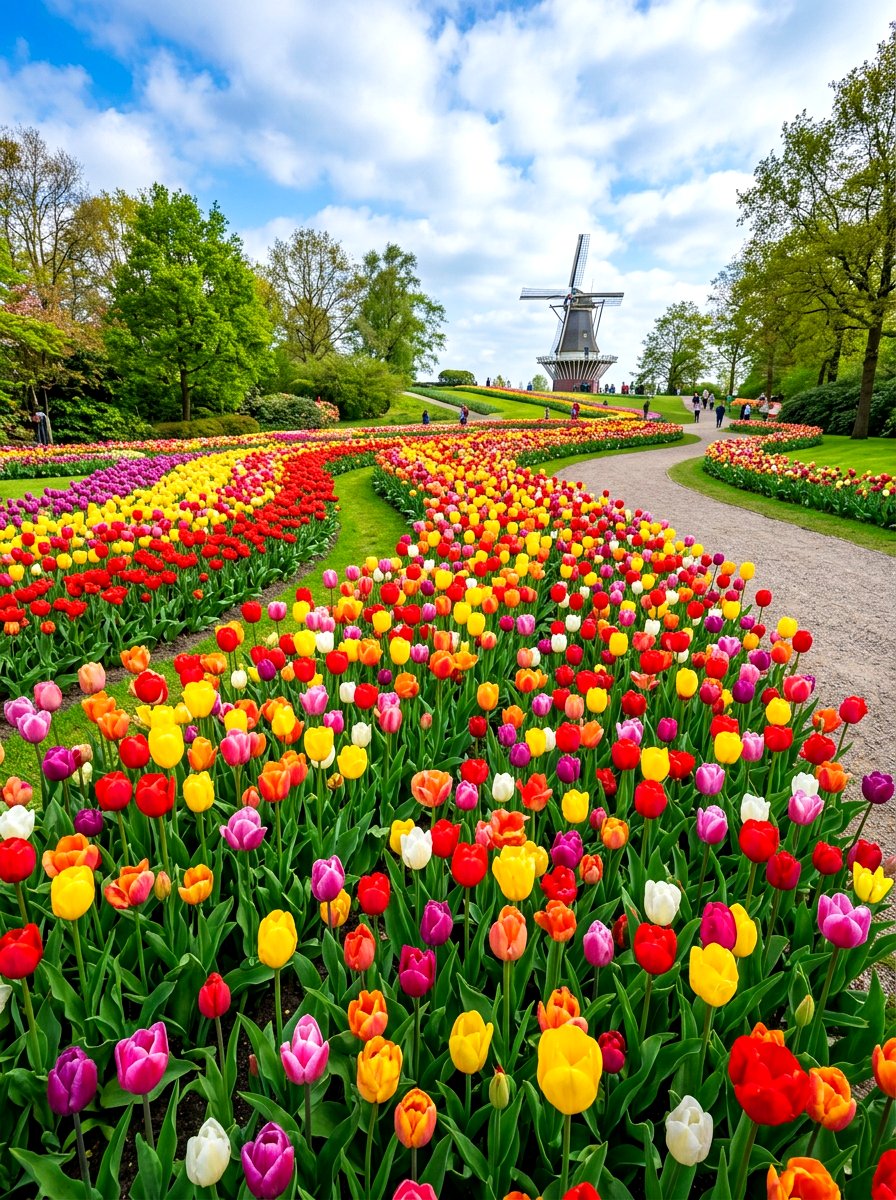
Sometimes more is definitely more, and a multi-colored tulip bed is the perfect example of this philosophy. By mixing every color of the rainbow, you create a festive and high-energy display that celebrates the diversity of nature. This approach is great for families with children, as it creates a playful and engaging environment. To keep the look intentional rather than messy, try to choose varieties that have similar heights and bloom times. This ensures that the entire bed is in full flower at the same time, creating a dense and vibrant "confetti" effect. It is a surefire way to brighten up any gray spring day.
17. Tulip Window Box
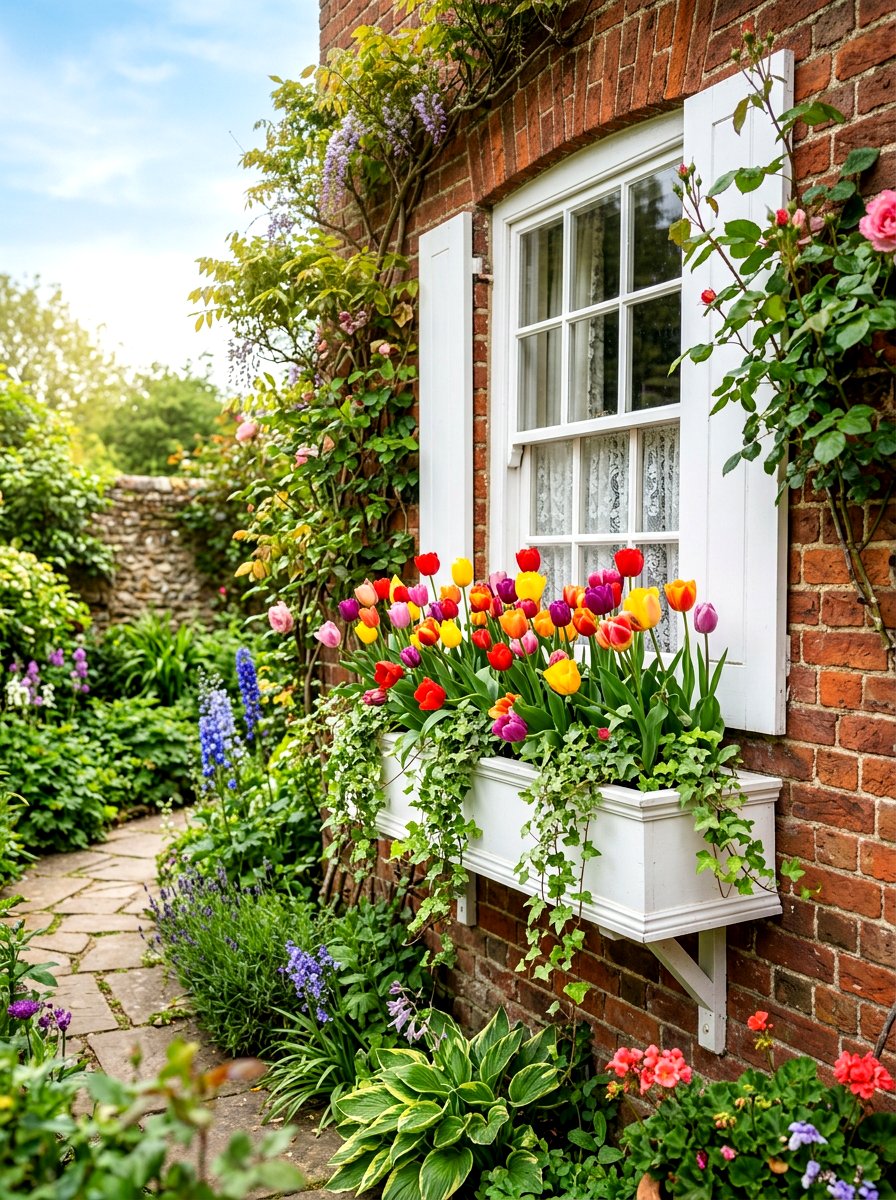
You don 't need a large yard to enjoy the beauty of tulips; a simple window box can provide a stunning display. Planting tulips in window boxes brings the color right to your eye level and allows you to enjoy them from both inside and outside the house. Choose shorter, sturdier varieties like Greigii or Kaufmanniana tulips to ensure they don' t get top-heavy and flop over in the wind. You can also mix in trailing ivy or pansies to fill out the box and add extra texture. A well-designed window box adds instant curb appeal and makes your home feel welcoming and full of life.
18. Formal Tulip Parterre
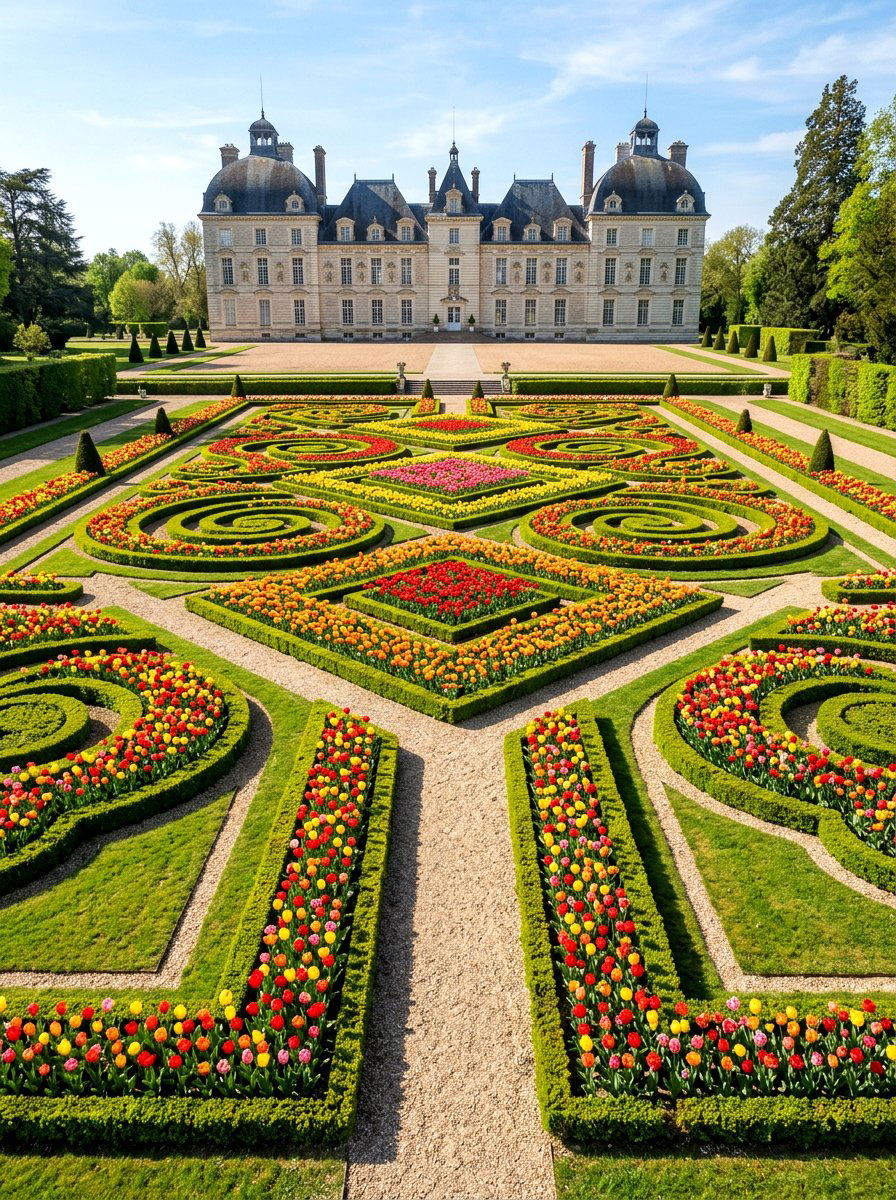
Inspired by the grand gardens of Europe, a formal parterre involves creating intricate patterns and shapes using low hedges and colorful flowers. Tulips are the perfect choice for filling these geometric compartments with seasonal color. You can use different colors to highlight the patterns, such as a star shape of red tulips surrounded by a border of white ones. This design requires careful planning and maintenance, but the result is a stunning and prestigious landscape that makes a huge statement. It is an ideal choice for the front of a traditional or classic style home where symmetry and order are highly valued.
19. Orange Tulip Display
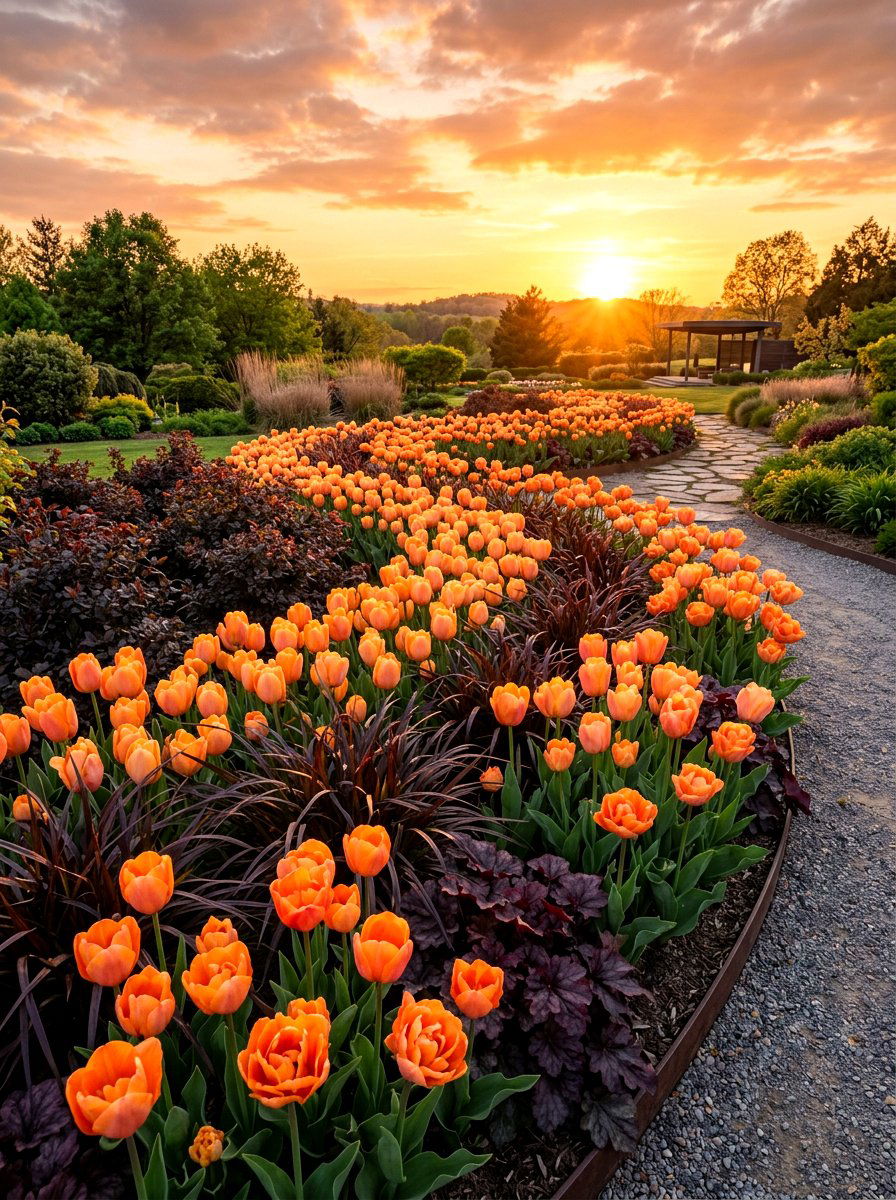
Orange is a vibrant and energetic color that can sometimes be overlooked in the garden, but an orange tulip display is truly spectacular. Ranging from soft apricot to bold tangerine, these flowers bring a sense of warmth and excitement to the spring landscape. Orange tulips look particularly striking during the "golden hour" of sunset, when the low light makes the petals appear to glow from within. They pair beautifully with deep purple or dark maroon flowers, creating a high-contrast look that is modern and sophisticated. It is a bold choice that demonstrates a confident and creative approach to your home garden design.
20. Tulip And Daffodil Garden
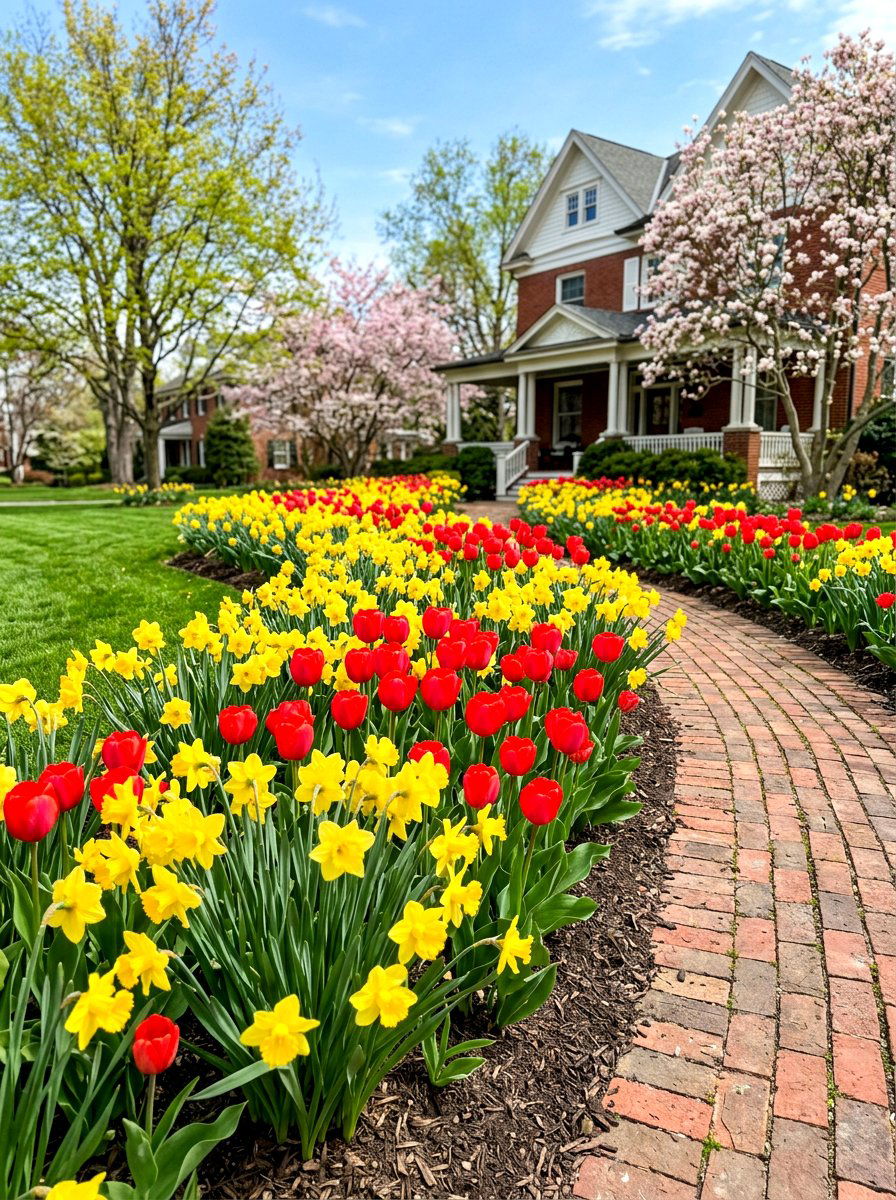
If you want a garden that feels like the ultimate celebration of spring, you must combine tulips with daffodils. These two flowers are the undisputed icons of the season and they complement each other perfectly. Daffodils often bloom slightly earlier, providing a "base" of yellow or white color before the tulips take over. When their seasons overlap, the combination of different shapes and heights creates a full and rich landscape. You can plant them in alternating rows for a structured look or mix them together for a more naturalized, meadow-like feel. This classic pairing is a reliable way to ensure a long-lasting spring show.
21. Parrot Tulip Collection
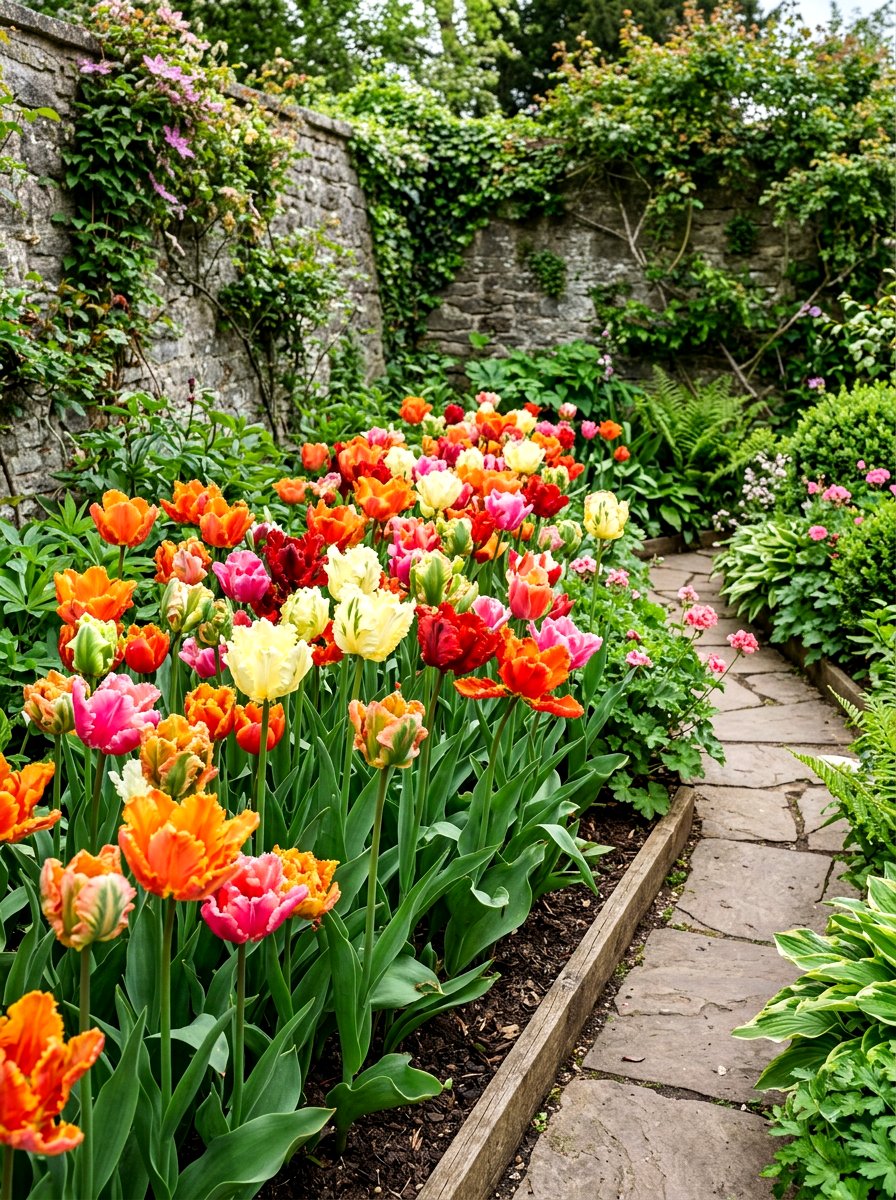
For the gardener who loves texture and drama, a parrot tulip collection is a must-have. These unique varieties feature twisted, ruffled, and fringed petals that look more like exotic bird feathers than standard flowers. They often come in multi-colored patterns with streaks of green, yellow, and red. Planting a dedicated bed of parrot tulips allows you to appreciate their artistic and unusual forms. Because their heads can be quite heavy, it is a good idea to plant them in a sheltered spot away from strong winds. They are the true showstoppers of the tulip world and will always start a conversation with guests.
22. Double Late Tulip Garden
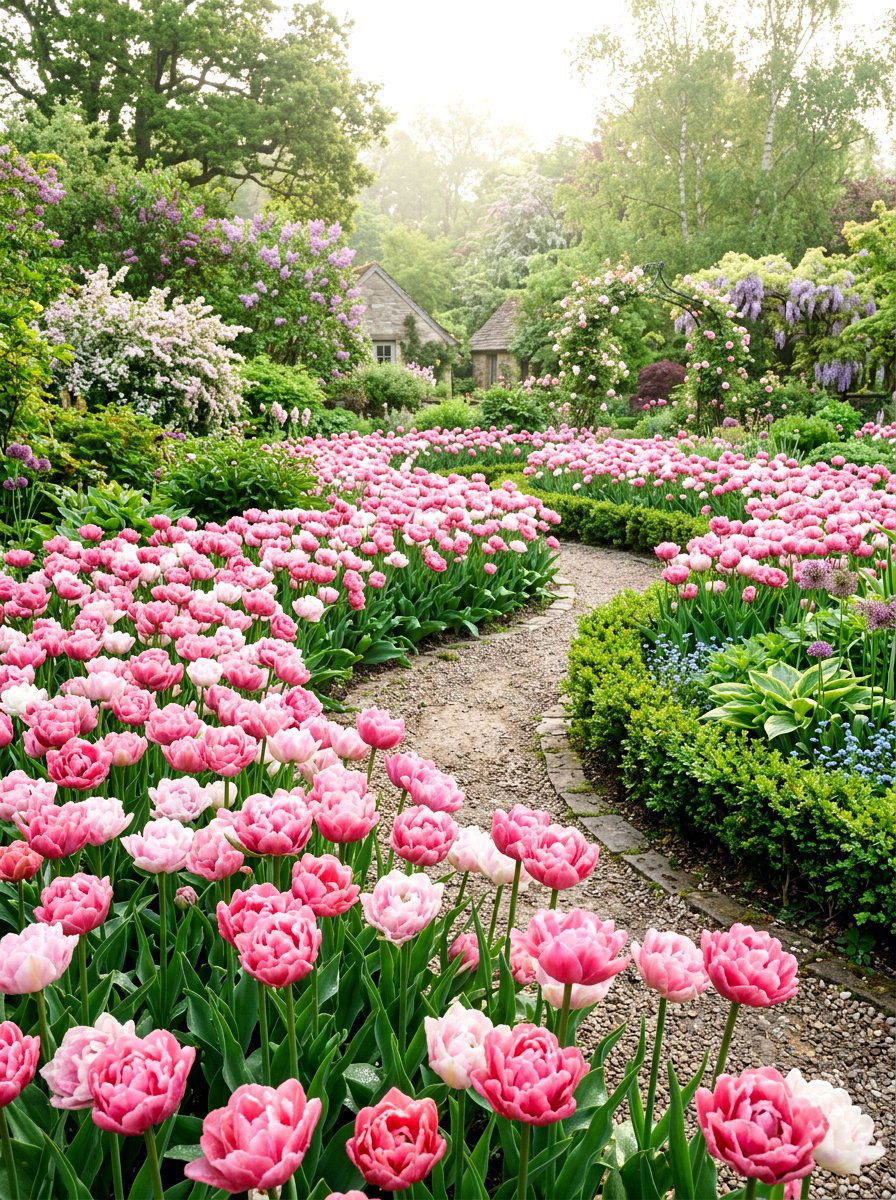
Double late tulips are often mistaken for peonies because of their incredibly full, multi-layered petals. These flowers bloom toward the end of the spring season, providing a final, grand finale for your bulb display. They have a romantic and lush appearance that works beautifully in formal gardens or as cut flowers for indoor arrangements. Because they bloom later, they are great for extending your garden's color into the early summer months. Planting them in dense groups ensures that the heavy blooms support each other. Their soft, pastel colors and massive flower heads make them a favorite for anyone who loves a high-impact floral look.
23. Black Tulip Landscape
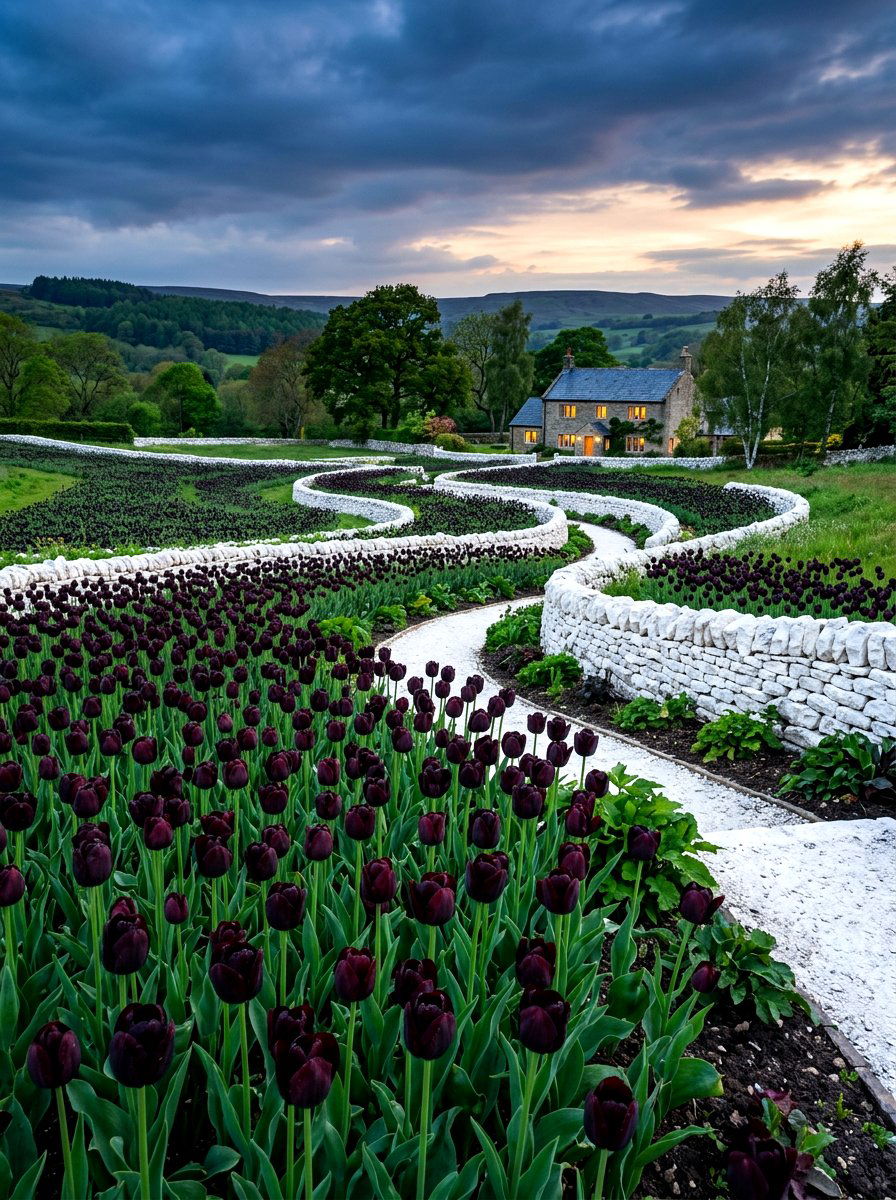
Creating a sense of drama and mystery is easy with a black tulip landscape. While no flower is truly pitch black, varieties like "Queen of Night" produce deep, velvety maroon-purple petals that appear black in certain lighting. This dark palette creates a stunning contrast when planted against light-colored stone walls or light green foliage. For a truly high-fashion look, try mixing "black" tulips with pristine white ones for a stark, monochromatic theme. This sophisticated approach is perfect for urban gardens or modern homes where you want to create a focal point that is both unusual and incredibly elegant. It is a very daring design choice.
24. Tulip Rock Garden
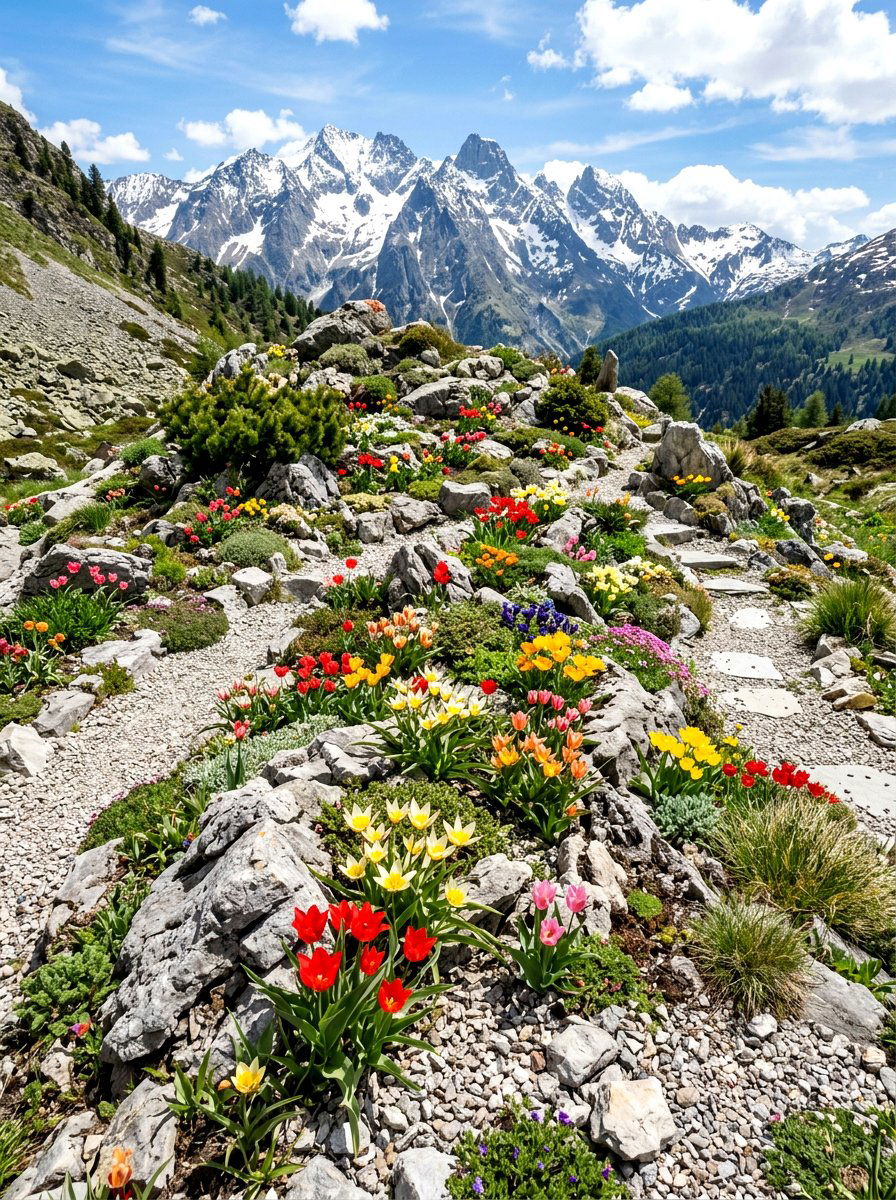
Rock gardens offer a unique environment where small, hardy plants can thrive among stones and gravel. Many smaller "botanical" or "species" tulips are perfectly suited for this type of setting. These varieties are often shorter and more rugged than their larger hybrids, making them ideal for tucking into crevices or planting along stony paths. The contrast between the delicate, colorful petals and the hard, gray texture of the rocks creates a beautiful natural balance. Rock garden tulips are also more likely to return year after year, as they thrive in the well-drained conditions that rocky soil provides. It is a low-maintenance way to add color.
25. Pastel Tulip Arrangement
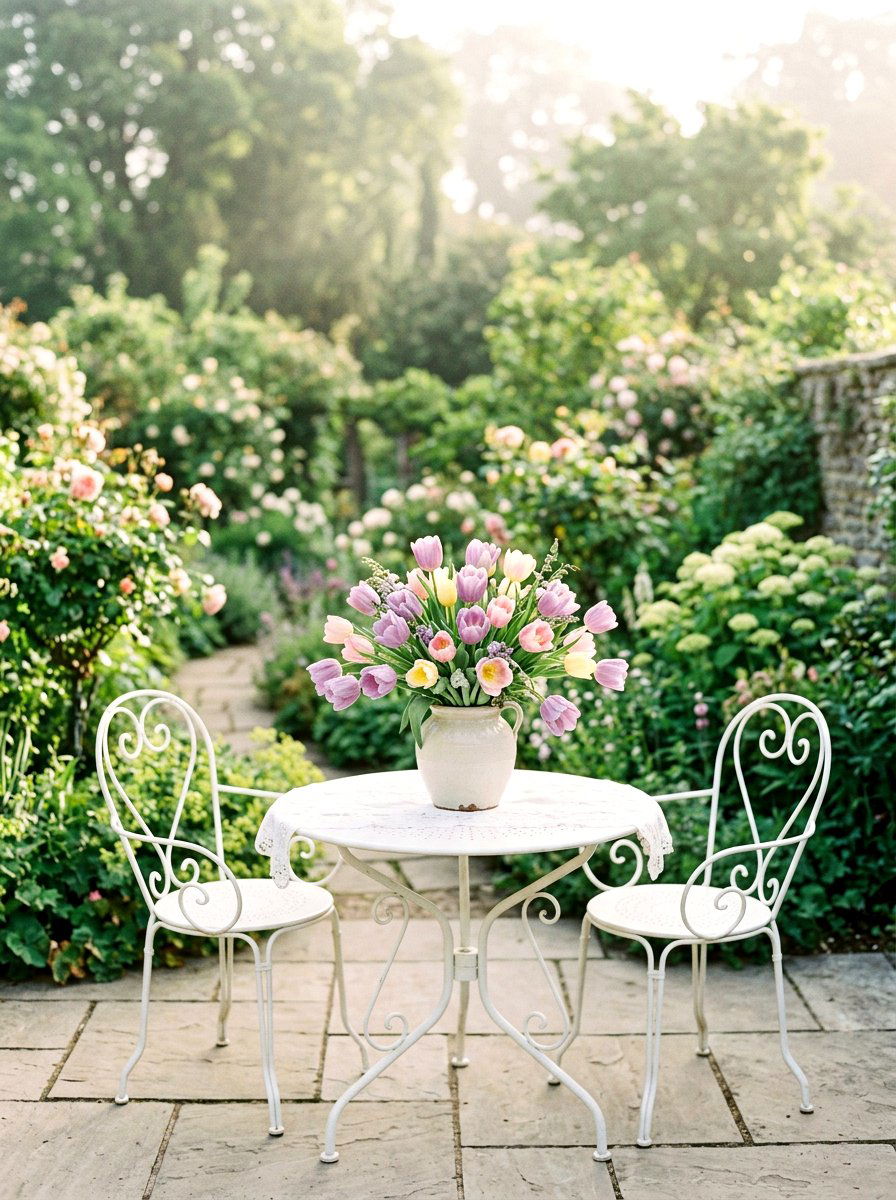
A pastel tulip arrangement brings a soft, dreamlike quality to your outdoor space. By mixing shades of pale lavender, soft pink, buttercream yellow, and minty white, you create a garden that feels like a watercolor painting. This color scheme is incredibly soothing and is perfect for a backyard patio or a quiet reading nook. Pastel colors also have the advantage of making small spaces feel larger and more open. These gentle hues blend seamlessly together, so you don't have to worry about clashing colors. It is a foolproof way to create a beautiful and harmonious garden that feels elegant and very light.
26. Wild Tulip Garden
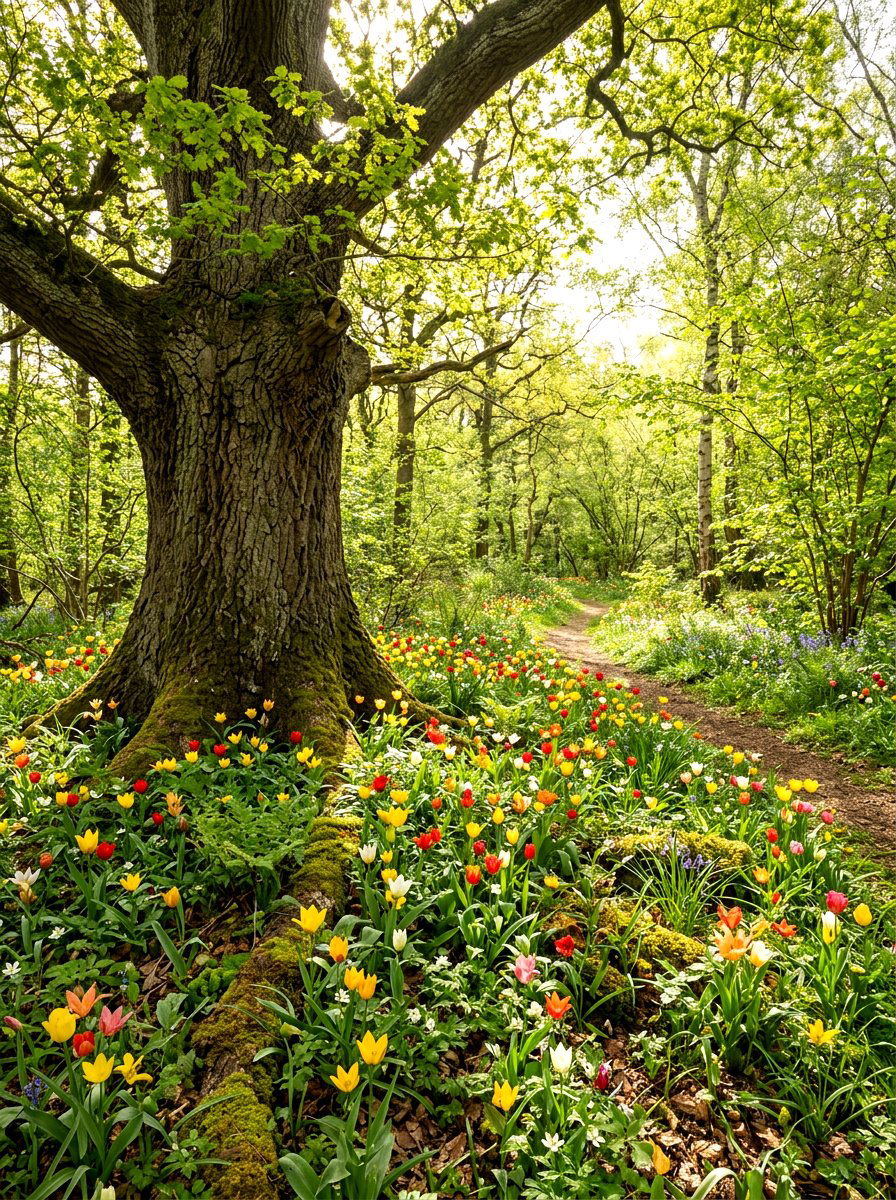
Embrace the origins of these beautiful flowers by creating a wild tulip garden featuring botanical species. Unlike the large, hybridized tulips we often see, wild species tulips are smaller, more delicate, and often have interesting foliage. They have a natural charm that works perfectly in woodland settings or at the base of large trees. These tulips are incredibly hardy and are much better at perennializing, meaning they will come back and multiply every year without much effort from you. A wild tulip garden feels authentic and connected to nature, offering a quiet beauty that is different from the loud colors of traditional garden beds.
27. Tiered Tulip Planters
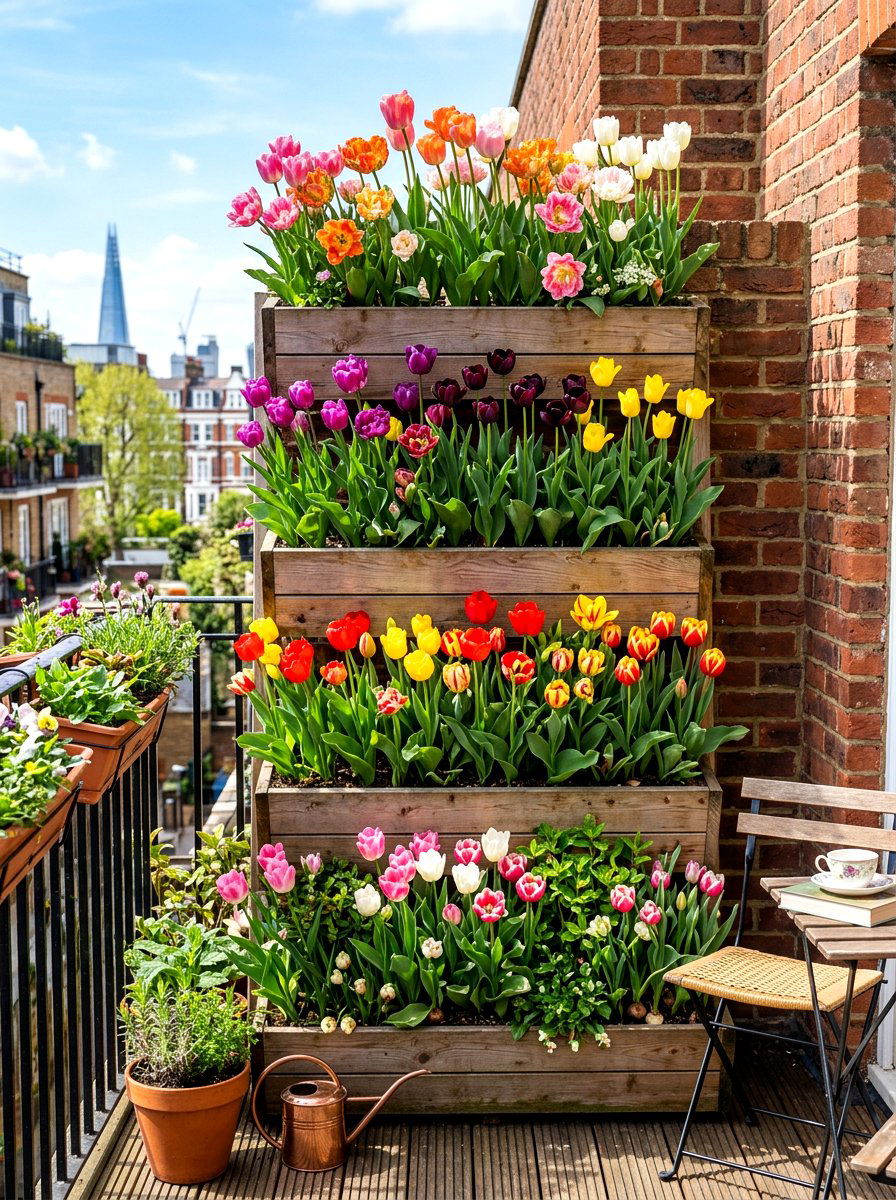
Using vertical space is a smart way to maximize color in a small garden or on a balcony. Tiered tulip planters involve using a series of stacked pots or a purpose-built tiered stand to display your flowers. You can plant a different color on each level to create a "rainbow tower" effect, or use the same variety throughout for a more cohesive look. This method ensures that every flower is visible and creates a massive wall of color in a very small footprint. Tiered planters are also easy to water and maintain, making them a practical choice for busy homeowners who still want a beautiful spring display.
28. Tulip Garden Edging
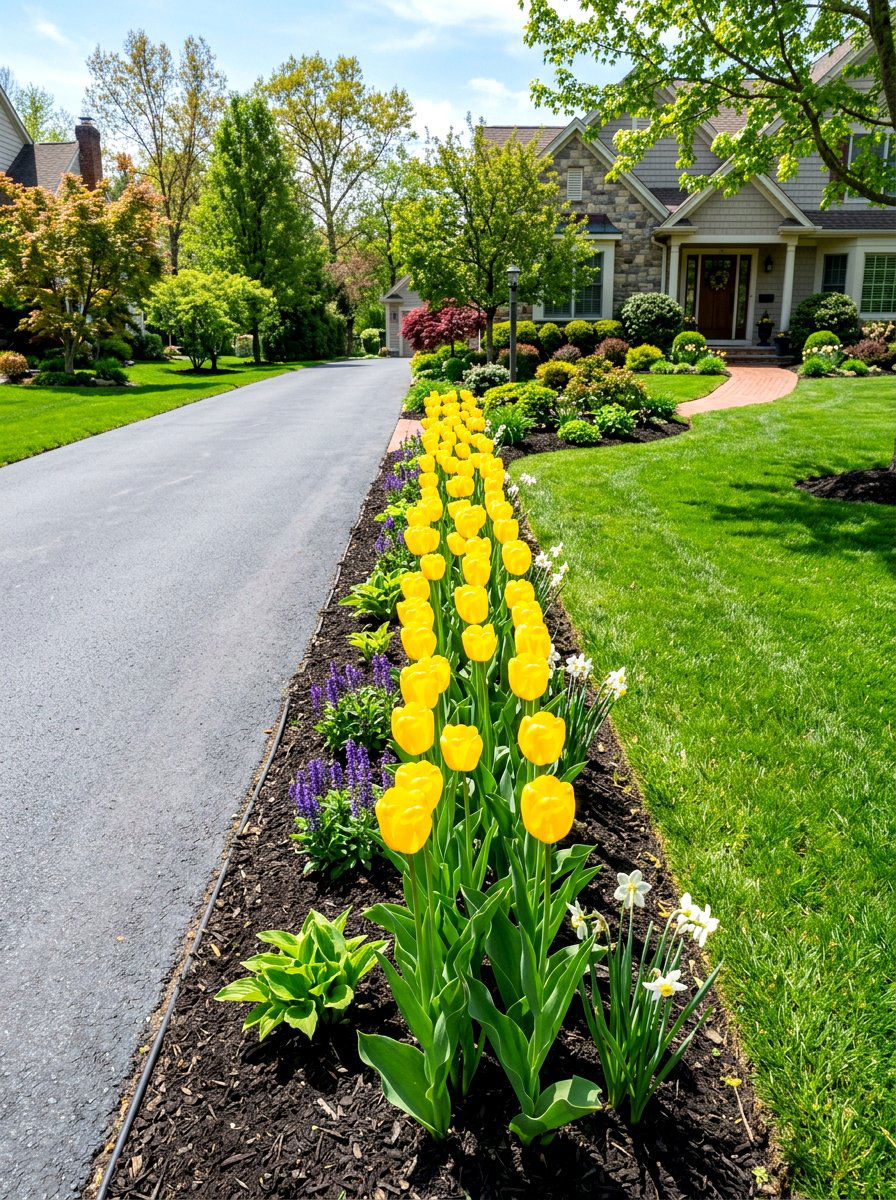
Using tulips as an edging material is a great way to define the borders of your lawn or driveway. By planting a single, straight row of uniform tulips, you create a clean and crisp line that separates different areas of your yard. This adds a sense of order and intentionality to your landscaping. For the best effect, choose a variety with a sturdy stem and a consistent height. Red or yellow tulips are popular for edging because they are highly visible from a distance, but white can create a more subtle and elegant border. It is a simple yet effective way to give your property a more polished look.
29. Shade Garden Tulips
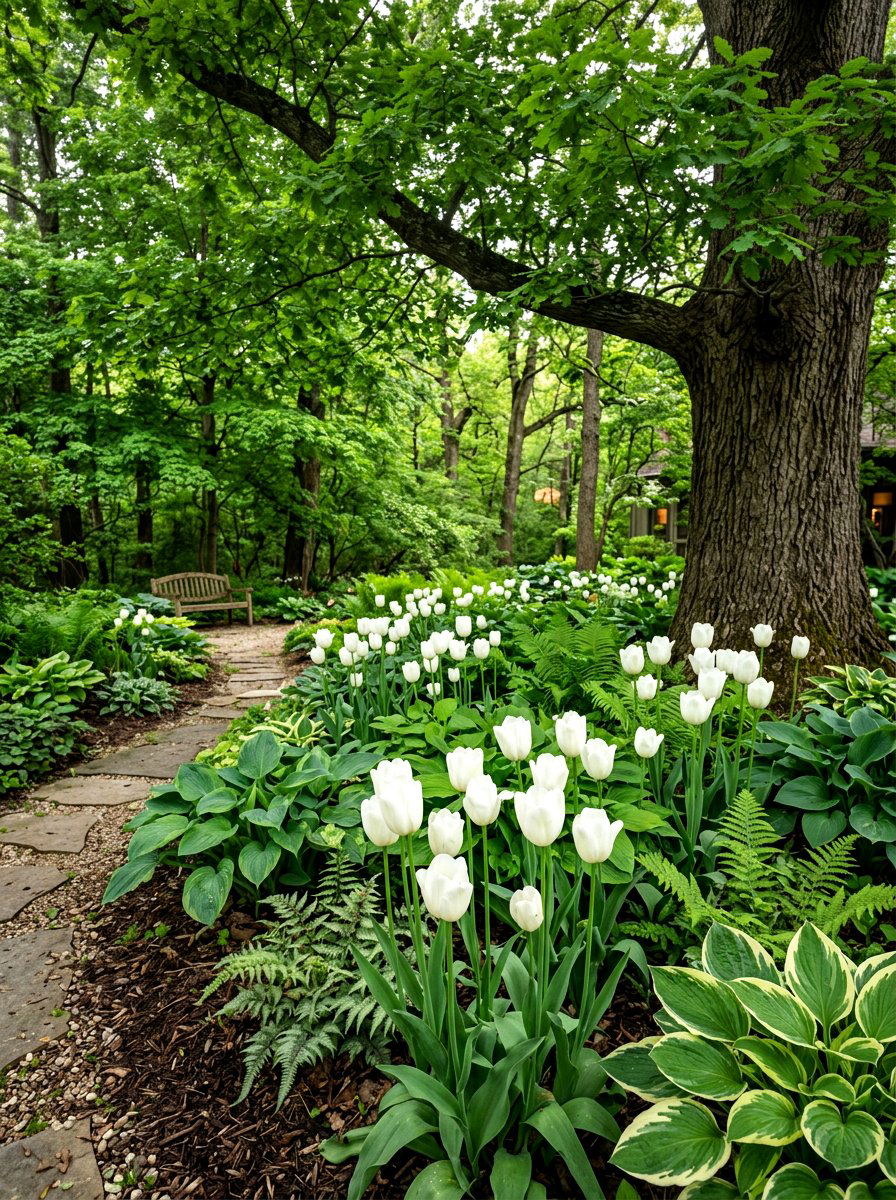
While most tulips love the full sun, there are several varieties that can handle dappled shade, especially in warmer climates. Planting tulips under deciduous trees is a clever strategy, as the bulbs will bloom in the early spring before the trees have fully leafed out. This allows the flowers to get the light they need before the area becomes too dark. Using light-colored tulips, such as white, soft yellow, or pale pink, will help brighten up these shaded corners of your garden. It is a great way to utilize every inch of your yard and bring unexpected color to areas that are usually just green.
30. Large Scale Tulip Field
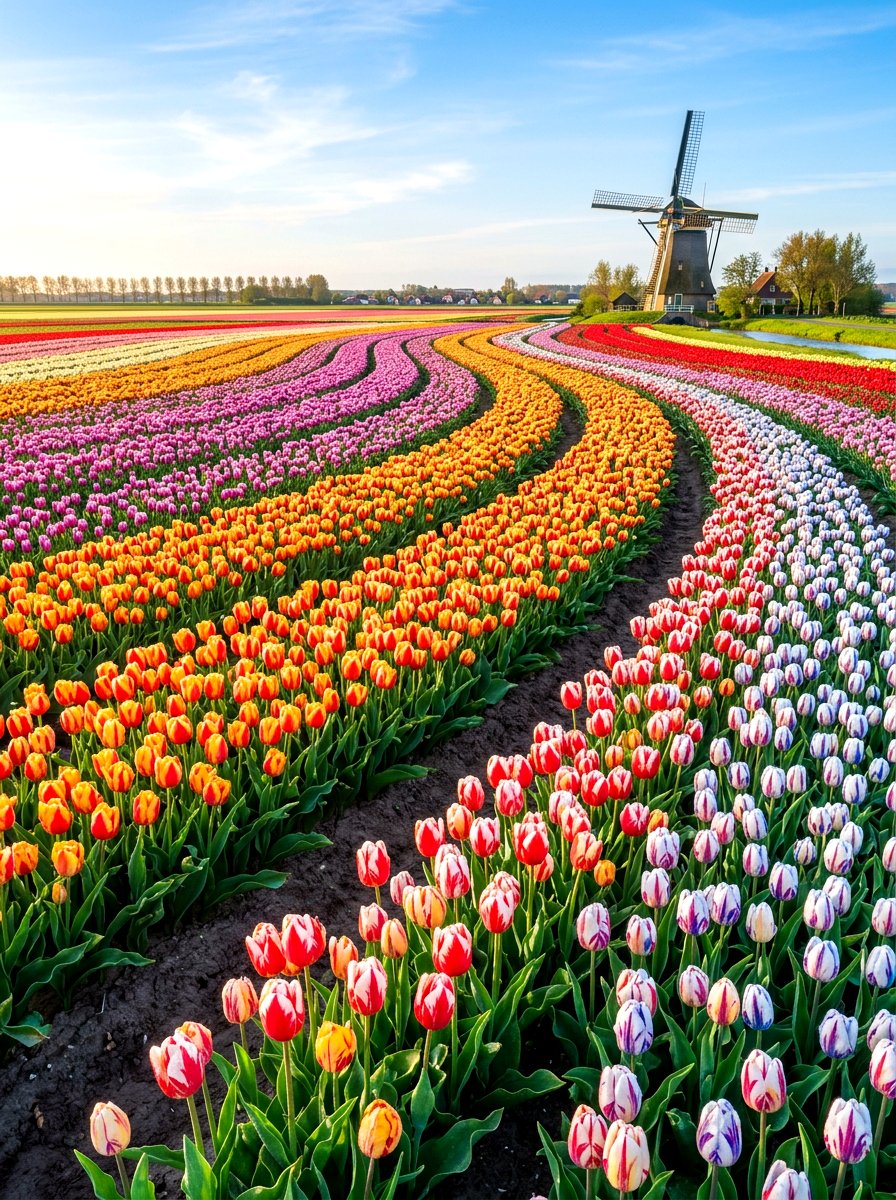
If you are lucky enough to have a large property, why not go all out with a large-scale tulip field? This involves planting thousands of bulbs across a wide, open area to mimic the famous tulip fields of the Netherlands. You can plant them in long, sweeping rows of different colors to create a stunning striped effect that can be seen from far away. This type of project requires a significant investment of time and effort in the fall, but the reward is a world-class floral display that will stop traffic every spring. It is the ultimate way to celebrate the beauty and diversity of the iconic tulip.
Conclusion:
Designing a tulip garden is one of the most rewarding projects a homeowner can undertake. These versatile bulbs offer a nearly endless array of possibilities, from the structured elegance of formal parterres to the whimsical charm of naturalized meadows. By carefully considering color palettes, bloom times, and planting techniques like the "lasagna" method, you can create a spring display that is both professional and deeply personal. Tulips are more than just flowers; they are symbols of renewal and joy that transform our outdoor spaces after the long winter months. Whether you have a sprawling estate or a small balcony, there is a tulip idea that will work for you. Happy planting and enjoy your spring.

Related posts: