Purple flowers bring a rare sense of royalty and tranquility to any outdoor space. This color remains a favorite for gardeners because it bridges the gap between vibrant energy and soothing calm. From the deep plum of a late-summer dahlia to the airy lavender of a spring border, these hues create a sophisticated atmosphere. Using purple in your landscaping adds immediate depth and visual interest that other colors often lack. It pairs beautifully with silver foliage or bright yellow accents to make a bold statement. Whether you prefer a modern minimalist look or a wild cottage garden style, purple blooms offer endless versatility for your home landscape and provide stunning beauty.
1. Lavender border landscape
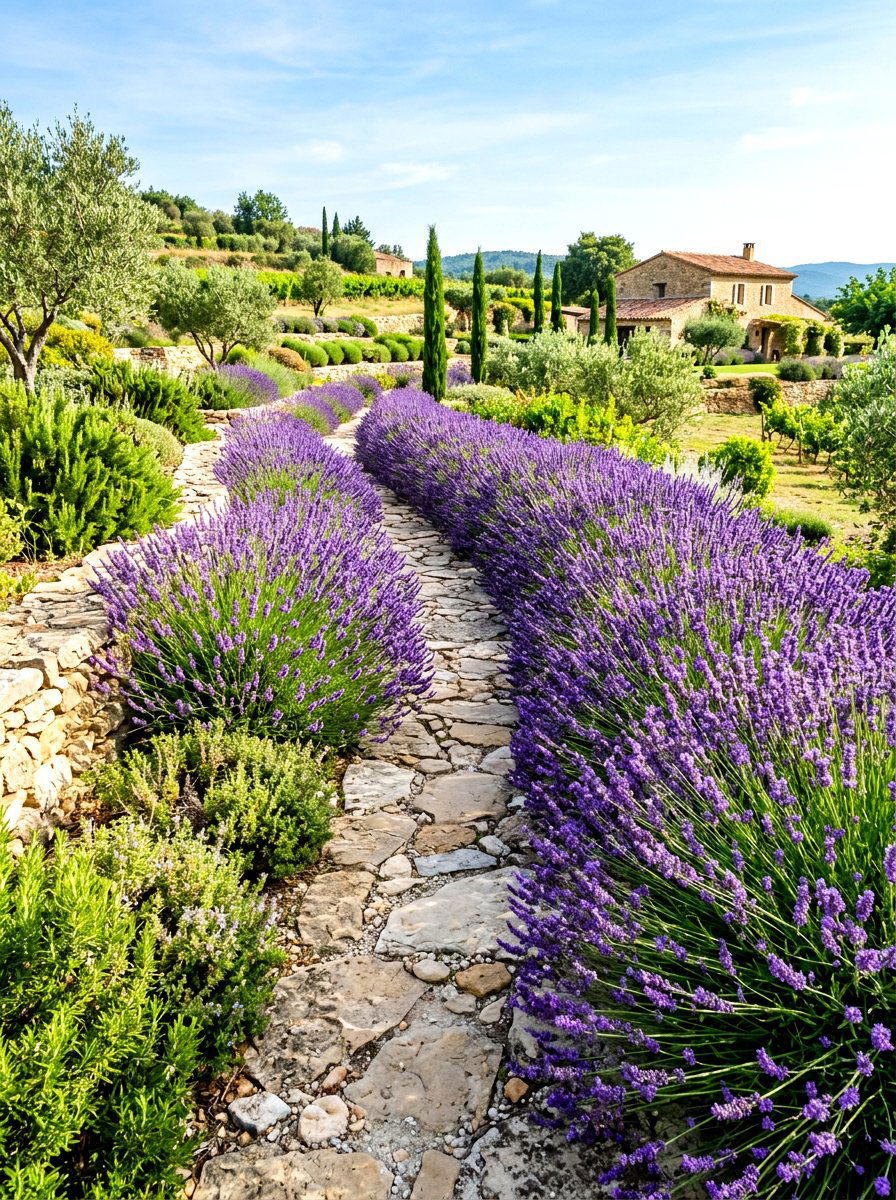
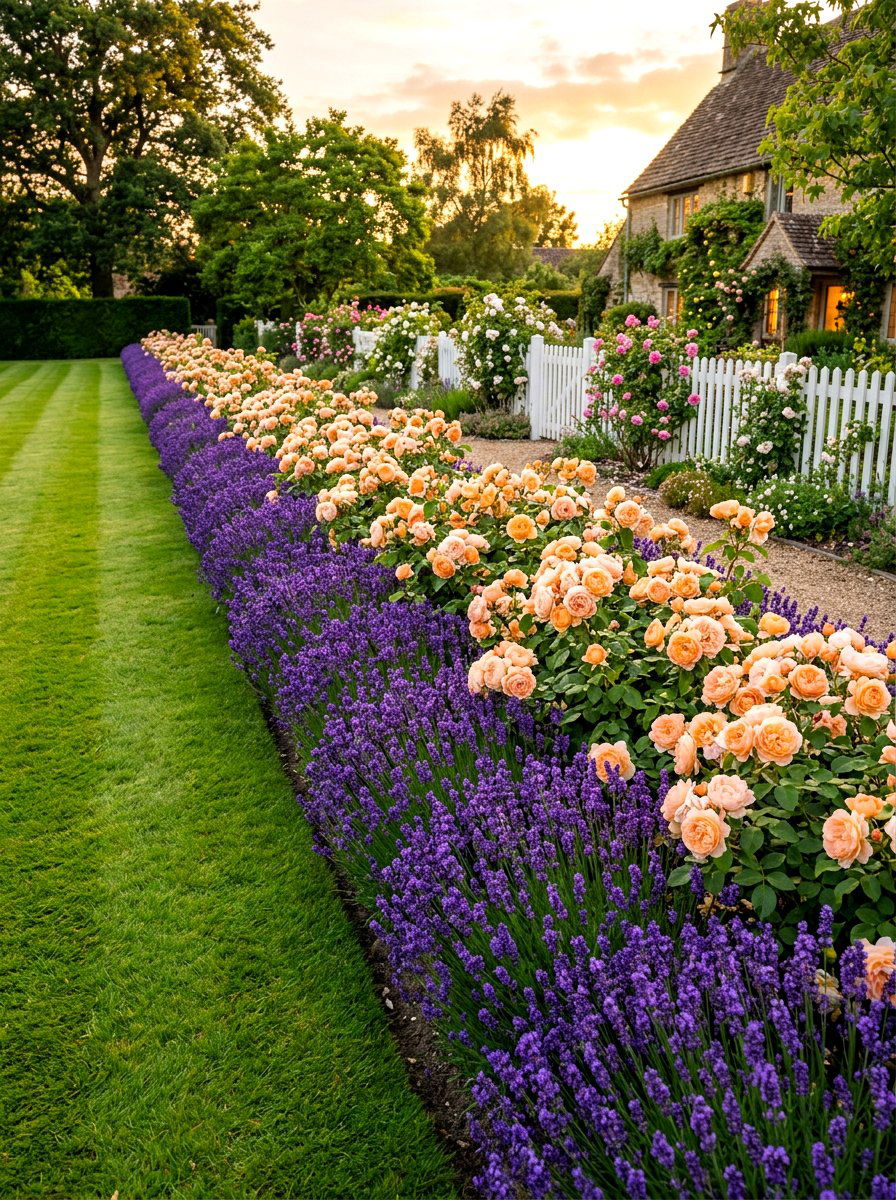
Creating a lavender border landscape is a classic way to add fragrance and structure to your garden. These hardy shrubs offer a silvery-green foliage that looks beautiful even before the purple spikes appear. When planted in a row along a stone pathway, they define the space with a soft, architectural edge. Lavender thrives in full sun and well-drained soil, making it perfect for hot, dry spots. The scent is incredibly relaxing and attracts plenty of beneficial pollinators like bees and butterflies. This design works exceptionally well in Mediterranean or cottage-style yards. It provides a year-round presence that anchors the rest of your seasonal floral displays throughout the year.
2. Allium flower bed
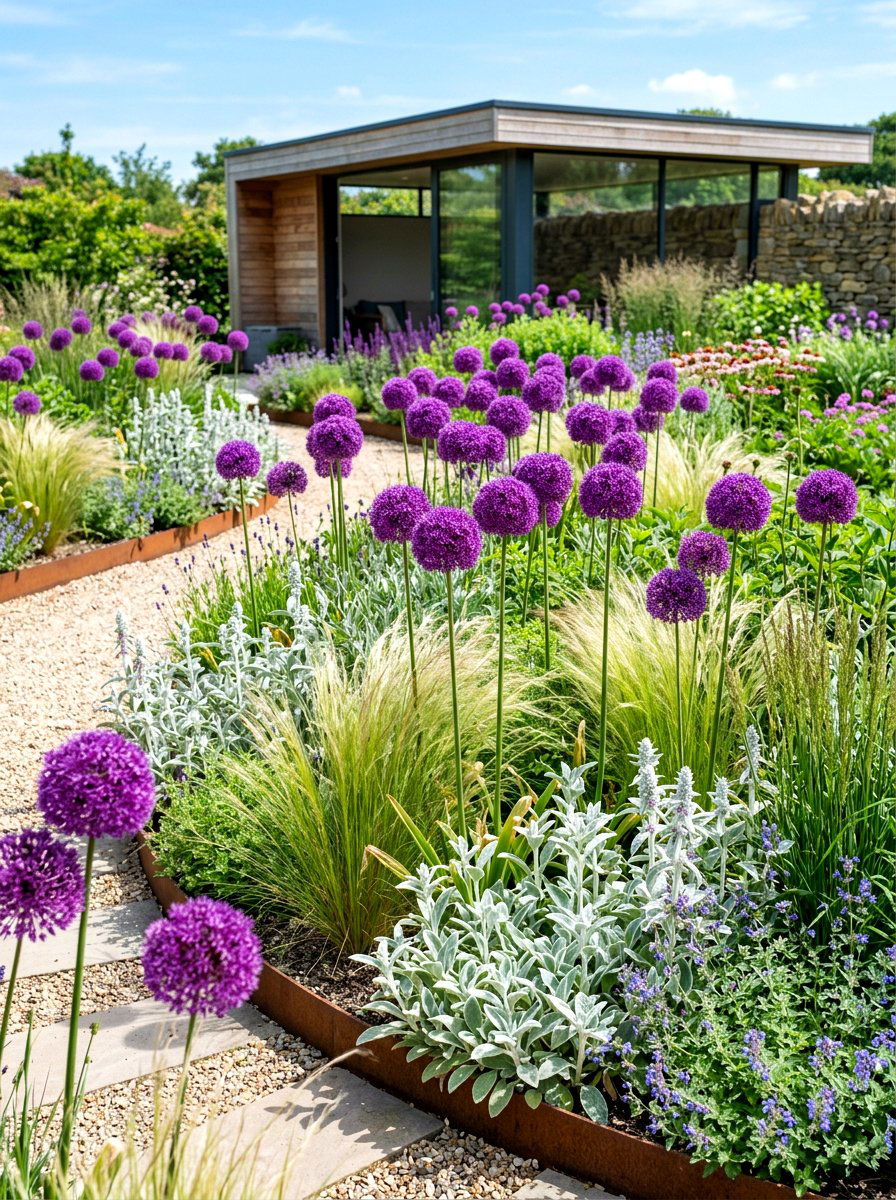
A tall allium flower bed provides a whimsical and modern look to any backyard area. These globe-shaped blooms stand on high, sturdy stems, making them appear like floating purple pom-poms among other plants. Planting them in clusters creates a high-impact focal point that draws the eye upward. They are excellent for adding vertical interest to a flat landscape. Since their foliage often fades as they bloom, it is best to intersperse them with lower-growing perennials to hide the base. These architectural plants come in various heights and shades, ranging from light lilac to deep violet. They truly transform a standard garden into a contemporary masterpiece.
3. Purple hydrangea shrub
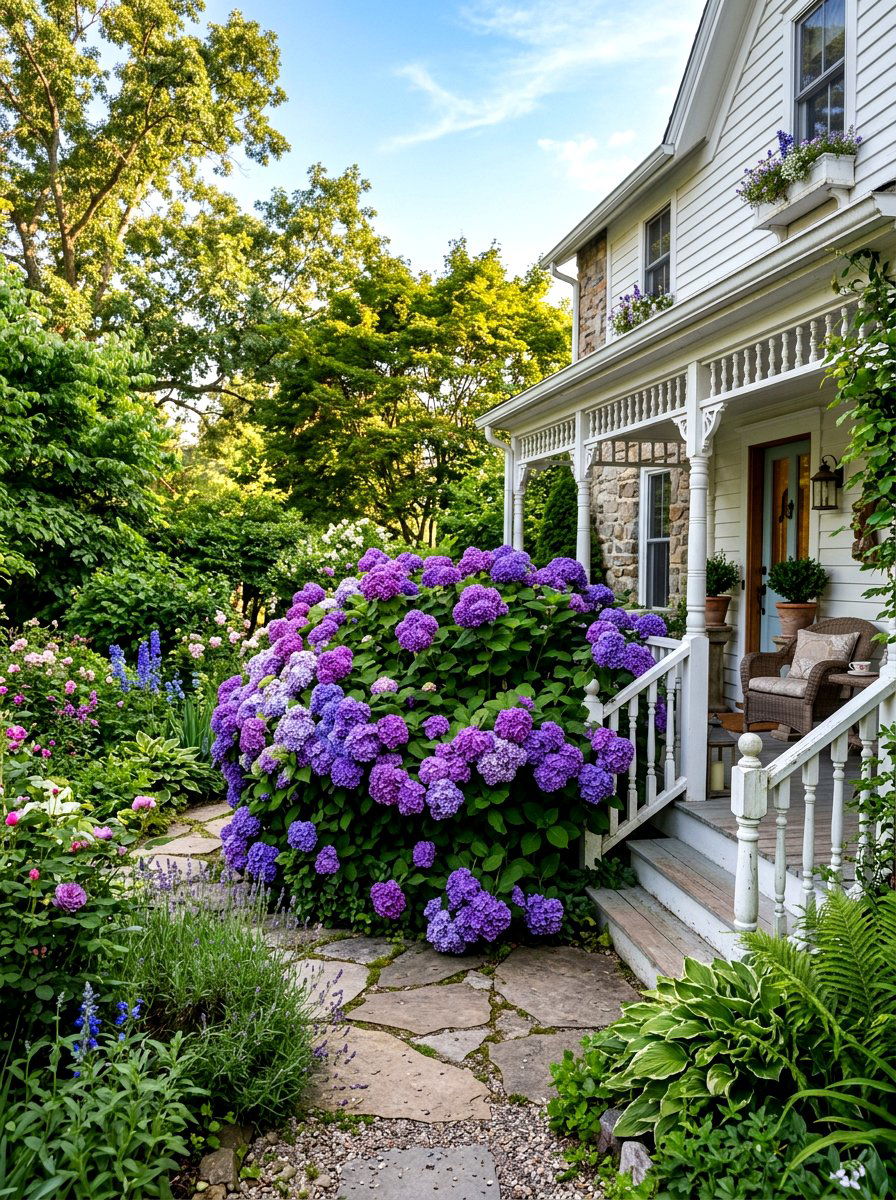
Incorporating a purple hydrangea shrub into your landscaping offers a lush and romantic feel. These large, round flower heads are famous for their ability to change color based on soil acidity. Deep purple varieties provide a rich, moody tone that looks stunning against dark green leaves. They work perfectly as a foundation planting near a front porch or along a fence line. These shrubs prefer partial shade and consistent moisture to stay vibrant and healthy throughout the summer. Because they grow quite large, they can fill empty spaces quickly. They create a soft, rounded texture that balances out sharp lines and hardscapes in your modern garden design.
4. Salvia walkway border
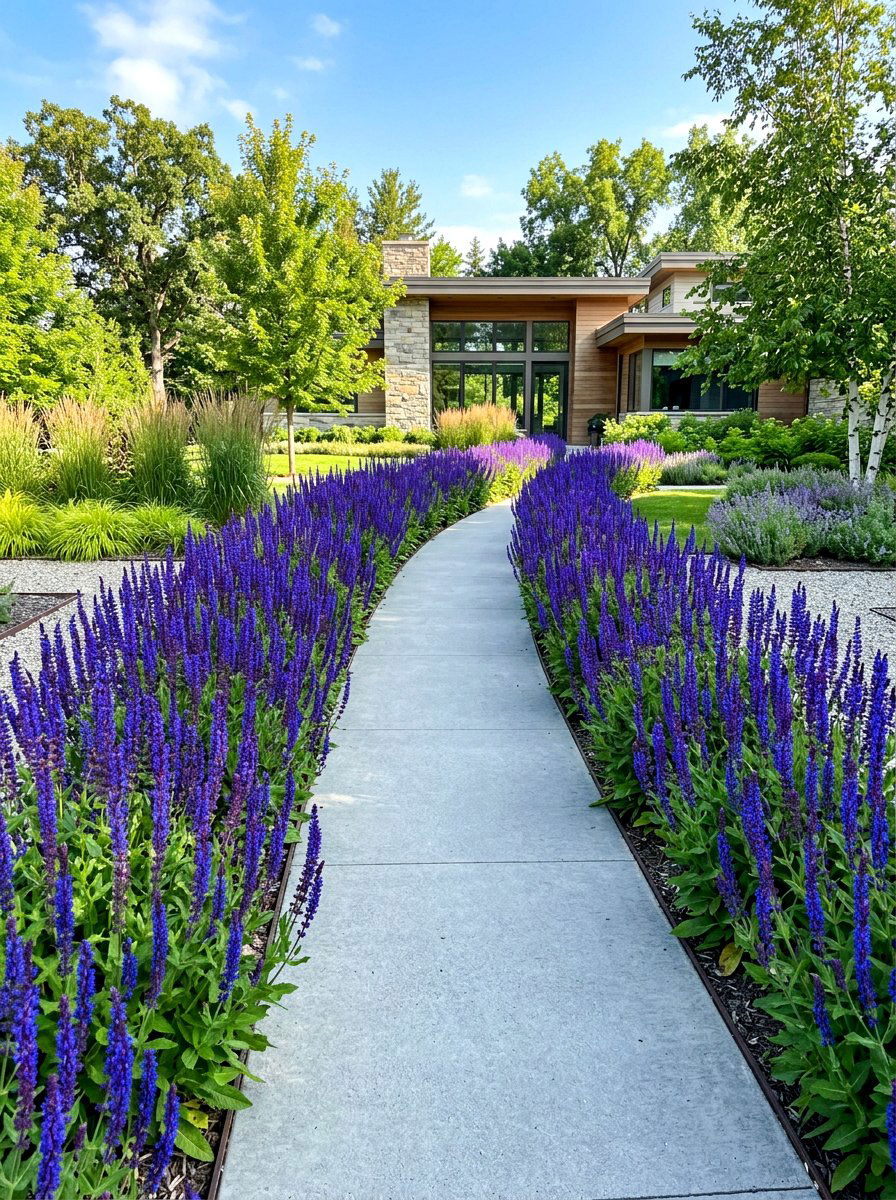
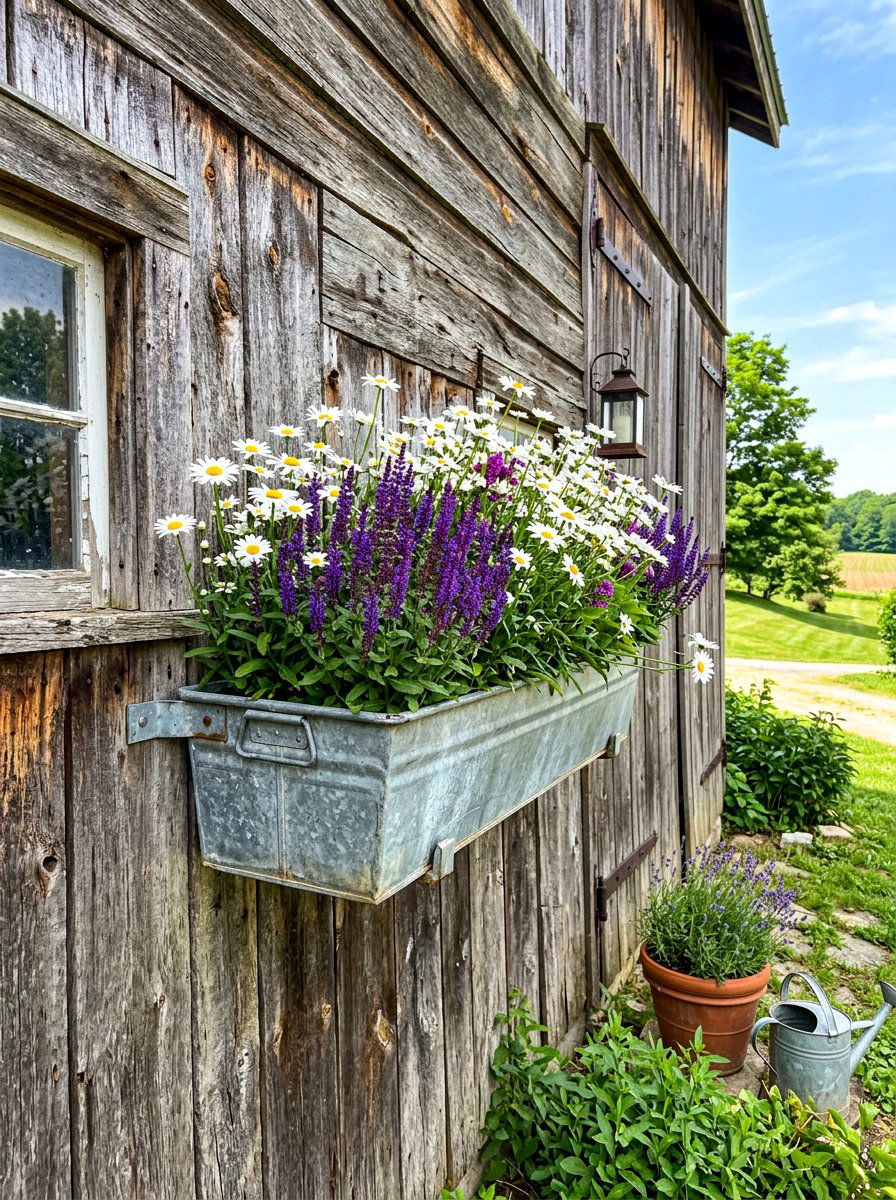
A salvia walkway border is an excellent choice for adding long-lasting color to a high-traffic area. These plants produce dense spikes of deep indigo or violet flowers that bloom for several months. When planted along both sides of a path, they create a vibrant tunnel of color that feels very inviting. Salvias are known for being drought-tolerant and very easy to maintain once they are established. They pair beautifully with ornamental grasses or silver-leafed plants for a modern look. The upright growth habit ensures they stay neat and do not spill over the path too much. They are a reliable way to ensure constant summer beauty.
5. Creeping phlox groundcover
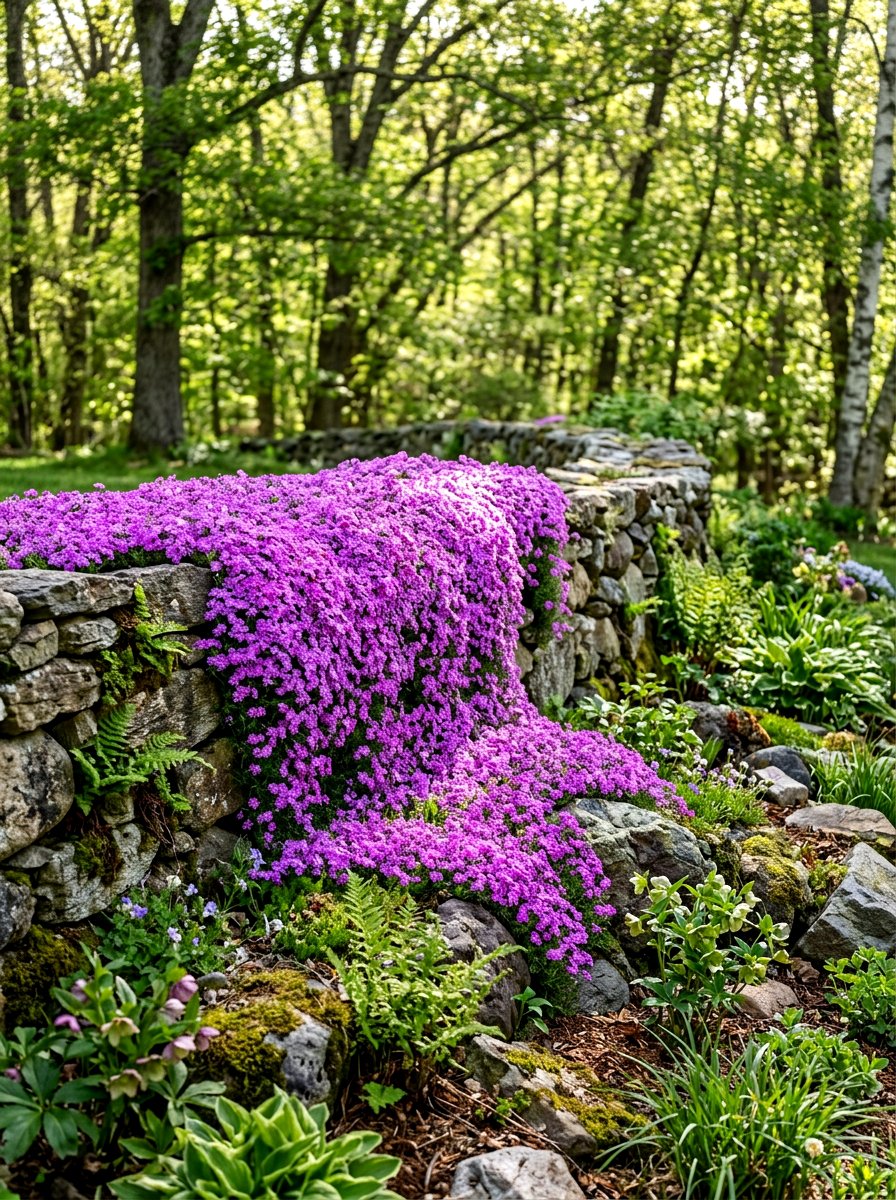
Using creeping phlox groundcover is a brilliant way to create a carpet of purple across your landscape. In the spring, these low-growing plants become completely covered in tiny, star-shaped blossoms. They are perfect for rock gardens, slopes, or filling in the gaps between stepping stones. The dense mat of foliage helps to suppress weeds while providing a beautiful visual texture. This plant is particularly effective when allowed to spill over the edge of a raised garden bed or a stone wall. It softens hard edges and brings a natural, woodland feel to the space. It is a hardy and dependable choice for early season color.
6. Purple clematis trellis
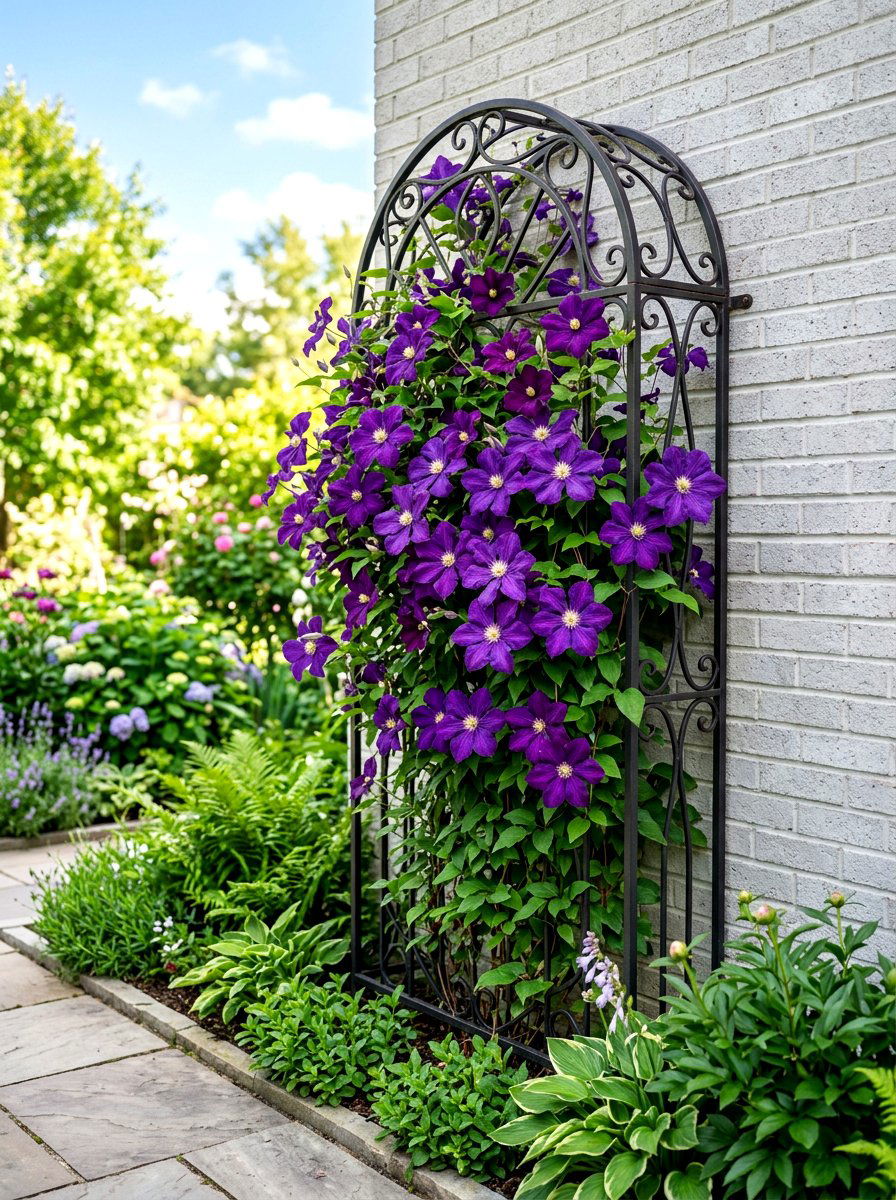
A purple clematis trellis adds stunning vertical beauty and elegance to any garden wall or fence. These climbing vines produce large, velvet-like flowers that can cover an entire structure in a single season. Choosing a deep violet variety creates a dramatic contrast against a light-colored house or a wooden pergola. Clematis likes to have its "head in the sun and feet in the shade, " so planting low shrubs around the base is helpful. These vines are perfect for small gardens where space is limited but you still want a big floral impact. They provide a sense of height and privacy while looking incredibly sophisticated and lush.
7. Petunia hanging basket
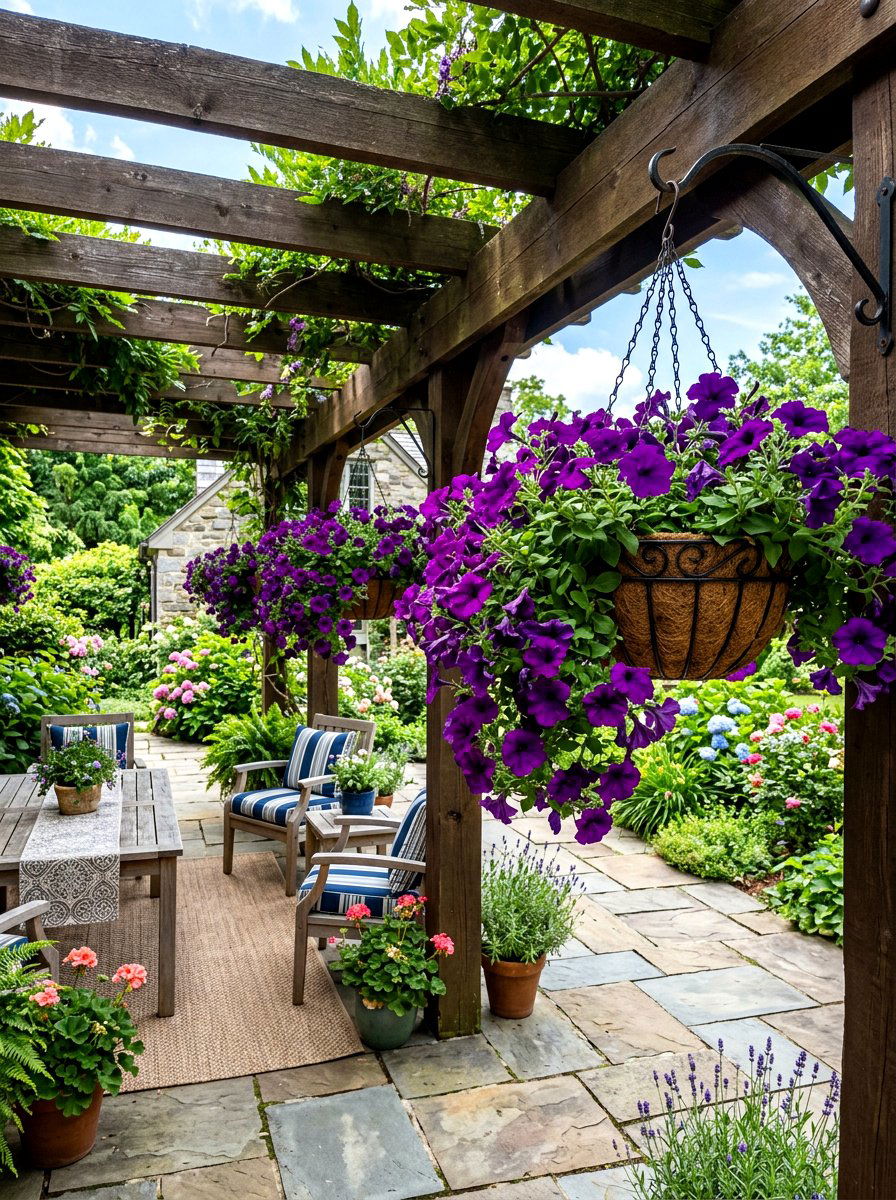
Displaying a petunia hanging basket is a simple way to bring vibrant purple color to a porch or balcony. These popular annuals are known for their prolific blooming and cascading growth habit. Dark purple or bi-color varieties create a bold splash of color that lasts from spring until the first frost. They require regular watering and occasional feeding to keep them looking their best. Hanging them at different heights adds visual layers to your outdoor living area. They work well as a standalone feature or when grouped together for a more dramatic effect. Petunias are a classic choice for effortless, high-impact seasonal decoration and style.
8. Lilac bush garden
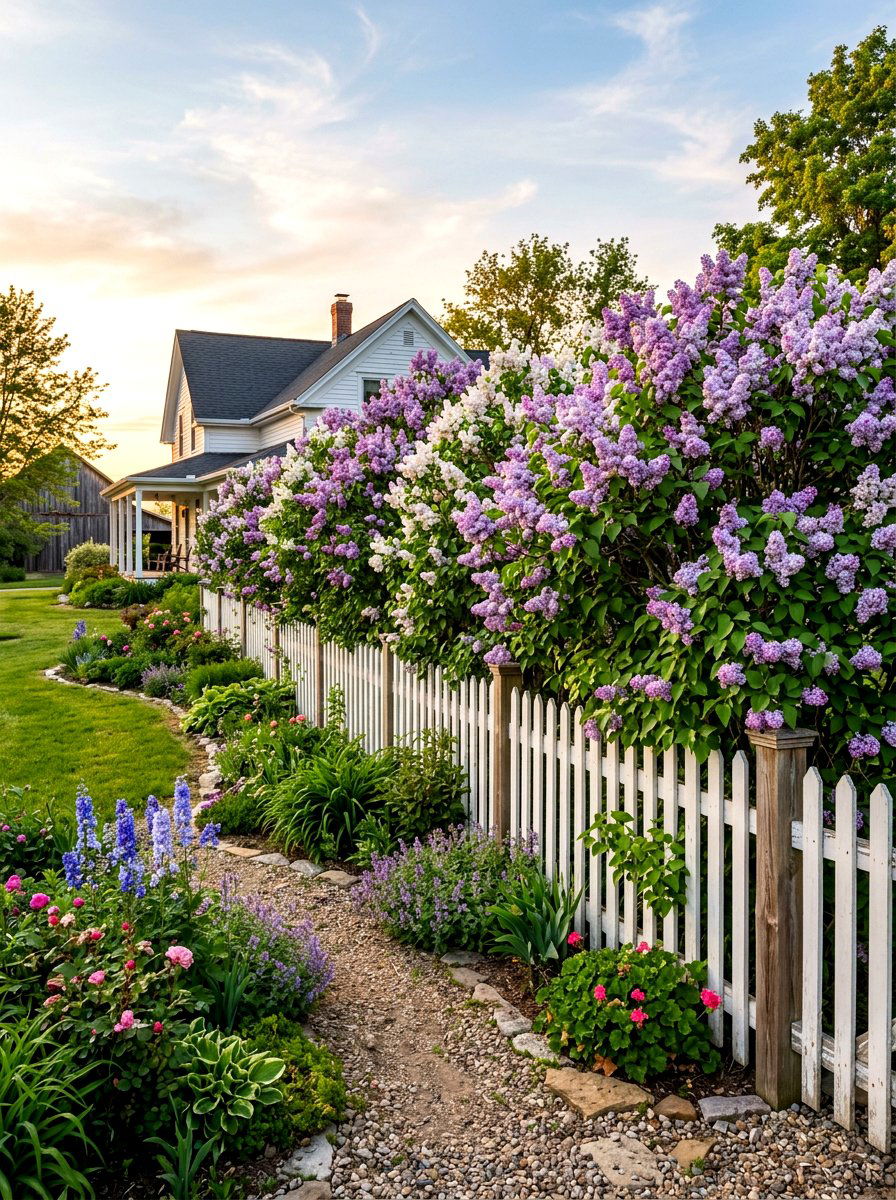
A lilac bush garden is a nostalgic and fragrant addition to any large backyard or property line. These large shrubs are iconic for their clusters of tiny, sweet-smelling purple flowers that bloom in late spring. They are perfect for creating a natural privacy screen or a windbreak along the edge of your lot. Lilacs thrive in sunny spots with good air circulation to prevent mildew. Their classic appearance fits perfectly in traditional or farmhouse-style landscapes. The scent they produce is unmistakable and can fill an entire yard on a warm evening. They are a timeless favorite that provides beauty and a wonderful aroma every single year.
9. Bearded iris bed
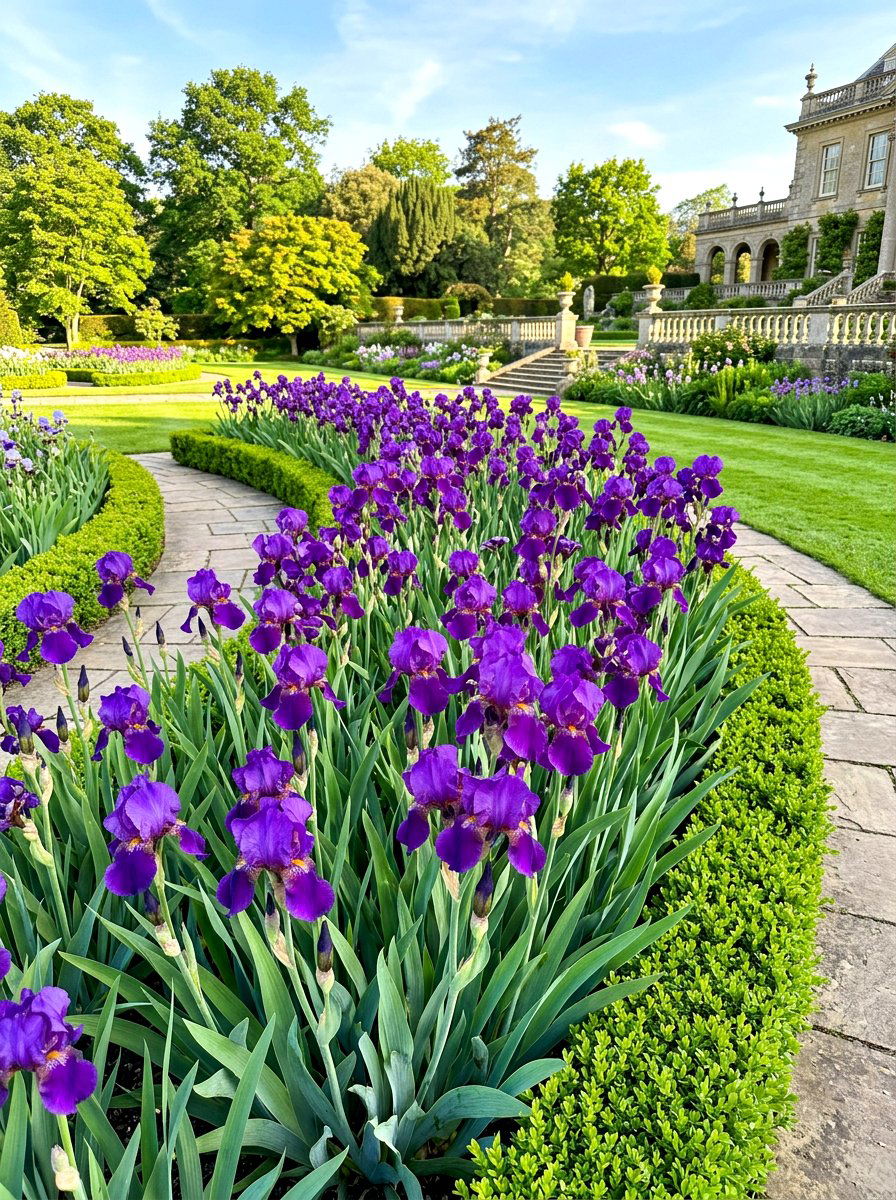
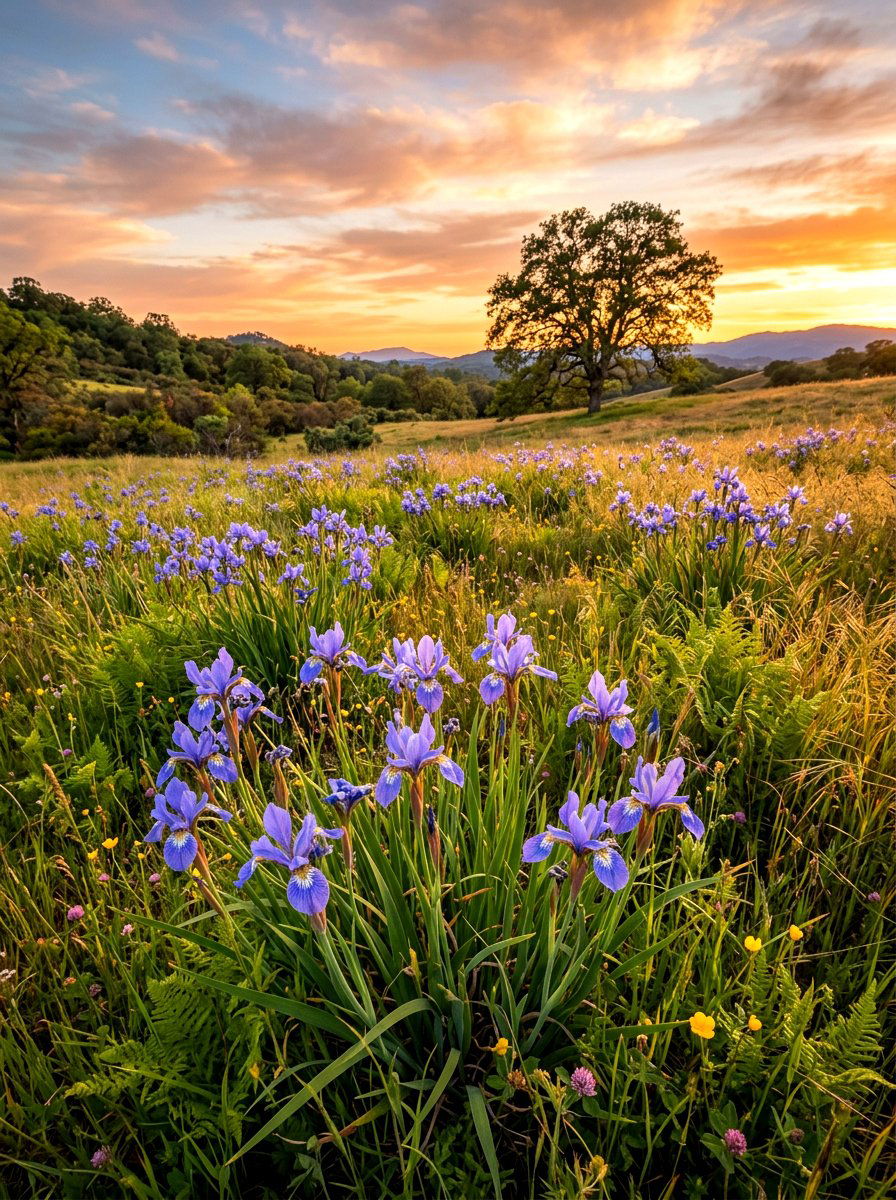
Planting a bearded iris bed brings a sense of royal elegance and architectural form to your flower garden. These striking perennials feature unique, ruffled petals and sword-like leaves that stay green all summer. They come in an incredible range of purple shades, from pale sky blue-violet to almost black. Grouping them together in a dedicated bed makes their intricate details stand out more. They prefer well-drained soil and plenty of sunshine to produce the best blooms. Irises are perfect for adding structure to a mixed border or as a focal point in a sunny corner. Their regal appearance makes them a standout in any landscape.
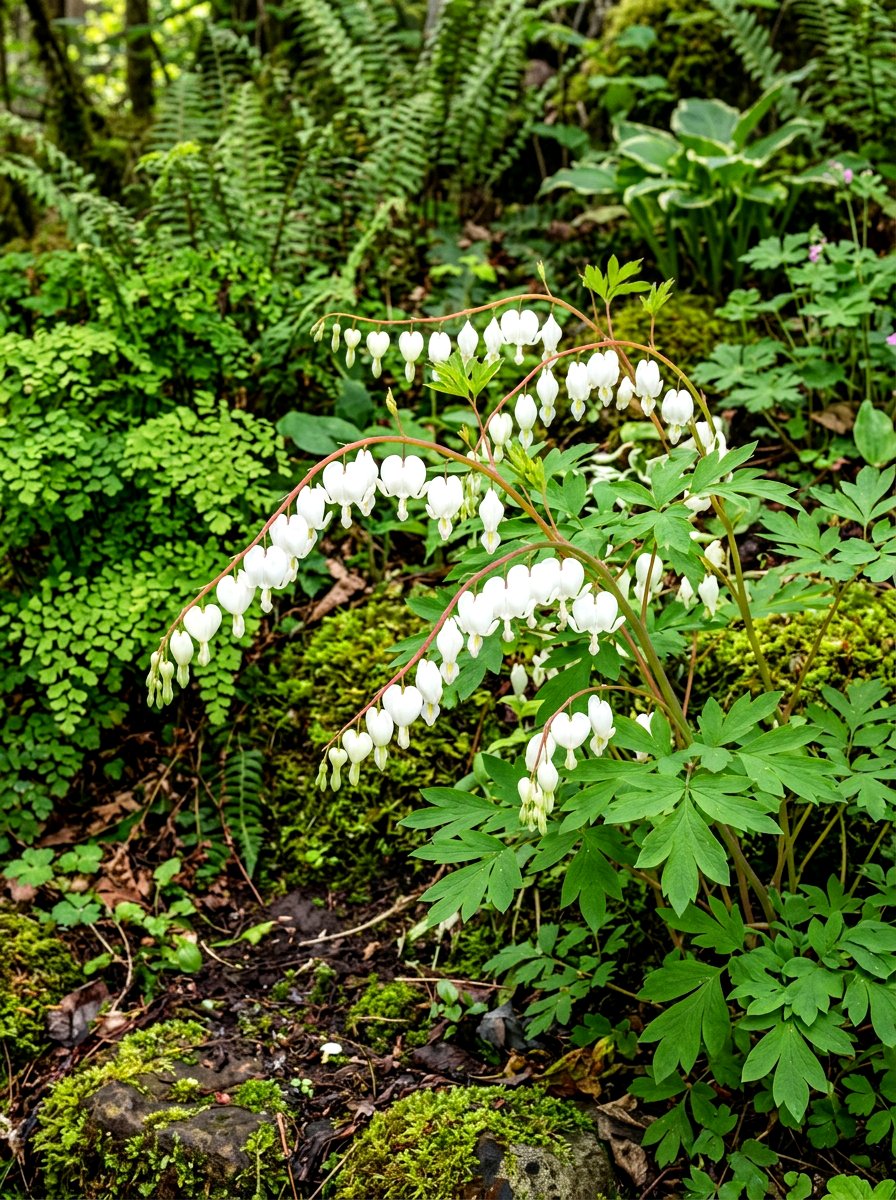
10. Wisteria pergola
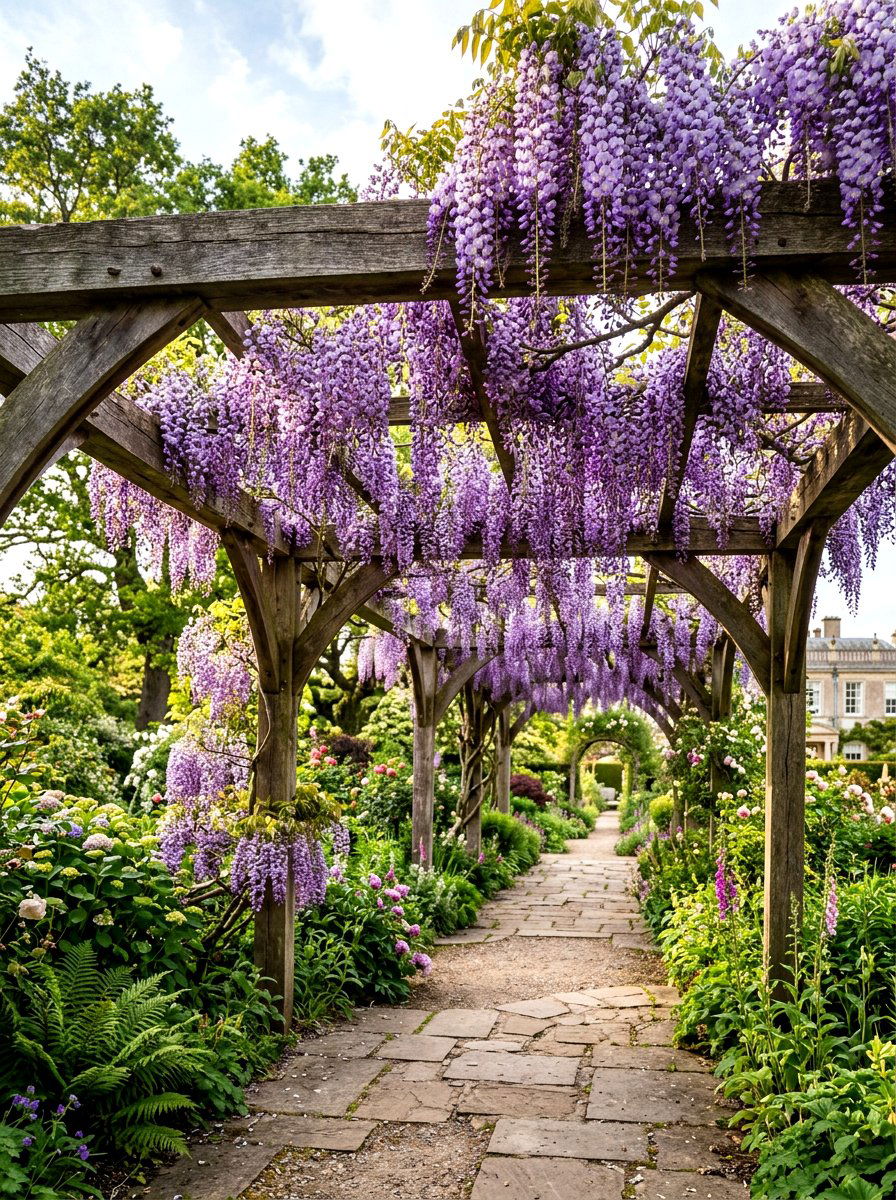
A wisteria pergola creates a magical and romantic atmosphere that feels like a scene from a fairytale. This vigorous climbing vine produces long, drooping clusters of fragrant purple flowers in early spring. When trained over an overhead structure, the blooms hang down like a floral ceiling. It provides excellent shade during the summer and a stunning visual display when in peak bloom. Wisteria requires a very sturdy support system because the vines become heavy and woody over time. Regular pruning is necessary to keep it under control and encourage more flowers. It is a high-maintenance choice, but the breathtaking results are absolutely worth the extra effort.
11. Catmint garden edging
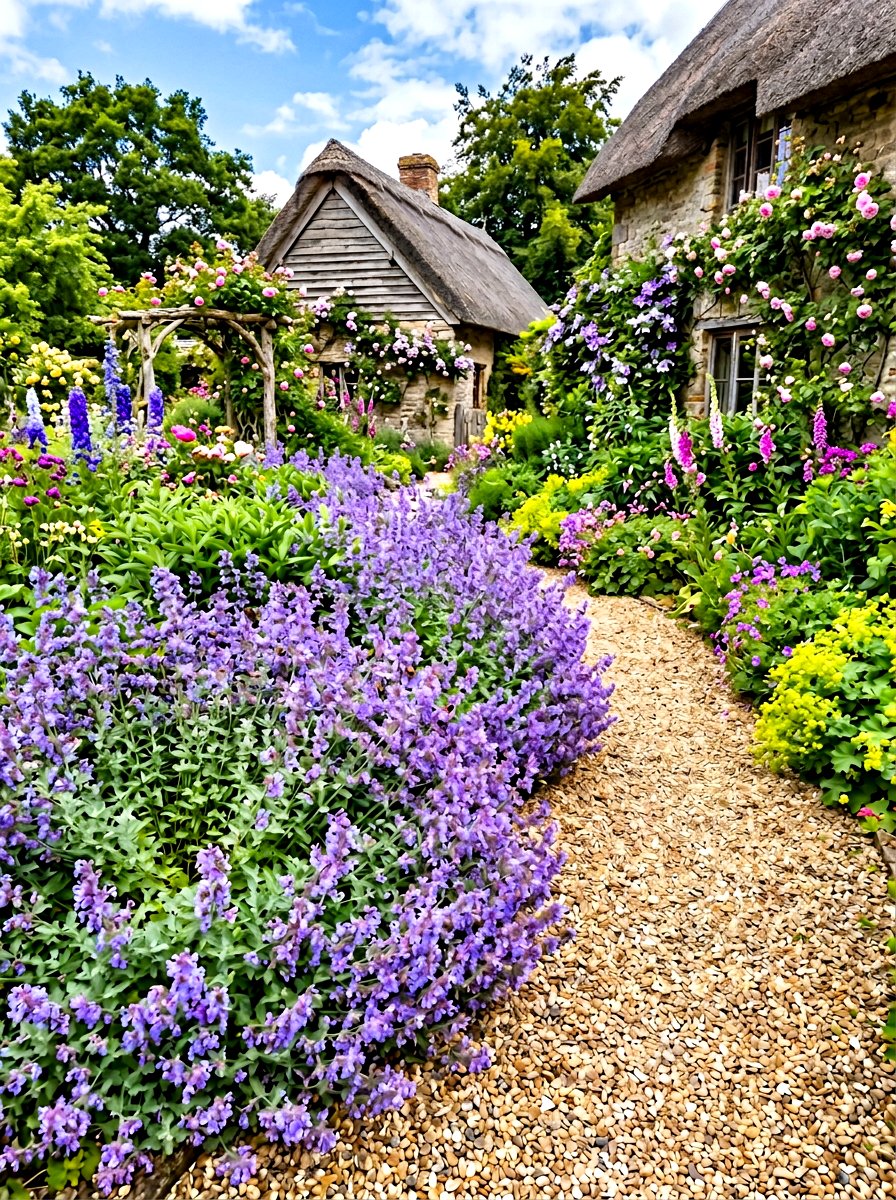
Using catmint garden edging is a smart way to create a soft, billowing border for your flower beds. This plant features aromatic, gray-green foliage and clouds of small lavender-purple flowers. It has a long blooming season and is incredibly easy to care for in most climates. Catmint looks best when planted in large drifts along a pathway or the front of a border. It spills gently over the edges, softening the transition between the garden and the lawn. This plant is also very attractive to pollinators and is generally resistant to pests. It provides a relaxed, airy feel that works perfectly in a casual or cottage-style garden.
12. Purple coneflower patch
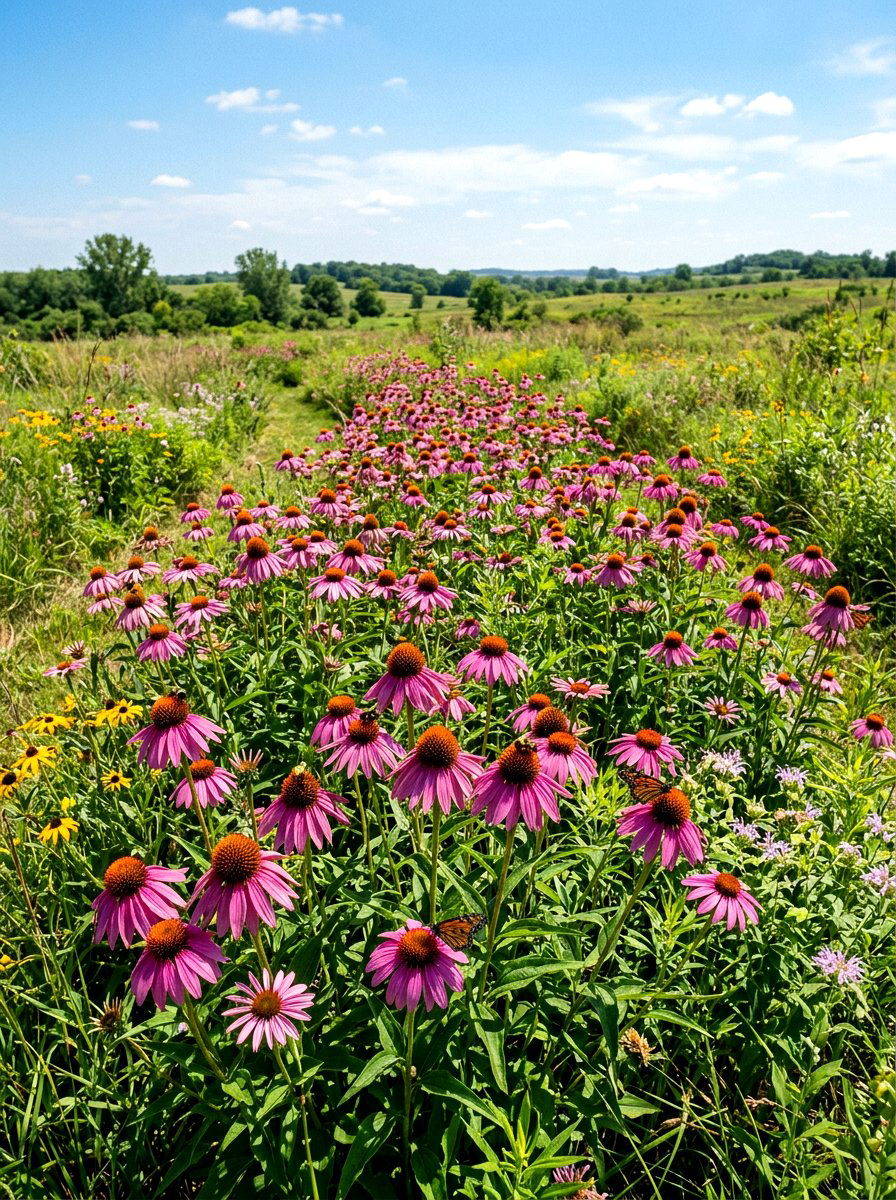
A purple coneflower patch is a wonderful way to bring a natural, prairie-like feel to your backyard. These hardy perennials feature large, daisy-like flowers with distinct orange centers. They are incredibly tough and can handle heat, drought, and poor soil conditions with ease. Planting them in a large group creates a sea of rosy-purple color that lasts all summer long. They are a favorite for butterflies and bees, making them essential for any pollinator-friendly garden. The dried seed heads also provide food for birds in the winter. They add a rustic charm that looks beautiful in a wildflower meadow or a casual mixed border.
13. Russian sage landscape
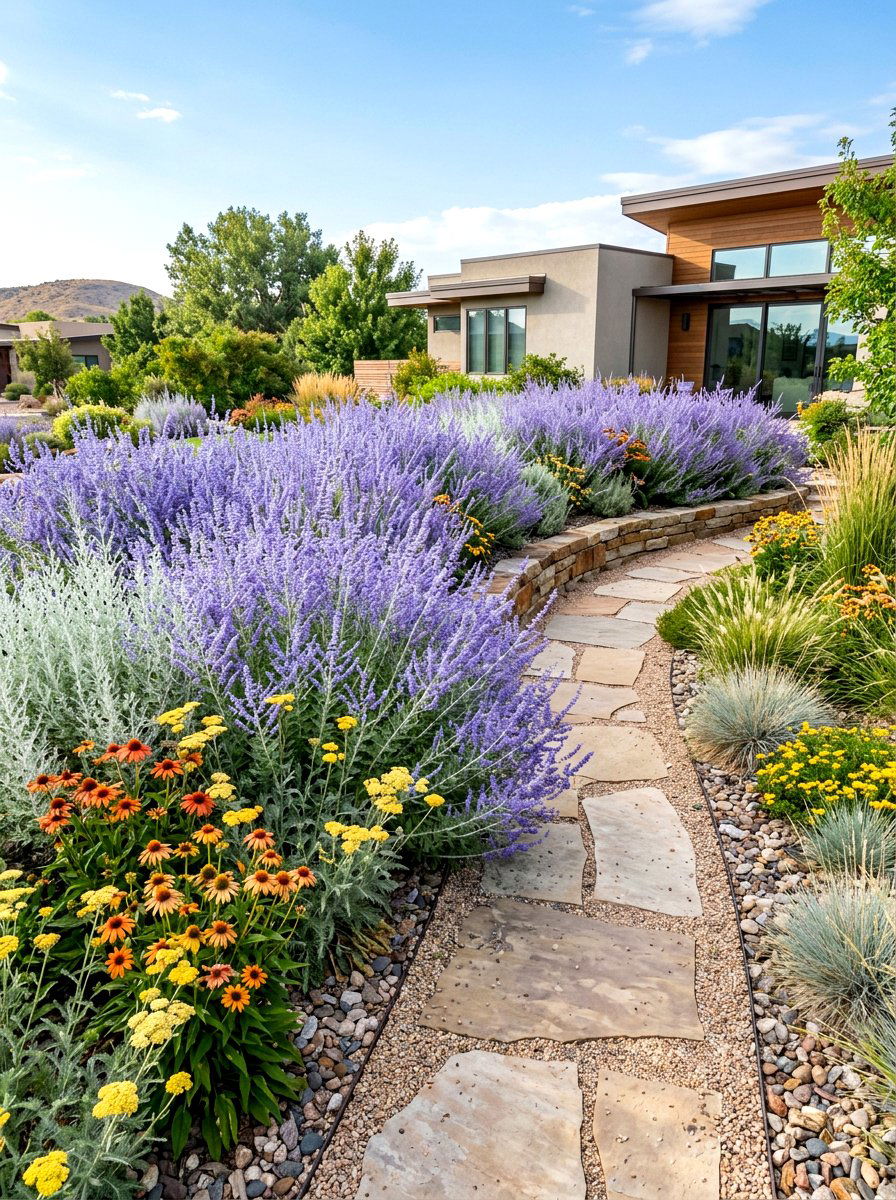
Incorporating Russian sage into your landscape adds a fine, misty texture and a cool purple hue. This plant features silver stems and tiny, lavender-blue flowers that create a hazy effect from a distance. It is exceptionally drought-tolerant and loves being in the hottest part of the garden. The airy appearance makes it a great companion for bolder, more solid-looking plants. When planted in mass, it looks like a soft purple cloud floating above the ground. It requires very little maintenance and stays upright throughout the entire season. This is a perfect choice for modern or xeriscape designs that need a touch of soft, ethereal color.
14. Verbena bonariensis cluster
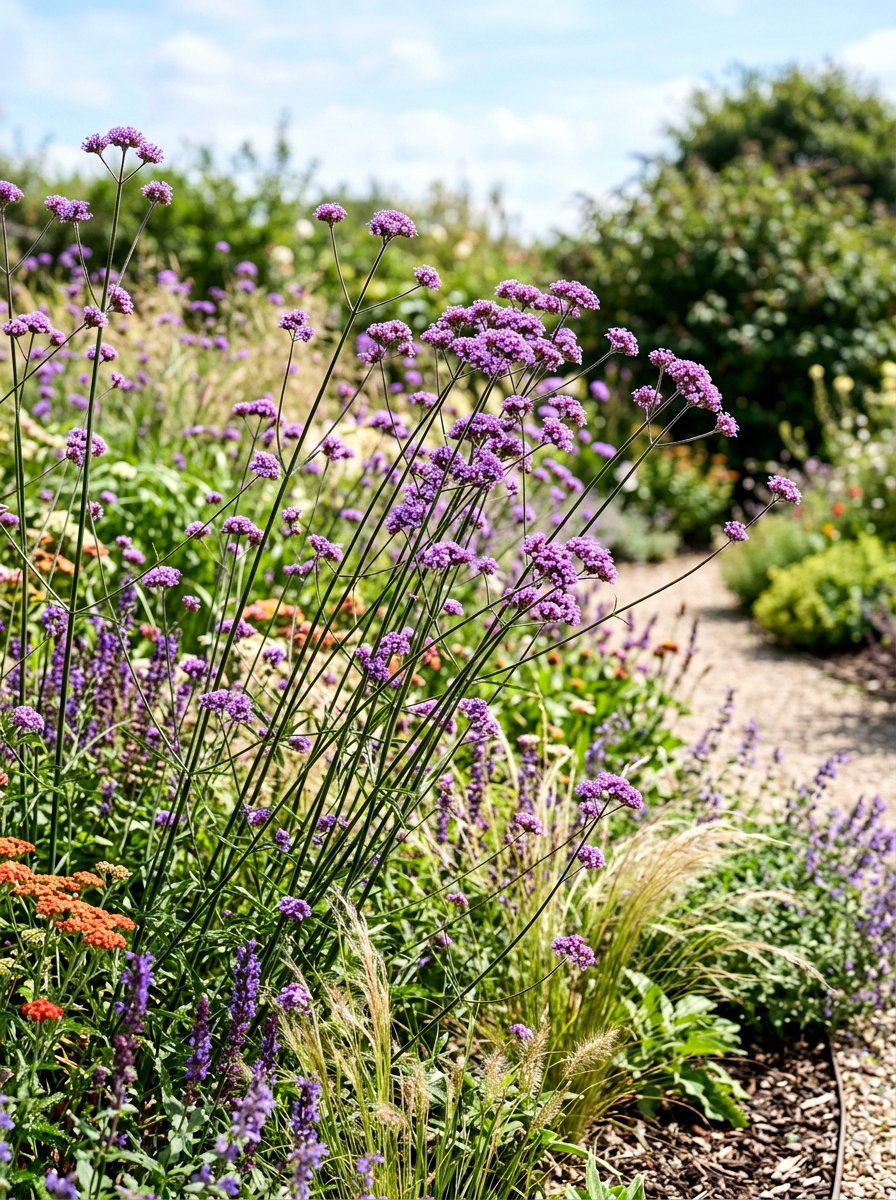
A verbena bonariensis cluster adds a unique vertical element and a see-through quality to your garden beds. These tall, wiry stems are topped with small, tight clusters of vibrant purple flowers. Because the stems are so thin, you can plant them at the front of a border without blocking the view of plants behind them. They sway beautifully in the breeze and attract a constant stream of butterflies. This plant is a prolific self-seeder, meaning it will often pop up in new spots every year. It adds a sense of movement and spontaneity to the landscape. It is perfect for adding height and color in a modern way.
15. Foxglove woodland garden
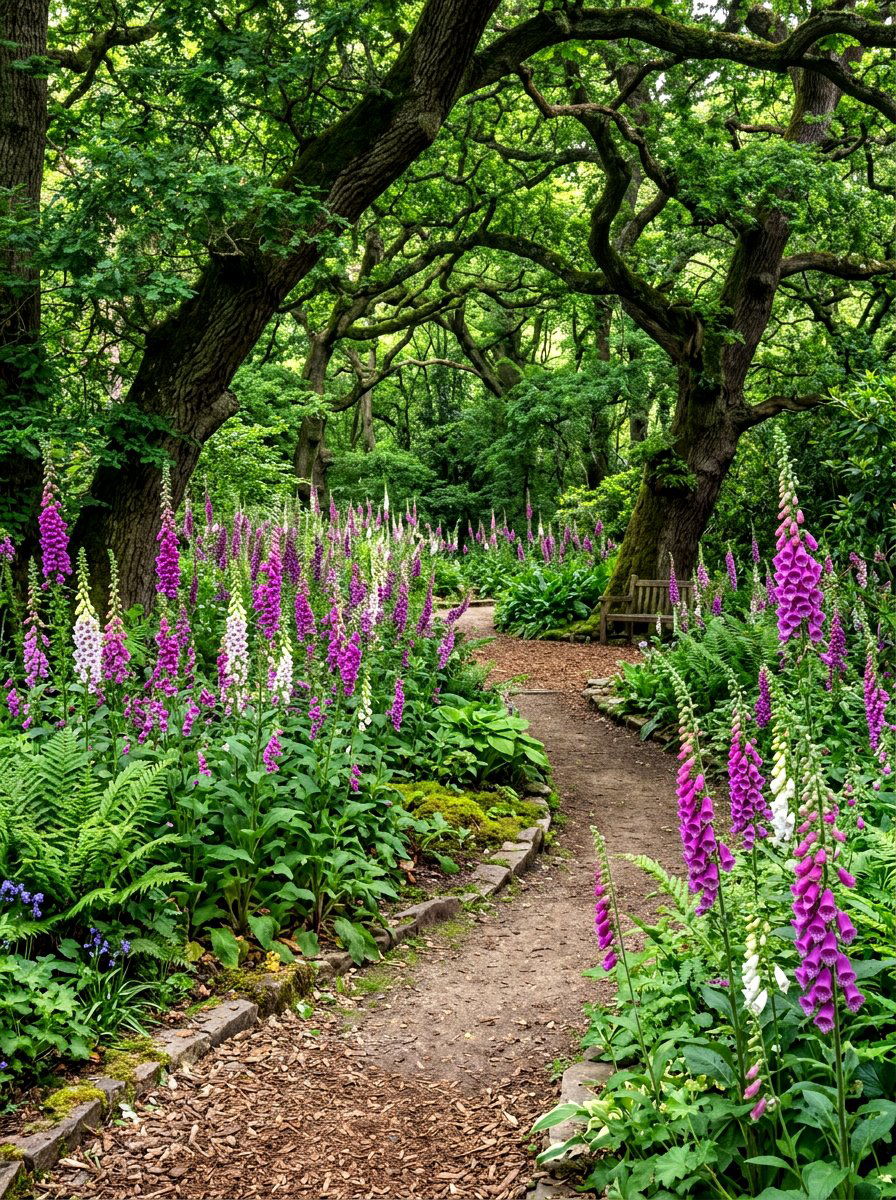
A foxglove woodland garden creates a sense of mystery and vertical drama in shaded areas of your yard. These tall spikes are covered in bell-shaped purple flowers with beautiful speckled interiors. They are perfect for planting under large trees or along a shady fence line. Foxgloves bring a romantic, old-world feel to the landscape and are iconic in traditional cottage gardens. They are usually biennials, so they grow foliage the first year and bloom the second. Letting them go to seed ensures you will have new plants for years to come. Their height and unique shape make them a stunning focal point in any cool, damp corner.
16. Heliotrope container garden
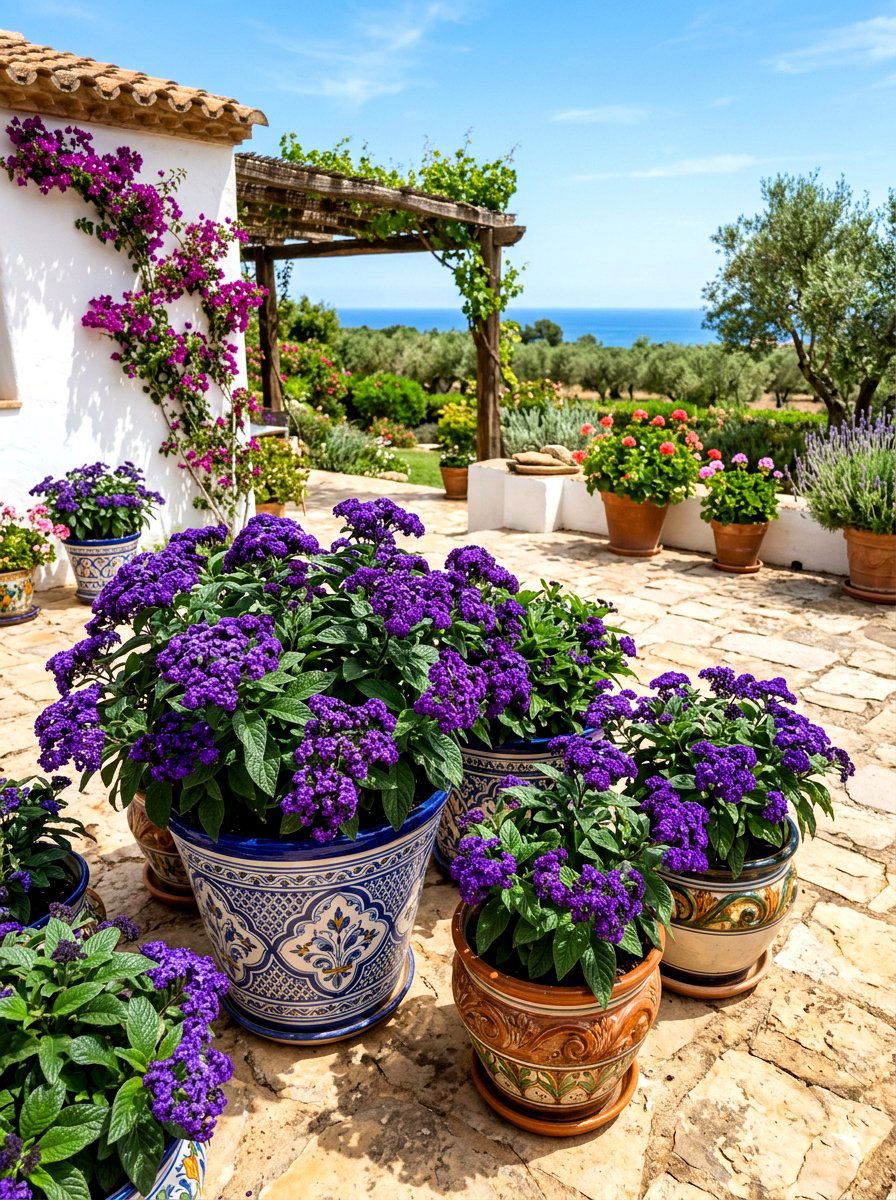
Growing a heliotrope container garden allows you to enjoy one of the most fragrant purple flowers up close. These plants produce dense clusters of deep violet blossoms that smell like vanilla or cherry pie. Placing them in pots on a patio or near a window ensures the scent can be enjoyed throughout the day. They have dark green, textured leaves that provide a nice backdrop for the rich flower color. Heliotrope loves the sun but needs consistent moisture to thrive in a container. It is a great choice for adding a sensory experience to your outdoor living space. The intense color and aroma are truly exceptional features.
17. Lupin meadow landscape
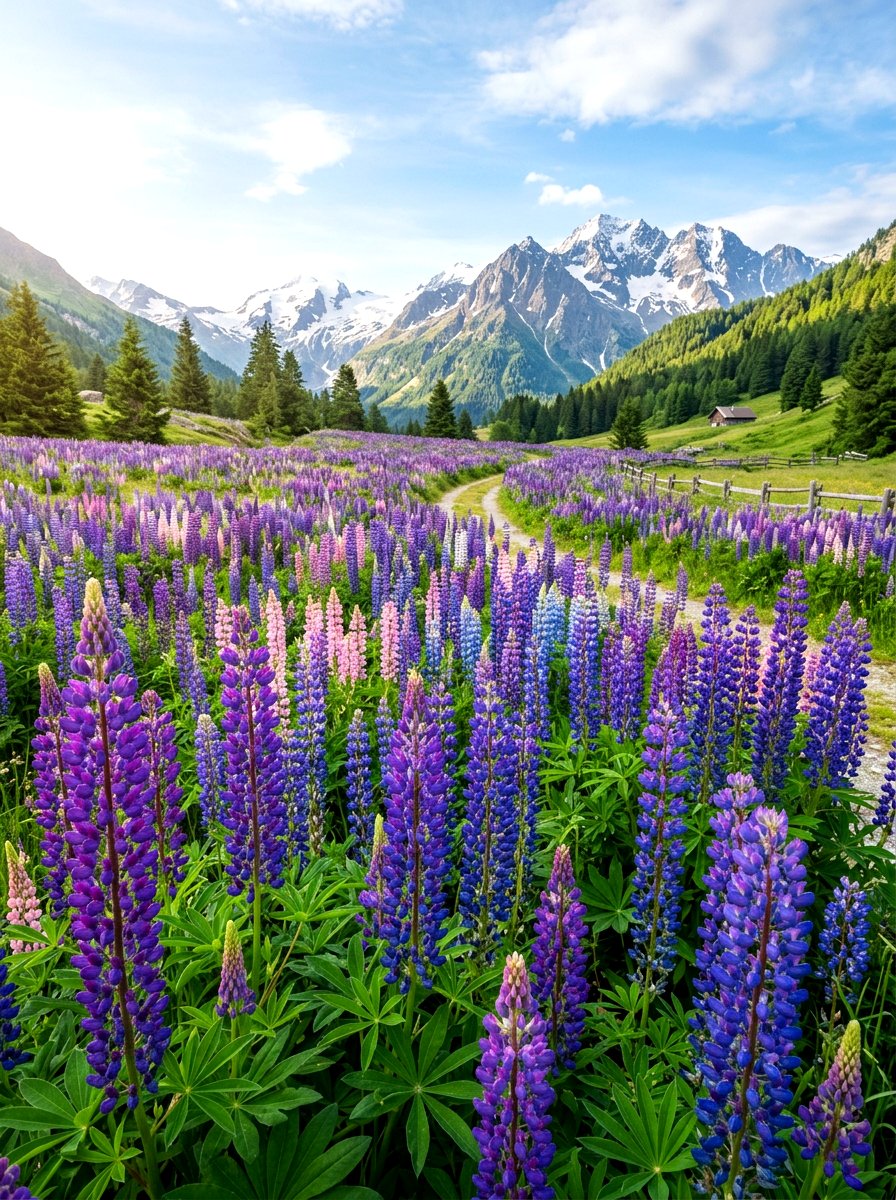
A lupin meadow landscape offers a bold and colorful display with its tall, spire-like flower spikes. These plants come in many shades of purple and often feature two-tone blooms that add extra depth. When planted in large groups, they create a stunning field of vertical color that feels very wild and natural. Lupins prefer cooler climates and well-drained soil to look their best. Their unique foliage also adds interest to the garden even when they are not in bloom. They are perfect for filling large open spaces or adding a rustic touch to a cottage garden. These striking flowers are a favorite for creating a dramatic floral display.
18. Astilbe shade garden
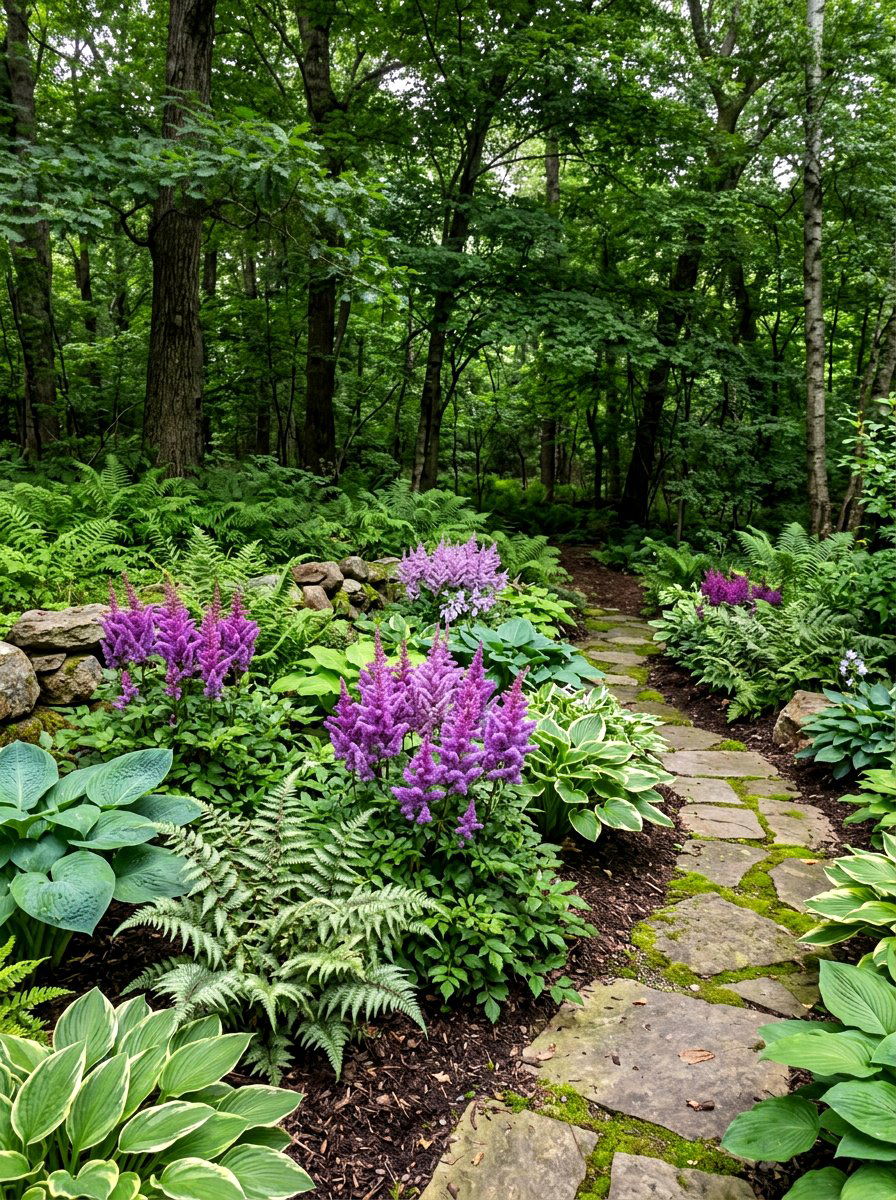
An astilbe shade garden is the perfect solution for adding purple color to the darker corners of your yard. These perennials feature fern-like foliage and feathery plumes of flowers that look like soft clouds. Deep purple or amethyst varieties provide a rich contrast to the surrounding green ferns and hostas. They thrive in moist, shady spots where many other flowering plants struggle to grow. The upright plumes add a nice vertical texture to the low-growing shade plants. They are very low-maintenance and provide beauty for several weeks in the middle of summer. This is a sophisticated choice for a lush and peaceful woodland retreat.
19. Bellflower rock garden
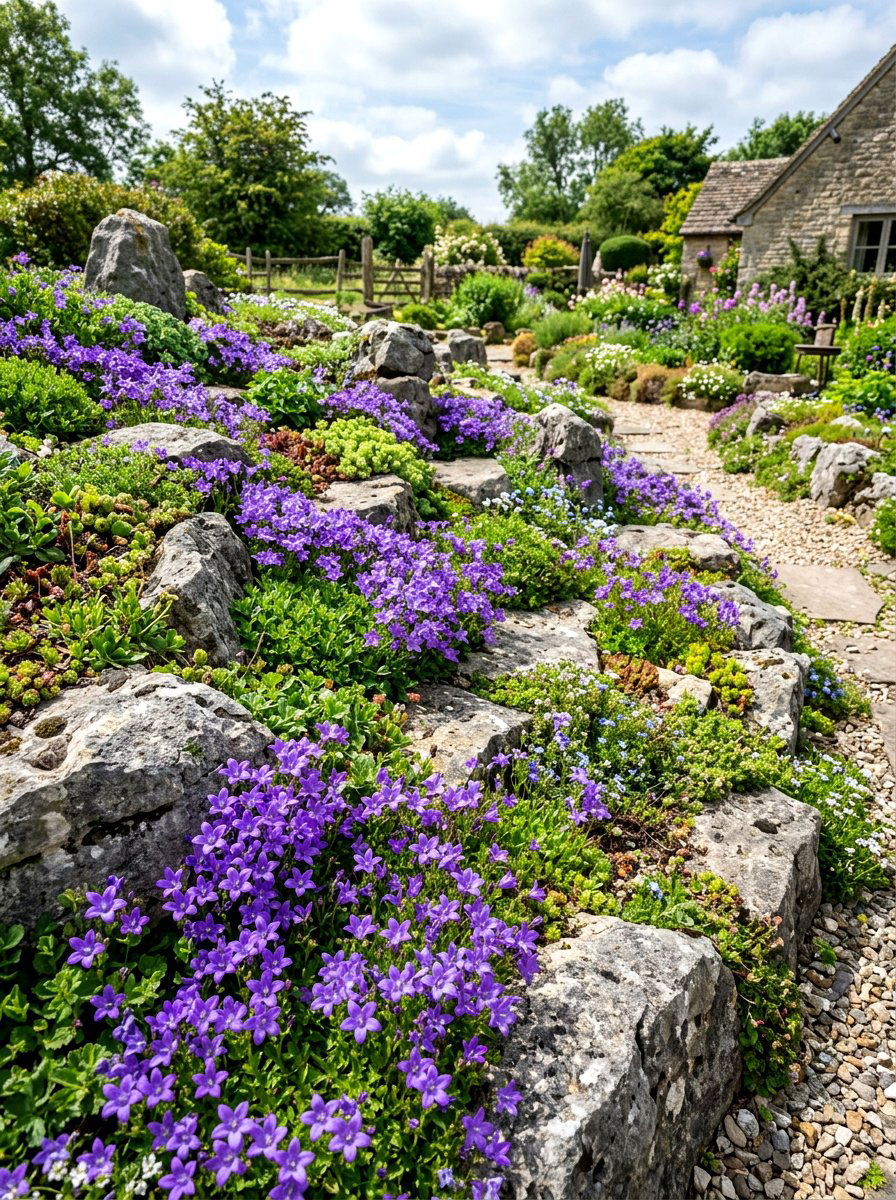
A bellflower rock garden brings a delicate and charming feel to a stony or sloped area. These plants produce an abundance of star or bell-shaped purple flowers that seem to glow against the rocks. Many varieties have a trailing habit, making them perfect for spilling over the edges of stones. They are hardy and adaptable, often thriving in small crevices where little else can survive. The vibrant color helps to brighten up a neutral-toned rockery or gravel path. They provide a long season of bloom and require very little intervention once they are planted. These cheerful flowers are essential for any naturalistic or alpine-style garden design.

20. Gladiolus back border
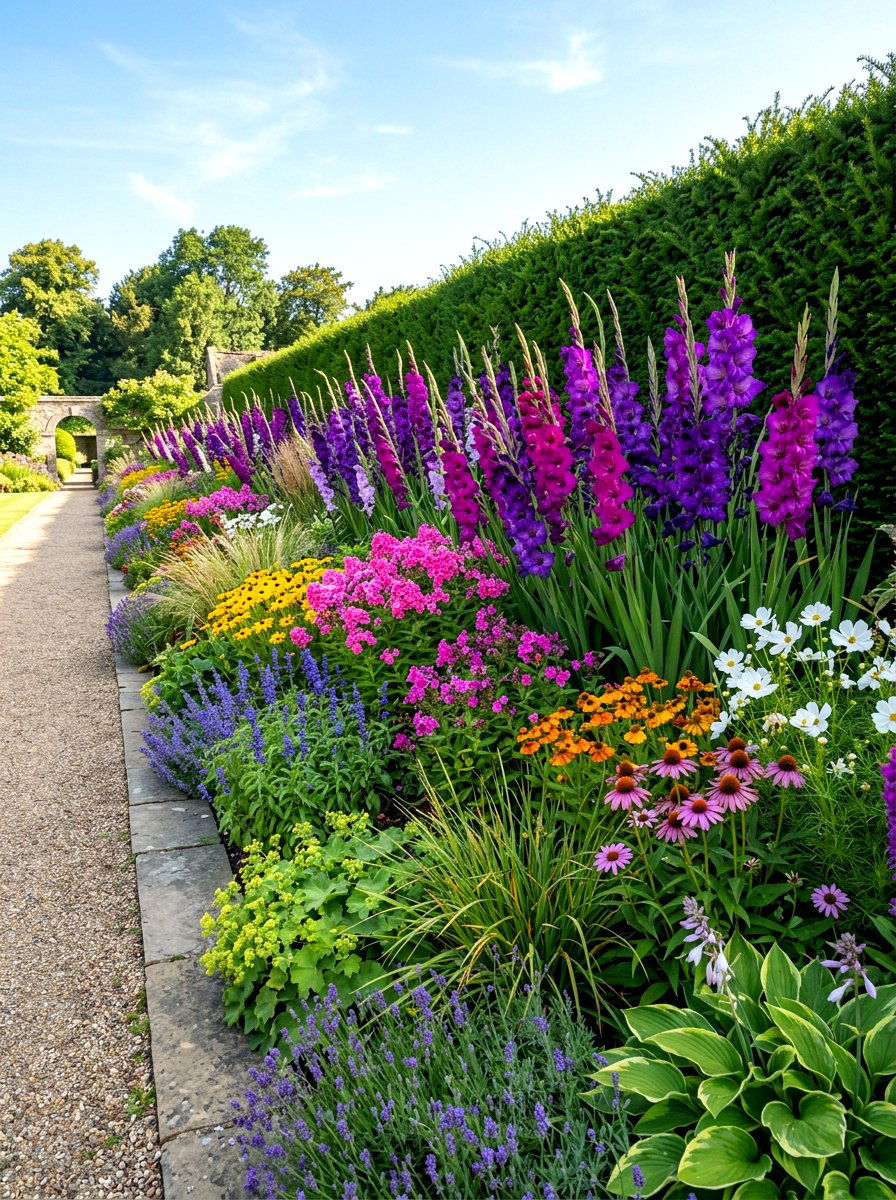
Planting gladiolus in a back border is a classic way to add height and drama to your summer garden. These tall, upright spikes are covered in large, trumpet-shaped flowers that open from the bottom up. Deep purple varieties make a bold statement when grouped behind shorter perennials or annuals. Because they can get quite tall, they sometimes need staking to stay upright in the wind. They are excellent for cutting and bringing indoors for large floral arrangements. Gladioli grow from corms and should be planted in batches to ensure a continuous bloom throughout the season. They add a grand, formal touch to any garden bed.
21. Sweet pea fence
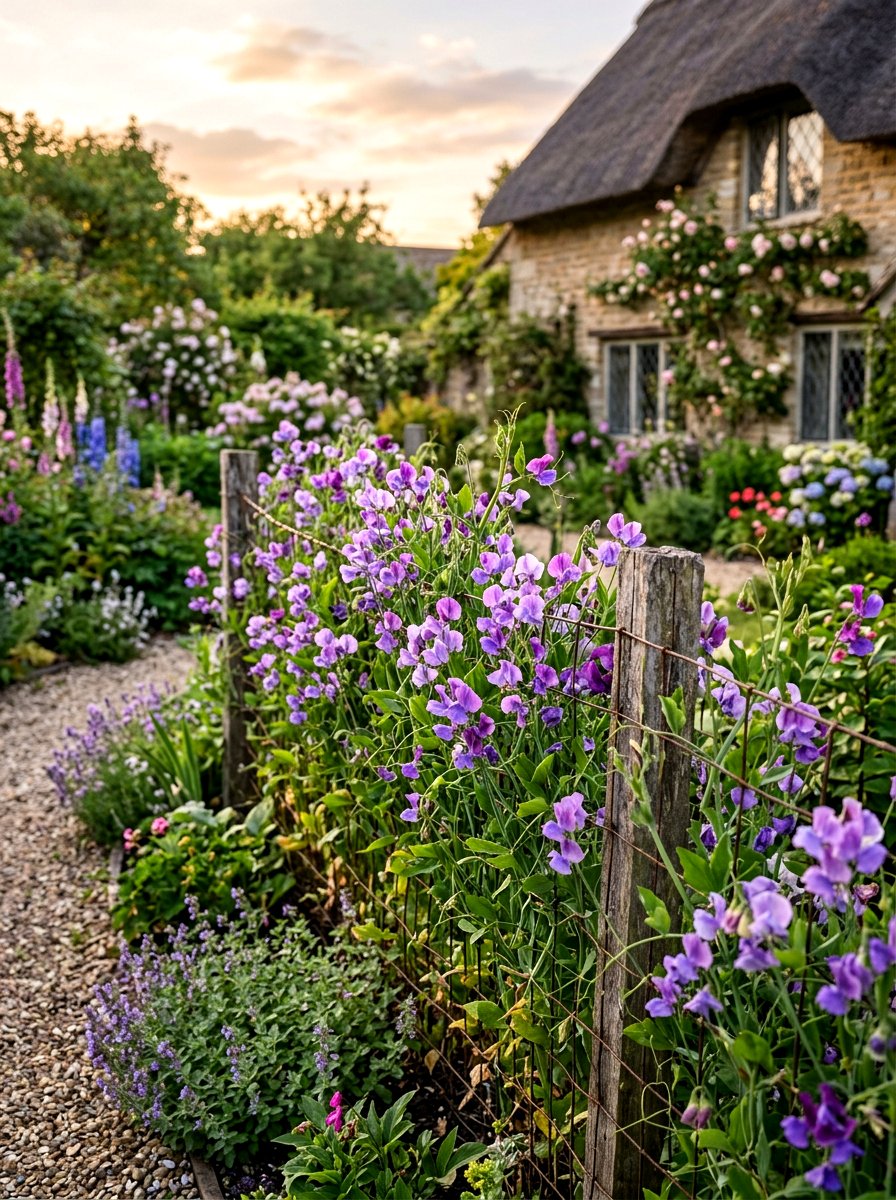
A sweet pea fence provides a vertical display of delicate purple flowers and a wonderful, nostalgic scent. These climbing annuals are famous for their ruffled petals and sweet aroma that fills the summer air. Training them up a wire fence or a trellis allows them to create a living wall of color and fragrance. They come in many shades, from soft lilac to deep maroon-purple. Regular picking of the flowers encourages the plant to produce even more blooms. They are a favorite for cottage gardens and are perfect for creating homegrown bouquets. These charming vines bring a sense of old-fashioned beauty to any garden structure.
22. Delphinium cottage garden
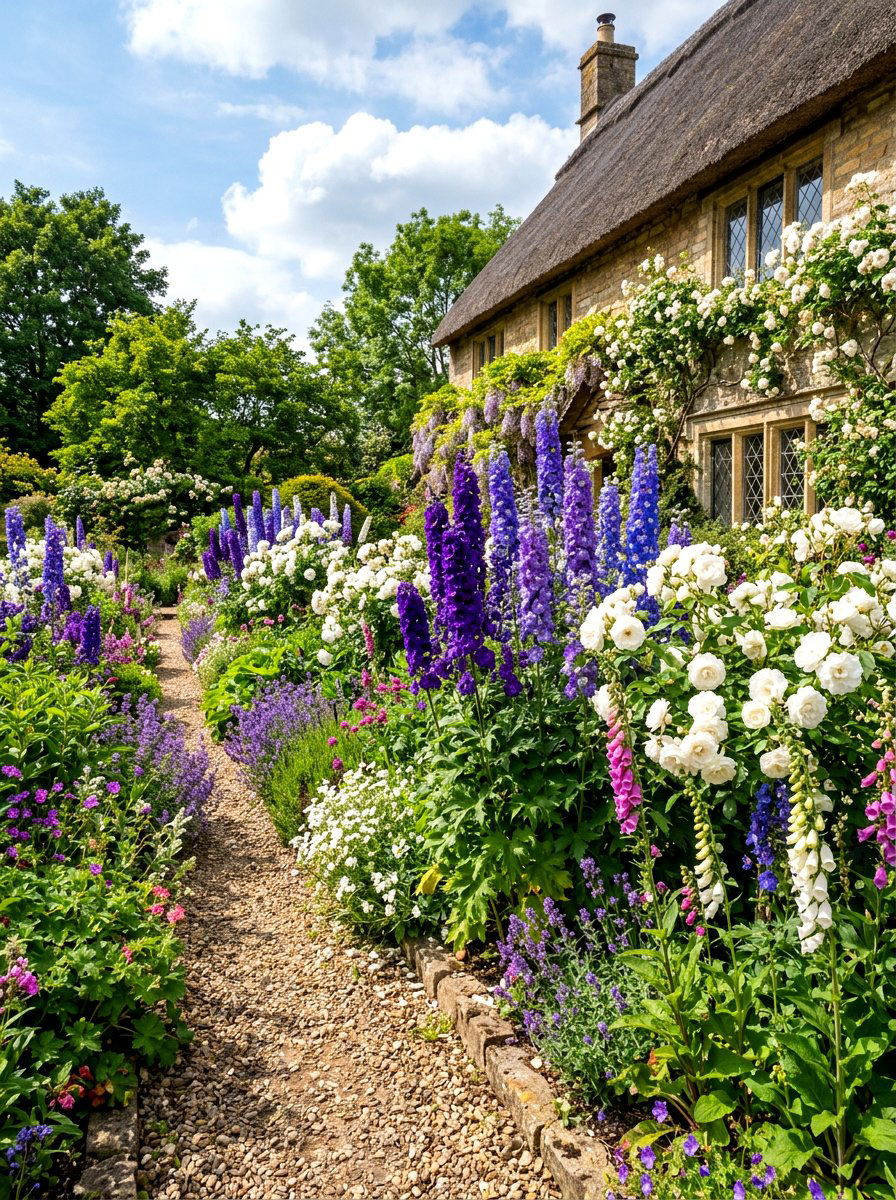
A delphinium cottage garden is iconic for its tall, majestic spires of intense purple and blue flowers. These plants can reach several feet in height, making them the stars of any mixed perennial border. The dense clusters of blooms create a solid pillar of color that is hard to ignore. They prefer rich soil and a spot that is protected from strong winds. Delphiniums provide a sense of grandeur and traditional beauty that is perfect for a classic English-style garden. They look best when planted in groups of three or five for a big impact. These stunning flowers are a must-have for any serious floral enthusiast.
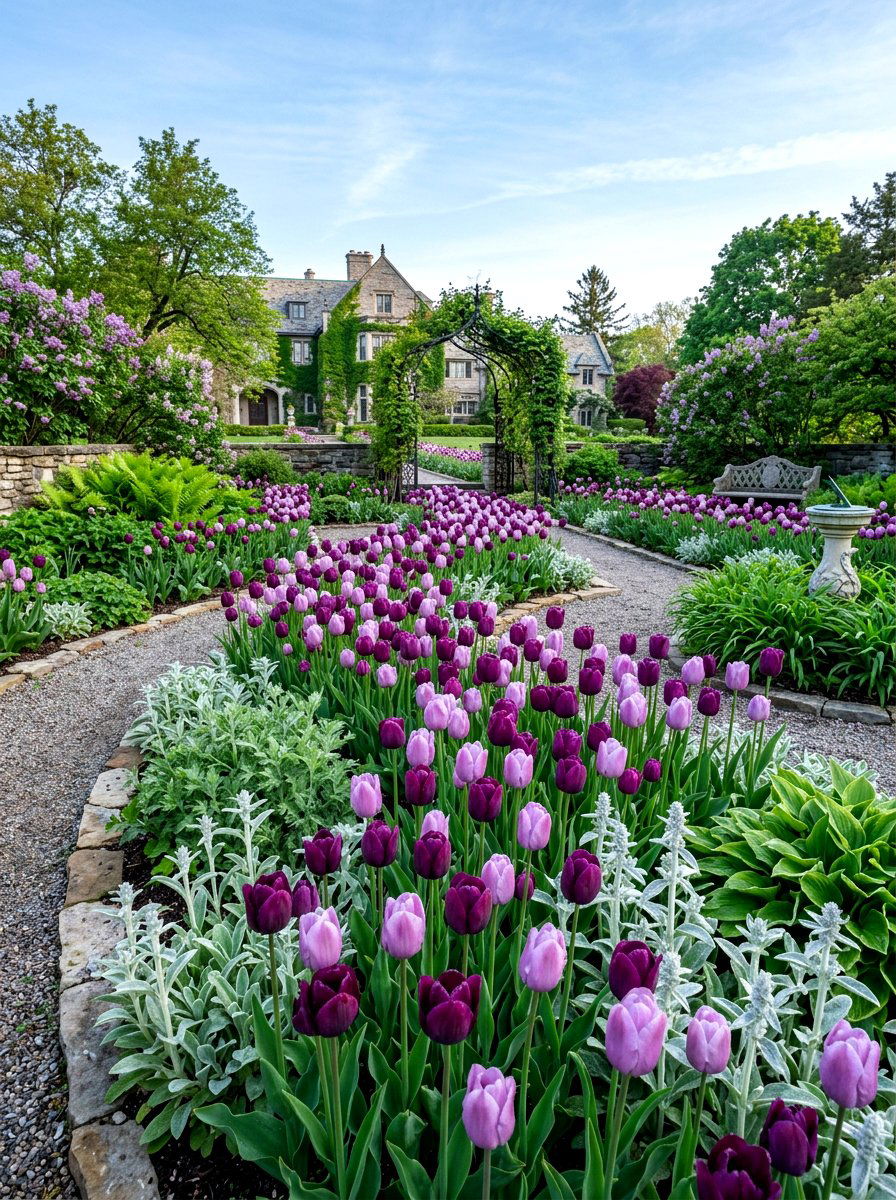
23. Purple tulip bulb display
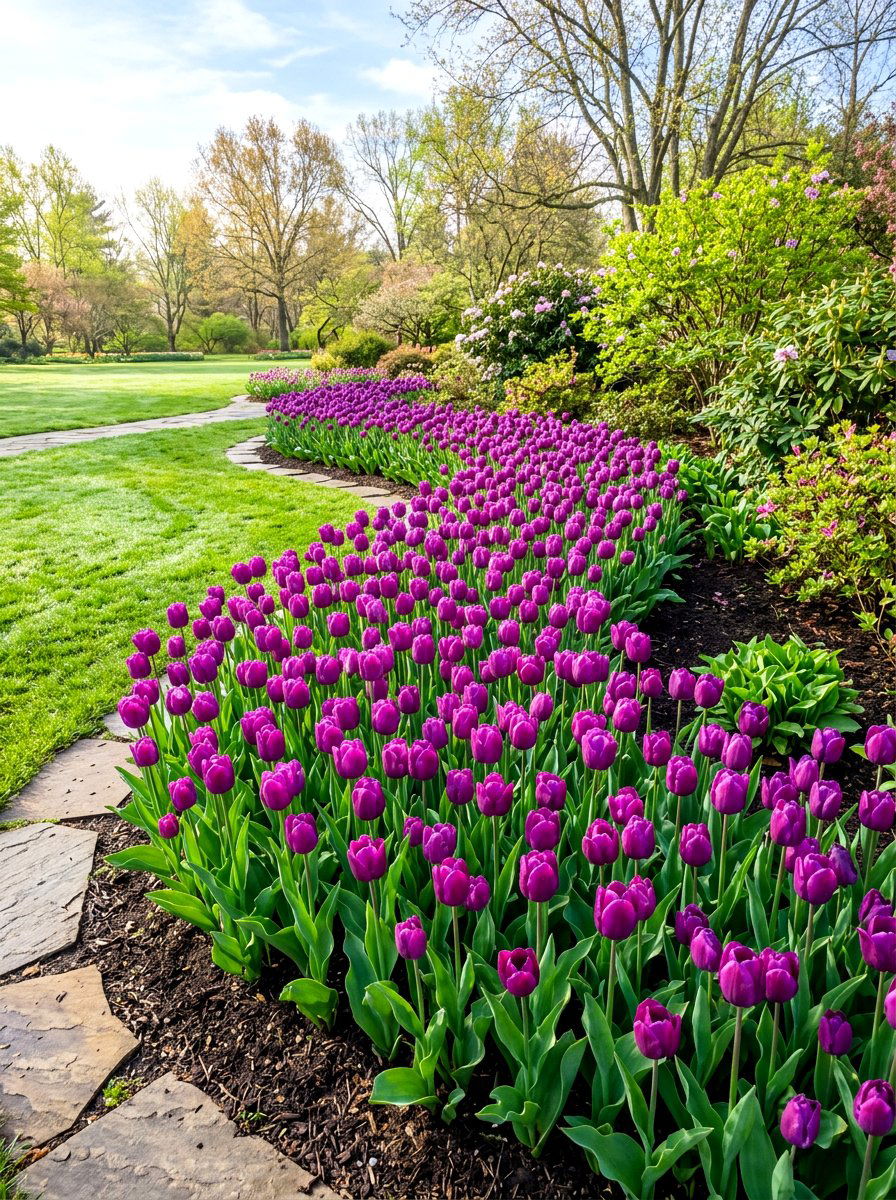
A purple tulip bulb display is a cheerful way to welcome the arrival of spring in your yard. Planting these bulbs in large drifts or patterns creates a high-impact show of color early in the season. You can choose from many varieties, including fringed, double, or classic lily-shaped tulips. Deep plum or vibrant violet shades look particularly striking when planted against a green lawn or white stone. Because they bloom early, they are perfect for interplanting with perennials that will take over later in the summer. These bulbs are easy to plant in the fall and provide a reliable burst of beauty every spring season.
24. Crocus spring lawn
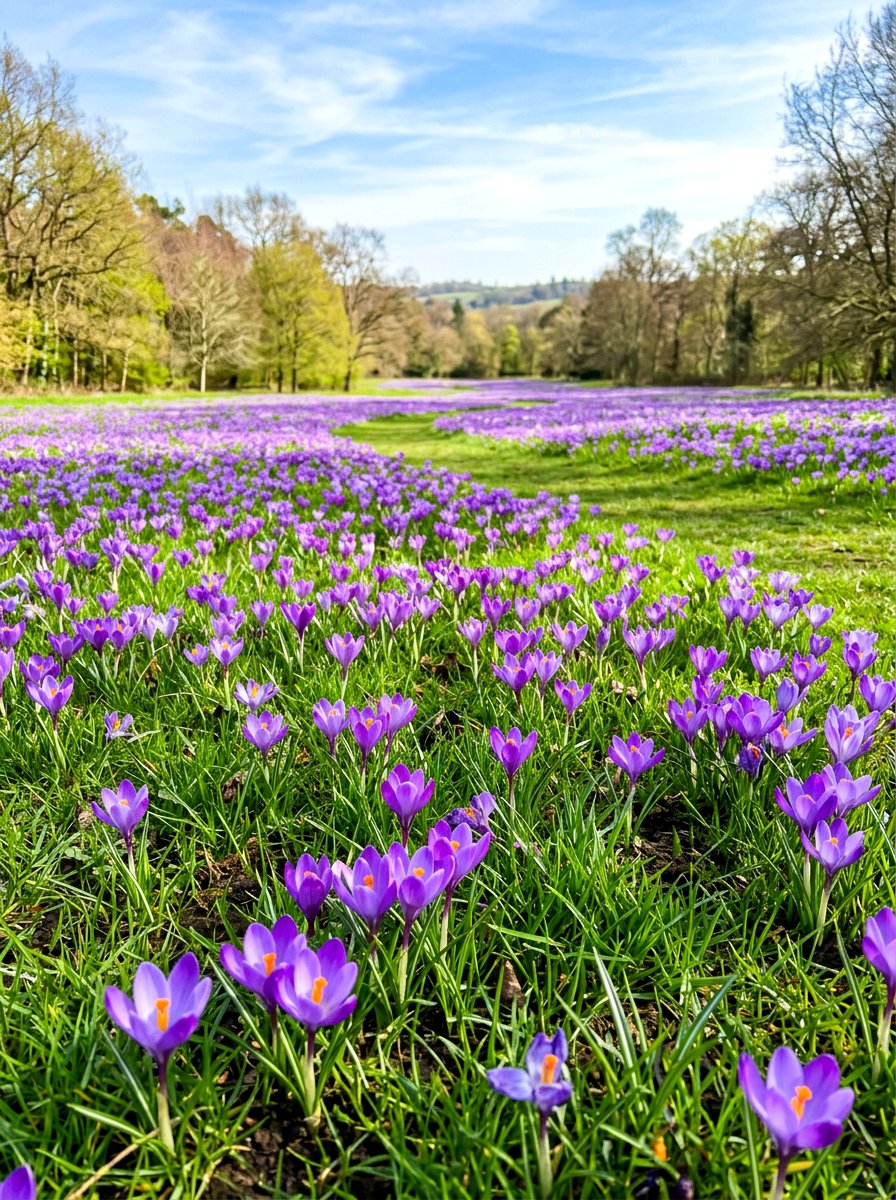
Creating a crocus spring lawn is a charming way to see the first signs of life after winter. These tiny bulbs can be "naturalized" into the grass, where they will pop up through the lawn in early spring. Purple varieties are very traditional and look like little jewels scattered across the yard. They bloom very early, often while there is still snow on the ground in some areas. Because they are low-growing, they do not interfere with early lawn maintenance. They will gradually multiply over the years, creating an even bigger display of color each season. This is a wonderful way to add effortless beauty.
25. Heuchera foliage bed
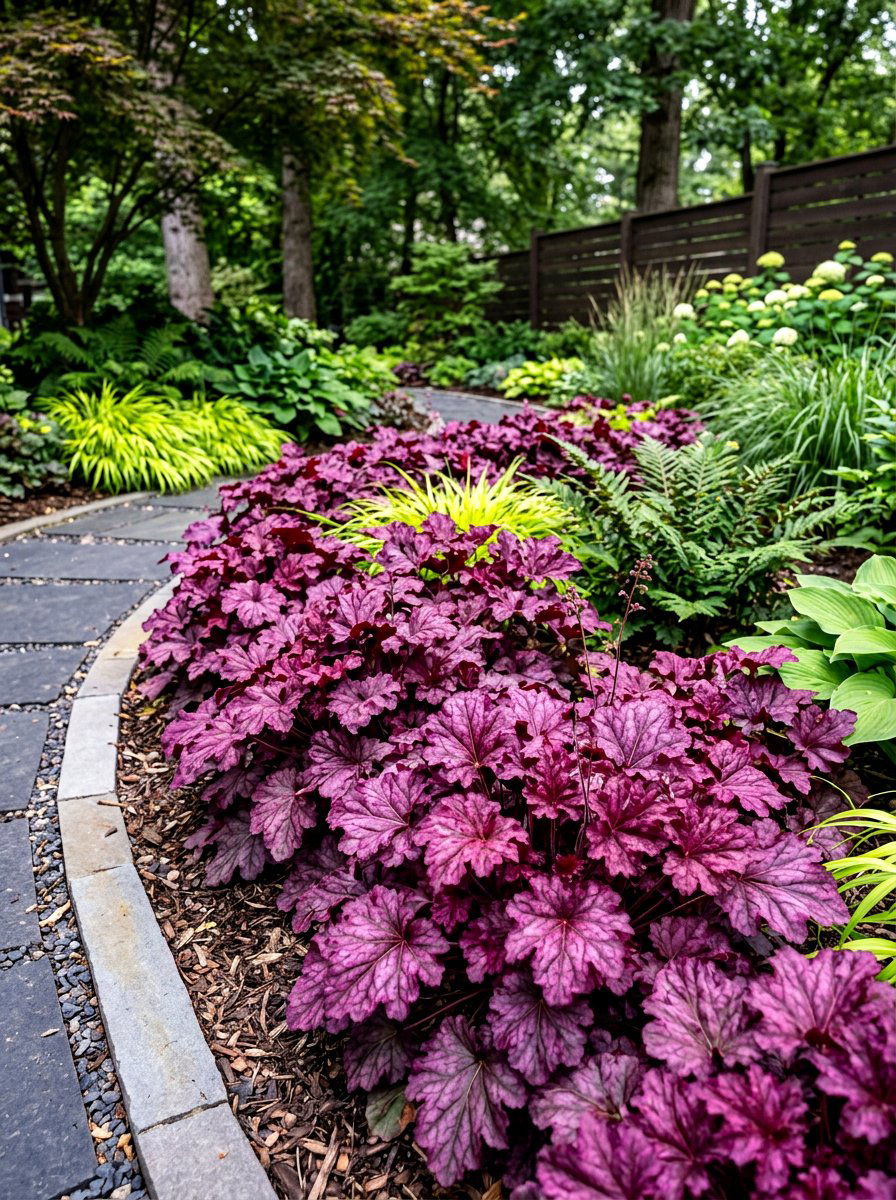
A heuchera foliage bed is a unique way to incorporate purple color using leaves rather than flowers. These plants, also known as coral bells, come in stunning shades of deep burgundy, plum, and violet. The ruffled leaves stay colorful all season long, providing a consistent base for your garden design. They work exceptionally well as a groundcover or a border plant in partial shade. While they do produce small flower spikes, it is the vibrant foliage that makes them a standout choice. They are very easy to care for and look great when paired with lime green or silver plants for a high-contrast and modern look.
26. Morning glory vine
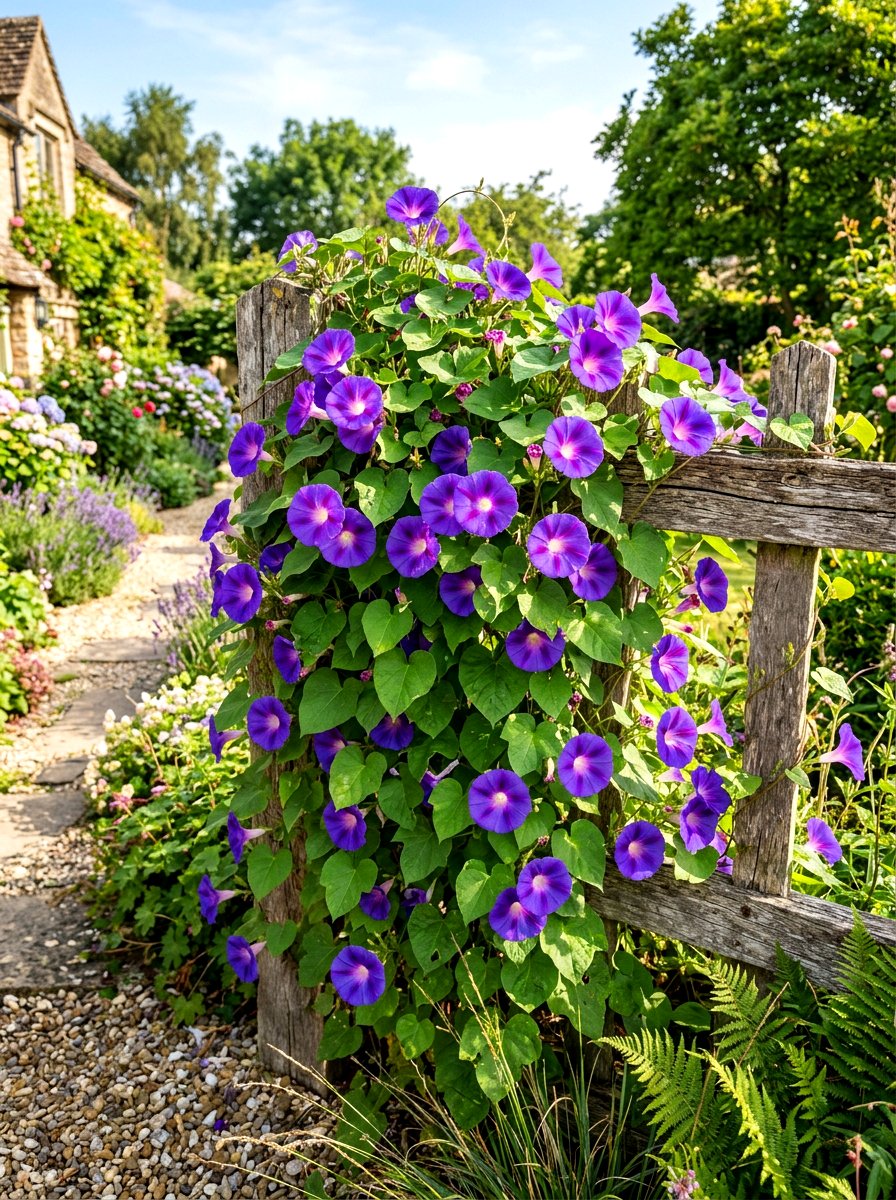
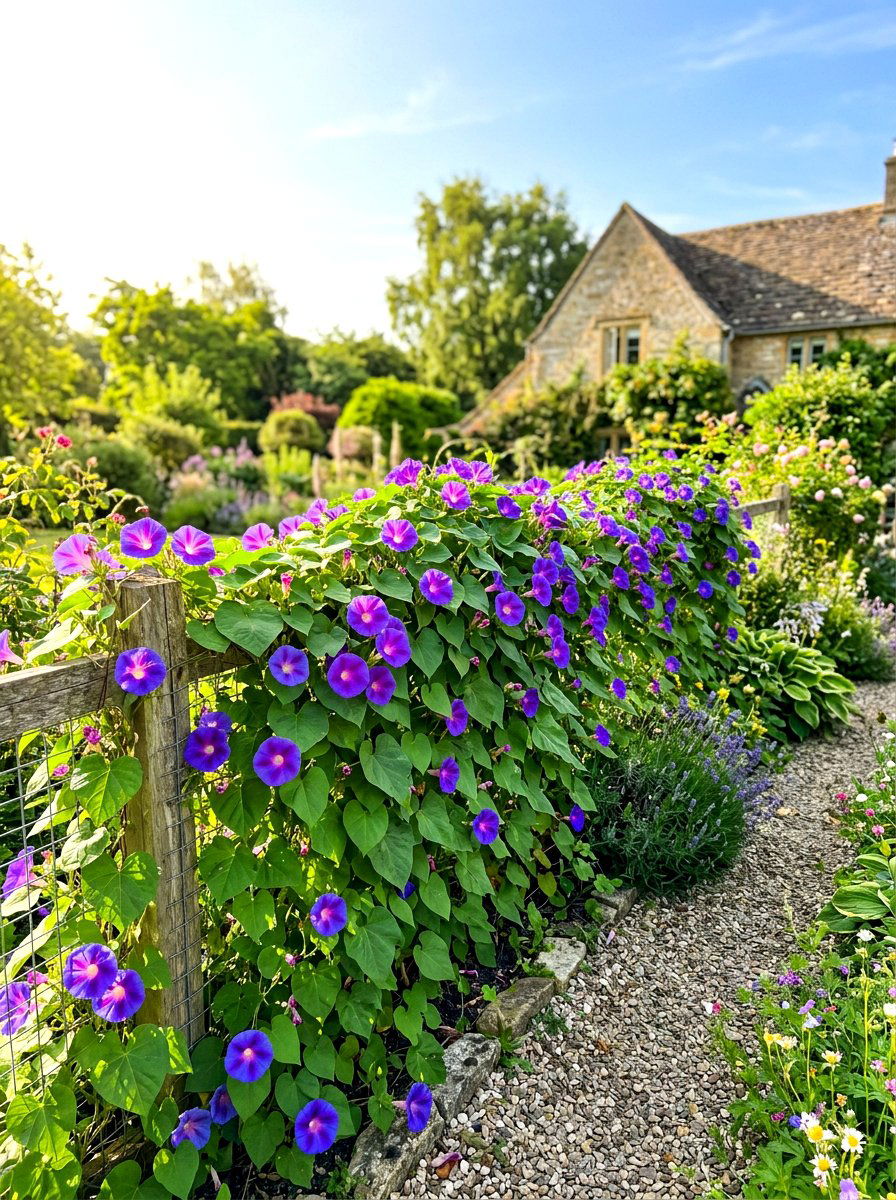
A morning glory vine is a fast-growing way to cover a fence or trellis with vibrant purple flowers. These annual vines produce large, trumpet-shaped blooms that open fresh every morning and close in the afternoon. They are incredibly easy to grow from seed and can quickly provide privacy or shade for an outdoor area. The deep purple varieties often have a bright white or pink throat that adds extra visual interest. They are perfect for a casual or wilder-looking garden where you want a lot of color with minimal effort. These vines bring a sense of daily wonder to your landscape throughout the hot summer months.
27. Butterfly bush corner
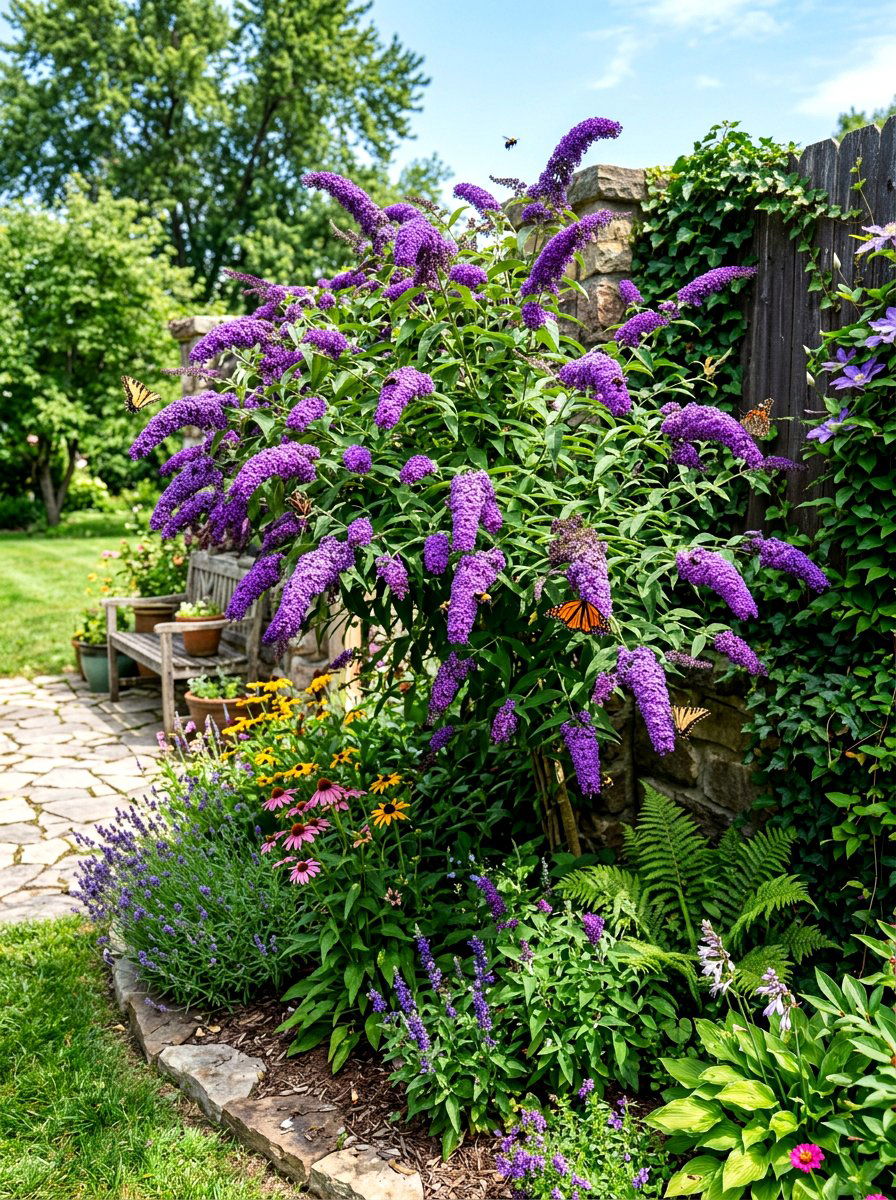
A butterfly bush corner creates a focal point that is literally buzzing with life in late summer. These large shrubs produce long, cone-shaped clusters of tiny purple flowers that are irresistible to pollinators. Placing one in a sunny corner of the yard ensures you will see plenty of butterflies and bees every day. They are very fast growers and can reach a large size in just one or two seasons. Regular deadheading helps to keep the plant blooming for a longer period. The arching branches and dense flowers provide a lush, full look that fills empty spaces beautifully. It is a rewarding and lively addition.
28. Globe thistle texture
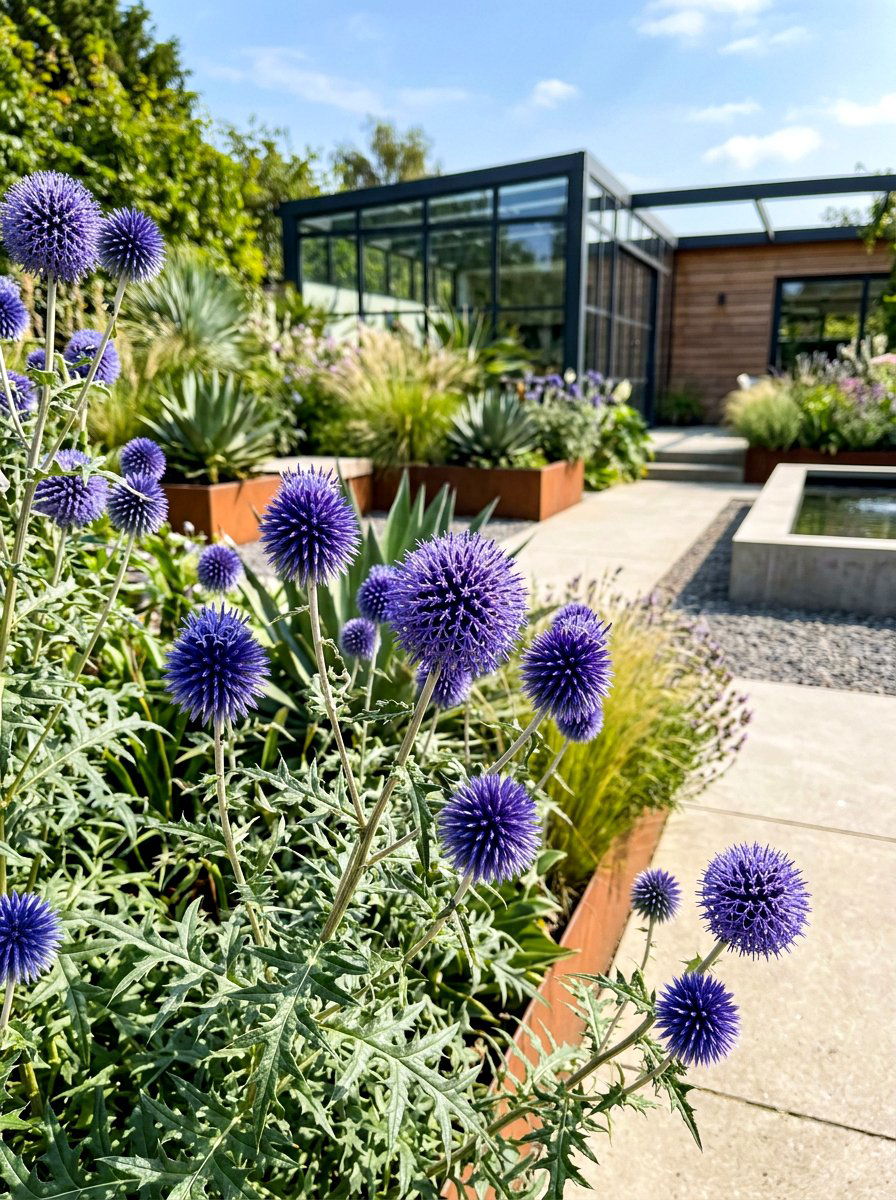
Using globe thistle adds a unique and architectural texture to your perennial garden beds. These plants feature spiky, silver-green leaves and perfectly spherical, steel-blue or purple flower heads. They have a very modern and structural look that stands out among softer-looking flowers. Globe thistles are extremely hardy and can thrive in poor soil and dry conditions. The flowers hold their shape for a long time and are even beautiful when they have dried on the plant. They are a great choice for adding a touch of drama and unusual form to a mixed border. They are also very attractive to bees and other helpful garden insects.
29. Anemone fall garden
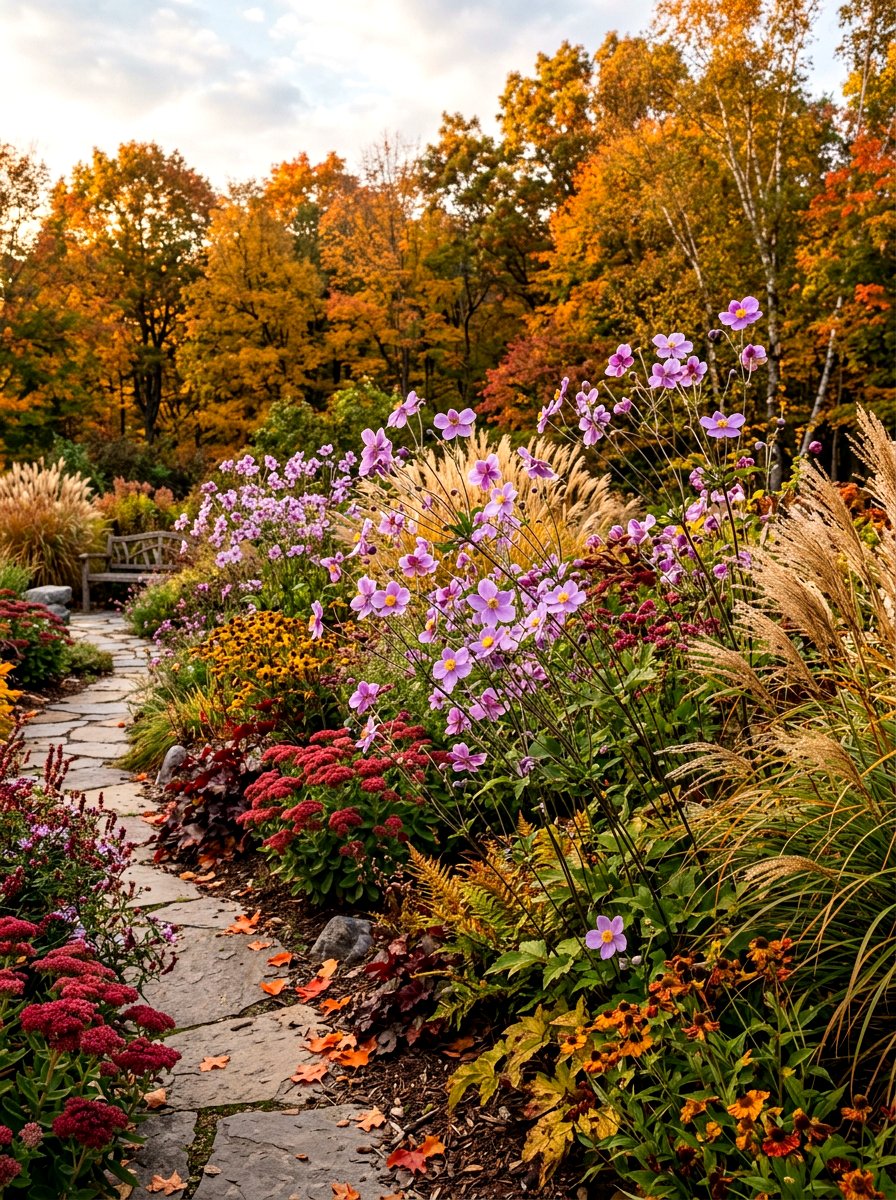
An anemone fall garden provides a delicate and sophisticated burst of purple just as other plants are starting to fade. These "windflowers" feature tall, graceful stems and simple, elegant blossoms with yellow centers. They bring a fresh and airy feel to the late-season landscape. Deep violet or lavender varieties look beautiful when planted in large groups under trees or at the back of a border. They are perfect for bridging the gap between summer and frost. The flowers dance in the breeze, adding a sense of movement to the garden. They are a reliable and lovely way to end the growing season with style.
30. Purple pansy pot
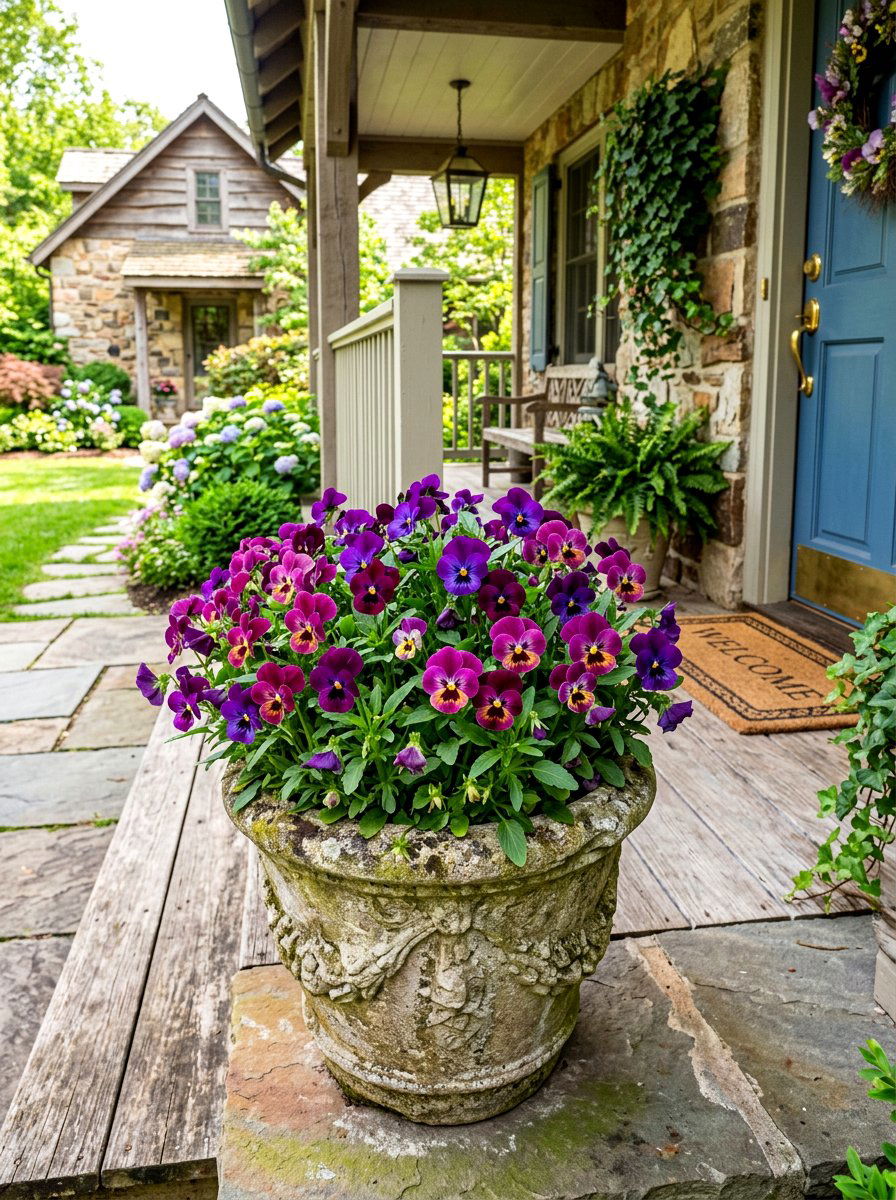
A purple pansy pot is a simple and versatile way to add color to a patio, steps, or window box. These cheerful flowers are very hardy and can handle the cool temperatures of early spring and late fall. They come in many shades of purple, including solid colors and those with "faces" in contrasting hues. Grouping several pots together creates a concentrated splash of color that is very effective in small spaces. Pansies are low-maintenance and will continue to bloom if you remove the faded flowers. They are the perfect choice for seasonal decorating and bringing a touch of charm to your home's exterior areas.
Conclusion:
A purple flower garden is a timeless way to enhance your home’s landscape with elegance and charm. By choosing a variety of plants, you can ensure that your outdoor space remains colorful from early spring through the late fall. Purple blooms offer a unique versatility that works well in formal, modern, or rustic settings alike. Whether you plant tall architectural alliums or soft carpets of creeping phlox, the result will be a sophisticated and peaceful retreat. This color not only looks beautiful but also supports local ecosystems by attracting vital pollinators. Start incorporating these ideas today to create a vibrant and regal backyard sanctuary.

Related posts: