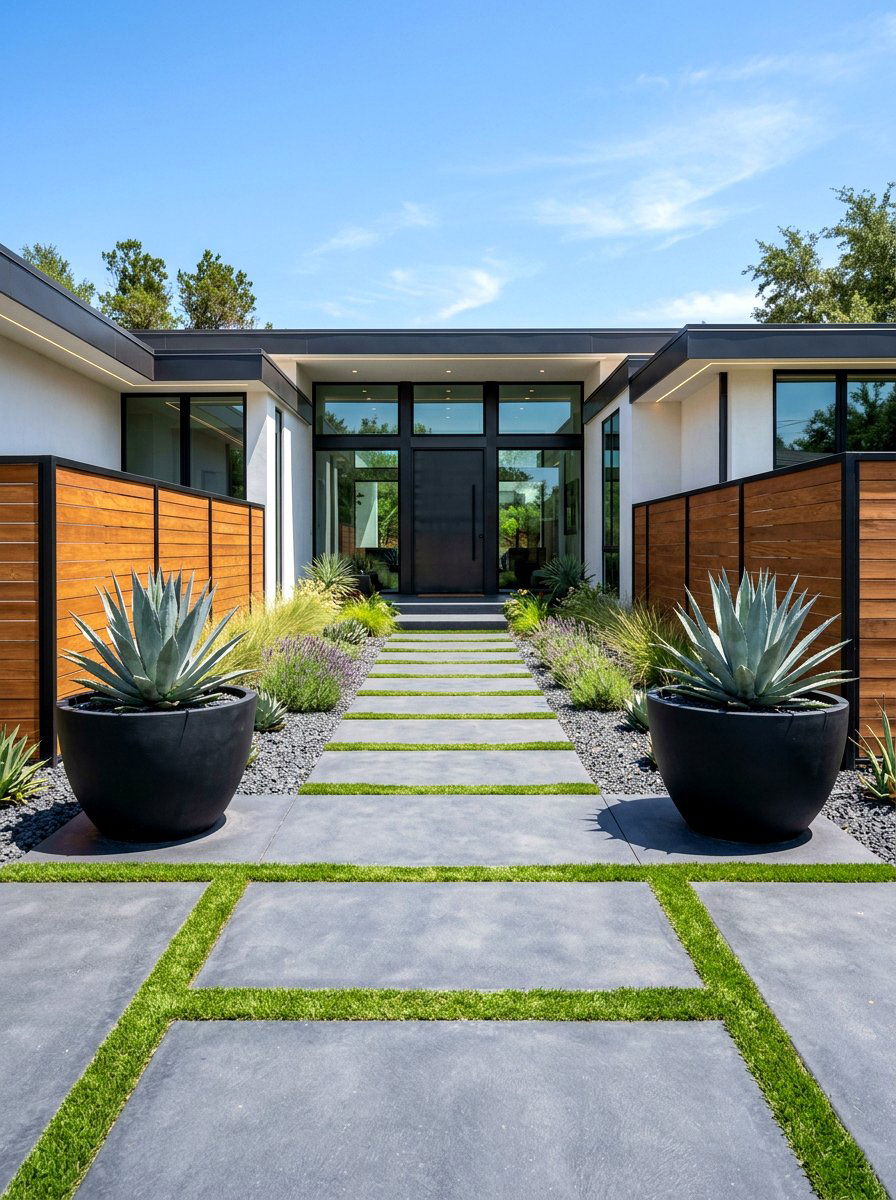
Creating a stunning English garden involves blending structure with a sense of romantic wildness that feels both intentional and effortless. This classic landscaping style remains a favorite for homeowners who want to transform their outdoor spaces into a lush sanctuary filled with fragrance, color, and timeless charm. Whether you are working with a sprawling backyard or a tiny urban plot, the principles of British garden design offer endless inspiration for any environment. From neatly clipped hedges that provide architectural backbone to the overflowing abundance of perennial borders, every element works together to tell a story of nature’s beauty. You can easily achieve this look by focusing on layered planting and traditional materials.
1. English Rose Garden
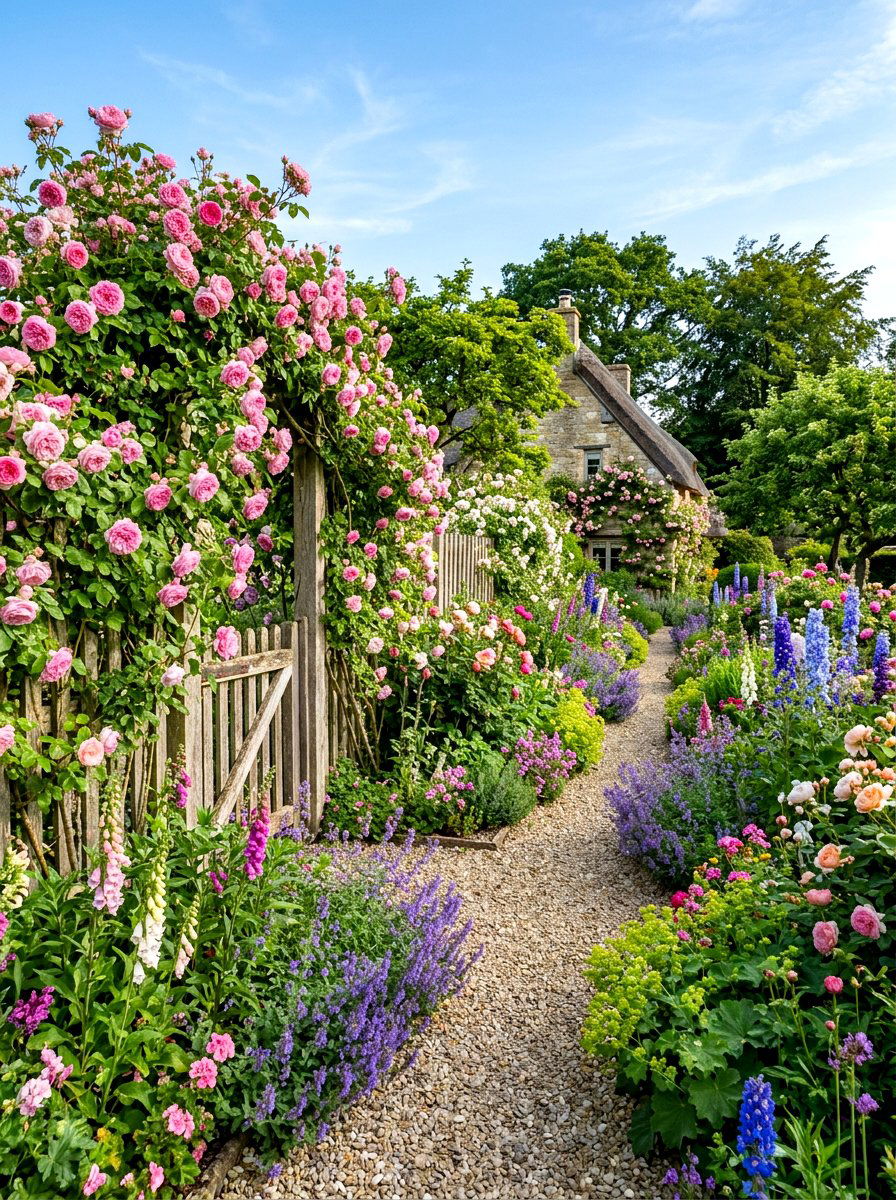
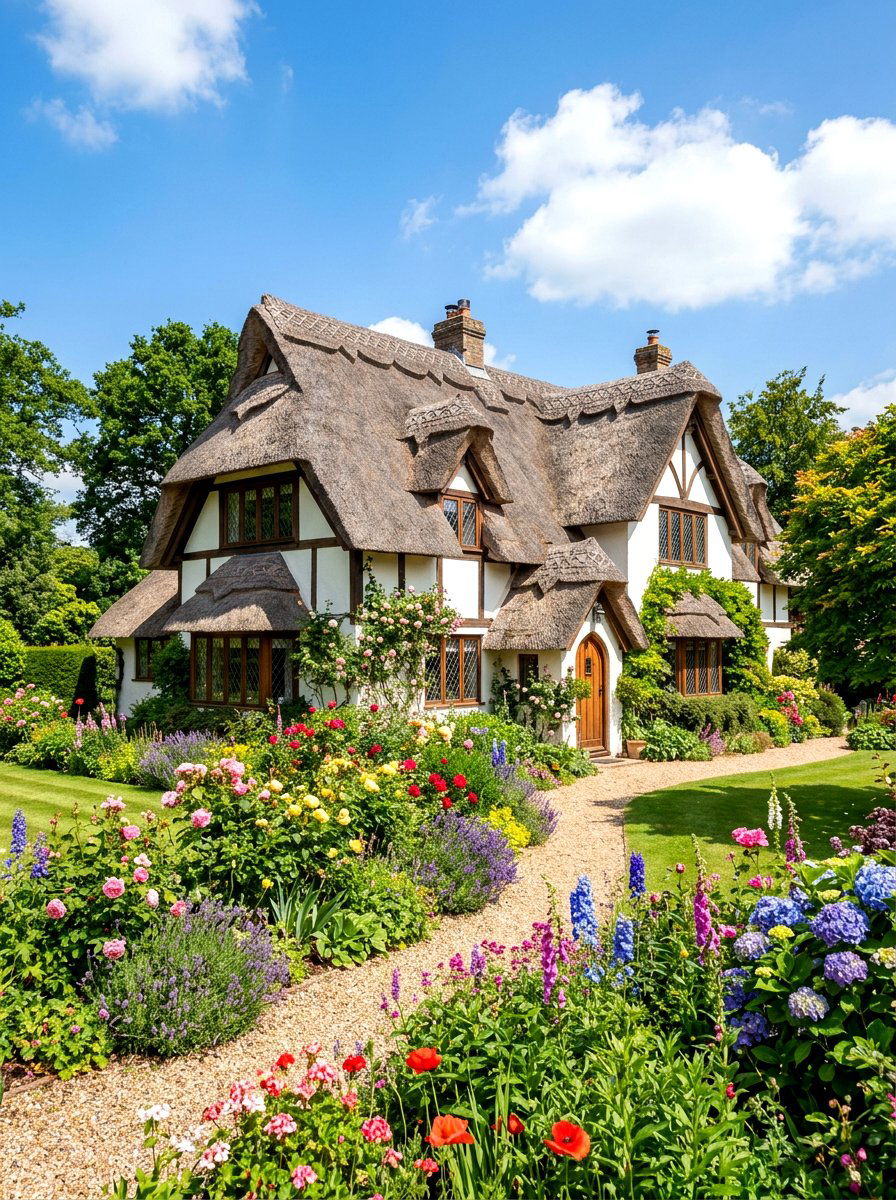
Nothing defines the classic British aesthetic more than a dedicated rose garden filled with fragrant, multi-petaled blooms. To achieve this viral Pinterest look, you should focus on David Austin varieties which offer that iconic cabbage-like shape and intoxicating scent. Plant these in large clusters or allow them to climb over weathered wooden fences to create a sense of vertical abundance. Incorporating different heights, from low-growing shrub roses to towering climbers, ensures that the visual interest remains high throughout the summer season. Always remember to mulch well and choose a sunny spot to keep these royal flowers healthy and vibrant for years of enjoyment.
2. Gravel Garden Path
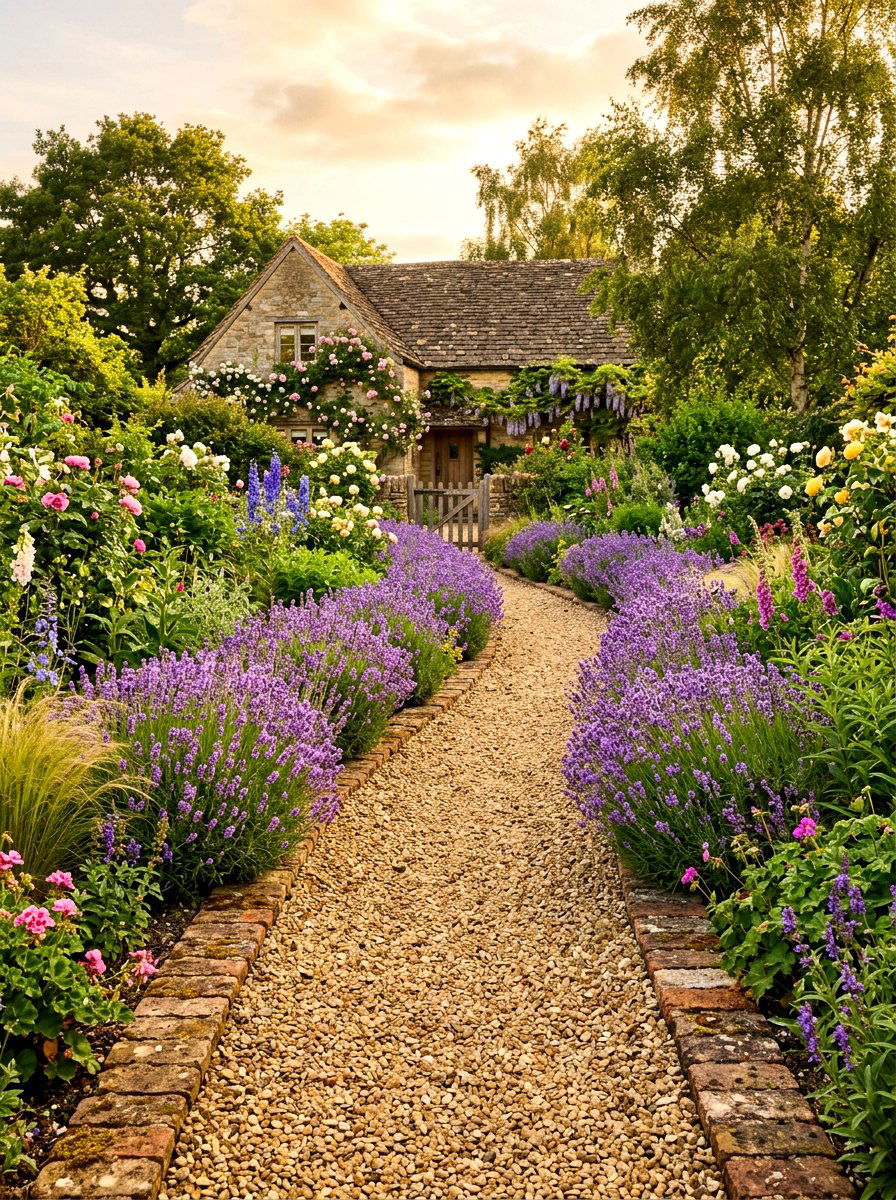
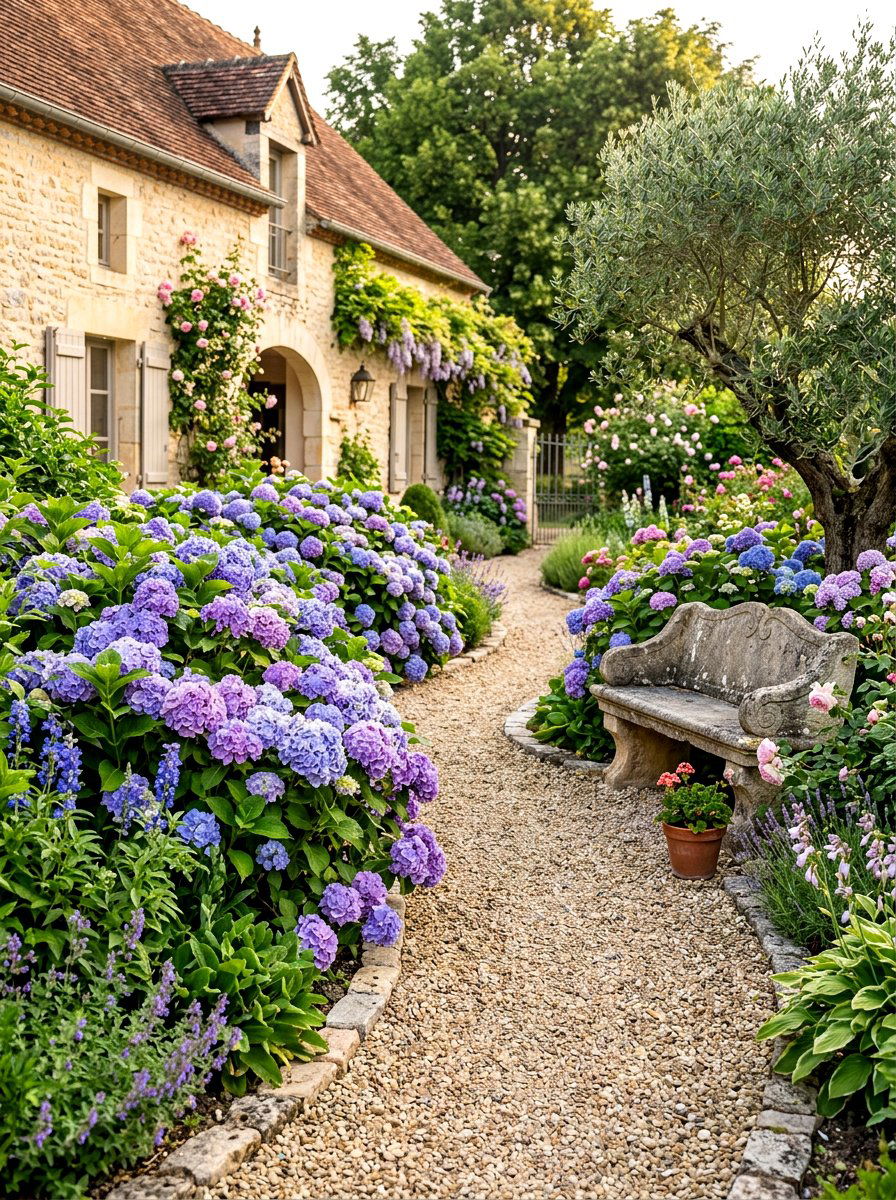
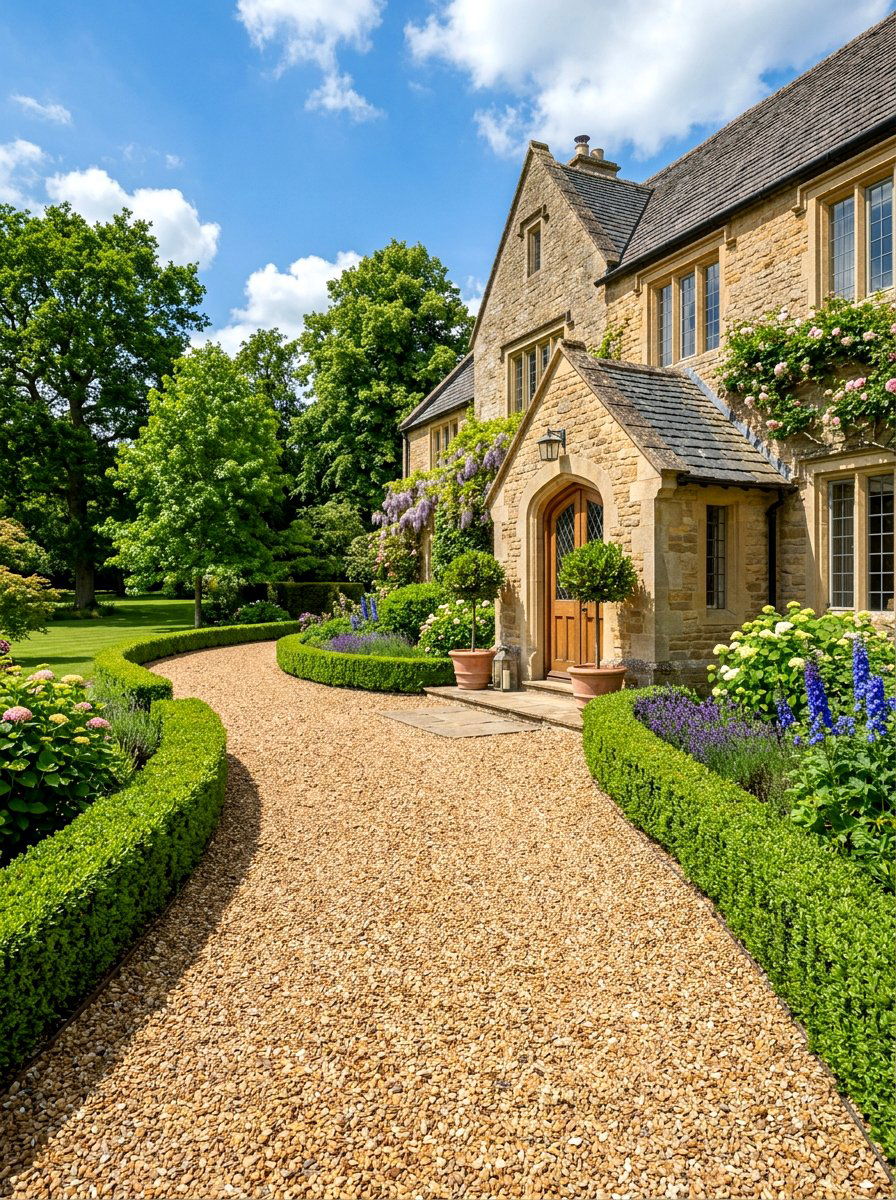
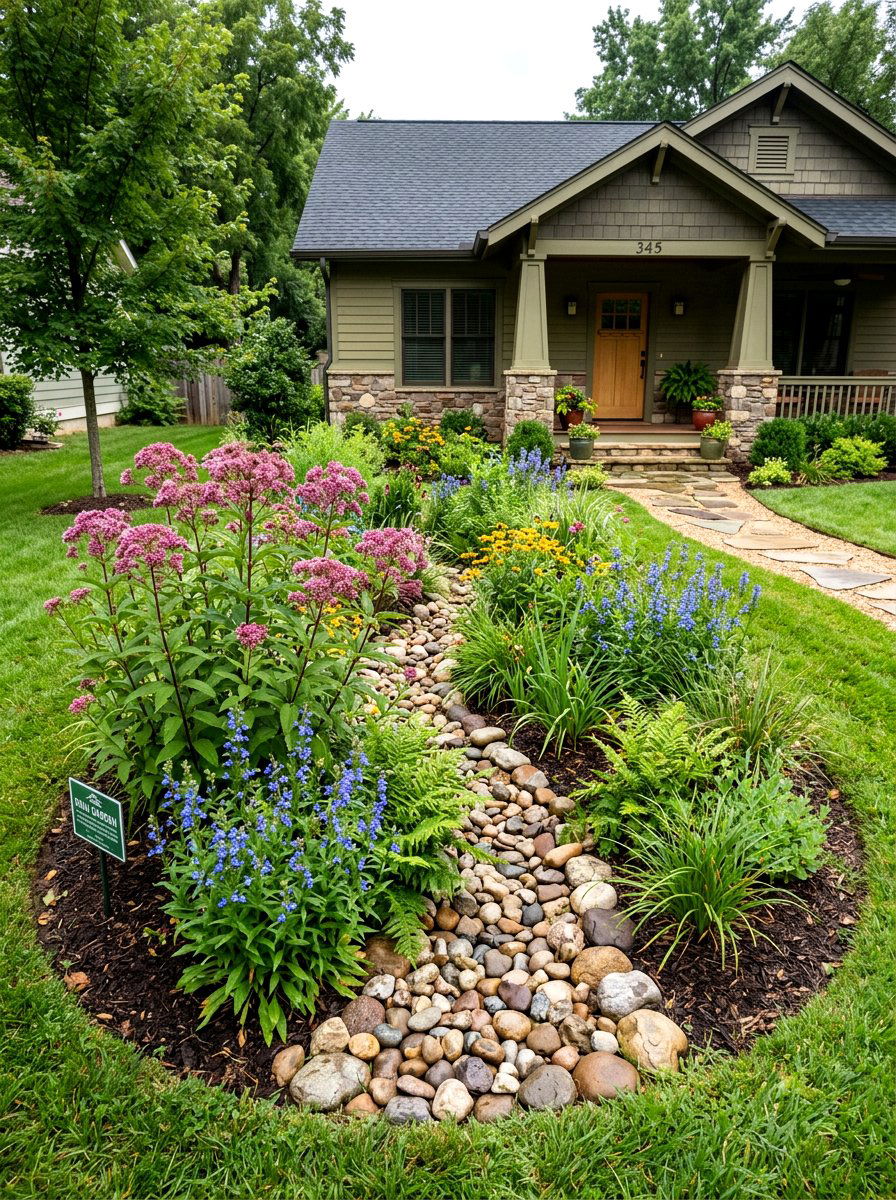
A crunching gravel path adds an immediate sensory experience to your outdoor space while providing a practical and low-maintenance walkway. Using warm-toned Cotswold stone or light grey pea shingle creates a soft, natural look that complements green foliage perfectly. To make this feature truly stand out, you can edge the path with weathered bricks or hidden metal strips to keep the stones in place. This design choice is particularly popular in 2025 because it allows for better drainage and even permits self-seeding plants like Mexican daisies to grow in the cracks. It effectively bridges the gap between formal structure and wild, natural beauty.
3. Boxwood Hedge Border
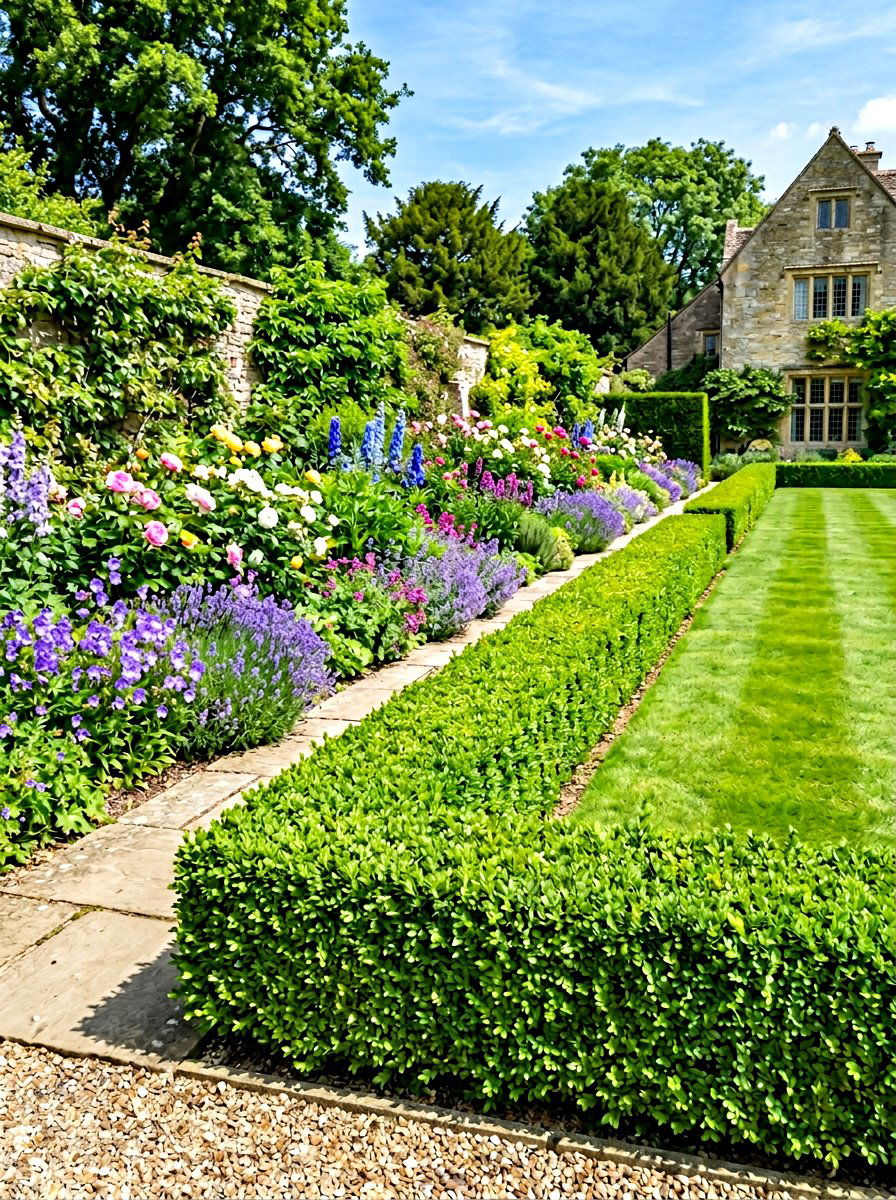
Structure is the secret ingredient to any successful English landscape, and neatly clipped boxwood hedges provide the perfect evergreen framework. These low-growing shrubs act as the "bones" of the garden, defining separate areas and keeping the more chaotic flower beds looking organized and tidy. You can use them to line a primary walkway or to frame a central focal point like a statue or fountain. Keeping them tightly pruned into rectangular or rounded shapes provides a satisfying contrast against the soft, billowing perennials that will spill over them during the peak growing months. They offer year-round greenery and essential architectural interest.
4. Herbaceous Perennial Border
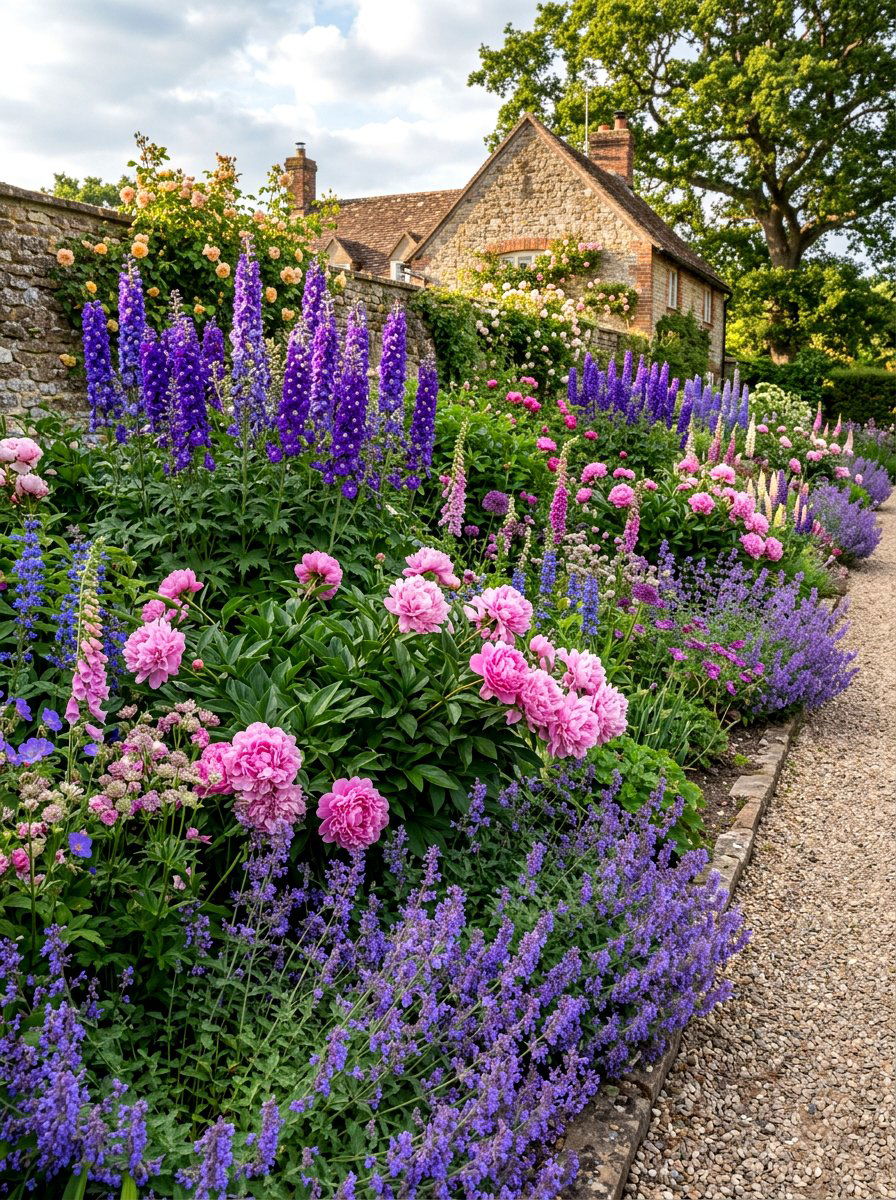
The herbaceous border is a masterclass in layering different plant species to create a continuous wave of color from spring through autumn. To get that quintessential English look, you should place taller plants like delphiniums and hollyhocks at the back of the bed, while medium-height salvias and peonies fill the center. Finally, let shorter species like catmint and lady’s mantle soften the edges by spilling out onto the lawn or path. This dense planting technique not only looks incredibly lush in photographs but also helps to suppress weeds naturally by leaving no bare soil exposed to the bright afternoon sun.
5. Cottage Garden Flowers
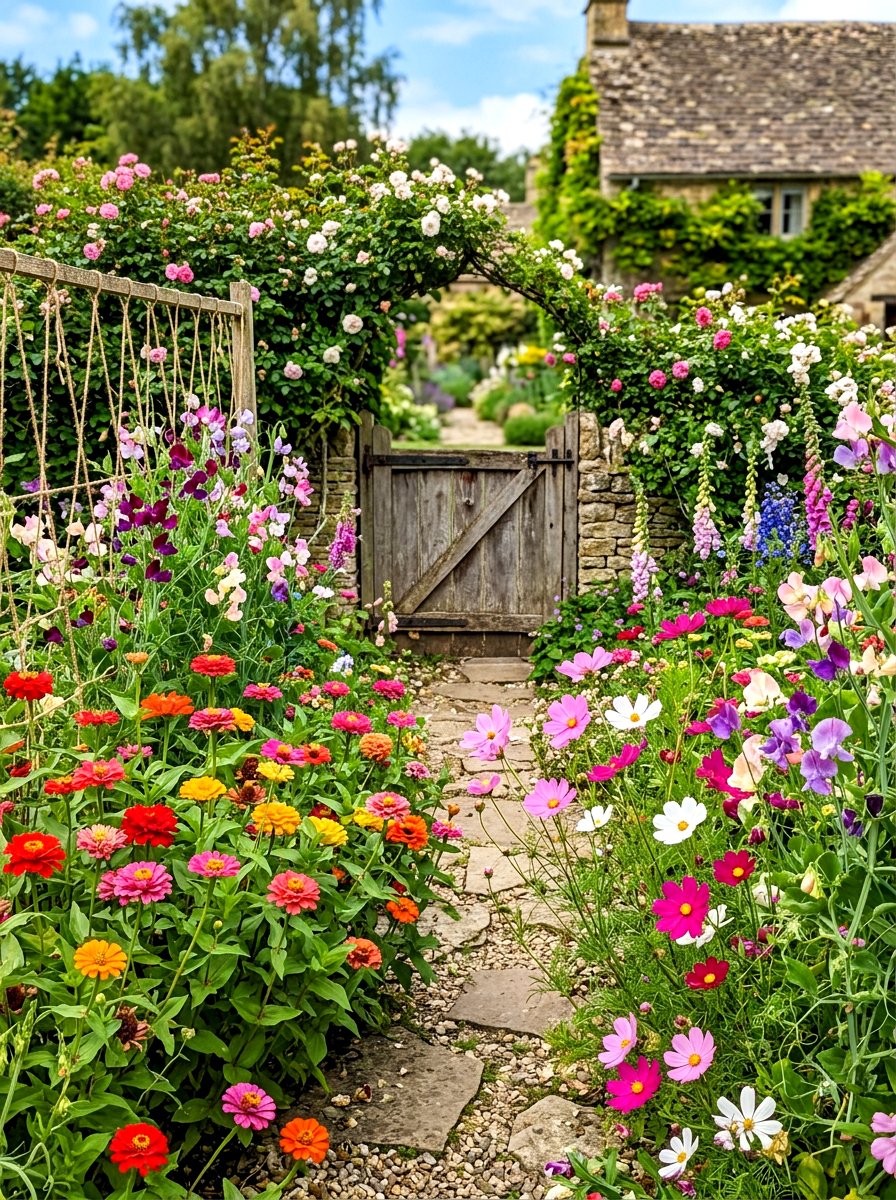
Cottage gardens are all about a "more is more" approach, where flowers are encouraged to mingle and self-seed in a beautiful, informal mess. Focus on a mix of annuals and perennials like cosmos, zinnias, and sweet peas to ensure there is always something blooming for the pollinators. This style is less about perfect symmetry and more about the joyful celebration of variety and texture. You can incorporate heirloom varieties to give the space an authentic, historic feel that looks like it has been there for decades. It is a fantastic way to bring life, movement, and a whimsical spirit to your home.
6. Climbing Rose Trellis
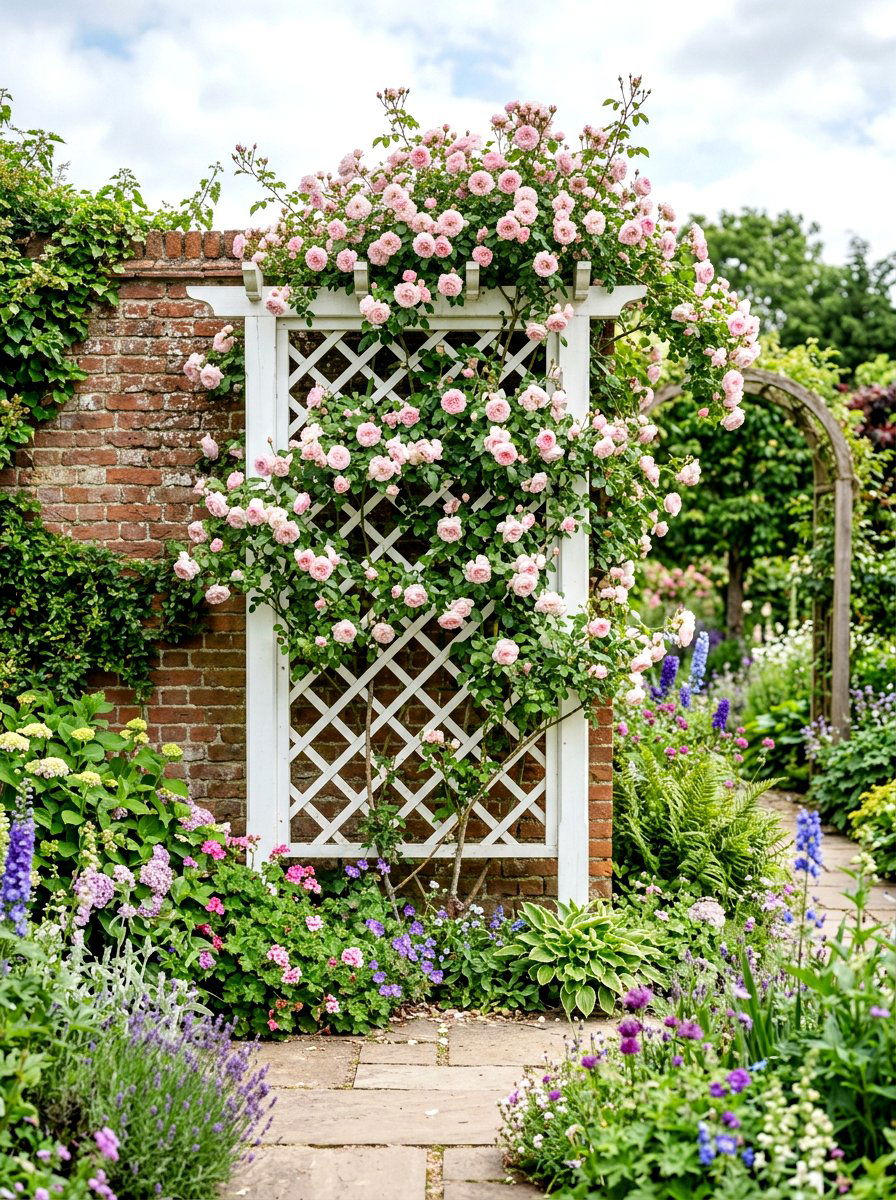
Adding vertical interest is a great way to make a small garden feel much larger and more immersive for everyone. A climbing rose trellis provides a romantic backdrop for any outdoor seating area or blank exterior wall of your house. Choose varieties like 'The Generous Gardener' or 'New Dawn' for their vigorous growth and repeat-blooming habits. Training the canes horizontally helps to encourage more flower production along the entire length of the plant. This creates a wall of color and scent that can transform a basic fence into a stunning floral masterpiece. It truly elevates the entire atmosphere of your outdoor living space.
7. Stone Garden Statue
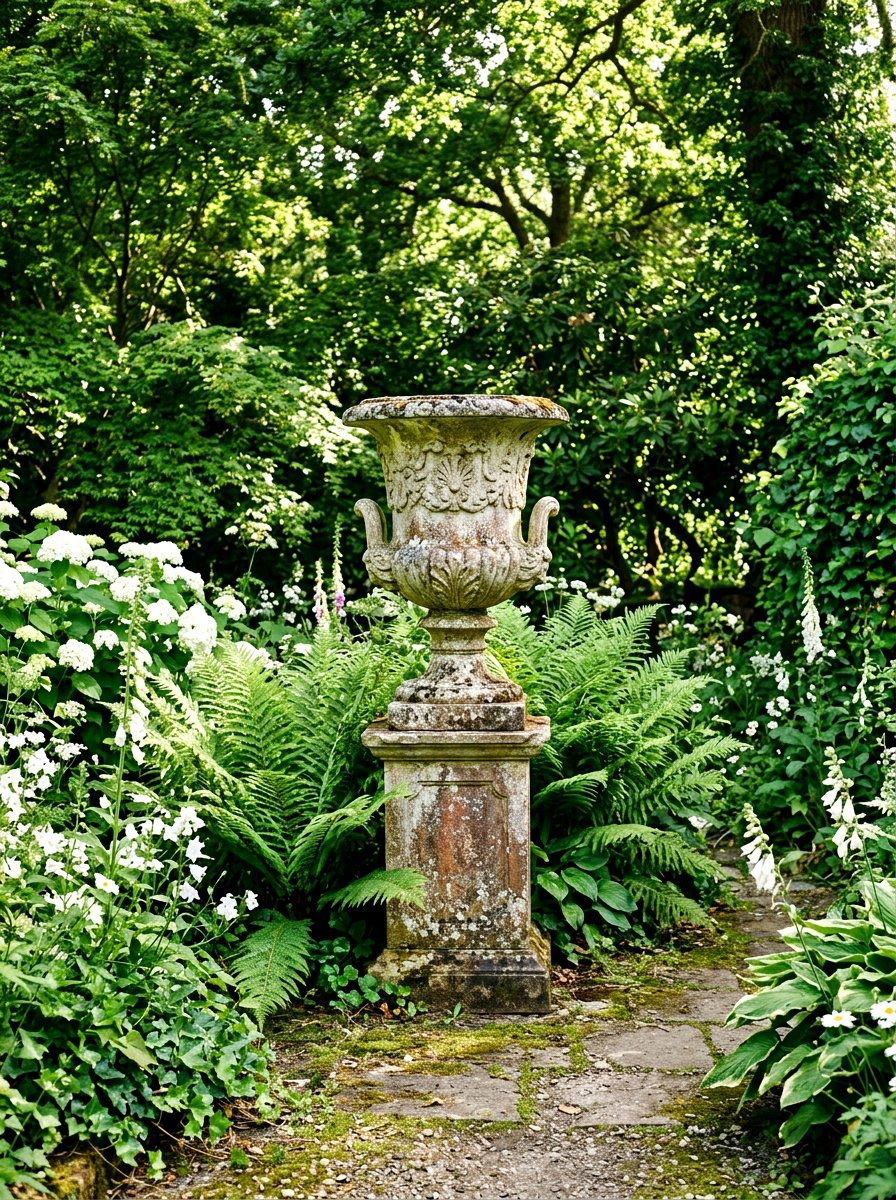
Incorporating a weathered stone statue or a classic urn provides a sophisticated focal point that draws the eye through the landscape. These architectural elements add a sense of history and permanence, making even a new garden feel established and cultured. Place a statue at the end of a long vista or tucked away in a hidden corner to create a sense of discovery for visitors. As the stone ages and develops a layer of moss or lichen, it blends even more beautifully with the surrounding greenery. This classic design choice is a staple in many of the world’s most famous English estates.
8. Wisteria Covered Pergola
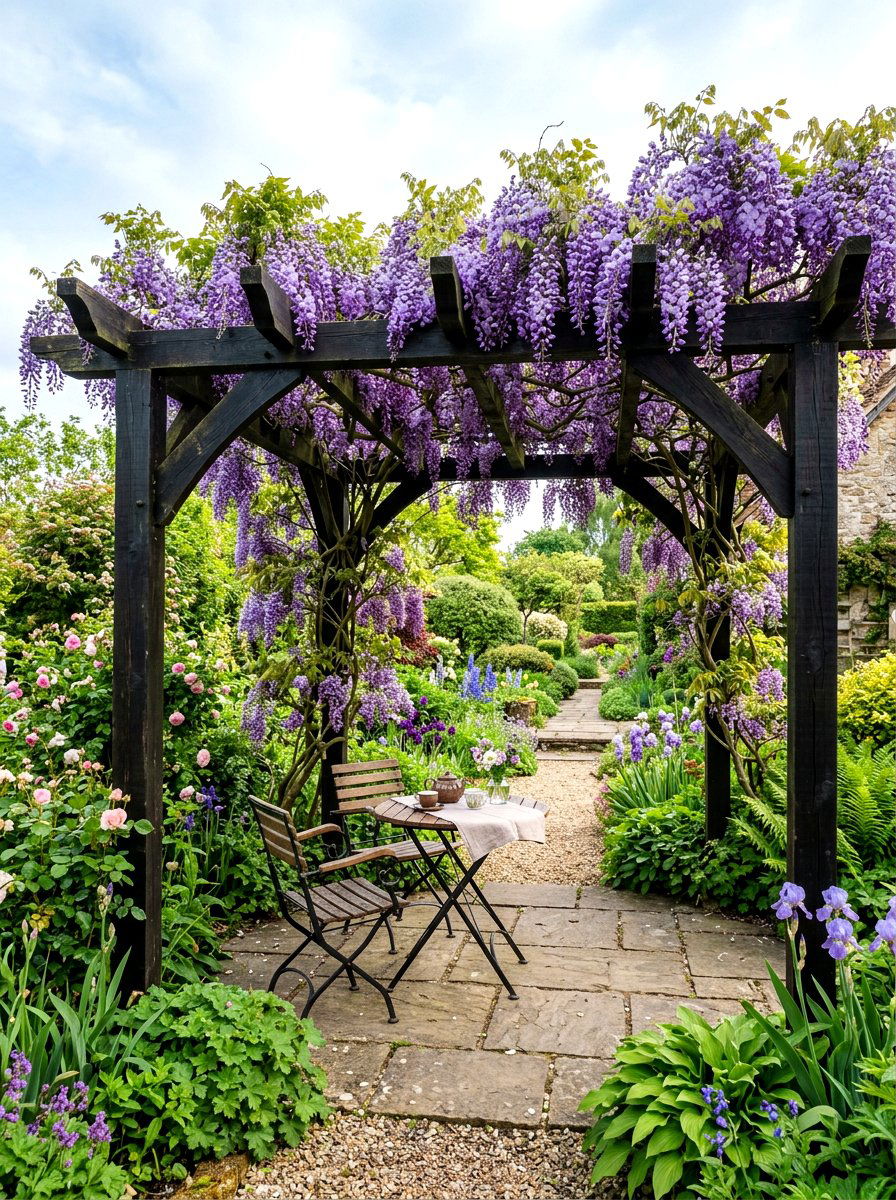
A pergola draped in cascading wisteria is perhaps the most romantic feature you can add to an English-style backyard. In late spring, the long, pendant-like blooms create a fragrant purple canopy that feels like something out of a dream or a classic novel. This structure provides a shaded retreat for outdoor dining or relaxing with a good book during the warmer months. Even when the flowers have faded, the twisted, woody vines and lush green leaves offer excellent architectural interest. It is a bold statement piece that adds significant character and a luxurious, high-end feel to any property or garden.
9. Lavender Walkway
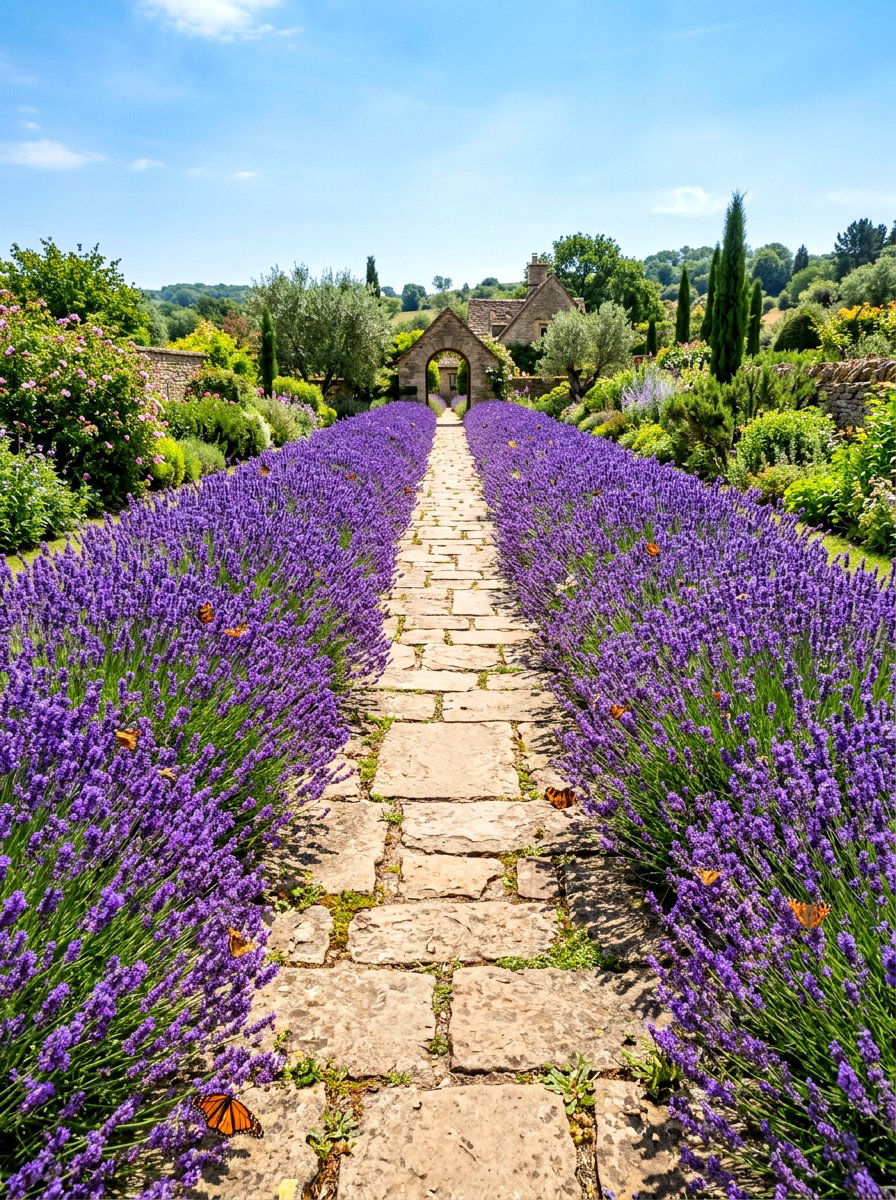
Lavender is a must-have for any garden that prioritizes scent and sensory appeal alongside its visual beauty. Planting a row of lavender along a primary walkway ensures that every time you brush past, a relaxing fragrance is released into the air. This plant is exceptionally hardy and drought-tolerant, making it an eco-friendly choice for modern landscapes that face warmer summers. The silvery-grey foliage provides a beautiful contrast to darker green plants even when the purple spikes are not in bloom. It attracts a wealth of bees and butterflies, turning your path into a buzzing hub of local wildlife and nature.
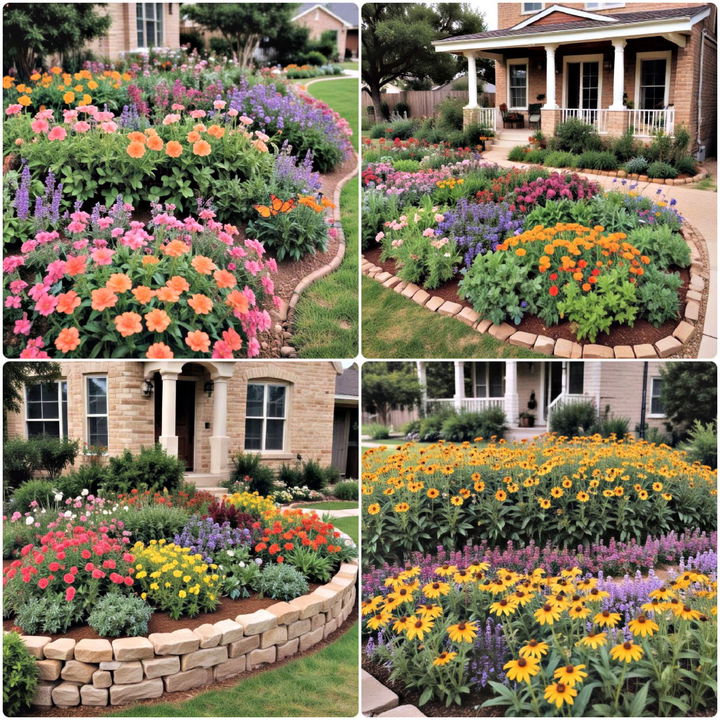
10. Walled Garden
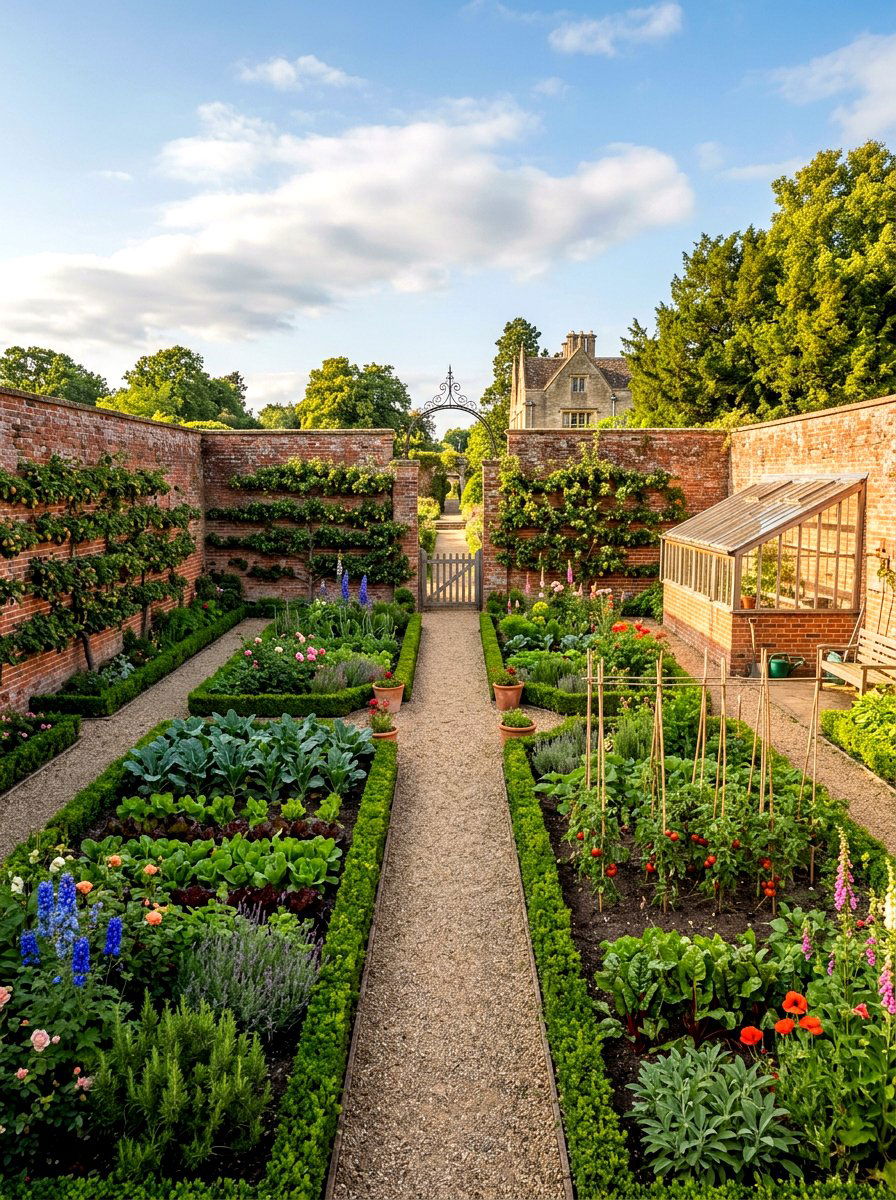
A walled garden offers a sense of privacy and seclusion that is hard to replicate with standard fencing or open hedges. Using traditional red brick or local flint stone helps to create a protected microclimate where more delicate plants can thrive away from harsh winds. These walls can also serve as a support for fruit trees like apples and pears, which can be trained flat against the surface in a technique known as espalier. This combination of functionality and beauty is a hallmark of grand British estates. It creates an intimate "outdoor room" feeling that is perfect for quiet reflection or entertaining guests.
11. Victorian Glass Greenhouse
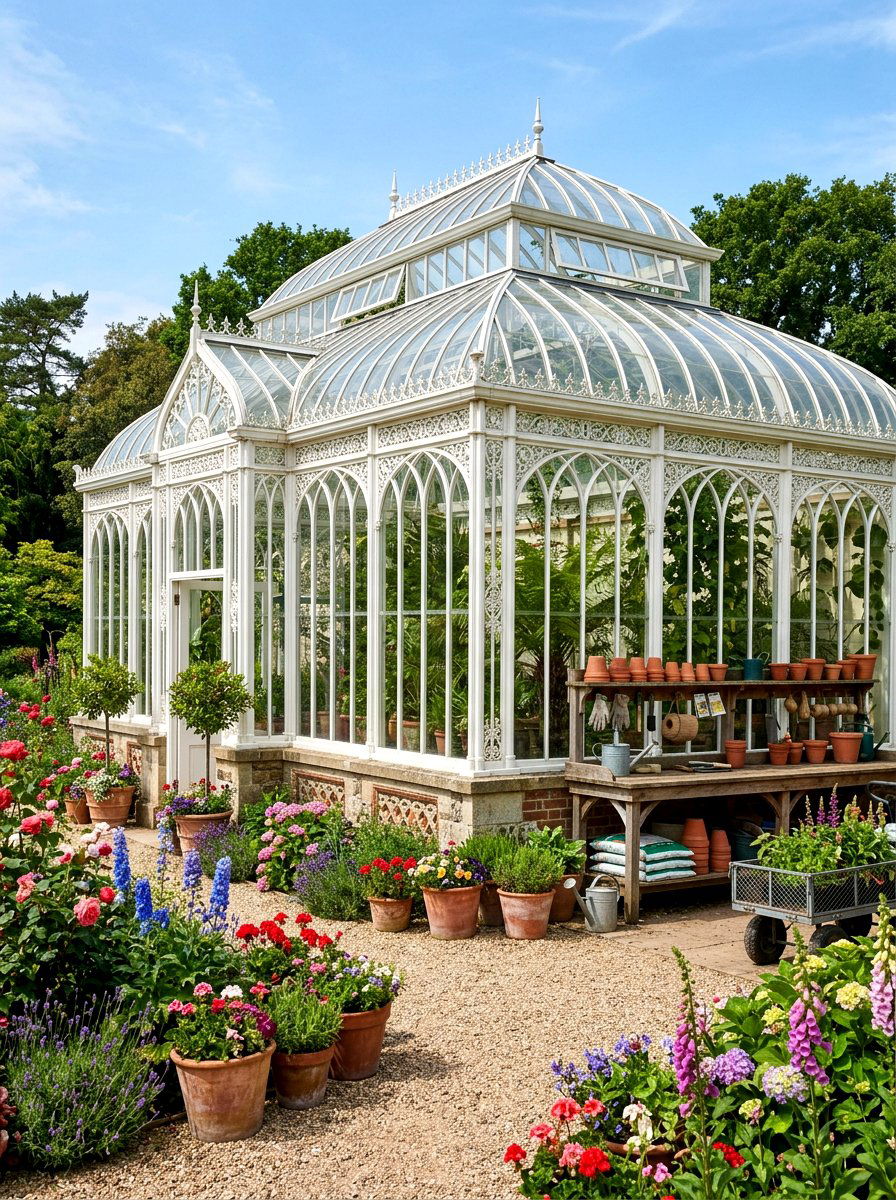
A classic Victorian-style greenhouse is both a practical workspace for the avid gardener and a beautiful architectural feature in its own right. With its peaked roof and intricate metal or wooden detailing, it serves as a stunning glass sanctuary for starting seeds or overwintering tender plants. Positioned correctly, it can catch the low winter sun, providing a warm place to enjoy the garden even during the colder months. Many modern homeowners are even using these spaces as solariums for afternoon tea or as creative studios. It is a functional investment that adds a touch of historical elegance and year-round utility.
12. Wildflower Meadow
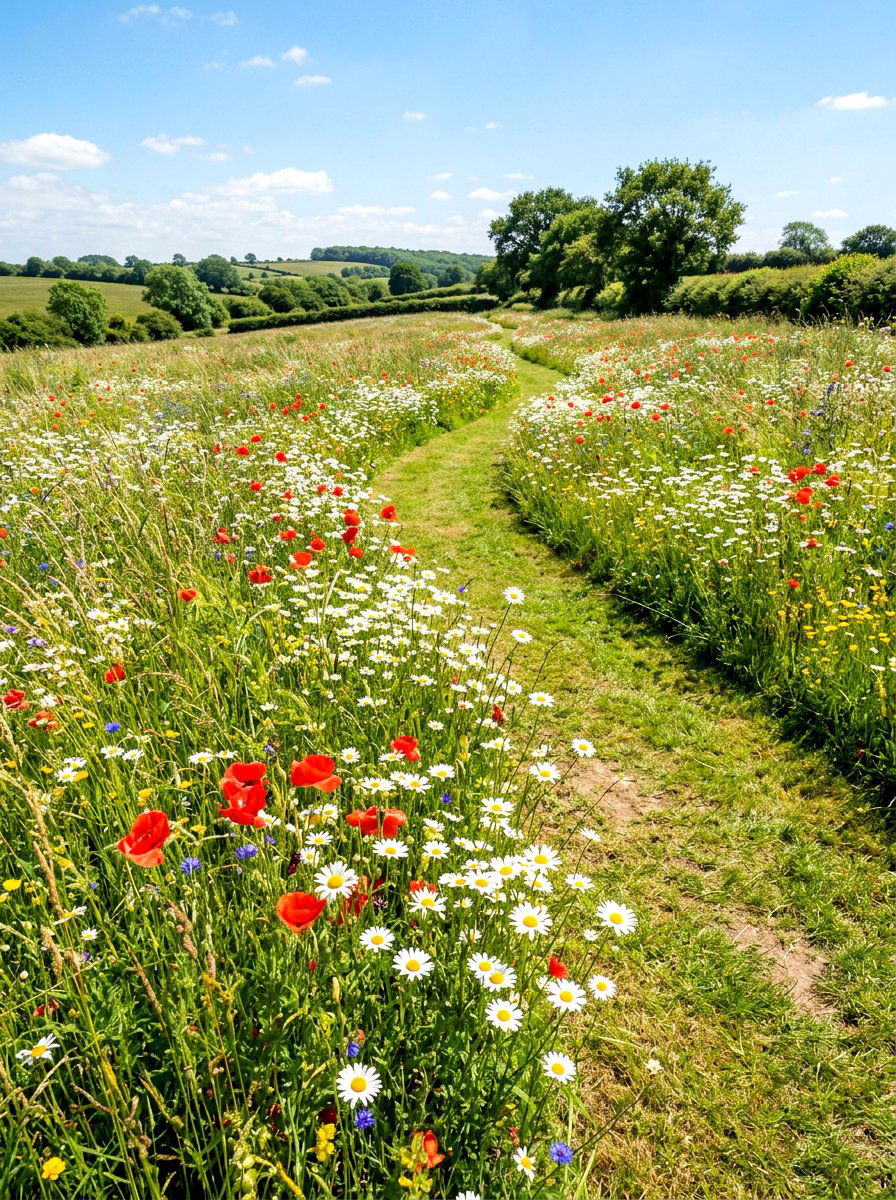
Moving away from the traditional manicured lawn, the wildflower meadow is a growing trend that focuses on biodiversity and natural beauty. By dedicating a patch of your garden to native grasses and flowers like oxeye daisies and poppies, you create a vibrant habitat for essential pollinators. This style requires much less mowing and maintenance once established, making it a sustainable choice for busy homeowners. The swaying stems and varied colors provide a soft, ethereal look that contrasts beautifully with more formal clipped hedges or stone paths. It brings a piece of the wild British countryside directly into your own private backyard.
13. Garden Water Feature
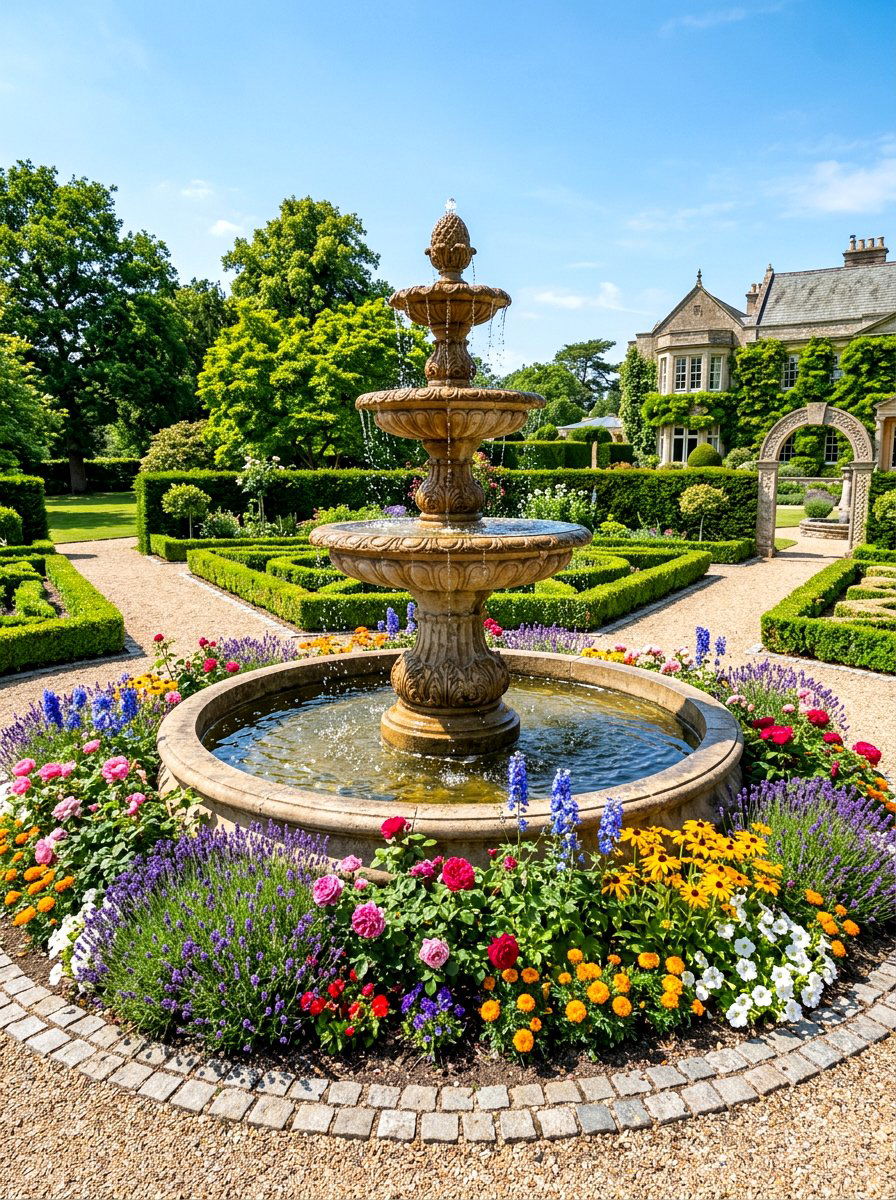
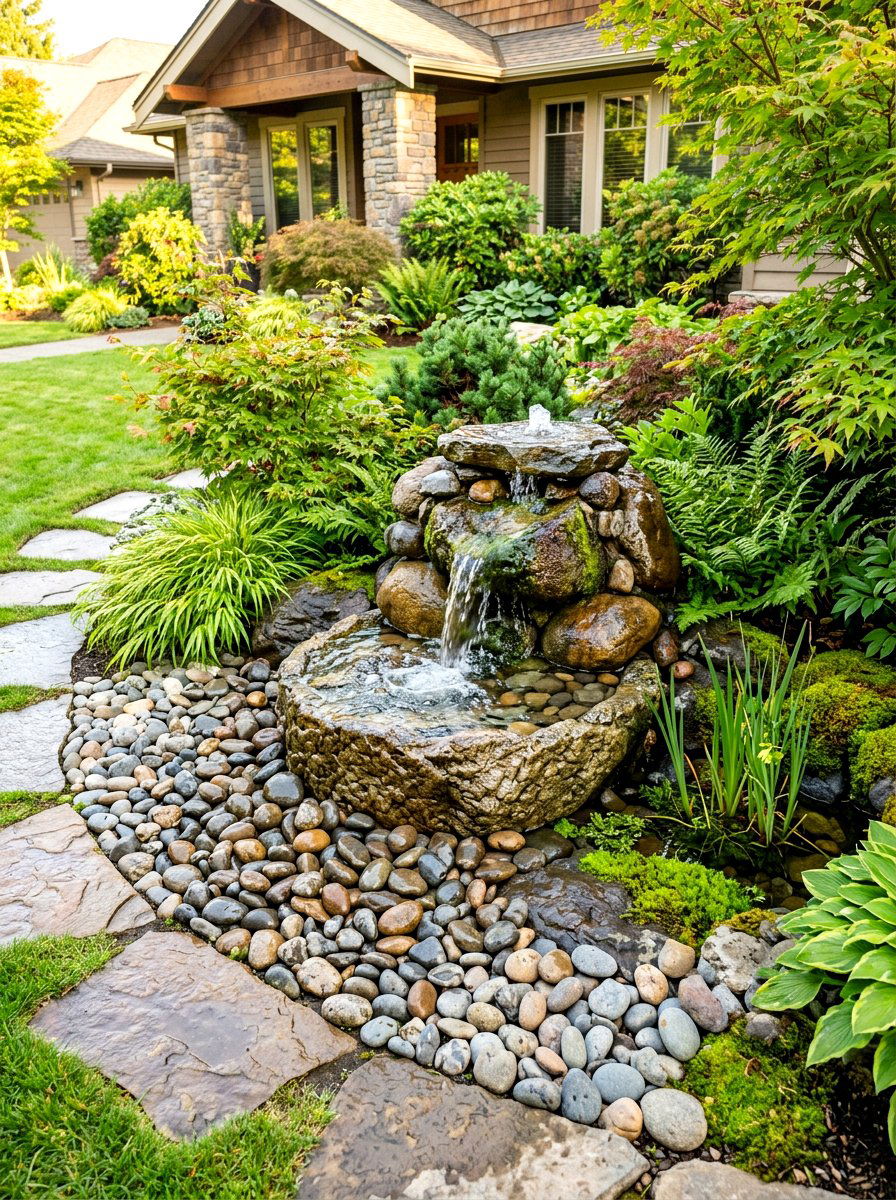
The sound of trickling water is incredibly soothing and helps to mask unwanted noise from nearby streets or neighbors. A simple stone water bowl or a traditional multi-tiered fountain can act as a serene centerpiece for a small courtyard or a larger lawn. You don't need a massive pond to enjoy this effect; even a small wall-mounted spout can provide that calming auditory element. Water features also serve as a vital source of hydration for birds and beneficial insects, further enhancing the life in your garden. It adds a layer of tranquility and sophistication that completes the traditional English landscape.
14. Traditional Sundial
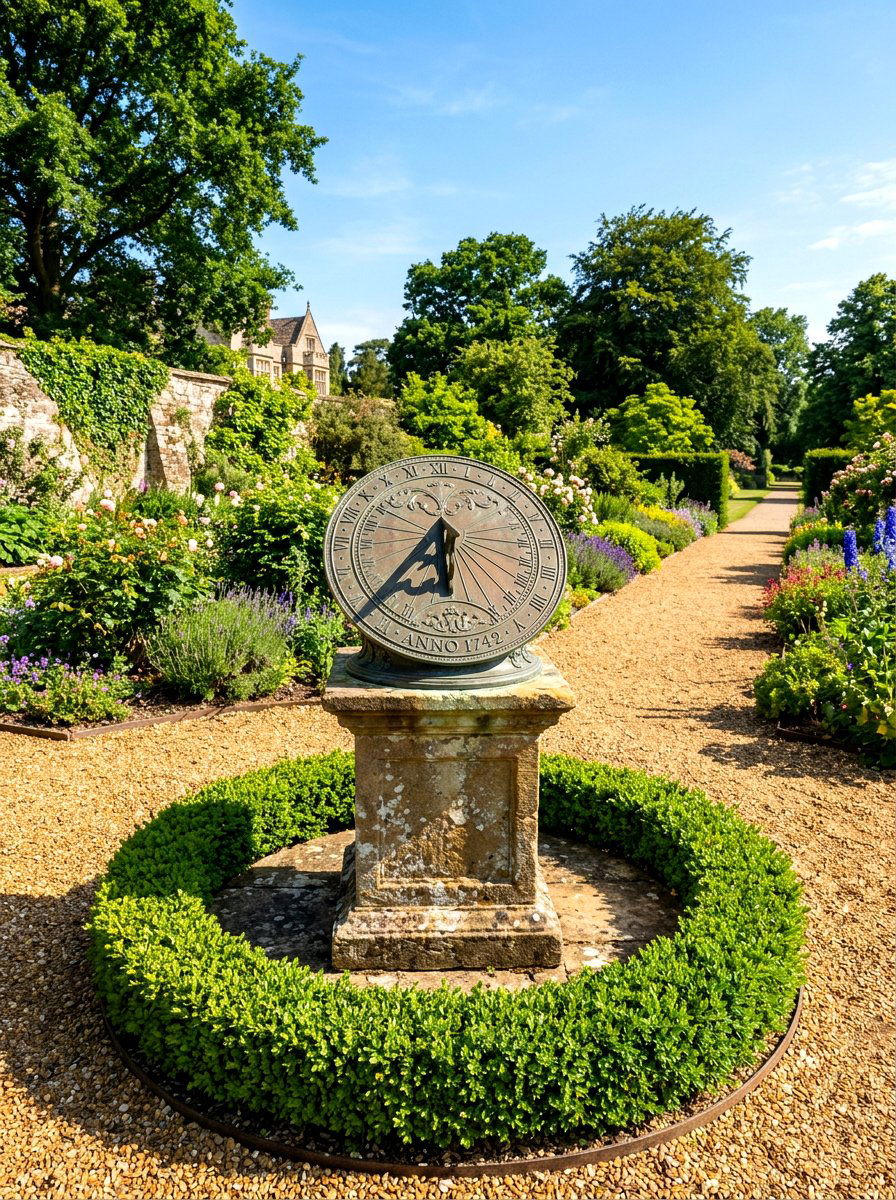
A sundial mounted on a stone plinth is a classic ornamental piece that brings a sense of timelessness to your outdoor design. Often placed at the center of a circular flower bed or at the intersection of two paths, it serves as an excellent focal point. Beyond its historical function of telling time, it symbolizes the slow and steady pace of nature that we all strive to enjoy. Choosing an antique bronze or weathered stone finish ensures that the piece looks like it has been part of the landscape for generations. It is a small but powerful detail that adds immense character.
15. Garden Bench
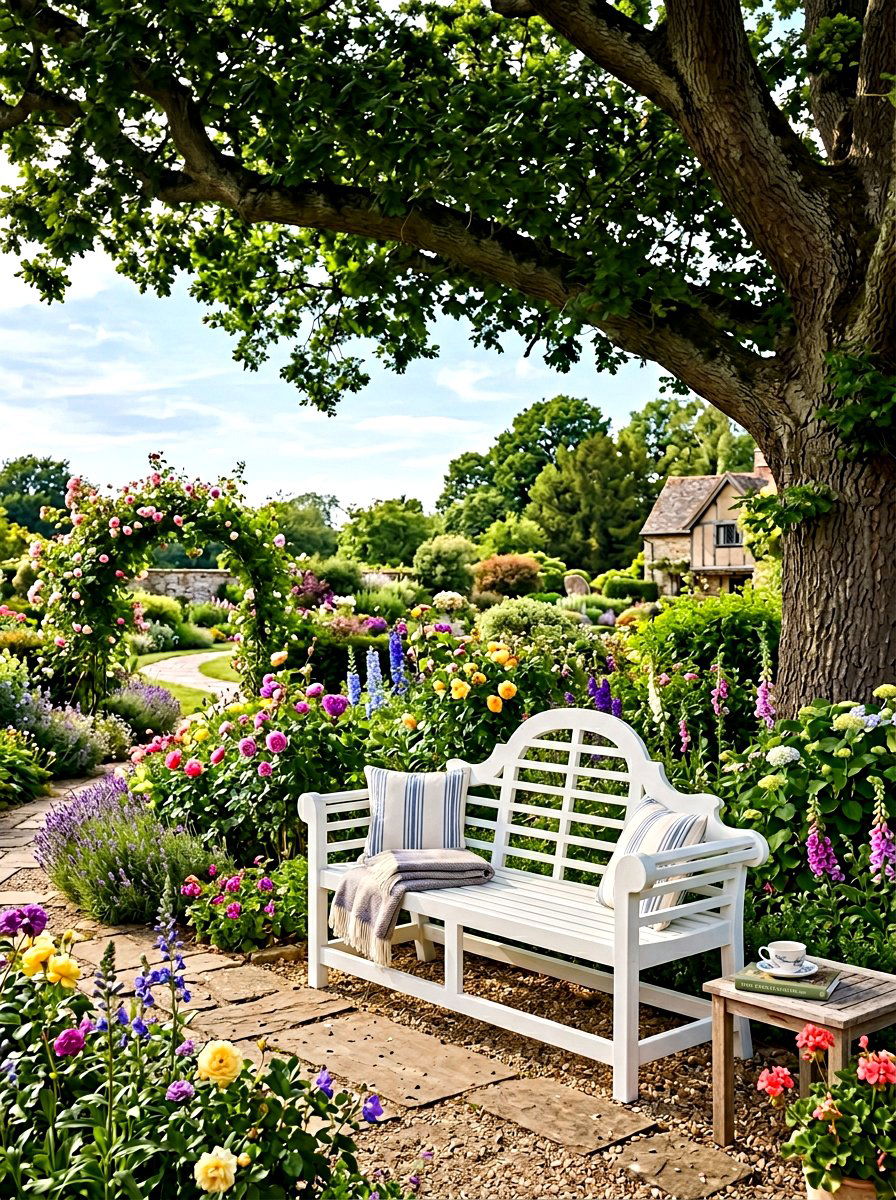
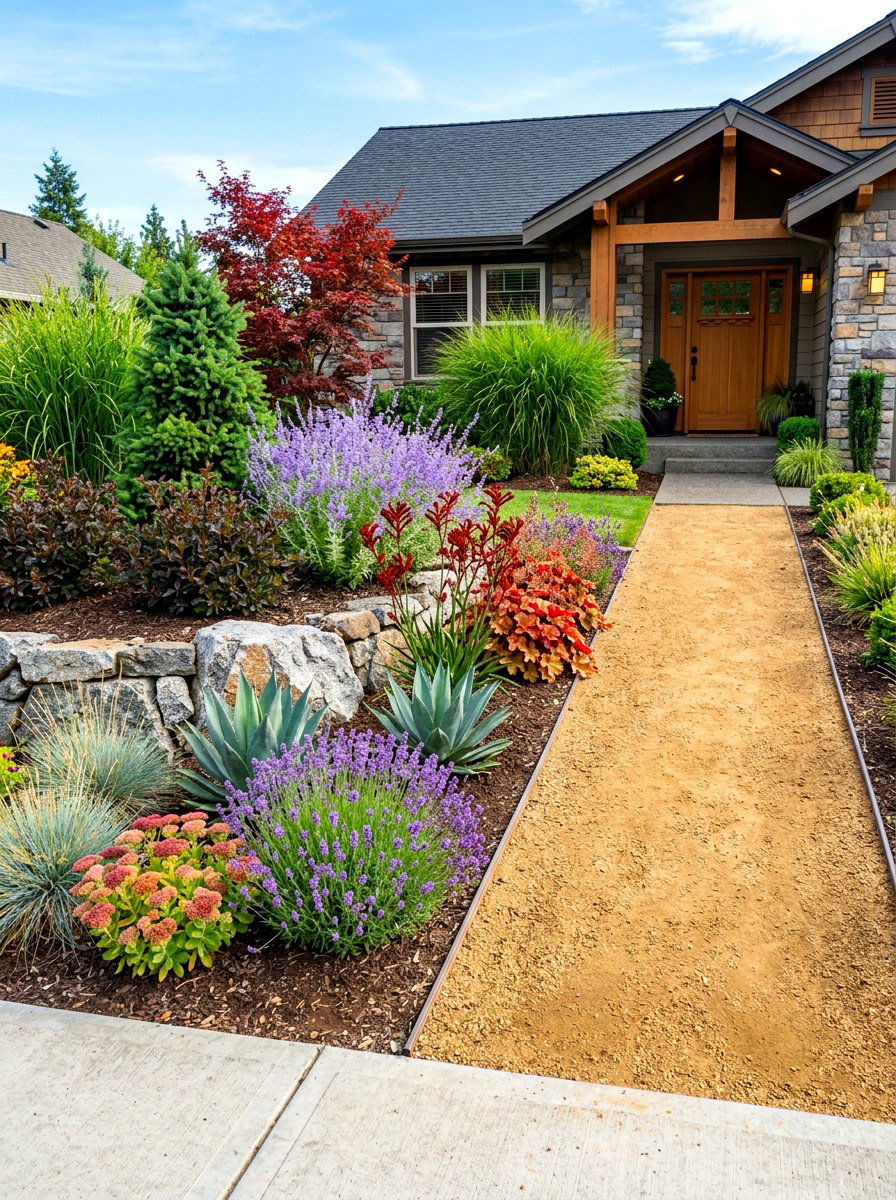
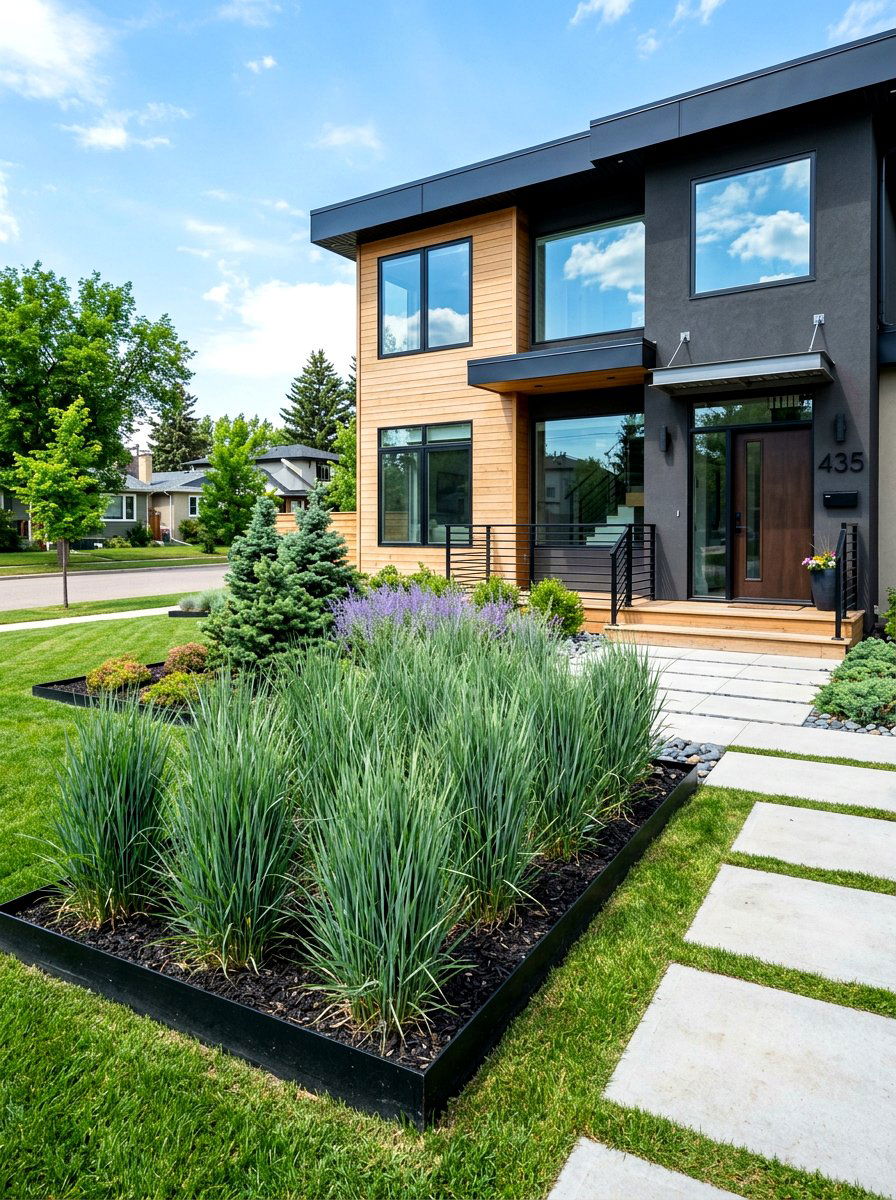
A well-placed garden bench invites you to sit down and truly appreciate the hard work you have put into your landscaping. The iconic Lutyens-style bench, with its distinctive arched back and ornate woodwork, is a favorite for those wanting a quintessential British look. Place your seating where you can enjoy the best view, perhaps under the shade of a large tree or overlooking a vibrant perennial border. Painting the bench in a classic color like forest green or lead grey helps it blend into the environment, while a crisp white finish makes it a bold, attractive statement piece for photos.
16. Iron Garden Gate
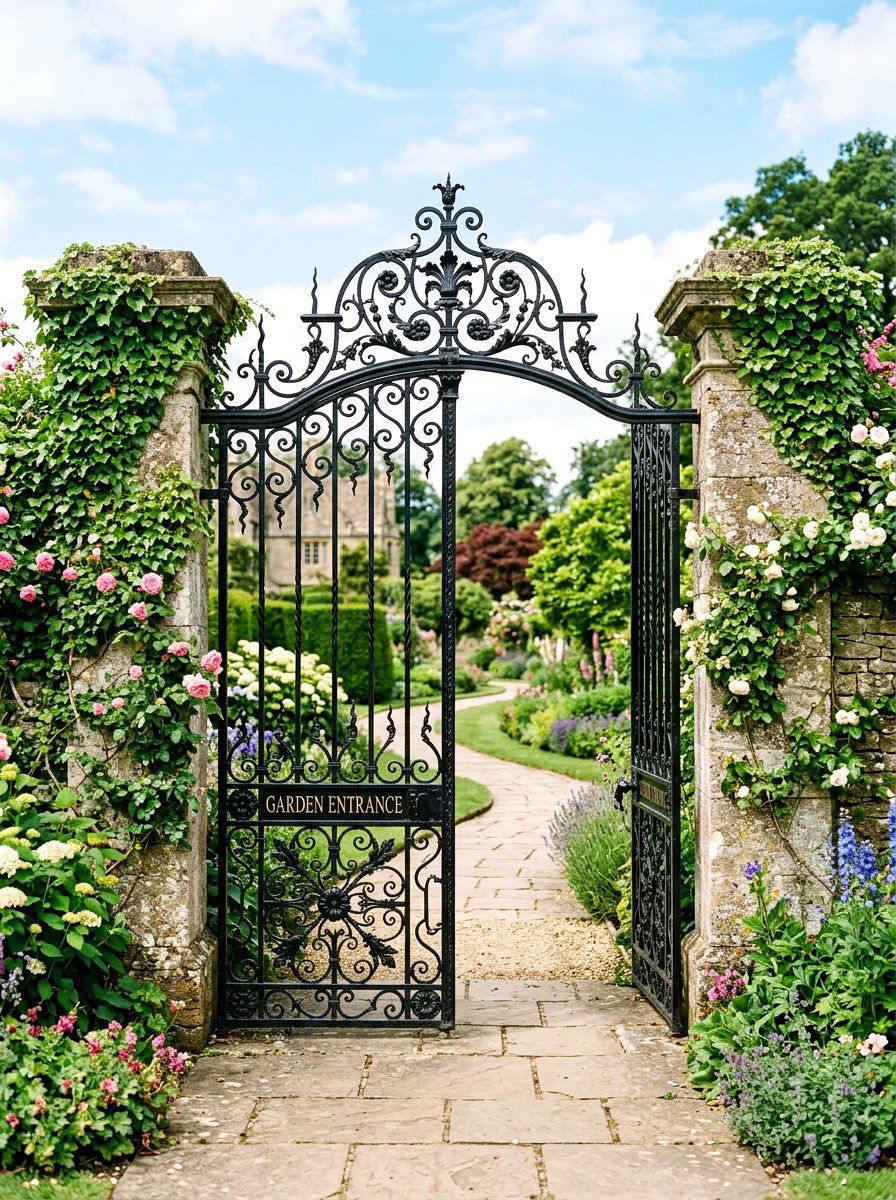
An ornate wrought iron gate serves as a beautiful transition point between different "rooms" of your garden or as a welcoming entrance. The intricate scrollwork and heavy metal feel provide a sense of security and history that modern gates often lack. You can allow climbing plants like ivy or jasmine to weave through the bars, partially obscuring the view and adding to the mystery of what lies beyond. This feature sets the tone for the rest of the landscape, suggesting a space that is well-cared for and full of secret treasures. It is a durable and stylish addition to any home.
17. Brick Garden Path
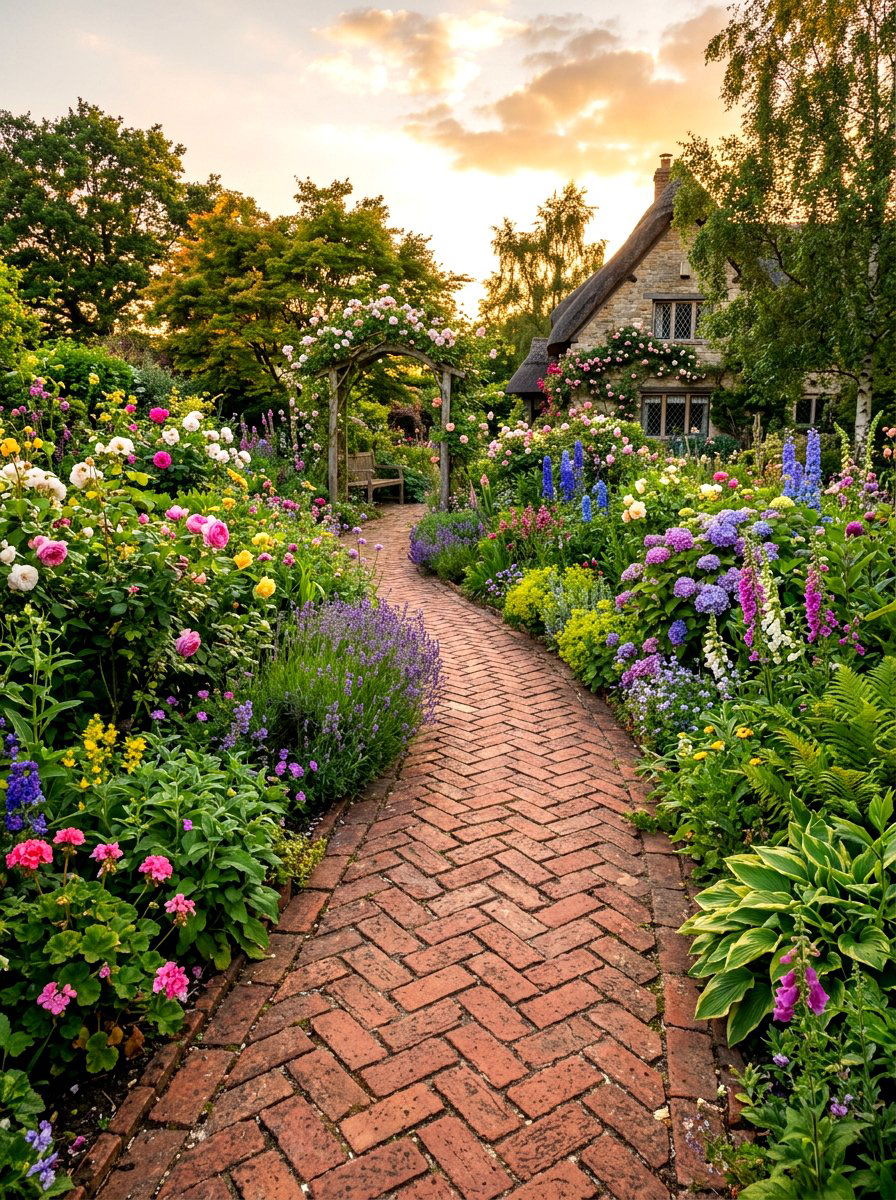
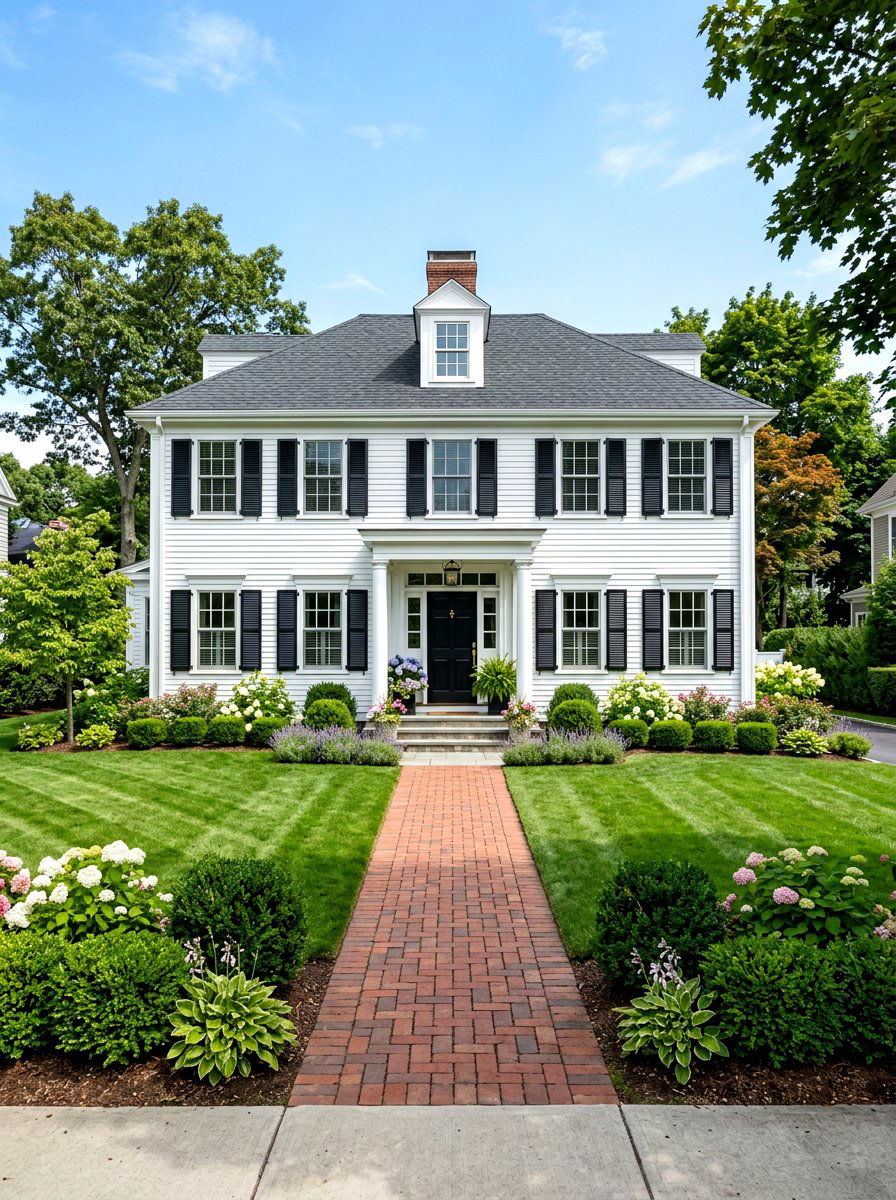
Using reclaimed or aged clay bricks for your pathways adds a warm, rustic charm that pairs beautifully with old-fashioned flower varieties. Laying the bricks in a herringbone or basketweave pattern creates a decorative floor for your garden that feels solid and permanent. Over time, the bricks will develop a weathered patina, and small mosses may grow in the joints, only adding to the antique aesthetic. This type of path is excellent for navigating the garden during wet weather, as it provides a stable and slip-resistant surface. It is a timeless choice that never goes out of style for traditional homes.
18. Topiary Boxwood
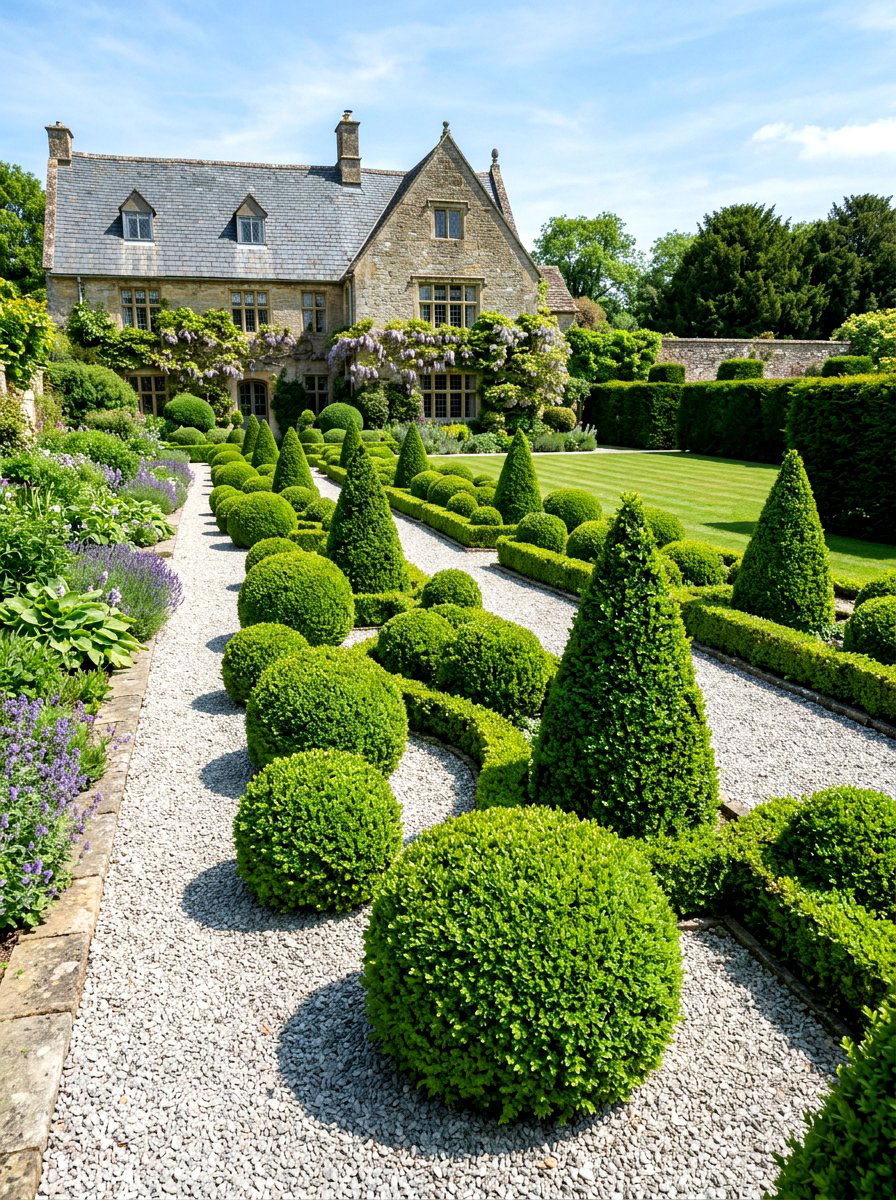
For those who love a bit of formal drama, topiary offers a way to sculpt living plants into impressive geometric shapes. Boxwood or yew can be pruned into perfect spheres, cones, or even more complex spirals to add a touch of whimsy and elegance. These "living statues" are particularly effective when used in pairs to flank a doorway or a set of garden steps. They provide a strong green presence throughout the winter when other plants have gone dormant, ensuring your garden never looks completely bare. It is a fun way to express your creativity while maintaining a sense of order.
19. English Orchard
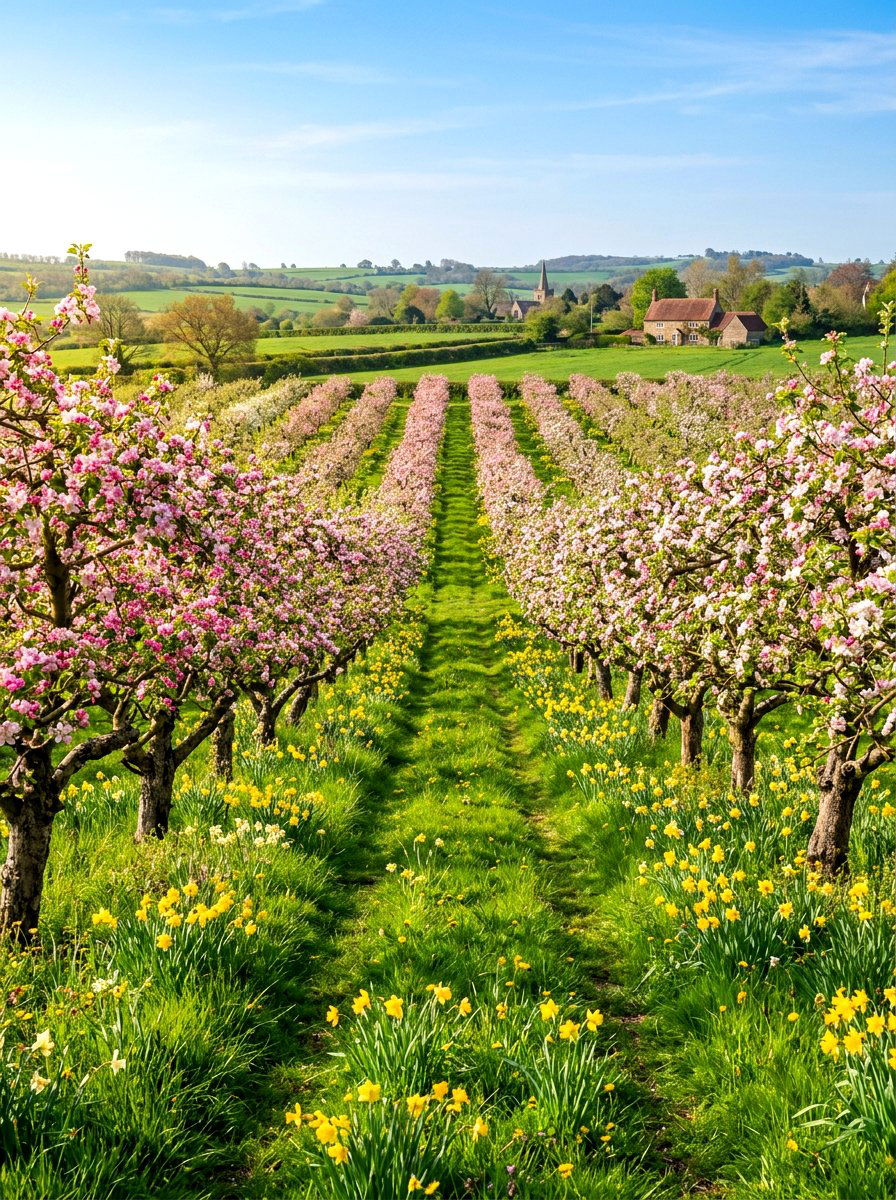
If you have the space, planting a small orchard of fruit trees provides both beauty and a delicious harvest each year. Springtime in an English orchard is a magical experience, with branches laden with delicate pink and white blossoms that attract early-season bees. Standard or dwarf apple, pear, and plum trees can be arranged in a neat grid for a formal look, or scattered more naturally for a meadow-like feel. Underplanting the trees with spring bulbs like daffodils and crocuses creates a colorful carpet that celebrates the end of winter. It is a rewarding way to use your land effectively.
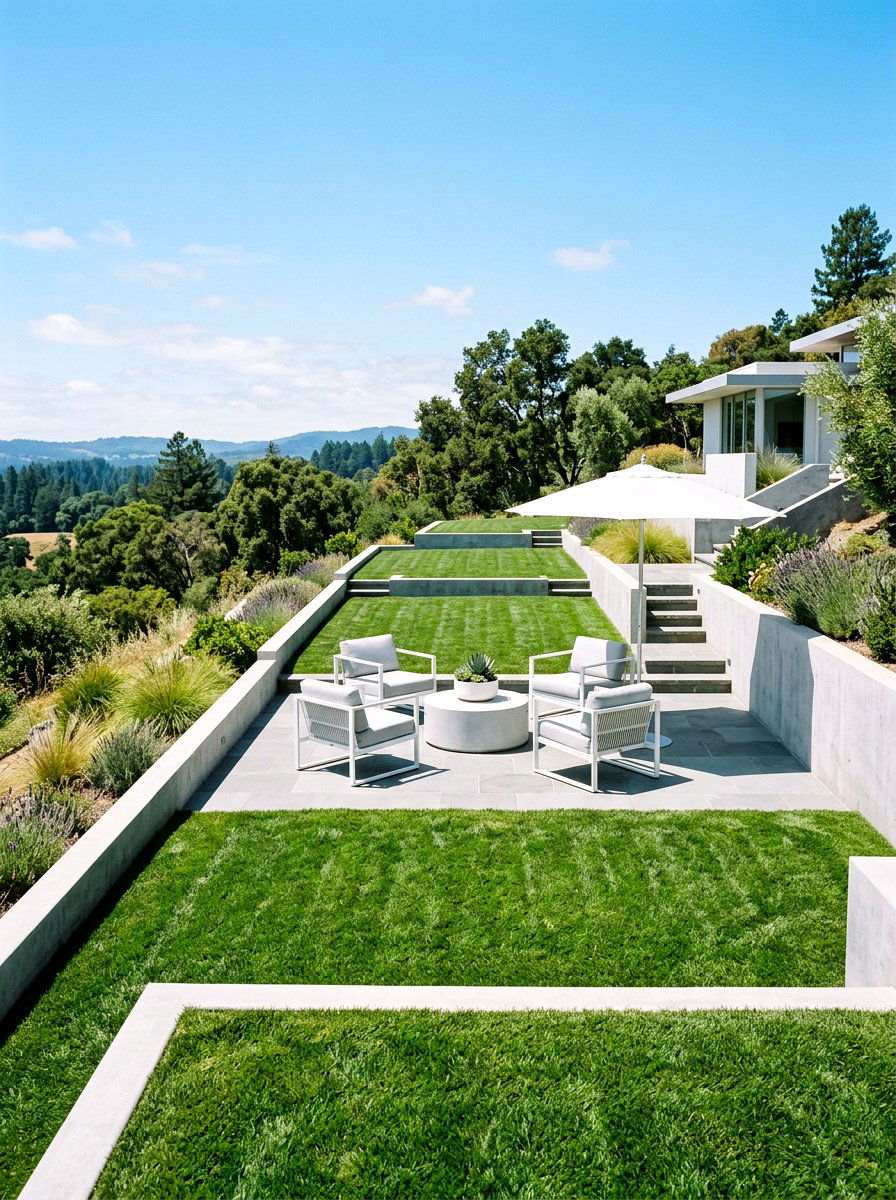
20. Herb Garden Potager
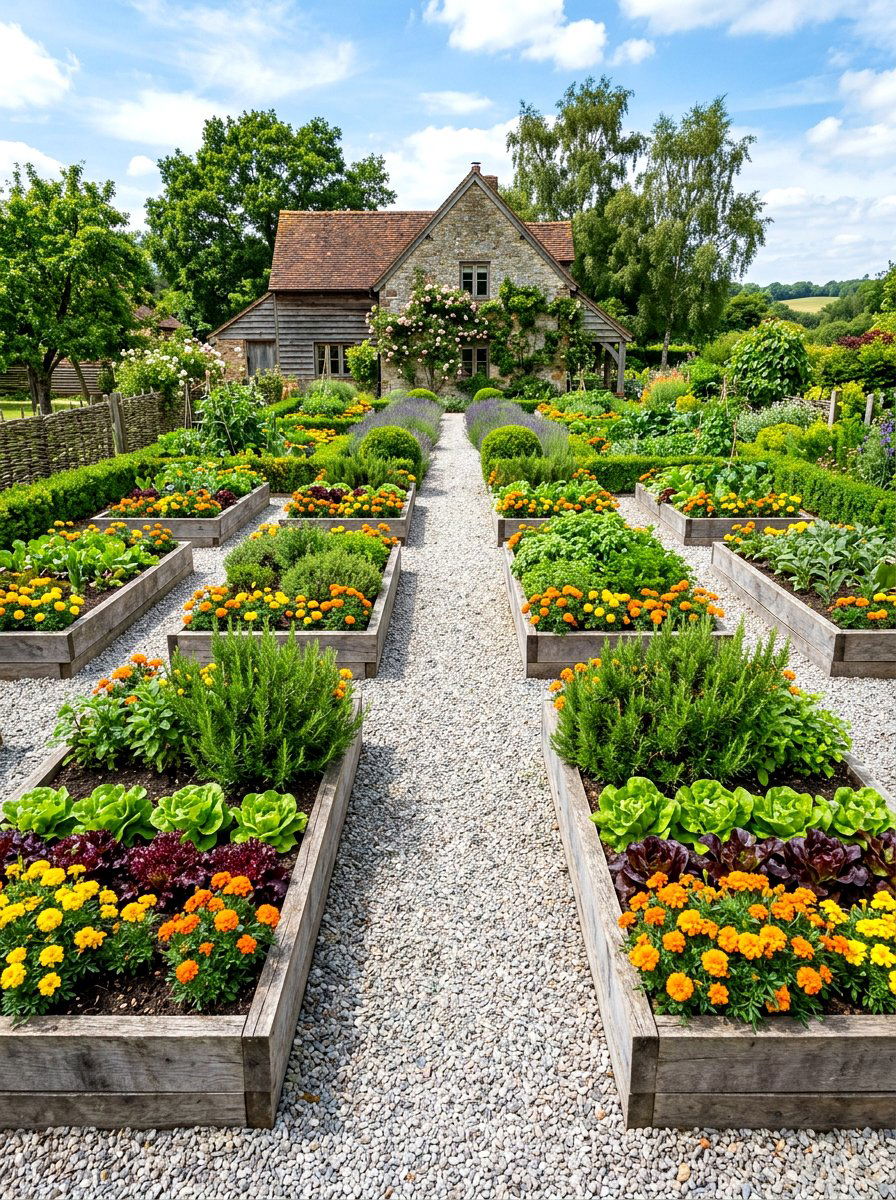
A potager is a decorative vegetable garden where edibles are grown alongside flowers for a look that is as beautiful as it is functional. Instead of hidden rows of crops, you can use low boxwood hedges or wooden hurdles to create neat beds for lettuces, herbs, and cabbages. Interspersing these with marigolds and nasturtiums helps to deter pests while adding bright pops of color to the display. This "edible meets elegant" trend is huge for 2025, as people look to become more self-sufficient without sacrificing the aesthetic appeal of their backyards. It truly is the best of both worlds.
21. Stone Bird Bath
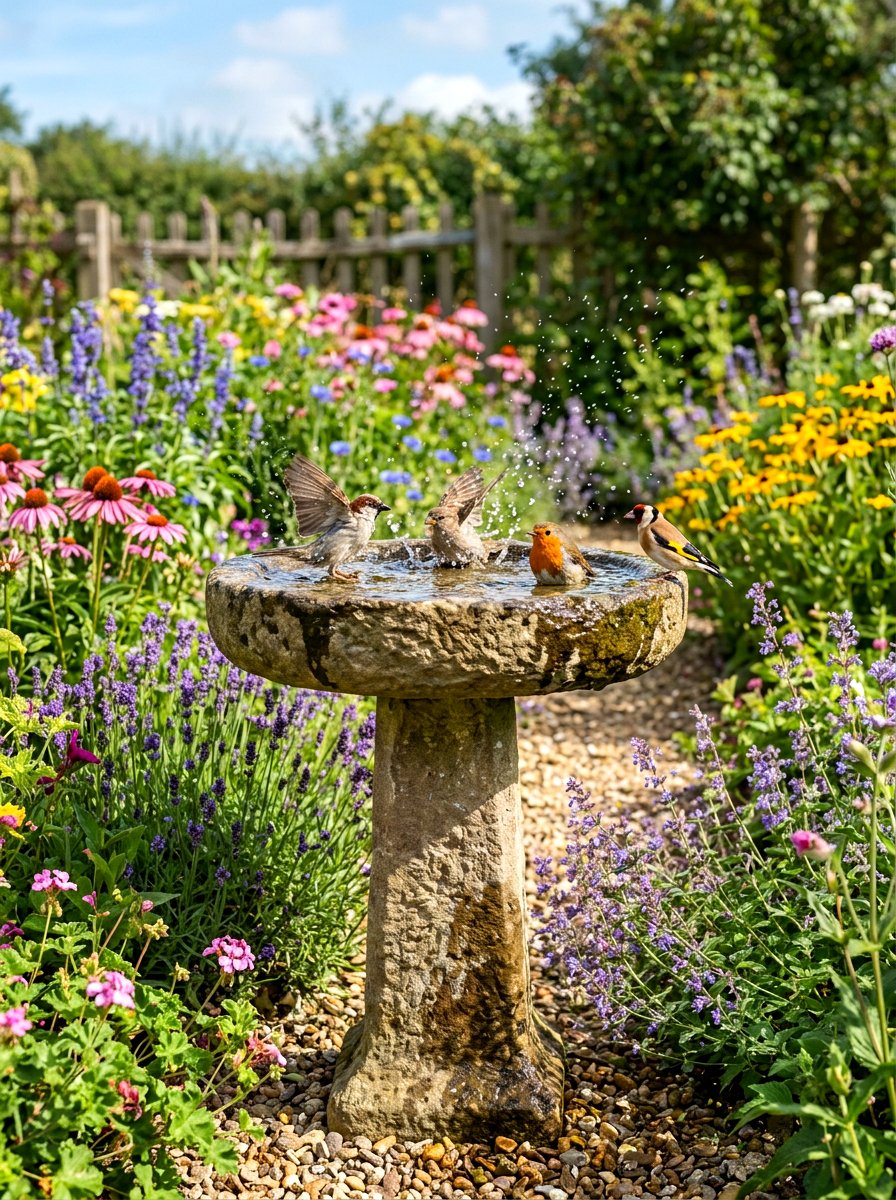
Attracting wildlife is a key goal for many modern English gardeners, and a stone bird bath is one of the easiest ways to do this. A simple, shallow basin on a pedestal provides a safe place for local birds to drink and bathe, bringing movement and song to your space. Place it in a relatively open area so birds can see potential predators, but near some shrubs where they can quickly retreat if needed. The sight of a robin or blue tit splashing in the water is a joyful reminder of the natural world. It also serves as a lovely, low-profile focal point.
22. Arched Garden Walkway
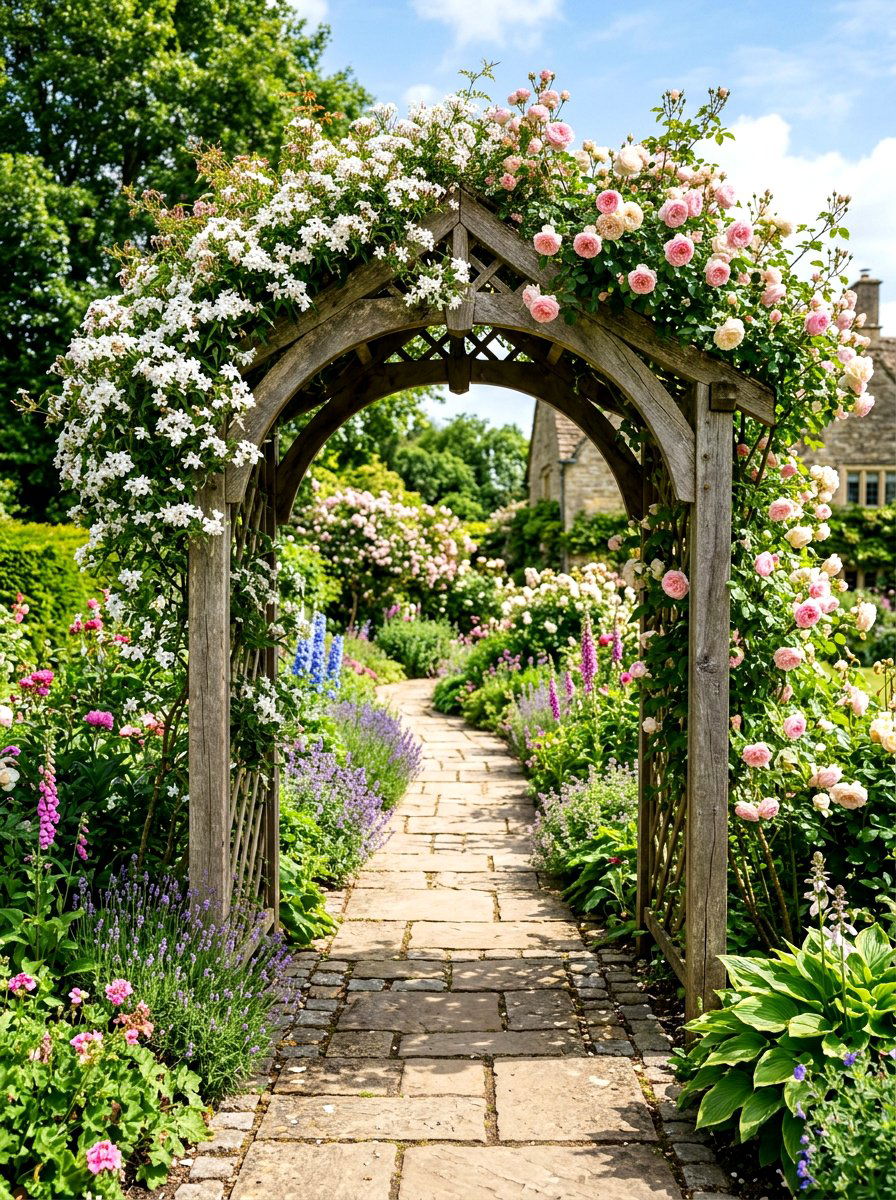
An arched walkway or "moongate" creates a stunning transition between different parts of the property, acting as a frame for the view ahead. Whether made of rustic wood or elegant metal, an arch covered in climbing plants like clematis or honeysuckle adds height and a sense of vertical enclosure. Walking through a floral tunnel is an enchanting experience that makes your garden feel like a private wonderland. This feature is particularly effective in long, narrow gardens where you want to break up the space and create a series of interesting "rooms" to explore. It adds layers and intrigue.
23. White Flower Garden
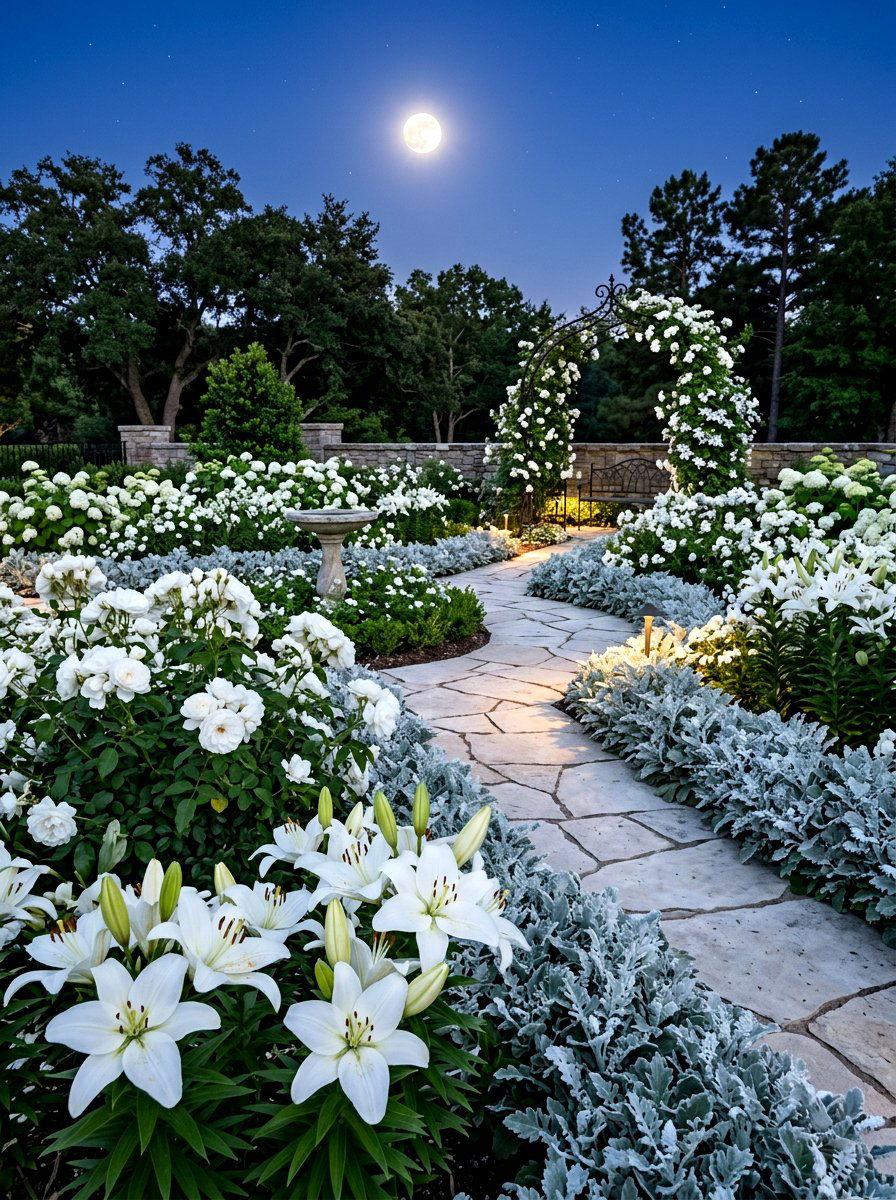
Inspired by the famous White Garden at Sissinghurst Castle, a monochromatic planting scheme using only white flowers and silver foliage creates a sophisticated and peaceful atmosphere. This style is especially beautiful in the evening, as white blooms seem to glow under the moonlight, making it a perfect "moon garden" for nighttime relaxation. Use a variety of textures, from the papery petals of white peonies to the spiky leaves of sea holly, to keep the design interesting despite the limited color palette. It is a bold and chic choice that feels incredibly fresh and modern while remaining rooted in tradition.
24. Woodland Garden Shade
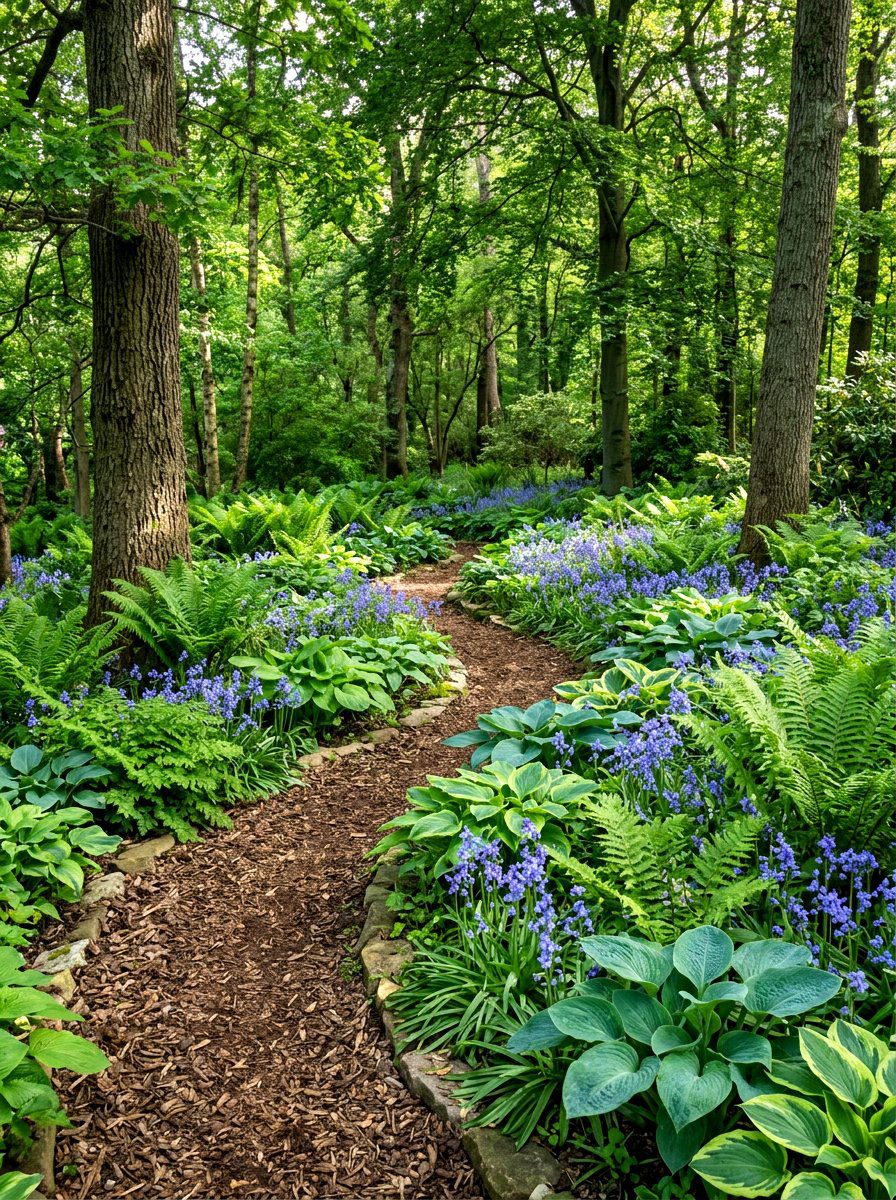
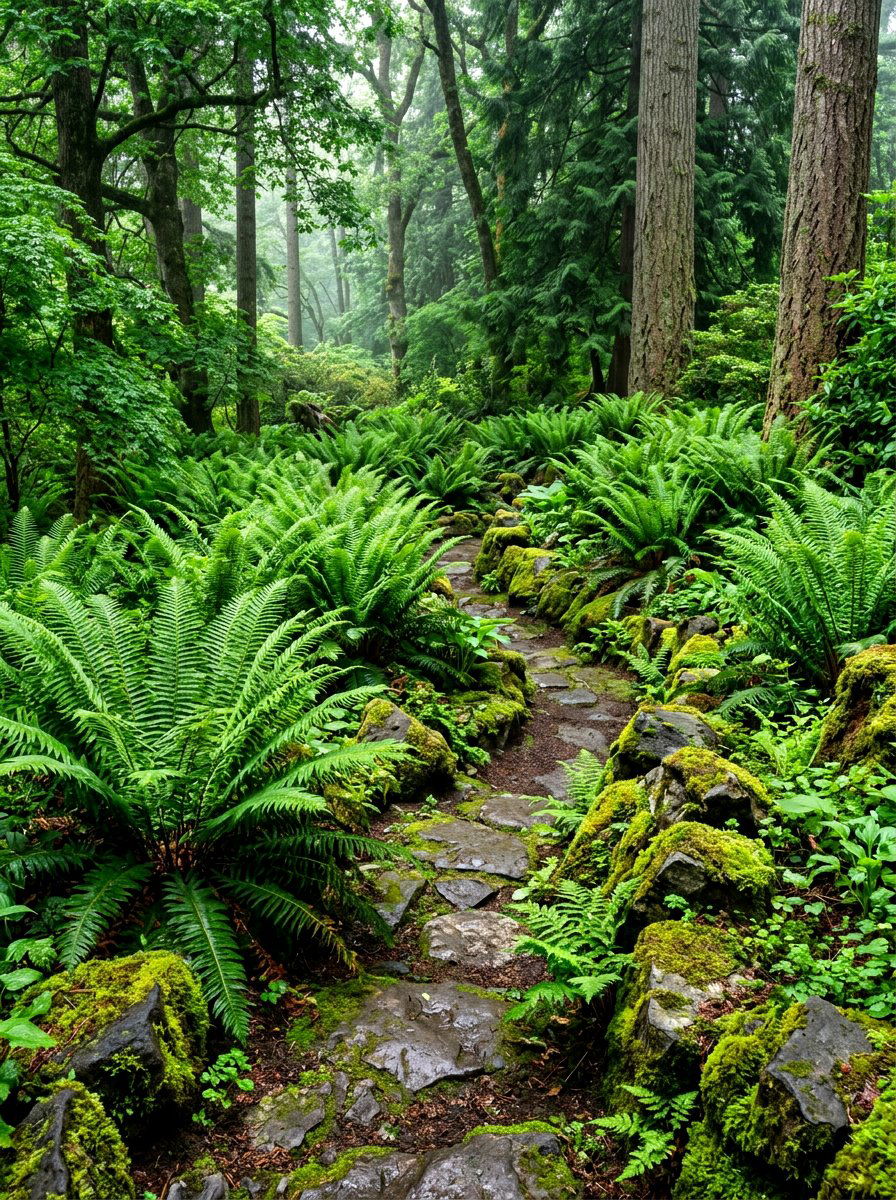
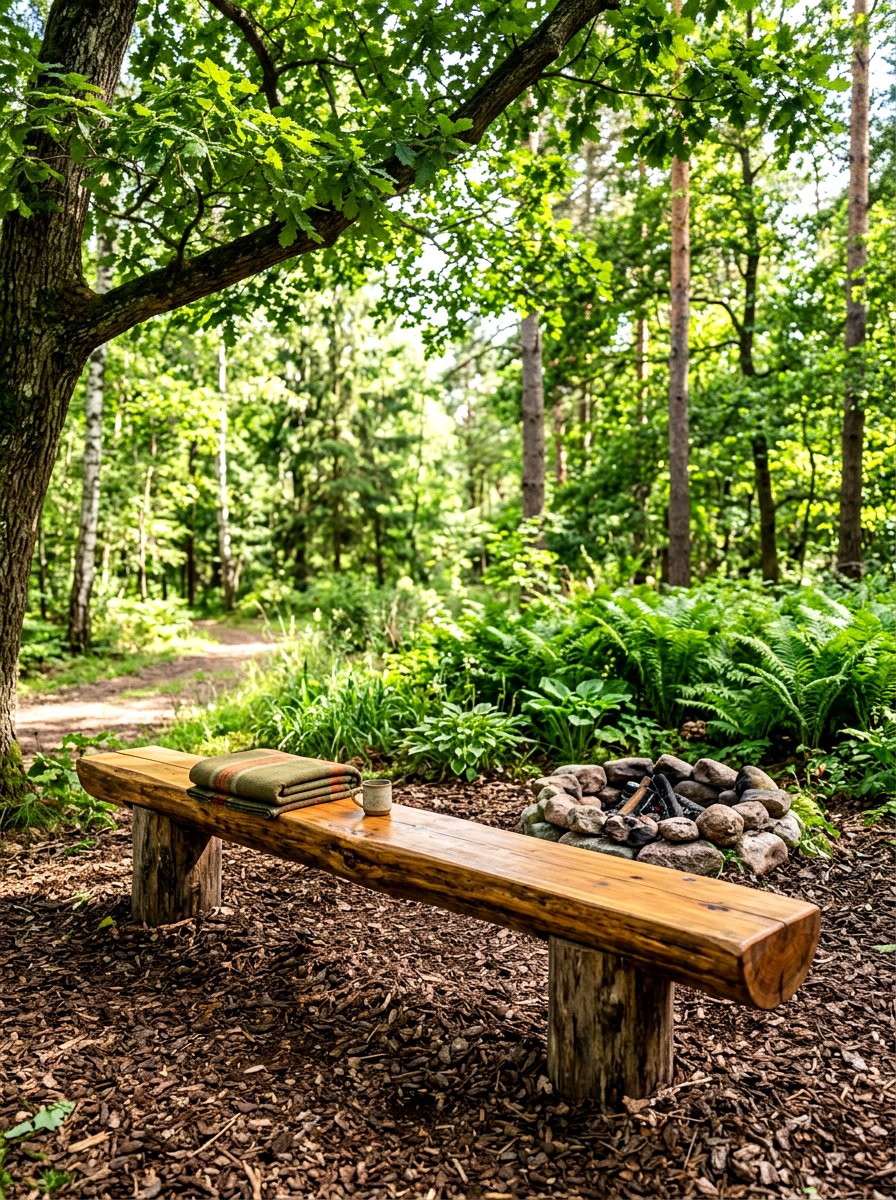
Working with a shady area under large trees can be a challenge, but a woodland-style garden turns this into a lush, green opportunity. Focus on shade-loving plants with interesting foliage, such as hostas, ferns, and hellebores, to create a cool and refreshing retreat from the summer sun. A simple mulch or bark path winding through the trees adds to the natural, forest-like feel of the space. You can even include some spring-flowering bulbs like bluebells and wood anemones to provide a burst of early color. It is a low-maintenance way to make use of every corner of your property.
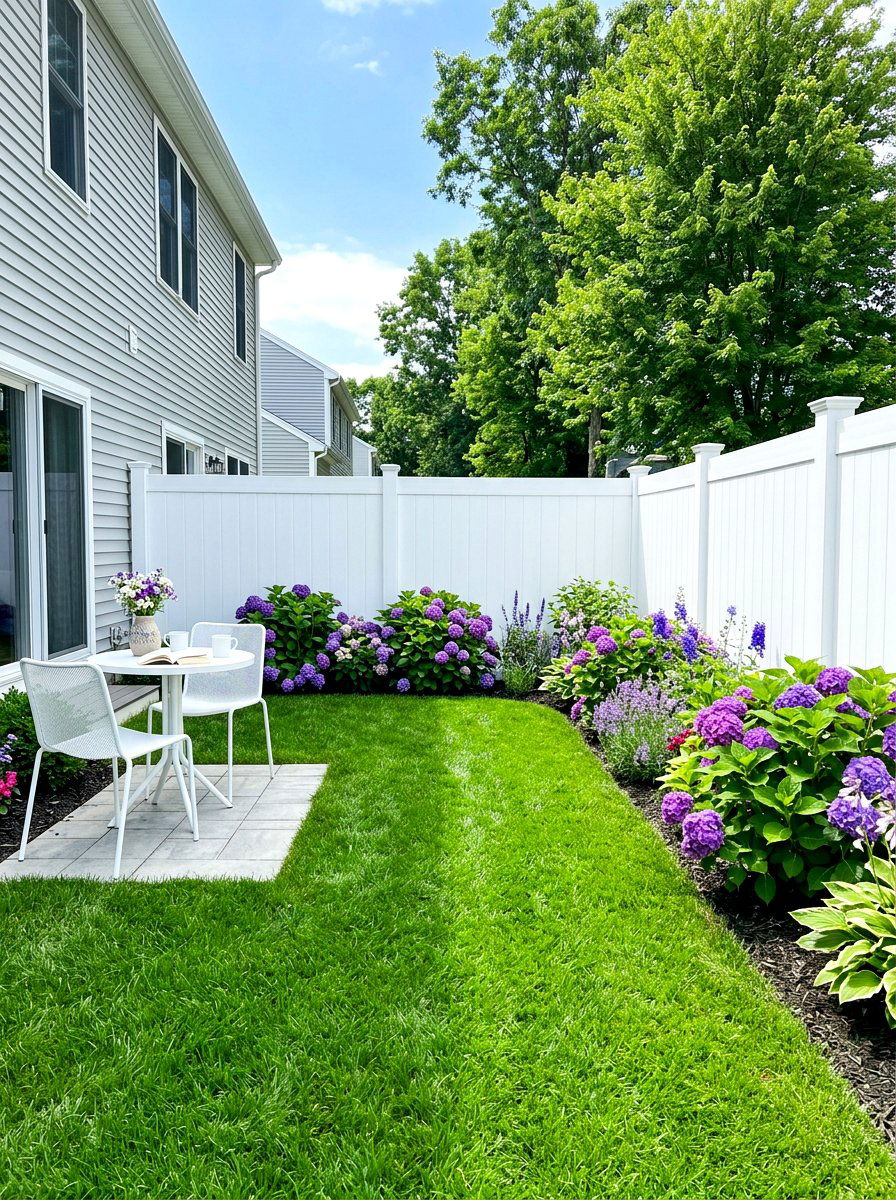
25. Sunken Garden Terrace
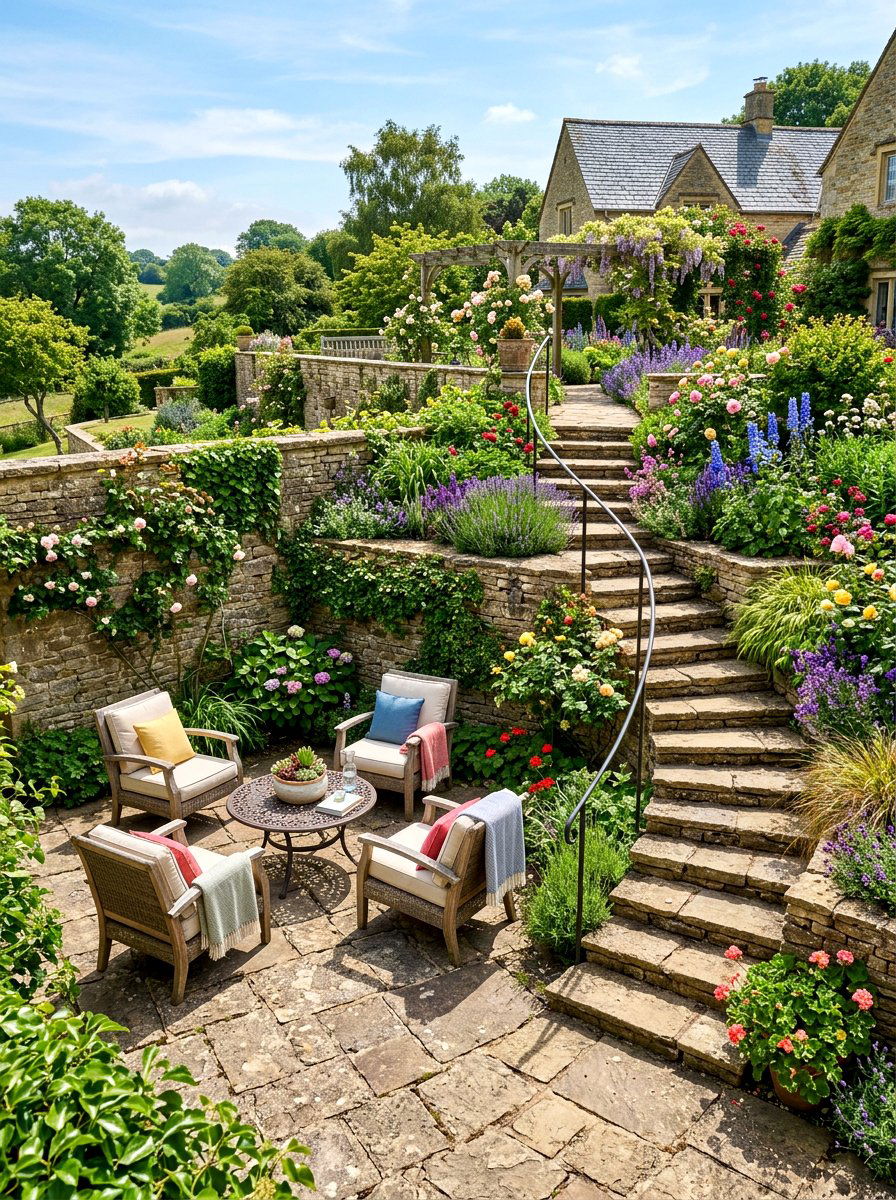
A sunken garden or terrace adds a wonderful sense of depth and architectural interest to a flat backyard. By creating a lower level for seating or a pond, you establish a secluded and intimate space that feels sheltered from the world. Stone steps leading down into the area can be lined with pots of herbs or lavender to add scent and color at every level. This multi-dimensional approach to landscaping makes a garden feel much larger and more complex. It is a classic design technique often used in grand English gardens to create a private area for entertaining or quiet contemplation.
26. Garden Rockery
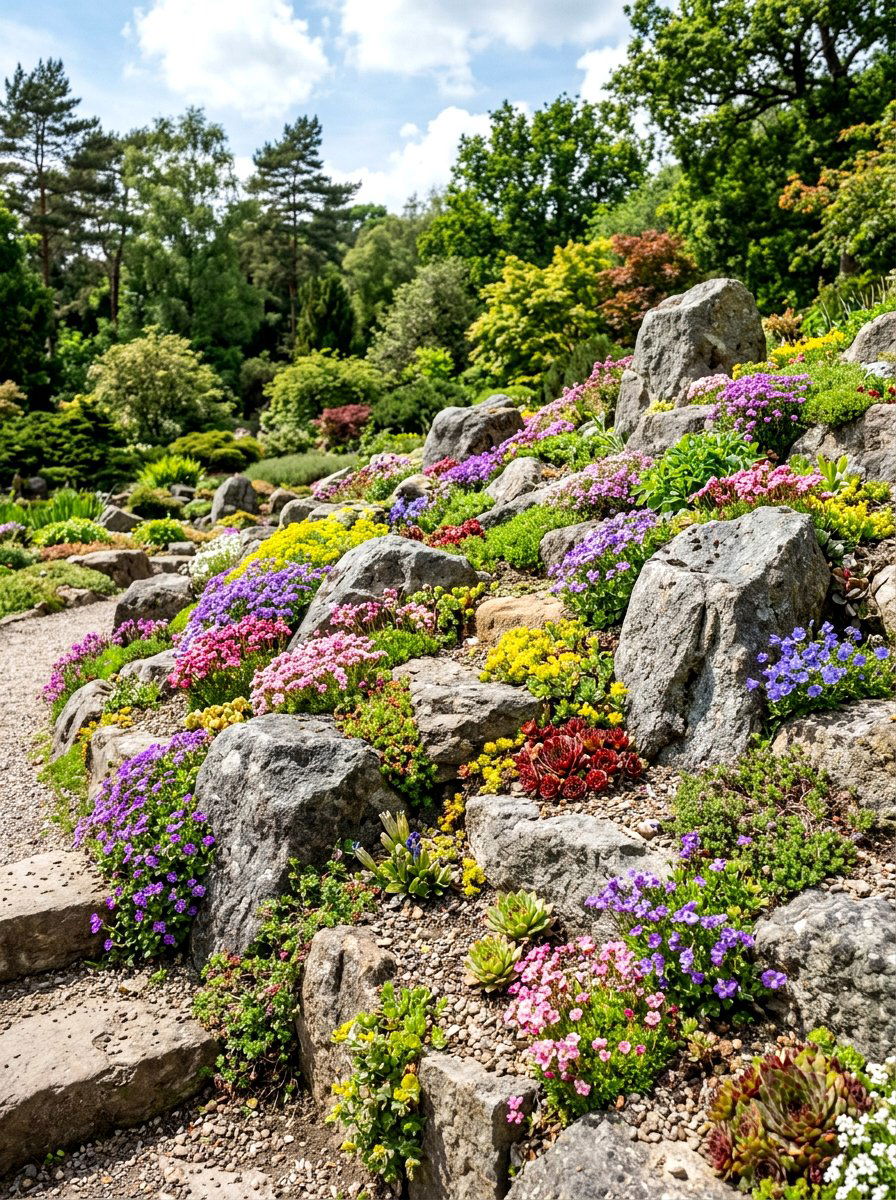
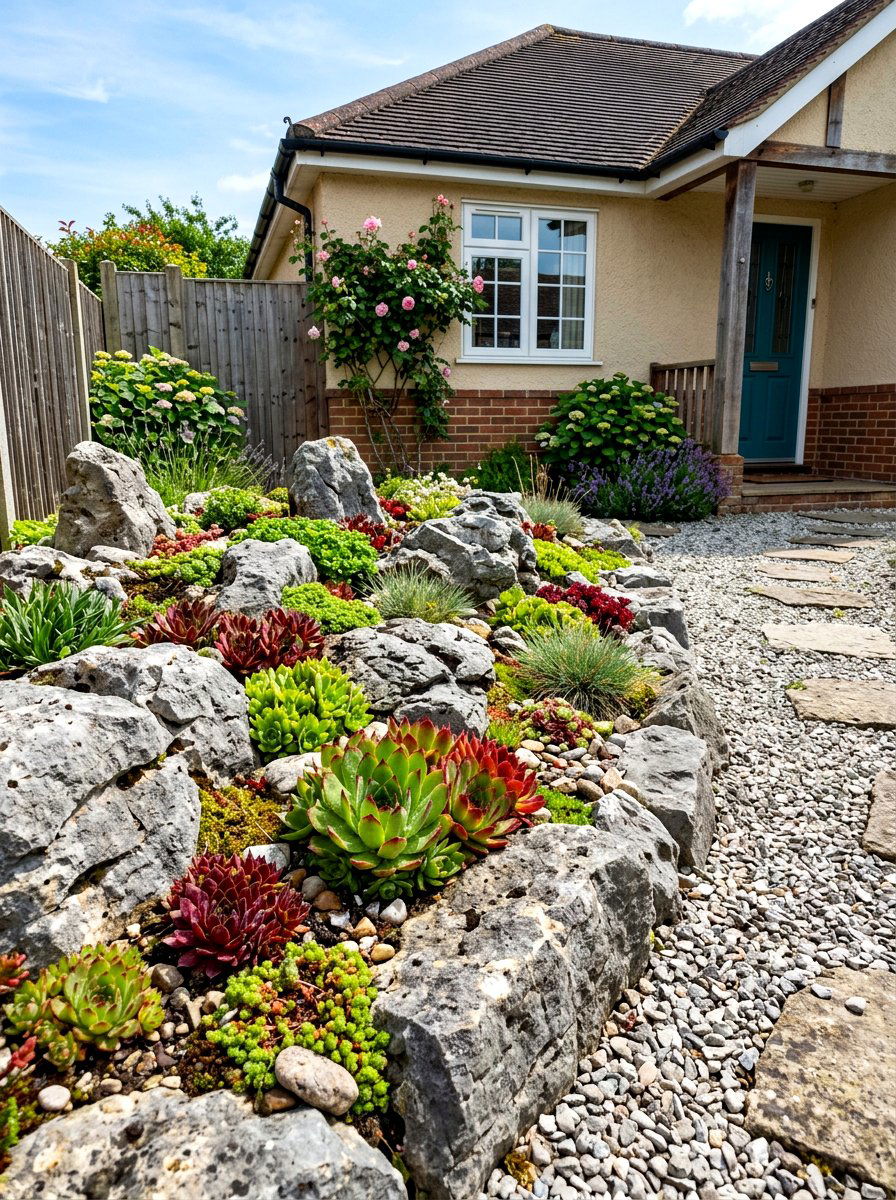
For areas with poor soil or steep slopes, a rockery provides a beautiful and practical solution that mimics the rugged beauty of the British hills. By carefully placing large, local stones and filling the gaps with grit-heavy soil, you create the perfect environment for alpine plants and succulents. These low-growing, hardy species offer a wealth of textures and tiny, vibrant flowers that look stunning when viewed up close. A rockery adds a different vertical dimension to the garden and can even be combined with a small waterfall or stream for extra impact. it is a rugged yet refined landscape feature.
27. Potting Shed
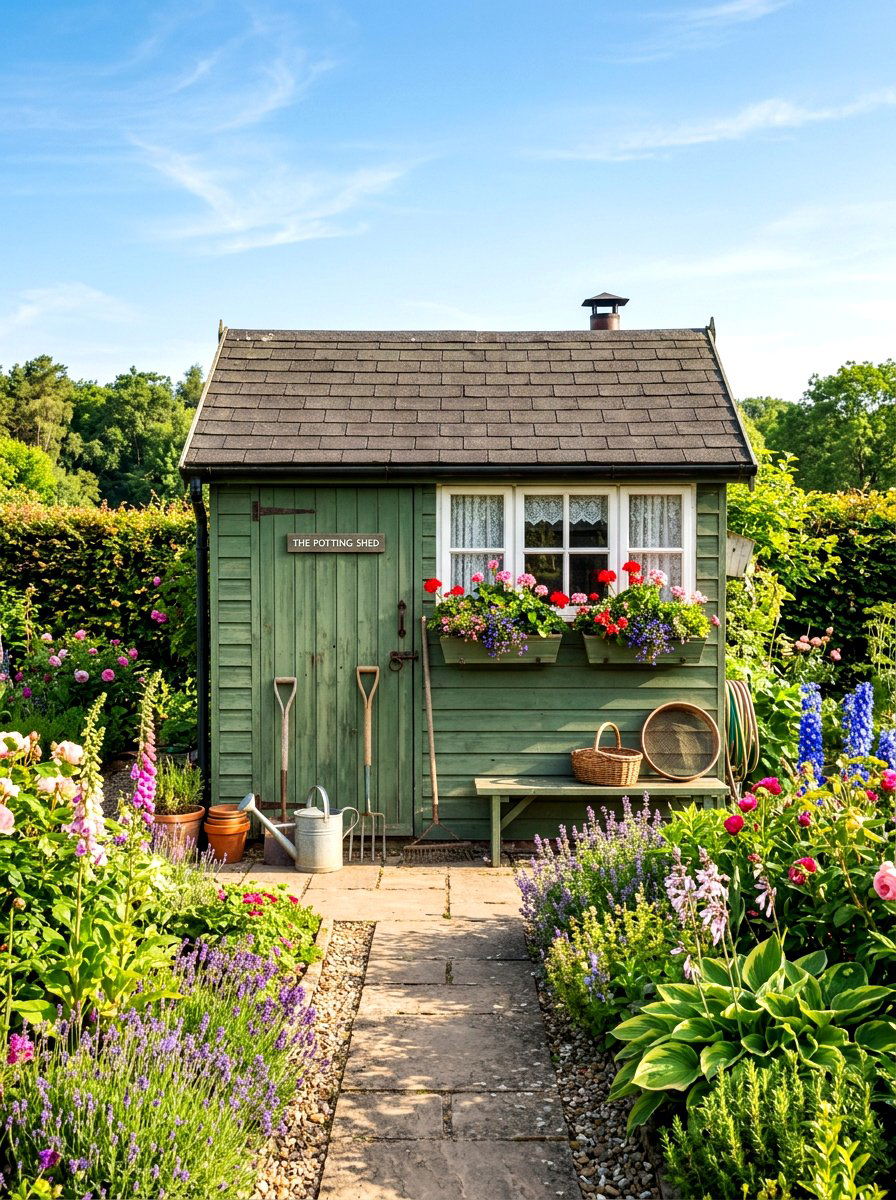
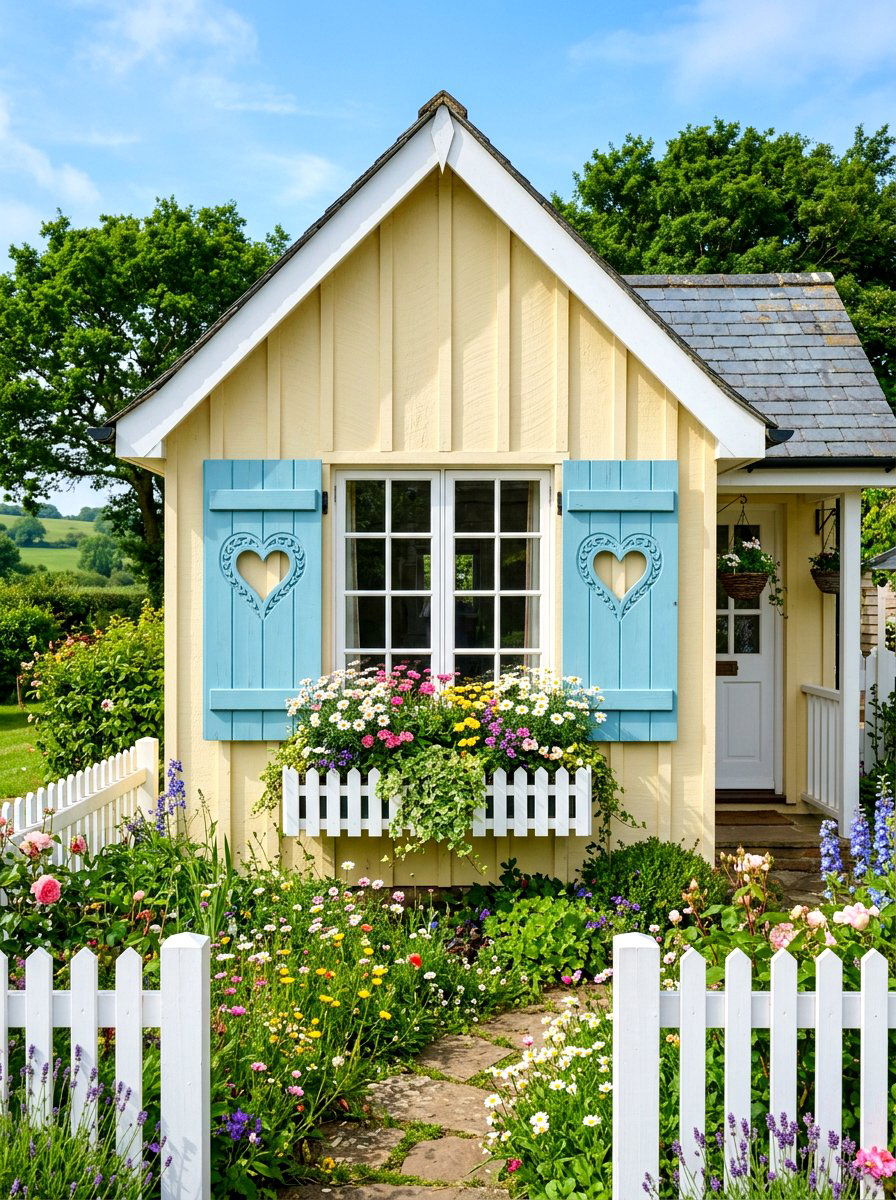
A potting shed is more than just a place to store tools; it can be a charming focal point that adds a touch of rustic character to your garden. A well-designed wooden shed with a small porch and window boxes can look like a tiny cottage nestled among the trees. Keeping your gardening supplies organized inside makes the hobby much more enjoyable, providing a dedicated space for repotting plants and planning next season’s displays. You can paint it in a soft pastel color to match your flower borders or leave it as natural wood for a more organic and traditional look.
28. Foxgloves In Borders
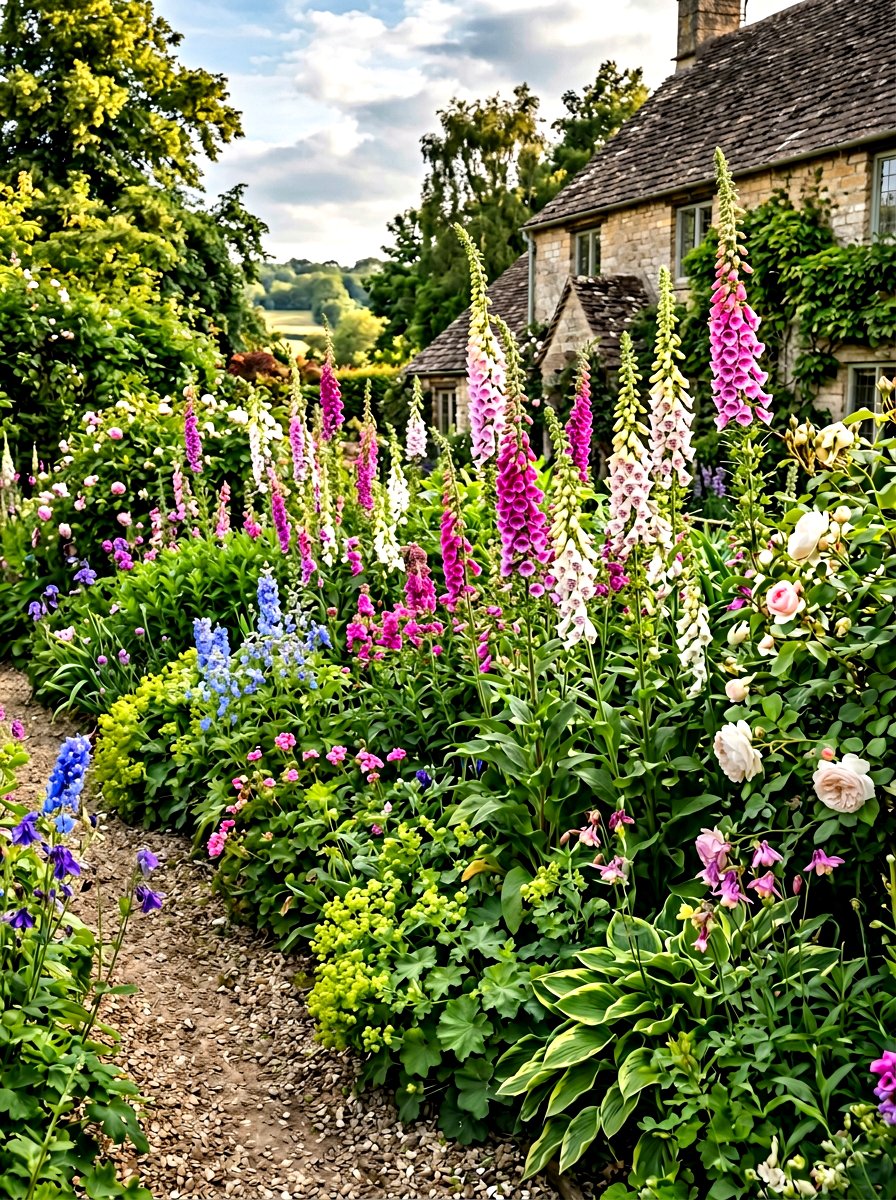
Foxgloves are the ultimate vertical accent for an English cottage garden, with their tall spikes of bell-shaped flowers reaching high above the surrounding plants. These biennials are excellent for adding height and a sense of wildness to the back of a flower bed. They come in a beautiful range of colors, from pure white to deep magenta, often with intricate spotting inside the bells. Because they are great at self-seeding, once you have them in your garden, they will often reappear year after year in unexpected and delightful places. They are essential for creating that traditional, effortless country house look.
29. Informal Lawn Edge
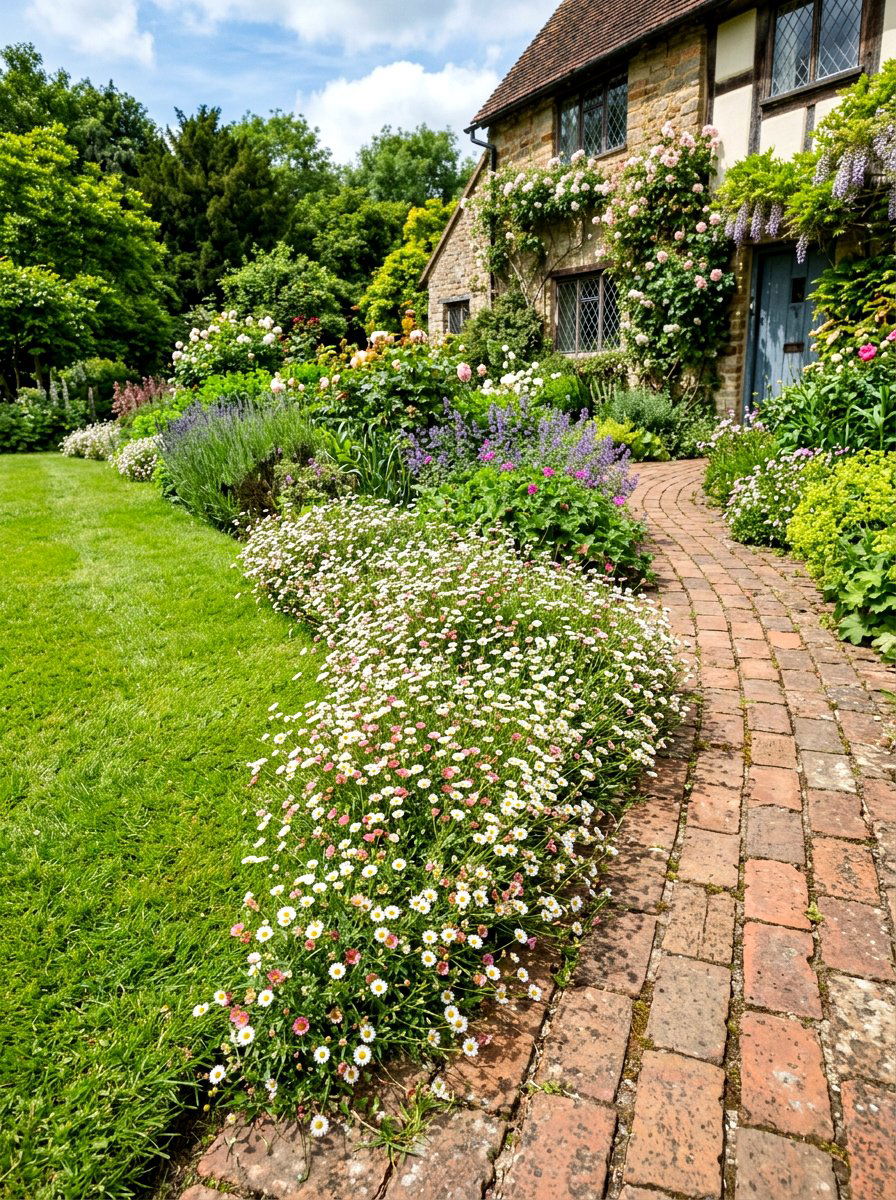
To achieve a soft and romantic look, avoid harsh, straight lines between your lawn and your flower beds. An informal lawn edge allows low-growing plants like Alchemilla mollis or Erigeron karvinskianus to spill over the boundary, blurring the lines between the grass and the flowers. This creates a much more natural and lived-in feel that is less demanding than maintaining a perfectly sharp edge. It gives the garden a relaxed, "country" vibe that is very popular for viral Pinterest content. This softening of the landscape makes the entire outdoor space feel more welcoming and integrated with nature’s natural growth.
30. Romantic Garden Gazebo
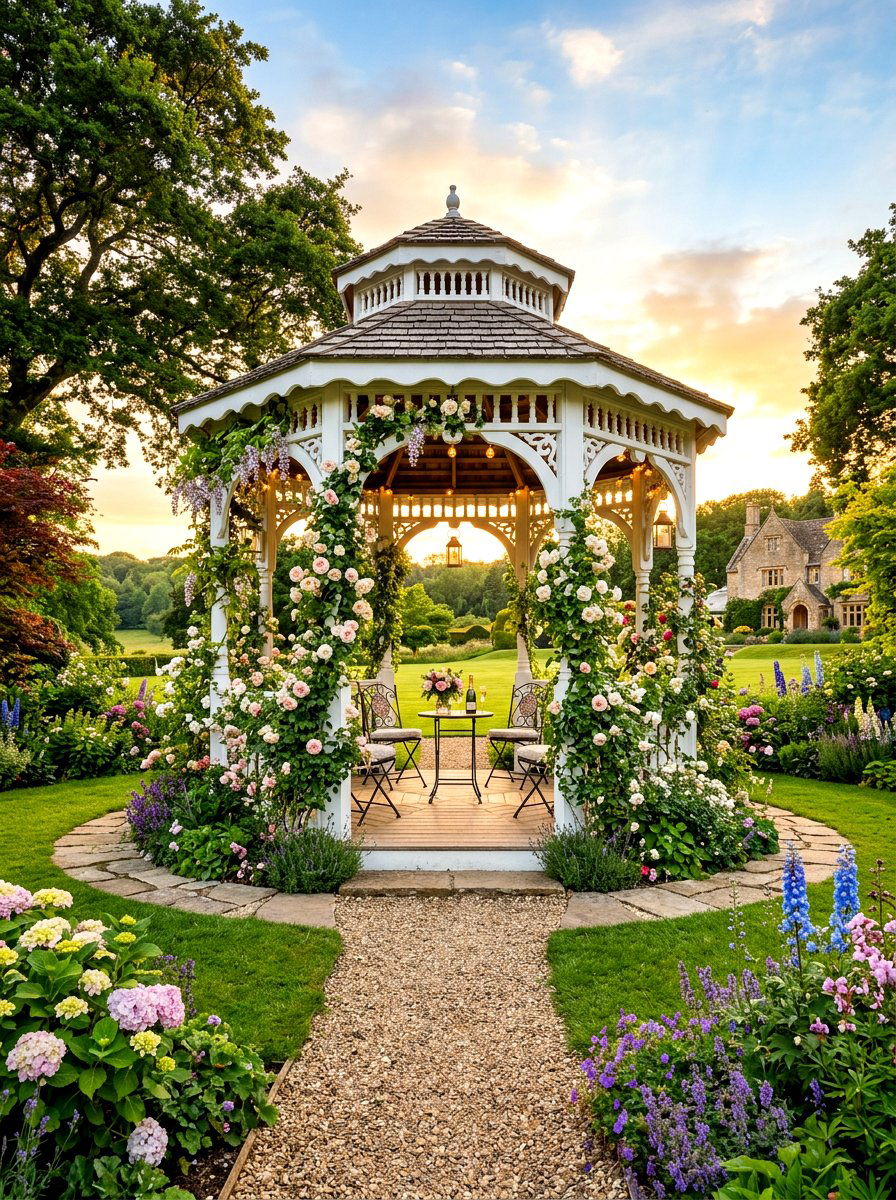
A gazebo provides a permanent architectural structure that serves as a beautiful destination at the end of a garden path. This sheltered space is perfect for enjoying a cup of tea during a light rain shower or for hosting an intimate dinner party under the stars. You can enhance its romantic appeal by growing climbing roses or jasmine around the pillars, eventually covering the entire structure in fragrant greenery. Whether it is a classic wooden design or a more ornate metal pavilion, a gazebo adds a sense of luxury and old-world charm that transforms any backyard into a high-end estate.
Conclusion:
Designing a garden in the traditional English style is a rewarding journey that connects you with nature’s rhythms and a rich history of horticultural excellence. By combining the structure of evergreen hedges and stone paths with the vibrant, chaotic beauty of perennial borders and climbing roses, you create a space that is both orderly and wild. The key is to embrace variety, scent, and a sense of discovery, ensuring that every corner of your outdoor sanctuary has something unique to offer. Whether you are planting a single rose bush or a full orchard, these ideas provide a timeless blueprint for a beautiful life.

Related posts: