Colonial homes have a unique charm that stands the test of time, and the front yard is where that first impression truly begins. Creating a classic landscape requires a balance of formal structure and natural beauty. You want to focus on symmetry, clean lines, and traditional materials like brick, stone, and wood. These elements work together to frame the architectural features of the home, such as the grand columns or the orderly window shutters. Whether you live in a historic property or a new build inspired by the past, these landscaping concepts will help you achieve a dignified and inviting curb appeal that neighbors will admire for years.
1. Brick walkway
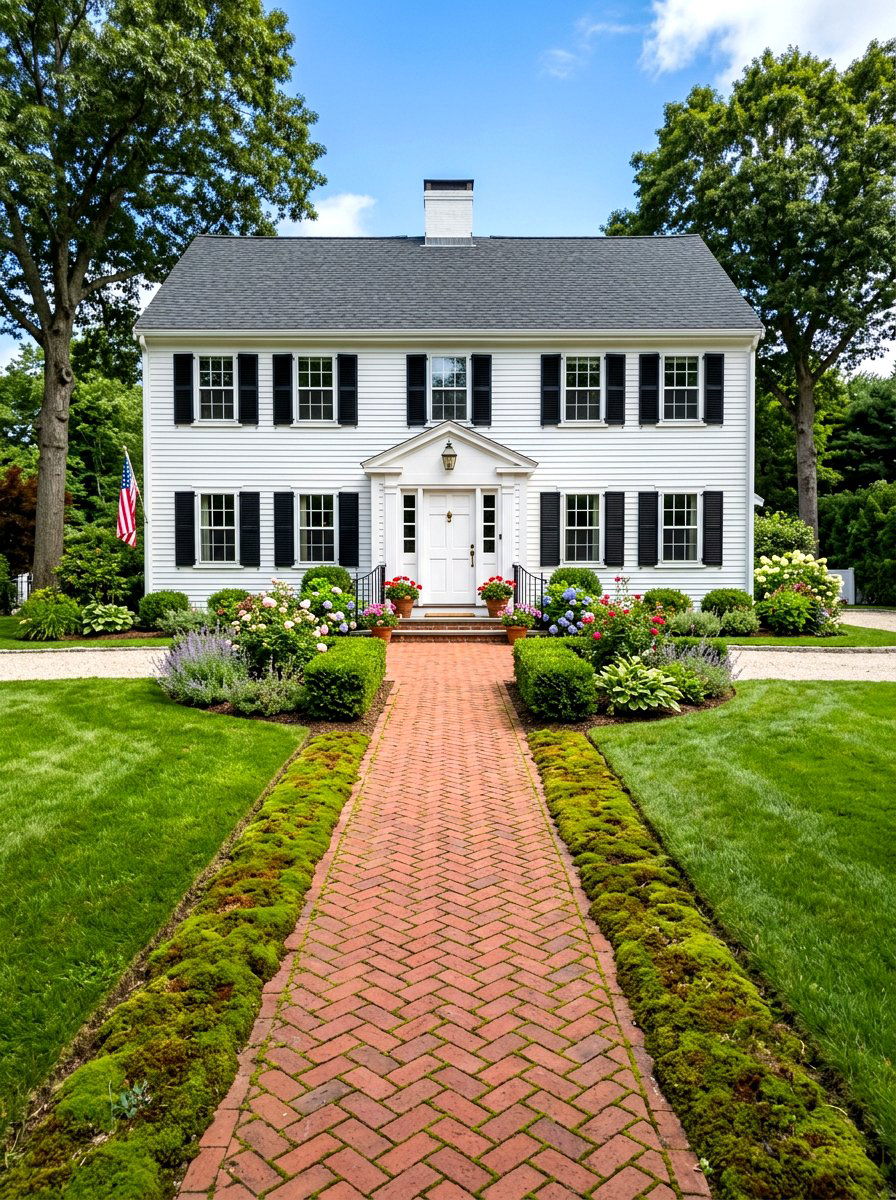
Walking up a path made of weathered red bricks instantly transports you back to a more elegant era of home design. The herringbone or running bond patterns are quintessential choices that provide a sturdy yet decorative entrance to your colonial residence. These paths look best when they lead directly from the sidewalk to the front door, emphasizing the home's natural symmetry. You can line the edges with low-growing herbs or moss to soften the hard lines of the masonry. Brick is incredibly durable and develops a beautiful patina over time, making it a wise investment for any homeowner. It pairs perfectly with white siding or traditional red brick exteriors for a cohesive look.
2. Boxwood hedge border
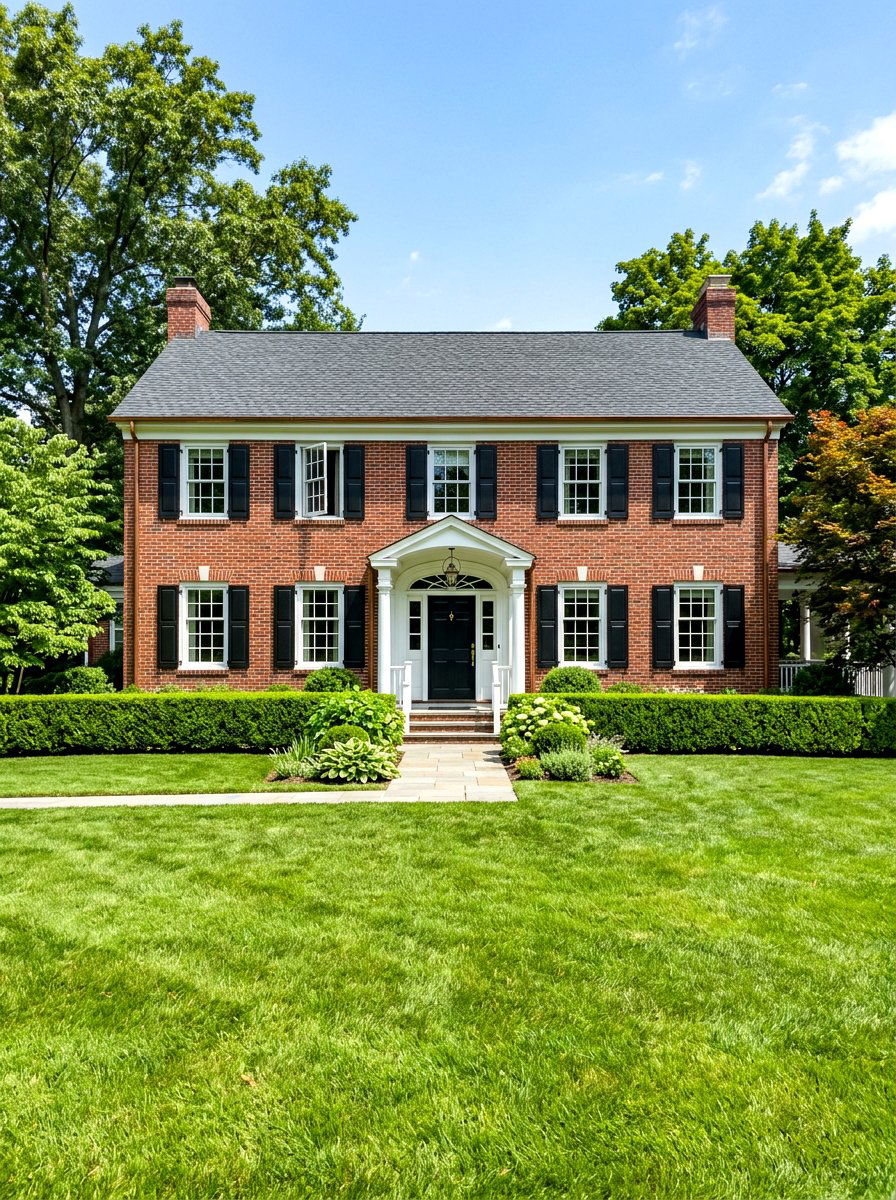
Nothing defines a colonial front yard quite like the crisp, clean lines of a perfectly manicured boxwood hedge. These evergreen shrubs provide year-round structure and a sense of formal order that is central to the style. You can use them to outline your front porch, frame your main walkway, or define the edges of your flower beds. Keeping them trimmed to a uniform height ensures a polished appearance that highlights the architectural symmetry of the house. Boxwoods are versatile and hardy, making them an ideal choice for creating low walls that guide the eye toward the front entrance. They offer a lush green backdrop for colorful seasonal flowers.
3. White picket fence
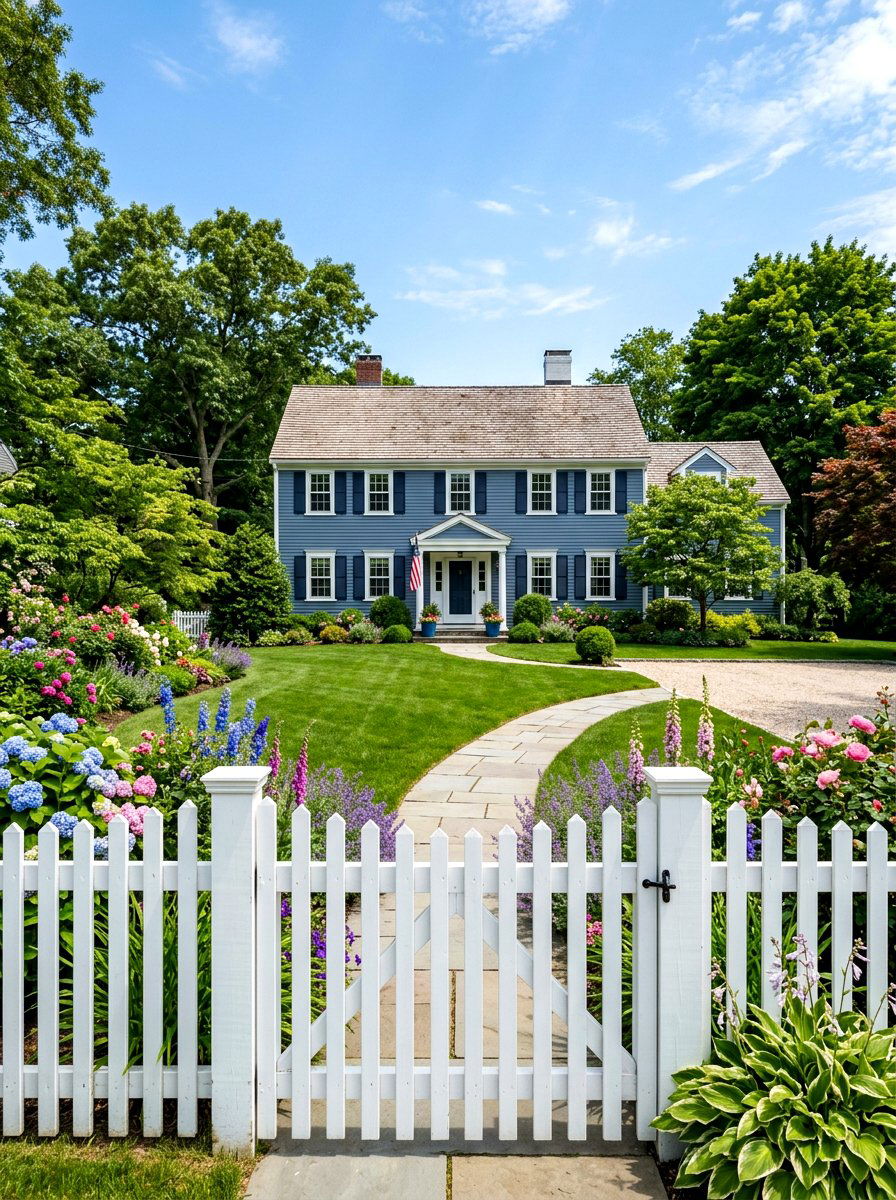
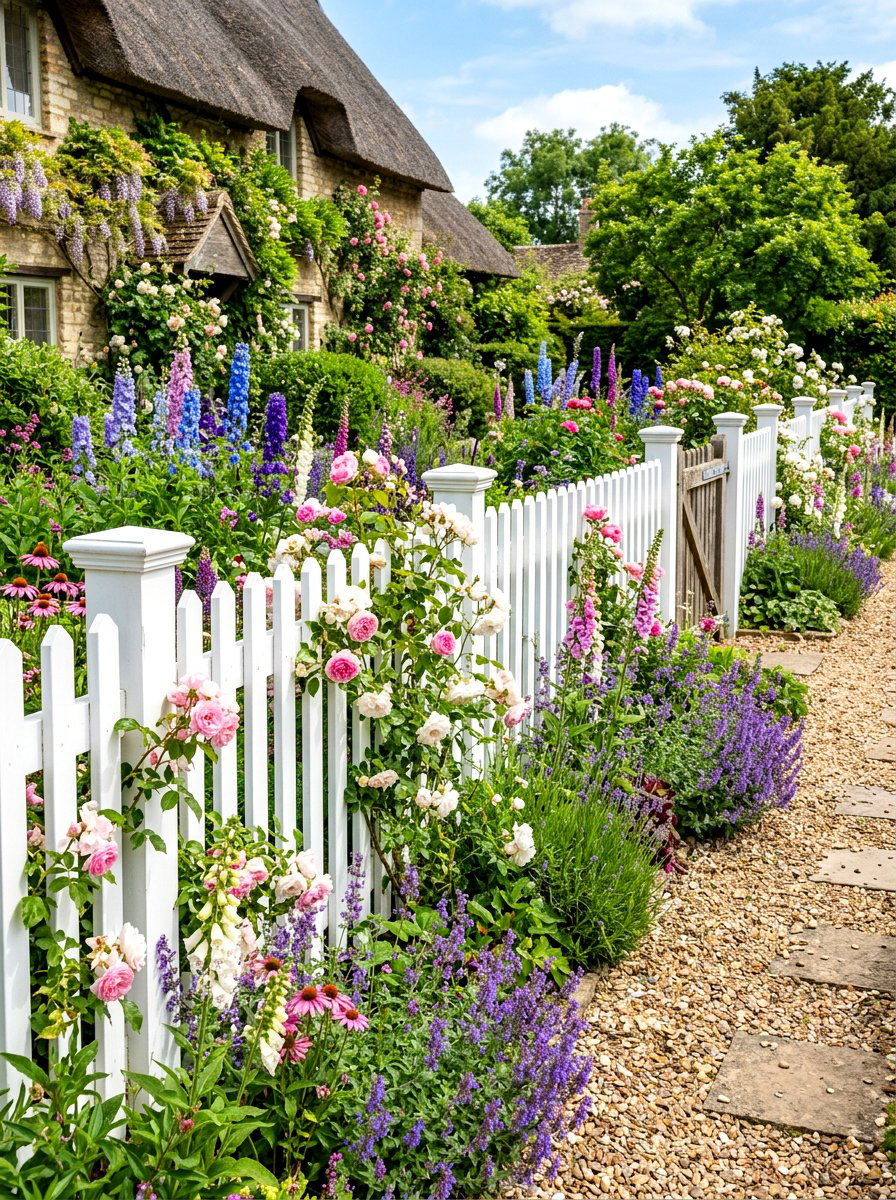
A white picket fence is perhaps the most iconic symbol of traditional American curb appeal and colonial charm. It provides a gentle boundary that feels welcoming rather than exclusionary, framing the entire property with a bright and airy aesthetic. You can choose a classic pointed picket or a more decorative scalloped top to suit your specific home style. Planting climbing roses or colorful perennials along the base of the fence adds a layer of soft texture and vibrant color. This feature works exceptionally well with clapboard siding and dark shutters, creating a high-contrast look that is both timeless and cheerful. It creates a defined, tidy garden space.
4. Gas lantern lighting
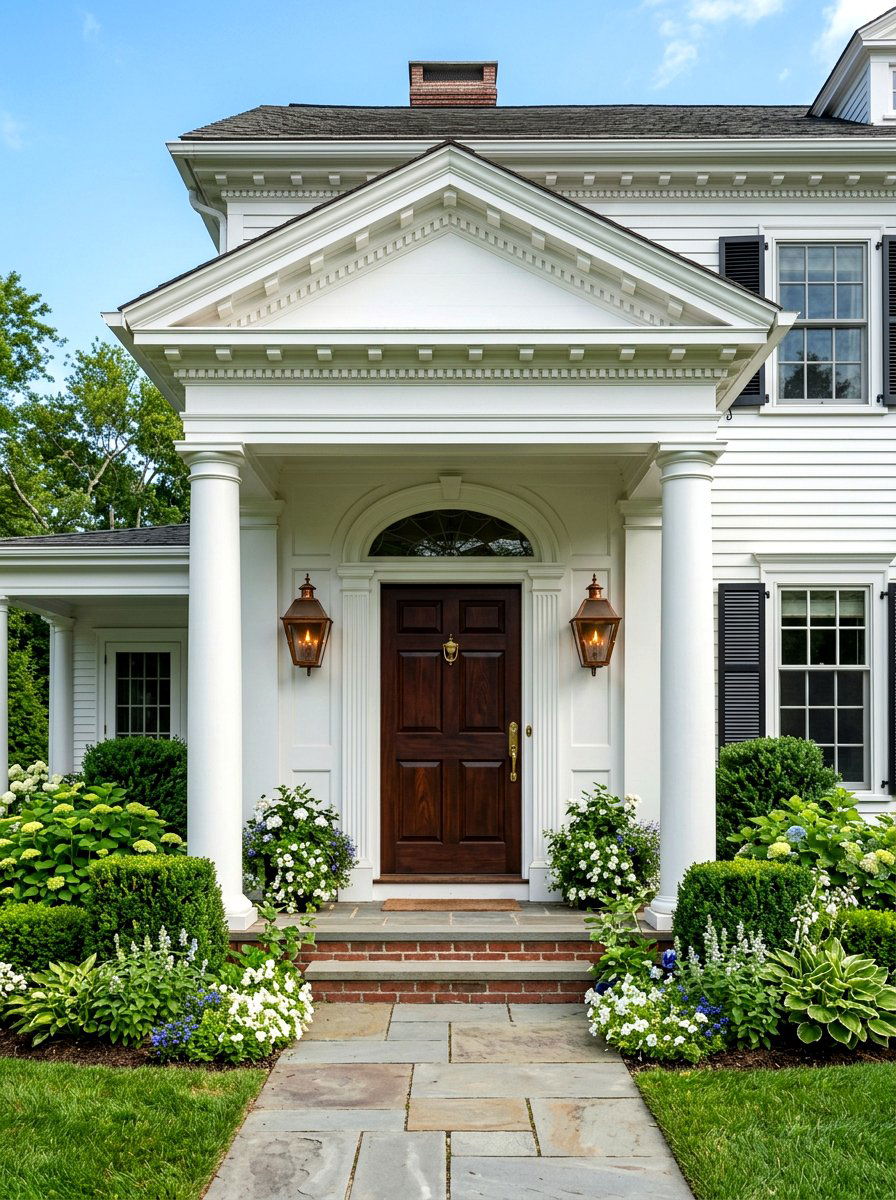
Adding gas-style lanterns to your front entrance provides a warm and flickering glow that mimics the historic lighting of the past. These fixtures are usually made of copper or wrought iron and can be mounted on either side of the front door or atop sturdy posts. The soft, ambient light they emit creates a romantic and historic atmosphere as the sun begins to set. You should choose a design with a traditional lantern shape and clear glass panes to maximize the visual impact. This type of lighting not only improves safety and visibility at night but also serves as a beautiful architectural detail during the daylight hours.
5. Formal garden layout
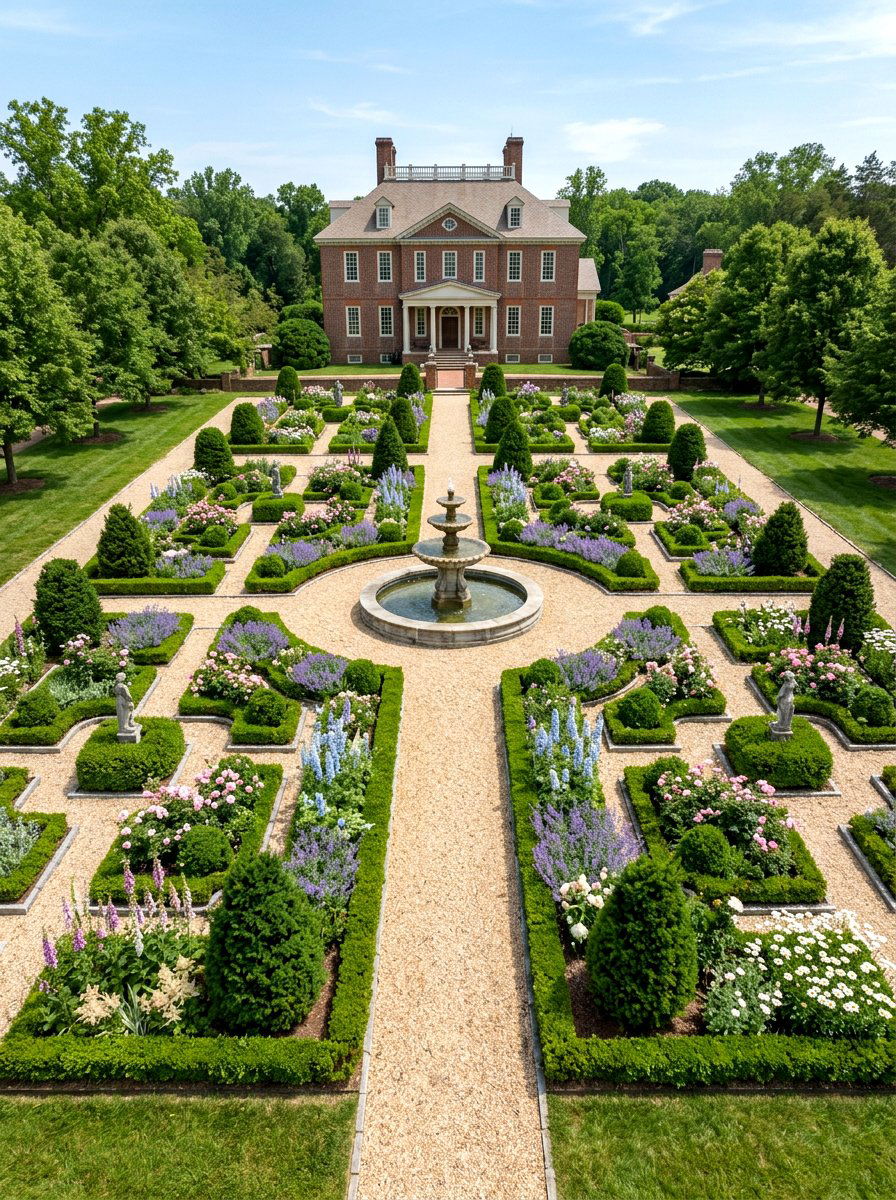
A formal garden layout relies on geometric precision and balanced quadrants to create a sophisticated and organized outdoor space. You can divide your front lawn into four equal sections using straight gravel or brick paths that meet at a central point. Each quadrant can be filled with a mix of structured shrubs and soft flowering perennials to create a layered effect. This design approach reflects the orderly principles of early American estates and provides a sense of grandeur even in smaller yards. By keeping the plantings symmetrical on both sides of the main axis, you reinforce the stately presence of your colonial home.
6. Gravel driveway
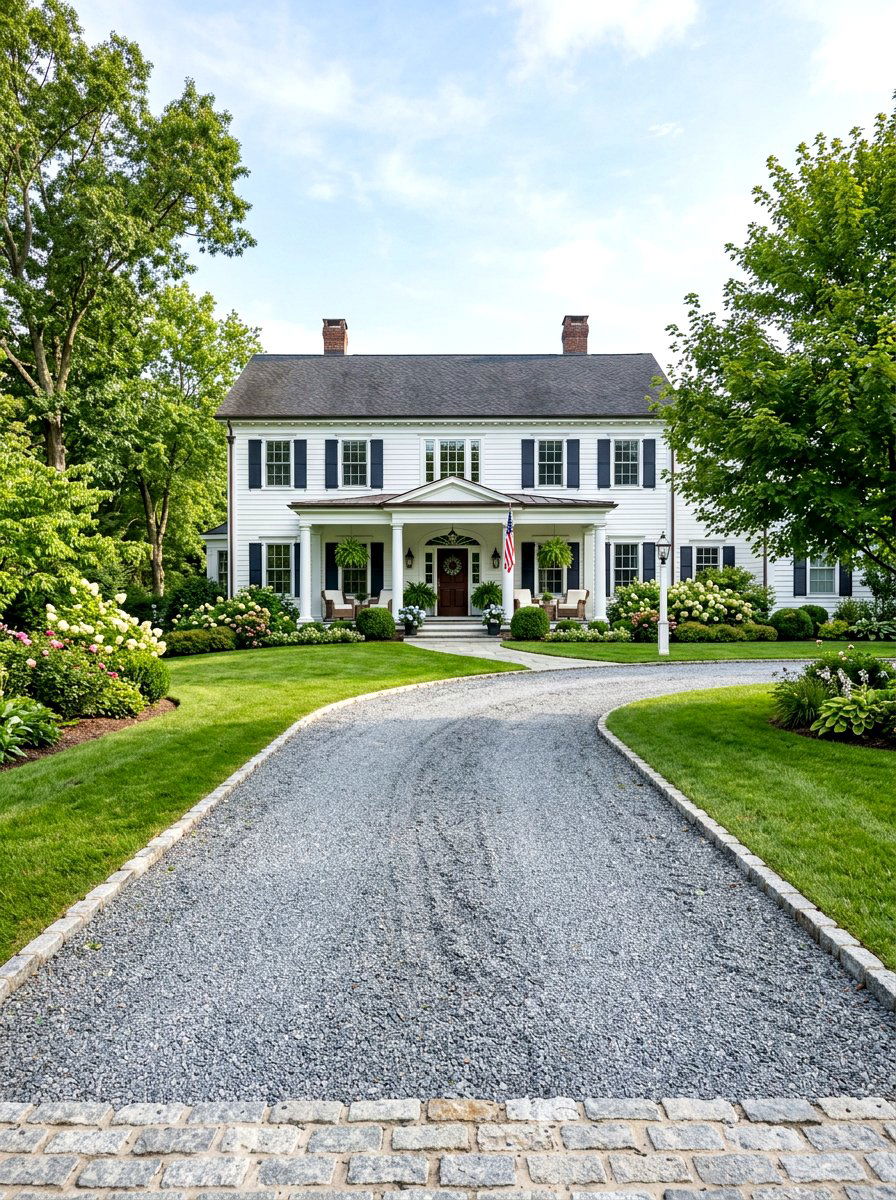
Choosing a gravel driveway adds a rustic and historic texture to your property that feels much more authentic than modern asphalt. The crunch of fine gravel underfoot provides a sensory experience that reminds visitors of old country estates and colonial manors. You can use a mix of local river stones or crushed granite in neutral tones like gray, tan, or white to complement your home's exterior. To keep the gravel contained and looking neat, install a sturdy brick or stone cobblestone border along the edges. This material is also highly permeable, making it an eco-friendly choice for managing rainwater runoff on your property.
7. Window boxes
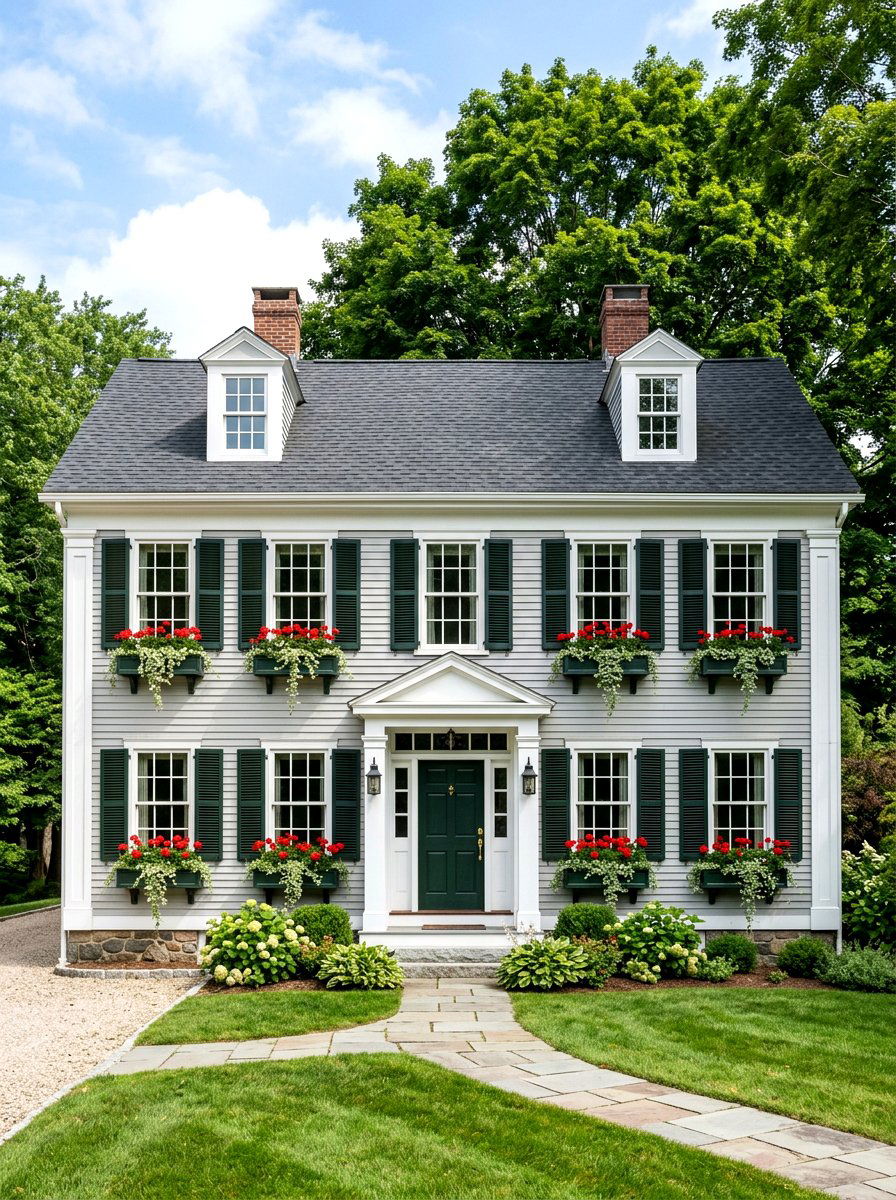
Decorative window boxes are a simple yet effective way to add vertical interest and a splash of color to your home's facade. You can plant a rotating selection of seasonal flowers, such as red geraniums in summer or white pansies in the spring. Trailing ivy or sweet potato vine adds a sense of movement and softens the hard edges of the wooden boxes. For a truly colonial look, paint the boxes to match your shutters or choose a crisp white that pops against darker siding. This detail draws the eye upward and makes the house feel lived-in and loved, enhancing the overall curb appeal.
8. Front porch columns
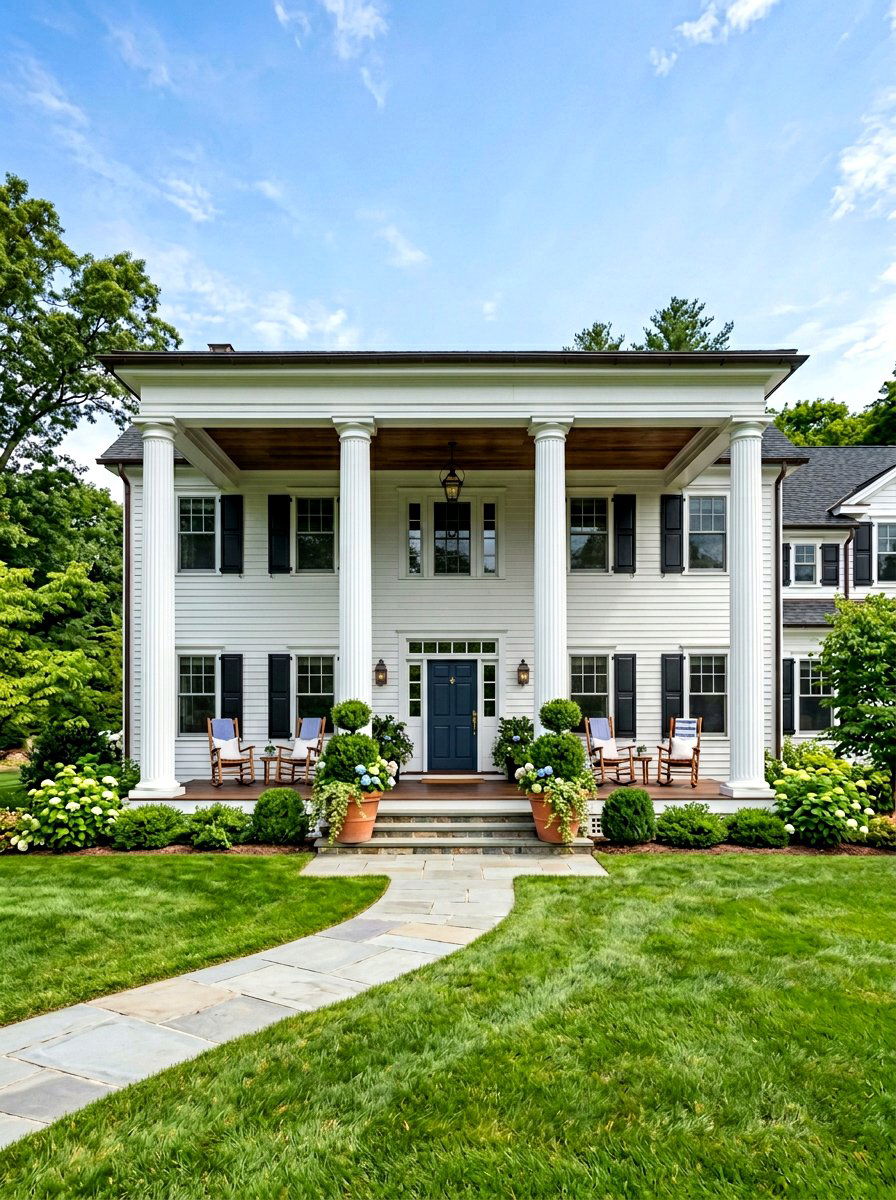
Grand white columns are a hallmark of colonial architecture that provide both structural support and a dramatic visual statement. Whether they are simple Tuscan pillars or more ornate Corinthian styles, they add a sense of height and importance to your entryway. You can flank the base of each column with large potted plants or low-growing shrubs to ground the architectural feature. Ensure the paint remains fresh and crisp to maintain that classic, stately appearance that characterizes the style. These pillars create a beautiful frame for your front door and provide a shaded area for enjoying the view of your well-landscaped yard.
9. Rose trellis
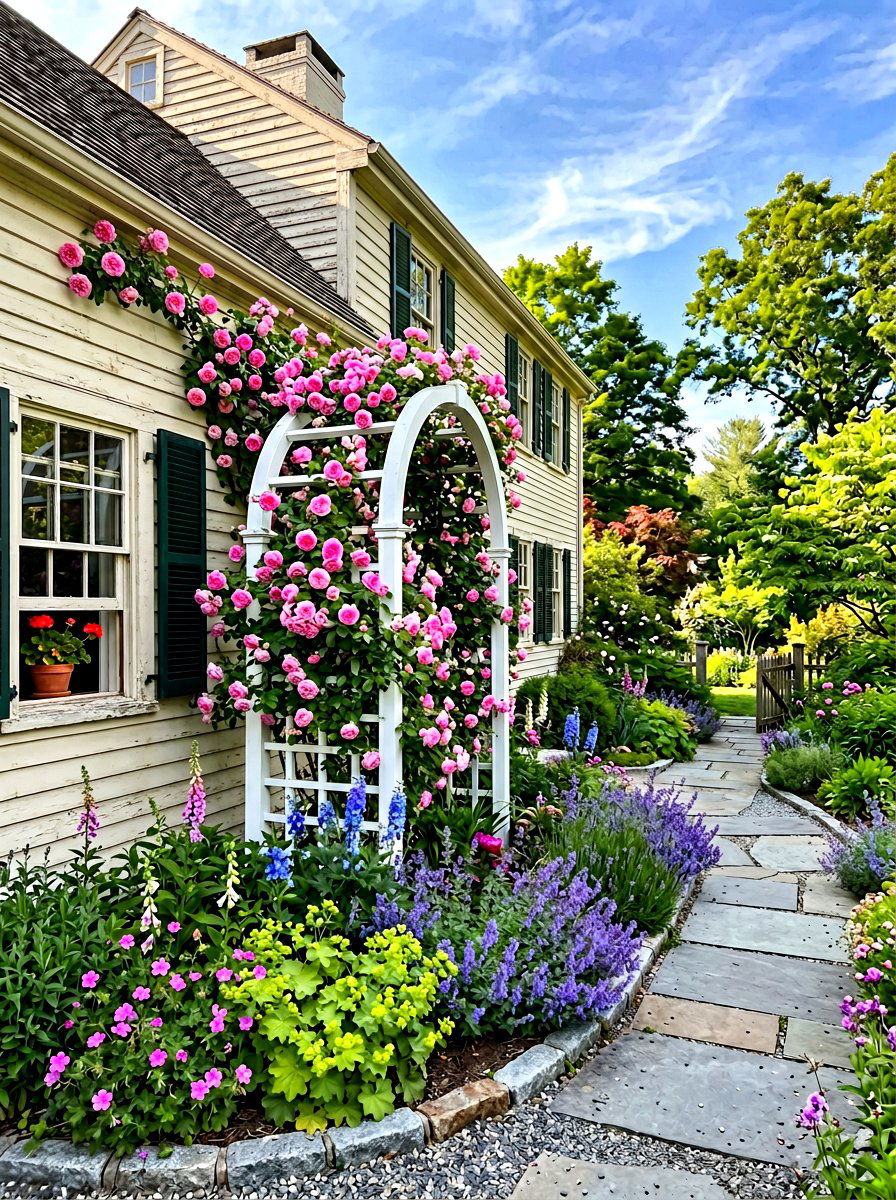
Installing a rose trellis near your front entrance or along a side wall adds a touch of romantic elegance and natural fragrance. Climbing roses in shades of white, pink, or red can be trained to grow over a wooden or metal frame. This vertical garden element breaks up the flat planes of your home's exterior and adds a soft, organic texture. You can place a trellis on either side of the front door to create a fragrant archway that greets guests as they arrive. Choosing a variety of rose that blooms throughout the season ensures that your home always looks vibrant and inviting.
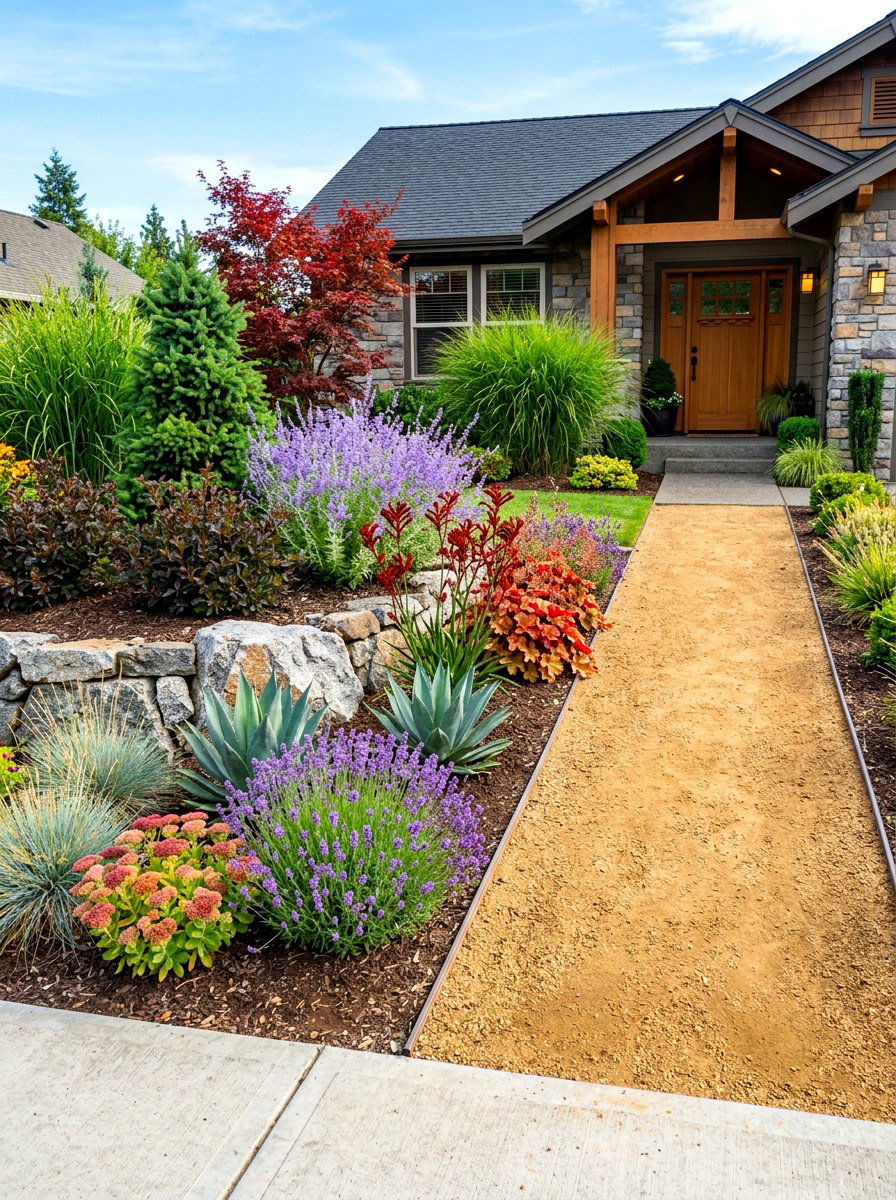
10. Symmetrical flower beds
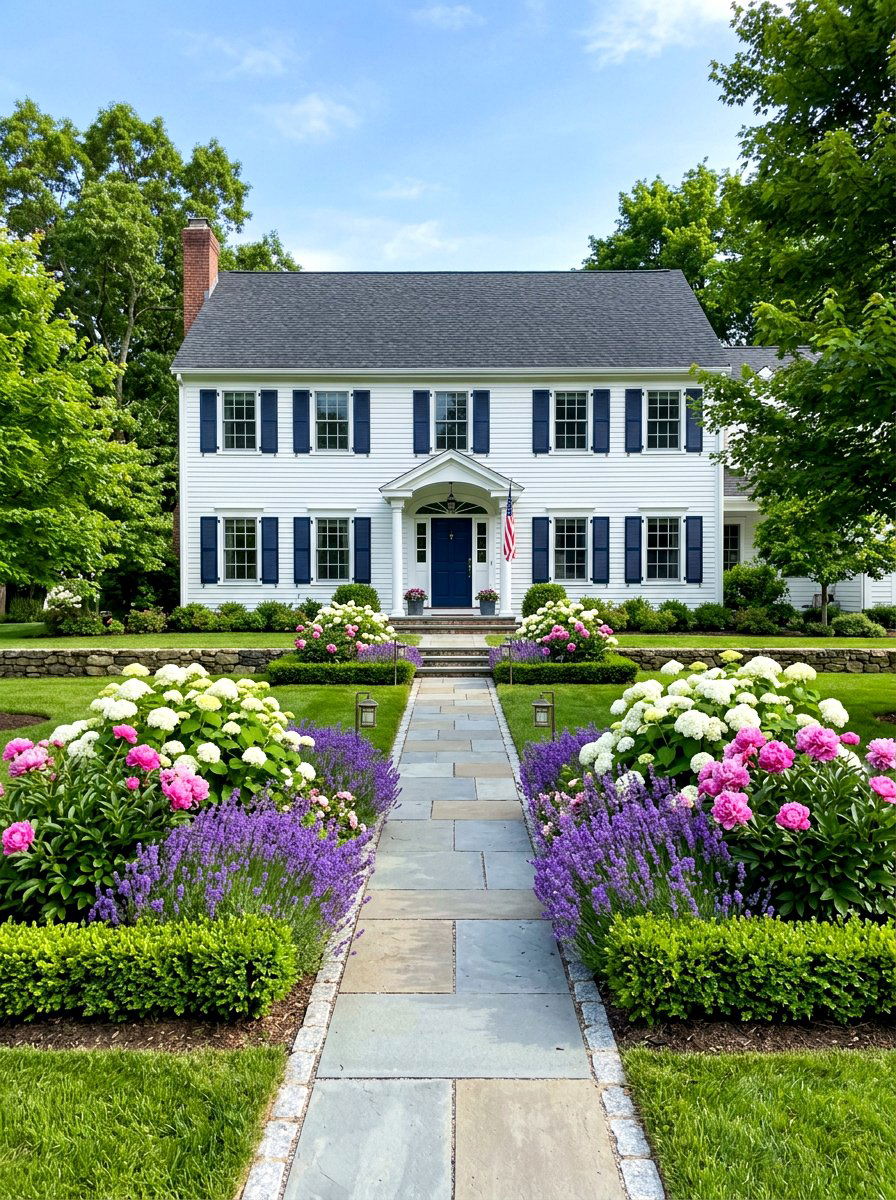
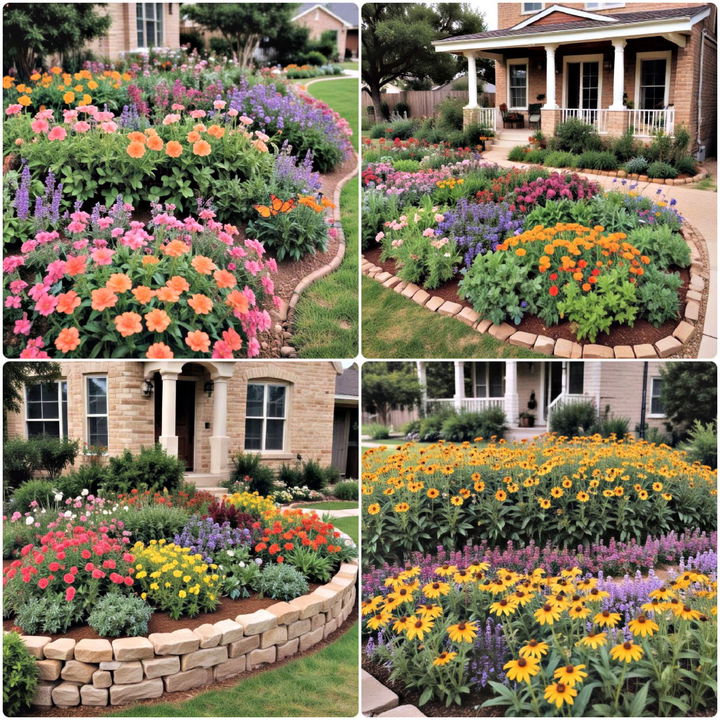
Symmetry is the golden rule of colonial landscaping, and your flower beds should reflect this balanced philosophy. You should create identical planting areas on either side of your main walkway or front door to create a sense of harmony. Use a mix of traditional perennials like hydrangeas, peonies, and lavender to provide a lush and full appearance. By mirroring the heights, colors, and textures of the plants on both sides, you create a visual path that leads the eye directly to the center of the home. This structured approach makes the front yard feel intentional, organized, and professionally designed for maximum impact.
11. Stone retaining wall
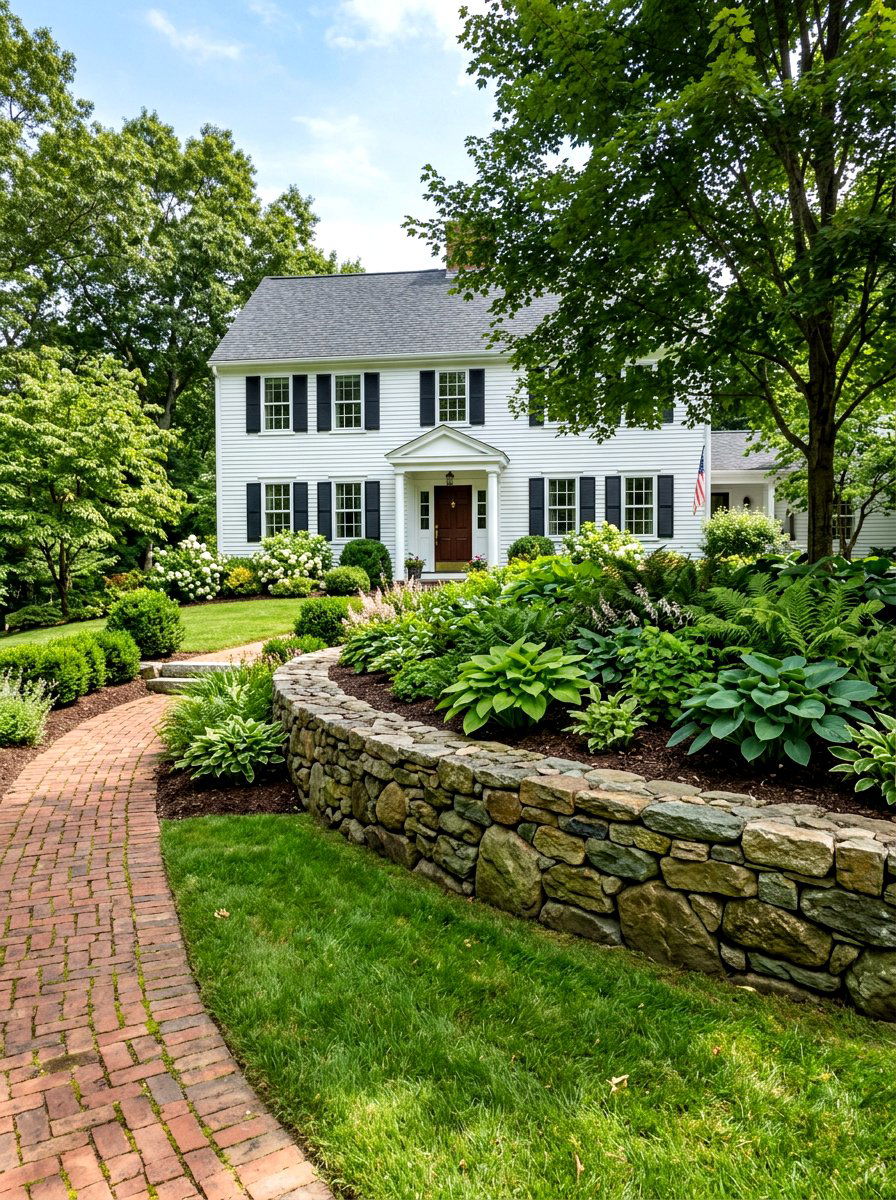
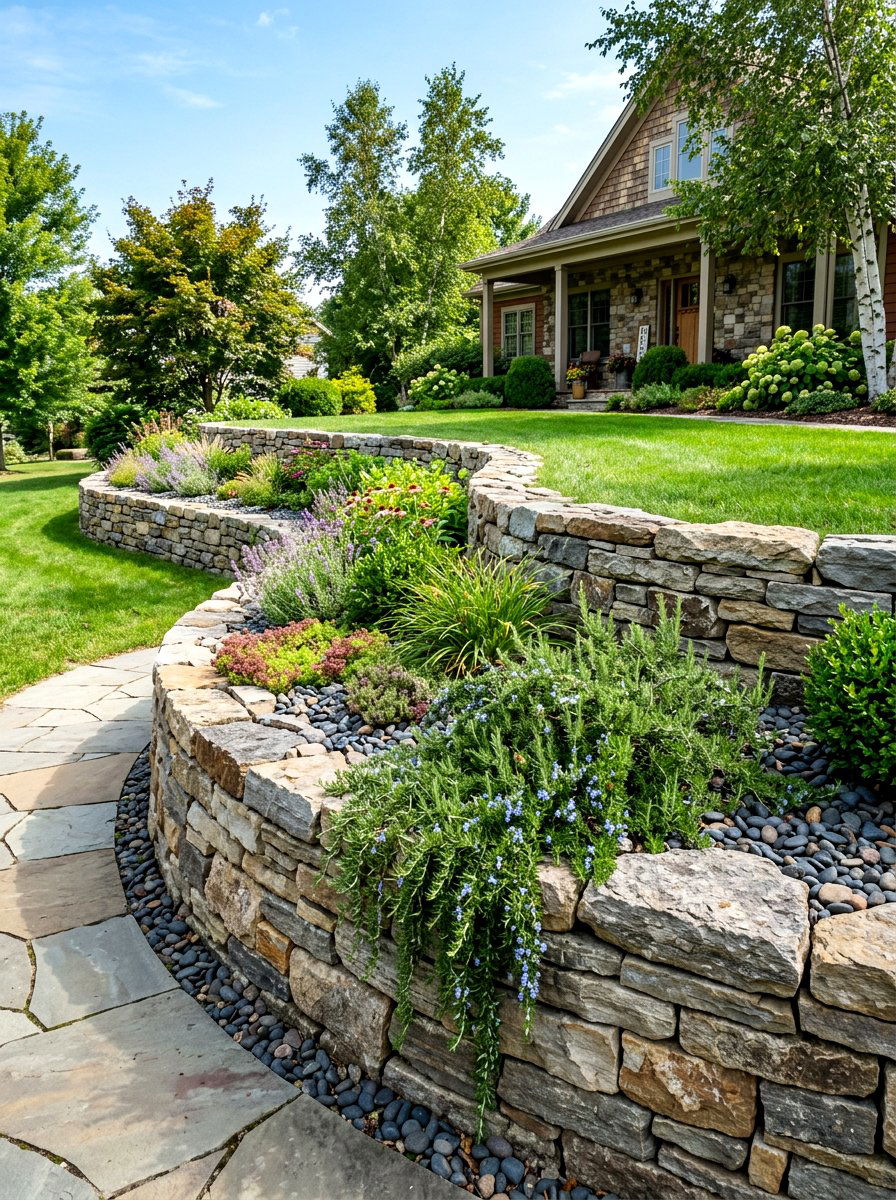
A low stone retaining wall can help manage a sloped front yard while adding a sense of permanence and history to the landscape. Using natural fieldstone or dry-stacked limestone provides a rugged and authentic look that complements the formal architecture of a colonial home. You can use the top of the wall as a planting bed for cascading flowers or low-growing evergreens to soften the stone. This feature adds a new layer of depth and dimension to the yard, creating a distinct transition between the sidewalk and the house. It provides a sturdy and beautiful boundary that ages gracefully over the decades.
12. Sundial focal point
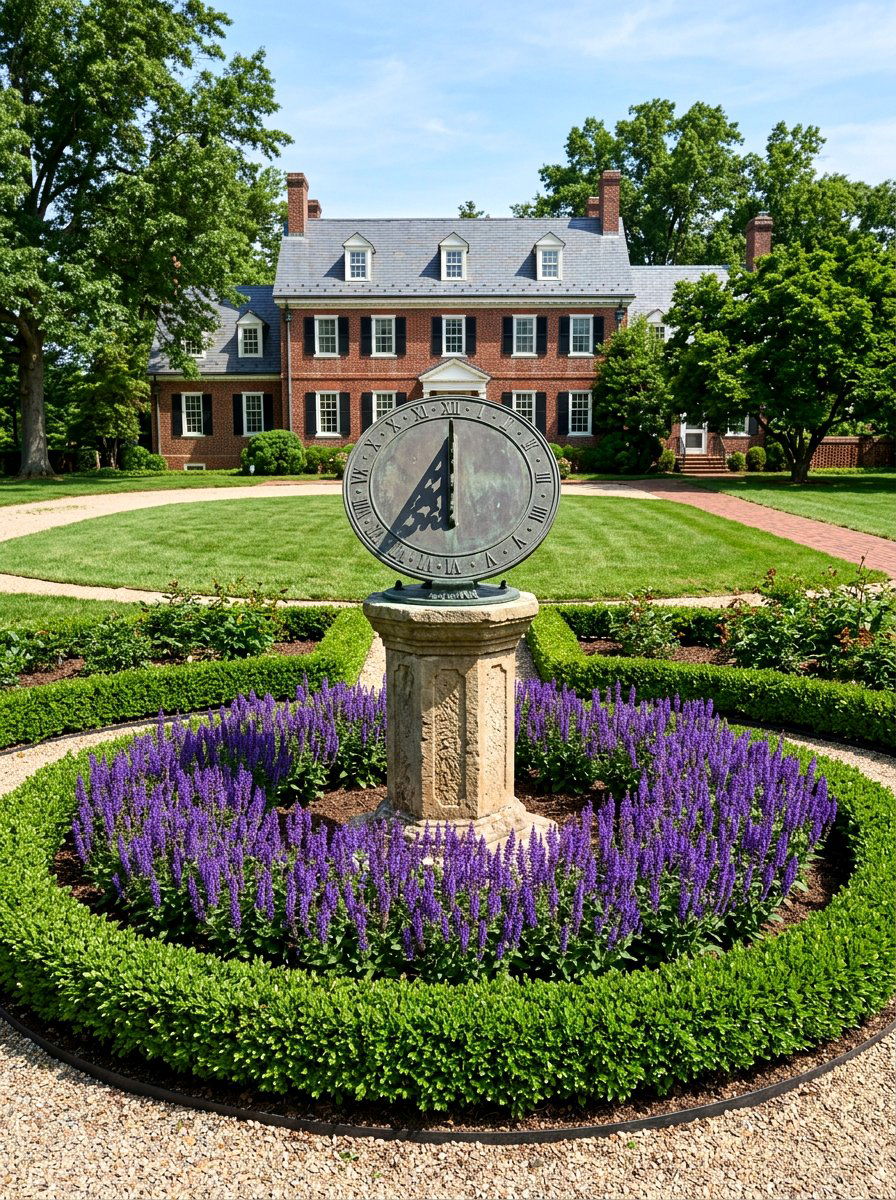
Placing a traditional bronze or stone sundial in the center of a circular flower bed creates a timeless and intellectual focal point. This classic garden ornament has been used for centuries and adds a sense of history and curiosity to your landscape. You can mount the sundial on a decorative pedestal and surround it with a low boxwood hedge or a ring of colorful annuals. This element serves as a conversation piece and anchors the entire garden design, providing a central axis for other pathways and beds. It is a subtle yet sophisticated way to embrace the heritage of colonial outdoor living.
13. Wrought iron gate
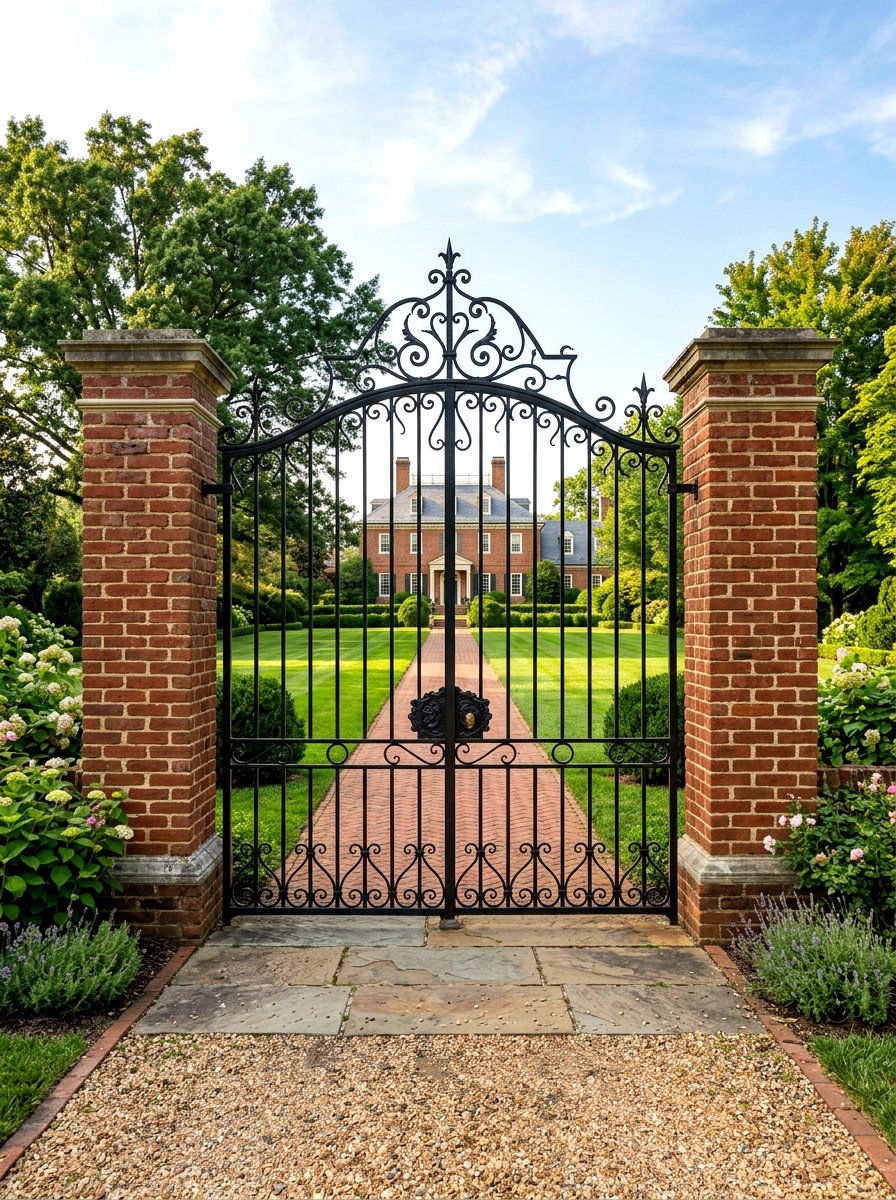
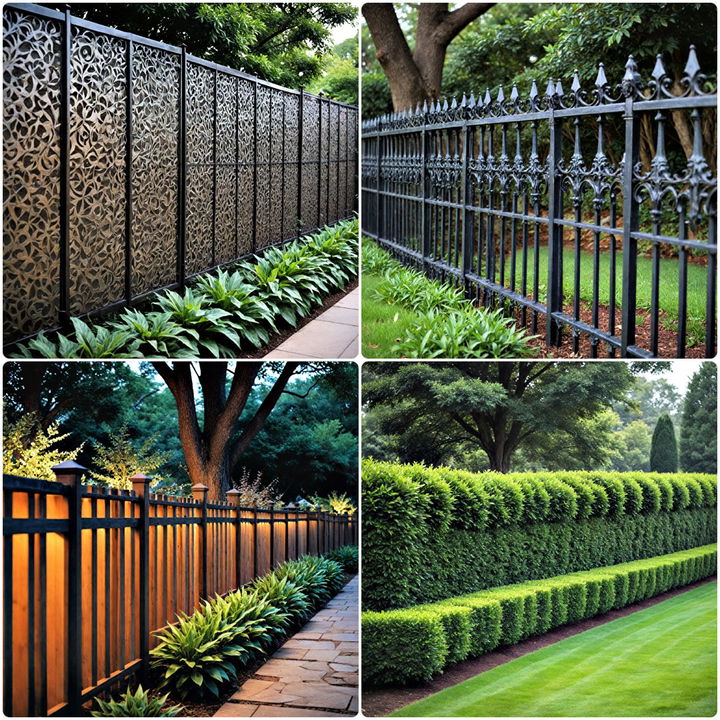
A black wrought iron gate adds a sense of security and refined elegance to the entrance of your colonial property. You can install it between two brick piers or as part of a traditional metal fence to create a formal transition into your yard. The intricate scrollwork or simple vertical bars provide a classic aesthetic that looks beautiful against a backdrop of green lawn and white architecture. This feature defines the boundary of your private space while still allowing for visibility and light. A well-placed gate makes the entrance to your home feel like a special destination, adding a layer of prestigious curb appeal.
14. Hydrangea foundation planting
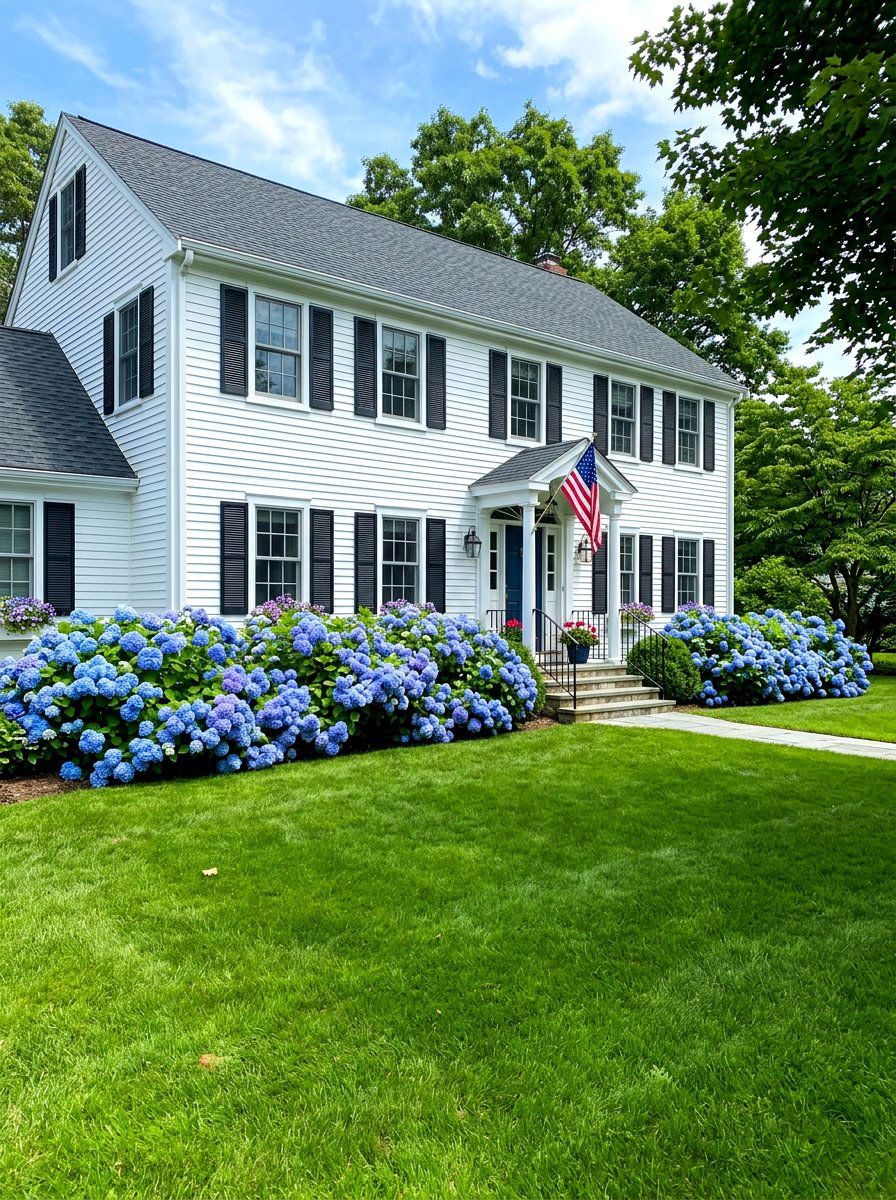
Planting large, lush hydrangea bushes along the foundation of your home creates a soft and voluminous border that hides the base of the house. The massive flower heads in shades of blue, white, or pink provide a romantic and cottage-like feel that perfectly suits the colonial style. These shrubs are easy to maintain and grow quickly, filling in gaps to create a solid wall of greenery and color during the summer months. You can pair them with lower-growing boxwoods or hostas to create a layered planting scheme that looks professional. Their grand size complements the scale of traditional two-story colonial residences.
15. Topiary garden
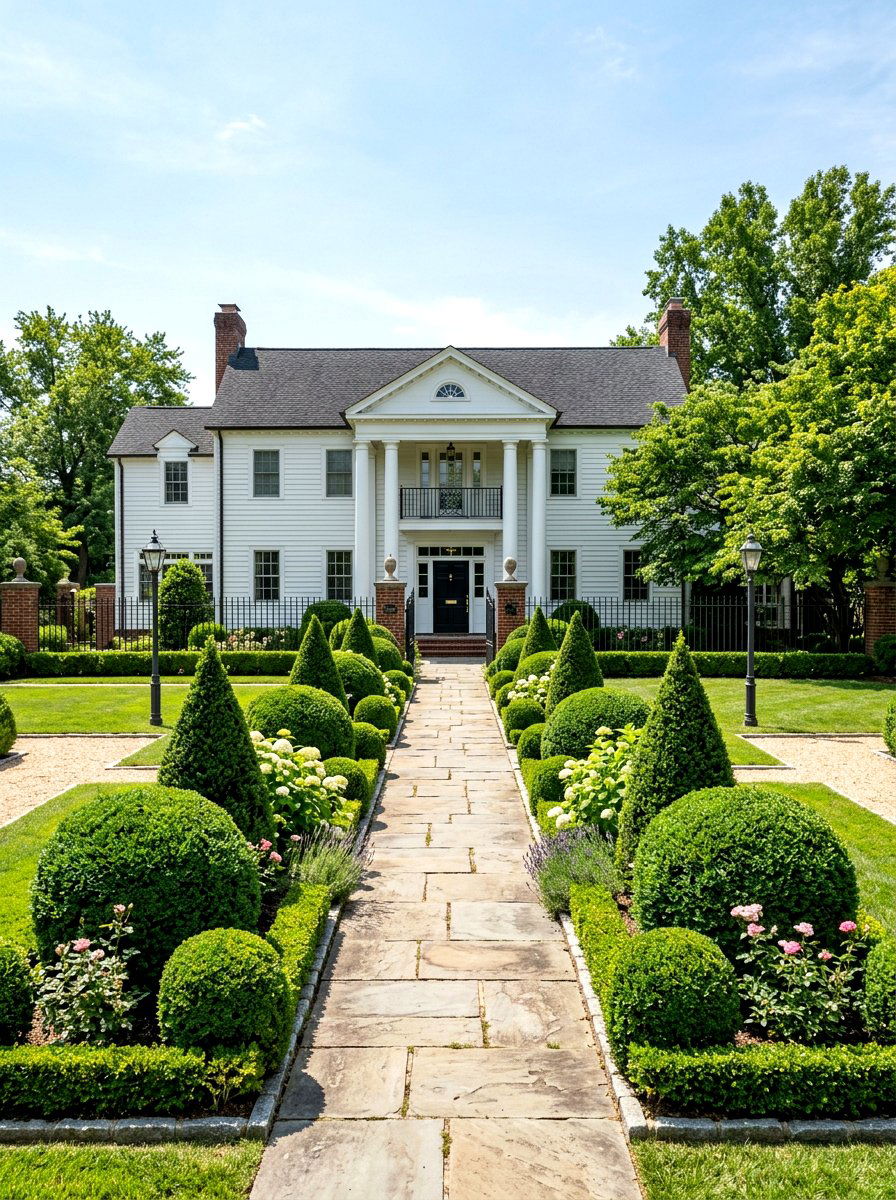
Integrating sculptural topiary plants into your front yard adds an air of formal sophistication and artistic flair. You can choose evergreen shrubs like yew or boxwood and have them trimmed into spheres, cones, or tiered shapes. Placing a pair of identical topiaries in decorative urns on either side of the front door creates an instant sense of luxury and order. This high-maintenance but high-reward feature demonstrates a commitment to traditional gardening craftsmanship. The structured shapes provide a stark contrast to the softer, flowing lines of your perennial flower beds, adding visual variety and a sense of "Old World" European influence.
16. Flagstone path
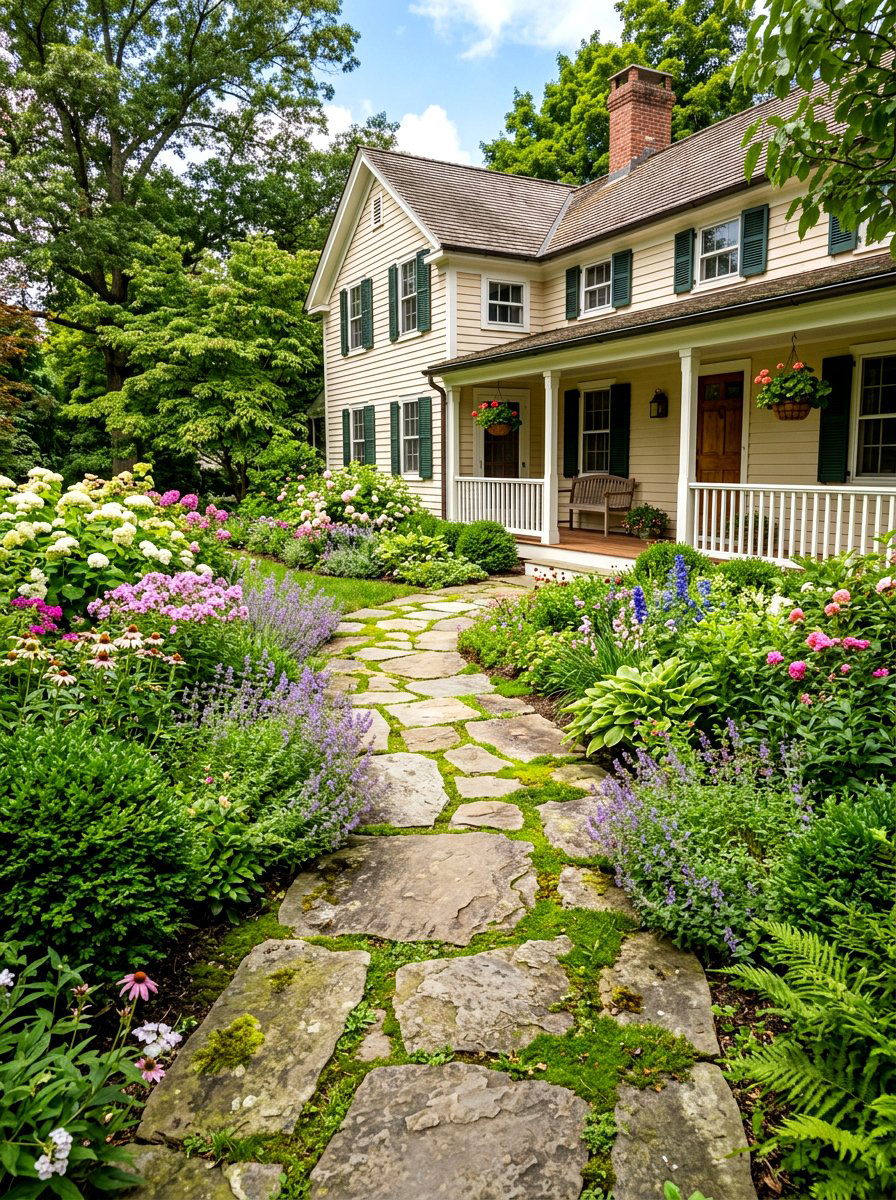
A flagstone path offers a slightly more organic and varied alternative to a traditional brick walkway while still maintaining a classic feel. The large, irregular stones provide a natural texture and a range of earth tones that blend beautifully with the surrounding landscape. You can set the stones in a bed of sand or gravel, allowing small patches of grass or moss to grow in the joints for an aged appearance. This type of path is durable and provides a solid surface for walking in all weather conditions. It works particularly well for secondary paths that lead to a side garden or a quiet seating area.
17. Painted front door
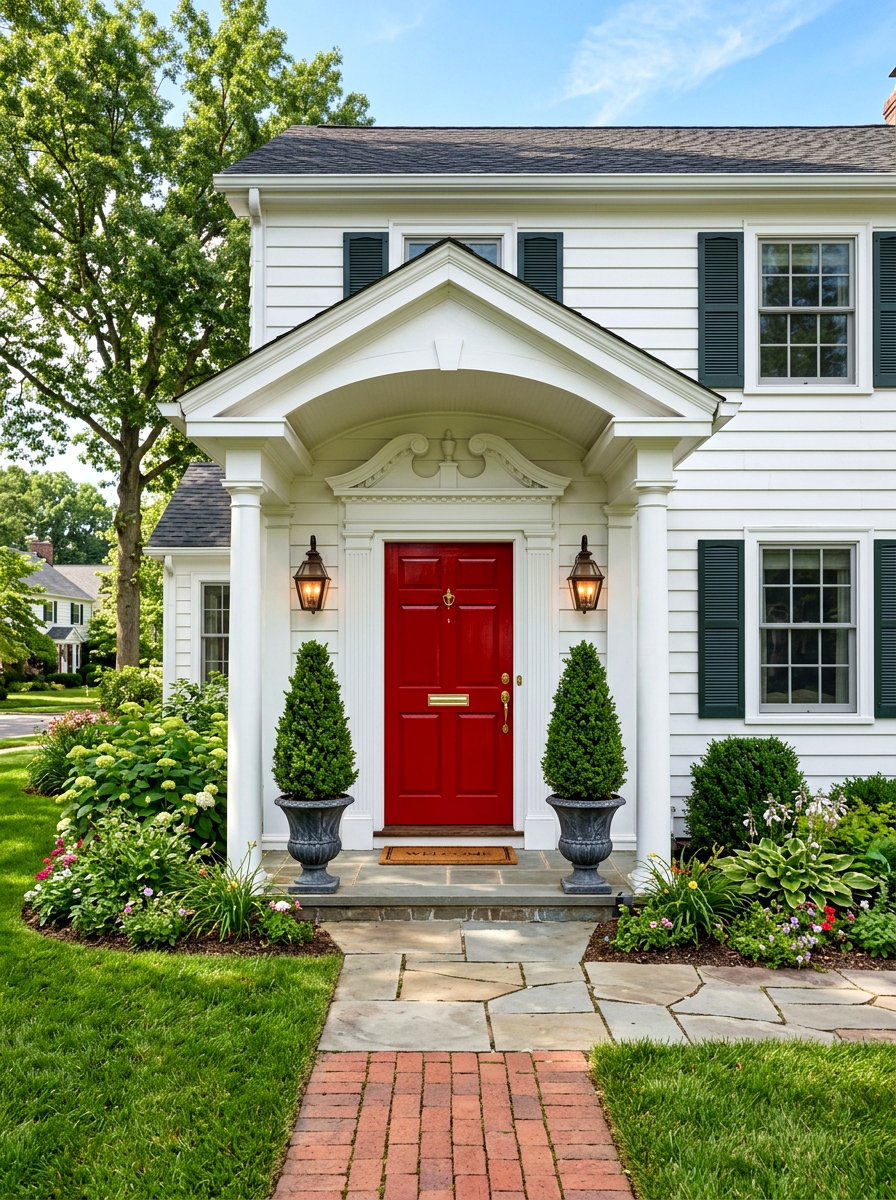
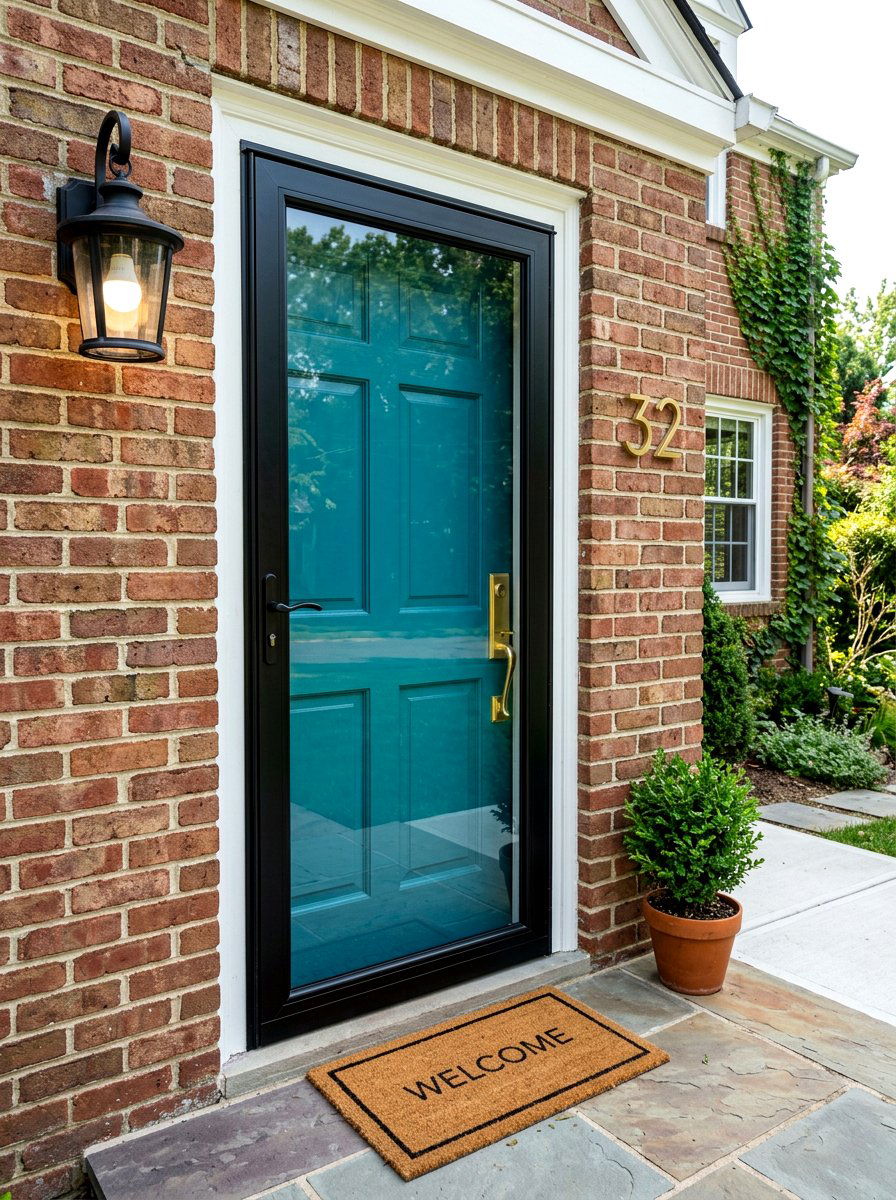
The front door is the heart of your colonial home's curb appeal and choosing the right color is essential for a viral-worthy look. While classic black and deep navy are always in style, a bold red or forest green can add a pop of personality to a white house. The paint should have a high-quality finish to ensure it stays vibrant and withstands the elements over time. You should coordinate the door color with your shutters and window boxes for a unified and professional aesthetic. A freshly painted door makes the whole house feel updated and welcoming, drawing guests inside with style and grace.
18. Lavender border
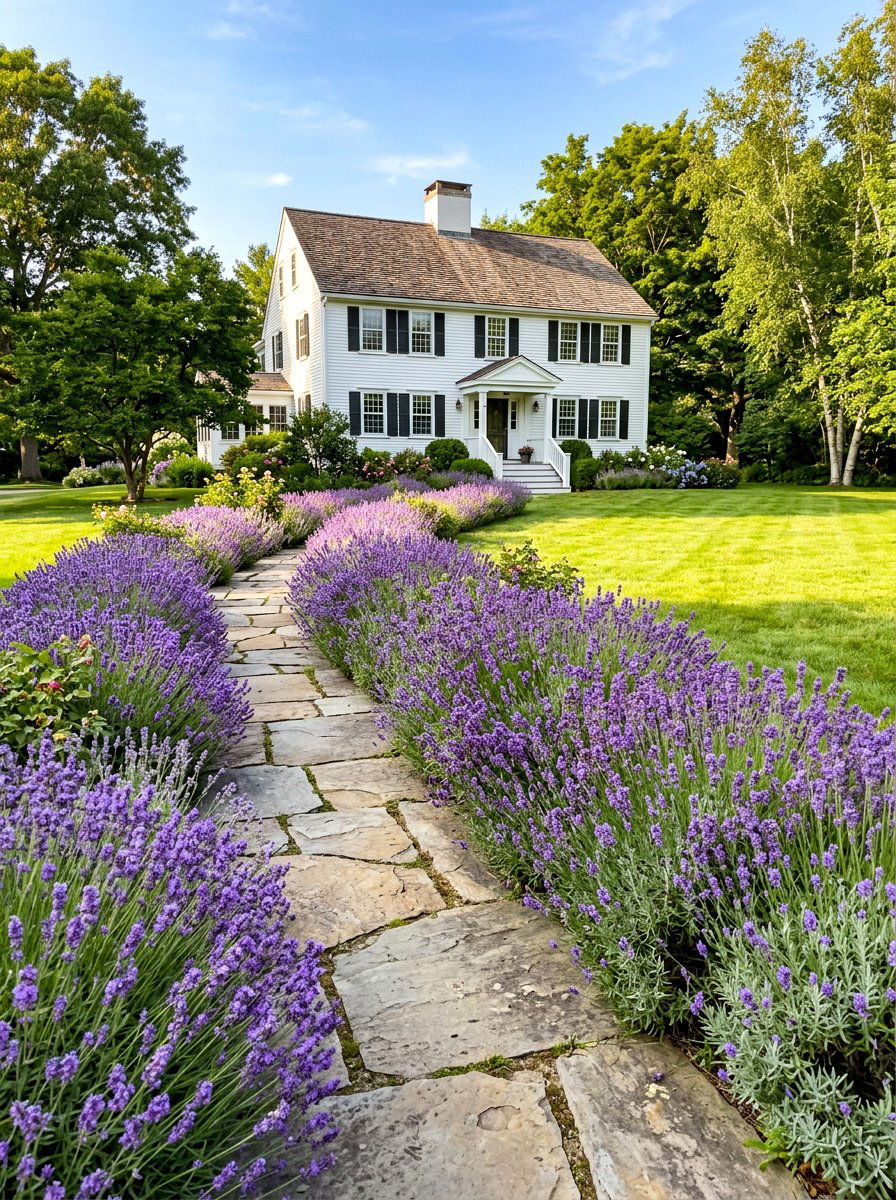
Planting a row of fragrant lavender along your front walkway creates a sensory experience that is both beautiful and calming. The silver-green foliage and vibrant purple spikes of the flowers provide a soft, hazy texture that contrasts well with structured boxwood hedges. Lavender thrives in sunny spots and requires very little water once established, making it a practical choice for many climates. As guests walk toward your door, they will be greeted by the light, clean scent of the herb. This choice adds a touch of Mediterranean or English countryside charm to your colonial home, making the landscape feel lush and relaxing.
19. Cedar shake siding
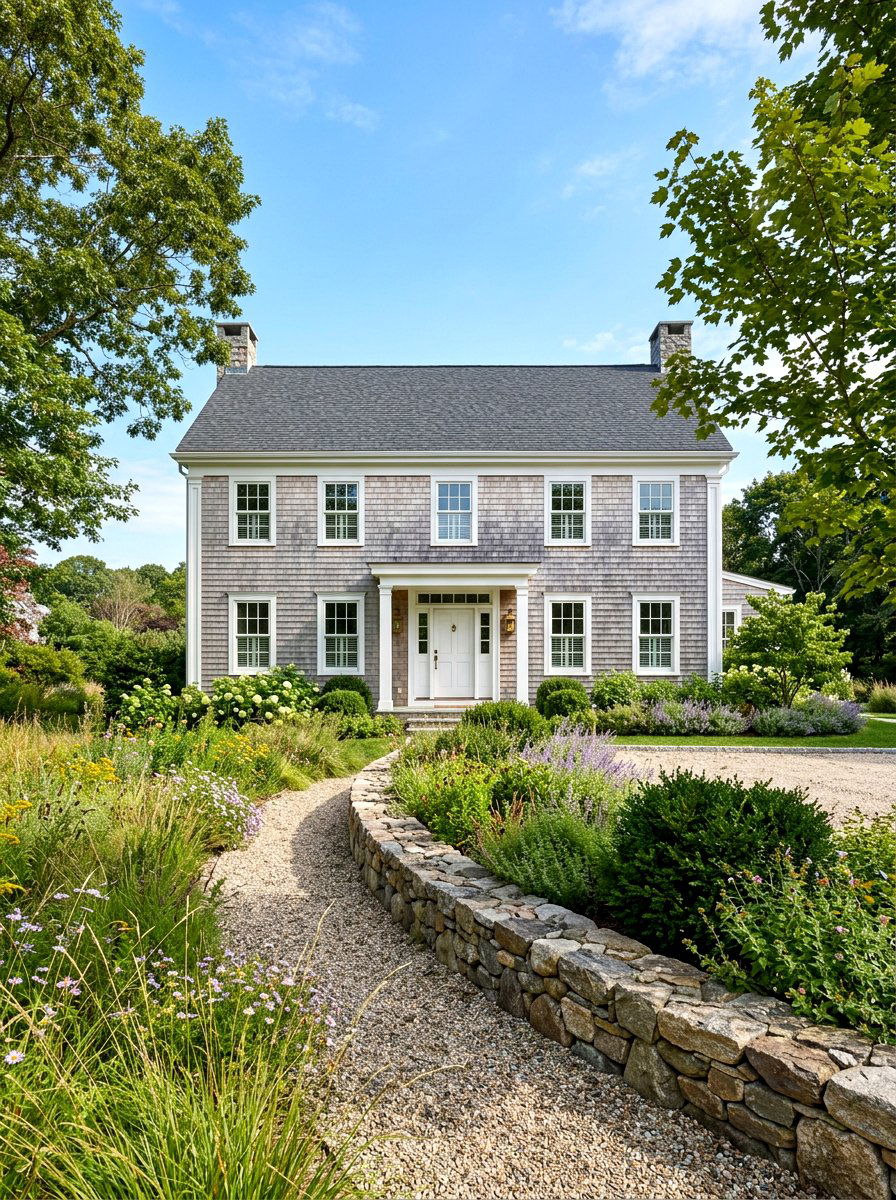
While technically an architectural feature, cedar shake siding significantly influences the landscaping and overall mood of your front yard. The natural wood texture and warm tones of the shingles provide a more casual and coastal feel than traditional horizontal clapboard. You can allow the cedar to weather to a classic silvery gray or maintain its warm brown hue with a clear sealer. This material pairs beautifully with natural stone paths, white trim, and lush green lawns. The rhythmic pattern of the shakes adds a layer of visual interest that makes the home feel handcrafted and historically authentic, grounding it in the natural environment.
20. Garden fountain
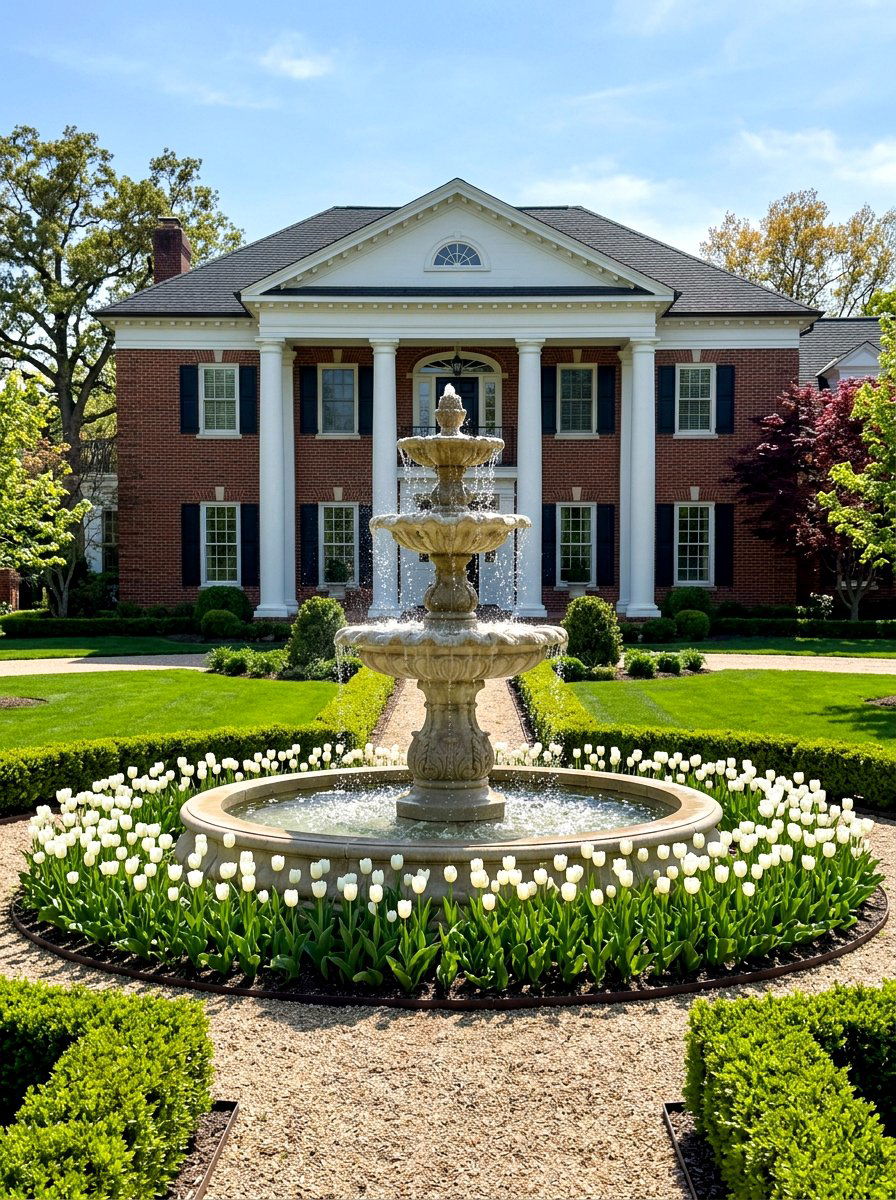
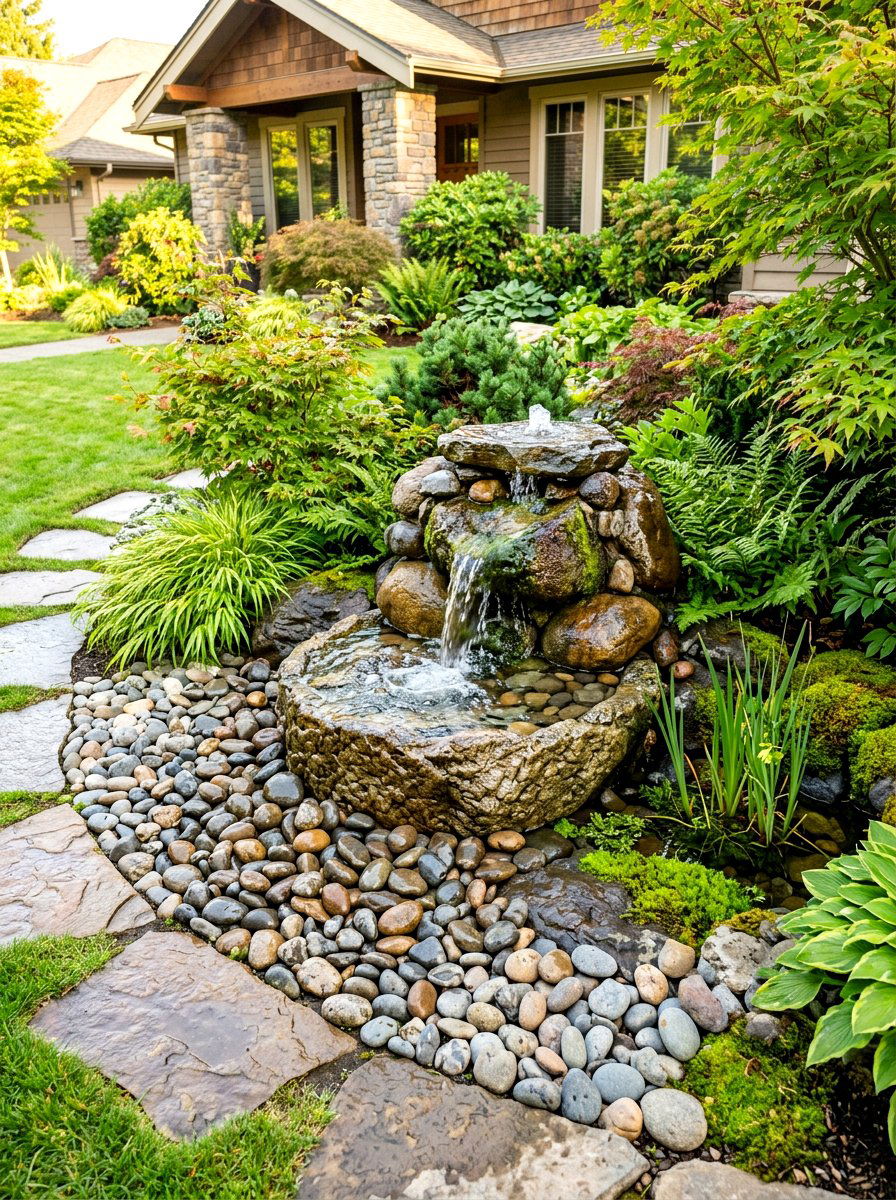
A central garden fountain provides the soothing sound of moving water and acts as a majestic focal point for your front yard. You can choose a tiered stone design for a formal look or a simple wall fountain if space is limited. Placing the fountain in the middle of a circular path or a manicured lawn adds a sense of luxury and tranquility to the property. The white noise from the water can also help mask the sounds of the street, creating a peaceful sanctuary right at your doorstep. Fountains attract birds and butterflies, adding life and movement to your colonial garden space.
21. Wooden garden bench
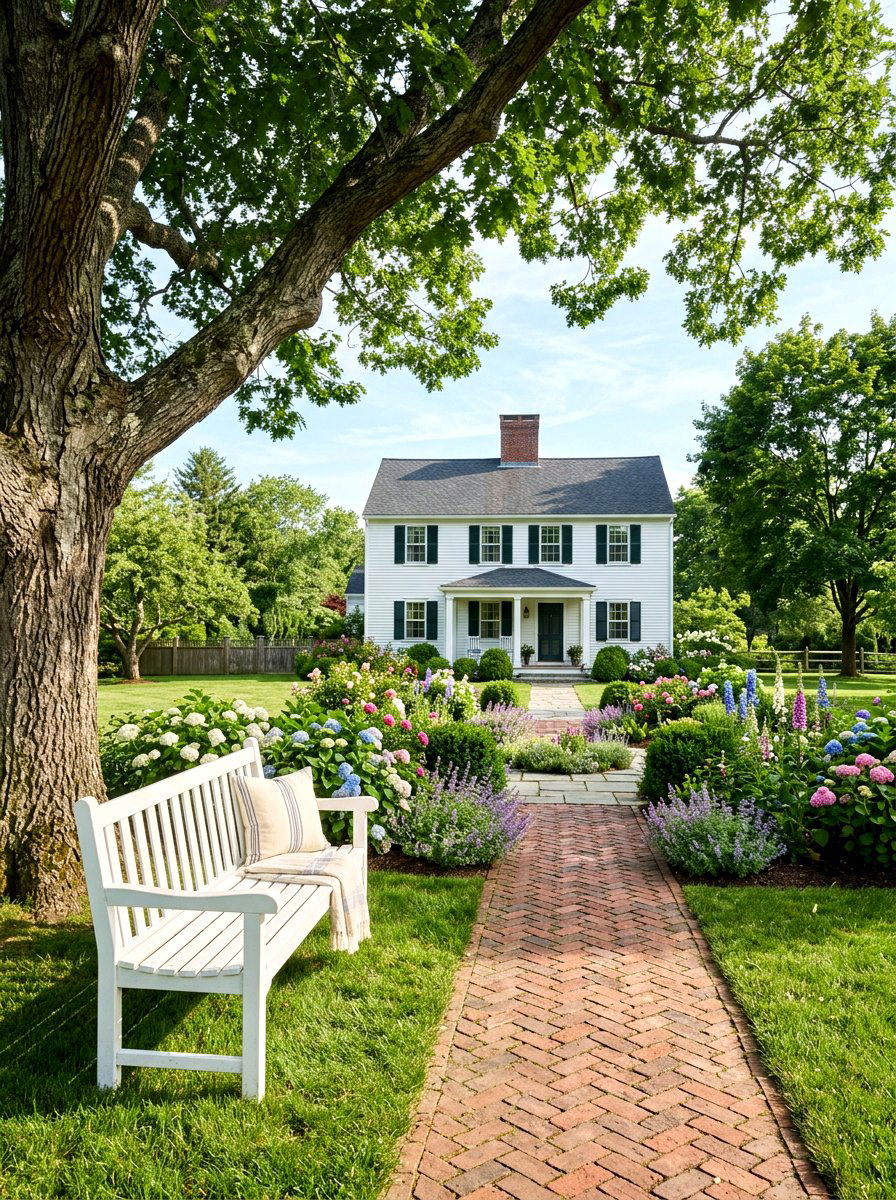
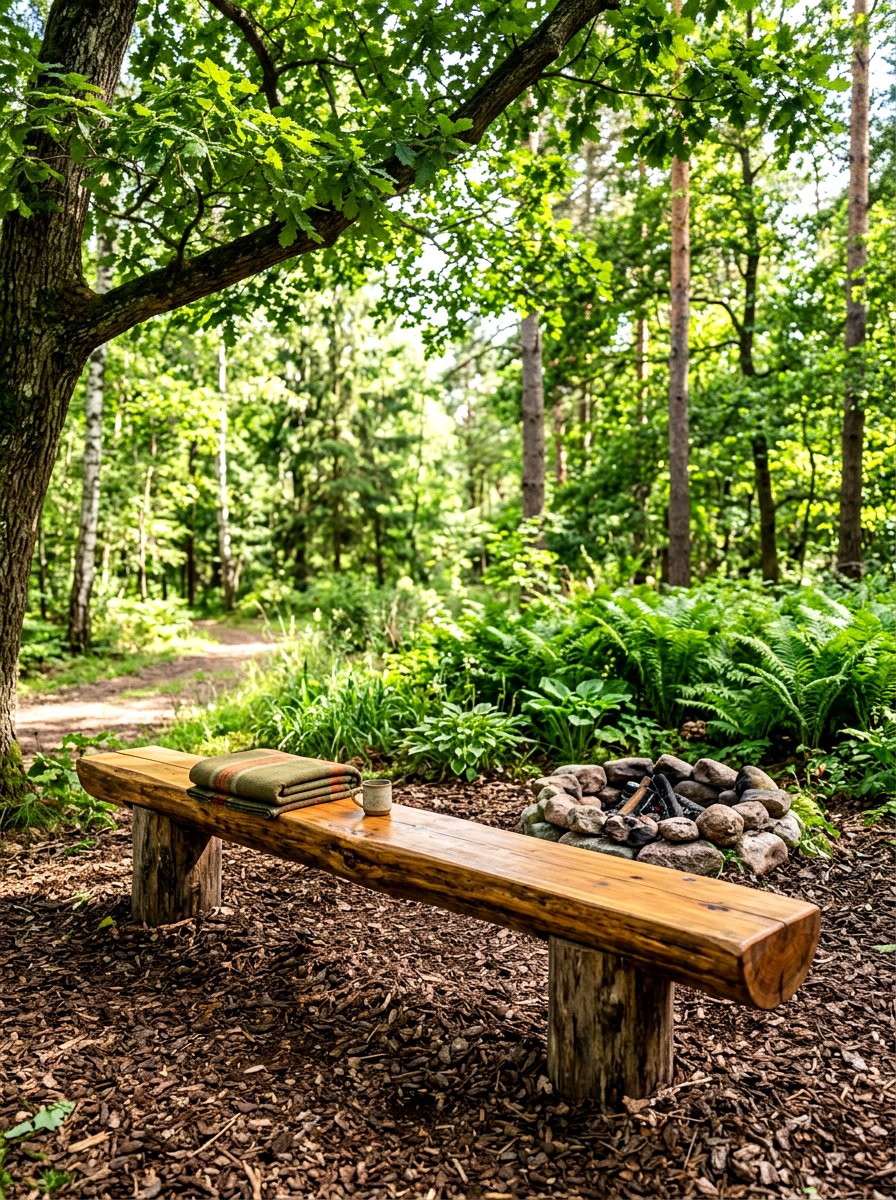
A classic wooden garden bench, painted in a crisp white or left in a natural teak finish, offers a place for rest and reflection. You can place it along a garden path or under the shade of a large tree to create a cozy and inviting nook. This functional piece of furniture adds a lived-in feel to your front yard and encourages neighbors to stop and chat. The simple, horizontal lines of a traditional bench complement the vertical columns and shutters of a colonial home. Adding a few outdoor pillows in a classic navy or striped pattern can further enhance the comfort and style.
22. Magnolia tree
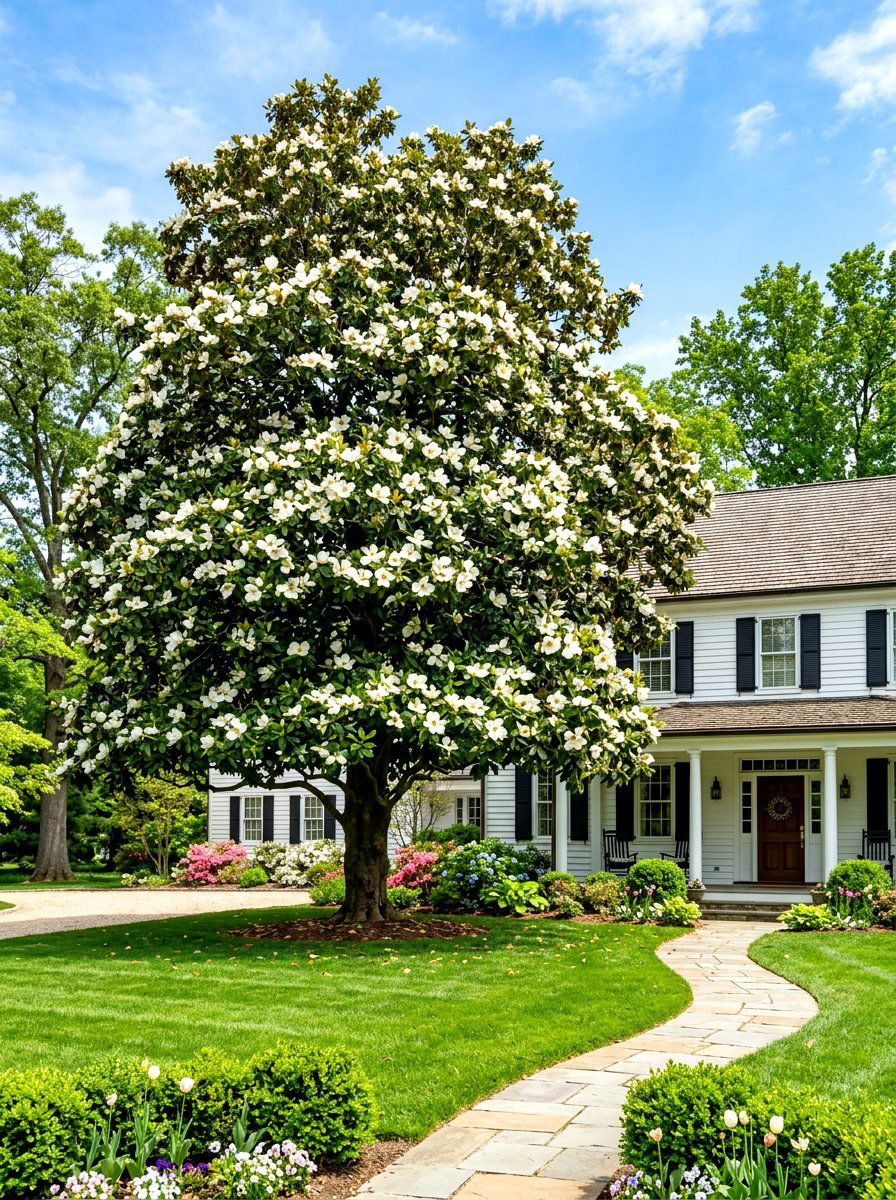
A large magnolia tree serves as a grand and statuesque focal point that anchors one side of your front yard. Known for their glossy dark green leaves and massive, fragrant white blooms, these trees are a symbol of southern colonial grace. You can underplant the tree with shade-loving hostas or ferns to create a complete and polished look. The large scale of the magnolia balances the height of a two-story home, making the entire property feel more established and mature. During the spring, the tree becomes a spectacular showpiece that draws the attention of everyone passing by on the street.
23. Dogwood tree
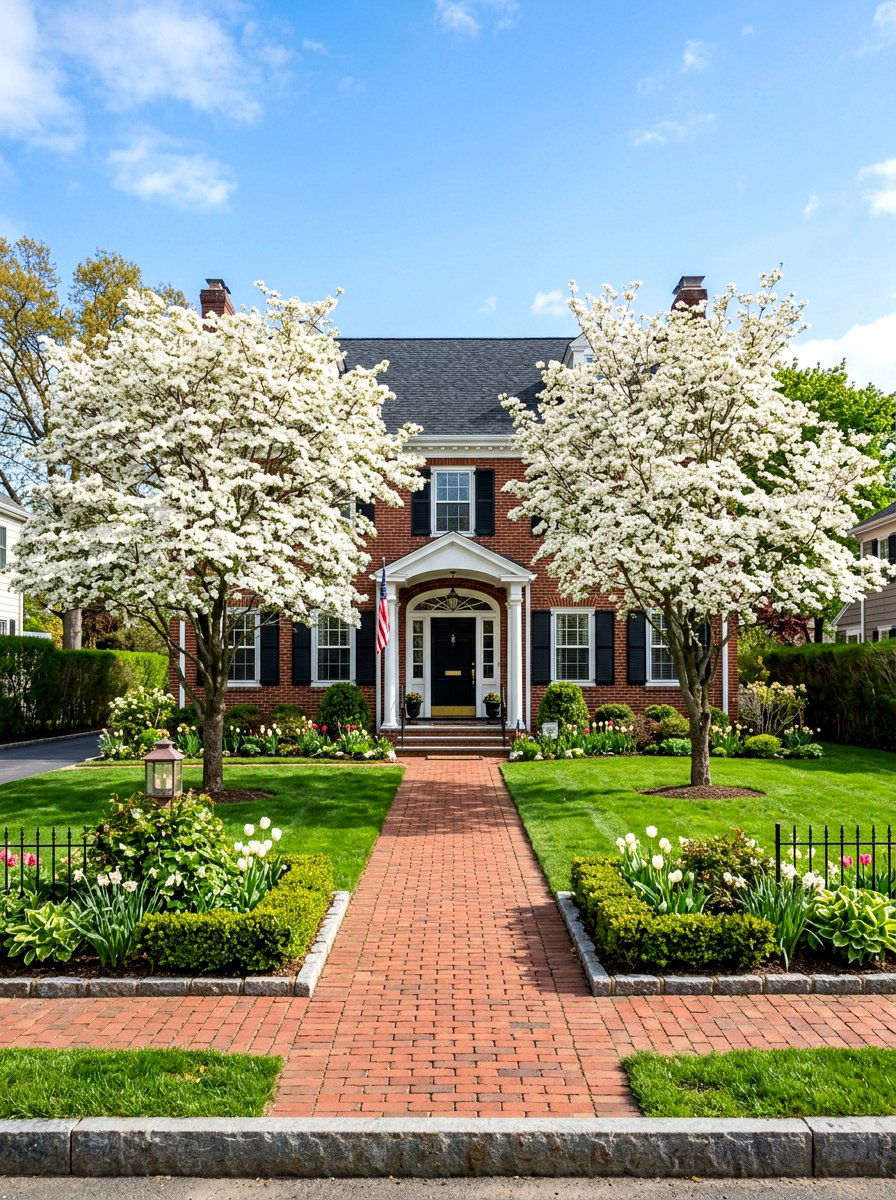
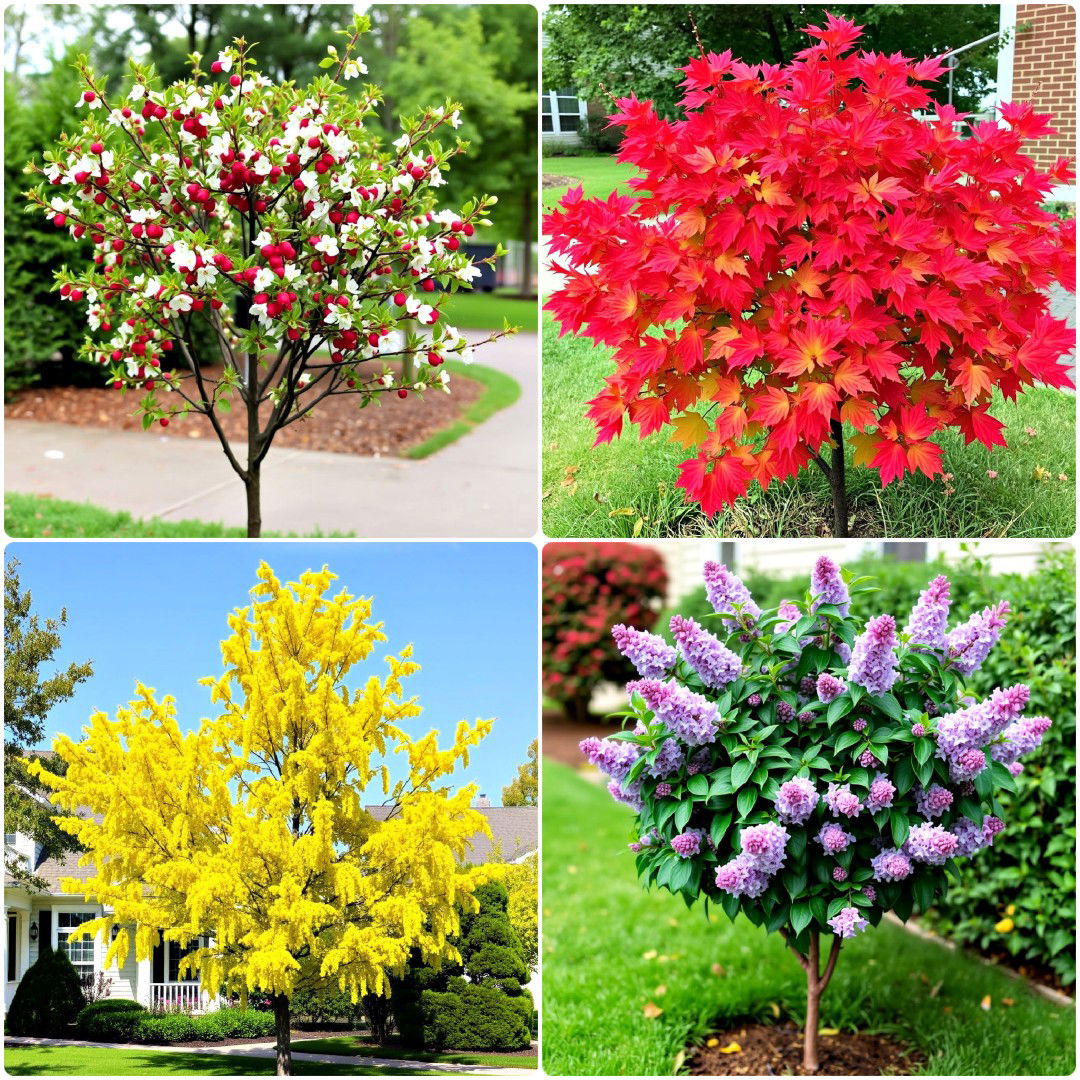
Flowering dogwood trees are a smaller, more delicate option for adding seasonal beauty and structure to your landscape. Their horizontal branching pattern and vibrant spring blossoms in white or pink provide a soft, airy feel that doesn't overwhelm the house. You can plant a pair of dogwoods symmetrically on either side of the yard to frame the view of the front door. In the fall, their leaves turn a rich reddish-purple, providing a second season of vibrant interest. These trees are native to many parts of the country and are a beloved staple of traditional American gardening and colonial-era curb appeal.
24. Potted boxwoods
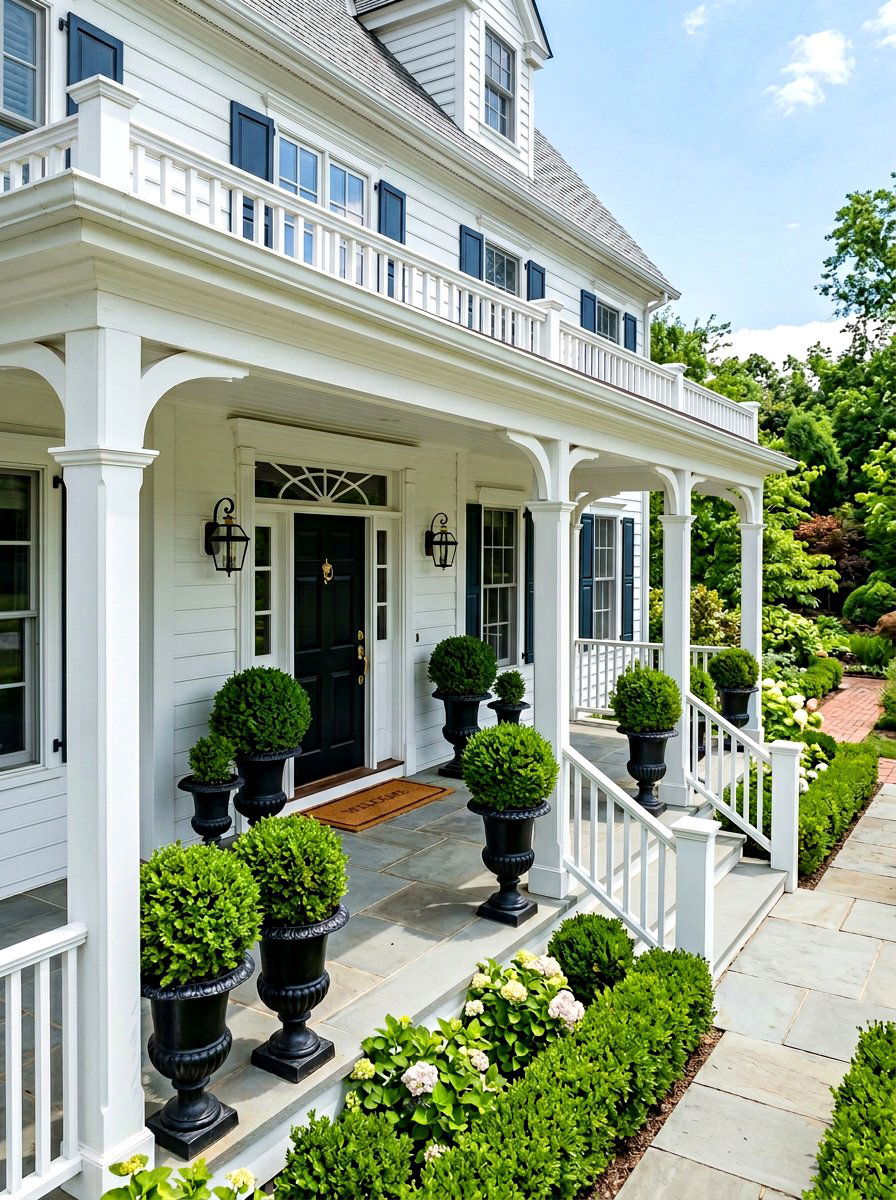
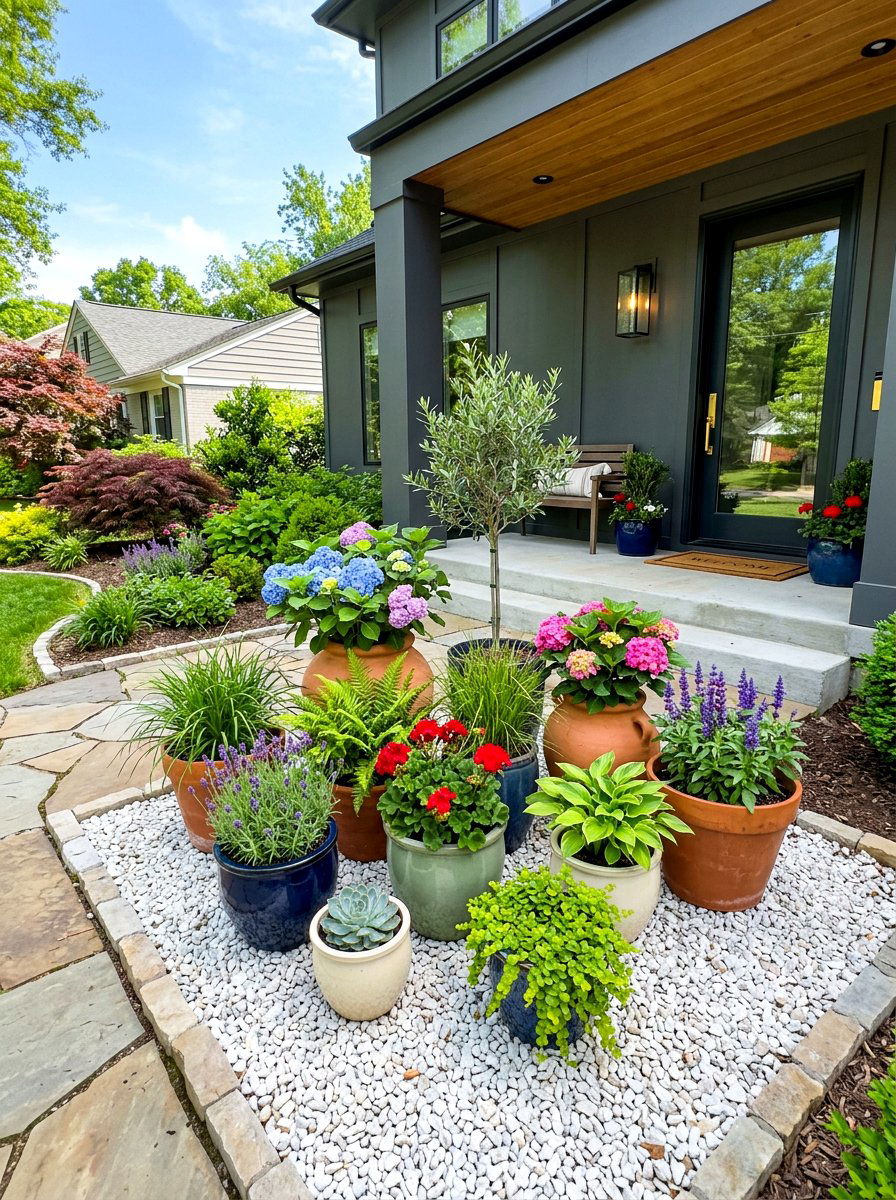
If you have a limited garden space or a large front porch, using potted boxwoods is a great way to introduce structure and greenery. Placing identical boxwood globes in tall, black or white urns creates a formal and sophisticated entrance. This arrangement allows you to easily move the plants to change the look of your porch or to protect them during harsh winter weather. The structured look of the boxwoods in elegant containers provides a high-end feel that is common in luxury colonial estates. It is an easy way to add year-round color to areas where you cannot plant directly into the ground.
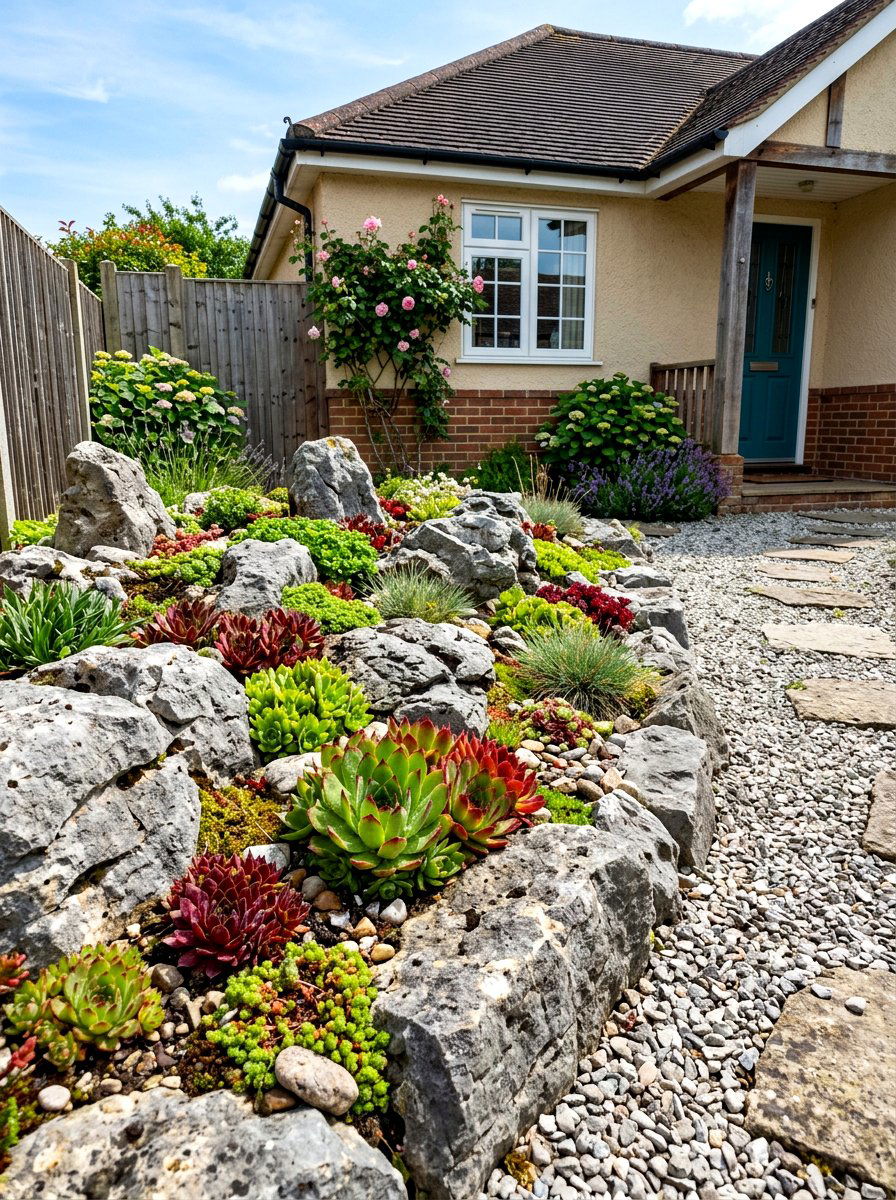
25. Brick pier entrance
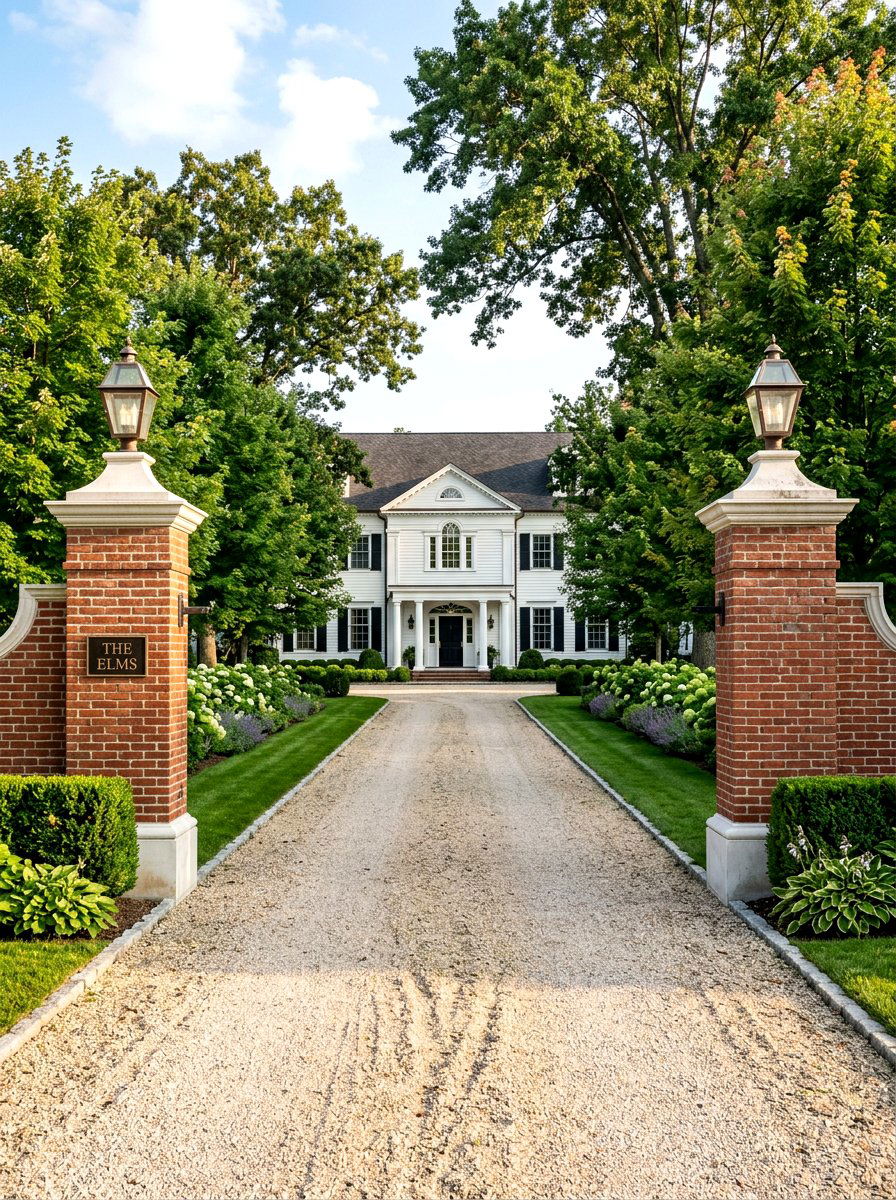
Installing brick piers at the start of your driveway or walkway creates a grand sense of arrival and historical permanence. These vertical structures can be capped with stone or decorative lanterns to match the rest of your home's architecture. You can use the same brick that appears on your house or walkway to ensure a perfectly coordinated look. Planting ivy or climbing hydrangea at the base allows the greenery to slowly crawl up the masonry, softening the look over time. These piers provide a sturdy and dignified frame for your property, making the transition from the street feel important and high-end.
26. Perennial garden
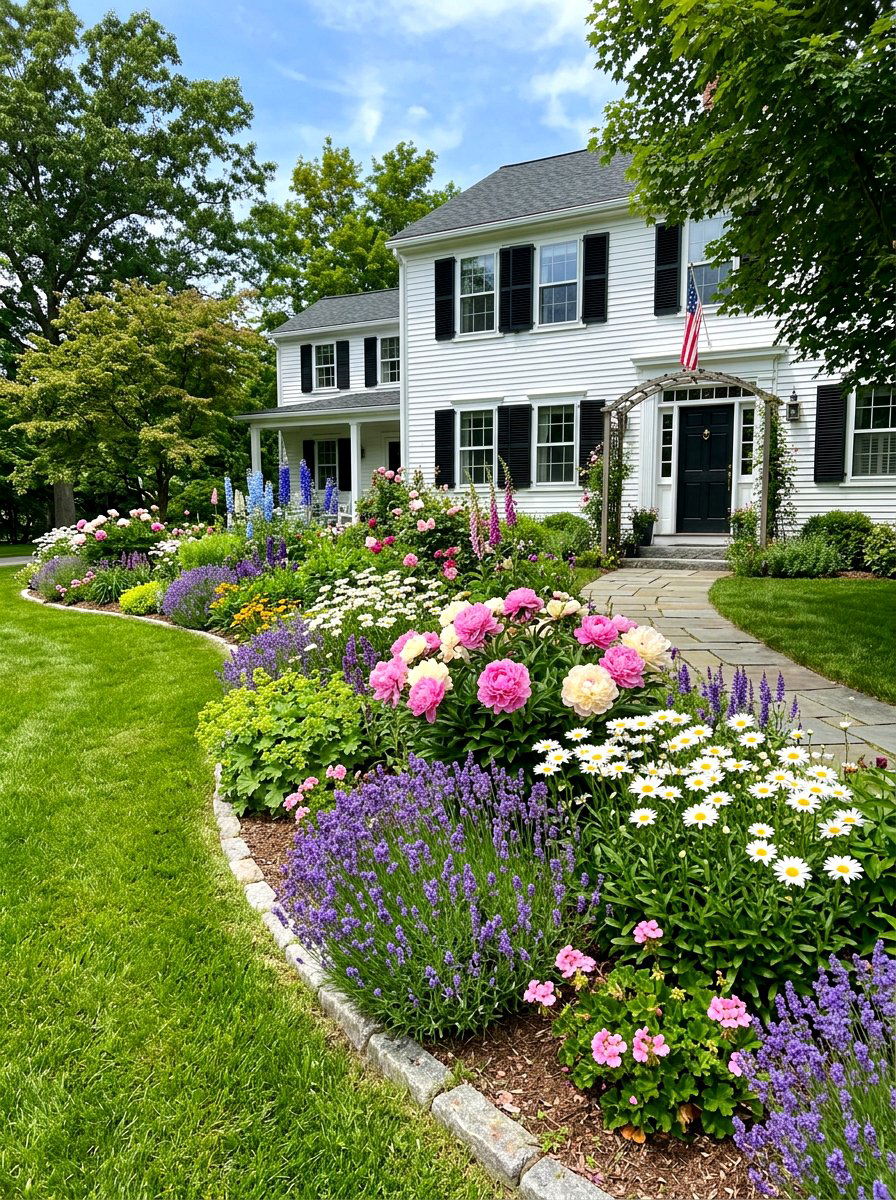
A well-planned perennial garden provides a rotating show of colors and textures that changes with the seasons, keeping your front yard interesting all year long. You should choose a mix of plants like peonies, irises, and salvia to create a full and lush appearance. By selecting varieties with different bloom times, you ensure that there is always something beautiful to look at from spring through fall. Grouping plants in clusters rather than single rows creates a more natural and established look. This type of garden requires less replanting than annuals, making it a sustainable and cost-effective way to maintain a high-quality landscape.
27. White clapboard exterior
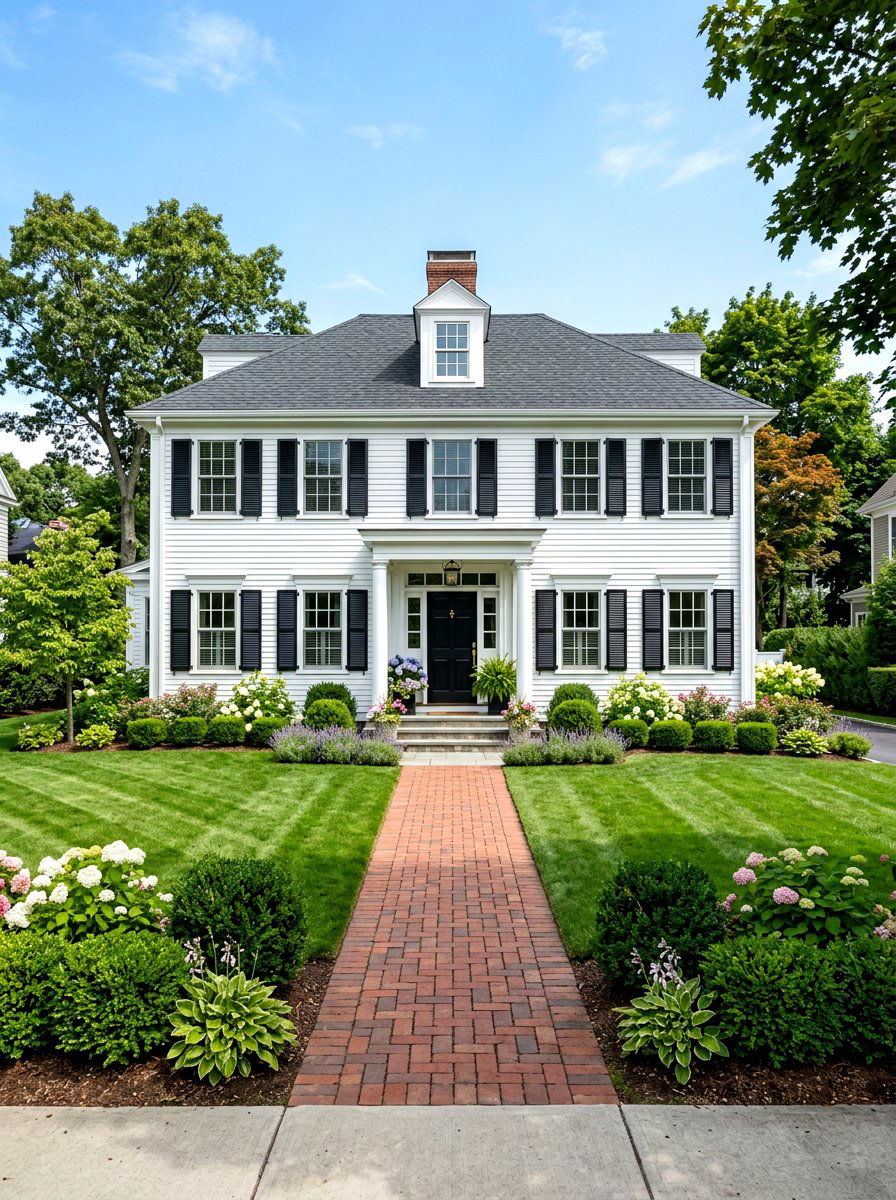
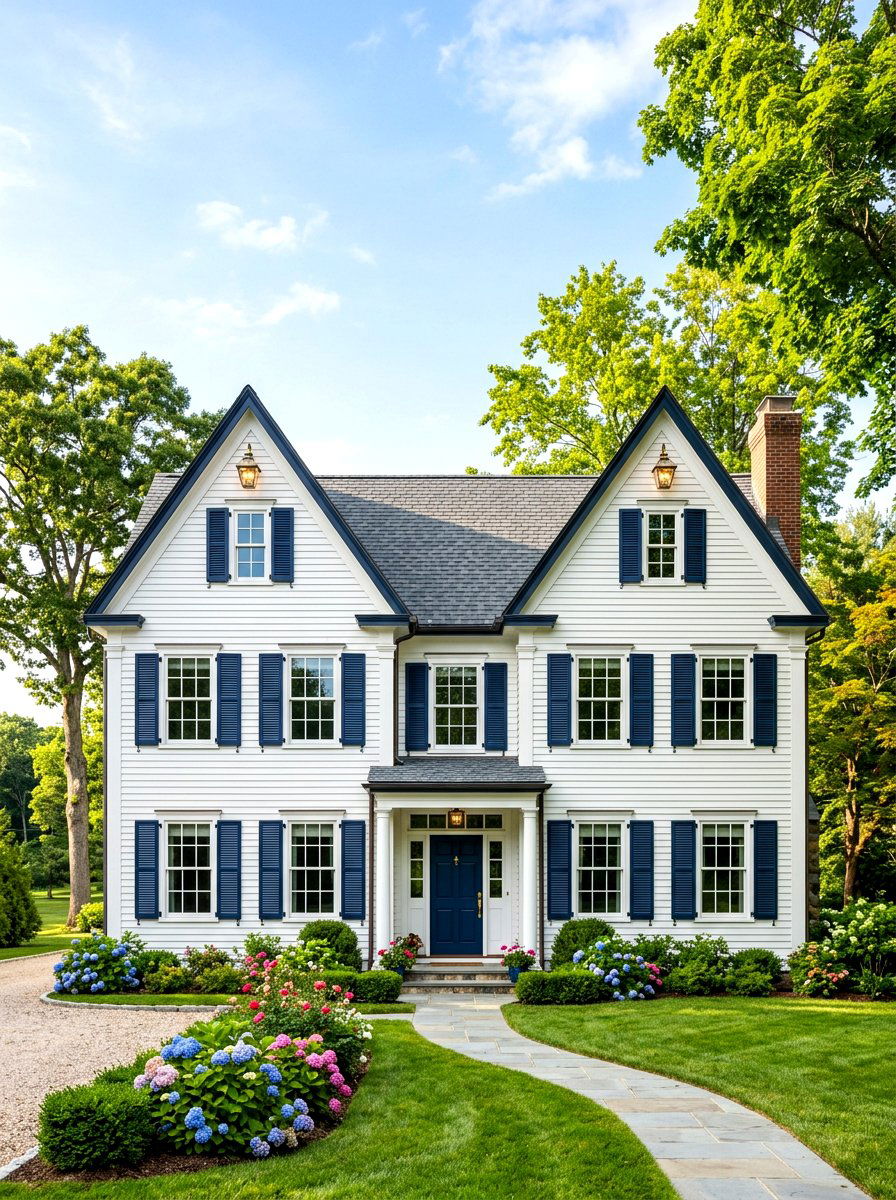
The classic white clapboard exterior is the ultimate backdrop for any colonial front yard design, providing a clean and bright canvas. This traditional siding style reflects light beautifully and highlights the shadows created by shutters, trim, and architectural details. You can pair it with black or dark green shutters for a high-contrast, formal look that never goes out of style. The crisp white color makes the surrounding greenery and colorful flowers pop, making the entire landscape appear more vibrant and healthy. Maintaining a fresh coat of paint on the clapboards is the most important step in preserving the home's historic and stately character.
28. Slate entry patio
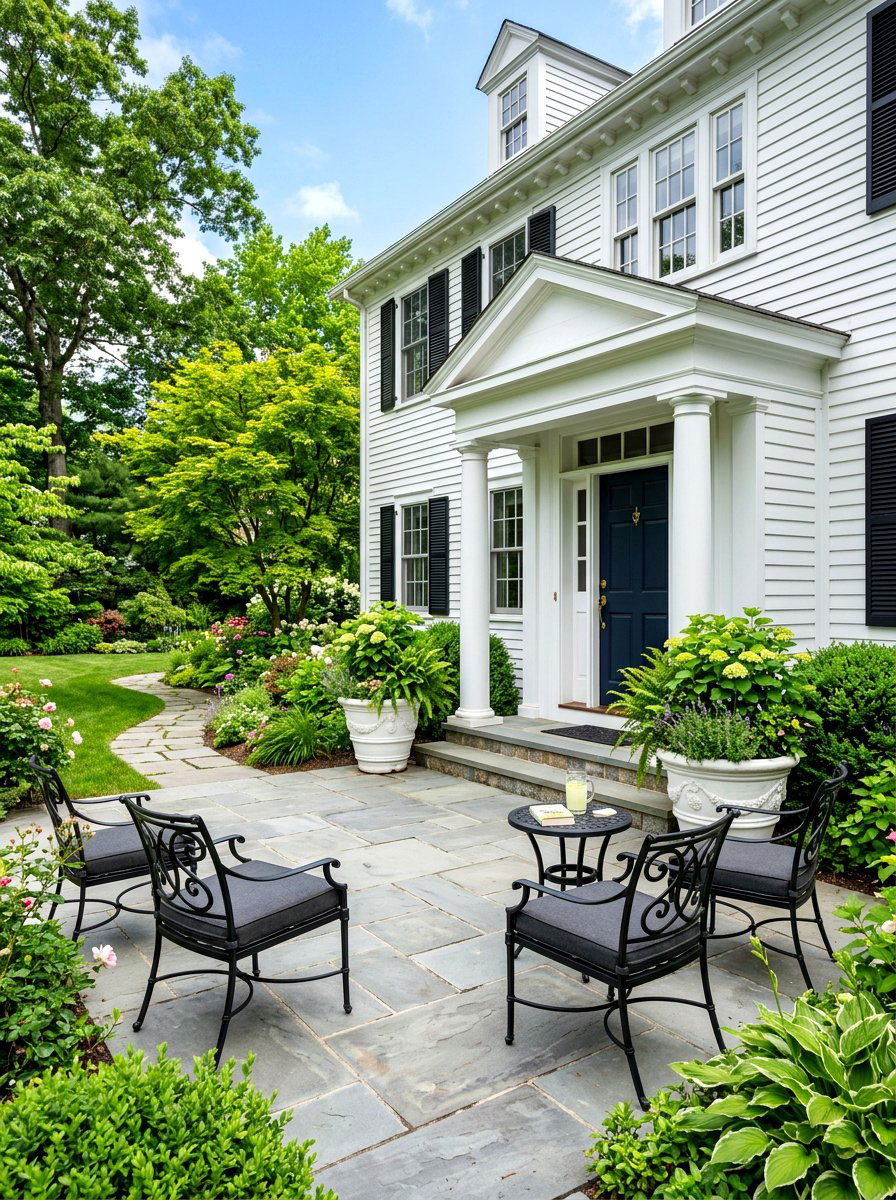
A small entry patio made of natural slate or bluestone provides a sophisticated and durable landing area right in front of your door. The cool gray and blue tones of the stone offer a refined contrast to red brick paths or white siding. You can arrange the stones in a precise geometric pattern or a more casual mosaic style depending on your personal taste. Adding a few pieces of high-quality outdoor furniture and some large planters can turn this space into a functional seating area for morning coffee. It provides a solid and clean transition from the garden into the interior of the home.
29. Heritage herb garden
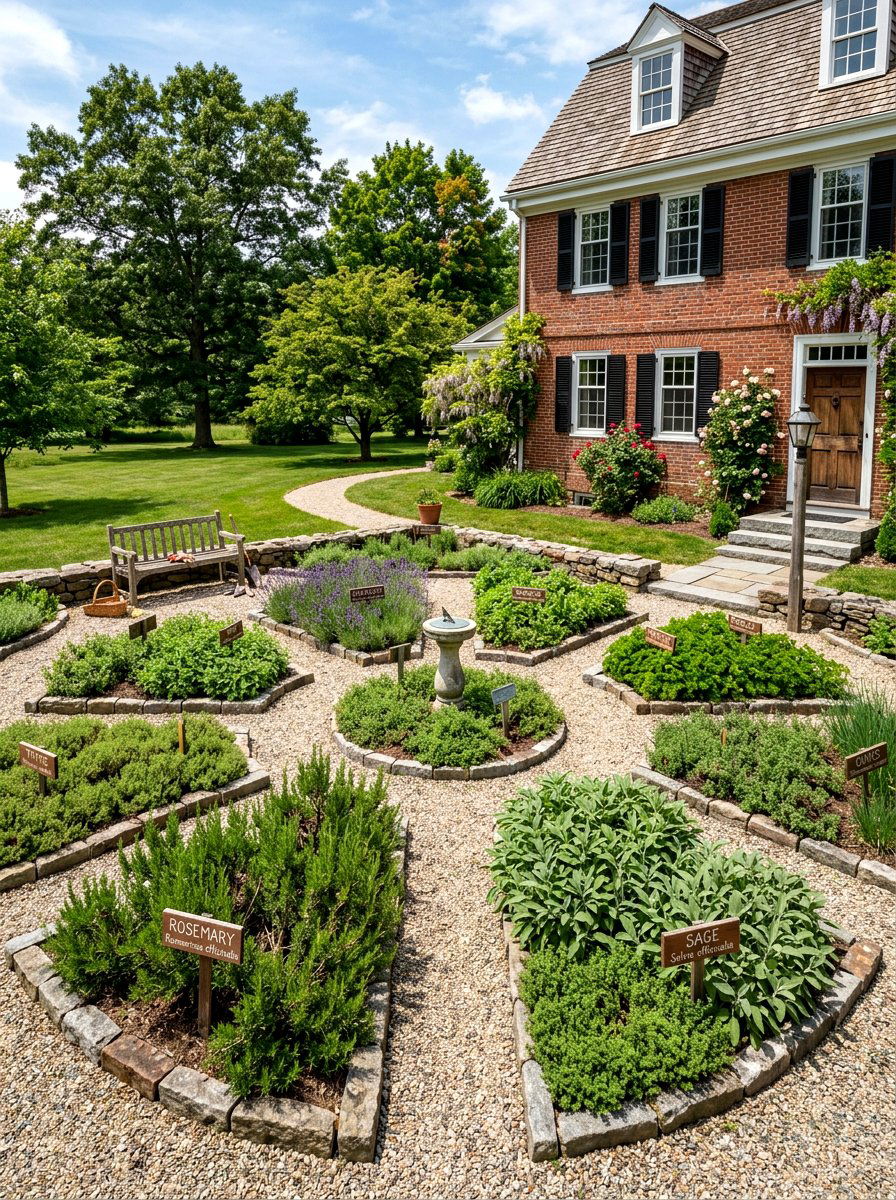
A heritage herb garden is a functional and fragrant addition that pays homage to the practical gardens of early American settlers. You can create a small, circular or square bed near the front porch filled with culinary and medicinal herbs like rosemary, thyme, and sage. These plants often have interesting textures and muted green colors that blend perfectly with a colonial aesthetic. Many herbs also produce small, delicate flowers that attract pollinators and add a subtle layer of beauty. This type of garden is low-maintenance and provides fresh ingredients for your kitchen, combining utility with classic outdoor style in a very meaningful way.
30. Louvered window shutters
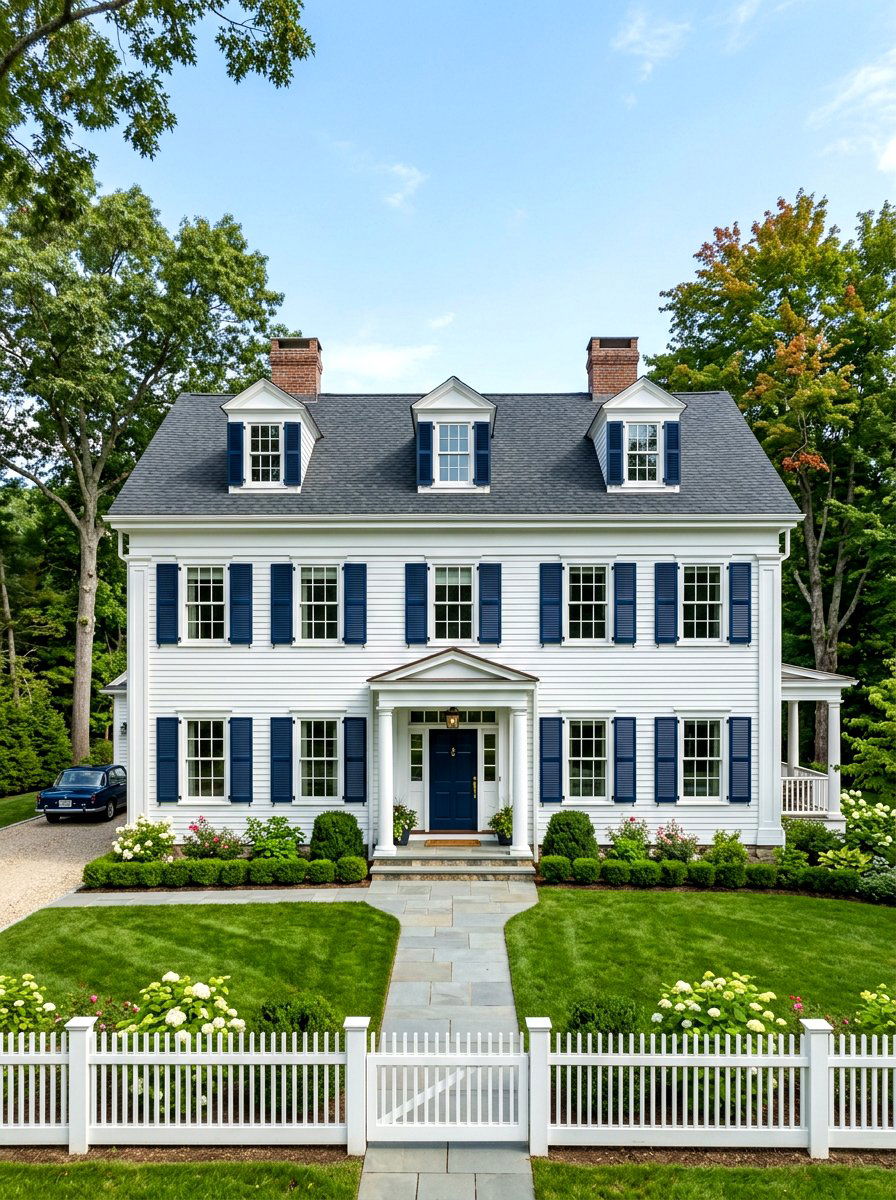
Traditional louvered window shutters are an essential finishing touch that adds depth, color, and character to your home's facade. While they were originally used for ventilation and protection, today they serve as a primary decorative element that defines the colonial look. You should choose a color that contrasts with your siding, such as deep emerald, charcoal, or classic black. Ensuring the shutters are the correct size for the windows is key to maintaining architectural authenticity and a balanced appearance. This detail frames the windows and adds a layer of texture that makes the entire house feel more complete, polished, and historically grounded.
Conclusion:
Designing a colonial front yard is a rewarding journey into the roots of traditional American style and classic architectural beauty. By focusing on symmetry, natural materials, and structured plantings, you can create a landscape that feels both historic and fresh for modern living. Each element, from the brick pathways to the grand magnolia trees, works in harmony to frame your home and provide an inviting entrance for guests. These ideas offer a timeless foundation that allows for personal expression through color and seasonal flowers while maintaining a dignified presence in the neighborhood. Embrace the order and elegance of colonial design to transform your curb appeal.

Related posts: