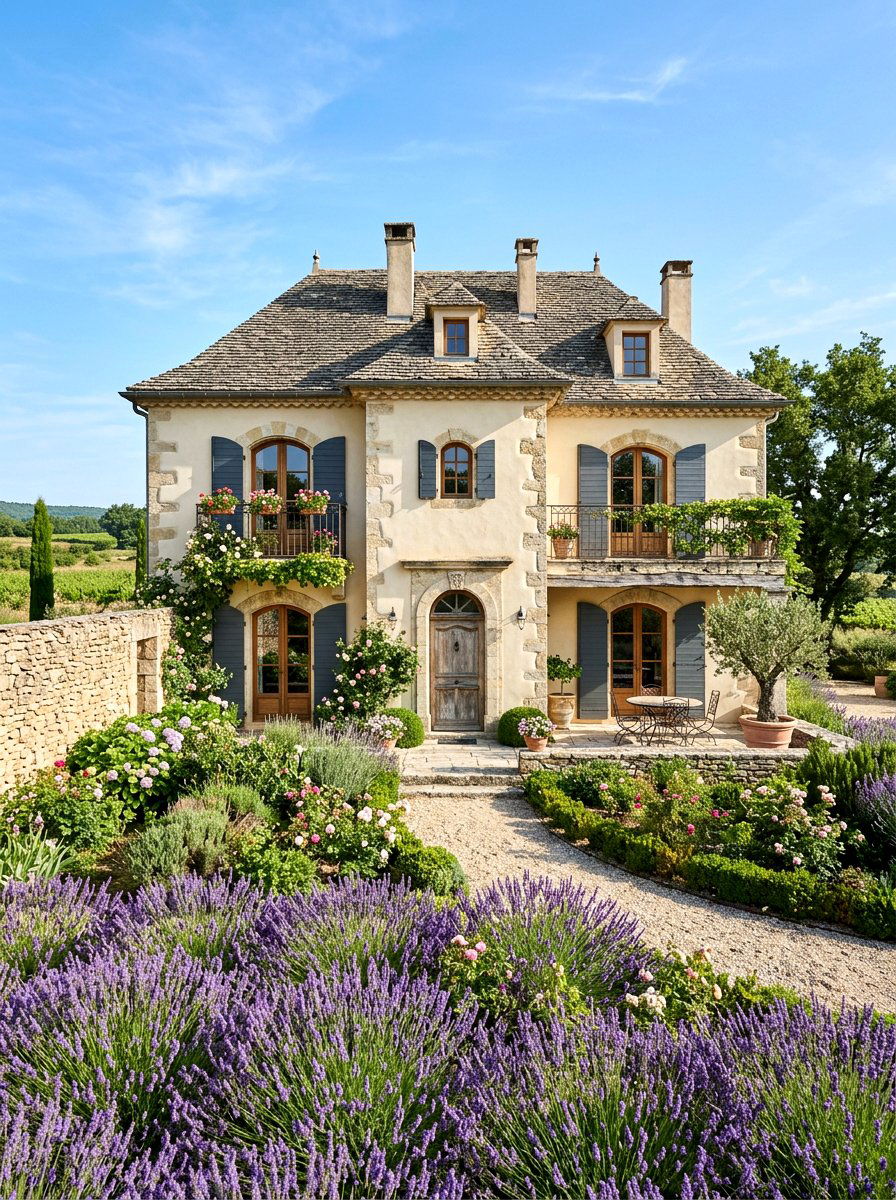
Colonial architecture remains one of the most enduring and beloved styles across the United States for very good reason. These homes represent a rich history of tradition, order, and classic elegance that never seems to go out of fashion. Whether you are looking at a stately Georgian or a charming Cape Cod, the symmetrical lines and formal structures provide a sense of stability and prestige. Enhancing a colonial house exterior requires a careful balance between preserving historical integrity and adding modern touches that reflect your style. From the iconic shutters to the grand entryways, every detail contributes to a cohesive and inviting curb appeal that stands the test of time.

1. White Siding Black Shutters
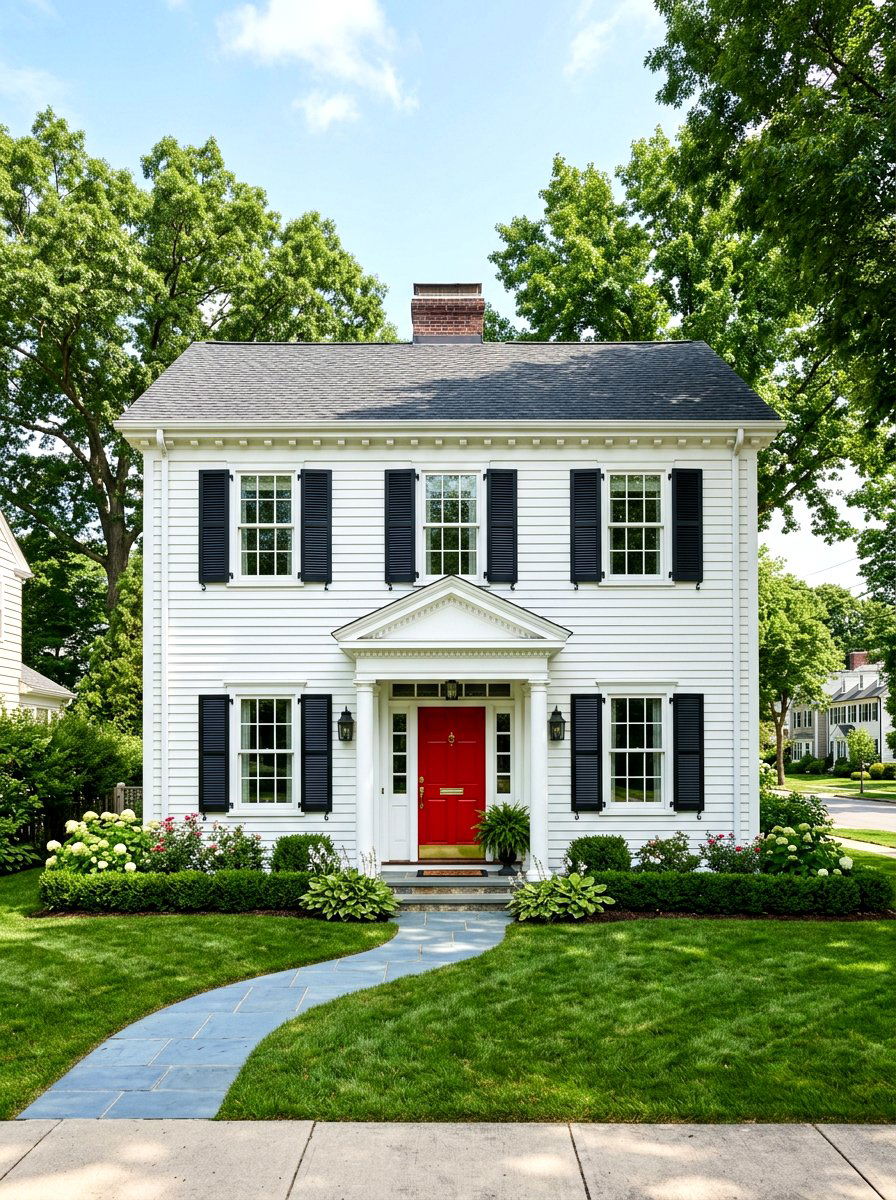
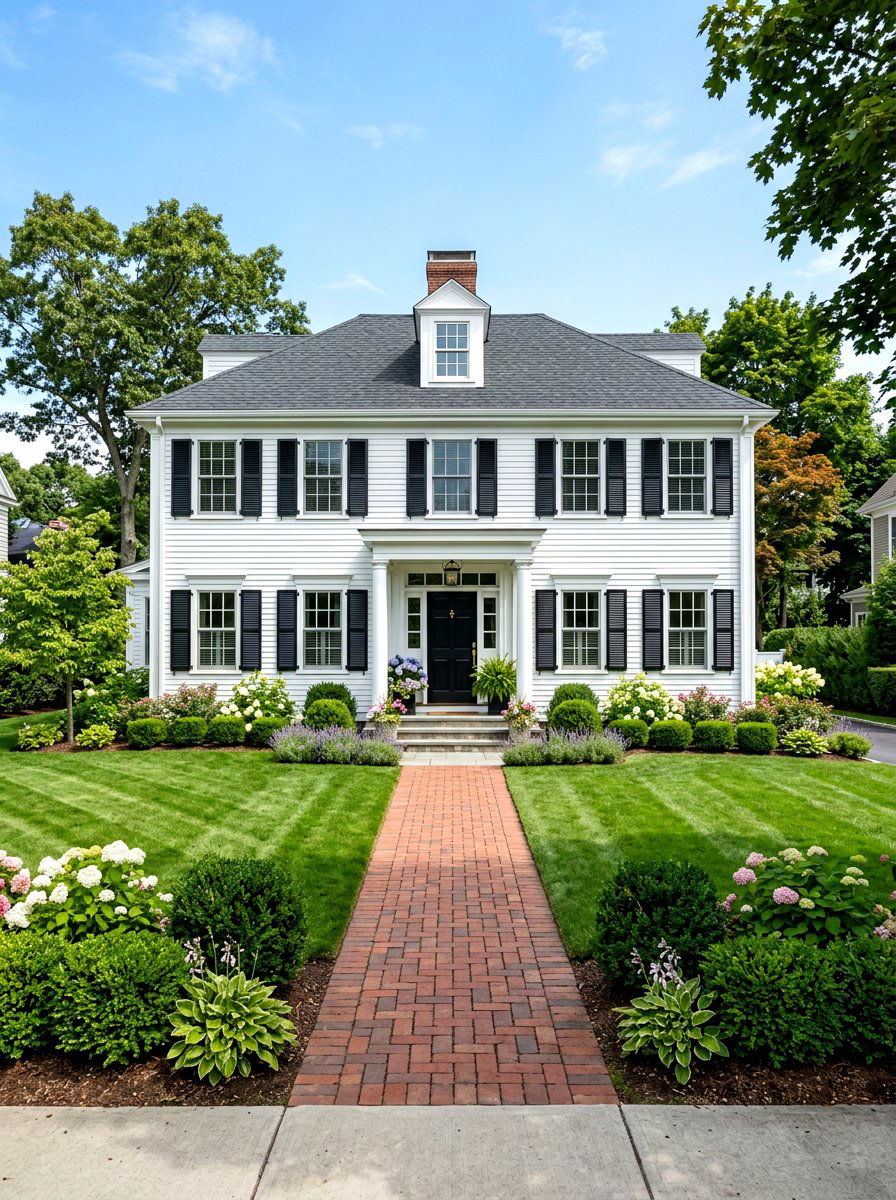
White siding paired with deep black shutters is perhaps the most iconic look for a colonial home. This high-contrast color palette emphasizes the architectural symmetry that defines the style. By using a crisp, clean white for the main body of the house, you allow the dark accents to pop against the facade. This combination feels both traditional and incredibly fresh, making it a favorite for homeowners who want a timeless aesthetic. You can further enhance this look by choosing a bold color for the front door, such as a deep red or a classic navy. The result is a sophisticated and organized exterior that commands attention from the street.
2. Red Brick Exterior
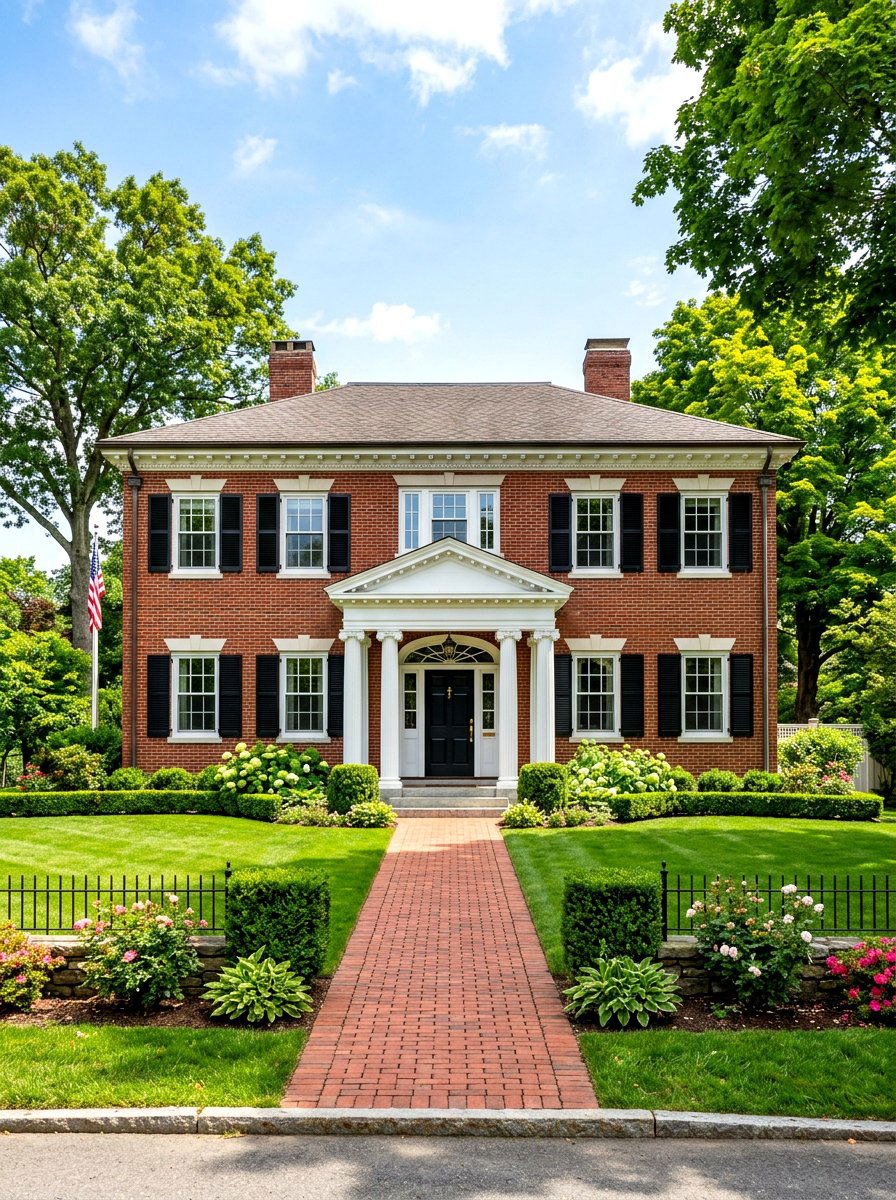
Red brick is a hallmark of colonial architecture, offering a sense of permanence and warmth that few other materials can match. The natural texture and varying shades of the brick provide a rich backdrop for white trim and dark accents. This material choice is particularly popular in Georgian and Federal styles, where the masonry work showcases incredible craftsmanship. When you pair red brick with a traditional white portico and symmetrical windows, the house exudes an air of classic American heritage. Maintaining the mortar and keeping the brick clean ensures that the home stays looking its best for decades. It is a low-maintenance option that adds significant value.
3. Dutch Colonial Gambrel Roof
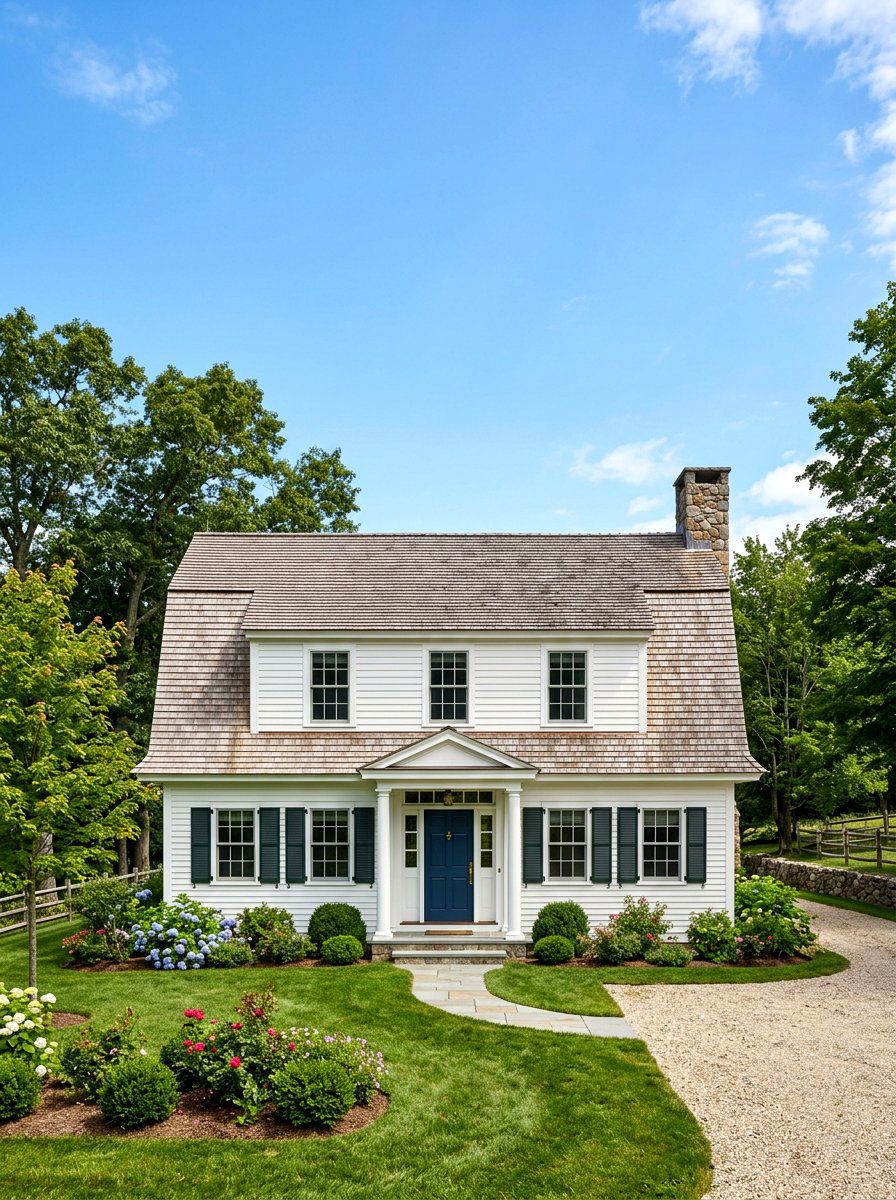
The distinctive gambrel roof is the defining feature of the Dutch colonial style, creating a unique silhouette that offers extra living space on the upper floors. This "barn-style" roof adds a rustic yet refined charm to the home, distinguishing it from the more common gable roofs seen in other colonial variations. Often, these homes feature flared eaves that extend over the front and back, providing a bit of protection from the elements. To highlight this architectural shape, many homeowners use cedar shingles or high-quality asphalt shingles in a neutral tone. This roof style makes the house feel cozy and historic, perfect for a family home.
4. Southern Colonial Front Porch
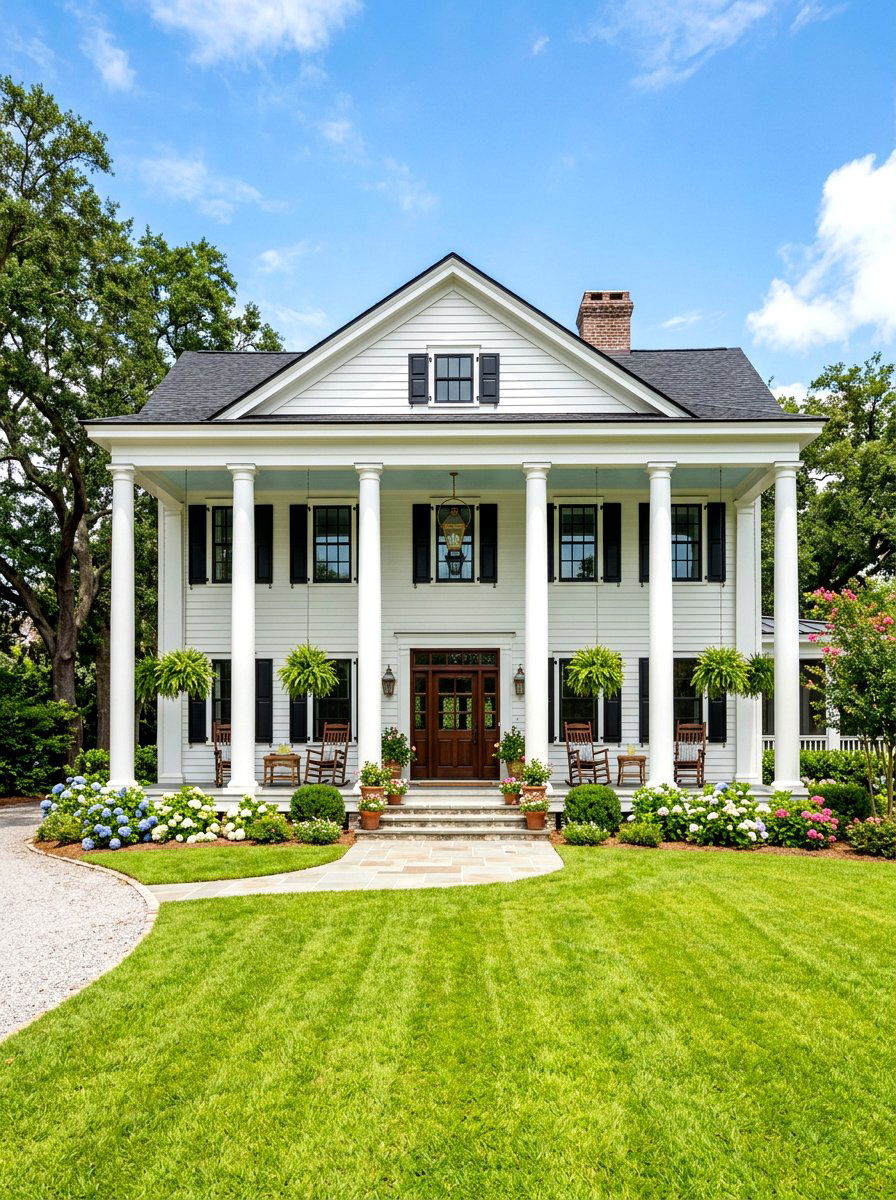
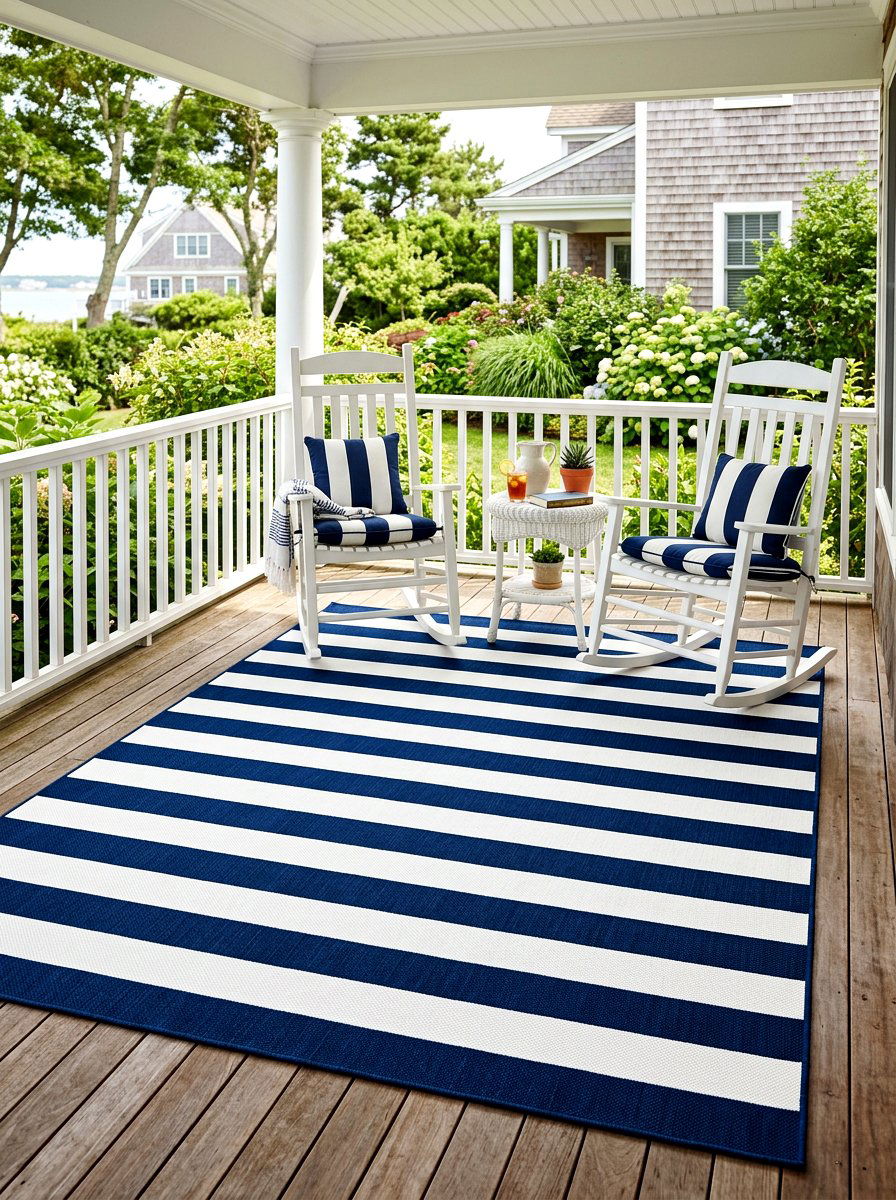
A wide, sprawling front porch is a classic feature of southern colonial architecture, designed to provide a cool and shaded outdoor living space. These porches often span the entire width of the house and are supported by tall, stately columns that create a grand entrance. It is a space meant for relaxation, often outfitted with rocking chairs or a porch swing to enjoy the breeze. The ceiling of the porch is sometimes painted a soft "Haint Blue" to ward off spirits and bugs, according to local tradition. This functional and beautiful addition creates an inviting transition between the outdoors and the formal interior.
5. Georgian Colonial Symmetry
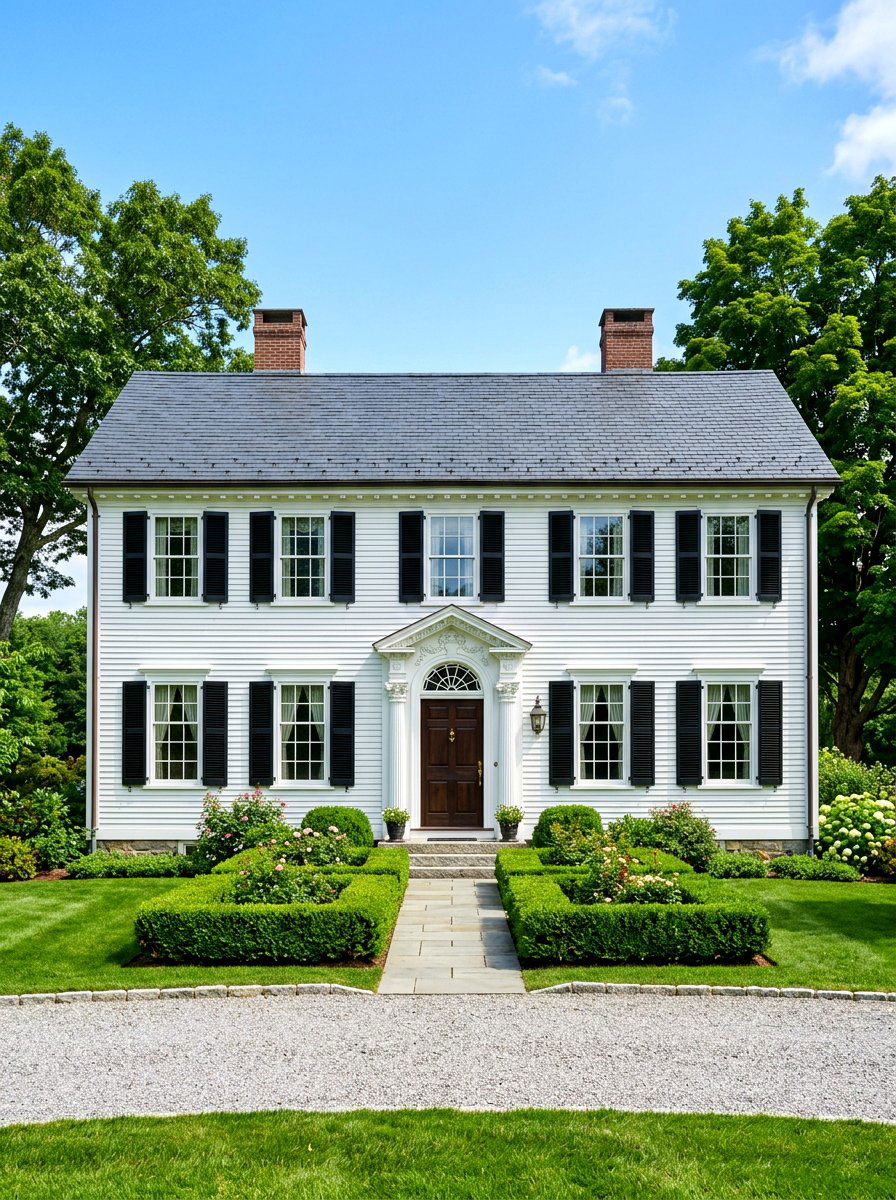
Symmetry is the core principle of Georgian colonial architecture, where every element on one side of the house is perfectly balanced on the other. Typically, these homes feature a central front door with an equal number of windows on either side, often in a five-window-wide configuration. This orderly layout creates a sense of harmony and formality that is very pleasing to the eye. Decorative elements like cornices and pilasters are used to frame the entrance and roofline, adding to the stately appearance. When you maintain this strict adherence to balance, the home feels solid and intentional. It is a look that never feels cluttered.
6. Federal Style Portico
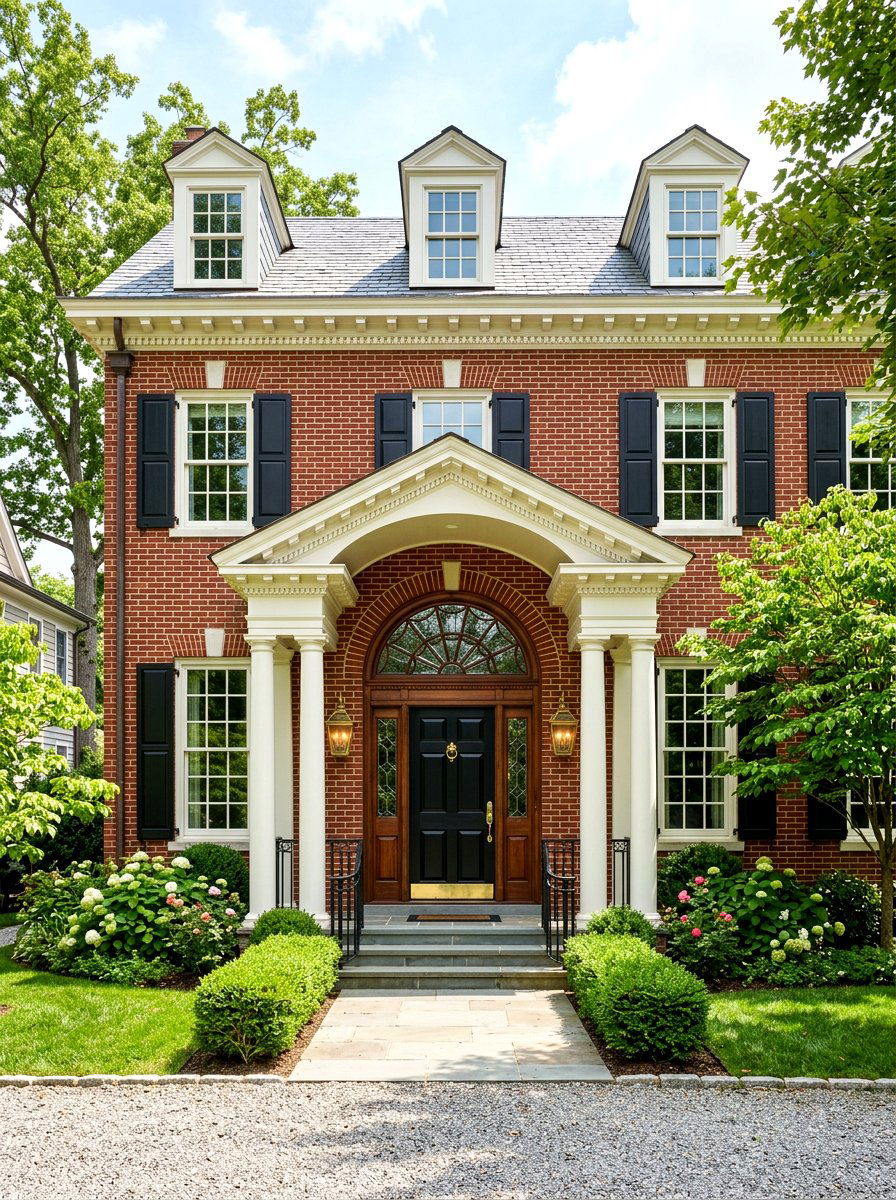
The Federal style is known for its elegant and somewhat understated porticos that frame the front entrance. Unlike the massive porches of the south, a Federal portico is often a smaller, more delicate structure that focuses entirely on the doorway. It might feature a semicircular fanlight window above the door and slender columns or pilasters on the sides. This refined architectural detail adds a touch of sophistication without overwhelming the rest of the facade. To make the portico stand out, many homeowners paint it a bright, contrasting white against a brick or clapboard background. It creates a beautiful and welcoming focal point for guests.
7. Gray Siding White Trim
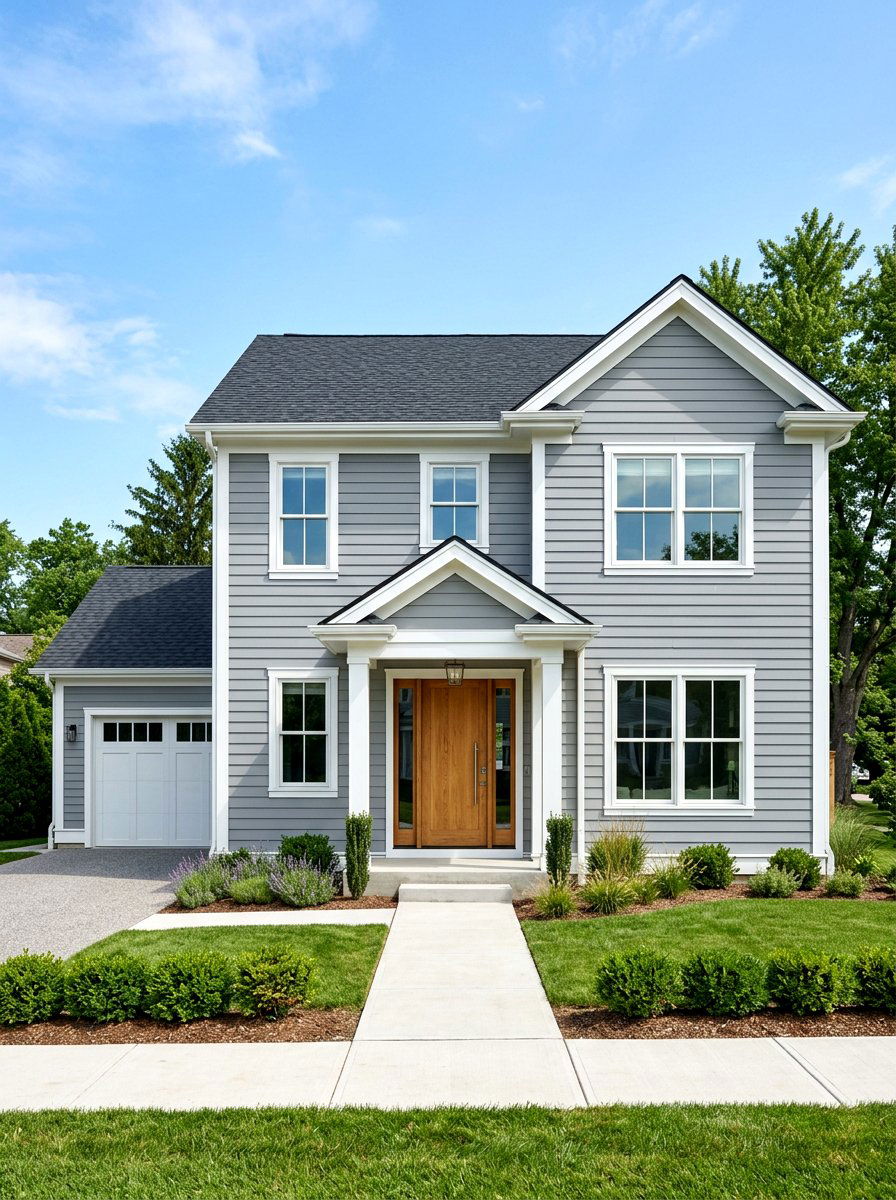
Choosing a soft gray siding with crisp white trim offers a more contemporary take on the traditional colonial aesthetic. Gray is a versatile neutral that can lean either cool or warm, allowing it to blend seamlessly with various landscaping styles. The white trim around the windows, doors, and roofline provides the necessary definition to keep the home from looking flat. This color combination is especially popular for coastal colonials or modern renovations where a lighter, airier feel is desired. It feels sophisticated and calm, providing a perfect backdrop for colorful flowers and lush green lawns. It is an effortless way to modernize.
8. Navy Blue Paint
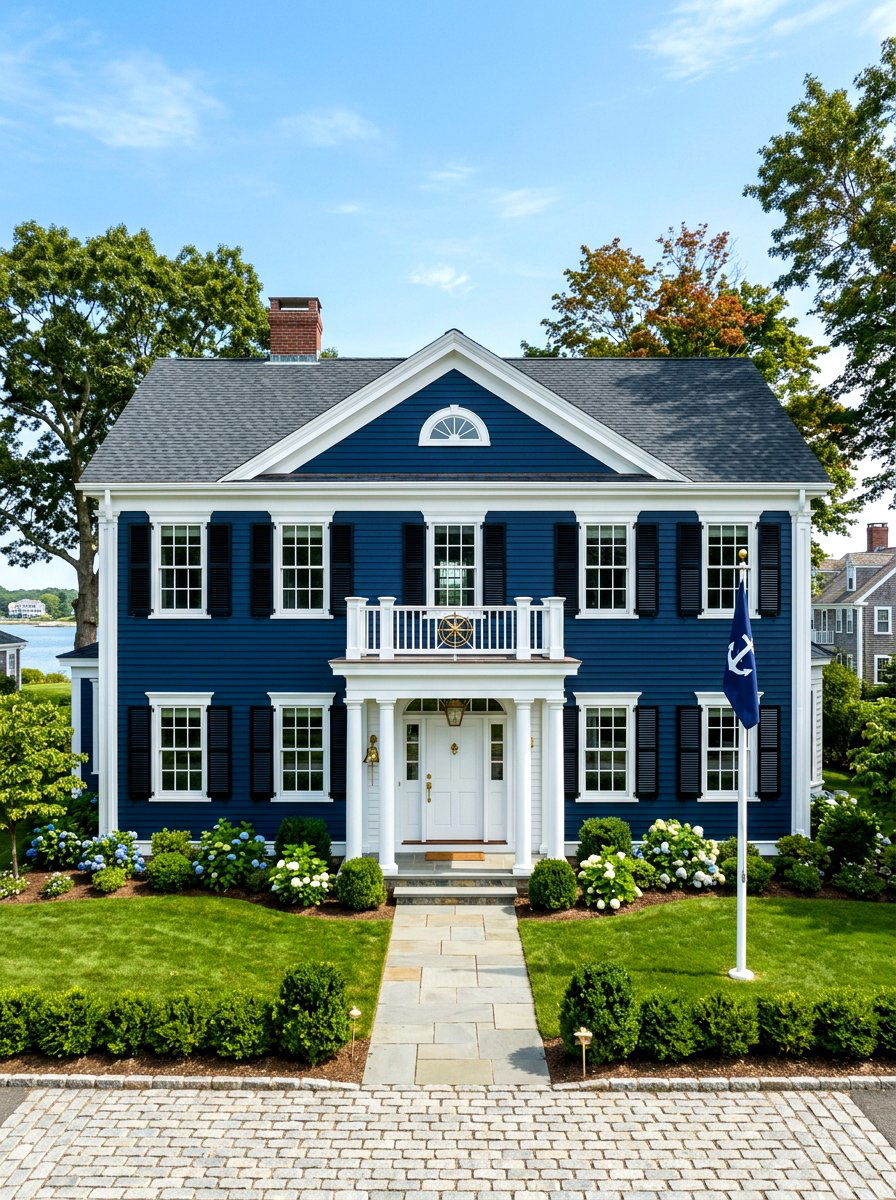
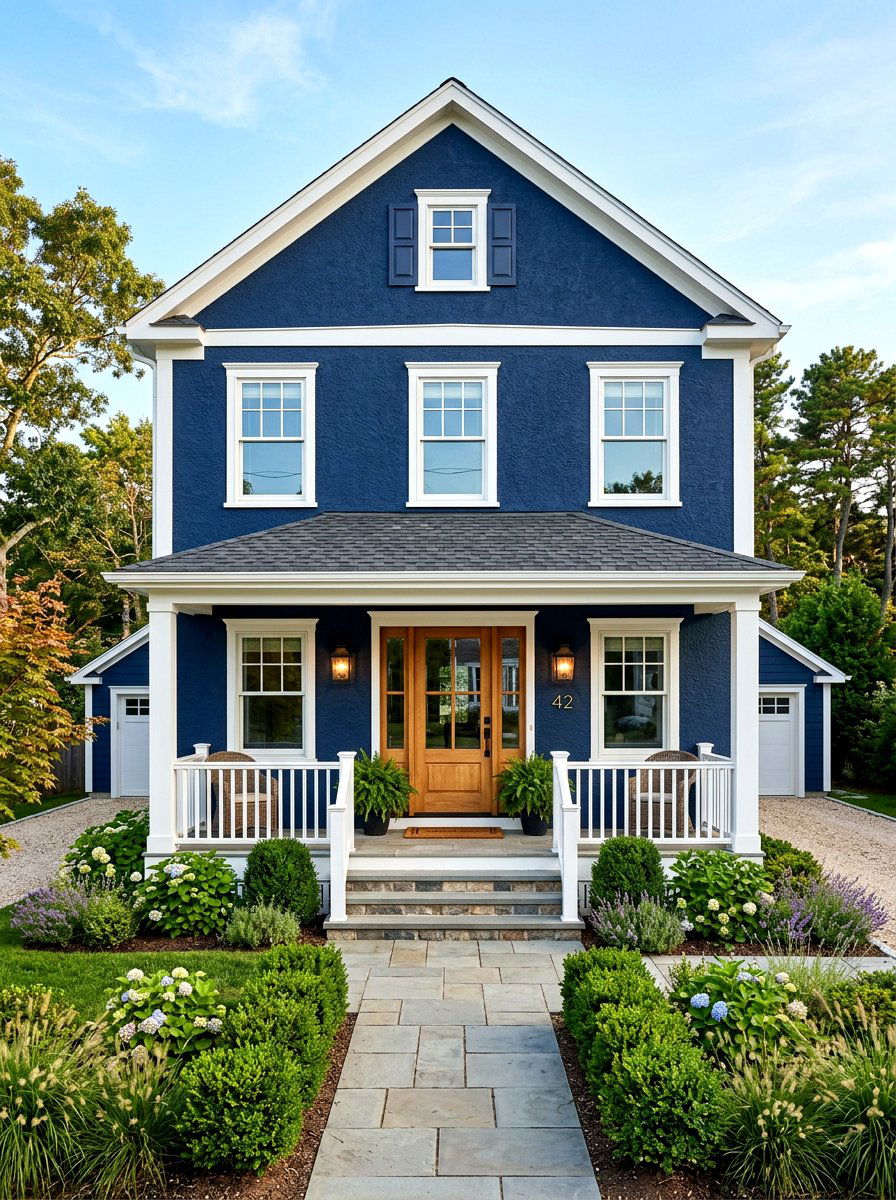
Navy blue is a bold and sophisticated choice for a colonial exterior, offering a deep, rich color that feels both historic and trendy. When paired with bright white trim and a natural wood door, a navy blue house stands out beautifully in any neighborhood. This color choice works exceptionally well with silver or black hardware, adding to the nautical or classic feel. Because navy is such a strong color, it highlights the architectural details of the home, such as the window muntins and decorative moldings. It is a fantastic option for those who want to move away from neutrals while still maintaining a formal appearance.
9. Saltbox Shape
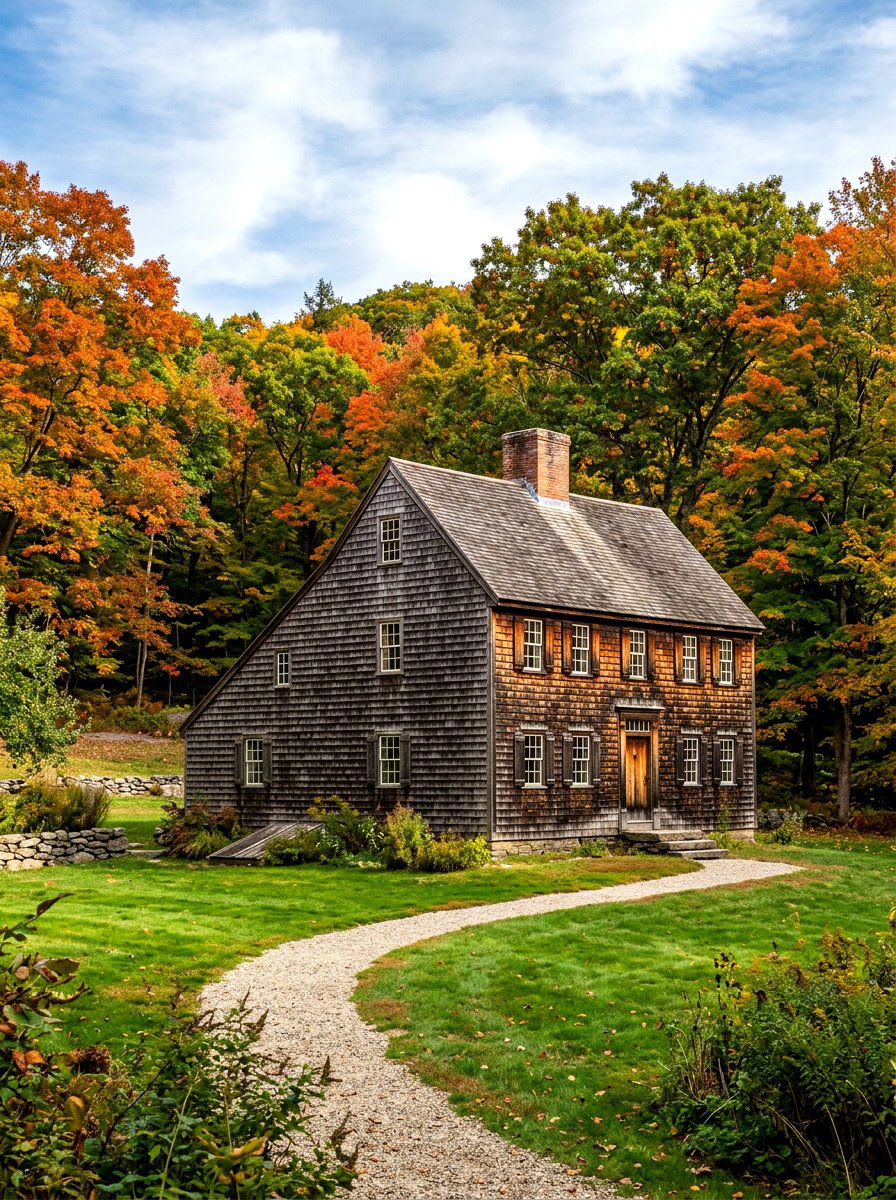
The saltbox colonial is famous for its asymmetrical roofline, which features a long, sloping back roof that reaches down to the first floor. This unique shape was originally designed to bypass taxes on two-story homes and to help shed heavy snow in New England. Today, the saltbox remains a beloved historic style that offers a lot of character and a cozy, cottage-like feel. The exterior is usually finished with simple wood shingles or clapboard siding in earthy tones like brown or deep red. This architectural style is perfect for those who appreciate early American history and want a home with a storied past.
10. Spanish Colonial Stucco
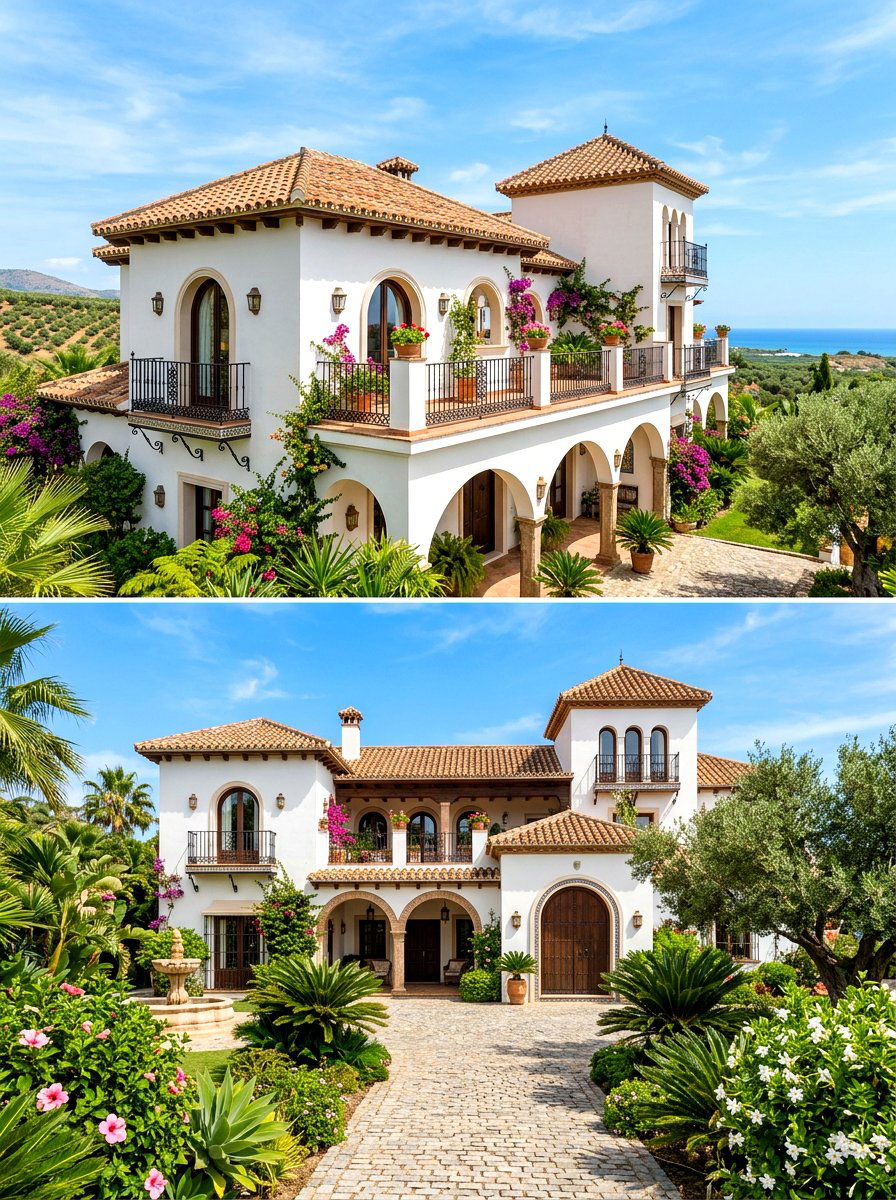
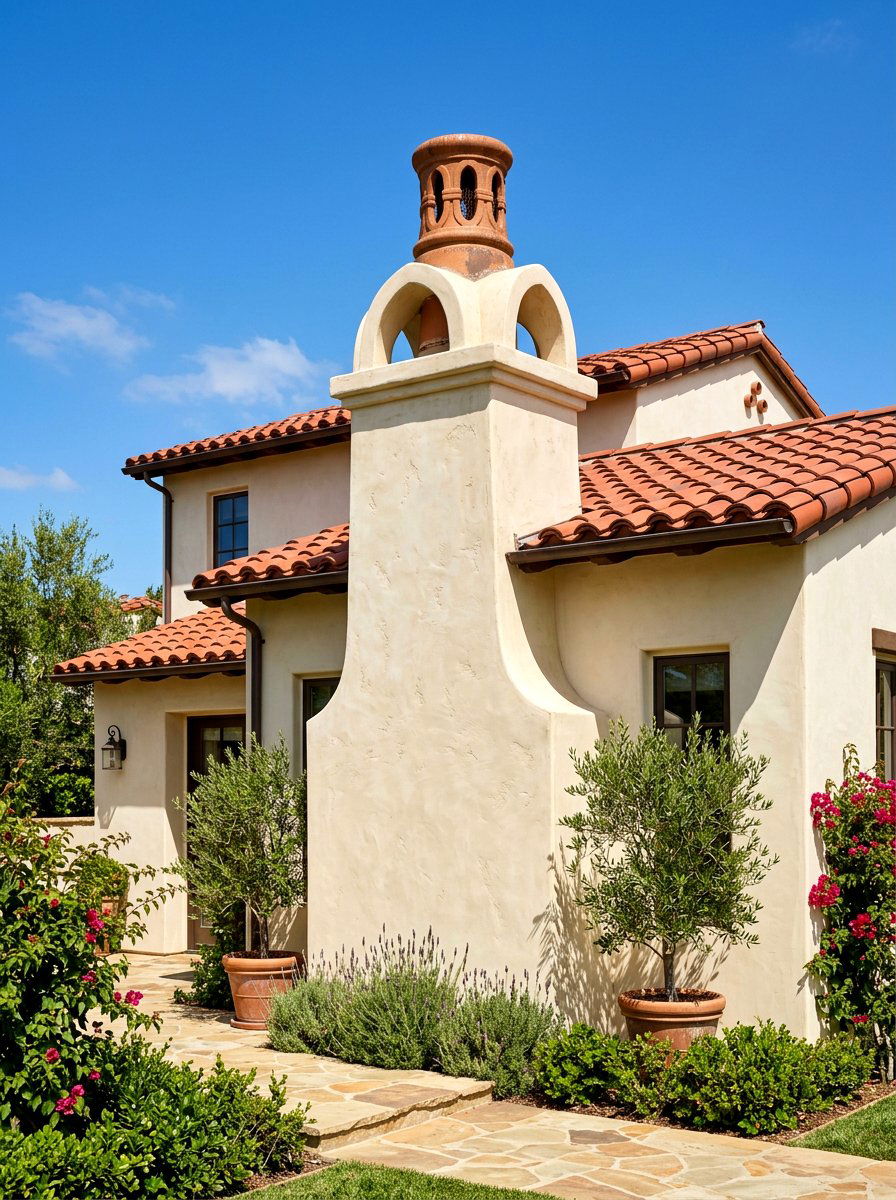
Spanish colonial architecture brings a Mediterranean influence to the style, characterized by smooth stucco walls and red clay tile roofs. These homes often feature arched doorways and windows, as well as wrought iron details on balconies and light fixtures. The light-colored stucco reflects the sun, keeping the interior cool, while the vibrant roof tiles provide a beautiful contrast. Landscaping for these homes typically includes drought-tolerant plants, succulents, and perhaps a central courtyard with a fountain. This variation of colonial design feels warm, exotic, and incredibly durable, making it a popular choice in warmer climates across the American Southwest and Florida.
11. French Colonial Balcony
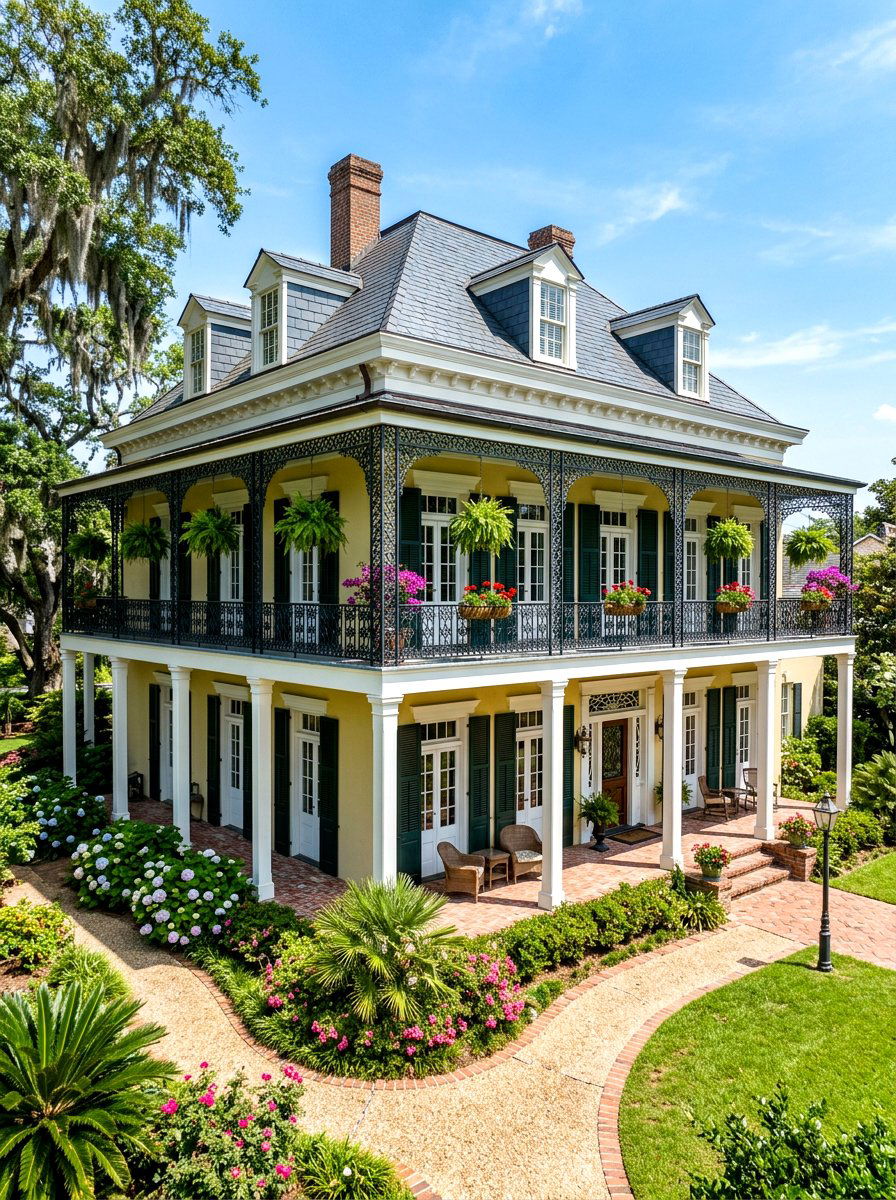
French colonial homes are often recognized by their expansive second-story balconies that wrap around the house. These balconies are usually supported by thin columns and feature intricate wrought iron or wooden railings. This design element encourages outdoor living and provides a shaded area for the first floor, which was essential in the humid climates of the deep south. The homes often have high, hipped roofs and multiple sets of French doors that open directly onto the porches. Using a light color palette, such as pale yellow or soft green, enhances the airy and elegant feel of this unique and historic architectural style.
12. Window Dormer Placement
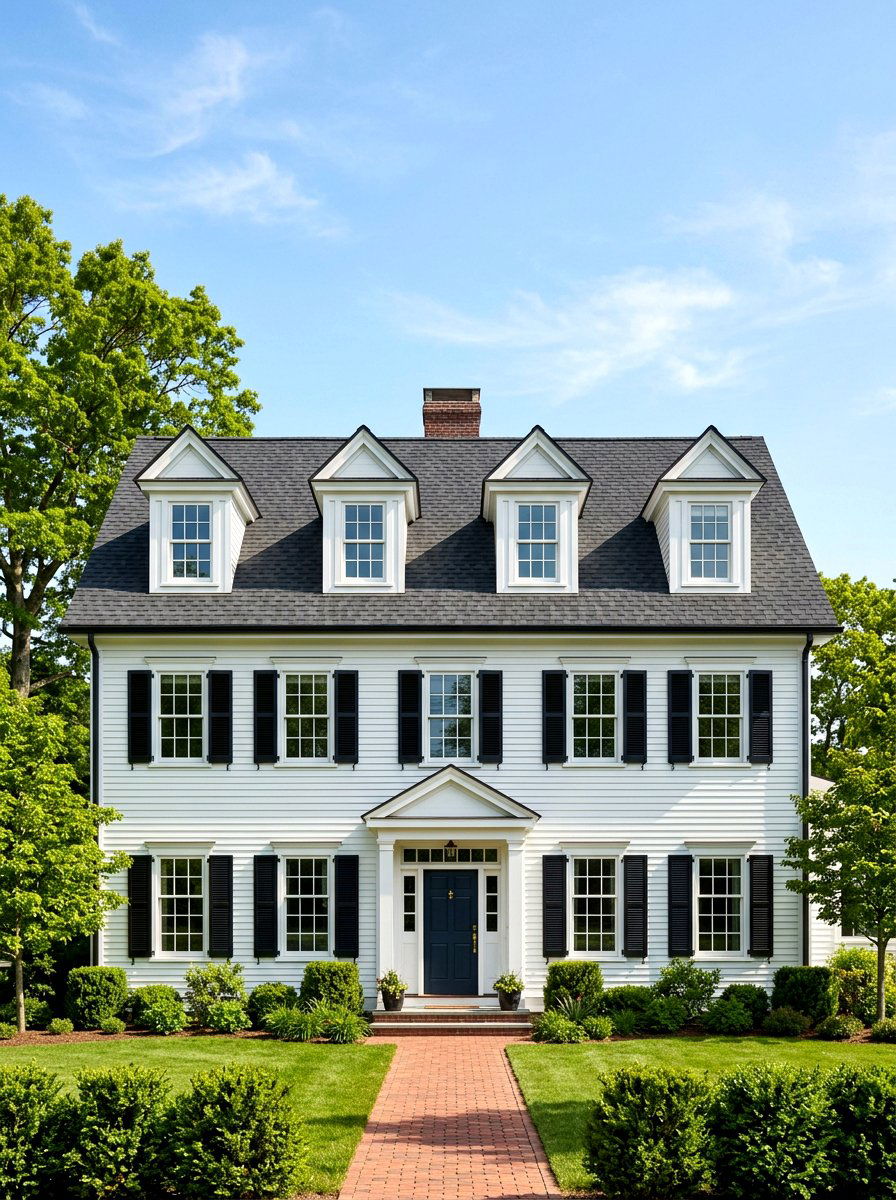
Dormer windows are a practical and charming addition to many colonial homes, breaking up the expanse of a large roof while adding light to the upper floor. Symmetrical placement is key here, with dormers usually aligned directly above the windows on the main level. Whether they are gabled, hipped, or shed dormers, they add architectural interest and make the house feel more substantial. Painting the trim of the dormers to match the rest of the house ensures a cohesive look. They are particularly effective on Cape Cod and Dutch colonial styles, where the roof takes up a significant portion of the home's visible exterior facade.
13. Brick Walkway Entrance
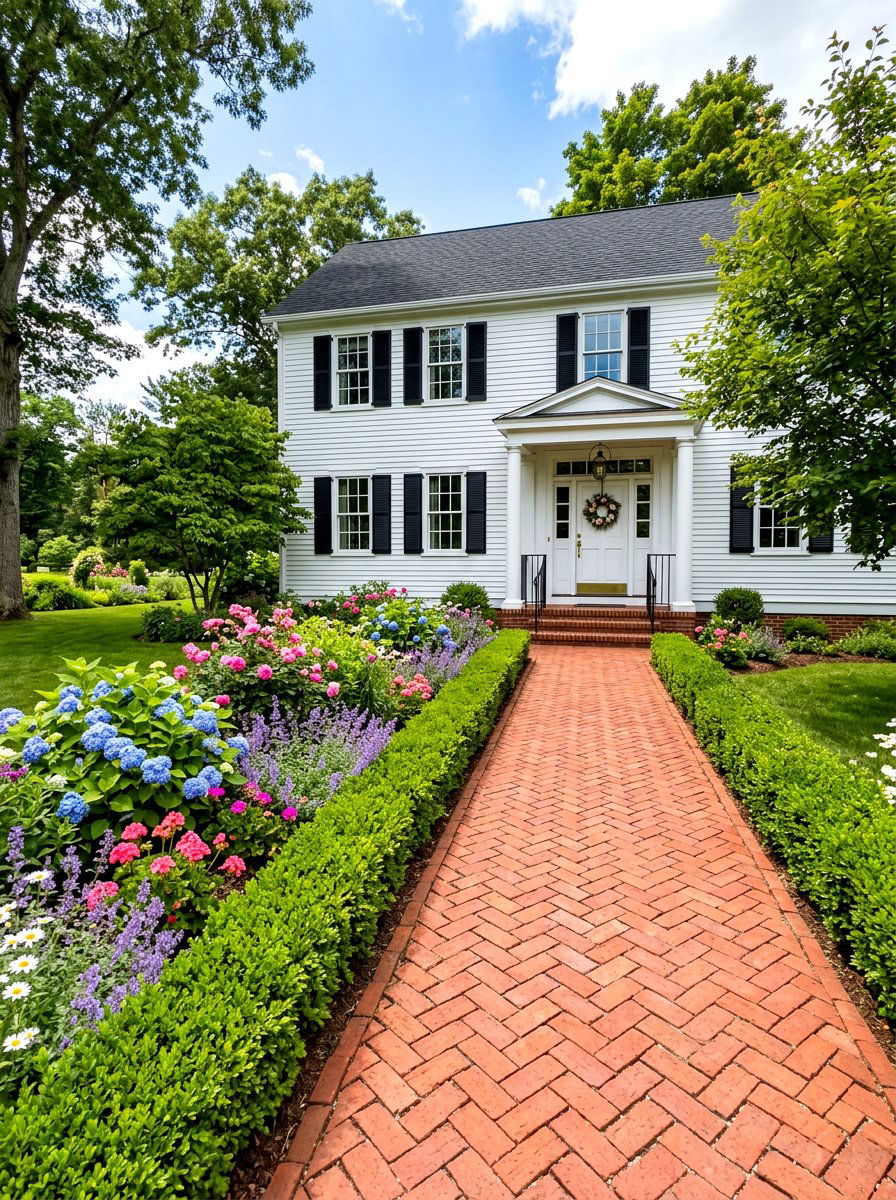
A classic brick walkway provides a formal and traditional approach to a colonial front door. Using a herringbone or basketweave pattern adds a layer of texture and historic charm to the front yard. The warm red tones of the brick complement almost any house color, especially white or cream siding. Lining the walkway with low-growing boxwoods or seasonal flowers creates a guided path that enhances the home 's symmetry. This hardscaping element is not only durable but also ages beautifully over time, gaining a weathered patina that adds to the overall character. It is a simple upgrade that significantly boosts the property' s curb appeal.
14. Black Front Door
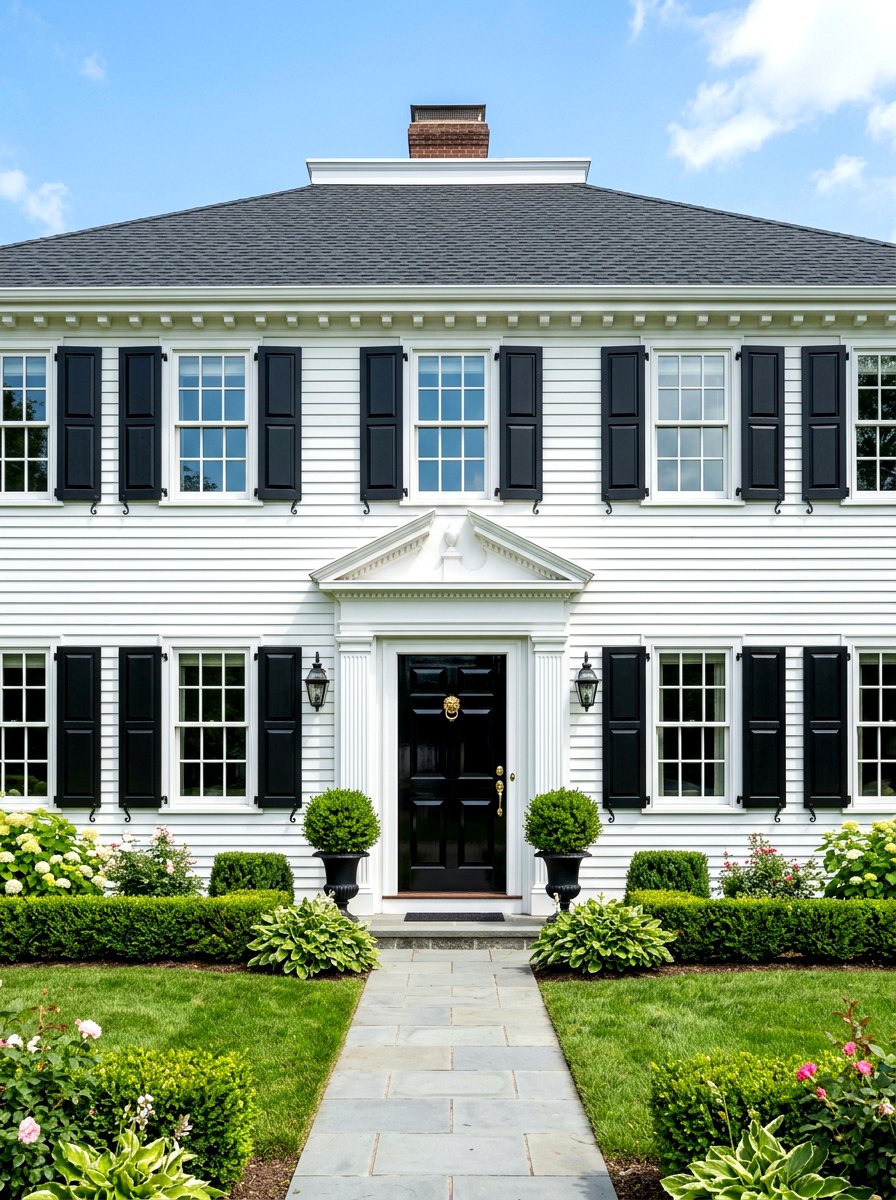
The front door is the focal point of a colonial home, and painting it black is a timeless choice that exudes elegance and authority. A high-gloss black finish looks particularly striking against white trim and brass hardware. This choice works well because it grounds the symmetry of the facade and provides a clear destination for the eye. Many homeowners choose a door with a small window or a decorative knocker to add more personality to the entrance. A black door feels sophisticated and "finished, " providing a polished look that works for both historic restorations and modern builds. It is the ultimate classic finishing touch.
15. Large White Columns
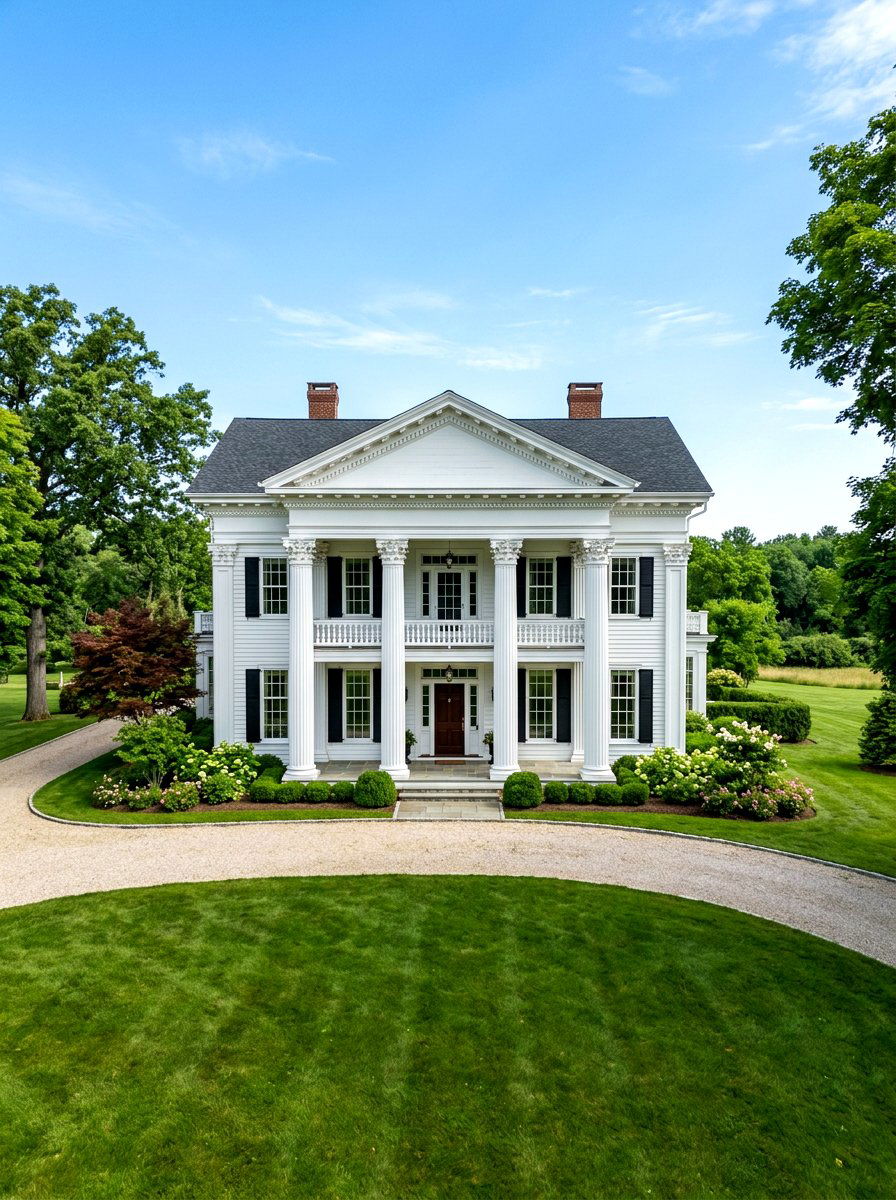
Stately white columns are a defining feature of Greek Revival and Southern colonial homes, adding a sense of grandeur and monumental scale. Whether they are round or square, these columns support the weight of the porch or portico while creating a dramatic visual impact. They should be proportioned correctly to the height of the house to maintain the desired balance. Keeping the columns clean and well-painted is essential for maintaining the home's prestigious appearance. These structural elements provide deep shadows and highlights that change throughout the day, adding a dynamic quality to the exterior. They truly transform a simple house into a grand estate.
16. Symmetrical Window Layout
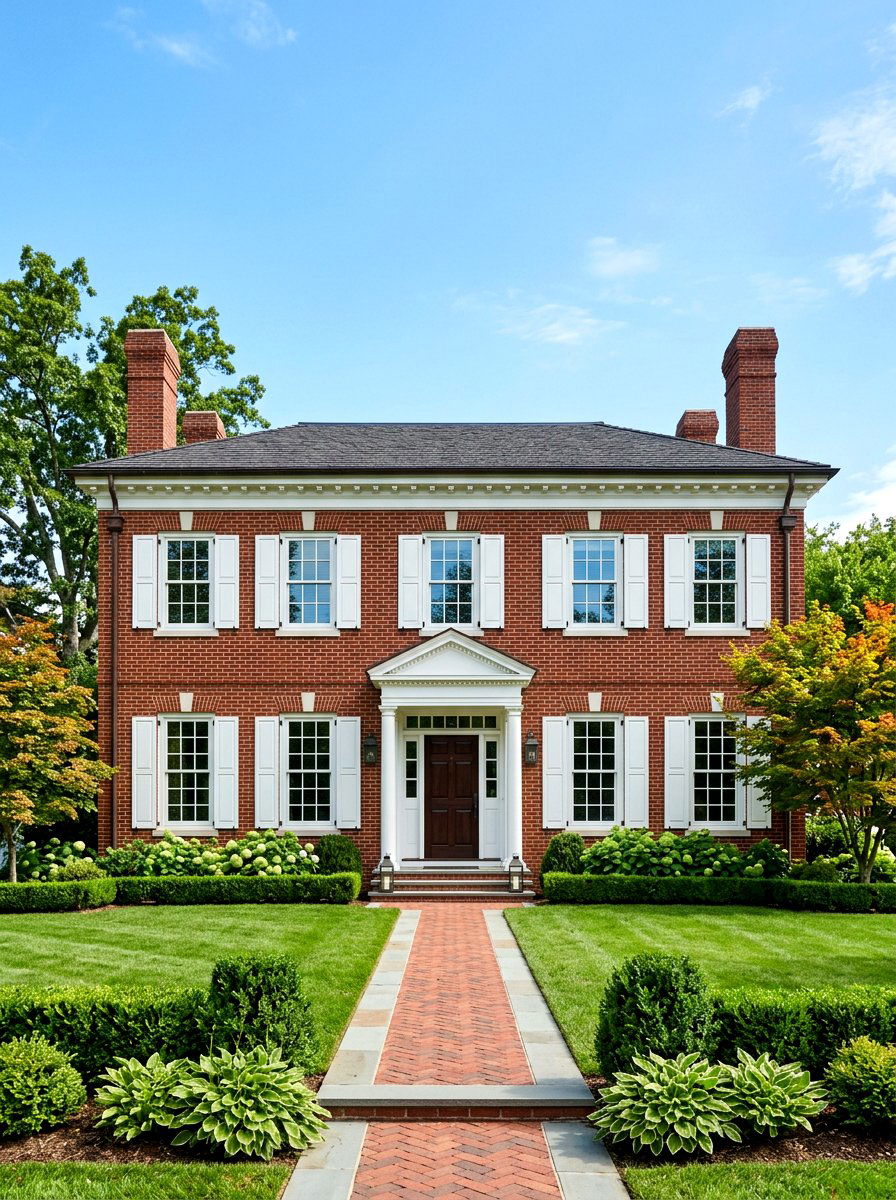
In colonial design, the windows are almost always arranged in a strict grid pattern to maintain the home's balance. Typically, you will see double-hung windows with multiple panes, often referred to as "six-over-six" or "nine-over-nine. " This repetition creates a rhythmic quality that is very calming and traditional. Ensuring that the windows are evenly spaced and perfectly aligned with the door and other features is crucial. Modern homeowners often opt for high-efficiency versions of these classic windows to save on energy while keeping the historic look. The result is a facade that feels organized, sturdy, and well-proportioned, which is the heart of colonial charm.
17. Boxwood Hedge Landscaping
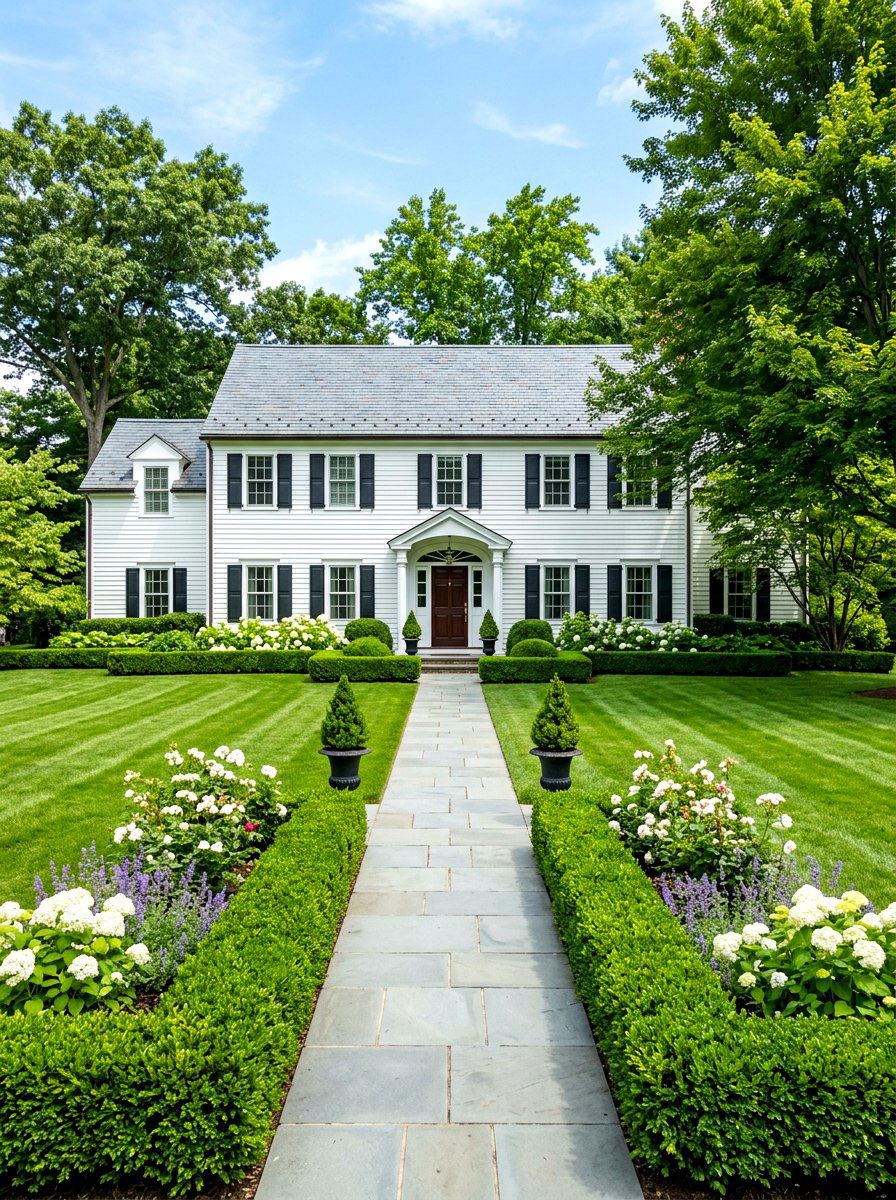
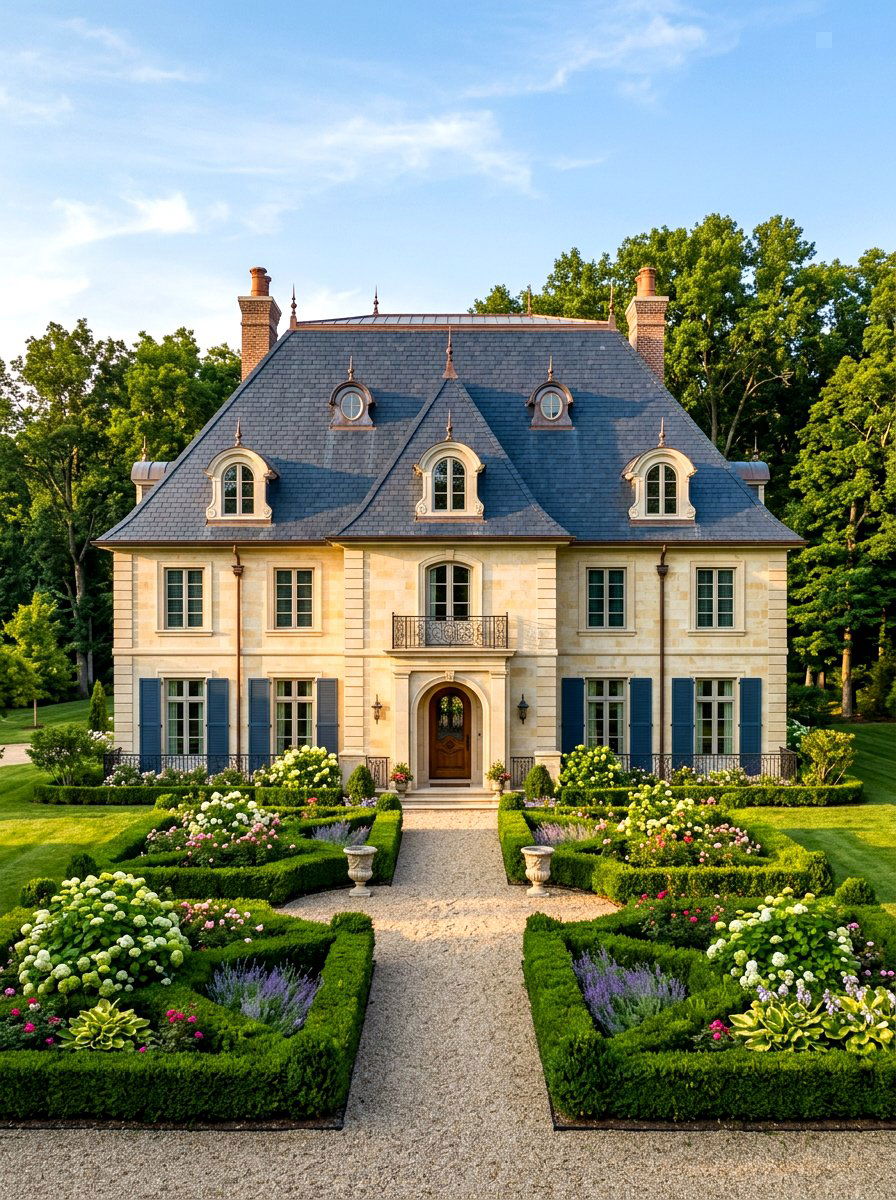
Low-growing boxwood hedges are the quintessential landscaping choice for a colonial home. They can be trimmed into neat, geometric shapes that echo the symmetrical lines of the house. Placing them along the foundation or lining the front walkway creates a structured and formal look that feels very intentional. Boxwoods are evergreen, meaning the home will maintain its tidy appearance even during the winter months. You can fill the space behind the hedges with taller shrubs or flowering perennials like hydrangeas for added color and texture. This style of gardening is low-maintenance yet provides a high-end, manicured feel that perfectly complements the architecture.
18. Wood Shingle Siding
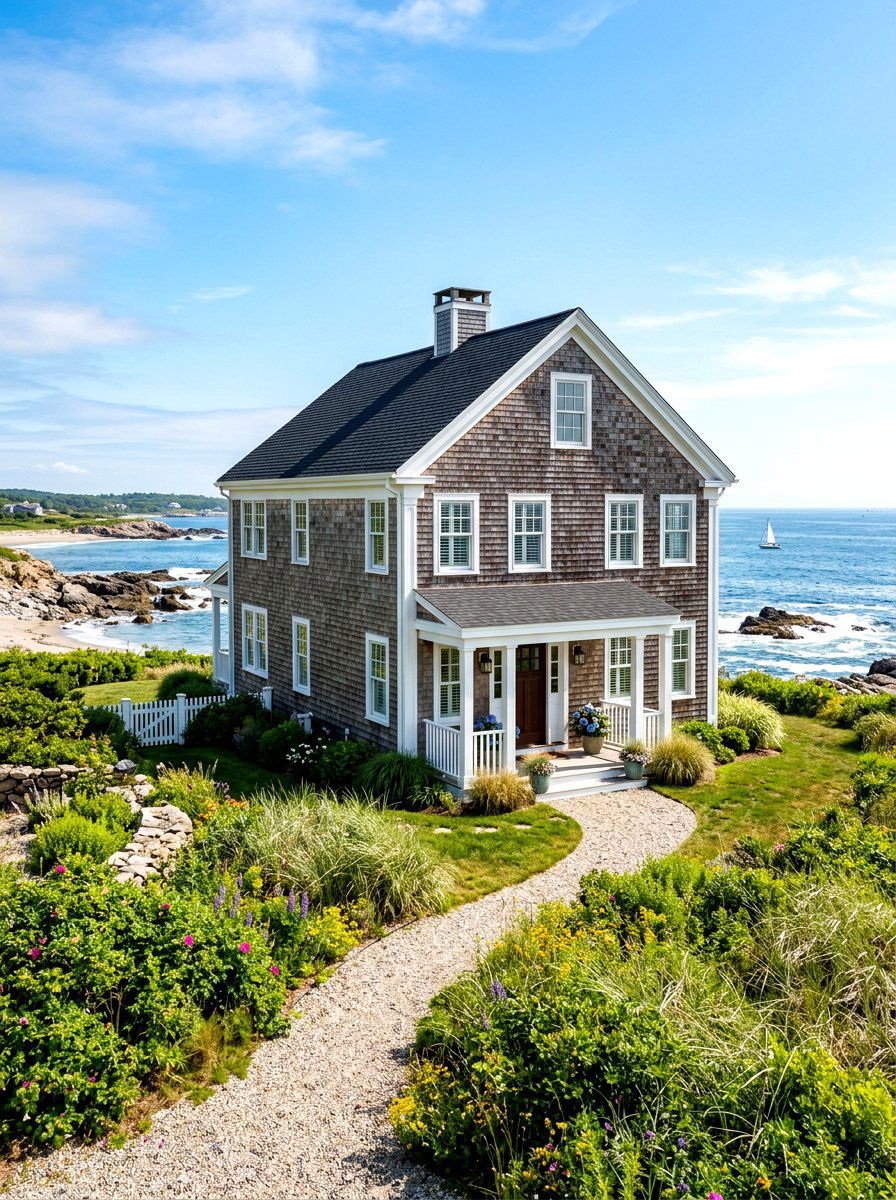
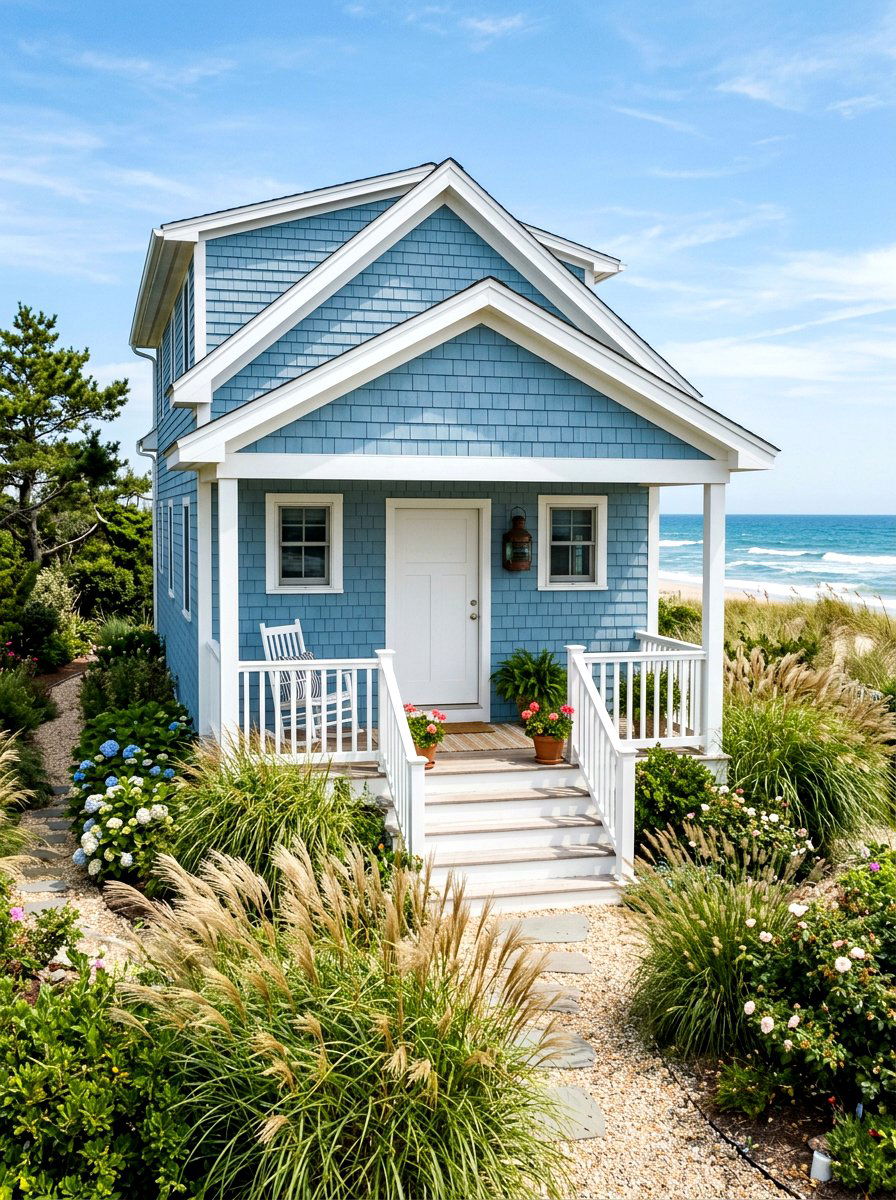
Cedar or wood shingle siding offers a more natural and textured look compared to traditional smooth clapboards. Over time, these shingles weather to a beautiful silvery-gray, which is a classic look for coastal colonial homes. This material adds a layer of warmth and organic beauty that makes the house feel more integrated with its surroundings. It is a particularly popular choice for Cape Cod and shingle-style colonials. While it requires more maintenance than vinyl or fiber cement, the authentic look and feel of real wood are hard to beat. It provides a timeless, rugged elegance that is highly sought after in many historic neighborhoods.
19. Modern Colonial Transformation
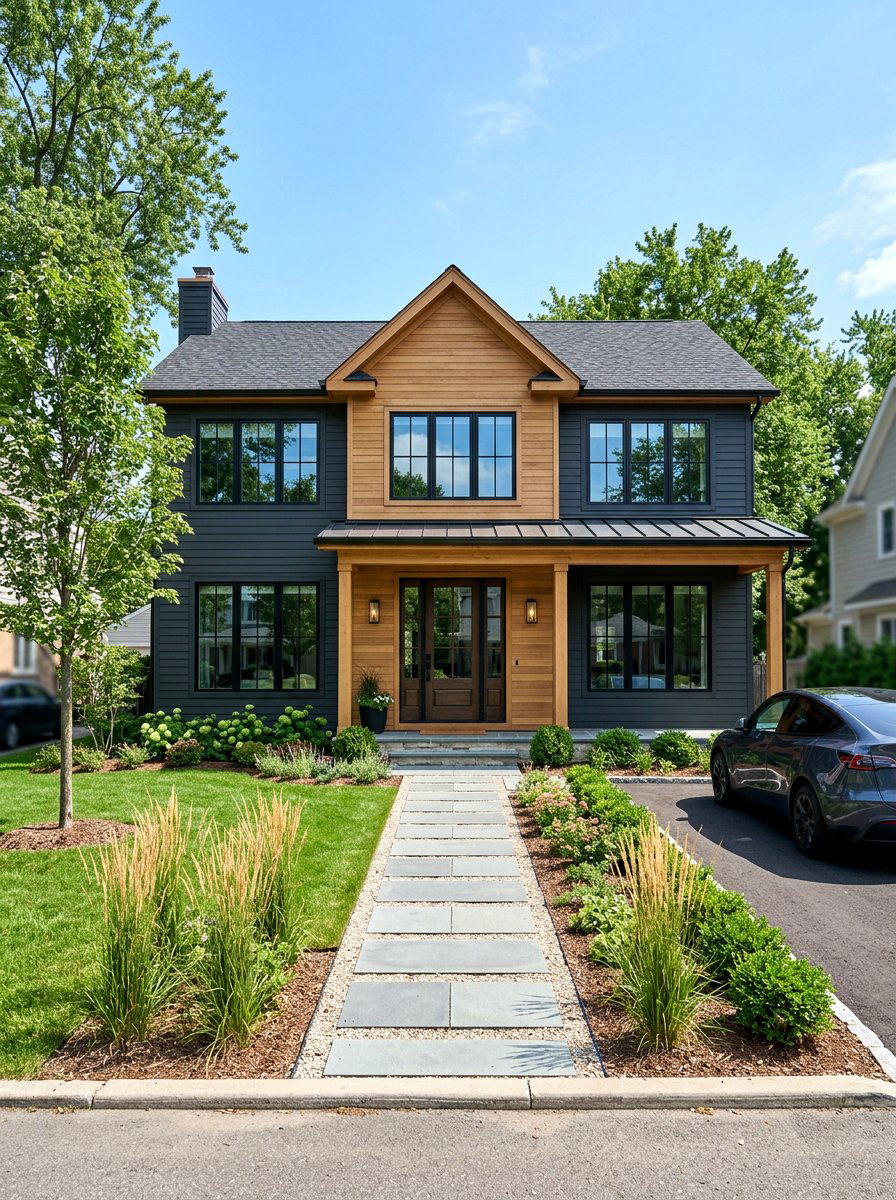
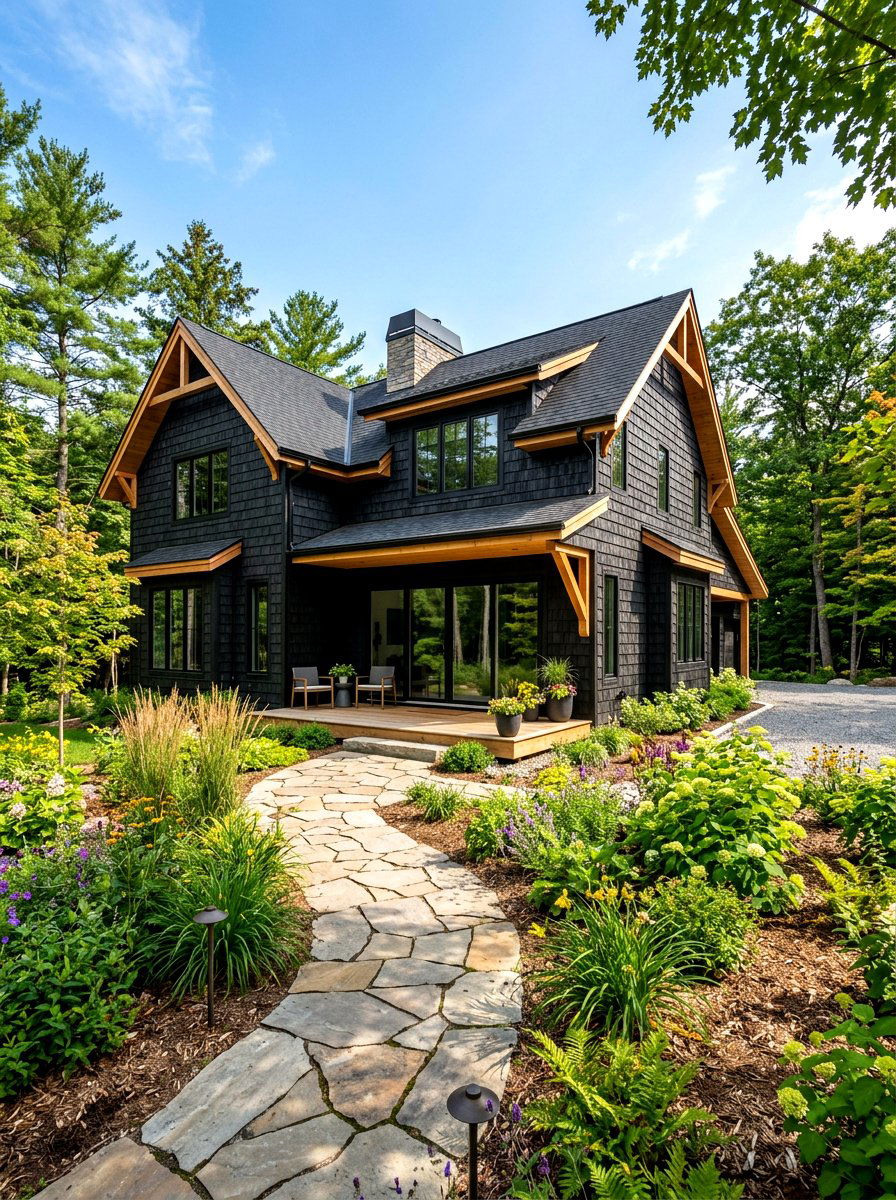
Updating a colonial home with modern materials and colors can result in a stunning and fresh exterior. This might involve using dark charcoal or black siding paired with natural wood accents for a "New Colonial" look. Swapping out traditional shutters for larger windows or adding a modern glass front door can also change the vibe significantly. The goal is to keep the symmetrical bones of the house while introducing contemporary textures and a minimalist color palette. This approach is perfect for homeowners who love the structure of a colonial but want a home that feels current and unique. It bridges the gap between history and today.
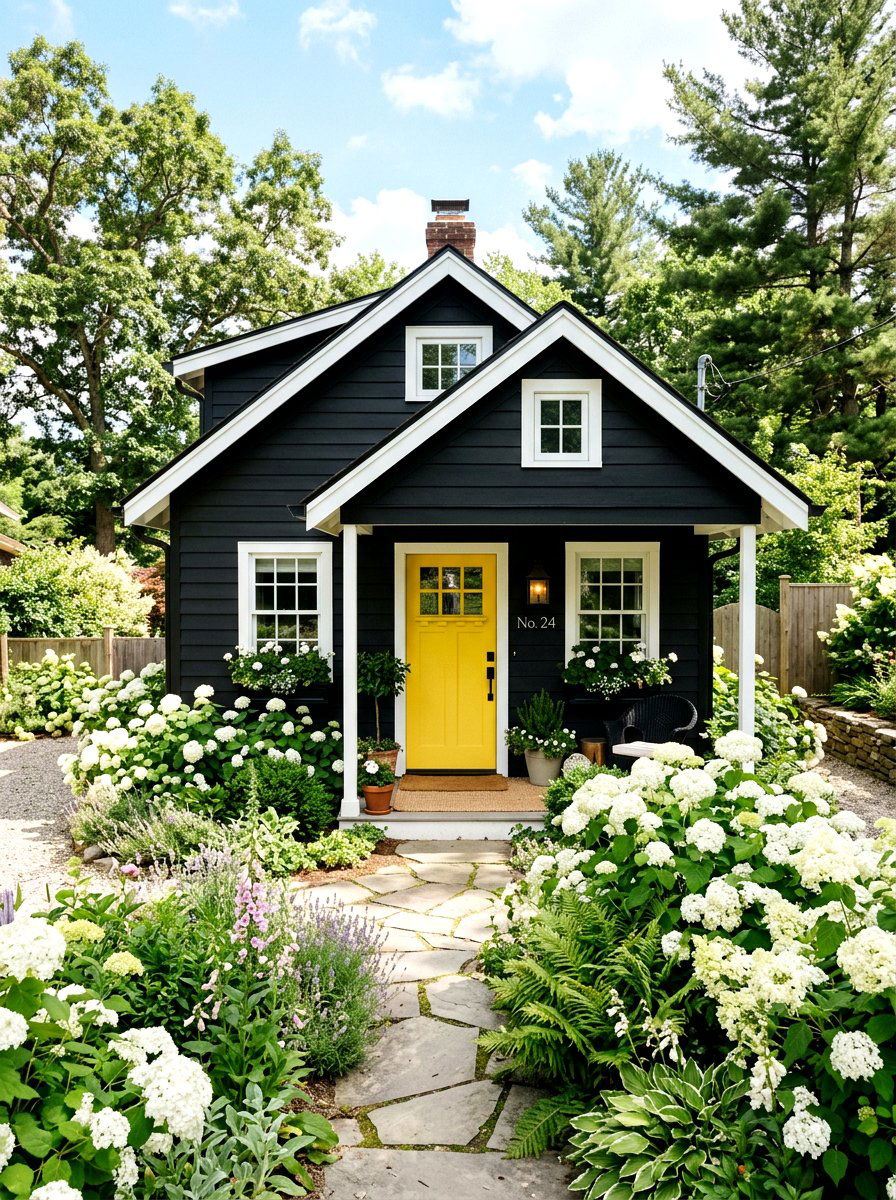
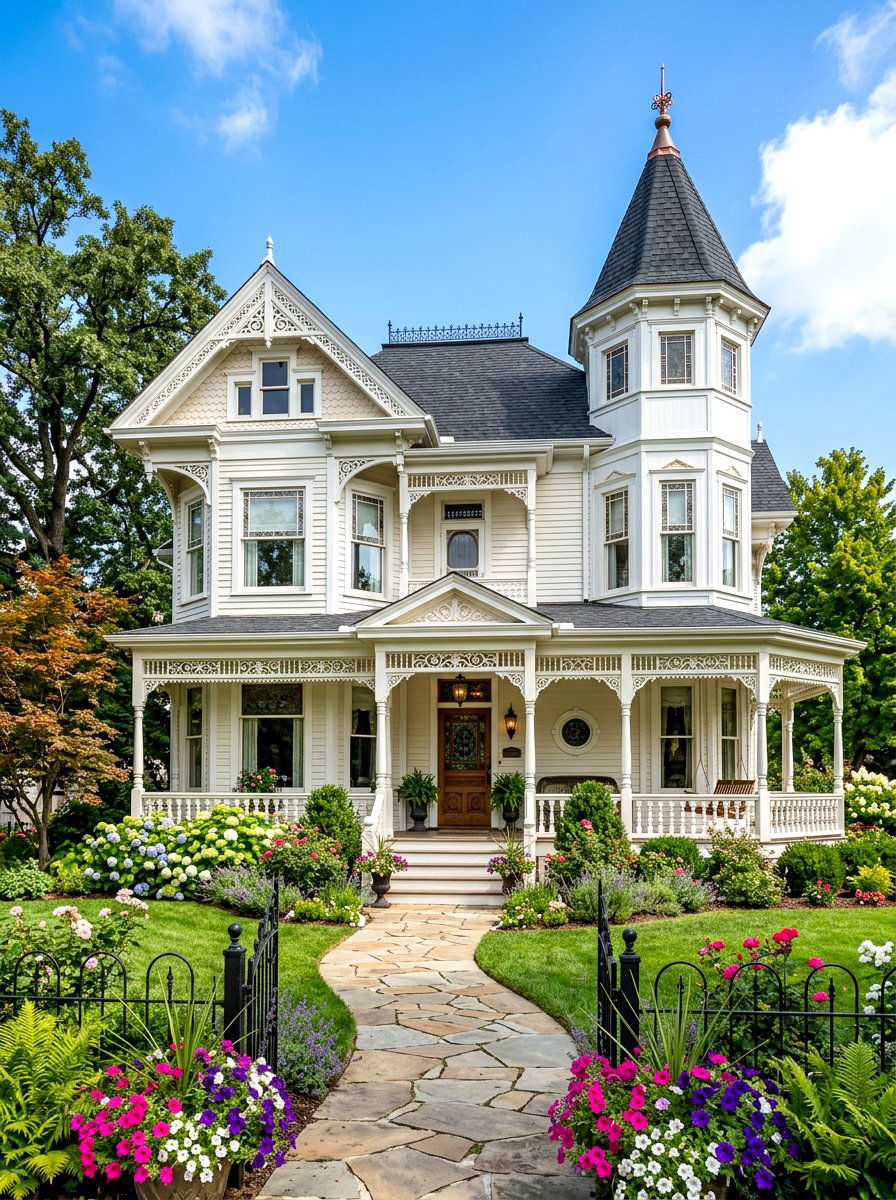
20. Window Flower Boxes
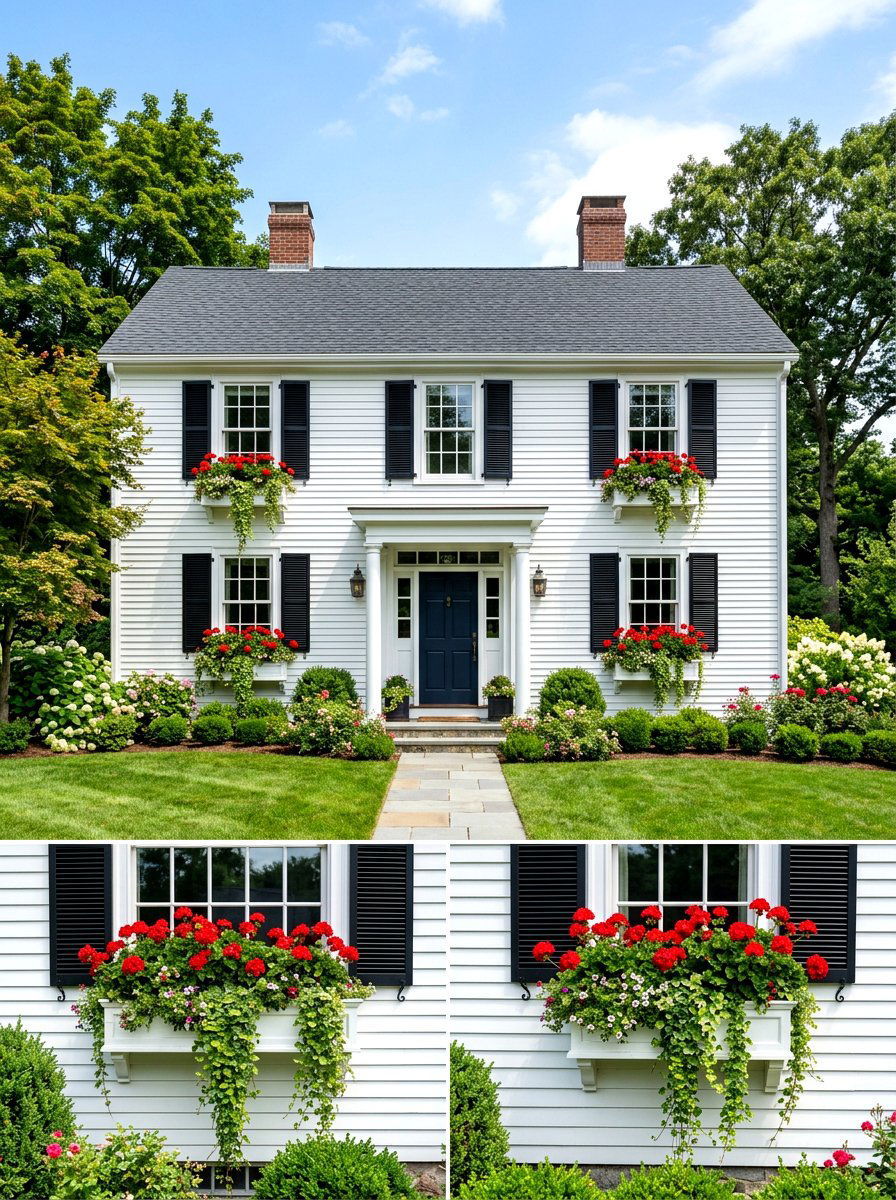
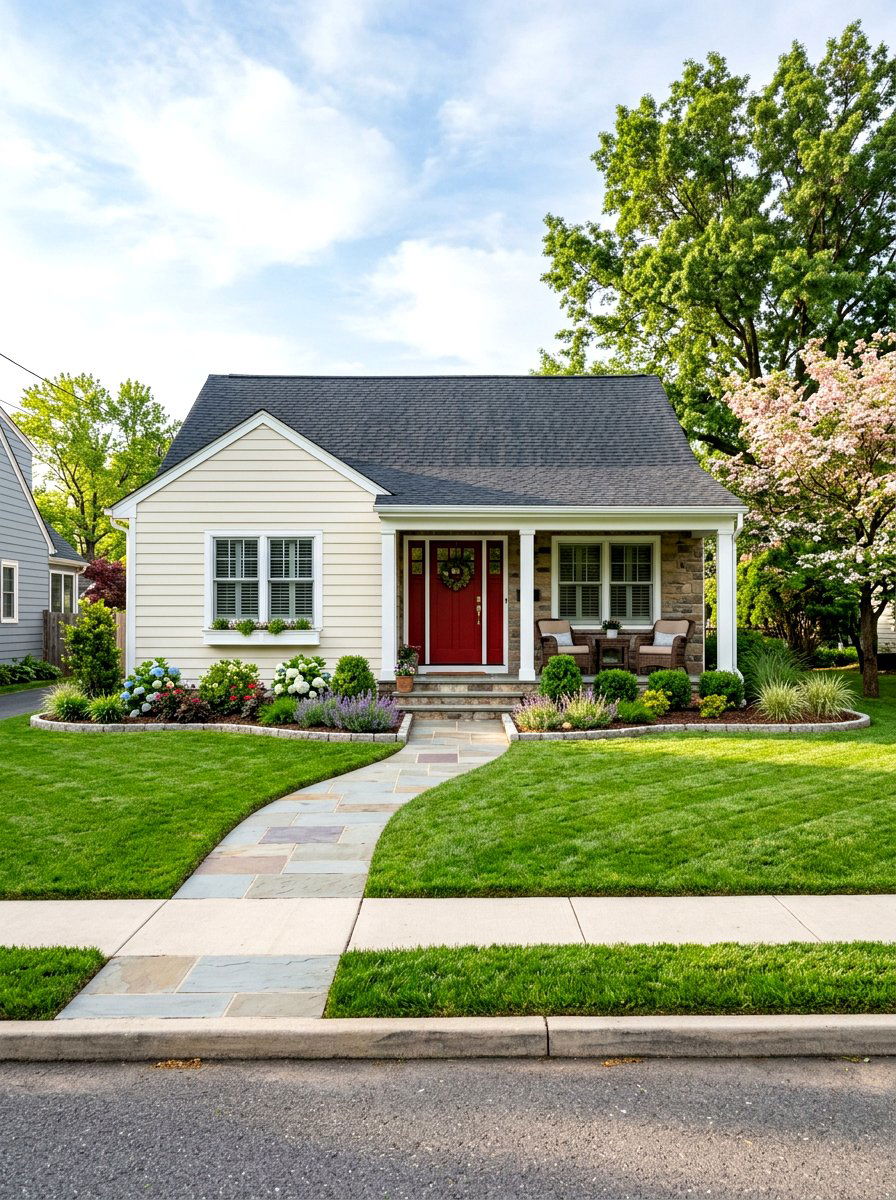
Adding flower boxes to the front windows is an easy way to bring color and life to a colonial exterior. When painted to match the shutters or trim, these boxes become an integrated part of the home's architecture. Filling them with seasonal blooms like geraniums, petunias, or ivy adds a soft, organic touch to the structured facade. They are especially charming on smaller colonial styles like the Cape Cod, where they add a bit of "storybook" appeal. Flower boxes also allow you to change the look of your home throughout the year by simply swapping out the plants. It is a delightful and affordable detail.
21. Brass Door Hardware
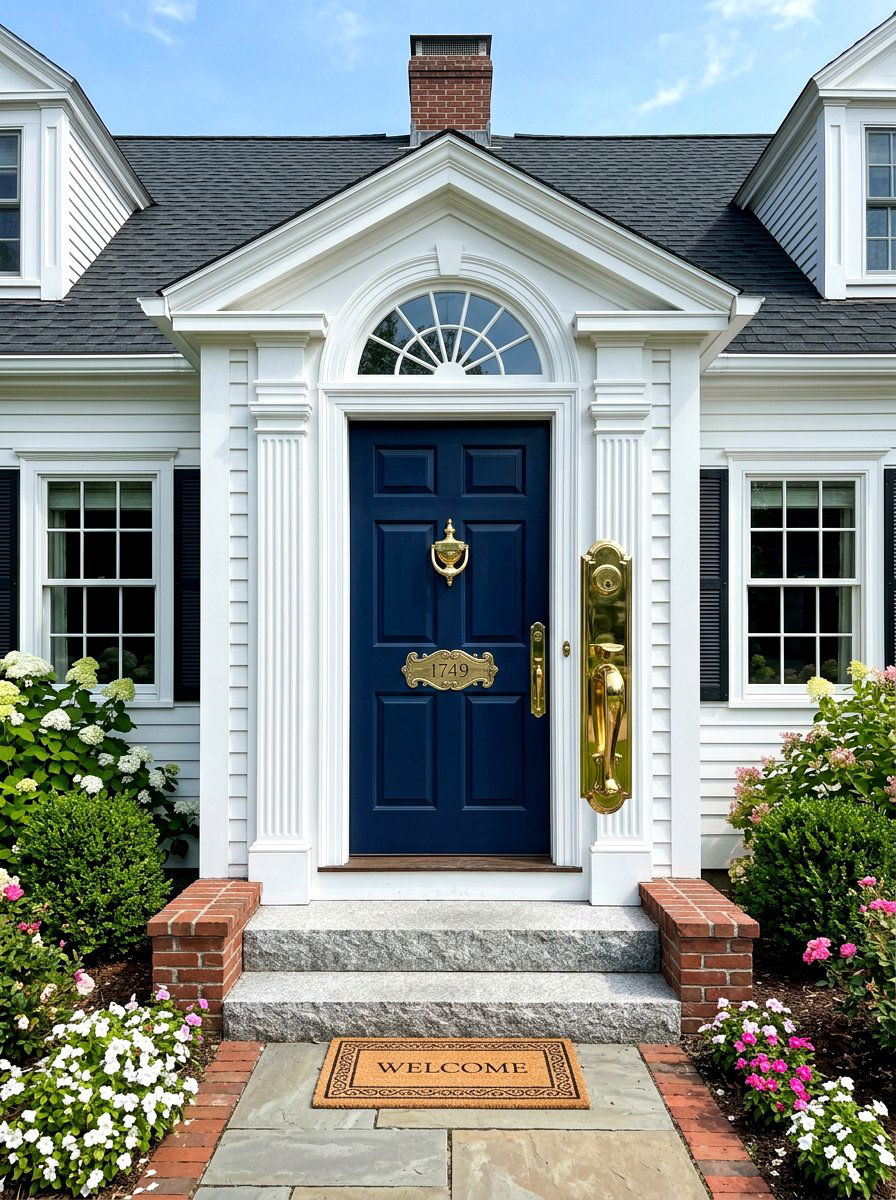
Small details like brass hardware can make a huge difference in the overall feel of a colonial entrance. A polished brass knocker, handle set, and kick plate add a touch of traditional luxury and warmth. Brass has a long history in American colonial design and develops a beautiful patina as it ages. It looks particularly stunning against dark-colored doors like black, navy, or forest green. Choosing a classic design for the hardware ensures that it complements the historic nature of the home. This simple upgrade provides a sense of quality and attention to detail that visitors will notice as soon as they reach the front door.
22. Gable Roof Architecture
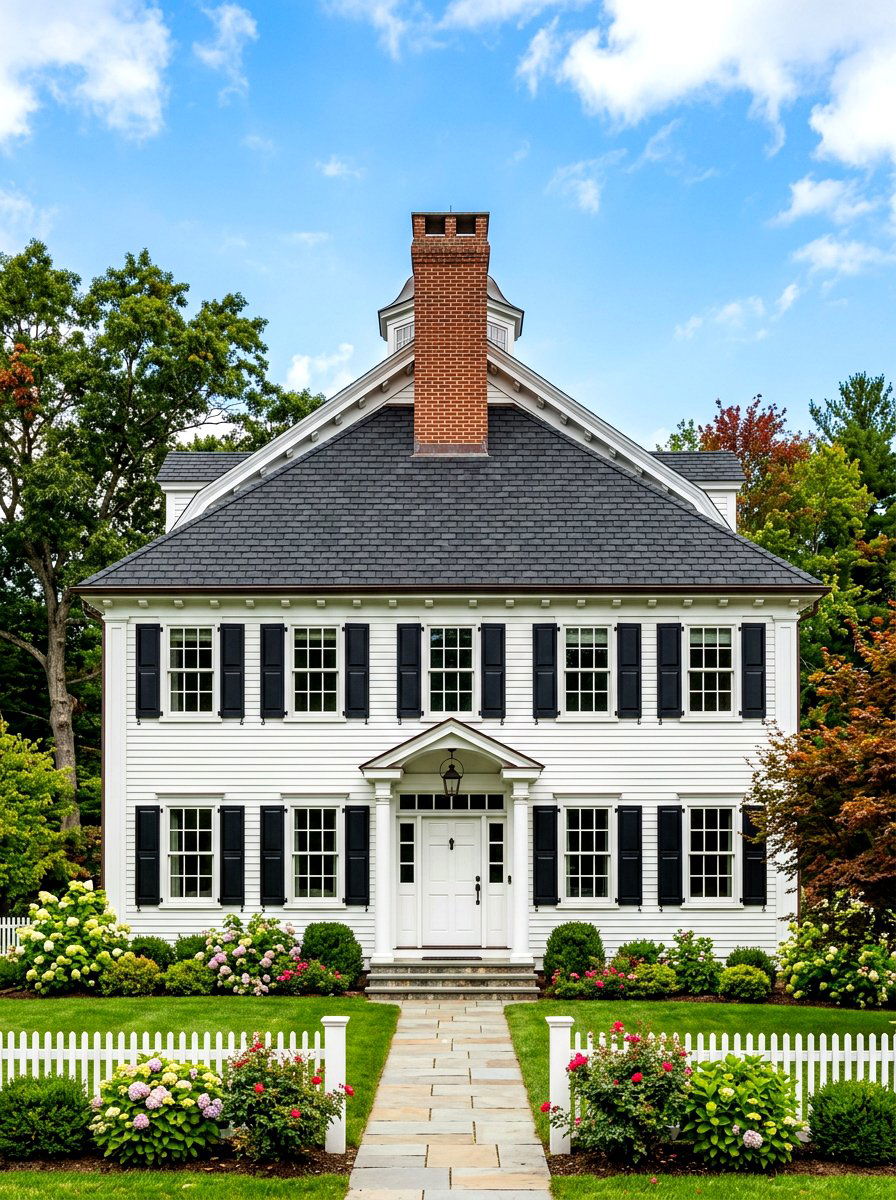
While the gambrel is unique, the simple gable roof is the most common roof style for colonial homes. The triangular shape is functional for shedding rain and snow and provides a clean, uncomplicated look. Often, the gable ends are finished with decorative trim or a small window to add interest. Using high-quality shingles in a dark gray or black provides a sharp contrast to lighter siding. The pitch of the roof can vary, but a steeper pitch is often seen in early American styles. This timeless roof design is a staple of the colonial aesthetic, providing a sturdy and familiar silhouette that fits into any neighborhood.
23. Double Entry Doors
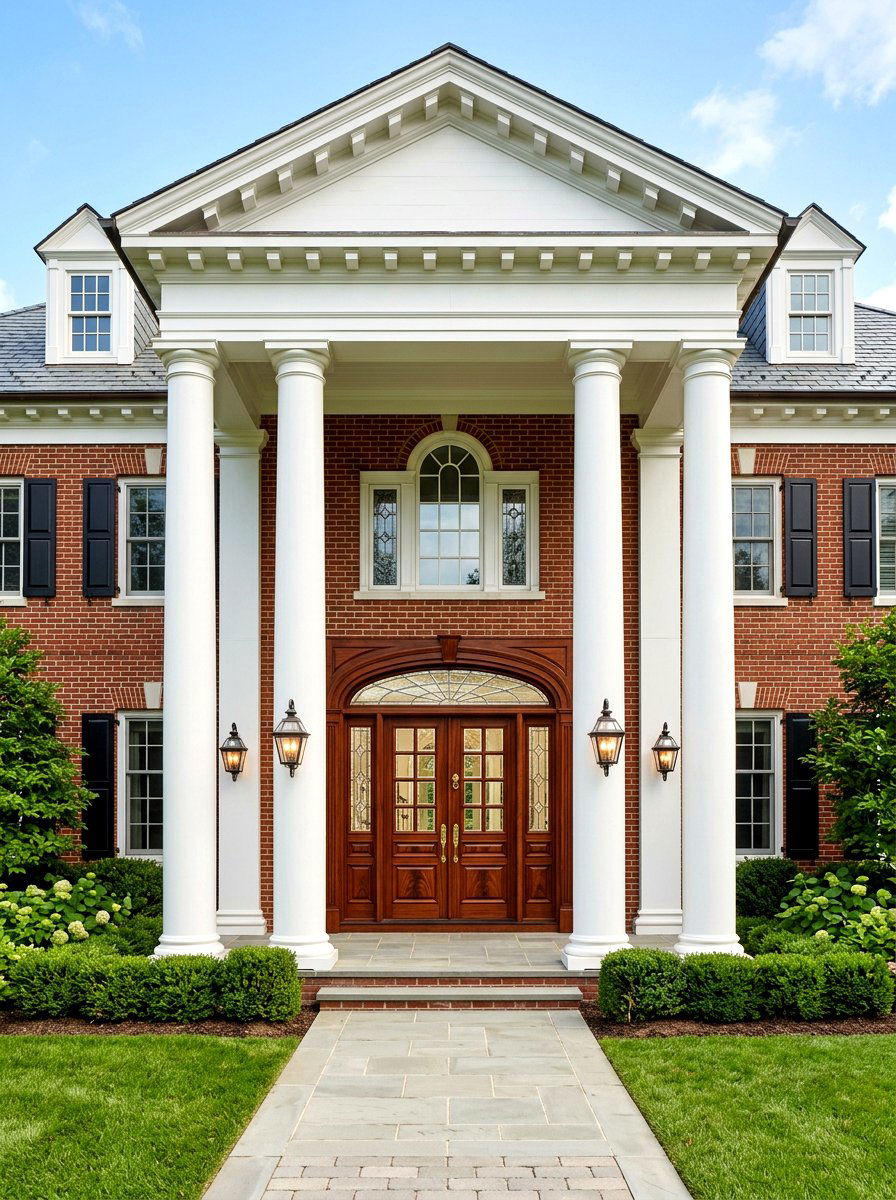
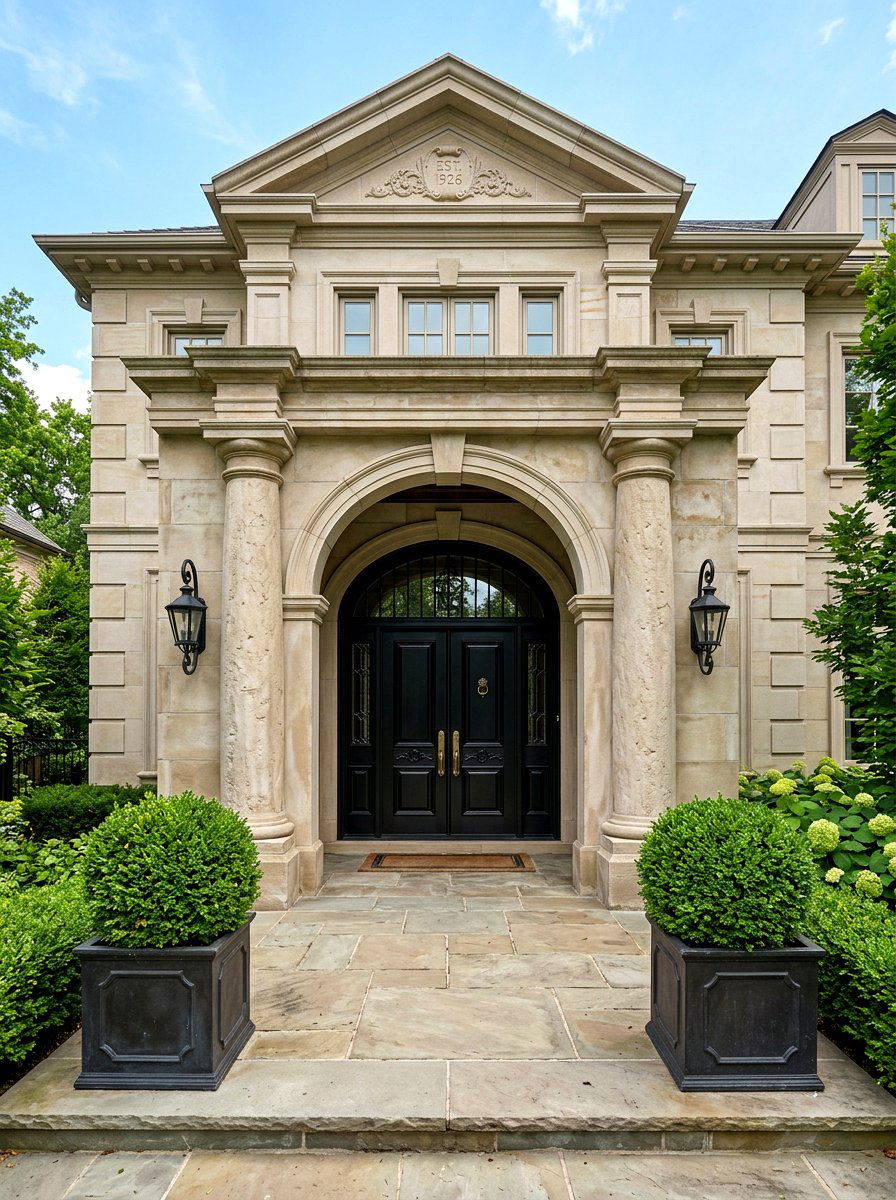
For larger, more formal colonial homes, a set of double entry doors can create a truly impressive entrance. These doors are often made of solid wood and feature large glass panes or intricate carvings that reflect the home's status. They provide a wider opening for guests and make the front of the house feel more substantial. To keep the look cohesive, the doors should be framed by a grand portico or a set of matching lanterns. Painting them a deep, rich color further emphasizes their importance as the main focal point. Double doors add a level of symmetry and scale that is perfect for a grand Georgian.
24. Copper Gutter Accents
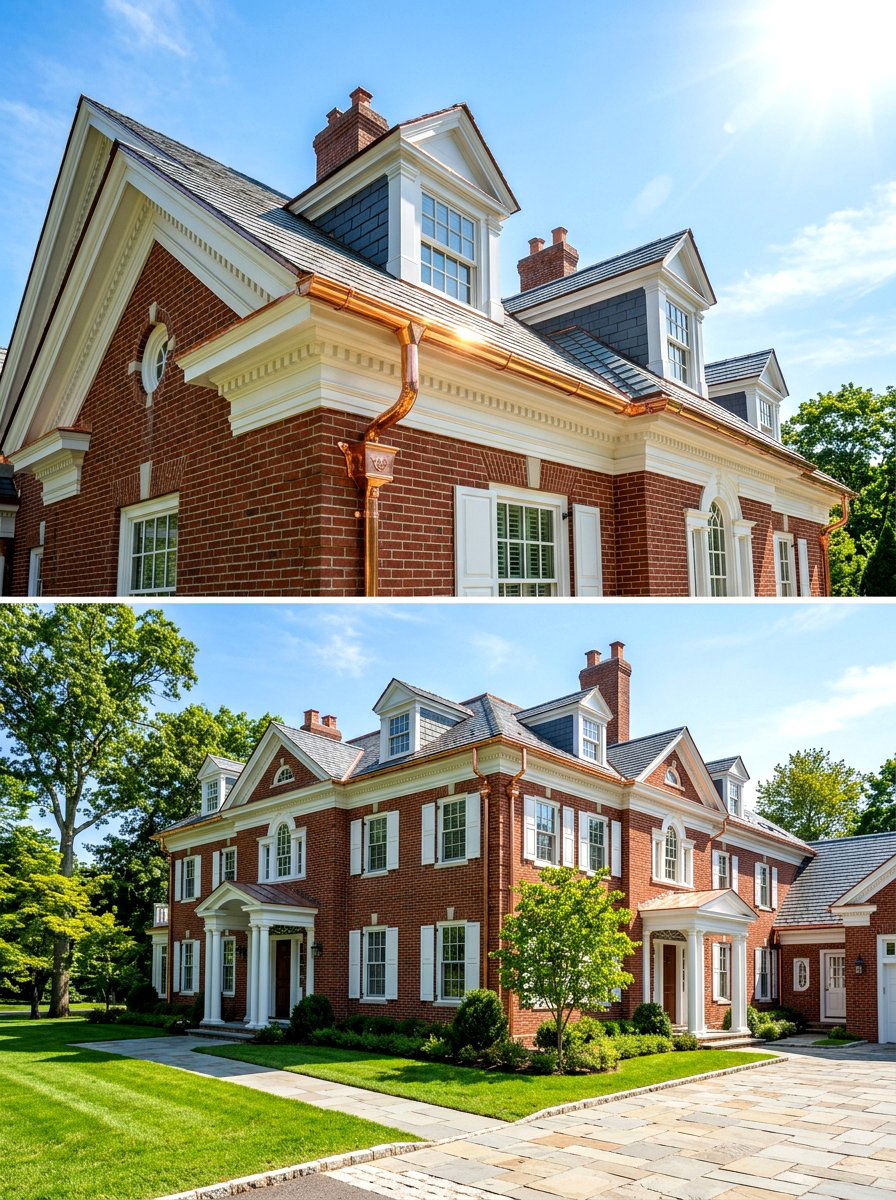
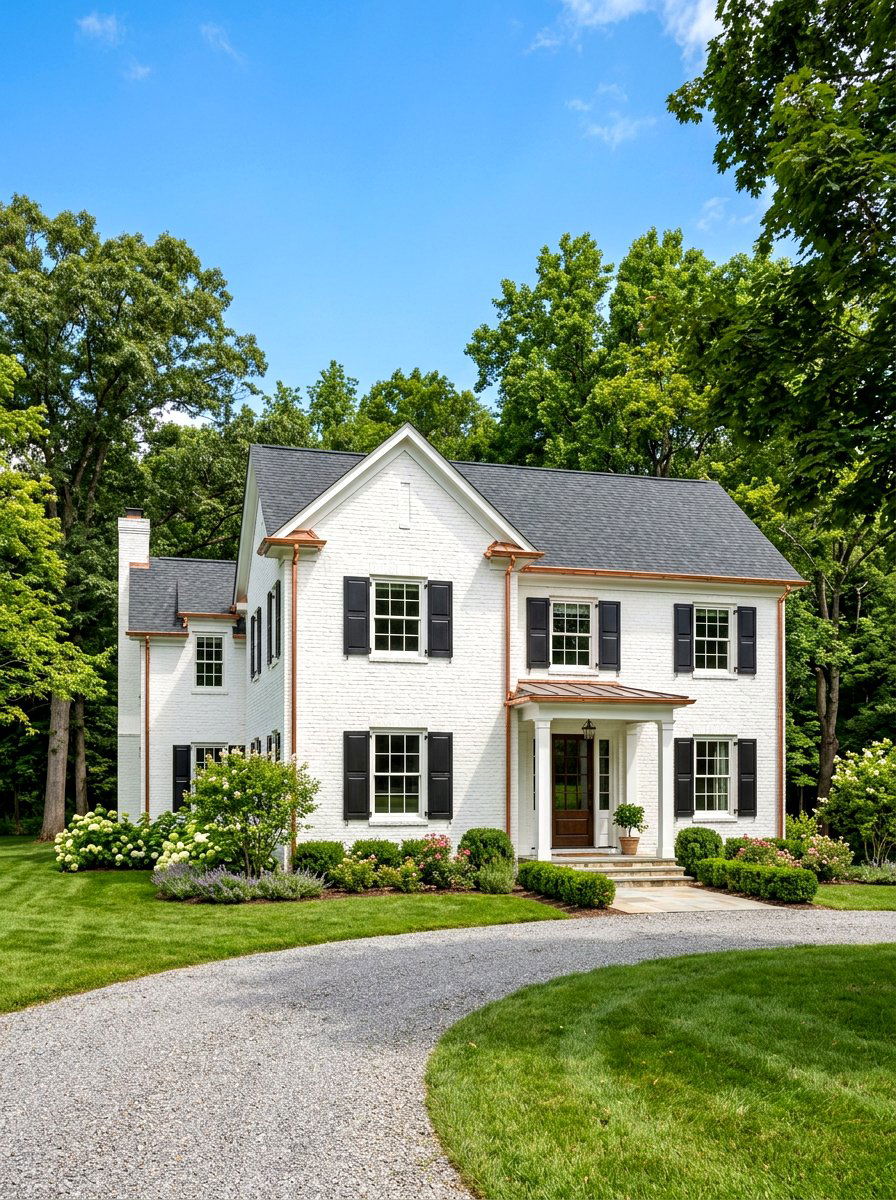
Installing copper gutters and downspouts is a high-end upgrade that adds a unique glow to a colonial exterior. Over time, copper develops a stunning green patina that is highly prized for its historic and weathered look. This material is incredibly durable and can last for over a century with proper care. The bright metallic finish initially provides a warm accent that looks beautiful against brick or stone. As the patina develops, it adds a layer of character and "old-world" charm that is difficult to replicate with other materials. It is a functional element that doubles as a sophisticated architectural detail for the discerning homeowner.
25. White Picket Fence
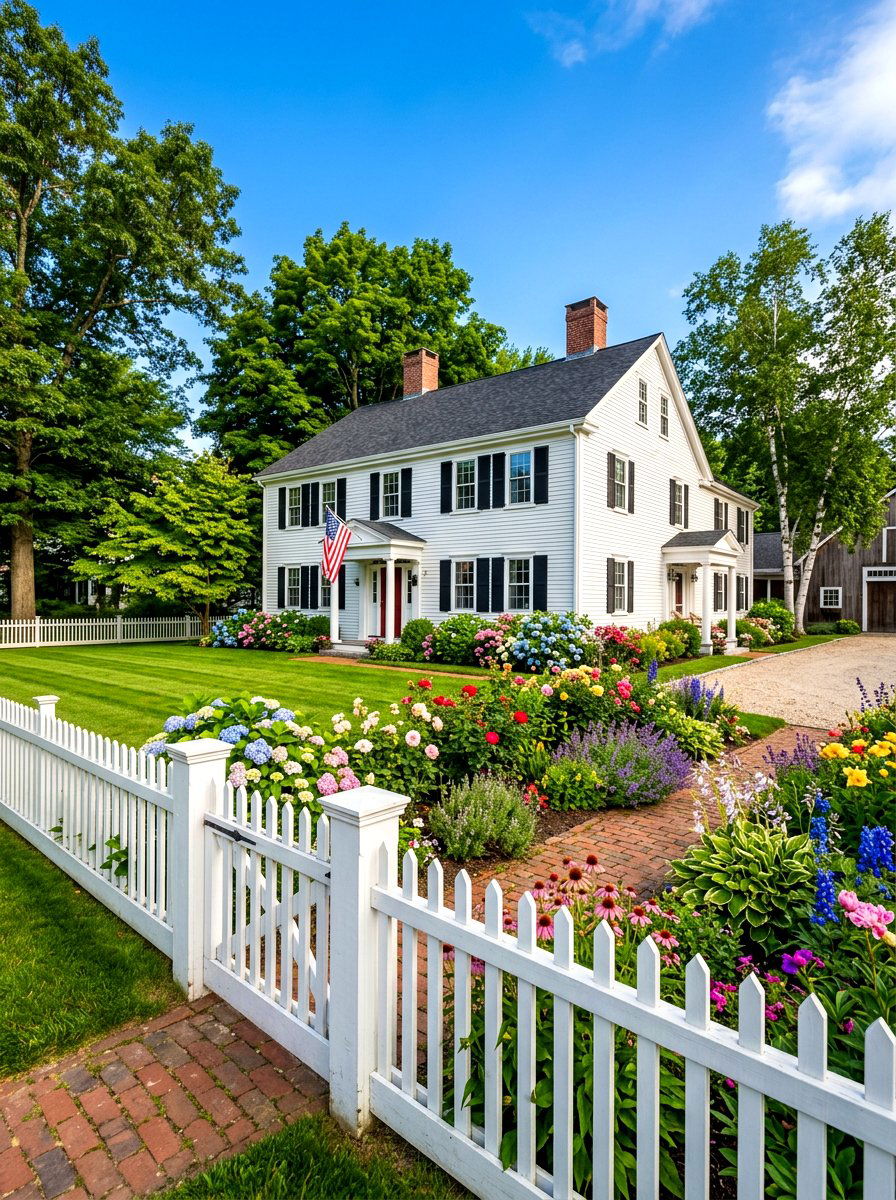
Nothing says "classic Americana" like a white picket fence surrounding a colonial home. This charming boundary adds a layer of curb appeal while defining the property line in a friendly and open way. The clean white lines of the fence echo the trim of the house, creating a unified look across the entire yard. It provides a perfect backdrop for a colorful perennial garden or a row of climbing roses. Whether you choose a traditional pointed picket or a more decorative scalloped design, the fence adds a sense of nostalgia and hominess. It is a simple addition that makes any colonial house feel like a dream home.
26. Outdoor Lantern Lighting
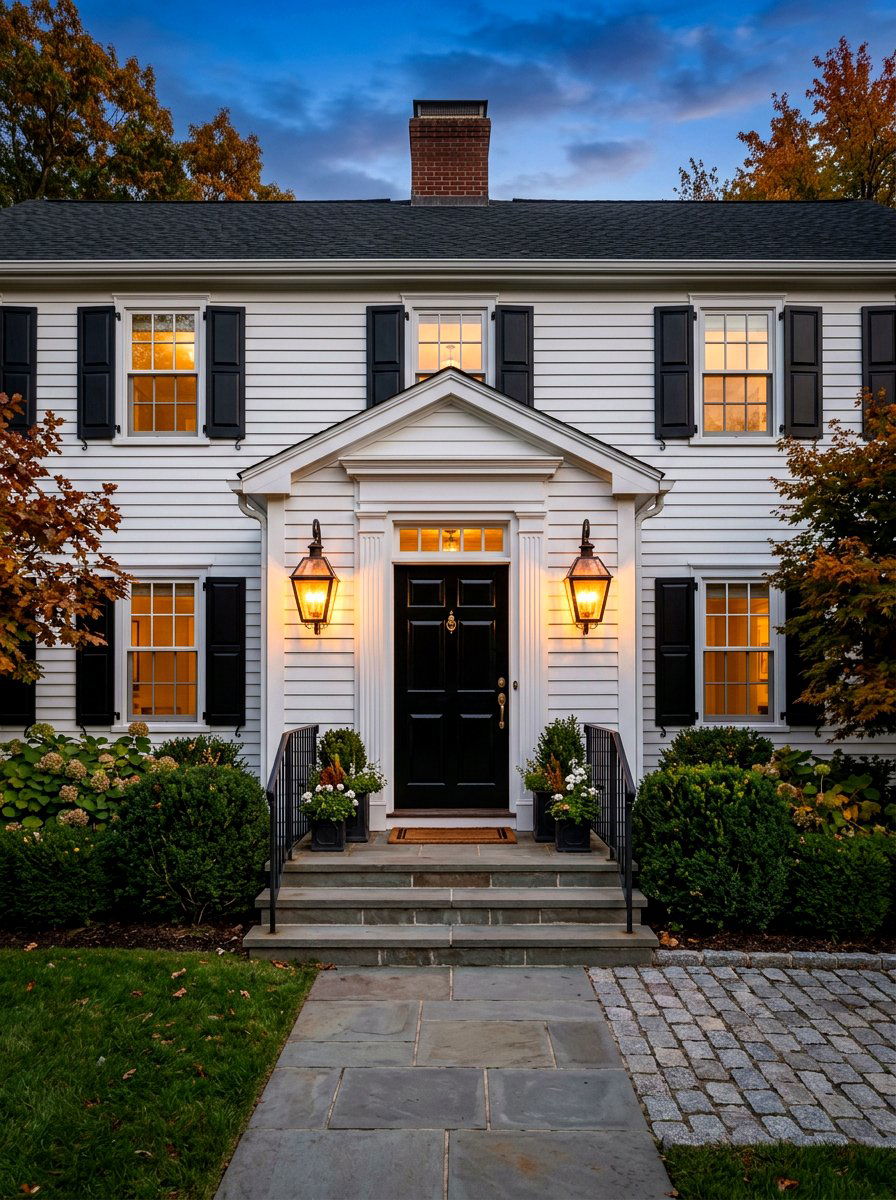
Lantern-style lighting is the most appropriate choice for a colonial exterior, providing a warm and welcoming glow after the sun goes down. These fixtures are often made of iron, brass, or copper and are mounted on either side of the front door. Choosing a size that is in proportion to the door and portico is key for maintaining the home's balance. Gas-style flickering LED bulbs can add an extra layer of historic authenticity without the maintenance of real gas lines. These lights not only provide essential safety but also highlight the architectural features of the entrance, making the home look beautiful and secure at night.
27. Stone Accent Walls
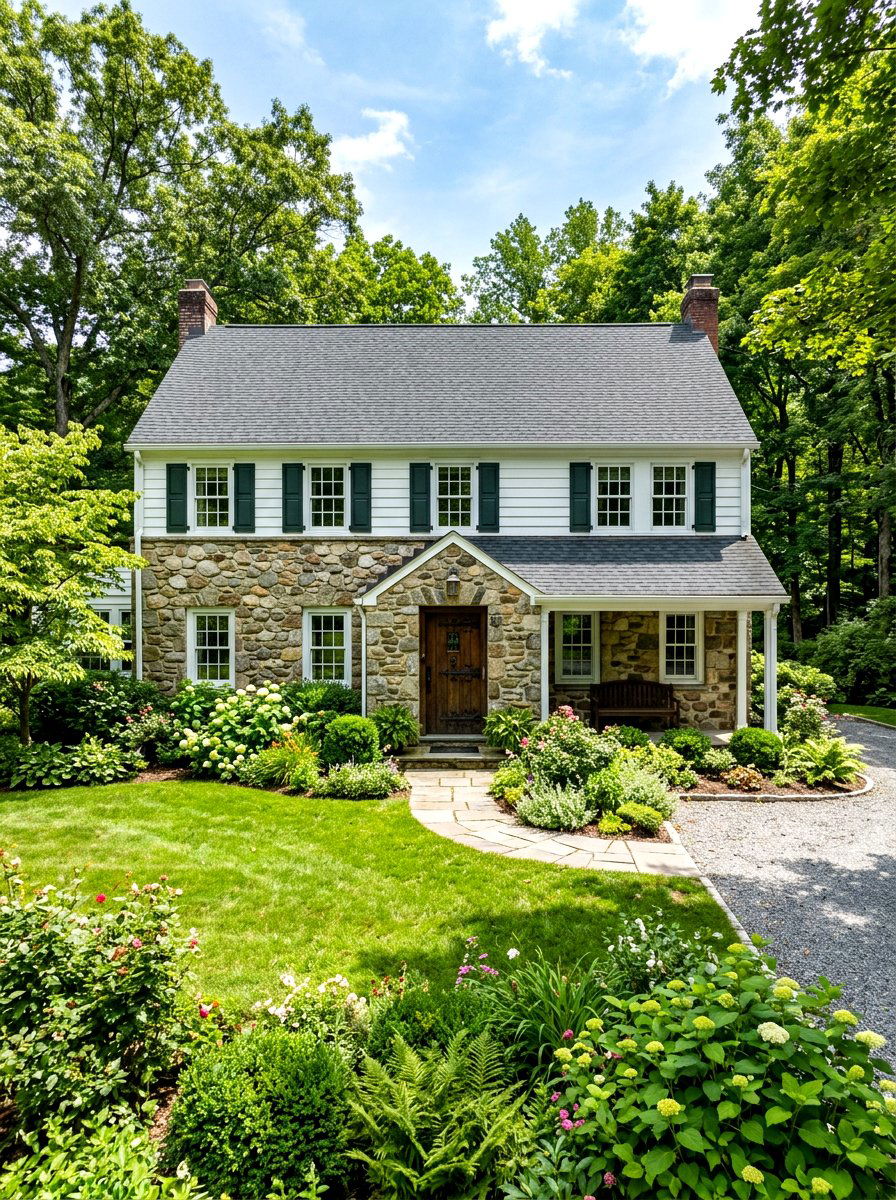
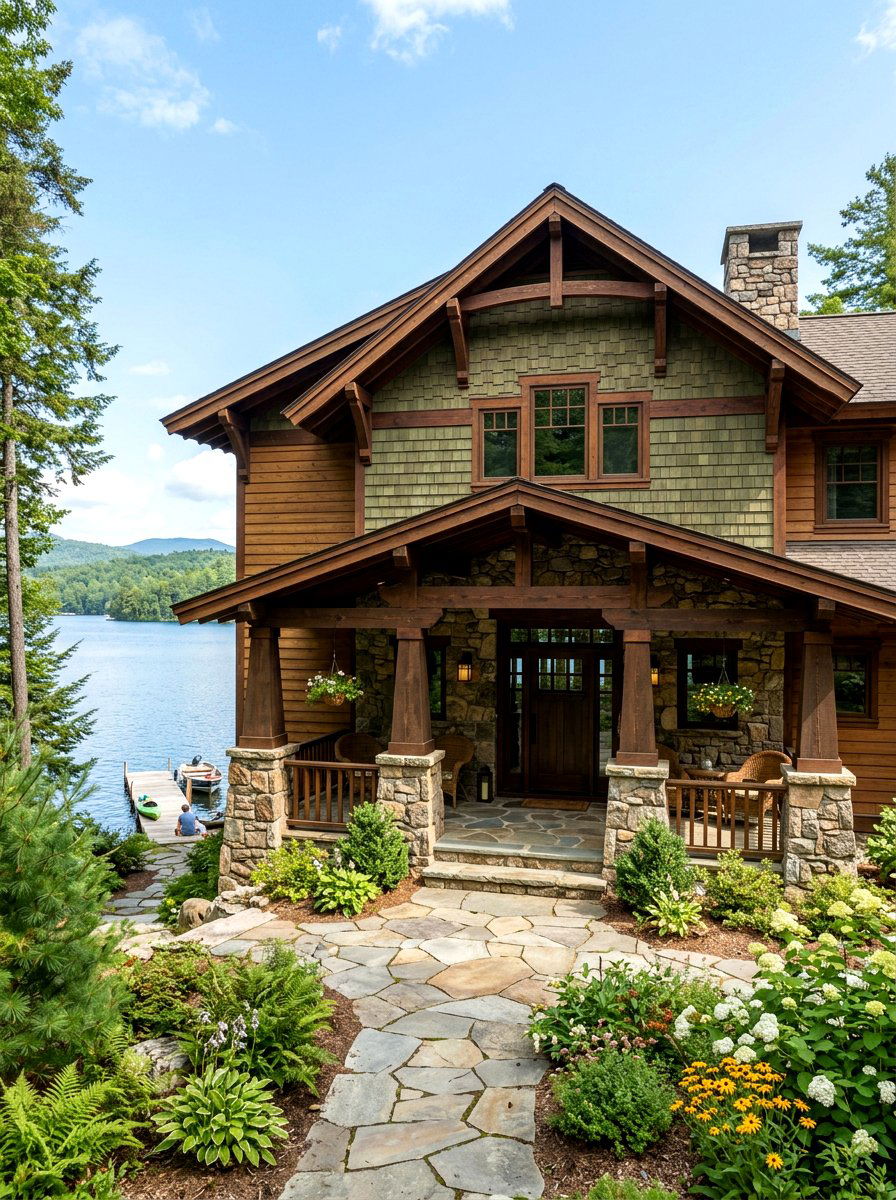
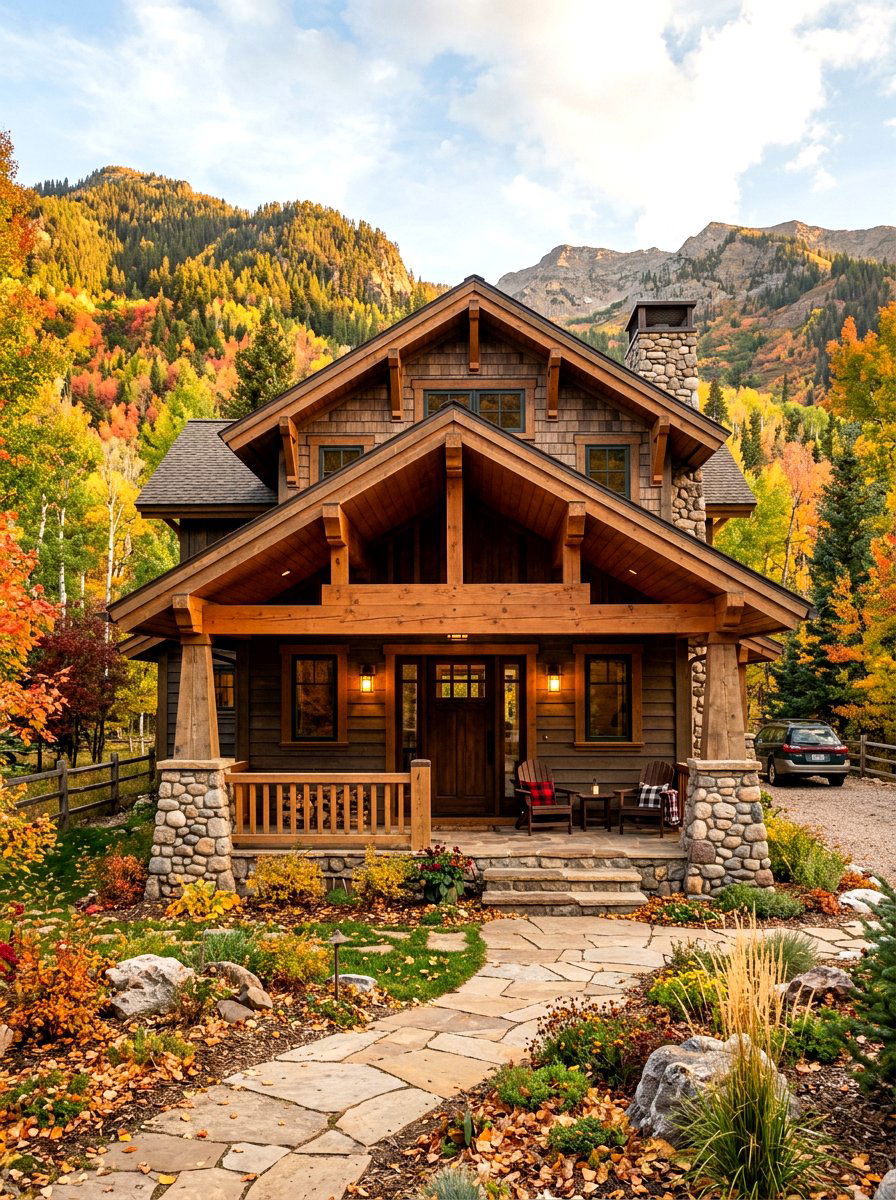
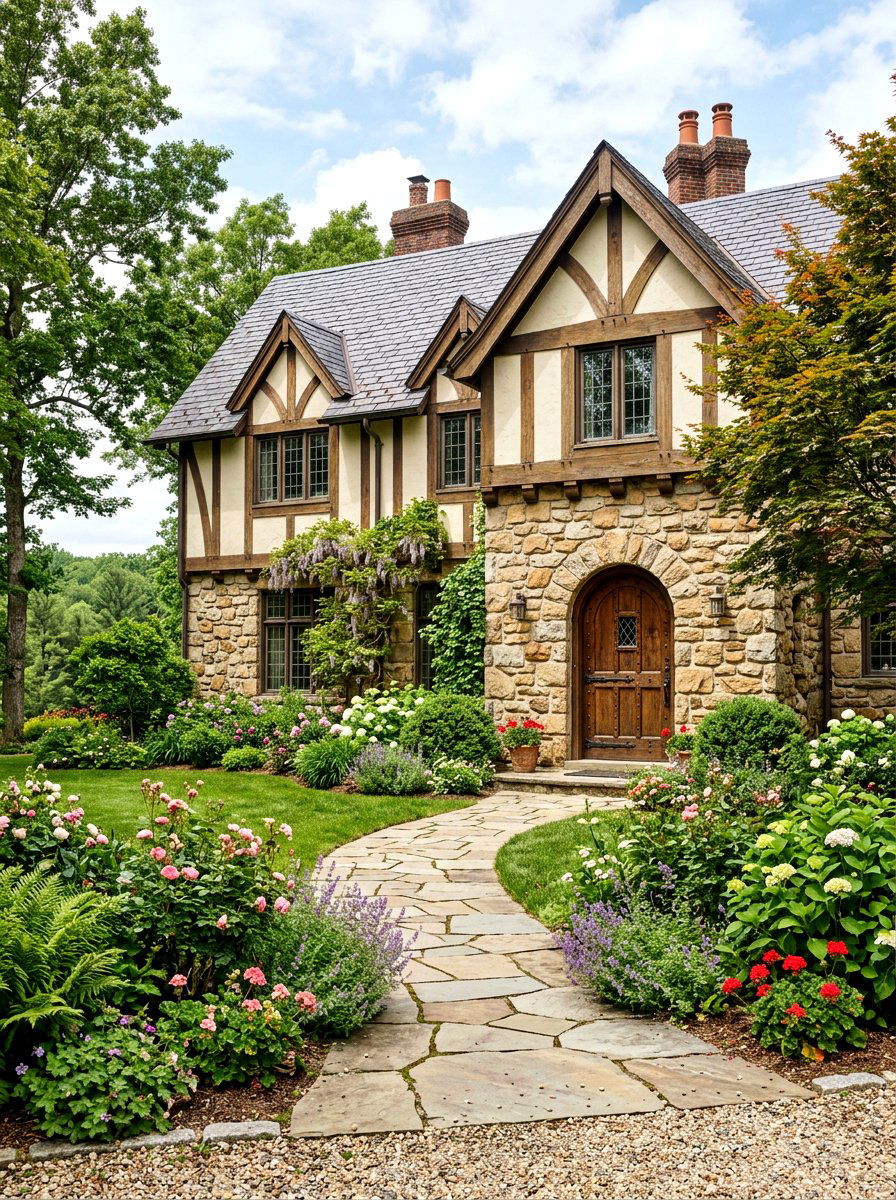
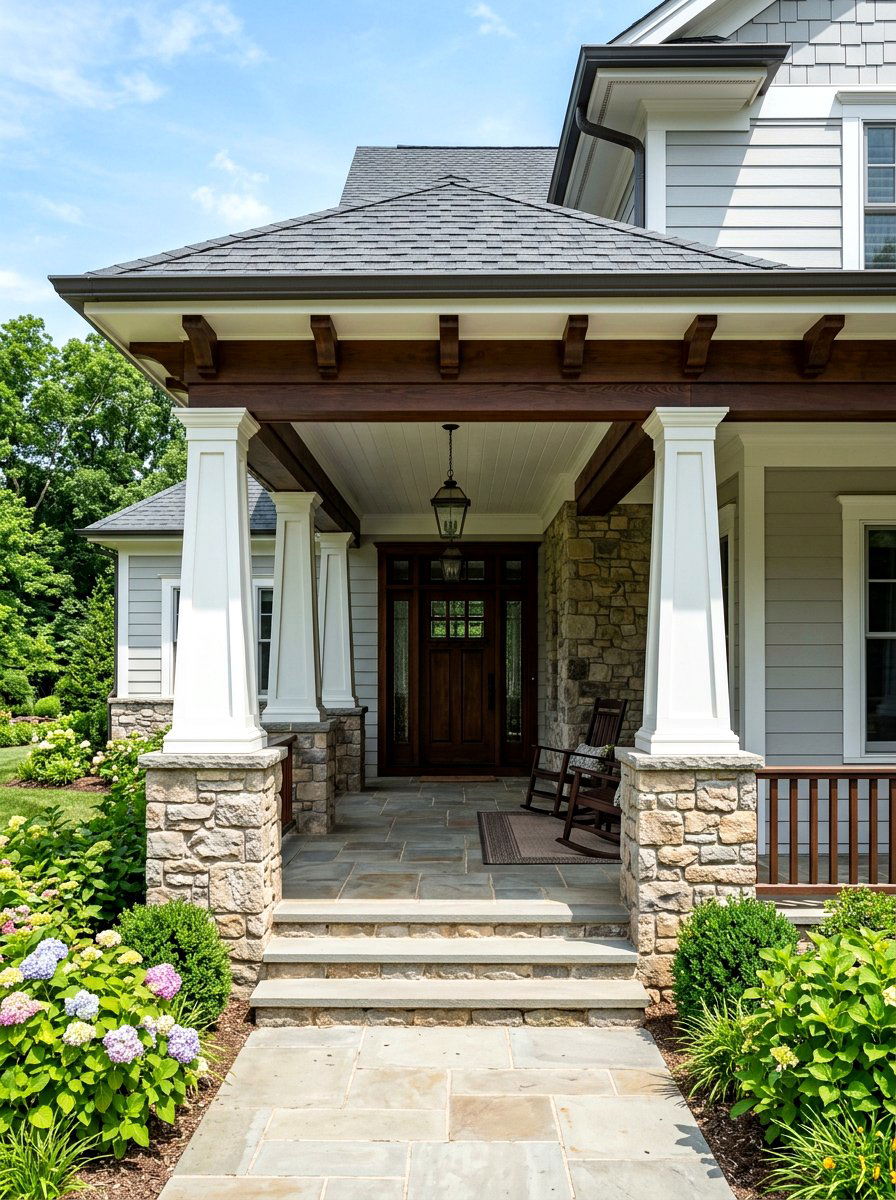
Incorporating stone into a colonial exterior adds a layer of texture and natural beauty that contrasts perfectly with smooth siding. This might involve a full stone facade on the first floor or stone veneer accents on the chimney and foundation. Using locally sourced stone ensures that the home feels grounded and connected to its environment. The varying shapes and colors of the stone provide a rich, organic feel that breaks up the formality of the symmetrical design. When paired with heavy wooden doors and dark trim, stone elements create a look that is rugged, historic, and incredibly high-end. It is a very durable choice.
28. Sage Green Exterior
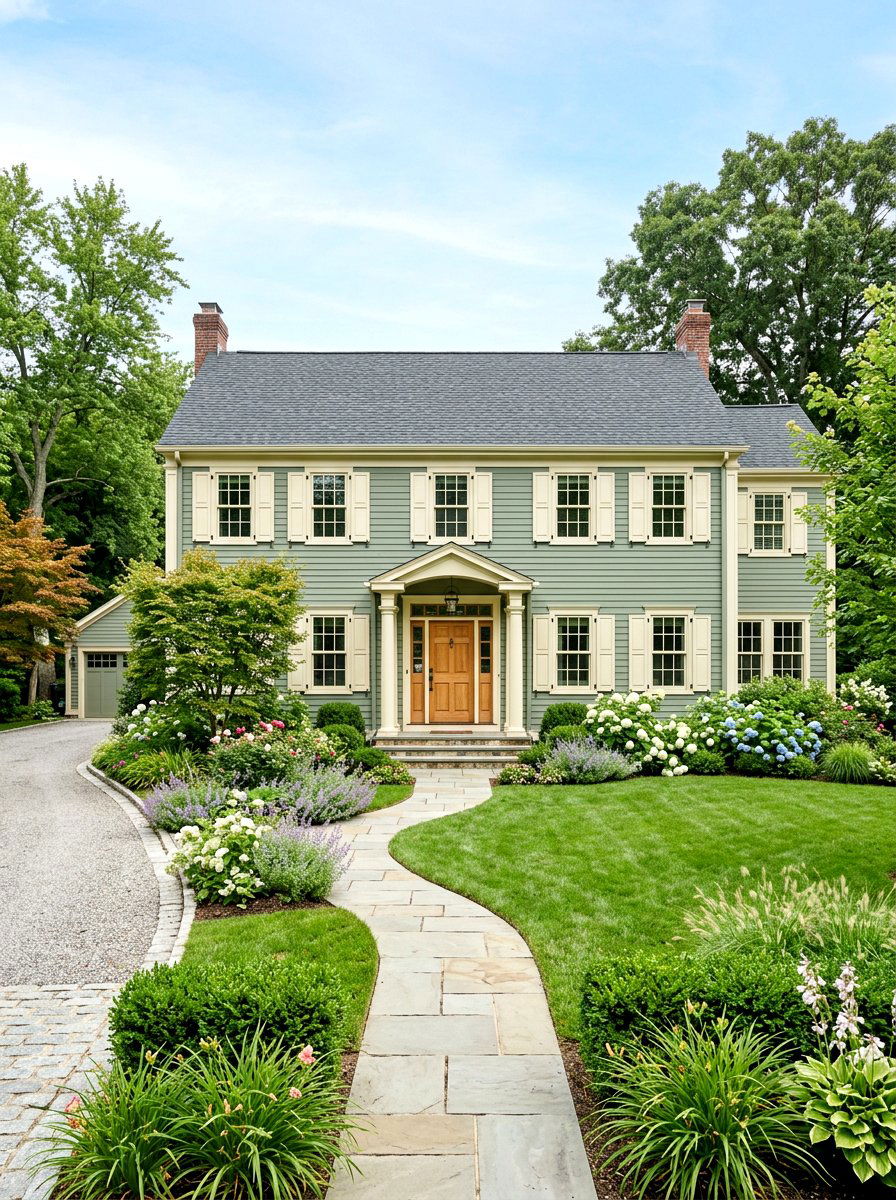
Sage green is a popular "historic" color that feels soft, natural, and incredibly inviting on a colonial home. This muted shade of green blends beautifully with the surrounding trees and garden, making the house feel like a part of the landscape. It works exceptionally well with cream or off-white trim, providing a gentler contrast than pure white. Sage green is a versatile color that can look both traditional and modern depending on the accessories and hardware you choose. It is a fantastic option for those who want a colorful home that still feels understated and sophisticated. It brings a sense of tranquility and peace to the facade.
29. Wraparound Porch Style
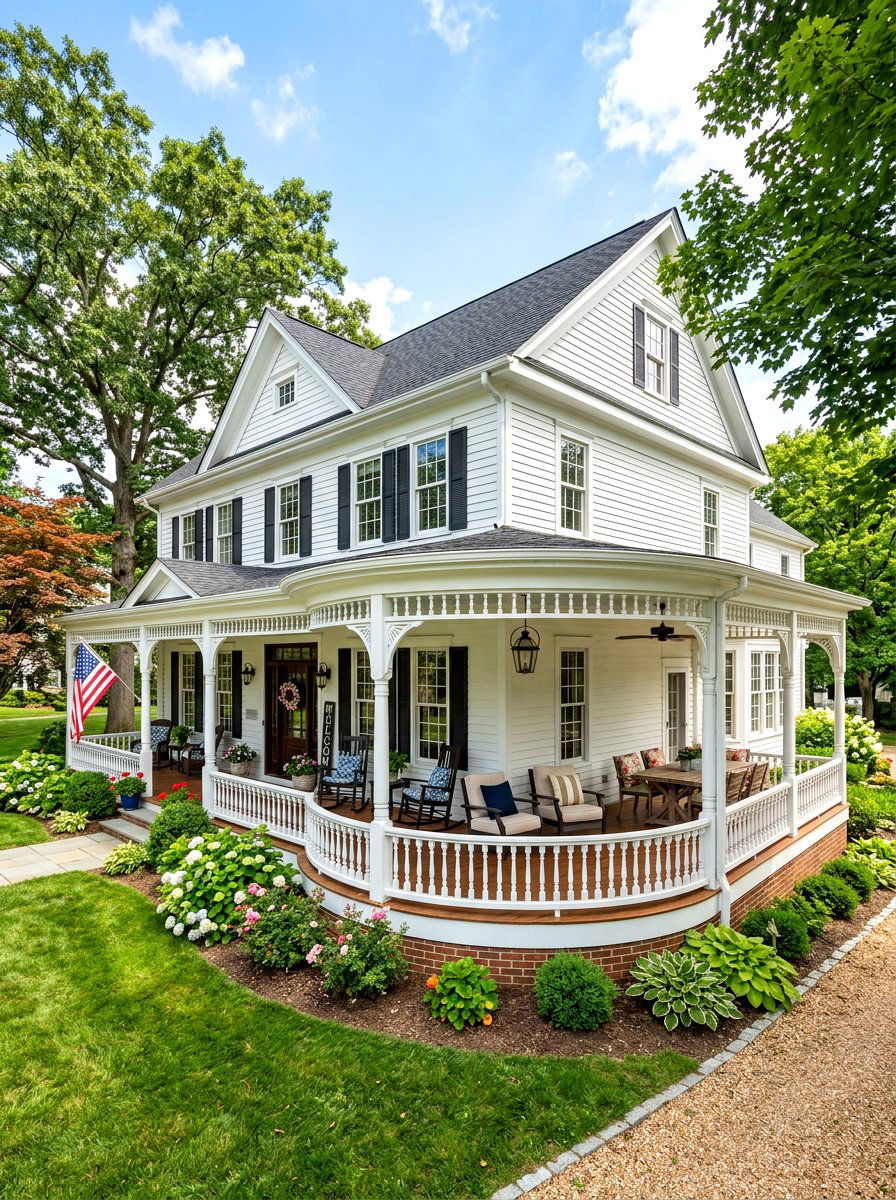
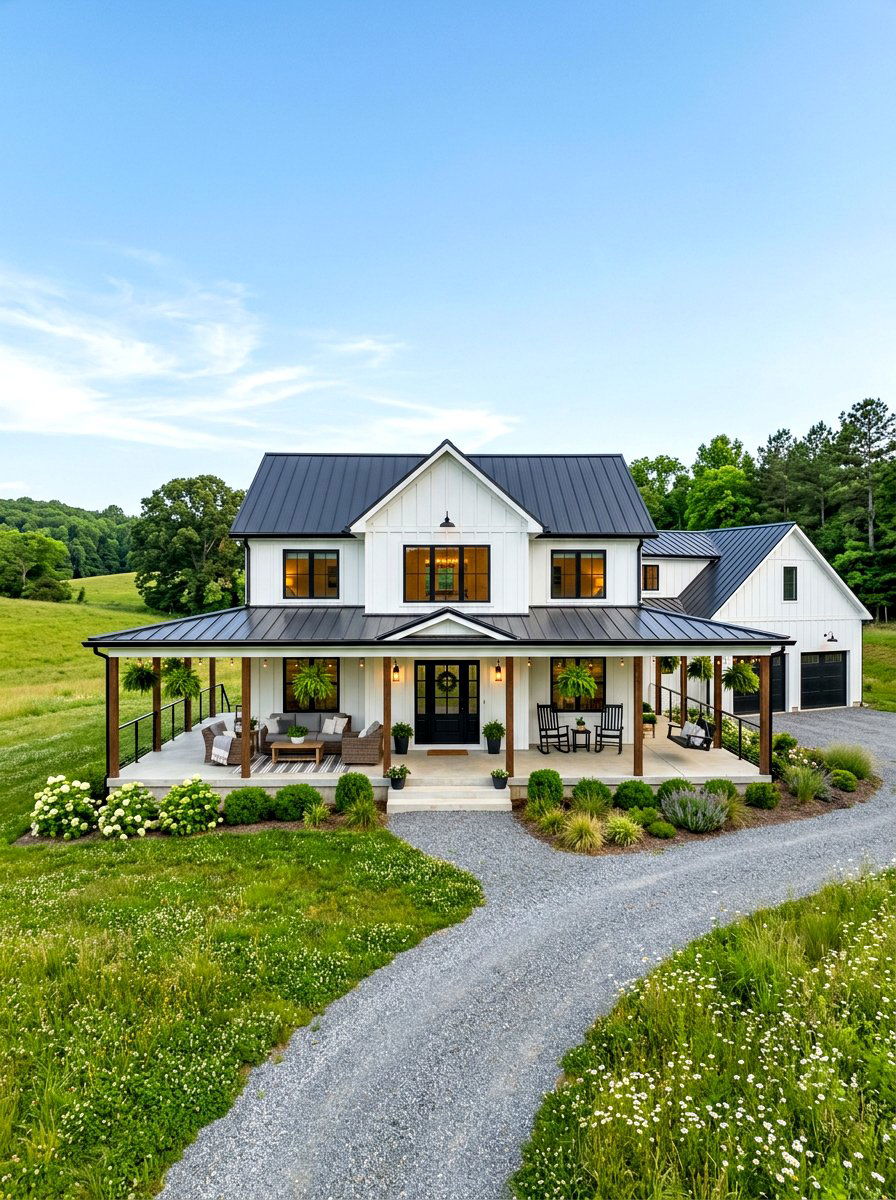
A wraparound porch is a luxurious addition that maximizes outdoor living space and adds significant architectural interest. These porches are common in later colonial styles and Victorian-influenced colonials. They provide multiple areas for seating and dining, allowing you to follow the shade or the sun throughout the day. The continuous roofline of the porch adds a horizontal emphasis that can make a tall house feel more grounded. Using high-quality decking and decorative railings ensures that the porch remains a beautiful and functional part of the home for years. It is an inviting feature that encourages community and relaxation, perfect for a large family.
30. Exterior Chimney Detail
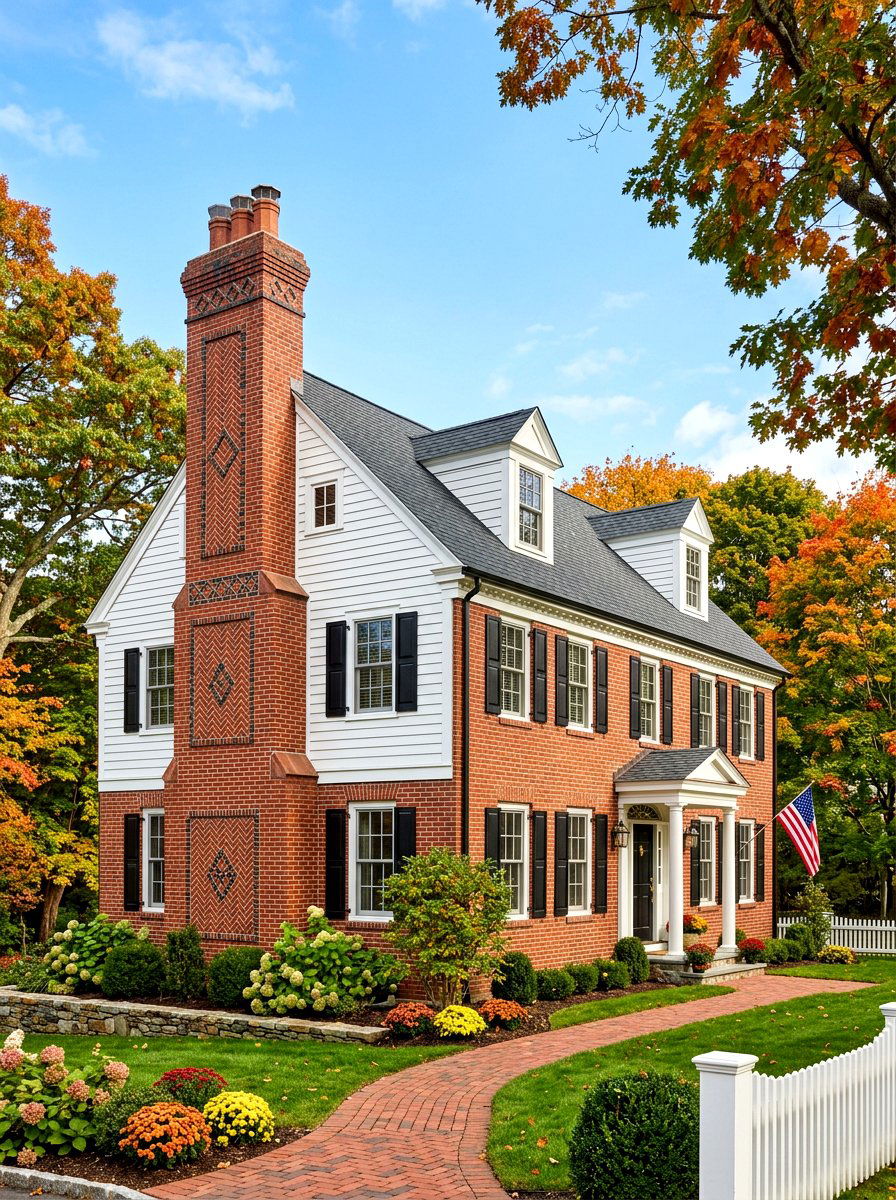
The chimney is often a major architectural feature on a colonial home, positioned either at the ends of the house or in the center. A large, well-crafted brick or stone chimney adds a sense of verticality and strength to the design. In many historic homes, the chimney was a symbol of wealth and warmth, and today it remains a key element of the classic silhouette. Adding a decorative chimney cap or using a unique brick pattern can turn this functional element into a work of art. A visible exterior chimney provides a sense of coziness, hinting at the warm fireplaces and happy gatherings happening inside the home.
Conclusion:
Redesigning or maintaining a colonial house exterior is a rewarding journey that celebrates history, symmetry, and timeless style. By focusing on the core architectural elements — like the iconic shutters, the formal entrance, and the balanced window placement — you can create a home that truly stands out in any neighborhood. Whether you prefer the classic high-contrast look of a white Georgian or the earthy, textured feel of a wood-shingled Cape Cod, there are endless ways to express your personality while honoring tradition. Investing in high-quality materials and thoughtful details ensures that your home will remain beautiful, functional, and prestigious for many generations to come.

Related posts: