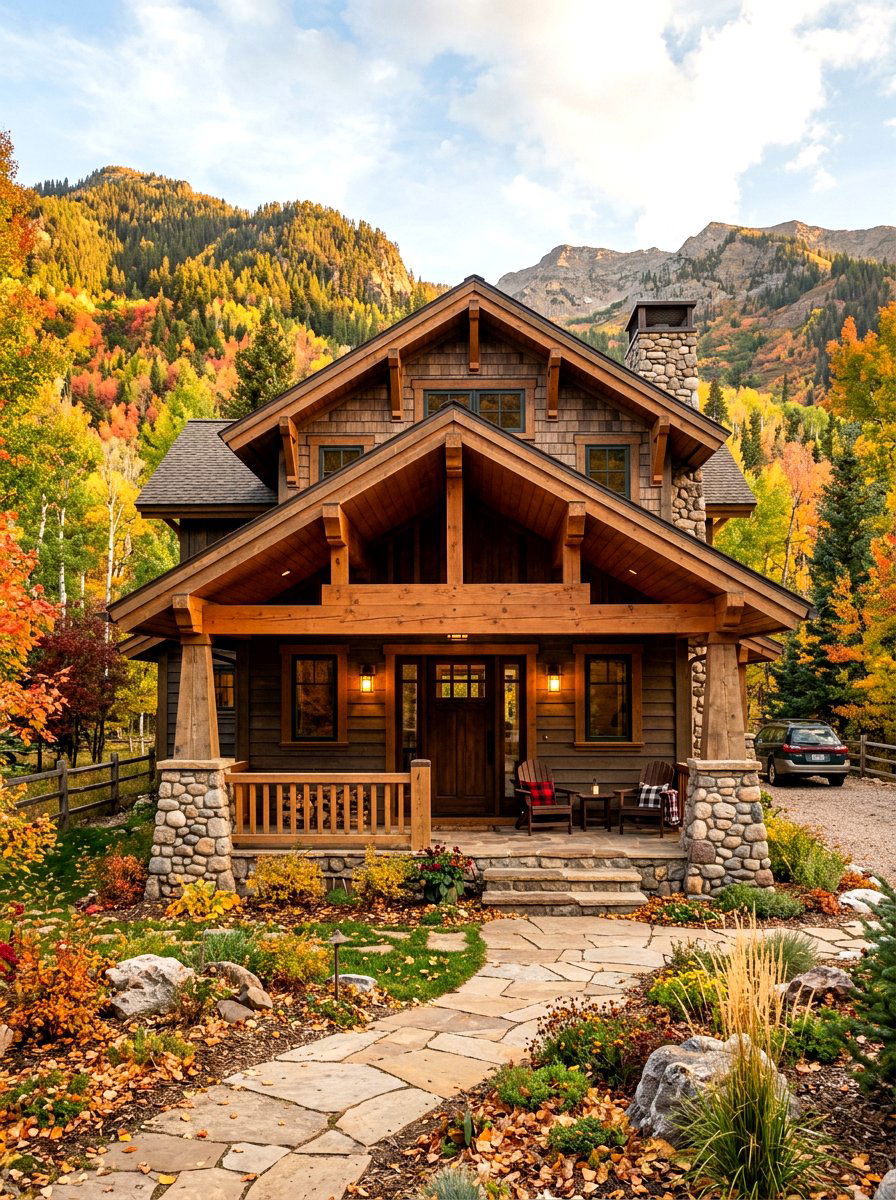
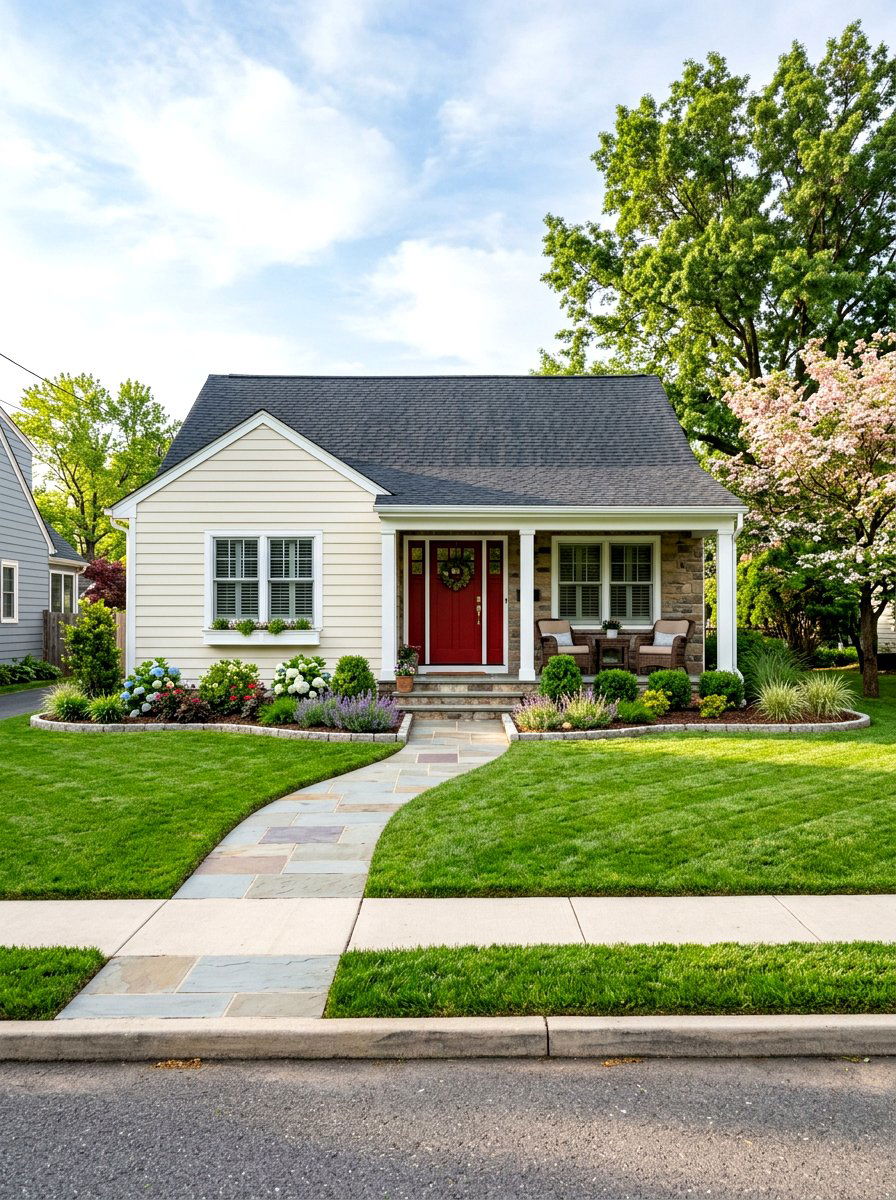
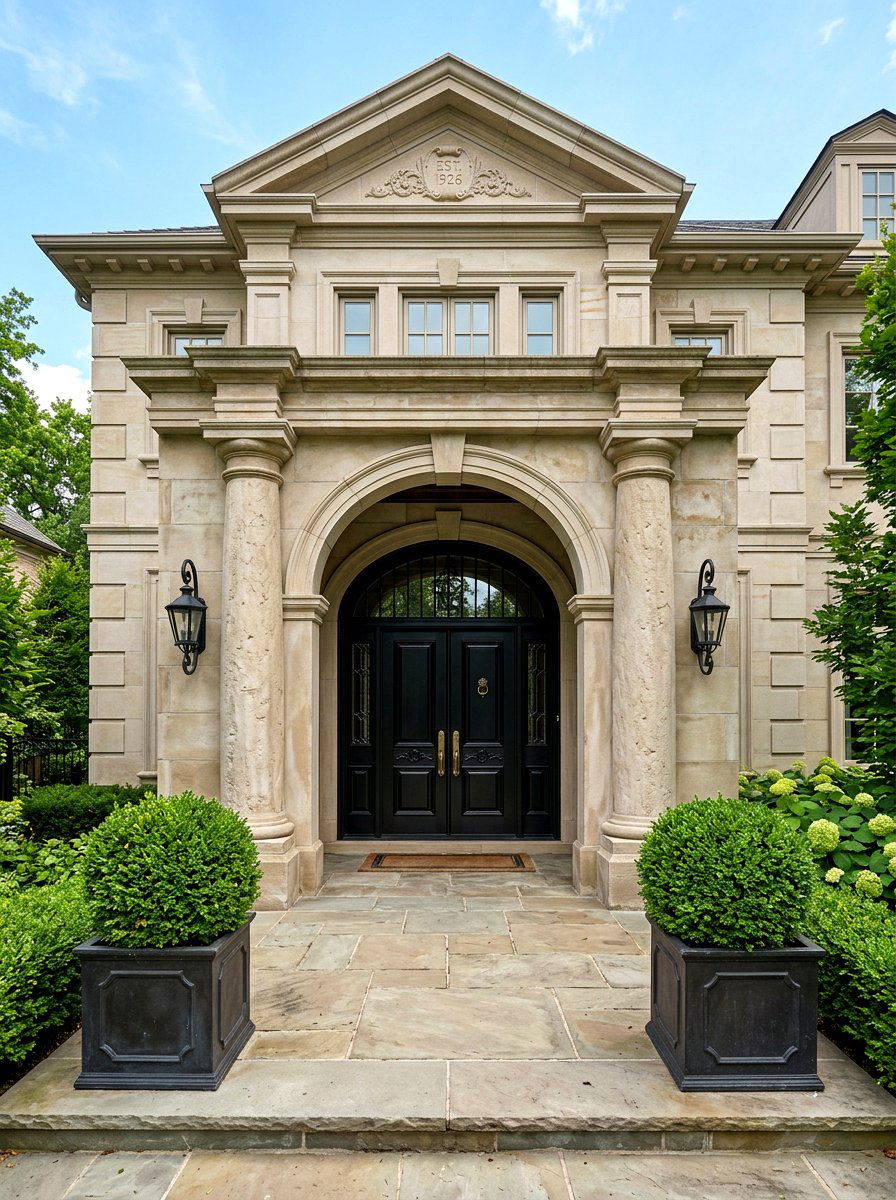
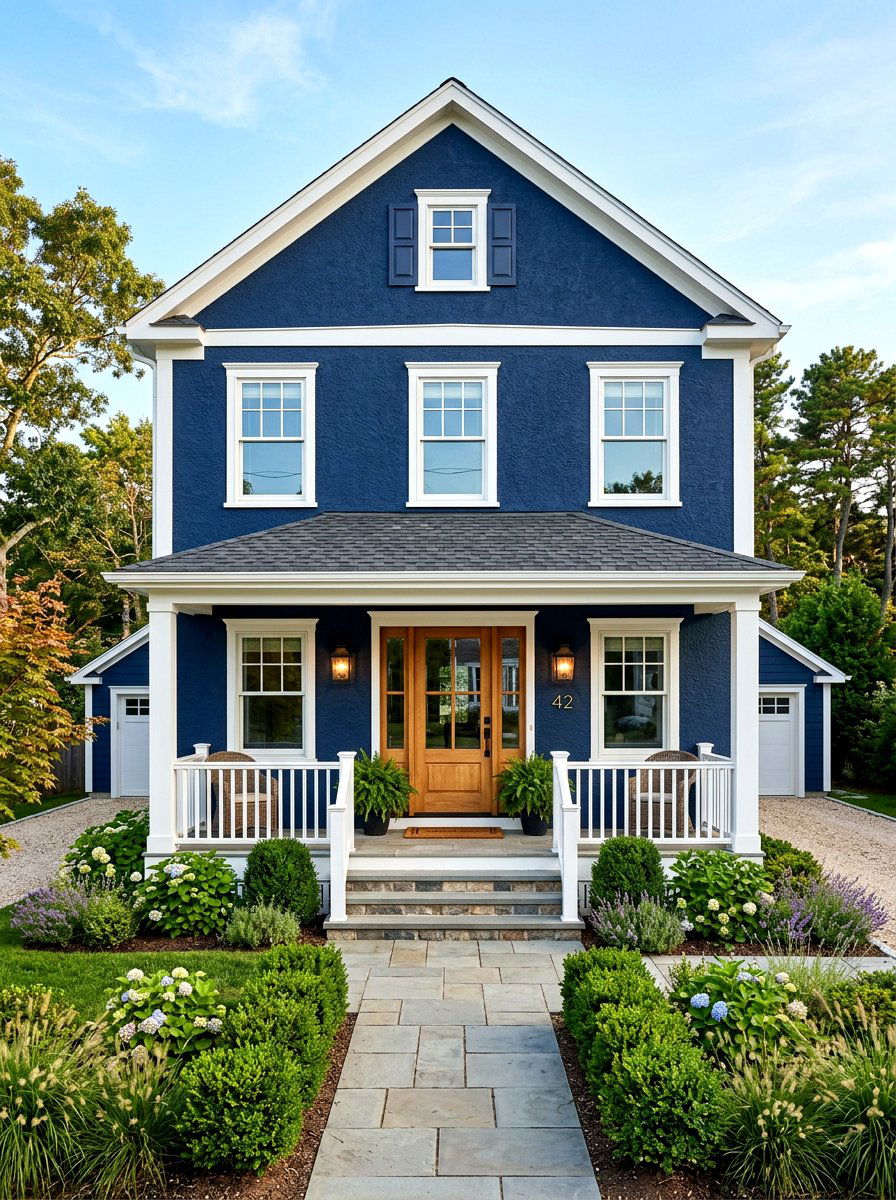
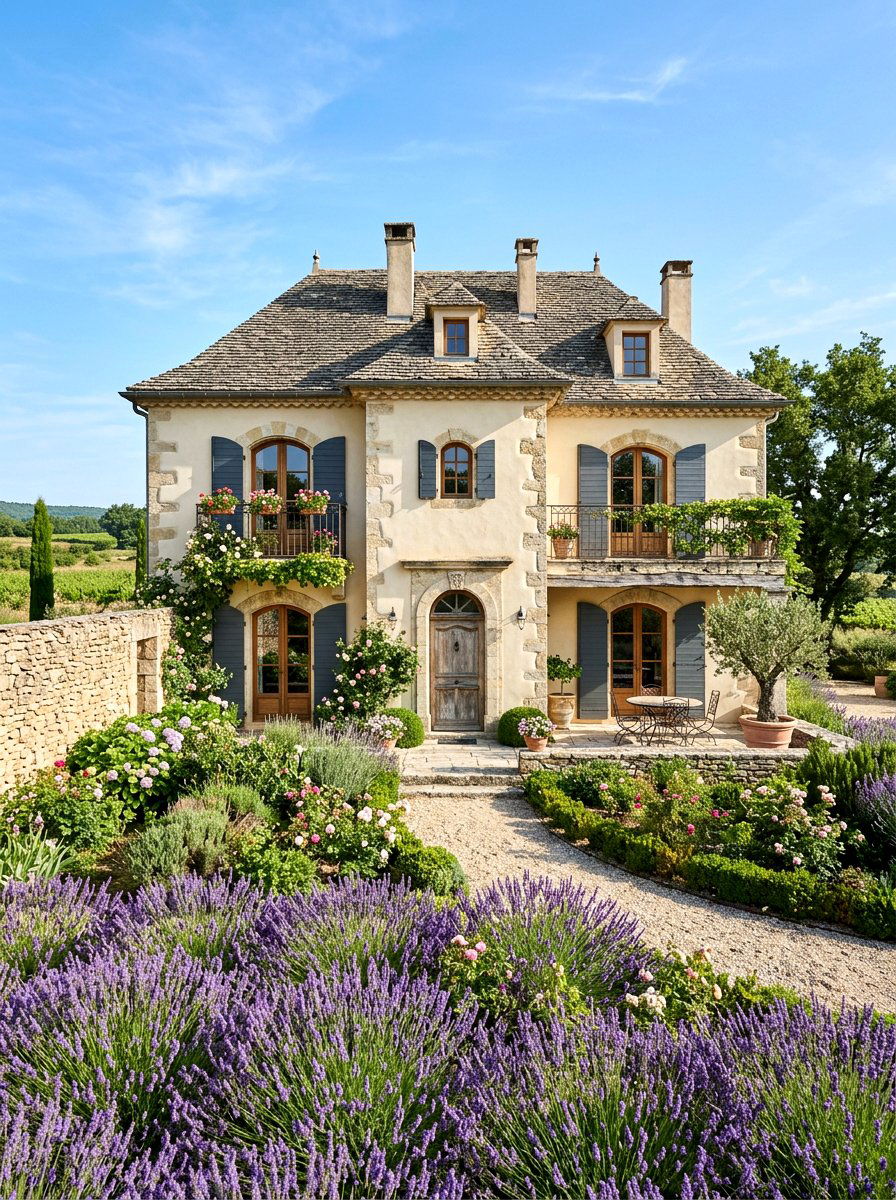
Stepping into the world of Tudor house exteriors feels like walking through a timeless storybook filled with character and architectural depth. These homes are famous for their steeply pitched roofs, decorative half-timbering, and beautiful masonry that makes them stand out in any neighborhood. Whether you are looking for a traditional English cottage feel or a sleek modern update, the Tudor style offers incredible versatility and charm. This guide explores thirty unique ways to enhance a Tudor facade, focusing on material combinations, color palettes, and iconic structural details. Discover how to blend historic elegance with contemporary trends to create a home that looks both classic and welcoming for years to come.
1. Modern Tudor House
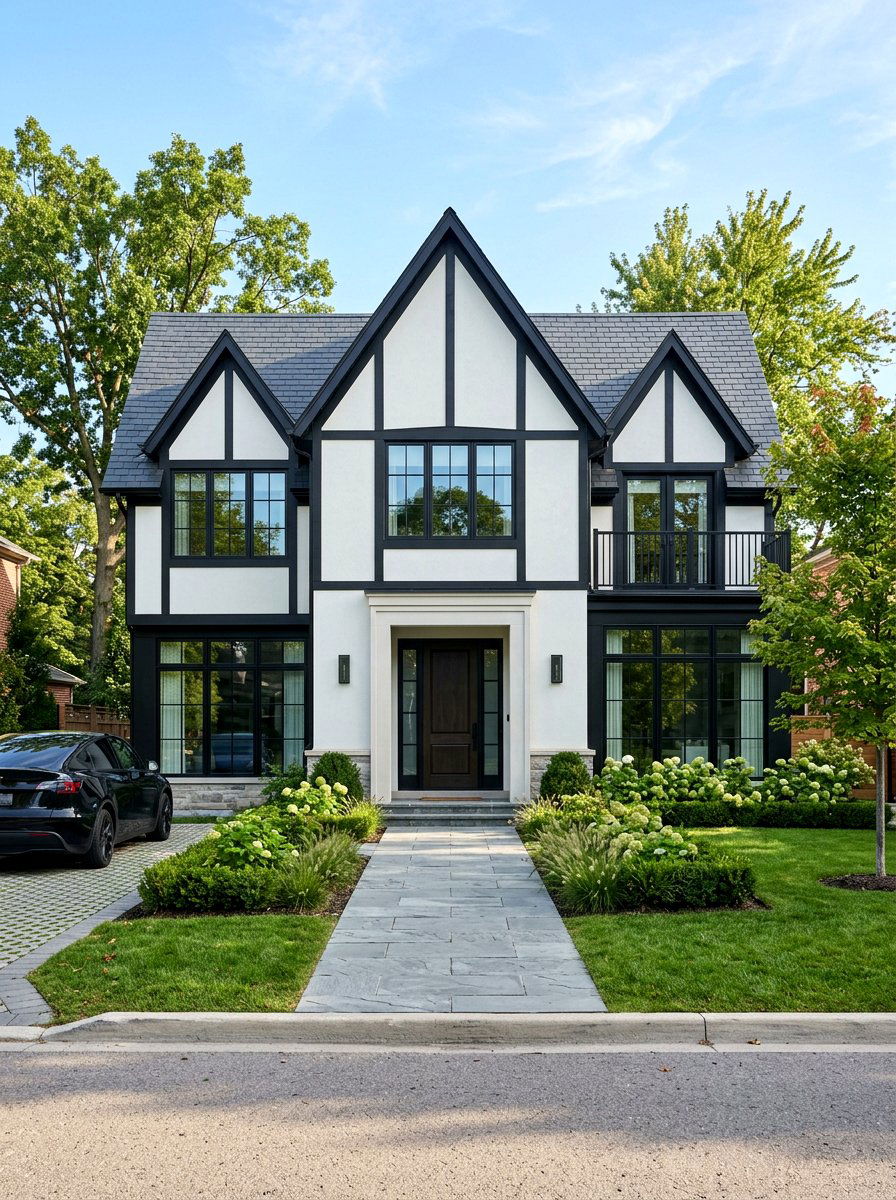
The modern Tudor house takes the classic elements of centuries-old design and gives them a very fresh update for today. You will often see these homes featuring a high-contrast color palette, such as crisp white stucco paired with deep black trim. Instead of the very busy timber patterns of the past, modern versions use cleaner lines and more simplified shapes to create a minimalist look. This style focuses heavily on large windows that let in plenty of natural light while still maintaining the iconic steep gables. It is a perfect choice for homeowners who love the historic silhouette but want a much more sophisticated and contemporary feel for their property.
2. White Painted Brick Tudor
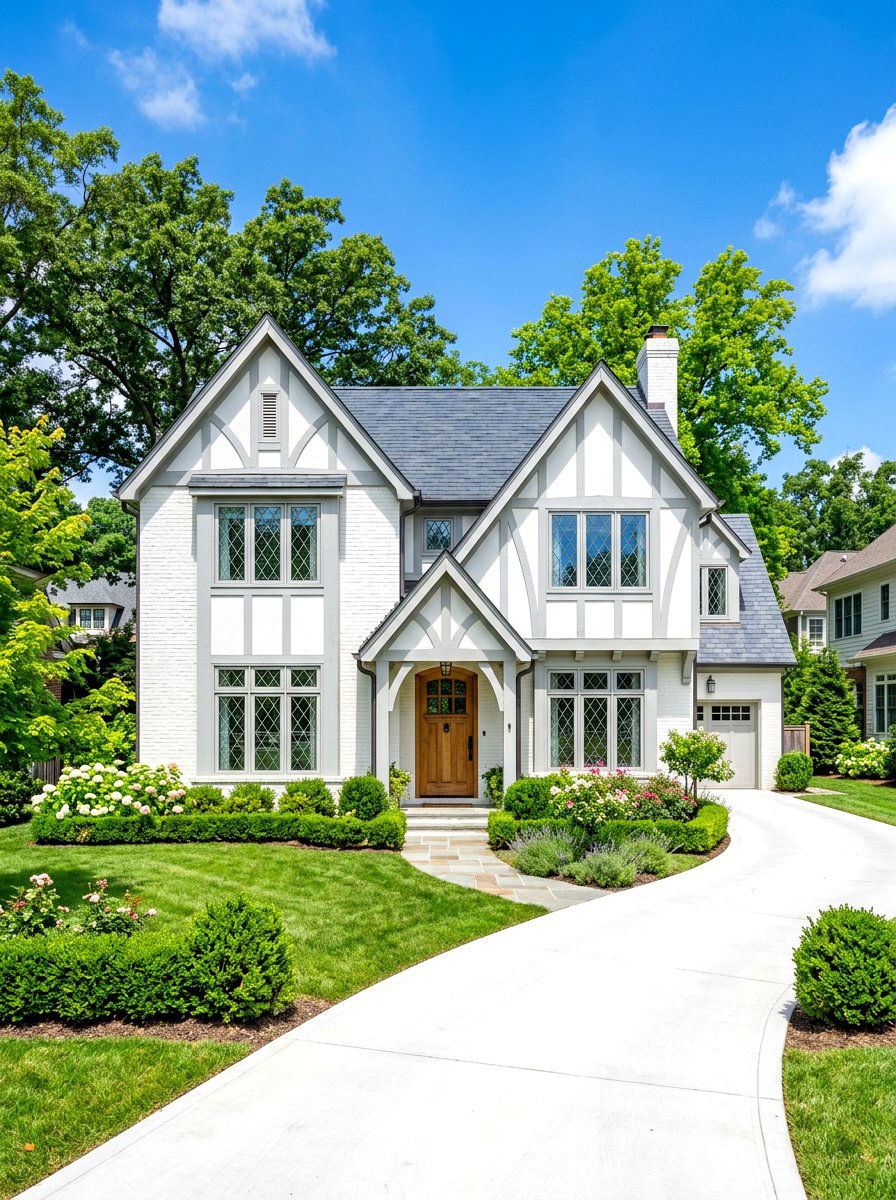
A white painted brick Tudor house creates a soft and ethereal look that stands out beautifully in any modern neighborhood. Many people choose to lime wash or paint their traditional red brick to give the home a brighter and more cohesive appearance. This technique helps to highlight the unique textures of the masonry without the visual weight of dark red or brown tones. Pairing white brick with light gray or natural wood trim can make the home feel very airy and welcoming. It is a fantastic way to modernize an older home while still respecting the original craftsmanship and the sturdy architectural bones of the traditional Tudor structure.
3. Traditional Dark Timbering
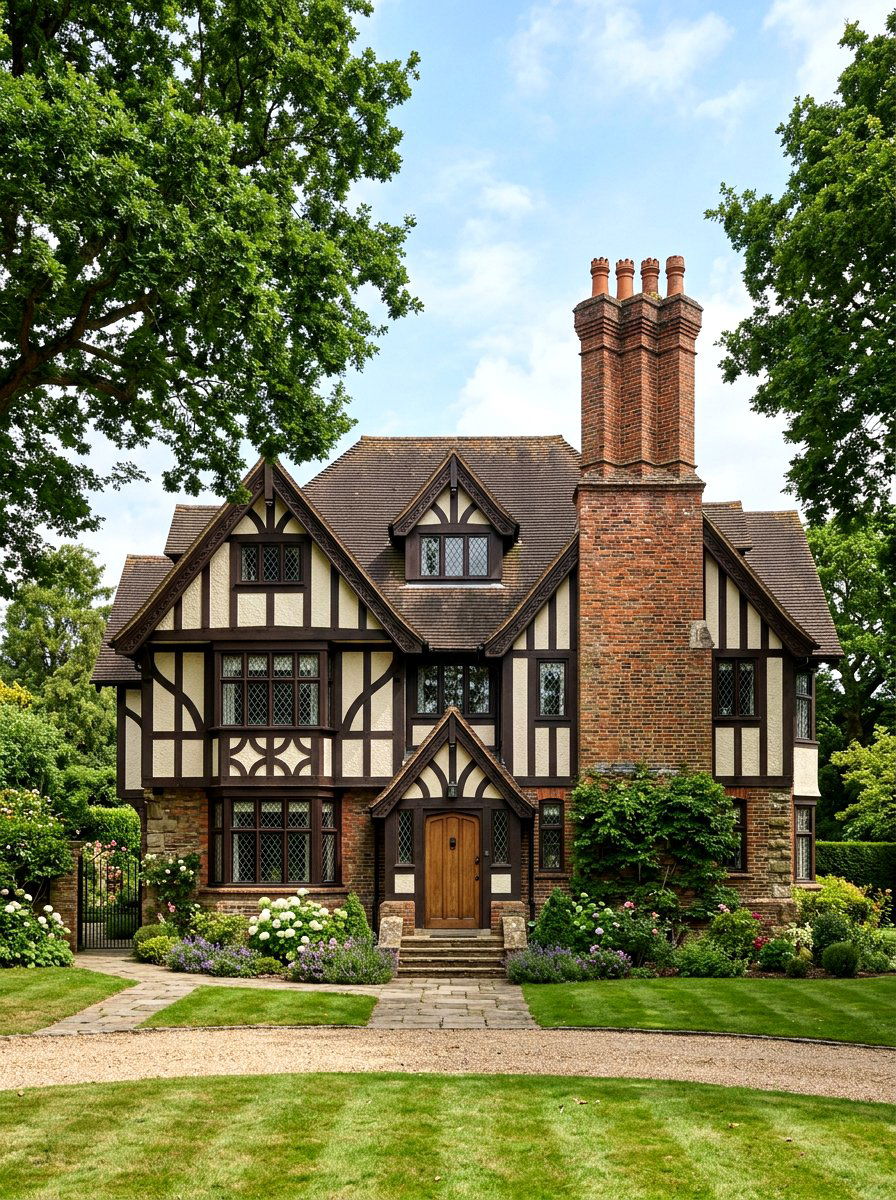
Traditional dark timbering is perhaps the most recognizable feature of the Tudor style and it adds incredible visual contrast to the facade. These dark brown or black wooden beams are typically set against a light cream or white stucco background to create a striking geometric pattern. This design element mimics the look of historic medieval framing where the structural wood was left exposed for everyone to see. Using dark timber helps to ground the house and gives it a very grounded and established feeling. It works exceptionally well on larger homes where the patterns can be spread across multiple gables and dormers for a truly authentic English look.
4. Natural Stone Exterior
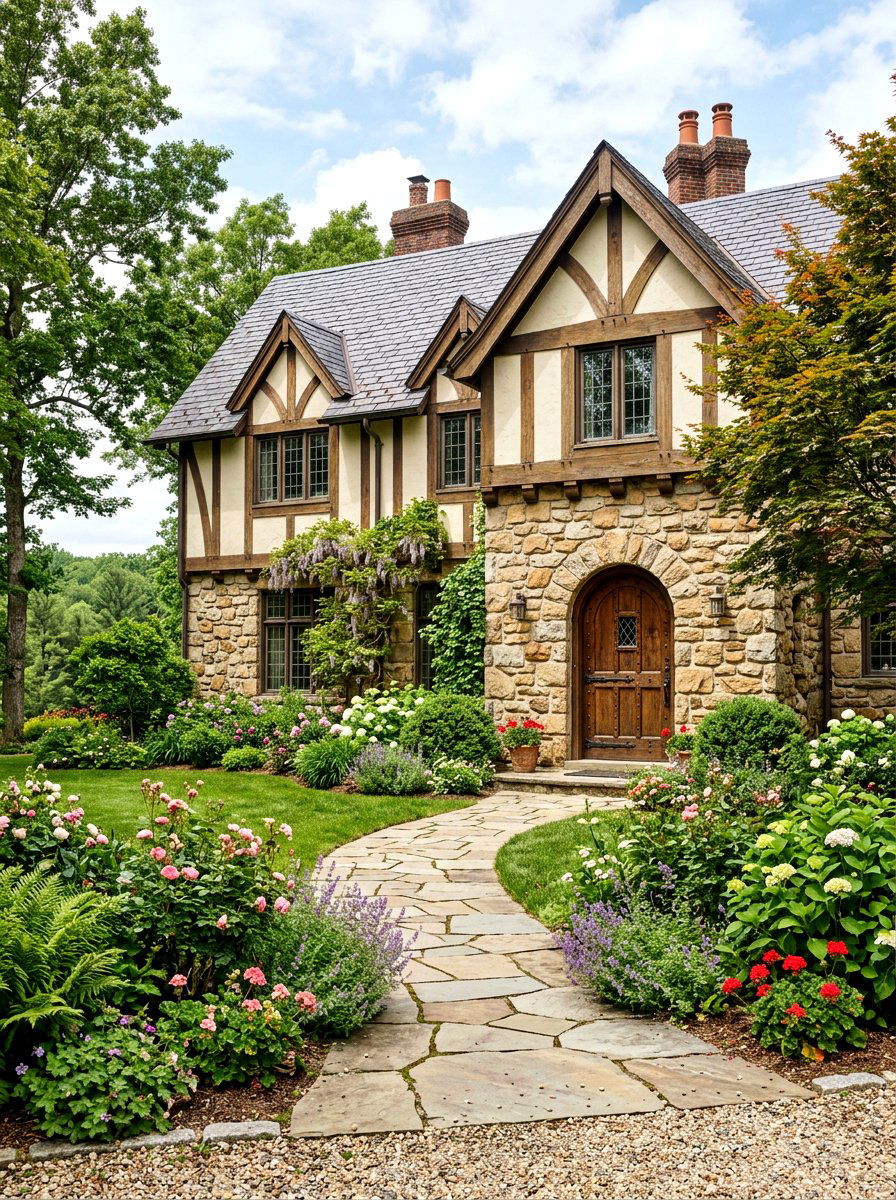
Incorporating a natural stone exterior into your Tudor design adds a layer of rugged elegance and timelessness that brick simply cannot match. You can use large, irregular stones around the entryway or as a base for the entire first floor to create a sense of history. Stone provides a beautiful variety of earthy colors like tan, gray, and subtle blue that blend seamlessly into a lush landscape. When combined with traditional stucco and timbering, the stone adds a rich texture that makes the house feel like a grand estate. It is a very durable and low-maintenance option that only looks better as it ages over many decades.
5. Steep Pitched Roof
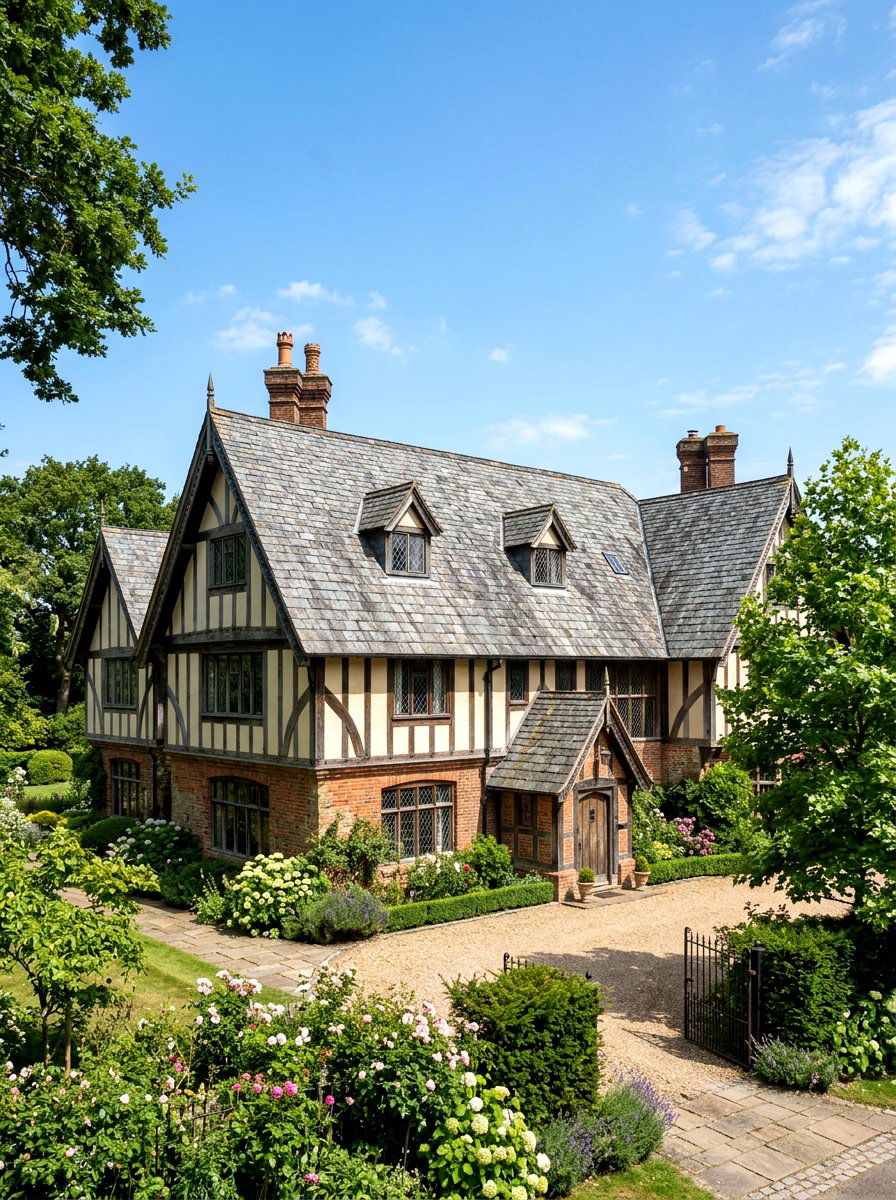
The steep pitched roof is a defining characteristic that gives every Tudor home its iconic and very dramatic silhouette. These roofs were originally designed to shed heavy snow and rain in the English countryside, but today they serve as a major design statement. Multiple crossing gables often create a complex and interesting roofline that draws the eye upward and makes the house appear much taller. You can use high-quality materials like slate or textured asphalt shingles to enhance this feature even further. The sharp angles of the roof provide the perfect backdrop for decorative chimneys and narrow windows, completing the classic fairy-tale look that many homeowners love.
6. Diamond Leaded Windows
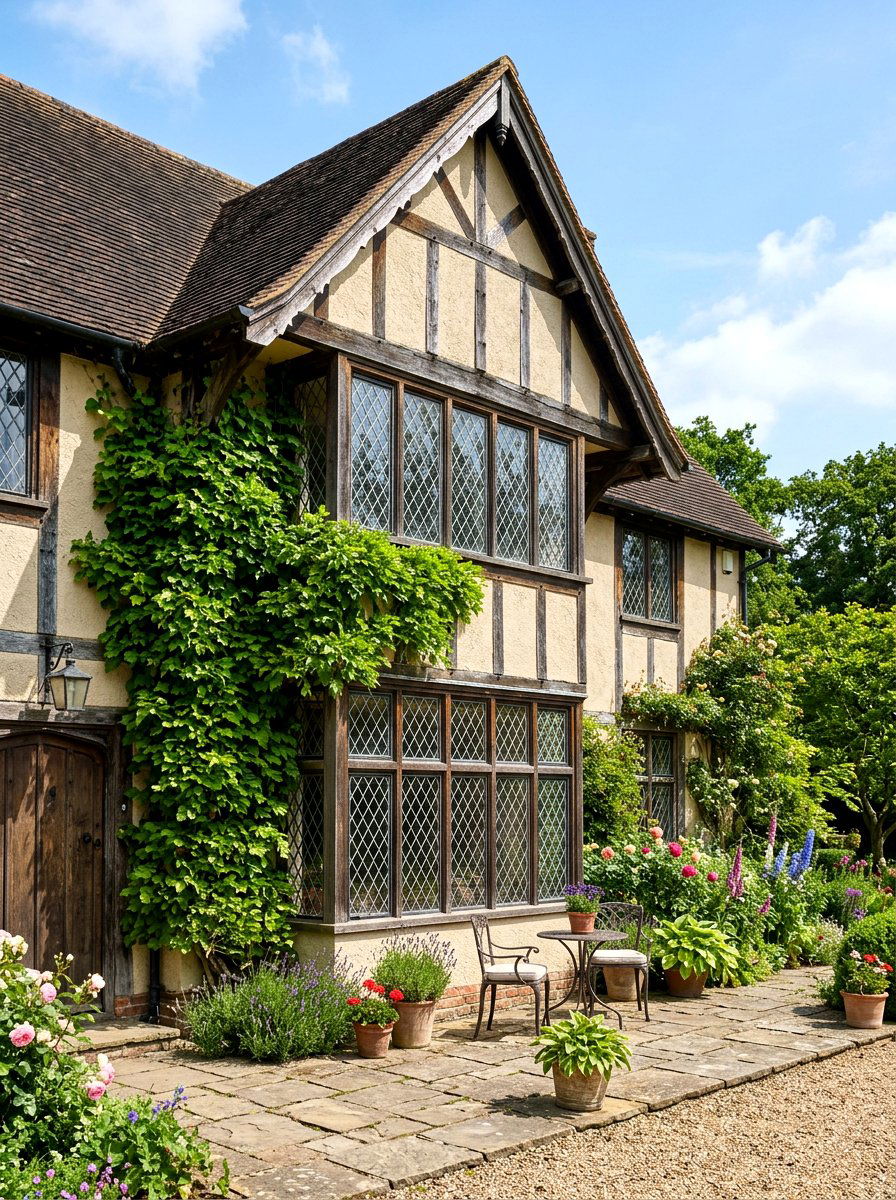
Diamond leaded windows are a small but very powerful detail that can instantly transport a home back to the classic Tudor era. These windows feature thin strips of lead that hold small panes of glass in a distinctive crisscross or diamond pattern. They add a great deal of texture and visual interest to the exterior without being overly distracting. You will often see these windows used in groups of three or four to create a large focal point on the front of the house. Even when using modern energy-efficient glass, adding the leaded grid look can maintain the historic integrity and charm of your beautiful Tudor style home.
7. Rounded Arch Entryway
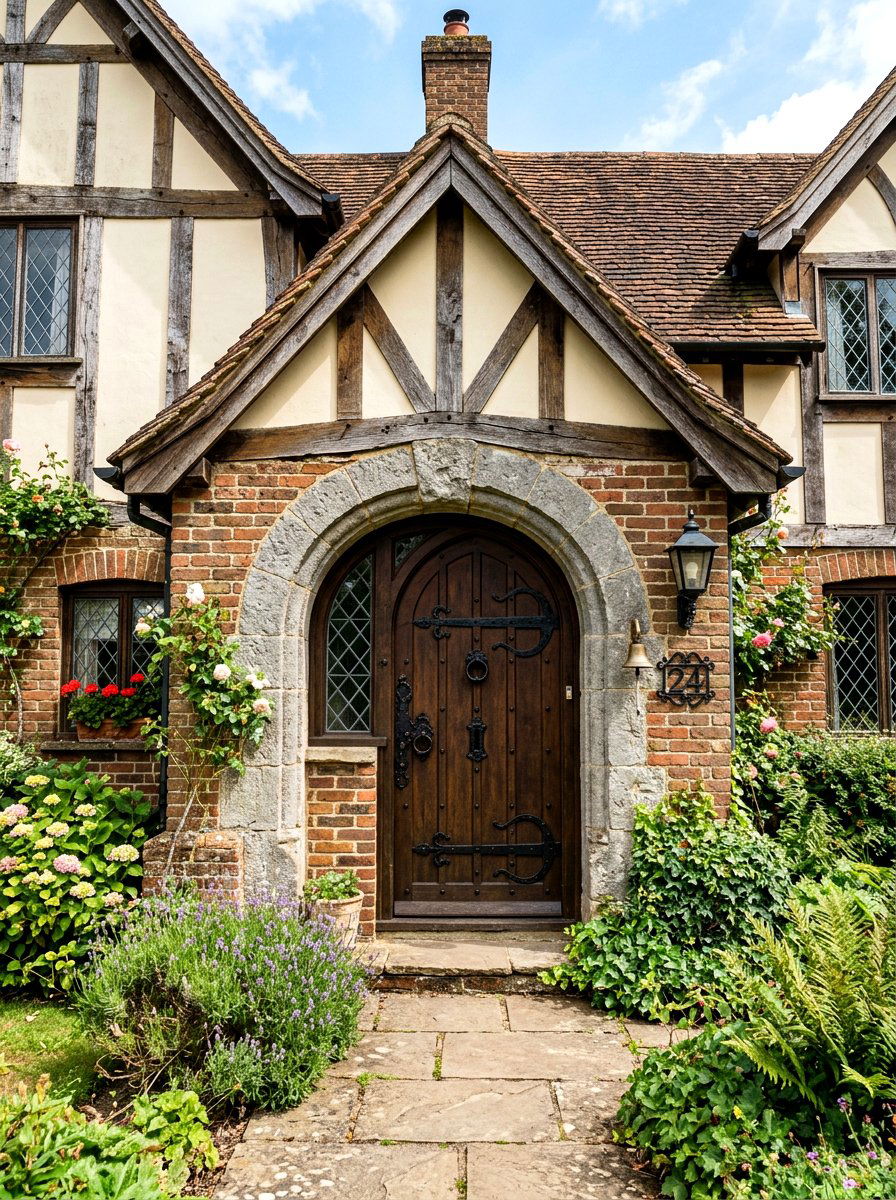
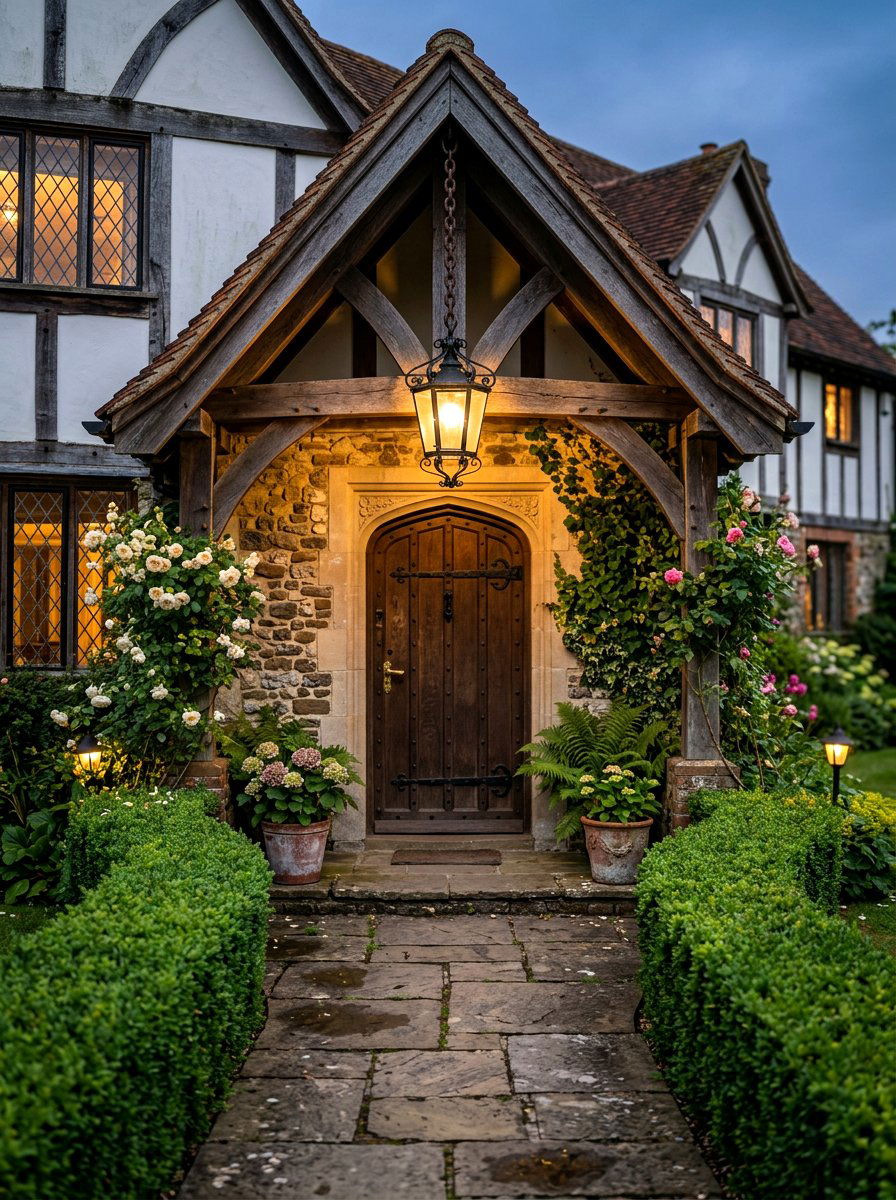
A rounded arch entryway provides a soft and inviting focal point that breaks up the many sharp angles of a Tudor facade. This architectural feature is often framed with heavy stone or decorative brickwork to make the front door feel very important and secure. The curved shape adds a touch of medieval romance and elegance to the home's entrance, making it feel like a private sanctuary. You can pair this arched opening with a heavy wooden door that has iron hardware to complete the authentic look. It is a classic design choice that creates a very warm and welcoming first impression for guests as they arrive.
8. Exposed Brick Siding
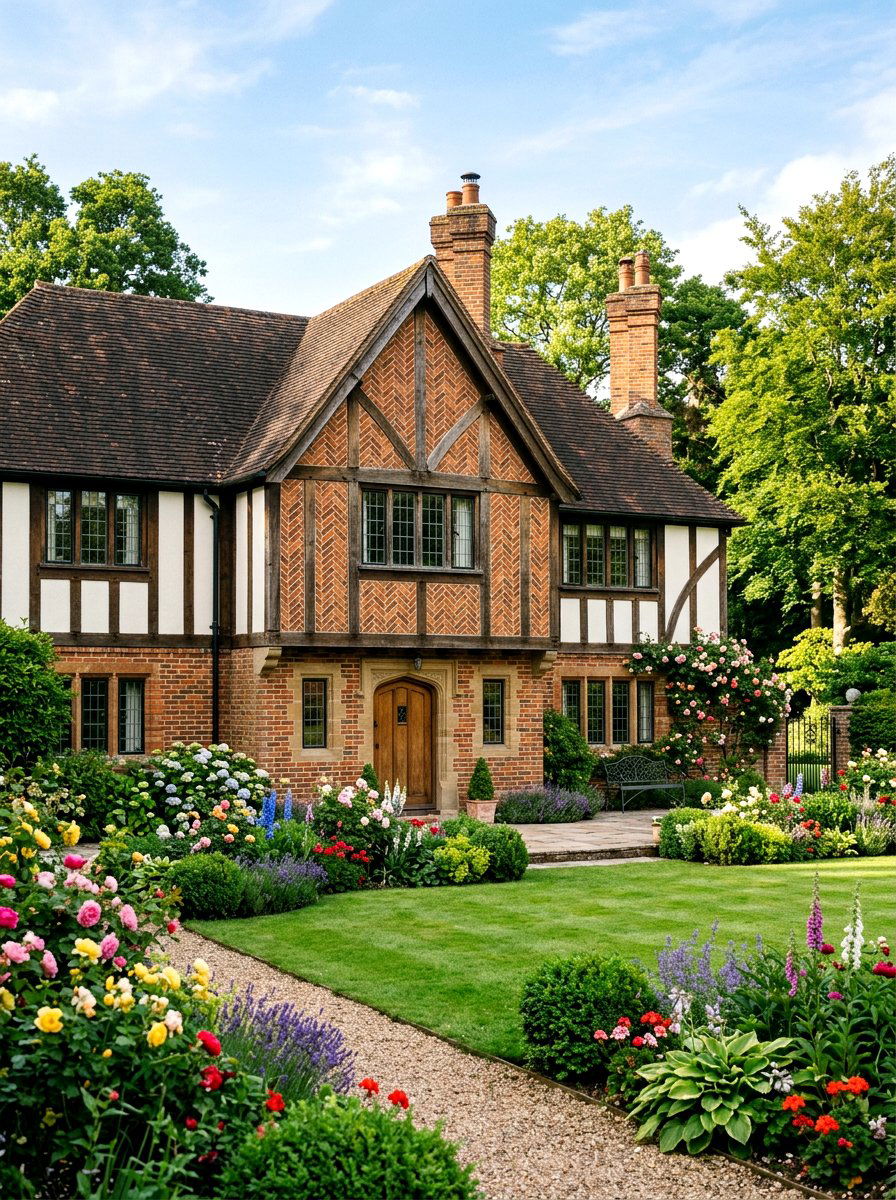
Exposed brick siding is a staple of Tudor architecture that brings warmth, color, and a sense of permanence to the exterior walls. Many traditional designs feature a mix of brick on the lower levels and stucco with timbering on the upper levels for variety. You can choose a classic red brick for a historic feel or a more muted brown or tan brick for a subtle look. Using different patterns like herringbone or basketweave within the brickwork can add even more artistic detail to the home. Brick is incredibly durable and helps to insulate the house, making it a very practical choice for any climate or location.
9. Small Tudor Cottage
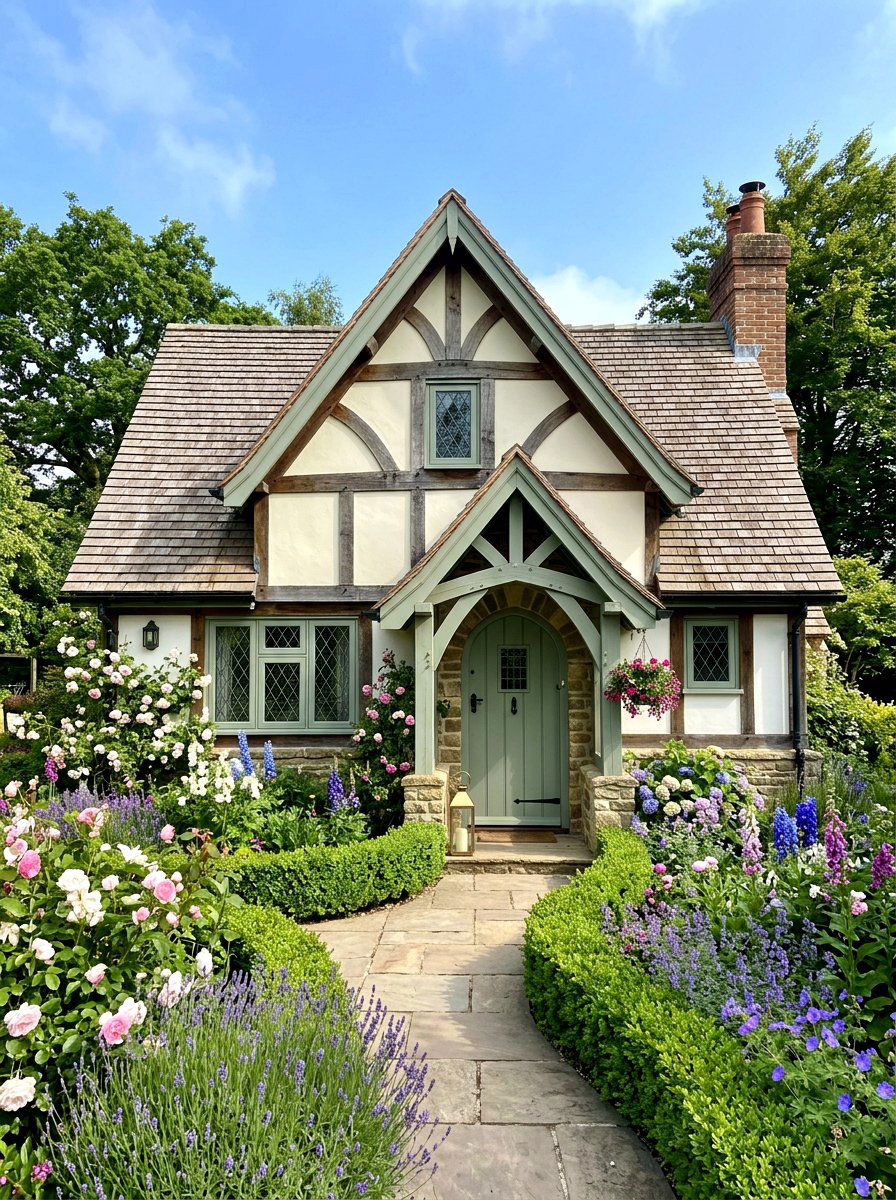
A small Tudor cottage offers all the charm and character of a large estate but in a much more manageable and cozy footprint. These homes are perfect for smaller lots where the steep gables and decorative details can really shine without feeling too overwhelming. You can focus on high-quality materials like cedar shingles and copper accents to make the small space feel very luxurious and well-crafted. Landscaping plays a huge role in the cottage look, with climbing vines and flowering bushes framing the front door perfectly. It is an ideal style for anyone who wants a home that feels like a private and magical storybook retreat.
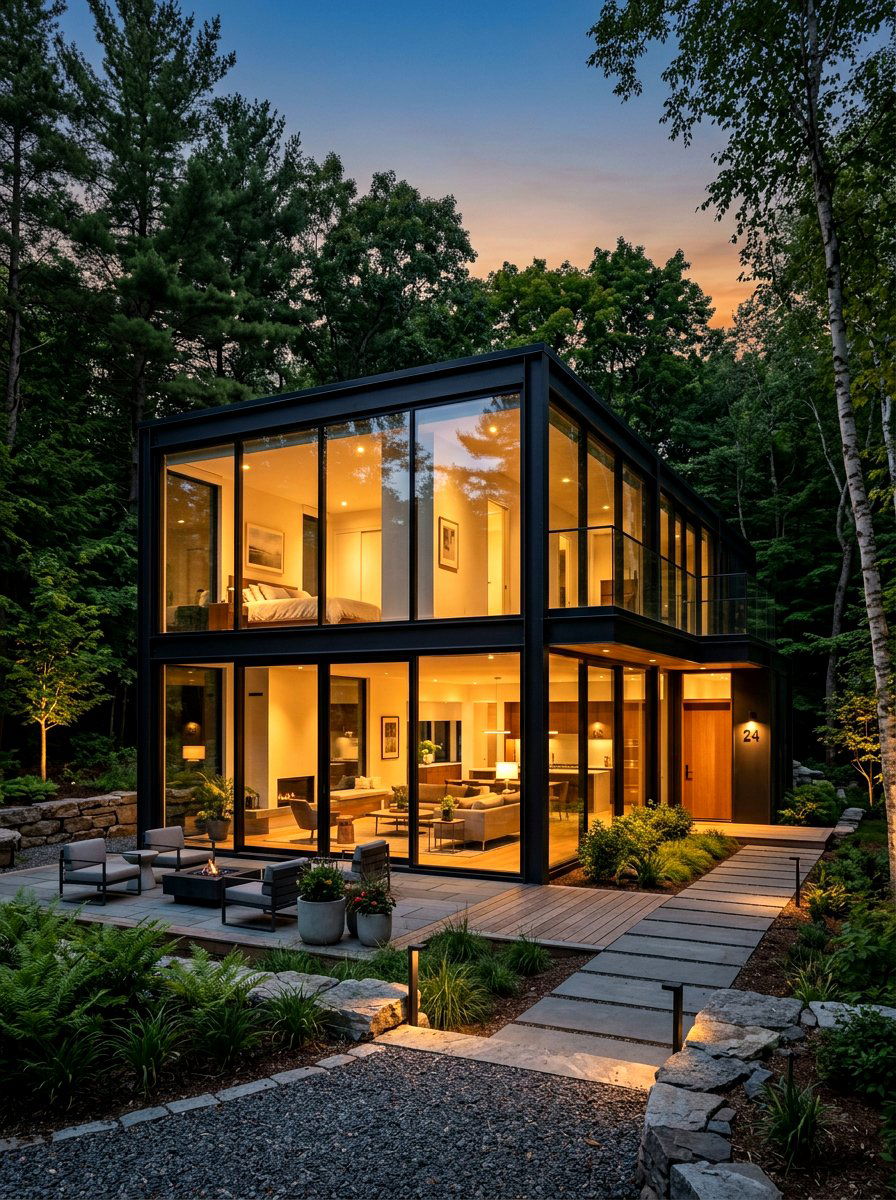
10. Dark Charcoal Siding
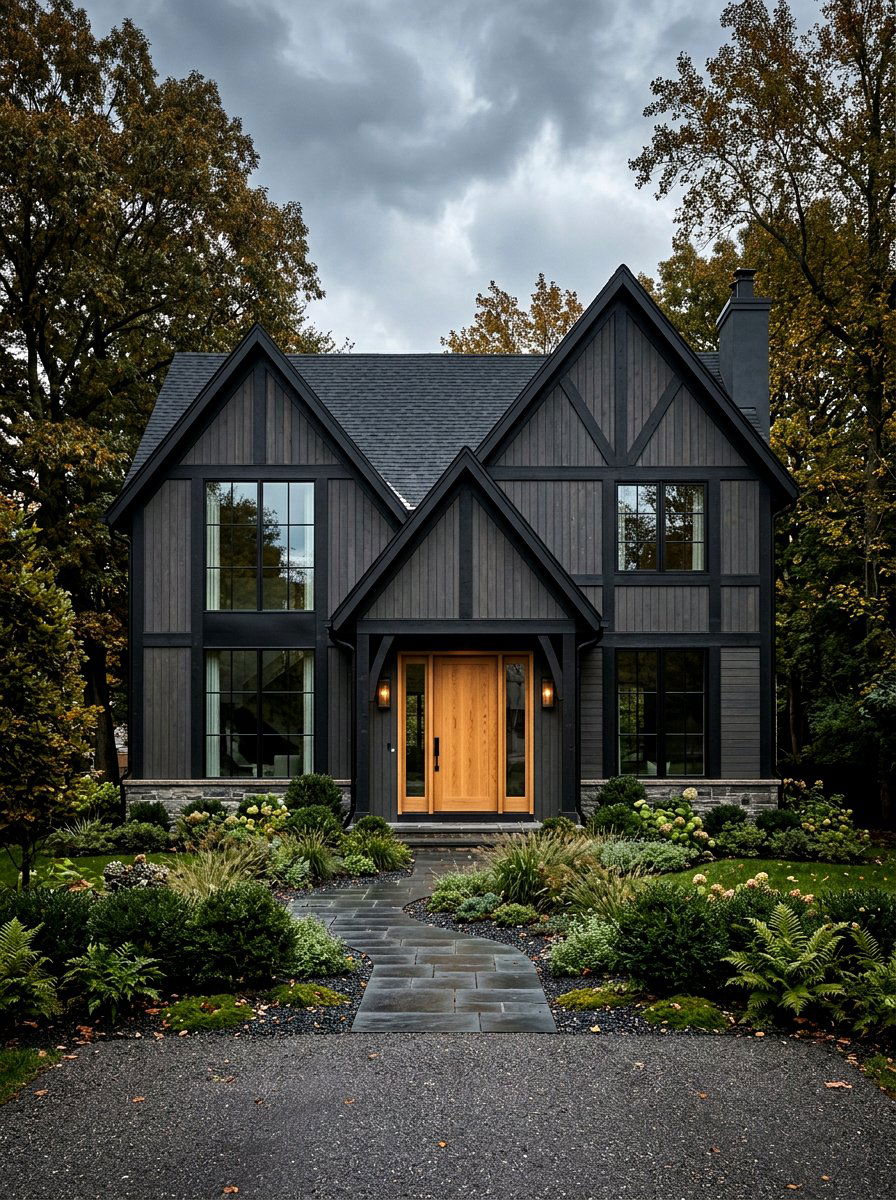
Dark charcoal siding is a very popular modern choice for Tudor homes that want to lean into a moody and sophisticated aesthetic. Using a deep gray or black color for the main body of the house creates a very bold and unified look that feels very current. This dark backdrop allows architectural features like white window frames or natural wood doors to really pop and become focal points. Charcoal is a very versatile color that works well with both stone and brick accents, providing a modern twist on the traditional earth-toned palette. It gives the home a very sleek and polished appearance that is sure to turn heads.
11. Decorative Chimney Pots
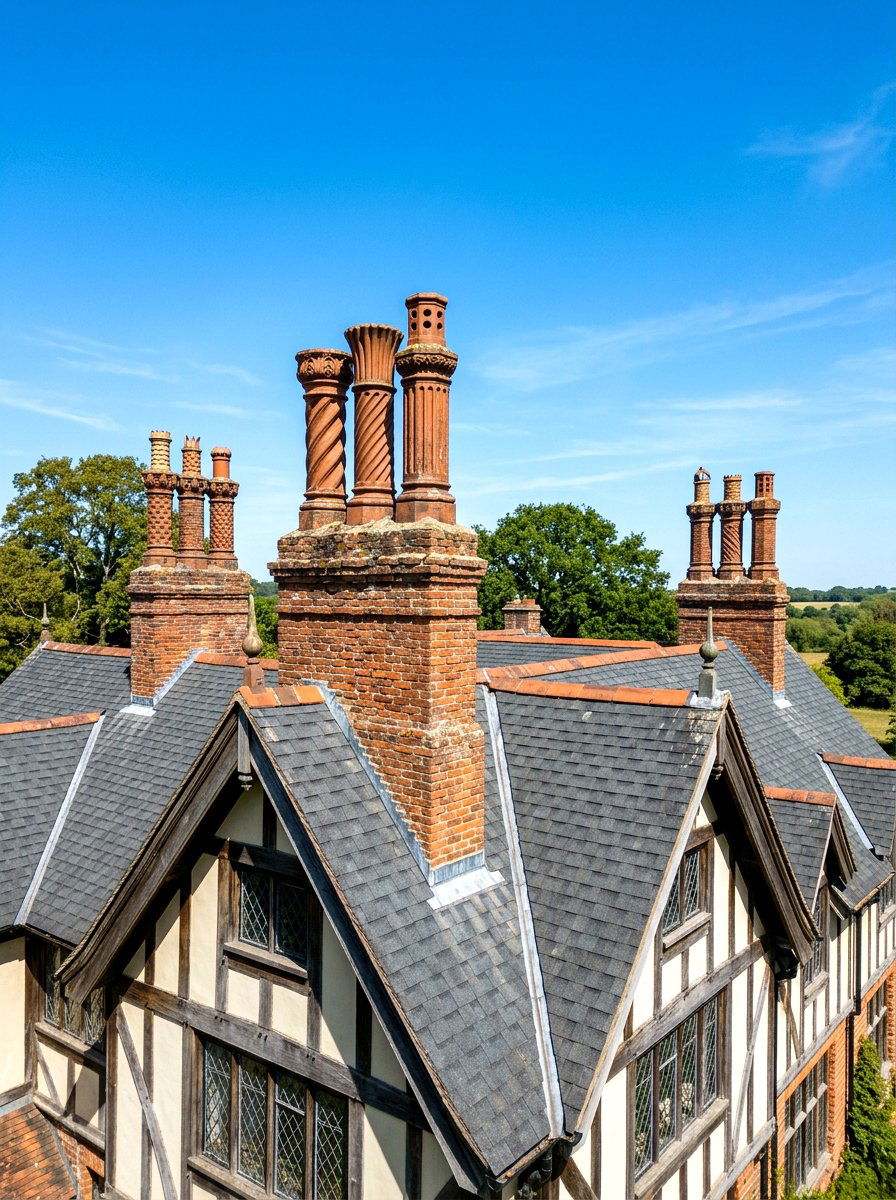
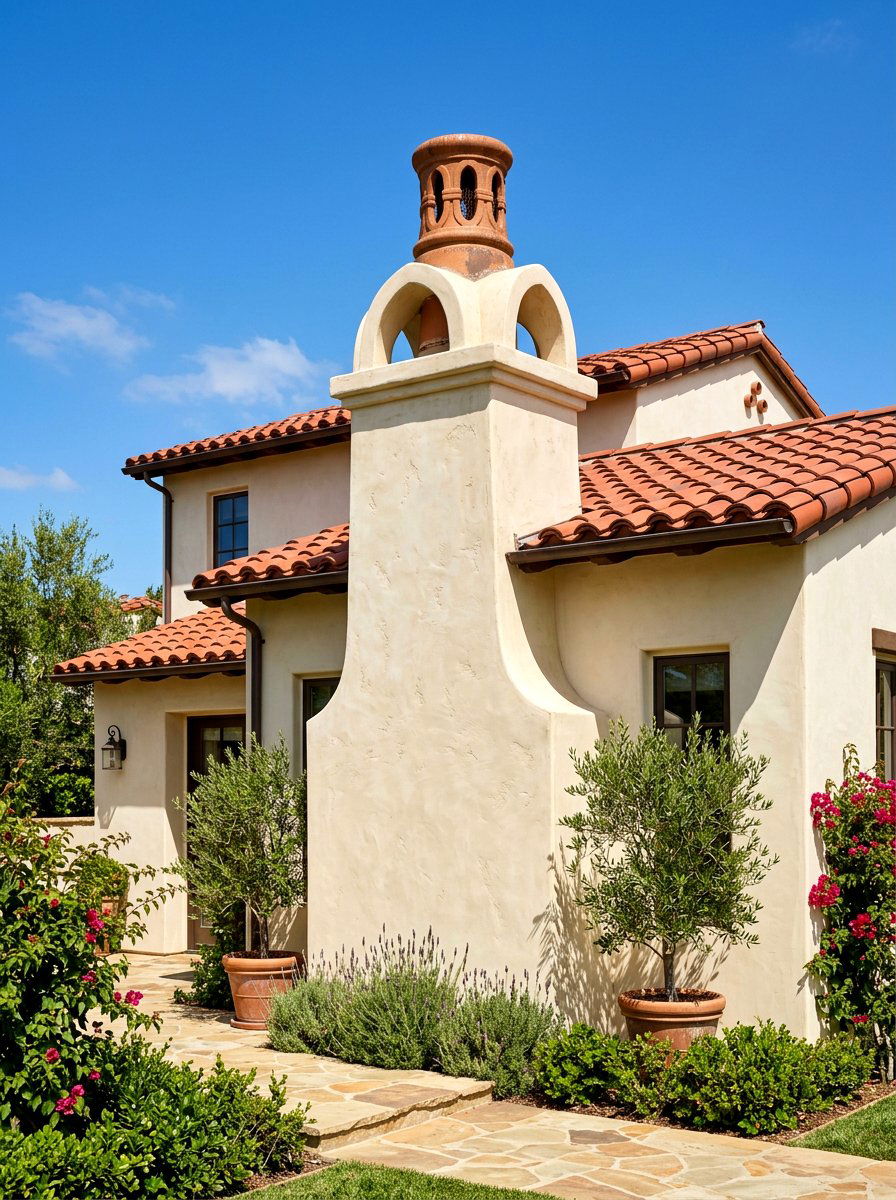
Decorative chimney pots are the finishing touch that adds a lot of personality and height to a Tudor style roofline. These clay or metal extensions sit on top of the large masonry chimneys and come in many different shapes and intricate patterns. Some are tall and slender while others are short and stout with beautiful twisted or fluted designs that reflect classic craftsmanship. They serve as a nod to historic heating methods while providing a unique architectural detail that sets the home apart from others. Adding these pots can make even a modern chimney look more authentic and grounded in the traditional roots of English home design.
12. Light Stucco Facade
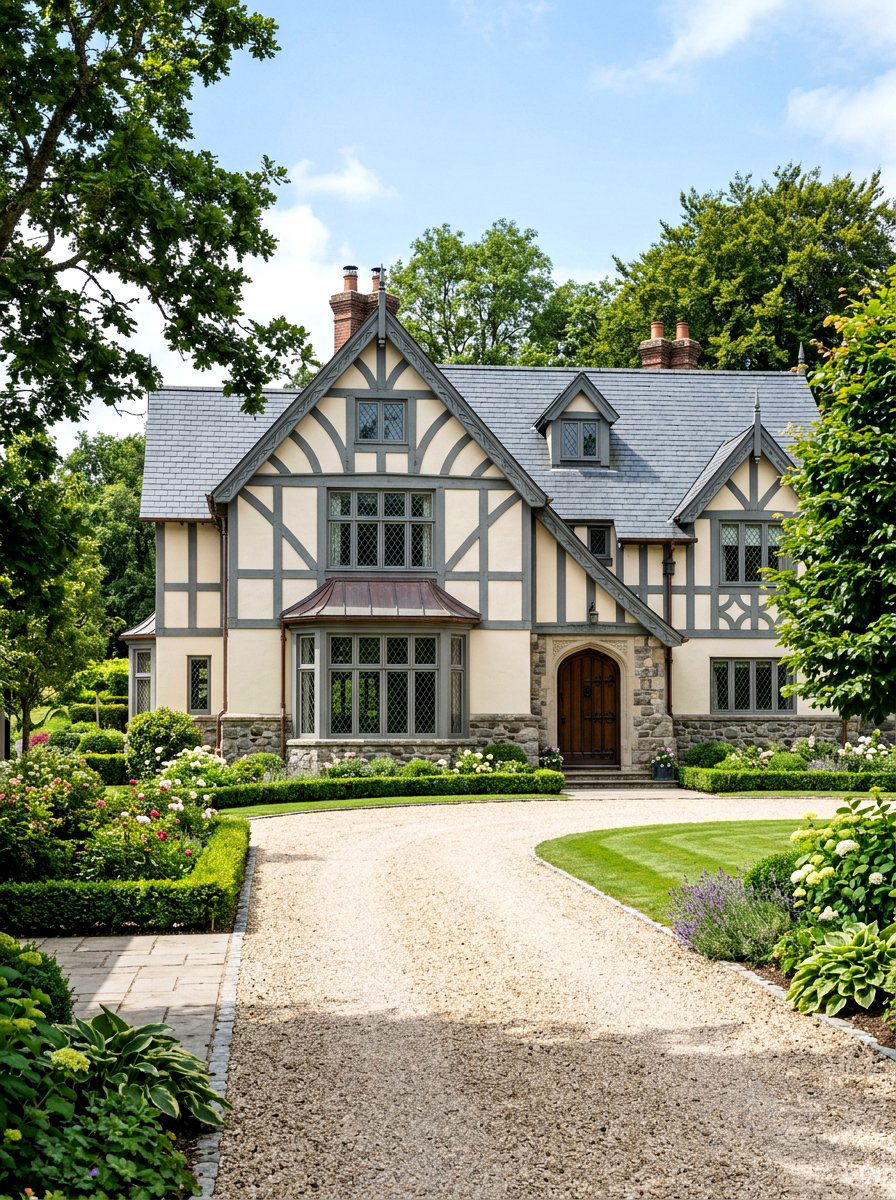
A light stucco facade is the perfect canvas for the intricate timbering and stonework that defines the classic Tudor house look. Using a soft white, cream, or very pale beige color for the stucco keeps the house feeling bright and clean despite its heavy features. Stucco provides a smooth and uniform texture that contrasts beautifully with the rough grain of wooden beams or the uneven surface of natural stone. It is a traditional material that has been used for centuries because it is breathable and very easy to maintain over time. This light background ensures that the house remains visible and striking even in very shaded or wooded areas.
13. All Black Tudor
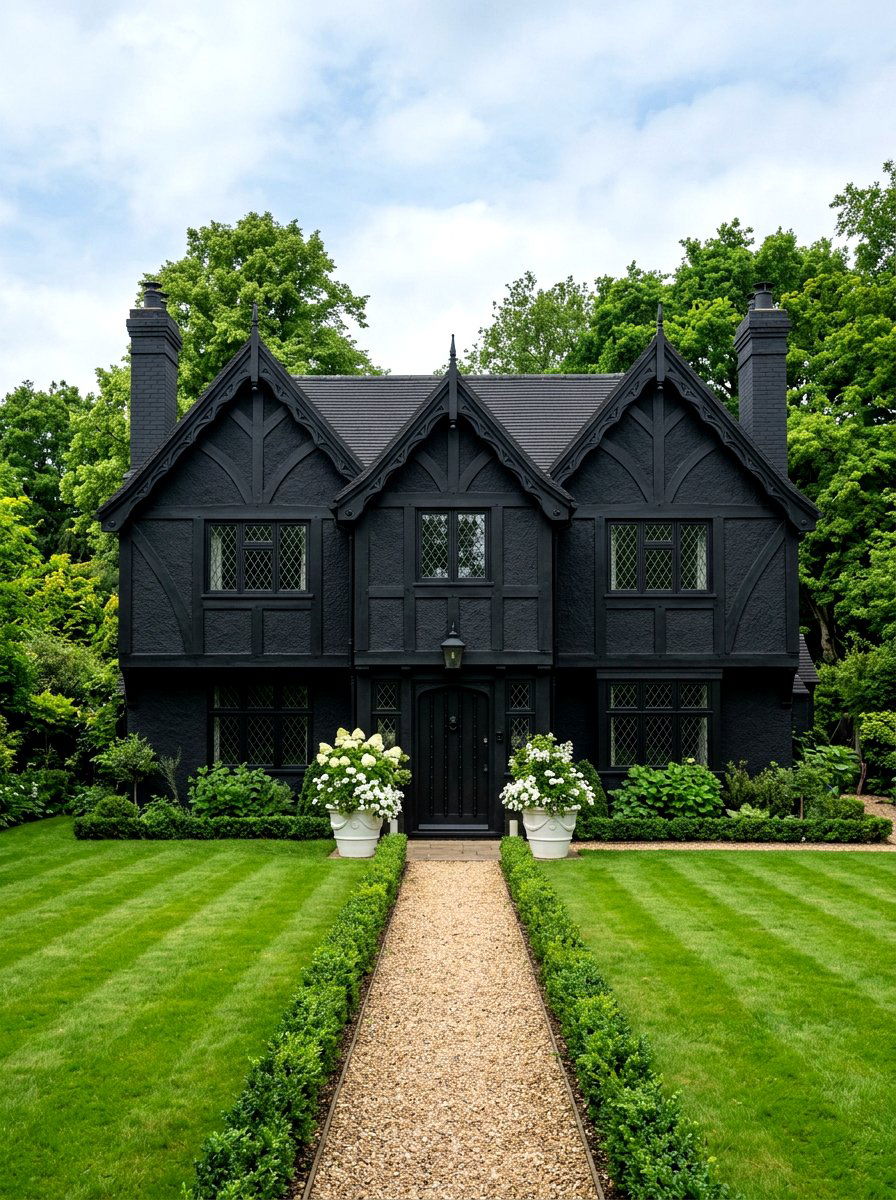
An all black Tudor is a daring and incredibly stylish choice that completely reimagines this historic architectural style for the twenty-first century. By painting the stucco, timbering, and even the window frames in a single dark shade, the house becomes a sculptural masterpiece. This monochromatic approach highlights the various textures of the materials rather than the colors themselves, creating a very sophisticated and high-end feel. It looks particularly stunning when surrounded by vibrant green landscaping or a bright white snow-covered yard in the winter. This bold design choice is perfect for someone who wants to make a strong and very modern architectural statement.
14. Recessed Front Porch
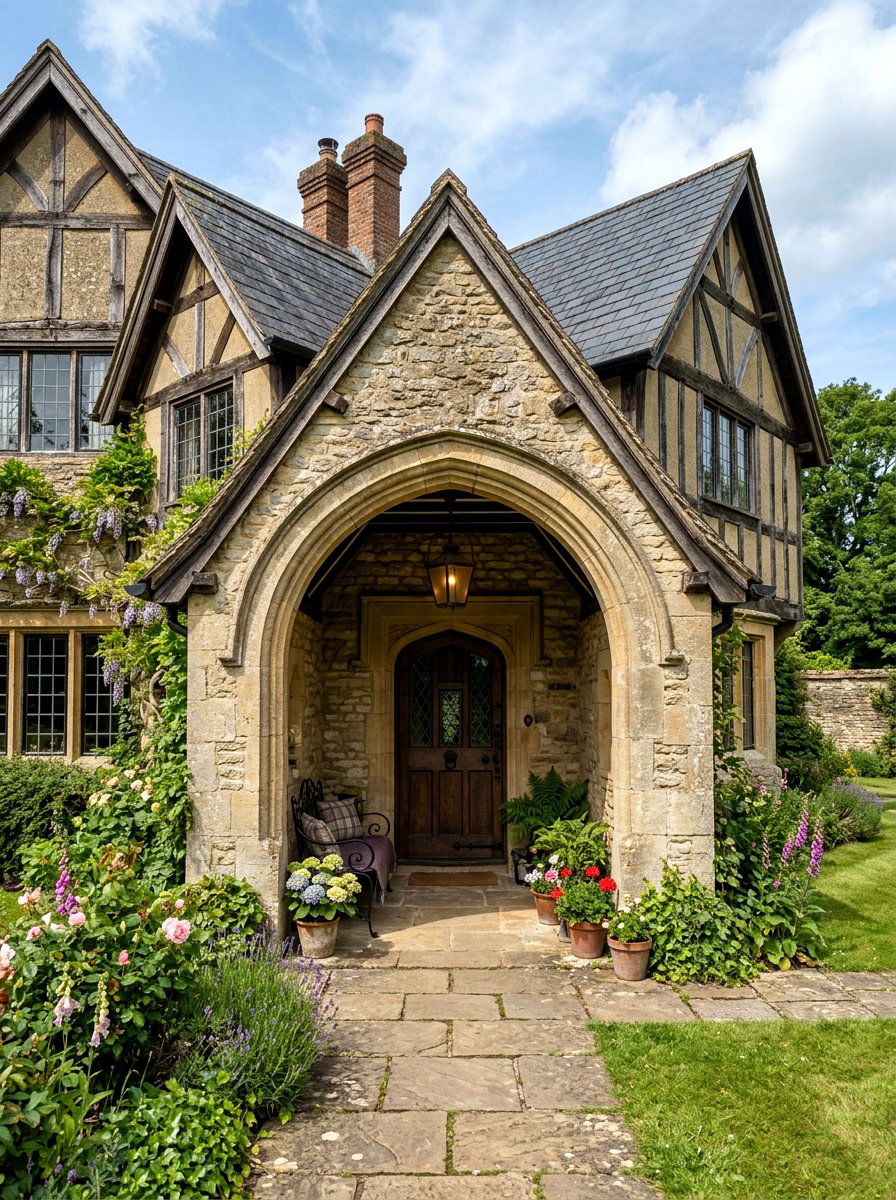
A recessed front porch provides a sheltered and intimate entrance that is very common in many traditional Tudor home designs. Unlike wide open American porches, this style is often tucked under a deep gable or a heavy stone archway for protection. It creates a small transition space between the outside world and the cozy interior of the home, offering a sense of privacy. You can decorate this area with iron lanterns, a small wooden bench, or colorful potted plants to make it feel more lived-in. The deep shadows created by the recess add another layer of depth and visual interest to the front of the house.
15. Sage Green Trim
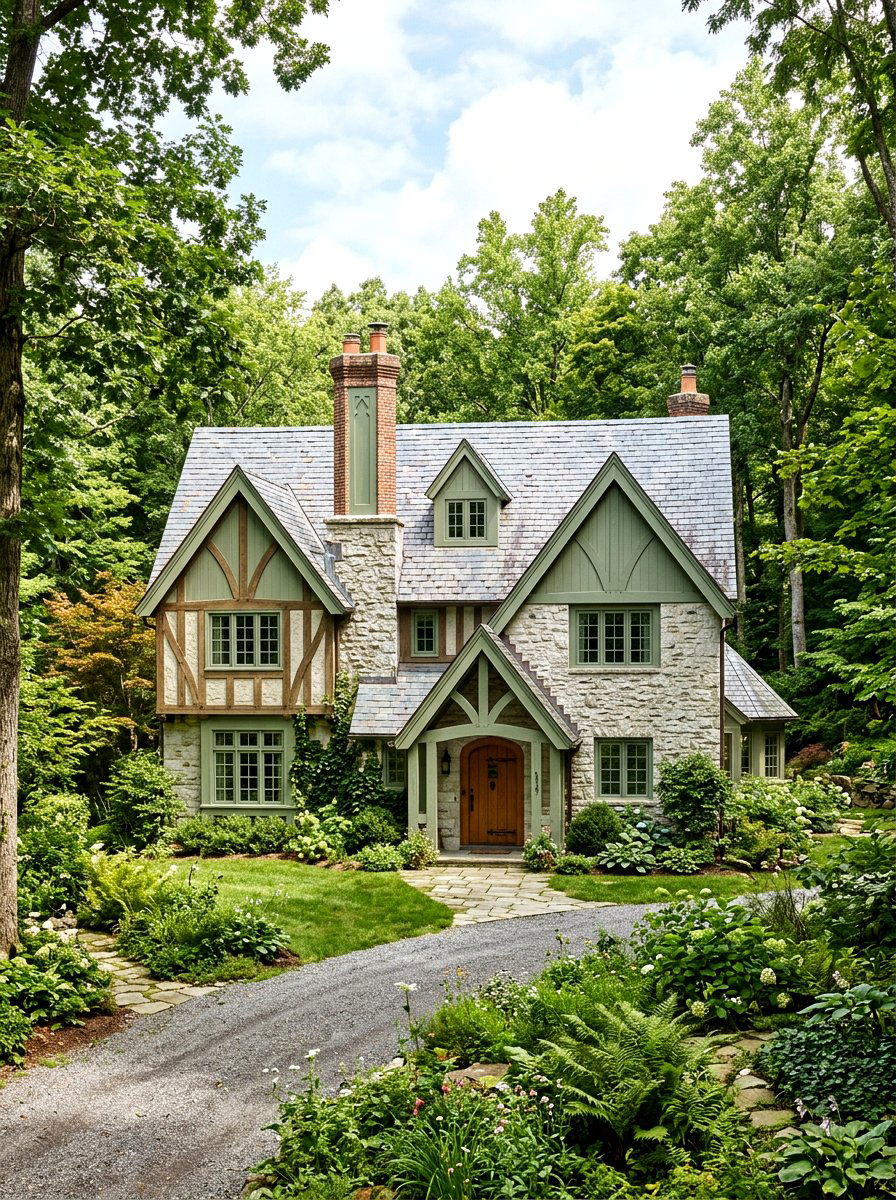
Sage green trim is a beautiful and very subtle alternative to the traditional dark brown or black accents found on many Tudor homes. This soft, earthy color blends perfectly with the natural surroundings and gives the house a very calm and serene appearance. It works exceptionally well when paired with light gray stone or a warm cream stucco background for a cohesive look. Sage green feels historic yet refreshed, making it a great choice for a renovation that wants to feel updated but not too modern. It is an inviting color that adds a touch of nature to the architectural details without feeling overly bold.
16. Storybook Style Architecture
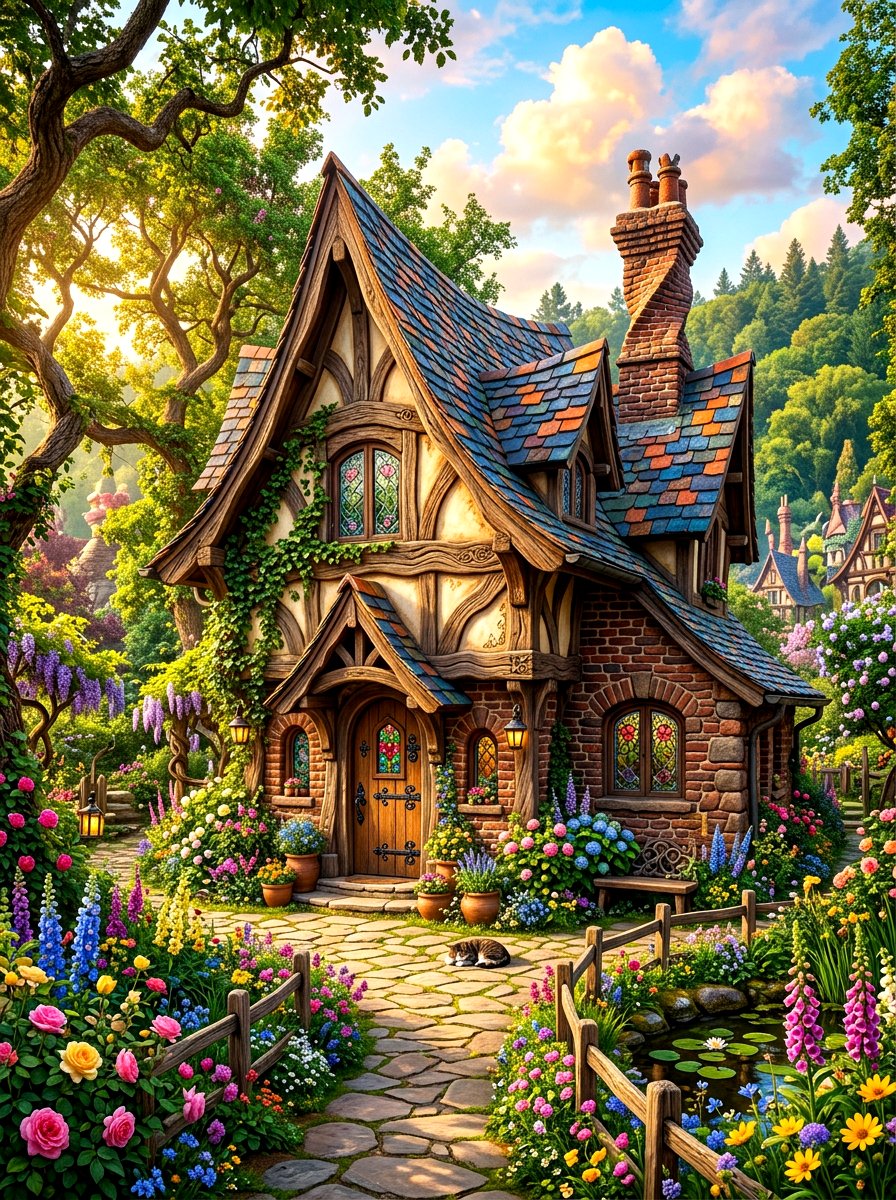
Storybook style architecture is a whimsical variation of the Tudor theme that focuses on exaggerated features and very charming, asymmetrical designs. These houses often look like they were pulled straight from a classic fairy tale, featuring curved rooflines and very tiny, rounded windows. The use of clinker brick or wavy siding adds a sense of movement and hand-crafted detail that is truly unique and artistic. Every corner of a storybook Tudor is filled with surprises, from hidden nooks to very ornate woodwork around the eaves. It is the ultimate choice for a homeowner who wants their property to feel magical, nostalgic, and completely one-of-a-kind.
17. Red Brick Masonry
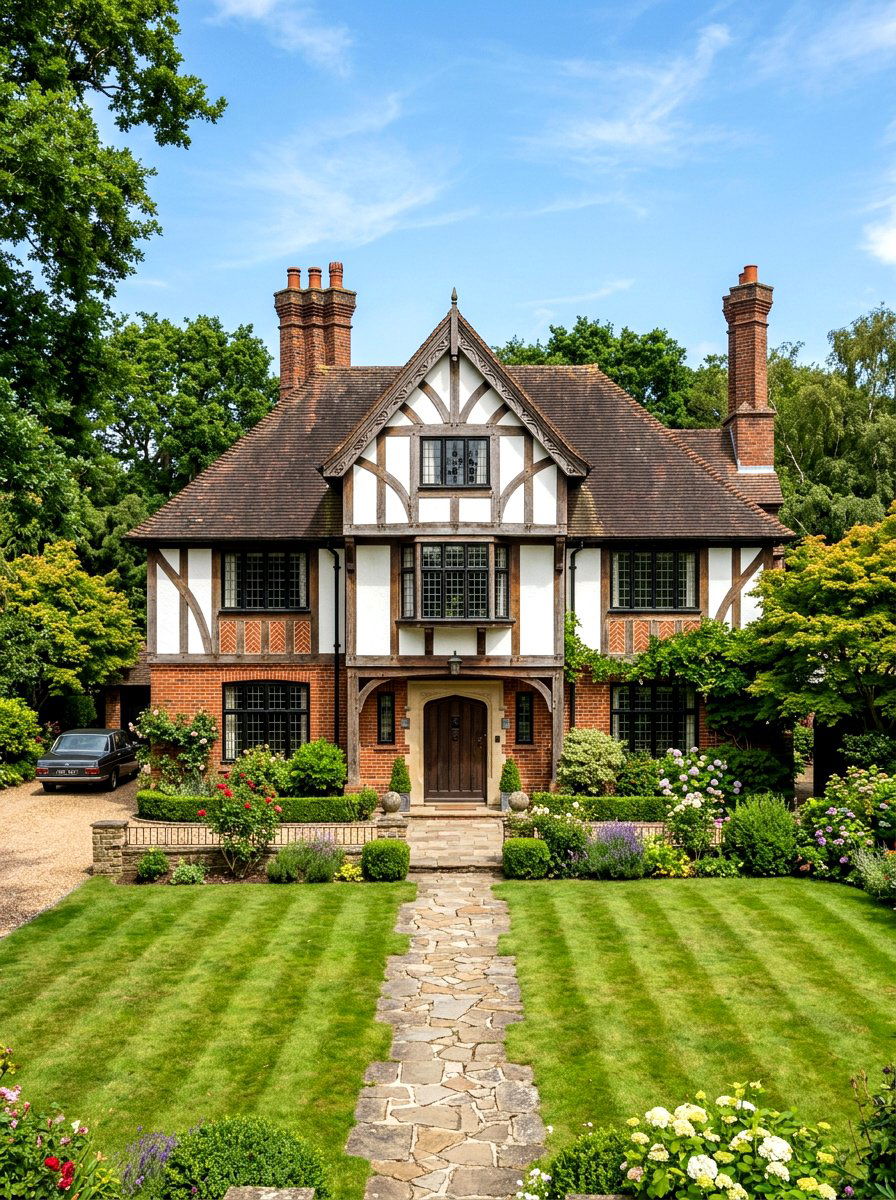
Red brick masonry is the classic foundation for many Tudor homes, providing a rich and very traditional color that feels warm and permanent. The deep reds and burnt oranges of the brick pair beautifully with dark wood timbers and white stucco for the ultimate English look. You can use different mortar colors, like a light gray or a sandy tan, to change the overall brightness and feel of the brick walls. Brick is a timeless material that requires very little maintenance and stands up well to all types of weather. It gives the house a very sturdy and respectable presence that has been popular for hundreds of years.
18. Wood Shake Roofing
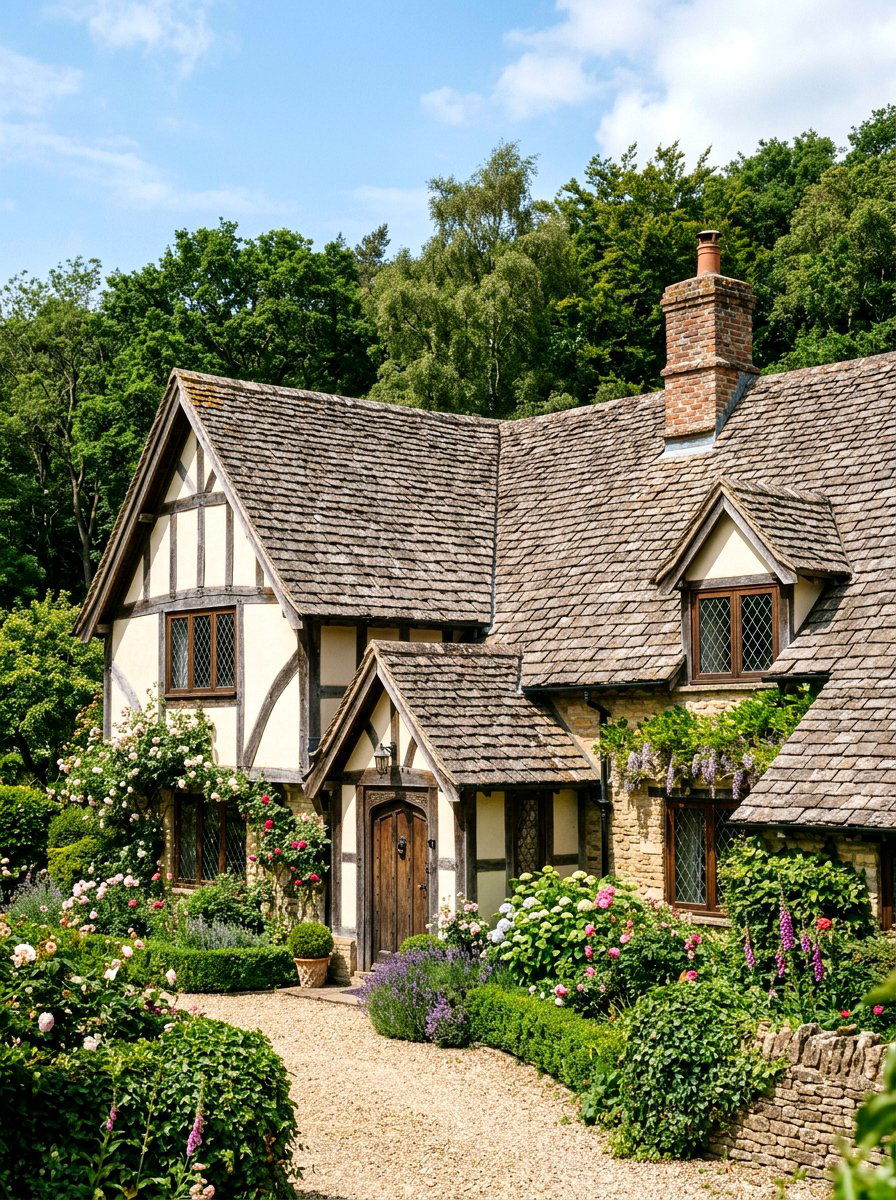
Wood shake roofing adds a layer of natural texture and rustic charm that perfectly complements the organic materials used in Tudor design. These cedar or redwood shingles provide a thick and uneven surface that looks much more historic than flat asphalt options. As the wood ages, it turns a beautiful silvery gray color that blends seamlessly with stone and stucco walls for a cohesive look. Wood shakes also offer excellent insulation and durability when they are properly maintained by the homeowner over time. This roofing choice is ideal for those who want their Tudor home to feel authentic, earthy, and very well-connected to the landscape.
19. French Tudor Blend
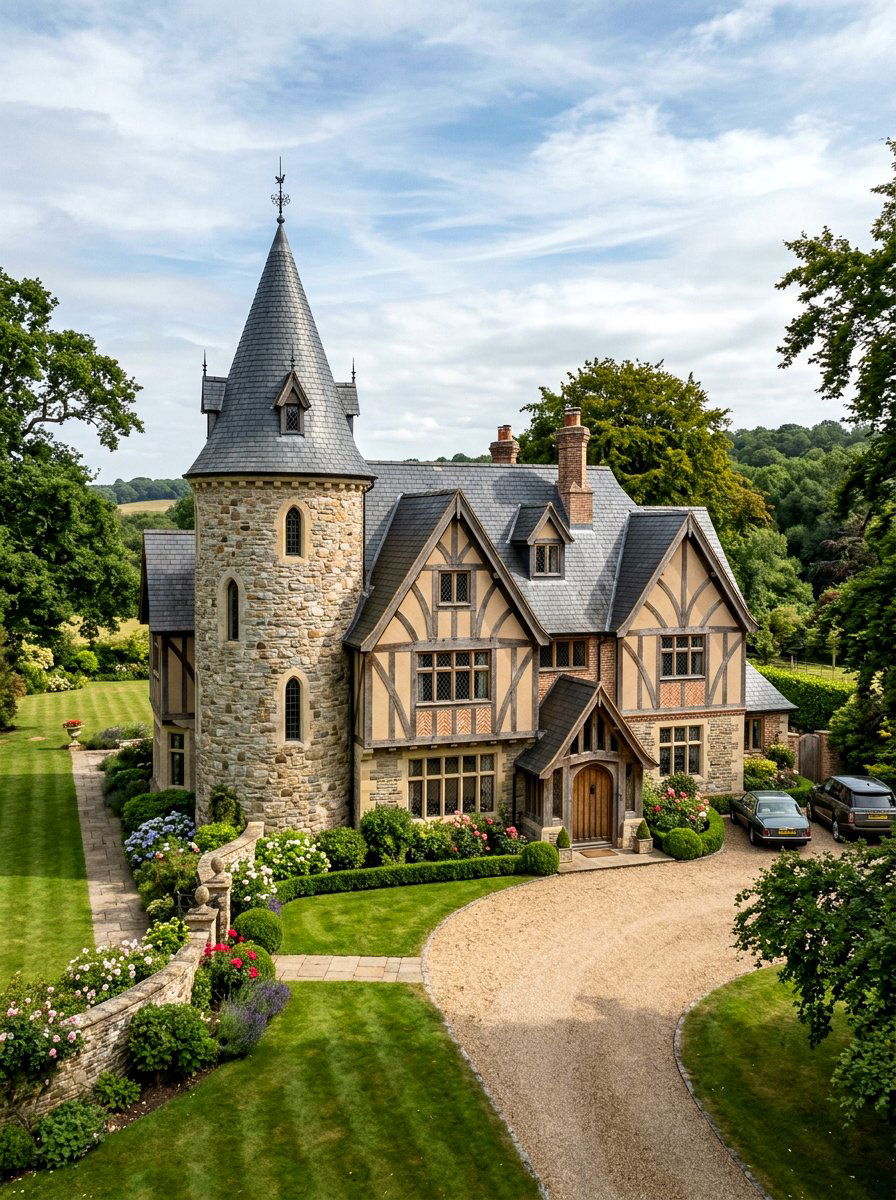
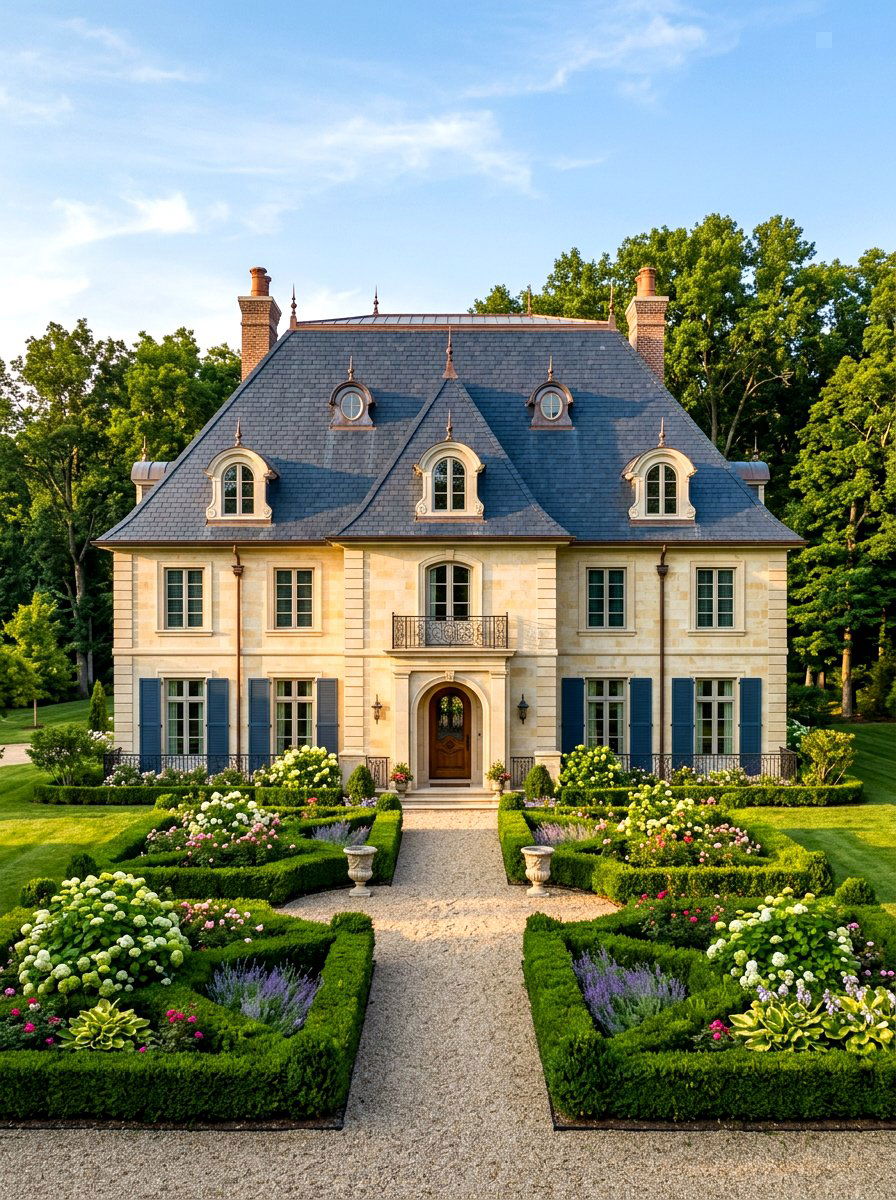
A French Tudor blend combines the steep gables of the English style with the softer and more rounded features of French country architecture. You might see a home with traditional timbering on one wing and a rounded stone tower with a conical roof on the other. This mix of styles creates a very sophisticated and grand appearance that feels like a European country manor. The color palette often leans toward softer neutrals and pastels rather than the high-contrast black and white of traditional English Tudors. It is a fantastic way to add variety and a sense of luxury to a large custom-built home or a major renovation.
20. Compact Tudor House
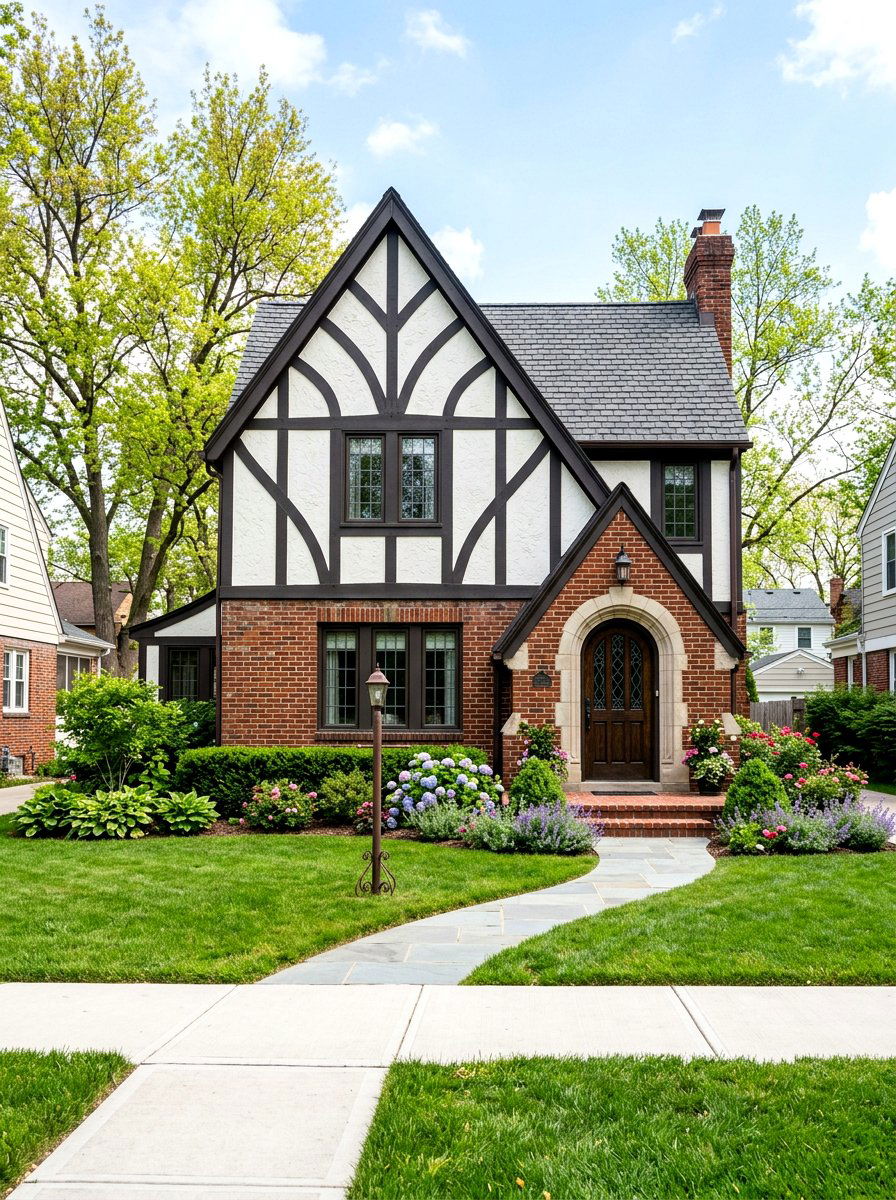
A compact Tudor house proves that you do not need a massive estate to enjoy the beautiful details of this historic style. These smaller homes often feature a single prominent gable and a very carefully detailed entryway to create maximum curb appeal in a small space. By focusing on just a few key elements, like a high-quality wood door or a beautiful leaded glass window, the house feels very special and intentional. Compact designs are often very energy-efficient and easy to maintain, making them a practical choice for modern living. They bring a great sense of character and history to more dense urban or suburban residential areas.
21. Grand Tudor Estate
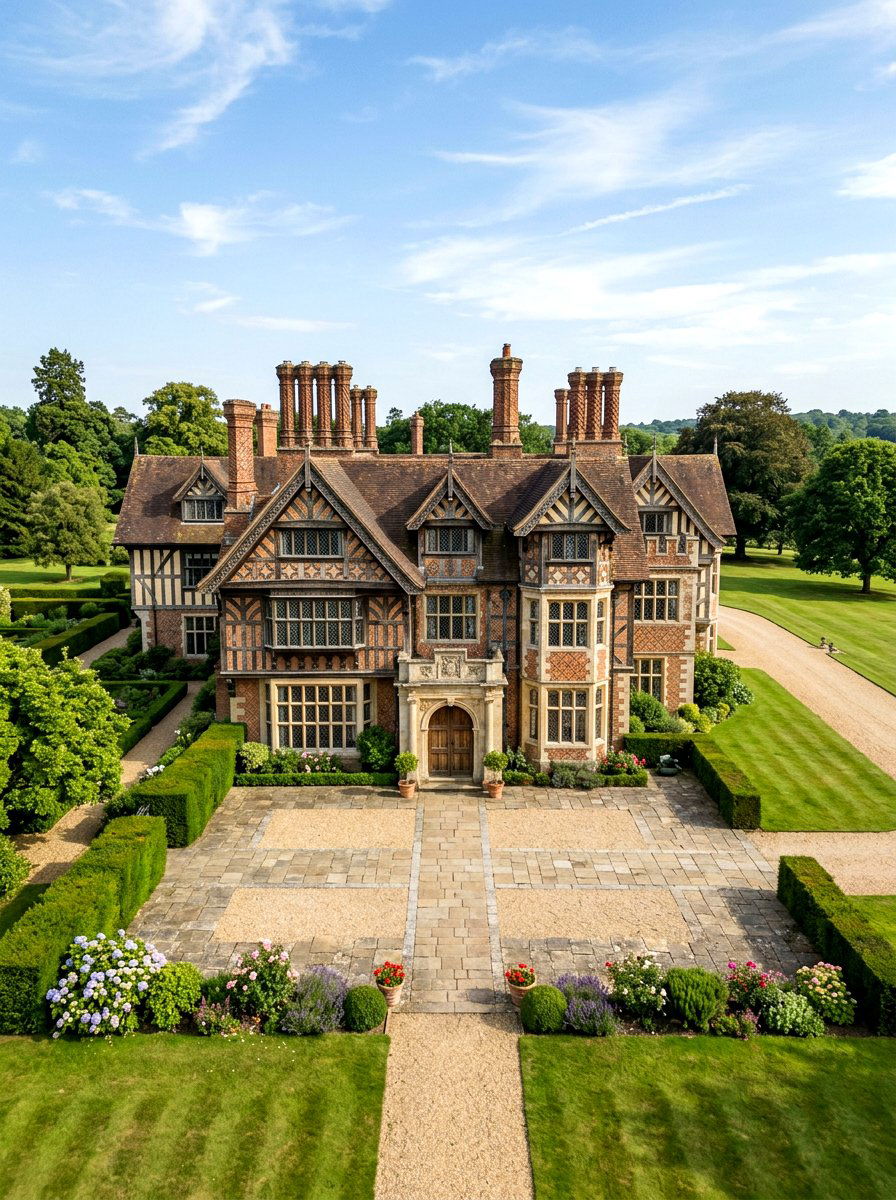
A grand Tudor estate is the ultimate expression of this architectural style, featuring sprawling layouts, multiple chimneys, and very intricate detailing across every surface. These homes often include large wings, expansive stone courtyards, and impressive gated entries that give them a regal and very private feel. The mix of materials is usually very complex, with different sections of the house featuring unique combinations of brick, stone, and decorative timbering. Grand estates often have very large leaded glass windows that offer stunning views of the surrounding landscape or private gardens. They are built to impress and provide a sense of history and legacy for the families who live there.
22. Gray Stucco Walls
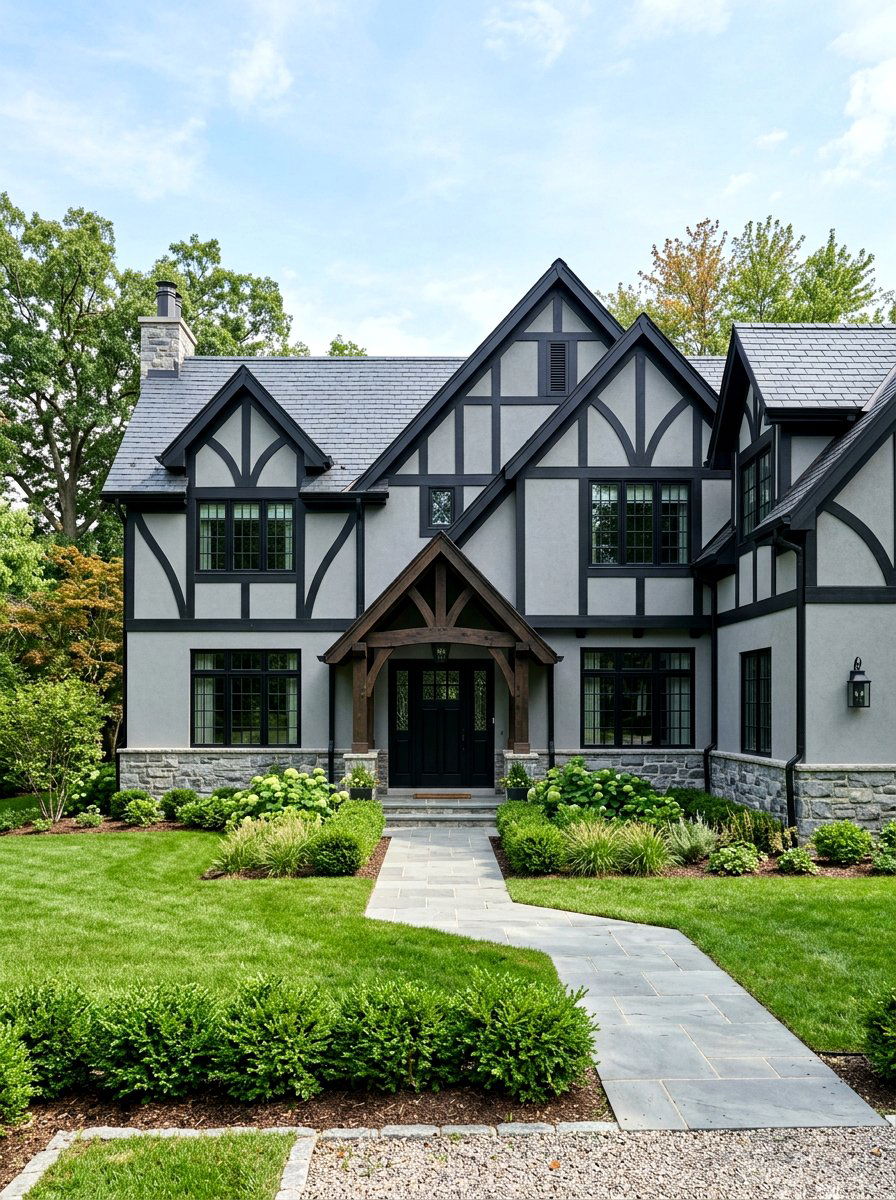
Gray stucco walls offer a more contemporary and very neutral alternative to the traditional bright white or cream colors often seen on Tudors. A medium or light gray provides a sophisticated backdrop that works beautifully with either black or natural wood accents for a balanced look. Gray is a very forgiving color that hides dirt and wear much better than white, making it a very practical choice for busy homeowners. It also pairs perfectly with natural stone foundations and pathways, creating a very seamless and unified exterior design. This color choice feels modern and calm while still respecting the historic textures of the stucco material.
23. Intricate Wood Detailing
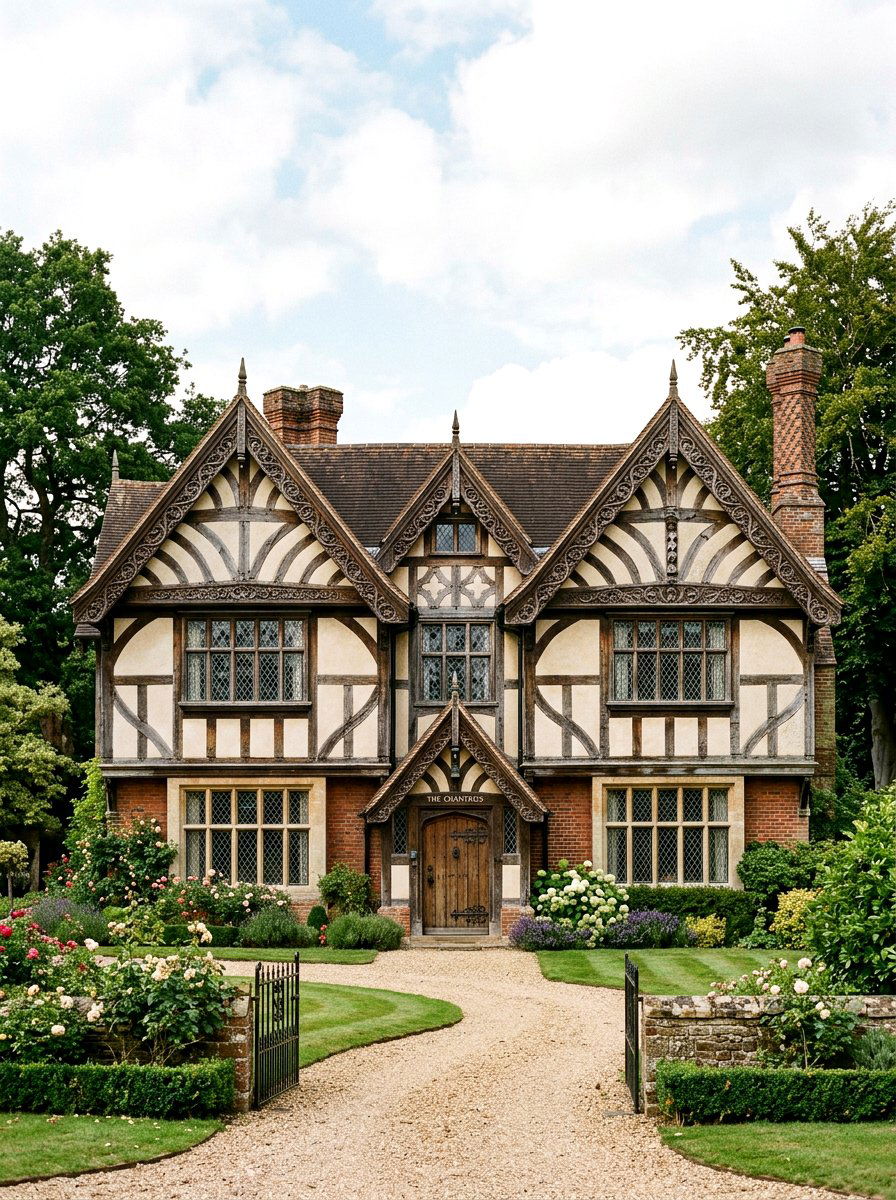
Intricate wood detailing goes beyond simple half-timbering to include carved motifs, decorative bargeboards, and ornate brackets under the roof eaves. These small but very artistic touches show a high level of craftsmanship and add a sense of luxury to the home's exterior. You can use these details to frame windows or highlight the front entrance, making the architecture feel more layered and interesting. Natural wood stains can be used to show off the grain of the wood, or they can be painted to match the rest of the trim. These decorative elements are what truly give a Tudor house its unique and very charming personality.
24. Box Bay Windows
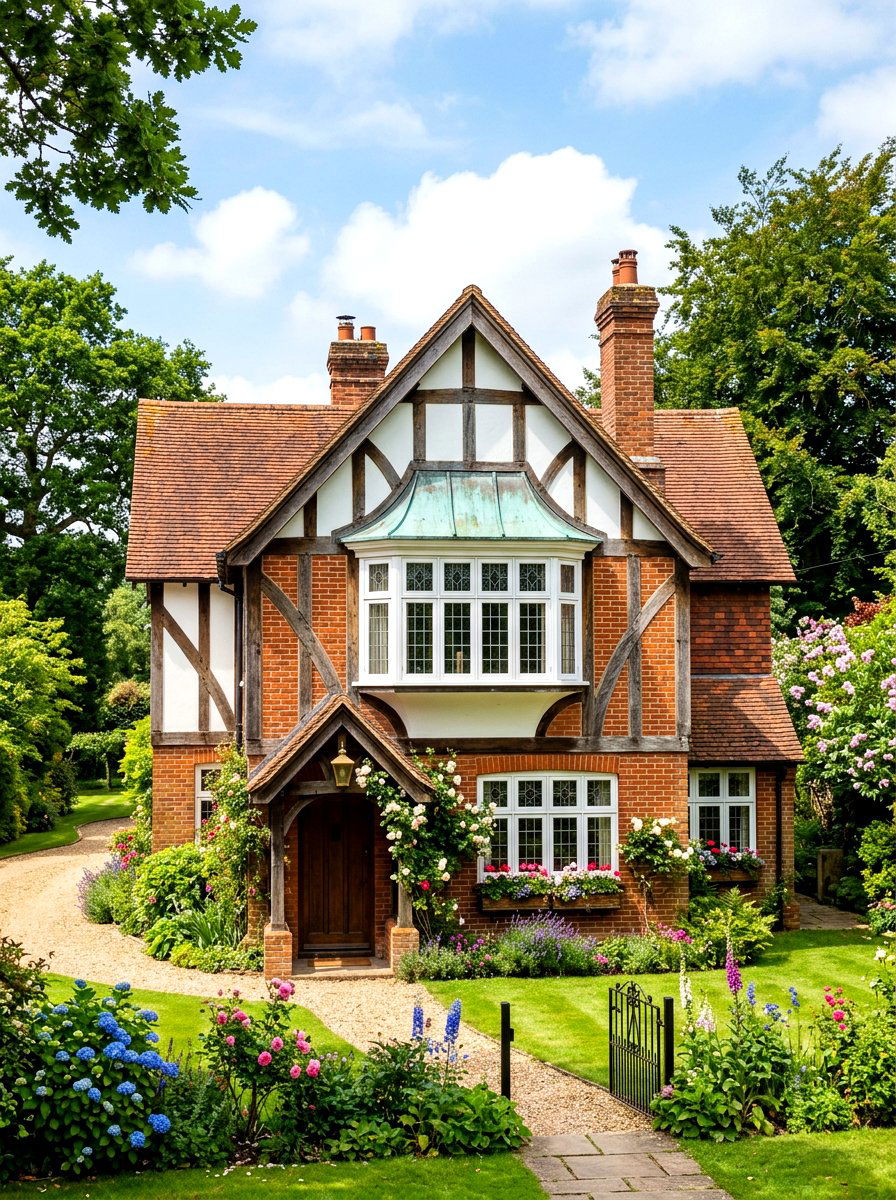
Box bay windows are a classic Tudor feature that projects outward from the main wall to create more space and light inside the home. On the exterior, these windows add a lot of three-dimensional interest and break up long, flat stretches of siding or brick. They are often topped with a small copper roof or a shingled gable that matches the main roofline for a cohesive look. Inside, these windows create a perfect cozy nook for a window seat or a small breakfast table. They are a functional and very beautiful design element that enhances both the inside and the outside of the home simultaneously.
25. Copper Rain Gutters
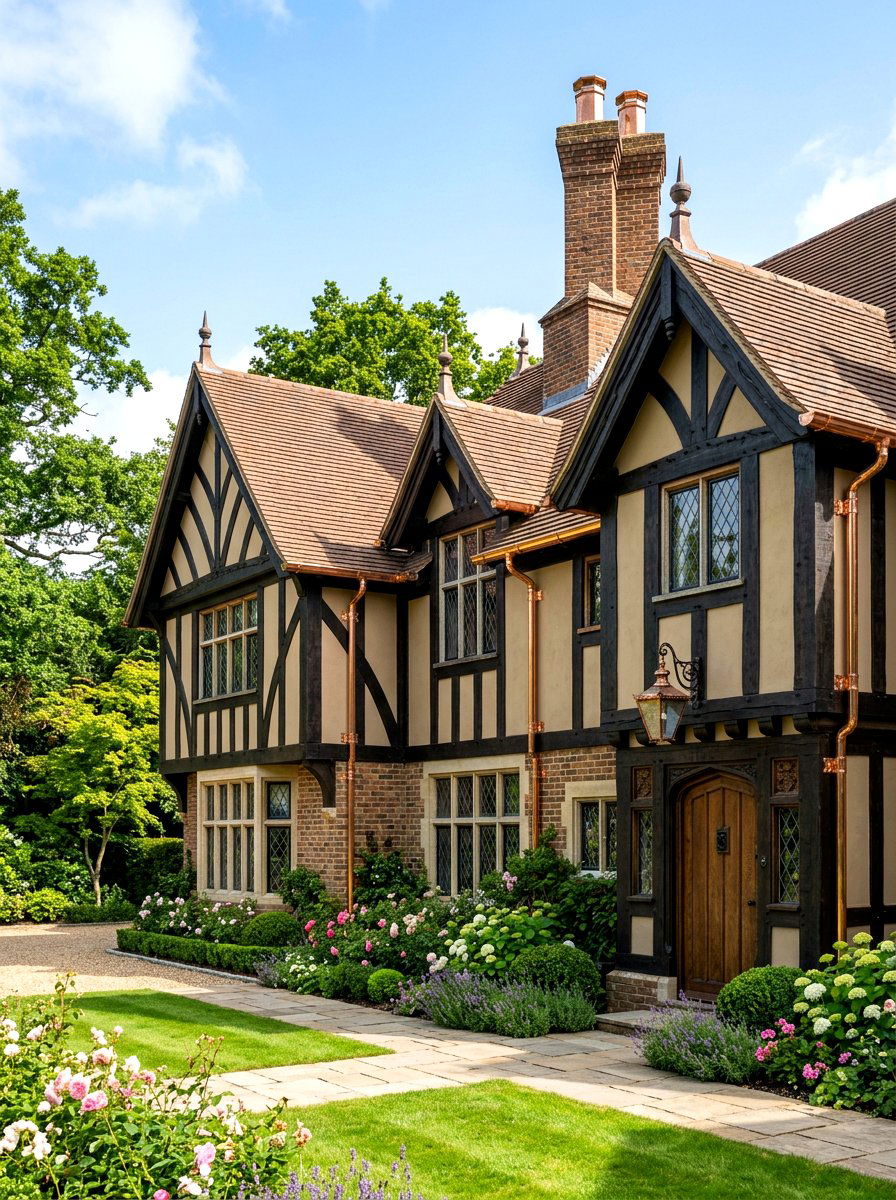
Copper rain gutters are a high-end detail that adds a touch of metallic brilliance and long-lasting quality to a Tudor exterior. When new, the copper shines with a bright orange-gold color that looks incredibly luxurious against dark wood and light stucco walls. Over time, the copper will develop a beautiful green patina that only adds to the historic and established feel of the property. Copper is extremely durable and will not rust like cheaper materials, making it a very smart long-term investment for any homeowner. These gutters are a great way to add a subtle but very high-impact finish to a well-designed custom home.
26. English Garden Landscaping
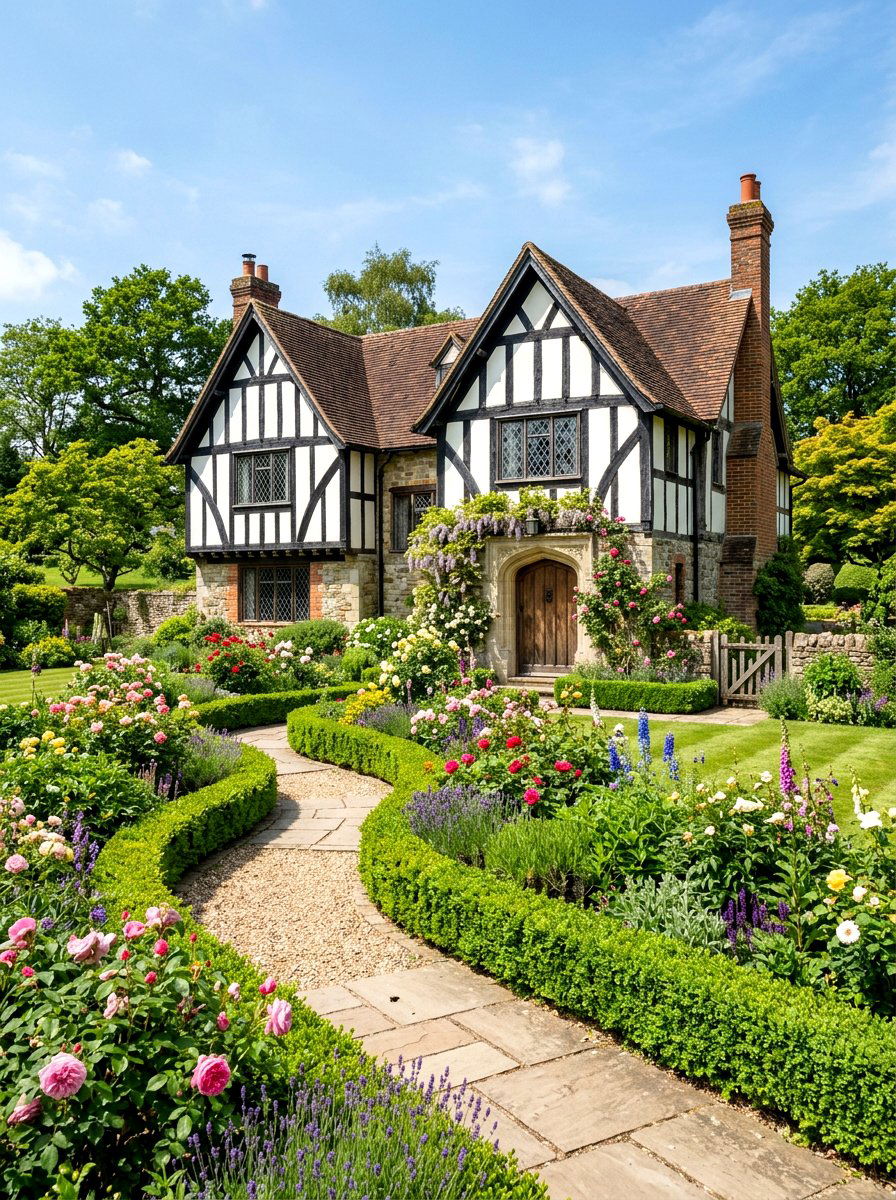
English garden landscaping is the perfect companion for a Tudor house, featuring lush greenery, colorful perennials, and very structured boxwood hedges. This style of garden feels both formal and a bit wild, with climbing roses and ivy often growing up the stone or brick walls. Winding stone pathways can lead visitors through the garden to the front door, creating a sense of discovery and charm. Using a mix of native plants ensures that the landscape looks beautiful and stays healthy throughout the changing seasons. A well-designed English garden grounds the house and makes it feel like it has been there for many generations.
27. Iron Lantern Lighting
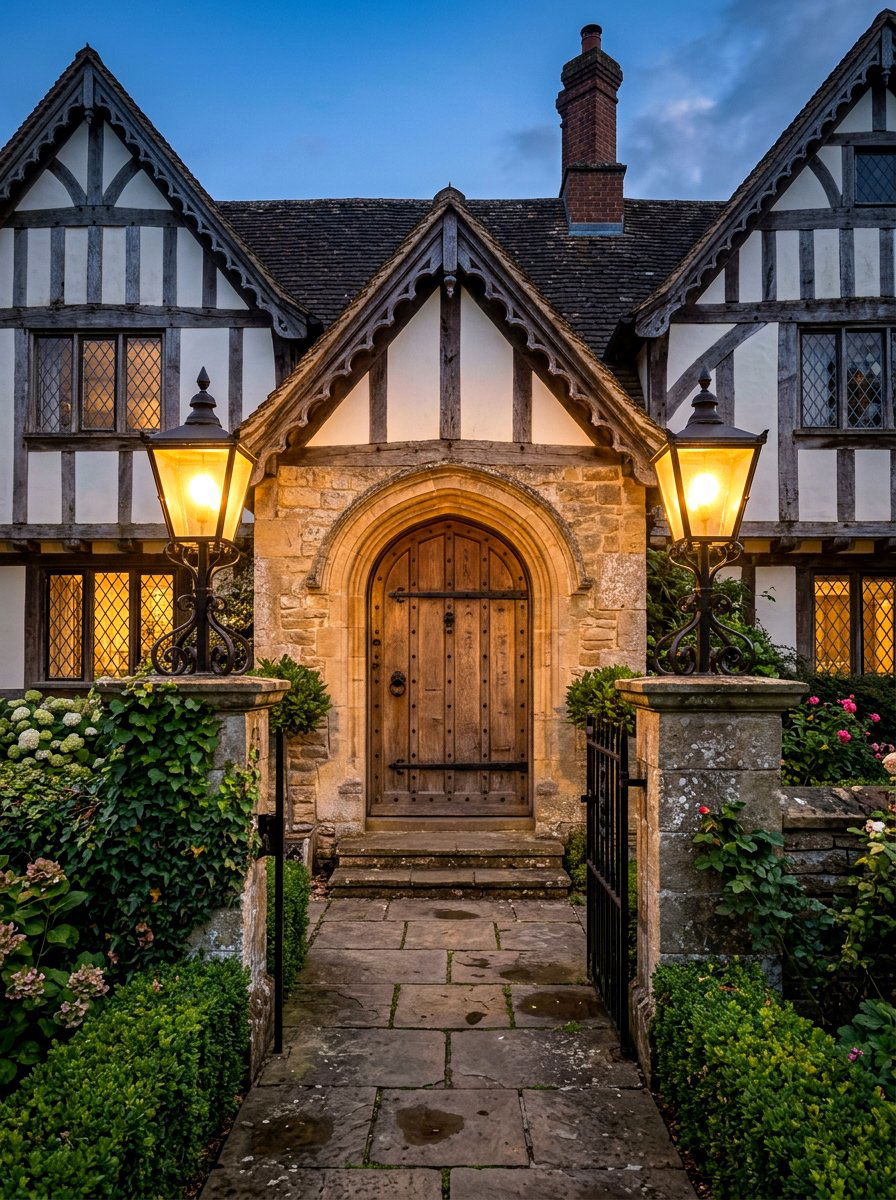
Iron lantern lighting provides the perfect atmospheric glow for a Tudor home, emphasizing the medieval and historic roots of the design. Large, wrought iron fixtures are often placed on either side of the front door or mounted on stone pillars at the entrance to the driveway. These lights feature classic designs with seeded glass or heavy metal bars that cast beautiful shadows across the facade at night. The dark finish of the iron coordinates perfectly with black timbering and other metal accents like door hardware or gutters. High-quality exterior lighting not only adds safety but also highlights the architectural beauty of the home after dark.
28. Heavy Timber Door
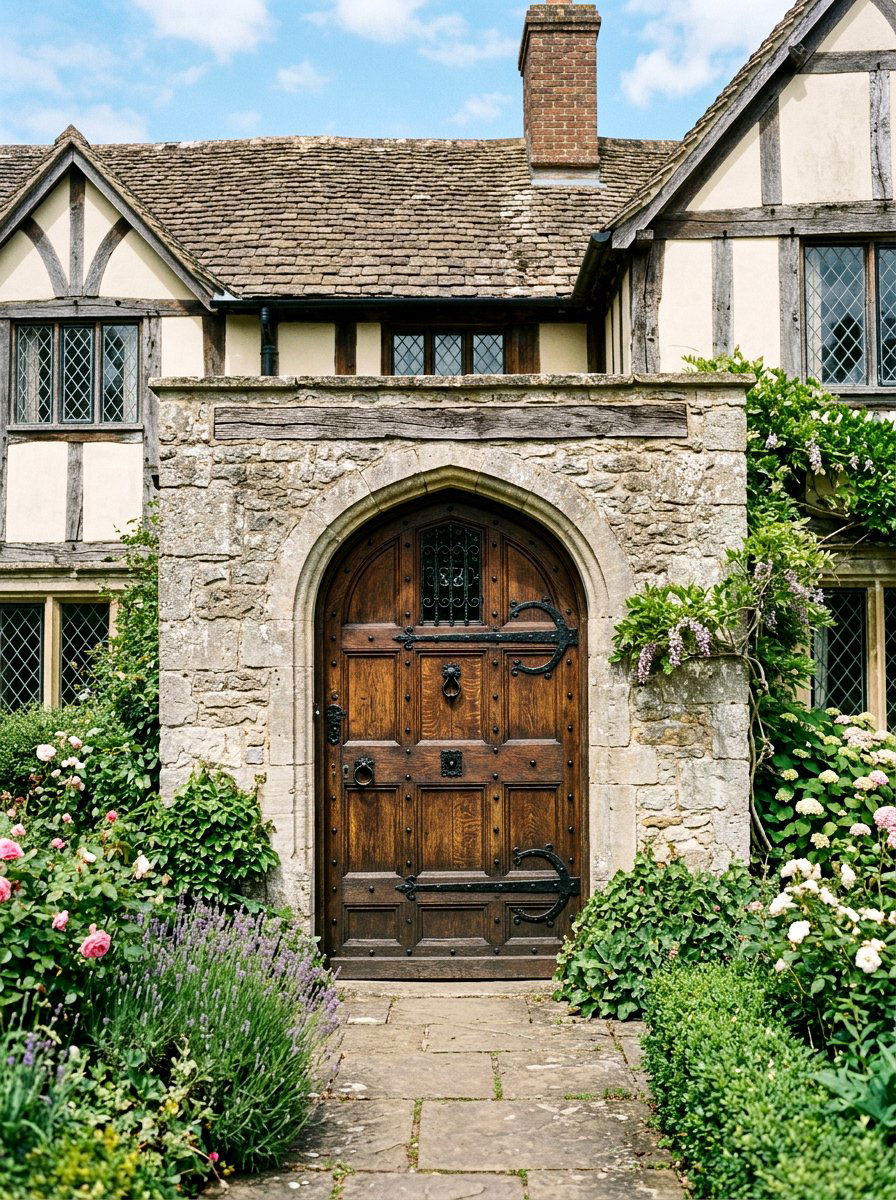
A heavy timber door is the anchor of the Tudor entryway, providing a sense of security and very rich, natural beauty. These doors are often made from solid oak or walnut and feature thick panels, arched tops, and very ornate iron hinges and handles. Some doors also include a small "speakeasy" window with a metal grate for added character and a touch of mystery. Staining the wood in a medium or dark tone allows the natural grain to show through, creating a warm and welcoming focal point. A high-quality wood door is a significant investment that pays off in incredible curb appeal and lasting style.
29. Multi Material Facade
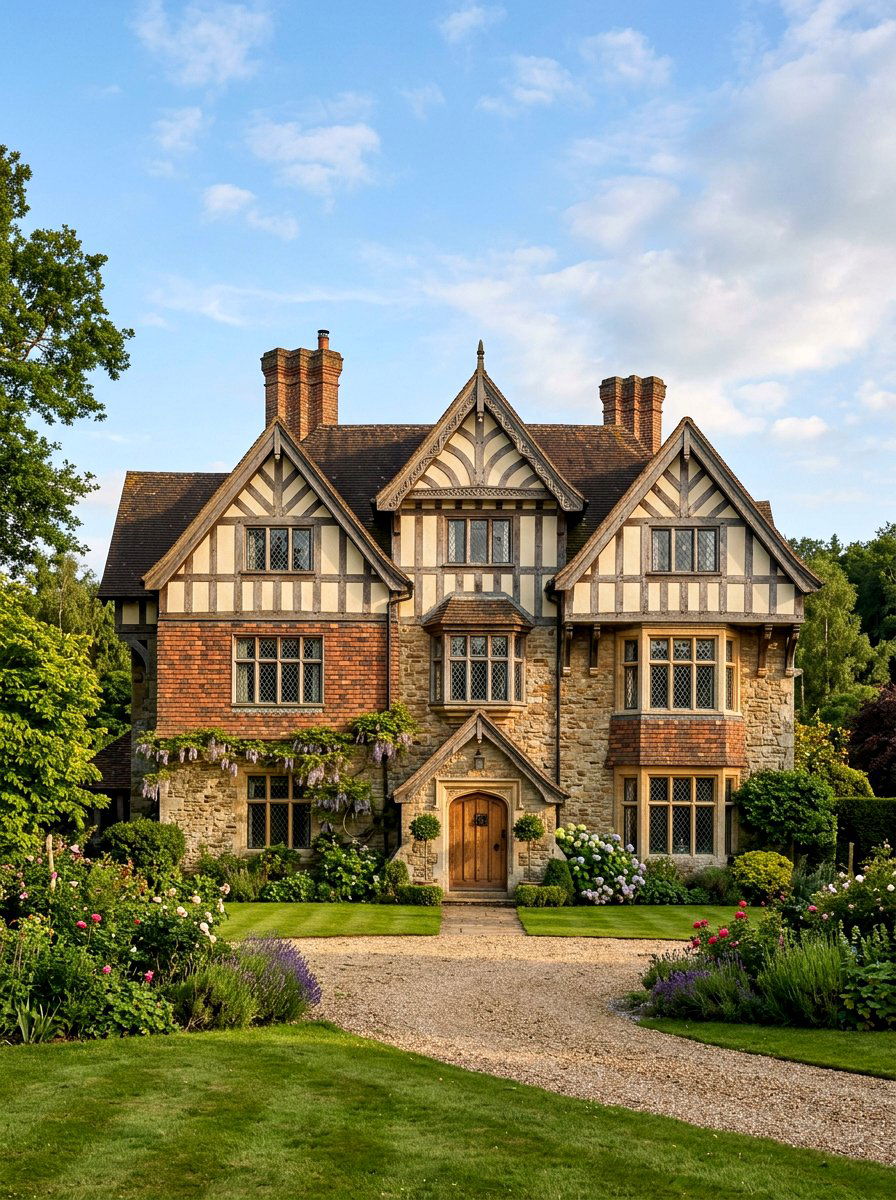
A multi material facade is a hallmark of the classic Tudor style that makes every home look unique and visually interesting. This approach involves using a combination of stone on the base, brick on the first floor, and stucco with timbering on the upper levels. By mixing textures and colors in this way, the house feels more organic and less like a single, manufactured block of building material. This variety helps to break up the large scale of the home and adds a lot of architectural depth to every angle. It allows the designer to highlight specific features, like a prominent chimney or a beautiful set of windows, with ease.
30. Warm Neutral Palette
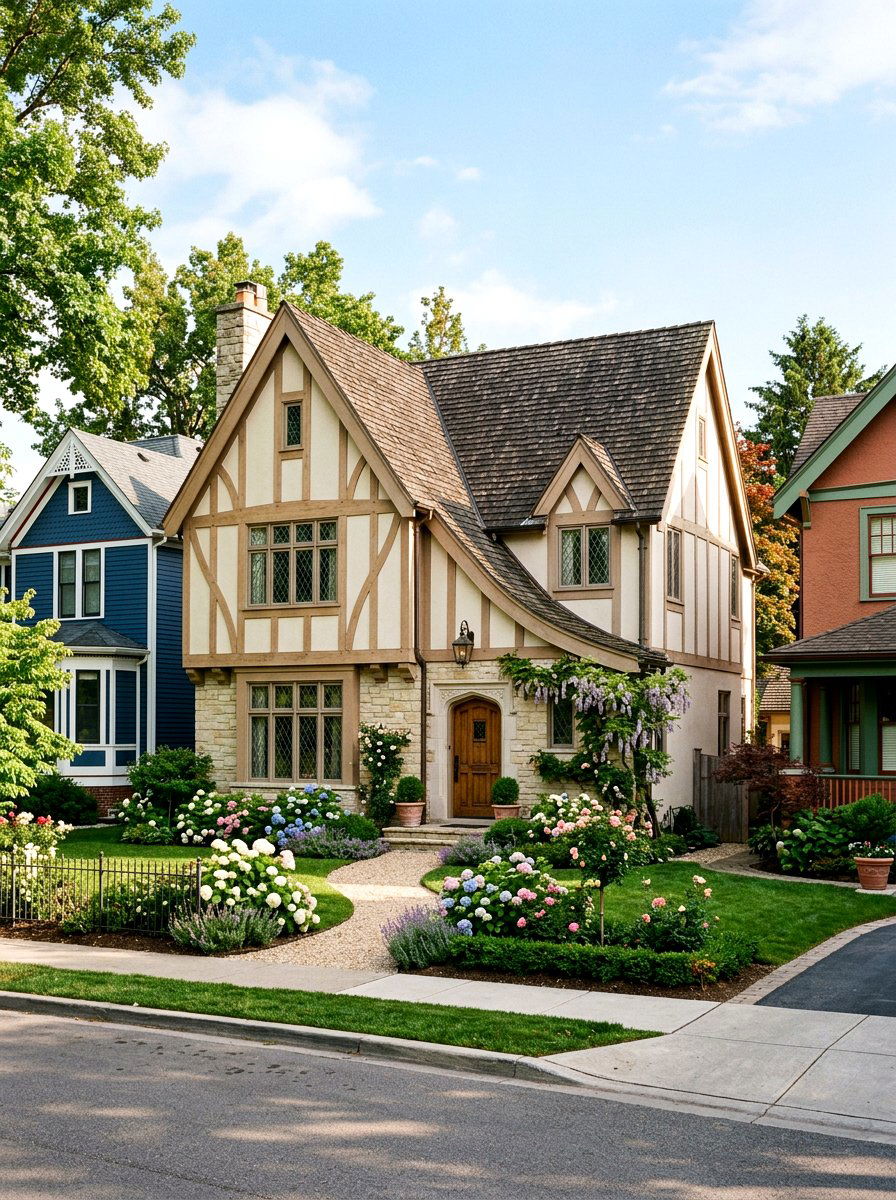
A warm neutral palette provides a sophisticated and very understated look that appeals to many modern luxury home buyers today. Instead of the stark contrast of black and white, this palette uses shades of taupe, tan, cream, and soft brown for a harmonious feel. These warm tones blend beautifully with natural stone and wood, making the house feel very cozy and well-integrated into its environment. This approach is perfect for those who want a Tudor home that feels updated and elegant without being too bold or flashy. It creates a timeless look that will never go out of style and remains very easy to maintain over the years.
Conclusion:
The enduring appeal of the Tudor house lies in its ability to tell a story through architecture and high-quality materials. Whether you prefer the bold contrast of a modern black and white facade or the rustic warmth of a stone-clad cottage, there is a Tudor style that fits every personality. By focusing on iconic details like steep gables, leaded windows, and decorative timbering, you can create a home that feels both historic and perfectly suited for modern living. These thirty ideas demonstrate that with the right combination of textures and colors, any Tudor exterior can become a stunning and very welcoming masterpiece.

Related posts: