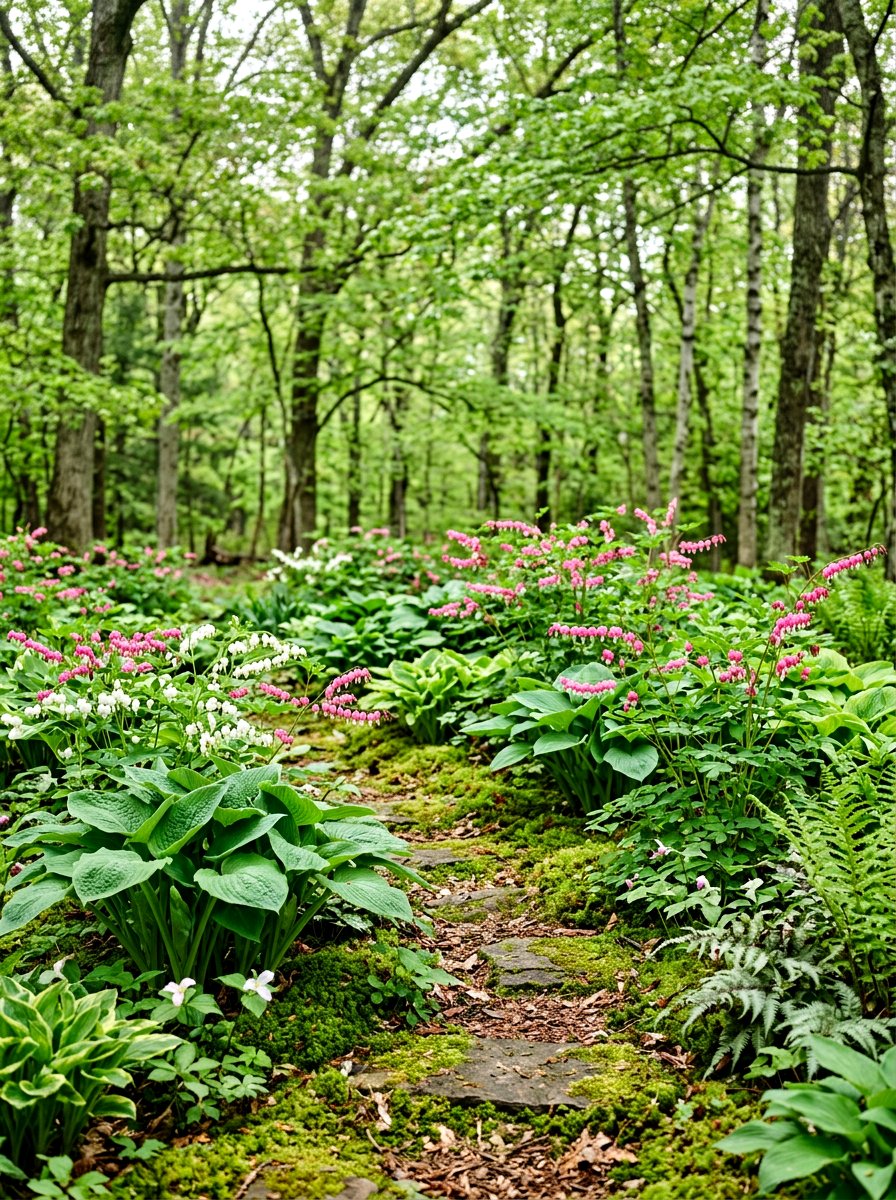
Creating a stunning spring landscape begins with the perfect arrangement of bulbs that bring your yard to life after winter. Tulips are the quintessential choice for gardeners who want high-impact color and versatile shapes. These flowers offer an incredible range of hues, from soft pastels to bold, saturated tones that can define the edges of your property. Planning a tulip border requires a thoughtful approach to timing, height, and color coordination to ensure a professional look. Whether you prefer a structured formal appearance or a wild cottage aesthetic, these spring favorites provide endless possibilities for every outdoor space. By choosing the right varieties, you can enjoy several weeks of continuous bloom that greets every visitor with a cheerful and sophisticated display of seasonal beauty.
1. Mixed Color Tulip Garden
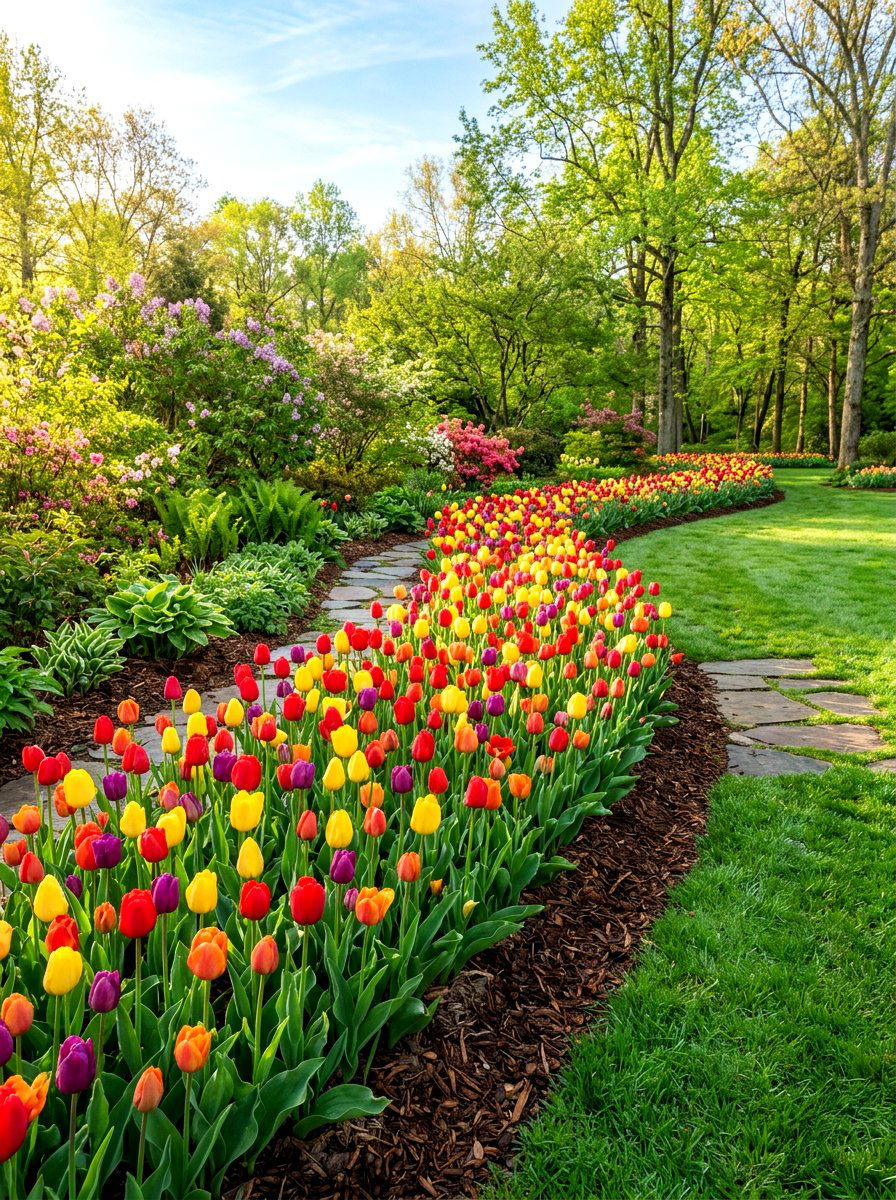
Creating a mixed color tulip garden is one of the most effective ways to celebrate the arrival of spring with maximum energy. This approach involves blending several different varieties together to form a tapestry of vibrant shades along your walkway or fence line. To achieve a balanced look, you should select bulbs that bloom at the same time, such as mid-season Triumph tulips. Mixing primary colors like red, yellow, and blue-toned purples creates a high-contrast visual that draws the eye immediately. You can plant them in a random, scattered fashion to mimic a natural meadow or group them in small clusters for a more intentional yet diverse aesthetic. This style works perfectly for large front yard borders where you want to make a bold statement that neighbors will notice.
2. Red And Yellow Tulip Path
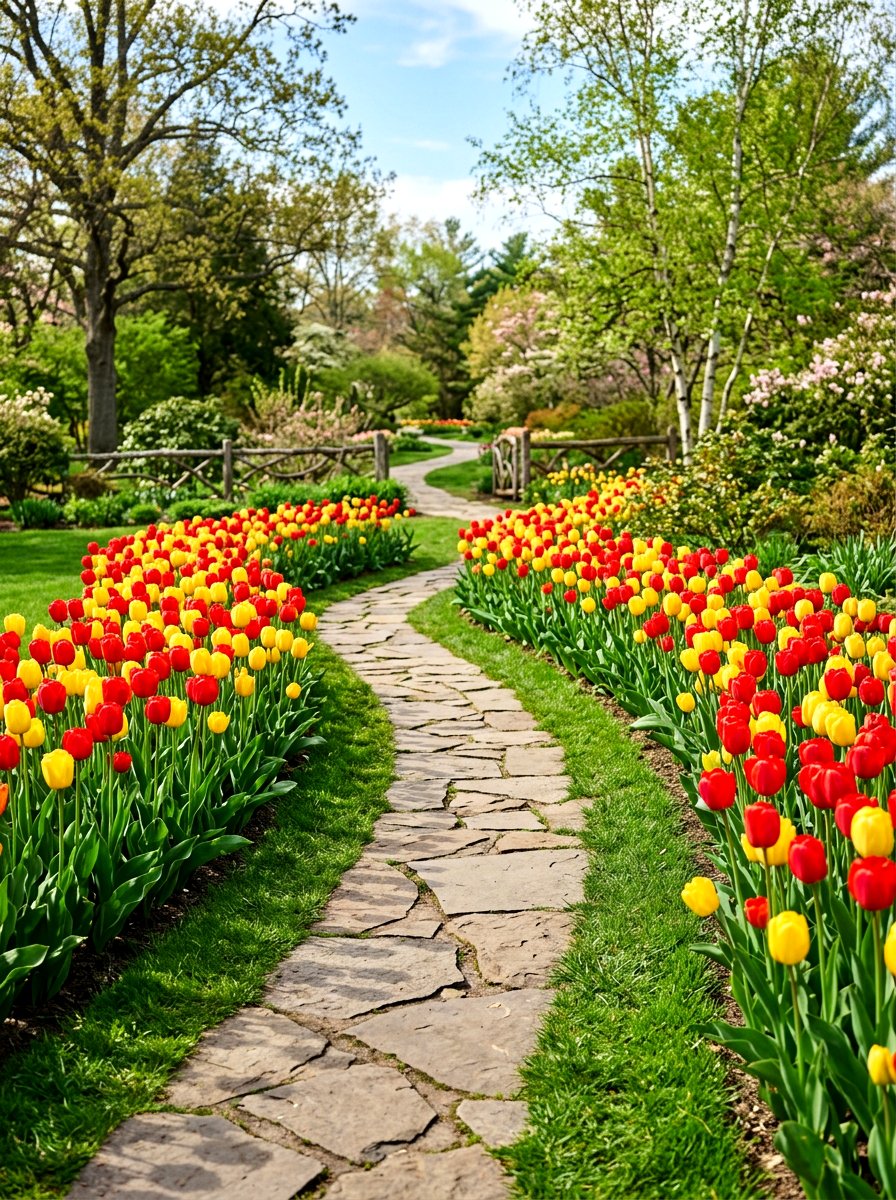
A red and yellow tulip path offers a classic, high-visibility look that feels both traditional and incredibly warm. These two colors are naturally complementary in a garden setting because they both possess high levels of saturation. When you line a stone or gravel walkway with these fiery tones, you create an inviting entrance that guides guests toward your home. You might choose tall Darwin Hybrid tulips for this layout because they produce massive blooms and sturdy stems that withstand spring winds. Planting them in alternating clumps or long, straight rows provides a sense of order and rhythm. This color combination is especially effective against green lawns or dark mulch, as the brightness of the yellow highlights the deep richness of the red petals throughout the blooming season.
3. White Tulip Border
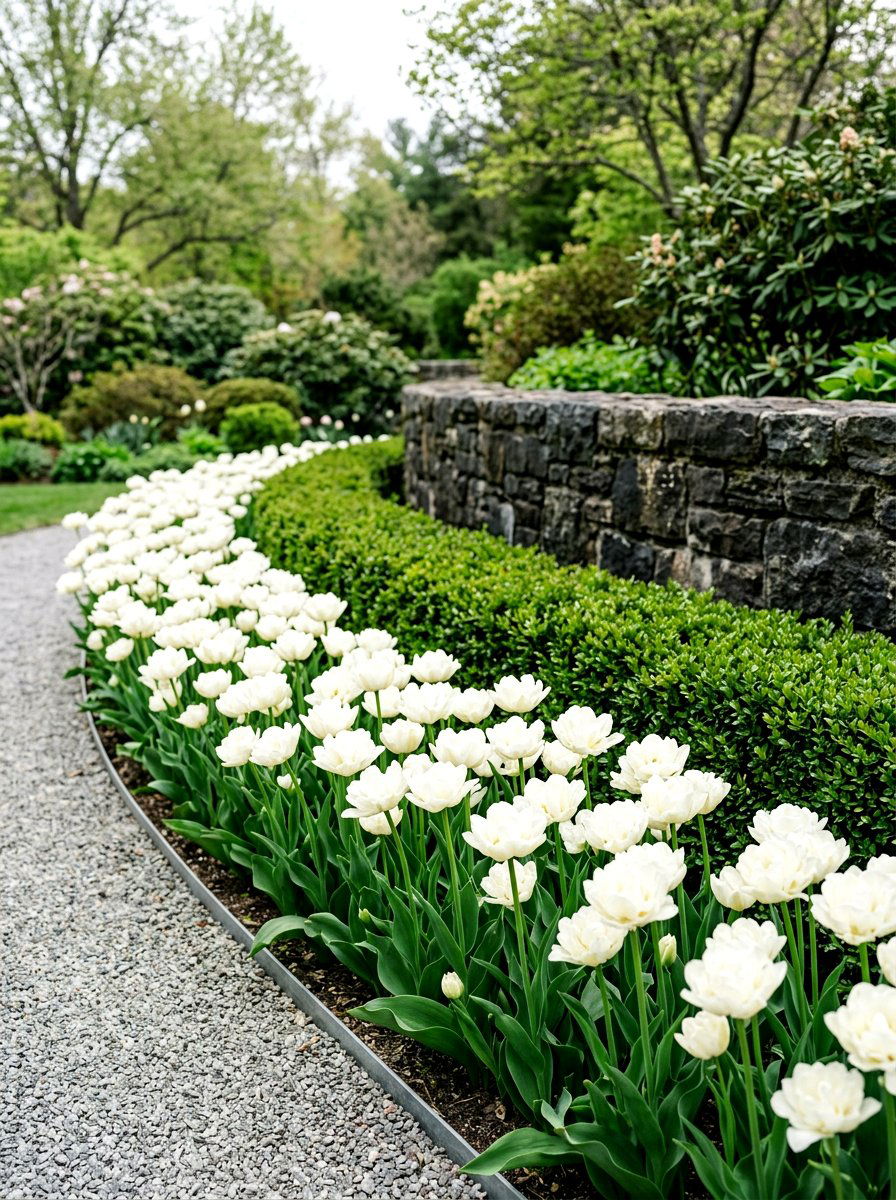
A white tulip border brings an unparalleled sense of elegance and serenity to any landscape design. Using a single color creates a sophisticated, monochromatic look that feels very modern and clean. White tulips, such as the 'Mount Tacoma' or 'Purissima' varieties, look stunning against a backdrop of dark green evergreen shrubs or a charcoal-colored stone wall. This design choice is perfect for evening gardens because white petals reflect the moonlight, making the border glow after the sun goes down. To add visual interest without changing the color, you can mix different flower shapes, like combining standard single tulips with fringed or double-peony types. This texture-rich approach keeps the monochromatic scheme from looking flat while maintaining a very cohesive and peaceful atmosphere in your outdoor living space.
4. Tulip And Forget Me Not Planting
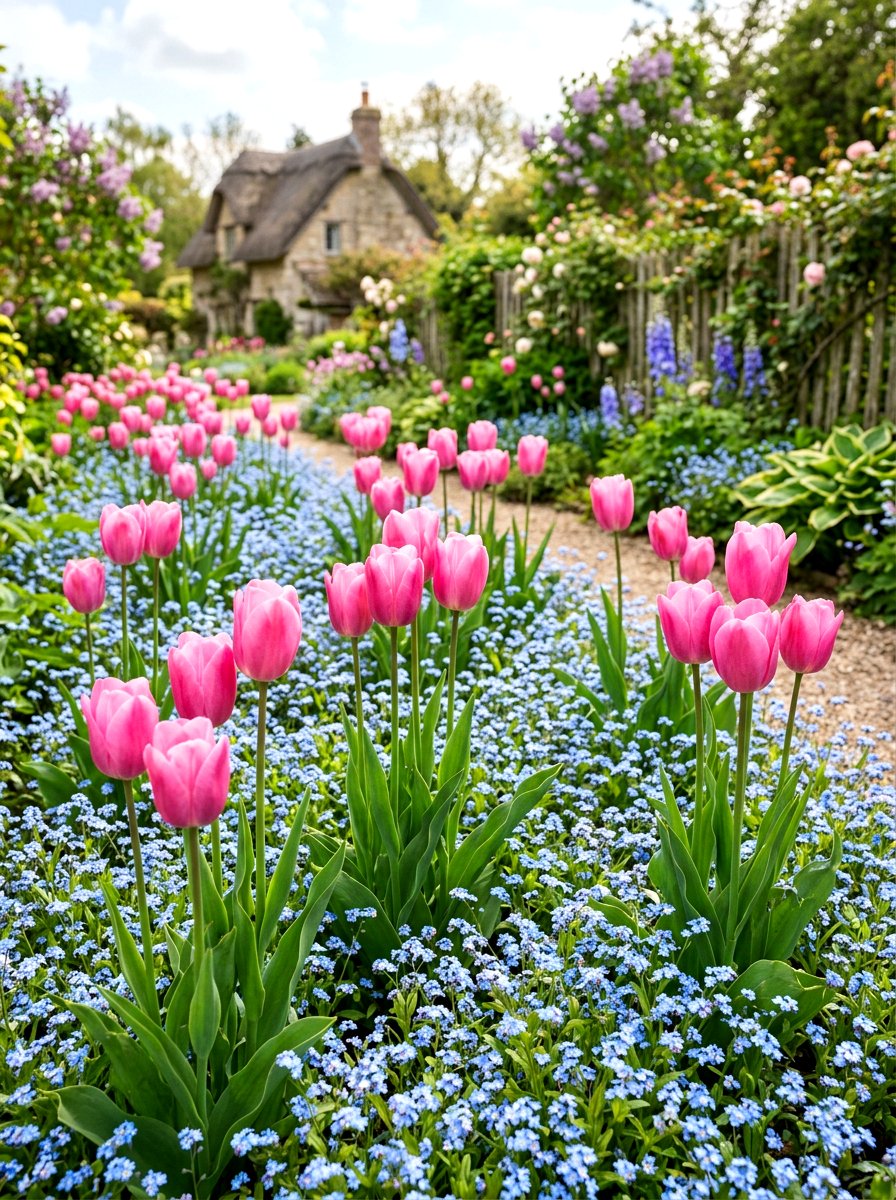
Combining a tulip and forget me not planting is a timeless technique used in many professional cottage gardens. The tiny, sky-blue flowers of the forget-me-nots act as a living mulch, filling in the gaps between the taller tulip stems. This creates a soft, hazy blue carpet that makes the tulips appear as if they are floating in a dreamlike cloud. You can use pink or yellow tulips for a soft pastel look, or choose bright orange tulips for a striking color contrast against the blue background. This pairing is excellent for obscuring the soil and providing a secondary layer of interest once the tulip foliage begins to fade. It is a low-maintenance way to achieve a very full and lush border that looks professionally designed with minimal effort.
5. Layered Spring Bulb Garden
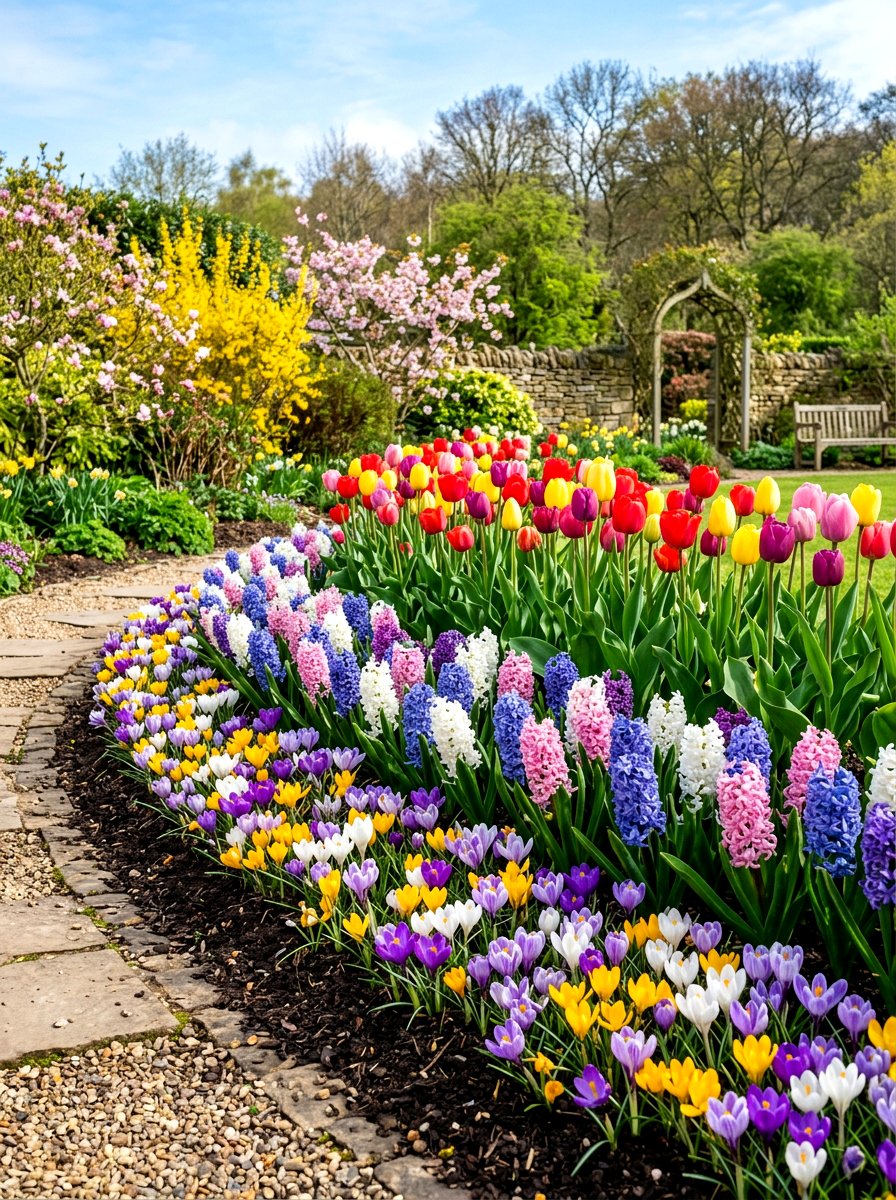
Developing a layered spring bulb garden allows you to maximize the use of limited space while extending your blooming window. This technique, often called "lasagna planting, " involves placing larger, later-blooming tulip bulbs deeper in the soil and smaller, earlier bulbs like crocus or grape hyacinths closer to the surface. As the early flowers finish, the tulips grow up through them, providing a fresh wave of color in the same footprint. For a border, you can arrange these layers so the heights are staggered, with the tallest tulips in the back and the shortest species in the front. This creates a 3D effect that feels very lush and intentional. Using various heights ensures that every inch of your garden bed is performing and contributing to the overall visual impact.
6. Pink Tulip Edging
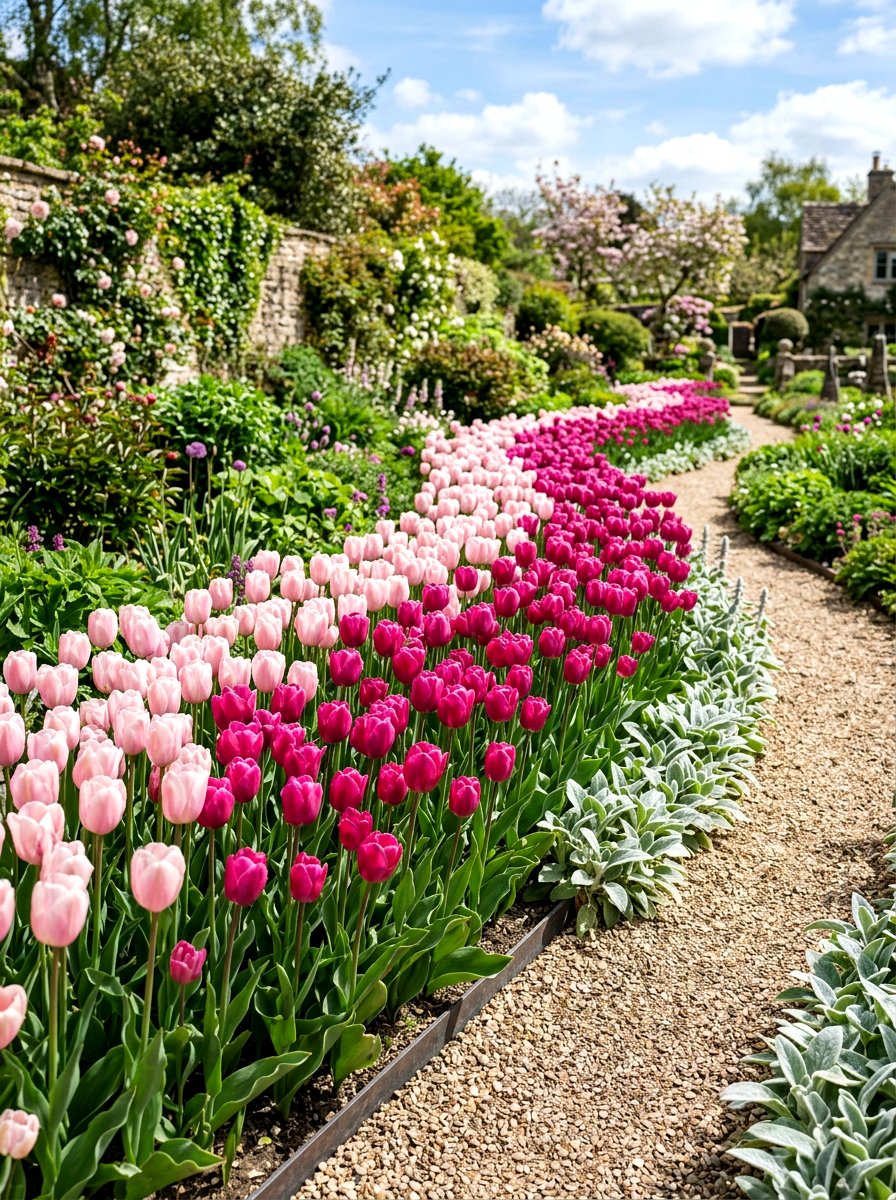
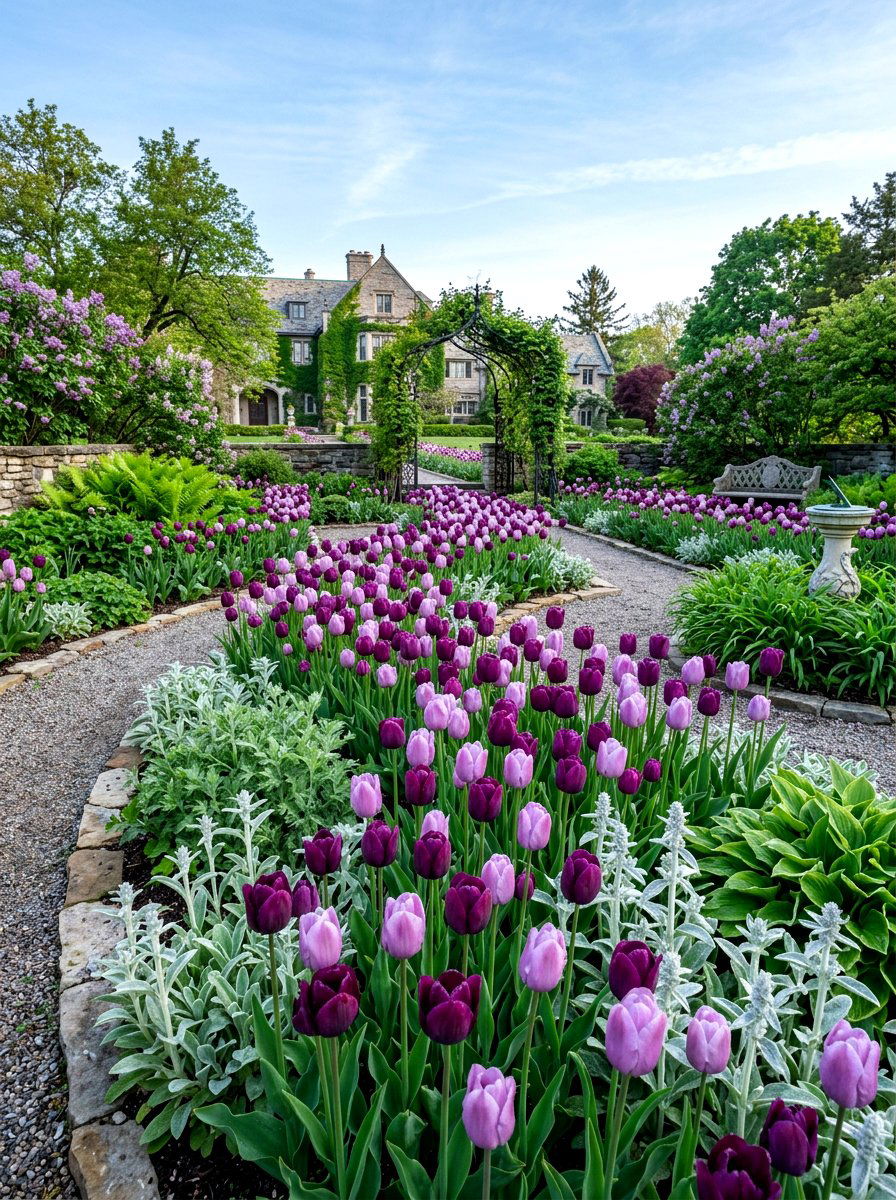
Pink tulip edging is a fantastic way to add a touch of romance and softness to your garden boundaries. From pale blush to deep magenta, the spectrum of pink allows you to create a beautiful gradient along your garden path. You can plant light pink varieties in the front and transition to darker fuchsia tones in the back to create depth. These flowers look particularly lovely when paired with silver-leafed perennials like lamb’s ear or dusty miller, which can serve as a permanent edge once the tulips are done. This design style is very popular for backyard borders near patios or seating areas where the delicate beauty of the flowers can be appreciated up close. It provides a cheerful and welcoming vibe that perfectly captures the essence of spring.
7. Double Late Tulip Bed
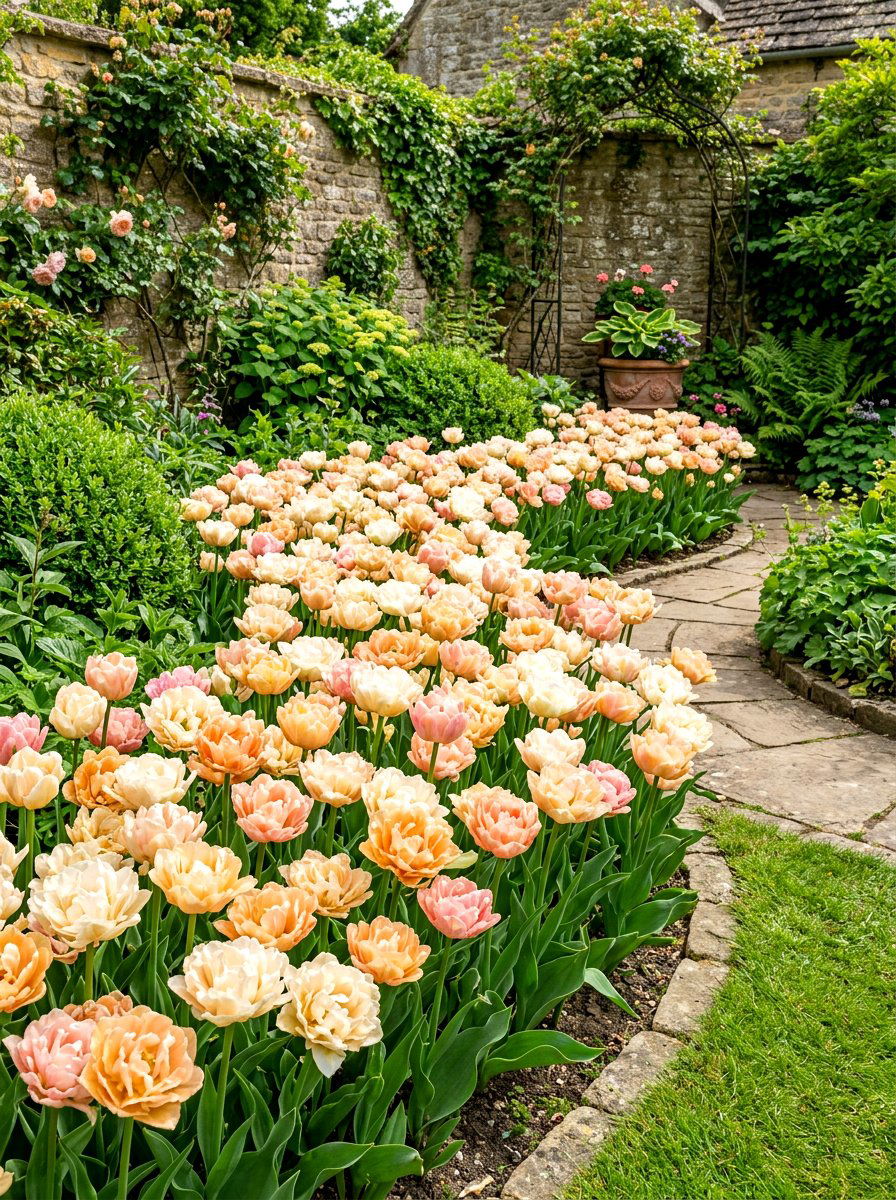
A double late tulip bed is the perfect choice for gardeners who want flowers that look more like peonies or roses than traditional tulips. These varieties have extra layers of petals, giving them a heavy, luxurious appearance that fills a border beautifully. Because they bloom toward the end of the tulip season, they are great for bridging the gap between spring bulbs and early summer perennials. Planting them in dense groups creates a lush, floral carpet that feels incredibly decadent. You should choose a sheltered spot for these varieties, as their heavy heads can sometimes droop after a heavy rain. When supported by other low-growing plants, they stand tall and provide a dramatic focal point that adds a high-end feel to your landscape.
8. Tulip And Pansy Combo
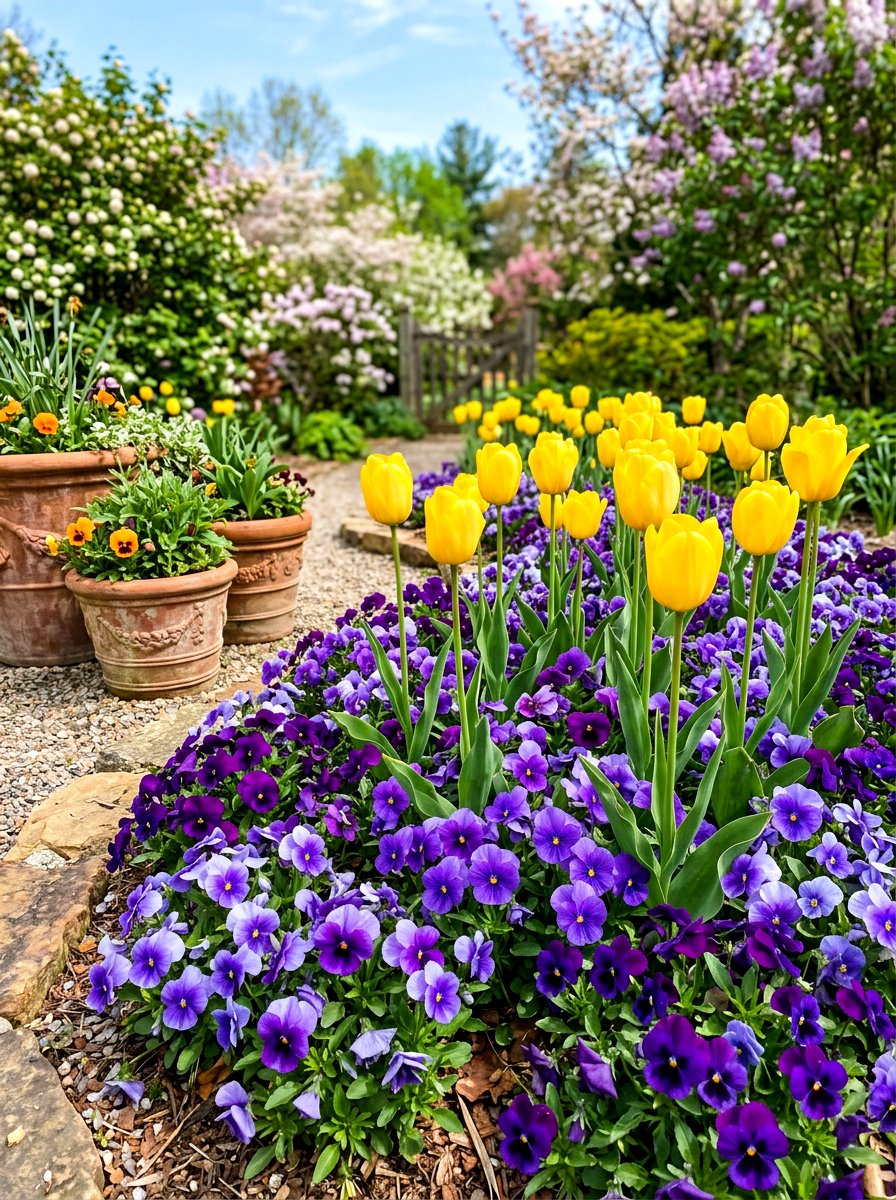
The tulip and pansy combo is a staple for early spring borders because both plants thrive in the cool weather of the season. Pansies provide immediate color in the late winter and early spring, and then the tulips emerge from the center of the pansy clusters a few weeks later. This creates a two-tiered effect where the ground is covered in small, cheerful faces while the tulips provide height and structure. You can coordinate the colors for a matching look, such as purple pansies with lavender tulips, or go for a high-contrast pairing like yellow pansies with dark maroon tulips. This combination ensures that your garden beds never look empty or bare during the transition from the cold months into the peak of the spring growing season.
9. Purple Tulip Landscape
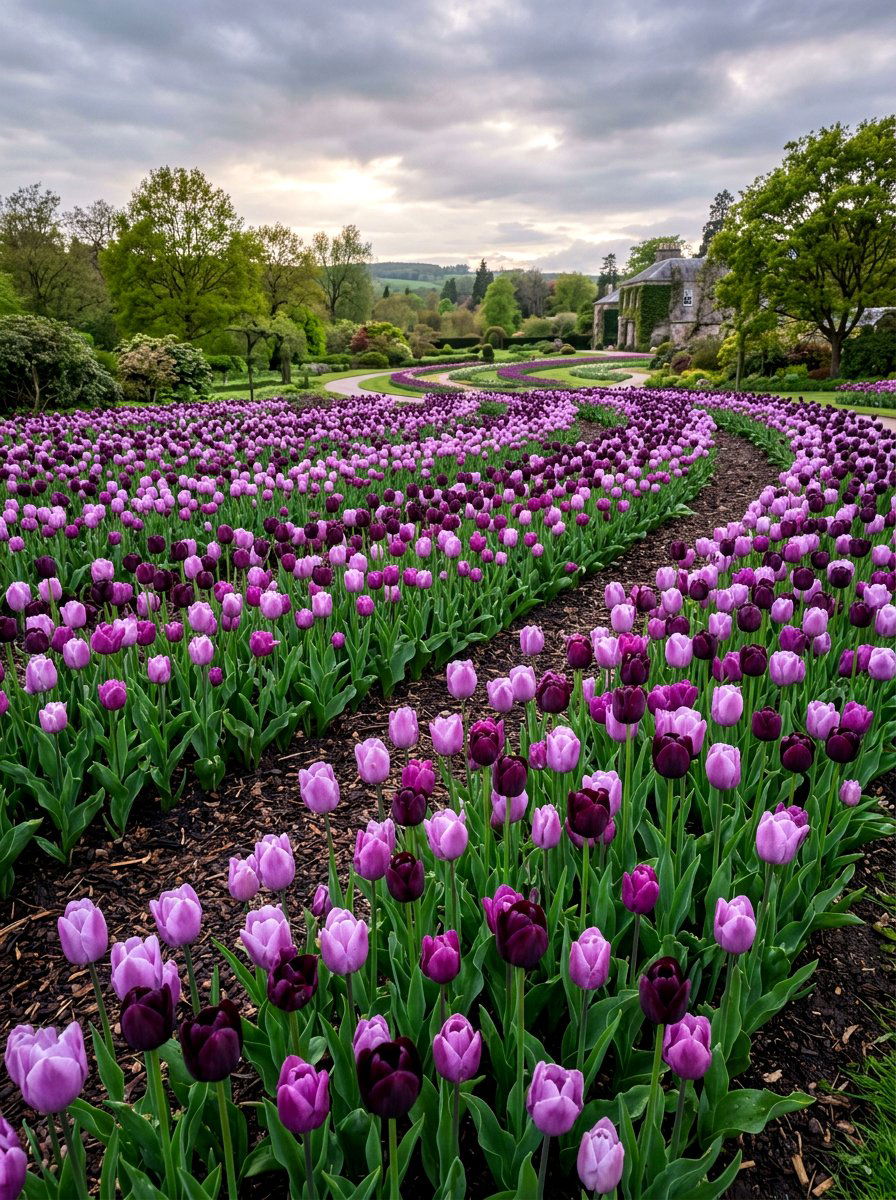
Creating a purple tulip landscape adds a regal and mysterious vibe to your property. Purple is a versatile color that ranges from light lilac to almost black, allowing for a lot of creativity within a single color family. A border filled with various shades of purple creates a very rich and moody aesthetic that stands out against the standard greens and yellows of a typical spring garden. You can use tall, dark purple tulips like 'Queen of Night' as a backdrop for shorter, lighter lavender varieties to create a sense of vertical movement. This color palette is also very attractive to early-season pollinators. When planted in large drifts, purple tulips provide a cohesive and professional look that feels very sophisticated and well-planned for any modern home.
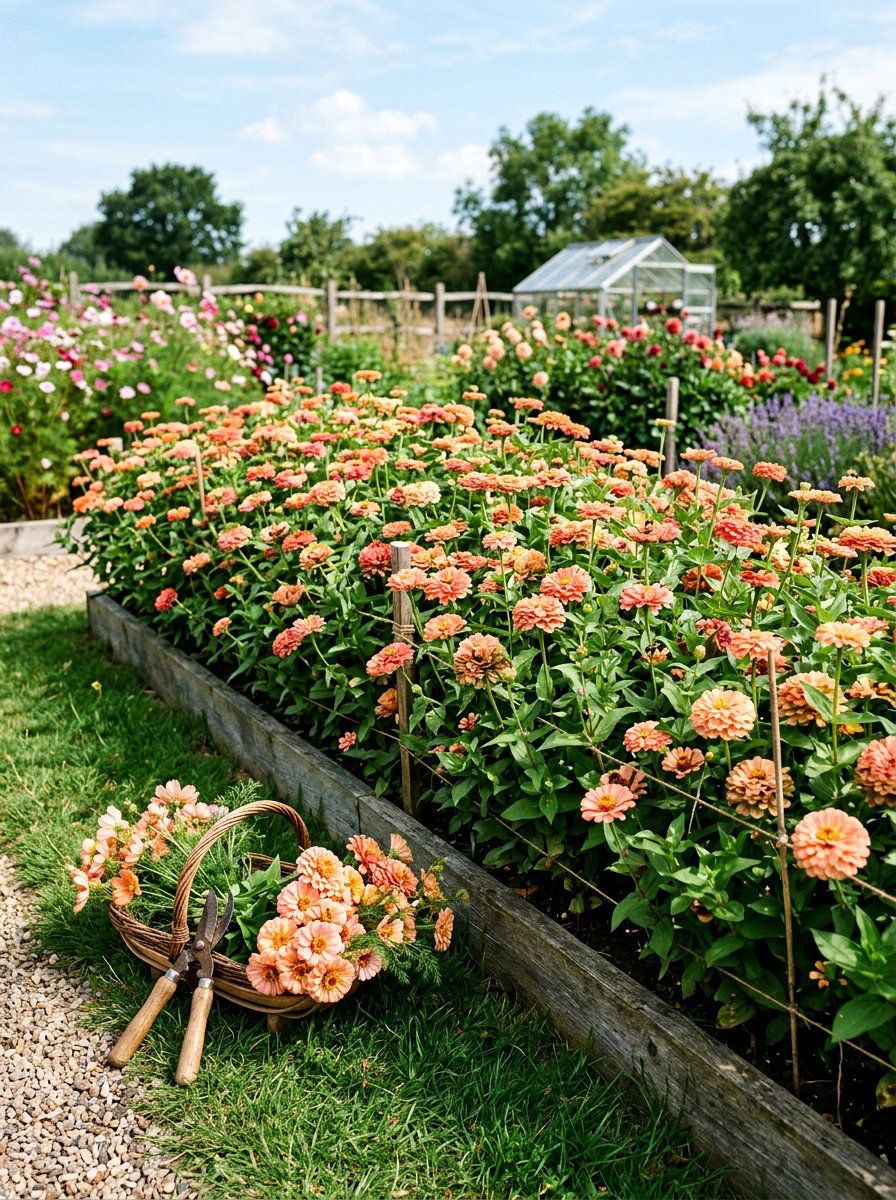
10. Darwin Hybrid Tulip Row
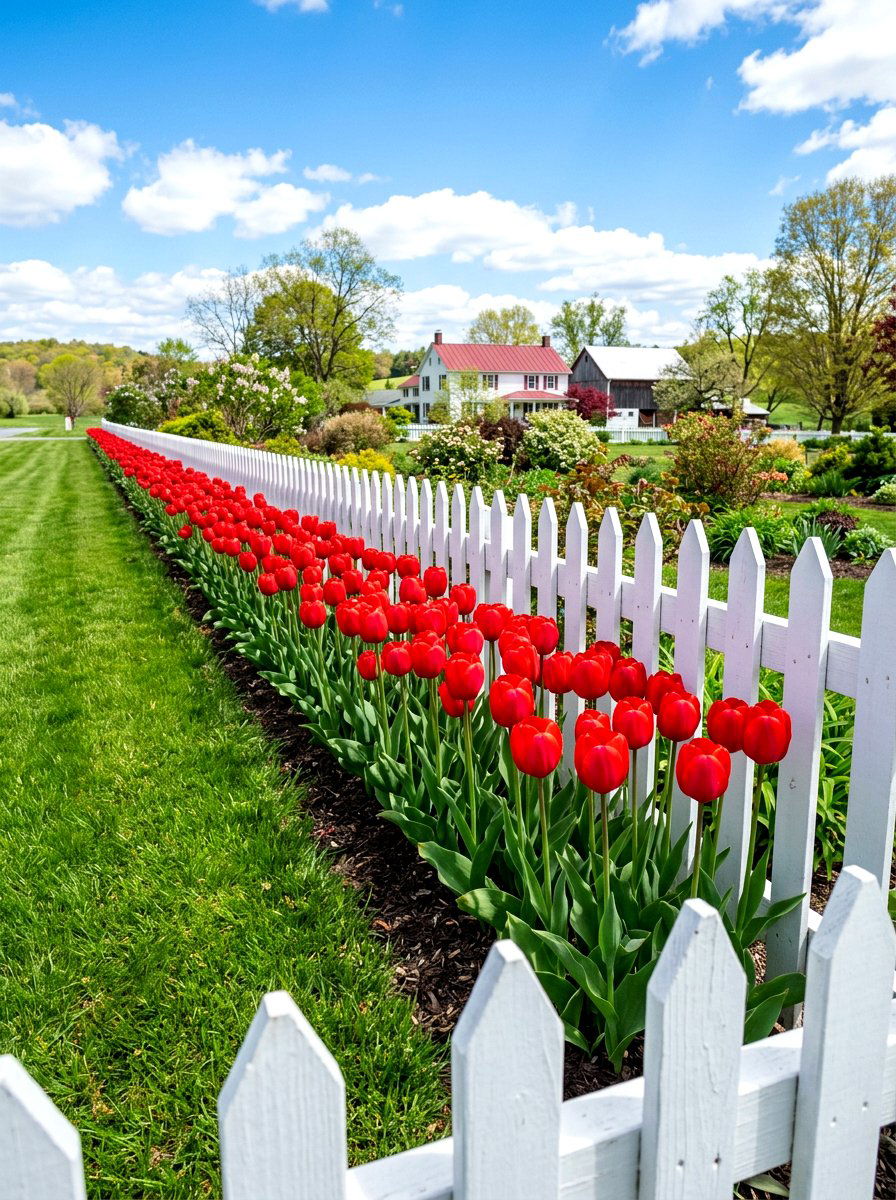
A Darwin Hybrid tulip row is the ultimate choice for a long-lasting and sturdy border display. These tulips are famous for their large, wind-resistant flower heads and their ability to return year after year, which is rare for many modern tulip hybrids. When you plant them in a long, straight row along a driveway or a fence, they create a clean and architectural line that looks very impressive. They are available in many bold colors, including orange, red, and bicolors, which makes them very versatile for different home styles. Because they are so tall and strong, they can also act as a beautiful backdrop for shorter spring flowers. Their reliable performance makes them a favorite for gardeners who want a high-impact border with minimal replacement needs.
11. Cottage Garden Tulip Border
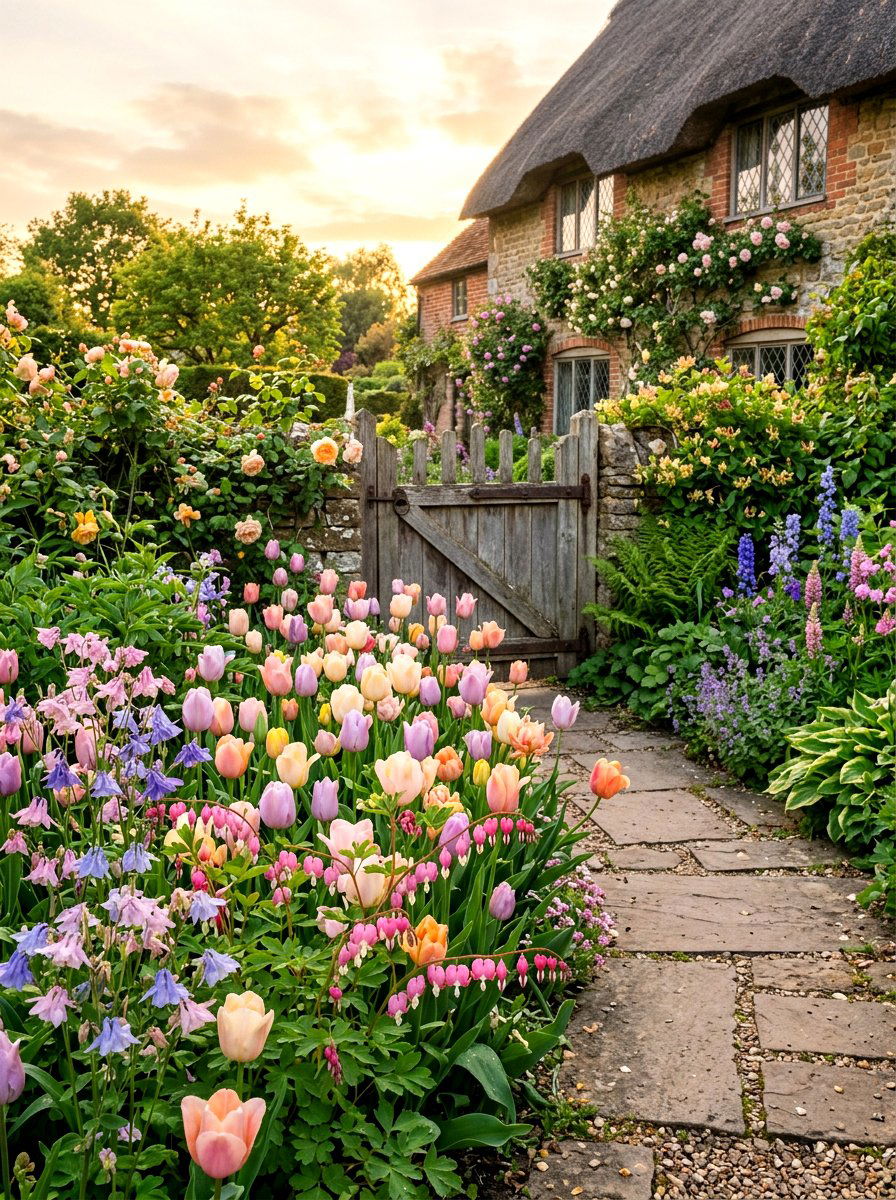
A cottage garden tulip border focuses on a relaxed and informal arrangement that feels natural and whimsical. Instead of straight rows, bulbs are planted in irregular clusters and intermingled with other spring-blooming perennials like bleeding hearts or columbine. This style often uses a mix of soft pastels and antique-looking varieties with ruffled edges or variegated colors. The goal is to make the garden look as though it grew that way on its own over many years. Using various heights and bloom times ensures that the border stays interesting for several weeks. This approach is perfect for smaller backyard spaces or historic homes where a rigid, formal landscape might feel out of place. It encourages a sense of discovery as you walk through the winding garden paths.
12. Naturalized Tulip Drift
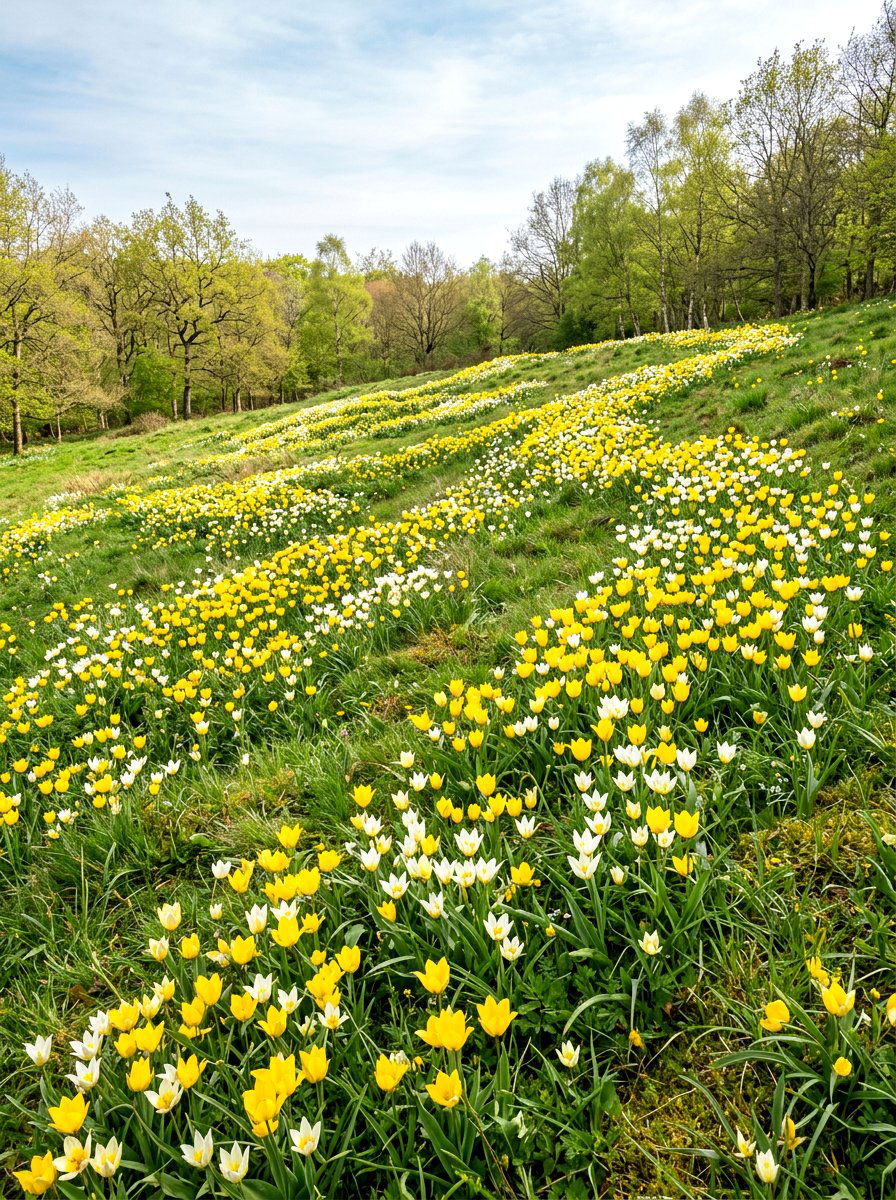
A naturalized tulip drift is a design technique where bulbs are planted in large, sweeping waves that mimic how they might grow in the wild. This look is achieved by gently tossing the bulbs onto the ground and planting them exactly where they land, rather than using a ruler for spacing. This style is particularly effective on slopes or in the transition area between a manicured lawn and a wooded spot. Species tulips or smaller botanical varieties are often best for this, as they are more likely to multiply and spread over time. The result is a breathtaking sea of color that feels expansive and organic. It is a low-maintenance way to fill large areas with spring interest while creating a very poetic and artistic landscape.
13. Parrot Tulip Garden Display
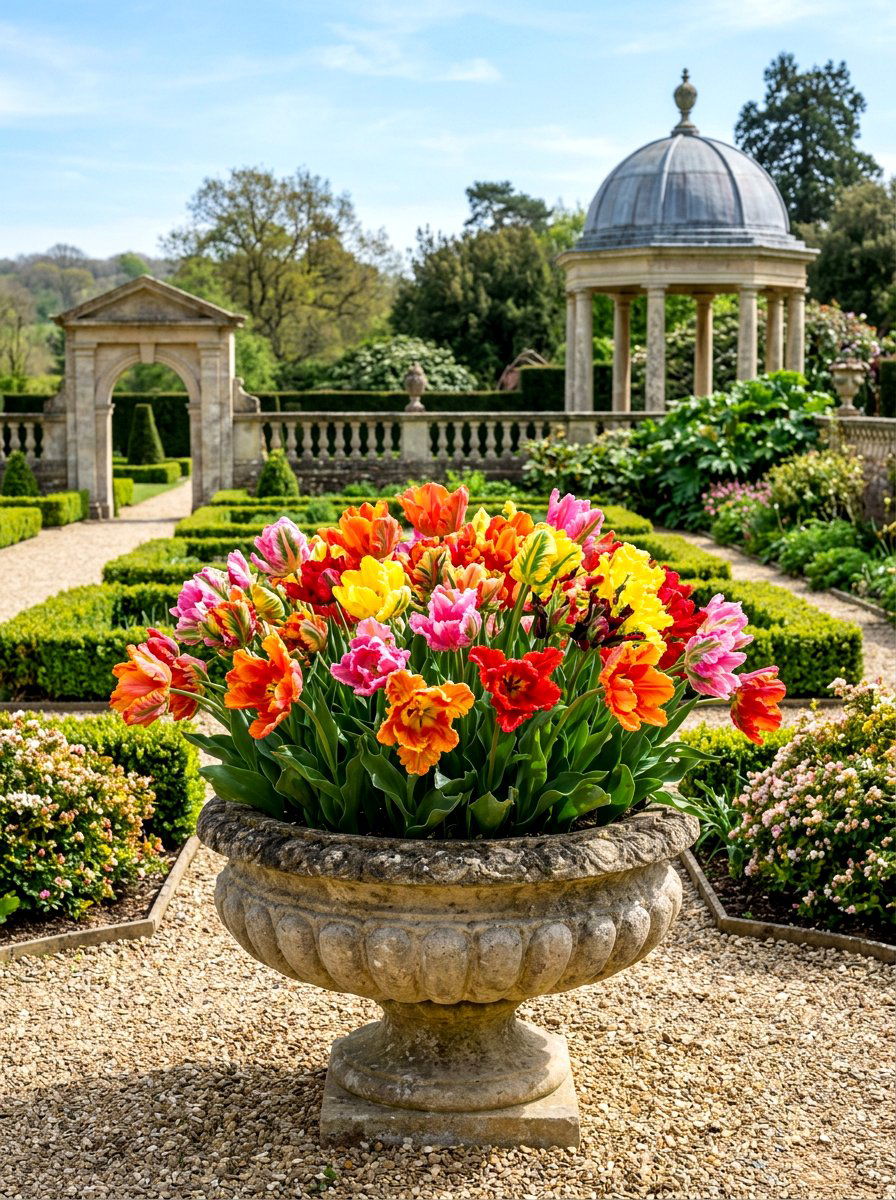
A parrot tulip garden display is all about high drama and exotic textures. These tulips feature twisted, ruffled, and fringed petals that often have multi-colored streaks, resembling the bright feathers of a tropical bird. Because their appearance is so unique, they are best showcased in a dedicated border where they can be the main attraction. Planting them in a visible spot near a front door or a walkway allows guests to appreciate the intricate details of the blooms. Their large, heavy flowers provide a lot of visual weight, making a small border feel very full and luxurious. Parrot tulips are conversation starters and are perfect for the gardener who wants something a little different and more artistic than the standard cup-shaped flower varieties.
14. Orange Tulip Flower Bed
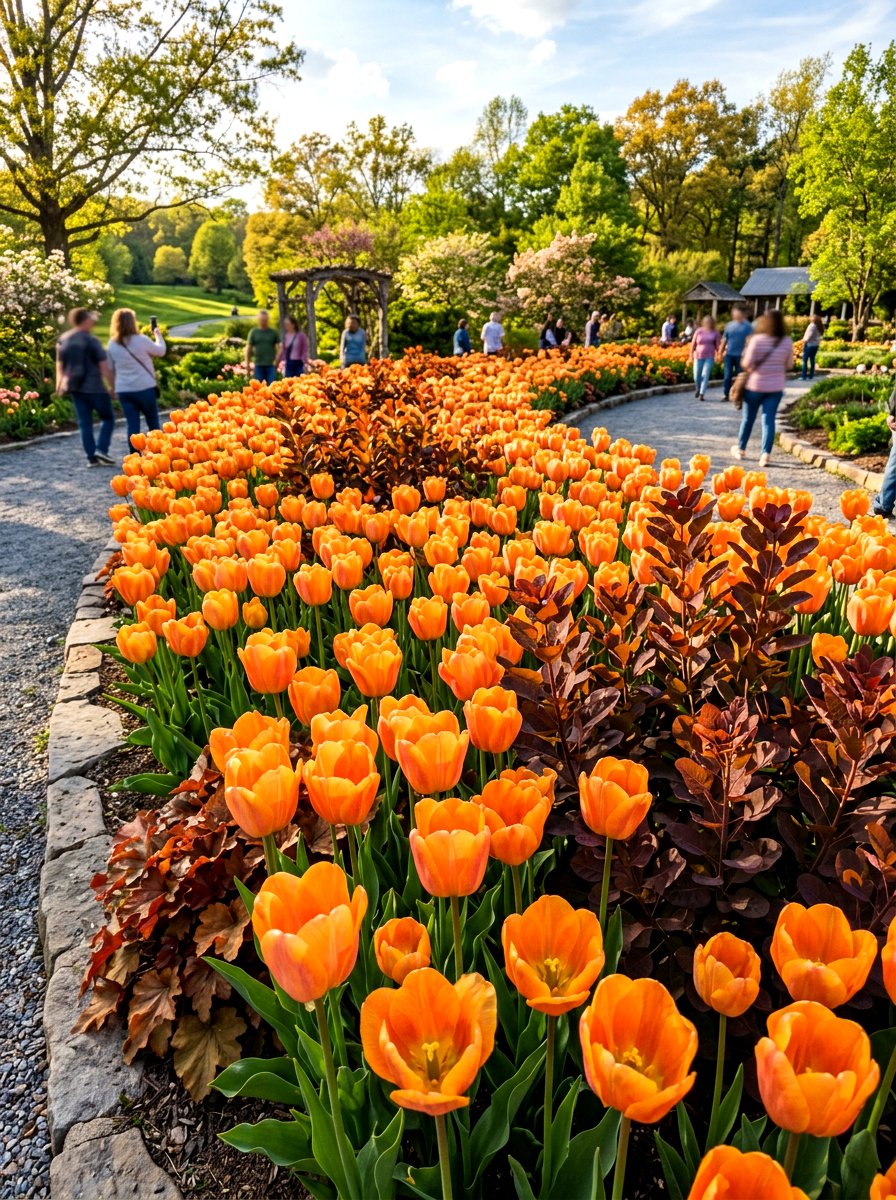
An orange tulip flower bed brings a burst of energy and warmth to the landscape that is hard to ignore. Orange is a color that signifies enthusiasm and joy, making it a perfect choice for a spring celebration. When you plant orange tulips in a concentrated bed, they create a glowing effect, especially during the golden hour of the afternoon sun. You can mix different shades of orange, from soft apricot to bright tangerine, to add depth and dimension to the planting area. This color looks particularly striking when paired with bronze-leafed plants or dark mulch. It is a bold choice that works well in modern landscapes or Mediterranean-style gardens where vibrant colors are often used to create a sunny and inviting outdoor atmosphere.
15. Tulip And Daffodil Mix
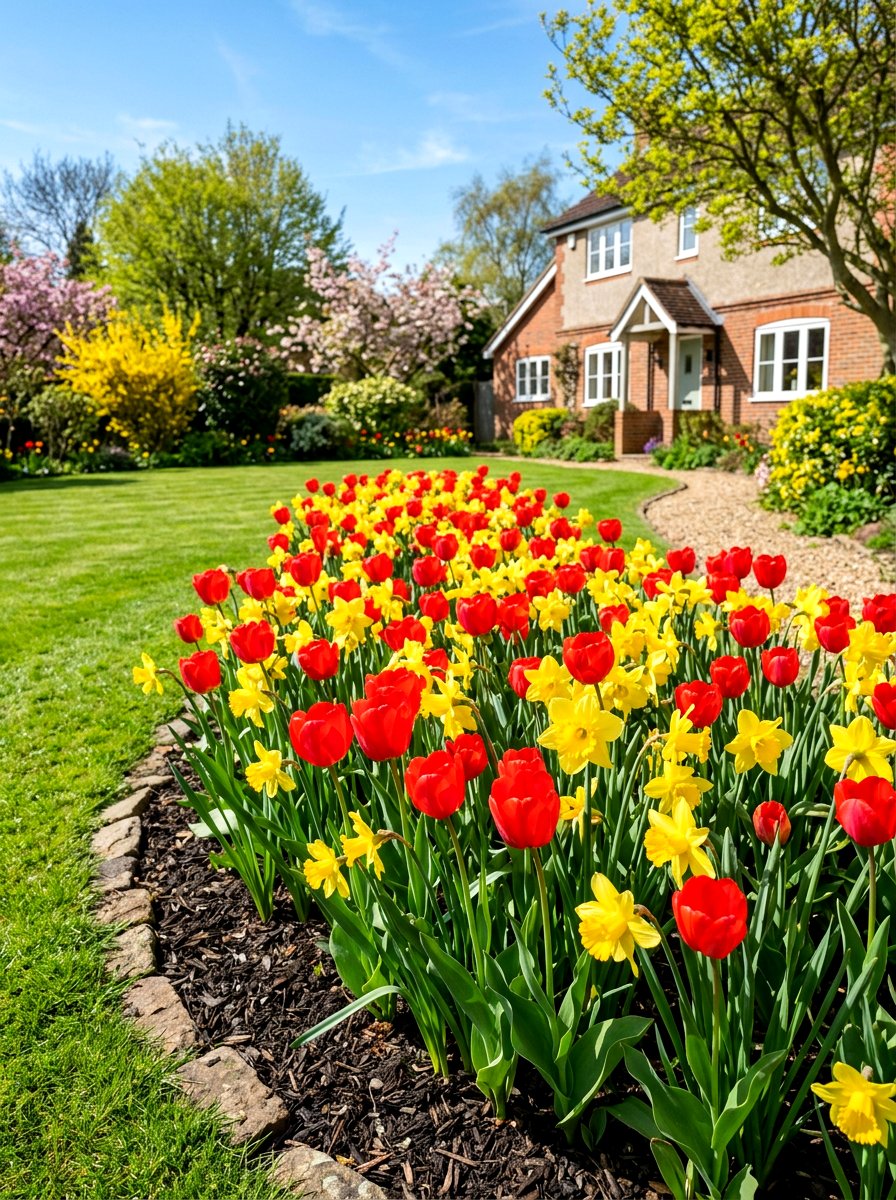
The tulip and daffodil mix is perhaps the most iconic pairing in the world of spring gardening. These two bulbs complement each other perfectly because they offer different shapes, sizes, and textures. While daffodils provide a bright, cheery base with their trumpet shapes, tulips add height and a vast array of colors. By mixing them together in a border, you can ensure a longer bloom time, as daffodils often start slightly earlier than many tulip varieties. This combination is also very practical because daffodils are deer and rabbit resistant, often helping to protect the more vulnerable tulips from being eaten. This classic duo creates a quintessential spring look that feels nostalgic, reliable, and incredibly full of life in any yard or garden setting.
16. Modern Minimalist Tulip Border
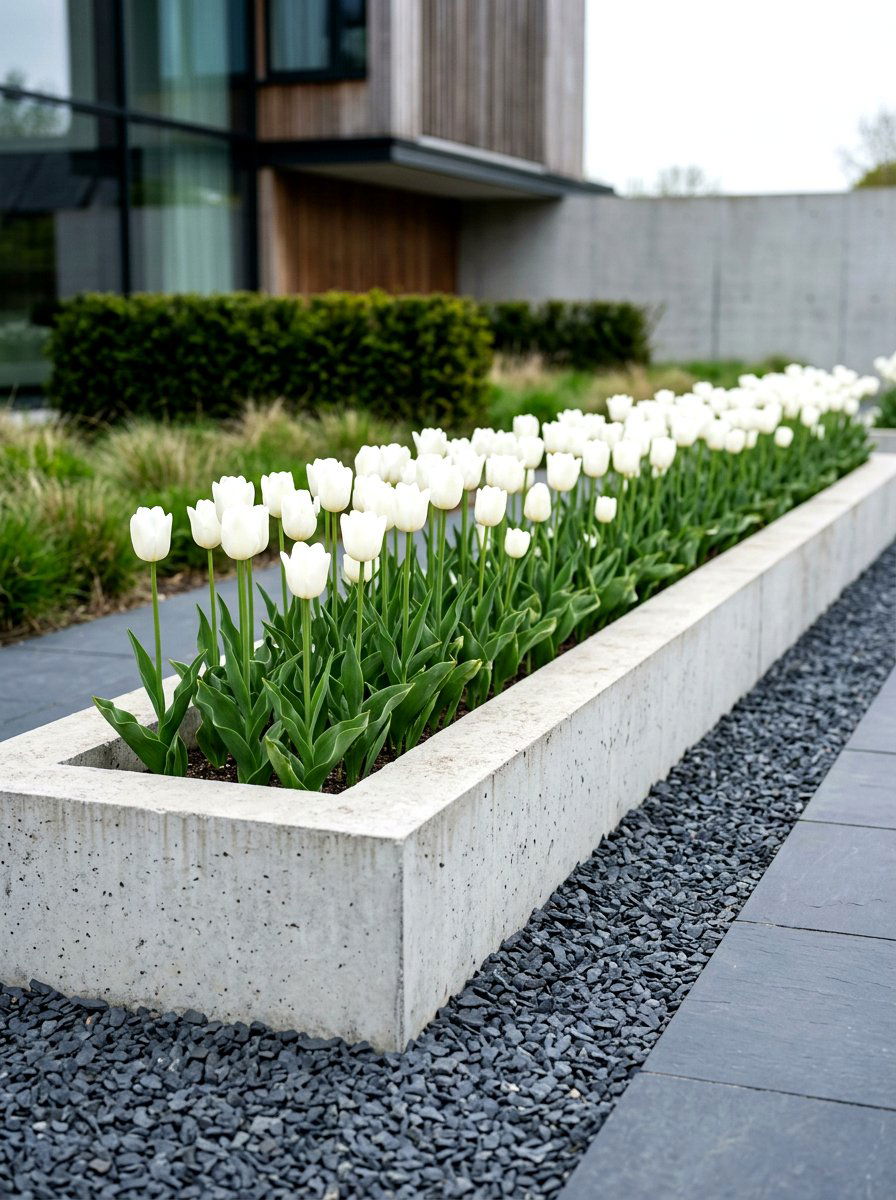
A modern minimalist tulip border focuses on simplicity, clean lines, and a limited color palette to create a high-impact architectural look. This style often uses a single variety of tulip planted in a very precise, geometric grid or a single, long narrow line. White, black, or deep red tulips are common choices for this aesthetic, as they provide a strong silhouette against modern building materials like concrete, steel, or dark wood. The spacing is kept very consistent to emphasize the form of the plant rather than a mass of color. This approach works beautifully in urban gardens or contemporary landscapes where the goal is to create a sense of order and sophisticated restraint. It proves that you don't need dozens of colors to create a stunning garden.
17. Curvy Tulip Garden Path
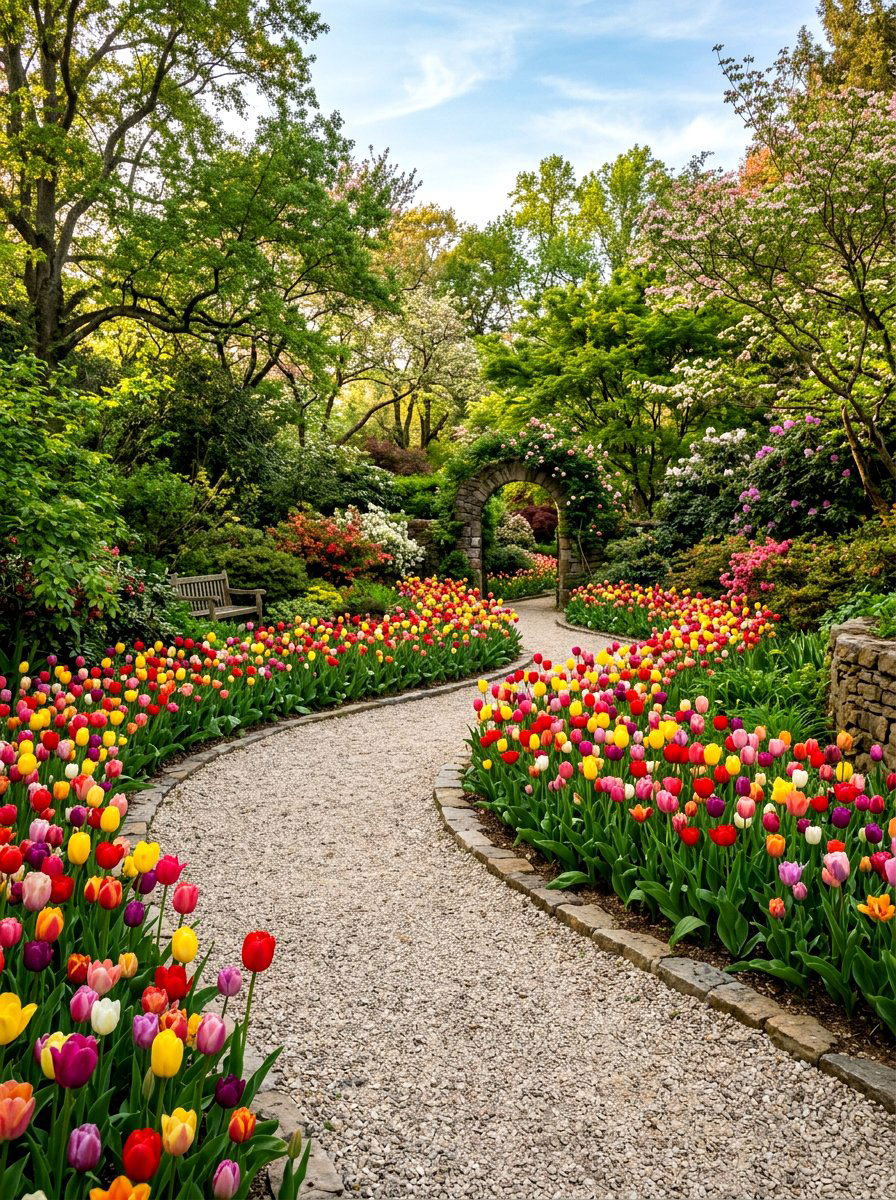
A curvy tulip garden path uses soft lines and organic shapes to guide the eye through the landscape. By planting tulips along a winding walkway, you create a sense of mystery and movement, as the full extent of the border isn't visible all at once. This design encourages people to slow down and enjoy the flowers as they move around each bend. You can use different color groups for each curve, such as a section of cool blues and purples followed by a section of warm yellows and oranges. This technique makes the garden feel larger and more complex than it actually is. The flowing lines of the flower beds help to soften the hard edges of a house or a square lot, creating a more harmonious environment.
18. Multi Level Tulip Border
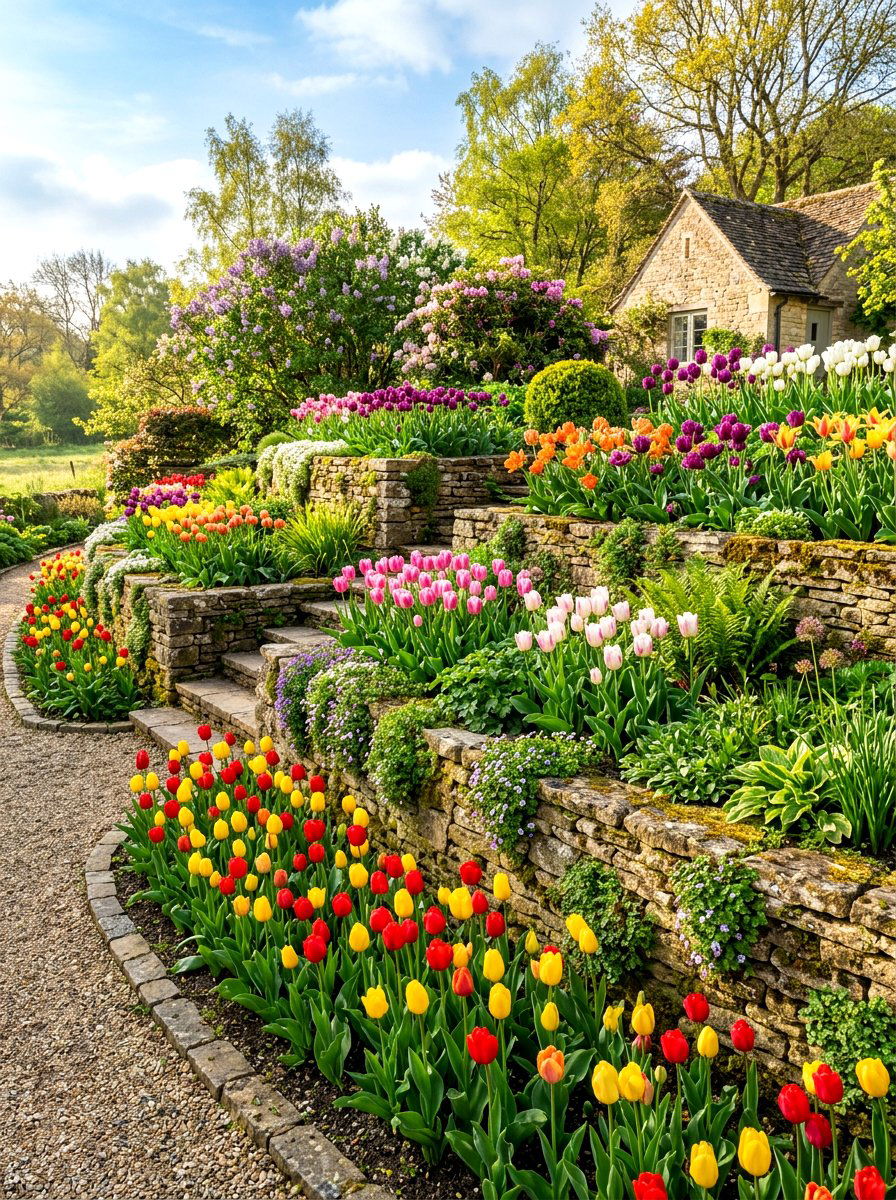
A multi level tulip border utilizes terraced beds or retaining walls to display flowers at different heights. This is an excellent solution for sloped yards or for creating visual interest in a flat space. By planting tulips on different tiers, you can create a wall of color that is much more dramatic than a flat bed. You might plant shorter, detailed varieties on the lower levels where they can be seen closely, and taller, bold varieties on the upper levels to act as a background. This structure also helps with drainage, which tulips love. The various levels allow you to pack more bulbs into a smaller footprint, resulting in a very dense and rich floral display that feels like a professional botanical garden.
19. Black Tulip Garden
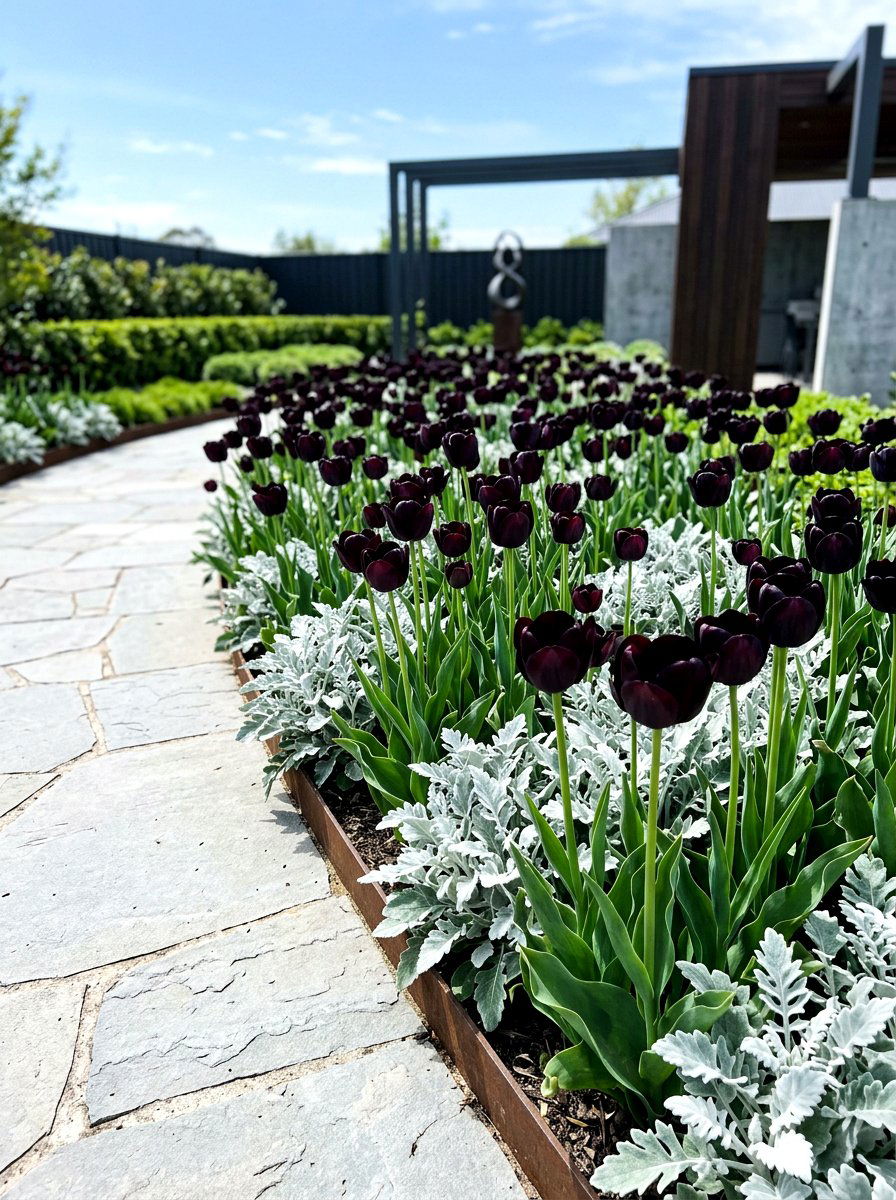
A black tulip garden is for the adventurous gardener who wants to create a sophisticated and slightly edgy look. While no tulip is truly pitch black, varieties like 'Paul Scherer' or 'Queen of Night' are such a deep, velvety purple that they appear black in most lighting conditions. Planting these in a border creates an incredible contrast, especially when paired with light-colored foliage or silver plants. They also look stunning against a white fence or a light gray stone path. To make the dark colors pop, you can intersperse them with a few white or pale yellow tulips, which highlights the richness of the dark petals. This design choice is very trendy and adds a touch of modern luxury to any spring landscape.

20. Tulip And Muscari Border
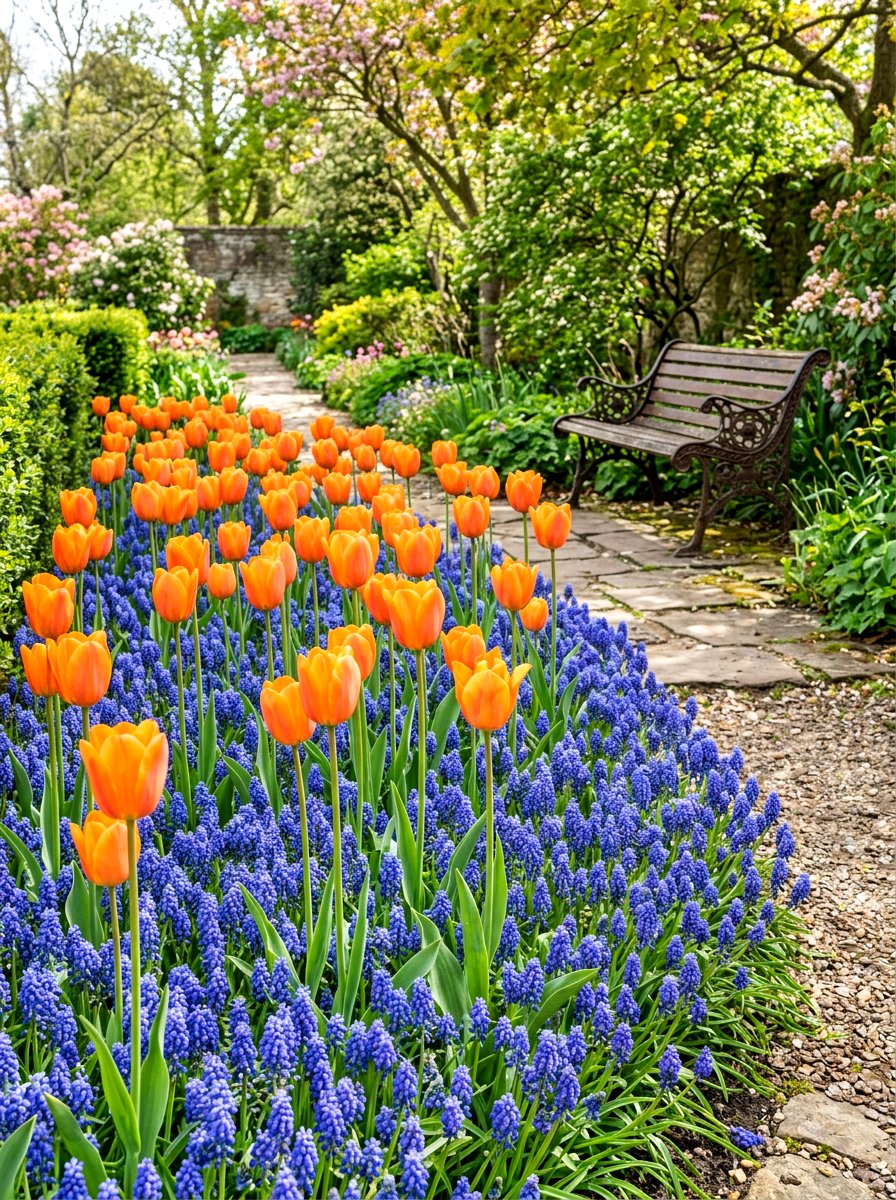
A tulip and muscari border is a charming combination that plays with scale and color contrast. Muscari, also known as grape hyacinths, are small, bell-shaped flowers that typically come in shades of bright cobalt or royal blue. Because they are much shorter than tulips, they serve as a perfect "under-planting" that covers the soil and hides the bottom of the tulip stems. The contrast between the tall, stately tulips and the tiny, textured muscari is visually fascinating. This pairing is especially popular using yellow or orange tulips, as blue is their direct complement on the color wheel, making both flowers look brighter. It is a classic garden design trick that adds professional-level detail to a simple garden bed or a small front porch container.
21. Fringed Tulip Landscape
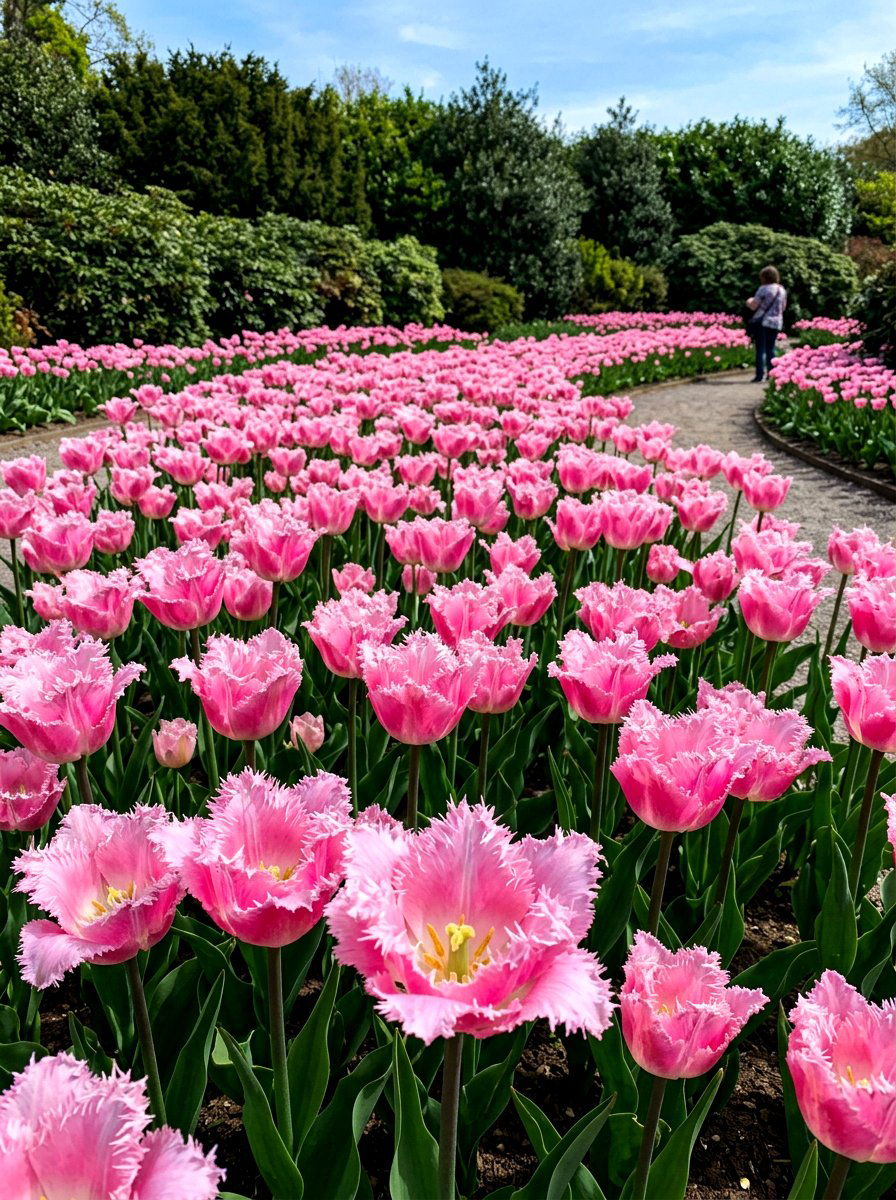
A fringed tulip landscape features varieties with delicate, lace-like edges on their petals, adding a unique texture that standard tulips lack. These flowers, such as 'Fancy Frills' or 'Cummins' , look incredibly intricate and are best planted where people can walk by and see the fine details. In a border, these textures add a layer of sophistication and can make a simple color scheme feel much more complex. Fringed tulips often have very strong stems, which makes them great for areas that might experience spring rain or wind. Using them in a landscape design shows a high attention to detail and a love for specialty plants. They bring a touch of elegance and a "collector's" feel to your spring garden beds.
22. Pastel Tulip Garden Scheme
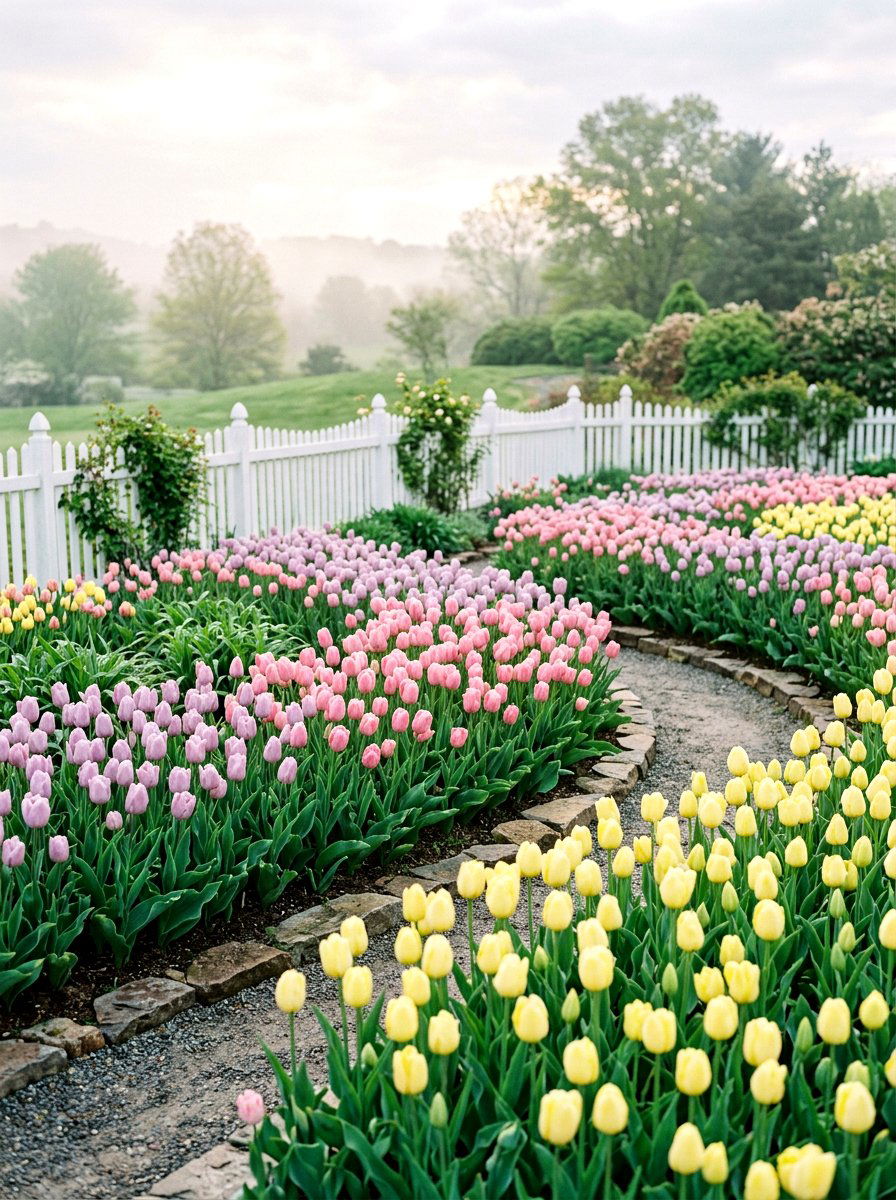
A pastel tulip garden scheme is the ultimate expression of soft, spring beauty. This design uses a blend of buttercream yellows, baby pinks, light lavenders, and soft apricots to create a gentle and soothing atmosphere. Pastel borders are very effective at making a space feel larger and more open because the light colors reflect more light. This palette is perfect for a backyard retreat or a quiet corner of the garden where you want to relax. You can mix these colors together randomly for a "marshmallow" effect, or group them by color for a more organized look. These soft tones harmonize perfectly with the fresh, light green foliage of emerging spring perennials, creating a very cohesive and refreshing look for the new season.
23. Late Season Tulip Planting
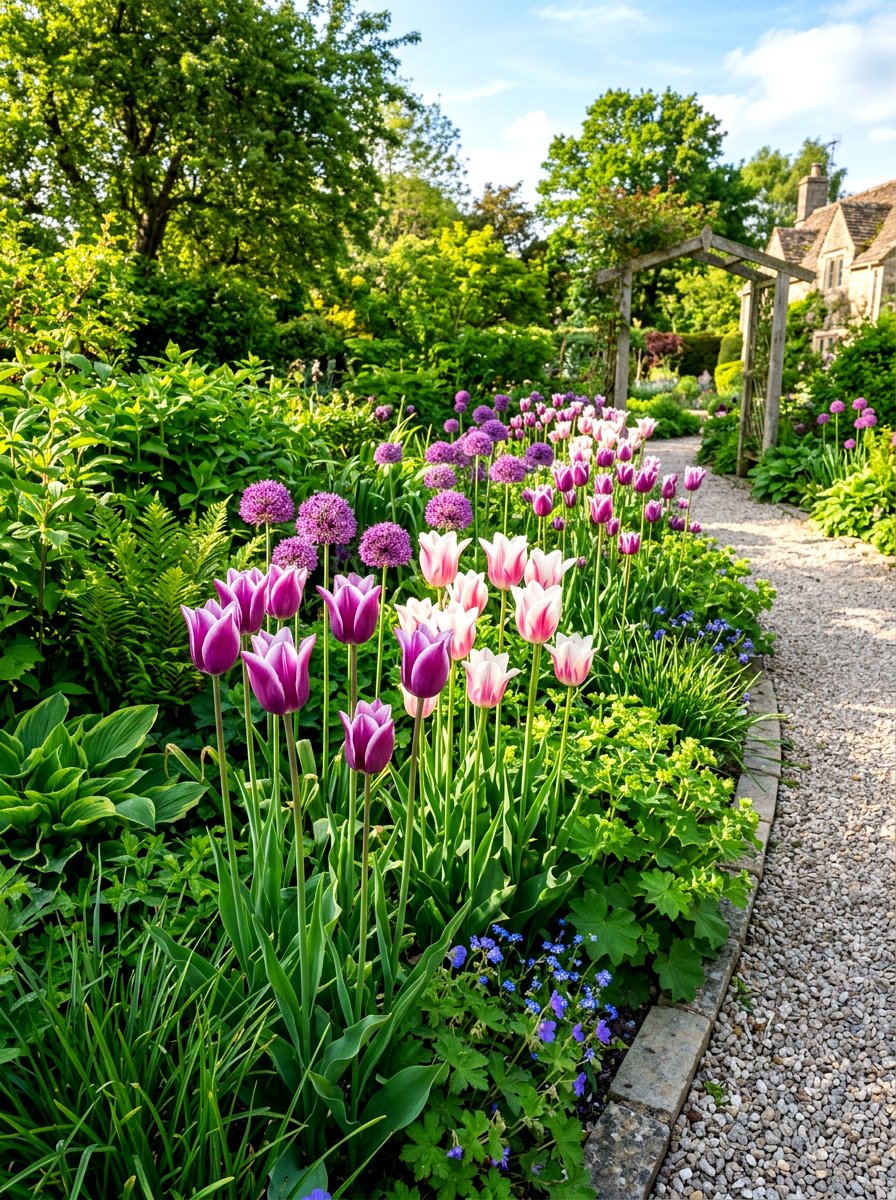
A late season tulip planting focuses on varieties that bloom in May or even early June, ensuring that your garden remains colorful long after the early bulbs have faded. Varieties like Single Late or Lily-flowered tulips are excellent for this purpose. These tulips often have very elegant, elongated shapes that stand out in the late spring garden. By dedicating a border to these late bloomers, you can transition smoothly into the summer flower season. This is a great strategy for gardeners who host outdoor events in late spring and want the yard to be at its peak. Pairing them with early-summer perennials like Alliums or Peonies creates a seamless flow of color that keeps the landscape looking vibrant and well-managed for several months.
24. Formal Boxwood Tulip Border
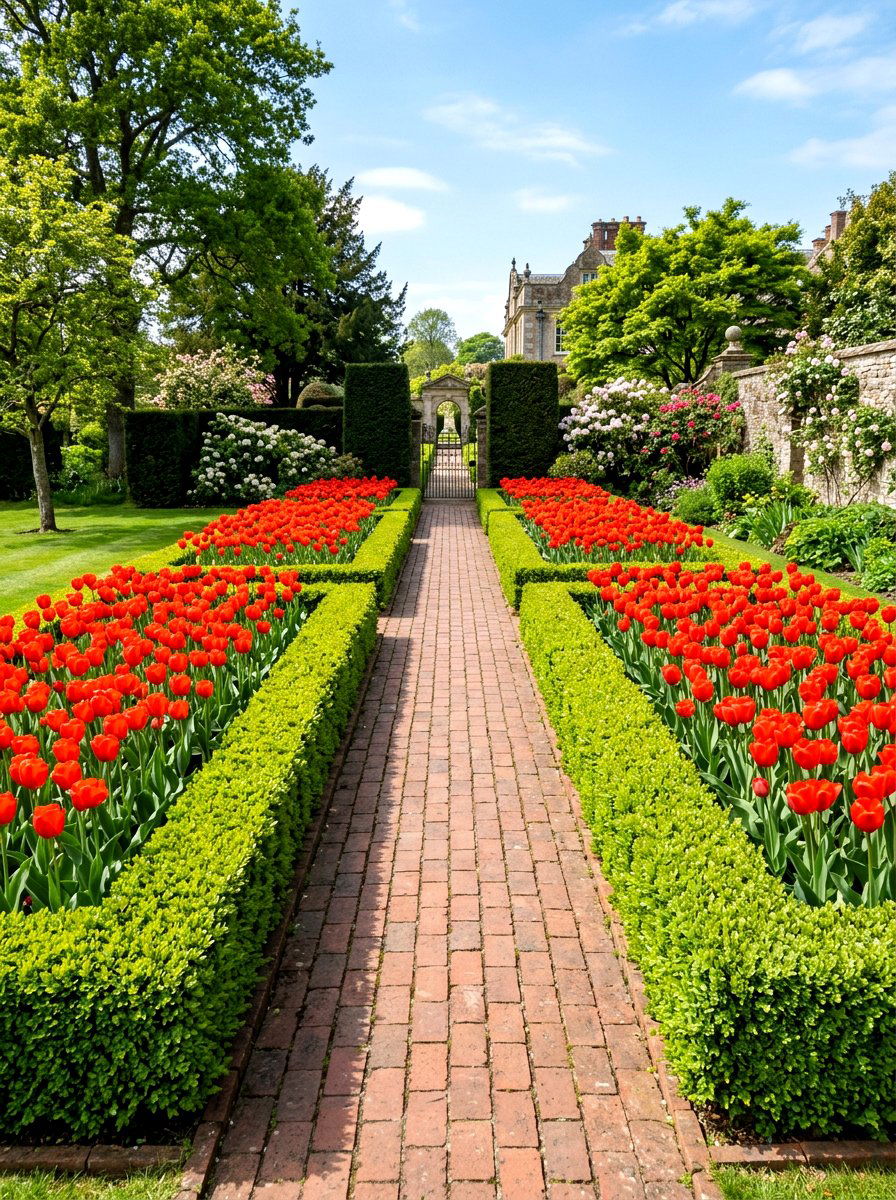
A formal boxwood tulip border is a high-end landscaping technique that combines structured greenery with seasonal color. By planting tulips inside a low, clipped boxwood hedge, you create a framed look that is very orderly and sophisticated. The evergreen hedge provides a permanent green structure throughout the year, while the tulips offer a temporary burst of excitement in the spring. This style is often seen in European estate gardens and works perfectly for lining a front walkway or a formal courtyard. You can change the tulip colors every year to give the garden a completely different look while keeping the same classic structure. It is a timeless design that adds significant curb appeal and architectural value to any home property.

25. Shaded Tulip Bed
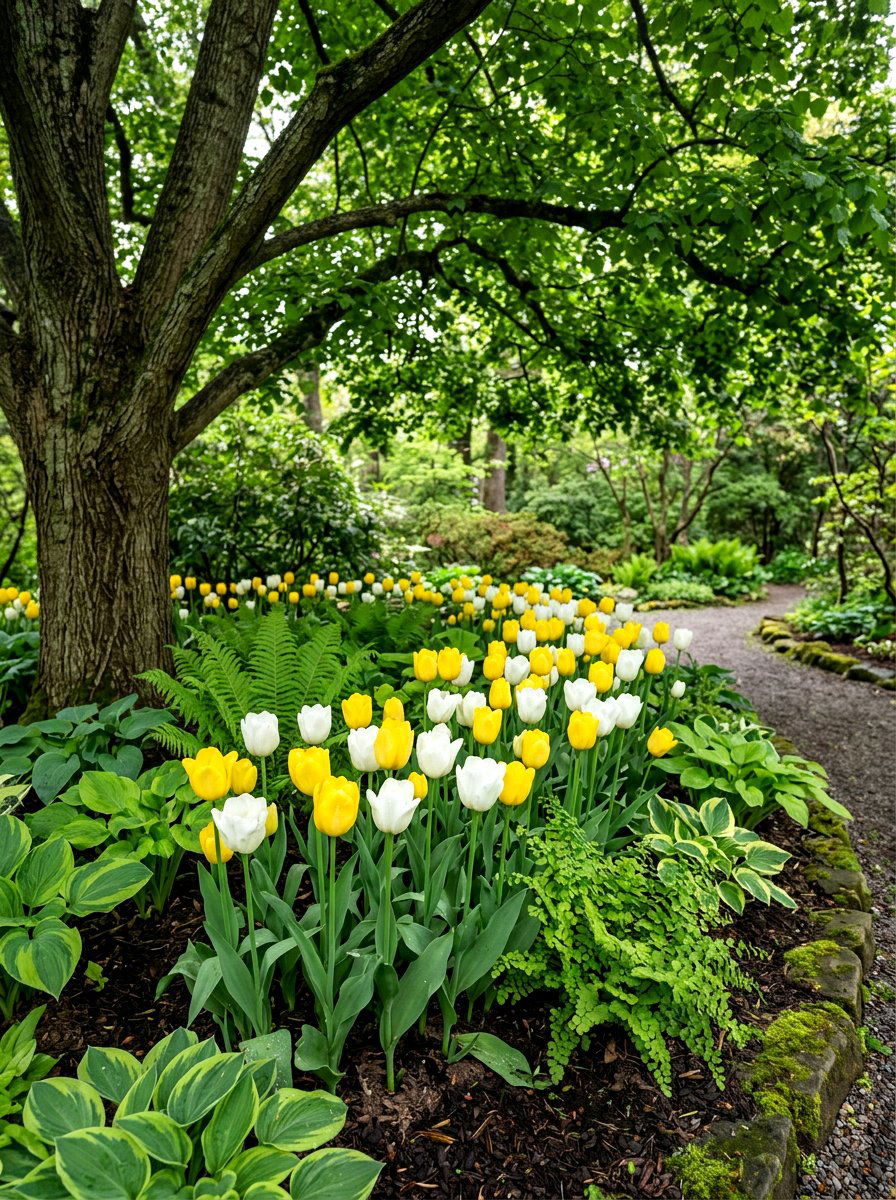
A shaded tulip bed allows you to bring color to the parts of your yard that don't get full sun. While most tulips prefer sun, many varieties will perform well in partial shade, especially if they get plenty of light before the trees fully leaf out. In a shaded border, you should choose brighter colors like white, yellow, or light pink to help brighten up the darker areas. Shade-tolerant tulips often have slightly longer bloom times because the cooler temperatures in the shade prevent the flowers from opening too quickly. This is a great way to utilize the space under deciduous trees or along the north side of a house. It turns a potentially dull area into a surprising and beautiful spring highlight.
26. Wildflower And Tulip Border
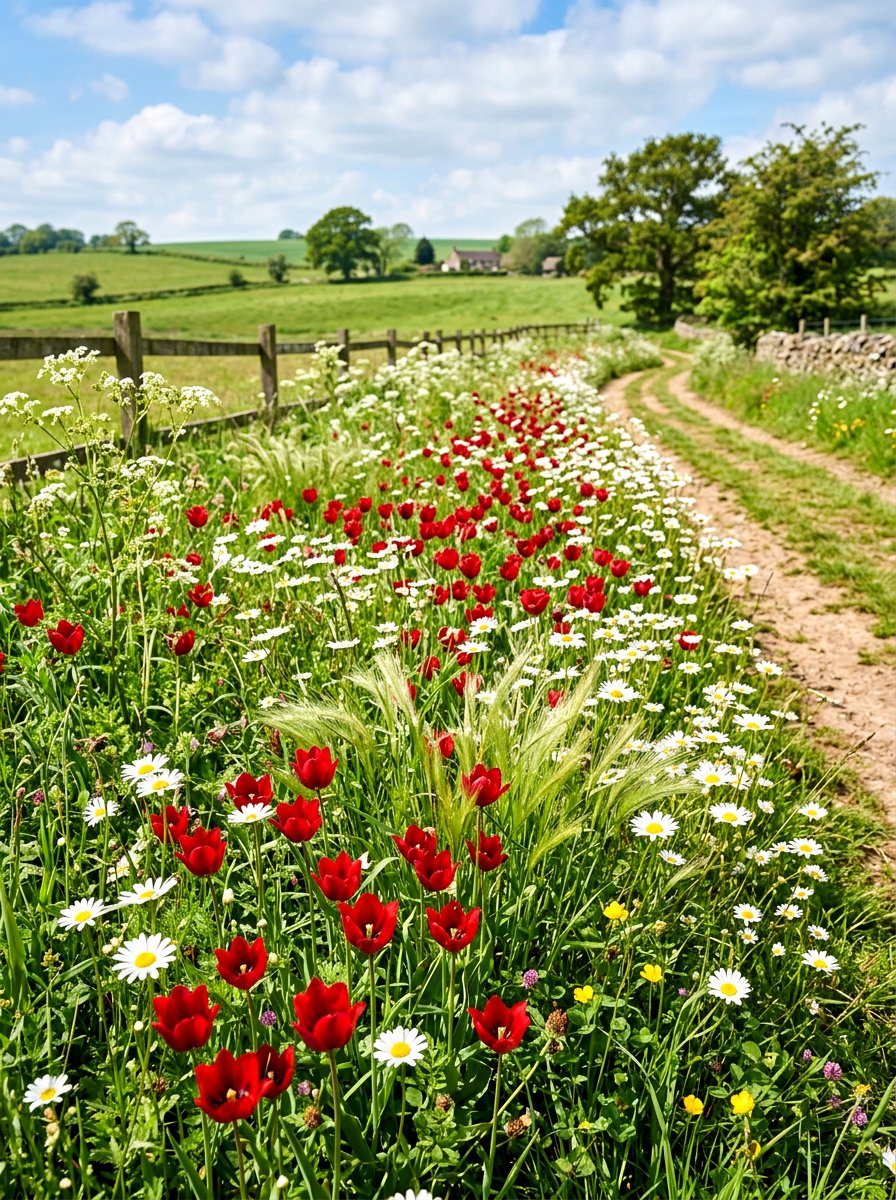
A wildflower and tulip border creates a rugged, natural look that is perfect for informal landscapes or eco-friendly gardens. This involves interplanting tulips with native spring wildflowers or groundcovers that have a loose, airy growth habit. The goal is to avoid the look of a perfectly manicured bed and instead create a diverse ecosystem that looks like a slice of a mountain meadow. Species tulips, which are smaller and more "wild" in appearance, are the best choice for this style. This type of border is very attractive to pollinators and requires less maintenance once established. It is a wonderful way to celebrate biodiversity while still enjoying the classic beauty of spring bulbs in a more relaxed and sustainable way.
27. Front Yard Tulip Display
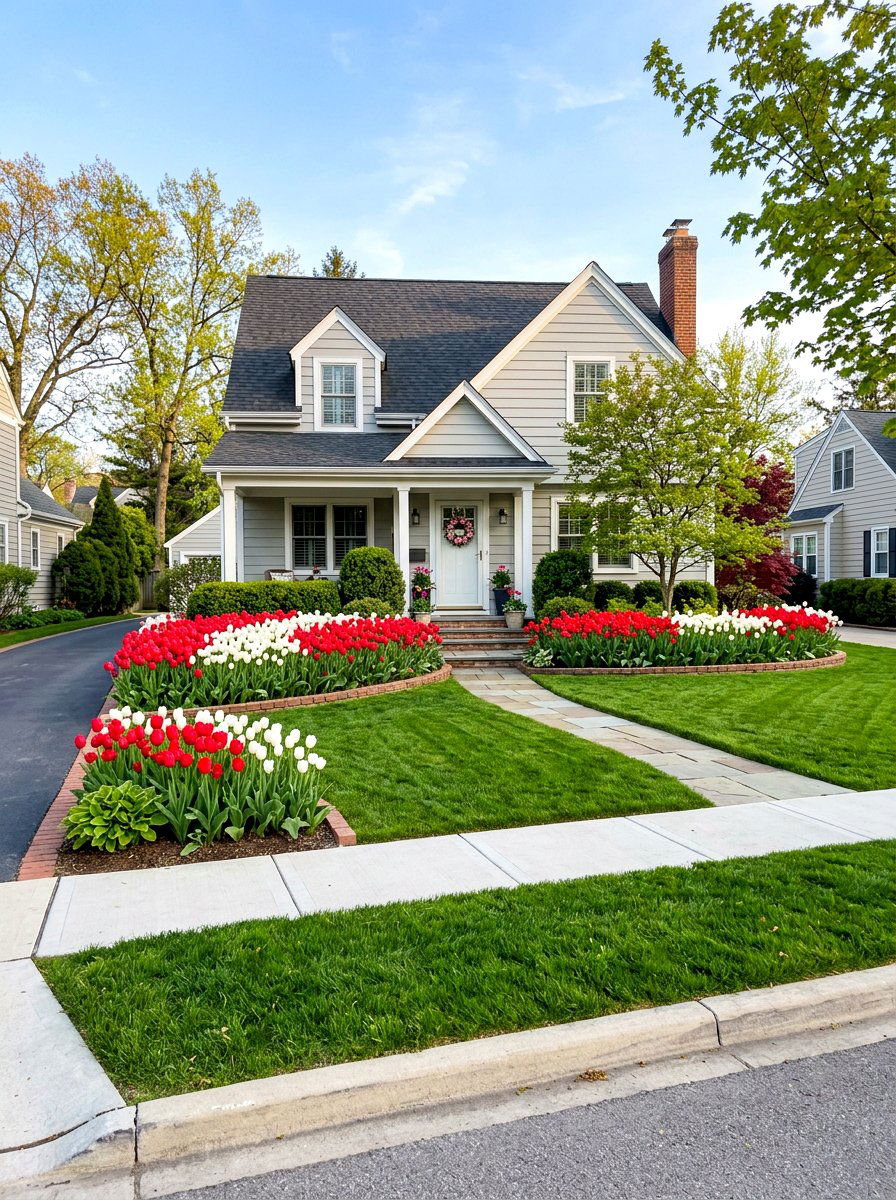
A front yard tulip display is designed specifically for maximum curb appeal and visibility from the street. This border often runs along the sidewalk or the foundation of the house, creating a welcoming first impression for neighbors and passersby. For this area, bold and bright colors are usually the best choice so they can be seen from a distance. You might consider planting in large "blocks" of color to create a graphic and modern look that is very easy to read from the road. Using varieties with different heights can create a tiered effect that makes the front of the house look more layered and professionally landscaped. It is an investment in your home's exterior that pays off in pure visual joy.
28. Raised Bed Tulip Garden
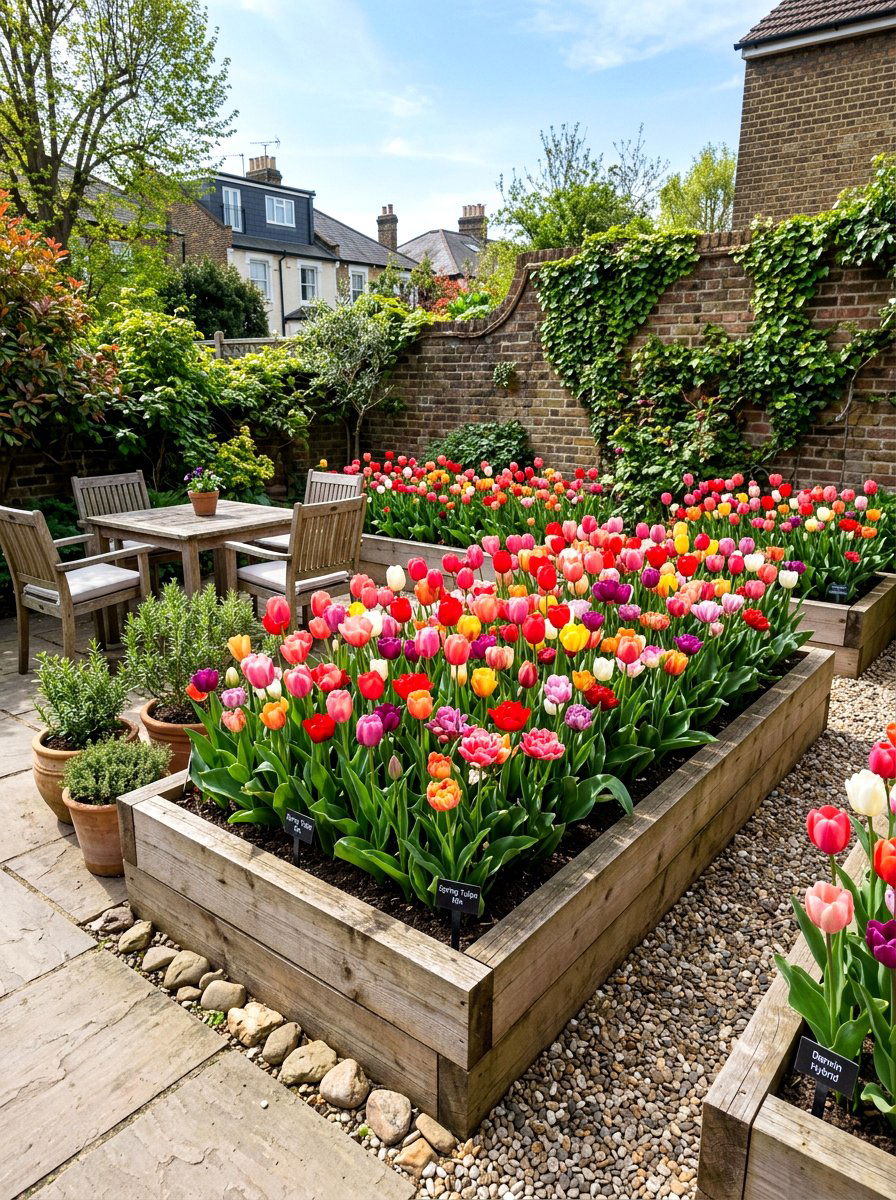
A raised bed tulip garden offers several practical advantages while also serving as a beautiful focal point. Raised beds provide excellent drainage, which is crucial for preventing tulip bulbs from rotting during wet winters. They also bring the flowers closer to eye level, allowing you to enjoy the fragrance and detail of the blooms without bending over. You can design the raised beds to match the architecture of your home, using materials like wood, brick, or stone. Lined with a border of tulips, these beds act as oversized planters that can define the edges of a patio or deck. This setup is particularly good for small urban yards where ground space is limited but you still want a high-impact spring garden display.
29. Rock Garden Tulip Accent
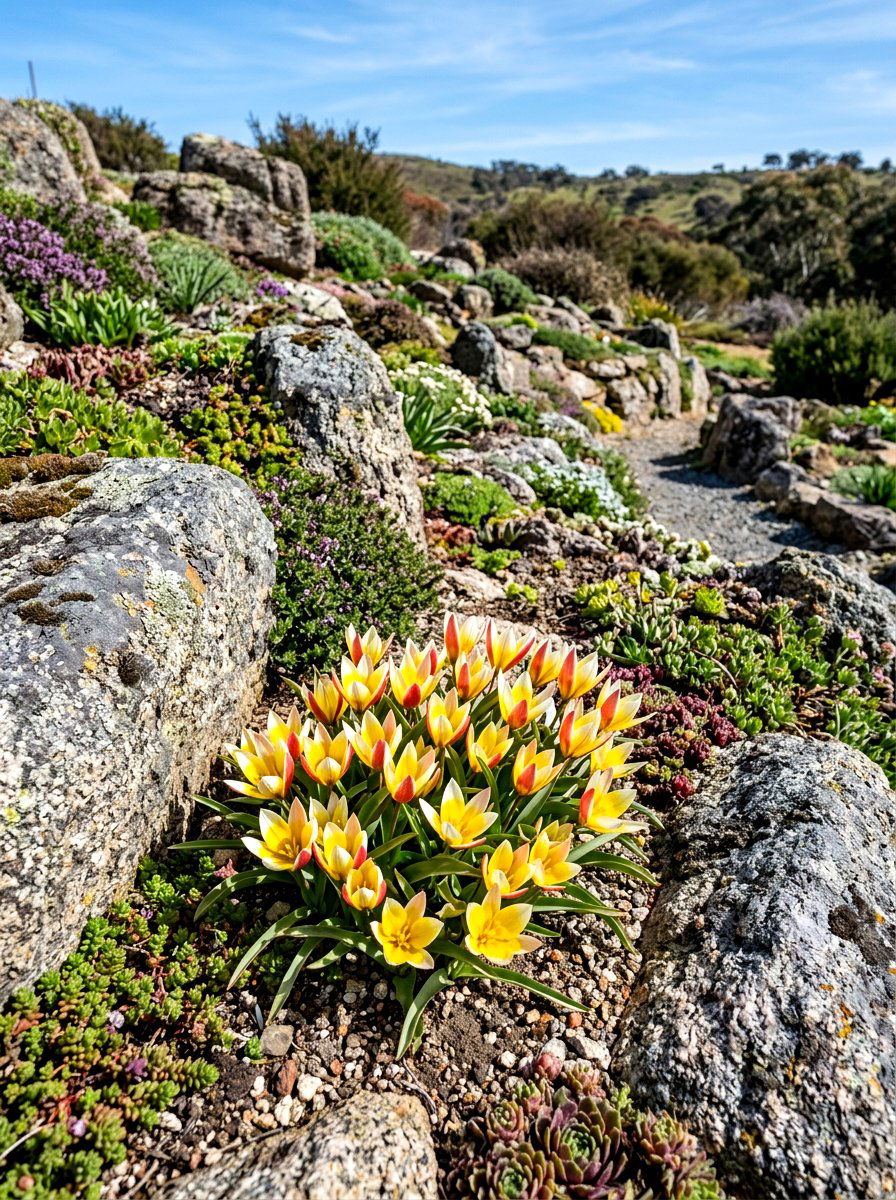
A rock garden tulip accent uses the rugged textures of stones and boulders to highlight the delicate beauty of spring bulbs. Small species tulips, also known as botanical tulips, are perfect for this setting because they stay low to the ground and have a very hardy appearance. These tulips often have interesting foliage, sometimes with stripes or spots, which looks great against the gray or brown of the rocks. You can plant them in the crevices between stones or in small pockets of soil. The rocks also absorb heat from the sun, which can help the tulips bloom a bit earlier than those in open ground. This style creates a miniature landscape that feels like a treasure hunt as you discover each small bloom.
30. Dense Tulip Mass Planting
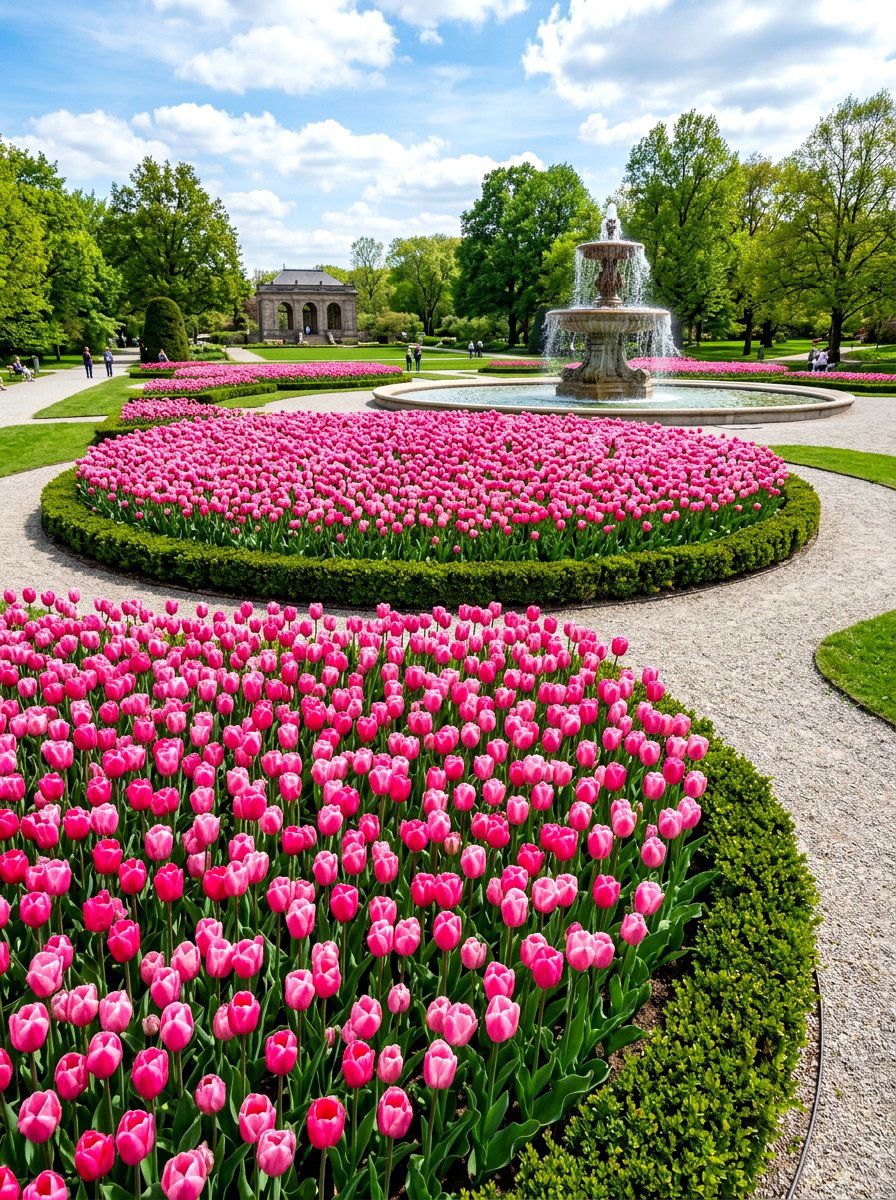
A dense tulip mass planting is all about pure, unadulterated power and impact. This technique involves planting bulbs very close together — almost touching — to create a solid carpet of color without any visible soil between them. When the flowers bloom, they create a thick, plush look that is incredibly luxurious and dramatic. This is the style used in famous display gardens like Keukenhof in the Netherlands. It works best in smaller, defined areas like a circular bed or a specific section of a border where you want to create a "wow" factor. While it requires more bulbs, the result is a breathtaking sea of petals that feels like a true celebration of the spring season and a masterpiece of gardening.
Conclusion:
Planning a tulip border is a rewarding way to welcome the arrival of warmer weather and vibrant colors into your personal landscape. With so many varieties available, from the classic cup shapes to exotic parrot and fringed types, there is a design for every style and preference. By considering bloom times, heights, and color palettes, you can create a professional-looking garden that enhances your home’s curb appeal and provides a sanctuary for your family. Remember that the effort you put into planting in the fall will result in a spectacular display that marks the true beginning of the gardening year. Tulips remain a favorite for a reason, offering unmatched versatility and a cheerful spirit that makes any outdoor space feel complete. Enjoy the process of selecting your favorites and watching your vision come to life in a stunning spring show.

Related posts: