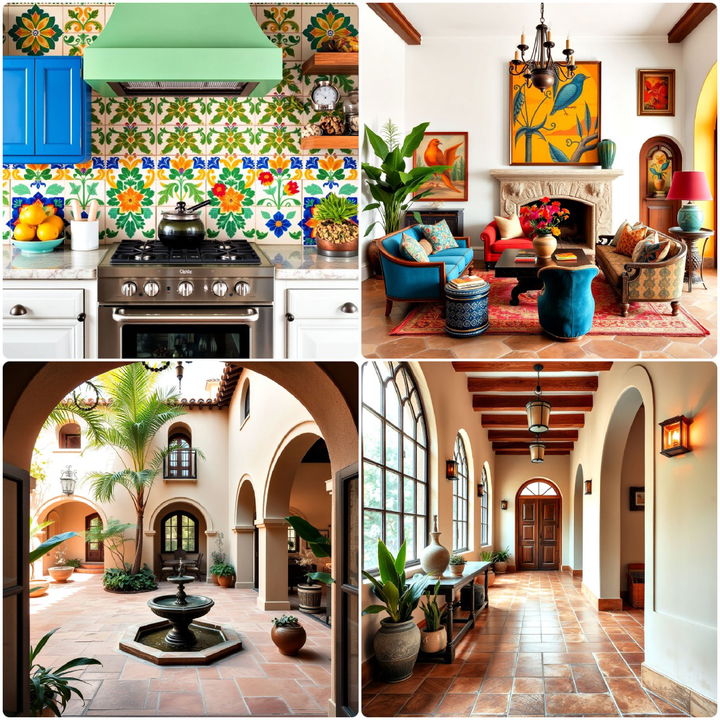
Bringing the warmth of the Mediterranean into your home starts with understanding the rich history of Spanish design. These kitchens are known for their inviting textures, vibrant patterns, and natural materials that create a cozy atmosphere. Whether you are looking for a rustic hacienda feel or a modern Spanish revival look, the key is balancing bold elements like hand-painted tiles with earthy tones. Many homeowners choose this style because it feels lived-in and soulful, offering a perfect place for family gatherings and cooking. Integrating these elements requires a focus on craftsmanship and authentic materials that stand the test of time while providing functional beauty every single day.
1. Terracotta Tile Flooring
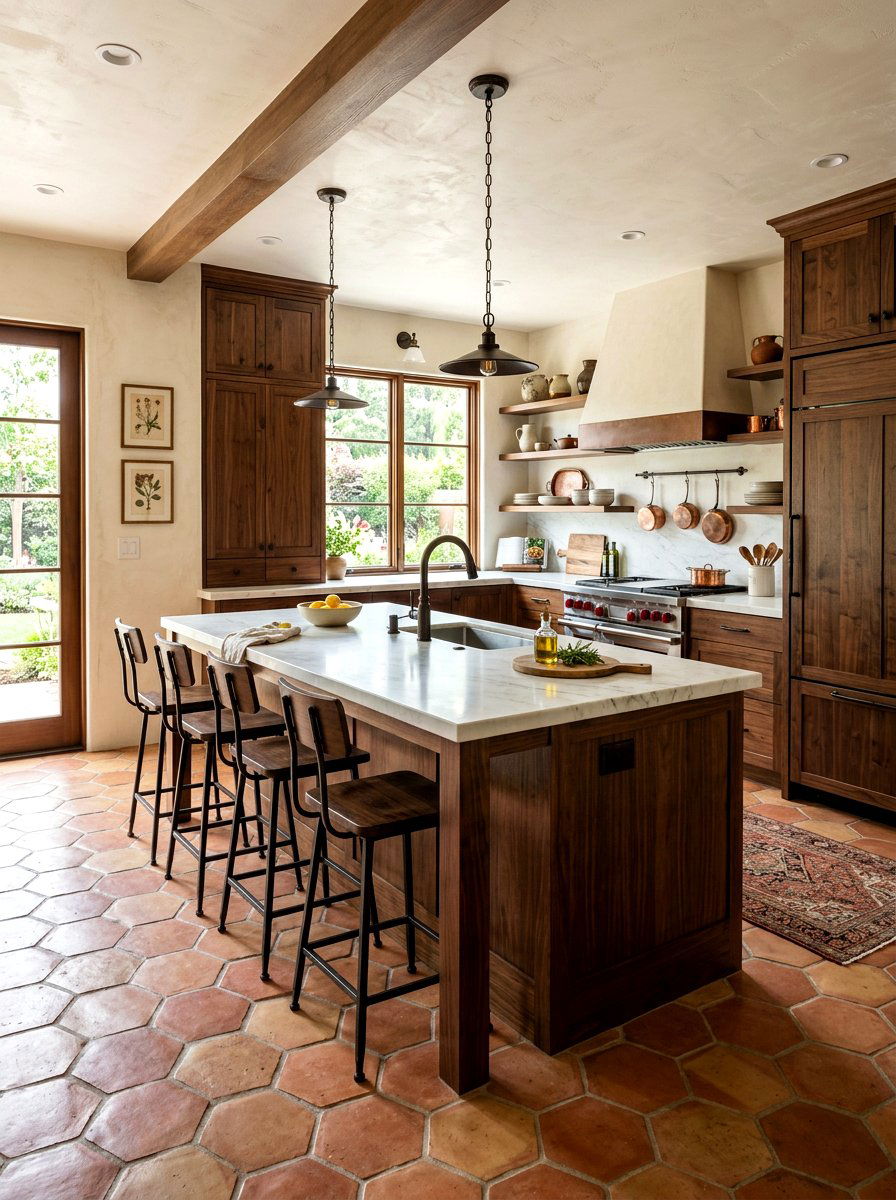
Imagine walking into a sun-drenched space where the foundation of the room is built on rich, earthy terracotta tiles. These hexagonal or square clay tiles provide an instant sense of warmth and history to any kitchen layout. To complement this flooring, the rest of the room often features cream-colored plaster walls and dark wood accents that ground the space. The natural variations in the tile color create a beautiful, organic movement across the floor, making the kitchen feel more connected to the outdoors. When paired with a large central island and wrought iron stools, the entire room transforms into a classic Mediterranean sanctuary that is both durable and incredibly stylish.
2. Arched Doorway Opening
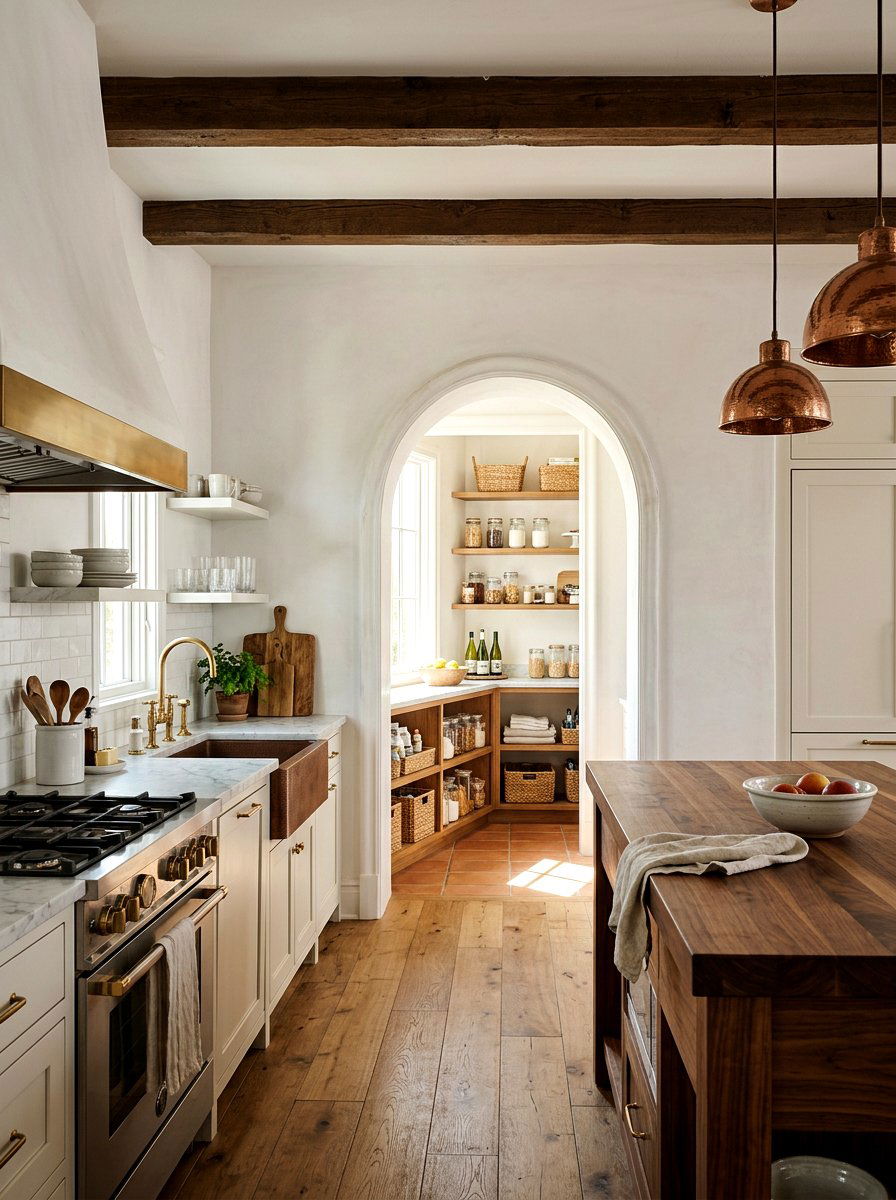
Have you ever considered how an architectural curve can change the entire mood of your cooking space? Arched doorways are a hallmark of Spanish architecture, serving to soften the transition between the kitchen and the rest of the home. This design element adds a sense of grandeur and historical depth, often leading into a spacious pantry or a formal dining room. The smooth plaster finish on these arches reflects natural light beautifully, making the room feel more expansive and airy. By removing sharp corners and replacing them with these elegant curves, you create a timeless look that feels both sophisticated and welcoming for guests and family members alike.
3. Hand Painted Backsplash Tile
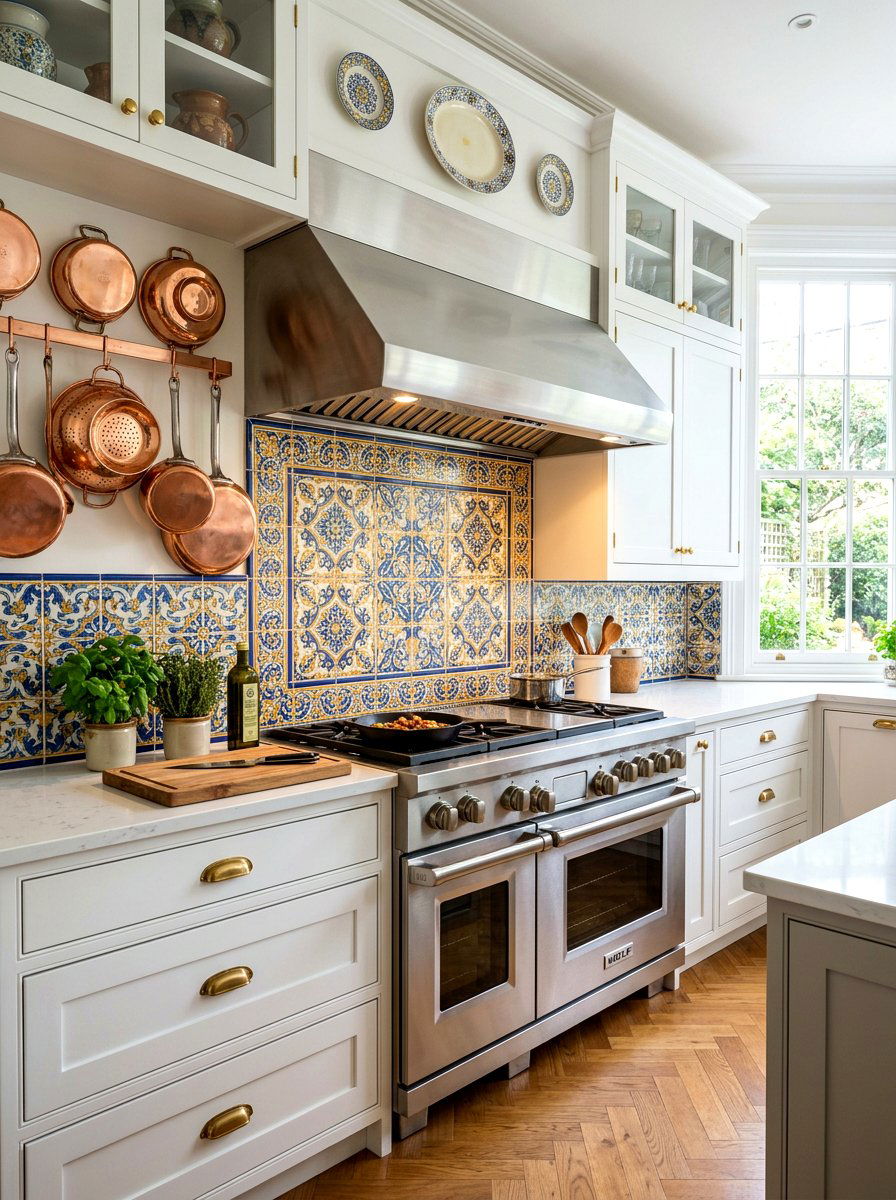
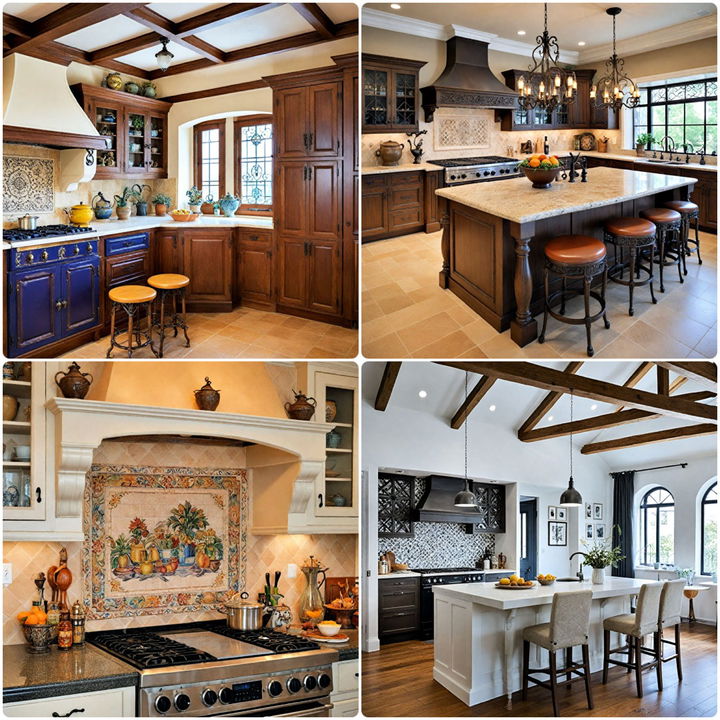
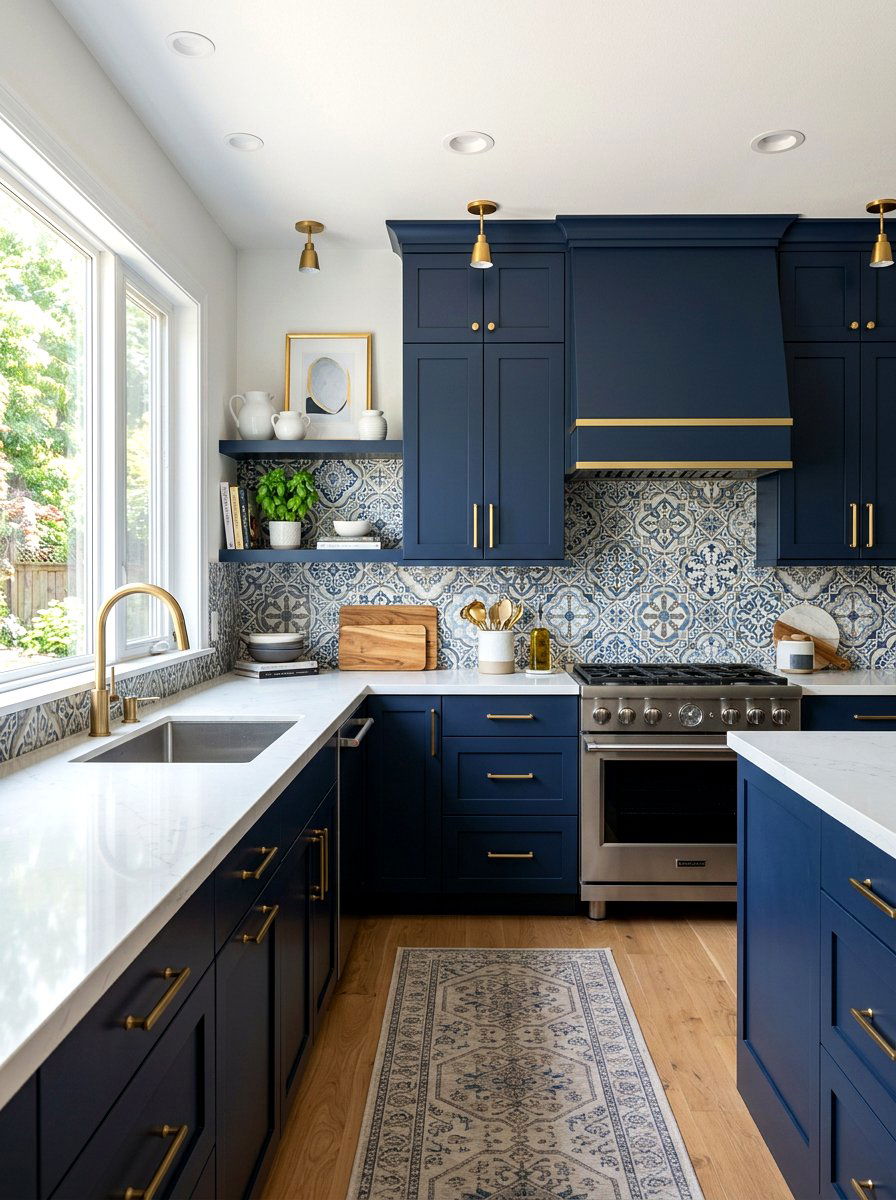
There is something truly magical about the way hand-painted tiles can serve as a vibrant focal point in a Spanish-inspired kitchen. Often referred to as Talavera tiles, these decorative pieces feature intricate patterns and bold colors like deep blue, sunny yellow, and vibrant green. When applied as a full backsplash behind a professional-grade range, they become a piece of art that tells a story of craftsmanship. This design choice pairs perfectly with simple white cabinetry, allowing the patterns to pop without overwhelming the senses. It is a fantastic way to introduce personality and traditional charm into a modern space while maintaining a clean and functional cooking environment.
4. Exposed Wood Ceiling Beam
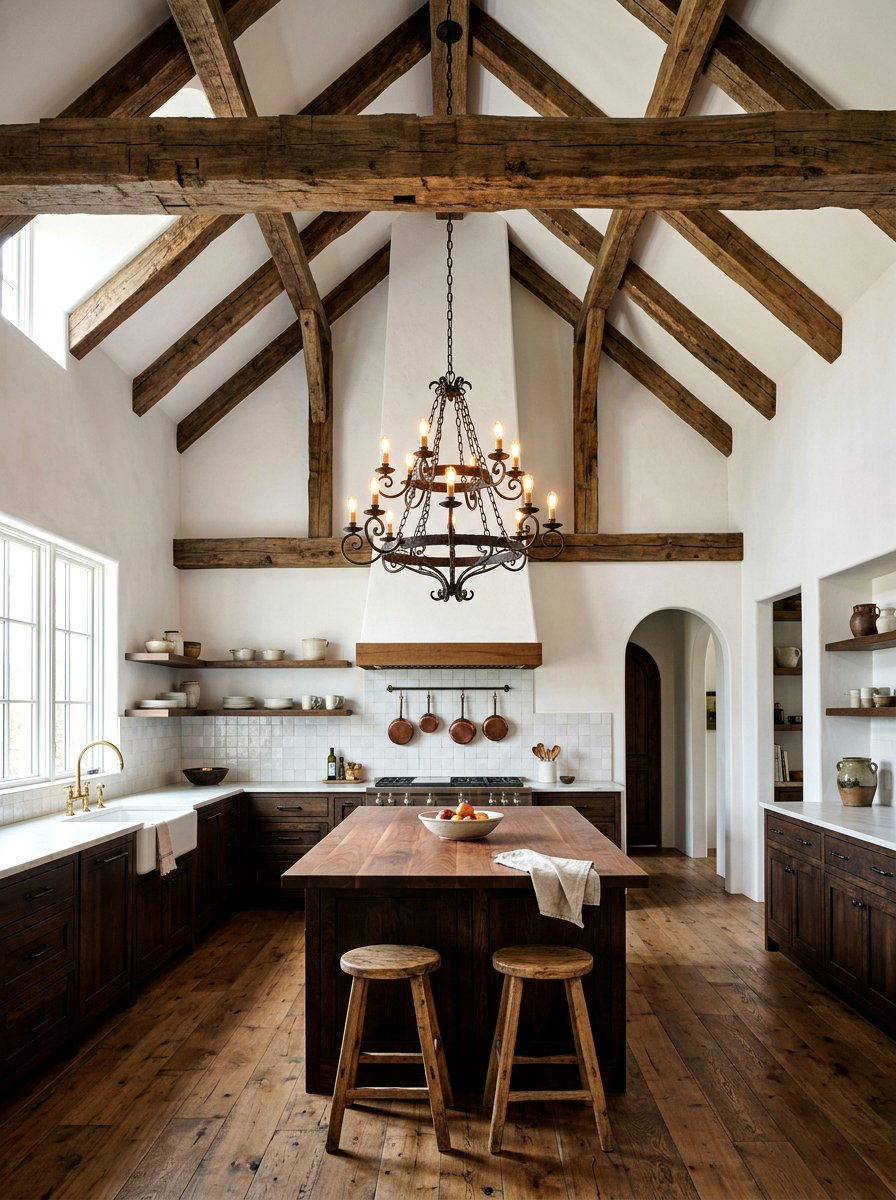
Looking upward reveals one of the most iconic features of a traditional Spanish home: the heavy, dark wood ceiling beams. These structural or decorative elements add a rustic texture that balances the smooth surfaces of the countertops and floors. The deep brown tones of the wood create a cozy, sheltered feeling that makes the kitchen feel like the true heart of the home. Whether you choose a reclaimed timber for a weathered look or a polished finish for a more refined aesthetic, these beams draw the eye upward and emphasize the height of the ceiling. They provide a sturdy, grounded feel that perfectly anchors the entire interior design.
5. Wrought Iron Pendant Light
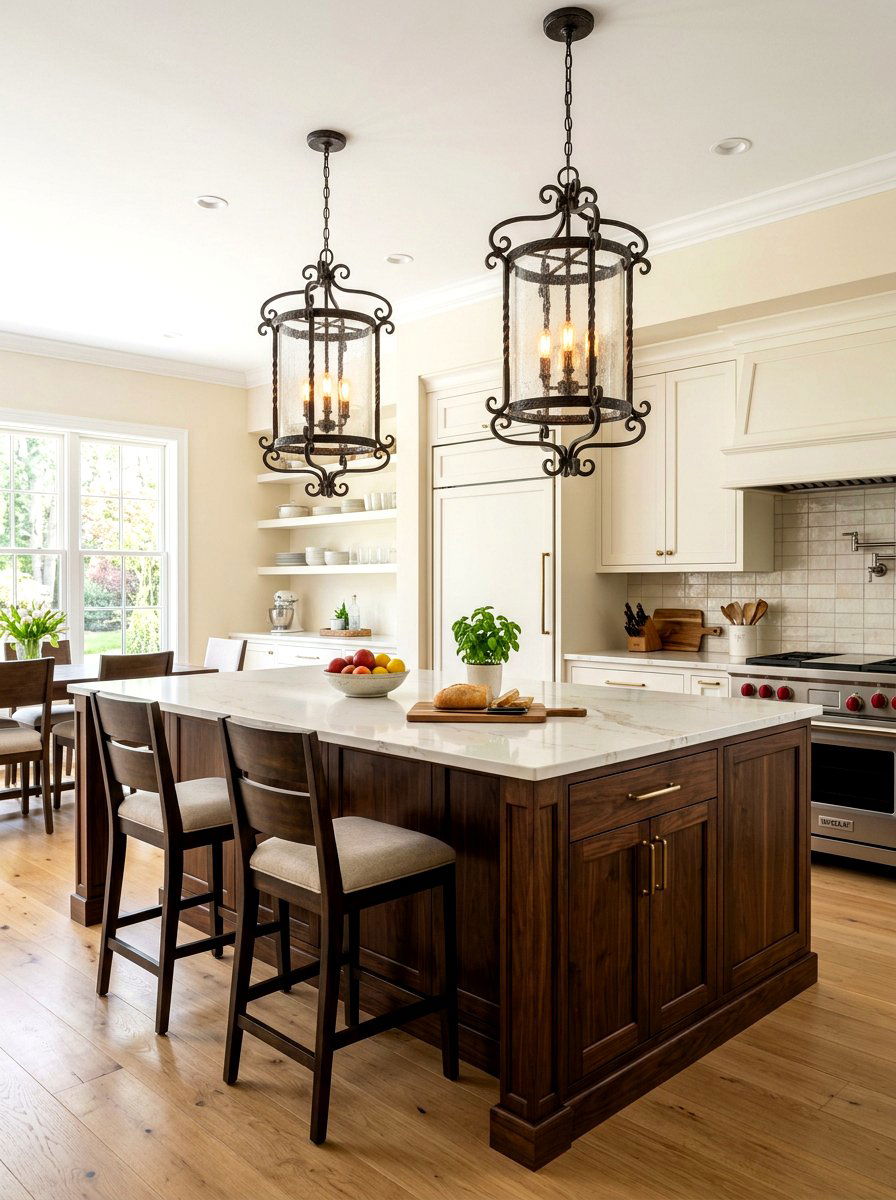
Lighting plays a crucial role in setting the ambiance of a Mediterranean kitchen, and nothing says Spanish style quite like wrought iron fixtures. Hanging large, ornate pendant lights over a central island or a breakfast bar adds a touch of old-world drama and sophistication. The dark metal contrasts beautifully against lighter walls and ceilings, providing a structural element that feels both antique and modern. These fixtures often feature delicate scrollwork or simple, heavy chains that enhance the rustic theme. When illuminated, they cast soft, warm shadows that highlight the textures of the room, creating an inviting glow for evening meals and late-night conversations.
6. White Plaster Wall Finish
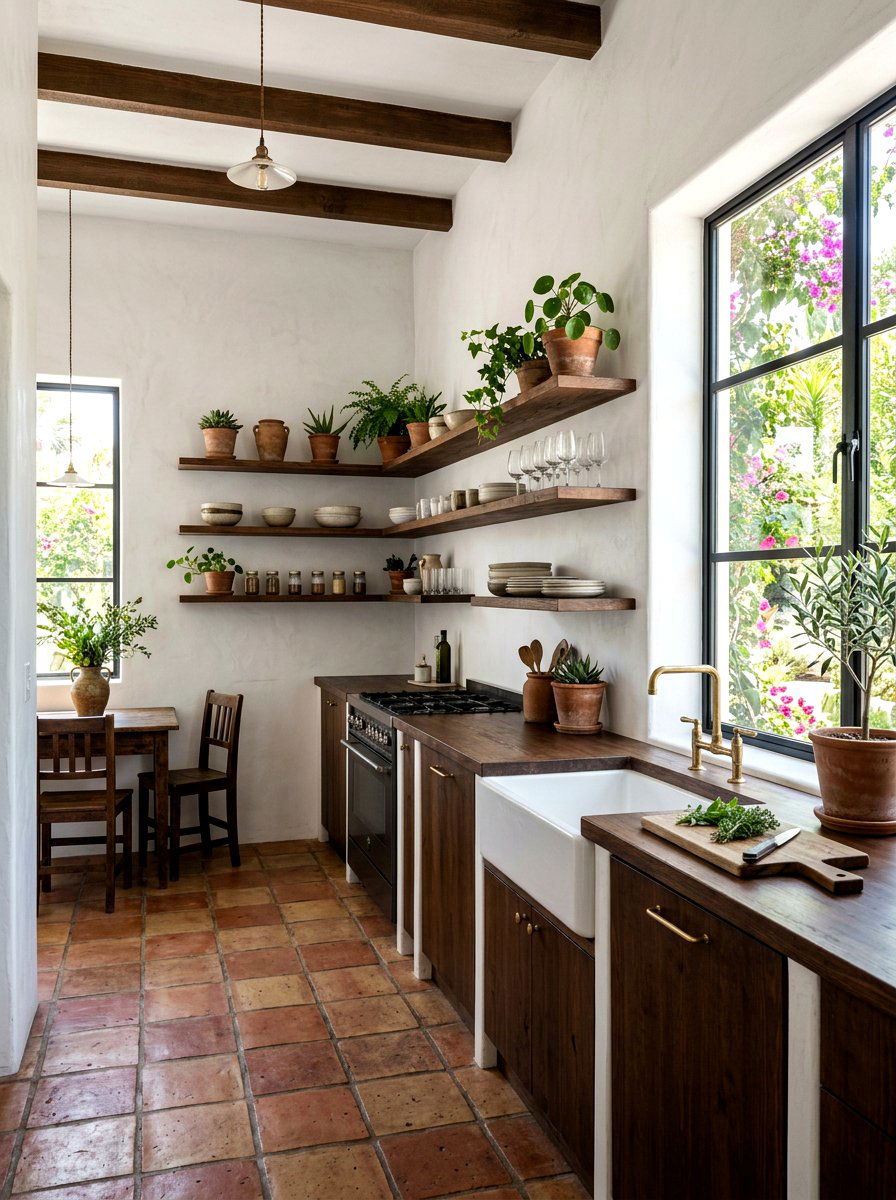
While many modern kitchens rely on flat paint, a Spanish-style kitchen thrives on the depth and character of white plaster walls. This textured finish mimics the traditional stucco used in Mediterranean villas, providing a soft and organic backdrop for the rest of the room. The subtle variations in the plaster catch the light throughout the day, giving the walls a sense of life and movement. This neutral foundation is essential for allowing more colorful elements, like patterned tiles and dark wood cabinets, to shine without making the space feel cluttered. It creates a clean, bright, and airy atmosphere that remains cool even during the warmest summer days.
7. Dark Wood Kitchen Cabinet
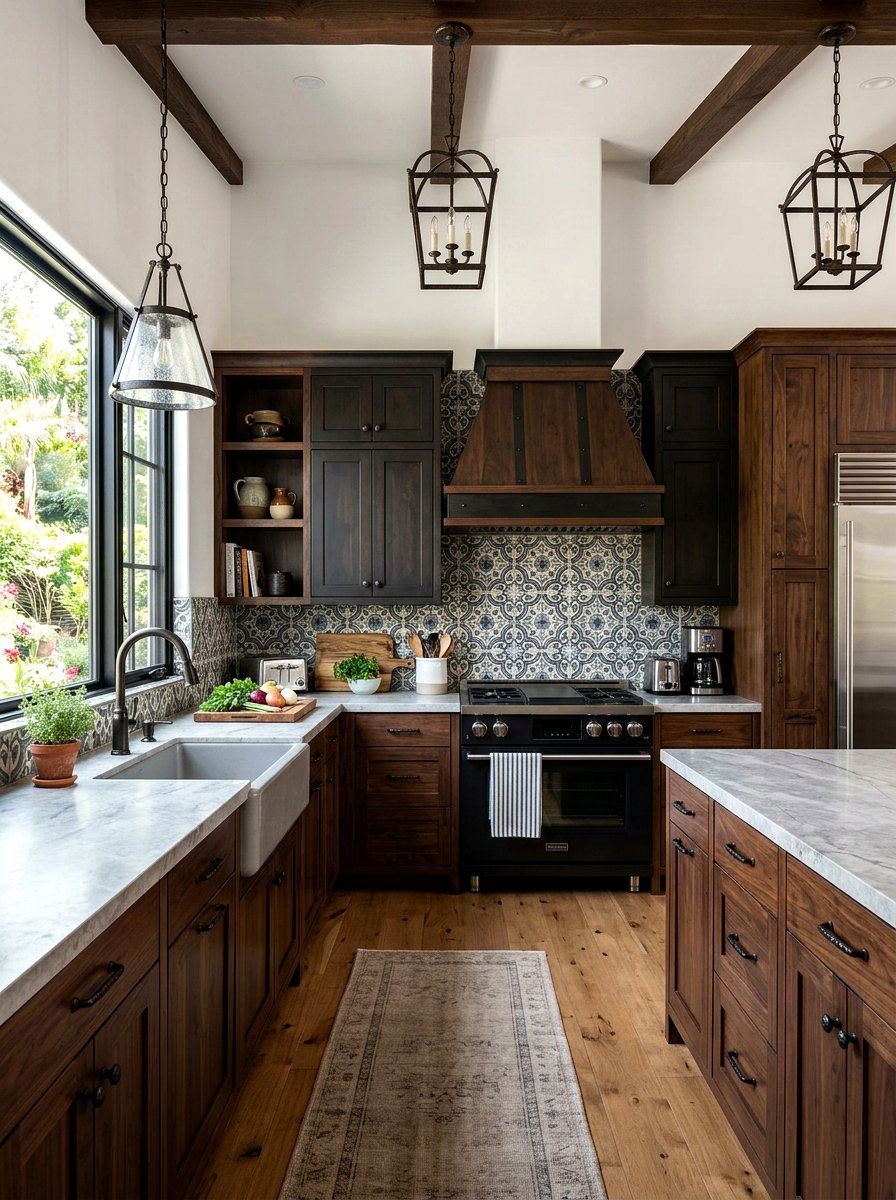
Choosing the right cabinetry is essential for capturing the authentic feel of a Spanish colonial kitchen, and dark wood is the traditional choice. Rich walnut or knotty alder cabinets provide a sturdy and luxurious appearance that feels permanent and well-crafted. These deep tones offer a stunning contrast to white marble countertops or colorful tile backsplashes. To enhance the look, many homeowners opt for inset doors or subtle carvings that show off the wood’s natural grain. The warmth of the dark wood creates an inviting environment that feels both high-end and approachable, ensuring that the kitchen remains a beautiful and functional space for many decades.
8. Rustic Stone Range Hood
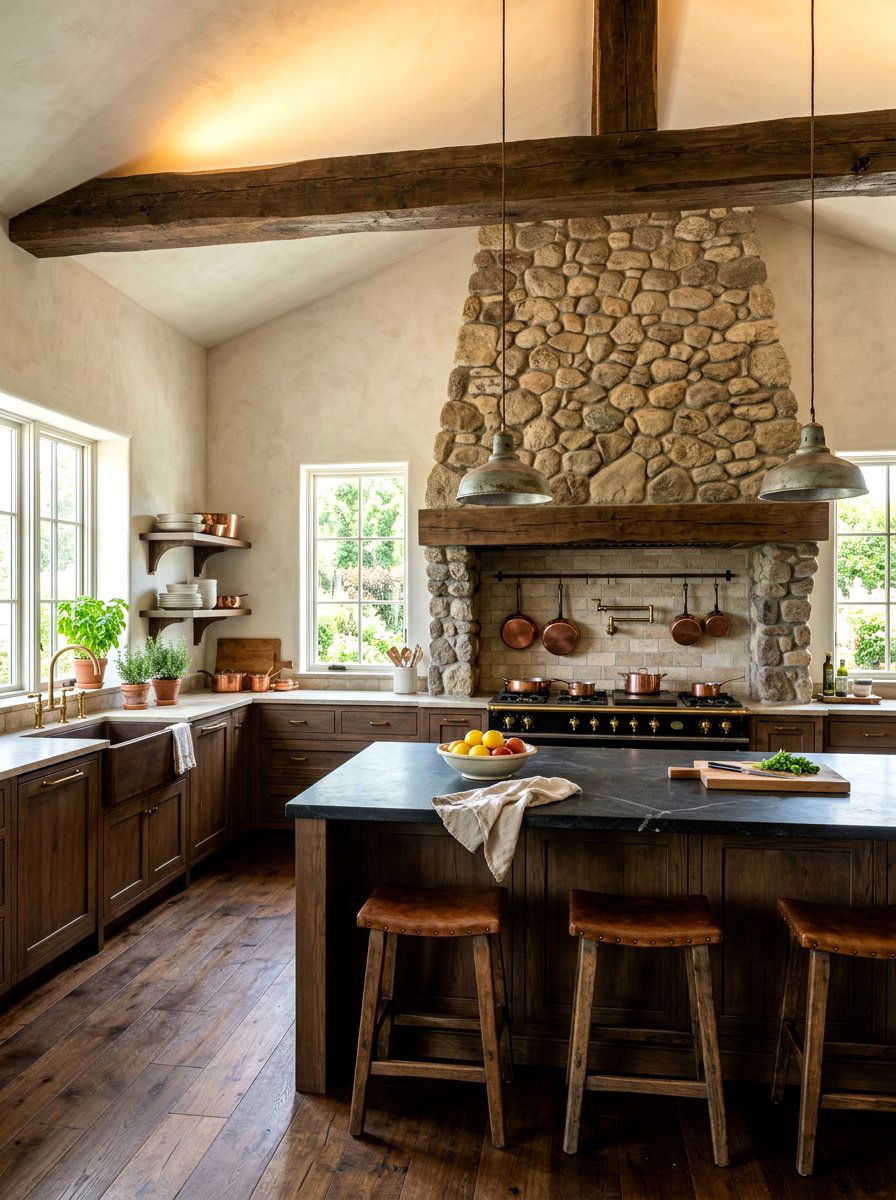
A massive stone range hood serves as a powerful architectural statement that anchors the cooking zone in a traditional Spanish kitchen. Carved from natural limestone or crafted from textured plaster, this feature mimics the large hearths found in historic European homes. The heavy presence of the stone adds a sense of permanence and strength to the room, drawing the eye directly to the stove area. Decorating the ledge with a few pieces of vintage pottery or copper cookware enhances the rustic charm. This design element effectively bridges the gap between old-world utility and modern luxury, creating a dramatic focal point that is both beautiful and functional.
9. Saltillo Tile Kitchen Floor
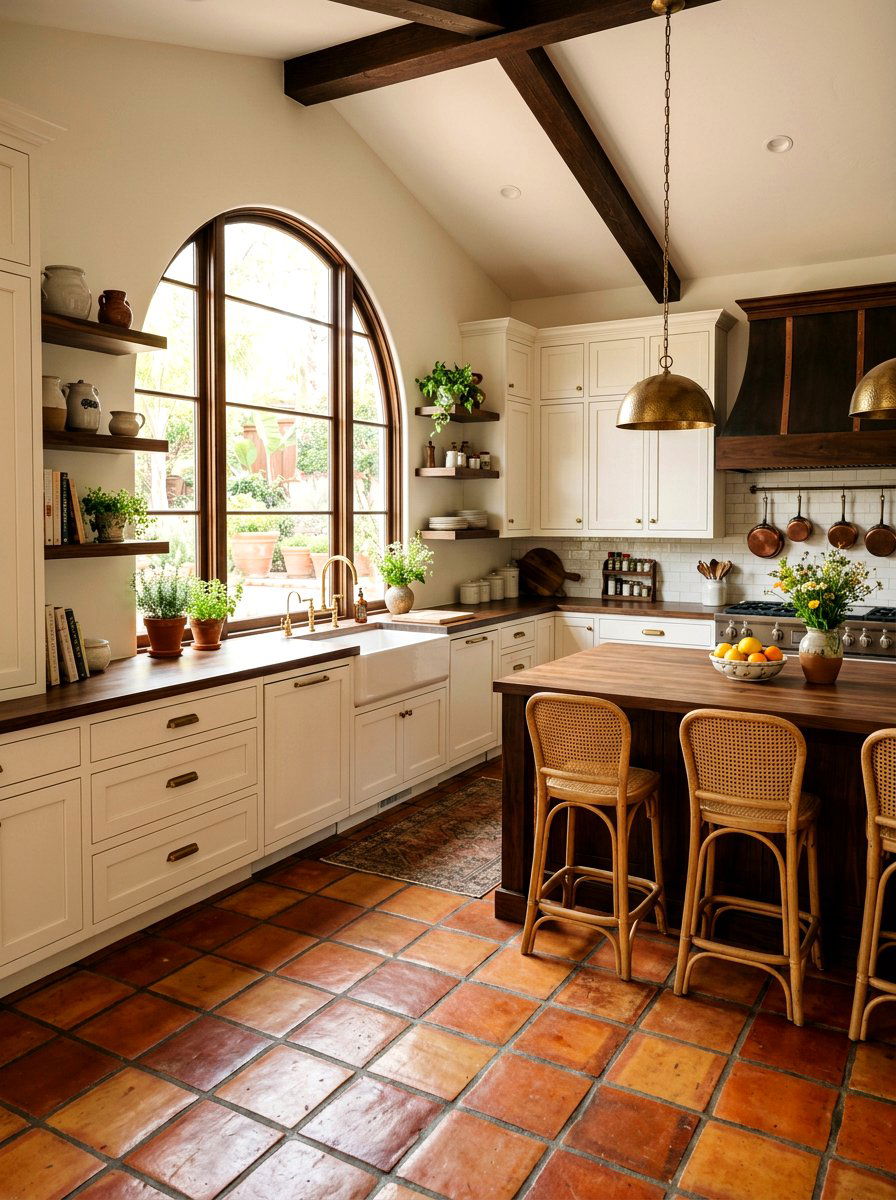
Authenticity in a Spanish-style kitchen often starts from the ground up with the use of genuine Saltillo tiles. These handmade clay tiles, originating from Mexico, offer a unique and rustic appearance with their irregular shapes and rich, sun-baked orange hues. No two tiles are exactly alike, which adds a layer of character and soul that machine-made tiles simply cannot replicate. The wide grout lines and matte finish provide a slip-resistant surface that is perfect for a busy kitchen. When paired with dark wood furniture and bright white walls, these floors create a warm and vibrant foundation that feels incredibly grounded and culturally rich.
10. Wrought Iron Pot Rack
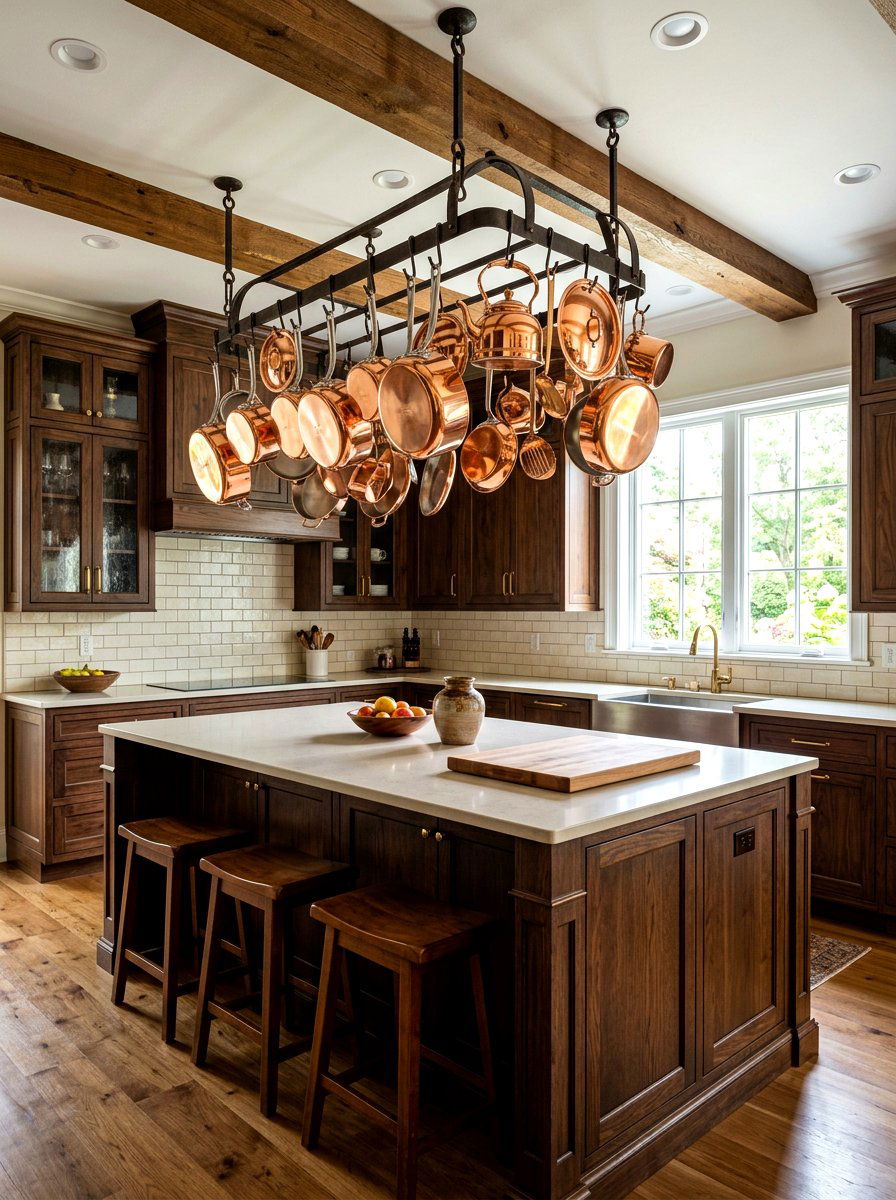
If you are looking for a way to combine storage with style, a ceiling-mounted wrought iron pot rack is the perfect solution. This functional design element allows you to display your beautiful copper pans and cast iron skillets as part of the decor. The dark, forged metal adds a touch of industrial-meets-rustic charm that is common in traditional Mediterranean kitchens. By keeping your most-used tools within reach, you create a space that feels like a working chef's kitchen. The visual weight of the rack hanging over a kitchen island provides a sense of height and interest, making the room feel more layered and professionally equipped.
11. Blue And White Talavera Tile
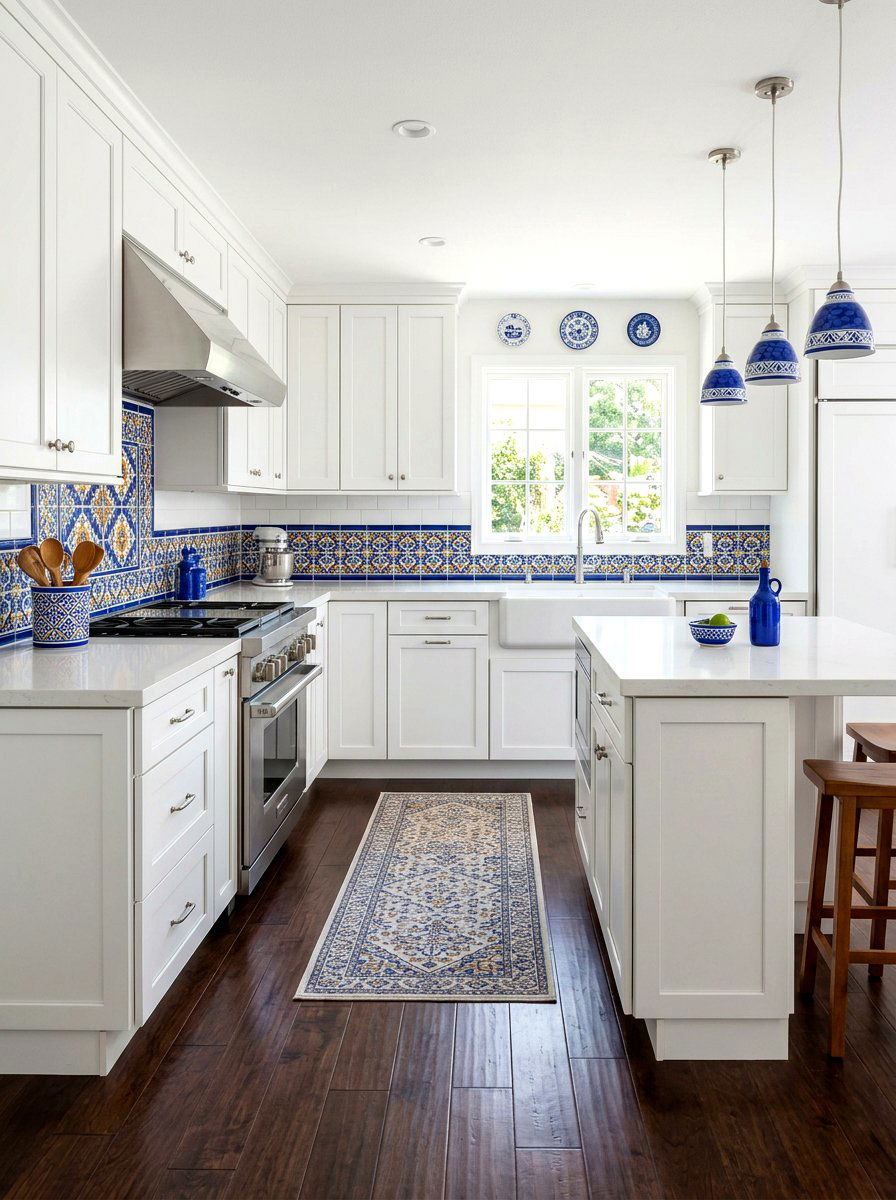
Integrating blue and white Talavera tiles is a classic way to achieve a clean yet vibrant Spanish look in your home. This specific color combination offers a refreshing and timeless aesthetic that feels particularly suited for coastal Mediterranean designs. Whether used as a decorative border along the countertops or as a full wall feature behind the sink, these tiles provide a crisp contrast to warm wood tones. The intricate floral or geometric patterns add visual interest and a sense of history to the space. Using these tiles sparingly ensures that the kitchen remains bright and modern while still paying homage to traditional Spanish artisanal craftsmanship.
12. Large Arched Window Frame
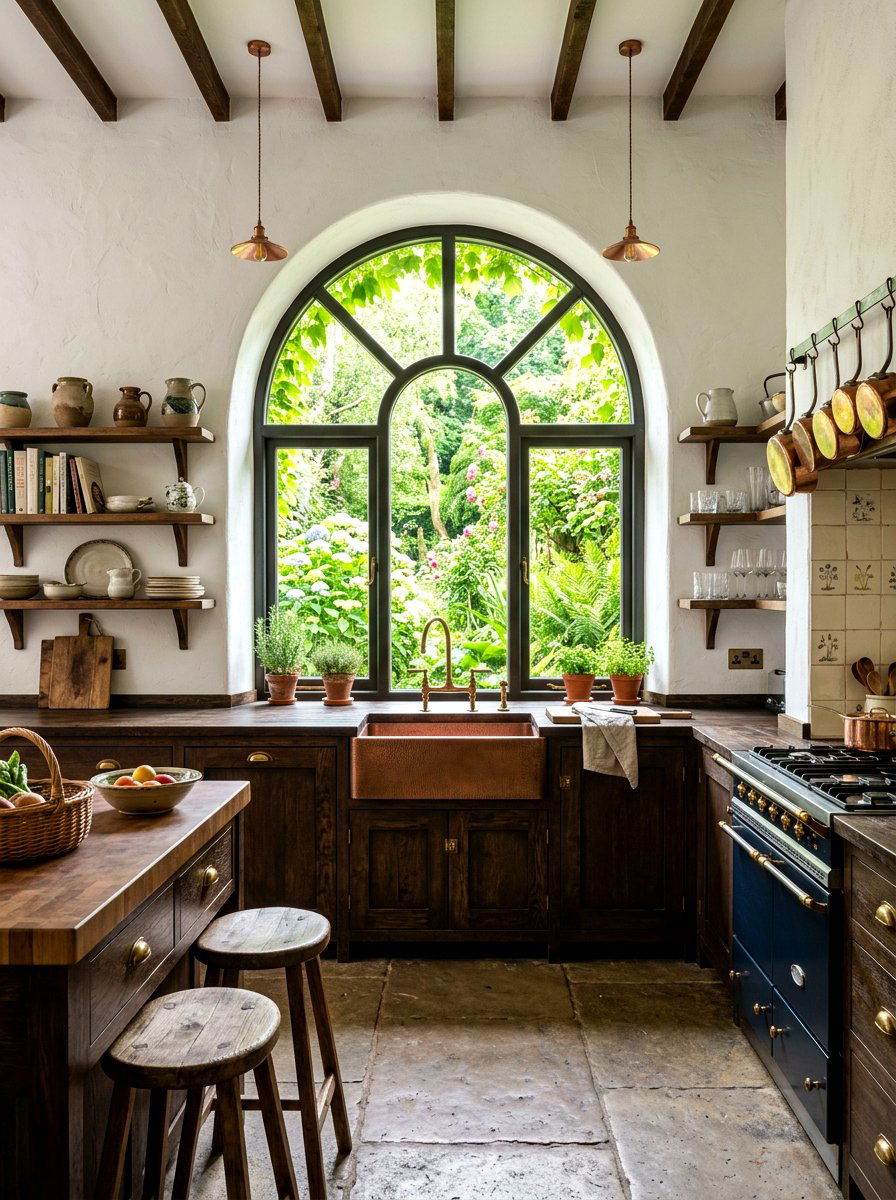
Natural light is a key component of Spanish design, and a large arched window frame is the perfect way to invite the outdoors in. The graceful curve of the window mimics the arched doorways found throughout the home, creating a cohesive architectural language. Framing a view of a lush garden or a sunny courtyard, these windows make the kitchen feel like an extension of the landscape. Using dark wood or black metal frames provides a sharp contrast against white plaster walls, highlighting the window as a major design feature. This setup ensures that the cooking area is always filled with soft, flattering light during the day.
13. Butcher Block Kitchen Island
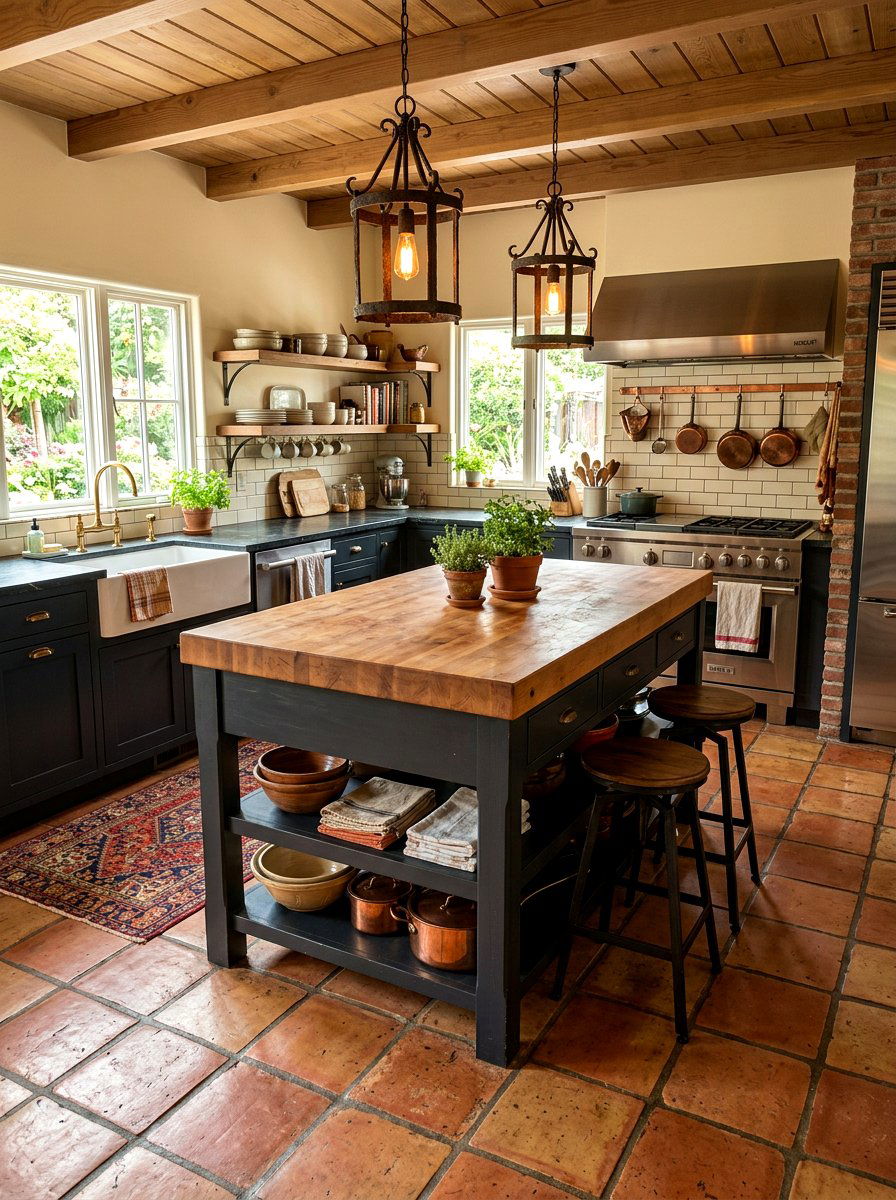
A central kitchen island topped with a thick butcher block brings a sense of farmhouse utility and warmth to a Spanish-style space. The natural wood surface provides a soft and inviting place for food preparation, contrasting with the cold hardness of stone or tile. This design choice encourages the kitchen to be used as a social hub where family members can gather to chop vegetables or share a snack. The rich tones of the wood island top pair beautifully with terracotta floors and dark cabinetry, creating a harmonious and organic palette. It is a practical and stylish addition that enhances the lived-in feel of the room.
14. Open Wood Wall Shelf
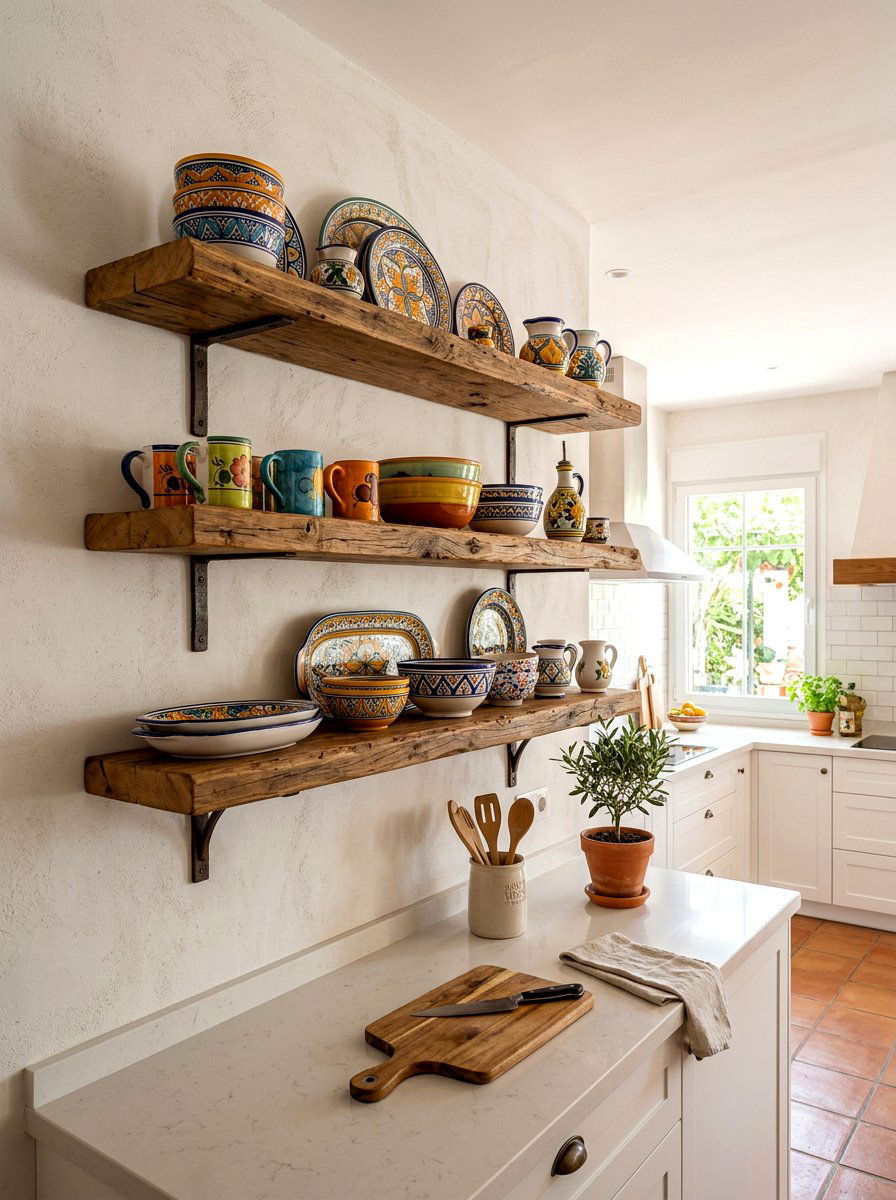
Replacing heavy upper cabinets with open wood wall shelves is a popular way to make a Spanish-style kitchen feel more open and accessible. These simple shelves, often made from reclaimed timber, allow you to display your collection of hand-painted pottery and vintage glassware. This design approach creates a casual and inviting atmosphere, encouraging a "collected" look rather than one that is overly staged. The natural texture of the wood shelves adds warmth to the walls and provides an easy way to switch out decor for different seasons. It is an excellent strategy for smaller kitchens where you want to maximize the sense of space.
15. Copper Kitchen Sink Basin
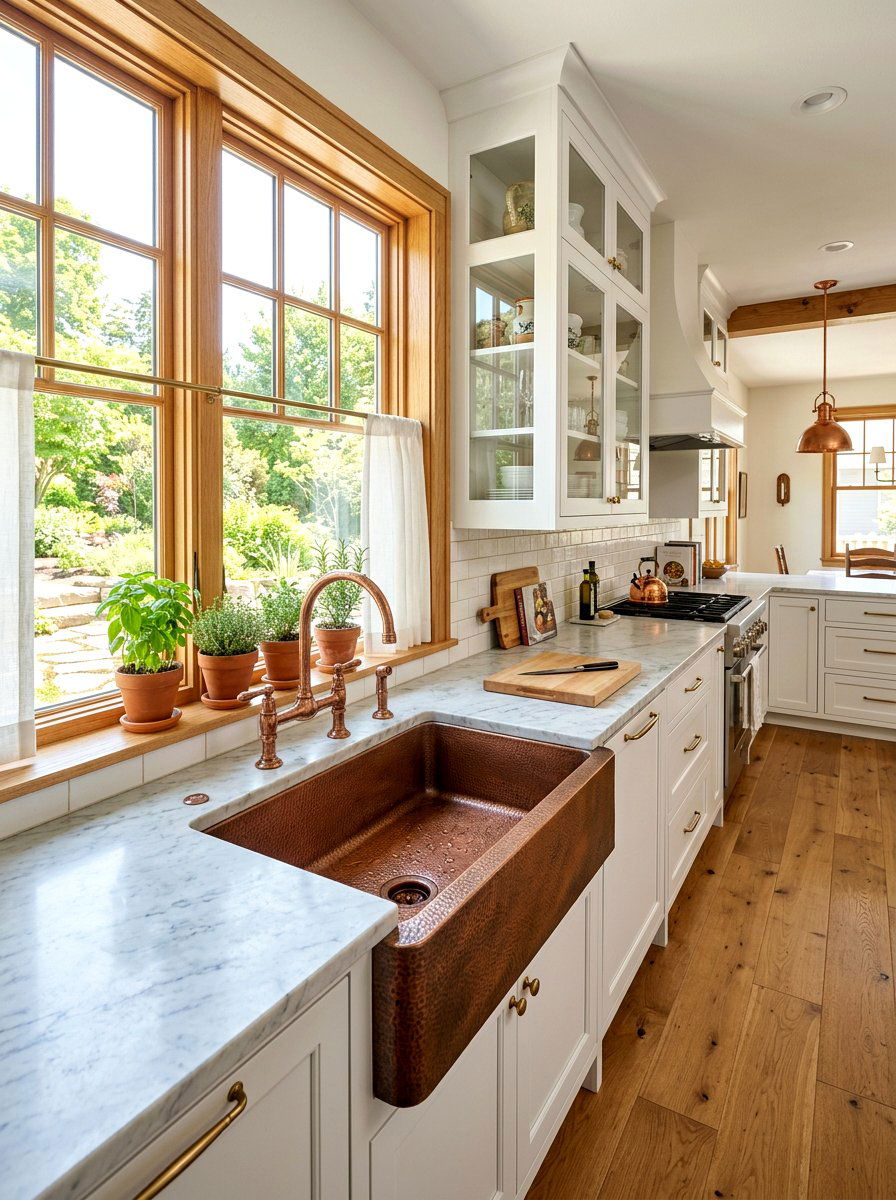
Adding a hammered copper sink basin is a fantastic way to introduce a touch of metallic warmth and vintage character to your kitchen. The living finish of copper develops a unique patina over time, which perfectly complements the rustic and aged aesthetic of Spanish design. Whether you choose an apron-front farmhouse style or a drop-in basin, the rich reddish-brown tones of the metal provide a beautiful contrast to light stone countertops. Copper is also naturally antimicrobial, making it a practical choice for a hardworking kitchen. This high-quality feature serves as a subtle yet powerful reminder of the importance of traditional materials in creating a luxury home.
16. Spanish Colonial Breakfast Nook
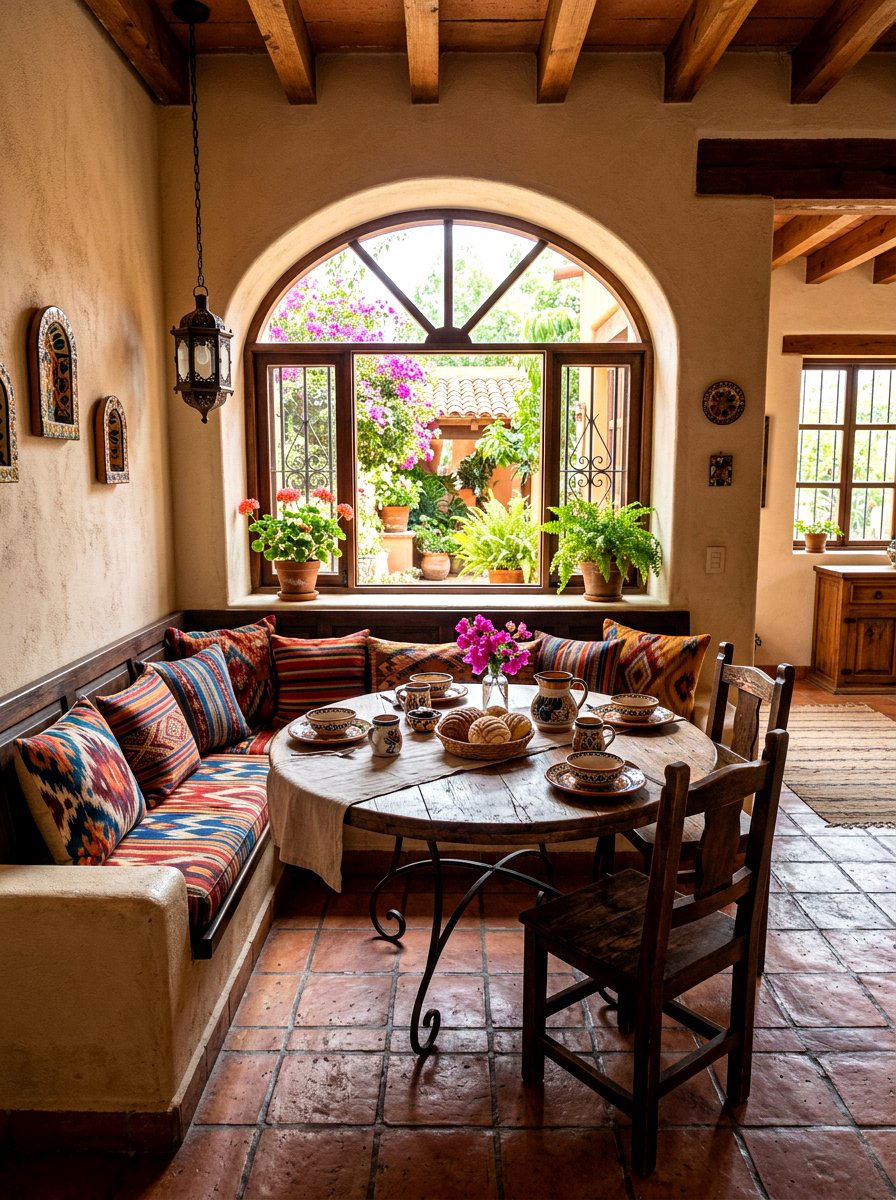
Creating a dedicated breakfast nook with a built-in bench is a wonderful way to incorporate the cozy charm of a Spanish colonial villa. Tucked into a sunlit corner or nestled under an arched window, this area becomes the perfect spot for morning coffee and casual family meals. Using dark wood for the seating and a rustic round table helps anchor the space within the larger kitchen layout. You can enhance the look with vibrant patterned cushions and a vintage wrought iron light fixture hanging above. This intimate setup adds a layer of comfort and functionality, making the kitchen feel more like a multi-purpose living space for everyone.
17. Decorative Corbels Under Counter
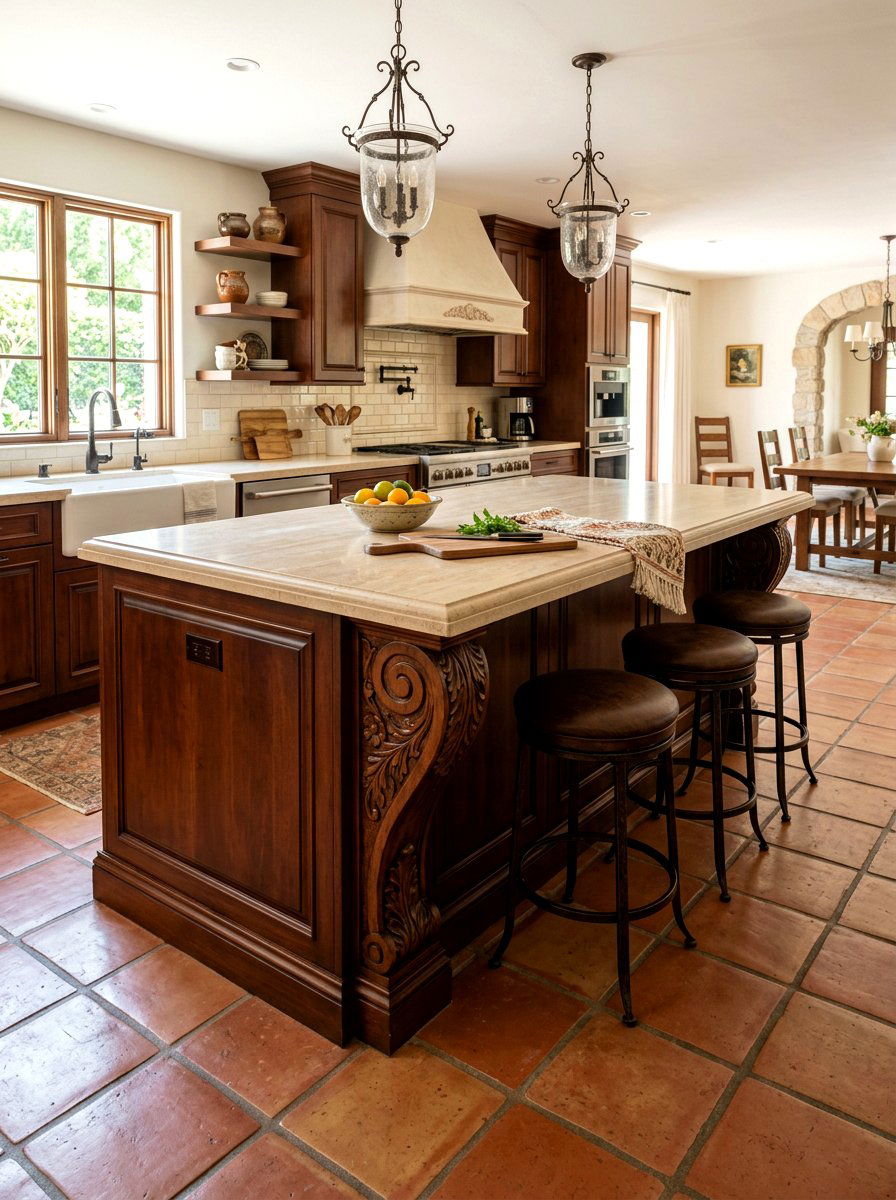
Attention to detail is what sets a high-end Spanish kitchen apart, and decorative corbels under the counter are a perfect example. These carved wood or plaster supports add a layer of architectural interest to the ends of a kitchen island or underneath a breakfast bar. Often featuring scrollwork or traditional motifs, corbels provide a sense of history and structural integrity. They help to transition the horizontal lines of the countertop into the vertical lines of the cabinetry, creating a more finished and custom look. This small but impactful detail enhances the overall feeling of craftsmanship and luxury throughout the entire cooking and dining environment.
18. Red Clay Tile Backsplash
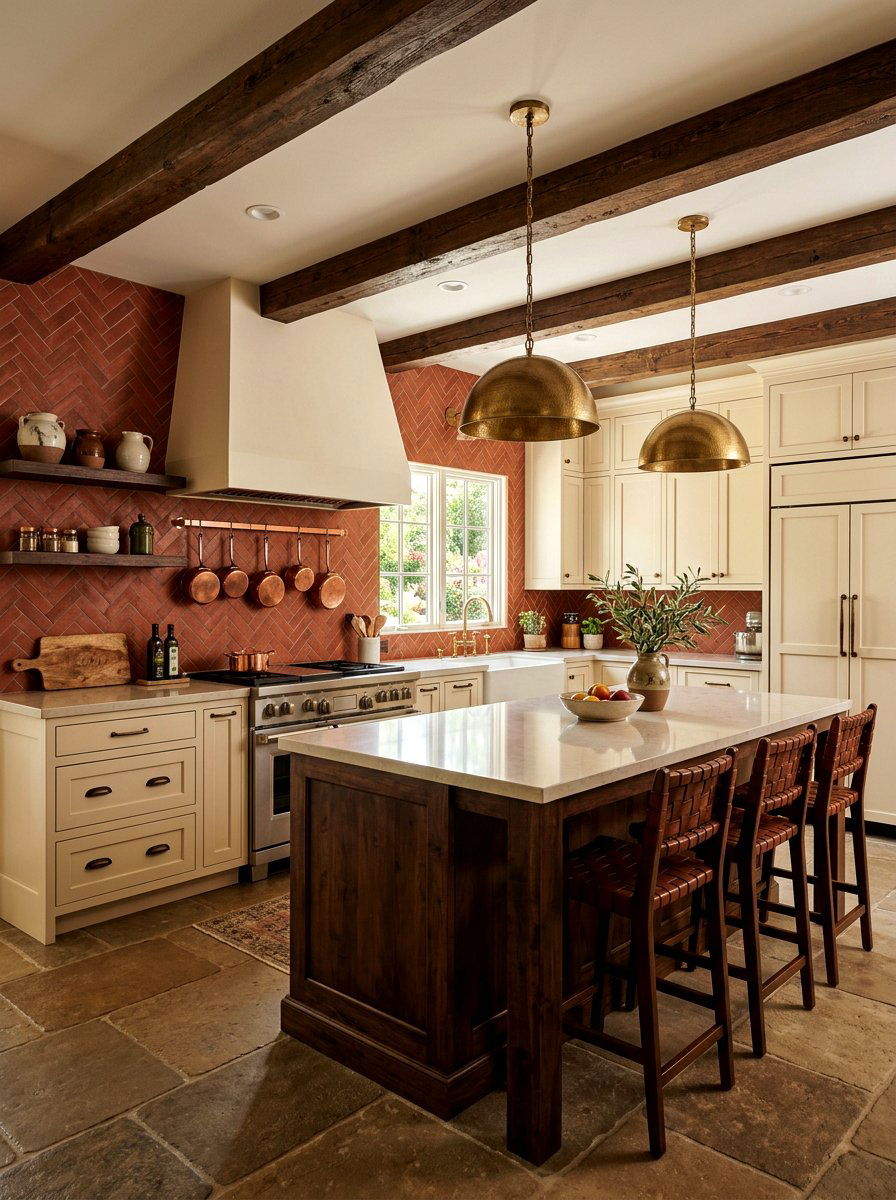
While many people think of patterns when they imagine Spanish tiles, a simple red clay tile backsplash offers a more understated and earthy aesthetic. These unglazed or lightly glazed tiles provide a rich, deep color that mimics the look of traditional terracotta roofs. Arranged in a herringbone or subway pattern, they add a subtle texture and warmth to the walls without distracting from other design features. This choice works exceptionally well in kitchens with creamy white cabinets and dark stone countertops. The organic feel of the clay brings a sense of the earth into the home, making the space feel incredibly grounded and cozy.
19. Ornate Wrought Iron Chandelier
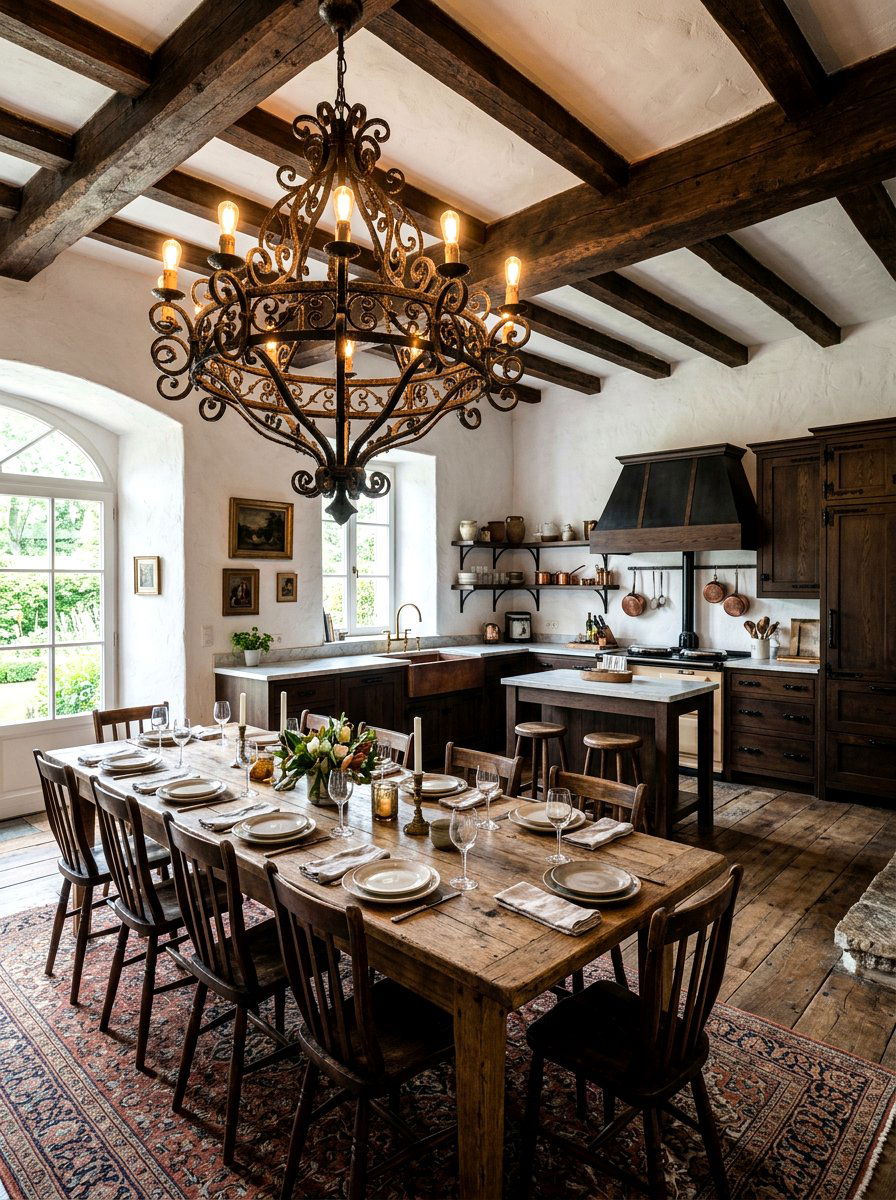
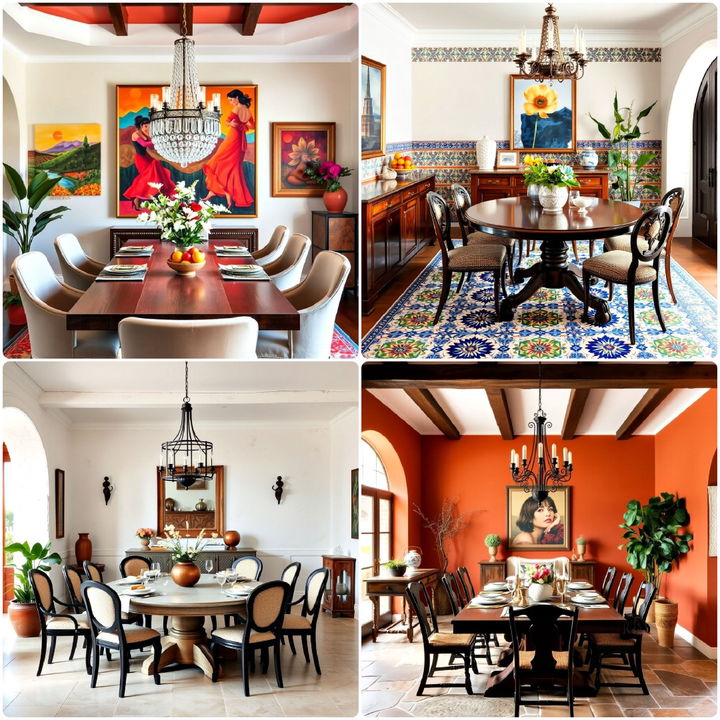
For those who want to add a touch of grand Spanish drama, an ornate wrought iron chandelier is the ultimate lighting statement. Hanging this large fixture in the center of the kitchen or above a long dining table creates an immediate focal point that exudes elegance. The intricate metalwork and visible light bulbs mimic the look of traditional candle-lit chandeliers found in historic haciendas. The dark finish of the iron provides a sharp, masculine contrast to the soft curves of the room and the warmth of the wood. This type of lighting ensures that the kitchen feels like a sophisticated and curated space, perfect for entertaining guests.
20. Distressed Wood Pantry Door
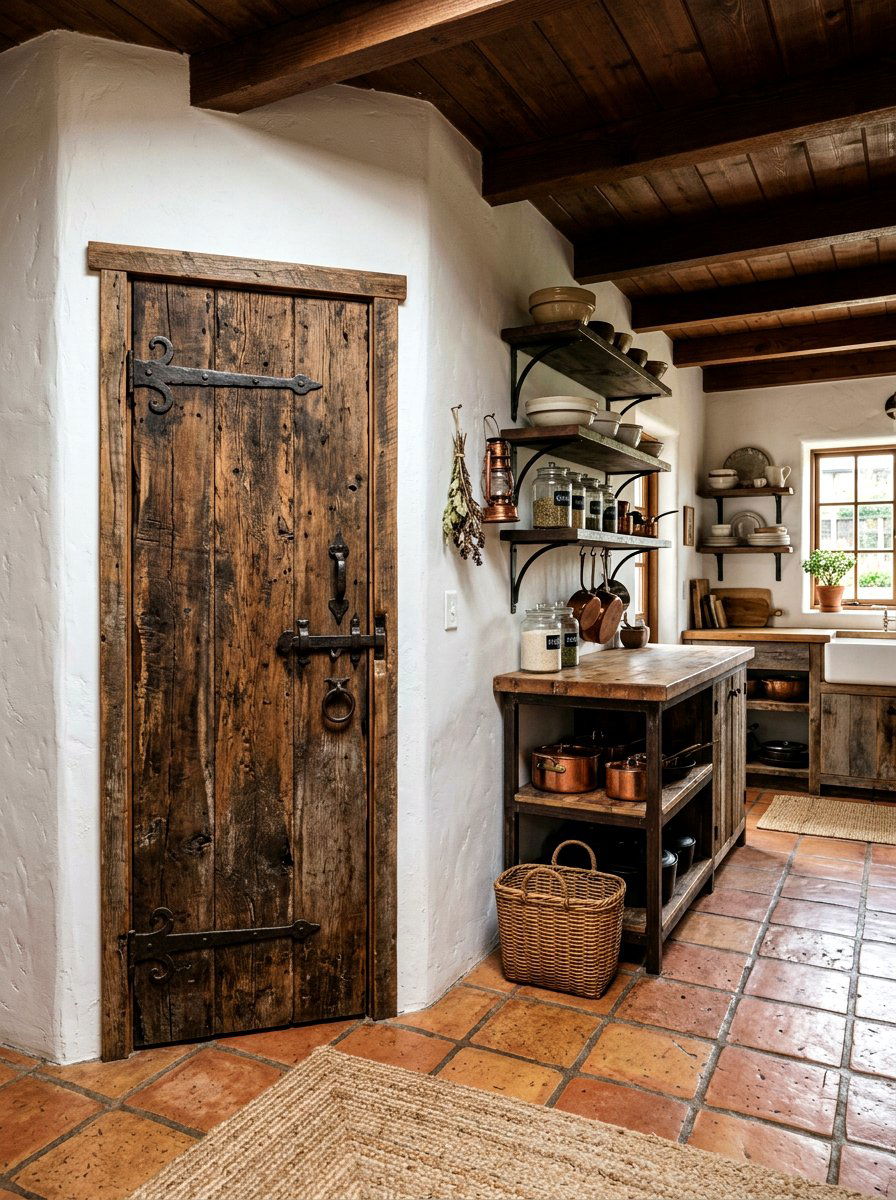
The entrance to your pantry can be a design opportunity when you install a heavy, distressed wood door. Using reclaimed wood with visible knots and a weathered finish adds a sense of age and authenticity to a new kitchen. Adding wrought iron hardware, such as a large handle or decorative hinges, further enhances the Spanish colonial aesthetic. This door serves as a beautiful piece of functional art that breaks up the expanse of plaster walls. It gives the impression that the home has been standing for generations, providing a hidden sense of history and secret storage that is both charming and practical for a modern family.
21. Arched Alcove Over Stove
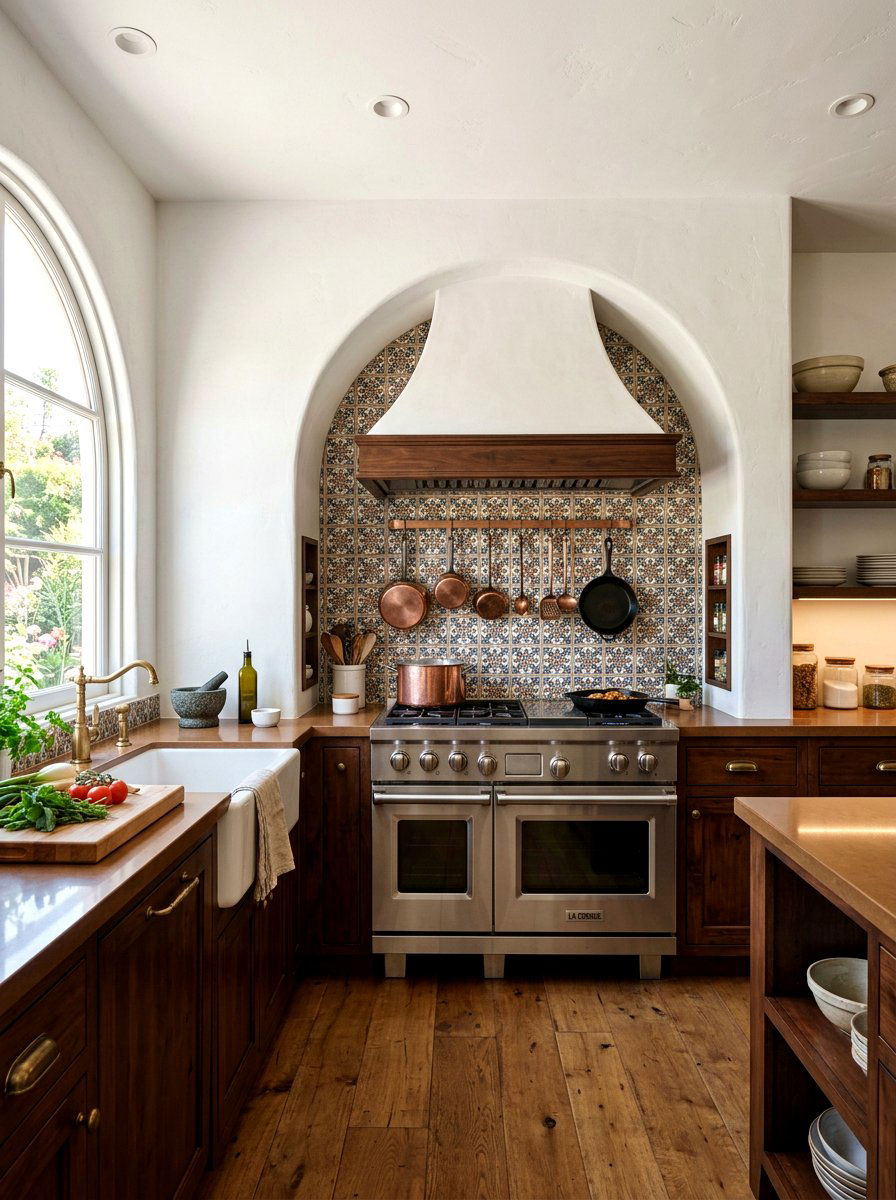
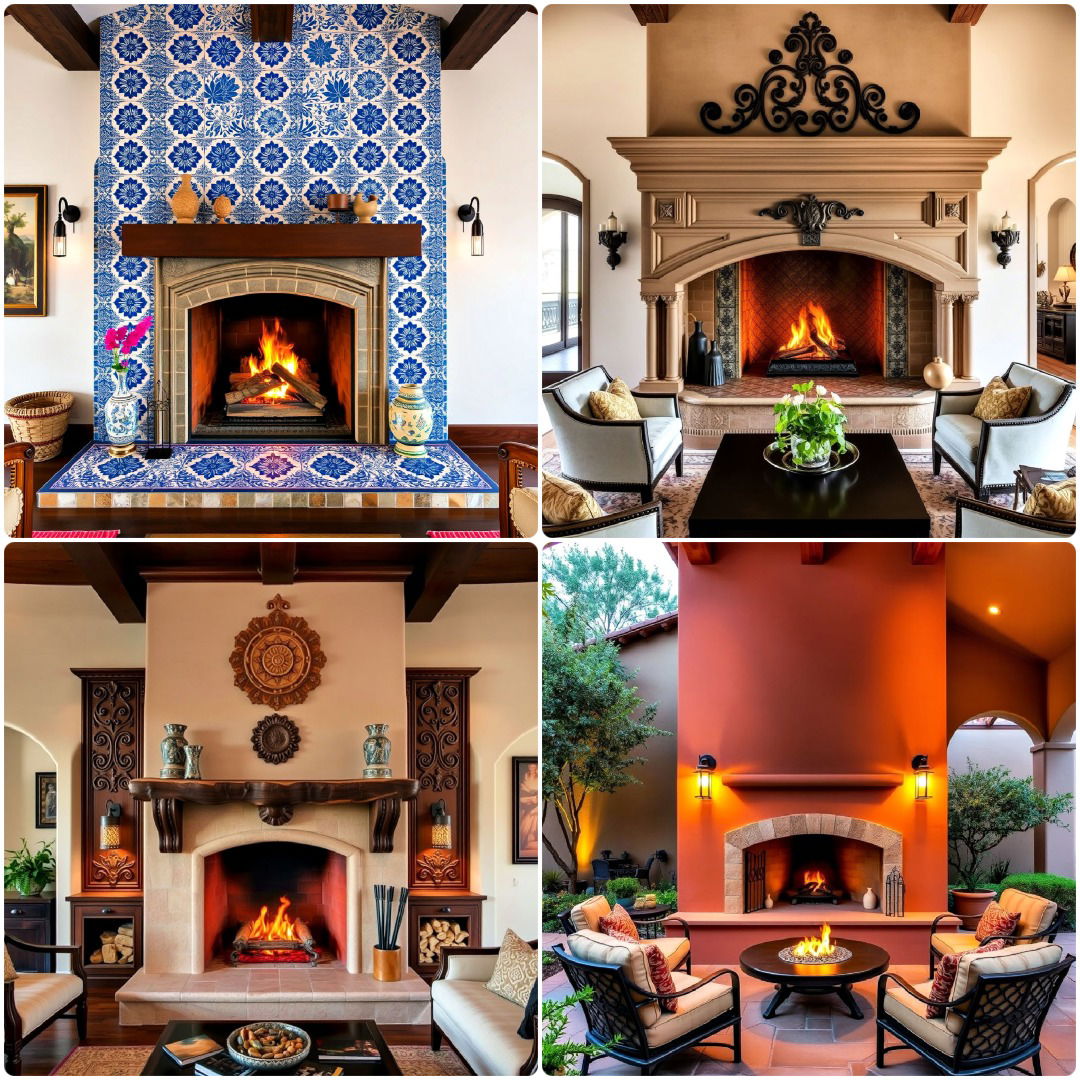
Creating a recessed arched alcove over the stove is a classic architectural move that defines the cooking area as the heart of the home. This "hearth-style" design often features a hidden vent hood behind a plastered or tiled facade. The interior of the alcove can be lined with decorative patterned tiles to create a stunning visual contrast with the rest of the wall. This setup not only looks beautiful but also provides a sense of enclosure and focus for the chef. It mimics the traditional large fireplaces of old Spanish homes, bringing a feeling of warmth, safety, and tradition to the modern act of preparing a family meal.
22. Inset Tile On Island
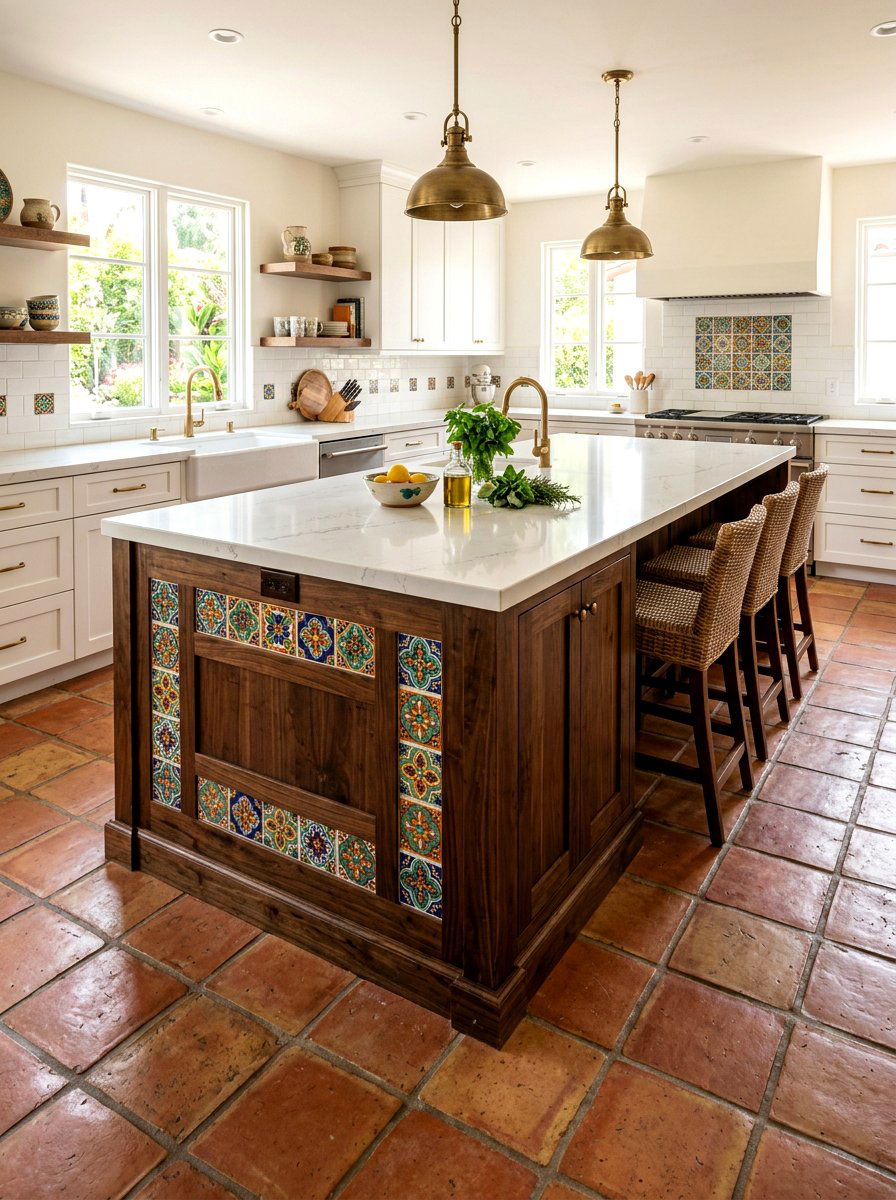
For a subtle and sophisticated touch of color, consider adding inset tile details to the sides of your kitchen island. Rather than tiling the entire surface, placing a single row or a decorative panel of hand-painted tiles can break up the wood finish. This design choice adds an unexpected layer of detail that guests will appreciate when sitting at the breakfast bar. It allows you to coordinate the island with your backsplash, creating a cohesive and well-planned look. The mix of materials — wood, stone, and ceramic — is a hallmark of Mediterranean design, making the space feel rich, layered, and full of artisanal character.
23. Vintage Spanish Style Rug
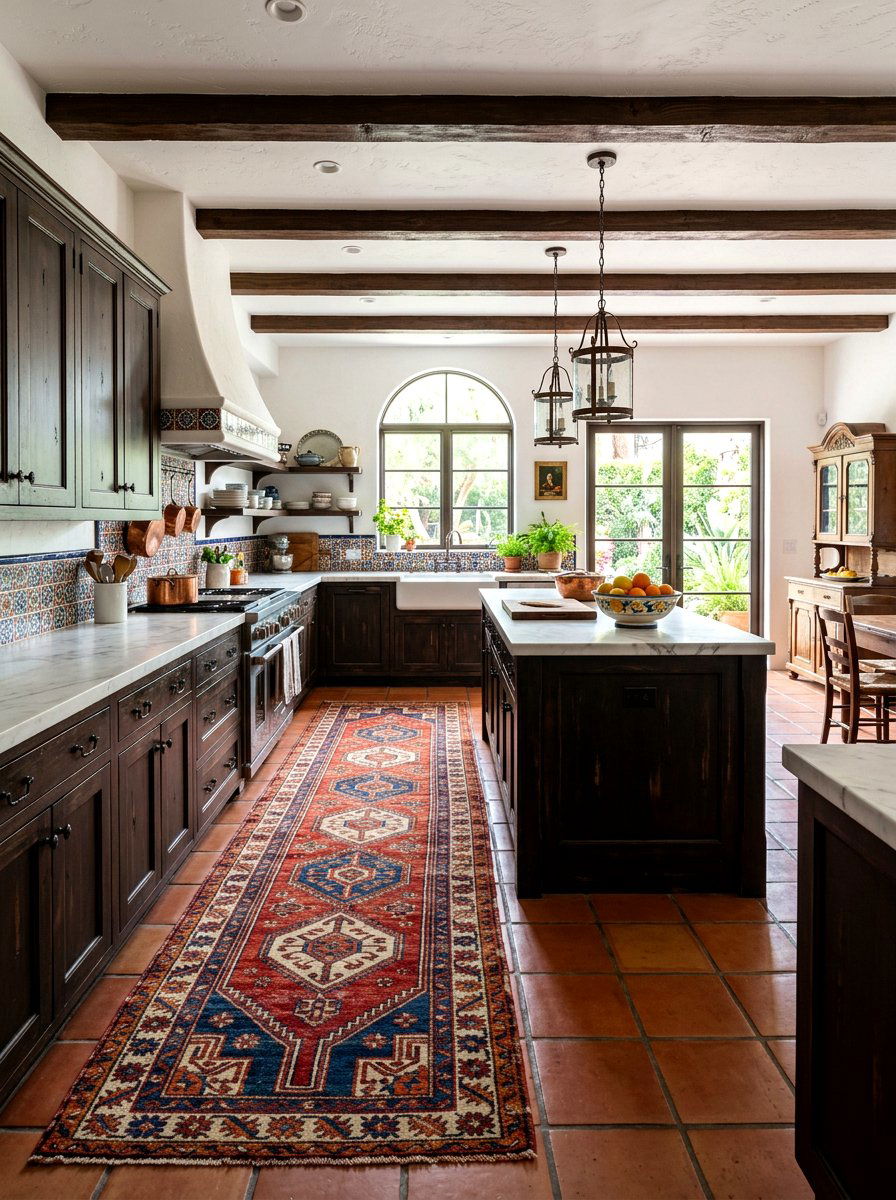
Softening the hard surfaces of a kitchen with a vintage Spanish-style rug is a quick way to add comfort and color. Look for rugs with traditional Mediterranean patterns in earthy tones like rust, mustard yellow, and deep indigo. Placing a long runner between the island and the main sink area provides a soft cushion for your feet while also protecting the floor. The intricate weave and faded colors of a vintage rug add a sense of history and a "lived-in" quality to the room. It is an easy way to introduce warmth and personality without making any permanent structural changes to your beautiful kitchen design.
24. Warm Walnut Wood Cabinetry
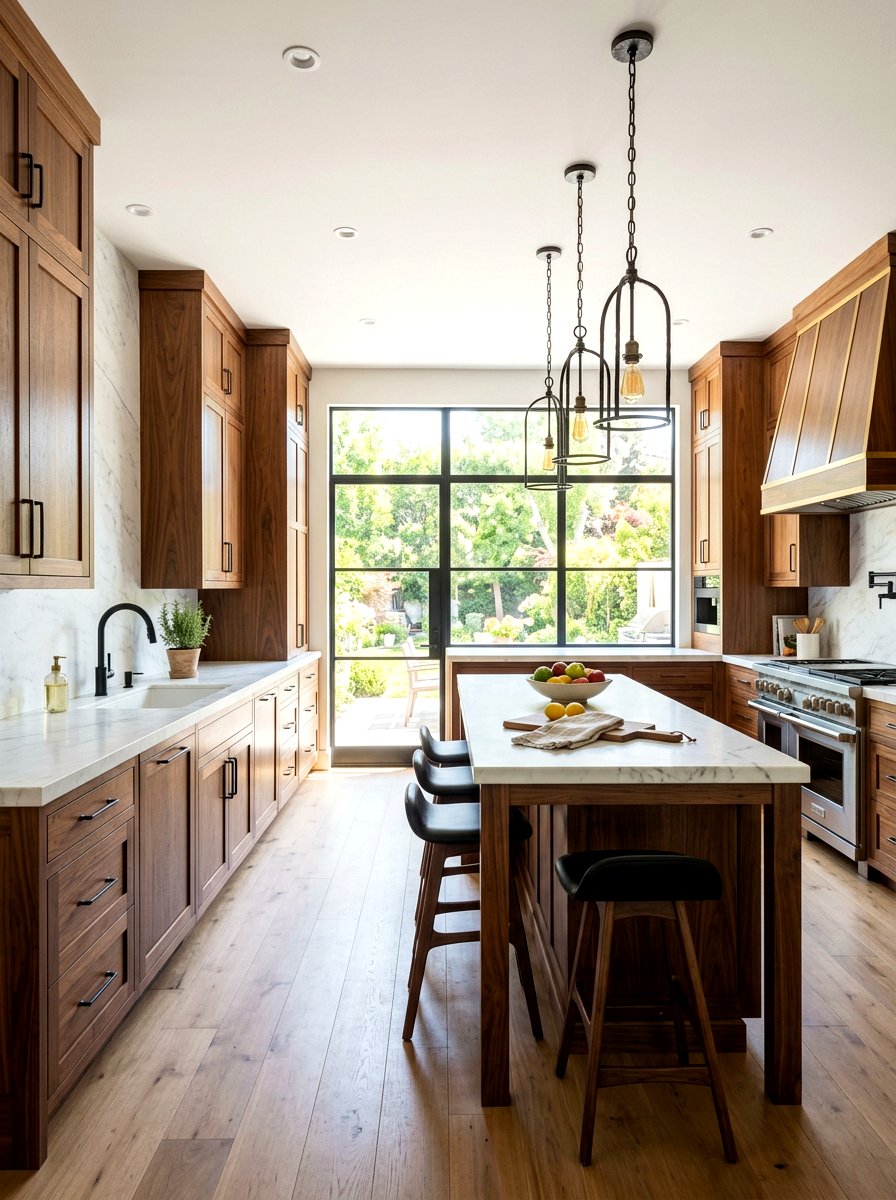
Walnut is a prized material in Spanish interior design because of its rich, dark color and beautiful grain patterns. Using warm walnut for your kitchen cabinetry provides a level of sophistication and durability that is unmatched. The natural oil finish of walnut feels smooth to the touch and ages gracefully, becoming even more beautiful over time. When paired with light-colored countertops and simple wrought iron hardware, these cabinets create a balanced and timeless look. The deep brown tones of the wood bring a masculine and sturdy feel to the kitchen, ensuring that the space feels high-end yet comfortable enough for daily family life.
25. Stone Wall Interior Detail
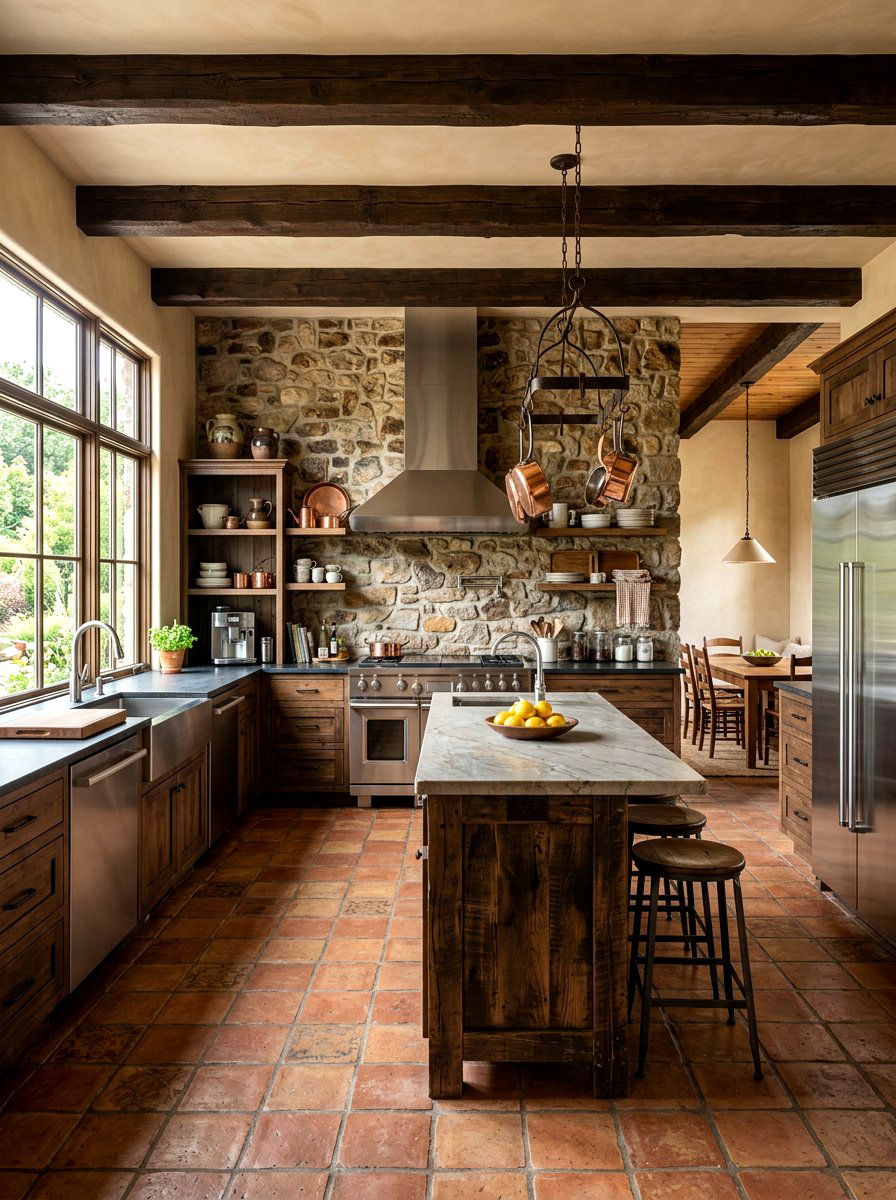
Incorporating a natural stone wall into your kitchen design adds an incredible amount of texture and a rugged, old-world feel. Whether you use a full accent wall or just a small section around a window, the varied colors of the stone provide a beautiful organic palette. This feature mimics the thick masonry walls of traditional Spanish villas, offering a sense of permanence and strength. The cool temperature of the stone contrasts with the warmth of the wood beams and terracotta floors, creating a perfectly balanced environment. It is a bold design choice that makes the kitchen feel integrated with the natural landscape outside.
26. Carved Wood Cabinet Door
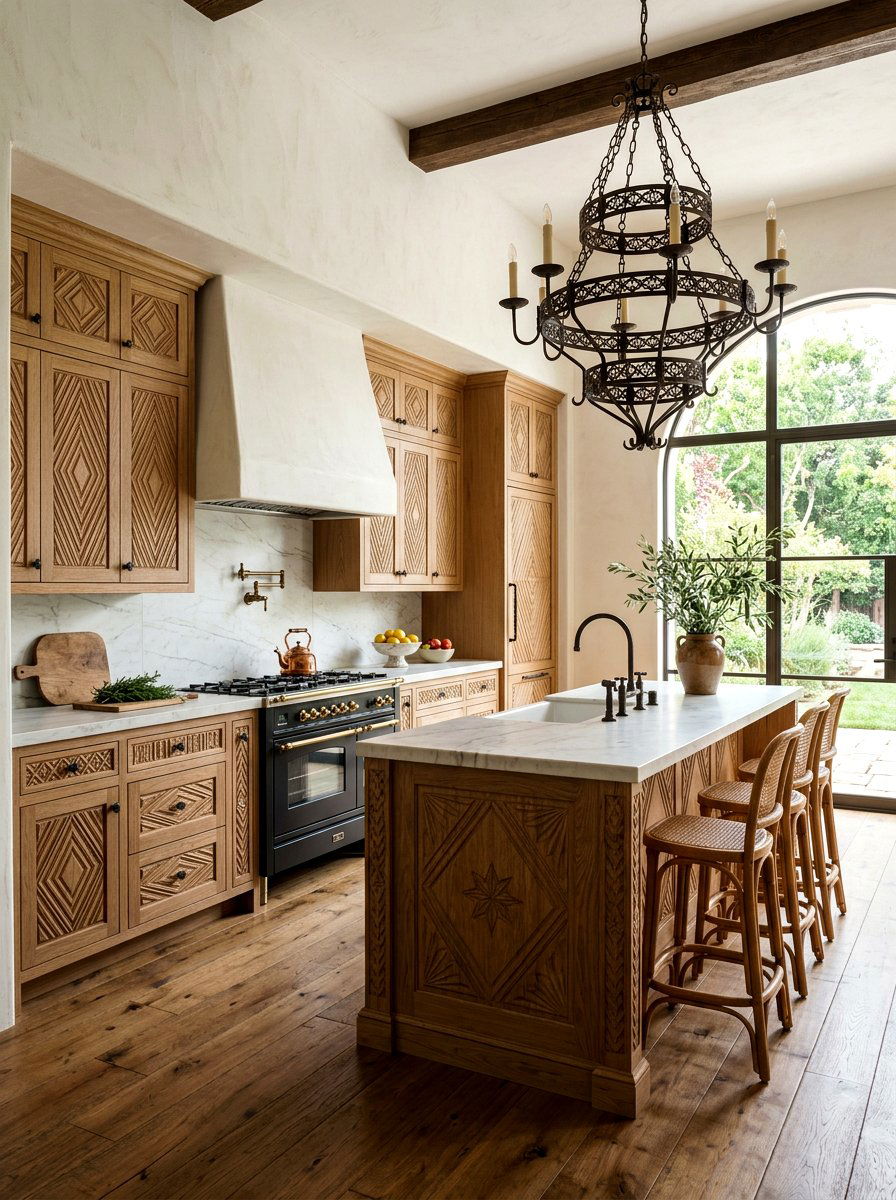
For those who appreciate fine craftsmanship, carved wood cabinet doors are a stunning way to add detail to a Spanish-style kitchen. These intricate designs often feature geometric patterns or floral motifs inspired by Moorish and Spanish history. Even using these decorative doors on just a few select cabinets, such as the upper ones or the island, can elevate the entire room's aesthetic. The shadows created by the carvings add depth and interest, making the cabinetry feel like a collection of fine furniture. This level of detail communicates a love for tradition and artistry, making your kitchen a truly unique and personalized space.
27. Colorful Patterned Floor Tile
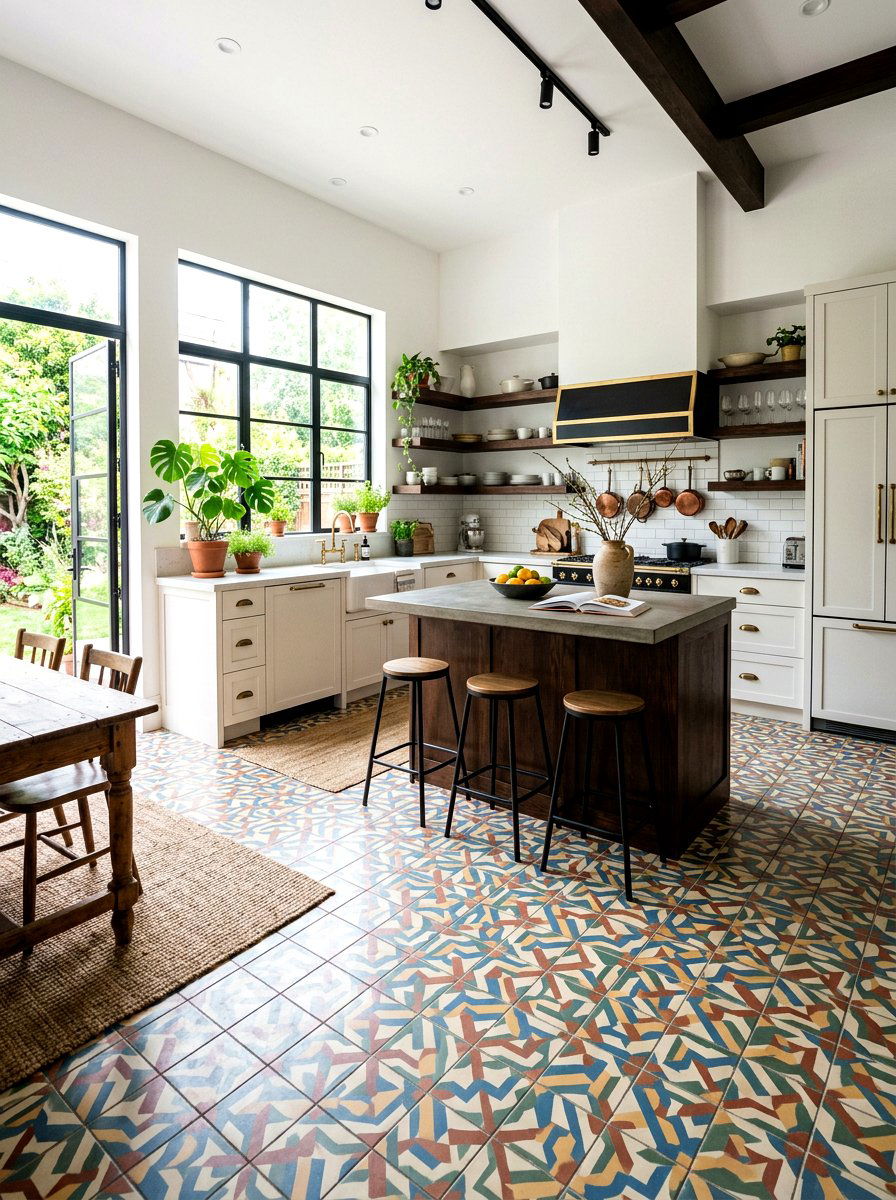
If you want a more vibrant alternative to plain terracotta, colorful patterned floor tiles are a fantastic choice. These cement or ceramic tiles often feature bold geometric designs that draw the eye downward and make a strong style statement. This design approach is perfect for smaller kitchens or laundry areas where you want to add a punch of personality. To keep the room from feeling too busy, pair these energetic floors with simple white walls and clean-lined wood cabinetry. The result is a joyful and artistic space that feels modern yet deeply rooted in the colorful traditions of Mediterranean and Spanish culture.
28. Rustic Farmhouse Dining Table
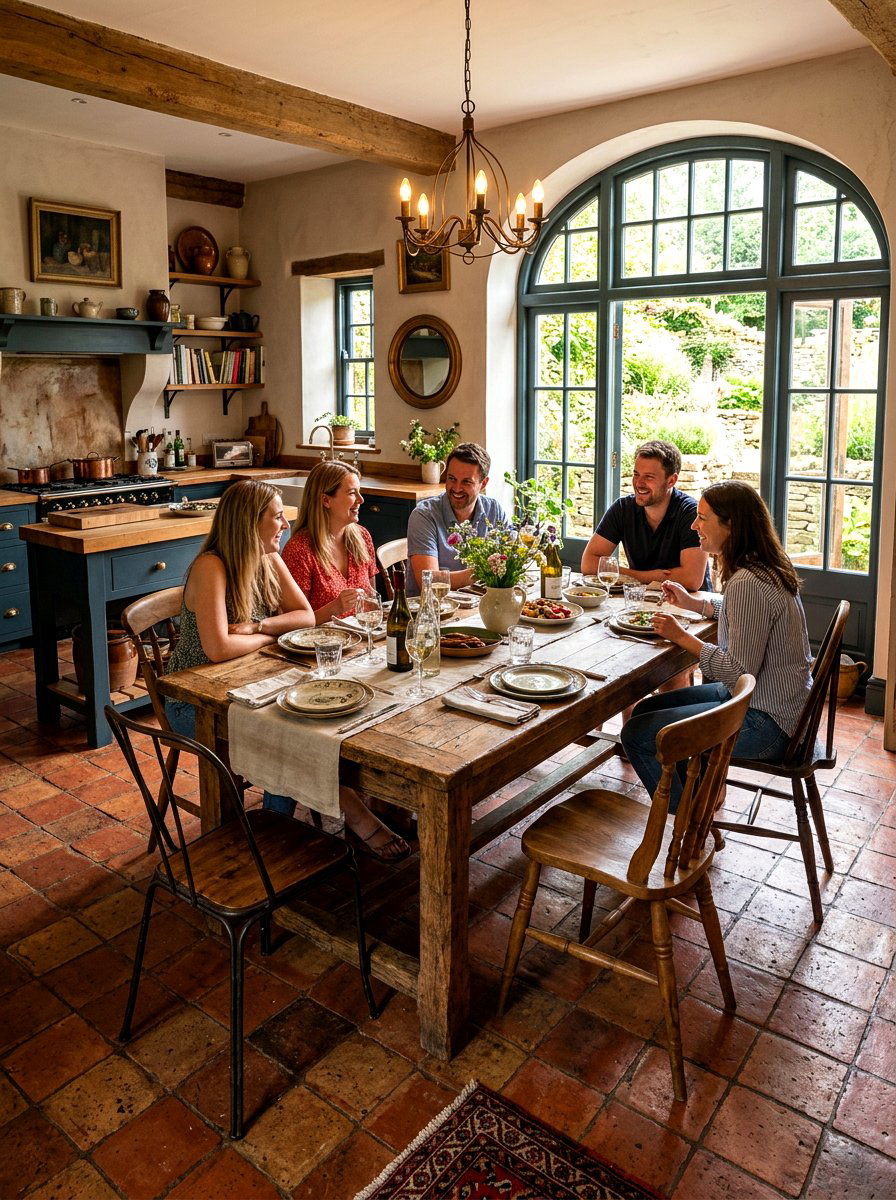
In many Spanish homes, the kitchen and dining area are one and the same, centered around a large rustic farmhouse table. Choosing a table made from heavy, distressed wood with chunky legs provides a sturdy place for family gatherings and meal prep. The natural imperfections in the wood, like cracks and knots, add to the casual and welcoming vibe of the room. Surrounding the table with a mix of wrought iron and wood chairs creates a relaxed, eclectic look that feels authentic. This central piece of furniture encourages a slow and social way of living, making every meal feel like a special occasion.
29. Wrought Iron Cabinet Hardware
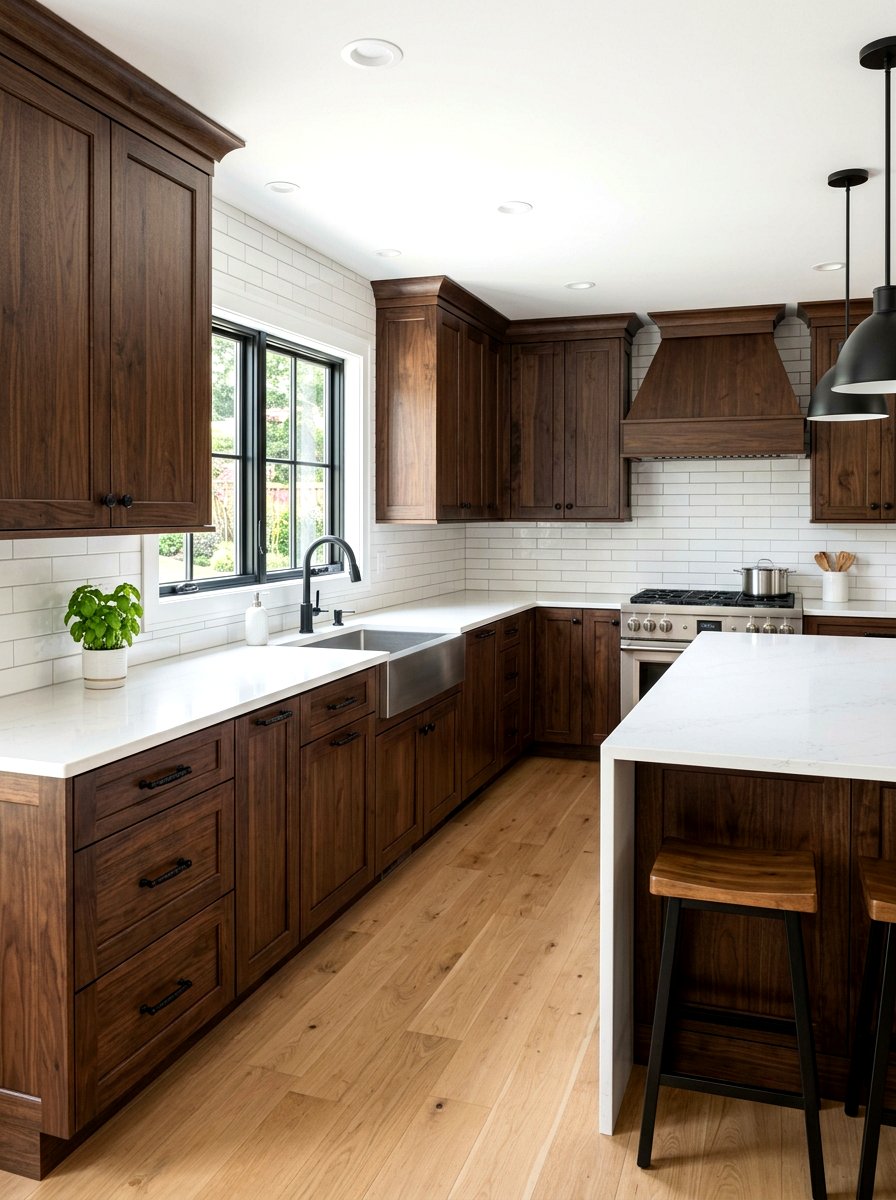
Sometimes the smallest details make the biggest difference, and wrought iron cabinet hardware is essential for a finished Spanish look. Replacing standard chrome or brass handles with dark, hand-forged iron pulls and hinges adds a touch of rustic elegance. The matte black finish of the metal provides a crisp contrast against both light and dark wood cabinets. These sturdy pieces of hardware feel substantial in your hand, reinforcing the idea of quality and durability. This simple upgrade is one of the most cost-effective ways to bring a sense of historical charm and Mediterranean style to any existing kitchen space today.
30. Mediterranean Style Archway Passthrough
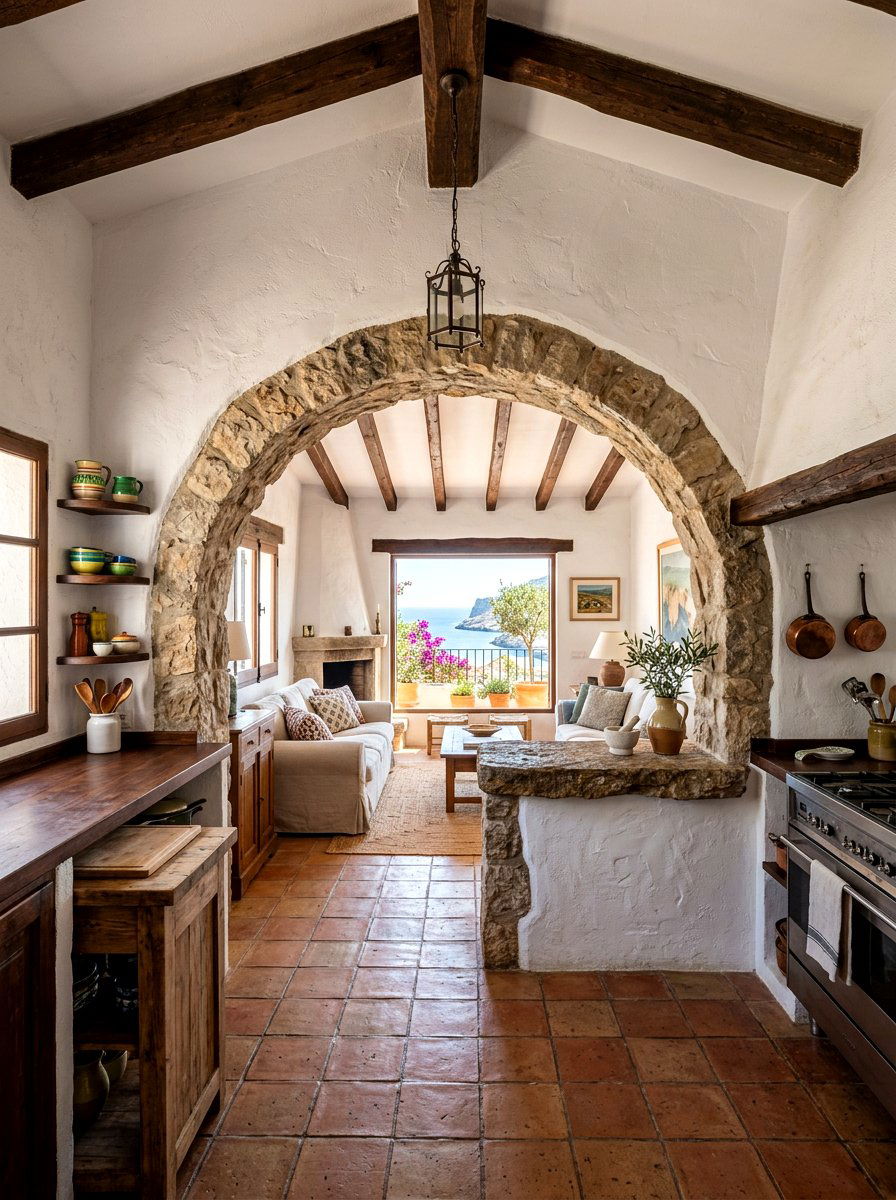
An archway passthrough between the kitchen and the living room is a functional and beautiful way to create an open-concept feel. This design feature allows the chef to stay connected with family and guests while maintaining a clear boundary between the cooking and relaxation areas. The curved top of the opening echoes other arched elements in the home, creating a sense of architectural harmony. Often featuring a wide stone or wood ledge, this passthrough can also serve as a casual breakfast bar. It is a brilliant way to improve the flow of light and conversation throughout your Mediterranean-inspired dream home.
Conclusion:
Designing a Spanish-style kitchen is about more than just choosing a color palette; it is about creating a space that feels warm, timeless, and full of life. By combining natural materials like terracotta, wood, and stone with vibrant hand-painted details and elegant wrought iron accents, you can build a room that serves as the heart of your home. This style honors the beauty of craftsmanship and the importance of family gatherings, offering an environment that is as functional as it is beautiful. Whether you lean toward a rustic hacienda or a sleek modern revival, these thirty ideas provide a solid foundation for your journey.

Related posts: