Stepping onto a classic Colonial front porch feels like a journey back in time, where architectural symmetry and timeless elegance define the first impression of a home. These spaces are far more than just entryways; they are historical statements that prioritize balance, proportion, and welcoming hospitality. Whether your home is a traditional New England saltbox or a grand Southern estate, the front porch serves as the crown jewel of your curb appeal. Incorporating the right materials, such as sturdy columns, classic brick, and refined lighting, can transform a standard exterior into a masterpiece of traditional design that never goes out of style for homeowners today.

1. Symmetrical colonial front porch
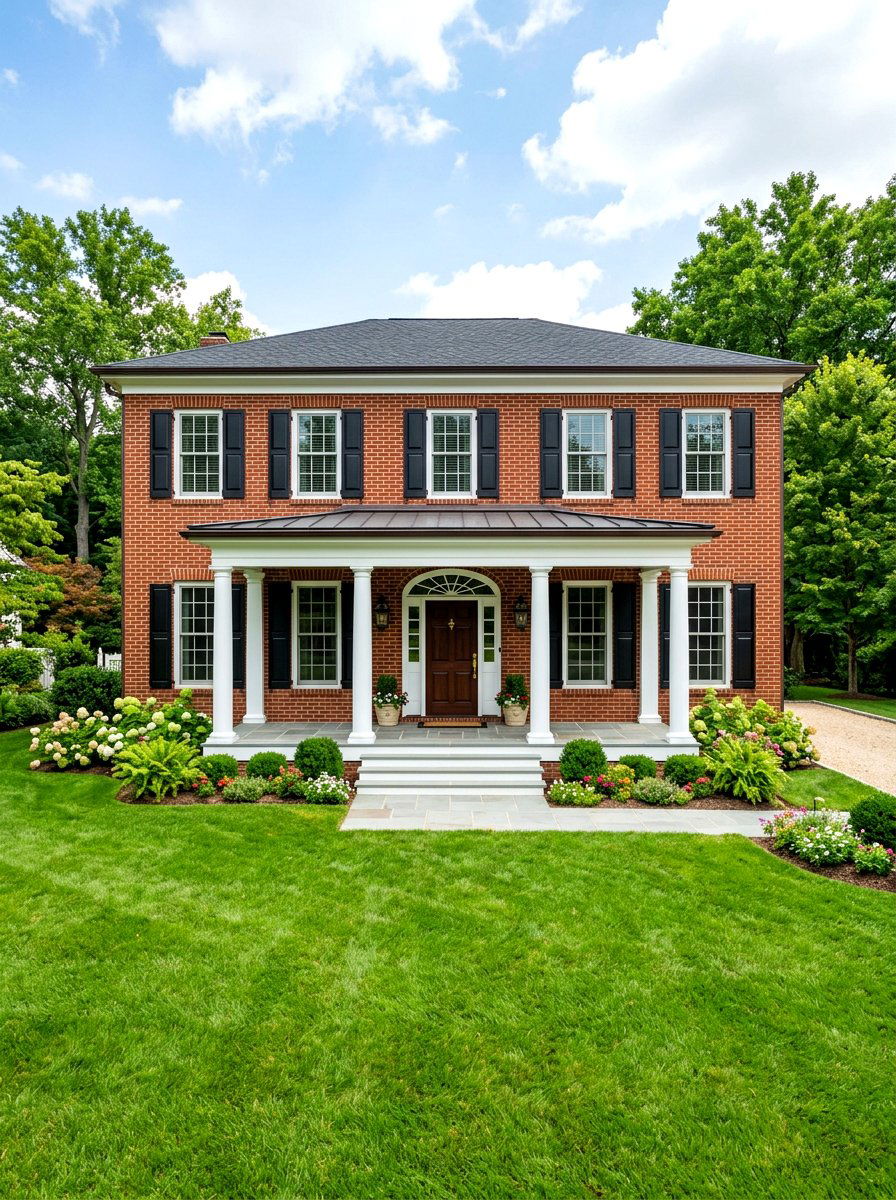
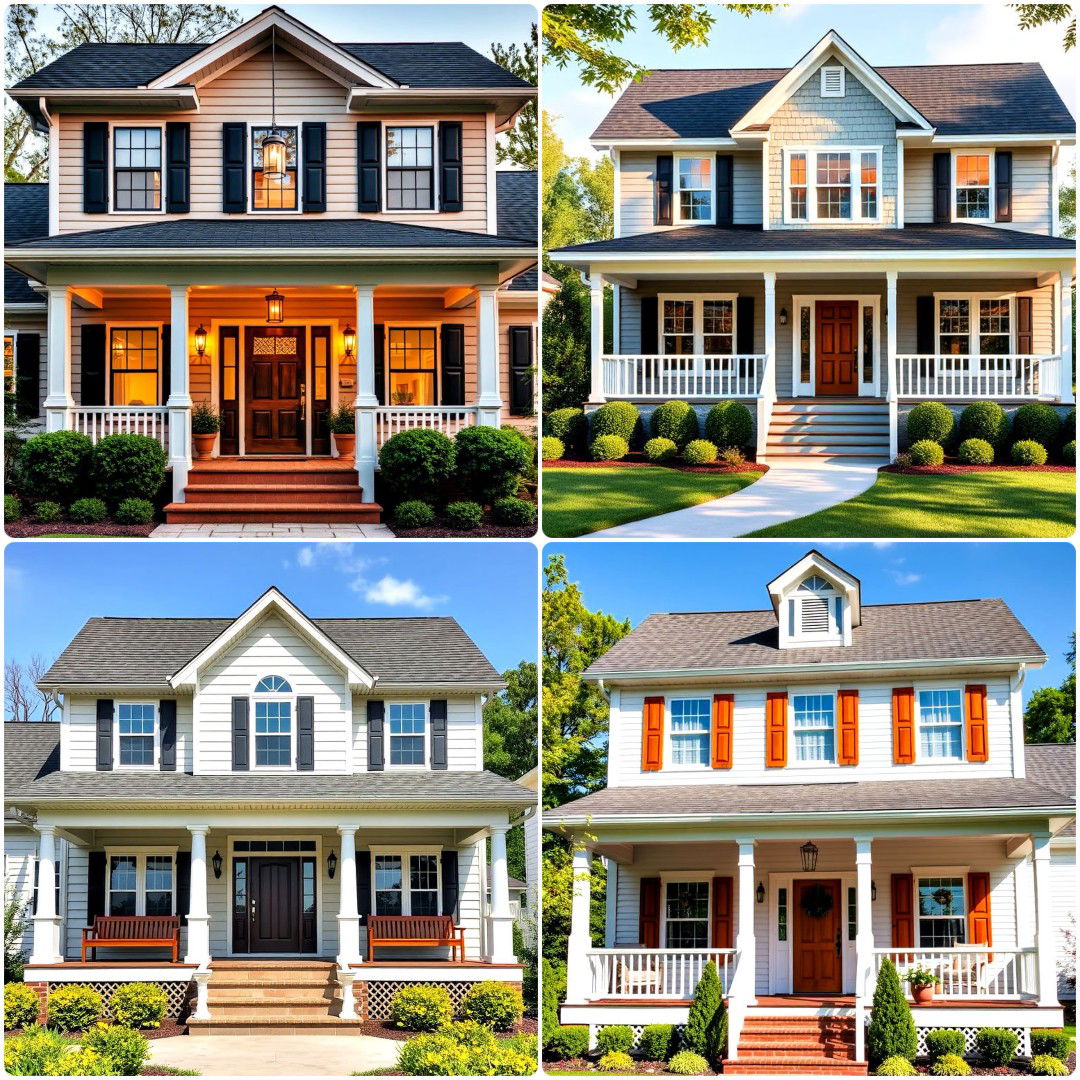
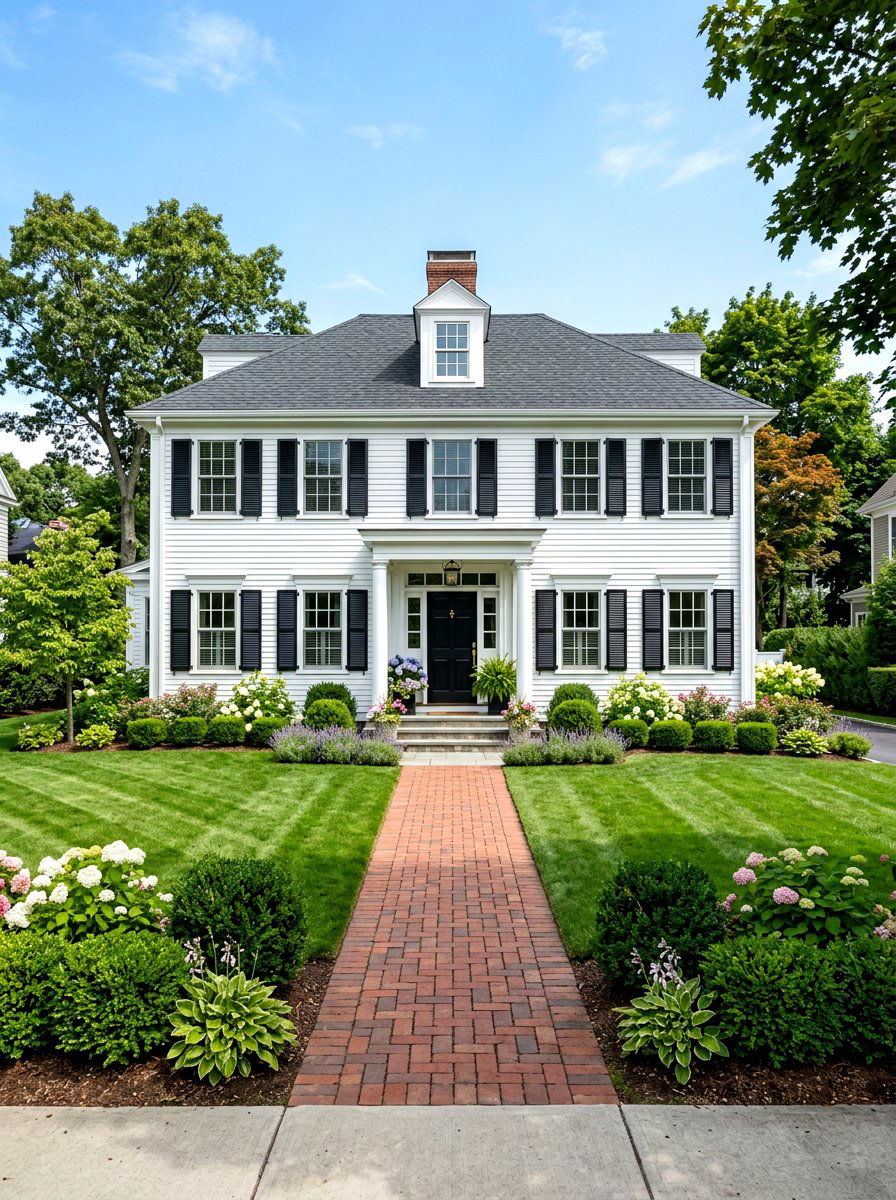
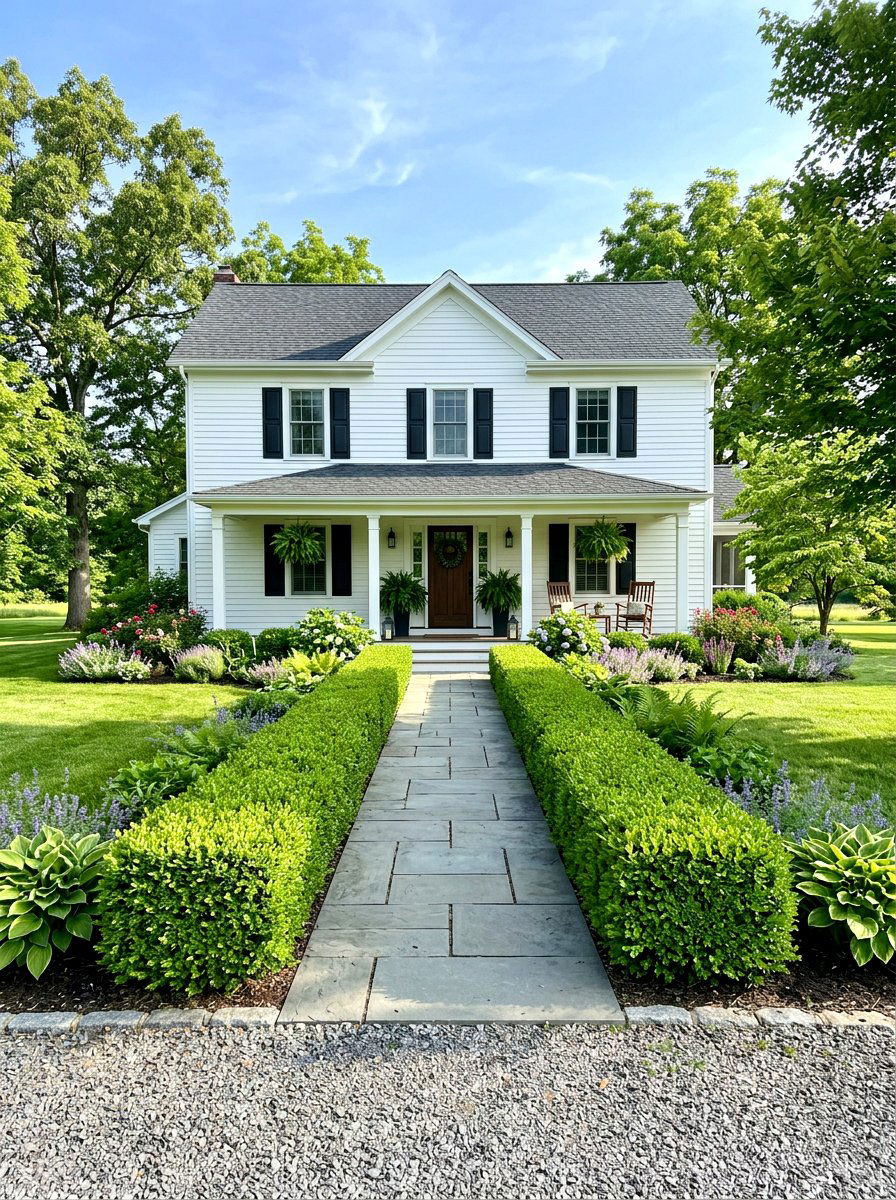
Walking up to a home with a perfectly balanced facade creates an immediate sense of order and peace that defines the Colonial aesthetic. Symmetry is the backbone of this style, where windows, columns, and decor are mirrored across a central front door to create a harmonious look. You might achieve this by placing matching planters on either side of the entrance or ensuring that shutters are sized correctly for every window. This balanced approach provides a stately presence that feels grounded and permanent, making the house appear larger and more sophisticated from the street view for any visitor or neighbor passing by your beautiful property daily.
2. White colonial porch columns
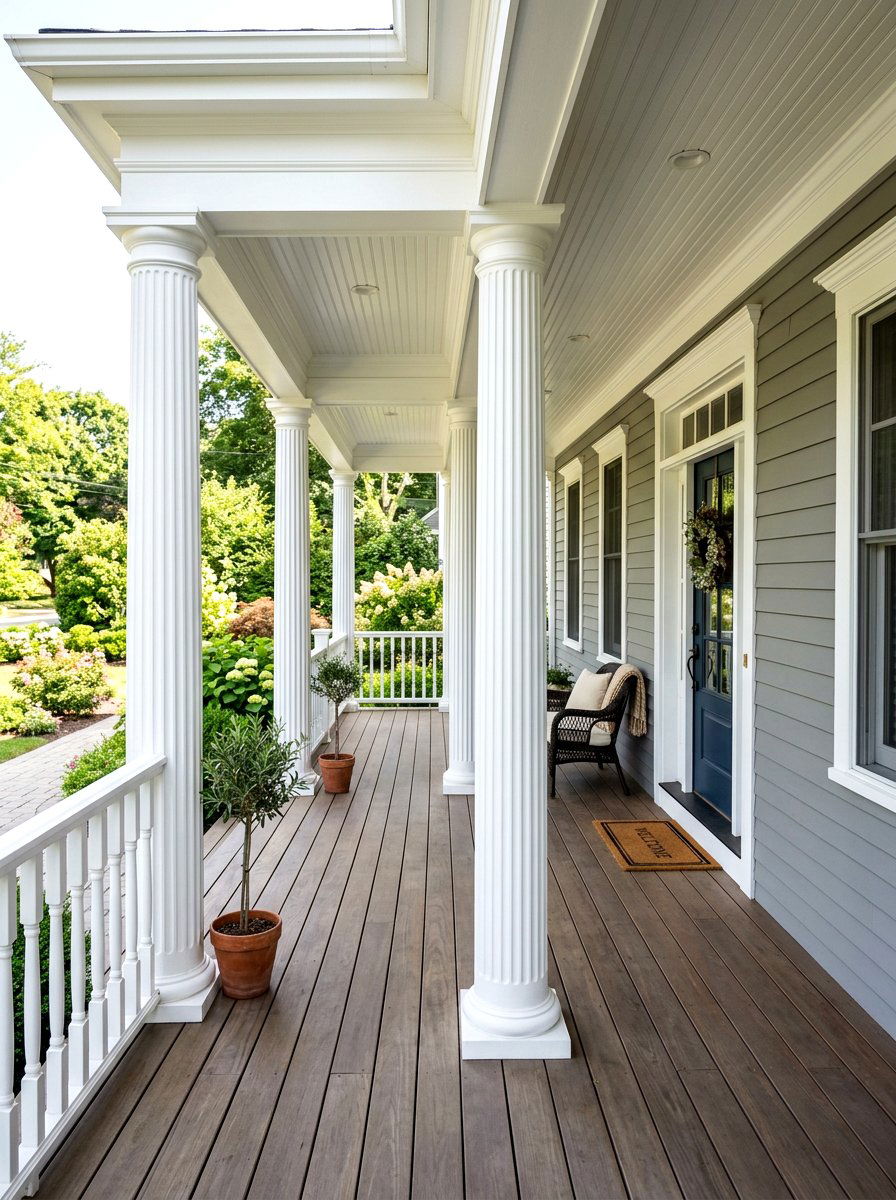
Have you ever noticed how tall, slender pillars can completely change the architectural weight of a residential building? White porch columns are a hallmark of Colonial architecture, offering both structural support and a clean, vertical rhythm that draws the eye upward towards the roofline. These columns often feature subtle details like fluting or simple square bases, depending on whether you prefer a formal or farmhouse-inspired look. Painting them a crisp, bright white ensures they pop against darker siding or traditional red brick, providing that iconic high-contrast appearance that defines American heritage homes while maintaining a very fresh and clean atmosphere.
3. Black shutters for colonial home
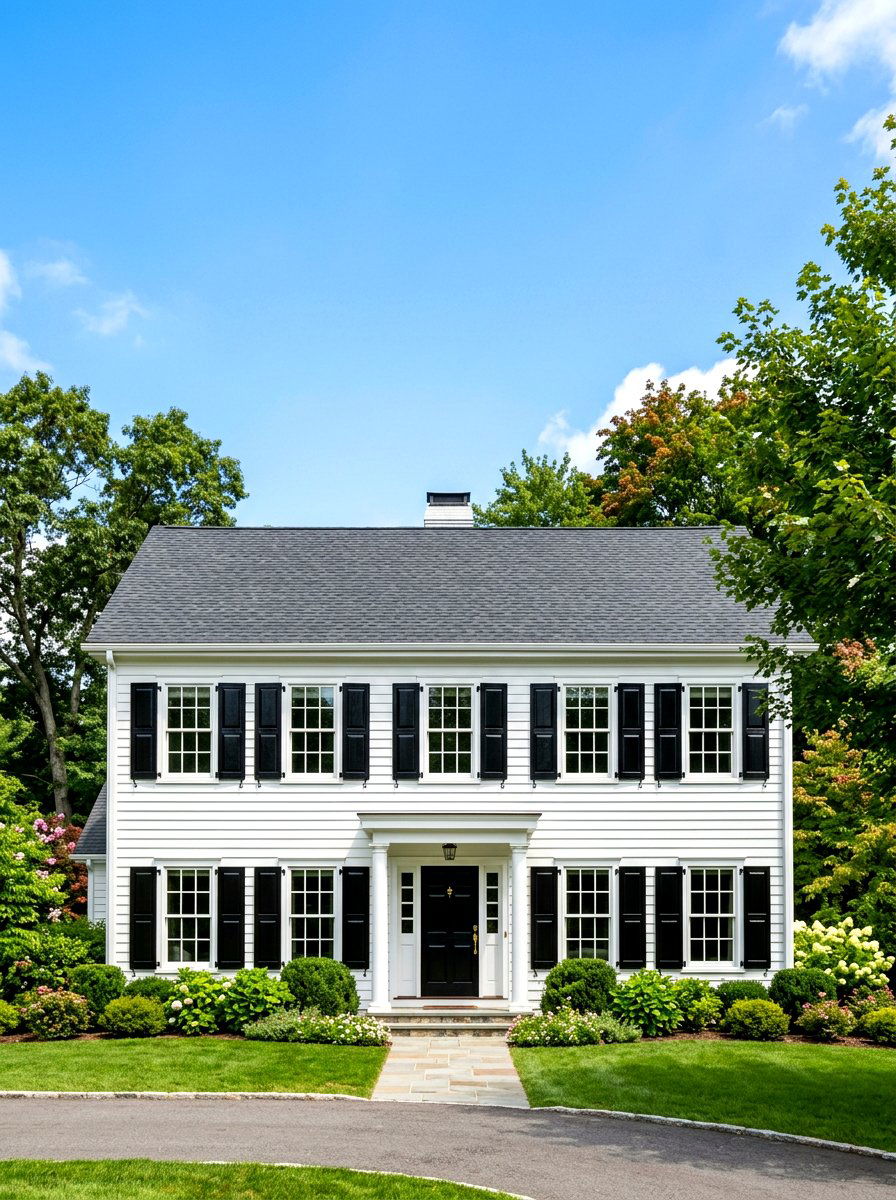
The striking contrast of dark window coverings against a light-colored exterior is a classic design choice that adds depth and character to any facade. Black shutters are the gold standard for Colonial homes, providing a sharp, tailored look that frames the windows beautifully. Whether they are functional or decorative, these shutters help break up the large surface area of the siding and reinforce the home's rhythmic symmetry. Choosing a high-gloss finish can add a touch of modern luxury to this traditional element, ensuring your home looks polished and well-maintained while standing out in the neighborhood with its timeless and bold appeal.
4. Brick porch flooring
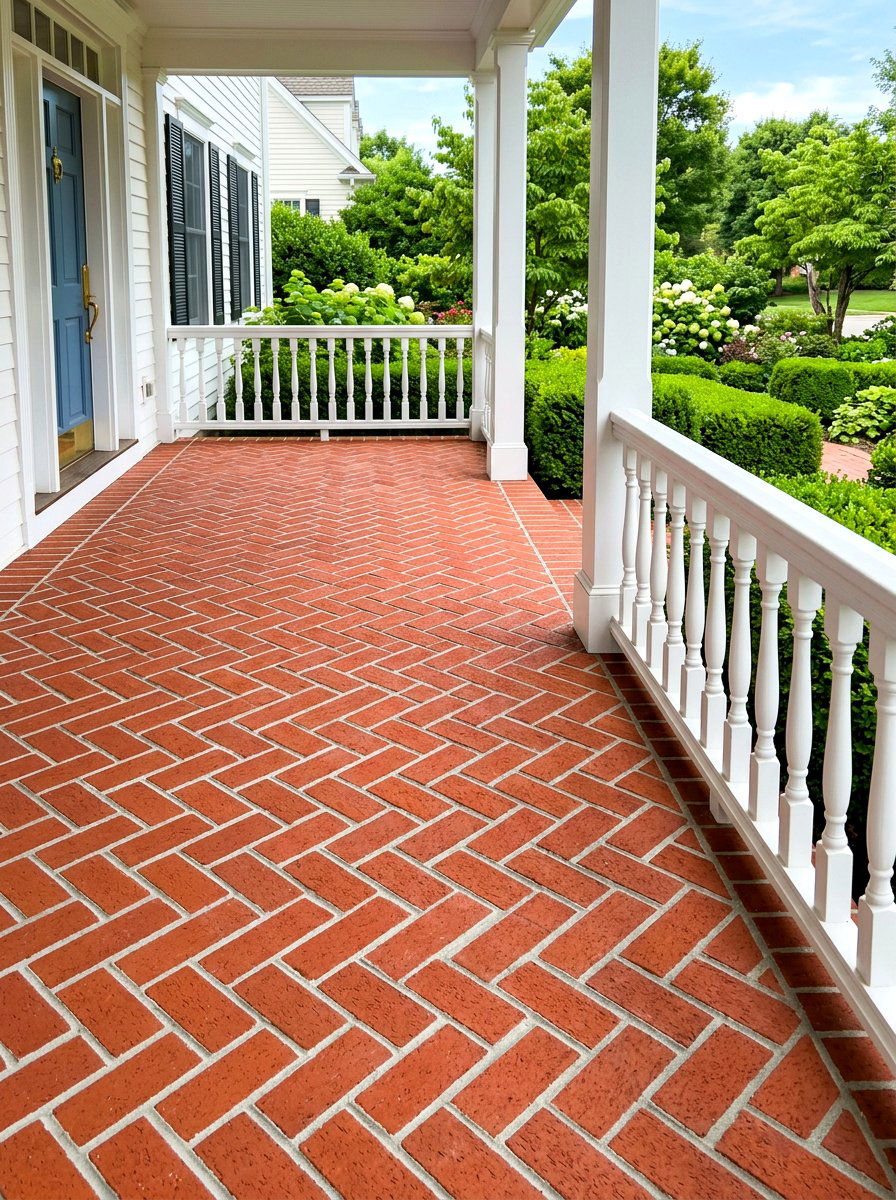
Does anything feel more permanent and established than the warm, earthy tones of a professionally laid brick floor under your feet? Brick is a traditional material that has been used for centuries in Colonial construction due to its incredible durability and natural beauty. When used for porch flooring, it creates a textured surface that feels both rugged and refined, especially when laid in patterns like herringbone or basketweave. The varied shades of red and orange in the clay complement the green of the landscape, making the porch feel like a natural extension of the garden while providing a slip-resistant surface.
5. Colonial double front doors
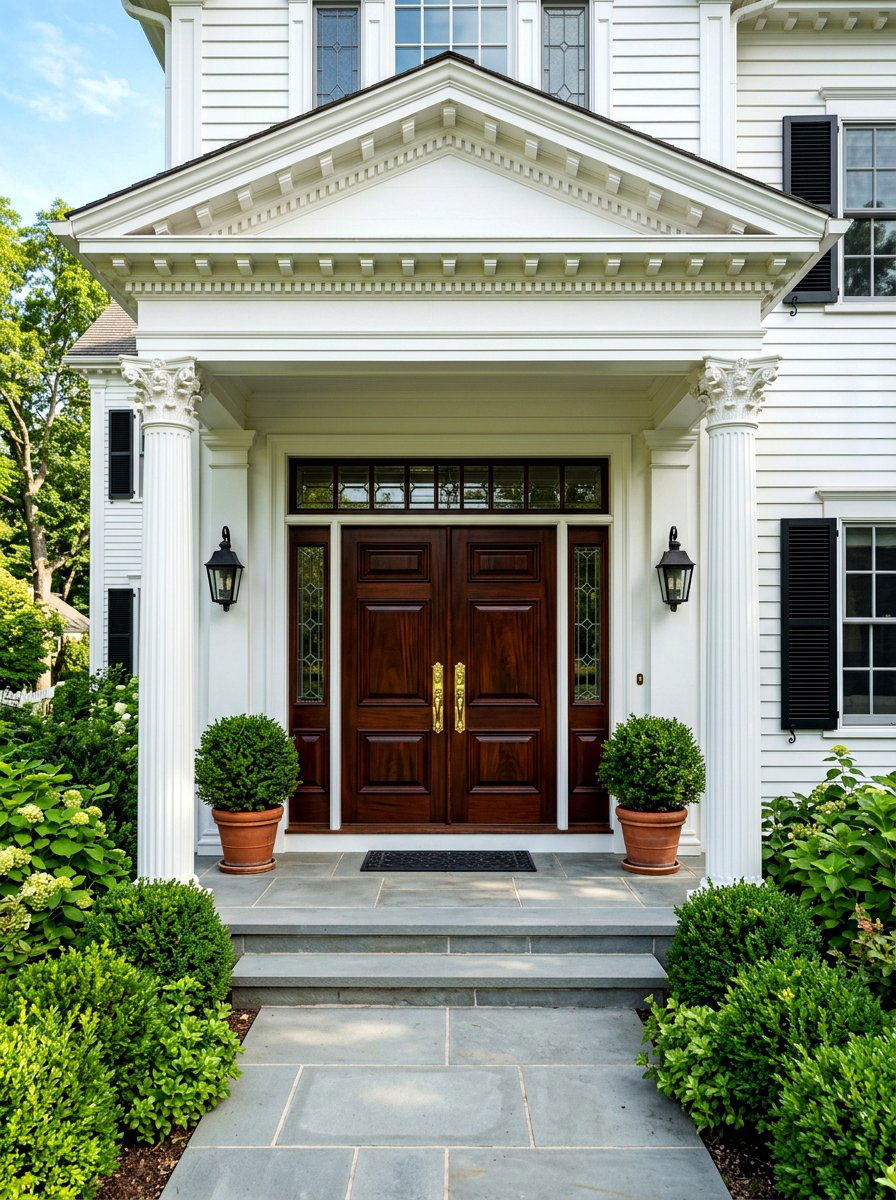
Creating a grand entrance often begins with the substantial presence of wide, heavy doors that signal a home of quality and history. Colonial double front doors offer a sense of scale and importance that single doors simply cannot match, providing a generous opening for guests. These doors usually feature classic raised panels and are often accompanied by glass inserts at the top to allow natural light into the foyer. When painted in a rich, dark hue or left with a deep wood stain, they serve as a powerful focal point that anchors the entire symmetrical design of the front porch area beautifully.
6. Brass outdoor pendant light
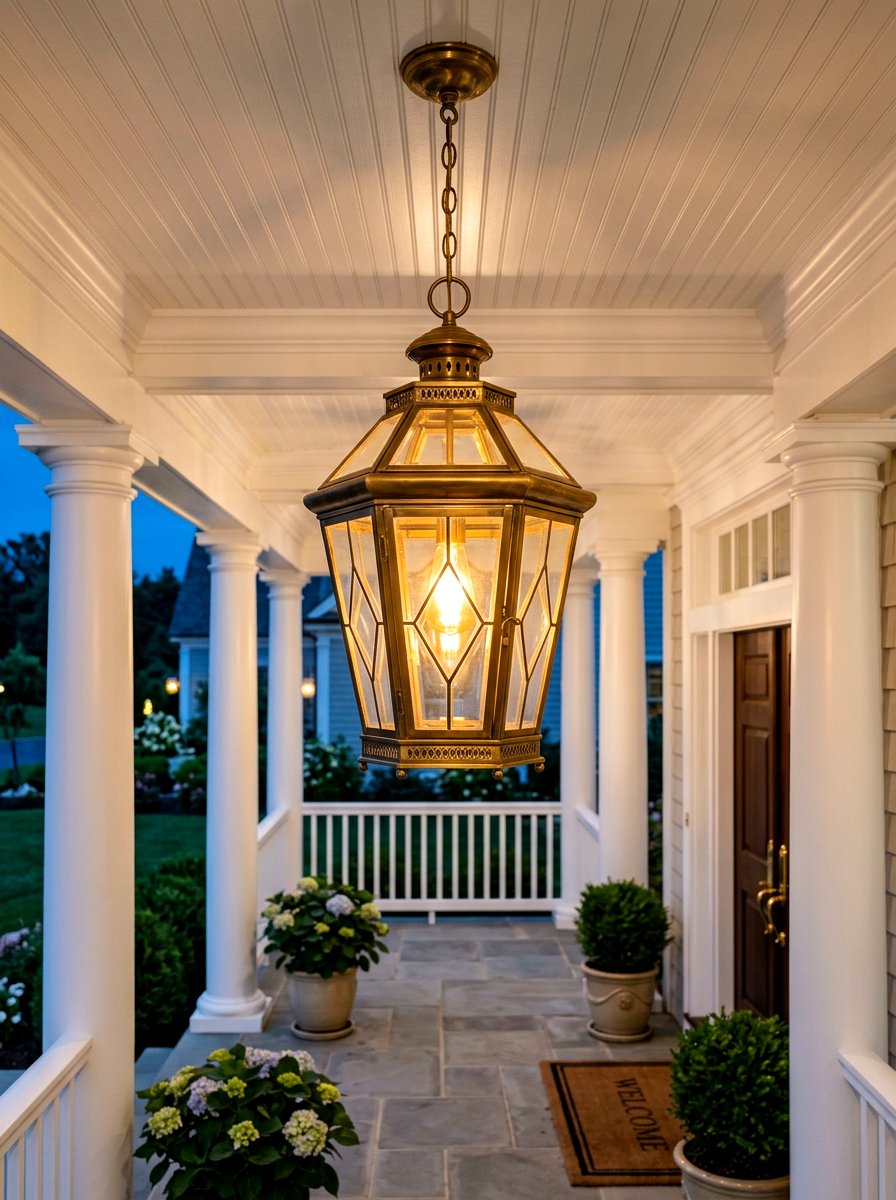
Imagine the warm, golden glow of a metal lantern hanging above your entrance, welcoming you home after the sun has gone down. A brass outdoor pendant light is a quintessential Colonial accessory that combines functional illumination with a touch of historic elegance. Brass is highly prized for its ability to weather naturally or remain polished for a high-shine look that complements other hardware on the door. Choosing a lantern with glass panes adds to the traditional feel, casting beautiful shadows and creating an inviting ambiance that highlights the architectural details of your porch ceiling and the surrounding entryway decor.
7. Blue porch ceiling paint

Walking onto a porch and looking up to see a soft, pale blue sky regardless of the weather is a charming Southern tradition. Often referred to as Haint Blue, this specific ceiling color is believed to ward off spirits while also visually extending the height of the porch space. It creates a serene, airy feeling that mimics the open sky, making the outdoor area feel more expansive and relaxing for everyone sitting outside. This subtle pop of color breaks up the white trim and adds a layer of unexpected whimsy to the otherwise formal and structured Colonial architecture found below.
8. Boxwood shrubs for front entry
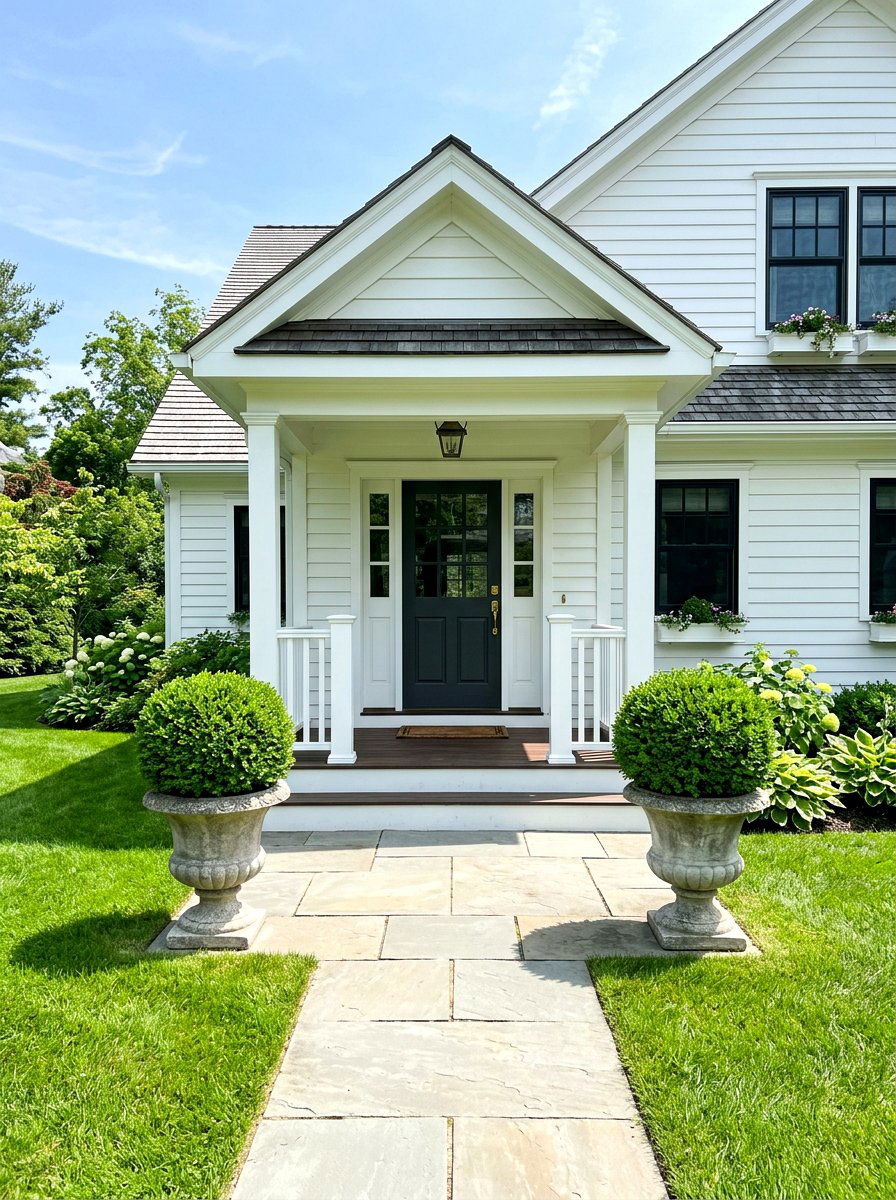
Low-maintenance greenery that maintains its shape and color throughout the year is essential for framing a formal and symmetrical front entrance. Boxwood shrubs are the perfect choice for Colonial homes because they can be easily pruned into neat globes or low hedges that define the porch borders. Their dense, dark green foliage provides a clean backdrop for seasonal flowers and adds a structured, architectural quality to the landscaping. Placing them in identical containers or planting them in a row along the porch foundation reinforces the home's inherent balance and ensures the entry looks manicured and professional during all seasons.
9. Classic wood rocking chairs
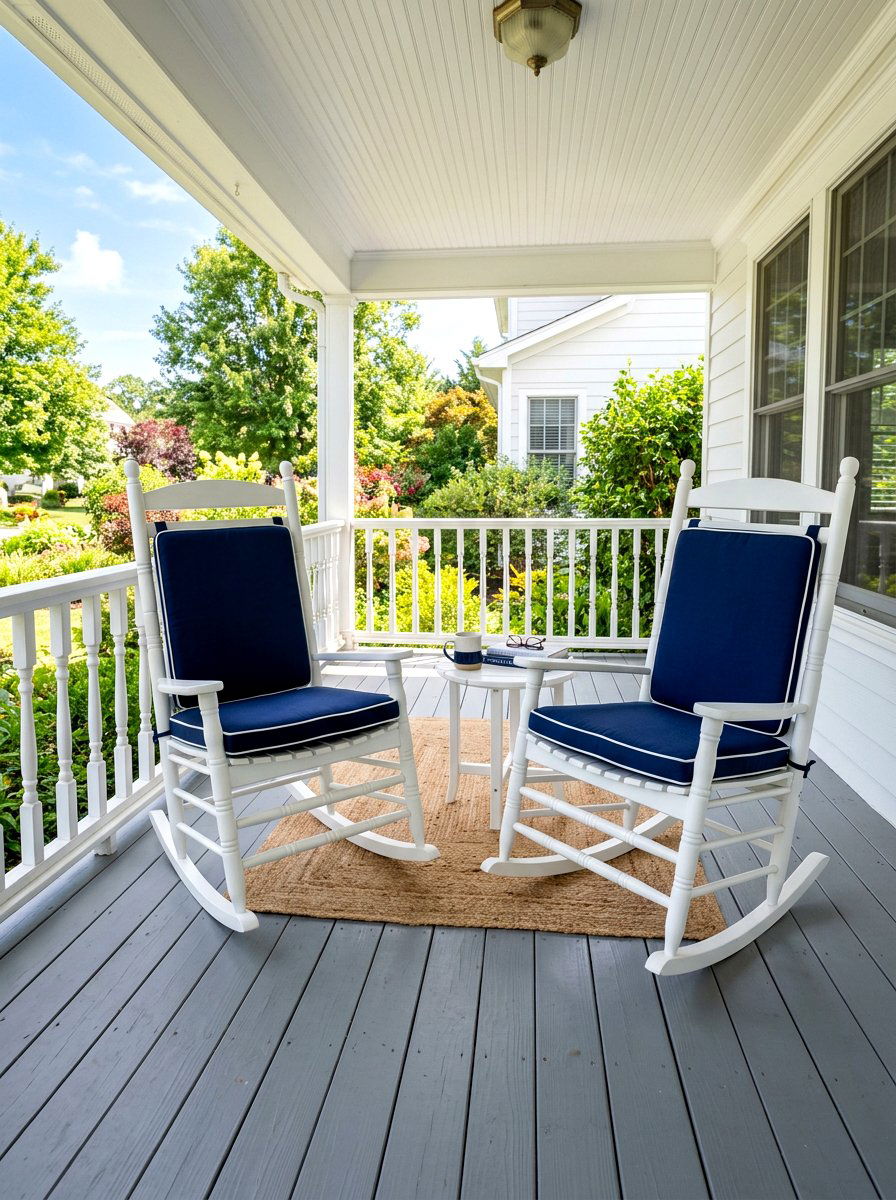
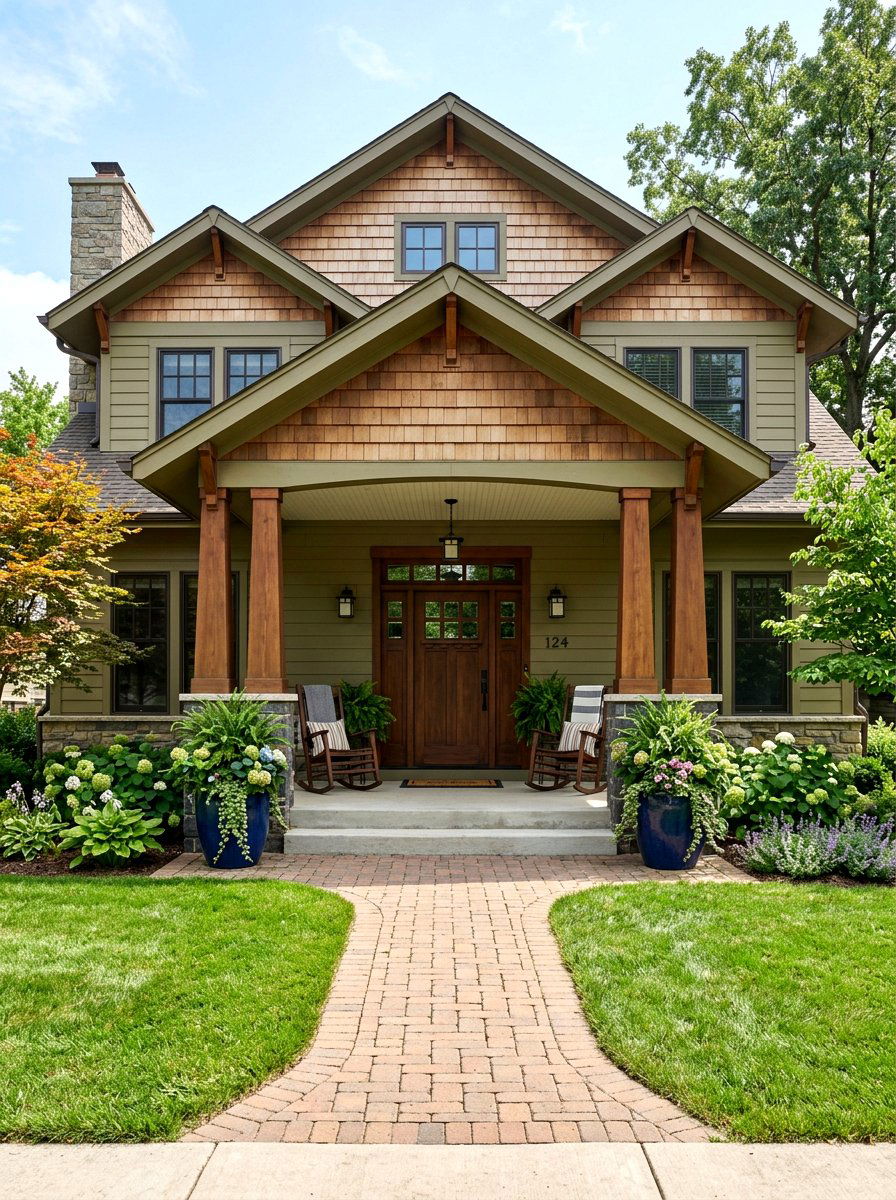
Can you think of a better way to spend a quiet afternoon than swaying gently in a sturdy chair while watching the world go by? Classic wood rocking chairs are the ultimate symbol of porch relaxation, offering a comfortable place to sit that feels inherently traditional and welcoming. On a Colonial porch, these chairs are often arranged in pairs to maintain symmetry, typically painted in white or black to match the home's trim. Their presence transforms the porch from a mere transition zone into a functional living space where family and friends can gather to enjoy the fresh air and community.
10. Hanging ferns on porch
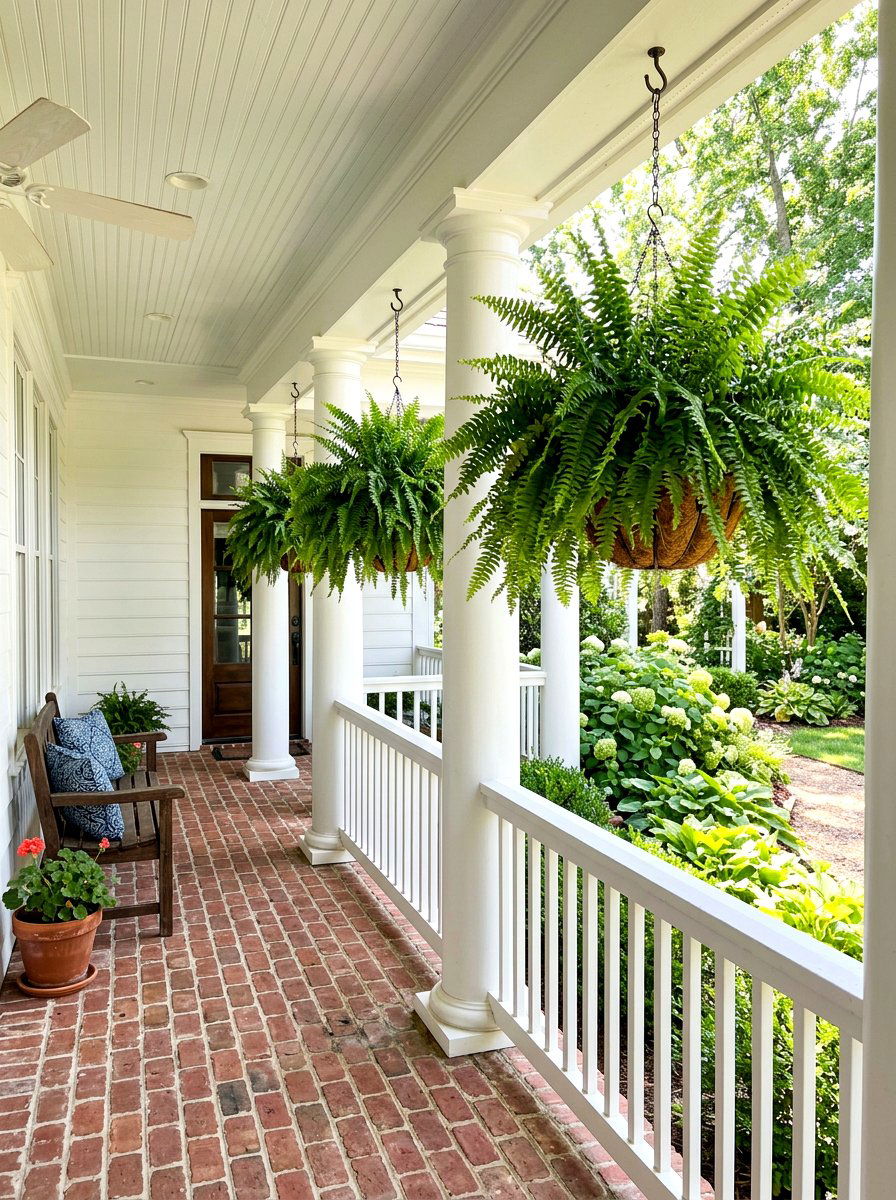
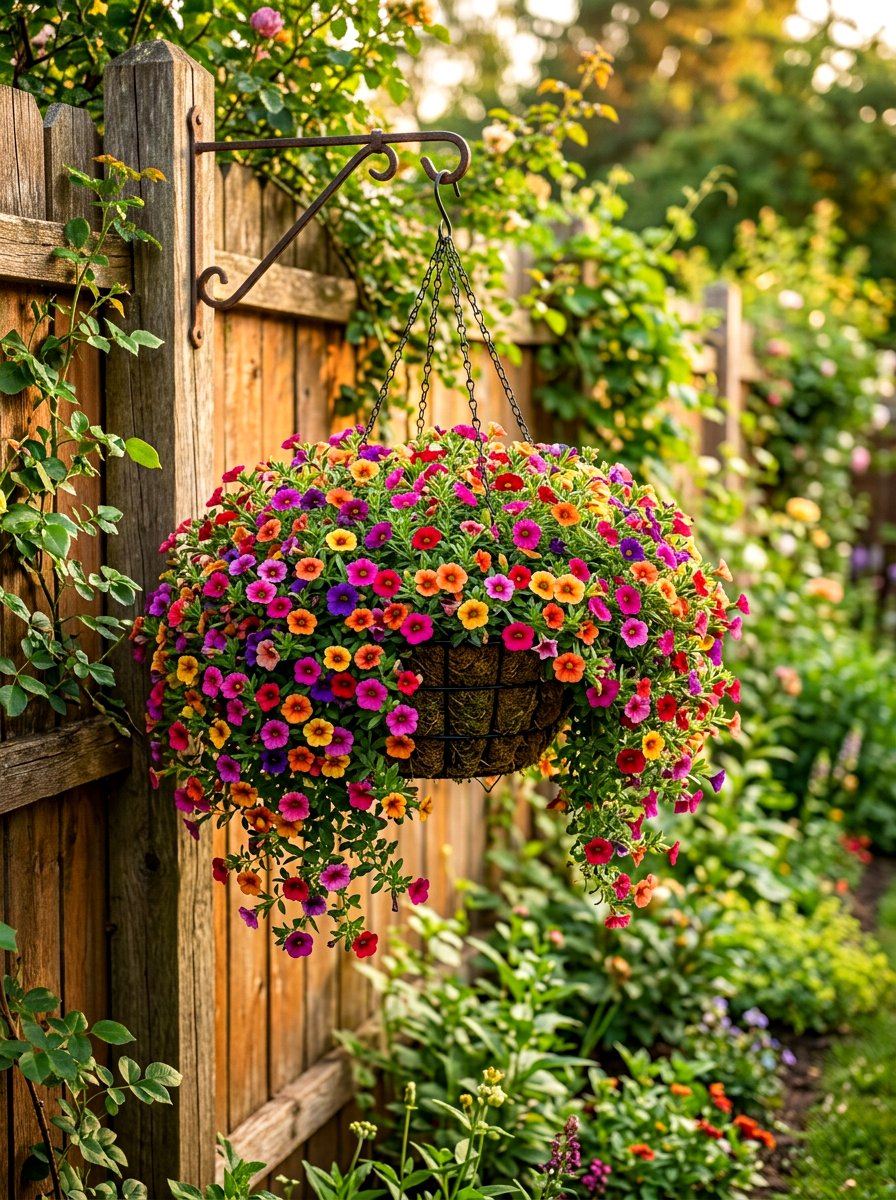
Lush, green fronds cascading from the ceiling add a soft, organic texture that balances the rigid lines of columns and railings. Hanging ferns are a staple of Colonial porch decor because they thrive in the shaded environment and provide an instant splash of vibrant color. They are typically hung at regular intervals between the columns to maintain the necessary symmetry of the design. These plants not only look beautiful but also help cool the air on hot days, creating a refreshing and tropical-inspired retreat that feels both private and deeply connected to the surrounding garden landscape and nature.
11. Wrought iron porch railing
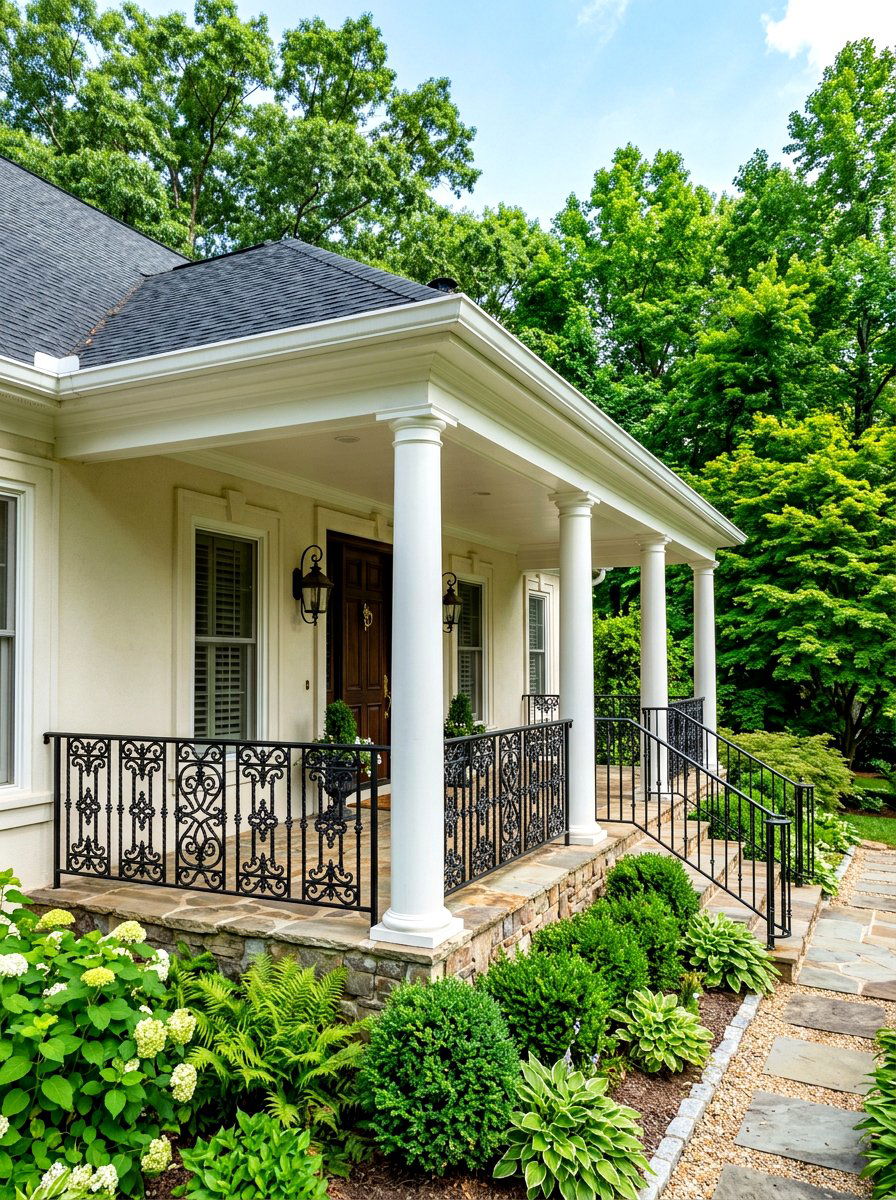
The delicate yet strong patterns of dark metal can provide a sophisticated boundary for your outdoor space without blocking the view of the lawn. Wrought iron porch railings offer a thinner profile than wood, which allows for more intricate designs and a greater sense of openness. This material is incredibly durable and lends a historic, artisan feel to the home’s exterior, especially when paired with stone or brick steps. The dark finish creates a beautiful contrast against white columns, reinforcing the traditional color palette of Colonial architecture while providing necessary safety for family members and visiting guests.
12. Colonial portico entry
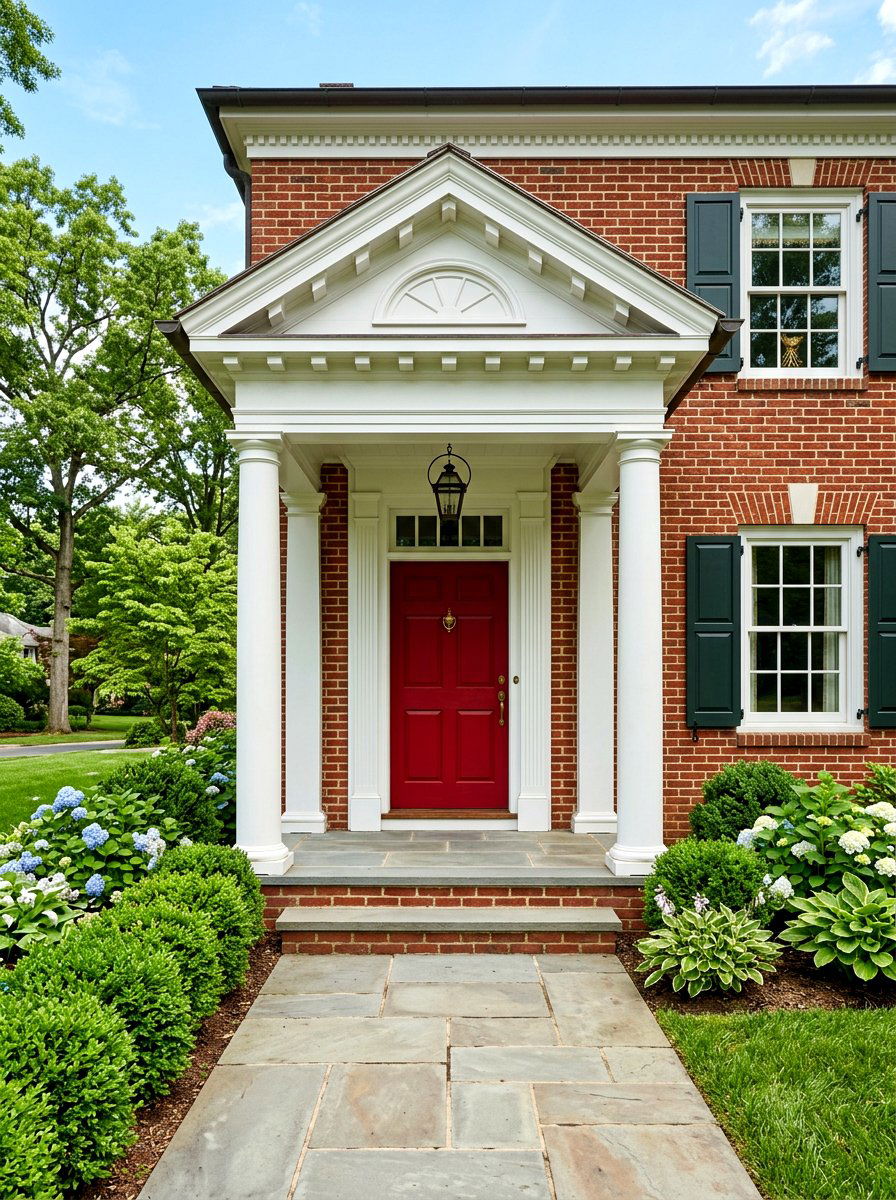
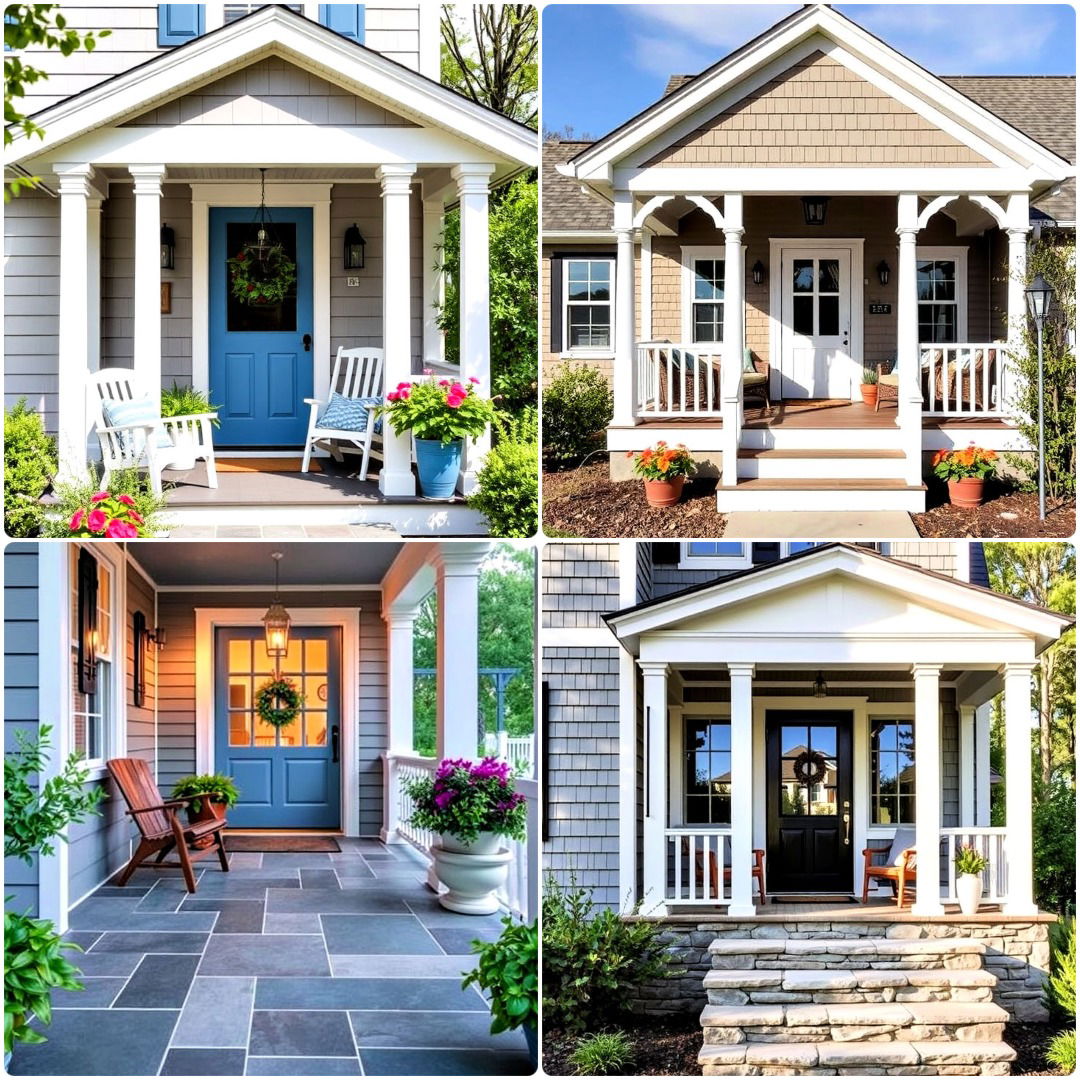
A small, elegant roof supported by pillars over the front door provides a focused architectural statement that protects guests from the elements. A colonial portico is a grand way to accentuate the entrance of a home that might not have a full-width porch, adding depth and dimension to the facade. These structures often feature pediments with decorative moldings that mimic the gables of the main house. By concentrating the design details around the door, a portico creates a high-impact focal point that increases curb appeal and gives the home a more formal, upscale appearance that is very traditional.
13. Gas lantern porch lighting
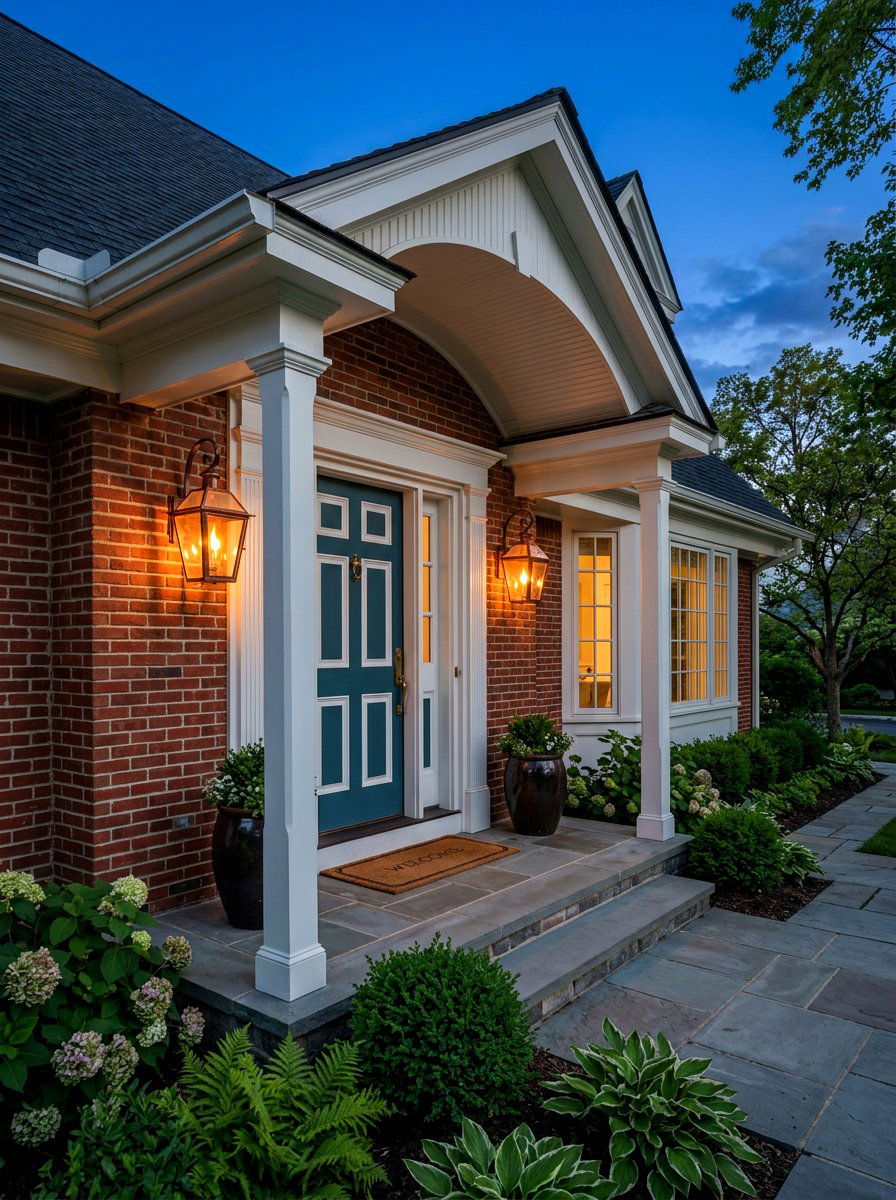
There is a certain magic in the flickering, warm light of a real flame that modern electric bulbs simply cannot replicate for historic homes. Gas lantern porch lighting is a premium feature that adds an authentic, old-world charm to Colonial architecture, reminiscent of the streets of historic Charleston or Philadelphia. These fixtures are usually made of copper or brass and are mounted to the walls beside the front door. The soft, moving light creates a romantic and cozy atmosphere that enhances the textures of the brick and wood, making the home feel incredibly inviting and luxurious during the evening hours.
14. Red front door colonial house
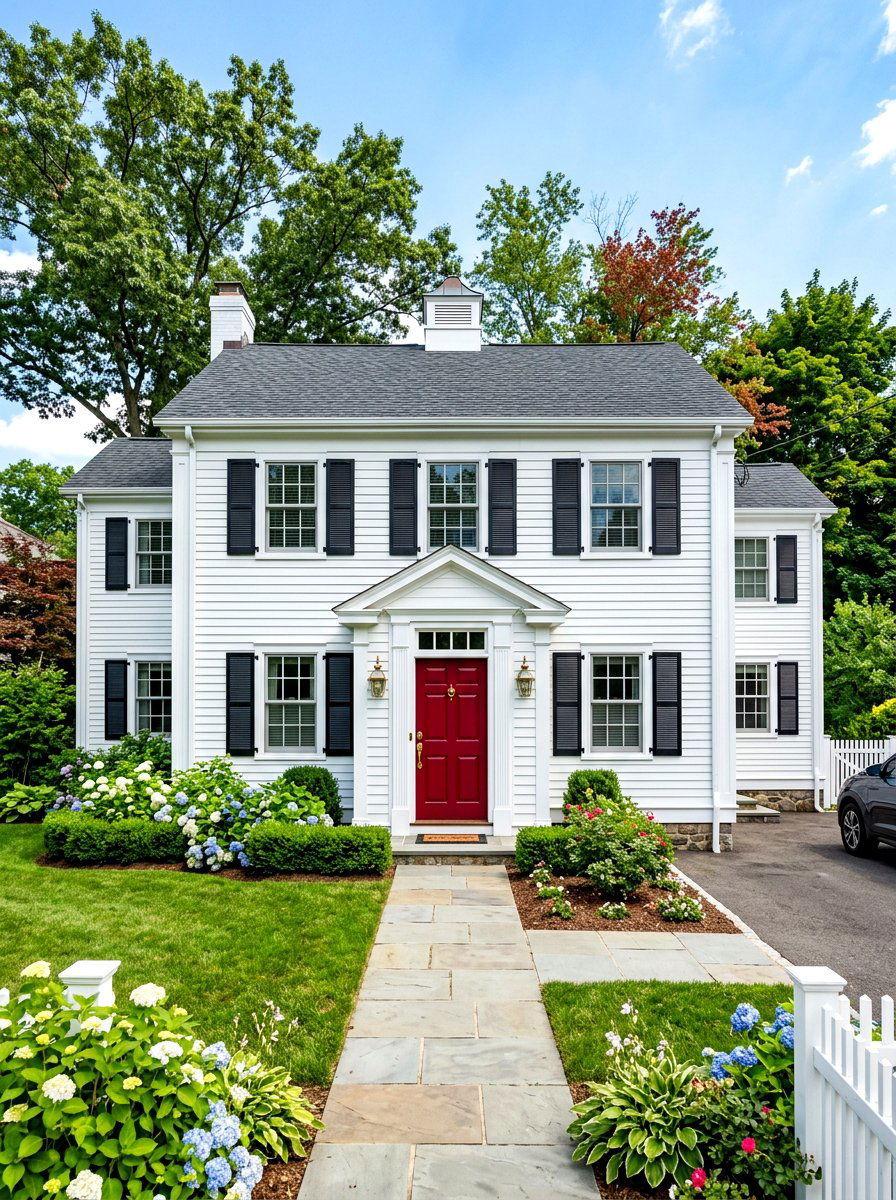
Choosing a bold, classic color for your main entrance is a time-honored way to signify a warm welcome and a vibrant interior. A red front door is a traditional favorite for Colonial homes, as it provides a stunning contrast against white trim and dark shutters. Red is often associated with hospitality and safety, making it the perfect hue for a front entry that wants to feel both formal and friendly. Whether you choose a deep burgundy or a bright cranberry, this single design choice can dramatically increase the visual energy of your porch and make your home more memorable.
15. Stone porch steps
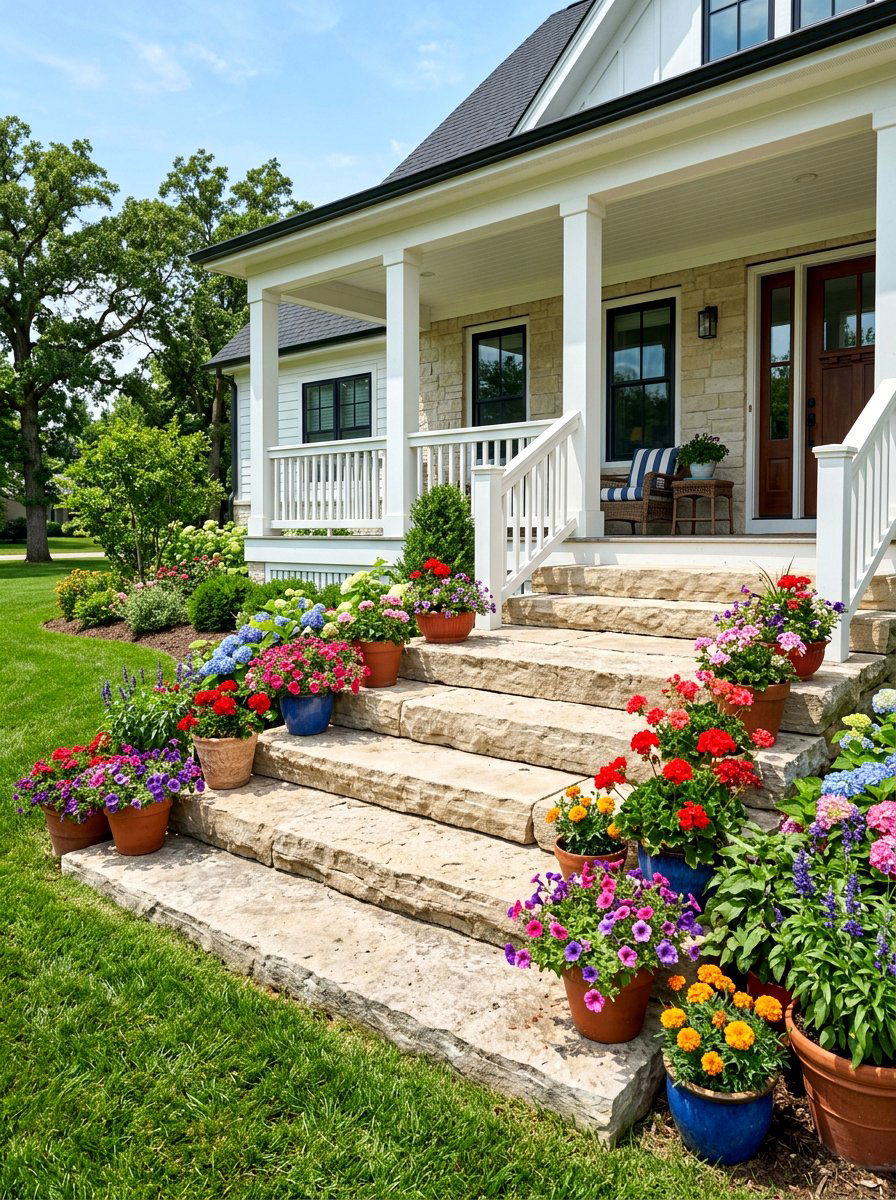
Wide, solid slabs of natural rock provide a sense of permanence and grandeur as you transition from the driveway to the front door. Stone porch steps are often used in Colonial design to ground the house and provide a durable surface that can withstand heavy foot traffic and changing weather. Materials like limestone or granite offer a neutral, sophisticated palette that pairs beautifully with both brick and wood siding. The weight and scale of these steps communicate a sense of quality and craftsmanship, ensuring the entrance feels substantial and well-integrated into the overall landscape design of the front yard.
16. Large outdoor area rug
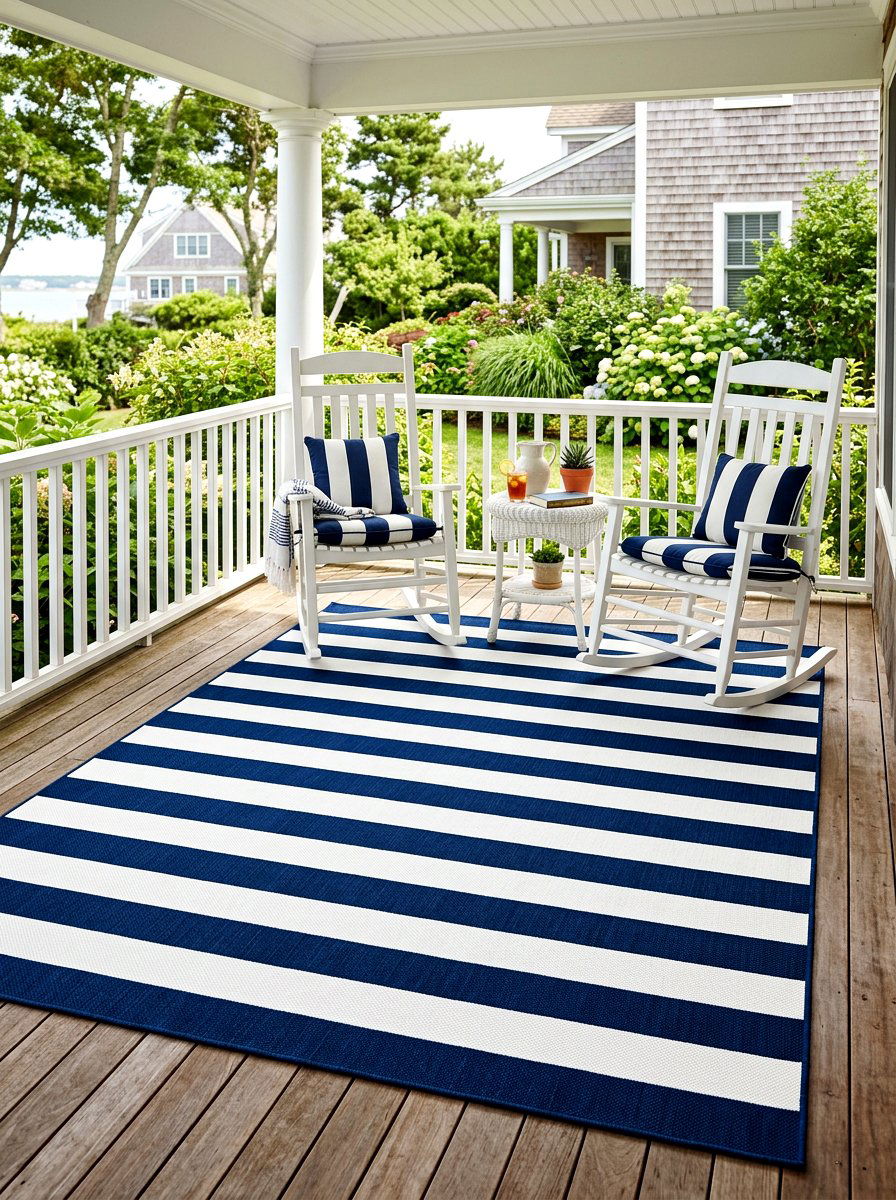
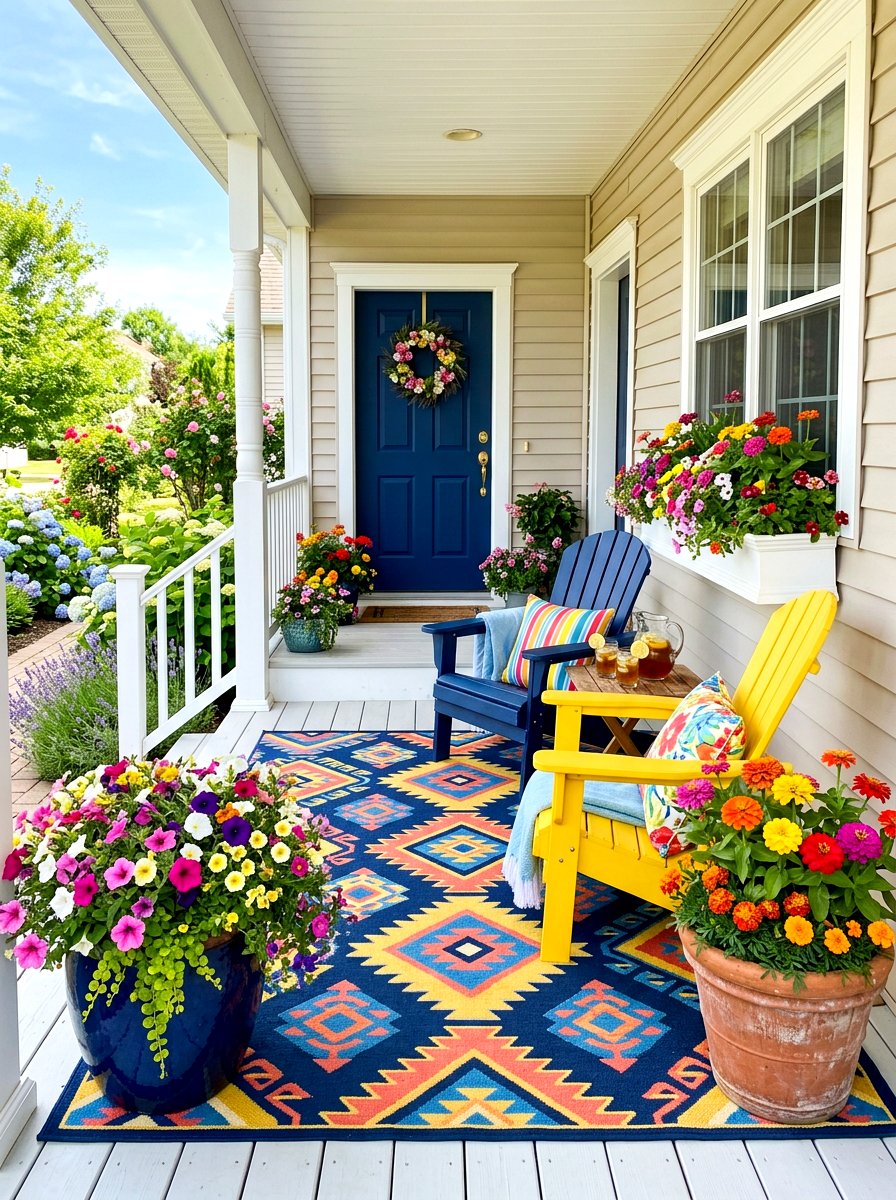
Adding a soft surface underfoot can instantly make a formal outdoor space feel like a comfortable extension of your indoor living room. A large outdoor area rug helps define the seating area on a wide Colonial porch, bringing together furniture like rocking chairs and side tables into a cohesive group. Choosing a pattern that features traditional motifs or simple stripes in a neutral color palette ensures it complements the architecture without being distracting. These rugs are designed to be weather-resistant and easy to clean, providing a layer of style and comfort that encourages people to linger longer outside.
17. Wicker porch furniture set
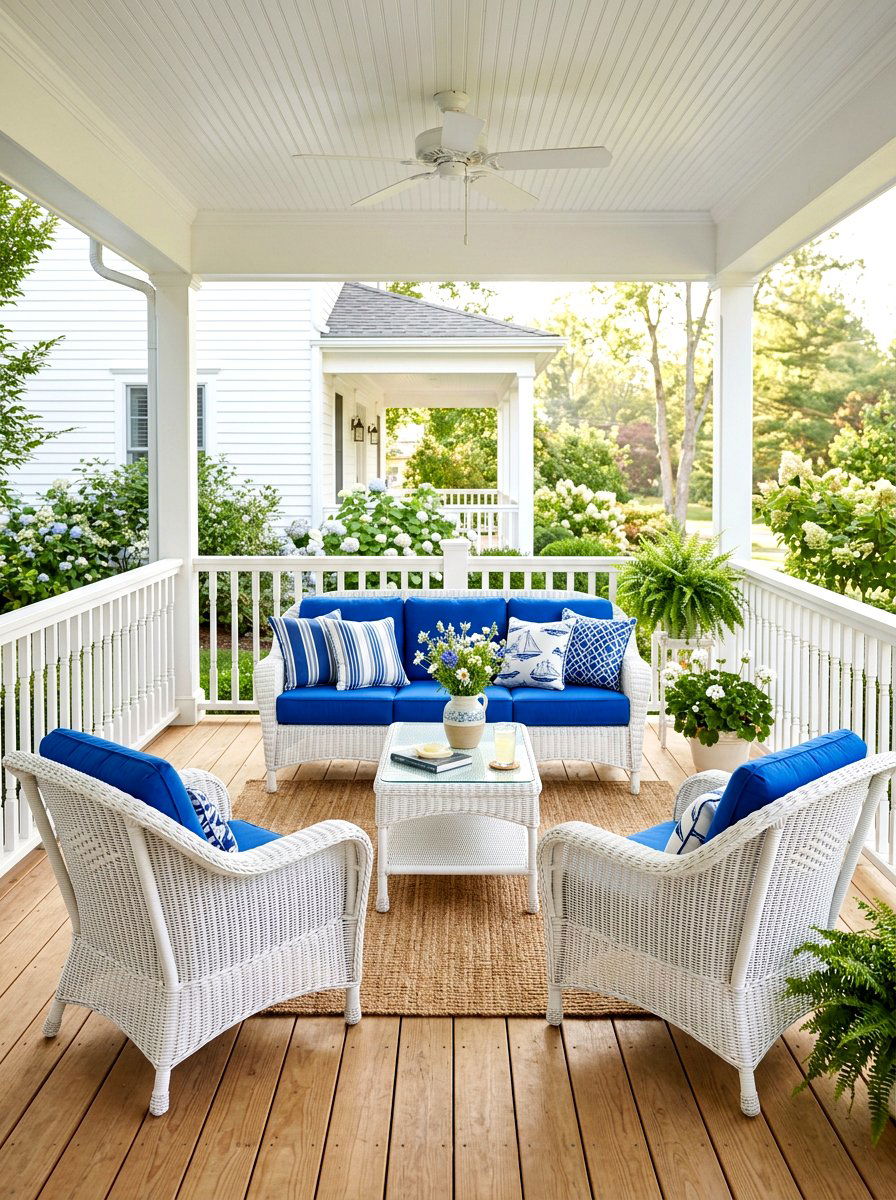
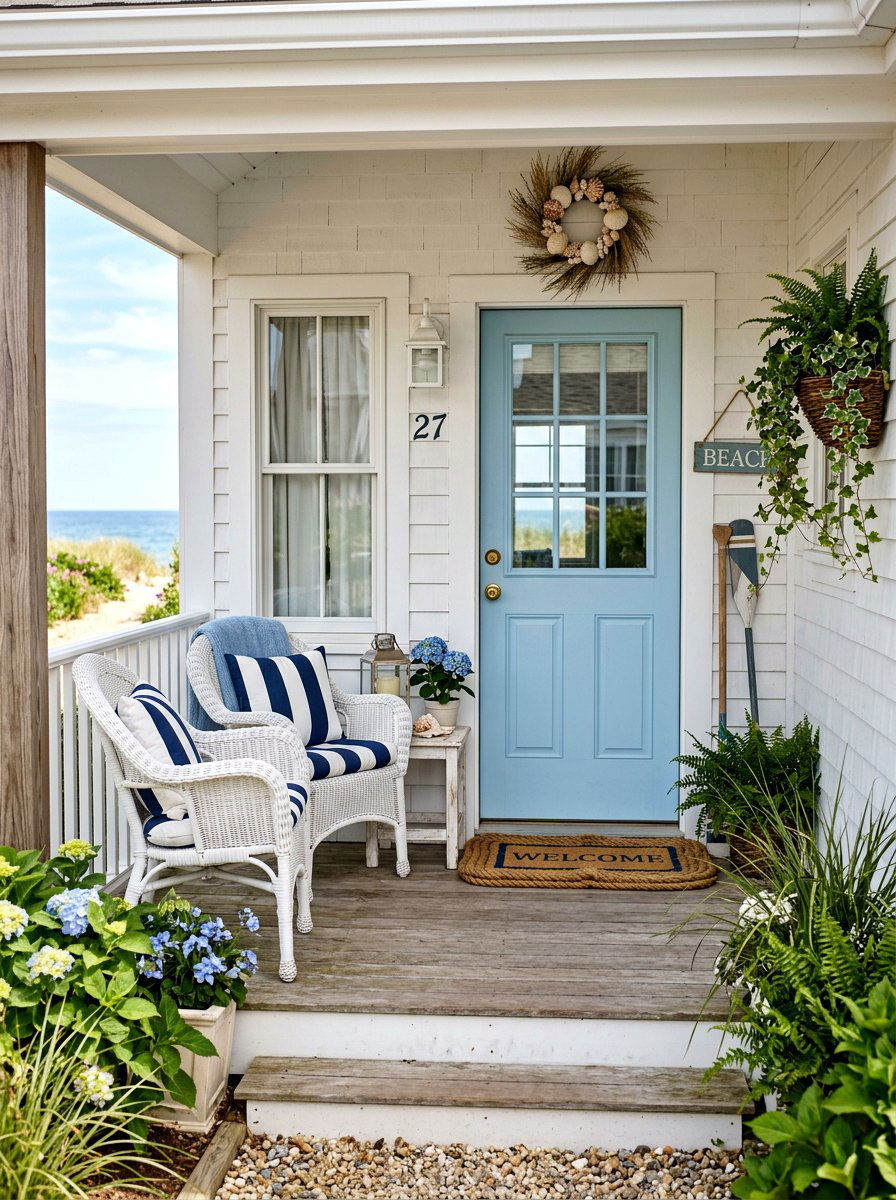
The light, woven texture of high-quality wicker provides a relaxed, coastal-inspired vibe that softens the formal lines of a traditional brick home. A wicker porch furniture set is a popular choice for Colonial porches because it is lightweight, durable, and classically stylish. When outfitted with plush, white or navy blue cushions, these chairs and sofas create an incredibly comfortable environment for entertaining guests or enjoying a morning coffee. The natural or painted finish of the wicker adds a different material layer to the porch, making the space feel layered, curated, and ready for a long summer of relaxation.
18. Front door wreath decor
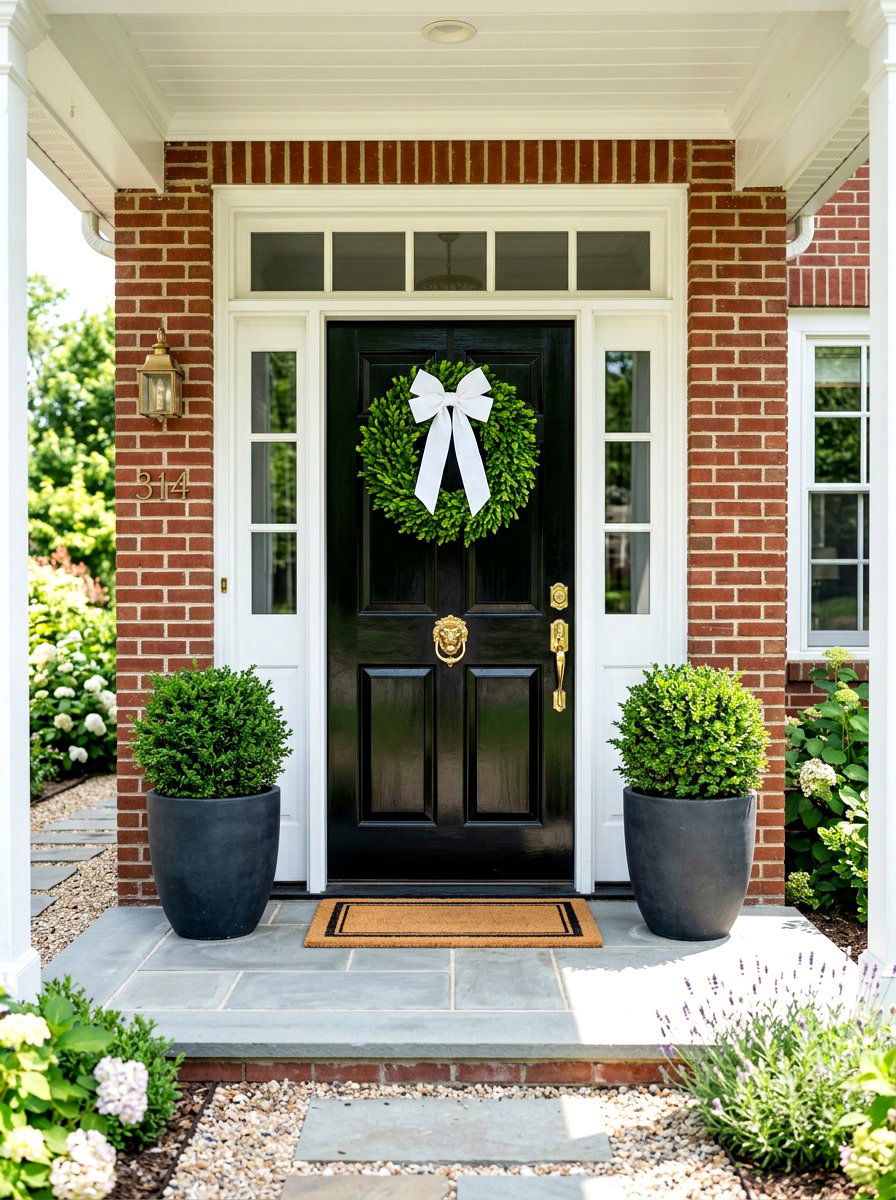
A simple circle of greenery or seasonal blooms can act as a beautiful centerpiece that ties the entire porch color scheme together effortlessly. Front door wreath decor is a classic Colonial tradition that allows homeowners to express their personal style and celebrate the changing seasons. Whether it is a lush boxwood wreath for a formal look or a more colorful floral arrangement for spring, this accessory adds a soft, organic element to the paneled surface of the door. It serves as an inviting gesture that welcomes guests and adds a touch of life and texture to the symmetrical entry.
19. Potted topiary trees
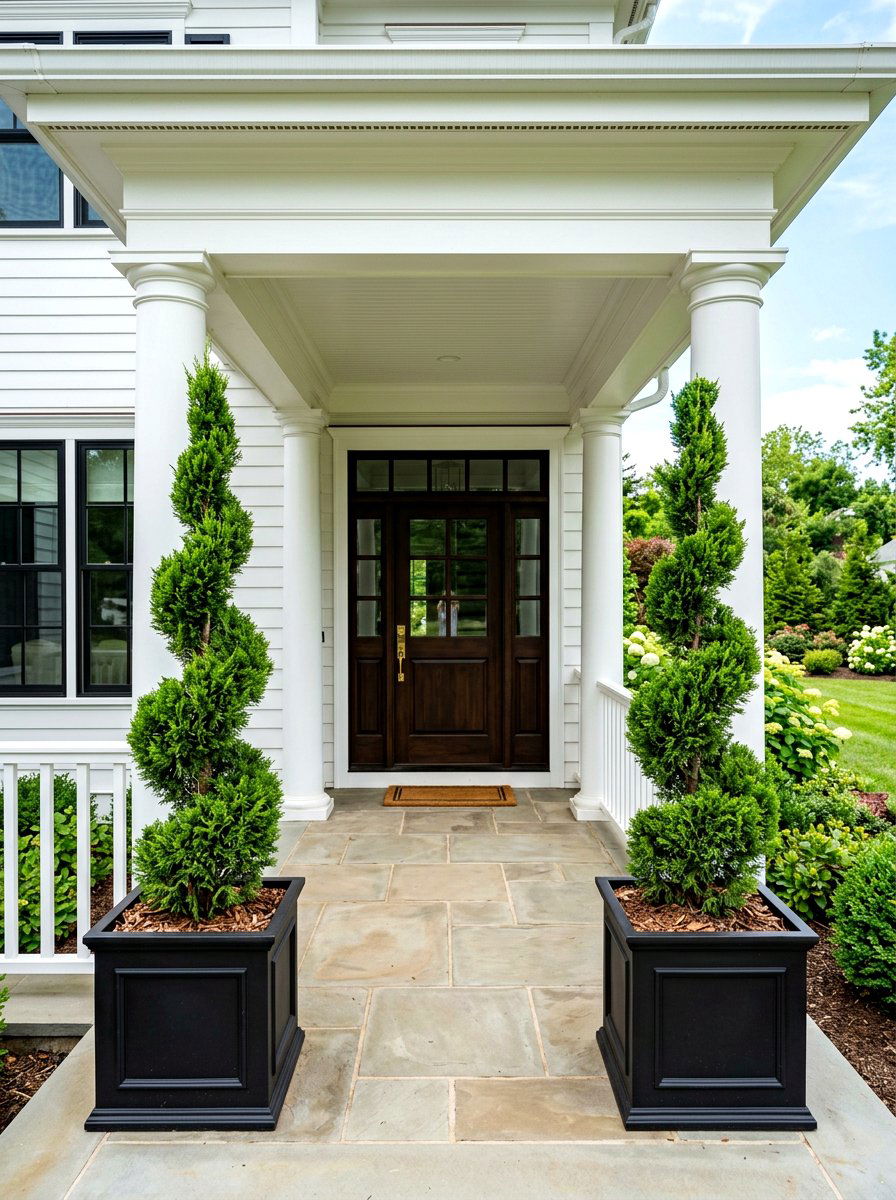
Tall, slender trees pruned into elegant shapes offer a sophisticated way to add height and structure to the corners of your porch. Potted topiary trees, such as cedar or bay leaf, are frequently used in Colonial design to frame the entrance or the ends of the seating area. Placing them in classic, heavy planters like urns or square wooden boxes ensures they look established and grand. Their evergreen nature means they provide consistent color and shape throughout the winter months, maintaining the home's curb appeal and formal symmetry even when the rest of the garden is currently dormant.
20. American flag porch display

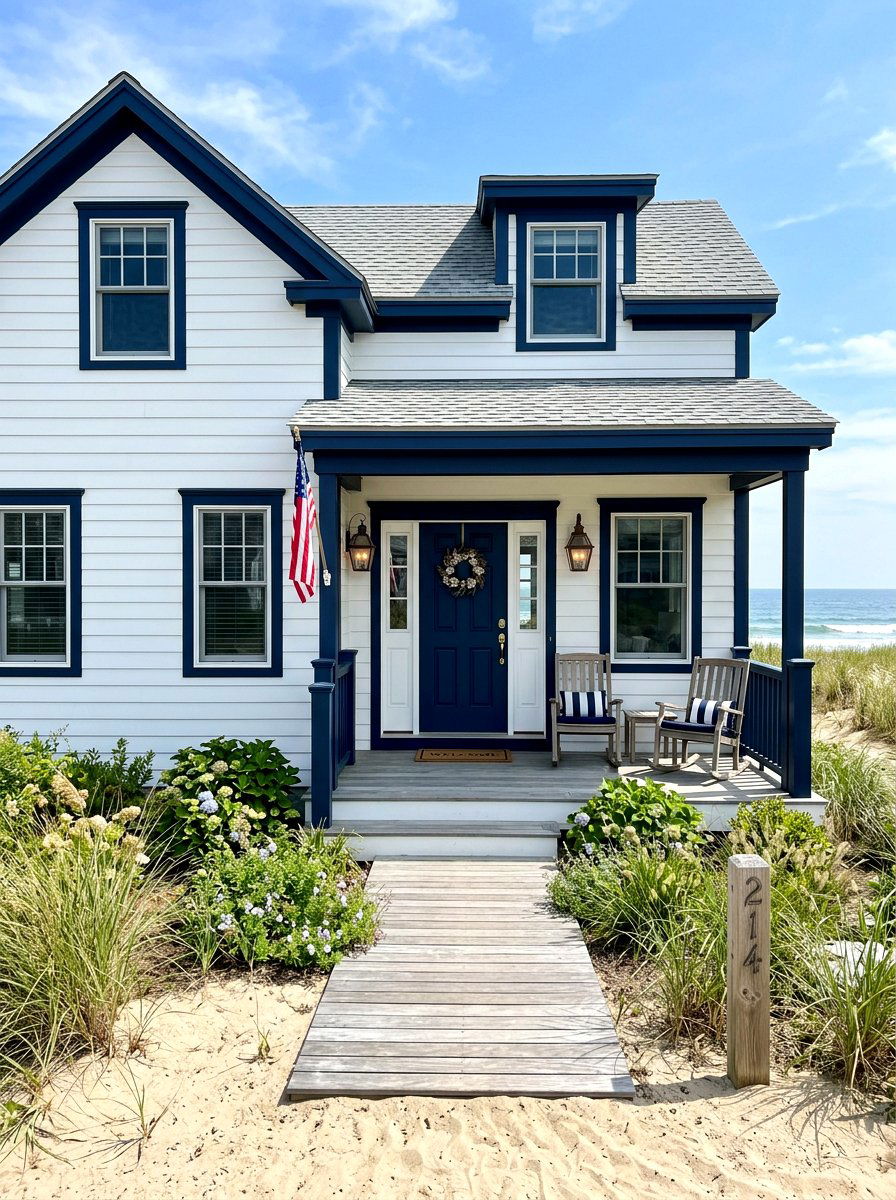
Flying a flag from a sturdy wooden pole is a deeply traditional way to honor heritage and add a patriotic touch to your exterior. An American flag porch display is a common sight on Colonial homes, where the red, white, and blue colors perfectly complement the classic architectural palette. Typically mounted to one of the central columns or beside the front door, the flag adds a sense of movement and life to the porch as it catches the breeze. It serves as a proud and timeless statement that reinforces the historical roots and the community-oriented spirit of the Colonial design style.
21. Dentil molding porch trim
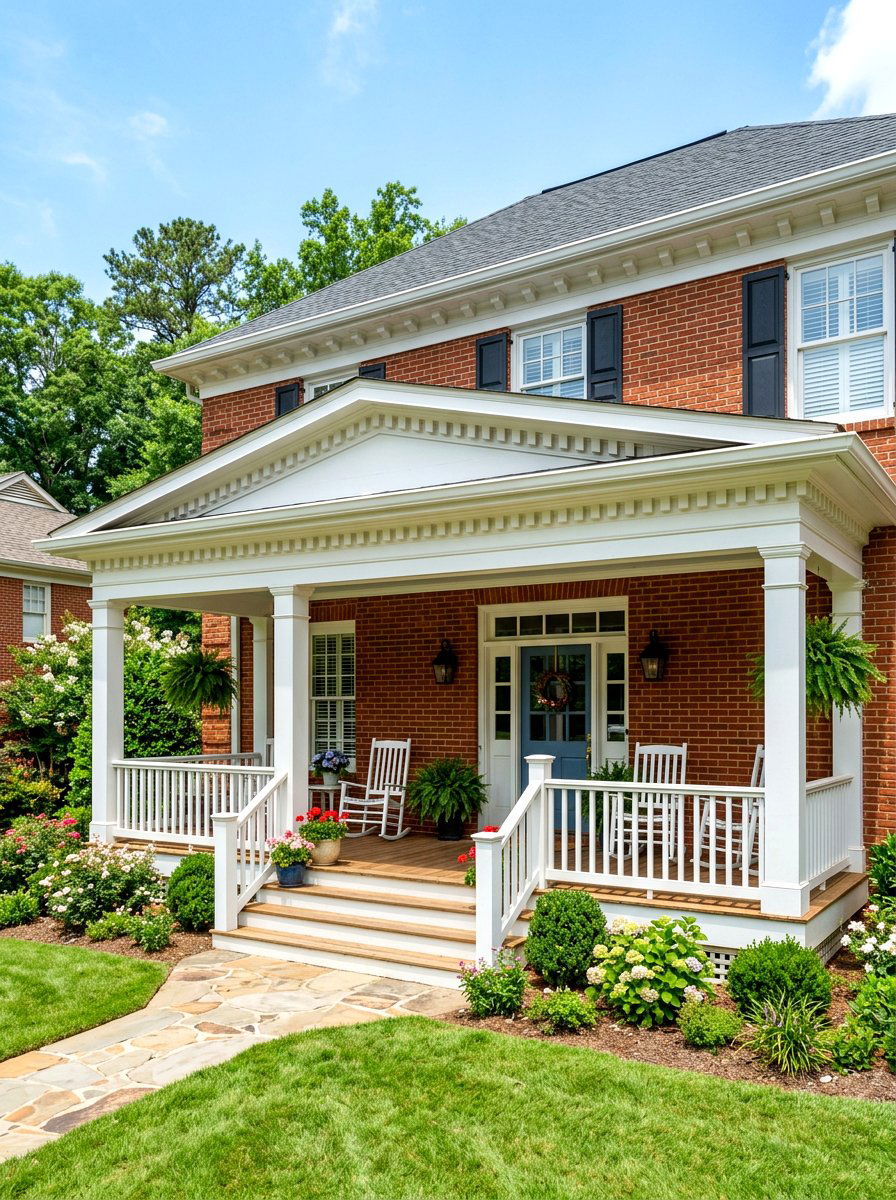
Small, block-like decorative elements carved into the trim can add a layer of architectural richness that sets a home apart from its neighbors. Dentil molding is a classic feature of Colonial and Federal-style architecture, often found along the cornice of the porch roof or around the entryway pediment. These repetitive, tooth-like shapes create a rhythmic shadow line that highlights the precision and craftsmanship of the building. This detail is subtle from a distance but provides a sophisticated, high-end look upon closer inspection, proving that the beauty of a Colonial home often lies in its very finely executed details.
22. Colonial Dutch door
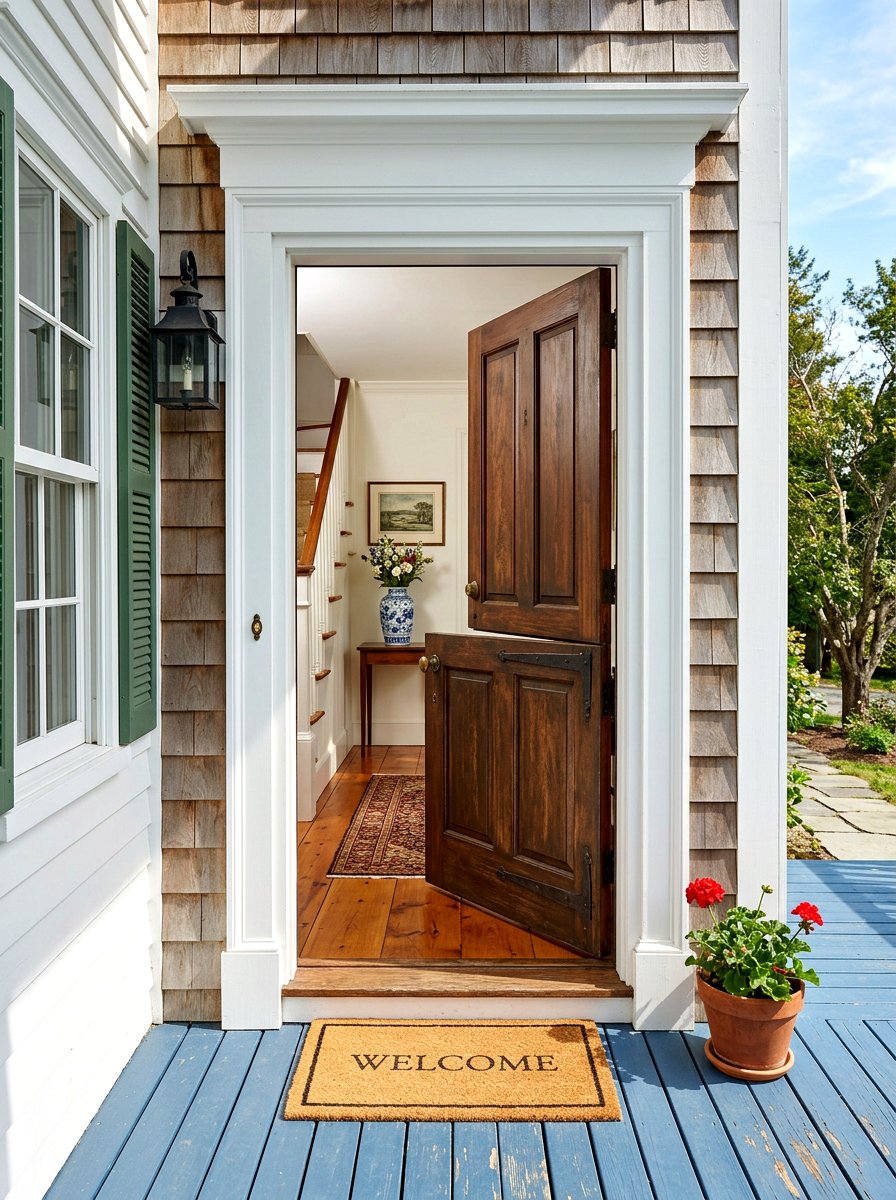
A door that is split horizontally allows you to keep the bottom half closed for security while opening the top half for fresh air. The Colonial Dutch door is a functional and charming feature that dates back to early settlers who wanted to let light in while keeping farm animals out. Today, it serves as a unique architectural detail that adds a touch of cottage-inspired character to the front porch. Opening the top half creates an instant connection between the foyer and the outdoors, making it easy to greet neighbors or enjoy a breeze without fully opening the house.
23. Sidelight windows for front door
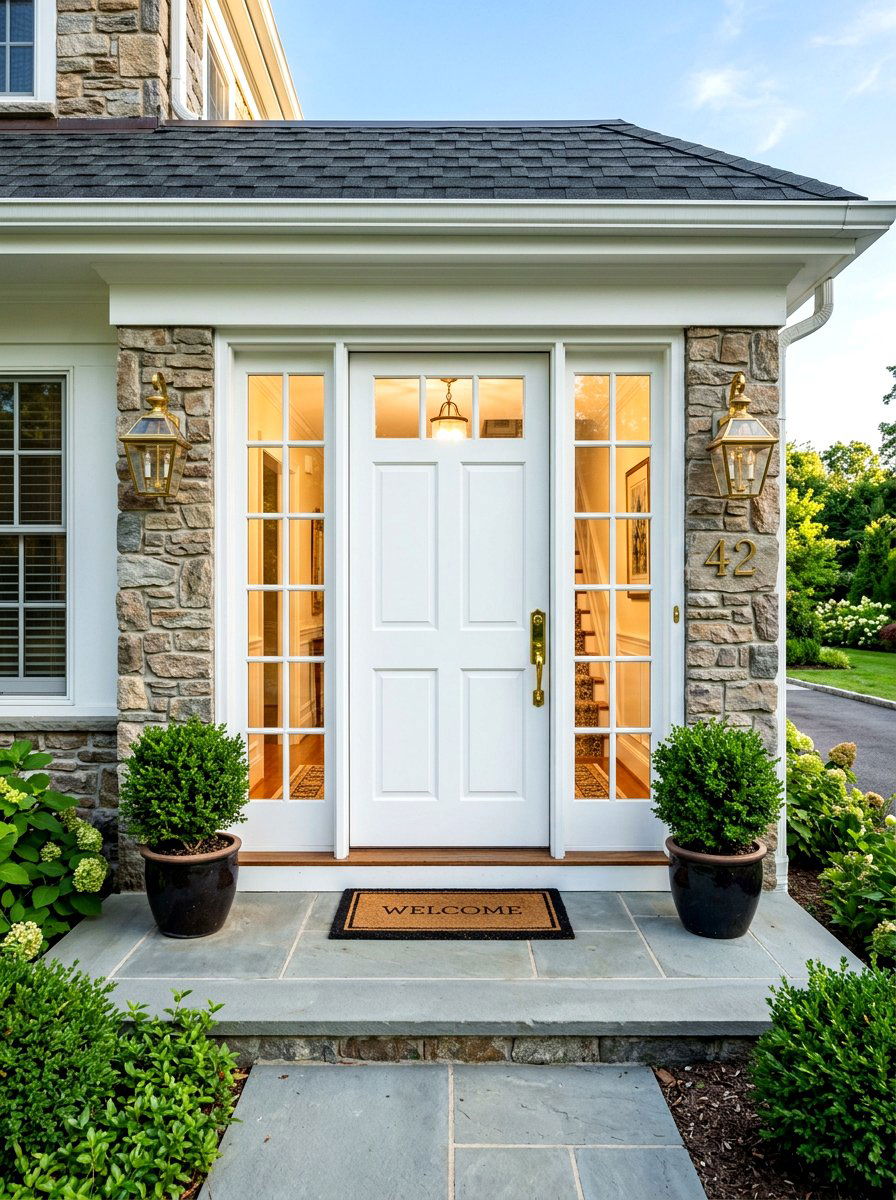
Narrow panes of glass flanking the main entrance are a beautiful way to flood your home with natural light while maintaining a formal look. Sidelight windows are a staple of Colonial architecture, providing a vertical visual extension of the door that makes the entire entryway feel larger and more significant. These windows often feature decorative leading or frosted glass to provide privacy while still allowing a soft glow to permeate the interior hallway. From the porch, they add a layer of transparency and detail that breaks up the solid surfaces of the wall, creating a more dynamic and inviting facade.
24. Brick walkway to porch
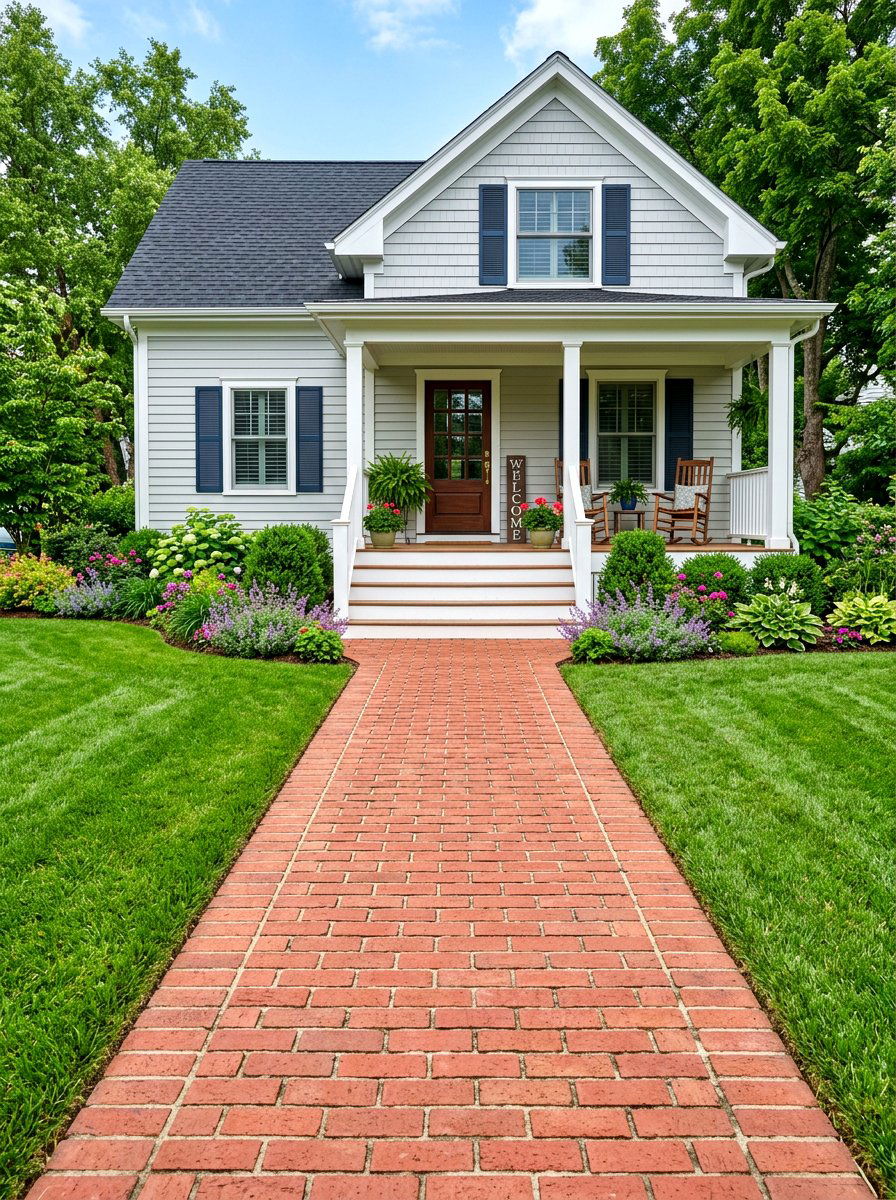
The journey to the front door should be just as beautiful as the destination itself, providing a clear and attractive path for guests. A brick walkway is the natural choice for a Colonial home, as it ties the landscaping directly to the materials used in the porch flooring or the house foundation. Laying the bricks in a straight, formal line reinforces the home’s symmetry, while a curved path can add a touch of softness to the rigid architecture. The weathered texture and warm colors of the brick create a timeless look that feels like it has always belonged to the property.
25. Copper gutters and downspouts
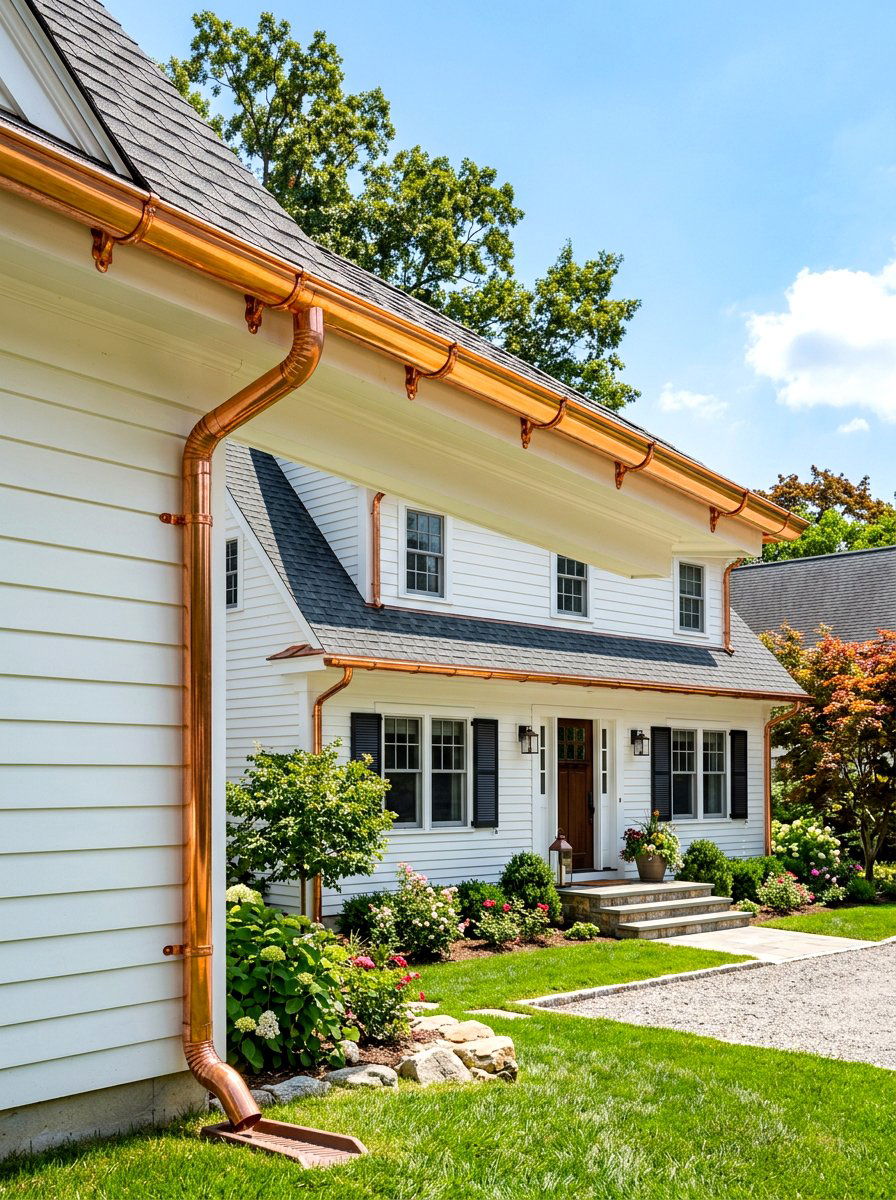
Metallic accents that develop a beautiful green patina over time can serve as functional jewelry for the exterior of your traditional home. Copper gutters and downspouts are a premium choice for Colonial porches, offering incredible longevity and a high-end aesthetic that stands out against white trim. As the copper ages, it changes from a bright penny-orange to a deep brown and eventually a soft verdigris green, adding a sense of history and character to the building. This material choice signals a commitment to quality and craftsmanship, ensuring that every functional element of the home contributes to its overall beauty.
26. White picket fence garden
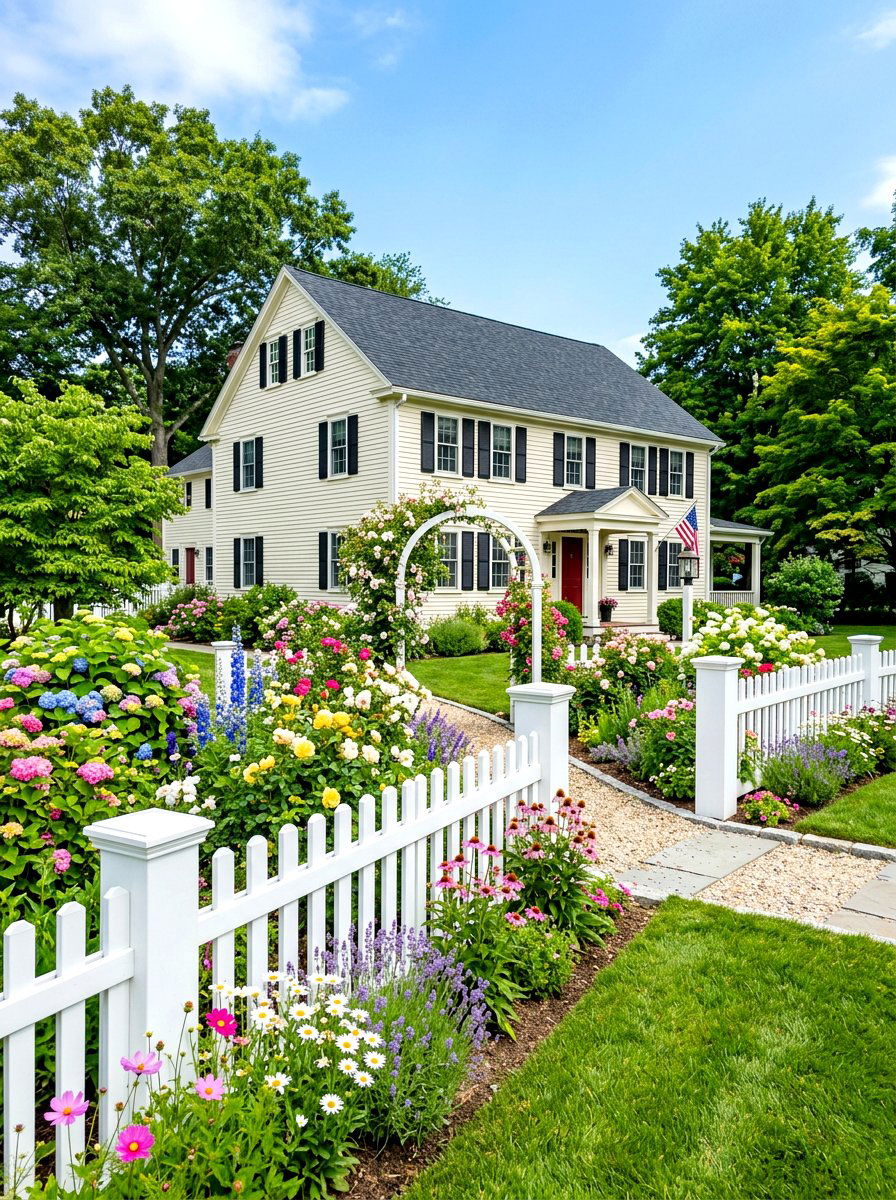
A low, wooden boundary surrounding the front yard can perfectly frame the porch and create a charming, nostalgic atmosphere for the whole neighborhood. The white picket fence is an iconic companion to the Colonial home, providing a clear transition between the public street and the private garden. It creates a beautiful backdrop for colorful perennials and climbing roses, which soften the look of the fence and add a layer of natural beauty to the property. This classic combination reinforces the welcoming, community-friendly vibe that is so central to the appeal of traditional American architecture and front porch living.
27. Brass front door knocker
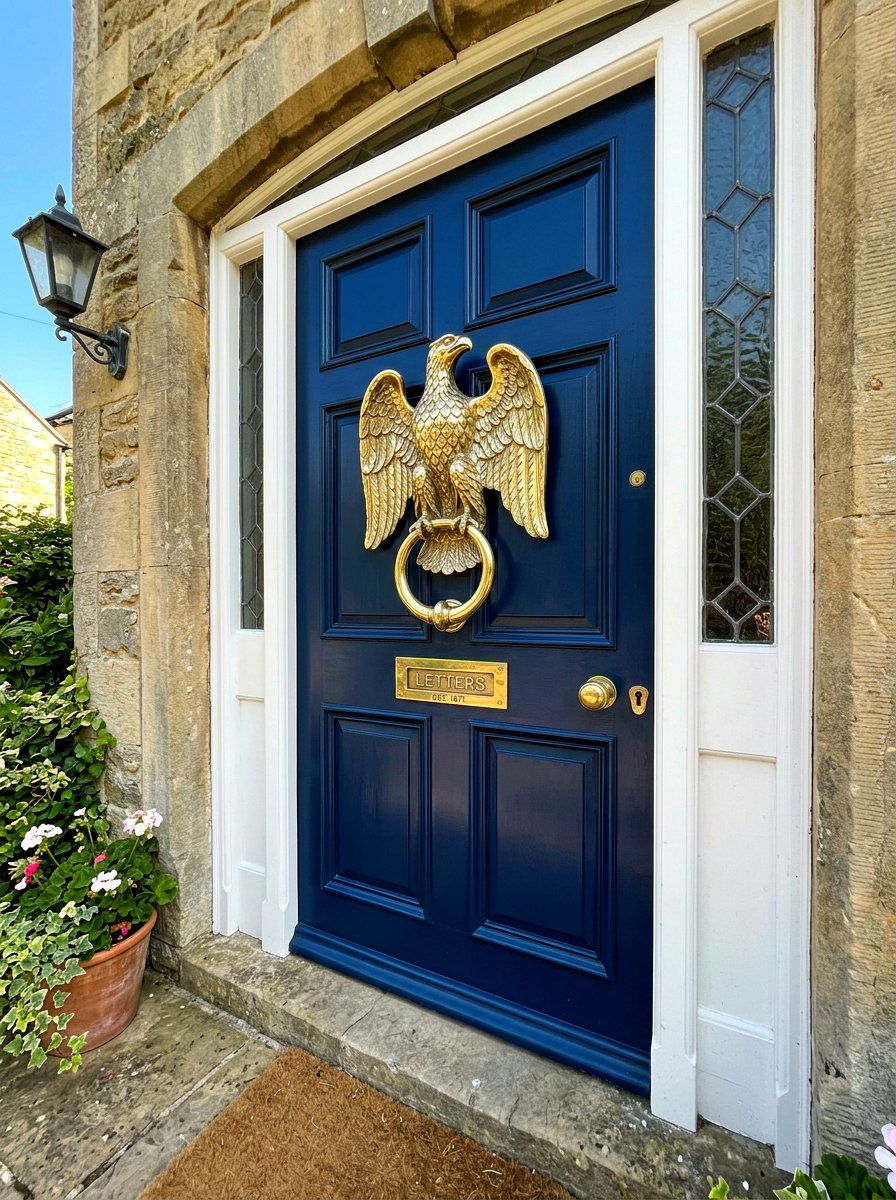
A heavy, polished piece of hardware can serve as a functional work of art that guests interact with every time they arrive at your home. A brass front door knocker is a quintessential Colonial detail, often featuring classic shapes like an eagle, an urn, or a simple ring. The bright, golden finish of the brass pops against a dark-painted door, providing a touch of luxury and traditional charm. It is a small but impactful detail that communicates a sense of quality and attention to detail, making the act of entering the home feel more formal and much more special.
28. Wrap around colonial porch
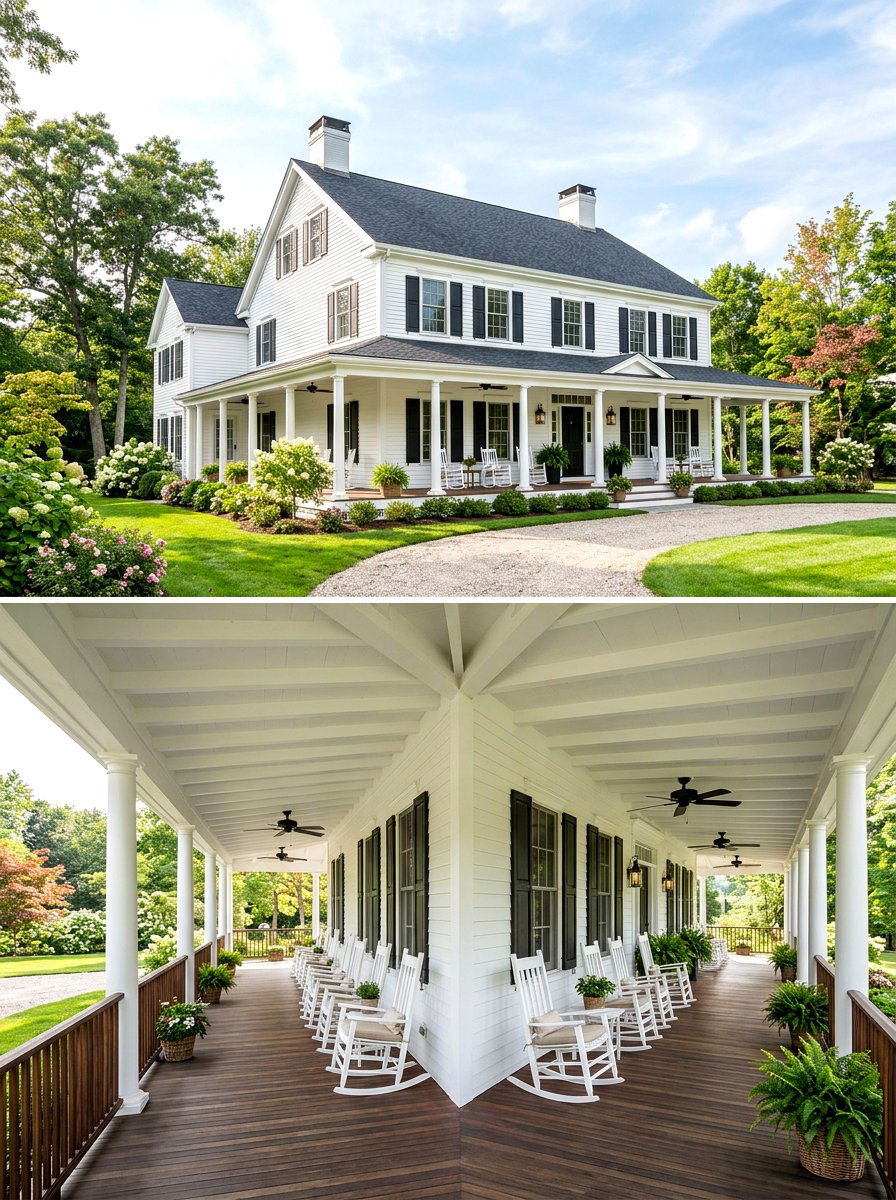
A porch that extends around the sides of the house provides multiple vantage points and creates a massive amount of outdoor living space for relaxing. The wrap-around Colonial porch is a grand architectural feature that makes a home feel expansive and deeply connected to its surrounding landscape. It offers different areas for seating, dining, and gardening, allowing you to follow the sun or find shade throughout the day. This type of porch significantly increases the home’s footprint and provides a sense of luxury and comfort that is perfect for large families or those who love to entertain guests outdoors.
29. Outdoor ceiling fan for porch
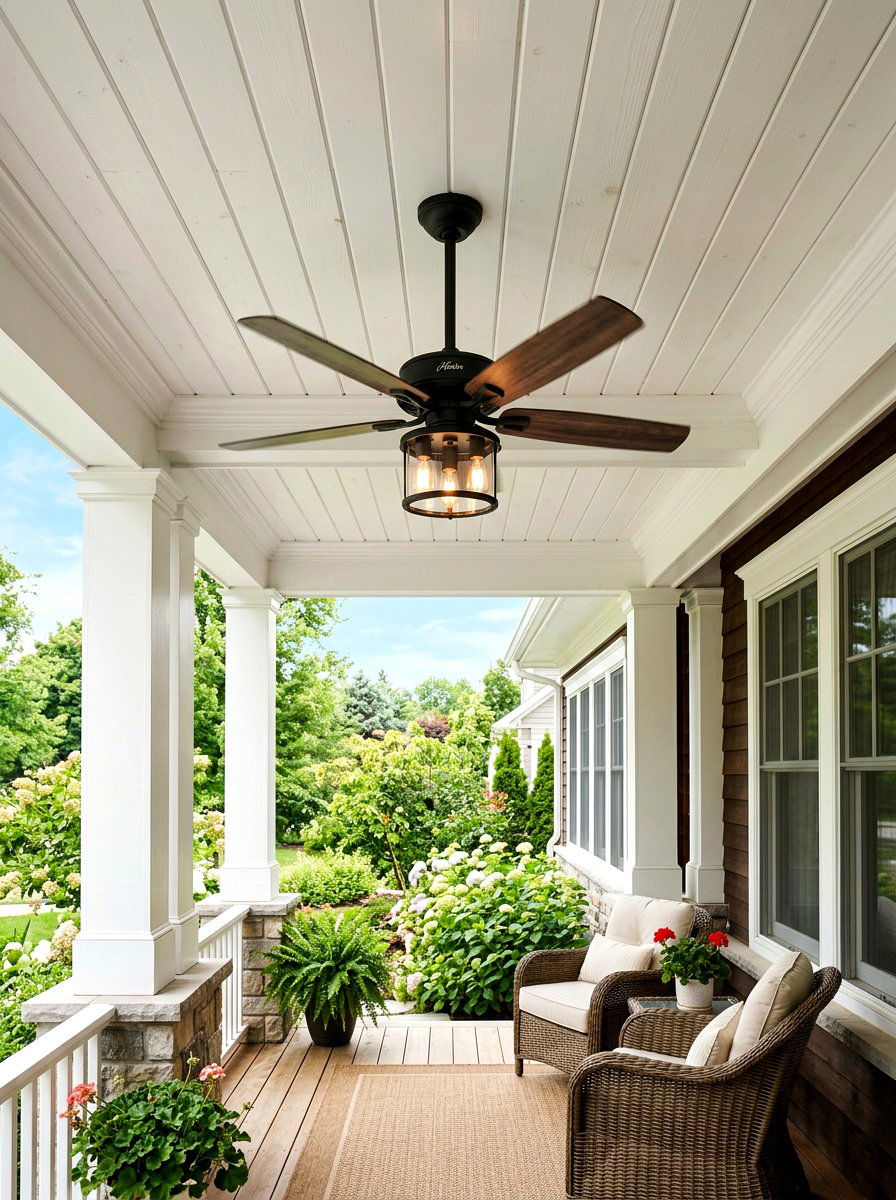
Keeping the air moving on a humid afternoon is essential for maintaining comfort and making your outdoor living space usable throughout the entire summer. An outdoor ceiling fan is a practical addition to a Colonial porch, often designed with traditional wooden blades and brass or black metal housing to match the home's style. Mounting a fan to the porch ceiling helps deter insects and provides a gentle breeze that makes even the hottest days more enjoyable. Choosing a model with an integrated light fixture can also provide necessary evening illumination, combining two functional needs into one stylish and efficient ceiling accessory.
30. Built in porch benches
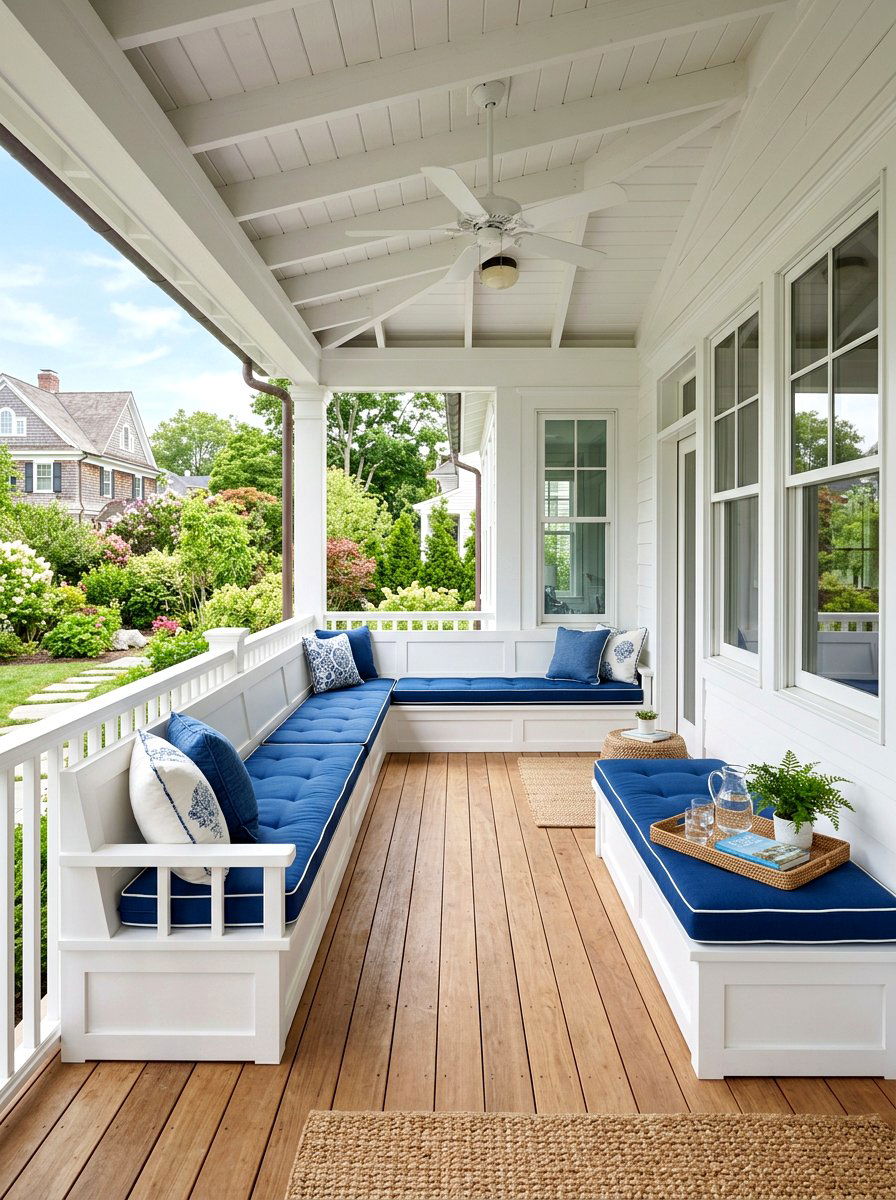
Constructing permanent seating directly into the architecture of the porch provides a clean, integrated look that saves space and offers plenty of room. Built-in porch benches are often placed at the ends of the porch or under windows to maintain the symmetrical layout of the space. These benches are usually painted to match the columns and trim, making them feel like a natural part of the house rather than an afterthought. When outfitted with comfortable cushions and throw pillows, they become a favorite spot for lounging, reading, or simply enjoying the view of the garden in a very relaxed way.
Conclusion:
Designing a Colonial front porch is an exercise in honoring the past while creating a functional and beautiful space for the present day. By focusing on essential elements like symmetry, traditional materials, and thoughtful lighting, you can craft an entryway that feels both stately and incredibly welcoming. Whether you are adding a pair of classic rocking chairs or installing a grand double door, each choice contributes to a cohesive look that celebrates American architectural heritage. A well-designed porch not only increases your home's curb appeal but also provides a serene sanctuary where you can connect with nature and your local community for many years.

Related posts: