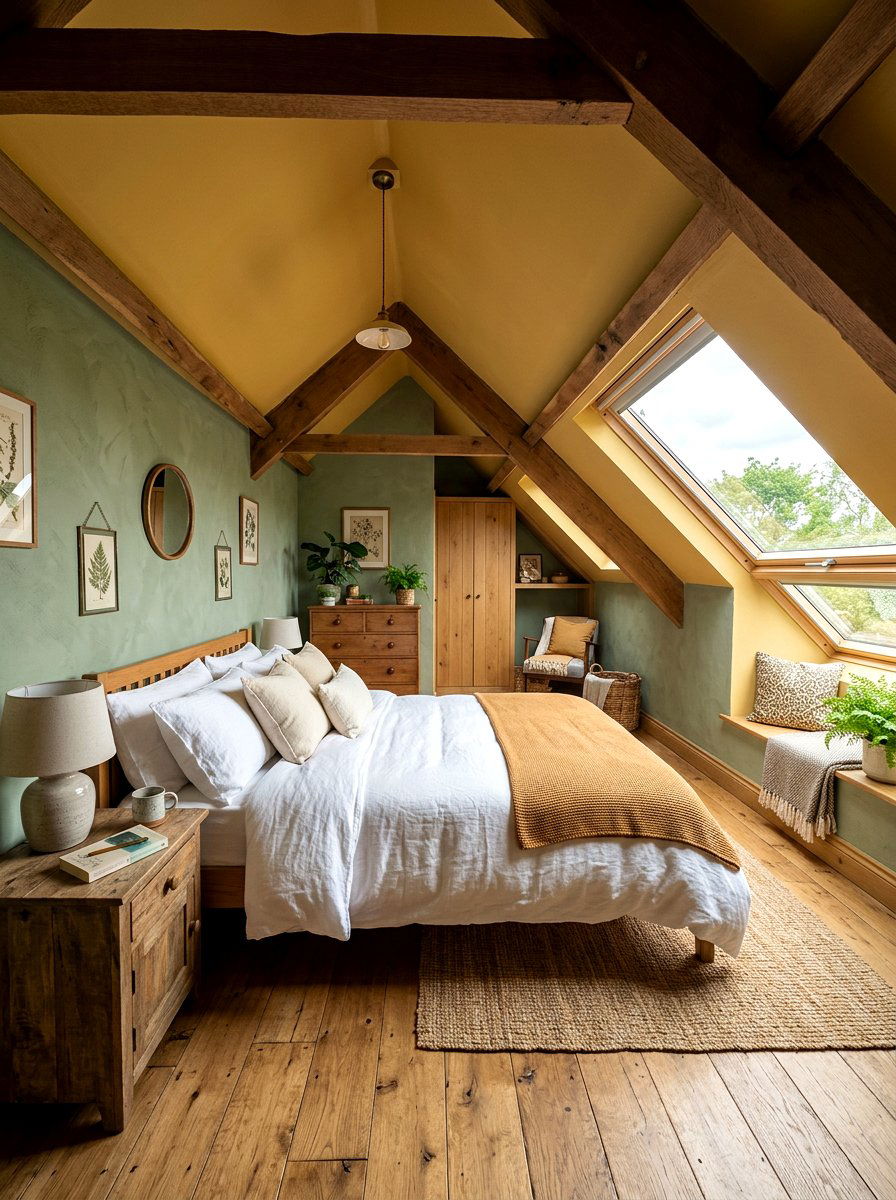
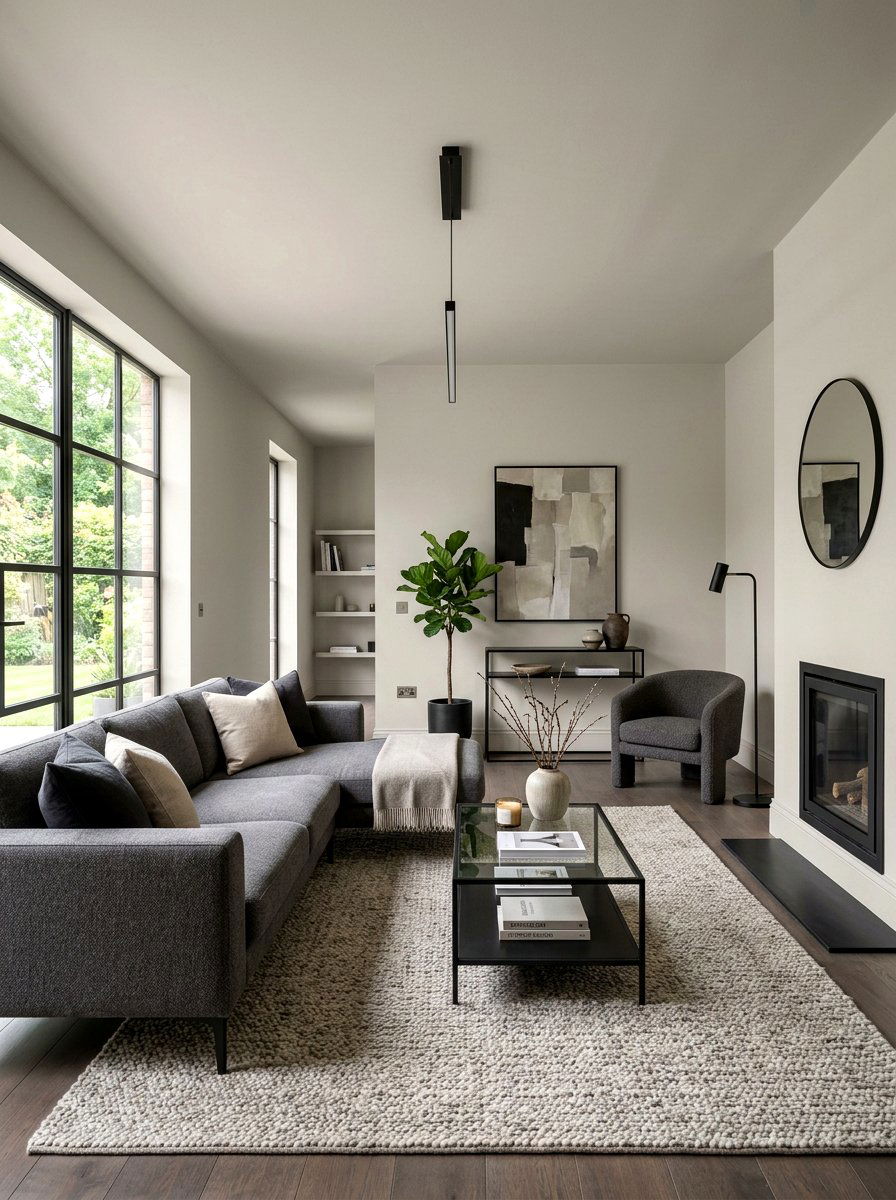
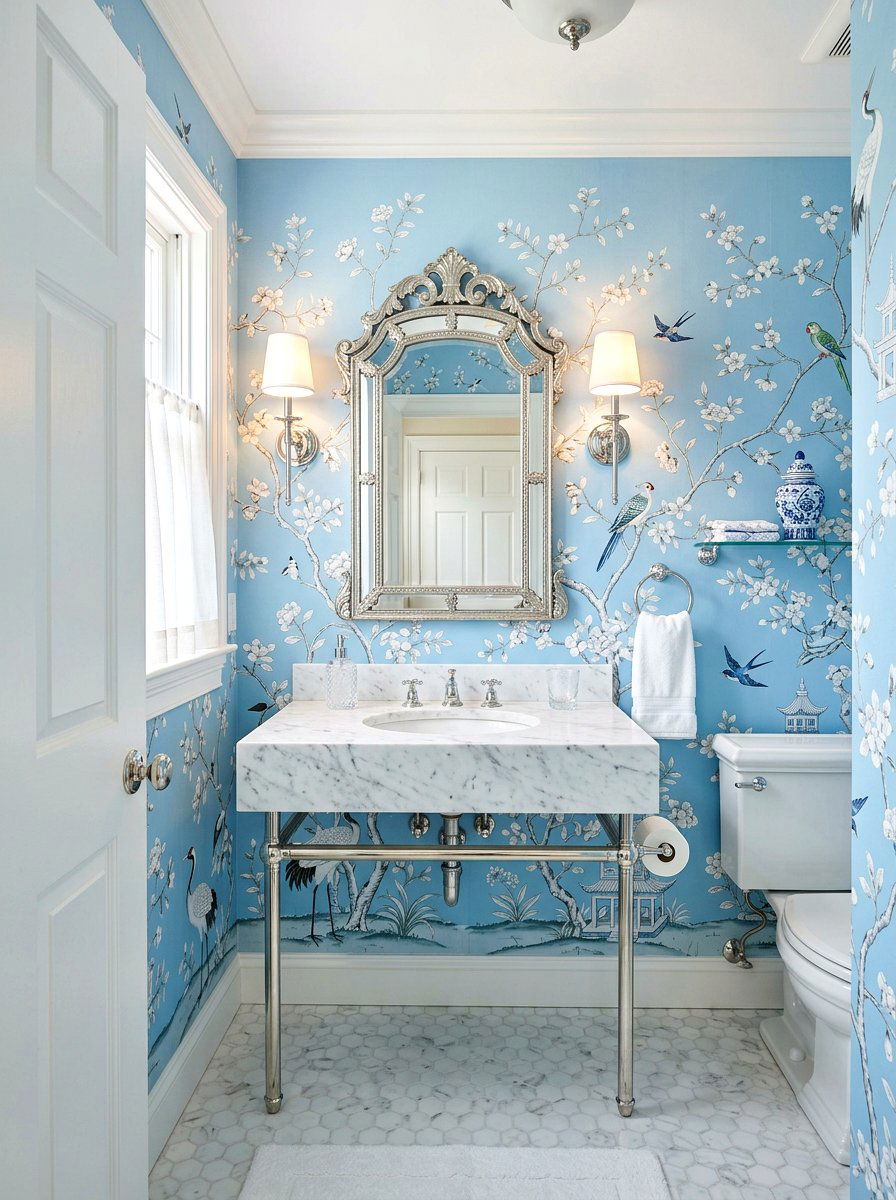
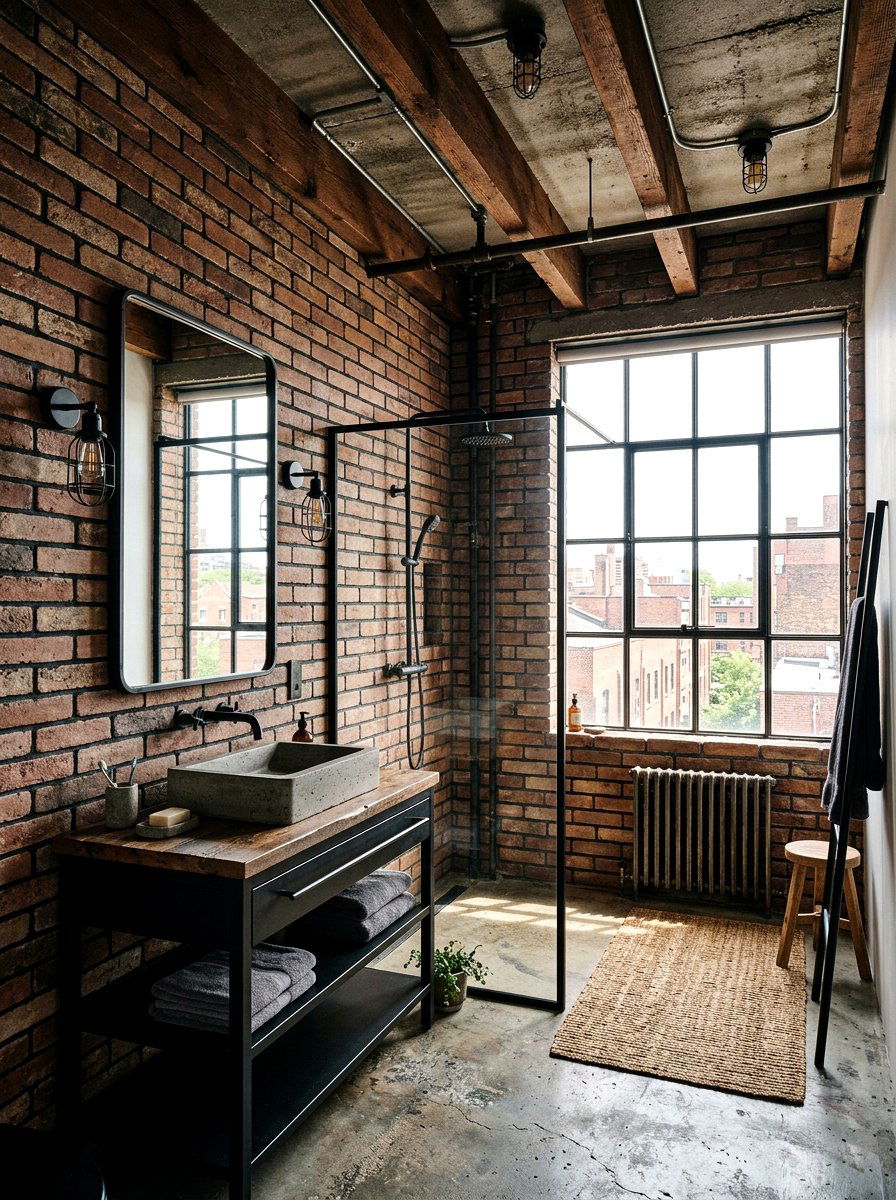
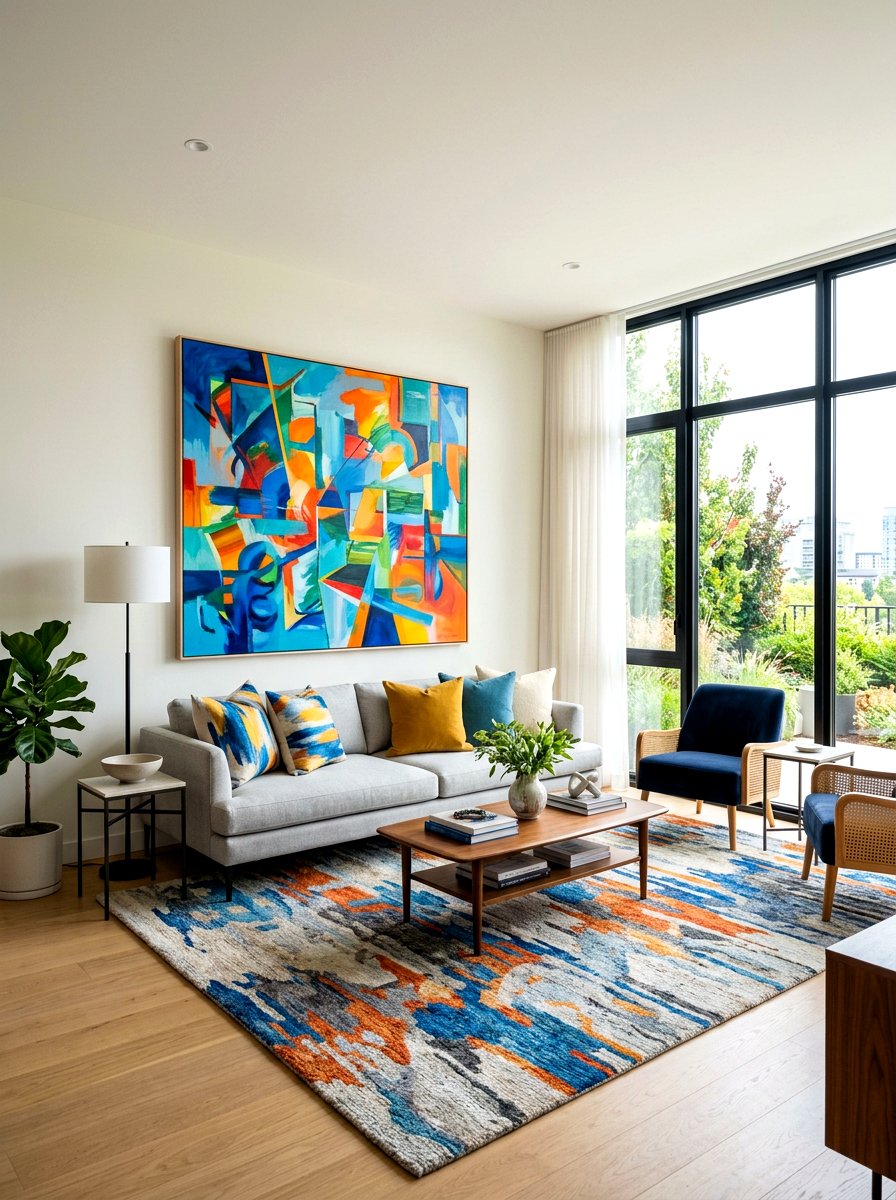
Color blocking is one of the most exciting ways to breathe new life into a dull bathroom without a full renovation. This design technique uses bold, solid sections of color to create visual interest and define different functional zones within the space. Whether you prefer vibrant neons or calming earth tones, color blocking allows you to express your personality through paint and tile. By strategically placing hues on walls, ceilings, and even fixtures, you can make a small room feel expansive and architectural. It is a fantastic way to experiment with high-contrast palettes that turn a functional area into a stunning, Pinterest-worthy retreat for your home.
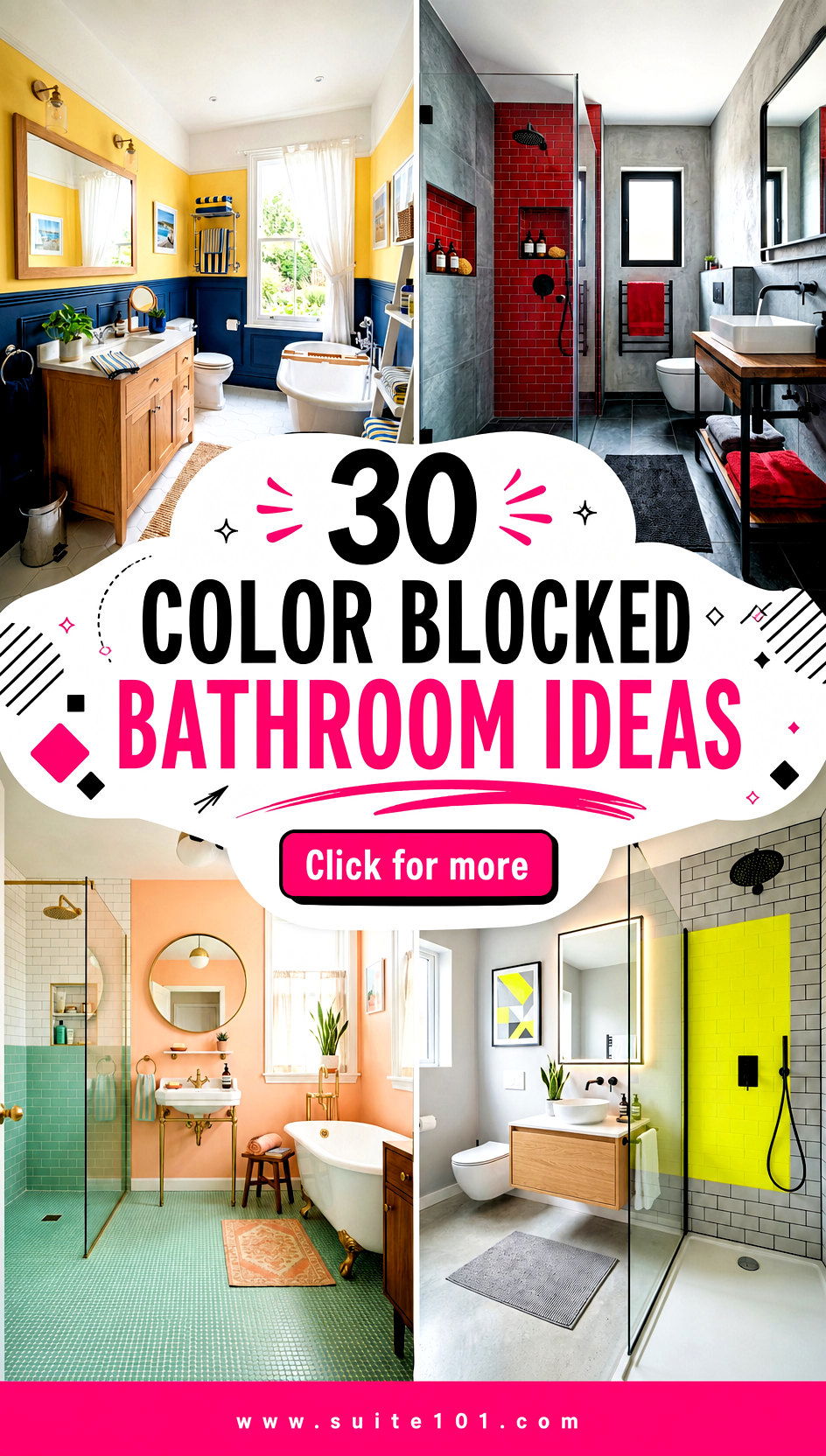
1. Pink and green bathroom
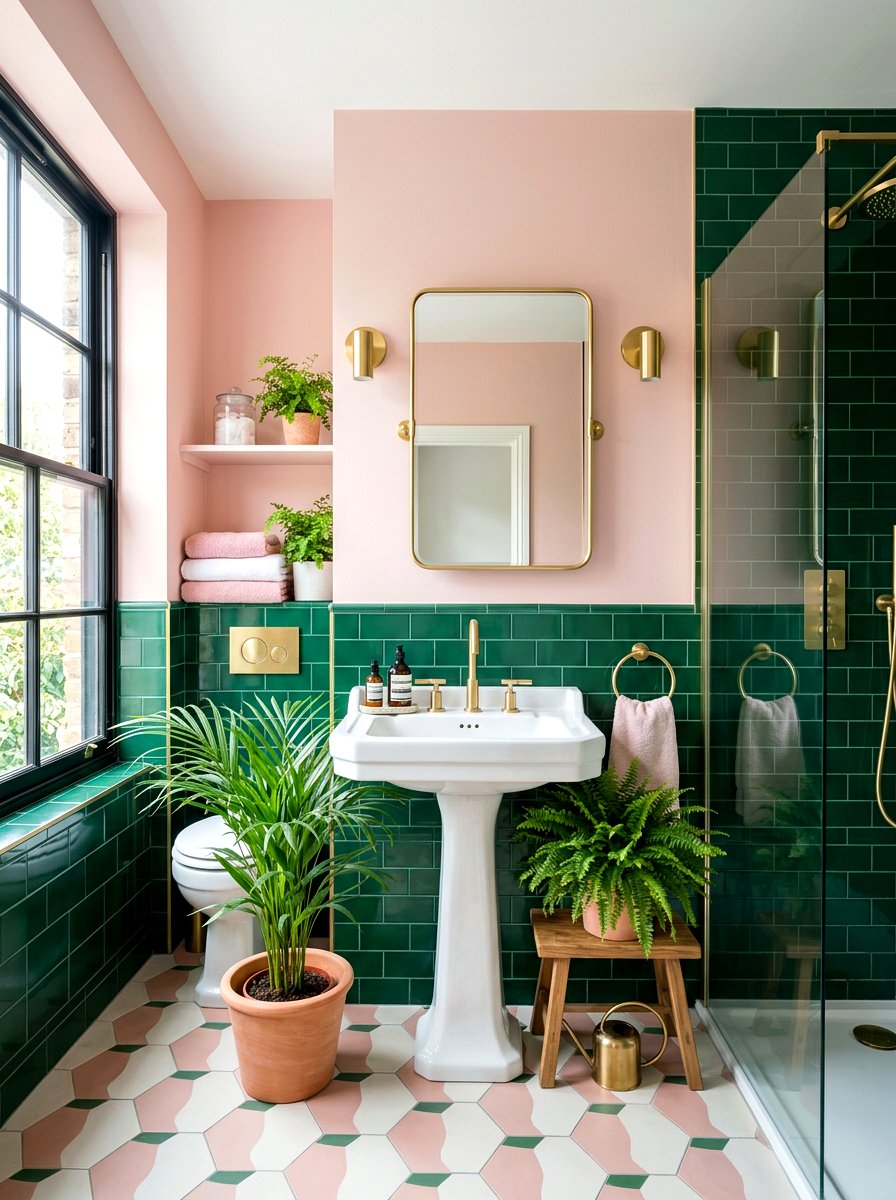
Combining soft blush tones with deep emerald or sage green creates a sophisticated and botanical atmosphere in your bathroom. This specific color pairing is a viral favorite because it balances femininity with a grounded, natural feel. You can achieve this look by painting the upper half of your walls in a delicate pink while using dark green subway tiles for the lower half. The contrast between the two colors helps to ground the space and adds an unexpected layer of depth. Adding some indoor plants and gold hardware can further enhance this aesthetic, making the entire room feel like a lush, private spa sanctuary.
2. Black and white bathroom
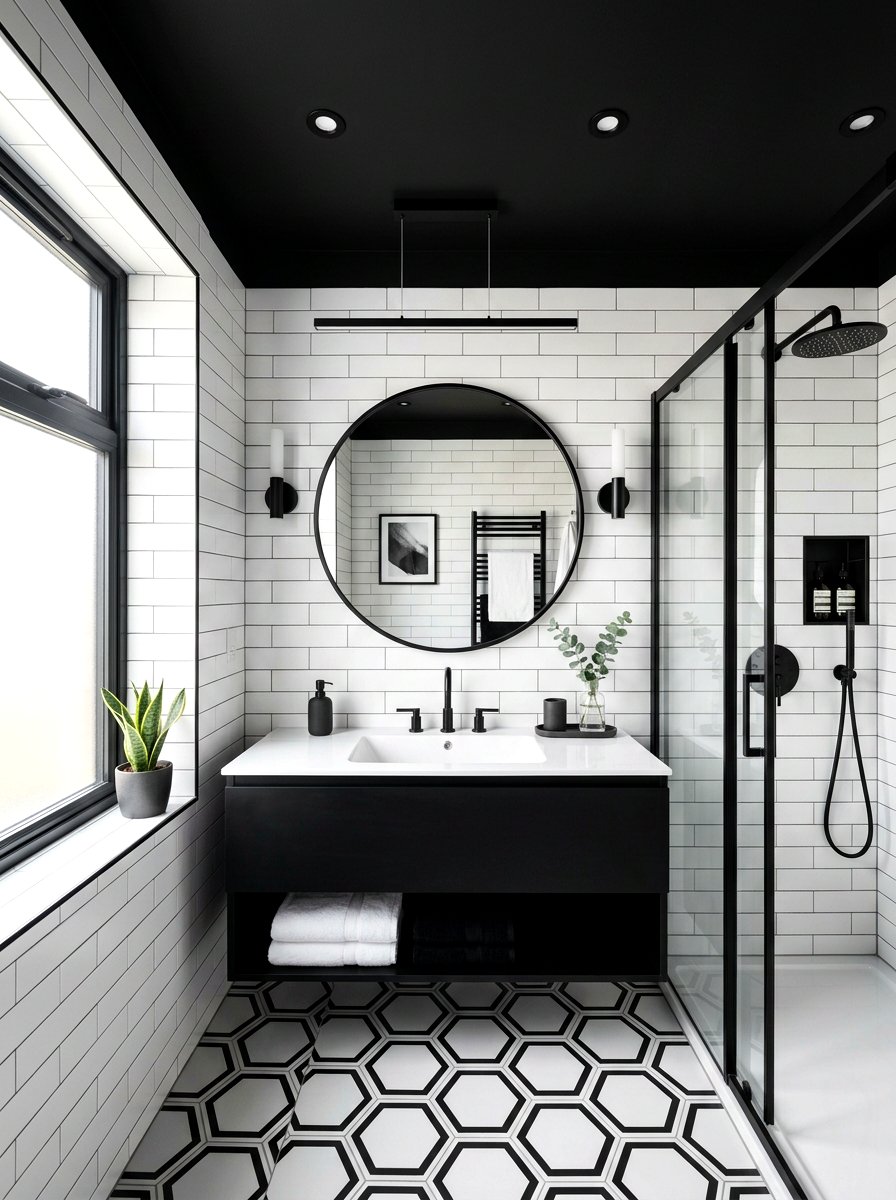
A high-contrast black and white palette is a timeless choice that feels modern and architectural when applied in large blocks. To execute this properly, consider painting your entire vanity area in matte black while keeping the rest of the walls a crisp, bright white. This sharp division of color creates a clean and organized look that never goes out of style. You might also try a black ceiling paired with white tiled walls to add a touch of drama and height to the room. This approach works perfectly with minimalist fixtures and helps to highlight the clean lines of your bathroom’s layout.
3. Blue and yellow bathroom
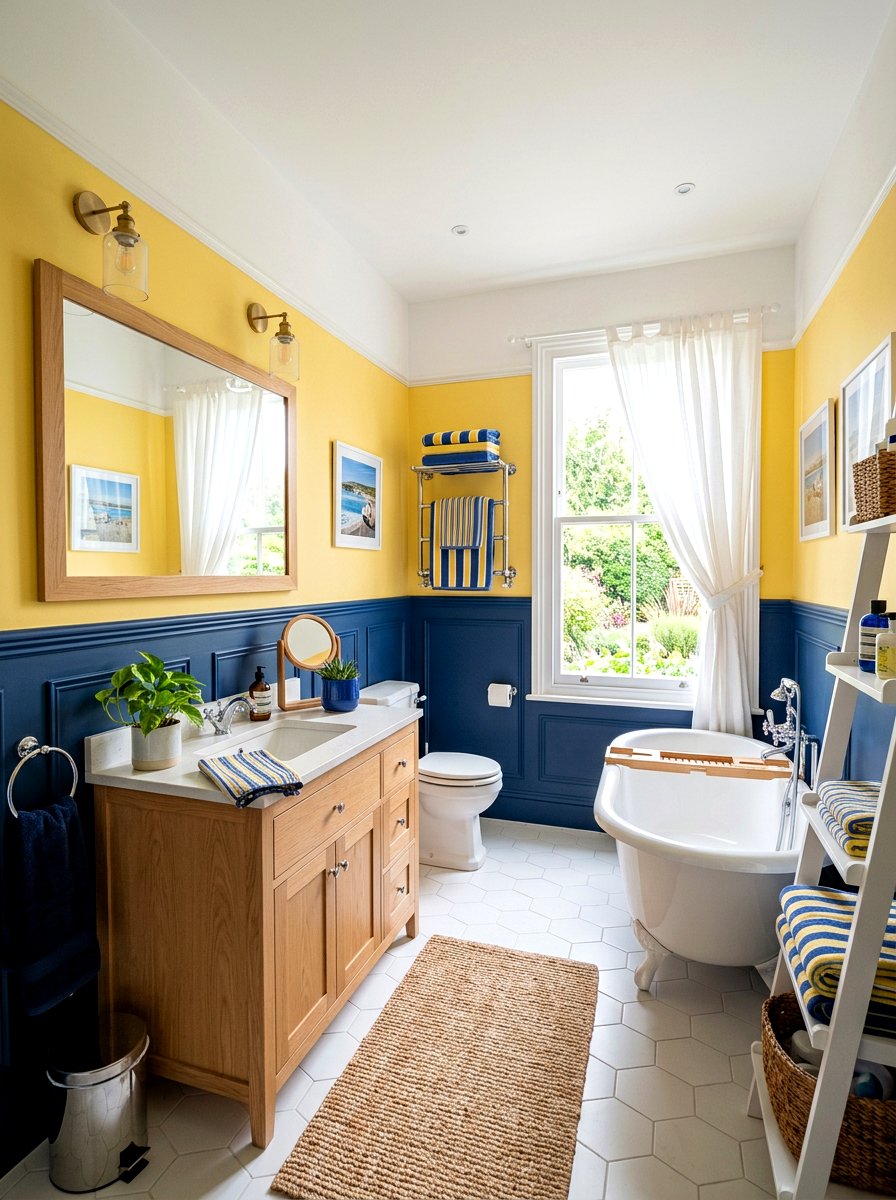
For a cheerful and energetic vibe, a blue and yellow color block scheme is an excellent choice for a family bathroom. You can use a deep navy blue on the bottom portion of the walls to provide a sense of stability and richness. Pair this with a bright sunny yellow on the top half or within a recessed shelf to create a pop of joy. This combination feels fresh and coastal, especially when you incorporate white accents to keep the colors from feeling too heavy. It is a great way to make a morning routine feel more vibrant and uplifting every single day.
4. Terracotta and teal bathroom
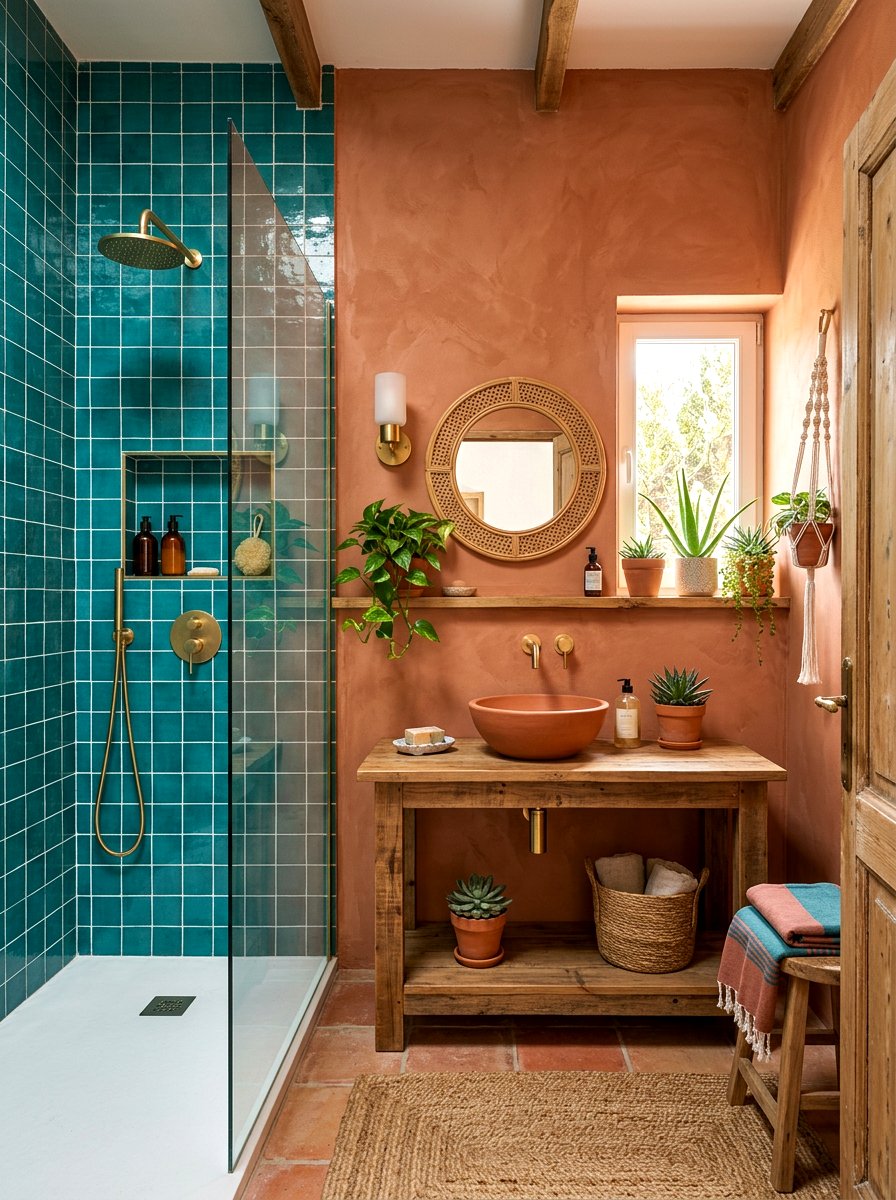
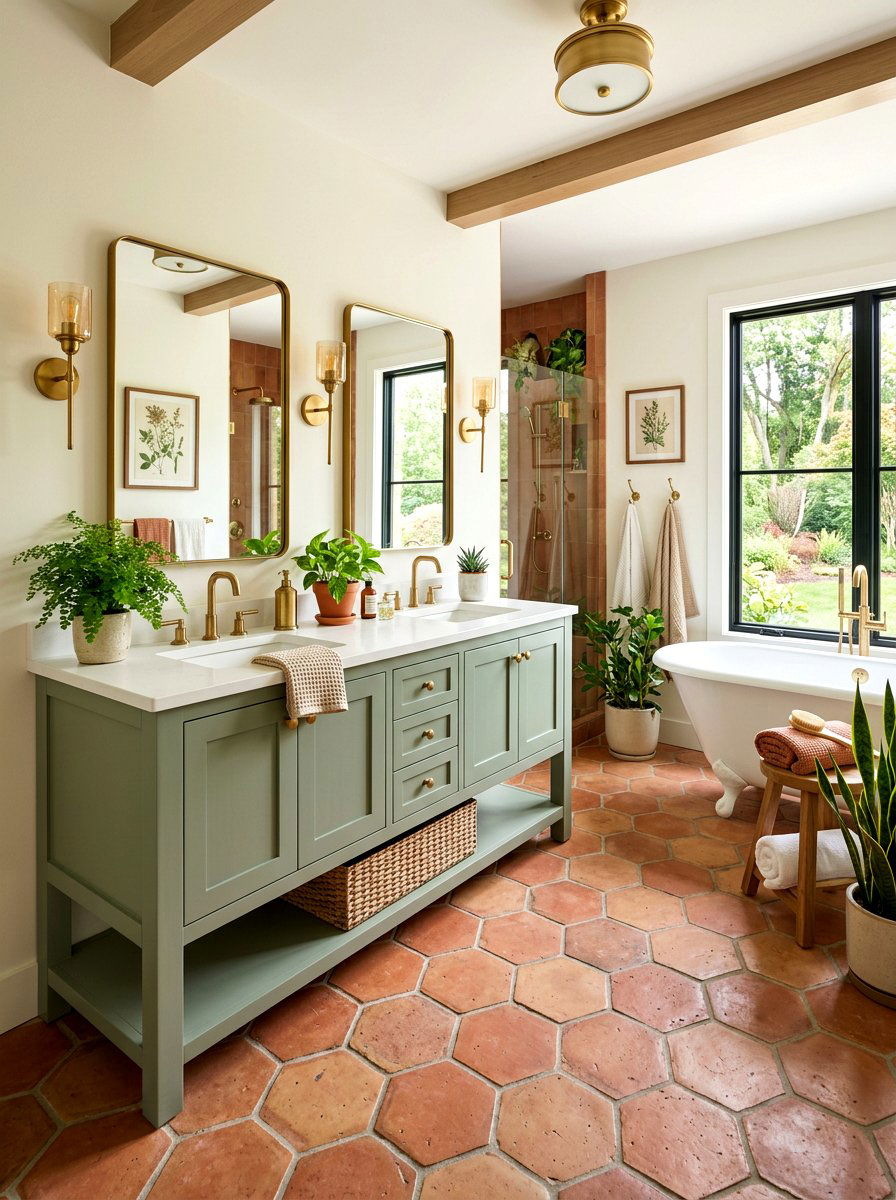
Mixing warm earthy terracotta with cool deep teal offers a stunning Mediterranean-inspired look that feels both grounded and luxurious. This color block technique works beautifully when you use teal tiles in the shower area and terracotta paint for the dry sections of the room. The warmth of the orange tones perfectly complements the coolness of the blue-green, creating a balanced visual harmony. This palette is ideal for those who love a bohemian or desert-modern aesthetic. It brings a sense of artisanal craftsmanship to the space, making your daily shower feel like a visit to a high-end boutique hotel or resort.
5. Half painted bathroom wall
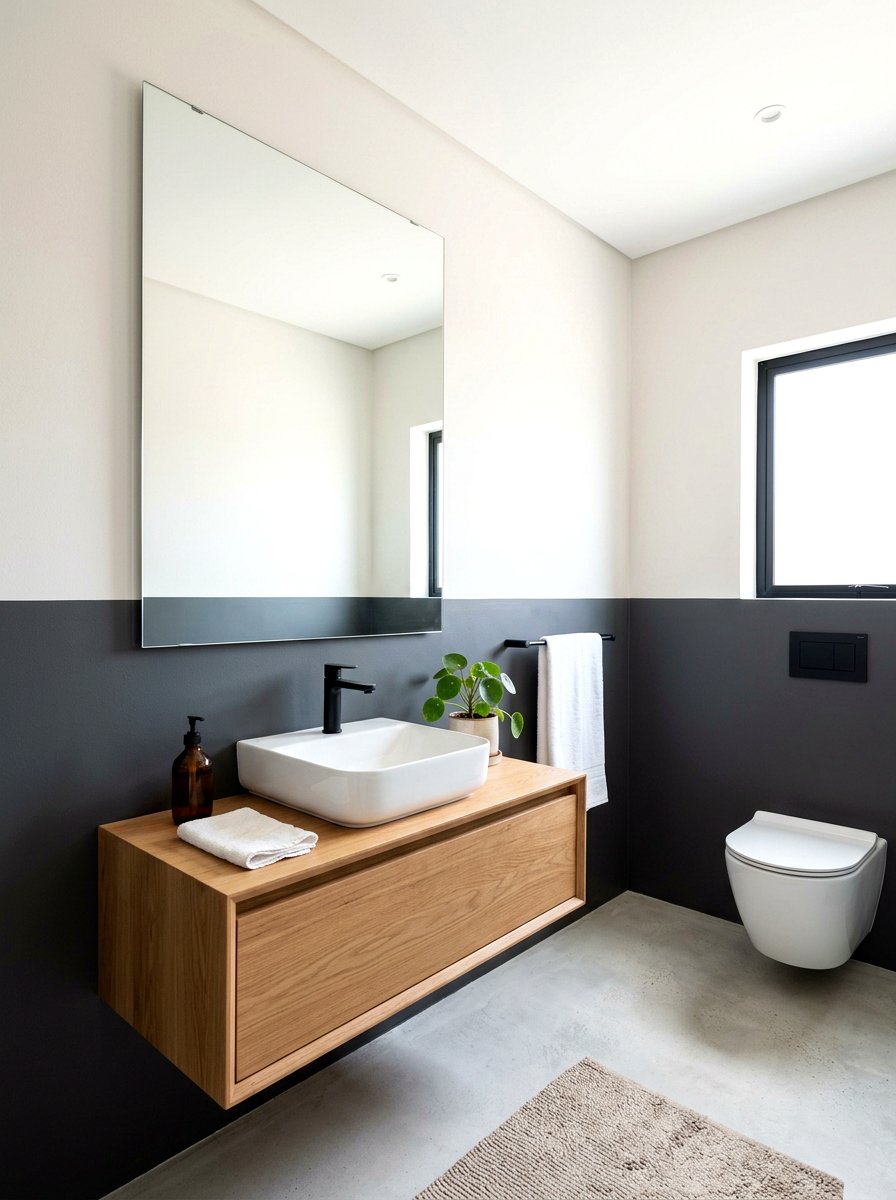
Painting only half of your bathroom wall is a simple yet incredibly effective way to introduce the color blocking trend. By drawing a horizontal line across the middle of the room, you can play with two different shades without overwhelming the small area. Usually, a darker color on the bottom helps to hide splashes and scuffs while a lighter color on top keeps the space feeling airy. This technique also provides a perfect opportunity to use a bold color that you might be afraid to use on an entire wall. It creates a clean, graphic look that instantly modernizes the entire room layout.
6. Vertical stripe bathroom
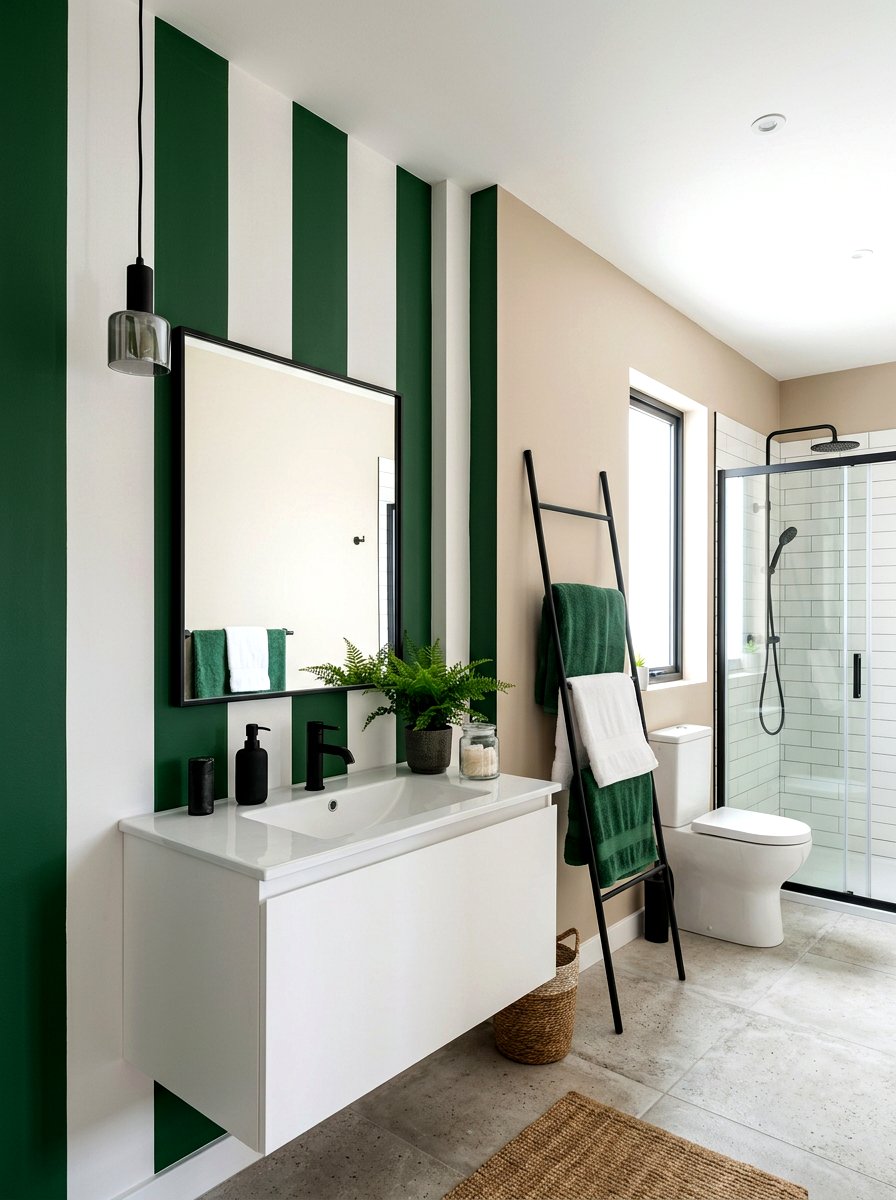
Instead of the traditional horizontal split, try using wide vertical blocks of color to draw the eye upward and add height. This method is particularly useful in small bathrooms with low ceilings where you want to create an illusion of more space. You can paint a single wide stripe of a contrasting color behind the toilet or the vanity to frame those specific areas. This architectural approach makes the room feel more structured and custom-designed. It is a bold move that works best with saturated colors like forest green, charcoal, or mustard yellow against a neutral background for maximum visual impact.
7. Geometric tile bathroom
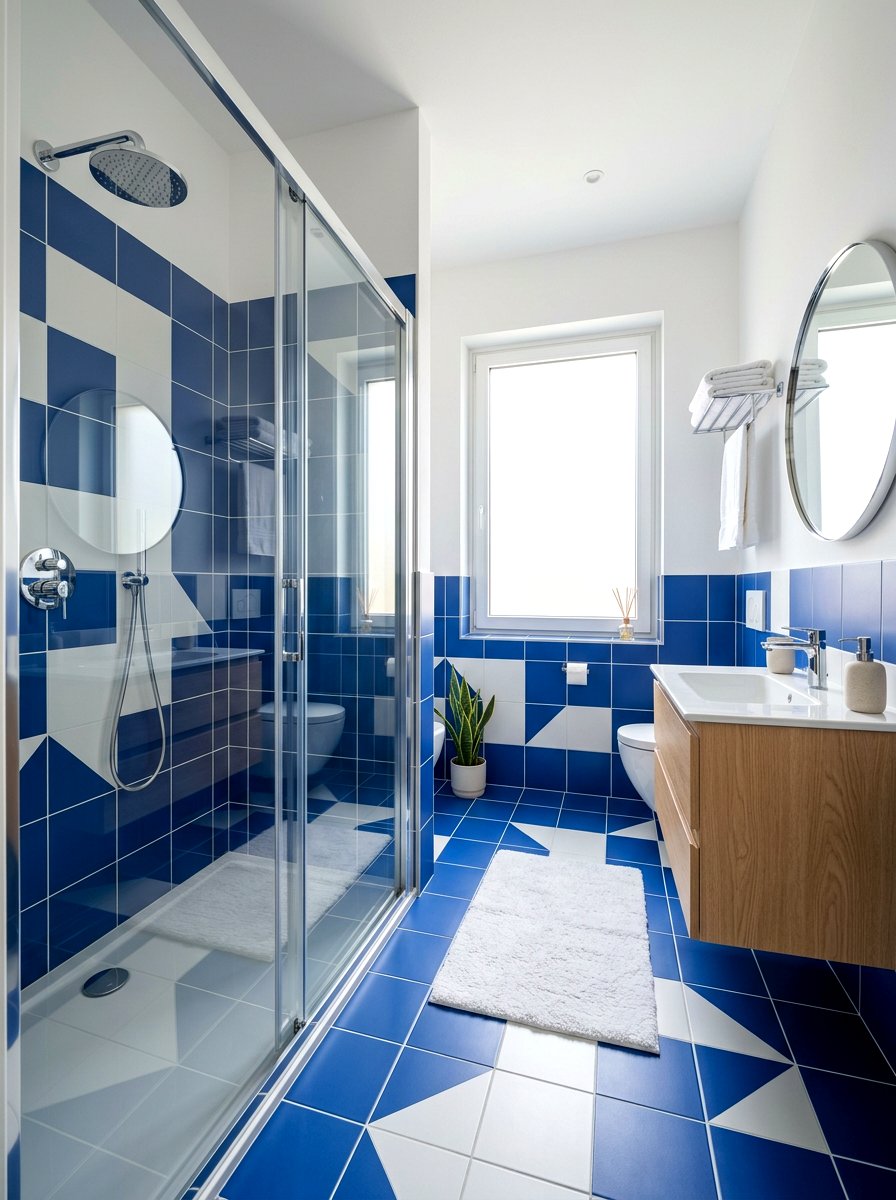
Color blocking is not just for paint; you can achieve a stunning effect using large sections of differently colored tiles. By grouping tiles into distinct geometric shapes or large solid fields, you create a permanent and durable color block masterpiece. For example, you could tile the entire shower floor and one wall in a vibrant blue while using white tiles for the remaining surfaces. This defines the wet area as its own unique zone within the larger bathroom. Using large-format tiles helps to minimize grout lines, which keeps the blocks of color looking sharp, clean, and modern for a long time.
8. Pastel color block bathroom
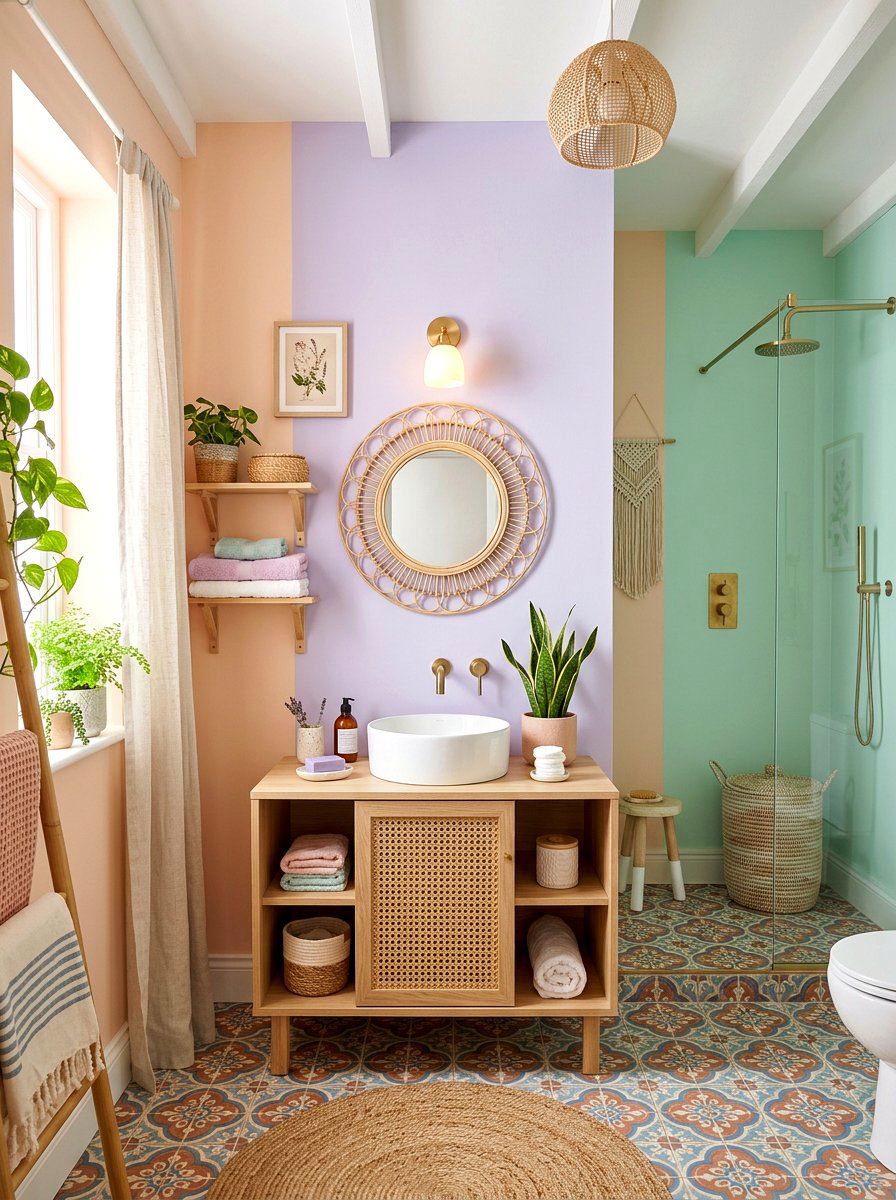
If you prefer a softer aesthetic, consider using muted pastel shades like mint, lilac, and pale peach to create a gentle color block. This approach is perfect for creating a calming, spa-like environment that still feels playful and trendy. You can block these colors in different corners of the room or use them to highlight specific architectural features like an arched doorway. Pastels are very forgiving in small spaces and can make a windowless bathroom feel much brighter and more inviting. Pairing these soft hues with light wood accents and white fixtures ensures the overall look remains sophisticated rather than looking juvenile.
9. Bold ceiling bathroom
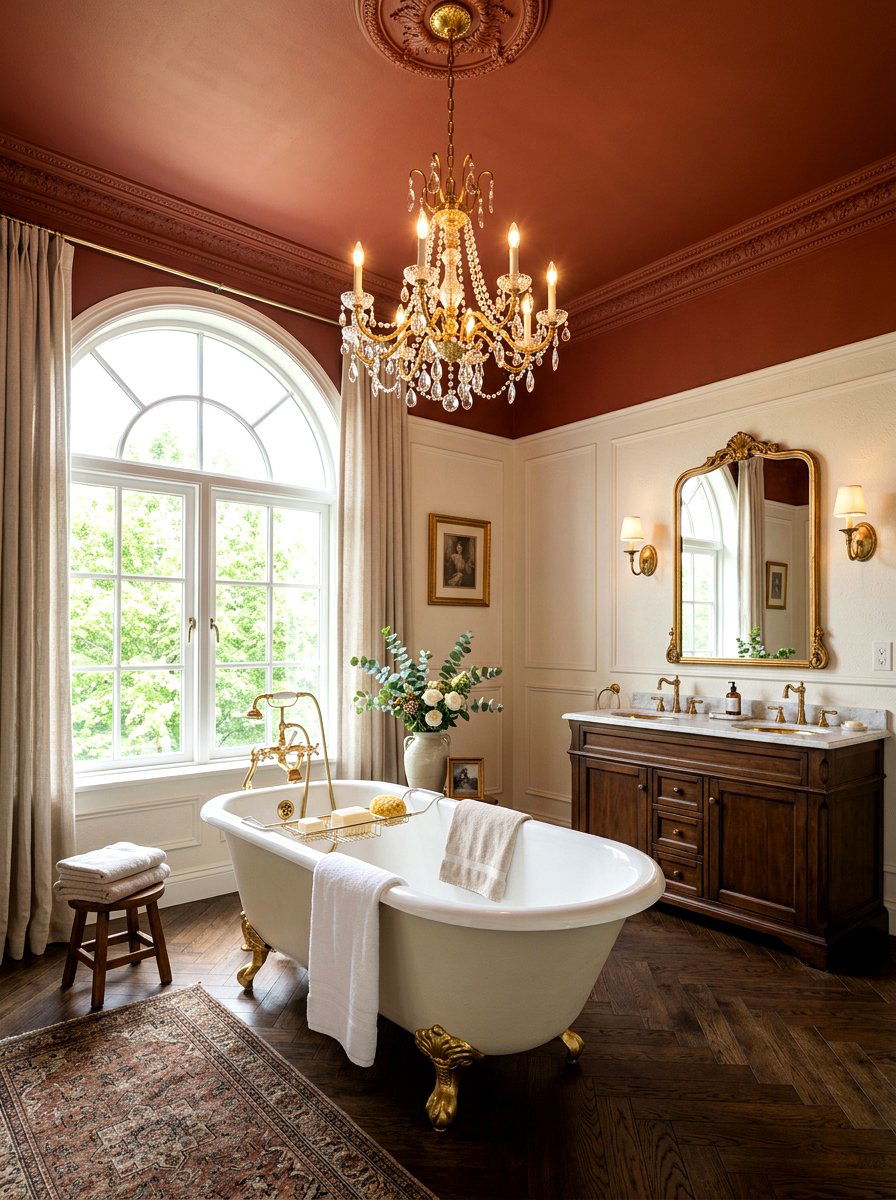
Bringing color to the ceiling is a daring way to color block that adds a sense of intimacy and drama. In many bathrooms, the ceiling is an overlooked white surface, but painting it a dark or vibrant color can change the entire mood. Imagine a deep charcoal or a rich terracotta ceiling paired with simple white walls and light floors. This creates a "cocoon" effect that feels incredibly cozy and high-end. It also helps to draw the attention toward beautiful lighting fixtures or crown molding. This strategy is particularly effective in powder rooms where you want to make a big impression on your guests.
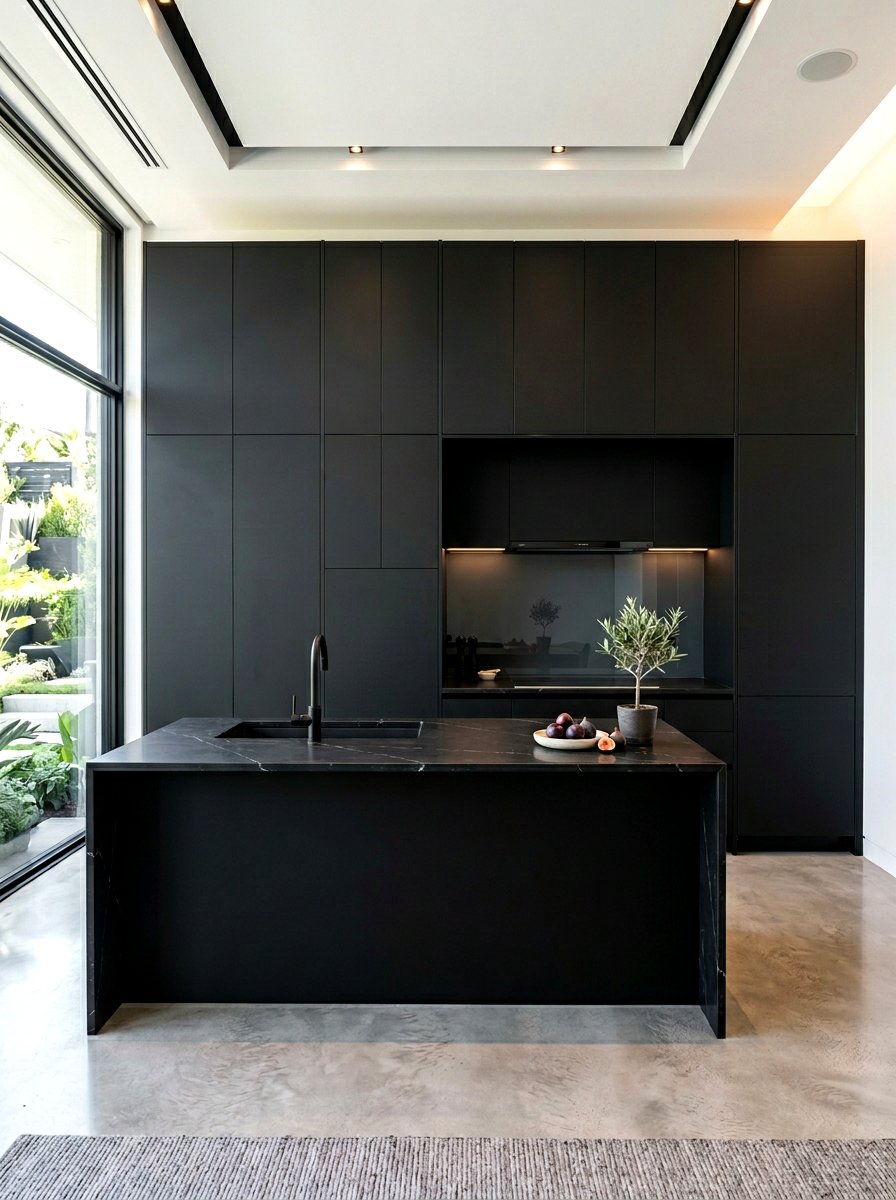
10. Arched color block bathroom
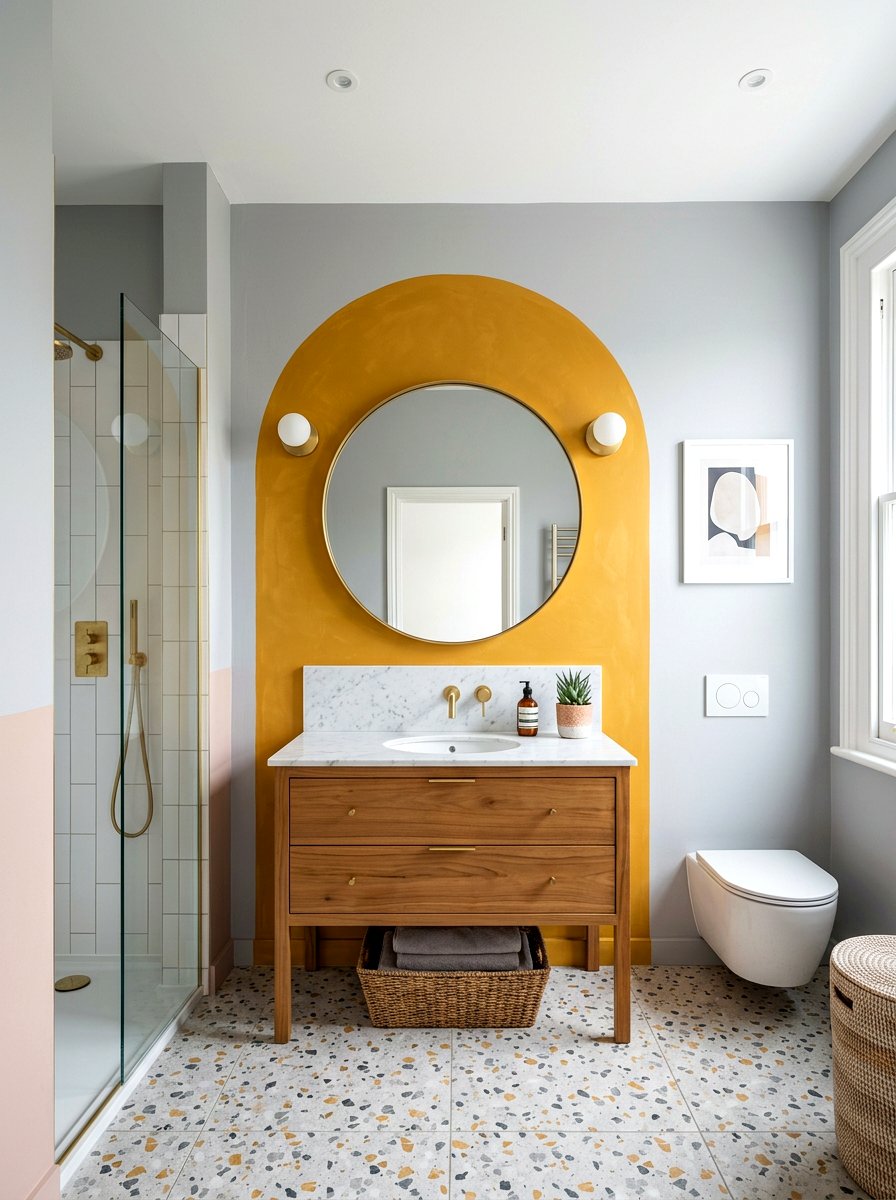
Painted arches are a huge trend on Pinterest right now because they add a sense of architectural interest to flat walls. You can use a contrasting color to paint a large arch behind your bathroom mirror or a floating shelf to create a focal point. This rounded shape softens the hard lines of the vanity and tiles, making the room feel more organic and welcoming. It is an easy DIY project that only requires a bit of tape and a steady hand. Using a warm ochre or a dusty rose for the arch can add a pop of color that feels very intentional.
11. Dark green and wood bathroom
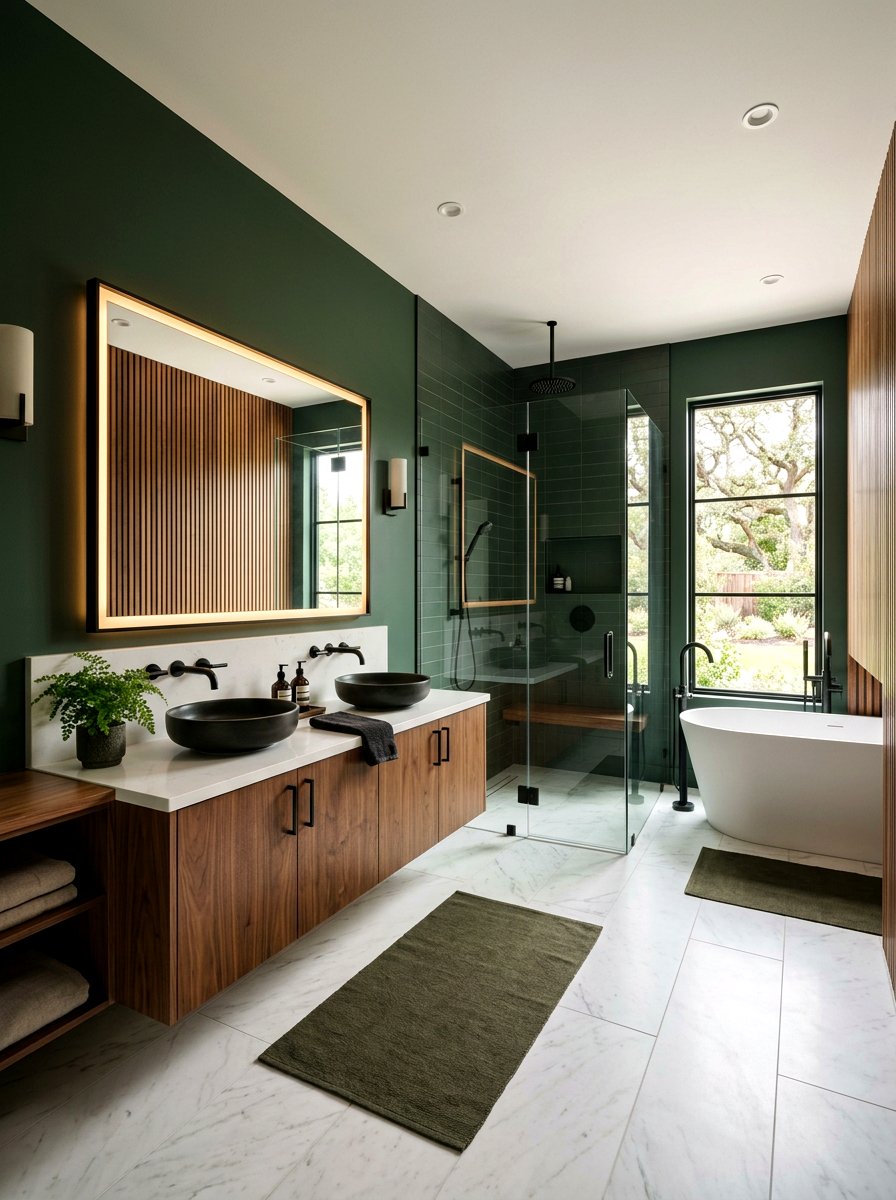
Combining a deep forest green with natural wood elements is a classic way to achieve a moody and organic color block. You can paint the walls in a matte dark green and pair them with a light oak or walnut vanity. The solid block of green provides a dramatic backdrop that makes the texture of the wood grain really stand out. This pairing feels timeless and connects the interior space to the outdoors. To keep the room from feeling too dark, incorporate white marble countertops or light-colored floor tiles. It is a sophisticated look that brings a sense of quiet luxury.
12. Red and grey bathroom
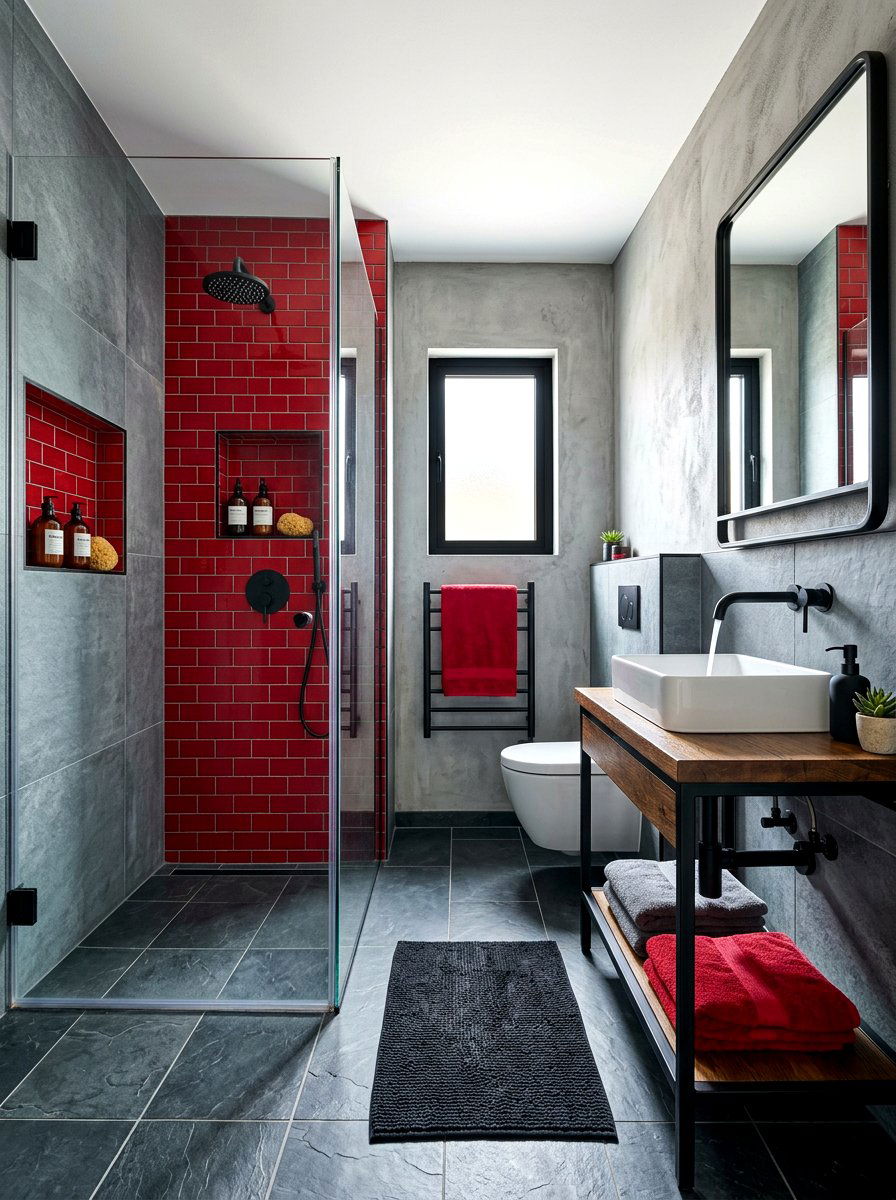
For those who love a bold and modern look, pairing a vibrant red with a cool slate grey is a powerful choice. You can block the red color in the shower niche or on a single accent wall to provide an energetic punch. The grey helps to ground the intensity of the red, preventing it from feeling overwhelming or aggressive in a small space. This combination is very contemporary and works well with industrial-style fixtures like matte black faucets and exposed pipes. It is a great way to show off a confident design personality while maintaining a sleek and professional finish.
13. Mustard and navy bathroom
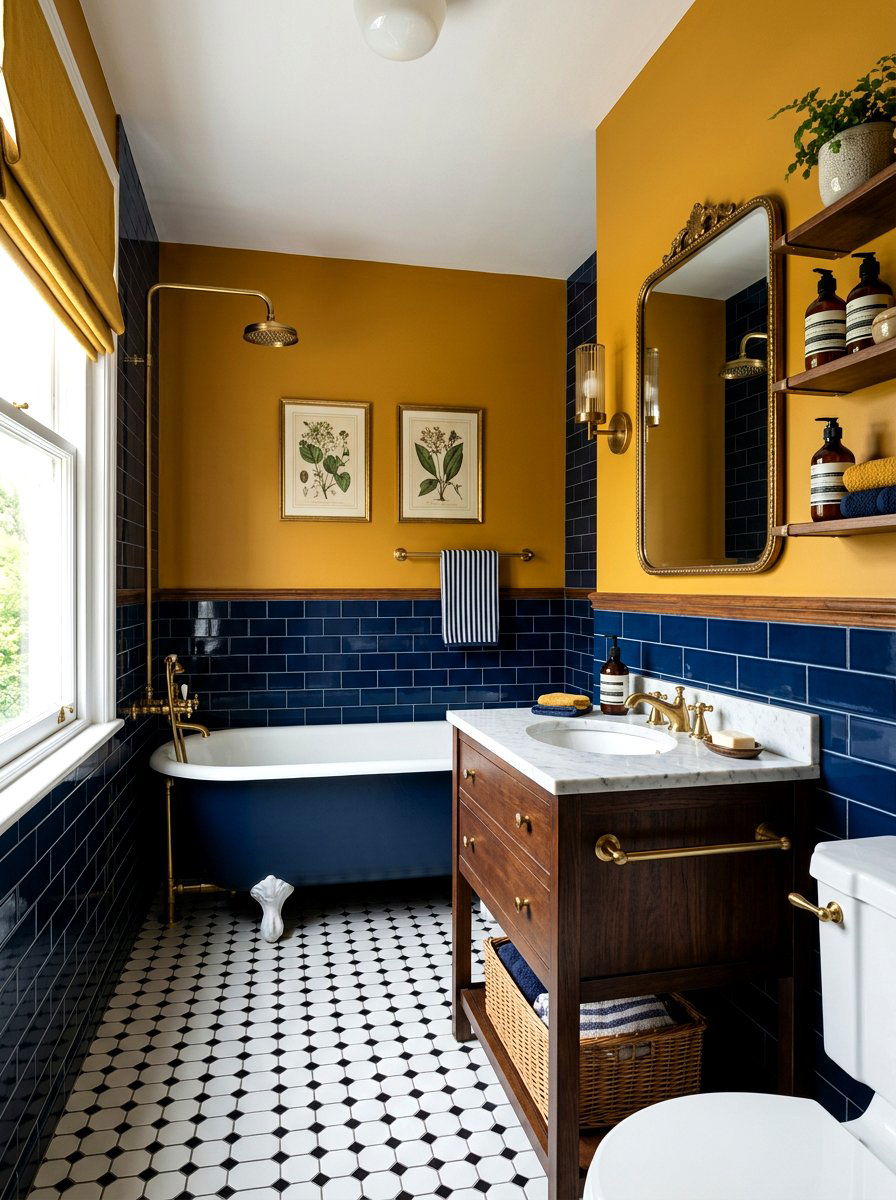
Mustard yellow and navy blue are complementary colors that create a rich and sophisticated color block effect. This palette feels both vintage and modern at the same time, offering a unique character to any bathroom. You might choose to tile the lower half of the walls in navy and paint the top half in a warm mustard yellow. This creates a heavy, grounded base with a light and sunny top. Adding brass or copper hardware enhances the warmth of the yellow and makes the navy look even more luxurious. It is a perfect choice for anyone wanting a bold yet classic color story.
14. Mint and peach bathroom
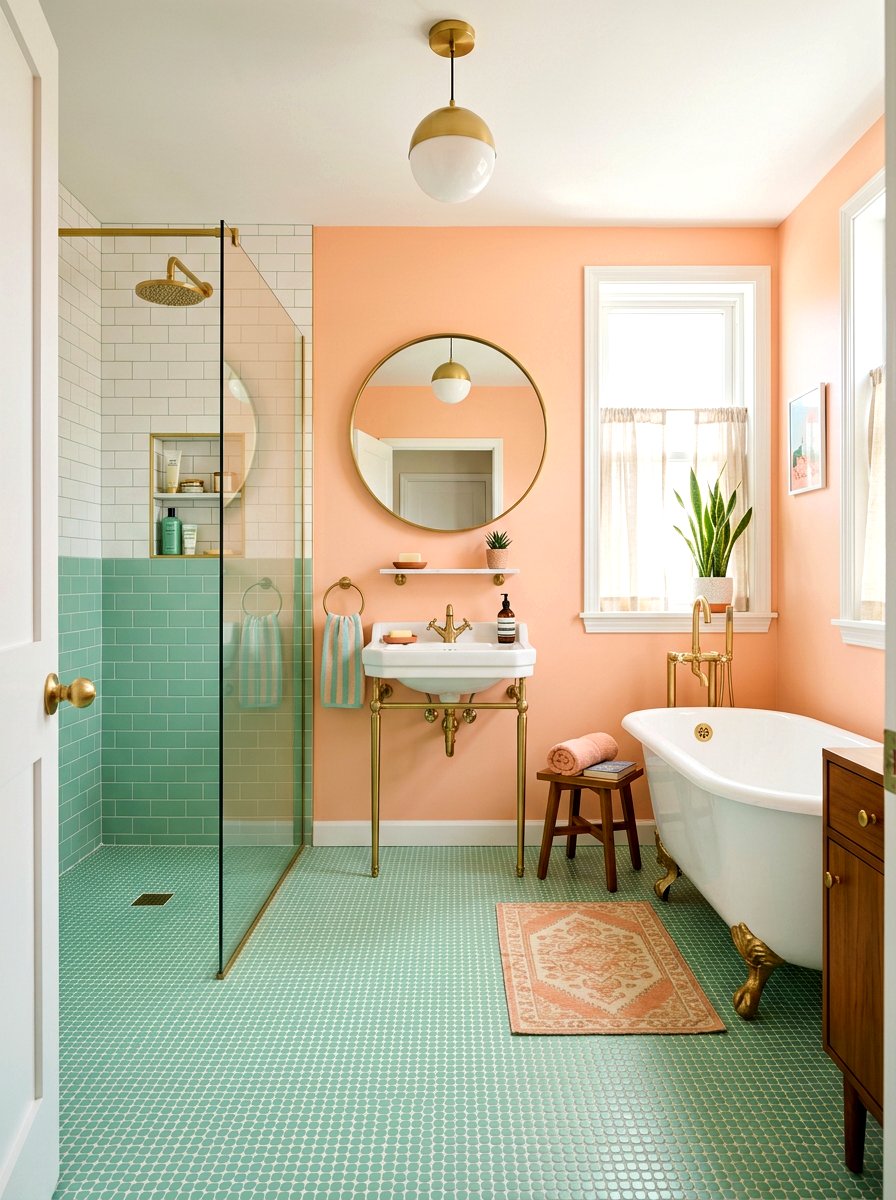
A mint and peach combination offers a retro-inspired look that feels incredibly fresh and airy in a bathroom setting. These colors are light enough to keep the space feeling open but distinct enough to create a clear color block. Try using mint green for the floor tiles and a soft peach for the wall paint. This creates a beautiful contrast that is reminiscent of Art Deco styles or mid-century modern designs. This color scheme is especially effective when you use white grout to keep everything looking crisp and clean. It is a playful choice that makes a bathroom feel bright.
15. Monochromatic color block bathroom
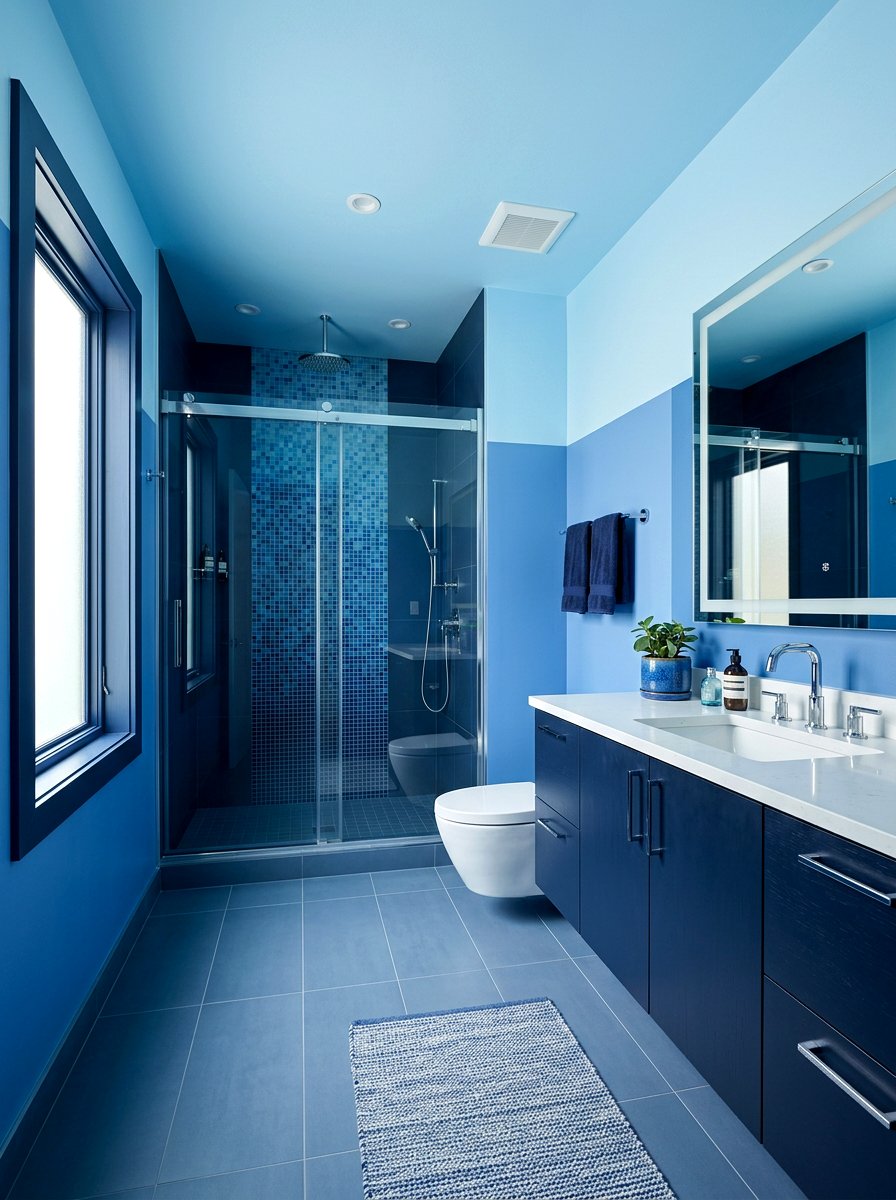
You can create a very sophisticated color block look by using different shades of the same color throughout the room. For example, use a very dark navy on the vanity, a medium blue on the lower walls, and a pale sky blue on the ceiling. This monochromatic approach provides a sense of depth and complexity without the jarring contrast of multiple different colors. It feels very intentional and high-end, often used in professional interior design projects. This technique allows you to play with light and shadow, making the room feel more sculptural and layered while staying within a cohesive and relaxing theme.
16. Neon and neutral bathroom
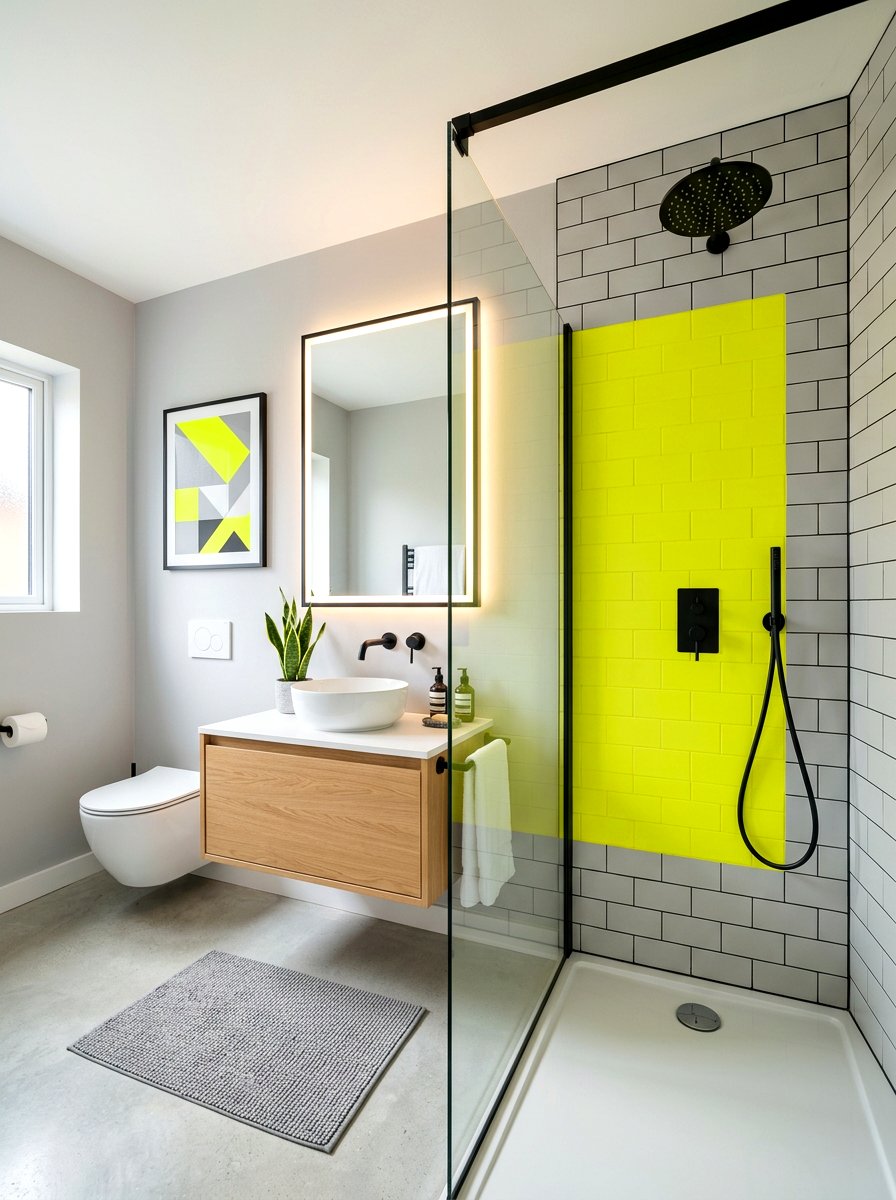
If you are feeling adventurous, consider using a single pop of neon color against a very neutral background. A bright neon yellow or electric pink block inside a shower niche or around a mirror can look incredibly stylish against grey or white walls. This is a very modern and artistic way to approach color blocking that feels like a piece of contemporary art. Because the neon is used in a concentrated block, it doesn't overwhelm the space, but it definitely catches the eye. It is a perfect way to add a youthful and energetic vibe to a modern apartment or a guest bathroom.
17. Three color bathroom
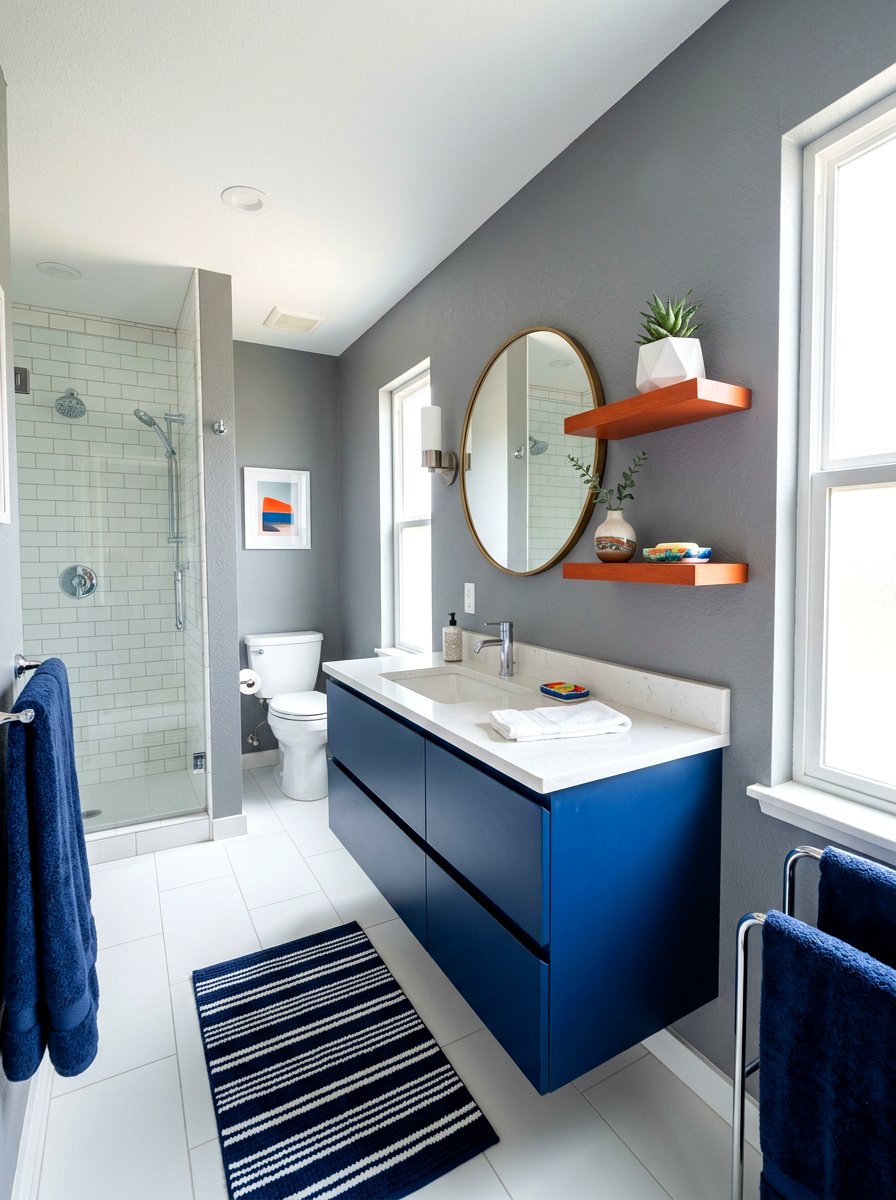
Using three distinct colors can create a dynamic and balanced look if you follow the 60-30-10 rule for color distribution. You might use a light grey for the majority of the room, a bold blue for the vanity area, and a bright orange for a small accent block. This creates a visual hierarchy that guides the eye around the room and makes the space feel well-planned. The key is to ensure the colors have a similar saturation so they don't compete for attention. It is a great way to incorporate multiple favorites into one space while maintaining a sense of professional design and order.
18. Corner color block bathroom
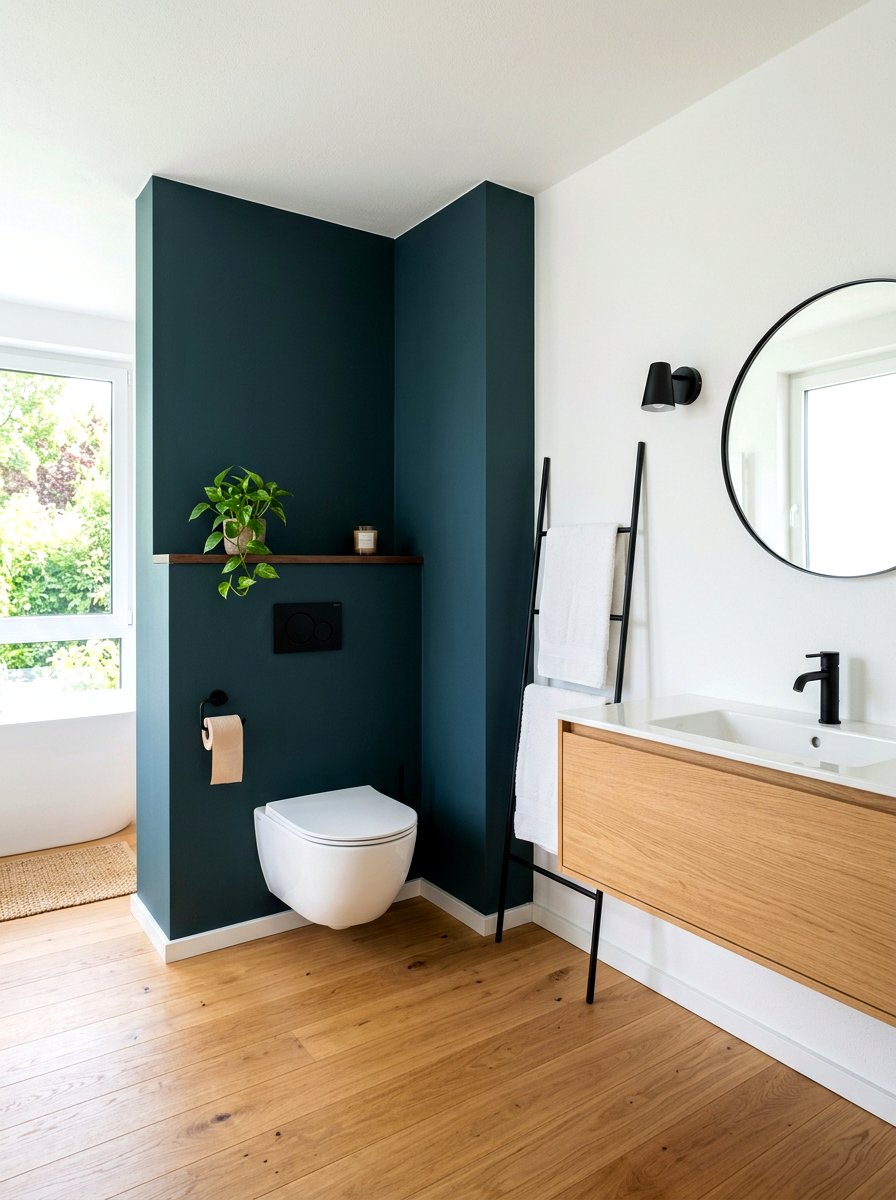
Color blocking into the corners of a room is a clever way to define different functional areas like the toilet or the bathtub. By painting two adjacent walls in a different color than the rest of the room, you create a "zone" that feels separate and specialized. This works particularly well in large bathrooms where the layout might otherwise feel a bit empty or disconnected. Using a dark color in a corner can also add a sense of depth and mystery to the room's proportions. It is a subtle but effective way to use color as an architectural tool rather than just decoration.
19. Window frame color block bathroom
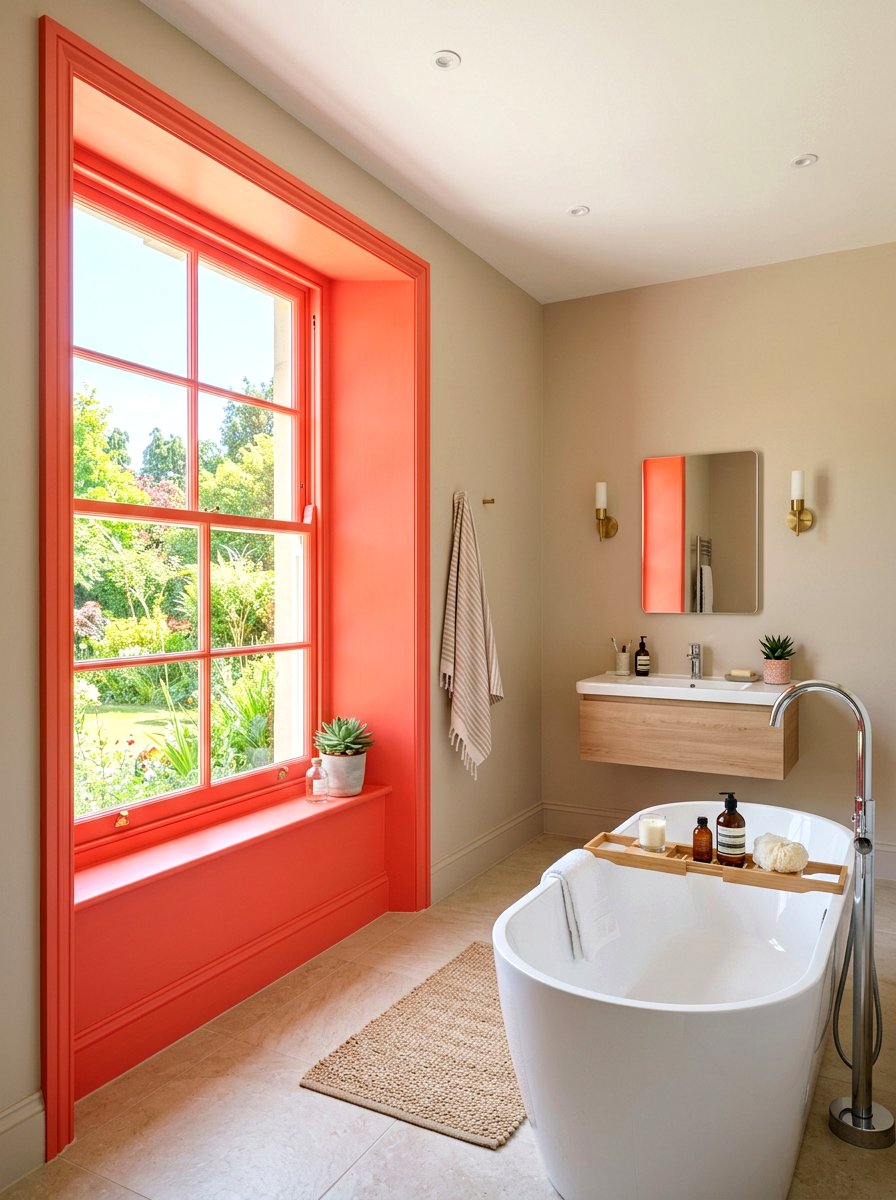
Painting the window frame and the wall immediately surrounding it in a bold color creates a beautiful natural frame for the view outside. This specific type of color blocking draws the eye toward the light source and makes the window a major design feature of the room. If you have a small window, using a bright color can make it feel much larger and more significant. This technique is often seen in modern European designs where color is used to highlight functional elements. It is a simple way to add a unique touch to your bathroom without having to paint every single wall surface.
20. Door and trim color block bathroom
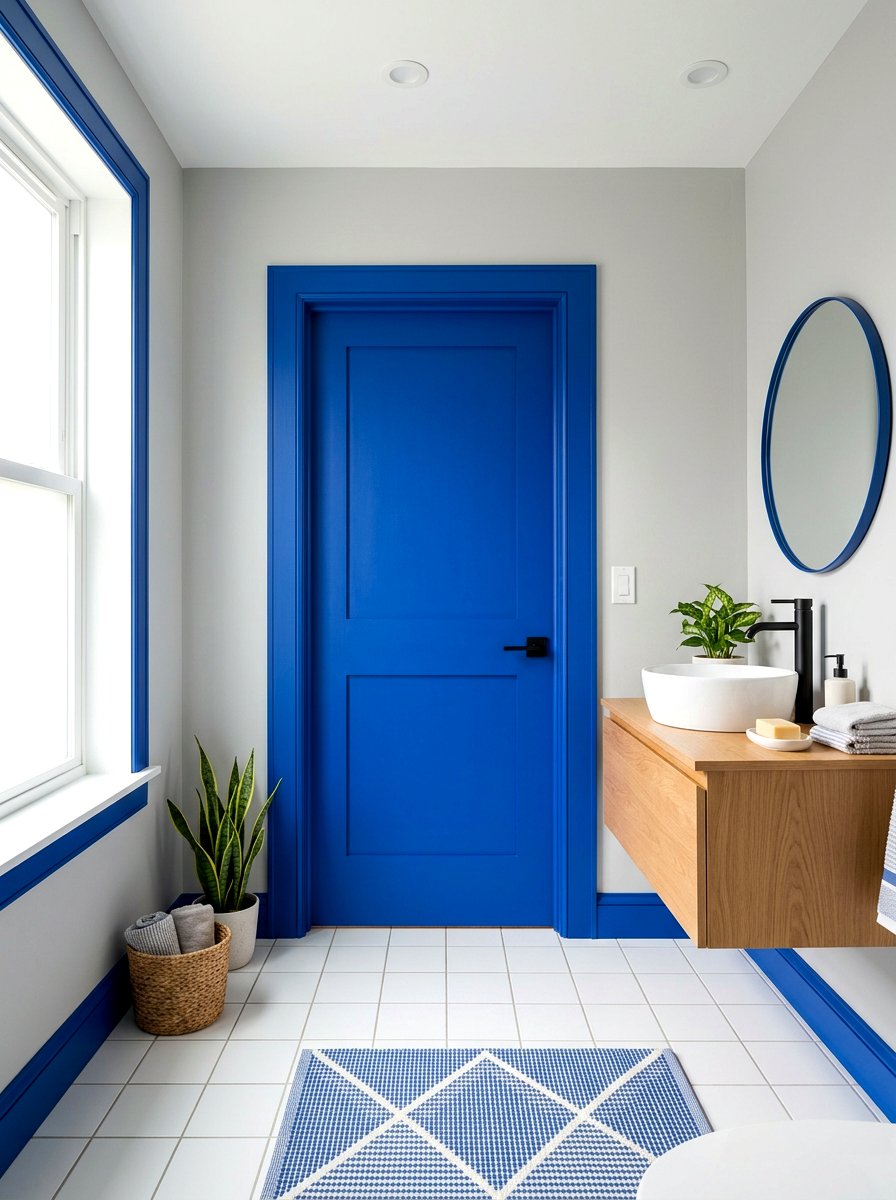
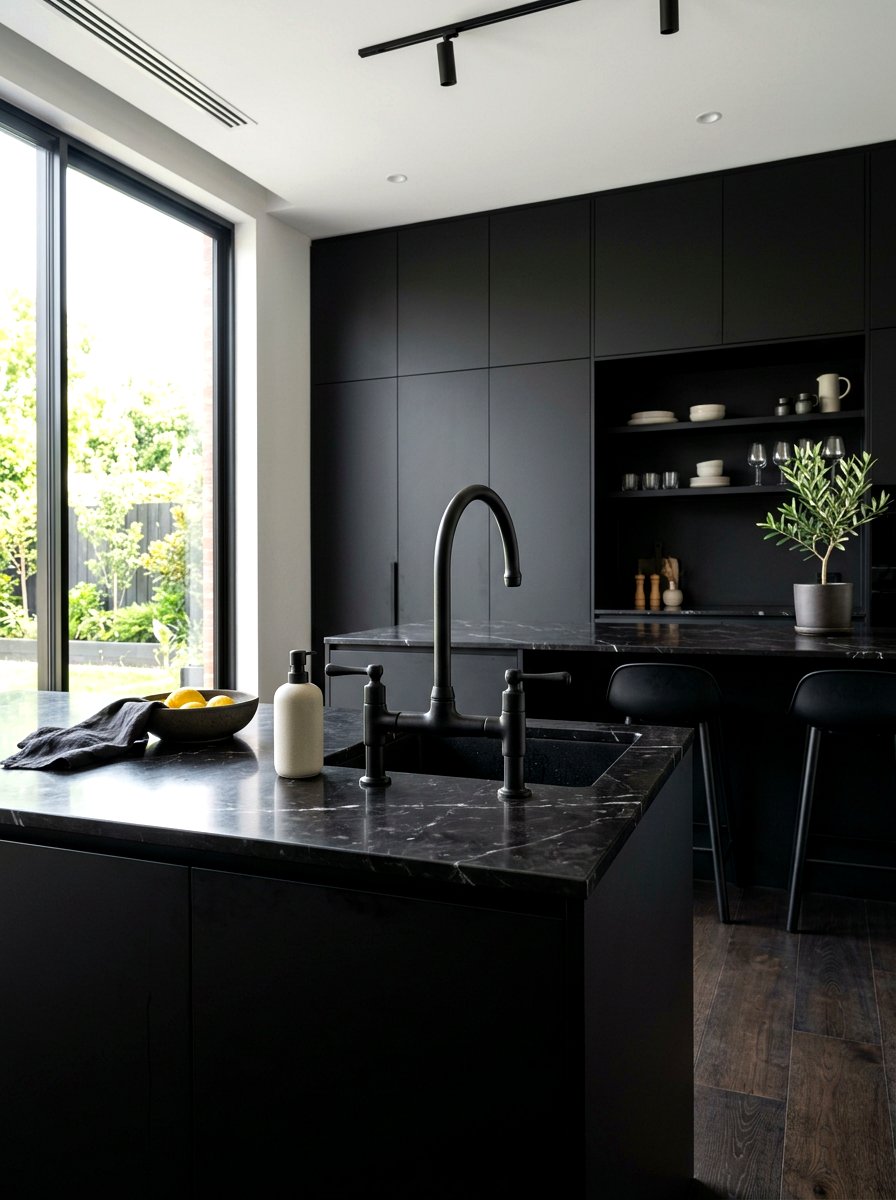
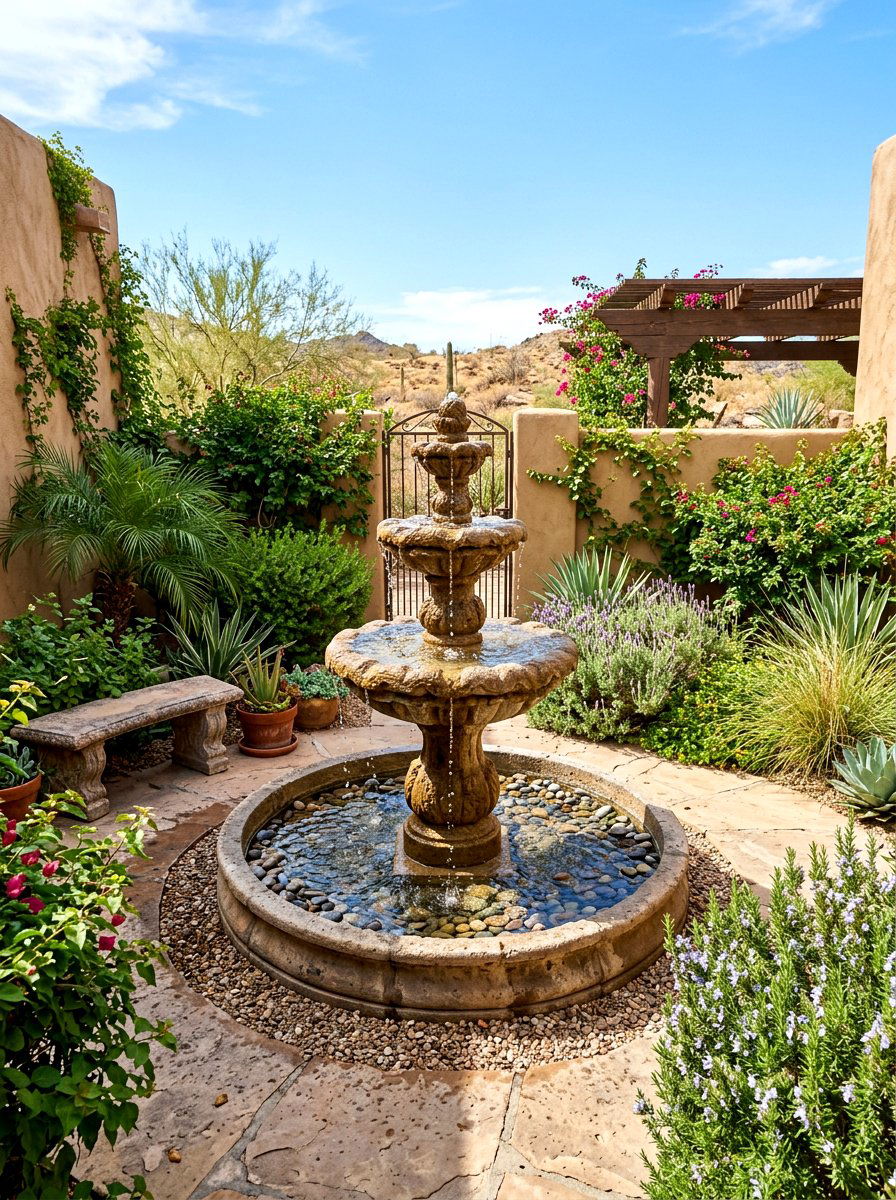
Do not forget that your bathroom door and trim can be part of your color blocking scheme. Painting the door and its surrounding casing in a vibrant color like coral or cobalt blue can make a huge statement. This works best when the rest of the bathroom is relatively neutral, allowing the door to act as a solid block of color. It adds a surprising and delightful element to the room every time you enter or exit. This approach is perfect for renters or those who want to experiment with color blocking without committing to painting the entire wall or installing new tiles.
21. Tiled shower color block bathroom
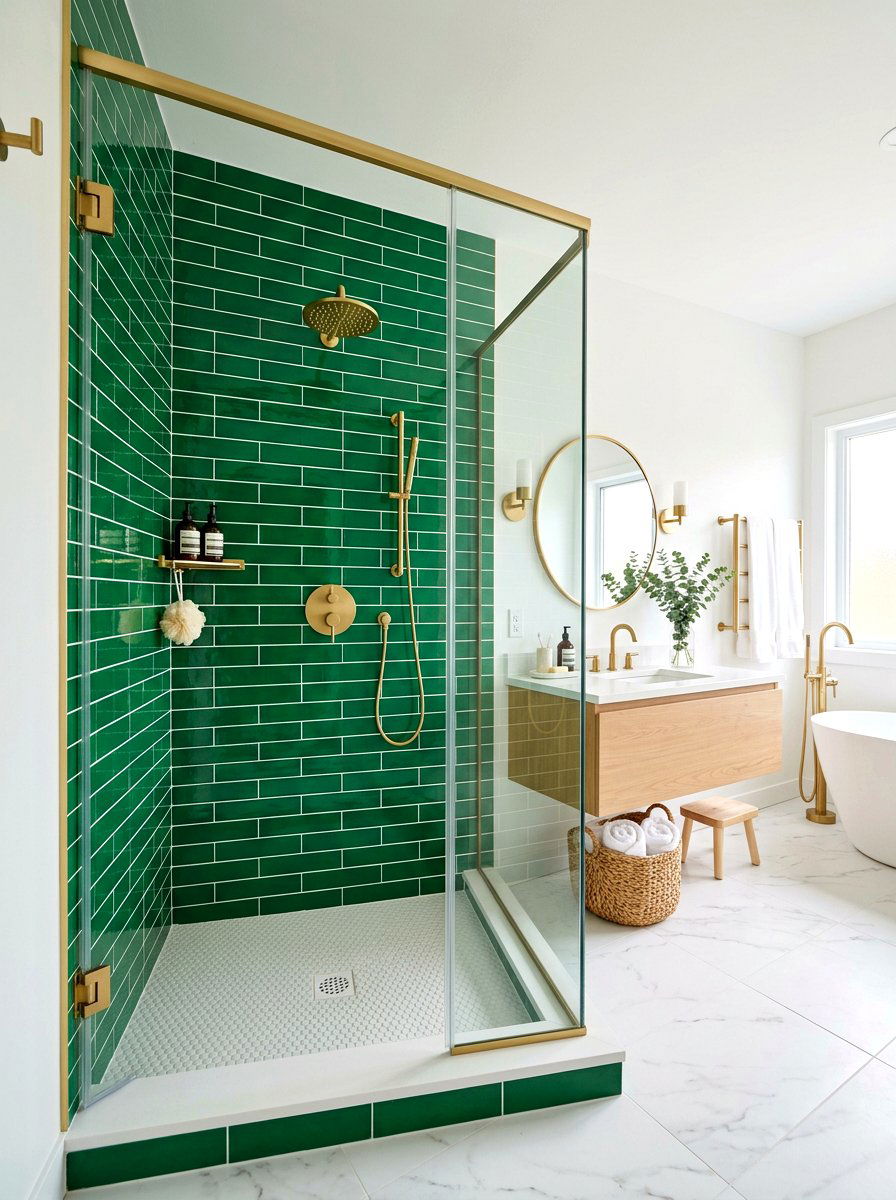
The shower is the most natural place to start with color blocking because it is already a distinct zone within the bathroom. Using a completely different tile color for the shower than for the rest of the walls creates a very clear and functional block. For instance, a white tiled bathroom with a solid block of emerald green tiles in the shower looks incredibly striking and luxurious. This separation makes the shower feel like its own little room or a "jewel box" within the larger space. It is a practical and beautiful way to make your daily routine feel more special.
22. Bathtub area color block bathroom
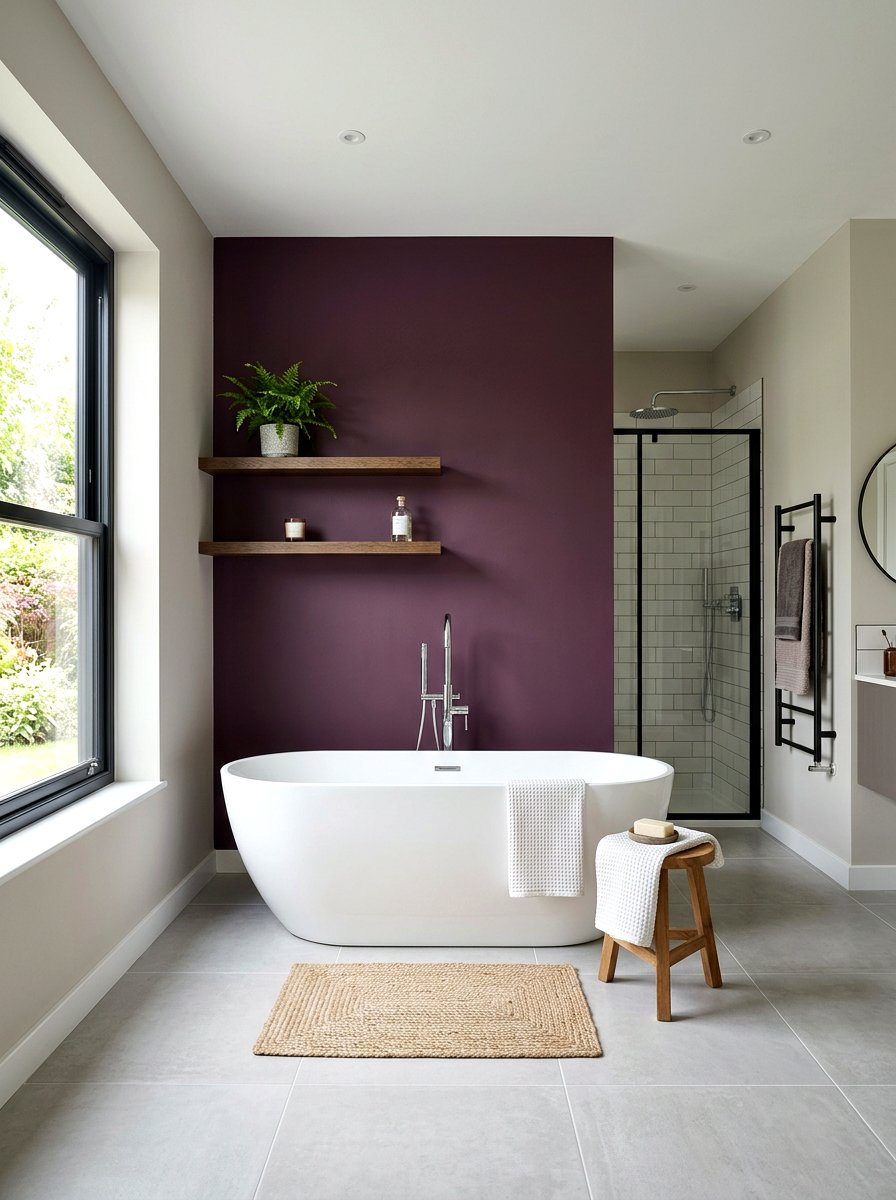
Framing your bathtub with a solid block of color can make it the undeniable star of the room. You can do this by tiling the wall behind the tub in a contrasting shade or by painting a large rectangle of color on that specific wall. This creates a dedicated "soaking zone" that feels relaxing and intentional. If you have a freestanding tub, a dark block of color behind it can make the tub itself pop and look more like a piece of sculpture. It is a great way to add a sense of luxury and focus to your master bathroom or guest suite.
23. Floating vanity color block bathroom
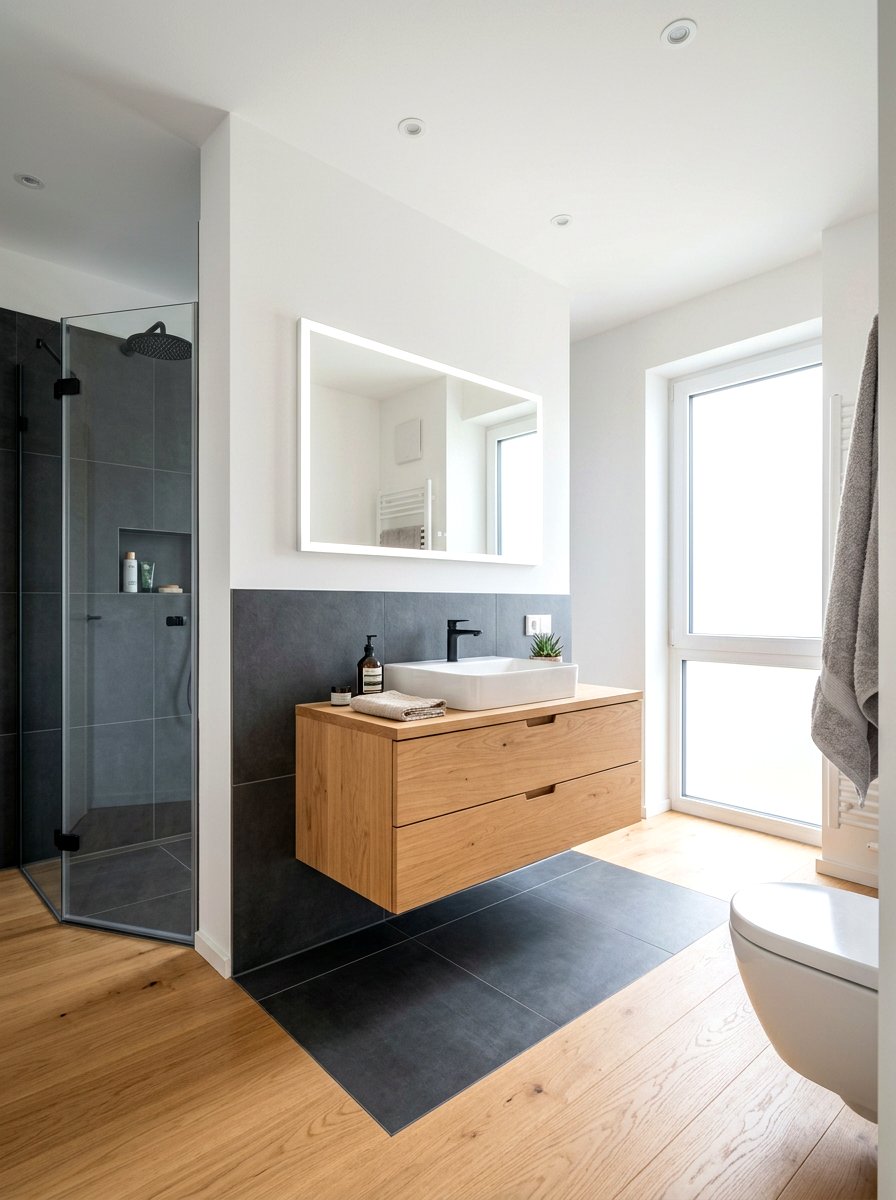
A floating vanity provides a great opportunity for color blocking on the floor and wall beneath it. You can use a different color of tile or paint for the area under the vanity to create a shadow-box effect. This makes the vanity look like it is truly hovering in space and adds a modern, high-tech feel to the room. Using a dark color underneath a light-colored vanity can also hide any shadows or plumbing and keep the area looking clean and streamlined. It is a small detail that makes a huge difference in the overall architectural feel of the modern bathroom.
24. Checkerboard bathroom
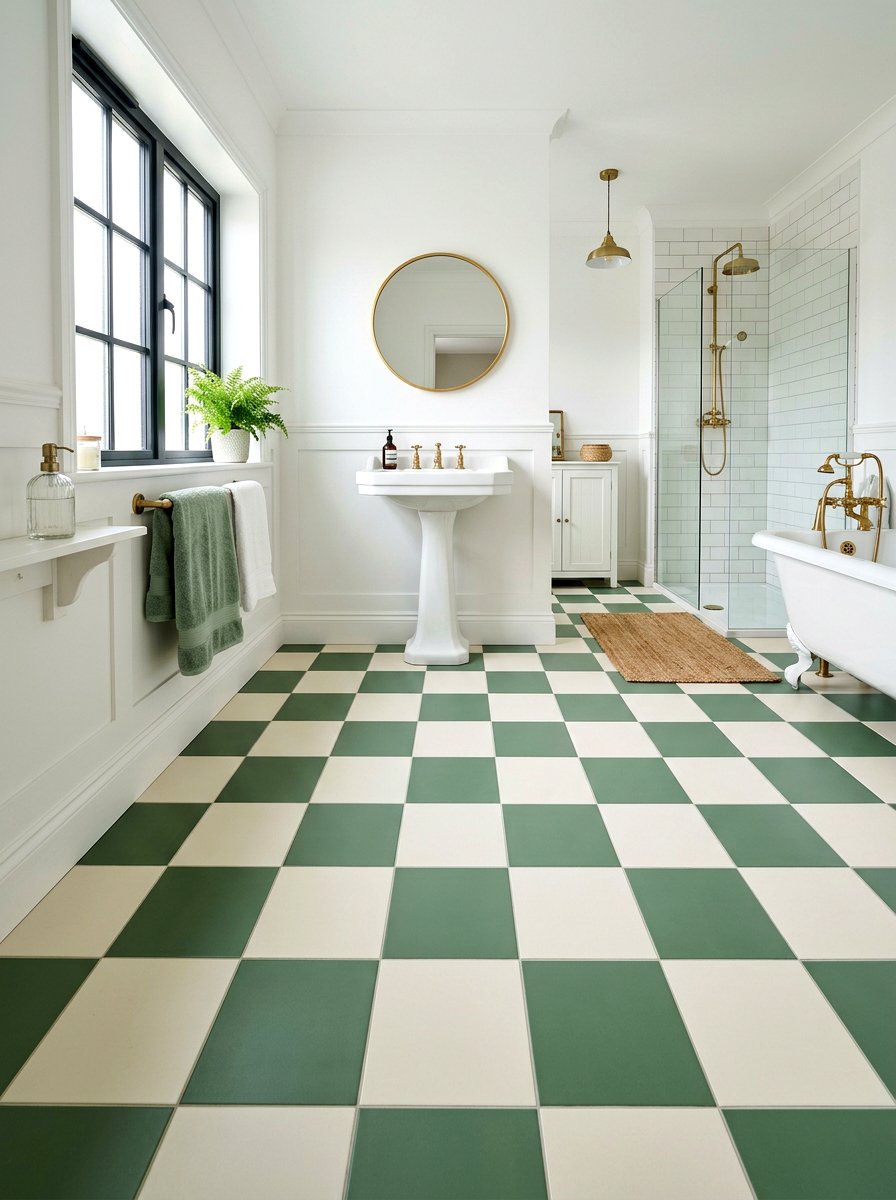
The classic checkerboard pattern is a form of micro-color blocking that adds a timeless and playful energy to the bathroom floor or walls. While traditionally black and white, you can modernize this look by using colors like sage green and cream or terracotta and white. This pattern adds a lot of visual texture and movement to the space without needing extra decor. It works beautifully in both traditional and contemporary homes, providing a sturdy foundation for your design. Using larger tiles for the checkerboard can make a small bathroom feel much wider and more expansive than it actually is in reality.
25. Diagonal paint bathroom
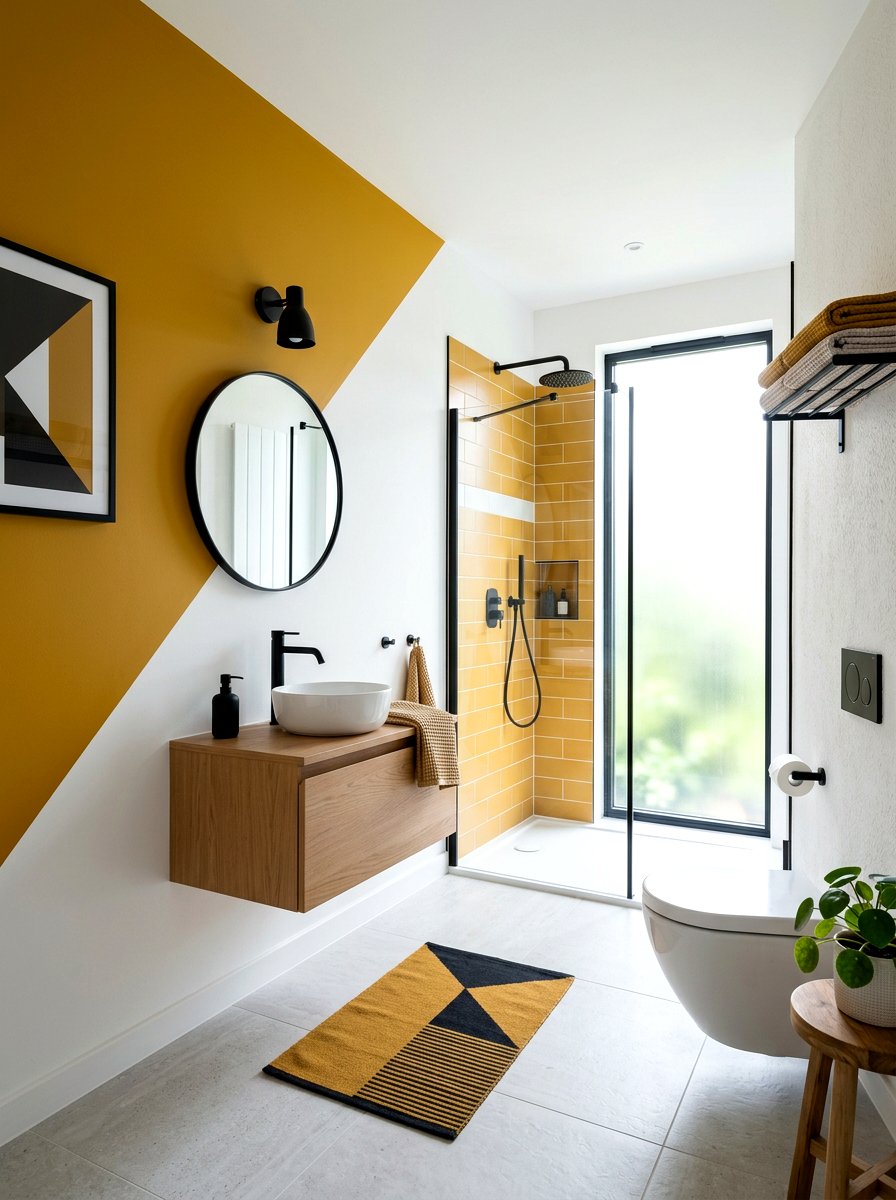
If you want something truly unique, try a diagonal color block instead of the standard vertical or horizontal lines. Drawing a diagonal line across one wall and painting each side a different color creates a dynamic and modern look that feels very artistic. This technique is great for adding energy to a room that feels a bit static or boring. It draws the eye in different directions and can make the room feel taller or wider depending on the angle of the line. It is a bold choice that works best when paired with simple, modern fixtures and very minimal bathroom clutter.
26. Terrazzo and solid color bathroom
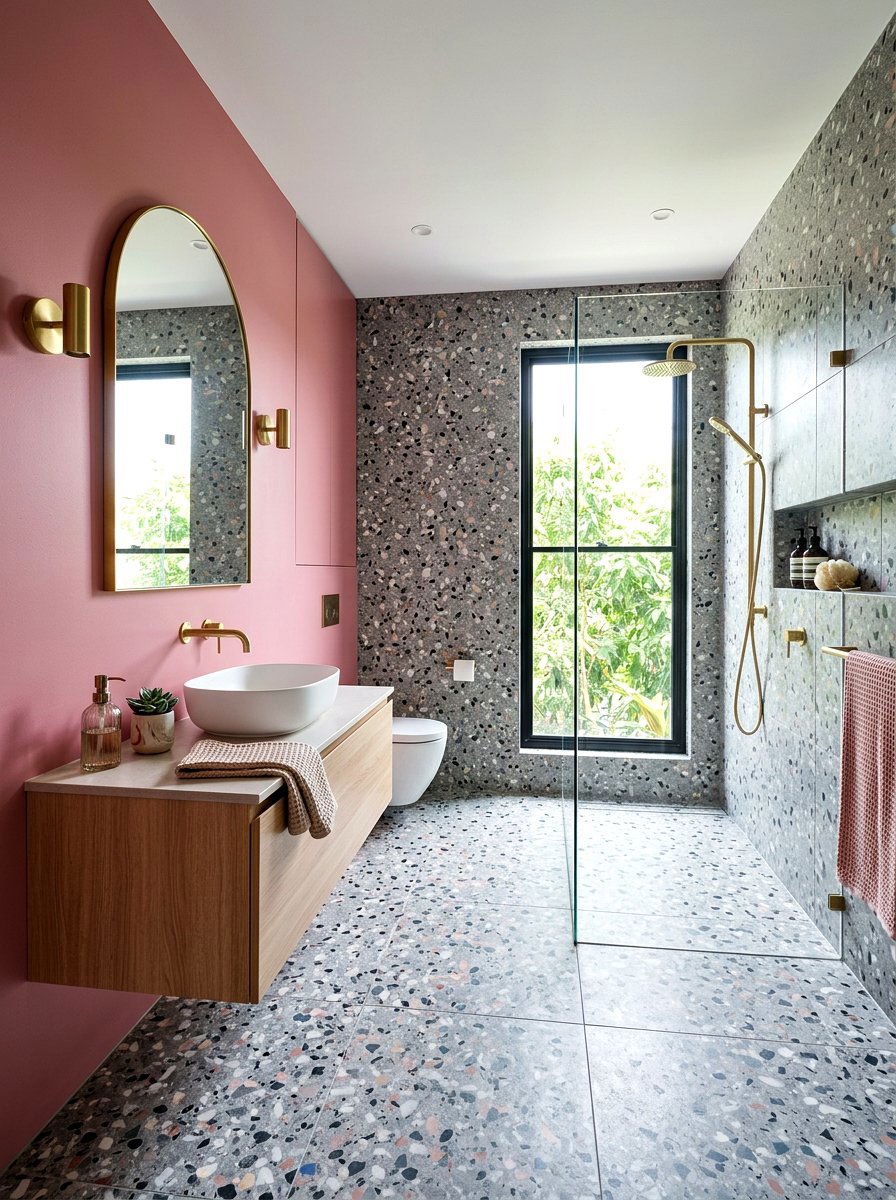
Terrazzo tiles are full of small flecks of color, making them the perfect partner for solid color blocking. You can pull one of the colors from the terrazzo flecks and use it as a solid block on an adjacent wall or the vanity. For example, if your terrazzo has bits of blue, paint a solid blue block nearby to tie everything together. This creates a professional and cohesive look that feels very designer-led. The busy pattern of the terrazzo is perfectly balanced by the calm, solid block of color, making the bathroom feel both energetic and organized at the same time.
27. Brass accent color block bathroom
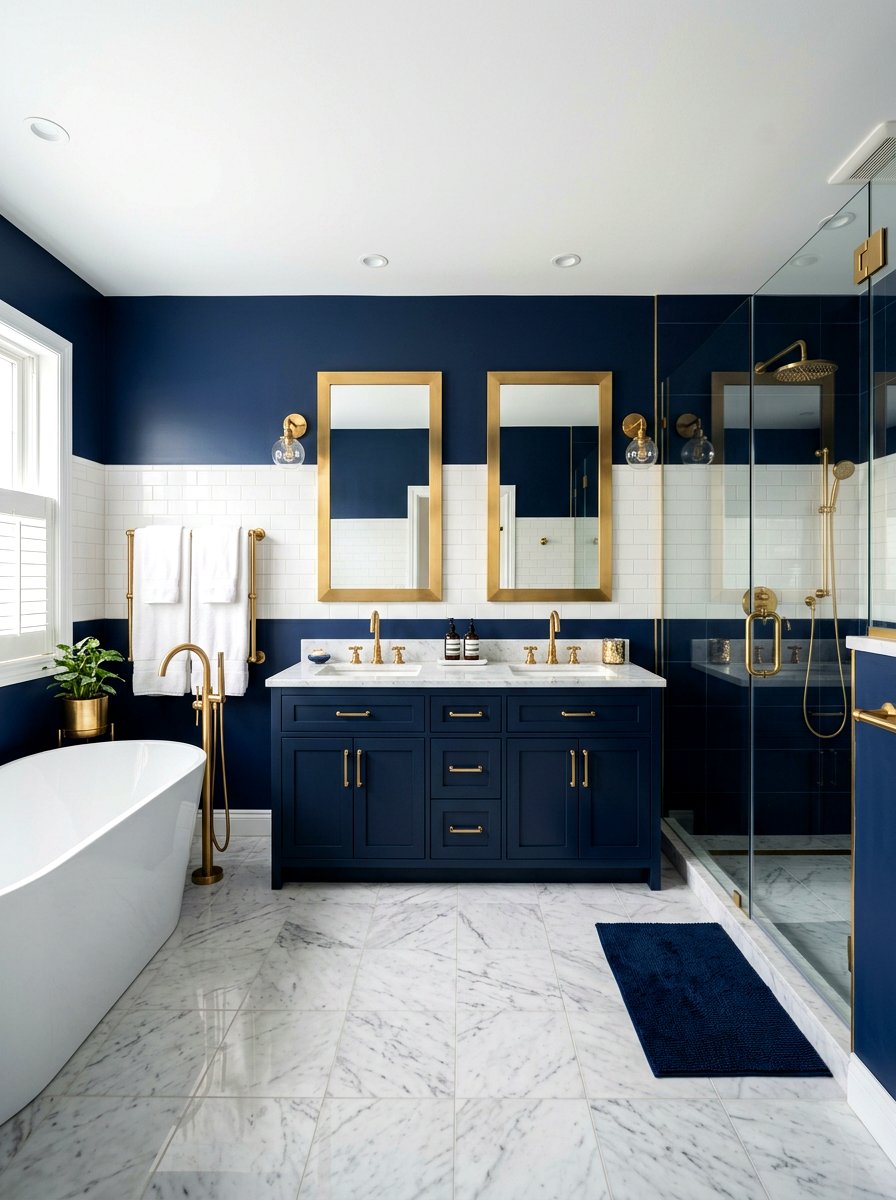
Using metallic finishes like brass can act as a "third color" in your color blocking scheme, adding warmth and shine. When you have blocks of deep navy and crisp white, brass faucets and mirrors act as the perfect transitional element. The metallic gold tones of the brass help to bridge the gap between cool and warm colors, making the whole design feel more polished. Brass is particularly effective when used against dark green or black color blocks, where it can truly sparkle and stand out. It adds a touch of classic elegance to the very modern color blocking design trend.
28. Earth tone bathroom
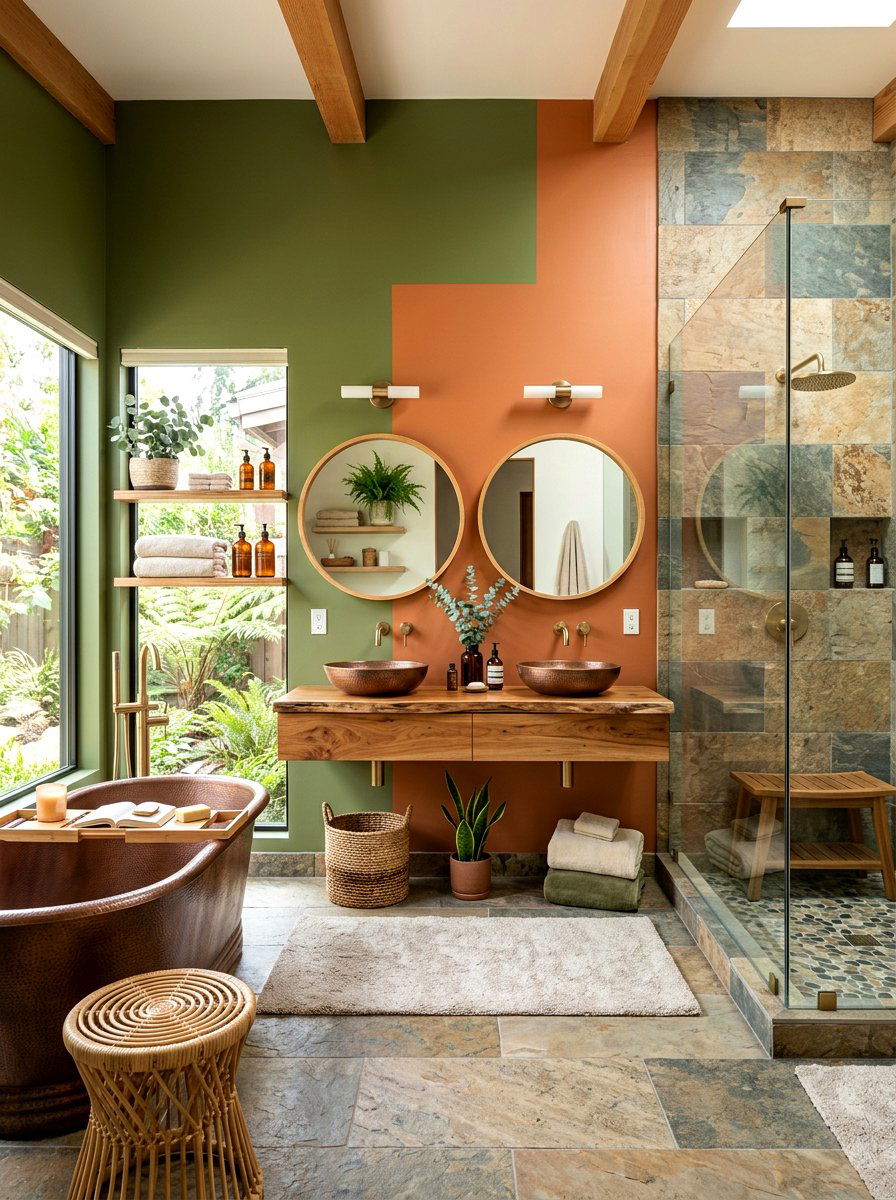
For a grounded and peaceful environment, use different blocks of earth tones like sand, clay, and olive. These colors are naturally harmonious and create a bathroom that feels like a natural extension of the landscape. You can block these colors by using different materials, such as a clay-colored tiled floor and sand-toned plastered walls. This approach focuses more on texture and subtle shifts in hue rather than high-contrast drama. It is the perfect choice for a spa-inspired bathroom where the goal is complete relaxation and a sense of being connected to nature and the earth’s raw beauty.
29. High contrast bathroom
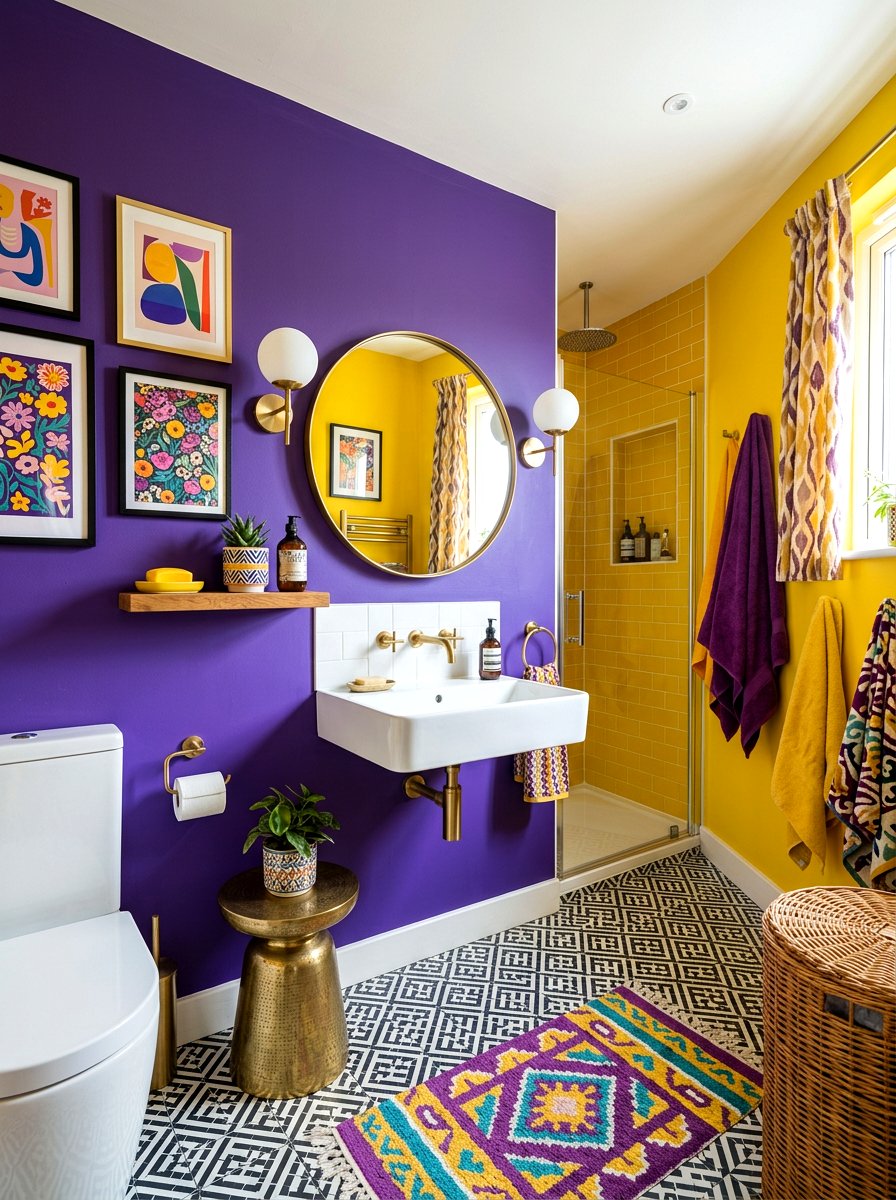
A high-contrast color block uses two colors from opposite sides of the color wheel to create a vibrant and daring look. Think of pairings like deep purple and bright yellow or hot pink and forest green. This style is not for the faint of heart, but it can result in an incredibly memorable and stylish bathroom. The key is to keep the rest of the elements, like towels and soap dispensers, very simple so they don't compete with the walls. This approach turns your bathroom into a bold statement piece that showcases your fearless approach to interior design and color theory.
30. Modern minimalist color block bathroom
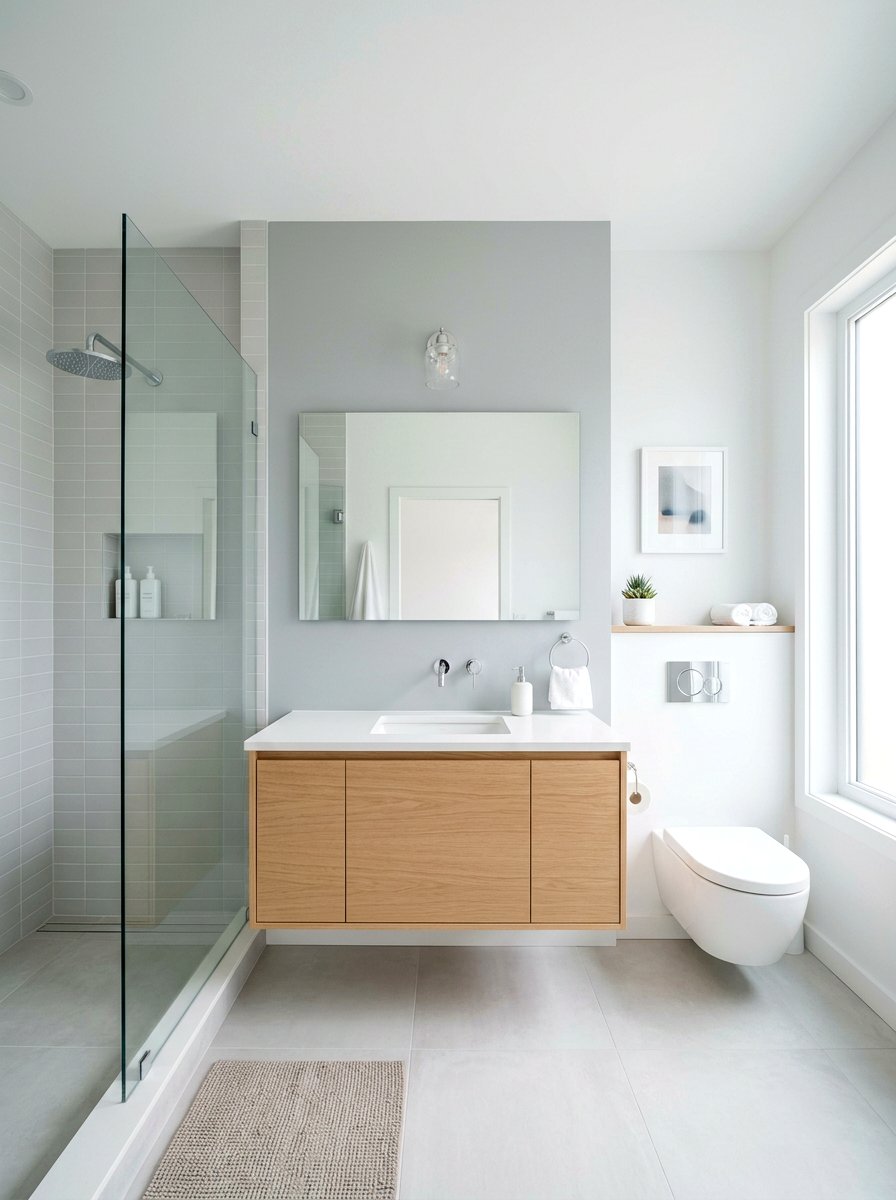
In a minimalist bathroom, color blocking is used very sparingly to highlight the clean lines and open space. You might see a single block of soft grey on the floor that continues up only one wall, with everything else remaining pure white. This creates a very calm and ordered environment that feels sophisticated and uncluttered. Minimalist color blocking relies on the quality of the materials and the precision of the lines to make an impact. It is a great way to add a bit of personality to a modern home without sacrificing the clean, serene vibe that minimalism is known for.
Conclusion:
Color blocking in the bathroom is an incredibly versatile design strategy that can transform even the smallest space into a stunning work of art. By understanding how to use solid sections of color to define zones and highlight architectural features, you can create a room that feels both functional and beautiful. Whether you choose bold, high-contrast pairings or soft, monochromatic layers, the key is to be intentional with your placement and consistent with your palette. This trend is a perfect way to experiment with color and bring a sense of modern, Pinterest-worthy style into your home today.

Related posts: