1. Tudor Style Manor
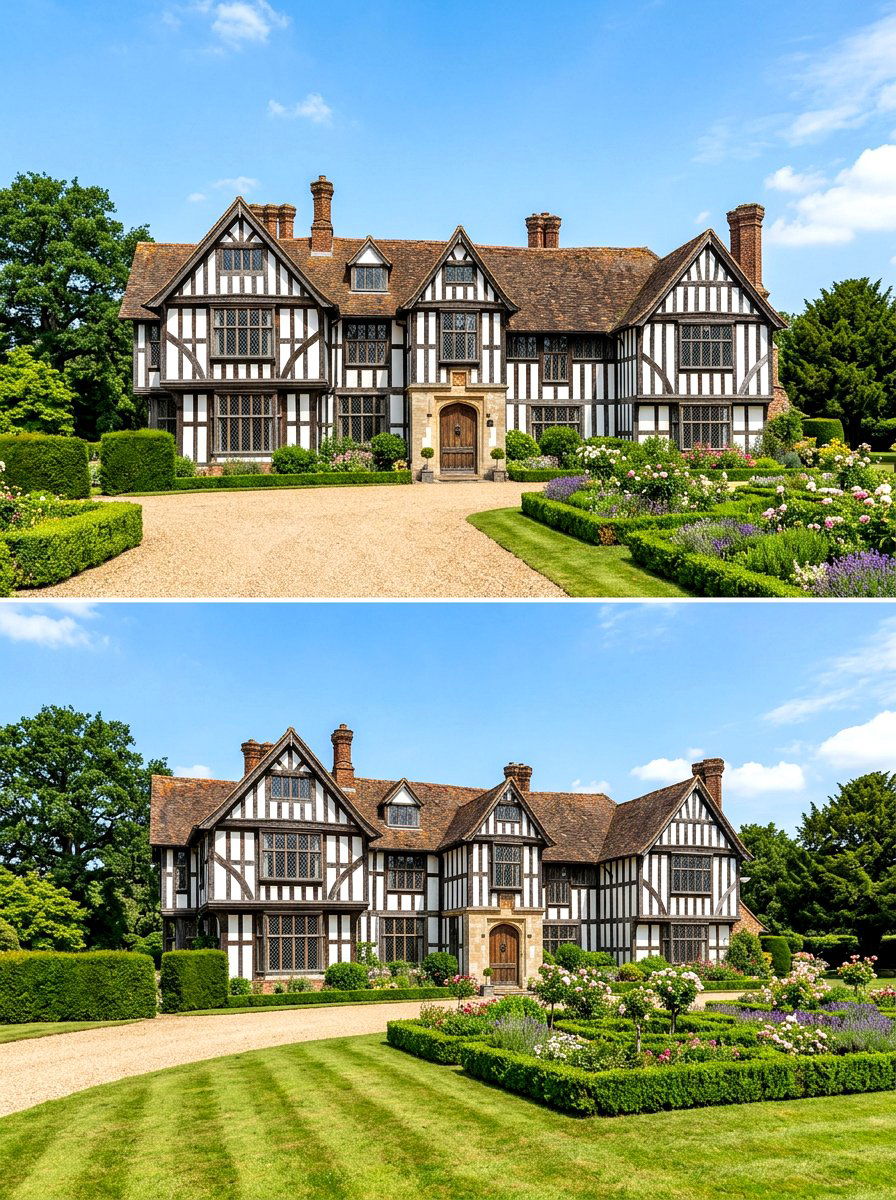
Have you ever wondered how a home can look both imposing and incredibly charming at the exact same time? The Tudor style manor is famous for its distinct timber framing and steeply pitched gables that create a dramatic silhouette against the sky. Often featuring a mix of brick and stone, these homes feel like they belong in a fairytale forest. The tall, narrow windows often include small diamond-shaped panes held together with lead. This specific look provides a sense of history and craftsmanship that is hard to replicate with modern materials. Creating this look requires a focus on vertical lines and high-contrast colors between the wood and the plaster.
2. Cotswold Stone Exterior
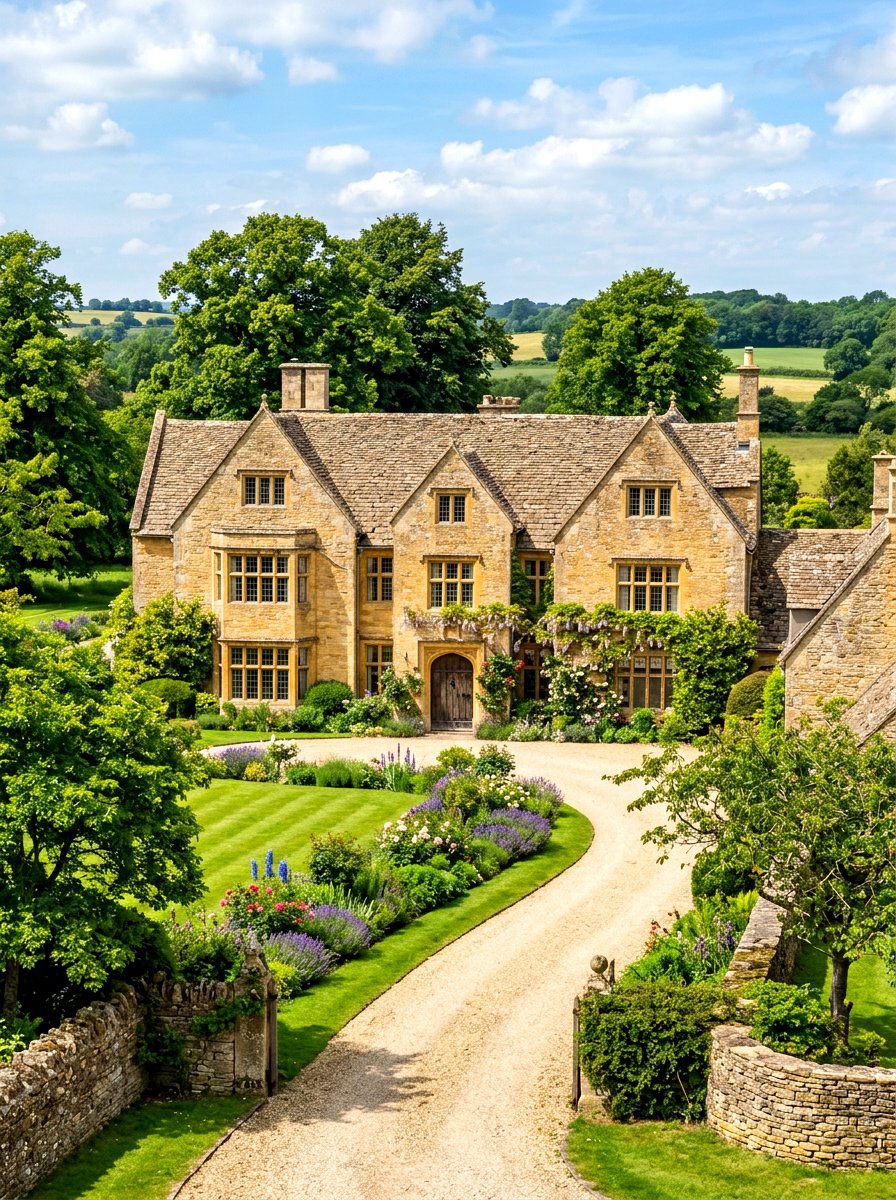
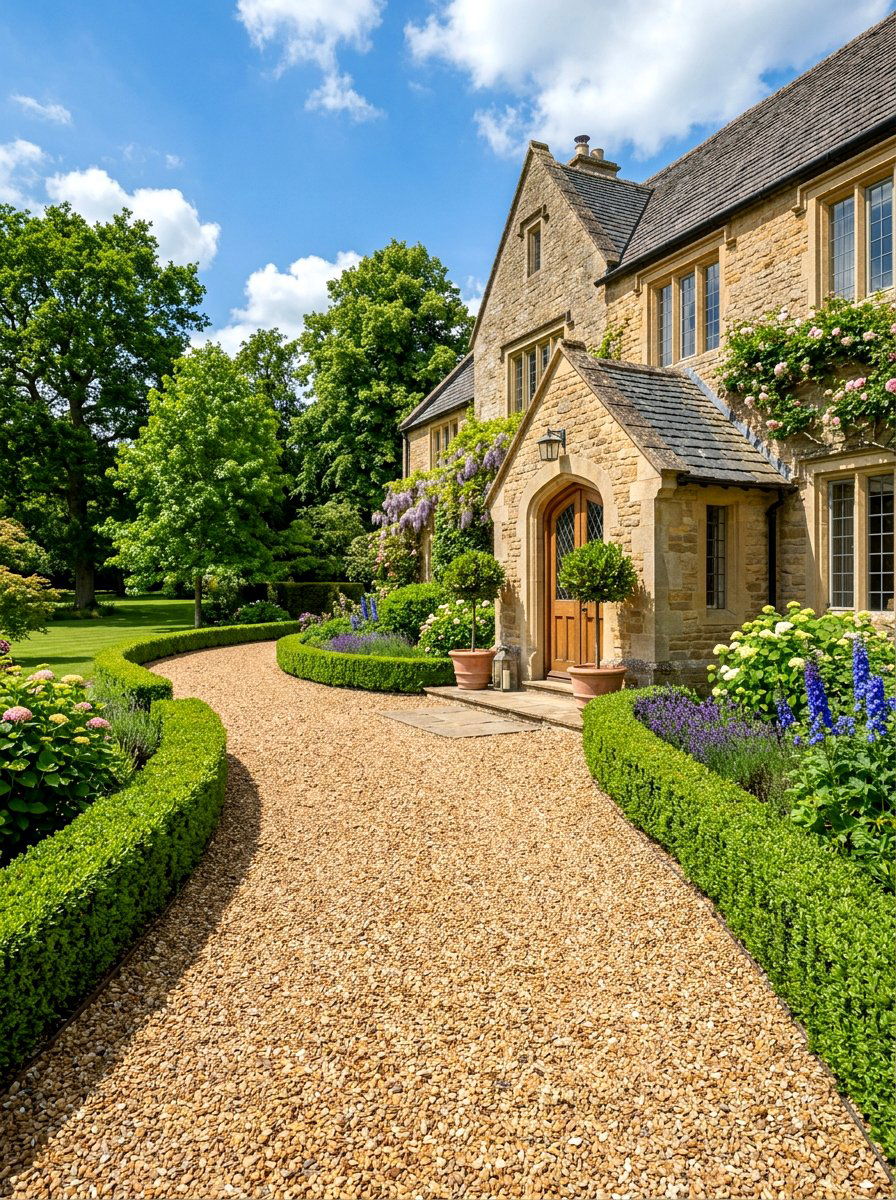
Can you imagine the warm, golden glow of a house catching the late afternoon sun in the English countryside? Cotswold stone is a unique limestone known for its rich honey-colored hue, which gives a manor an instantly ancient and authentic appearance. This natural material is often used for both the walls and the roof tiles, creating a monochromatic yet textured look that blends perfectly with green hills. The irregular shapes of the stones add a rustic charm that feels soft and approachable. Pairing this stone with simple wooden shutters or a heavy oak door enhances the organic beauty of the entire architectural structure effortlessly.
3. Georgian Brick House
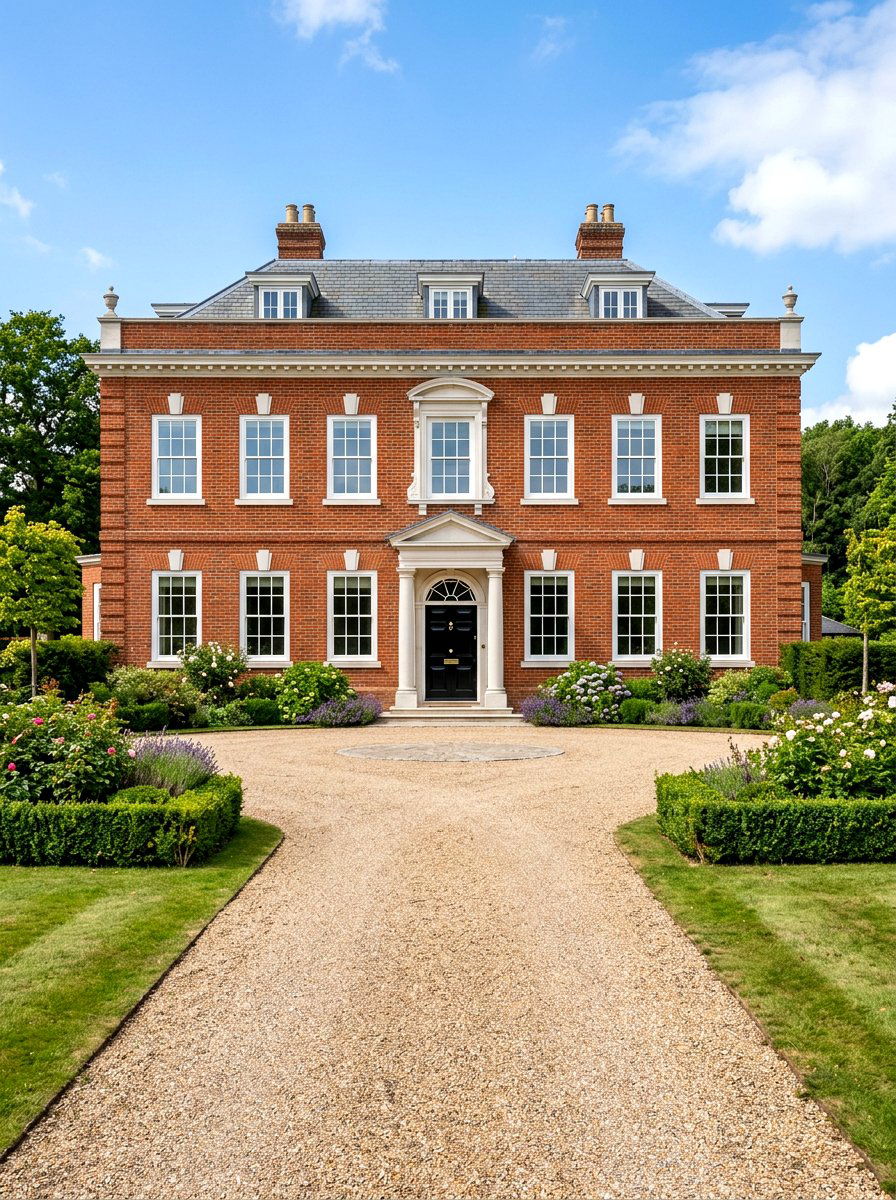
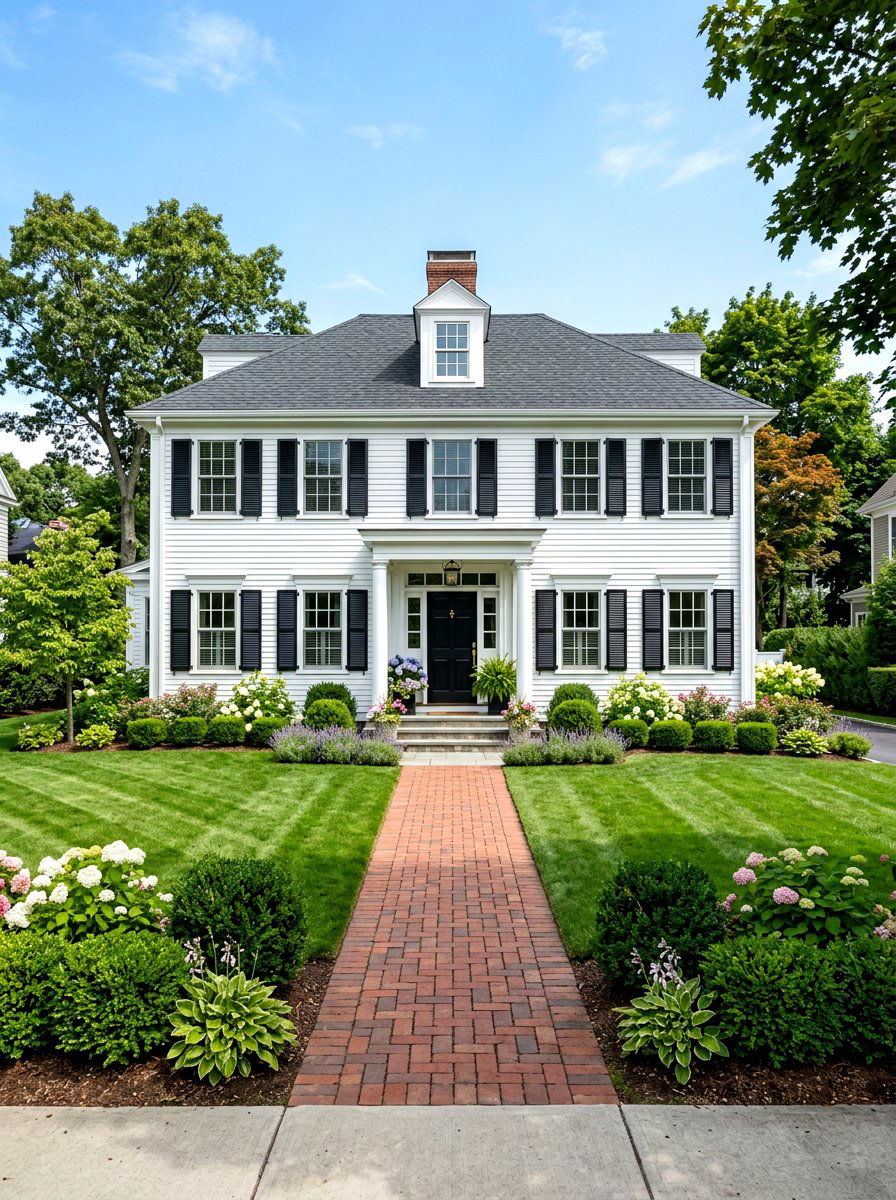
What makes a home feel perfectly balanced and stately the moment you drive up the main entrance path? A Georgian brick house relies on strict symmetry and classical proportions to create a sense of order and quiet luxury. These manors usually feature a central front door flanked by an even number of windows on either side. The red or multi-toned brickwork is often accented by white stone trim and sash windows. This style is timeless because it focuses on clean lines and a lack of excessive ornamentation. It feels very formal but also very bright and airy inside due to the large, tall window designs.
4. Gabled Roof Architecture
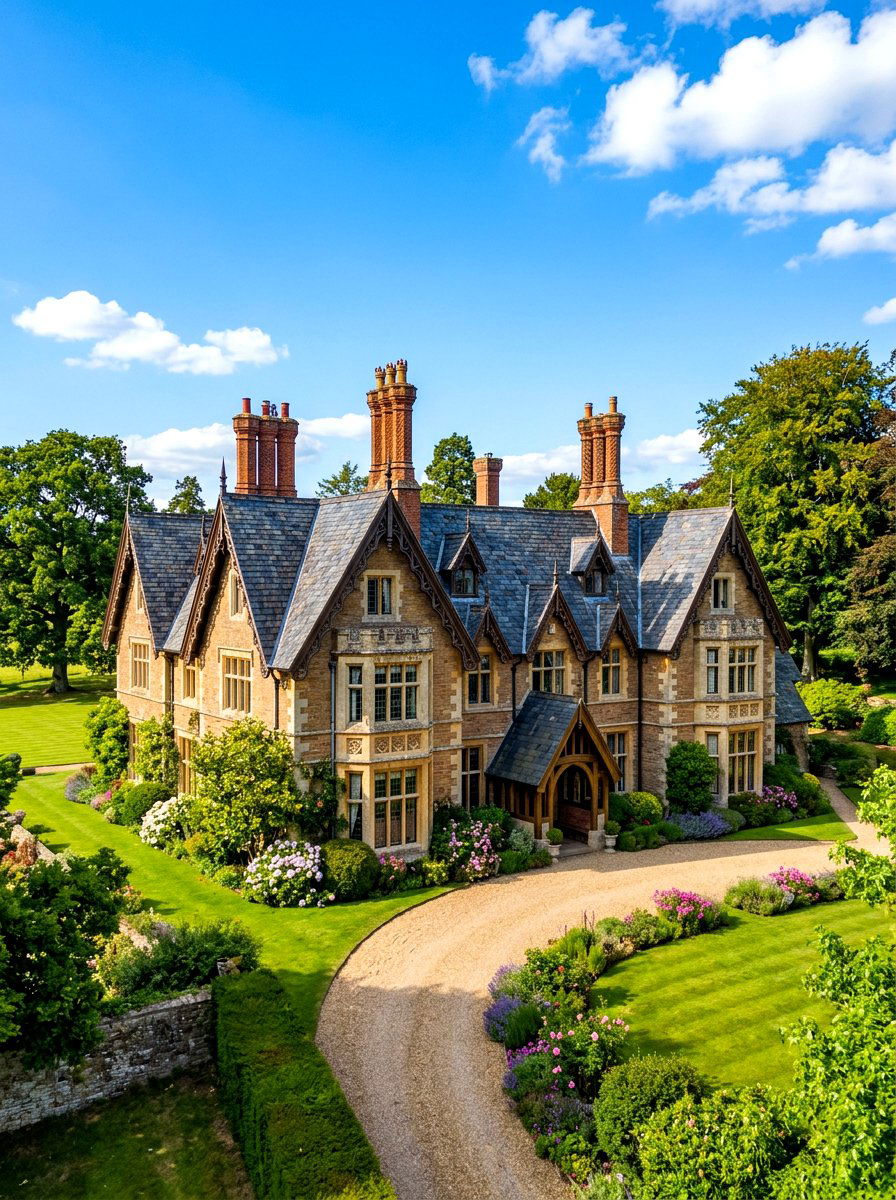
How does the shape of a roof change the entire personality of a massive countryside estate from every angle? Gabled roofs are a hallmark of English manor design, featuring two sloping sides that meet at a sharp ridge at the top. These peaks create a sense of height and grandeur, especially when multiple gables are layered across the front of the house. Often finished with slate or clay tiles, these roofs are designed to handle the rainy British climate with ease. Adding decorative wooden trim to the edges of the gables can give the house a more intricate and highly detailed Victorian feel.
5. Ivy Covered Stone Walls
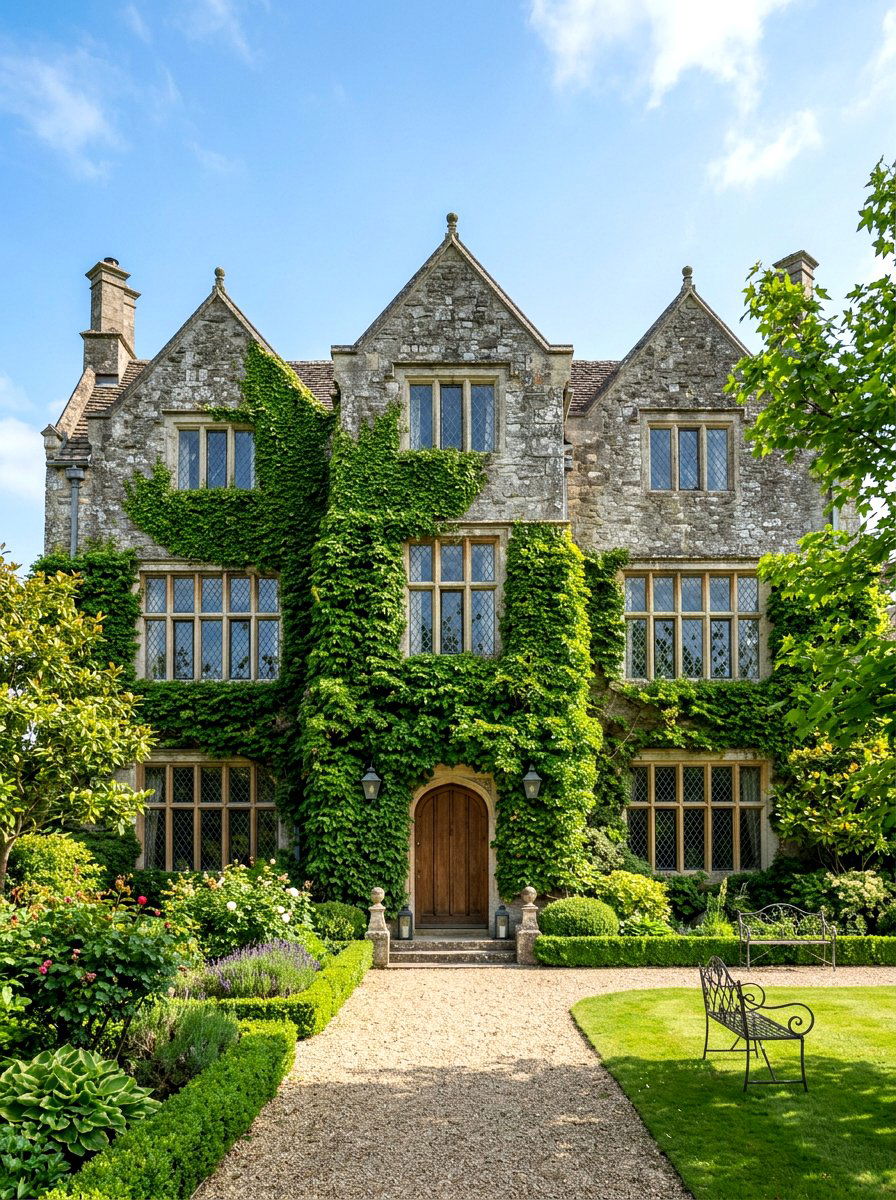
Does anything look more classic than a massive stone manor slowly being reclaimed by deep green climbing vines and leaves? Ivy-covered stone walls are the quintessential image of an English estate that has matured gracefully over many decades or centuries. The contrast between the dark green foliage and the grey or tan stone creates a rich, lived-in texture that feels very romantic. This natural layer acts as a living skin for the building, changing colors with the seasons from bright green to deep red. It softens the hard lines of the architecture and makes the large structure feel more connected to the surrounding garden.
6. Leaded Glass Windows
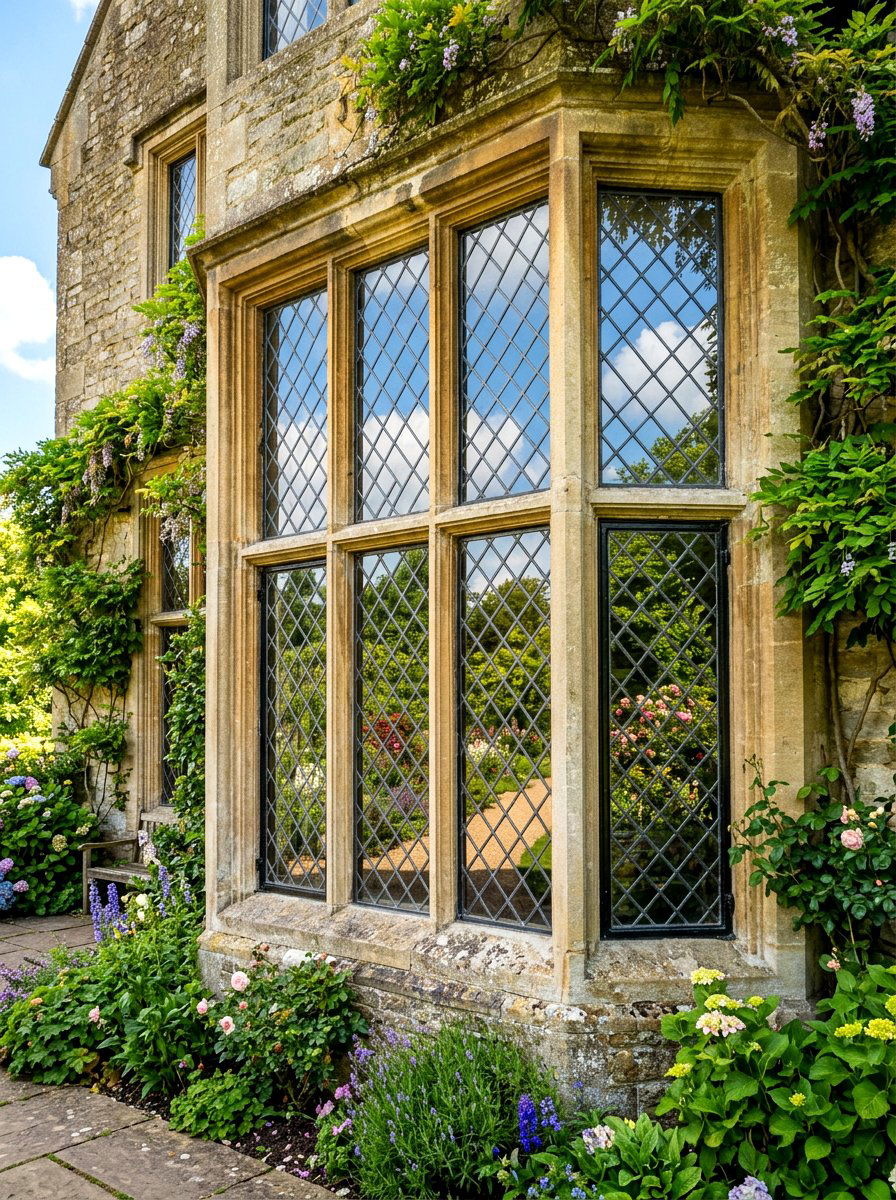
Why do certain windows seem to sparkle differently when the sun hits them from a low angle in the morning? Leaded glass windows consist of small panes of glass held together by lead strips, often arranged in diamond or rectangular patterns. This was a traditional necessity that became a beloved aesthetic feature of manor houses across the United Kingdom. These windows add a layer of texture and historical depth to the facade that plain modern glass simply cannot match. They provide a sense of privacy while still letting in plenty of natural light. This detail is essential for anyone wanting a truly authentic old-world manor feel.
7. Formal Parterre Garden
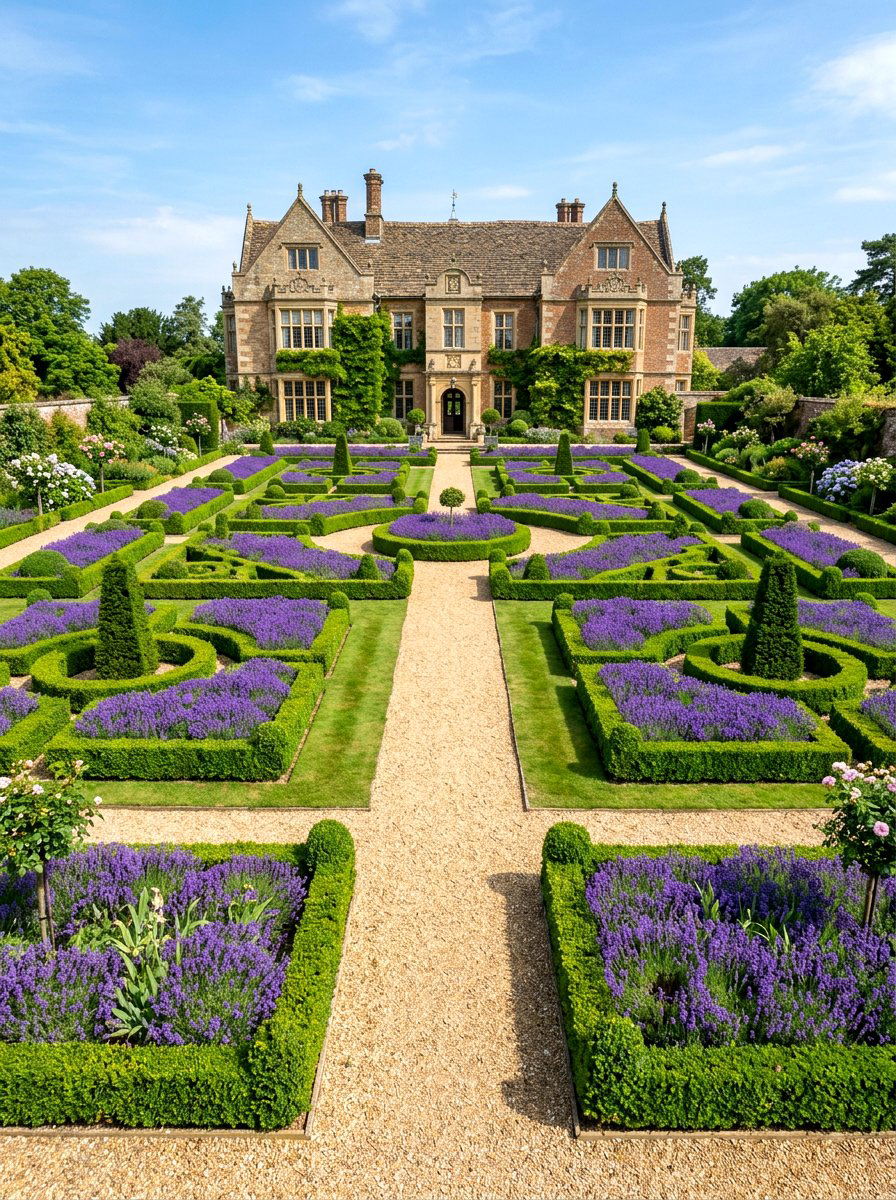
Can a garden actually be considered a piece of architecture that lives and breathes right outside your own front door? A formal parterre garden uses low-clipped hedges, usually boxwood, to create intricate geometric patterns on a level surface near the house. These gardens are designed to be viewed from the upper windows of the manor, looking like a green embroidery on the ground. Often filled with colorful flowers or decorative gravel, they add a sense of high-end organization to the landscape. This style of landscaping connects the house to the wider estate by bridging the gap between structure and the wild nature beyond.
8. Gravel Driveway Entrance
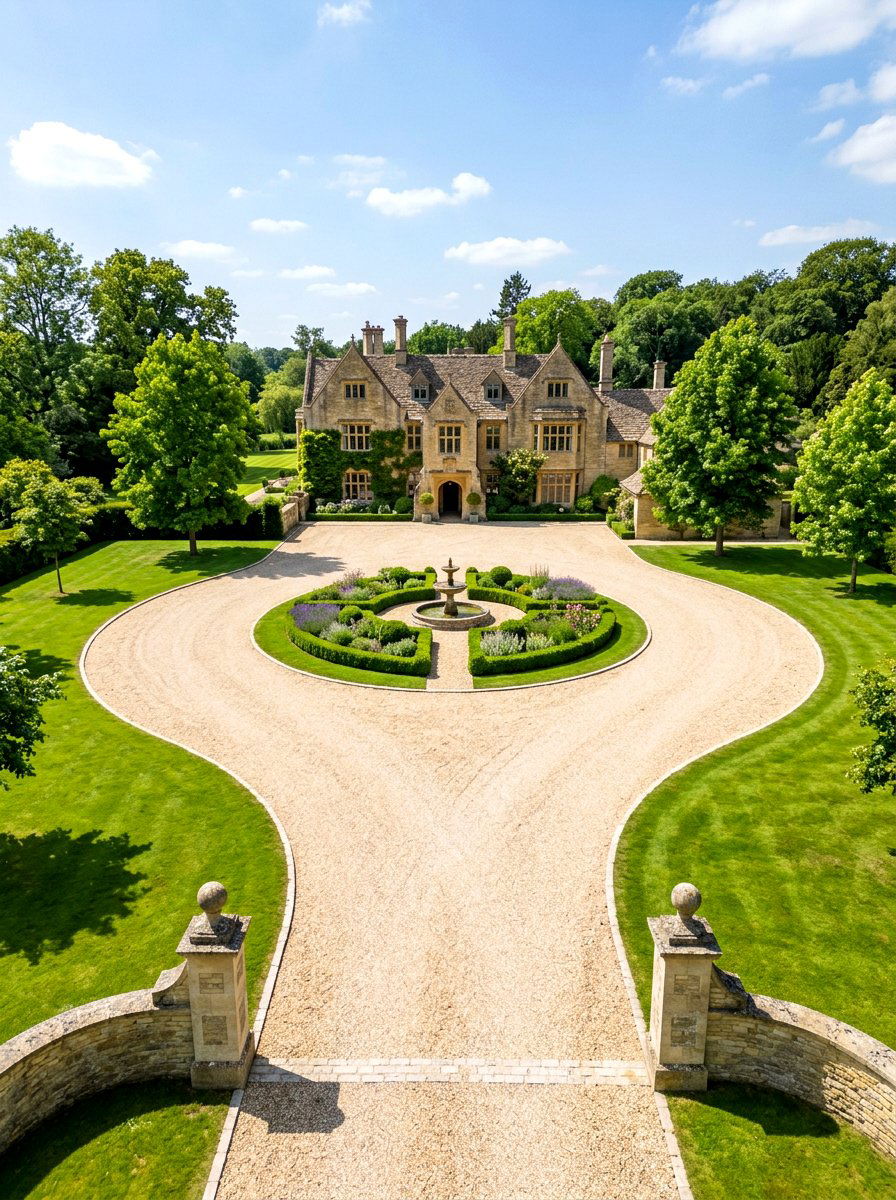
What is that specific crunching sound that instantly makes a visitor feel like they have arrived at a grand estate? A gravel driveway is the traditional choice for English manors because it is practical, drains well, and looks beautiful against green lawns. The light color of the stone provides a bright contrast to the dark soil and vegetation of the garden. It also serves as a natural security system, as you can hear anyone approaching the house from quite a distance. A wide, sweeping circular driveway in front of the main entrance emphasizes the scale of the property and makes the arrival feel very special.
9. Wrought Iron Estate Gates
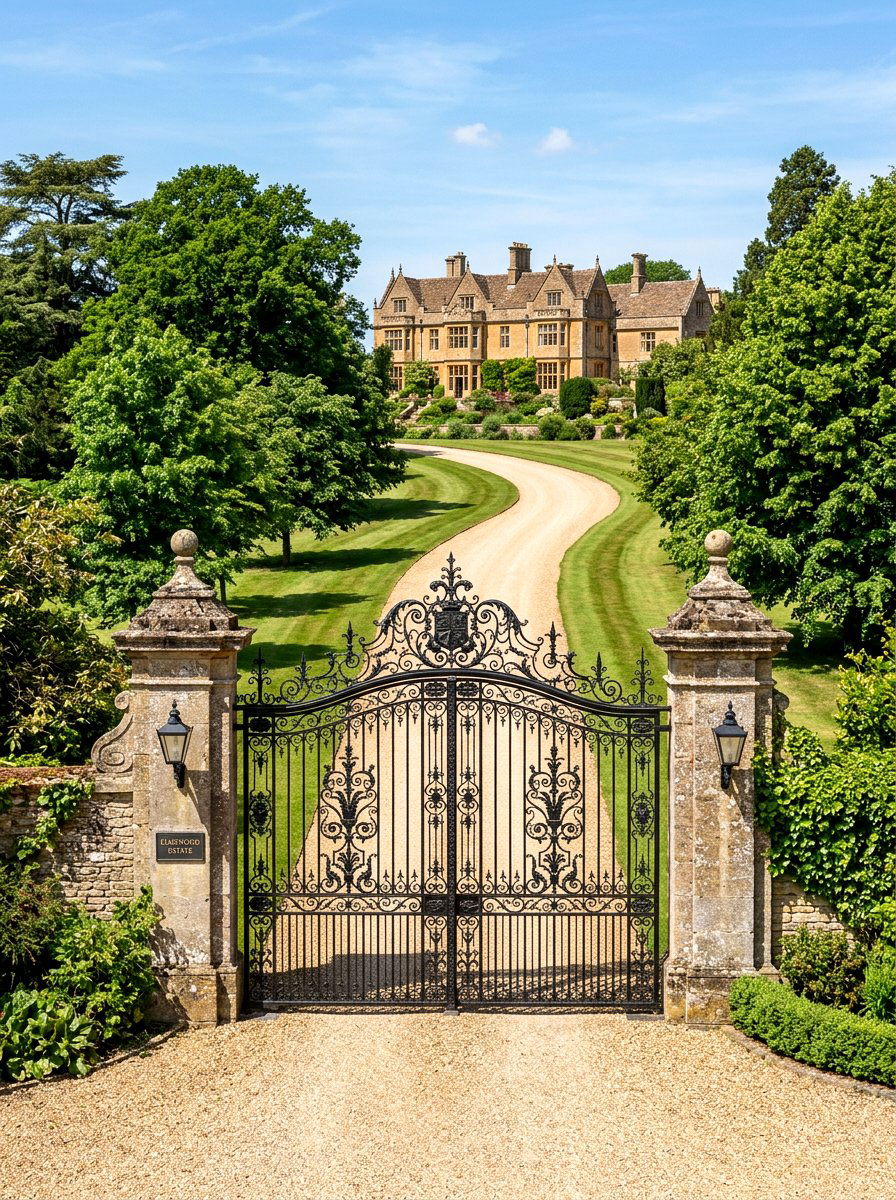
How do you establish a sense of privacy and prestige before a guest even sees the front of your home? Wrought iron estate gates serve as a beautiful boundary, often featuring intricate scrollwork, family crests, or sharp pointed finials for security. These gates are usually flanked by tall stone pillars that match the material of the main house. They signify the entrance to a private world and set the tone for the rest of the property. Whether painted a classic black or a deep forest green, these gates provide a sturdy and elegant first impression that lasts for many generations to come.
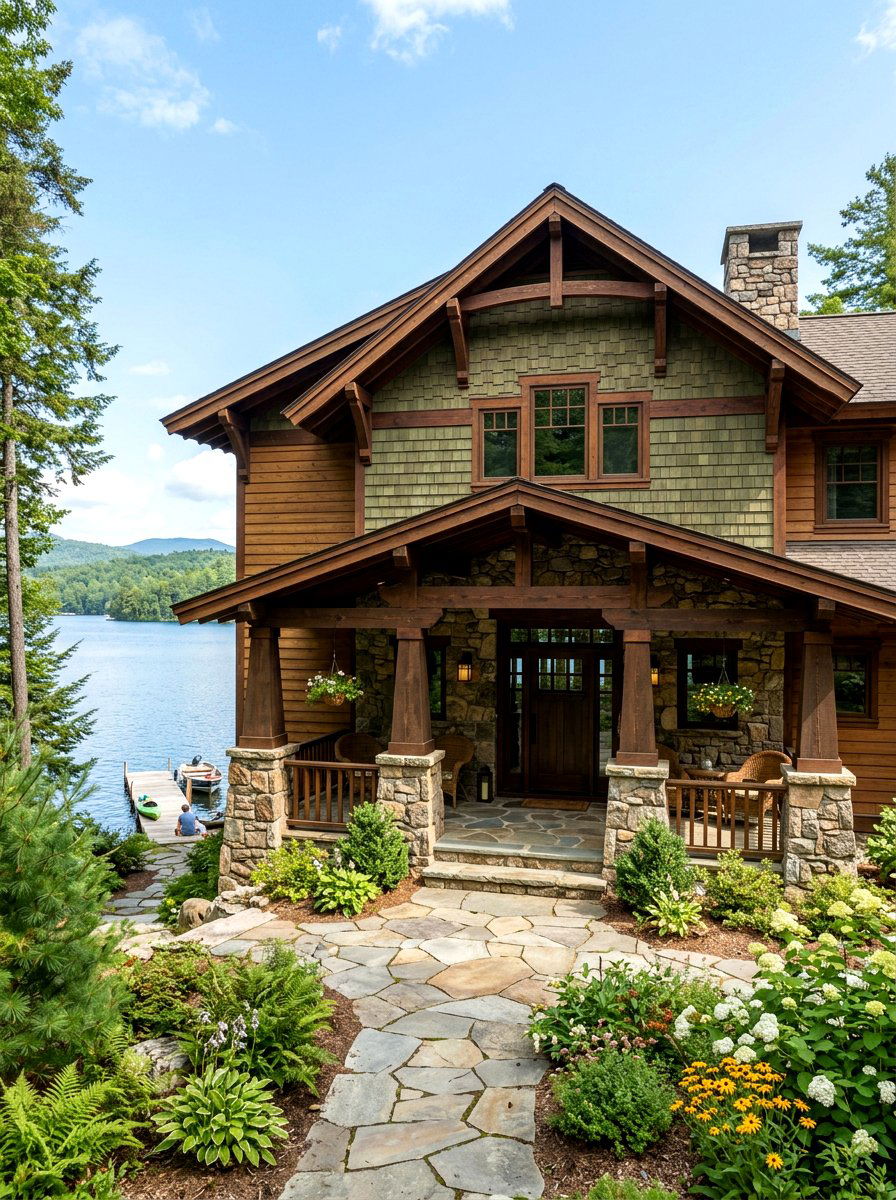
10. Thatched Roof Country House
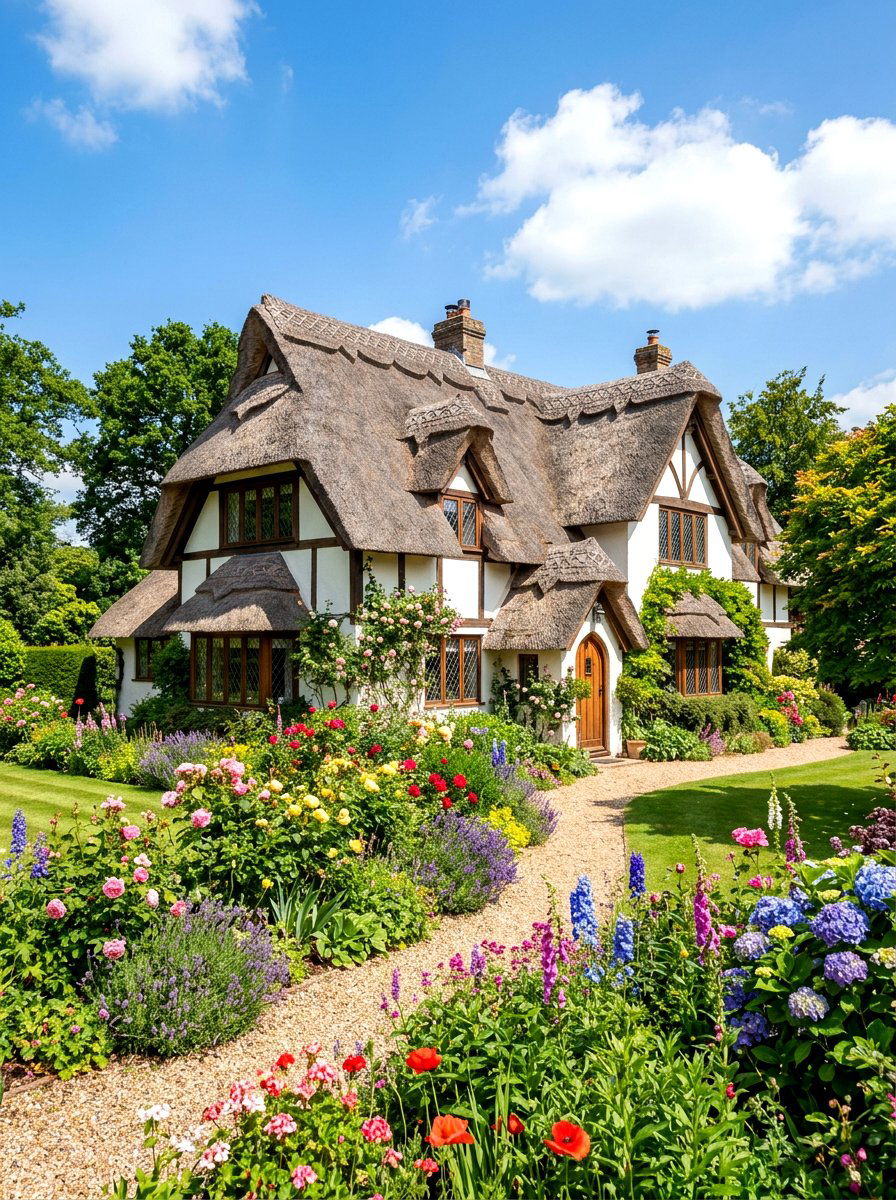
Is there any building material that looks more cozy and traditional than a thick layer of hand-woven dried straw? Thatched roofs are a symbol of rural English charm, often found on smaller manors or estate cottages in the southern counties. These roofs are incredibly thick and provide excellent insulation, keeping the home warm in winter and cool in the summer. The soft, rounded edges of a thatched roof give the building an organic shape that looks like it grew right out of the earth. While they require specialized maintenance, the unique visual appeal and historical significance make them a truly stunning choice.
11. Symmetrical Georgian Facade
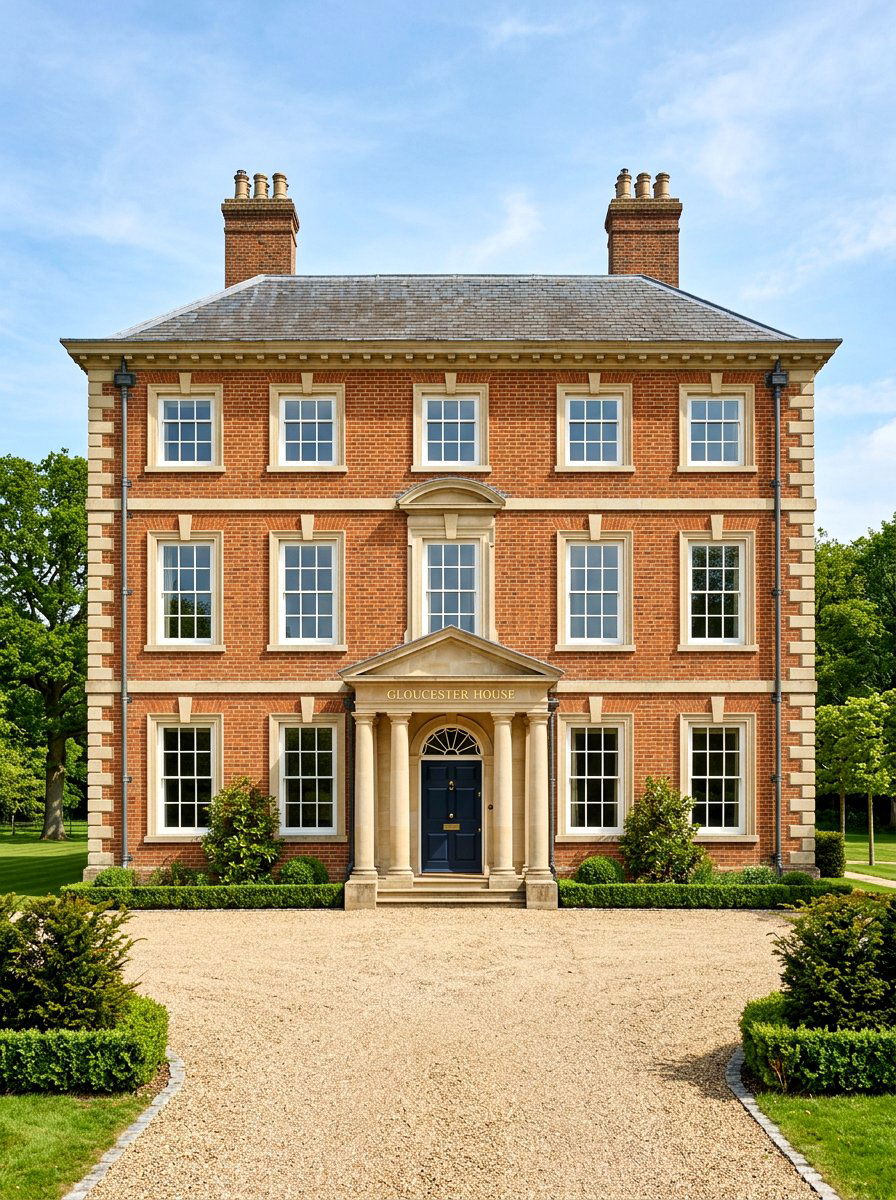
Why does a house with perfect balance feel so much more peaceful and organized to the human eye at first? A symmetrical Georgian facade follows the golden ratio, ensuring that every element on the left side is mirrored on the right. This includes the placement of windows, chimneys, and even the landscaping bushes in front of the porch. This mathematical approach to design creates a sense of stability and permanence. It suggests a lifestyle of order and refinement. When you look at a symmetrical manor, your eyes naturally gravitate toward the center door, which is usually the most decorated part of the entire exterior.
12. Victorian Gothic Revival
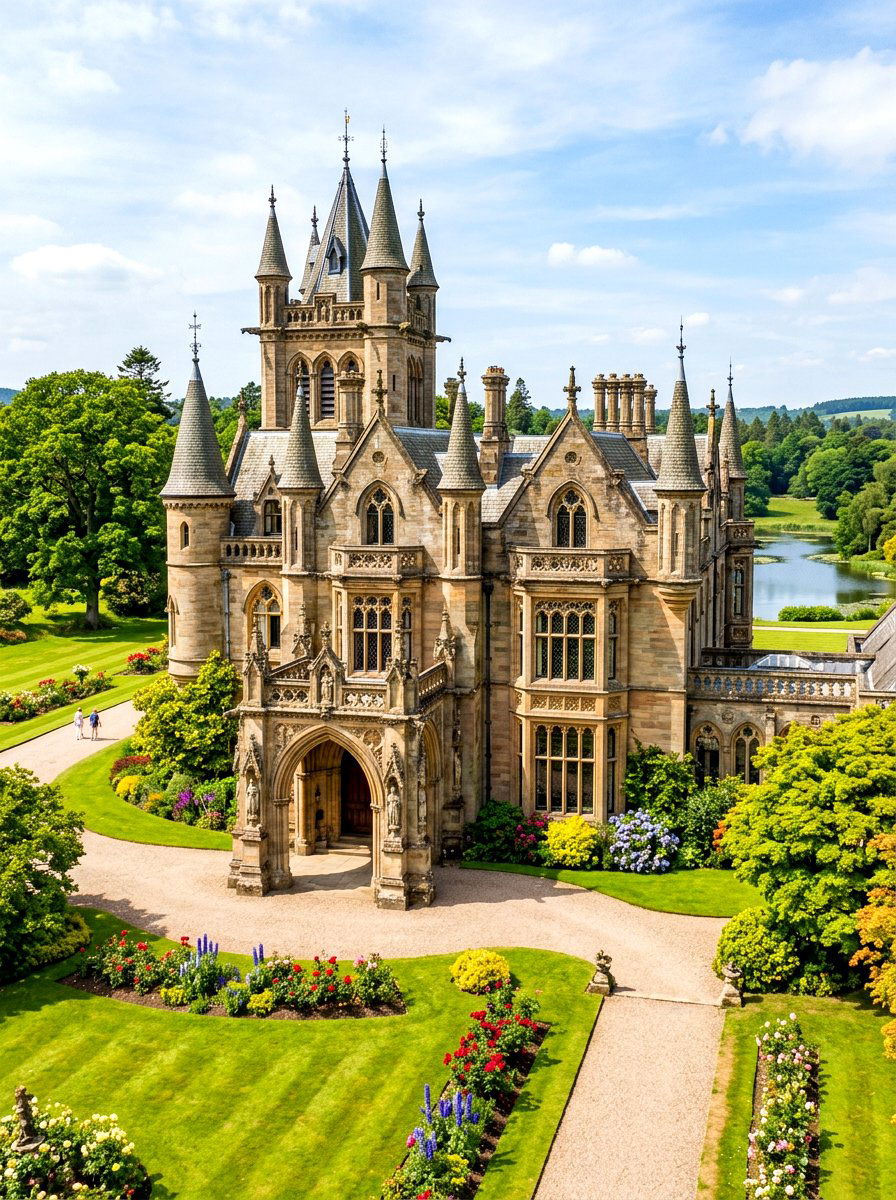
What happens when you combine the grand scale of a manor with the dramatic and moody elements of a cathedral? Victorian Gothic revival architecture features pointed arches, steep gables, and ornate stone carvings that make a house look like a castle. These manors often have asymmetrical layouts and towers that reach up toward the clouds. The use of dark stone and intricate window tracery creates a sense of mystery and historical depth. This style is perfect for those who want a home that feels bold and artistic. It celebrates the complexity of hand-crafted details and the power of vertical architectural lines.
13. Boxwood Topiary Landscaping
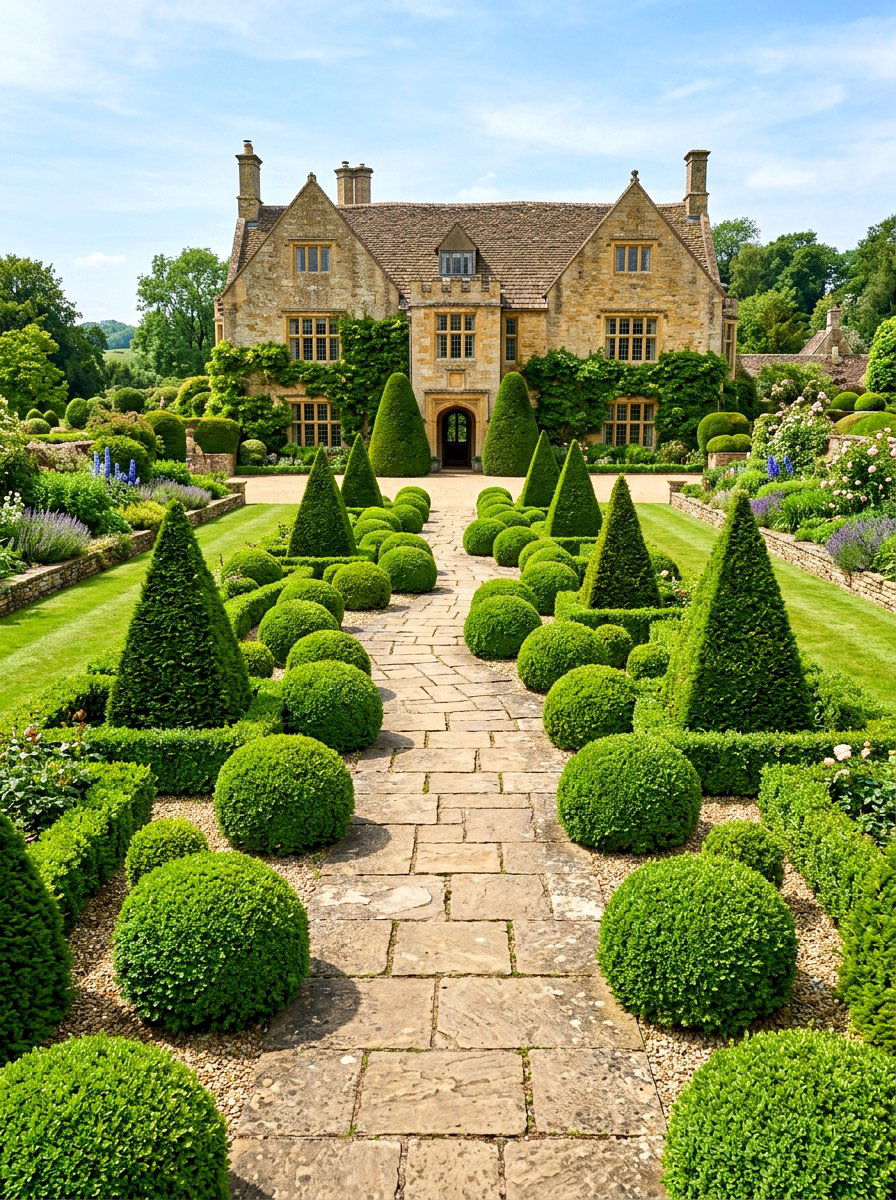
How can you use plants to create living sculptures that guide the eye toward the most important parts of the home? Boxwood topiary involves pruning evergreen shrubs into specific shapes, such as spheres, cones, or even spirals, to decorate the manor grounds. These structured plants provide green color all year round, even during the cold and gray winter months. When placed in pairs along a walkway or at the corners of a patio, they add a professional and polished look to the exterior. Topiaries act as anchors for the garden, providing a sense of formality that complements the grand stone walls.
14. Mullioned Window Frames
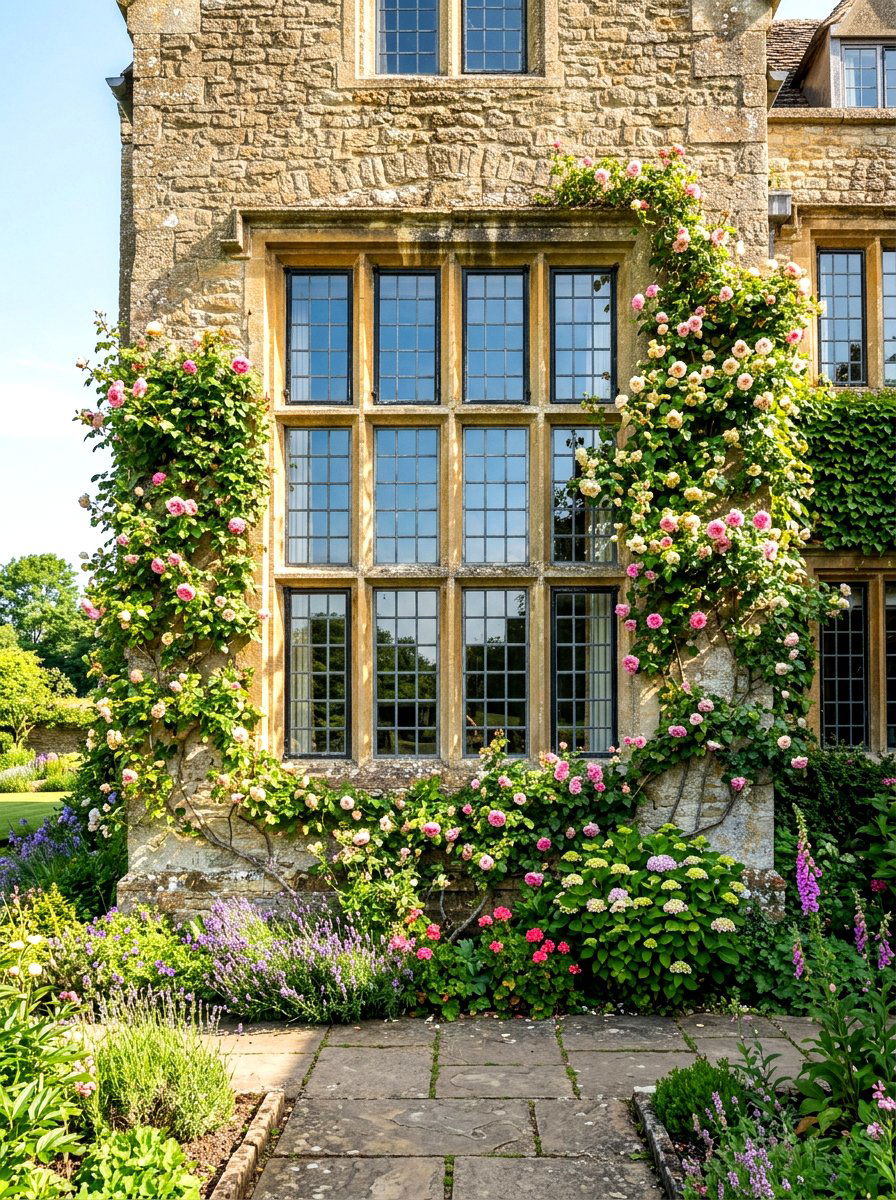
Why do some windows look like they are part of the stone wall itself rather than just being stuck in it? Mullioned windows feature vertical stone or wood dividers that separate the large window opening into smaller sections. This was originally done to support the weight of the wall above the window before modern steel beams existed. Today, these frames are a sought-after aesthetic detail that adds massive character and a sense of strength to the exterior. They create beautiful shadows on the interior floors and give the outside of the house a rhythmic, repetitive pattern that is very pleasing to look at.
15. Glass Orangerie Addition
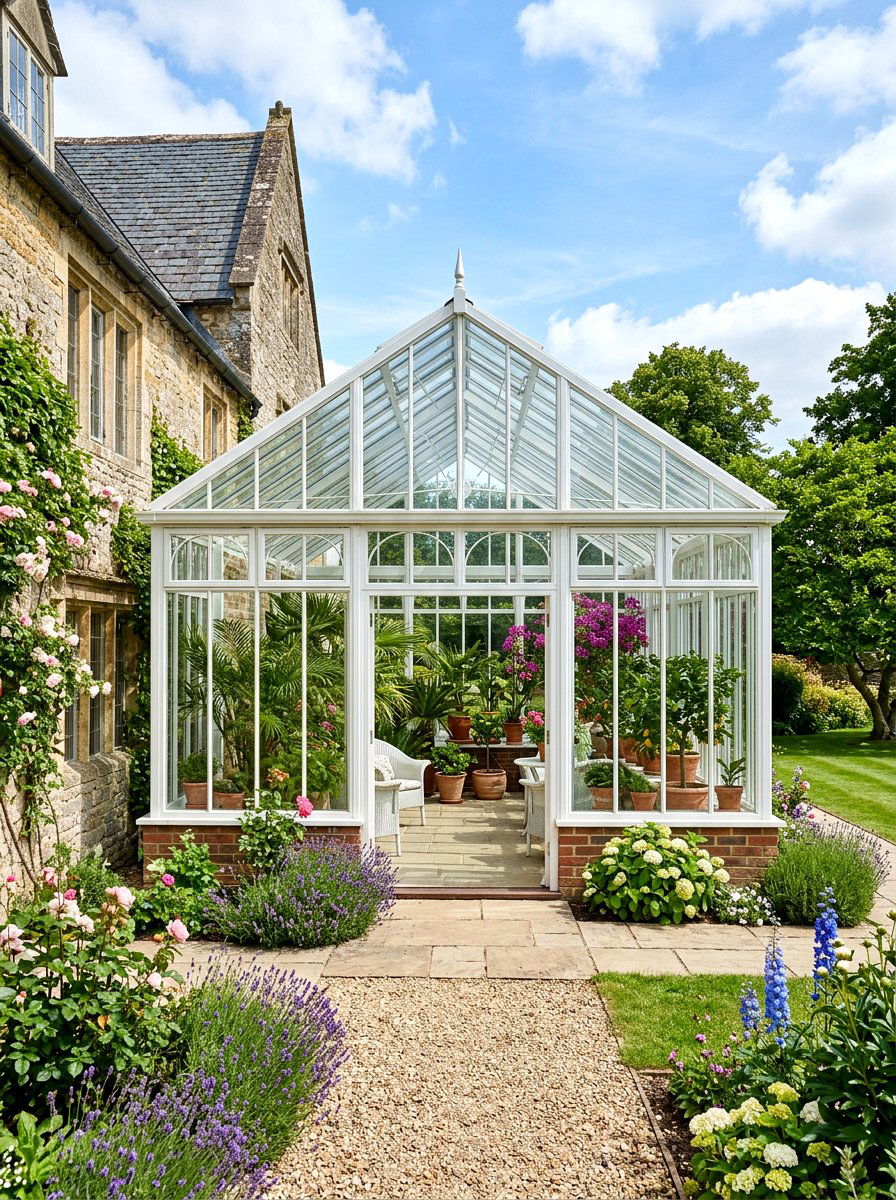
Can you imagine a room that is almost entirely made of glass, allowing you to enjoy the garden even when it rains? An orangerie is a traditional English addition to a manor, originally designed to protect citrus trees during the cold winter months. These structures feature large windows and a glass roof, often supported by a stone or brick base that matches the main house. Today, they serve as beautiful sunrooms or dining areas that flood the home with natural light. The thin metal or wood frames of the glass panes add a delicate and elegant touch to the heavy stone manor.
16. Cobblestone Courtyard
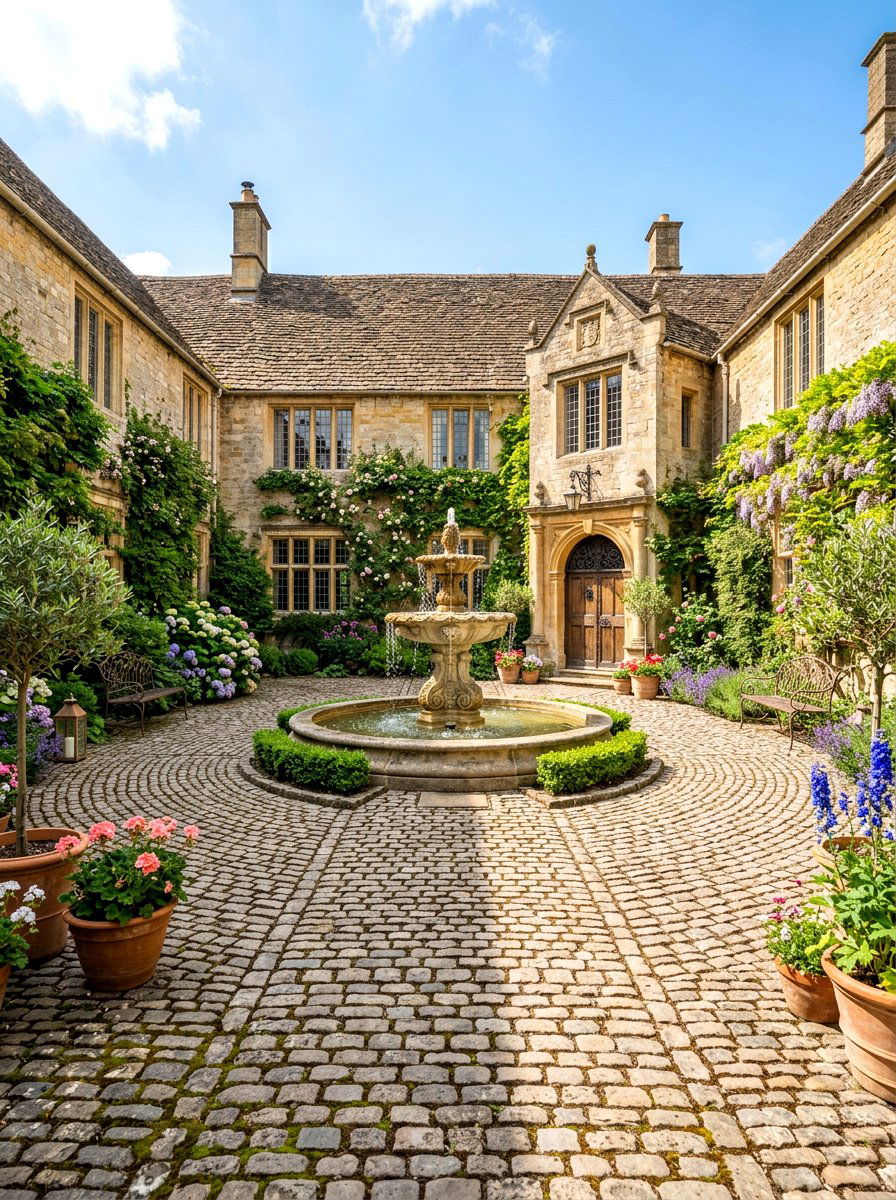
What kind of paving material can withstand the weight of carriages for centuries while still looking absolutely beautiful and timeless today? A cobblestone courtyard offers a rugged and textured ground surface that feels incredibly authentic to the old English way of life. These small, rounded stones are laid by hand in patterns that help with water drainage and prevent the ground from becoming muddy. A courtyard creates a private, enclosed space at the center or front of a manor, offering a sense of sanctuary. It is the perfect place for a central fountain or a few large potted plants to greet your guests.
17. Red Brick Chimney Stacks
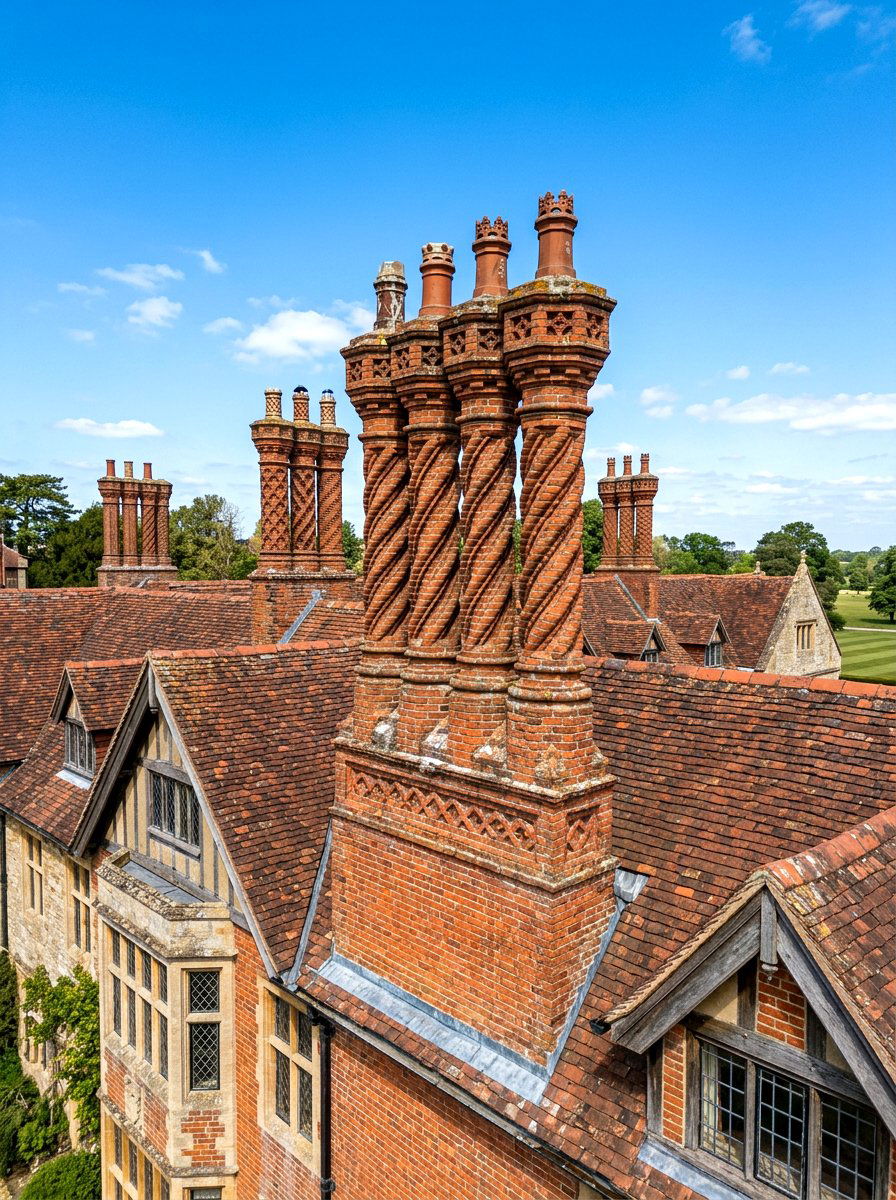
How can a functional part of the house, like a fireplace vent, become one of the most decorative features visible? Red brick chimney stacks on English manors are often tall, slender, and highly decorated with "barley twist" patterns or decorative corbelling. Because many manors had dozens of fireplaces to keep the large rooms warm, these chimneys become a dominant part of the roofline. Using a different color of brick or a unique shape makes the chimneys stand out against the sky. They symbolize the warmth and comfort found inside the home while adding a vertical rhythm to the overall design of the house.
18. Climbing Rose Trellis
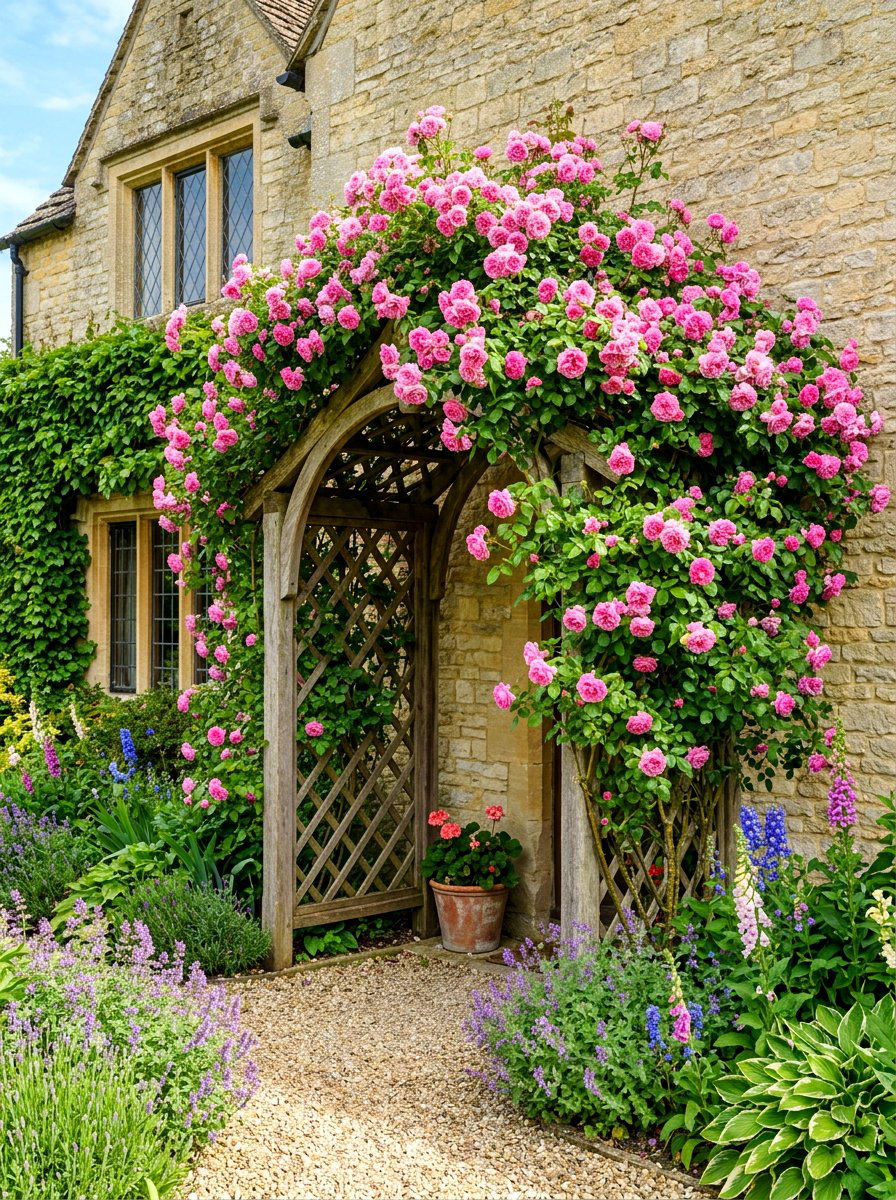
Does any flower represent the romantic beauty of a country estate better than a rose climbing up a weathered wall? A climbing rose trellis allows flowers to grow vertically, covering the sides of a manor in vibrant colors and sweet scents during the summer. These trellises are usually made of wood or wrought iron and are attached directly to the brick or stone. As the roses grow, they soften the hard exterior of the building and add a layer of natural charm. This is a simple way to bring life and fragrance to an entryway or a side patio area for relaxing.
19. Stone Portico Entrance
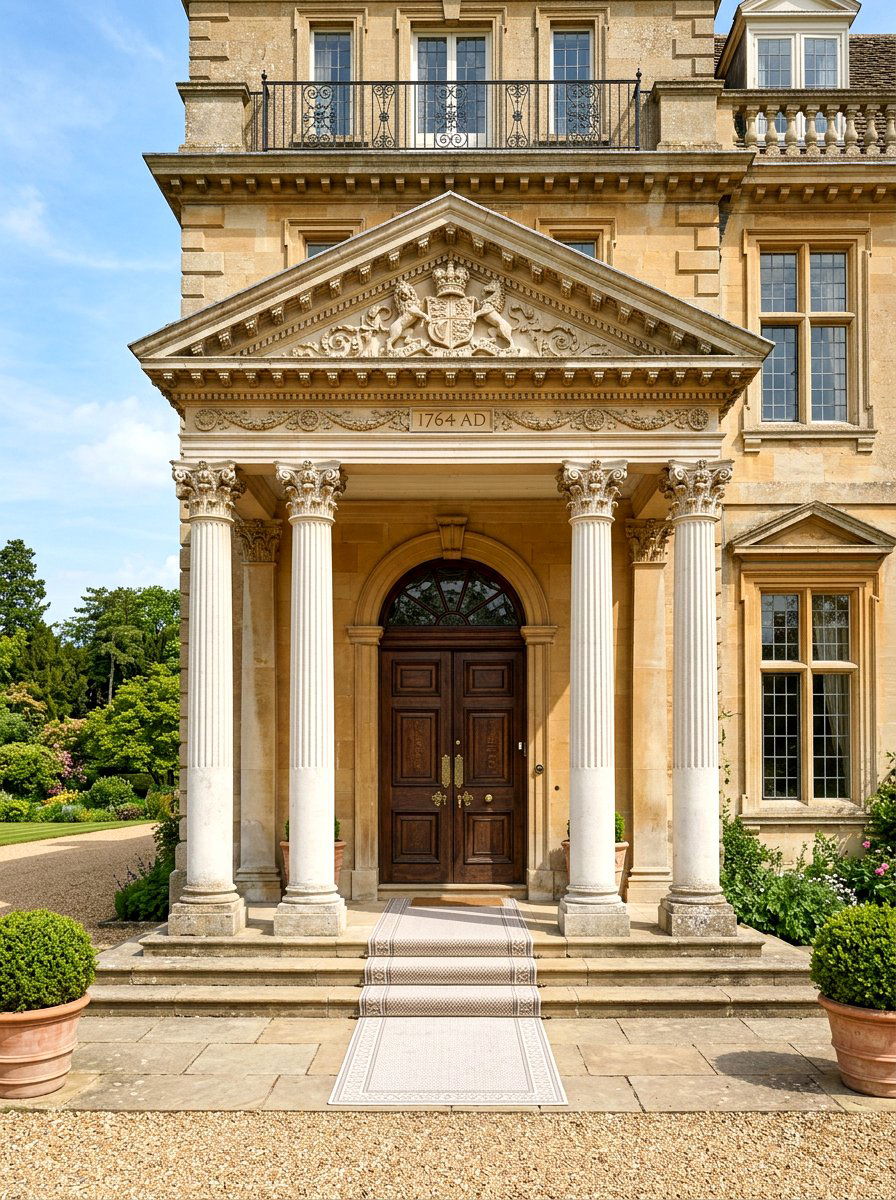
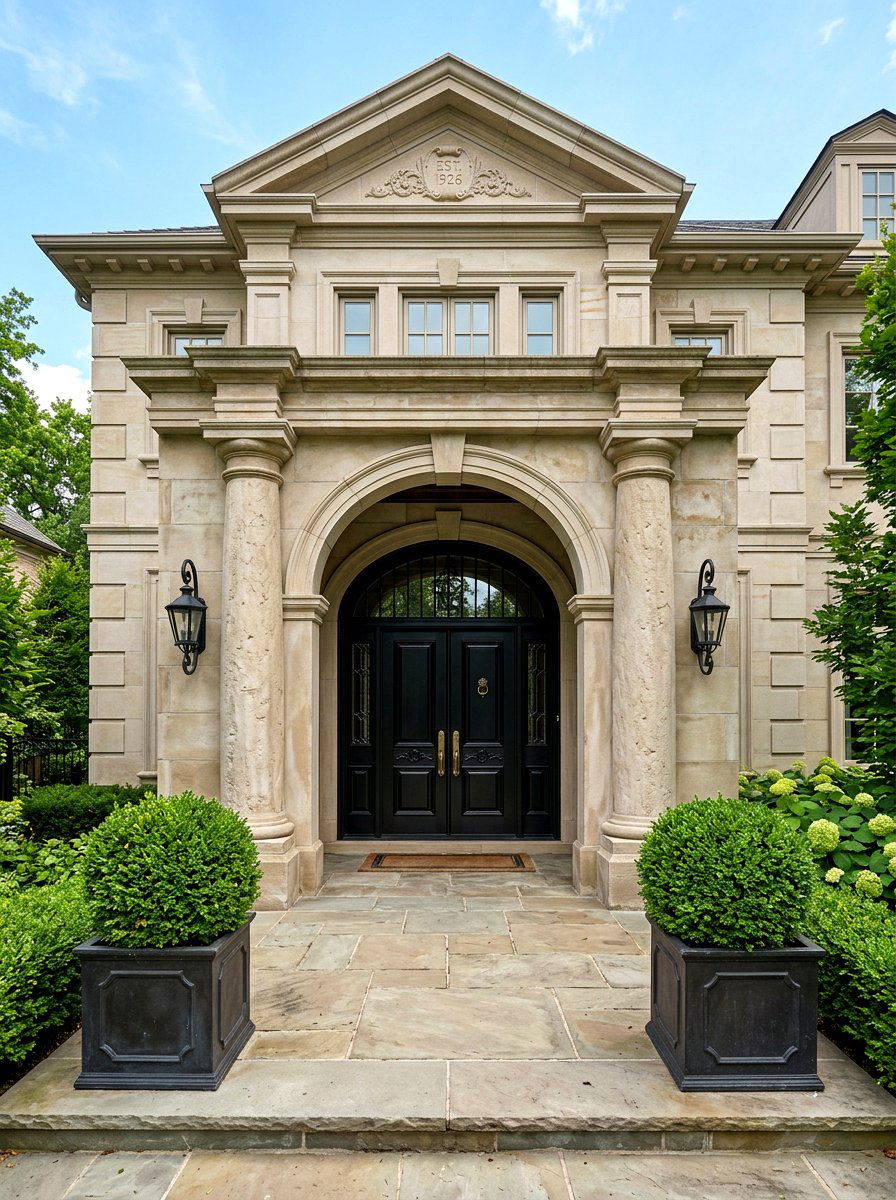
What is the best way to protect your guests from the rain while making a massive statement about your home's entrance? A stone portico is a porch structure supported by classical columns, leading directly to the front door of the manor. This architectural feature provides a sense of shelter and transition between the outdoors and the indoors. It often features a triangular pediment at the top, which mimics the look of ancient Greek or Roman temples. A portico adds depth to the front of the house, creating interesting shadows and a focal point that draws everyone toward the main entry point.
20. Terraced Lawn Landscape
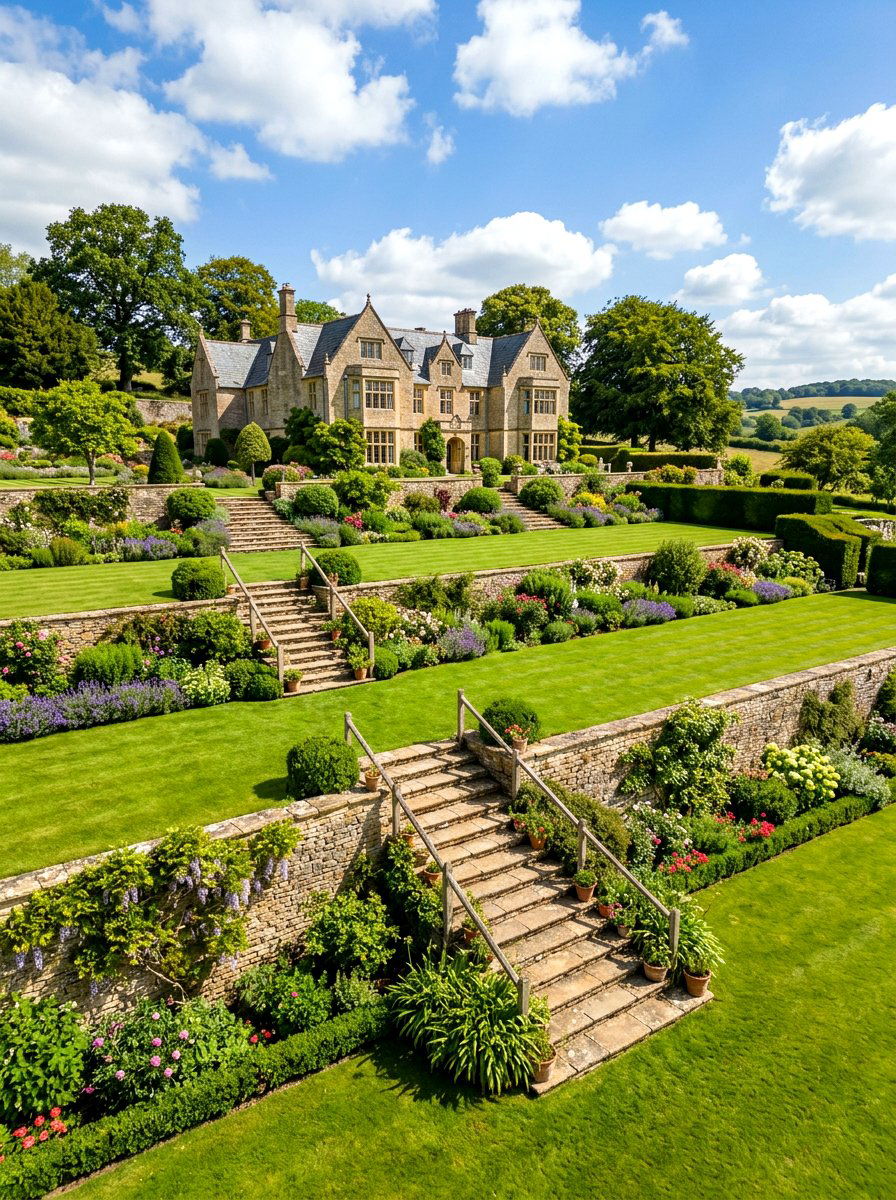
How do you handle a sloping piece of land while making it look like a grand and intentional design choice? A terraced lawn uses stone retaining walls to create flat, stepped levels of grass or gardens that lead down from the house. This creates different "rooms" in the outdoor space, each with its own unique view of the manor and the surrounding countryside. Terracing prevents soil erosion and makes the garden much easier to walk through and maintain. It also provides elevated platforms for seating areas, where you can sit and look back at the magnificent architecture of your own home.
21. Flagstone Path Walkway
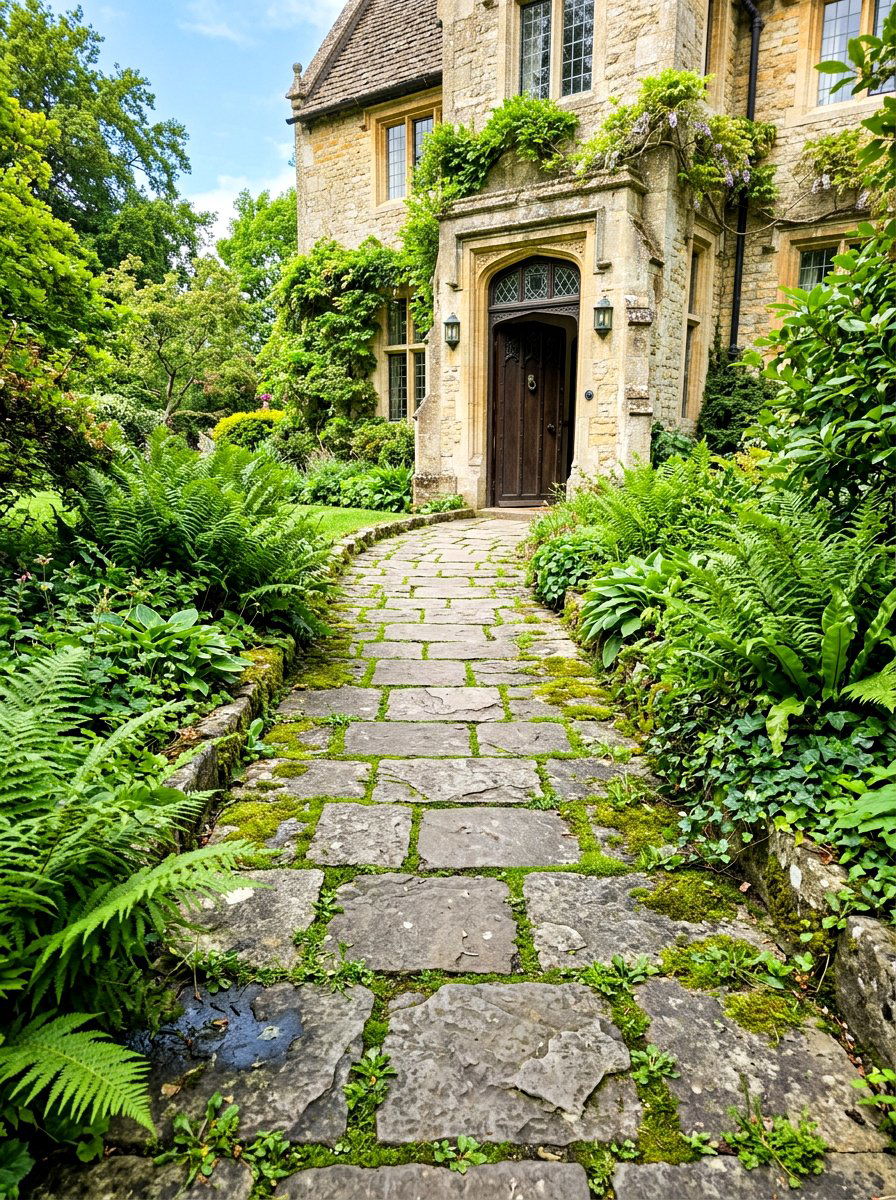
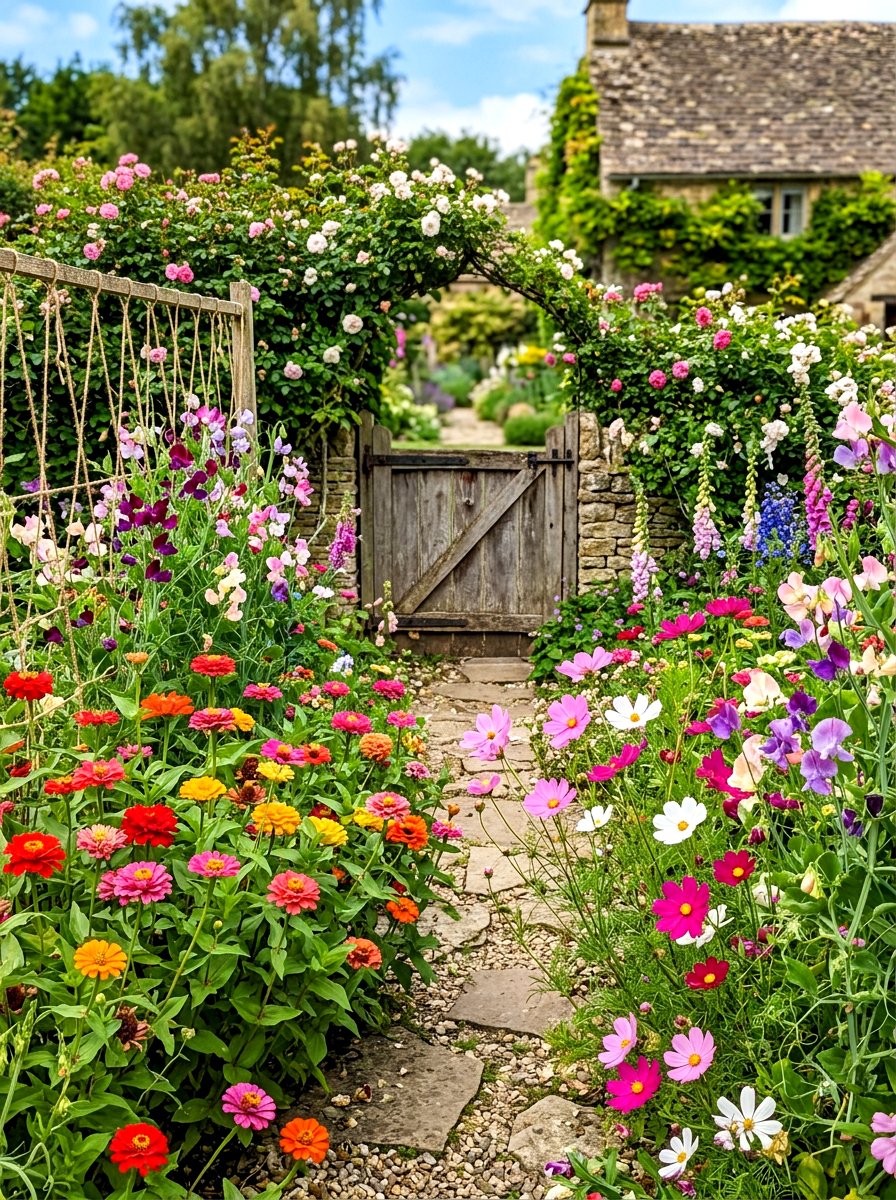
Why does walking on natural, flat stones feel so much more connected to history than walking on modern concrete or asphalt? Flagstone paths are made from large, irregular slabs of natural stone that are laid into the ground to create winding walkways through the estate. The gaps between the stones are often filled with moss or small creeping plants, which helps the path blend into the lawn. These walkways are durable and develop a beautiful patina over time as they weather. They guide guests through the various gardens and toward hidden seating areas, making the entire property feel like an adventure.
22. Timber Framed Exterior
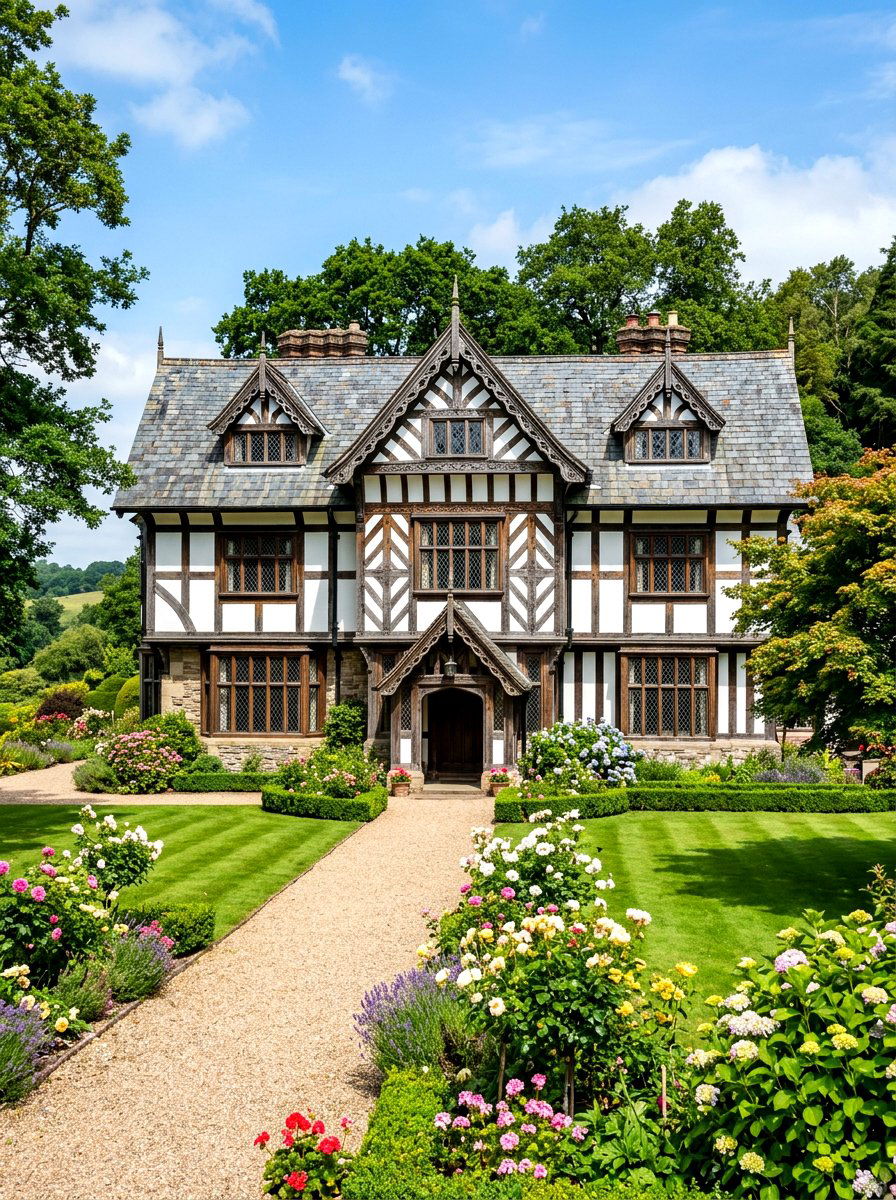
Can a house wear its skeleton on the outside and still look like a masterpiece of traditional European design and style? Timber framing involves using heavy wooden beams to create the structure of the house, with the spaces between filled with plaster or brick. This style, often called "half-timbering, " creates a striking black-and-white pattern that is iconic in many English village manors. The dark wood beams provide a rhythmic grid that gives the house a sturdy and handcrafted appearance. This technique has been used for hundreds of years and continues to be a favorite for those seeking a vintage, historic look.
23. Slate Roof Tiles
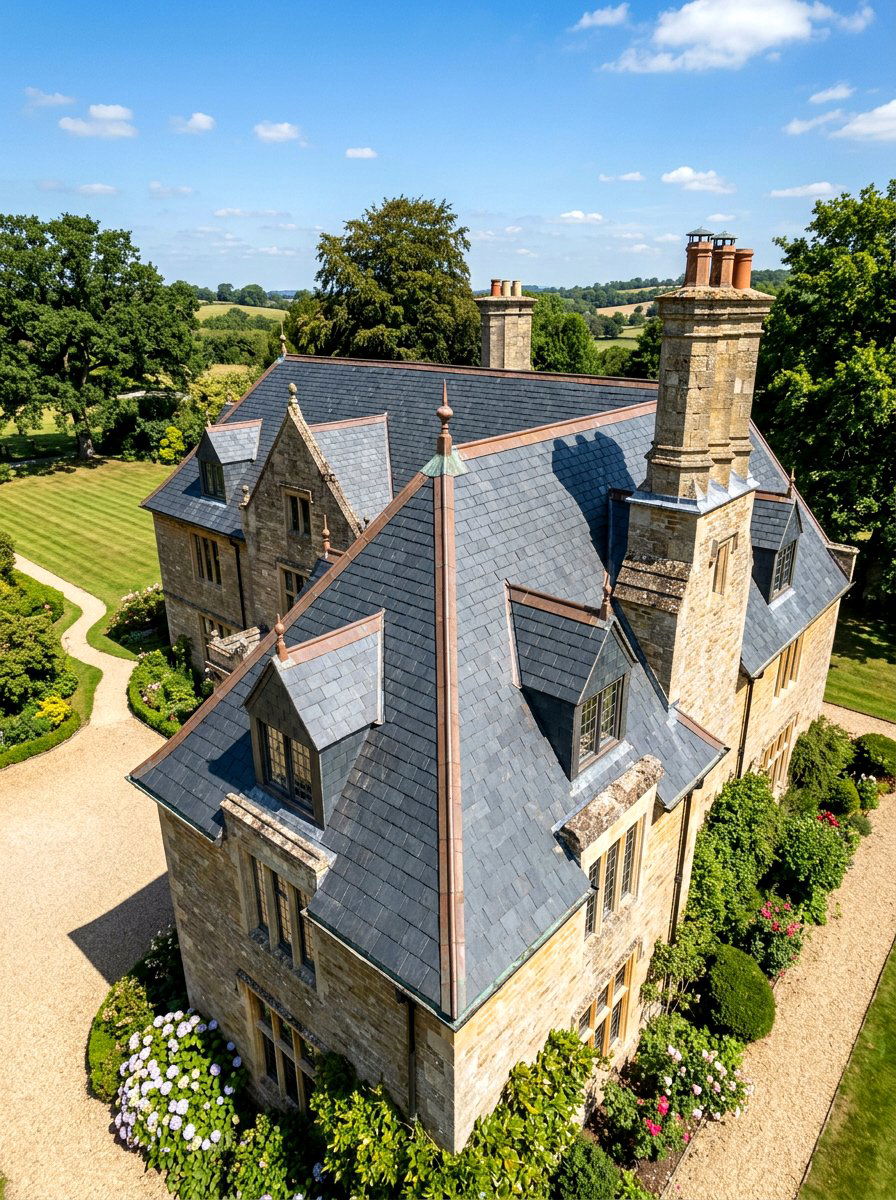
What kind of roofing material can last for over a hundred years while maintaining its sleek, dark, and sophisticated appearance throughout? Slate is a natural stone that is split into thin tiles, providing a waterproof and fire-resistant covering for grand manor houses. Its dark grey or blue-grey color provides a sharp contrast to lighter stone walls or red brick chimneys. Because slate is heavy, it requires a strong roof structure, which adds to the overall solid feel of the building. The overlapping tiles create a subtle texture that looks beautiful when wet from the rain, reflecting the moody English sky.
24. Lavender Border Walkway
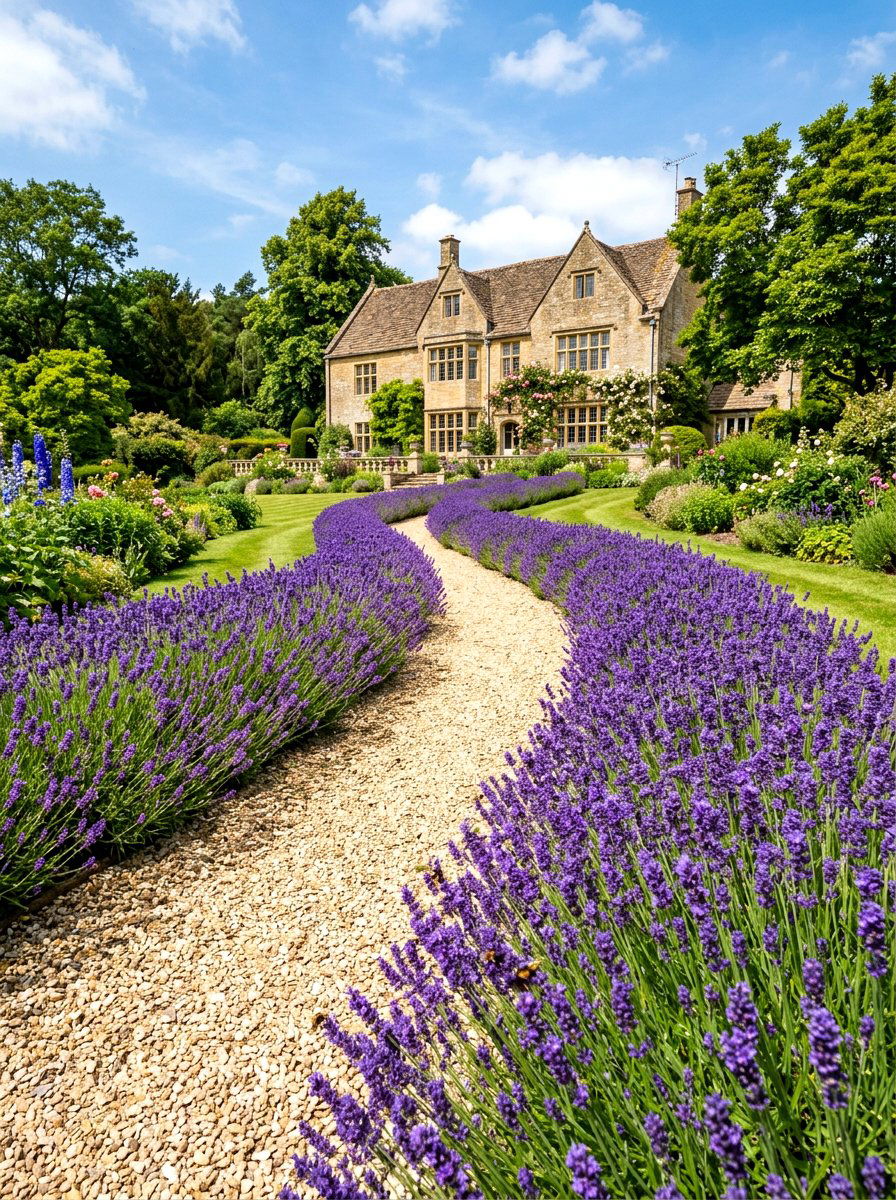
How can a simple plant create a sensory experience that welcomes you home every time you step out of your car? Lavender borders are a classic English gardening choice, featuring rows of purple flowers planted along the edges of a stone or gravel path. The silvery-green foliage looks beautiful even when the plants are not in bloom, providing a neat and tidy edge. When you walk past, the scent of lavender is released into the air, creating a calm and relaxing atmosphere. This low-maintenance plant attracts bees and butterflies, bringing a sense of life and movement to the manor's immediate surroundings.
25. Copper Rain Gutters
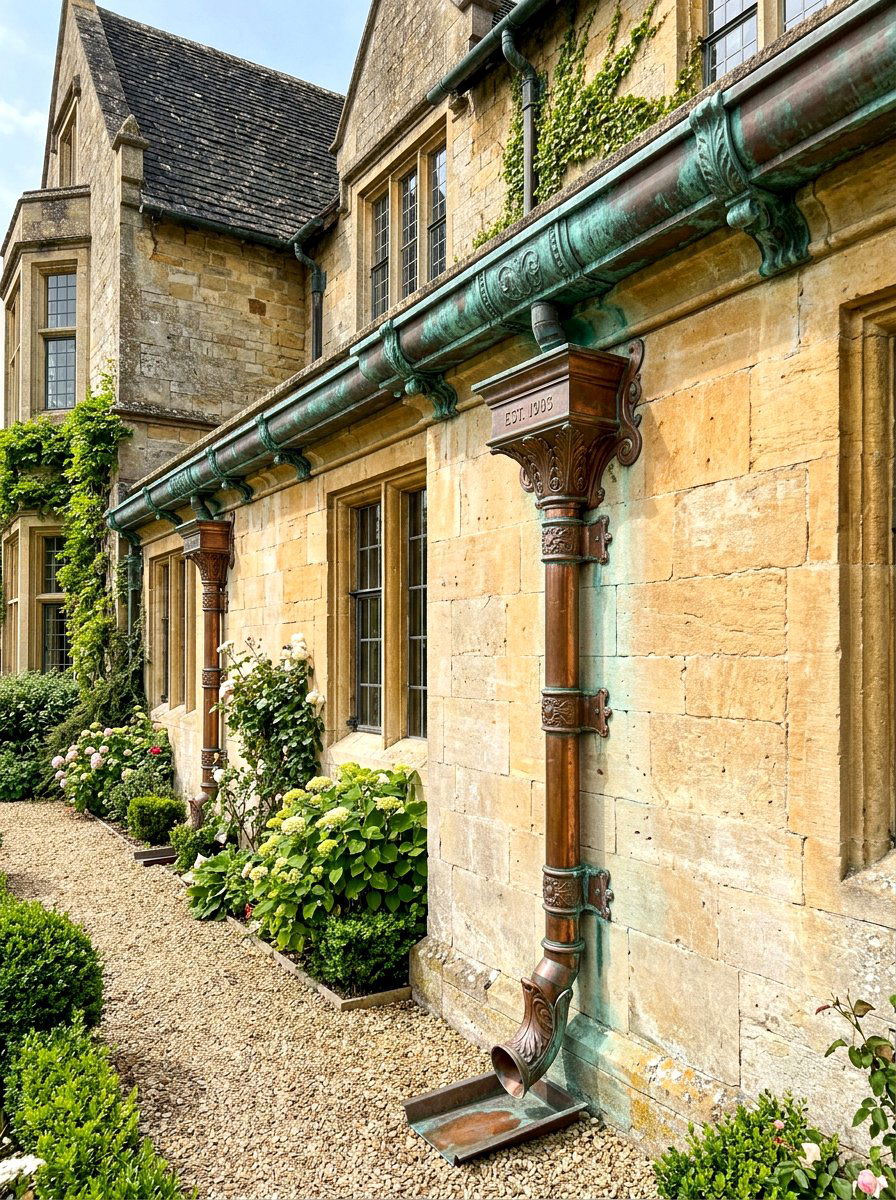
Why would a homeowner choose a functional item like a rain gutter to be a highlight of their home's exterior design? Copper gutters are the ultimate luxury choice for a manor house because they are incredibly durable and change color over time. When new, they shine like a bright penny, but as they age, they develop a stunning green patina called verdigris. This green color looks incredible against old stone or dark brick, adding a touch of historical elegance. Unlike plastic or aluminum, copper gutters are a permanent investment that actually increases the visual value and character of the property as decades pass.
26. Ha-ha Wall Fence
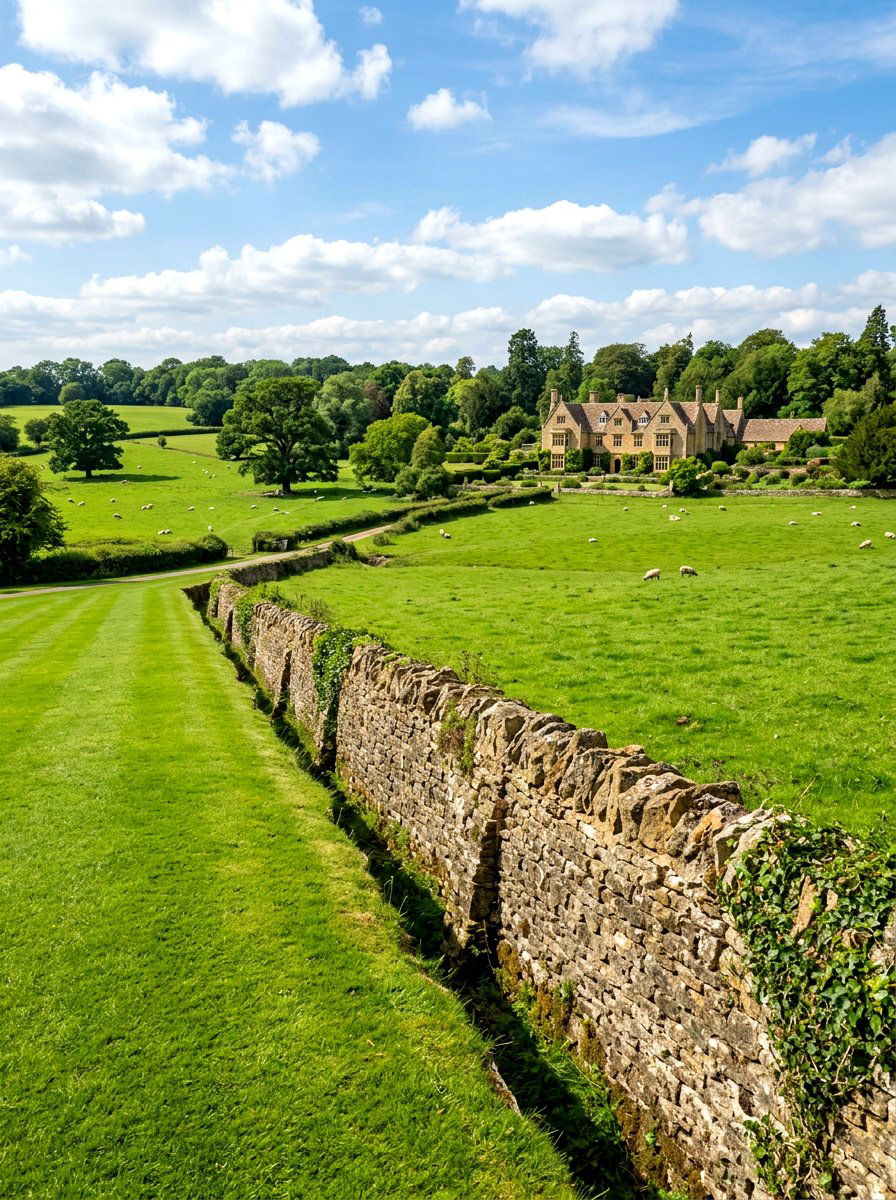
Is it possible to have a fence that keeps animals away from your garden without blocking your view of the beautiful countryside? A ha-ha is a clever landscape feature consisting of a deep trench with one vertical stone wall, creating a hidden barrier. From the house, the lawn appears to stretch out continuously into the fields because the wall is below ground level. This allows for unobstructed views of the estate while still keeping livestock or wildlife out of the formal gardens. It is a brilliant example of how English manor design uses engineering to preserve the natural beauty of the wider landscape.
27. Stucco Manor House
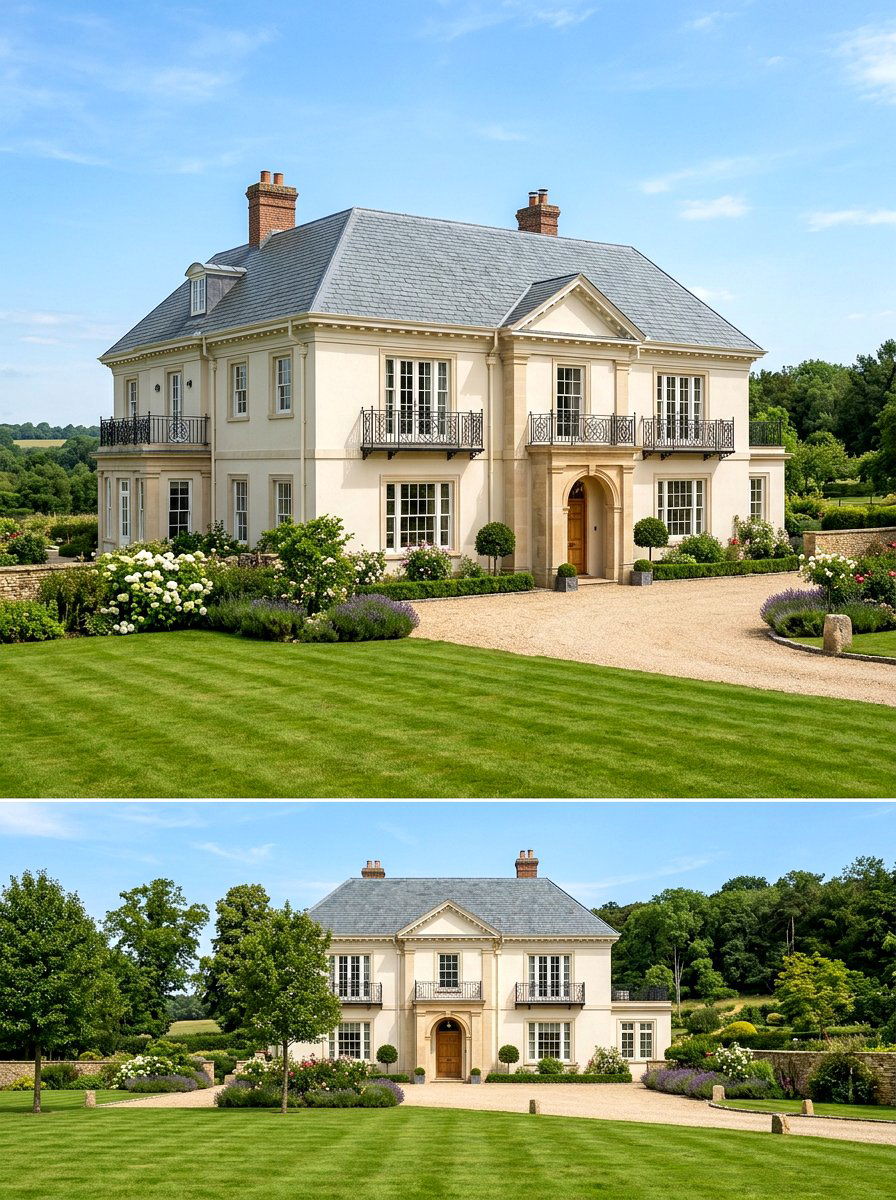
How can a smooth, light-colored finish make a massive stone building feel more elegant, Mediterranean, or even slightly more modern and clean? Stucco, or lime wash, is often used on English manors to create a uniform and bright exterior surface that reflects the light. This was particularly popular during the Regency period, where smooth white or cream walls were paired with dark iron railings and slate roofs. Stucco protects the underlying brickwork from the elements while providing a sophisticated backdrop for colorful climbing plants. It gives the house a refined look that feels very different from the rugged texture of natural, unpainted stone.
28. Outdoor Sundial Focal Point
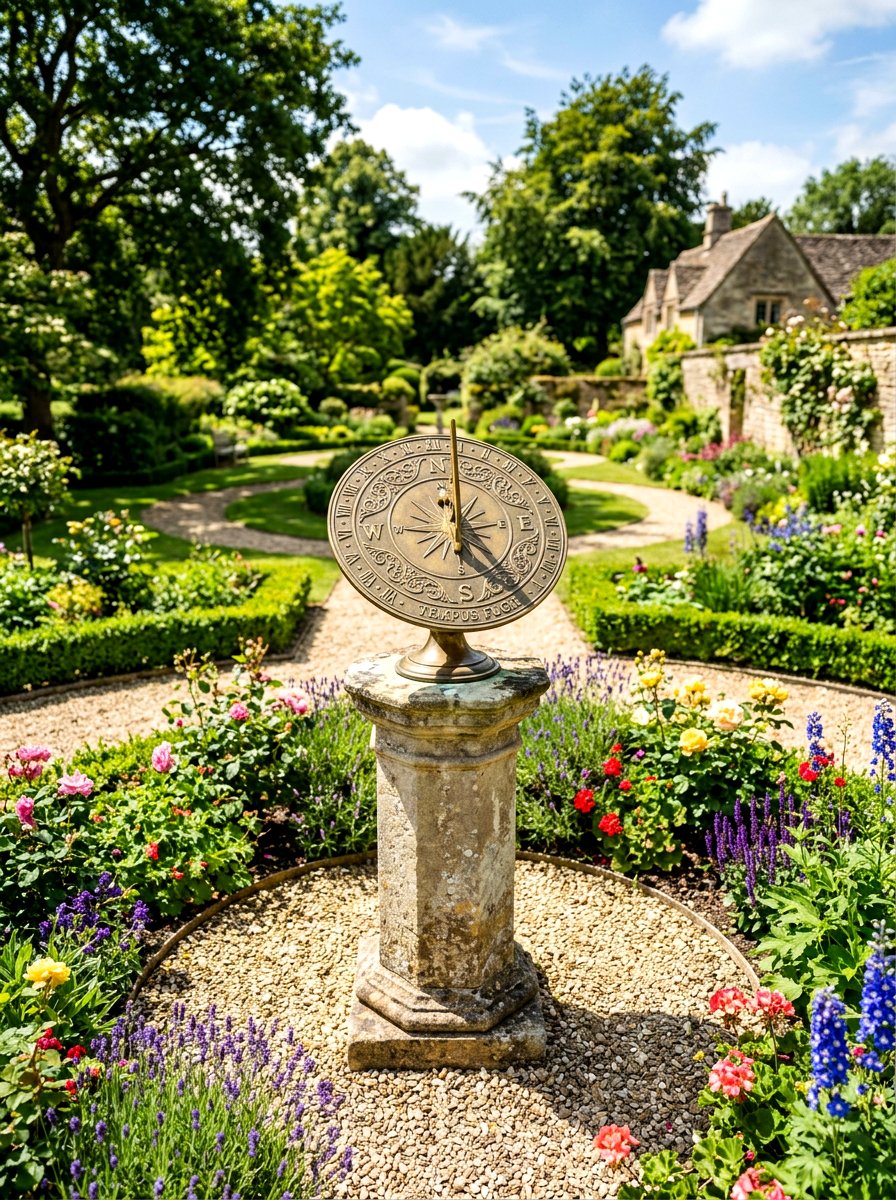
What kind of garden decoration can tell the time using nothing but the sun while serving as a beautiful piece of art? A sundial is a traditional fixture in a manor garden, usually placed on a stone pedestal at the center of a path or parterre. Made of brass or stone, it acts as a silent reminder of the passing of time and the history of the estate. It provides a classic focal point that draws the eye and encourages people to stop and enjoy the garden. A sundial adds a layer of intellectual and historical charm that fits perfectly with the manor lifestyle.
29. Arched Entry Doorway
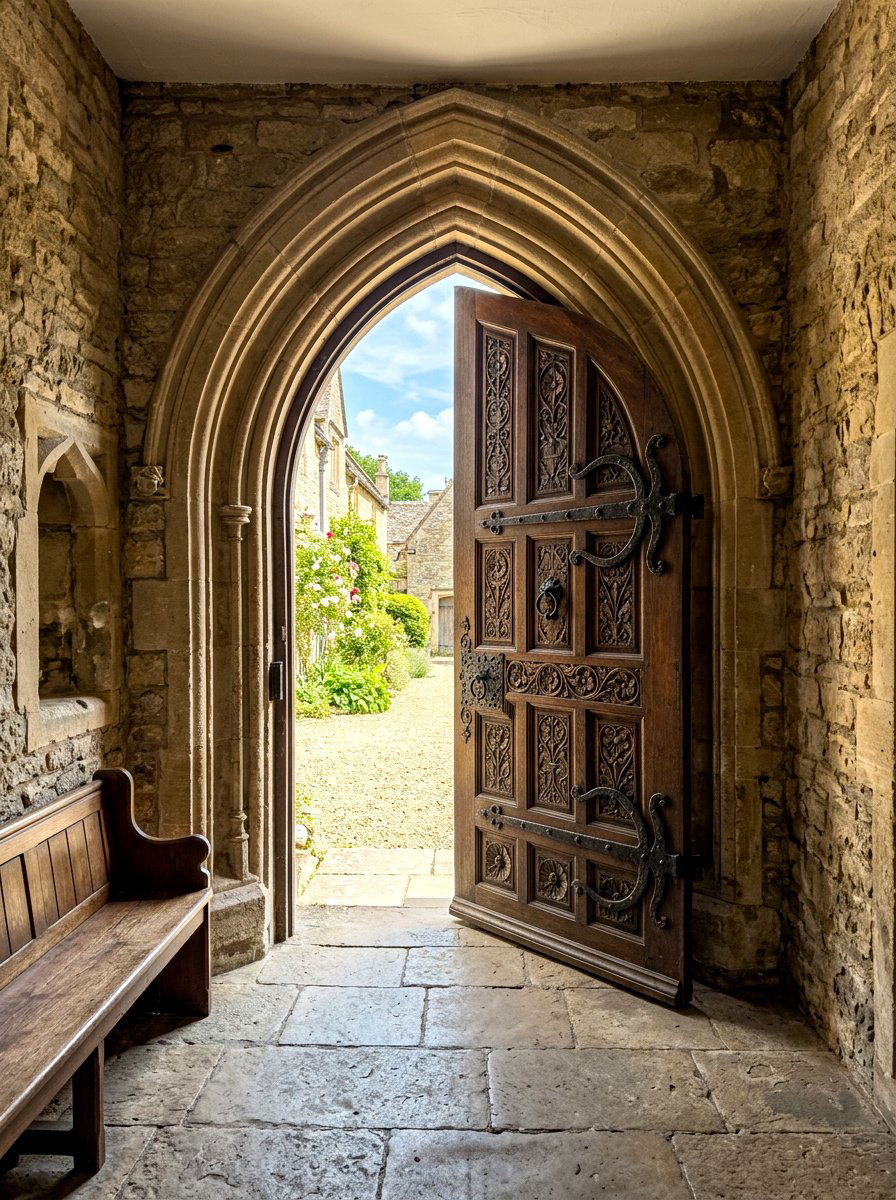
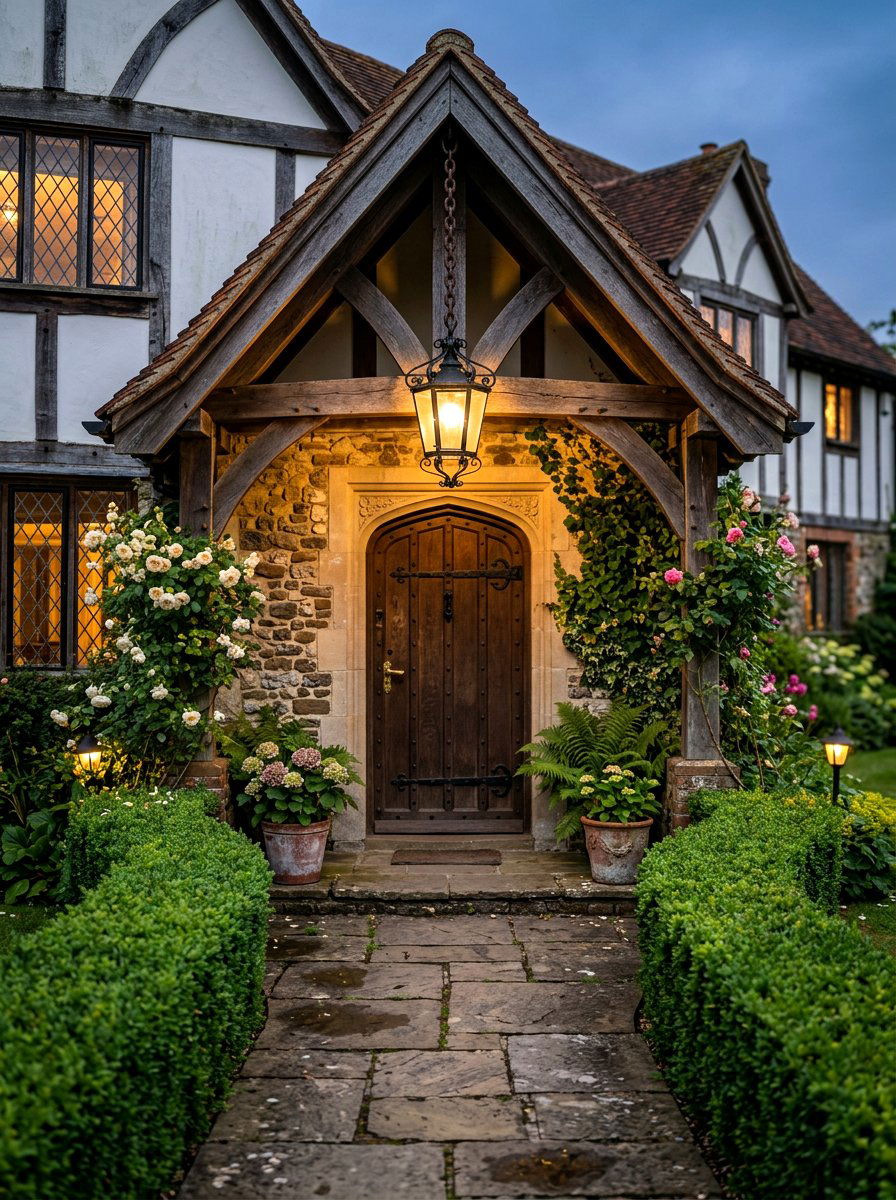
Why does an arched doorway feel so much more welcoming and grand than a standard rectangular opening in a thick stone wall? Arched entries are a staple of Gothic and Tudor manor architecture, echoing the shapes found in ancient cathedrals and grand castles. The curve of the arch softens the heavy appearance of the stone and creates a sense of height and grace. Often framed with decorative stone carvings or heavy oak beams, the arched doorway serves as a powerful symbol of hospitality. It tells the story of a home that is built to last and designed to welcome guests with a sense of ceremony.
30. Covered Veranda Seating
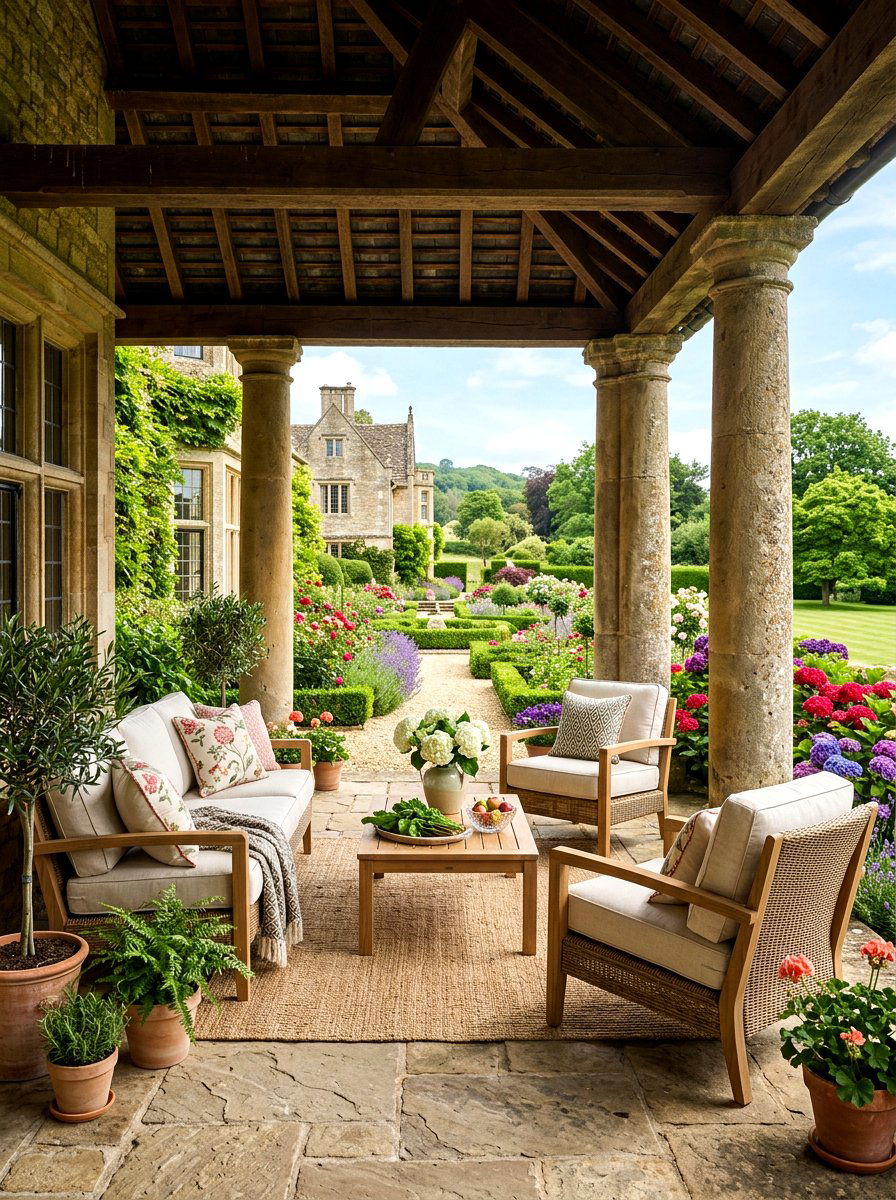
Can you create a comfortable outdoor living space that still feels like a formal part of the house's grand architectural design? A covered veranda features a roof supported by columns, providing a shaded and dry area to sit and enjoy the fresh air. In an English manor, this space is often paved with stone tiles and furnished with high-quality wrought iron or wooden furniture. It bridges the gap between the interior luxury and the outdoor natural beauty. A veranda allows homeowners to watch the rain or enjoy a cool breeze while remaining protected, making it the perfect spot for morning tea or evening relaxation.
Conclusion:
English manor exteriors are a masterful blend of historical significance, architectural precision, and natural beauty that continues to inspire designers worldwide. By focusing on durable materials like stone and brick, these homes achieve a sense of permanence that is rare in modern construction. Every element, from the way the ivy climbs the walls to the symmetry of the windows, is designed to create a harmonious and impressive presence. Whether you are looking for the cozy charm of a cottage or the stately power of a mansion, these ideas offer timeless guidance. Embracing these classic British styles ensures a home that remains beautiful and relevant for many centuries.

Related posts: