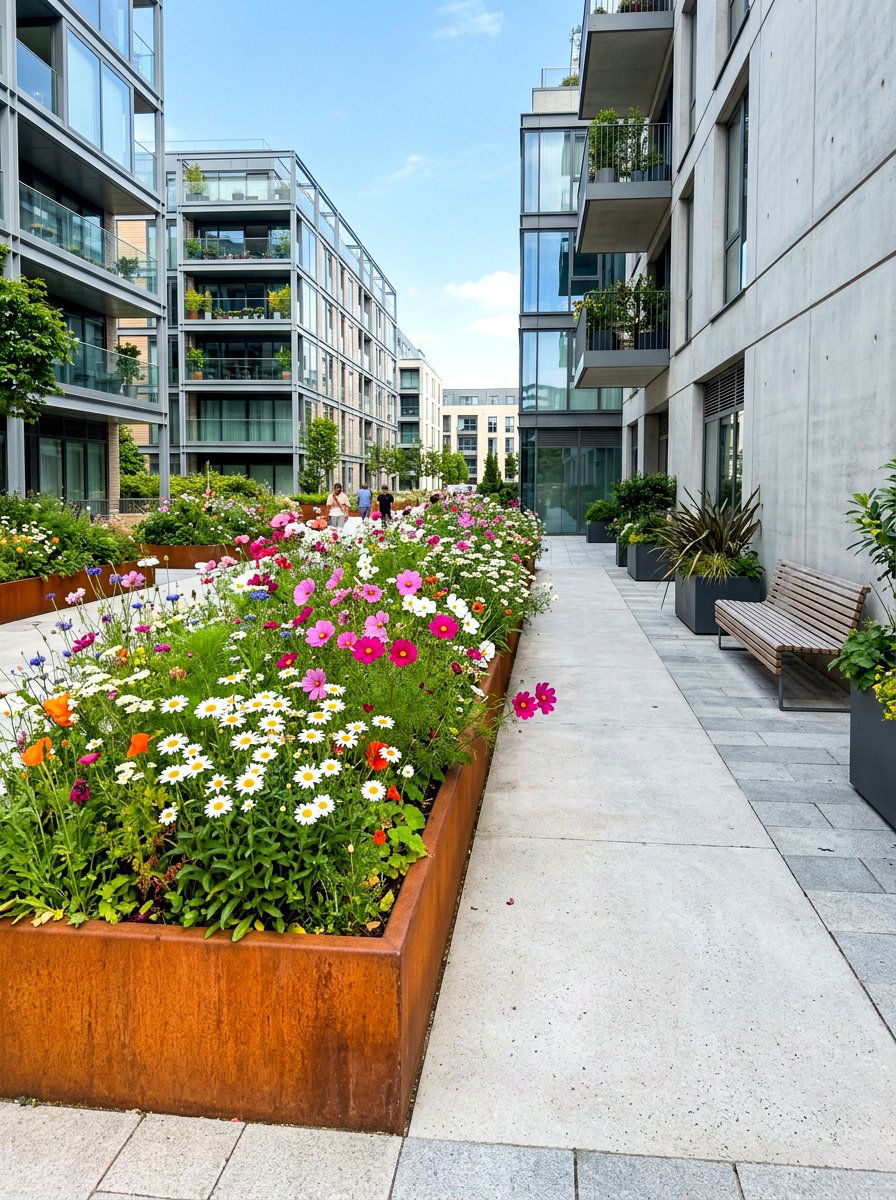
Transforming your home's exterior with lush hydrangea borders is one of the most effective ways to boost curb appeal and create a lasting first impression. These versatile shrubs are beloved by homeowners because they offer a variety of shapes, sizes, and colors that suit almost any architectural style. Whether you are aiming for a classic cottage look or a sleek modern aesthetic, hydrangeas provide a voluminous texture that fills empty spaces beautifully. Their long blooming season ensures that your front yard remains vibrant from early summer through the first frost of autumn. By carefully selecting the right varieties for your specific climate and sunlight, you can create a low-maintenance landscape that looks professionally designed. This guide explores creative ways to use these stunning perennials to frame your home and welcome guests with a burst of natural beauty and timeless garden charm.
1. White Annabelle Walkway
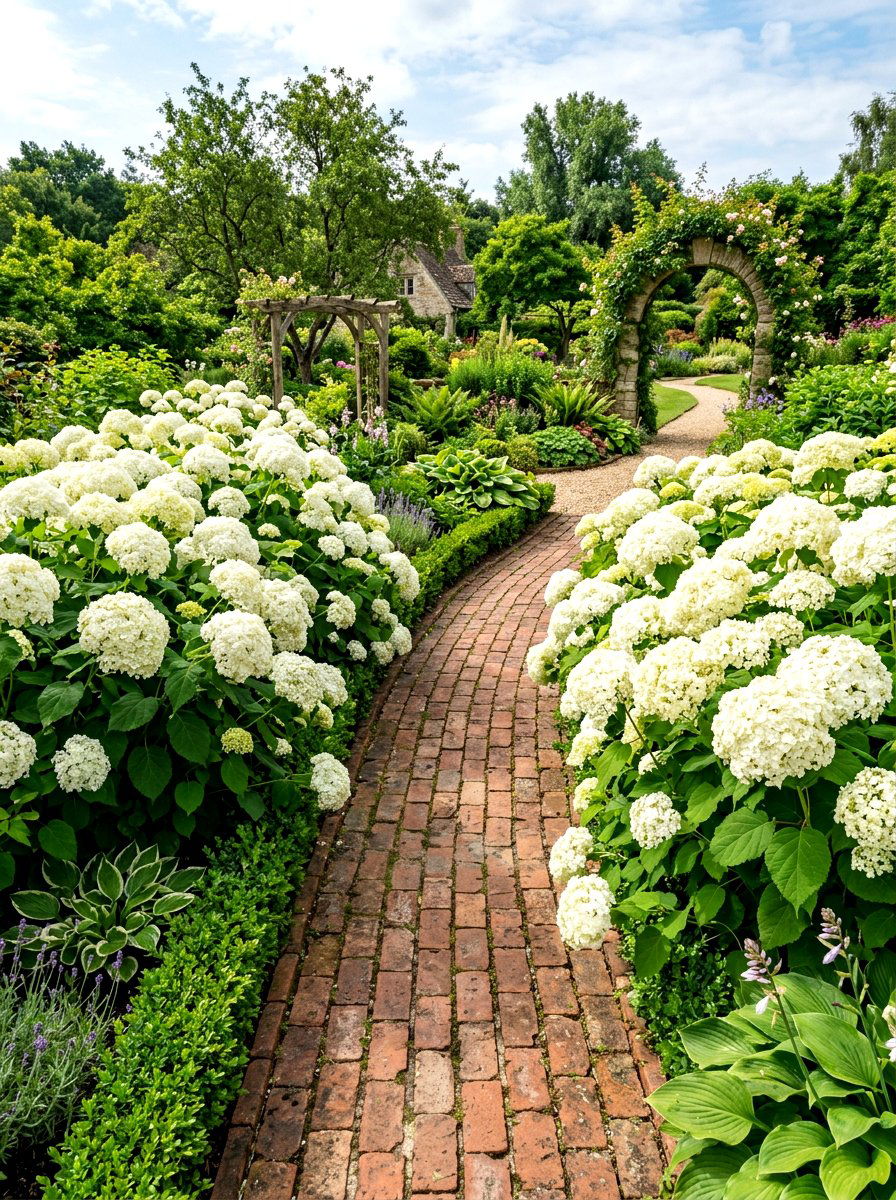
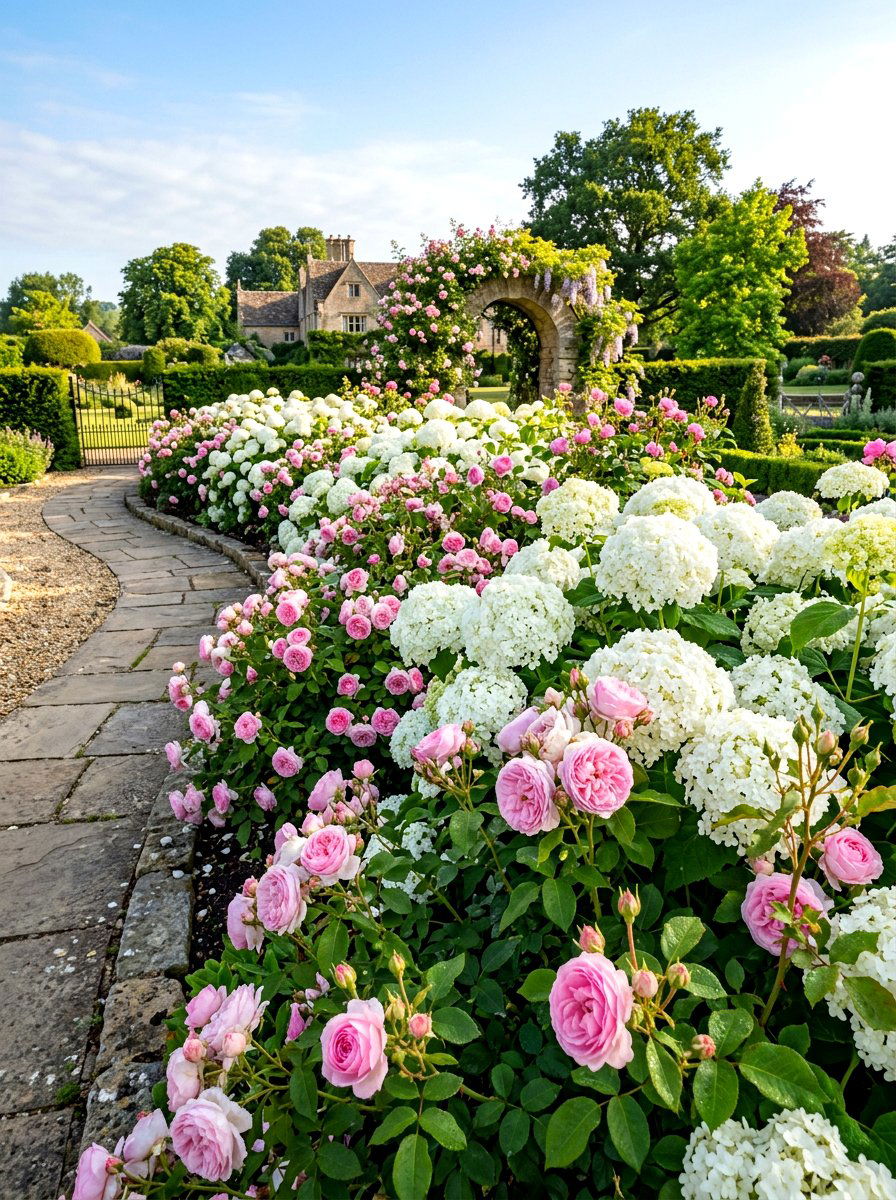
Have you ever walked past a house and felt instantly transported to a dreamscape by a sea of fluffy white blooms? Planting a row of Annabelle hydrangeas along your front walkway creates a classic, welcoming path that screams elegance. These shrubs are famous for their massive, snowball-like flower heads that can reach up to twelve inches across. Because they bloom on new wood, you can prune them back heavily in winter to keep your walkway neat and manageable. They thrive in partial shade, making them the perfect choice for east-facing entries. Their bright white petals reflect moonlight beautifully, giving your curb appeal a magical glow even after the sun sets for the night.
2. Limelight Privacy Hedge
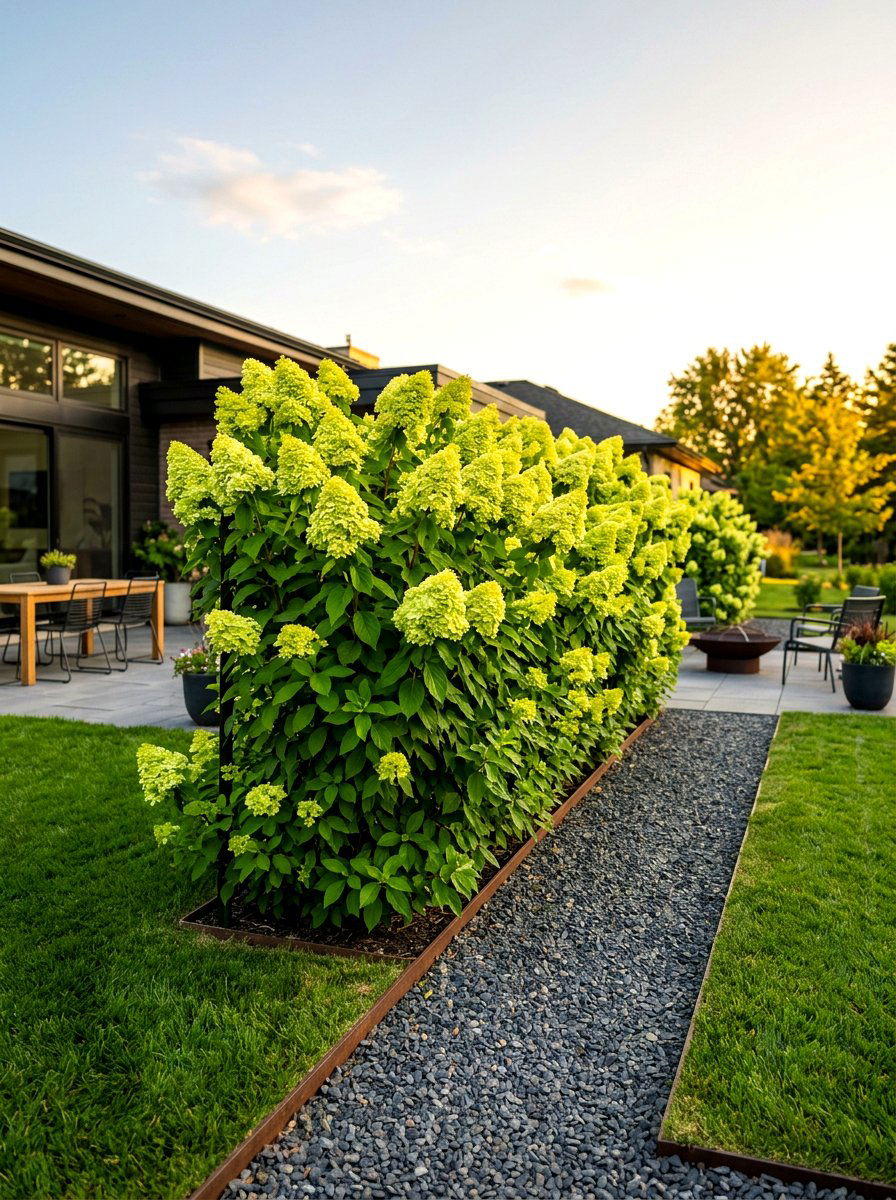
Are you looking for a way to add privacy to your front yard without installing a boring wooden fence? Limelight hydrangeas are a fantastic choice for creating a living screen that offers both height and stunning beauty. These vigorous growers can reach up to eight feet tall, providing a lush green backdrop for your property. In mid-summer, they produce large, cone-shaped clusters of lime-green flowers that eventually fade to a creamy white and then a soft pink. This changing color palette keeps your home exterior looking fresh and dynamic throughout the entire growing season. They are incredibly hardy and tolerate full sun exceptionally well for most regions.
3. Mixed Color Macrophylla Border
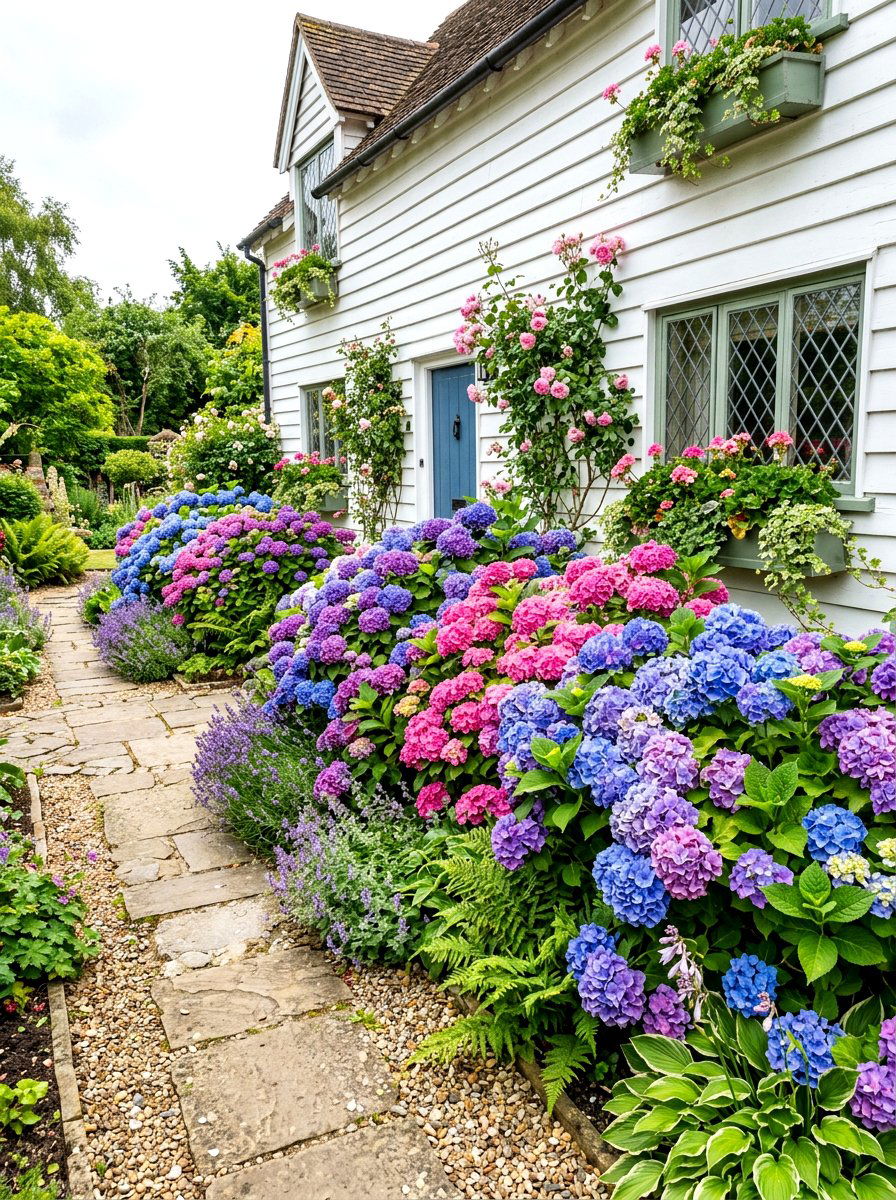
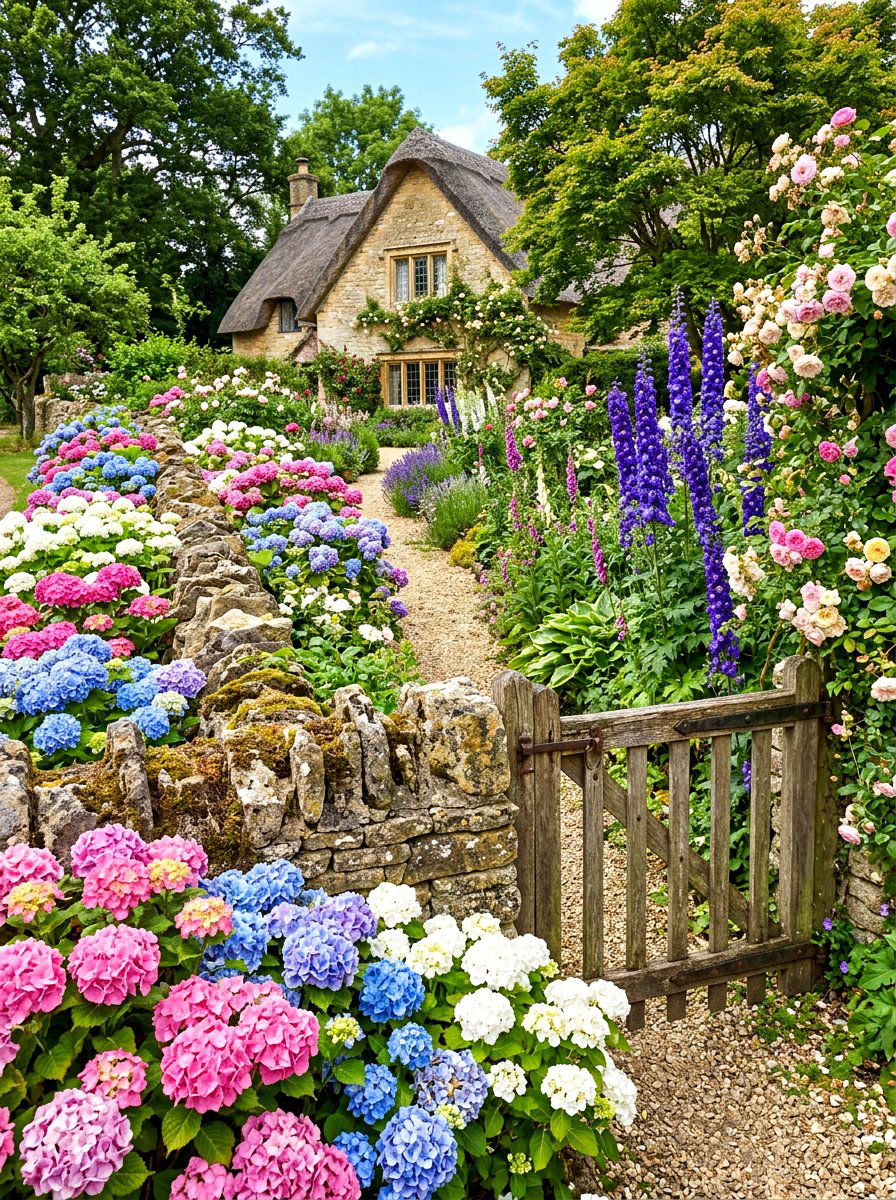
Can you imagine the vibrant splash of colors you would get by mixing different varieties of Bigleaf hydrangeas? A mixed color border along your home’s foundation creates a playful and energetic look that catches everyone’s eye. By adjusting the soil pH, you can achieve a stunning gradient of blues, purples, and pinks all in one single planting area. This approach works best in zones with milder winters where the buds are protected from harsh freezes. The large, leathery leaves provide a deep green contrast that makes the bright floral clusters pop against your siding. It is a bold way to showcase your gardening personality to the whole neighborhood.
4. Blue Endless Summer Front Porch
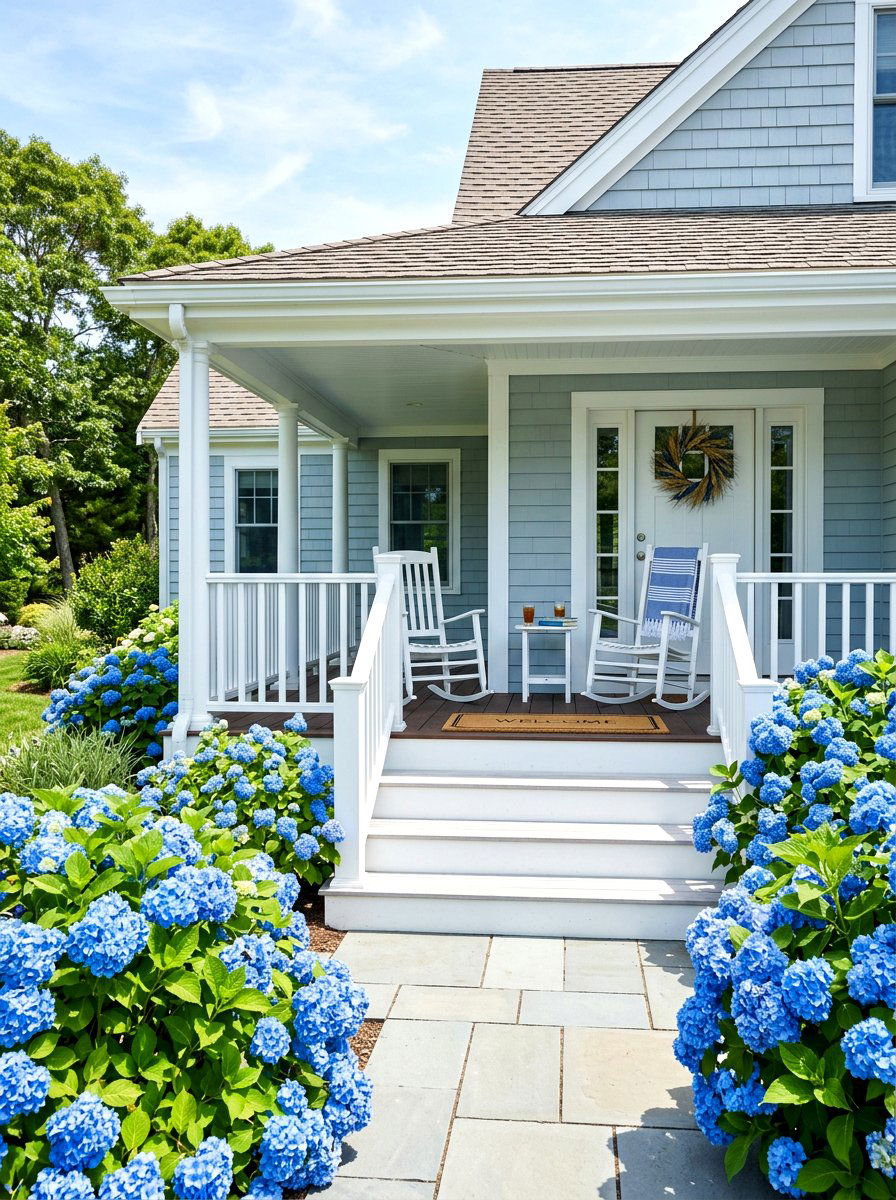
What could be more inviting than a porch framed by the soft, sky-blue hues of the iconic Endless Summer hydrangea? This specific variety is a game-changer for curb appeal because it blooms on both old and new wood, ensuring a reliable show of flowers every year. When planted around the base of a porch, these shrubs soften the hard lines of the architecture and create a cozy, coastal atmosphere. Their ability to rebloom throughout the summer means your entry remains picturesque for months on end. Pair them with white porch furniture to enhance the breezy, nautical feel that these popular blue flowers naturally provide to any home.
5. Oakleaf Foundation Planting
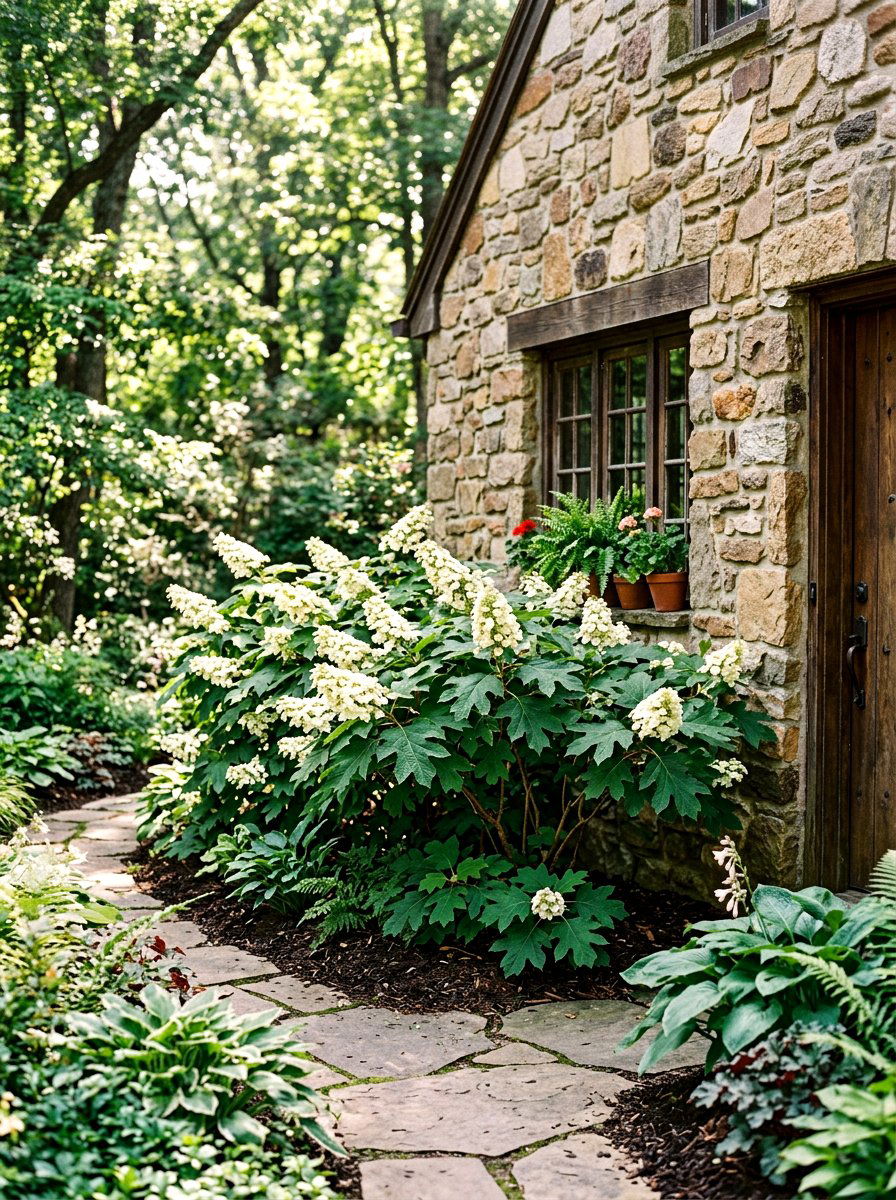
Do you want a hydrangea that offers visual interest even when it is not in full bloom? Oakleaf hydrangeas are the unsung heroes of curb appeal due to their unique foliage and incredible four-season appeal. The leaves are shaped like oversized oak leaves and turn a brilliant mahogany or deep red in the autumn. During the summer, they produce long, white panicles that age to a lovely dusty rose. Because they are native to North America, they are often more drought-tolerant and pest-resistant than other types. Using them as a foundation planting adds a sophisticated, woody texture that works perfectly with rustic or traditional home styles.
6. Pink Mophead Flower Bed
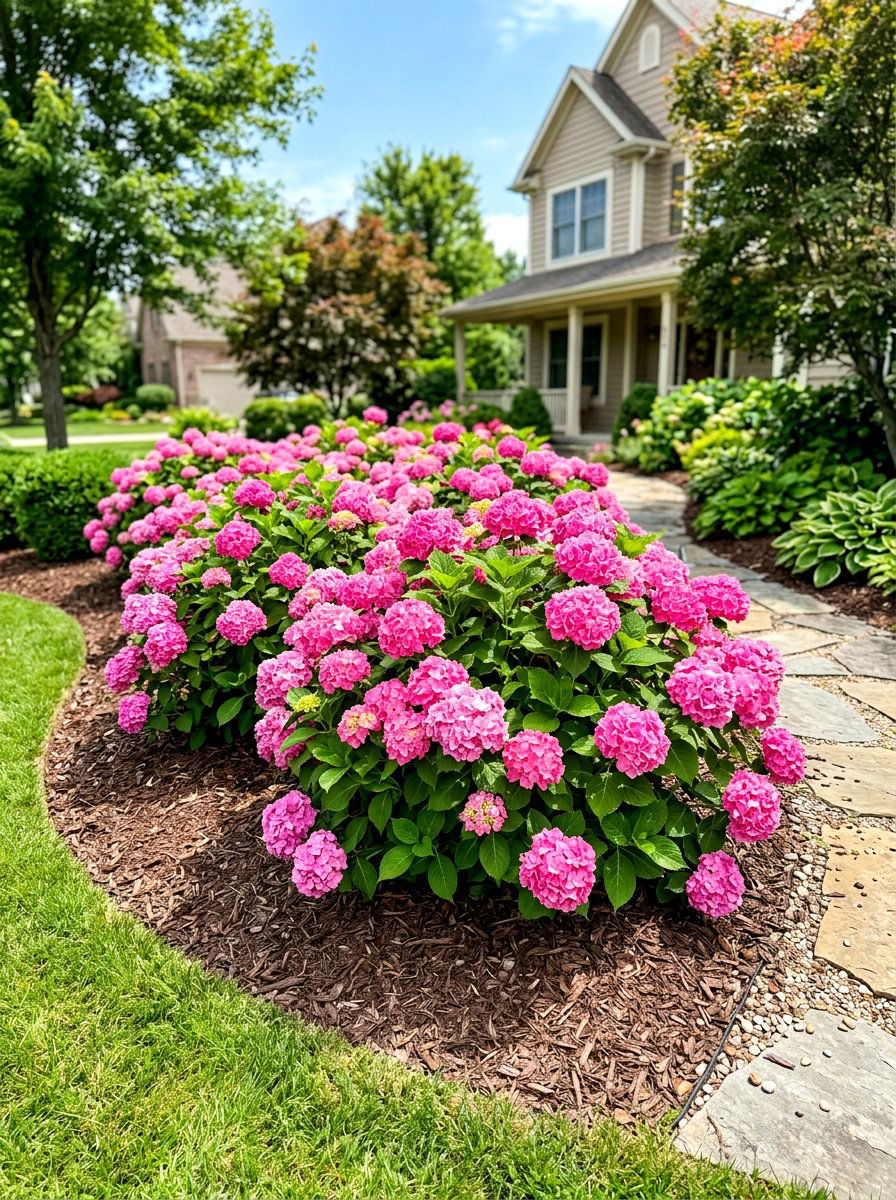
Is there anything more charming than a garden bed overflowing with classic pink mophead hydrangeas? These rounded shrubs create a soft, romantic look that is perfect for traditional suburban homes or Victorian-style houses. When massed together in a dedicated flower bed, they create a sea of color that is visible from across the street. To keep them pink, ensure your soil is more alkaline, which helps the plant process nutrients differently than blue varieties. The dense growth habit of mopheads makes them excellent for hiding unsightly foundations or utility boxes. They provide a high-impact floral display that requires very little effort once the plants have become established.
7. Panicle Driveway Lining
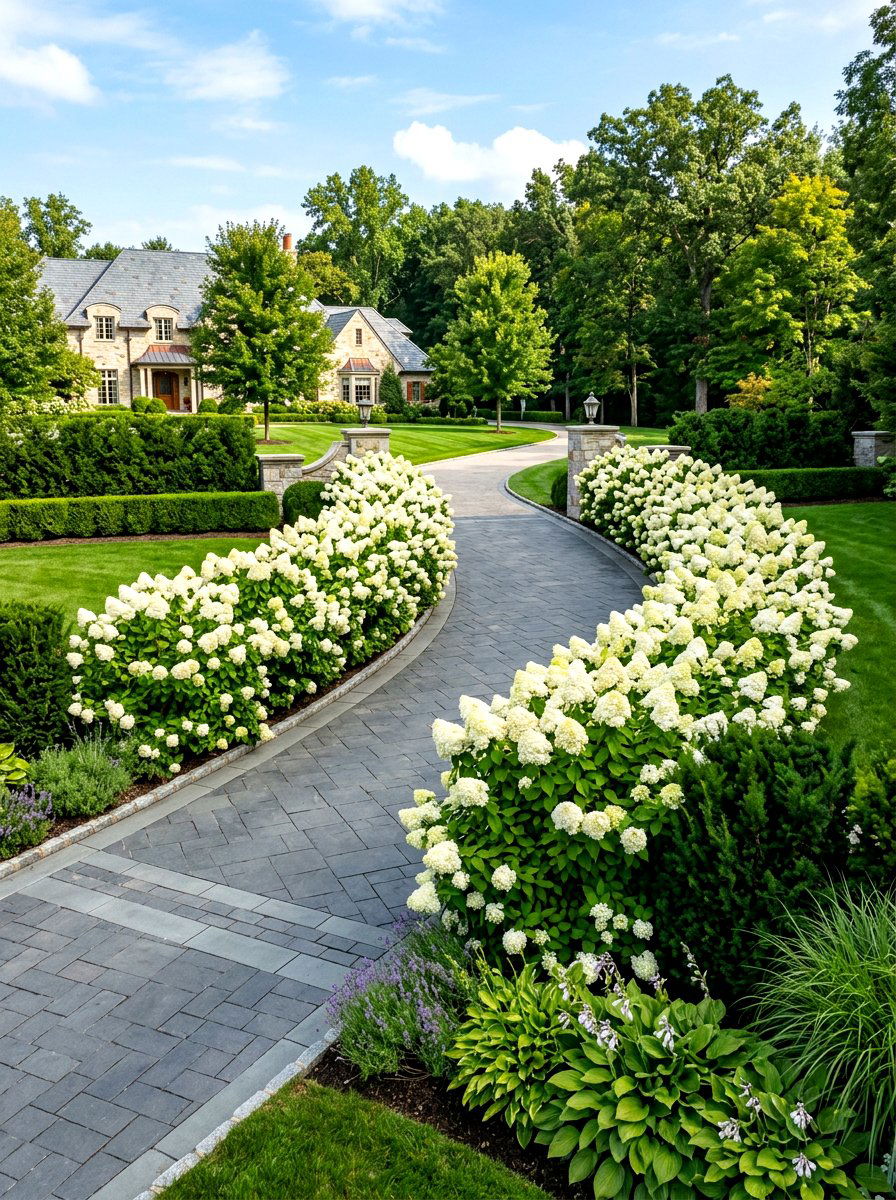
Have you considered using hardy panicle hydrangeas to define the edges of your driveway for a cleaner look? Varieties like Phantom or Silver Dollar are perfect for this because they have strong stems that do not flop over onto the pavement. Lining a driveway with these tall, upright shrubs creates a grand entrance feeling every time you pull into your home. They handle the heat reflecting off the asphalt much better than the soft-leaved Bigleaf varieties. As the summer progresses, the white flowers take on pink or burgundy tones, providing a beautiful transition into the fall season. This layout helps organize your outdoor space with natural structure.
8. Small Yard Hydrangea Arrangement
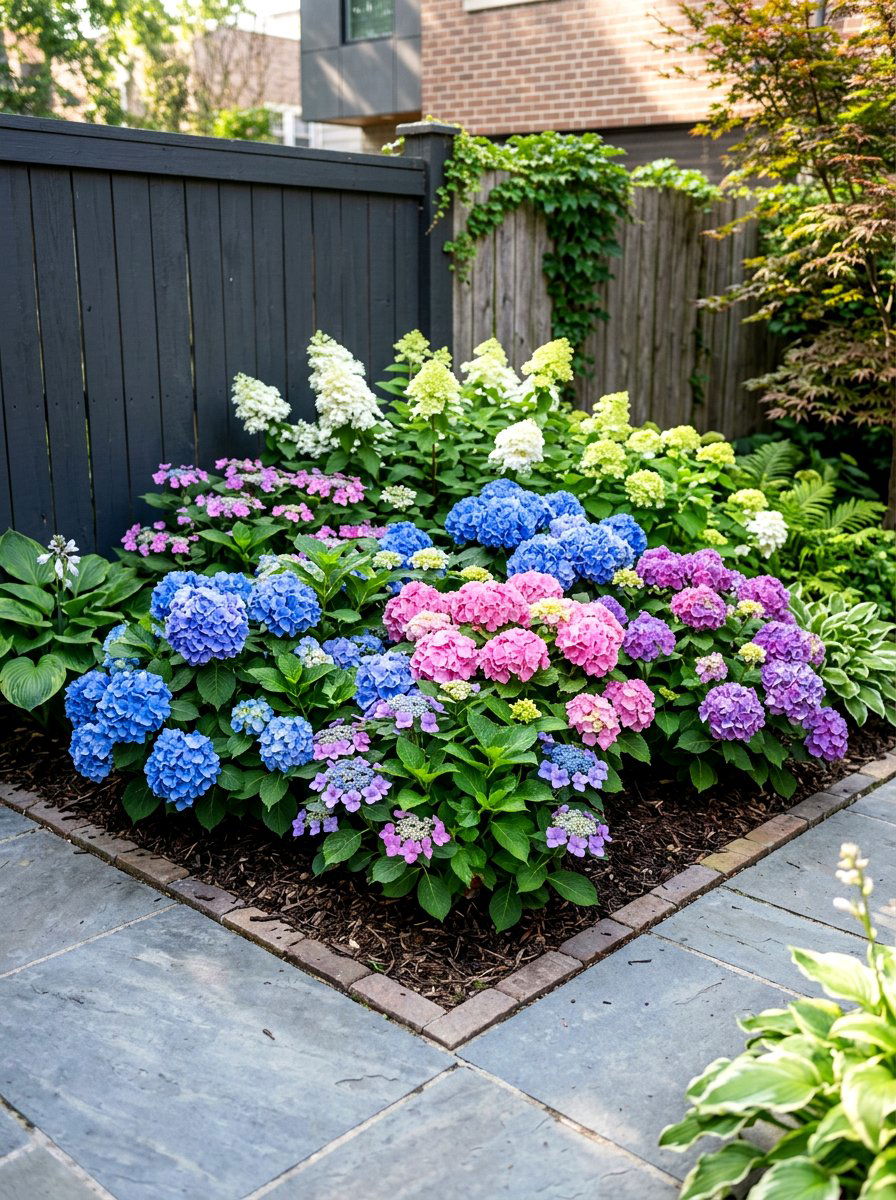
Does your front yard feel too small for a massive hedge, yet you still want that hydrangea impact? You can create a stunning focal point by grouping three different sizes of hydrangeas in a small, curved corner bed. Use a compact variety like Little Lime in the center and surround it with low-growing perennials or groundcovers. This arrangement adds depth and layers to a limited space without overwhelming the house. By choosing dwarf varieties, you ensure that the plants won't outgrow their spot and block your windows. It is a smart way to enjoy the beauty of hydrangeas while maintaining a balanced and proportionate landscape design.
9. Dwarf Hydrangea Sidewalk
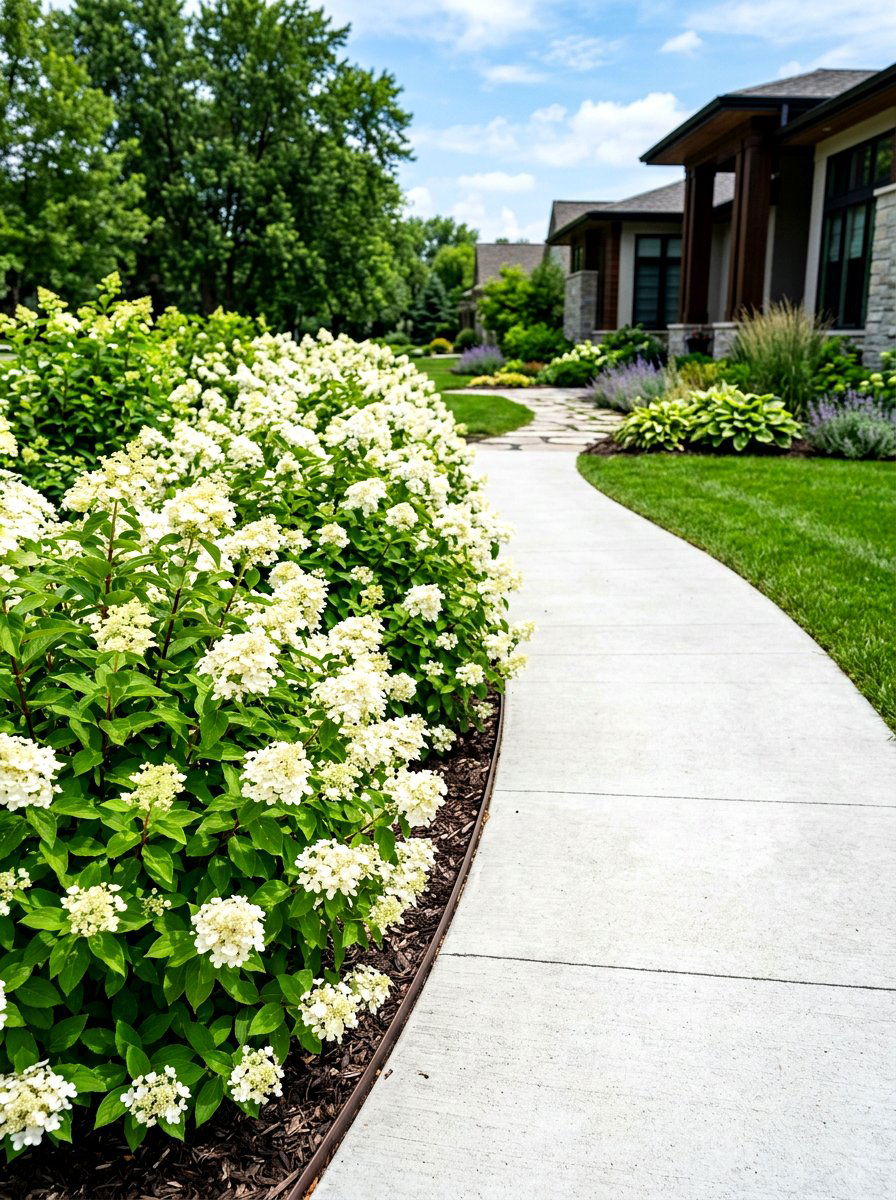
What if you could have a flowering border that stays perfectly petite without constant pruning? Dwarf hydrangea varieties, such as Bobo or Invincibelle Wee White, are ideal for planting directly along a narrow sidewalk. These plants typically stay under three feet tall, so they never encroach on the walking path or hide your front door. Their compact habit means they are packed with flowers from top to bottom, creating a very dense and tidy appearance. This is a great solution for modern homes with smaller lots where every inch of garden space counts. They offer the same dramatic bloom power as their larger cousins in a smaller package.
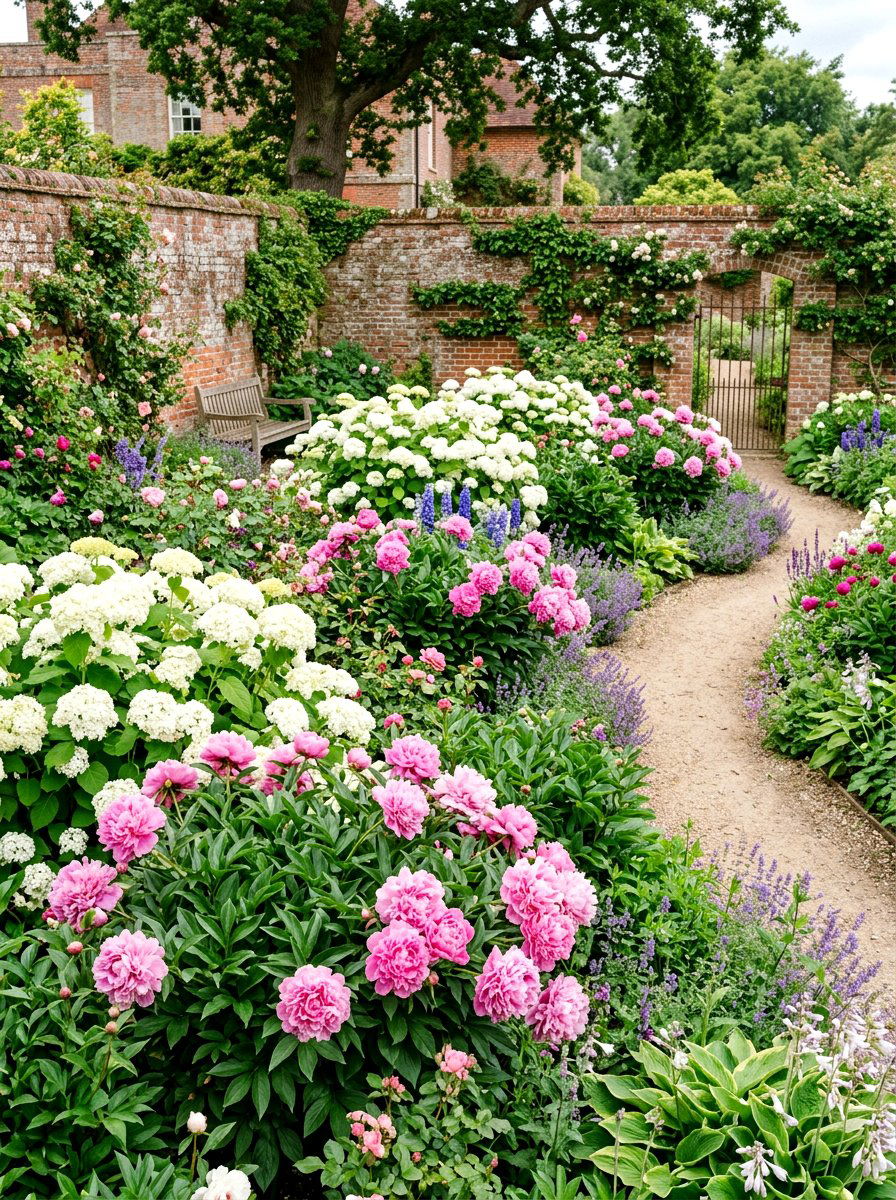
10. Picket Fence Hydrangea
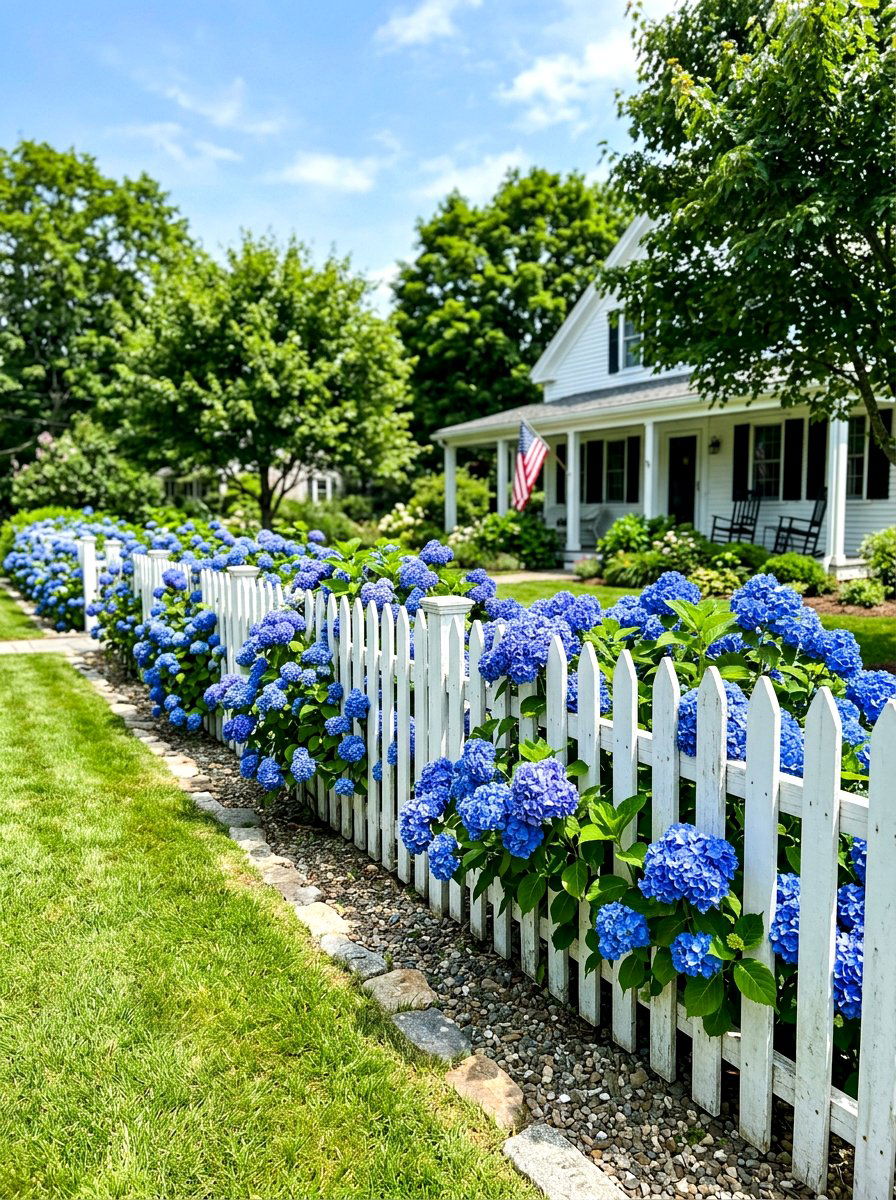
Is there a more iconic American landscape image than white hydrangeas peeking over a classic wooden picket fence? Planting these shrubs behind a fence allows the heavy flower heads to rest on the top rail, creating a whimsical and charming boundary. This setup is particularly effective for varieties that tend to droop, as the fence provides much-needed structural support. The contrast between the crisp white or blue flowers and the vertical slats of the fence adds instant character to your property. It creates a sense of "enclosed garden" while still remaining open and friendly to neighbors. It is a timeless design choice that never goes out of style.
11. Stone Retaining Wall Hydrangea
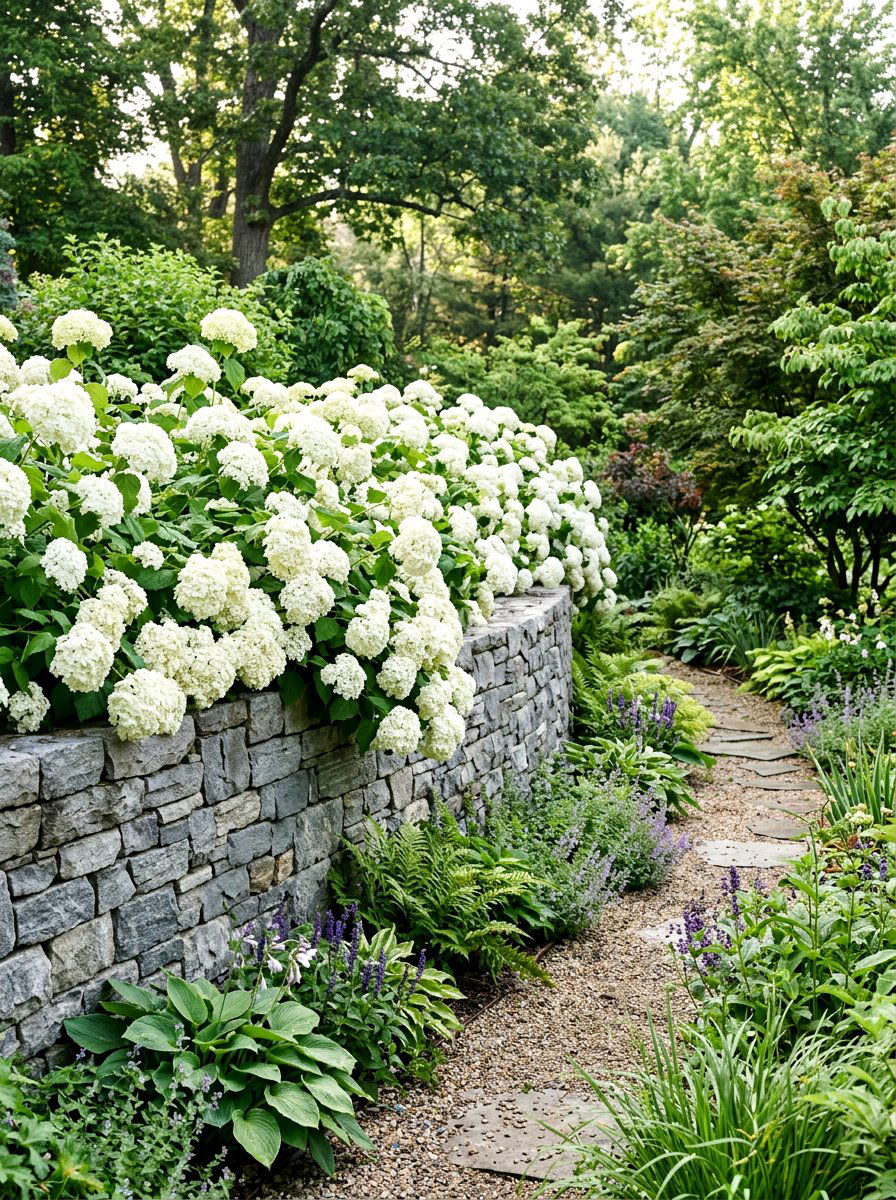
How can you soften the rugged look of a stone retaining wall in your front yard? Planting hydrangeas along the top edge of a wall allows their branches to drape gracefully over the stone, blending the hardscape with the natural environment. The cool, damp soil often found behind stone walls is exactly what hydrangeas love to thrive in. As the plants grow, they spill over the side, breaking up the harsh lines of the masonry. This creates a multi-dimensional look where the flowers appear to be cascading down toward the street. It is a brilliant way to turn a functional structural element into a beautiful garden feature.
12. Standard Tree Hydrangea Entrance
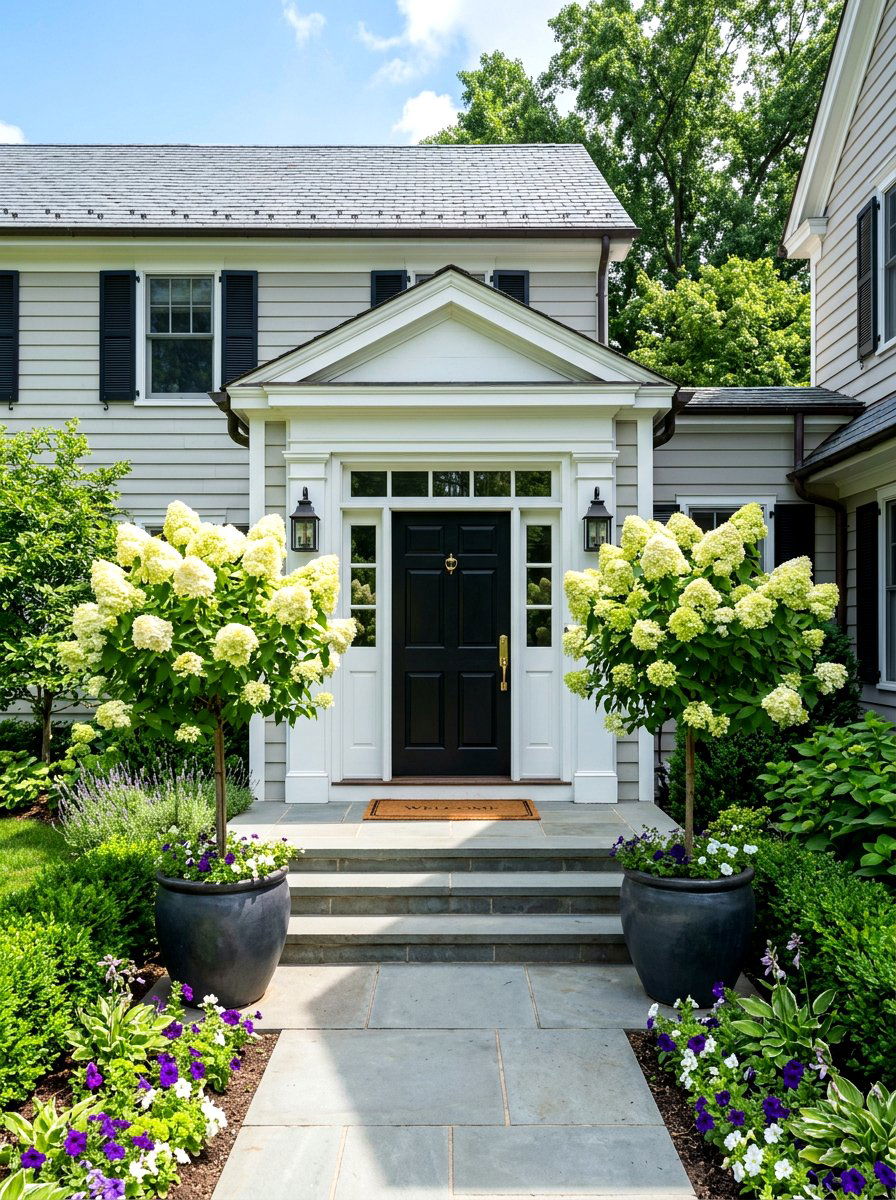
Would you like to add some height and drama to your front entrance with a unique floral display? Hydrangeas that have been trained into a "standard" or tree form make excellent anchors for either side of a front door. These mini-trees offer a sophisticated, formal look that works well with symmetrical home designs. They lift the blooms up to eye level, allowing you to enjoy the fragrance and detail of the flowers as you enter your home. You can plant low-growing annuals or ivy at the base of the trunk to complete the look. It provides a high-end, landscaped appearance that instantly increases the perceived value of your home.
13. Shade Garden Hydrangea
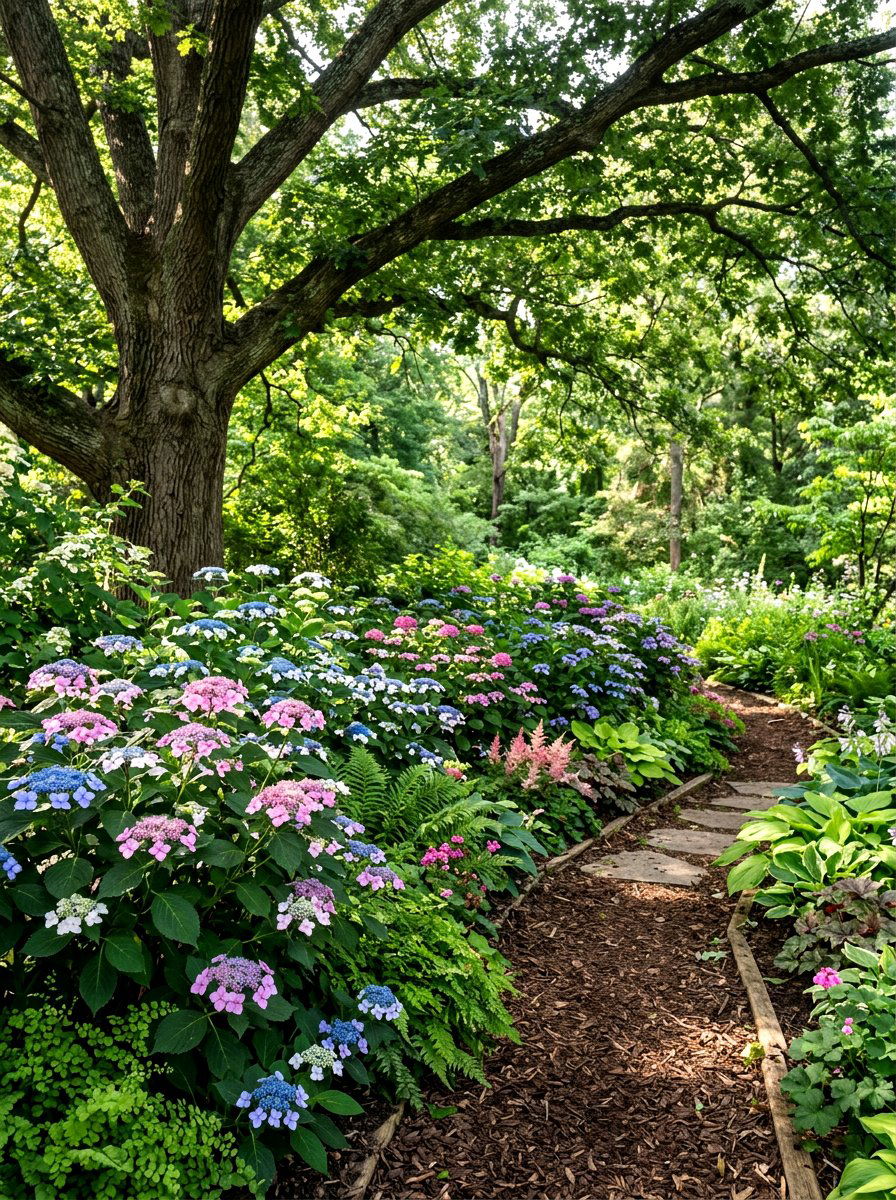
Do you have a front yard that is heavily shaded by large trees and find it hard to grow colorful flowers? Mountain hydrangeas and certain Bigleaf varieties are specifically adapted to thrive in lower light conditions. Creating a shade-loving border under a canopy of trees adds a cool, refreshing feel to your home’s exterior. These plants often have delicate, lacecap flowers that look more natural and wild than the heavy mophead types. The deep greens and subtle floral colors thrive where grass usually fails to grow. This turns a difficult "problem area" into a lush, woodland retreat that stays green and beautiful throughout the hottest months of the summer.
14. Modern Hydrangea Row
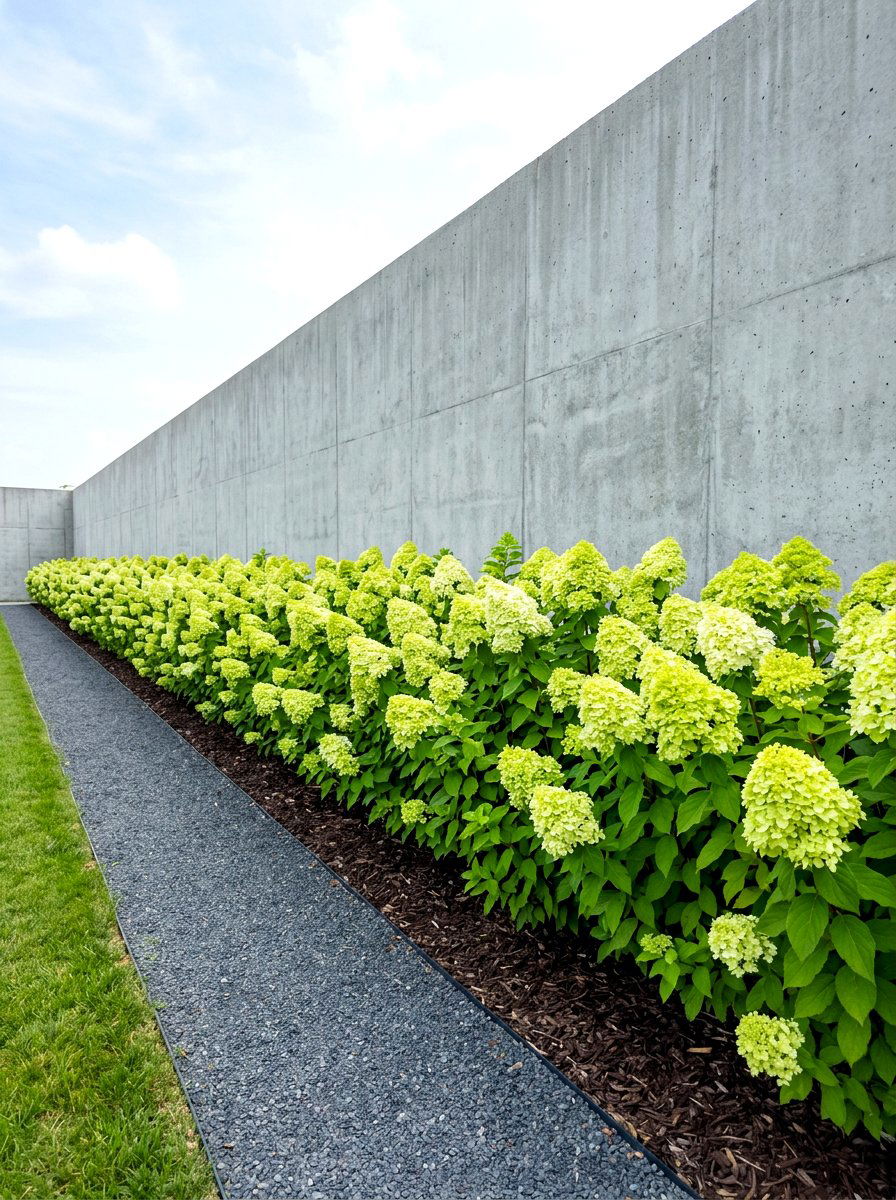
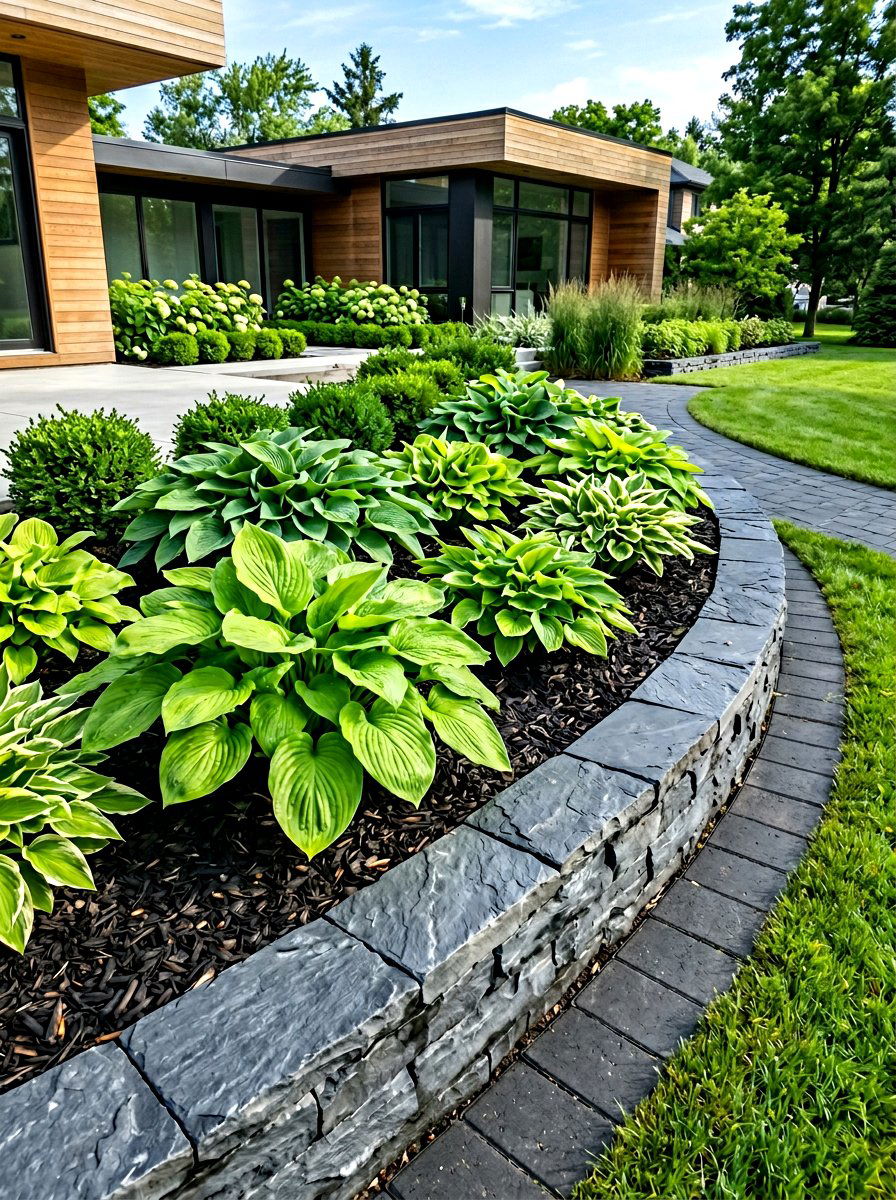
Can a hydrangea border work for a home with a very modern or minimalist architectural style? Absolutely, by planting a single variety in a perfectly straight, uniform row to emphasize clean lines and repetition. Use a variety with structural flowers, like the upright Limelight Prime, to maintain a tidy and architectural silhouette. Avoid mixing colors; instead, stick to a monochromatic palette of whites or greens to keep the look sophisticated and calm. This minimalist approach highlights the shape of the house rather than competing with it. It proves that hydrangeas can be just as contemporary as they are traditional when they are used with intentional and structured design.
15. Cottage Style Hydrangea
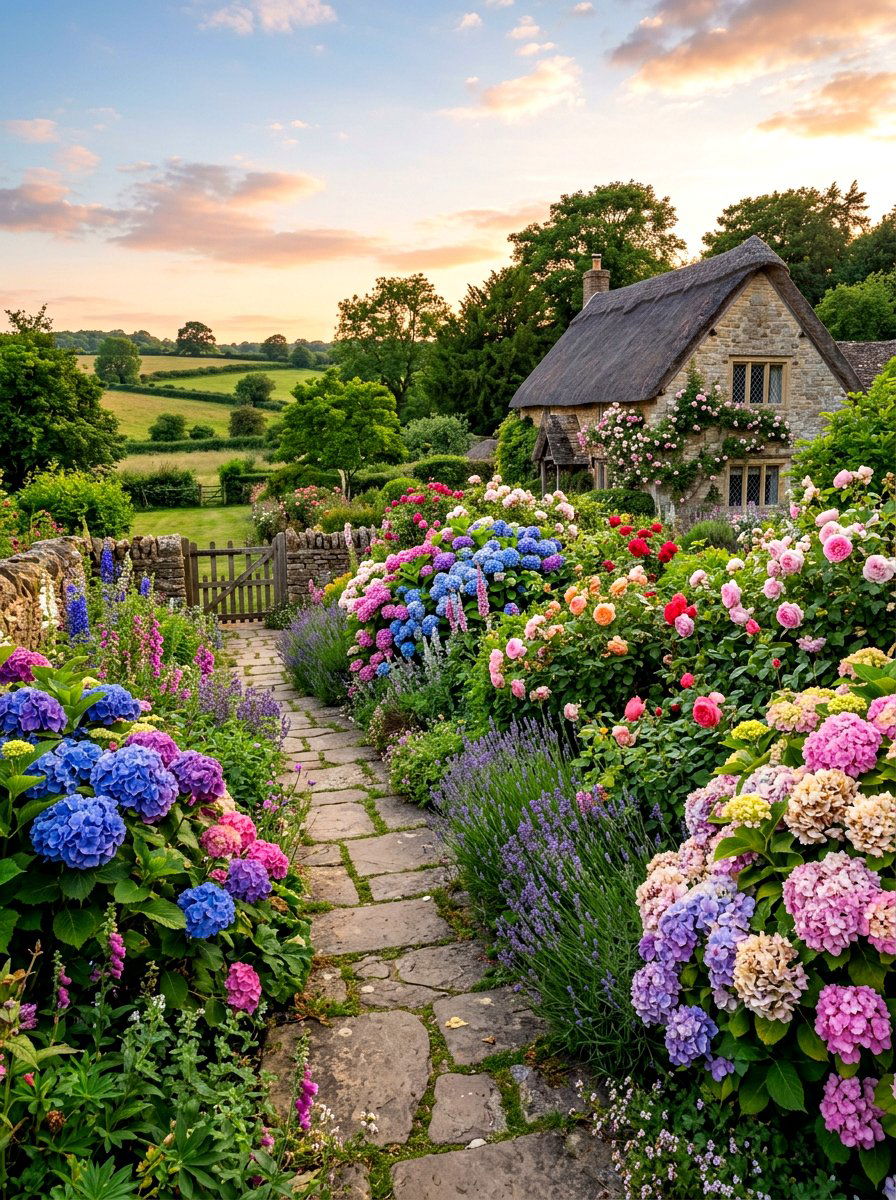
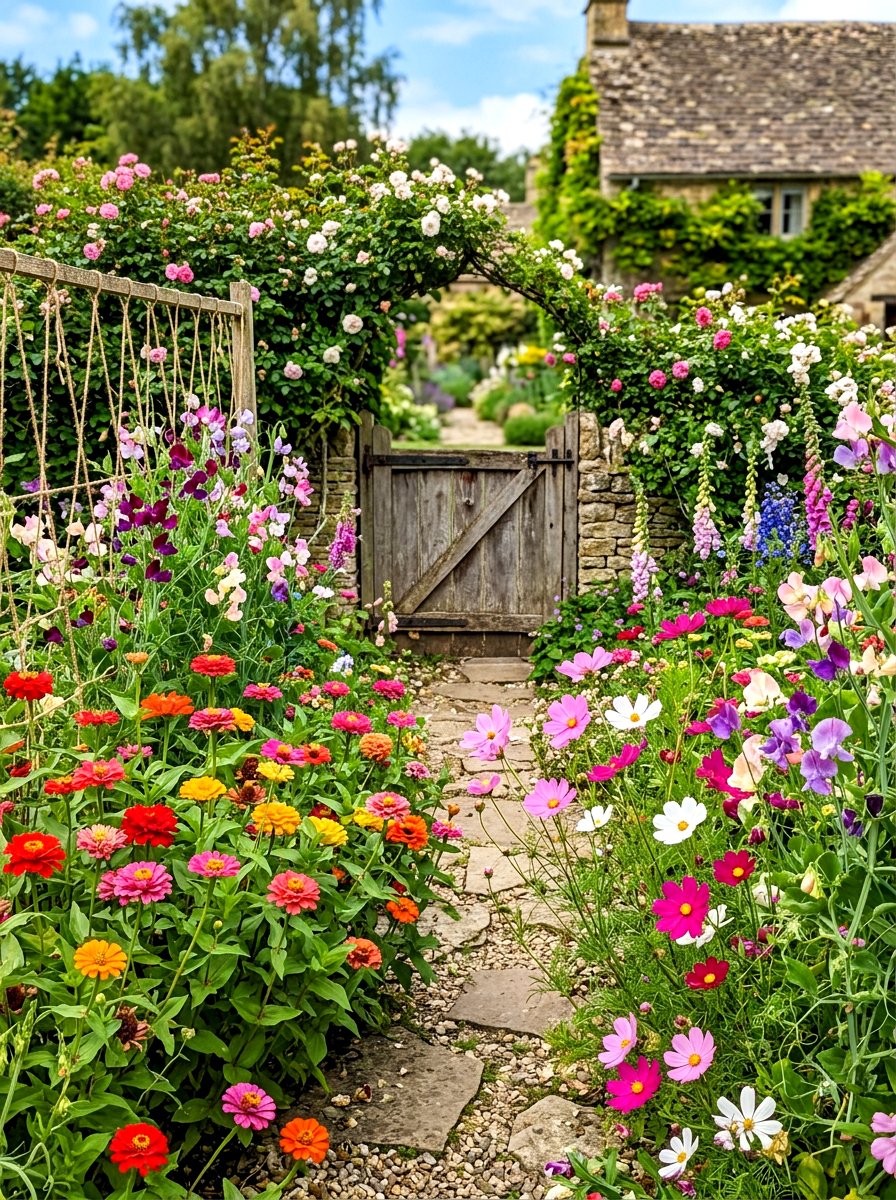
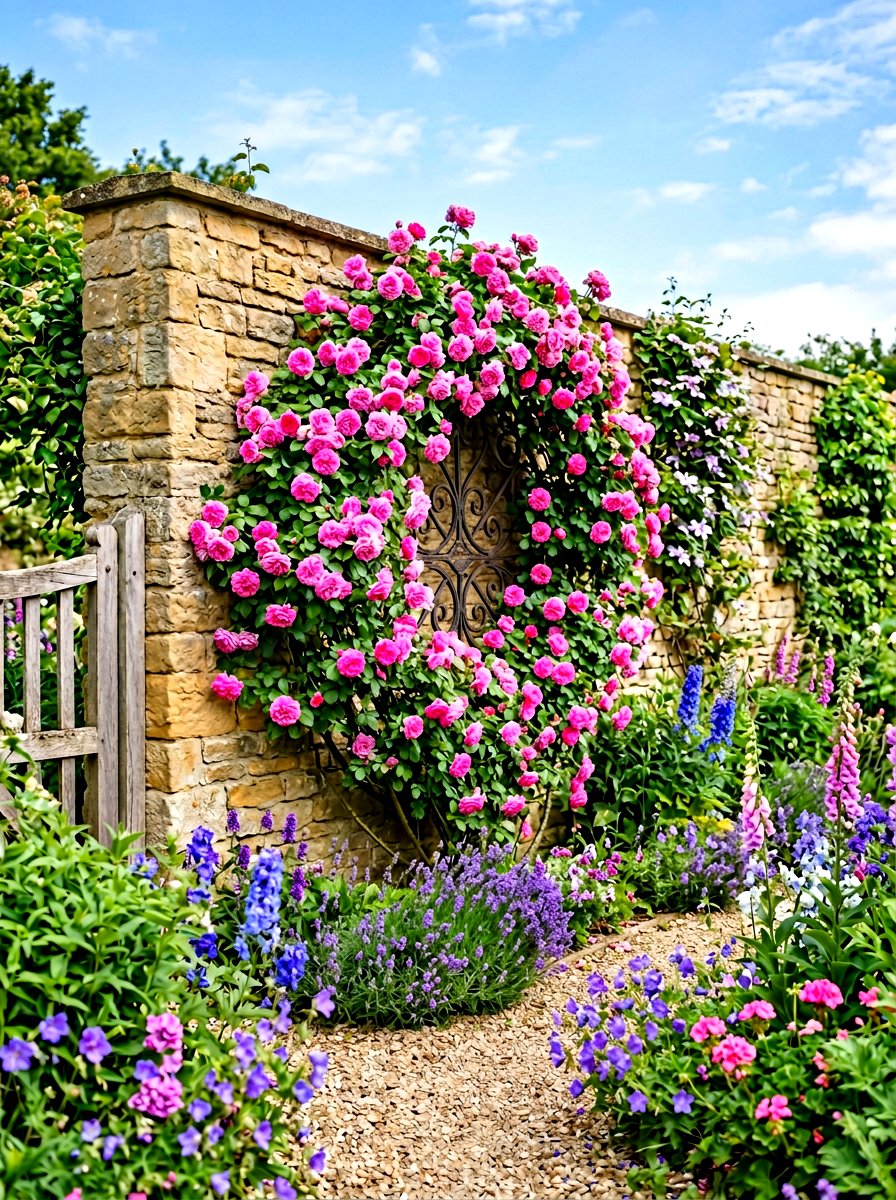
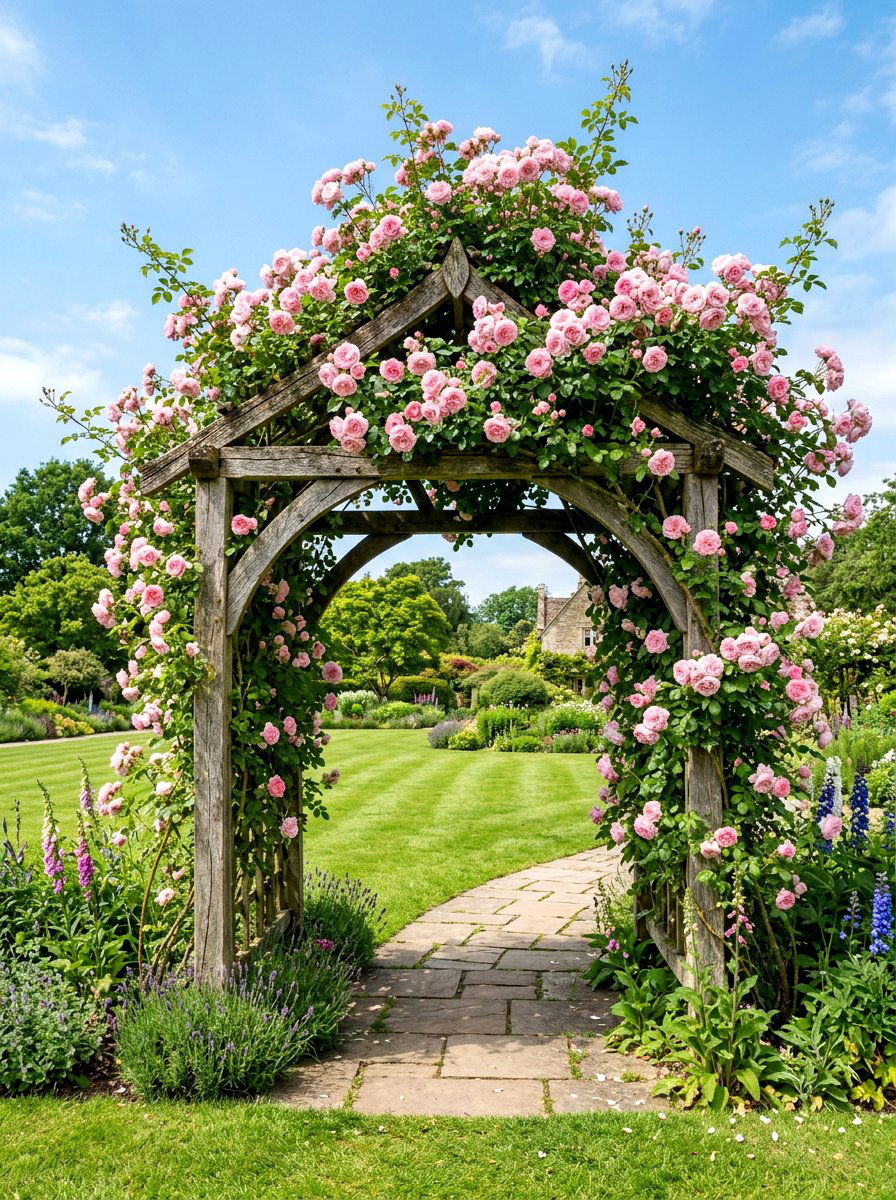
Are you dreaming of an informal, overflowing garden that feels like a cozy English countryside retreat? A cottage-style hydrangea border is all about abundance and mixing different textures and heights without a strict formal plan. Combine various hydrangea types with other classic perennials like delphiniums, foxgloves, and roses for a romantic, layered effect. Let the plants grow into each other to create a dense tapestry of foliage and flowers. This style is very forgiving and actually looks better when it appears slightly overgrown and natural. It creates a warm, lived-in feel for your home that is incredibly welcoming to guests and passersby who appreciate a lush garden.
16. Lavender And Hydrangea Pairing
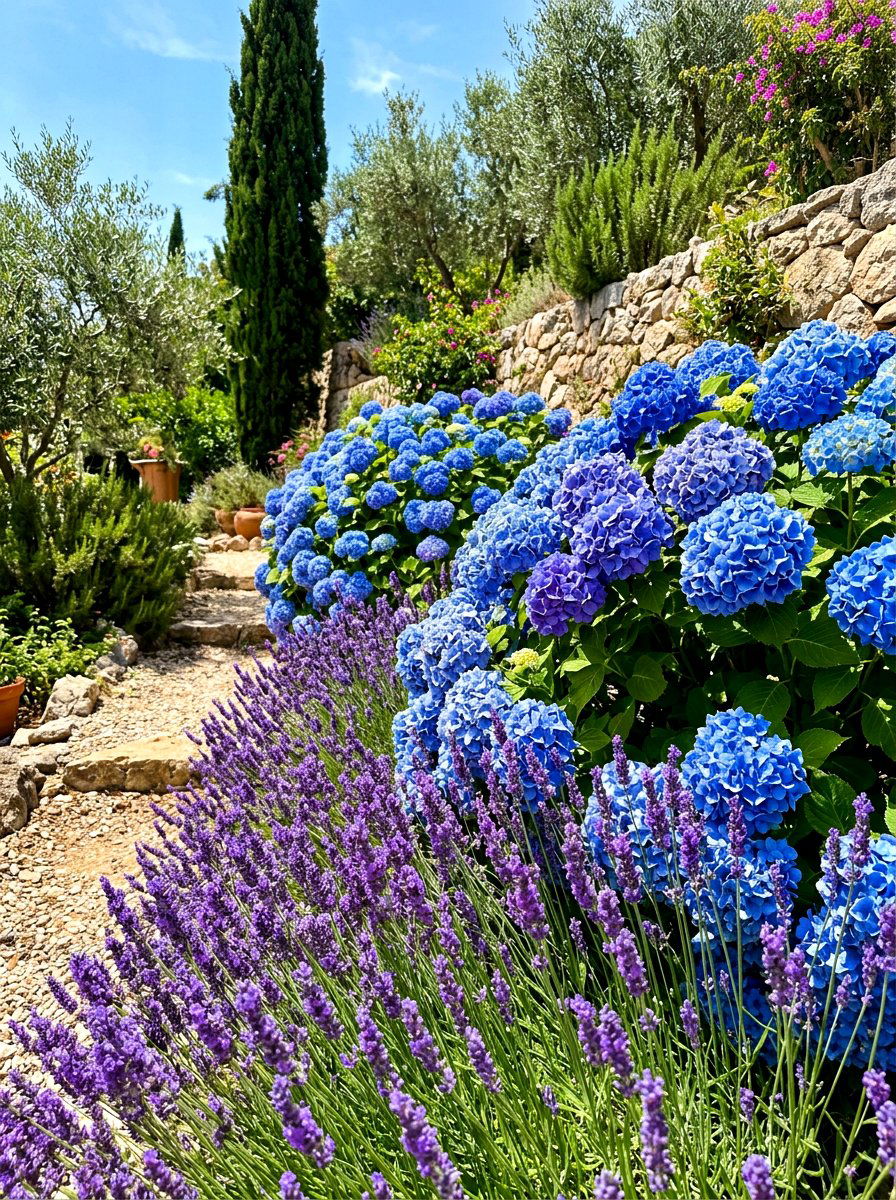
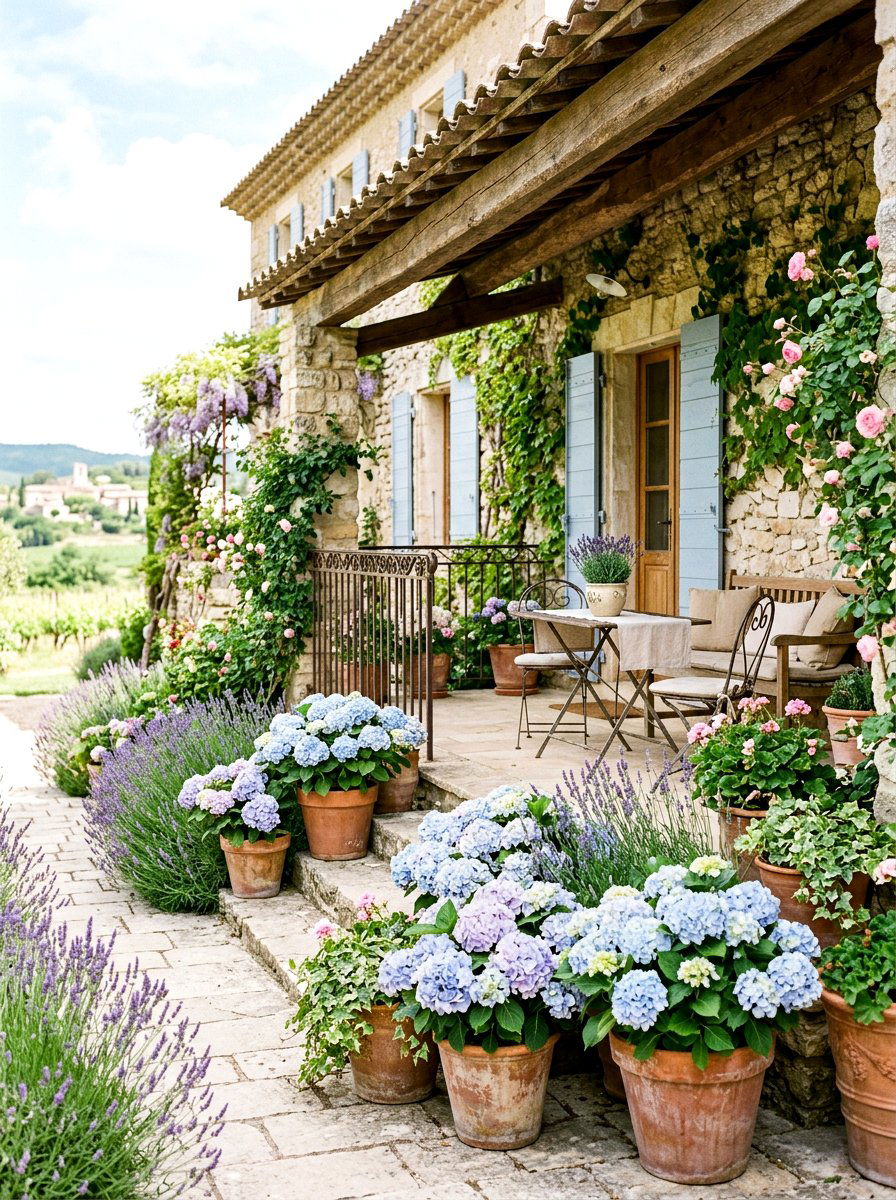
What happens when you combine the silvery foliage of lavender with the bold blooms of a hydrangea border? This pairing is a sensory delight, offering both incredible visual contrast and a wonderful fragrance near your front windows. Lavender thrives in the sunnier spots at the front of the border, while the larger hydrangeas provide a tall backdrop. The purple spikes of the lavender complement the round shapes of the hydrangea clusters perfectly. Both plants evoke a Mediterranean or French country vibe that is very popular for curb appeal. This combination also attracts butterflies and bees, bringing life and movement to your front garden throughout the sunny summer days.
17. Boxwood Hydrangea Foundation
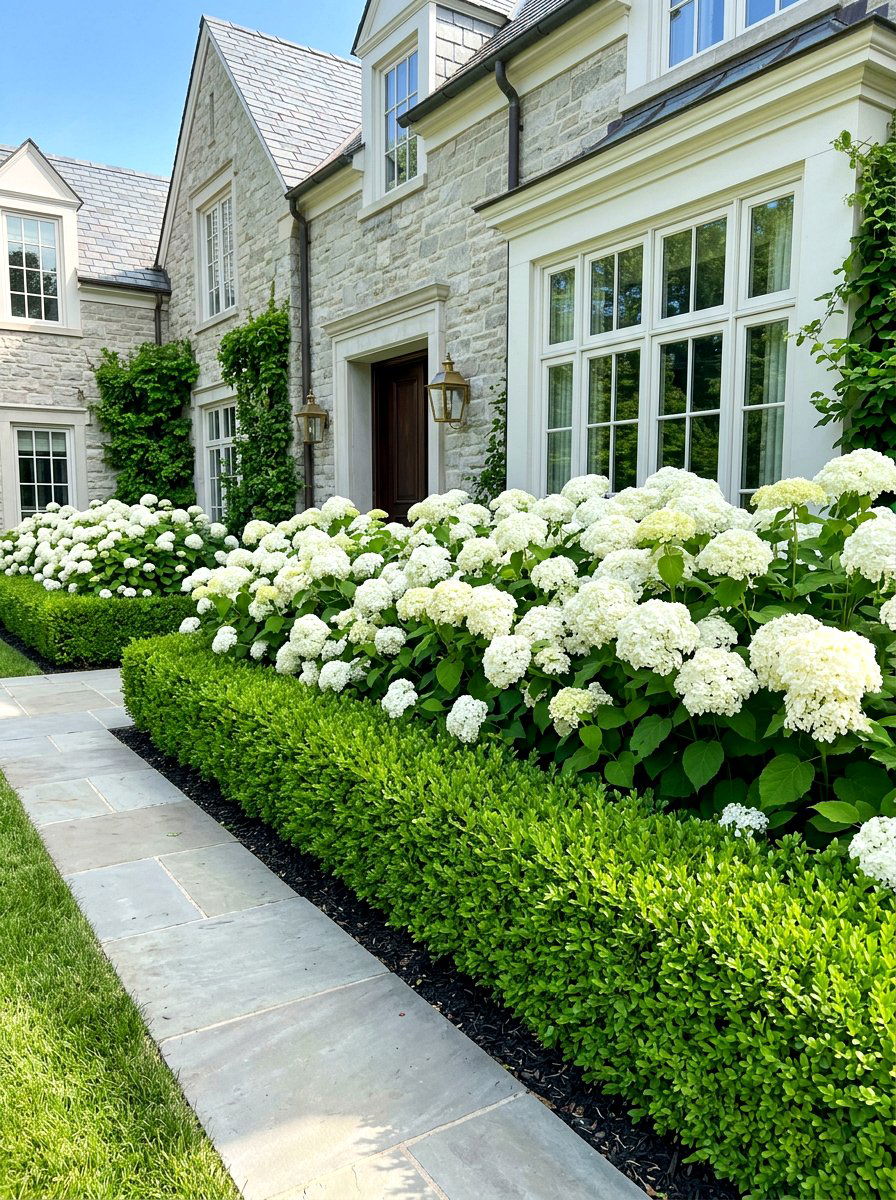
Do you want your hydrangea border to look structured and green even during the cold winter months? Pairing deciduous hydrangeas with evergreen boxwood shrubs is a classic landscaping trick for year-round curb appeal. The boxwoods provide a low, green frame that keeps the garden looking "neat" when the hydrangeas have dropped their leaves. During the summer, the bright flowers of the hydrangeas pop against the dark, dense green of the boxwood hedge. This layered look adds a professional touch to your foundation planting. It ensures that your home never looks bare or neglected during the off-season, which is crucial for maintaining a high-quality aesthetic.
18. Climbing Hydrangea Wall
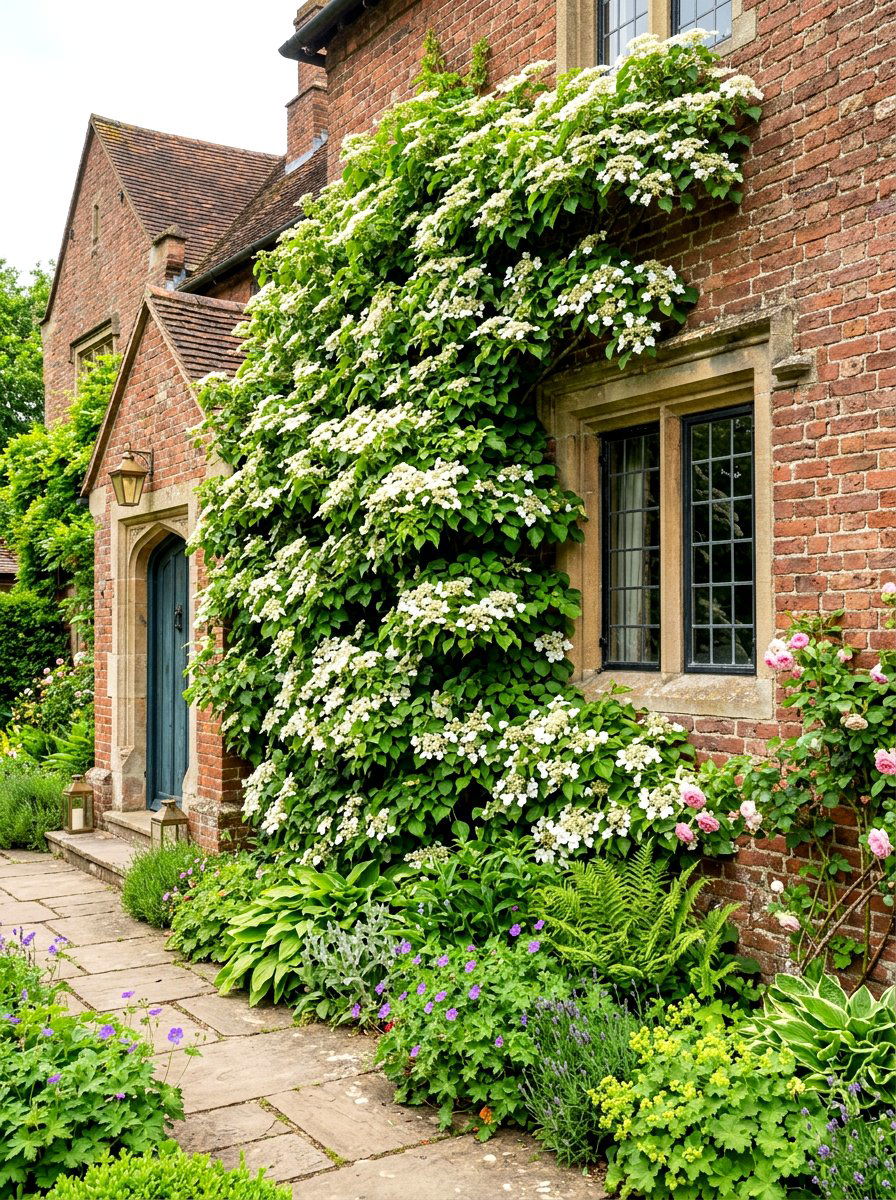
Is there a blank brick or stone wall on the front of your house that looks a bit too cold? A climbing hydrangea is a slow-growing but magnificent vine that can transform a plain facade into a vertical garden. Unlike some invasive vines, climbing hydrangeas use small rootlets to attach themselves, creating a lush green "wall" over time. They produce flat, white lacecap flowers in early summer that stand out beautifully against dark brick or wood siding. Even in the winter, the peeling cinnamon-colored bark provides a unique architectural interest. It is a long-term investment that adds a tremendous amount of character and "old-world" charm to your exterior.
19. Layered Height Hydrangea Garden
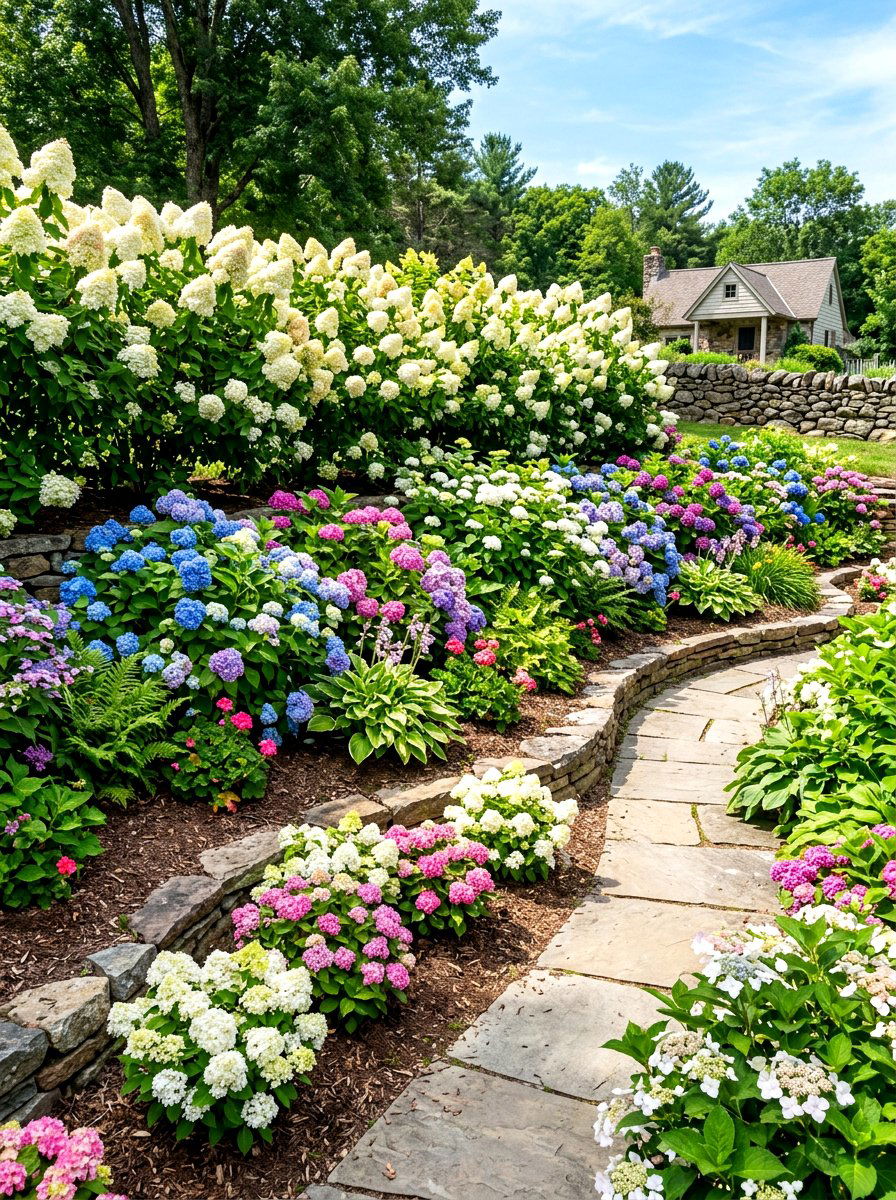
How do you create a front yard border that has professional depth and visual interest from every angle? The secret lies in layering different varieties of hydrangeas based on their mature height and growth habits. Place tall panicle varieties in the back against the house, medium mopheads in the middle, and dwarf varieties along the front edge. This "stair-step" effect ensures that every plant is visible and that the border looks full and lush. By using different species, you also extend the blooming period, as different types often flower at slightly different times. This structured approach makes your front yard feel like a carefully curated botanical display.
20. Autumn Color Hydrangea
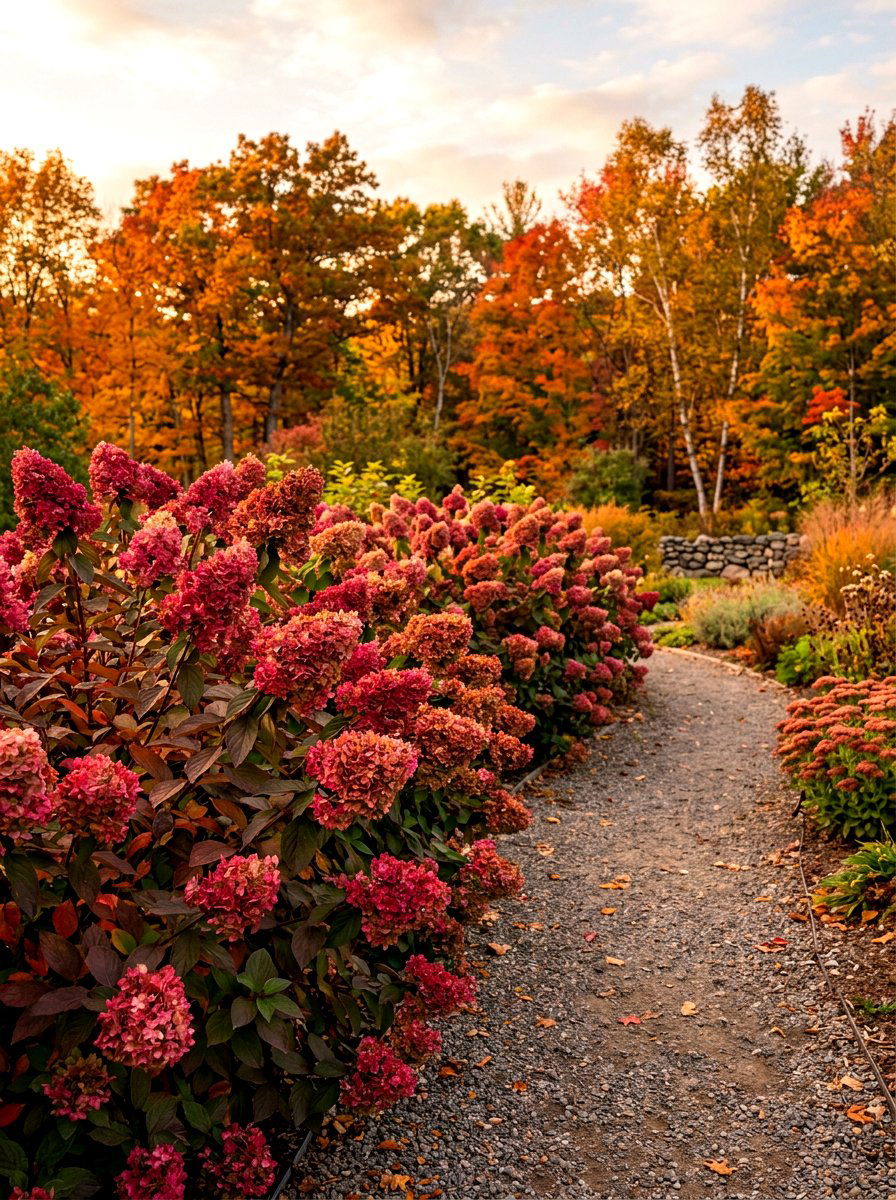
Did you know that some hydrangeas actually look their best when the summer heat begins to fade away? Certain varieties, especially the panicle and oakleaf types, are prized for their dramatic color transformations in the late fall. As the temperatures drop, the white blooms turn deep shades of raspberry, bronze, and even rich purple. The foliage also joins in the show, with some leaves turning bright orange or deep burgundy. Selecting these varieties ensures that your curb appeal doesn't disappear when the summer ends. Instead, your home becomes a highlight of the neighborhood during the autumn months, providing a warm and colorful welcome during the holidays.
21. Potted Hydrangea Front Steps
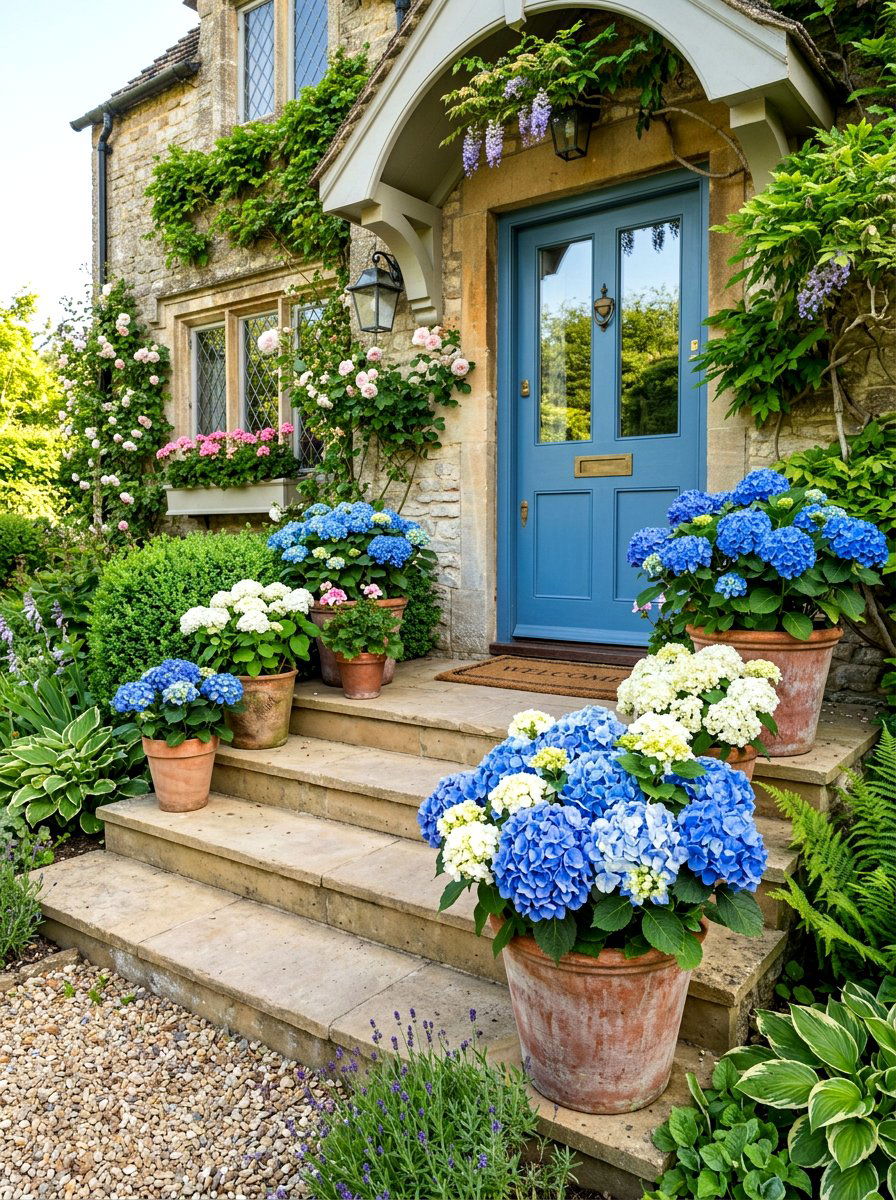
What if you have no soil space at all but still want the beauty of a hydrangea border? You can create a "portable" border by lining your front steps or porch with large, decorative containers filled with hydrangeas. Many newer varieties are specifically bred to thrive in pots, staying compact while still producing a huge amount of flowers. This allows you to bring the color right up to your front door, regardless of your yard's layout. You can even swap the pots out or move them around to refresh your look whenever you feel like a change. It is a perfect solution for urban homes or those with large paved entryways.
22. Under Tree Shade Hydrangea
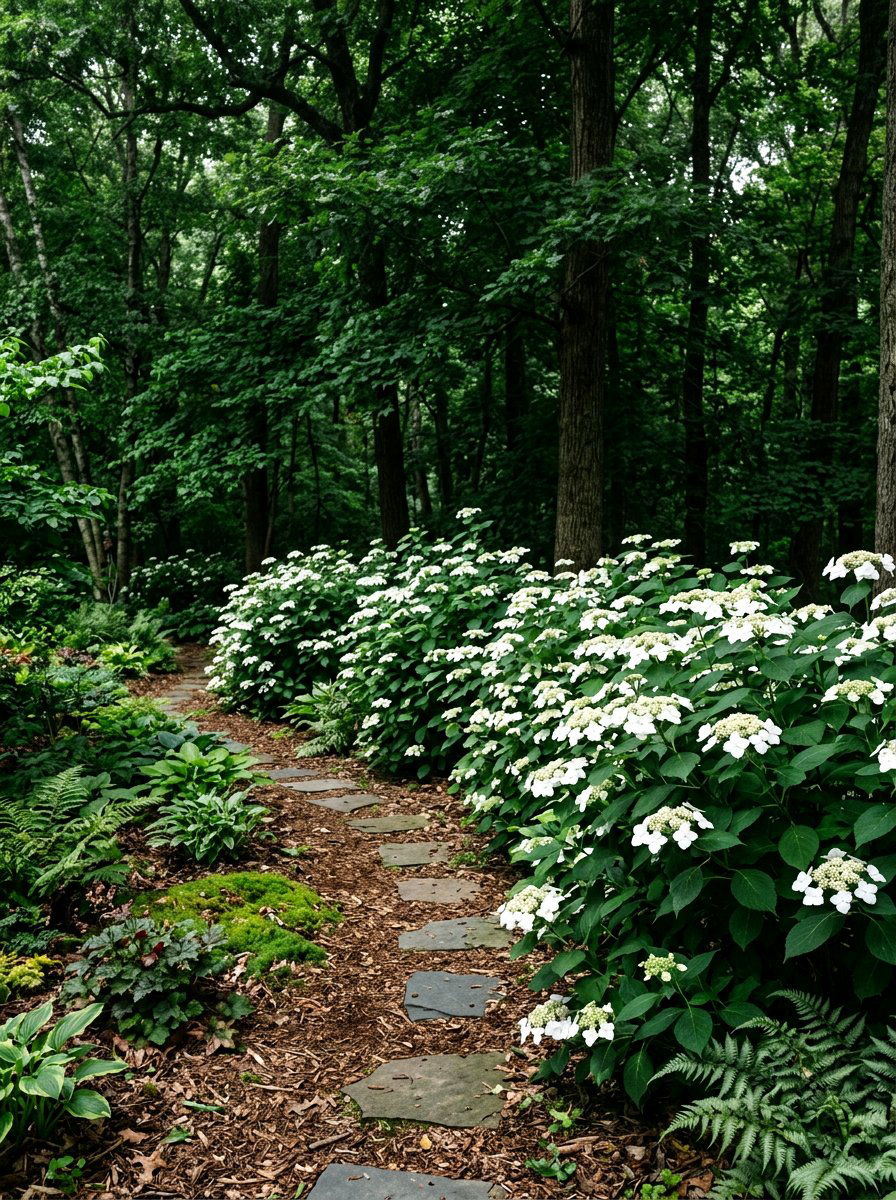
Have you struggled to find something that looks beautiful and thrives in the deep shade of a mature front yard tree? Many people make the mistake of trying to grow grass, but a hydrangea border is often a much better solution. Because hydrangeas have shallow root systems, they can coexist with trees if they are given enough water and mulch. The white flowers of a lacecap hydrangea can "light up" a dark, shaded corner under an oak or maple tree. This creates a naturalized, woodland look that feels very peaceful and established. It turns a bare, dusty patch of dirt into a flourishing and attractive part of your landscape.
23. Incrediball White Border
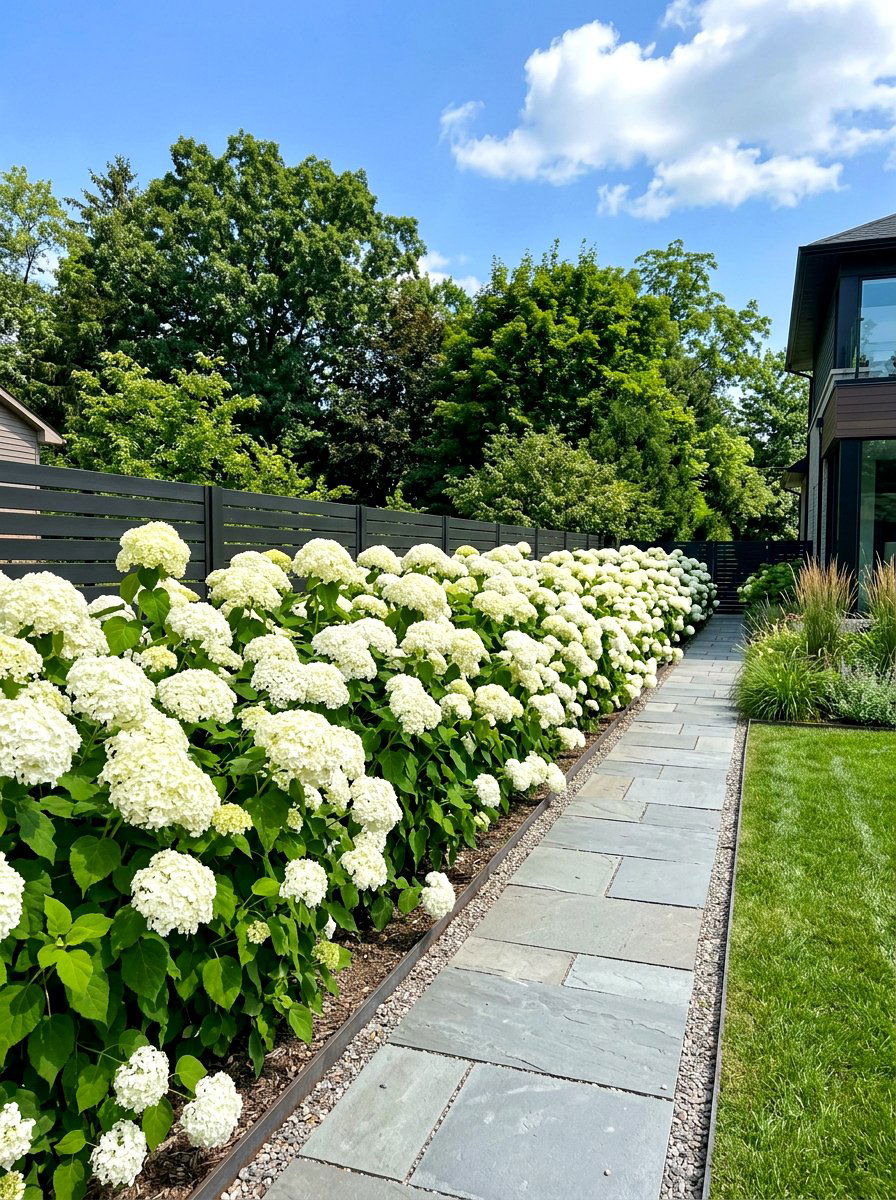
Are you looking for a hydrangea that has the biggest possible impact with the least amount of maintenance? The Incrediball hydrangea is a modern update to the classic Annabelle, featuring even larger flower heads and much sturdier stems. This means the massive white blooms won't flop over after a summer rainstorm, keeping your front border looking pristine and upright. They are incredibly cold-hardy and bloom reliably every single year without fail. Planting a long row of these along a property line or foundation creates a bold, white statement that is visible from blocks away. It is the ultimate choice for a low-fuss, high-reward curb appeal boost for any home.
24. French Country Front Yard
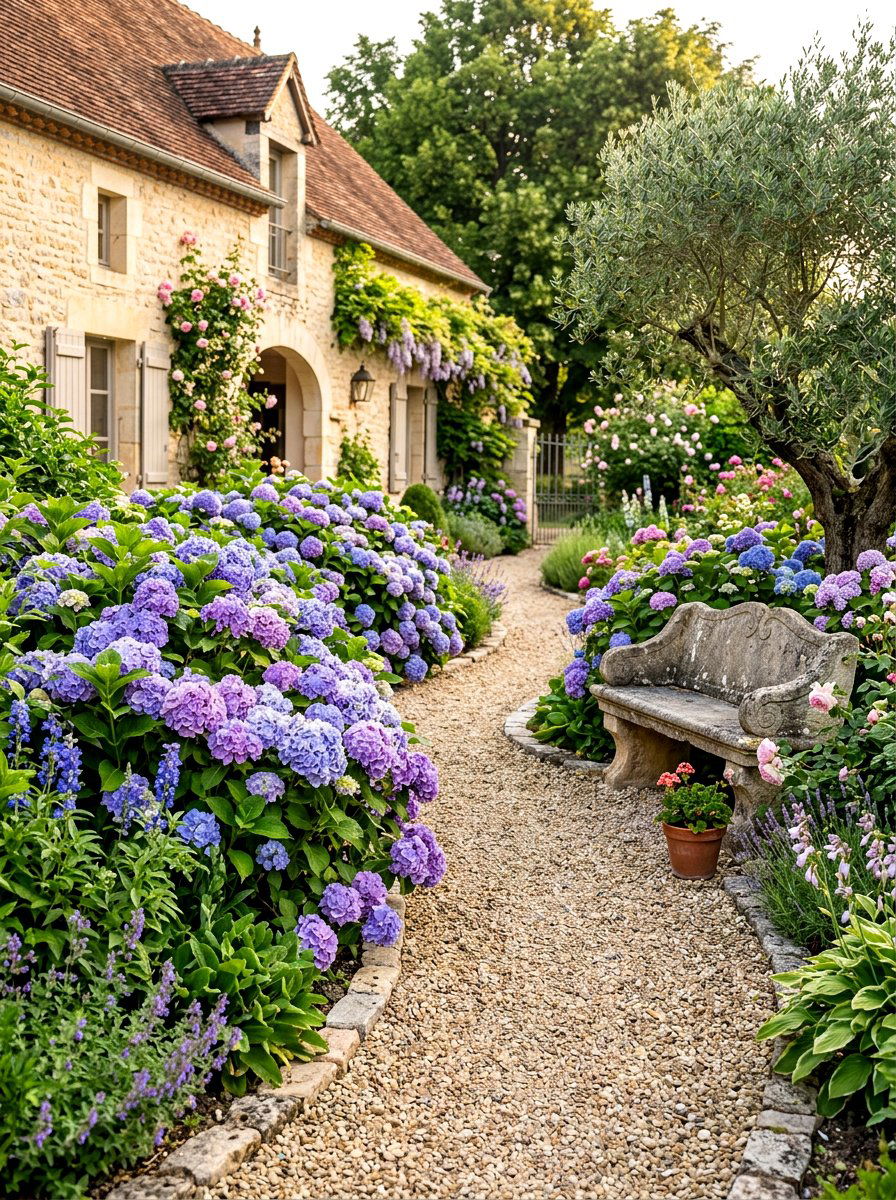
Do you love the look of a romantic, rustic estate in the French countryside? To achieve this, create a hydrangea border that incorporates natural stone, lavender, and weathered wood elements into the design. Use a mix of soft blue and purple hydrangeas to mimic the cool tones often found in European gardens. Allow the plants to grow slightly larger and more "wild" rather than keeping them strictly pruned into spheres. This relaxed, effortless elegance makes a home feel storied and charming. It is a design style that celebrates the natural beauty of the plant and creates a very soothing environment for anyone who approaches your front door.
25. Coastal Blue Hydrangea Garden
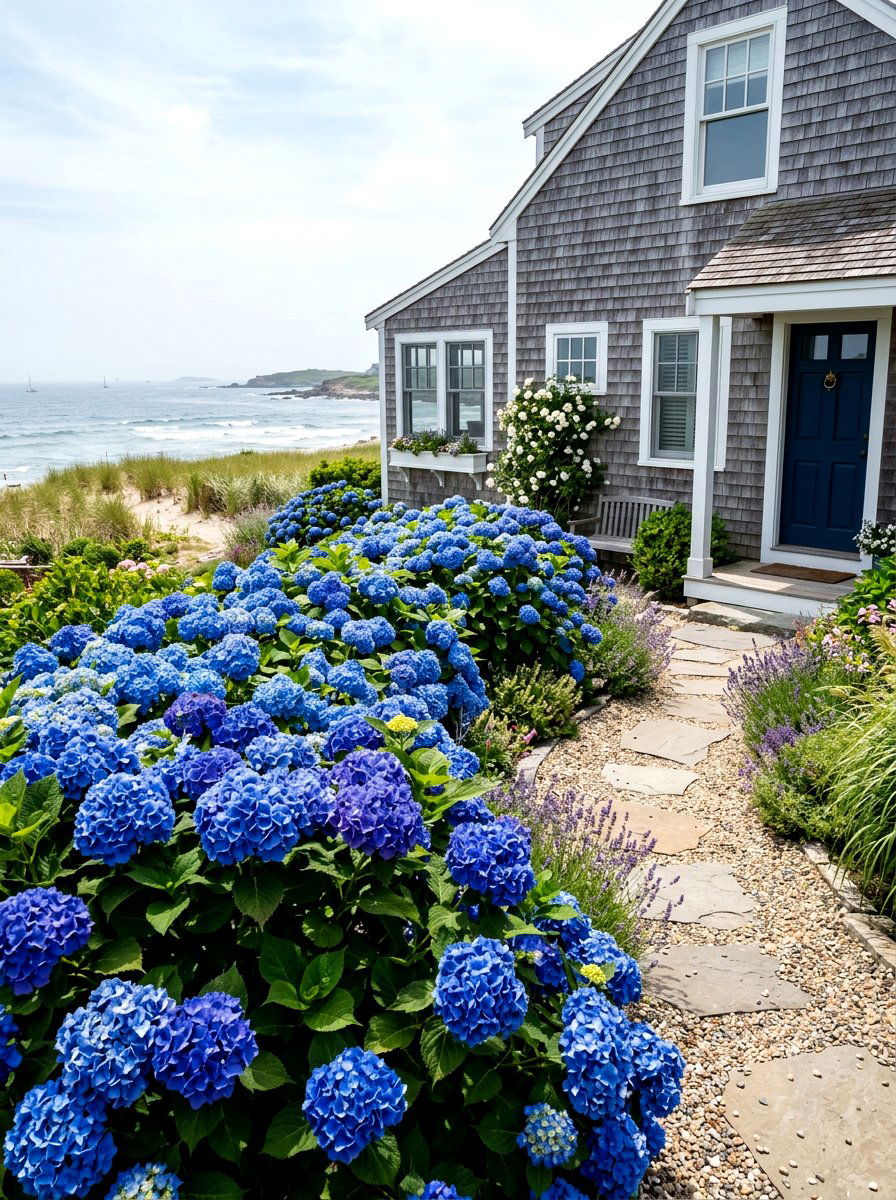
Is your home located near the water, or do you simply want to capture that breezy, seaside feeling? Coastal curb appeal is almost synonymous with vibrant blue hydrangeas, which thrive in the humid, salty air of beach communities. Plant them in mass groupings along the front of your house to create a wave of blue that echoes the ocean. The acidic soil found in many coastal regions naturally turns these flowers a deep, brilliant indigo. Contrast the blue blooms with white-painted trim or grey-weathered shingles for the ultimate seaside aesthetic. It is a classic look that feels fresh, clean, and perfectly suited for a relaxed summer home atmosphere.
26. Bobo Dwarf Panicle Row
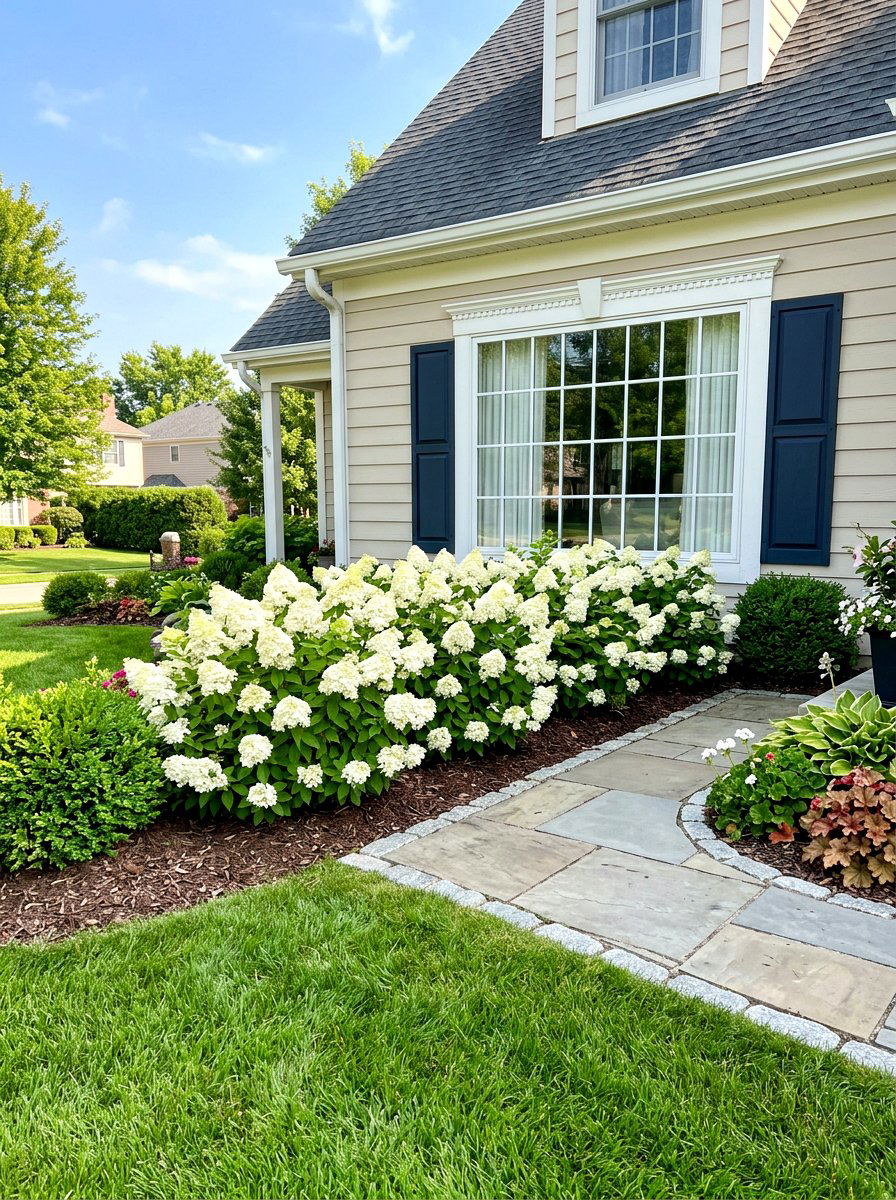
What if you want the look of a panicle hydrangea but only have a very small space to work with? The Bobo hydrangea is a dwarf variety that stays around three feet tall but is completely covered in large white flowers. When planted in a row, they create a dense, flowery hedge that looks like a cloud of white at the edge of your yard. Because they are so small, they are perfect for planting underneath low windows where a regular hydrangea would eventually block the view. They are tough, easy to grow, and provide a huge amount of floral "bang for your buck" in a very compact footprint.
27. Variegated Leaf Hydrangea
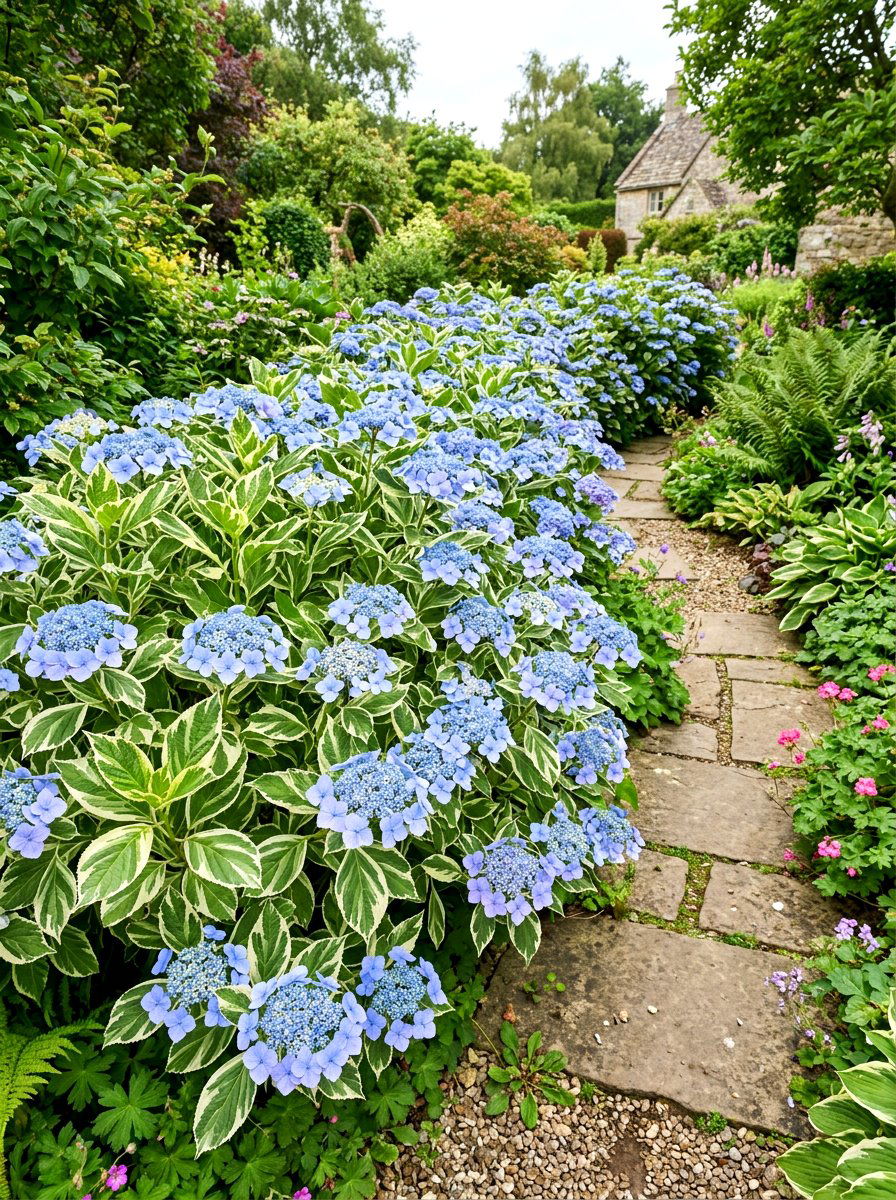
Have you ever seen a hydrangea that has leaves just as beautiful as its flowers? Variegated hydrangeas feature green leaves with crisp white or cream-colored edges, providing a bright "light" in the garden even when the plant isn't blooming. This makes them a fantastic choice for a front border that needs year-round leaf interest. The flowers are usually lacecap style, which adds a delicate and sophisticated touch to the overall look. Planting these against a dark-colored house or in a shady corner provides an instant brightening effect. It is a great way to add a layer of "designer" detail to your home’s landscaping that most people will notice immediately.
28. Pinky Winky Tree Line
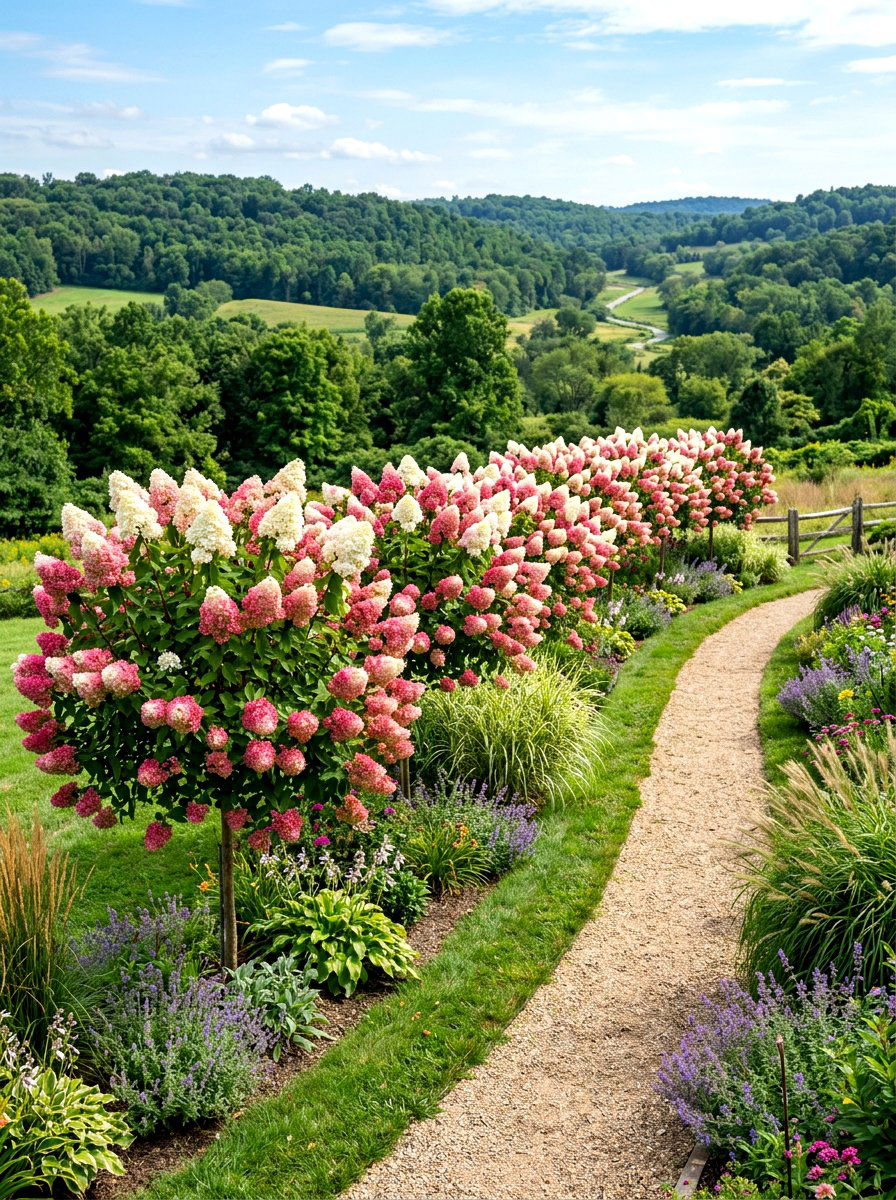
Are you looking for a hydrangea that provides a unique, two-toned color effect for your front yard? Pinky Winky hydrangeas are famous for their massive panicles that are white at the tip and deep pink at the base. This creates a stunning "bicolor" look that is unlike any other shrub in the neighborhood. When grown as a line of small trees or large shrubs along a property boundary, they provide a vertical interest that is truly spectacular. The stems are very strong and upright, so they maintain their shape beautifully throughout the summer. It is a bold, colorful choice that makes a very strong and positive statement about your home.
29. Ruby Slipper Oakleaf
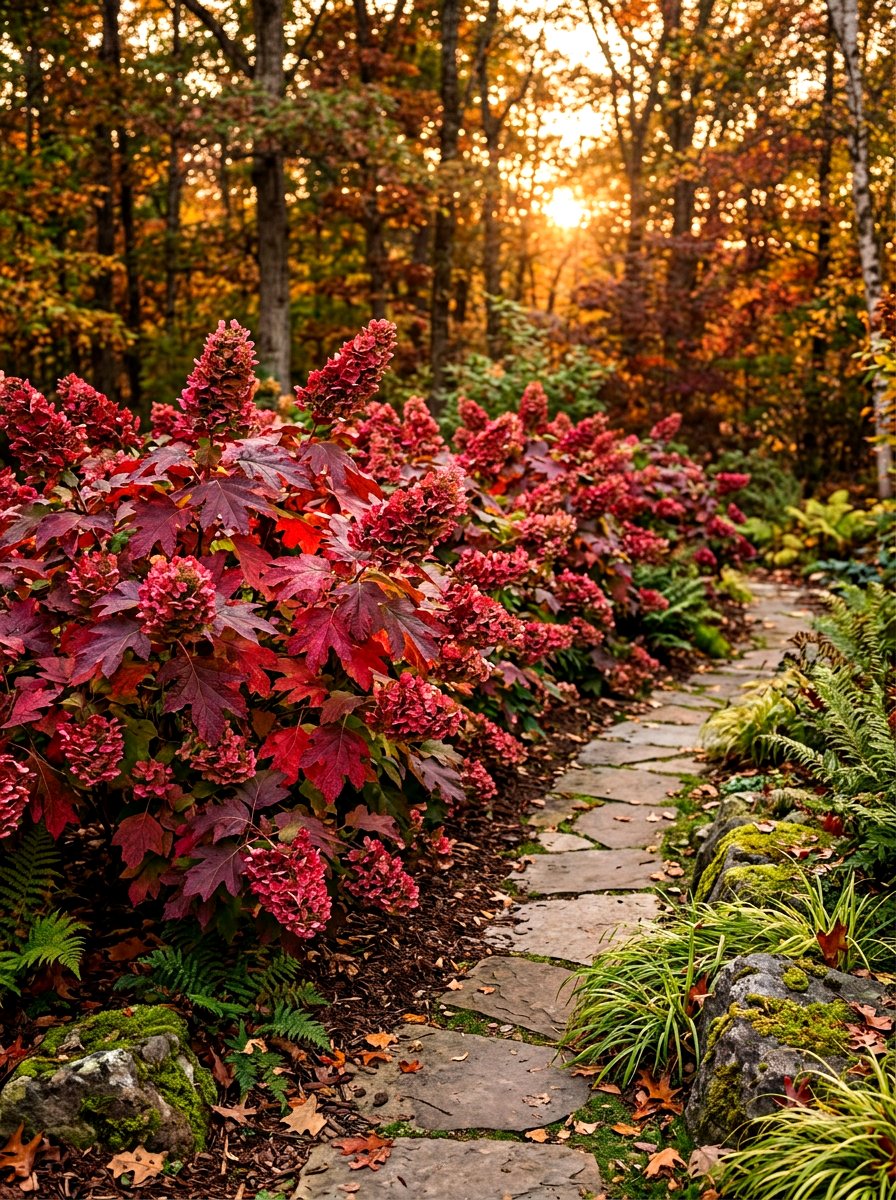
Do you want a hydrangea that stays small but packs a punch with its flower and foliage color? The Ruby Slipper is a compact version of the Oakleaf hydrangea that is perfect for smaller front borders. It produces large white flower clusters that quickly turn a deep, ruby red as they age. This variety is specifically bred to stay about four feet tall, making it much easier to manage in a typical suburban yard. The dark green, textured leaves provide a great backdrop for the changing flower colors. It is an excellent choice for adding a touch of sophisticated, woodland beauty to your home’s entrance or side yard area.
30. Mountain Hydrangea Slope
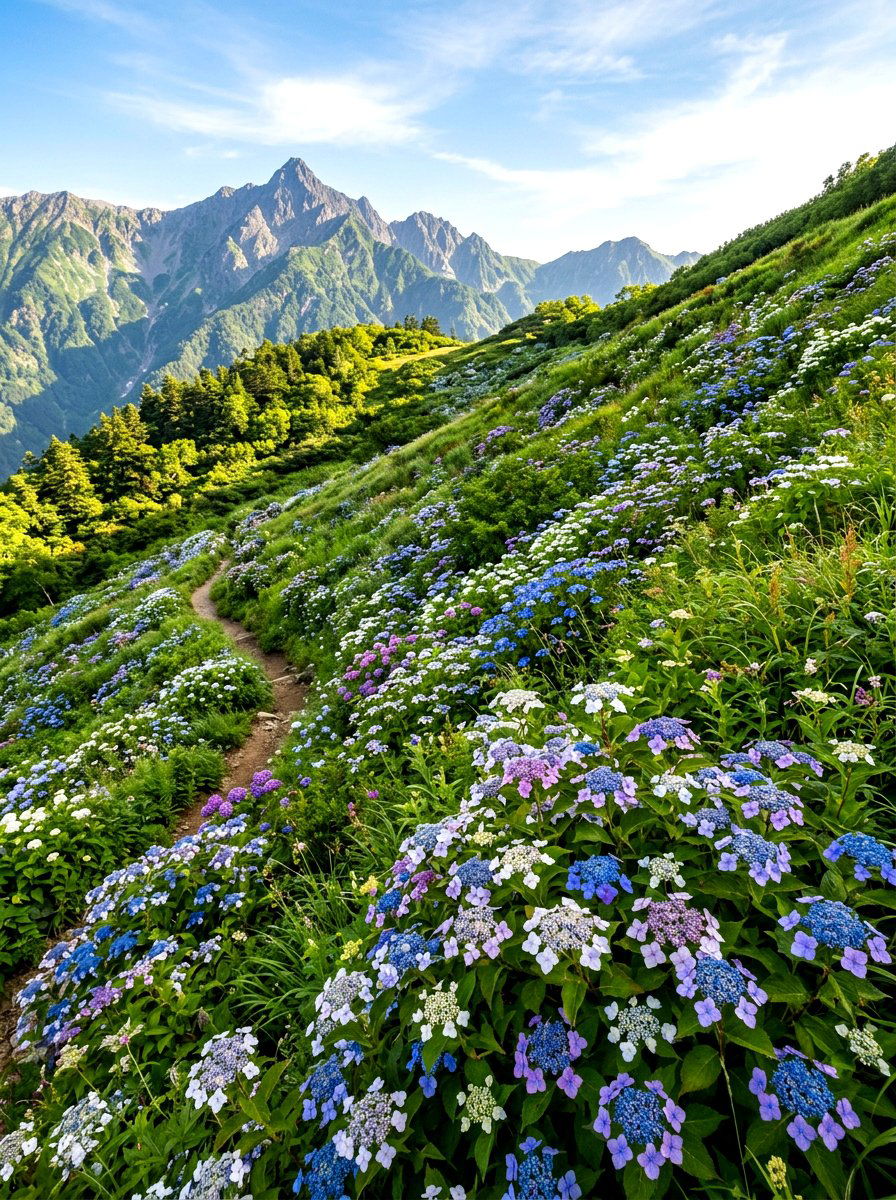
How do you deal with a front yard that has a steep slope where most plants struggle to grow? Mountain hydrangeas are naturally adapted to rocky, sloped environments and can help stabilize the soil while providing a beautiful floral display. These plants are generally more cold-hardy than Bigleaf hydrangeas, making them great for northern climates. Their lacecap flowers come in delicate shades of blue, pink, and white, creating a more subtle and natural look. By planting them in a zig-zag pattern across a slope, you create a tiered garden effect that stops erosion and turns a difficult hill into a beautiful, flowing sea of color and green foliage.
Conclusion:
Creating a stunning hydrangea border is a rewarding project that can completely transform your home's curb appeal with minimal effort. By choosing the right varieties for your space, you can enjoy a landscape that offers seasonal interest, privacy, and a welcoming atmosphere. Whether you prefer the classic look of white Annabelles or the modern structural feel of panicle trees, there is a hydrangea for every style. These hardy plants not only add beauty but also value to your property by providing a lush, established look. Take the time to plan your border, and you will be rewarded with a spectacular floral show that delights you and your neighbors year after year.

Related posts: