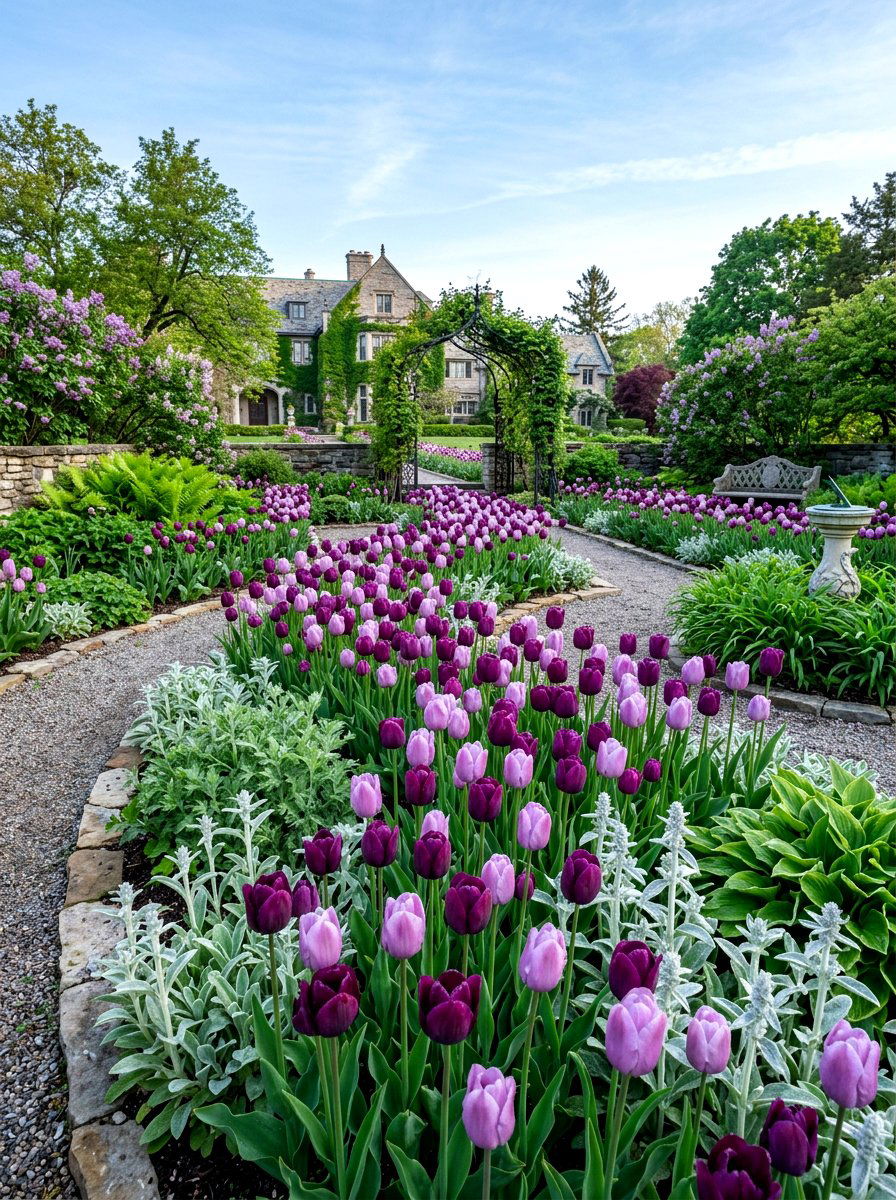
Hydrangeas are the undisputed royalty of the summer garden, offering massive blooms and a sense of nostalgic charm that few other plants can match. Whether you are looking to create a lush privacy screen or a simple potted accent for your patio, these versatile shrubs provide endless possibilities for every landscape style. From the classic blue mopheads found in coastal regions to the hardy panicles that thrive in full sun, understanding how to incorporate them into your outdoor space is key to a viral-worthy garden. This guide explores creative ways to arrange these stunning flowers to enhance your home’s overall curb appeal and beauty while providing long-lasting color for your outdoor enjoyment.
1. White Hydrangea Border
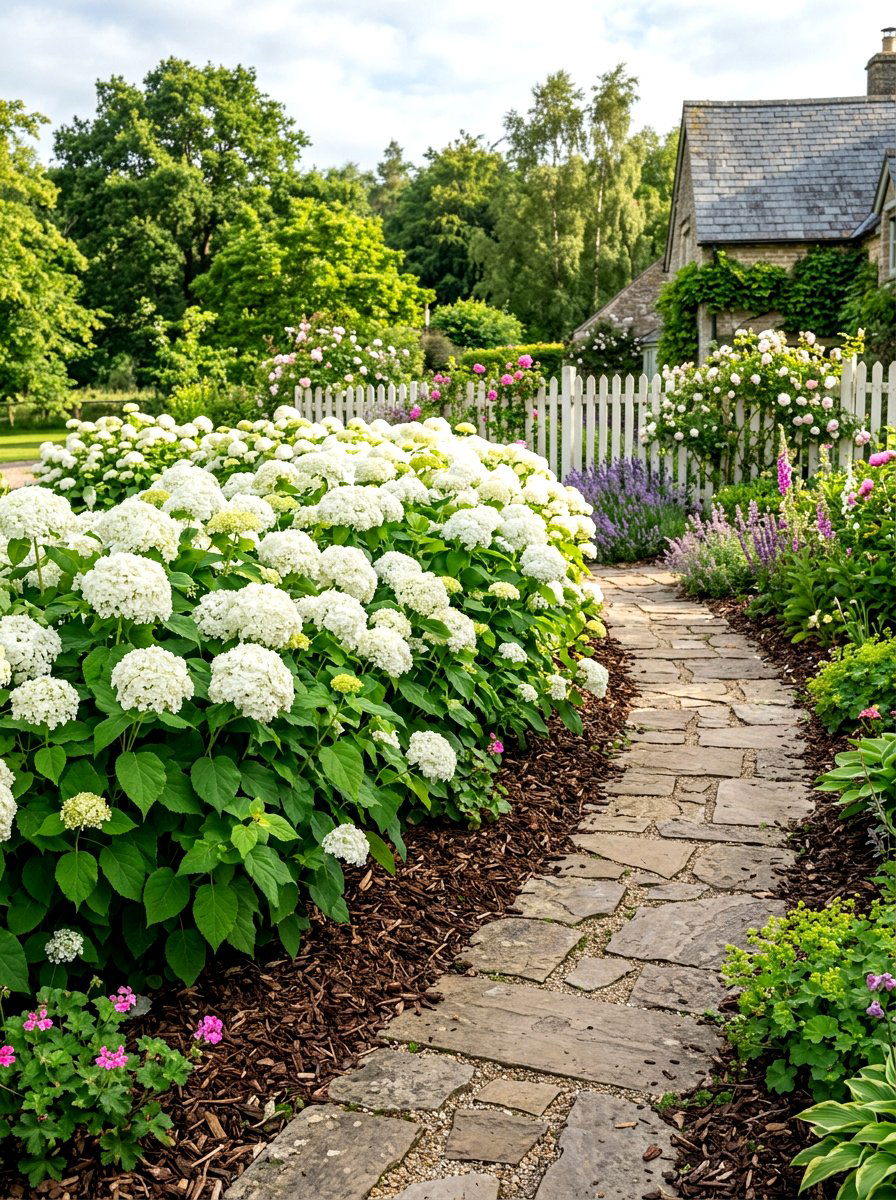
Imagine walking along a crisp, clean pathway lined with massive white flower heads that seem to glow in the twilight hours. A white hydrangea border offers a timeless and sophisticated look that pairs beautifully with green lawns and dark mulch. You can use 'Annabelle' or 'Incrediball' varieties to achieve this effect, as their large, round clusters create a soft yet structured edge for any garden bed. These plants thrive when grouped together, forming a continuous cloud of white that remains striking from late spring through the first frost of autumn. It is a perfect choice for those who love a classic aesthetic that never goes out of style.
2. Blue Mophead Landscaping
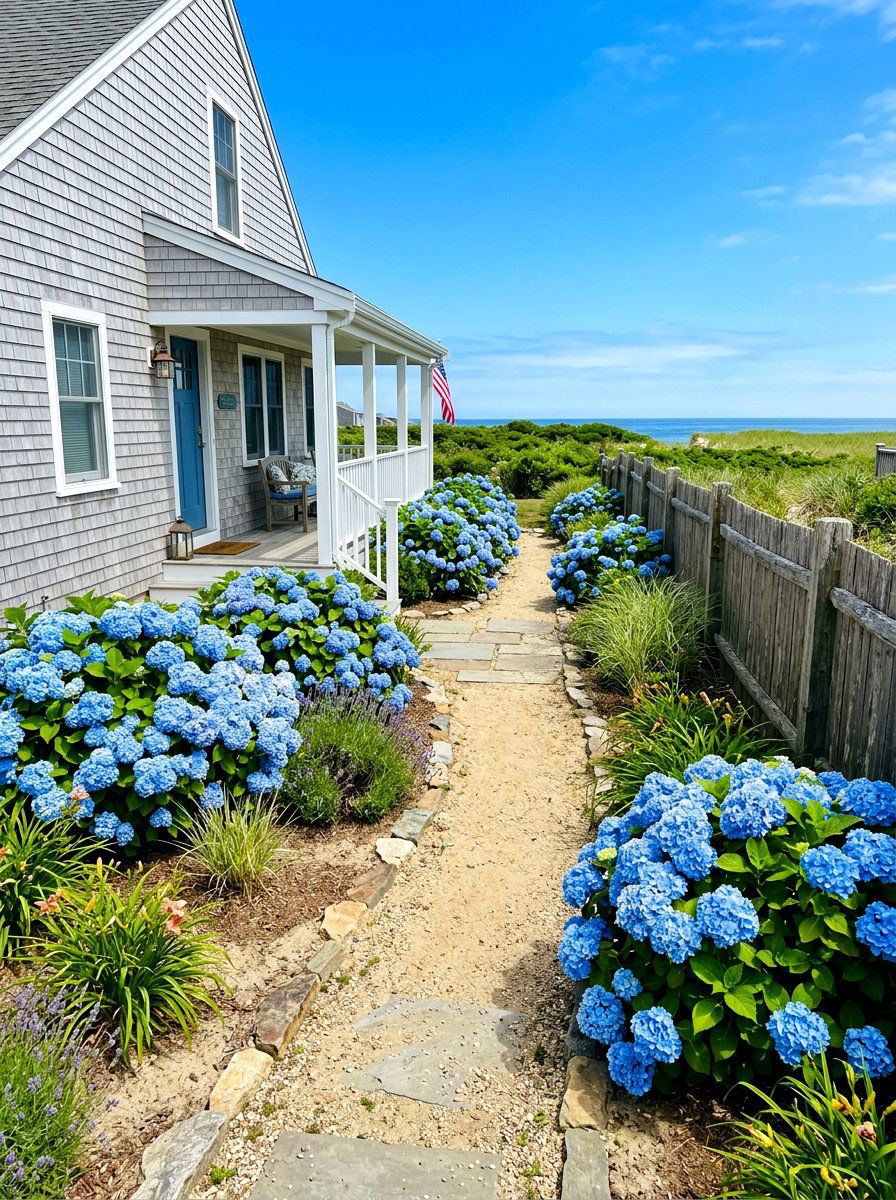
Have you ever wondered how to get those vibrant blue tones that make coastal gardens look so magical? Blue mophead landscaping relies on acidic soil to maintain its cool, ocean-inspired hues, making it a staple for seaside homes and traditional cottage designs. Planting these in large sweeps across the front of your house creates a bold visual impact that immediately draws the eye. These shrubs prefer morning sun and afternoon shade, ensuring the delicate petals do not wilt in the heat. By keeping the soil moist and adding organic matter, you can enjoy a sea of blue flowers all summer long in your private garden oasis.
3. Pink Hydrangea Hedge
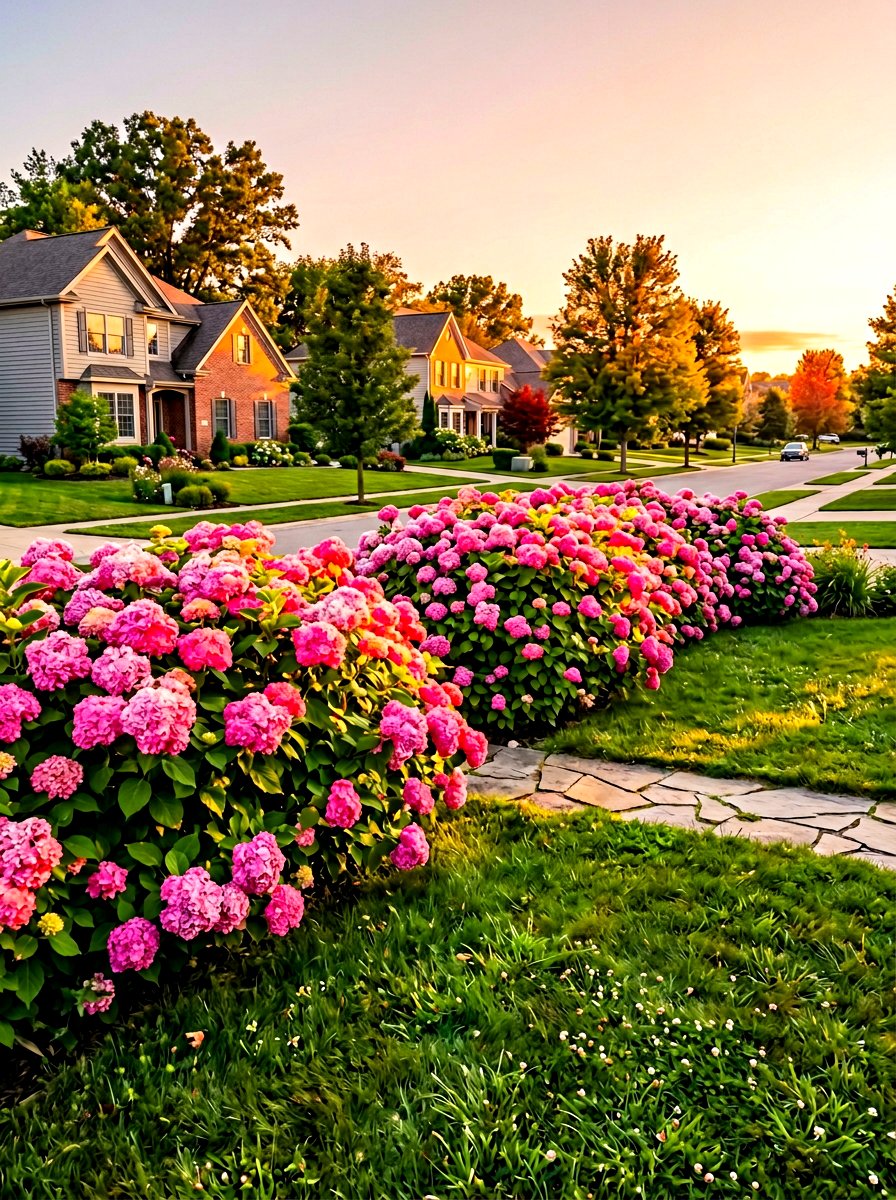
Creating a natural fence with pink hydrangeas is a wonderful way to add privacy and color to your property lines simultaneously. These shrubs grow quickly and produce dense foliage that blocks unwanted views while offering a romantic, rosy backdrop for your outdoor activities. To maintain the pink color, ensure your soil is more alkaline, as this prevents the aluminum uptake that turns flowers blue. Planting a long row of 'Endless Summer' or 'Cityline' varieties creates a stunning wall of blossoms that feels both soft and structured. It transforms a functional boundary into a breathtaking highlight of your entire landscape design that looks amazing every season.
4. Potted Hydrangea Patio
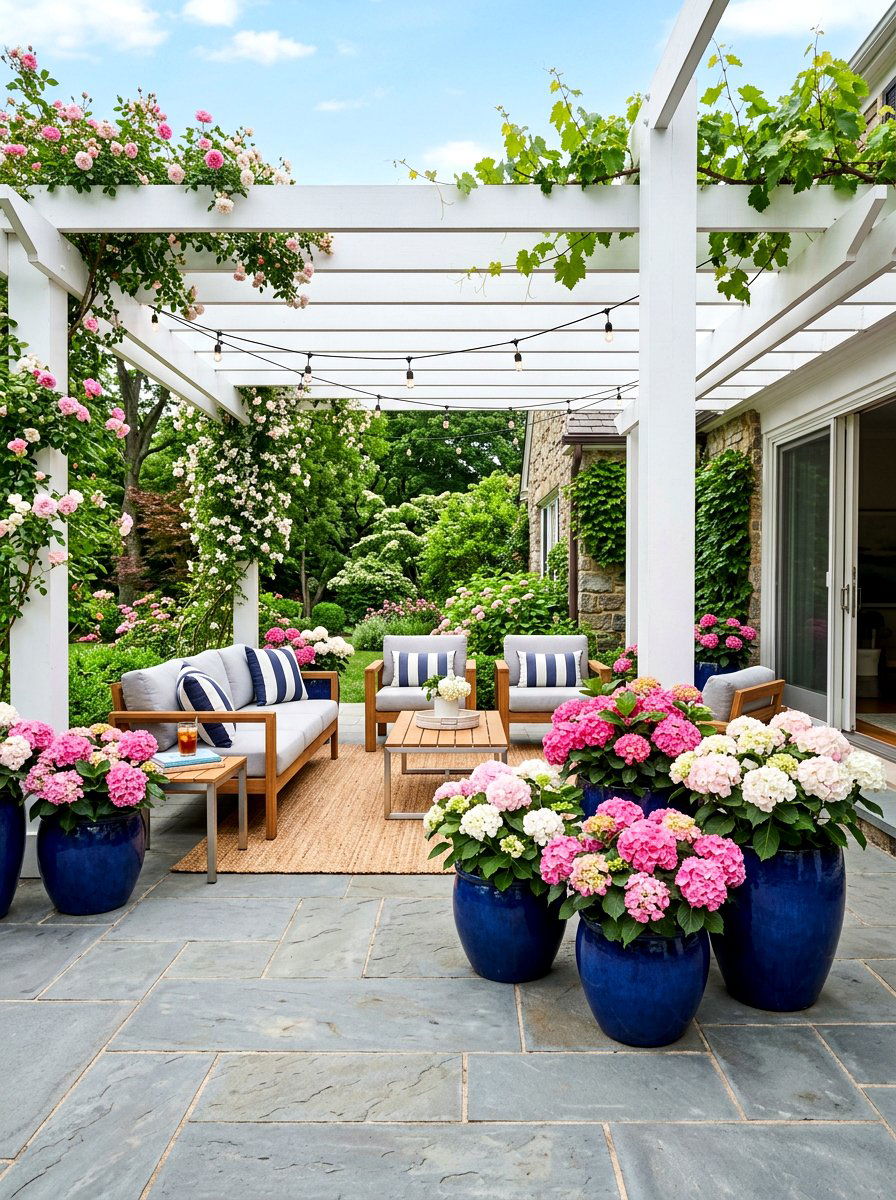
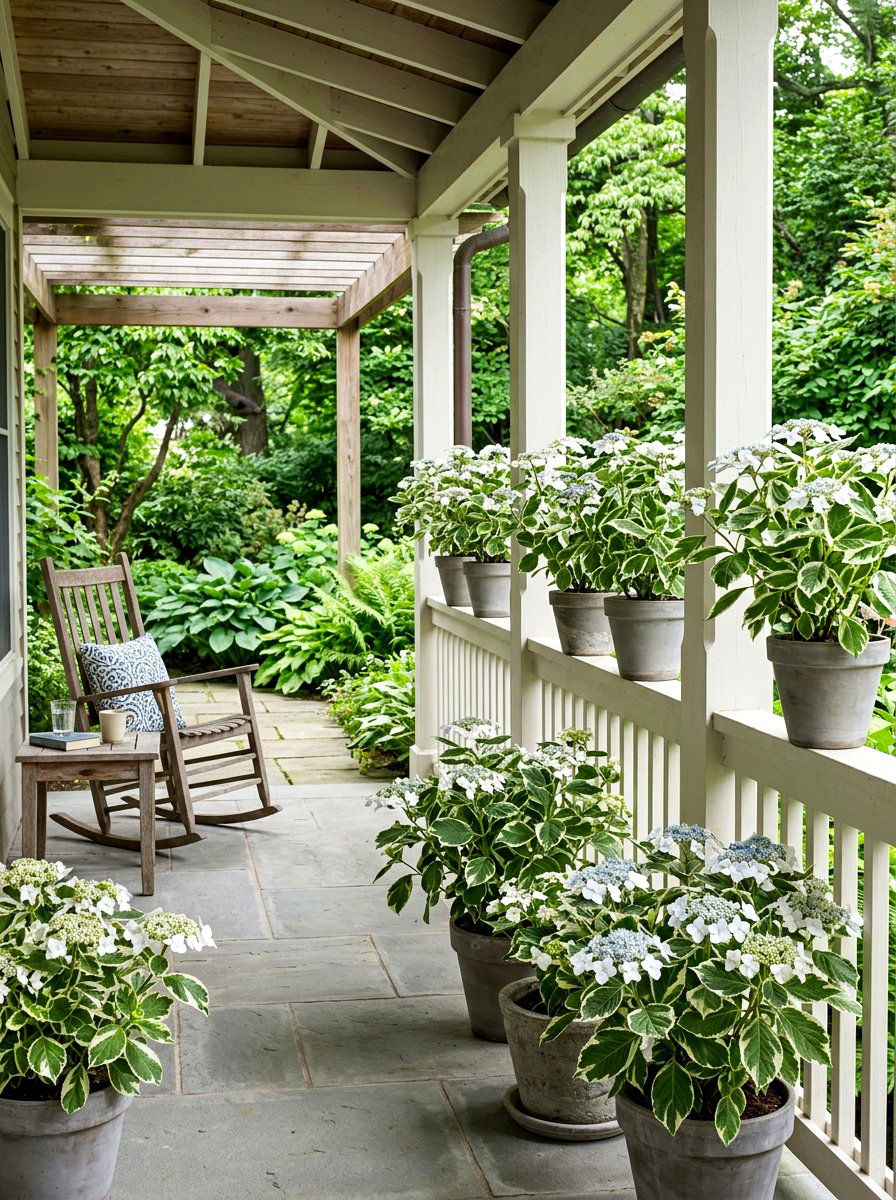
Do you have a small patio or balcony that needs a splash of life and color? A potted hydrangea patio setup allows you to enjoy these magnificent blooms even if you do not have a traditional yard. Selecting compact or dwarf varieties ensures the plants remain a manageable size while still producing oversized flower heads. Using large, decorative ceramic pots in neutral tones helps the colorful petals stand out as the main attraction. Moving these containers around allows you to refresh your outdoor layout whenever you desire. It is a flexible gardening solution that brings a lush, high-end feel to any hardscape or small outdoor space.
5. Oakleaf Hydrangea Woodland
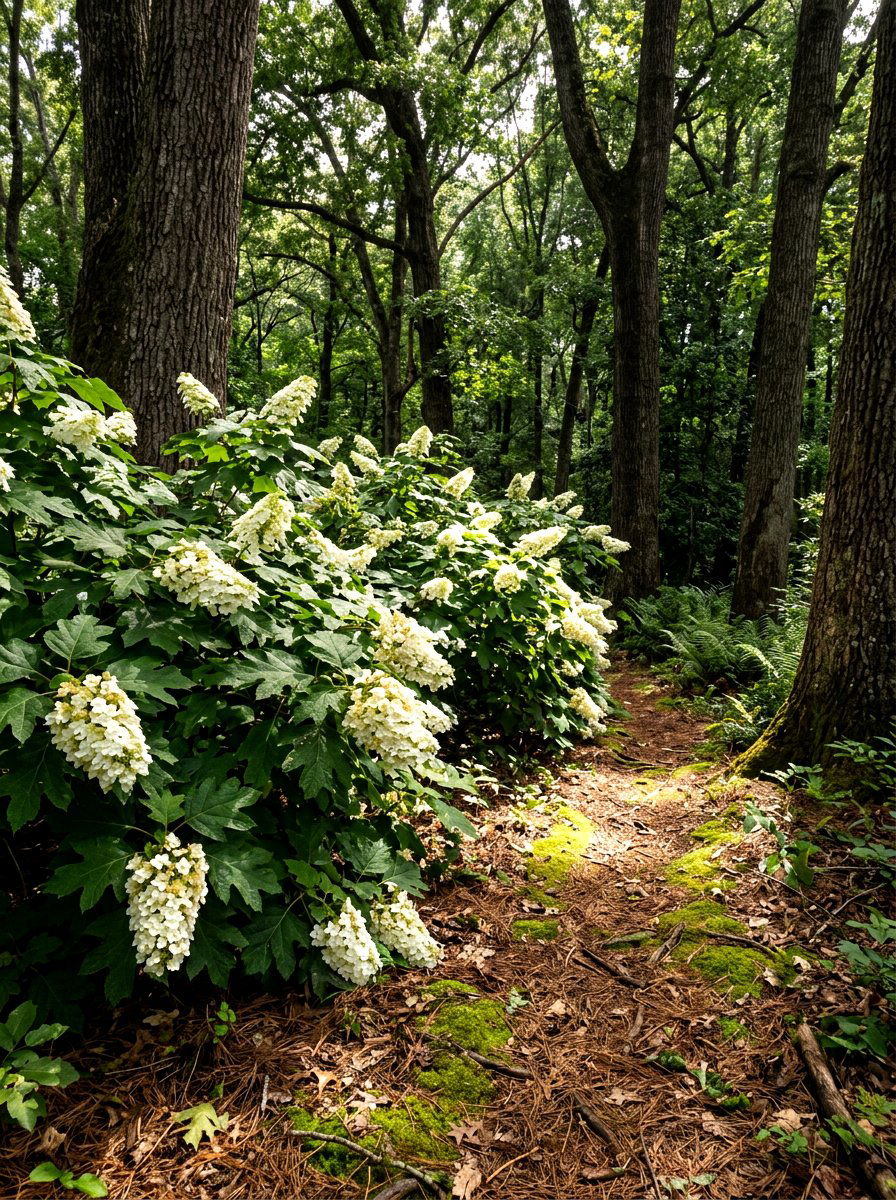
For those with shaded yards or mature trees, an oakleaf hydrangea woodland theme offers a naturalistic and textured approach to landscaping. These native shrubs are famous for their unique, deeply lobed leaves and elongated white flower panicles that gradually turn a soft pink as they age. They thrive in the dappled light found under forest canopies and provide exceptional interest even in the fall when their foliage turns deep shades of burgundy and bronze. Integrating these into a wooded area creates a transition between the wild forest and your manicured garden. It is a low-maintenance way to bring architectural beauty to your shaded areas.
6. Panicle Hydrangea Walkway
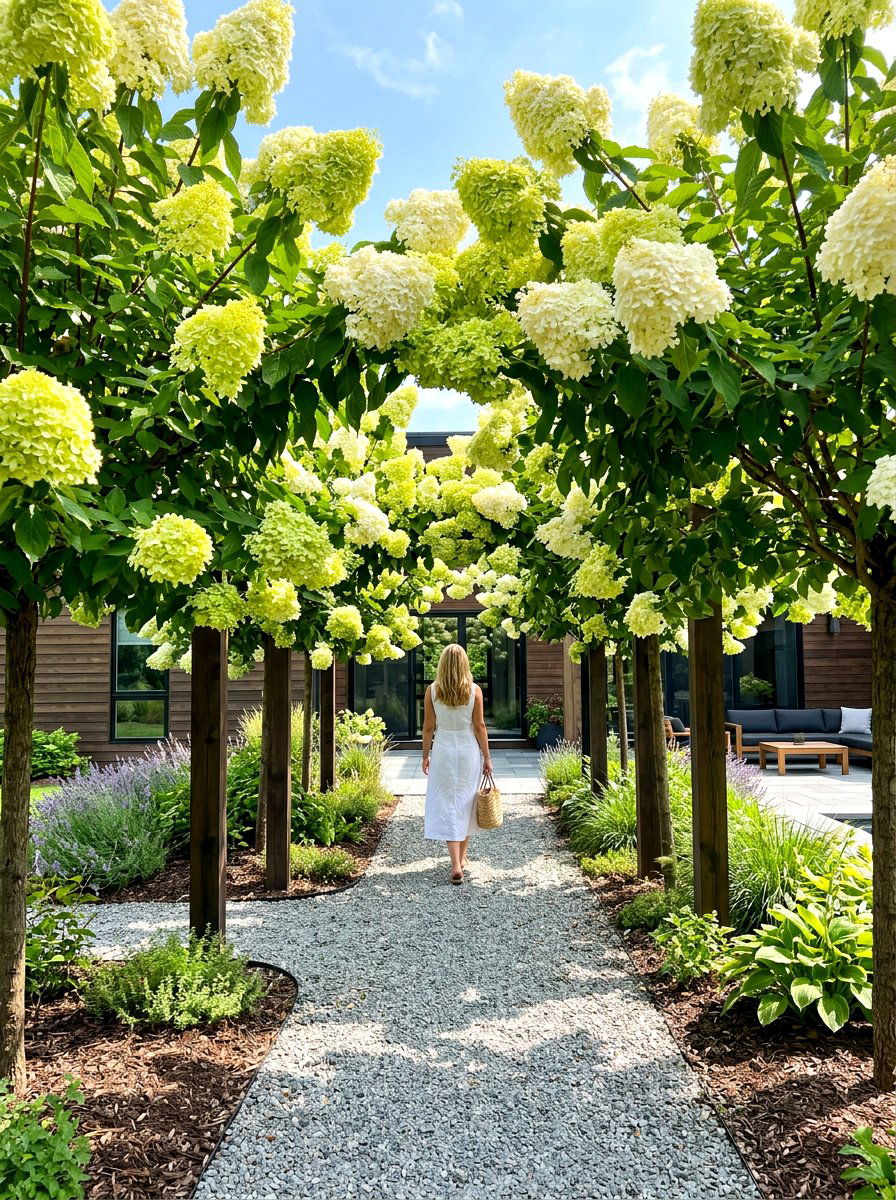
Walking through a tunnel of towering flowers is a dream for many gardeners, and a panicle hydrangea walkway makes it a reality. Varieties like 'Limelight' or 'Phantom' can be trained into tree forms or left as large shrubs to frame a garden path beautifully. Their cone-shaped blooms start as a refreshing lime green before maturing into a crisp white and finally a dusty rose. This seasonal color shift provides constant variety for anyone strolls through your yard. The sturdy stems of panicle varieties ensure the heavy blooms do not droop, keeping your walkway looking neat, tidy, and professionally designed all year.
7. Hydrangea And Hosta Garden
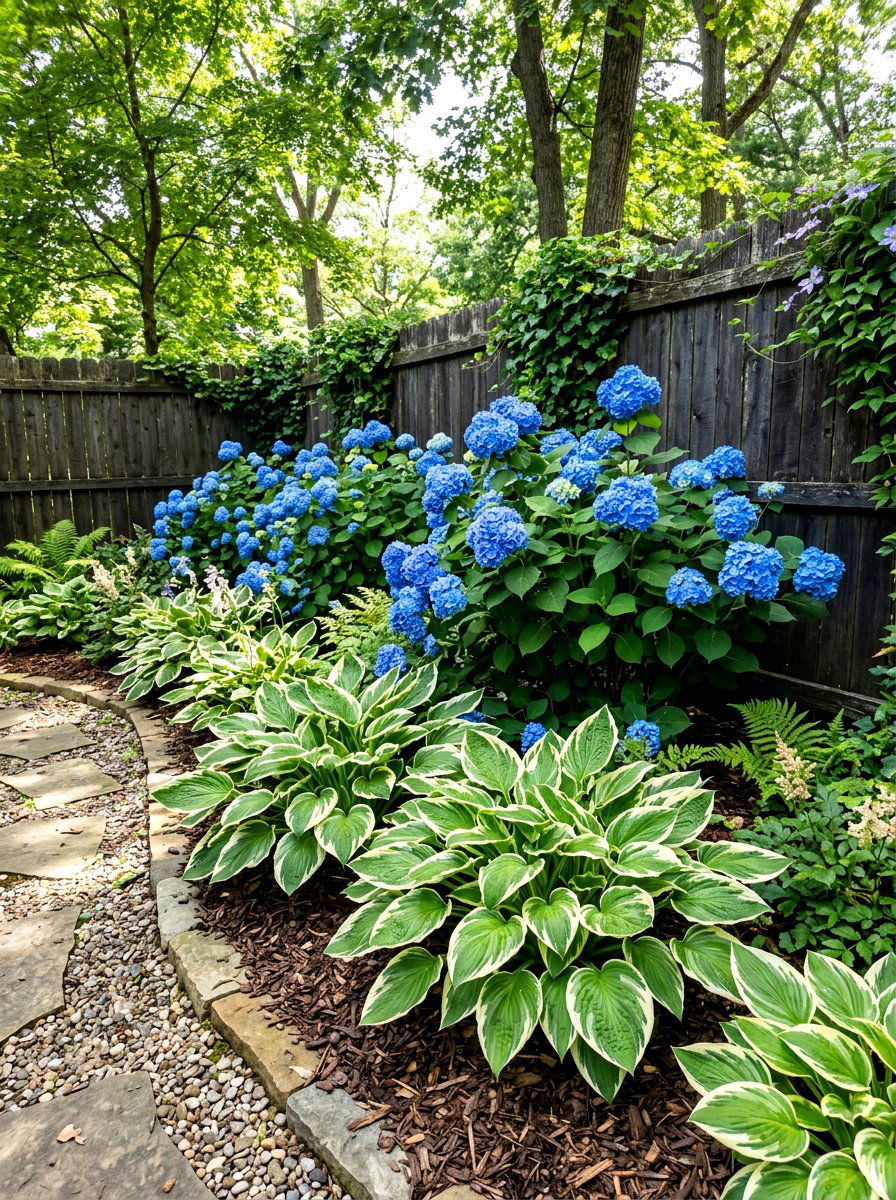
Combining different textures is the secret to a professional landscape, and a hydrangea and hosta garden is a classic pairing that never fails. The large, billowy blooms of the hydrangeas provide height and color, while the broad, variegated leaves of hostas fill in the ground level with lush greenery. This combination works exceptionally well in partially shaded areas where both plants can flourish without the stress of intense midday sun. By mixing different hosta colors, such as blue-green and chartreuse, you create a rich tapestry of foliage that supports the stunning floral display above. It is a reliable and easy-to-grow garden concept.
8. Climbing Hydrangea Wall
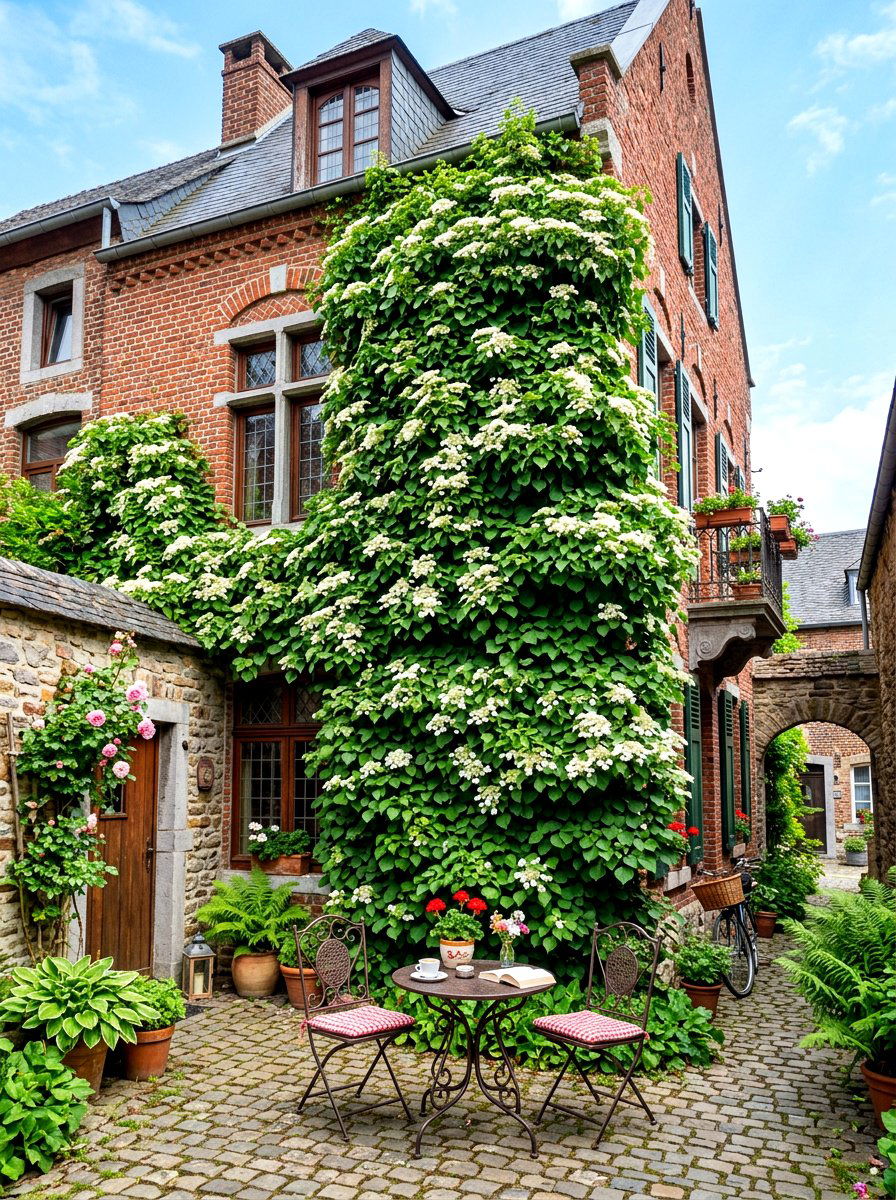
If you have a bare brick wall or a wooden fence that needs a makeover, a climbing hydrangea wall is the perfect solution. Unlike other vines that can damage structures, these slow-growing climbers use small rootlets to gently adhere to surfaces, creating a vertical blanket of green leaves and delicate white lacecap flowers. They are ideal for adding height and dimension to small gardens where ground space is limited. Over time, the woody stems develop a beautiful peeling bark that provides visual interest even during the winter months. This vertical garden feature adds an old-world, romantic charm to any home exterior or garden structure.
9. Modern Hydrangea Garden
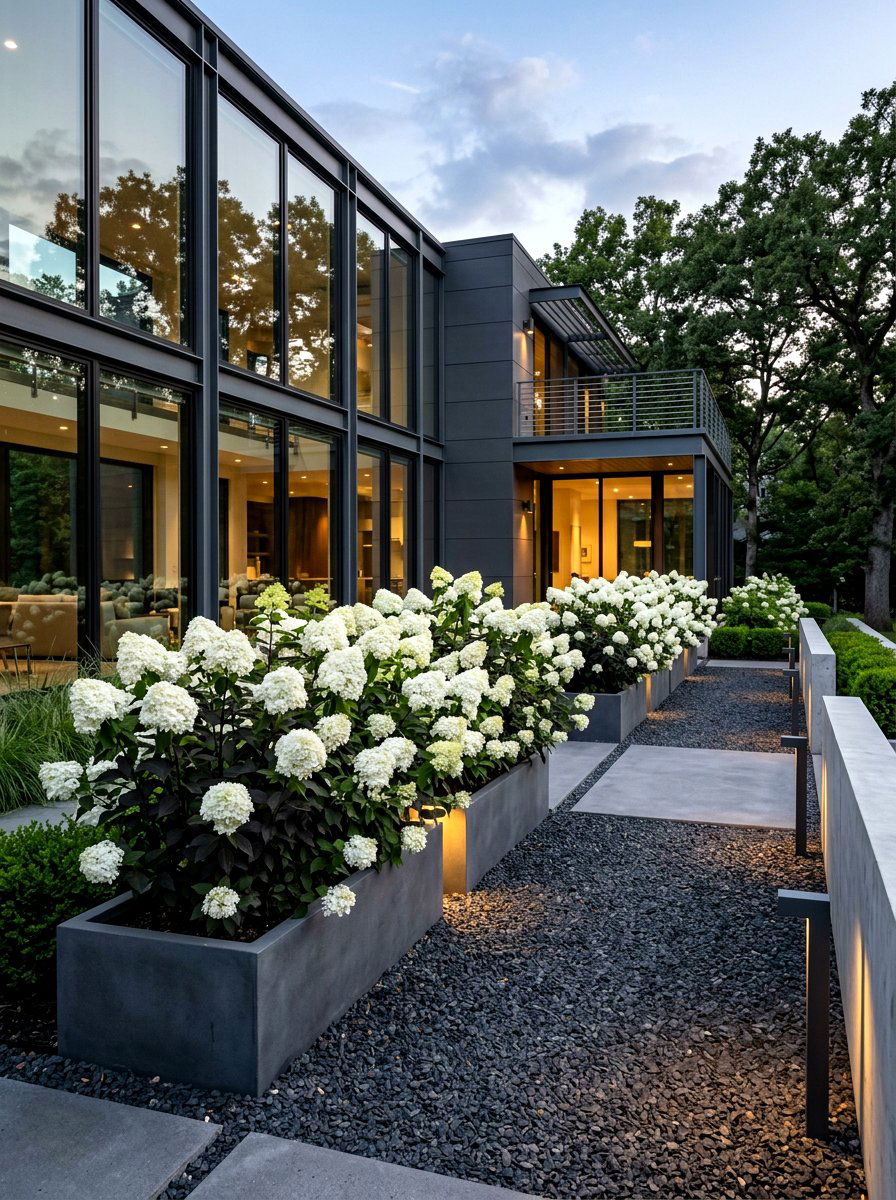
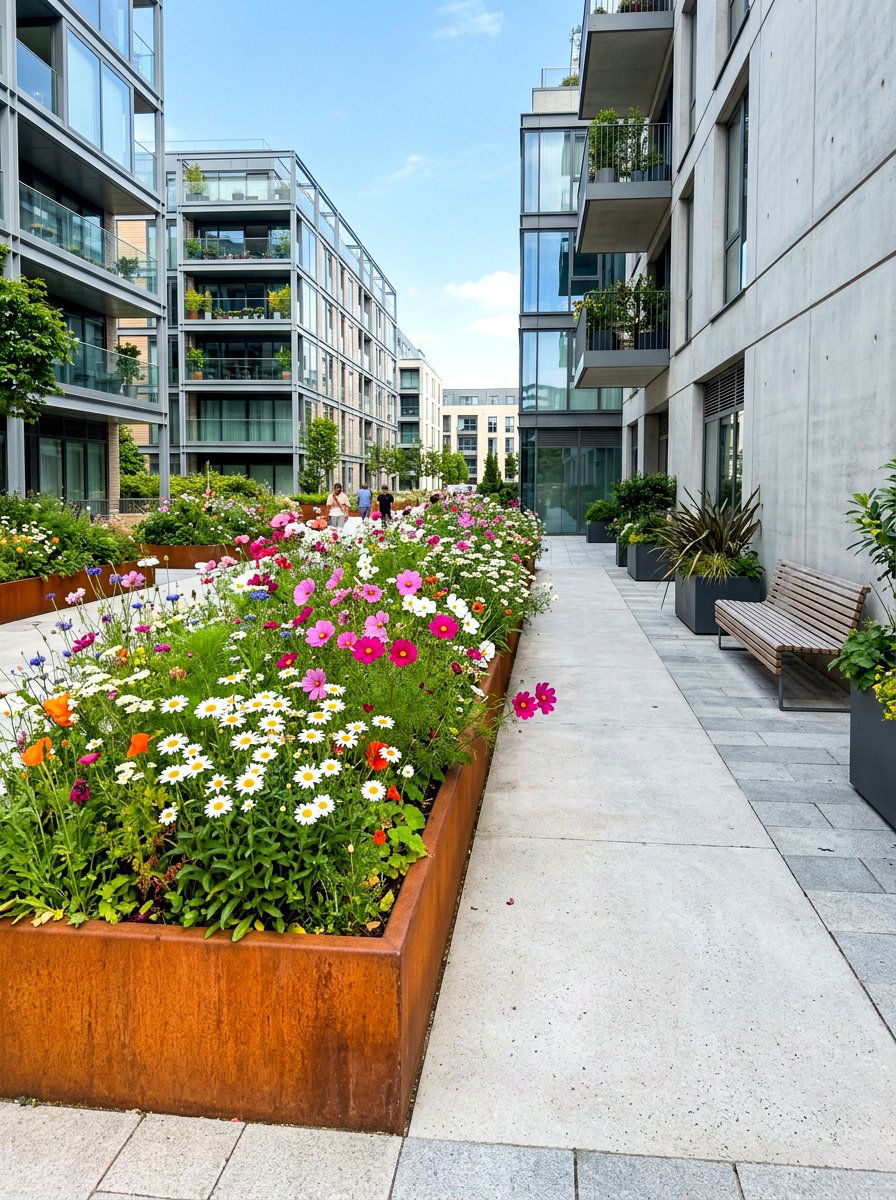
A modern hydrangea garden focuses on clean lines, a restricted color palette, and high-contrast elements to create a contemporary outdoor space. Often featuring varieties with dark stems, such as 'Zebra' or 'Blue Enchantress' , these gardens pair lush flowers with sleek materials like concrete, steel, and dark gravel. Instead of a wild cottage look, plants are often spaced out or placed in geometric rows to emphasize their individual forms. This style is perfect for urban homes where a minimal yet impactful aesthetic is desired. The bold clusters of flowers act as living sculptures against the architectural backdrop of a modern house, making a very sophisticated statement.
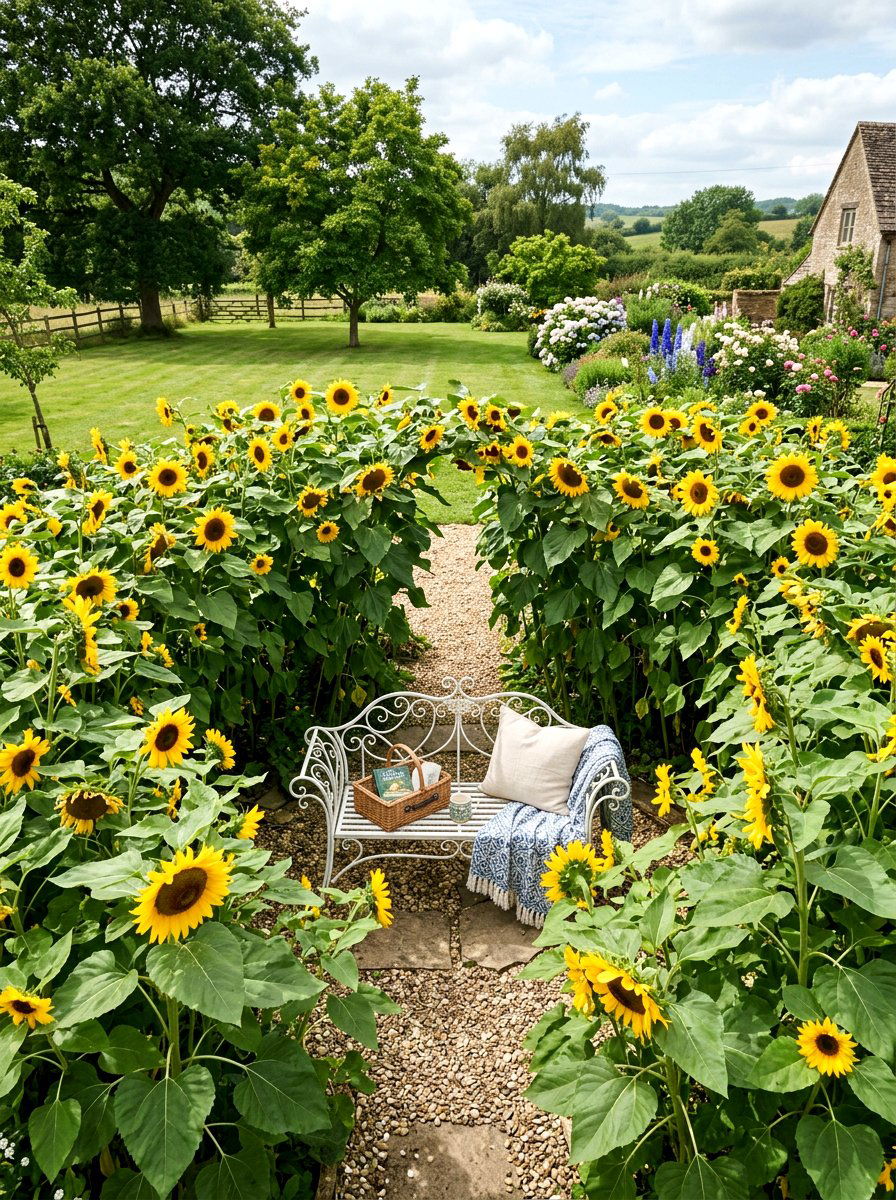
10. Coastal Hydrangea Landscape
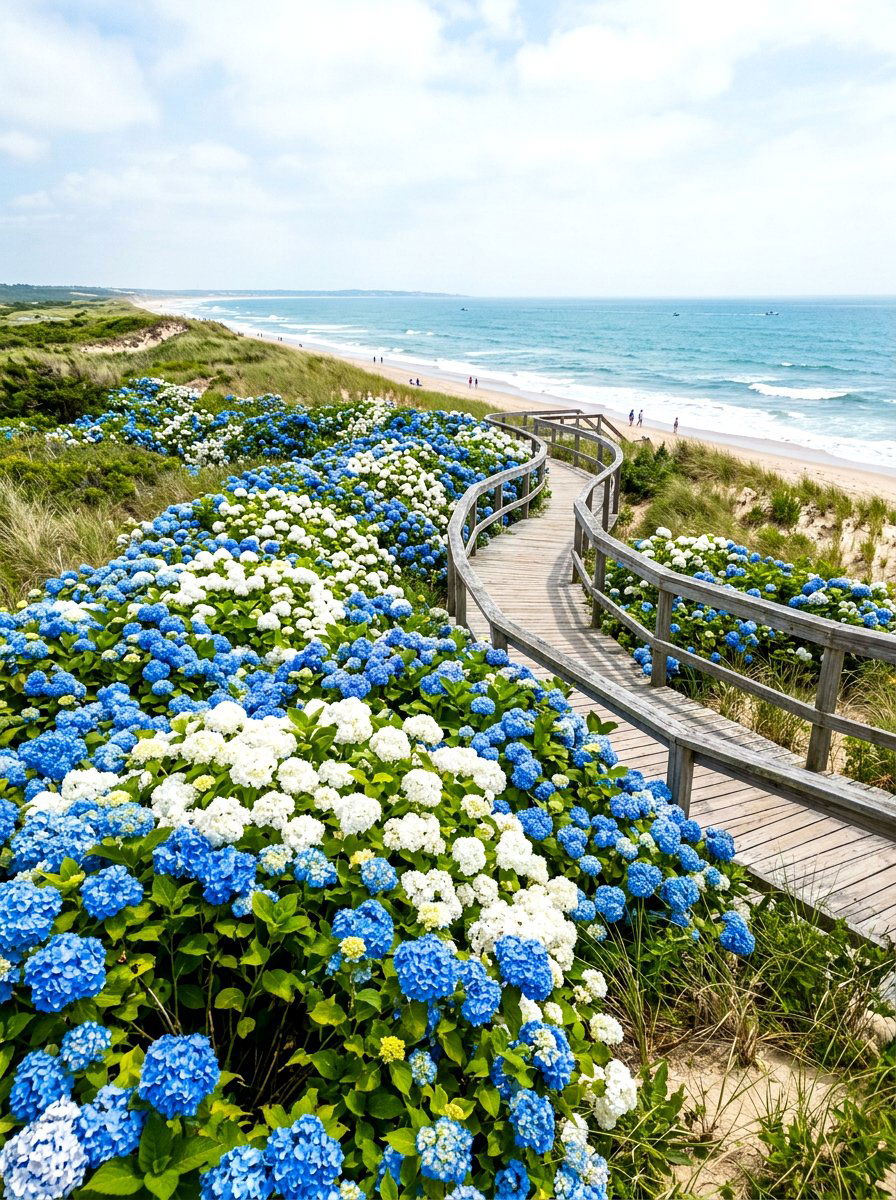
Nothing says summer like a coastal hydrangea landscape, where salt-tolerant varieties thrive in the cool, misty air of the seaside. These gardens typically feature a palette of sky blue, sandy white, and pale green to reflect the surrounding environment. Using weathered wood fences and natural stone paths enhances the relaxed, beachy vibe of the space. Large-leaf varieties are the star here, as they love the humidity and milder temperatures found near the water. By planting them in large groups, you create a soft, undulating wave of color that mirrors the nearby ocean. It is the ultimate design for a serene and breezy summer retreat.
11. Purple Hydrangea Bed
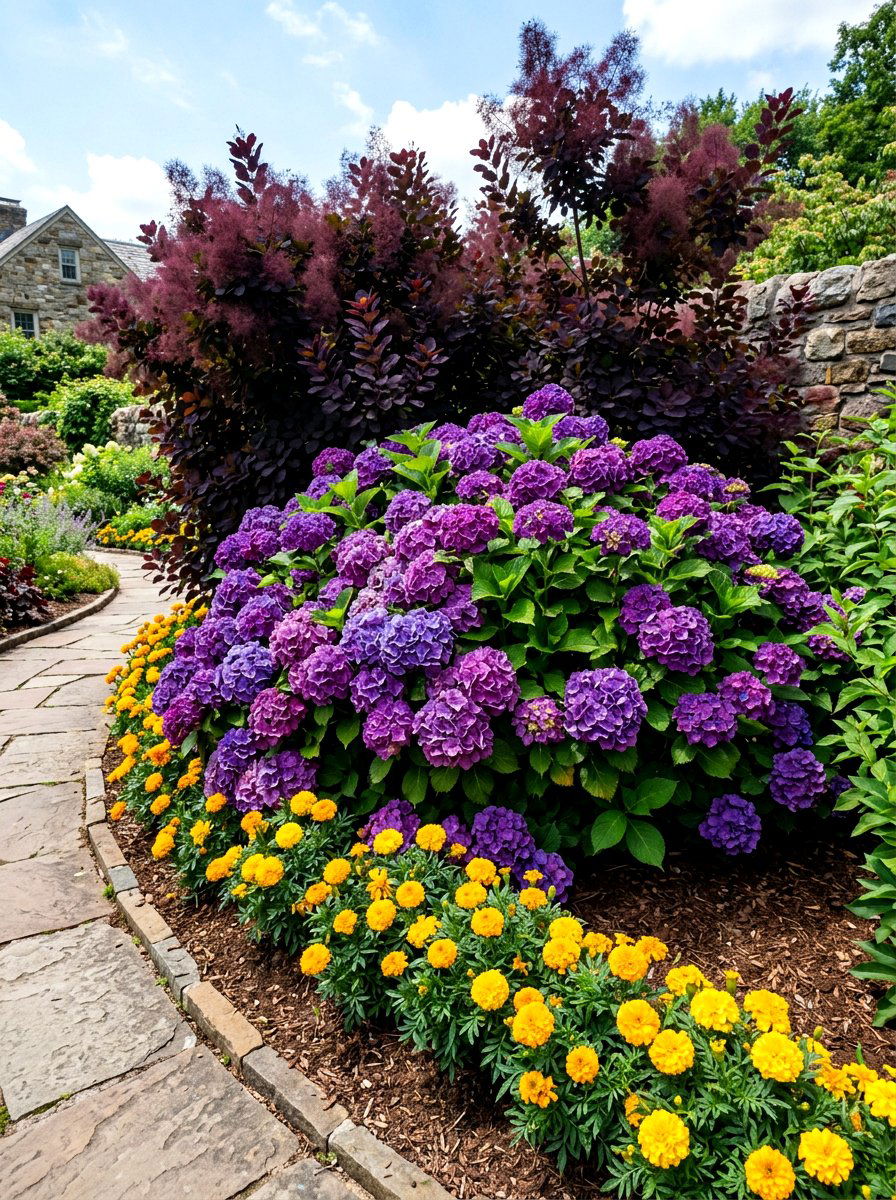
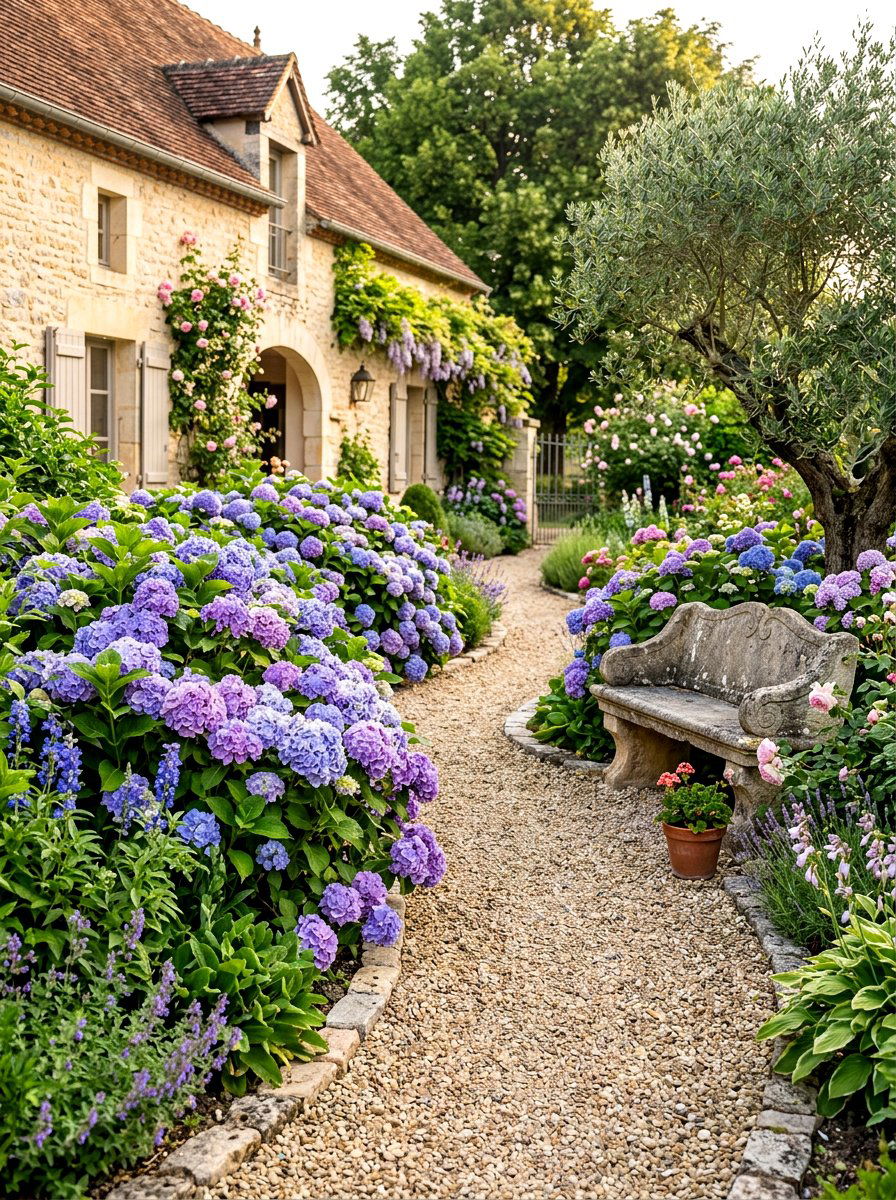
Achieving a deep, regal purple hydrangea bed is a rewarding challenge for any gardener looking for a unique color story. This specific hue is usually found in bigleaf varieties when the soil pH is perfectly balanced between acidic and alkaline. The result is a stunning display of plum, violet, and lavender tones that look incredible against dark green foliage. Placing these purple blooms near yellow or orange companion plants creates a vibrant contrast that makes the garden pop. This color palette is perfect for creating a sense of luxury and mystery in a backyard corner. It offers a sophisticated alternative to the more common pinks and blues.
12. Hydrangea Entryway Curb Appeal
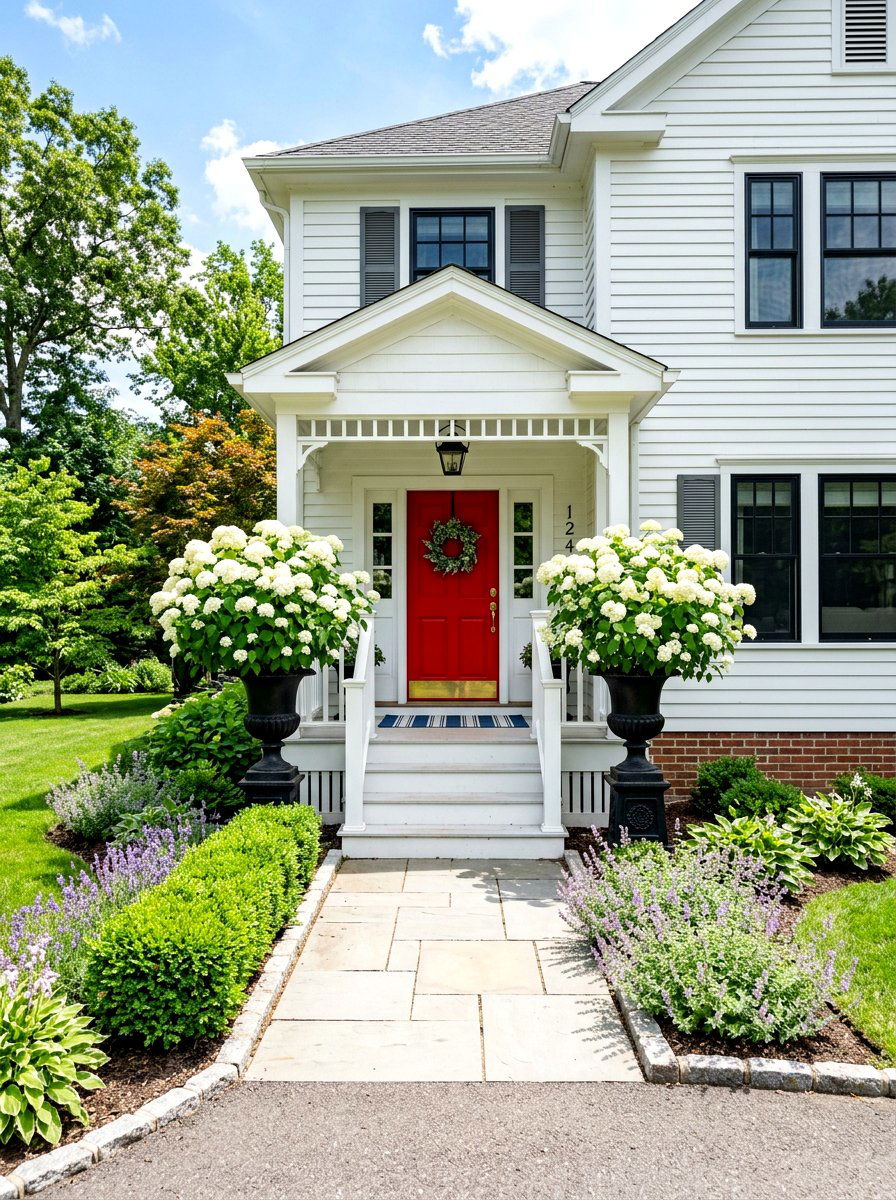
First impressions are everything, and using hydrangea entryway curb appeal strategies can instantly boost the value and beauty of your home. Planting large, symmetrical shrubs on either side of your front door or along the front porch creates a welcoming and established look. The massive blooms provide a soft contrast to the hard lines of your home’s architecture, making the entrance feel more approachable and cozy. Choosing reblooming varieties ensures that your front yard stays colorful from the moment guests arrive until they leave. It is a simple yet effective way to make your house the standout property on the entire block.
13. Mixed Perennial Hydrangea Garden
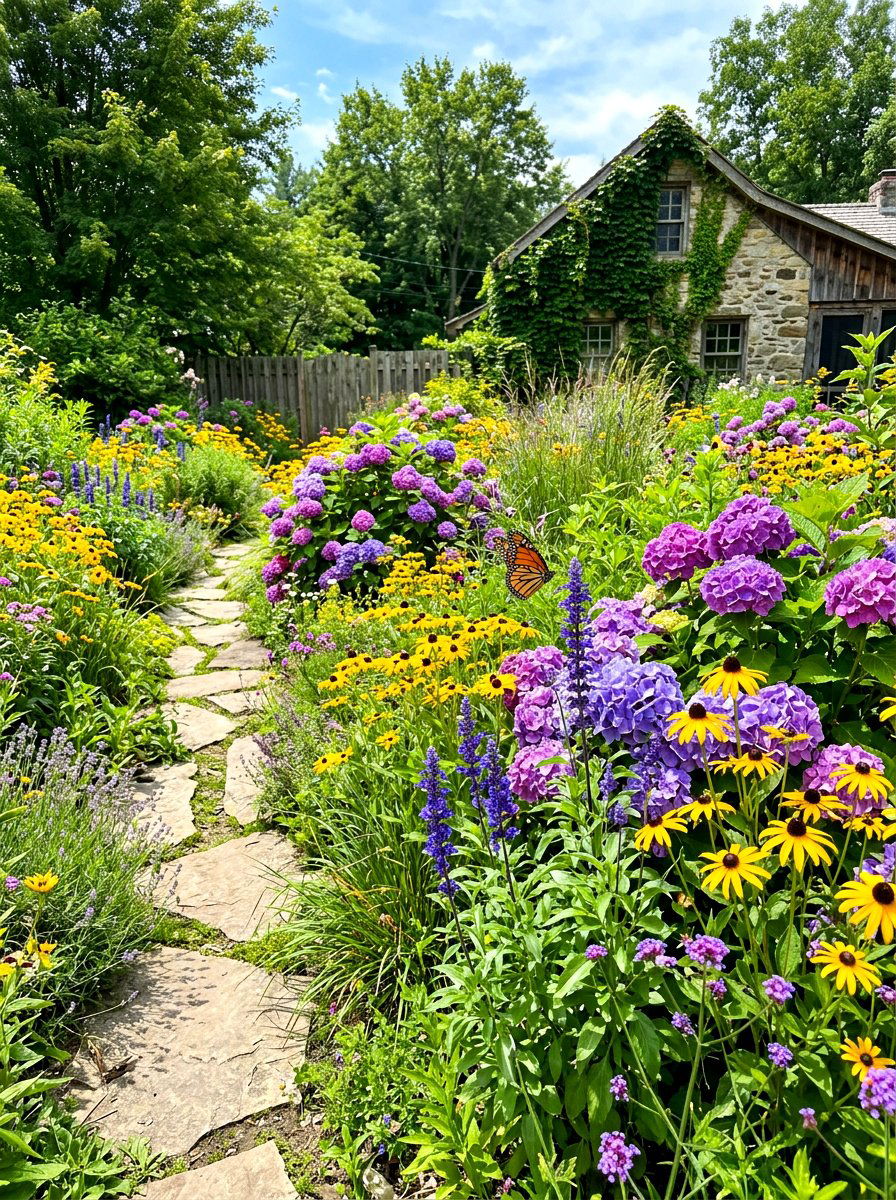
A mixed perennial hydrangea garden is all about variety and seasonal interest, combining shrubs with flowers like salvia, coneflowers, and black-eyed Susans. By layering plants of different heights and bloom times, you ensure that there is always something beautiful to look at throughout the year. The hydrangeas serve as the sturdy backbone of the bed, providing structure and bulk even when other flowers have finished their display. This approach attracts pollinators like bees and butterflies, creating a living, breathing ecosystem in your backyard. It is an excellent choice for gardeners who want a lush, meadow-like feel that requires minimal effort to maintain.
14. Small Space Hydrangea Garden
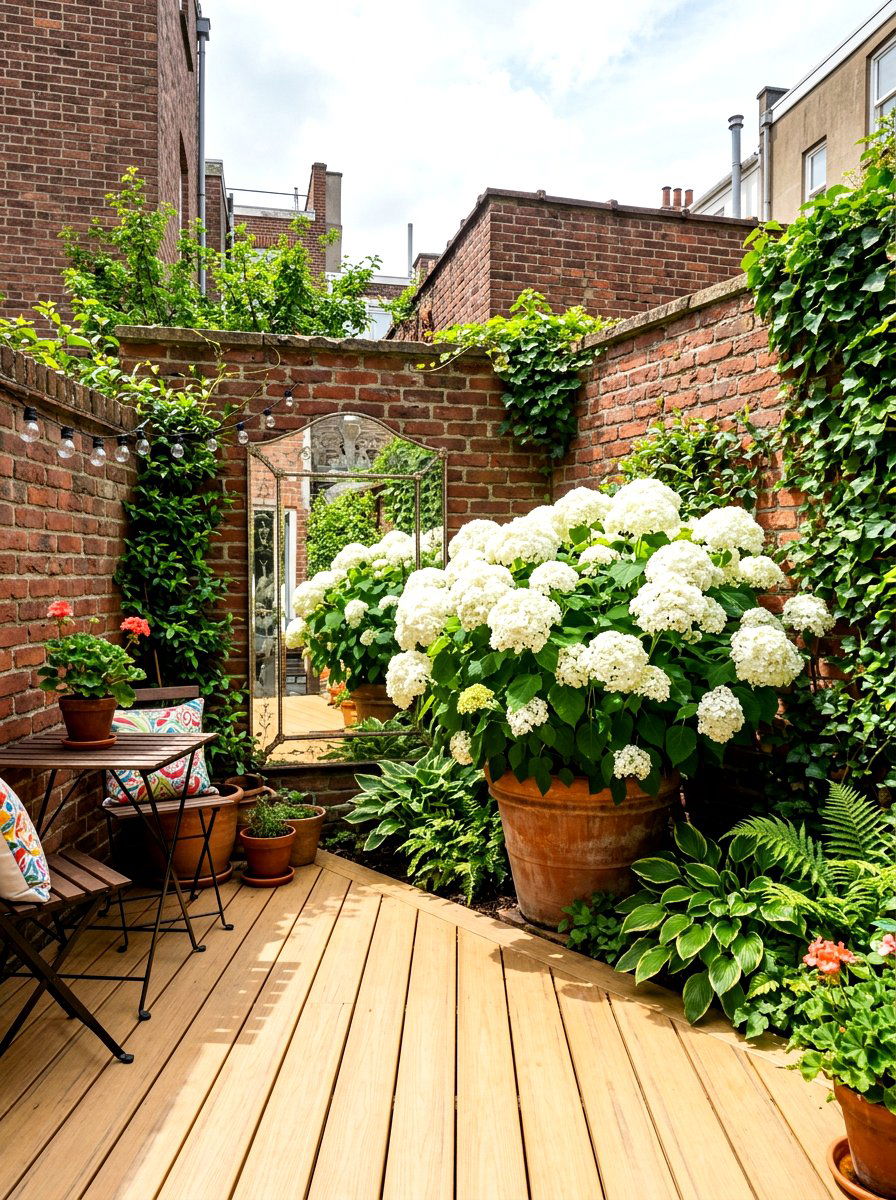
You do not need a massive estate to enjoy these flowers, as a small space hydrangea garden can be just as impactful as a large one. By utilizing vertical space with trellises or choosing compact varieties that only grow a few feet tall, you can pack a lot of beauty into a tiny area. Placing a single, well-pruned hydrangea as a centerpiece in a small courtyard creates a focal point that draws the eye and makes the space feel bigger. Using mirrors or light-colored furniture nearby can also help reflect the floral colors and brighten up a confined patio. It proves that great design comes in all sizes.
15. Hydrangea Privacy Screen
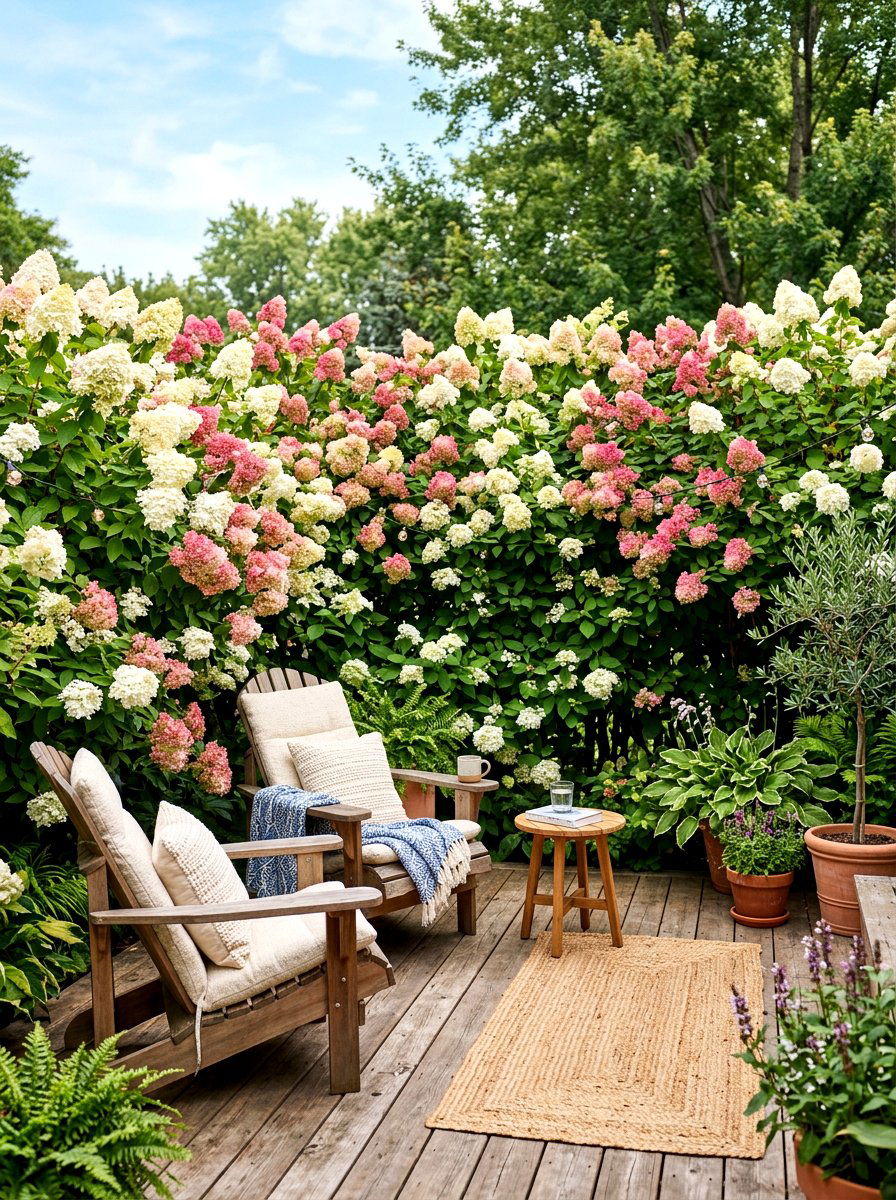
If you want to block out the neighbors or a busy street, a hydrangea privacy screen is a much more attractive option than a standard wooden fence. Tall panicle varieties can grow up to eight feet high, creating a dense wall of foliage and flowers that provides a soft, living barrier. During the summer, the thick leaves and heavy blooms offer excellent coverage and sound dampening for your outdoor living areas. Even in the winter, the sturdy dried flower heads and branch structure provide a sense of enclosure. This functional design choice adds beauty to your property while serving a very practical and useful purpose.
16. Limelight Hydrangea Backyard
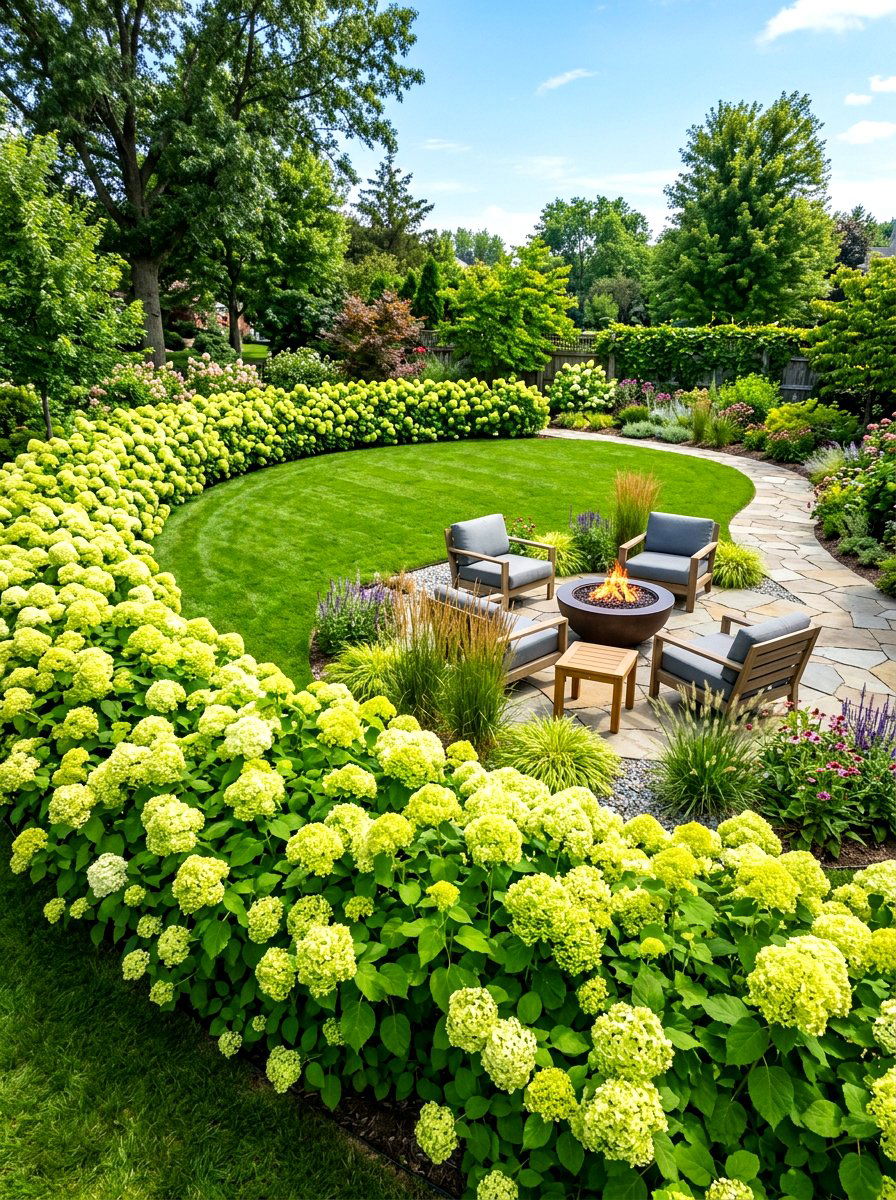
The 'Limelight' variety has become a modern classic, and a Limelight hydrangea backyard design focuses on its unique chartreuse-to-white color transition. These plants are incredibly hardy and can handle more sun than most other hydrangeas, making them perfect for open backyard spaces. Planting them in a sweeping curve around a central lawn creates a sense of movement and flow in the landscape. Their upright growth habit means they rarely flop over, even after a heavy summer rain. This variety is also excellent for cutting, allowing you to bring large, refreshing green bouquets into your home to enjoy their beauty indoors as well as outdoors.
17. English Cottage Hydrangea Garden
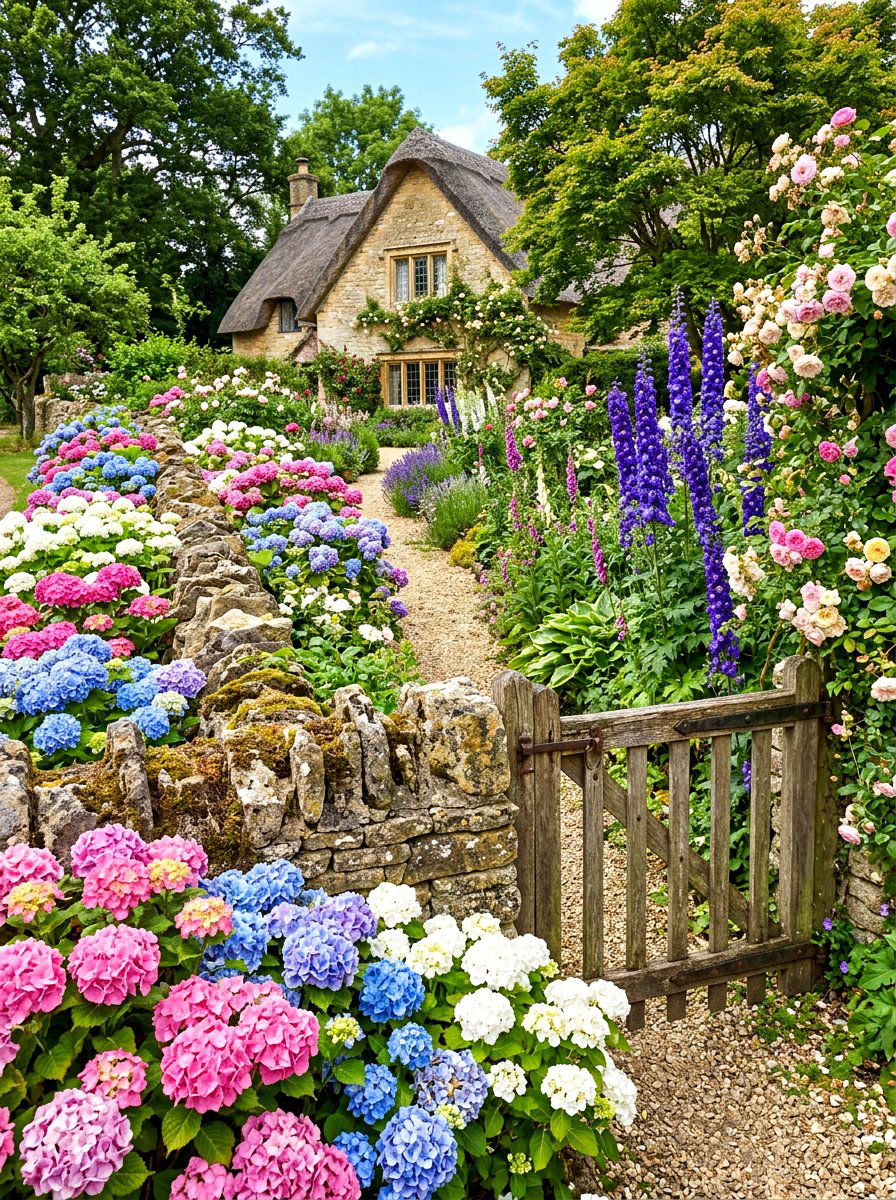
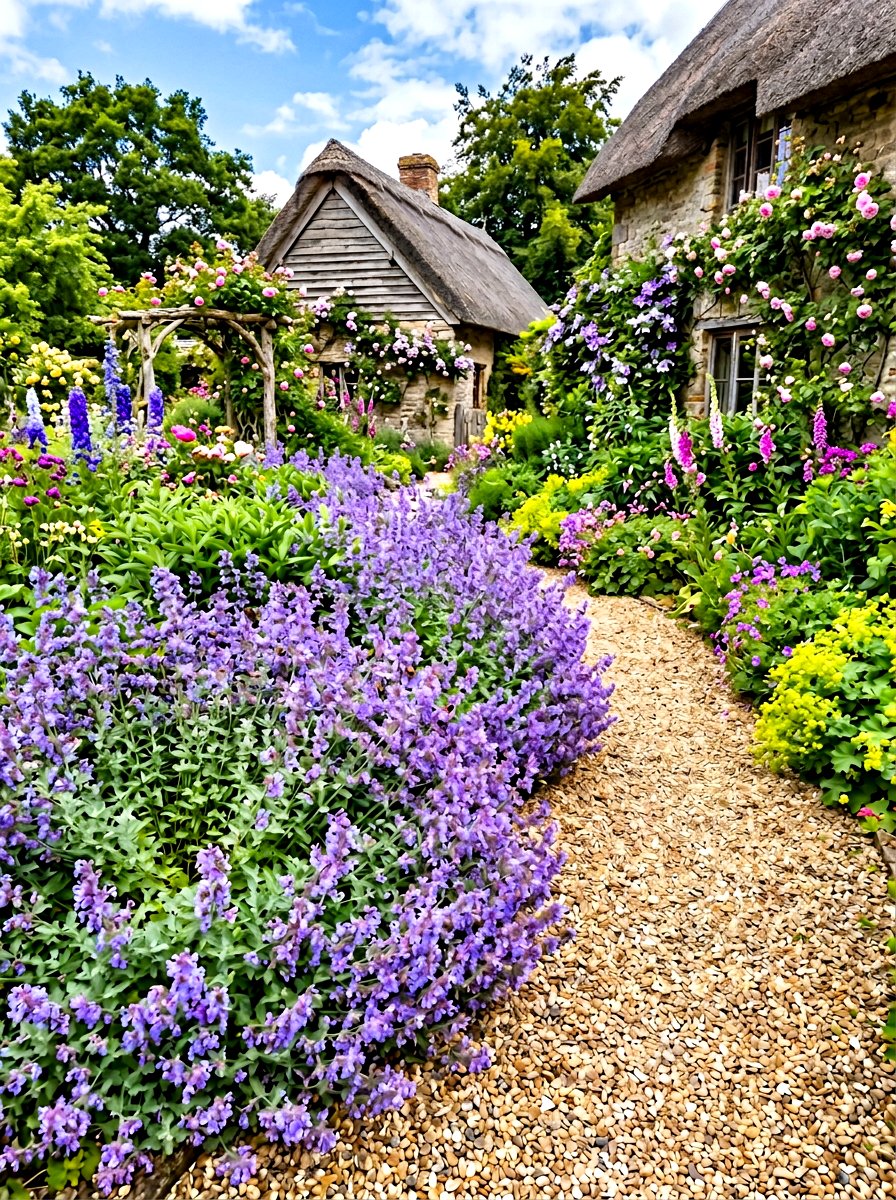
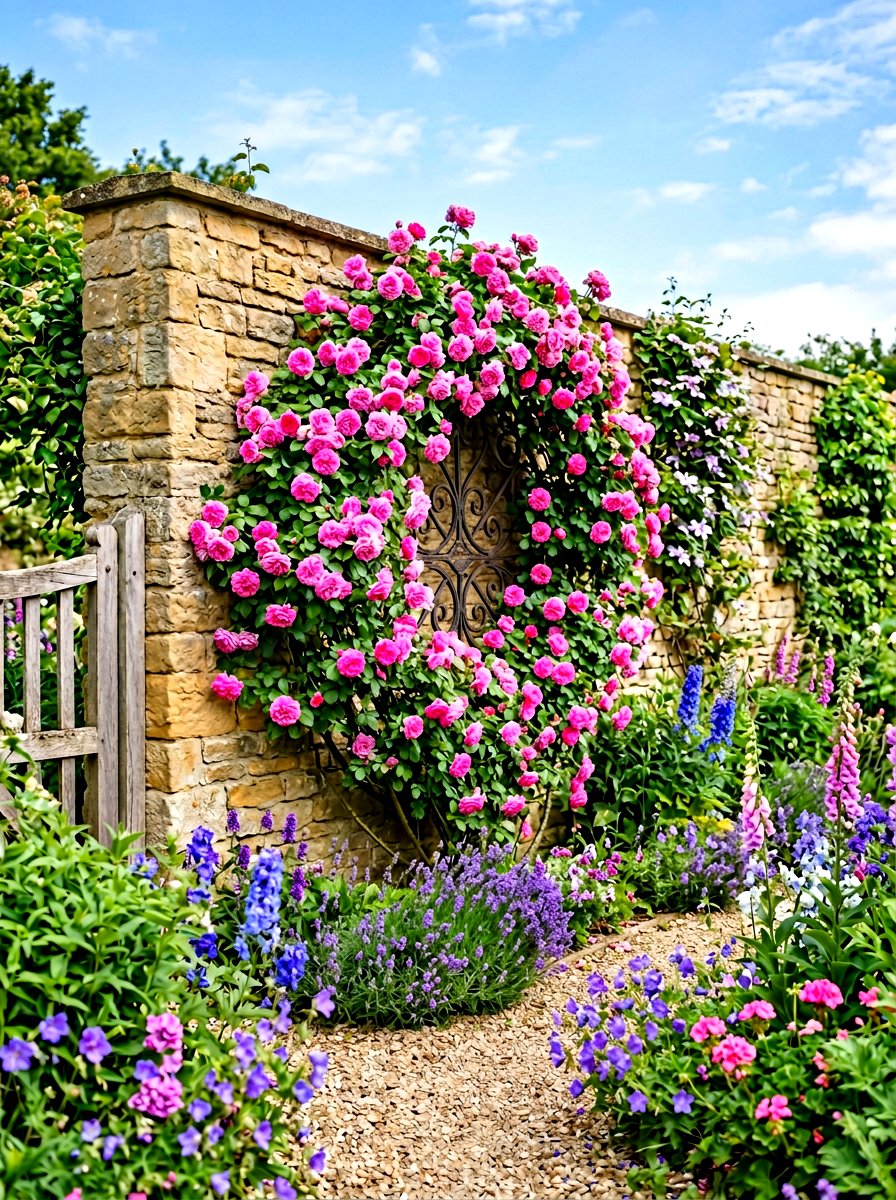
The English cottage hydrangea garden is the epitome of romantic, effortless beauty, featuring a wild mix of textures and pastel colors. In this style, hydrangeas are often allowed to grow into their natural, billowing shapes, spilling over stone walls or peeking out from behind picket fences. Pairing them with traditional favorites like roses, foxgloves, and lavender creates a layered look that feels like it has been there for decades. The goal is to create a sense of abundance and charm where every corner reveals a new floral surprise. It is a nostalgic design that celebrates the simple joy of a blooming, fragrant, and colorful outdoor sanctuary.
18. Shade Loving Hydrangea Garden
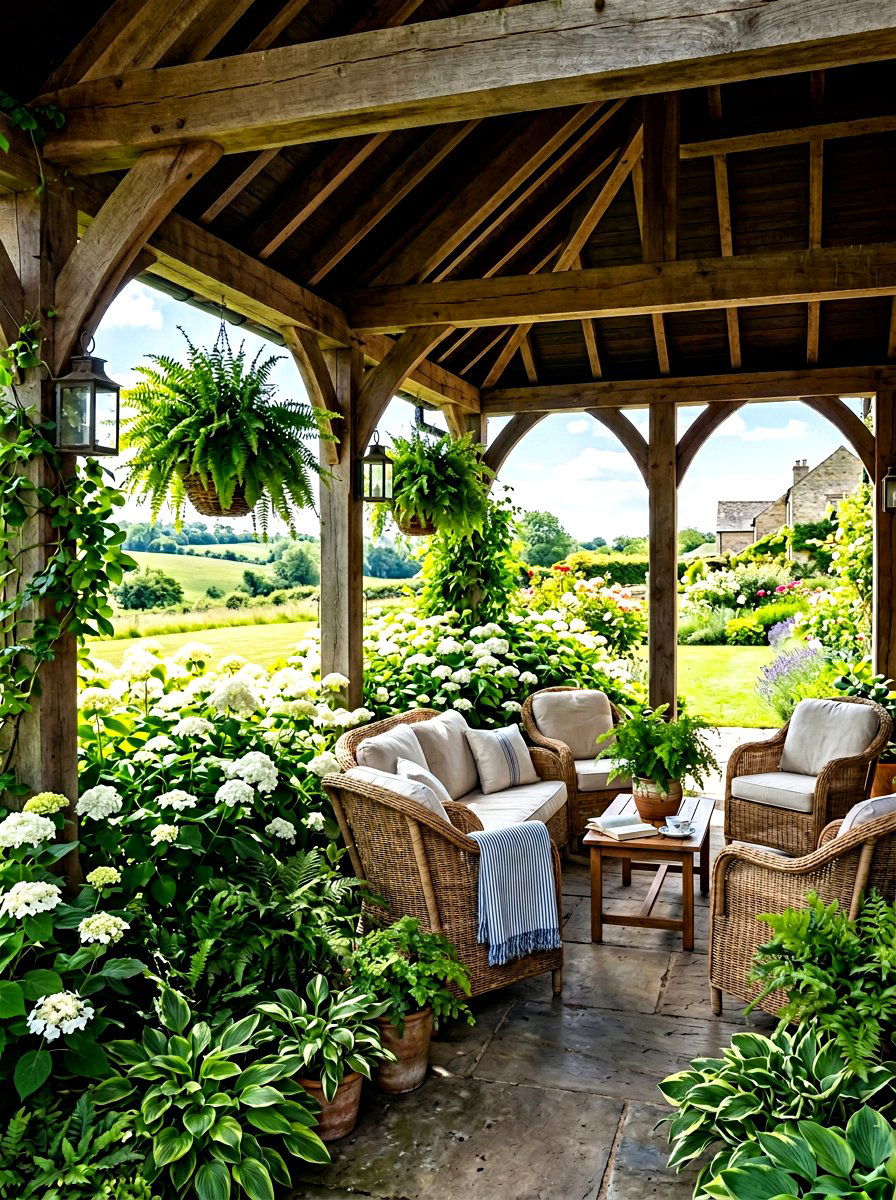
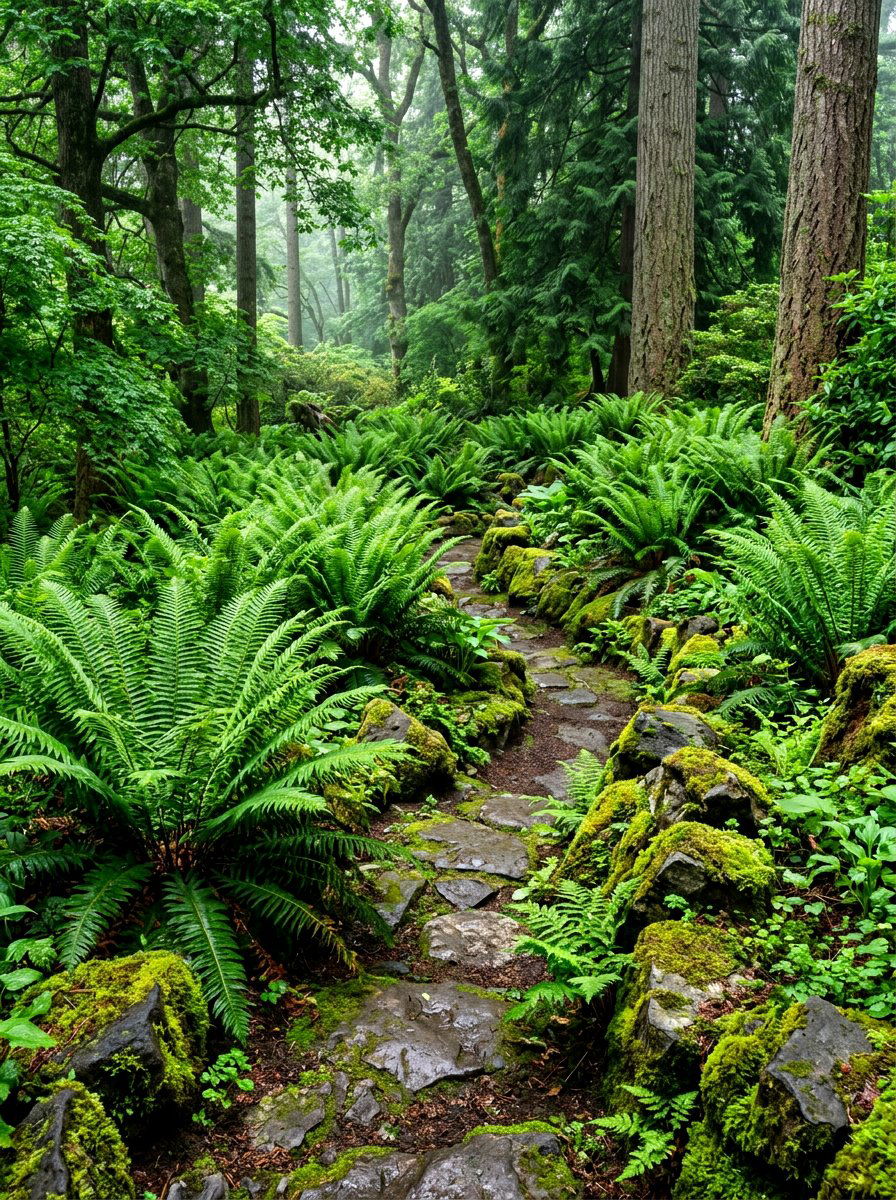
Transforming a dark corner of your yard into a shade loving hydrangea garden is a great way to utilize every inch of your property. While many flowers struggle without direct sun, varieties like the smooth hydrangea and certain lacecaps flourish in cooler, protected environments. Their pale blooms act like natural lanterns, reflecting what little light is available and brightening up the shadows. Combining them with ferns and bleeding hearts enhances the woodland feel and creates a tranquil retreat from the summer heat. This design is perfect for creating a meditative space where you can relax and enjoy the quiet beauty of nature in the shade.
19. Hydrangea Window Box
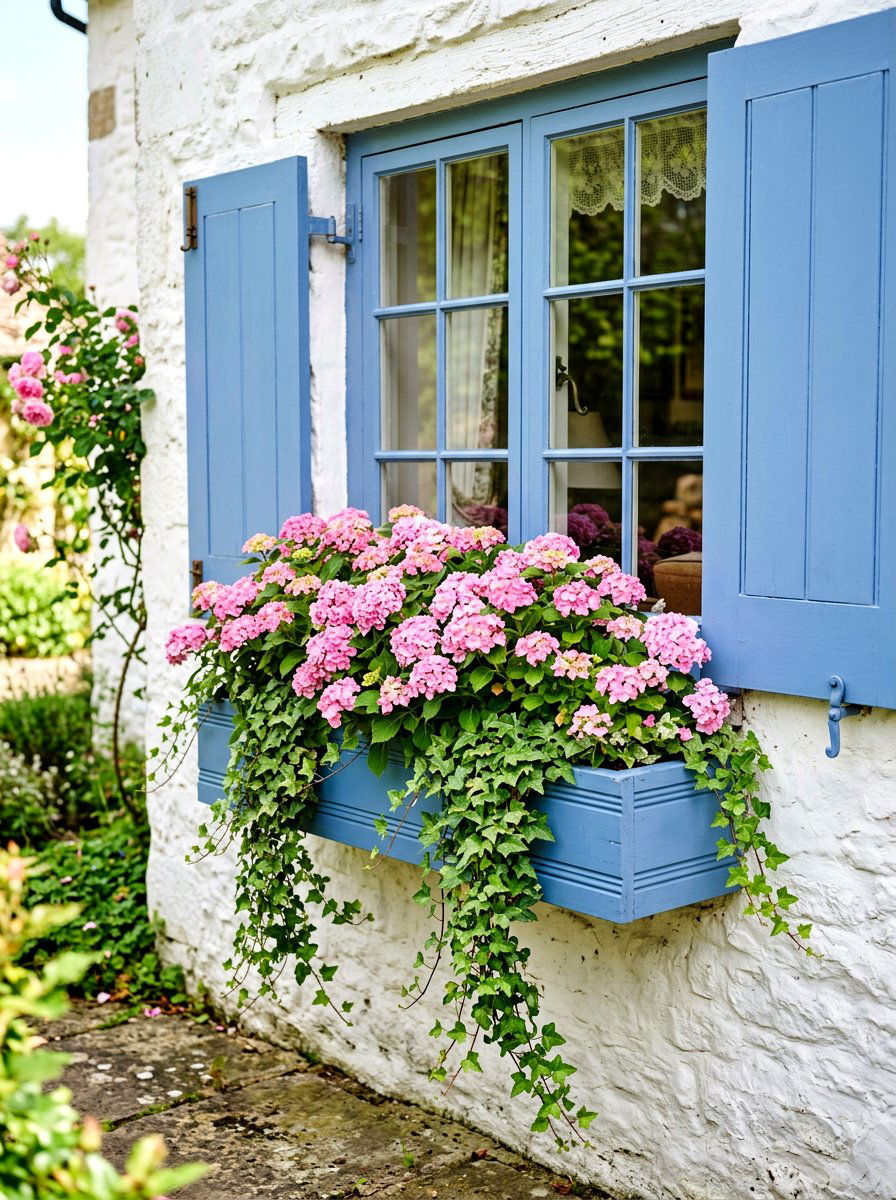
Adding a hydrangea window box to your home is a fantastic way to bring the garden right up to your living space. By using miniature or dwarf varieties, you can create a lush, overflowing display that frames your windows with soft color and texture. These boxes provide an immediate boost to your home's exterior aesthetic and can be seen from both the inside and the outside. It is important to ensure the boxes have excellent drainage and are watered frequently, as the limited soil can dry out quickly in the sun. This charming detail makes any house feel like a cozy, well-loved cottage in the country.
20. Formal Hydrangea Parterre
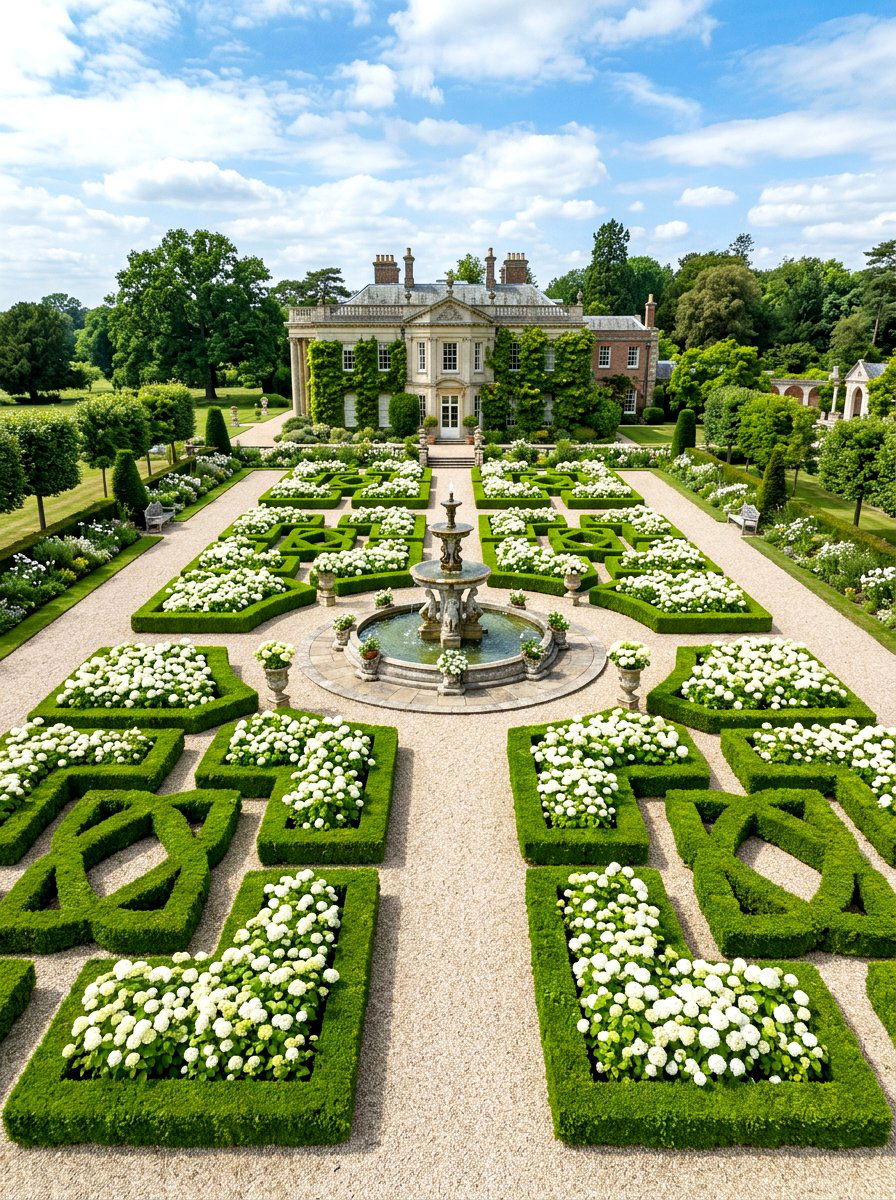
For a more structured and high-end look, a formal hydrangea parterre uses clipped hedges and geometric patterns to showcase these beautiful shrubs. Often seen in grand estates, this style involves planting hydrangeas within low boxwood borders to create a clean and organized appearance. The contrast between the wild, fluffy blooms and the sharp, manicured edges of the evergreen hedges is visually stunning and very sophisticated. This design requires more maintenance to keep the lines crisp, but the result is a breathtaking garden that looks like a work of art. It is perfect for homeowners who prefer a neat, orderly, and very elegant outdoor environment.
21. Hydrangea Garden Bench Area
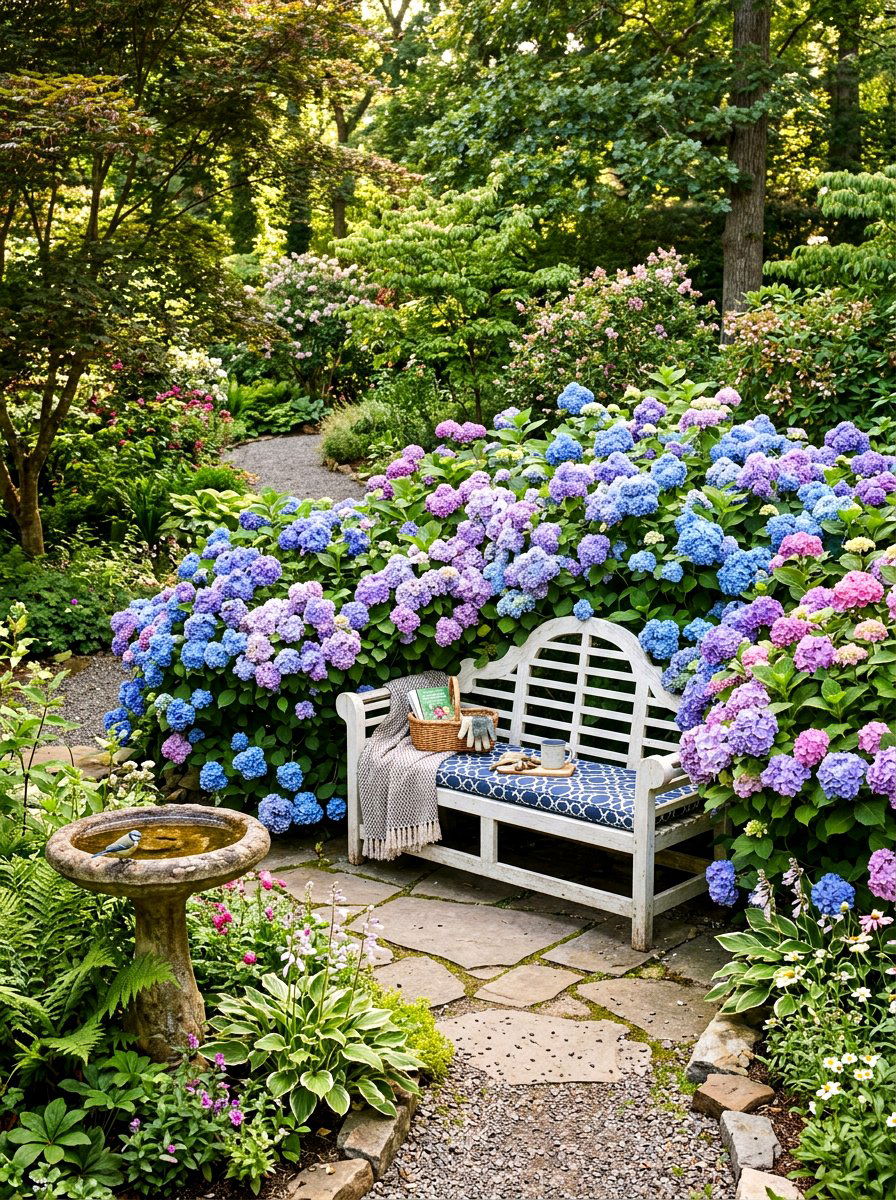
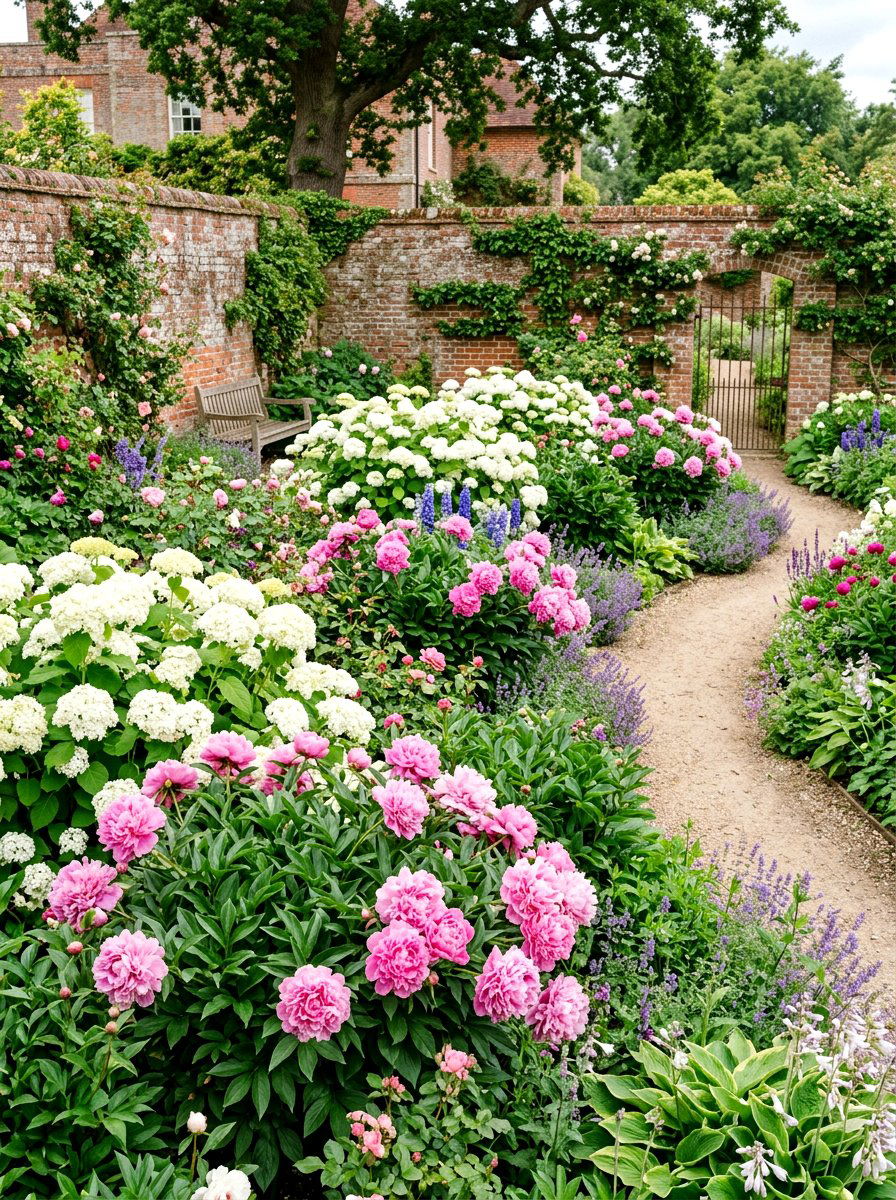
Creating a dedicated hydrangea garden bench area provides a peaceful destination in your yard where you can sit and soak in the floral beauty. Surrounding a simple wooden or wrought iron bench with tall hydrangea shrubs creates a sense of enclosure and intimacy, like a secret room within the garden. The fragrance and sight of the massive blooms at eye level make for a sensory experience that is truly relaxing. This is a perfect spot for reading a book or enjoying a morning coffee while surrounded by nature. Adding a small stone path leading to the bench makes the area feel like a special, hidden retreat.
22. Multi Color Hydrangea Garden
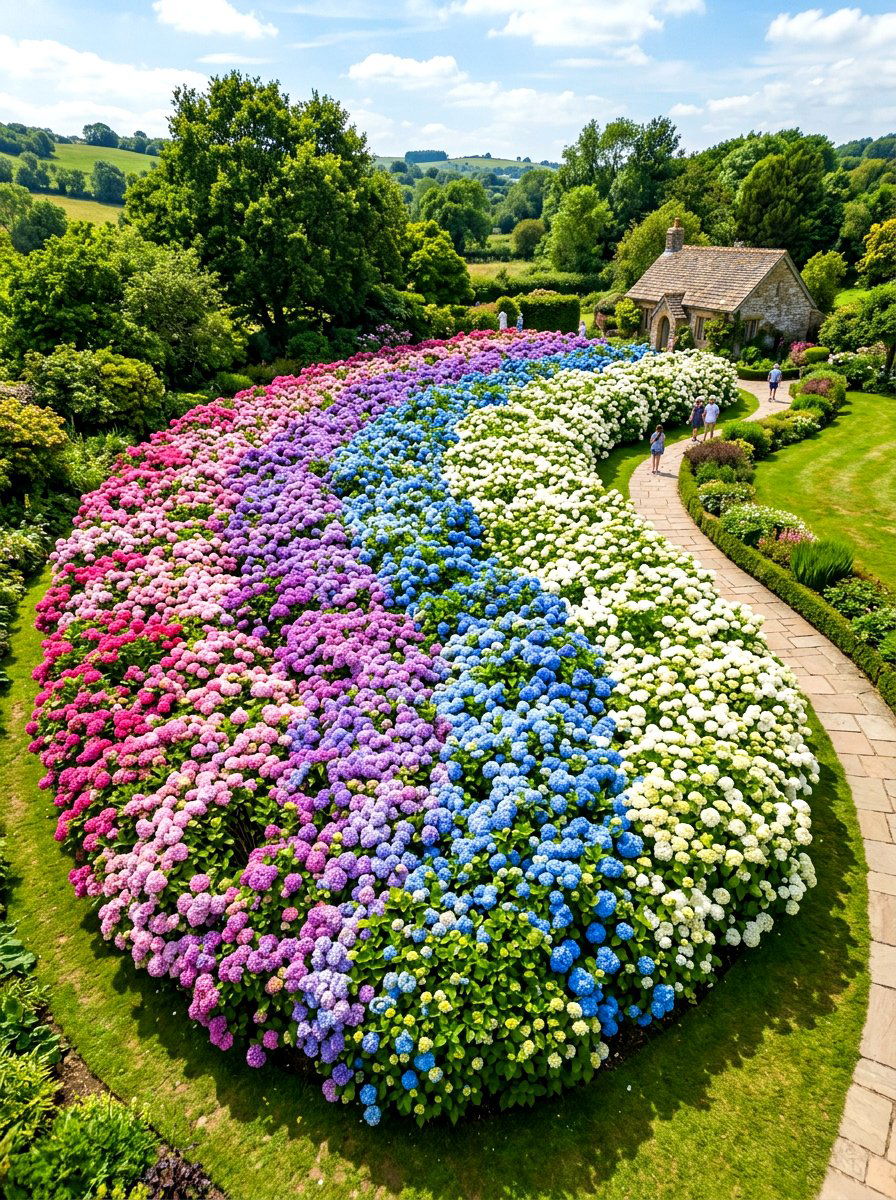
A multi color hydrangea garden is a playful and vibrant design that celebrates the full spectrum of available hues. By mixing blue, pink, purple, and white varieties in the same bed, you create a kaleidoscope of color that feels energetic and joyful. This can be achieved by planting different cultivars or by varying the soil acidity in different spots to produce different tones on the same types of plants. This style works best in large beds where the colors have room to blend and transition naturally. It is a great way to showcase the incredible diversity of the hydrangea family in one spectacular and eye-catching display.
23. Hydrangea Driveway Border
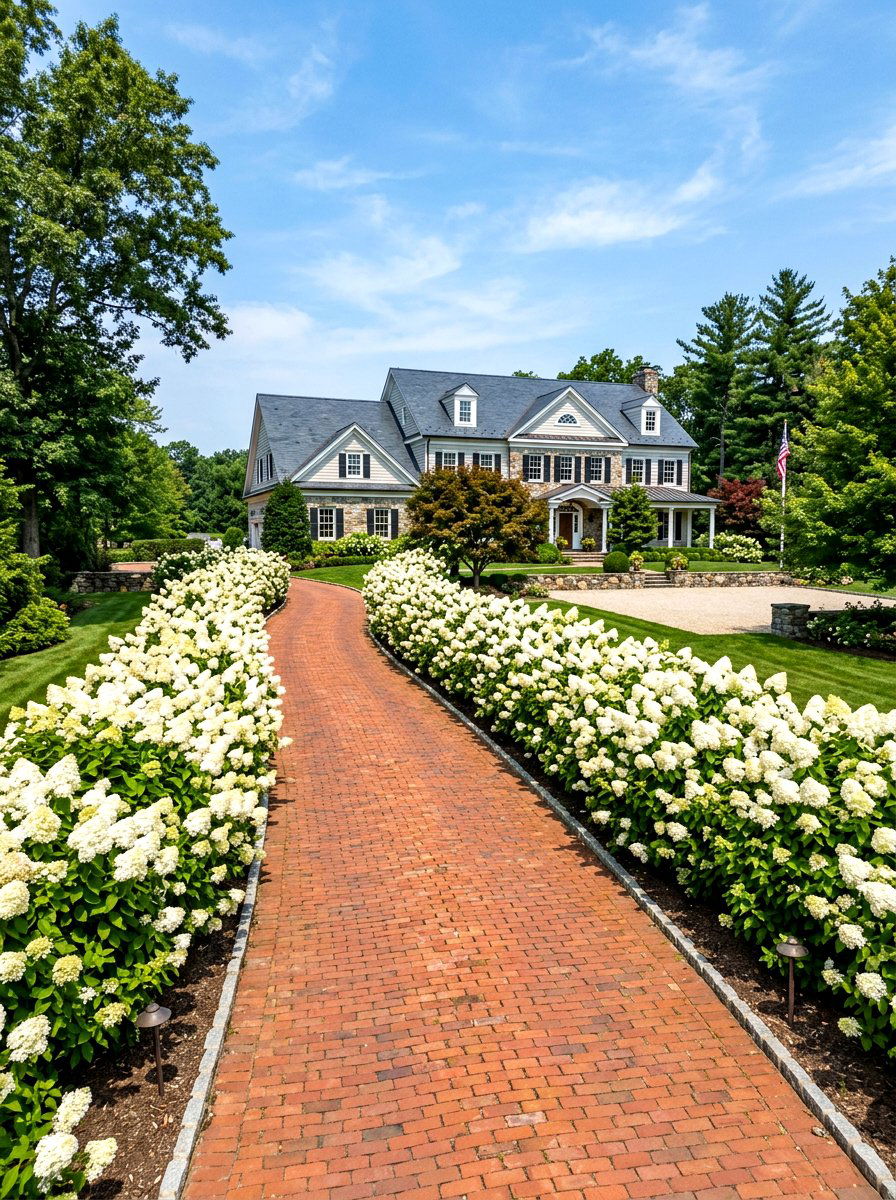
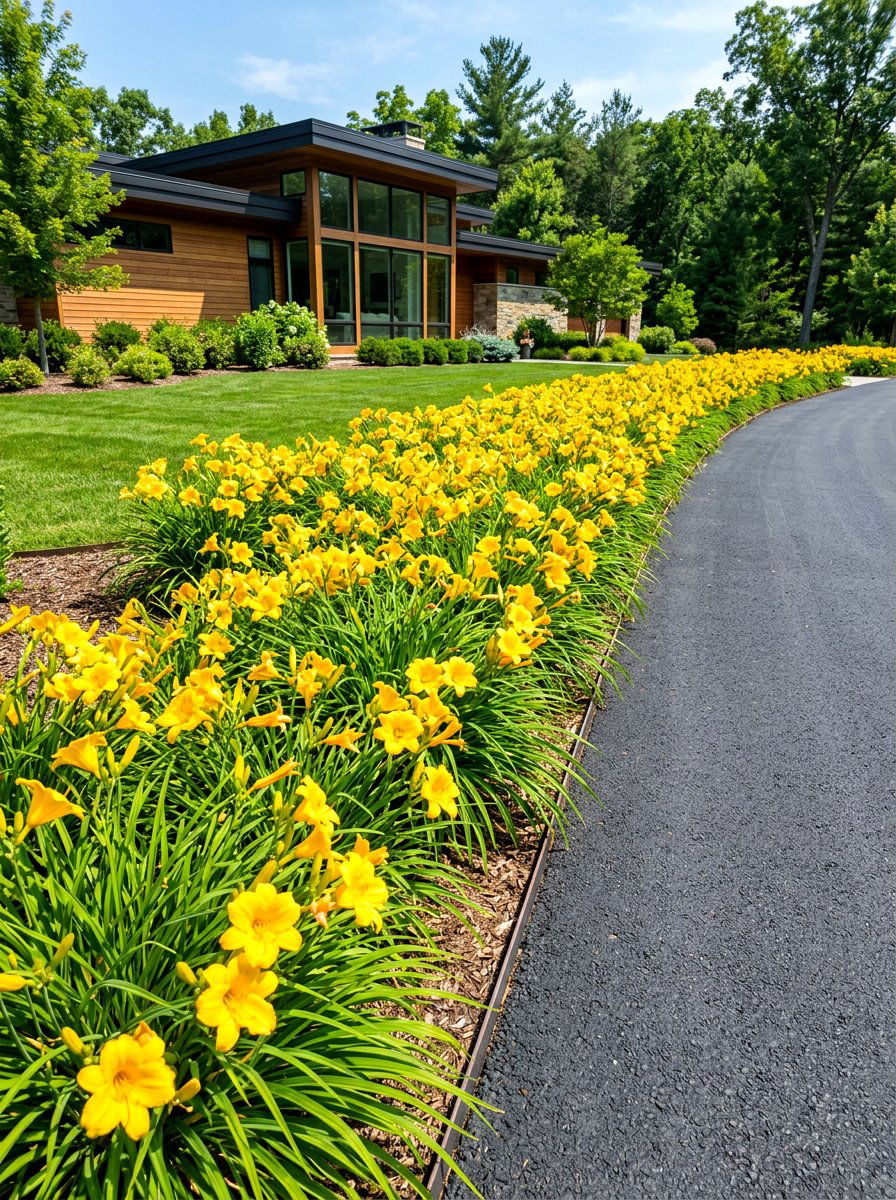
Lining your entrance with a hydrangea driveway border creates a grand and impressive approach to your home. As you drive up, the long rows of colorful shrubs provide a beautiful welcome and clearly define the edges of your property. This design choice also helps to soften the look of large asphalt or concrete surfaces, making the entire front yard feel more integrated and lush. Using hardy varieties like panicle hydrangeas ensures that the plants can withstand the heat reflected off the driveway. It is a durable and high-impact landscaping solution that adds significant curb appeal and a touch of luxury to your home's exterior.
24. Dwarf Hydrangea Container Garden
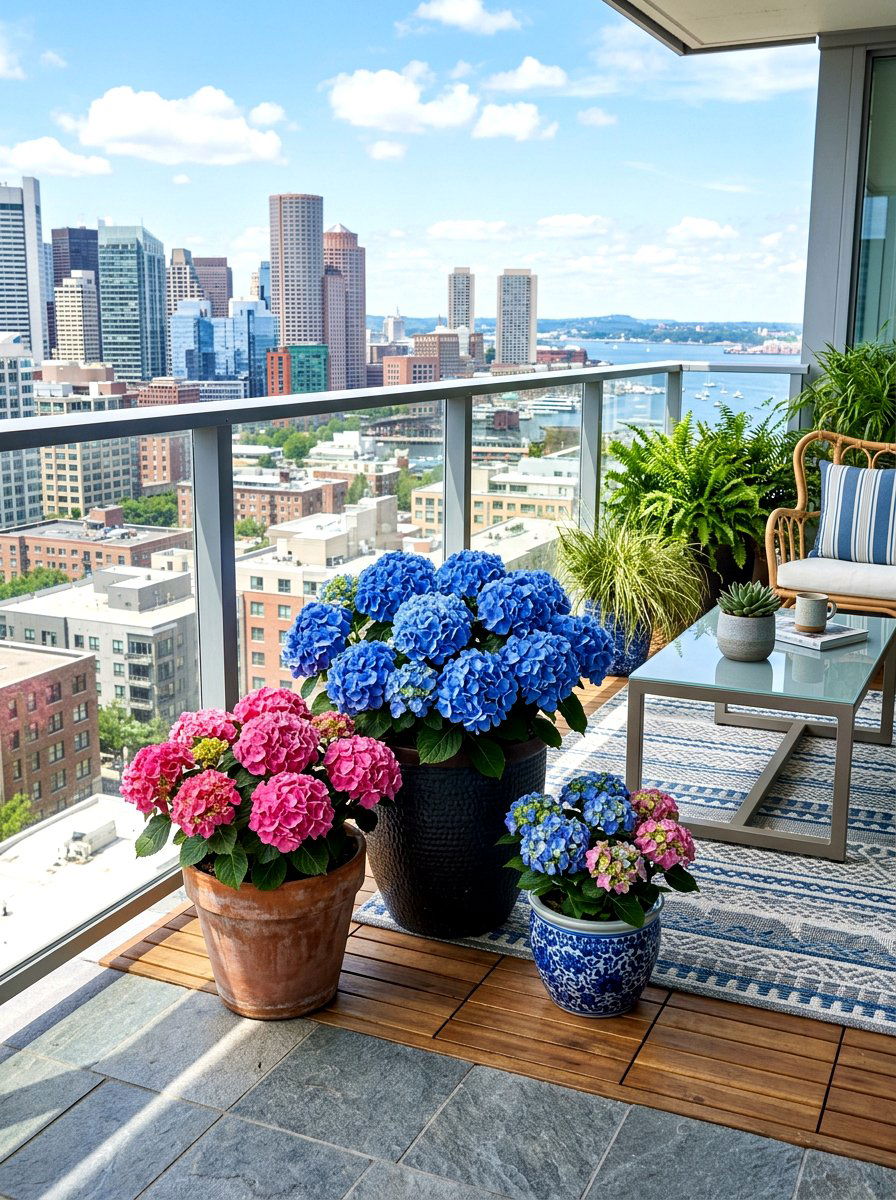
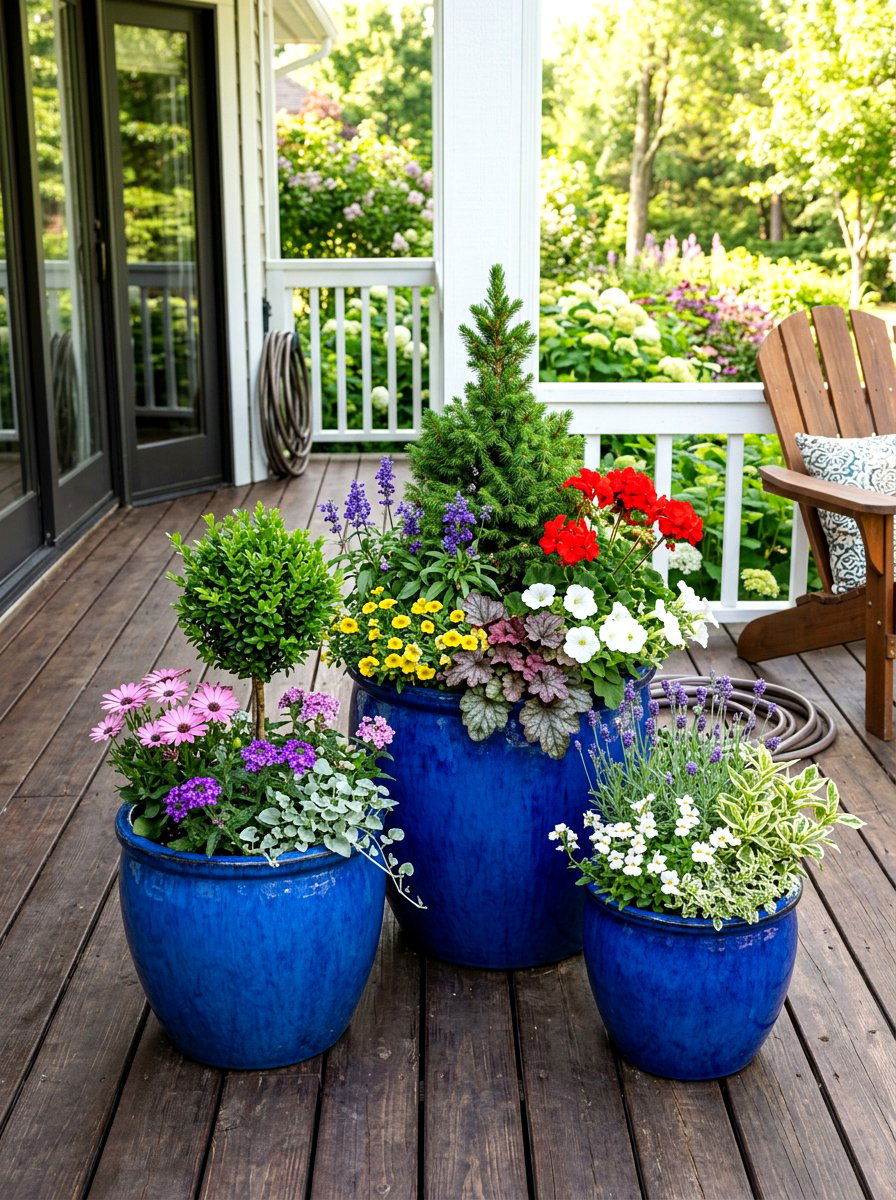
A dwarf hydrangea container garden is the ultimate solution for urban dwellers or those with limited mobility who still want to garden. These smaller plants offer all the beauty of their full-sized relatives but in a compact form that thrives in pots. You can create a beautiful arrangement by grouping several containers of different heights and colors together on a porch or deck. This allows you to experiment with different placements and find the perfect amount of light for each plant. Because they are in pots, you can also protect them more easily during harsh winter weather, ensuring they return with beautiful blooms every single year.
25. Hydrangea Flower Bed Edging
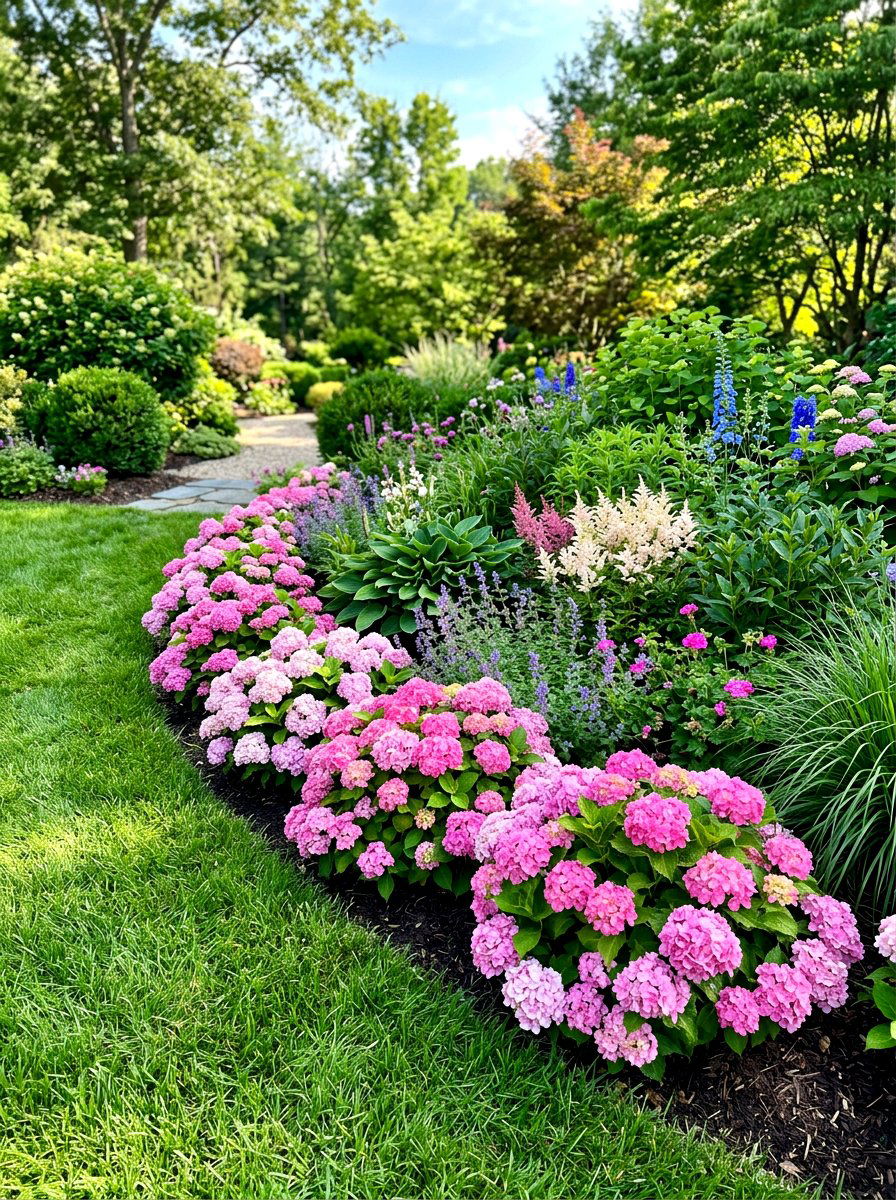
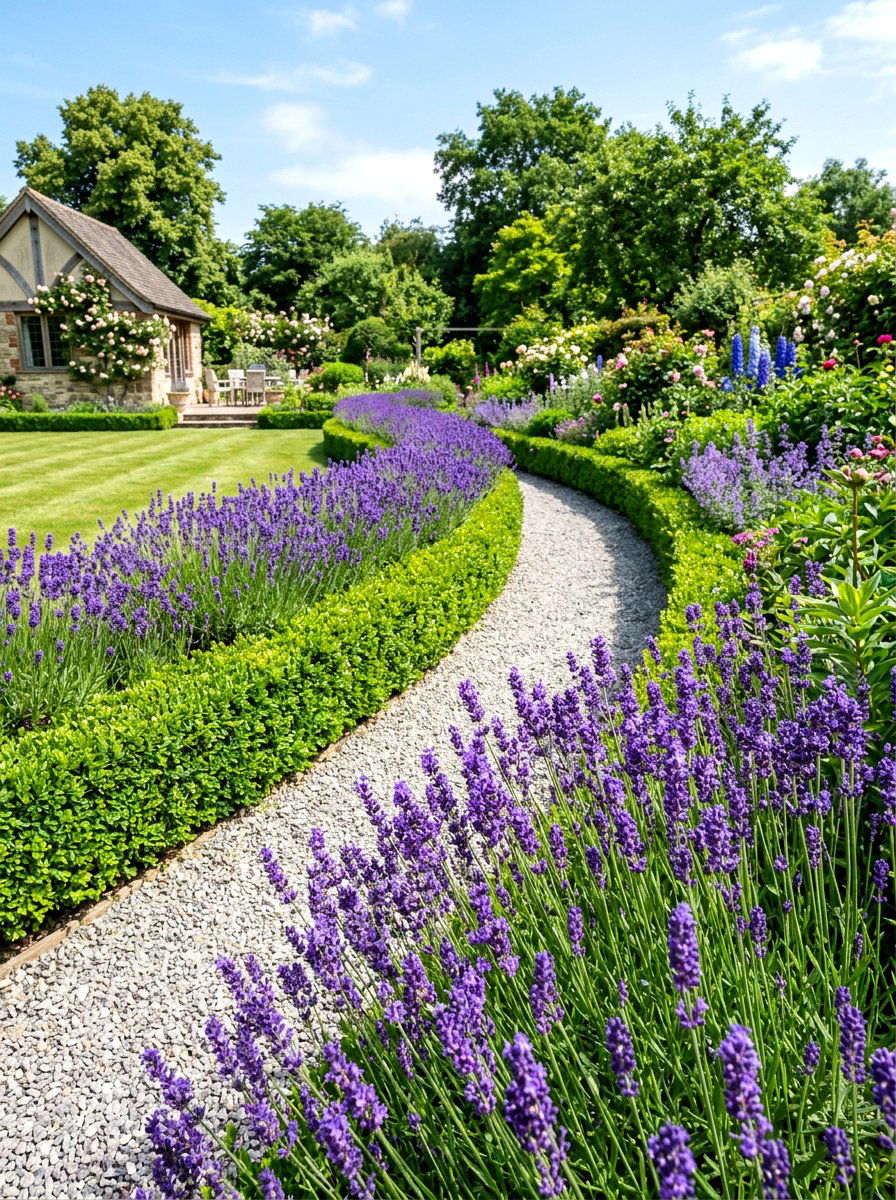
Using hydrangea flower bed edging is a clever way to define the borders of your garden while adding a layer of soft, low-growing color. Some smaller varieties have a mounding habit that works perfectly as a transition between a lawn and a taller perennial bed. These plants spill over the edges, hiding any unsightly soil or mulch and creating a seamless flow of greenery. The flowers act as a beautiful frame for the other plants in the bed, drawing the eye toward the center of the display. This technique adds a professional finish to your landscaping and makes your garden beds look much more lush.
26. Hydrangea And Rose Garden
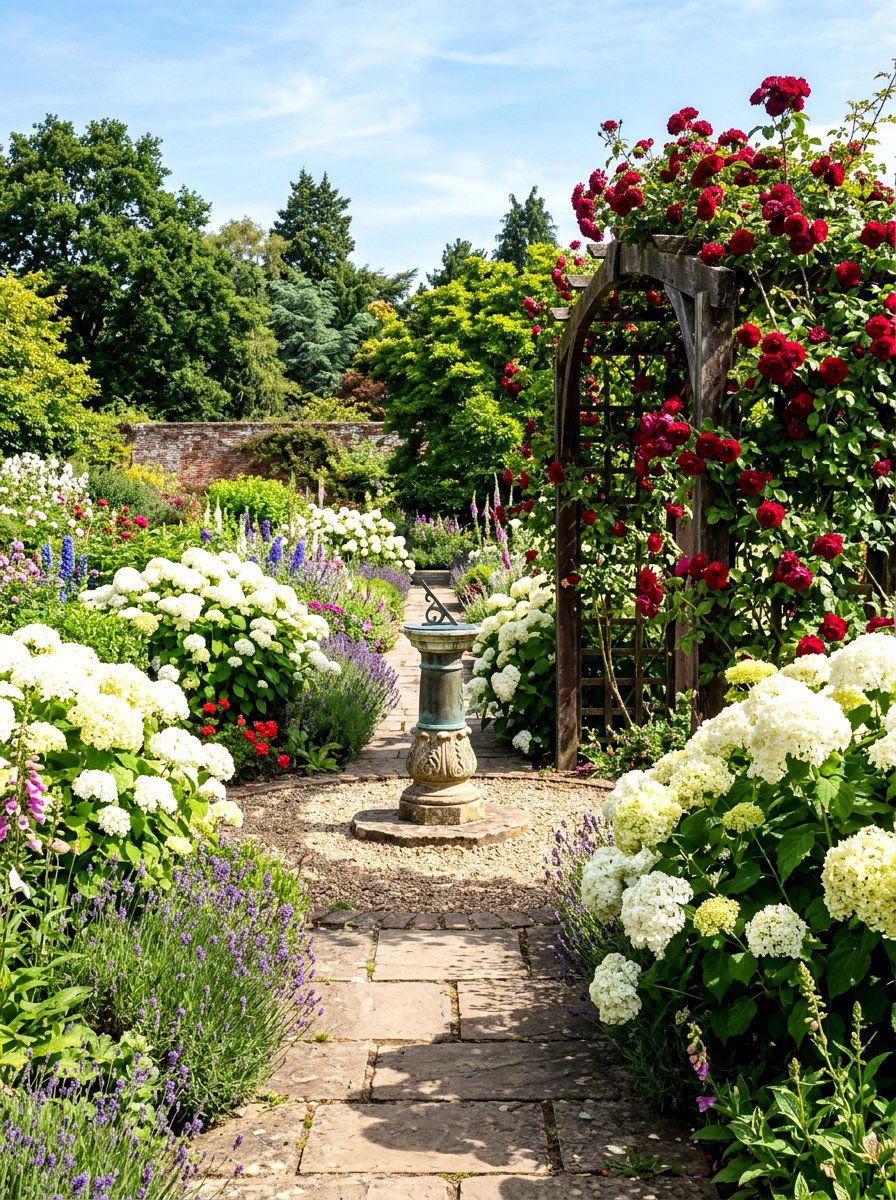
The combination of a hydrangea and rose garden brings together two of the most beloved flowers in history for a truly romantic landscape. The large, billowy form of the hydrangeas provides a perfect backdrop for the delicate and structured beauty of rose blooms. Choosing colors that complement each other, such as white hydrangeas with deep red roses, creates a classic and elegant look that smells as good as it looks. Both plants have similar water and nutrient needs, making them excellent companions in a sun-drenched garden bed. This pairing creates a timeless garden that feels both luxurious and deeply personal for any passionate flower lover.
27. French Country Hydrangea Garden
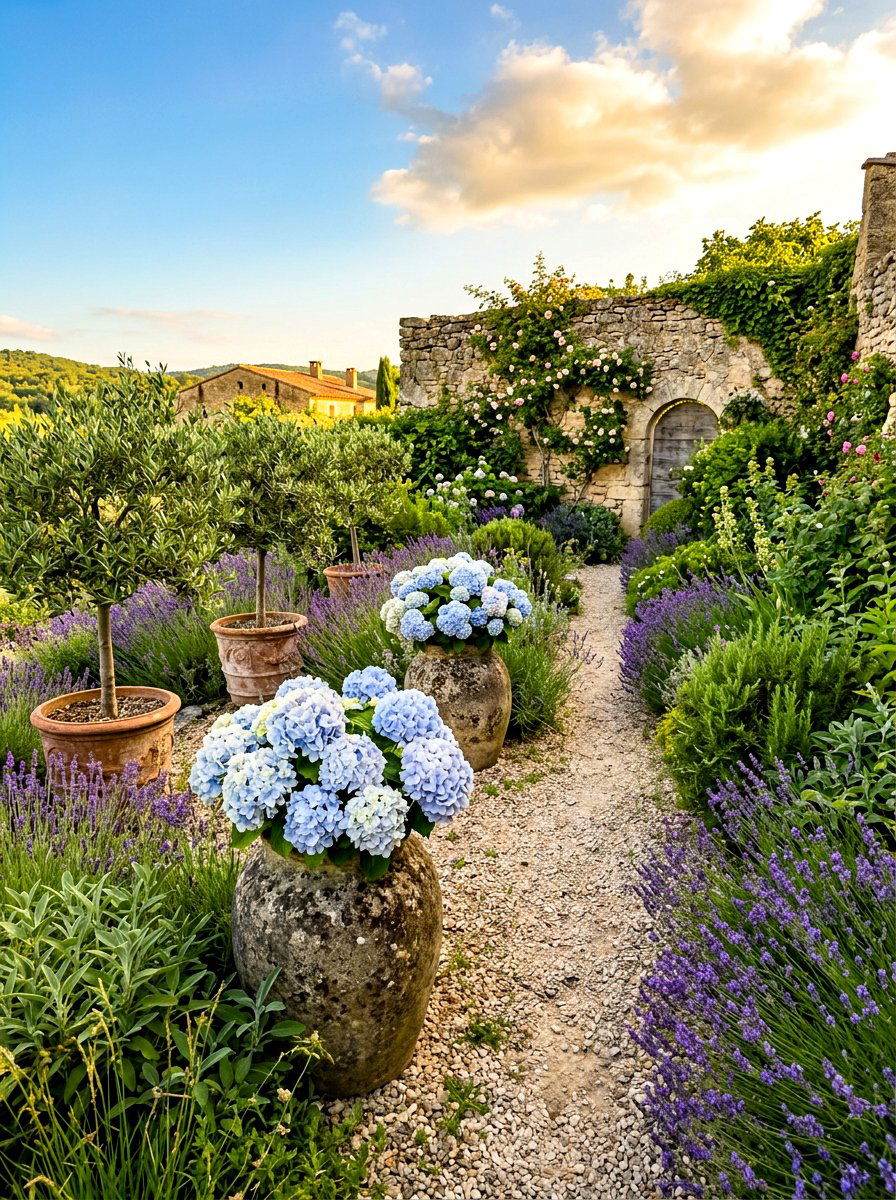
A French country hydrangea garden focuses on a rustic yet refined aesthetic, often featuring lavender, herbs, and weathered stone elements alongside the shrubs. The color palette is usually soft and muted, with plenty of whites, pale blues, and sage greens to create a tranquil atmosphere. Hydrangeas are often planted in large terracotta jars or allowed to climb over old stone walls to enhance the European feel. This style is all about relaxed elegance and the appreciation of natural beauty in a simple, unpretentious way. It is a perfect design for those who want their garden to feel like a peaceful escape to the quiet French countryside.
28. Hydrangea Focal Point
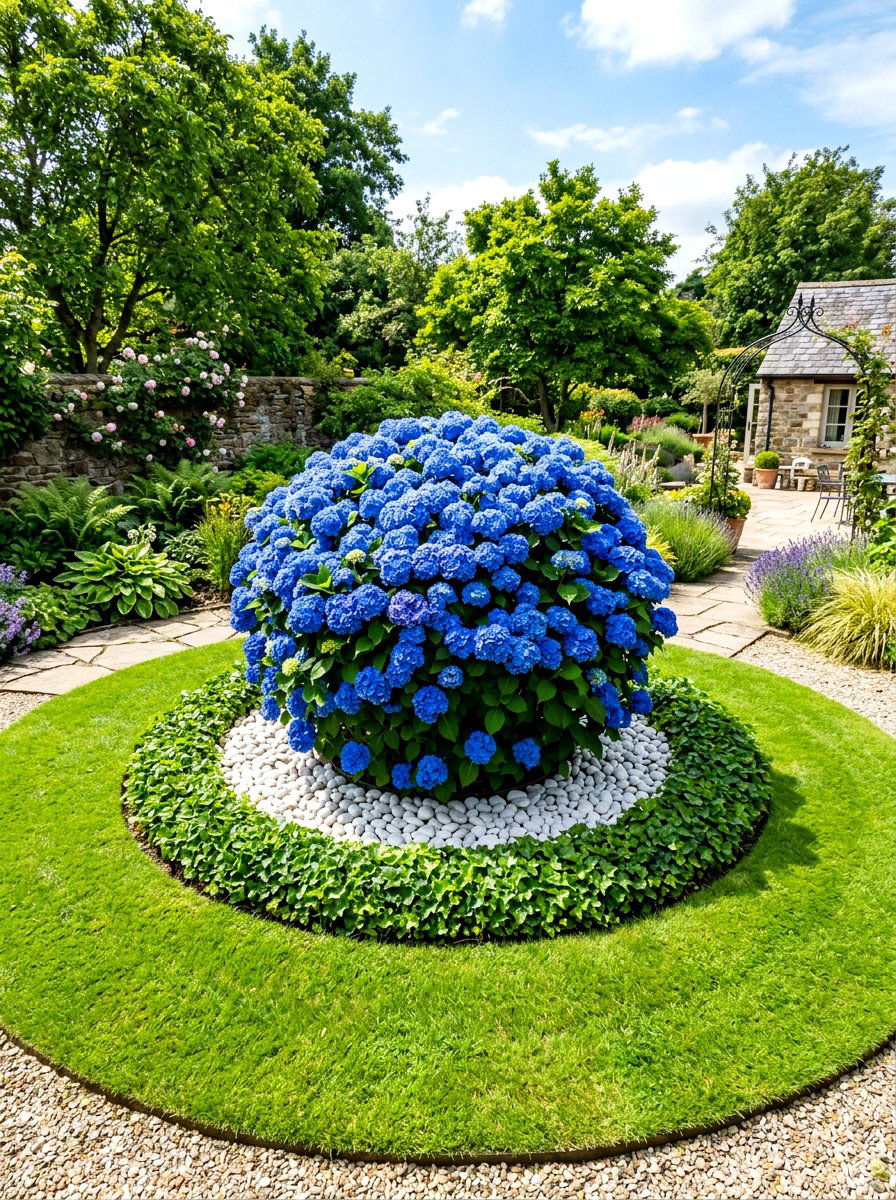
Using a single, spectacular plant as a hydrangea focal point is a great way to anchor a garden design and provide a clear center of interest. A large, tree-form panicle hydrangea or a massive, mature mophead can serve as a living sculpture in the middle of a lawn or at the end of a vista. By surrounding the focal plant with lower-growing perennials or simple groundcover, you ensure that it remains the undisputed star of the show. This approach is especially effective in smaller gardens where you want to make a big impact without cluttering the space with too many different types of plants.
29. Fall Interest Hydrangea Garden
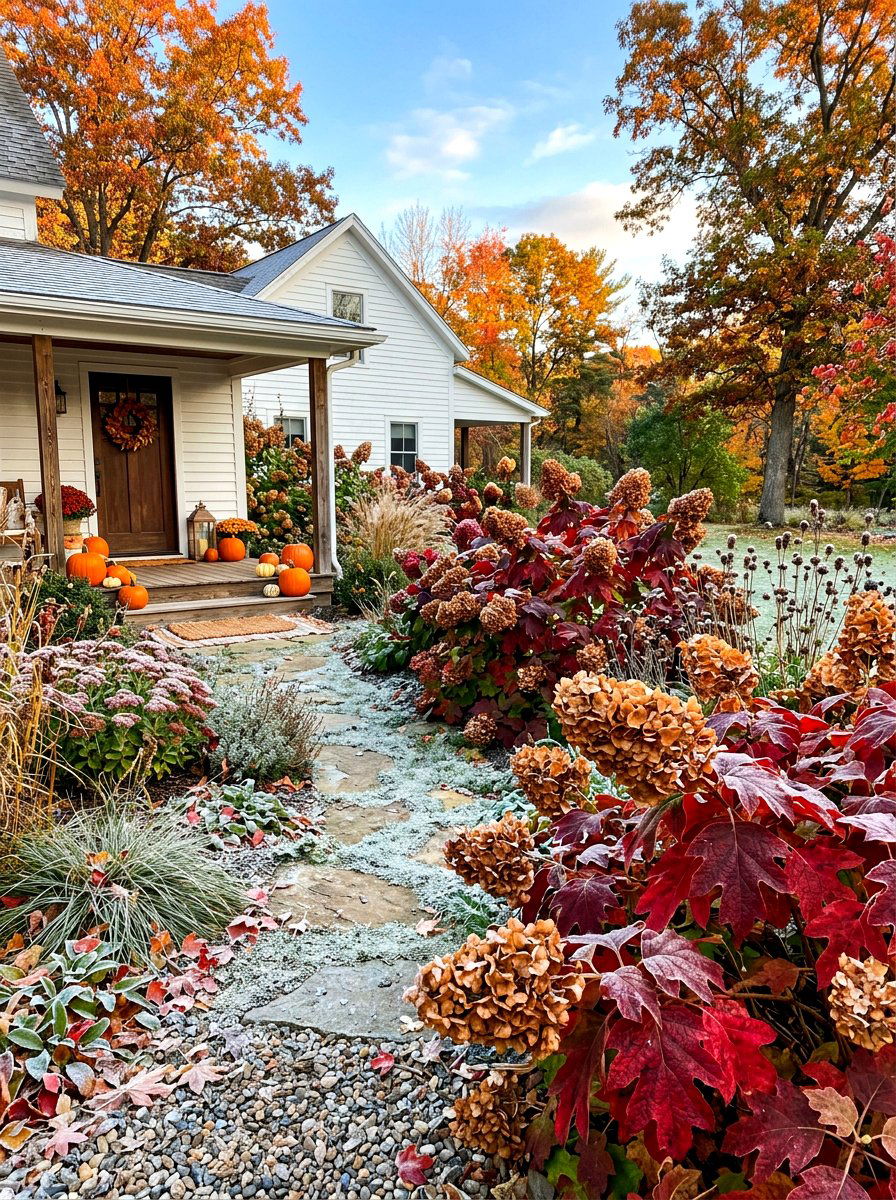
A fall interest hydrangea garden celebrates the beauty of these plants even after the peak of summer has passed. Many varieties, especially the oakleaf and panicle types, offer stunning late-season color as their flowers turn deep pink or bronze and their leaves transform into vibrant reds and purples. Instead of cutting back the spent blooms, leaving the dried flower heads on the plant adds a hauntingly beautiful texture to the autumn landscape. This design ensures that your garden remains visually interesting and full of life well into the colder months. It is a great way to extend the enjoyment of your outdoor space throughout the entire year.
30. Hydrangea Garden Path
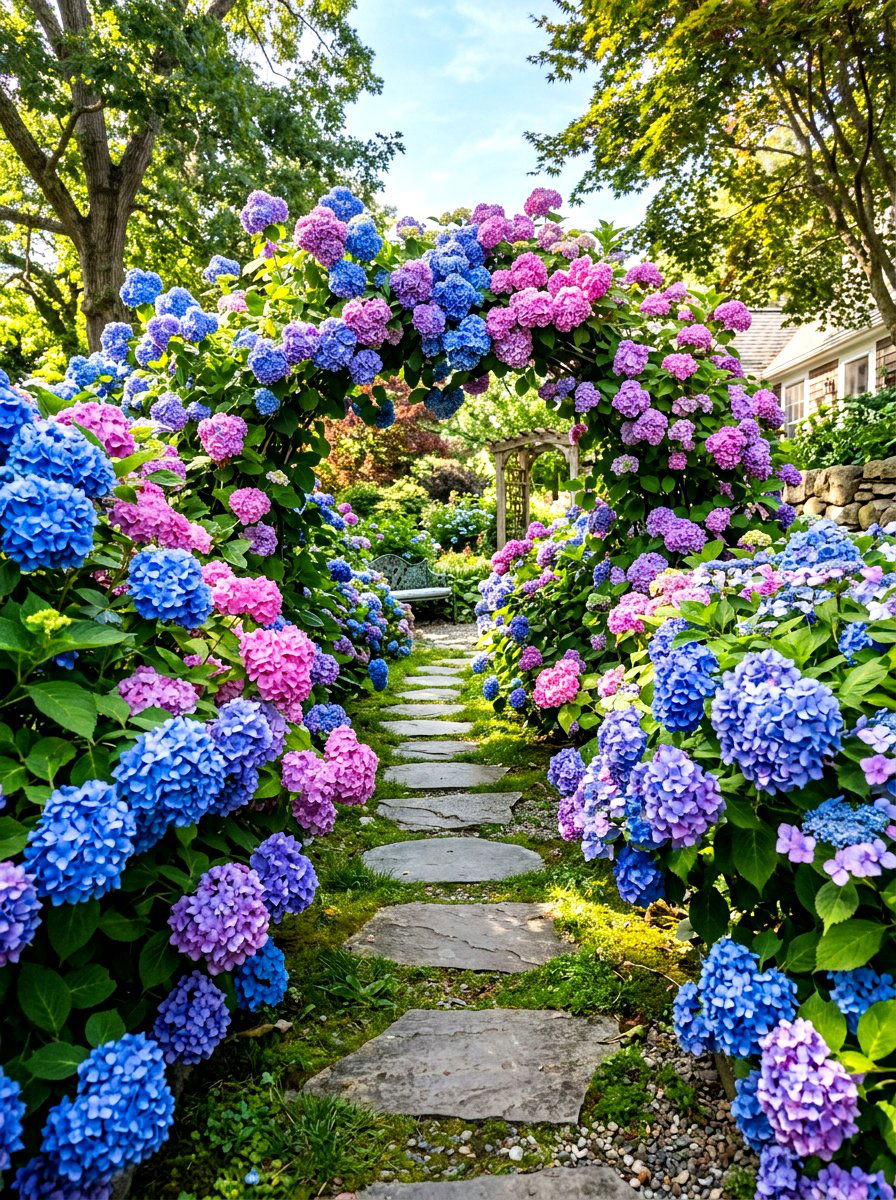
Creating a hydrangea garden path is a wonderful way to encourage exploration and discovery in your yard. By planting shrubs closely along both sides of a winding walkway, you create a sense of immersion where visitors are literally surrounded by flowers. The soft petals often brush against those walking by, releasing a subtle fragrance and adding a tactile element to the garden experience. Using natural materials like wood chips or stepping stones for the path enhances the organic and inviting feel of the space. It is a romantic and magical design that turns a simple walk through the yard into a memorable and beautiful floral journey.
Conclusion:
Hydrangeas are truly a gift to any gardener, offering a unique blend of durability, versatility, and breathtaking beauty that is hard to find in other plants. By exploring these thirty different design ideas, you can find the perfect way to incorporate these floral icons into your own outdoor sanctuary, regardless of your yard size or style. Whether you prefer the structured elegance of a formal parterre or the wild romance of a cottage garden, hydrangeas provide the perfect canvas for your creative vision. With a little care and the right placement, these stunning shrubs will reward you with massive, colorful blooms that make your garden a viral-worthy masterpiece.

Related posts: