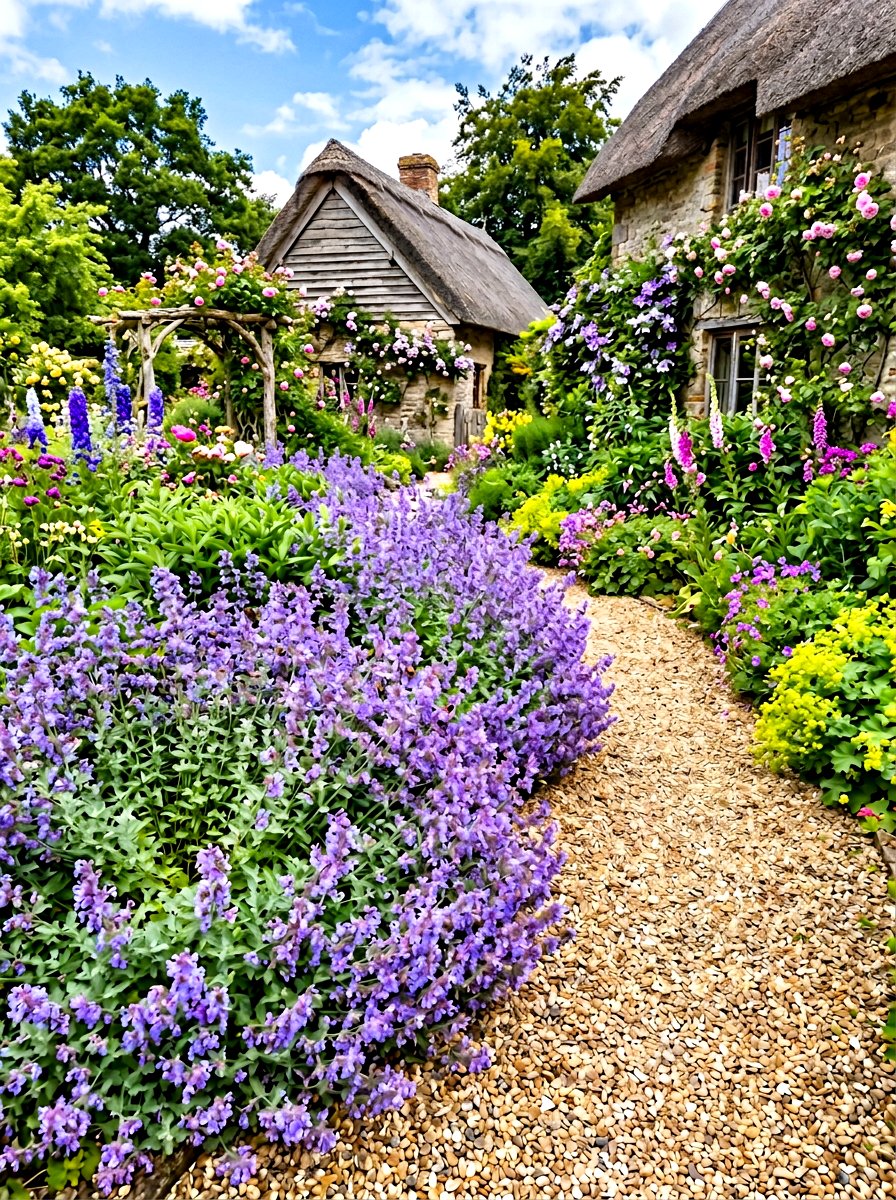
Creating a French country garden is all about finding that perfect, delicate balance between structured elegance and natural, unbridled beauty. This timeless style draws inspiration from the romantic landscapes of Provence and the formal estates of the French aristocracy. You do not need a massive chateau to achieve this look in your own backyard. By focusing on symmetry, soft color palettes, and weathered materials, any outdoor space can be transformed into a tranquil European retreat. Whether you prefer the orderly lines of clipped boxwoods or the whimsical scent of climbing jasmine, these ideas will guide you toward a garden that feels both sophisticated and deeply inviting for relaxation.
1. Lavender Garden
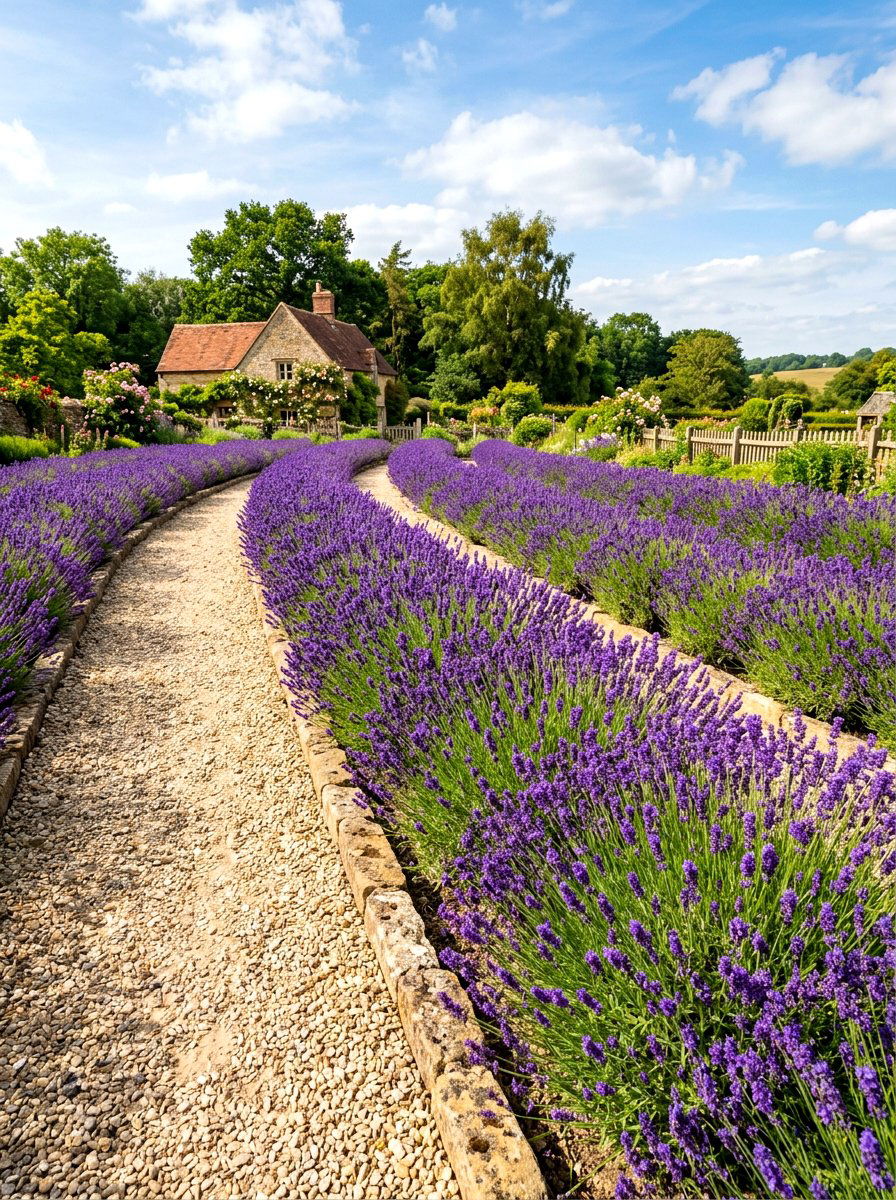
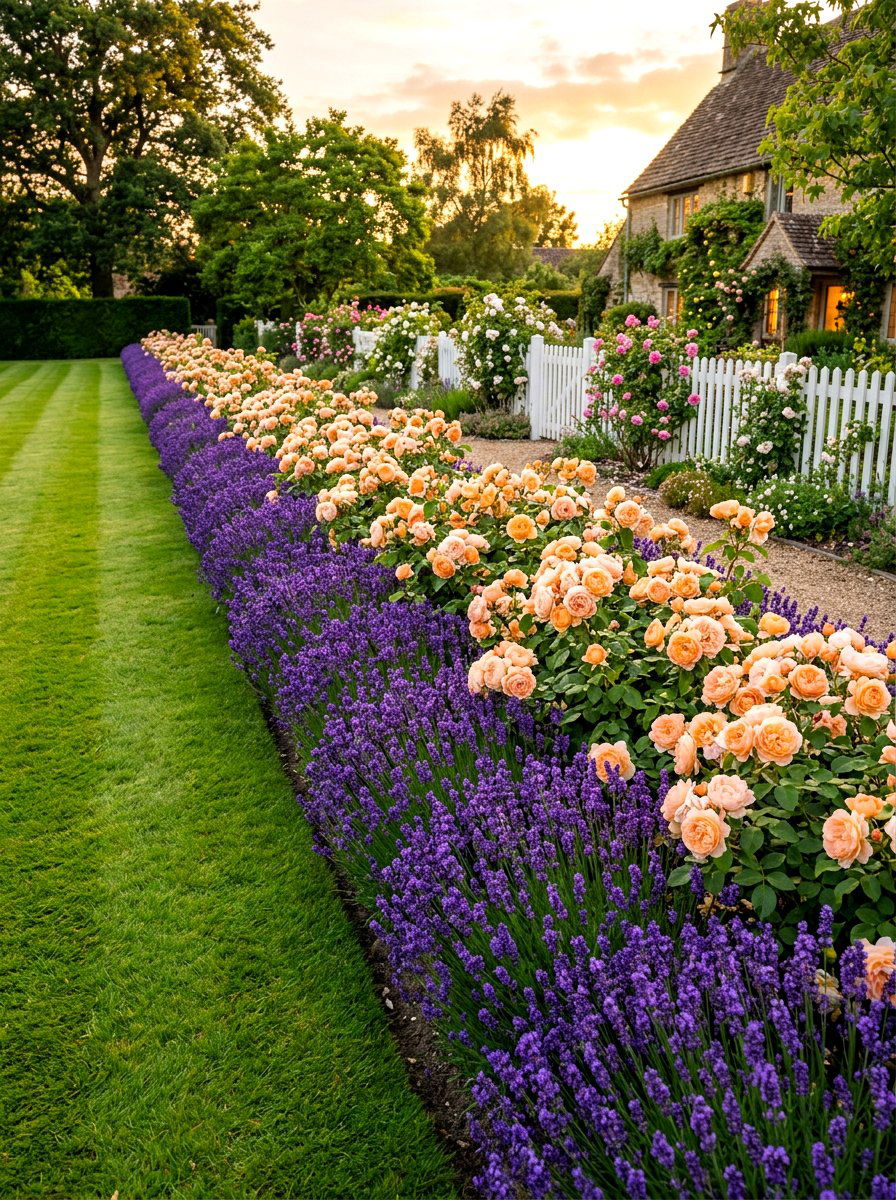
The sight of rows of purple blooms is perhaps the most iconic image of the French countryside. To recreate this, design a dedicated lavender garden that features long, sweeping drifts of various lavender species planted in well-drained soil. Surround these fragrant plants with a simple border of crushed limestone or pea gravel to reflect the heat and light. This setup creates a stunning visual impact that attracts pollinators like bees and butterflies all summer long. Complement the purple hues with soft grey-green foliage to maintain a soothing, monochromatic color palette. The result is a sensory-rich area that feels like a permanent escape to a sunny field in Provence.
2. Boxwood Hedges
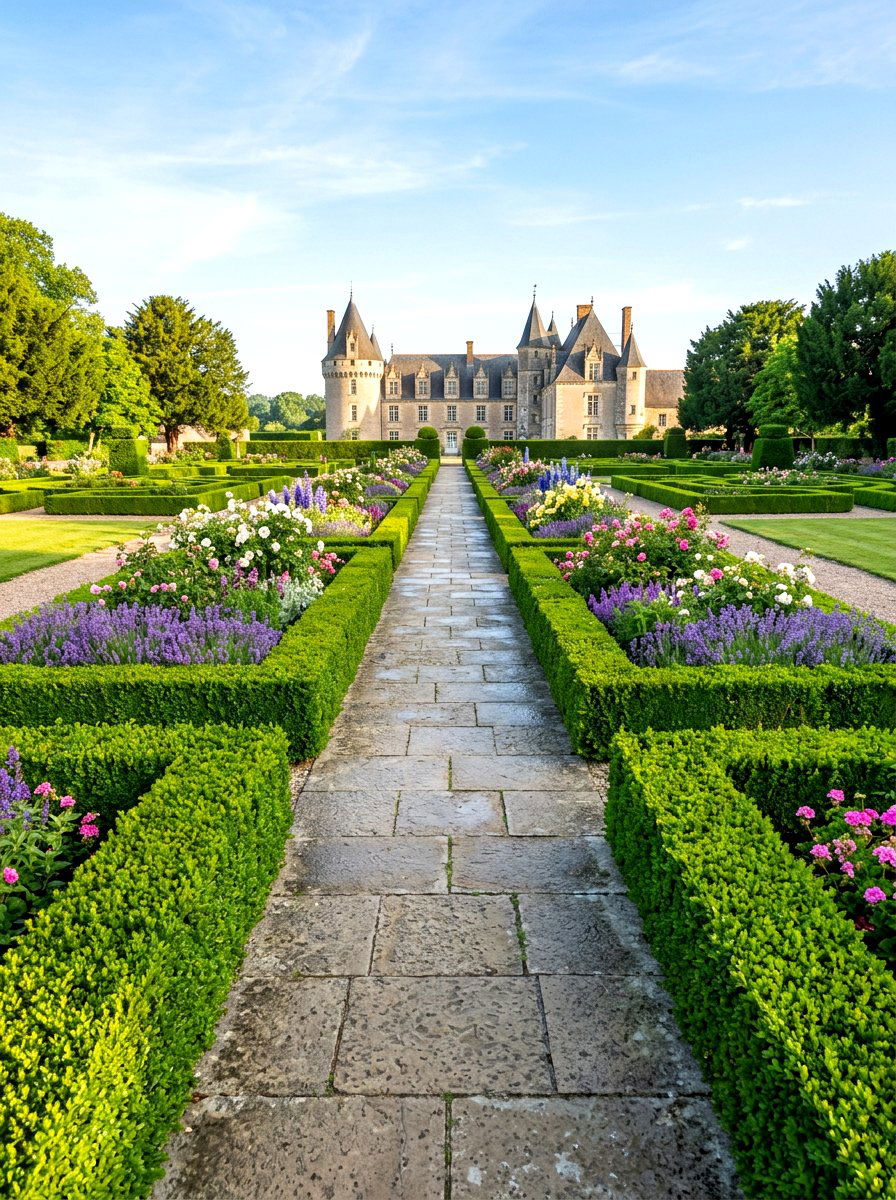
Structured greenery provides the essential bones of any French-inspired landscape. Use neatly clipped boxwood hedges to define specific outdoor rooms or to line your primary walkways. These evergreen borders create a sense of permanent order that looks beautiful even during the winter months. For a classic look, maintain them at a low height of about twelve to eighteen inches to frame flower beds filled with softer, more chaotic perennials. This contrast between the sharp, geometric lines of the hedges and the loose, flowing flowers inside is a hallmark of the style. The symmetry of these living walls brings immediate sophistication and a professional, architectural feel to your backyard.
3. Stone Fountain
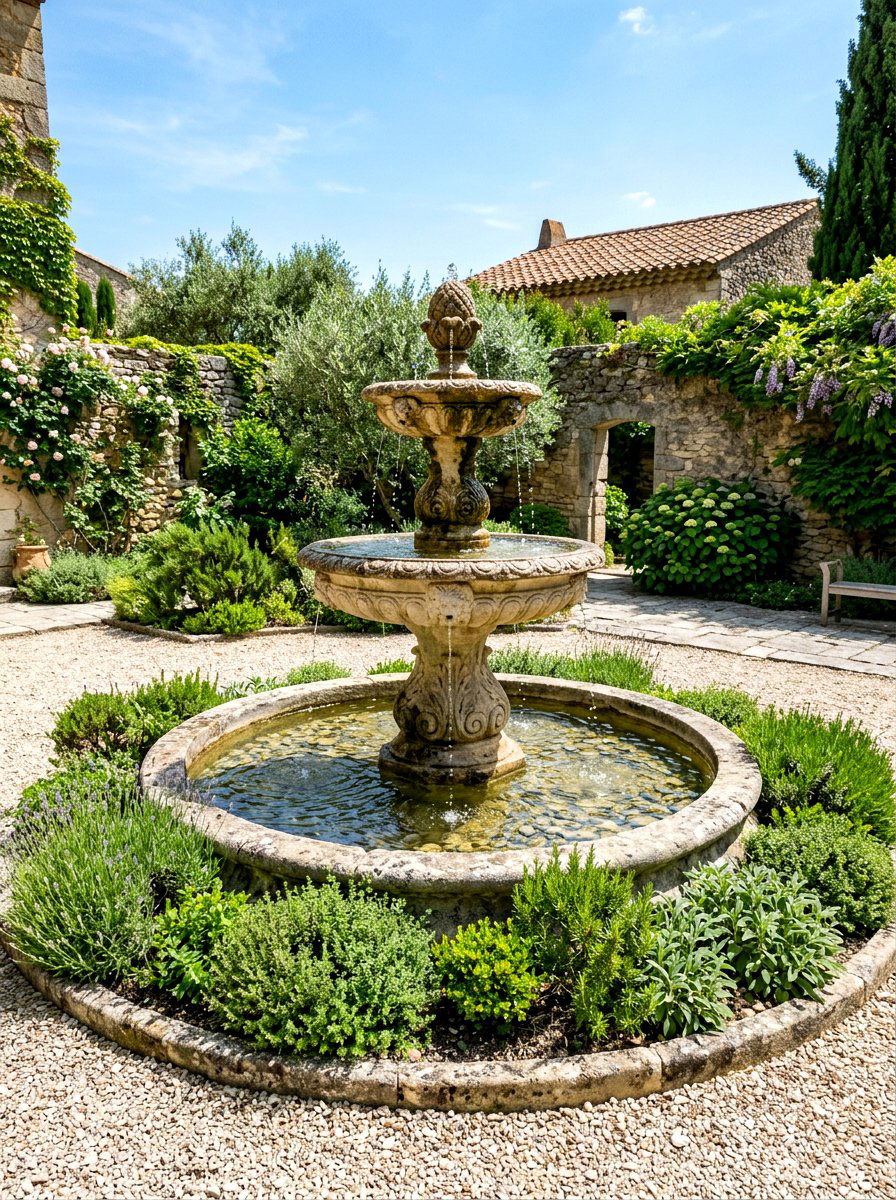
Nothing creates a more peaceful atmosphere than the gentle sound of trickling water from a tiered stone fountain. Position a weathered limestone or cast-iron fountain as a central focal point within a courtyard or at the end of a long garden path. Surround the base with a ring of low-growing herbs or soft moss to make it feel like an established part of the landscape. Choose a design that looks slightly aged to give your garden an authentic sense of history and permanence. This water feature serves as both a visual anchor and a cooling element during warm afternoons, making your outdoor space feel like a secluded sanctuary.
4. Gravel Path
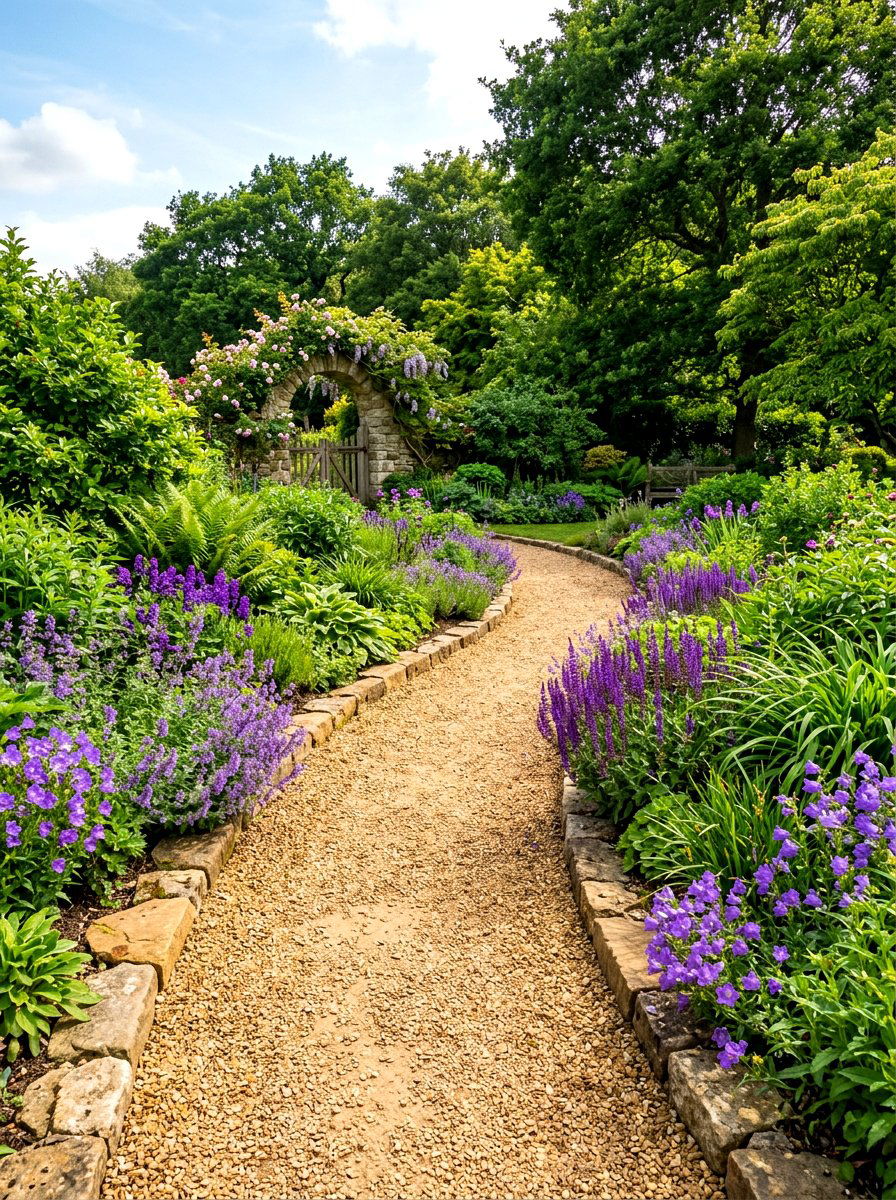
A simple gravel path is a fundamental element that instantly adds texture and a rustic feel to your landscape. Instead of using modern pavers, opt for small, rounded pea gravel in warm shades of tan, cream, or light grey. These paths should crunch satisfyingly underfoot, encouraging visitors to slow down and enjoy the surrounding scenery. Edge the walkways with simple metal strips or stones to keep the gravel contained while maintaining a clean, professional look. You can plant creeping thyme or small succulents along the edges to soften the transition from the hard path to the lush garden beds. It is an affordable and practical design choice.
5. Iron Bistro Set
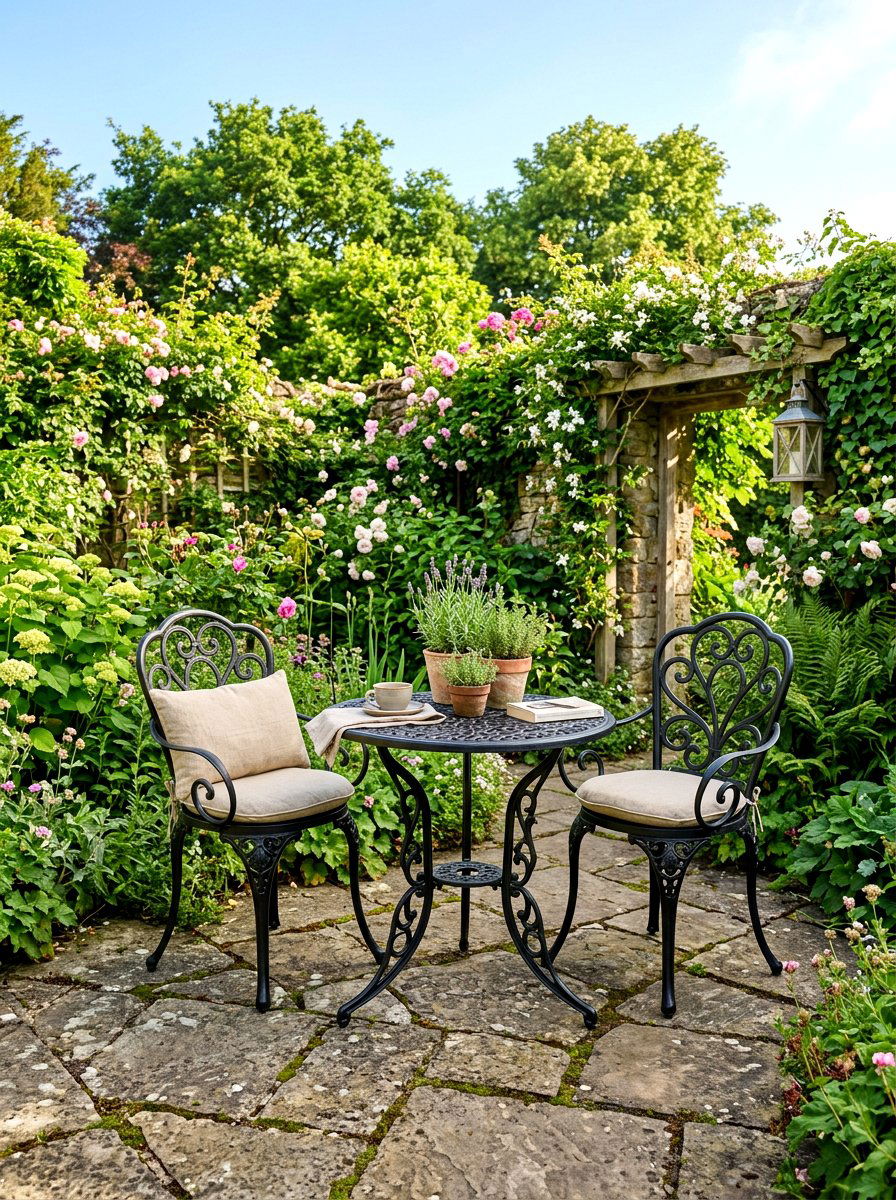
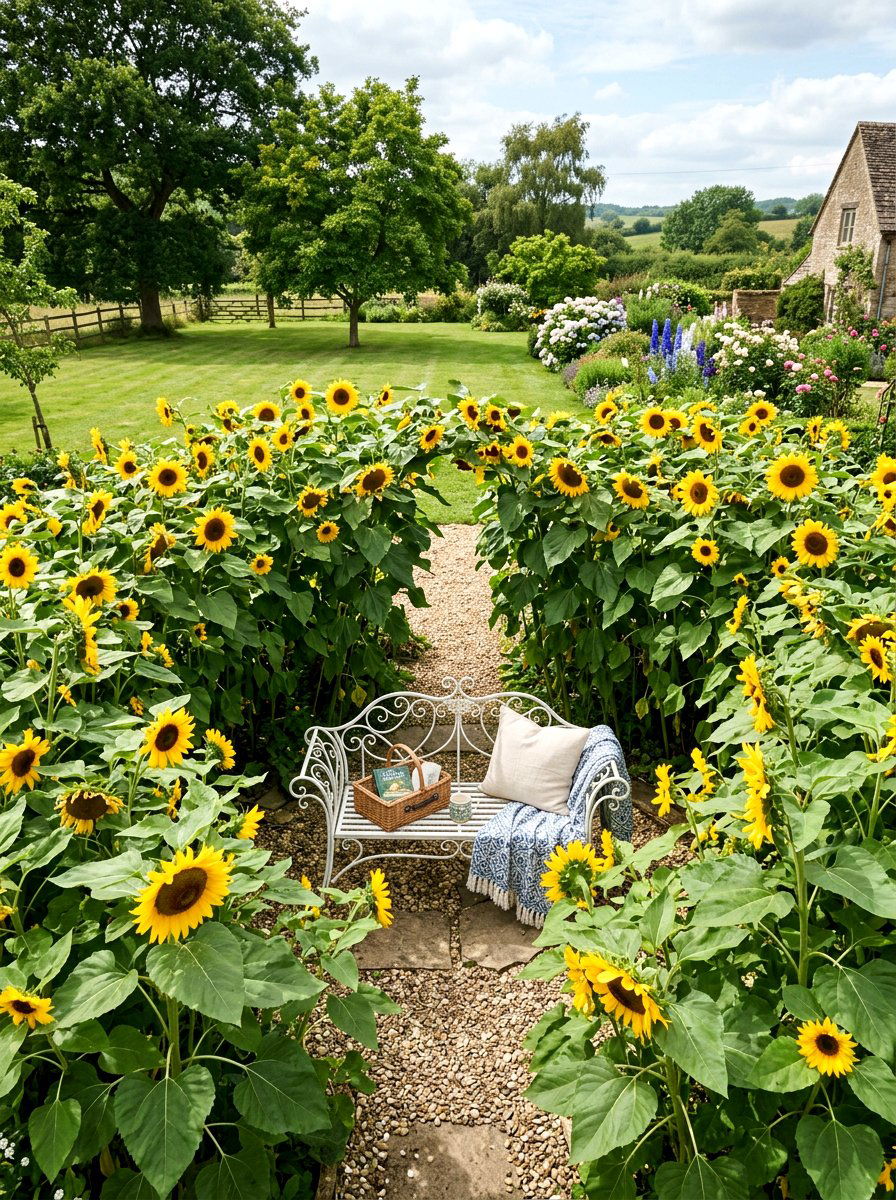
Transform a small corner of your garden into a charming Parisian retreat with a classic wrought iron bistro set. Choose a table and two chairs with delicate scrollwork and a slightly distressed finish to avoid looking too modern. Place this set on a small circle of gravel or a shaded stone patio beneath a large tree. Adding a few linen cushions in soft blue or cream can make the space even more inviting for morning coffee or afternoon tea. This simple furniture arrangement creates an intimate destination within the garden, encouraging you to spend more time outdoors while adding a touch of vintage elegance to the overall design.
6. Climbing Roses
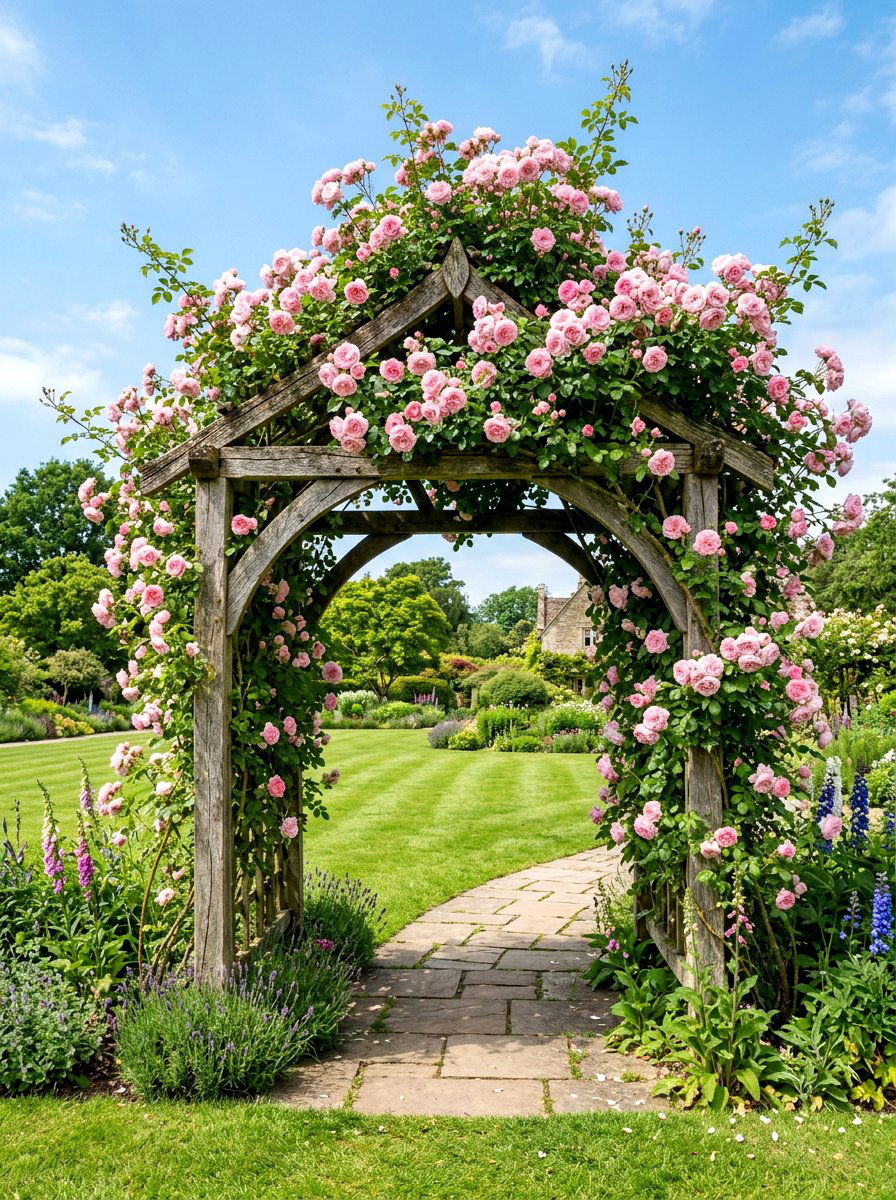
Covering vertical surfaces with fragrant climbing roses adds a layer of romantic charm that is essential for this theme. Install a sturdy wooden arbor or a metal trellis against a sunny wall and train the roses to grow upward and over the structure. Choose varieties in soft shades of blush pink, creamy white, or pale yellow to keep the color scheme gentle and sophisticated. As the roses bloom, they create a stunning wall of color and scent that softens the architectural lines of your home. Prune them carefully to maintain their shape while allowing some long, flowery stems to tumble naturally for a more relaxed, country feel.
7. Potager Garden
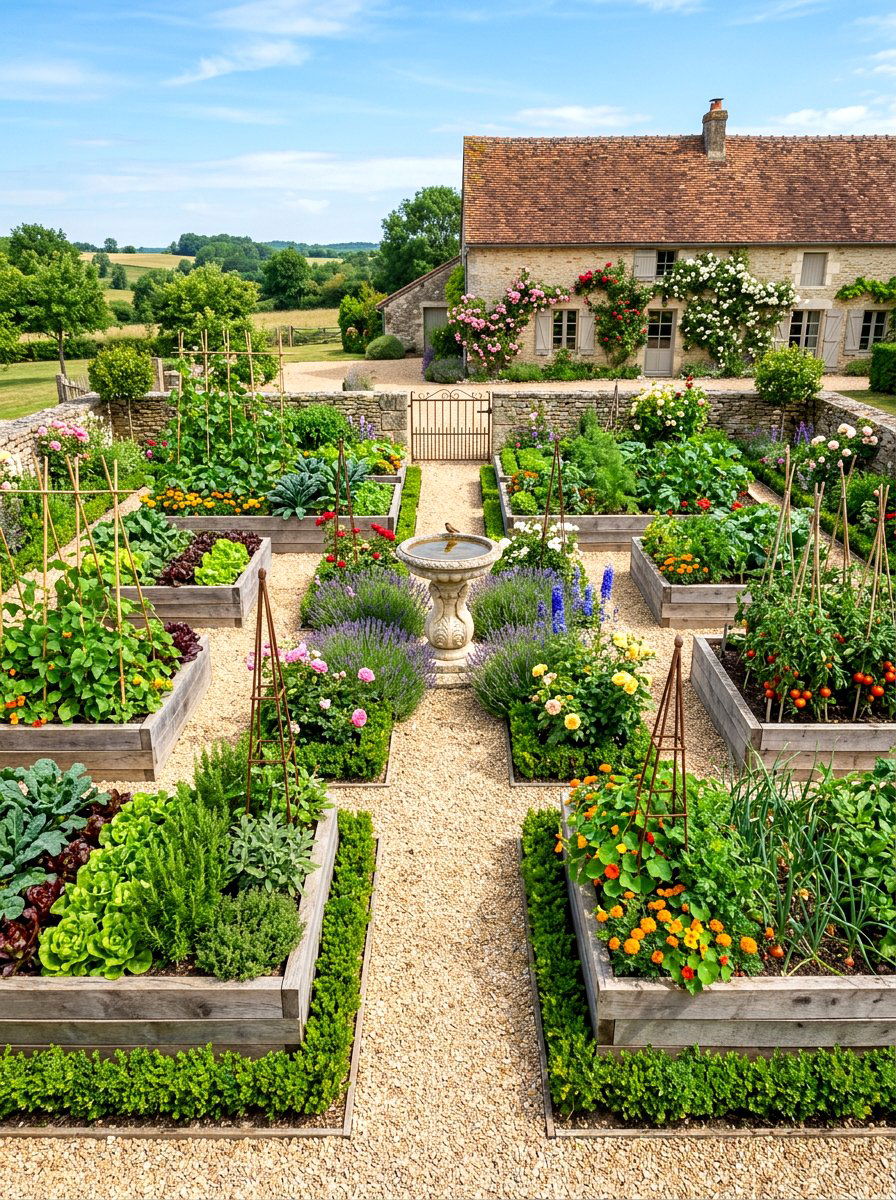
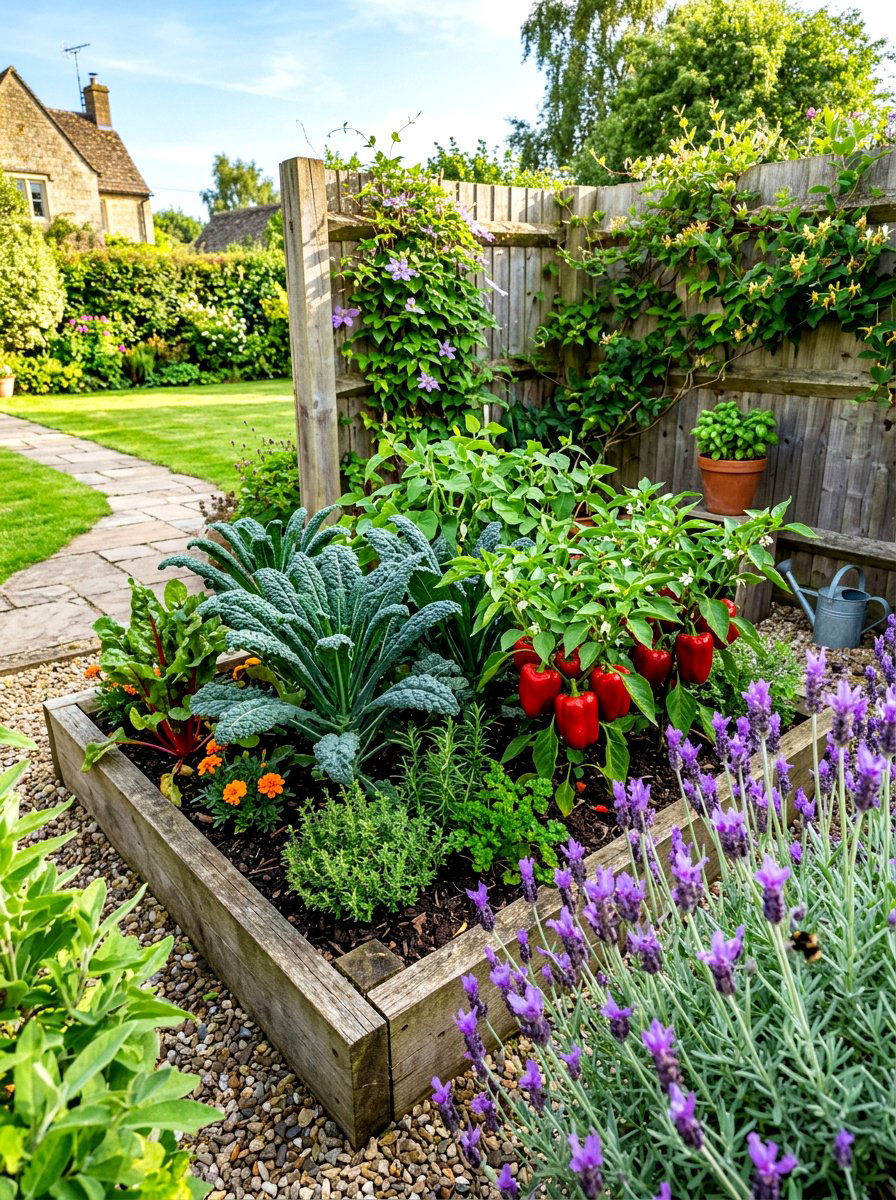
A traditional French potager, or kitchen garden, blends beauty with utility by mixing vegetables, herbs, and flowers in one space. Design this area using a series of symmetrical raised beds made from weathered wood or stone. Arrange your crops in patterns, perhaps placing dark green kale next to bright red lettuce and bordering the beds with edible marigolds or chives. This functional garden space is not just for production but is meant to be admired as a decorative feature. Including a central birdbath or a small obelisk for climbing beans adds vertical interest and ensures the potager remains a visually stunning part of your entire landscape.
8. Terracotta Planters
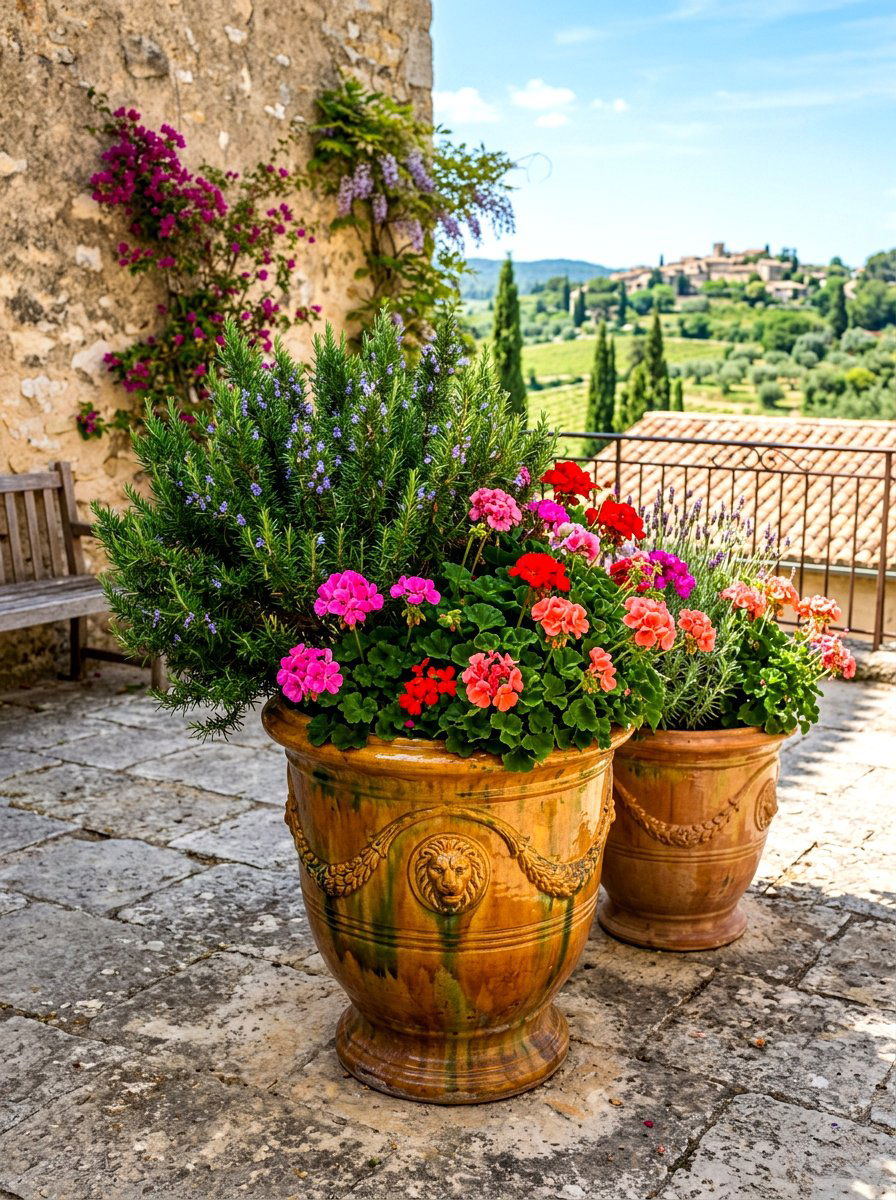
Incorporate a collection of large terracotta planters to add warmth and a Mediterranean influence to your terraces and walkways. Look for traditional Anduze pots, which are known for their elegant shapes and glazed finishes in earthy tones like green, yellow, or brown. Group these containers in clusters of three to create a more significant visual impact and fill them with aromatic plants like rosemary, bay laurel, or bright geraniums. The porous nature of the clay is excellent for plant health, and the warm orange-red color of the pots provides a beautiful contrast against the green foliage. These portable elements allow you to change your garden layout easily.
9. Wisteria Pergola
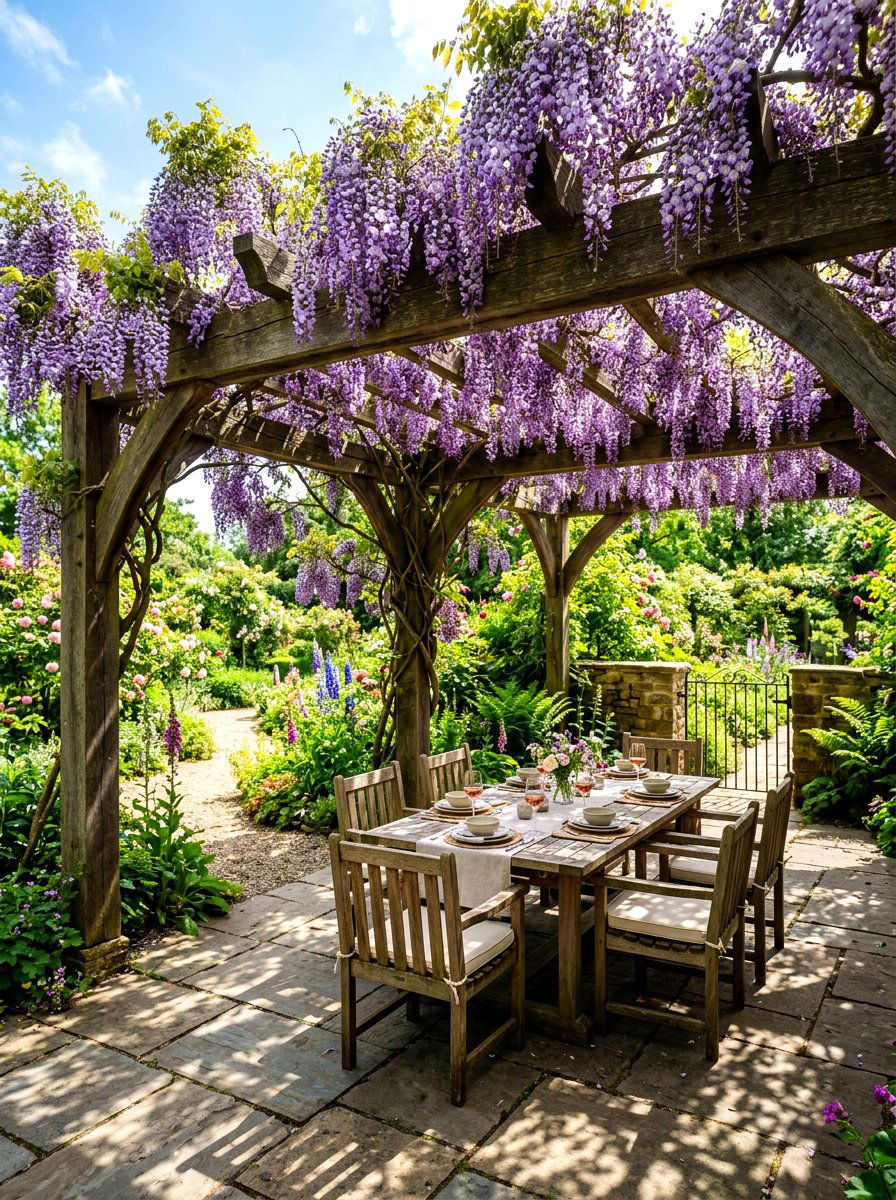
An overhead pergola draped in dripping purple wisteria creates a magical, shaded retreat for hot summer days. Build a heavy timber structure over a dining area or a stone patio to support the weight of these vigorous climbing vines. During the spring, the long racemes of flowers hang down like living chandeliers, filling the air with an incredible sweet perfume. Ensure the structure is tall enough to allow people to walk comfortably underneath the hanging blooms. This design idea provides both vertical height and a sense of enclosure, making your garden feel more like a series of distinct outdoor rooms rather than just one open lawn.
10. Stone Walls
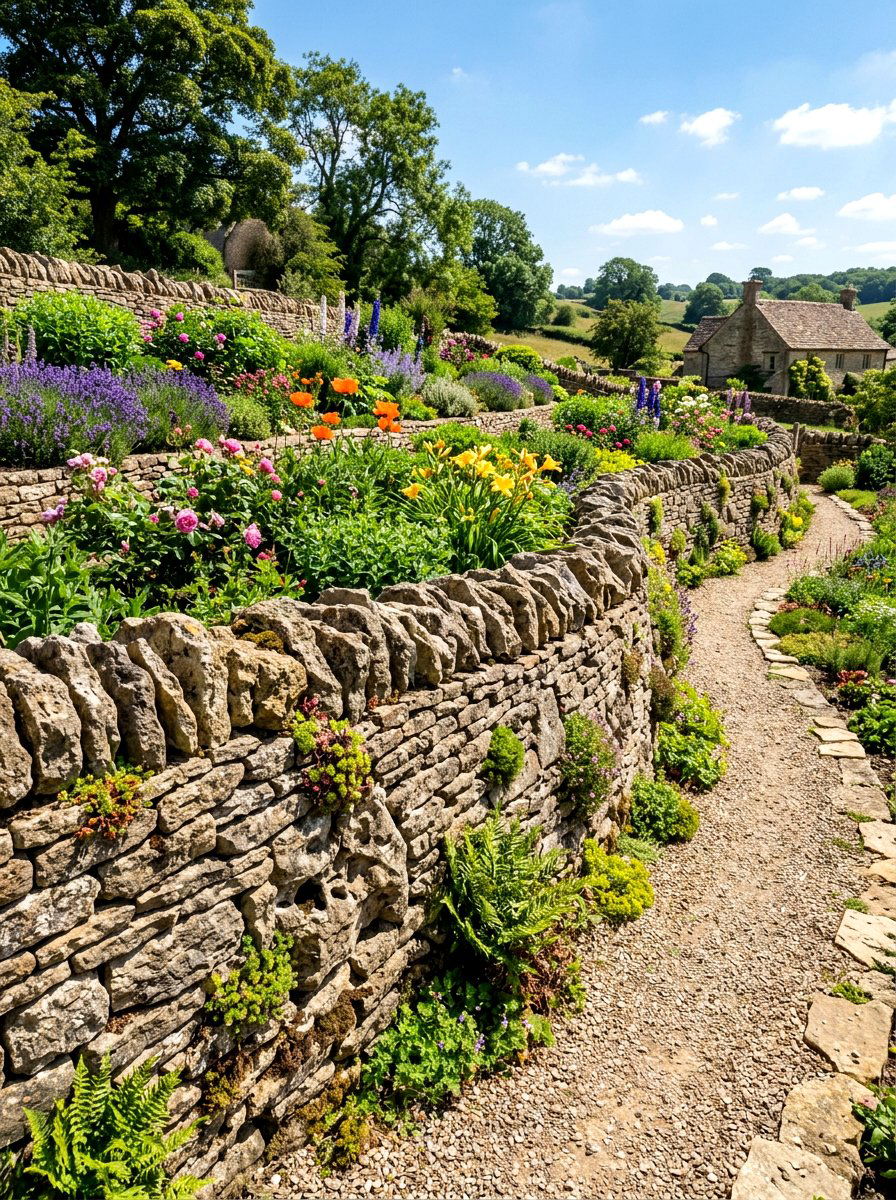
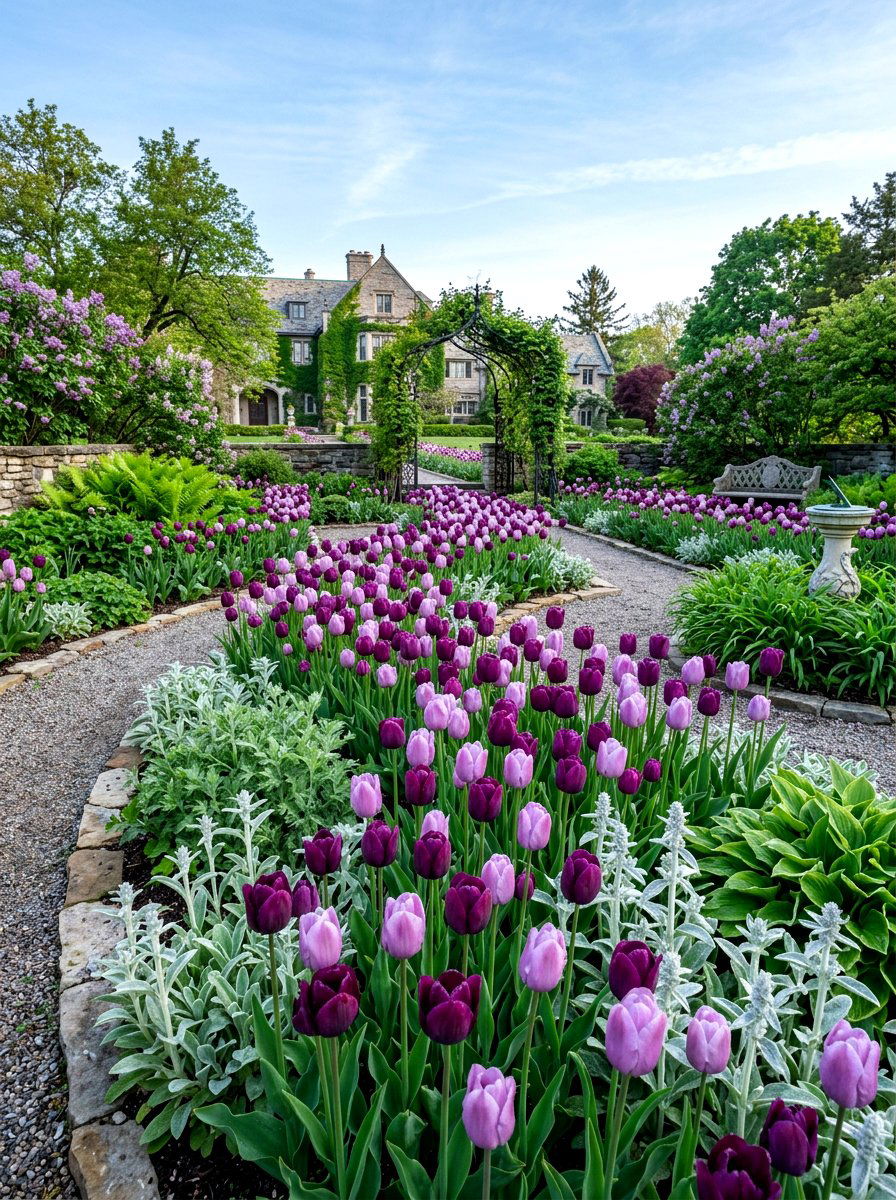
Dry-stacked stone walls are a classic feature of the French countryside that can help manage slopes or define garden boundaries. Use locally sourced fieldstone or limestone to build low walls that look like they have been part of the landscape for centuries. These structures provide excellent opportunities to tuck small rock-loving plants like sedum or campanula into the crevices for a natural, aged look. A stone wall acts as a sturdy backdrop for colorful flower borders and helps to create the tiered levels that are so common in European hillside gardens. The raw, organic texture of the stone brings a grounded, permanent feel to your backyard.
11. Parterre Garden
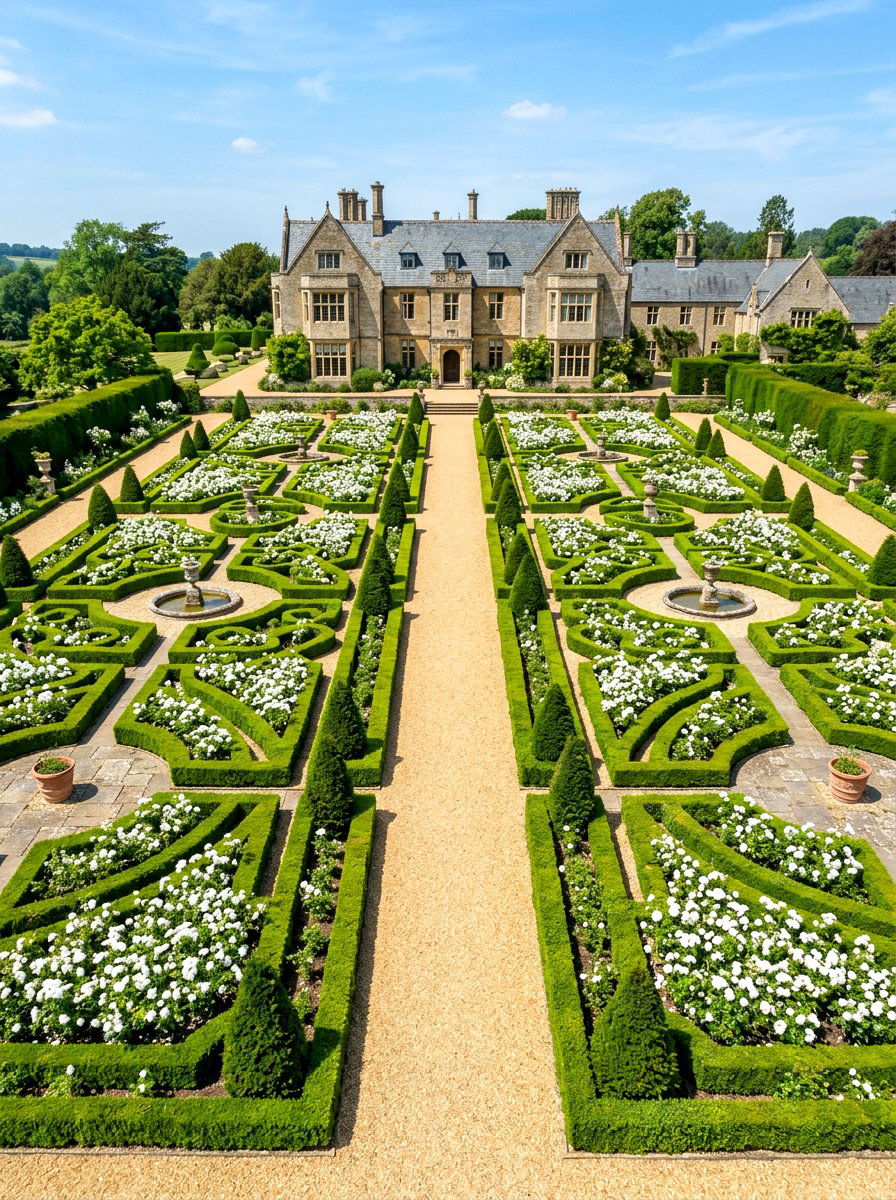
For those who love formal design, a small parterre garden offers the ultimate in French elegance and symmetry. Create a simple geometric pattern using low, clipped hedges to form a series of internal compartments. Fill these sections with a single type of plant, such as white roses or silvery santolina, to maintain a clean and organized appearance. This style is best viewed from an elevated position, such as a second-story window or a raised porch, where the pattern can be fully appreciated. While it requires regular maintenance to keep the lines sharp, the visual reward is a sophisticated, high-end landscape that feels like a miniature version of Versailles.
12. Cypress Trees
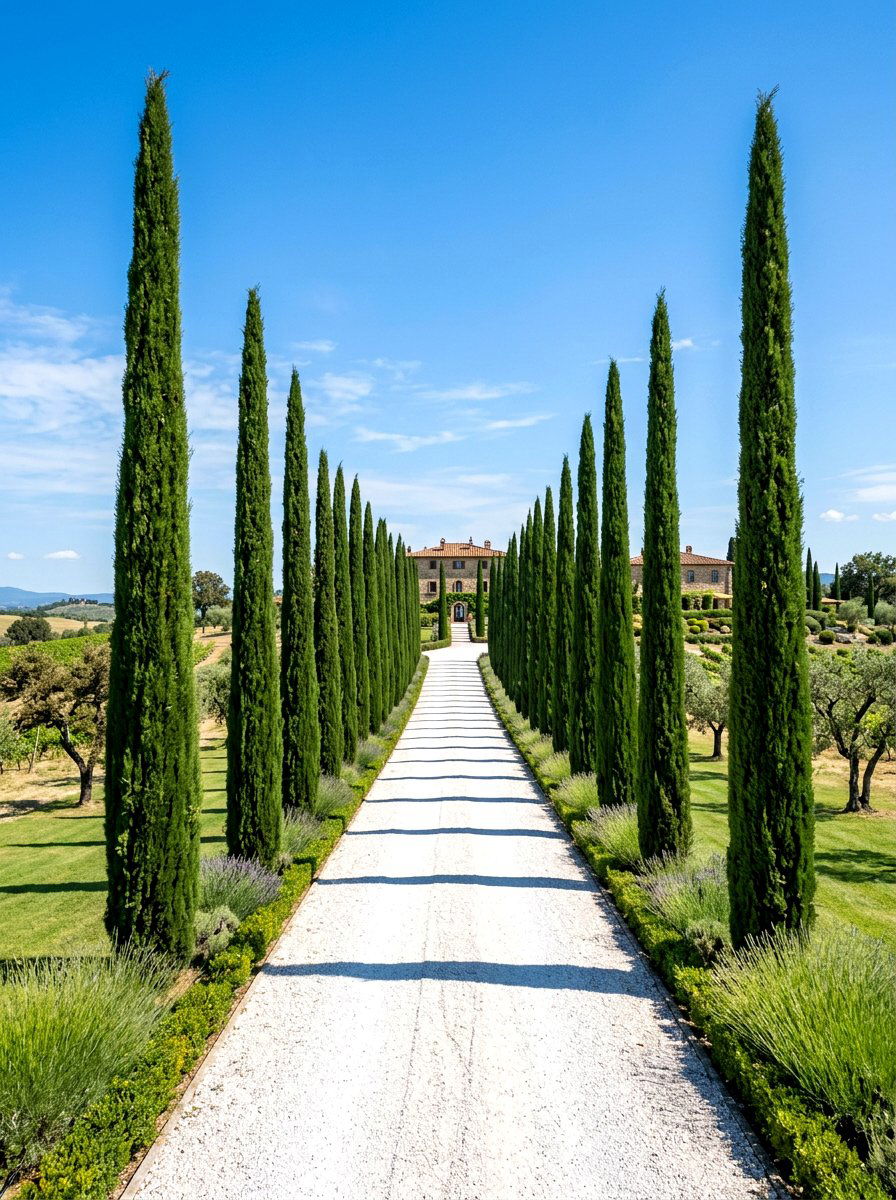
Tall, slender Italian cypress trees are perfect for adding a sense of height and drama to a French country landscape. Plant them in symmetrical pairs to flank an entrance or in a long row to line a driveway or a primary garden path. Their narrow, upright form provides a strong vertical accent without taking up much horizontal space, making them ideal for smaller gardens. These trees act as living pillars that draw the eye upward and create a sense of grandeur and scale. Their dark, evergreen foliage provides a consistent backdrop for more colorful plants and keeps the garden looking lush and structured throughout the entire year.
13. Herb Garden
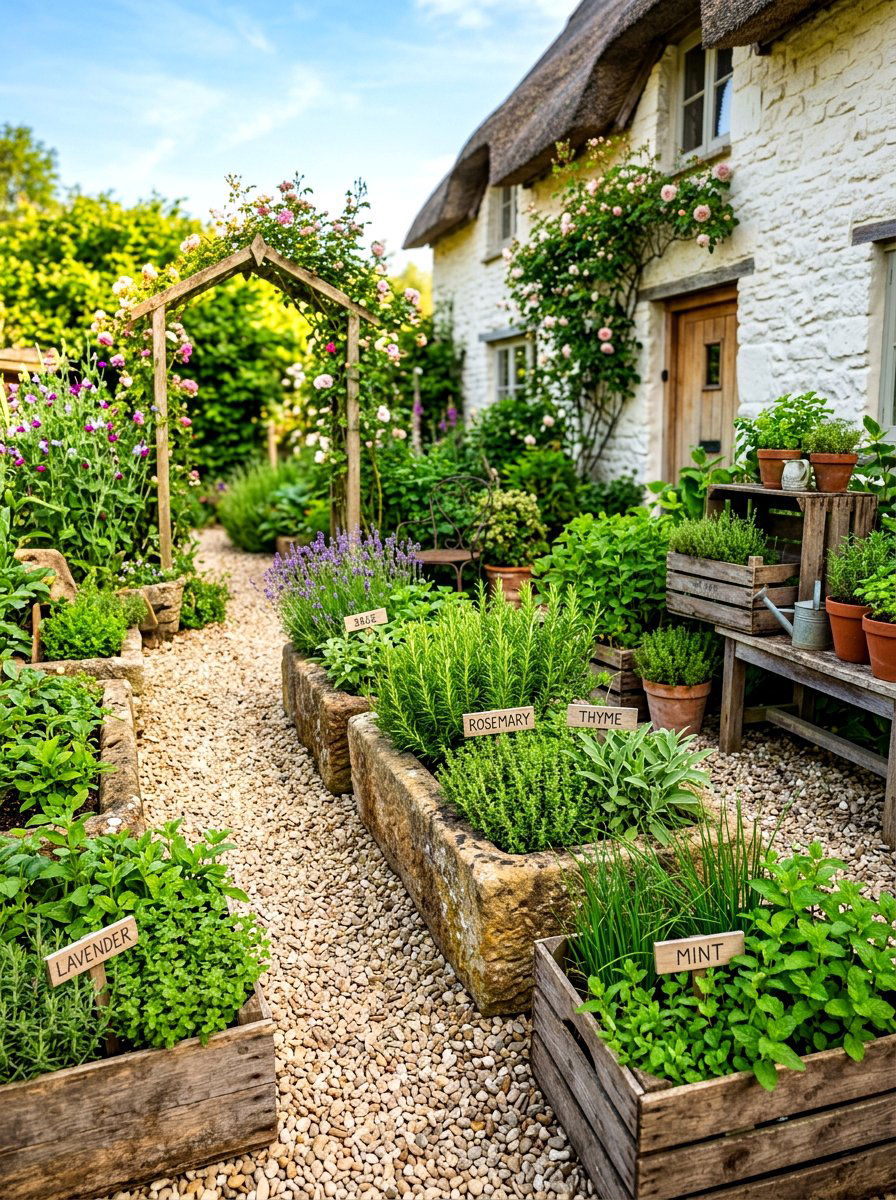
A dedicated herb garden is both practical and incredibly fragrant, especially when placed near the kitchen door. Design this area using a series of small, interconnected beds divided by narrow gravel paths for easy access. Focus on classic culinary herbs like thyme, oregano, sage, and mint, but also include tall stalks of fennel for architectural interest. Using old wooden crates or weathered stone troughs as planters can add a rustic, lived-in feel to the space. The silver and grey tones of many Mediterranean herbs fit perfectly within the cool color palette of a French garden, providing beauty that you can also use for cooking.
14. Garden Statue
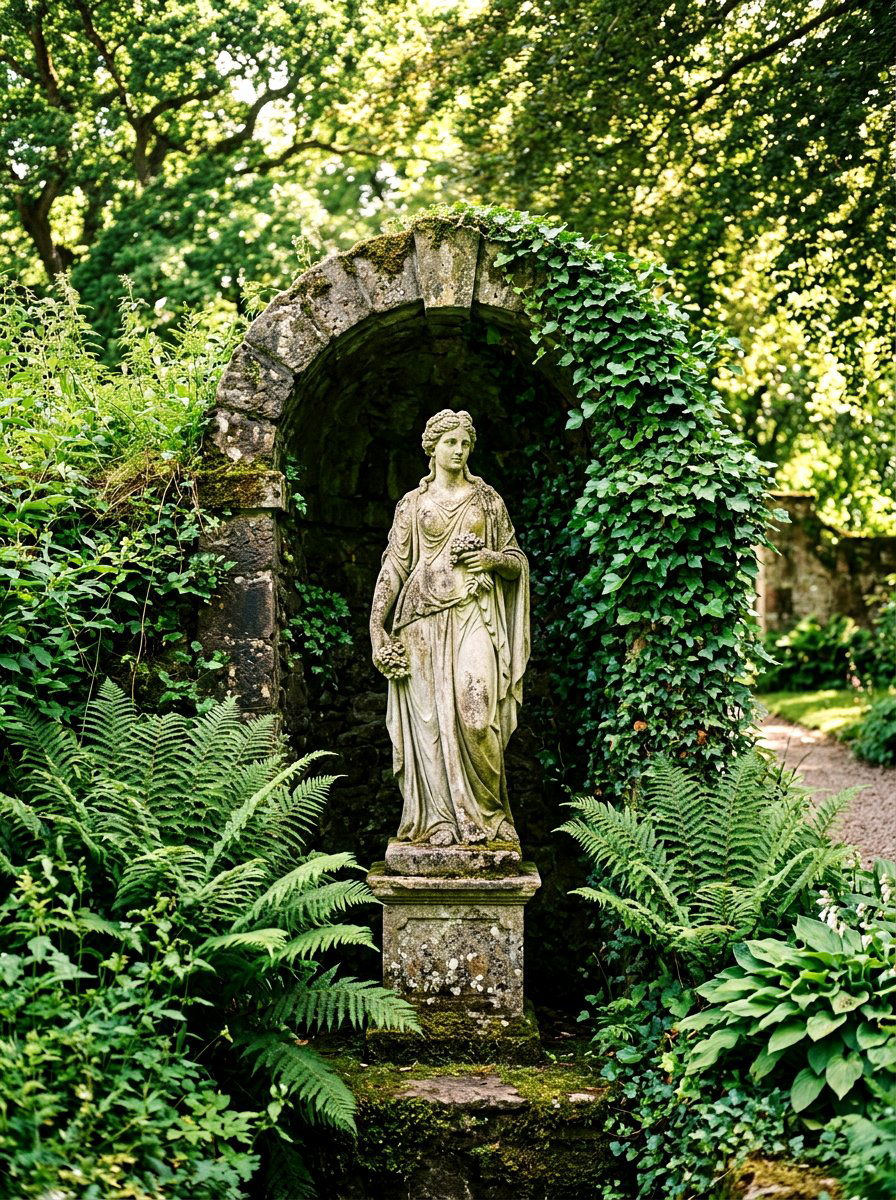
Adding a classical stone statue can give your garden an air of history and artistic sophistication. Place a figure of a Greek goddess, a playful cherub, or a simple weathered bust in a secluded alcove or at the center of a circular hedge. The key is to choose a piece that looks aged, with moss or lichen beginning to grow on the surface, so it blends naturally with the plants. This decorative element serves as a quiet focal point that rewards those who explore the deeper corners of your landscape. It adds a human touch to the greenery and suggests a garden that has been cared for.

15. Olive Trees
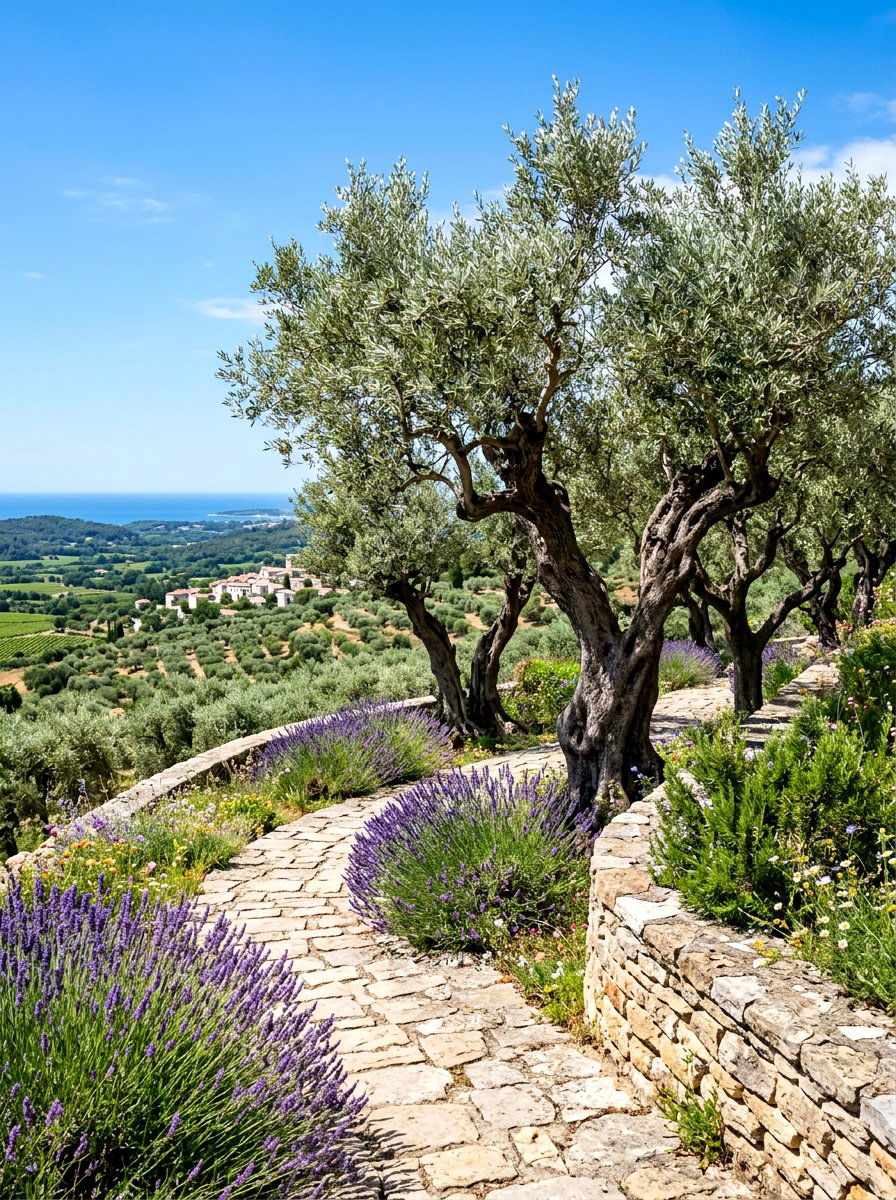
The silvery-green leaves of an olive tree are synonymous with the warm, sun-drenched landscapes of southern France. If you live in a suitable climate, plant a mature olive tree in a prominent sunny spot or keep a smaller specimen in a large terracotta pot on your terrace. Their gnarled trunks and airy canopies provide beautiful texture and a sense of ancient wisdom to the garden. Even in cooler climates, you can use "Russian Olive" or other silver-leafed willow trees to mimic the look. The muted color of the foliage pairs perfectly with lavender and stone, reinforcing the classic Provençal color palette of grey, green, and purple.
16. Hydrangea Border
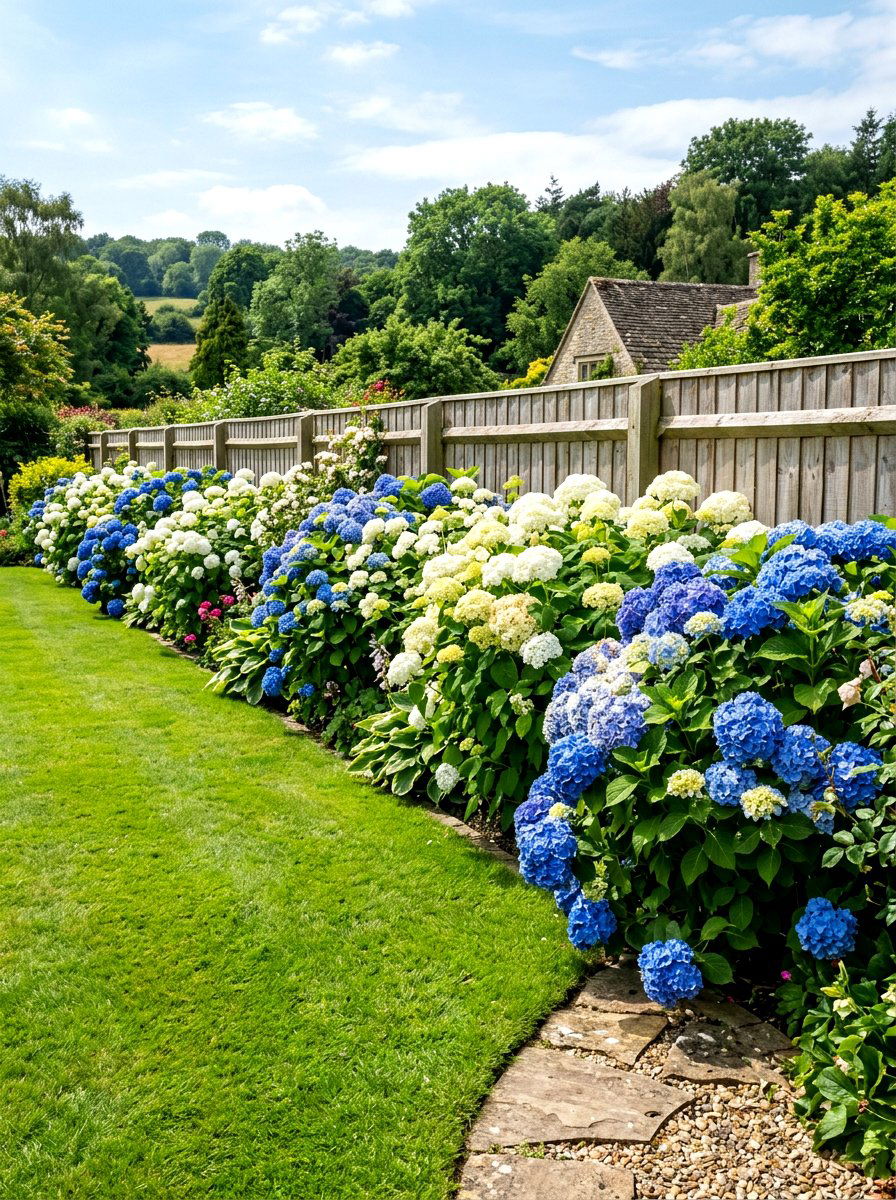
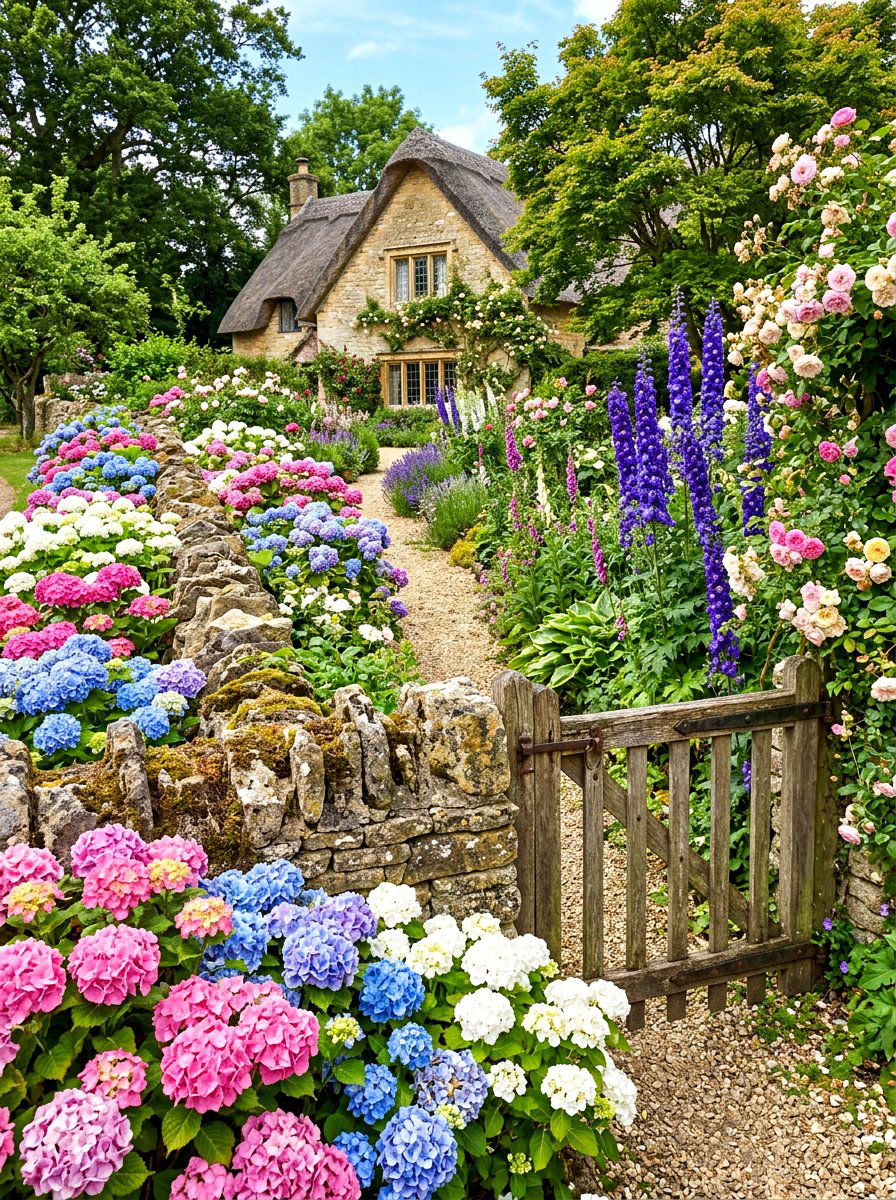
Lush borders of bigleaf hydrangeas bring a soft, romantic feeling to the shaded areas of your garden. Plant them in long, continuous rows along a fence or beneath the canopy of tall trees to create a massive wall of color. In a French country theme, stick to classic white, soft blue, or pale pink varieties to keep the look elegant rather than overwhelming. The large, rounded flower heads provide a beautiful contrast to the fine texture of nearby grasses or boxwood hedges. These shrubs fill space quickly and offer a long season of interest, as the dried flower heads can be left on the plant during the winter months.
17. Cobblestone Path
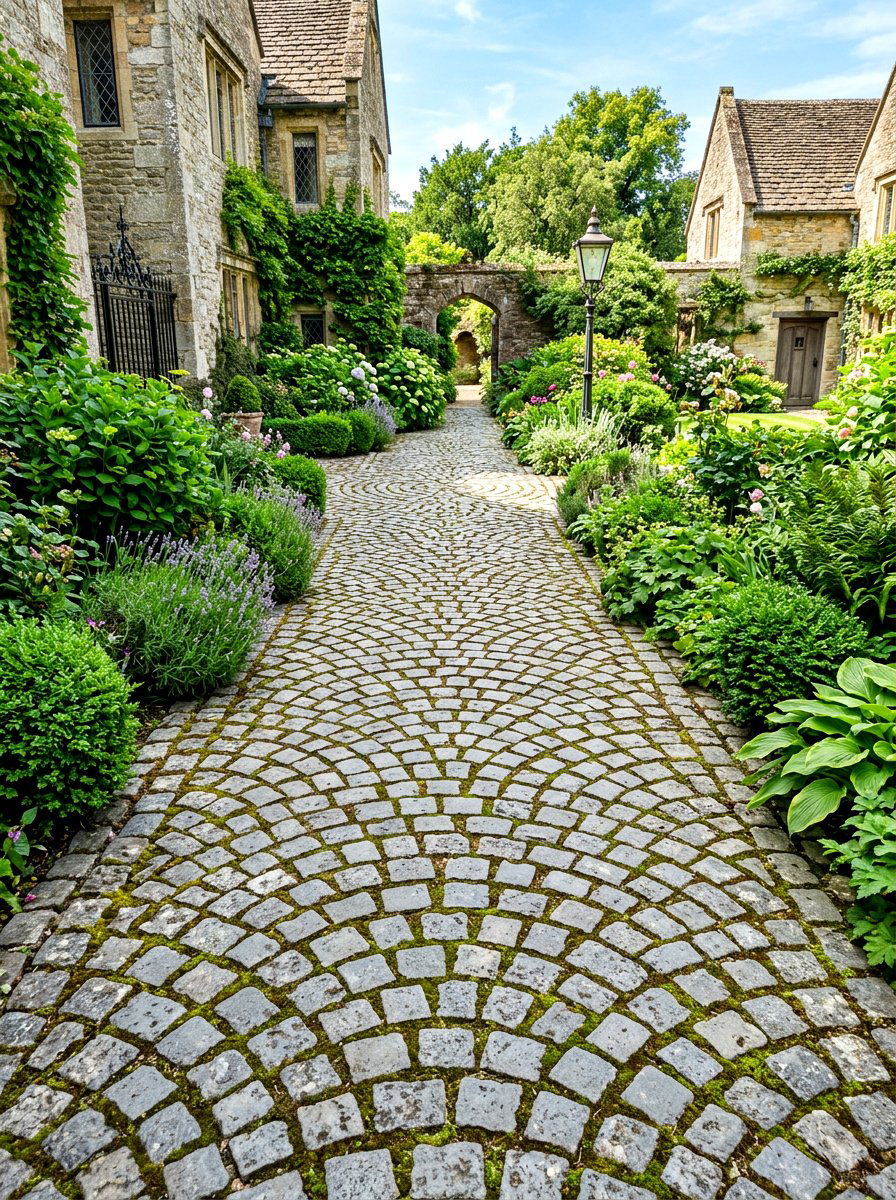
For a more historic and durable walkway, consider using reclaimed cobblestones or Belgian blocks to create your garden paths. These stones offer a timeless, Old World look that feels much more authentic than modern concrete pavers. Arrange them in a traditional fan or running bond pattern and allow moss or small weeds to grow in the joints to soften the overall appearance. This type of hardscaping works particularly well in high-traffic areas or near the main entrance of your home. The irregular shapes and natural color variations of the stones provide a rich texture that grounds the garden and connects it to the architecture.
18. Garden Bench
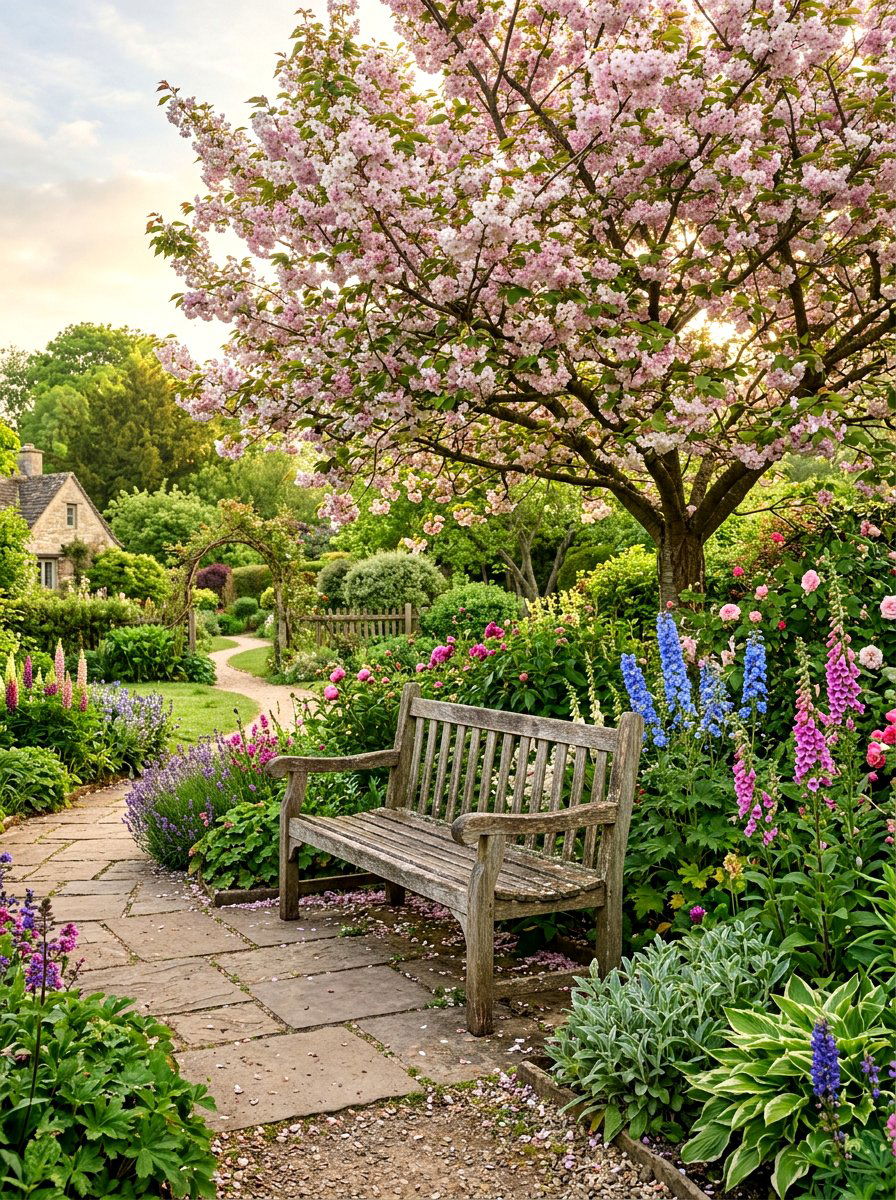
A well-placed garden bench invites you to sit and linger, making the outdoor space feel like a true extension of your home. Opt for a weathered wooden bench made of teak or oak, or a heavy stone bench that looks like it belongs in a public park in Paris. Tucking the bench into a quiet corner surrounded by fragrant jasmine or roses creates a perfect spot for reading or reflection. Choosing a design with simple, classic lines ensures that the furniture complements the plants rather than competing with them. This simple addition transforms a walk through the garden into a comfortable and restful experience for everyone.
19. Boxwood Topiaries
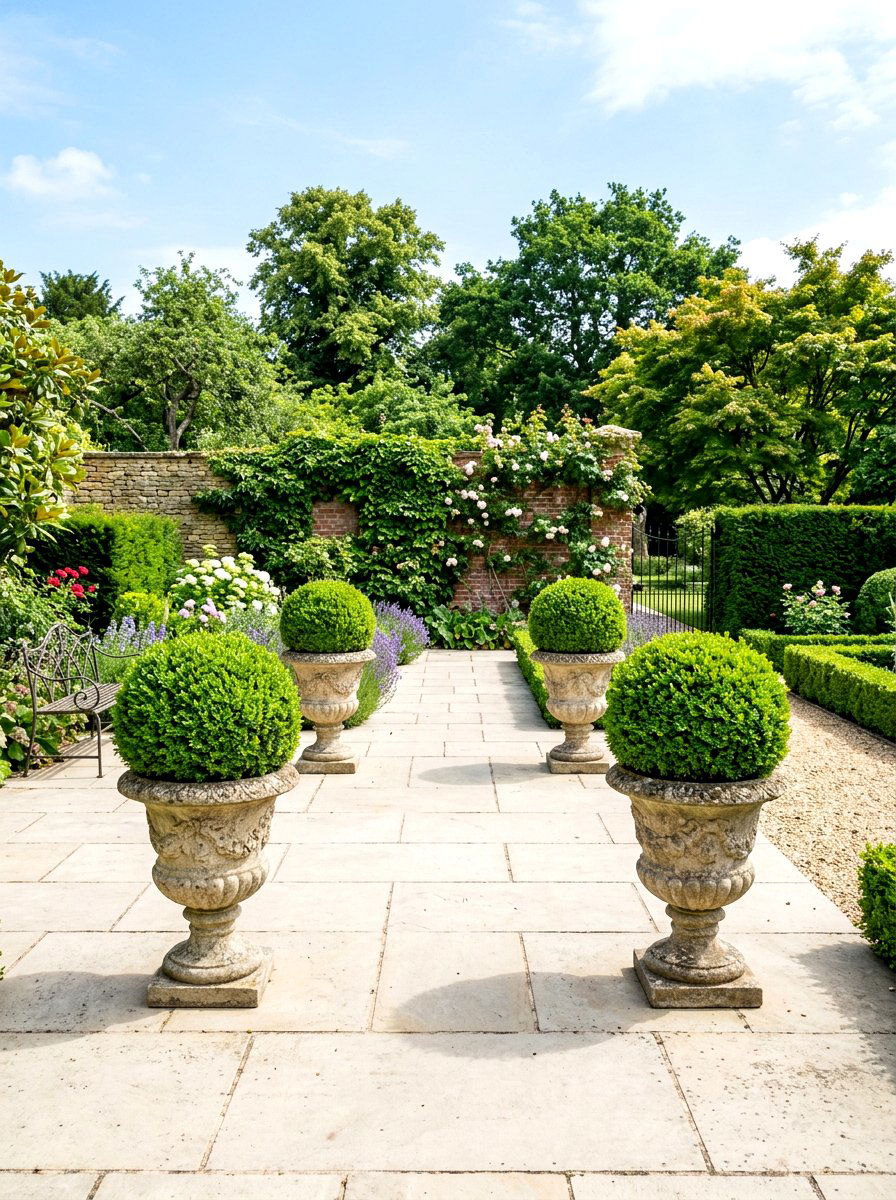
Inject a sense of whimsy and formal art into your garden by incorporating boxwood topiaries in various shapes. Sculpt these evergreen shrubs into perfect spheres, cones, or even tiered spirals to act as living sculptures throughout your landscape. Place them in large stone urns to flank a doorway or use them to punctuate the corners of a rectangular flower bed. These highly manicured forms provide a sharp contrast to the more relaxed, sprawling growth of nearby perennials and annuals. Maintaining their shape requires a bit of regular clipping, but the resulting look is undeniably high-end and adds a sophisticated touch of French flair to any outdoor area.
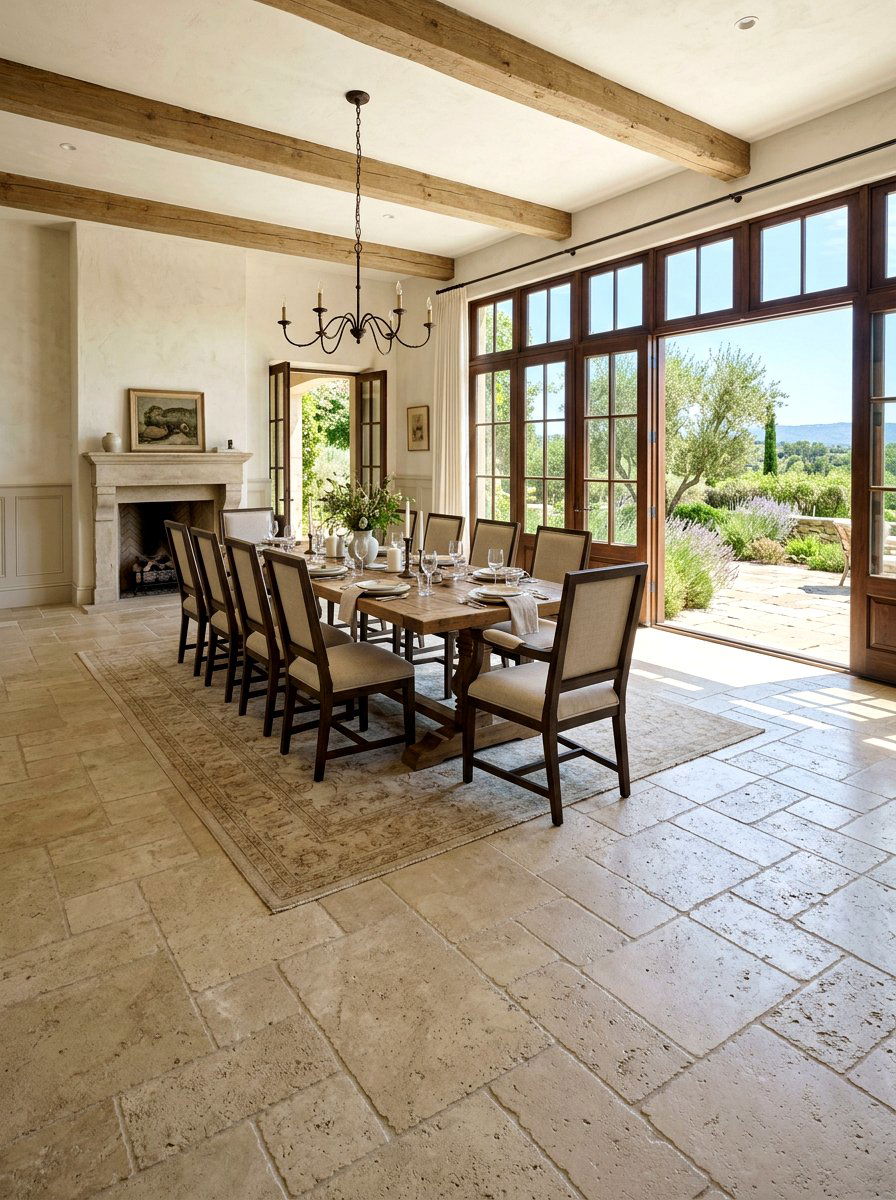
20. Wildflower Garden
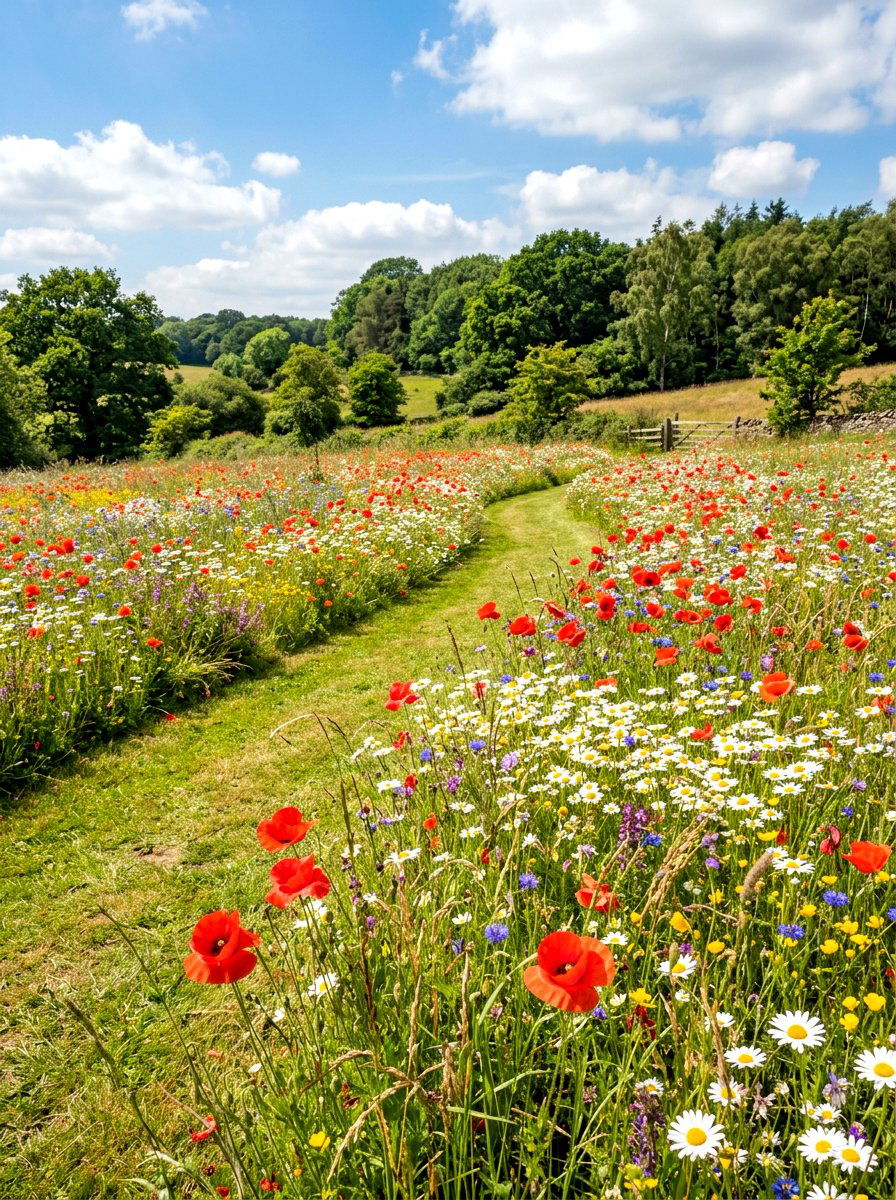
Even the most formal French gardens often include a section where nature is allowed to run a bit more wild. Dedicate a sunny area to a wildflower meadow filled with poppies, cornflowers, and Queen Anne’s lace to mimic the uncultivated fields of the French countryside. This approach provides a burst of seasonal color and creates a vital habitat for local pollinators and birds. Keeping the edges of this area neatly trimmed with a mowed grass path or a low hedge ensures that it looks intentional rather than neglected. This blend of wild beauty and controlled edges is the key to achieving that "effortlessly elegant" French look.
21. Outdoor Dining
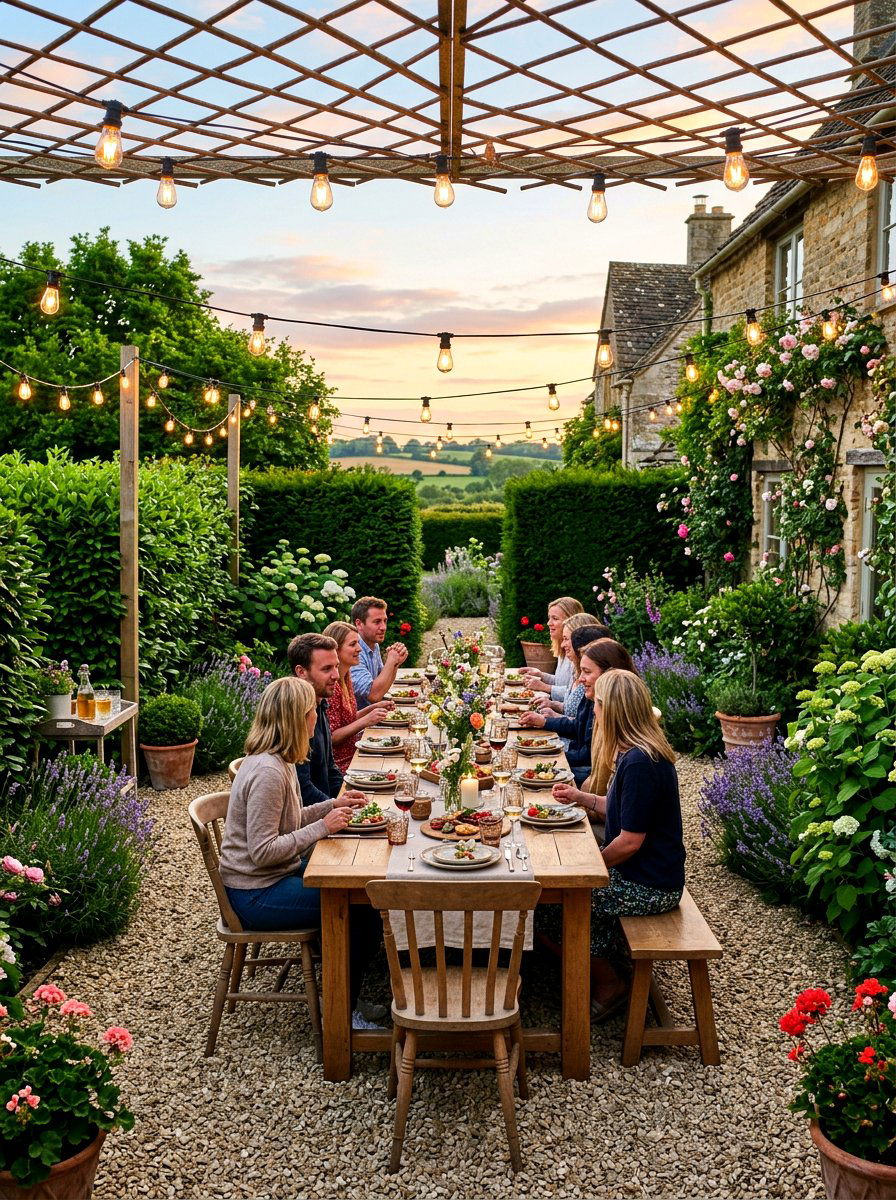
Dining outdoors is a central part of the French lifestyle, so creating a dedicated space for meals is a wonderful idea. Set up a long wooden farmhouse table on a gravel terrace or beneath a leafy canopy of trees. Surround it with a mix of comfortable chairs and use simple linen tablecloths and candles to create a relaxed, rustic atmosphere for evening gatherings. This area should feel integrated into the garden, with plants spilling over the edges of the patio to create a sense of intimacy. Providing a beautiful setting for shared meals turns your garden into a functional and social hub for friends and family.
22. Garden Birdbath
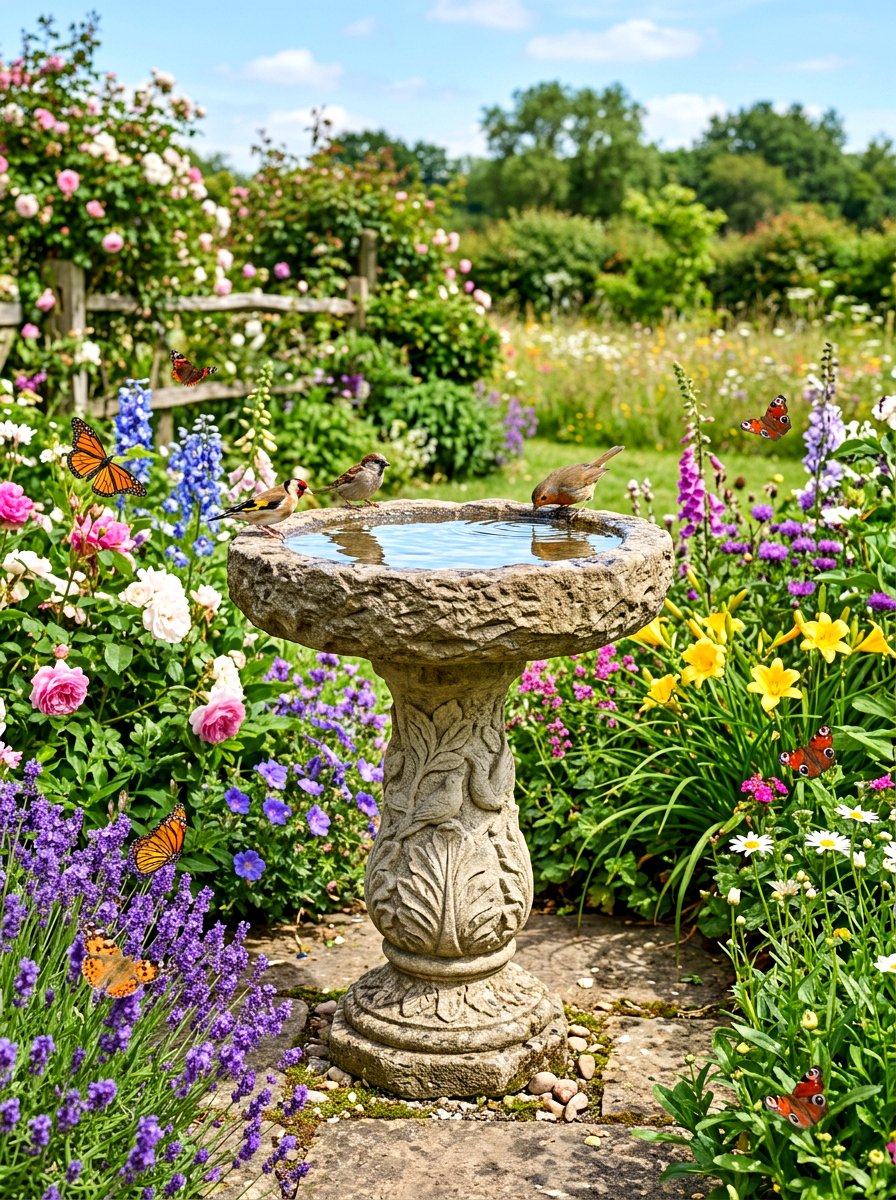
A simple stone birdbath is a charming way to introduce a water element while also supporting local wildlife. Choose a design with a wide, shallow basin and a sturdy pedestal that matches the other stone elements in your garden. Position it in a quiet spot where birds will feel safe, perhaps near a thick hedge or under the shade of a small tree. Watching birds bathe and drink adds a delightful layer of movement and sound to the landscape. This small feature acts as a quiet focal point and reinforces the idea of the garden as a balanced ecosystem where nature is welcomed and cherished.
23. Citrus Trees
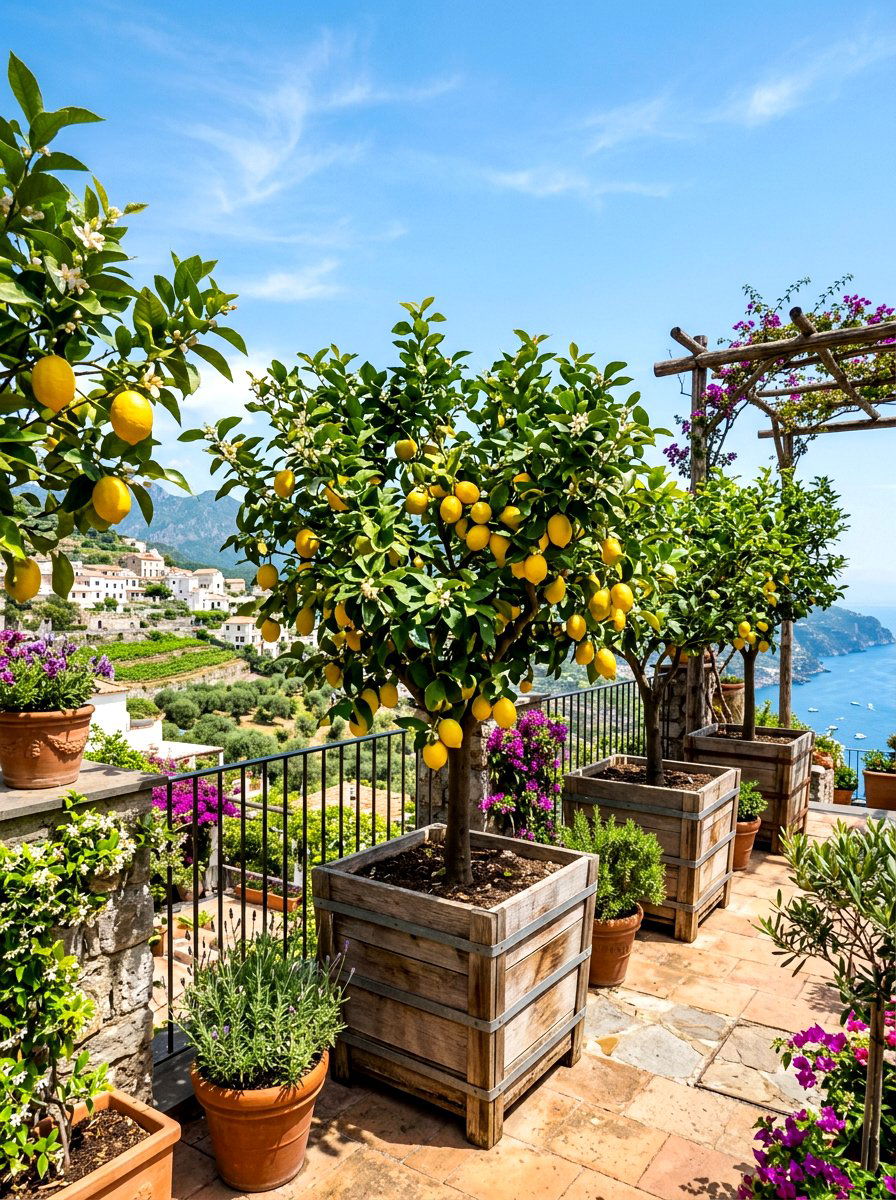
The vibrant colors and sweet scents of citrus trees were prized in historic French gardens, often housed in grand orangeries during the winter. You can recreate this look by planting lemons, limes, or oranges in large, decorative Versailles-style planters. These square wooden boxes with metal corners provide a very specific French architectural look that instantly elevates a patio or terrace. During the summer, place the trees in full sun where their glossy green leaves and bright fruit can be fully admired. If you live in a colder climate, these potted trees can be moved indoors or into a greenhouse when the temperature begins to drop.
24. White Garden
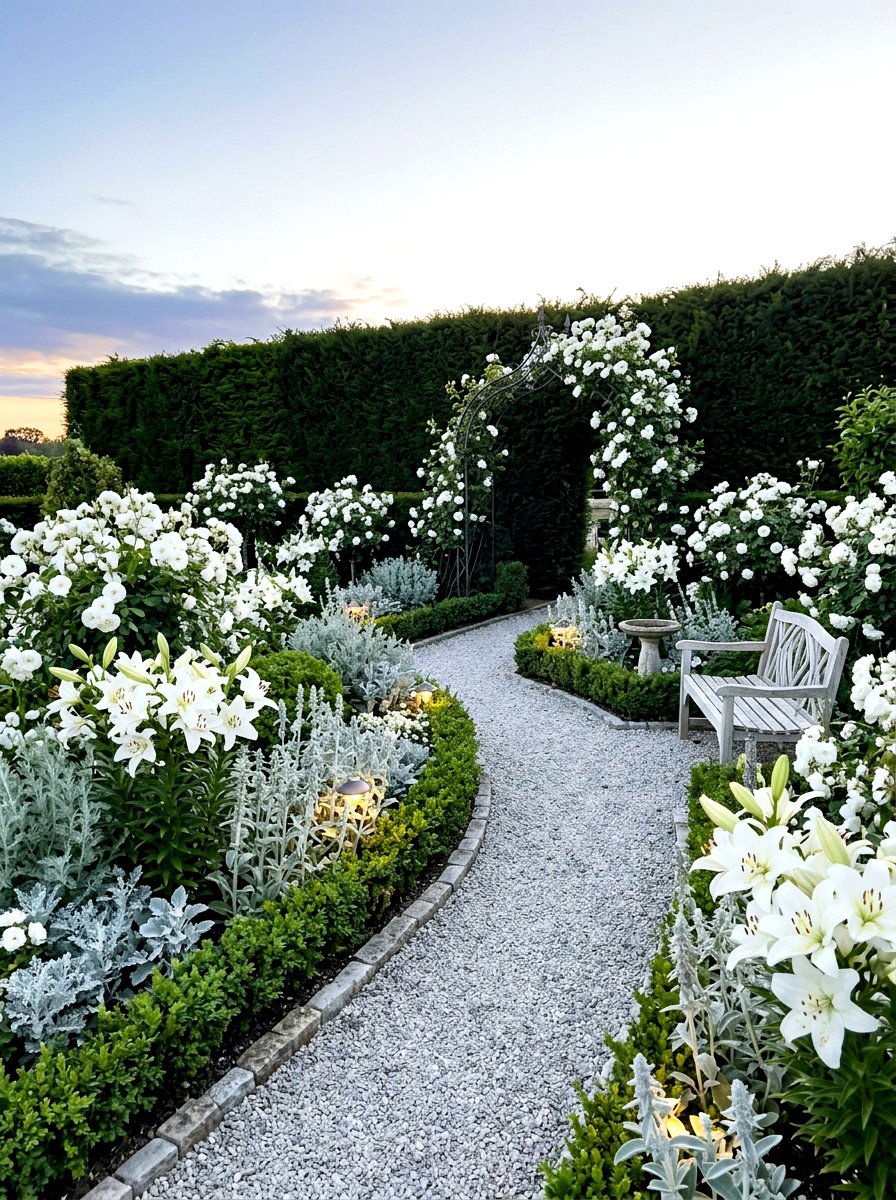
A monochromatic white garden, often called a "moon garden, " is incredibly elegant and looks particularly beautiful during the twilight hours. Choose a variety of white-flowering plants with different textures, such as delicate white roses, tall foxgloves, and silvery dusty miller. Using plants with variegated green-and-white foliage can add extra depth and interest to the design. This limited color palette creates a sense of calm and sophistication that is very common in high-end European landscapes. At night, the white blooms seem to glow in the moonlight, making the garden a magical place for an evening stroll or a quiet glass of wine on the terrace.
25. Blue Shutters
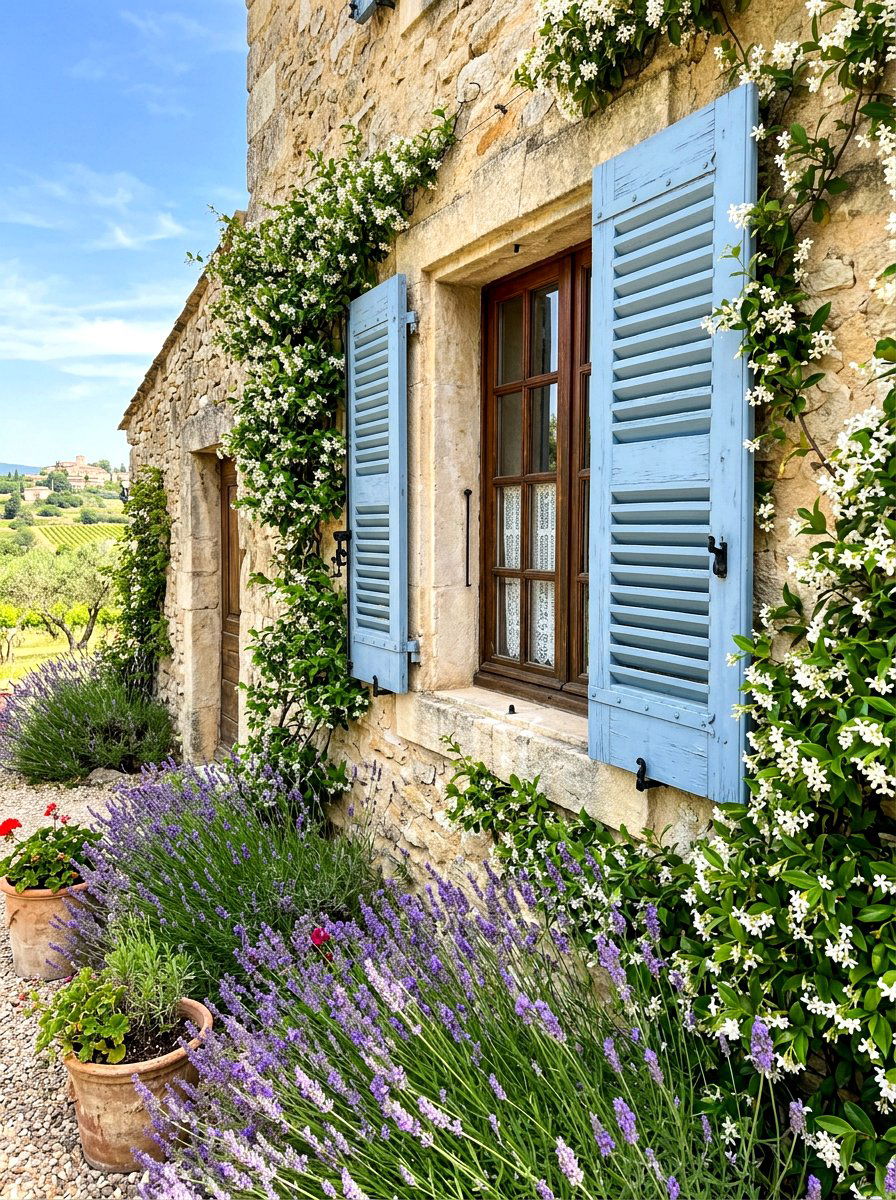
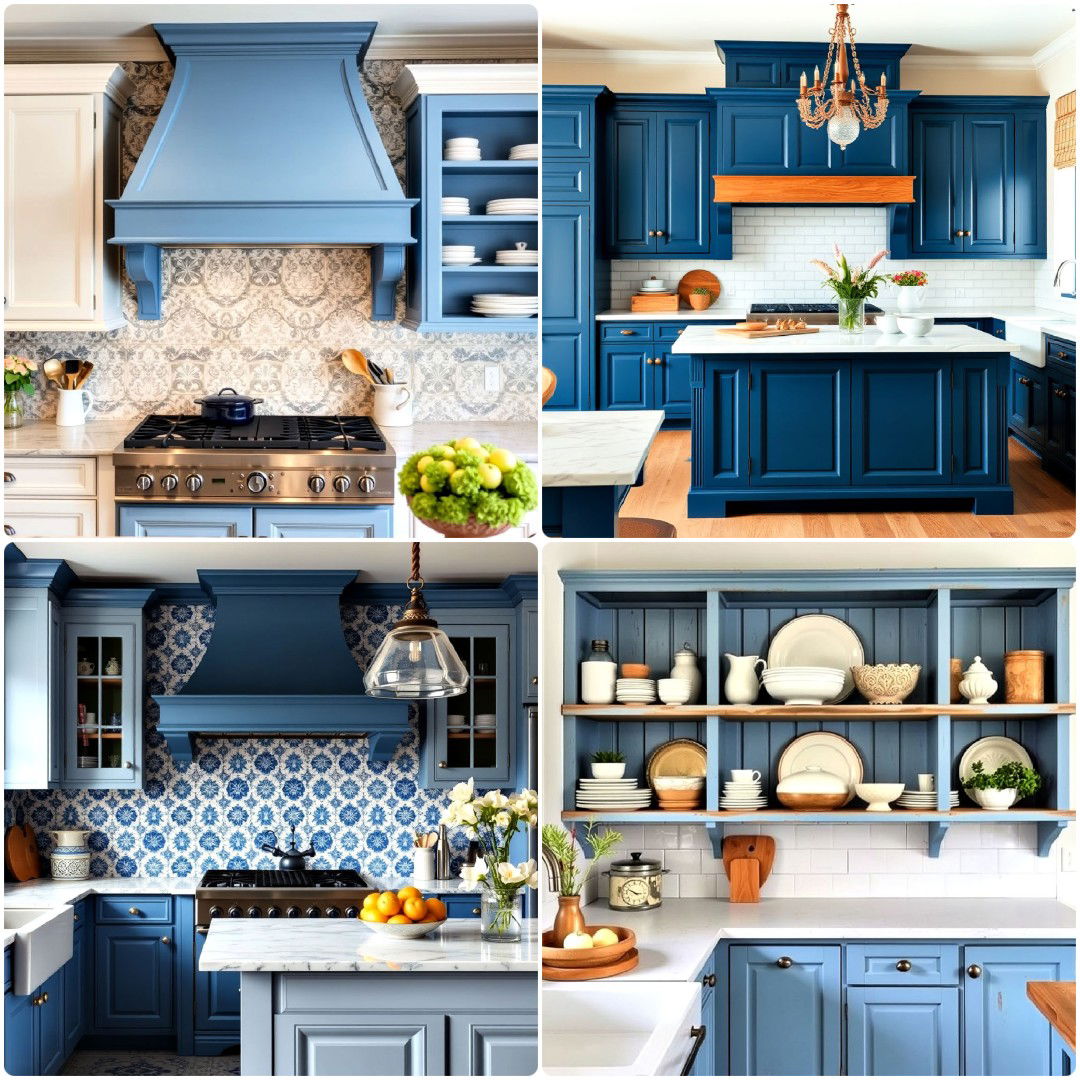
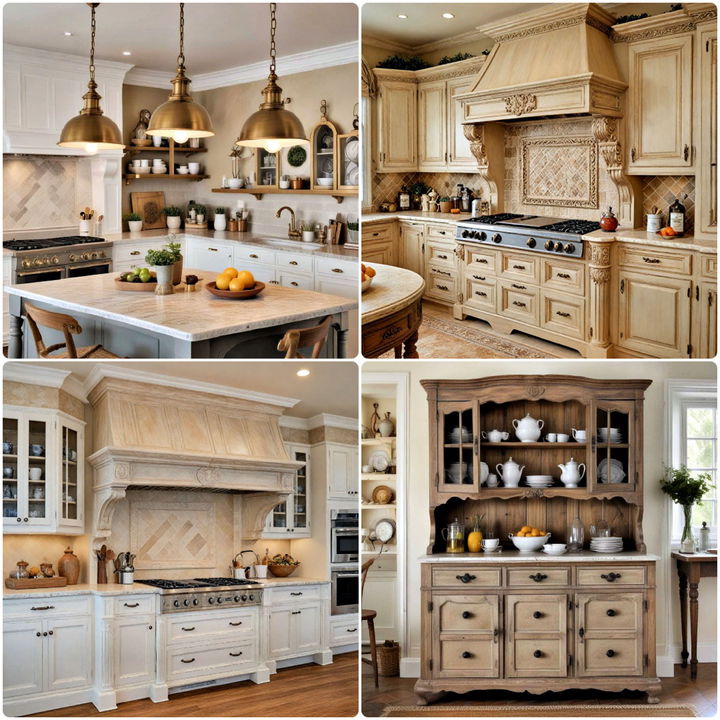
While not a plant, adding blue shutters to your home or garden shed can instantly transport your landscape to the heart of Provence. Choose a soft, weathered shade of French blue or lavender-grey to paint the shutters, doors, or even wooden garden gates. This specific color palette is a hallmark of southern French architecture and provides a stunning contrast against sandy-colored stone walls and green foliage. Pairing these blue accents with climbing white roses or purple lavender creates a cohesive and authentic look that ties the entire property together. This simple weekend project can have a massive impact on the overall character and charm of your garden.
26. Vertical Garden
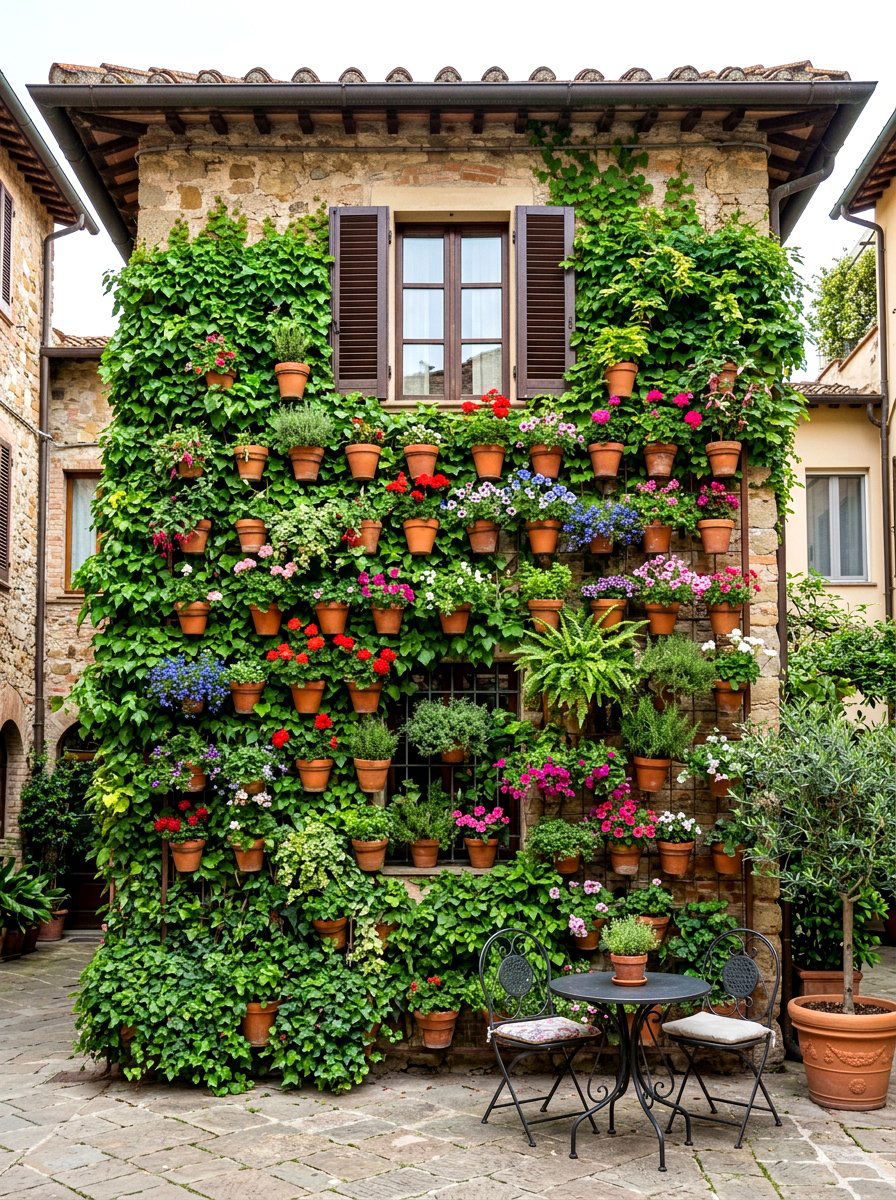
Utilizing your vertical space is essential for creating a lush, enclosed feeling, especially in smaller courtyards. Install wooden or metal trellises across blank walls and cover them with fast-growing vines like ivy, star jasmine, or clematis. This "green wall" effect softens hard architectural lines and provides a beautiful backdrop for your furniture and decorative elements. You can also hang weathered wooden crates or terracotta pots filled with cascading plants to add layers of greenery at different heights. This approach maximizes your planting area and makes the garden feel much larger and more immersive by surrounding you with nature from the ground all the way up.
27. Flagstone Patio
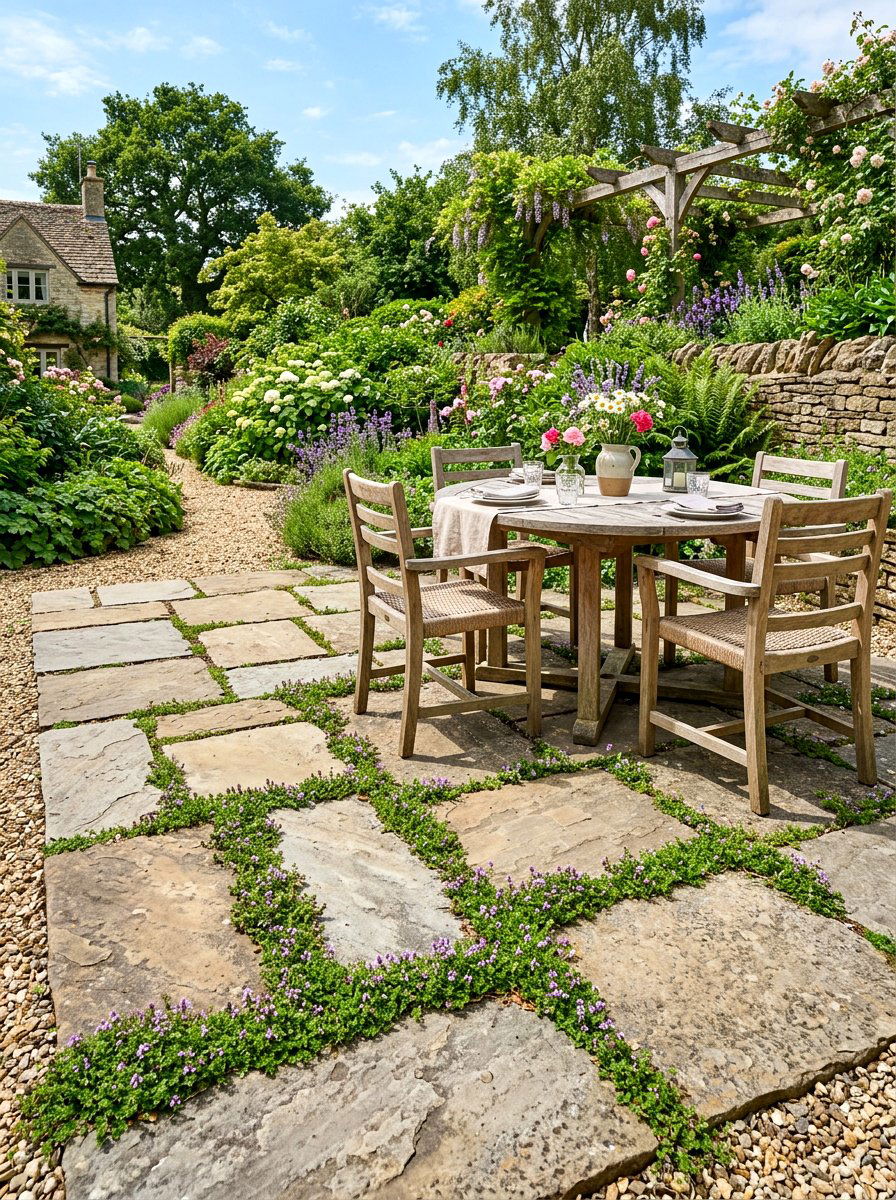
A flagstone patio provides a solid and attractive foundation for your main seating and dining areas. Use large, irregular pieces of natural stone with wide joints filled with low-growing moss or creeping thyme to create an established, rustic appearance. The uneven surface and varied colors of the stone give the patio a hand-crafted feel that modern concrete simply cannot replicate. This type of paving is perfect for creating a transition between the house and the more natural areas of the garden. It provides a durable surface for heavy furniture while still feeling like an organic part of the landscape rather than a separate, sterile structure.
28. Garden Gate
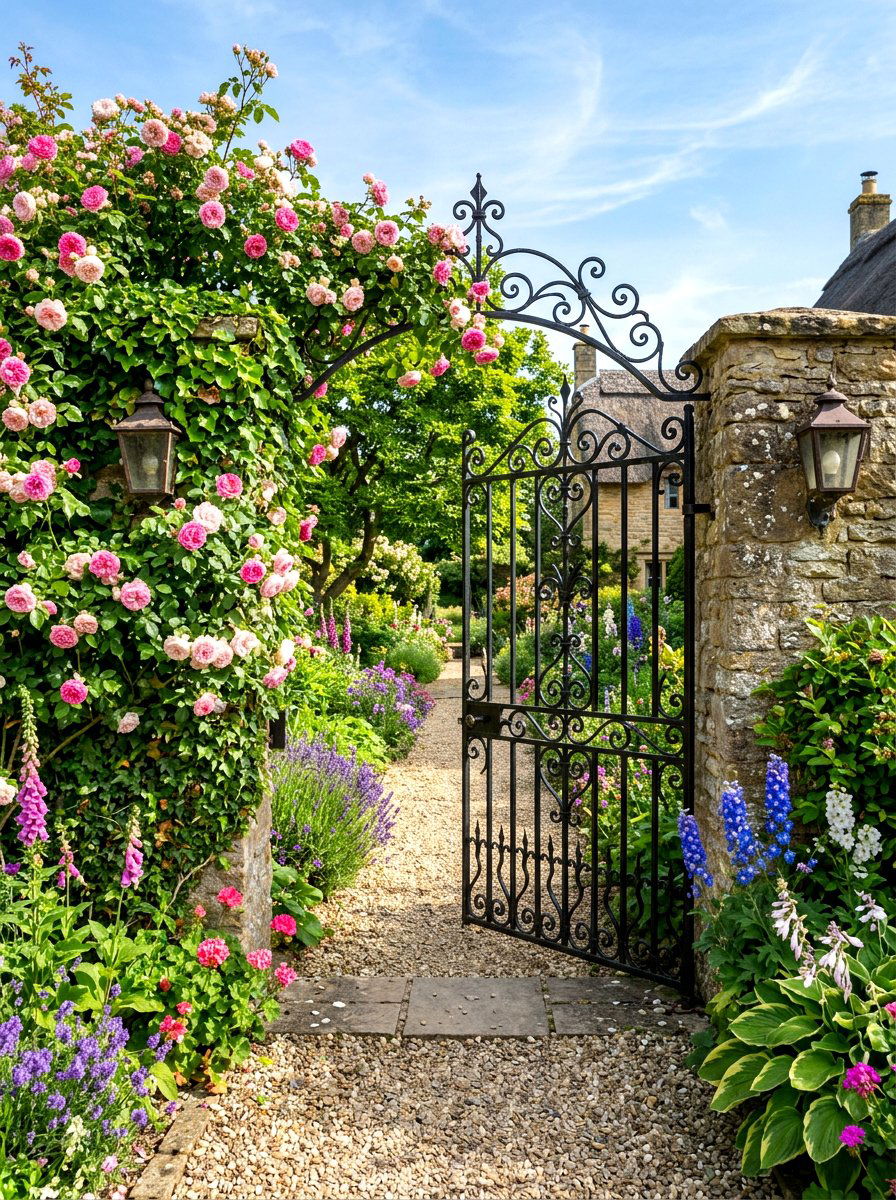
A beautiful entrance sets the tone for the entire garden experience, so consider installing an ornamental iron or wooden gate. Choose a design that offers a glimpse of what lies beyond, such as a gate with open scrollwork or simple vertical slats. Flank the entrance with tall stone pillars or a pair of perfectly matched cypress trees to create a sense of arrival and transition. Painting the gate in a soft, muted color like sage green or charcoal grey can help it blend into the surrounding greenery. This threshold marks the beginning of your private sanctuary and adds a layer of mystery and charm to the property.
29. Cottage Garden
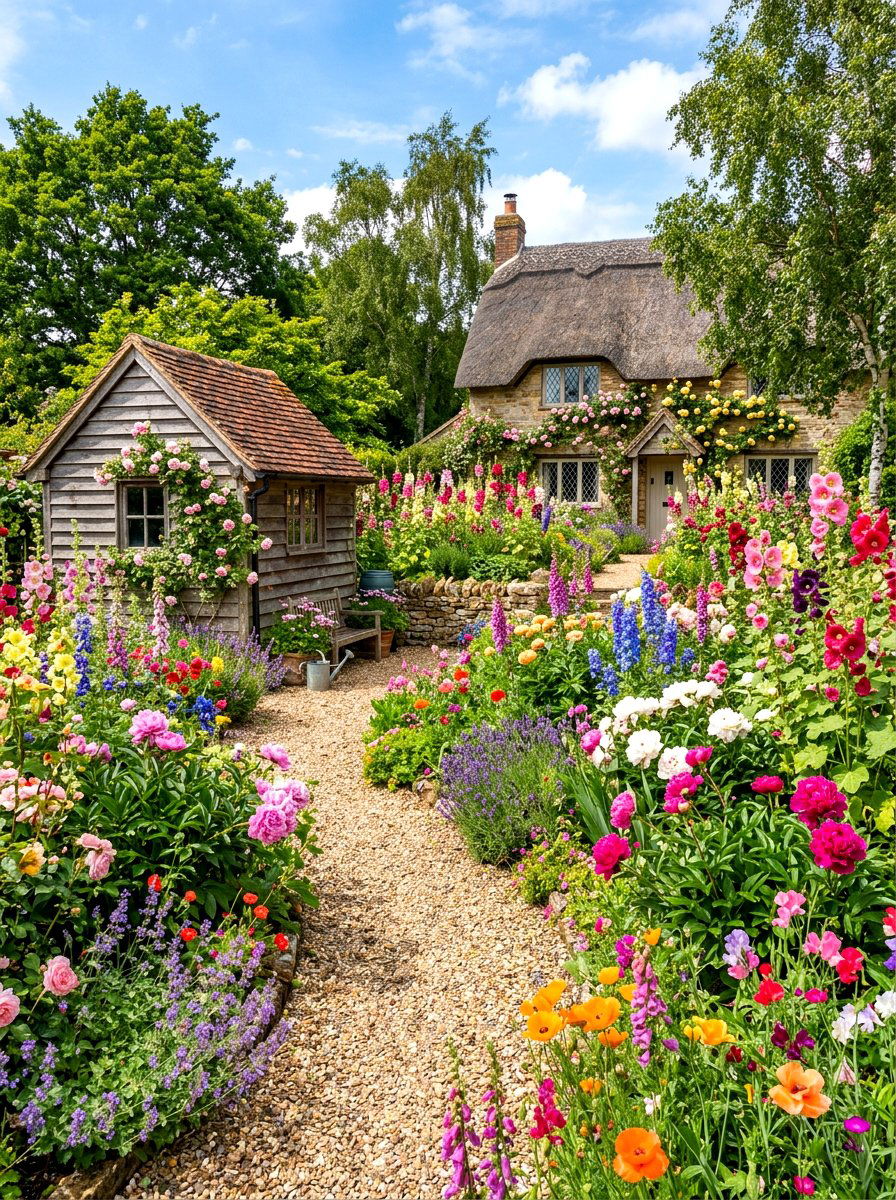
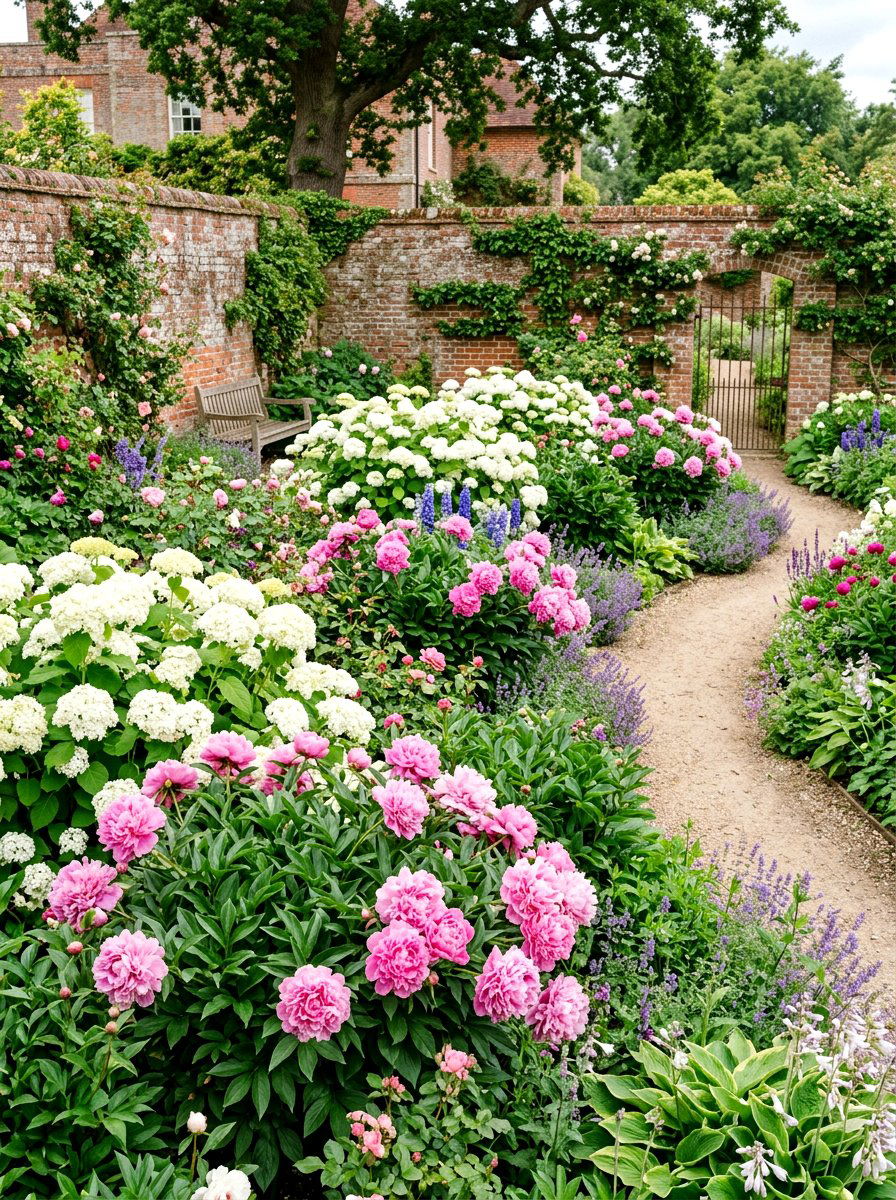
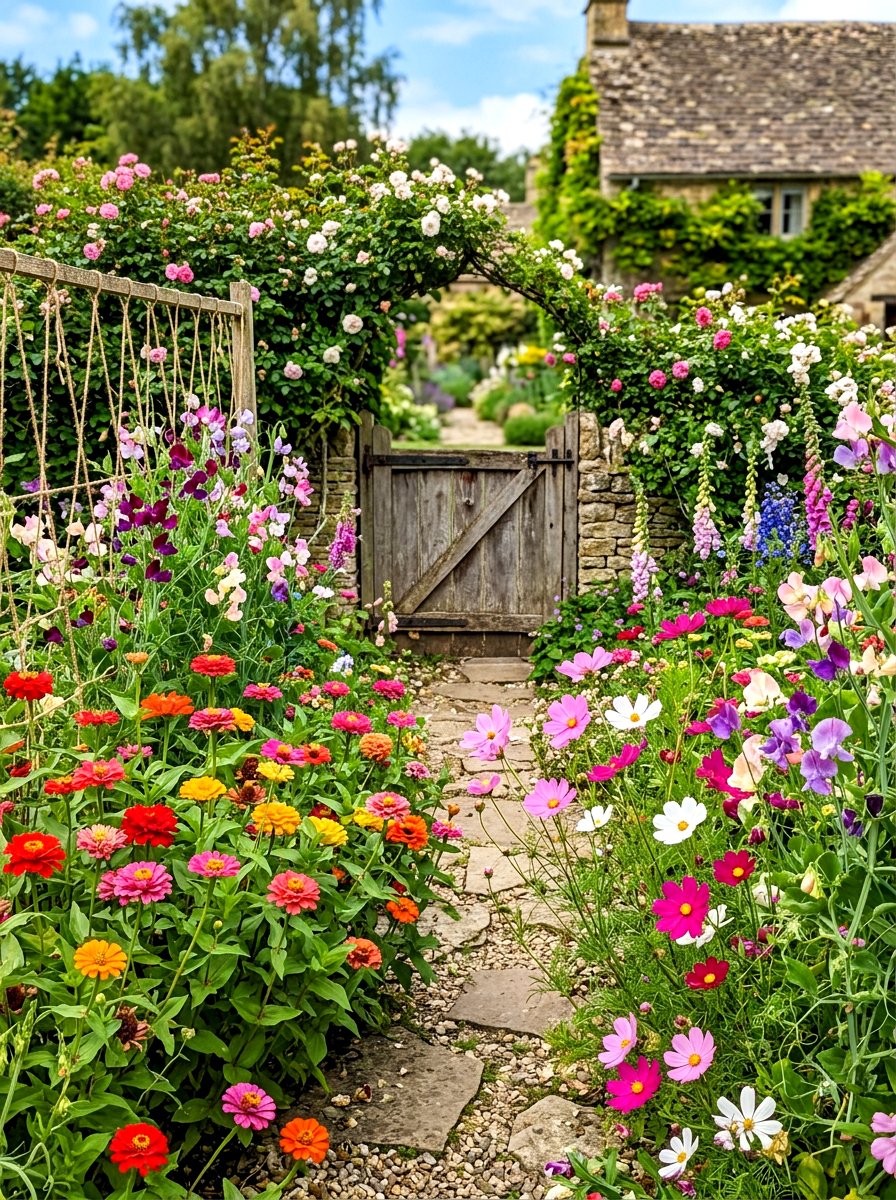
The French cottage style, or "jardin de curé, " is all about a delightful sense of organized chaos. Mix old-fashioned favorites like hollyhocks, peonies, and delphiniums in dense, overflowing beds that spill out onto the gravel paths. This style prioritizes a abundance of flowers and a variety of heights, creating a garden that feels lush, productive, and very personal. Including some edible elements like strawberries or artichokes among the flowers adds to the traditional, utilitarian roots of the cottage garden. The lack of strict lines in this area provides a wonderful balance to the more formal, clipped sections of your landscape, making it feel truly lived-in.
30. Garden Lighting
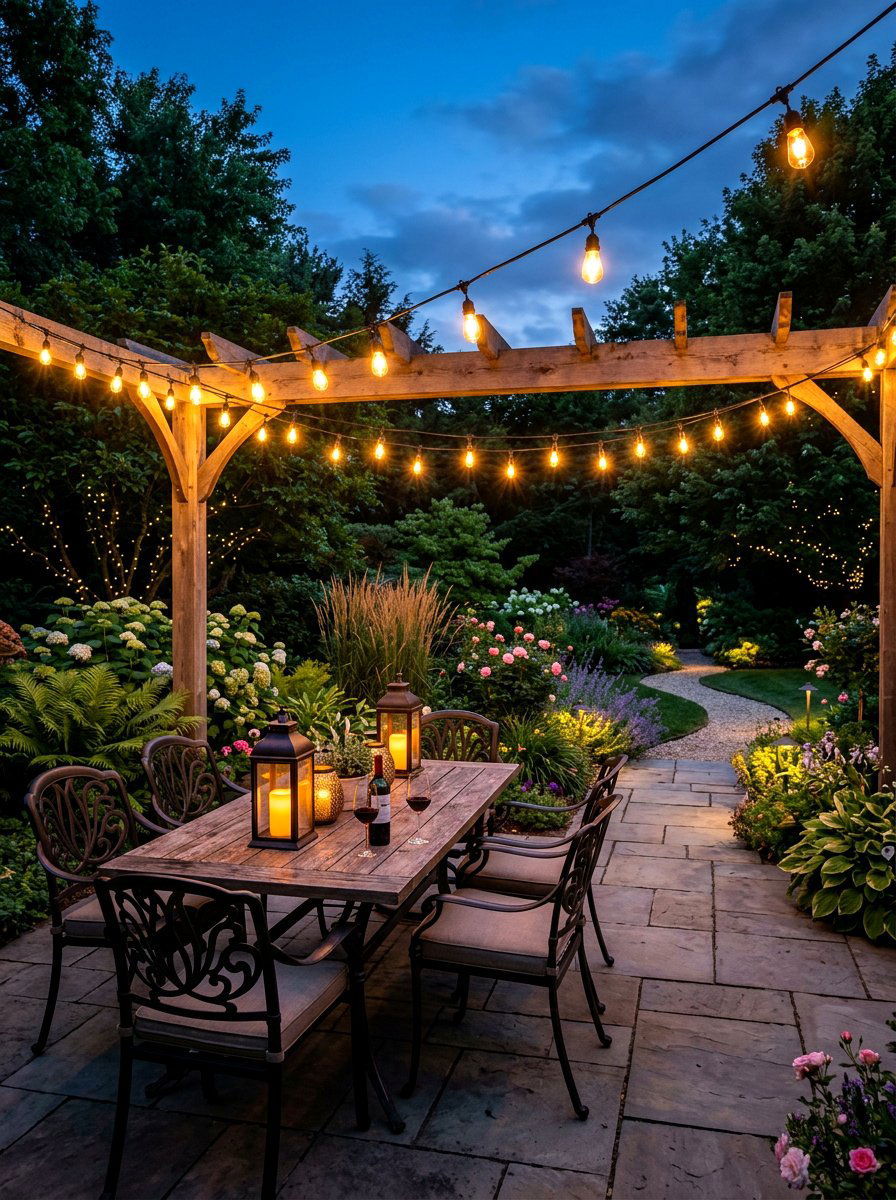
Subtle lighting is the key to enjoying your French country garden after the sun goes down. Instead of bright floodlights, use soft, warm-toned string lights draped through the branches of trees or across a pergola. Place small, hidden spotlights at the base of your stone fountain or favorite topiary to create dramatic shadows and highlights. Using traditional-style lanterns with real or LED candles on your dining table adds a romantic, flicking glow that is perfect for late-night conversations. This gentle approach to illumination ensures that the garden feels cozy and inviting at night, highlighting its best features without destroying the peaceful, natural ambiance of the outdoor space.
Conclusion:
Designing a French country garden is a rewarding journey that allows you to blend artistic structure with the raw beauty of the natural world. By incorporating these thirty ideas, you can create a landscape that feels both historic and fresh, providing a beautiful backdrop for everyday life. Remember that the most successful gardens in this style are those that embrace a bit of imperfection, allowing vines to wander and stone to weather over time. Whether you start with a single lavender border or a full-scale parterre, the goal is to cultivate a space that offers peace, beauty, and a true sense of "joie de vivre. "

Related posts: