Creating a vertical garden with climbing roses is a brilliant way to maximize your outdoor space while adding a touch of natural romance to your home 's exterior. Whether you have a sprawling backyard or a compact urban balcony, a well-placed wall trellis provides the essential support these vigorous plants need to reach their full, blooming potential. These structures do more than just hold up heavy canes; they transform blank, uninspiring walls into living works of art that change with the seasons. From traditional wooden lattices that offer a cozy cottage feel to sleek metal grids for modern landscapes, the options are truly endless. By choosing the right support system, you can effectively direct growth, improve air circulation around your roses, and create a breathtaking focal point that enhances your property' s overall curb appeal and value.
1. Wooden Diamond Lattice
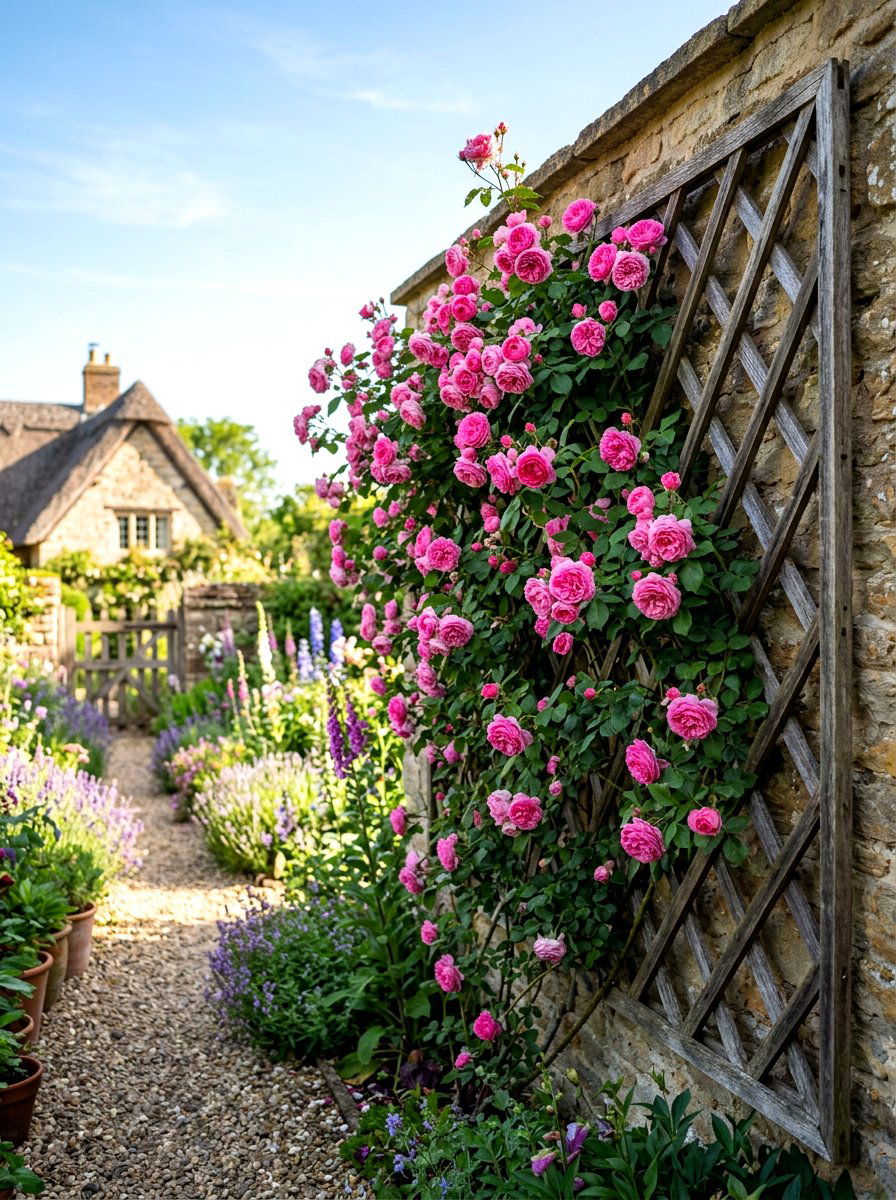
A classic wooden diamond lattice remains a favorite for gardeners who appreciate a traditional and timeless aesthetic. This sturdy structure is typically crafted from pressure-treated pine or durable cedar, providing a reliable framework that can easily support the substantial weight of mature climbing roses. The diagonal crisscross pattern creates a beautiful visual texture that remains attractive even during the dormant winter months when the leaves have fallen. You can choose to leave the wood in its natural state for a rustic, weathered look or paint it a crisp white to make the colorful blooms pop. Installing this lattice against a brick or siding wall instantly softens the home's architecture and creates a lush, romantic backdrop for your outdoor seating areas.
2. Black Metal Grid
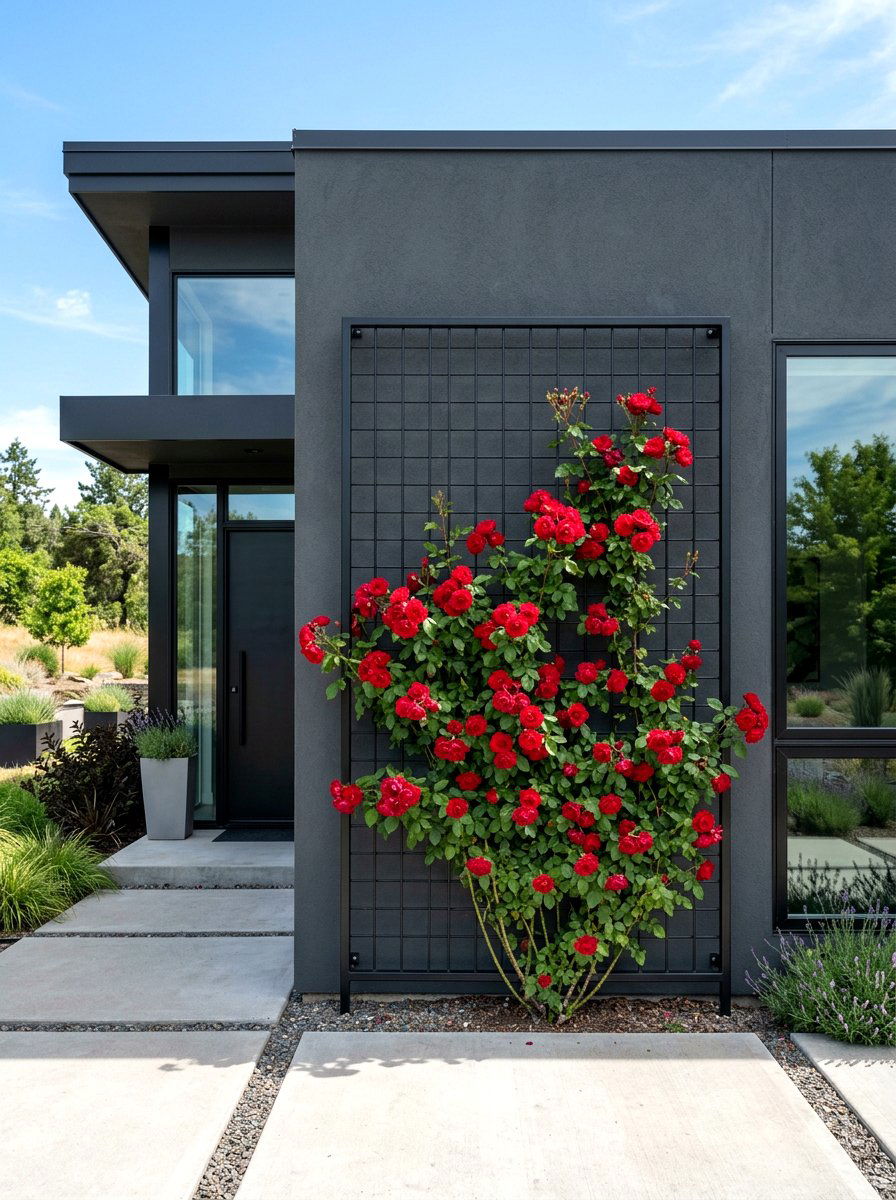
For those who prefer a more contemporary or industrial look, a black metal grid trellis offers a sleek and sophisticated solution for vertical gardening. These minimalist structures are often made from powder-coated steel or wrought iron, ensuring they remain rust-resistant and durable through various weather conditions. The dark finish provides a sharp, high-contrast background that makes the vibrant green foliage and delicate rose petals stand out remarkably well. Because the lines are thin and clean, the trellis almost disappears as the roses grow, giving the illusion of flowers floating against the wall. This type of support is particularly effective in urban settings or modern farmhouse designs where clean lines and functional simplicity are highly valued by homeowners.
3. Minimalist Wire System
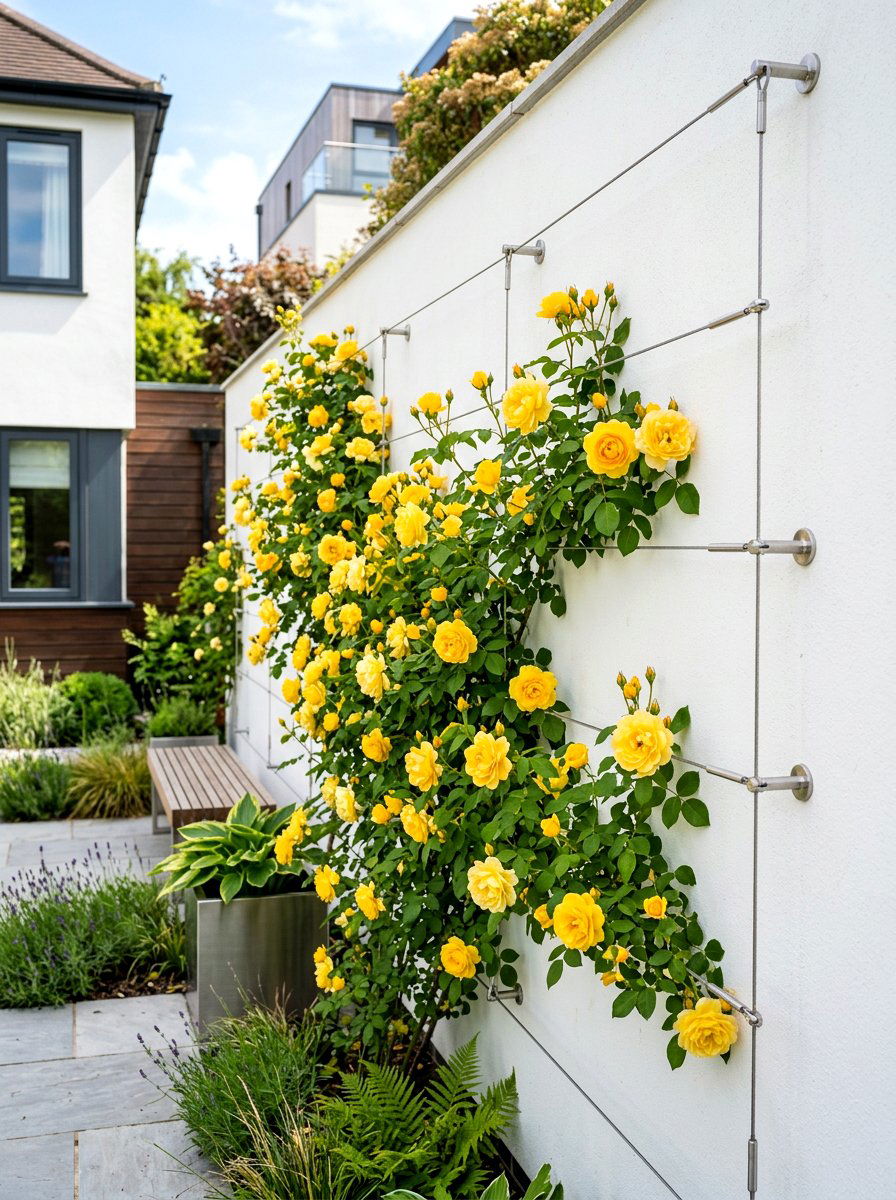
A minimalist wire system is the ultimate choice for a modern, "barely there" look that lets the climbing roses take center stage. This support method utilizes high-quality stainless steel cables and specialized eyelets or stand-offs anchored directly into the wall surface. You can arrange the wires in various patterns, such as horizontal lines, vertical columns, or even a bespoke geometric design, to suit your architectural style. Because the wires are so thin, they are virtually invisible from a distance, allowing the rose canes to appear as if they are climbing the wall on their own. This system is incredibly versatile and can be customized to fit unusually shaped walls or tight corners where traditional bulky trellis panels simply wouldn't work.
4. Cedar Wood Slat
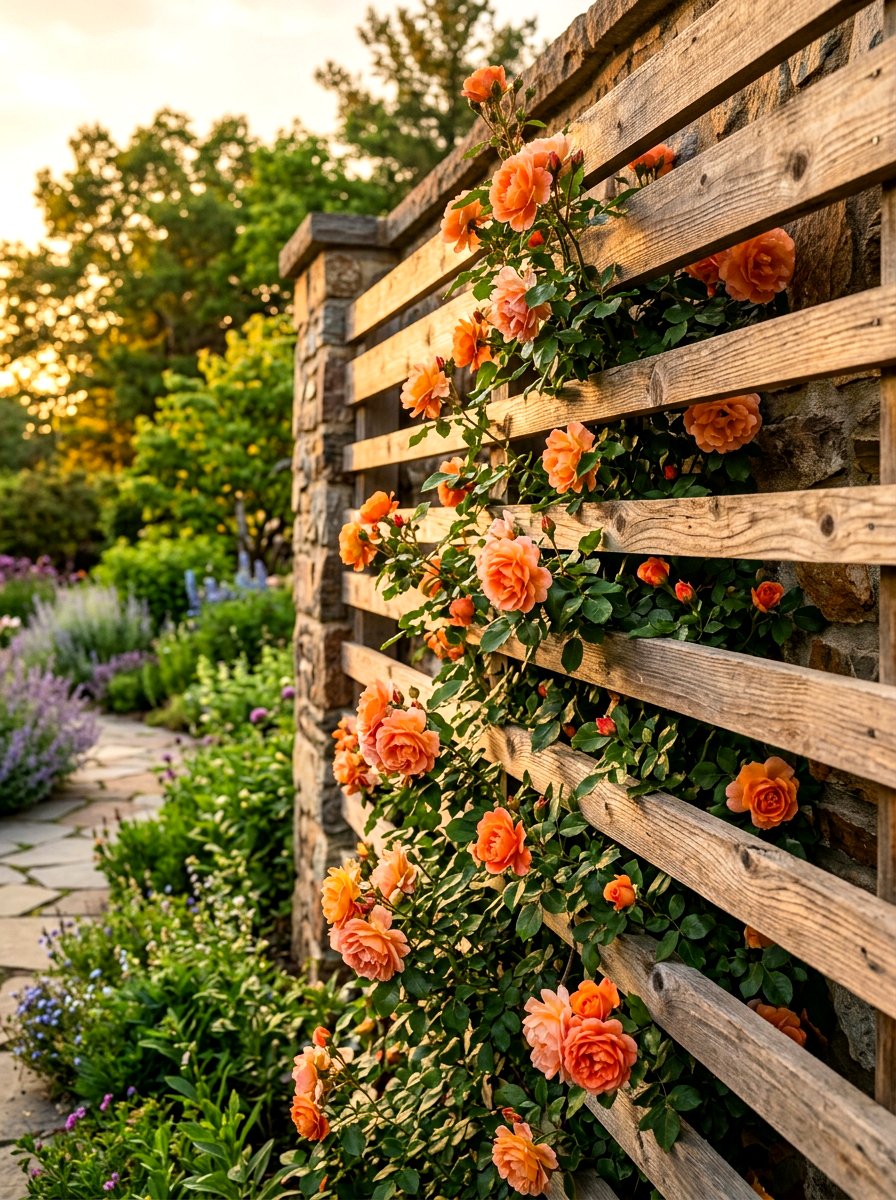
Cedar wood slat trellises offer a warm, natural appeal while providing excellent durability and resistance to rot and insects. These supports are often designed with horizontal or vertical slats that create a more structured and architectural appearance compared to traditional lattice. The natural oils in cedar wood provide a beautiful aroma and help the structure withstand the elements without the need for heavy chemical treatments. As the wood ages, it develops a graceful silvery-grey patina that blends seamlessly with natural landscapes and woodland garden themes. These slat designs are perfect for modern-rustic homes, providing enough surface area for rose tendrils to grip while allowing plenty of airflow to keep the plants healthy and free from common fungal diseases.
5. Arched Wall Support
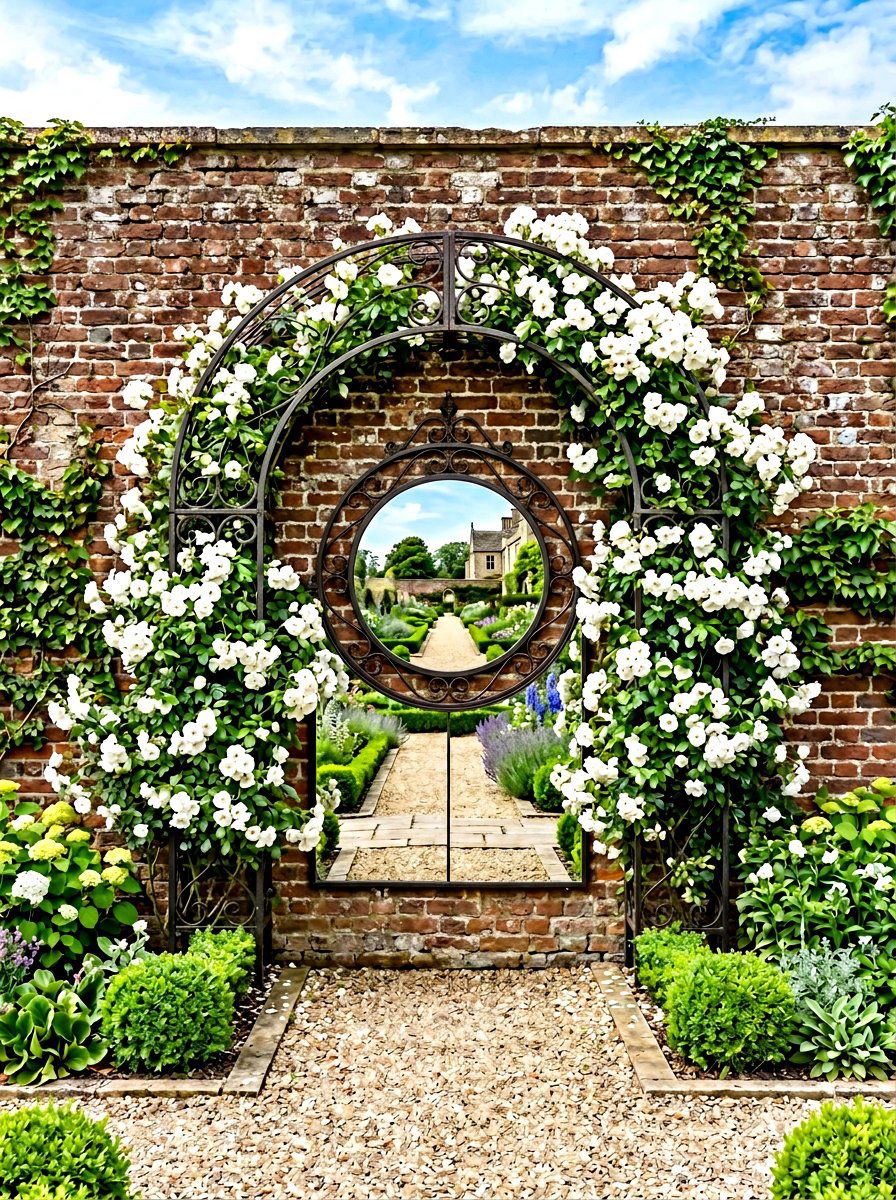
Adding an arched wall support can introduce a sense of architectural grandeur and movement to a flat, vertical surface in your garden. These trellises feature a curved top that mimics the look of a garden gate or a classic arbor, but they are mounted flush against the wall. This shape is particularly effective for framing windows, doorways, or garden mirrors, creating a focal point that draws the eye upward. When covered in climbing roses, the arch becomes a blooming frame that adds height and dimension to your landscape design. The curved lines help to break up the harsh angles of a house, making the outdoor space feel more fluid, inviting, and meticulously planned for a high-end, designer look.
6. Fan Shaped Trellis
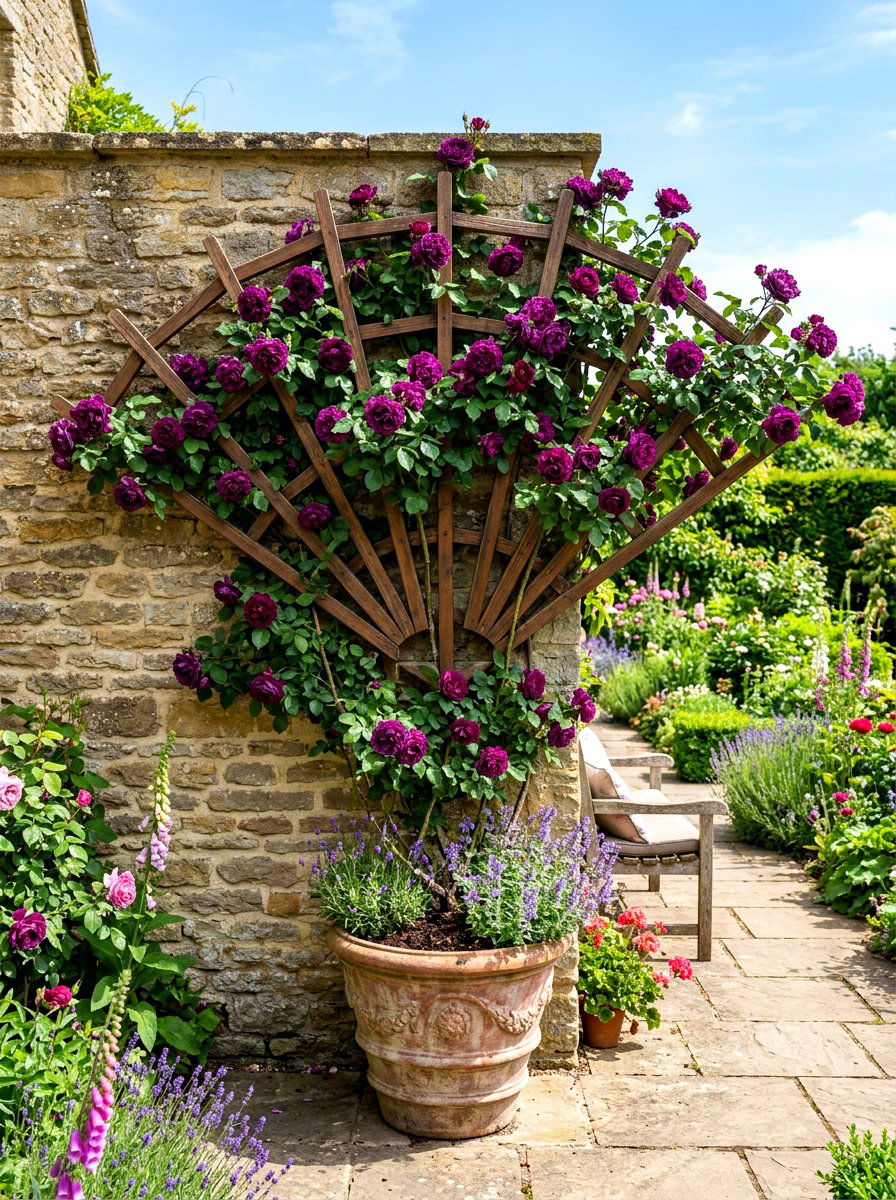
The fan-shaped trellis is a versatile and space-saving option that is specifically designed to spread rose canes outward as they grow upward. This structure starts narrow at the base and widens toward the top, mimicking the natural growth habit of many climbing rose varieties. It is an ideal solution for narrow wall sections between windows or for use in large decorative planters placed against a house. Because it encourages the canes to grow at an angle, it promotes more "lateral" budding, which results in a much higher density of flowers across the entire plant. These are often made from lightweight wood or plastic, making them easy to install and move if you decide to redesign your patio layout.
7. Chevron Pattern Lattice
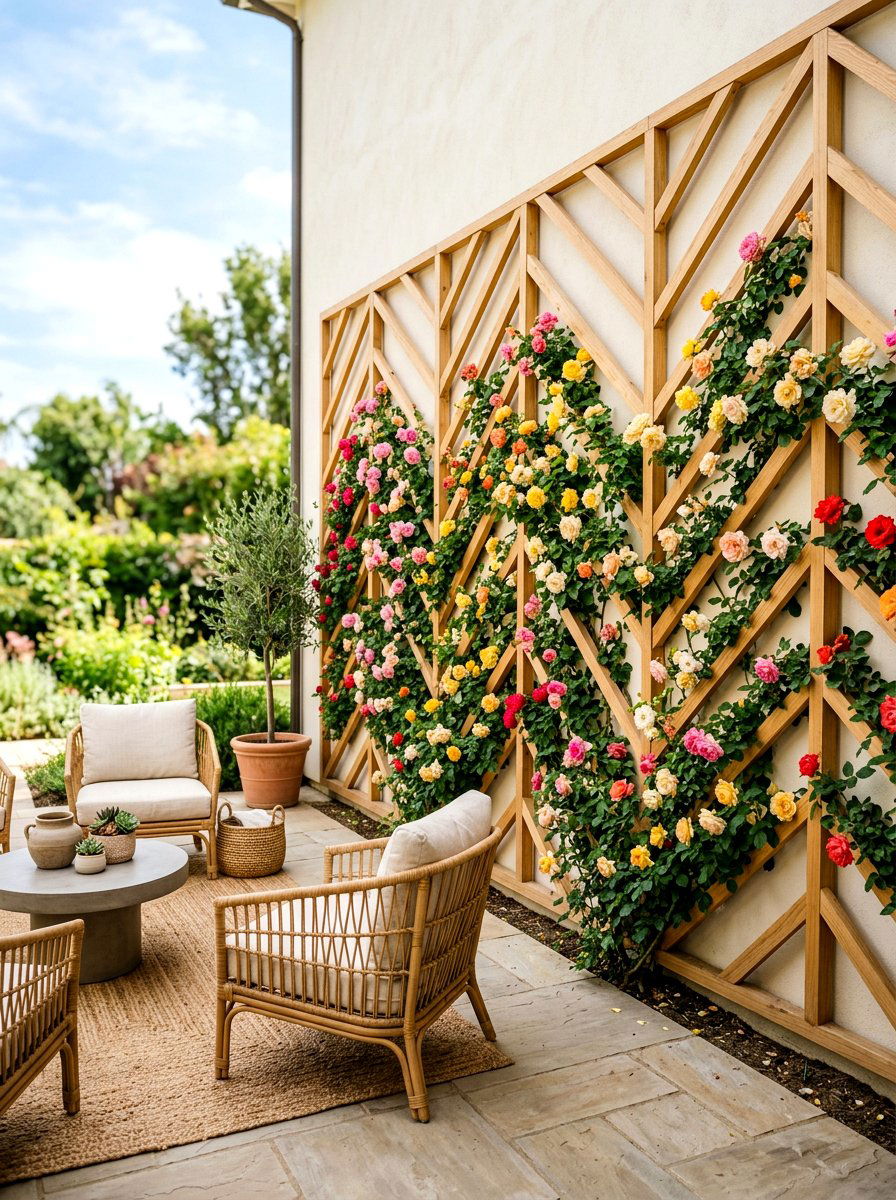
A chevron pattern lattice offers a trendy and geometric twist on traditional garden supports, making it a perfect fit for stylish, modern outdoor living spaces. The V-shaped arrangement of the wooden or metal slats creates a dynamic sense of movement that leads the eye across the wall. This design is highly effective at adding visual interest to a large, empty exterior wall that might otherwise feel boring or imposing. When roses are trained along the chevron lines, the resulting display looks intentional and highly curated, almost like a piece of living wall art. This style works exceptionally well with "modern boho" or contemporary garden themes, where bold patterns and natural elements are combined to create a unique and vibrant atmosphere.
8. Wrought Iron Scrollwork
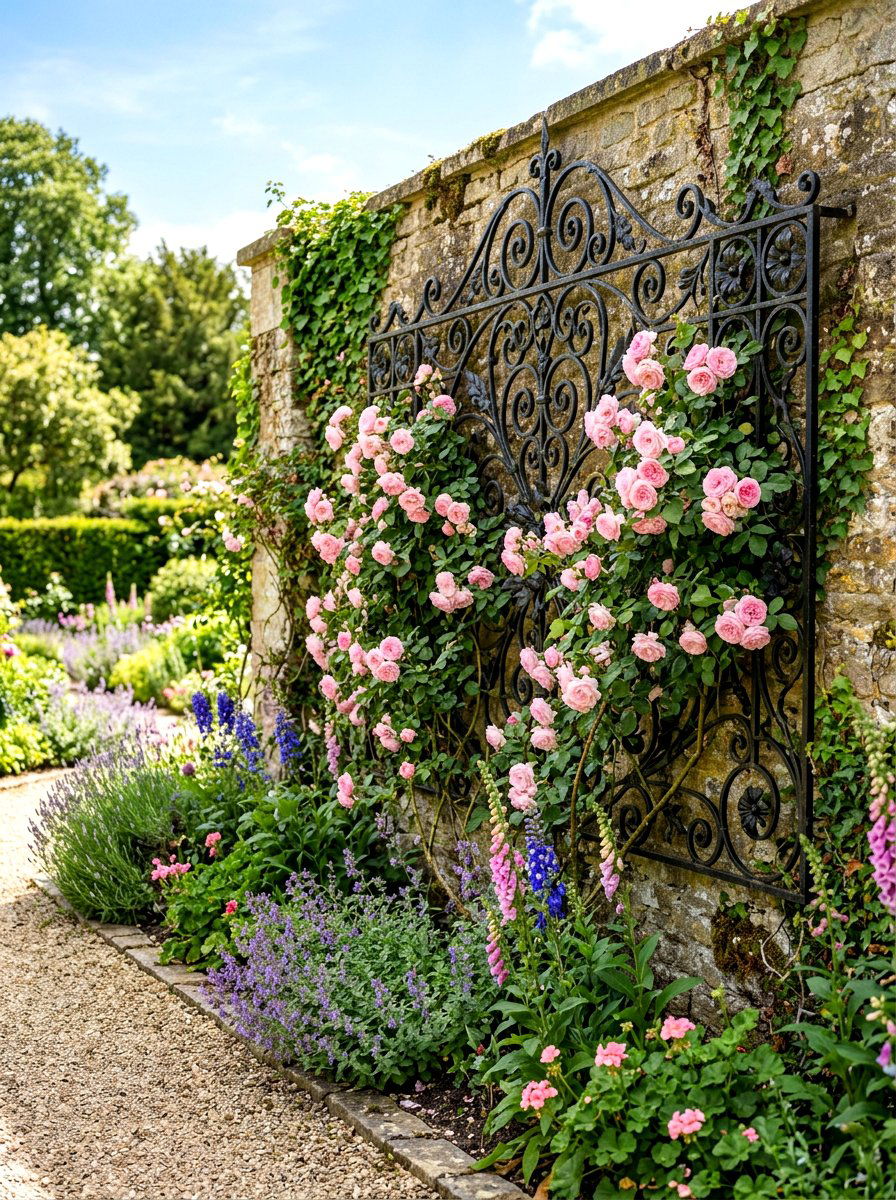
Wrought iron scrollwork trellises bring a touch of old-world charm and Victorian elegance to any garden wall. These ornamental supports often feature intricate vine-like patterns, floral motifs, or classic curls that complement the natural beauty of climbing roses perfectly. Beyond their functional role, these trellises serve as beautiful decorative elements even when the plants are not in bloom. The heavy-duty nature of wrought iron means these structures can support even the most vigorous and heavy rose varieties without bending or sagging over time. Choosing a weathered bronze or aged black finish can enhance the antique feel, making your garden look like a well-established estate with a rich history and a sophisticated sense of style.
9. Honeycomb Hexagon Frame
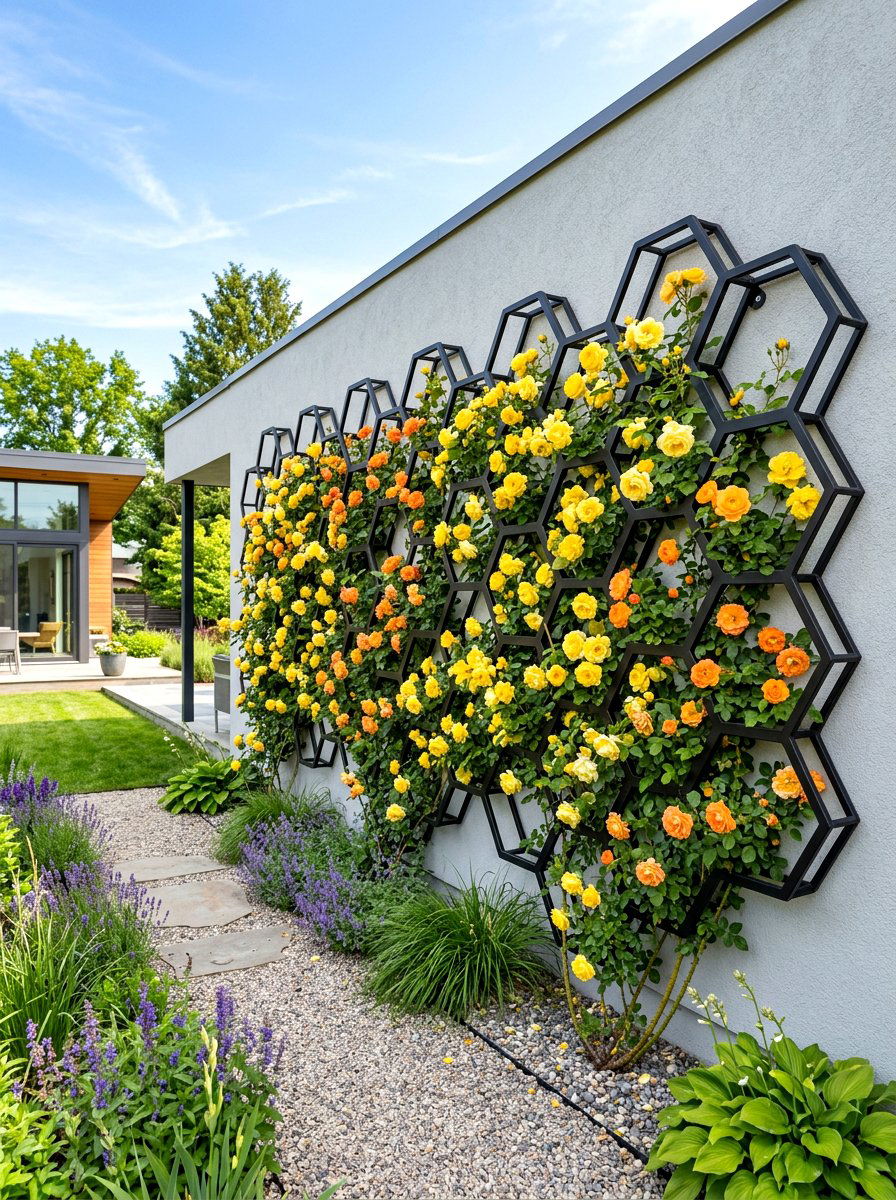
For a unique and playful look, a honeycomb hexagon frame provides a modern geometric structure for your climbing roses. This design consists of multiple hexagonal cells joined together, creating a pattern reminiscent of a beehive. This modular approach allows you to expand the trellis in any direction, making it easy to cover as much or as little of the wall as you desire. The repeating shapes provide numerous points for tying in rose canes, ensuring the plant is well-supported and evenly distributed across the wall surface. This style is particularly popular in contemporary urban gardens where homeowners want to incorporate nature in a way that feels organized, artistic, and completely different from traditional garden designs.
10. Bamboo Wall Grid
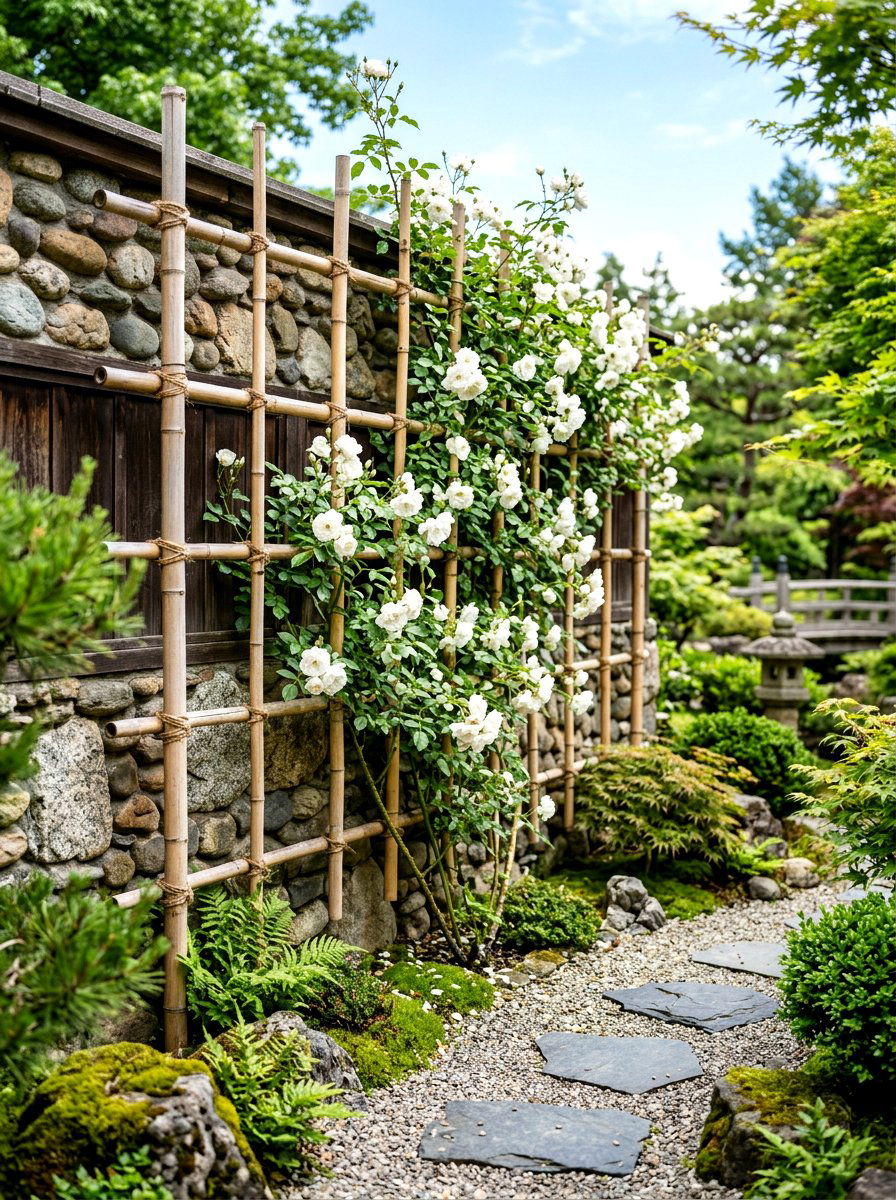
Bamboo wall grids are an excellent choice for gardeners looking for an eco-friendly and lightweight support system for their roses. Bamboo is a rapidly renewable resource that offers surprising strength and a natural, tropical, or Zen-like aesthetic to the outdoor space. These grids are often constructed using sturdy bamboo poles lashed together with natural twine or wire, providing a rustic and organic feel. They work beautifully in coastal gardens or Asian-inspired landscapes, where natural materials are prioritized. While bamboo may not last as long as metal or cedar, it is an affordable and stylish option that can be easily replaced or updated as your garden evolves and your climbing roses grow more substantial.
11. Minimalist Wire Eyelet
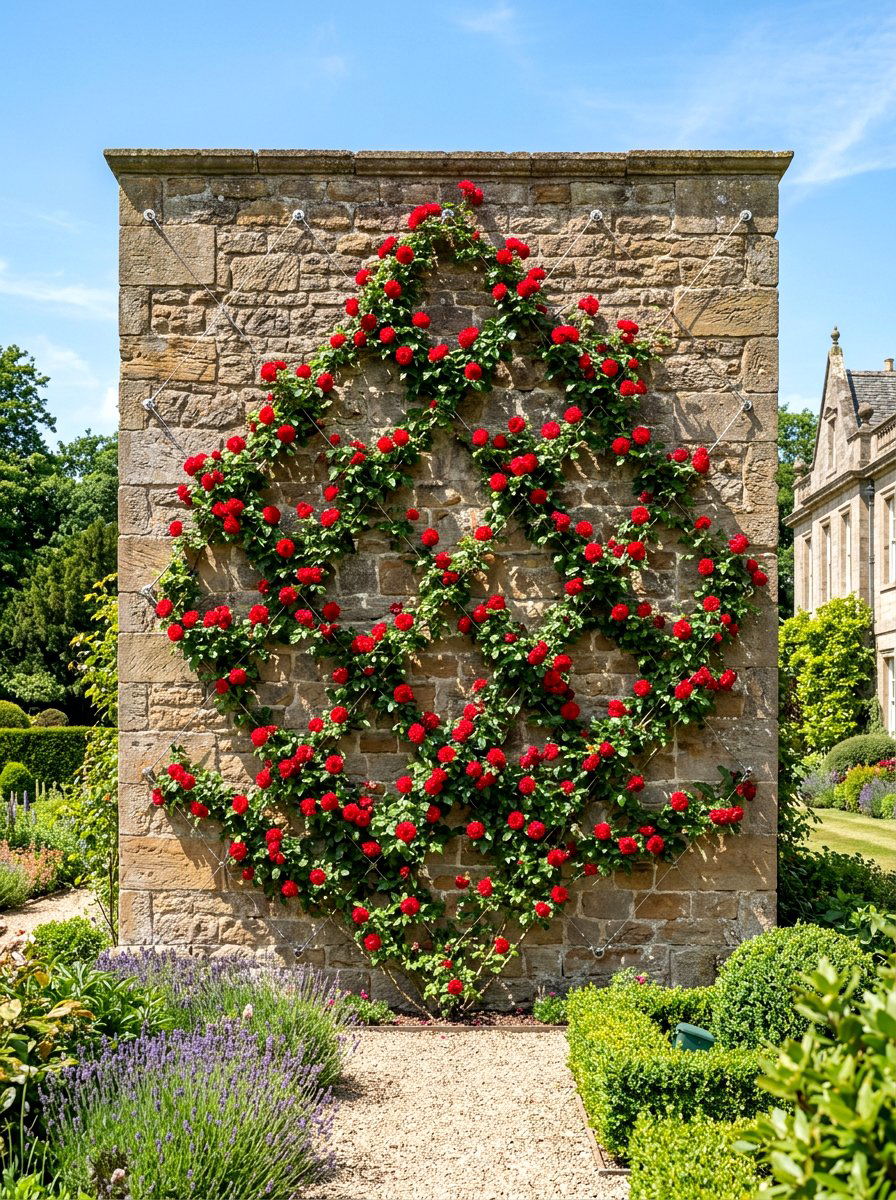
The wire eyelet system is a specialized variation of the wire trellis that uses small, discreet anchors to create a custom climbing path on a wall. By strategically placing these eyelets, you can train your roses to grow in specific shapes, such as a large "X, " a series of diamonds, or even a sprawling fan. This method is highly favored by professional landscapers because it provides total control over the plant’s direction while remaining almost invisible to the naked eye. It is particularly useful for training roses over large expanses of brick or stone where you don't want to obscure the beautiful masonry. The result is a clean, sophisticated look that emphasizes the architecture and the natural beauty of the roses.
12. Victorian Style Panel
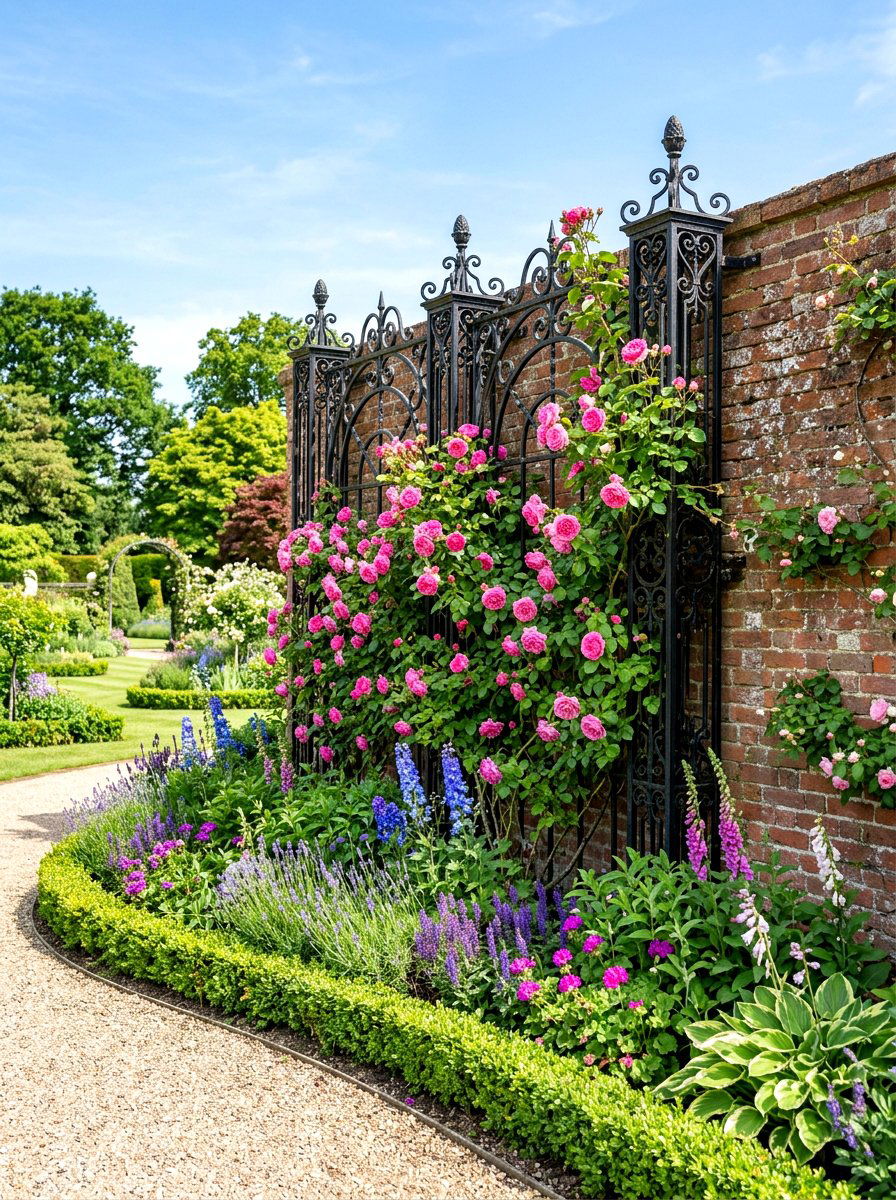
A Victorian-style panel trellis often features a combination of straight lines and decorative finials, evoking the formal garden designs of the 19th century. These panels are typically taller and more narrow than standard lattice, making them perfect for adding vertical height to a garden border or framing a specific architectural feature. They are often painted in traditional colors like forest green, deep burgundy, or classic white to enhance their historical appeal. When paired with fragrant, old-fashioned climbing roses, these panels create a nostalgic and romantic atmosphere that feels like a private sanctuary. The structured design provides a sense of order and formality that can help ground a more whimsical or overgrown cottage-style garden layout effectively.
13. Floating Trellis Panel
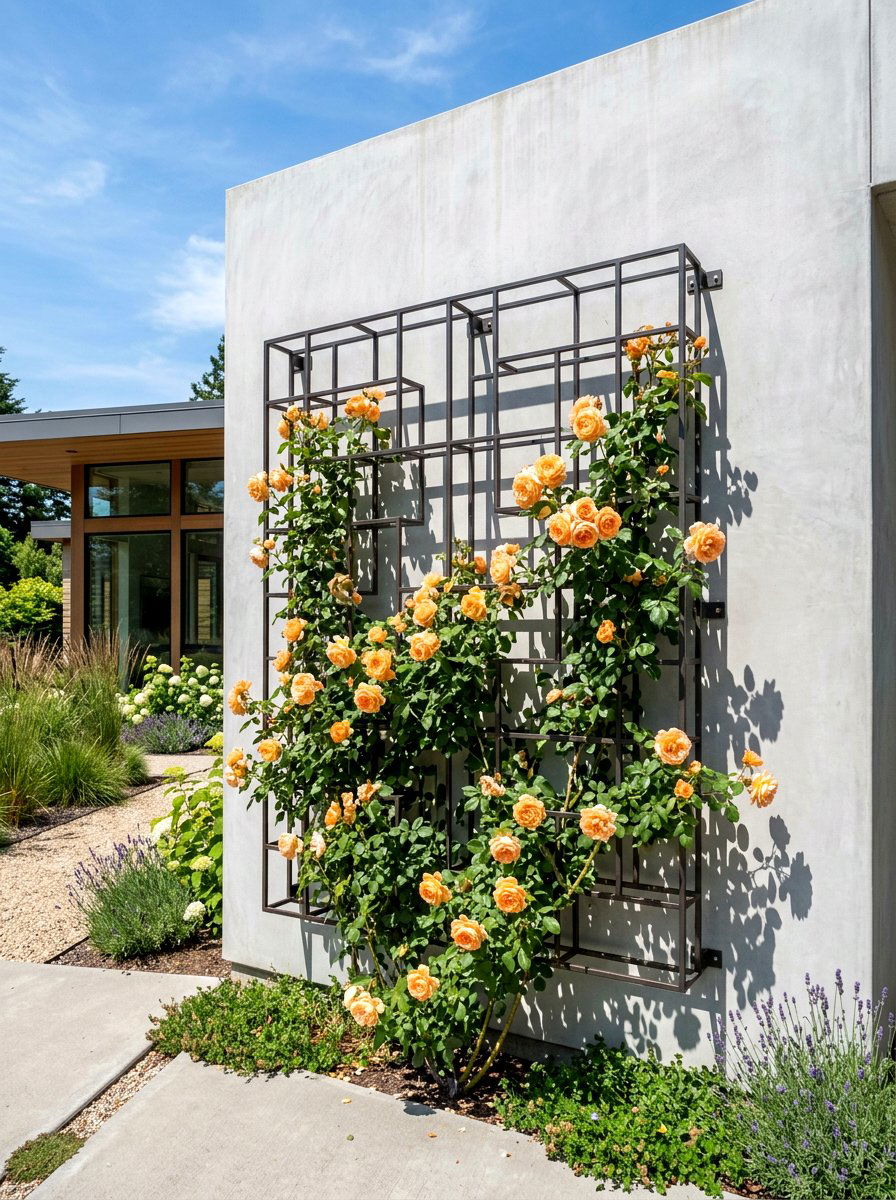
A floating trellis panel is installed with spacers that keep the structure a few inches away from the wall, creating a modern 3D effect. This gap is not just for looks; it is crucial for the health of your roses as it allows for superior airflow behind the foliage. Good ventilation helps prevent common issues like powdery mildew and black spot, which can thrive in stagnant, humid air against a flat wall. The shadow cast by the "floating" panel adds depth and interest to the design, making the trellis look like a high-end architectural installation. This style is often crafted from metal or high-quality composite materials to ensure it remains straight and level over many years of use.
14. Reclaimed Wood Frame
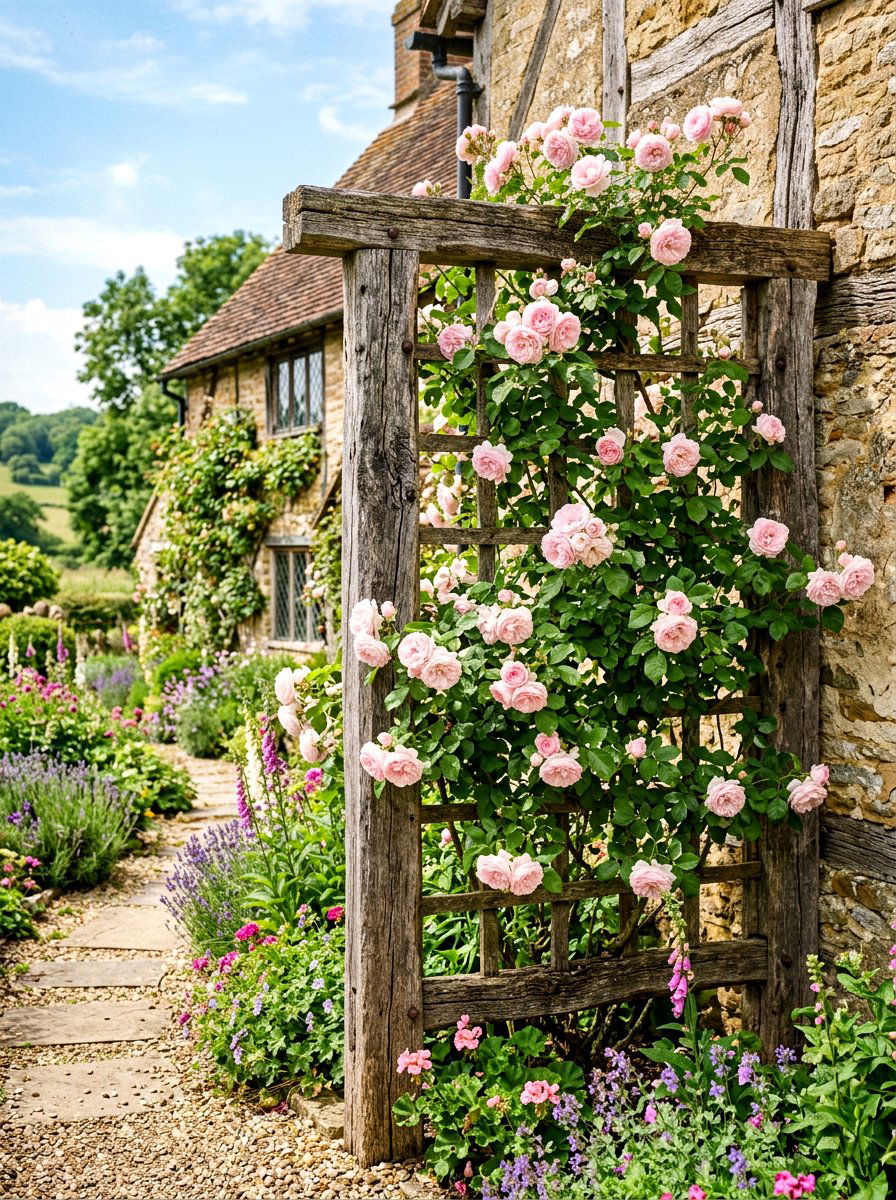
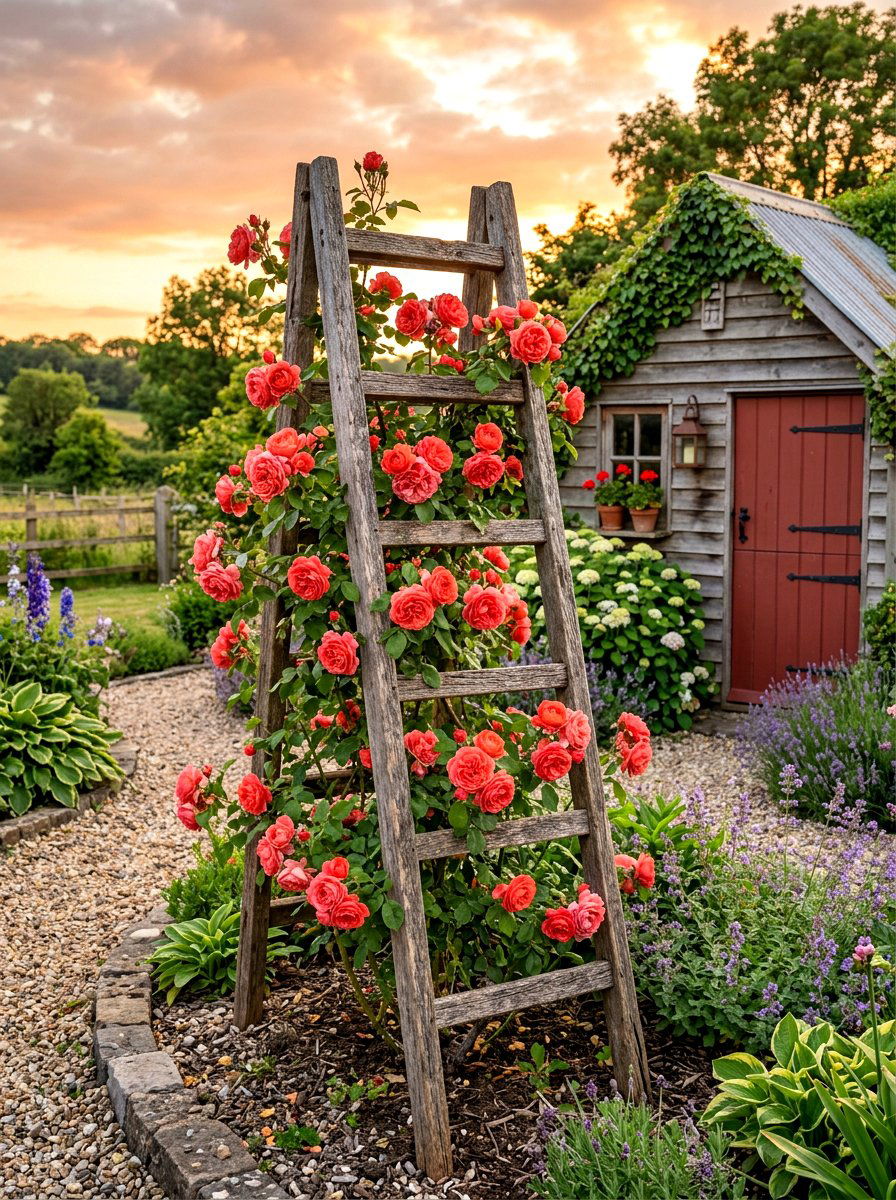
Using reclaimed wood for a rose trellis is a fantastic way to add character, history, and sustainability to your garden design. Pieces of old barn wood, weathered fence pickets, or even salvaged window frames can be repurposed into unique and functional supports for climbing plants. The natural imperfections, knots, and faded paint of reclaimed wood provide a rustic charm that cannot be replicated with new materials. This approach is perfect for farmhouse-style gardens or those who love the "shabby chic" aesthetic. Each piece tells a story and adds a layer of texture that beautifully complements the soft, delicate nature of rose blooms, creating a warm and inviting atmosphere that feels lived-in and loved.

15. Geometric Square Mesh
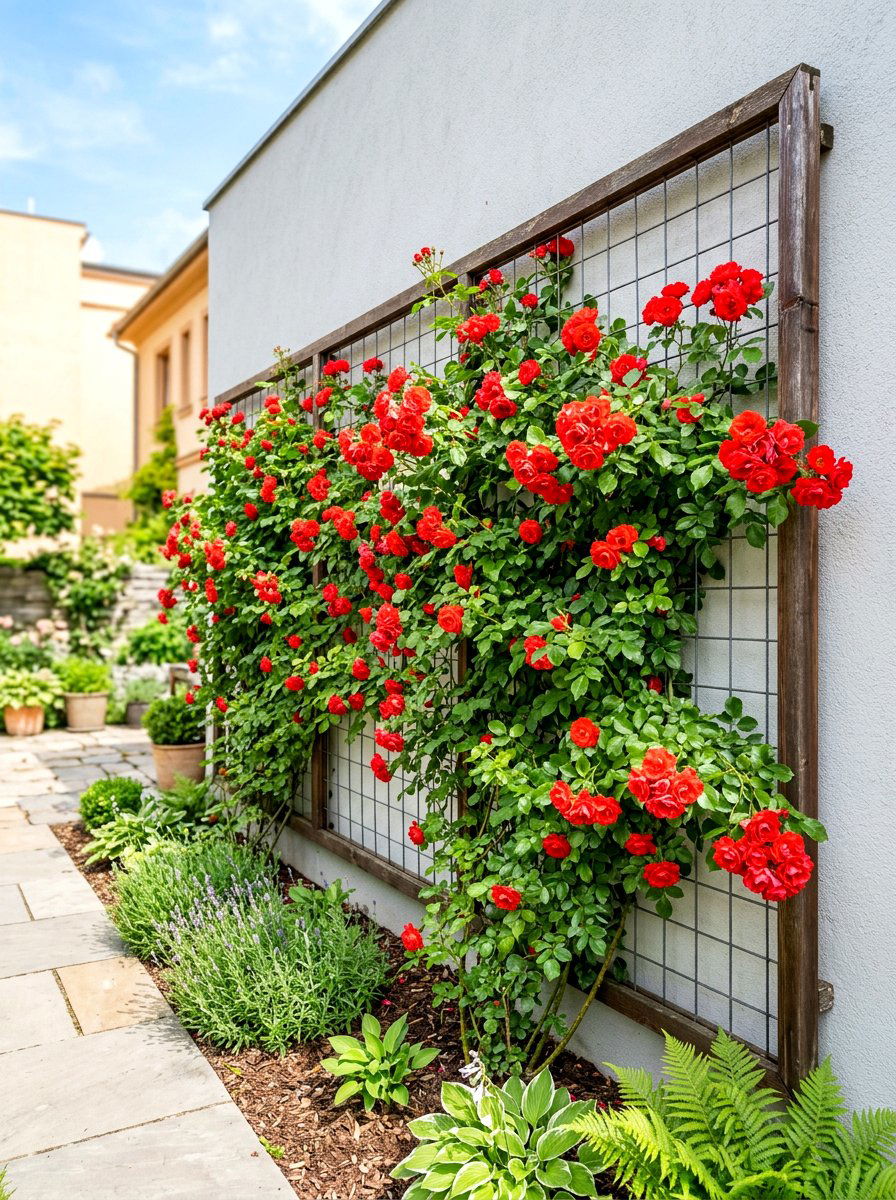
Geometric square mesh trellises offer a clean, organized, and highly functional support system for vigorous climbing roses. Unlike the diagonal lines of a diamond lattice, the horizontal and vertical lines of a square mesh provide a more modern and architectural feel. This grid pattern makes it incredibly easy to train rose canes, as you can easily tie them to the consistent horizontal bars to encourage lateral growth. These are often made from heavy-duty galvanized wire or thick wooden slats, ensuring they can handle the weight of a fully grown rose bush in peak season. This design is excellent for creating a "green wall" effect where the foliage eventually covers the entire grid for maximum privacy.
16. Espalier Rose Wire
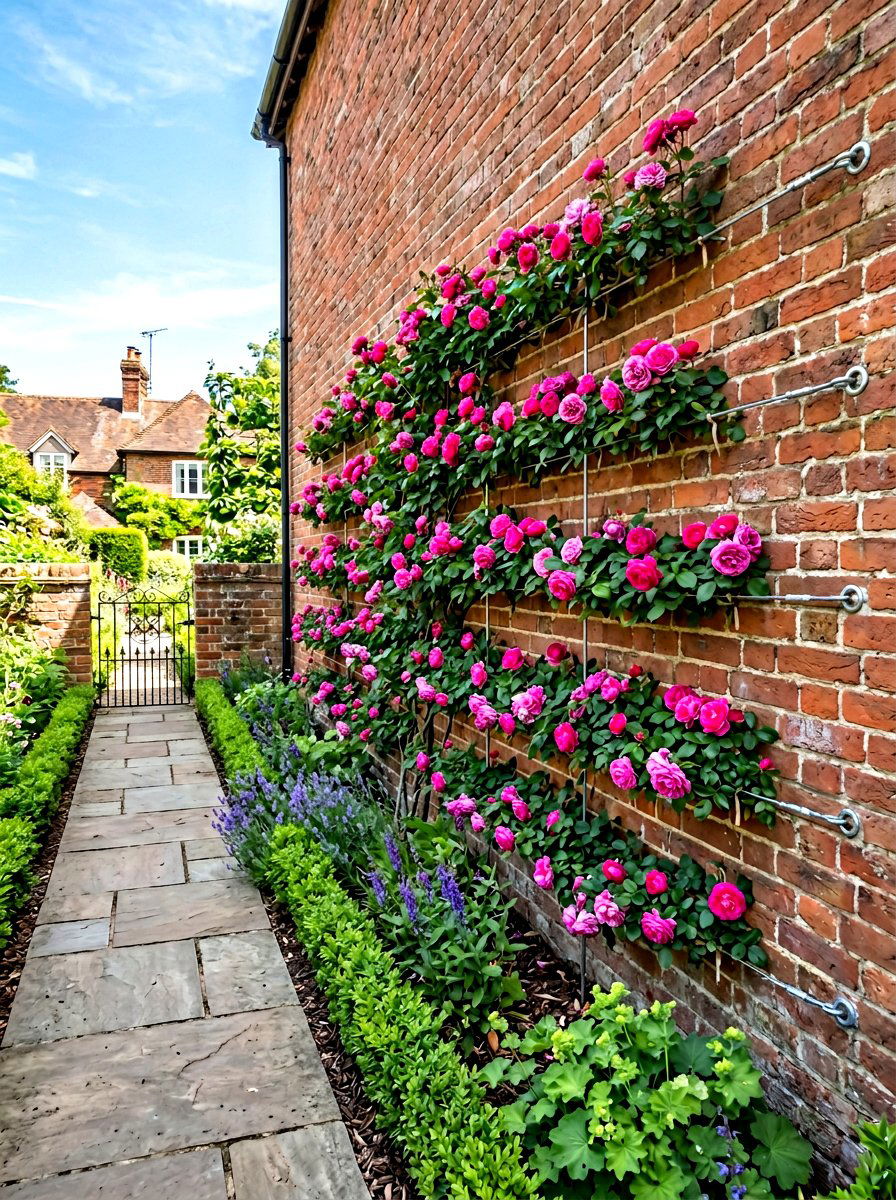
The espalier technique involves training roses to grow flat against a wall in a highly structured, two-dimensional form using horizontal wires. Originally used for fruit trees in limited spaces, this method has become a popular way to showcase the elegant architecture of climbing rose canes. The result is a formal and sophisticated display where the flowers appear in neat rows or tiers along the wall. This approach is perfect for narrow walkways, side yards, or small patios where you want the beauty of roses without the bulk of a sprawling bush. It requires regular pruning and tying, but the reward is a breathtakingly organized and prolific floral display that looks professionally maintained and very high-end.
17. Ornate Scrollwork Metal
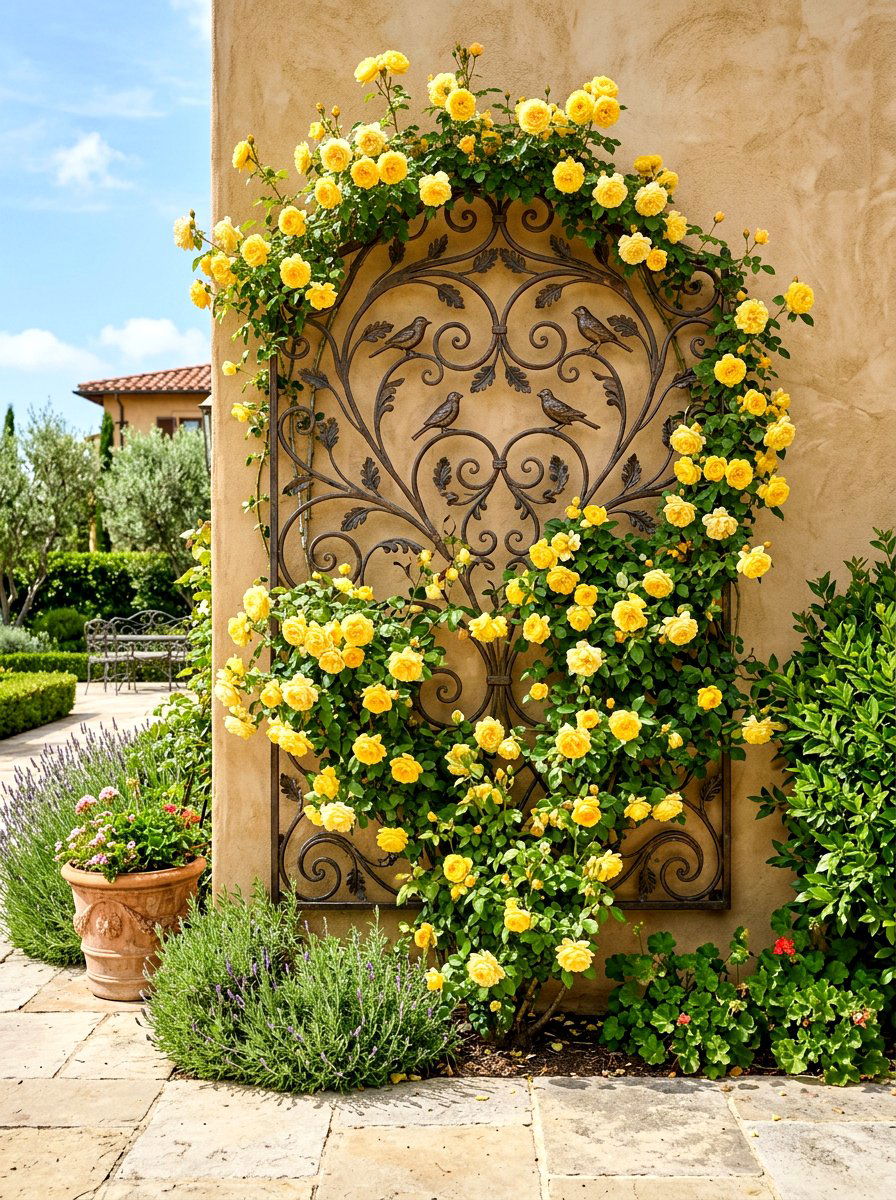
Ornate scrollwork metal trellises serve as a stunning focal point in any garden, acting as a piece of sculpture even before the roses begin to climb. These pieces often feature handcrafted details like leaves, birds, or complex floral patterns integrated into the metal frame. Because they are so decorative, they are best placed where they can be clearly seen, such as on a prominent wall near a patio or entrance. The strength of the metal allows for delicate-looking designs that are actually quite robust and capable of supporting heavy climbing varieties. Choosing a finish like antique copper or verdigris can add a sense of timelessness and luxury to your outdoor living space, making it feel truly special.
18. Wall Planter Trellis
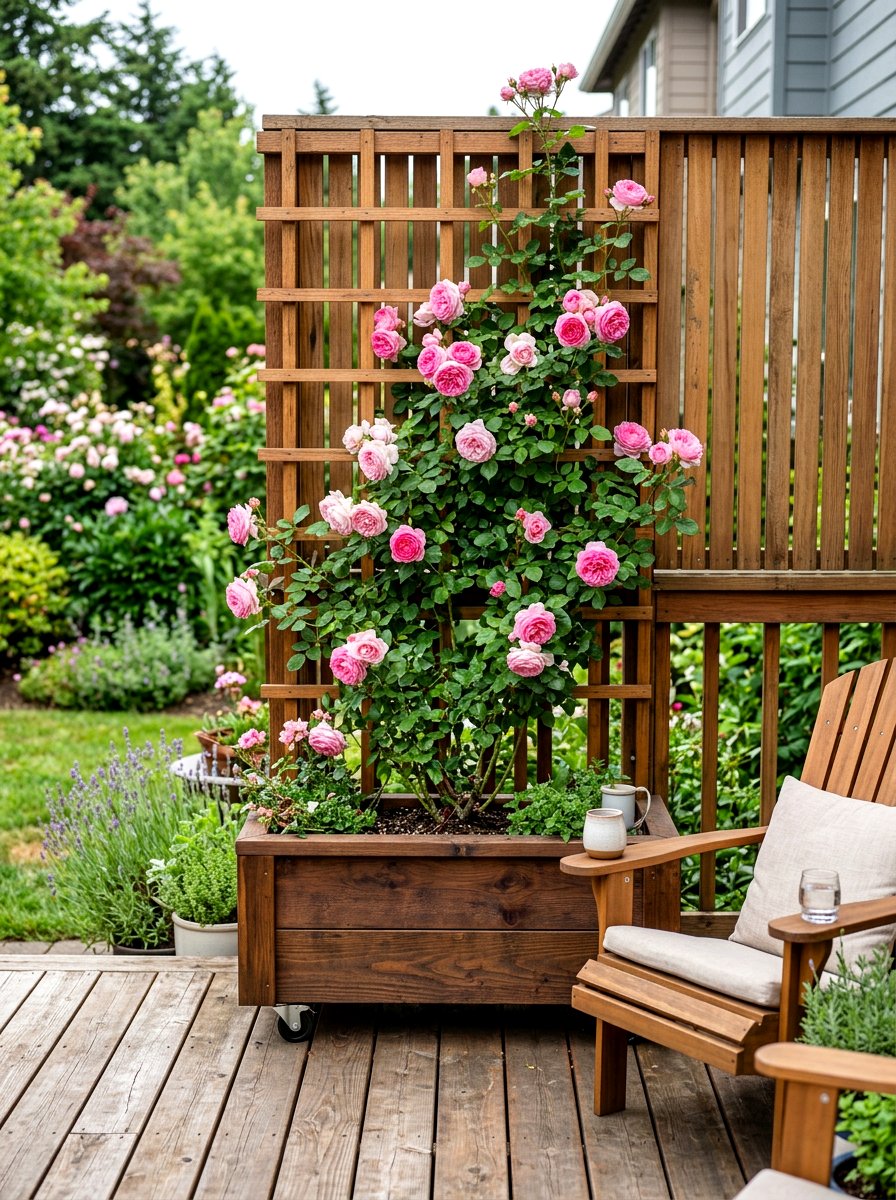
A wall planter with an integrated trellis is a smart, all-in-one solution for adding vertical greenery to areas with hard surfaces like concrete patios or wooden decks. These units feature a deep planting box at the base where the rose is rooted, with a sturdy trellis rising up from the back for support. This design is perfect for renters or those who don 't want to plant directly into the ground near their home' s foundation. It allows you to move the entire floral display if needed and keeps the rose's root system contained and manageable. Many of these planter-trellis combos are styled to look like high-end furniture, adding both function and beauty to your outdoor living area.
19. Horizontal Slat Wood
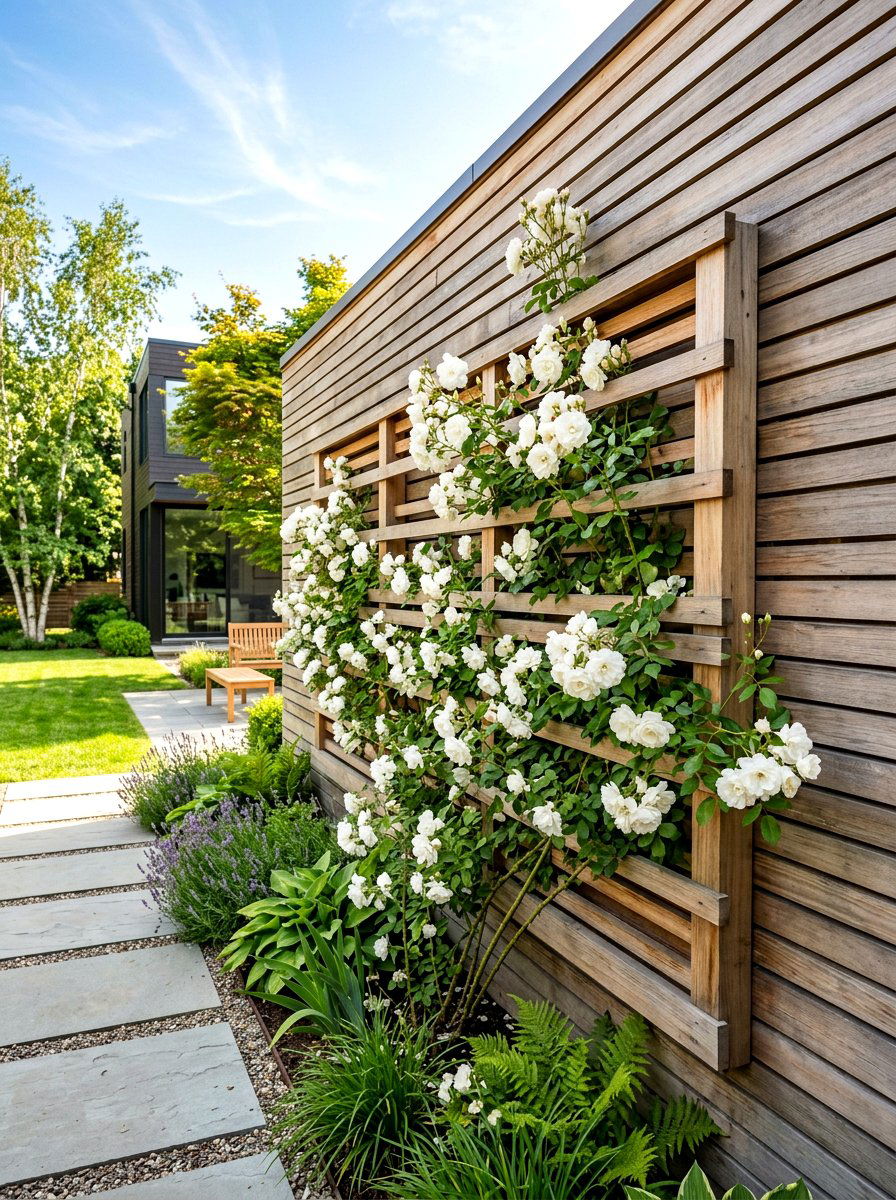
Horizontal slat wood trellises have become a staple in modern landscape design due to their clean lines and ability to make a space feel wider and more expansive. Unlike traditional vertical or lattice designs, horizontal slats provide a contemporary look that mimics modern fencing and interior accent walls. This style is particularly effective at hiding unsightly brickwork or old siding while providing a sturdy framework for climbing roses to weave through. The gaps between the slats allow for excellent light penetration and airflow, which are essential for the health of the plant. Using a dark stain can create a dramatic, moody backdrop that makes pale pink or white roses look absolutely luminous and incredibly sophisticated.
20. Painted White Lattice
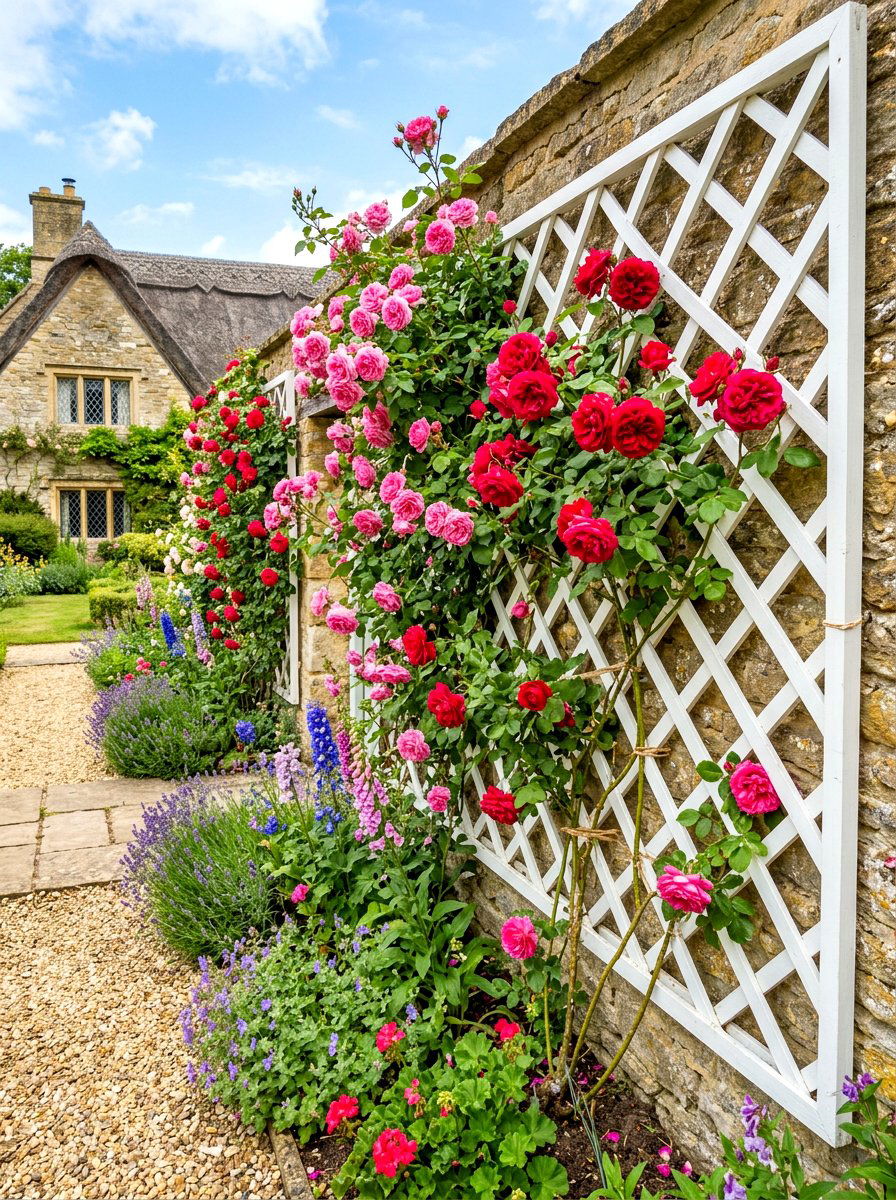
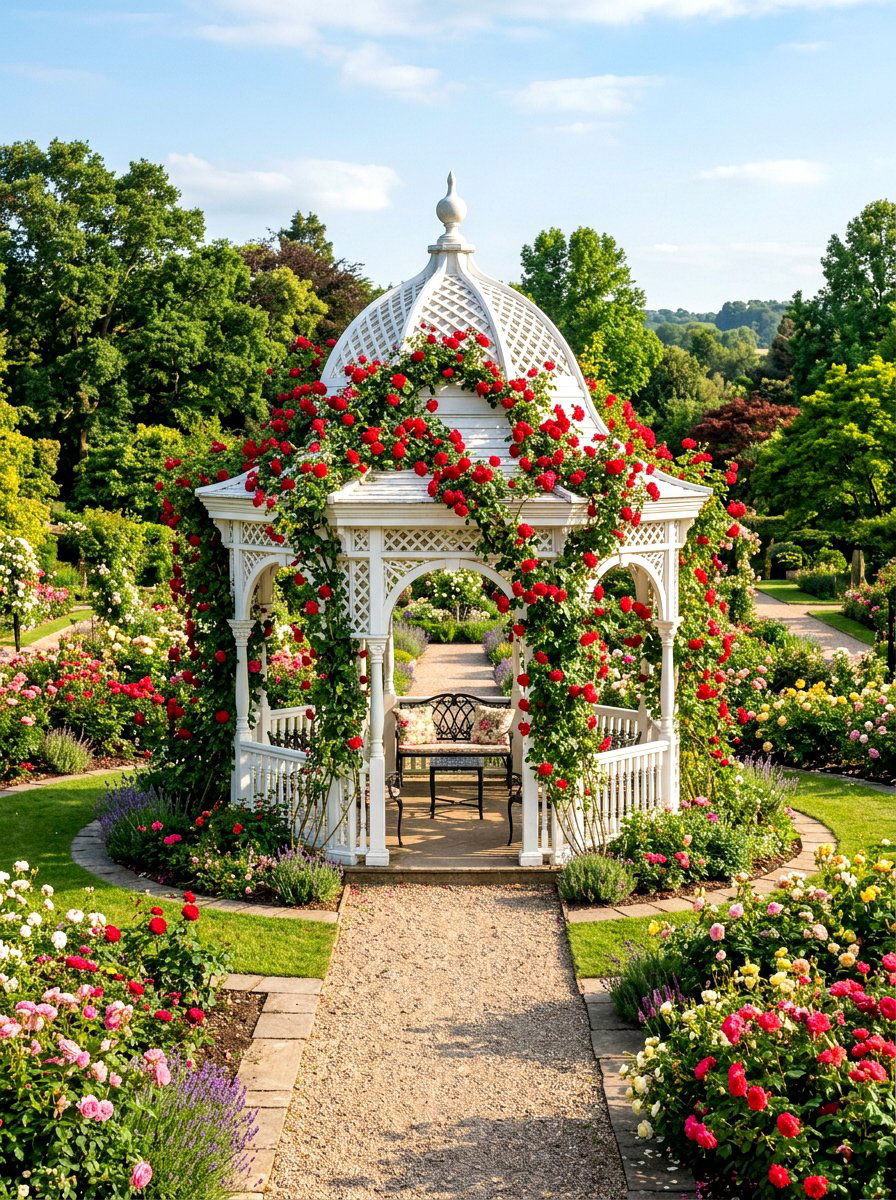
A painted white lattice trellis is the epitome of classic cottage garden style and remains one of the most popular choices for a reason. The bright white finish provides a clean, cheerful backdrop that makes any color of rose — from deep red to soft yellow — look vibrant and refreshed. White trellises are excellent for brightening up shaded corners of the garden or for creating a sense of height against a dark-colored house. This style evokes a sense of nostalgia and traditional charm, making your outdoor space feel like a peaceful retreat. Regular maintenance with a fresh coat of paint every few years keeps it looking crisp and ensures the wood remains protected from the dampness of the climbing foliage.
21. Modern Industrial Steel
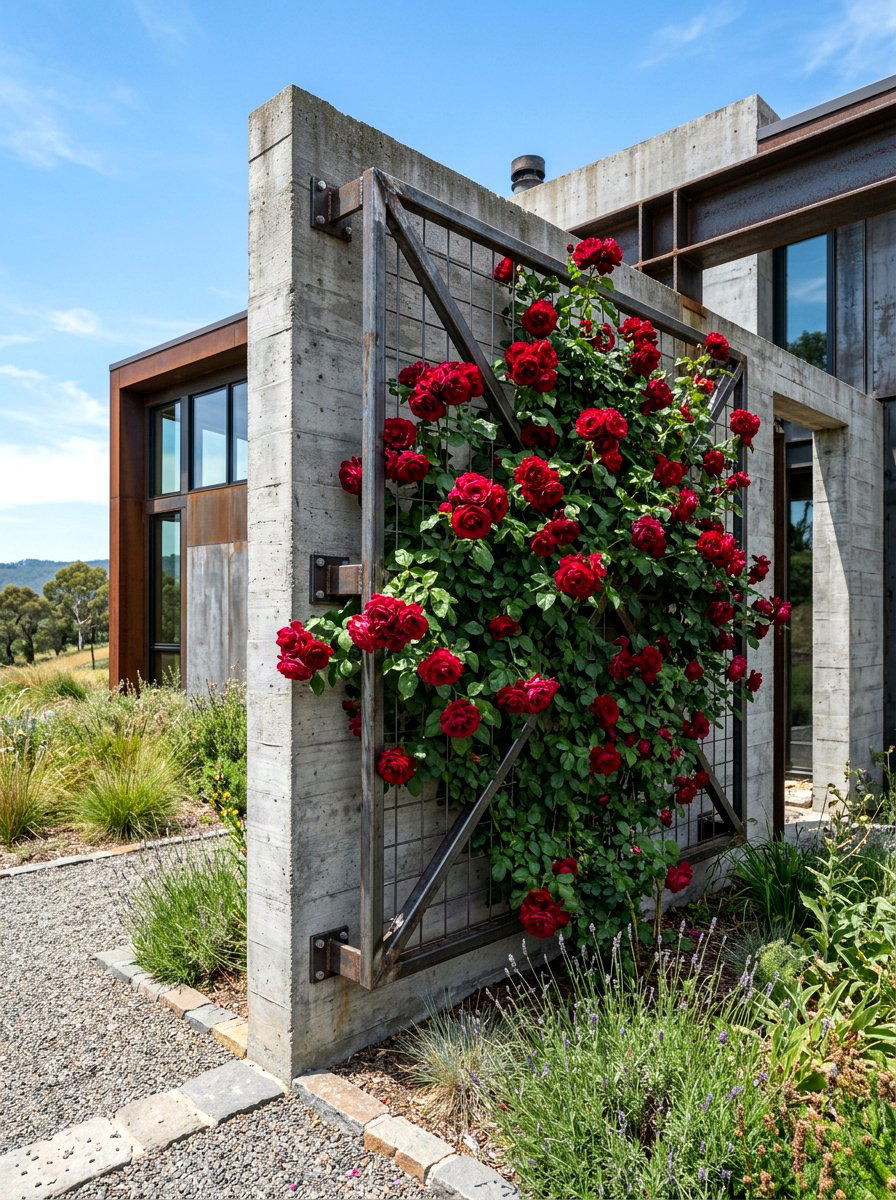
Industrial steel trellises are perfect for homeowners who want a bold, architectural statement in their garden. These supports are often made from thick steel bars or expanded metal mesh, giving them a rugged and substantial feel that contrasts beautifully with delicate rose petals. The raw or galvanized steel finish ages naturally over time, developing a unique character that fits perfectly with industrial-chic or modern minimalist home designs. Because they are incredibly strong, these trellises are ideal for the most vigorous and heavy climbing rose varieties that might overwhelm lighter structures. This choice says a lot about your design confidence, blending "tough" materials with "soft" nature for a high-impact, designer-inspired look that is built to last.
22. Rustic Twig Support
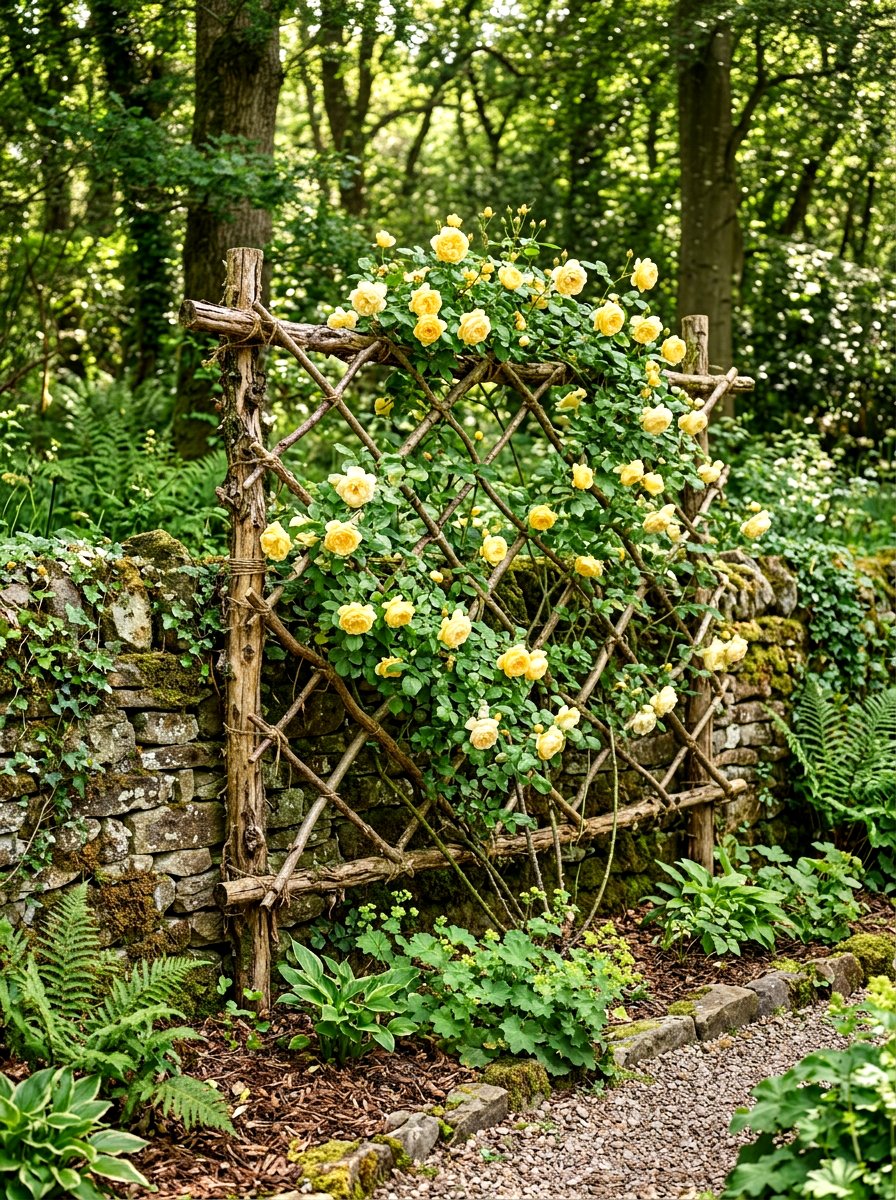
A rustic twig wall trellis offers a charming, DIY aesthetic that feels completely organic and at home in a woodland or country garden. These are often made by hand using flexible branches from trees like willow, hazel, or birch, woven together into a natural-looking grid or fan shape. Because each piece is handmade, no two trellises are exactly alike, adding a unique and personal touch to your landscape. This style is perfect for those who prefer an informal, "untamed" look where the support structure blends seamlessly into the surrounding greenery. While less durable than metal or treated wood, a twig trellis is an affordable and environmentally friendly way to provide a temporary or seasonal home for your favorite climbing roses.
23. Copper Pipe Trellis
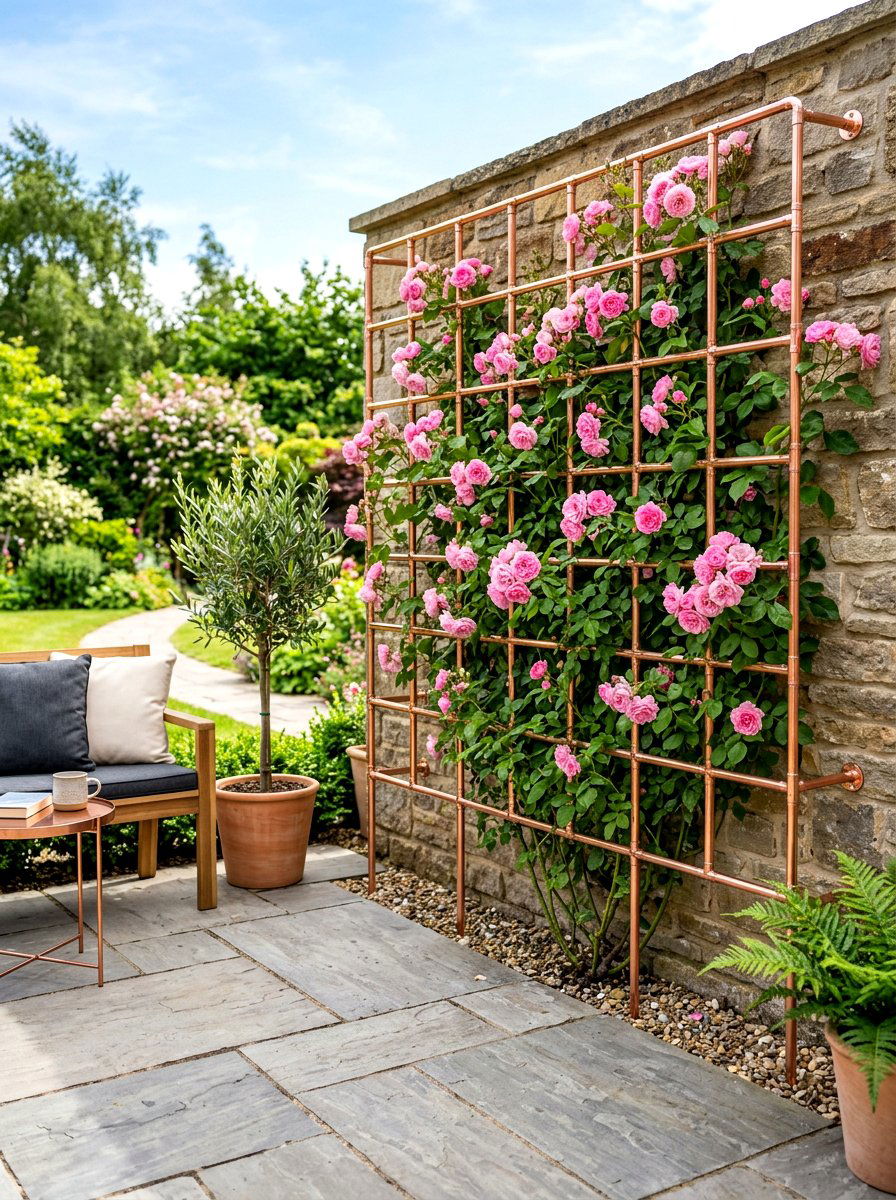
For a touch of metallic shine and a modern DIY project, a copper pipe trellis is an increasingly popular choice for stylish gardeners. The bright, warm tones of new copper look stunning against green foliage, and over time, the metal will develop a beautiful green verdigris patina that adds an aged, antique character. Copper pipes are easy to cut and assemble using standard fittings, allowing you to create a custom-sized grid or geometric pattern that perfectly fits your specific wall space. This material is naturally resistant to the elements and won't rust like iron, making it a long-lasting and low-maintenance option. The result is a high-end, custom look that feels both contemporary and elegantly timeless.
24. Full Height Trellis
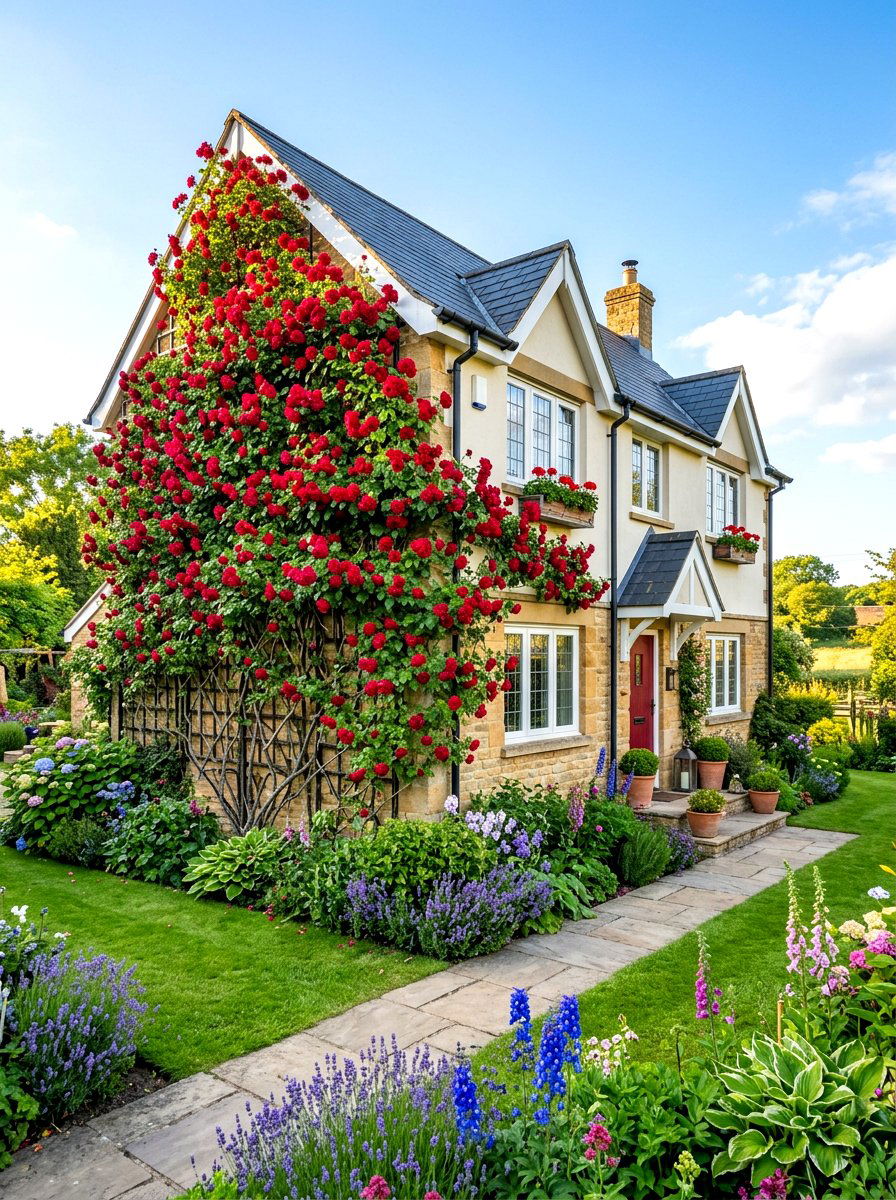
A full-height trellis that spans from the ground all the way to the roofline can transform an entire side of a house into a breathtaking vertical garden. This grand-scale approach is perfect for large, blank walls that feel cold or imposing, turning them into a lush, living tapestry of color and fragrance. Because of the size and potential weight of the roses, these structures must be very securely anchored into the wall studs. A full-height display creates a massive visual impact and can significantly improve the insulation and cooling of your home during the hot summer months. It is a bold design choice that rewards the homeowner with a stunning, estate-like appearance that is truly unforgettable.
25. Diagonal Slat Wood
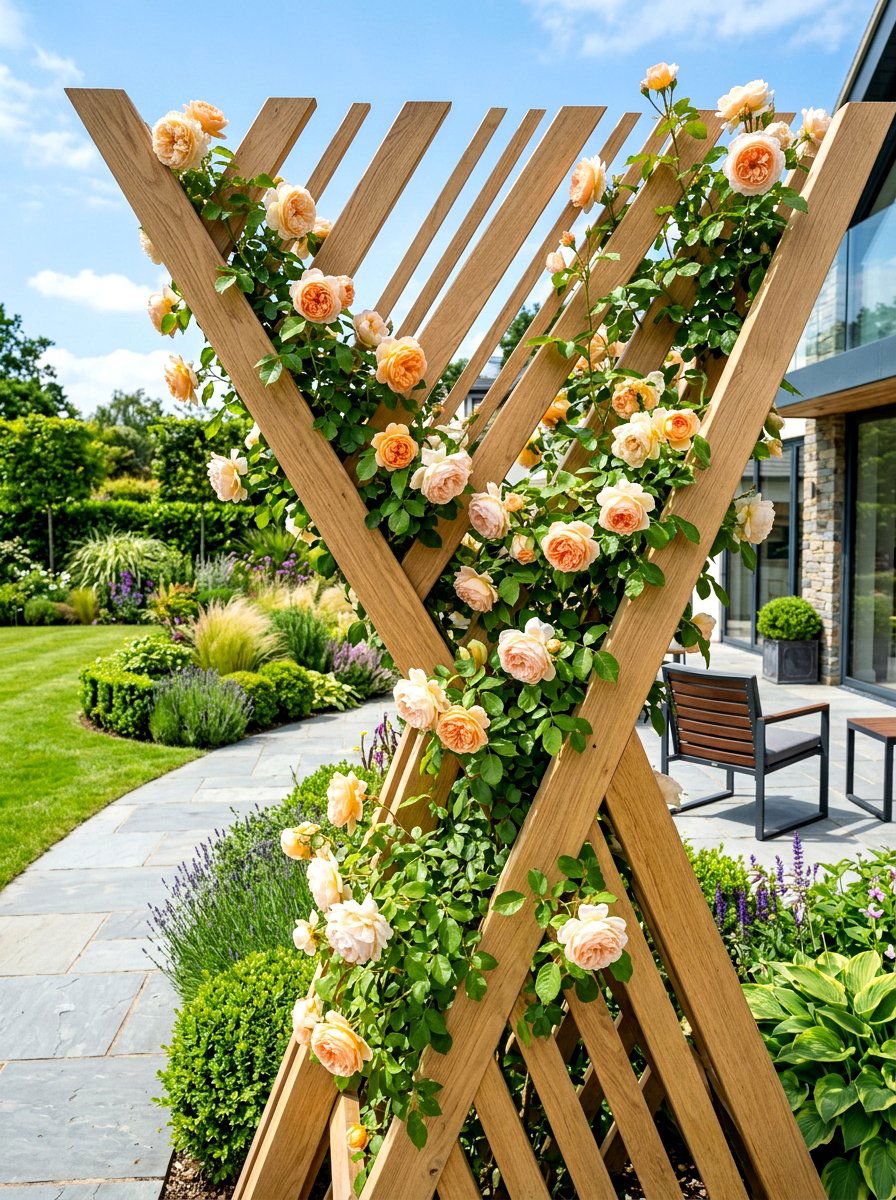
Diagonal slat wood trellises provide a middle ground between the classic look of a diamond lattice and the modern feel of horizontal slats. By placing the slats at a 45-degree angle, you create a sense of dynamic energy and visual interest that leads the eye upward and across the wall. This pattern is very effective at breaking up the vertical and horizontal lines of a home’s architecture, making the garden feel more organic and less rigid. The diagonal lines also provide excellent support for rose canes, as they naturally encourage the plant to grow in multiple directions. This style works well in a variety of garden themes, from contemporary to transitional, providing a sophisticated and polished look.
26. Circular Wall Mount
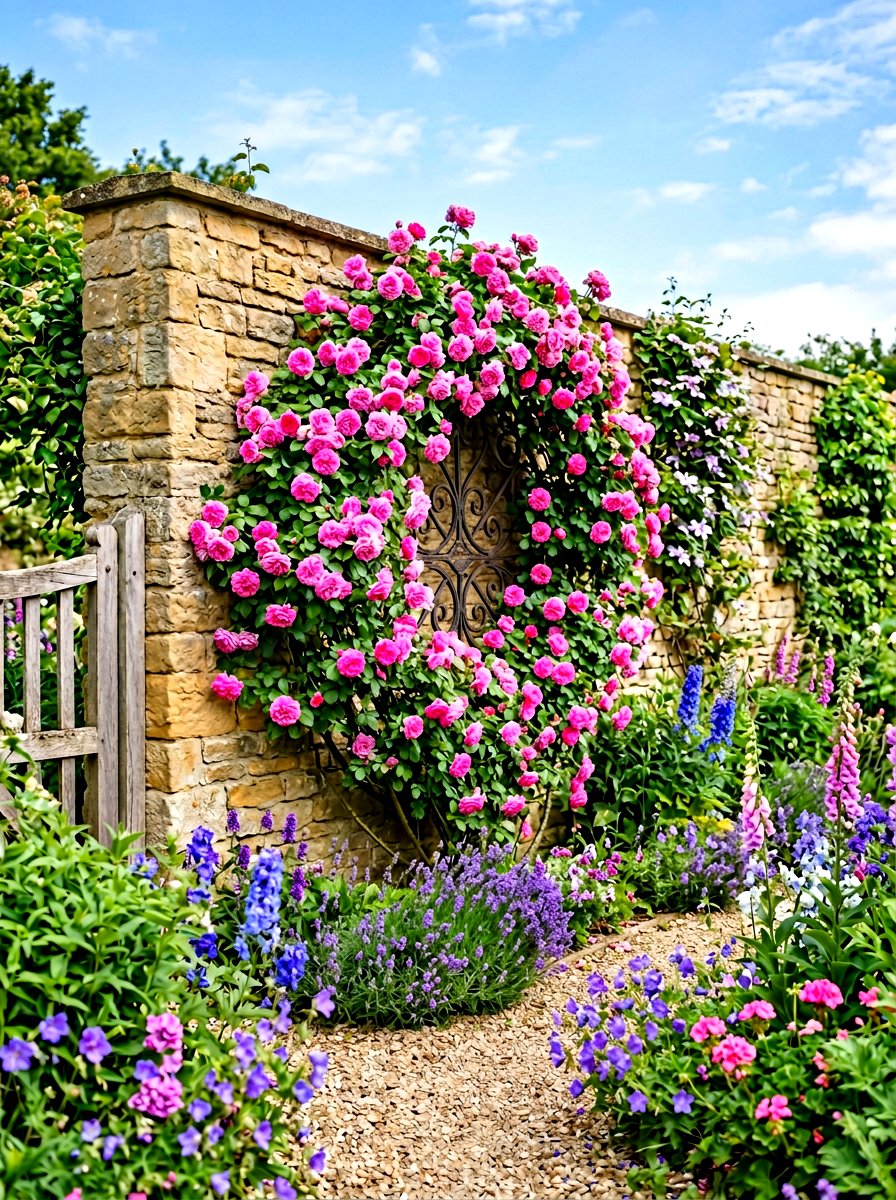
A circular wall-mounted trellis is a unique and artistic way to support climbing roses while adding a soft, rounded element to a world of square walls and rectangular windows. These circular frames act like a living porthole or a floral wreath on the wall, creating a soft focal point that is incredibly pleasing to the eye. You can mount a single large circle as a statement piece or a series of smaller circles for a more playful, bubbly effect. This shape is particularly effective for training smaller climbing roses or "ramblers" that can be easily circled around the frame. It’s a creative design solution that feels fresh, modern, and intentionally different from standard garden support systems.
27. Accordion Wall Trellis
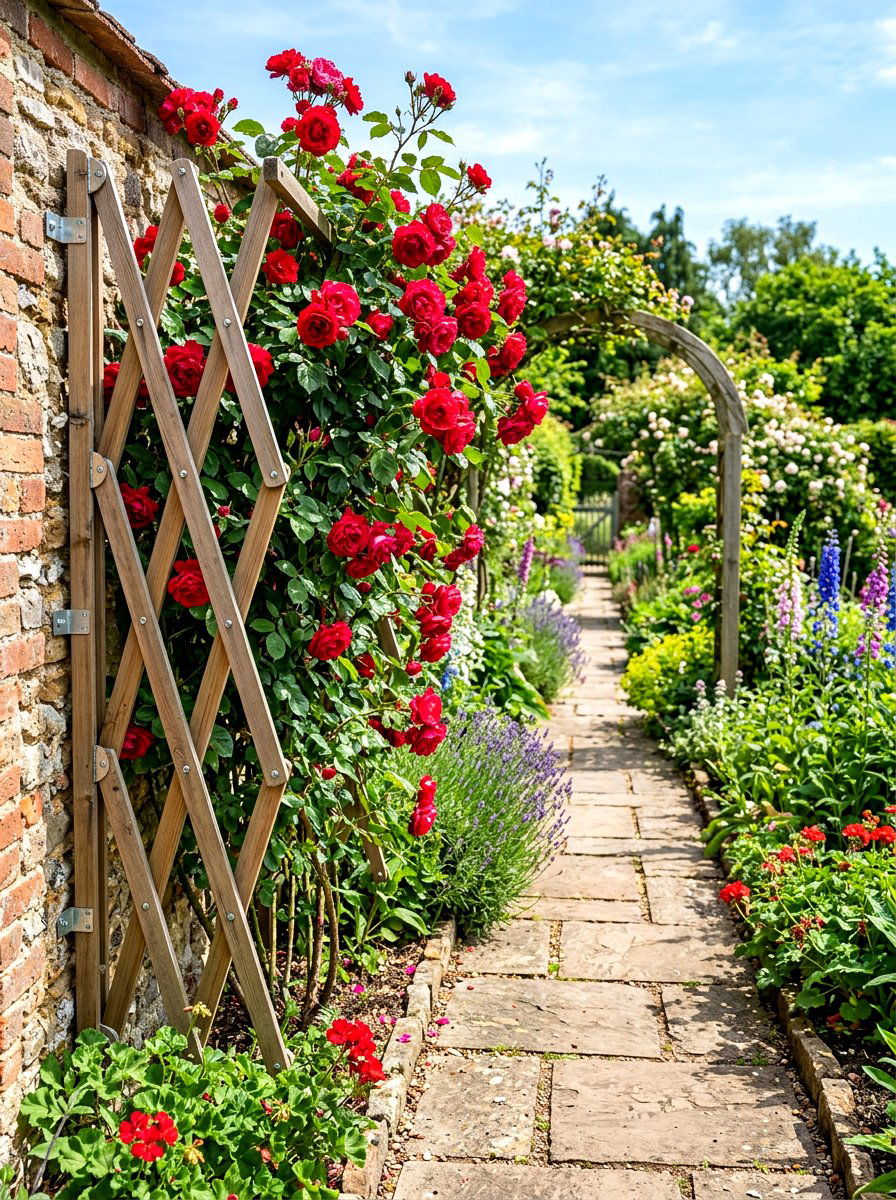
The accordion or expandable wall trellis is a practical and flexible option that can be adjusted to fit almost any wall space perfectly. These are typically made of lightweight wood or plastic and feature a diamond pattern that can be stretched wide or pushed narrow depending on your needs. This versatility makes them an excellent choice for oddly shaped areas, such as under a staircase or between closely spaced windows. They are also very easy to store when not in use, making them a great option for seasonal gardening. Despite their lightweight appearance, they provide a reliable framework for many common climbing rose varieties and are an affordable way to quickly add vertical interest to your garden.
28. Heavy Duty Mesh
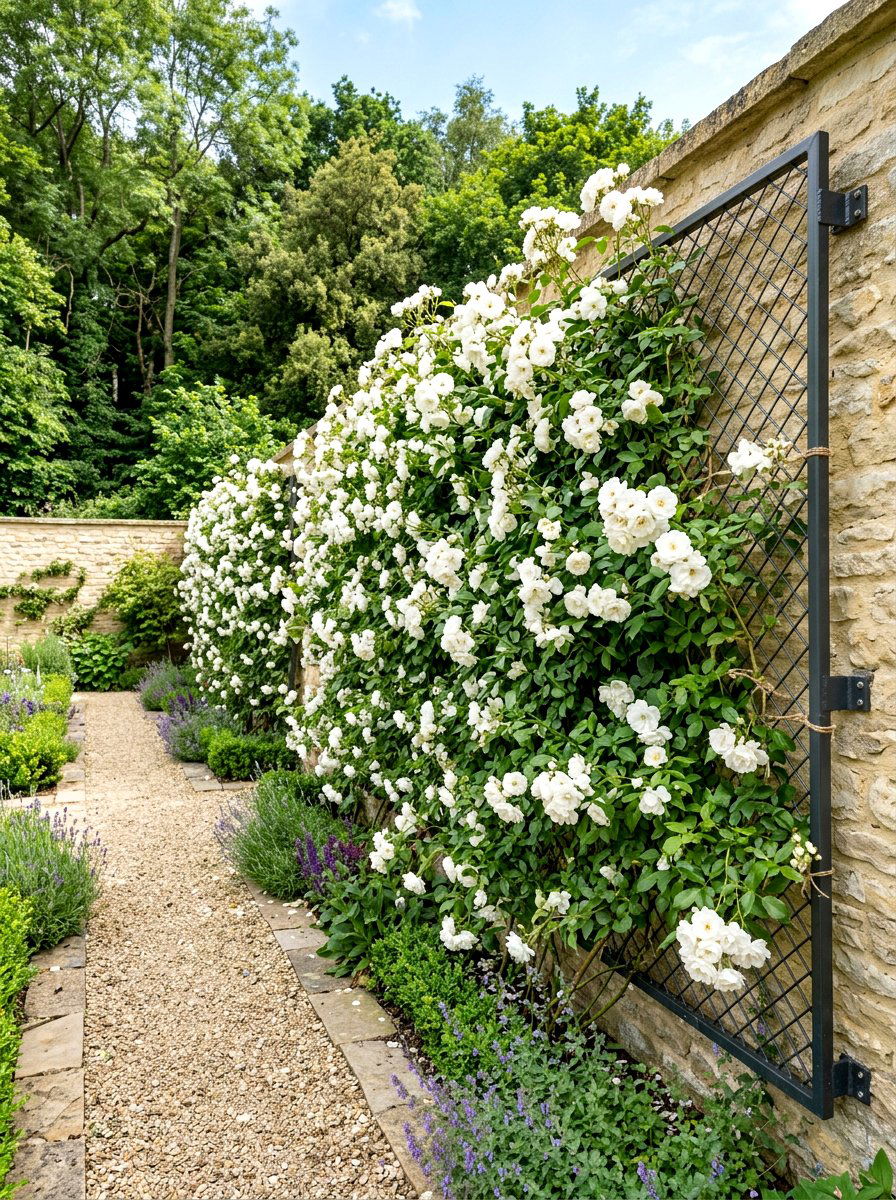
Heavy-duty mesh trellises, often made from galvanized steel or thick plastic-coated wire, are the workhorses of the vertical garden world. These panels are designed to handle the most aggressive and heavy climbing plants without any risk of failure. The tight grid pattern provides hundreds of points for tying in canes, allowing for an incredibly dense and uniform "green wall" effect that is perfect for privacy screening. Because the mesh is so strong, it can be mounted with large spacers to allow for maximum airflow and light penetration. This is a highly functional choice for gardeners who prioritize plant health and long-term durability over decorative flourishes, though the resulting wall of flowers is beauty enough.
29. Corner Wall Trellis
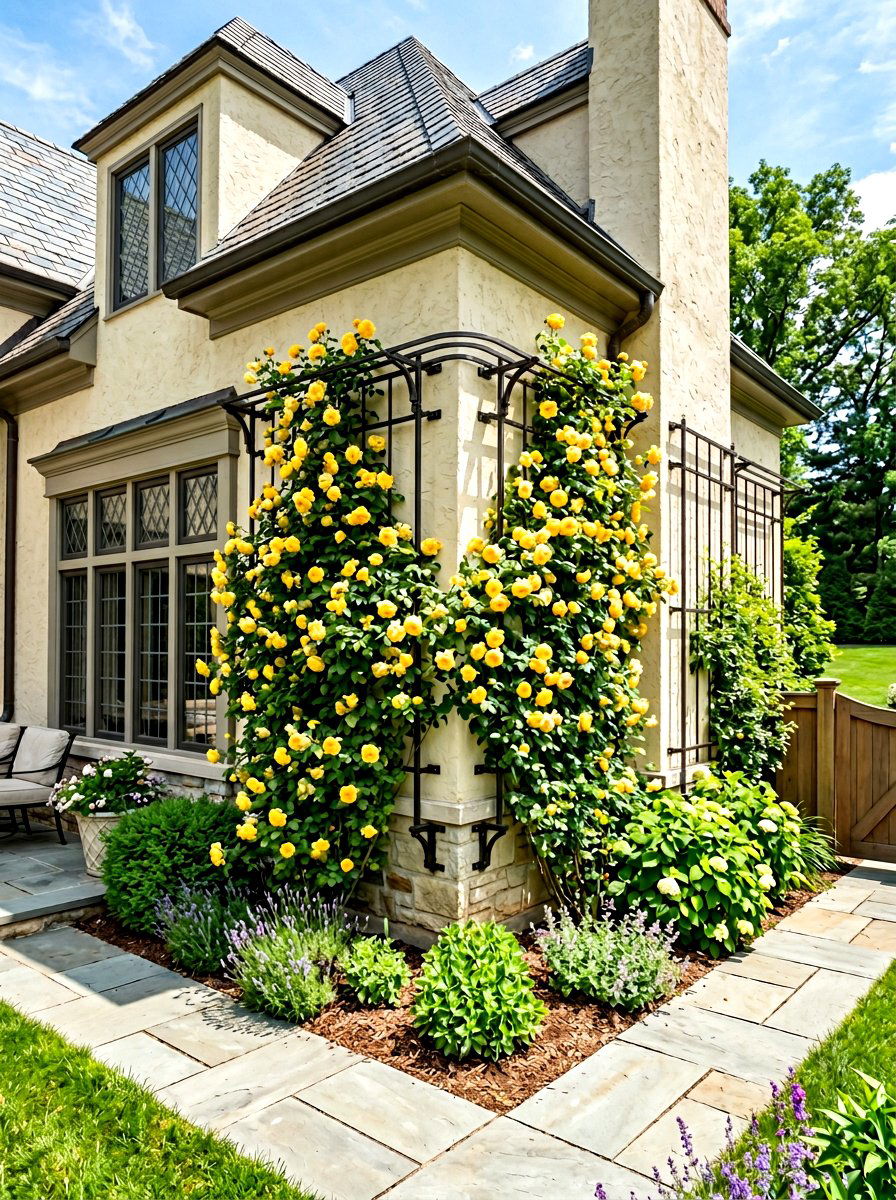
A corner wall trellis is specially designed to wrap around the exterior corner of a building, seamlessly connecting two different walls with a continuous flow of roses. This is a brilliant way to soften the harsh edges of a house and create a more integrated and "wrapped" feel to your landscape design. By training roses around a corner, you create a sense of mystery and discovery as the floral display continues out of sight, inviting visitors to explore further. These are often custom-made or consist of two panels joined at a 90-degree angle. This clever use of space turns a neglected architectural edge into a highlight of the garden, adding depth and a professional touch to your outdoor area.
30. Laser Cut Trellis
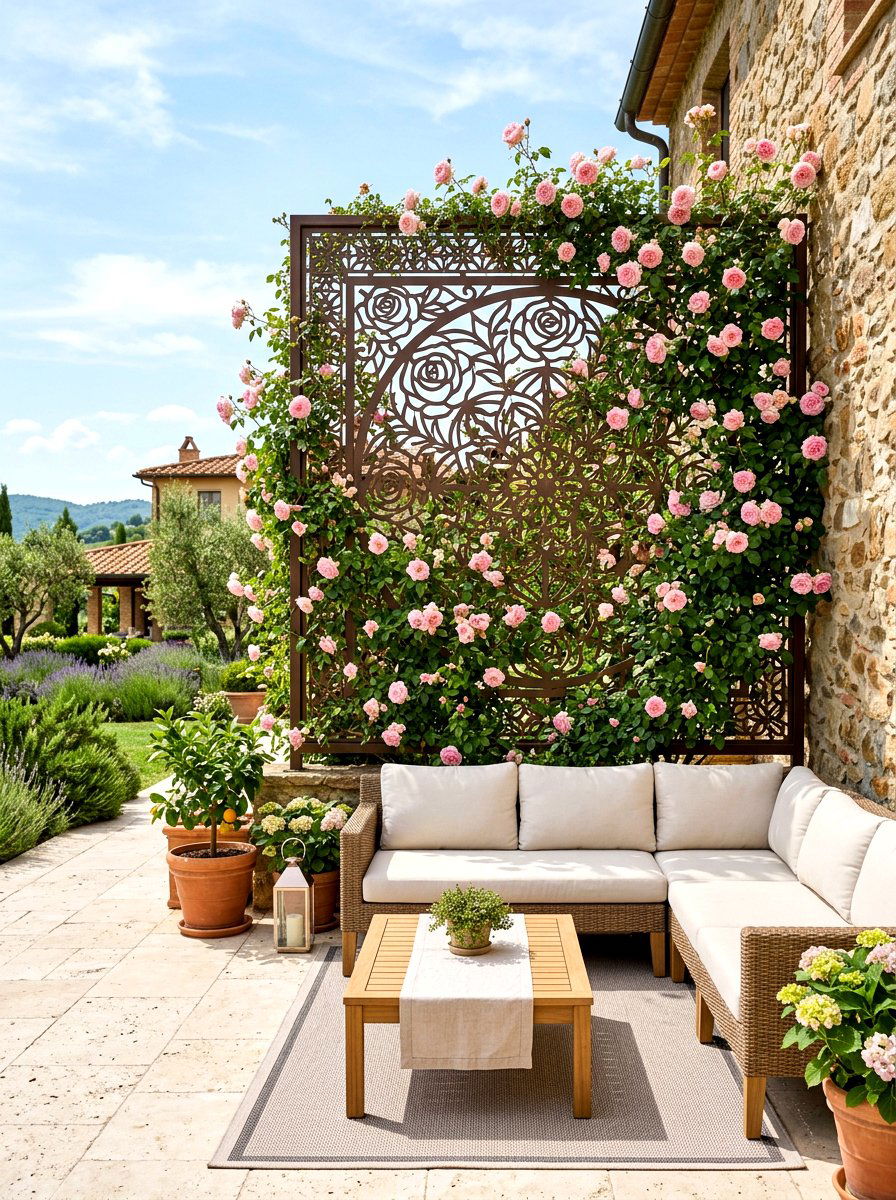
Laser-cut decorative trellises represent the cutting edge of garden design, offering intricate and complex patterns that were once impossible to achieve. These panels are typically made from thin sheets of powder-coated steel or weathering steel (Corten) , featuring beautiful cut-out designs ranging from abstract geometry to realistic botanical motifs. Even without roses, these panels are stunning pieces of outdoor art that add a high-end, gallery-like feel to your patio or garden wall. As the roses grow through the cut-outs, the interaction between the rigid metal patterns and the soft, organic blooms creates a fascinating visual contrast. This is the ultimate choice for a modern, luxury home where every garden element is a carefully chosen design statement.
Conclusion:
Selecting the perfect rose trellis for your wall is a creative journey that combines your personal style with the practical needs of your favorite climbing plants. Whether you choose a timeless wooden lattice for its nostalgic charm or a sleek, modern wire system for its minimalist appeal, the right support will elevate your garden to new heights. By considering factors like airflow, weight capacity, and architectural harmony, you ensure that your roses not only survive but truly flourish against your home's exterior. These vertical structures provide a lasting framework for years of fragrant blooms, turning a simple wall into a cherished sanctuary. With so many inspiring designs available, your dream of a romantic, flower-covered wall is well within reach, promising a season after season of breathtaking beauty and garden-inspired joy.

Related posts: