Transforming your outdoor space with climbing roses adds a touch of timeless elegance and intoxicating fragrance that few other plants can match. Whether you have a sprawling estate or a tiny urban balcony, selecting the right support structure is the most critical step in achieving that lush, vertical floral display. A well-chosen trellis not only provides the necessary physical support for heavy canes but also serves as a beautiful architectural feature in your garden even during the winter months. By choosing the right materials and styles, you can guide these vigorous climbers to frame doorways, hide unsightly walls, or create intimate garden rooms and paths.
1. Wooden garden obelisk
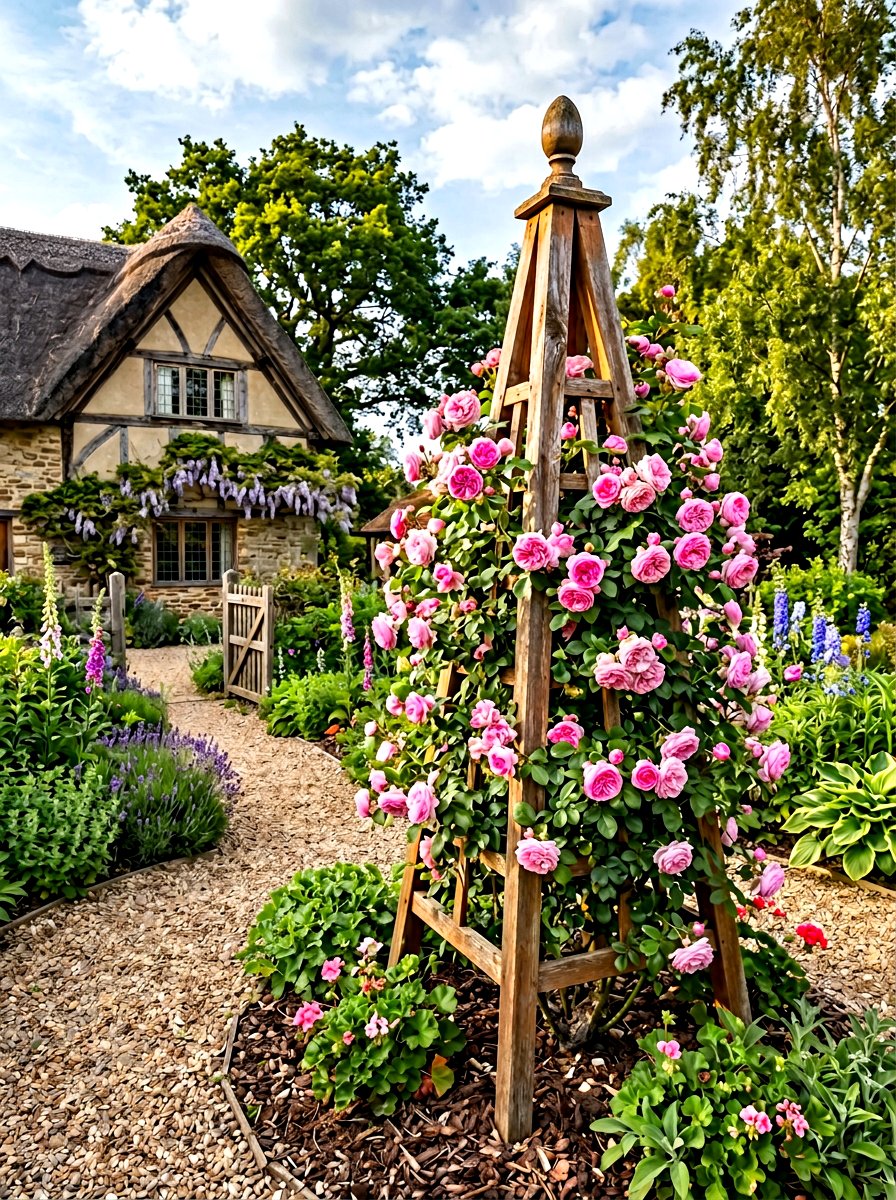
Have you ever noticed how a simple vertical structure can instantly make a flat garden feel much more professional and layered? A wooden garden obelisk is a classic choice for supporting climbing roses because it offers a sturdy four-sided frame that encourages roses to grow upward and outward. Typically crafted from cedar or pressure-treated pine, these structures resist rot while blending perfectly into a natural landscape. You can place an obelisk in the center of a flower bed or use a pair to flank a garden path for a formal look. The vertical slats provide numerous points for tying in canes, ensuring your roses remain secure.
2. Metal rose archway
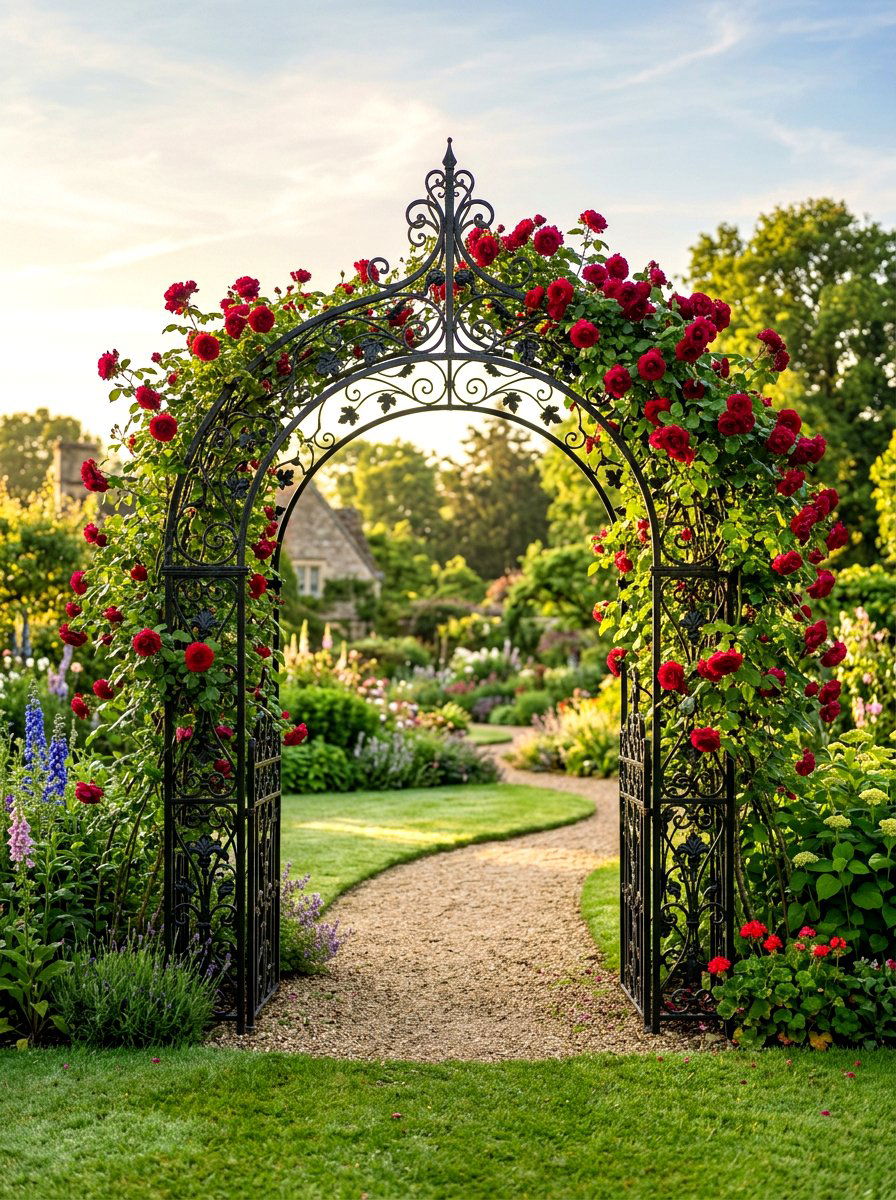
Imagine walking through a tunnel of fragrant blooms every time you enter your backyard or move between different garden rooms. A metal rose archway creates a romantic and welcoming transition point that anchors the entire landscape design. High-quality steel or wrought iron arches provide the immense strength needed to support heavy, mature climbing roses over many years. These structures often feature delicate scrollwork or simple geometric lines that look beautiful even when the roses are dormant in winter. By planting a rose on each side, you can eventually create a full canopy of flowers that provides shade and a stunning visual focal point.
3. Wall mounted wire grid
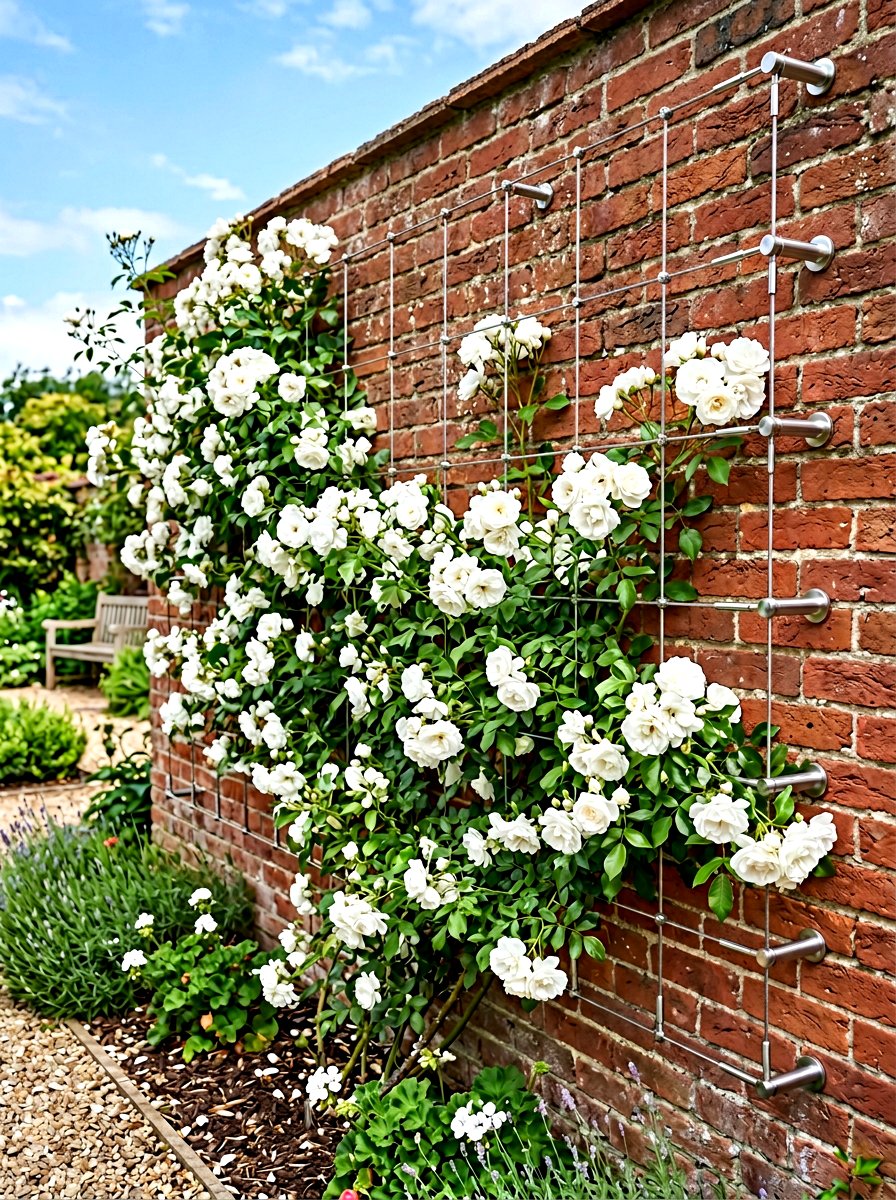
Are you looking for a modern and nearly invisible way to support your climbers against a brick or stone exterior? A wall-mounted wire grid system uses stainless steel cables and specialized hubs to create a custom climbing surface tailored to your wall's dimensions. This setup is ideal for minimalist home designs where you want the roses to appear as if they are floating against the architecture. Unlike bulky wooden trellises, wire grids allow for excellent airflow between the plant and the wall, which helps prevent fungal diseases. You can arrange the wires in diamonds, squares, or even fan shapes to suit your style.
4. Cedar pergola structure
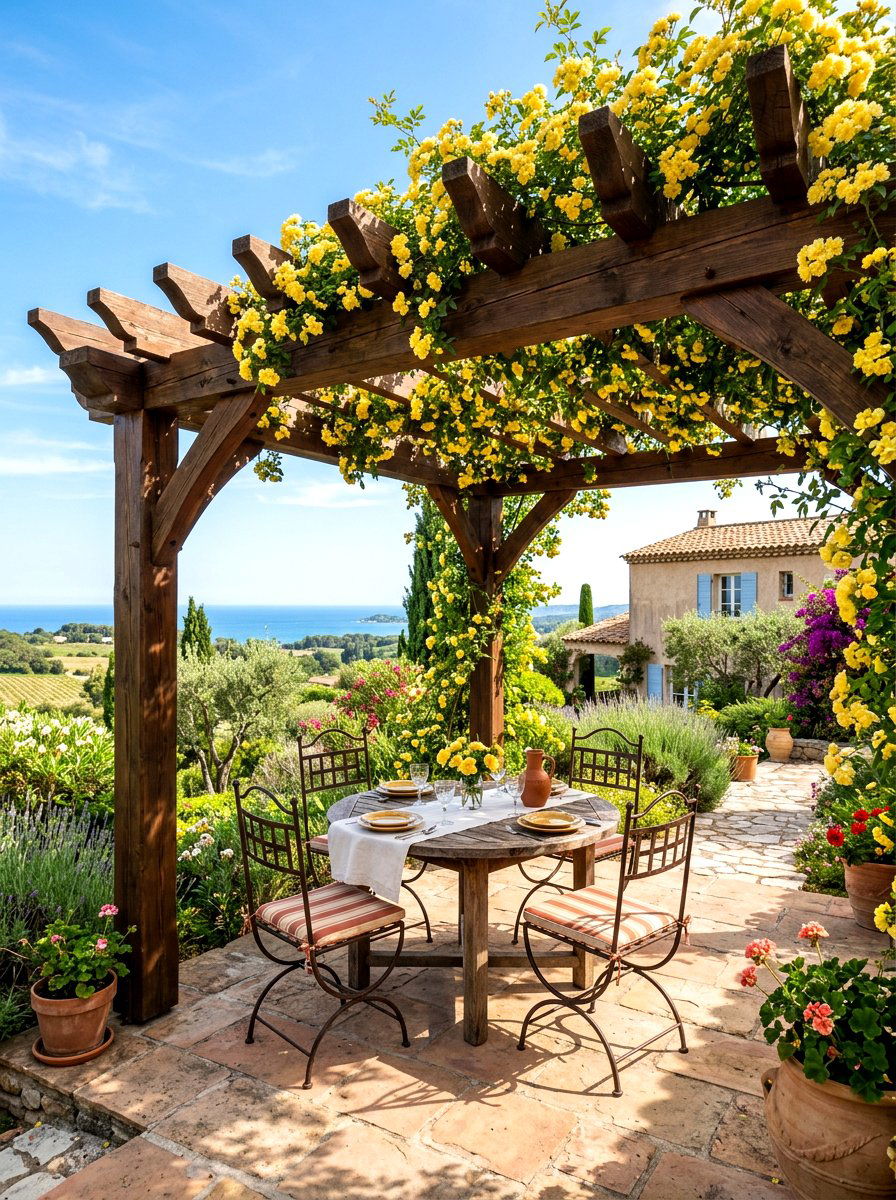
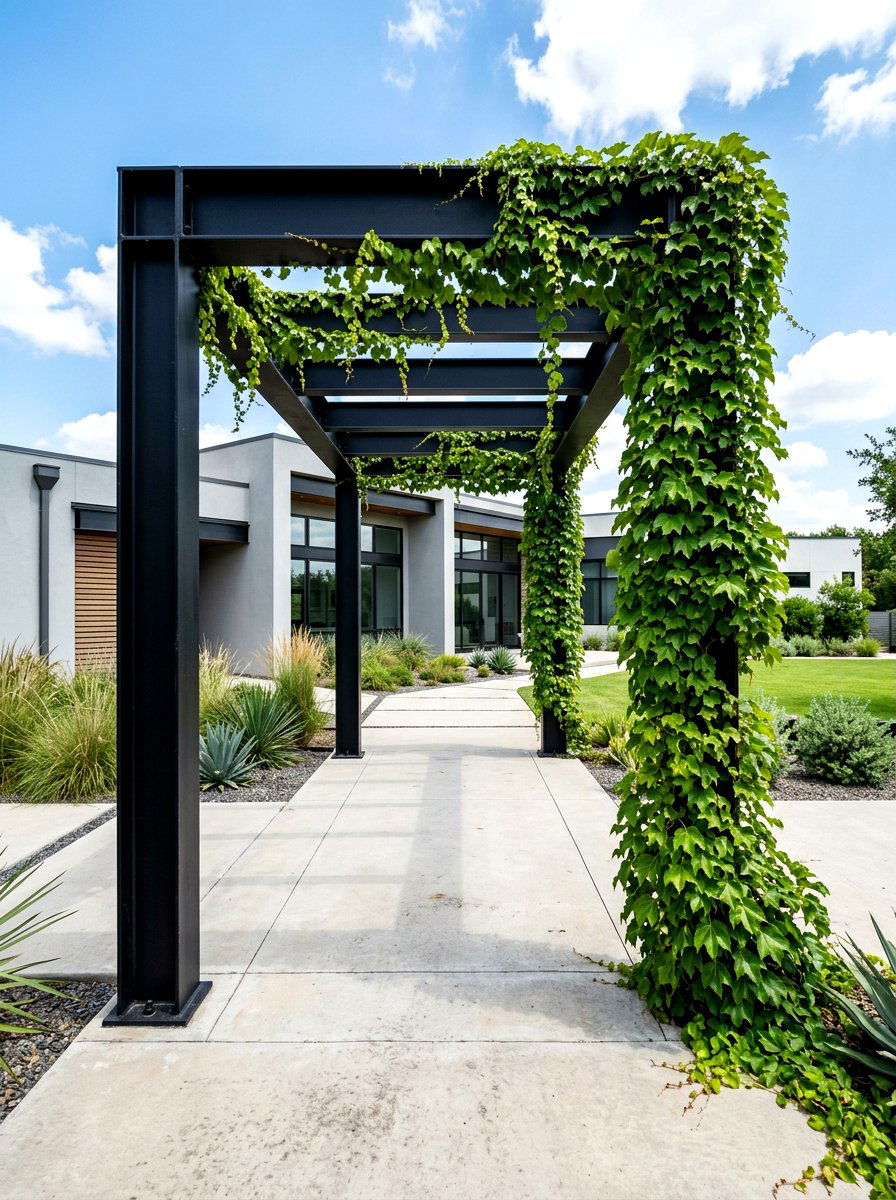
Would you like to turn your patio or deck into a lush, shaded sanctuary covered in cascading floral clusters? A cedar pergola provides a massive horizontal and vertical framework that is perfect for vigorous rambling roses that need plenty of room to spread. The heavy overhead beams allow the roses to drape downward, creating a magical ceiling of color and scent for your outdoor dining area. Cedar is a preferred material because its natural oils resist insects and decay, and it weathers to a beautiful silvery-gray over time. This large-scale support structure adds significant value and architectural interest to any residential property.
5. Wrought iron wall panel
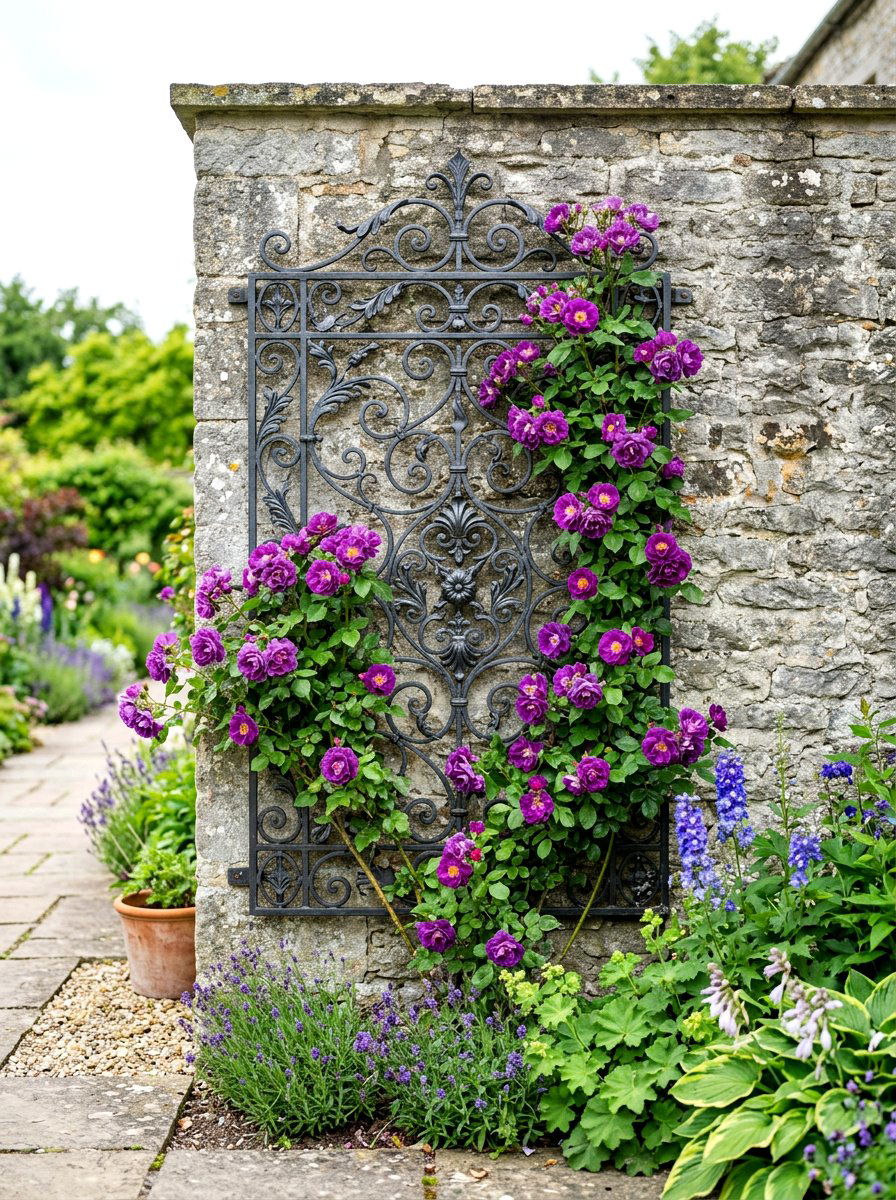
Does your garden lack a focal point against a plain fence or a boring garage wall? A wrought iron wall panel offers a decorative and highly durable solution for training roses in tight spaces. These panels often come with intricate designs, such as leaf motifs or traditional latticework, which add a touch of old-world charm to your landscape. Because iron is so heavy and stable, it won't lean or warp under the weight of a fast-growing climber. Mounting the panel a few inches away from the wall ensures the roses have enough space to wrap their stems around the bars.
6. Bamboo teepee frame
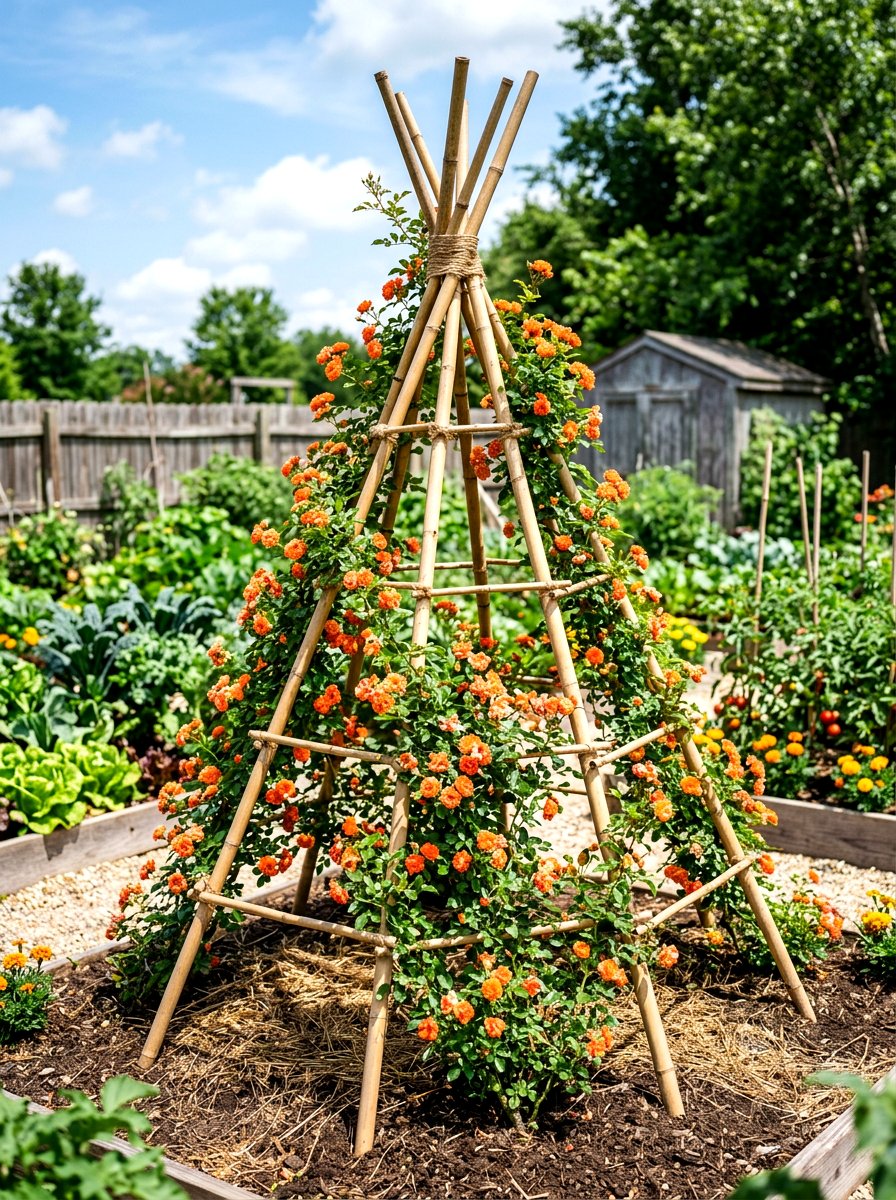
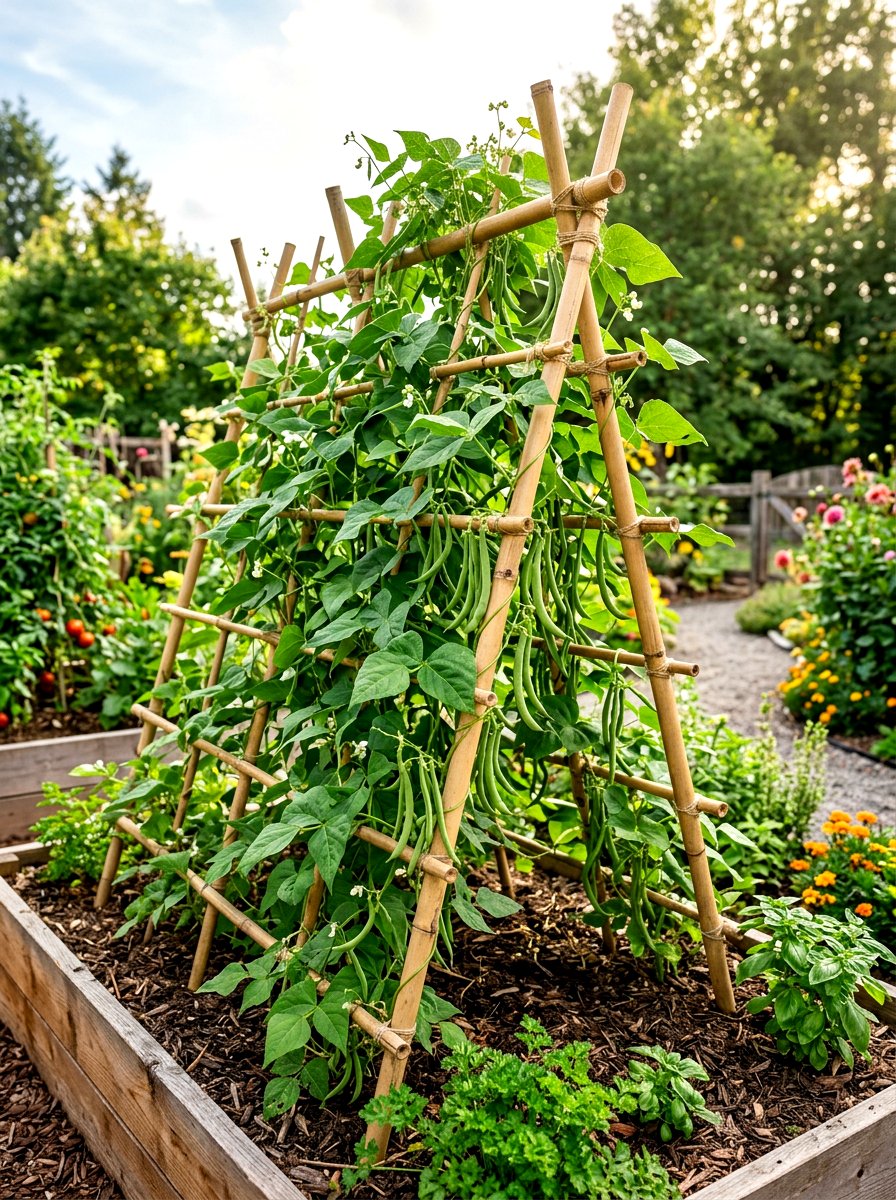
Can you picture a more natural and cost-effective way to support your seasonal climbers than with sustainable bamboo? A bamboo teepee frame is a popular DIY project for cottage gardens and vegetable patches alike, but it works wonderfully for smaller rose varieties. By tying several long bamboo poles together at the top, you create a rustic pyramid that feels organic and unpretentious. This type of support is lightweight and easy to move if you decide to redesign your flower beds next season. The textured surface of the bamboo provides a natural grip for rose ties and helps the canes stay upright.
7. Freestanding ladder trellis
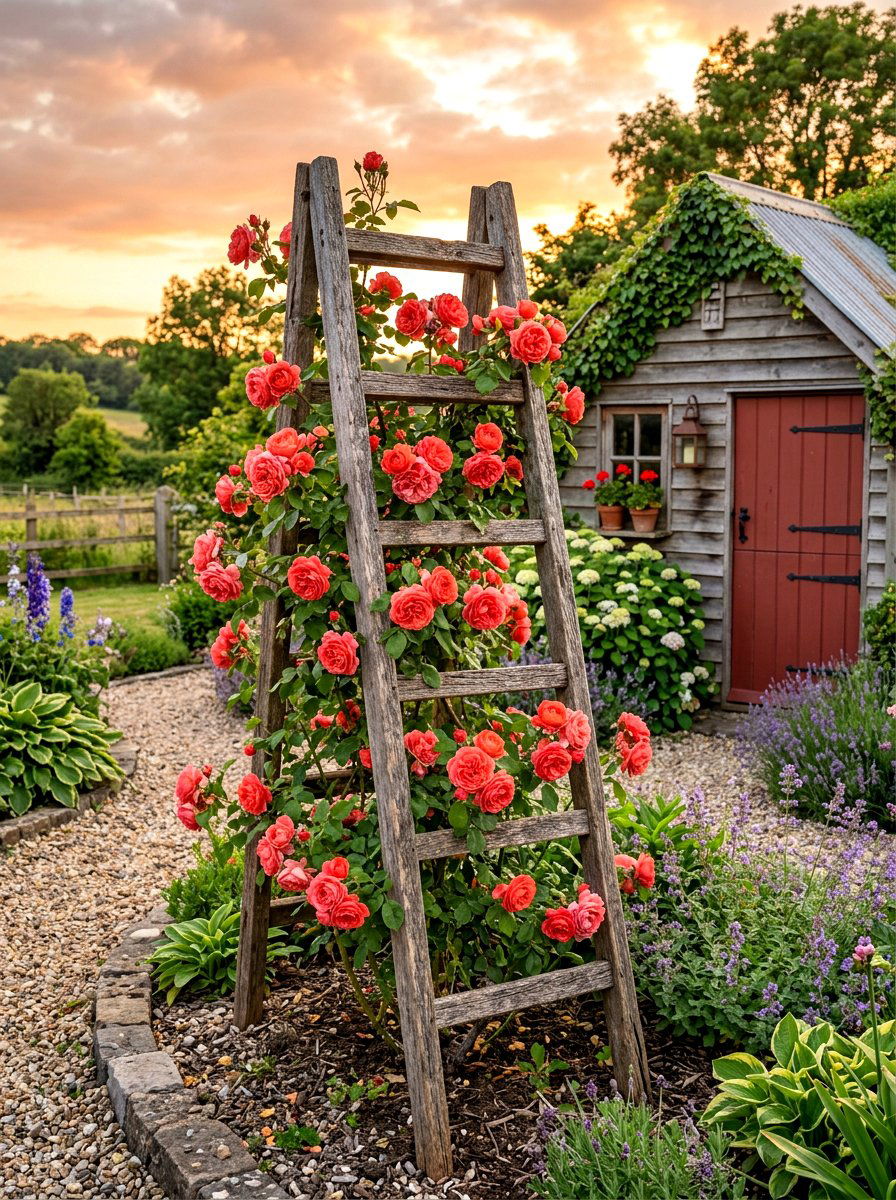
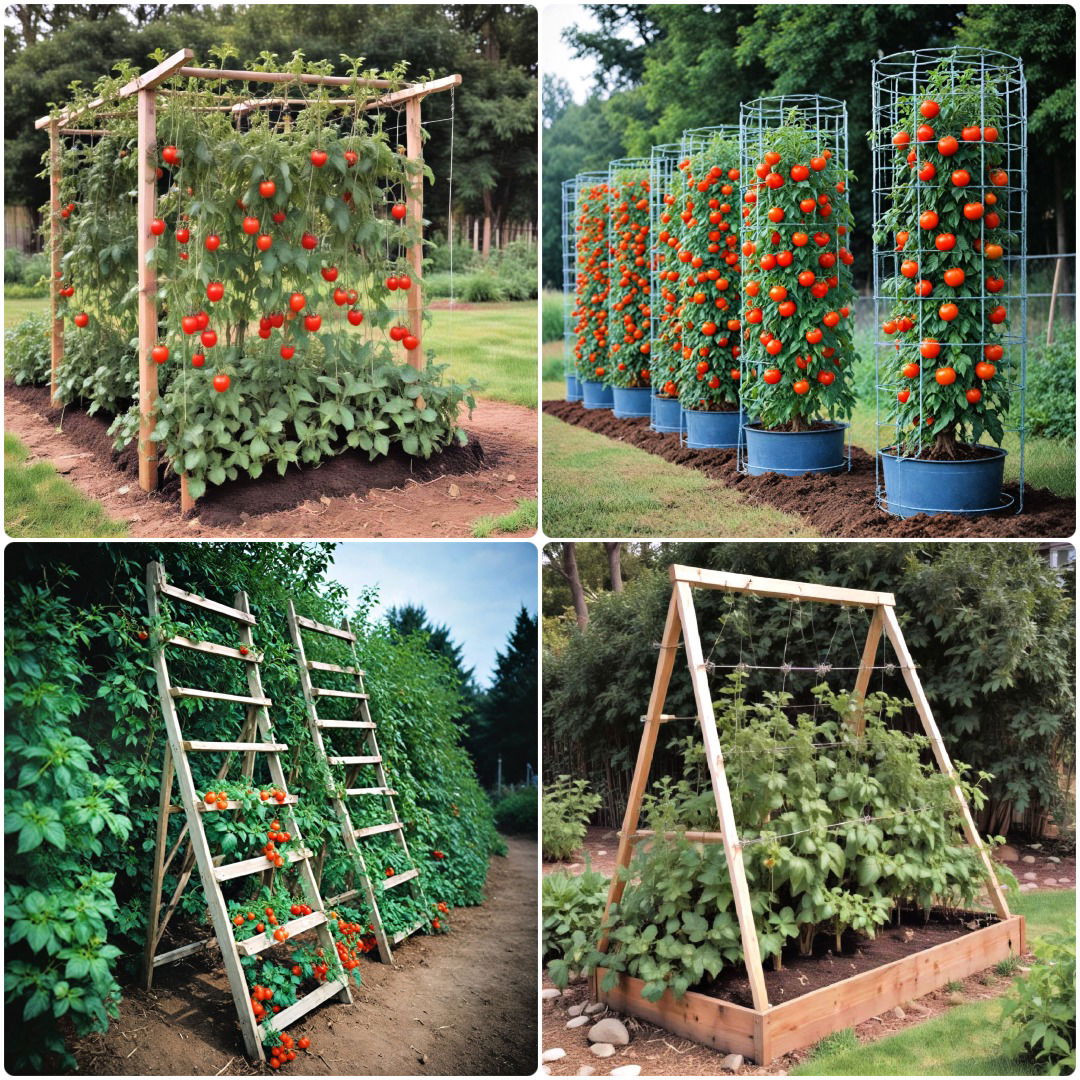
Have you considered repurposing old items to give your garden a unique, lived-in feel that reflects your personal style? A freestanding ladder trellis, whether made from reclaimed wood or new timber, provides a series of horizontal rungs that make training roses incredibly simple. You can lean a decorative ladder against a shed or stand it independently in the middle of a perennial border. The wide rungs allow you to spread the rose canes horizontally, which is the secret to triggering more blooms along the entire length of the stem. This rustic aesthetic fits perfectly with farmhouse or country-style home designs.
8. Victorian fan trellis
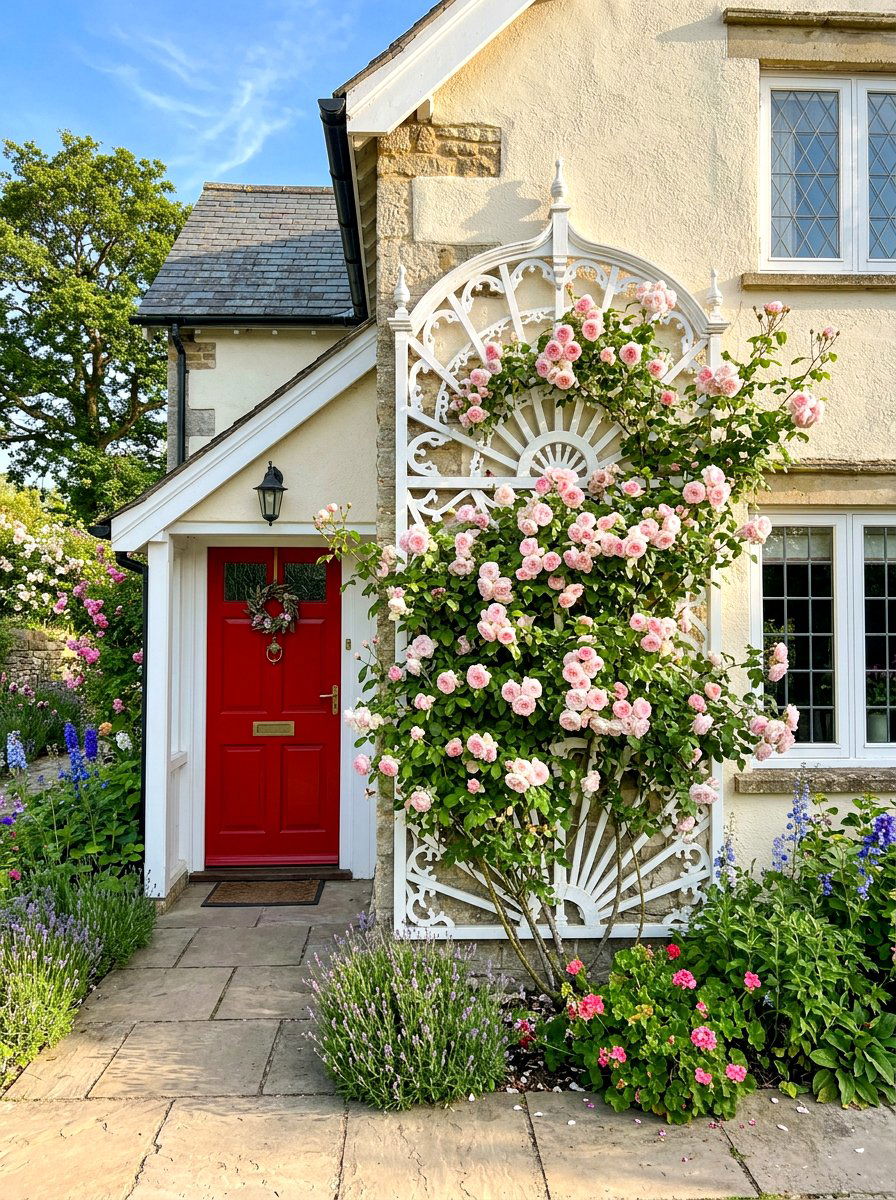
Why not embrace a traditional garden aesthetic that has remained popular for centuries due to its simple efficiency? The Victorian fan trellis is a classic wooden structure that starts narrow at the base and widens at the top, mimicking the natural growth habit of many plants. This design is particularly effective for training roses on narrow sections of wall between windows or near a front door. The radiating slats provide a wide surface area for the rose to fill out, ensuring a dense display of foliage and flowers. It is an affordable and timeless choice for any homeowner looking for instant charm.
9. Modern black metal mesh
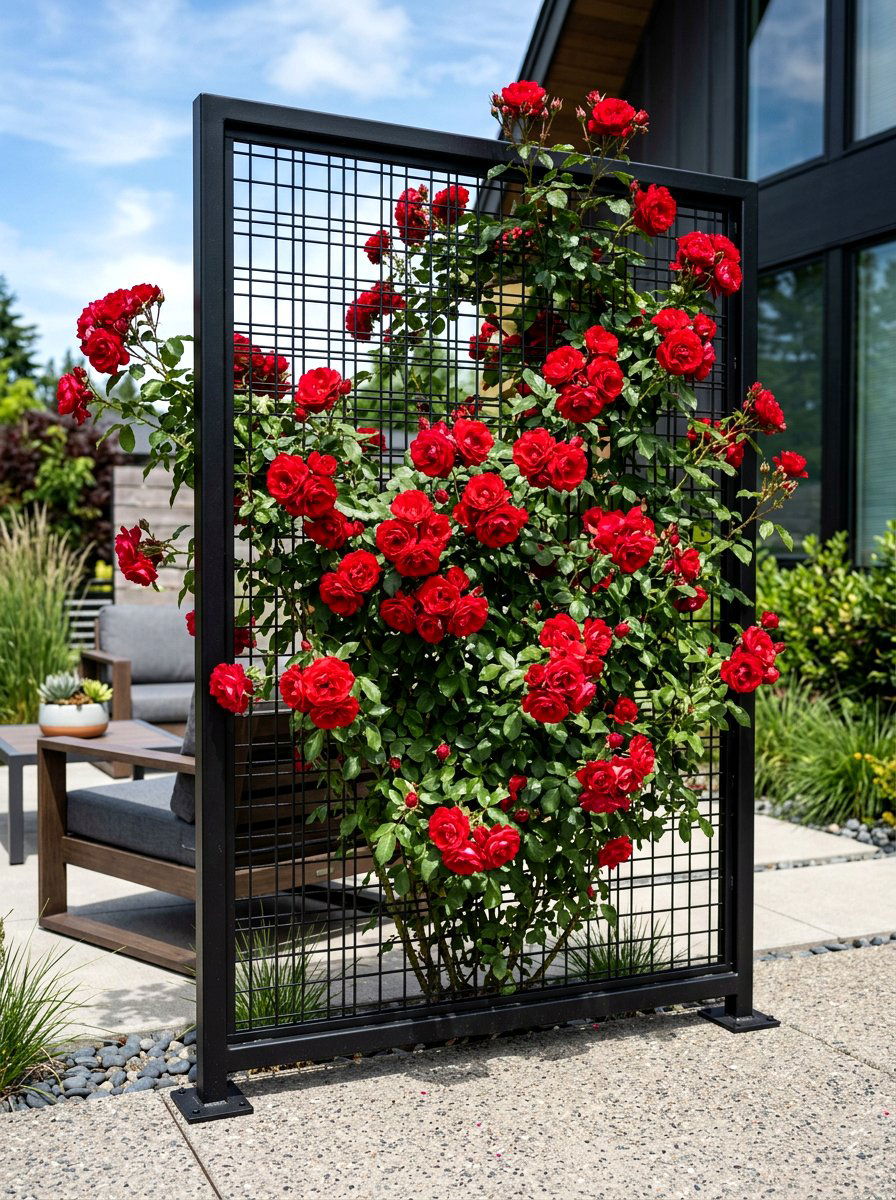
Is your home design more focused on clean lines and industrial materials that require very little maintenance? A modern black metal mesh trellis offers a sophisticated backdrop for vibrant pink or red roses, providing a sharp contrast that makes the colors pop. These mesh panels are often made from powder-coated steel, making them completely weather-resistant and capable of lasting for decades. The grid pattern allows you to tie roses at any point, giving you total control over the shape and density of the plant. It is a perfect solution for contemporary urban gardens or minimalist backyard retreats.
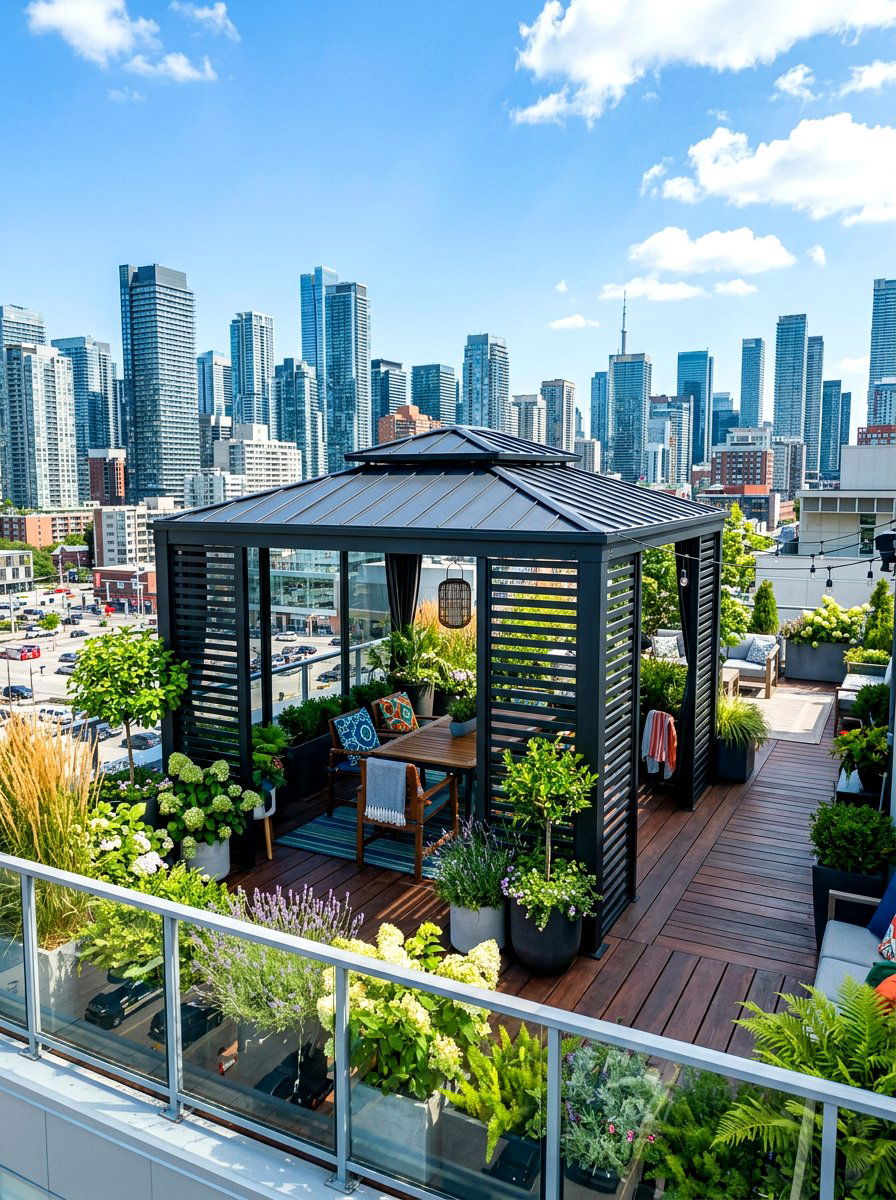
10. Rustic branch structure
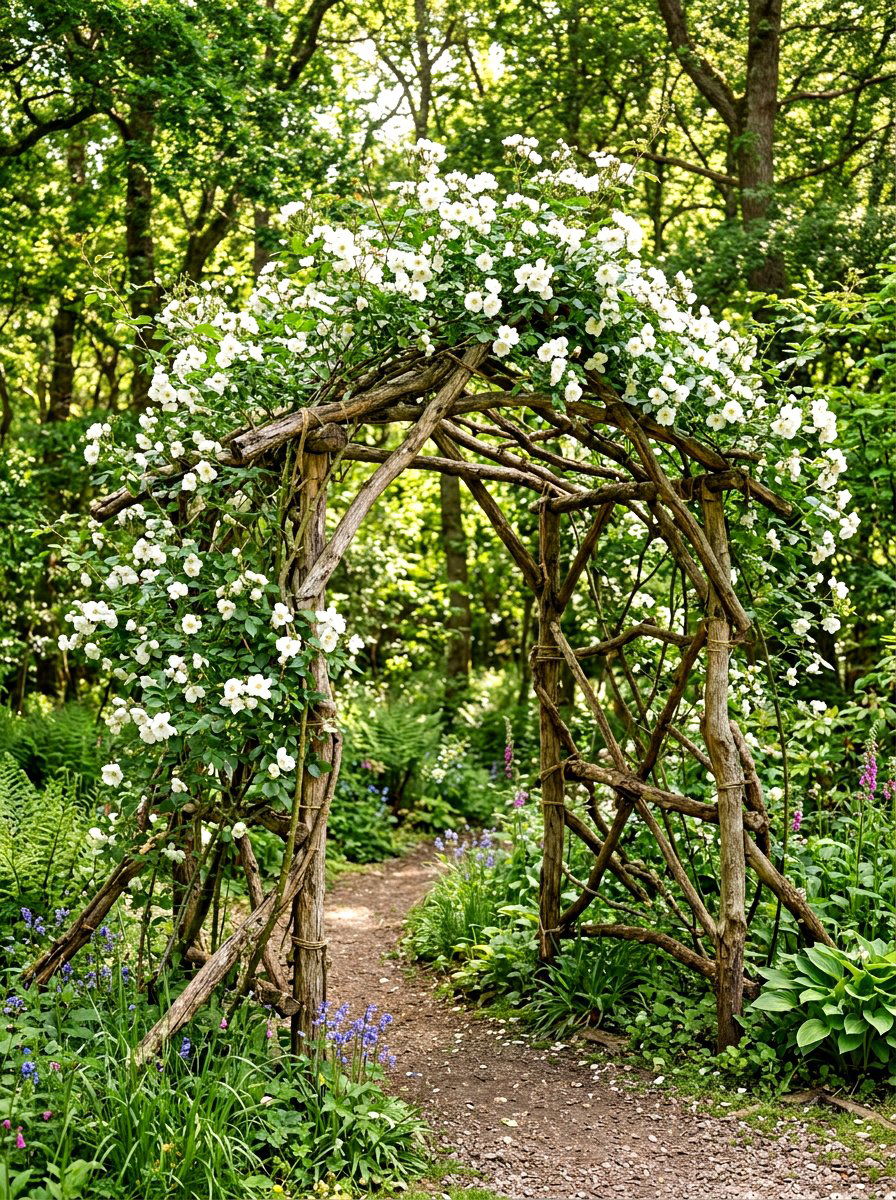
What if you could build a rose support using materials found right in your own backyard for a truly ecological approach? A rustic branch structure, often called a wattle or tuteur, uses fallen limbs or pruned wood to create a one-of-a-kind trellis. By lashing branches together with natural twine, you create a support that looks like it grew right out of the earth. This style is highly favored in woodland gardens and permaculture landscapes where formal structures might feel out of place. It provides a sturdy, textured surface that helps roses climb naturally while adding a whimsical, fairytale atmosphere.
11. Diamond pattern lattice fence
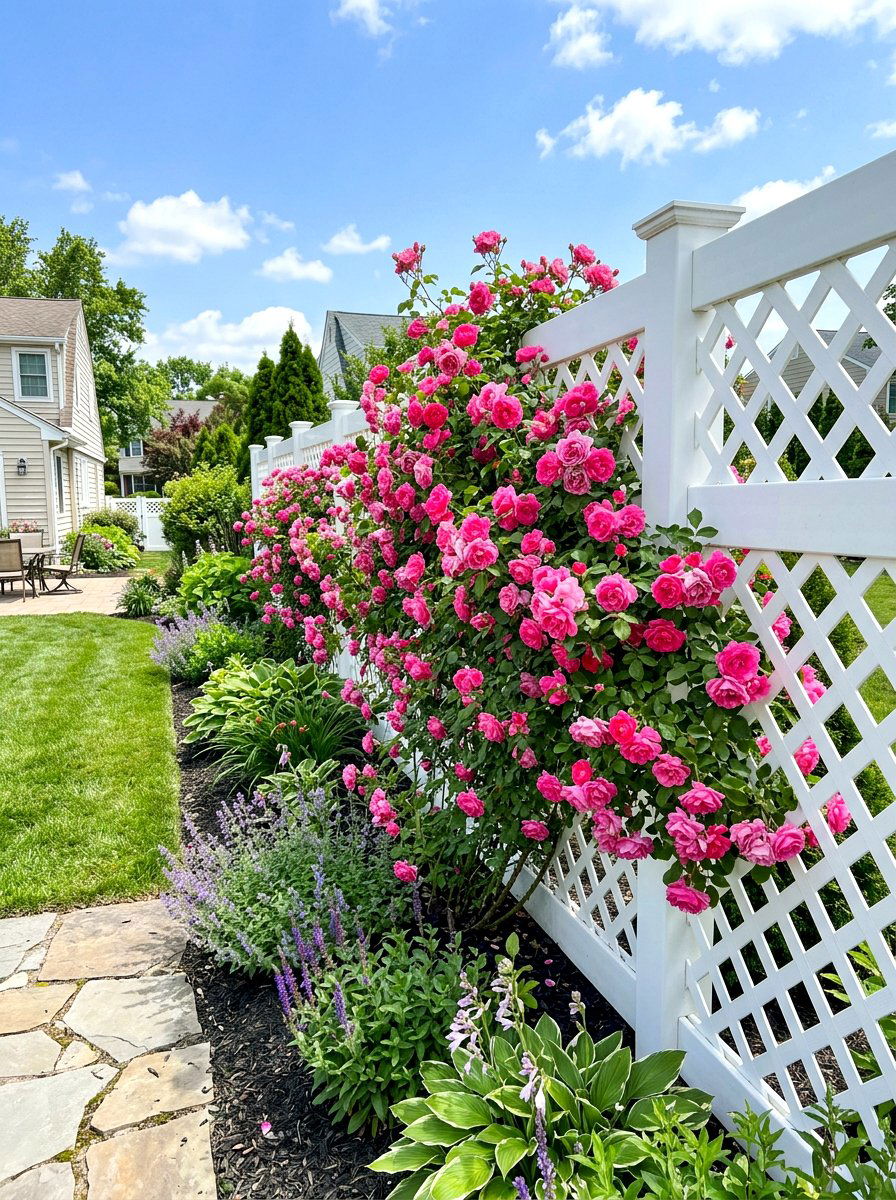
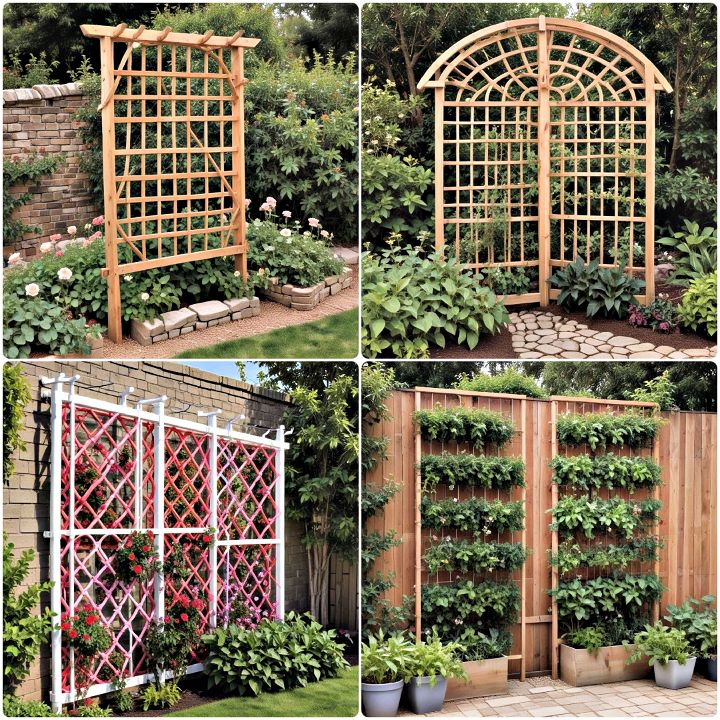
Are you looking for a way to add privacy to your yard while also creating a massive wall of blooming roses? A diamond pattern lattice fence is one of the most common and effective ways to support long-caned climbers and ramblers. The tight grid provides hundreds of attachment points, allowing you to train the roses to cover the entire surface of the fence over time. This creates a living green screen that blocks the view of neighbors while muffling street noise. Choosing a high-quality vinyl or pressure-treated wood lattice ensures the fence remains strong even when covered in heavy wet foliage.
12. Arched window frame trellis
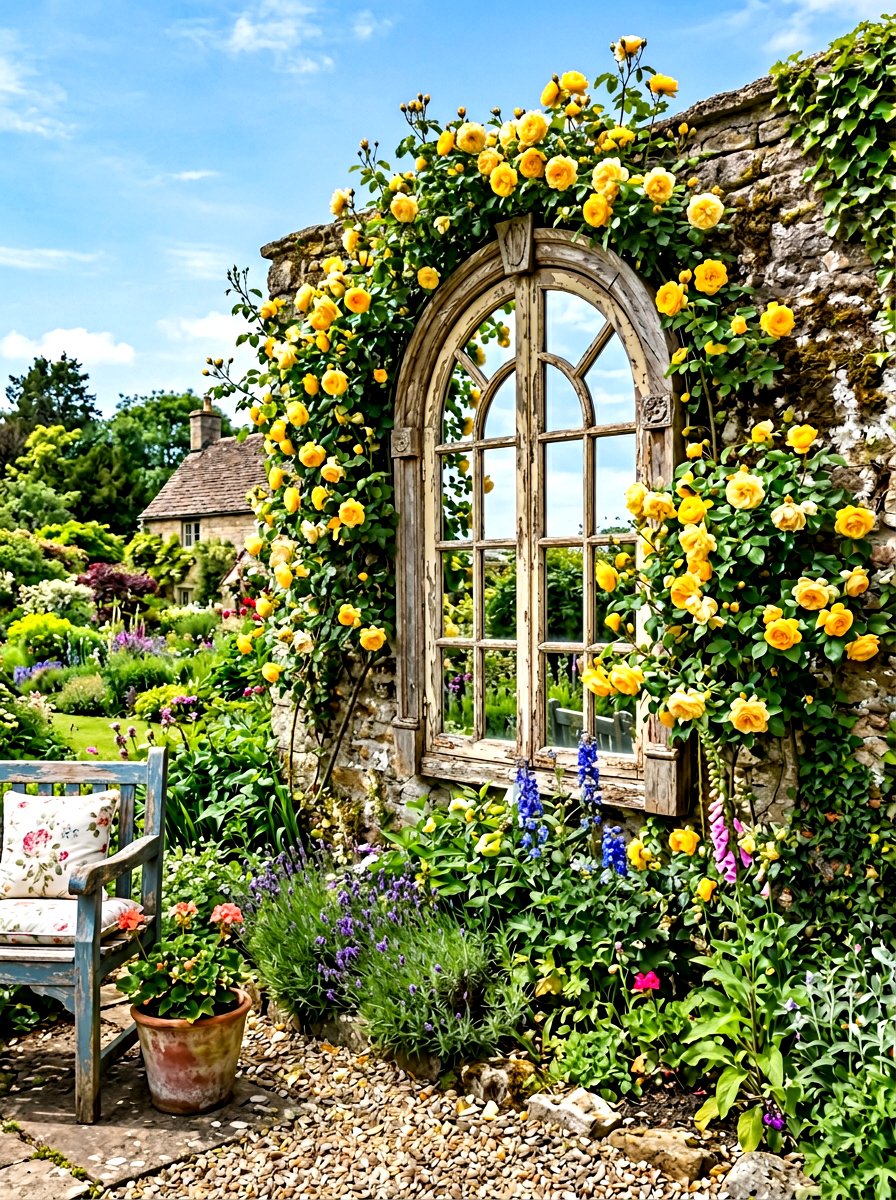
Could a touch of architectural salvage be the missing piece of personality your garden needs to stand out? An arched window frame trellis uses the skeleton of an old wooden or metal window to provide a charming framework for roses. By removing the glass and mounting the frame against a wall or fence, you create a "window" into a world of flowers. This idea works particularly well in small patio gardens where every element needs to serve both a functional and decorative purpose. It is a creative way to recycle materials while giving your climbing roses a sturdy and interesting home.
13. Corner pillar support
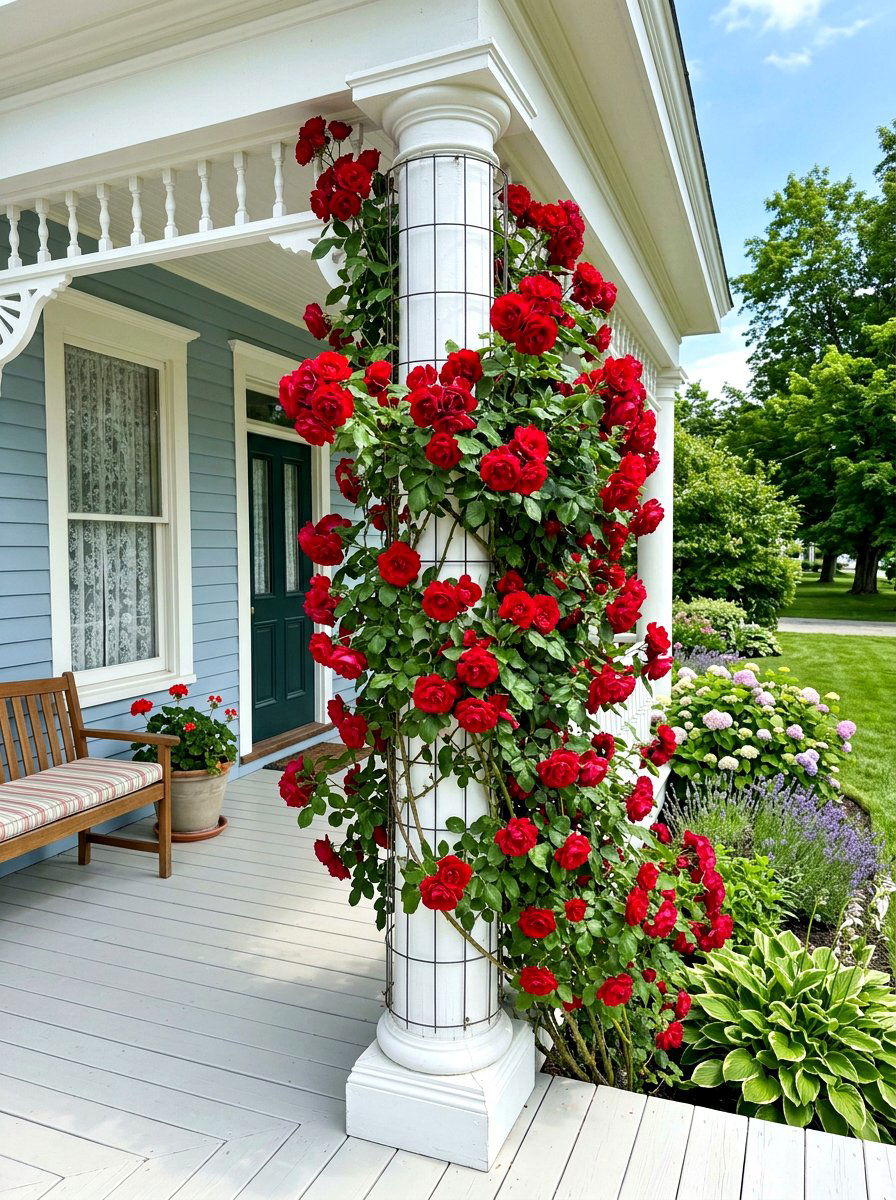
How can you dress up the structural posts of your porch or the corners of your home to feel more integrated with nature? A corner pillar support wraps around existing columns or is installed as a standalone vertical element to guide roses upward. These can be simple wire wraps or more decorative metal cages designed to fit snugly against a post. As the roses grow, they soften the hard edges of the architecture and create a vertical garden that takes up almost no ground space. This is an excellent technique for framing a porch or highlighting a specific architectural feature.
14. Overhead walkway arbor
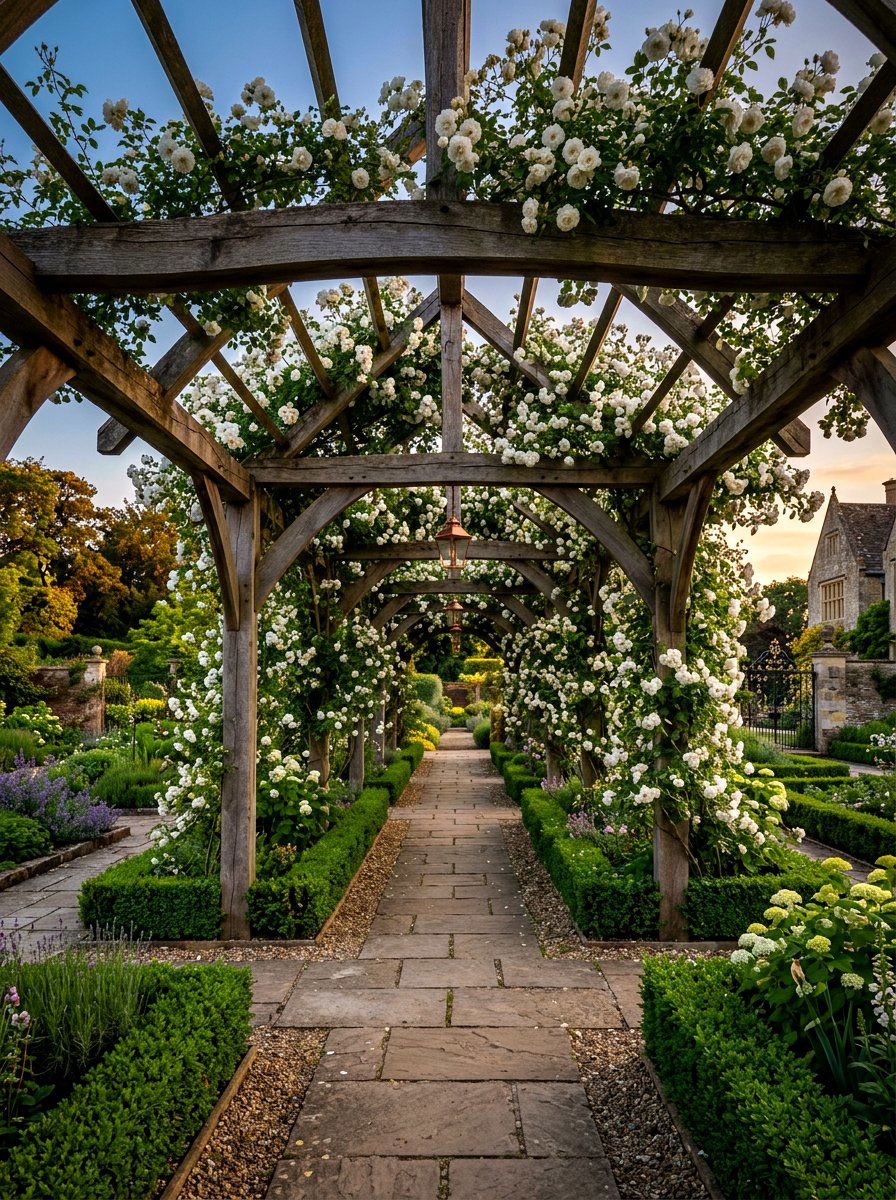
Do you dream of a garden path that feels like a journey through a lush, botanical tunnel? An overhead walkway arbor consists of several connected arches or a long pergola-style structure that spans a significant distance. This is the ultimate way to showcase rambling roses that can grow up to twenty feet long. As the roses meet in the middle of the ceiling, they create a dense canopy that provides cool shade and a rain of petals during the peak of summer. It is a high-impact design choice that requires a sturdy foundation but offers an unparalleled sensory experience for visitors.
15. Umbrella rose trainer
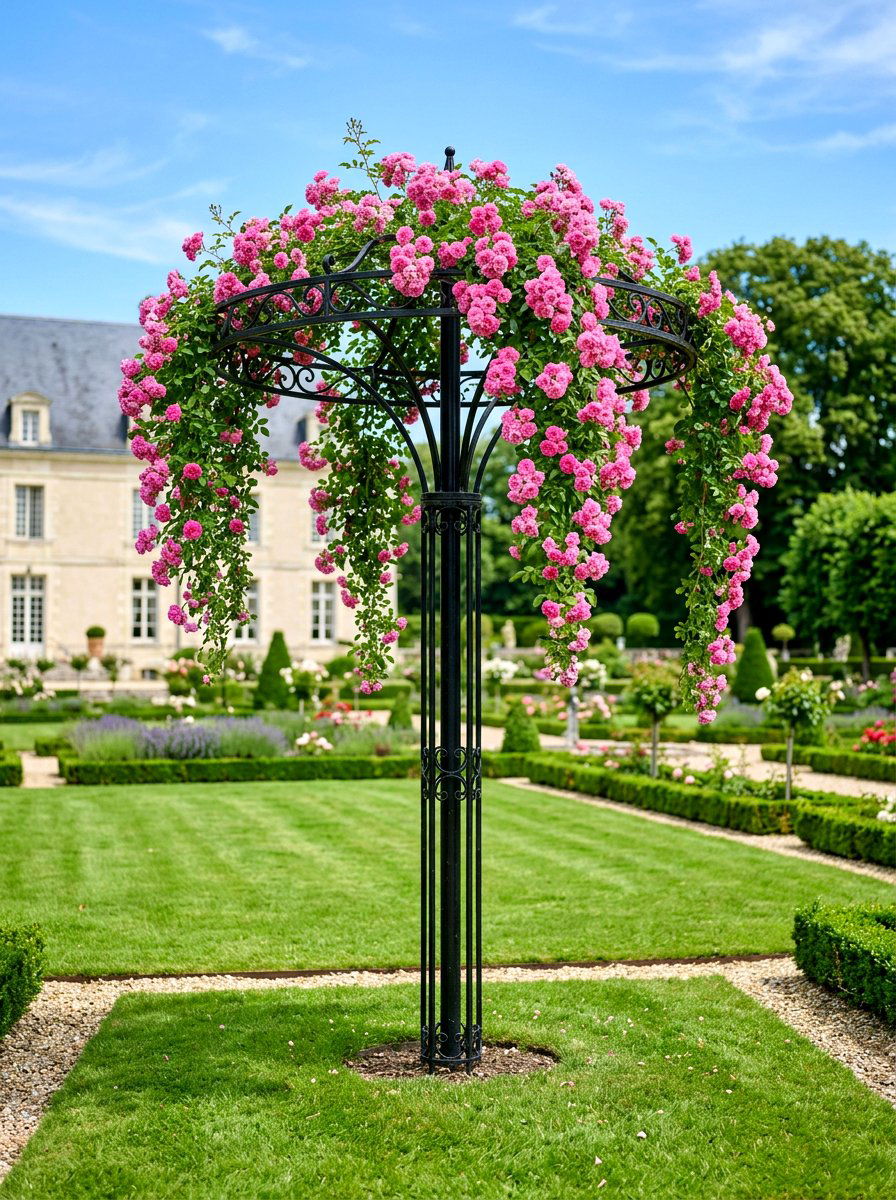
Have you ever seen the stunning "weeping" roses in famous European gardens and wondered how they achieved that perfect shape? An umbrella rose trainer is a specialized metal support with a circular top that encourages roses to grow up a central pole and then spill over the sides. This creates a fountain-like effect of flowers that looks spectacular in the center of a lawn or a formal parterre. It is particularly effective for "weeping standard" roses that have been grafted onto a tall stem. The umbrella frame supports the heavy weight of the blooming branches, preventing them from snapping in the wind.
16. Copper pipe garden frame
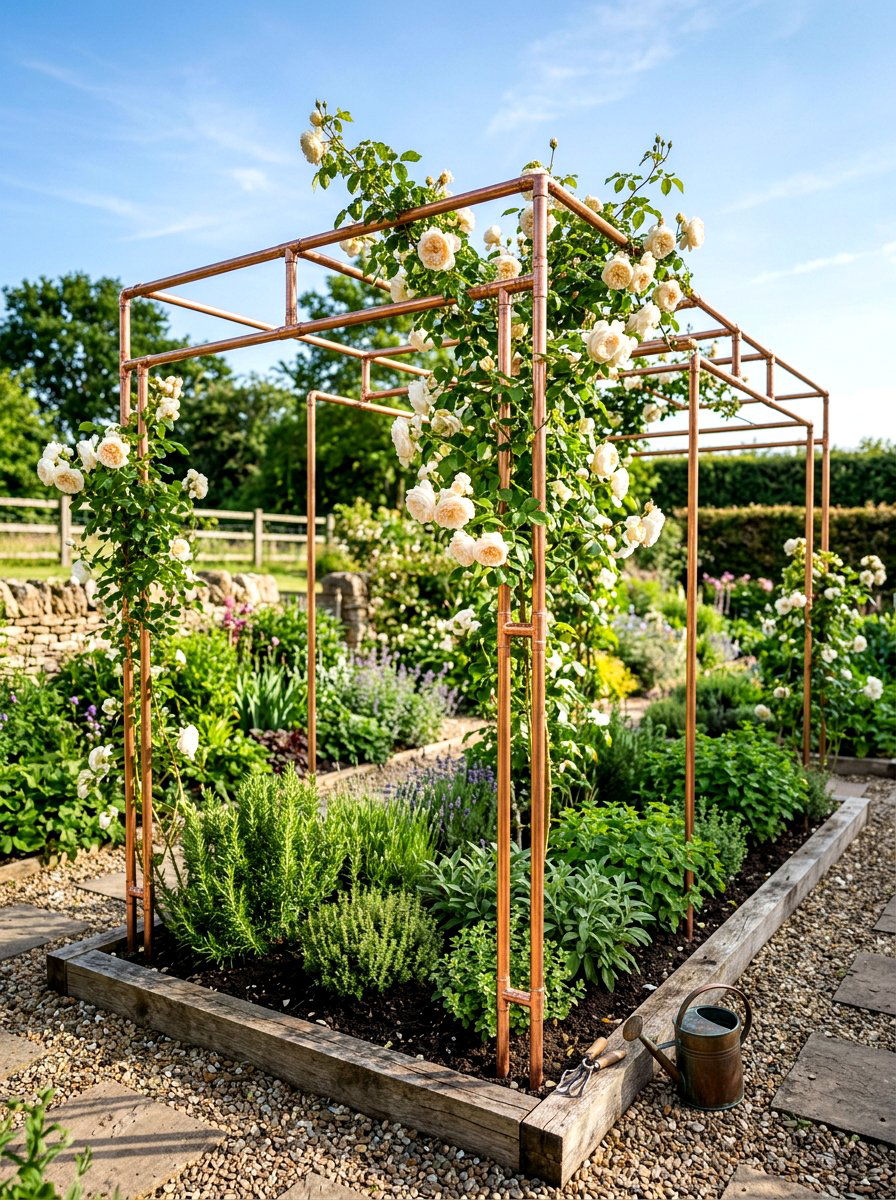
Would you like a rose support that develops a beautiful green patina over time and adds an industrial-chic vibe to your yard? A copper pipe garden frame is a popular choice for DIY enthusiasts because copper is easy to cut and assemble using standard plumbing fittings. The warm metallic tone of the new copper looks stunning against green foliage, while the weathered verdigris finish blends perfectly with a mature garden. Because copper is naturally antimicrobial, it can even help keep some pests at bay. You can build custom sizes and shapes to fit any awkward corner or narrow wall space.
17. Repurposed vintage gate
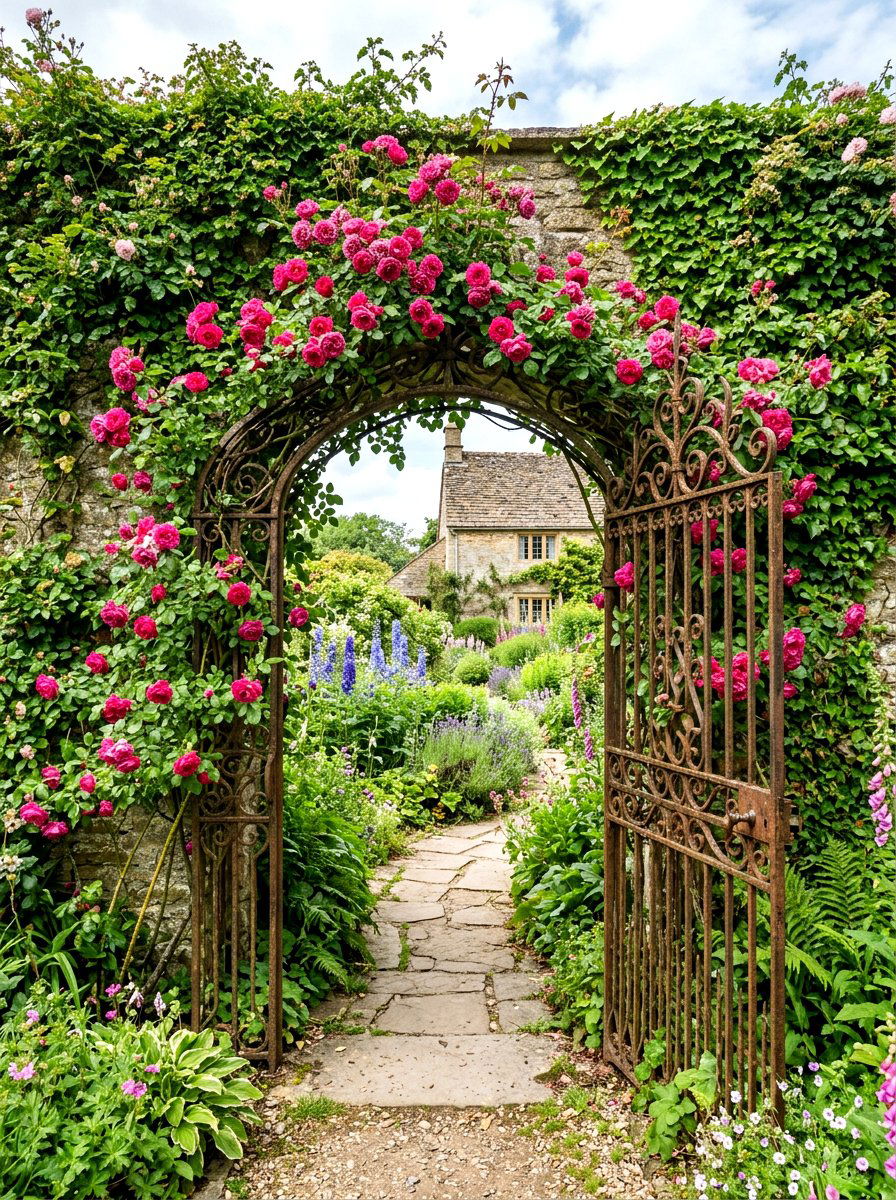
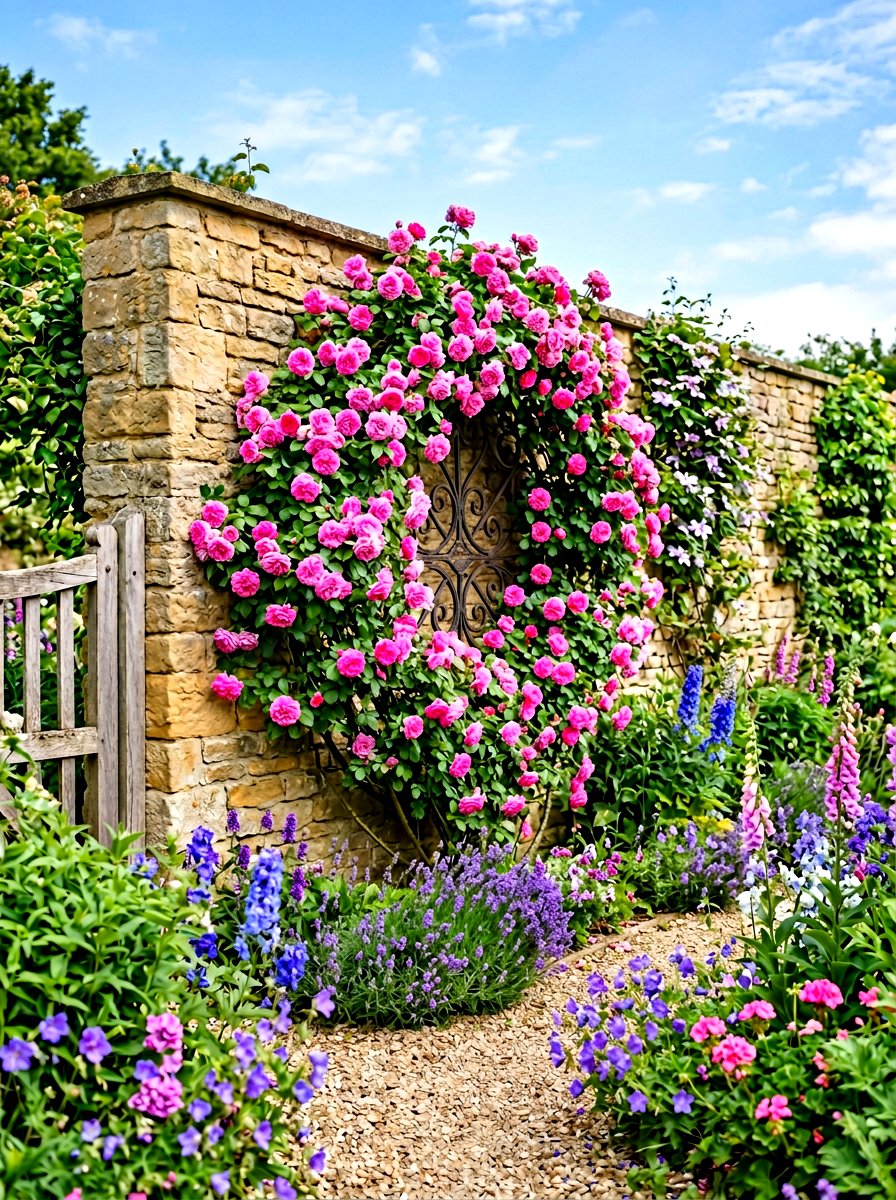
What if an old garden gate could find a second life as a beautiful and sturdy support for your favorite climbing rose? A repurposed vintage gate, especially one made of heavy iron with ornate scrollwork, provides an instant sense of history and mystery to your landscape. You can lean the gate against a shed or mount it securely to a fence to create a vertical garden. The bars and decorative elements of the gate offer perfect handholds for rose canes to weave through. This is a fantastic way to showcase a piece of local history while supporting your garden's floral growth.
18. Circular moon gate trellis
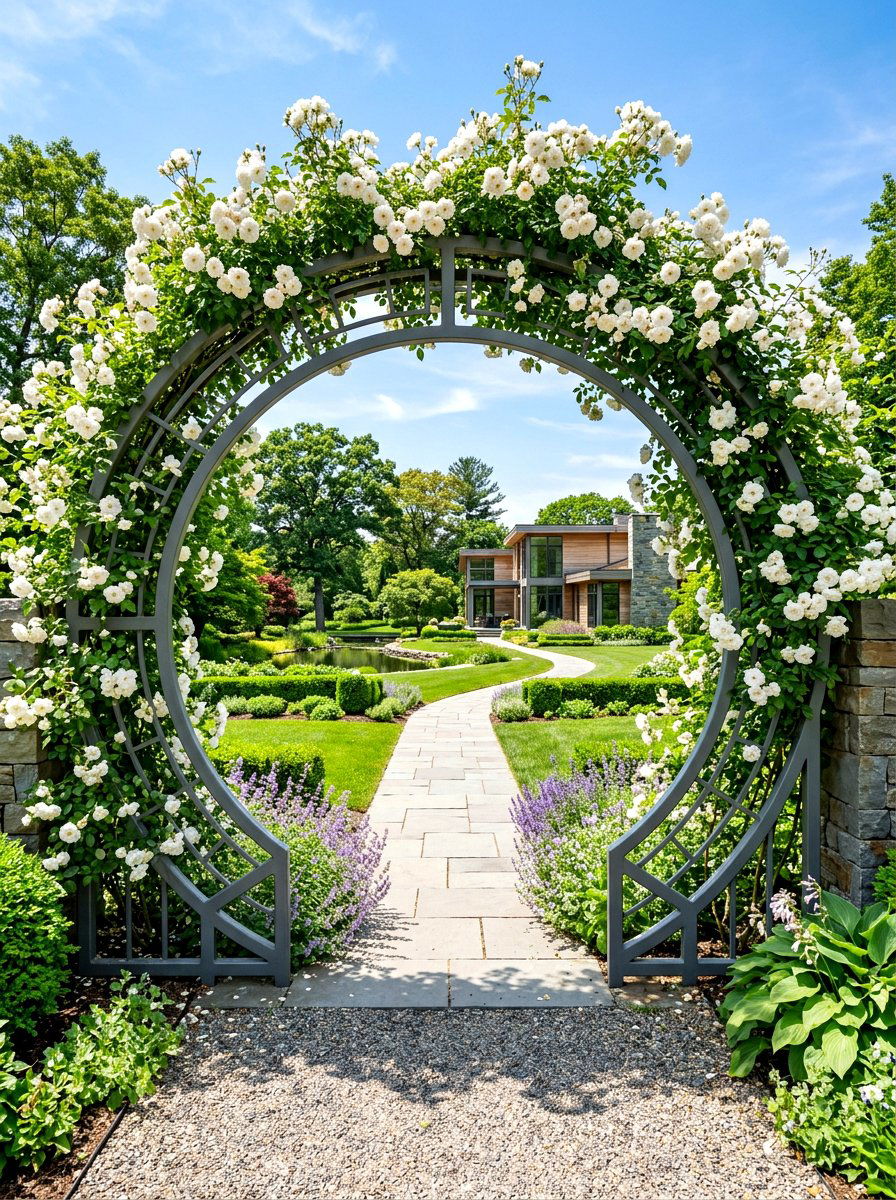
Are you looking for a bold, geometric statement piece that acts as both a garden entrance and a sculptural rose support? A circular moon gate trellis is a stunning architectural feature that symbolizes harmony and provides a unique circular frame for your landscape views. While roses are often trained on traditional arches, the circular shape offers a more modern and artistic approach to vertical gardening. As the roses wrap around the entire circumference, they create a breathtaking ring of flowers. This structure works best as a standalone feature that draws the eye through to another part of the garden.
19. Horizontal wire espalier
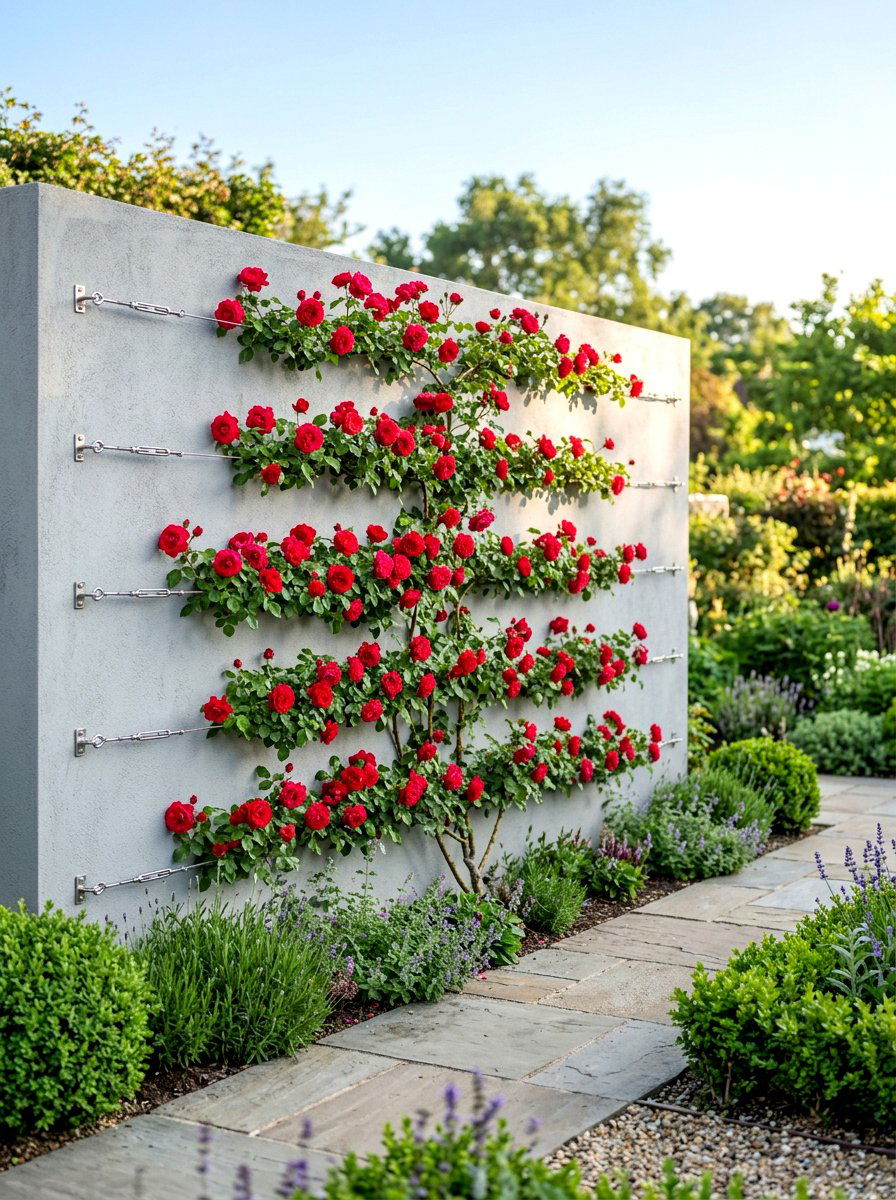
Can you imagine a garden wall that looks as organized and productive as a professional vineyard? A horizontal wire espalier uses tensioned cables to create a series of parallel lines that guide rose canes into a neat, two-dimensional shape. This method is highly effective for maximizing flower production because roses bloom more heavily on horizontal branches. By training the main canes along the wires, you encourage the growth of short, flowering side shoots. This is a space-saving technique that is perfect for narrow side yards or along a shared driveway where you want beauty without the bulk.
20. Picket fence extension
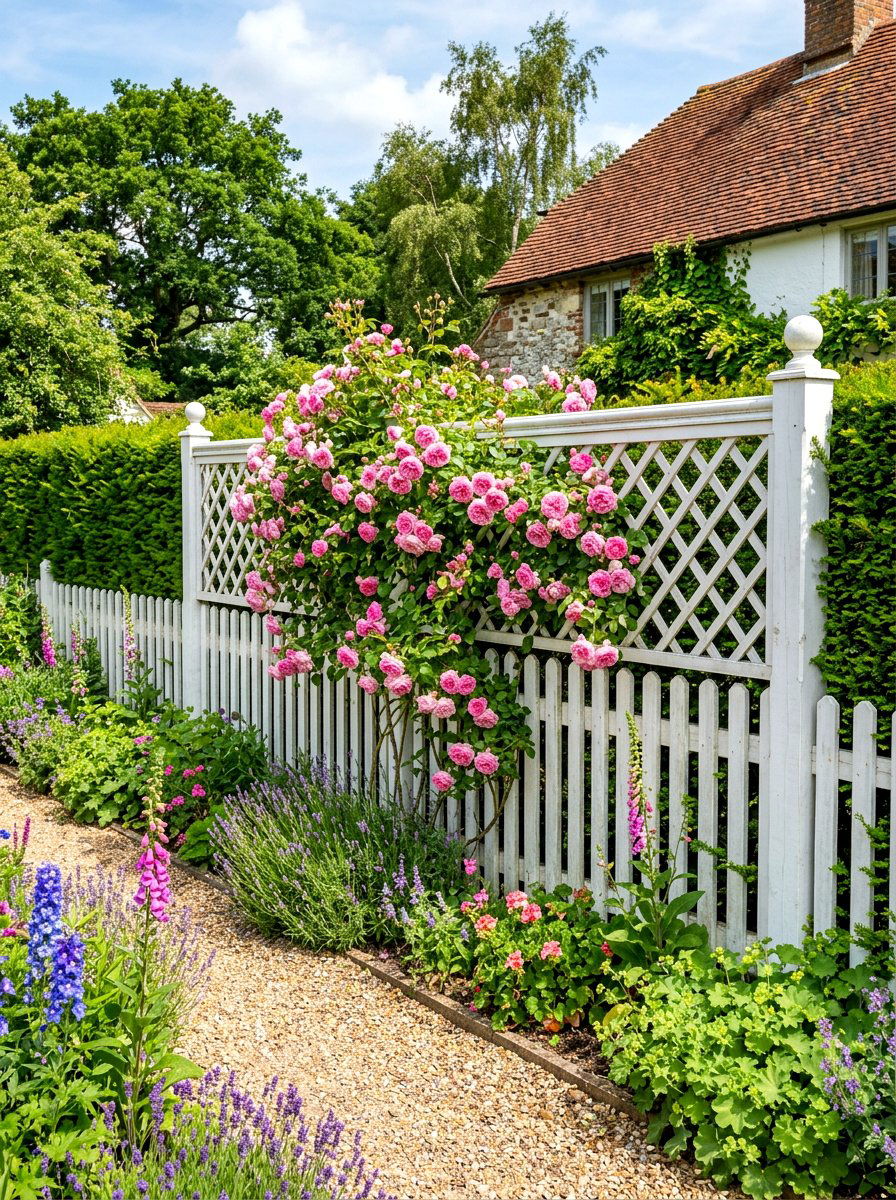
How can you make a standard garden fence look taller and more enchanting without replacing the entire structure? A picket fence extension involves adding a small trellis or lattice panel to the top of an existing fence to provide extra height for climbing roses. This allows the roses to spill over the top, creating a soft, romantic border that enhances your home's curb appeal. It is a simple way to gain more privacy and vertical growing space while maintaining a traditional cottage garden aesthetic. The roses help blend the fence into the surrounding landscape, making it feel less like a barrier.
21. T-post wire system
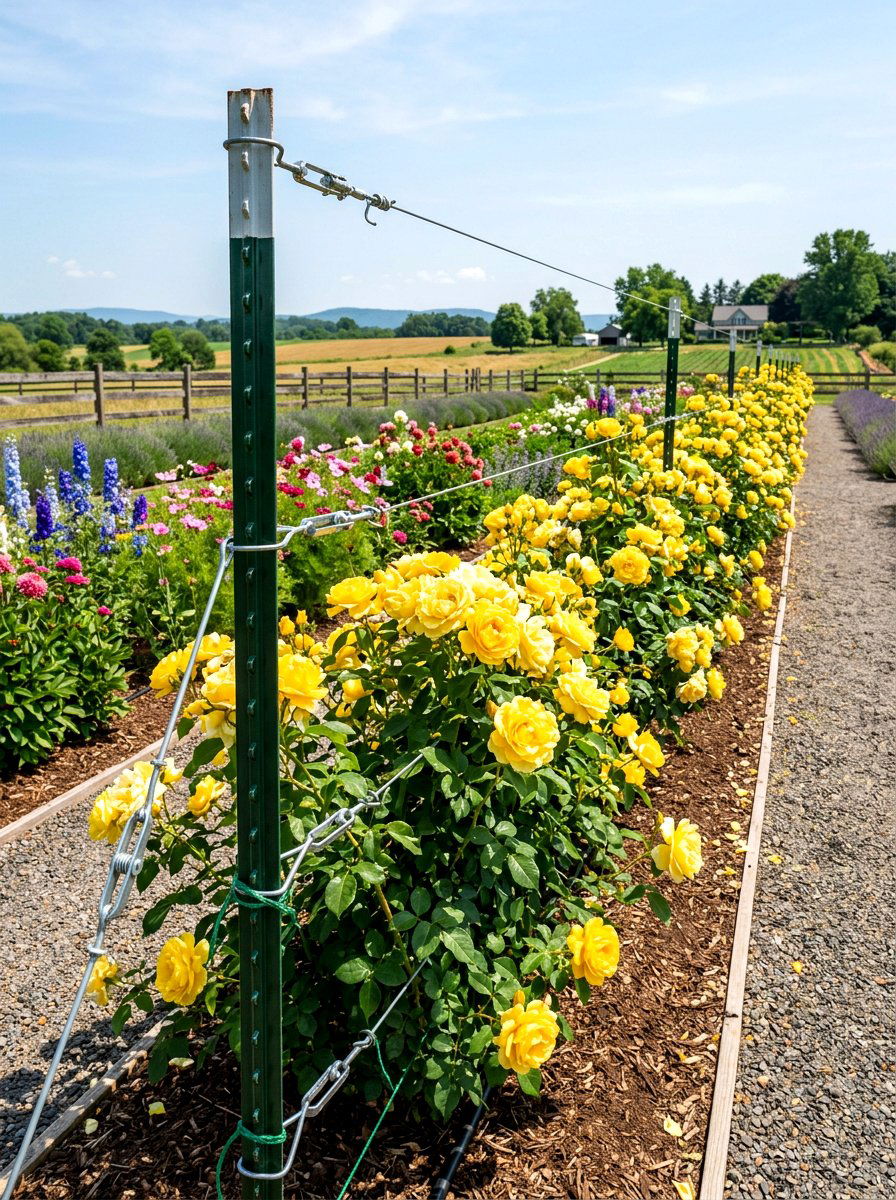
Are you working with a limited budget but still want to create a professional-looking support for a long row of climbing roses? A T-post wire system uses heavy-duty metal fence posts and galvanized wire to create a simple, strong, and highly functional trellis. This style is often used in rose nurseries or cutting gardens because it is incredibly durable and easy to maintain. You can run multiple levels of wire between the posts to accommodate the height of your specific rose variety. It is a no-nonsense approach that prioritizes the health and productivity of the roses over decorative flourishes.
22. Gable end rose support
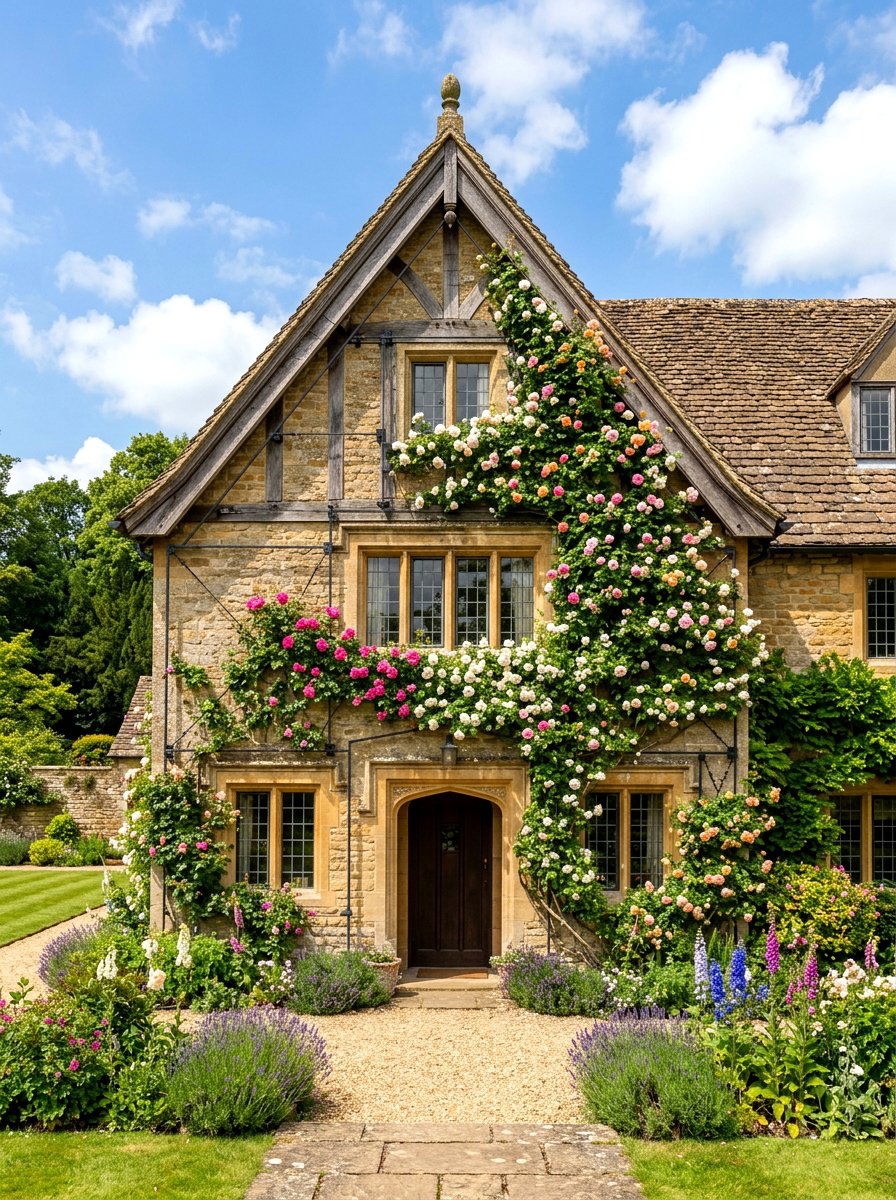
Why leave the high, empty walls of your home's gables bare when they could be covered in a spectacular floral display? A gable end rose support uses a combination of wall-mounted trellises or cable systems to reach the highest points of your house. Training a vigorous climber like a Cecile Brunner rose up a gable can transform a plain facade into a masterpiece of living architecture. This technique requires a very sturdy support system and regular pruning, but the result is a high-impact feature that can be seen from down the street. It adds incredible character and charm.
23. Chimney side trellis
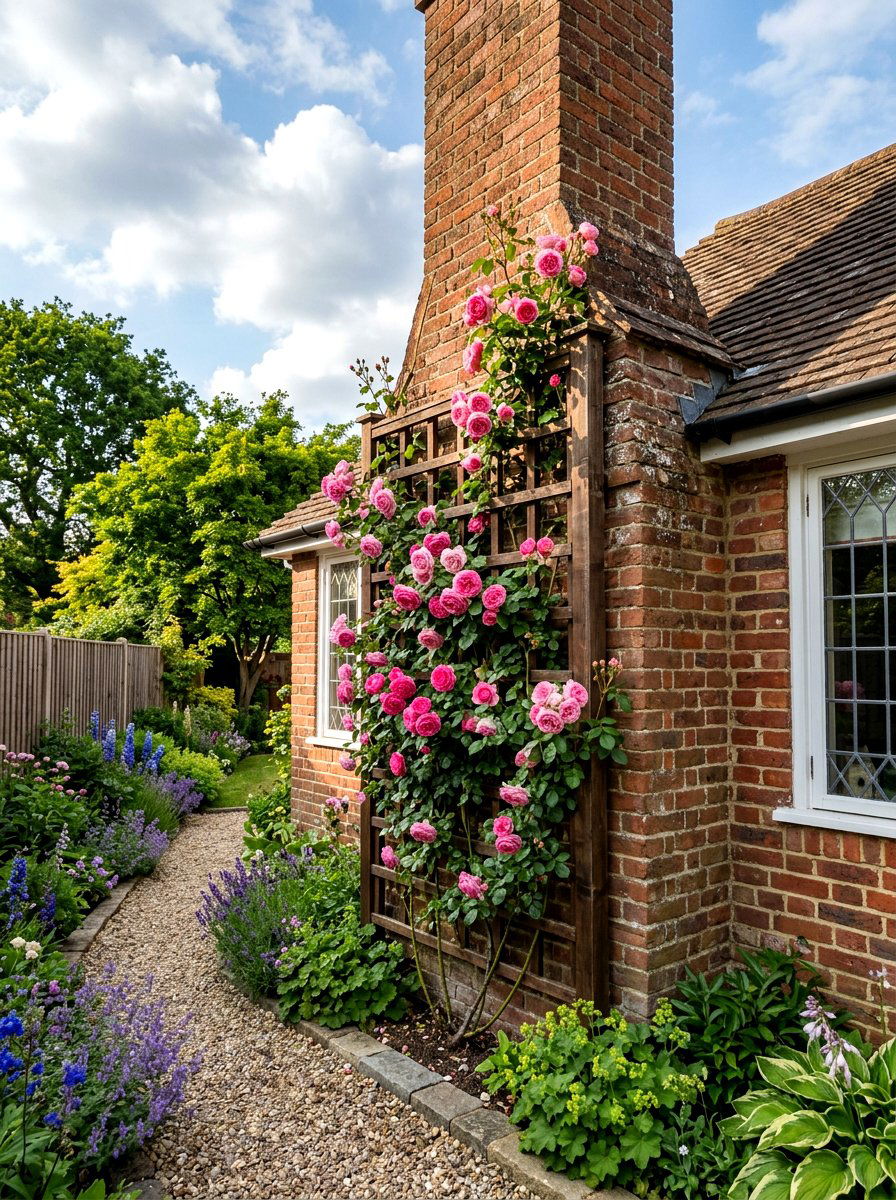
Have you ever considered that the side of your brick chimney is actually the perfect warm microclimate for a climbing rose? A chimney side trellis takes advantage of this often-overlooked vertical space, providing a sturdy framework for roses to thrive against the heat-retaining masonry. Using a metal or rot-resistant wood trellis ensures that the structure can handle the weight of the rose as it reaches for the sun. This is an excellent way to soften the massive look of a chimney and integrate it into your garden design. The vertical lines of the rose will draw the eye upward, emphasizing the height.
24. Balcony railing mesh
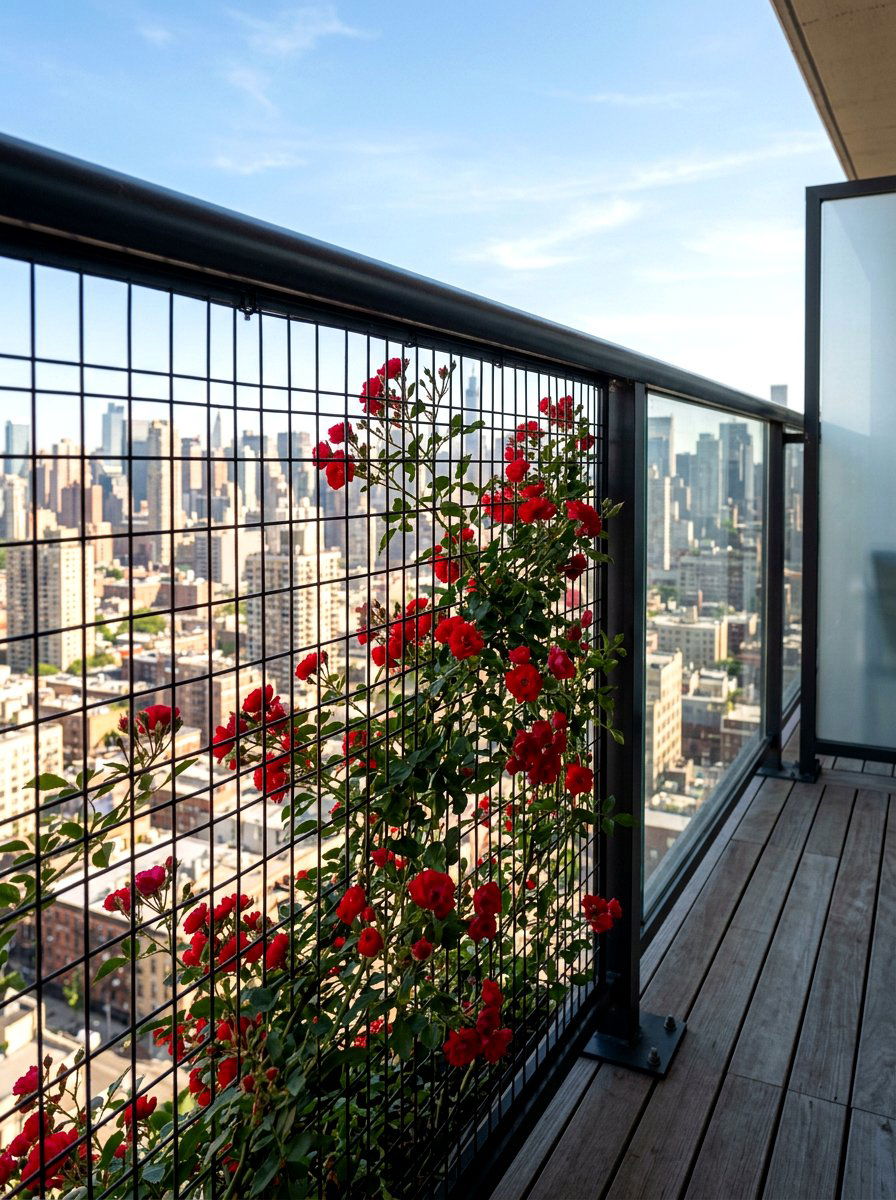
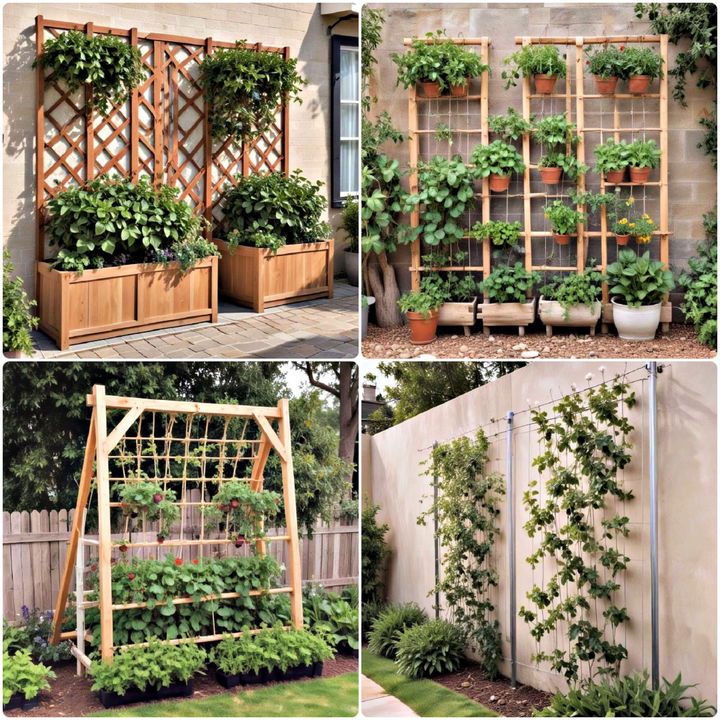
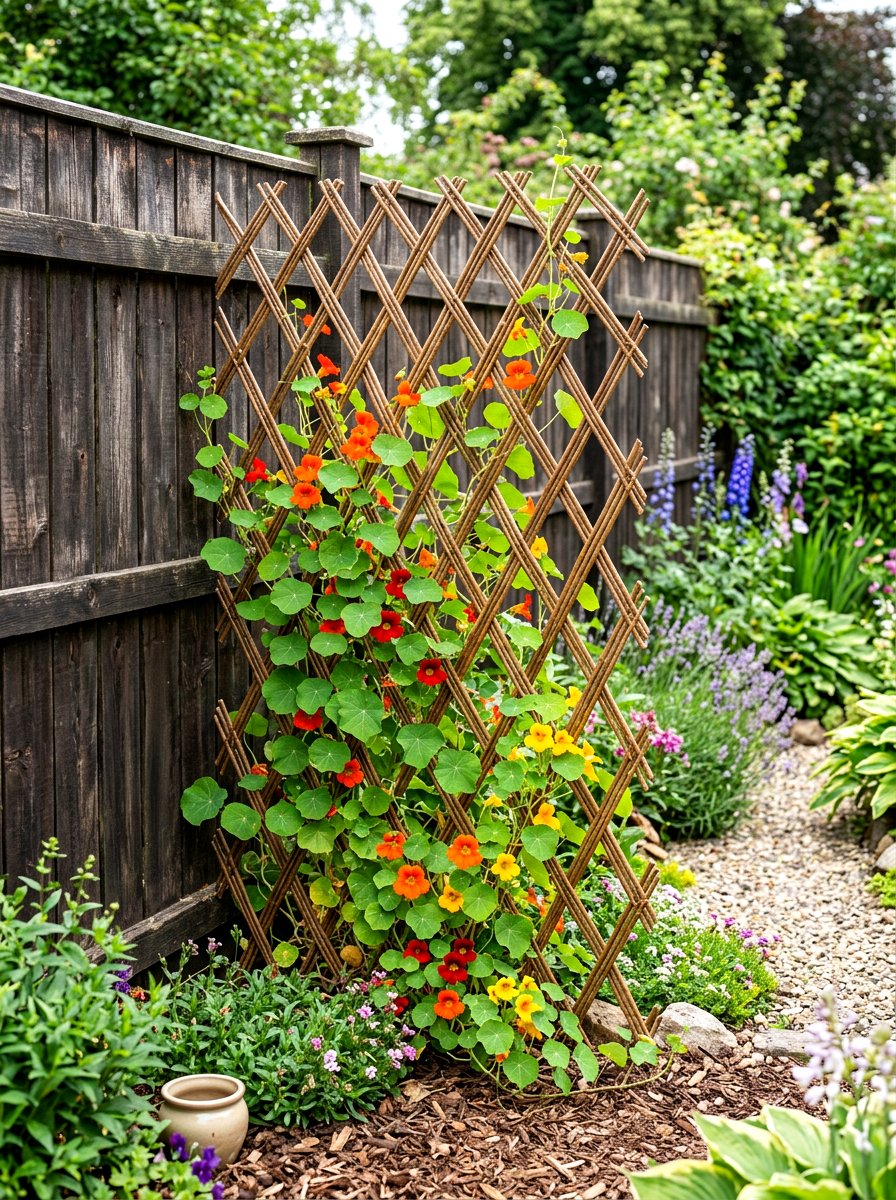
Do you live in an apartment but still long for the beauty and fragrance of climbing roses right outside your door? Balcony railing mesh is a clever solution that uses lightweight plastic or metal netting attached to your existing railing to provide a climbing surface. Many smaller climbing roses or "patio climbers" are perfectly suited for large containers and will happily scramble across a balcony railing. This creates a living privacy screen and a beautiful backdrop for your outdoor seating area. It is an easy and affordable way to bring a touch of the countryside to a busy urban environment.
25. Privacy screen lattice
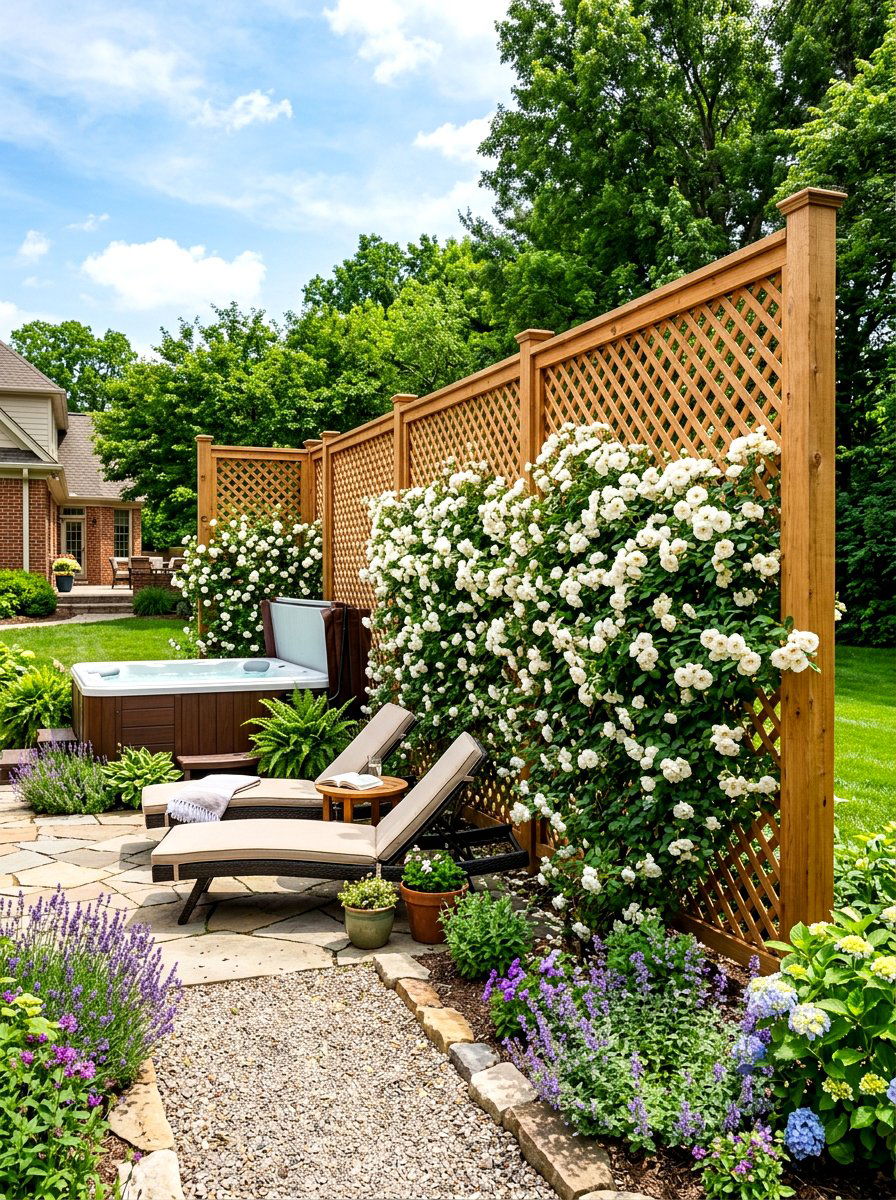
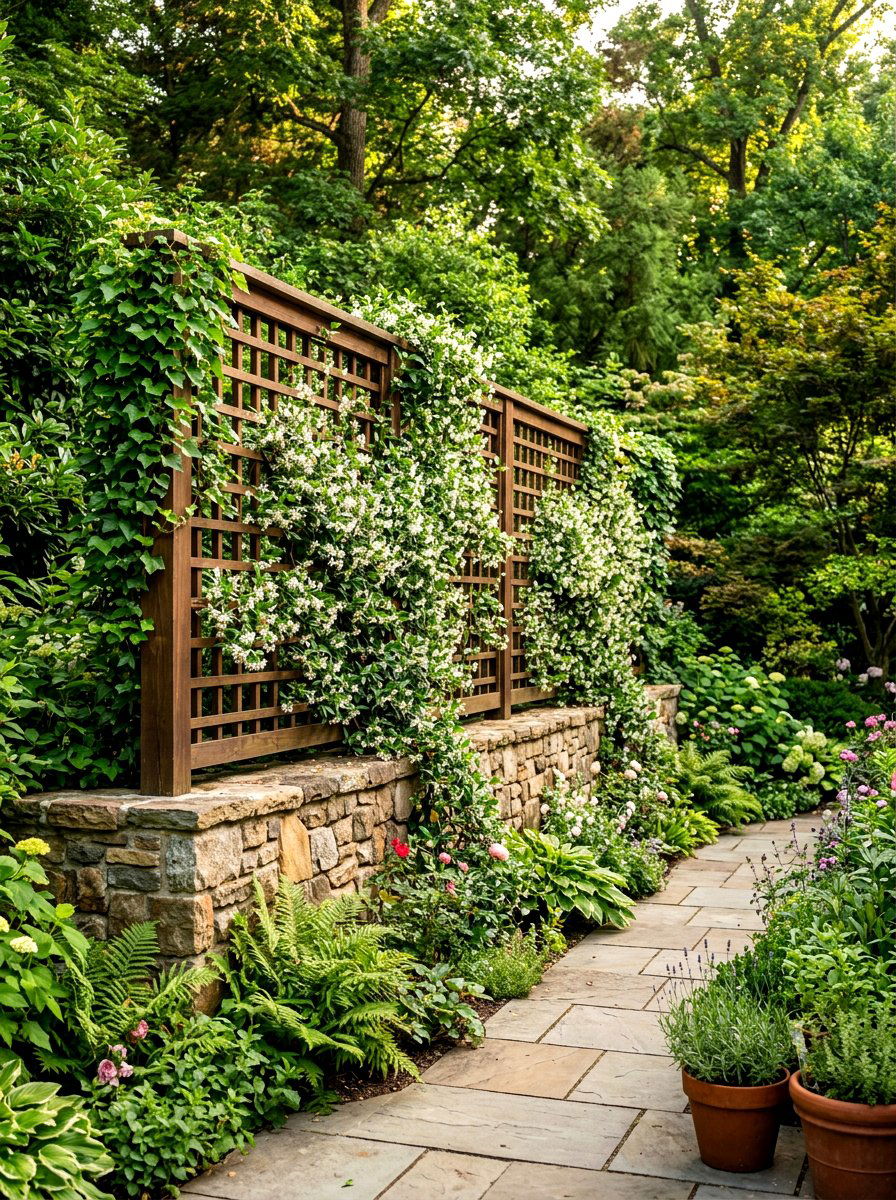
Could you solve your neighbor's prying eyes and your need for more flowers with one simple garden structure? A privacy screen lattice is a tall, freestanding panel designed specifically to block views while providing a large surface area for climbing plants. Unlike a solid wall, the lattice allows light and air to pass through, creating a more pleasant environment for both you and your roses. As the rose fills in the gaps, it creates a dense, flowering wall that feels much more natural than a wooden fence. It is a perfect solution for enclosing a hot tub area or patio.
26. Lean-to wall frame
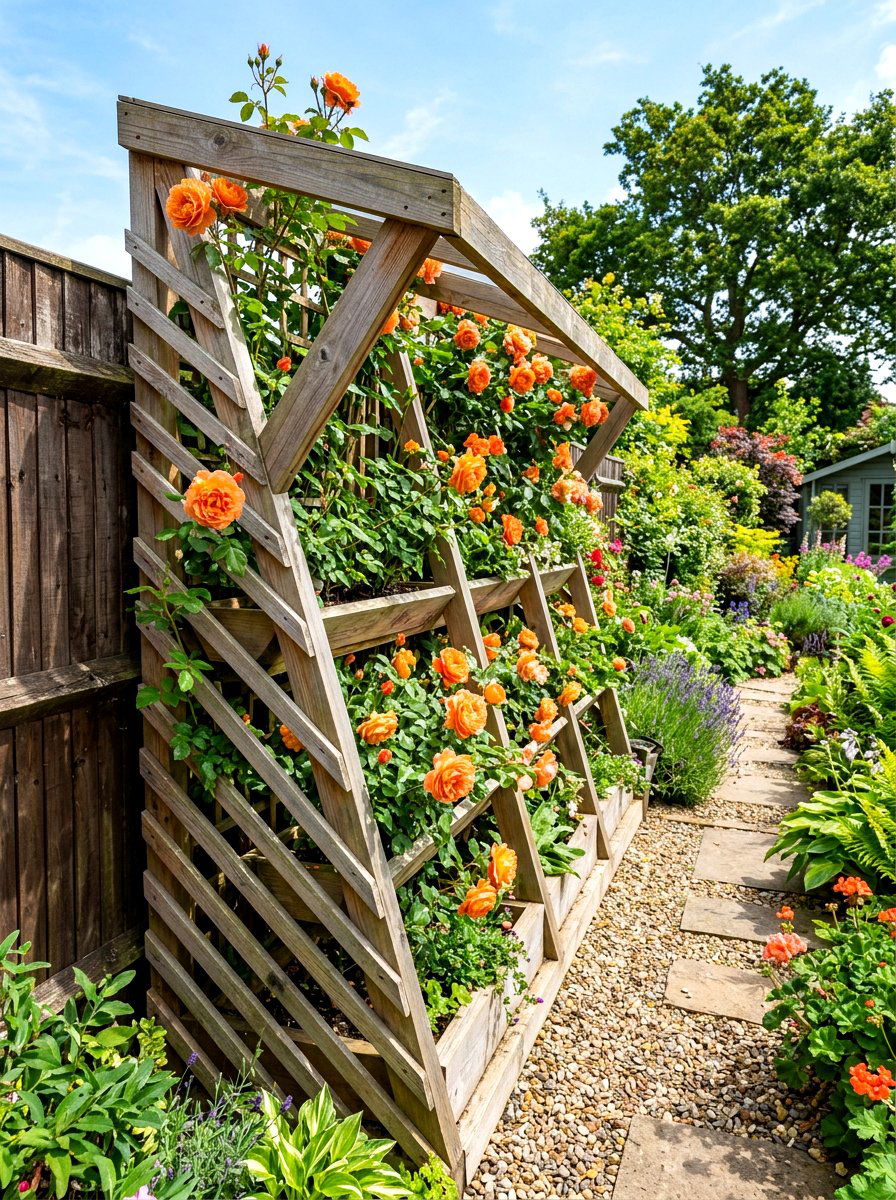
Are you looking for a way to add vertical interest to a narrow pathway without obstructing the walking space? A lean-to wall frame is a simple trellis that sits at a slight angle against a wall, providing a stable climbing surface while taking up minimal ground area. This design is excellent for roses because the angle allows more sunlight to reach the base of the plant compared to a flat wall trellis. It is a great project for DIYers using simple lumber and creates a stylish, slanted garden feature. The roses will naturally follow the incline, creating a lush green slope.
27. Pyramid wood structure
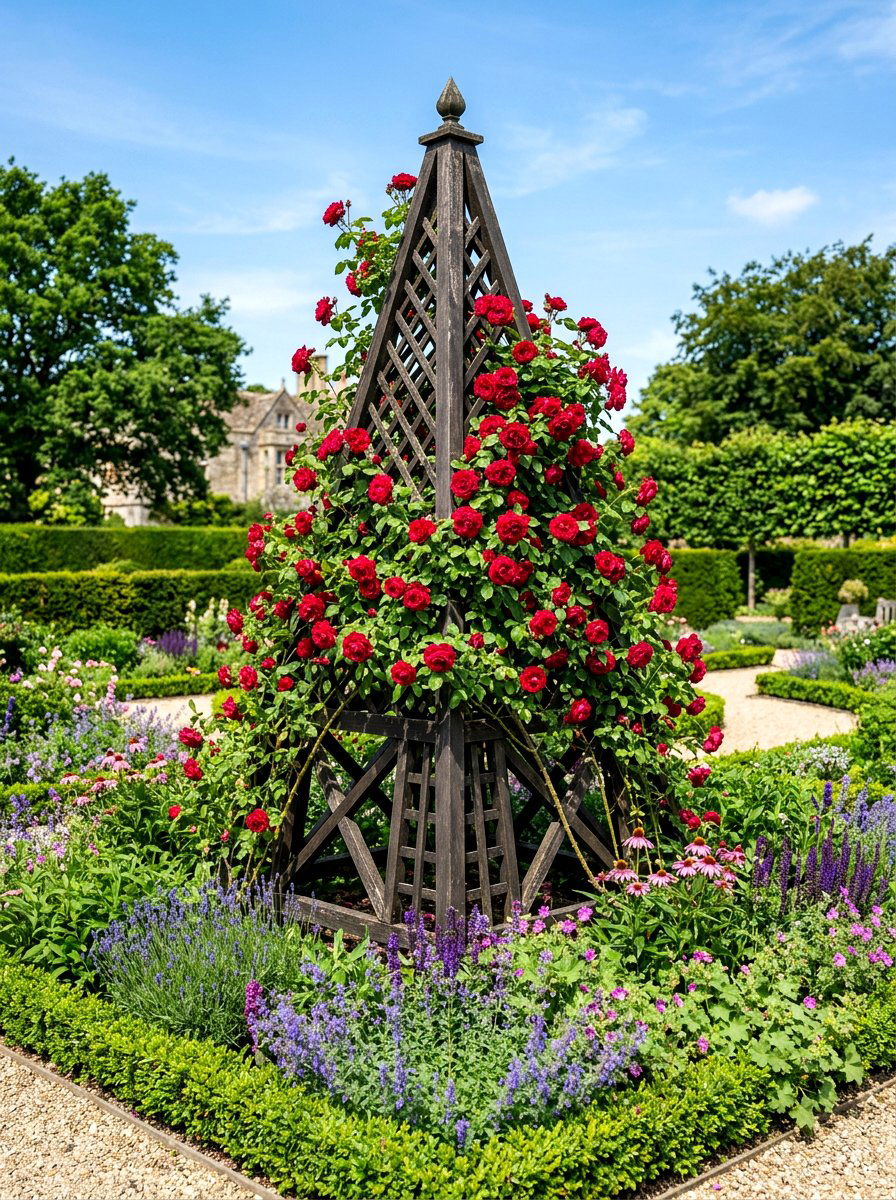
How can you add a sense of formal geometry and order to a wild and rambling flower border? A pyramid wood structure, also known as a garden tuteur, provides a strong central point that anchors the surrounding plants. These structures are usually built with four legs that meet at a decorative finial on top, offering a very stable base for climbing roses. The symmetrical shape looks beautiful year-round, even when the roses have lost their leaves. Placing a few pyramids at regular intervals throughout a large garden bed creates a sense of rhythm and professional design that is very pleasing.
28. Gothic pointed arch
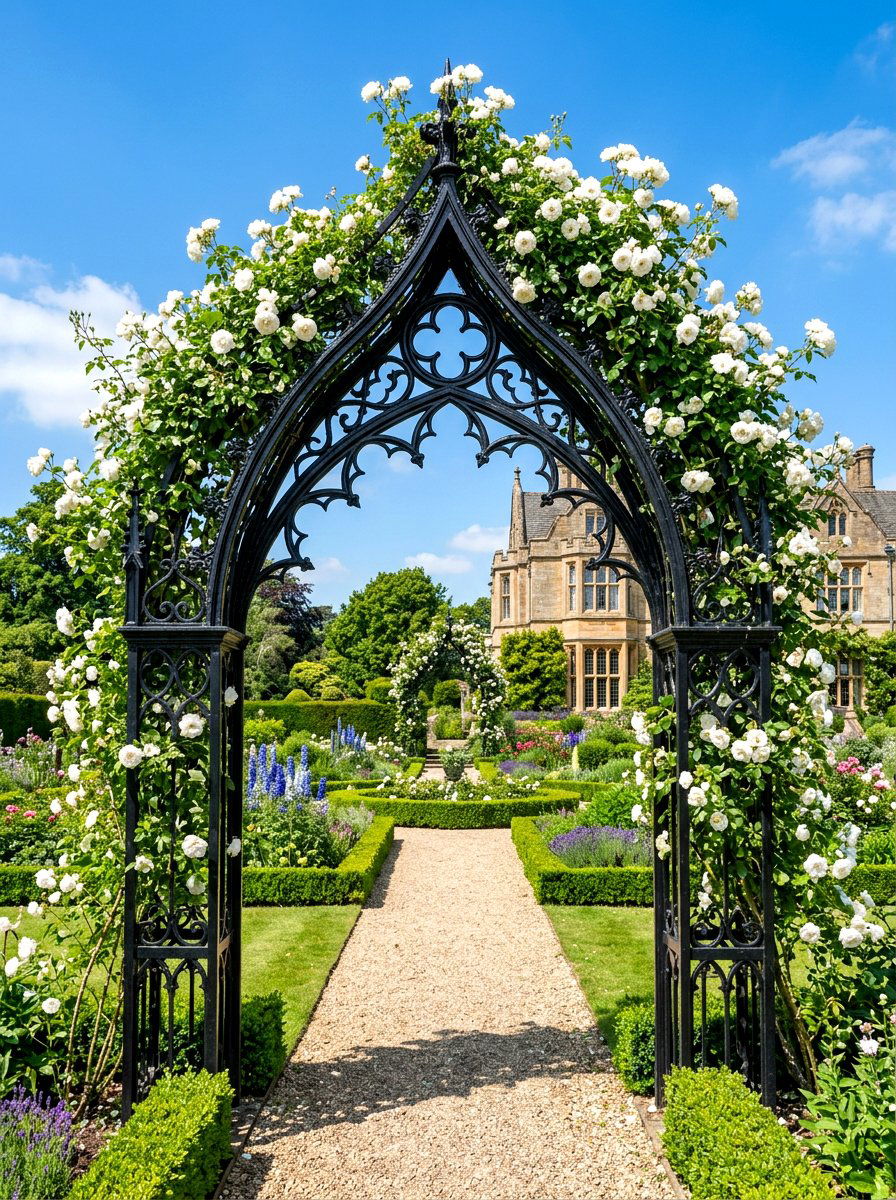
Do you want to infuse your garden with a touch of drama and old-world elegance that feels like a historic estate? A Gothic pointed arch trellis features the classic peaked top seen in cathedral architecture, offering a more formal and sophisticated look than a standard rounded arch. These are often made from heavy-duty wrought iron and serve as an incredible entrance to a formal rose garden or a hidden backyard path. The high peak provides extra vertical room for the rose to grow, and the decorative details within the arch provide plenty of points for securing the thorny canes safely.
29. Side of house wire kits
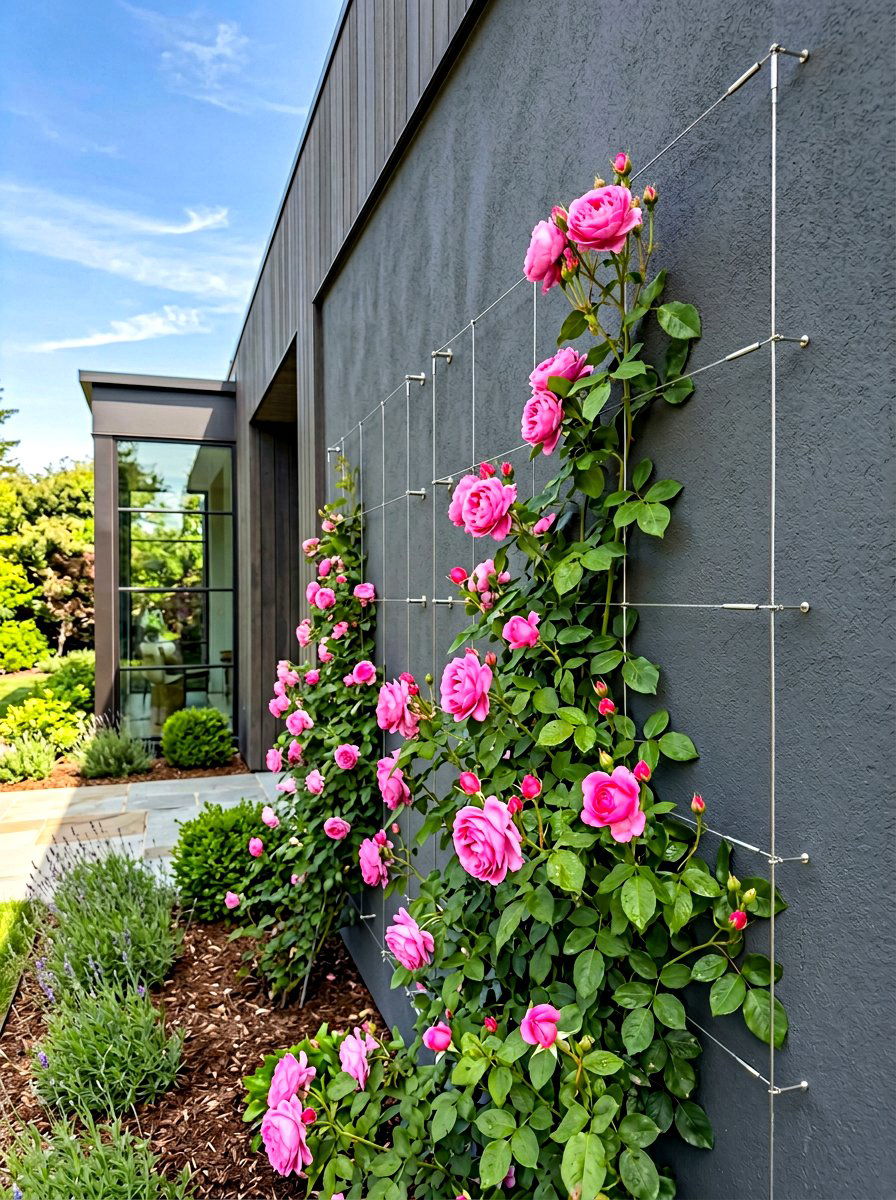
What if you could support your roses with a system so thin and sleek that it 's almost invisible from a distance? Side of house wire kits consist of small wall anchors and high-tension stainless steel wire that can be arranged in any pattern you choose. This is the ultimate choice for homeowners who love the look of roses "crawling" up the siding but want to protect their home' s exterior from damage. The wires keep the canes a safe distance from the wall while providing a rock-solid support. It is a professional-grade solution that offers a clean, high-end look for modern homes.
30. Heavy duty cattle panel arch
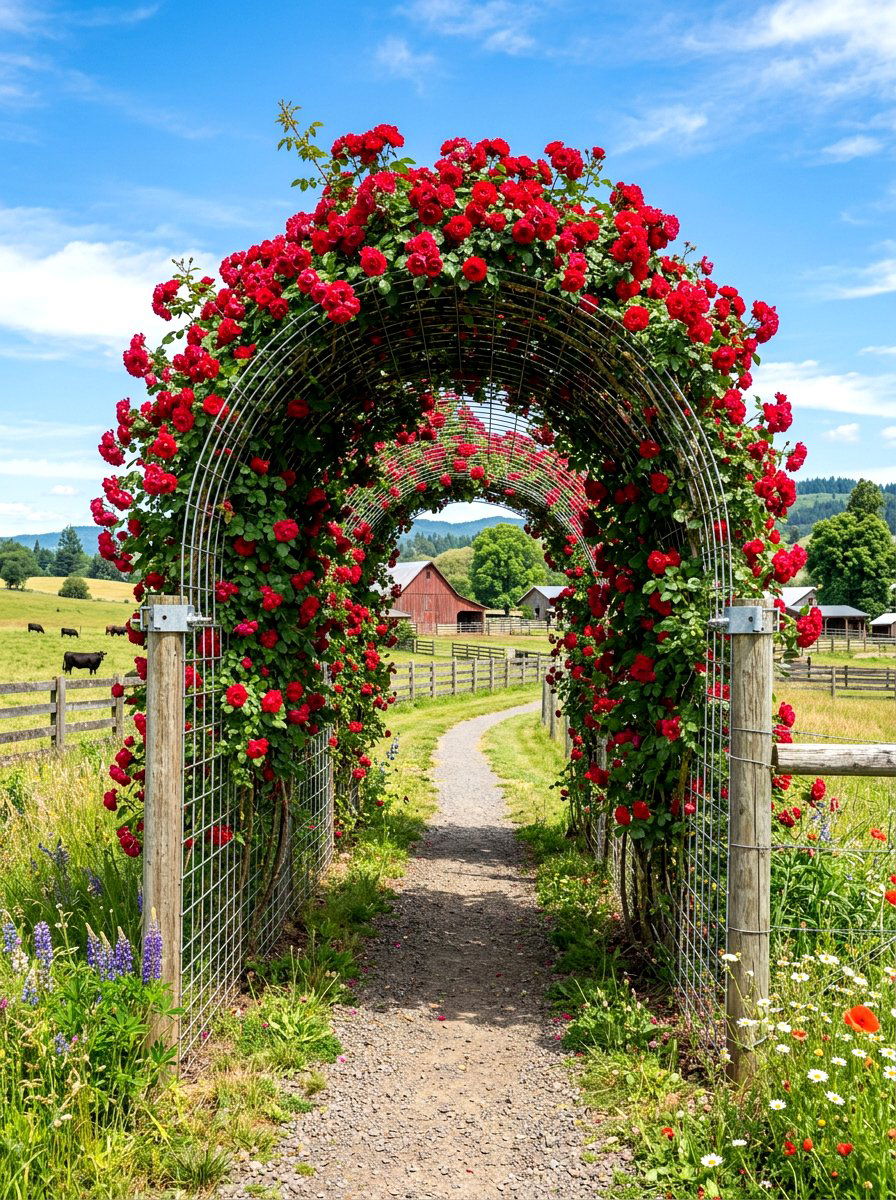
Are you searching for a budget-friendly way to create a massive, walk-through rose tunnel that looks like a million bucks? A heavy-duty cattle panel arch uses inexpensive galvanized steel fencing panels bent into a large U-shape and secured with metal T-posts. This DIY favorite is incredibly strong and can support even the most vigorous rambling roses that would crush a cheaper store-bought arbor. Over time, the roses completely hide the metal grid, leaving you with a solid tunnel of blooms. It is a fantastic way to create a large-scale garden feature for a fraction of the traditional cost.
Conclusion:
Selecting the perfect support for your climbing roses is a journey that combines functional necessity with your unique personal style. Whether you choose the rustic charm of a handmade branch structure or the sleek sophistication of a modern wire system, the right trellis will empower your roses to reach their full, blooming potential. Remember that a sturdy foundation is key to supporting years of heavy growth and protecting your home's exterior. By investing in quality materials and thoughtful design, you can transform your garden into a vertical masterpiece of color and scent. Happy gardening as you watch your floral dreams climb to new heights!

Related posts: