Creating a dedicated space for physical play indoors has become a major trend for modern families looking to keep kids active year-round. A climbing wall in a playroom offers more than just fun; it provides a unique way to develop gross motor skills, strength, and confidence within the safety of your home. These vertical playgrounds can be customized to fit any room size or decor style, from sleek minimalist setups to vibrant, colorful jungles. By integrating a climbing feature, you transform a standard room into a dynamic environment that encourages movement and creative problem-solving while keeping children entertained for hours on end.
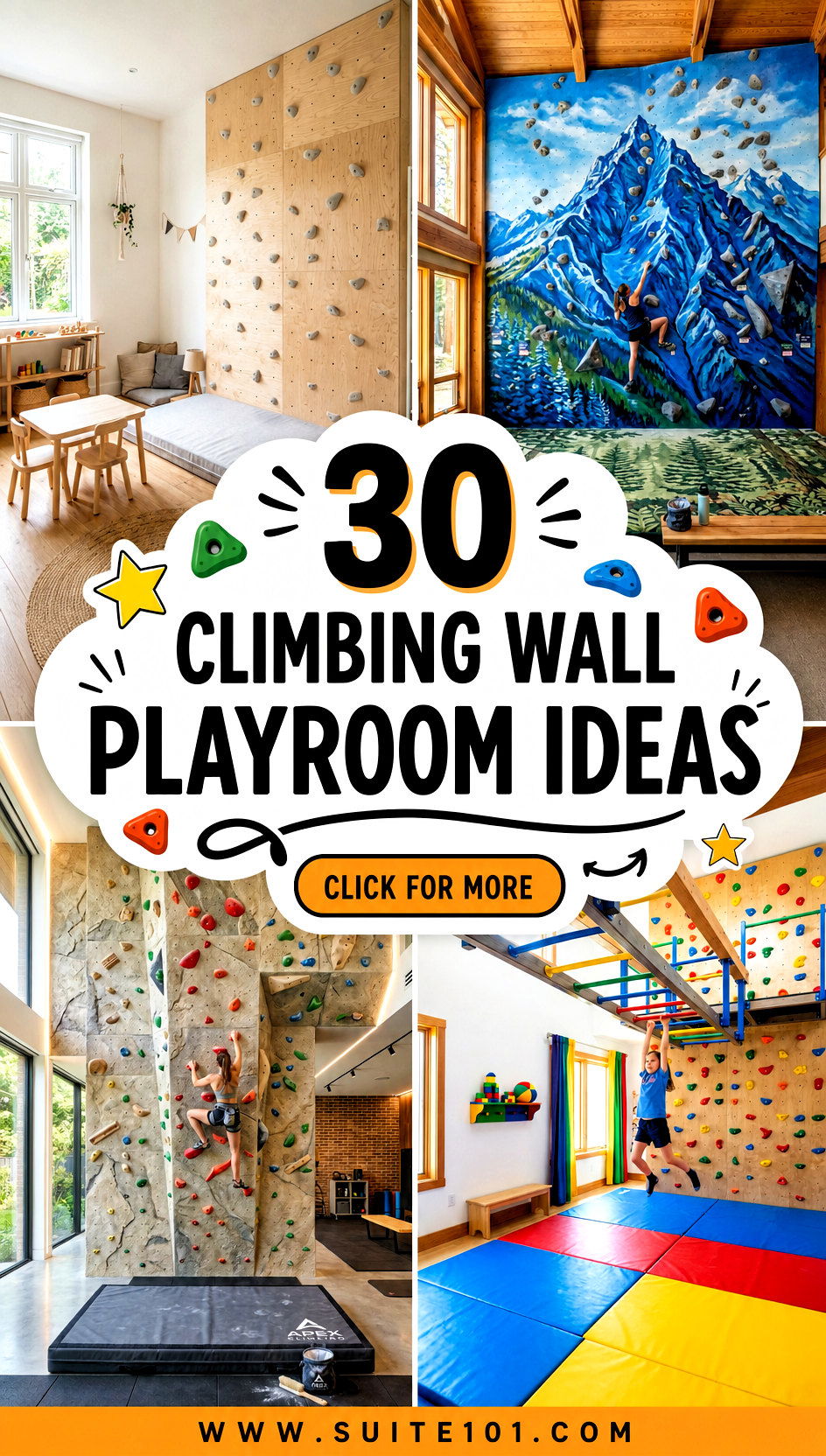
1. Plywood Climbing Wall
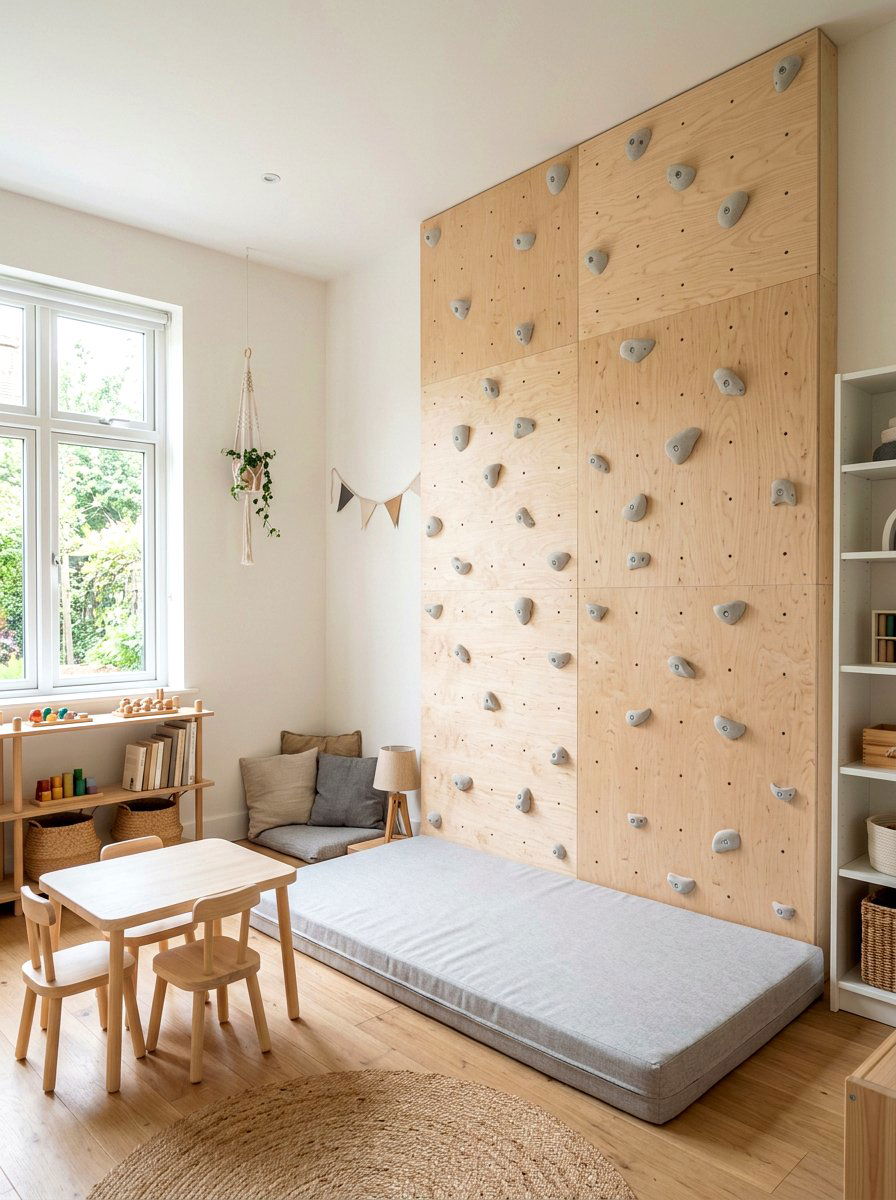
Natural wood finishes bring a warm and organic feel to any indoor play space while providing a sturdy foundation for climbing. Using high-quality birch or maple plywood creates a clean, modern look that coordinates perfectly with Scandinavian or contemporary home styles. You can leave the wood raw for a minimalist aesthetic or apply a clear matte sealant to protect the surface from footprints and dirt. This type of wall usually features pre-drilled holes in a grid pattern, allowing you to move the holds around as your child grows and needs new challenges. It serves as a beautiful architectural element that does not overwhelm the room.
2. Toddler Indoor Bouldering
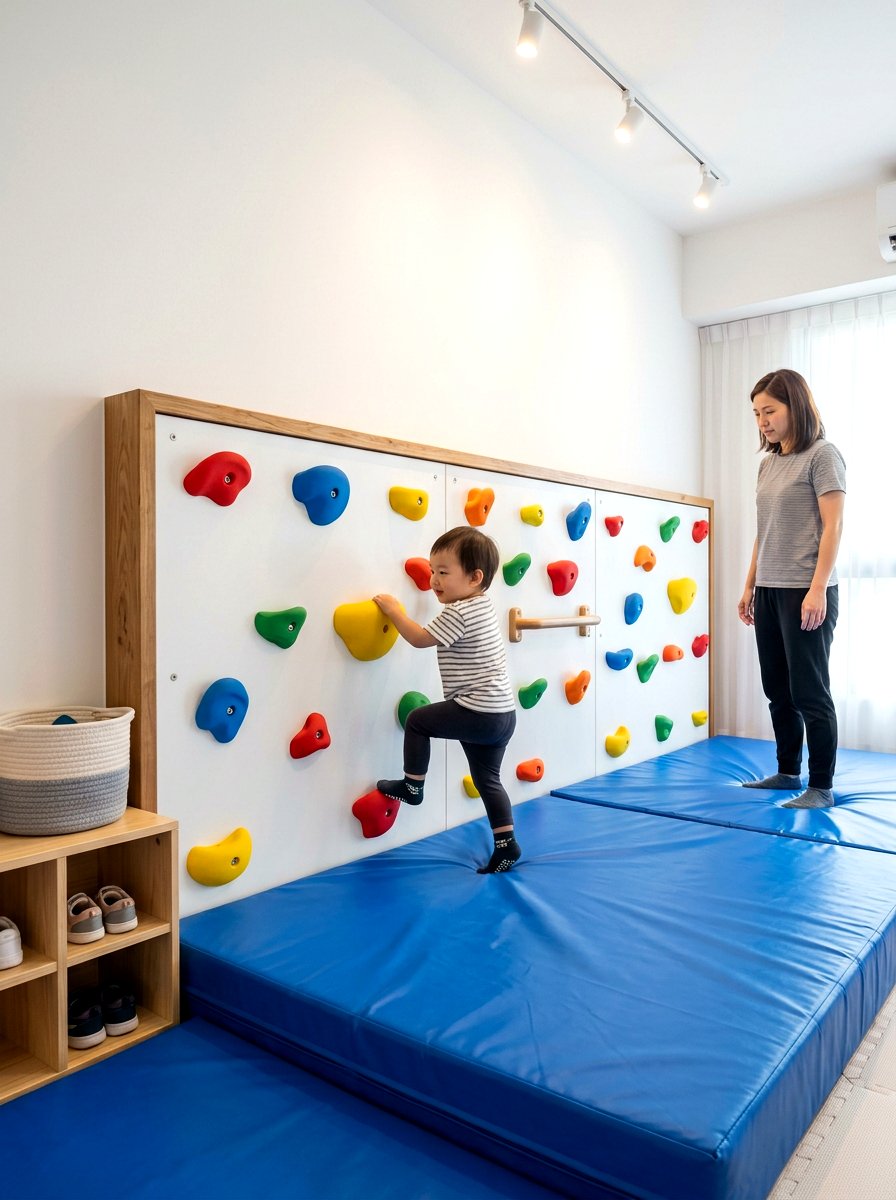
Designing a low-profile climbing area specifically for younger children ensures they can practice their balance and coordination without the risk of high falls. These bouldering walls are usually wider than they are tall, encouraging horizontal movement across the surface rather than vertical height. Soft, oversized holds are often used to provide a comfortable grip for small hands that are still developing strength. By keeping the height below four feet, parents can feel more relaxed while their toddlers explore their physical limits. Adding a thick, colorful crash pad at the base provides extra security and creates a soft landing zone for those inevitable tumbles during play.
3. Colorful Rock Holds
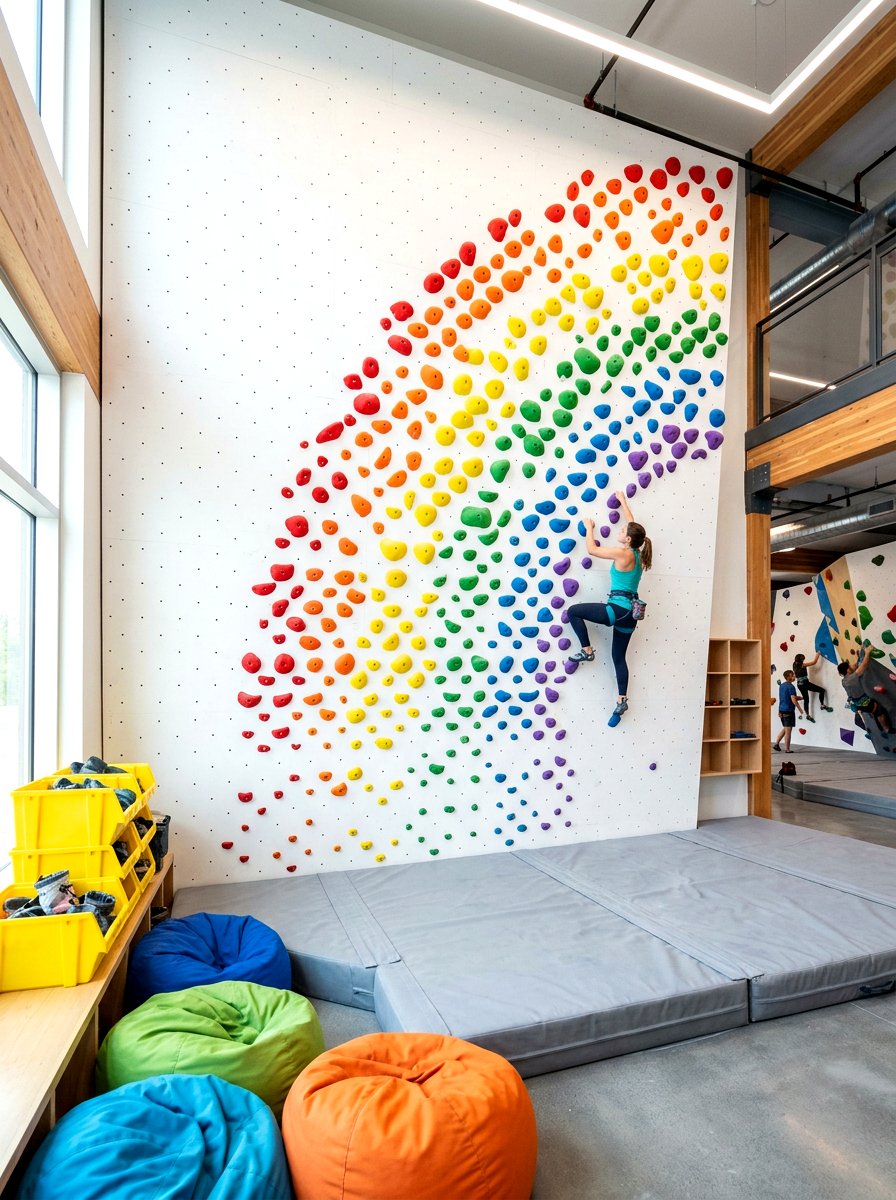
Incorporating a variety of vibrant and mismatched rock holds can instantly transform a neutral room into a lively and energetic playground. You can choose holds in primary colors for a classic playroom look or select a specific palette like pastels or jewel tones to match existing decor. These holds come in different shapes and textures, simulating real rock faces to provide diverse sensory experiences for the climber. By strategically placing different colors, you can create specific "routes" for children to follow, turning a simple climb into a gamified challenge. This visual variety makes the wall the focal point of the room while stimulating a child's imagination.
4. Corner Climbing Wall
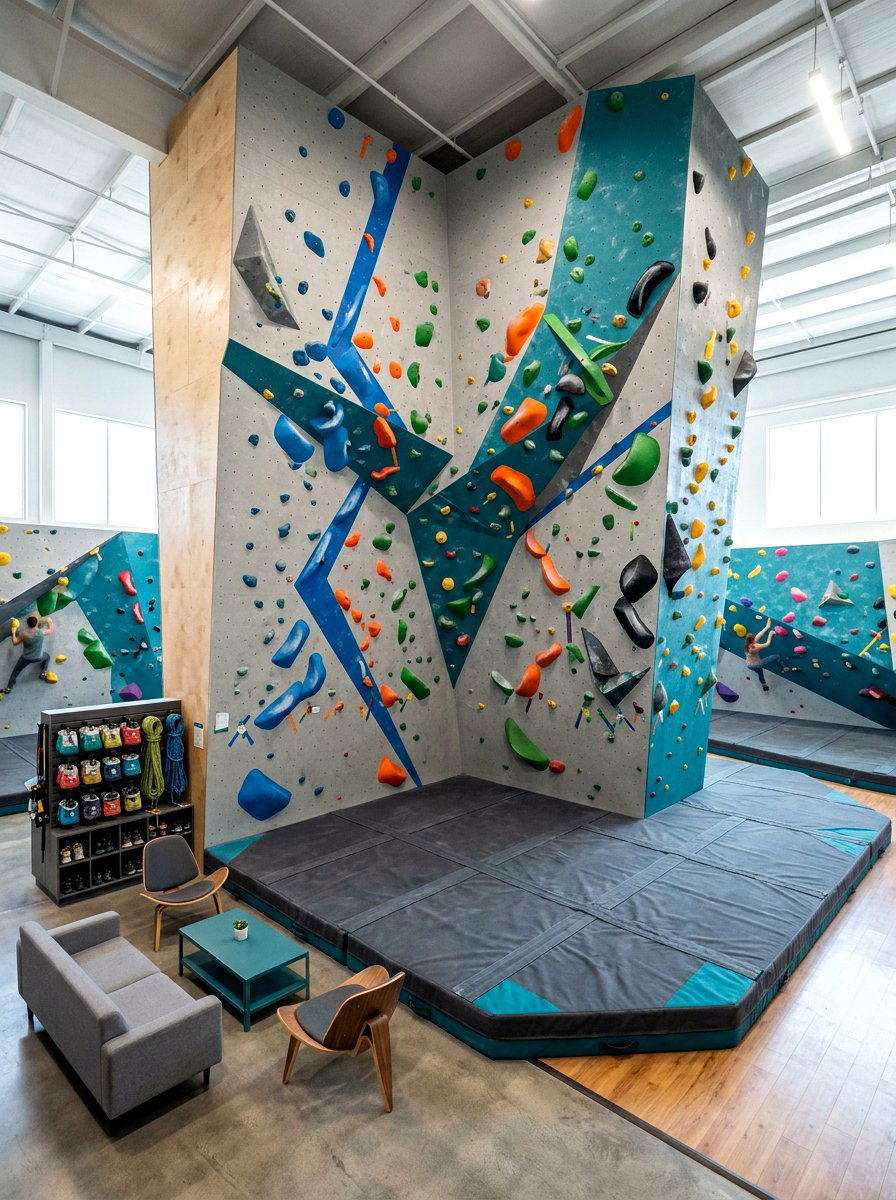
Utilizing two intersecting walls to create a corner climbing zone is an excellent way to maximize vertical space in a smaller playroom. This layout allows for more complex climbing maneuvers as children can brace themselves against both surfaces while ascending or traversing. A corner setup often feels more immersive, creating a "canyon" effect that makes the play area feel like a secret hideout. You can use different materials on each side to add visual interest, such as one side with plywood and the other with a painted mural. This configuration also leaves the center of the room open for other furniture and floor activities.
5. Climbing Wall With Slide
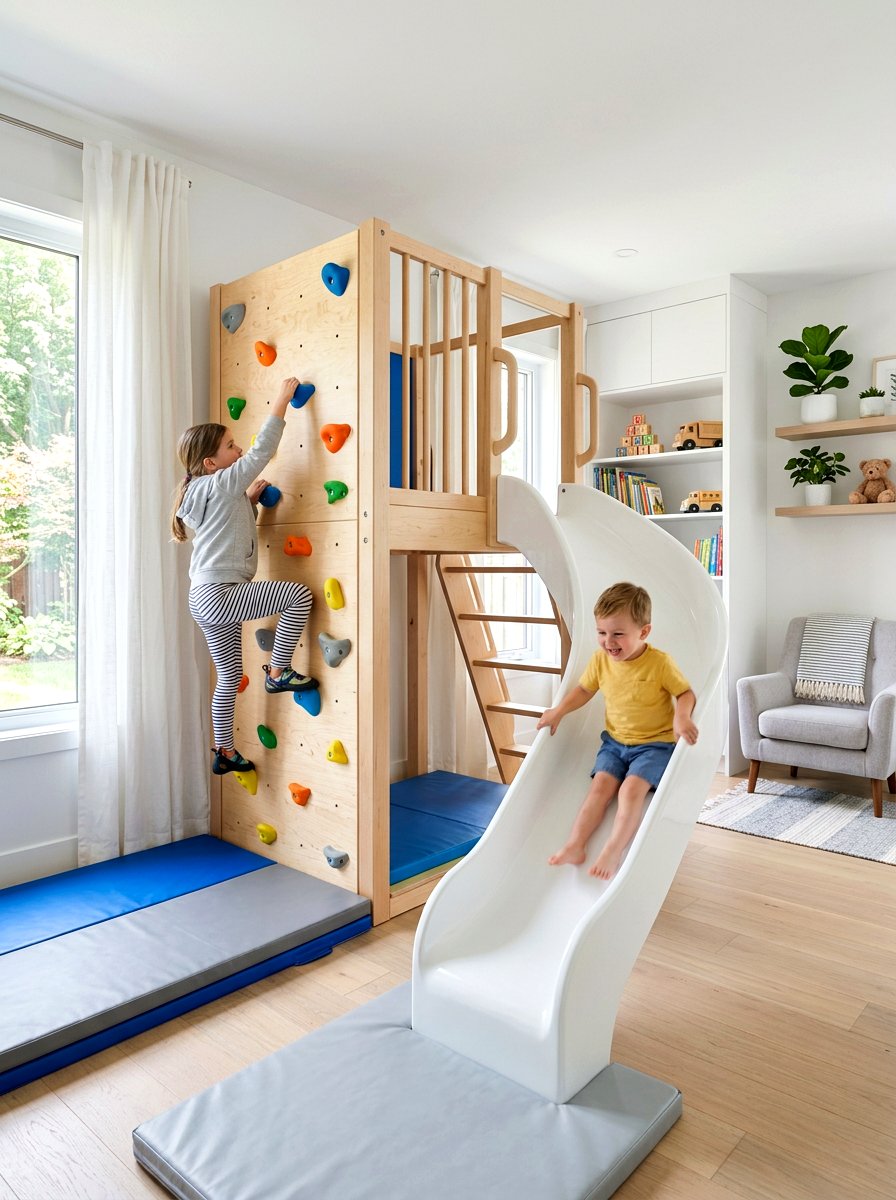
Combining a vertical climbing surface with a built-in slide offers a complete cycle of active play that keeps kids moving and laughing. Children can challenge themselves to reach the top platform before rewarding their efforts with a quick and fun descent back to the floor. This integration works particularly well in larger playrooms where you can build a small mezzanine or lofted area as the destination point. The structure becomes a mini indoor park that encourages repetitive exercise and builds endurance. Using matching wood tones or colors for both the wall and the slide creates a cohesive and professional custom-built appearance.
6. Modern Minimalist Playroom
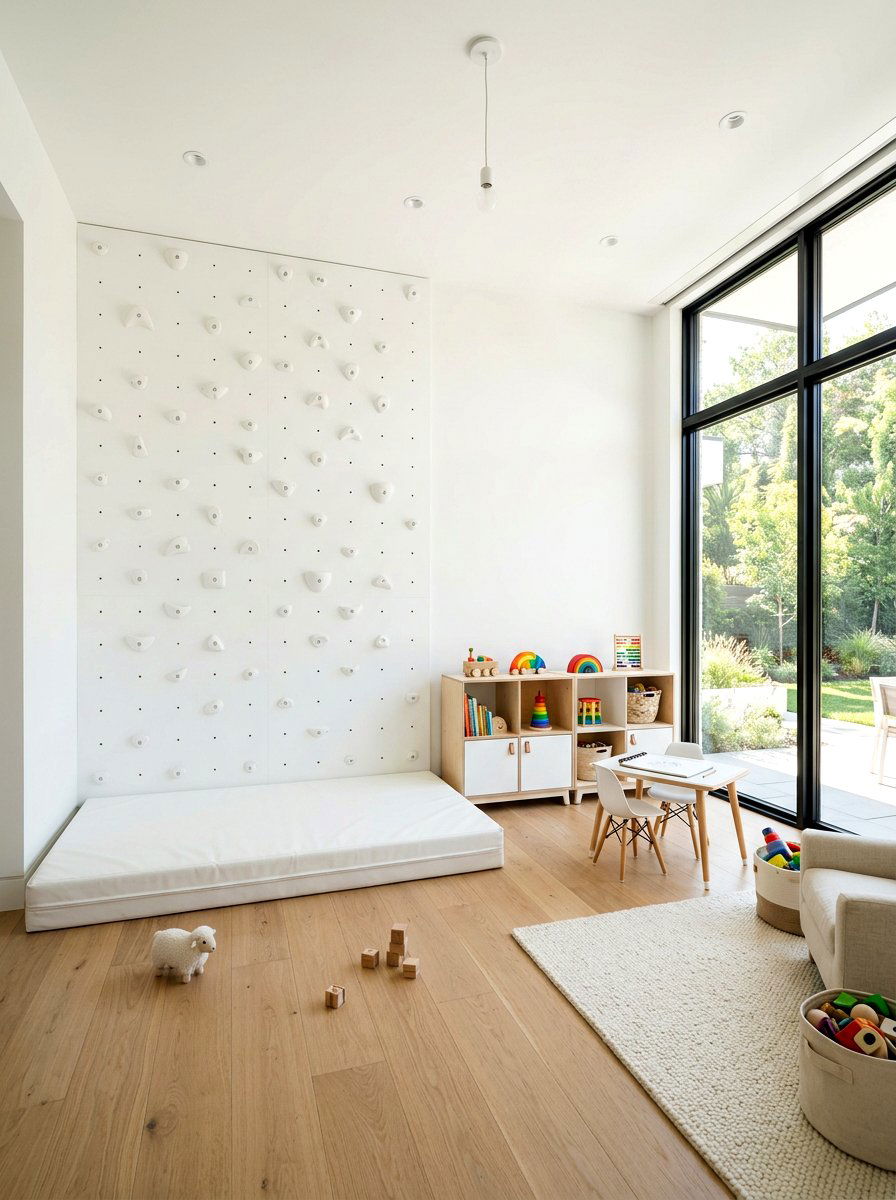
A minimalist approach to climbing walls focuses on clean lines and subtle integration with the room’s architecture for a sophisticated look. Instead of bright, clashing colors, these walls often feature neutral-toned holds that blend into the background or match the wall paint perfectly. This style is ideal for parents who want to maintain a cohesive home aesthetic without sacrificing a dedicated play zone for their children. The wall panels are typically mounted flush against the drywall, creating a seamless transition from play area to living space. Soft gray or white mats at the base ensure safety while maintaining the room's serene and uncluttered vibe.
7. Small Space Vertical Climbing
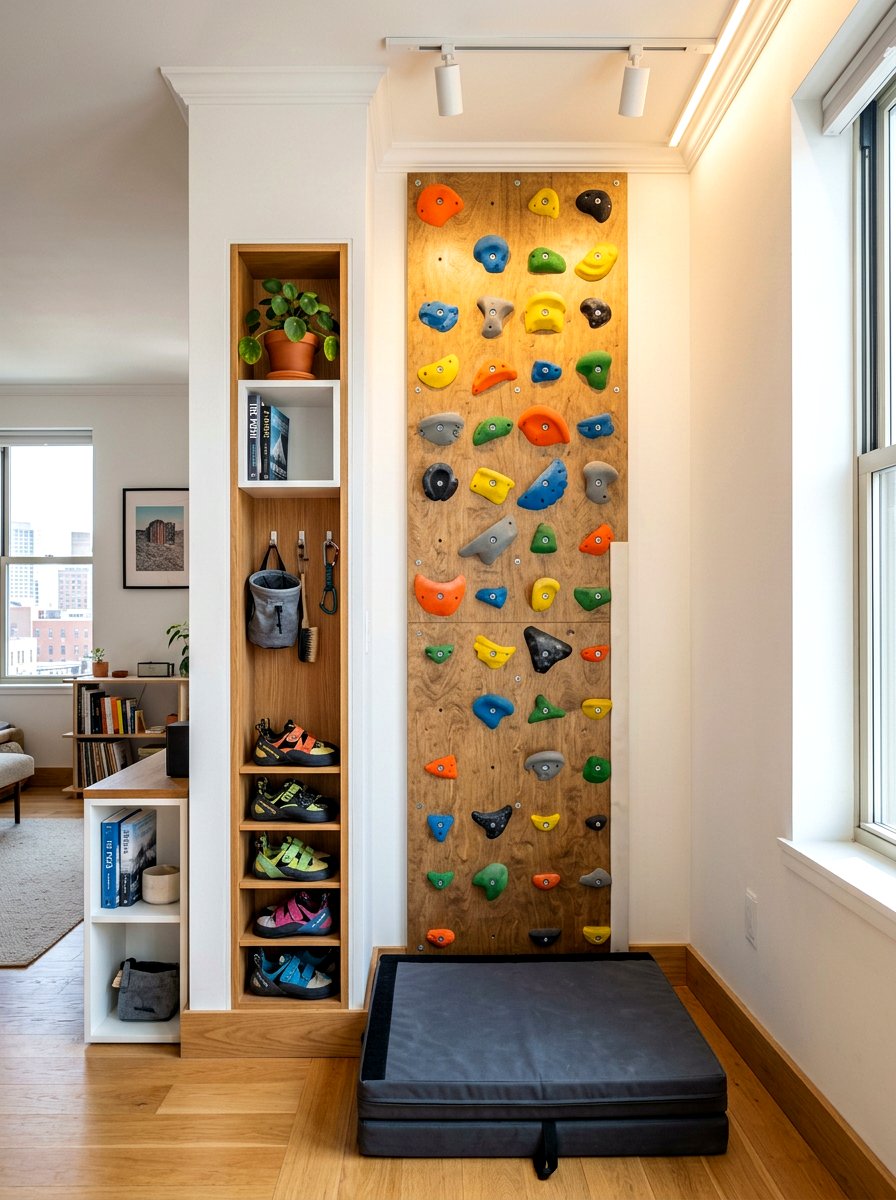
When floor space is limited, going vertical is the most efficient way to provide high-energy play options without overcrowding the room. A narrow but tall climbing strip can be installed on a small section of wall or even on the back of a sturdy door. This setup allows children to burn off energy in a footprint as small as a few square feet while still providing a significant physical challenge. You can use slim profile holds to ensure the wall doesn 't protrude too far into the walking path of the room. This concept proves that you don' t need a massive basement to enjoy indoor climbing.
8. Nautical Playroom Theme
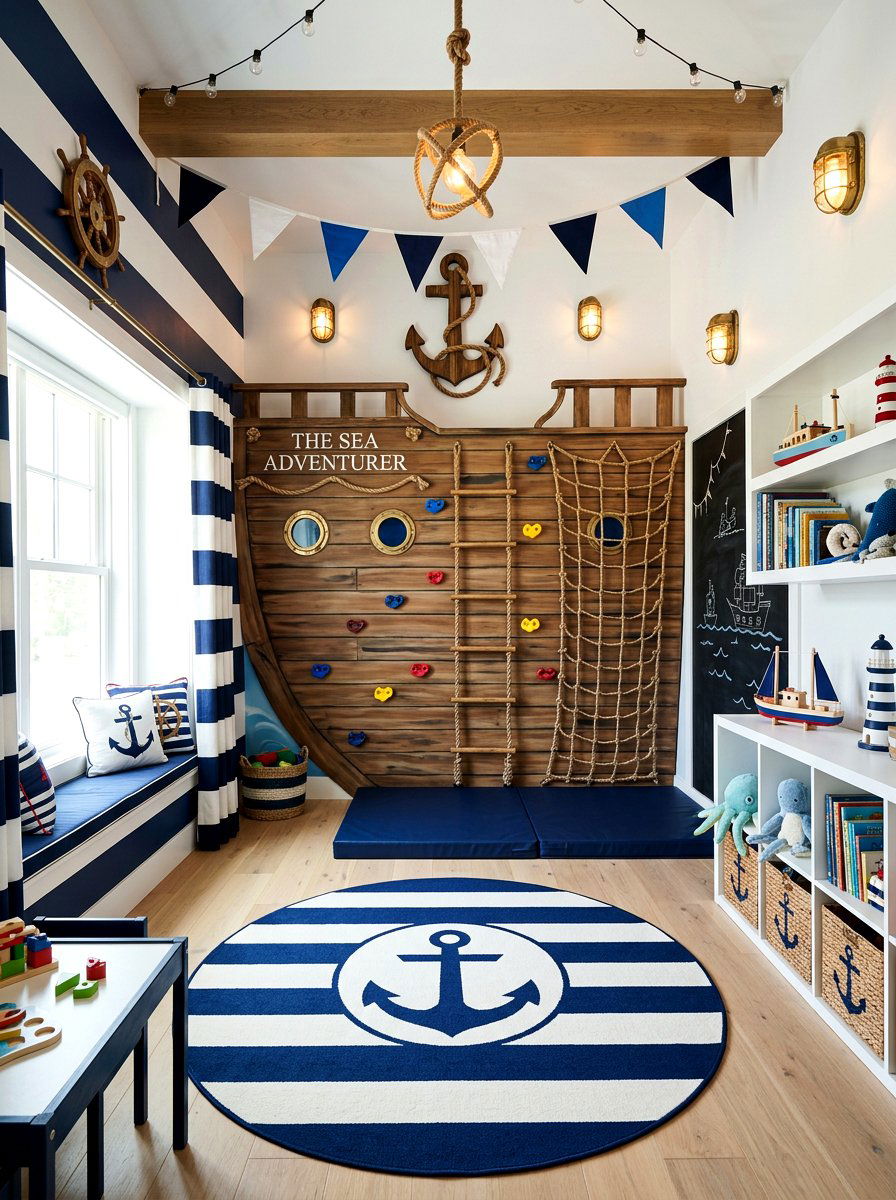
Transforming the climbing wall into a ship’s hull or a seaside cliffside adds a layer of imaginative storytelling to every play session. You can paint the background in shades of deep blue and add rope ladders alongside the rock holds to mimic a pirate ship’s rigging. Adding small porthole windows or steering wheel accessories near the top of the wall enhances the theme and provides a "destination" for the climb. This design works beautifully with navy and white striped accessories and wooden crates for toy storage. It turns a standard physical activity into an adventurous voyage across the imaginary high seas for kids.
9. Chalkboard Climbing Wall
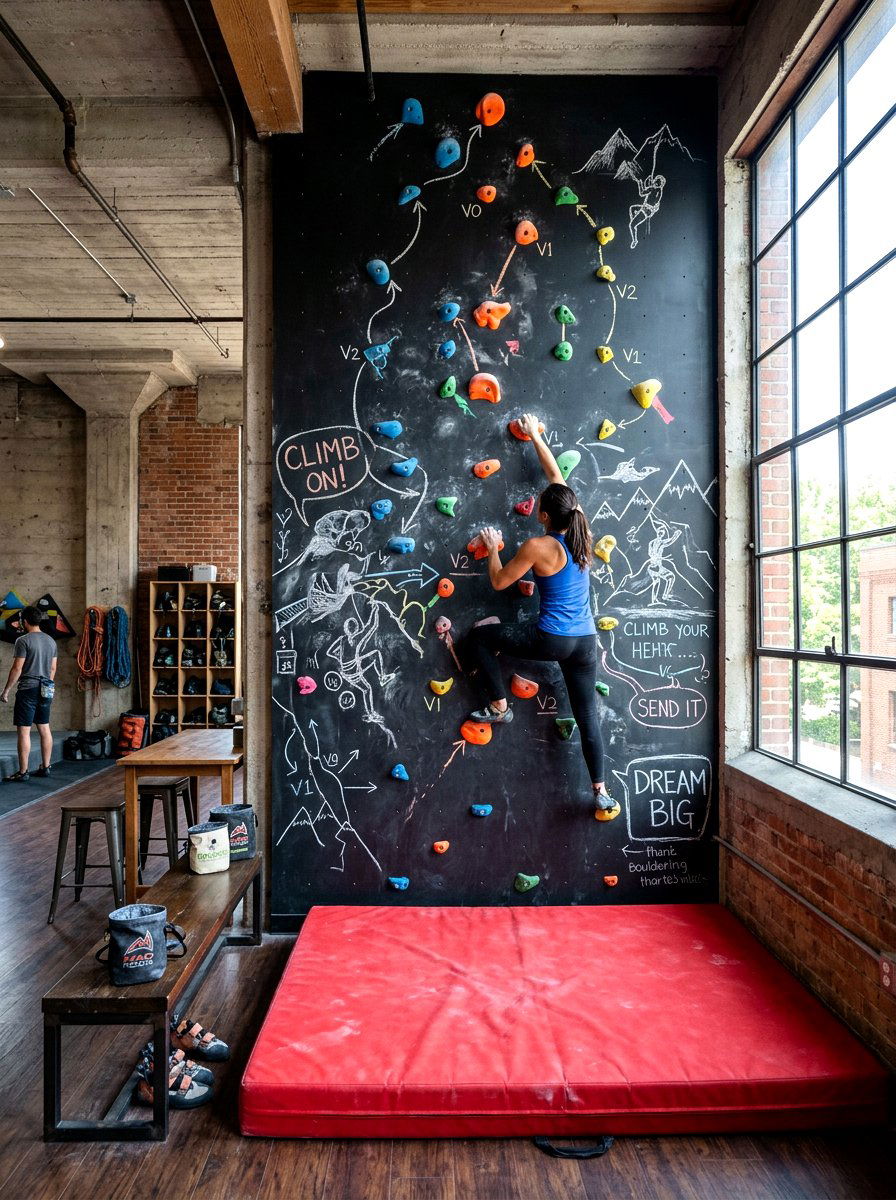
Painting the climbing surface with high-quality chalkboard paint allows for an ever-changing environment where kids can draw their own obstacles or routes. They can mark their progress, write "summit" notes at the top, or decorate the wall with chalk art between climbing sessions. This dual-purpose feature is perfect for creative children who enjoy both physical and artistic expression within the same space. It also provides an easy way for parents to label different climbing routes by color or difficulty level using chalk. The dark matte finish of the chalkboard paint provides a striking contrast against colorful holds and bright playroom furniture.
10. Scandinavian Climbing Wall
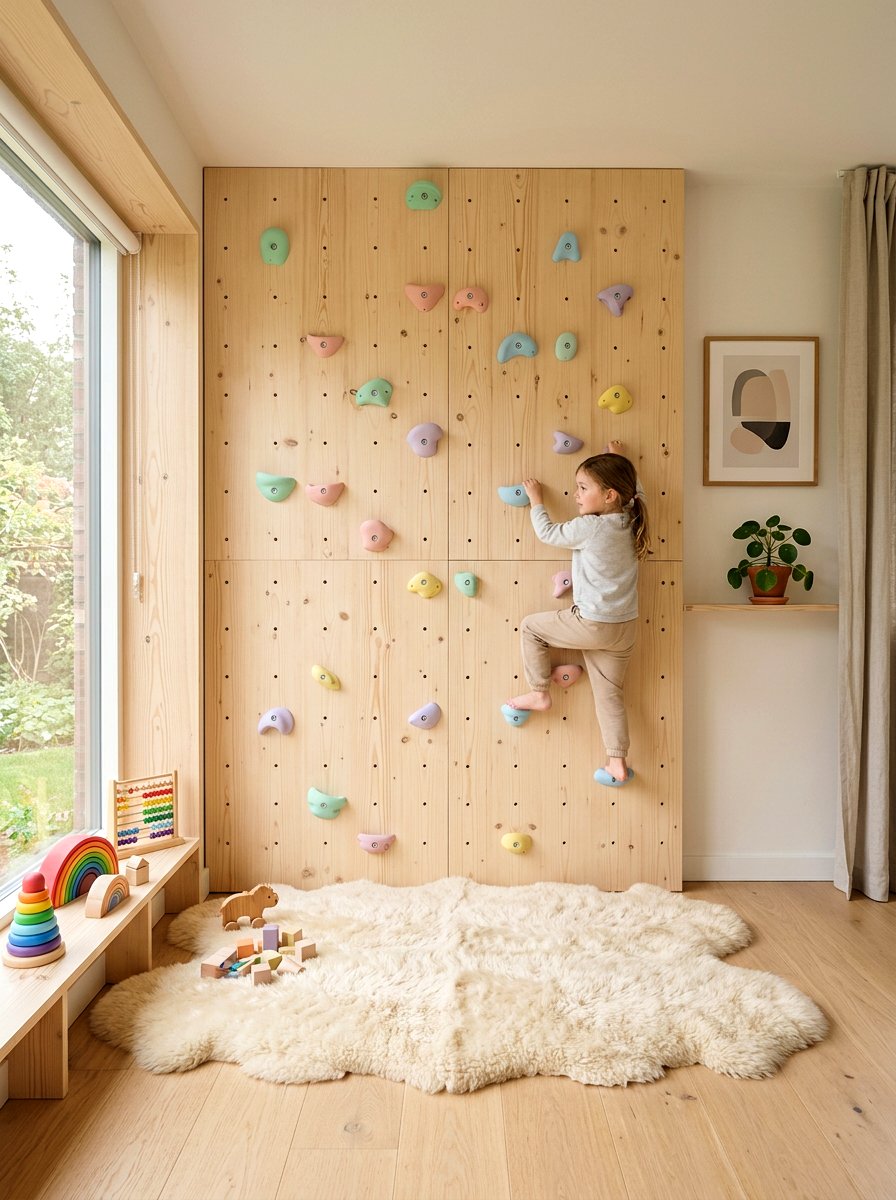
The Scandinavian style emphasizes natural materials, light colors, and functional simplicity to create a bright and airy atmosphere for children. A climbing wall in this theme often features light-toned wood like pine or ash paired with white or pastel-colored holds. The surrounding decor typically includes minimalist wooden toys, cozy sheepskin rugs, and soft neutral textiles to balance the active energy of the wall. This design philosophy creates a playroom that feels calm and organized rather than chaotic, making it a pleasant space for both play and relaxation. It is a timeless look that easily evolves as your children grow older.
11. Loft Bed Climbing Access
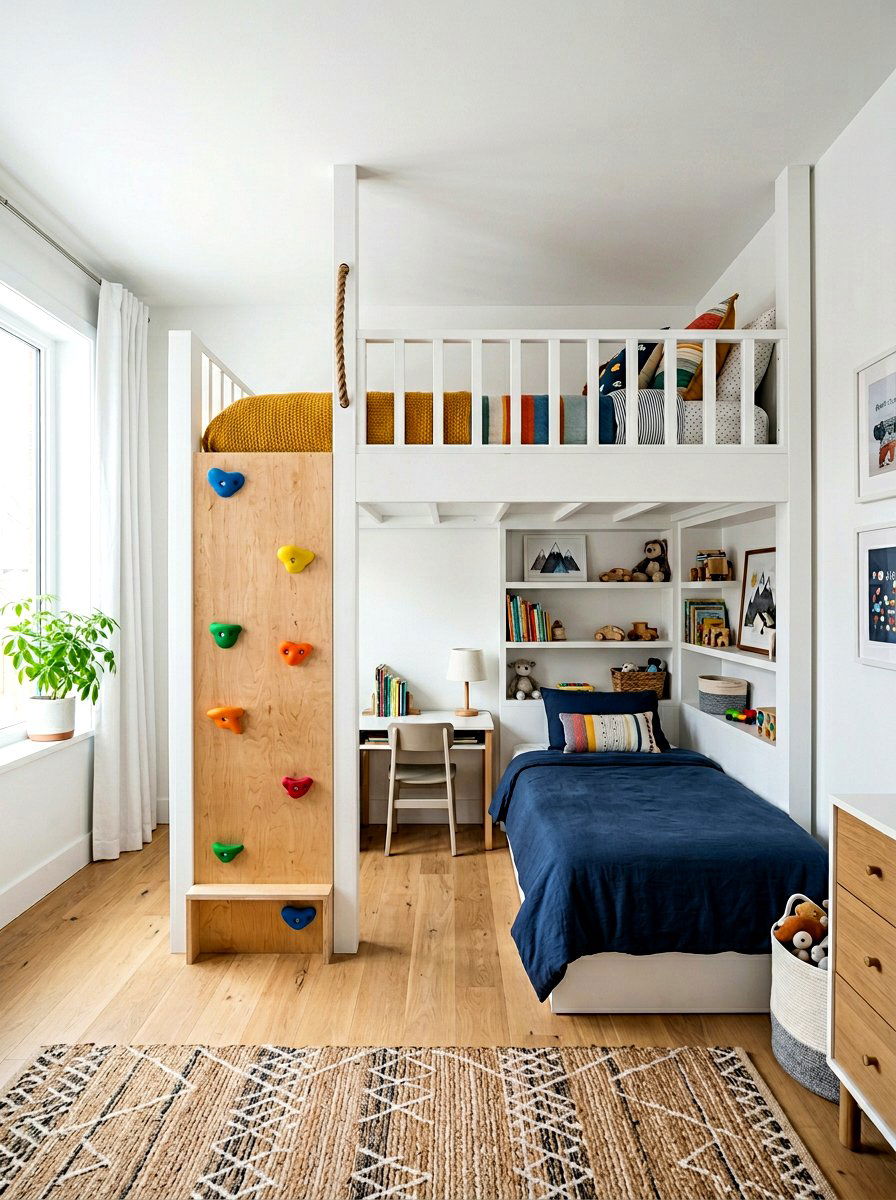
Replacing a standard ladder with a climbing wall to reach a loft bed is a clever way to integrate exercise into daily routines. Children will love the challenge of scaling their way up to their sleeping quarters, turning bedtime into a fun and active ritual. This setup saves significant floor space by combining a piece of furniture with a large-scale play feature on a single wall. You can install handrails at the top to ensure a safe transition from the wall onto the bed platform. It makes the bedroom feel like a personalized adventure fort while encouraging strength and coordination.
12. Soft Landing Mats
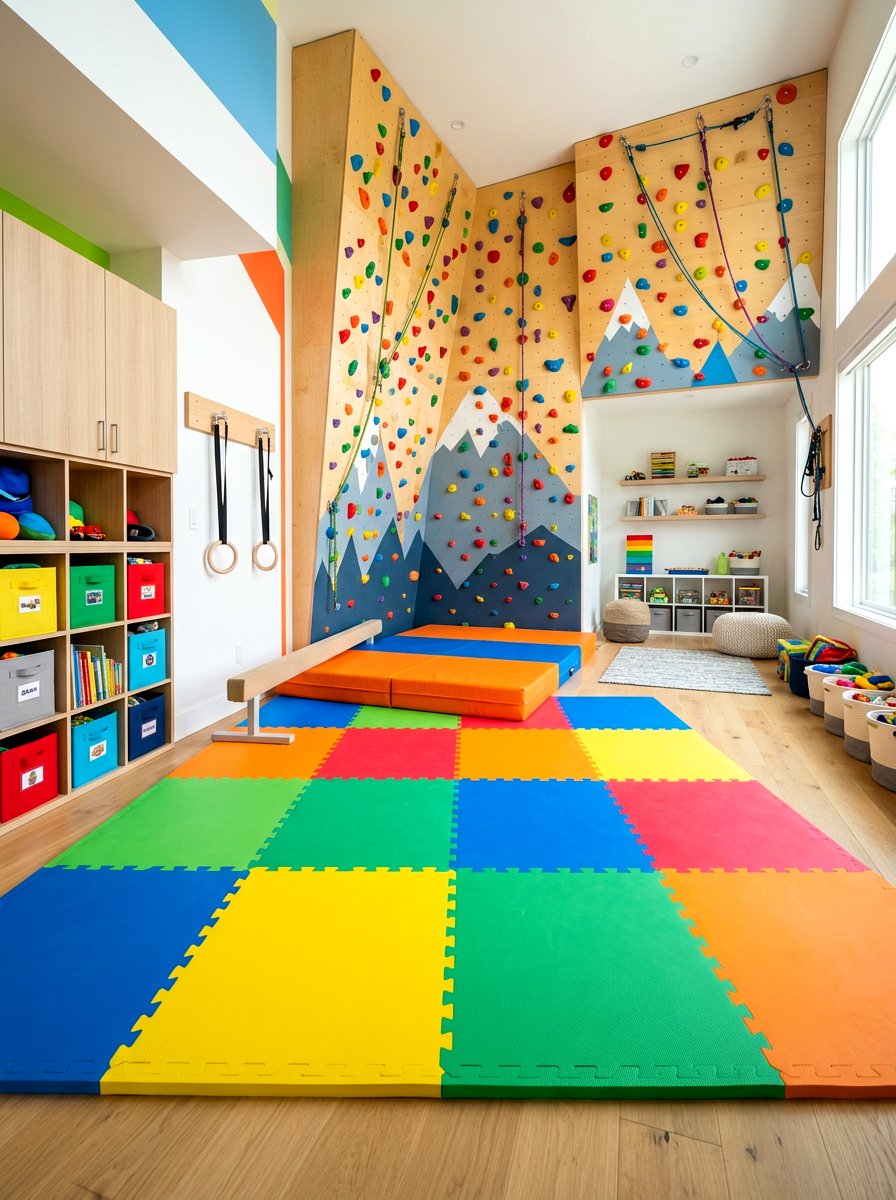
High-quality landing mats are the most critical component of any indoor climbing setup to ensure the safety of young adventurers. These mats should be thick enough to absorb impact from falls and wide enough to cover the entire potential fall zone around the wall. Many modern mats come in stylish colors and foldable designs, making them easy to tuck away when the climbing wall is not in use. Some families choose to use modular foam tiles that cover the entire playroom floor, providing a consistent and cushioned surface everywhere. Investing in professional-grade gymnastic mats provides peace of mind for parents and confidence for kids.
13. DIY Climbing Wall Kit
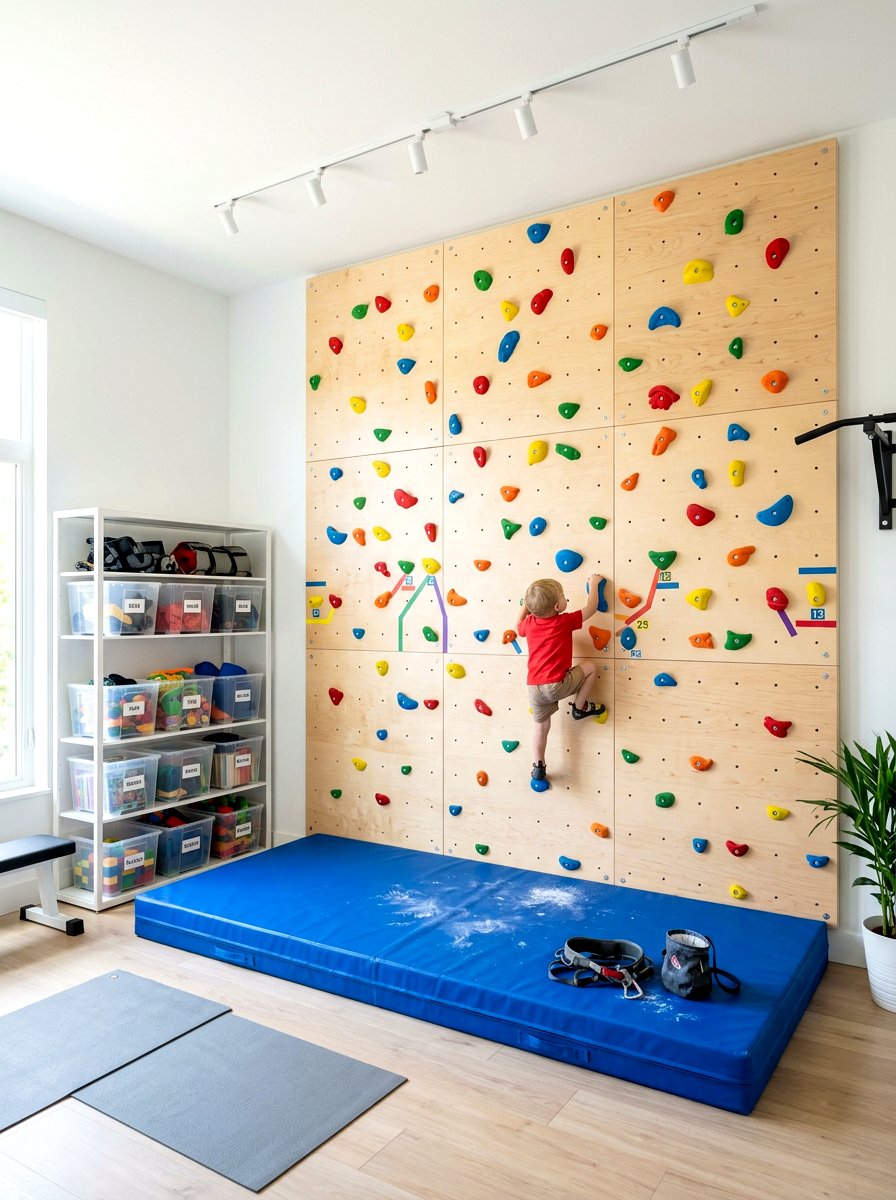
Purchasing a pre-designed climbing wall kit is a convenient option for parents who want a professional look without the hassle of custom fabrication. These kits typically include pre-drilled panels, a selection of holds, and all the necessary hardware for secure installation onto wall studs. They often come with detailed instructions on layout patterns and safety spacing to ensure the best possible experience for different age groups. Many kits are modular, allowing you to start with a small section and expand the wall as your child’s skills and interests grow. It is a reliable way to guarantee a high-quality finish and structural integrity.
14. Pegboard Climbing Wall
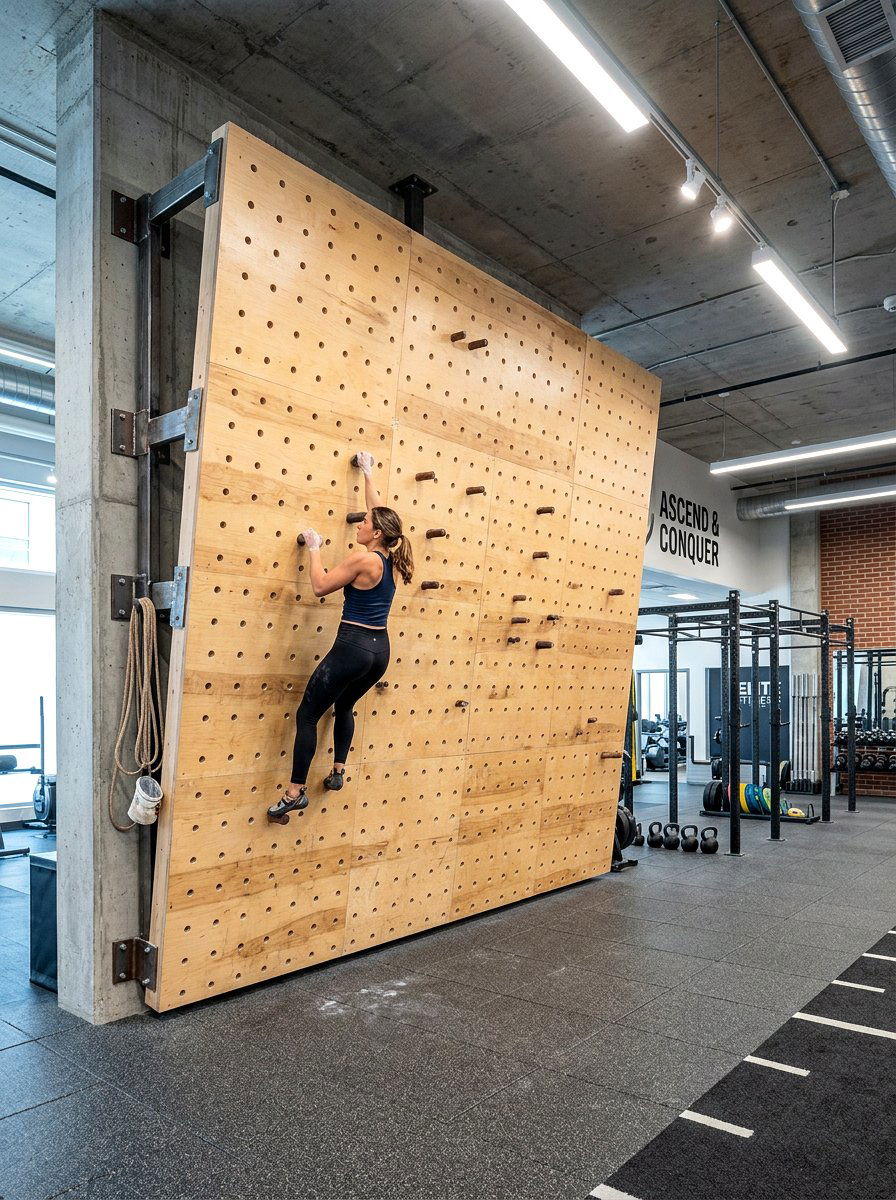
Integrating a pegboard-style system into your climbing wall allows for a more versatile and adjustable range of activities for older children. Instead of fixed rock holds, kids use wooden pegs that they must insert into holes to pull themselves upward or across the wall. This type of climbing requires significant upper body strength and hand-eye coordination, making it a great progression for more advanced climbers. You can mix standard rock holds with pegboard sections to create a multi-disciplinary workout area that remains challenging for years. The sleek, industrial look of a pegboard also fits well in modern or urban-styled playrooms.
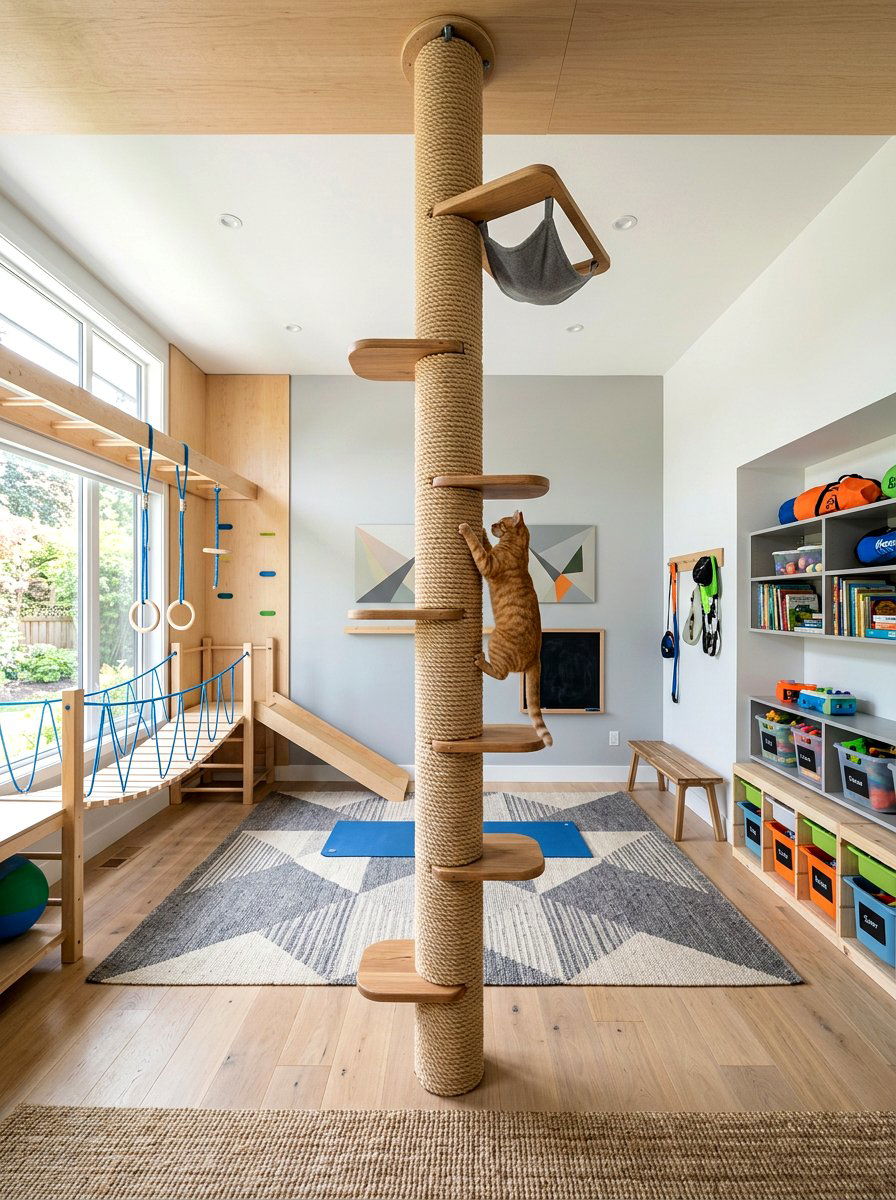
15. Geometric Wall Pattern
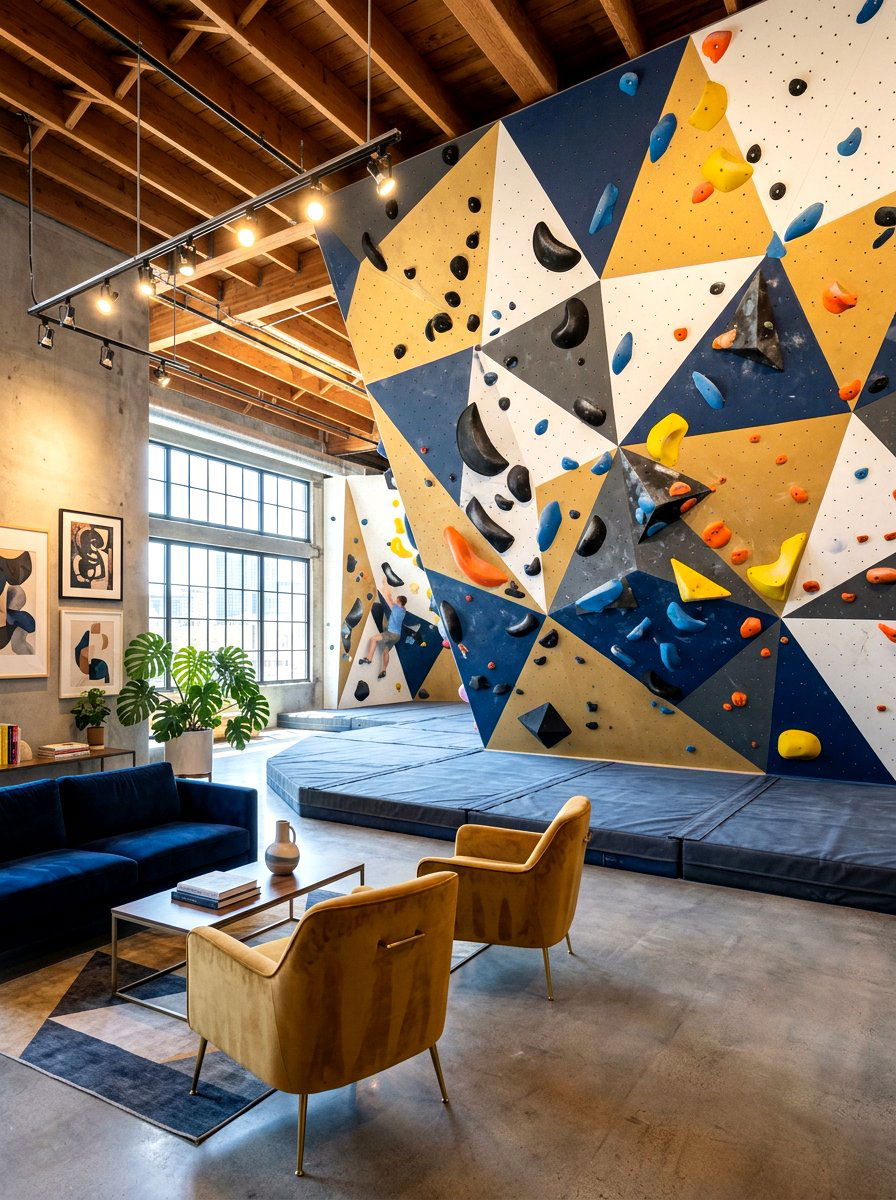
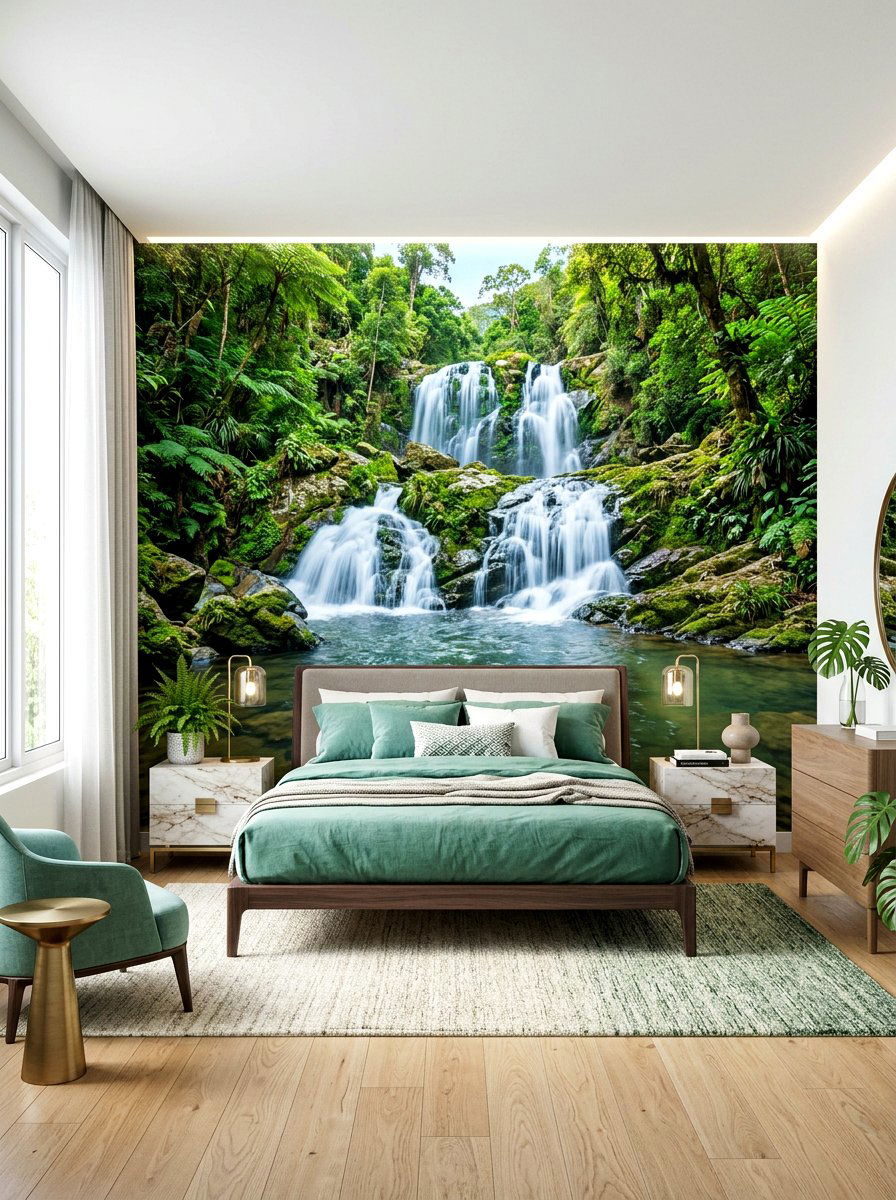
Using bold geometric shapes and contrasting paint colors behind your climbing holds creates a stunning visual statement that doubles as modern art. You can paint large triangles, hexagons, or abstract stripes to define the climbing zone and separate it from the rest of the room. This approach allows you to coordinate the wall's colors with other elements in the playroom, such as rugs, pillows, or storage bins. The geometric patterns can also serve as a guide for different climbing paths, with holds placed specifically within certain shapes for themed challenges. It is a cost-effective way to add major personality to a basic plywood installation.
16. Mountain Mural Backdrop
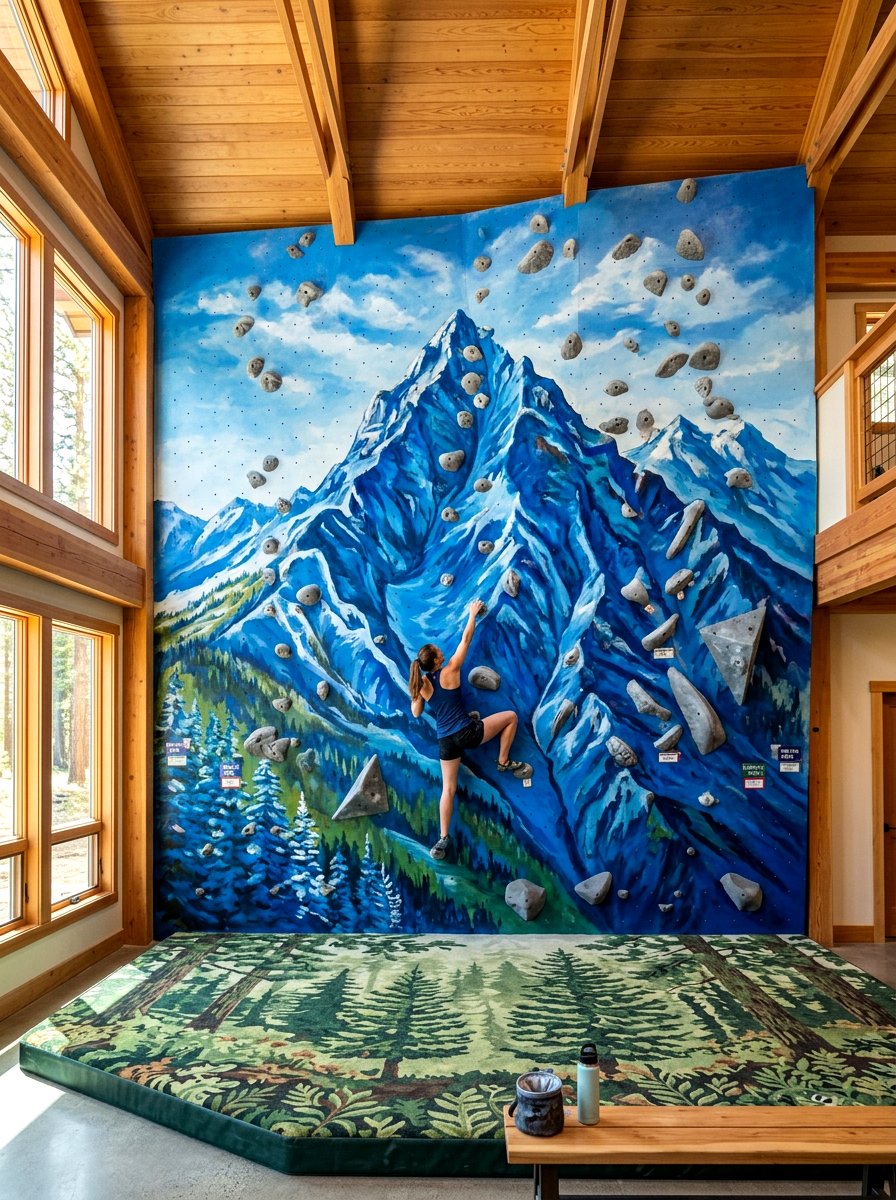
A hand-painted mountain mural provides an inspiring and scenic background that makes children feel like they are scaling real peaks. You can use varying shades of blue, gray, and white to create a layered mountain range that adds depth and perspective to the room. This theme pairs perfectly with natural wood holds or rocks painted to match the colors of the mural for a seamless look. Adding a "sun" at the top of the wall gives kids a clear goal to reach during their climbing sessions. It transforms the playroom into an outdoor adventure zone that sparks curiosity and a love for nature.
17. Black And White Playroom
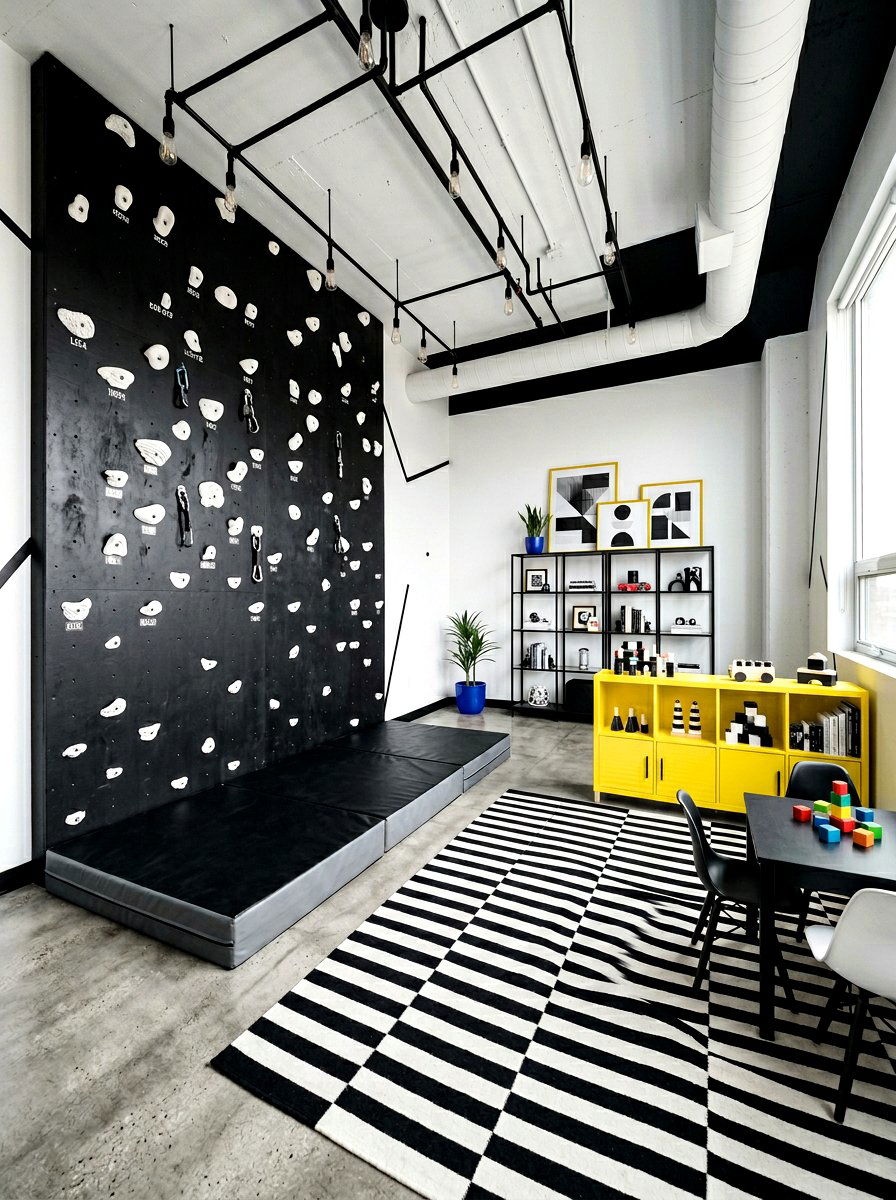
A monochrome color scheme for a climbing wall offers a sleek and sophisticated look that can easily transition into a teen hangout space later. Using a black wall with white holds or vice versa creates high contrast that is visually stimulating and modern. This palette works exceptionally well with industrial accents, such as metal storage lockers and exposed bulb lighting. It provides a neutral base that allows other colorful toys and books in the room to pop without making the space feel overwhelmed. A black-and-white theme is also very gender-neutral, making it a perfect choice for shared playrooms between brothers and sisters.
18. Industrial Style Gym
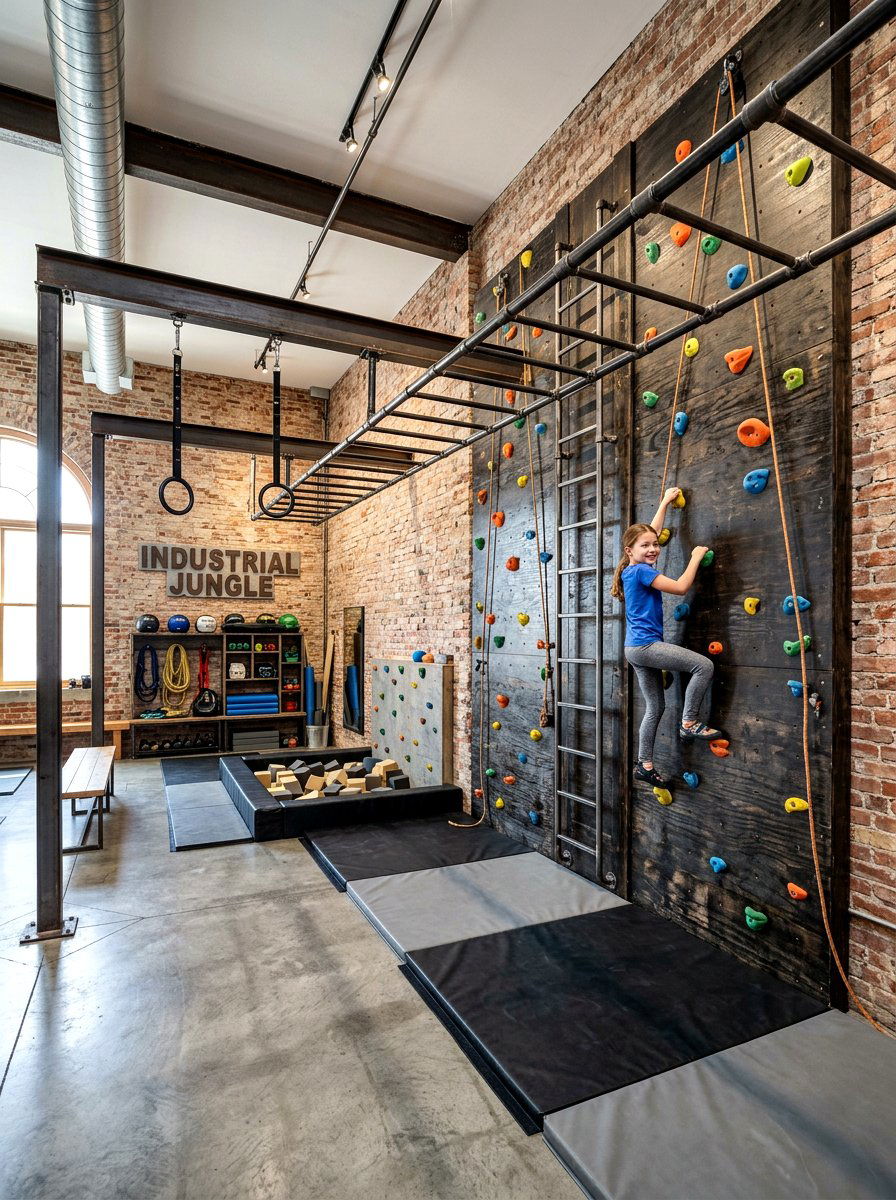
Drawing inspiration from professional bouldering gyms, an industrial-style playroom features raw materials like exposed brick, metal pipes, and textured concrete finishes. The climbing wall panels can be stained in dark wood tones or painted in charcoal gray to enhance the rugged and athletic aesthetic. Using oversized, heavy-duty holds and chunky ropes adds to the "pro" feel of the space, making it an exciting environment for older children. This design often includes other gym elements like pull-up bars or wall-mounted monkey bars made from black iron piping. It creates a dedicated fitness-focused zone that looks as cool as it is functional.
19. Nature Themed Climbing
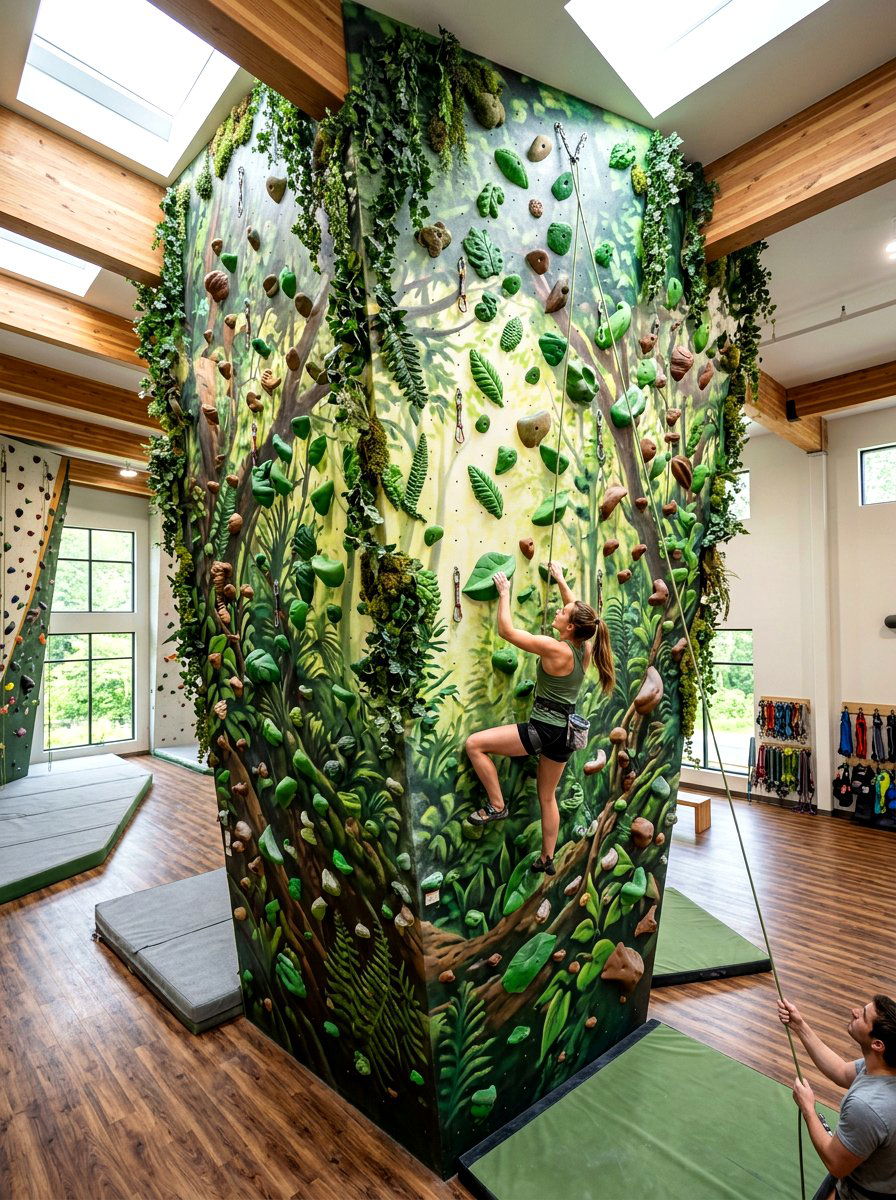
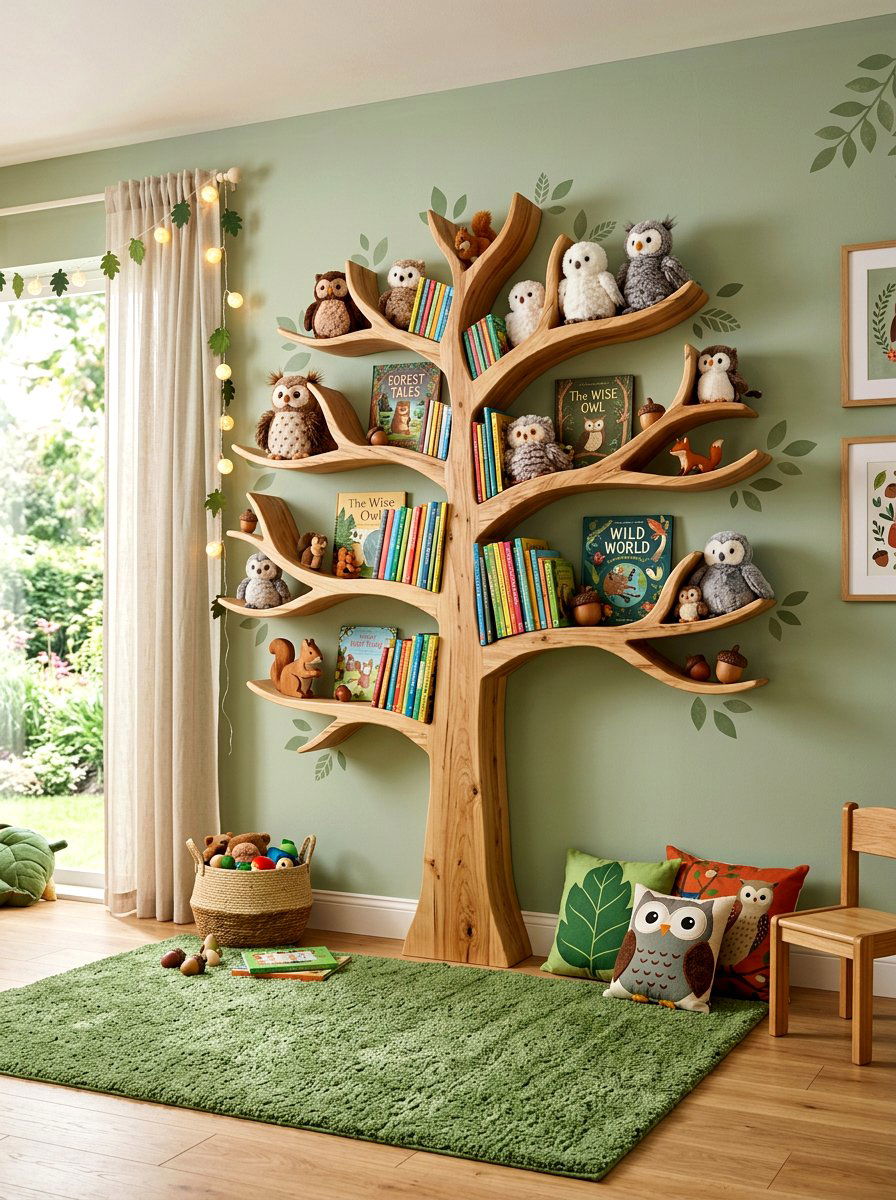
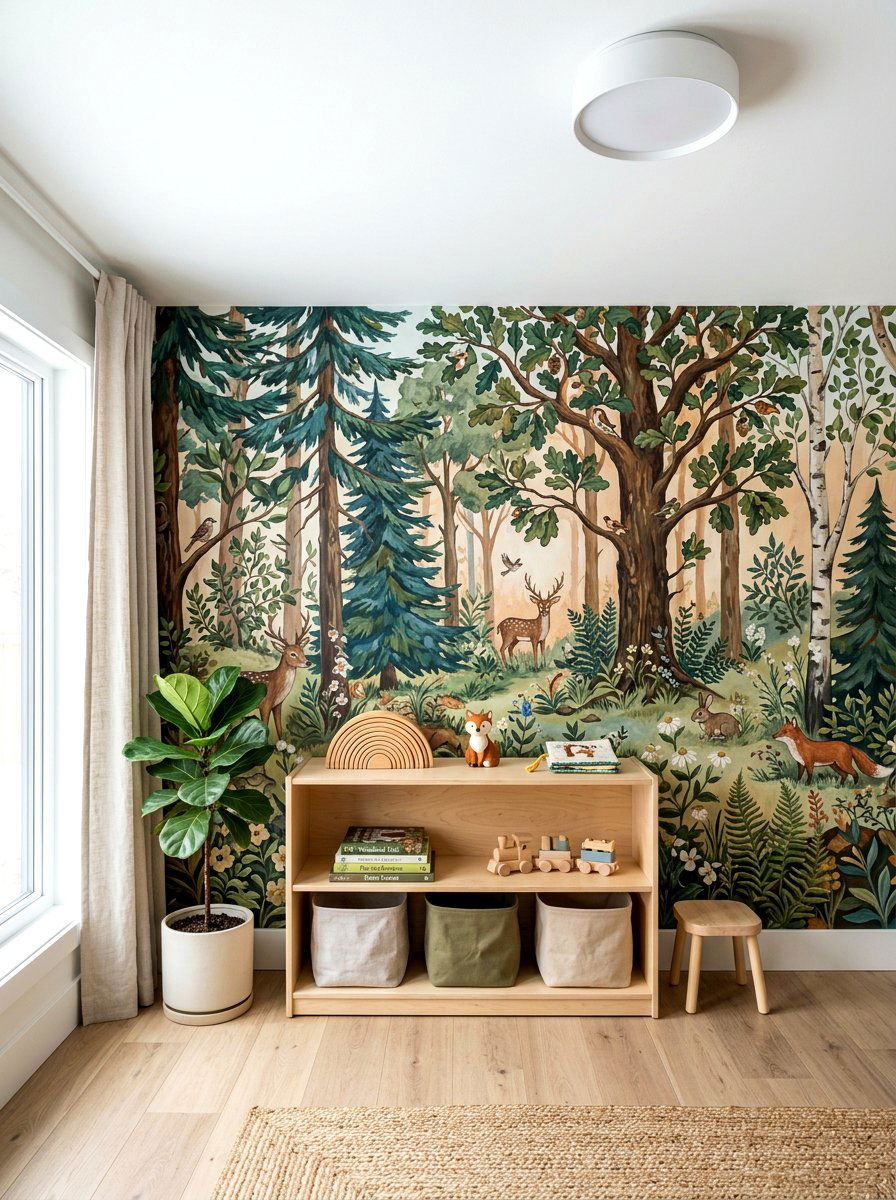
Creating a nature-inspired climbing zone involves using earthy colors, leaf-shaped holds, and artificial greenery to simulate a forest or jungle environment. You can wrap some sections of the wall in faux moss or add climbing vines that children can navigate around as they move upward. This theme encourages a sense of wonder and makes the indoor activity feel more like an outdoor exploration. Pairing the wall with a soft green carpet or brown floor mats completes the "forest floor" look. It is an excellent choice for a playroom that aims to be a soothing and imaginative retreat from the digital world.
20. Rainbow Climbing Wall
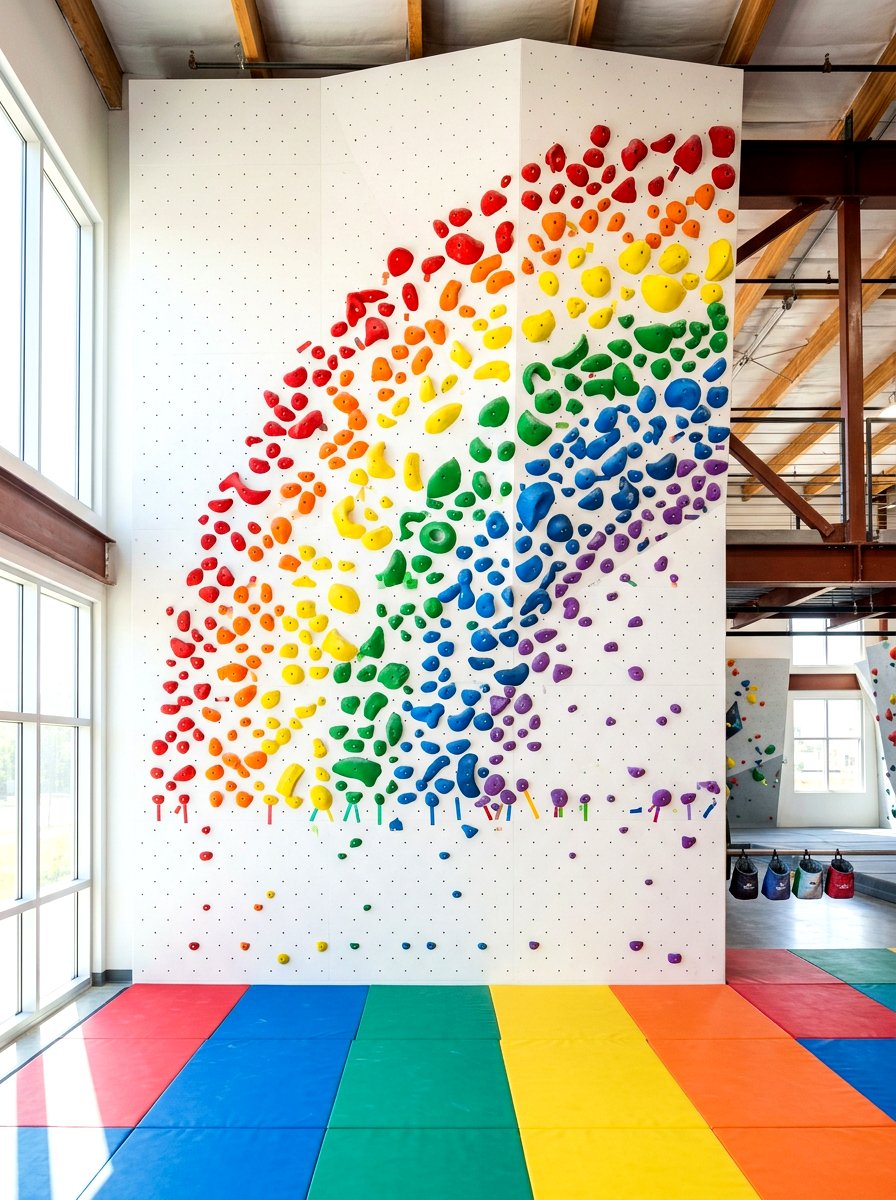
A rainbow-themed wall is a cheerful and high-energy option that brings a burst of joy to any child's bedroom or play area. By arranging the climbing holds in a spectrum of colors from bottom to top, you create a beautiful and organized visual transition. Each color can represent a different level of difficulty, allowing kids to "level up" as they master the different bands of the rainbow. This vibrant design is naturally appealing to younger children and makes the playroom feel like a space dedicated entirely to fun and creativity. It pairs well with white walls and bright, multi-colored storage accessories.
21. Hidden Climbing Wall
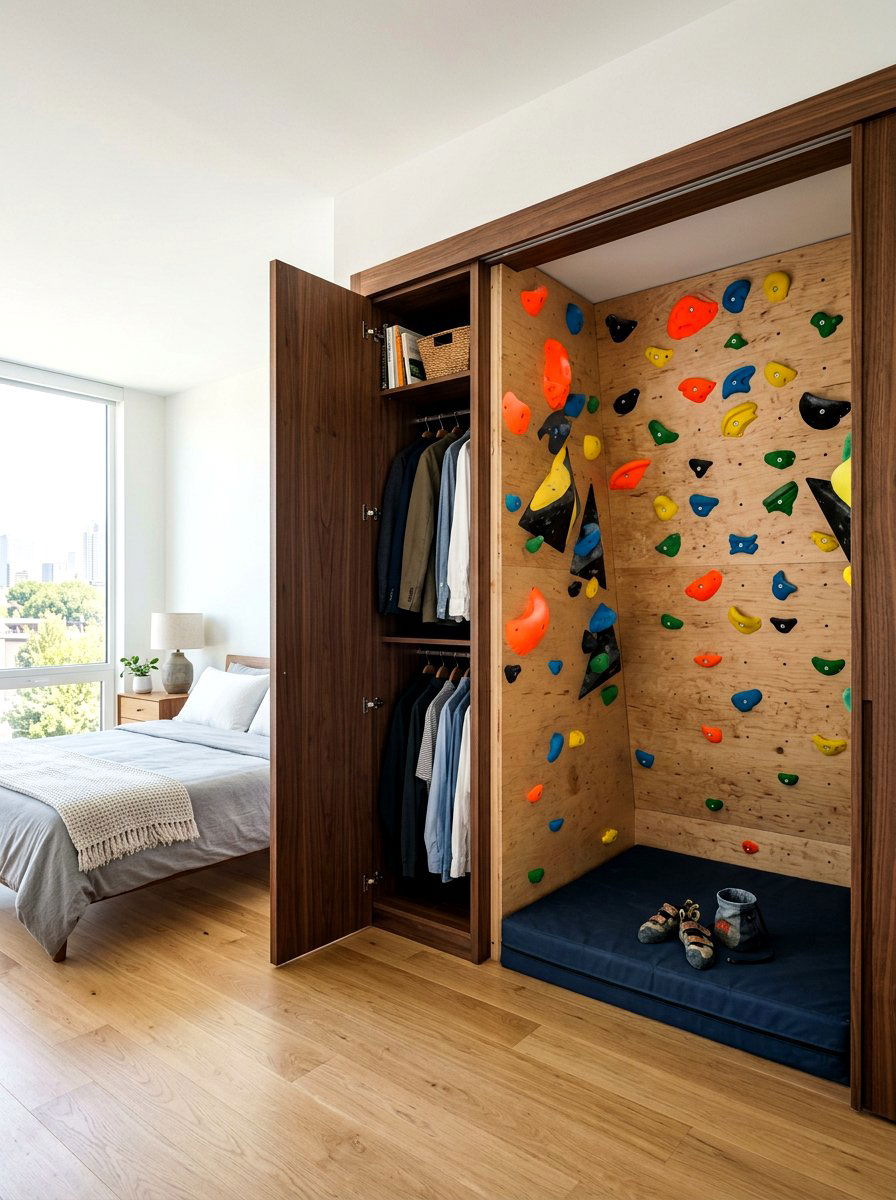
For multi-purpose rooms where you might not want a climbing wall visible all the time, a hidden or "disguised" design is a brilliant solution. This can be achieved by installing the climbing holds on the back of a large swinging door or inside a deep closet that can be opened for play. Another option is to use holds that match the exact color of the wall paint, making them nearly invisible from a distance. This approach allows you to maintain a formal living room or bedroom appearance while still providing a secret world of adventure for your children whenever they want it.
22. Texture Wall Feature
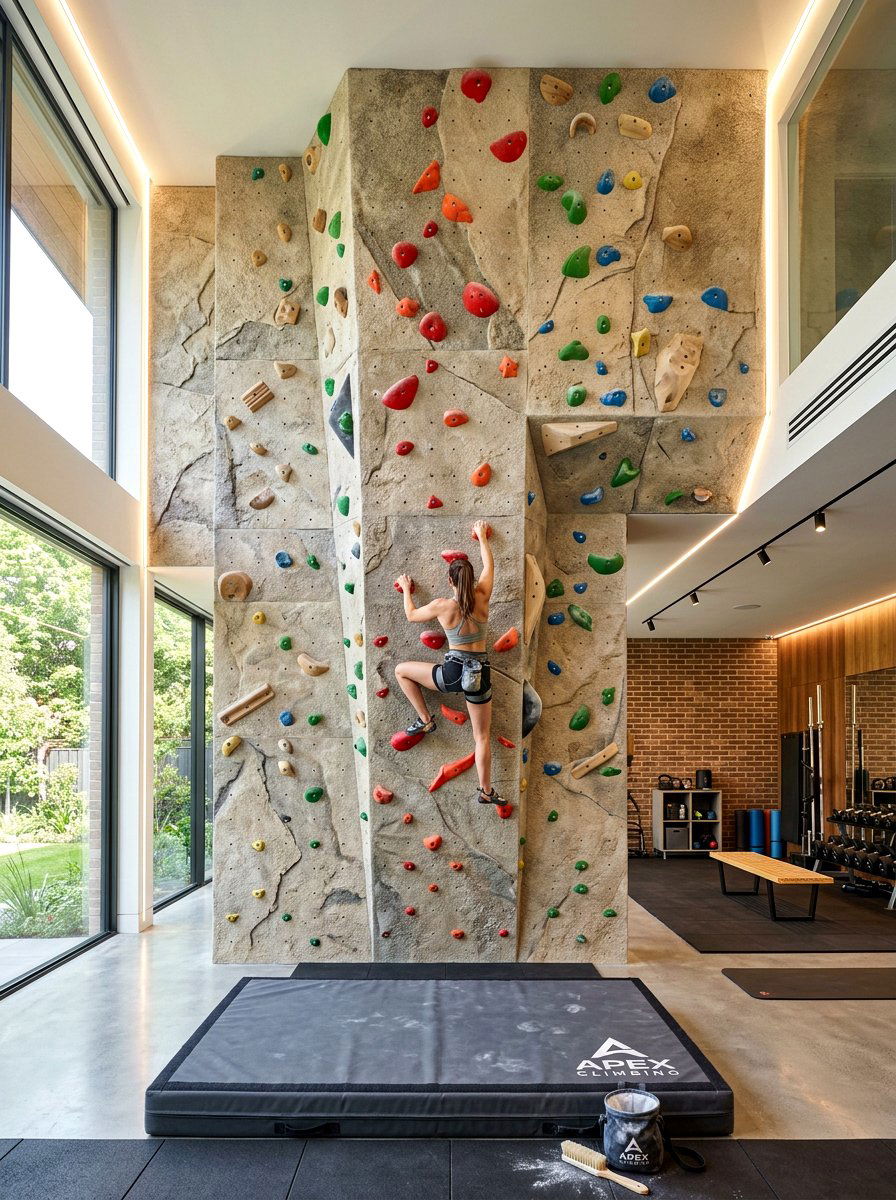
Adding different textures to the surface of the climbing wall, such as sand-infused paint or carpeted sections, provides extra grip and a unique tactile experience. A textured surface mimics the feel of real stone more closely than smooth plywood, which can help develop a child 's sensory processing skills. You can also mix in different materials like corrugated metal or smooth plastic panels to create a "patchwork" of climbing sensations. This variety keeps the activity interesting and challenging as kids have to adapt their grip and footwork to different surfaces. It also adds a rich, layered look to the playroom' s interior design.
23. Under Stairs Climbing
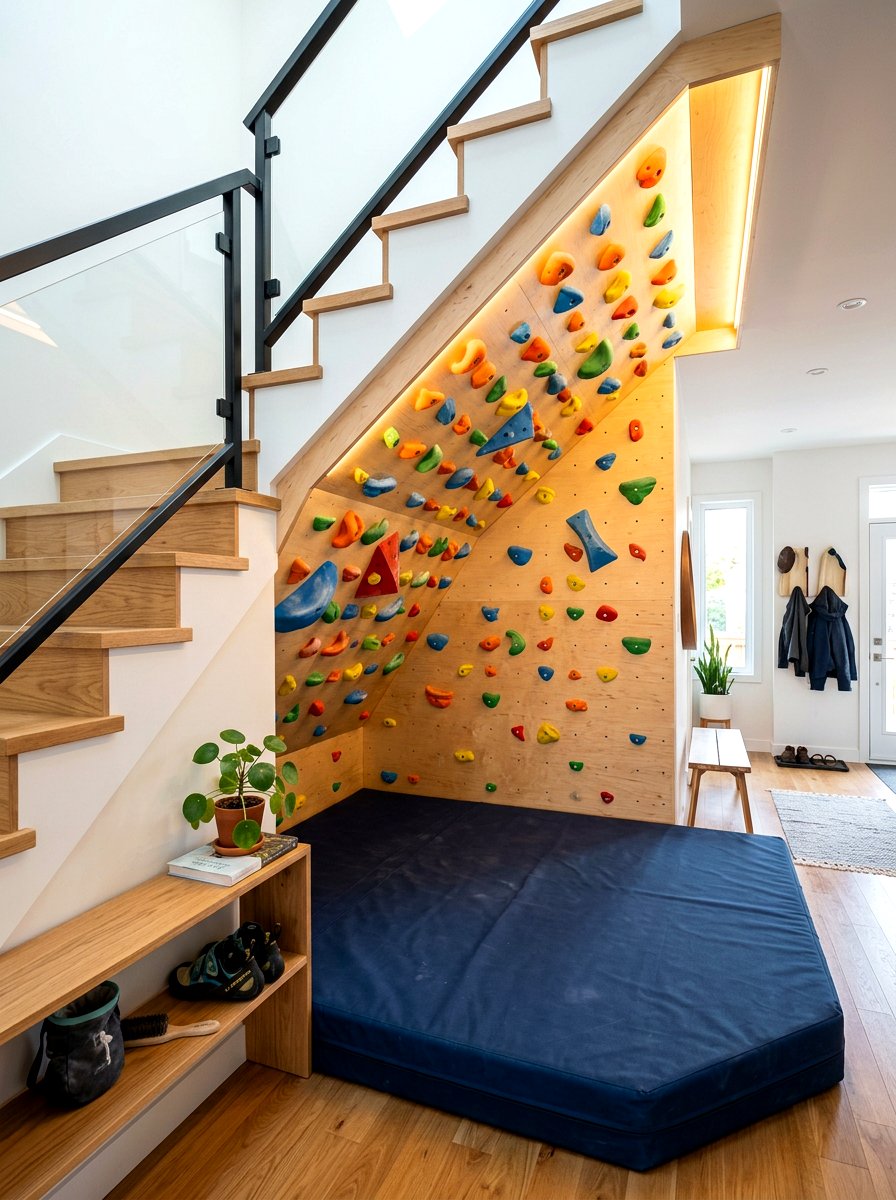
The often-wasted space beneath a staircase is the perfect location for a custom-built bouldering cave or a small climbing nook. Because the underside of stairs is naturally angled, it provides an automatic "overhang" that adds a new layer of difficulty for more experienced young climbers. This "cave" feel is incredibly cozy and makes children feel like they have their own secret hideaway for active play. You can line the walls and ceiling of this small space with holds to create a 360-degree climbing experience. It is a smart way to utilize every inch of your home’s square footage for family fun.
24. Fold Down Climbing Wall
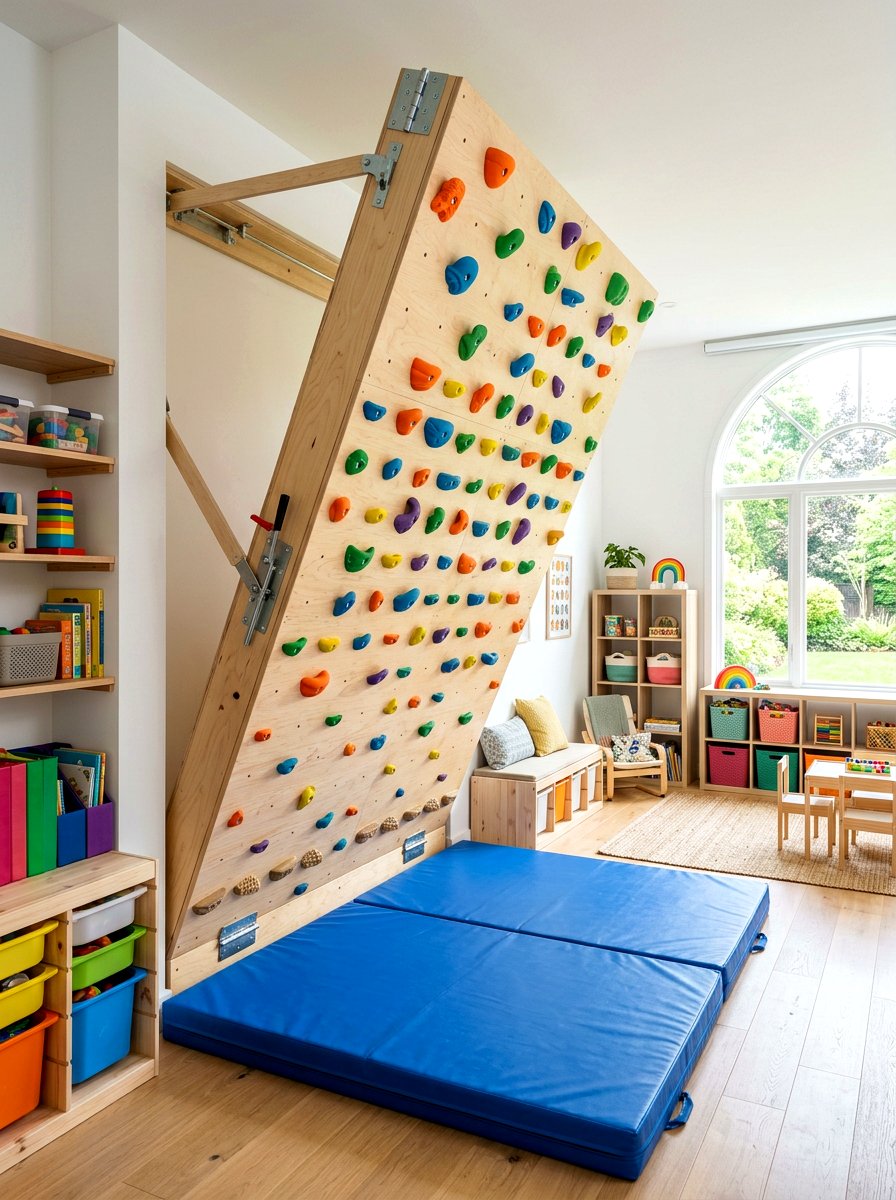
A fold-down climbing wall is a fantastic space-saving invention for rooms that need to serve multiple functions throughout the day. The wall is built on a sturdy hinged frame that can be lowered into a slanted climbing position and then locked flat against the wall when play is over. This slanted angle is often easier for beginners to navigate than a vertical wall, making it a great entry point for younger kids. When folded up, the underside of the panel can feature a mirror, a whiteboard, or a large piece of art to blend into the decor. It offers the ultimate flexibility for modern living.
25. High Ceiling Bouldering
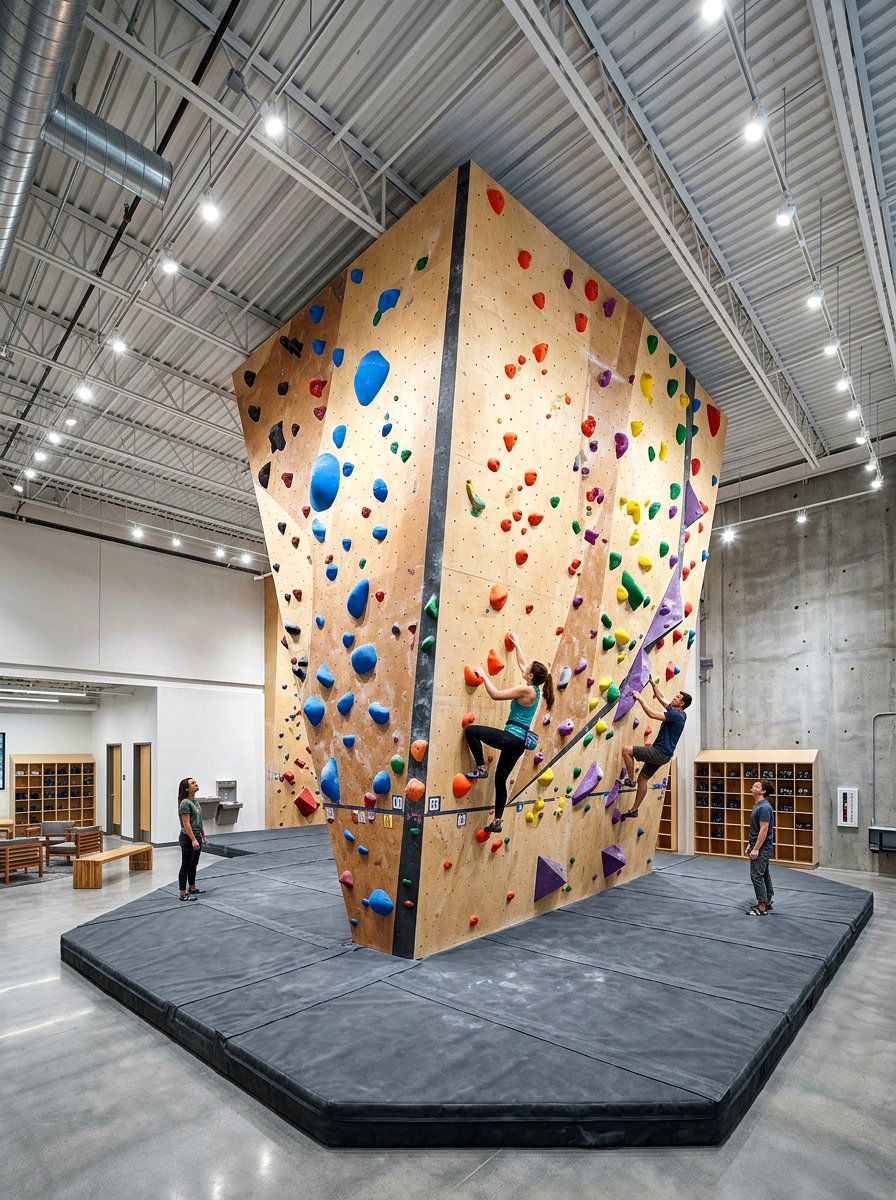
If you are lucky enough to have high ceilings in your playroom or basement, you can create a truly impressive vertical challenge that mimics a real gym. A tall wall allows for longer climbing routes and the opportunity to integrate safety harnesses and ropes for a "top-rope" experience. This scale of wall is incredibly rewarding for older children and teens who want to build real climbing endurance and technique. You can use different wall angles, such as slabs or slight overhangs, to keep the routes interesting. With high walls, professional-grade lighting and thick, permanent flooring become essential elements for safety and visibility.
26. Gymnastic Rings Integration
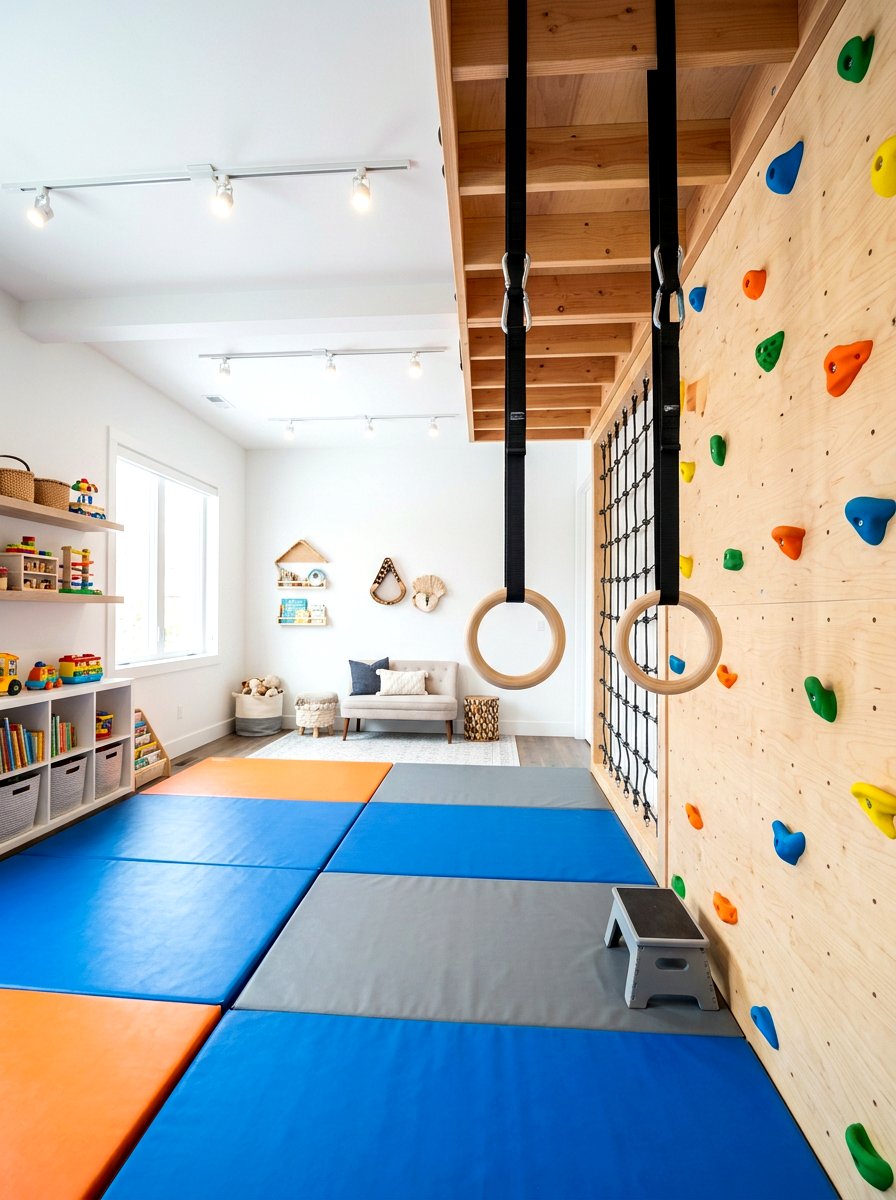
Hanging a set of gymnastic rings near the climbing wall adds a whole new dimension of upper body and core training to the playroom. Children can use the rings to swing, pull themselves up, or transition from the rings onto the wall holds. This combination encourages fluid movement and builds incredible strength and body awareness. The rings should be hung from a securely mounted ceiling beam or a dedicated metal frame to ensure they can support a child's full weight during active play. Choosing rings with adjustable straps allows you to change the height as your children grow or as they try different exercises.
27. Rope Climbing Wall
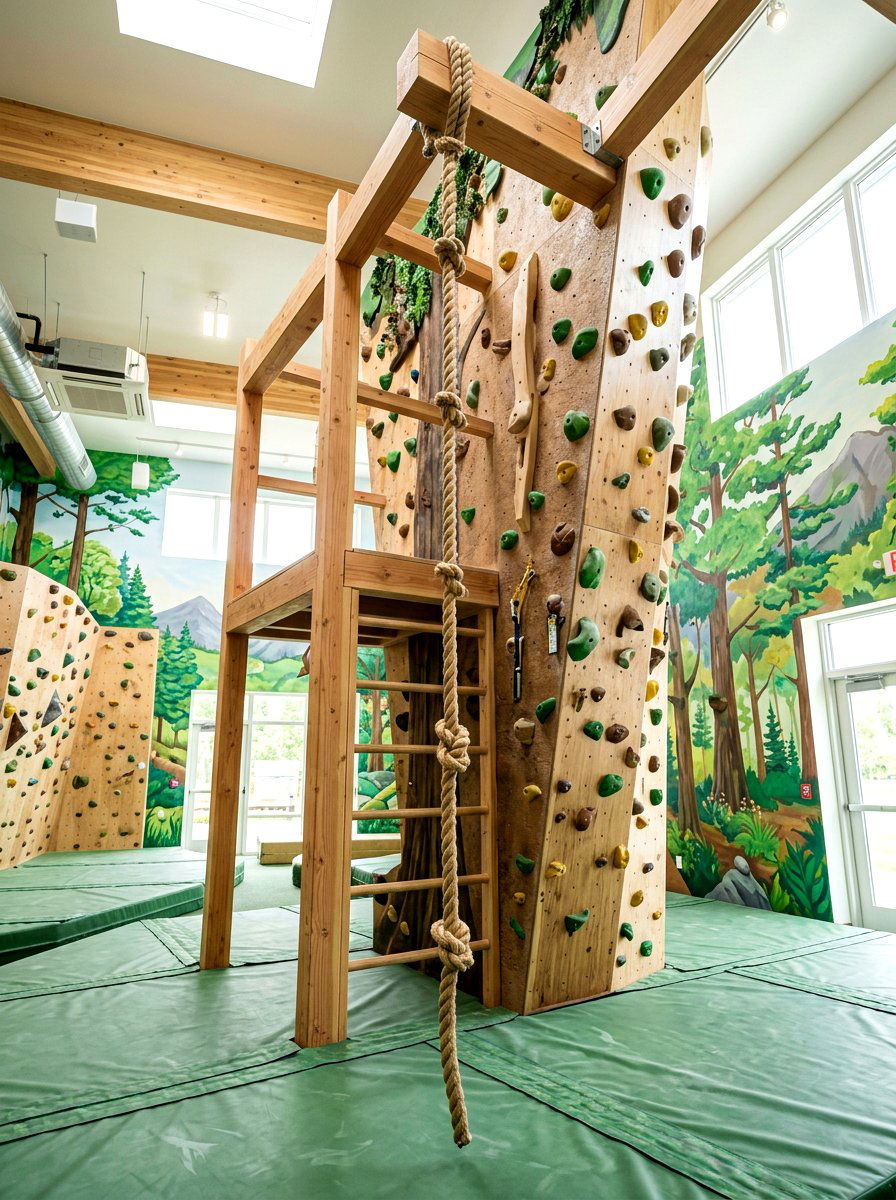
Adding a thick, knotted climbing rope alongside your rock wall provides an alternative way for kids to reach the top. Climbing a rope requires different muscle groups and techniques than rock climbing, focusing more on grip strength and leg wrapping. You can also install cargo nets that span across a section of the wall, creating a "web" for children to crawl through. This variety of textures and challenges prevents the playroom from becoming boring and encourages kids to try new ways of moving their bodies. The rope also adds a fun, "jungle gym" aesthetic that children naturally find exciting and inviting.
28. Monkey Bars And Wall
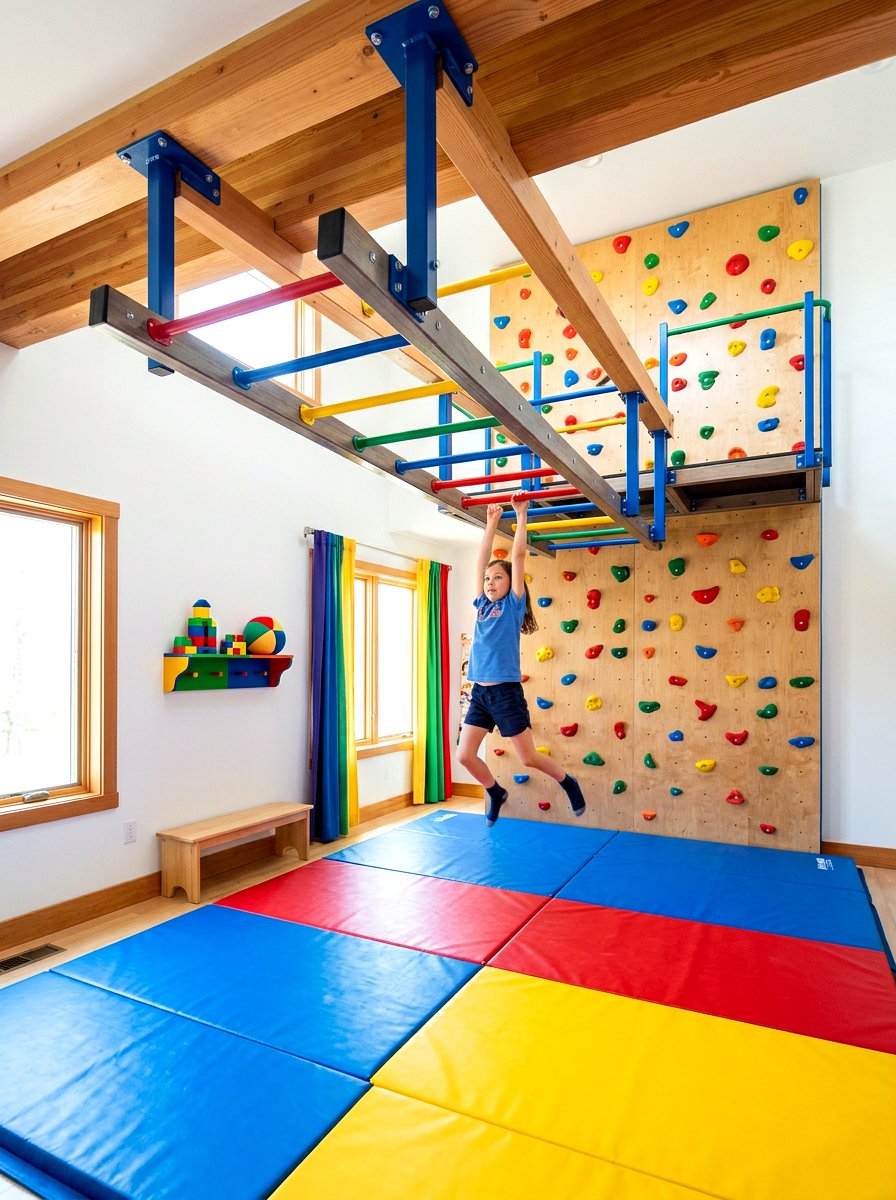
Installing monkey bars that lead directly into a climbing wall creates a continuous obstacle course that will keep kids active for long periods. Children can swing across the ceiling or a wall-mounted frame before grabbing onto holds to begin their vertical ascent. This layout is perfect for burning off high energy and developing superior hand-eye coordination and arm strength. You can use colorful powder-coated metal bars to match the rock holds for a cohesive look. This multi-functional setup turns the entire room into a high-performance athletic zone that feels like a professional ninja warrior training course for young kids.
29. Vertical Playground Concept
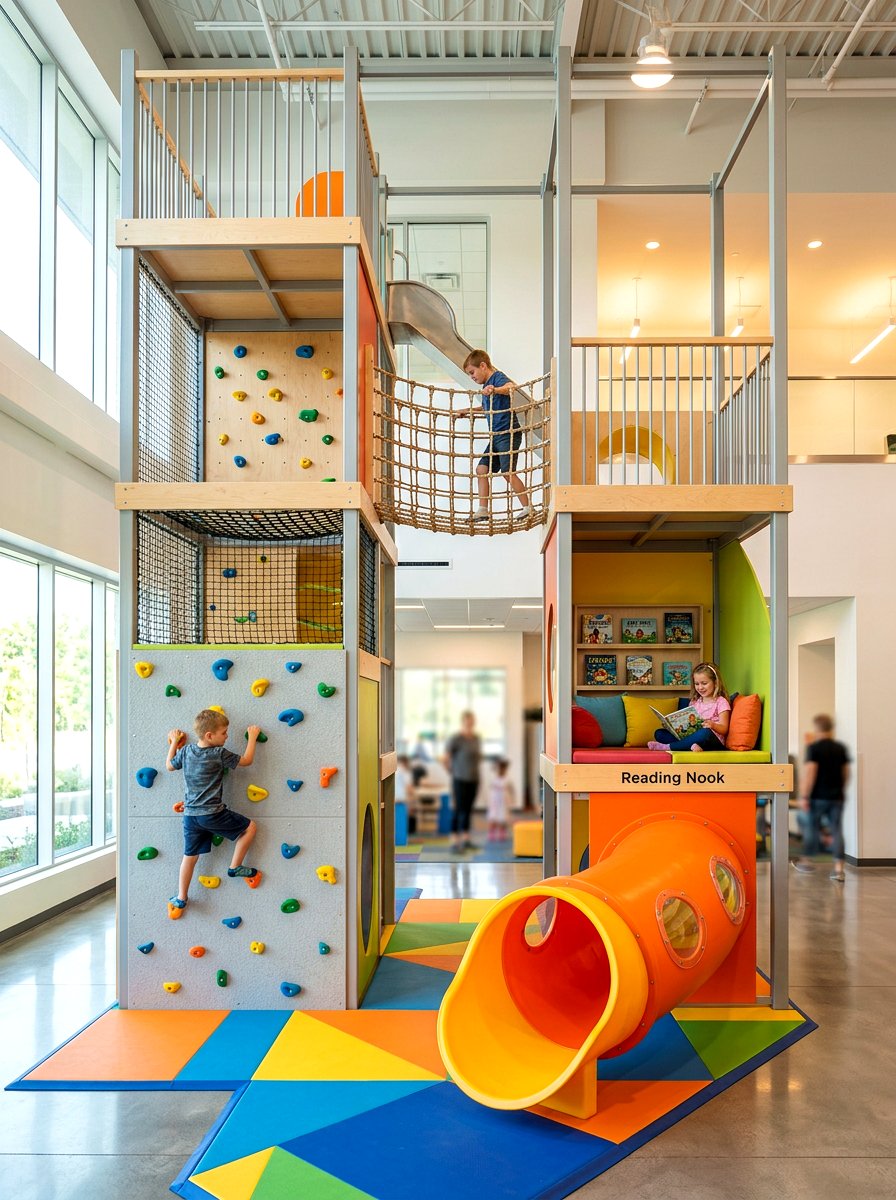
A vertical playground approach treats the entire wall as a multi-layered play structure, incorporating platforms, "nest" seats, and crawling tunnels at different heights. Instead of just a flat surface with holds, the wall becomes a 3D environment where kids can climb up to a reading nook or move through a tunnel to another side of the room. This concept is perfect for fostering imaginative play alongside physical exercise. You can use different colors and materials to define each "zone" of the structure. It transforms the playroom into a complex world of discovery that appeals to a wide range of ages and interests.
30. Multi Level Play Structure
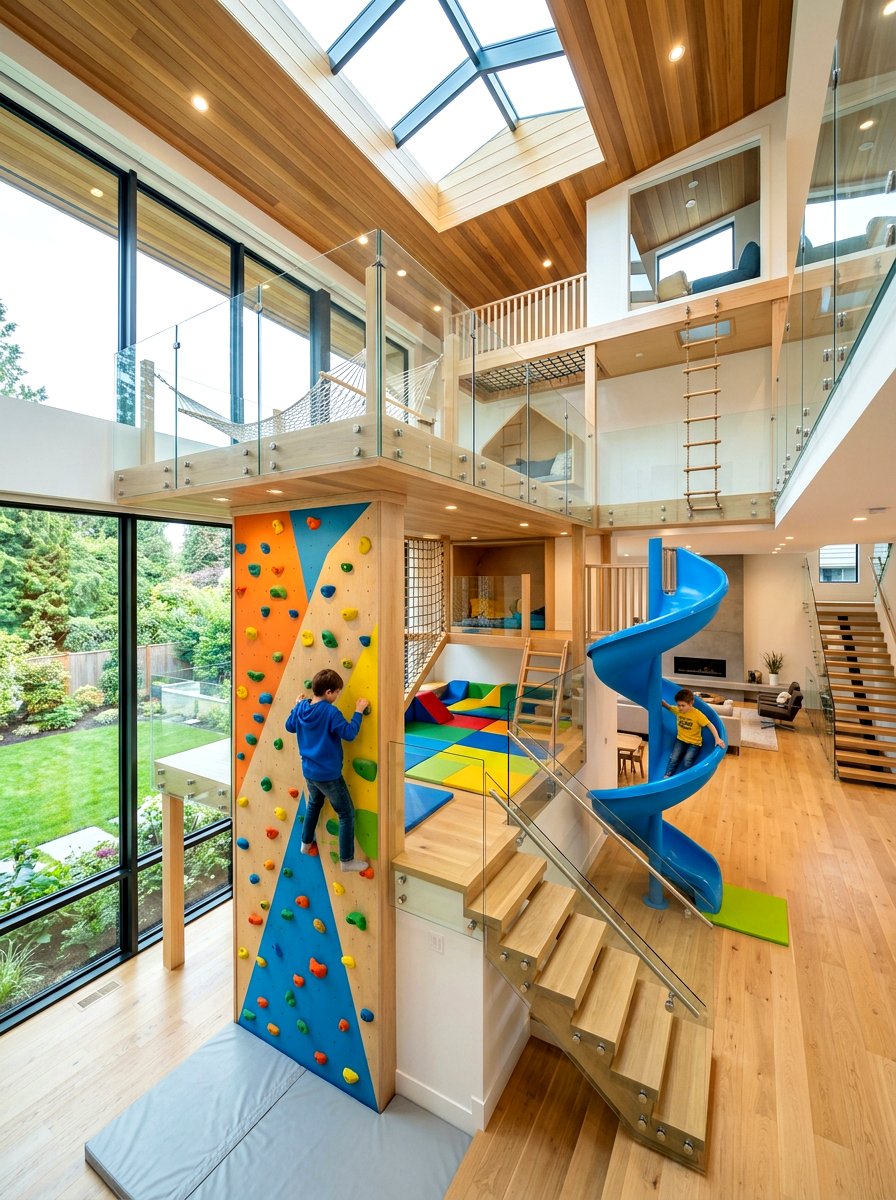
Creating a multi-level structure that includes a climbing wall as the primary way to move between floors is the ultimate playroom luxury. This design might feature a ground-floor play area, a mid-level climbing wall, and a top-level loft for quiet activities like reading or drawing. By making the wall the only "staircase, " you ensure that movement is integrated into every part of the day. Using glass panels or open railings for the upper levels keeps the room feeling bright and allows parents to easily supervise play from below. It is a stunning architectural feature that adds significant value and fun to a family home.
Conclusion:
Integrating a climbing wall into your playroom is one of the most effective ways to encourage physical fitness and creative play within your home. Whether you choose a simple plywood setup or a complex multi-level structure, these vertical playgrounds provide endless opportunities for children to build strength, confidence, and problem-solving skills. By carefully selecting your theme, colors, and integrated features, you can create a space that is as beautiful as it is functional. Always prioritize safety with high-quality holds and proper landing mats to ensure every adventure is a safe one. Your custom climbing wall will surely become the favorite feature of your home for years.

Related posts: