Starting a vegetable garden is an exciting journey that transforms your backyard into a productive sanctuary. One of the most effective ways to maximize your harvest and save space is by incorporating vertical support systems. Trellises offer a practical solution for climbing crops like cucumbers, pole beans, and heavy winter squash. They help improve air circulation, reduce pest pressure, and make harvesting much easier on your back. Beyond the functional benefits, a well-placed trellis adds architectural beauty and structure to your outdoor landscape. Whether you are working with a tiny balcony or a sprawling raised bed system, choosing the right vertical support can completely change your gardening experience this season.
1. Cattle Panel Arch
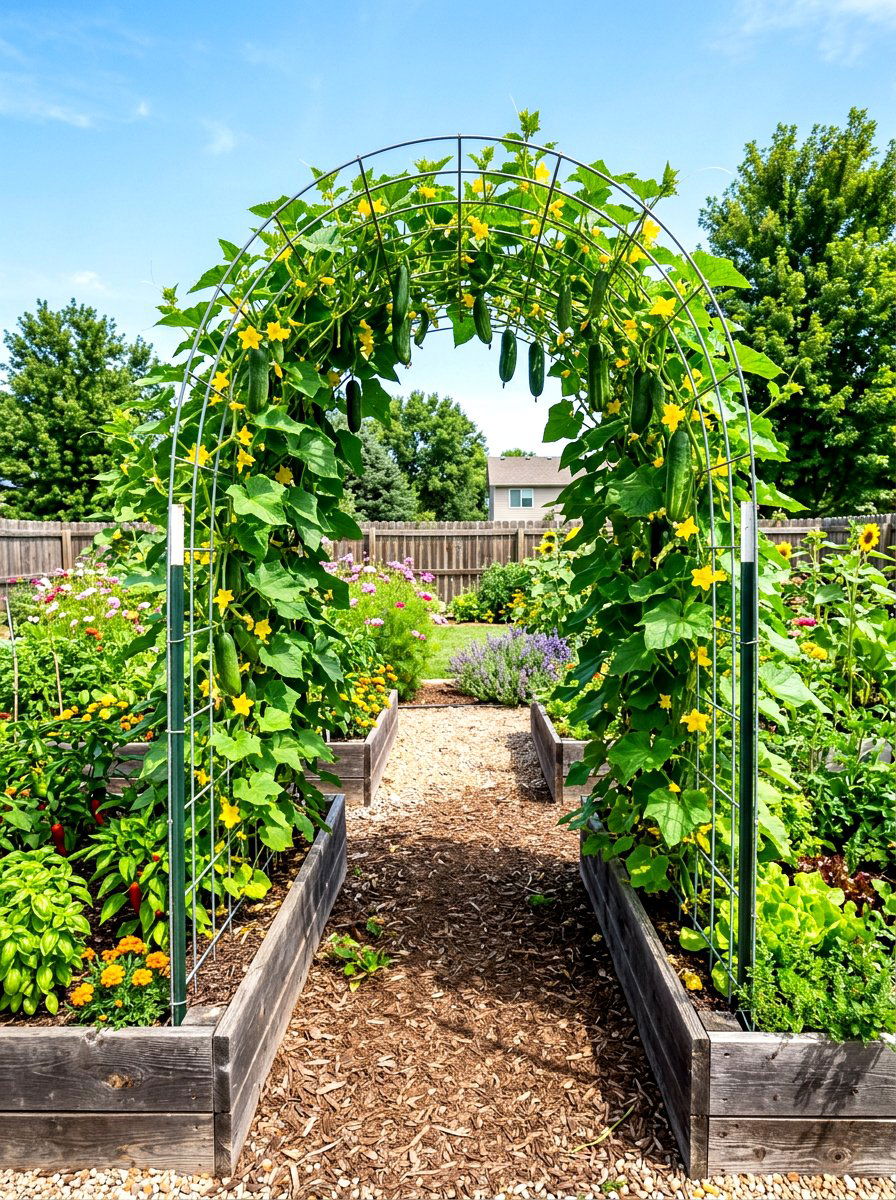
Imagine walking through a lush green tunnel dripping with cucumbers and pole beans. A cattle panel arch is a favorite for many backyard gardeners because it is incredibly sturdy and cost-effective. You simply take a sixteen-foot cattle panel and bend it into a curve between two raised beds. Secure the ends with sturdy T-posts to keep everything stable during heavy winds. This setup creates a stunning vertical walkway that makes harvesting a breeze since the fruit hangs down. It also provides excellent airflow, which helps prevent common fungal diseases like powdery mildew. Your garden will feel like a professional landscape with this very simple and effective addition.
2. Bamboo Bean Teepee
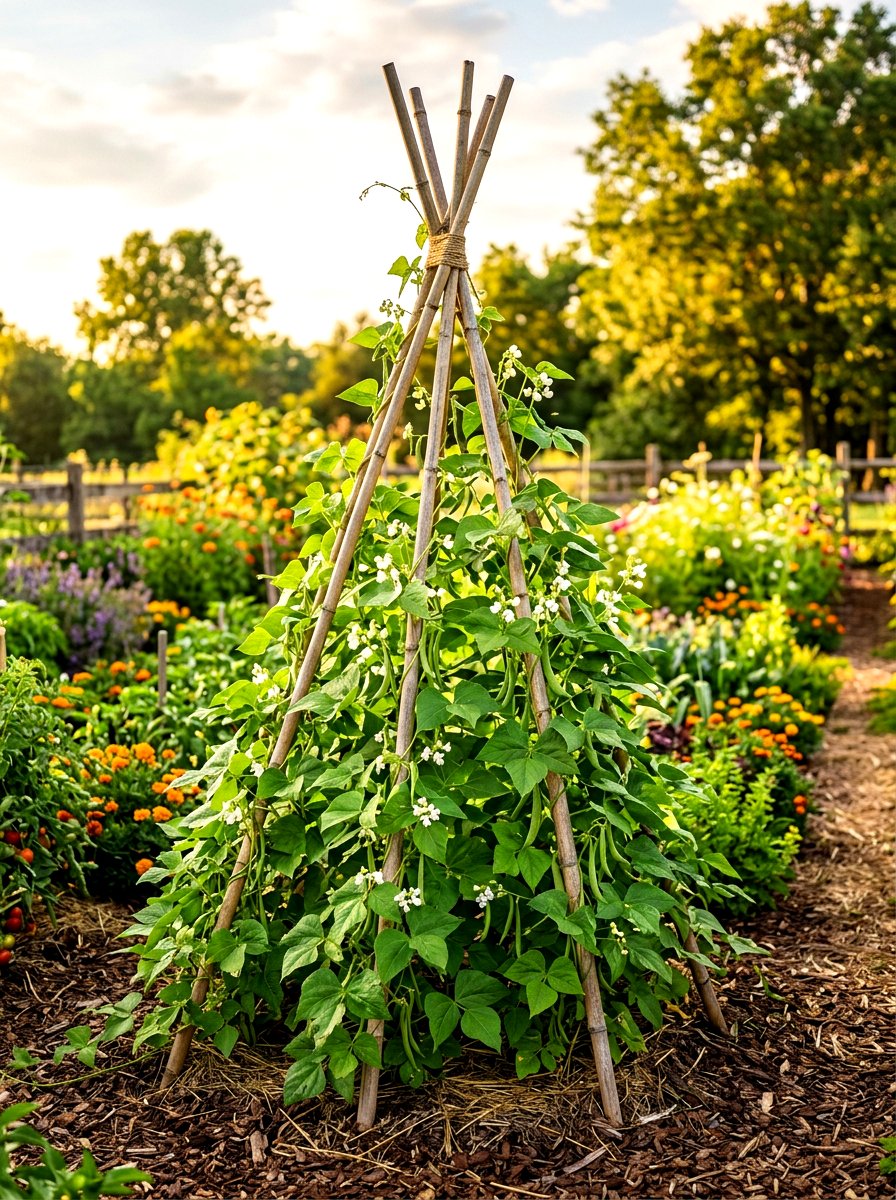
Building a classic teepee out of bamboo poles is one of the most nostalgic ways to grow climbing vegetables. This structure is perfect for vigorous pole beans or sweet peas that love to reach for the sky. You only need five or six long bamboo stalks tied together at the top with natural twine. Kids absolutely love playing inside these leafy green forts once the vines fully cover the sides. Bamboo is a sustainable material that blends perfectly into any natural garden aesthetic. It is also lightweight and very easy to move around your yard from season to season as you rotate your vegetable crops throughout the year.
3. Wooden A Frame
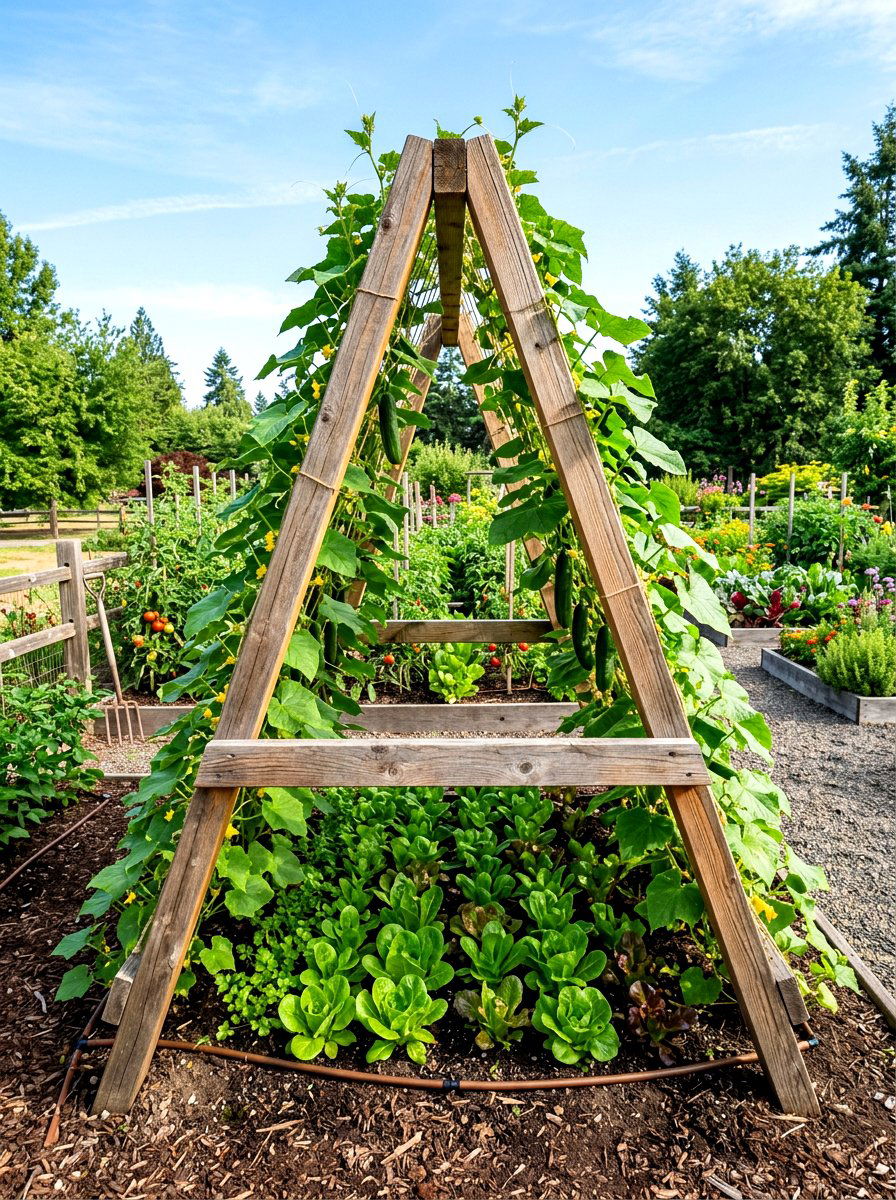
A wooden A-frame is the perfect choice for gardeners who want a dedicated space for cucumbers or small melons. These structures consist of two rectangular wooden frames joined at the top with hinges. You can cover the frames with wire mesh or nylon netting to give the plants something to grab. This design allows you to grow heavy crops on the outside while utilizing the shaded space underneath for cool-season greens like spinach or lettuce. It is a brilliant way to double your production in a single footprint. The sturdy wooden construction ensures that your trellis will last for many successful growing seasons in the sun.
4. Wall Mounted Wire
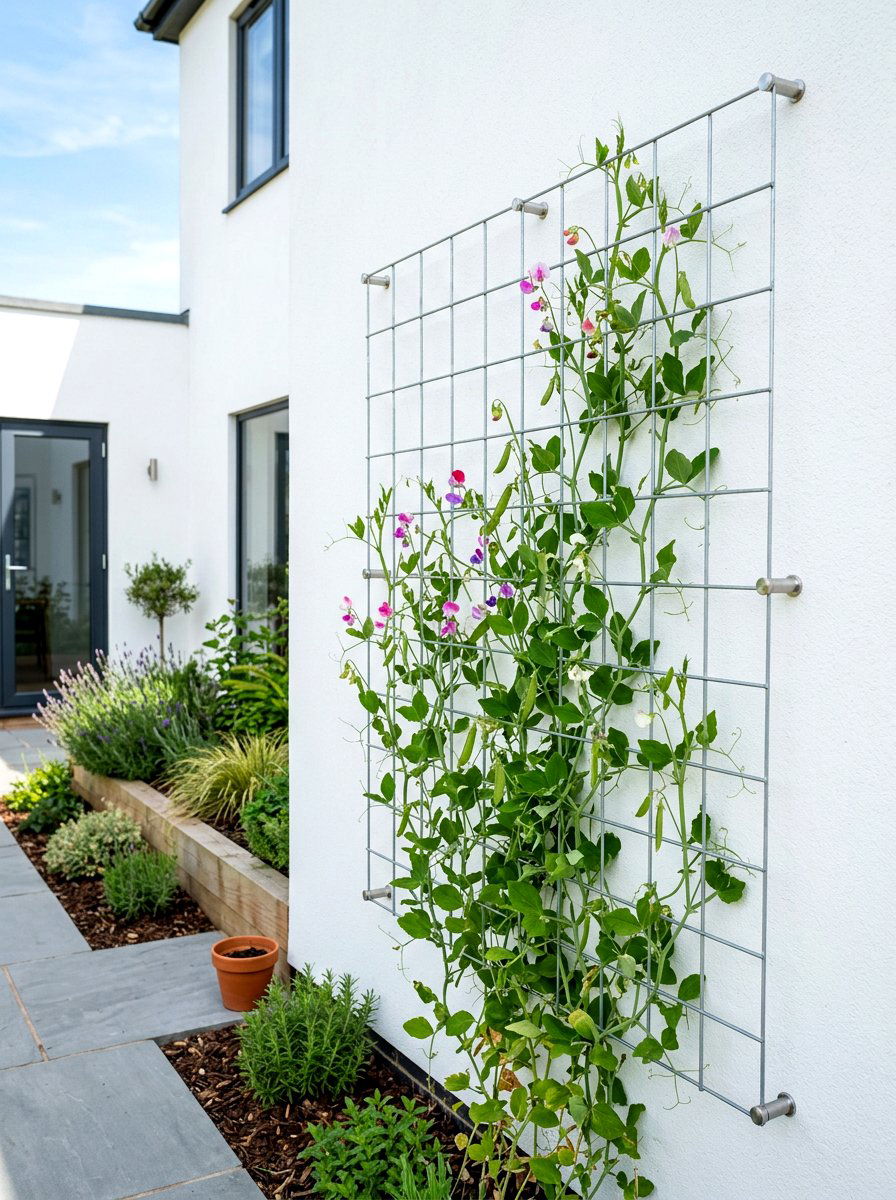
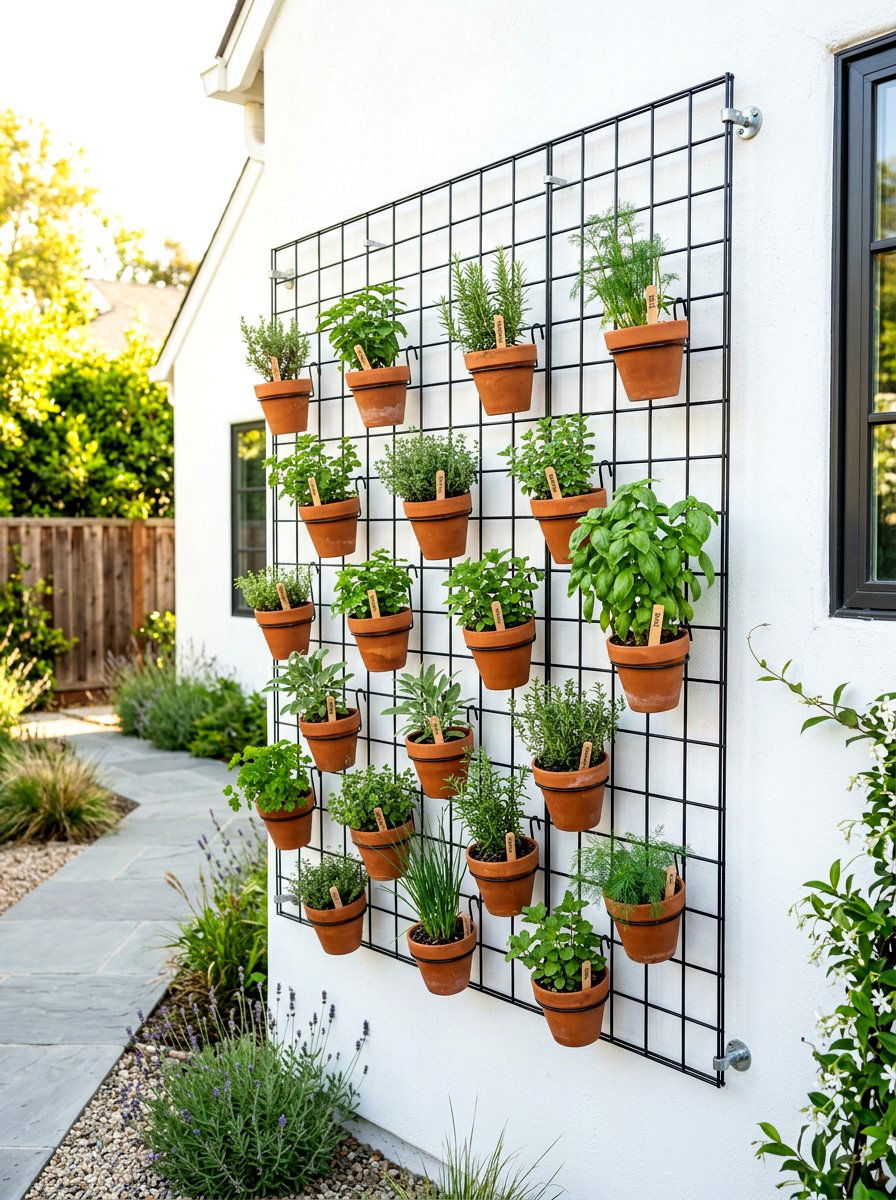
If you have limited ground space, a wall-mounted wire trellis can turn a plain fence or exterior wall into a vertical farm. This system uses heavy-duty galvanized wire and eye hooks to create a custom grid pattern. It is an excellent choice for growing peas or tomatoes in narrow walkways or side yards. Because the wire is nearly invisible, the focus remains entirely on the beautiful foliage and ripening fruit. This modern look fits well with minimalist garden designs and urban settings. You can easily adjust the height and width of the grid to accommodate different types of climbing vegetables as your garden grows.
5. Cedar Garden Obelisk
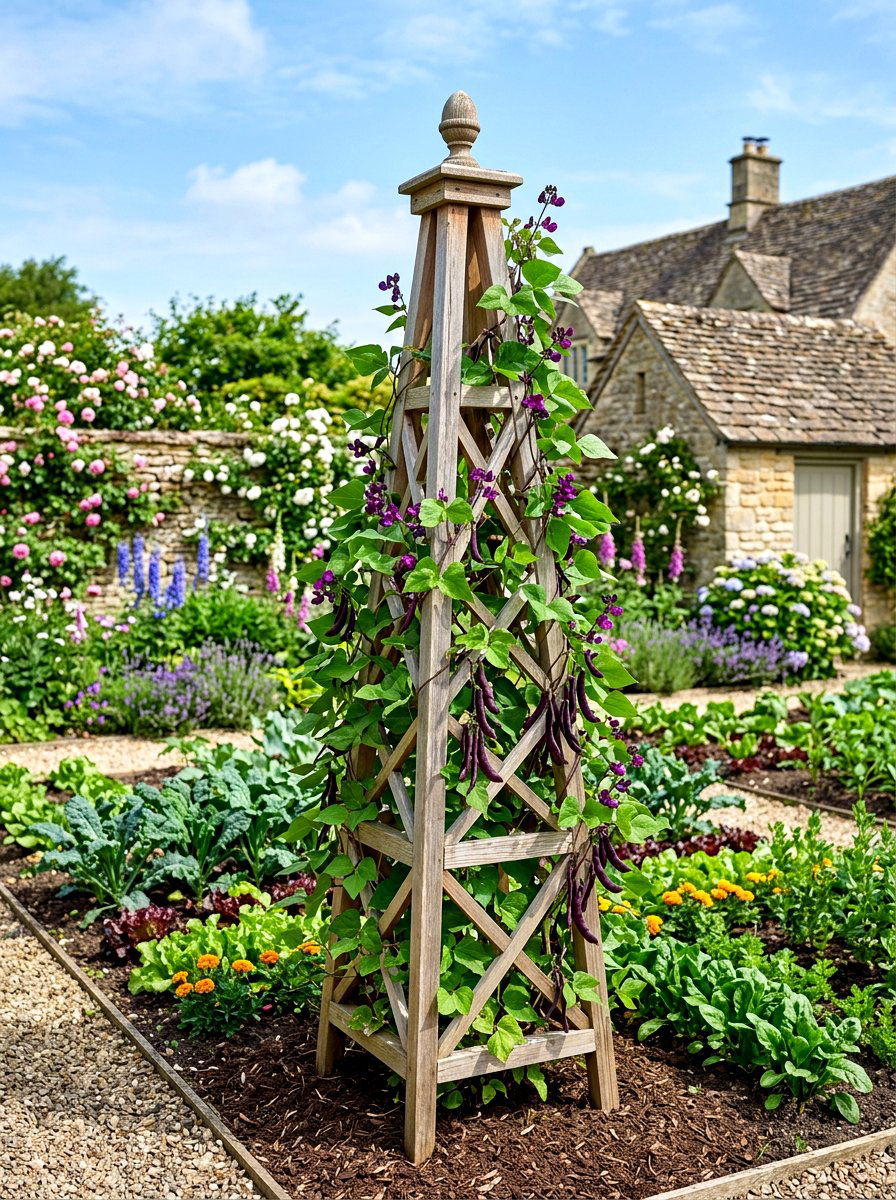
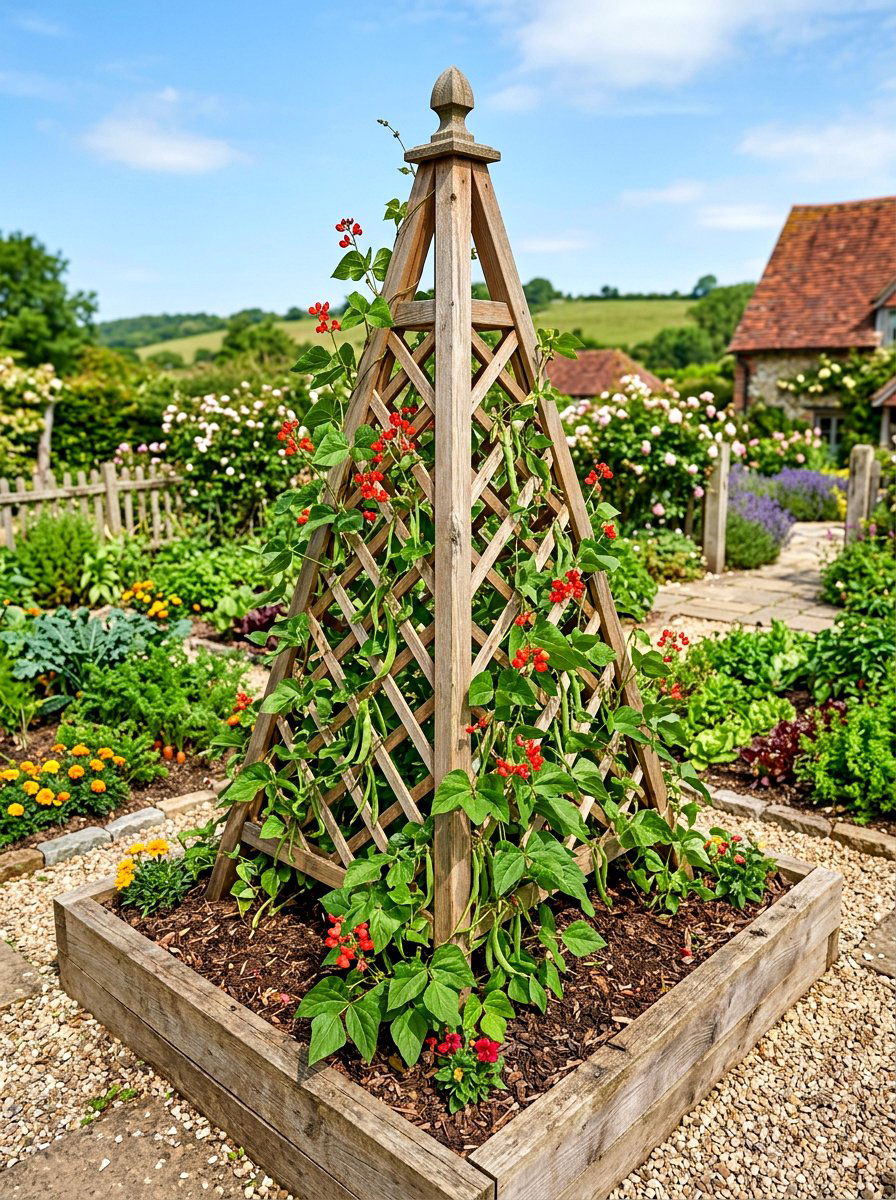
Adding a cedar garden obelisk provides an elegant focal point that works well in both traditional and modern vegetable patches. These four-sided structures taper toward the top, creating a pyramid shape that is naturally stable. Cedar is a preferred material because it resists rot and insects without the need for harsh chemical treatments. It is ideal for supporting smaller vining plants like sugar snap peas or ornamental runner beans. The natural wood grain weathers to a beautiful silver-grey over time, blending seamlessly with your outdoor environment. An obelisk adds immediate height and sophisticated character to any flat garden bed while keeping your tasty vegetables off the ground.
6. Tomato String System
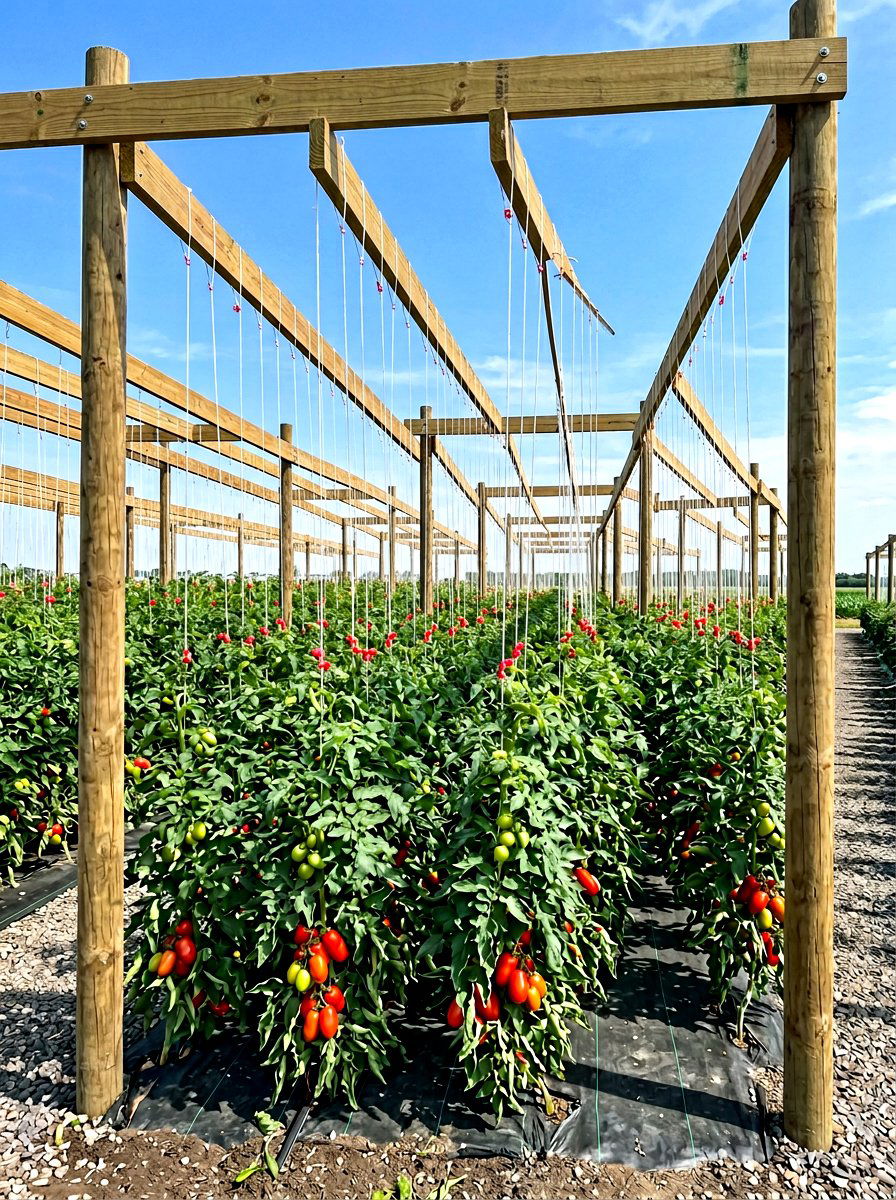
Professional greenhouse growers often use a string trellis system to manage tall indeterminate tomato plants with precision. You can recreate this at home by building a simple overhead frame made of wood or metal conduit. Long pieces of garden twine are suspended from the top rail and anchored to the base of each plant. As the tomato grows, you gently wrap the main stem around the string to provide vertical support. This method allows for maximum sunlight exposure and makes pruning suckers much easier. It is a clean and organized way to grow a large number of tomatoes in a relatively small or narrow space.
7. Upcycled Pallet Frame
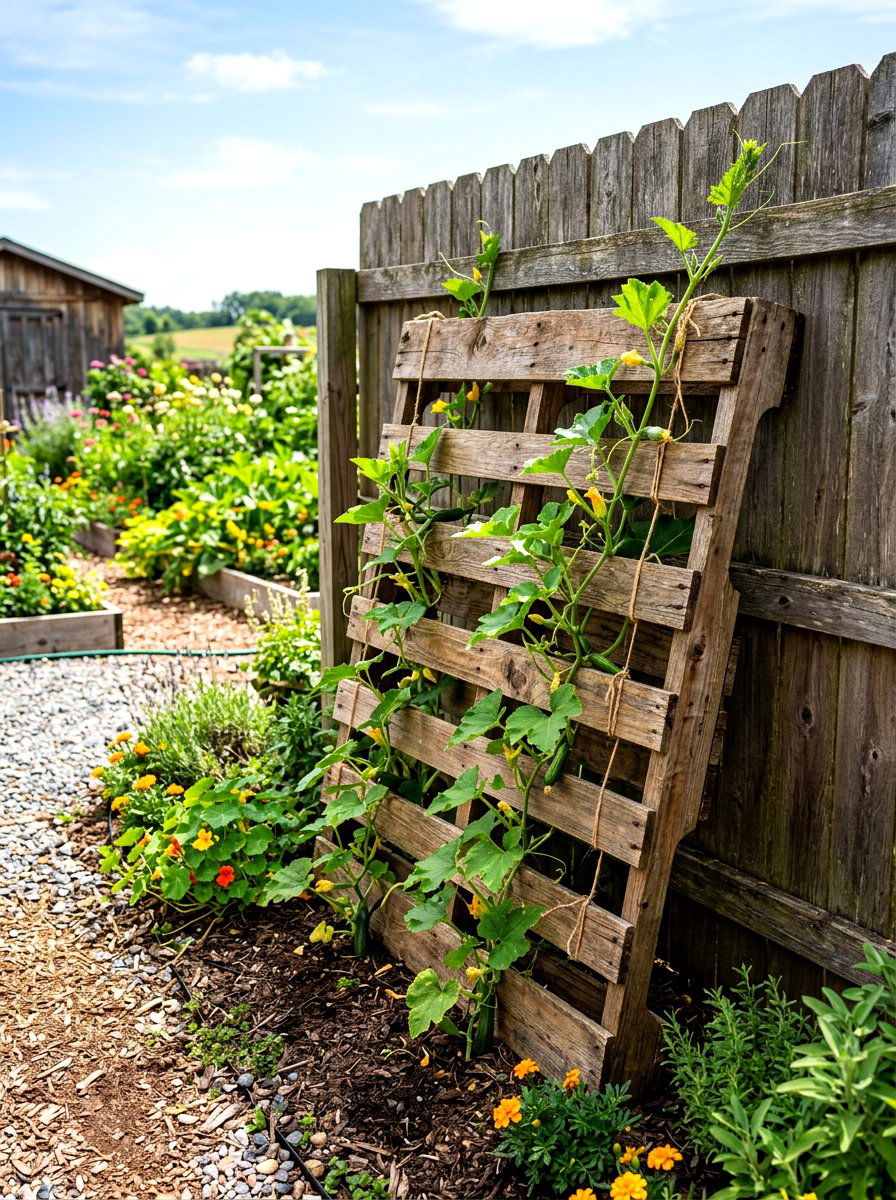
Using old wooden pallets is a fantastic way to build a functional garden trellis without spending any money. You can stand a pallet upright and lean it against a wall or secure it to a raised bed frame. The horizontal slats provide natural support for reaching vines like peas and small cucumbers. For more climbing surface, you can attach chicken wire or plastic mesh over the front of the pallet. Upcycling materials like this is great for the environment and gives your garden a charming, rustic look. Just make sure the wood is heat-treated rather than chemically treated to ensure it is safe for your food crops.
8. Vintage Ladder Support
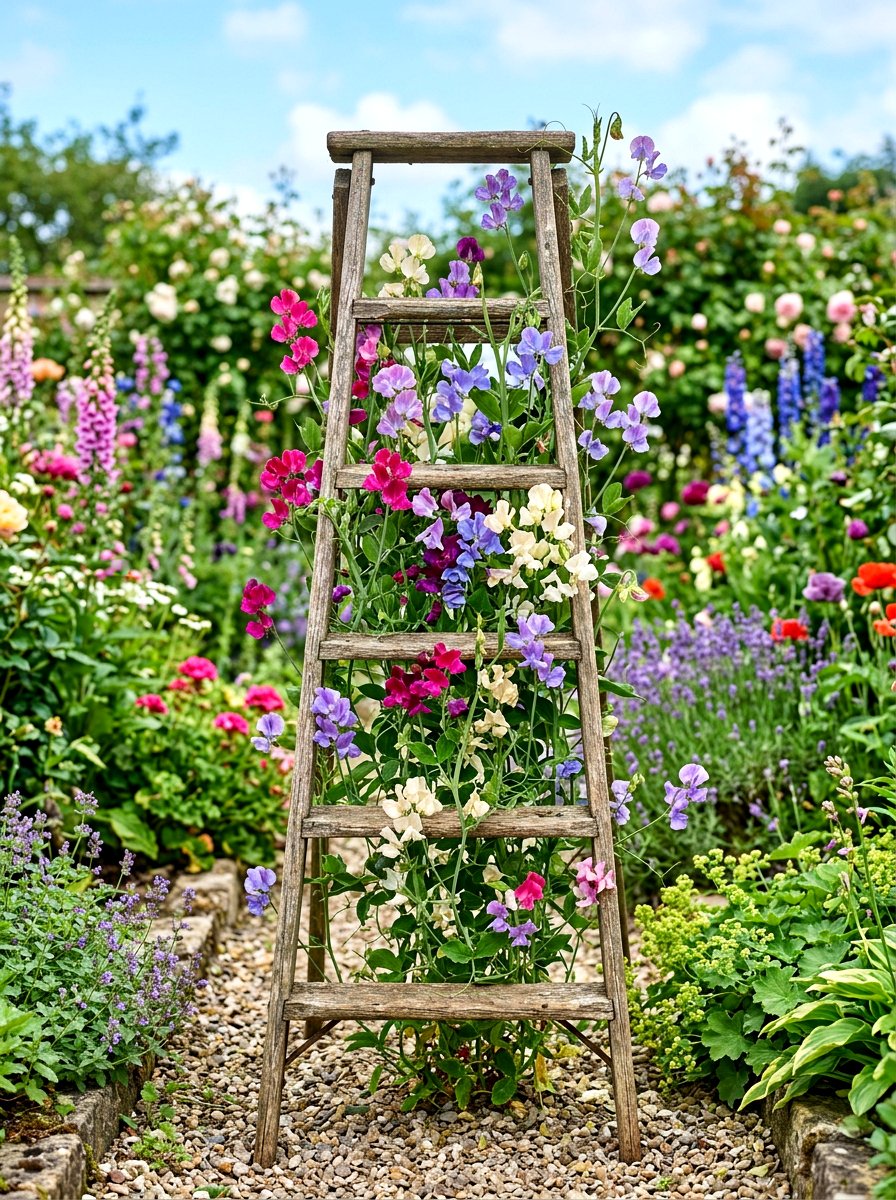
An old wooden ladder can be repurposed into a whimsical and effective trellis for your favorite climbing vegetables. Simply lean the ladder against a sturdy structure or stand it up in the middle of a large garden bed. The rungs offer various heights for different plants to latch onto as they grow taller. You can also place small pots of herbs on the lower steps to create a multi-layered garden display. This idea works especially well for lighter vines like nasturtiums or snap peas. It adds a touch of vintage charm to your backyard while providing a practical solution for vertical growth in a unique way.
9. DIY PVC Frame
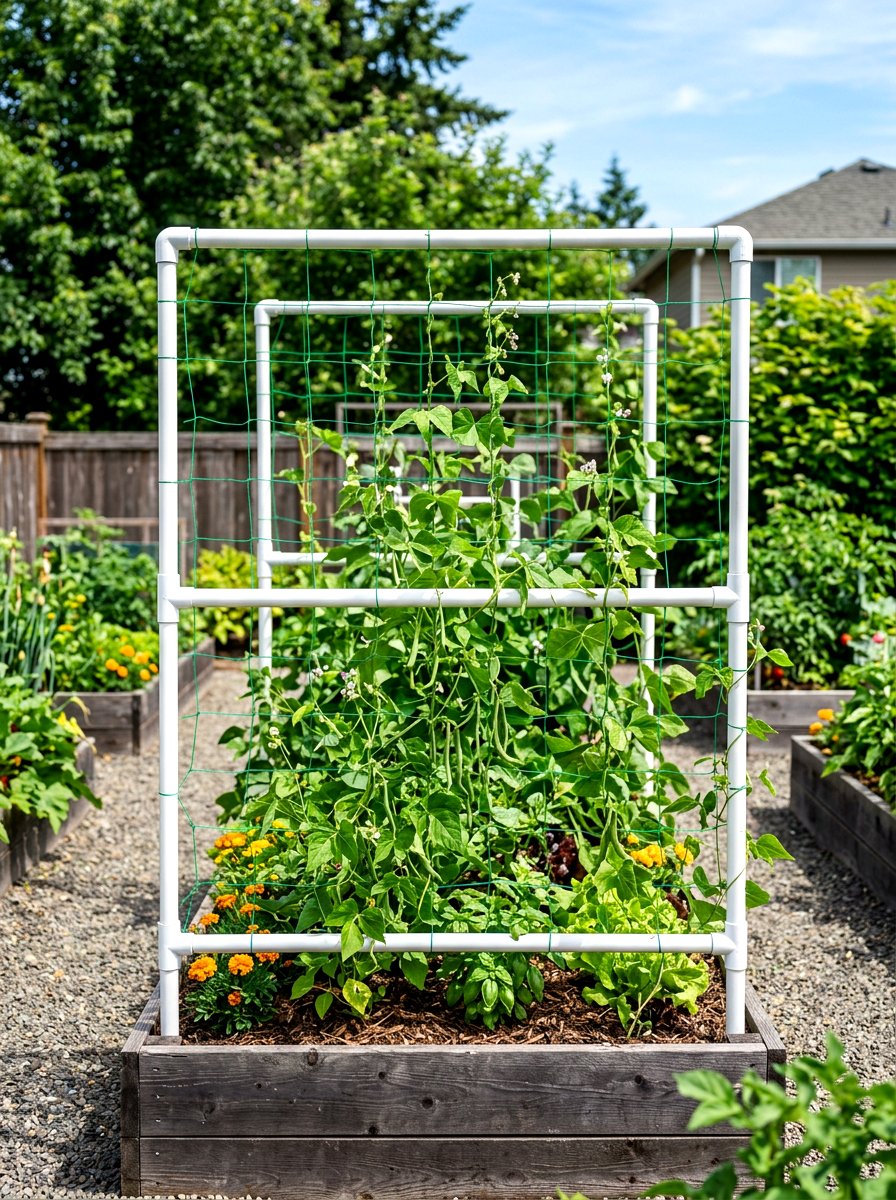
If you are looking for a lightweight and customizable option, a DIY PVC frame might be the perfect solution. PVC pipes are inexpensive and easy to cut with a simple hand saw. You can use various connectors to build a trellis in almost any shape or size imaginable. Adding a layer of plastic netting over the frame gives your cucumbers and beans plenty of places to climb. Because PVC is waterproof, it will not rot or rust when exposed to constant moisture from watering or rain. This type of trellis is very easy to disassemble and store away during the cold winter months when not in use.
10. Antique Wagon Wheel
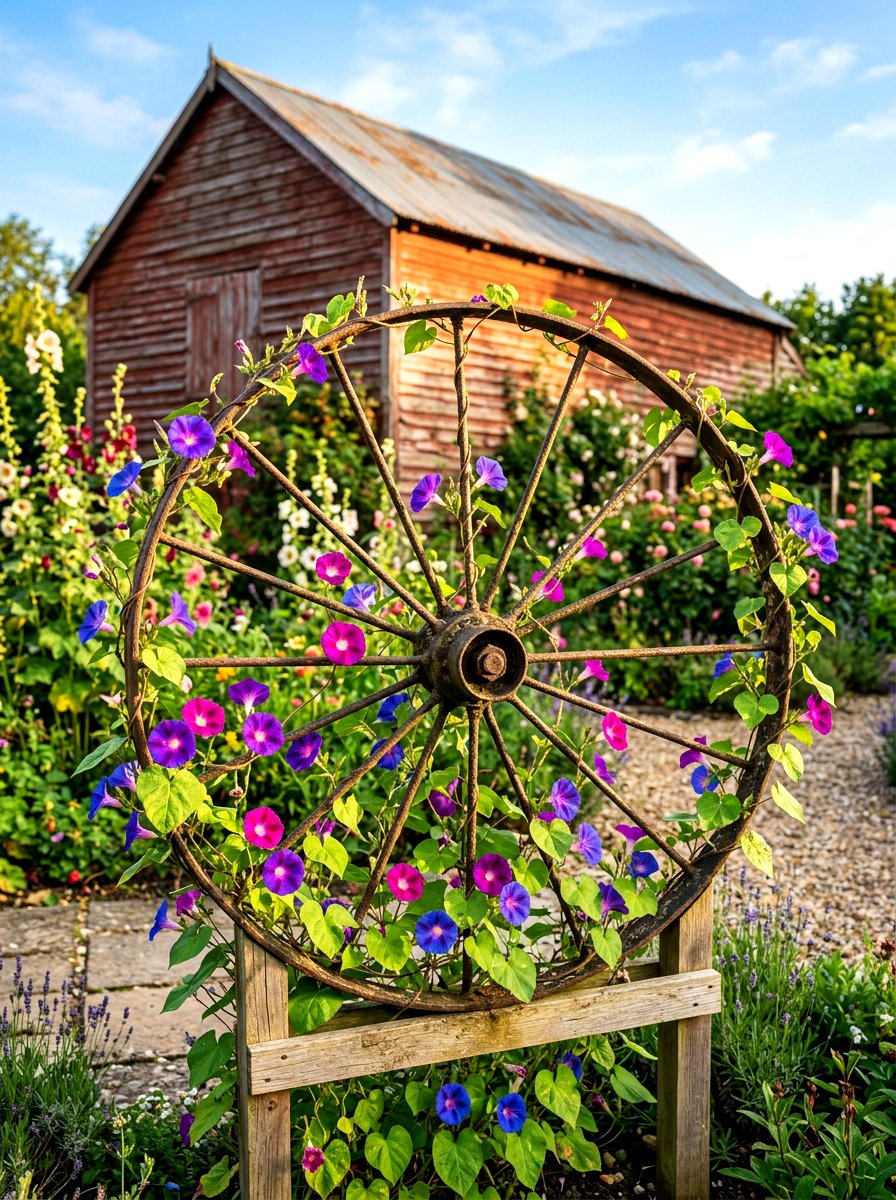
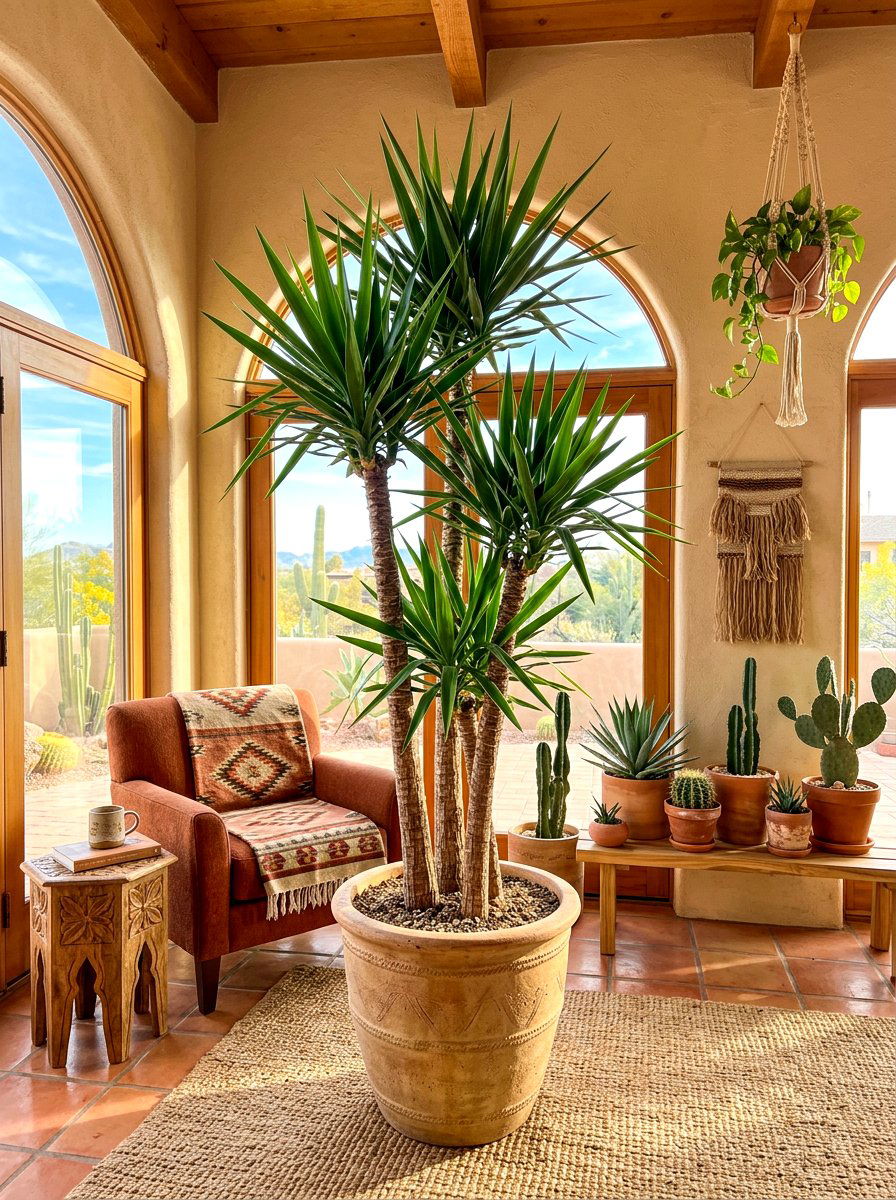
Integrating an antique wagon wheel into your garden provides a stunning rustic backdrop for climbing plants. You can prop the wheel up against a fence or mount it on a sturdy post in the center of a bed. The spokes of the wheel act as natural guides for delicate vines like peas or morning glories. As the plants grow around the circular frame, they create a living piece of art in your landscape. This idea is perfect for gardeners who love the farmhouse aesthetic and want to incorporate historical elements into their outdoor space. It is a conversation starter that serves a very practical gardening purpose.
11. Garden Tunnel Walkway
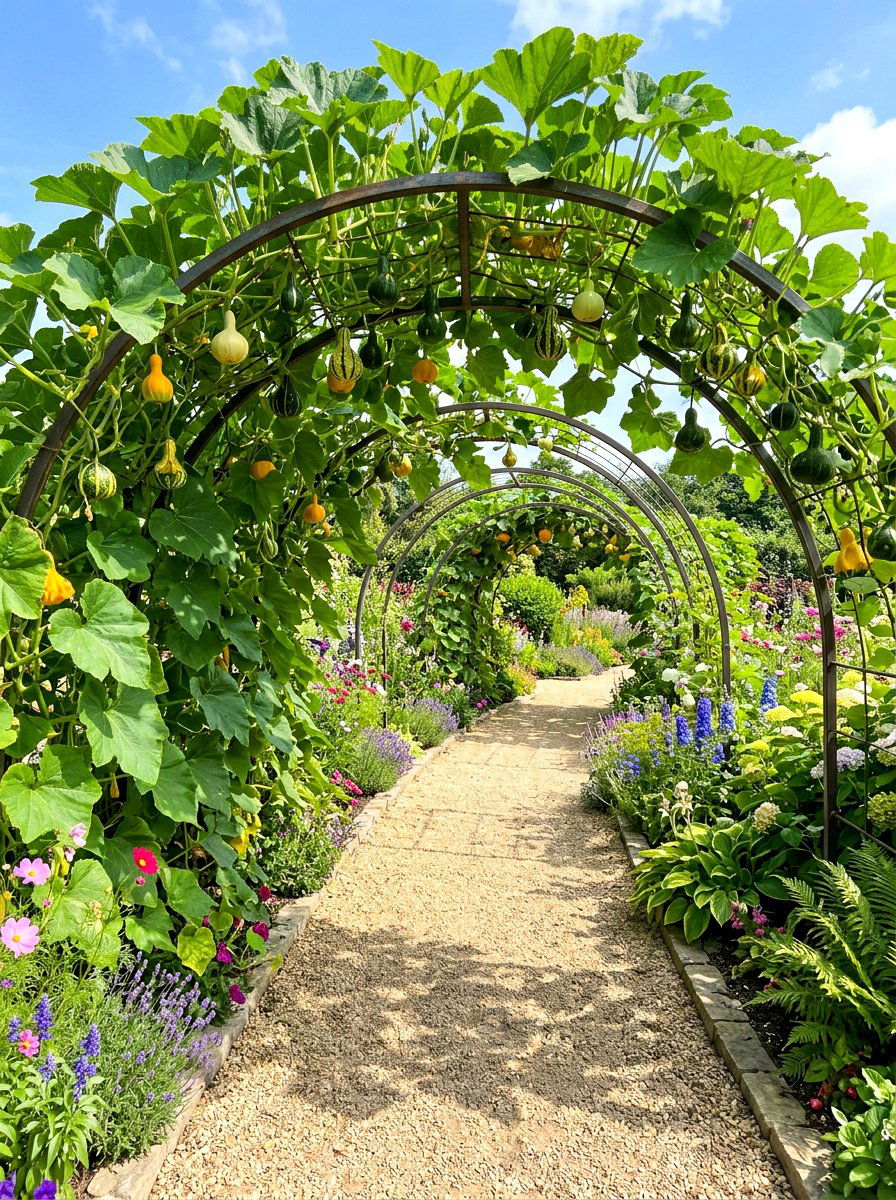
A garden tunnel walkway creates a magical experience that transforms a simple path into a lush, edible corridor. You can build this using several metal arches or cattle panels placed in a row. By planting heavy vining crops like pumpkins or winter squash at the base, the fruit will eventually hang down from the ceiling. This keeps the large gourds off the soil, preventing rot and protecting them from hungry garden pests. Walking under a canopy of giant leaves and dangling vegetables is a highlight of the summer season. It also provides a cool, shaded spot to relax while you are working in the heat.
12. Willow Accordion Screen
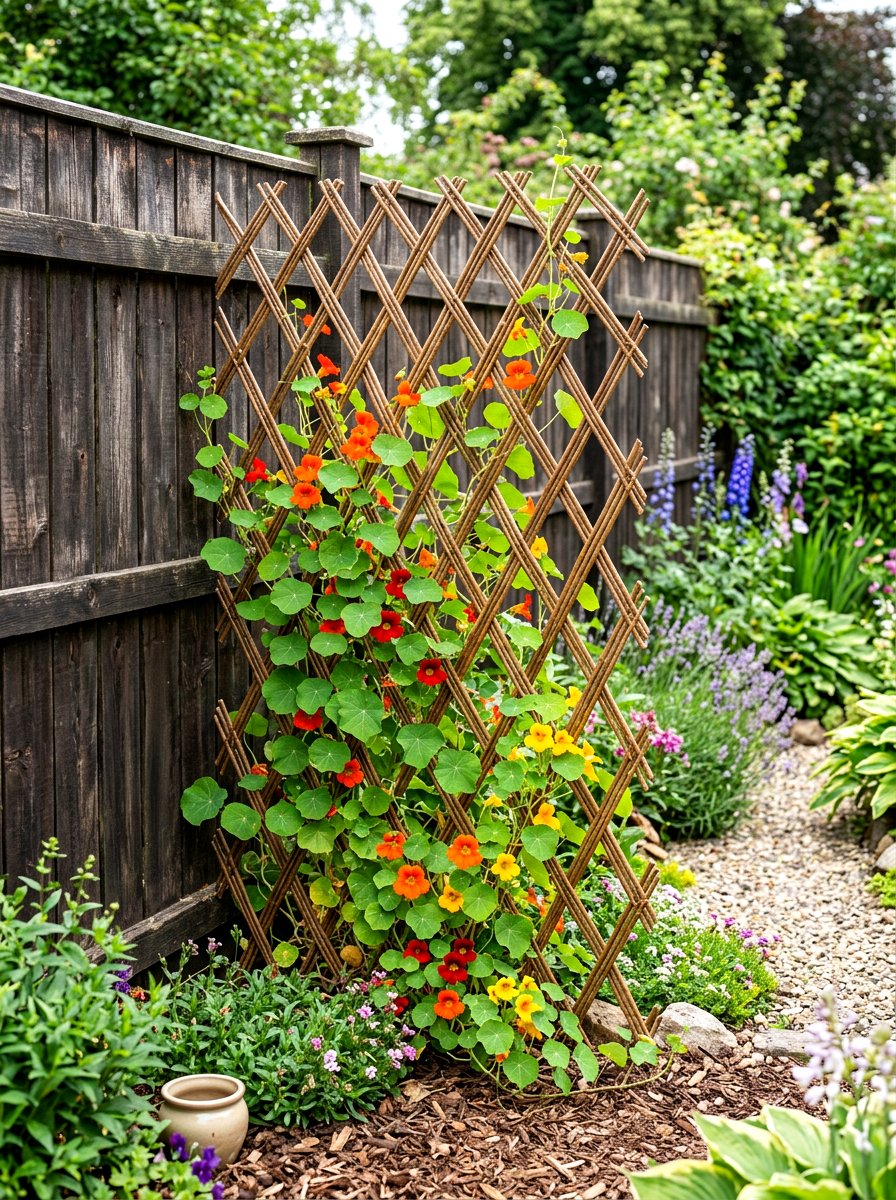
A willow accordion trellis is a flexible and natural-looking option that can be expanded to fit various spaces. These trellises are made from sustainable willow branches that are woven together in a diamond pattern. They are very easy to install by simply stretching them out and securing them to a wall or a set of stakes. The rustic appearance of the wood looks beautiful even before the plants have fully covered the surface. This style is perfect for supporting lightweight climbers like sweet peas or pole beans. It can also be used as a decorative privacy screen to block the view of a neighbor’s yard.
13. Metal Rebar Grid
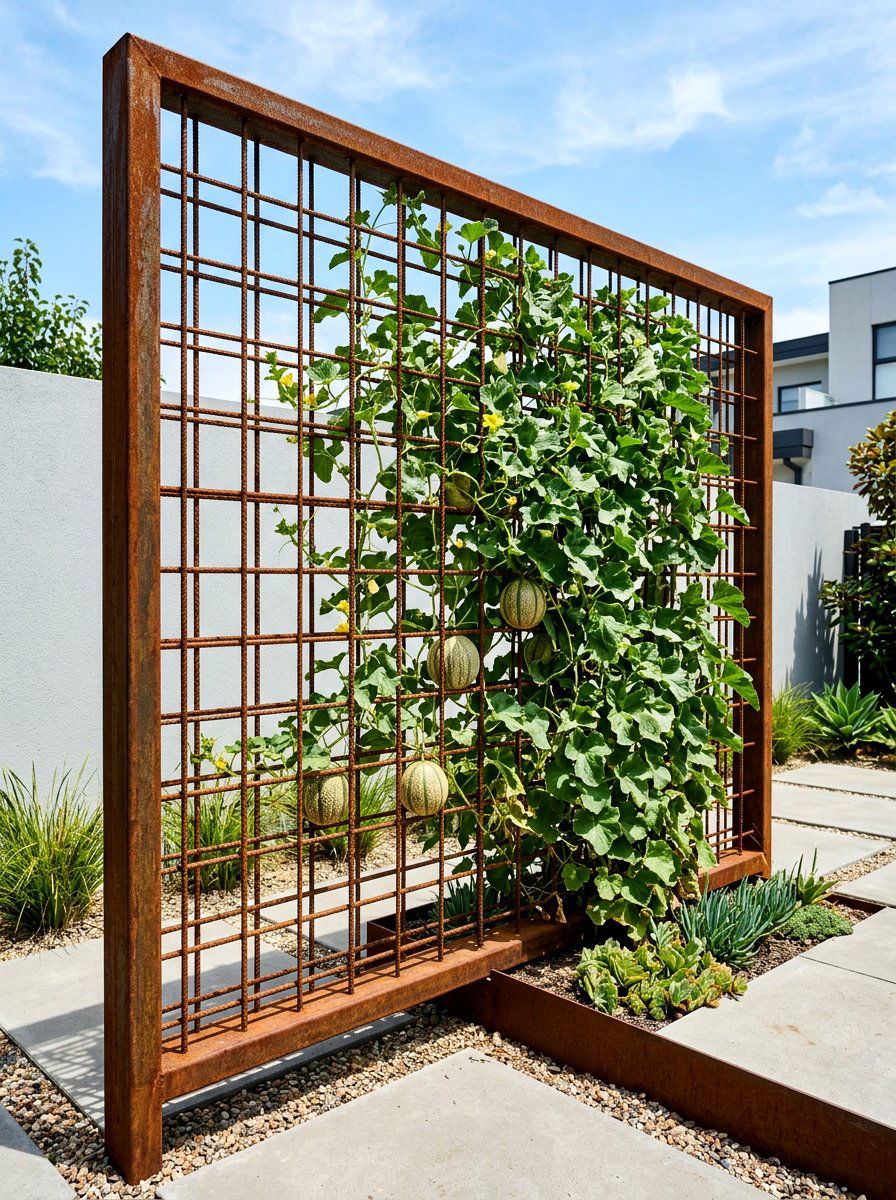
For a modern and industrial look, consider using metal rebar to create a custom grid trellis for your vegetables. Rebar is incredibly strong and can support even the heaviest of crops, such as large melons or vining tomatoes. You can drive the vertical pieces into the ground and secure the horizontal bars with wire or specialized clips. Over time, the metal will develop a beautiful rusty patina that looks stunning against green foliage. This is a permanent solution that will last for decades without needing any maintenance. It is an excellent choice for gardeners who want a high-end, architectural feel in their productive vegetable patch.
14. Chicken Wire Panel
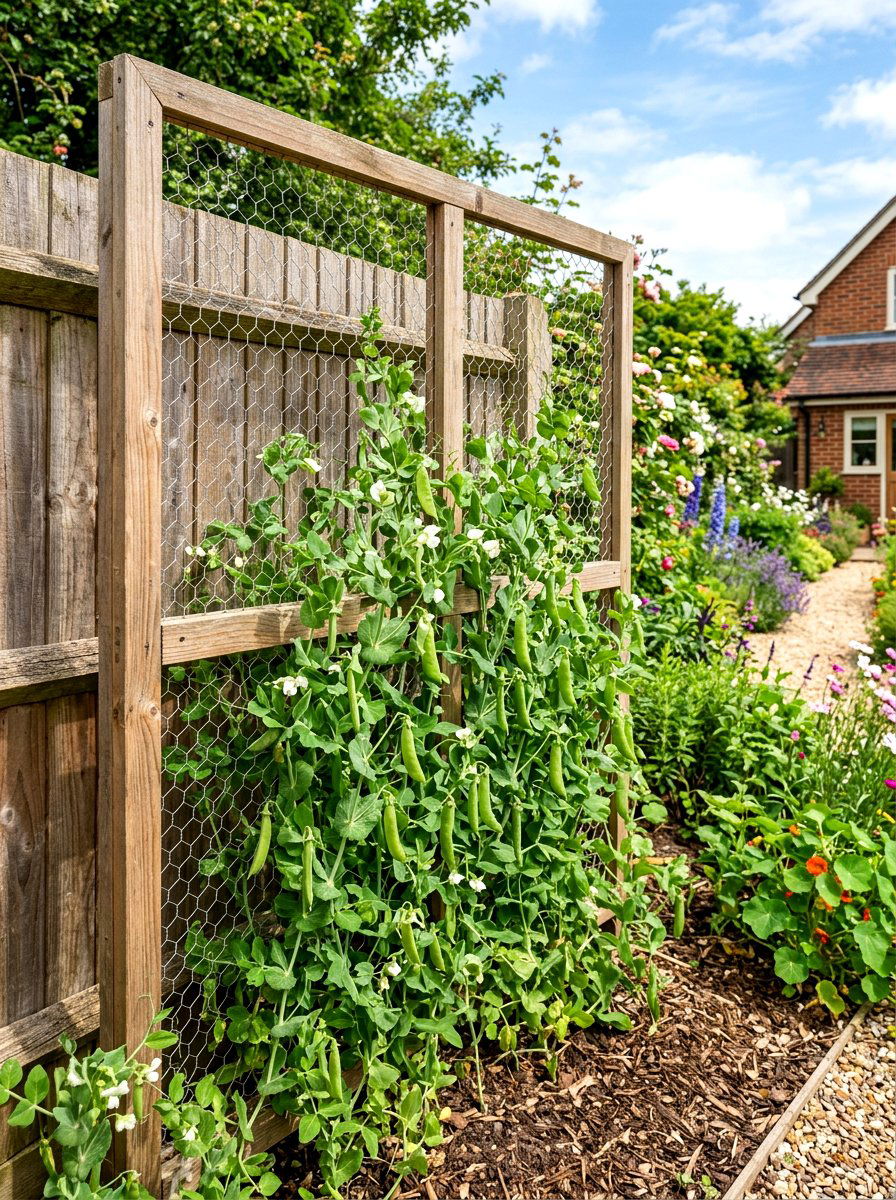
A simple wooden frame filled with chicken wire is one of the most versatile trellises you can build. This design is particularly effective for plants with small tendrils, like peas, that need many thin wires to grab onto. You can mount these panels to the back of a raised bed or attach them to a sunny fence. The small openings in the wire provide a very secure hold for climbing vines. This type of trellis is also great for keeping small animals away from your young seedlings as they start to grow. It is a budget-friendly project that any beginner gardener can complete in just a few hours.
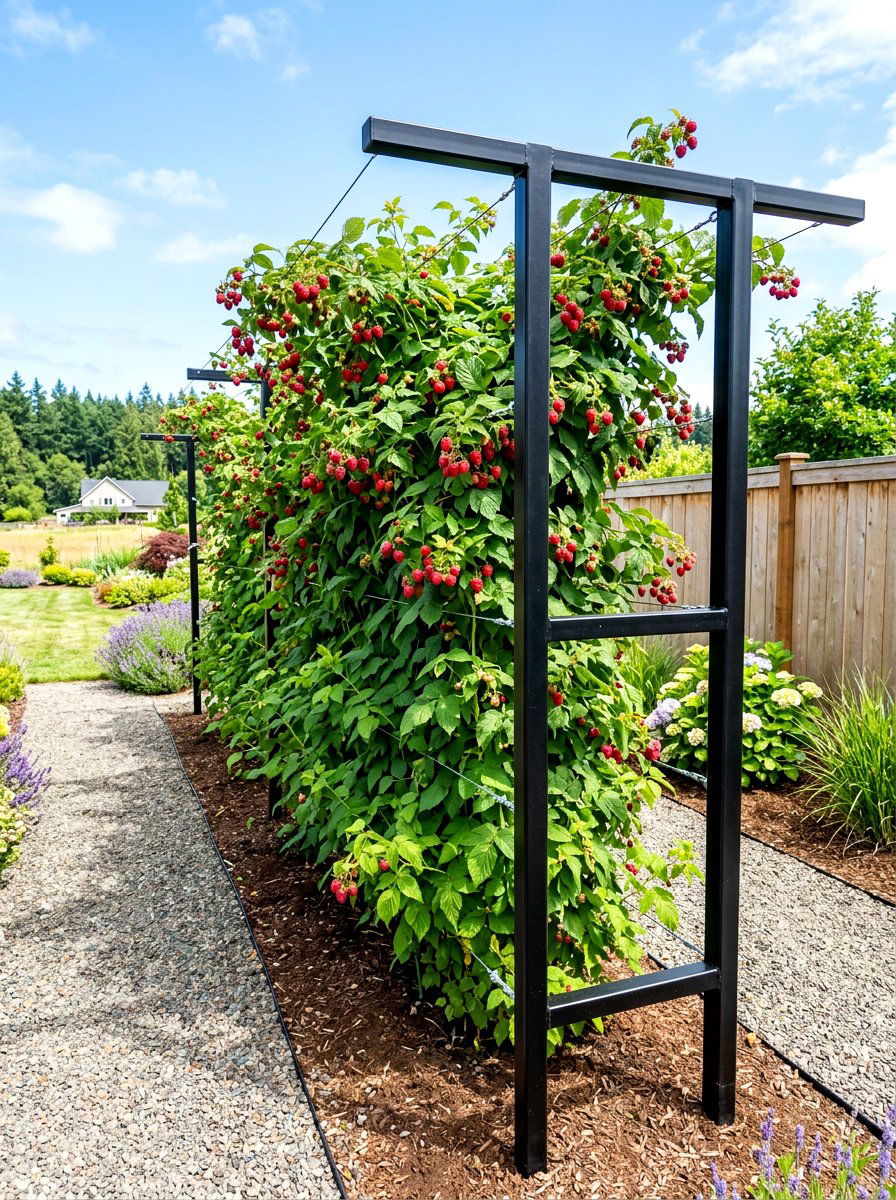
15. Umbrella Plant Support
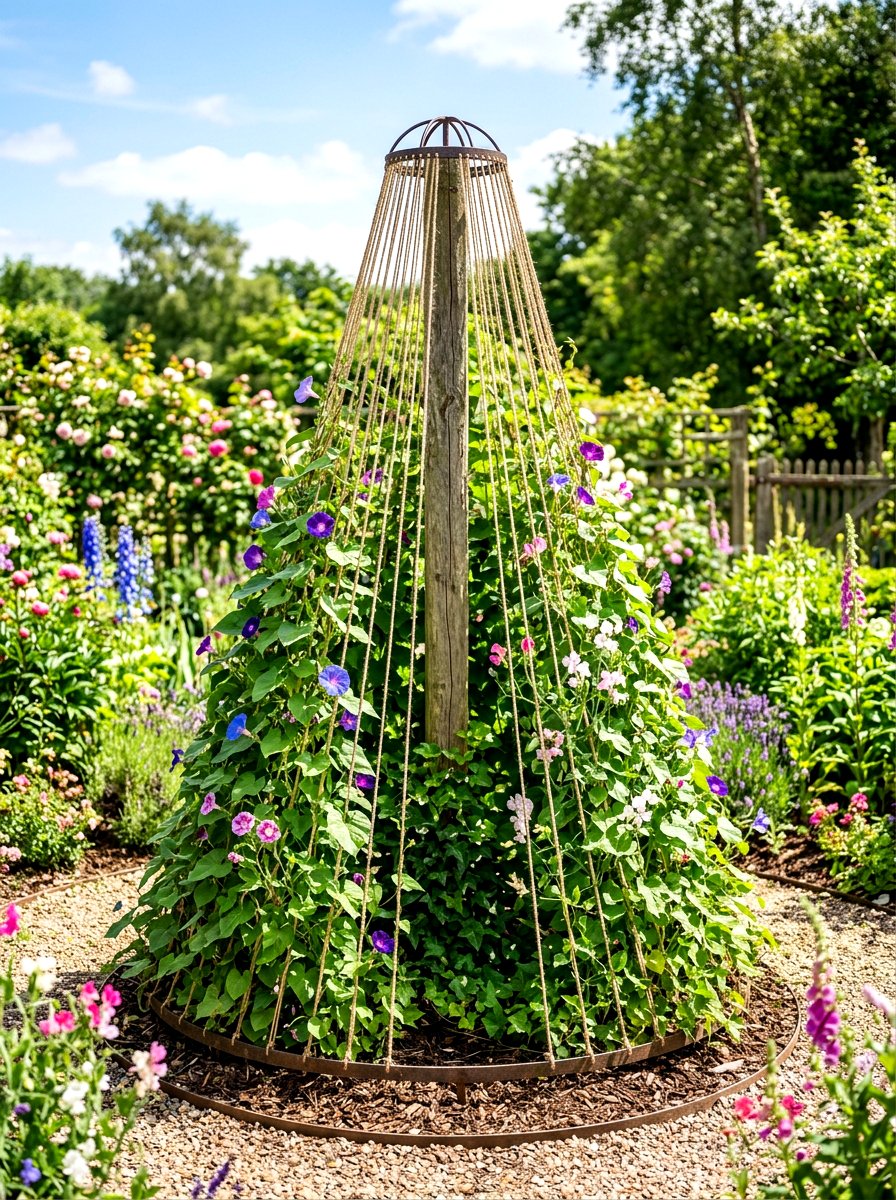
An umbrella-style trellis consists of a single central post with several wires or strings fanning out to the ground. This unique shape allows you to plant a circle of climbing vegetables around the base of the post. As the vines grow upward and inward, they create a beautiful cone of green foliage. This design is highly efficient for maximizing space in a round garden bed or a large container. It provides excellent light penetration to all parts of the plant, which leads to better fruit production. The central post can be made from wood or metal, depending on the weight of the vegetables you are growing.
16. Foldable Wood Frame
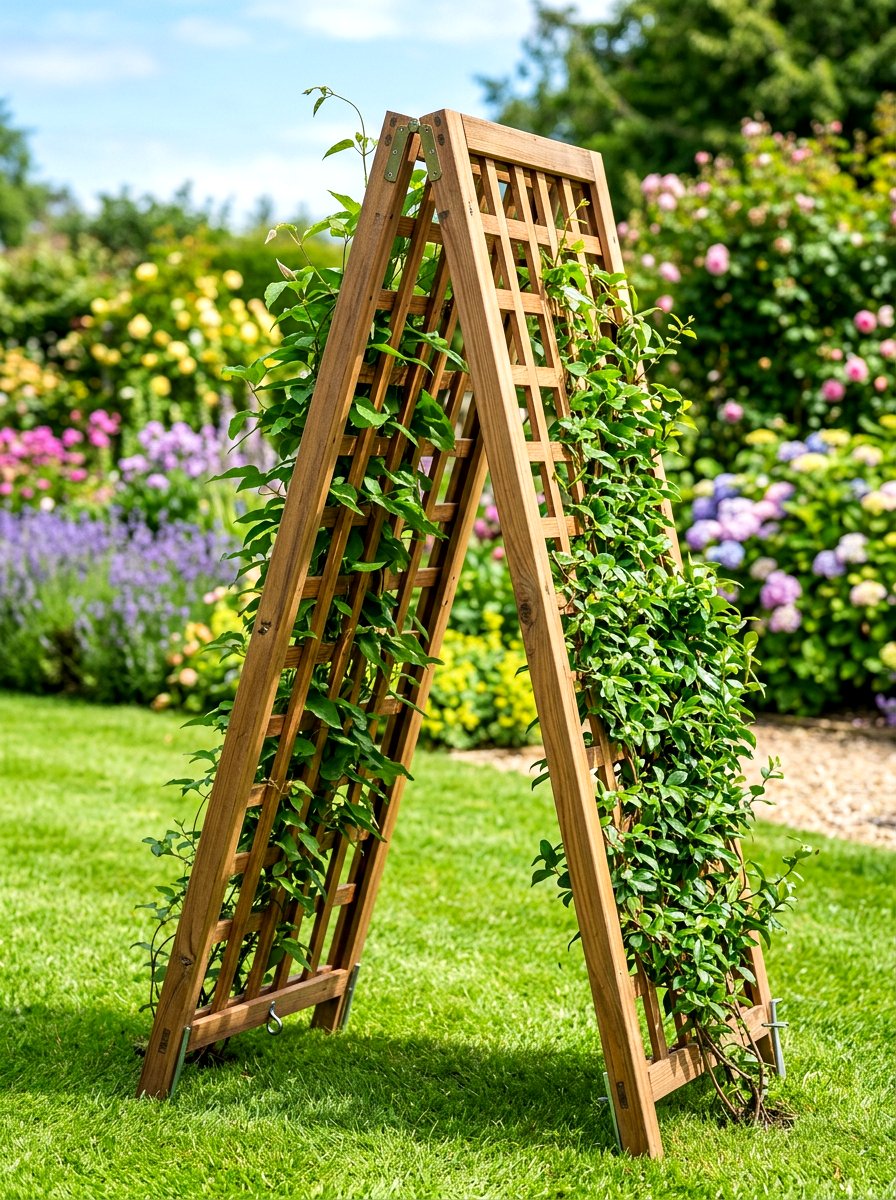
A foldable wooden trellis is a smart choice for gardeners who need a temporary support system that is easy to store. These structures are built with two or more panels that are connected by hinges. You can set them up in a zig-zag pattern or a triangular shape to provide stability without the need for deep stakes. This portability makes them perfect for crop rotation, as you can easily move them to a different bed each year. The natural wood finish complements the colors of your garden and provides a sturdy surface for beans and cucumbers. It is a functional and attractive tool for any organized gardener.
17. T Post Mesh
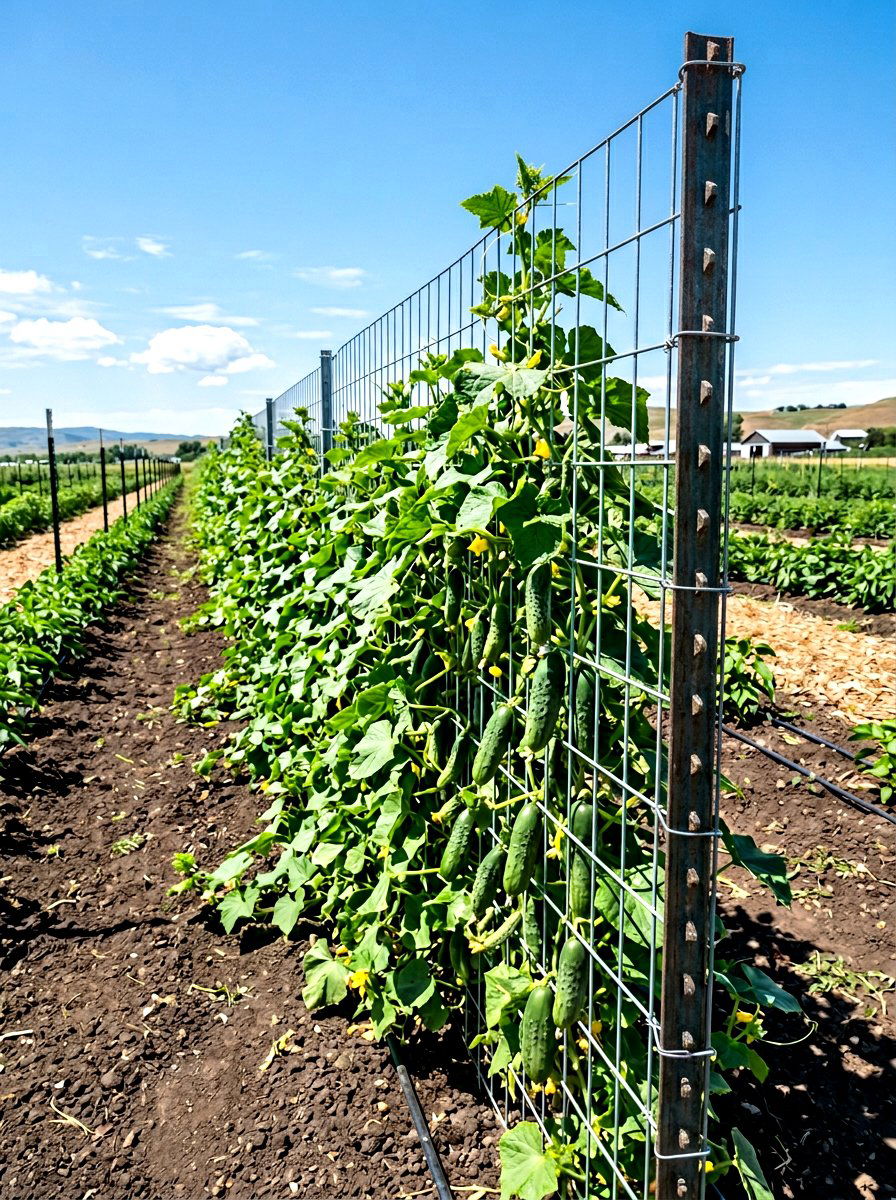
Using T-posts and heavy-duty wire mesh is a classic farmer-style method for growing vertical vegetables in long rows. You simply drive the metal T-posts into the soil every few feet and stretch the mesh between them. This system is strong enough to handle large amounts of foliage and heavy fruit like cantaloupes or cucumbers. The mesh can be made from galvanized steel or plastic-coated wire for extra durability. It is a no-nonsense approach that prioritizes function and high yields over decorative flair. This setup is ideal for large community gardens or home plots where productivity is the primary goal of the growing season.
18. Box Frame Structure
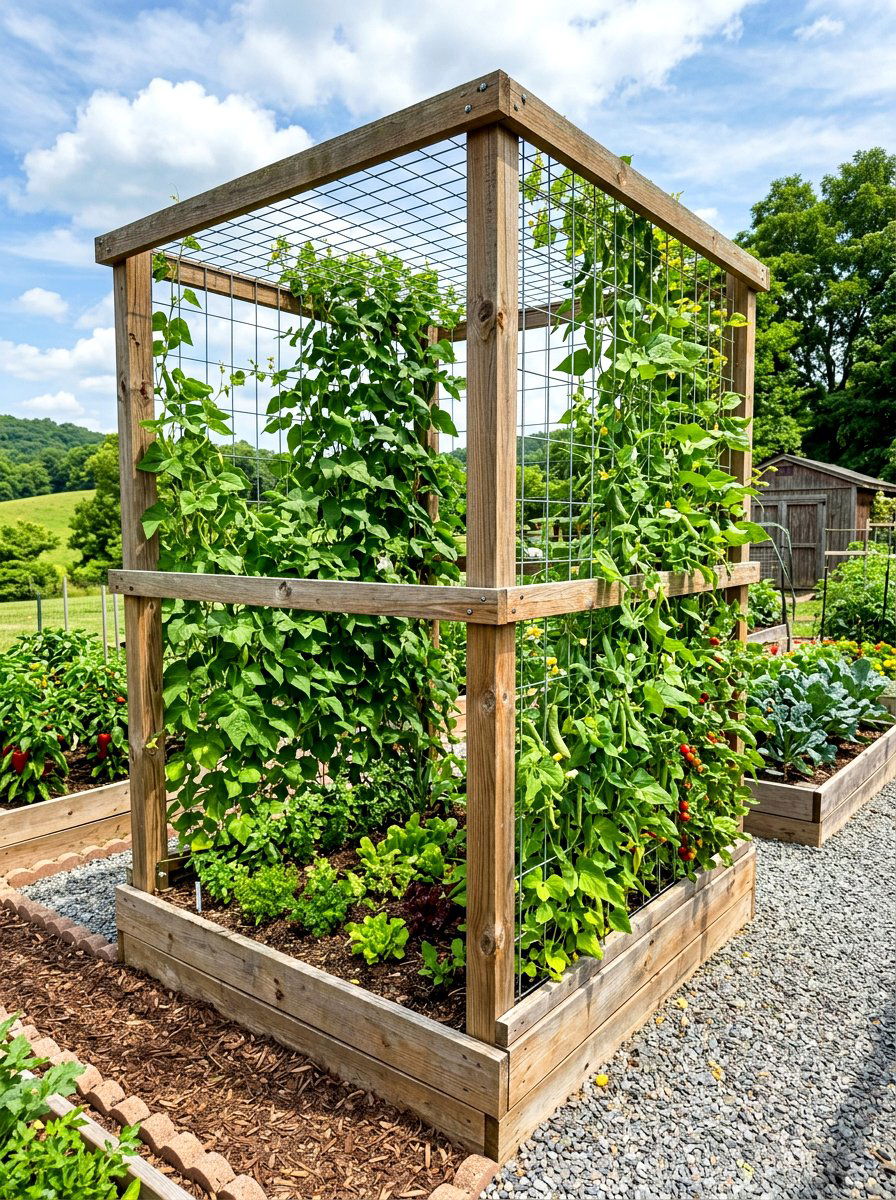
A box frame trellis is a three-dimensional structure that provides multiple climbing surfaces for your plants. This design is often built over a raised bed to create a complete vertical growing cage. You can use wood or metal to build the frame and fill the sides with netting or wire. This allows you to grow different types of vegetables on each side, such as peas on the north and beans on the south. The enclosed design also makes it very easy to drape bird netting or frost blankets over your plants if needed. It is a highly organized way to manage a diverse and healthy vegetable garden.
19. Lean To Wall
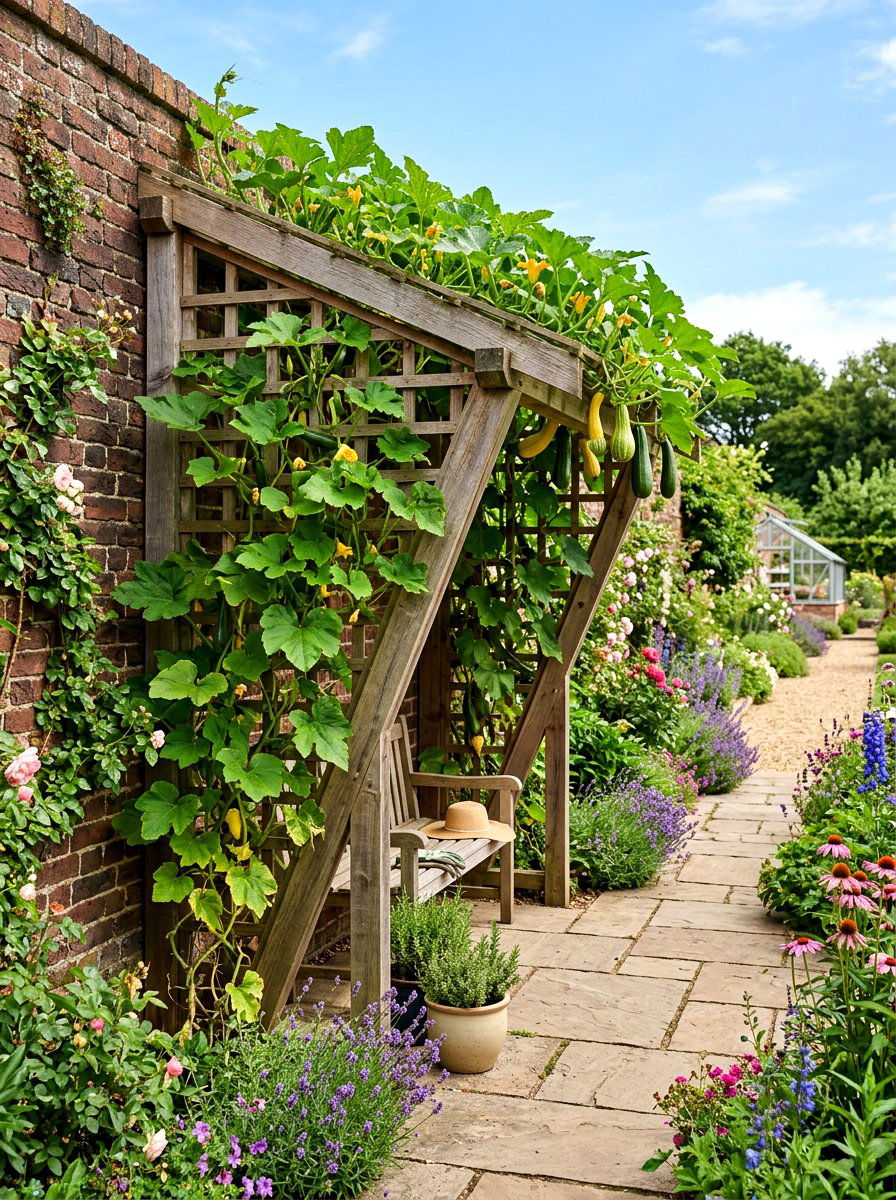
A lean-to trellis is a simple angled structure that rests against a wall, fence, or another garden building. This design is perfect for maximizing sun exposure on a south-facing wall. The angled surface allows gravity to help hold heavy fruits like squash in place as they grow along the frame. You can build a lean-to using a variety of materials, including old ladders, wooden frames, or cattle panels. It creates a shaded area underneath that is perfect for storing garden tools or growing shade-loving herbs. This space-saving idea is ideal for narrow urban lots where every square inch of the garden must be utilized.

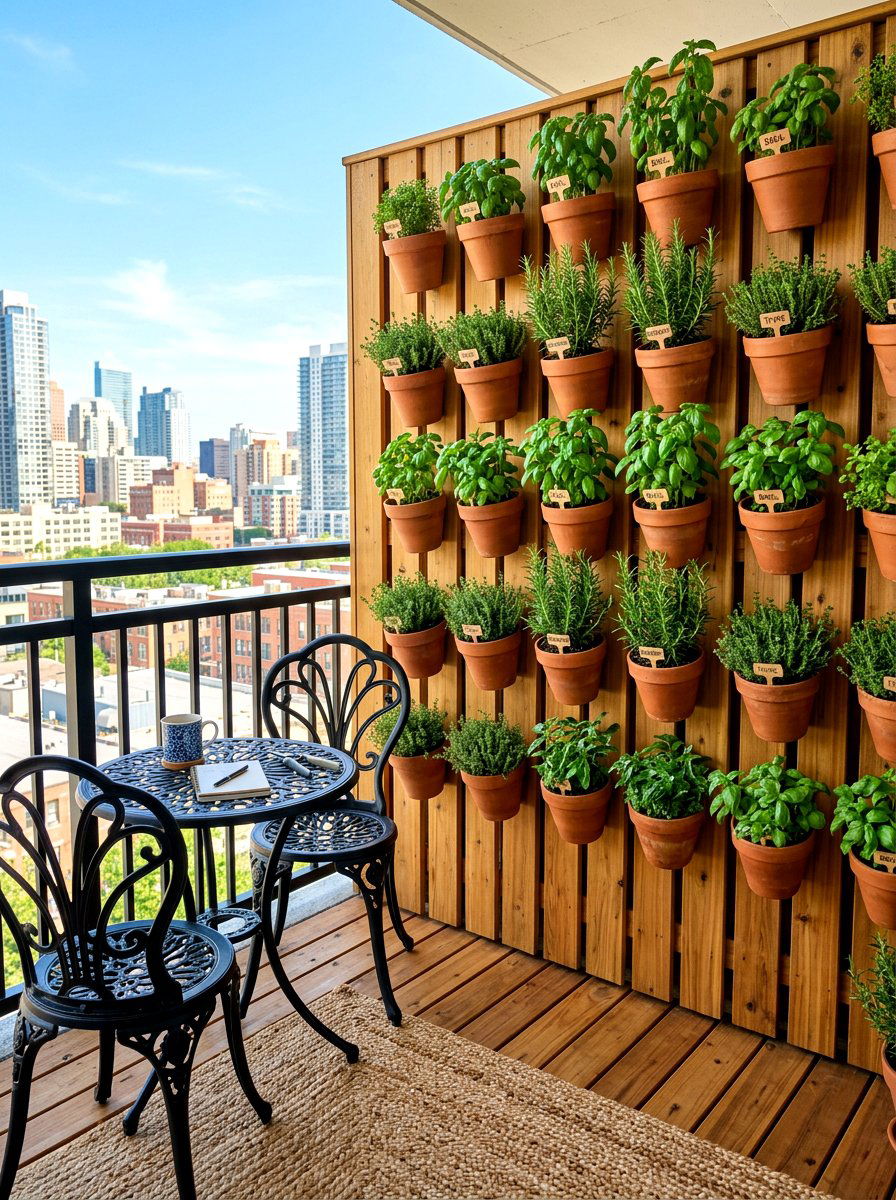
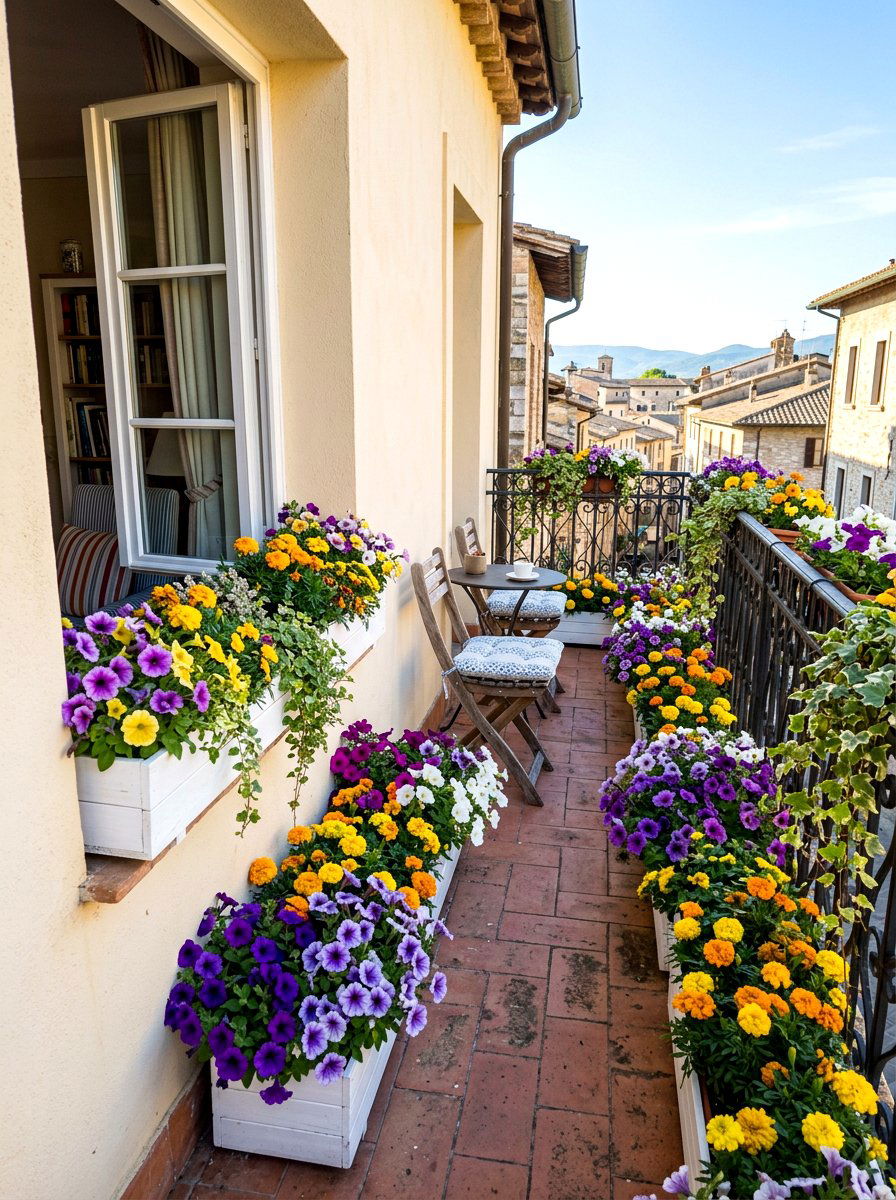
20. Copper Pipe Frame
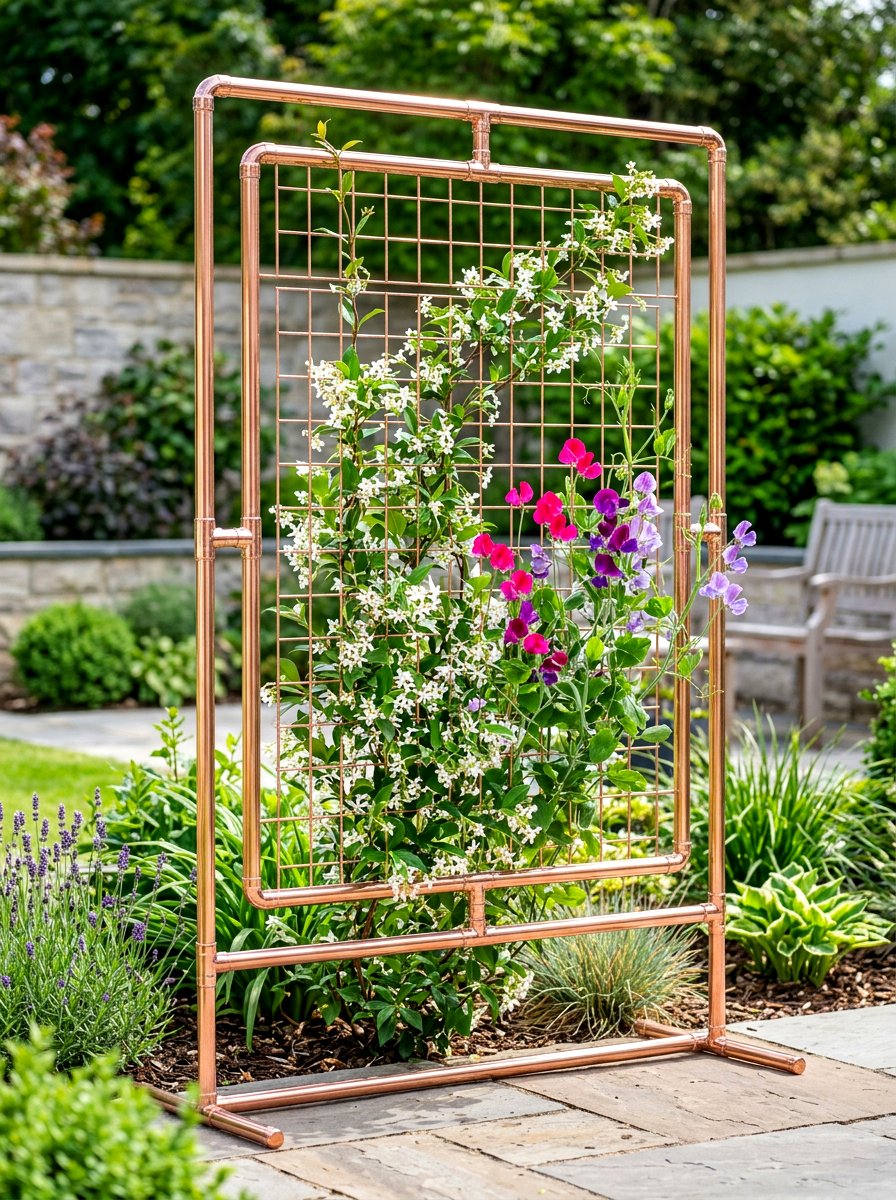
If you want to add a touch of luxury to your garden, a copper pipe trellis is a stunning and durable option. Copper is naturally resistant to the elements and develops a gorgeous green patina over several years. You can use standard plumbing pipes and fittings to create a sleek and modern grid or arch. While the initial cost is higher than wood or plastic, the longevity and beauty make it a worthwhile investment. The smooth surface is easy for vines to wrap around, and the metal conducts heat, which can help warm the soil for early spring crops. It is a truly elegant addition.
21. Fan Shaped Wood
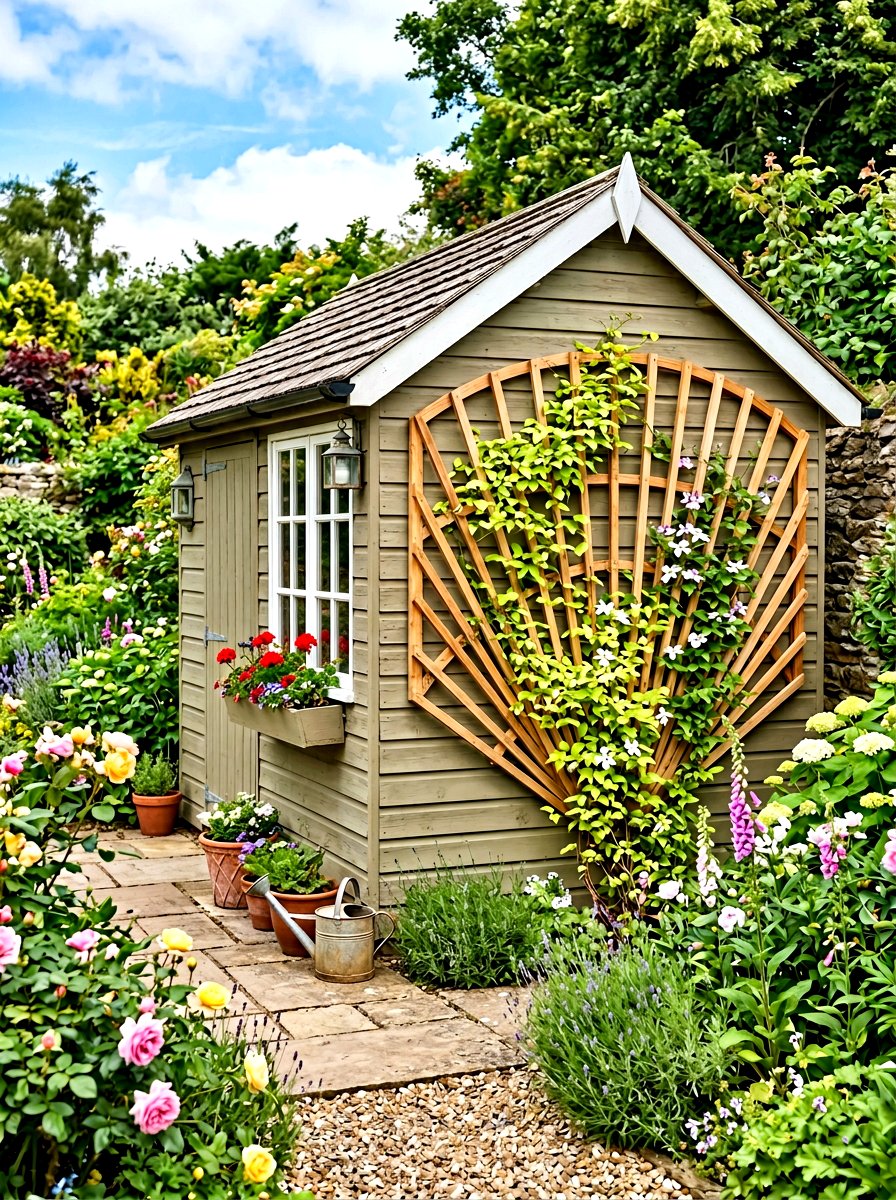
A fan-shaped trellis is a classic decorative element that works beautifully for supporting climbing roses or edible vegetables. These trellises are wider at the top than the bottom, providing more growing space as the plant matures and branches out. You can easily build your own using thin cedar slats fanned out from a central base. This shape is perfect for mounting against a house wall or a garden shed to add visual interest. It works best for lighter vines like peas or climbing spinach that do not require heavy-duty support. The elegant lines of the fan add a traditional touch to any productive backyard garden.
22. Freestanding Screen Panel
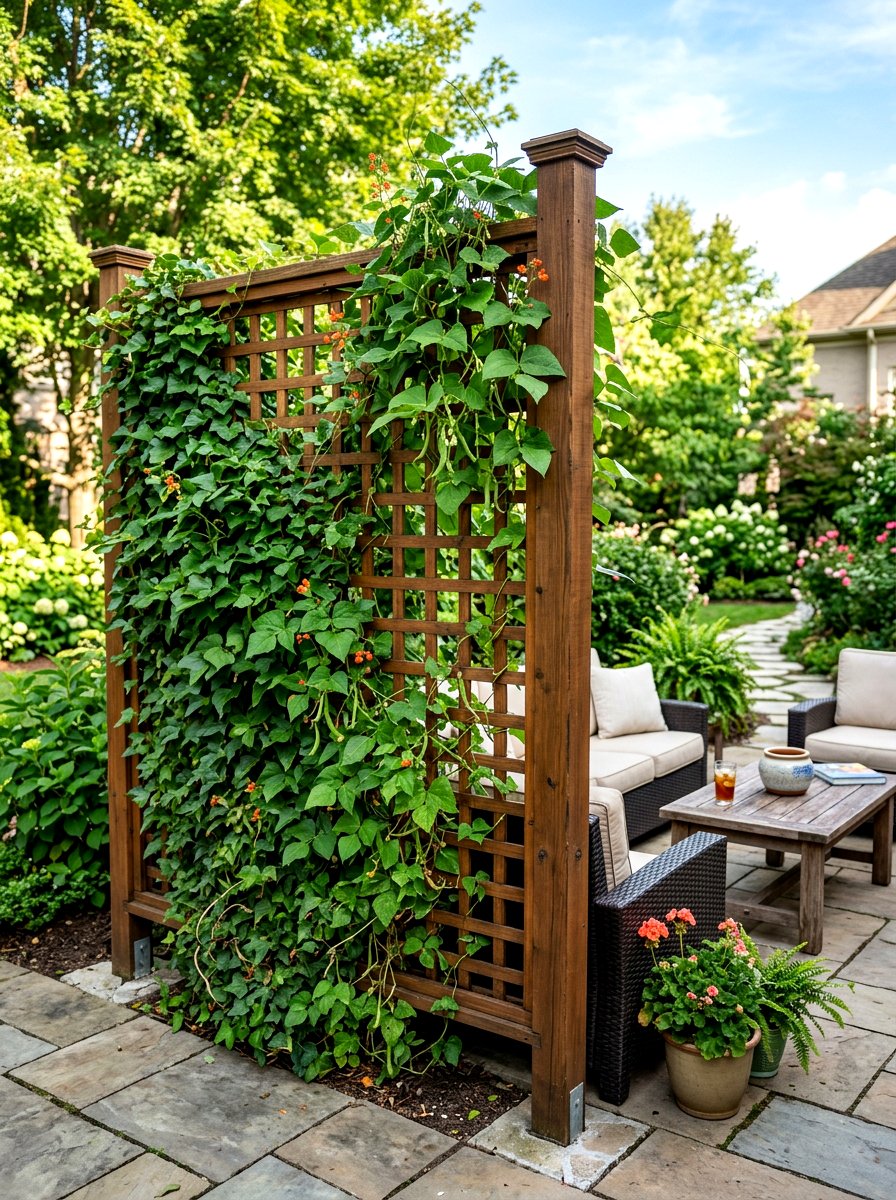
A freestanding screen trellis serves as both a plant support and a functional garden divider. These large panels can be used to create separate "rooms" in your outdoor space or to hide unsightly areas like trash cans. By growing thick vines like pole beans or hops on the screen, you create a living wall of privacy. The frame should be anchored securely in the ground to prevent it from tipping over in the wind. This design is perfect for gardeners who want to combine landscaping with food production. It provides a beautiful green backdrop for outdoor dining areas while producing a bountiful harvest for your family.
23. Raised Bed Integrated
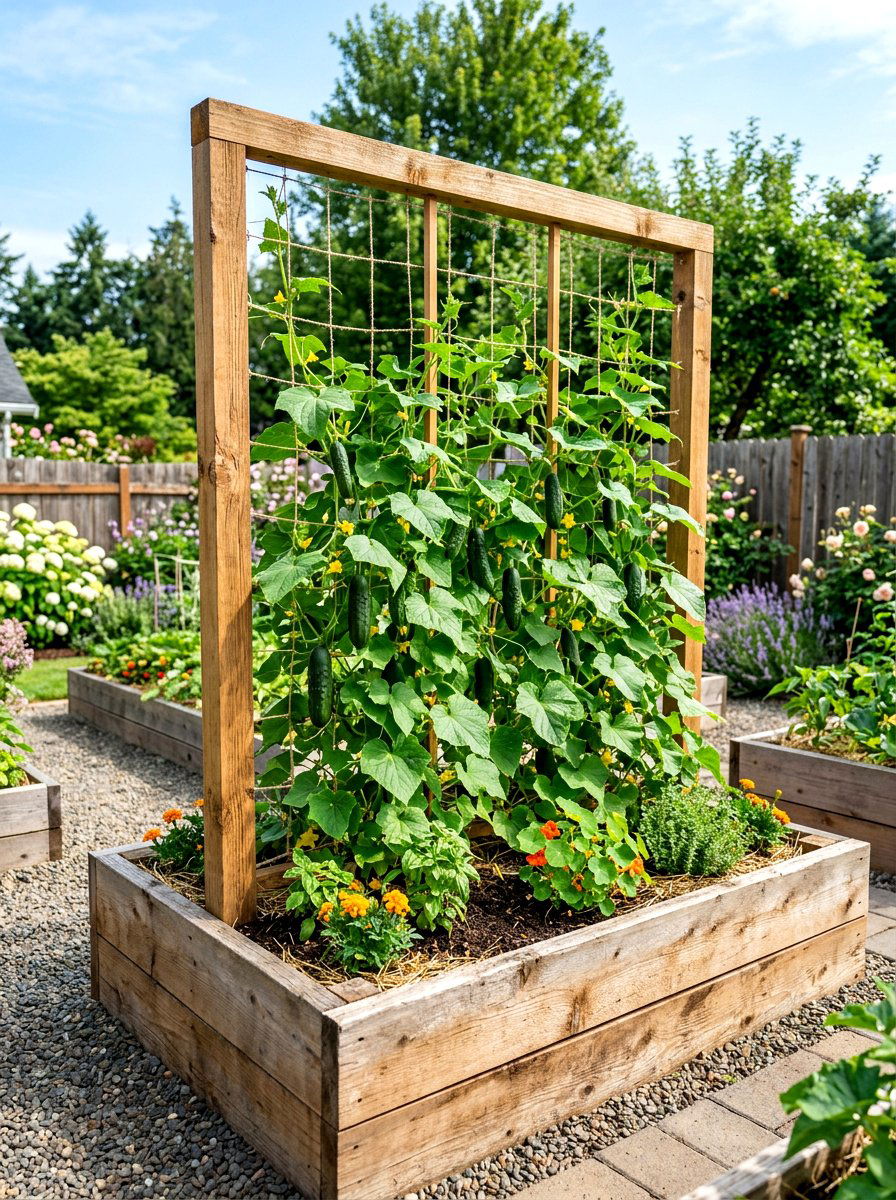
Building a trellis directly into your raised bed frame is a great way to ensure a stable and permanent support system. You can attach vertical posts to the corners of the bed and connect them with horizontal rails or wire mesh. This integration means you never have to worry about your trellis leaning or falling over during a storm. It also keeps the base of your plants close to the support, making it easier for them to find their way up. This design creates a very clean and professional look in the garden. It is an excellent long-term solution for growing heavy vining crops like cucumbers.
24. Natural Branch Structure
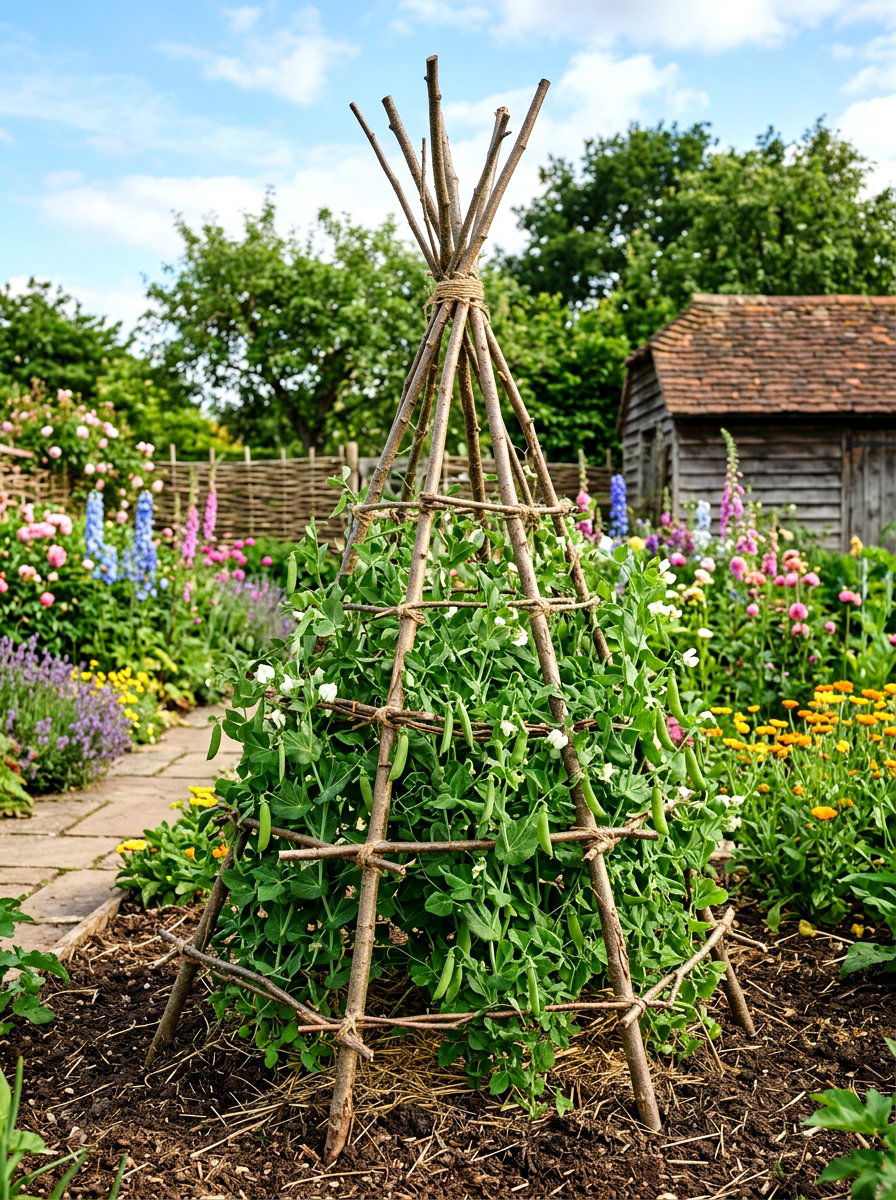
For a truly organic and rustic feel, you can build a trellis using fallen branches and twigs from your own yard. This "wattle" style of gardening has been used for centuries and costs absolutely nothing to create. Simply sharpen the ends of sturdy branches and drive them into the soil in a grid or teepee shape. You can use smaller twigs to create a mesh-like surface for delicate vines to grab onto. This method blends perfectly into a cottage-style garden and is completely biodegradable at the end of the season. It is a wonderful way to recycle natural materials while providing essential support for your vegetables.
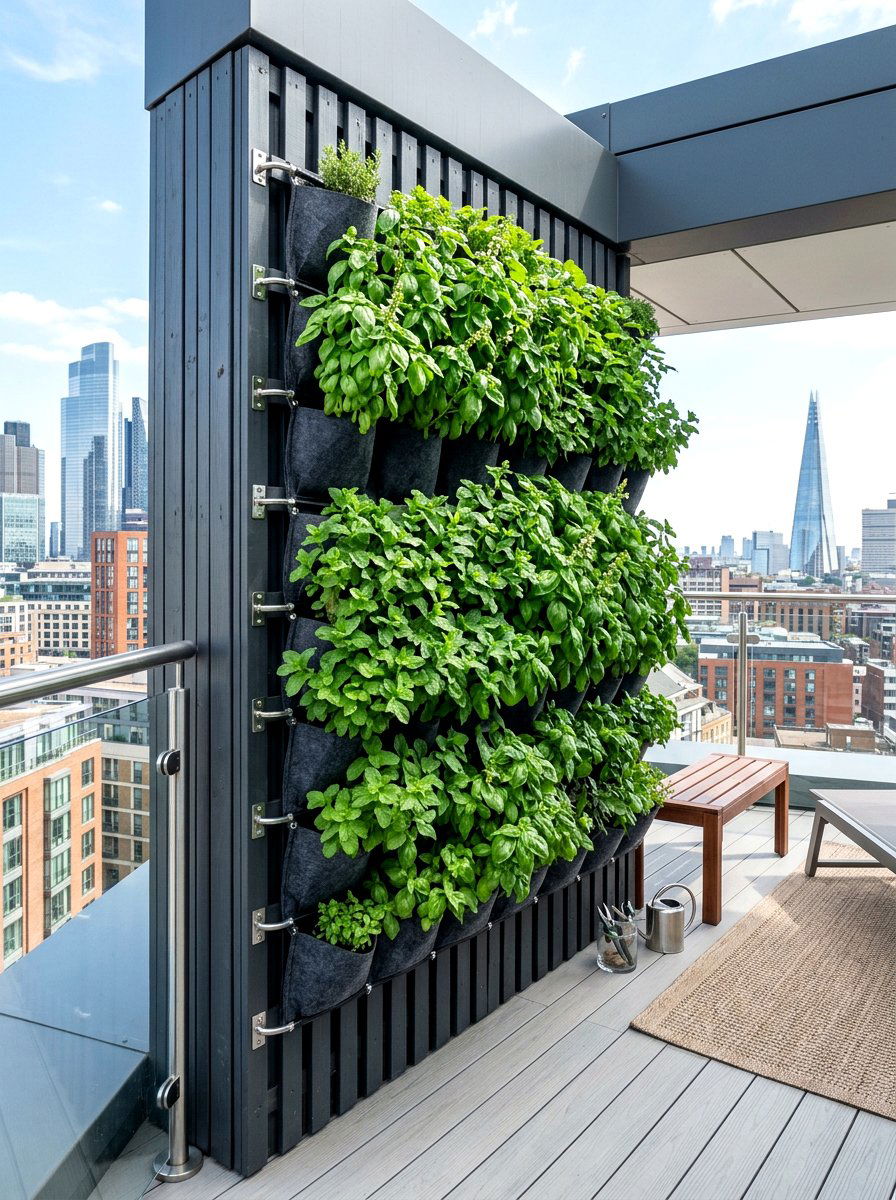
25. Metal Grid Wall
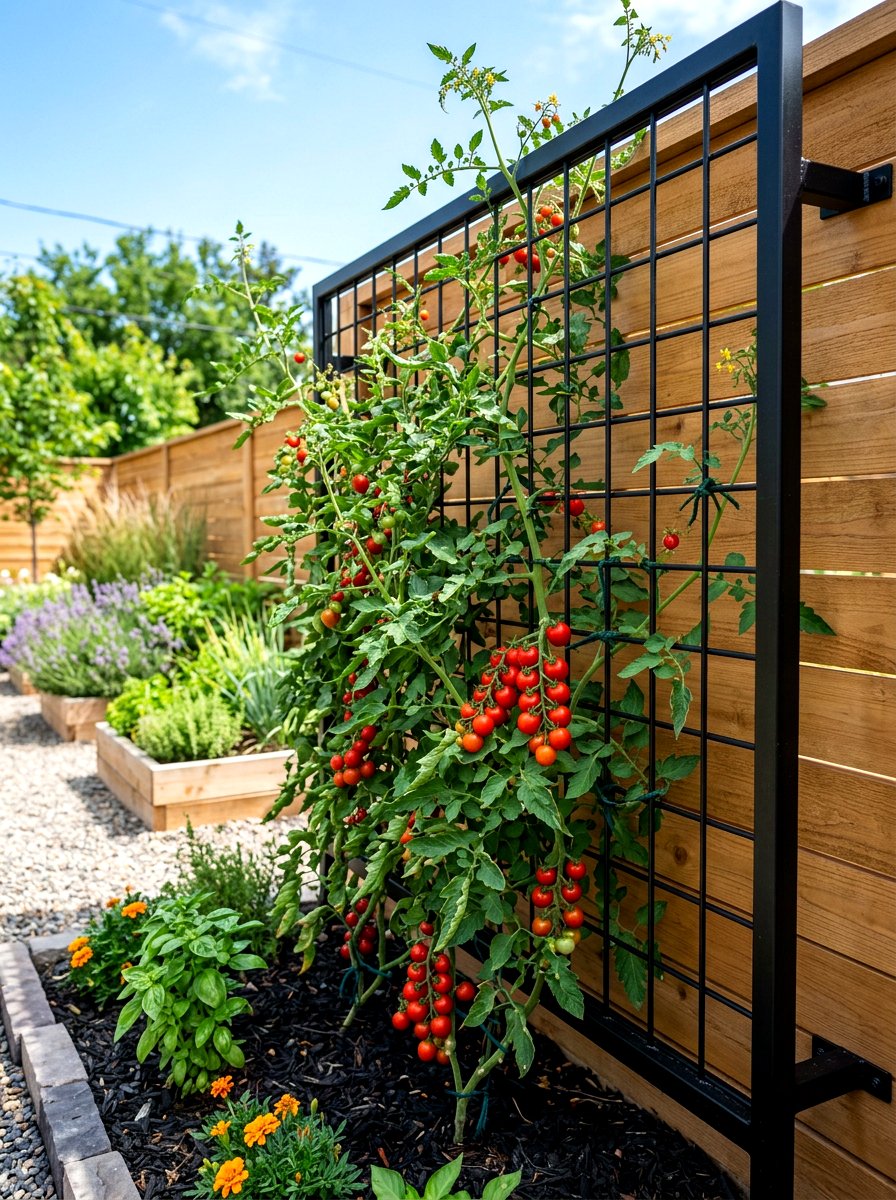
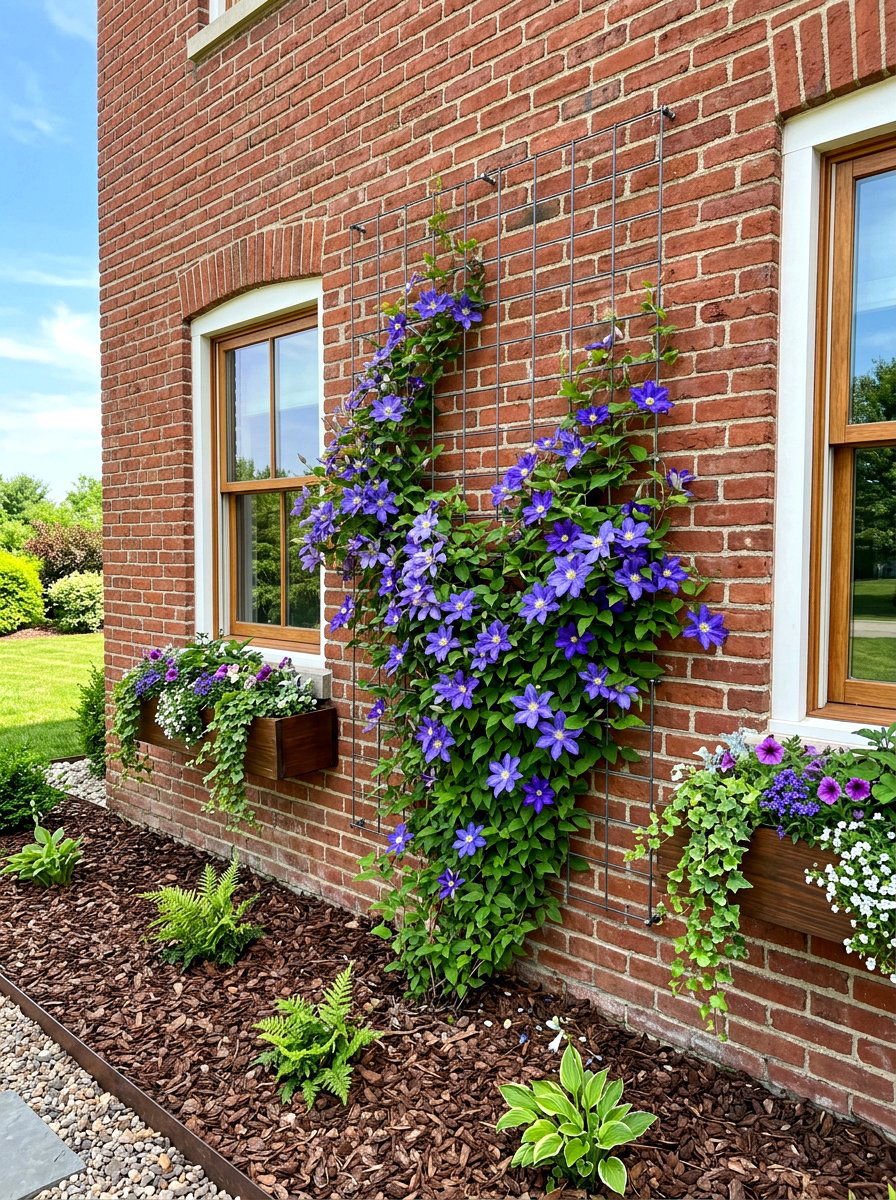
A large metal grid wall is a modern and durable way to support a high volume of climbing plants. These grids are often made from galvanized steel and can be mounted directly to a fence or a set of heavy posts. The rigid structure is perfect for training heavy vines like grapes or large indeterminate tomatoes. Because the metal is thin, it does not block much light from reaching the plants behind it. This type of trellis is very easy to clean at the end of the year to prevent the spread of diseases. It offers a sleek, industrial aesthetic that looks great in any contemporary vegetable garden.
26. Pyramid Garden Support
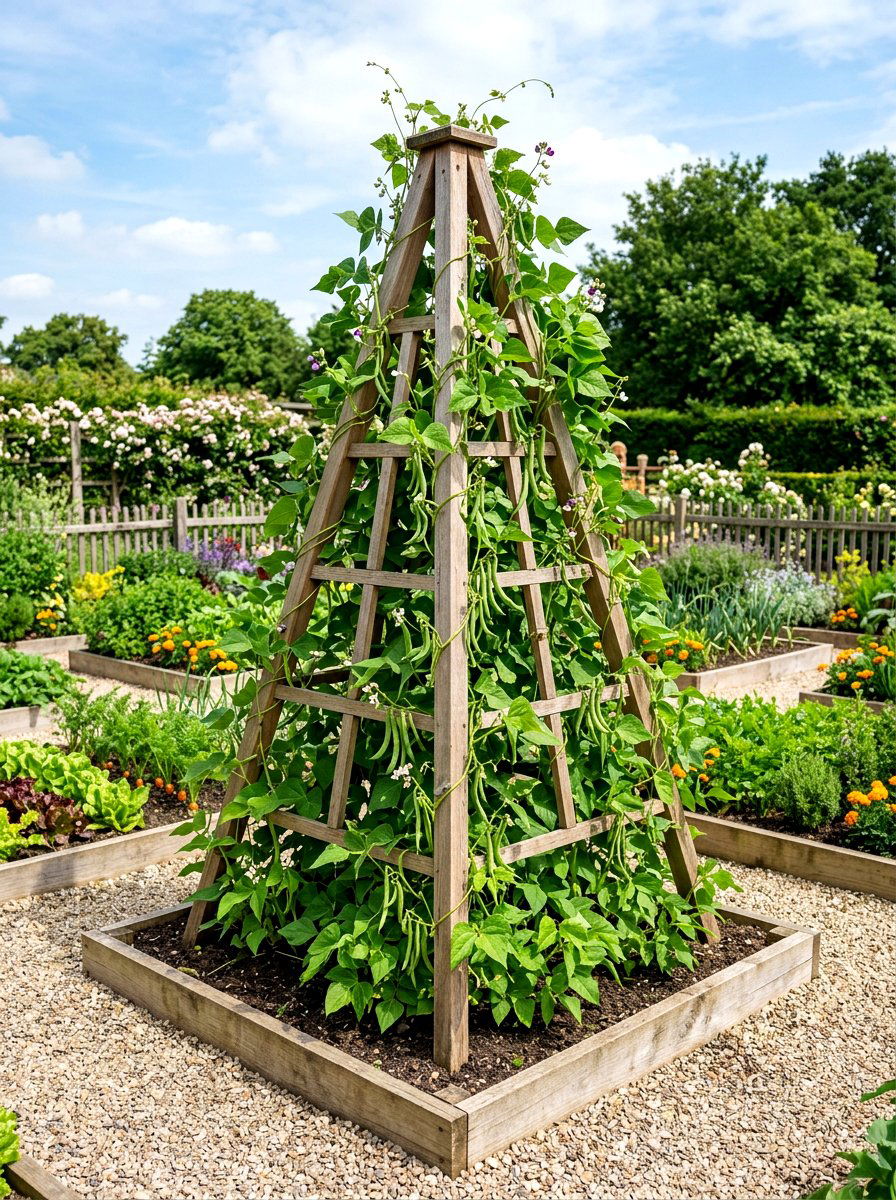
A pyramid-shaped trellis provides a very stable and attractive base for a variety of climbing vegetables. These structures are wider at the bottom and come to a point at the top, which helps distribute the weight of the plants evenly. You can build a pyramid using four wooden posts and a few horizontal rungs for climbing. This design is particularly effective for growing cucumbers or beans in the center of a square garden bed. The vertical height adds a nice architectural element to the landscape, breaking up the flat look of low-growing crops. It is a timeless design that is both functional and very pretty.
27. Zig Zag Wire
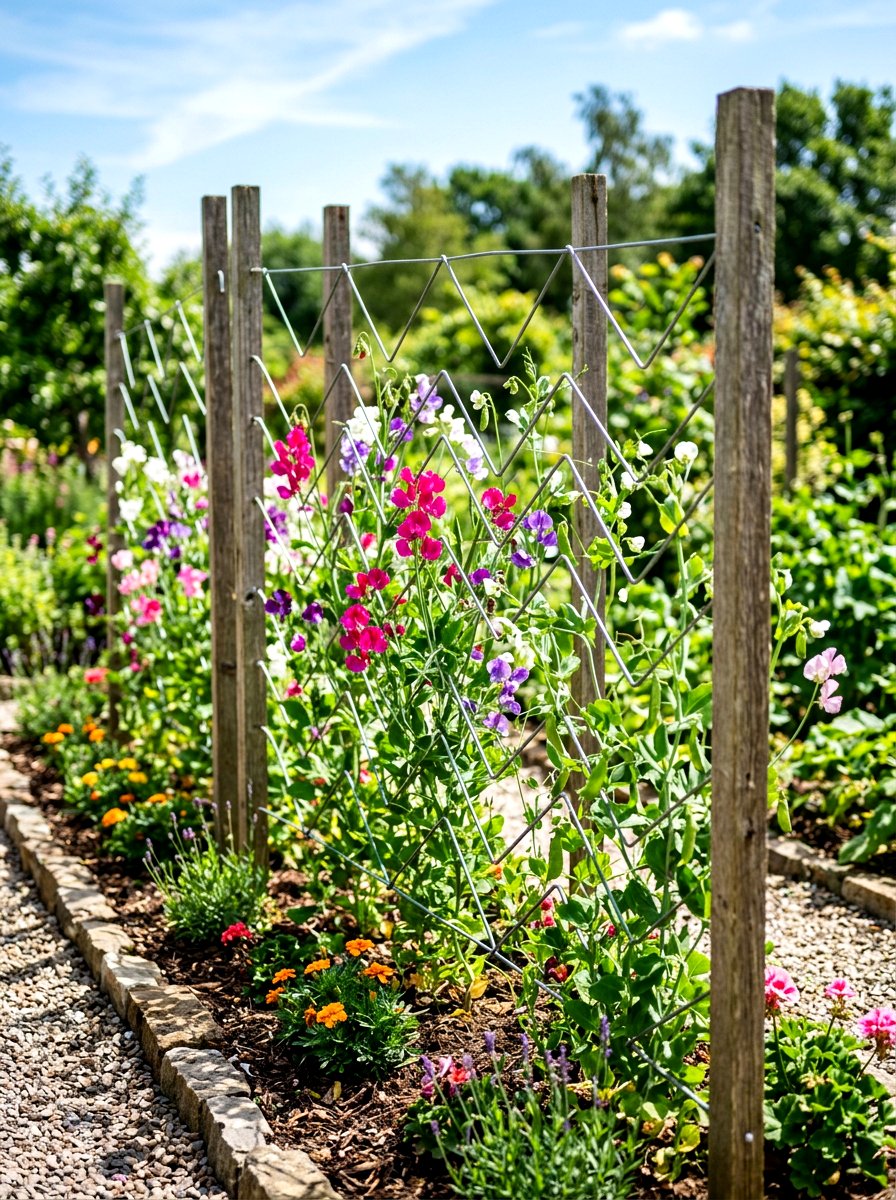
A zig-zag wire trellis is a creative way to add visual movement to your garden while supporting your plants. This system uses a series of offset stakes with wire or twine strung between them in a back-and-forth pattern. It is an excellent choice for growing peas or beans along a narrow border or path. The zig-zag shape provides more surface area for the plants to climb compared to a straight line. It also makes harvesting much easier, as the pods are spread out and visible from different angles. This simple DIY project is a fun way to experiment with vertical gardening in a small or unconventional space.
28. Hub Spoke Support
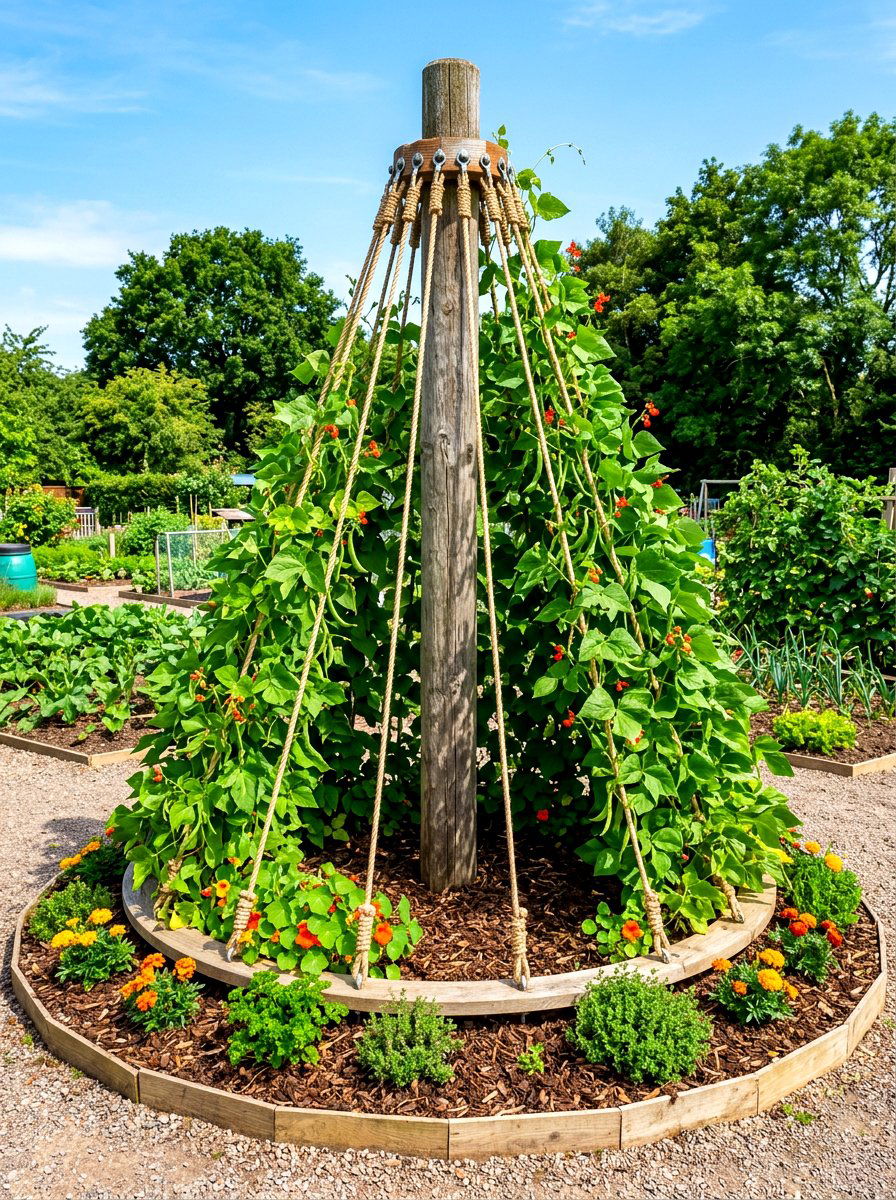
The hub-and-spoke trellis is a unique circular design that looks like a giant bicycle wheel lying on its side. A central tall post acts as the hub, with several wires or ropes extending down to the ground in a circle. This creates a large cone of growing space that is perfect for vigorous climbers like runner beans or hops. You can plant a different variety of vegetable at the base of each spoke to create a colorful and diverse display. This design is highly efficient for maximizing yields in a small footprint. It also provides a stunning focal point for the center of a circular garden bed.
29. Vertical Tower Cage
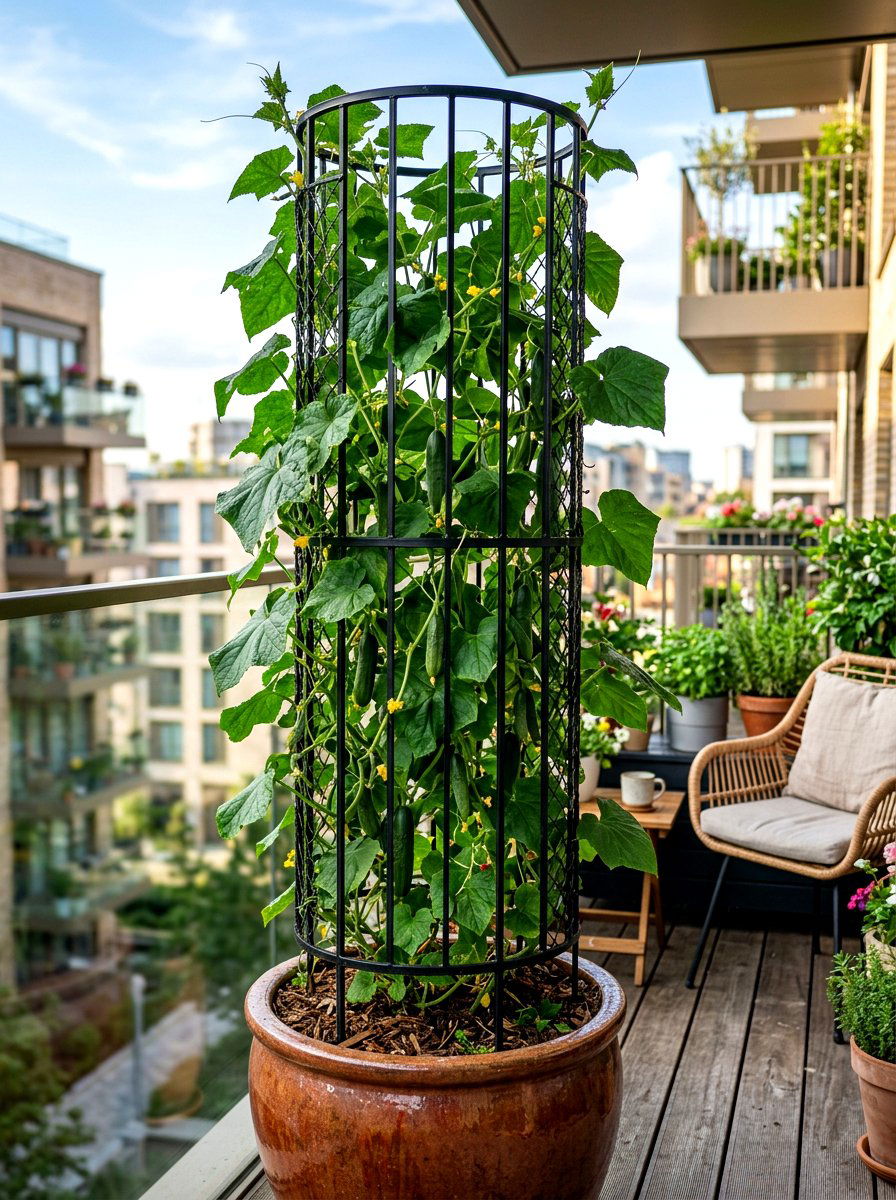
A vertical tower cage is a tall, narrow structure that is perfect for growing vegetables in large containers or small patio spaces. These cages are usually made from heavy-duty wire or plastic-coated metal to provide strong support for tall plants. Unlike standard tomato cages, tower trellises are much taller and often feature decorative finials at the top. They are ideal for growing cucumbers, peppers, or dwarf varieties of climbing beans. The vertical design keeps the foliage dense and organized, which is great for airflow and pest management. It is a practical solution for urban gardeners who want to grow food on a balcony or small deck.
30. Jute Rope Net
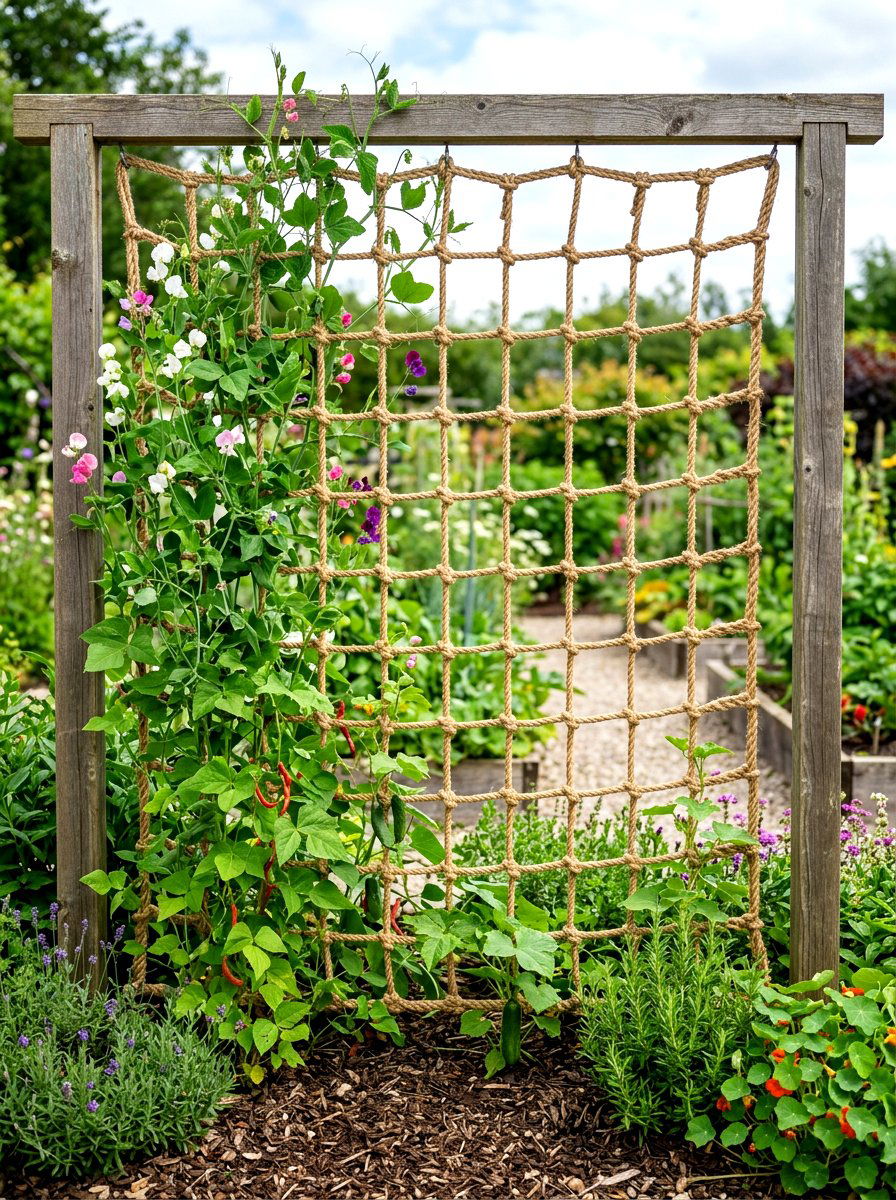
Using a jute rope net is a natural and eco-friendly way to provide support for your climbing vegetable plants. Jute is a biodegradable fiber that is very strong and easy for plant tendrils to grip onto. You can purchase pre-made netting or tie your own custom grid using a large roll of twine. Simply suspend the net from a wooden frame or an overhead beam and anchor it to the ground. At the end of the growing season, you can compost the entire net along with the spent vines. This is a very low-cost and sustainable option that works well for all types of light to medium-weight vining vegetables.
Conclusion:
Integrating vertical support structures into your vegetable garden is one of the smartest ways to increase your yearly harvest and improve plant health. From the rustic charm of a bamboo teepee to the modern efficiency of a cattle panel arch, there is a trellis design for every style and budget. By utilizing vertical space, you can grow more food in a smaller area while keeping your backyard organized and beautiful. These structures also protect your hard-earned crops from soil-borne diseases and hungry ground pests. Whether you choose to upcycle materials or invest in permanent metal grids, a well-placed trellis will serve as a foundational element of your gardening success.

Related posts: