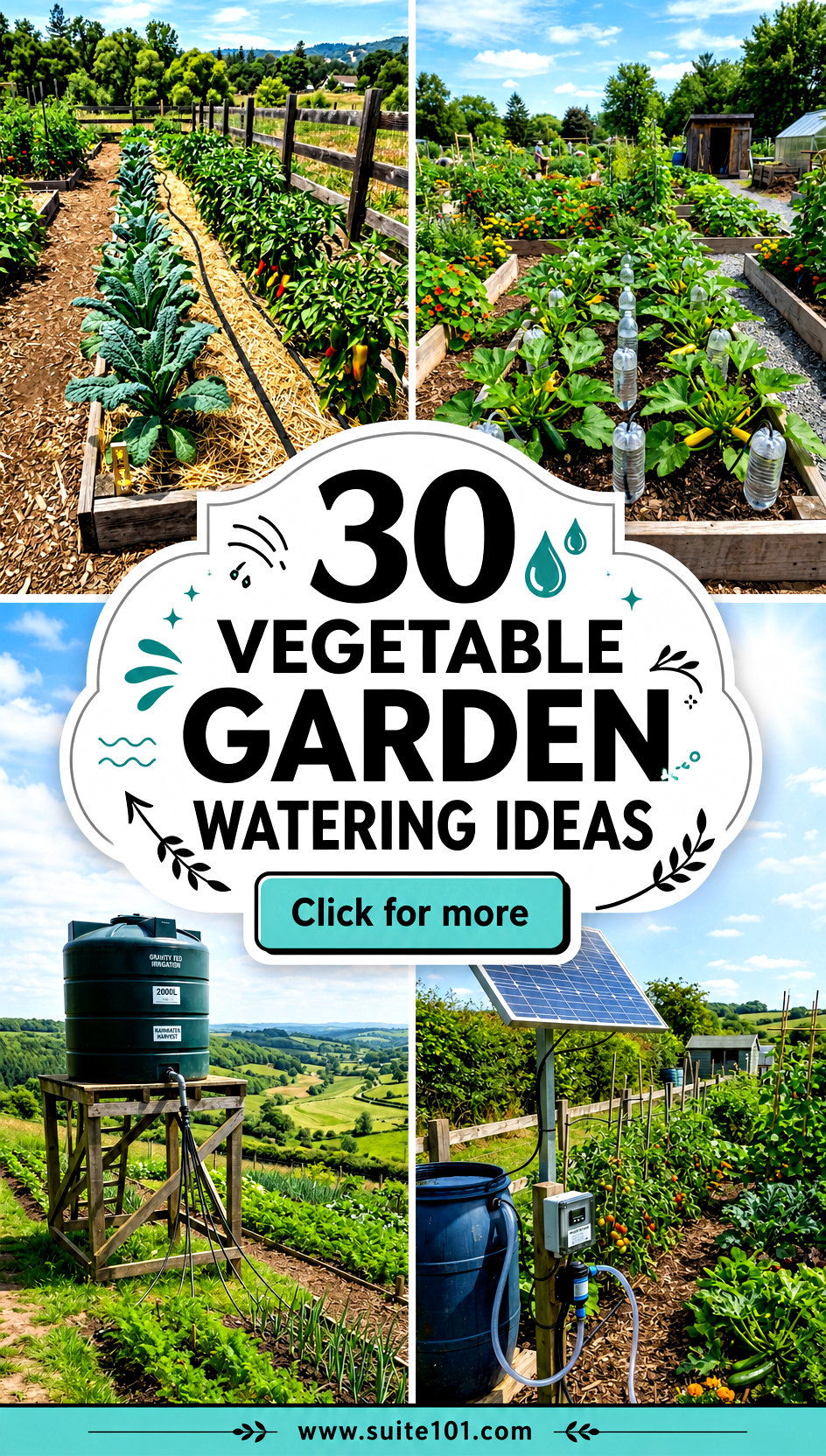
Growing a thriving vegetable garden often comes down to how well you manage moisture for your thirsty plants. Finding the right balance between overwatering and underwatering can feel like a constant struggle for many home gardeners. Whether you are dealing with a small balcony setup or a sprawling backyard plot, the way you deliver water directly impacts your harvest quality. Modern solutions range from simple DIY recycled bottles to high-tech automated systems that take the guesswork out of the daily chore. By choosing the most efficient method for your specific climate and plant types, you ensure that every drop goes exactly where it is needed most. This approach saves resources and time while boosting vegetable production.
1. Drip irrigation system
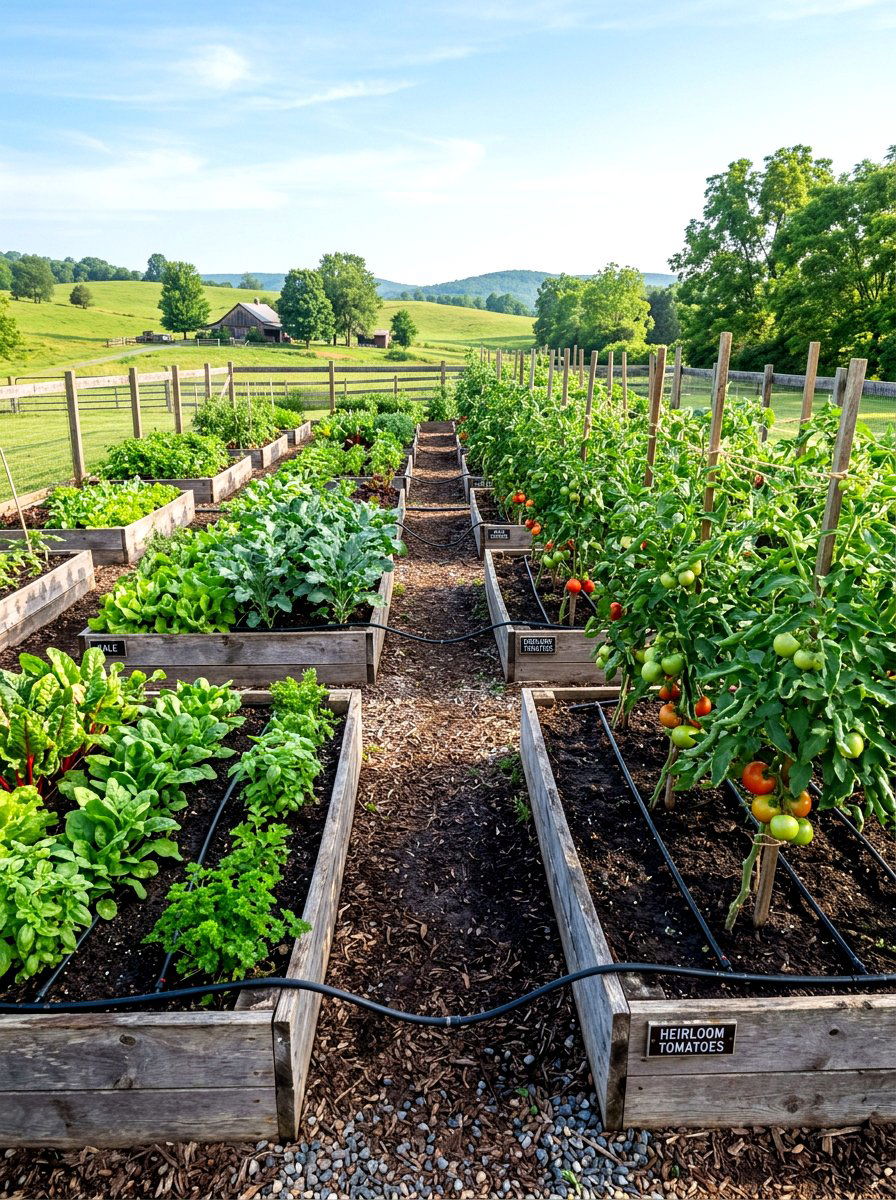
Drip irrigation stands as one of the most efficient ways to keep your vegetables hydrated without wasting a single drop. This system uses a network of small tubes and emitters to deliver water directly to the base of each plant, minimizing evaporation and runoff. You can easily customize the layout to fit any garden size, whether you have straight rows or irregular patches. Installing a drip system helps prevent common leaf diseases because the foliage stays dry while the roots get deep moisture. It is a fantastic long-term investment that saves you countless hours of standing with a hose every summer evening. Most kits are very simple for beginners to set up.
2. Garden soaker hose
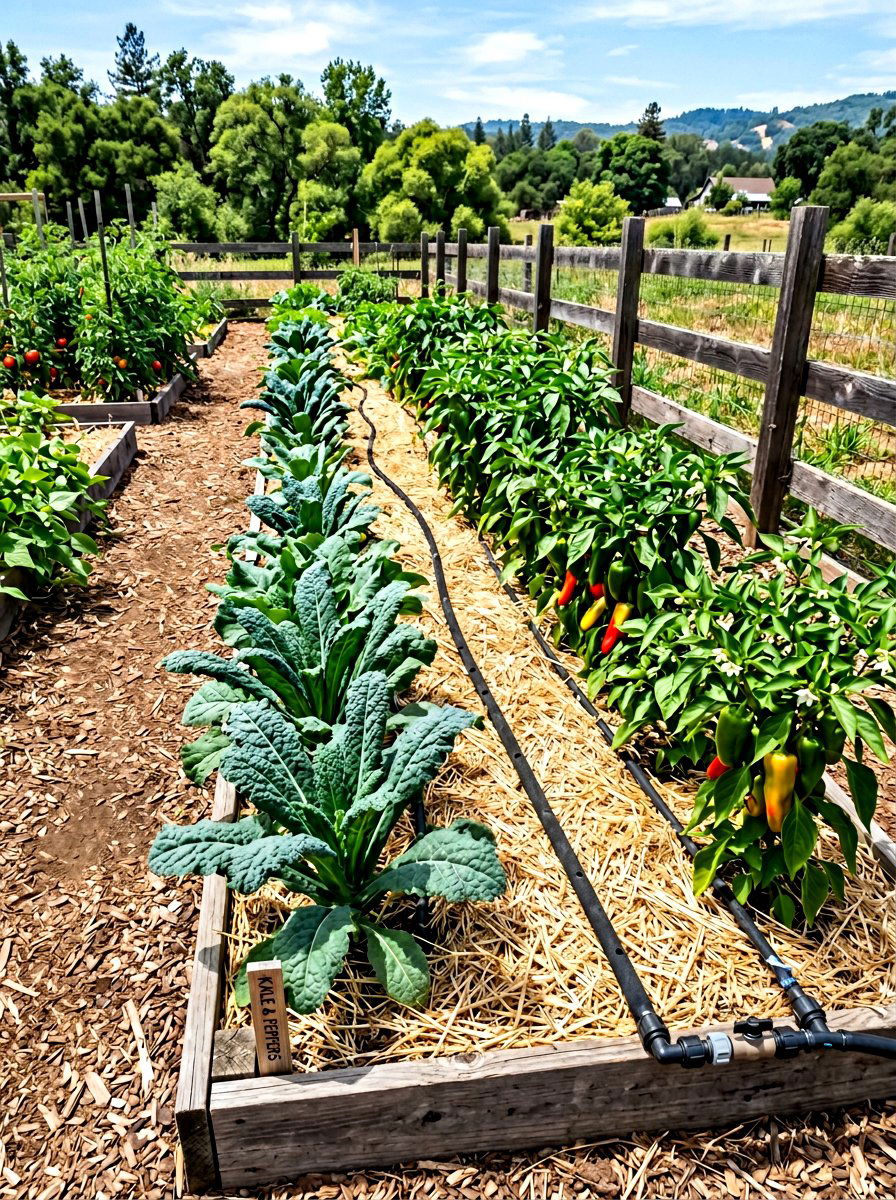
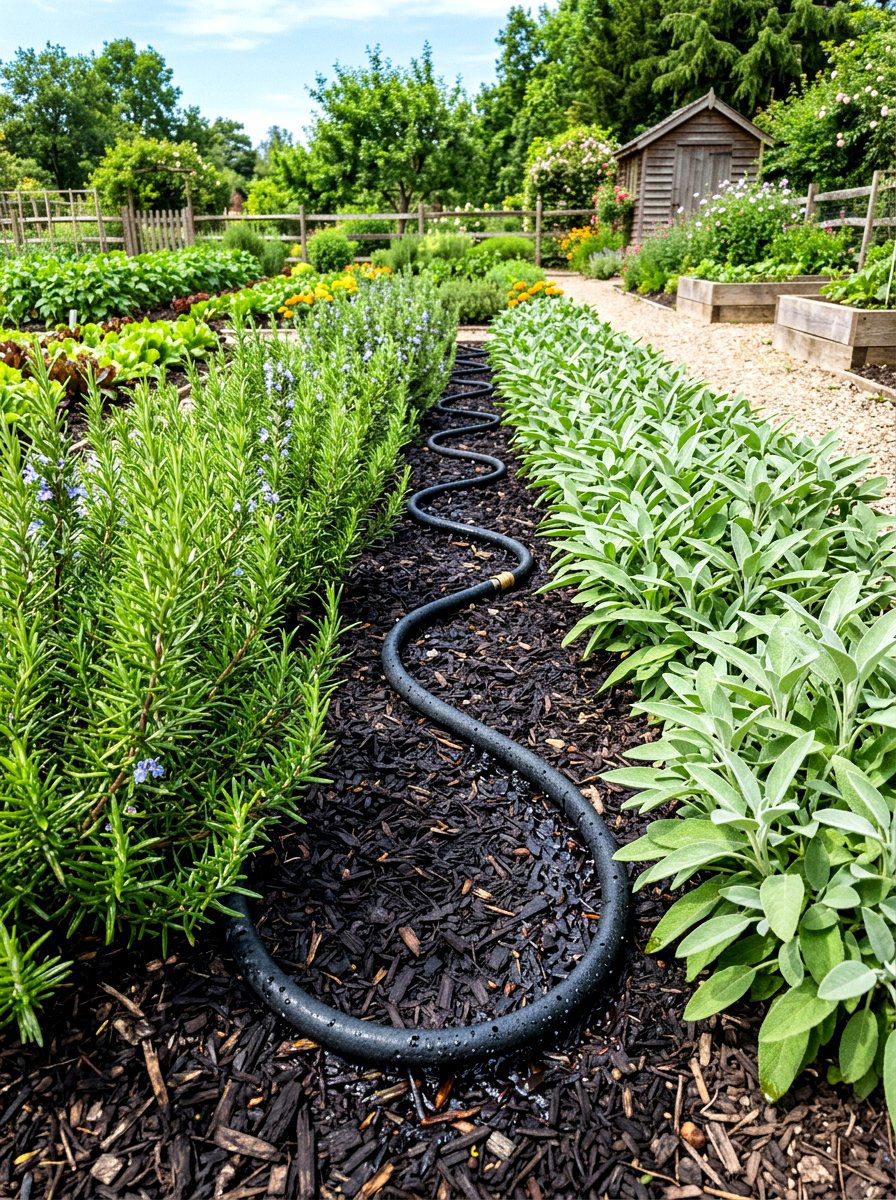
Garden soaker hoses provide a very simple and effective way to deliver water across a large area of soil. These porous hoses allow water to seep out slowly through thousands of tiny holes along their entire length. You can snake them through your vegetable rows or hide them under a thick layer of mulch to keep the moisture focused on the roots. They are particularly great for established plants that need a slow, deep soak rather than a quick surface spray. Because they operate at low pressure, you do not have to worry about soil erosion or splashing dirt onto your delicate vegetable leaves during the process.
3. Rain barrel water collection
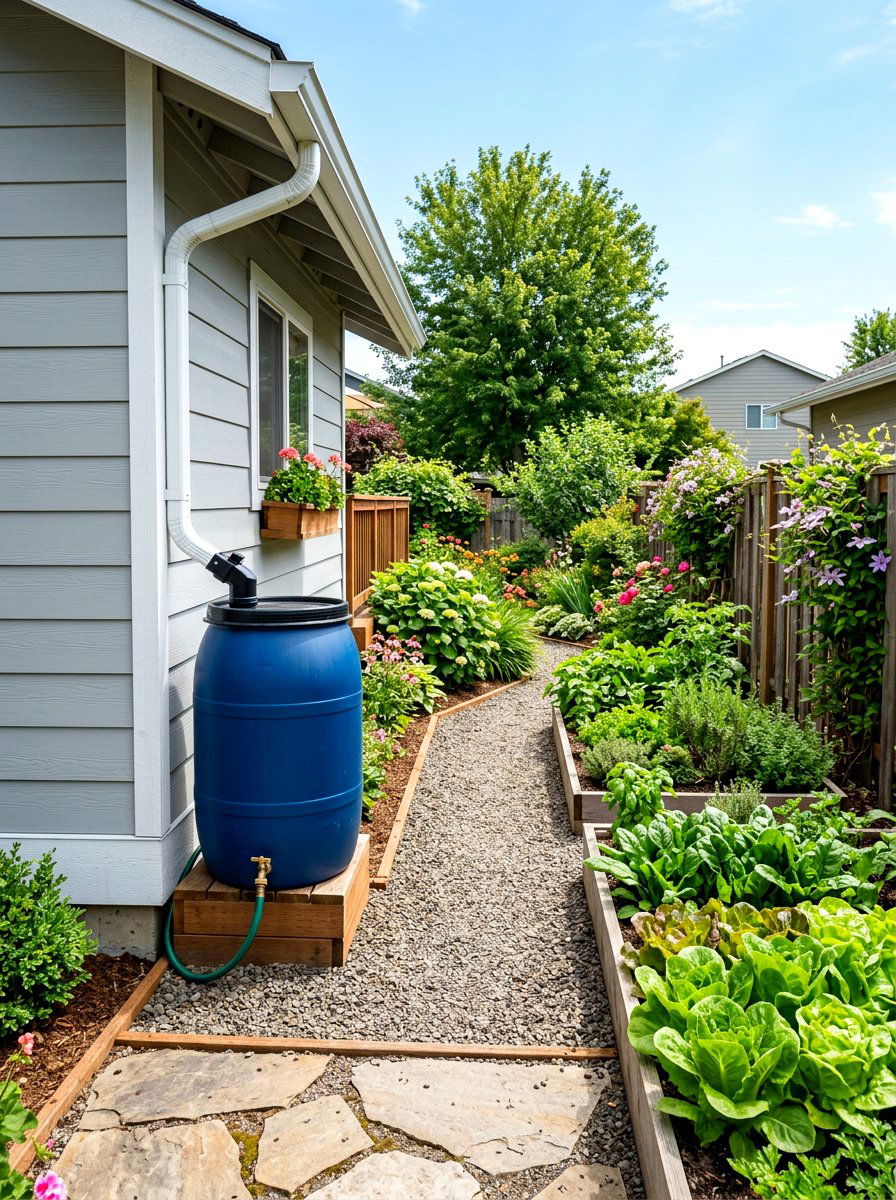
Using rain barrel water collection is an eco-friendly way to keep your vegetable garden hydrated while reducing your utility bills. These barrels sit right under your downspouts to catch and store the free water that falls from your roof. Most systems include a small tap at the bottom where you can attach a hose or fill a watering can. Rainwater is often better for plants than treated tap water because it is free of chlorine and fluoride. It also has a natural temperature that won't shock your plant roots. Setting up several barrels allows you to store a significant amount of water for dry summer spells.
4. Olla pot irrigation
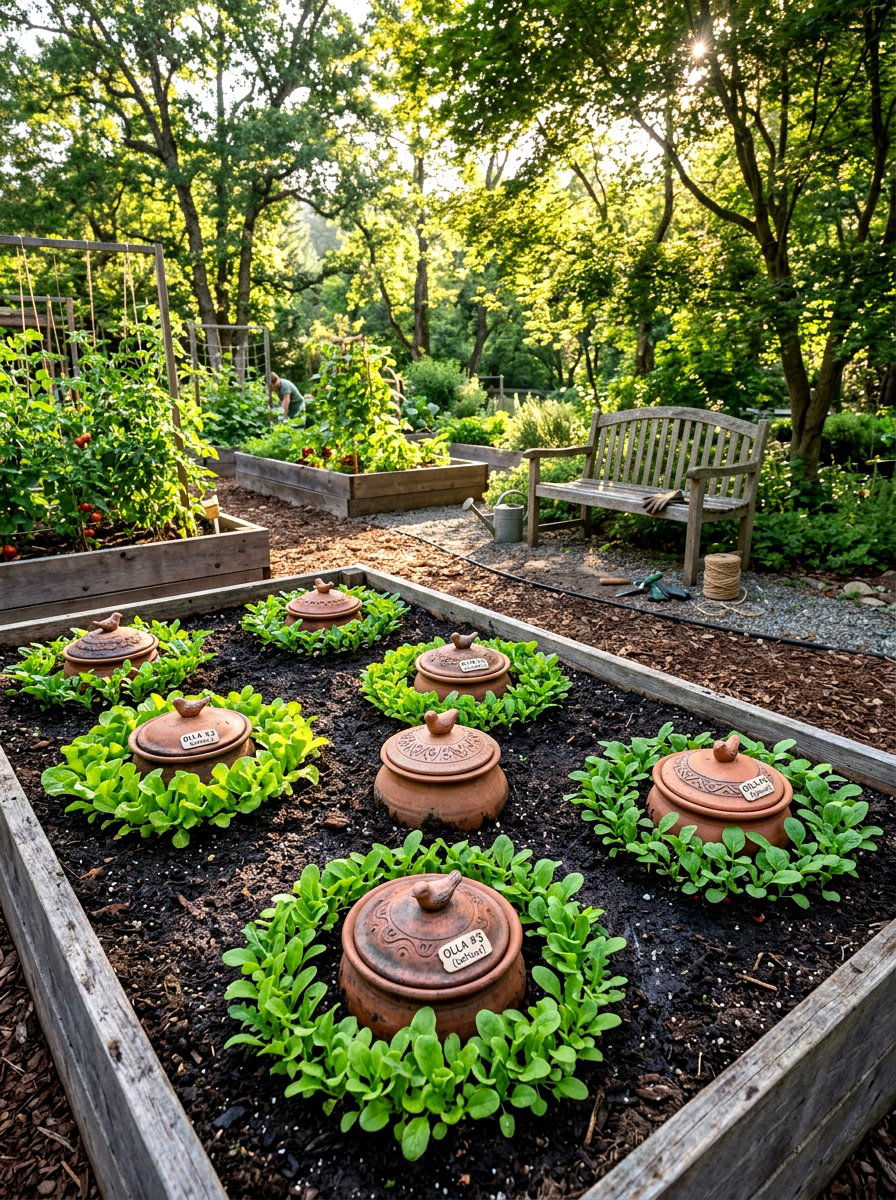
Olla pot irrigation is an ancient and clever technique that relies on unglazed clay pots buried deep in the soil. You fill the clay pot with water and cap it to prevent evaporation or insects from getting inside. The water slowly seeps through the porous walls of the pot directly into the surrounding soil as the plants need it. This creates a self-regulating system where the roots grow toward the pot to stay hydrated. It is incredibly efficient because there is zero water loss to the air. You only need to refill the pots every few days, making it perfect for busy gardeners or hot climates.
5. Self watering raised bed
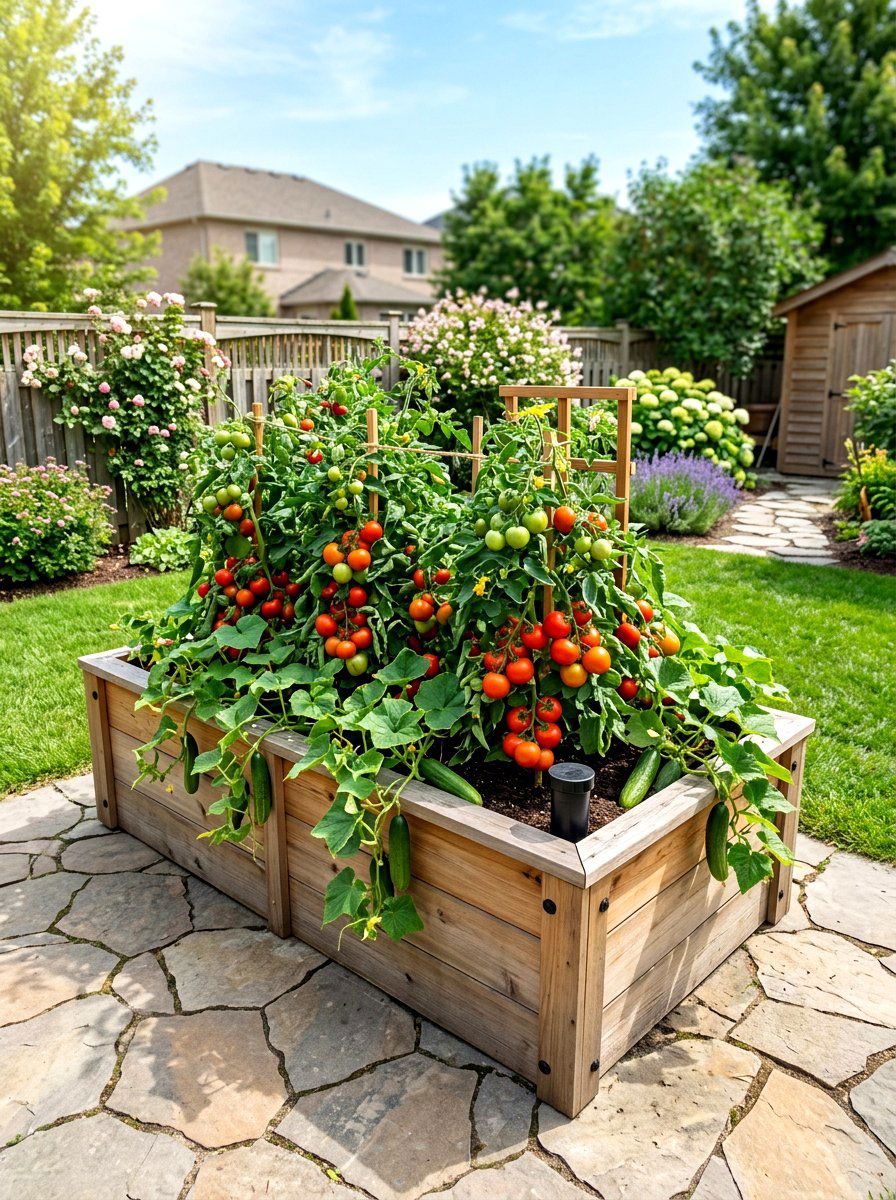
A self watering raised bed utilizes a built-in reservoir located at the bottom of the planting box to keep soil moist. This design relies on capillary action to wick moisture upward into the root zone of your vegetables. You fill the reservoir through a small pipe, and an overflow hole ensures the plants never sit in standing water. These beds are excellent for crops like tomatoes and peppers that require consistent moisture levels to prevent fruit cracking. Because the water is contained at the bottom, the surface soil stays drier, which can help reduce weed growth. It is a low-maintenance solution for urban gardeners.
6. Plastic bottle drip watering
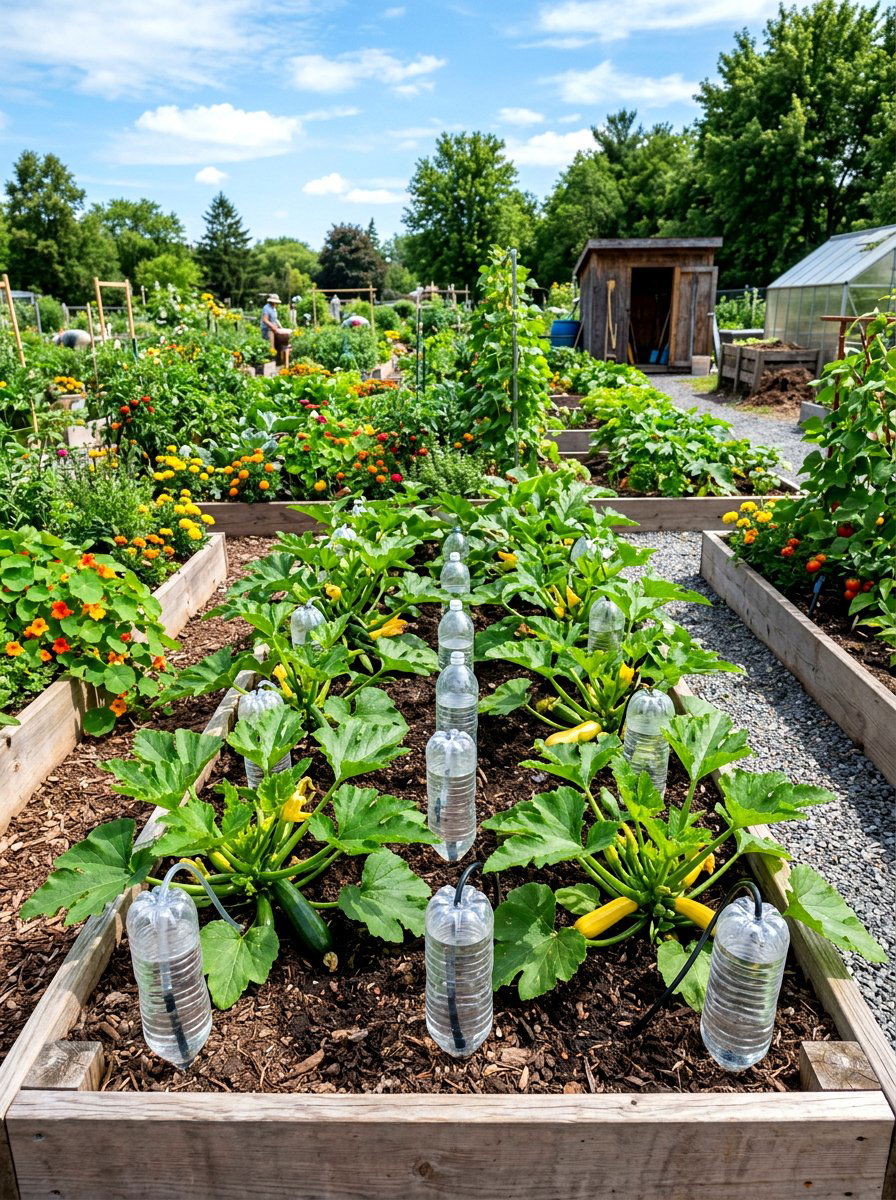
Plastic bottle drip watering is a brilliant way to recycle household waste while giving your vegetables a steady supply of moisture. You simply take a clean plastic bottle and poke a few tiny holes in the cap or near the bottom. When you bury the bottle slightly next to a plant, the water slowly trickles out into the soil. This targeted approach is ideal for individual plants like squash or melons that have deep root systems. It ensures that moisture reaches the roots directly rather than evaporating off the surface. You can easily refill these bottles daily to keep your garden thriving during intense heat.
7. Automatic garden tap timer
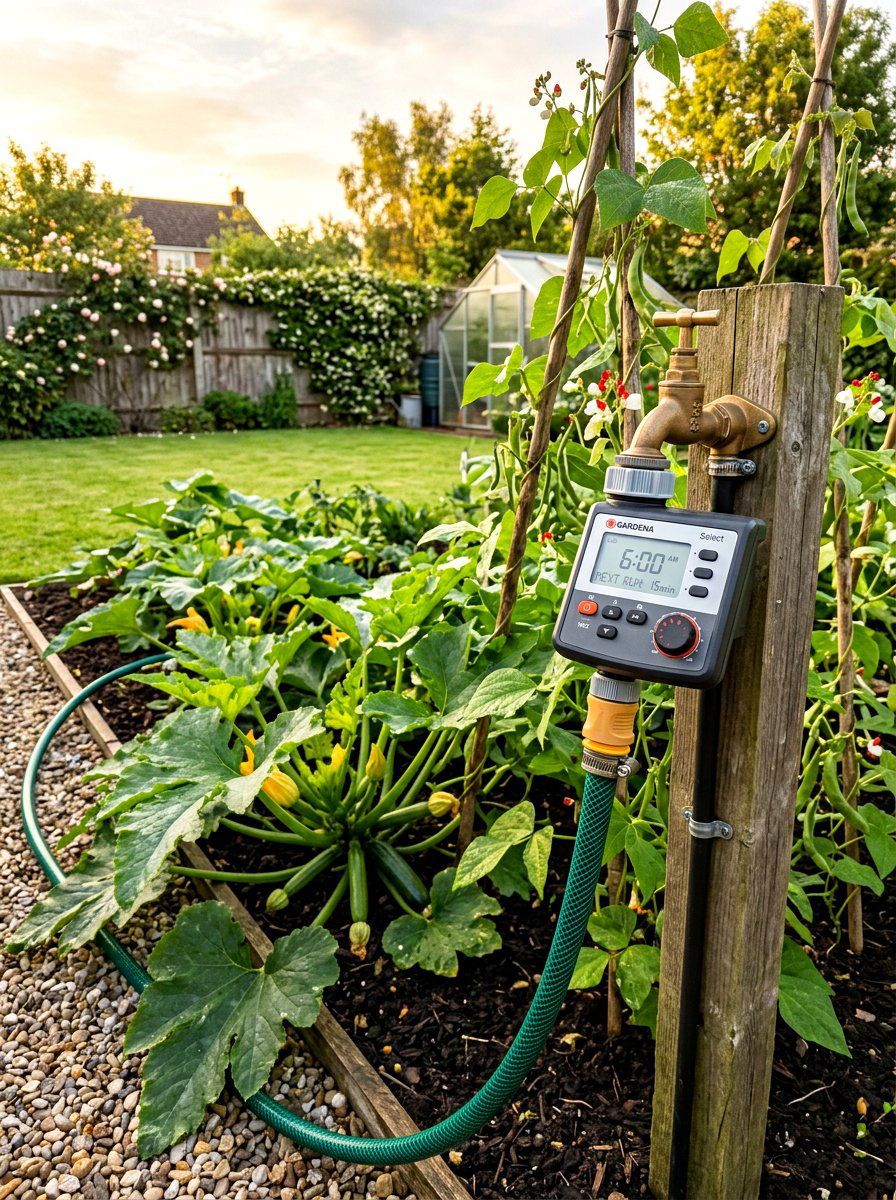
An automatic garden tap timer is a game-changer for anyone who wants a lush garden without the daily labor. These devices attach directly to your outdoor faucet and allow you to program exactly when and for how long your garden gets watered. You can set it to run in the early morning hours when evaporation is at its lowest point. This consistency helps plants grow stronger because they never experience the stress of drying out completely. Many modern timers offer multiple zones, so you can water your seedlings differently than your established plants. It provides total peace of mind when you are away.
8. Garden mulch moisture retention
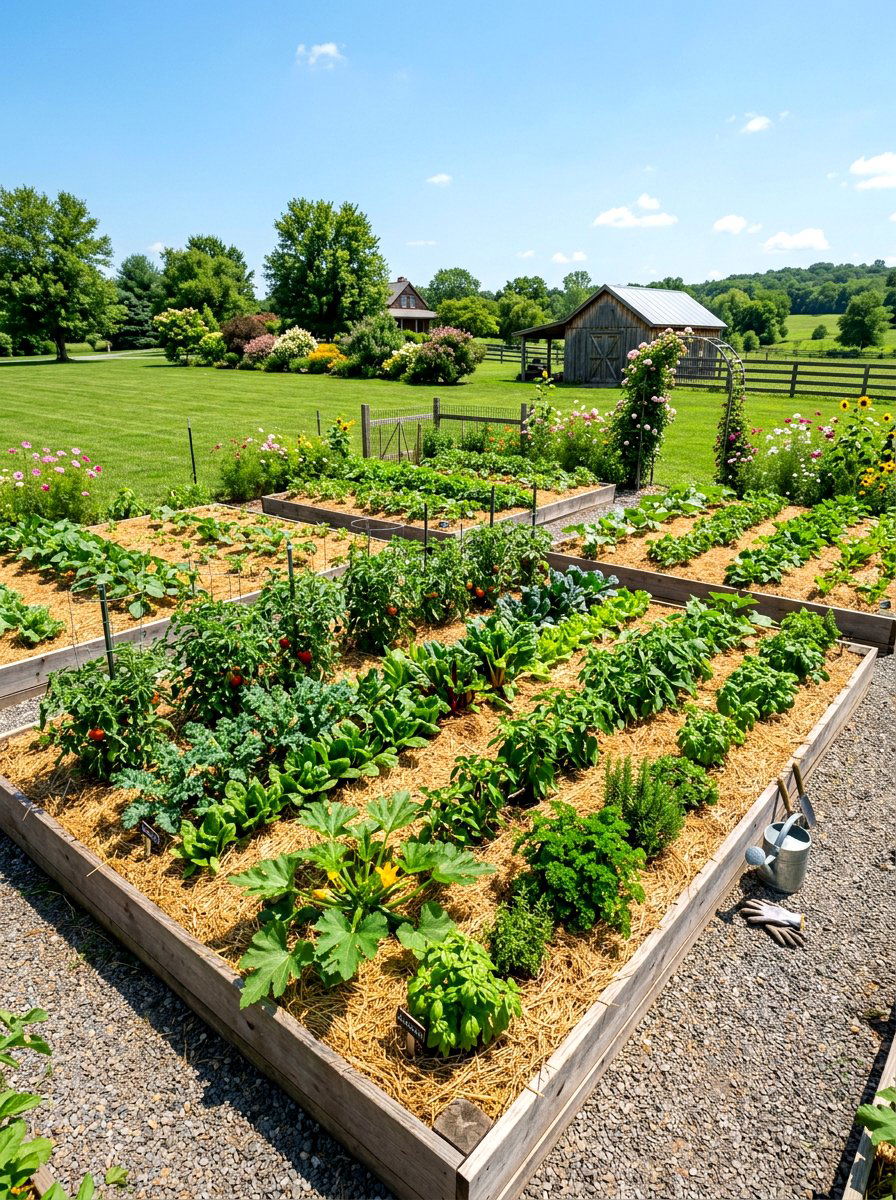
Garden mulch moisture retention is a passive but powerful strategy for keeping your vegetable garden hydrated for much longer. By spreading a thick layer of organic material like straw, wood chips, or shredded leaves over the soil, you create a protective barrier. This layer blocks the sun from heating up the earth and prevents water from evaporating into the air. Mulching also keeps the soil temperature stable, which many vegetables prefer for optimal growth. As the mulch breaks down over time, it adds valuable nutrients back into the soil. It is one of the easiest ways to cut your watering frequency in half.
9. Wicking bed garden
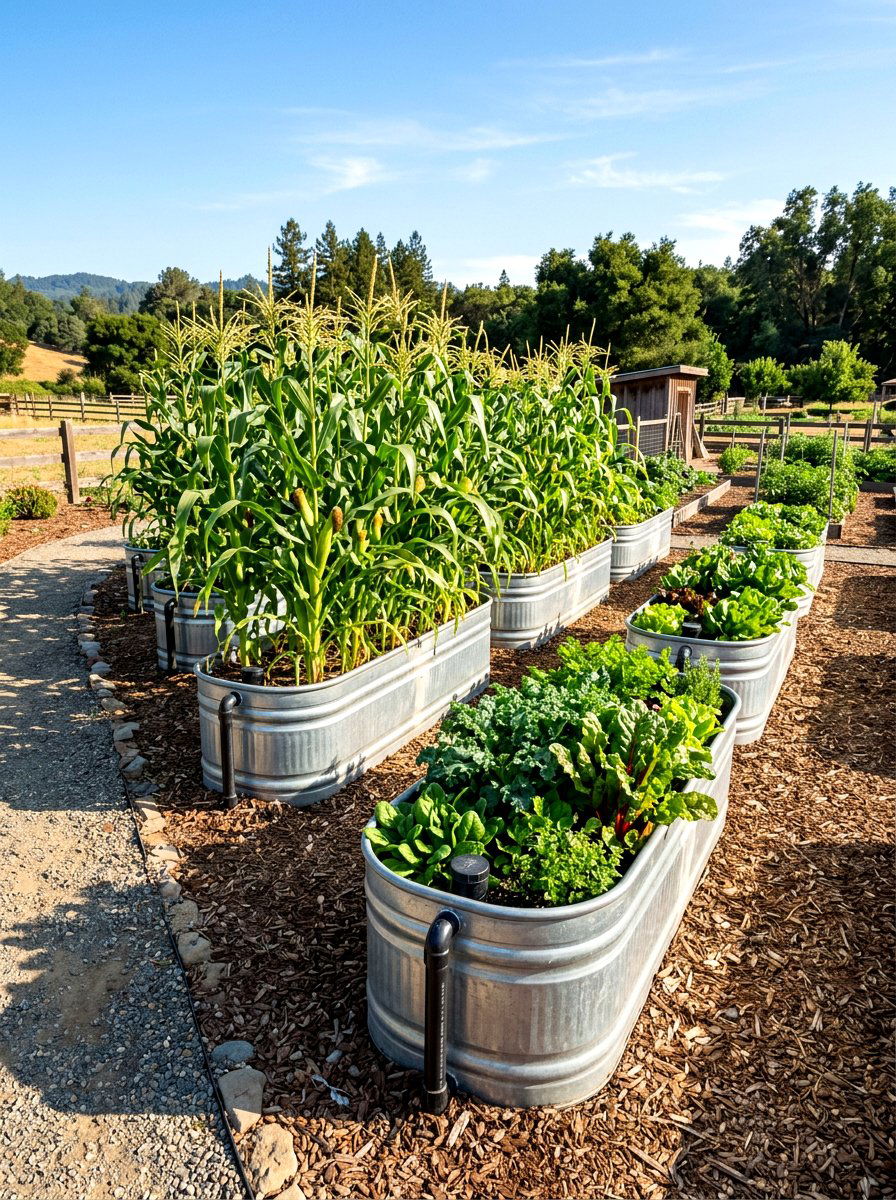
A wicking bed garden functions like a giant self-watering pot by keeping a hidden water source beneath the soil. The bottom of the bed is lined with a waterproof membrane and filled with a layer of gravel or pipes to hold water. Soil sits on top of this layer, separated by a fabric that allows moisture to move upward. Plants drink from below, which encourages deep and healthy root development. These beds are extremely efficient in hot, arid climates because they lose very little water to the atmosphere. You can often go a week or more between refills, making gardening much more manageable.
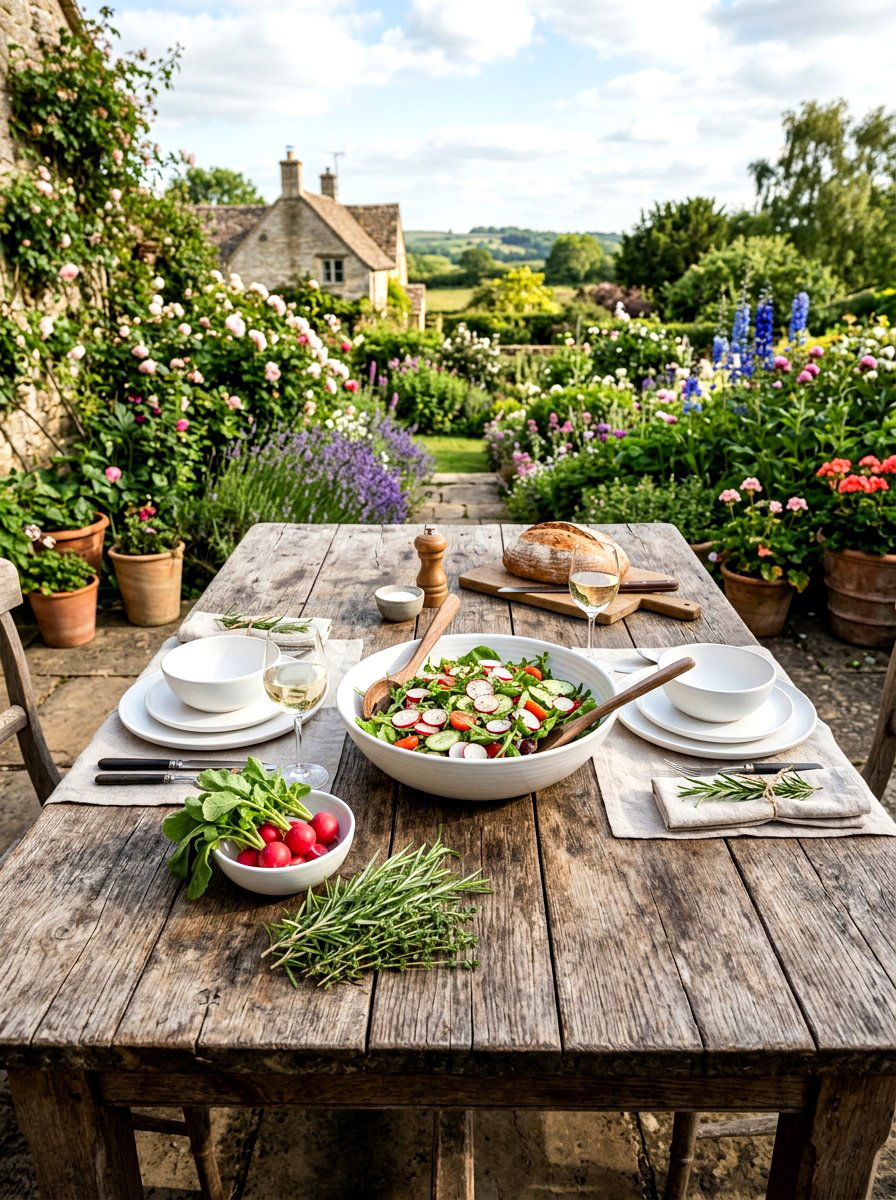
10. Vertical garden irrigation system
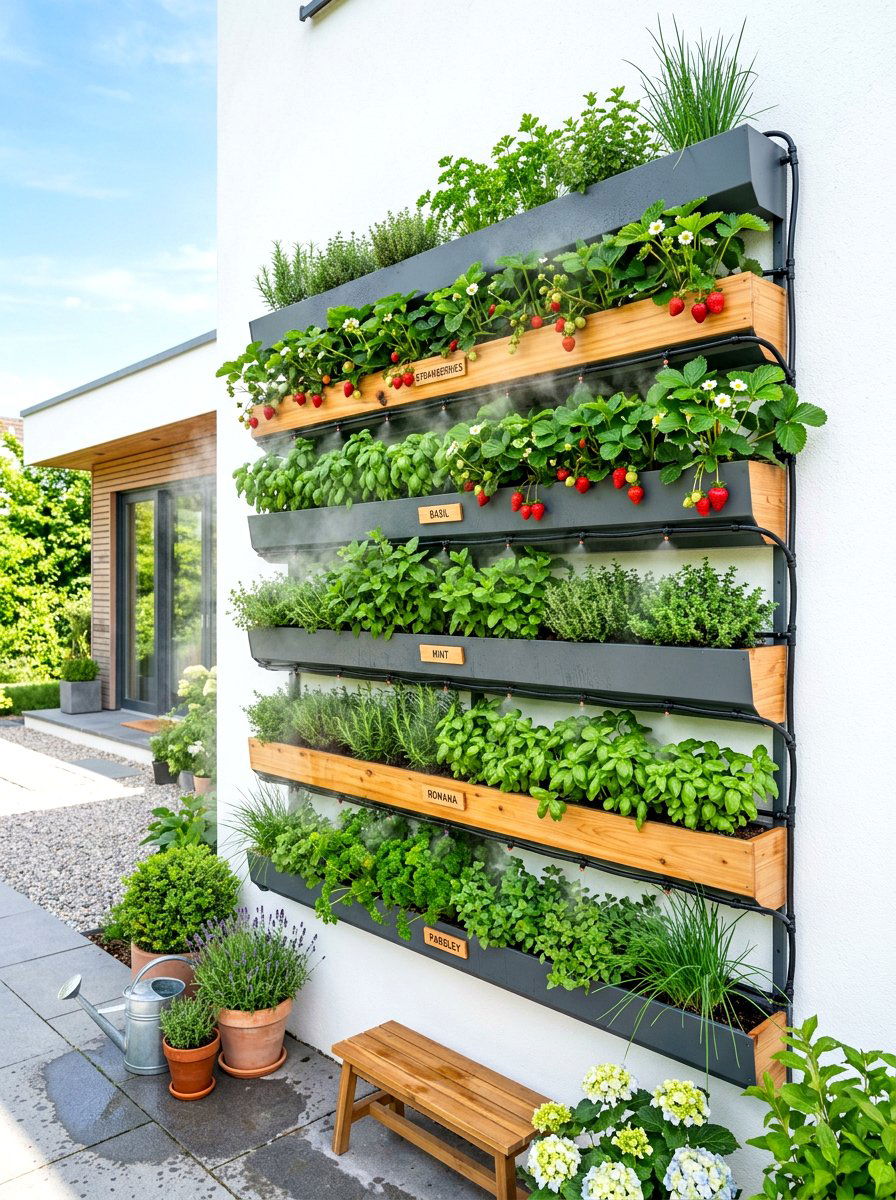
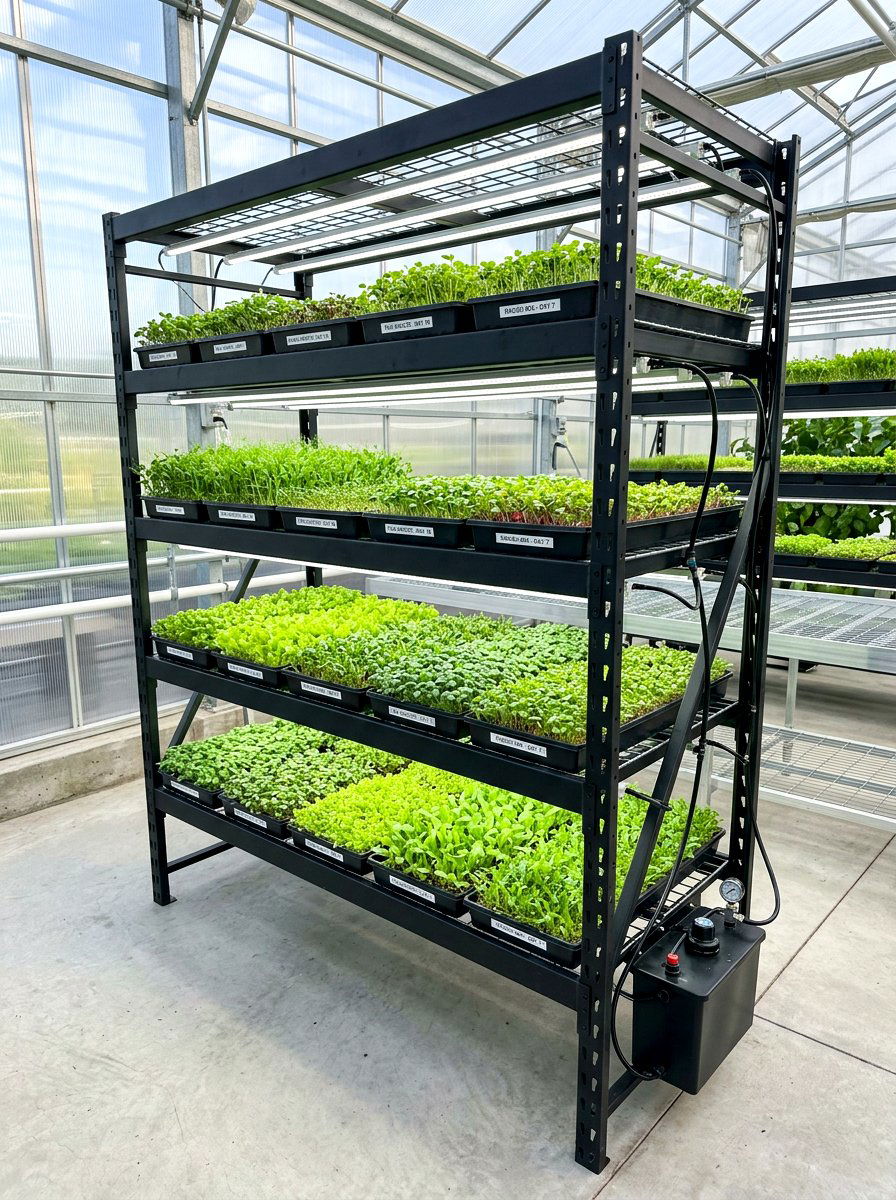
A vertical garden irrigation system is essential for keeping plants healthy when they are grown in stacked or hanging containers. Since vertical gardens have a small amount of soil, they tend to dry out much faster than ground-level beds. A small pump or gravity-fed tube system can deliver a fine mist or slow drip to each individual level. This ensures that every plant from the top to the bottom receives the correct amount of moisture. Proper irrigation prevents the bottom plants from being overwatered by runoff while the top plants stay parched. It makes growing food in small, vertical spaces incredibly successful and productive.
11. Smart garden hose controller
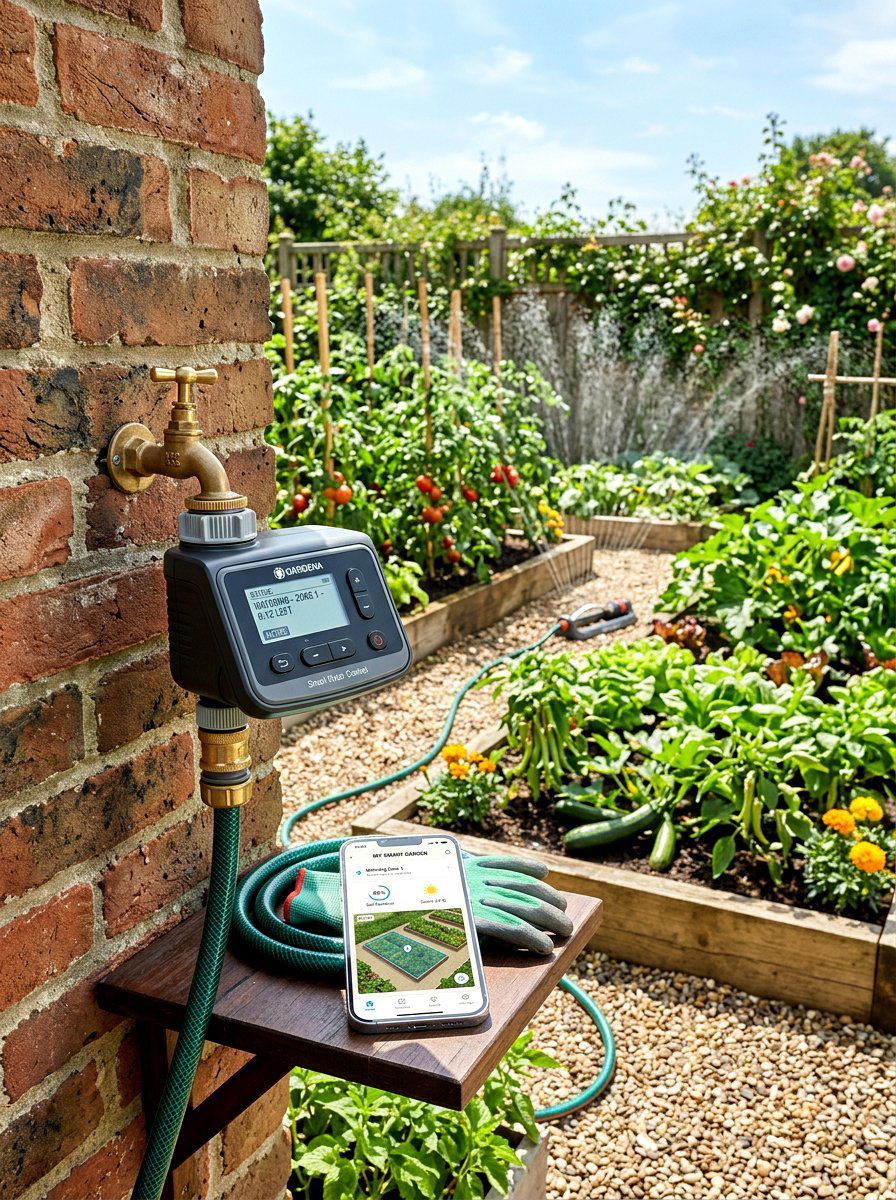
A smart garden hose controller takes traditional automation to the next level by connecting your watering system to the internet. These devices use local weather data to decide if your garden actually needs water on a given day. If the forecast calls for rain, the controller will automatically skip the scheduled cycle to save resources. You can monitor and adjust your watering schedule from anywhere in the world using a simple smartphone app. This high-tech approach ensures that you never overwater your vegetables during a wet week. It is a perfect choice for tech-savvy gardeners who want maximum efficiency and plant health.
12. Gravity fed drip irrigation
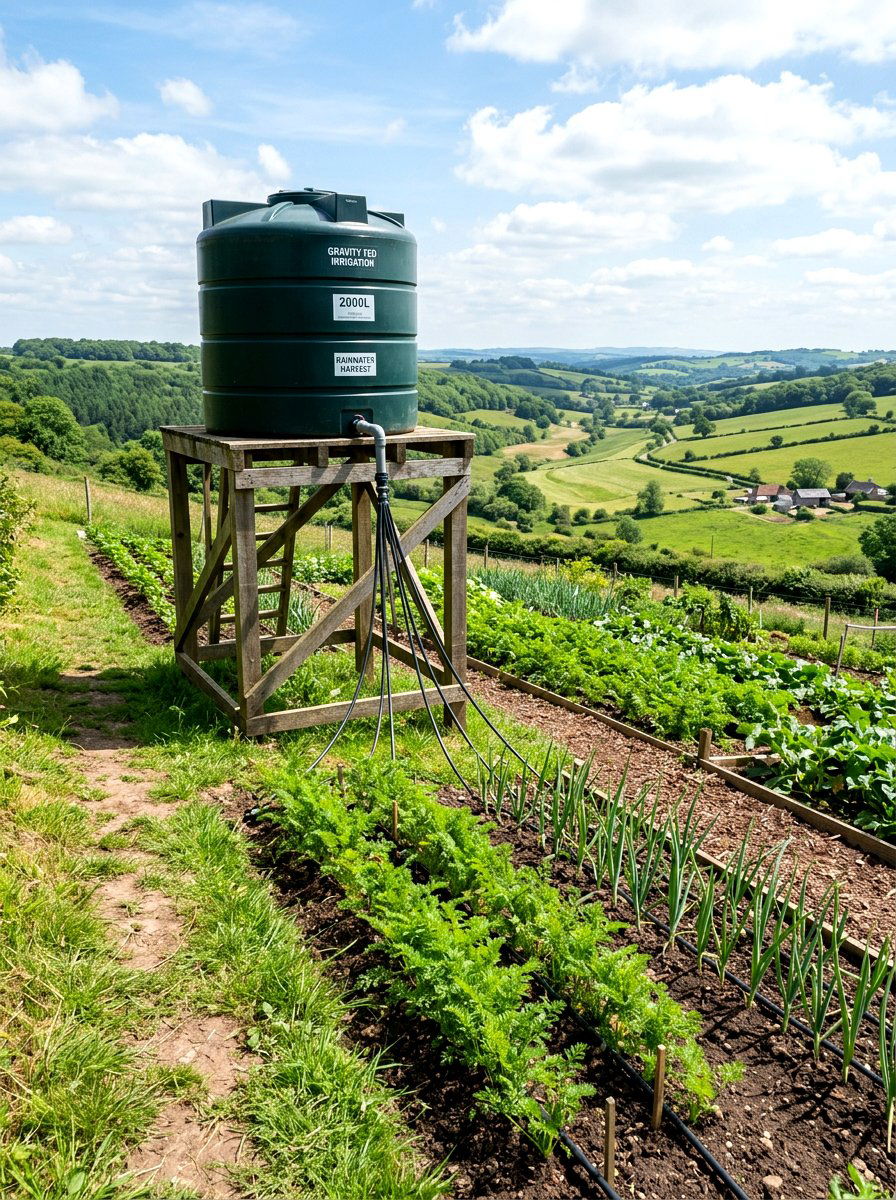
Gravity fed drip irrigation is a smart solution for gardens that do not have easy access to a pressurized water tap. You can place a large water tank or barrel on an elevated platform and connect it to your drip lines. The height of the tank creates enough pressure to push water through the tubes and emitters naturally. This setup is perfect for remote allotment gardens or off-grid homesteads. It is a very low-cost system to maintain since it does not require electricity or pumps. You simply need to keep the tank filled, and the force of gravity does all the hard work.
13. PVC pipe watering grid
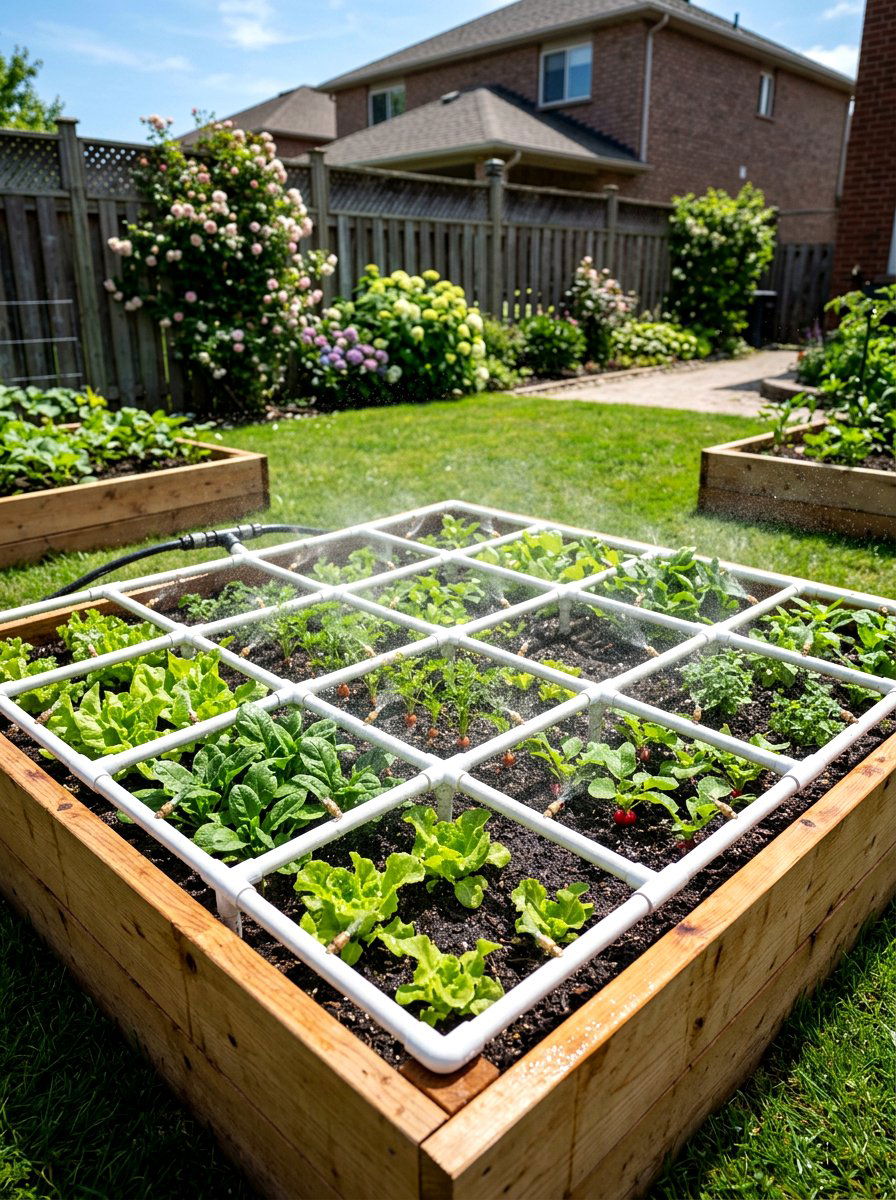
A PVC pipe watering grid is a durable and permanent DIY solution for organized vegetable beds. You can build a custom frame out of PVC pipes that fits perfectly inside your garden boxes. Small holes are drilled at regular intervals to allow water to spray or drip directly onto the soil surface. This setup is great for "square foot gardening" because it provides uniform coverage across every inch of the bed. Since PVC is sturdy, it won't move around or kink like a soft hose might. It is easy to take apart and store during the winter months to prevent freezing.
14. Bottle spike plant waterer
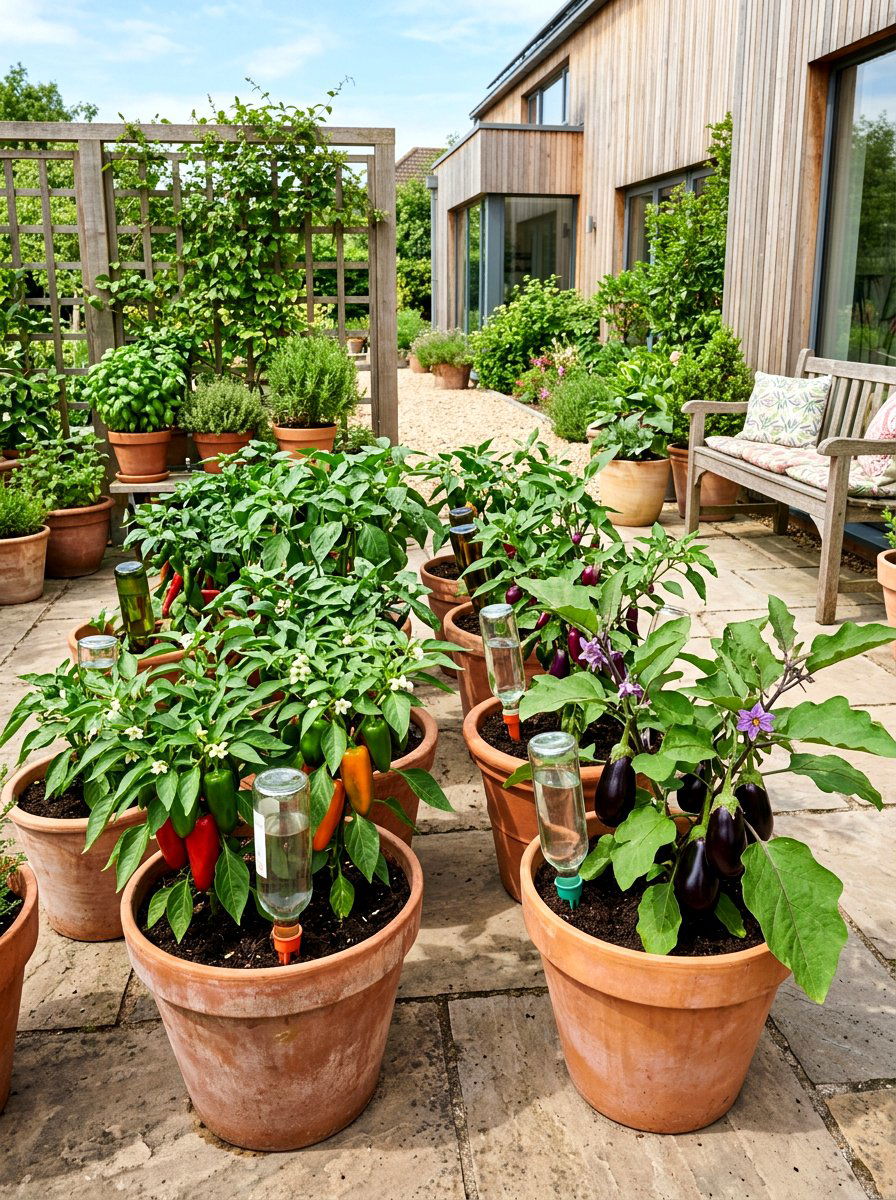
A bottle spike plant waterer is a simple tool that allows you to turn any standard glass or plastic bottle into a slow-release irrigation device. These spikes are usually made of terracotta or plastic and feature a pointed end that you push into the soil. You fill a bottle with water and invert it into the spike. The water slowly seeps out through the porous material or a small hole, providing a constant trickle of moisture. This method is particularly effective for container vegetables like peppers or herbs. It keeps the soil moisture consistent without the need for complex plumbing or expensive equipment.
15. Hugelkultur garden moisture
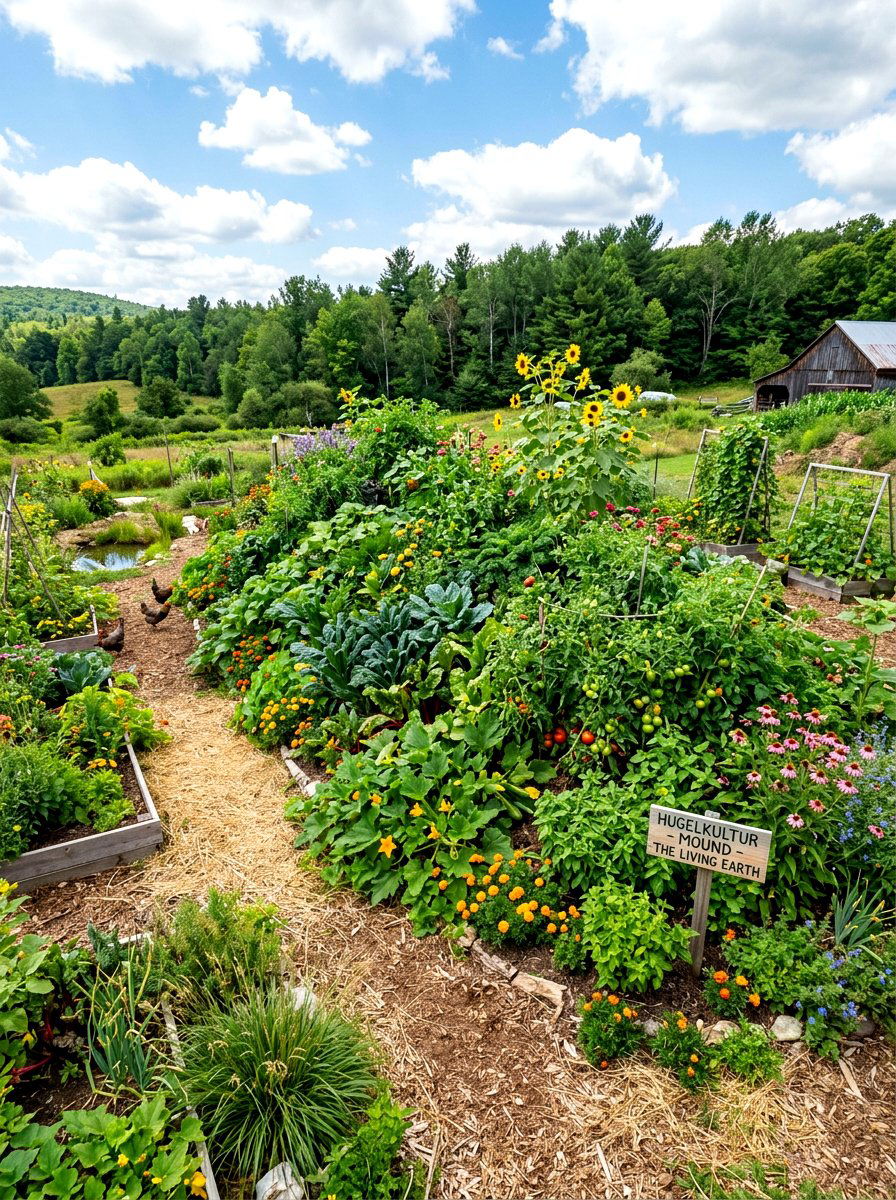
Hugelkultur garden moisture management involves building raised beds over a foundation of rotting logs and woody debris. The wood acts like a giant sponge, soaking up massive amounts of rainwater during the wet season. As the wood slowly breaks down, it releases that stored moisture back into the soil for the vegetable roots to find. This traditional method can eventually become almost self-watering after the first year or two of establishment. It also creates a rich, nutrient-dense environment as the organic matter decomposes. It is a fantastic way to garden sustainably in areas that experience long periods of drought during the summer.
16. Gray water recycling system
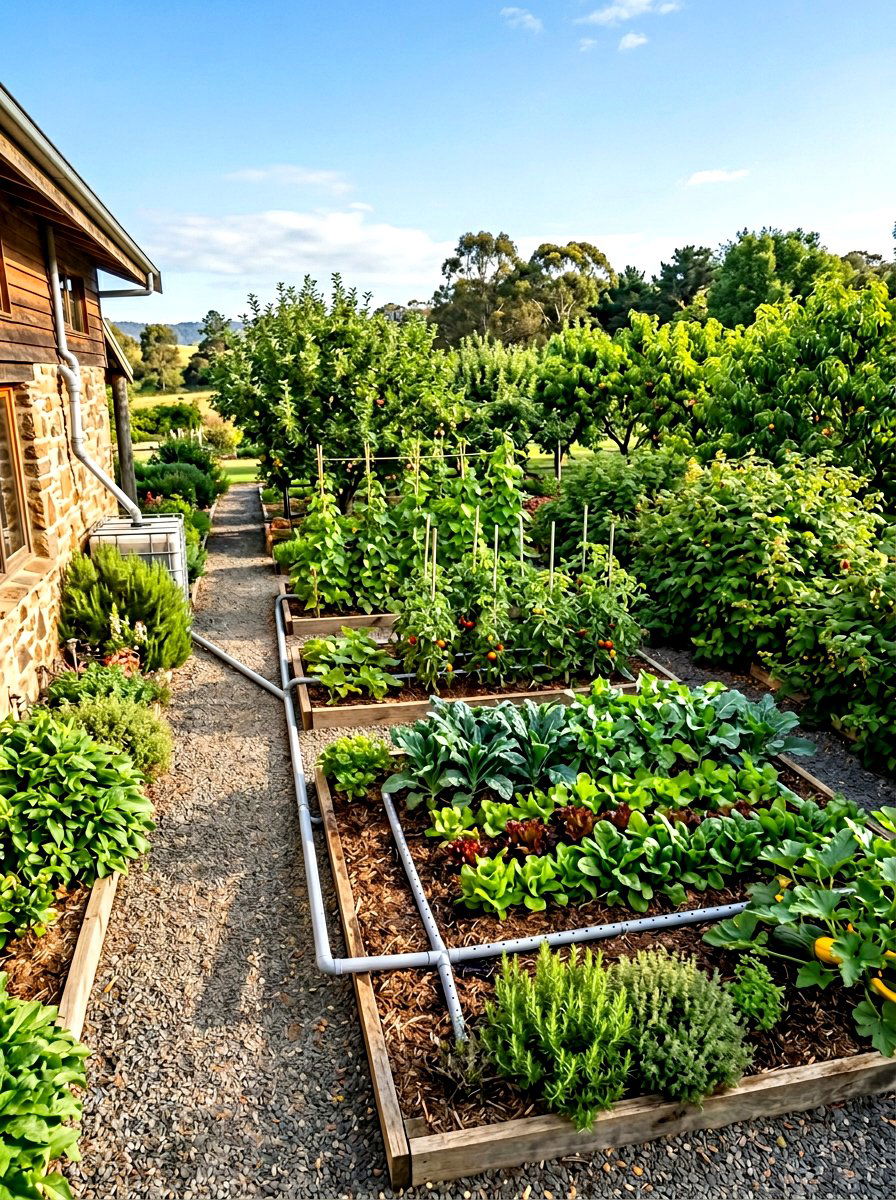
A gray water recycling system allows you to reuse water from your sinks, showers, or laundry to hydrate your garden. While you must be careful about the types of soaps you use, this is a highly sustainable way to maintain a vegetable patch. The water is usually filtered and then piped directly into the soil to avoid contact with the edible parts of the plants. This system significantly reduces your household water consumption and provides a constant source of hydration even during water restrictions. It is best suited for fruit trees and large perennials, but can work for vegetables if managed with proper care.
17. Greenhouse misting system
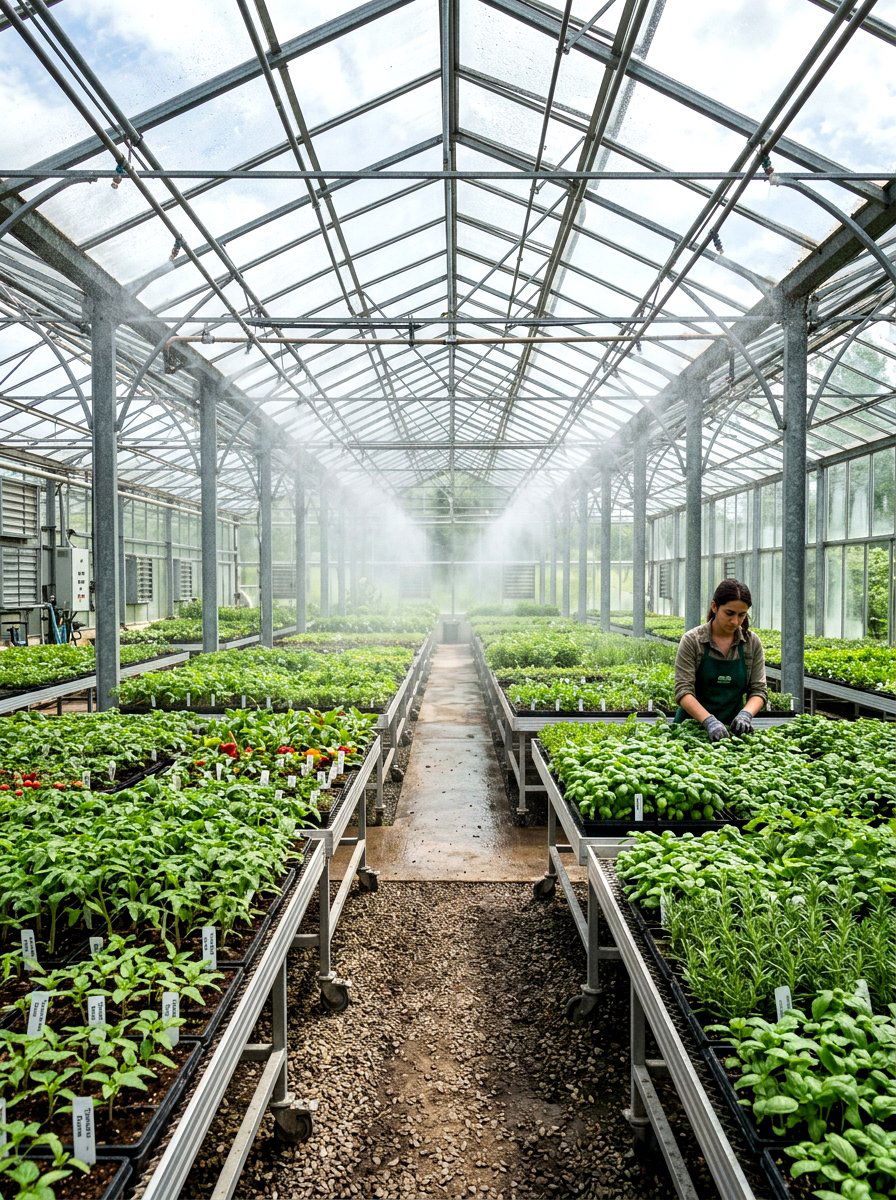
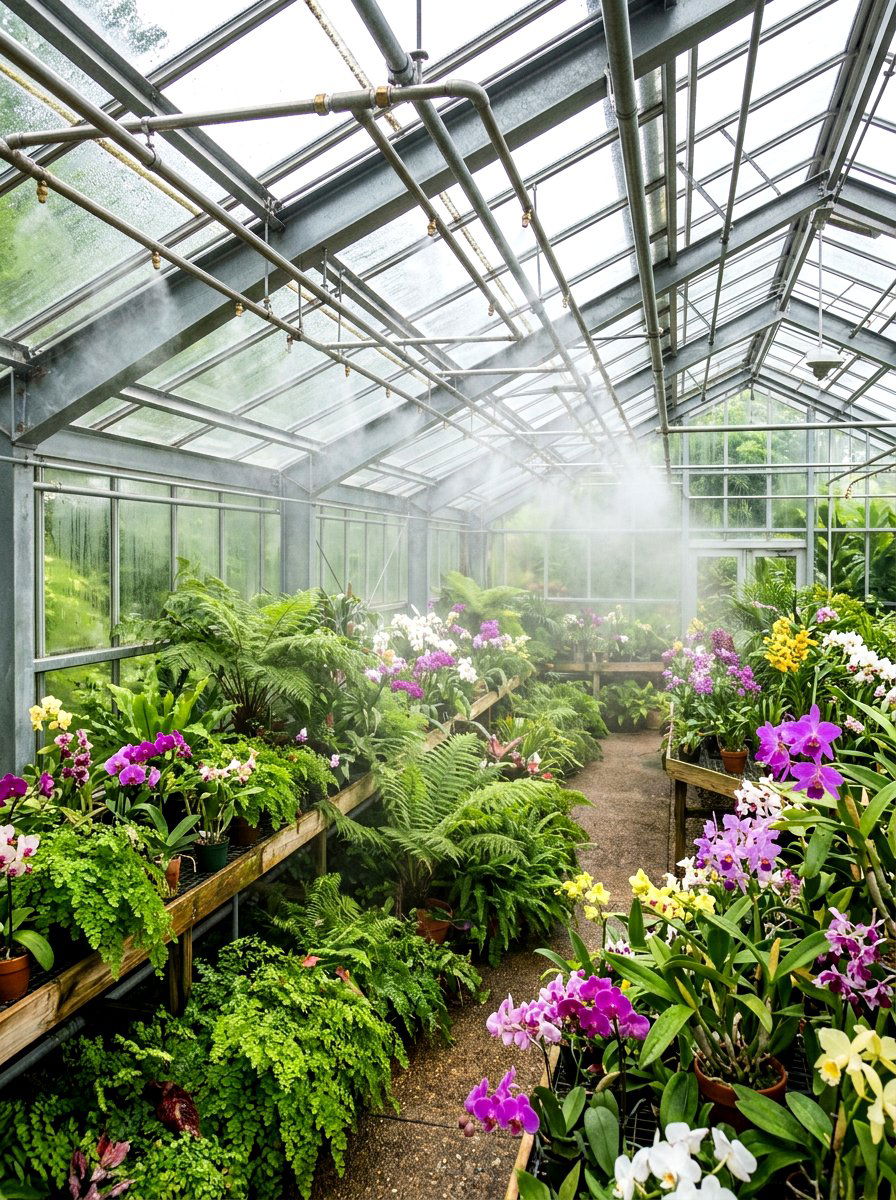
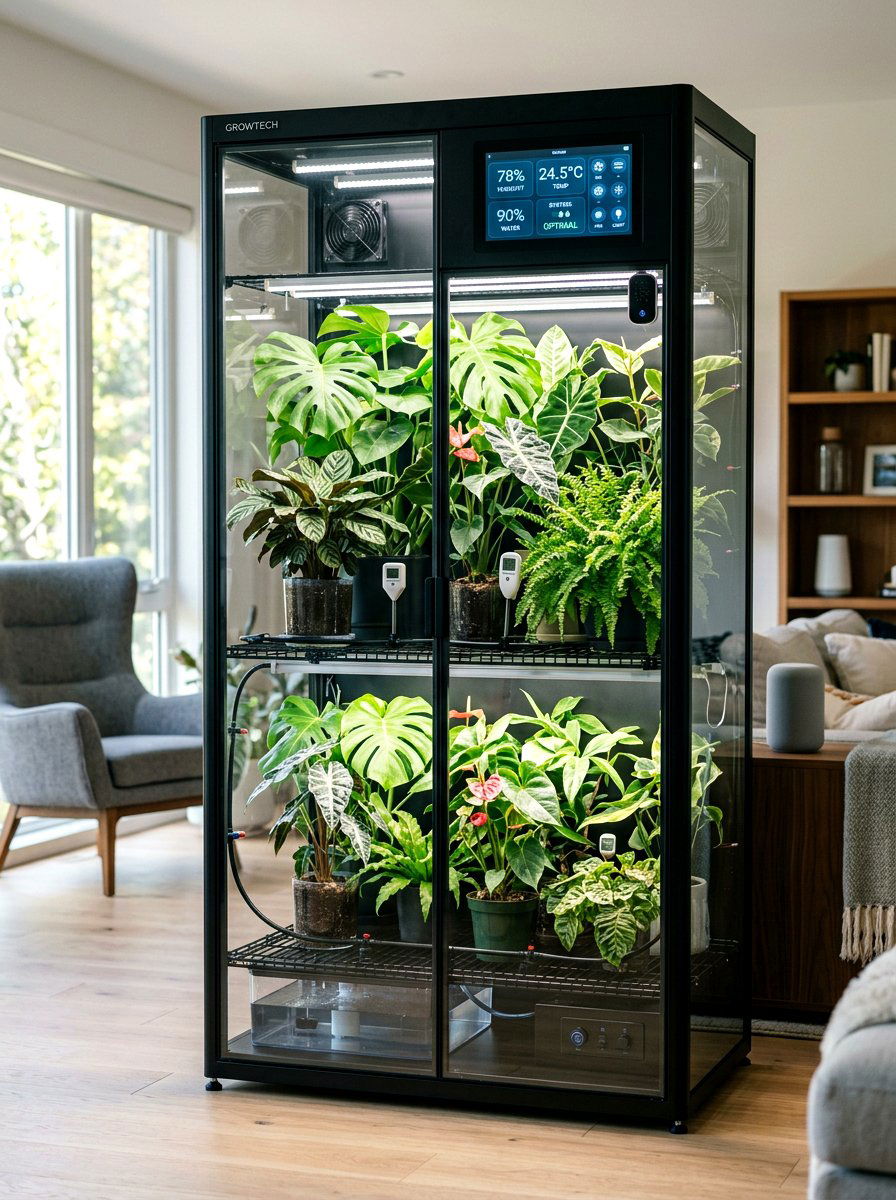
A greenhouse misting system is vital for maintaining the high humidity levels that many young vegetable starts and tropical plants crave. These systems use specialized nozzles that break water down into tiny droplets, creating a cool fog throughout the space. This mist lowers the air temperature during hot afternoons and prevents delicate leaves from wilting. Automated controls can trigger the mist based on temperature or humidity sensors inside the greenhouse. By keeping the environment consistent, you can significantly speed up the germination of seeds and the growth of leafy greens. It provides a professional-grade growing environment right in your own backyard.
18. Hydroponic vegetable garden
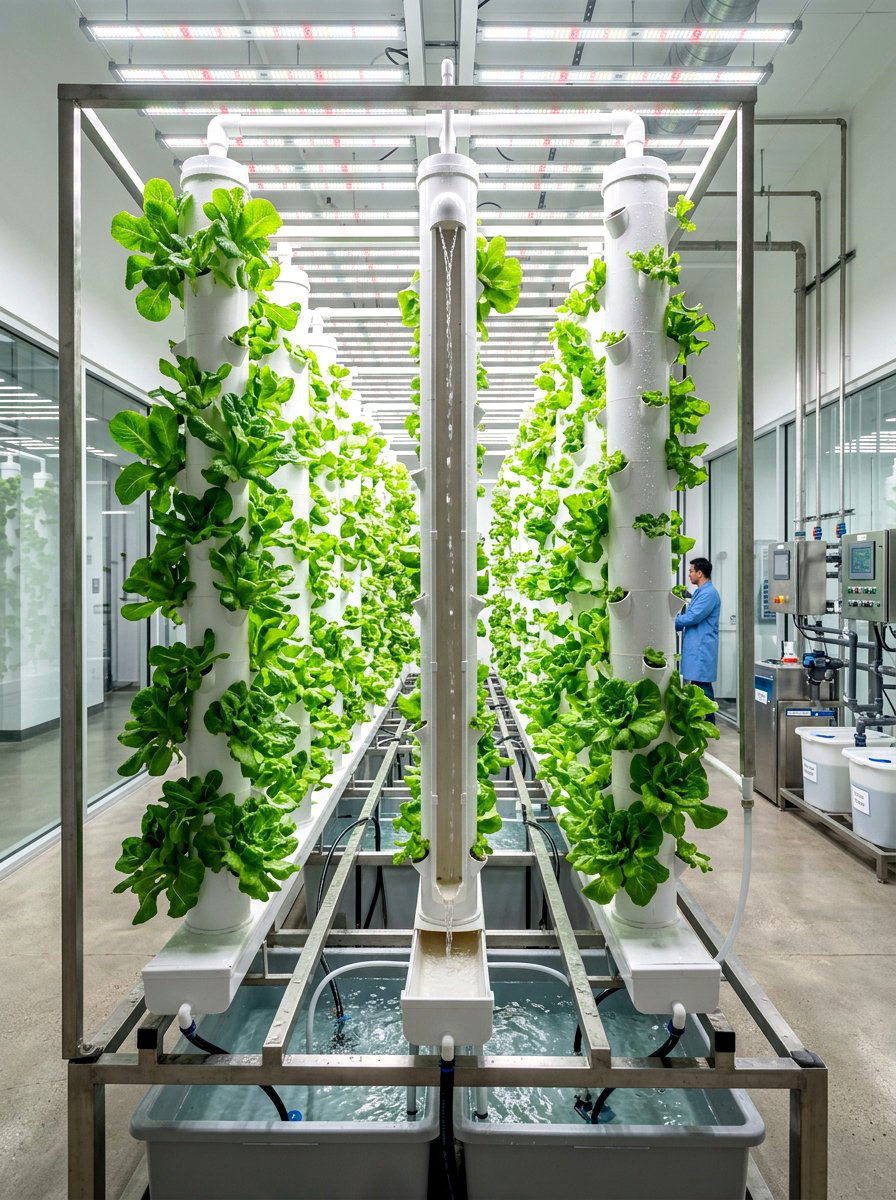
A hydroponic vegetable garden eliminates the need for soil entirely by growing plants directly in a nutrient-rich water solution. This method uses significantly less water than traditional soil gardening because the water is constantly recirculated through the system. You can grow a huge variety of vegetables, from lettuce to cucumbers, in a very small amount of space. Because the roots have direct access to everything they need, the plants often grow much faster and produce larger harvests. It is an ideal solution for urban dwellers who only have a balcony or a sunny indoor window for their gardening efforts.
19. Deep pipe root watering
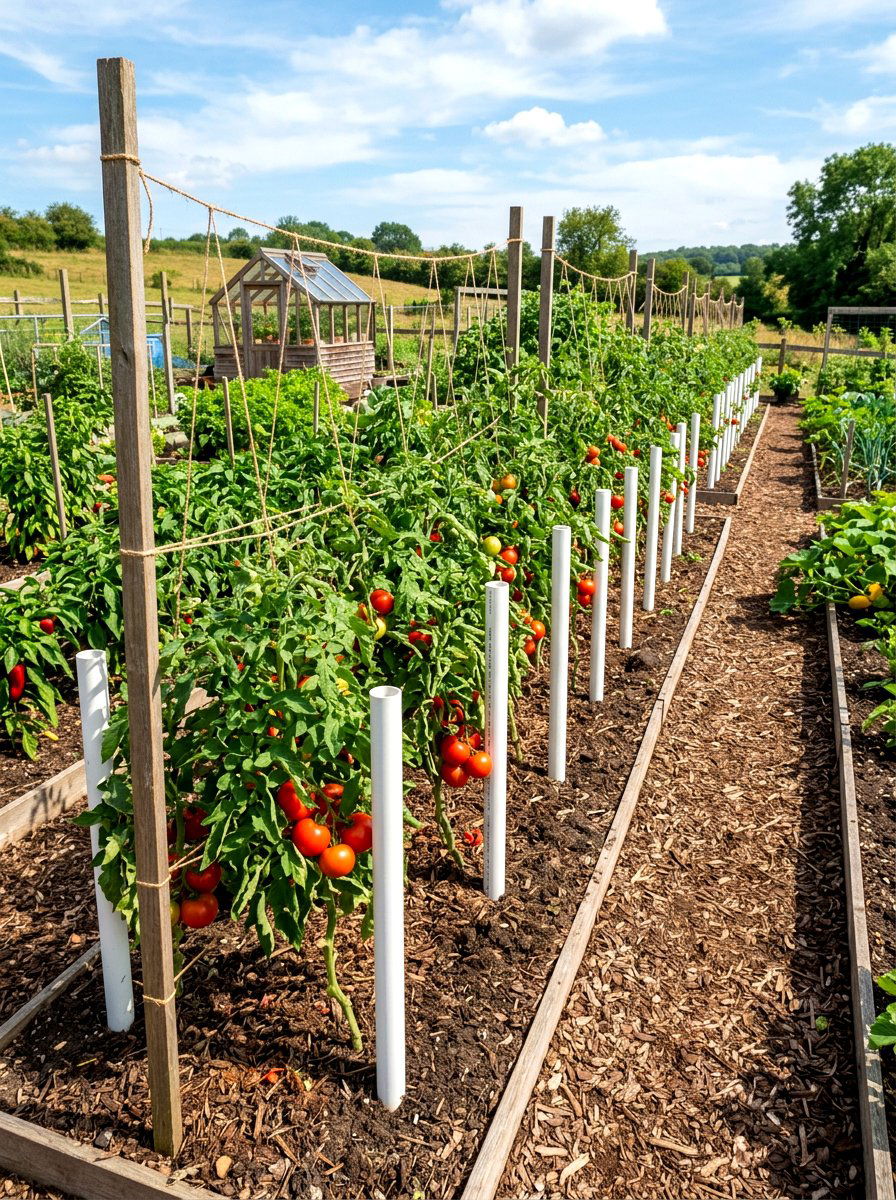
Deep pipe root watering is a specialized technique designed to get moisture far below the soil surface where deep-rooted vegetables need it most. You can install a vertical PVC pipe with holes drilled along its length next to plants like tomatoes or pumpkins. When you pour water into the pipe, it bypasses the dry surface soil and goes straight to the deep root zone. This encourages roots to grow downward, making the plants more resilient to heat and drought. It also keeps the surface soil dry, which discourages weeds from germinating. This simple addition can make a huge difference in plant health.
20. Terracotta watering spike
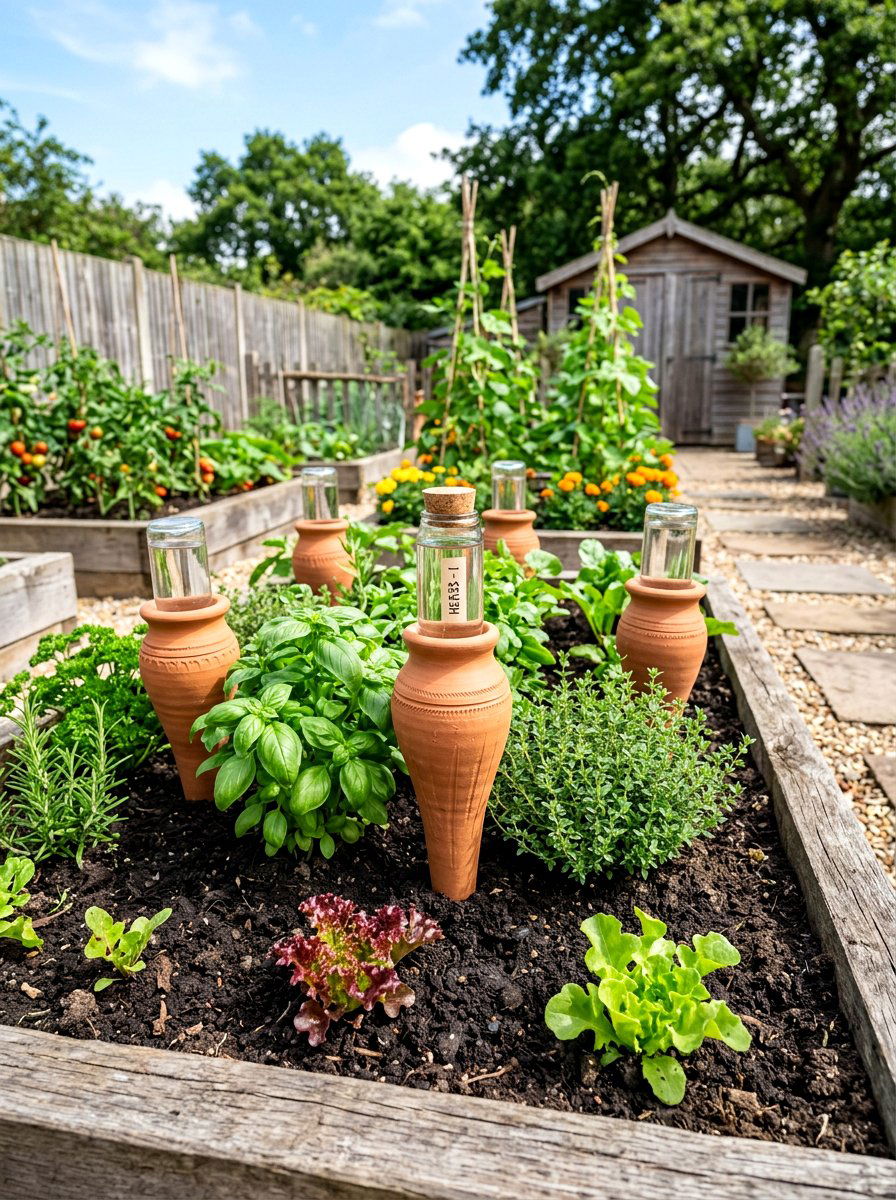
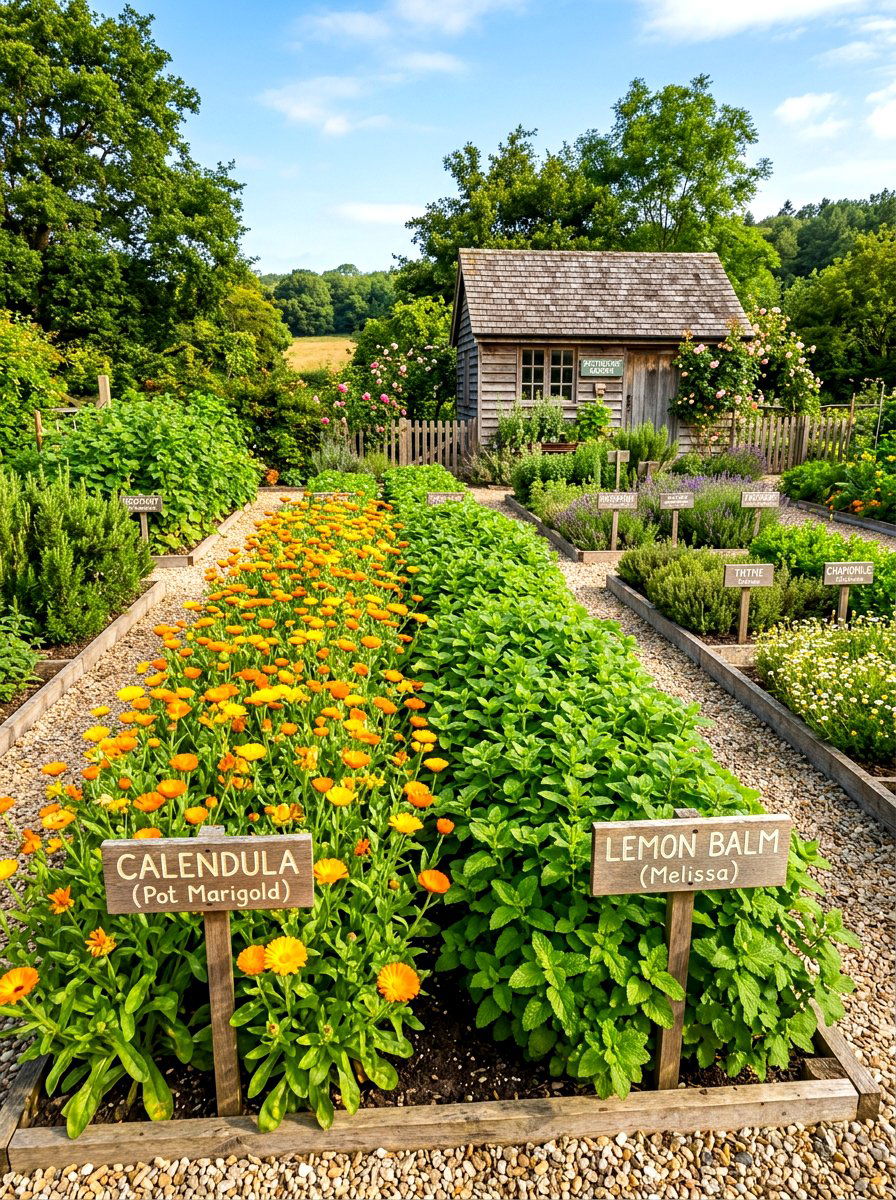
A terracotta watering spike is a beautiful and functional garden tool that uses the natural porosity of clay to deliver moisture. These spikes are pushed into the soil near your plants, and a reservoir or bottle is placed on top. The clay allows water to pass through slowly, responding to the dryness of the surrounding earth. If the soil is dry, it pulls more water through the clay; if it is wet, the flow slows down. This self-regulating property ensures that your vegetables always have the perfect amount of hydration. They are also aesthetically pleasing and add a classic look to your garden.
21. Sub irrigation planter
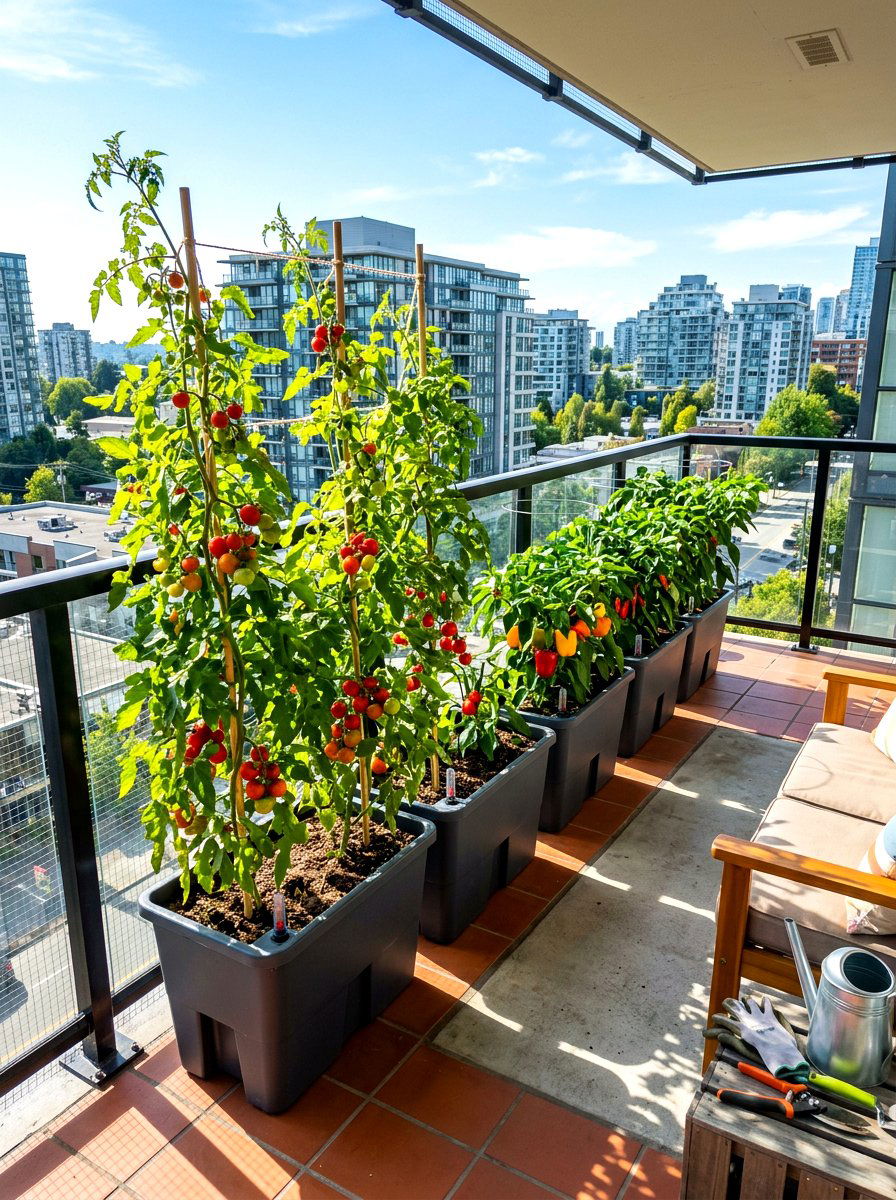
A sub irrigation planter is a self-contained system that allows vegetables to draw up water from a built-in well at the bottom. These are often sold as "SIPs" and are very popular for growing large tomato plants on patios or decks. The soil sits above the water reservoir, separated by a perforated screen that prevents the roots from rot. Moisture travels up through a small "wicking" area of soil, keeping the root zone perfectly damp. This design prevents the messy runoff that often happens with standard pots. It is one of the most reliable ways to grow thirsty vegetables in containers successfully.
22. Solar powered garden pump
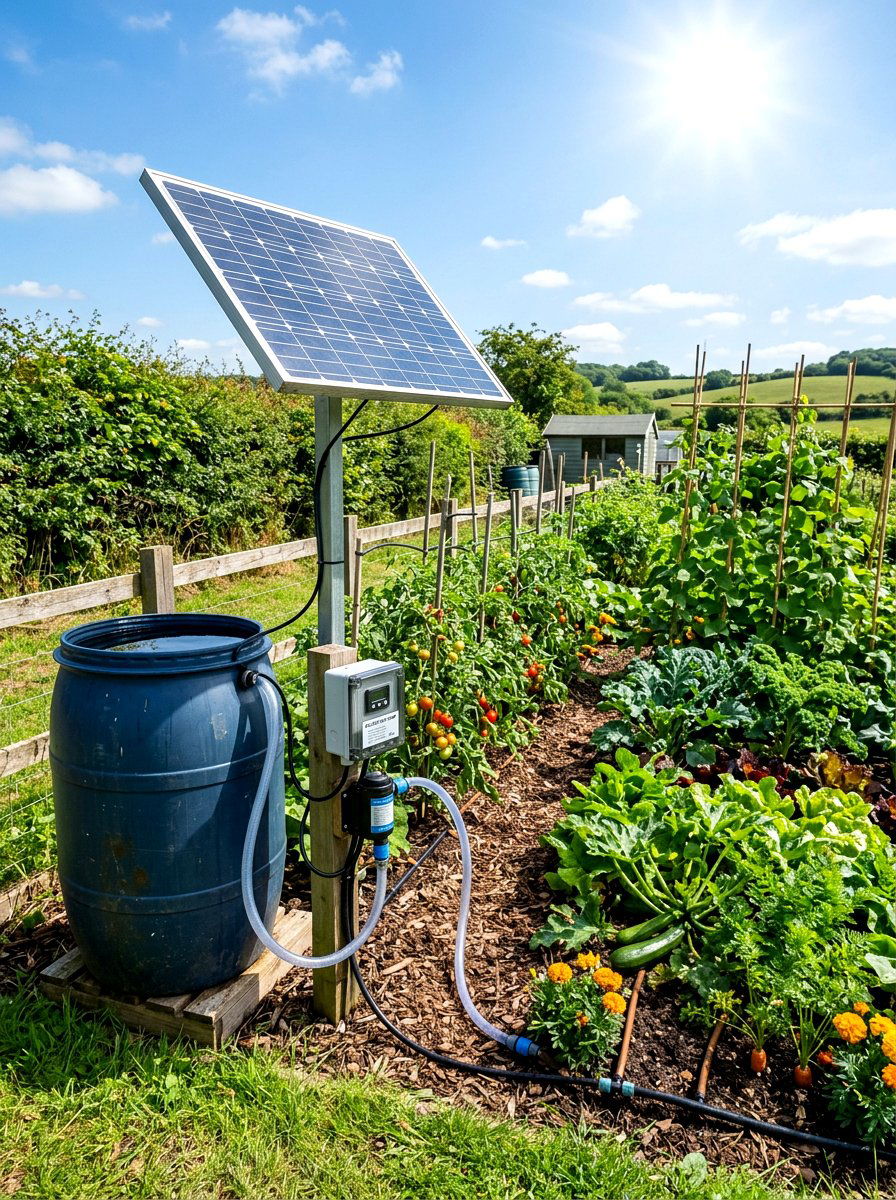
A solar powered garden pump is an excellent eco-friendly choice for automating your watering system without needing an outdoor electrical outlet. The pump is powered by a small solar panel that you place in a sunny spot nearby. It can draw water from a rain barrel or a pond and push it through a drip irrigation line or a small sprinkler. This system is particularly useful for remote vegetable patches that are far from the main house. It works hardest when the sun is brightest, which is exactly when your plants need the most hydration. It is a smart, self-sustaining investment for any gardener.
23. Furrow irrigation method
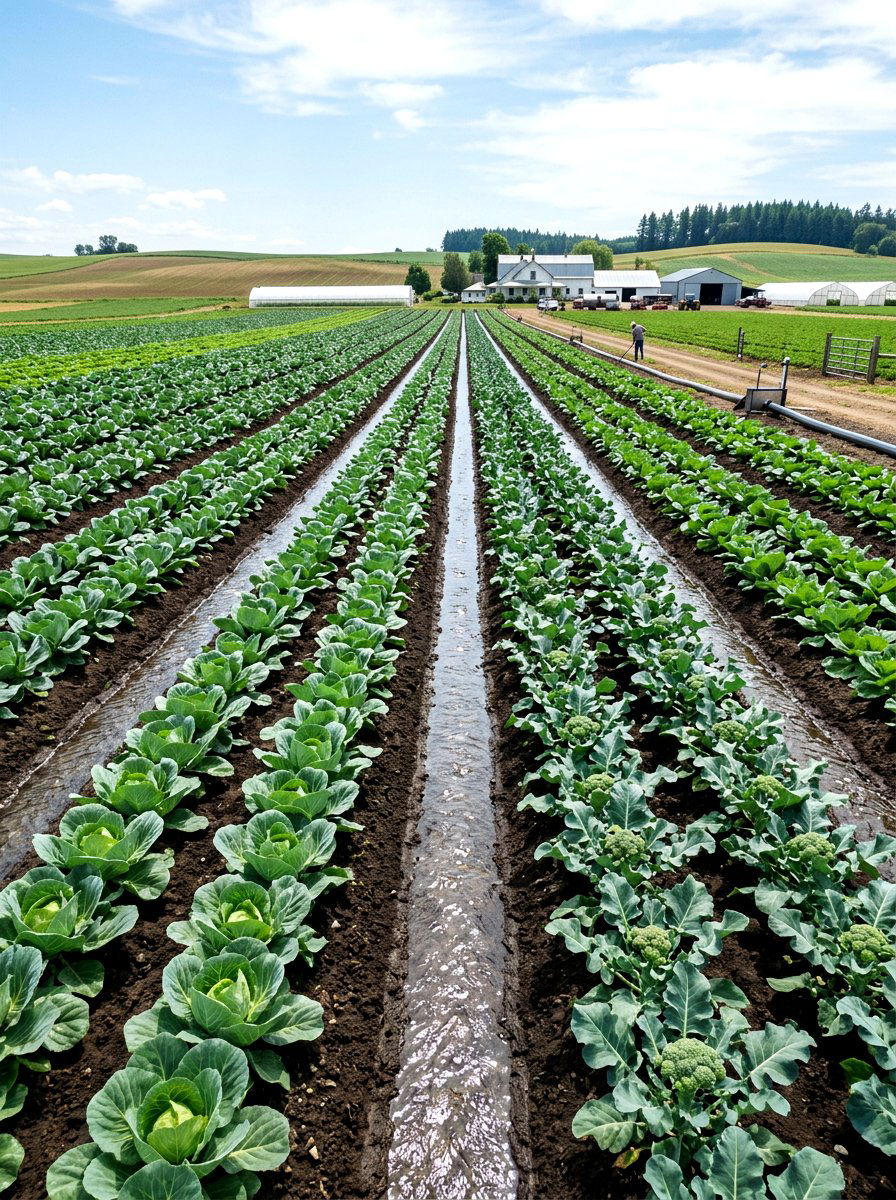
The furrow irrigation method is a traditional farming technique that works incredibly well for large vegetable plots with long rows. You create small trenches or "furrows" between your rows of plants and allow water to flow through them. The water slowly soaks into the soil ridges where the vegetables are planted, reaching the roots from the side. This keeps the base of the plant dry and reduces the risk of rot or fungal issues. It is a very effective way to water large quantities of food with minimal equipment. Proper leveling of the ground ensures that water reaches the very end of every row.
24. Micro spray jet system
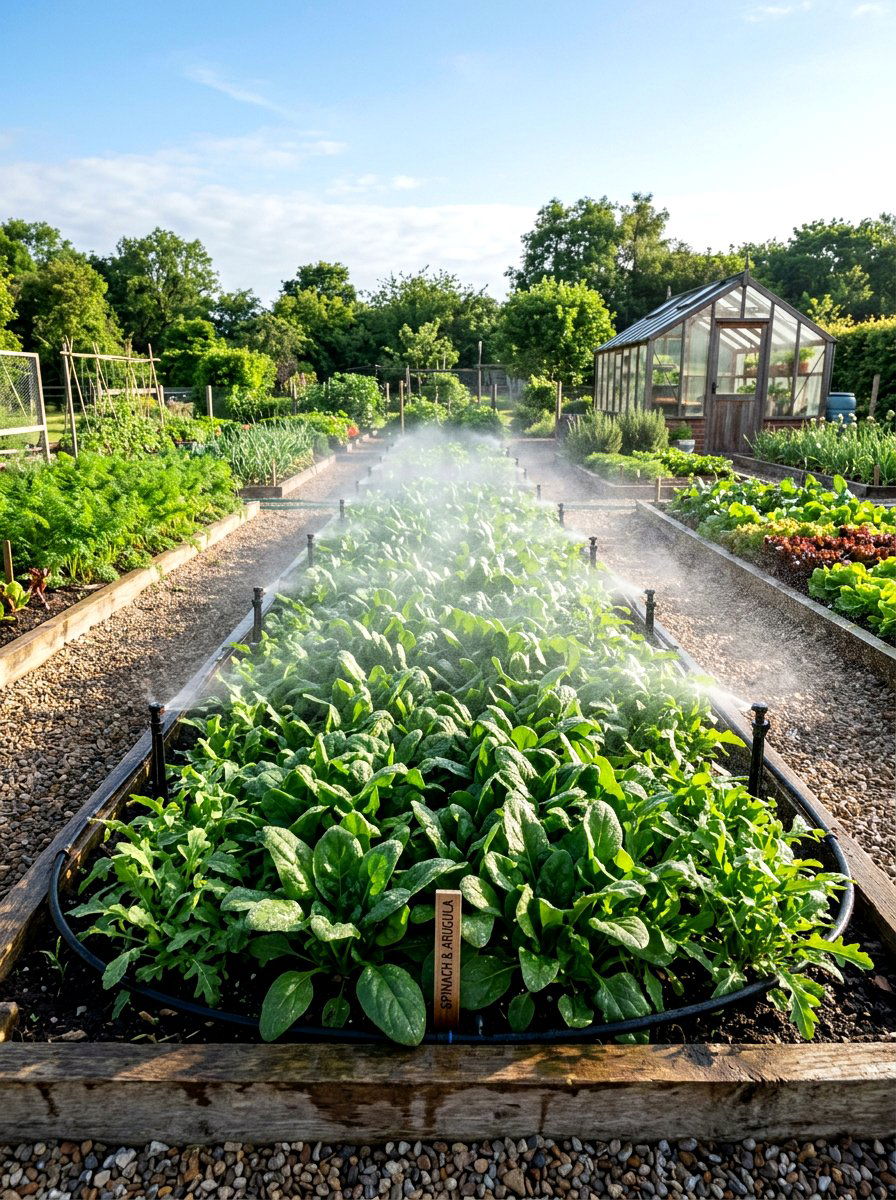
A micro spray jet system uses small, low-volume sprayers to provide a fine rain-like coverage over a specific area. These are often attached to the same tubing used for drip irrigation but offer wider coverage for dense plantings. They are ideal for watering beds of leafy greens, radishes, or carrots where individual drippers would be impractical. The fine spray helps cool down the plants on hot days and can even help wash away certain pests like aphids. You can easily adjust the spray pattern to be a full circle or a half circle to fit the exact shape of your vegetable garden beds.
25. Drip tape irrigation
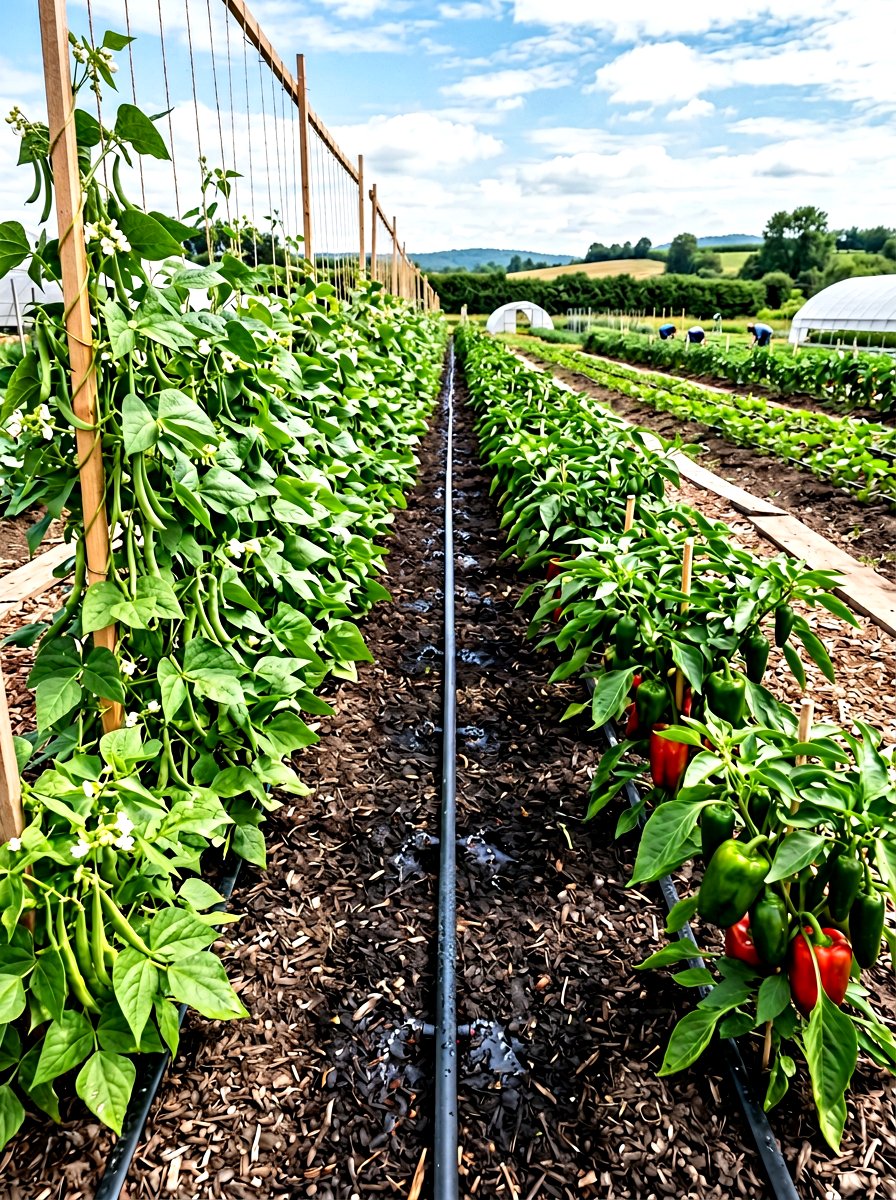
Drip tape irrigation is a specialized version of drip systems that uses thin-walled, collapsible tubing with pre-installed emitters. It is incredibly cost-effective for watering very long rows of vegetables, which is why many professional market gardeners use it. The tape lies flat when empty and expands when water flows through it, delivering a precise amount of moisture to every plant. It is easy to roll up at the end of the season and can last for several years if handled with care. This method ensures that even the largest garden stays perfectly hydrated with very little effort and almost no wasted water.
26. Rain garden diverter
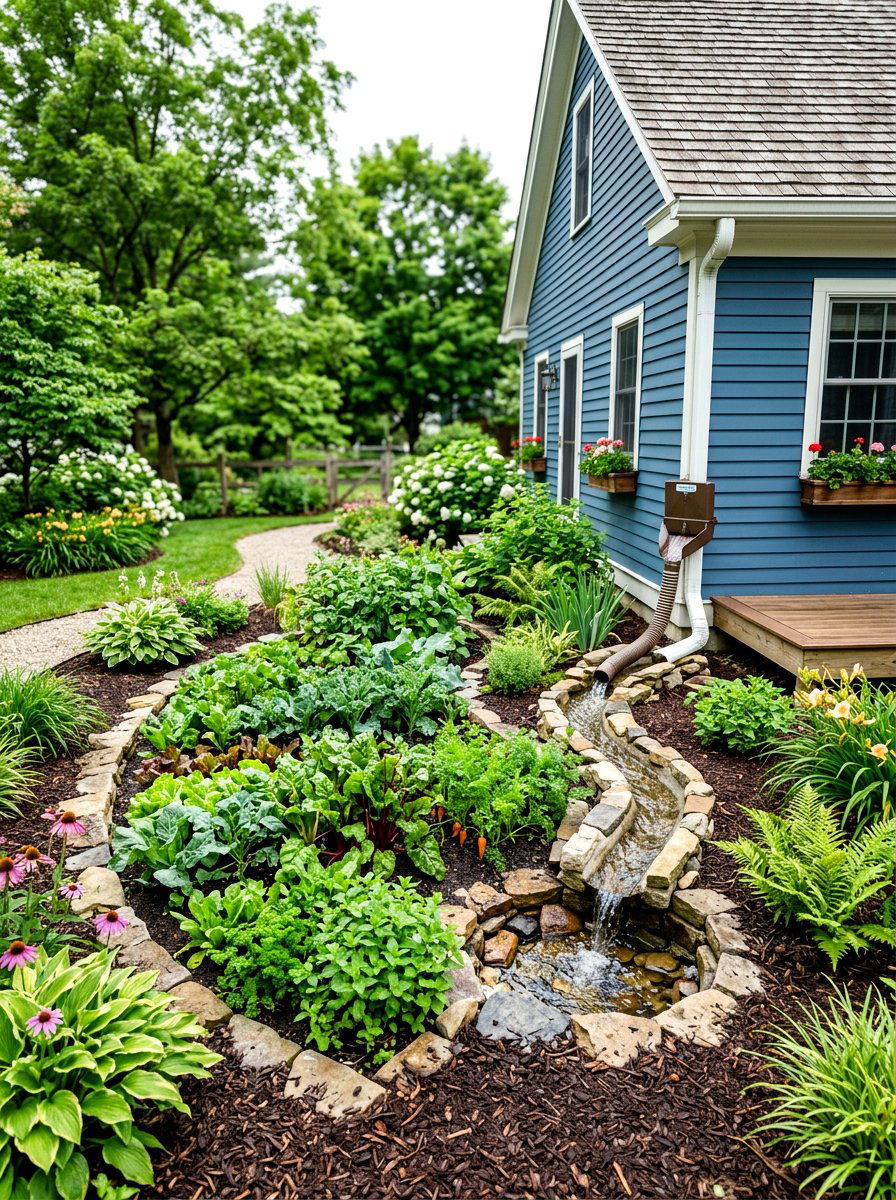
A rain garden diverter is a clever plumbing attachment that redirects water from your home's gutter system into a specific garden area. Instead of letting all that rainwater disappear down the drain, you can channel it into a sunken vegetable bed or a thirsty orchard. This method takes advantage of heavy rain events to deeply recharge the groundwater in your garden. It is an excellent way to manage storm runoff while providing your plants with a massive boost of hydration. By using natural gravity and simple pipes, you can turn a rainy day into a long-term benefit for your homegrown vegetable crops.
27. Trench watering method
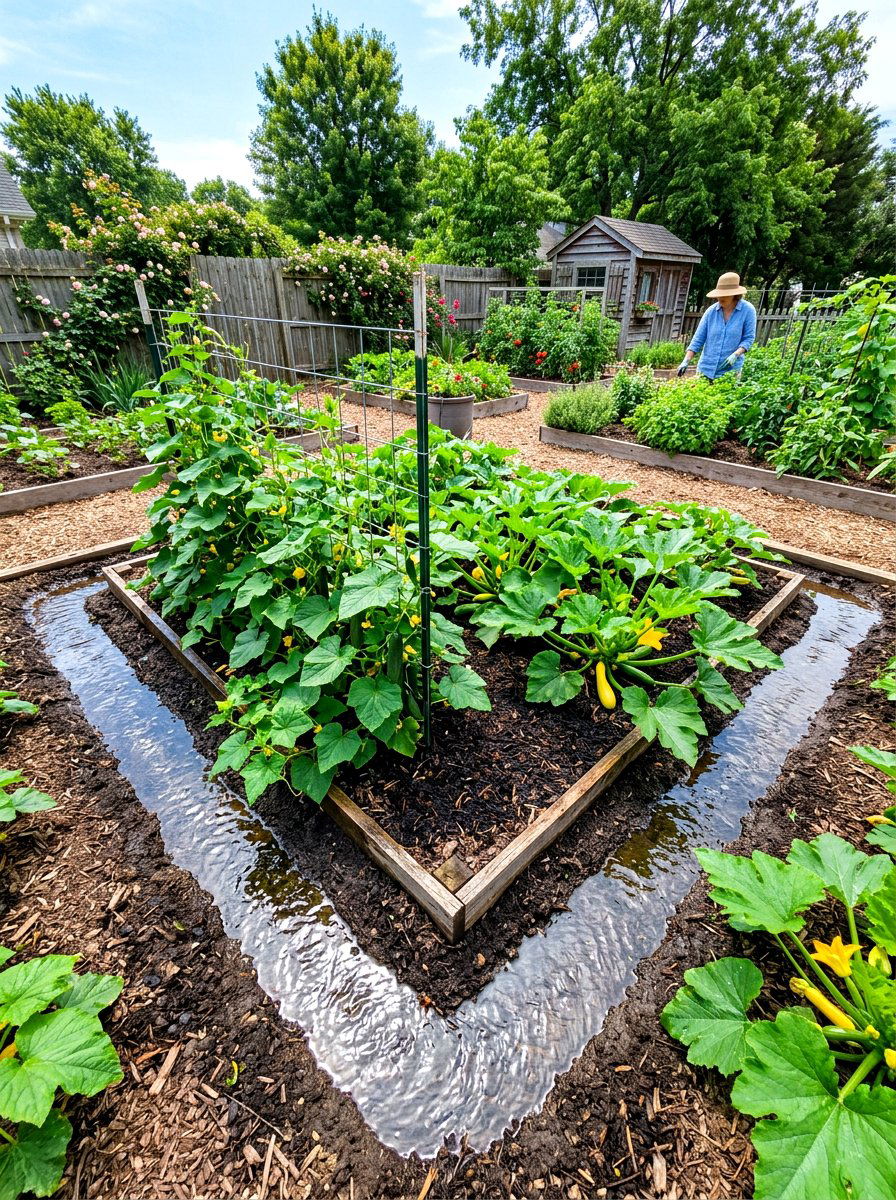
The trench watering method involves digging a shallow ditch around the perimeter of your vegetable beds to hold water. When you fill the trench, the water slowly penetrates the soil horizontally toward the center of the bed where the plants are growing. This technique is particularly useful in heavy clay soils that take a long time to absorb moisture. It ensures that the water stays where you want it rather than running off across the surface of the yard. It also makes it very easy to see exactly how much water you have applied. This simple manual method requires no expensive parts or complex setups.
28. Swale watering system
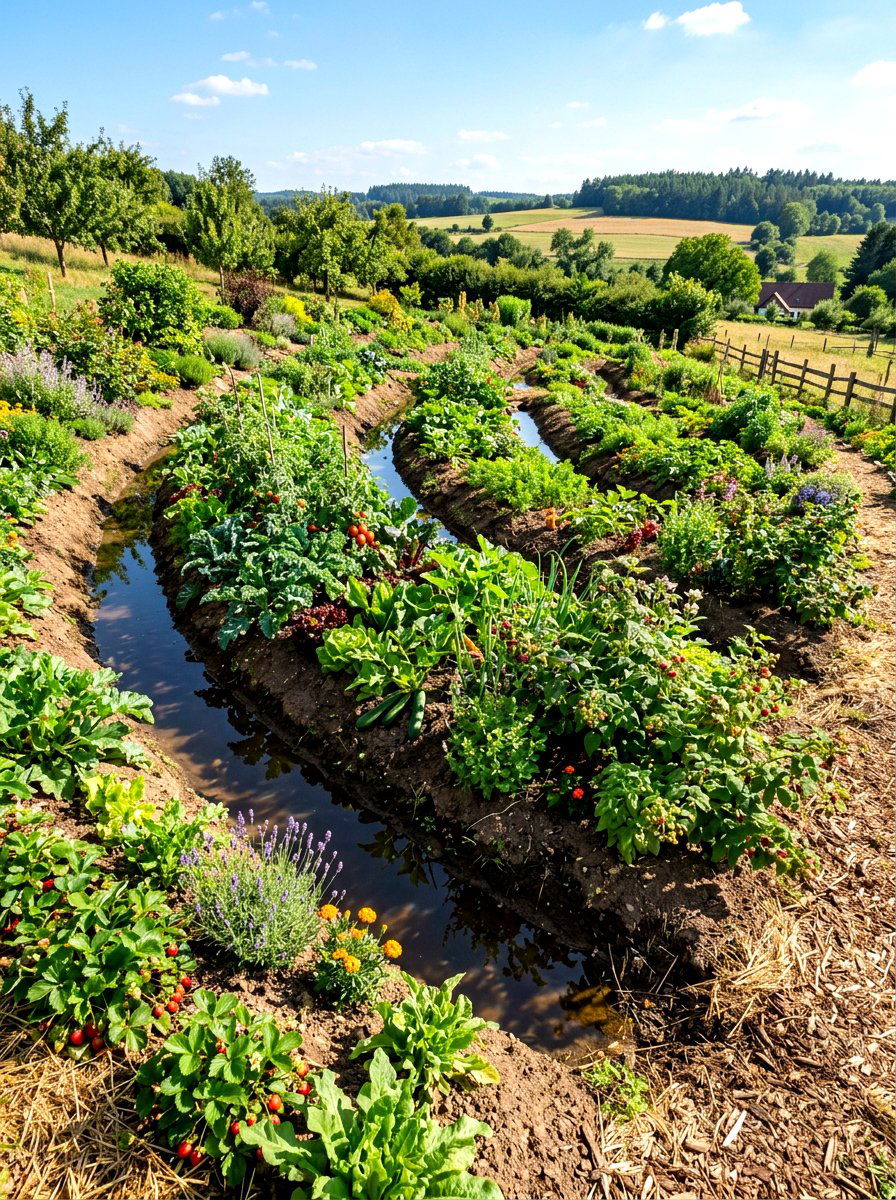
A swale watering system is a permaculture technique that uses long, shallow trenches dug along the natural contour lines of your landscape. The trench is designed to catch and hold rainwater, allowing it to slowly sink into the earth over several hours or days. You plant your vegetables on the mound or "berm" created by the excavated soil on the downhill side of the trench. This setup creates a massive underground reservoir of moisture that plants can tap into during dry periods. It is an amazing way to transform a sloped backyard into a lush and productive food forest or vegetable garden.
29. Retractable garden hose reel
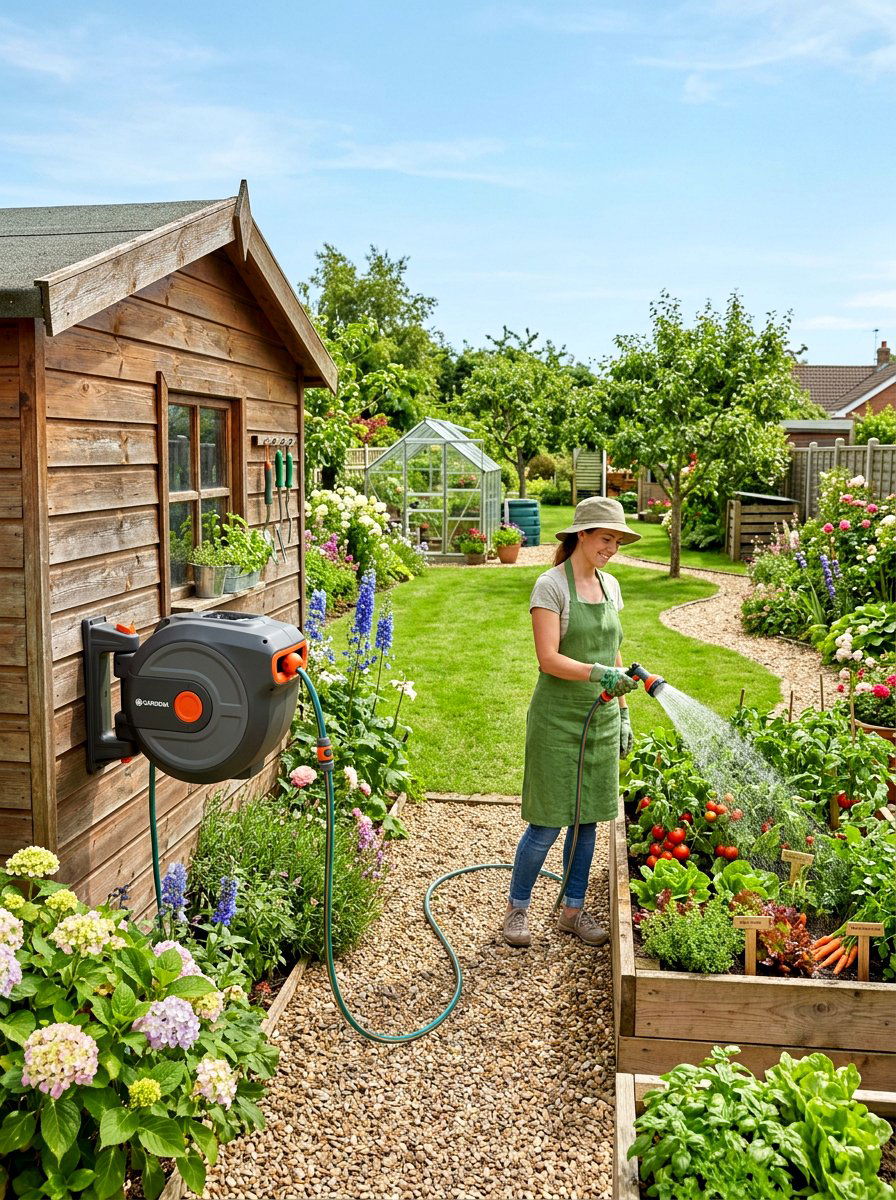
A retractable garden hose reel makes the manual task of watering your vegetables much more organized and less frustrating. These units mount to your wall and feature a spring-loaded mechanism that pulls the hose back into a protective housing when you are done. This prevents the hose from tangling, kinking, or becoming a tripping hazard in the garden path. Most high-quality reels also keep the hose out of the sun, which extends its lifespan by preventing UV damage. Having a hose that is easy to pull out and put away encourages you to stay consistent with your watering routine throughout the busy growing season.
30. Aquaponics vegetable garden
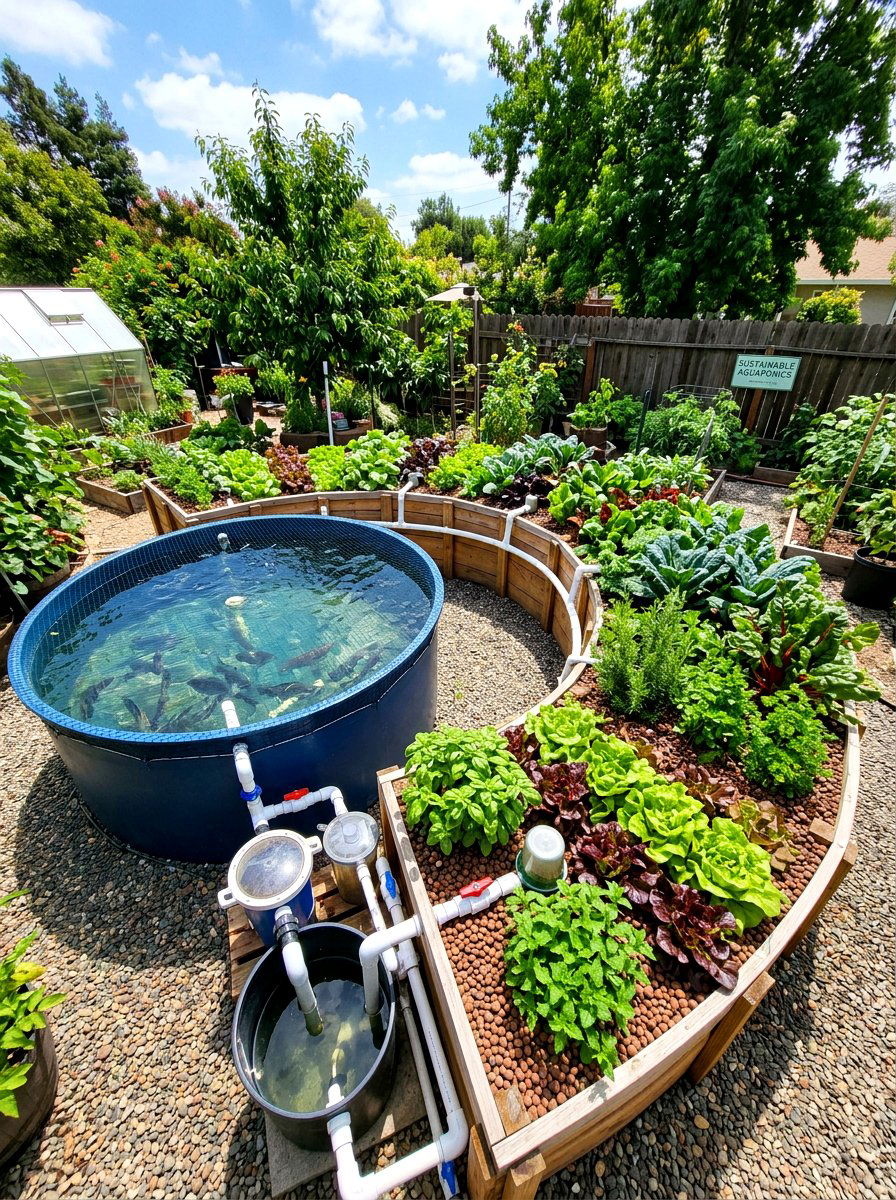
An aquaponics vegetable garden is a fascinating closed-loop system that combines fish farming with plant cultivation. The nutrient-rich waste from the fish is pumped into the vegetable beds, where the plants act as a natural filter to clean the water. The purified water is then returned to the fish tank, creating a continuous cycle of life. This method uses about ninety percent less water than traditional gardening and produces both fresh vegetables and protein. It is a highly efficient and educational way to grow food that works well in greenhouses or even indoors. It represents the ultimate in sustainable, modern vegetable gardening technology.
Conclusion:
Finding the perfect watering strategy for your vegetable garden is a journey that pays off with a bountiful and healthy harvest. By exploring these thirty different methods, you can tailor your approach to match your specific climate, budget, and physical abilities. Whether you choose the high-tech precision of a smart controller or the simple sustainability of a rain barrel, the goal remains the same: consistent hydration. Taking the time to set up an efficient system now will save you countless hours of labor and significant amounts of water in the future. Happy gardening starts with a well-watered root system and a commitment to nurturing your plants.

Related posts: