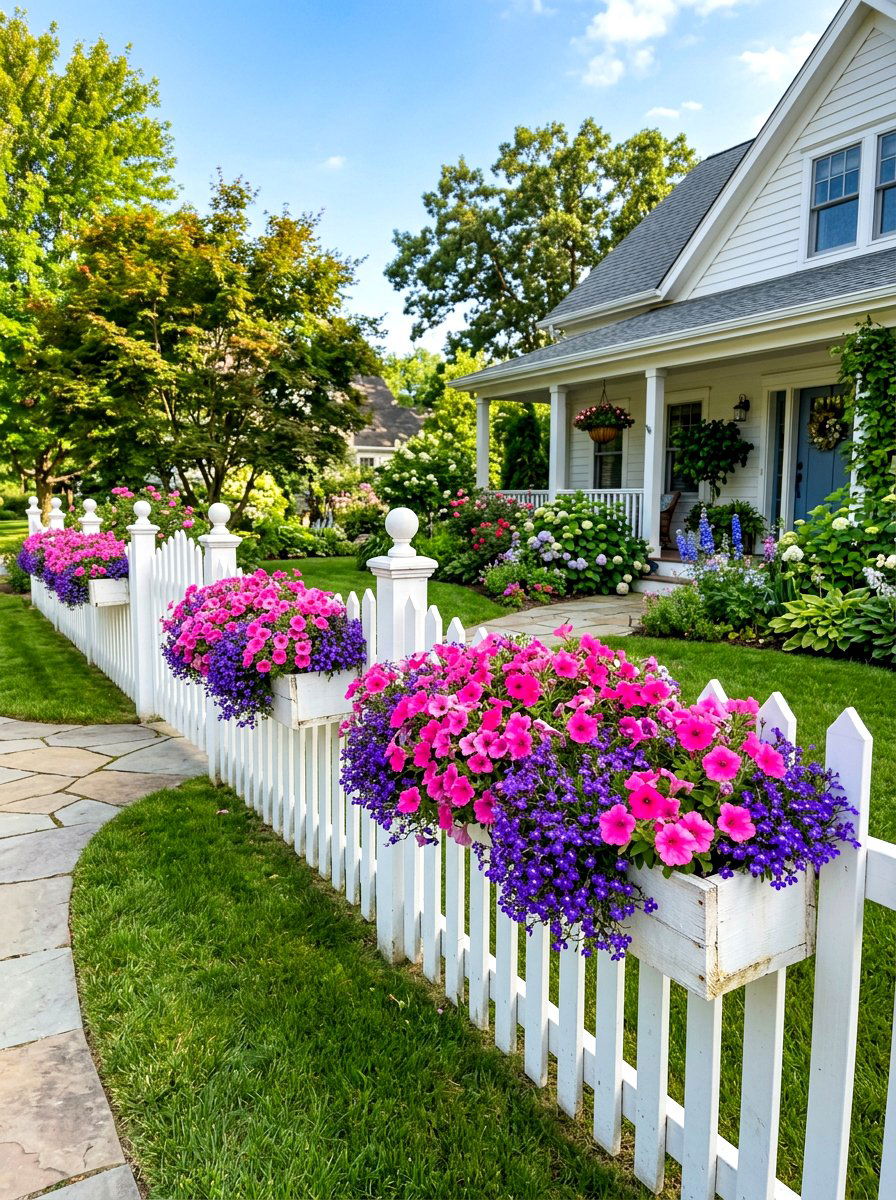
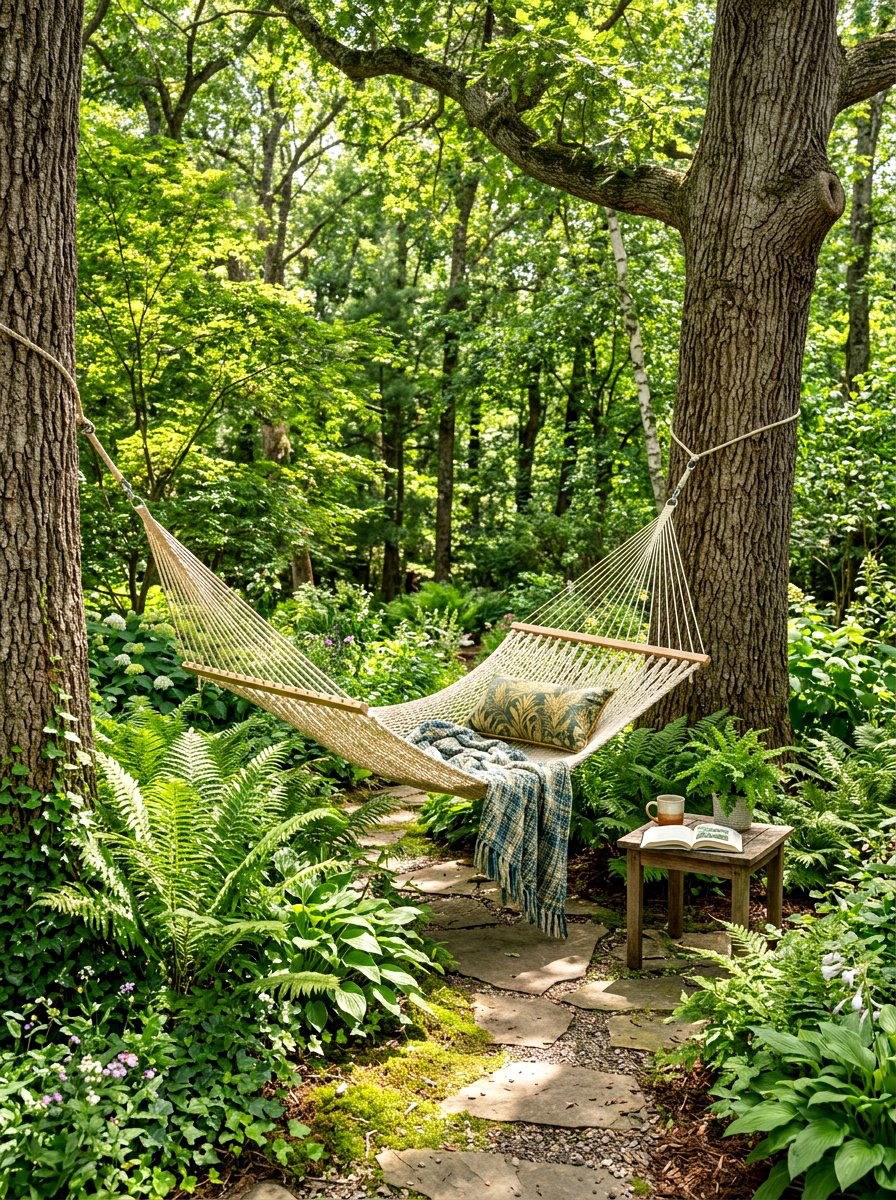
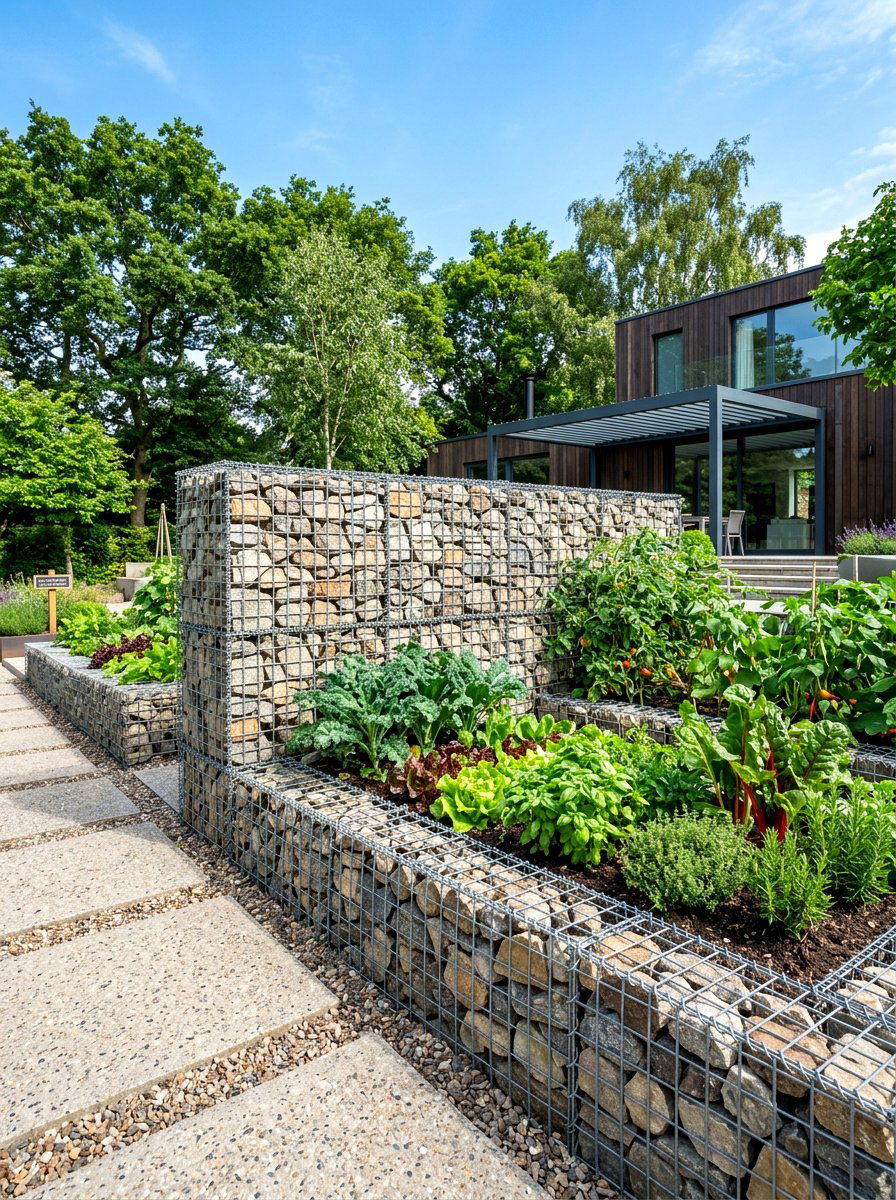
Maintaining a pristine lawn often feels like a never-ending battle against encroaching grass and messy garden edges. A mow strip is the ultimate secret weapon for homeowners who want to achieve a professional, manicured look with minimal effort. This clever landscaping feature provides a flat, stable surface for your lawnmower’s wheels to glide over, ensuring a clean cut every single time. Beyond its practical utility, a well-designed border serves as a visual frame that highlights your beautiful flower beds and architectural features. Whether you prefer the rustic charm of natural stone or the sleek lines of modern metal, there is a perfect edging solution for every yard. By installing a dedicated transition zone, you effectively stop invasive roots from creeping into your garden while eliminating the need for tedious string trimming. This guide explores creative and functional ways to define your outdoor space while significantly reducing your weekly maintenance routine.
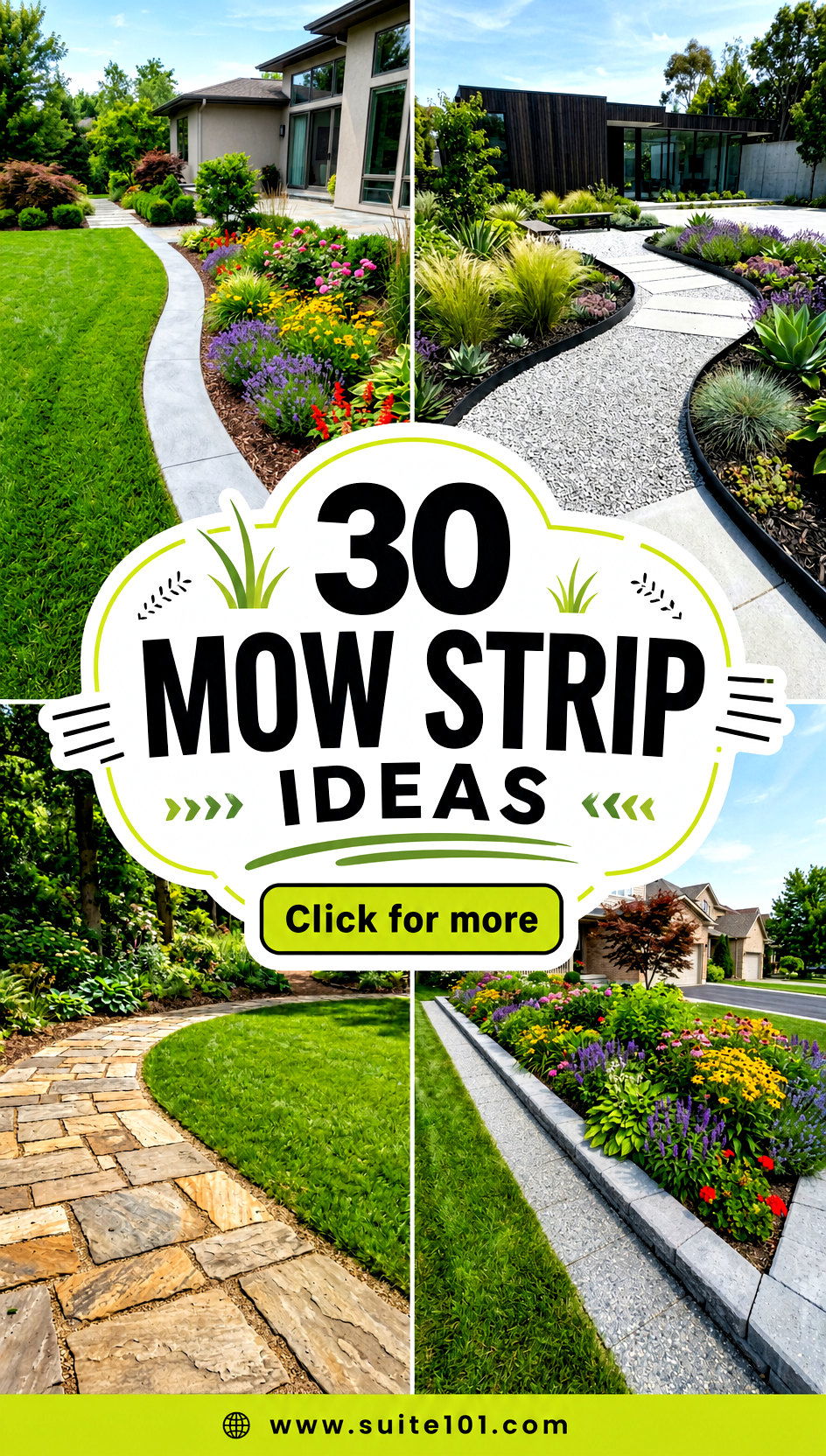
1. Poured Concrete Mow Strip
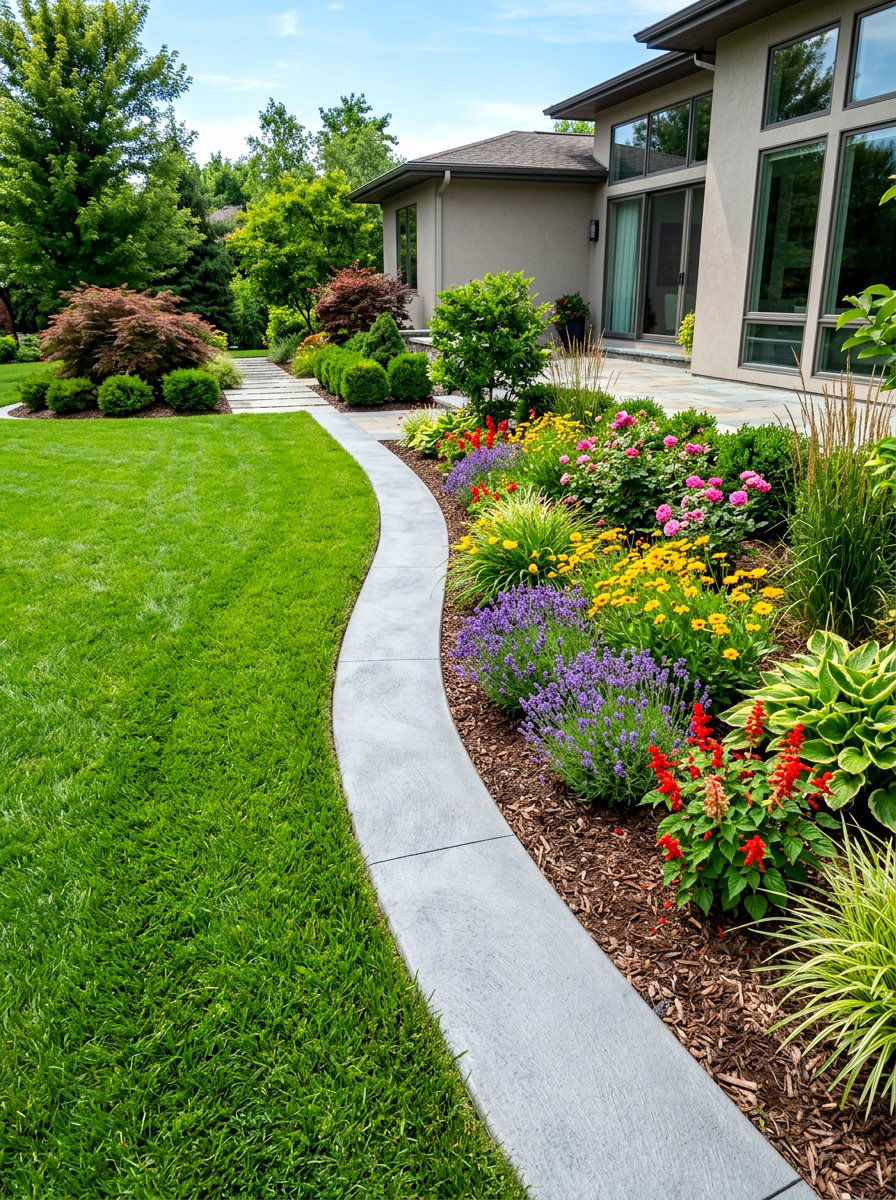
Poured concrete mow strips offer a permanent and incredibly durable solution for homeowners looking to define their lawn boundaries. This design involves excavating a shallow trench and filling it with wet concrete to create a smooth, continuous surface. Because the concrete is poured in place, it can easily follow the unique curves and contours of your flower beds. One of the biggest advantages is that the lawnmower's wheels can ride directly on the flat surface, ensuring a clean cut right up to the edge. This eliminates the need for tedious string trimming and prevents grass from invading your garden beds. It creates a sleek, professional look that lasts for decades with very little upkeep required.
2. Brick Lawn Edging
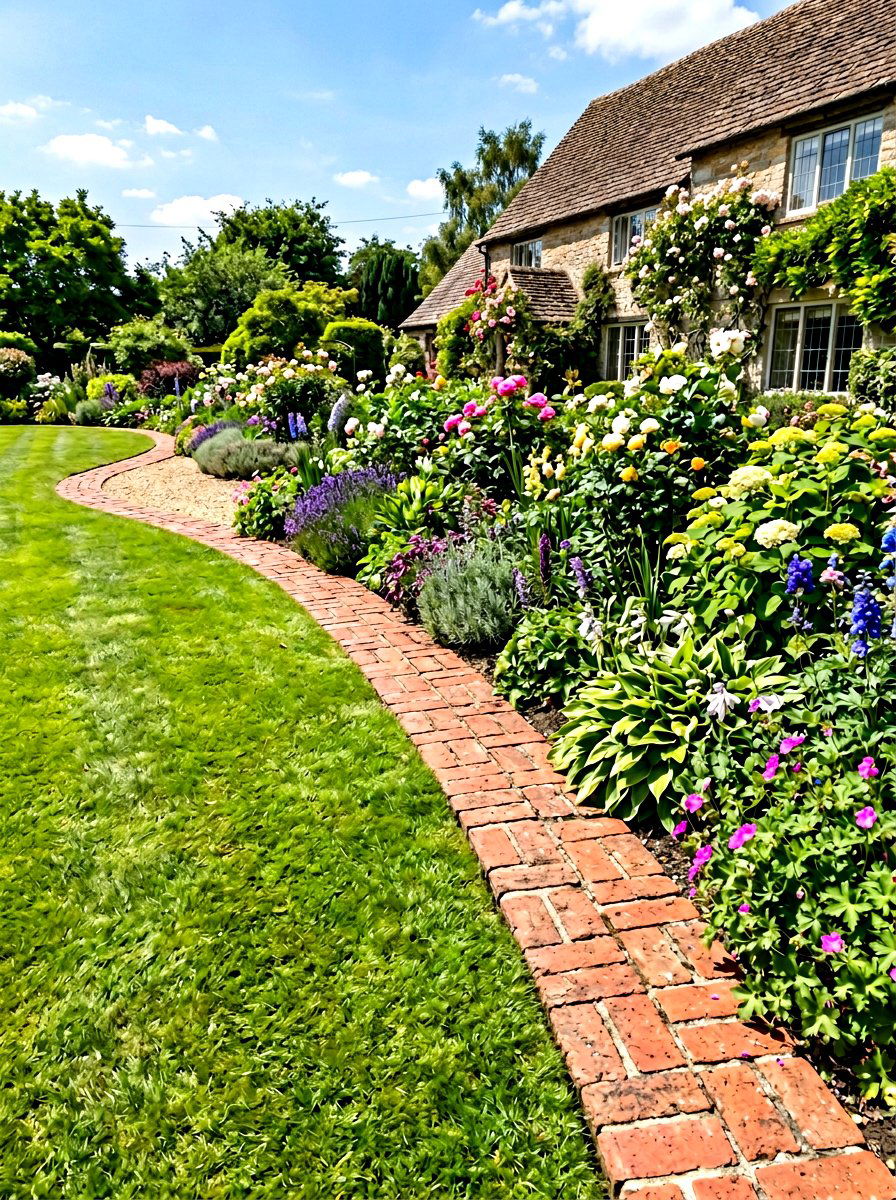
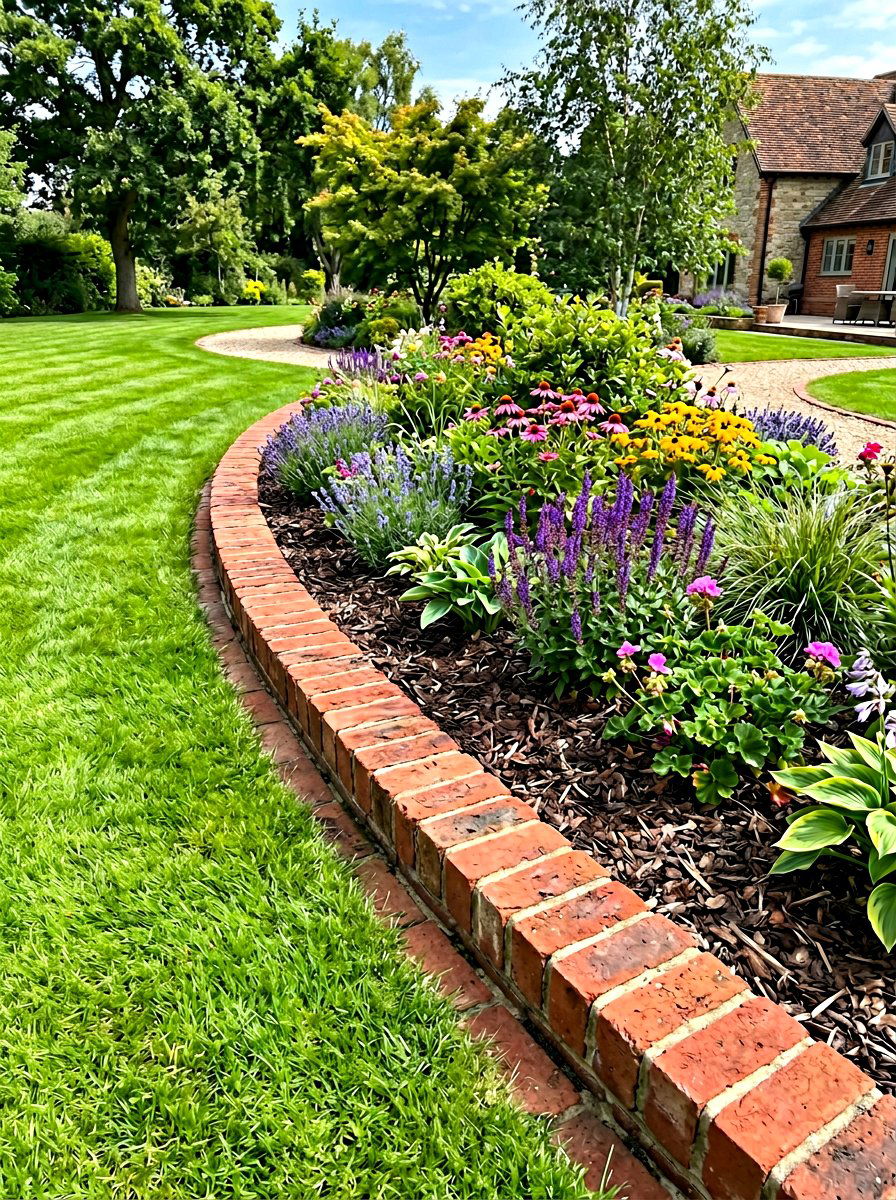
Brick lawn edging remains a classic choice for traditional and cottage-style gardens. These individual units allow for significant flexibility when designing your outdoor space. You can lay bricks flat for a wider mowing surface or set them upright for a more decorative finish. The warm, earthy tones of clay bricks blend seamlessly with most types of greenery and blooming flowers. When properly installed on a bed of sand or gravel, these borders stay level for years to come. Many people enjoy the DIY aspect of brickwork because it requires fewer specialized tools than poured concrete. It adds a timeless charm that instantly boosts your curb appeal and creates very tidy margins.
3. Steel Landscape Edging
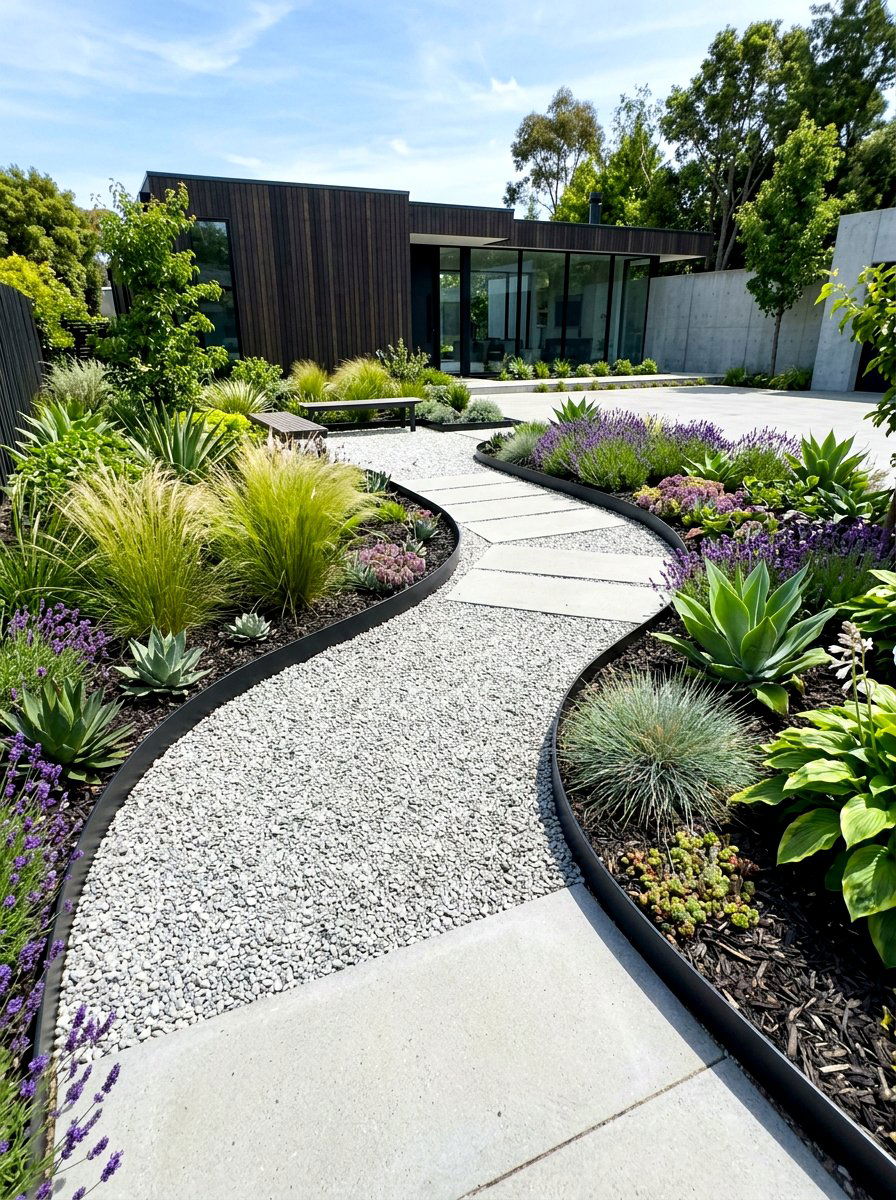
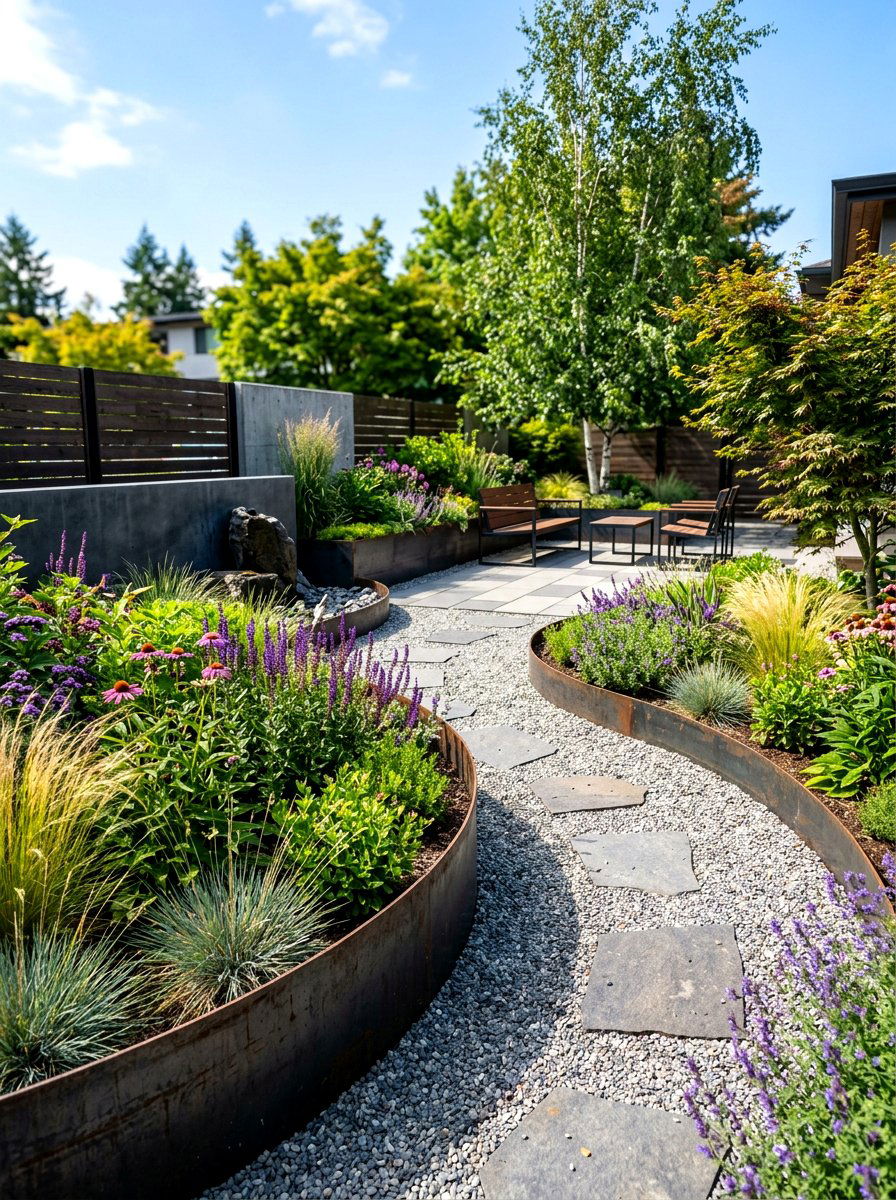
Steel landscape edging provides a minimalist and modern aesthetic that is currently trending in high-end garden designs. These thin, flexible strips are perfect for creating sharp, precise lines that define the transition between turf and planting areas. Unlike wood or plastic, steel is incredibly resistant to the elements and will not rot or crack over time. You can choose from galvanized steel for a silver finish or weathering steel which develops a beautiful, protective rust patina. Because the profile is so slim, it creates an almost invisible barrier that keeps mulch in place and grass out. It is a fantastic choice for contemporary homes with clean architectural lines.
4. Stone Paver Border
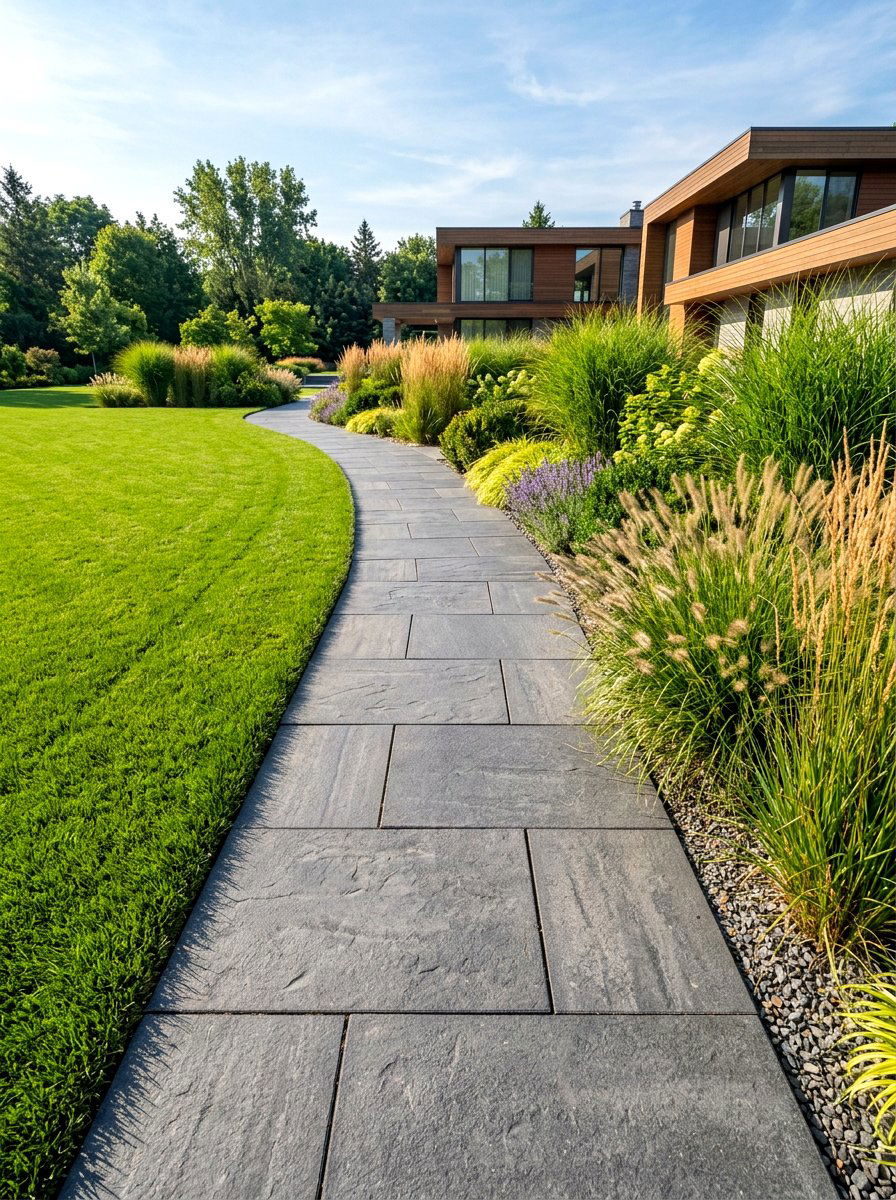
Using stone pavers as a mow strip is an excellent way to add texture and sophistication to your backyard. These pre-cast units come in a wide variety of shapes, sizes, and colors, allowing you to customize the look to match your home’s exterior. By setting the pavers flush with the ground, you create a perfect track for mower wheels to travel upon. This design is particularly effective at holding back heavy mulch or decorative gravel in raised garden beds. The weight of the stones ensures they stay firmly in place even during heavy rain or wind. It is a rugged yet refined option for any busy family landscape.
5. Wood Timber Edging
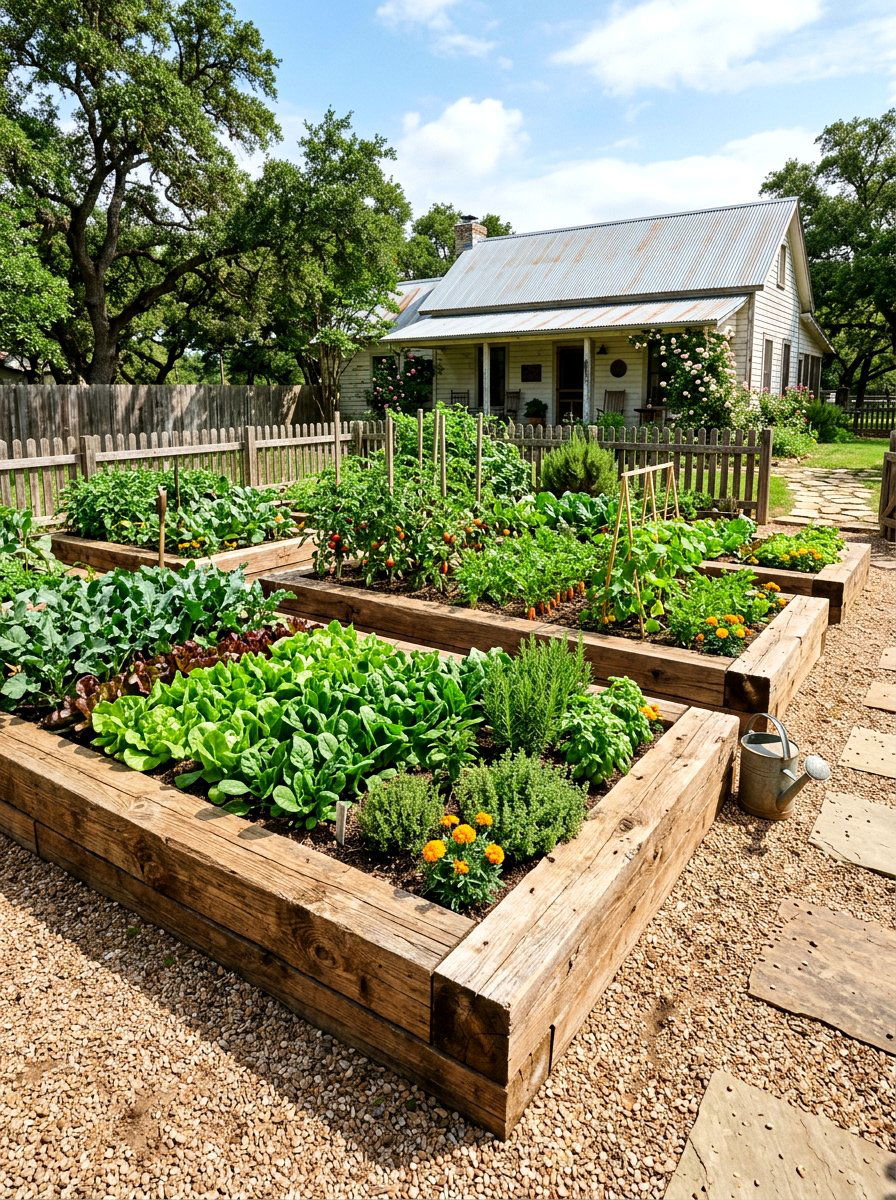
Wood timber edging offers a natural and budget-friendly way to organize your garden beds. Pressure-treated lumber or naturally rot-resistant species like cedar and redwood are ideal for this application. These heavy beams provide a sturdy vertical barrier that works exceptionally well for straight-line designs and formal garden layouts. Many homeowners appreciate the organic feel that wood brings to the landscape, helping the garden feel more connected to the surrounding environment. While wood does require eventual replacement, it is very easy to install using simple stakes and screws. It provides a chunky, substantial look that grounds the entire design and clearly defines separate zones in the yard.
6. Cobblestone Mow Strip
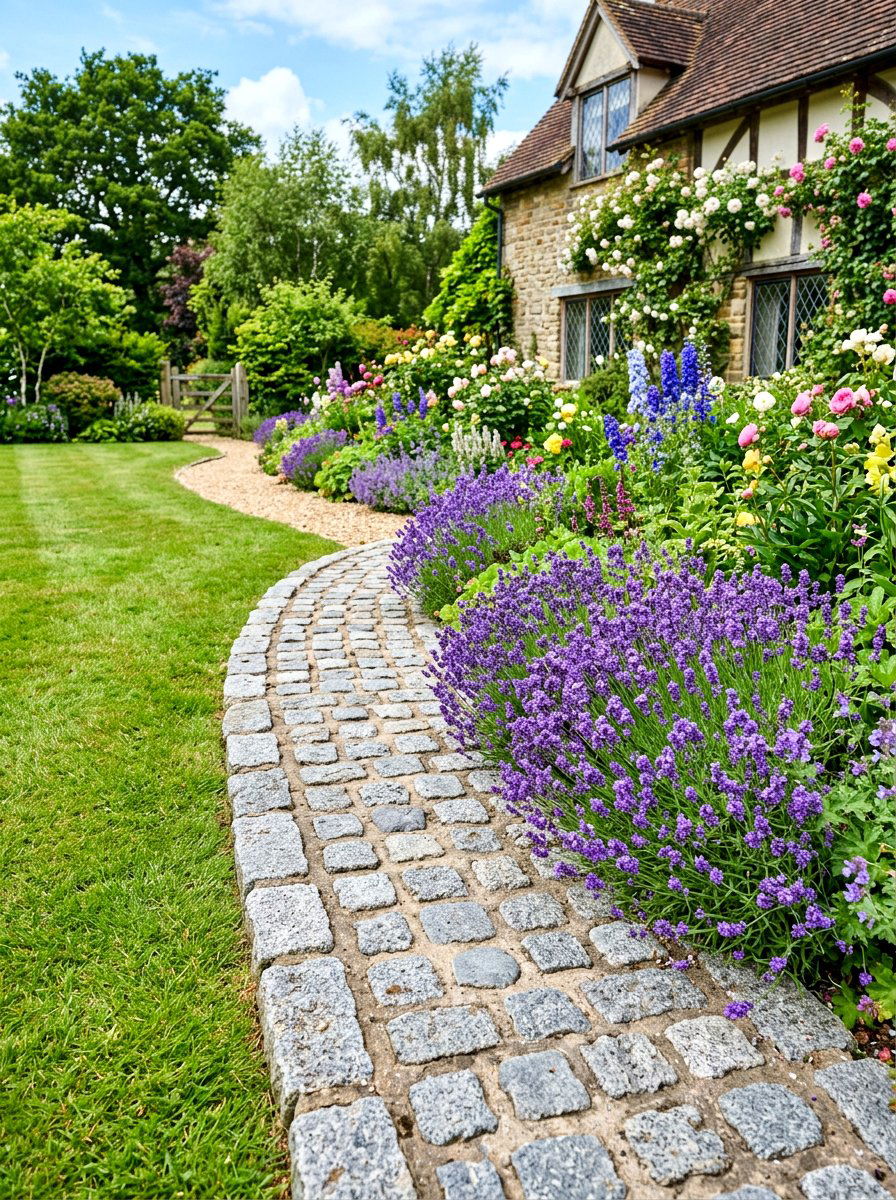
Cobblestone mow strips bring an old-world charm and historic feel to modern residential landscapes. These rounded, natural stones are incredibly tough and can withstand the weight of heavy machinery without shifting. Installing cobblestones in a mortar bed ensures they remain perfectly level, making the mowing process effortless. The irregular shapes and varied colors of the stones create a visual rhythm that draws the eye along the garden path. This style of edging works beautifully with traditional brick homes or sprawling country estates. It is a high-quality investment that provides both functional benefits and a significant boost to the overall aesthetic value of your property.
7. River Rock Border
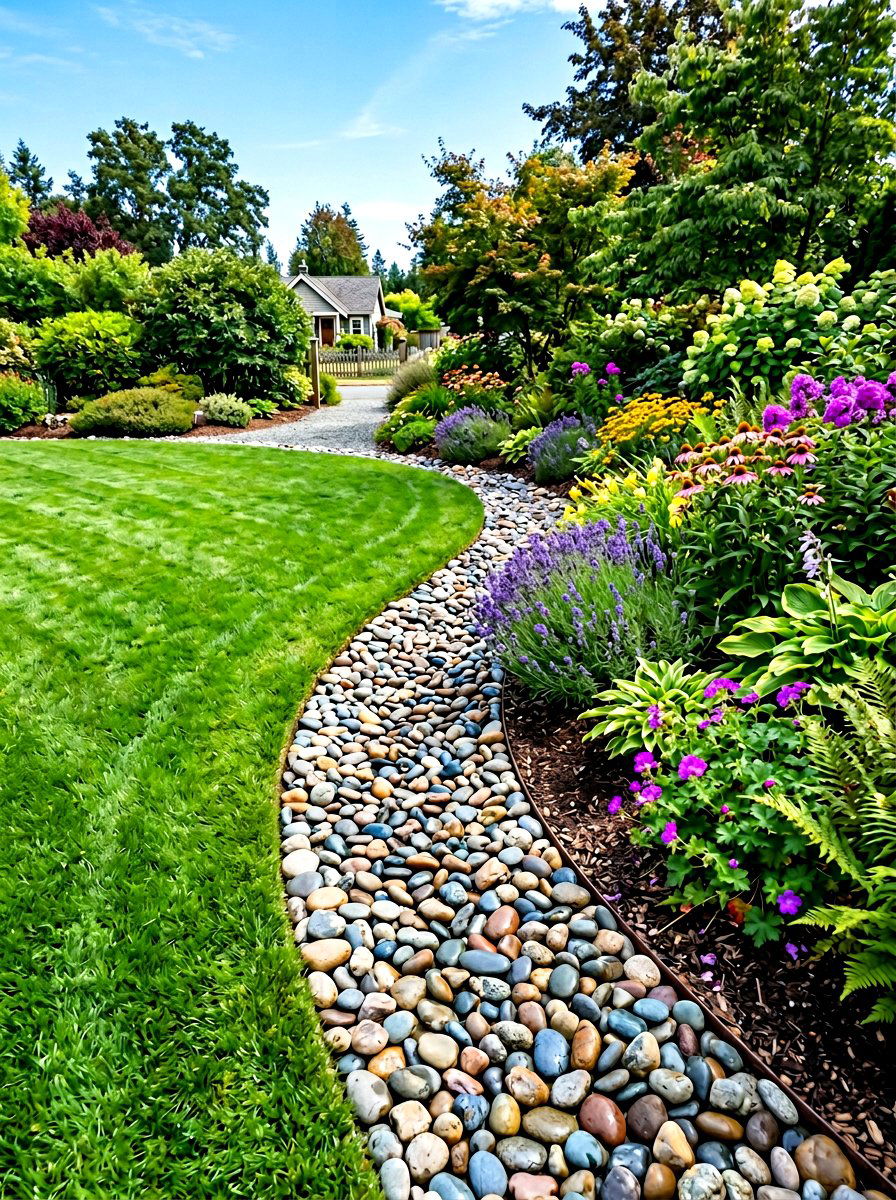
A river rock border is a wonderful choice for those who want a softer, more organic transition between their lawn and plants. Using smooth, water-worn stones in varying shades of gray, tan, and blue creates a serene and naturalistic vibe. To make this functional for mowing, the rocks should be set into a shallow trench or held in place with a hidden liner. This design allows for excellent drainage and prevents soil erosion around the perimeter of your garden. The contrast between the vibrant green grass and the multi-colored stones is visually striking. It is a low-maintenance option that feels more like a feature than a utility.
8. Flagstone Lawn Edge
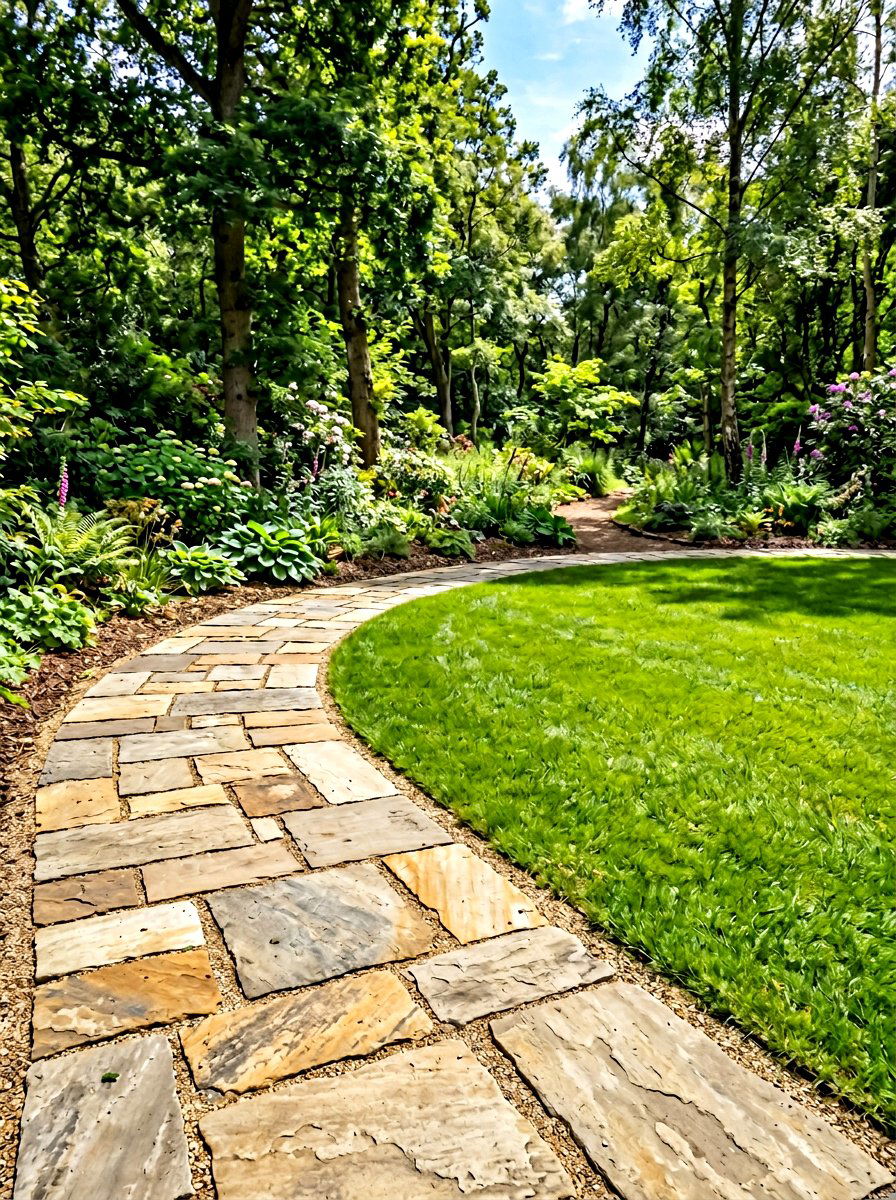
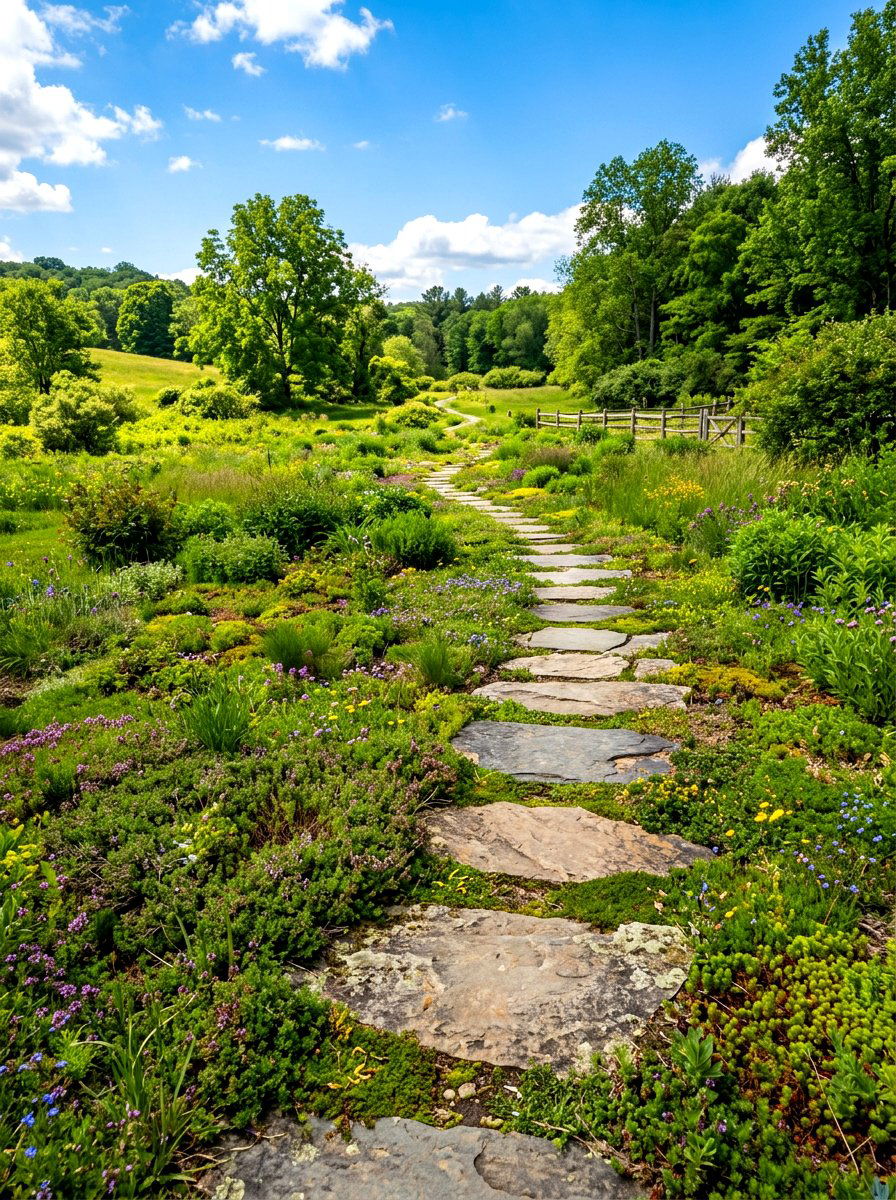
Flagstone lawn edges offer a rustic and artistic approach to garden borders. These flat, irregular pieces of natural stone can be fitted together like a puzzle to create a wide, stable mowing strip. Because each stone is unique, the resulting border has a handcrafted appearance that complements woodland or xeriscape garden themes. Flagstone is naturally heavy and durable, meaning it won't be easily displaced by lawn equipment or foot traffic. Setting the stones in a layer of sand or fine gravel helps keep them level and prevents weeds from popping up between the gaps. It is a high-end look that brings a sense of permanence.
9. Rubber Garden Edging
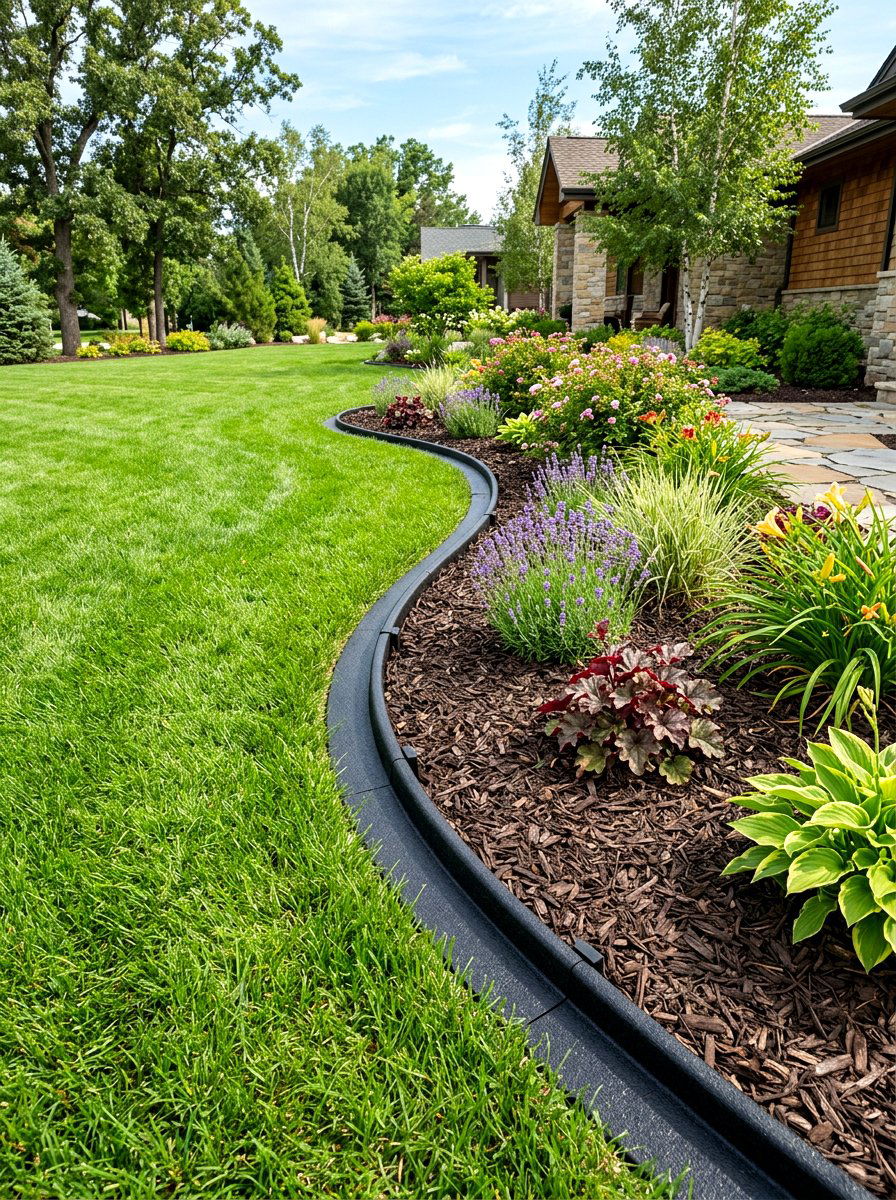
Rubber garden edging is an eco-friendly and versatile alternative to traditional hardscaping materials. Often made from recycled tires, these strips are flexible enough to follow even the most complex garden curves. The material is soft and safe for children and pets, yet durable enough to withstand extreme weather conditions without cracking. Many rubber edging products are designed with a built-in "mow flange, " which is a flat lip that sits under the grass to provide a perfect track for mower blades. This design makes it nearly impossible for grass to grow over the top of the border. It is a cost-effective and highly functional choice.
10. Concrete Block Border
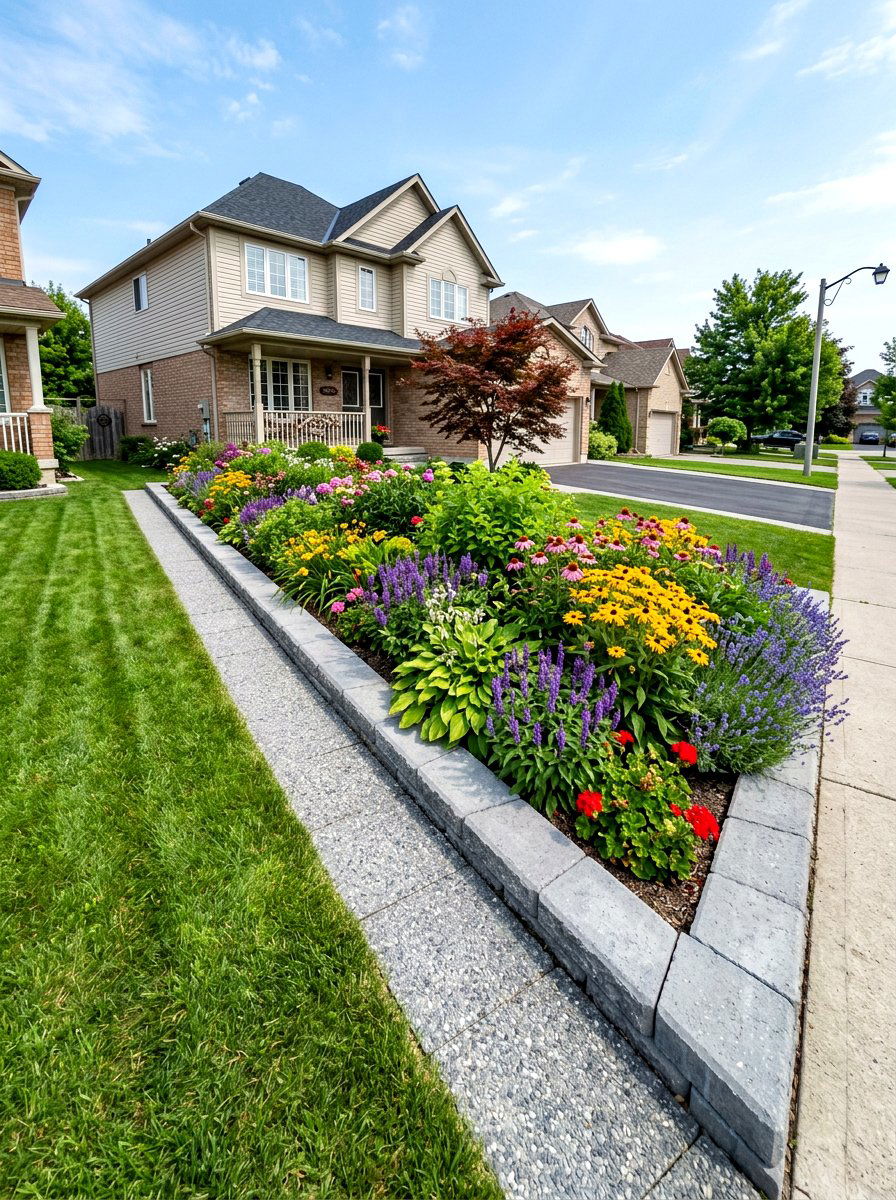
Concrete block borders provide a structured and uniform look that is very easy to install for the average DIY enthusiast. These small, interlocking blocks are available at most hardware stores and come in various textures that mimic natural stone. Because they are heavy and thick, they stay in place without the need for mortar in most cases. You can create a wide mow strip by laying them side-by-side or create a slightly raised edge to contain garden soil. The clean, repetitive pattern of the blocks adds a sense of order to the landscape. It is a practical solution for those who want a tidy yard.
11. Decorative Tile Edging
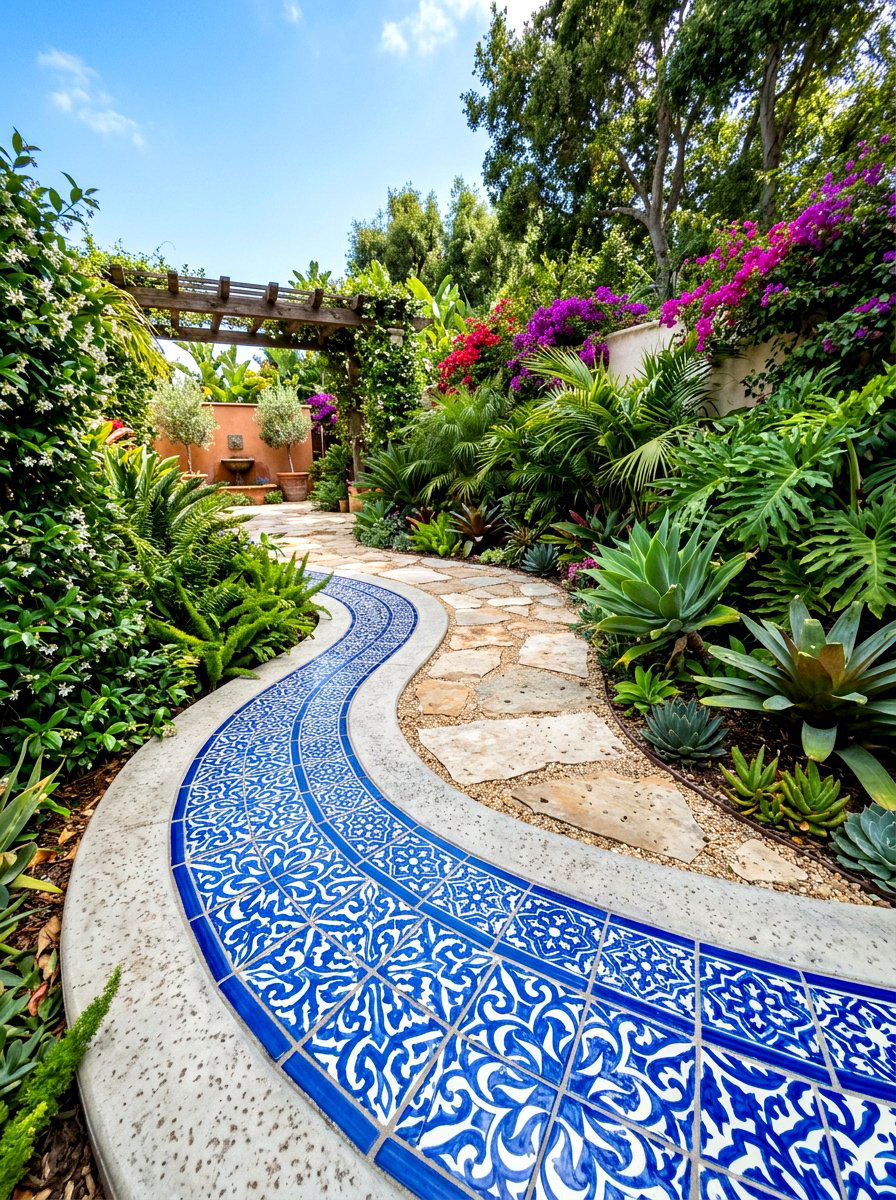
Decorative tile edging is a unique way to inject color and personality into your outdoor space. Using frost-resistant outdoor tiles or reclaimed terracotta pieces can create a vibrant border that stands out against the green turf. This design works best when the tiles are set into a solid concrete base to prevent them from cracking under the weight of the lawnmower. You can choose patterns that reflect Mediterranean, southwestern, or modern styles depending on your home's architecture. It is a creative choice for homeowners who view their garden as an extension of their interior design. The glossy finish of tiles reflects light beautifully.
12. Bamboo Garden Border
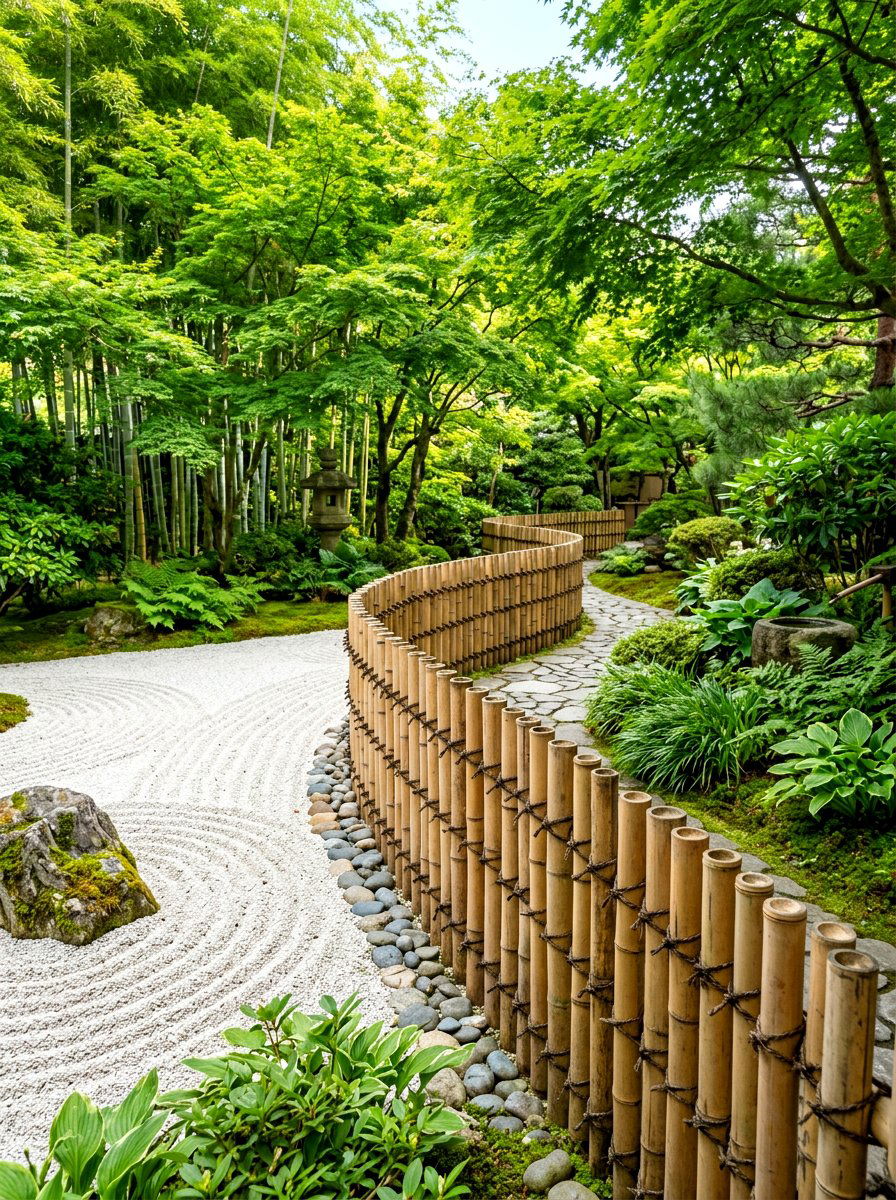
Bamboo garden borders offer a sustainable and tropical aesthetic that is perfect for Zen-inspired landscapes. These borders are typically made from short bamboo poles lashed together or attached to a flexible backing. While bamboo is more of a decorative edge, it can function as a mow strip if placed alongside a flat gravel or sand path. The vertical lines of the bamboo create a distinct visual barrier that adds height and interest to the garden's edge. It is a fantastic choice for screening low-growing plants or defining a quiet corner of the yard. Bamboo is naturally resistant to pests and adds a unique texture.
13. Woven Willow Edging
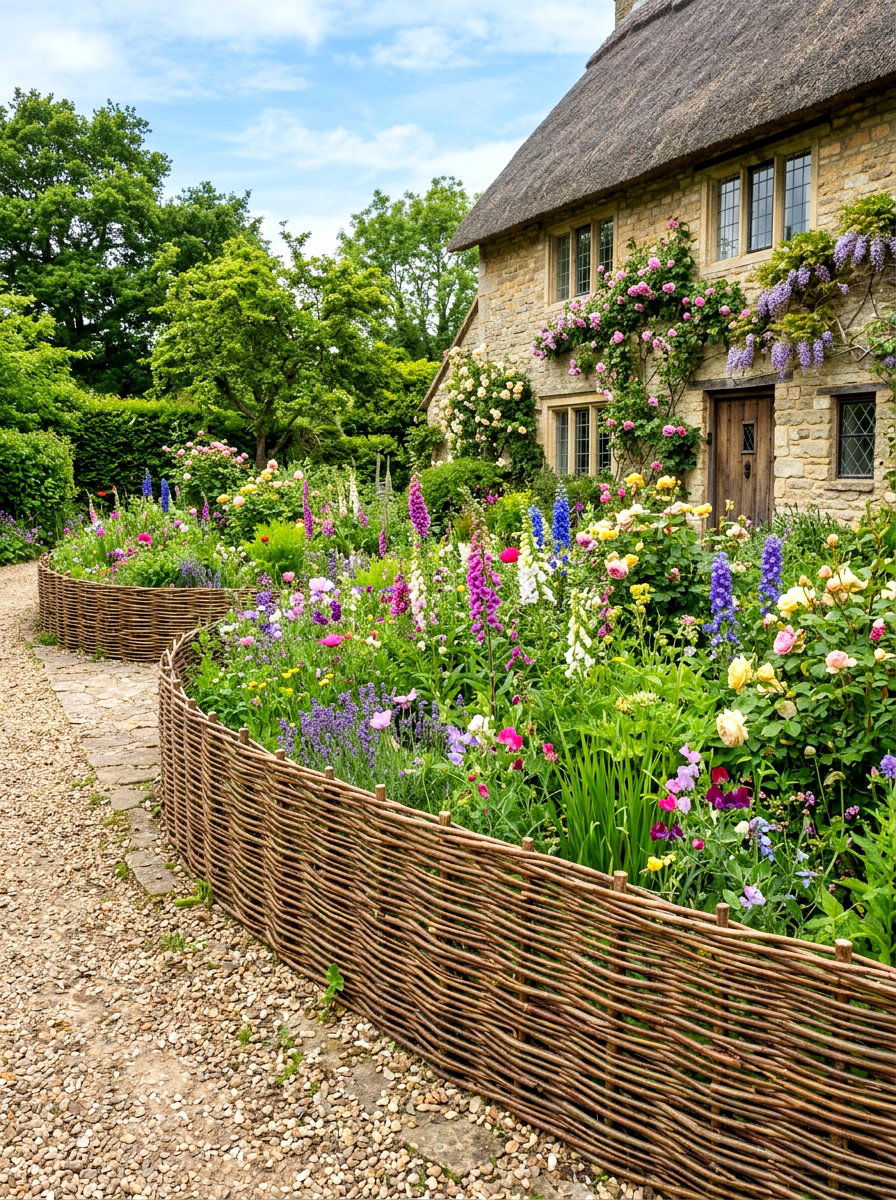
Woven willow edging, often referred to as wattle, is a traditional European technique that brings a handcrafted, cottage-core feel to the garden. These flexible branches are woven around upright stakes to create a charming, low fence. While primarily decorative, a wattle border can be paired with a flat mulch or soil path to facilitate easier mowing. It is an excellent choice for informal gardens where a soft, rustic look is desired. Because it is made from natural materials, it eventually blends back into the earth, making it a very environmentally friendly option. It adds a lovely sense of texture and history to the landscape.
14. Boulder Landscape Edge
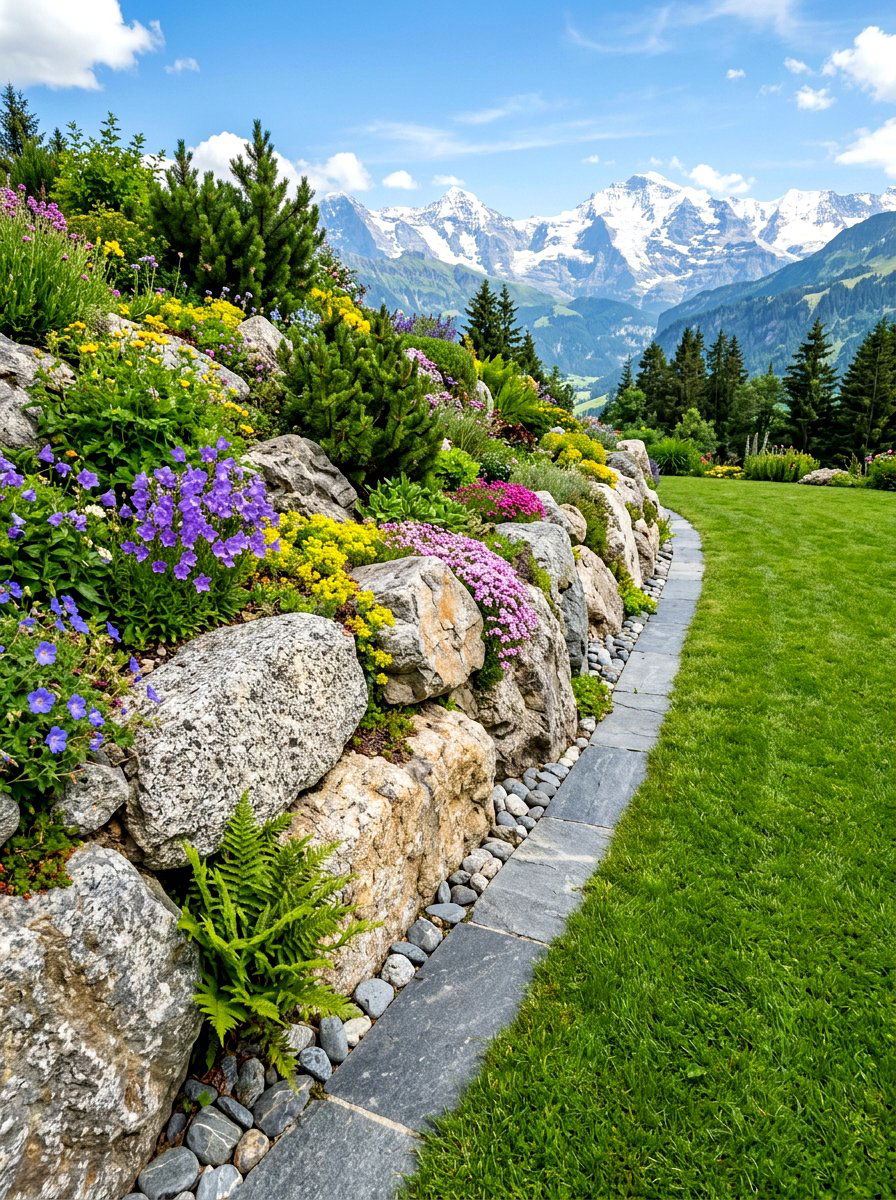
A boulder landscape edge is the ultimate choice for a bold and naturalistic garden design. Using large, heavy rocks to define the lawn perimeter creates a dramatic transition that feels like it was shaped by nature. To make this work as a mow strip, smaller flat stones should be placed at the base of the boulders to provide a level surface for the mower. This prevents the need to trim grass by hand around the irregular shapes of the large rocks. Boulders are essentially permanent and require zero maintenance once they are positioned. They add significant visual weight and character to any large outdoor space.

15. Pea Gravel Mow Strip
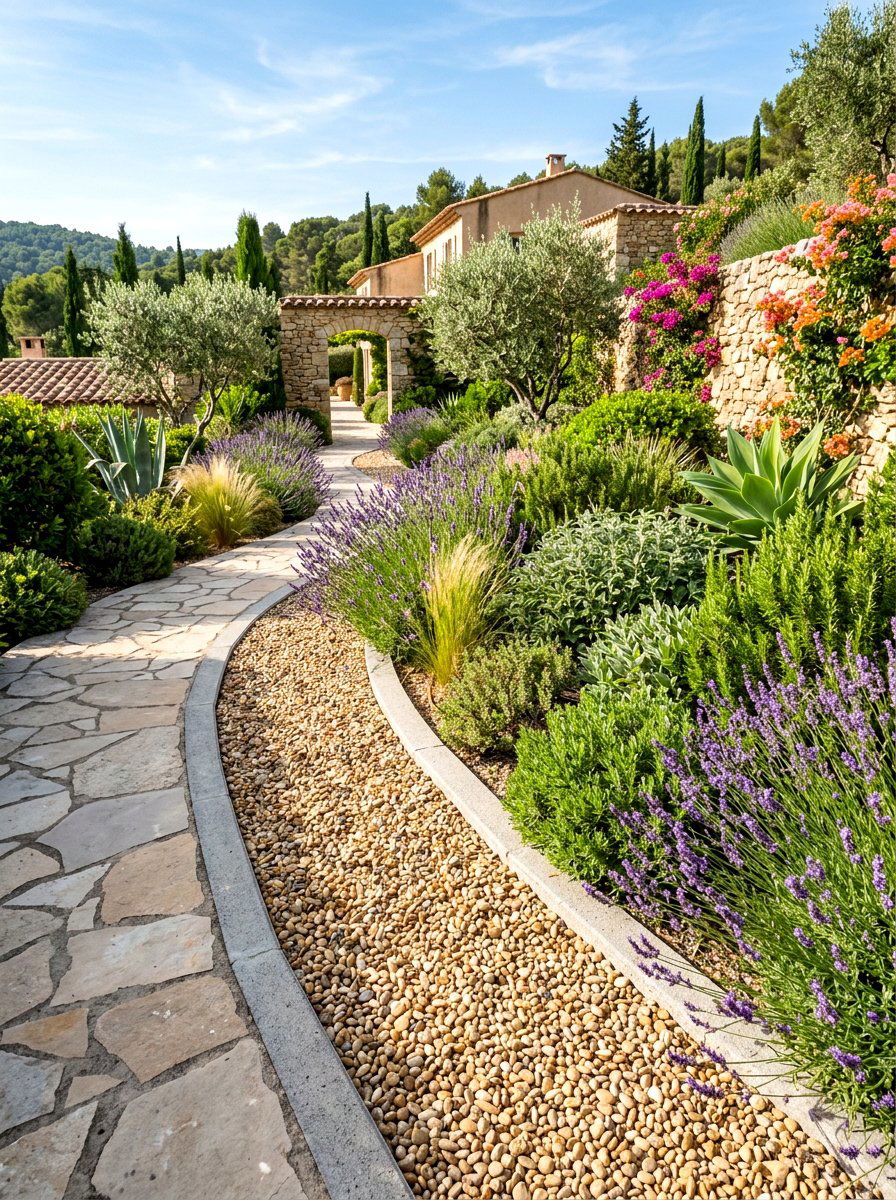
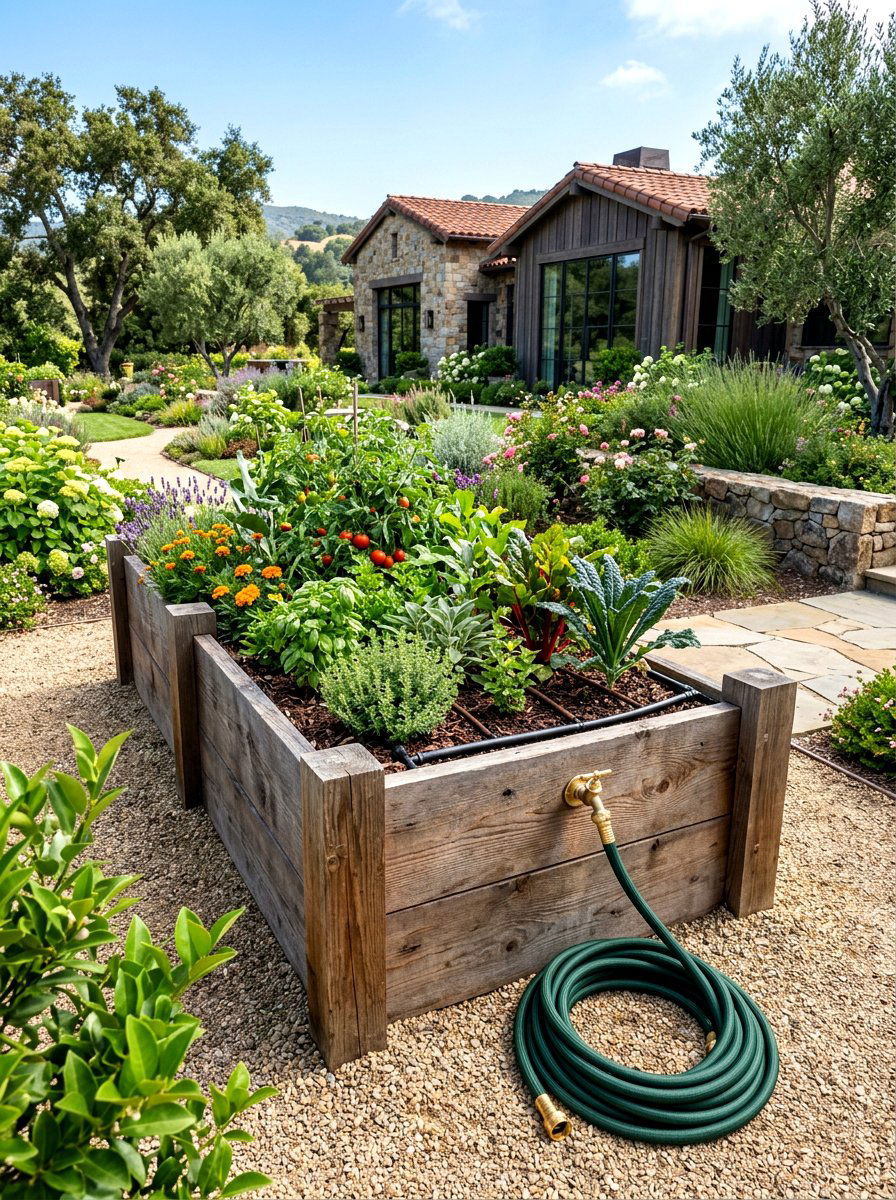
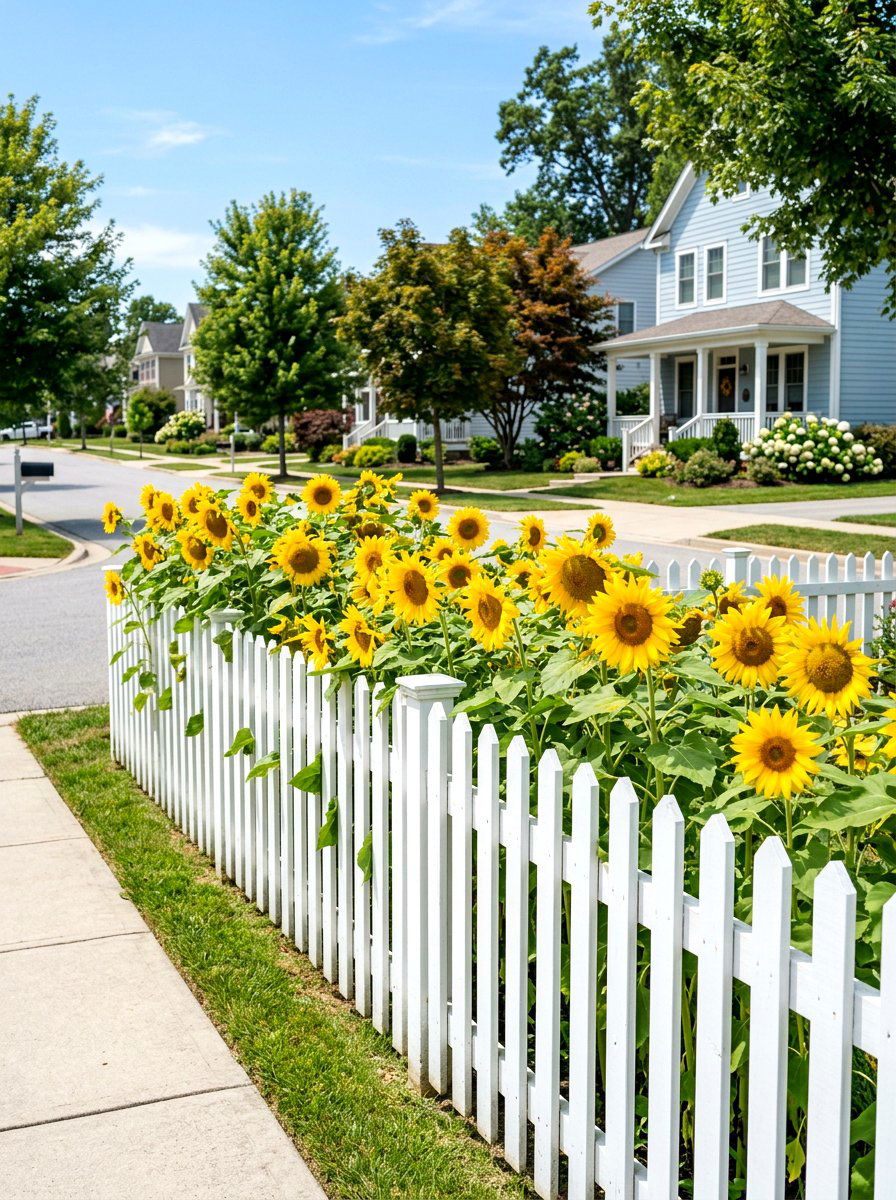
Pea gravel mow strips are a popular choice for Mediterranean and drought-tolerant garden designs. These small, rounded pebbles create a permeable border that allows water to soak into the ground while keeping the lawn separate from the garden beds. For the best results, the gravel should be contained within a shallow trench with a sturdy liner to prevent the stones from migrating into the grass. The crunching sound of gravel underfoot adds a sensory element to the garden. It is a very easy material to work with and can be refreshed periodically to keep it looking clean and bright throughout the seasons.
16. Glass Pebble Border
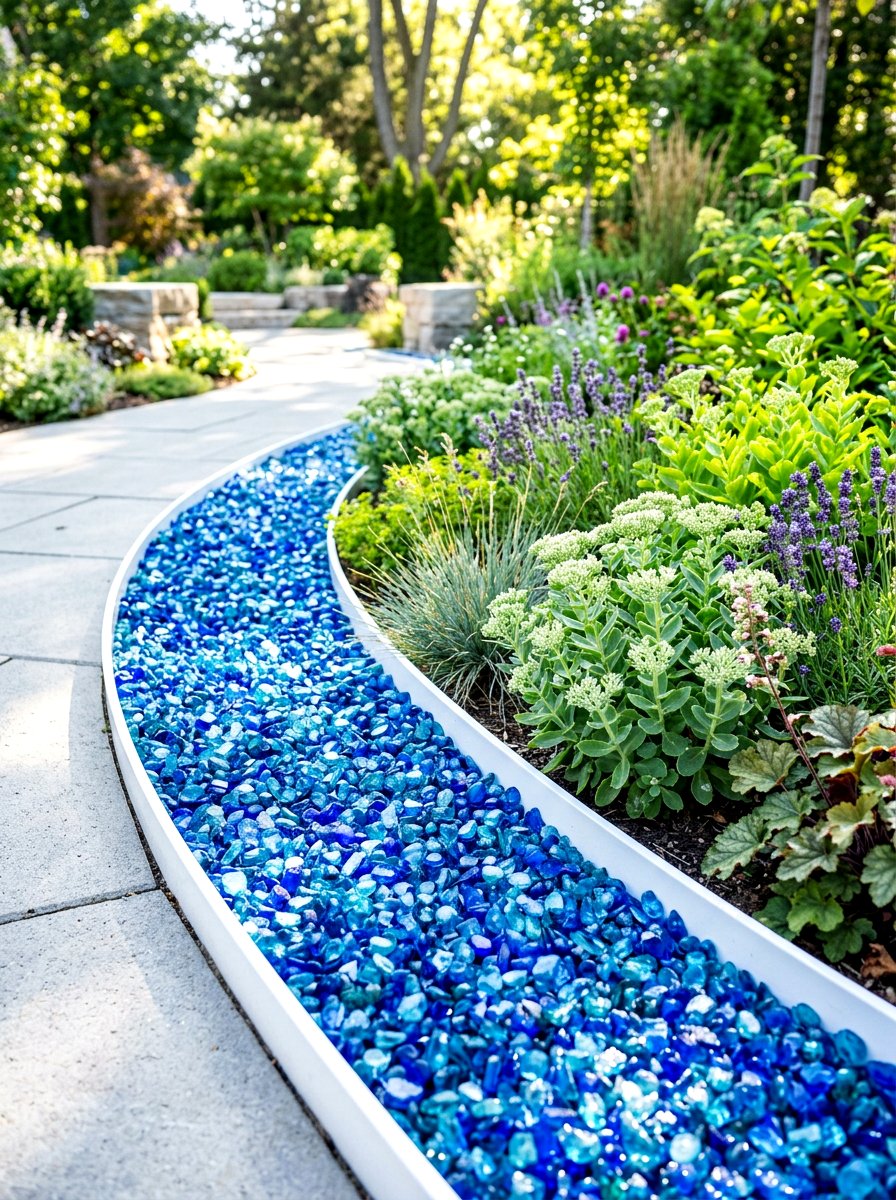
A glass pebble border is a modern and artistic way to add a touch of sparkle to your landscape. Made from recycled, tumbled glass, these pebbles are smooth to the touch and come in a dazzling array of colors like cobalt blue, seafoam green, and clear. When the sun hits the glass, the border glows, creating a magical effect in the evening. To function as a mow strip, the glass should be set in a transparent resin or placed over a white sand base within a sturdy frame. This prevents the mower from picking up the small pieces while providing a flat surface for the wheels.
17. Reclaimed Wood Edging
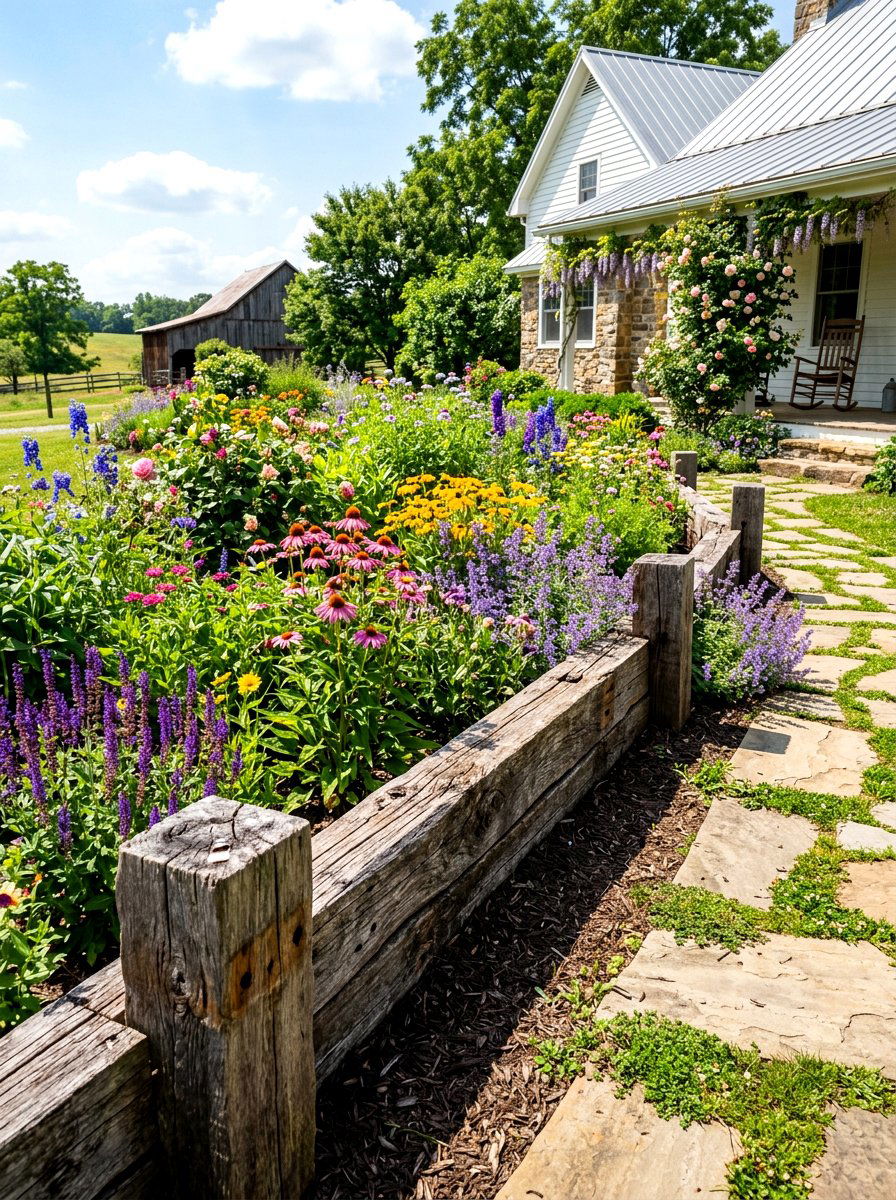
Reclaimed wood edging is a fantastic way to incorporate sustainable materials into your yard while adding a sense of history. Using old barn wood, railroad ties, or even salvaged pallet timber creates a rugged and weathered look that is full of character. These thick pieces of wood provide a substantial barrier that is excellent for defining large, straight garden beds. To increase longevity, it is important to treat the wood with a eco-friendly sealer or ensure it has proper drainage underneath. The unique knots and grain patterns of reclaimed wood ensure that no two garden borders will ever look exactly the same.
18. Slate Stone Border
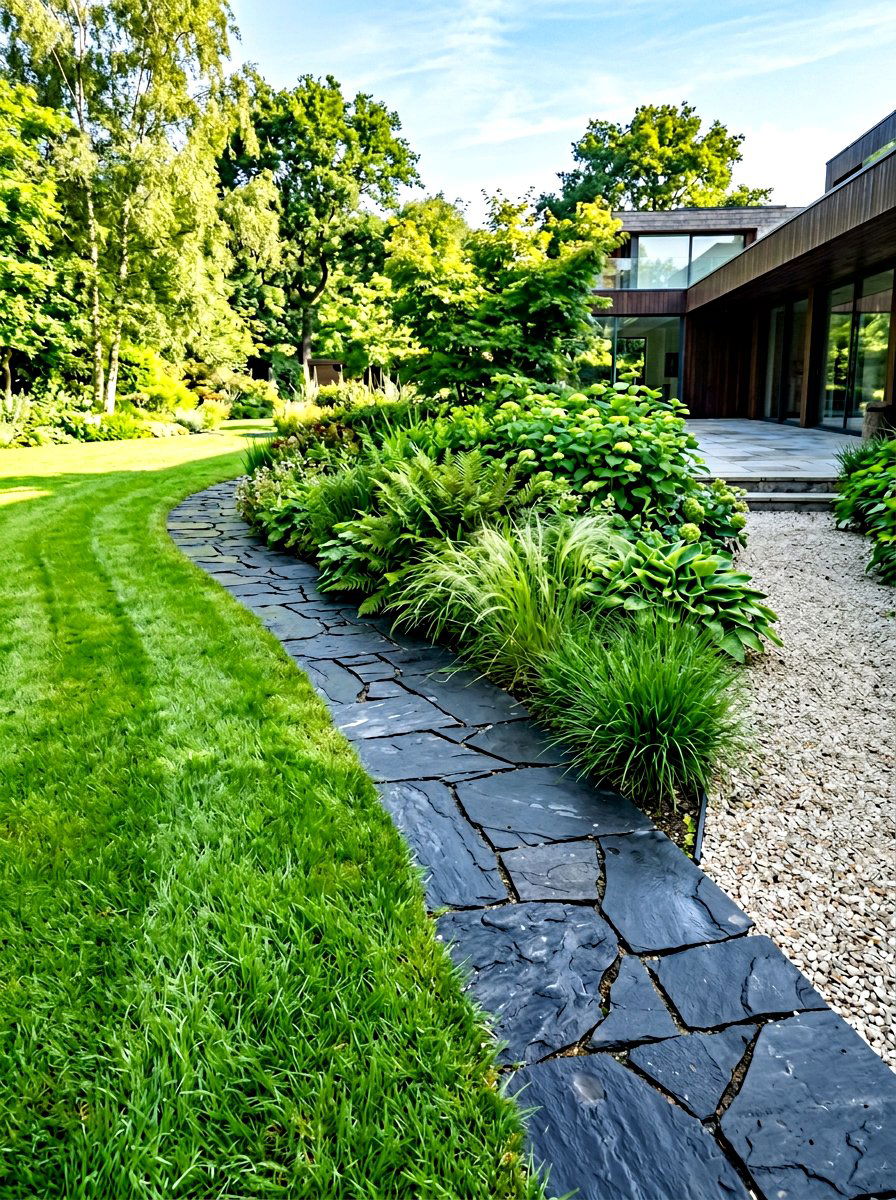
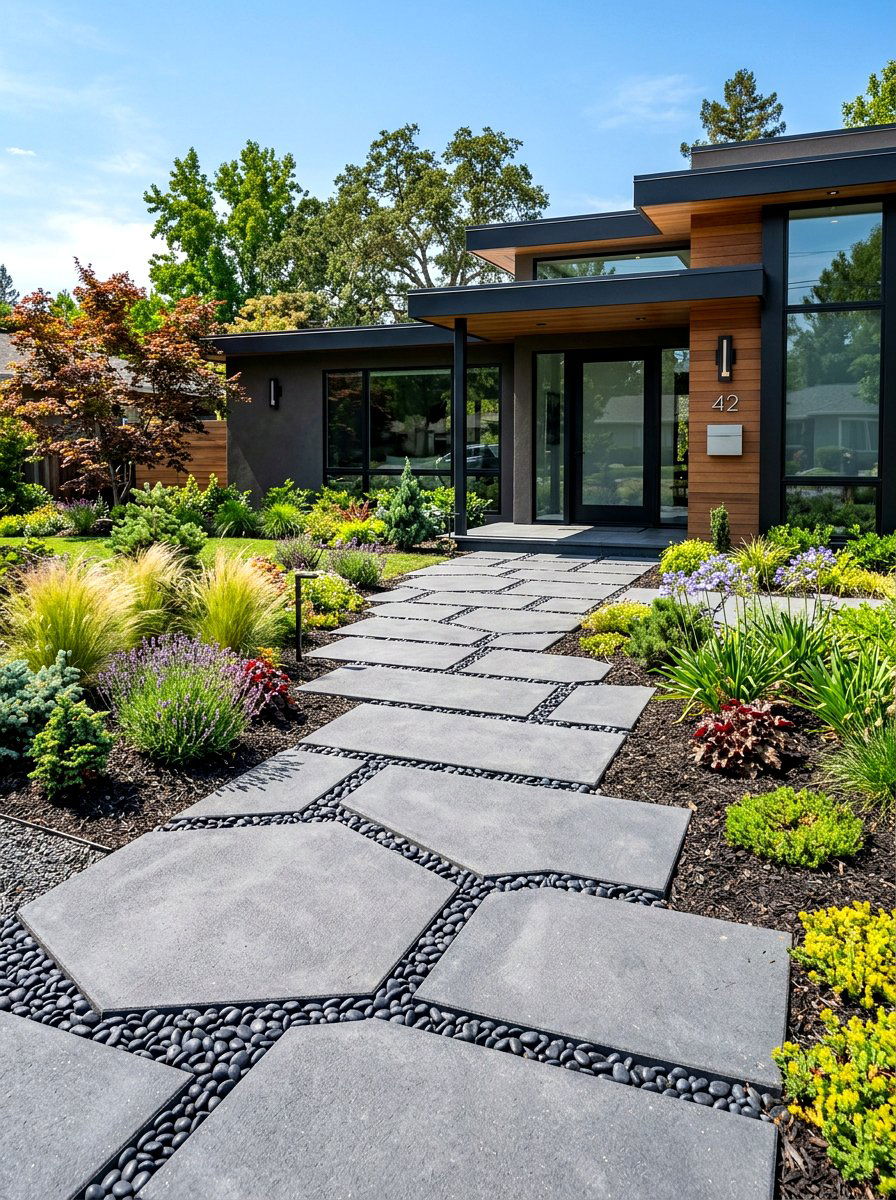
Slate stone borders offer a sophisticated and high-contrast look that works exceptionally well in modern landscapes. The deep charcoal and blue tones of slate provide a stunning backdrop for vibrant green lawn and colorful flowers. Because slate can be easily split into flat sheets, it is perfect for creating a smooth, low-profile mow strip that the lawnmower can easily cross. The natural cleft surface of the stone provides a non-slip texture that is both beautiful and functional. It is an extremely durable material that resists fading and weathering, ensuring your garden edges remain sharp and defined for many years without any extra effort.
19. Corrugated Metal Edging
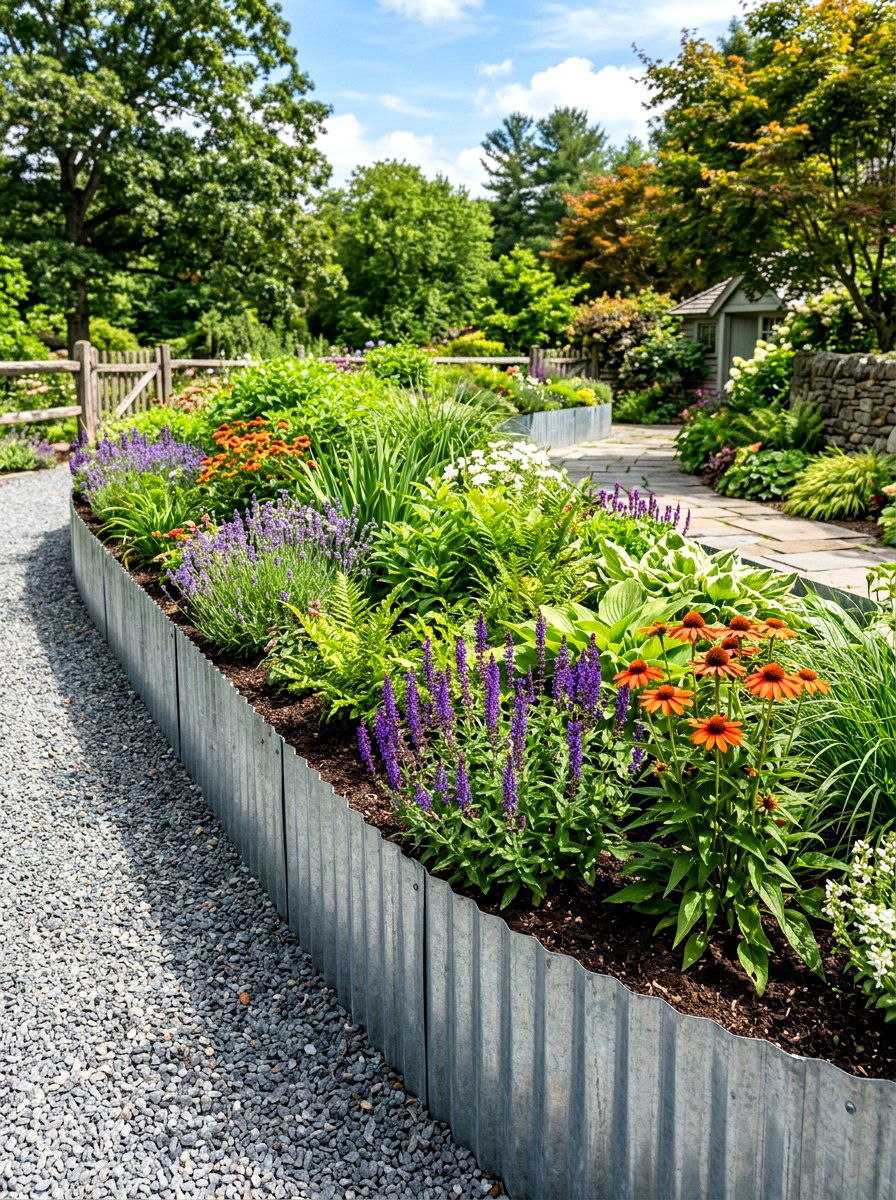
Corrugated metal edging is a trendy choice for industrial and modern farmhouse garden styles. These ridged metal panels provide a unique texture and a strong vertical presence that clearly defines different zones in the yard. When used as a mow strip, the metal is typically buried partially in the ground, leaving a clean edge that prevents grass from crossing over. You can choose from shiny galvanized finishes or pre-rusted options for a more rustic feel. This material is incredibly strong and won't be damaged by accidental hits from a mower or trimmer. It is a bold design choice that adds a contemporary edge to the landscape.

20. Plastic Lawn Strip
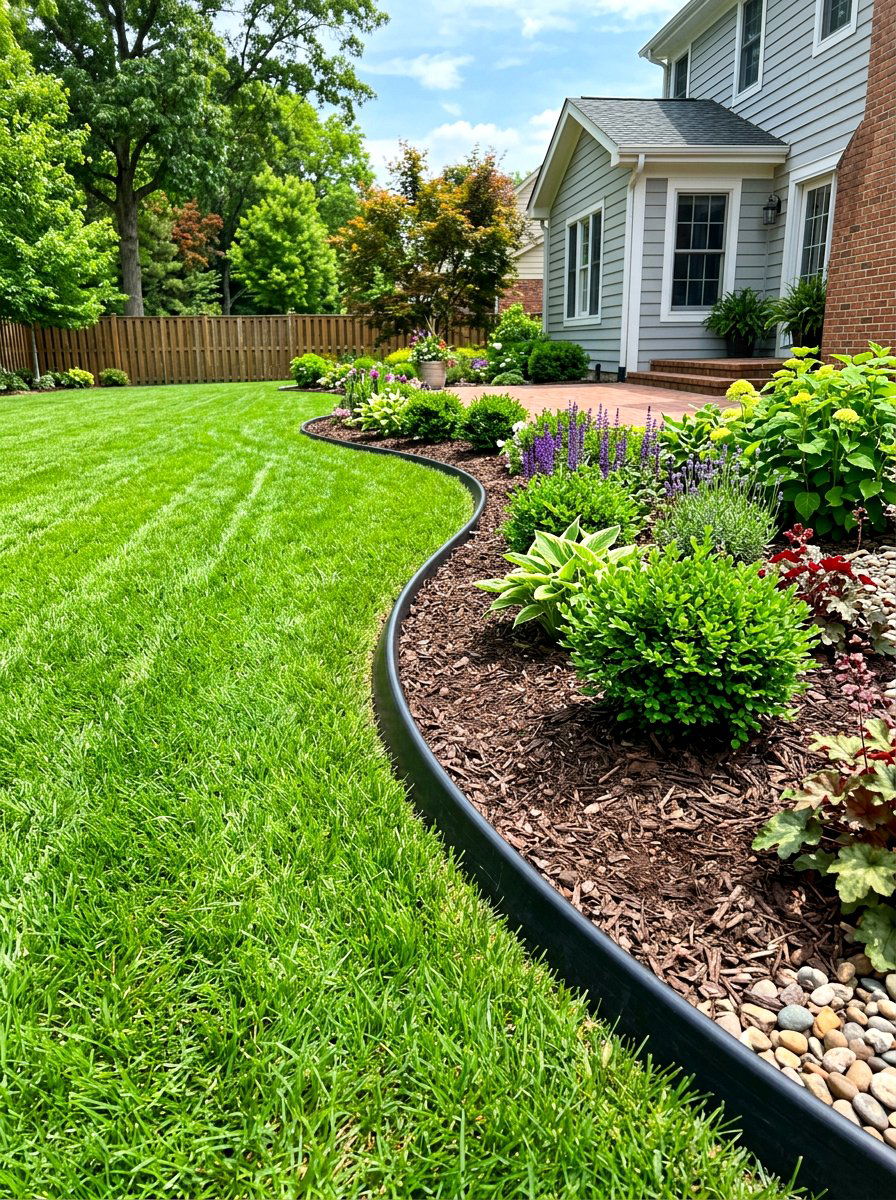
Plastic lawn strips are the most common and affordable choice for homeowners looking for a quick and easy edging solution. These rolls of high-density polyethylene are flexible enough to create tight circles and flowing curves around any landscape feature. Most modern plastic edging is designed with a round top bead that is safe for bare feet and a flat bottom flange that anchors it into the soil. While it is less decorative than stone or metal, it is highly functional at stopping grass roots from spreading. It is a practical, no-nonsense option that allows the beauty of your plants and lawn to take center stage.
21. Colored Concrete Edging
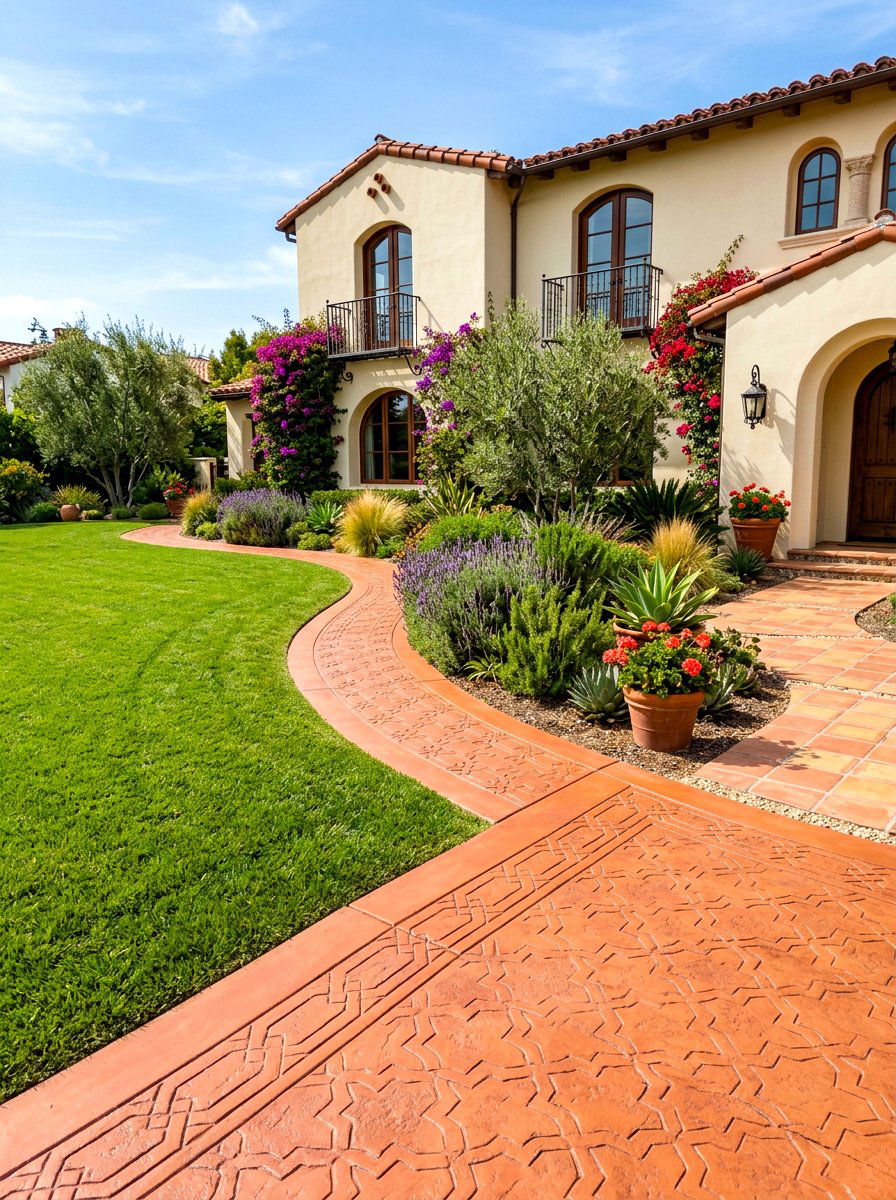
Colored concrete edging takes the traditional mow strip to a new level of customization and style. By adding pigments or dyes to the wet concrete during installation, you can create a border that perfectly complements your home’s color palette. Whether you want a deep terracotta red, a sandy beige, or a modern slate gray, the options are virtually endless. This type of mow strip is often stamped with patterns that mimic expensive materials like brick or natural stone. It provides all the durability and maintenance benefits of standard concrete while offering a much more upscale and intentional look. It is a great way to add value.
22. Vertical Brick Border
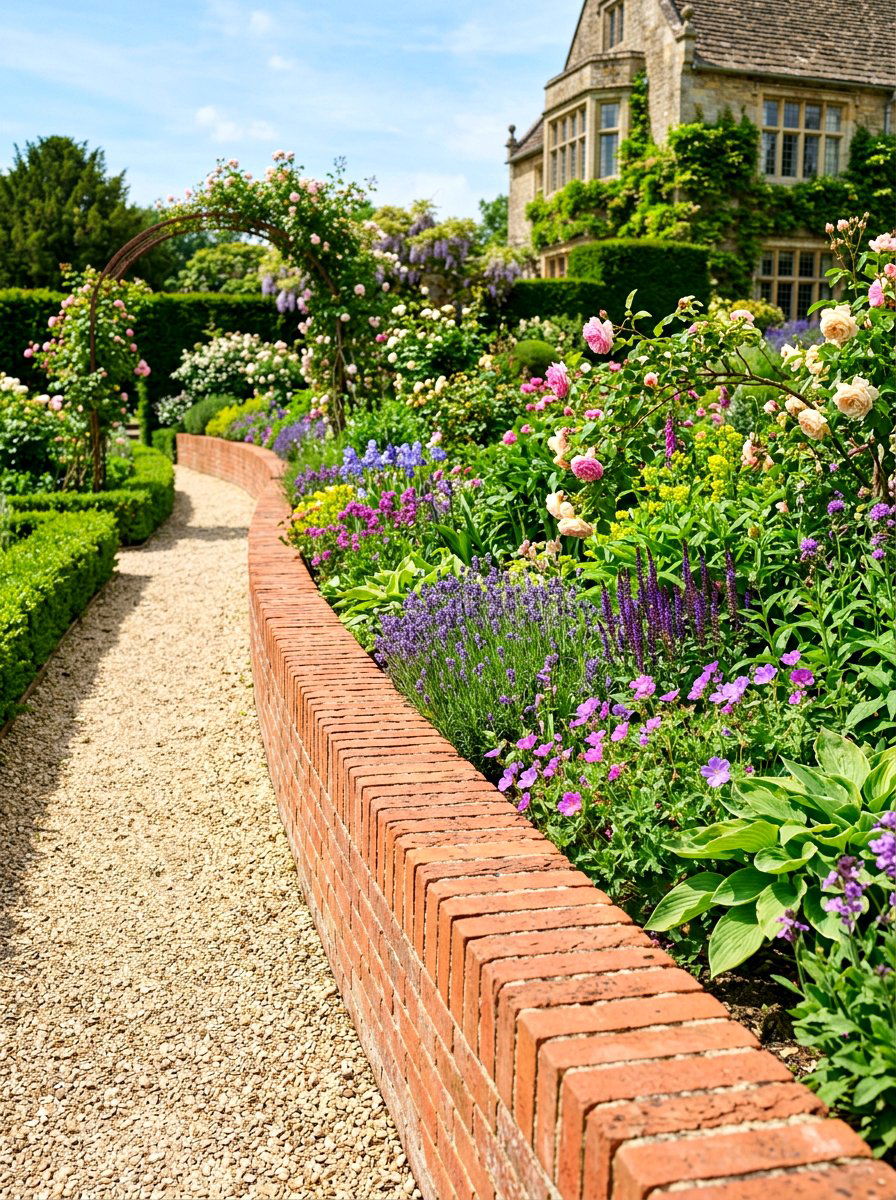
A vertical brick border is a classic landscaping technique that adds height and a formal touch to garden edges. By setting bricks on their ends in a shallow trench, you create a serrated or straight top edge that looks very decorative. While this design is slightly higher than a flush mow strip, it can still be paired with a flat paver at the base to accommodate lawnmower wheels. This style is particularly popular in historic gardens and traditional suburban yards. The repetitive vertical lines create a strong sense of structure and boundary. It is an enduring look that never goes out of style.
23. Seashell Garden Edge
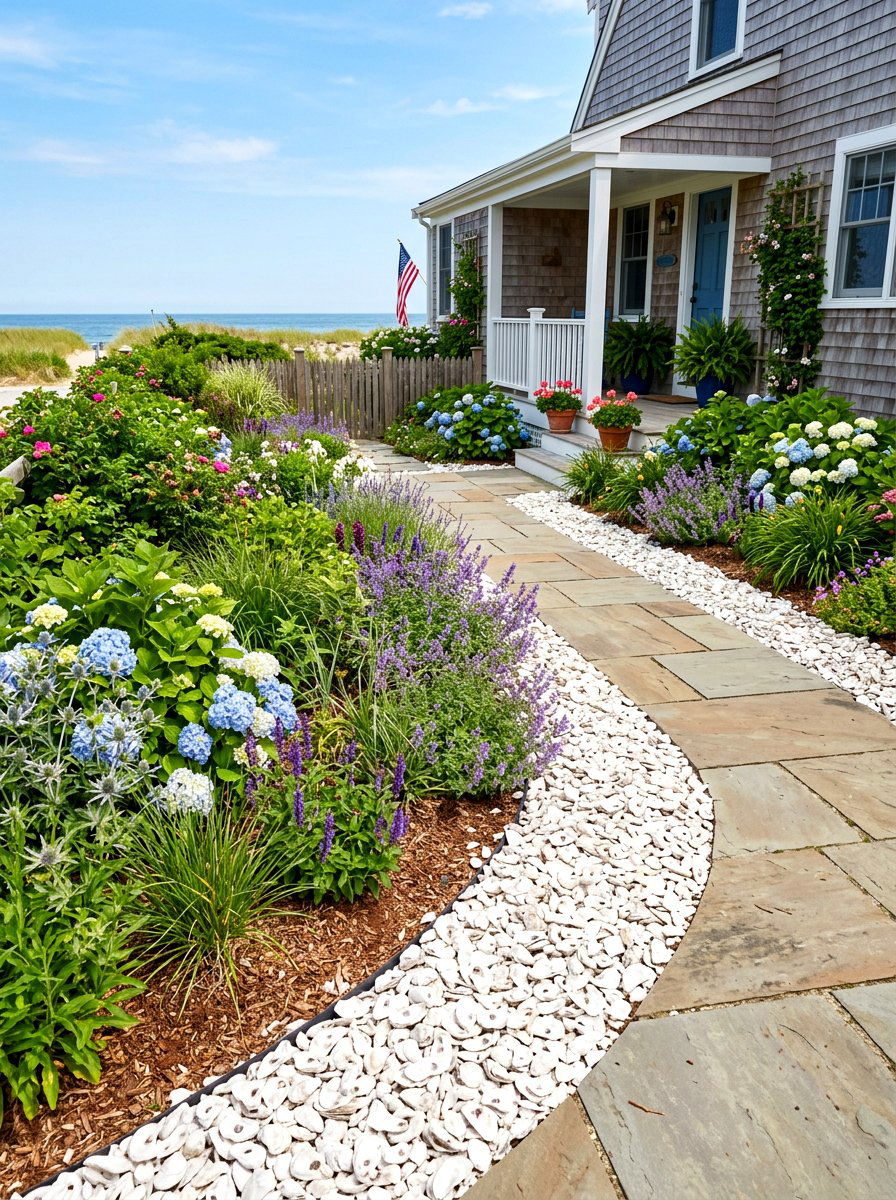
Seashell garden edges are a charming and unique choice for coastal homes or beach-inspired landscapes. Using crushed oyster shells or large whole scallops creates a bright, white border that reflects the sun and feels incredibly light. To make this functional for mowing, the shells should be contained within a sturdy border or set into a light-colored mortar. This prevents the mower from blowing the shells away while providing a clean line for the grass. The natural calcium in the shells can also benefit the soil as they slowly break down over time. It is a beautiful, eco-friendly way to bring the ocean home.
24. Wood Slice Edging
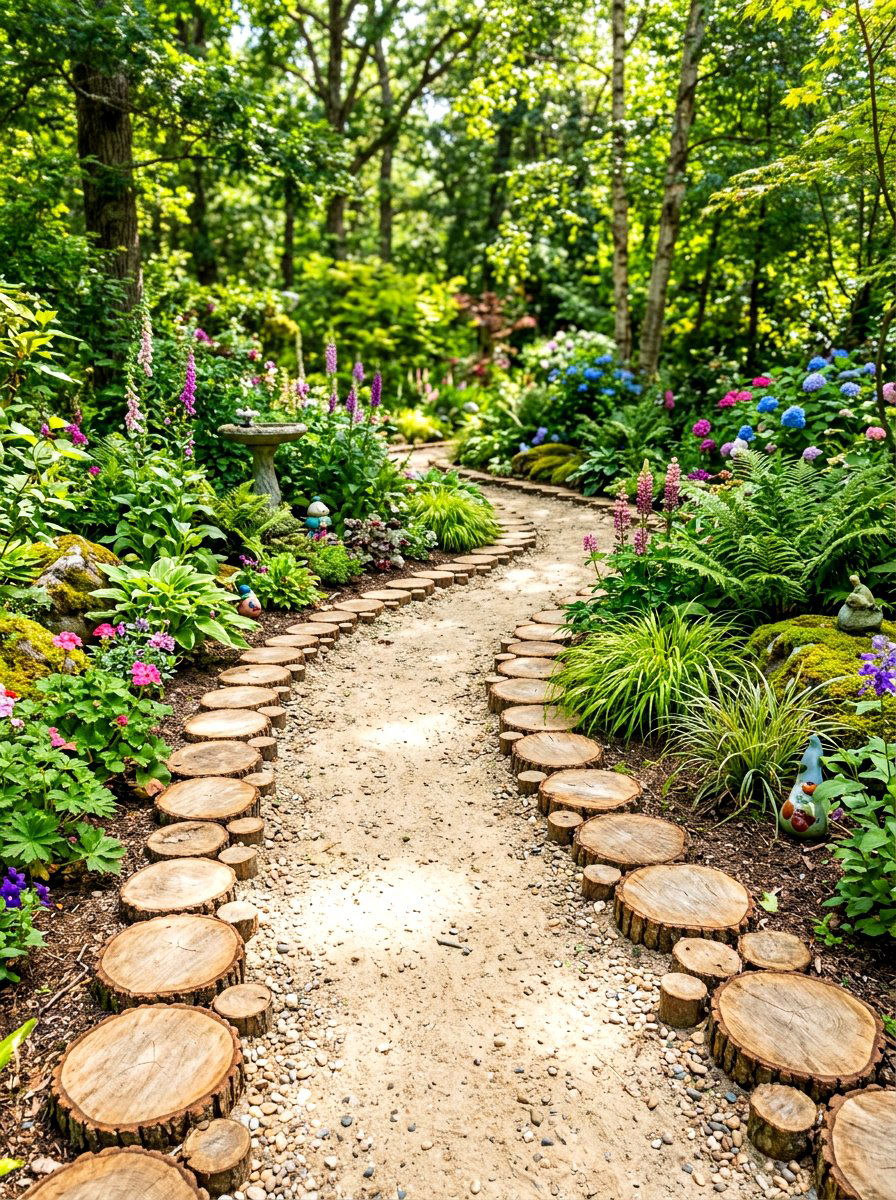
Wood slice edging, often called log rounds or cookies, provides an enchanting and woodland-inspired border for your lawn. By cutting thick branches or small logs into circular slices and setting them into the ground, you create a whimsical, stepping-stone style edge. This look works best for informal gardens and play areas where a natural and soft aesthetic is desired. To ensure they stay in place and resist rot, the wood slices should be treated and set into a bed of sand. The varied sizes and rings of the wood add a wonderful organic pattern to the landscape. It is a budget-friendly DIY project.
25. Granite Cobble Border
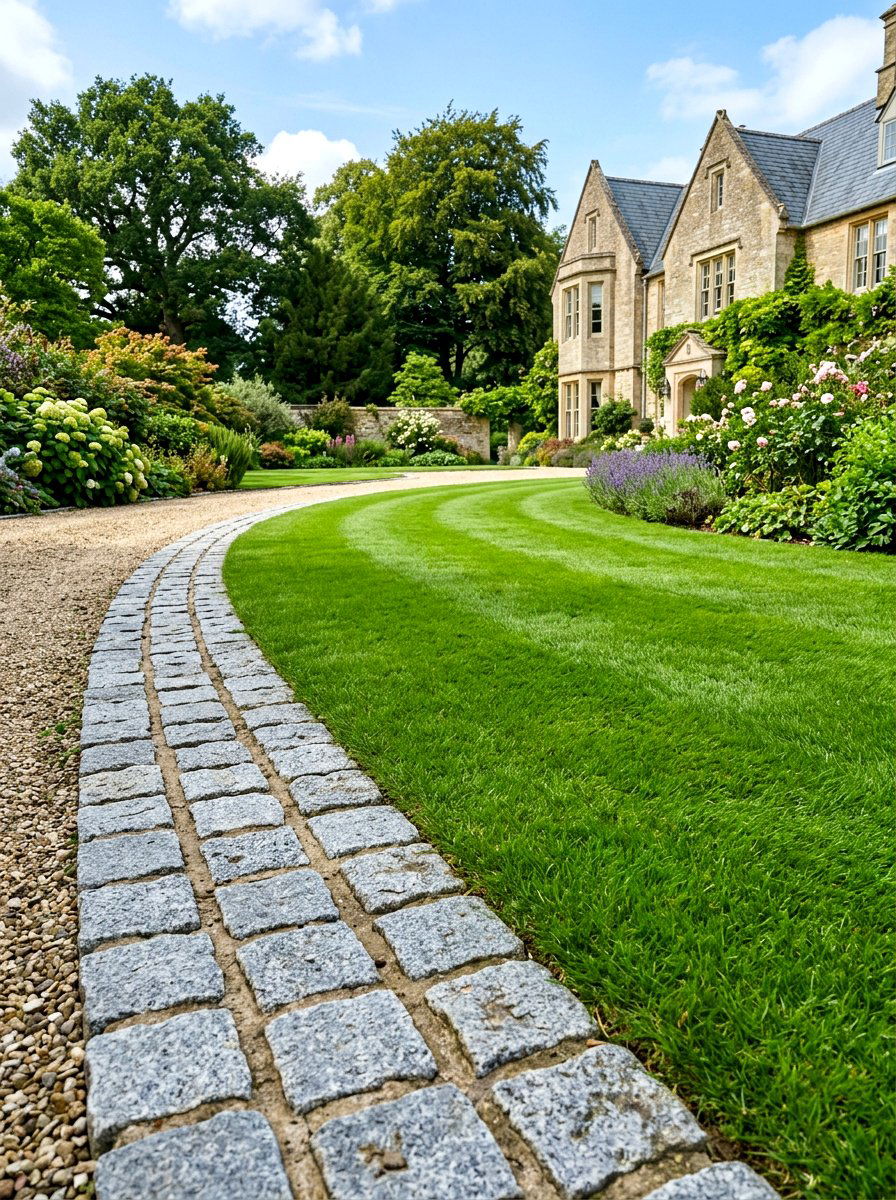
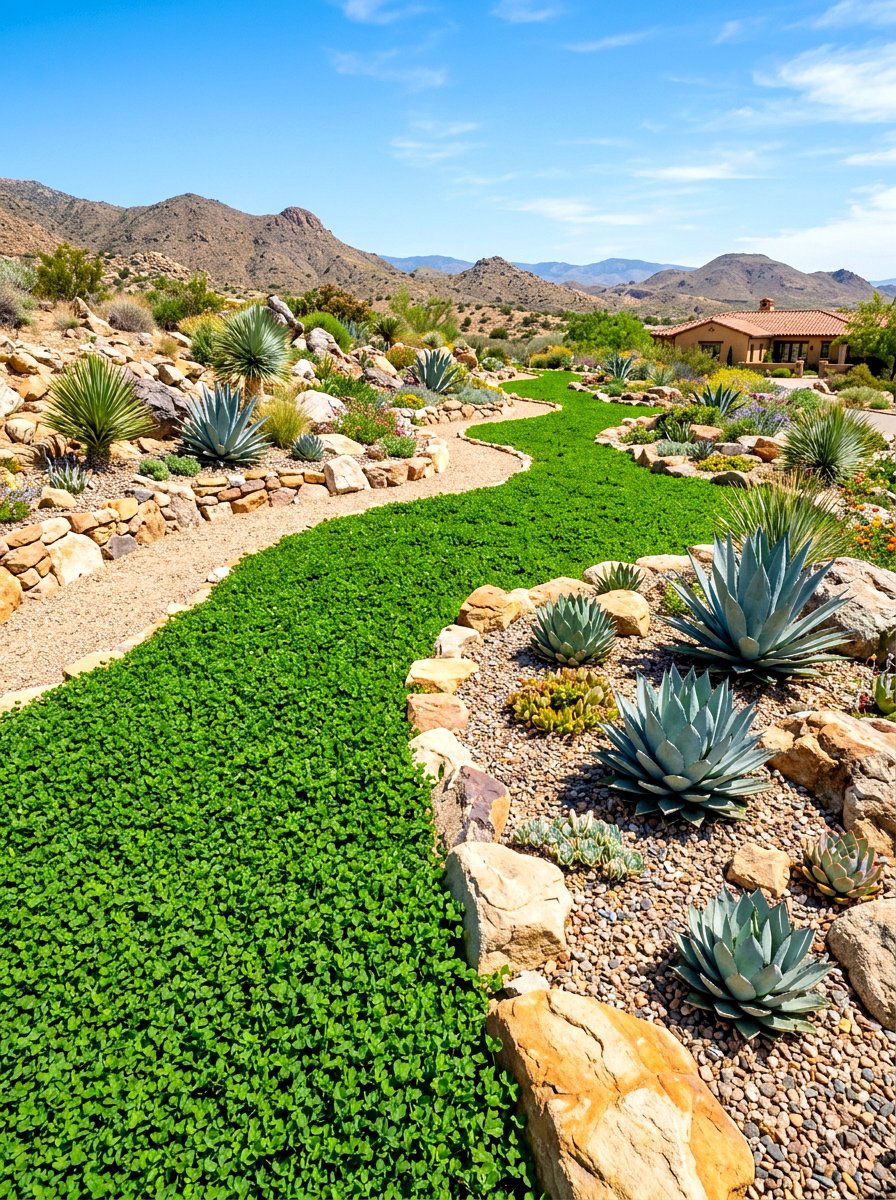
Granite cobble borders are the gold standard for durability and high-end garden design. These heavy, squared stones are virtually indestructible and provide a solid, level surface for years of trouble-free mowing. The speckled texture and natural gray tones of granite look beautiful in any light and complement both traditional and modern architecture. Because granite is so dense, it resists staining and moss growth better than many other types of stone. Setting the cobbles in a thin layer of mortar creates a permanent and professional-looking mow strip. It is a timeless investment that significantly enhances the overall look of your property’s landscaping.
26. Sandstone Lawn Edge
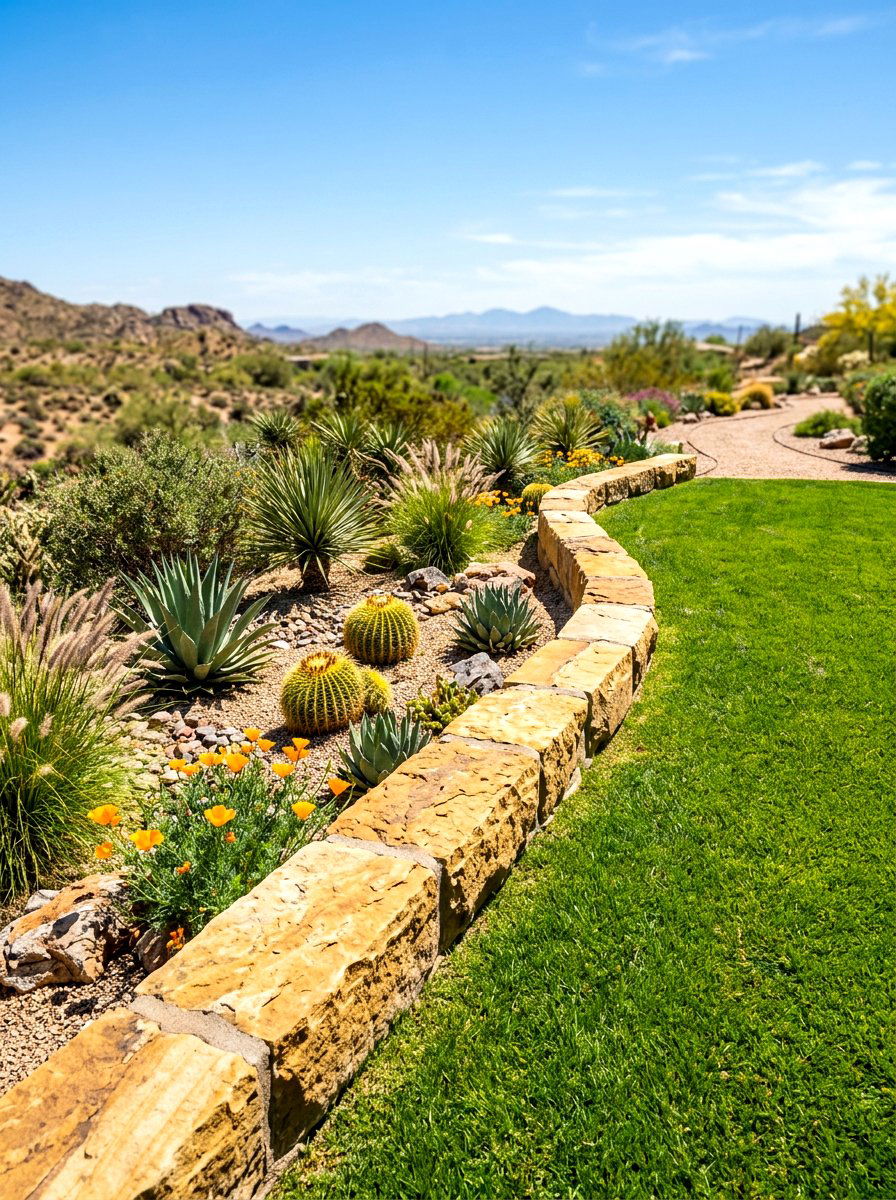
Sandstone lawn edges offer a warm and inviting look with their natural tans, golds, and reds. This softer stone is easy to cut into uniform blocks or flat slabs, making it a versatile choice for a functional mow strip. The natural texture of sandstone provides a lovely contrast to the smooth blades of a well-kept lawn. Because it is a natural material, it ages gracefully and develops a unique character over time. Sandstone is particularly effective in warm climates and desert-inspired landscapes where it blends perfectly with the surrounding environment. It adds a touch of natural elegance and warmth to any backyard.
27. Travertine Mow Strip
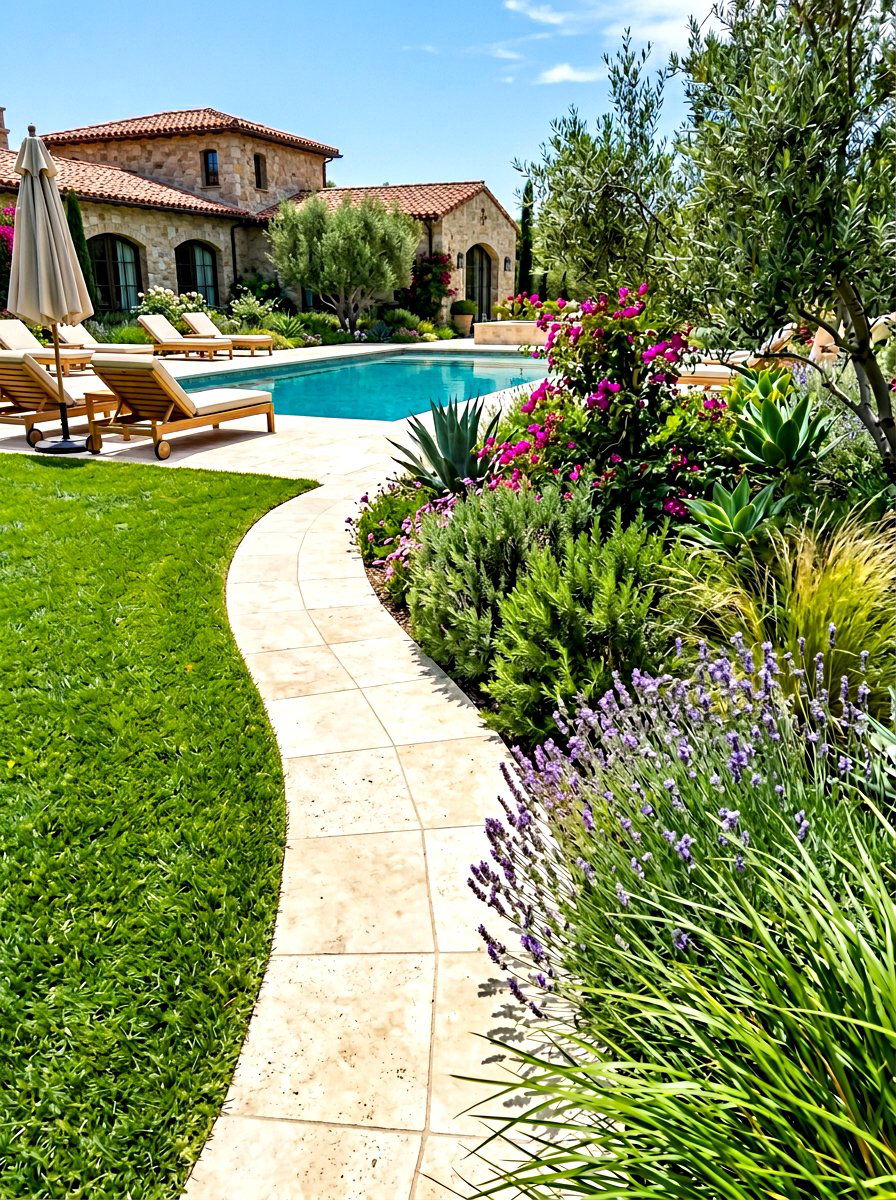
Travertine mow strips bring a touch of luxury and Mediterranean flair to the modern garden. This high-end natural stone is known for its beautiful pitted texture and soft, neutral colors. Using travertine pavers as a border creates a wide and stable track for your lawnmower that looks incredibly sophisticated. Because travertine stays cool under the sun, it is a comfortable surface for pets and bare feet. When set flush with the grass, it provides a seamless transition that makes the yard feel more expansive and expensive. It is a stunning choice for luxury homes and properties with a high focus on outdoor living.
28. Aluminum Landscape Edging
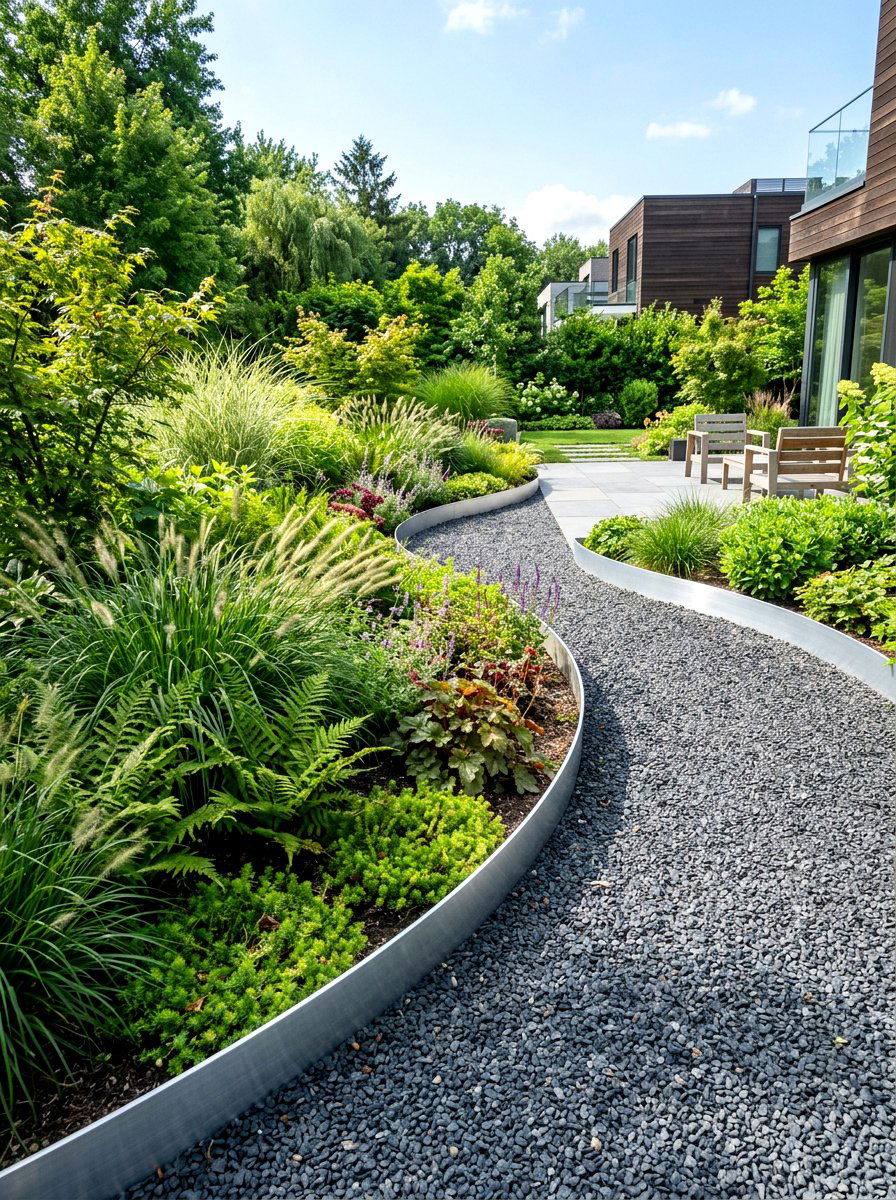
Aluminum landscape edging is a lightweight yet incredibly strong alternative to steel. It is naturally resistant to rust and corrosion, making it an excellent choice for damp climates or areas near the ocean. Aluminum is very easy to bend into graceful curves, allowing you to create complex garden shapes with very little effort. The metallic finish adds a sleek, modern touch that is both functional and stylish. Because it is so thin, it disappears into the landscape, providing a nearly invisible barrier that holds back mulch and prevents grass encroachment. It is a long-lasting and low-maintenance solution for any busy homeowner.
29. Cinder Block Edging
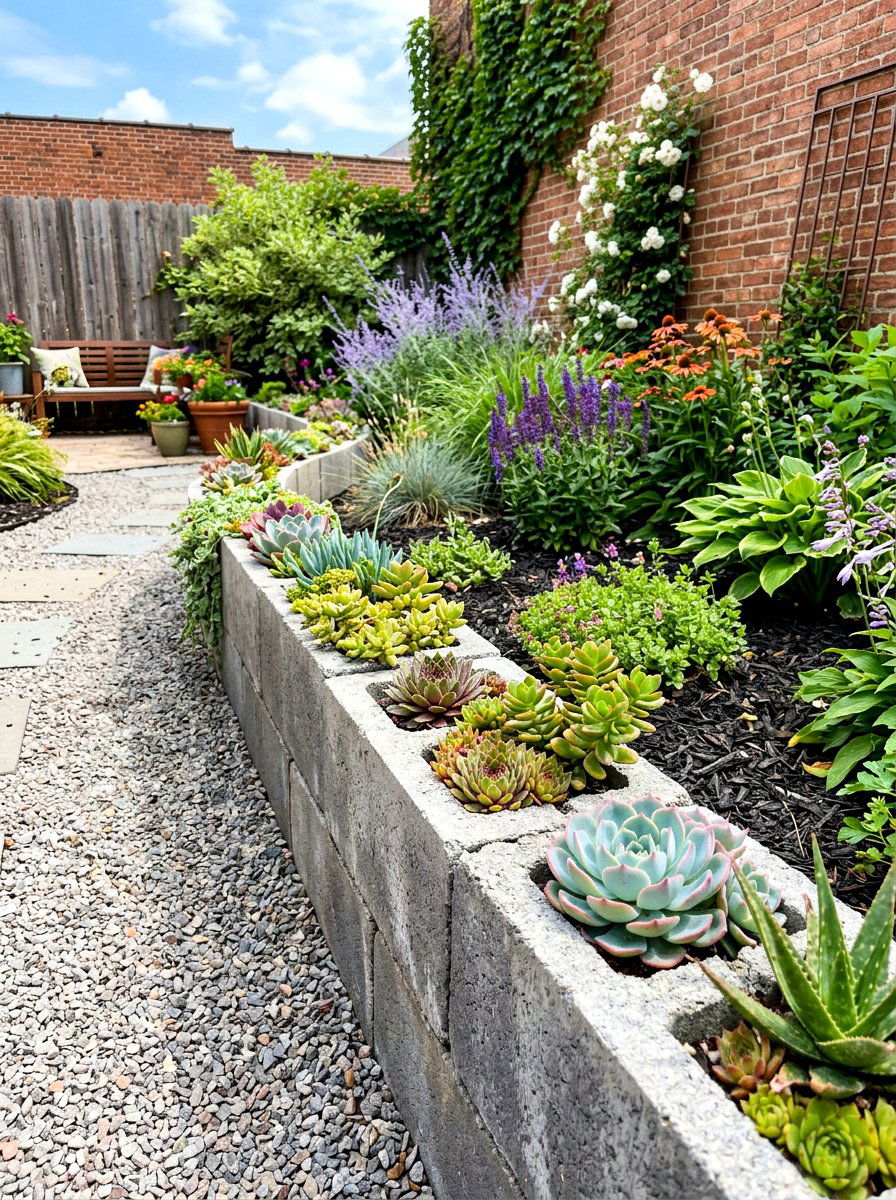
Cinder block edging is a practical and budget-friendly way to create a very sturdy garden border. While traditionally used for construction, these blocks can be laid on their sides or ends to create a wide, industrial-style mow strip. You can even use the hollow centers of the blocks to plant small succulents or herbs, creating a "living" border that adds extra interest to the lawn edge. Painting or staining the cinder blocks can help them blend in with your home's exterior or stand out as a bold design feature. It is a heavy-duty option that is very effective at containing large amounts of garden soil.
30. Boxwood Living Border
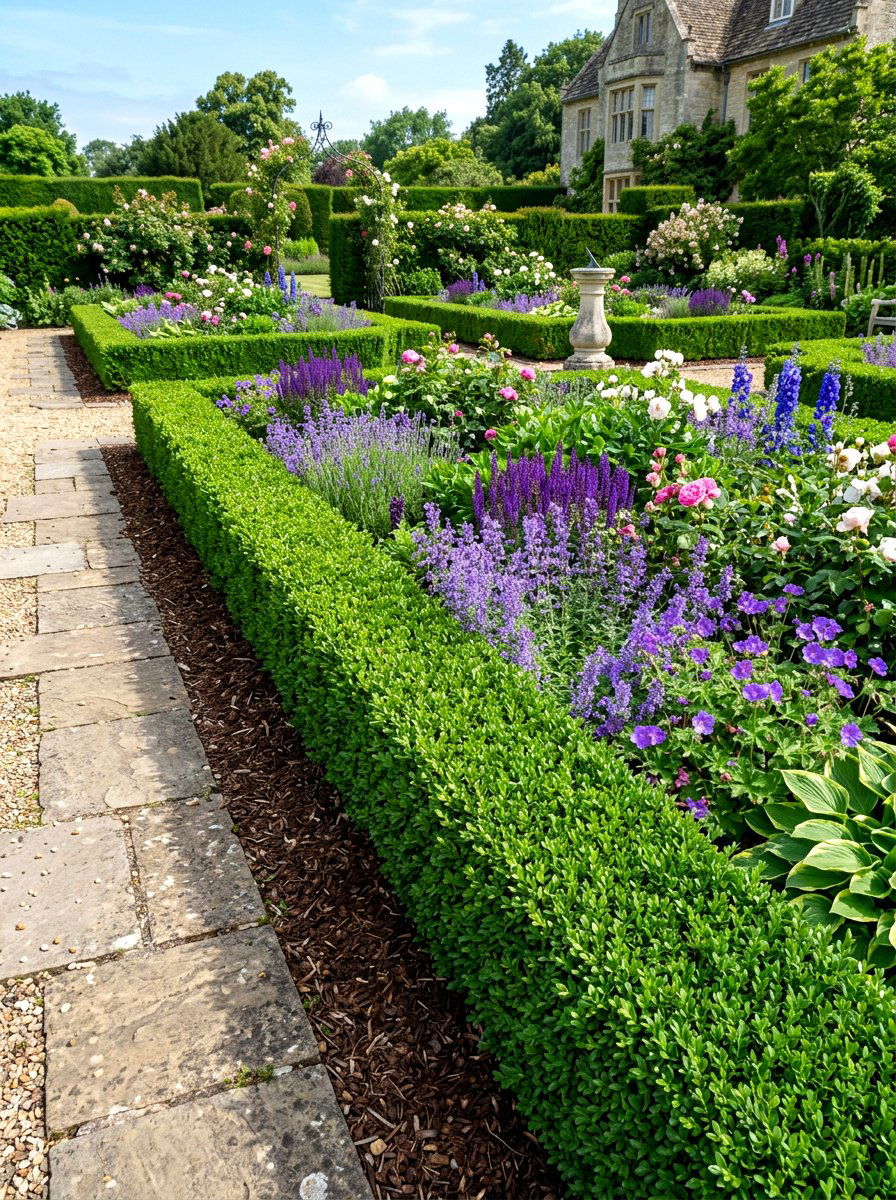
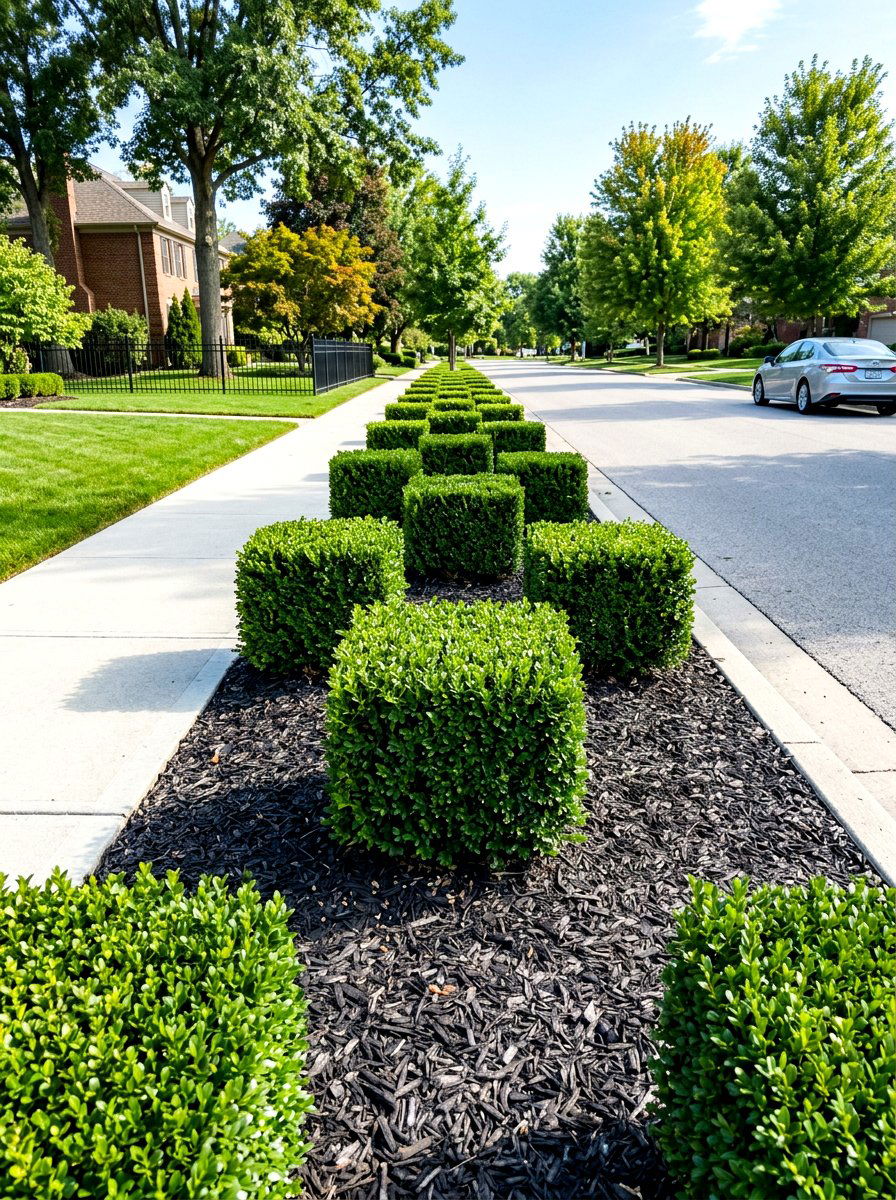
A boxwood living border is a traditional and elegant way to define your lawn without using hardscape materials. These low-growing, evergreen shrubs can be pruned into a tight, formal hedge that creates a crisp green wall between the grass and garden beds. To make this work as a mow strip, a small trench of mulch or gravel should be maintained at the base of the shrubs. This allows the mower to cut the grass cleanly without damaging the delicate branches of the boxwood. It is a timeless look that provides year-round structure and a beautiful, classic feel to any suburban landscape or formal estate.
Conclusion:
Investing in a well-planned mow strip is one of the smartest decisions any gardener can make to save time and energy. By choosing a design that fits your home's aesthetic and your personal maintenance level, you can transform a messy yard into a stunning outdoor sanctuary. Whether you opt for the permanence of concrete or the artistic flair of natural stone, these borders provide the structure necessary for a healthy and organized landscape. Remember that the best mow strips are installed flush with the ground to ensure your equipment can glide over them safely. With thirty diverse ideas at your fingertips, you are now ready to create a beautiful, low-maintenance garden edge that will be the envy of your entire neighborhood.

Related posts: