thought 30 curbside planting strip ideas.
- Introduction: Minimum 101 words. No heading. * H2 Sections: Exactly 30 sections (as per the title). Minimum 101 words per paragraph. Numbered (## 1. Title). * Conclusion: Minimum 101 words. Heading: ## Conclusion. * Image Prompts: 30 prompts, minimum 50 words each. * Word counts per paragraph/section: Minimum 101 words, Maximum 125 words. * Headings: Google search query style (plain, direct, natural). No "ideas" or "designs" in headings. Singular keyword-focused. * Tone: Helpful, natural, plain, informative. US English. * Formatting: H2 only, no H3, no separators. * Research: Must perform a Google Web Search first.
- Search for "curbside planting strip ideas" , "hellstrip landscaping" , "boulevard garden ideas". * *Self-Correction/Note: * I need to identify 30 distinct types of curbside planting strips (e. g. , drought-tolerant, gravel, wildflower, cottage, modern, succulent, etc. ).
- Search queries: * "curbside planting strip ideas" , "parking strip garden trends 2024" , "low maintenance hellstrip landscaping".
- Ideas for 30 Headings (Google Search Query Style) : * 1. Low maintenance drought tolerant curbside garden 2. Native wildflower hellstrip 3. Modern gravel parking strip 4. Succulent curbside garden 5. Ornamental grass boulevard strip 6. Perennial flower sidewalk border 7. Cottage garden curbside planting 8. Rock garden hellstrip 9. Edible herb curbside garden 10. Lavender sidewalk strip 11. Woodland shade curbside planting 12. Minimalist boxwood parking strip 13. Mediterranean style curbside garden 14. Pollinator friendly hellstrip 15. Decorative mulch parking strip 16. Coastal seaside curbside garden 17. Groundcover plant sidewalk border 18. Tropical look curbside planting 19. Rain garden hellstrip 20. Paver and plant parking strip 21. Prairie style curbside garden 22. Evergreens for sidewalk strips 23. Colorful bulb curbside garden 24. Xeriscape hellstrip design 25. River rock curbside planting 26. Rose bush sidewalk border 27. Stepping stone parking strip 28. Vertical accent curbside garden 29. Japanese zen hellstrip 30. Rustic farmhouse curbside planting
- Intro: * Discuss the importance of curb appeal, what a curbside strip (hellstrip) is, and how it transforms the neighborhood. (Goal: ~110 words). * *Sections 1-30: * Each must be 101-125 words. Focus on the *whole* design of the strip, not just one plant. * *Conclusion: * Summarize the benefits and maintenance. (Goal: ~110 words). * *Image Prompts: * Specific, high-quality, 50+ words each.
- Drafting Section 1 (Low maintenance drought tolerant curbside garden) : * Focus on how it looks, the plants used (yarrow, sedum) , the benefit of low water, and the overall aesthetic. (Keep count between 101 and 125).
- Check Heading Style: * "Low maintenance drought tolerant curbside garden" - looks like a search query. * *Check Word Count: * Ensure I hit the 101-125 range strictly. * *Check Sentence Length: * Use shorter, simpler sentences.
- Self-Correction on Headings: * "Low maintenance drought tolerant curbside garden" is good. "Native wildflower hellstrip" is good. Ensure they are singular and direct.
- Image Prompts Section: * "Enhanced_Image_Prompts". Use the structure provided for "GARDEN/OUTDOOR".
- Refining the 30 themes to ensure variety: * 1. Drought tolerant 2. Wildflowers 3. Gravel 4. Succulents 5. Ornamental grasses 6. Perennials 7. Cottage style 8. Rock garden 9. Herbs 10. Lavender 11. Shade garden 12. Boxwood hedges 13. Mediterranean 14. Pollinator plants 15. Bark mulch 16. Coastal plants 17. Low groundcover 18. Tropical foliage 19. Bio-swale/Rain garden 20. Stone pavers 21. Meadow style 22. Dwarf evergreens 23. Spring bulbs 24. Desert xeriscape 25. Cobblestones 26. Shrub roses 27. Flagstone path 28. Ornamental trees (small) 29. Bamboo/Zen 30. Wild grass meadow
- Writing Paragraphs (Iterative check) : * Intro: 105 words. S1: 108 words. S2: 112 words. . . . and so on.
- Final Prompt Generation: * Ensure "Professional full size outdoor photograph" is used.
- (Proceeding to generate content based on these steps. . . ) *
*Wait, I need to perform a Google Search first as per the instructions. *Transforming that narrow, often neglected patch of land between your sidewalk and the street can significantly boost your home’s curb appeal. Known as a hellstrip or parking strip, this space often struggles with poor soil, heat from the pavement, and foot traffic from passengers. However, with the right planning and hardy plant choices, you can turn it into a vibrant garden that welcomes neighbors and supports local pollinators. Whether you prefer a modern minimalist look with gravel or a lush cottage garden filled with perennials, there are countless ways to improve this public-facing area. These thirty ideas will help you navigate the unique challenges of curbside landscaping effectively.
1. Low maintenance drought tolerant curbside garden
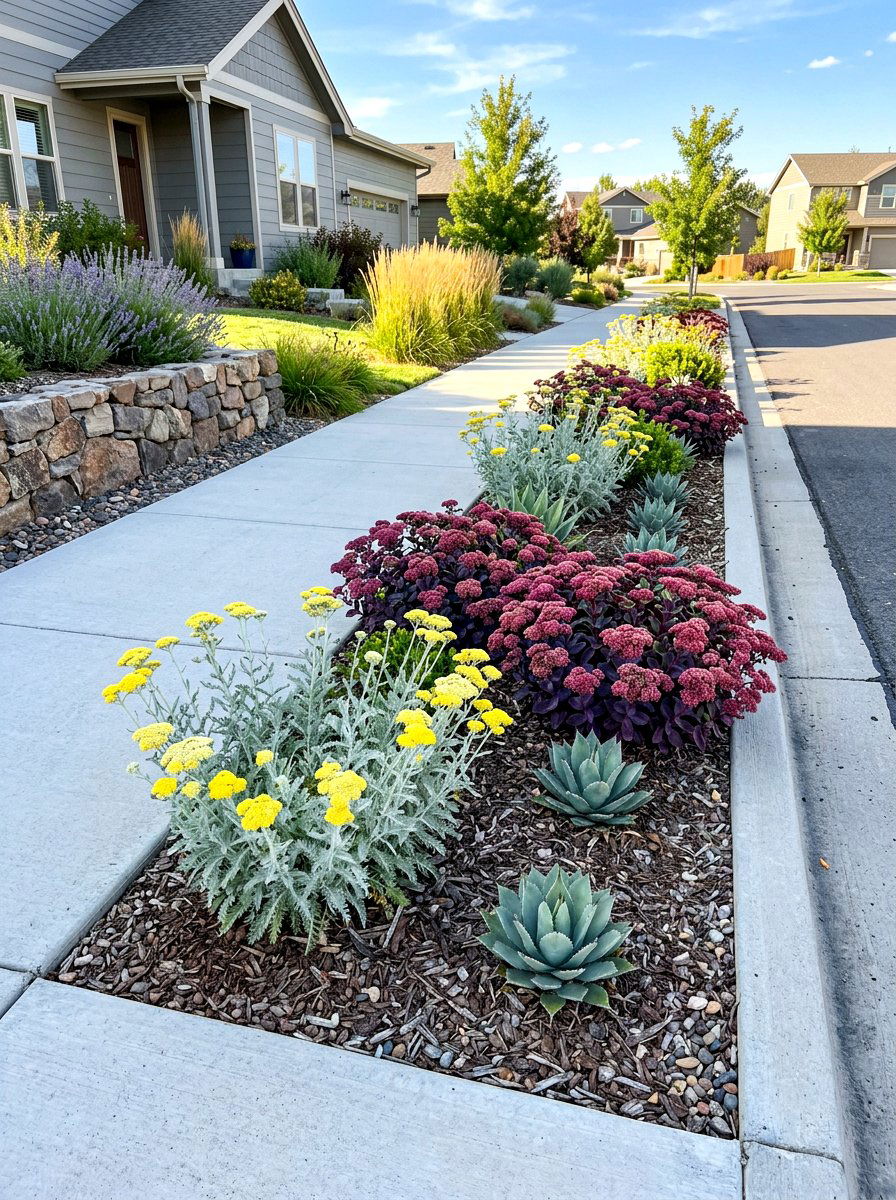
Creating a drought-tolerant landscape in your curbside strip is a smart way to save water while maintaining a beautiful street view. These gardens typically feature hardy plants like sedum, yarrow, and agave that thrive in the intense heat reflected off the pavement. By replacing thirsty turf grass with water-wise varieties, you reduce the need for frequent irrigation and mowing in a difficult-to-reach spot. A layer of organic mulch or fine gravel helps retain what little moisture is available while suppressing stubborn weeds. This full-strip design looks intentional and polished throughout the year without requiring hours of weekly maintenance or expensive fertilizers to keep it green.
2. Native wildflower hellstrip
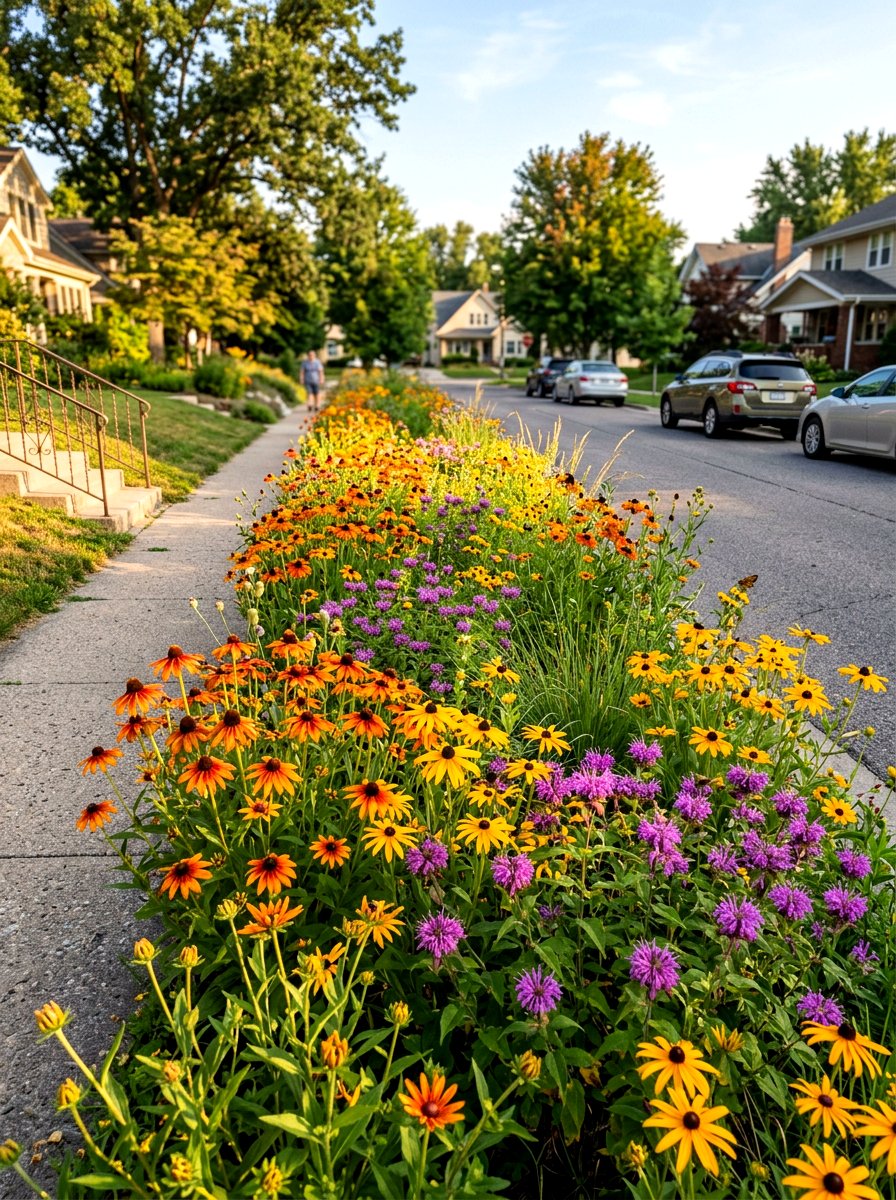
Planting a native wildflower meadow in your parking strip creates a stunning, ever-changing display of local flora that supports indigenous insects. This design approach focuses on regional species such as black-eyed Susans, coneflowers, and coreopsis which are naturally adapted to your local climate and soil conditions. Unlike traditional manicured lawns, a wildflower strip offers a wilder, more organic aesthetic that brings a touch of nature to the urban environment. These plants often have deep root systems that help stabilize the soil and improve drainage along the street. It is a rewarding way to build a mini-wildlife corridor right in front of your own home today.
3. Modern gravel parking strip
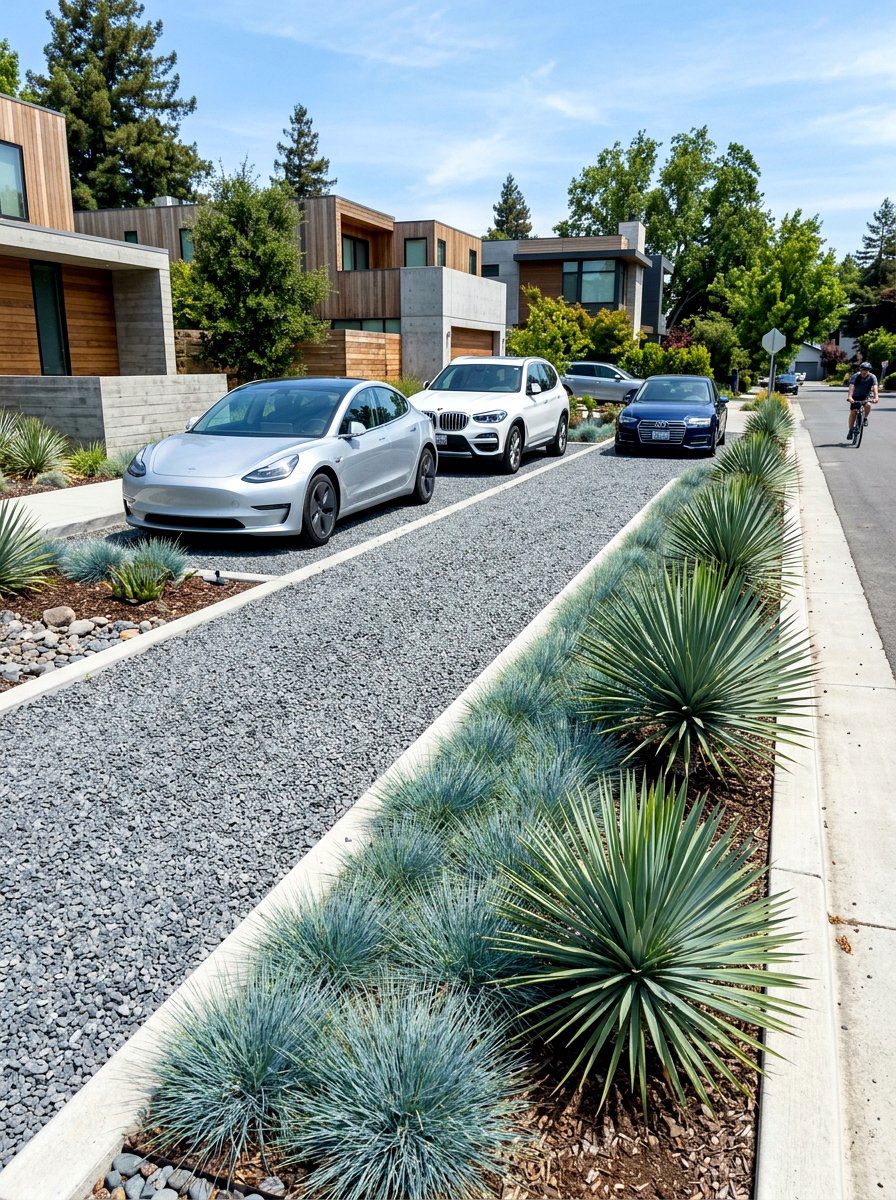
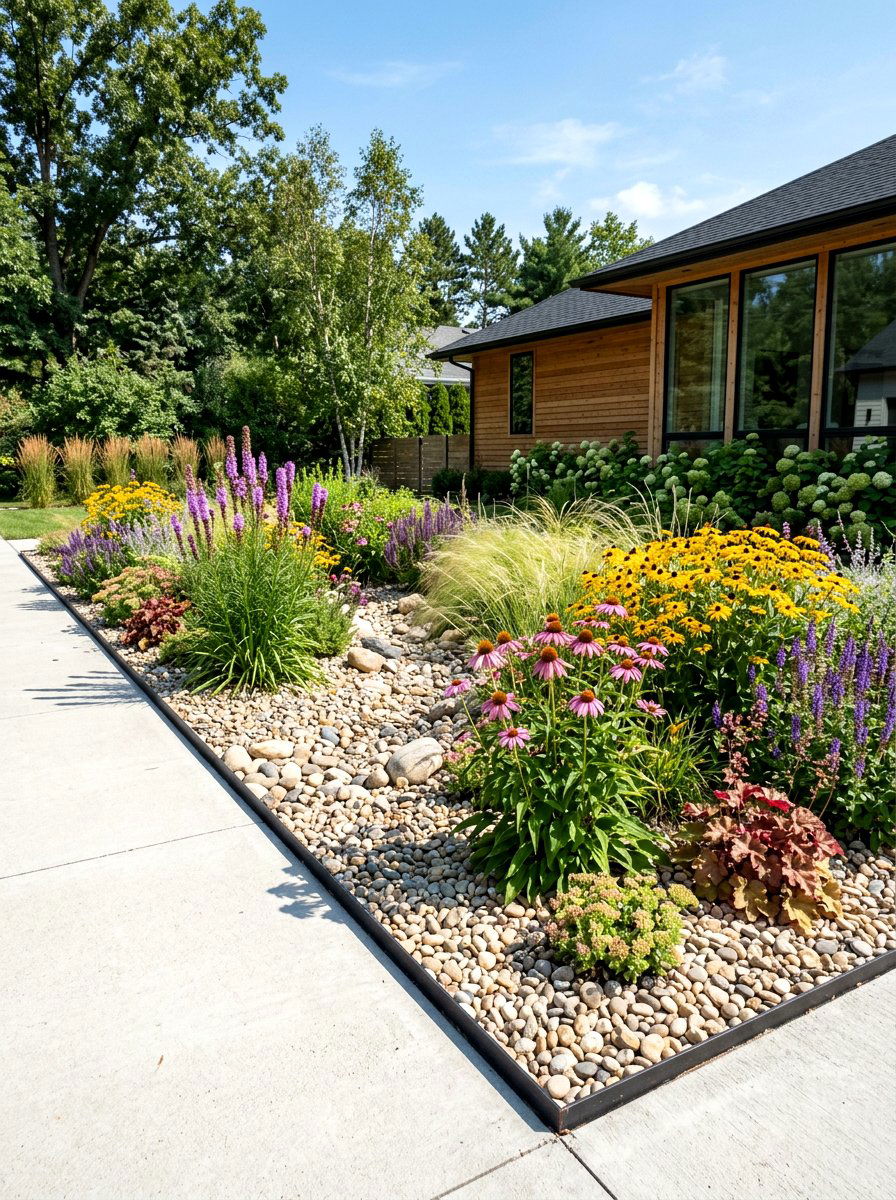
A modern gravel parking strip offers a clean and architectural look that complements contemporary home designs perfectly. This style uses various sizes of decorative stone or crushed granite as a base, providing a permeable surface that handles rainwater runoff efficiently. Strategic pockets of architectural plants like blue fescue or architectural yucca break up the stone expanse and add vertical interest without overwhelming the space. Using a high-quality weed barrier beneath the gravel ensures the area remains tidy and clutter-free with minimal effort. This design is particularly effective for homeowners who want a high-impact, low-maintenance solution that provides a stable surface for people exiting their parked vehicles.
4. Succulent curbside garden
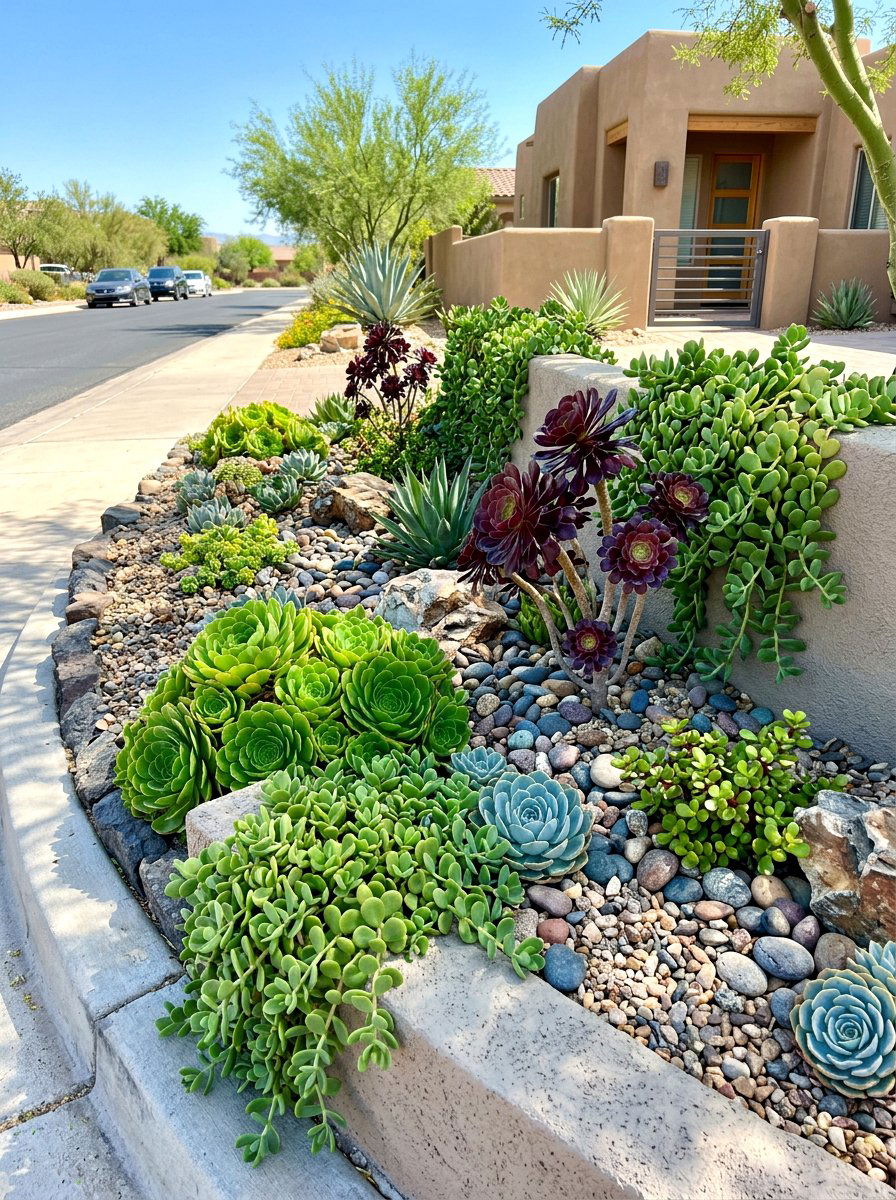
Succulents are an excellent choice for curbside strips because they store water in their fleshy leaves, making them incredibly resilient to heat. A well-designed succulent garden can feature a variety of textures and colors, ranging from the deep purples of aeoniums to the bright greens of hen and chicks. By mixing different heights and shapes, you can create a miniature desert landscape that looks like a living work of art along the sidewalk. These plants require very little soil depth, which is ideal for the shallow, often compacted earth found near the curb. Their compact growth habit also ensures they never block the view for drivers or pedestrians.
5. Ornamental grass boulevard strip
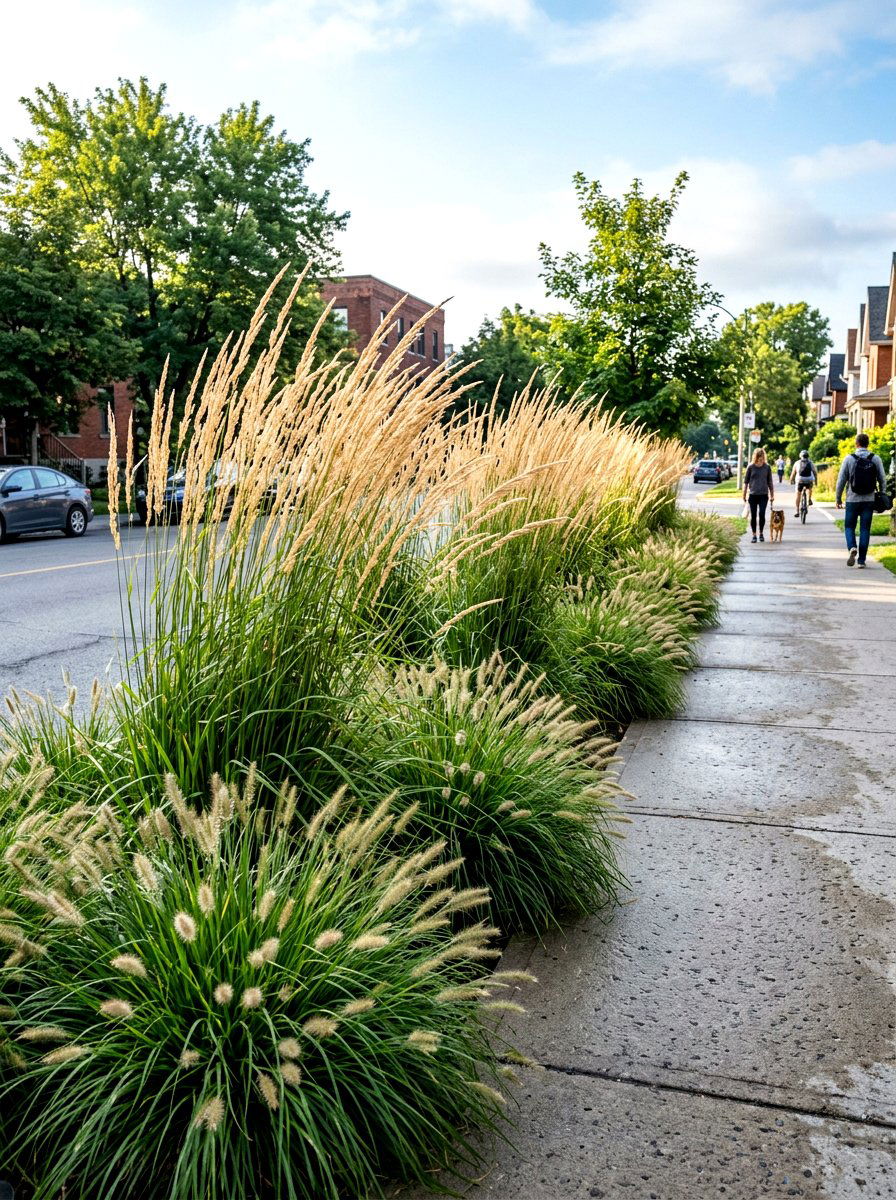
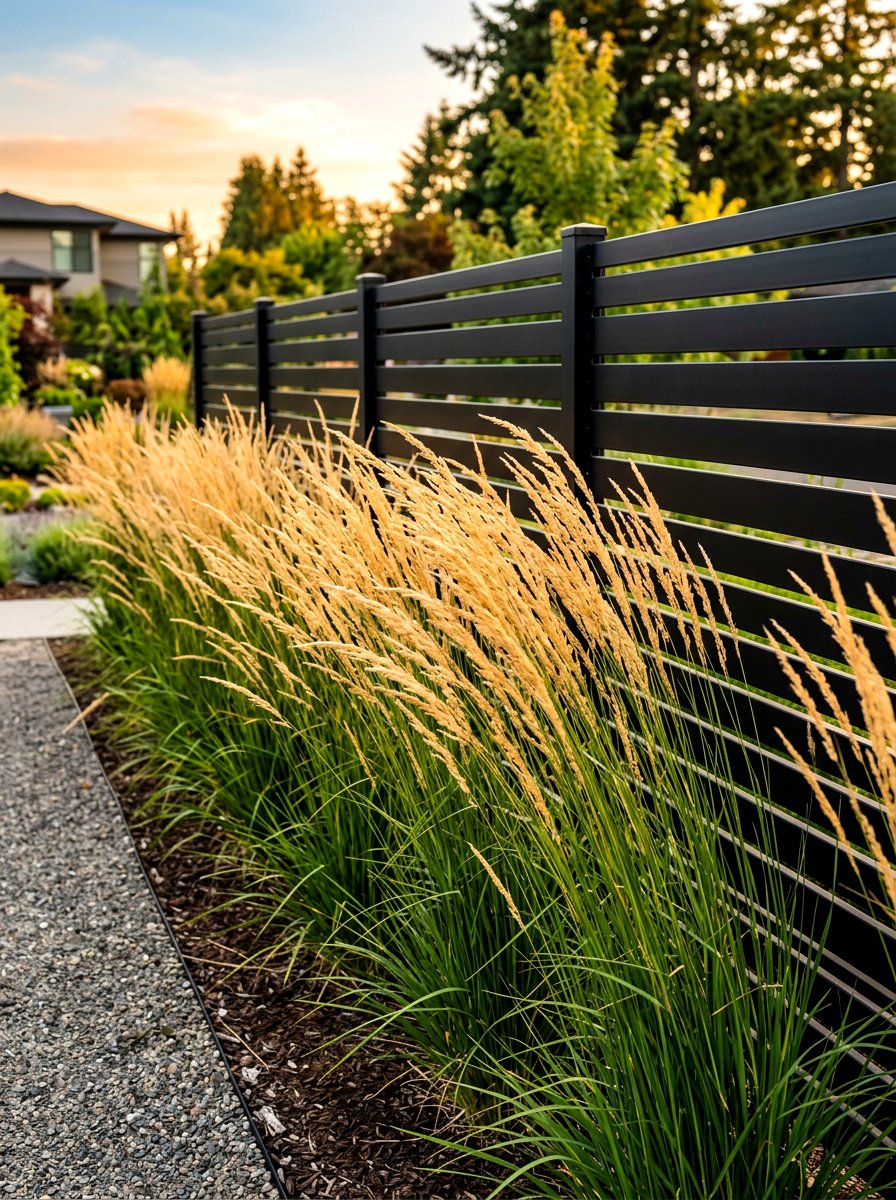
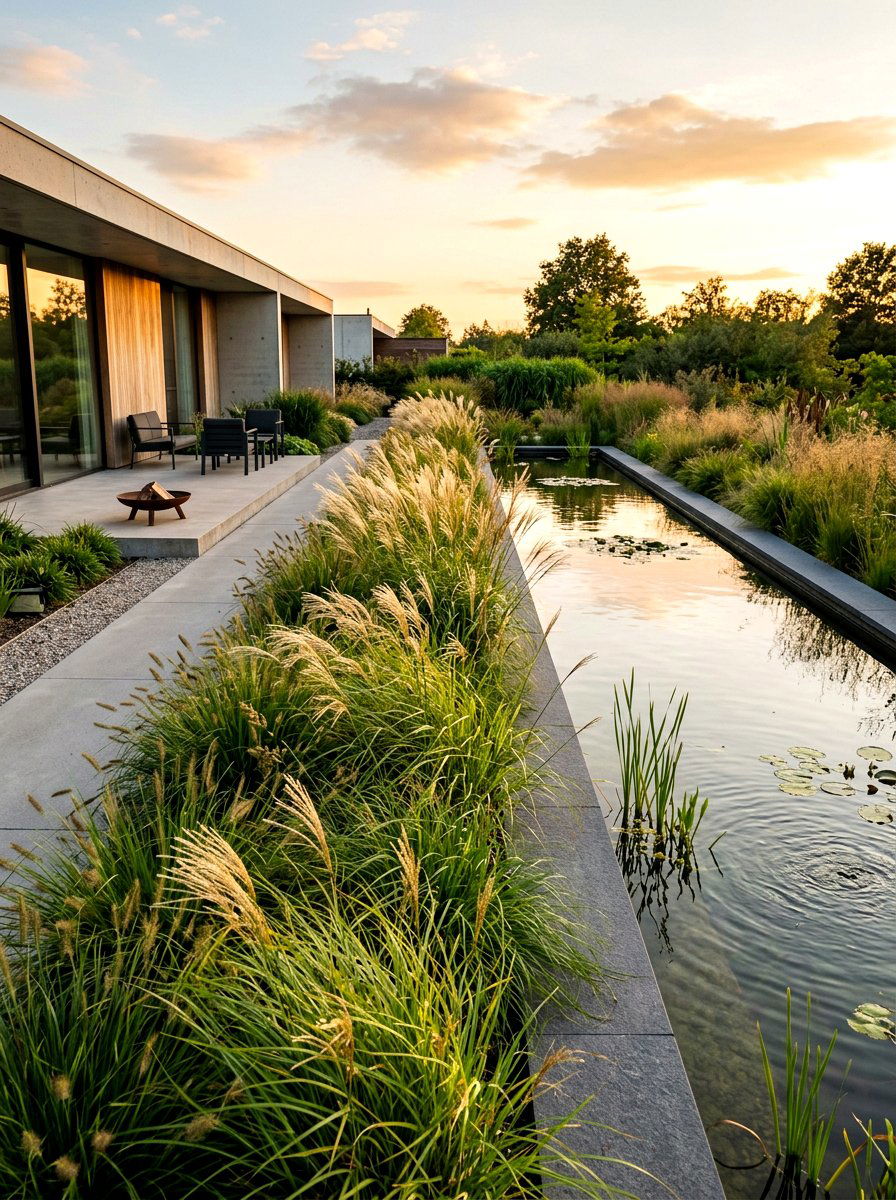
Using ornamental grasses in a boulevard strip adds movement and soft textures that contrast beautifully with hard concrete surfaces. Varieties like little bluestem, switchgrass, or feather reed grass create a rhythmic screen that dances in the breeze and provides year-round visual interest. In the fall, many of these grasses turn golden or bronze, and their seed heads add architectural beauty throughout the cold winter months. This full-length design provides a sense of privacy for the front yard while remaining open enough to feel welcoming to passersby. Because most ornamental grasses are incredibly tough, they can handle the salt and pollutants often found near busy city streets.
6. Perennial flower sidewalk border
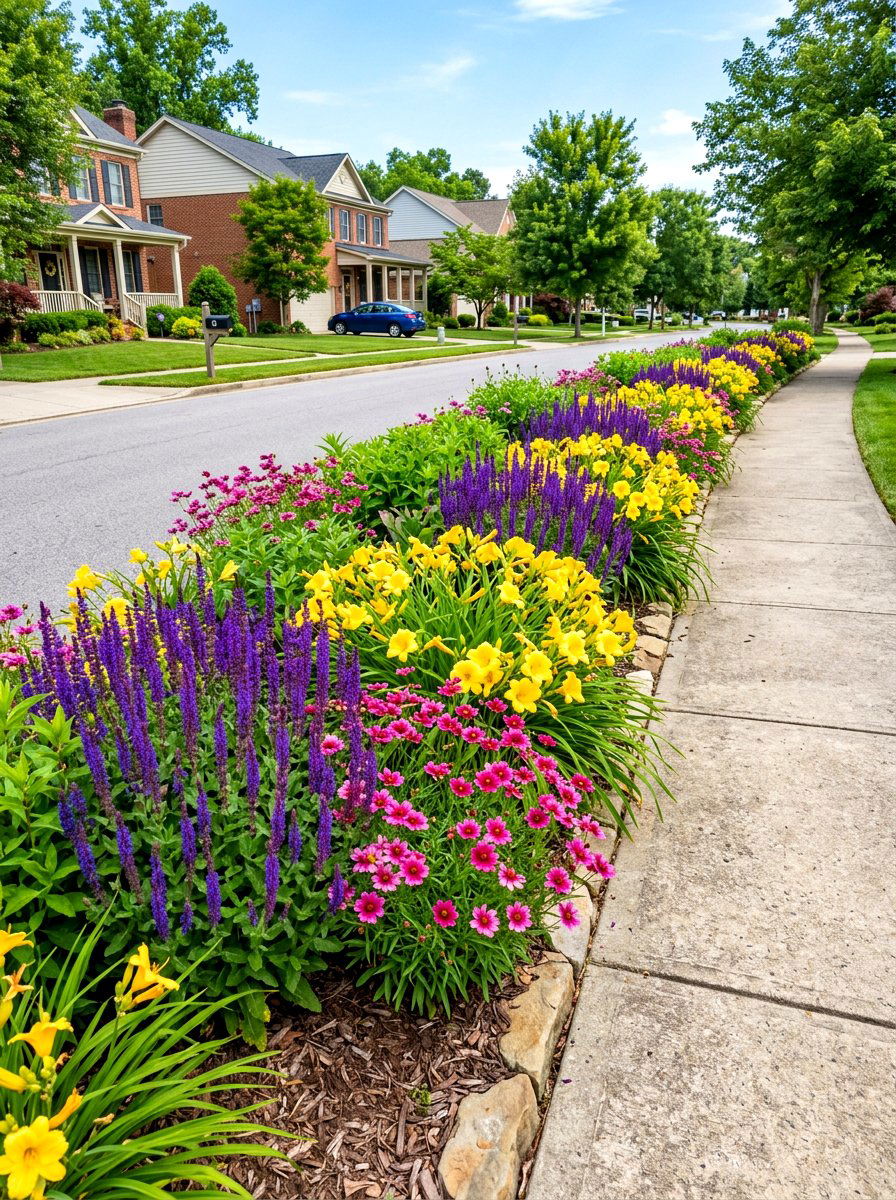
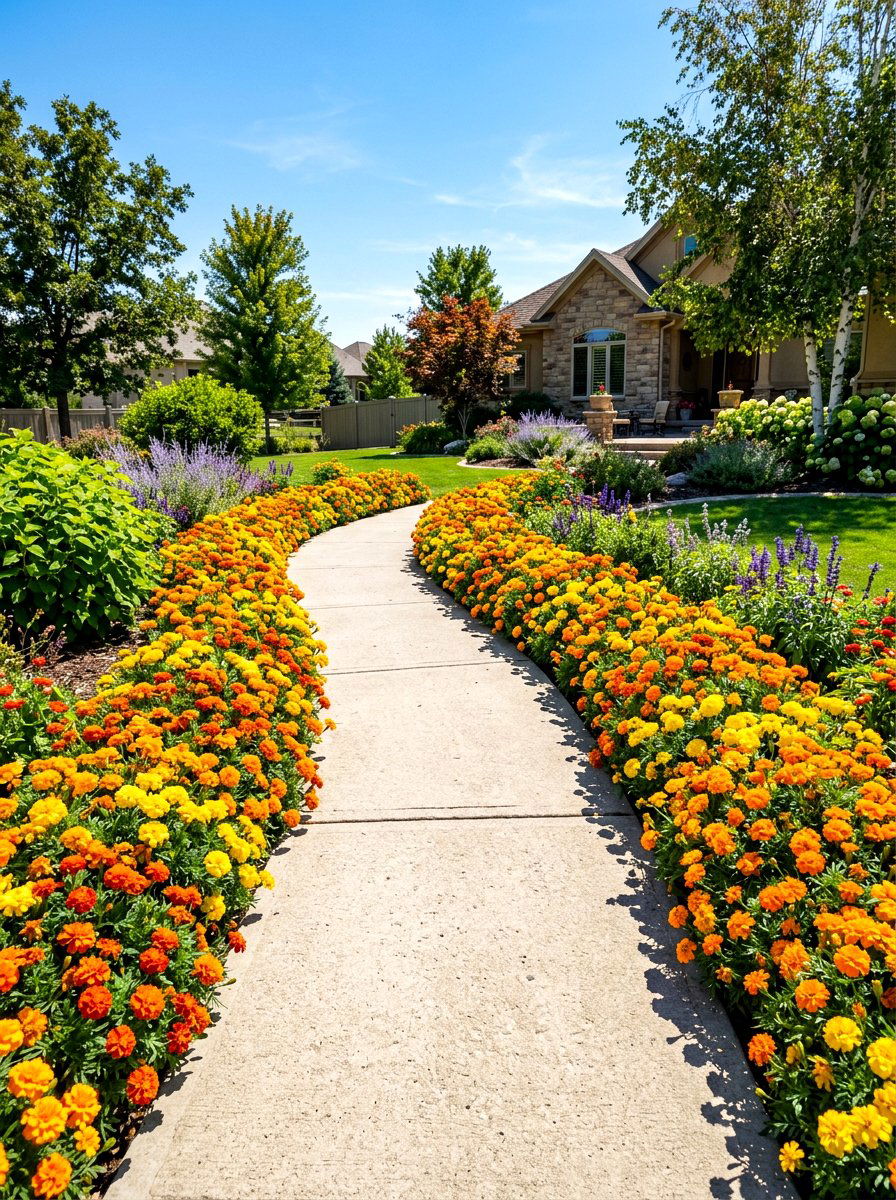
A perennial flower border is a classic choice for those who want a burst of color that returns faithfully every single spring. By selecting a mix of early, mid, and late-season bloomers, you can ensure your curbside strip looks vibrant from April until the first autumn frost. Popular choices like salvia, daylilies, and catmint provide reliable color and can withstand the occasional stray footprint or blast of heat. Grouping plants in clusters rather than single rows creates a fuller, more professional look that mimics a traditional garden bed. This approach turns a boring strip of grass into a delightful community asset that neighbors will enjoy during their daily walks.
7. Cottage garden curbside planting
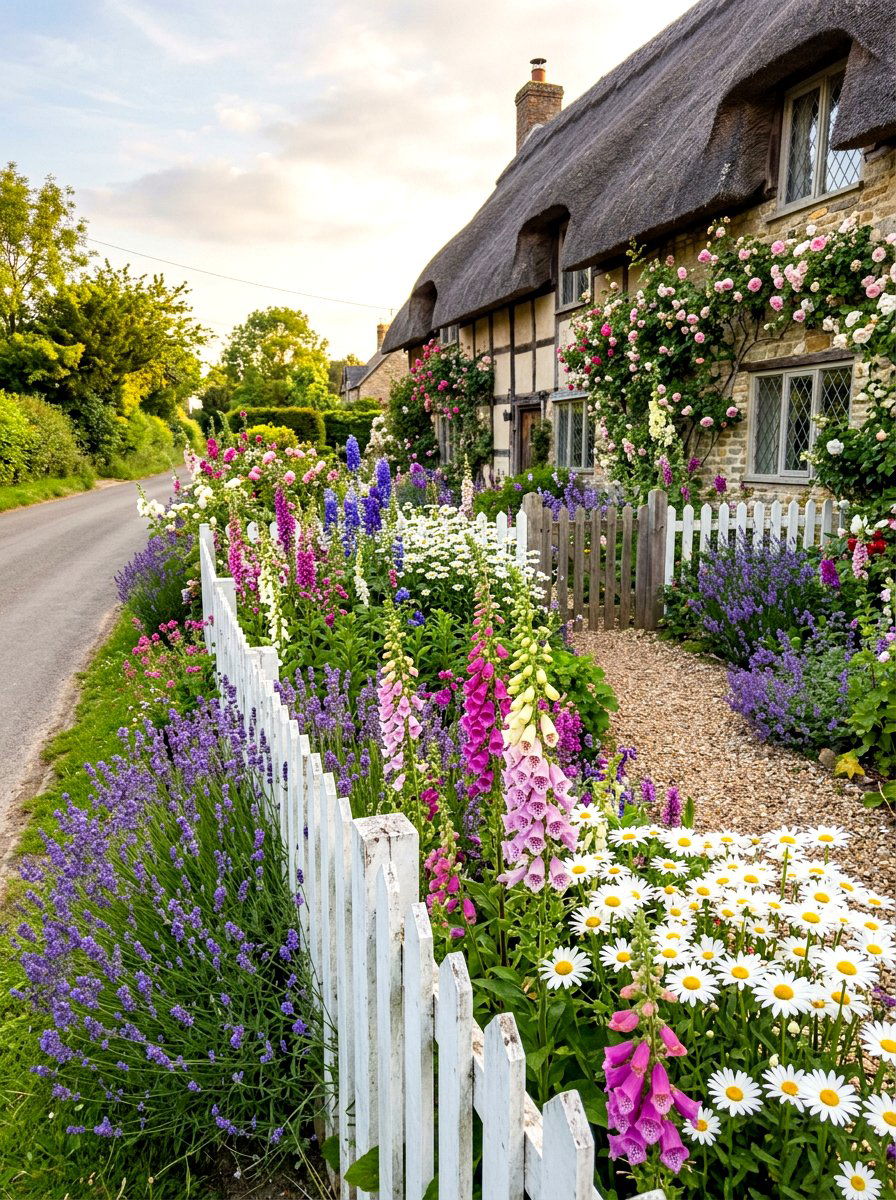
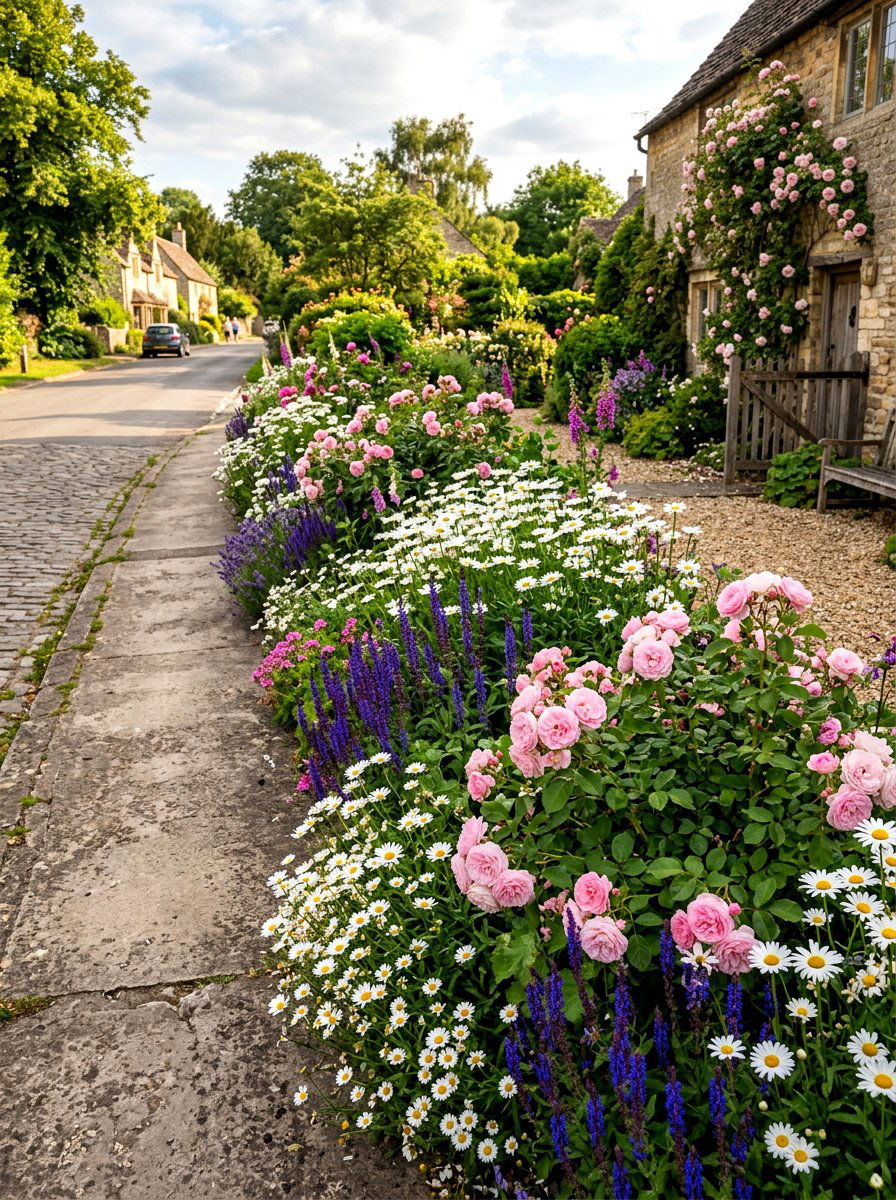
Bringing the charm of a cottage garden to your street edge involves using a dense, informal mix of flowering plants and traditional favorites. Think of a lush tapestry featuring lavender, roses, foxgloves, and shasta daisies growing together in a seemingly effortless but carefully planned arrangement. This design style softens the hard lines of the sidewalk and curb, making the entire property feel more inviting and nostalgic. The close planting helps naturally shade the soil, which keeps roots cool and reduces the space available for weeds to take hold. A small picket fence or stone edge can help define the boundary and protect the delicate blooms from heavy foot traffic.
8. Rock garden hellstrip
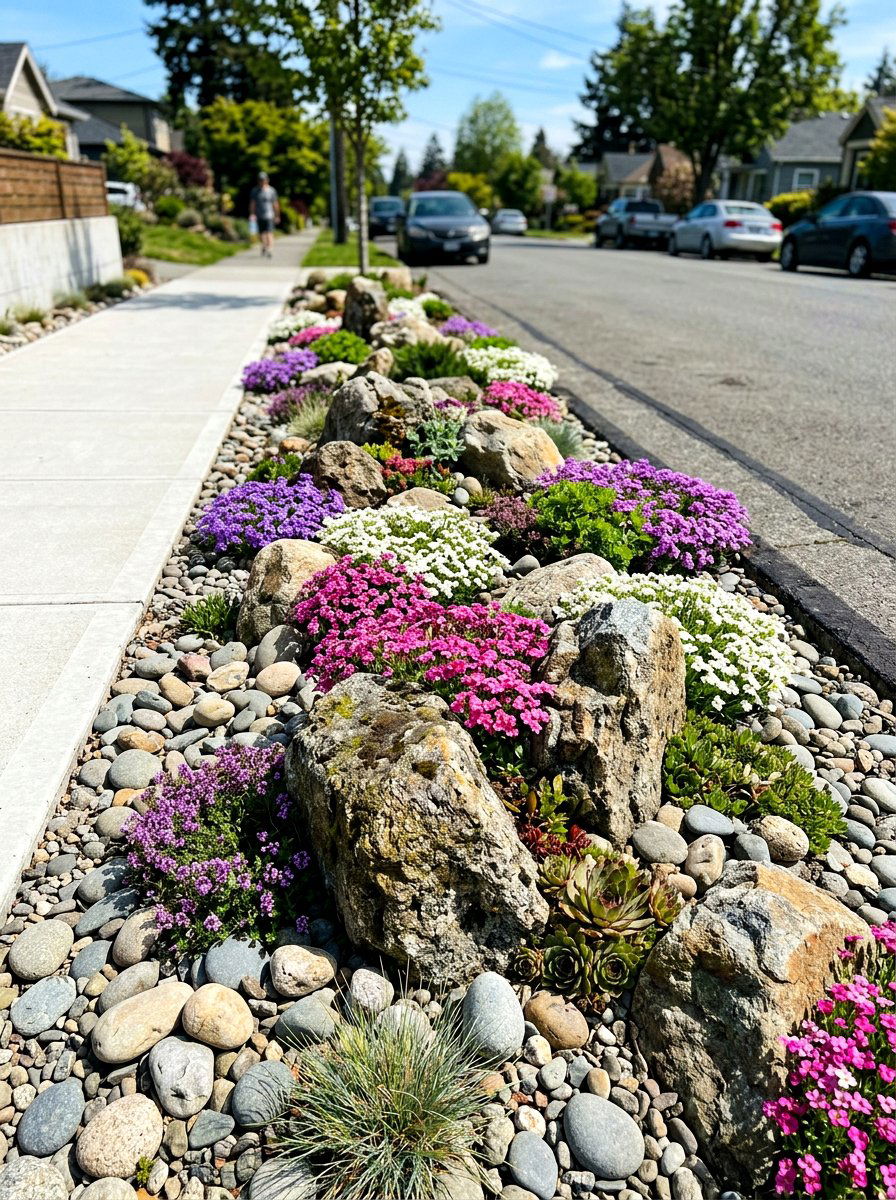
A rock garden is a practical and rugged solution for curbside strips that have particularly poor soil or significant drainage issues. By incorporating large decorative boulders alongside smaller river stones, you create a naturalistic landscape that looks established and permanent. Tucking alpine plants and rock-loving perennials like creeping phlox or rockcress into the crevices adds splashes of color and soft foliage to the hardscape. This type of design is virtually indestructible and handles the weight of snow piles or occasional car tires better than almost any other option. It provides a timeless, rugged beauty that requires almost zero water once the initial plants have become fully established.
9. Edible herb curbside garden
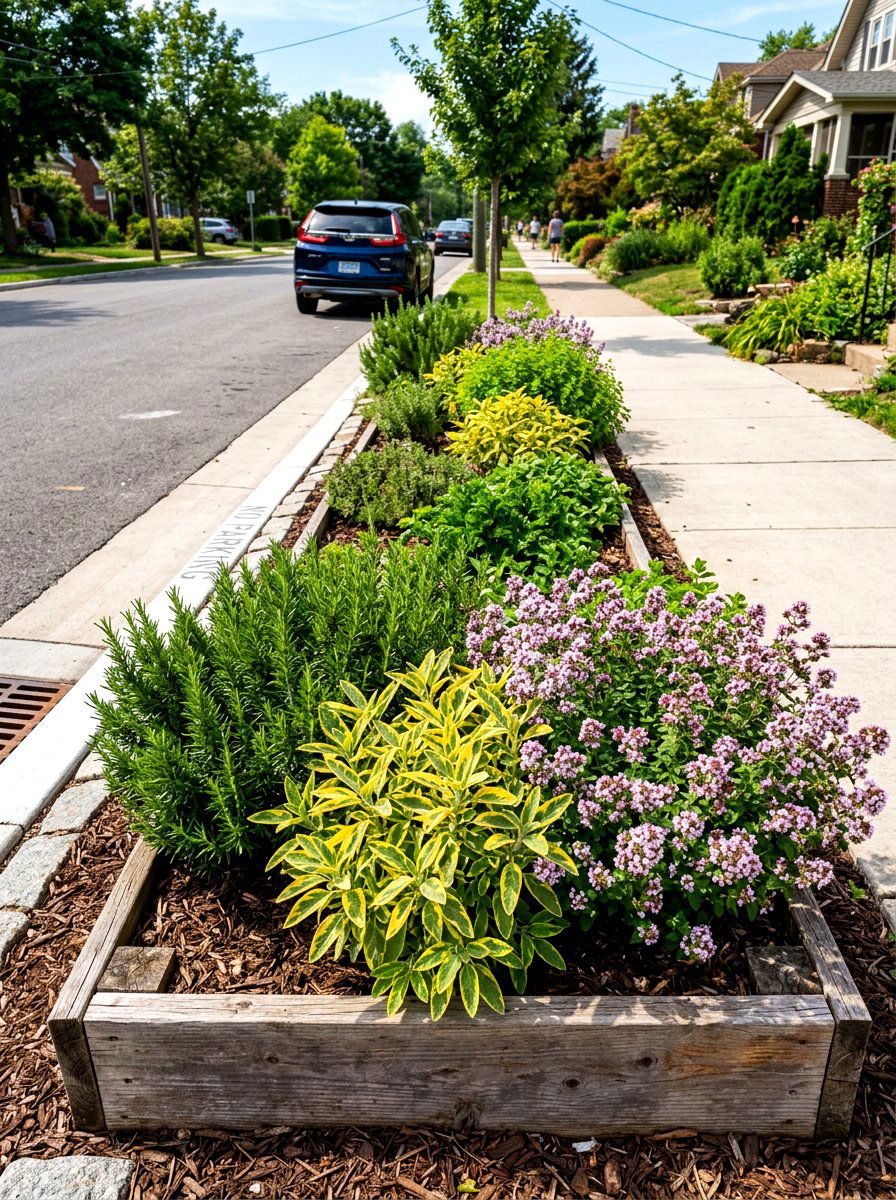
Transforming your parking strip into a productive herb garden is a creative way to use every inch of your available outdoor space. Hardy herbs like rosemary, thyme, oregano, and sage are surprisingly resilient and can thrive in the sunny, well-drained conditions often found at the curb. Not only do these plants provide fresh flavors for your kitchen, but many also produce beautiful flowers that attract bees and butterflies. Using a raised bed or clear stone borders helps keep the edible plants clean and separate from the dusty street environment. It is a functional and fragrant way to improve your landscape while providing a unique conversation starter for the neighborhood.
10. Lavender sidewalk strip
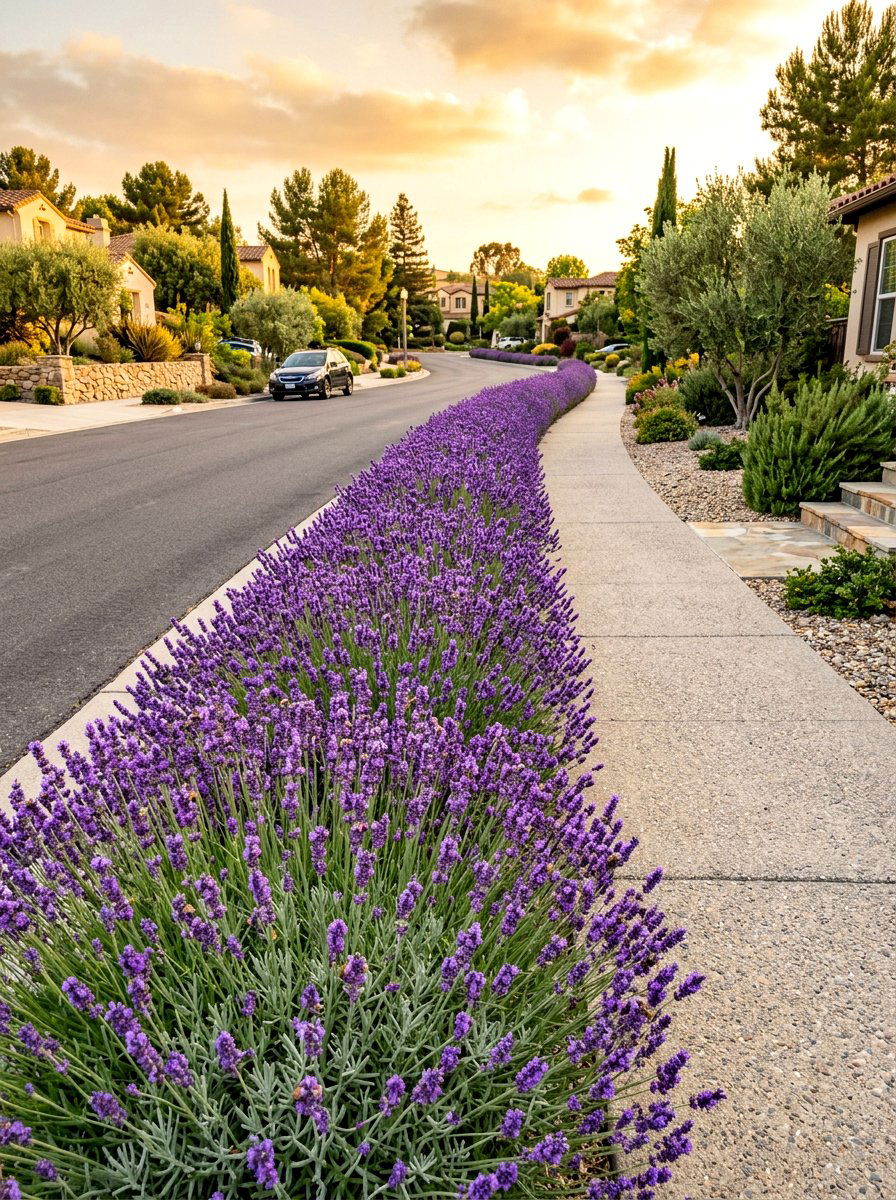
A dedicated lavender strip creates a sensory experience for everyone who walks past your home, offering both stunning visual beauty and a calming scent. These Mediterranean plants love the full sun and excellent drainage typically provided by the raised environment of a curbside planting area. When planted in a long, continuous row, lavender forms a low, silver-green hedge that looks incredibly tidy and sophisticated throughout the entire year. During the summer, the vibrant purple spikes attract countless pollinators and create a sea of color that defines the edge of your property. It is an elegant, low-maintenance choice that brings a touch of the French countryside to a suburban street.
11. Woodland shade curbside planting
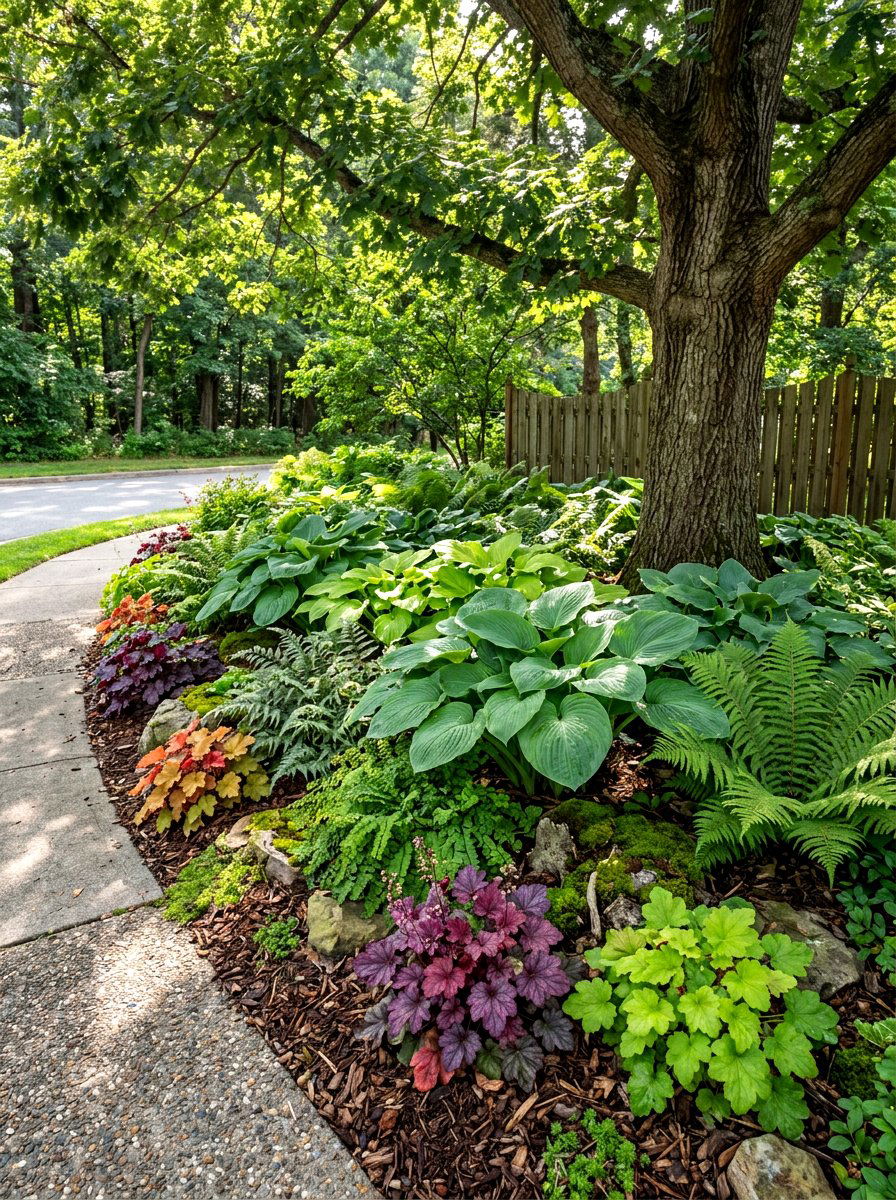
If your curbside strip is shaded by large street trees, a woodland-style garden is the perfect way to embrace the lower light levels. Instead of struggling to grow grass in the dark, you can plant shade-loving varieties like hostas, ferns, and coral bells. These plants offer a variety of leaf textures and shades of green that create a cool, refreshing atmosphere along the hot sidewalk. Adding a layer of dark wood mulch helps simulate a forest floor, keeping the soil moist and providing a clean background for the foliage. This design turns a challenging, shady area into a lush and peaceful retreat that thrives where other plants would usually fail.
12. Minimalist boxwood parking strip
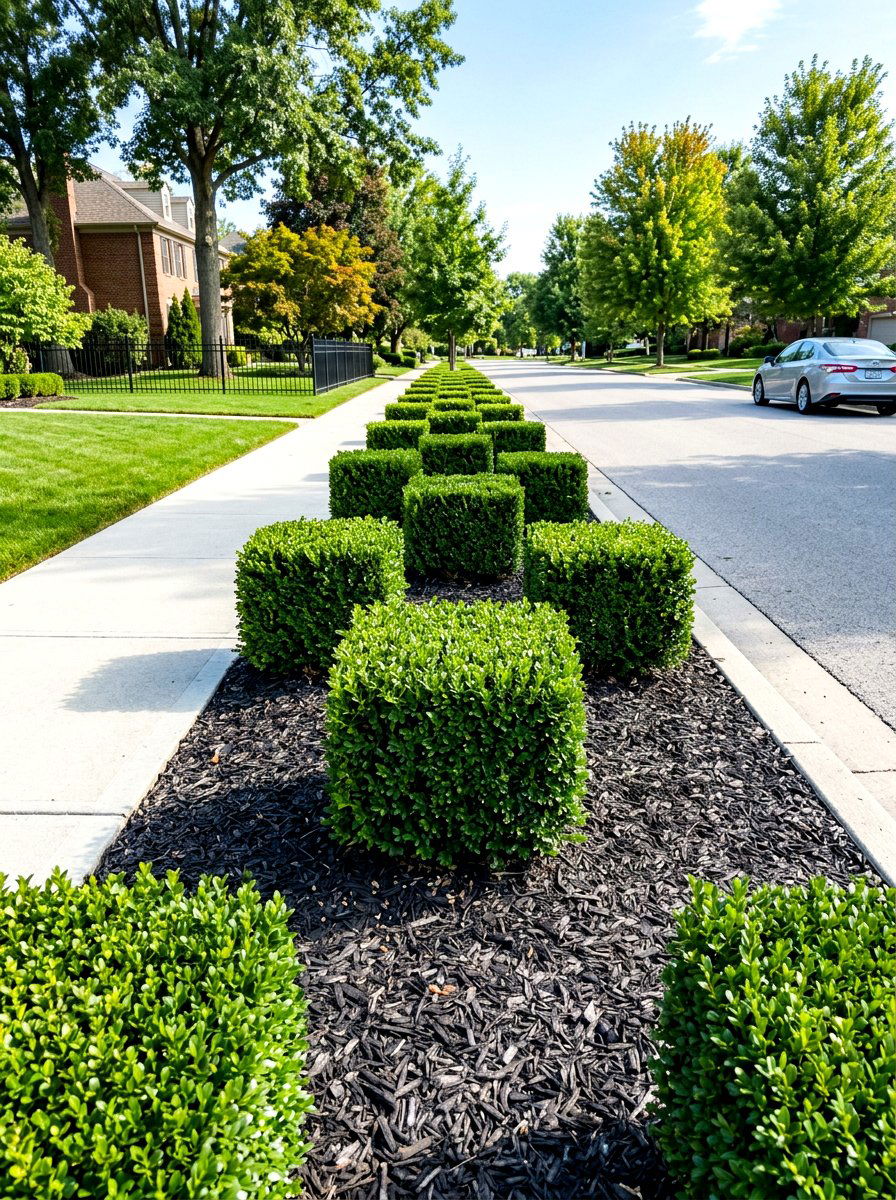
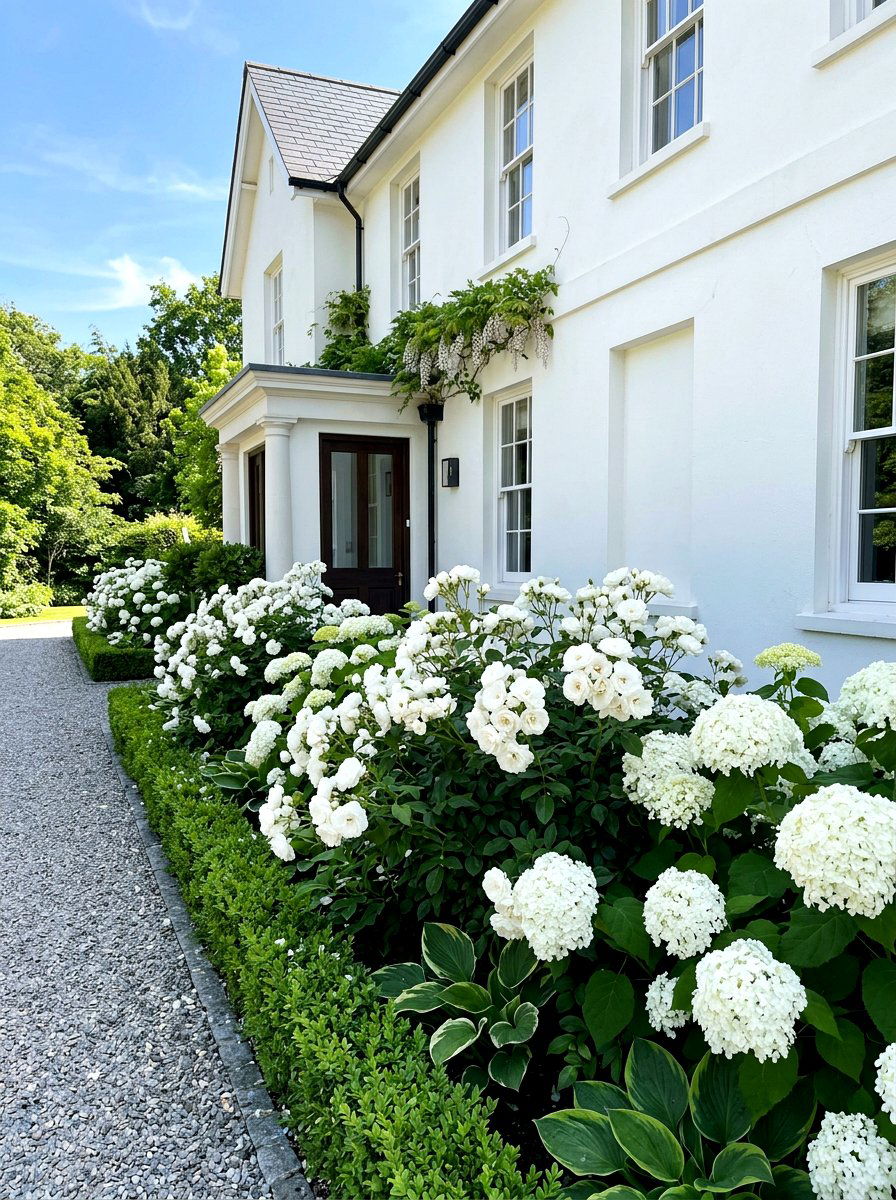
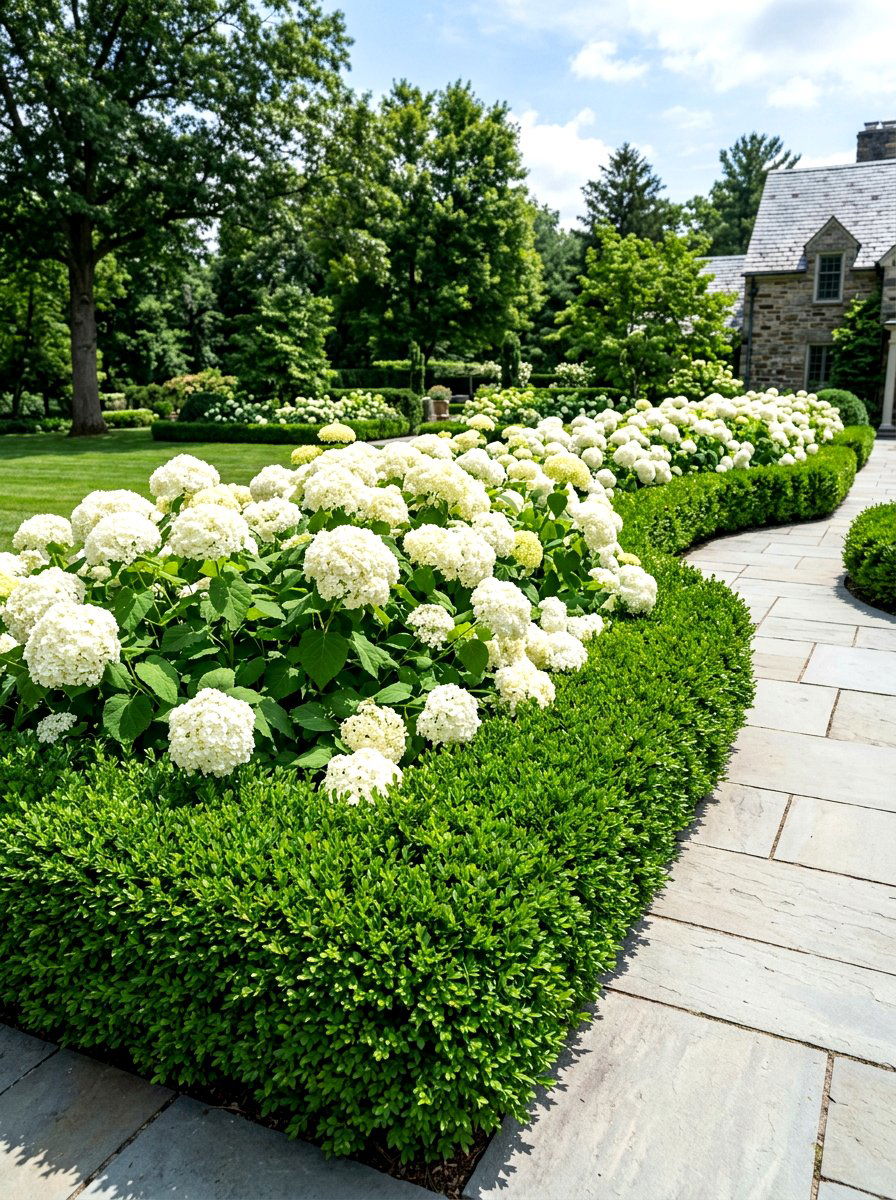
For a formal and clean-lined look, a minimalist boxwood design provides a structured green border that remains attractive in every season. Low-growing boxwood hedges can be kept neatly trimmed to create a sophisticated frame for your sidewalk or the front of your home. This approach works exceptionally well with modern or traditional architecture, offering a sense of order and permanence that loose flower beds sometimes lack. Filling the space between the shrubs with a uniform groundcover or dark decorative stones keeps the focus on the architectural shapes of the greenery. It is a high-end look that requires very little water once the shrubs have matured and settled in.
13. Mediterranean style curbside garden
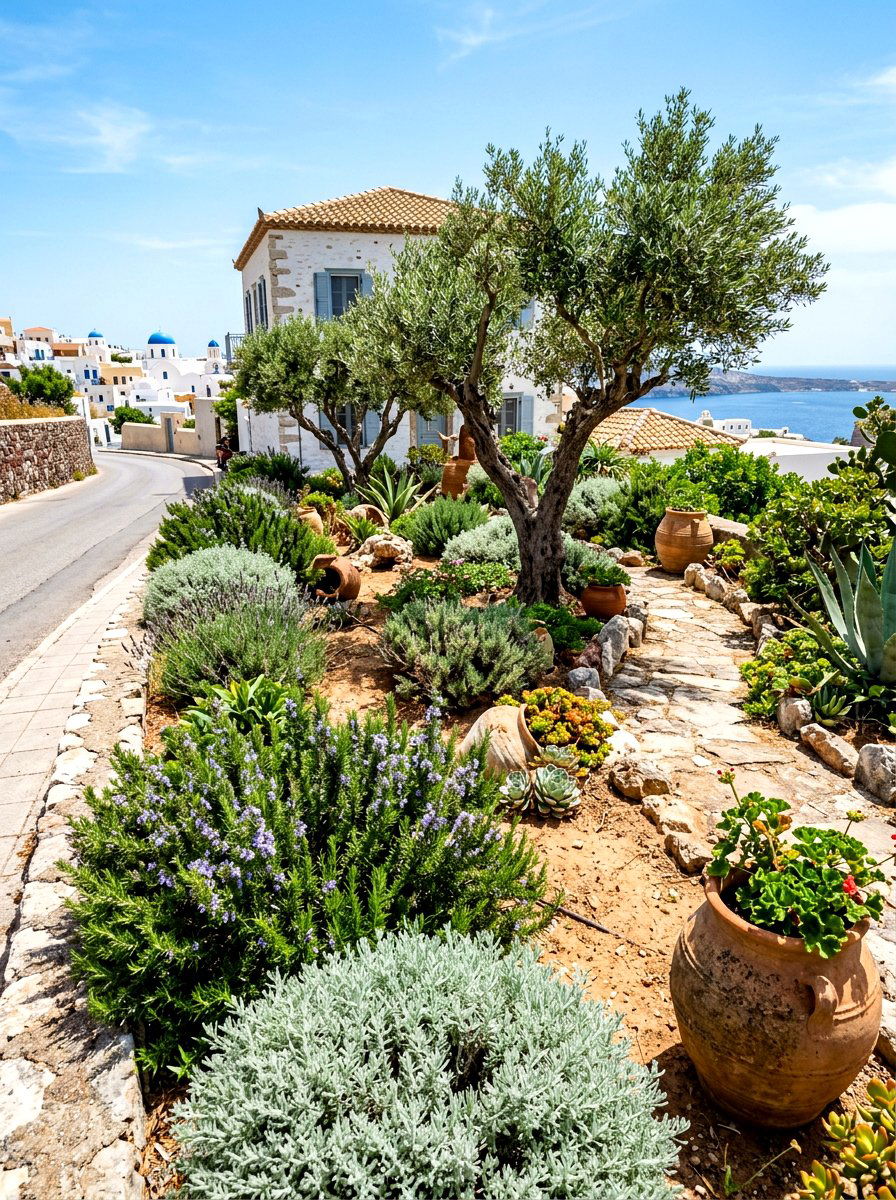
A Mediterranean-style garden utilizes sun-loving, silver-foliaged plants that are designed to survive in hot and dry coastal or inland environments. This design often features olive trees, rosemary, santolina, and decorative grasses that look beautiful even when water is scarce. The color palette usually focuses on soft blues, purples, and greys, which look particularly striking against light-colored gravel or terracotta accents. Because these plants are adapted to poor soils, they rarely need extra fertilizer and can handle the compacted conditions found near street curbs. This theme provides a relaxed, vacation-like feel to your front yard and requires very little intervention from the homeowner to look its absolute best.
14. Pollinator friendly hellstrip
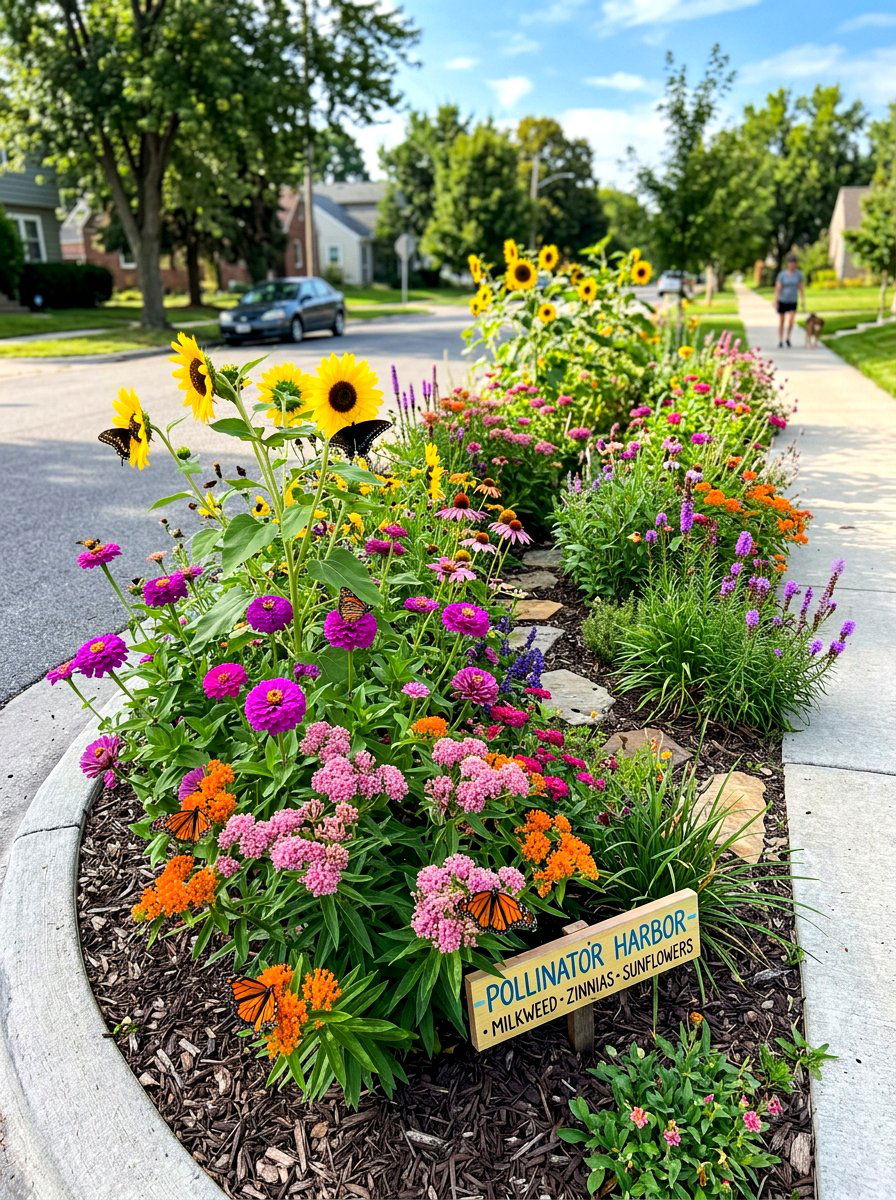
Building a pollinator-friendly garden in your parking strip is an excellent way to support local biodiversity while enjoying a very colorful landscape. By focusing on nectar-rich plants like milkweed, bee balm, and zinnias, you create a vital pit stop for migrating butterflies and local honeybees. This type of garden often features a diverse mix of heights and bloom times to ensure there is always something for the insects to eat. Including a small shallow water source or a few flat rocks for sunning can further enhance the habitat for your flying visitors. It is a rewarding project that educates the community and brings life and movement to your home's exterior.
15. Decorative mulch parking strip
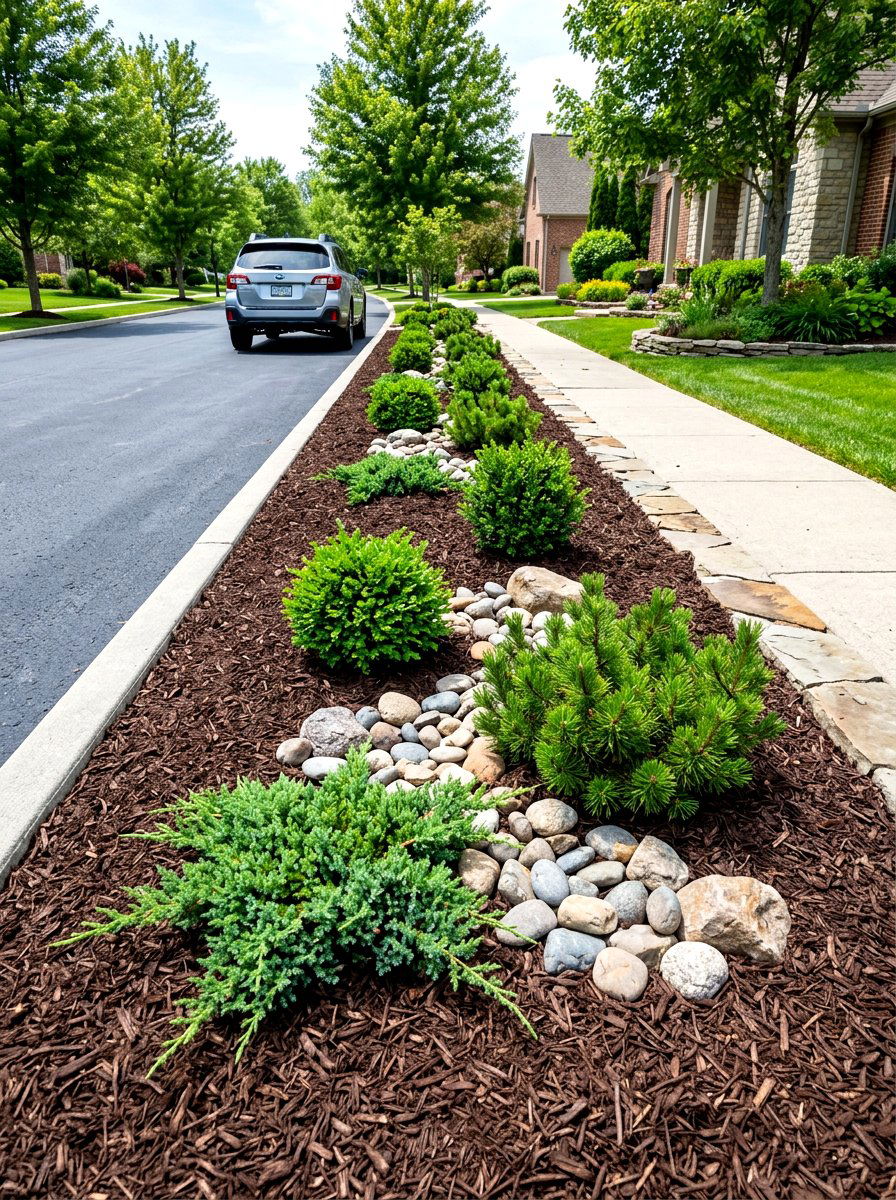
Using decorative mulch as the primary feature of a parking strip is one of the most cost-effective and low-maintenance ways to tidy up a curb. By choosing a high-quality bark mulch in a dark brown or black shade, you create a clean, uniform look that makes any occasional plants pop. You can install a few structural shrubs or evergreen grasses at intervals to provide year-round interest without the work of a full flower bed. The mulch helps suppress weeds, retains soil moisture for the few plants you do have, and breaks down over time to improve the soil quality. It is a perfect choice for large strips where extensive planting would be too expensive.
16. Coastal seaside curbside garden
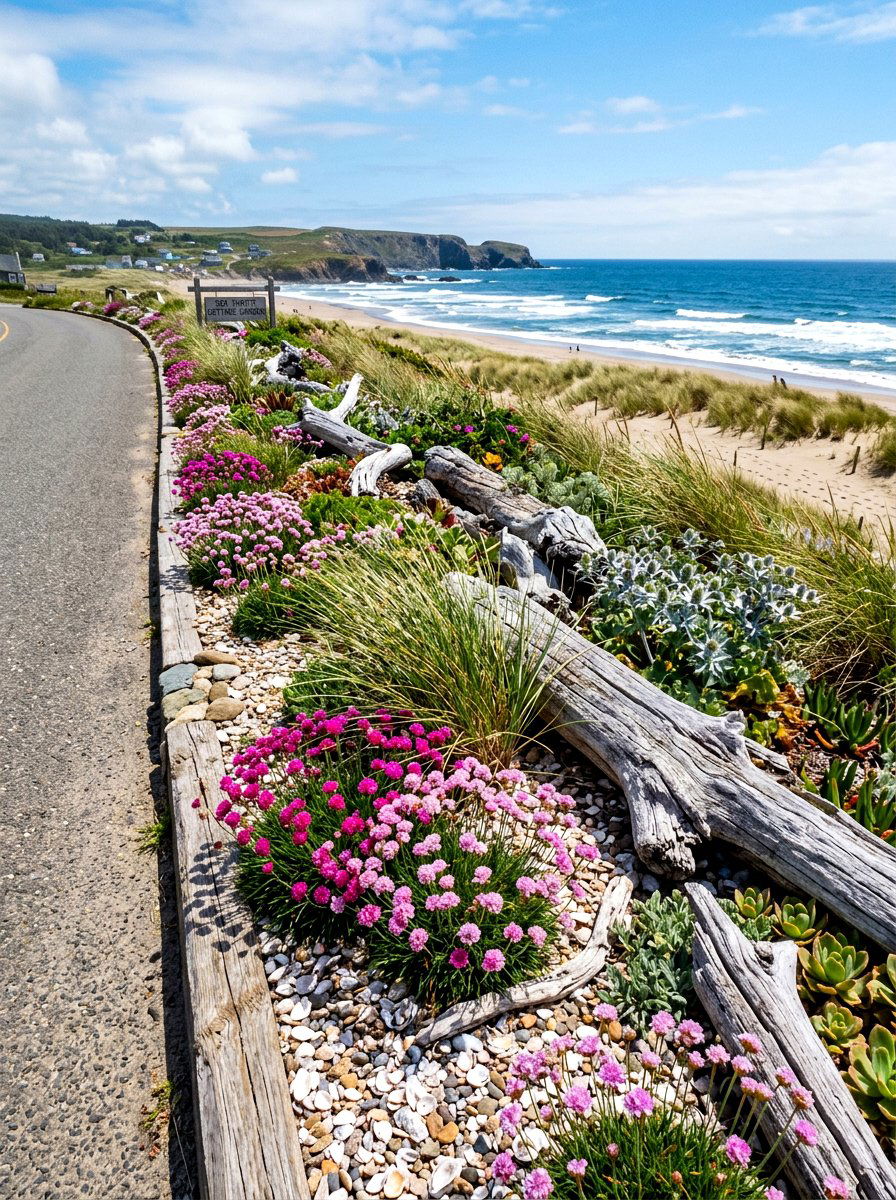
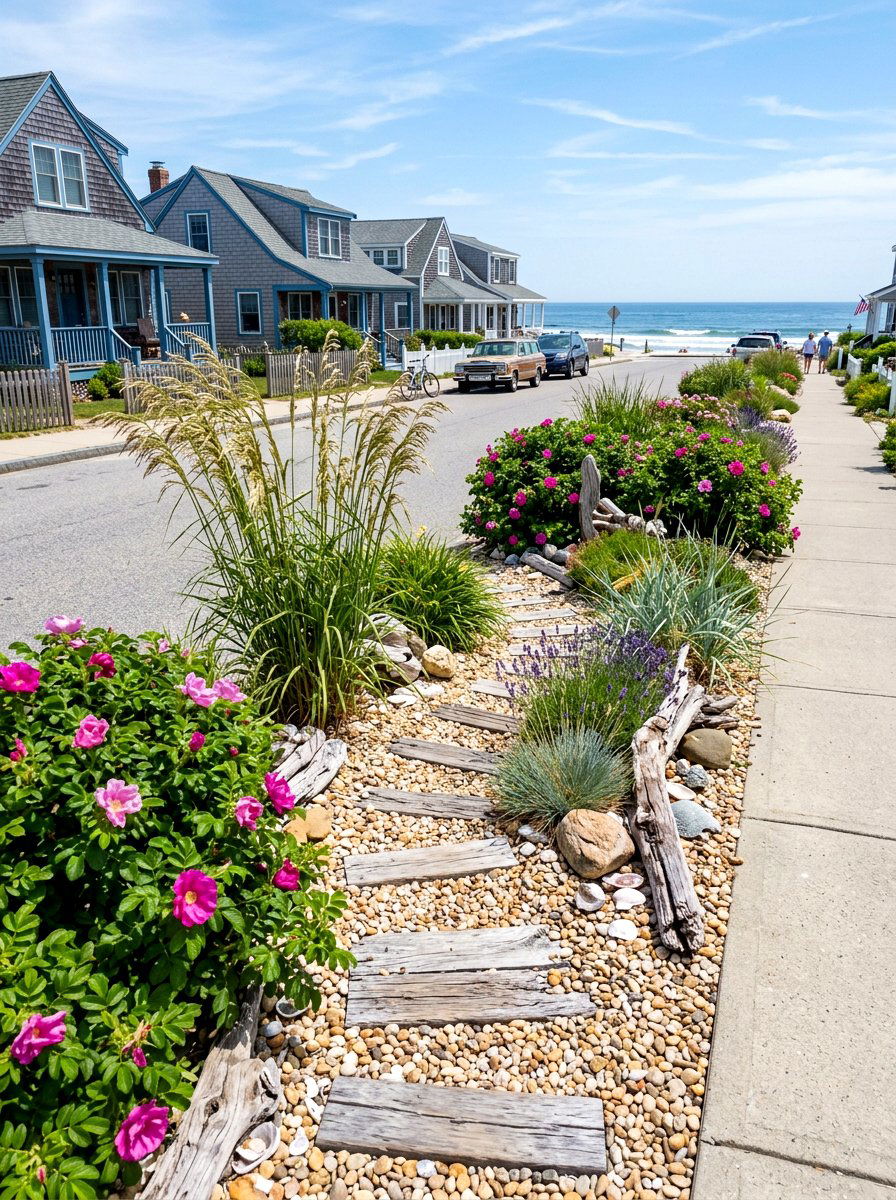
A coastal-themed garden is ideal for locations that experience salt spray or have sandy, fast-draining soil near the street. This design uses tough, salt-tolerant plants like sea thrift, beach grasses, and rugosa roses that are built to withstand harsh winds and bright sun. Incorporating elements like weathered driftwood, large smooth river stones, or even crushed shells can enhance the seaside aesthetic of the entire strip. The plants used in coastal designs often have a rugged, natural beauty that looks great even when left to grow a bit wild. This approach creates a breezy, relaxed vibe that stands up to the unique environmental pressures of a roadside location.
17. Groundcover plant sidewalk border
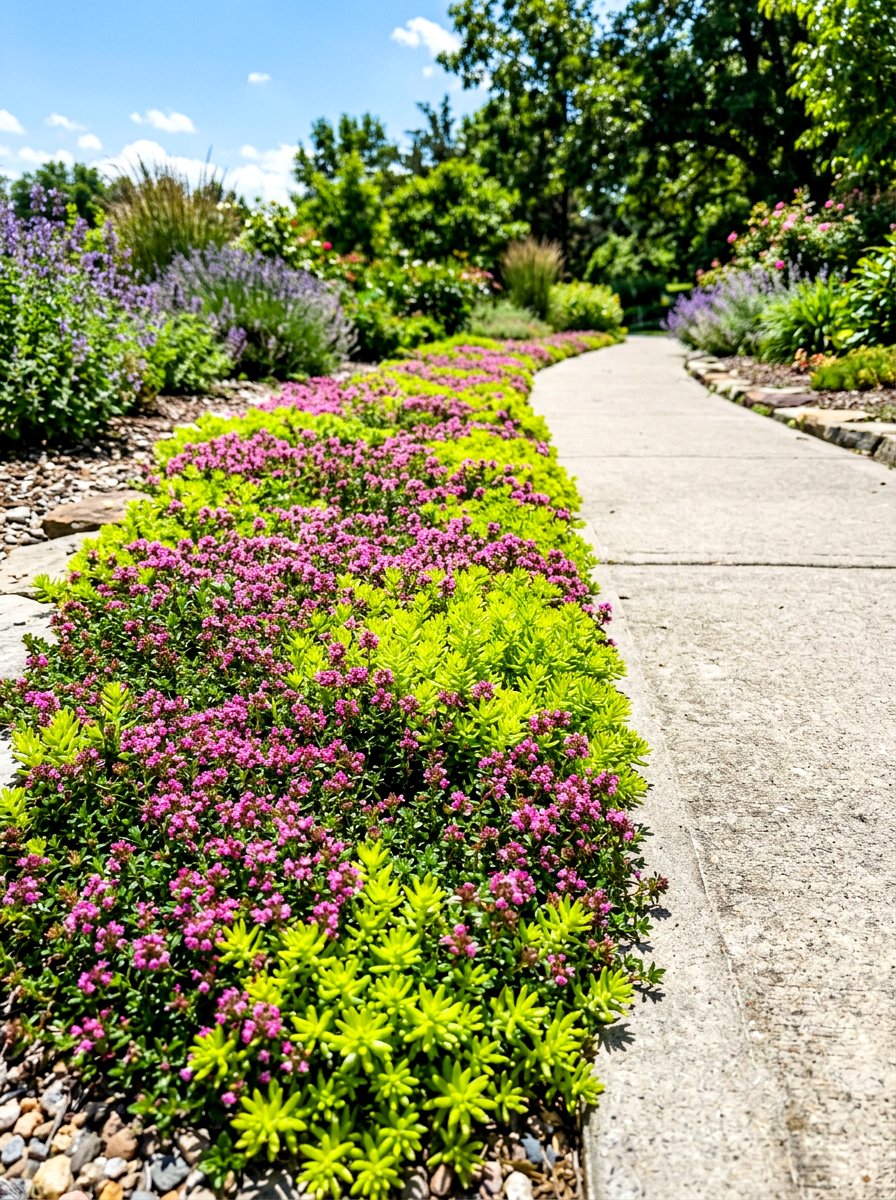
Low-growing groundcovers offer a living carpet that replaces the need for traditional grass while providing more visual variety and much less maintenance. Options like creeping thyme, stonecrop, or clover create a dense mat of foliage that can handle occasional light foot traffic from people getting out of cars. Many groundcovers produce tiny, beautiful flowers at different times of the year, adding a subtle layer of interest to the ground level. Once established, these plants knit together to form a weed-resistant barrier that requires no mowing and very little supplemental watering. This design keeps the height low, ensuring that sightlines for driveways and street corners remain completely clear and safe.
18. Tropical look curbside planting
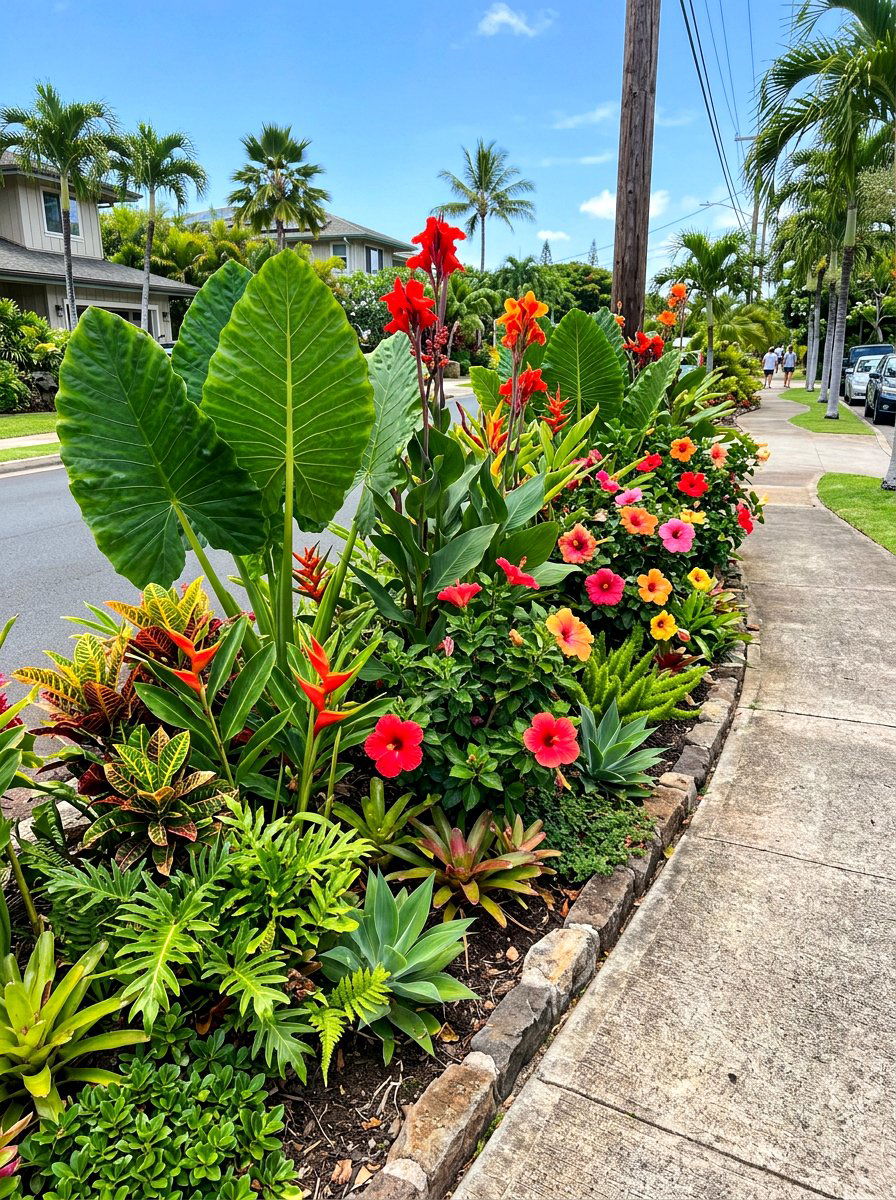
You can create a bold, tropical feel in your curbside strip by choosing plants with oversized leaves and vibrant, exotic-looking flowers. In warmer climates, canna lilies, hibiscus, and bird of paradise provide an instant island vibe that makes your home stand out on the block. Even in cooler zones, you can use hardy alternatives like elephant ears or certain types of bamboo to achieve a similar lush, architectural effect. Using a thick layer of dark mulch and ensuring regular watering will help these thirsty plants thrive in the heat of the sidewalk. This high-energy design is perfect for homeowners who want to make a dramatic and colorful statement.
19. Rain garden hellstrip
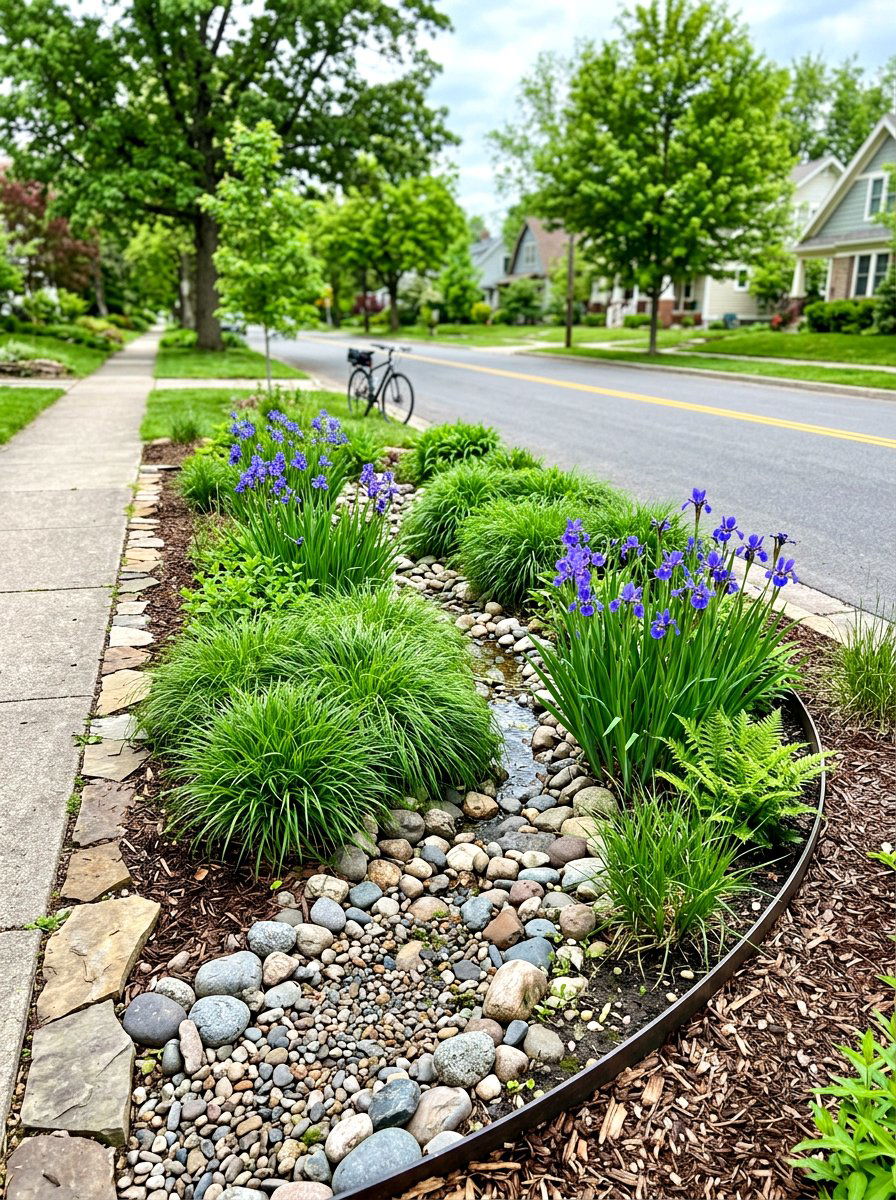
A rain garden is a functional landscape feature designed to capture and filter stormwater runoff before it enters the city's sewer system. By creating a slight depression in the center of the strip and filling it with deep-rooted native plants, you help replenish the groundwater. Plants used in rain gardens, such as sedges, rushes, and certain irises, are unique because they can handle both temporary flooding and dry spells. This design not only looks beautiful but also serves an important environmental purpose by reducing local pollution and erosion. It is a sophisticated way to manage water effectively while adding a lush, green element to the hard urban landscape.
20. Paver and plant parking strip
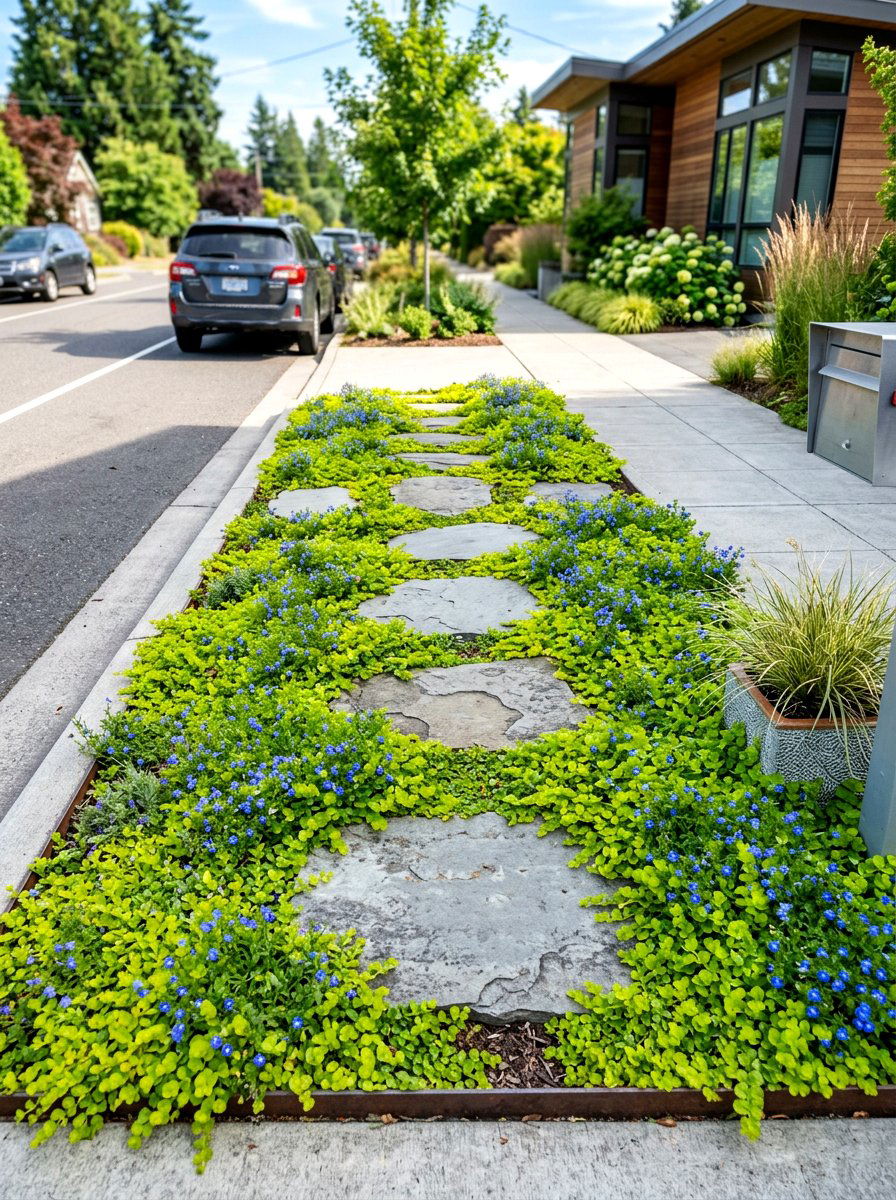
Combining hardscape elements like pavers with soft plantings creates a highly functional and organized curbside strip that accommodates pedestrians easily. By laying a central path or "landing pads" of flagstone or brick, you give people a clear place to step when they exit their vehicles. You can then fill the spaces between the pavers and the curb with low-maintenance plants like creeping jenny or ornamental grasses. This hybrid approach prevents your garden from being trampled while still providing all the beauty and environmental benefits of a planted area. It results in a polished, multi-functional space that balances human needs with the desire for a greener neighborhood.
21. Prairie style curbside garden
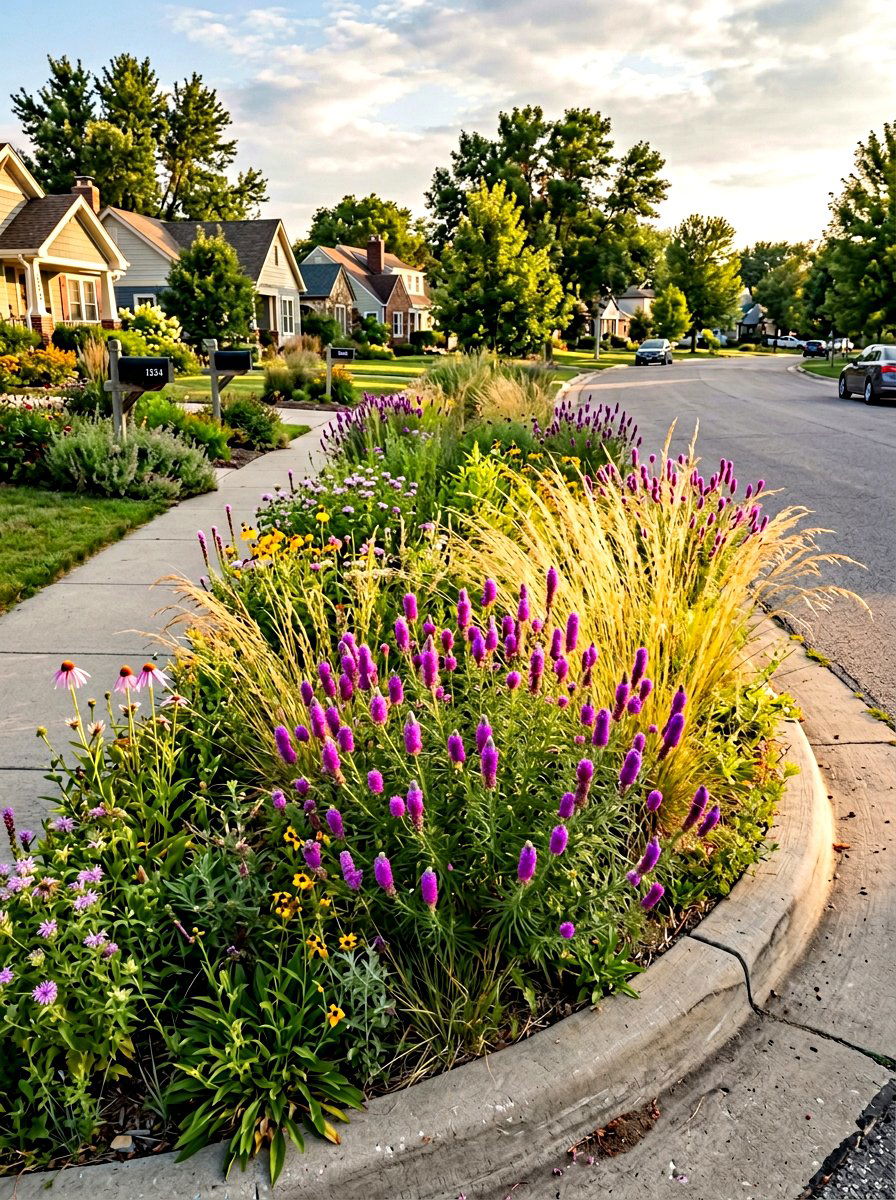
The prairie style focuses on using the tall grasses and hardy perennials typical of the American plains to create a naturalistic, flowing landscape. This design uses a high ratio of grasses to flowers, resulting in a soft, golden aesthetic that looks particularly stunning in the late afternoon sun. Plants like purple prairie clover, blazing star, and sideoats grama provide a hardy foundation that requires almost no care once the roots are deep. This style is excellent for long, narrow strips as it creates a sense of continuity and scale that feels larger than it actually is. It brings a sense of vast, open space to the compact environment of a city street.
22. Evergreens for sidewalk strips
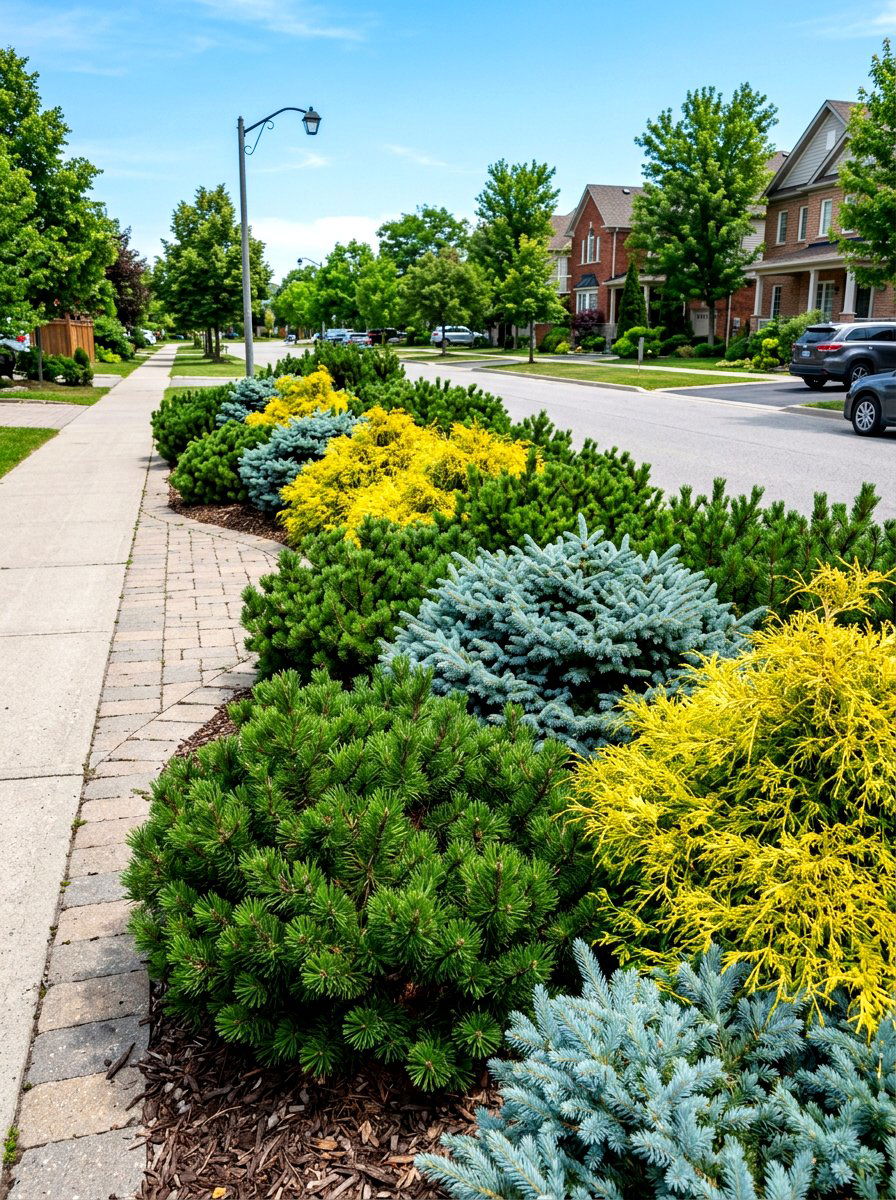
Using dwarf evergreens in your curbside strip ensures that your landscape looks lush and green even in the middle of a snowy winter. Low-growing junipers, mugo pines, and dwarf spruces provide year-round structure and a variety of textures ranging from soft needles to prickly foliage. These plants are generally very hardy and can withstand the salt and wind that often damage more delicate deciduous plants during the colder months. By mixing different shades of evergreen, from blue-grey to bright chartreuse, you can create a sophisticated and permanent garden bed. This is a great choice for homeowners who want a consistent, low-effort look throughout all four seasons.
23. Colorful bulb curbside garden
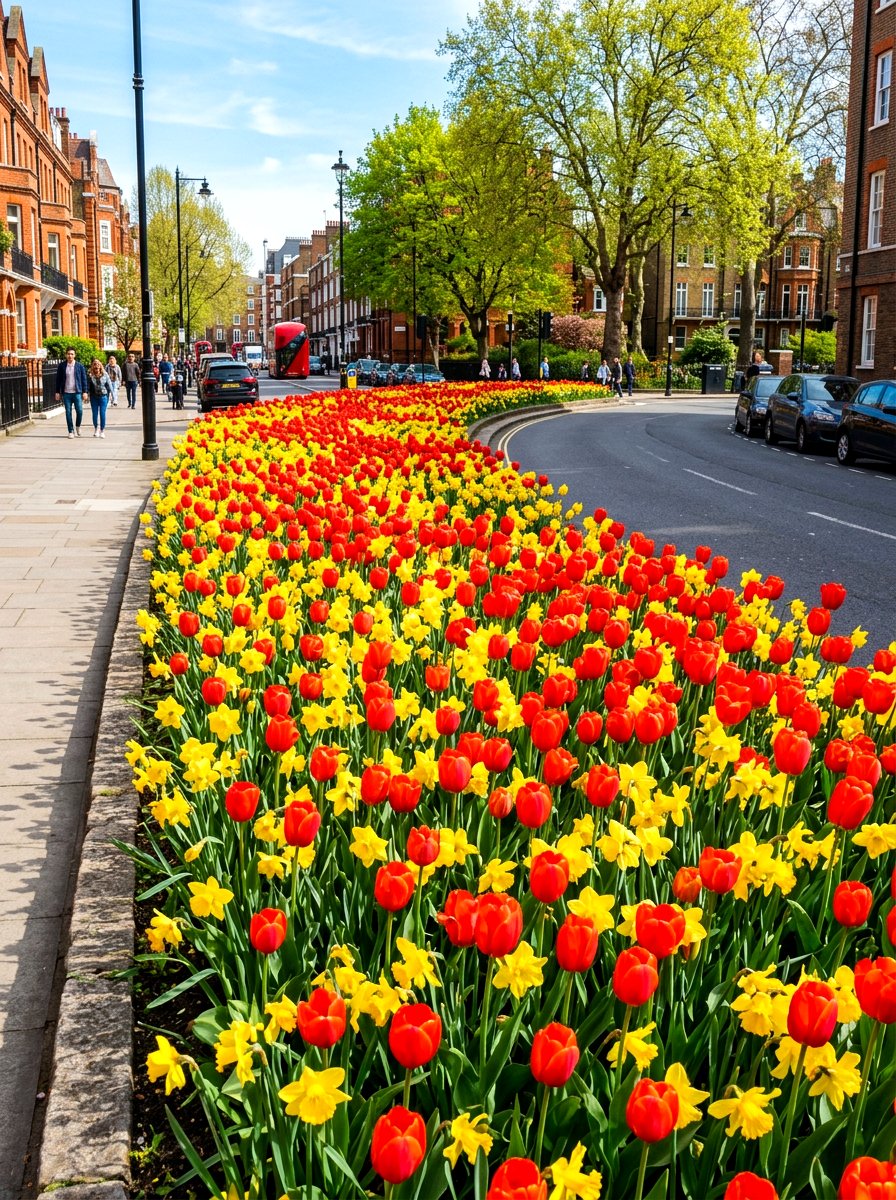
A bulb garden is a fantastic way to celebrate the arrival of spring with a massive explosion of color right at the curb. By planting hundreds of tulips, daffodils, and crocuses in the fall, you ensure a spectacular display that will delight the entire neighborhood come March or April. Once the bulbs finish blooming, you can have low-growing perennials or annuals ready to take over the space and hide the fading foliage. This strategy allows for a high-impact seasonal show without requiring a permanent commitment to large shrubs or trees in the narrow strip. It is an easy and relatively inexpensive way to bring joy to your street every year.
24. Xeriscape hellstrip design
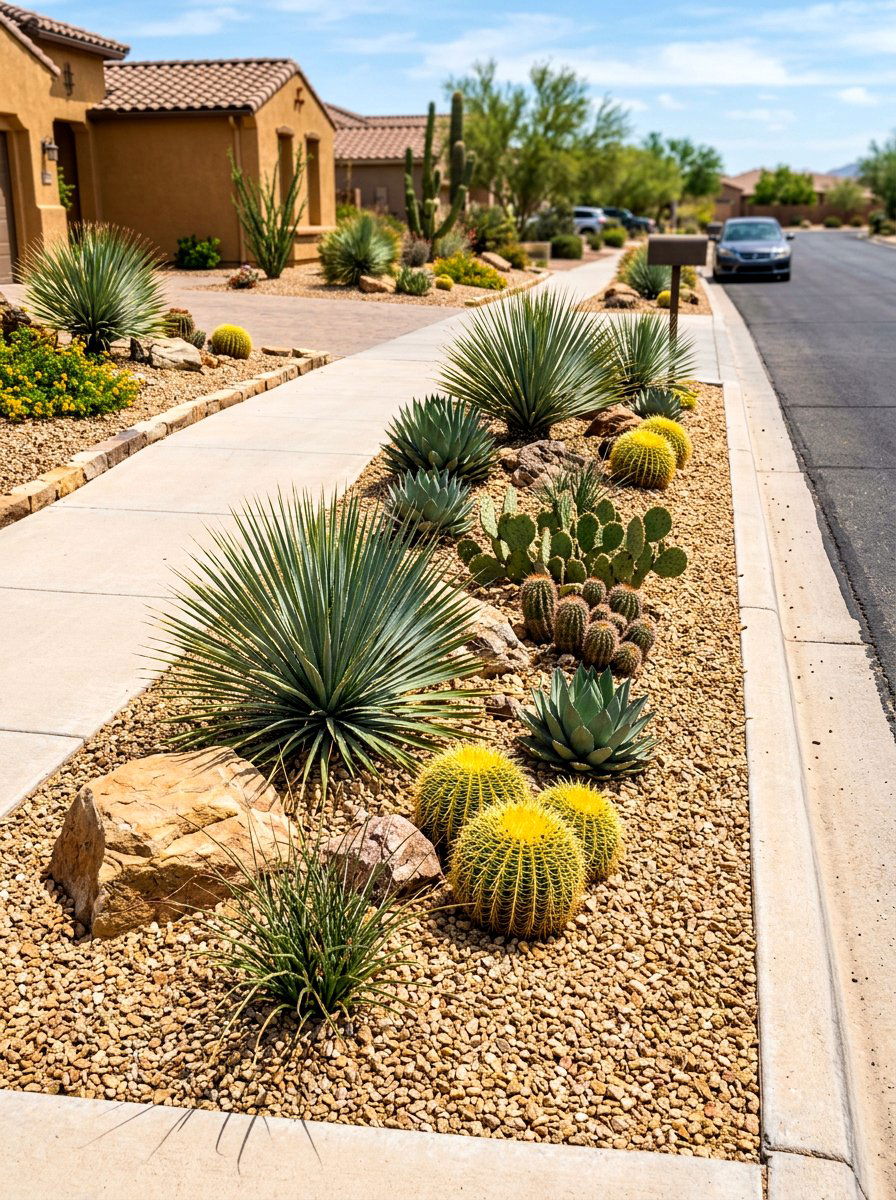
Xeriscaping is a specific landscaping philosophy that aims to eliminate the need for supplemental irrigation entirely. In a curbside strip, this involves using a combination of inorganic mulches like pea gravel or river rock alongside extremely drought-resistant plants. Native desert species or hardy mediterranean herbs are often the stars of this design, providing beauty without ever needing a hose. The focus is on efficiency and sustainability, creating a landscape that is perfectly in tune with its environment. A well-executed xeriscape looks intentional and artistic, using the contrast between different stone colors and plant textures to create a visually interesting space that saves you time and money.
25. River rock curbside planting
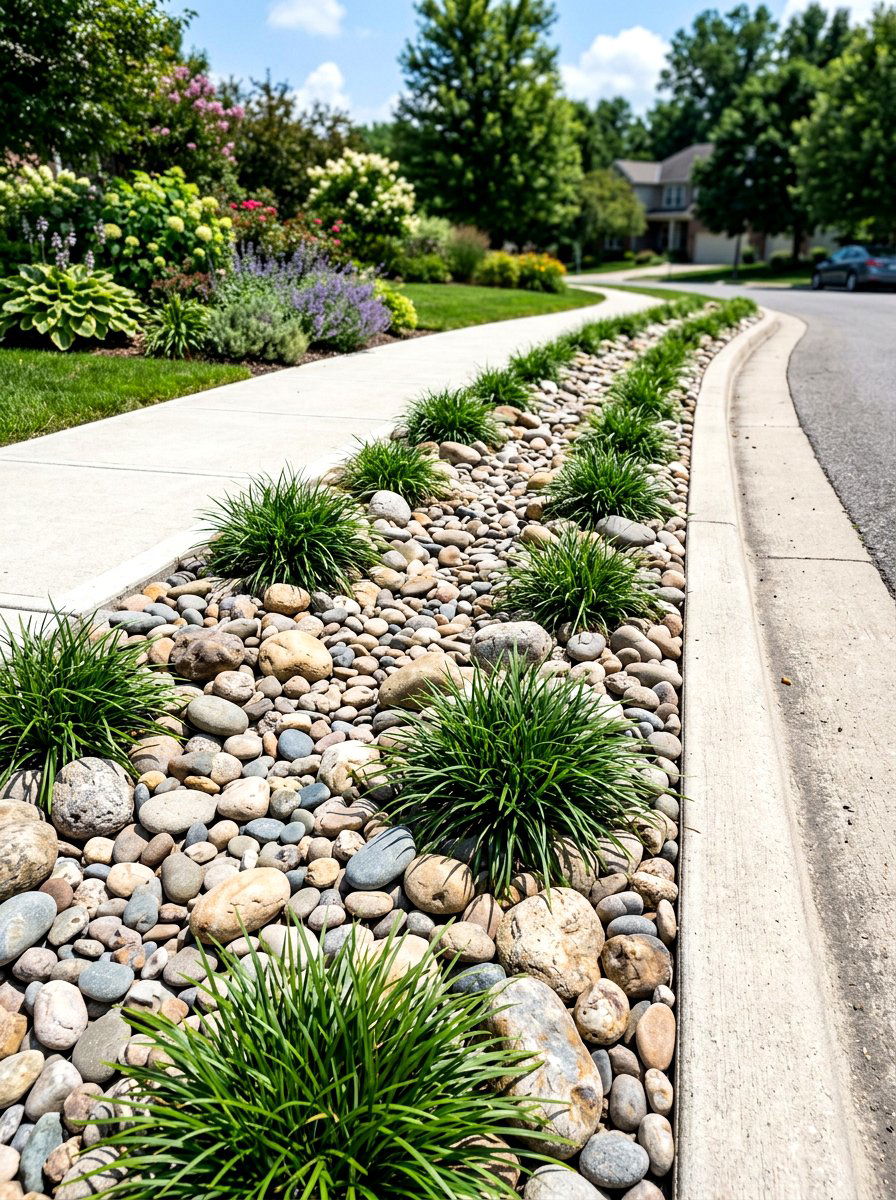
River rocks provide a smooth, natural-looking groundcover that is both durable and visually appealing in a parking strip. Using various sizes of stones mimics the look of a dry creek bed, which can be enhanced by planting tufts of grass or small shrubs at irregular intervals. This type of hardscaping is excellent for areas that receive a lot of runoff, as the rocks stay in place much better than light wood mulch. It also provides a very stable surface for anyone who needs to step onto the strip from the street. The neutral tones of the river rock complement almost any home color and provide a timeless, clean aesthetic.
26. Rose bush sidewalk border
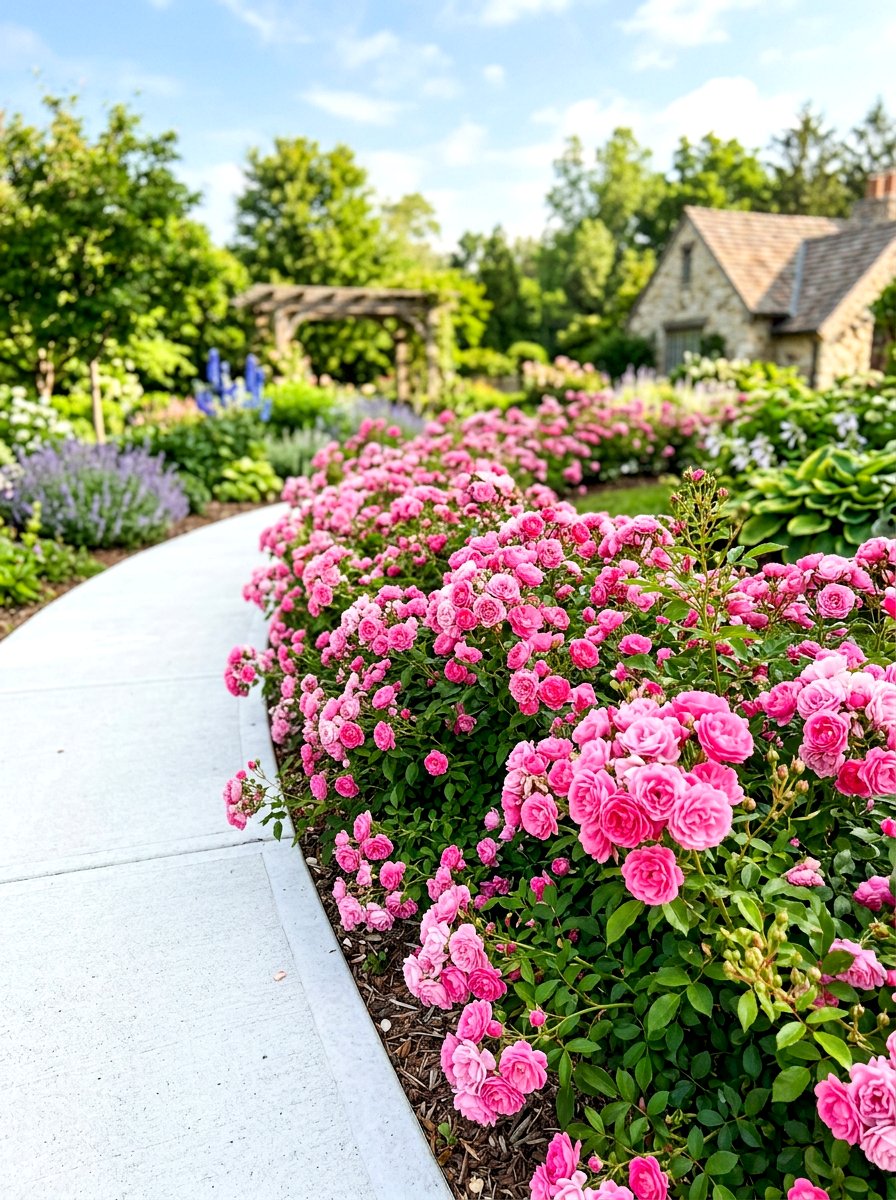
Planting a row of low-growing shrub roses can turn a plain sidewalk into a romantic and fragrant promenade. Modern landscape roses, like the Knock Out series, are specifically bred to be disease-resistant and to bloom continuously from late spring until frost. While traditional roses can be fussy, these varieties are tough enough to handle the heat and poor soil typical of a roadside location. It is important to choose thornless or low-thorn varieties to ensure they are safe for pedestrians and pets walking by. The dense growth of these shrubs also provides a soft green barrier that helps define your property line with beautiful, repeating bursts of color.
27. Stepping stone parking strip
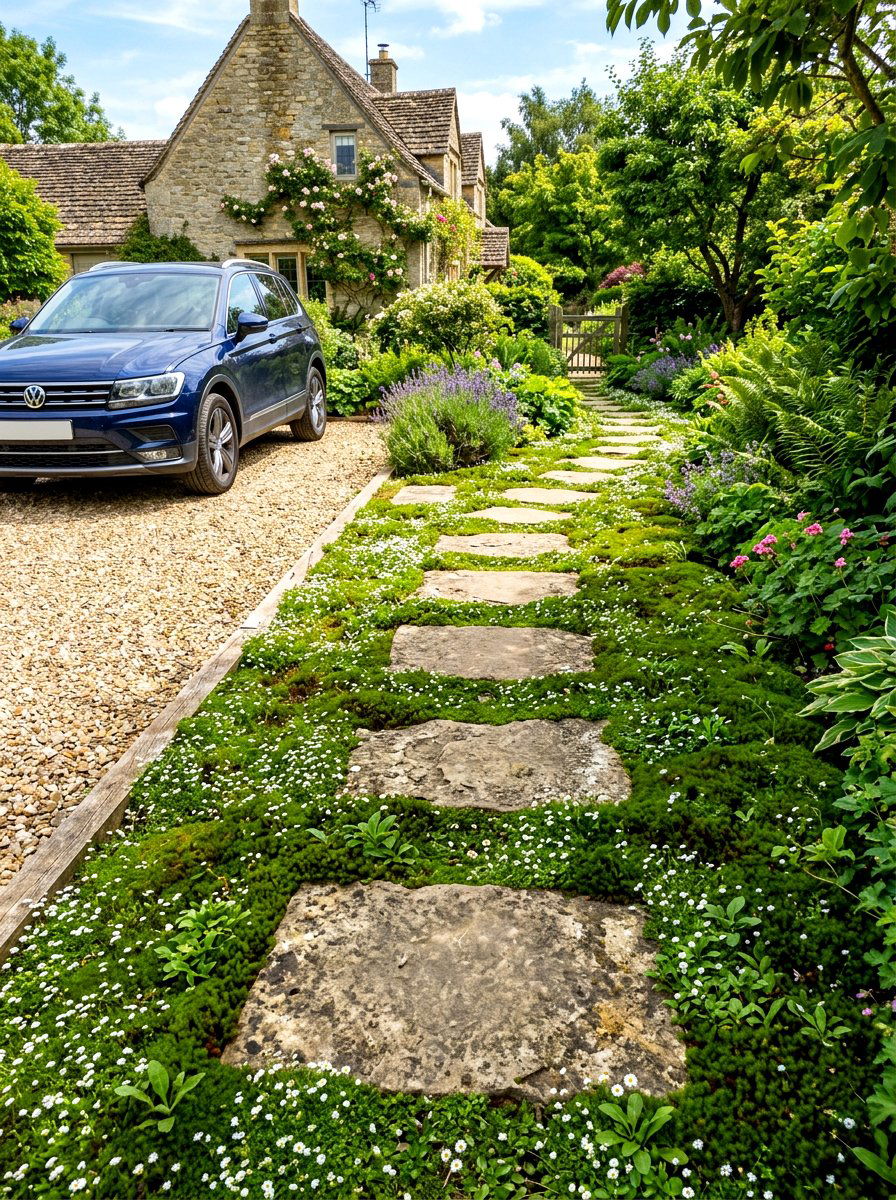
Incorporating stepping stones into your curbside garden is a practical design choice that protects your plants from being crushed by foot traffic. By placing large, flat stones at regular intervals, you create a dedicated path for people moving between the street and the sidewalk. You can surround these stones with a variety of low-growing groundcovers or fine gravel to create a mosaic-like effect. This design acknowledges the reality of how the space is used while still allowing you to have a beautiful, green garden. It is a thoughtful way to manage the transition from car to curb without sacrificing the overall aesthetic of your landscaped parking strip.
28. Japanese zen hellstrip
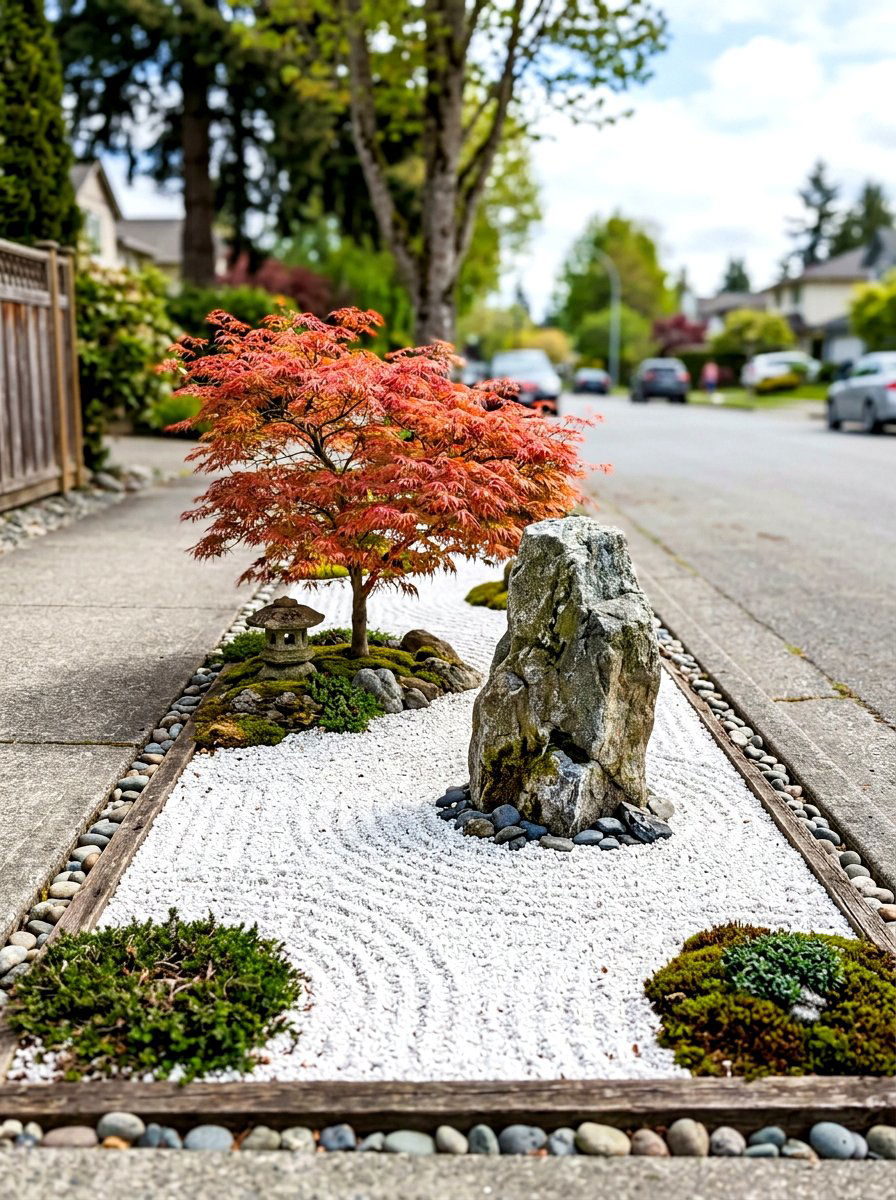
A Japanese-inspired Zen garden brings a sense of peace and minimalist beauty to the busy environment of a city street. This design style often features raked gravel, large focal stones, and carefully shaped plants like Japanese forest grass or dwarf maples. The emphasis is on balance, texture, and simplicity, creating a miniature landscape that feels like a quiet sanctuary. Using a limited color palette of greens, greys, and browns keeps the design focused and prevents it from feeling cluttered in a small space. This sophisticated approach turns a mundane planting strip into a refined work of art that can be enjoyed by everyone who passes by your home.
29. Thyme and moss sidewalk strip
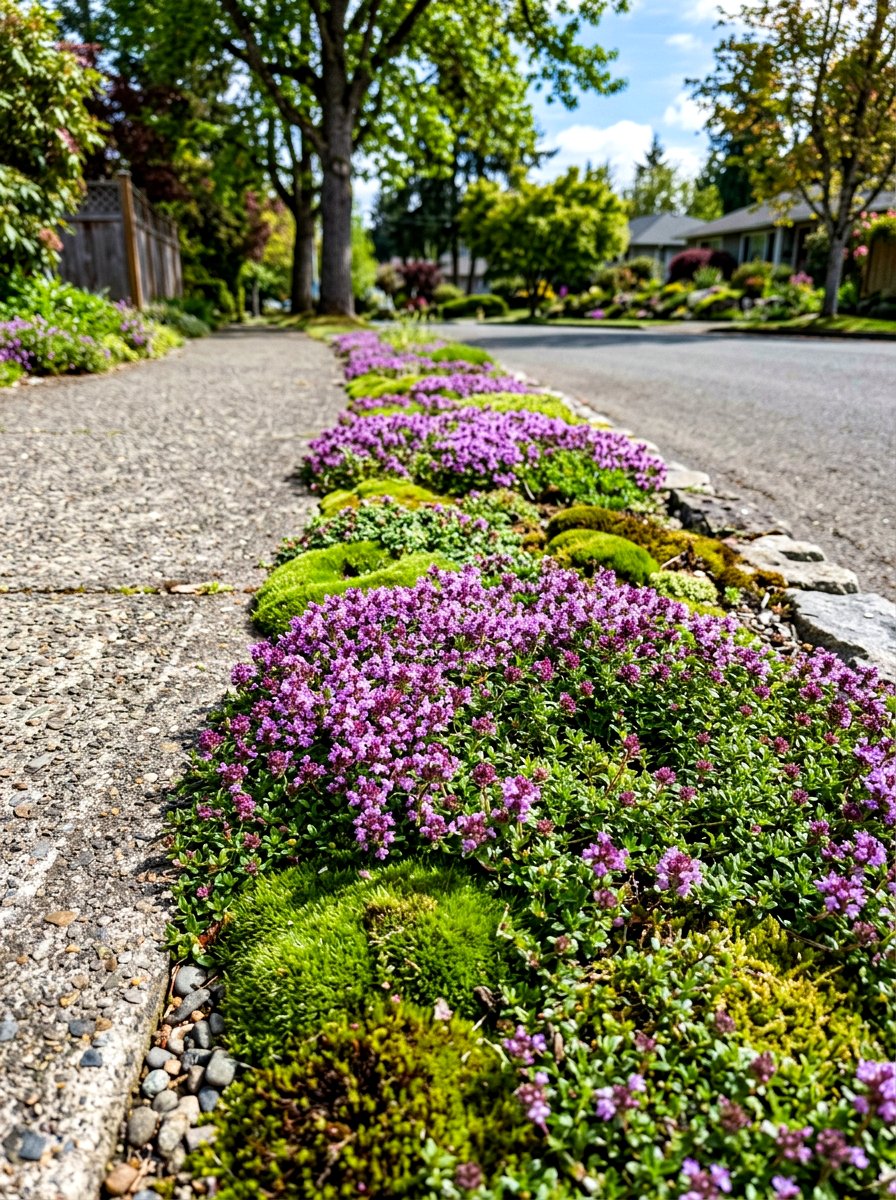
For a very low-profile and tactile experience, a strip filled with creeping thyme and mosses creates a soft, plush carpet underfoot. Creeping thyme is an excellent choice for sunny spots because it is incredibly hardy and releases a wonderful fragrance when stepped on. In shadier areas, various types of moss can create a vibrant green, velvety surface that looks like it belongs in a fairytale. These plants stay very close to the ground, so they never obstruct views or look overgrown. This design is perfect for homeowners who want a green space that looks like a lawn but requires none of the mowing or heavy watering.
30. Small flowering tree boulevard
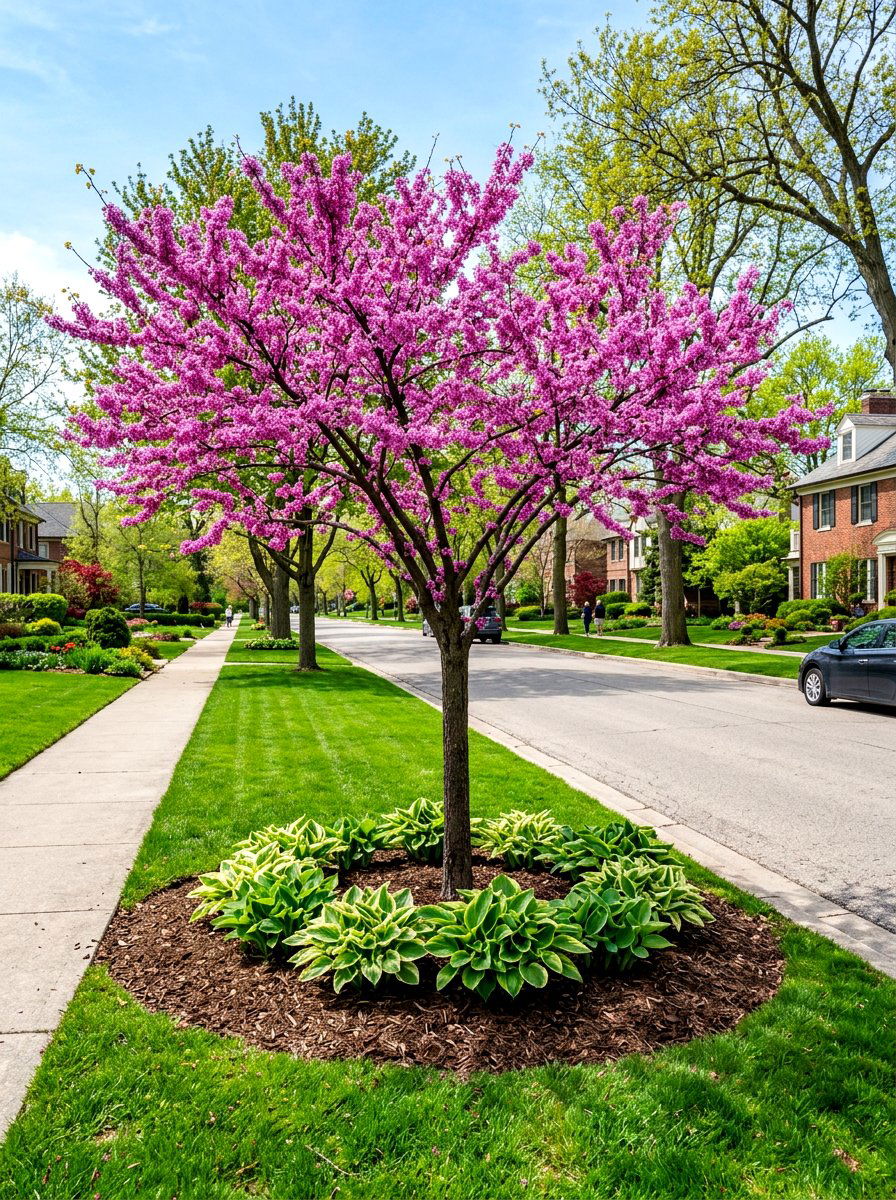
Adding a small ornamental tree to your curbside strip provides vertical interest and helps shade the sidewalk during hot summer days. Choosing varieties like serviceberry, redbud, or crabapple ensures that the tree stays at a manageable size and doesn't interfere with power lines or block the street view. These trees often provide beautiful spring blossoms, attractive fall foliage, and even berries that support local bird populations. Planting a few low-growing shrubs or perennials around the base of the tree creates a complete, layered look that feels like a professional parkway. This design adds significant structural value and long-term beauty to your home’s street-facing entrance.
Conclusion:
Designing a curbside planting strip is a rewarding way to reclaim unused space and enhance the beauty of your neighborhood. By moving away from traditional high-maintenance grass and embracing hardier, more creative options, you can create a garden that thrives in even the toughest conditions. Whether you choose the structural elegance of a Zen garden or the vibrant chaos of a wildflower meadow, your new hellstrip will serve as a welcoming transition between the public street and your private home. Remember to check local regulations before you begin digging to ensure your design meets safety standards. With a little effort, your curbside strip can become the most beautiful part of your entire landscape.

Related posts: