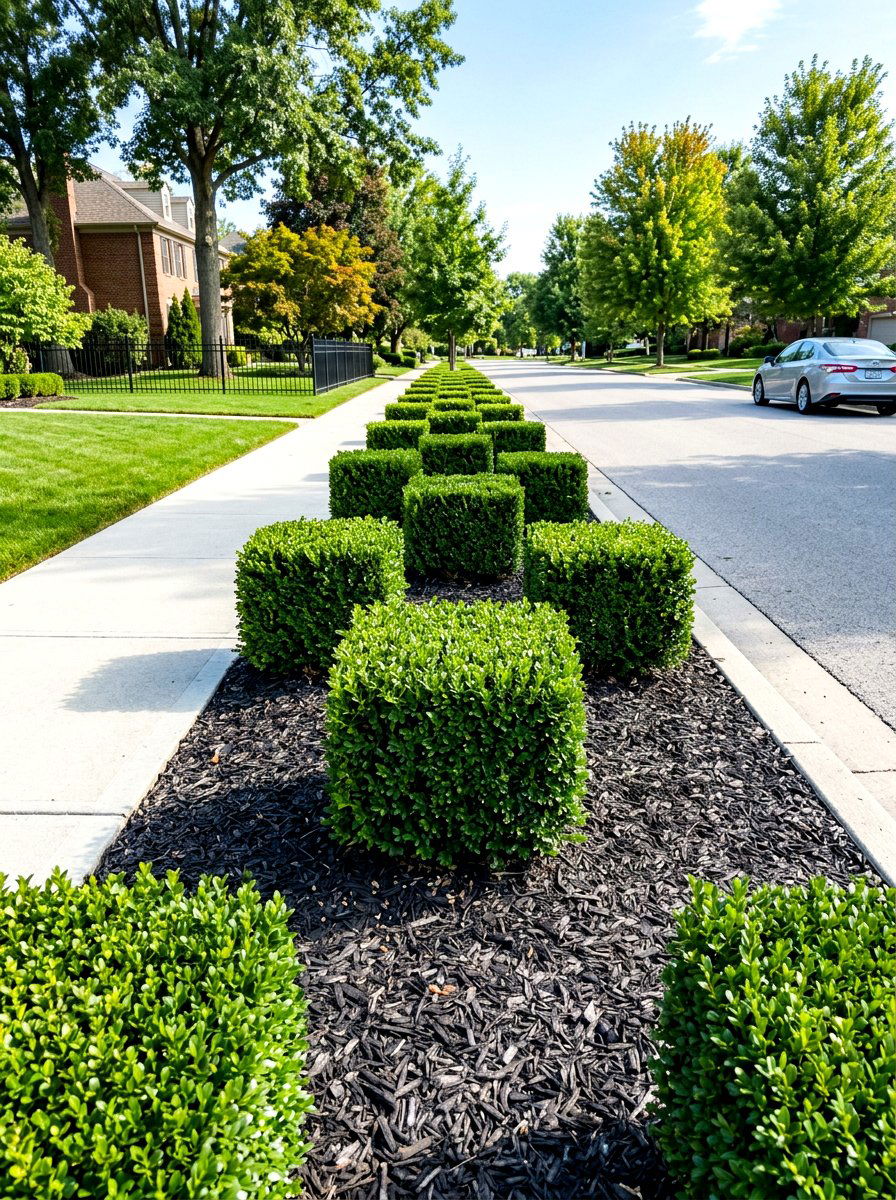
Creating a beautiful transition between your elevated wooden deck and the surrounding lawn is the secret to a professional-looking landscape. Many homeowners struggle with a deck that feels disconnected from the yard, often looking like a large wooden island sitting on a patch of grass. By implementing thoughtful border plantings, you can ground the structure and soften the sharp architectural lines with lush greenery and vibrant colors. These borders serve multiple purposes, from providing much-needed privacy to masking the unsightly space underneath the deck boards. Whether you prefer a manicured look or a wild, cottage-inspired atmosphere, the right combination of plants will transform your outdoor living area into a cohesive and inviting sanctuary for relaxation.
1. Ornamental grasses
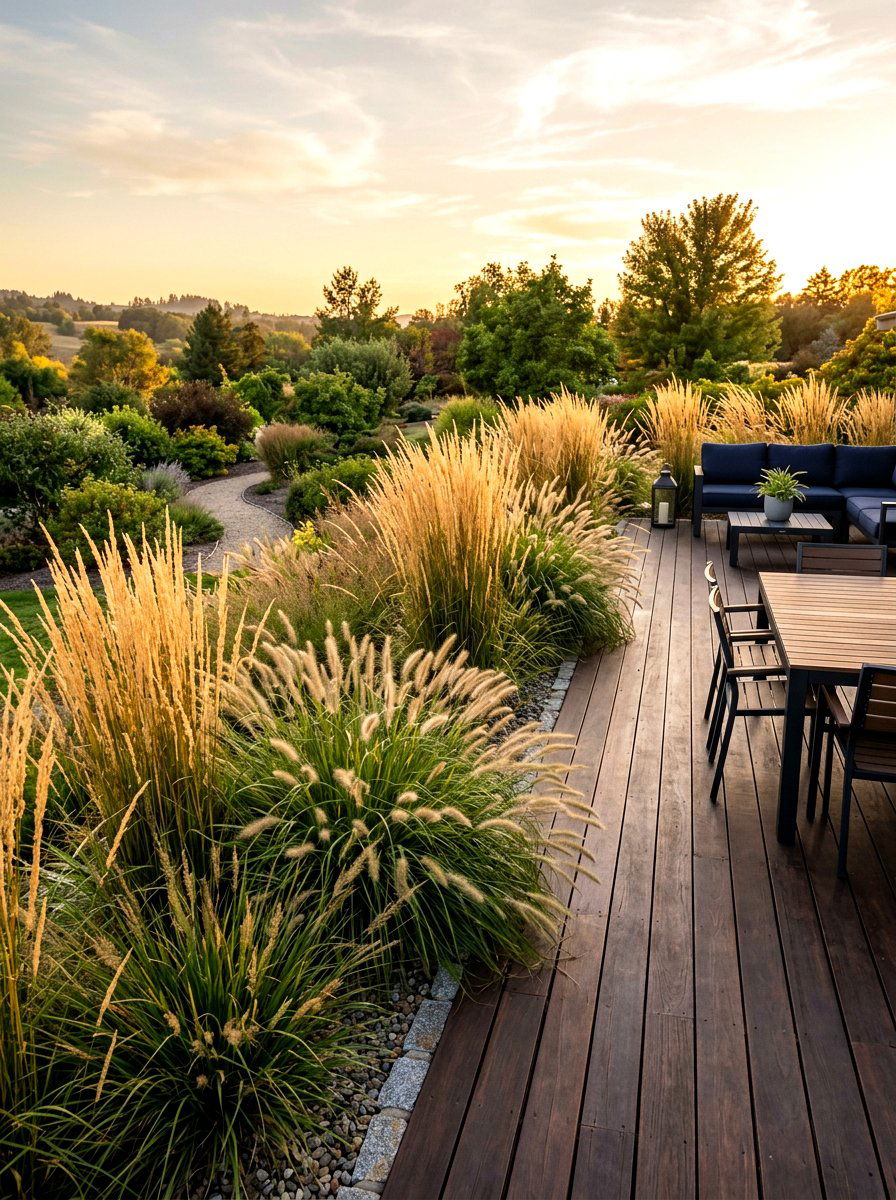
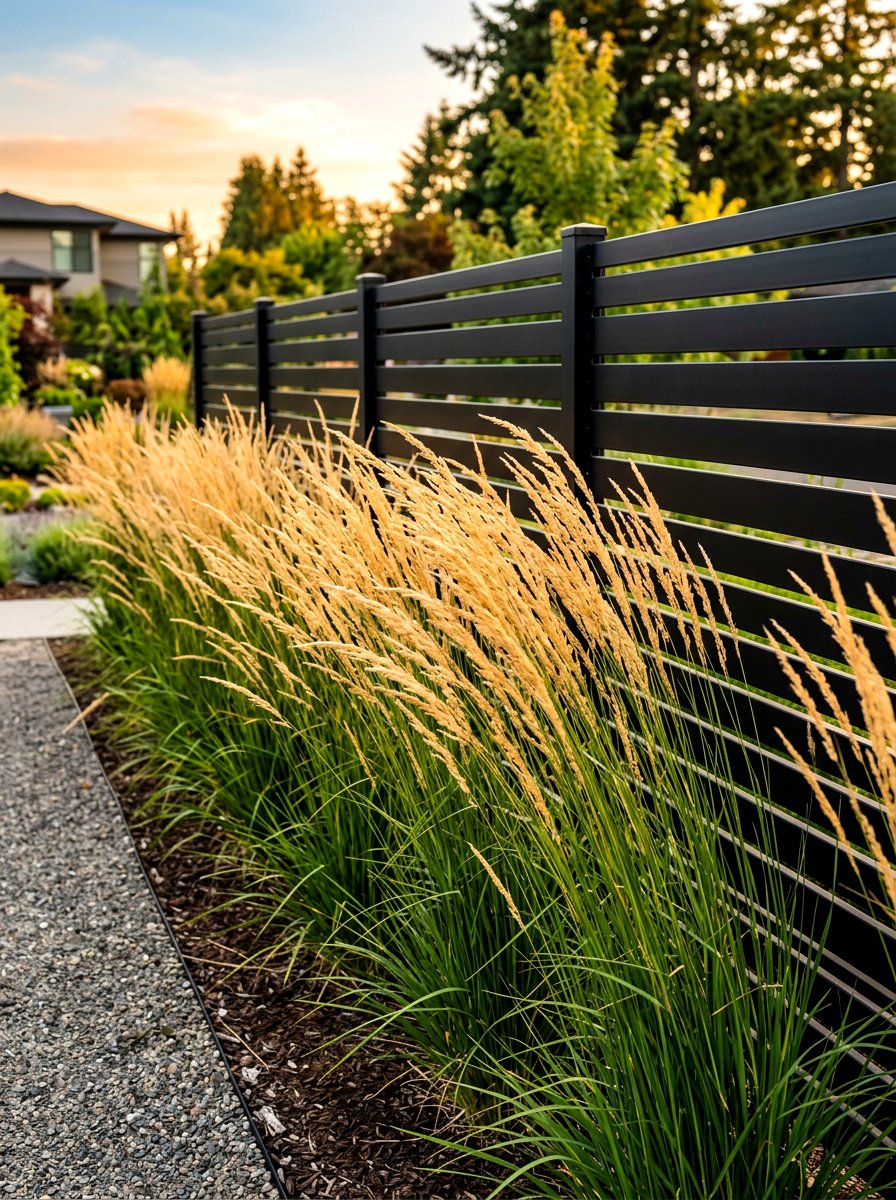
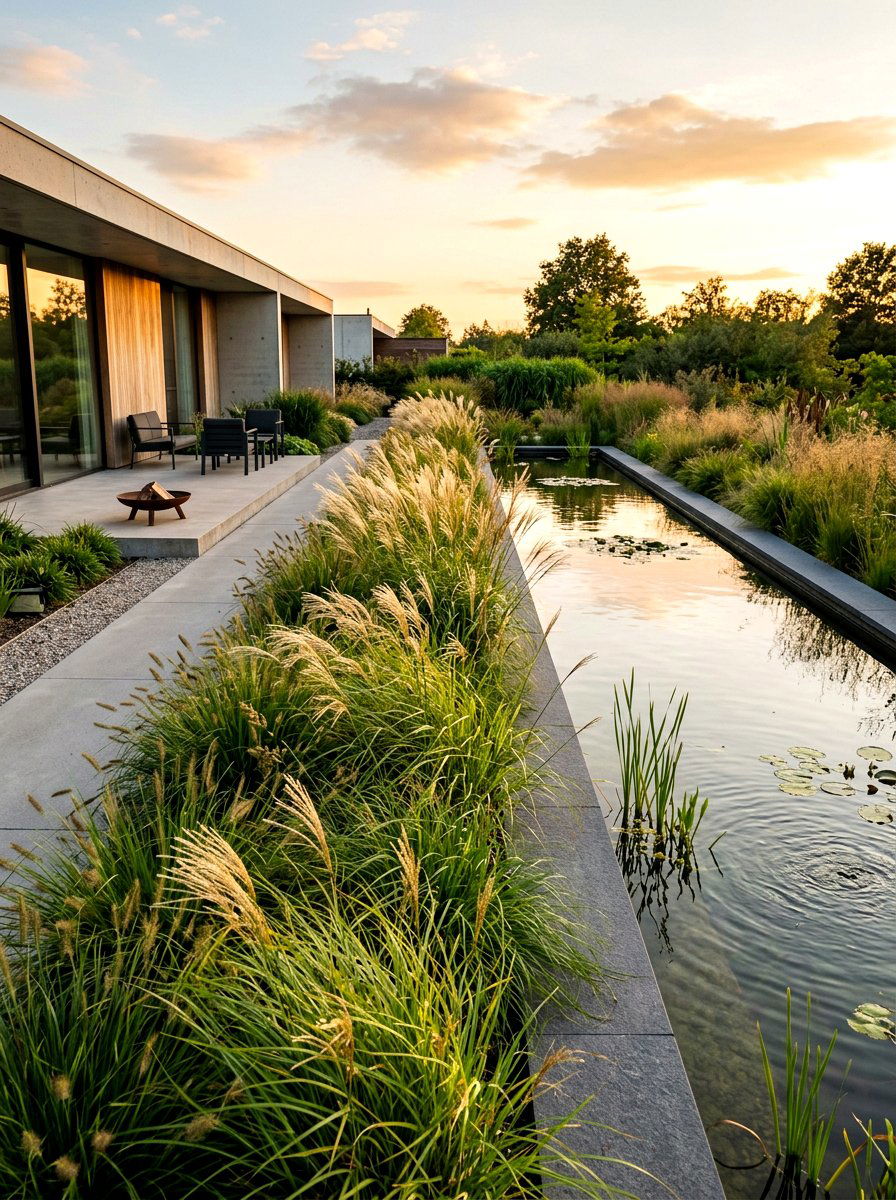
Imagine walking onto your deck and hearing the gentle rustle of tall blades swaying in the breeze. Ornamental grasses are a fantastic choice for framing a wooden deck because they add texture and movement that hard structures lack. You can choose varieties like fountain grass or feather reed grass to create a soft, blurred boundary between the timber and the yard. These plants are generally very low maintenance and provide visual interest throughout the changing seasons, even in winter when they turn a golden tan. Planting them in clusters creates a more natural look that mimics a wild prairie. This approach helps the deck blend seamlessly into the rest of the landscape while providing a sense of enclosure without blocking views.
2. Boxwood hedge
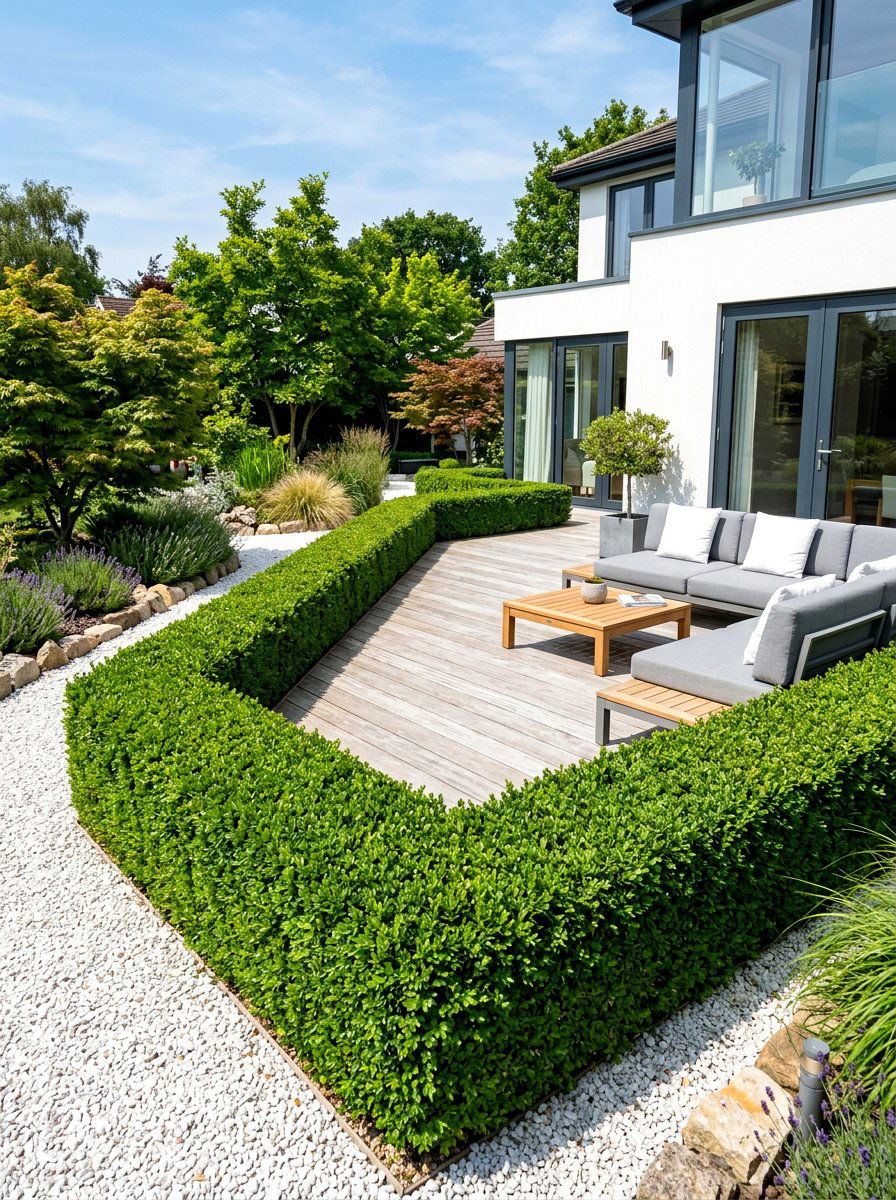
Are you looking for a clean and structured look that stays green throughout the entire year? A low-growing boxwood hedge is a classic choice for a deck border because it provides a formal architectural edge that feels very intentional and sophisticated. These evergreen shrubs can be pruned into sharp geometric shapes or left slightly shaggy for a more relaxed feel. They work exceptionally well for masking the gap between the deck floor and the ground, hiding any structural supports or storage areas beneath. Because they are slow-growing, they won't quickly overwhelm your space or require constant maintenance. You can pair them with white gravel for a modern, high-contrast look that defines your outdoor area beautifully.
3. Lavender plants
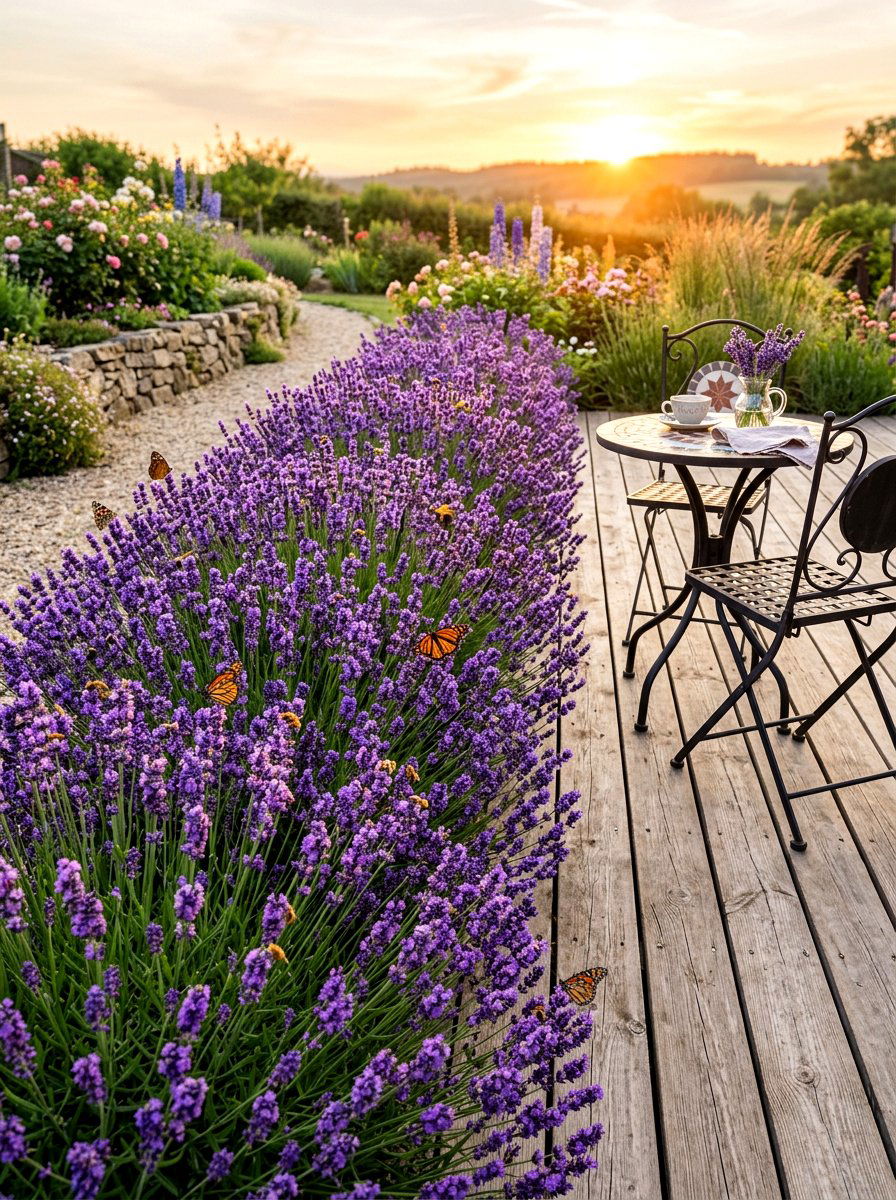
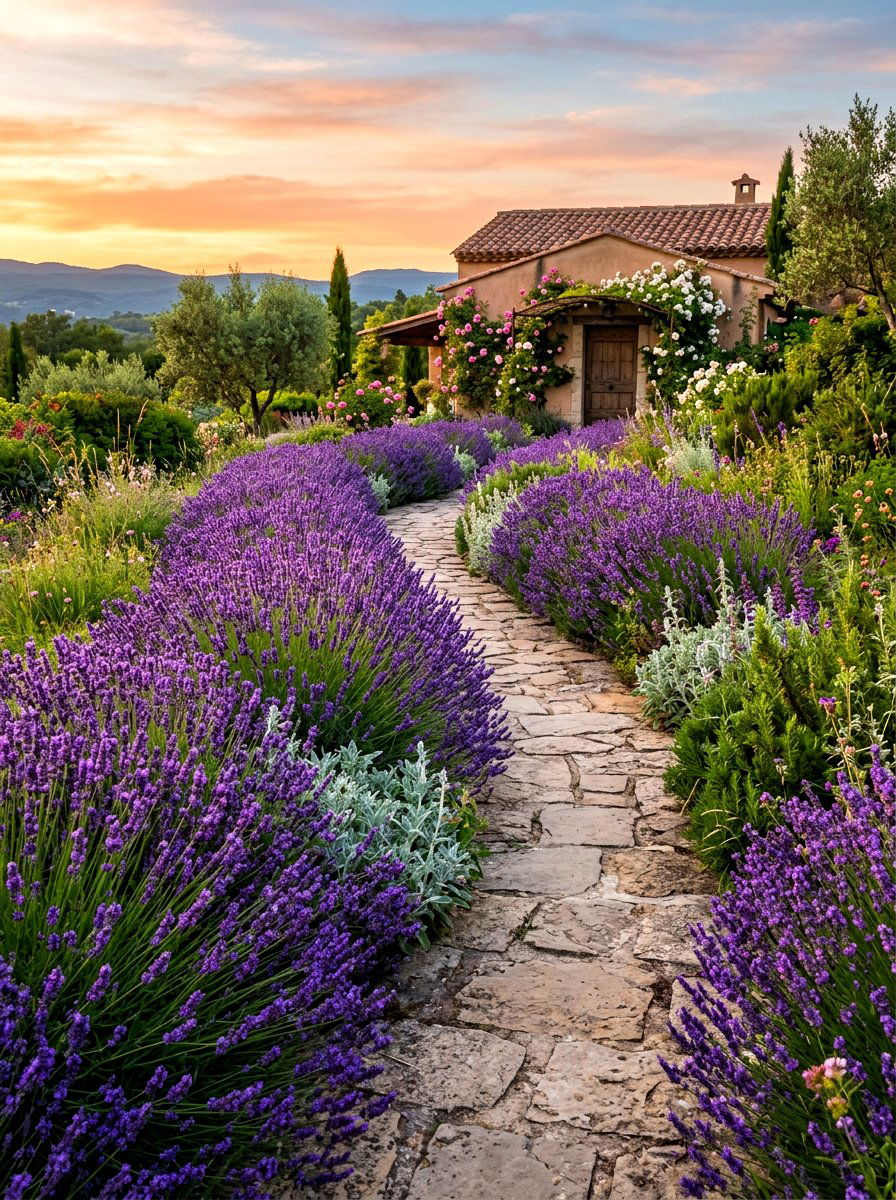
Does the idea of a fragrant breeze hitting your deck every time you step outside sound like a dream? Planting a thick border of lavender around the perimeter of your deck creates a sensory experience that is hard to beat. The silvery-green foliage and vibrant purple spikes not only look stunning but also attract helpful pollinators like bees and butterflies. Lavender thrives in the sun and well-drained soil, making it a perfect companion for sunny, south-facing decks. As you sit near the edge, the scent will naturally waft upward, creating a calming atmosphere for your morning coffee or evening cocktails. This hardy perennial is excellent for creating a Mediterranean vibe that feels both rustic and refined.
4. Hydrangea bushes
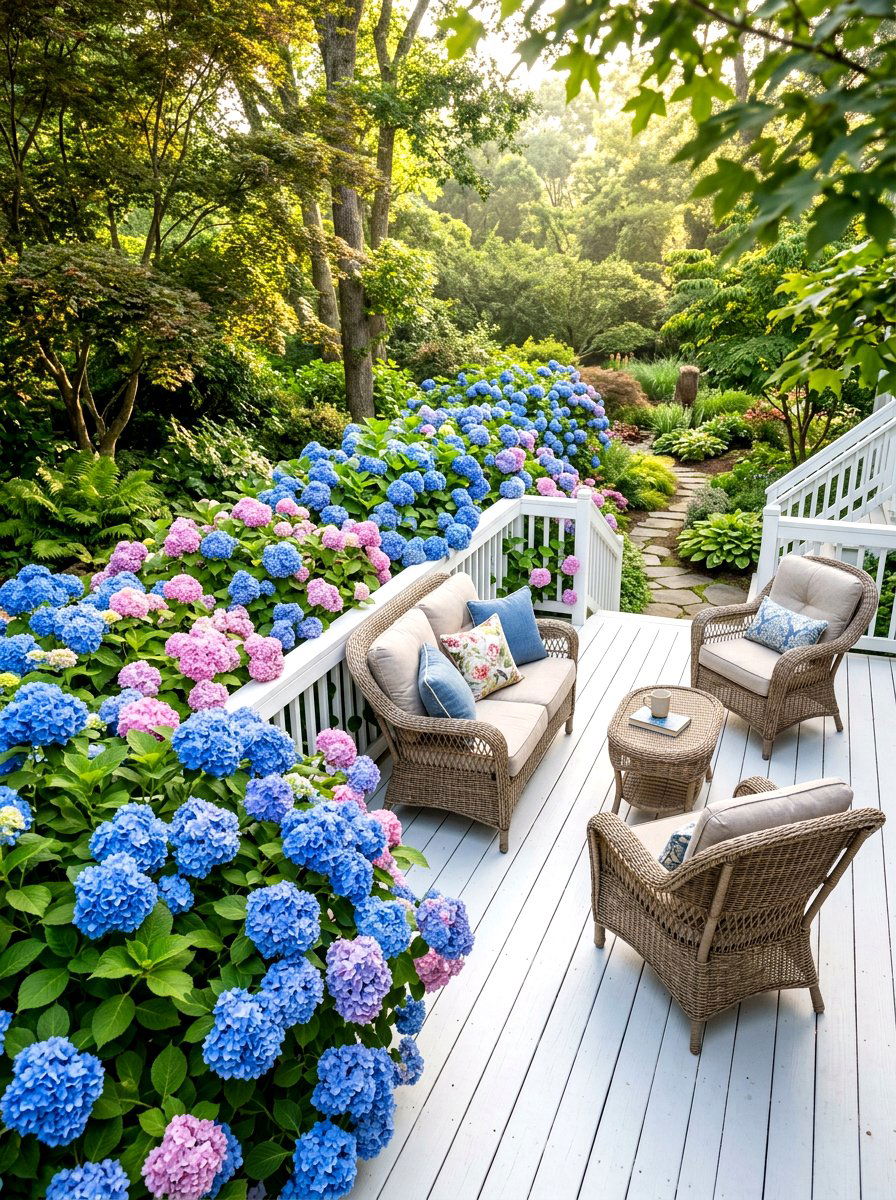
Could there be anything more charming than massive, colorful blooms hugging the edge of your outdoor seating area? Hydrangeas are a favorite for deck borders because their large leaves and heavy flowers create a dense, lush wall of color. Depending on your soil pH, you can enjoy shades of deep blue, vibrant pink, or crisp white that last for several months. They are particularly effective for taller decks where you need substantial height to bridge the gap between the railing and the ground. Because they love a bit of afternoon shade, they are ideal for decks located on the east side of a home. Their romantic, billowy appearance turns any basic wooden platform into a high-end garden retreat.
5. Raised planter beds
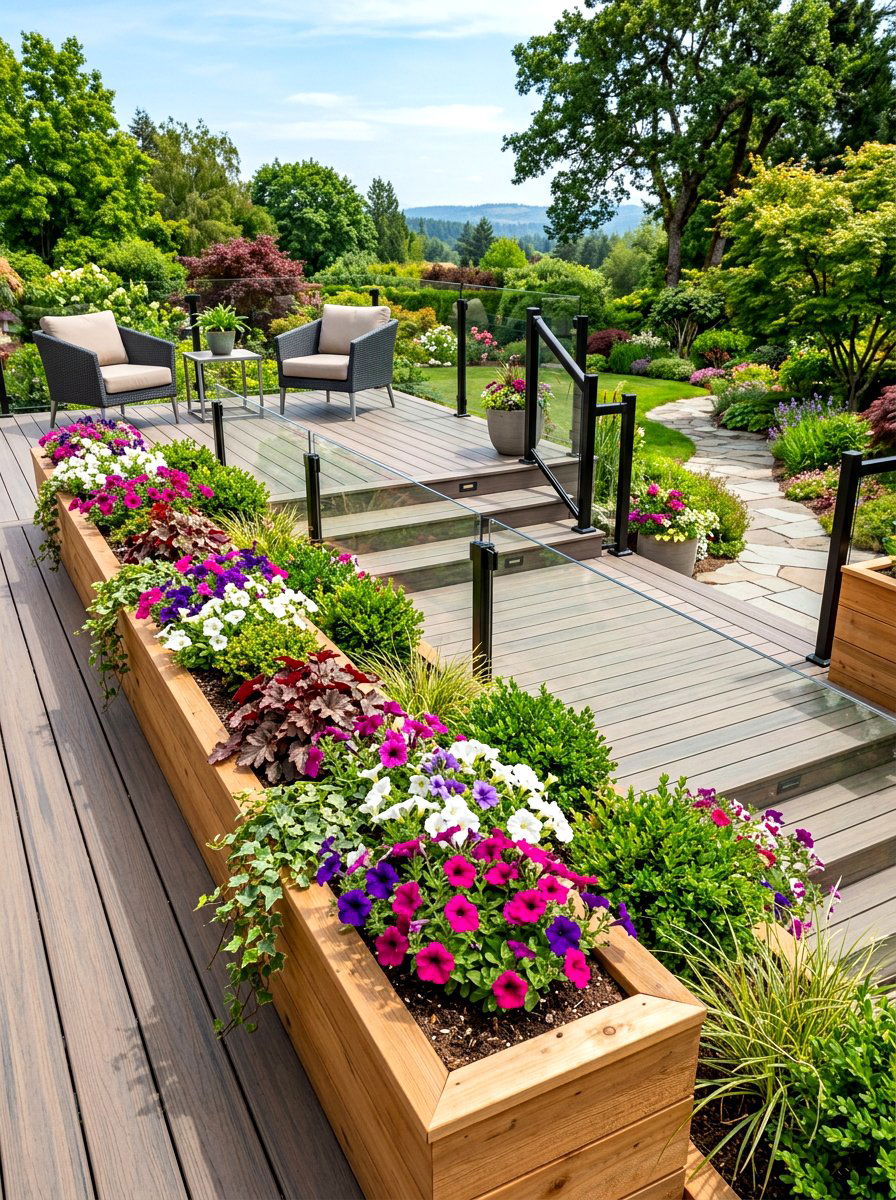
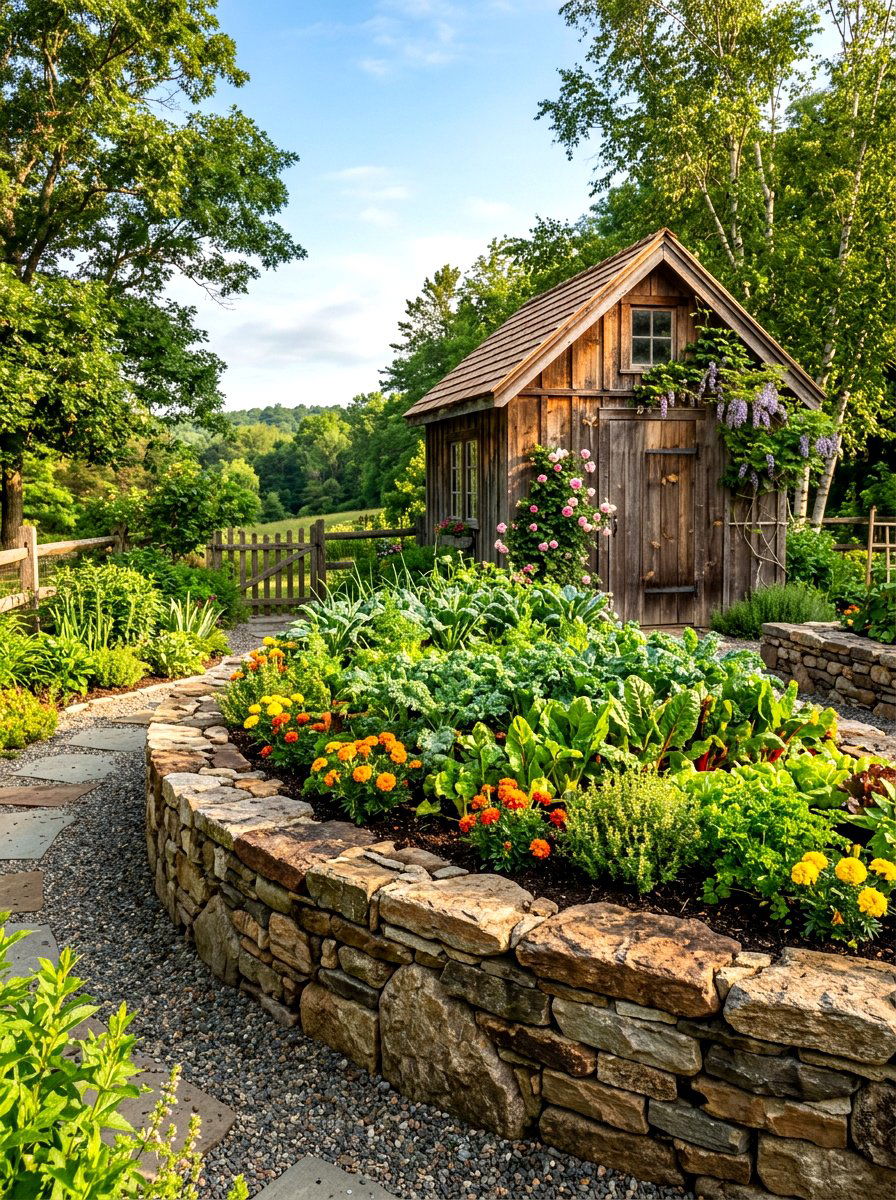
Sometimes the best way to define a deck border is to elevate the soil itself using integrated timber or stone boxes. Raised planter beds allow you to control the soil quality perfectly and bring the greenery closer to eye level when you are seated. You can build these directly against the deck rim joists to create a seamless transition that looks like part of the original construction. This setup is perfect for growing a mix of trailing vines, upright flowers, and structural shrubs all in one place. By using the same material for the planters as the deck boards, you create a unified architectural statement. It also makes gardening much easier on your back since the plants are higher up.
6. Tropical foliage
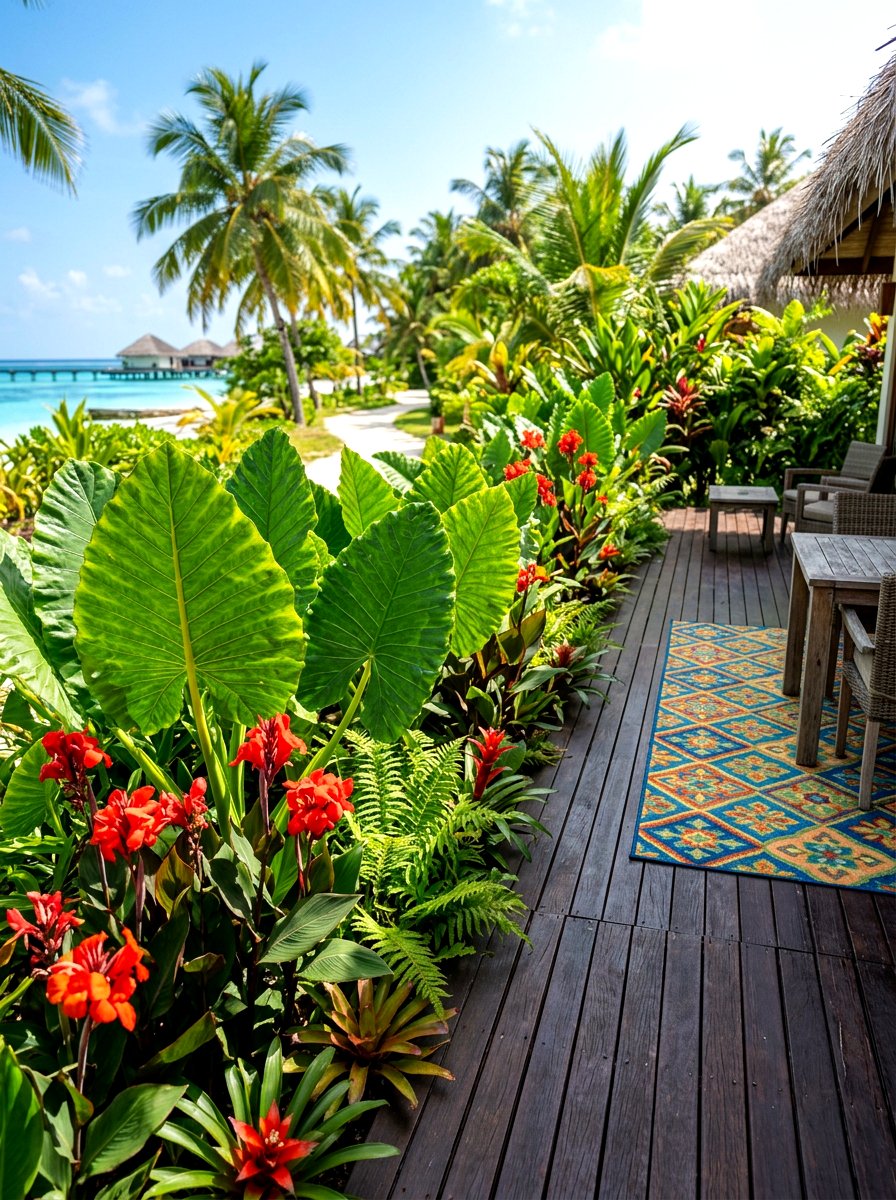
Do you want to feel like you are on a permanent vacation every time you step into your backyard? Using large-leafed tropical plants like canna lilies, elephant ears, or hardy hibiscus can give your deck an exotic, lush atmosphere. These plants grow rapidly during the warm months and create a dense screen that offers incredible privacy from neighbors. Their bold shapes and oversized leaves provide a dramatic contrast to the straight lines of deck planks and railings. Even if you live in a cooler climate, you can treat many of these as annuals or bring them indoors for the winter. The vibrant greens and hot floral colors make for a high-energy space that is perfect for summer parties.
7. Native wildflowers
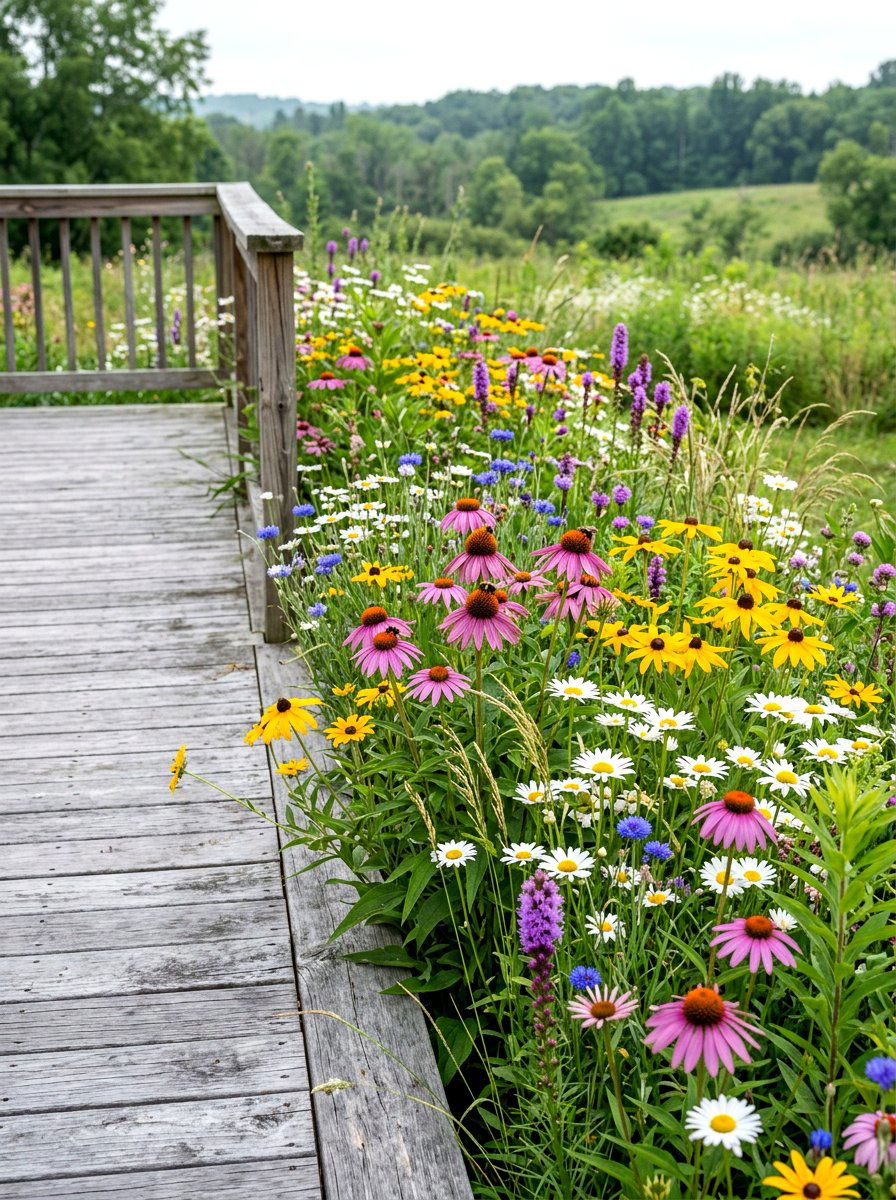
Are you interested in a deck border that supports the local ecosystem while requiring very little water or fertilizer? A wildflower border is an eco-friendly and beautiful way to surround your deck with a changing tapestry of colors. By choosing species that are native to your specific region, you ensure that the plants will thrive with minimal intervention. These borders often look best when planted in a wide, sweeping drift that follows the natural curves of the deck. Throughout the summer, you will be treated to a revolving door of blooms that attract birds and beneficial insects. This style is perfect for a rustic or farmhouse-style home where a perfectly manicured lawn feels out of place.
8. Shade loving hostas
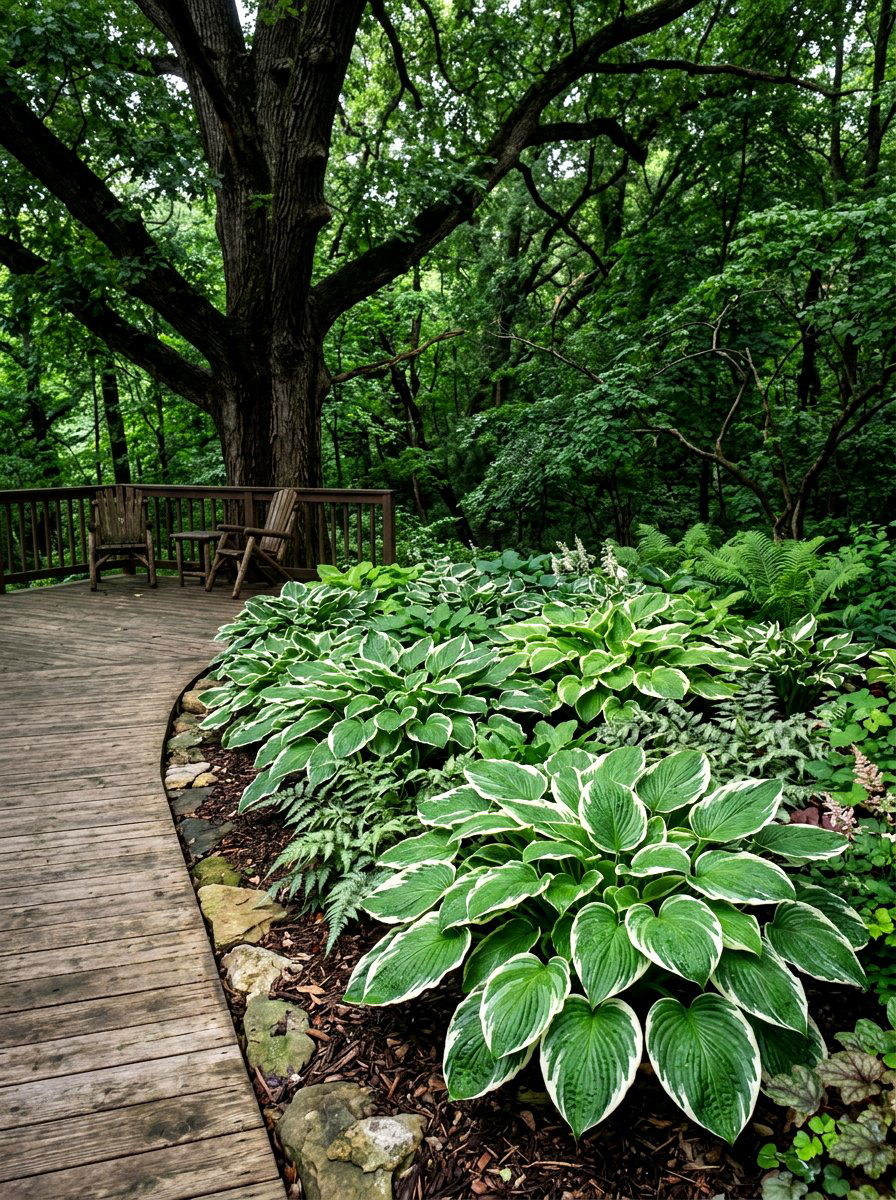
What should you do if your deck is tucked under large trees or faces the north side of your house? Hostas are the ultimate solution for shaded deck borders because they offer an incredible variety of leaf colors, sizes, and textures. From deep forest green to bright chartreuse and variegated white edges, these plants create a cool and calming environment. They are excellent at filling in gaps and suppressing weeds, making them a very practical choice for busy homeowners. When planted in large groups, they create a thick carpet of foliage that looks incredibly lush and expensive. Their subtle flowers appear in mid-summer, but the stunning leaves are the real star of the show all season.
9. Succulent garden
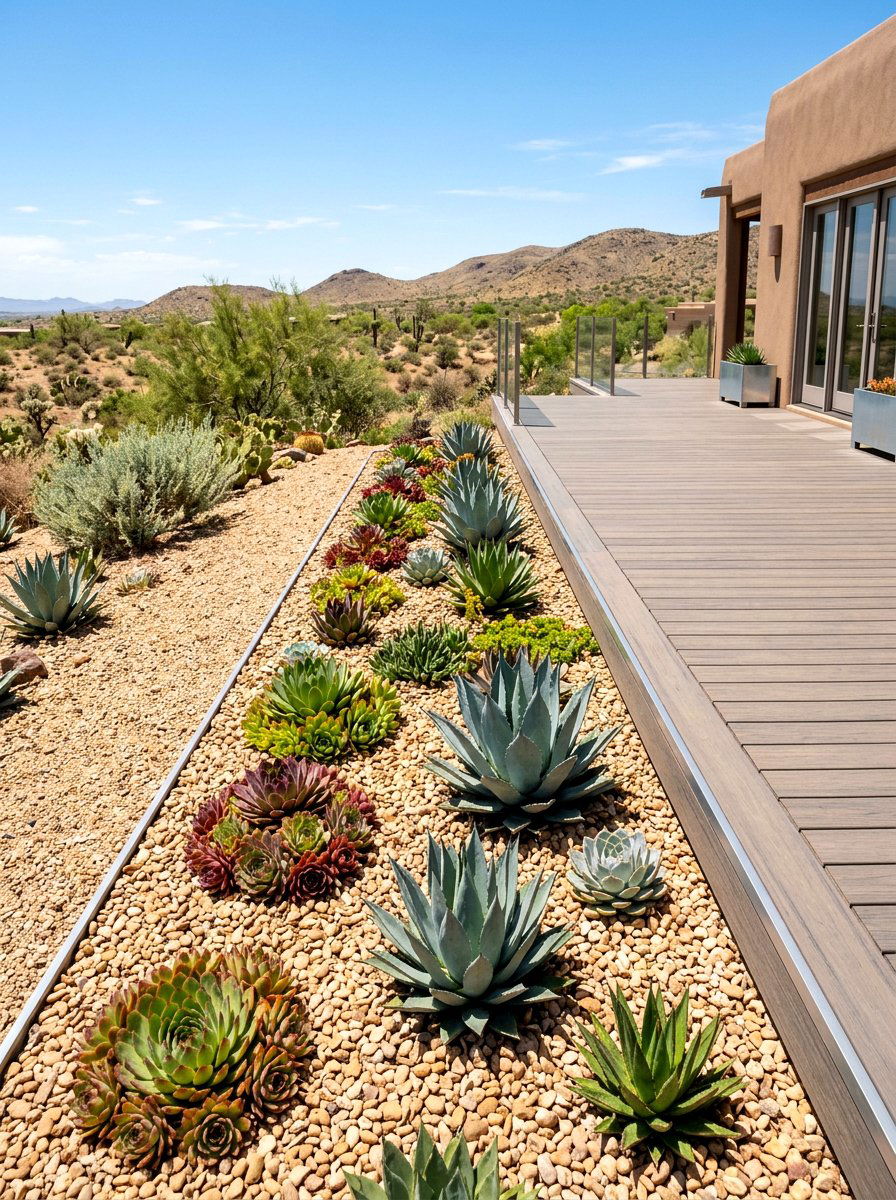
If you live in a dry climate or simply want a border that you never have to water, a succulent garden is the way to go. Using a mix of hens and chicks, sedums, and larger agave plants creates a desert-chic look that is very trendy and modern. These plants often have fascinating geometric shapes and muted, dusty colors that look beautiful against natural wood or composite decking. You can use decorative rocks or pebbles as a mulch to keep the roots cool and provide a clean finish. Because succulents are low-growing, they won't block your views of the yard, making them ideal for ground-level decks or the lower tier of a multi-level structure.
10. Privacy screen plants
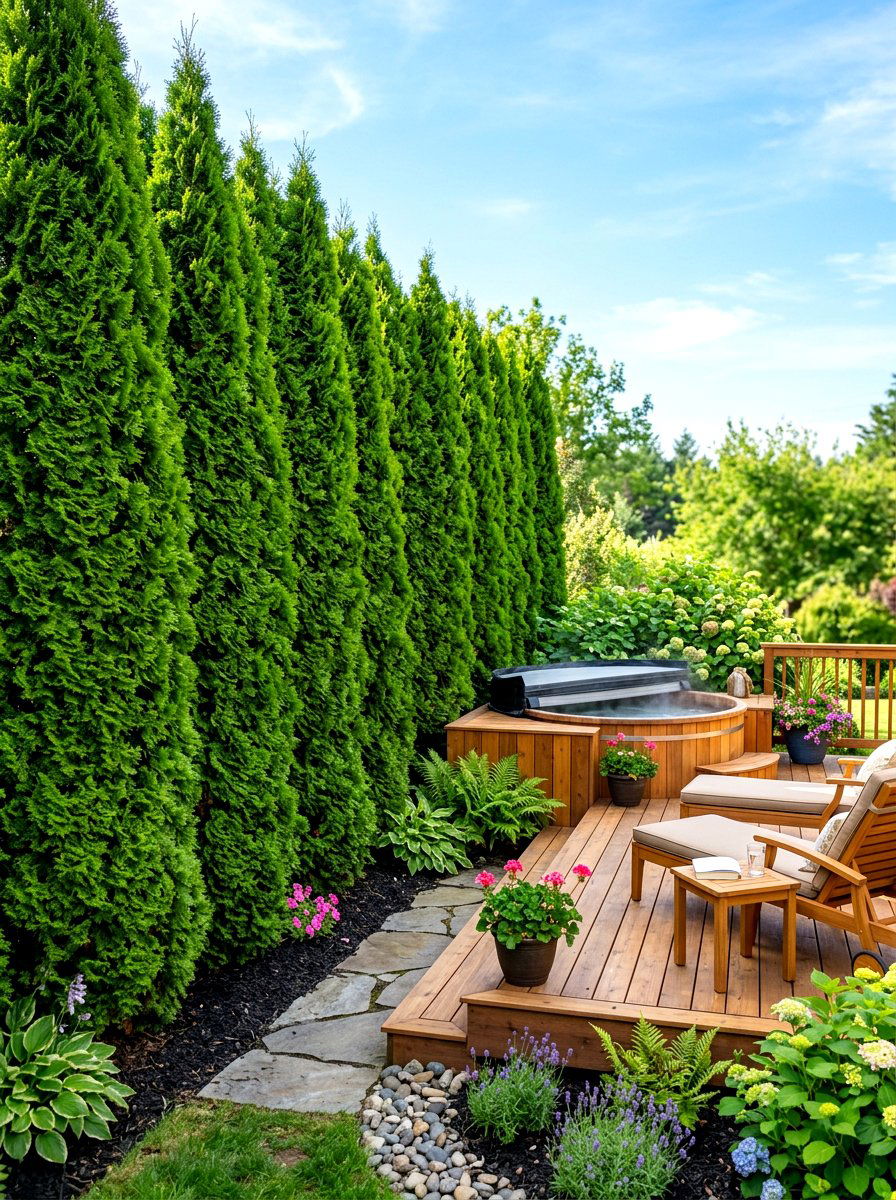
Do you feel a bit too exposed when you are trying to relax on your deck in the afternoon? Using tall, narrow plants like arborvitae or "Sky Rocket" junipers can create a living wall that blocks the view of the street or nearby houses. Unlike a wooden fence, a plant-based privacy screen feels breathable and soft, adding life to your perimeter rather than just a hard barrier. You can space them closely together to form a solid hedge or leave gaps for a more airy feel. These evergreens provide year-round coverage, ensuring that your deck remains a private sanctuary even during the winter months when deciduous trees have lost all of their leaves.
11. Climbing jasmine
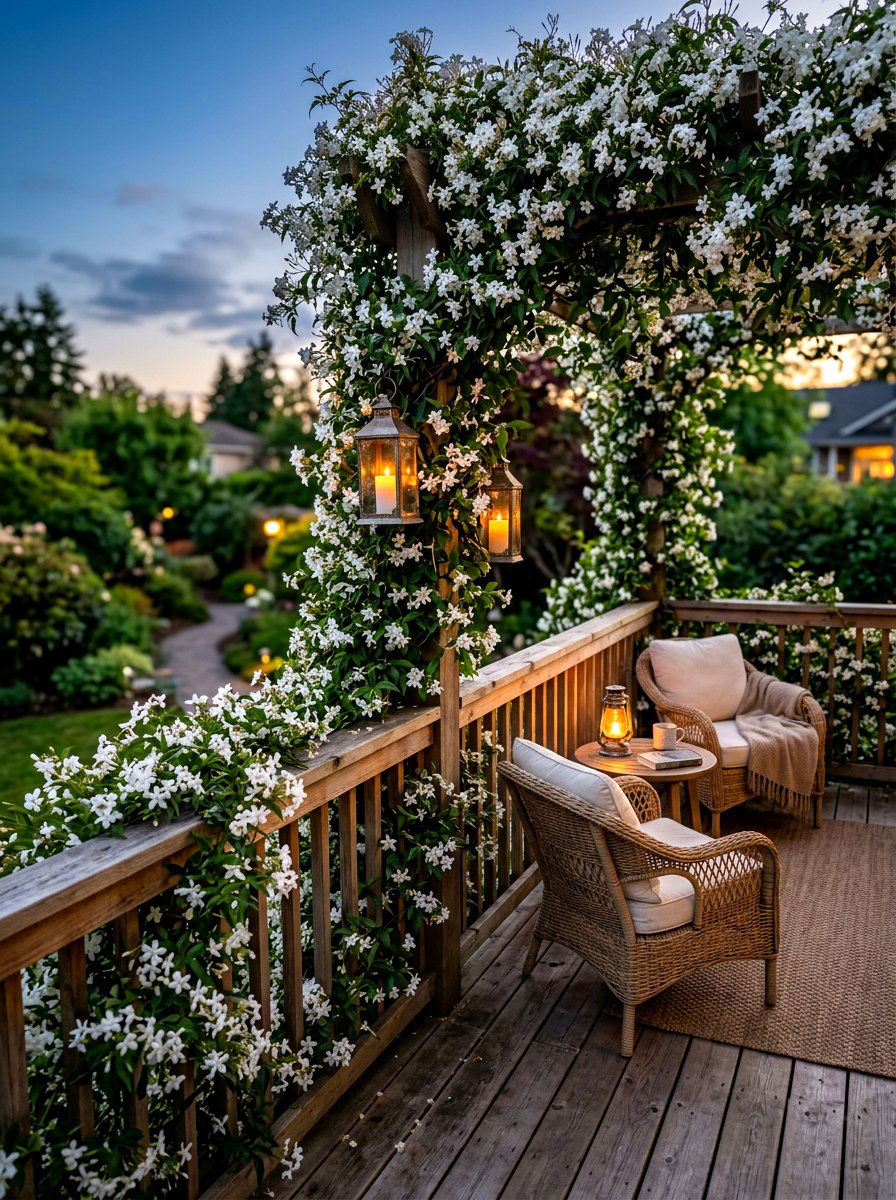
Have you ever considered using the railing of your deck as a support for beautiful, sweet-smelling vines? Star jasmine is a vigorous climber that can be trained to grow along the base of your deck and up the posts, surrounding you with white flowers. The scent is particularly strong in the evening, making it a wonderful addition if you enjoy spending time outside after the sun goes down. The dark green, glossy leaves look beautiful even when the plant is not in bloom, providing a consistent backdrop for other garden elements. This approach integrates the planting directly into the architecture of the deck, creating a "secret garden" feel that is cozy and incredibly romantic.
12. Mixed perennials
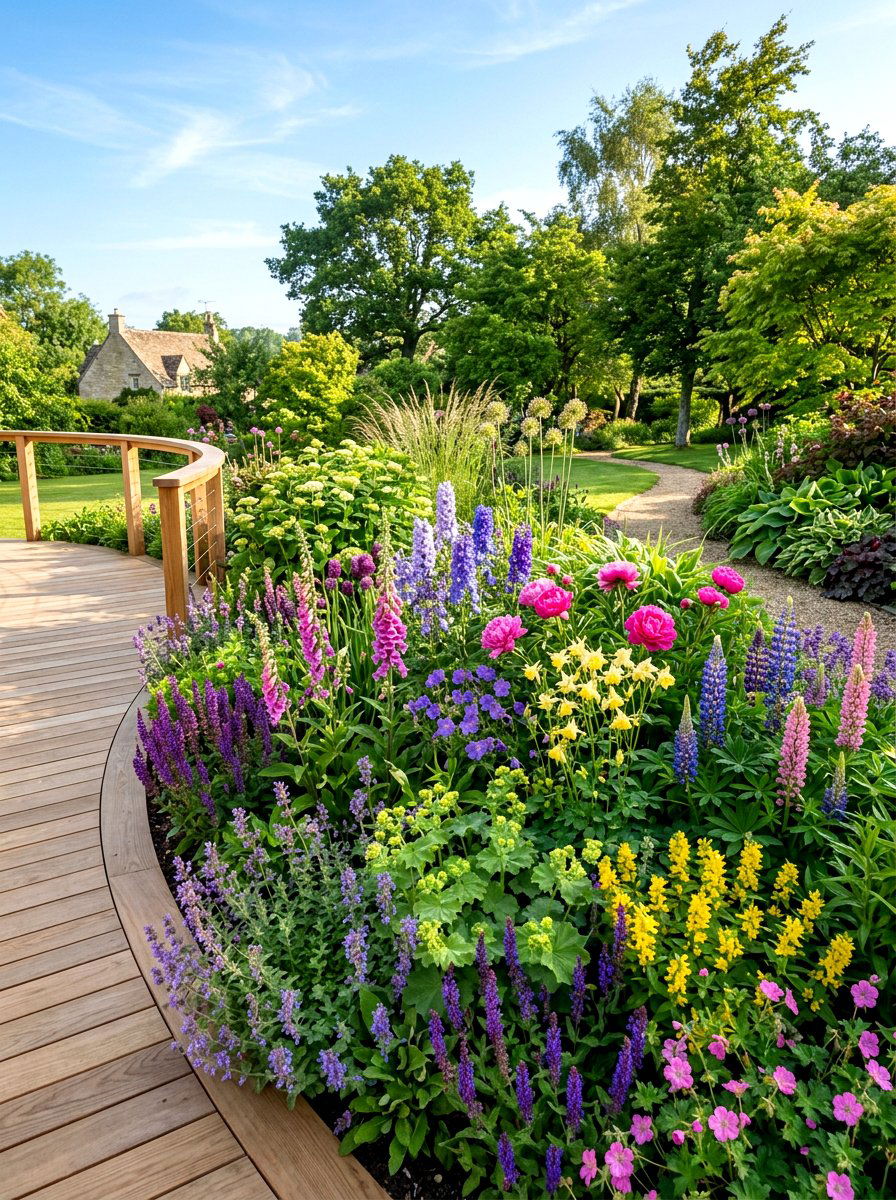
Why settle for just one type of plant when you can have a dynamic border that changes every single month? A mixed perennial border allows you to combine different heights, colors, and bloom times for a professional landscape look. You might start with low-growing creeping phlox at the very edge, followed by medium-sized coneflowers, and backed by tall black-eyed Susans. This layered approach ensures that there is always something interesting to look at from early spring until the first frost. Because these plants come back every year, your initial investment pays off over time as the border becomes fuller and more established. It is a great way to express your personal gardening style.
13. Gravel garden
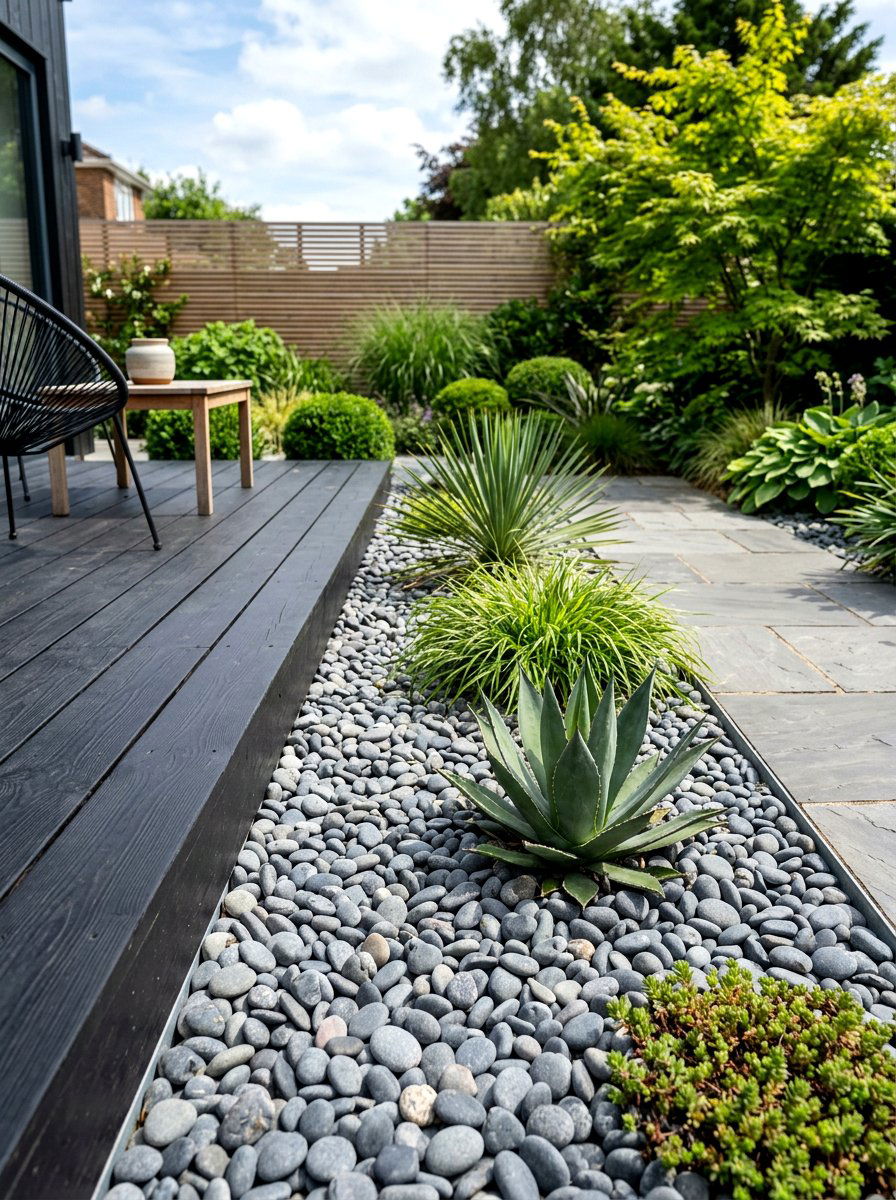
If you prefer a minimalist aesthetic that requires almost zero maintenance, a gravel garden border might be the perfect fit. Instead of traditional mulch, you can use high-quality river stones or pea gravel to surround your deck, planting only a few architectural specimens for impact. This look is very clean and prevents mud from splashing up onto your deck boards during heavy rainstorms. You might plant a few tufts of blue fescue or a single sculptural Japanese maple to serve as a focal point within the stone. This style works particularly well for modern, mid-century, or industrial-style homes where simplicity is key. It provides a sharp, tidy transition that always looks professionally maintained.
14. Tiered planters
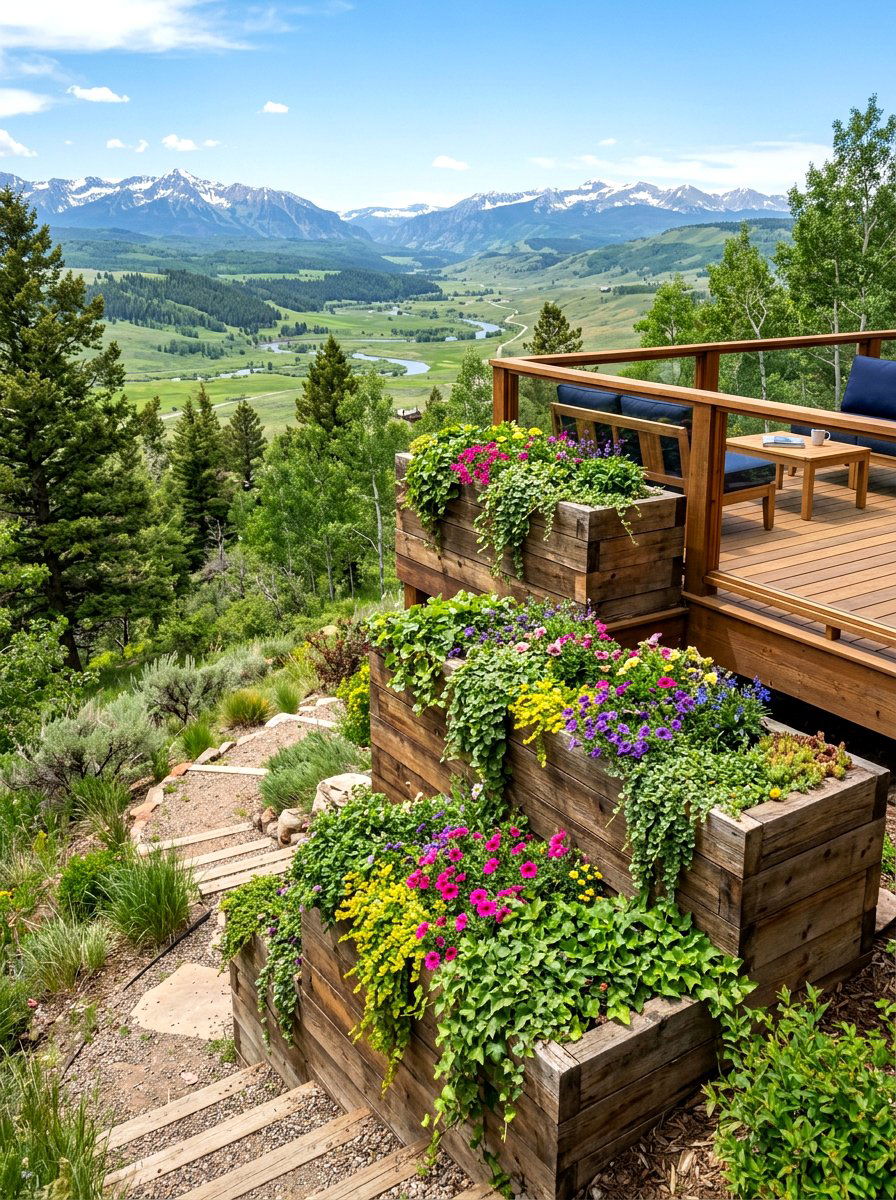
For decks that are built on a slope, tiered planters offer a functional and visually striking way to manage the elevation change. You can build successive rows of wooden boxes that step down from the deck level toward the lawn, filling each with different varieties of plants. This creates a waterfall effect of greenery that hides the steep drop-off and prevents soil erosion. Cascading plants like "Silver Falls" dichondra or trailing petunias look stunning when allowed to spill over the edges of the tiers. This design technique adds a lot of depth and dimension to your backyard, making a small space feel much larger and more complex than it actually is.
15. Japanese maple tree
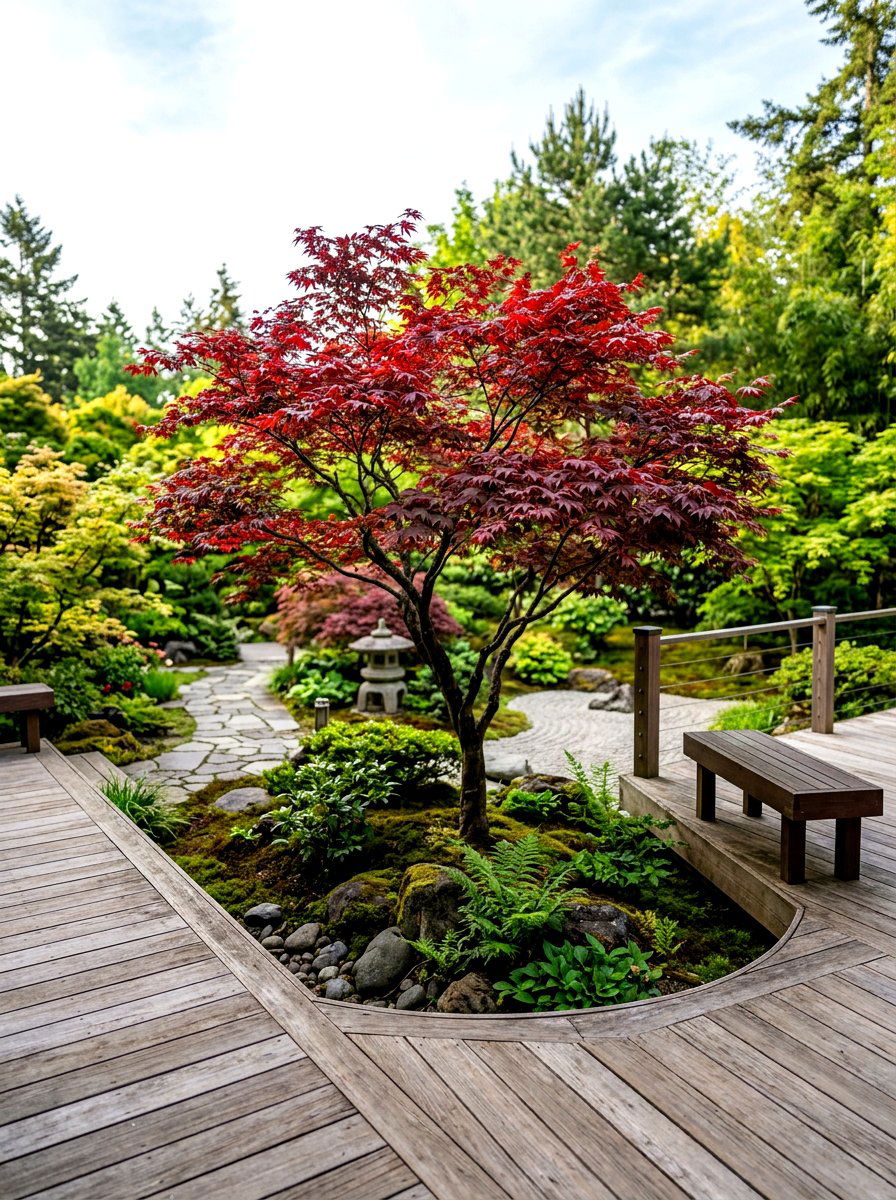
Is there a specific corner of your deck that feels a bit empty or lacks a central focal point? Planting a delicate Japanese maple tree at the edge of your deck provides instant elegance and a sophisticated vertical element. These trees are famous for their intricate leaf shapes and stunning fall colors, ranging from bright orange to deep burgundy. Because they are relatively small and slow-growing, they won 't grow large enough to damage your deck' s foundation or overshadow the entire house. The airy canopy provides a light, dappled shade that is perfect for a reading nook on the deck. It acts as a living piece of art that anchors the entire landscape design.
16. Bamboo privacy wall
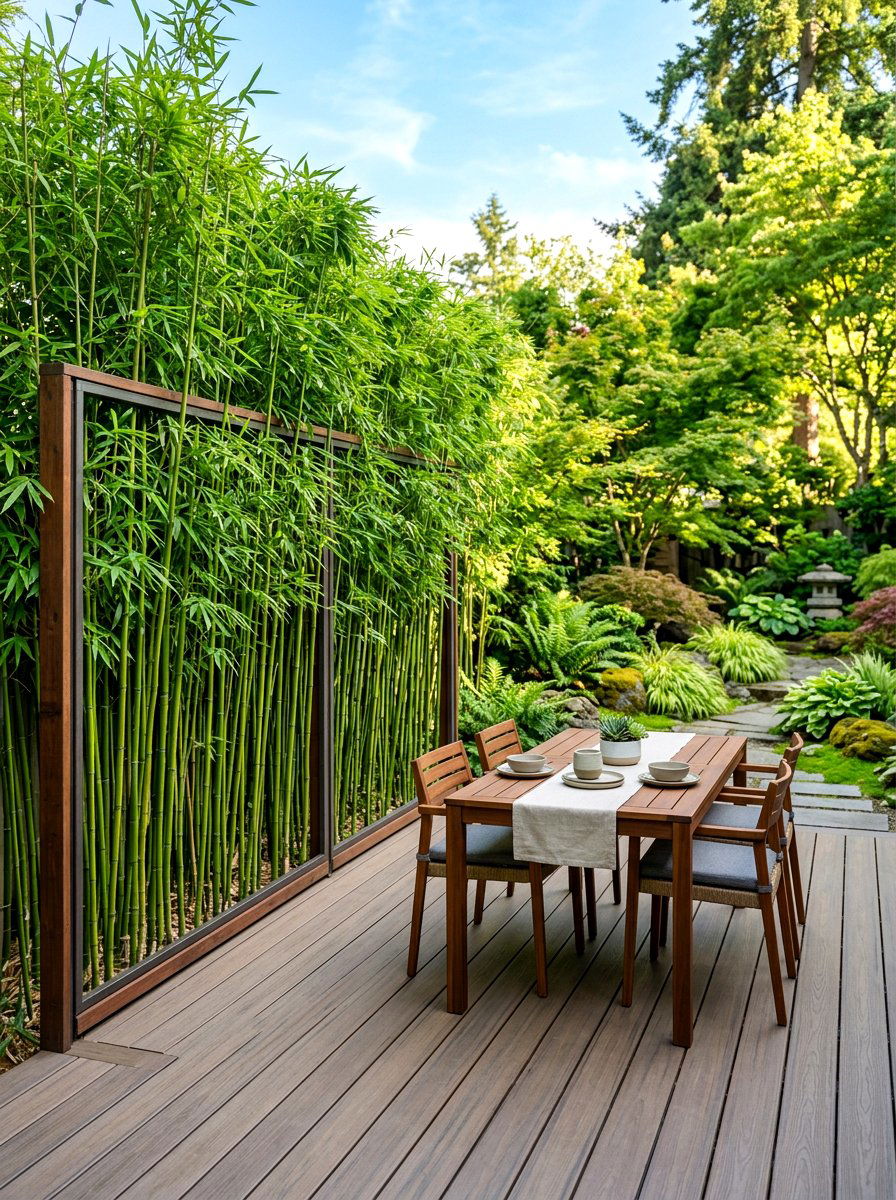
Are you looking for a fast-growing solution to block out a noisy road or an unsightly neighbor 's garage? Bamboo is an incredibly tall and dense plant that can create a lush, green wall around your deck in just a couple of seasons. It is important to use "clumping" varieties or install a root barrier to prevent it from spreading where you don' t want it. The tall, thin stalks and fluttering leaves create a peaceful, Zen-like atmosphere and a unique sound when the wind blows. This is a great way to add a vertical layer to your border that feels modern and chic. It provides a high level of privacy without the heavy feel of a traditional wall.
17. Edible herb garden
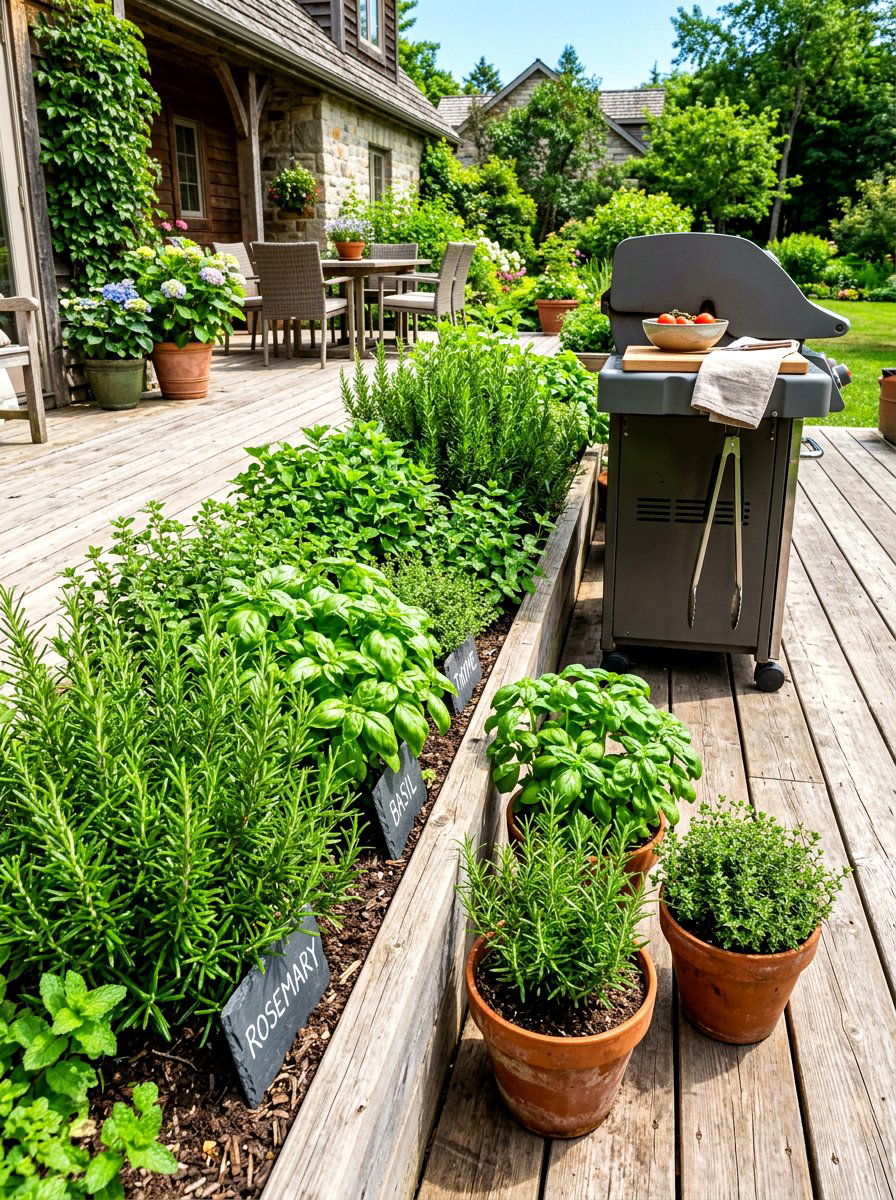
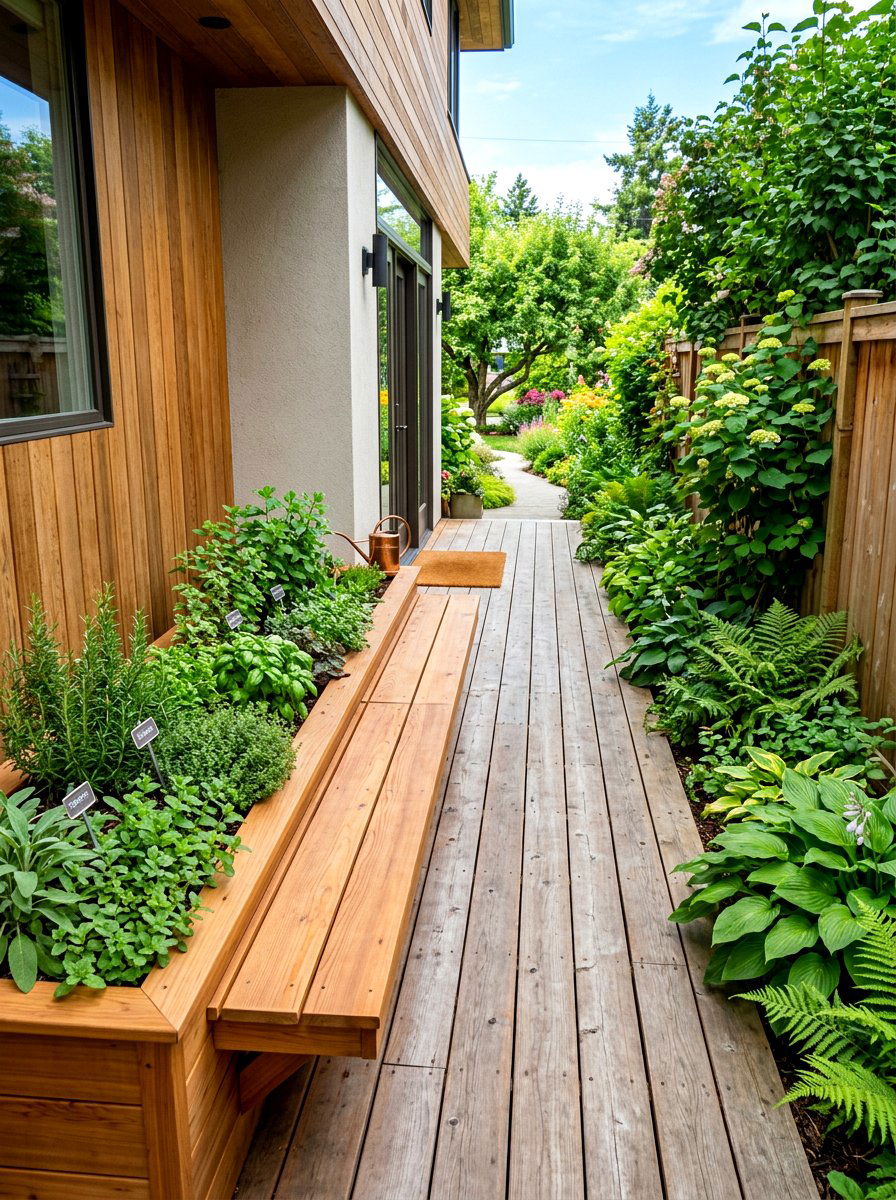
Why not make your deck border both beautiful and functional by planting a variety of culinary herbs right at the edge? Having rosemary, thyme, sage, and mint within arm's reach of your outdoor grill makes cooking outside a much more enjoyable experience. Herbs often have interesting textures and colors, from the feathery leaves of dill to the purple hues of certain basil varieties. They also release a wonderful aroma when brushed against, which is perfect for a high-traffic area like a deck walkway. Many herbs also have the added benefit of naturally repelling certain insects, helping to keep your seating area a bit more comfortable during the summer evenings.
18. White flower border
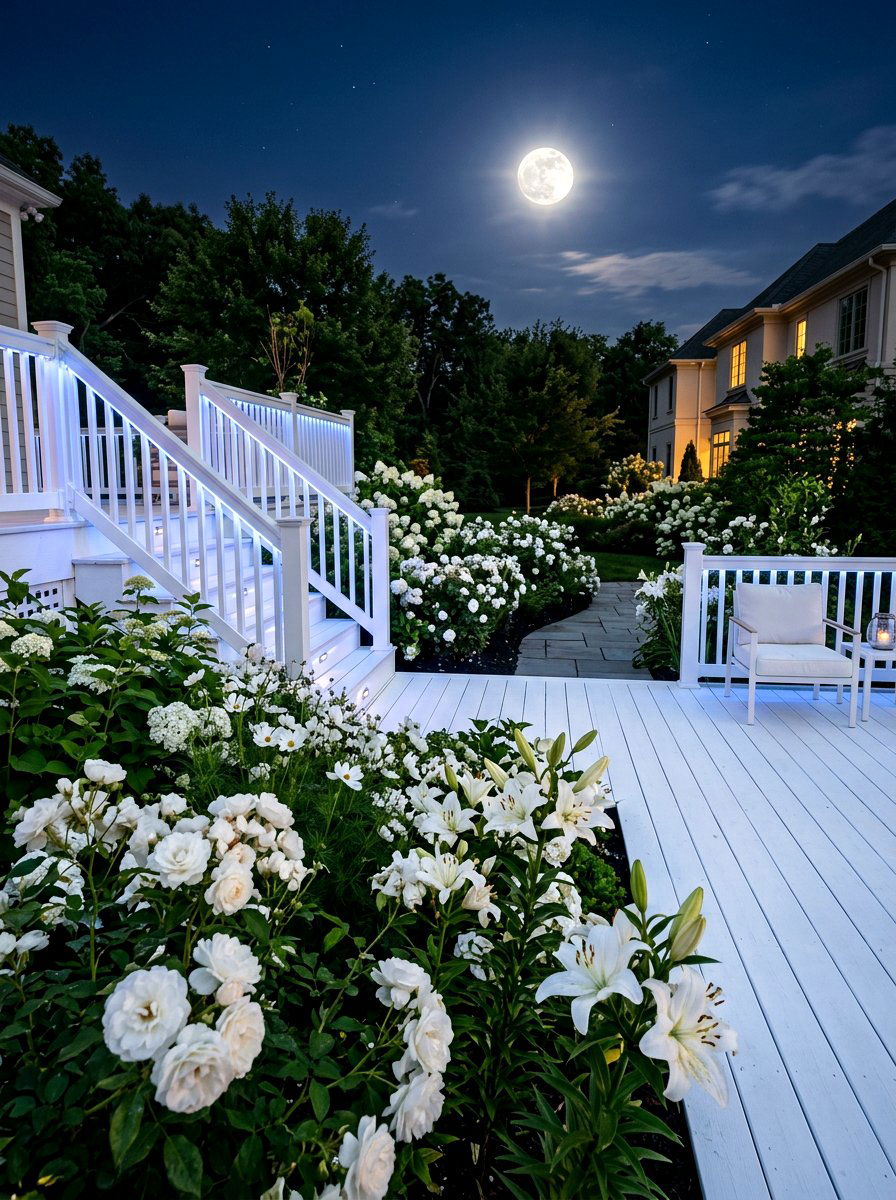
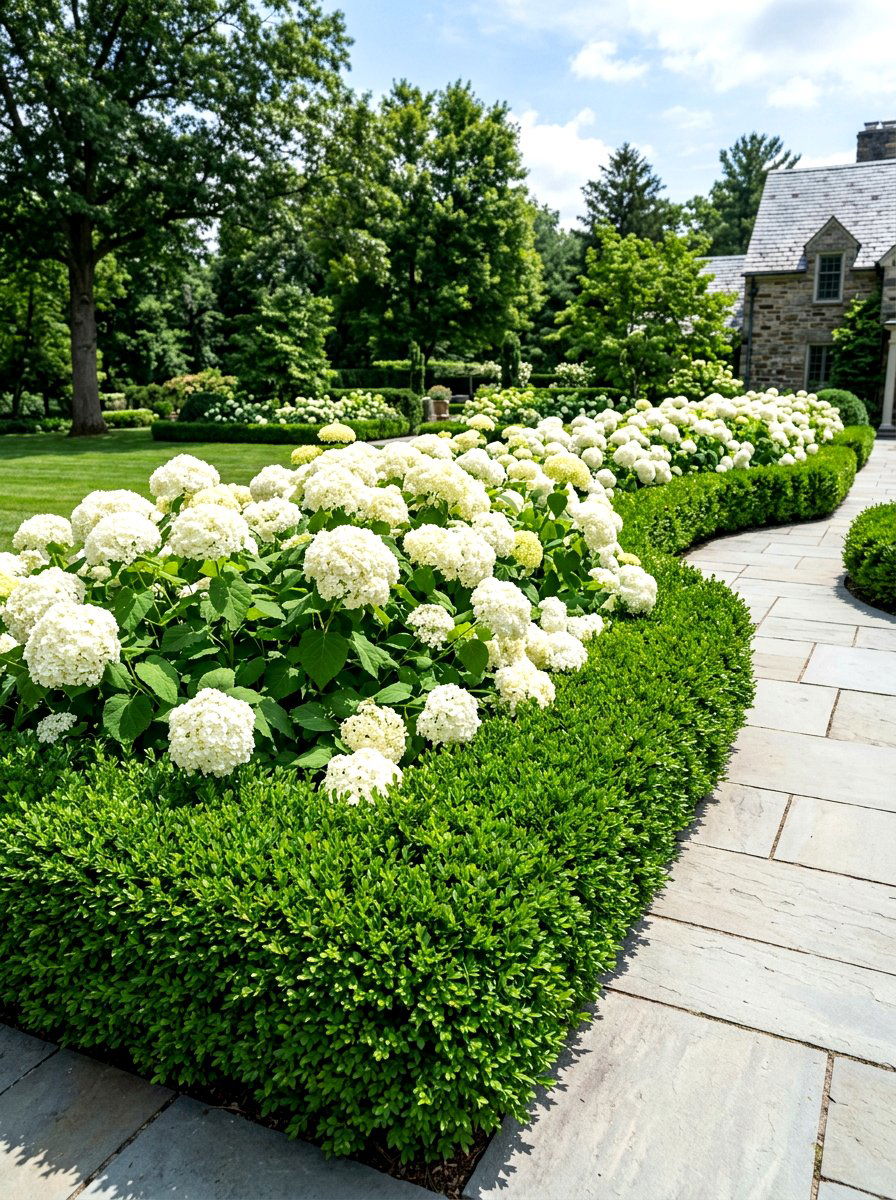
Do you often find yourself using your deck at night or during the twilight hours after a long day at work? A "moon garden" consisting entirely of white flowers and silver foliage is a stunning way to make your deck border glow in the dark. White petunias, alyssum, and "Annabelle" hydrangeas reflect even the smallest amount of ambient light, making the garden visible long after the sun sets. When paired with soft outdoor lighting, this monochromatic look appears incredibly high-end and serene. It creates a sophisticated backdrop for evening entertaining and feels much more intentional than a random mix of colors. The silver leaves of dusty miller add a magical, shimmering quality.
19. Rose bush perimeter
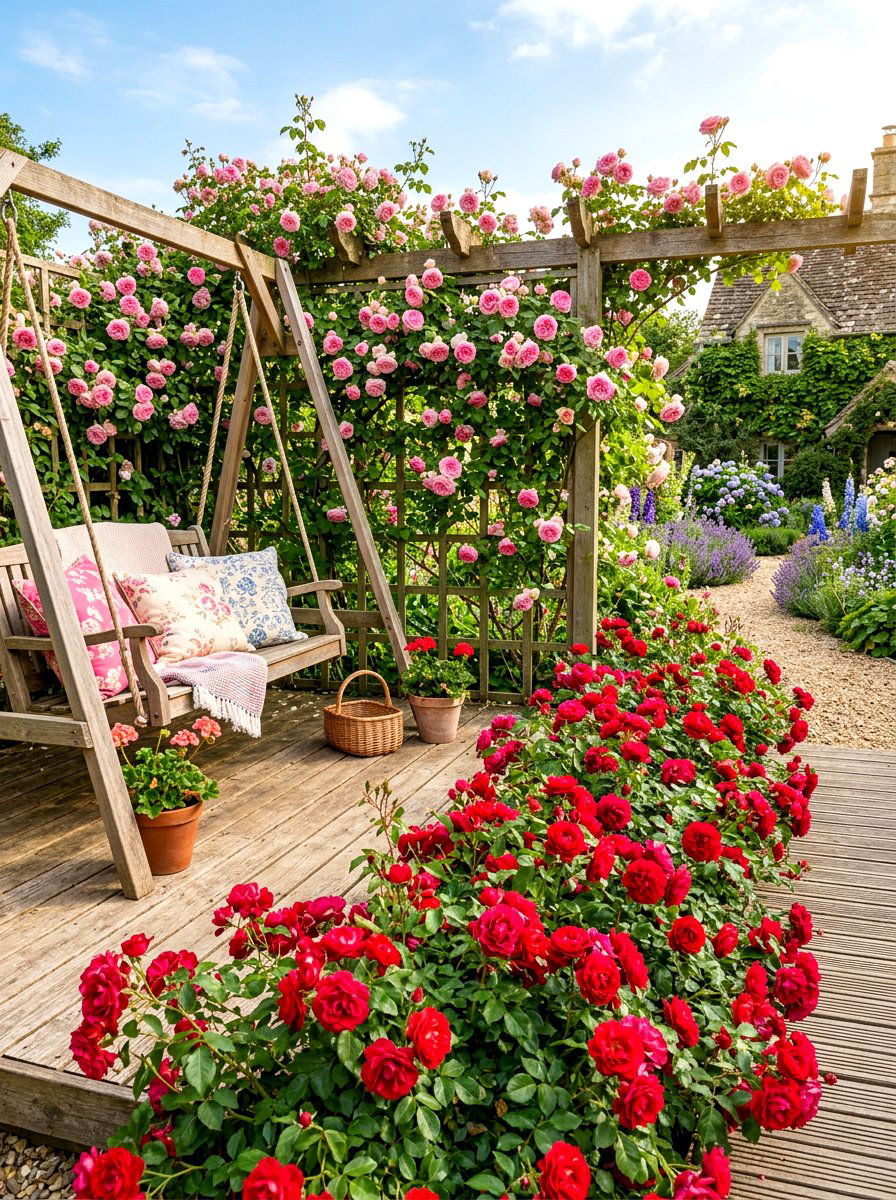
Is there anything more classic and romantic than a border of blooming roses surrounding your favorite outdoor seating spot? Modern shrub roses are much easier to care for than older varieties and will provide waves of flowers all summer long. You can choose low-growing "drift" roses to carpet the ground or taller "knockout" roses to create a mid-sized flowering hedge. The beauty of roses is that they offer a wide range of colors and scents that can be tailored to match your outdoor furniture or home's exterior. Planting them around a deck provides a traditional, cottage-style charm that makes the entire backyard feel like a lush, well-tended estate.
20. Garden ferns
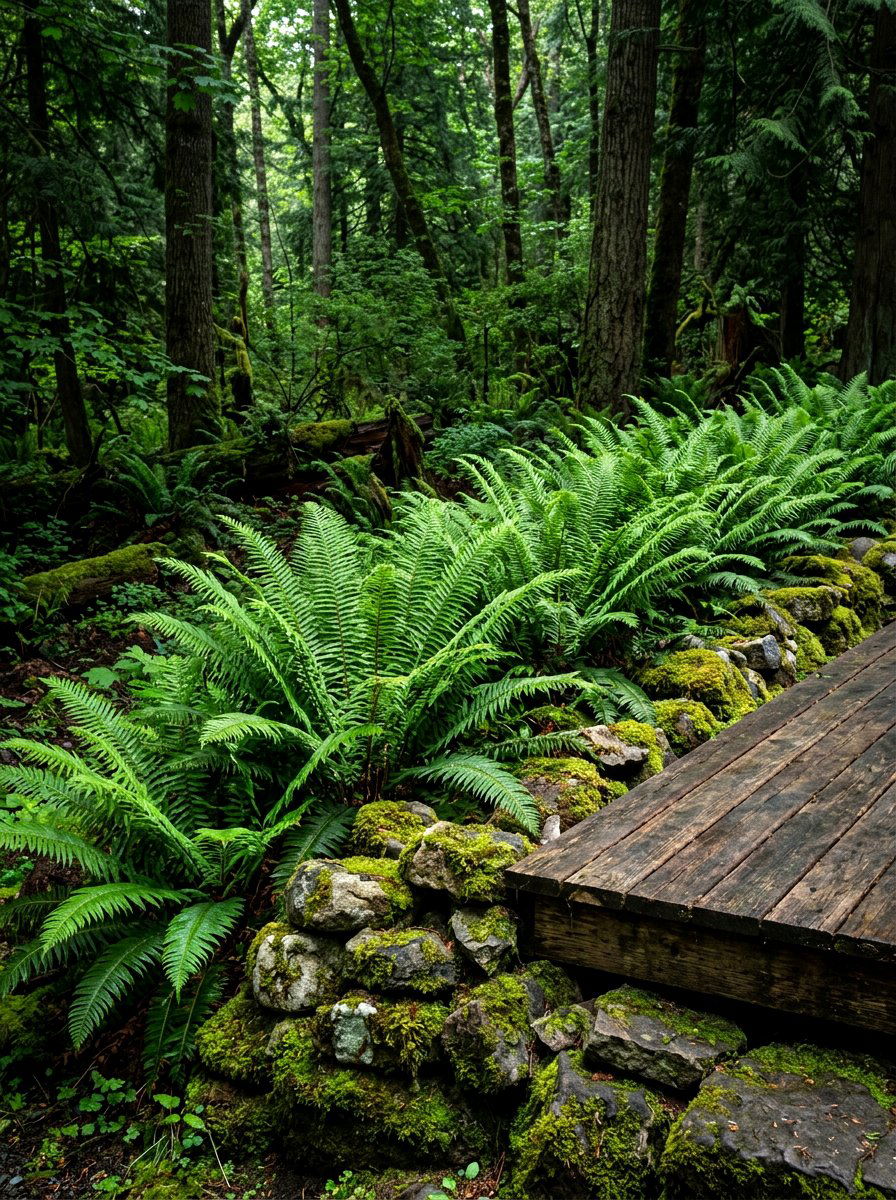
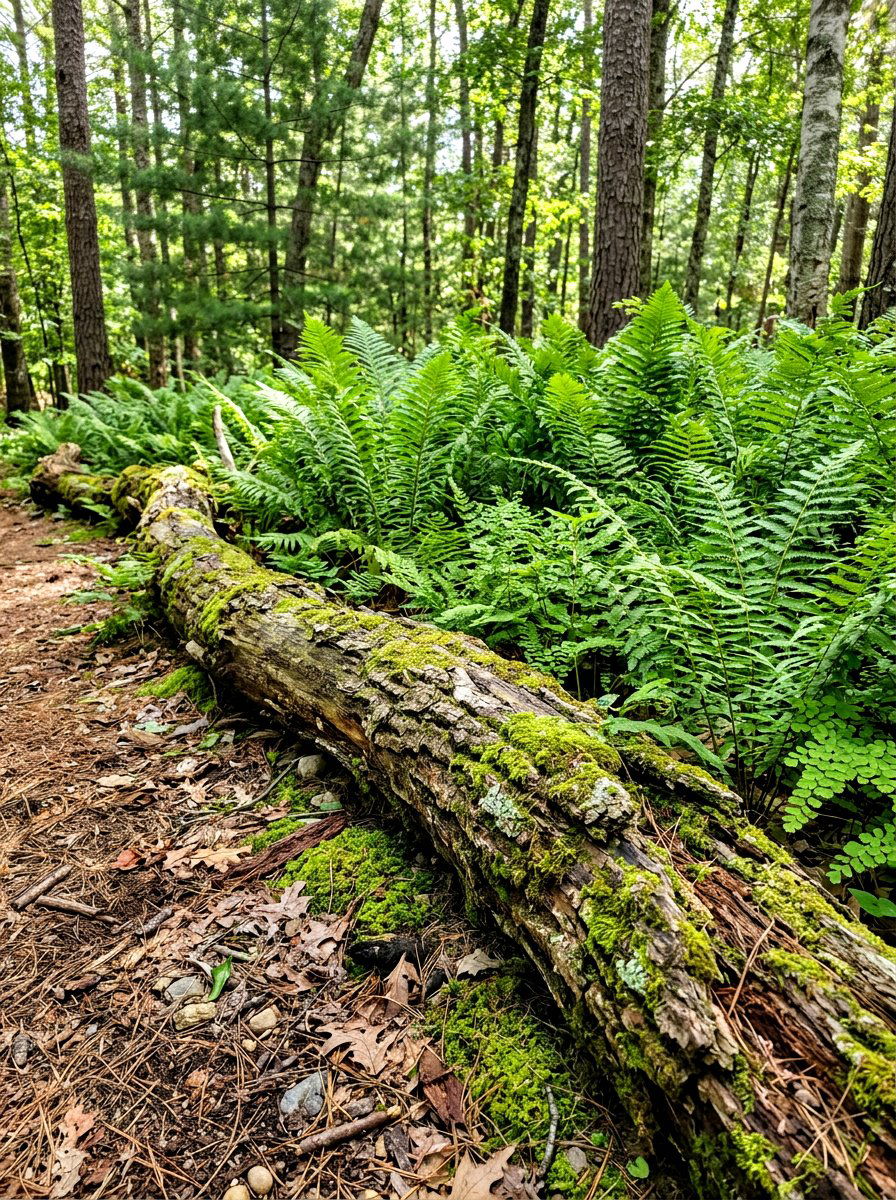
If your deck is low to the ground and located in a damp or shady spot, ferns can create a prehistoric, forest-like feel. Their intricate, feathery fronds add a level of detail and texture that few other plants can match. Varieties like ostrich ferns or painted ferns offer different heights and even hints of silver and red in their foliage. They thrive in the cool microclimate often found underneath or alongside a deck, where the wood provides a bit of extra shade and moisture retention. Ferns are excellent for softening the appearance of heavy stone foundations or dark wooden lattice, making the base of the deck look like it has been there for decades.
21. Cottage garden flowers
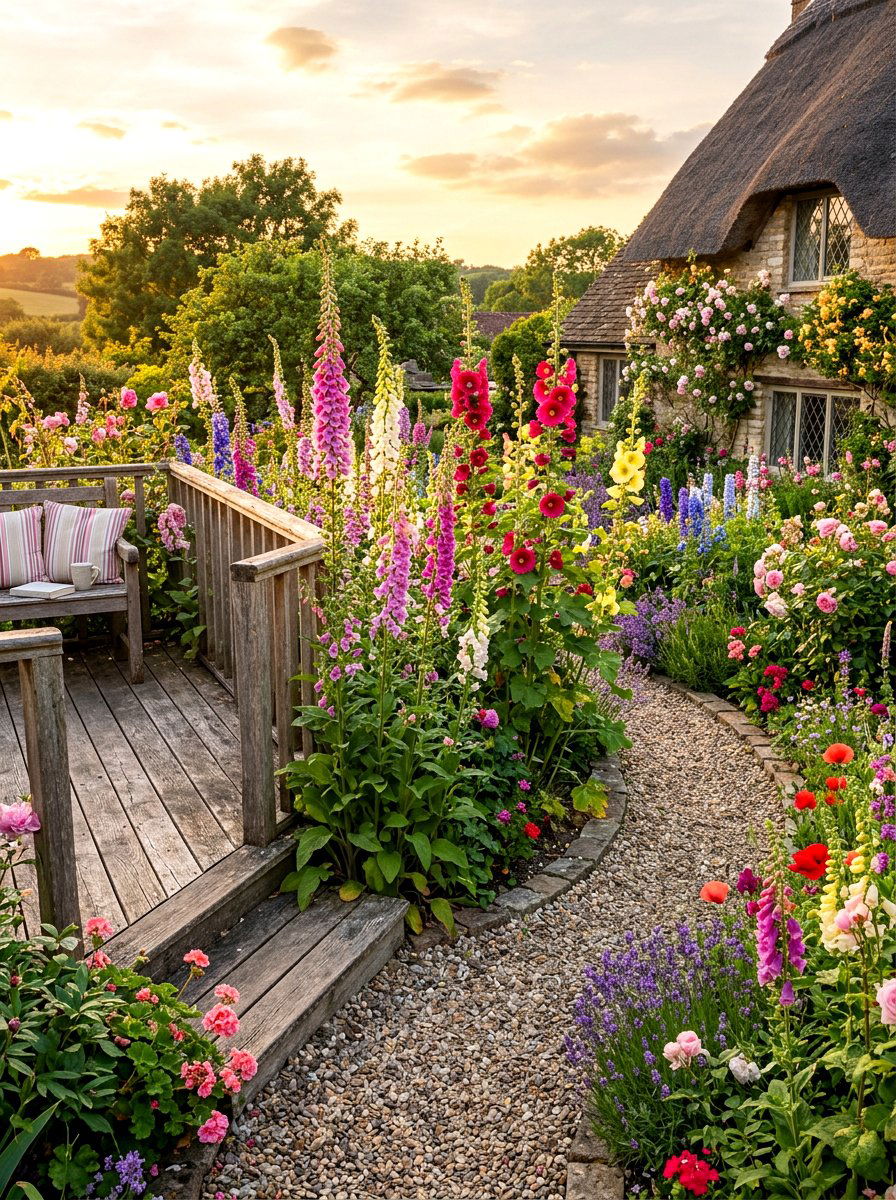
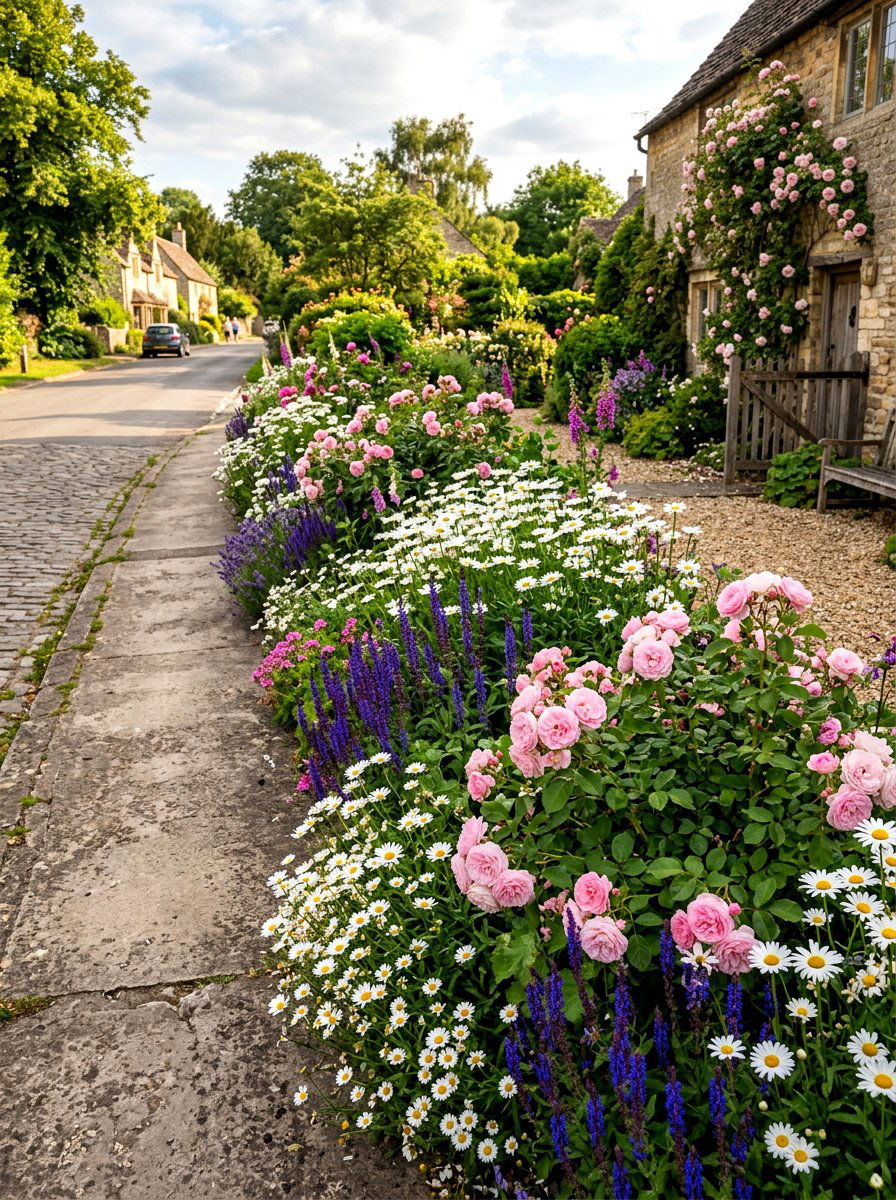
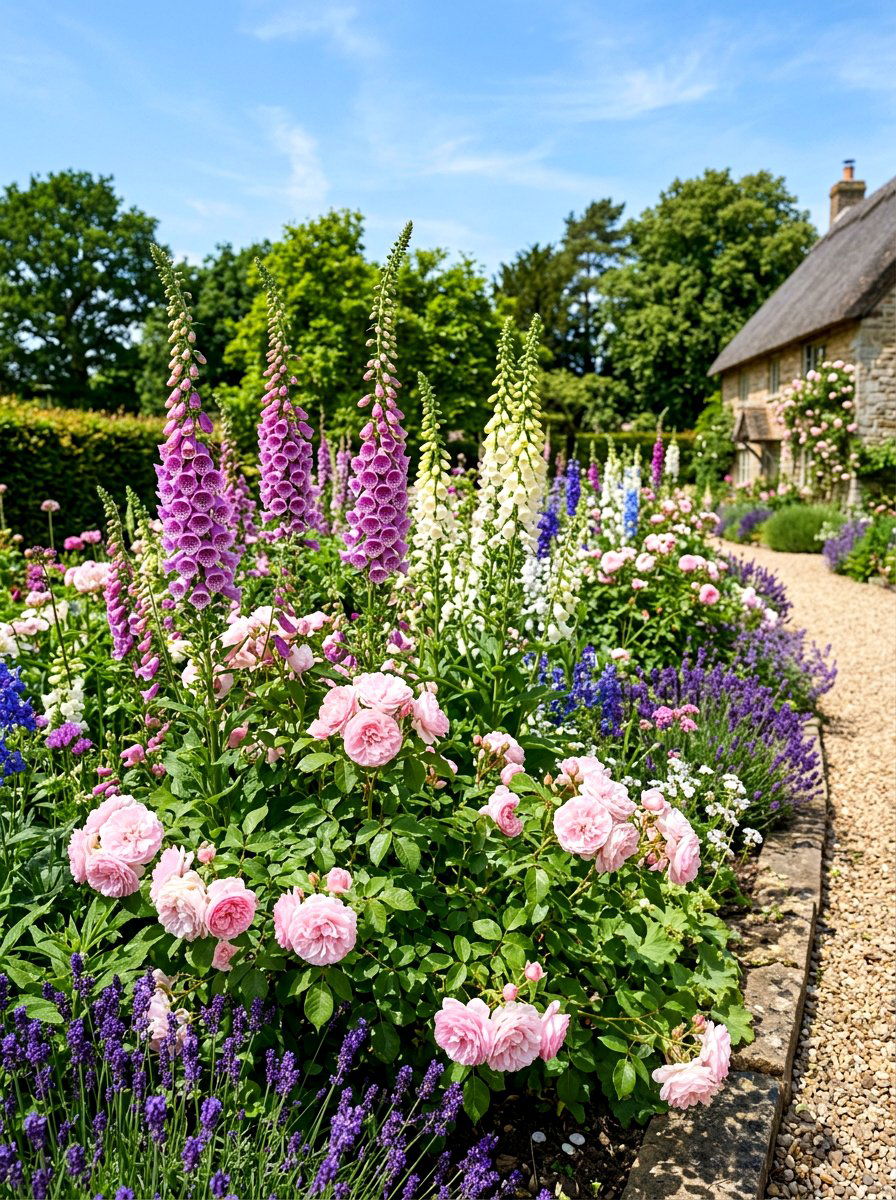
Do you love the look of a slightly wild, overflowing garden that feels like it belongs in the English countryside? A cottage-style border around your deck involves planting a dense mix of foxgloves, delphiniums, and hollyhocks in a seemingly random but beautiful arrangement. The goal is to have no bare soil showing, with plants of different heights leaning into each other and even spilling over the edge of the deck. This look is very forgiving and perfect for someone who enjoys a more relaxed, naturalistic aesthetic. It creates a sense of abundance and joy, turning your deck into a small island within a sea of vibrant, colorful blossoms and buzzing pollinators.
22. Rock and stone border
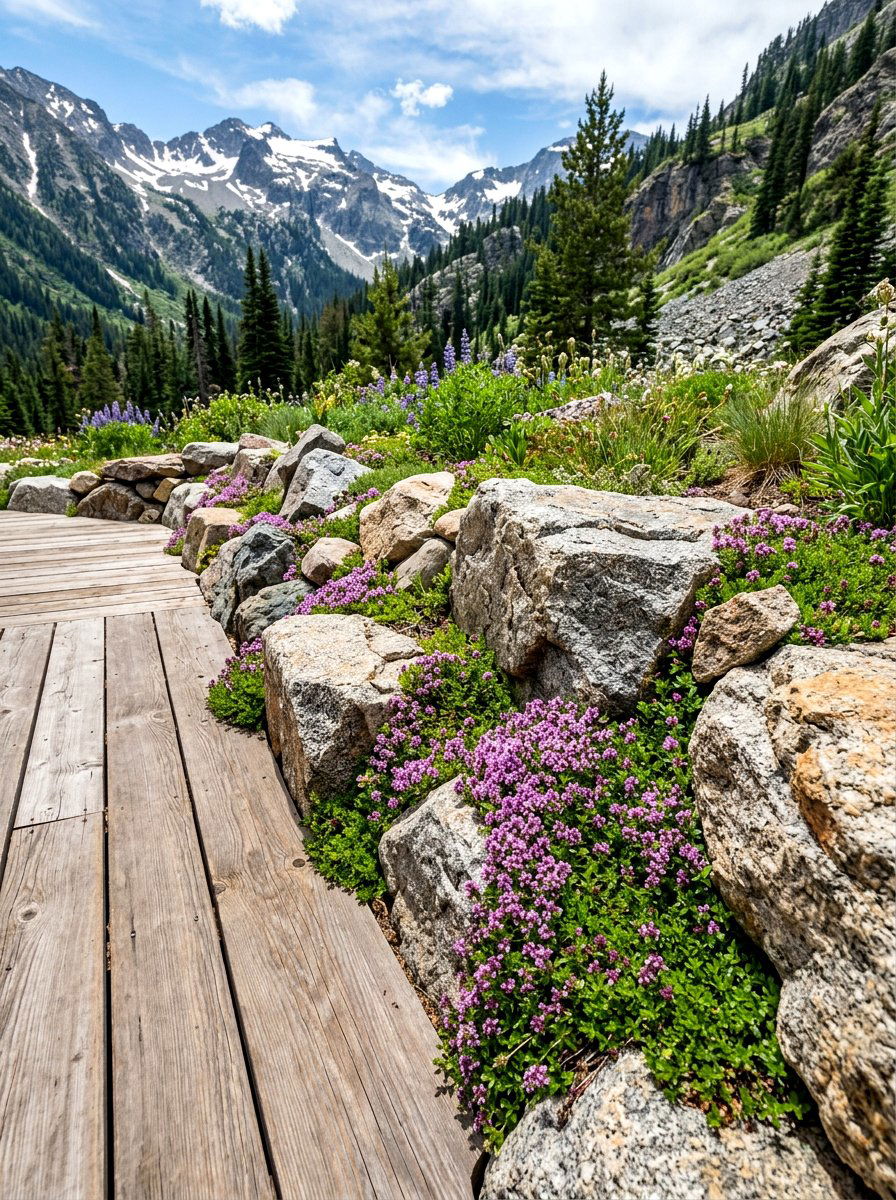
Sometimes the most effective way to frame a deck is to combine hardy plants with large, decorative boulders and natural stone. A rock garden border adds a sense of permanence and weight to the landscape, balancing the lighter look of a wooden deck. You can nestle drought-tolerant plants like creeping thyme or blue star creeper between the stones to create a rugged, alpine look. The contrast between the warm wood of the deck and the cool, grey tones of the rocks is visually very satisfying. This is also a very practical solution for areas where the ground is too hard or poor for traditional gardening, as rocks don't require any water or soil.
23. Built in deck planters
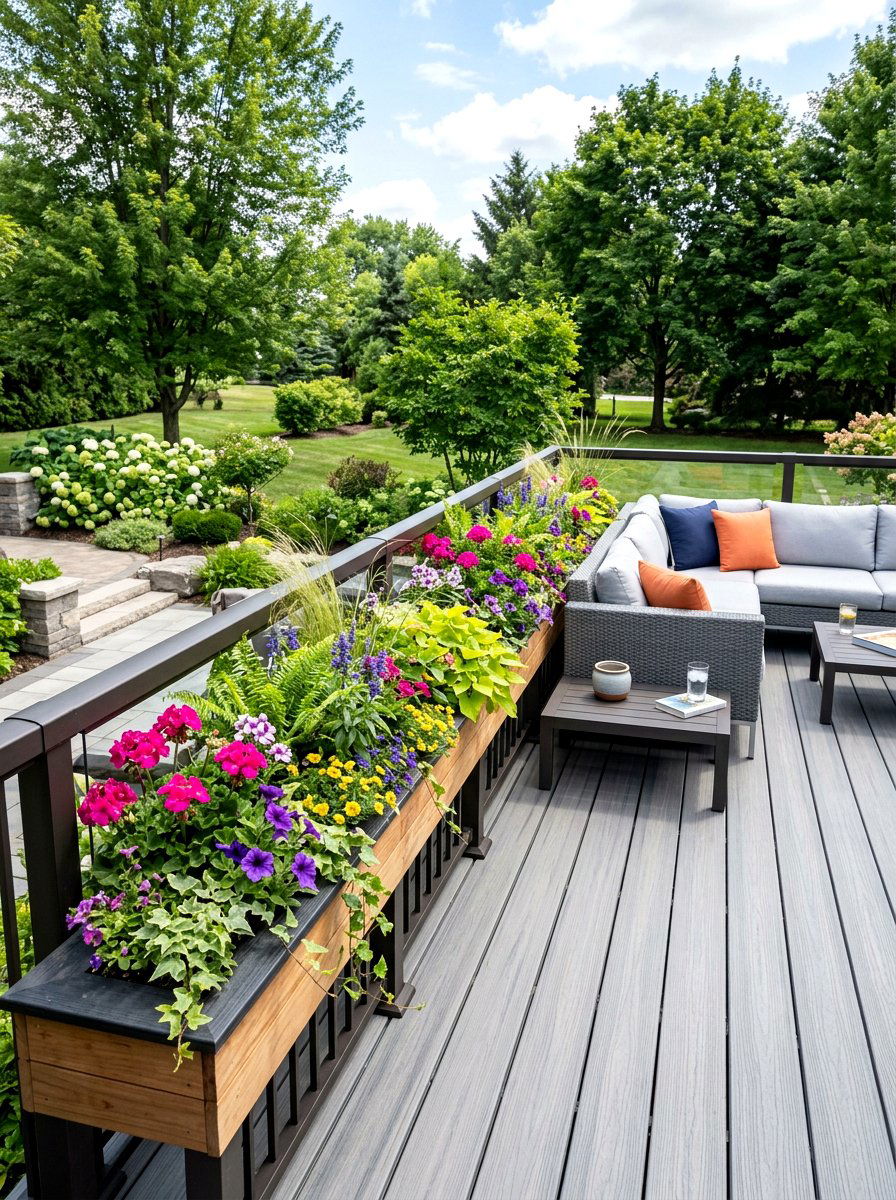
If you want a truly seamless look, you can design your deck with planters built directly into the structure's frame. These boxes are usually made of the same material as the deck and act as a natural railing or border that contains your favorite flowers. This allows you to bring the garden up onto the deck itself, creating a more immersive experience for anyone sitting there. You can fill them with a mix of upright "thrillers, " filling "fillers, " and cascading "spillers" for a professional container-gardening look. Because they are integrated into the design, they provide a very clean and organized appearance that is perfect for modern or contemporary homes.
24. Miscanthus grass
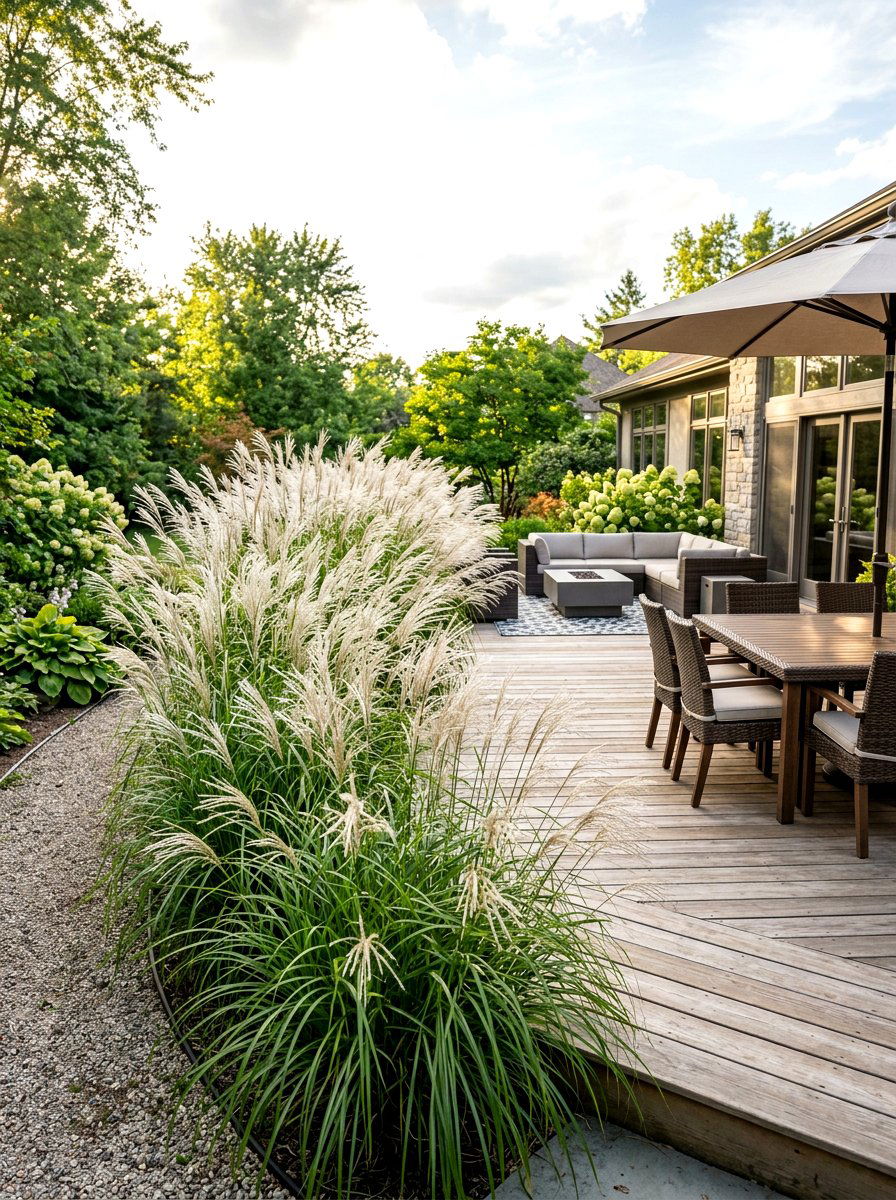
Are you looking for a plant that provides significant height and dramatic flair without being as heavy as a solid hedge? Miscanthus, also known as maiden grass, produces tall, elegant plumes that can reach five or six feet in height by late summer. These grasses are perfect for creating a semi-transparent screen around your deck, allowing light to filter through while still providing a sense of seclusion. The plumes catch the light beautifully during the golden hour, creating a glowing frame for your outdoor space. They are incredibly hardy and can withstand wind and rain, making them a reliable choice for exposed decks in open backyard areas.
25. Evergreen shrubs
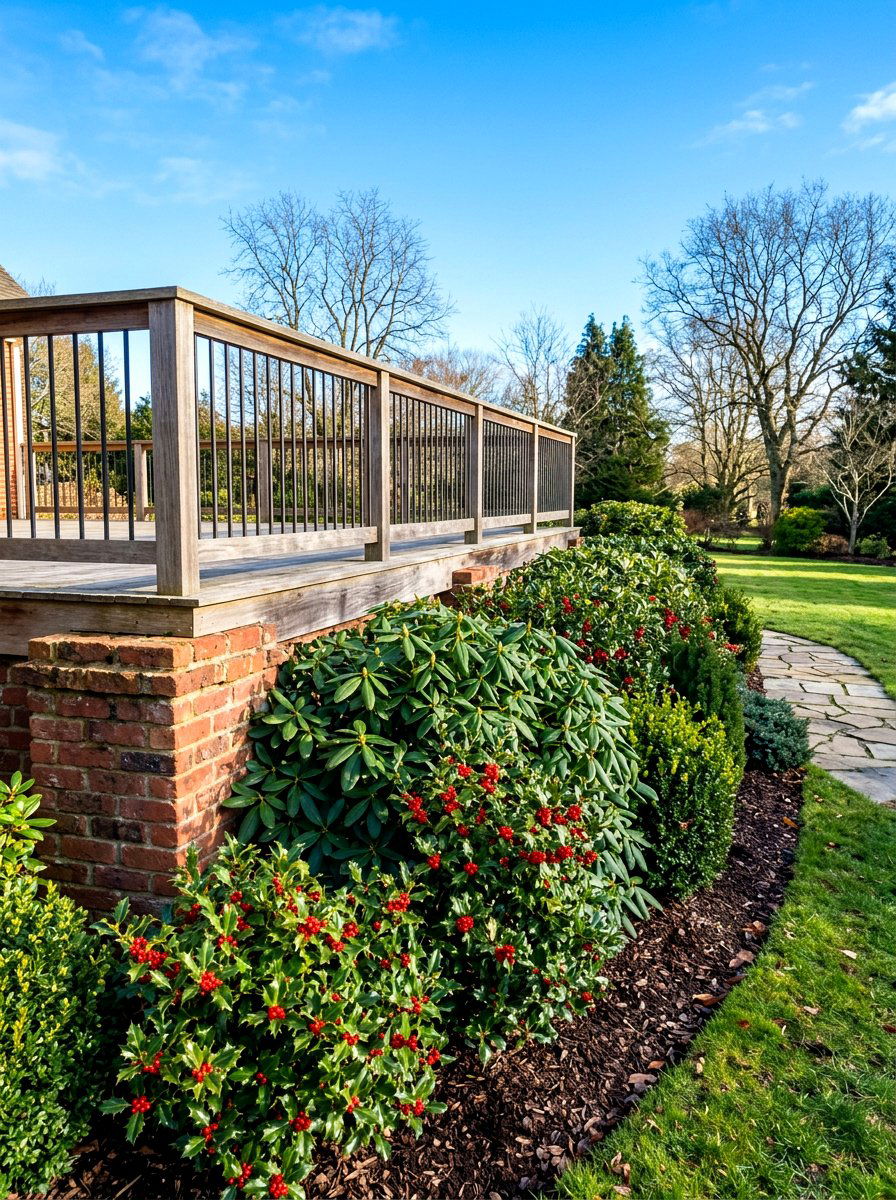
For many homeowners, the most important goal is to have a deck border that looks good three hundred and sixty-five days a year. Using a mix of evergreen shrubs like rhododendrons, hollies, or dwarf conifers ensures that your deck never looks barren or "dead" during the winter months. These plants provide a consistent green framework that you can then accent with colorful annuals during the spring and summer. Evergreens are also excellent for dampening noise from the rest of the neighborhood, creating a quieter and more peaceful environment on your deck. They provide a sturdy, permanent feel to the landscape that adds significant curb appeal and long-term value.
26. Flowering annuals
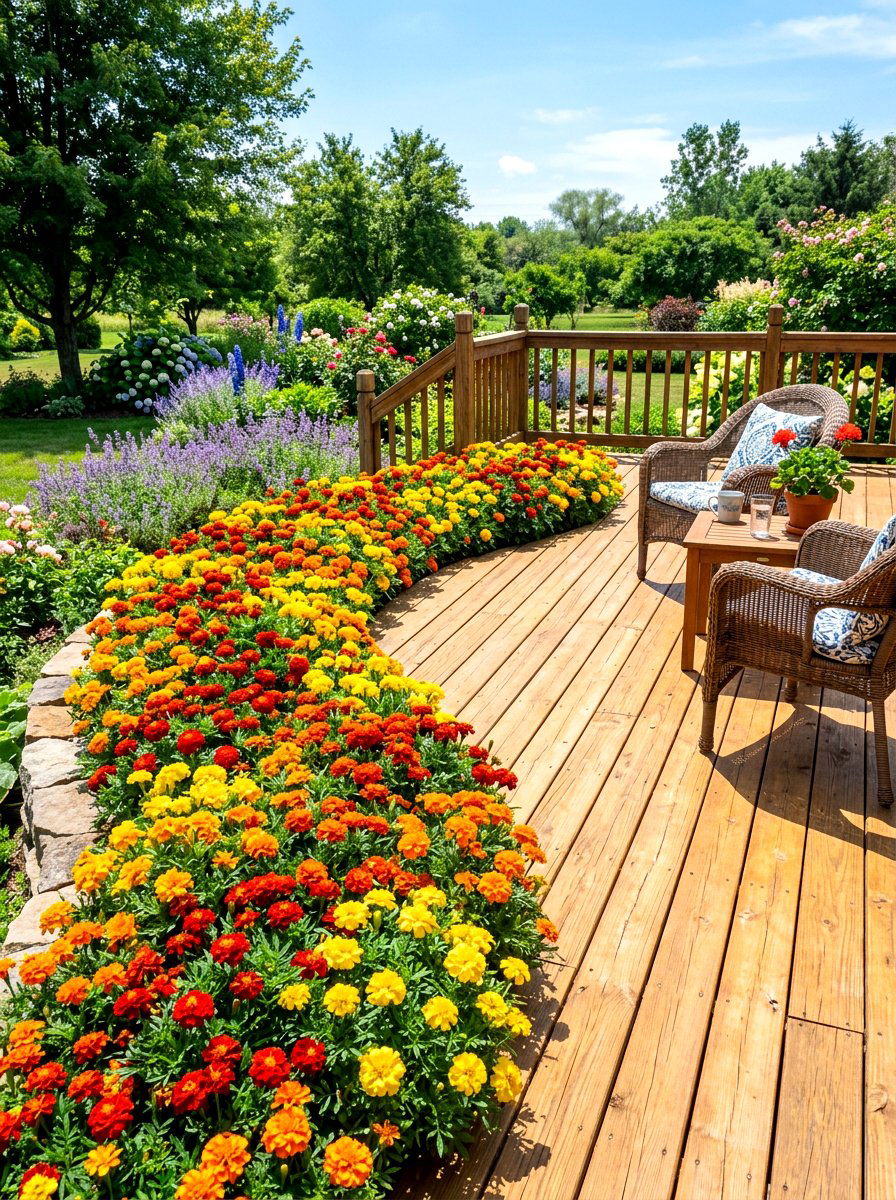
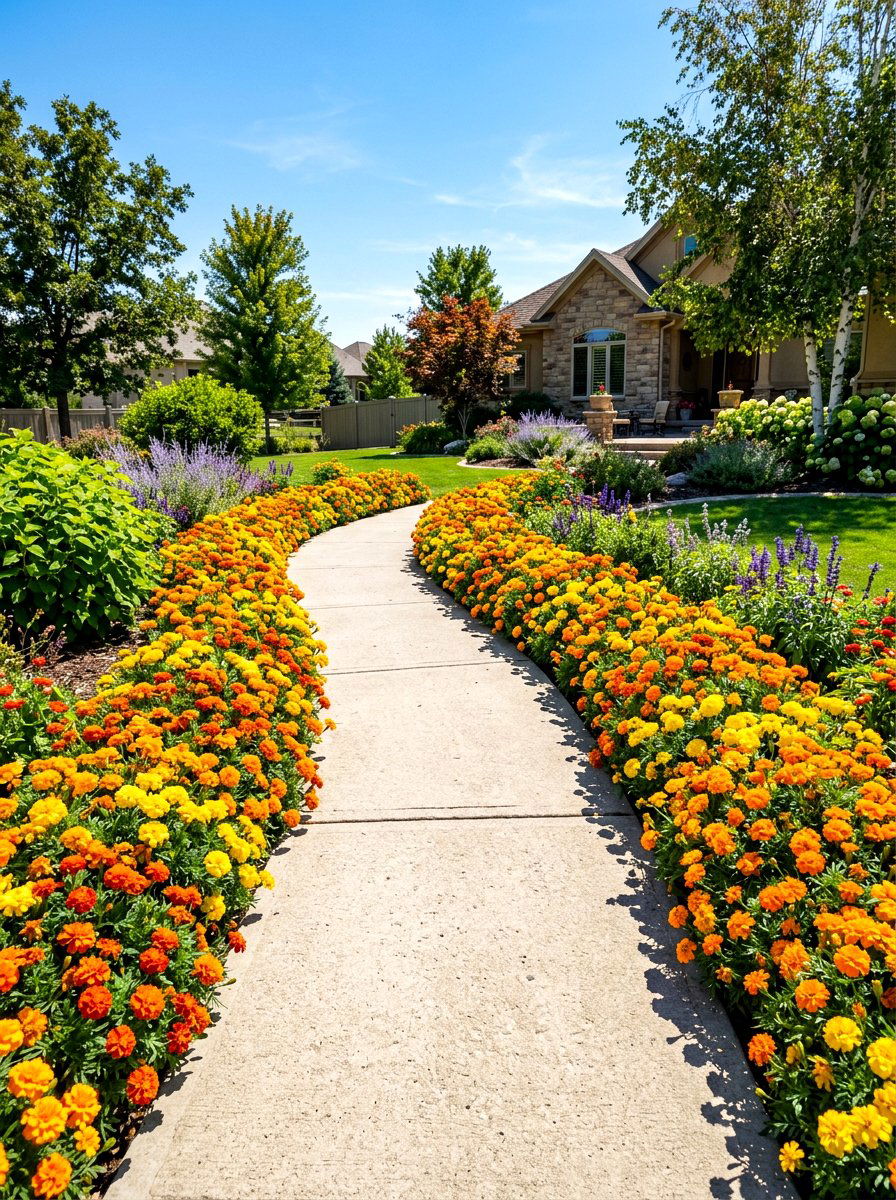
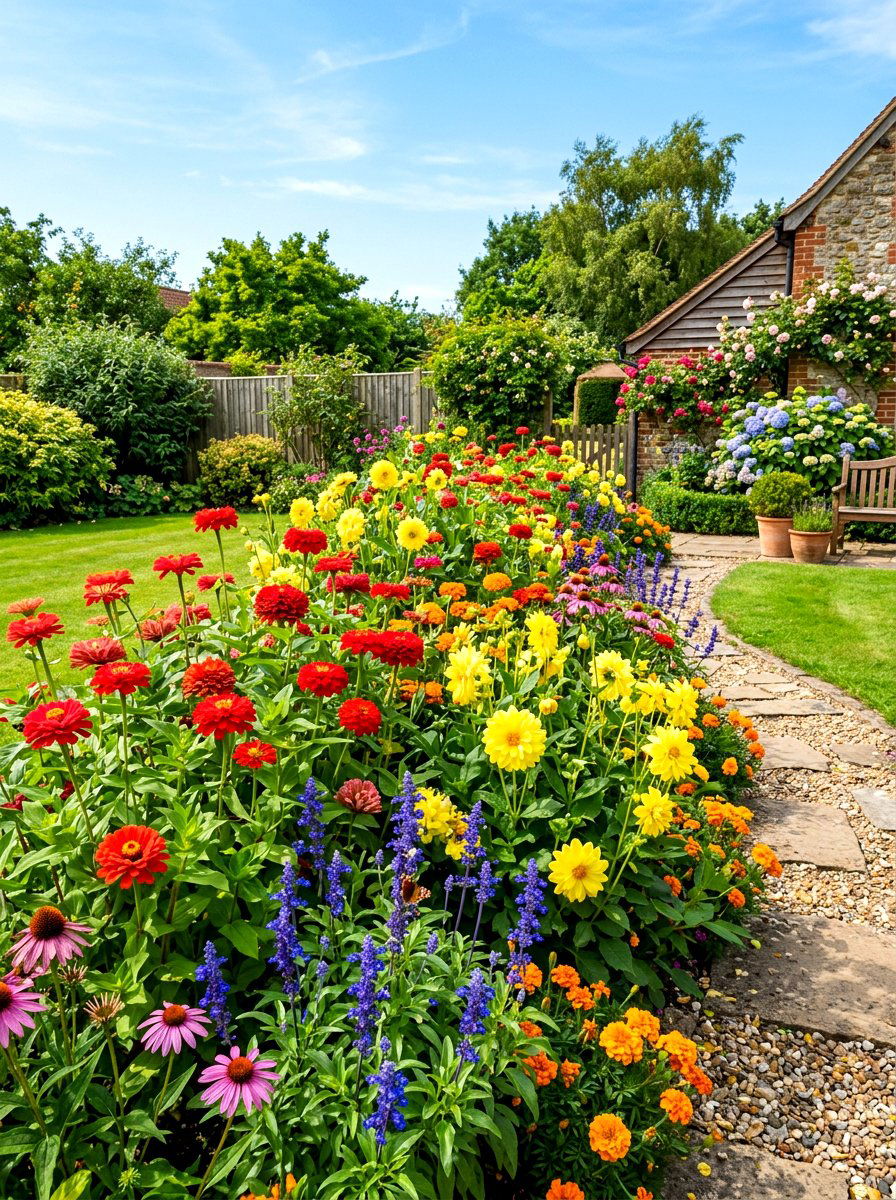
What if you want to change the entire look of your deck border every single year depending on your current mood? Using flowering annuals like petunias, marigolds, and zinnias allows you to experiment with different color palettes and layouts without a long-term commitment. You can plant them in a thick ribbon around the edge of the deck for a massive punch of color that lasts all season long. Annuals are generally very affordable and grow quickly, meaning you don't have to wait years for your border to look full and established. This is the best option for someone who loves to garden and wants a project that provides instant gratification every spring.
27. Vertical garden wall
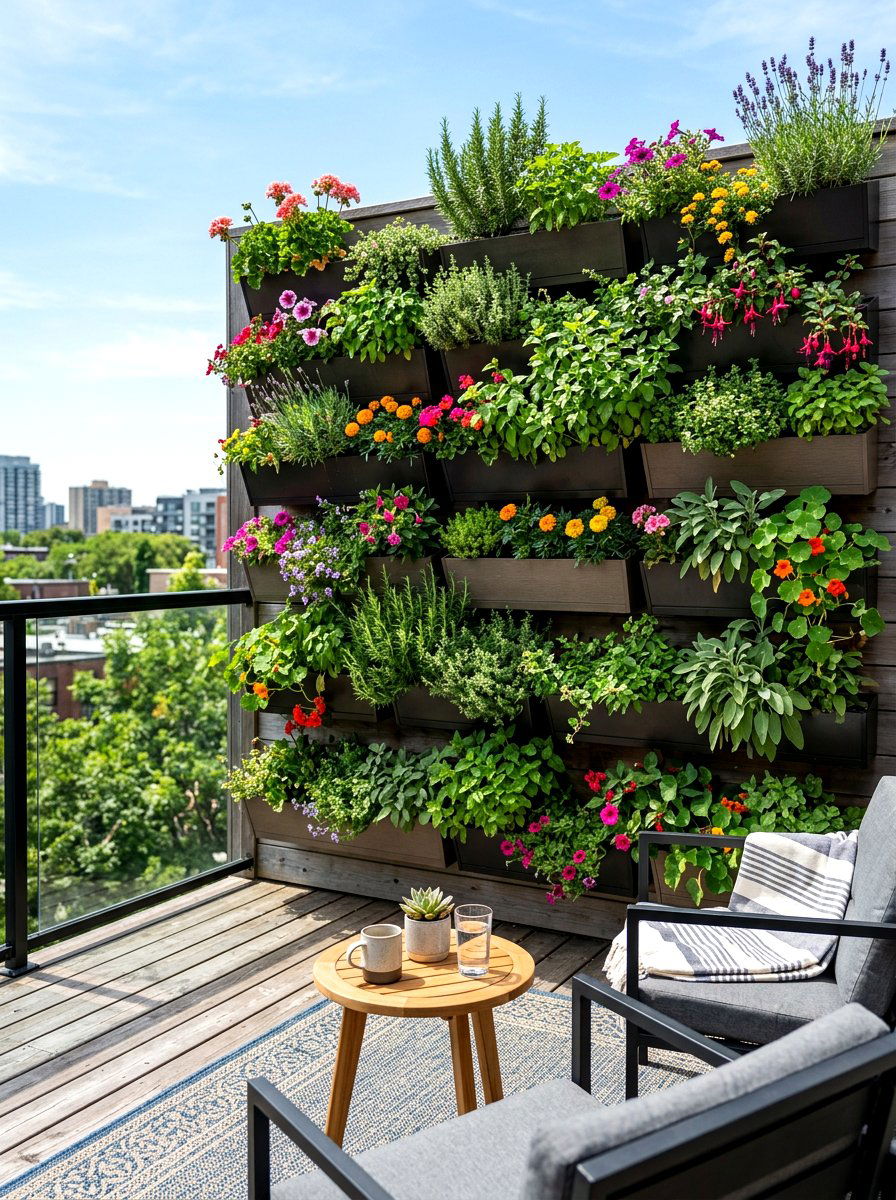
If your deck is small and you don't want to take up precious floor space or yard area with a traditional border, consider going vertical. You can install a trellis or a series of wall-mounted planters along the side of the deck to create a living green wall. This is a great way to grow climbing roses, clematis, or even a vertical vegetable garden. It provides a backdrop of greenery that feels very modern and uses the available space efficiently. A vertical garden also helps to block the wind and provides a unique architectural feature that will surely be a conversation starter when you have guests over for a barbecue.
28. Zen garden gravel
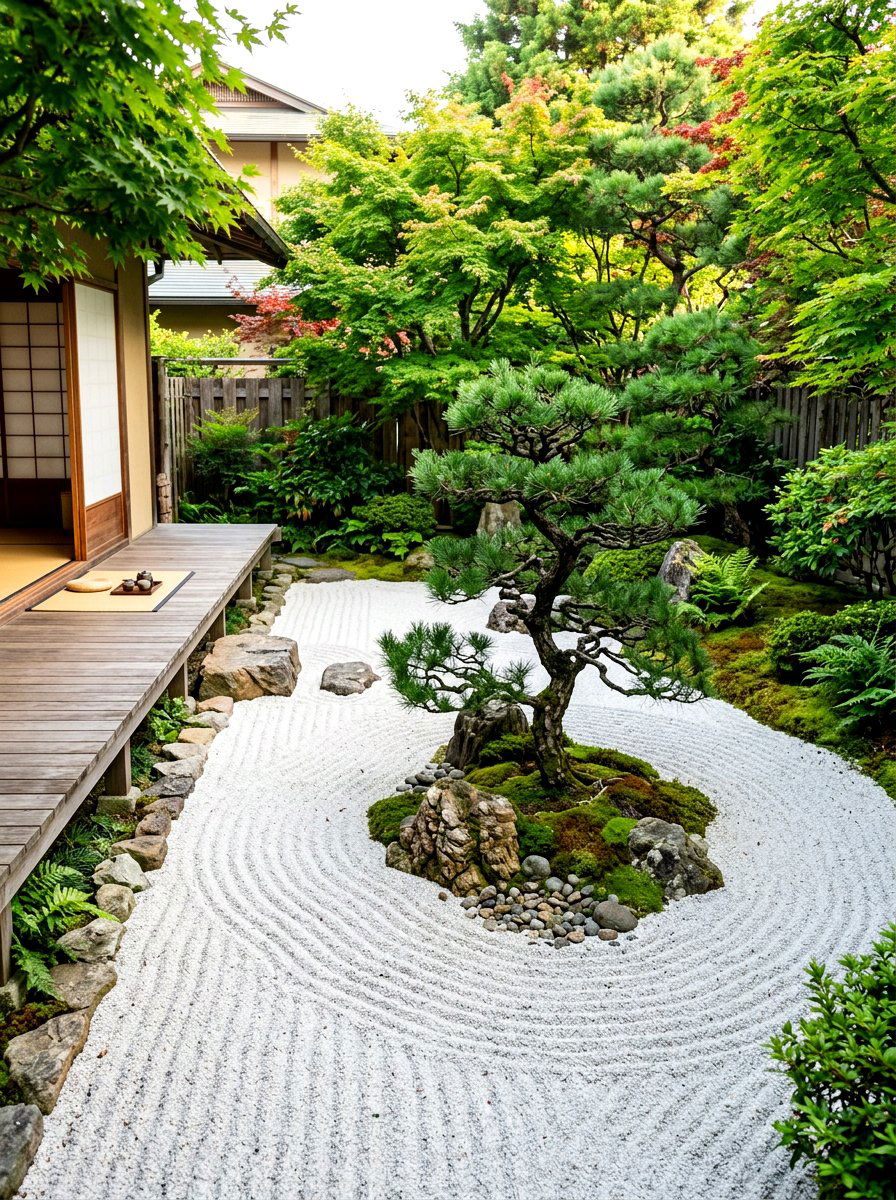
Creating a peaceful and meditative atmosphere on your deck can be achieved by using a Japanese-inspired Zen garden border. This involves using finely raked gravel, a few carefully placed mossy rocks, and perhaps a single, perfectly pruned juniper or pine tree. The simplicity of this design promotes a sense of calm and order, which is perfect for a deck used for yoga or morning meditation. It requires very little maintenance once established and looks beautiful year-round. This style emphasizes the empty space as much as the plants themselves, creating a sophisticated and artistic boundary that feels very intentional and high-end for a contemporary home exterior.
29. Meadow grass
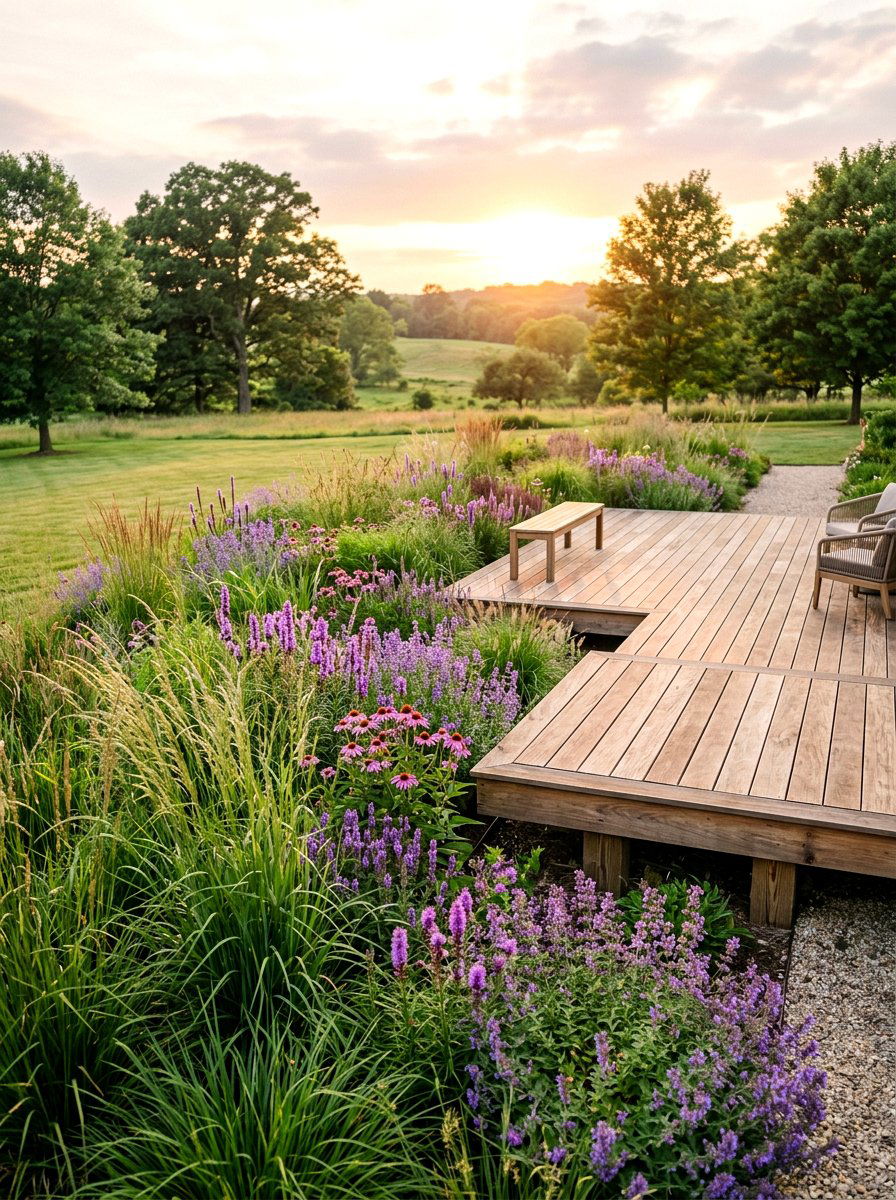
Do you have a large property and want your deck to feel like it is floating in the middle of a natural field? Planting a border of native meadow grasses and tall perennials creates a soft, hazy edge that looks incredibly romantic and wild. Unlike a manicured lawn, a meadow border is full of life and movement, with different species coming into focus as the seasons' progress. This approach is very low-maintenance once the plants are established, as they are adapted to the local climate. It provides a beautiful, soft transition that makes a large wooden deck feel much more integrated and less intrusive within a vast, open landscape.
30. Mediterranean plants
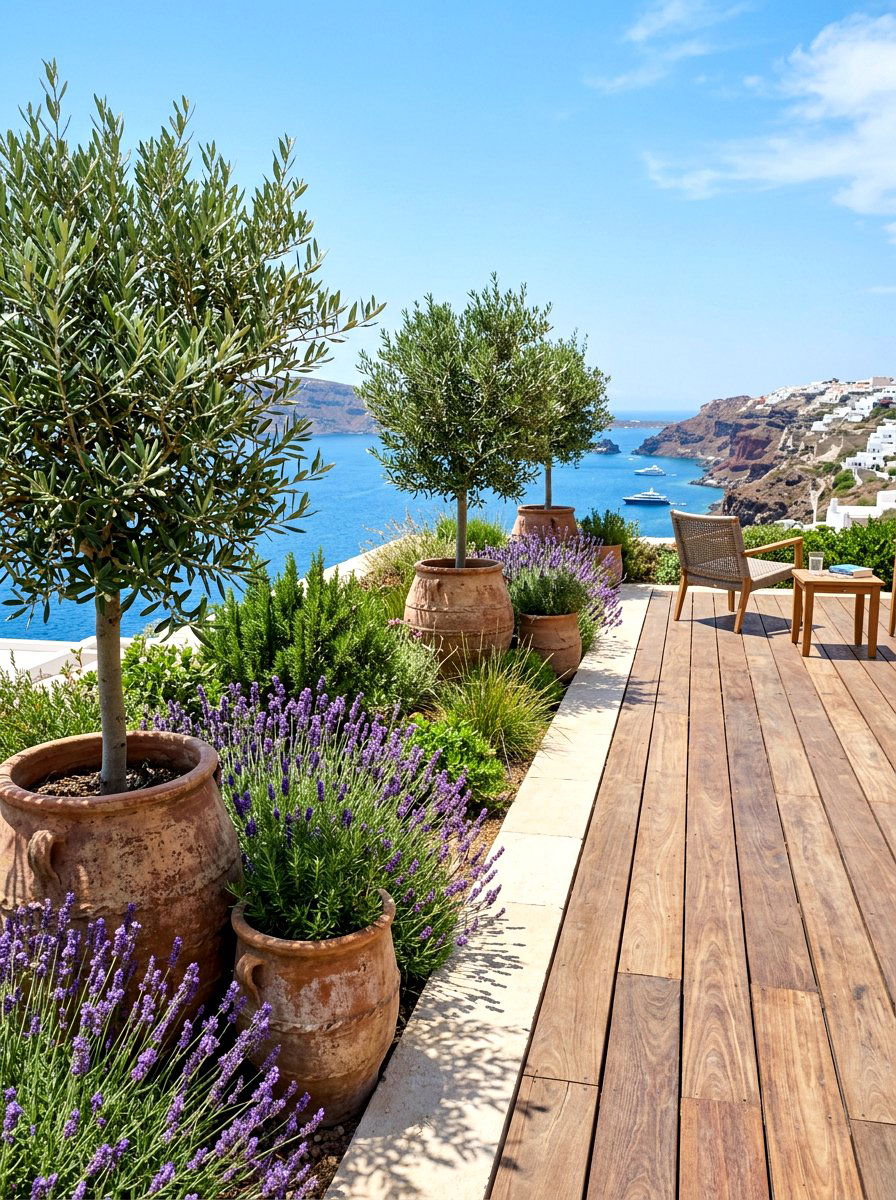
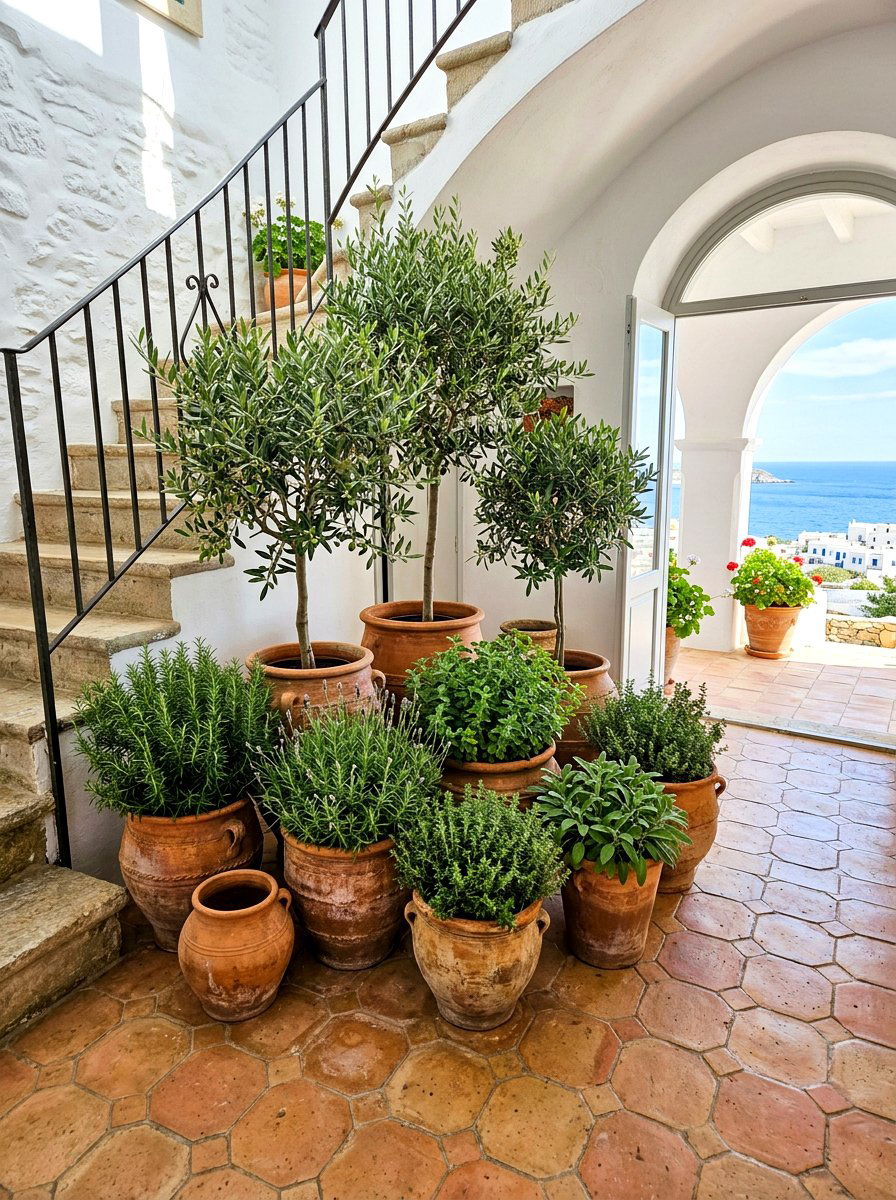
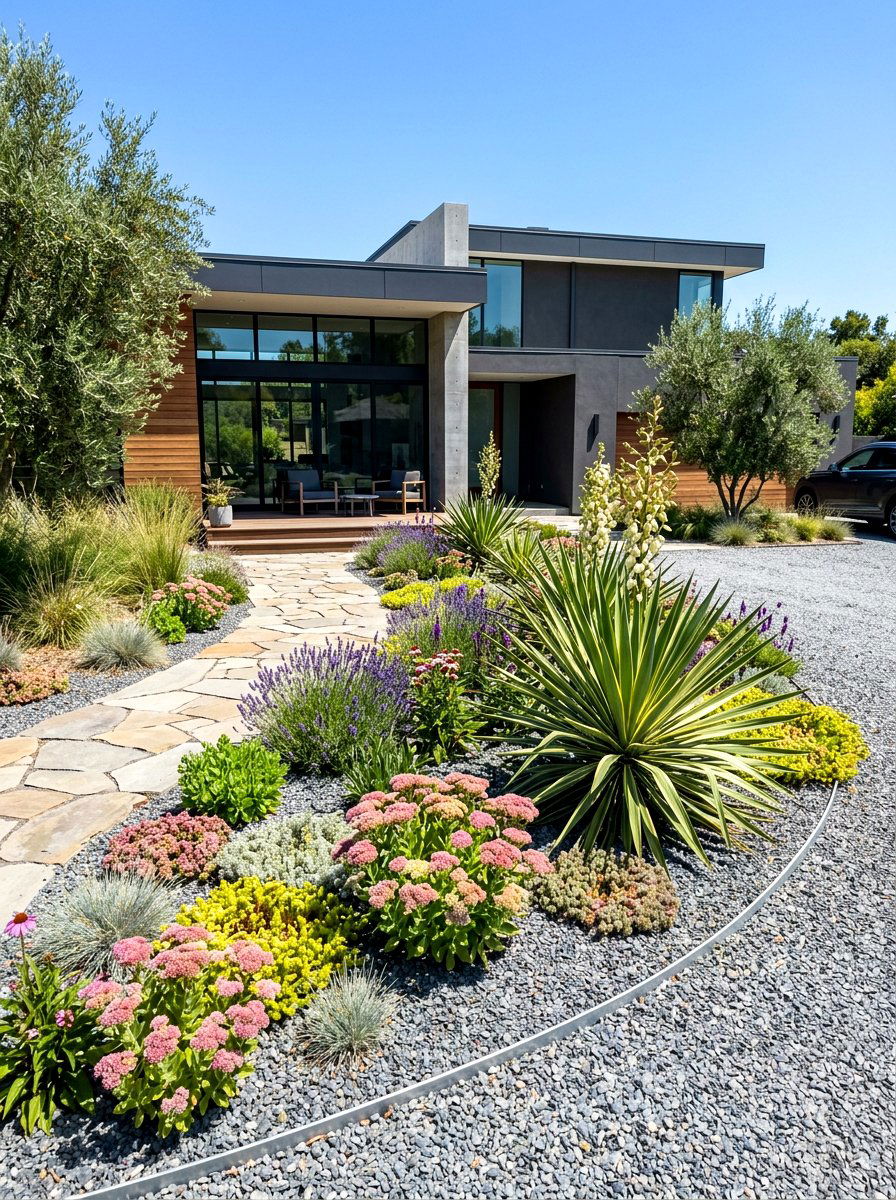
If your deck is made of warm-toned wood or composite and you live in a sunny area, Mediterranean-style plantings can look stunning. Think about combining olive trees in large pots with borders of rosemary, thyme, and architectural blue agave. The muted tones of sage green, silvery grey, and dusty blue complement the natural wood colors perfectly. This style of garden is often very drought-tolerant and thrives in the heat that can sometimes radiate off a sunny deck surface. It creates an atmosphere of relaxed, sun-drenched luxury that is perfect for long afternoon naps or outdoor dining with friends, making your backyard feel like a coastal villa.
Conclusion:
Designing the perfect border for your deck is about more than just choosing pretty flowers; it is about creating a bridge between your home's architecture and the natural world. By considering factors like sunlight, privacy needs, and how much time you want to spend on maintenance, you can select a planting style that enhances your lifestyle. A well-executed border not only makes your deck more beautiful but also adds a layer of comfort and seclusion that makes you want to spend more time outdoors. Whether you choose the structured look of a hedge or the wild charm of a wildflower meadow, your deck will finally feel like the finished, cohesive outdoor room you have always envisioned. Take the time to plan your layers and colors, and you will be rewarded with a lush, vibrant sanctuary that grows more beautiful with each passing year.

Related posts: