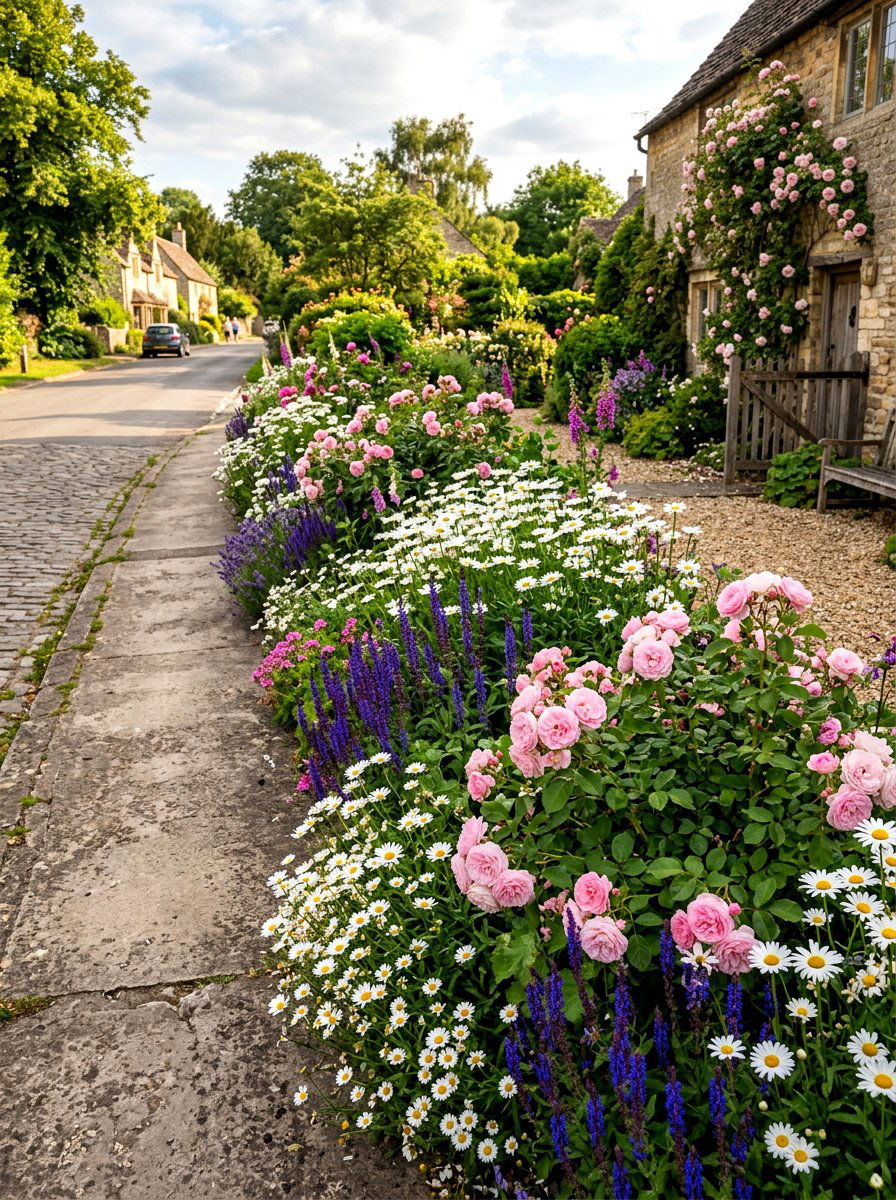
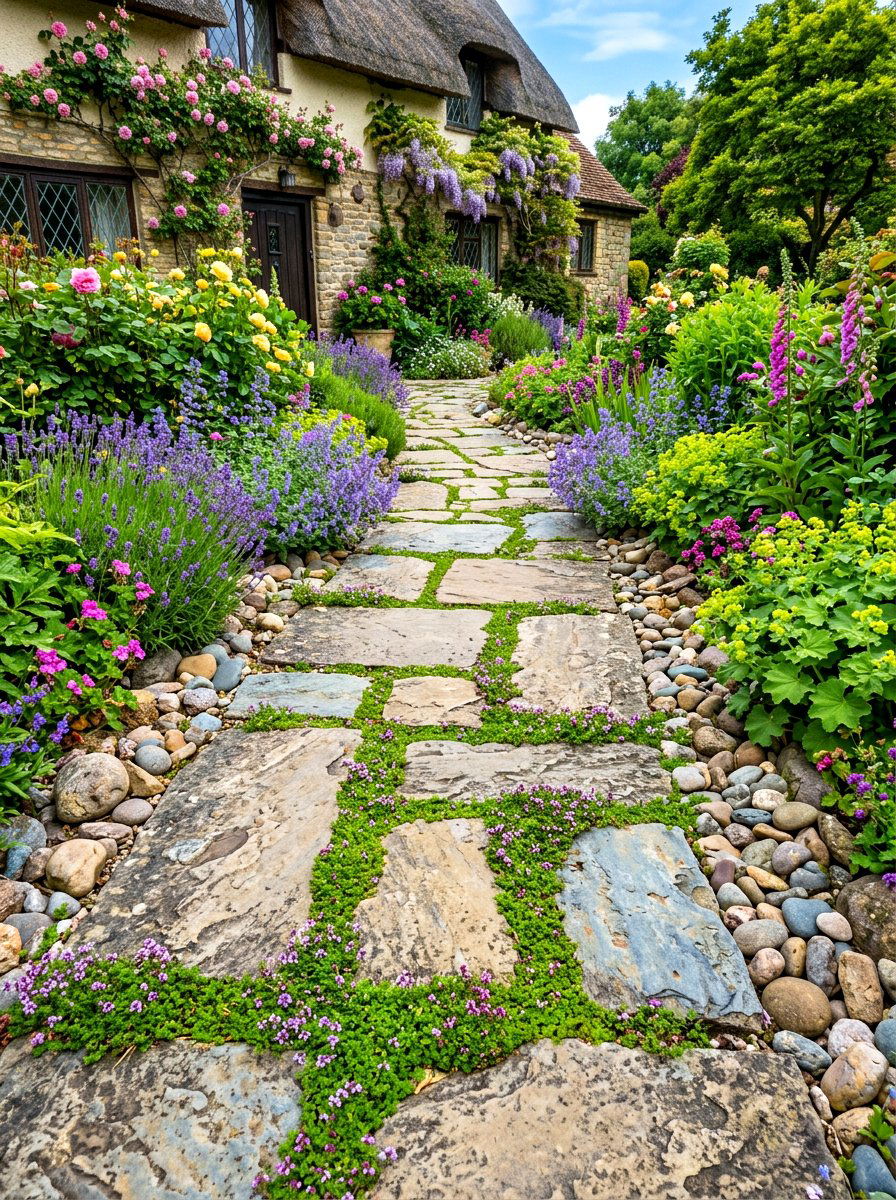
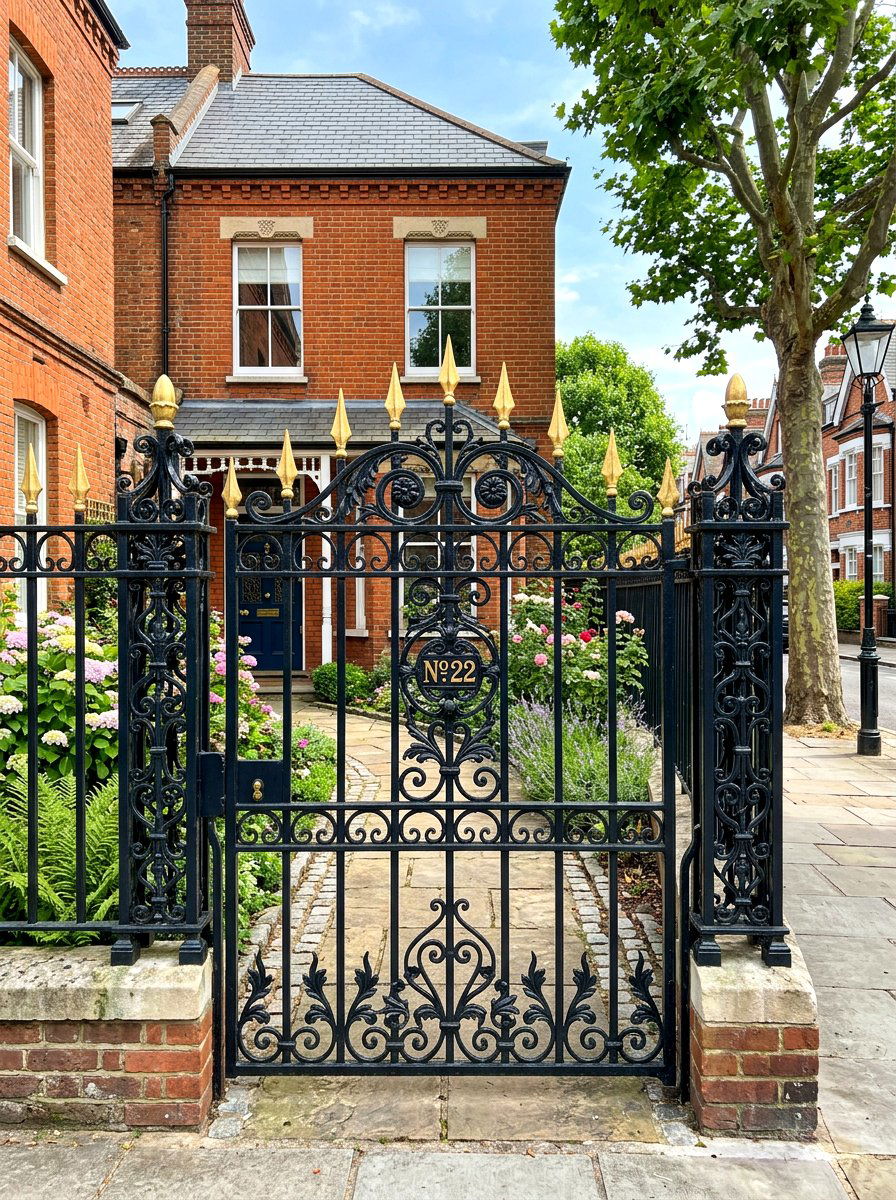
Creating a cottage rose border is about more than just planting flowers; it is about crafting a romantic and sensory experience within your outdoor space. These borders serve as the quintessential heartbeat of a traditional English garden, offering a blend of soft colors, intoxicating scents, and a delightful sense of organized chaos. By carefully selecting various rose types and pairing them with the right companion plants, you can transform a simple yard into a lush sanctuary. Whether you prefer the structured elegance of boxed hedging or the wild charm of rambling vines, a well-planned rose border provides year-round interest and a timeless aesthetic that never goes out of style.
1. English Shrub Rose Border
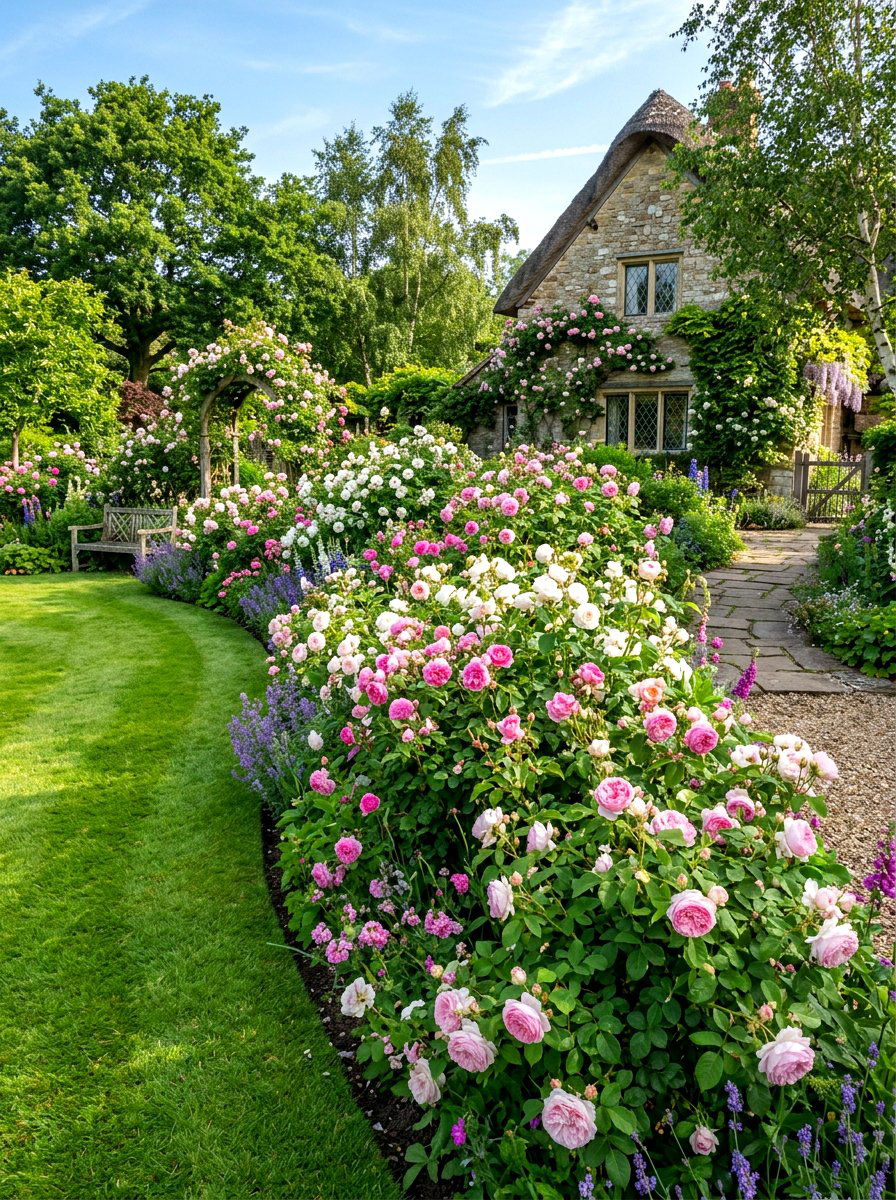
An English shrub rose border provides a robust and bushy foundation for any classic cottage garden layout. These roses are highly valued for their repetitive blooming cycles and large, multi-petaled flowers that resemble peonies. To create a successful border, you should plant these shrubs in groups of three to ensure a dense and impactful display of color. The lush green foliage of the shrubs acts as a perfect natural backdrop for shorter perennials. When you choose a mix of soft pinks and creams, the border emits a gentle, romantic glow during the golden hour. Proper spacing is essential to allow for healthy airflow and to prevent common rose diseases effectively.
2. Lavender And Rose Edging
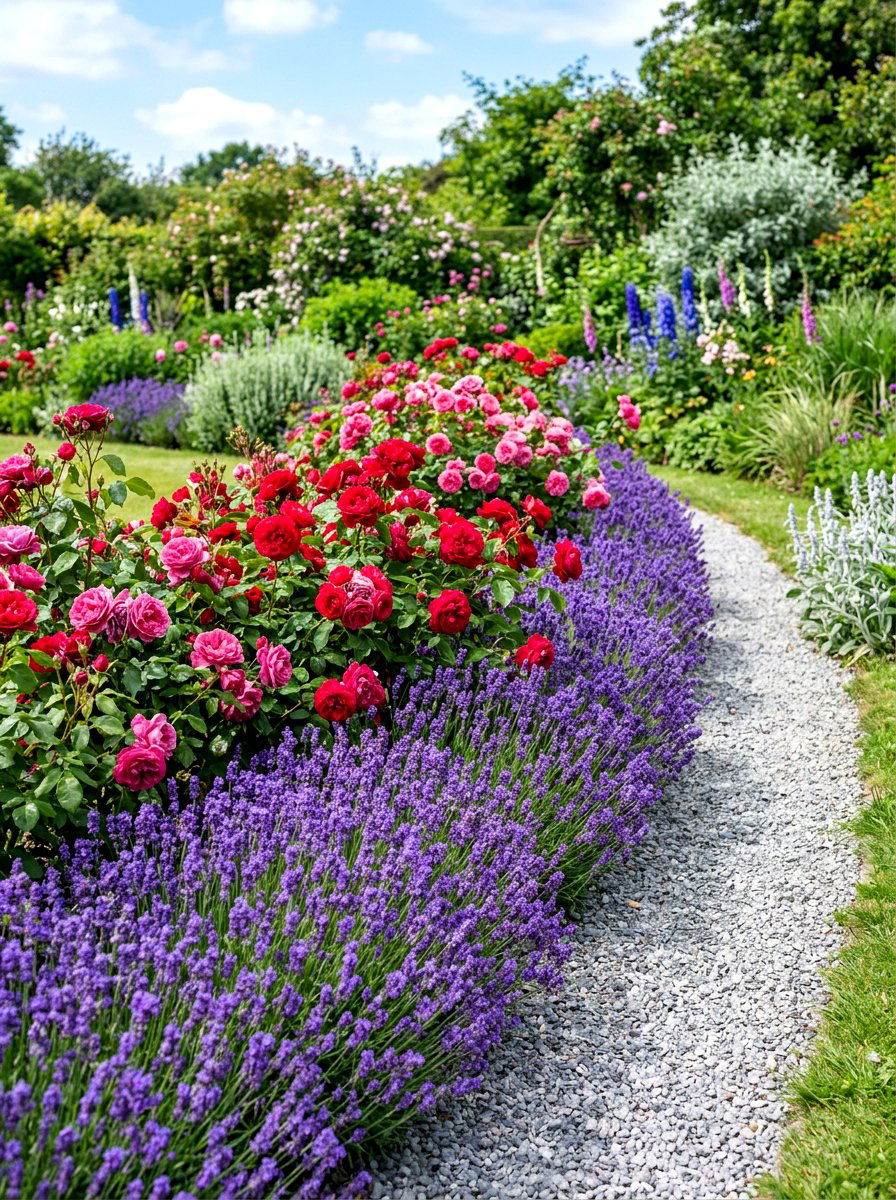
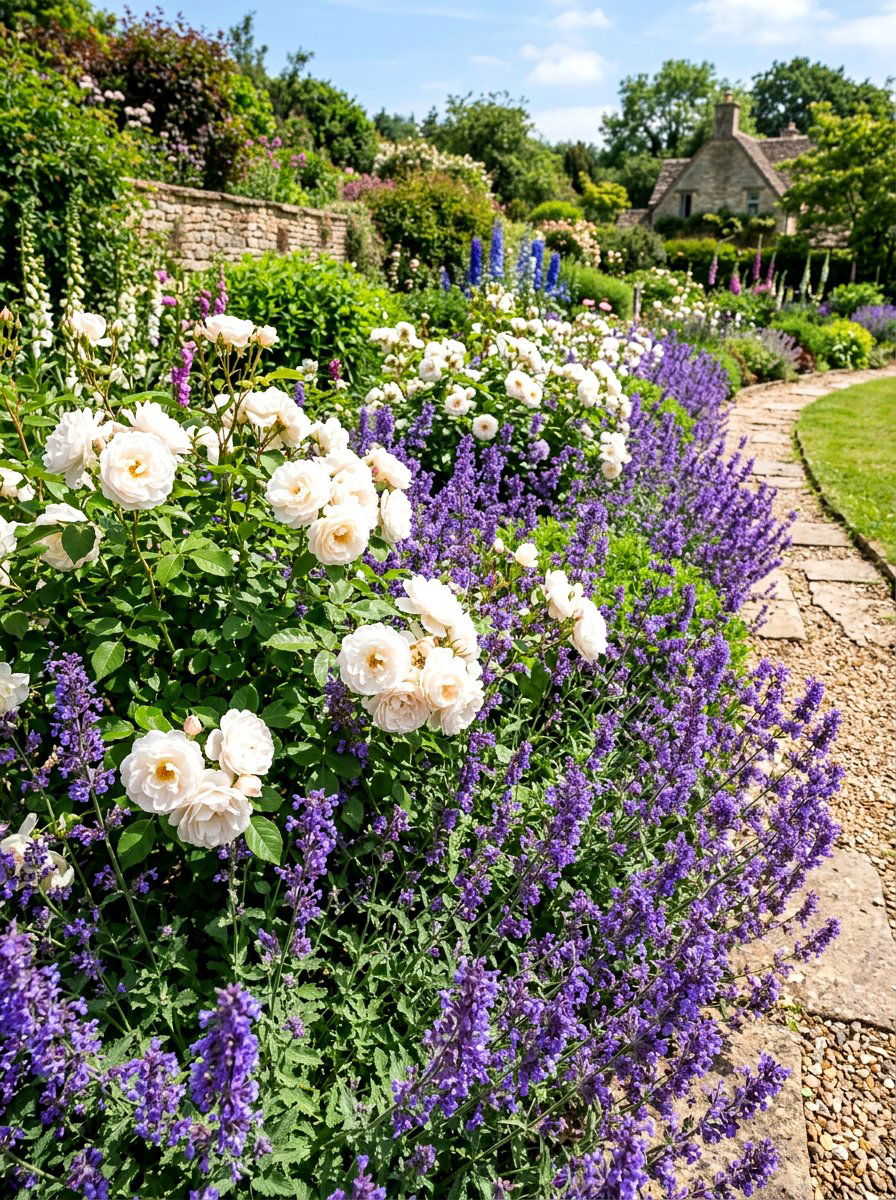
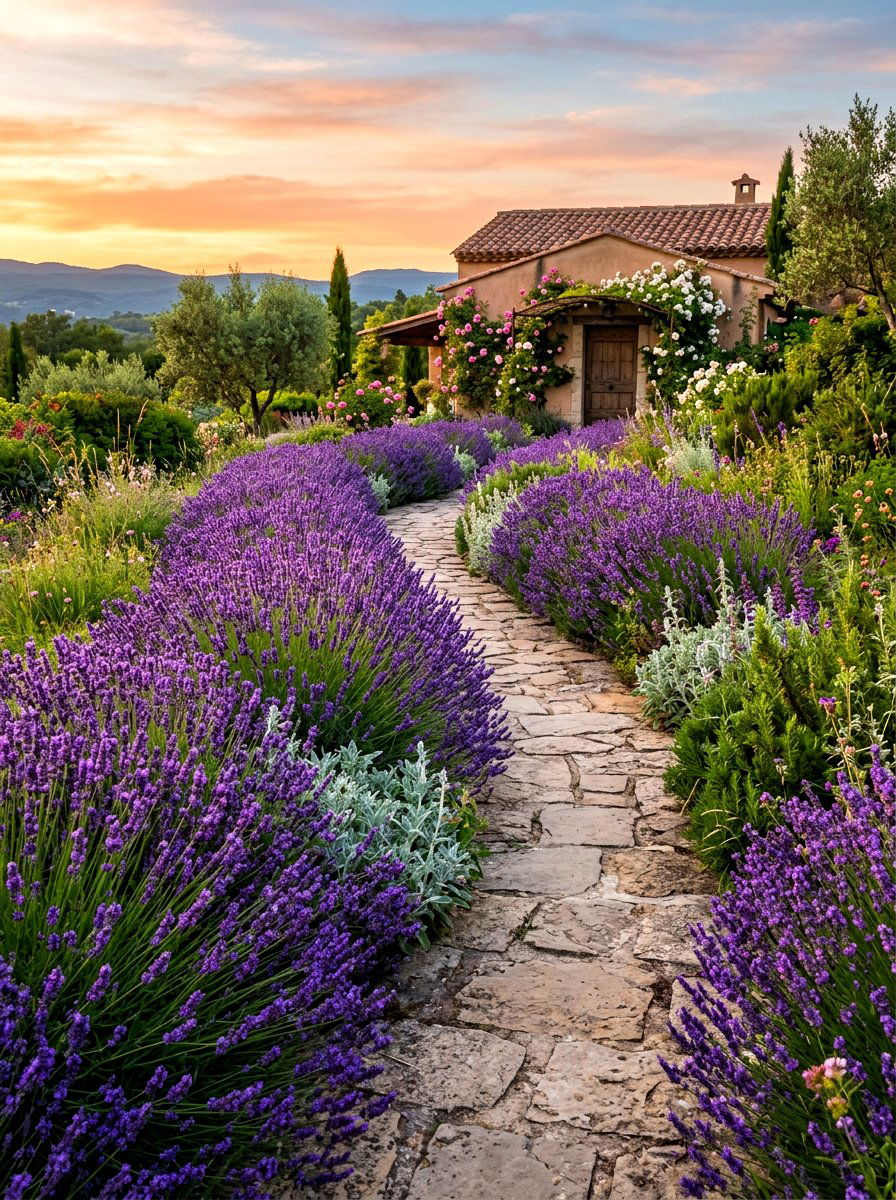
A lavender and rose edging is a classic combination that offers both visual beauty and functional benefits to your garden. The silver-grey foliage of lavender provides a cool contrast to the vibrant greens and rich colors of the rose bushes. This pairing is particularly effective because lavender helps to deter common pests like aphids while attracting beneficial pollinators to the area. Planting a continuous line of lavender at the front of your rose border creates a neat, structured look that keeps the garden feeling tidy. As you walk along the path, the mingling scents of these two plants create a truly immersive and relaxing aromatic experience for everyone.
3. Climbing Rose Fence
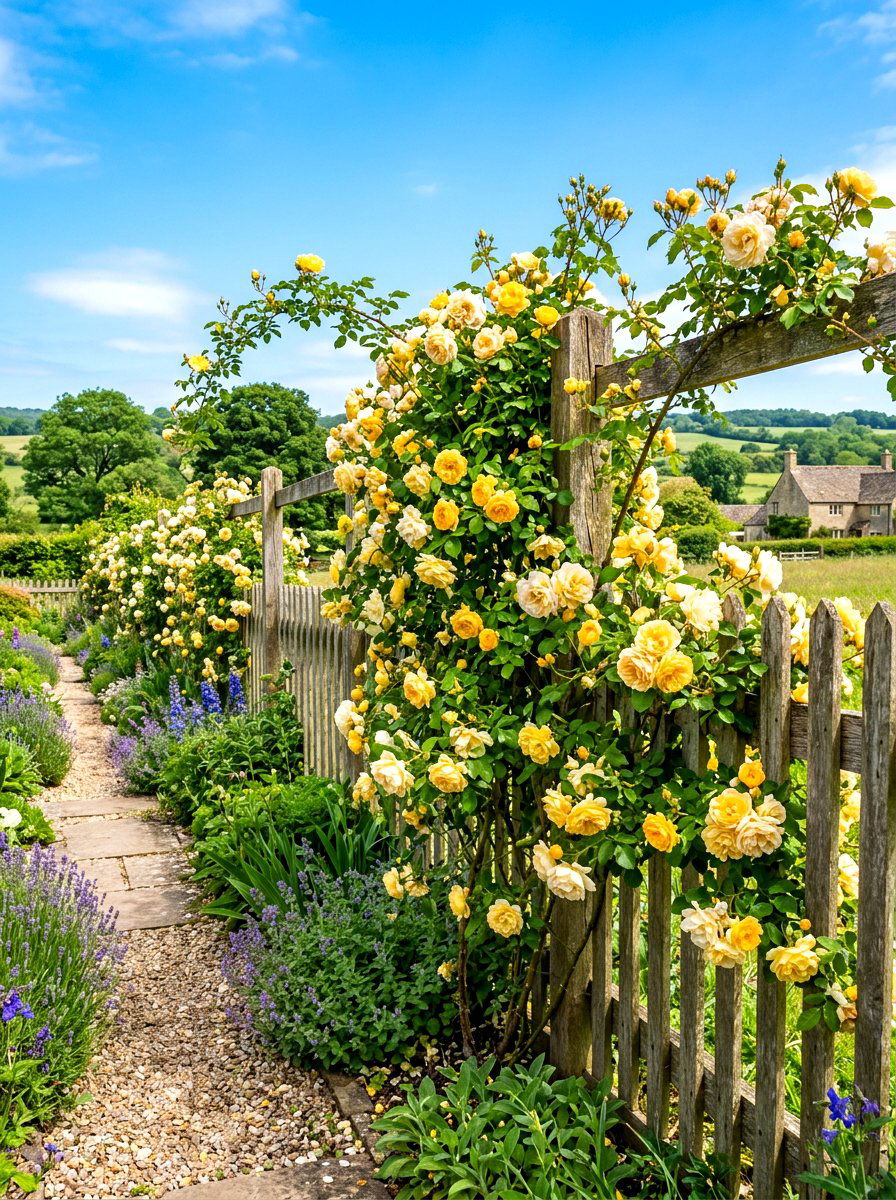
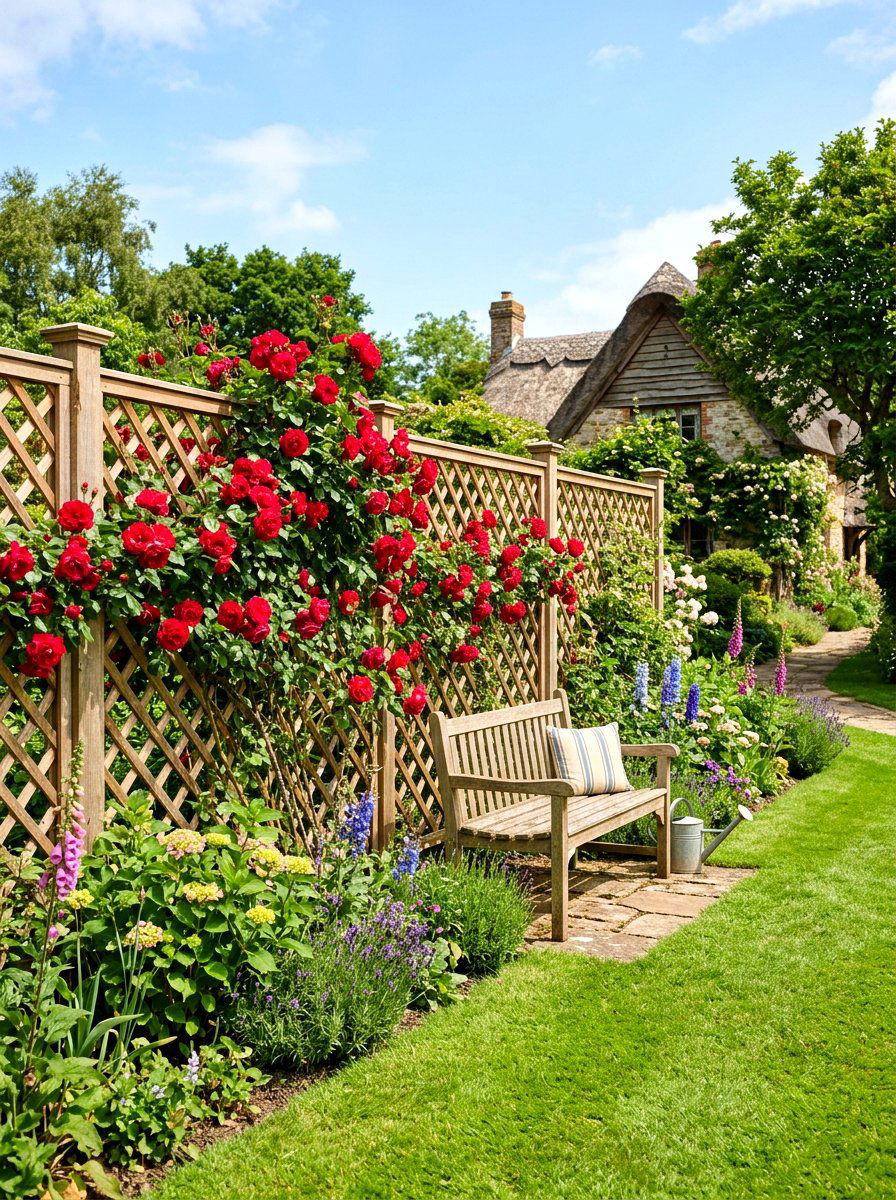
Integrating a climbing rose fence into your landscape adds vertical interest and a sense of privacy to your outdoor living area. These roses are perfect for covering wooden or metal fences, turning a plain boundary into a spectacular wall of flowers. You can choose vigorous varieties that produce clusters of small blooms or large-flowered climbers for a more dramatic effect. Training the canes horizontally along the fence line encourages more lateral shoots and a higher volume of flowers throughout the season. This vertical element draws the eye upward, making a small garden space feel much larger and more enclosed in a cozy, floral embrace that feels very private.
4. Brick Path Rose Border
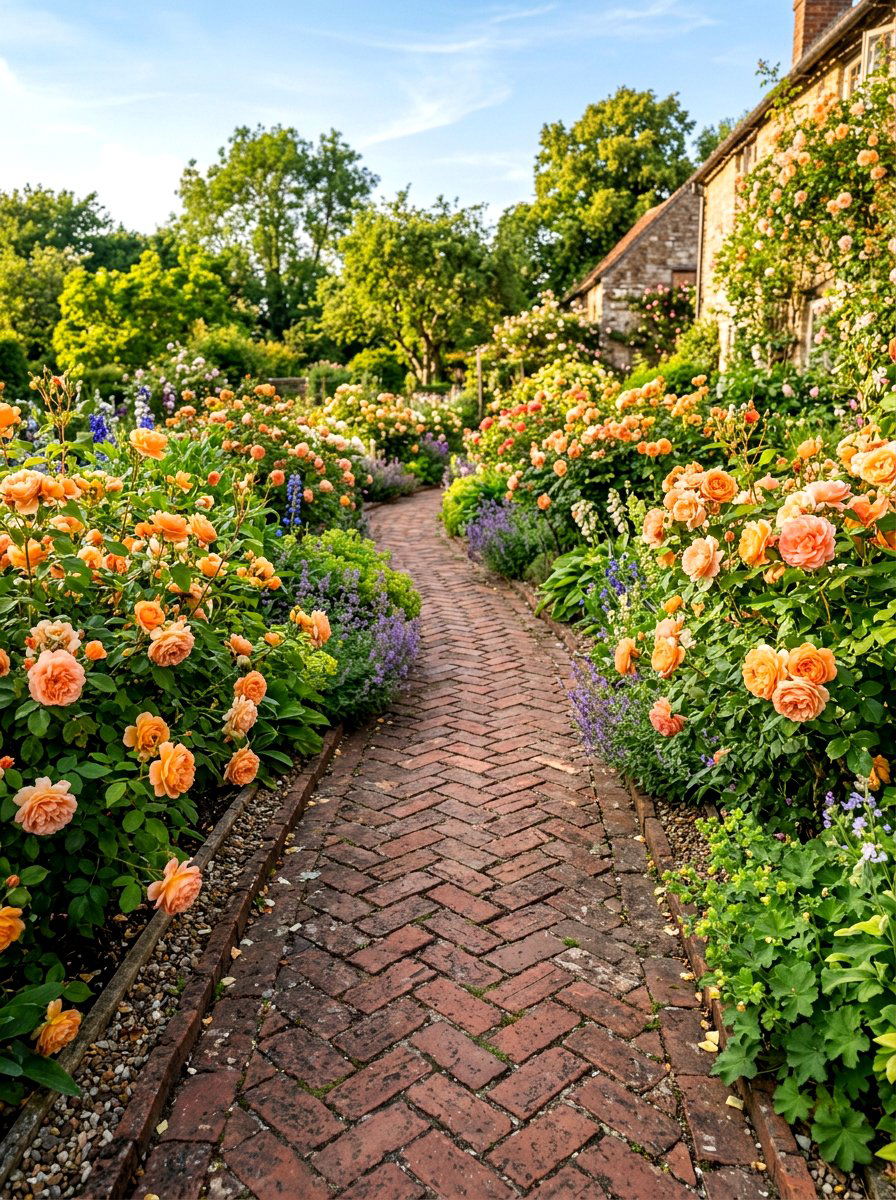
A brick path rose border combines the warm, earthy tones of traditional masonry with the soft, delicate textures of blooming roses. Placing rose beds alongside a winding brick walkway creates a charming journey through the garden that feels established and historical. The straight lines of the bricks provide a clean contrast to the overflowing and informal nature of the cottage roses. To enhance this look, you can select rose varieties in shades of apricot or soft yellow that complement the reddish hues of the bricks. This combination creates a nostalgic atmosphere that invites visitors to slow down and enjoy the natural beauty surrounding them in every step.
5. White Rose Garden Edge
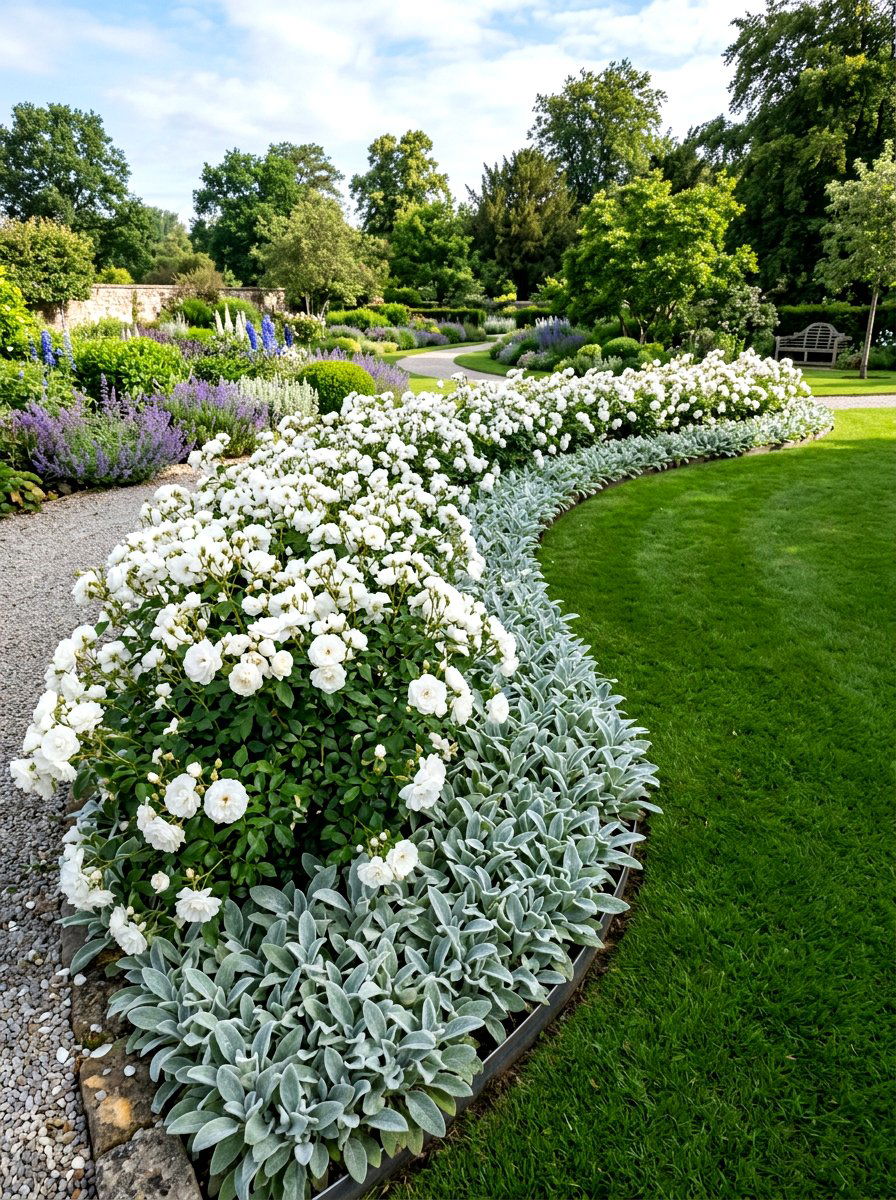
A white rose garden edge creates a serene and sophisticated atmosphere that looks particularly stunning during the twilight hours. White roses reflect the moonlight, making the border glow softly after the sun has set. This monochromatic approach allows the different textures of the foliage and flower shapes to take center stage without the distraction of multiple colors. You can mix various types of white roses, from tiny floribundas to large shrub varieties, to create a layered and interesting border. Pairing these with silvery foliage plants like lamb's ear or Artemisia adds to the ethereal and calm feeling of the space, providing a very peaceful retreat.
6. Mixed Perennial Rose Border
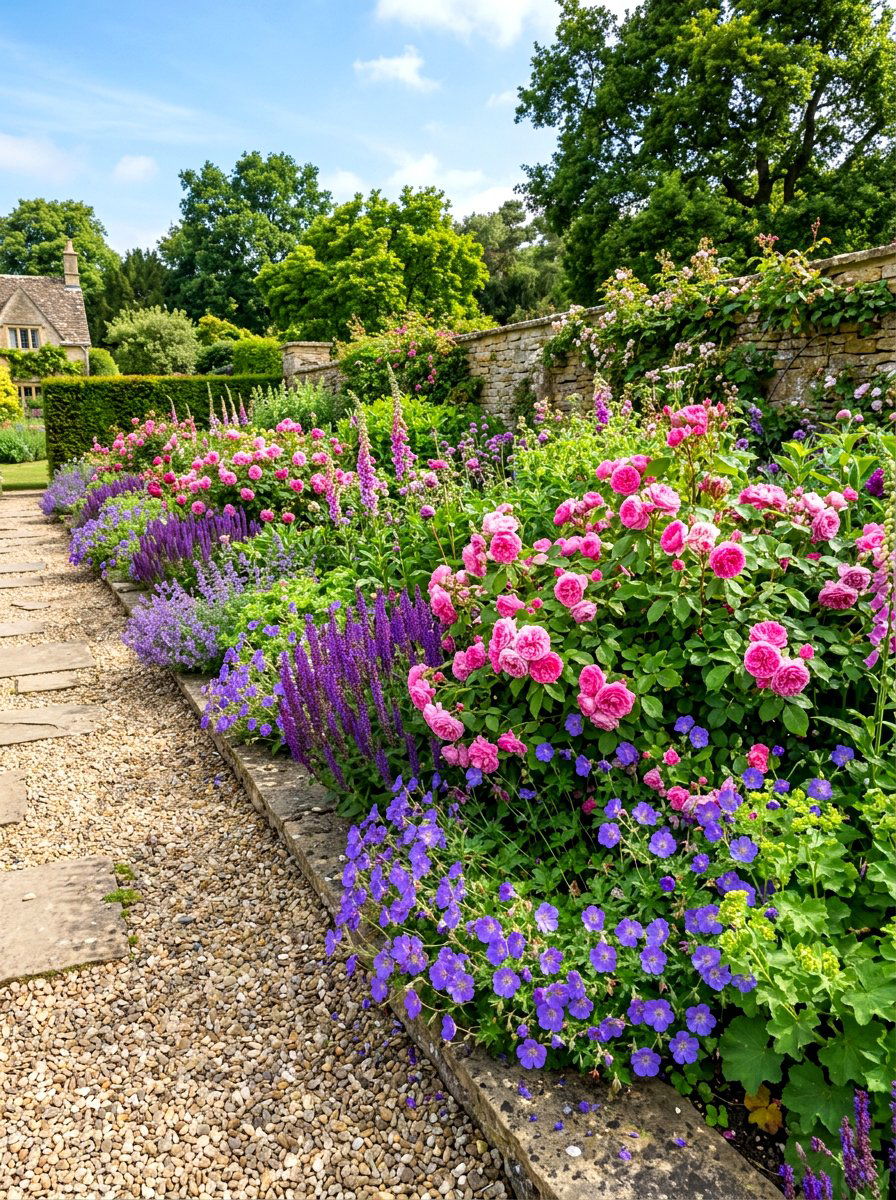
A mixed perennial rose border is the best way to ensure your garden has constant visual interest throughout the different seasons. By weaving roses together with various perennials like hardy geraniums, salvia, and lady's mantle, you create a tapestry of color and texture. These companion plants help to fill the gaps between the rose bushes, hiding any bare stems and providing a lush, full appearance. The variety of flower shapes, from the spires of foxgloves to the flat heads of achillea, adds movement and diversity to the border. This style of planting is very forgiving and mimics the natural beauty of a wild, thriving meadow.
7. Pink Shrub Rose Walkway
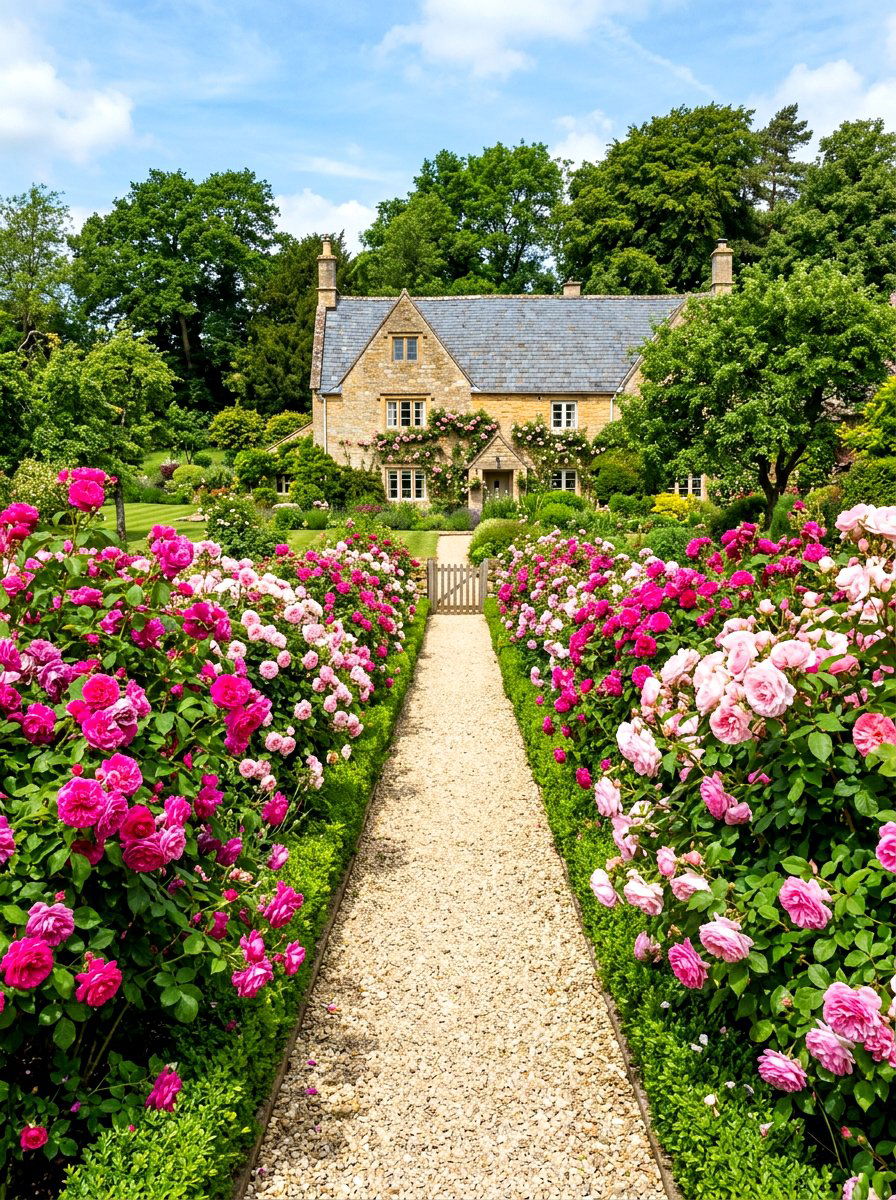
Designing a pink shrub rose walkway offers a cheerful and welcoming entrance to any home or garden area. Pink is the most traditional color for cottage roses, ranging from delicate blush to vibrant fuchsia. Planting these in a long, continuous border alongside a path creates a cohesive and high-impact look that feels very intentional. The repetitive use of one color family provides a sense of harmony while the different bloom forms keep the design interesting. These shrubs create a soft wall of color that brushes against you as you walk past, releasing their sweet fragrance and making every stroll feel like a special occasion.
8. Stone Wall Rose Planting
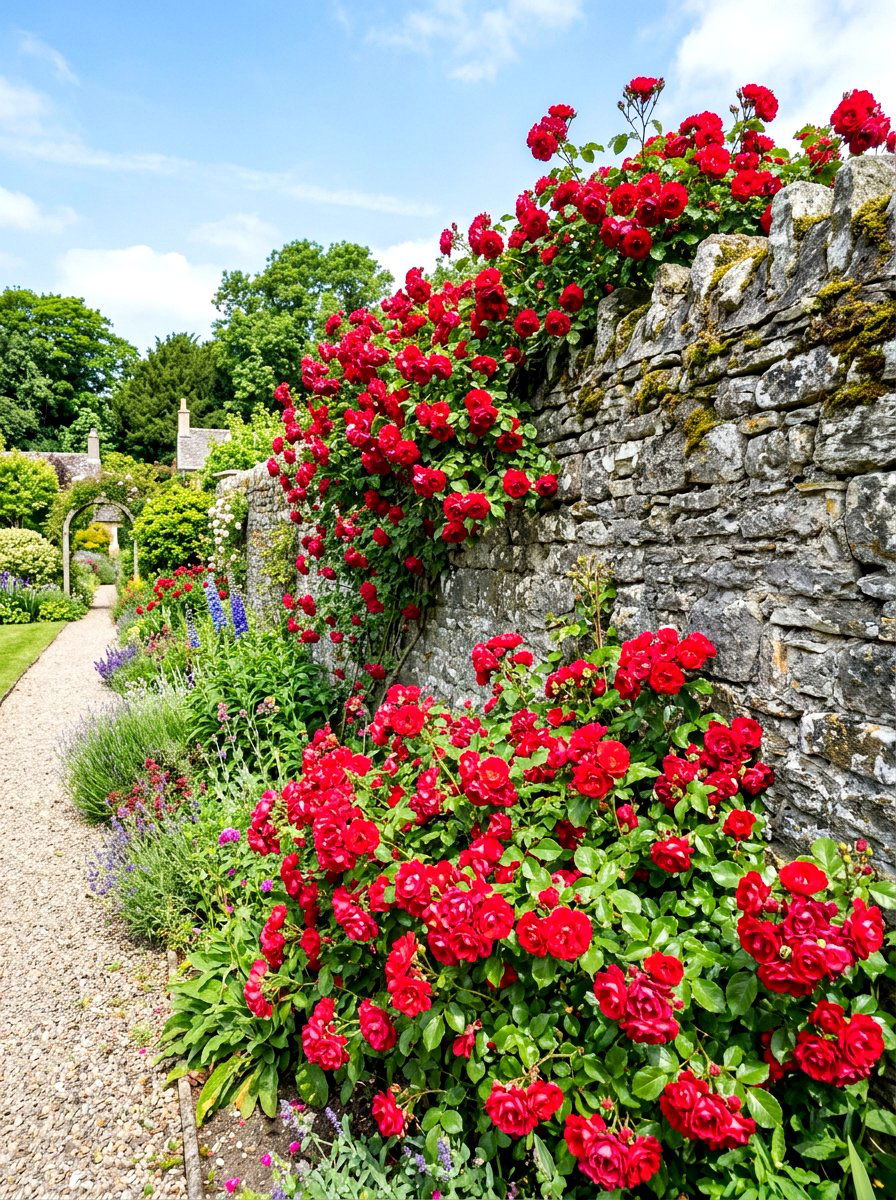
A stone wall rose planting utilizes the rugged and permanent nature of stone to highlight the fleeting and delicate beauty of roses. Planting roses at the base of a dry-stone wall allows the stems to lean against the rock, creating a beautiful draped effect. The stones also absorb heat during the day, which can benefit the roses in cooler climates by keeping the soil slightly warmer. You can use low-growing varieties to spill over the top of the wall or taller shrubs to frame the architectural features of the stonework. This rustic look is perfect for rural gardens or for adding character to a modern yard.
9. Foxglove And Rose Bed
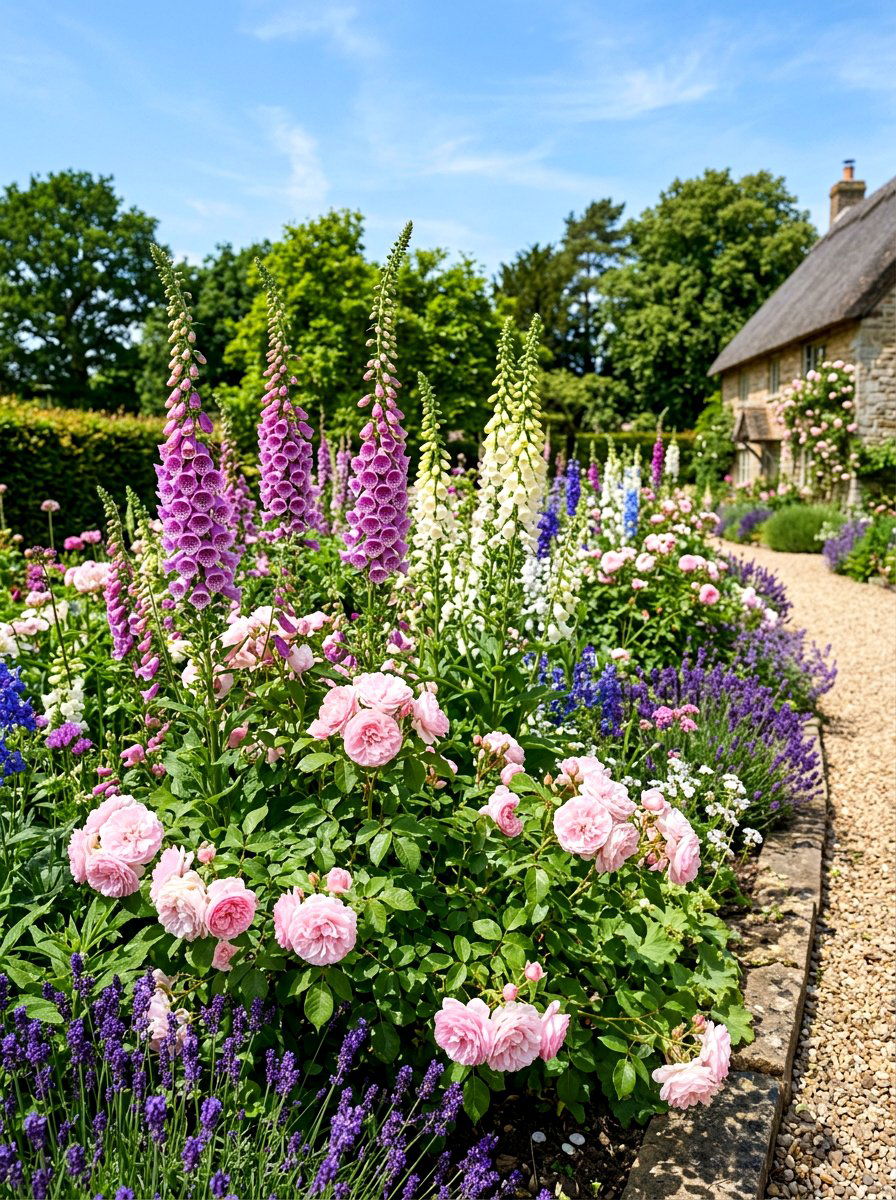
A foxglove and rose bed is a quintessential cottage garden pairing that offers a stunning contrast in height and flower shape. The tall, majestic spires of foxgloves rise above the rounded, bushy forms of the rose shrubs, creating a dynamic visual hierarchy. These biennial plants often self-seed, allowing them to pop up in unexpected places and adding to the informal charm of the border. Choosing foxgloves in shades of cream, peach, or purple can complement or contrast with your chosen rose colors. This combination provides a vertical rhythm that breaks up the horizontal lines of the garden, making the entire planting look more professional and complete.
10. Gravel Path Rose Border
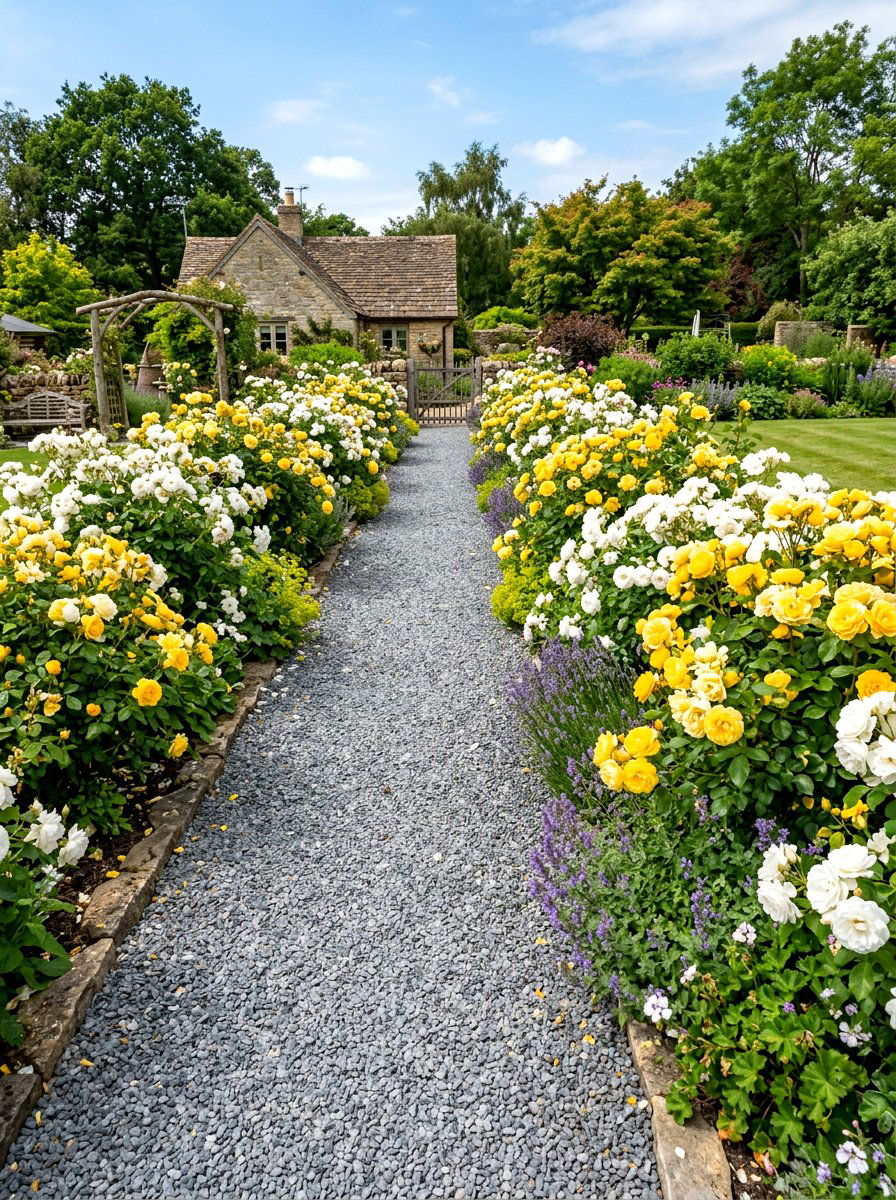
A gravel path rose border offers a low-maintenance and highly textural solution for a romantic garden walkway. The crunch of the gravel underfoot provides a sensory element that pairs perfectly with the visual and olfactory delight of the roses. Roses often thrive next to gravel as it provides excellent drainage and reflects light onto the lower leaves of the plants. You can allow some of the more informal rose varieties to spill slightly over the edges of the path, softening the transition between the hardscape and the planting beds. This style is particularly effective in Mediterranean or dry-cottage garden designs where a relaxed feel is desired.
11. Picket Fence Rose Garden
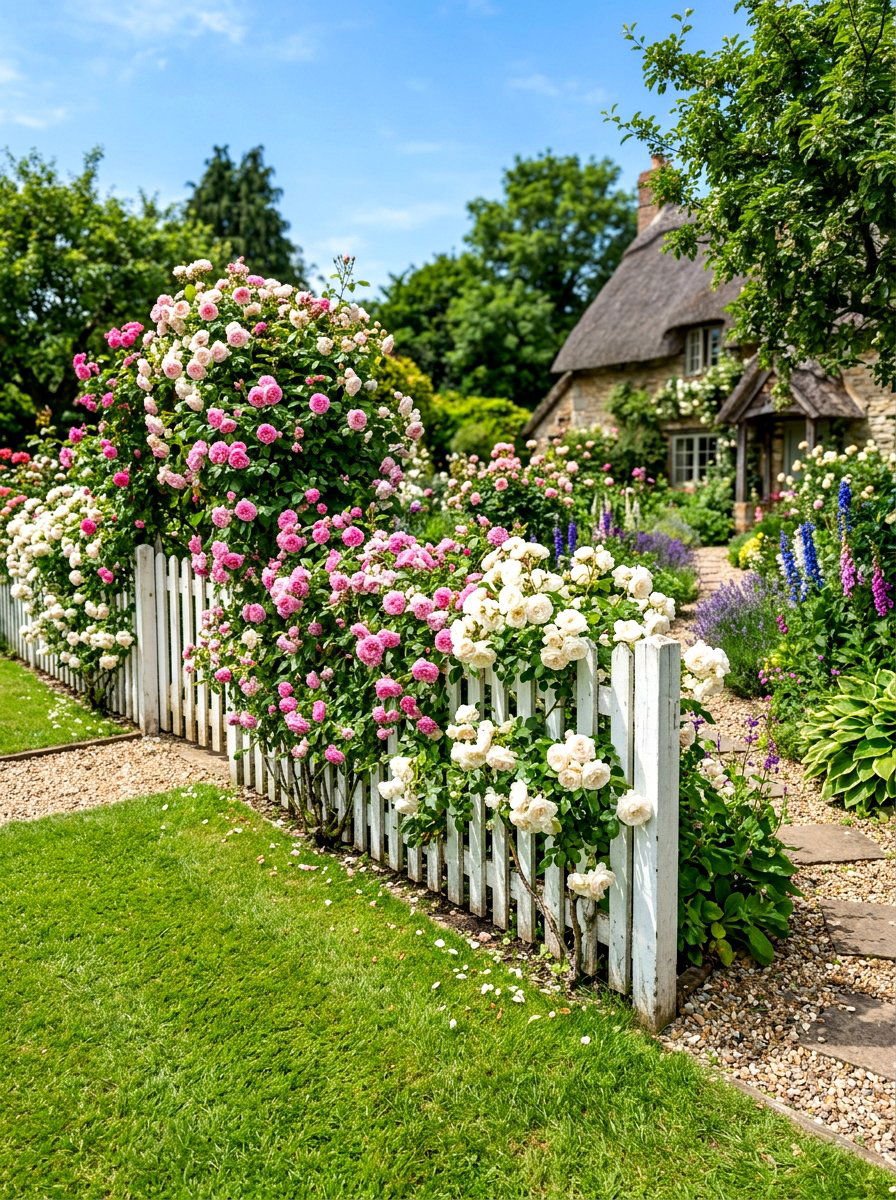
A picket fence rose garden is the ultimate symbol of classic suburban charm and romantic cottage style. A white wooden fence provides the perfect structural support for roses to lean against and peek through. Planting a mix of shrub roses and shorter climbers along the fence creates a beautiful boundary that looks lovely from both sides. The gaps between the pickets allow for excellent airflow, which is vital for keeping rose bushes healthy and free from fungal issues. This design anchors the garden to the architecture of the home, creating a picturesque scene that looks like it belongs on a vintage postcard or in a movie.
12. David Austin Rose Border
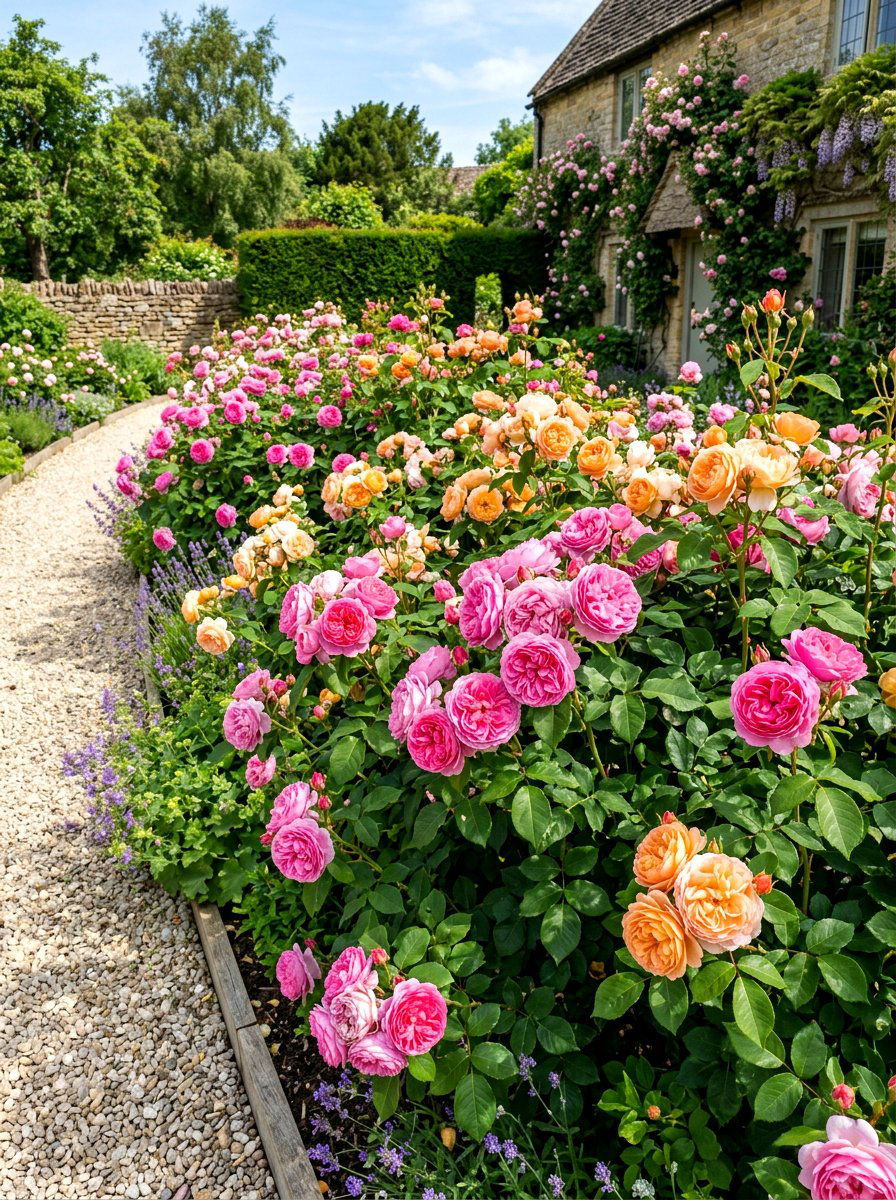
A David Austin rose border is the gold standard for anyone seeking the perfect blend of old-fashioned charm and modern reliability. These roses are famous for their deep fragrance, complex petal counts, and excellent disease resistance compared to older heritage varieties. Designing a border specifically with these English roses ensures a high-quality display that will bloom repeatedly throughout the summer months. You can group varieties by color to create a gradient effect or mix them for a more eclectic look. Their sturdy growth habit makes them ideal for the middle of a border where they can provide a consistent and reliable structure for other plants to lean on.
13. Catmint And Rose Lining
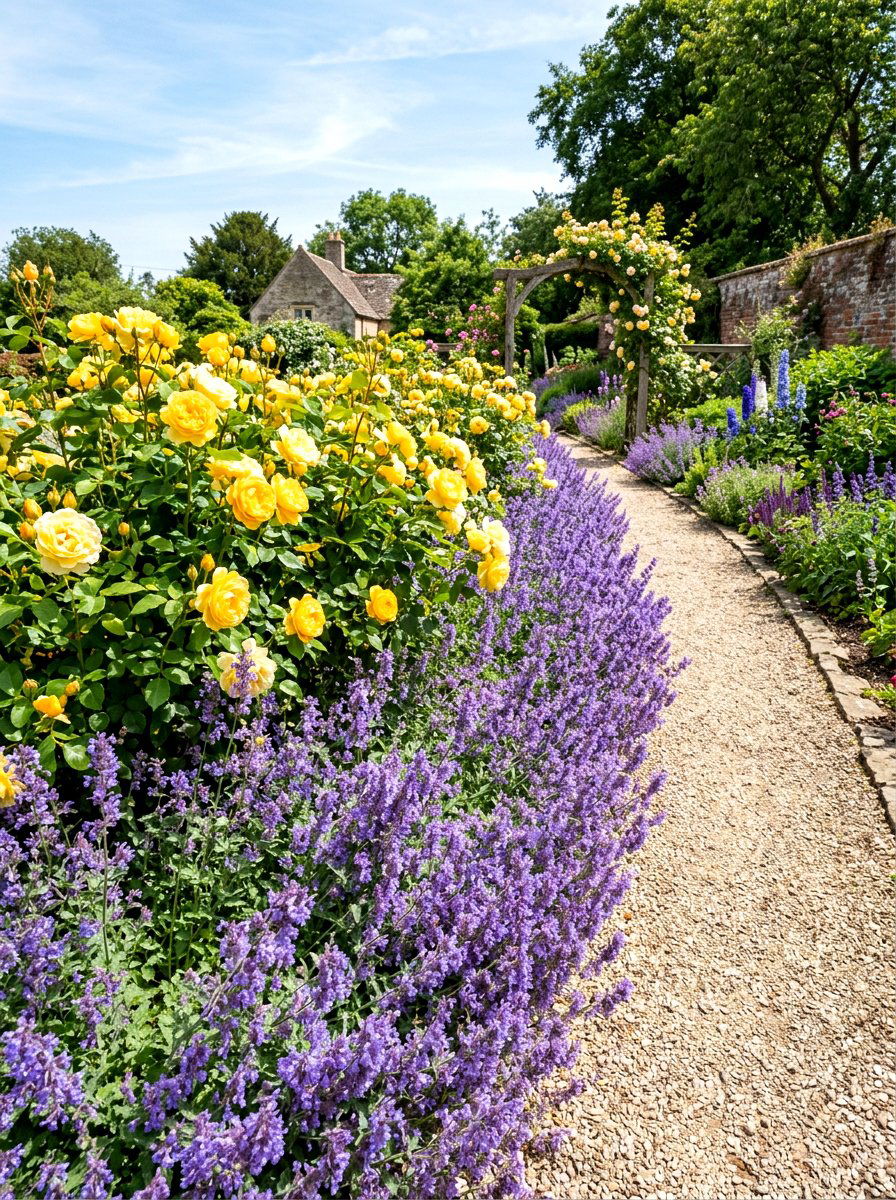
A catmint and rose lining is a durable and stunning combination that is loved by gardeners for its long-lasting color. Catmint produces clouds of tiny purple flowers that perfectly complement the larger, more structured blooms of the roses. This perennial is incredibly hardy and serves as an excellent groundcover to suppress weeds around the base of the rose bushes. The cool blue-purple tones of the catmint help to make the warm colors of the roses pop, especially yellow and orange varieties. Furthermore, catmint is highly attractive to bees, ensuring your garden is buzzing with life and activity from early spring through the late autumn months.
14. Boxwood Hedged Rose Garden
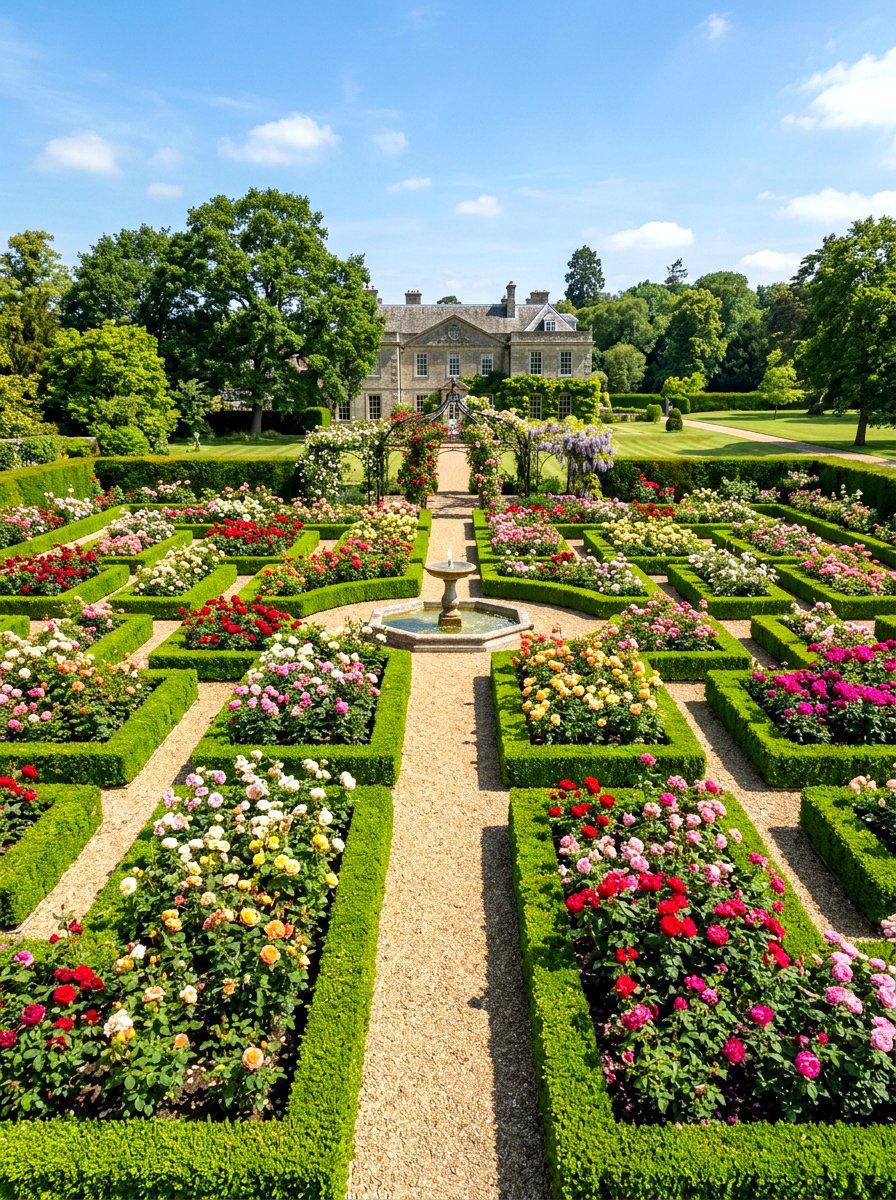
A boxwood hedged rose garden adds a touch of formal structure to the otherwise informal cottage style. Low, clipped boxwood hedges create clean frames around the rose beds, defining the space and providing year-round greenery even when the roses are dormant. This geometric layout helps to organize the abundance of the rose blooms, preventing the garden from looking too messy or overgrown. The dark green leaves of the boxwood provide a sharp contrast to the colorful roses and help to highlight their individual shapes. This approach is ideal for front gardens or for creating a sense of order in a smaller backyard space that needs clear lines.
15. Rambling Rose Archway
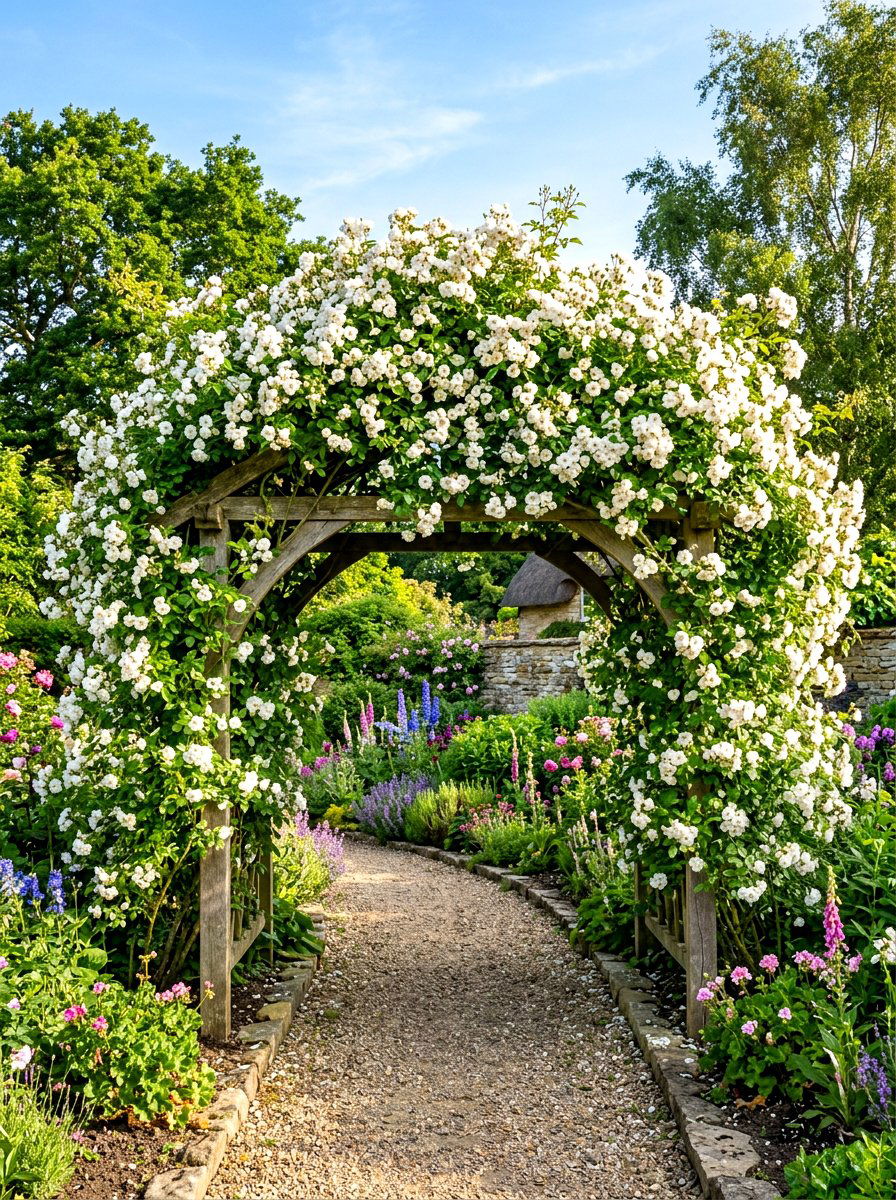
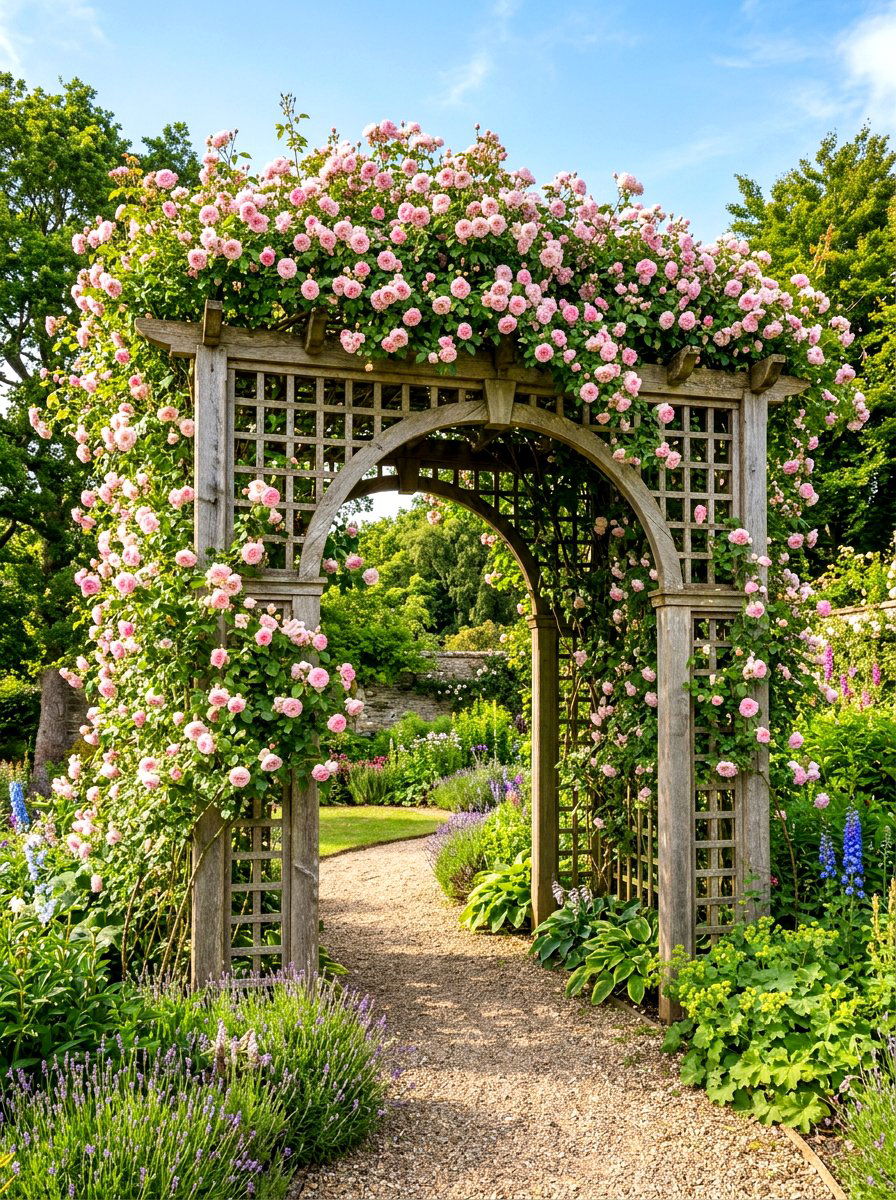
A rambling rose archway creates a magical transition point between different areas of your garden. Unlike climbers, rambling roses are often more vigorous and produce a massive, single flush of flowers that covers the entire structure in a blanket of color. Training these over a sturdy metal or wooden arch creates a breathtaking focal point that draws the eye from a distance. As the roses bloom, they form a fragrant tunnel that visitors can walk through, providing a truly immersive garden experience. This vertical feature adds a sense of height and drama, making the garden feel more three-dimensional and interesting to explore at different eye levels.
16. Yellow Rose Garden Border
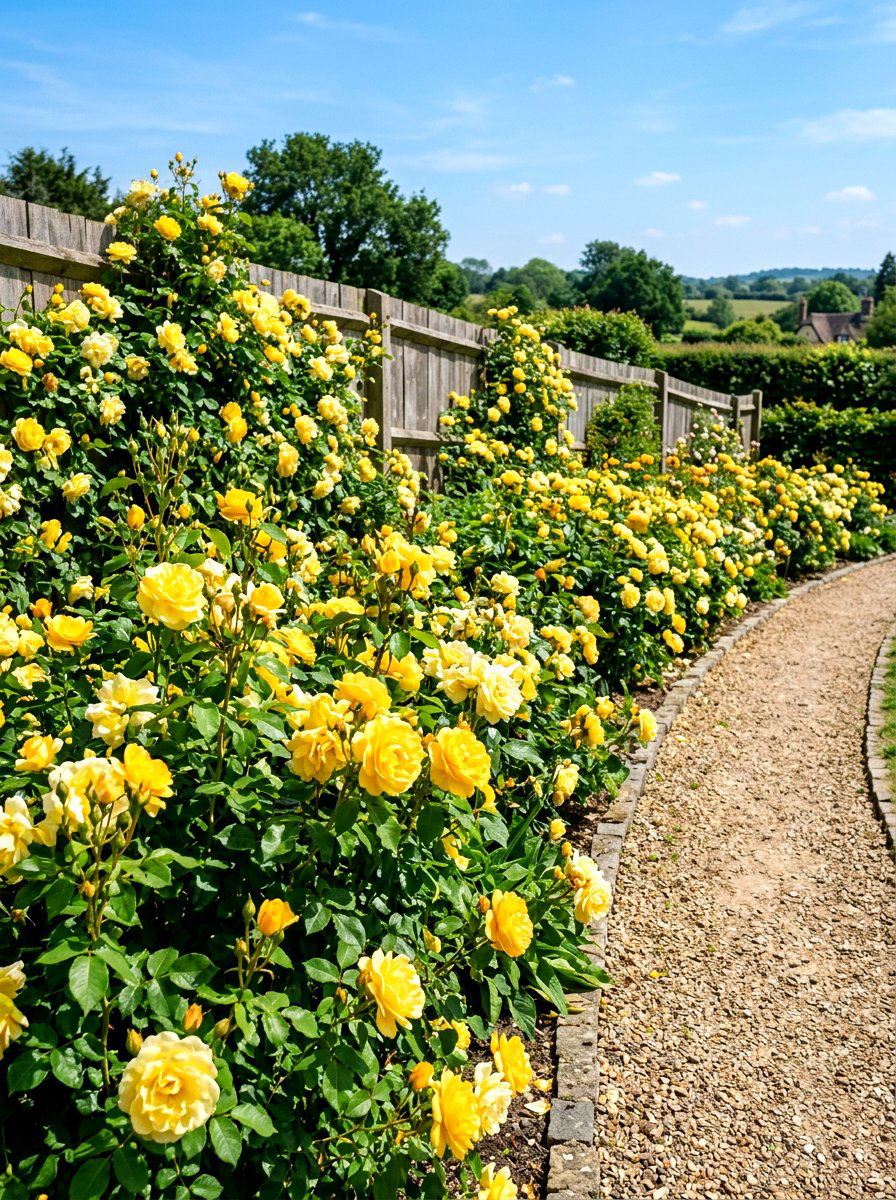
A yellow rose garden border brings a bright and sunny energy to any landscape, even on overcast days. Yellow roses range from pale lemon and buttery cream to vibrant gold and deep amber. These colors are particularly effective at catching the light and can make a dark corner of the garden feel much more cheerful and open. Pairing yellow roses with purple companion plants like lavender or salvia creates a high-contrast look that is visually striking. Yellow is also a great color for attracting a wide variety of butterflies, adding movement and life to your rose border as they flutter from flower to flower throughout the day.
17. Wildflower Rose Meadow Edge
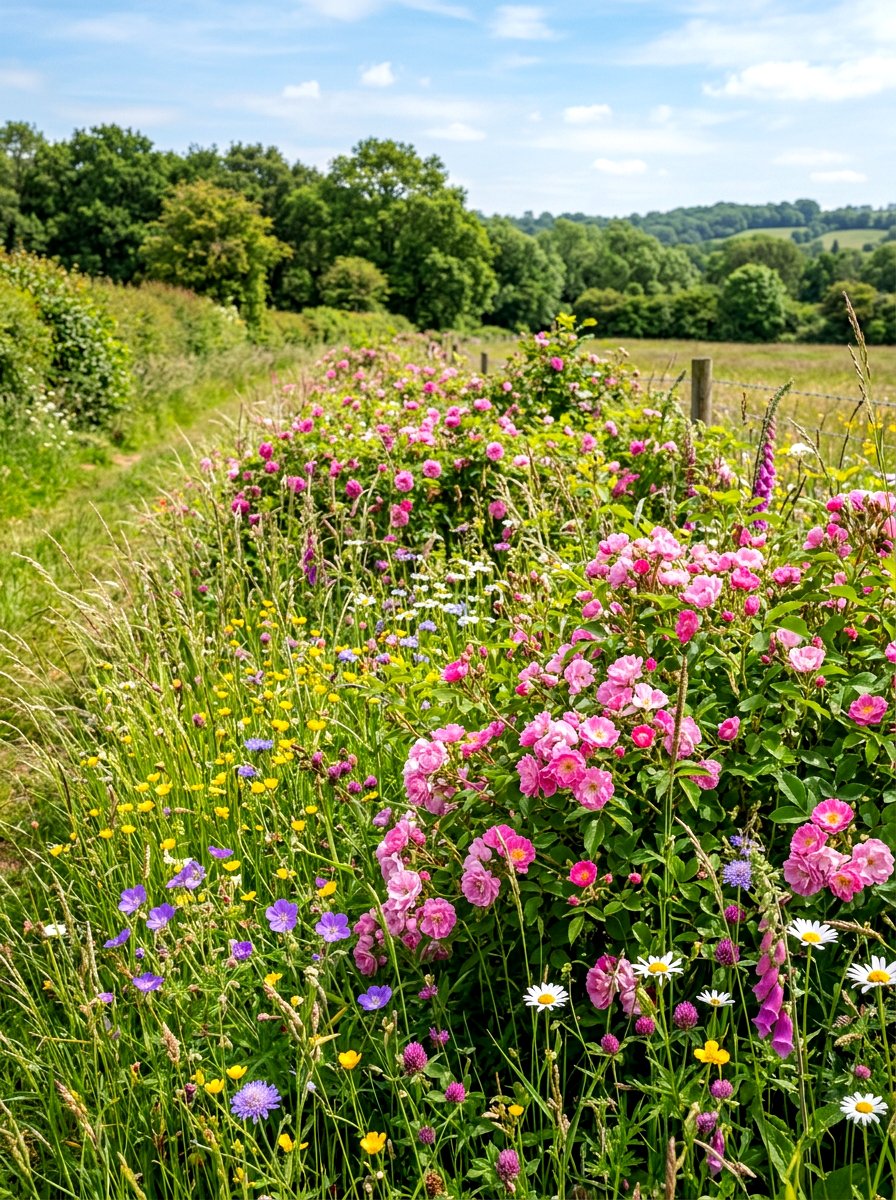
A wildflower rose meadow edge is perfect for those who prefer a more naturalistic and ecological approach to their garden design. By mixing native wildflowers with hardy shrub roses, you create a habitat that supports local wildlife while looking beautiful. This style of border requires less maintenance than a formal bed and embraces the beauty of seasonal changes. The roses provide a stable structure and focal point among the swaying grasses and delicate wildflower blooms. This combination creates a soft, blurred edge to the garden that feels like it belongs in the countryside, providing a relaxed and very peaceful atmosphere for people and pollinators.
18. Front Yard Rose Border
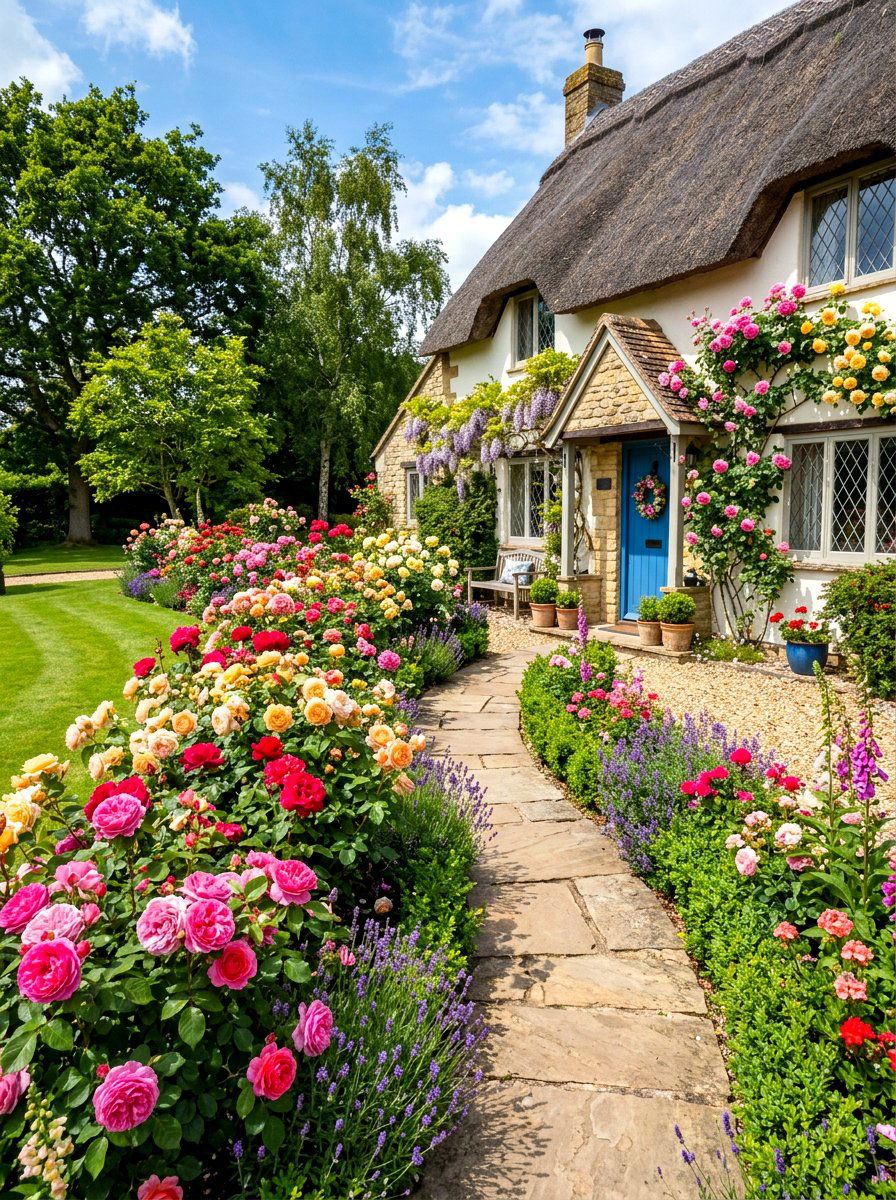
A front yard rose border is a wonderful way to boost your home’s curb appeal and share your love of gardening with the neighborhood. Planting roses along the edge of your property or next to the driveway creates a welcoming and high-impact entrance. Shrub roses are an excellent choice for this area as they are generally easy to care for and provide a consistent show of color. Using a mix of heights can help to obscure less attractive parts of the house while highlighting the architectural features you love. This public-facing garden becomes a point of conversation and brings joy to everyone who passes by your home.
19. Layered Rose Garden Bed
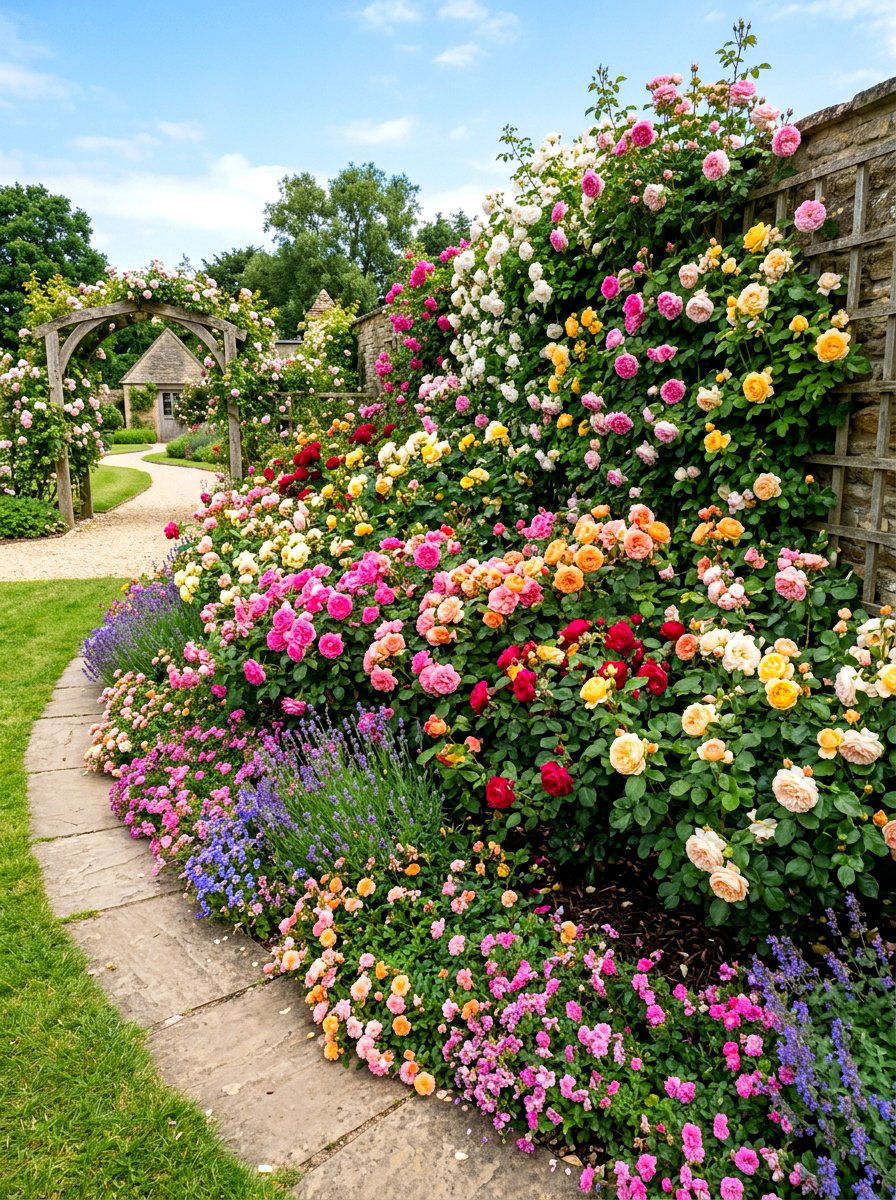
A layered rose garden bed utilizes the principle of planting in heights to create a full and professional-looking border. In this design, you place the tallest climbing roses or large shrubs at the back, mid-sized floribundas in the center, and low-growing groundcover roses at the very front. This step-like arrangement ensures that every plant is visible and receives adequate sunlight and airflow. You can also intersperse perennials and bulbs within these layers to add different textures and bloom times. This structured approach prevents the border from looking flat and maximizes the amount of floral color you can pack into a relatively small garden footprint.
20. Cottage Garden Rose Hedge
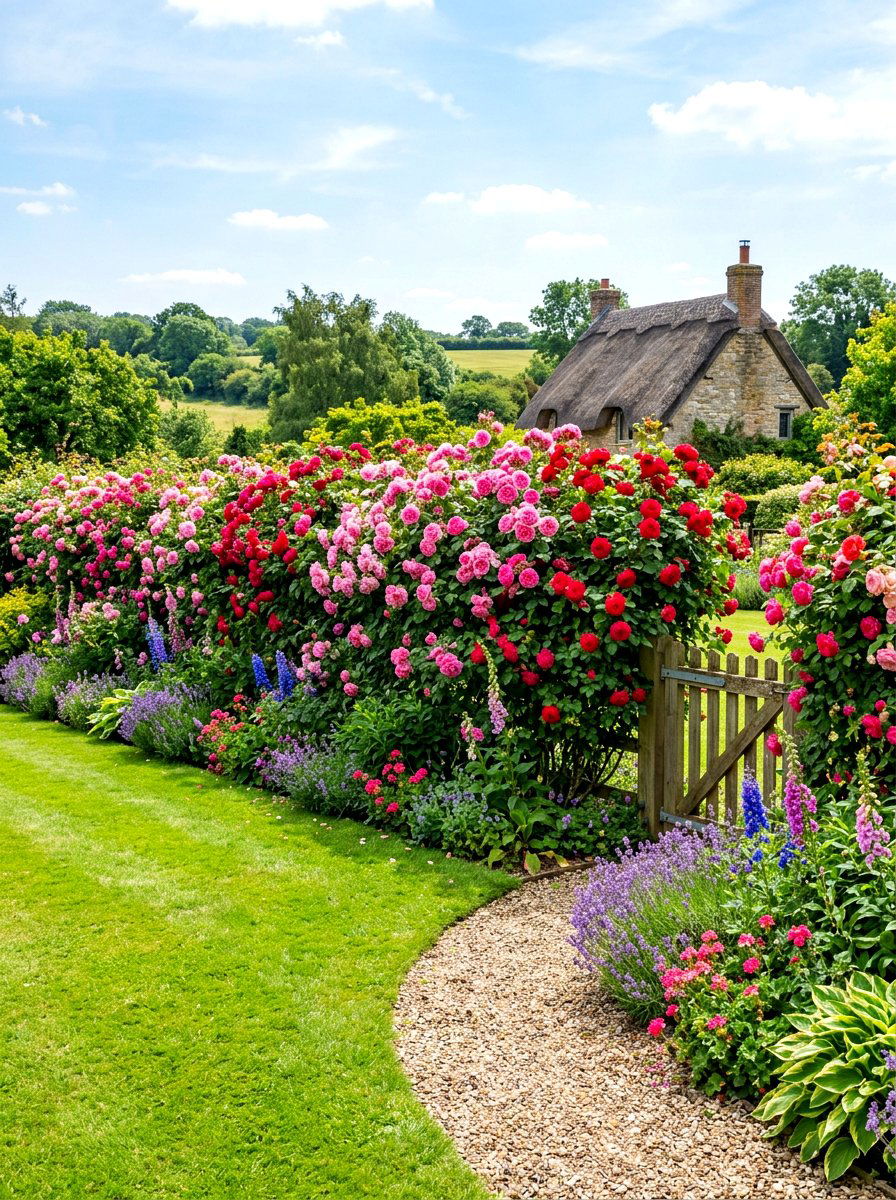
A cottage garden rose hedge serves as a beautiful and fragrant living fence that can define boundaries or screen off certain areas. Using roses as a hedging plant offers a much more colorful and interesting alternative to traditional evergreen shrubs like privet or yew. Varieties that have a dense, thorny growth habit also provide a natural security barrier for your property while looking much more attractive than a wall. These hedges require annual pruning to maintain their shape, but they reward you with an incredible abundance of flowers. The thick foliage also provides excellent nesting sites for small garden birds, contributing to a healthy local ecosystem.
21. Scented Rose Pathway
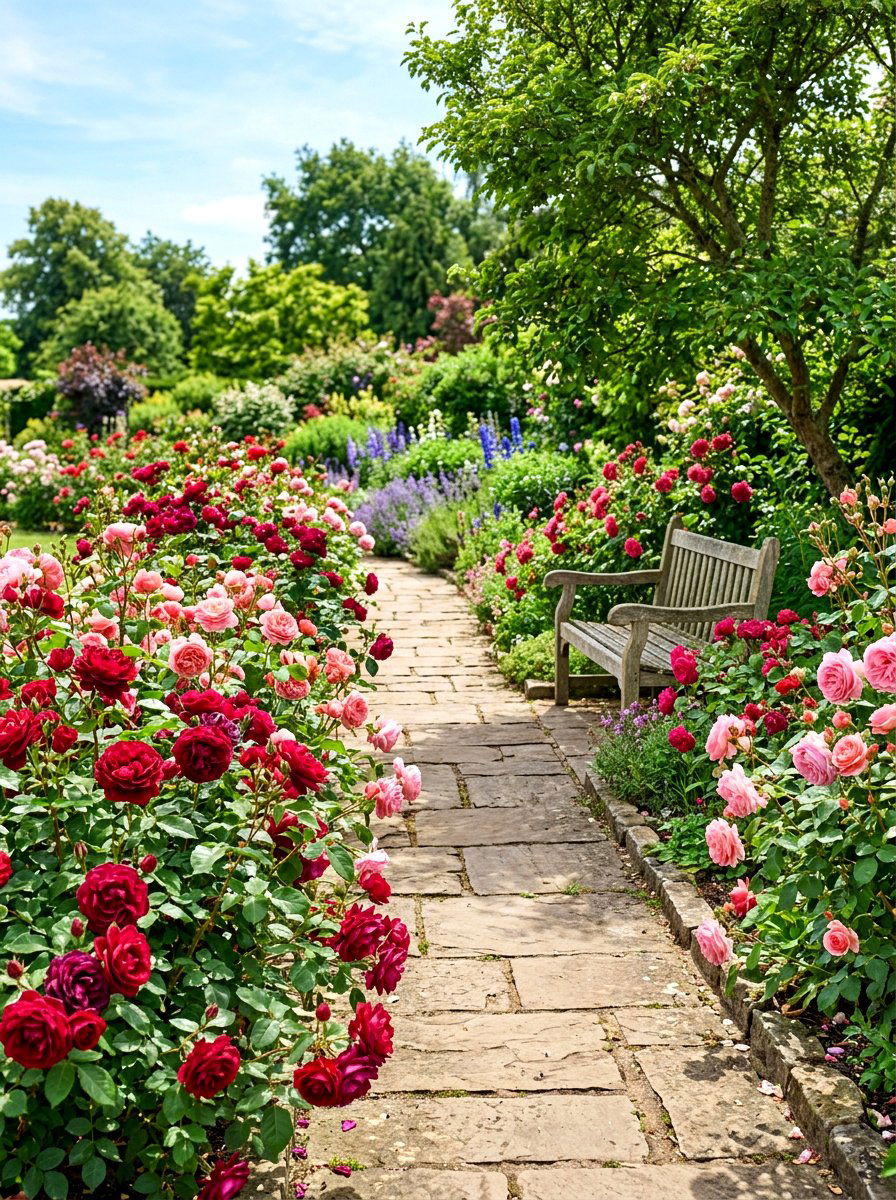
A scented rose pathway focuses on the olfactory experience of the garden, selecting varieties specifically for their powerful and pleasant fragrances. By planting these highly aromatic roses alongside a frequently used path, you ensure that their scent is enjoyed every time you walk through the space. You can mix different fragrance profiles, such as fruity, spicy, or traditional old rose scents, to create a complex and evolving perfume. Placing a bench or seating area nearby allows you to linger and fully appreciate the intoxicating air. This sensory-driven design transforms a simple walkway into a therapeutic retreat that engages both the eyes and the nose beautifully.
22. Red Rose Border
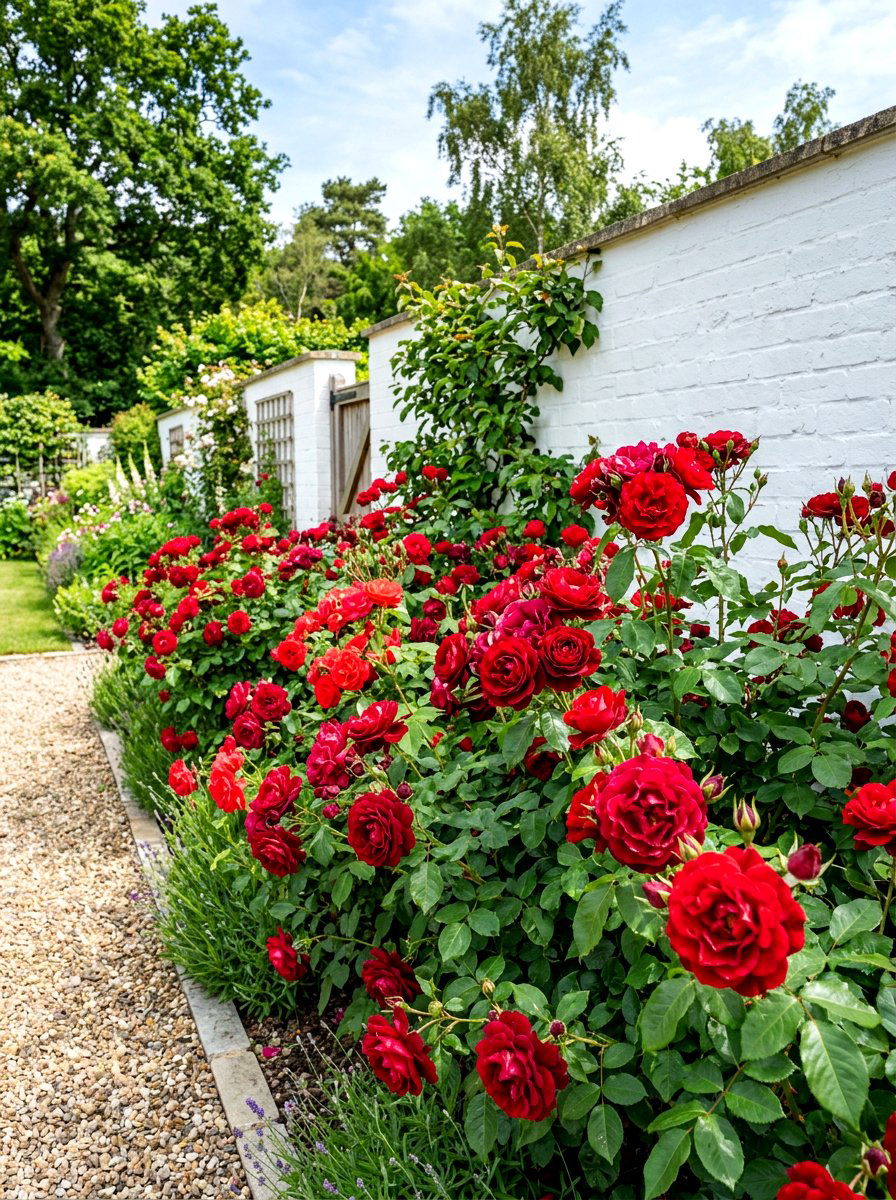
A red rose border makes a bold and dramatic statement, symbolizing passion and elegance in the garden landscape. Deep crimson and vibrant scarlet roses provide a rich focal point that draws the eye immediately. To prevent the red from becoming too overwhelming, you can balance it with plenty of dark green foliage or white companion flowers. Red roses look particularly stunning when planted against a light-colored wall or a white picket fence, where their color can truly shine. These varieties often have a classic, formal appearance that brings a sense of traditional luxury to a cottage garden setting, making the space feel very sophisticated and timeless.
23. Salvia And Rose Planting
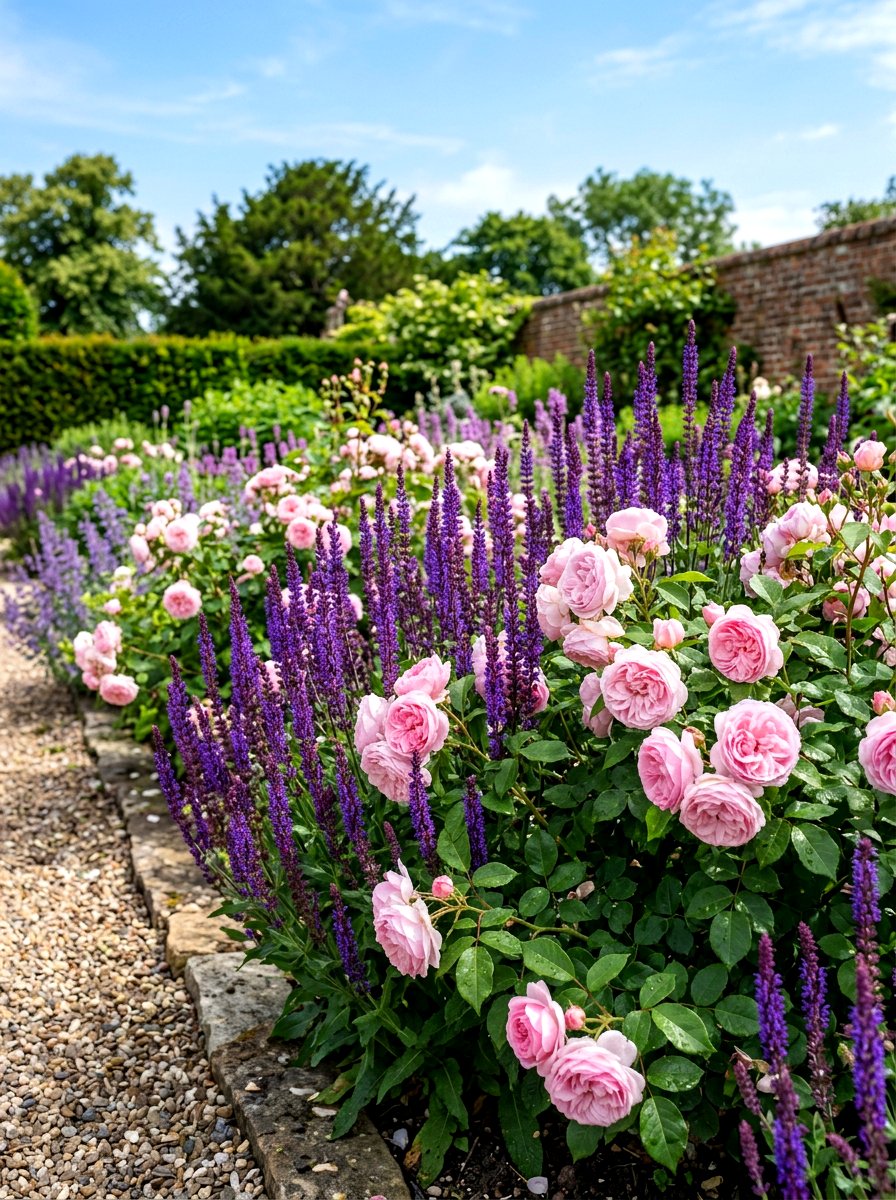
A salvia and rose planting is a favorite among modern cottage gardeners for its vibrant color contrast and shared growing requirements. Salvias produce long, elegant spikes of flowers in shades of blue, purple, and hot pink that look incredible tucked between rose bushes. The vertical form of the salvia stems provides a nice break from the rounded shapes of the roses. Most salvias are drought-tolerant and love the same sunny spots that roses thrive in. This combination is not only beautiful but also very practical, as both plants are relatively low-maintenance once they are established in the soil. They provide a long-lasting and very colorful display.
24. Allium And Rose Border
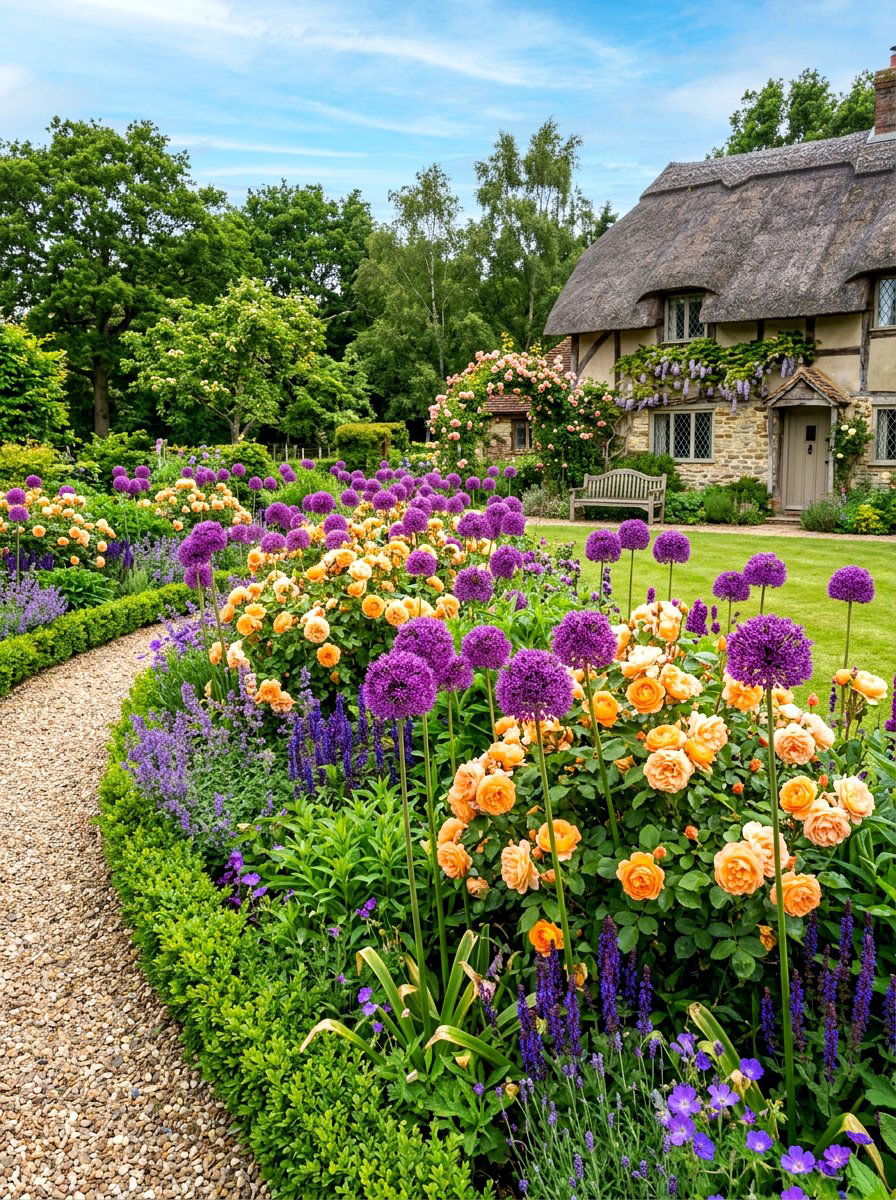
An allium and rose border adds a playful and architectural element to your garden design during the late spring and early summer. The perfectly spherical flower heads of the alliums look like whimsical floating globes among the opening rose buds. This combination creates a sense of height and movement that is very modern yet fits perfectly within a cottage theme. Alliums are bulbs, meaning they take up very little space at the ground level, making them ideal for tucking into tight gaps within an existing rose border. Their unique shape provides a wonderful contrast to the soft, ruffled petals of the roses, creating a very dynamic visual.
25. Rustic Wood Rose Edge
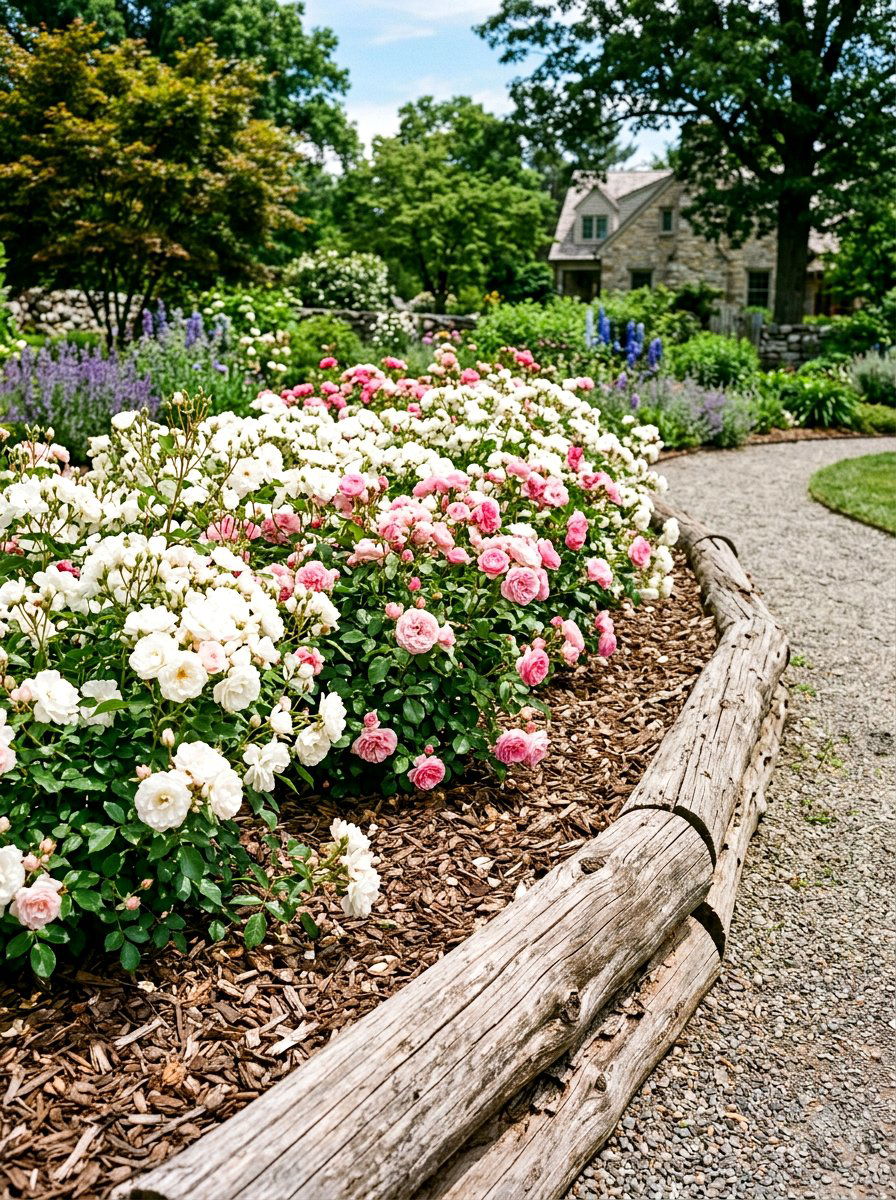
A rustic wood rose edge uses natural materials like cedar logs or reclaimed timber to create a warm and grounded boundary for your flowers. This organic look is perfect for farmhouse or woodland-themed cottage gardens where you want the landscaping to feel integrated with nature. The wood provides a sturdy edge that keeps mulch and soil in place while providing a neutral backdrop that lets the rose colors pop. Over time, the wood will weather to a beautiful silvery-grey, adding to the antique and established feel of the garden. This is a budget-friendly way to add structure and character to your rose borders very easily.
26. Peony And Rose Border
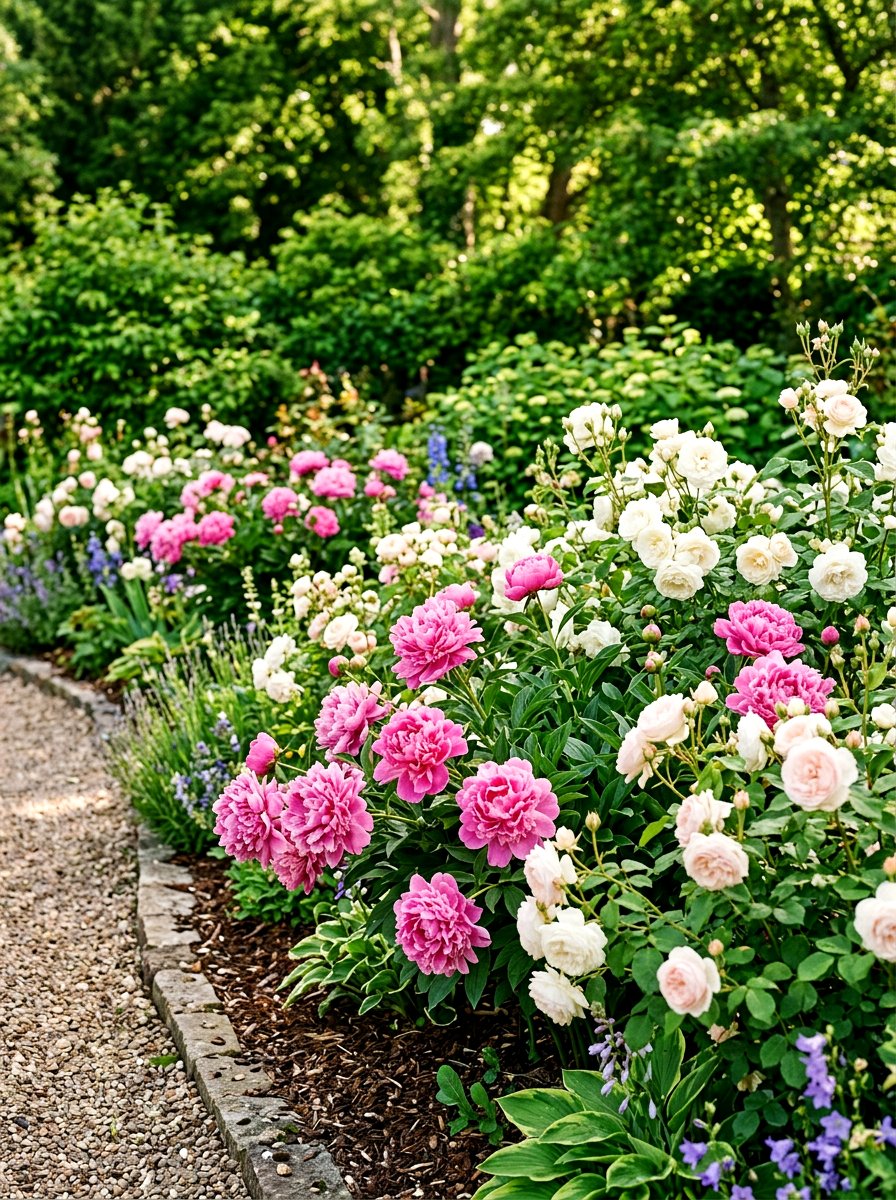
A peony and rose border is the ultimate expression of floral luxury and romantic garden design. Peonies bloom just before or at the same time as many roses, creating a massive explosion of oversized, fragrant flowers in the early summer. Both plants share a similar aesthetic with many layers of delicate petals and soft, pastel color palettes. Since peonies have a shorter bloom time, the roses can take over the starring role once the peony flowers have faded, ensuring the border remains beautiful for many months. This combination feels incredibly lush and opulent, making any garden space feel like a high-end estate or a classic English manor.
27. Formal Cottage Rose Edge
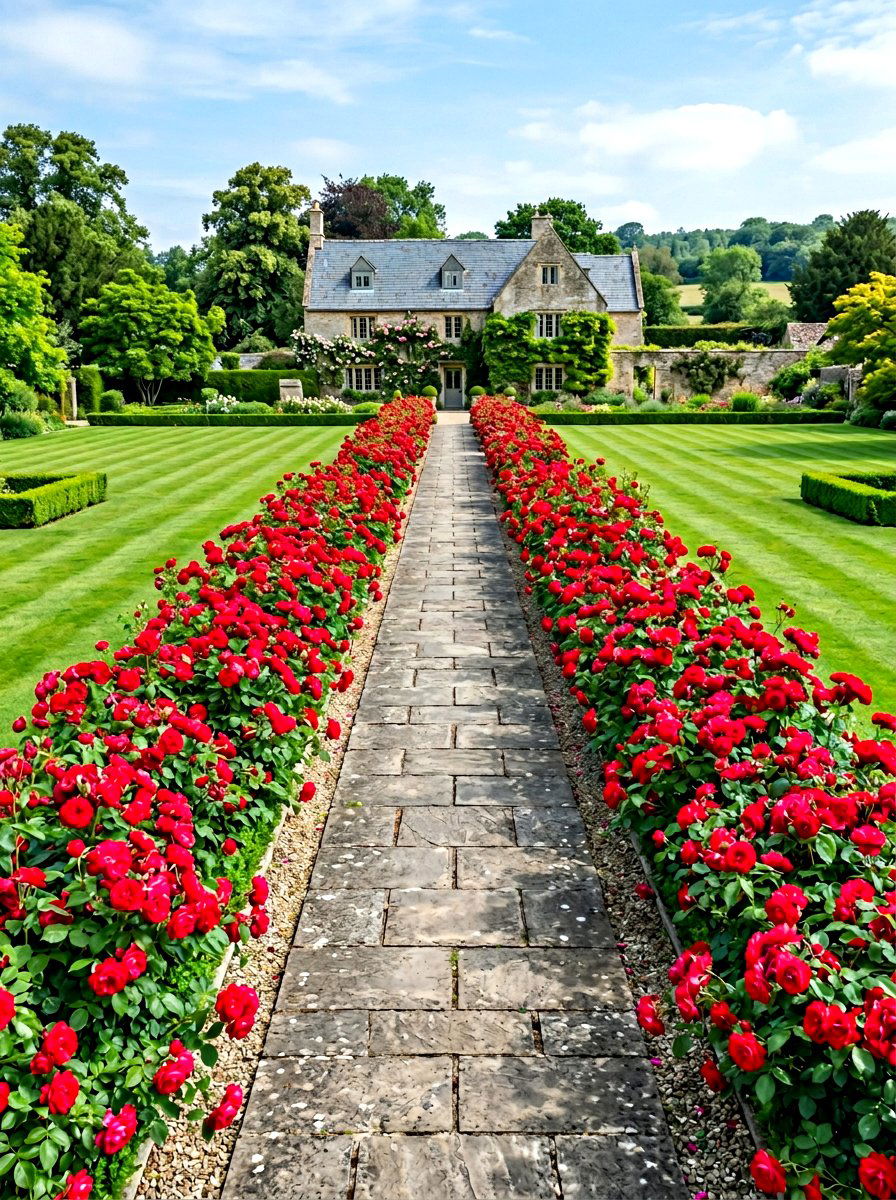
A formal cottage rose edge balances the wild, exuberant nature of roses with the precision of formal garden design. This often involves planting roses in symmetrical rows or within clearly defined geometric beds. By using a single variety of rose for the entire edge, you create a very clean and rhythmic look that feels sophisticated. This approach is perfect for lining a straight driveway or framing a formal lawn area. The uniformity of the plants provides a sense of calm and order, which can be a nice contrast to the more chaotic parts of a typical cottage garden. It looks professionally maintained and very polished.
28. Multi Colored Rose Bed
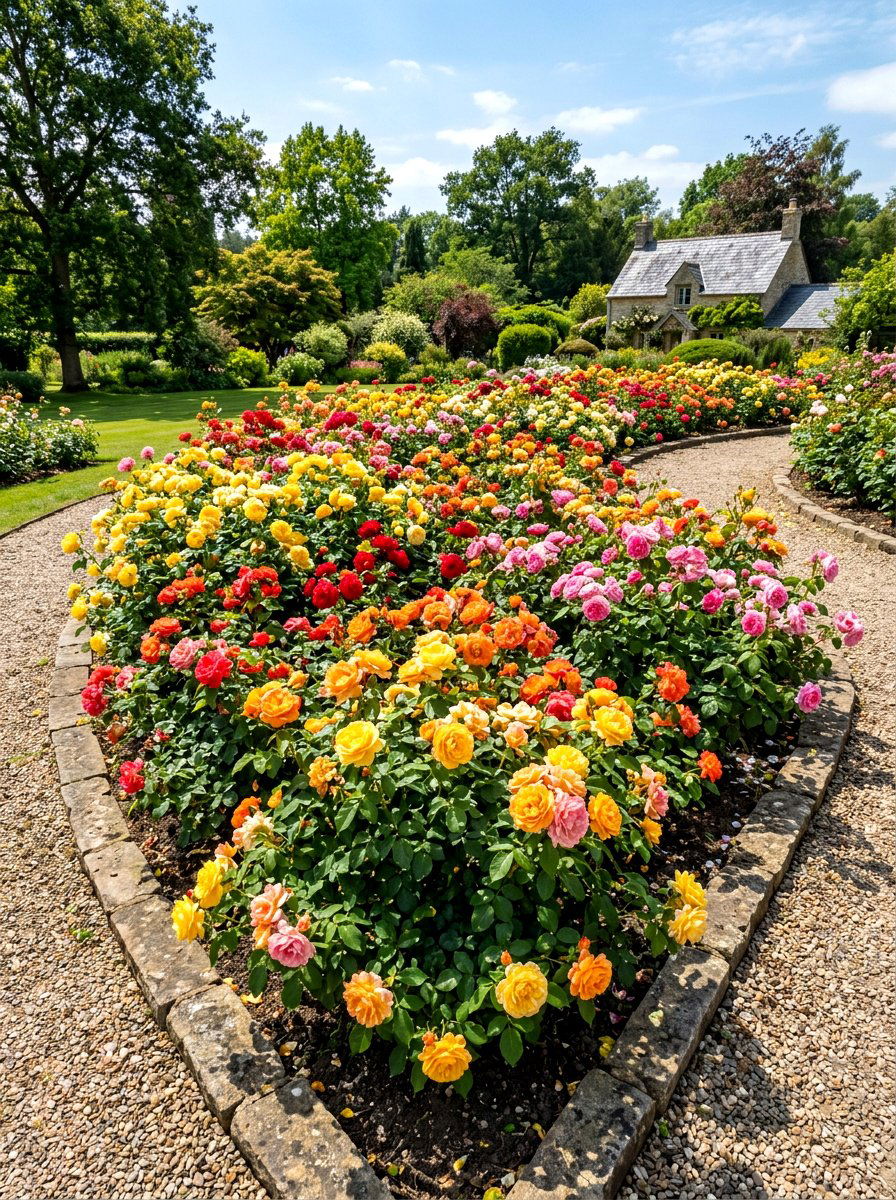
A multi colored rose bed is a celebration of diversity and joy, perfect for those who cannot choose just one favorite hue. Mixing various shades of orange, pink, yellow, and red creates a vibrant and energetic tapestry that looks like a wildflower meadow in full bloom. The key to making this work is to ensure that the rose varieties have similar growth habits so that no single plant dominates the others. This eclectic style is very forgiving and allows you to add new varieties as you find them. It creates a cheerful and very lively atmosphere that is guaranteed to put a smile on your face.
29. Pastel Rose Garden Border
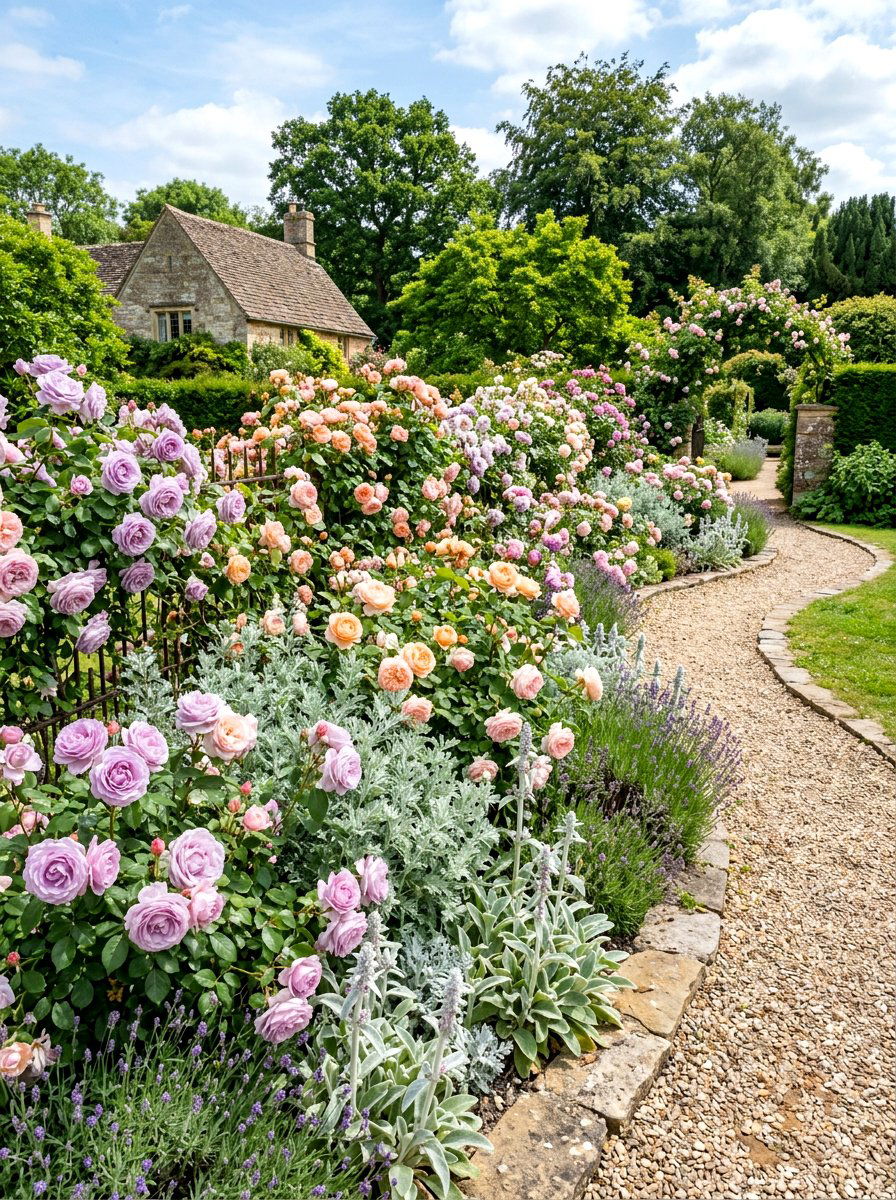
A pastel rose garden border offers a soft and romantic look that is incredibly soothing and easy on the eyes. By focusing on shades of lavender, pale pink, peach, and cream, you create a harmonious and ethereal atmosphere. These light colors are particularly effective in small gardens as they help the space to feel more open and airy. Pastel roses also tend to blend beautifully with the silvery-green foliage of many common companion plants. This color palette is timeless and elegant, evoking the feeling of a classic tea garden. It provides a perfect backdrop for outdoor gatherings and quiet moments of reflection during the day.
30. Low Growing Rose Edging
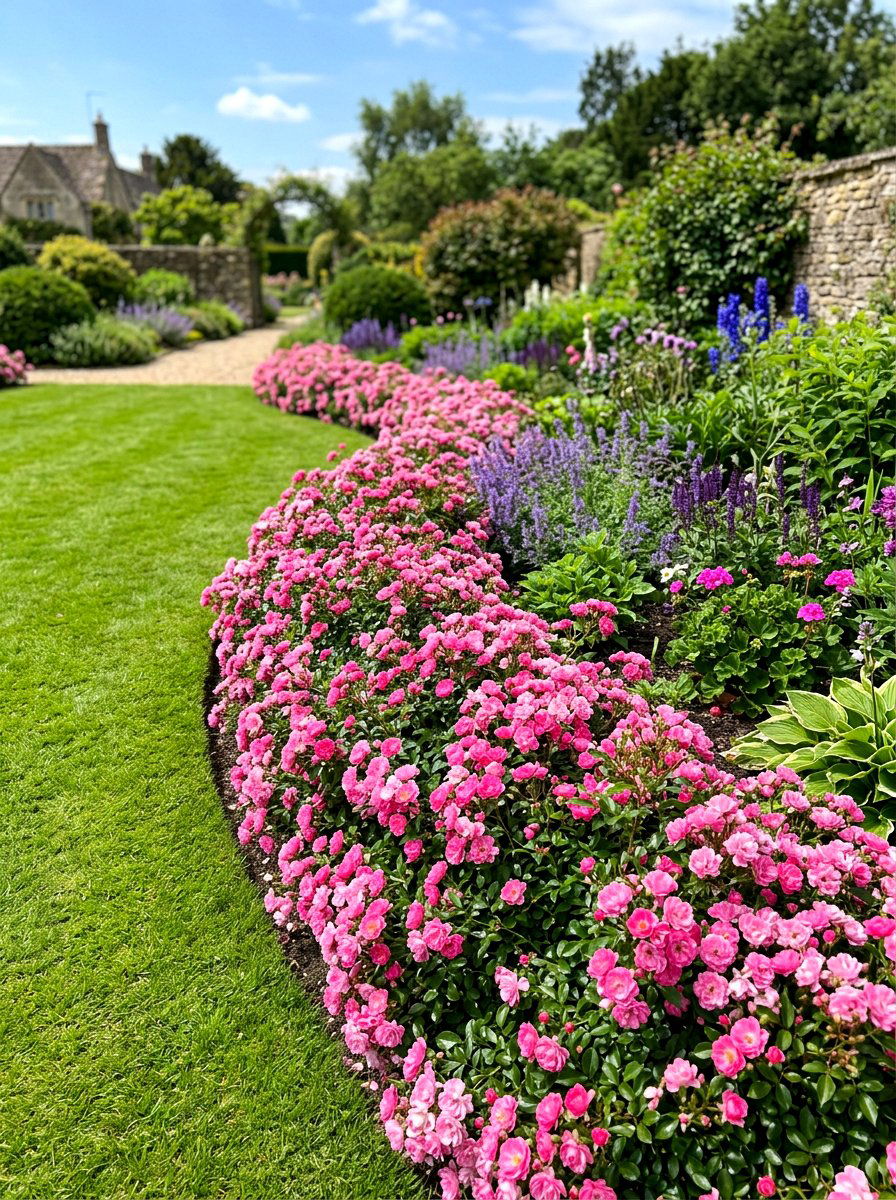
Low growing rose edging is a practical and beautiful solution for defining the front of a garden bed or lining a narrow path. These compact varieties, often called patio or groundcover roses, stay close to the ground and produce an abundance of small flowers. They are excellent at hiding the bare "legs" of taller rose bushes behind them and creating a continuous ribbon of color. Because they are so low, they don't block the view of other plants in the border. This design is very effective for adding a finished look to your landscaping and ensuring that every inch of the garden is filled with blooms.
Conclusion:
In conclusion, designing a cottage rose border is a rewarding journey that allows you to express your personal style while creating a lasting legacy of beauty. Whether you choose to follow a formal layout or embrace the wild, rambling nature of these plants, the key is to prioritize health and harmony. By considering height, color, and companion planting, you can build a border that delights the senses and provides a sanctuary for both you and local wildlife. These thirty ideas serve as a starting point for your own garden adventure. With a little care and patience, your rose border will flourish and bring joy for many years to come.

Related posts: