Transforming your backyard into a whimsical retreat often starts with the perfect cottage border. These lush, densely packed garden spaces are famous for their informal beauty and romantic atmosphere. Unlike formal gardens that rely on strict symmetry, a cottage border thrives on a glorious sense of organized chaos. You can mix perennials, annuals, and even edibles to create a tapestry of color and texture that changes throughout the seasons. By layering heights and choosing a soft color palette, you turn a simple lawn edge into a breathtaking focal point. Whether you have a sprawling estate or a small patio, these borders offer a timeless way to invite nature home.
1. English Cottage Flower Border
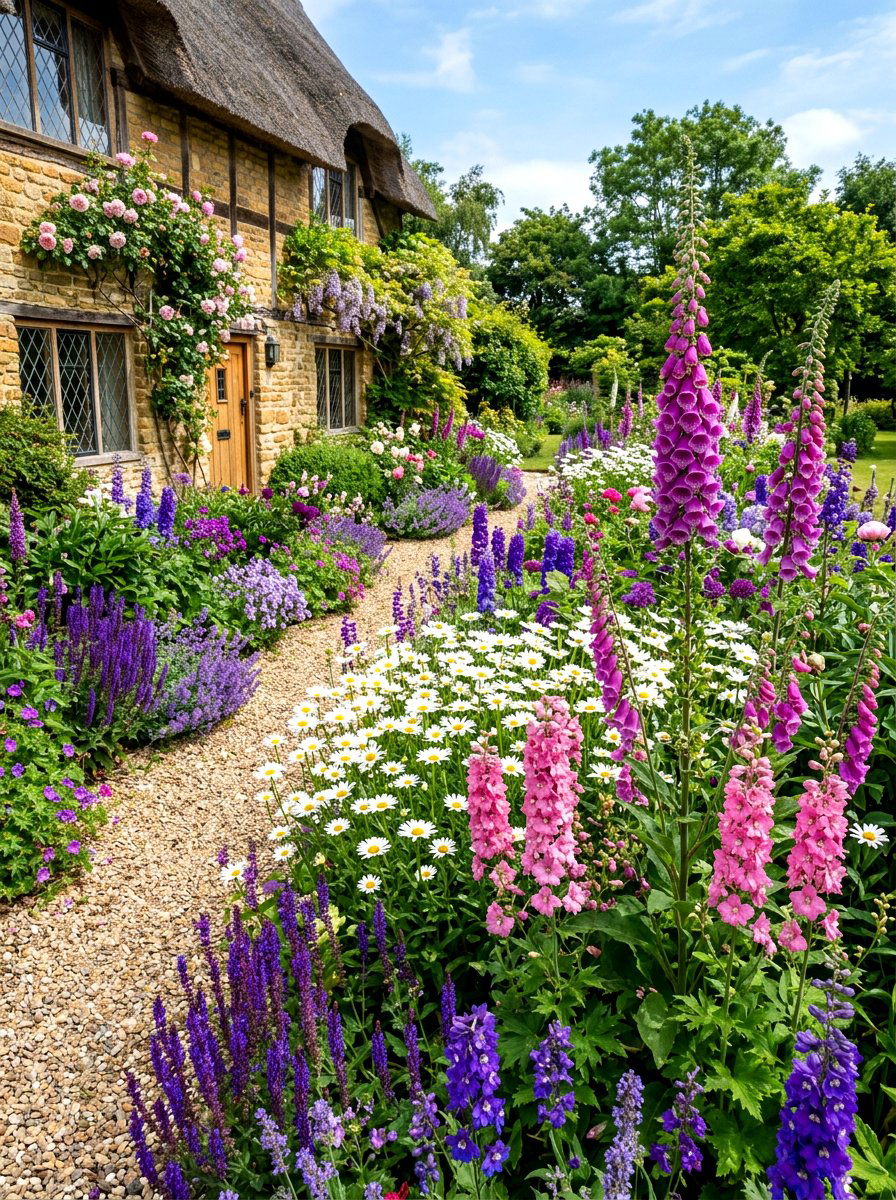
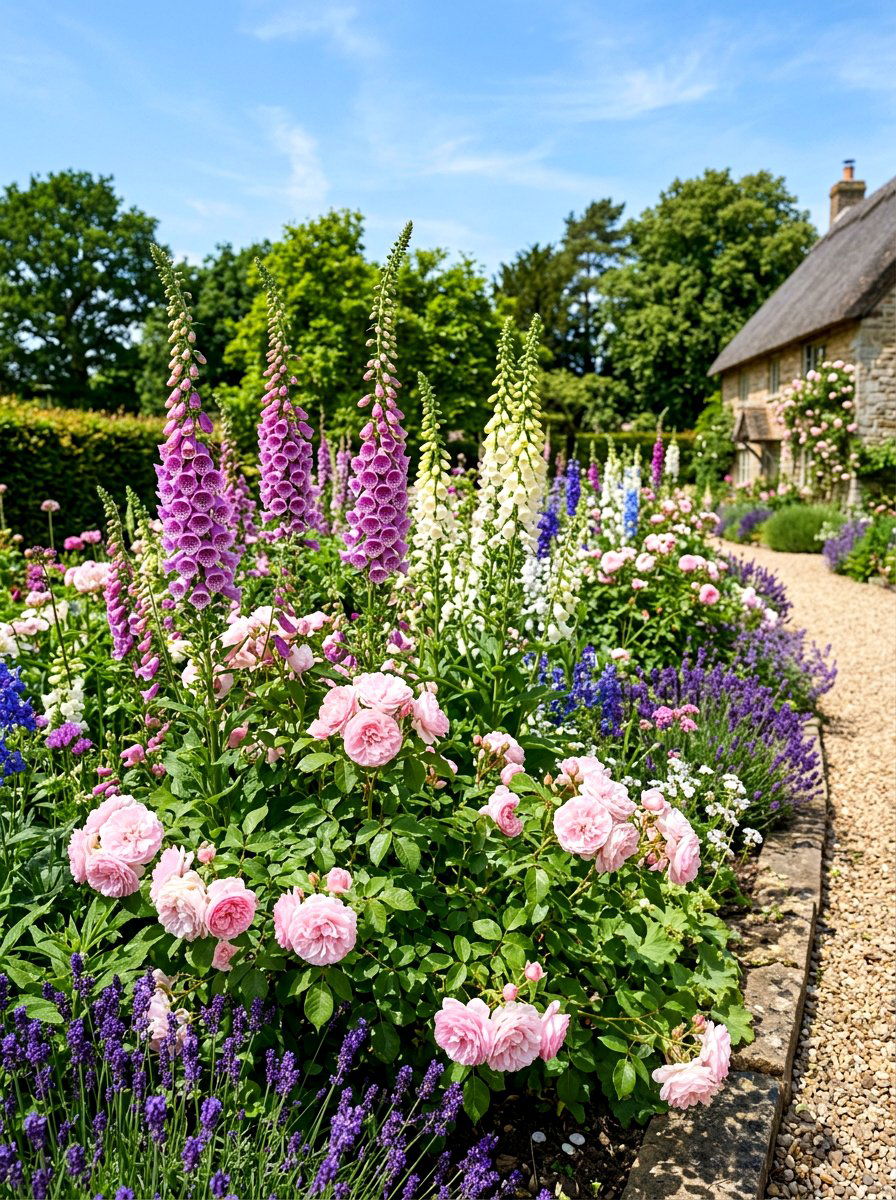
A classic English cottage flower border is defined by its abundance and lack of rigid structure. You should focus on planting densely so that no bare soil is visible, which helps suppress weeds naturally. Use tall spires like foxgloves and delphiniums at the back to provide height and drama. In the middle ground, incorporate bushy perennials such as lupines, peonies, and hardy geraniums to fill the space with texture. At the front, let low-growing plants like catmint or alchemilla spill over the edges. This layered approach creates a romantic, painterly effect that feels both established and deeply welcoming for any visitor.
2. Natural Stone Garden Border
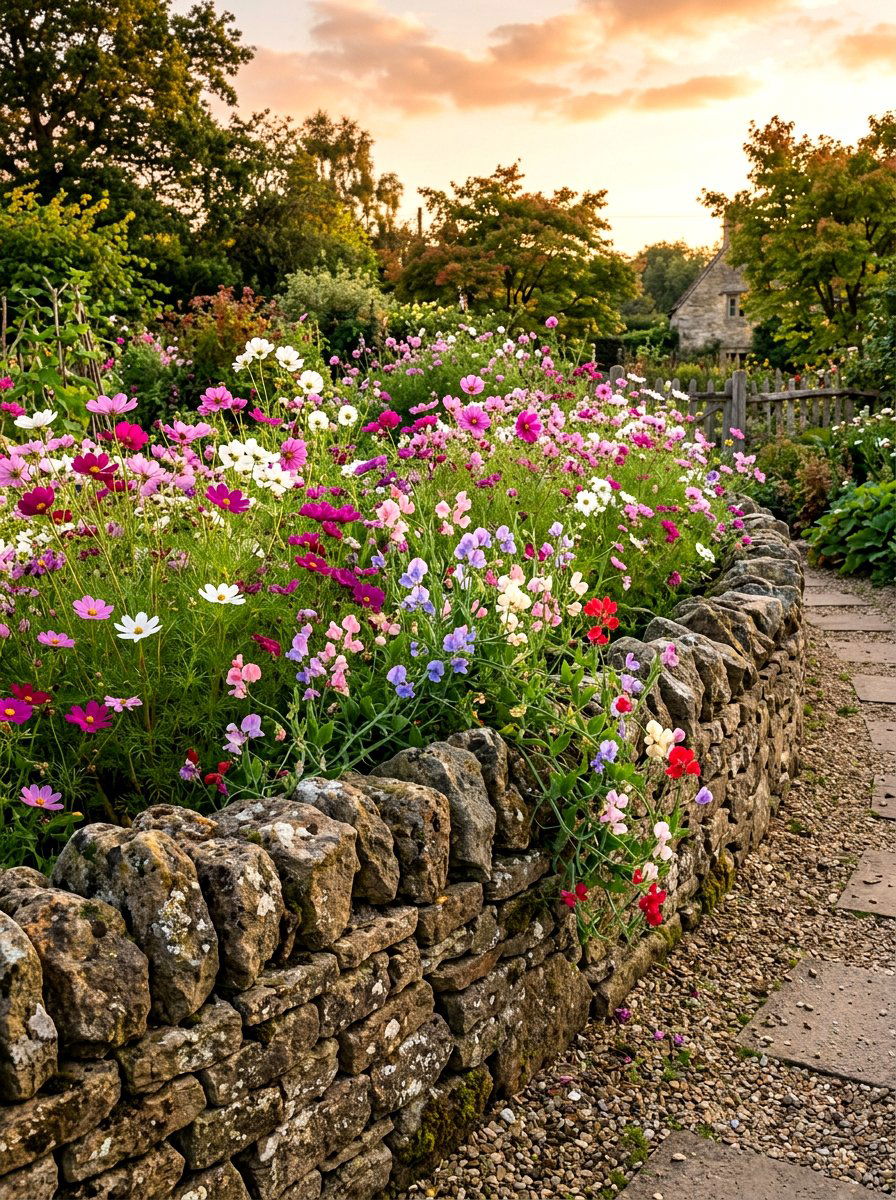
Integrating a natural stone garden border adds a sense of permanence and rustic charm to your backyard. You can use irregular fieldstones or smooth river rocks to create a low wall that holds back a profusion of colorful blooms. The heavy texture of the stone contrasts beautifully with delicate flowers like cosmos or sweet peas. For a truly aged look, encourage moss or small succulents to grow in the crevices between the rocks. This design works particularly well on sloped terrain, as the stones provide necessary structural support while allowing plants to tumble gracefully over the edge for a soft finish.
3. Mixed Perennial Flower Border
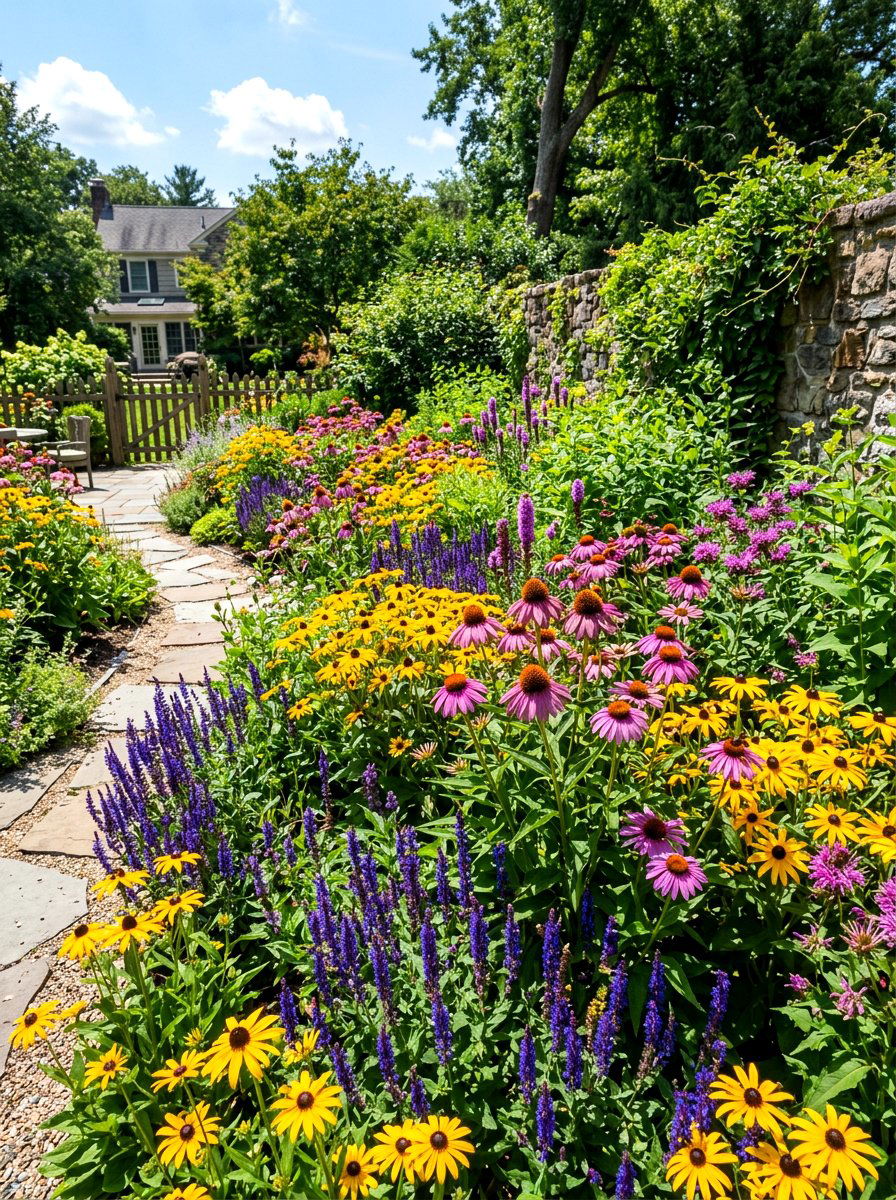
A mixed perennial flower border is the backbone of a low-maintenance cottage garden that returns with beauty every year. The key is to select a variety of plants with different bloom times so the border remains vibrant from spring through autumn. Start with early bloomers like bleeding hearts and irises, then transition into summer with coneflowers and black-eyed Susans. Finally, include late-season stars like asters and sedum to keep the color going. By mixing foliage textures, such as the silvery leaves of lamb’s ear with the dark green of hostas, you ensure the border looks interesting even when flowers fade.
4. White Picket Fence Border
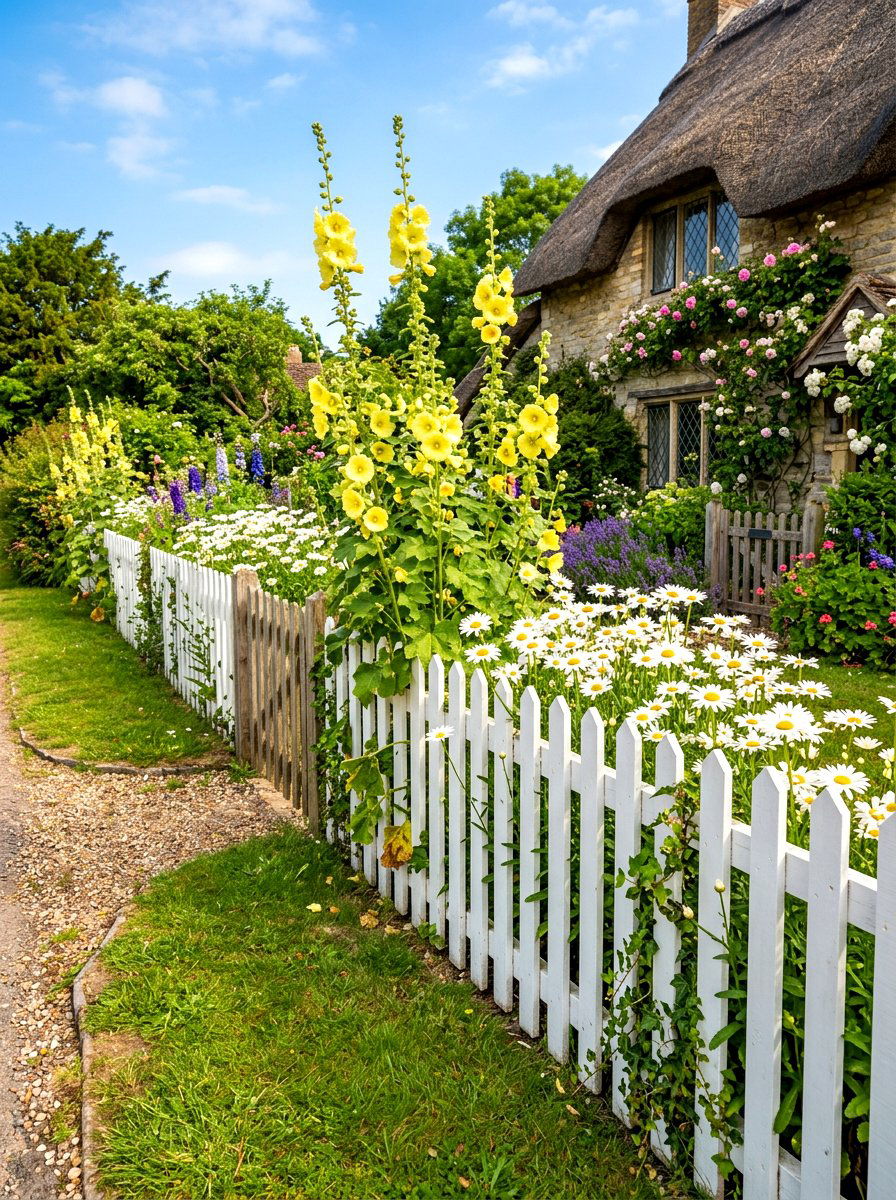
There is nothing more iconic than a white picket fence border to define the edges of a cottage-style backyard. The crisp white color of the wood provides a perfect backdrop that makes the vibrant colors of your garden pop. You can plant tall sunflowers or hollyhocks that peek over the top of the fence for a classic look. Along the base, consider a thick row of lavender or shasta daisies to soften the transition between the lawn and the structure. This style creates a charming, enclosed feeling that makes even a small outdoor space feel like a private, storybook sanctuary.
5. Lavender Path Garden Border
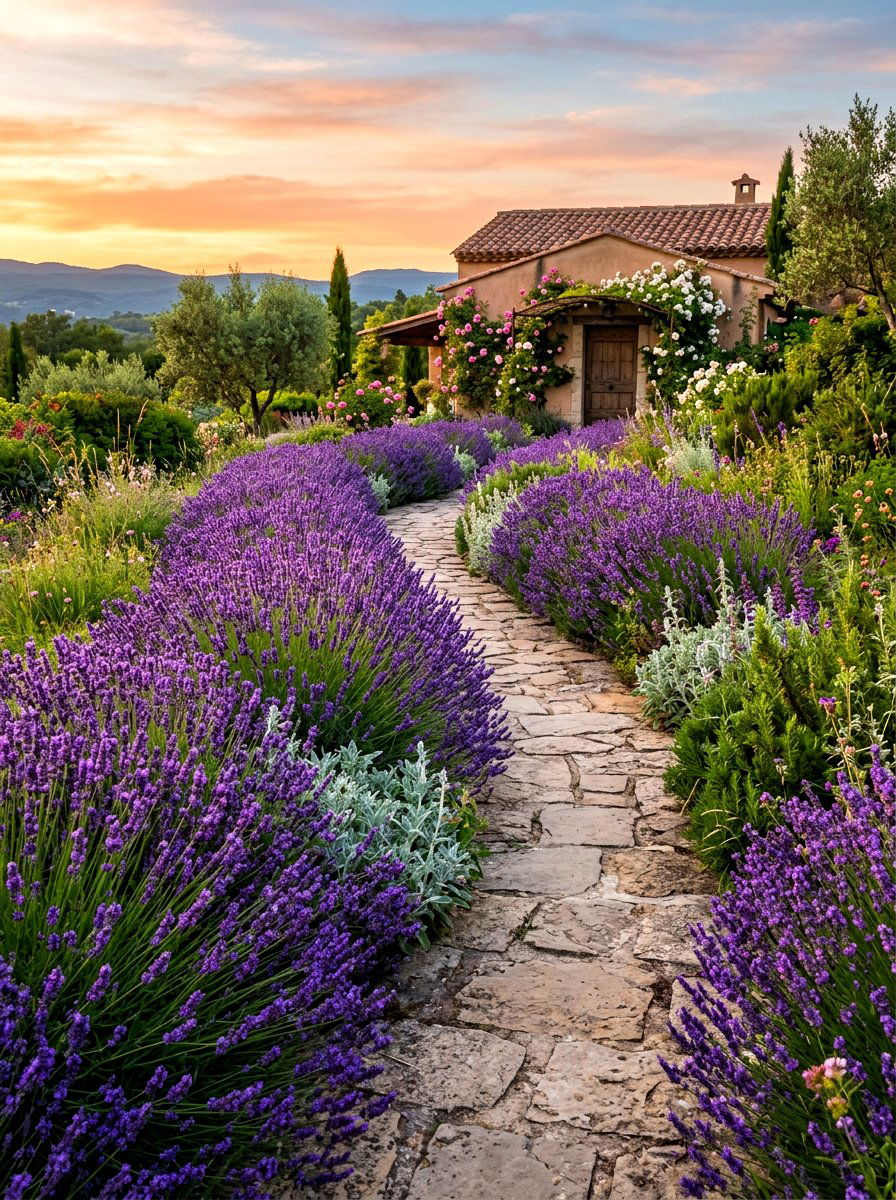
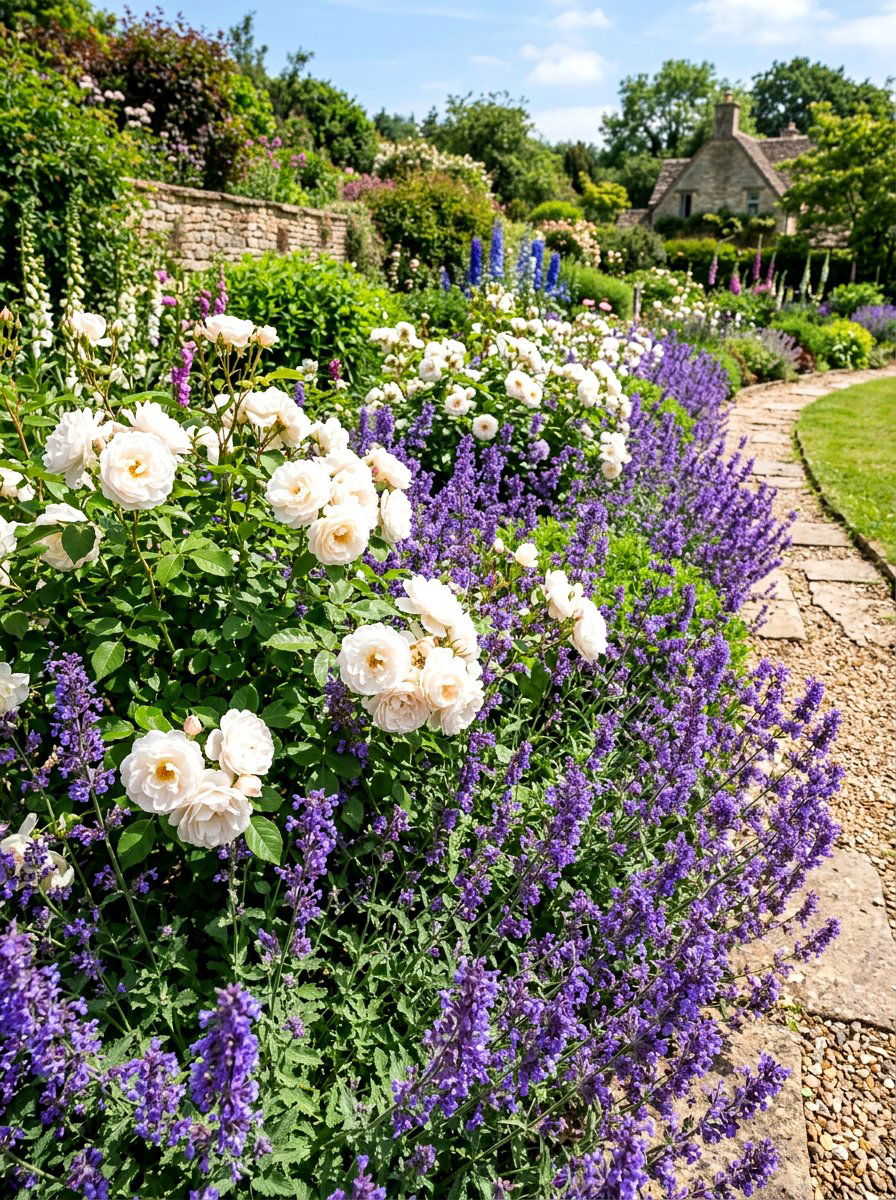
Creating a lavender path garden border is a wonderful way to engage the senses of sight and smell. Plant rows of English lavender along both sides of a walkway to create a soft, purple-hued corridor that hums with bees. Lavender is drought-tolerant and provides a tidy, mounded shape that looks great throughout the year. For added interest, mix in other fragrant plants like rosemary or thyme that release their scent when brushed against. This border design works best in sunny areas with well-drained soil, providing a Mediterranean touch to your cottage theme while keeping the layout simple and elegant.
6. Climbing Rose Wall Border
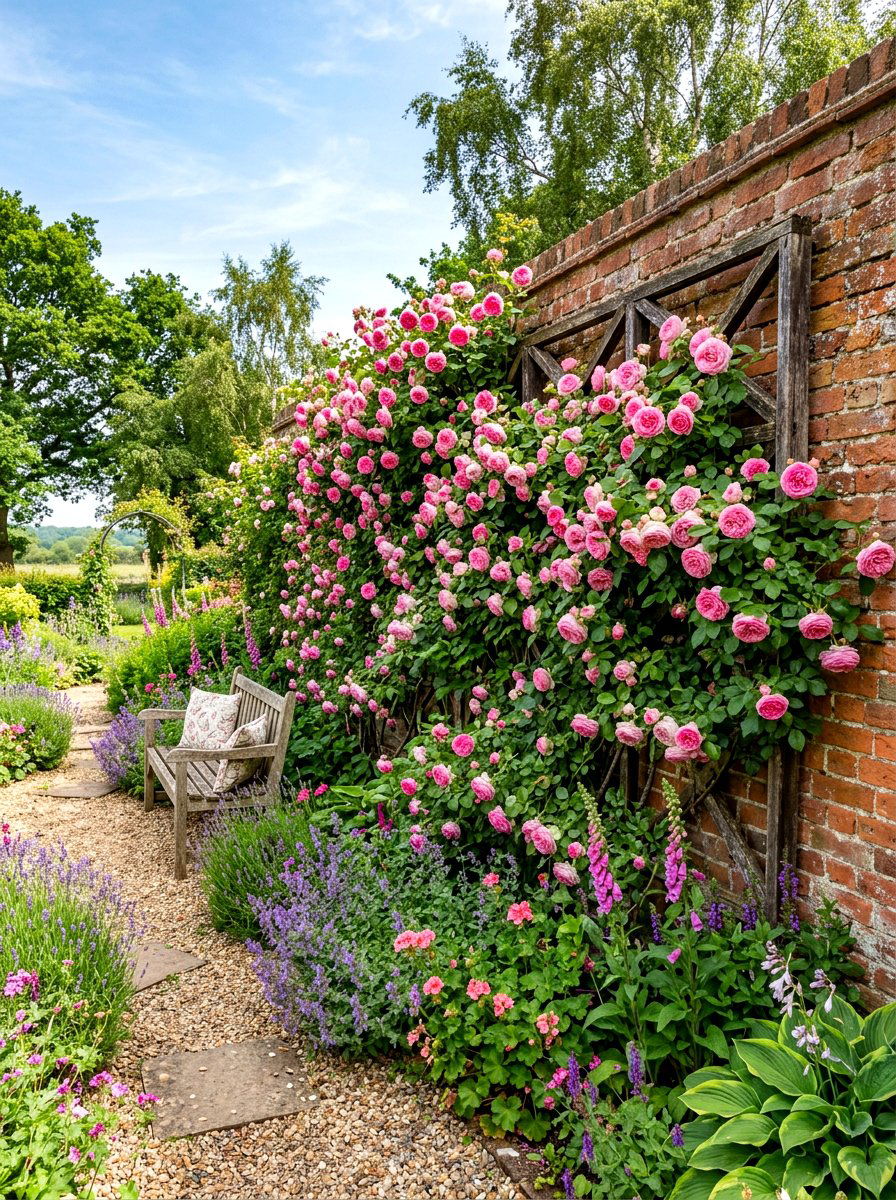
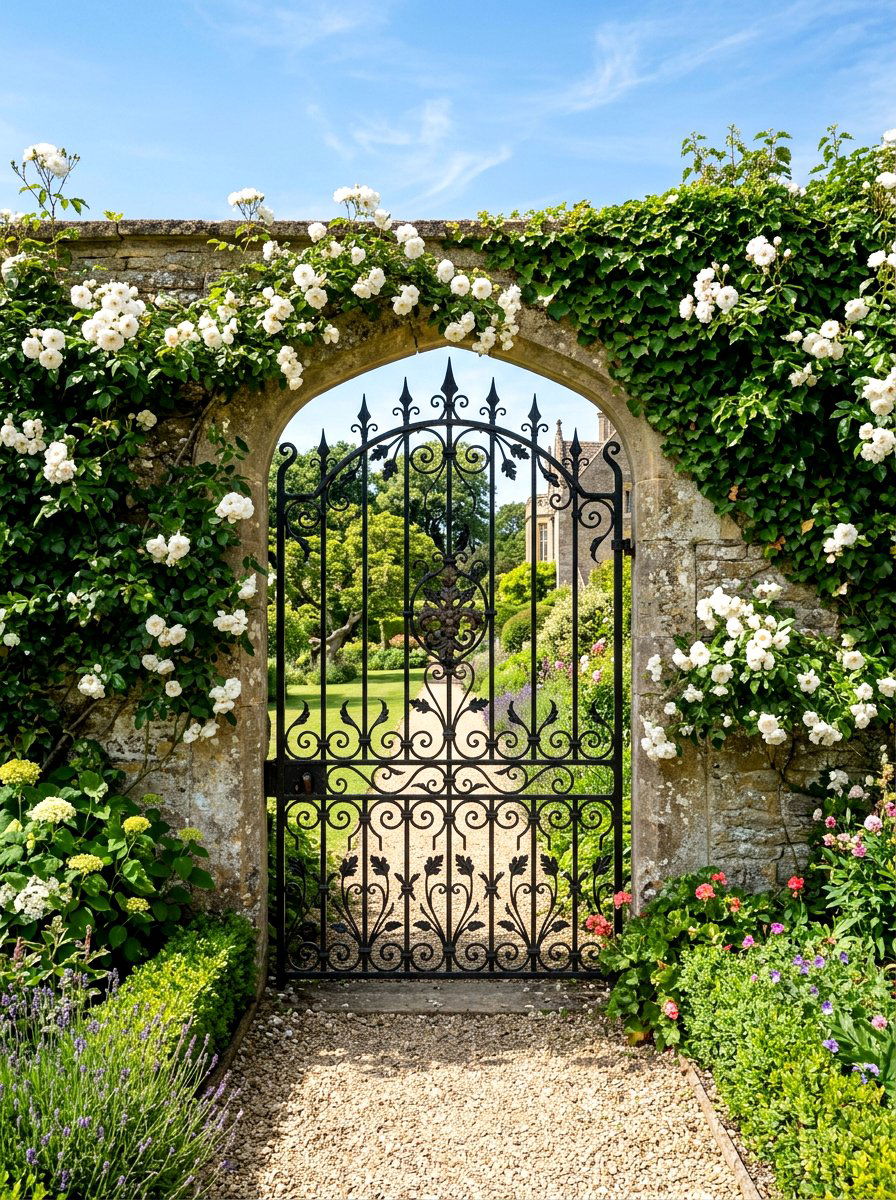
A climbing rose wall border turns a flat vertical surface into a living tapestry of color and fragrance. By installing a simple trellis or wire system against a fence or wall, you can train roses to grow upwards, creating a lush backdrop for lower plantings. Choose repeat-blooming varieties like New Dawn or Gertrude Jekyll for a continuous display of flowers. At the base of the roses, plant airy perennials like baby’s breath or campanula to fill in the lower gaps. This vertical approach saves ground space while adding significant visual impact and a sense of old-world romance to the backyard.
7. Gravel Path Flower Border
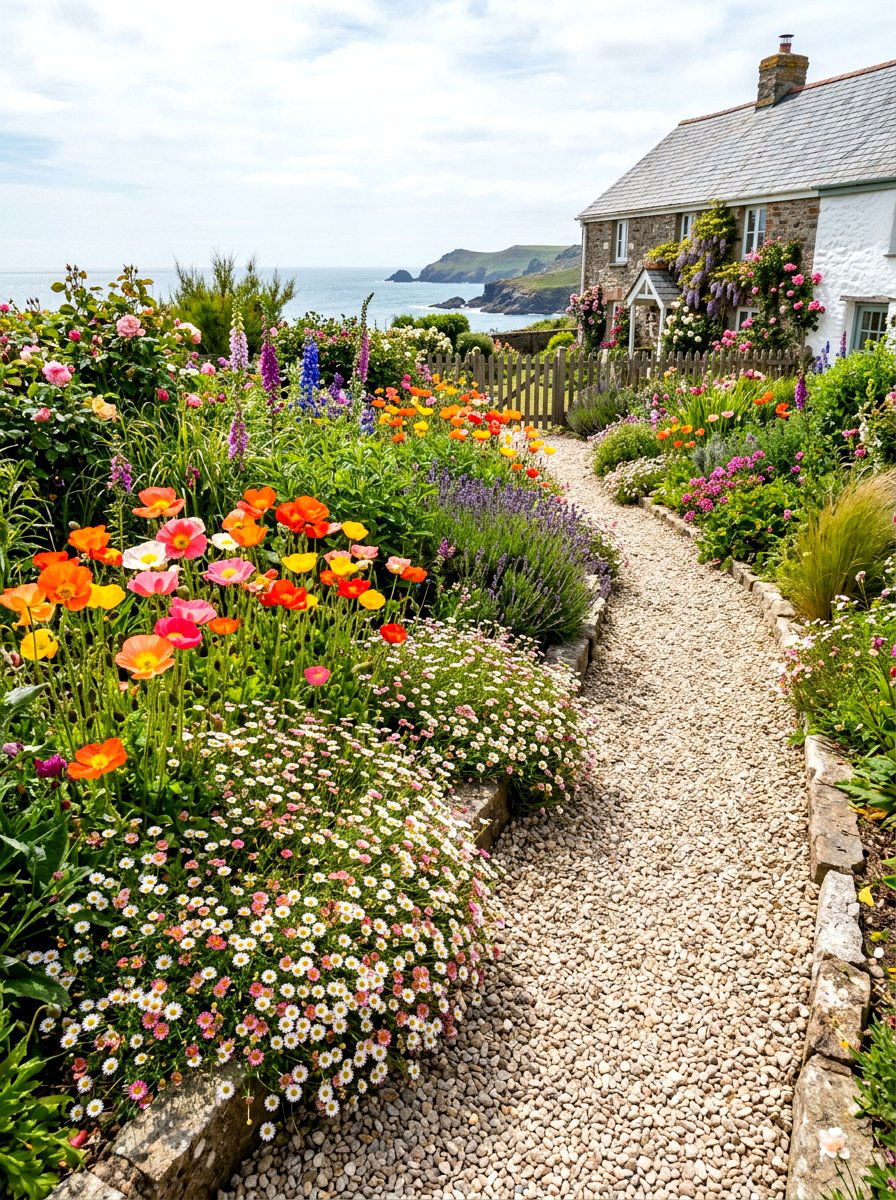
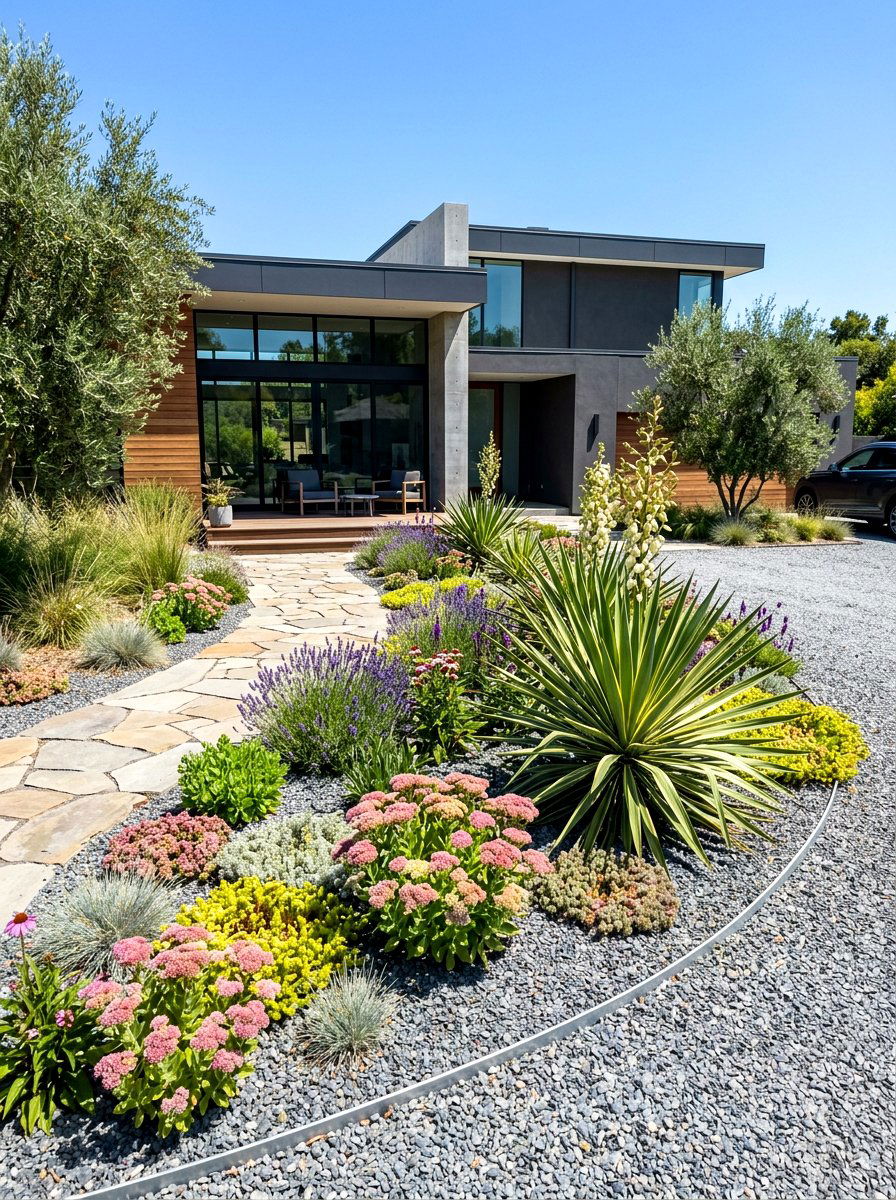
Designing a gravel path flower border combines practical hardscaping with the wild beauty of self-seeding plants. Use pea gravel for the walkway and allow flowers like Mexican fleabane or poppies to creep into the stones from the adjacent beds. This softens the lines of the path and makes the garden feel as though it evolved naturally over time. To keep the look intentional, use a hidden metal or plastic edge to contain the gravel while letting the foliage spill over freely. The crunch of the gravel underfoot paired with the informal planting creates a relaxed, coastal cottage atmosphere.
8. Wildflower Meadow Garden Border
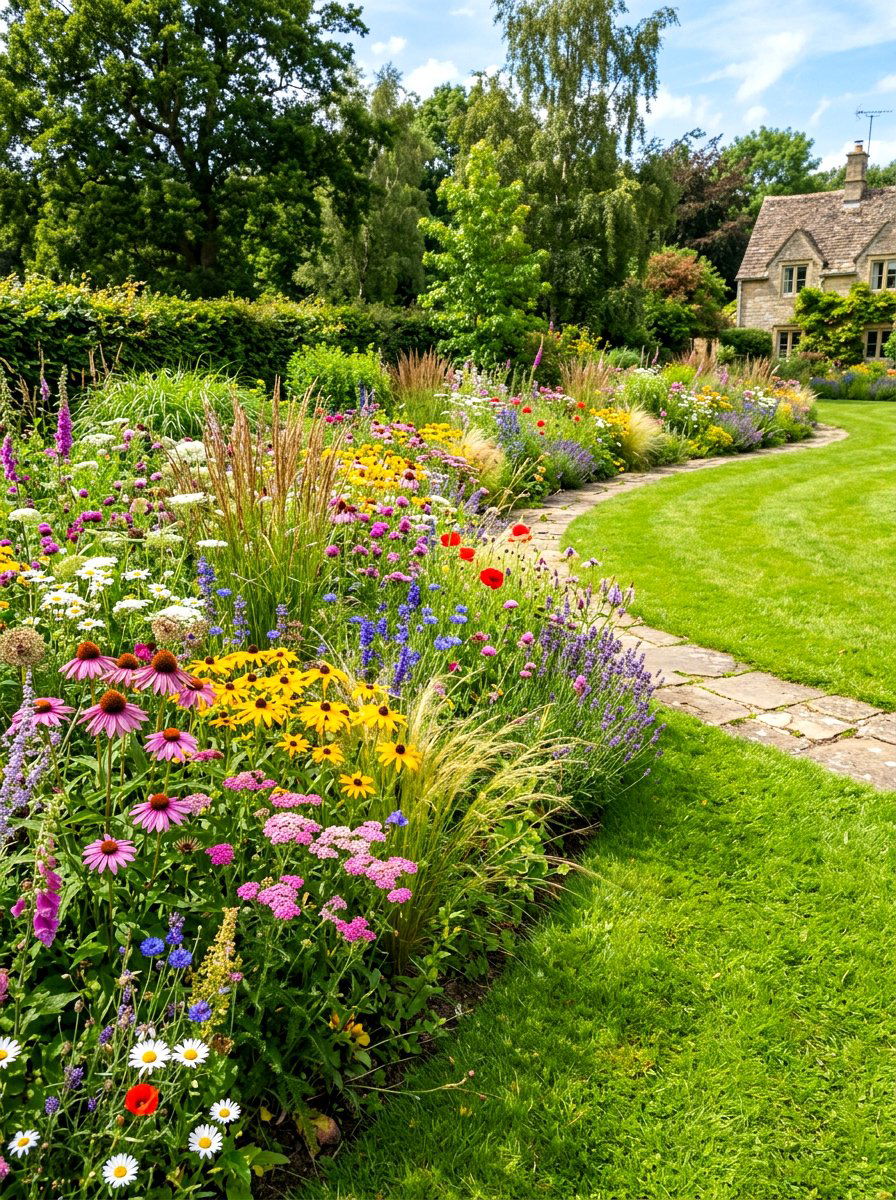
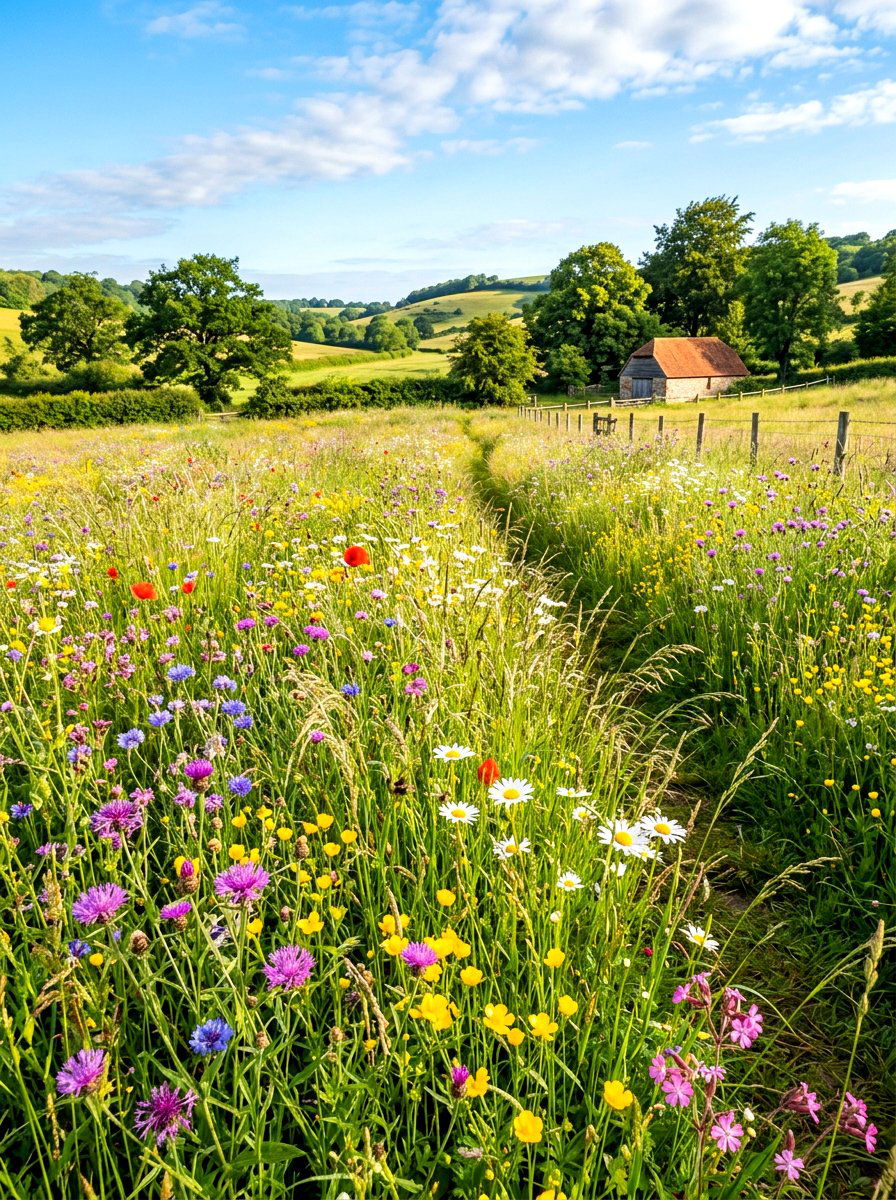
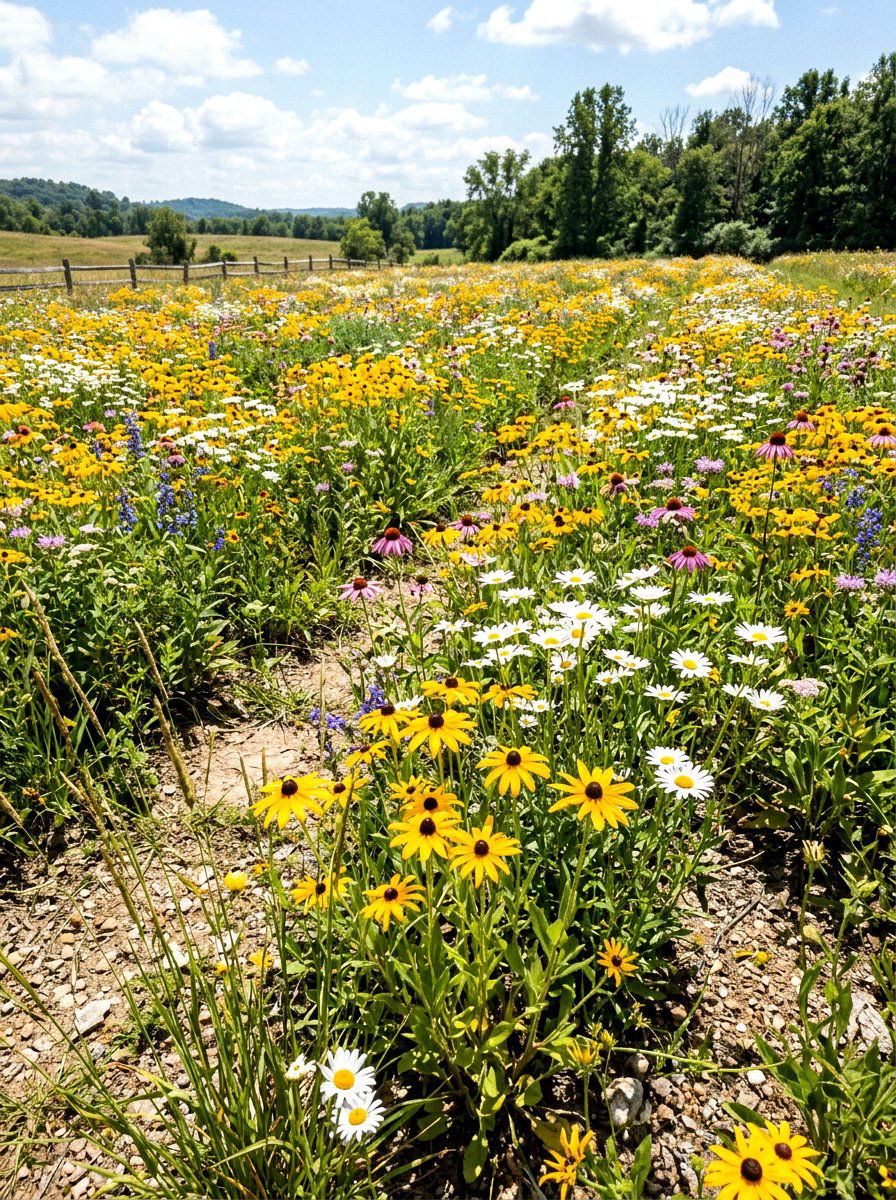
A wildflower meadow garden border is an excellent choice for those who want to support local biodiversity and enjoy a carefree aesthetic. Instead of traditional garden plants, use a mix of native wildflower seeds that are suited to your specific climate. These borders require very little watering once established and provide essential nectar for butterflies and birds. You can include tall grasses like little bluestem to add movement and structural interest during the winter months. This design looks best when it follows the natural curves of your landscape, creating a seamless transition between manicured lawn and the wilder elements.
9. Layered Height Flower Border
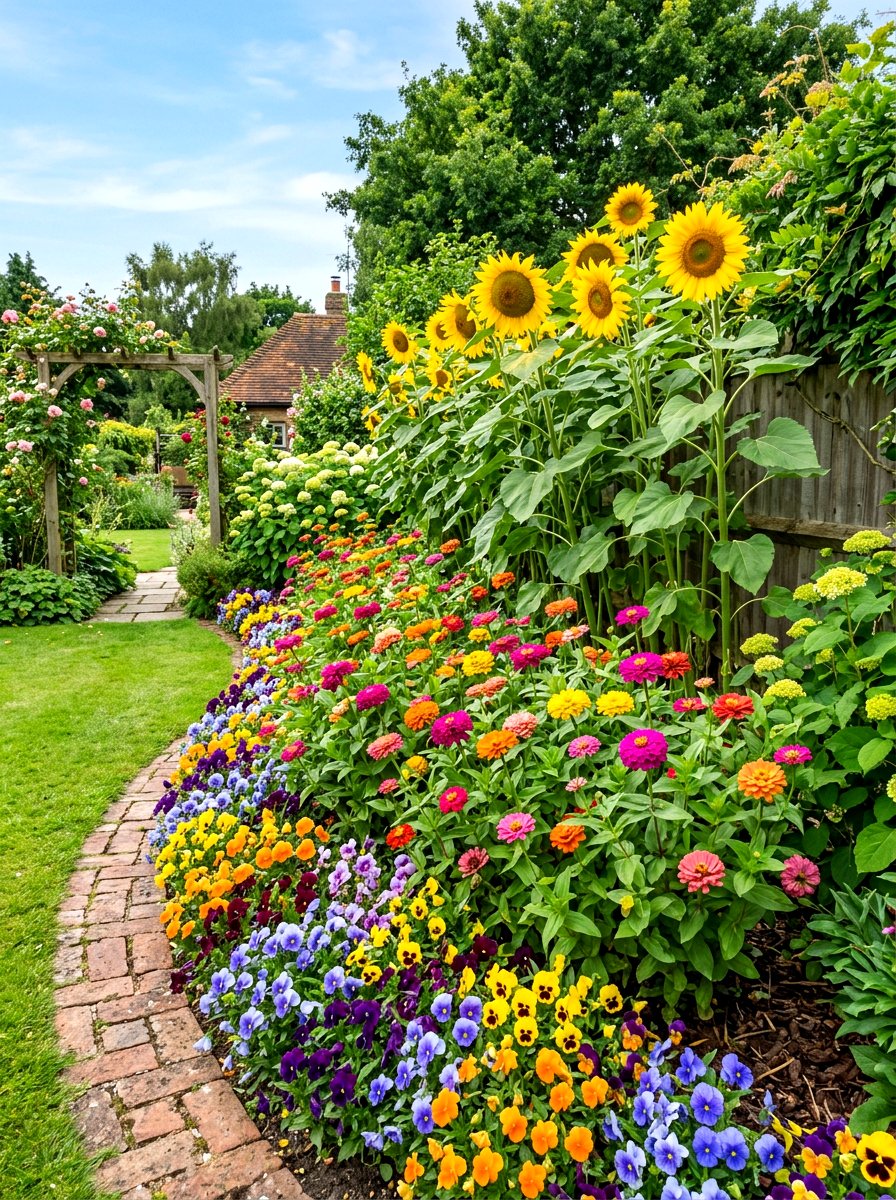
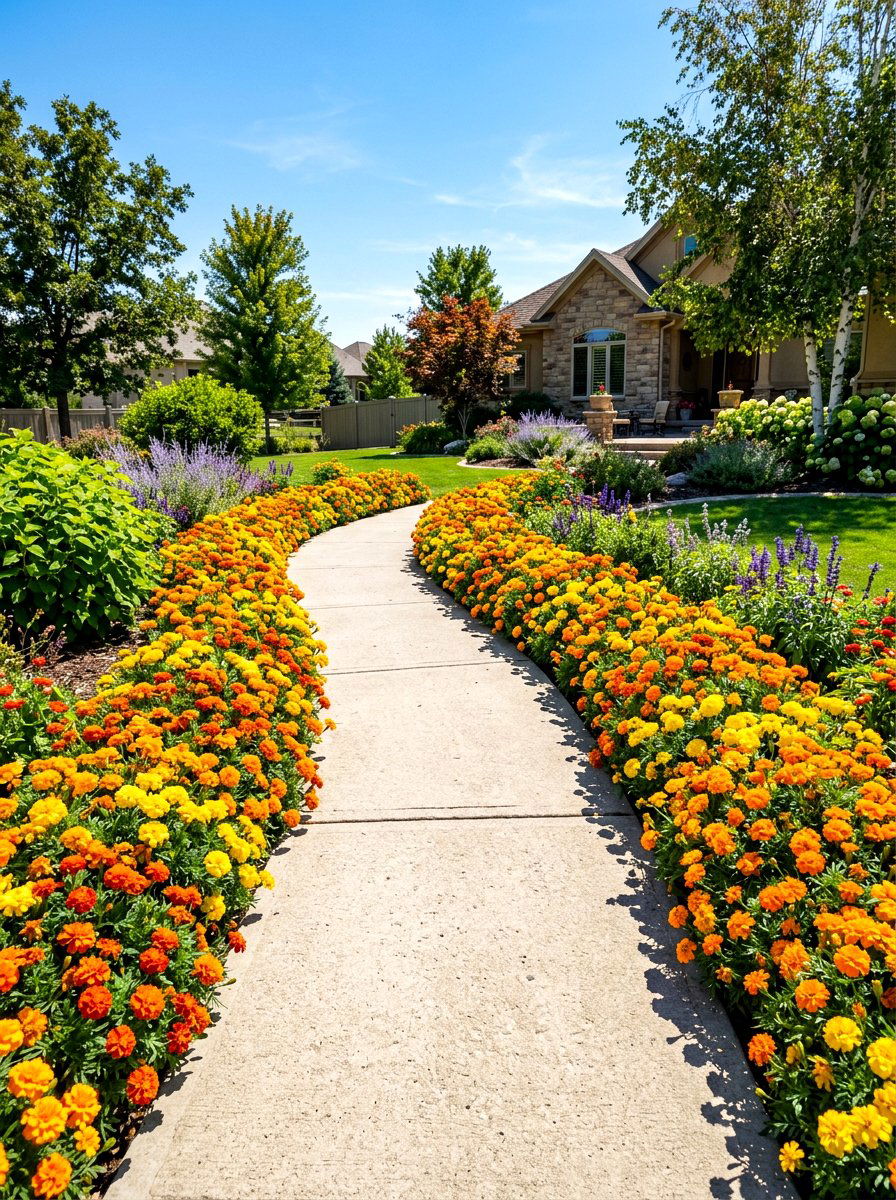
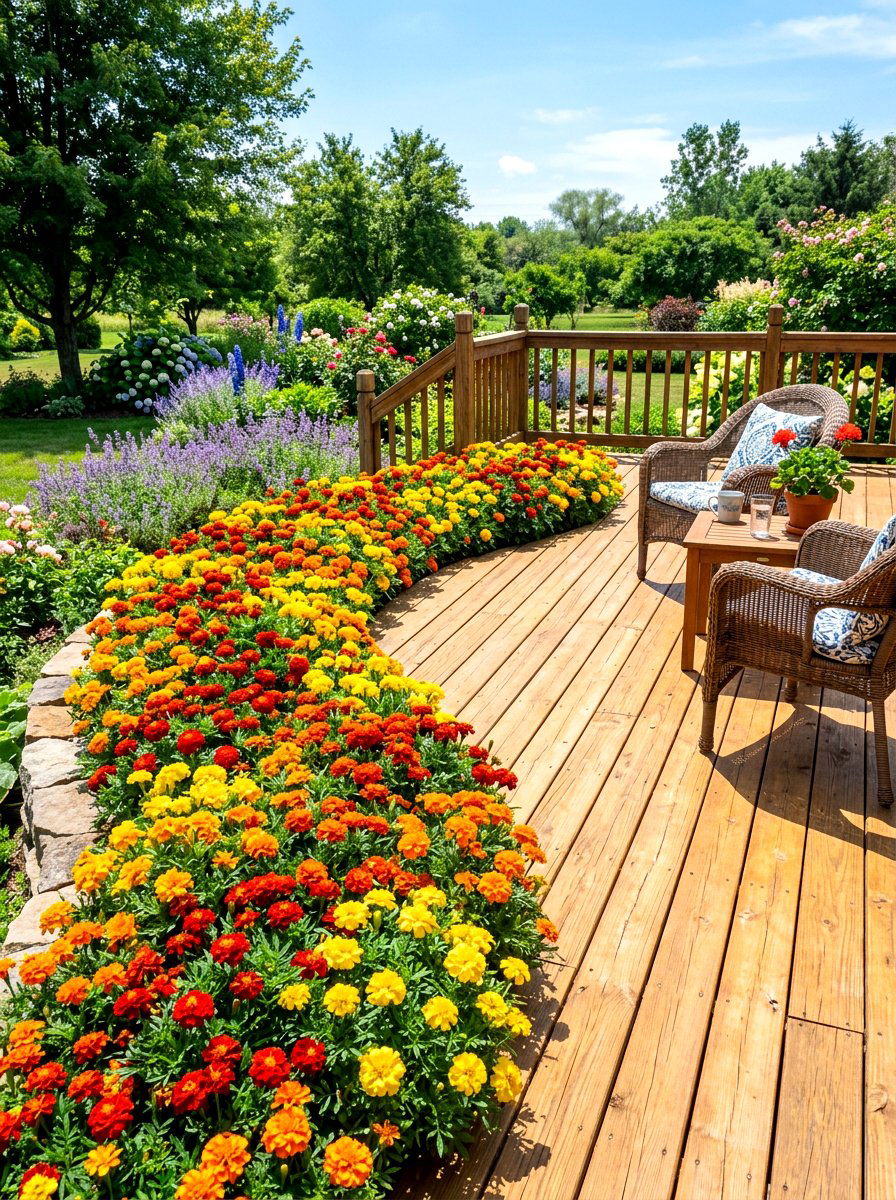
Achieving a professional look involves mastering the layered height flower border, where plants are arranged like a staircase. Place the tallest specimens, such as tall phlox or ornamental sunflowers, in the very back row. The middle layer should consist of medium-height plants like salvia, echinacea, and zinnias to bridge the gap. Finally, finish the front with low-lying groundcovers or short annuals like pansies and marigolds. This arrangement ensures that every plant is visible and receives adequate sunlight. It also creates a sense of depth and abundance that is the hallmark of a successful and traditional cottage garden layout.
10. Shade Loving Hosta Border
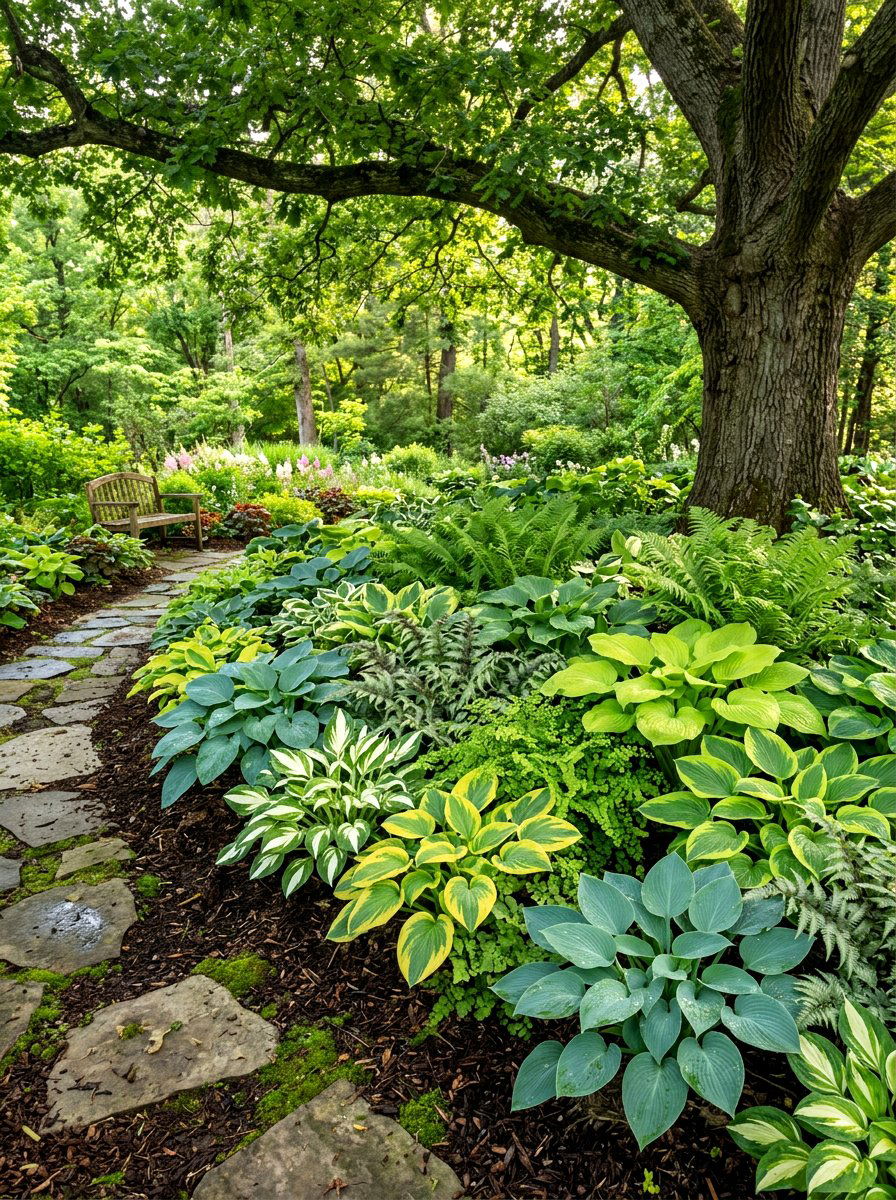
For backyards with large trees, a shade loving hosta border provides a lush, green oasis where flowers might struggle. Hostas come in a staggering variety of sizes, colors, and textures, from giant blue-green leaves to small variegated types with white edges. You can pair them with delicate ferns and colorful astilbes to add height and a soft, feathery texture to the border. Bleeding hearts are another classic addition that offers a pop of spring color. This type of border stays cool and vibrant throughout the hot summer months, requiring minimal maintenance once the plants have matured and filled the space.
11. Reclaimed Brick Walkway Border
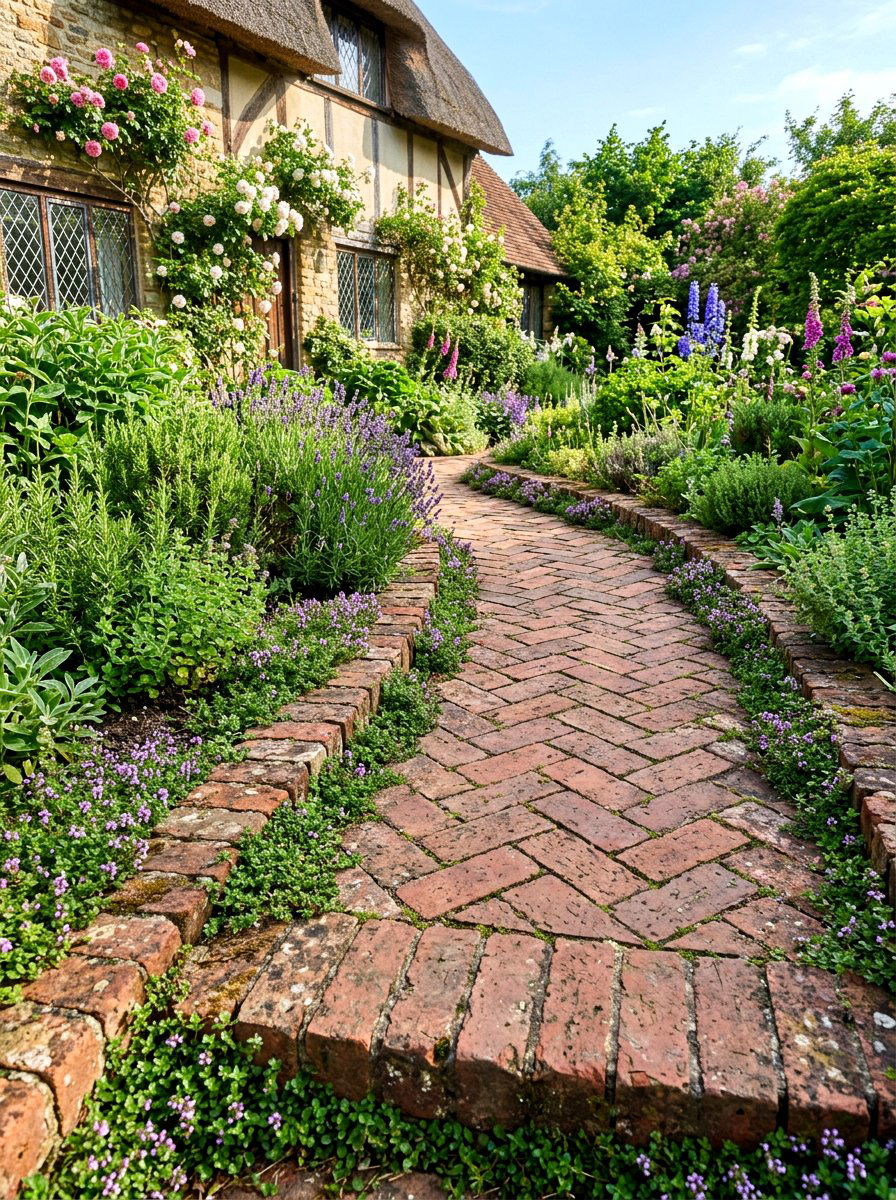
A reclaimed brick walkway border adds a sense of history and warmth to your garden transitions. Using old bricks with weathered edges creates an instant cottage feel that looks like it has been there for decades. You can lay the bricks in a classic herringbone or running bond pattern to define the garden beds. Surround the brickwork with low-growing, scented herbs like creeping thyme or chamomile that can withstand occasional foot traffic. The earthy tones of the brick complement the soft greens and pastels of typical cottage plants, providing a solid structure that balances the wilder, more exuberant floral displays.
12. Ornamental Grass Garden Border
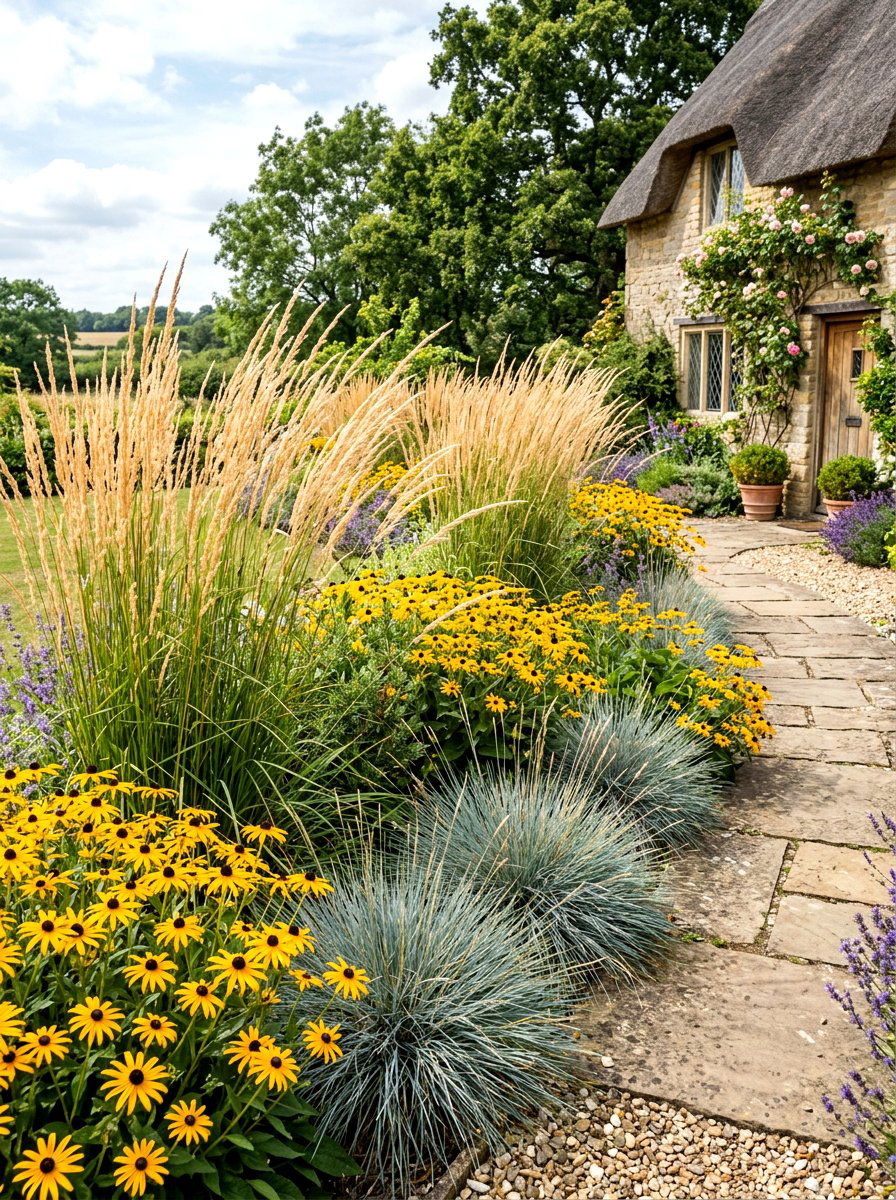
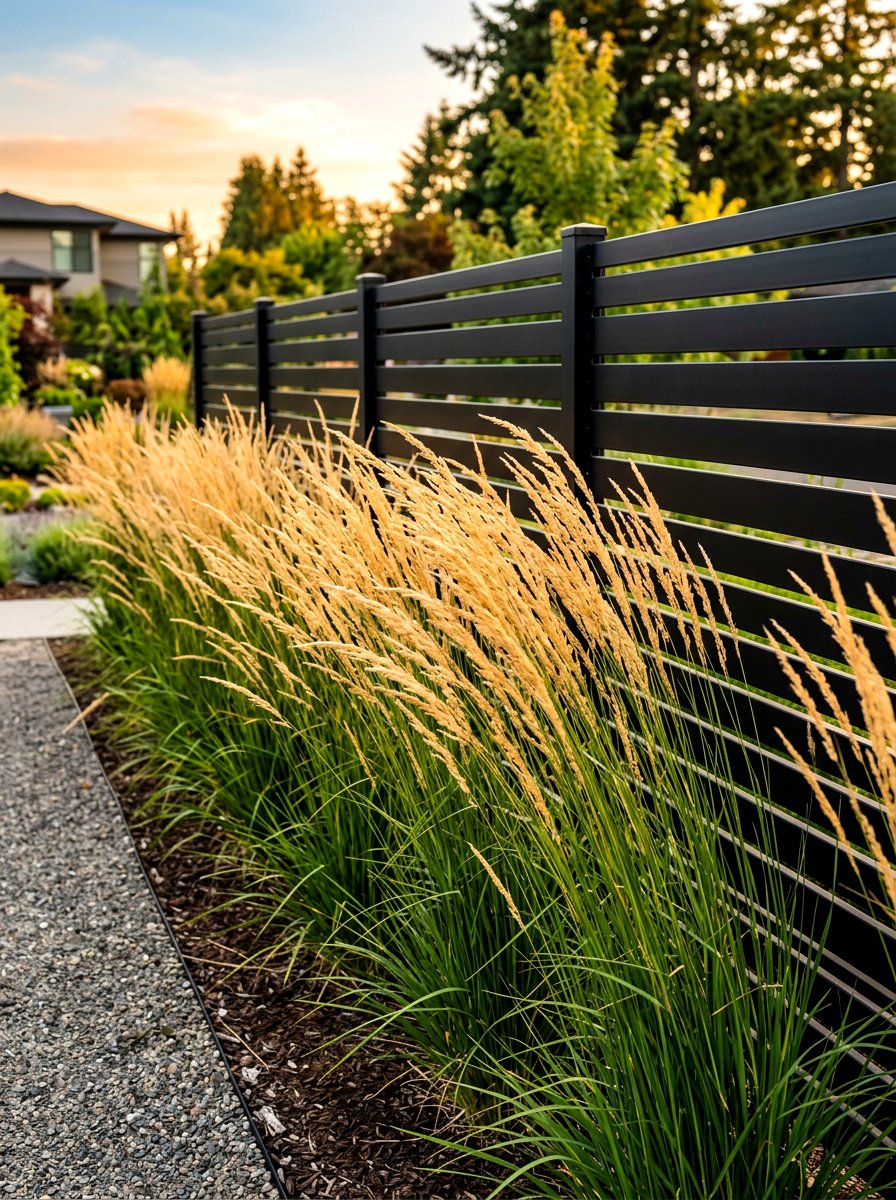
An ornamental grass garden border brings movement, sound, and year-round interest to your outdoor space. Grasses like fountain grass, feather reed grass, and blue fescue provide a modern yet soft texture that pairs perfectly with traditional cottage flowers. In the summer, they offer a lush green backdrop, while in the autumn, their seed heads add a delicate, wispy beauty. Even in winter, the dried stalks provide structural interest and a golden hue against the snow. By mixing grasses with perennials like rudbeckia, you create a dynamic border that sways in the wind and captures the light beautifully.
13. Culinary Herb Garden Border
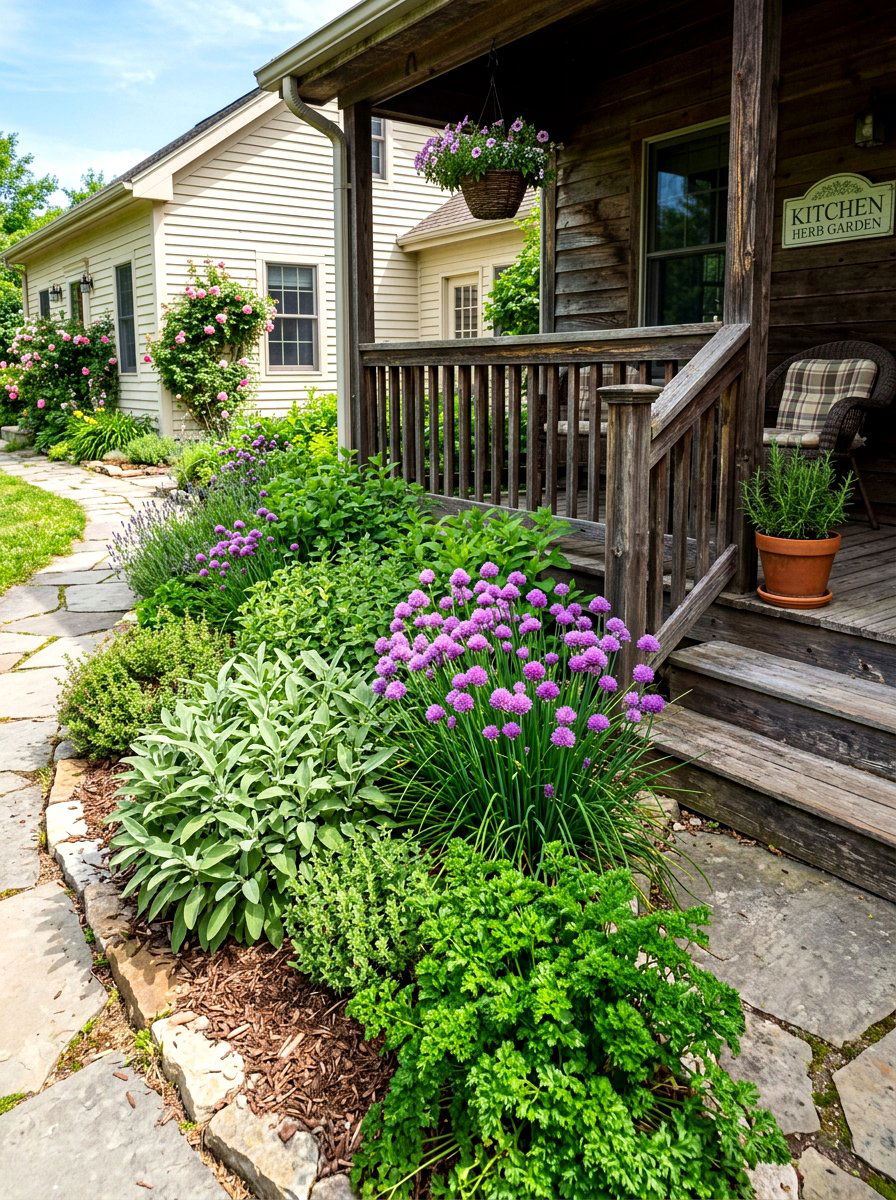
Combining beauty and utility is easy with a culinary herb garden border placed near your back door. You can create a lush edge using sage, chives, oregano, and parsley, which provide a variety of foliage shapes and scents. Chives offer beautiful purple pom-pom flowers in the spring, while variegated sage adds a splash of cream and green to the mix. Tucking these edibles into a traditional flower border ensures you always have fresh ingredients for cooking while maintaining a decorative look. This functional design is a nod to the original cottage gardens which were primarily used for providing food and medicine.
14. Pastel Palette Flower Border
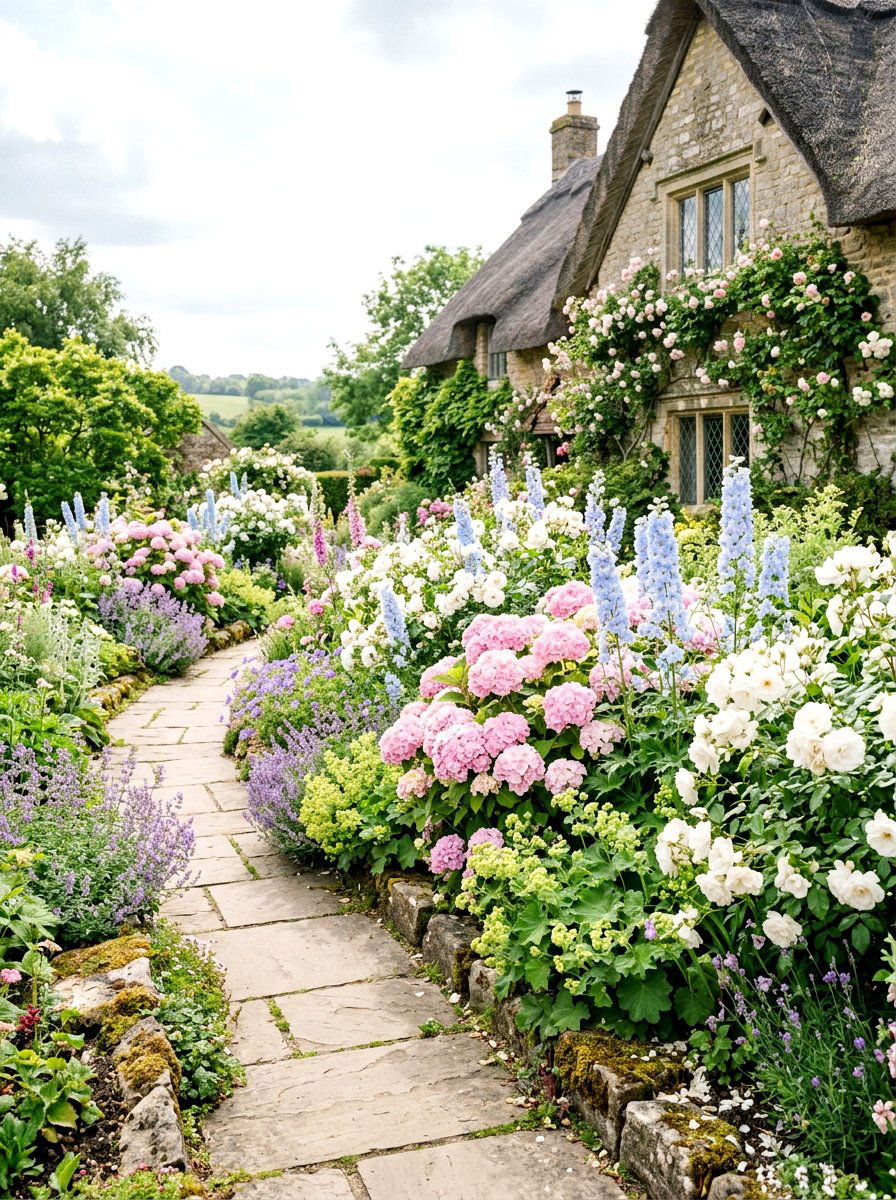
A pastel palette flower border creates a serene and dreamy atmosphere that is synonymous with romantic design. Focus on plants that bloom in shades of soft pink, pale blue, lavender, and creamy white. Sweet Williams, hydrangeas, and roses are excellent choices for maintaining this delicate color scheme. By avoiding bold oranges and bright reds, you keep the mood of the garden calm and cohesive. To prevent the look from becoming too flat, vary the flower shapes by mixing flat-topped yarrow with spiky lupines. This thoughtful color coordination makes the entire backyard feel like a unified and peaceful floral retreat.

15. Curved Lawn Flower Border
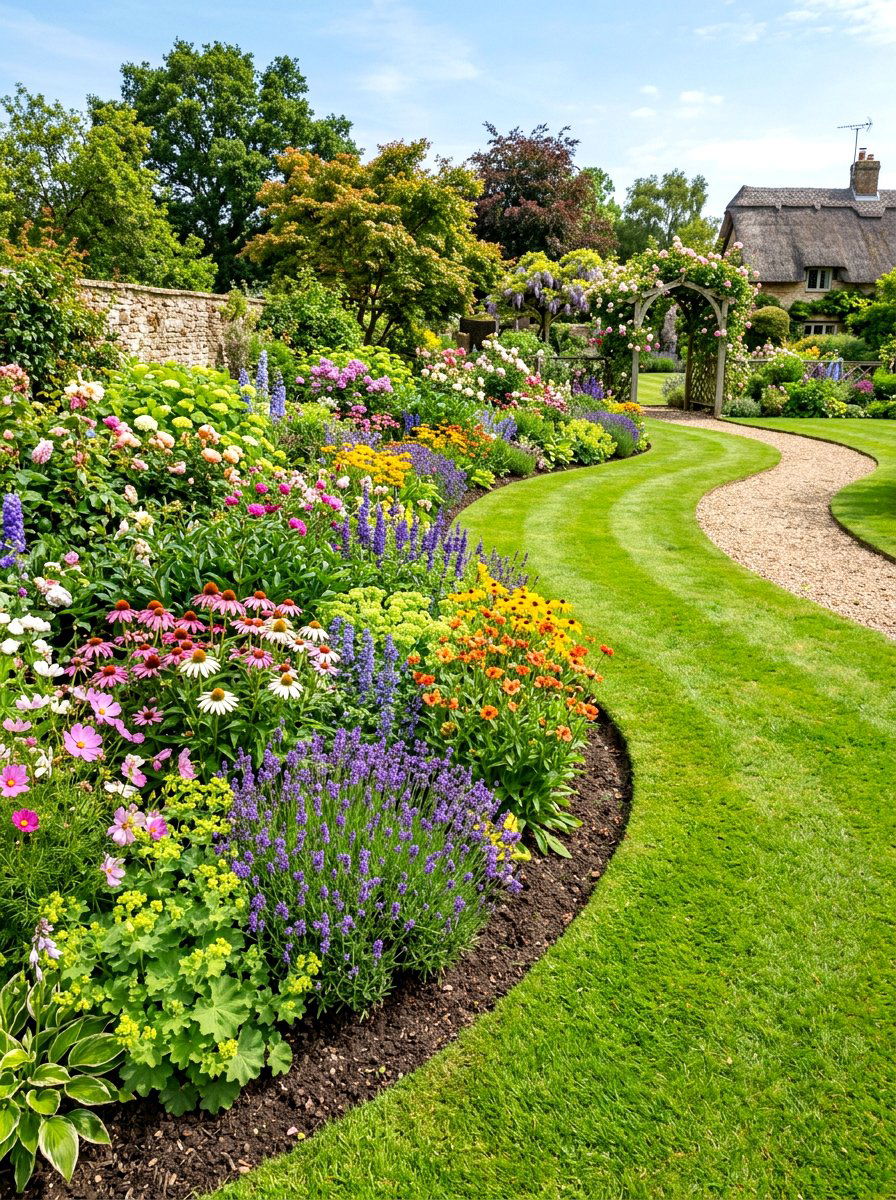
Softening the edges of your yard with a curved lawn flower border adds a sense of flow and mystery. Instead of straight lines, use a garden hose to mark out wide, sweeping curves that meander along the perimeter of the grass. This shape invites the eye to wander and makes the garden feel larger and more organic. Fill the deep curves with large clumps of perennials like peonies or daylilies to create focal points. The contrast between the neatly mowed green lawn and the billowy, overflowing flower beds creates a dynamic visual tension that is central to the high-impact cottage garden aesthetic.
16. Flowering Hydrangea Garden Border
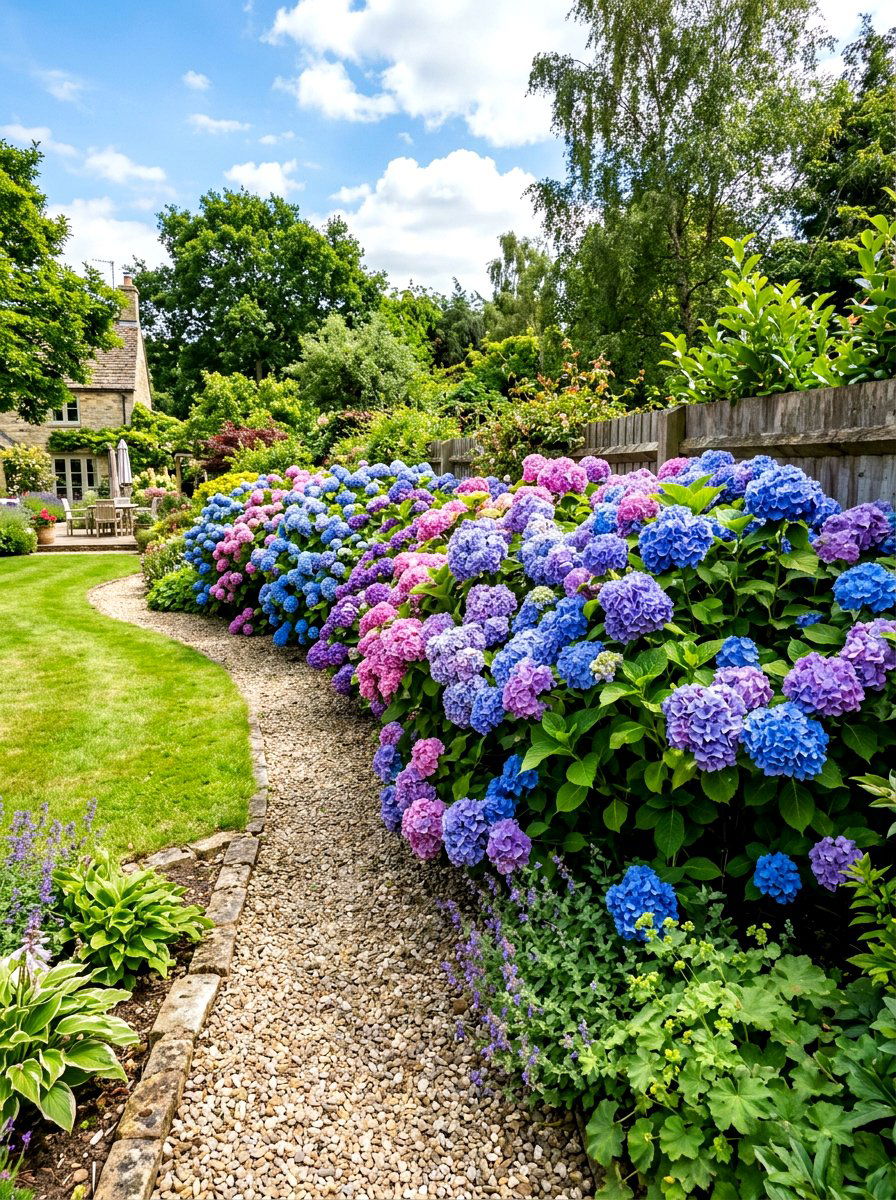
A flowering hydrangea garden border offers massive impact with minimal effort, thanks to the large, showy blooms of these classic shrubs. Use varieties like mophead or lacecap hydrangeas to create a thick, deciduous hedge that provides privacy and color. They look spectacular when planted in a long row, creating a wall of blue, pink, or white flowers depending on your soil acidity. You can underplant them with spring bulbs like daffodils or tulips to provide early color before the hydrangeas leaf out. This design is perfect for creating a lush, full-bodied border that defines the boundaries of your backyard with style.
17. Natural Rock Border
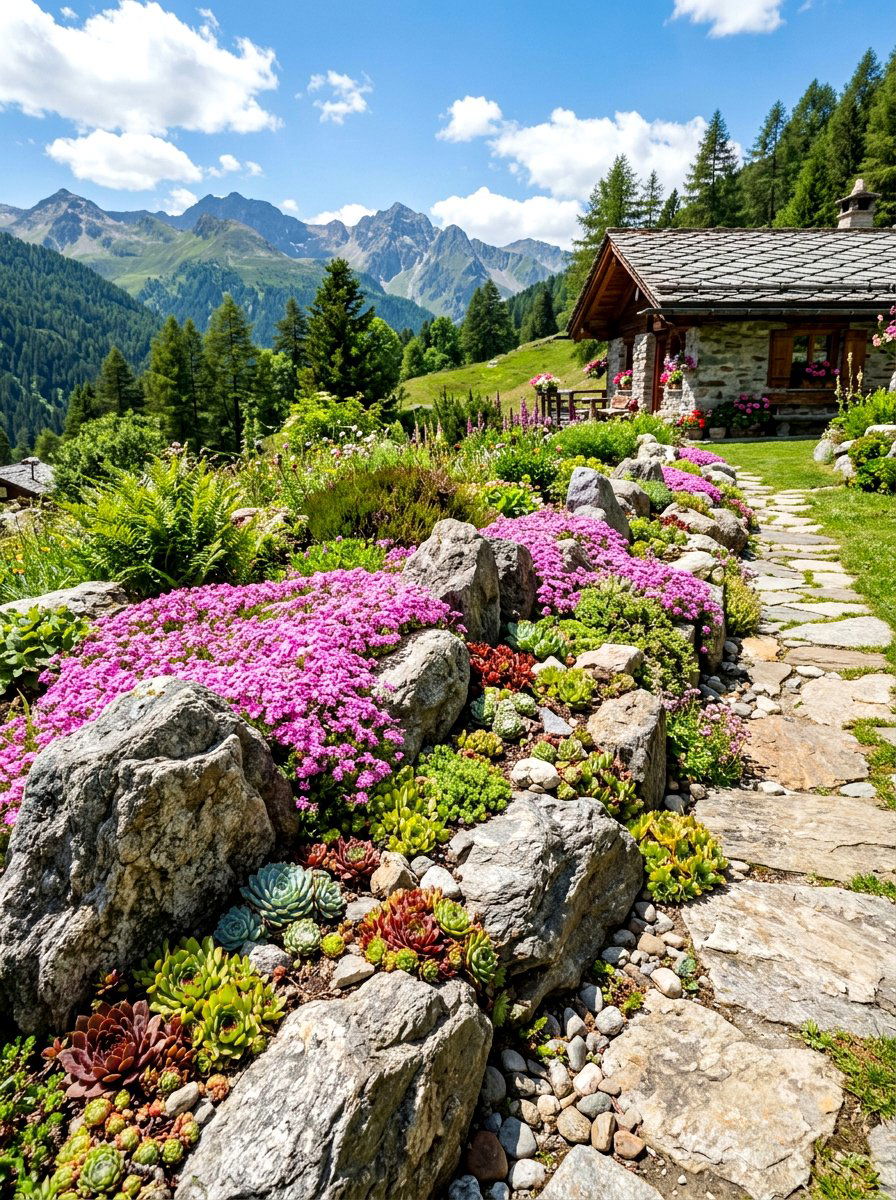
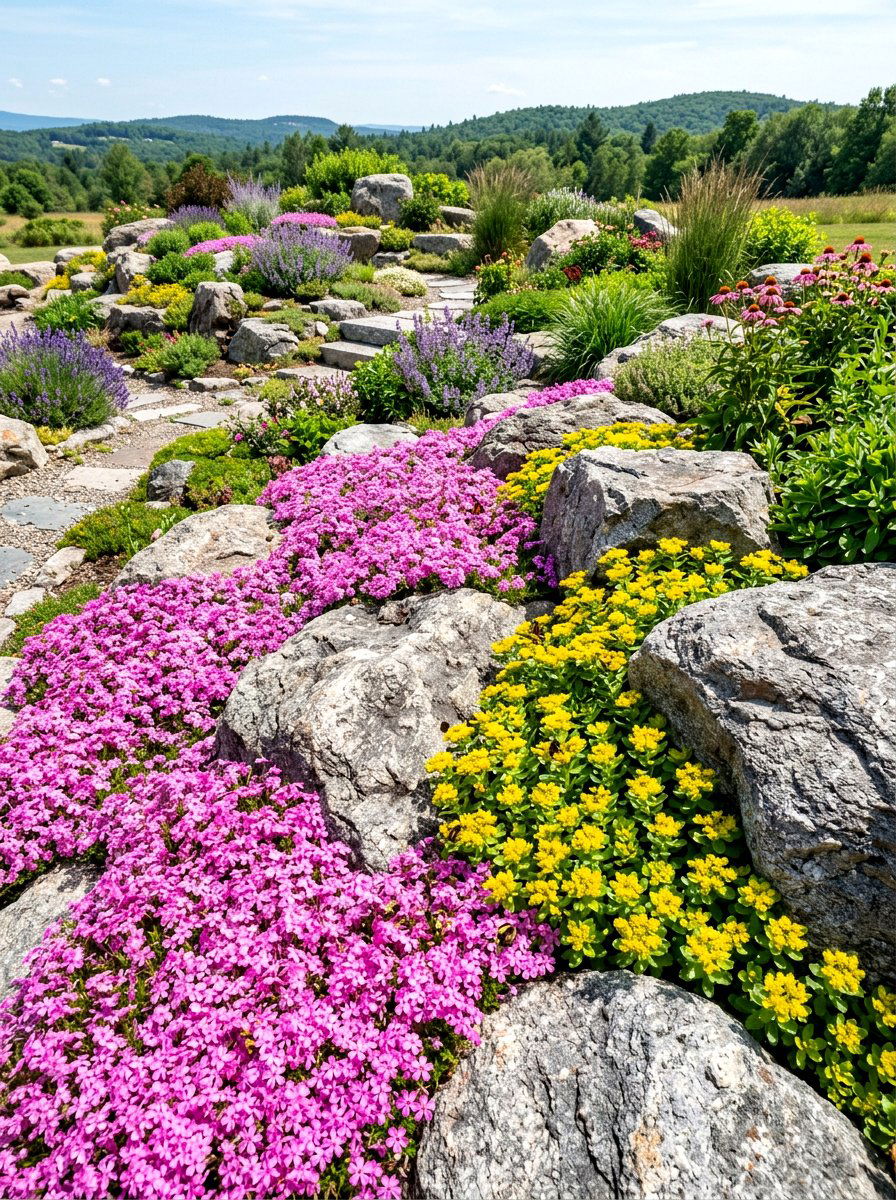
A natural rock border uses the rugged beauty of geology to frame your favorite plants and add texture to the ground. You can partially bury large boulders to make them look like natural outcroppings, then surround them with alpine plants or creeping phlox. This style of border is excellent for dry, sunny spots where traditional garden soil might be poor. The rocks absorb heat during the day and release it at night, creating a unique microclimate for your plants. It provides a sturdy, maintenance-free edge that keeps mulch in place while adding a timeless, earthy character to the overall landscape.
18. Spring Peony Flower Border
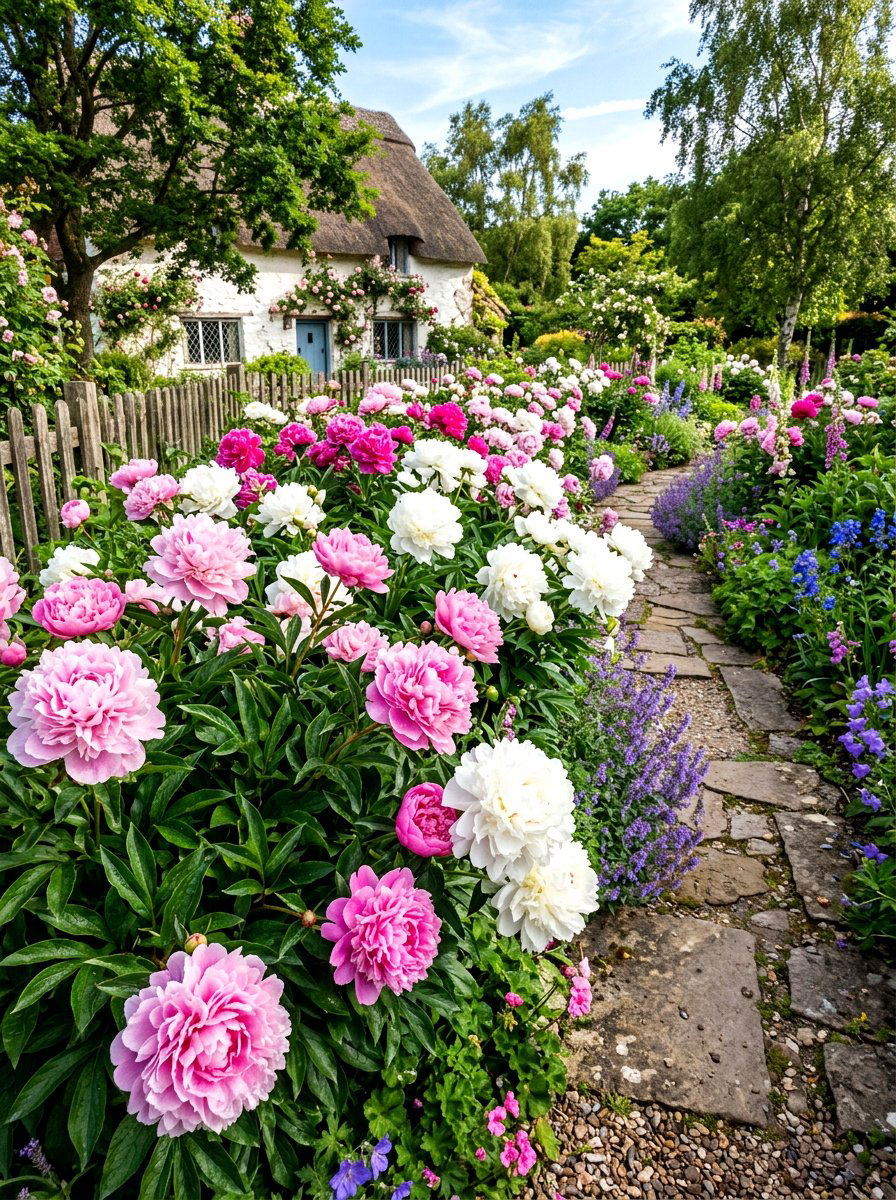
Focusing on a spring peony flower border ensures a spectacular start to the growing season with some of the most luxurious blooms available. Peonies are long-lived perennials that produce massive, fragrant flowers in late spring and early summer. Plant them in a dedicated row or mix them with other spring favorites like columbine and bleeding hearts. Even after the flowers fade, the glossy green foliage remains attractive throughout the summer, providing a sturdy background for later-blooming annuals. This border design celebrates the fleeting beauty of spring and provides plenty of cut flowers for indoor arrangements, making it a favorite for cottage enthusiasts.
19. Rustic Timber Garden Border
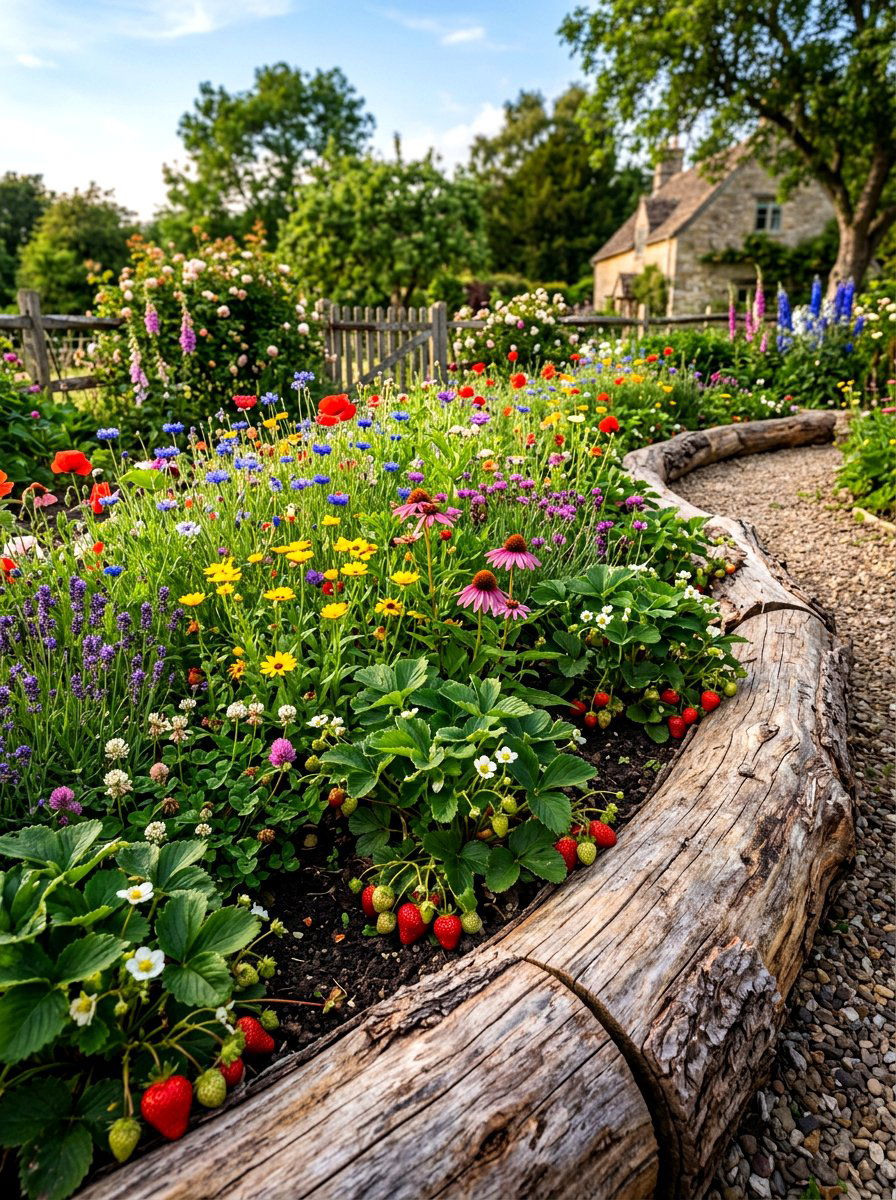
For a budget-friendly and natural look, a rustic timber garden border uses reclaimed wood or cedar logs to define planting areas. You can stack the timbers to create slightly raised beds or lay them flat for a simple transition. The weathered wood tones blend seamlessly with the outdoor environment and provide a warm, organic feel. This style is perfect for more casual backyards or woodland-inspired gardens. You can plant woodland strawberries or ferns along the wood to soften the hard edges. Over time, the timber will age gracefully, developing a silver patina that adds to the antique charm of the cottage space.
20. Edible Vegetable Flower Border
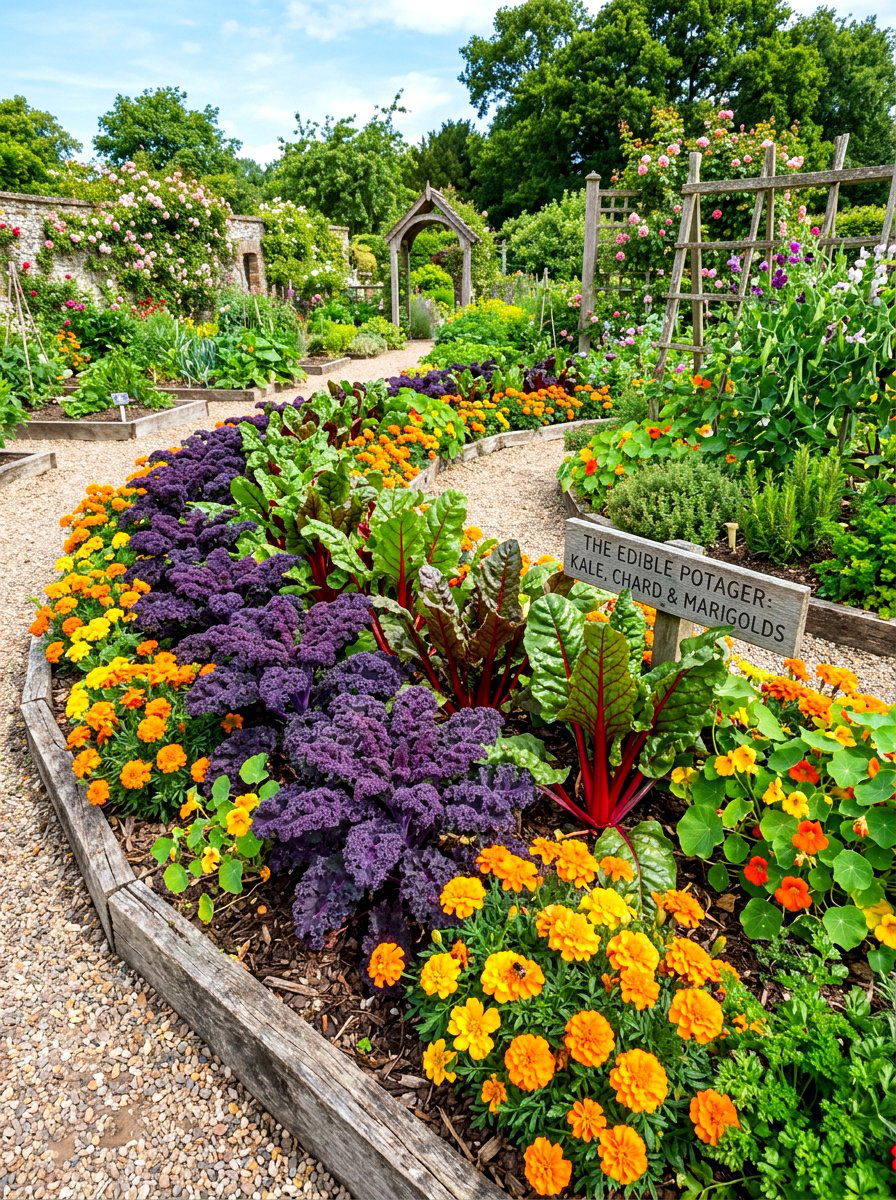
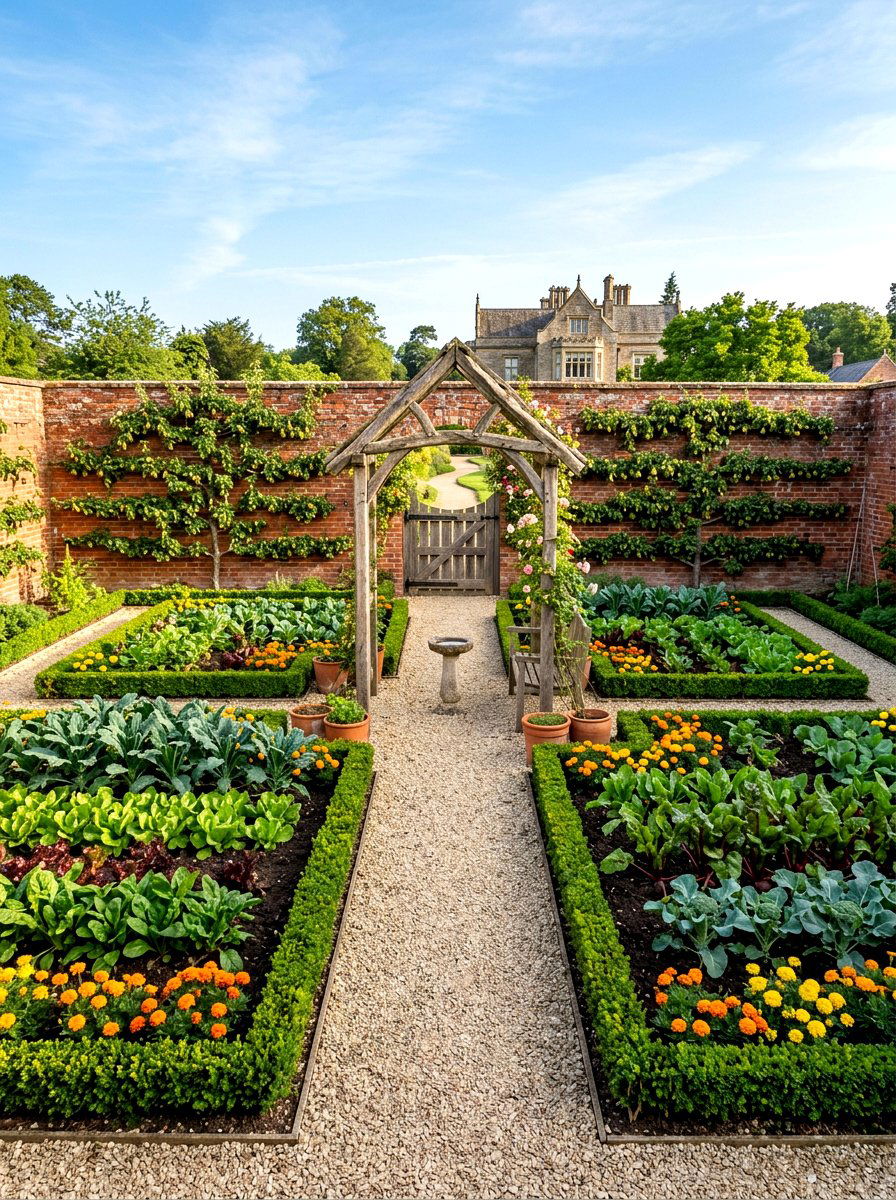
An edible vegetable flower border revives the traditional cottage garden concept of intermingling food and beauty. You can plant colorful Swiss chard, curly kale, and purple basil alongside marigolds and nasturtiums. The bright stems of the chard and the deep hues of the kale provide structural interest that rivals any ornamental plant. Marigolds serve a dual purpose by adding a pop of orange and helping to deter pests from your vegetables. This integrated approach maximizes space in small backyards and creates a vibrant, hardworking border that is as productive as it is beautiful to look at throughout the summer.
21. Pollinator Friendly Garden Border
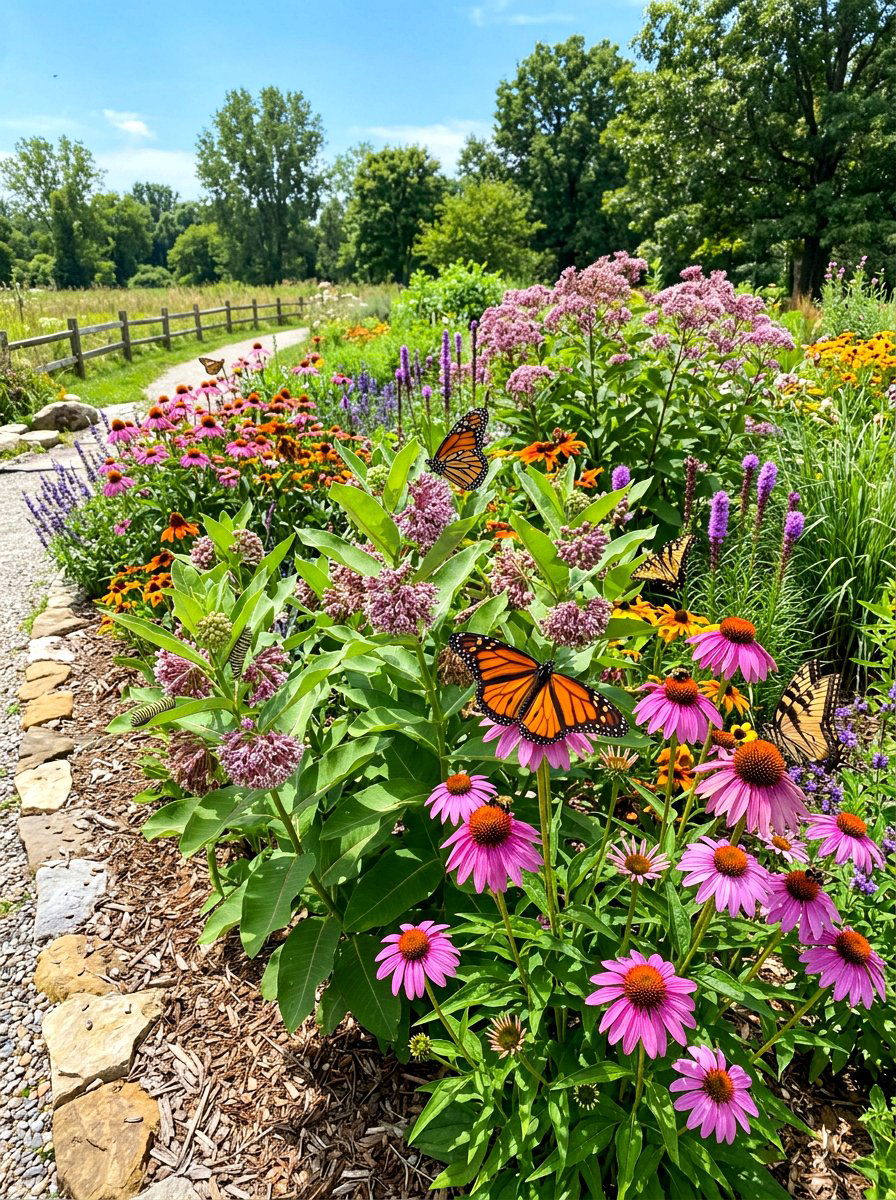
A pollinator friendly garden border is designed specifically to attract and support bees, butterflies, and hummingbirds. Choose a variety of nectar-rich plants with different flower shapes, such as tubular honeysuckle and flat-topped sedum. Include host plants like milkweed for monarch caterpillars and native asters for late-season energy. By avoiding pesticides and providing a water source like a stone birdbath, you turn your border into a thriving ecosystem. This design not only looks vibrant and full of life but also ensures that your garden contributes to the health of the local environment, making it a rewarding project for any nature lover.
22. Low Maintenance Perennial Border
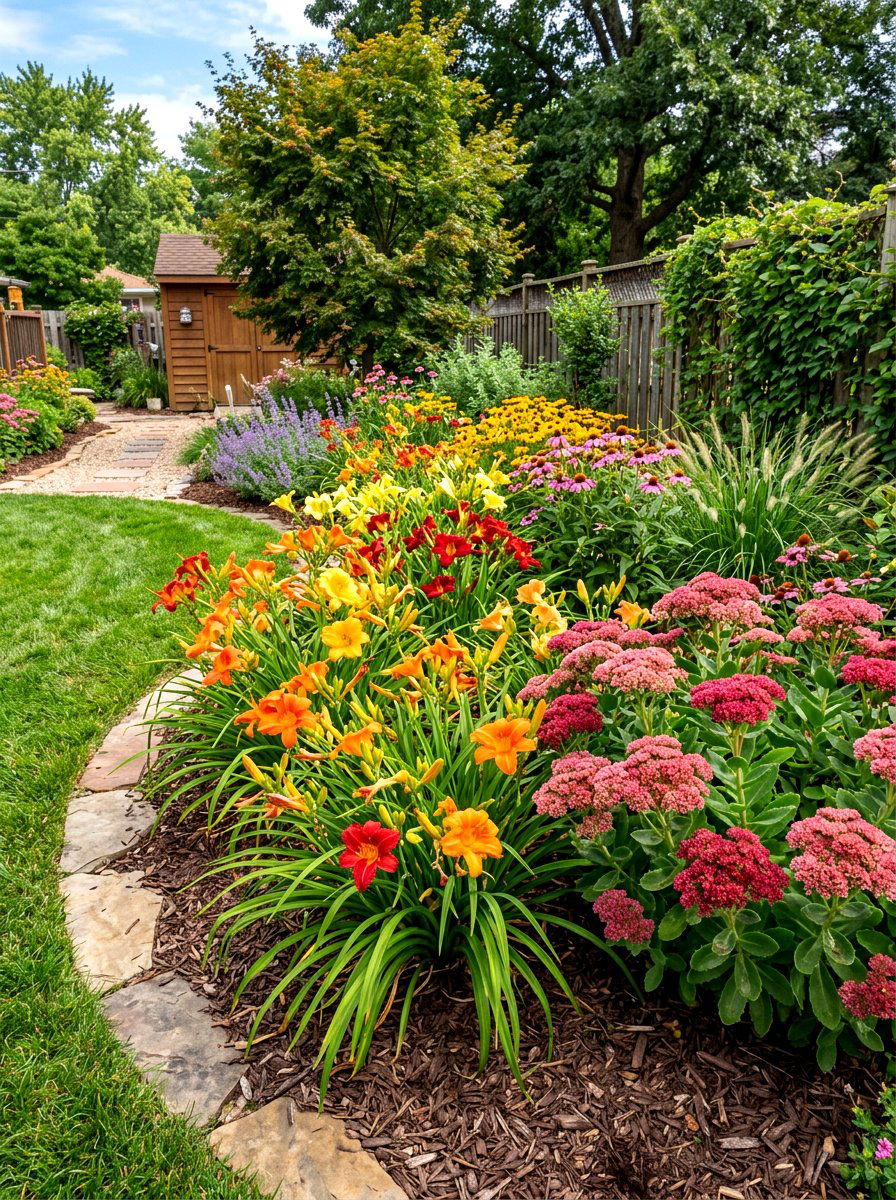
A low maintenance perennial border is perfect for busy homeowners who want the cottage look without the constant upkeep. Focus on "plant and forget" varieties like daylilies, coneflowers, and sedum that require minimal watering and pruning. Use a thick layer of organic mulch to keep weeds at bay and moisture in the soil. By choosing plants that are native to your region, you ensure they are hardy enough to survive local weather extremes. This border design provides a reliable foundation of color and greenery year after year, allowing you to enjoy your backyard retreat without spending every weekend weeding.
23. Boxwood Hedge Garden Border
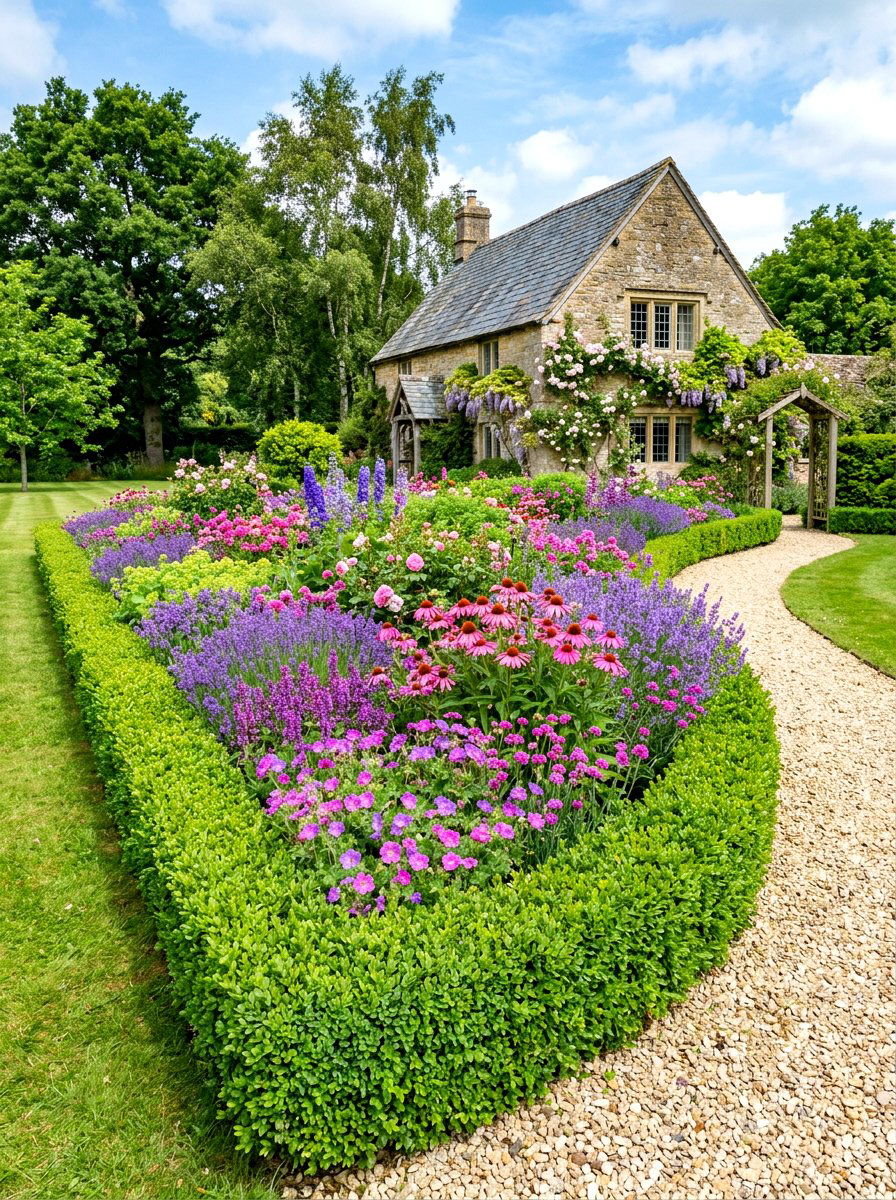
For those who prefer a bit more structure, a boxwood hedge garden border offers a neat, formal edge to an otherwise wild garden. You can clip the boxwoods into low, rectangular shapes to create a frame for a riot of colorful perennials inside. This "tamed" border helps to define paths and keep the informal cottage planting from looking too messy. The evergreen nature of the boxwood ensures that your garden has structure even in the middle of winter when the flowers have died back. It provides a sophisticated, classic look that bridges the gap between traditional formal estates and relaxed country cottages.
24. Vertical Trellis Flower Border
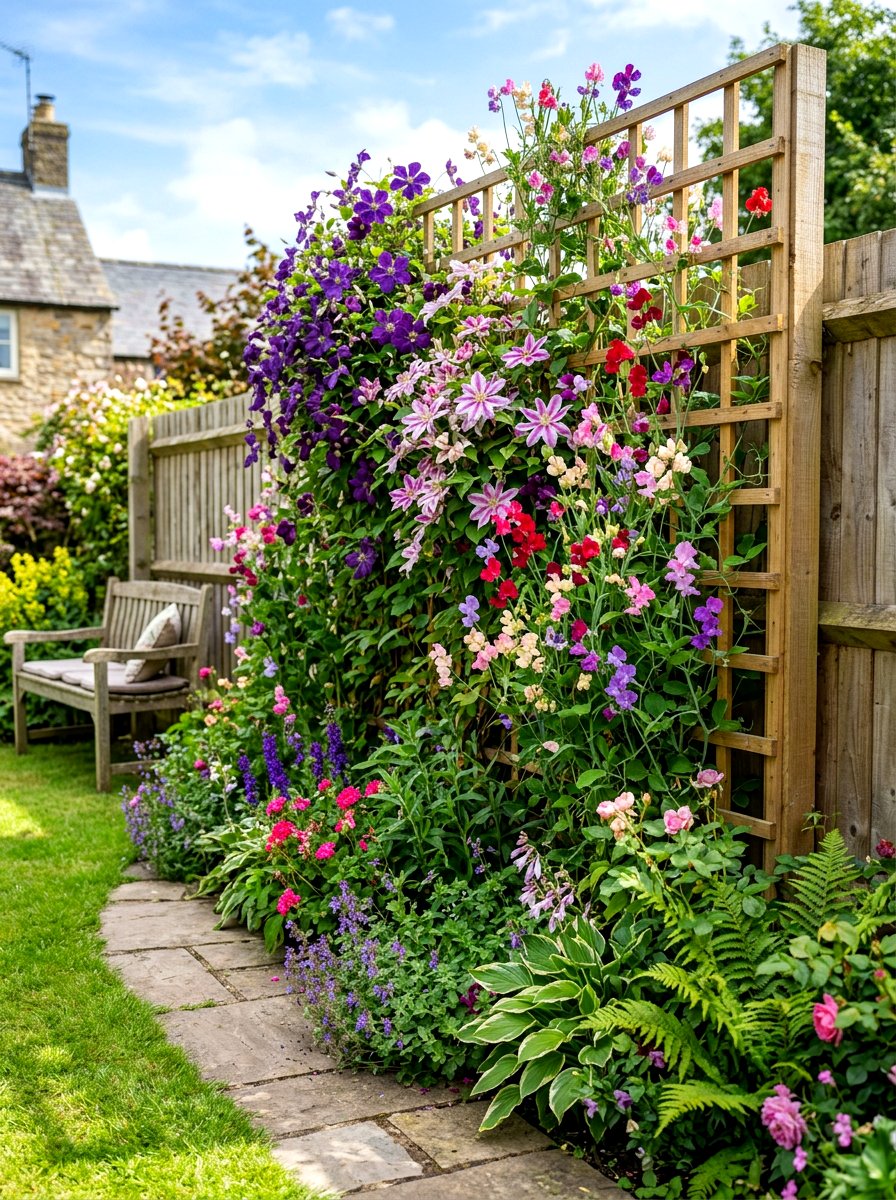
A vertical trellis flower border is an essential solution for small backyards where horizontal space is limited. By installing a series of wooden or metal trellises along your boundary, you can grow climbing plants like clematis, jasmine, or sweet peas. These vines provide a wall of green and floral color that draws the eye upward, making the space feel more expansive. At the base of the trellis, plant low-mounding flowers like petunias or lobelia to hide the stems. This vertical layering adds depth and a sense of lushness that is hard to achieve with ground-level planting alone in a tight area.
25. Fragrant Scented Garden Border
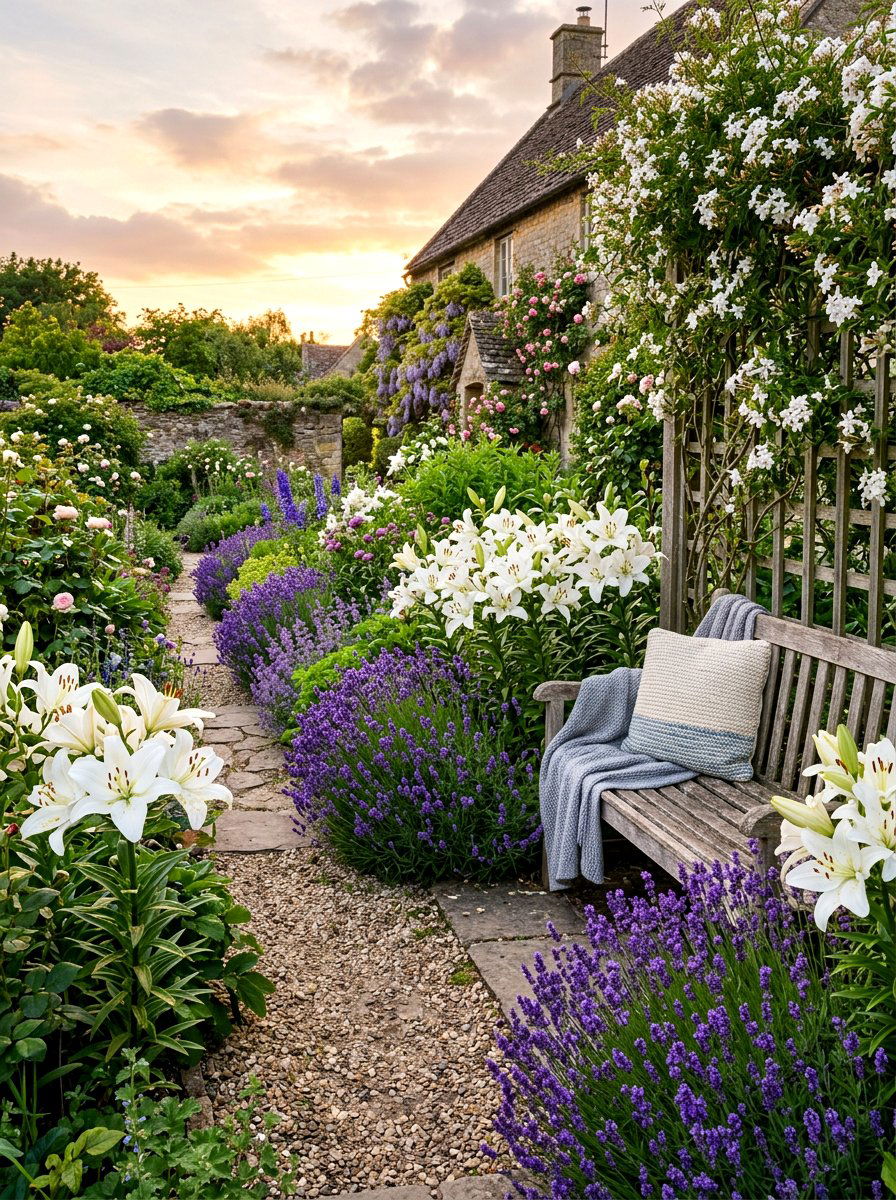
Creating a fragrant scented garden border ensures that your backyard experience is as pleasing to the nose as it is to the eyes. Plant night-scented stocks, jasmine, and honeysuckle near seating areas or windows to enjoy their perfume in the evenings. Classic roses and lilies provide heavy scents during the day, while lemon balm and mint offer refreshing herbal notes when touched. By grouping these aromatic plants together, you create a concentrated zone of fragrance that enhances the romantic, immersive feeling of the garden. This sensory-focused design turns a simple walk through the backyard into a truly therapeutic and relaxing experience.
26. Late Summer Bloom Border
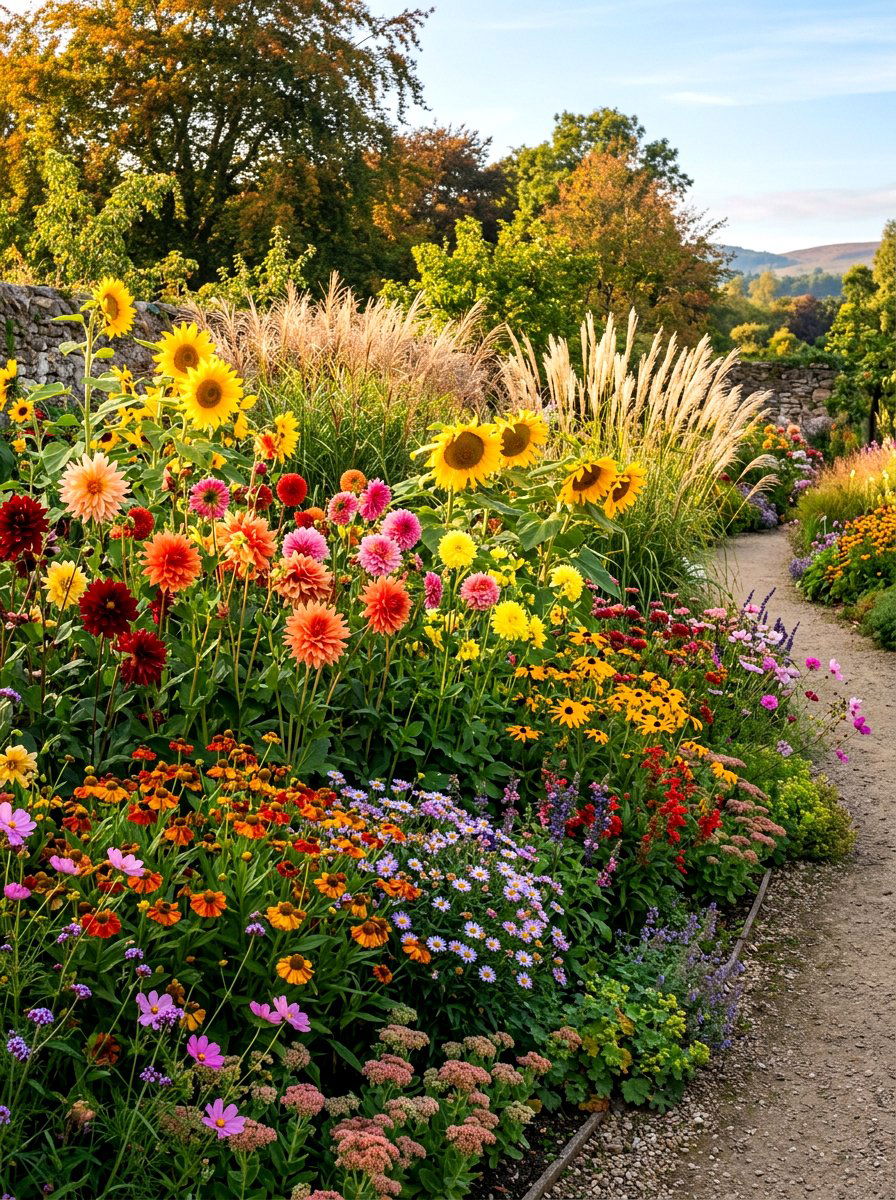
A late summer bloom border is designed to take over the spotlight just as the early spring and summer flowers begin to fade. Focus on heat-tolerant stars like zinnias, dahlias, and sunflowers that thrive in the late August sun. Ornamental grasses and sedum 'Autumn Joy' provide structural support and changing colors as the temperatures cool. This border ensures that your backyard remains a destination for color well into September and October. By planning for this second wave of beauty, you extend your enjoyment of the outdoors and provide a vital late-season food source for migrating butterflies and bees.
27. Rose Arch Garden Border
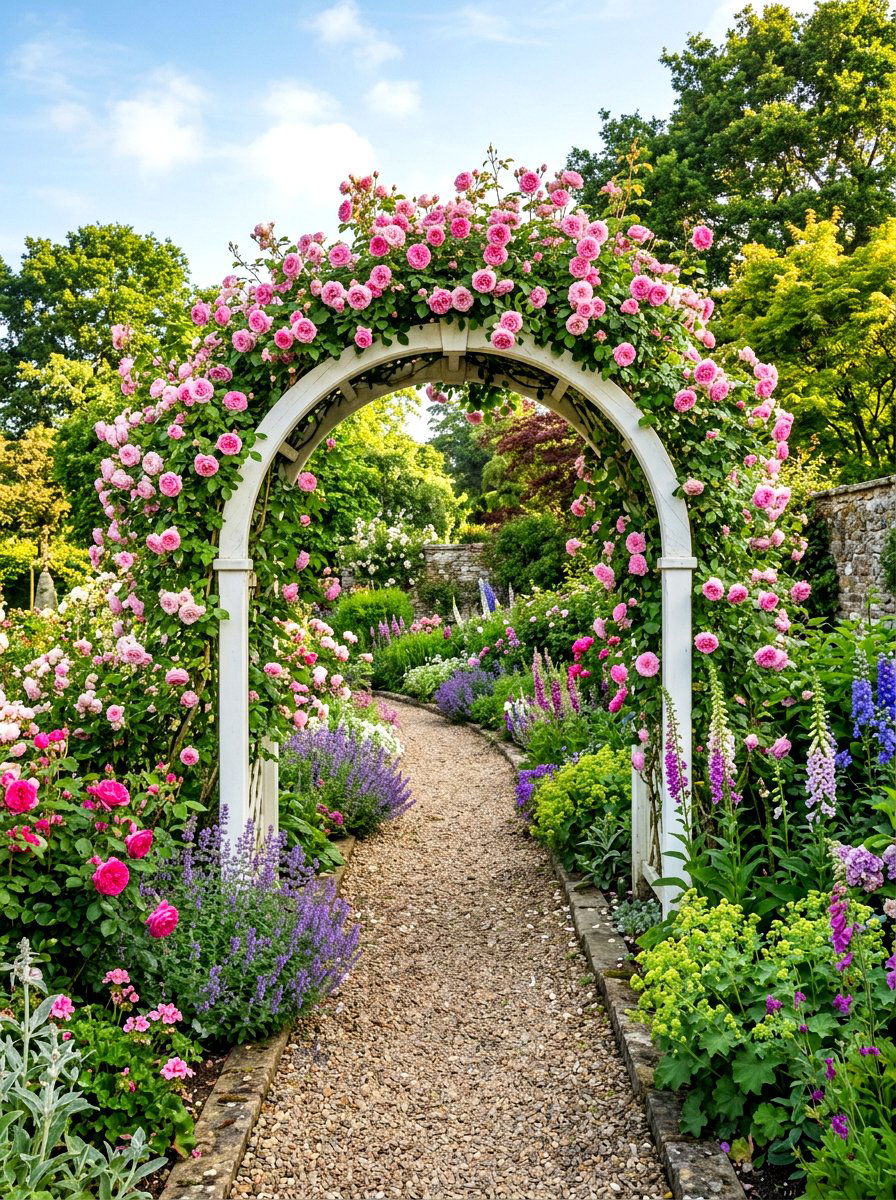
A rose arch garden border creates a stunning entryway or focal point that epitomizes cottage charm. Position a sturdy metal or wooden arch over a garden path and train climbing roses to meet in the middle. Surround the base of the arch with complementary plantings like catmint or silver-leaved artemisia to create a soft, romantic setting. This design adds architectural height to the garden and provides a framed view of the rest of the backyard. Walking through a blooming, scented archway feels like entering a secret garden, adding a layer of enchantment and vertical interest to your overall landscape design.
28. Side Yard Narrow Border
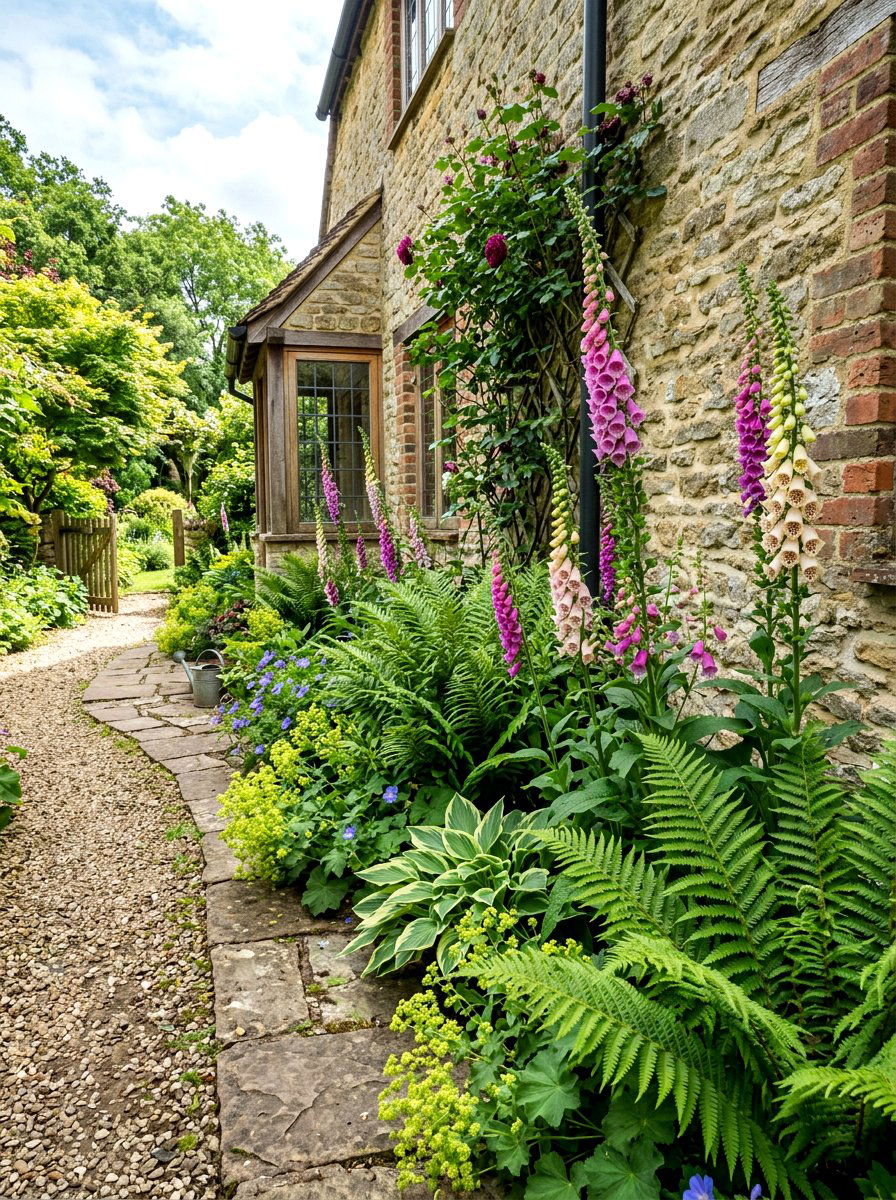
Transforming a forgotten side yard with a narrow border is a great way to maximize every inch of your property. Since space is often tight, use slim, upright plants like sky pencil holly or foxgloves that don't spread too wide. Mix in shade-tolerant varieties if the area is blocked by the house, such as ferns, hostas, and impatiens. A narrow gravel path running alongside the border keeps the area functional while the lush greenery softens the transition between the house and the fence. This thoughtful use of space turns a utilitarian corridor into a beautiful, plant-filled passage that adds value.
29. Raised Stone Bed Border
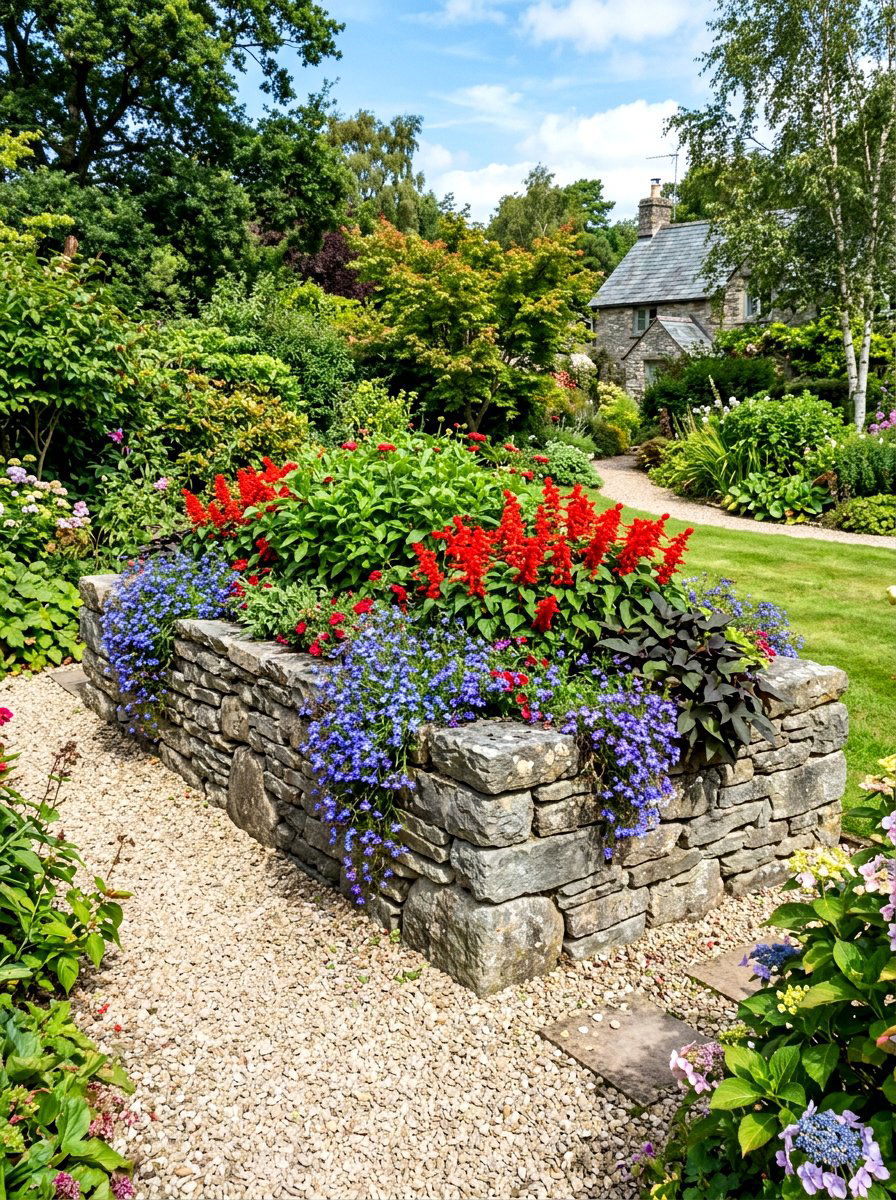
A raised stone bed border provides excellent drainage and an elevated platform for your most delicate cottage flowers. Using stacked dry-stone walls allows you to bring the plants closer to eye level, making it easier to enjoy their detail and scent. The height of the raised bed also helps to define different zones in the backyard, such as separating a dining patio from the lawn. Fill the bed with high-quality compost and a mix of trailing plants like lobelia and upright perennials like salvia. This design is also more accessible for gardening, as it reduces the need for bending and kneeling.
30. Woodland Style Shade Border
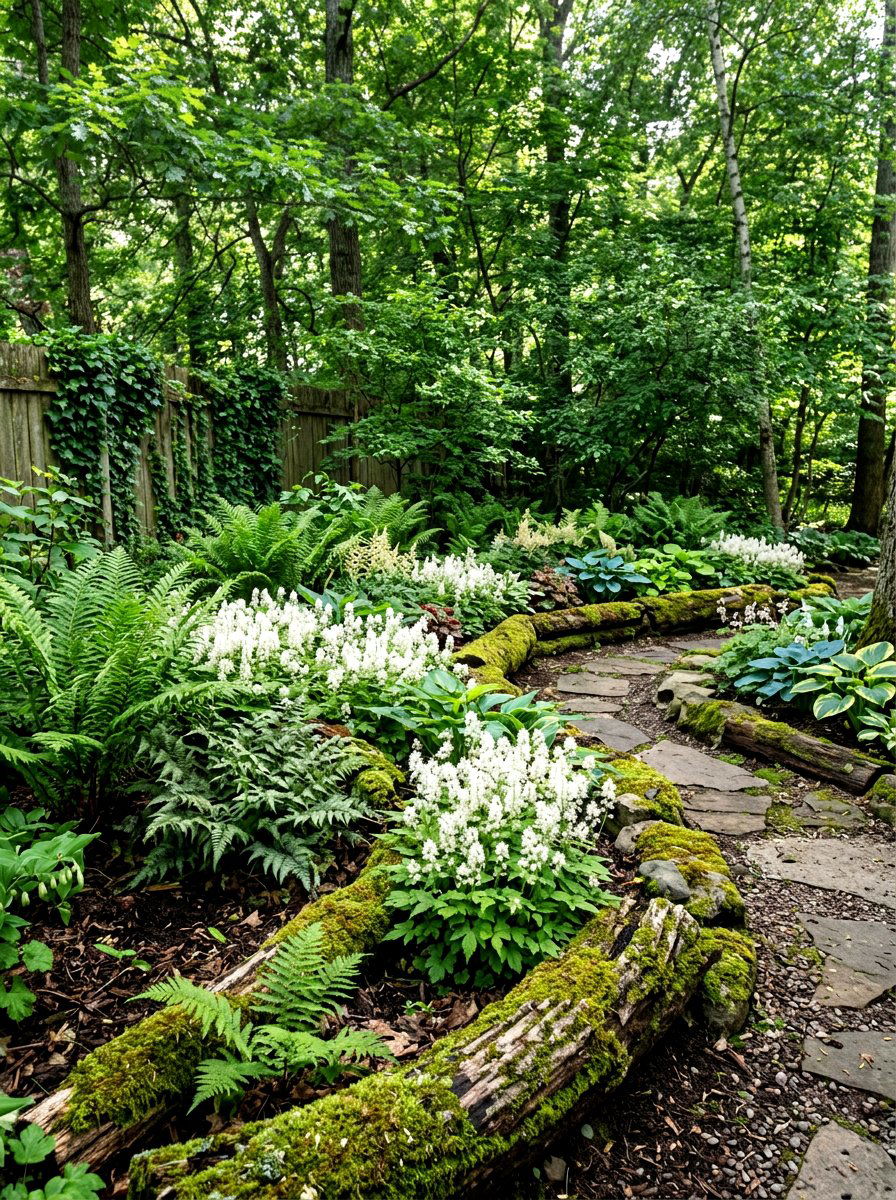
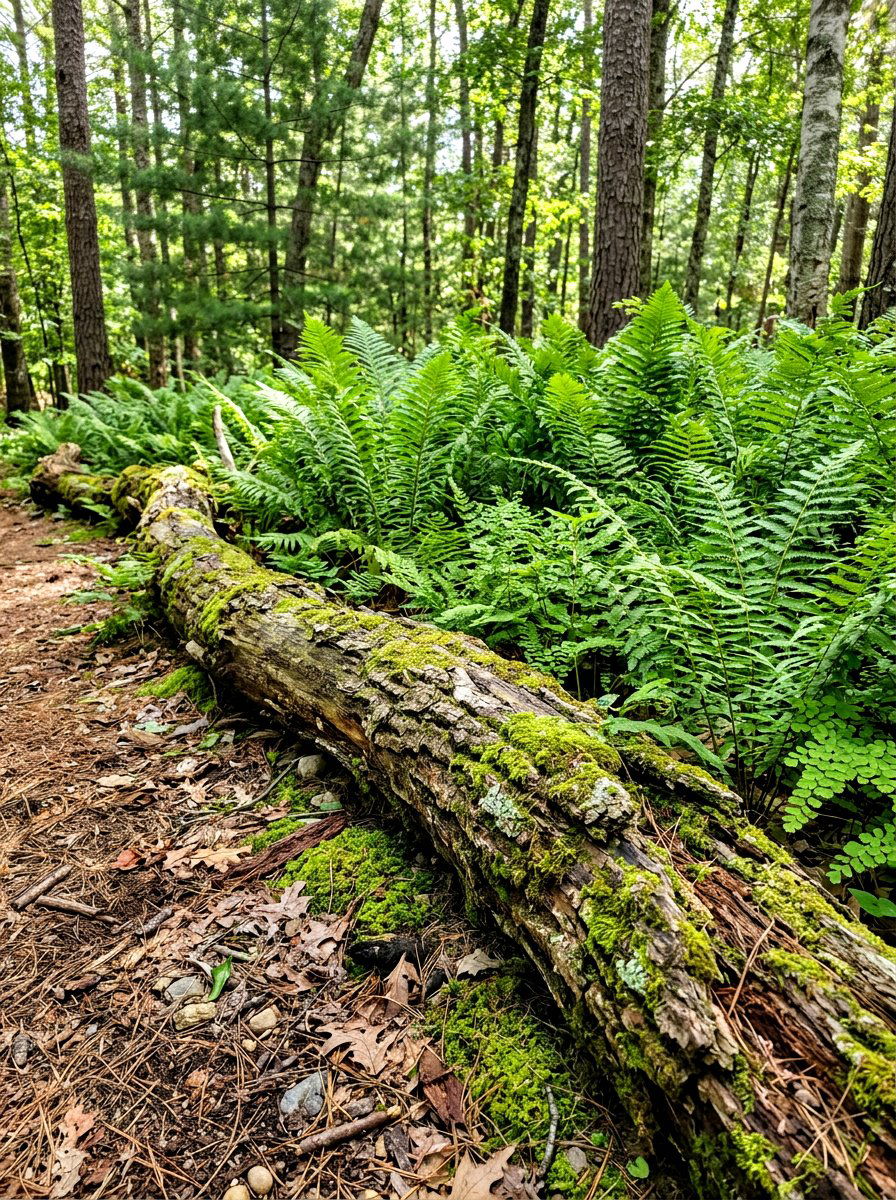
A woodland style shade border mimics the natural layers of a forest floor, making it ideal for the darker corners of your backyard. Use a mix of native ferns, wild gingers, and trilliums to create a lush, textured carpet under trees or large shrubs. Incorporate rotting logs or stepping stones to add a rustic, untouched feel to the space. White flowers like lily of the valley or foamflower show up beautifully in low light, adding a "glow" to the shaded areas. This low-maintenance border design celebrates the quiet beauty of nature and provides a cool, tranquil retreat during the hottest parts of summer.
Conclusion:
Creating a cottage border in your backyard is a rewarding journey that blends personal creativity with the wild beauty of nature. These thirty ideas demonstrate that whether you prefer a structured boxwood frame or a sprawling wildflower meadow, there is a cottage style that fits your lifestyle and space. By focusing on layered heights, diverse textures, and a thoughtful color palette, you can build a garden that feels established and timeless. Remember that cottage gardens are meant to be lived in and enjoyed, so don't be afraid to experiment and let your personality shine through every bloom and stone.

Related posts: