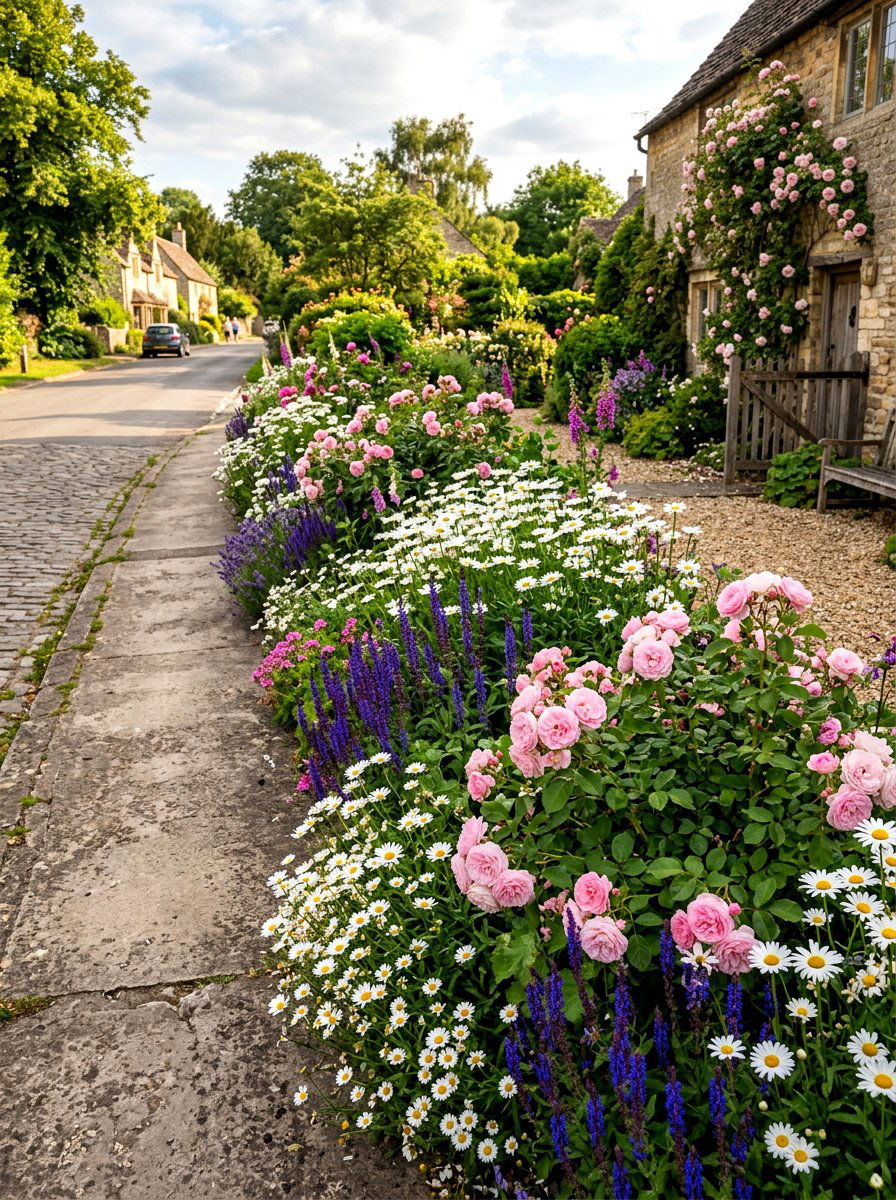
Creating a beautiful border planting along your fence is one of the most effective ways to transform a basic backyard into a lush and private sanctuary. Many homeowners struggle with long, bare fence lines that look stark and uninviting. By choosing the right mix of perennials, shrubs, and ornamental grasses, you can soften those hard edges and add incredible visual interest throughout the changing seasons. Whether you want to block out noisy neighbors or simply create a colorful backdrop for your outdoor dining area, a well-planned border is the solution. This guide explores thirty diverse ways to style your perimeter with plants that offer texture, fragrance, and essential privacy for your home.
1. Mixed perennial flower border
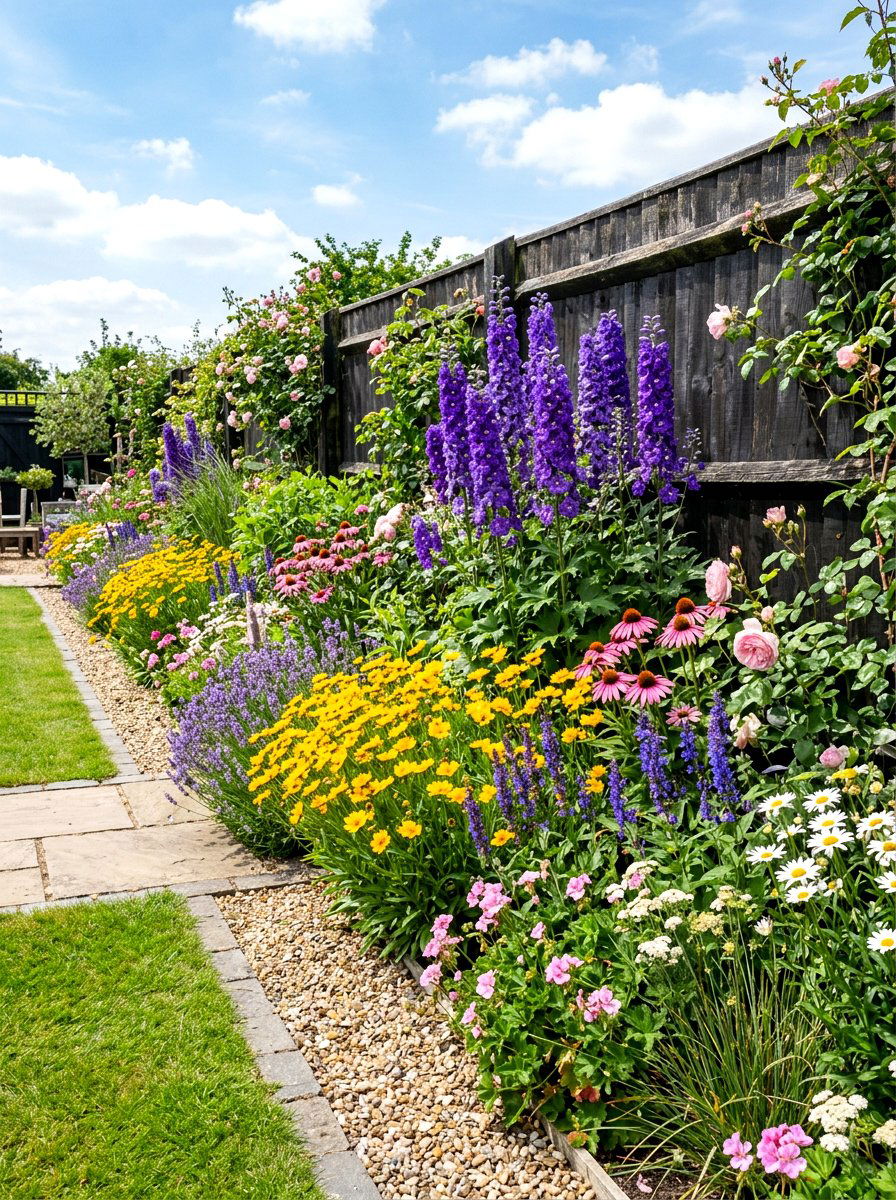
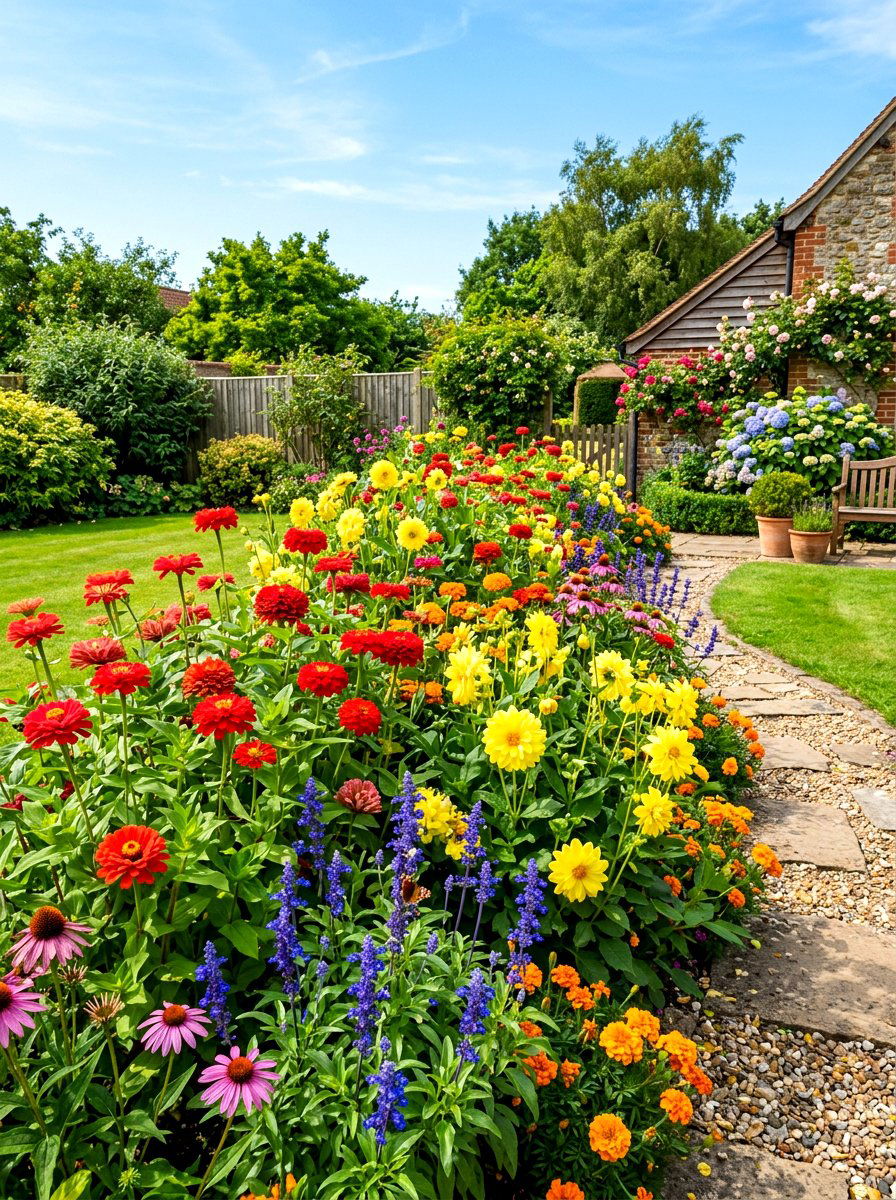
A perennial flower border along your fence line offers a changing tapestry of color that returns year after year with very little effort. You can mix different heights by placing taller plants like delphiniums or foxgloves at the back against the wood and shorter blooms like coreopsis or salvia in the front. This layering technique creates a sense of depth that makes your garden feel much larger than it actually is. Using a variety of flowering times ensures that your fence remains a focal point from early spring until the first frost. Choose a color palette that complements your home’s exterior for a cohesive and professional look.
2. Tall bamboo privacy screen
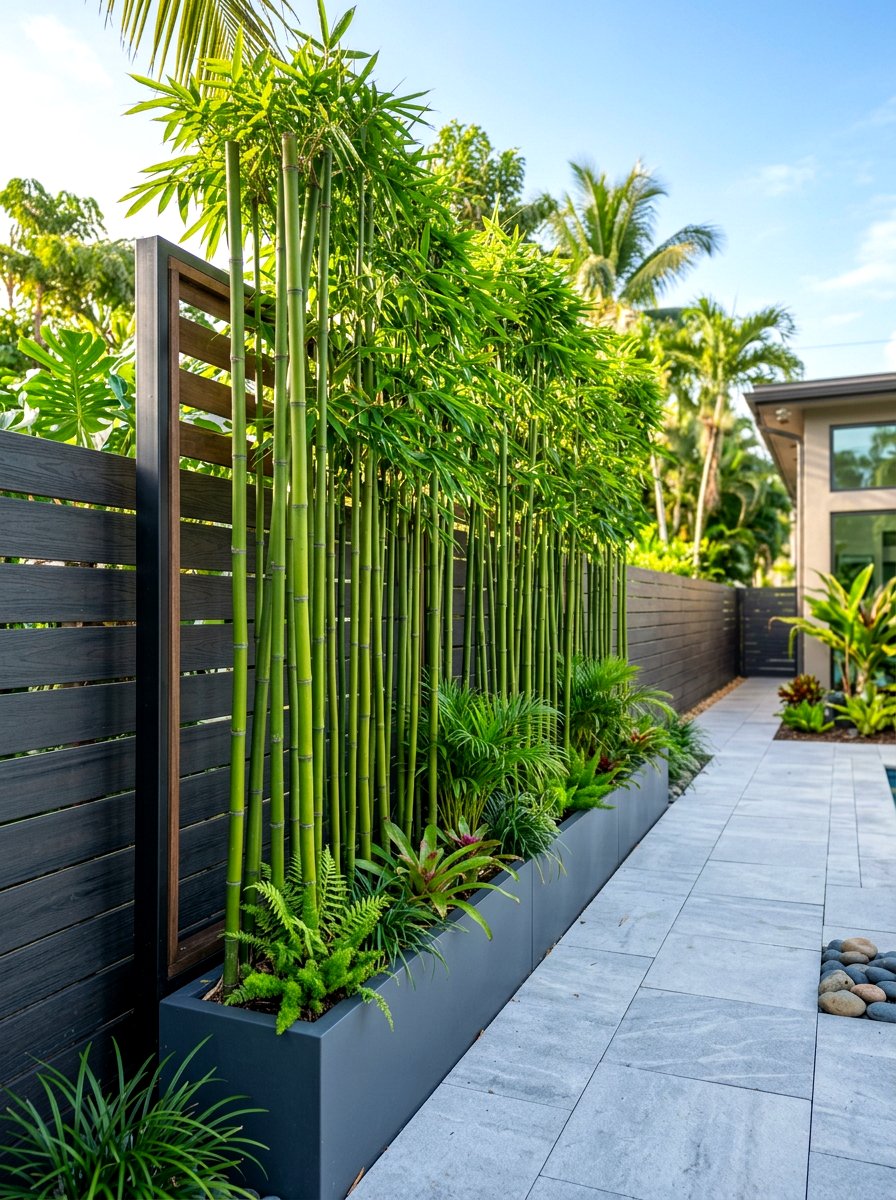
Tall bamboo provides a fast-growing and modern solution for homeowners who need immediate privacy along a high fence line. When planted in long, narrow troughs or with proper root barriers, bamboo creates a dense wall of green foliage that sways beautifully in the wind. The vertical lines of the bamboo canes add a contemporary architectural element to the garden while softening the appearance of hard wooden or metal fencing. This plant is particularly effective for small urban spaces where you want to create a tropical or Zen-like atmosphere without taking up too much ground space. It provides a lush backdrop for modern outdoor furniture.
3. Layered evergreen shrub border
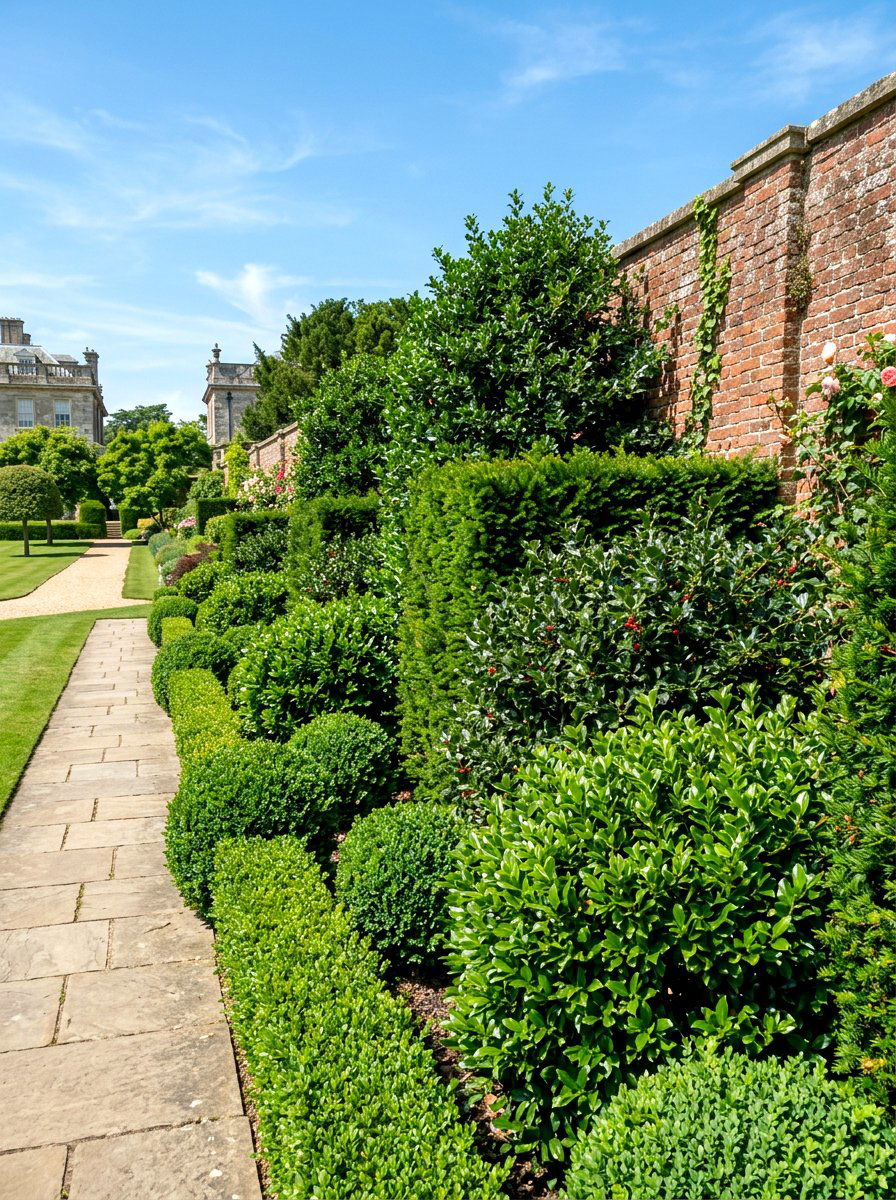
A layered evergreen shrub border is the perfect choice for homeowners who want their garden to look vibrant and full even during the winter months. By mixing different species like boxwood, holly, and yew, you create a rich variety of green tones and leaf textures along the fence. These plants provide a sturdy and permanent structure that anchors the rest of your landscaping. You can prune them into formal shapes for a classic look or let them grow naturally for a more relaxed feel. This type of border is also excellent for muffling street noise and providing a consistent windbreak for your backyard.
4. Classic hydrangea hedge border
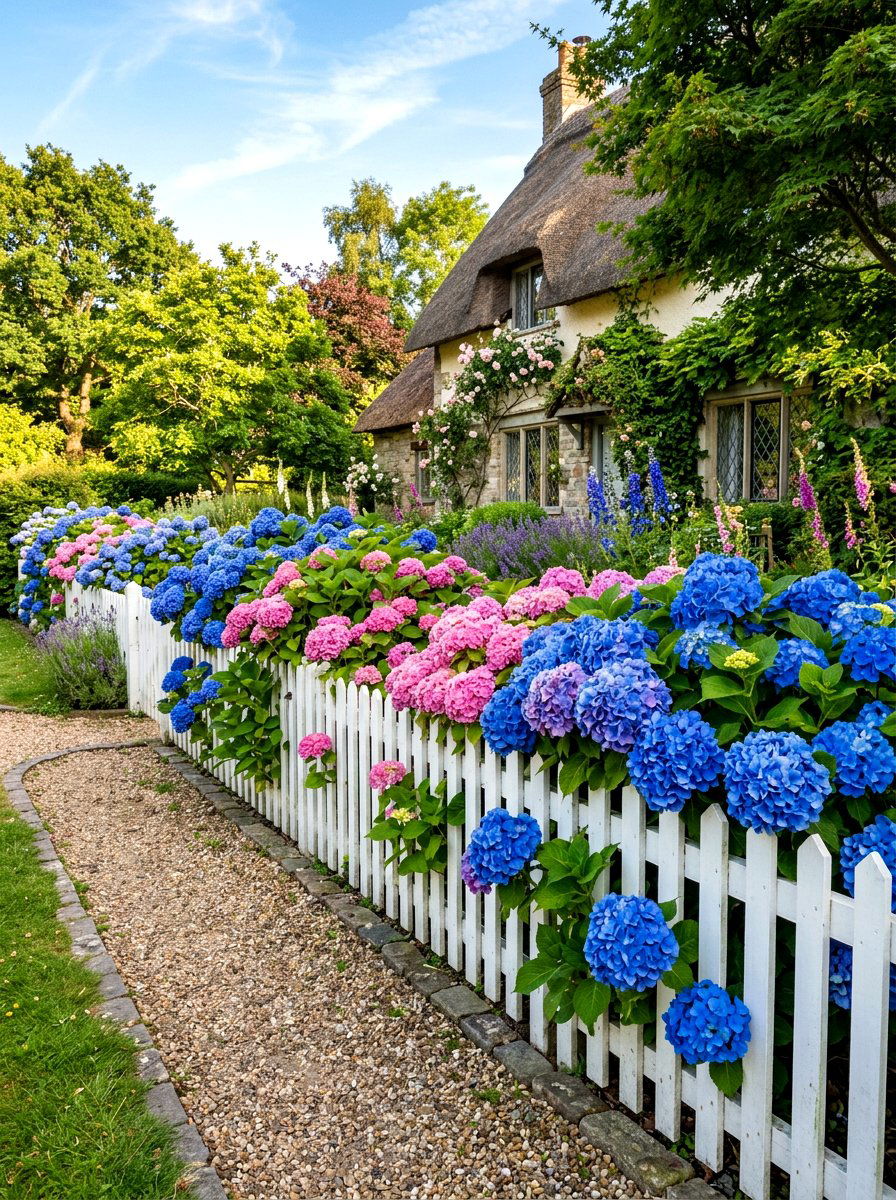
A hydrangea hedge border brings a romantic and timeless feel to any property line, especially when planted against a white picket or dark wood fence. These shrubs produce massive, showy flower heads in shades of blue, pink, or white that last for several months during the summer. Because they have large leaves and a bushy growth habit, they are excellent for hiding the lower part of a fence that might be aging or unattractive. Hydrangeas thrive in partial shade, making them an ideal choice for fence lines that sit under the shadow of tall trees or the house itself during the day.
5. Low maintenance ornamental grasses
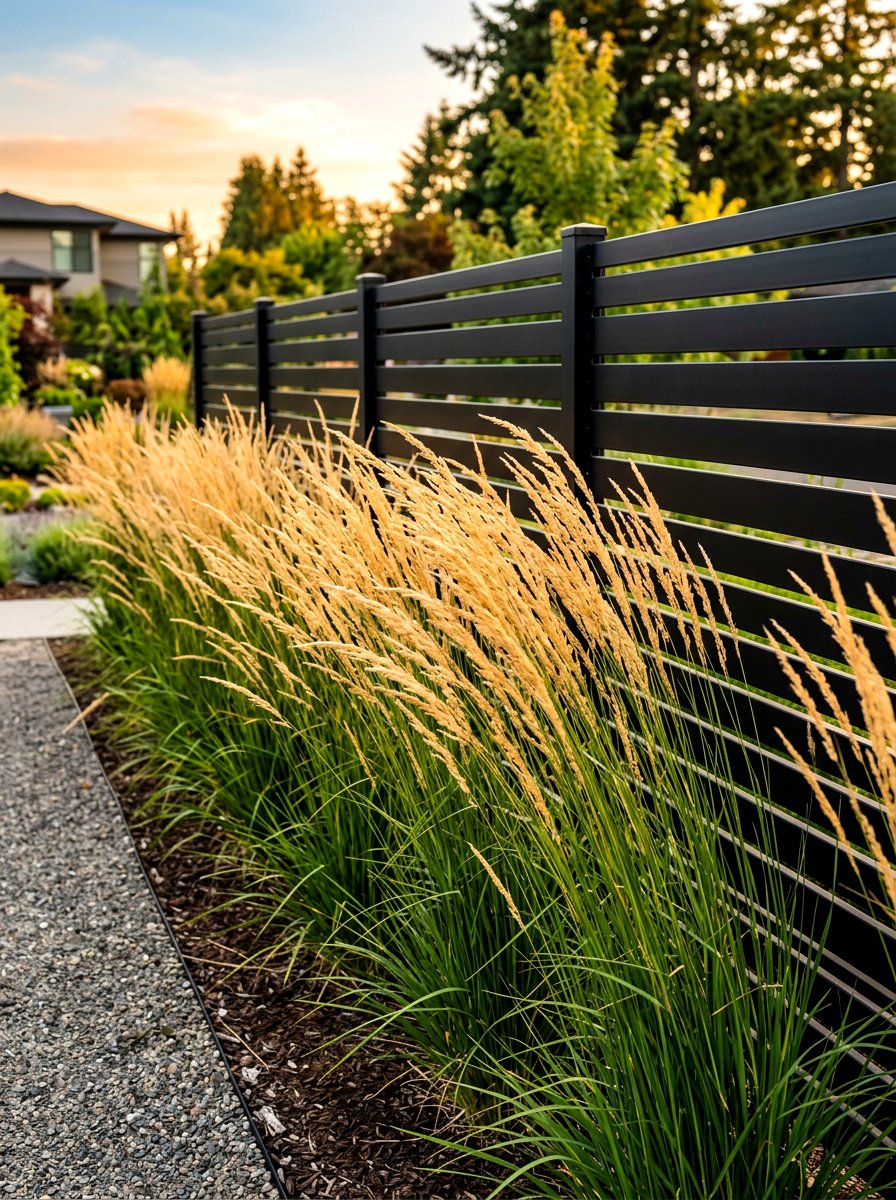
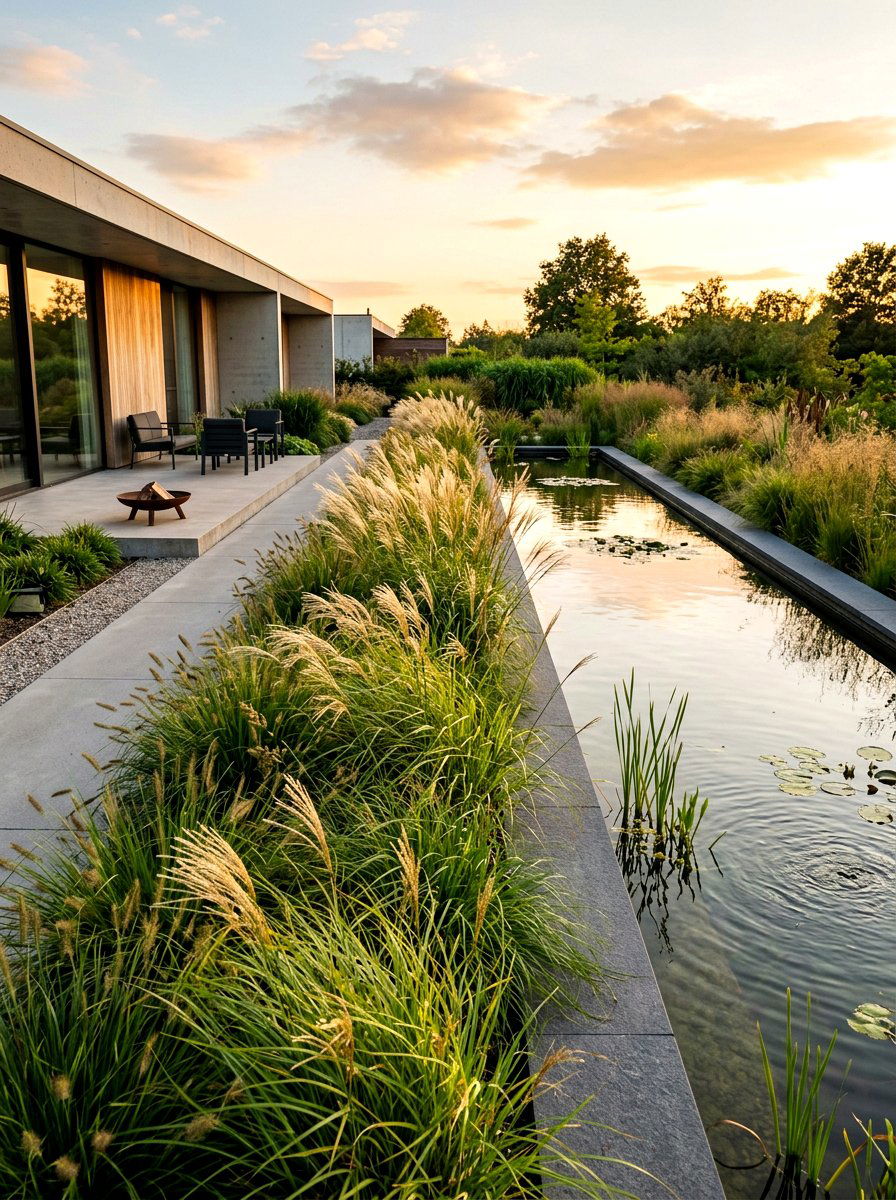
Low maintenance ornamental grasses are a fantastic way to add movement, sound, and a modern aesthetic to your fence borders. Species like Feather Reed Grass or Fountain Grass grow tall and narrow, making them perfect for lining long stretches of fencing without requiring constant pruning. In the autumn, many of these grasses develop beautiful seed heads that catch the golden light and provide interest throughout the winter. They are incredibly hardy and drought-tolerant, which is great for busy homeowners. The rustling sound they make in the breeze creates a peaceful and relaxing environment for your outdoor seating or dining areas.
6. Traditional cottage garden border
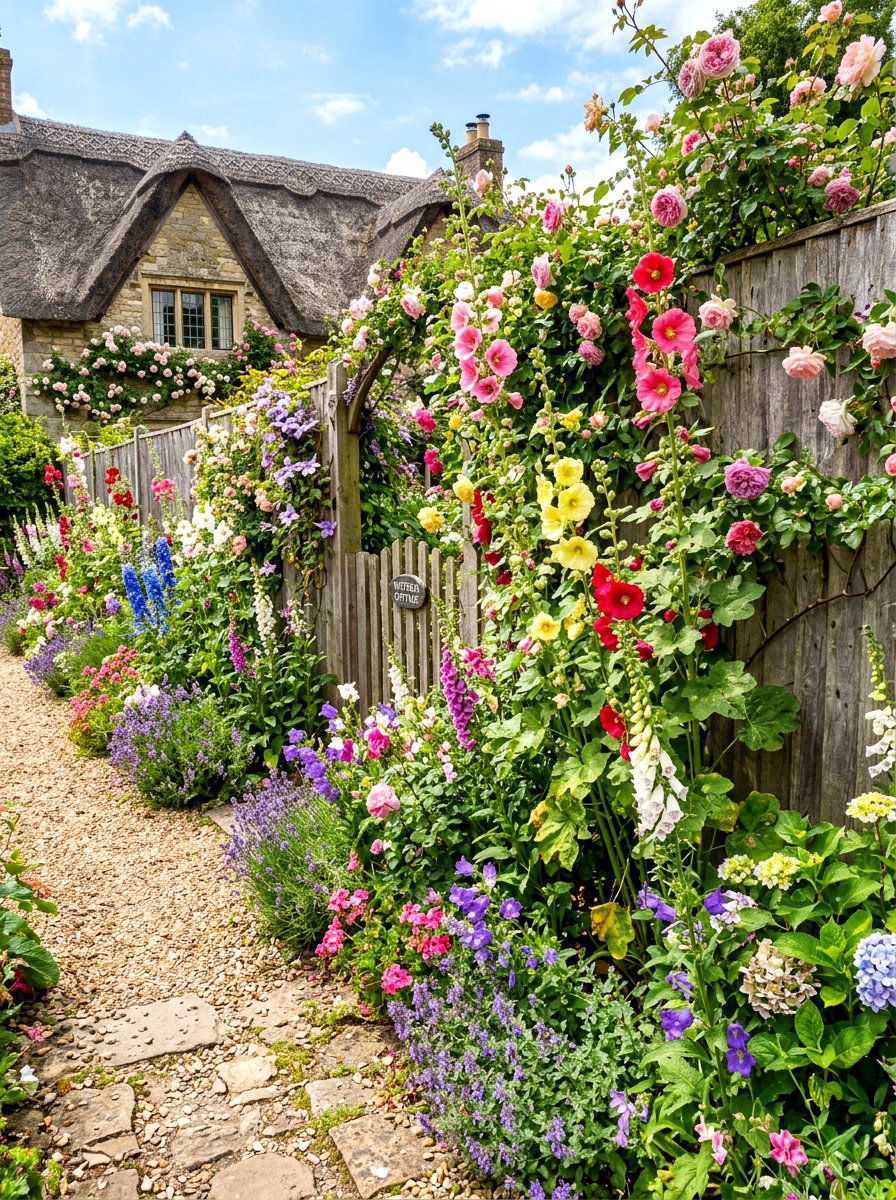
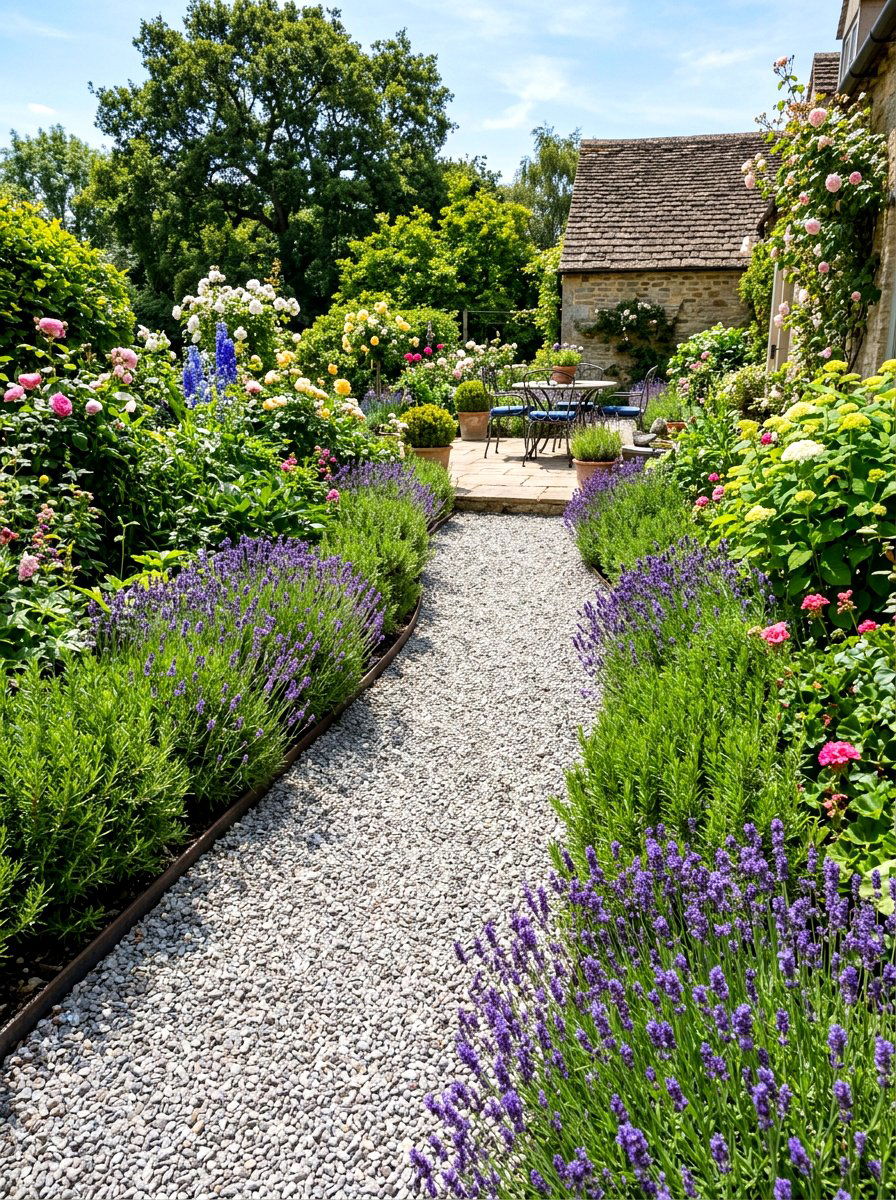
A traditional cottage garden border is all about a relaxed, informal, and densely packed look that overflows with flowers and fragrance. You can plant a mix of hollyhocks, roses, peonies, and lavender in a seemingly random but beautiful arrangement against your fence. This style works best with wooden fences, as the climbing plants can scramble up the boards to create a wall of blooms. The key is to pack the plants closely together to eliminate gaps and prevent weeds from growing. This type of border attracts plenty of bees and butterflies, turning your fence line into a thriving ecosystem of natural beauty.
7. Vertical herb garden border
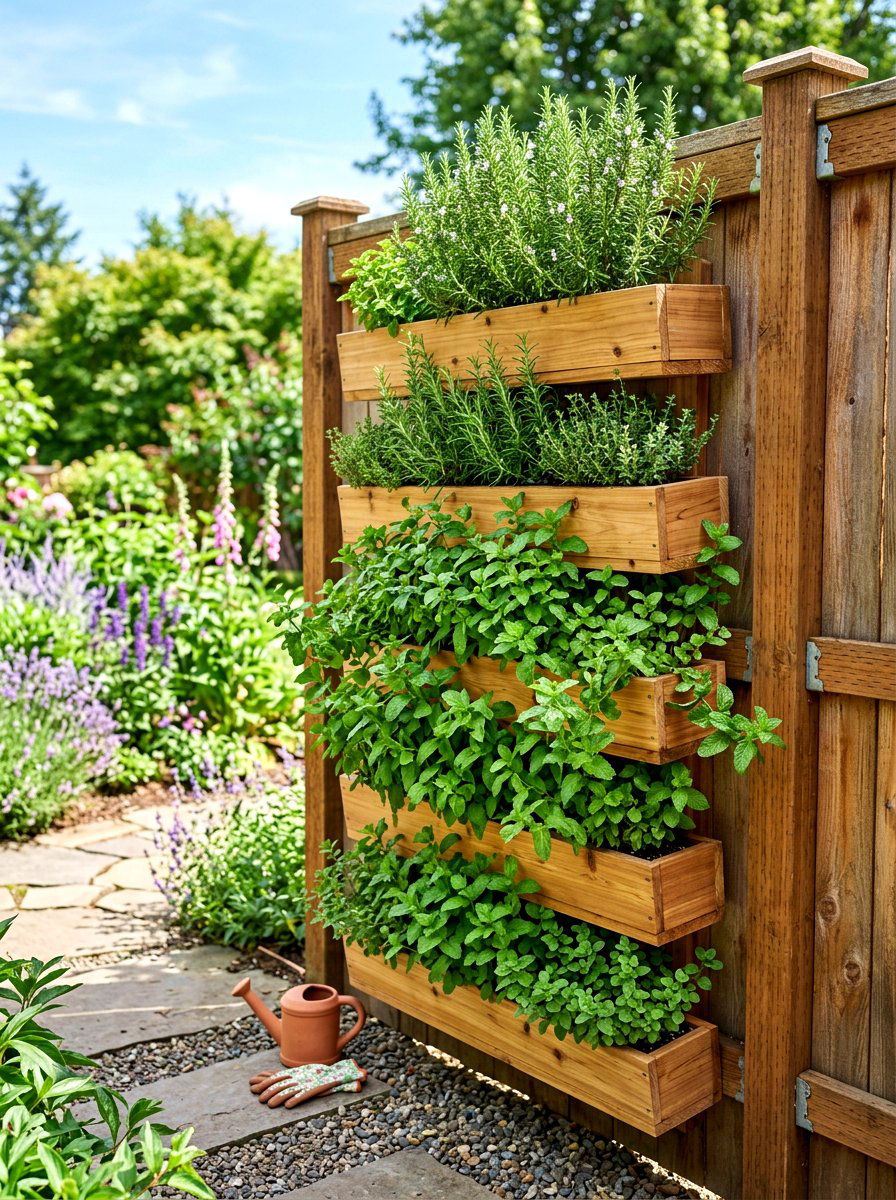
A vertical herb garden border is a functional and space-saving way to utilize the area along a sunny fence line. You can install tiered planters or wall-mounted pots to grow rosemary, thyme, mint, and basil at various heights. This approach turns a plain fence into a productive kitchen garden that is easy to access while cooking. The different textures and shades of green from the various herbs create a lush, aromatic tapestry. This is an ideal solution for small backyards where ground space is limited. It also keeps your edible plants away from pets and pests that might linger on the ground level.
8. Tropical leaf foliage border
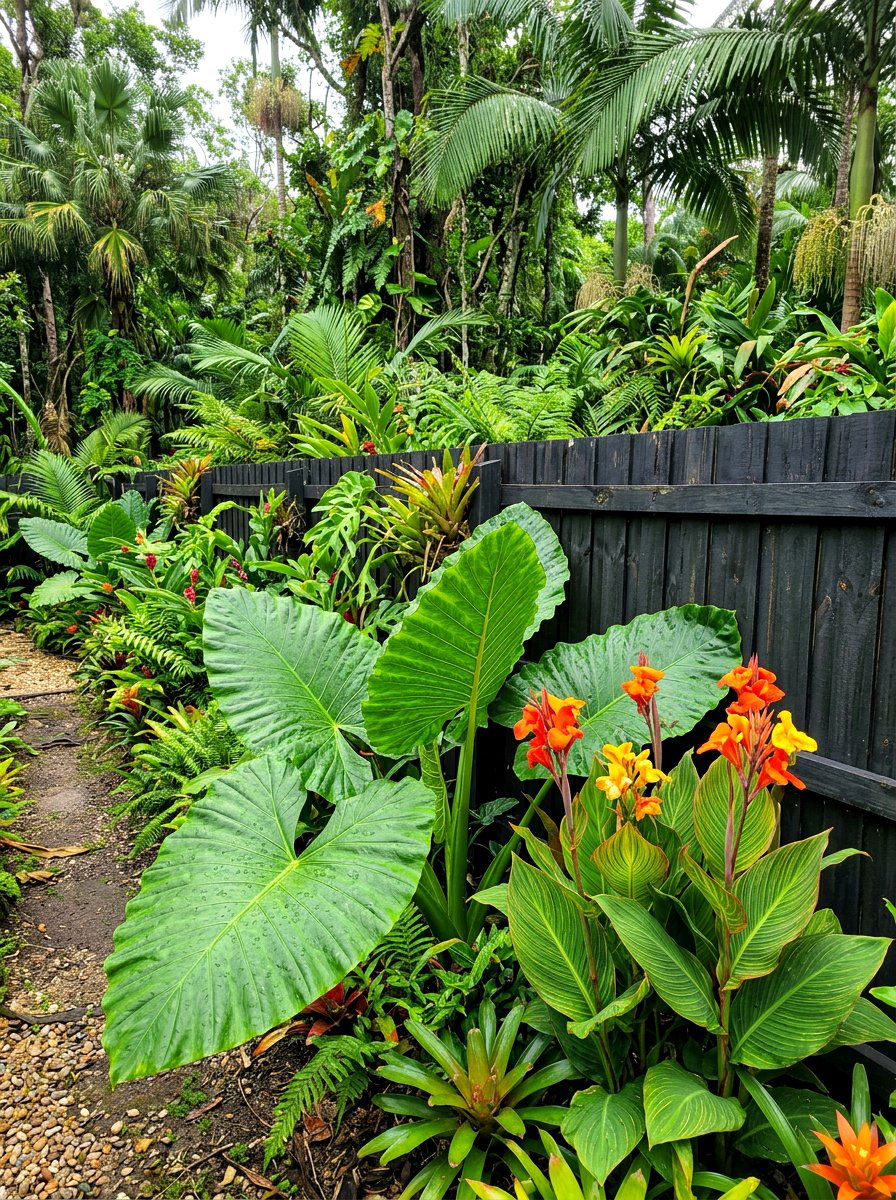
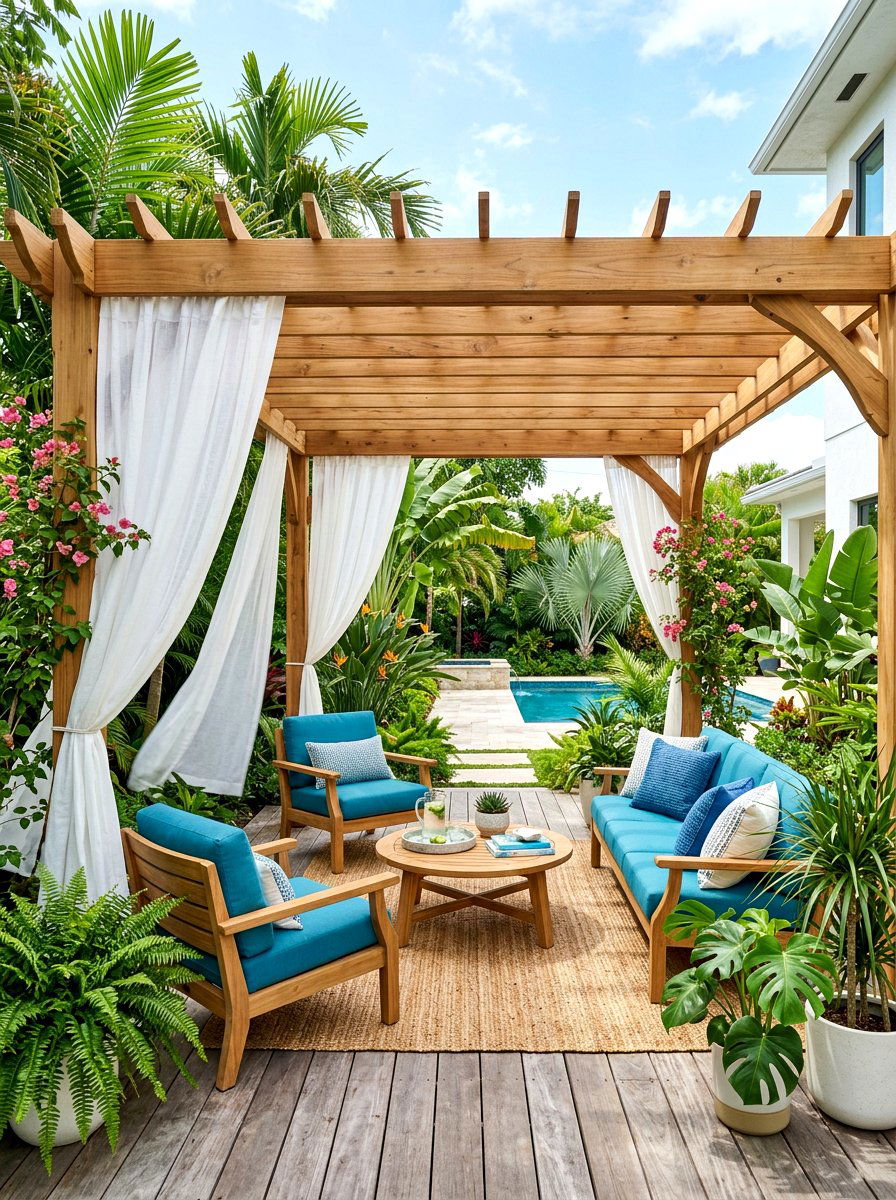
A tropical leaf foliage border can turn a standard backyard into an exotic getaway by using plants with massive, dramatic leaves. Consider planting Canna Lilies, Elephant Ears, or hardy Bananas along the fence to create a bold and lush environment. These plants grow quickly during the warm months and provide a dense screen of greenery that feels very private. The variety of colors, from deep burgundy to bright lime green, adds a vibrant energy to the garden space. To complete the look, you can add smaller ferns or hostas at the base to fill in any gaps and create a full jungle effect.
9. Modern minimalist boxwood border
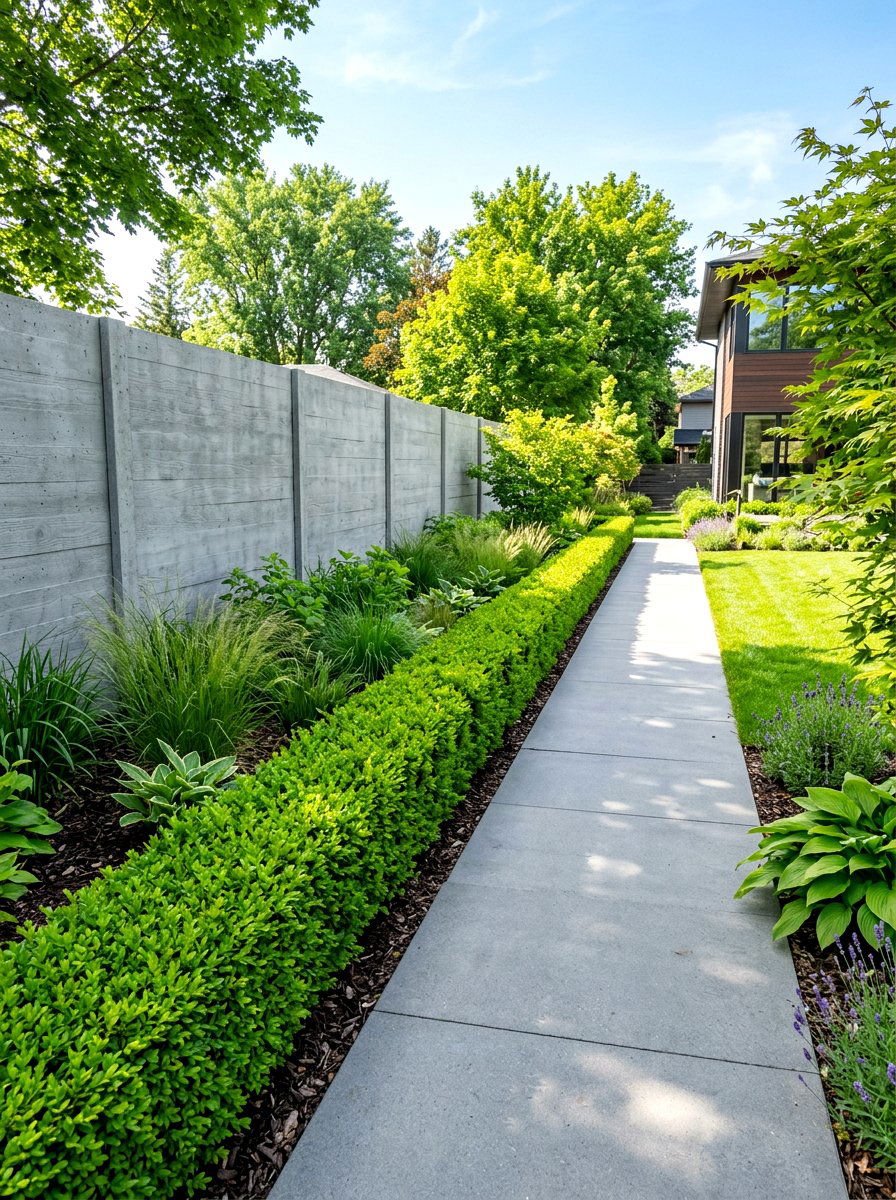
A modern minimalist boxwood border is perfect for those who prefer clean lines, symmetry, and a sophisticated garden appearance. By planting a single row of tightly clipped boxwood shrubs along the fence, you create a sharp and organized frame for your yard. This look works exceptionally well with contemporary horizontal slat fences or dark-painted backdrops. The uniform green color provides a calm and orderly feel that complements modern architecture. This style of border is very easy to maintain with just a few trims per year. It looks particularly striking when paired with a simple mulch or light-colored gravel path along the edge.
10. Native wildflower meadow border
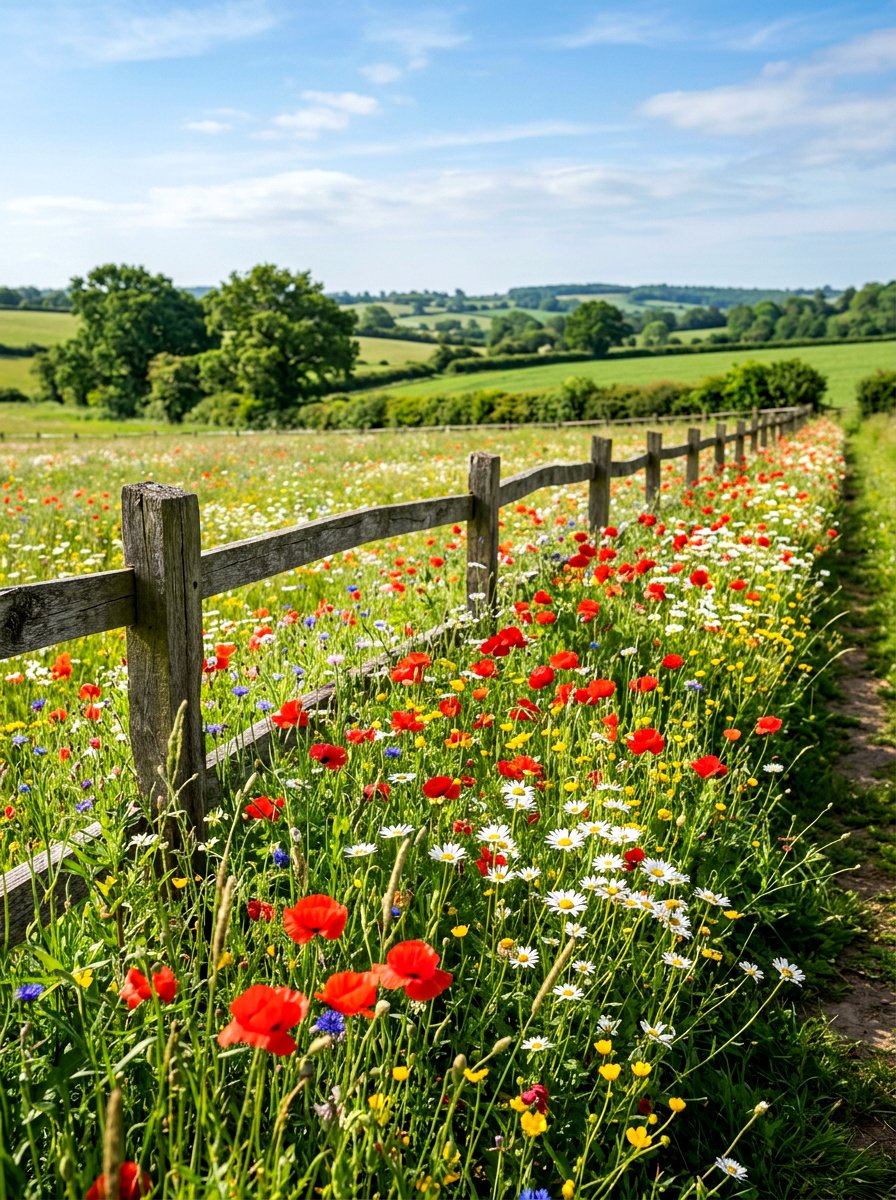
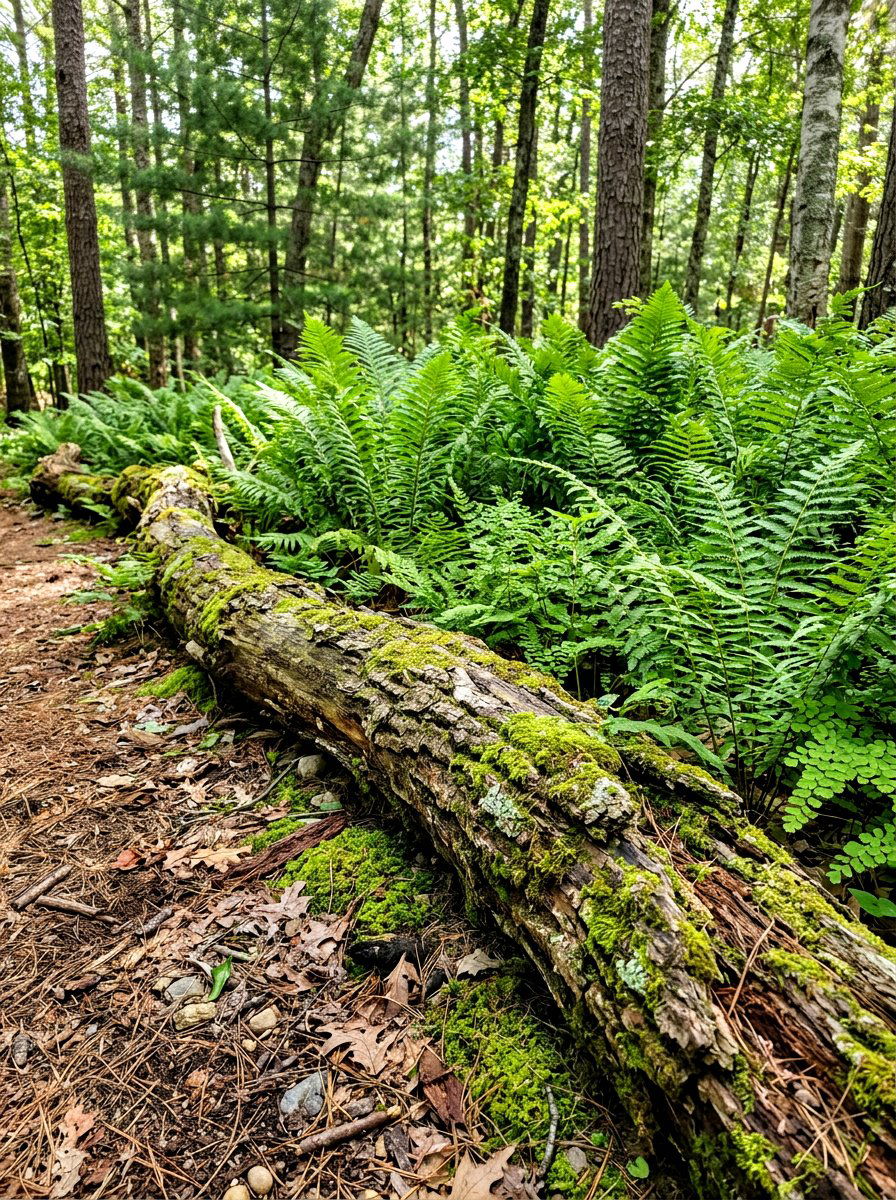
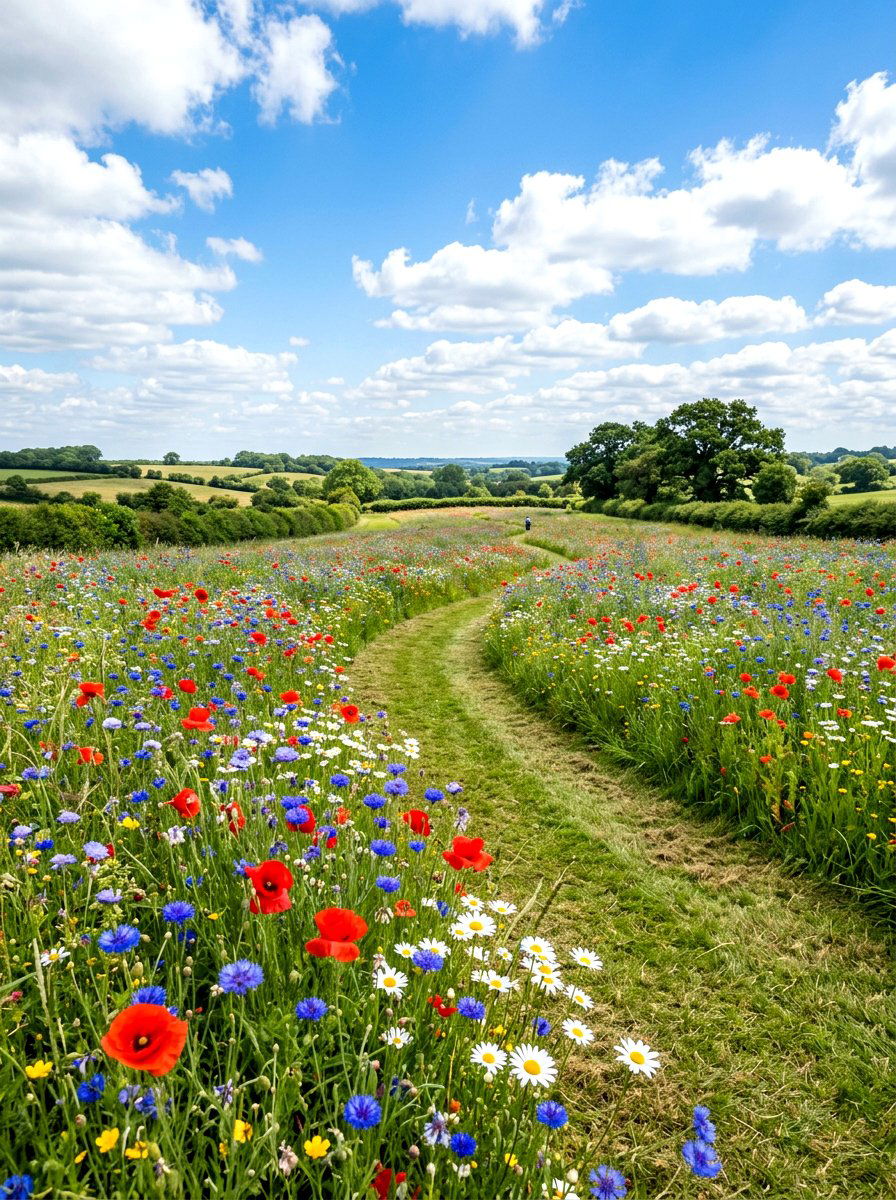
A native wildflower meadow border is an eco-friendly and low-effort way to beautify a fence line while supporting local wildlife. By sowing a mix of native seeds, you create a colorful and wild-looking strip that requires very little water or fertilizer. These plants are naturally adapted to your local climate and soil, making them much hardier than exotic species. Throughout the summer, the border will be alive with the movement of pollinators and birds. This style of planting looks best against a rustic post-and-rail fence or a simple wire mesh. It offers a soft, natural transition between your lawn and the perimeter.
11. Climbing rose trellis border
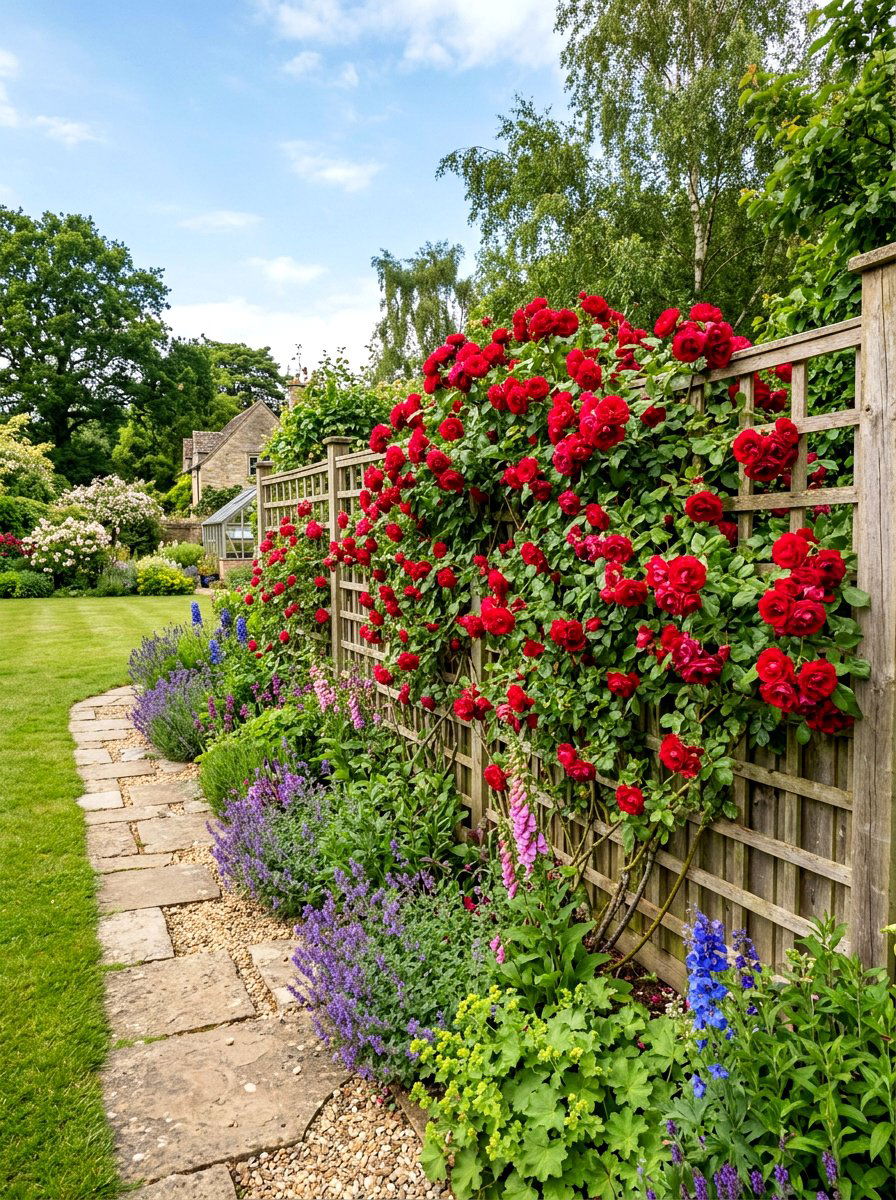
A climbing rose trellis border adds vertical beauty and an incredible scent to your garden by training roses to grow upward. By attaching trellises directly to your fence, you allow these classic flowers to cover the wood in a blanket of colorful petals. You can choose repeat-blooming varieties to ensure that your fence remains decorated from June through September. Roses come in almost every color imaginable, allowing you to customize the look of your yard. Pairing them with clematis can add even more depth, as the two plants will intertwine and bloom at different times, providing a long-lasting floral display.
12. Edible berry bush border
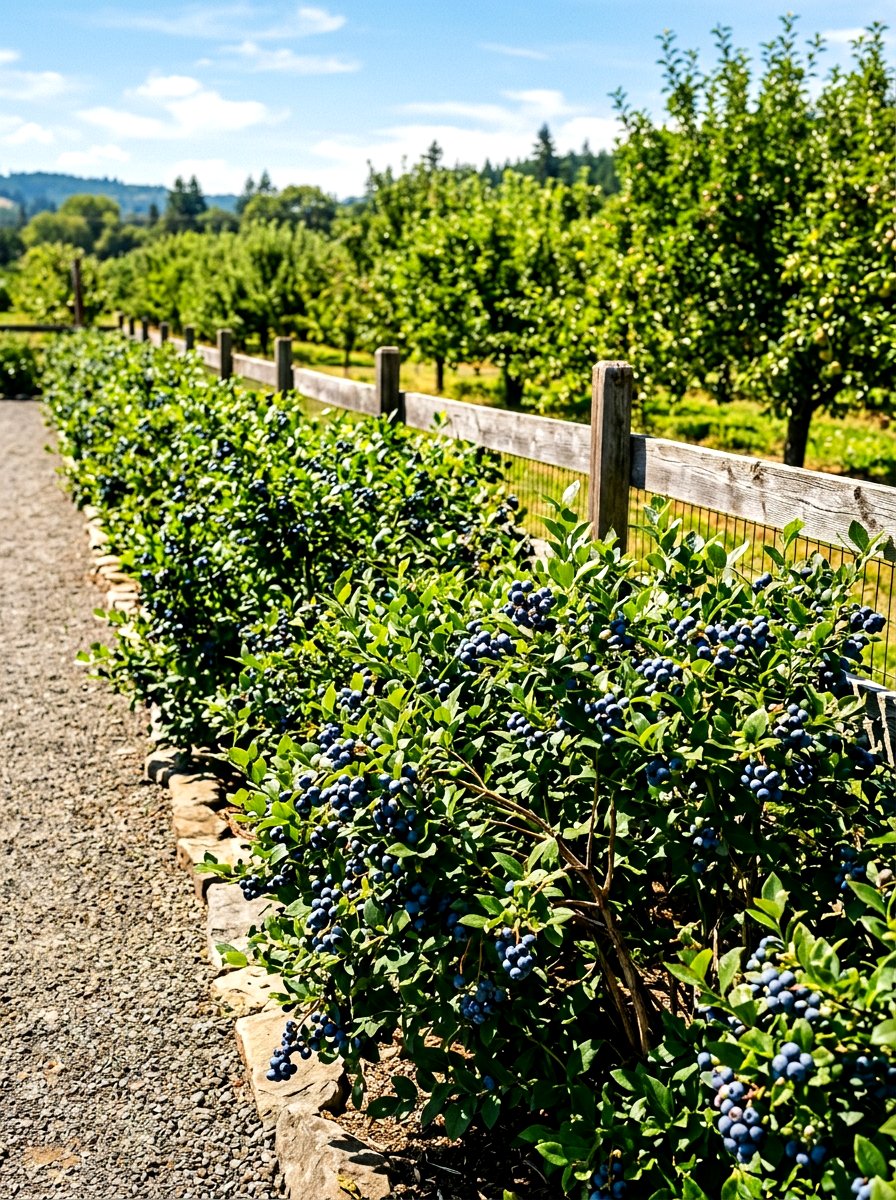
An edible berry bush border is a smart way to make your landscaping both beautiful and delicious at the same time. Planting blueberries, raspberries, or currants along a sunny fence provides a structured hedge that rewards you with fresh fruit in the summer. Many berry bushes also have attractive spring flowers and vibrant foliage that turns red or orange in the fall. This type of border is great for families with children who enjoy picking snacks directly from the garden. It turns an otherwise wasted space along the fence into a productive part of your home that saves you money at the grocery store.
13. White moon garden border
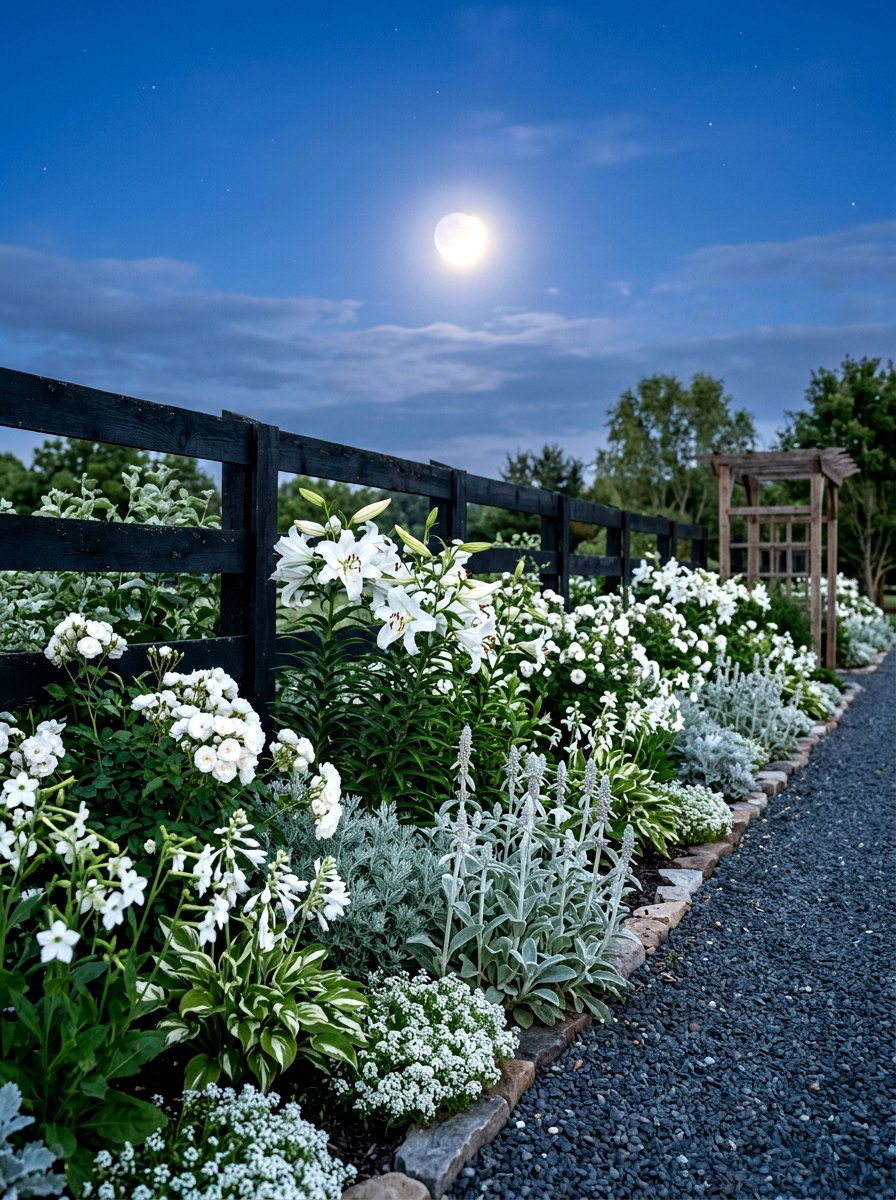
A white moon garden border is designed to be enjoyed during the evening hours when white flowers seem to glow in the moonlight. By planting white hydrangeas, lilies, jasmine, and silver-foliage plants like Lamb’s Ear, you create a luminous and serene environment. This is a perfect choice for fence lines near a patio or deck where you spend time after the sun goes down. The white blooms stand out beautifully against the dark shadows of the night, creating a magical atmosphere. Many of these white-flowering plants also have strong fragrances that become more intense in the evening, adding another sensory layer to your space.
14. Drought tolerant xeriscape border
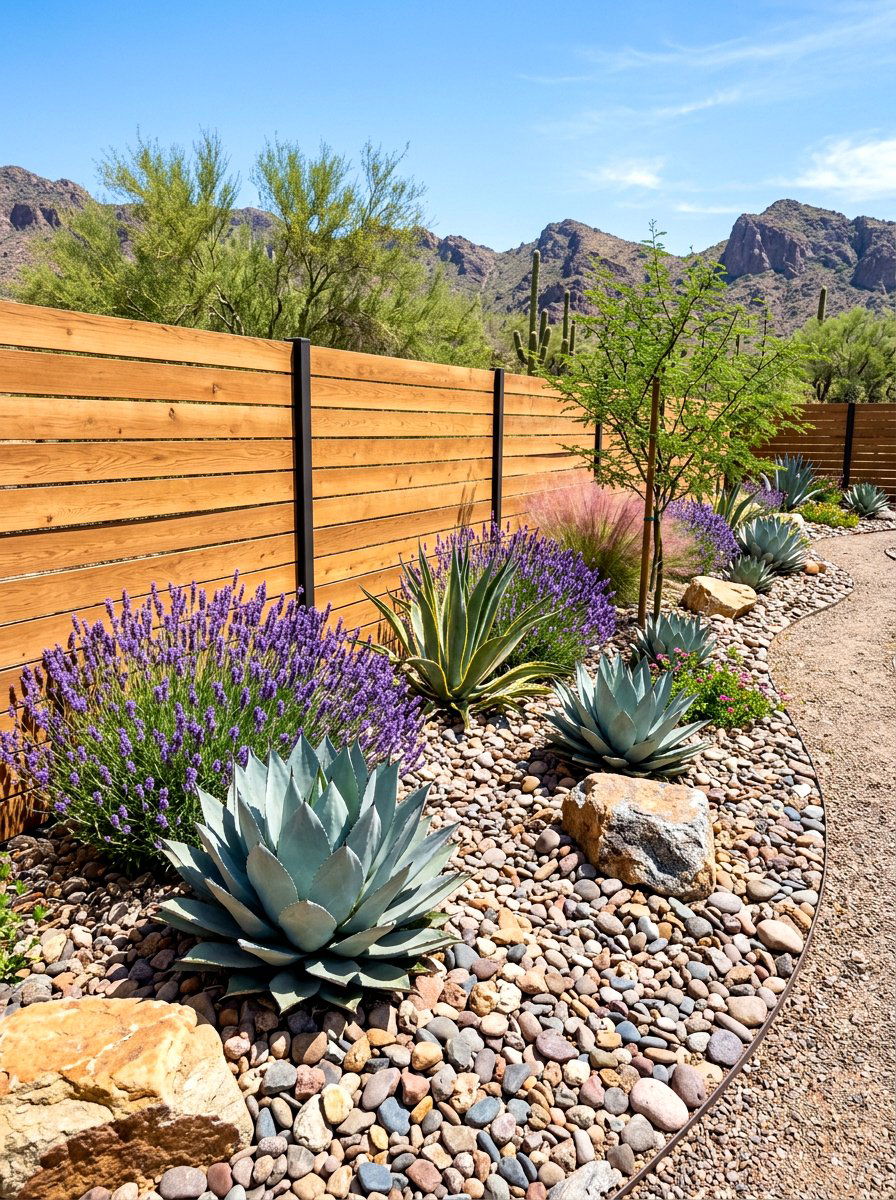
A drought tolerant xeriscape border is an excellent choice for homeowners in dry climates or those who want to conserve water. Using a mix of succulents, agaves, and Mediterranean herbs like lavender and rosemary creates a textured and resilient landscape. These plants are built to survive with very little irrigation once they are established along the fence line. You can enhance the look by using decorative stones, boulders, and gravel as a base instead of traditional wood mulch. This style of border looks very modern and artistic, providing a high-impact visual that remains beautiful even during the hottest and driest parts of the year.
15. Shady fern and hosta border
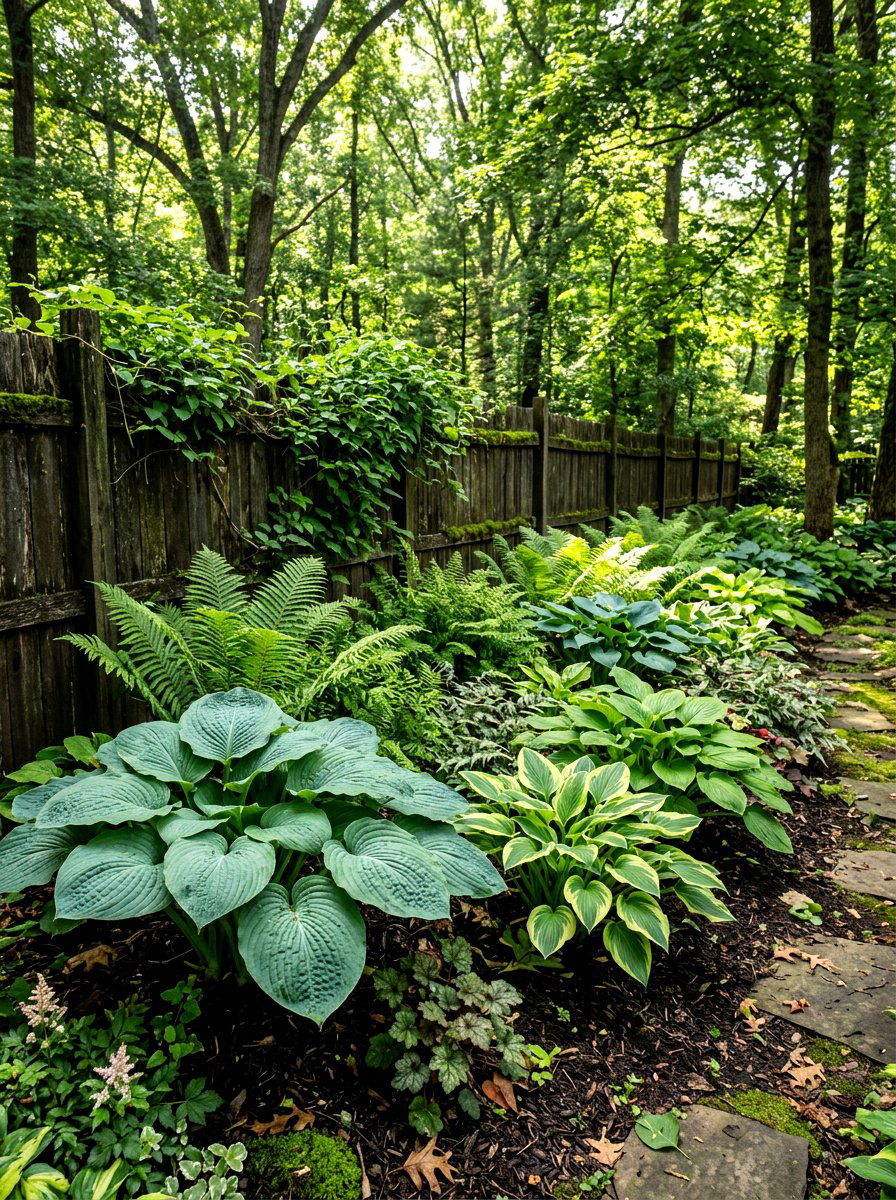
A shady fern and hosta border is the ideal solution for fence lines that are blocked from the sun by buildings or large trees. These plants thrive in low-light conditions and offer an incredible variety of textures and green hues. Hostas come in many sizes and leaf patterns, from giant blue-green leaves to small variegated ones with white edges. When mixed with the delicate, feathery fronds of ferns, they create a cool and lush woodland feel. This type of border stays looking fresh and green all summer long. It is also very effective at suppressing weeds due to the dense canopy of leaves.
16. Mediterranean gravel garden border
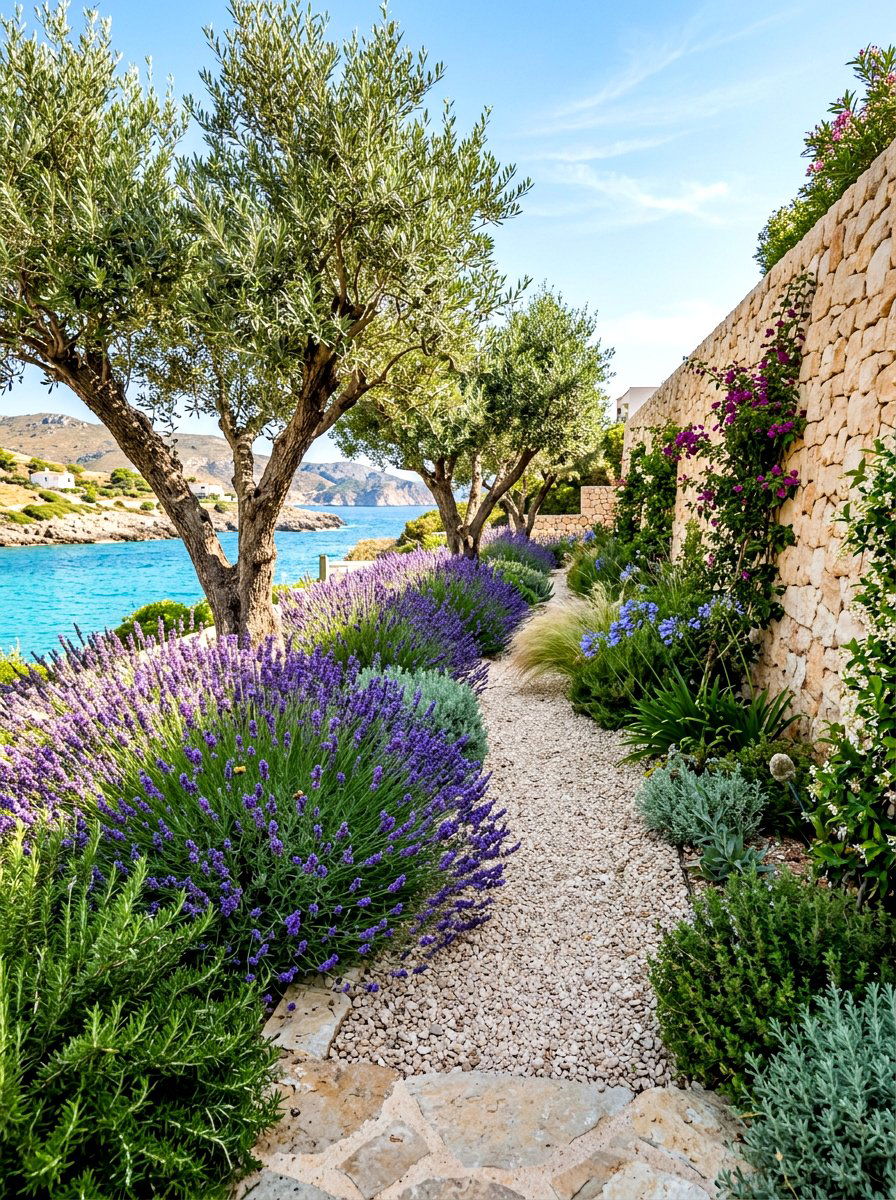
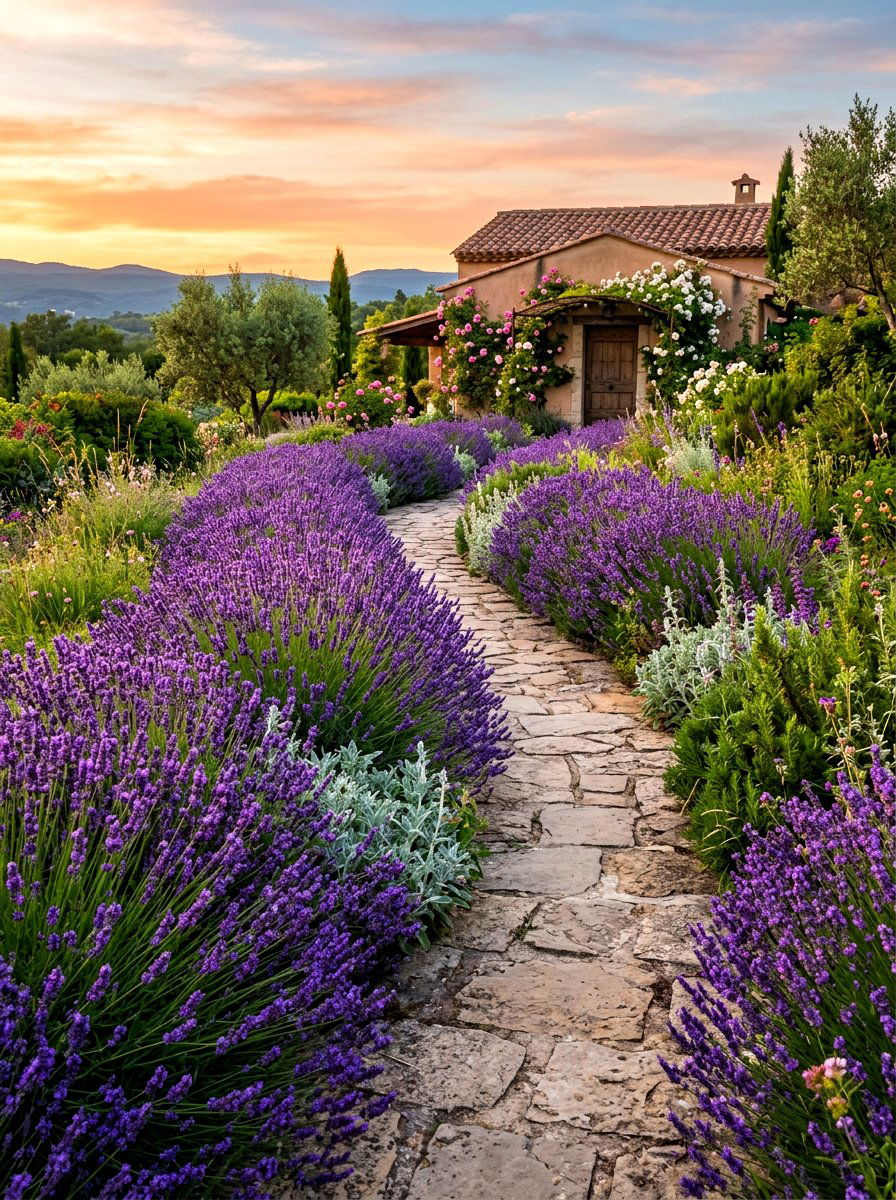
A Mediterranean gravel garden border brings a touch of the sunny seaside to your backyard with heat-loving plants and stony paths. By planting olive trees, bay laurels, and clumps of lavender against your fence, you create a space that feels like a holiday destination. Using a light-colored gravel as a mulch helps reflect heat and keeps the soil well-drained, which these plants love. This style is very low-maintenance because the gravel prevents weed growth and doesn't need to be replaced as often as wood chips. The combination of silvery foliage and aromatic herbs makes the air around your fence smell absolutely wonderful on warm days.
17. Tall privacy hedge border
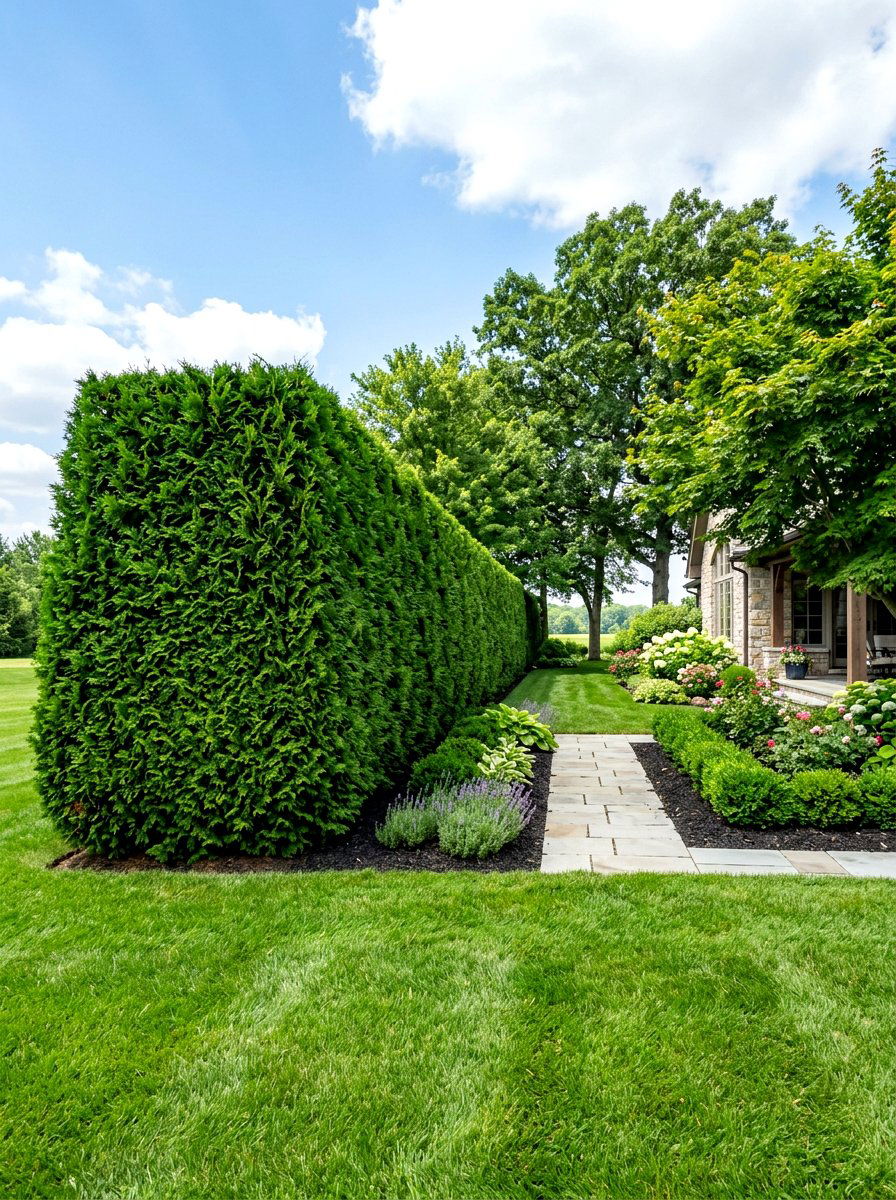
A tall privacy hedge border using fast-growing evergreens like Arborvitae or Laurel is the gold standard for creating a living wall. These plants grow thick and tall, completely obscuring the fence and blocking the view from neighboring houses. They provide a solid green backdrop that makes any colorful flowers planted in front of them really pop. Because they keep their leaves all year, you never have to worry about losing your privacy during the winter. This type of border is also excellent for acting as a sound barrier if you live near a busy road. It creates a very private and enclosed garden feel.
18. Mixed succulent rock border
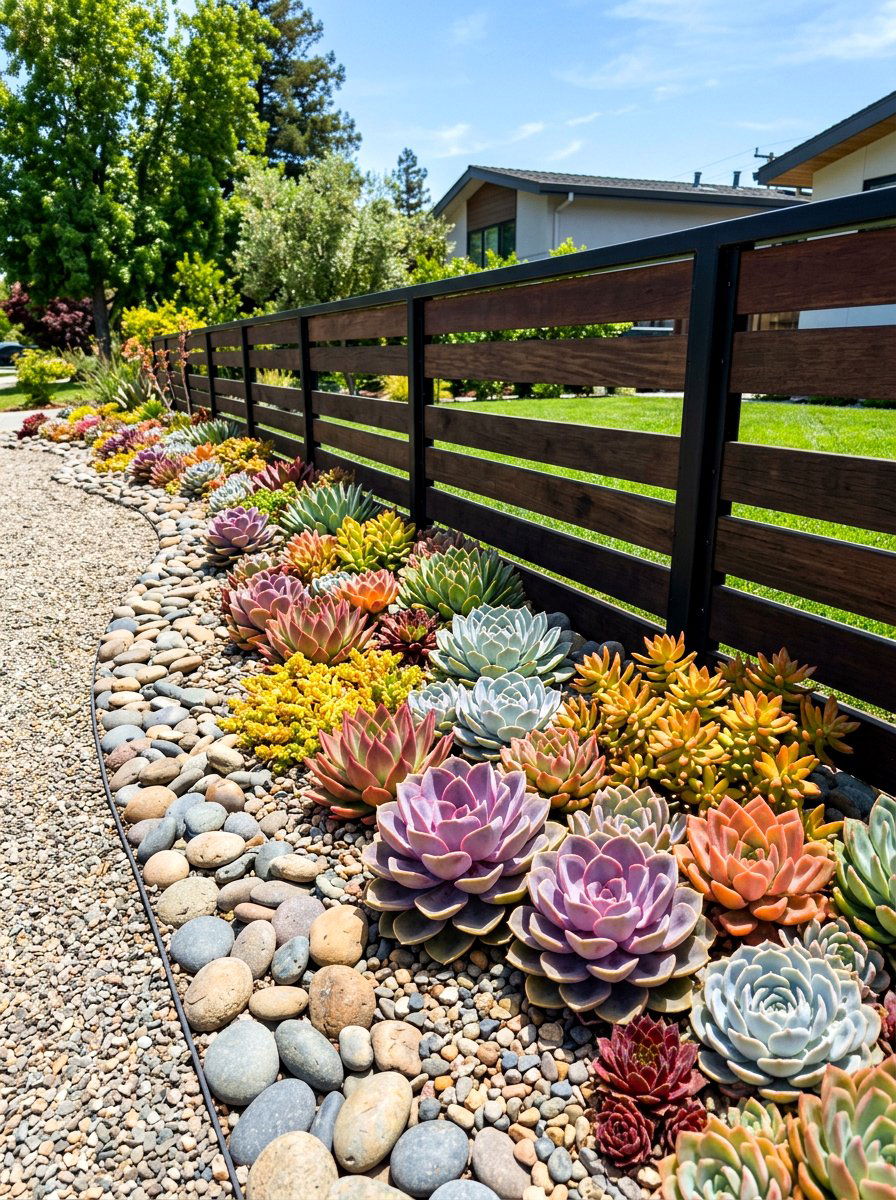
A mixed succulent rock border is a creative and low-growing option that works perfectly along the base of a modern fence. By using different varieties of sedum, echeveria, and hens-and-chicks, you can create a colorful and geometric pattern on the ground. These plants store water in their leaves, meaning they can survive long periods without rain. Tucking them between large decorative stones or river rocks adds an organic and earthy feel to the design. This type of border is perfect for narrow spaces where you don't want tall plants leaning over the lawn. It provides a clean, artistic look that is very easy to maintain.
19. Japanese inspired maple border
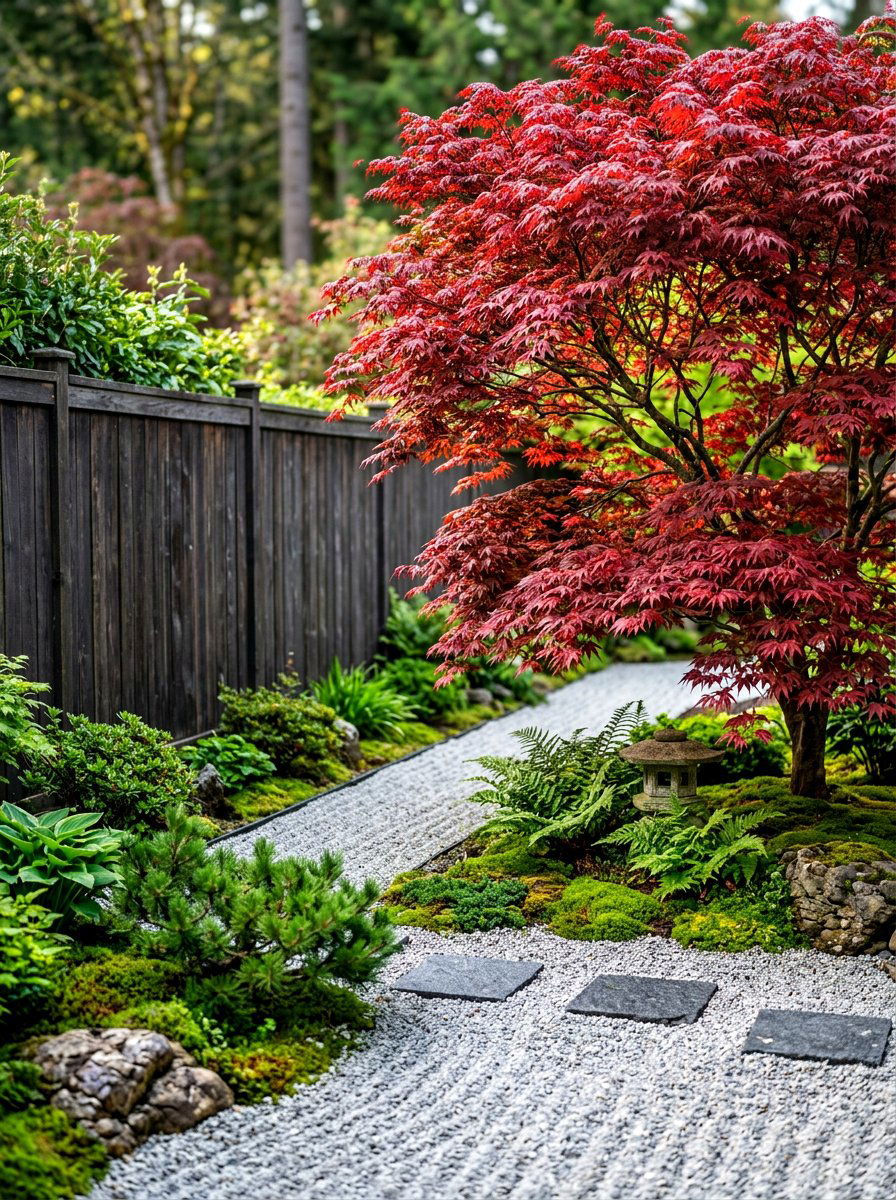
A Japanese inspired maple border focuses on elegance, fine textures, and stunning seasonal color changes along your fence. Japanese Maples come in many varieties, including weeping forms and upright trees with lacy, delicate leaves in shades of red, purple, and green. Planting them against a dark or neutral fence allows their intricate branch structures to be the main attraction. In the autumn, these trees turn into fiery displays of orange and crimson that will be the highlight of your yard. Pairing them with moss, small lanterns, or smooth stones creates a peaceful and meditative space that feels incredibly sophisticated and well-designed.

20. Colorful leaf shrub border
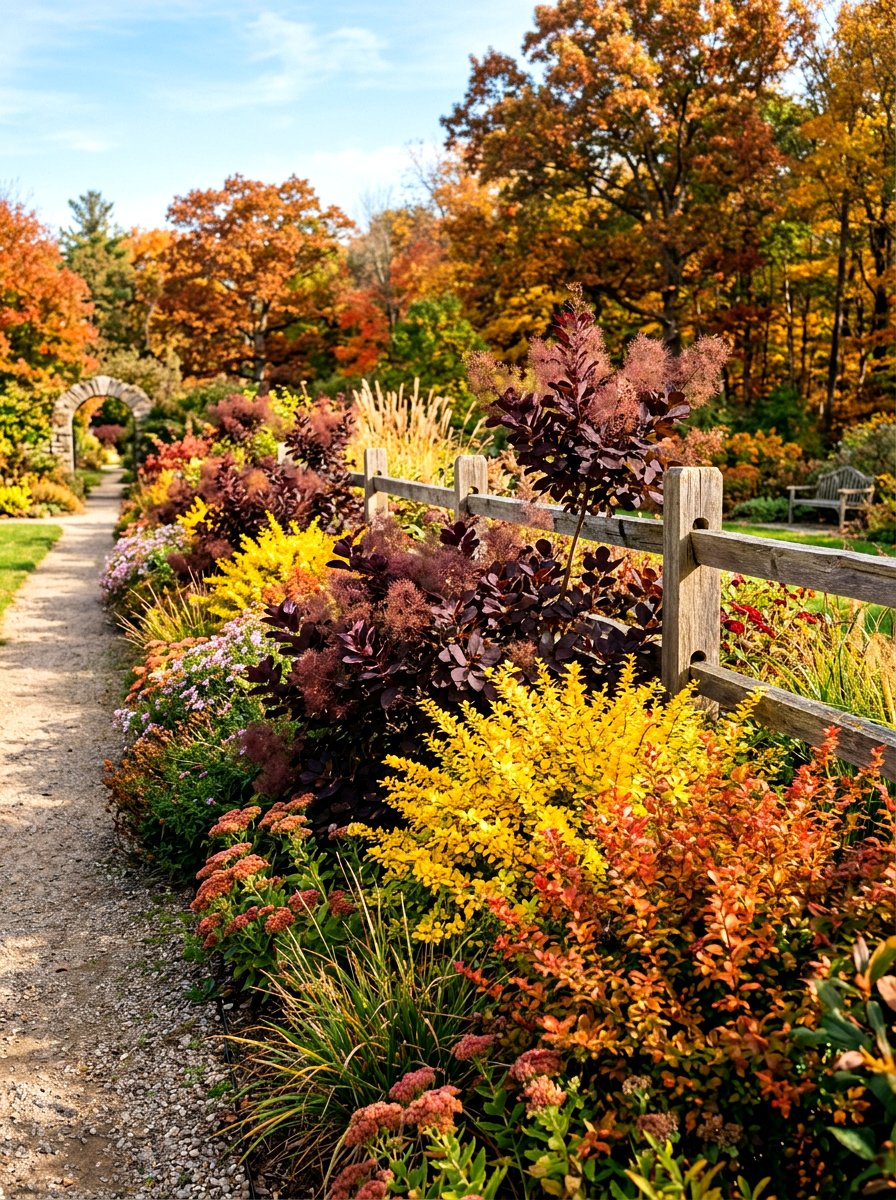
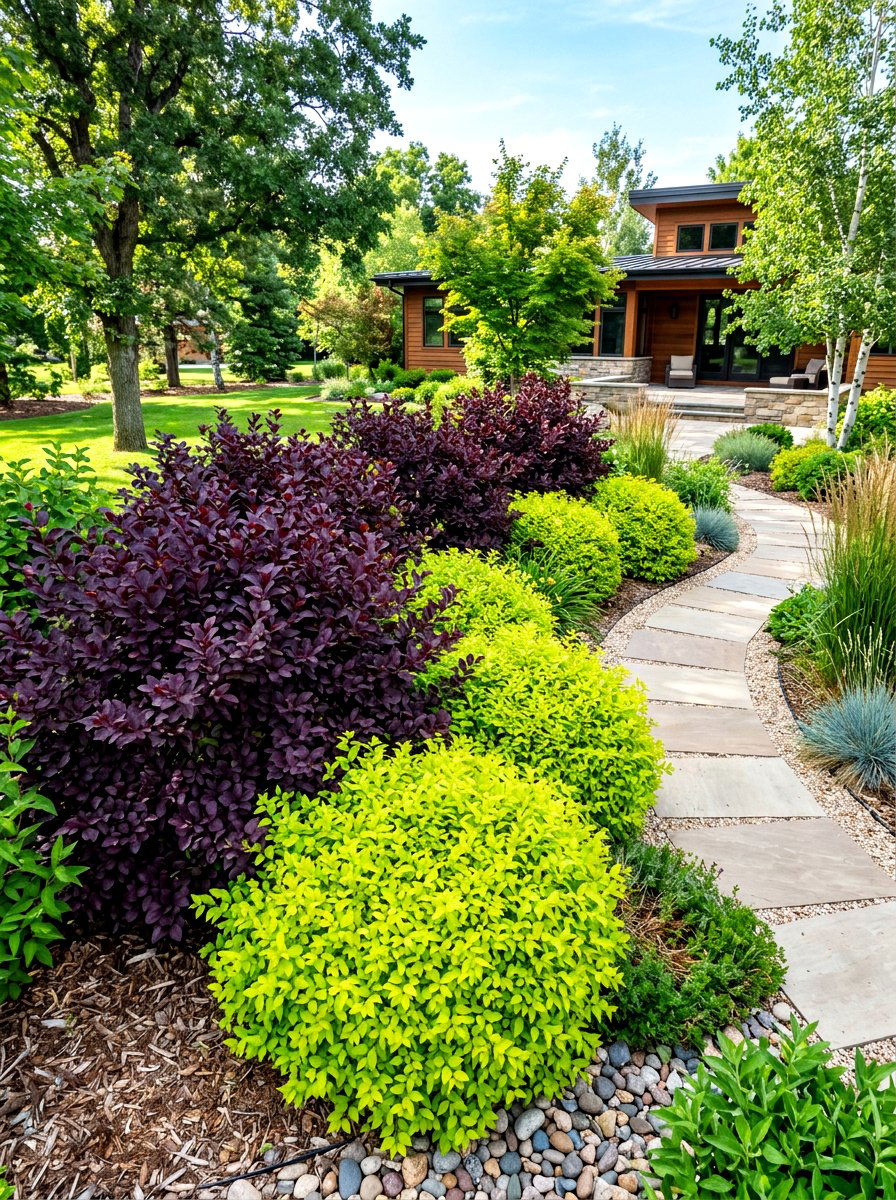
A colorful leaf shrub border uses plants with naturally vibrant foliage to provide constant color without relying on flowers. Shrubs like Ninebark, Berberis, and Smokebush offer leaves in deep purple, bright yellow, and variegated pink and white. By mixing these colors along your fence line, you create a high-contrast look that remains interesting from spring through fall. These shrubs are generally very hardy and require minimal pruning to keep them looking their best. This approach is perfect for people who want a bold and bright garden but don't have the time to deadhead flowers or worry about short blooming periods of traditional perennials.
21. Fragrant jasmine vine border
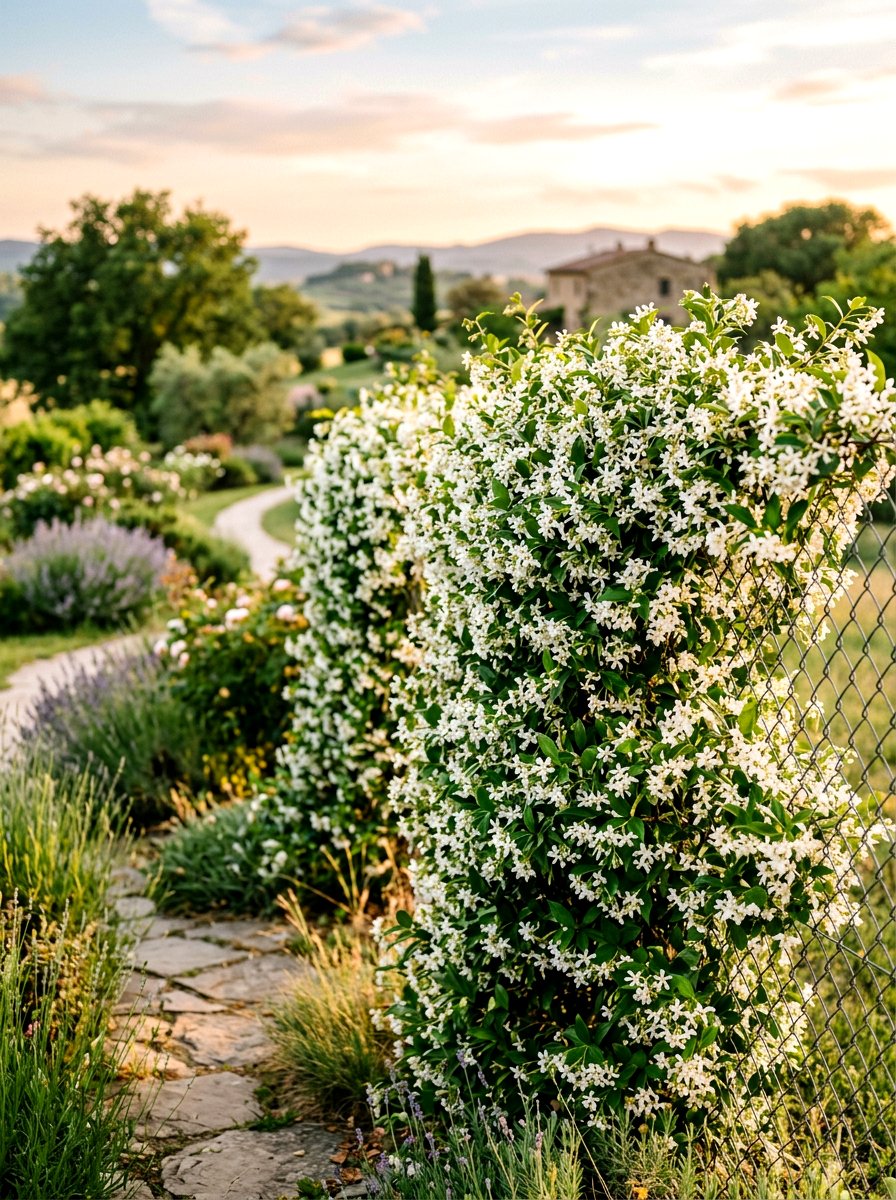
A fragrant jasmine vine border turns your fence into a vertical wall of perfume that fills the entire yard with a sweet scent. Star Jasmine is a popular choice because it is evergreen and produces thousands of small white flowers in the late spring and summer. As the vine climbs and twists through the fence panels, it creates a dense green screen that looks very lush. This is a great way to soften a cold chain-link fence or add character to a plain wooden one. Sitting near this border in the evening is a delightful experience as the fragrance becomes even more potent in the cool air.
22. Layered woodland edge border
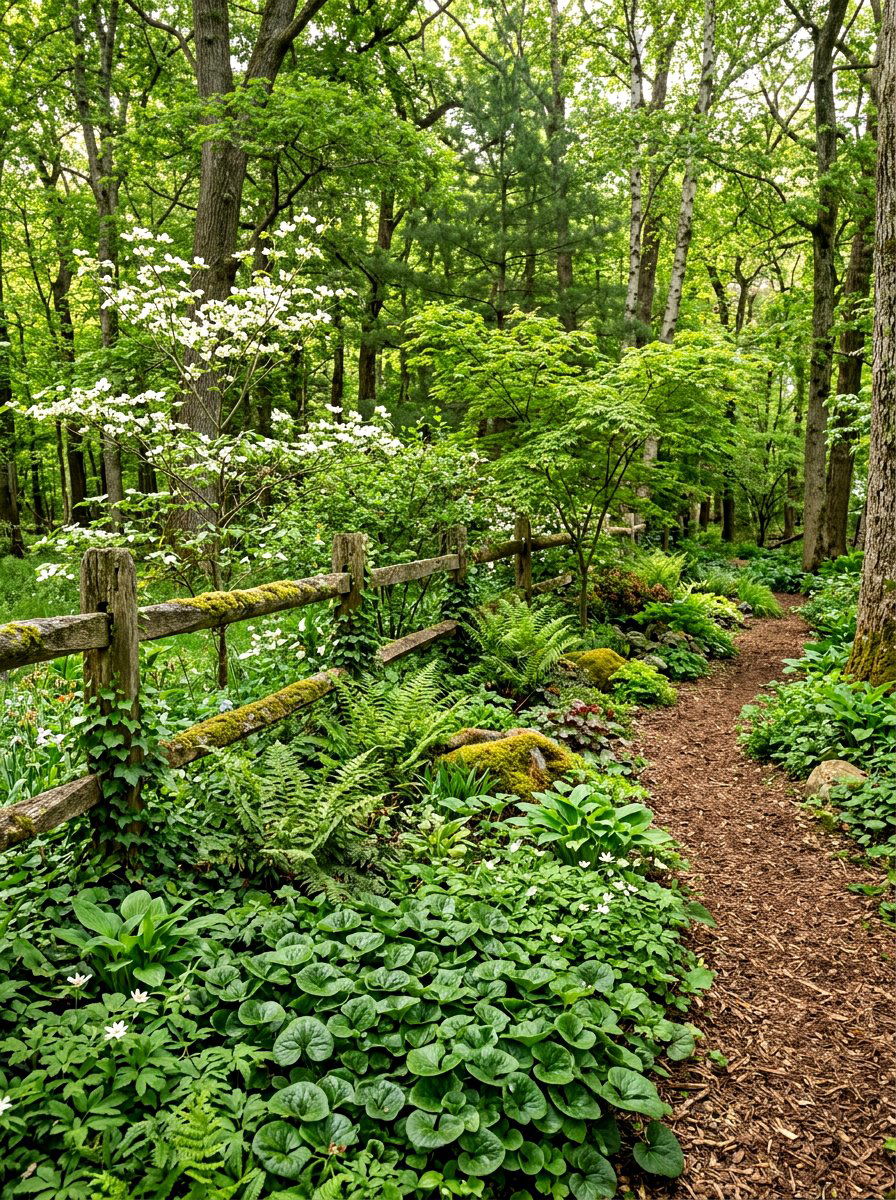
A layered woodland edge border mimics the natural transition between a forest and a clearing, creating a very organic and relaxing feel. You can start with smaller ornamental trees near the fence, then add medium-sized shrubs, and finally finish with groundcover plants like periwinkle or wild ginger. This multi-story approach provides a lot of habitat for birds and useful insects. It looks particularly beautiful if you have a wooden or rustic fence that blends into the natural surroundings. Using plants like bleeding hearts and columbines adds a touch of delicate color to the shaded areas of the border, making it feel like a hidden forest.
23. Sunny sunflower wall border
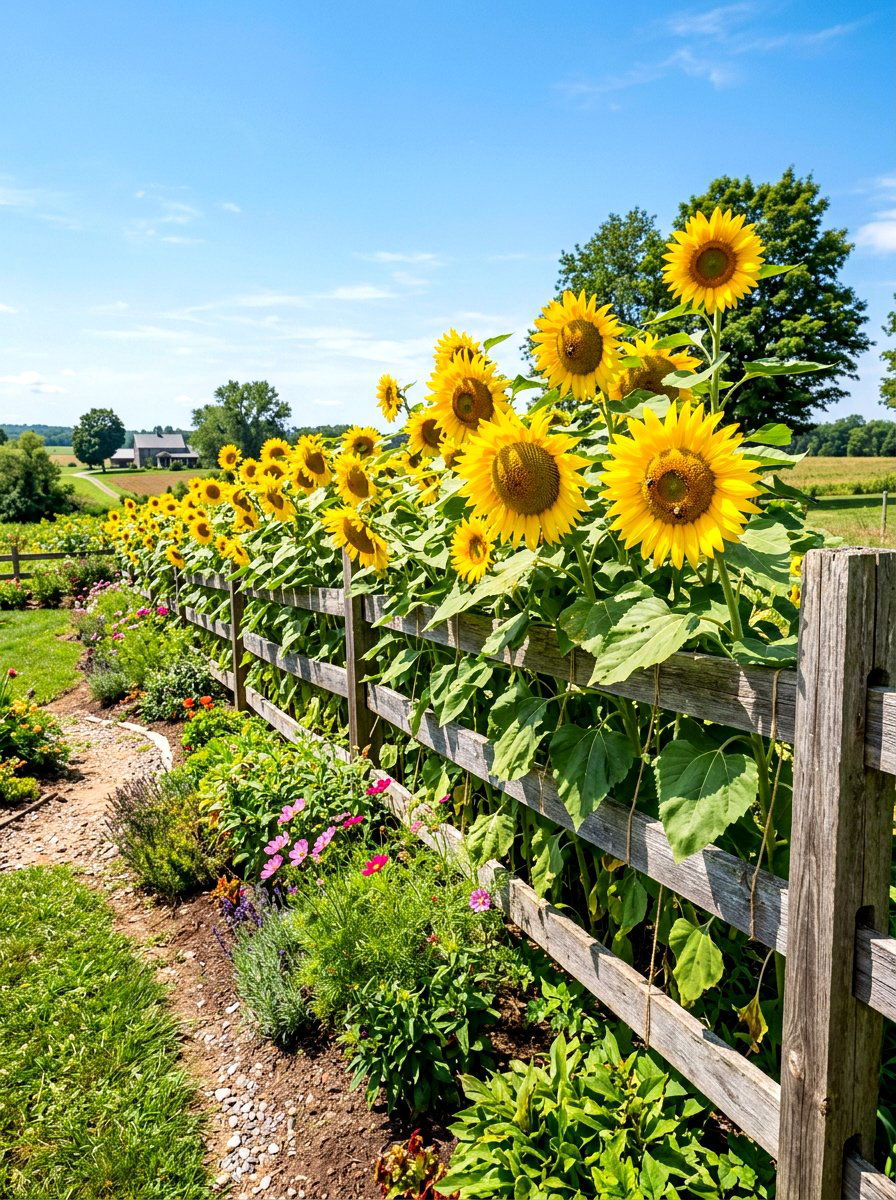
A sunny sunflower wall border is a fun and high-impact way to decorate a fence line during the summer months. By planting a row of giant sunflowers, you can create a temporary living wall that can reach heights of over ten feet. These plants grow incredibly fast and their massive yellow faces bring a sense of joy and cheer to any backyard. They are also fantastic for attracting bees and providing seeds for birds in the autumn. This is a great project for families, as the dramatic growth is exciting to watch. Sunflowers look best against a simple wooden fence that provides them with plenty of support.
24. Formal tiered raised border
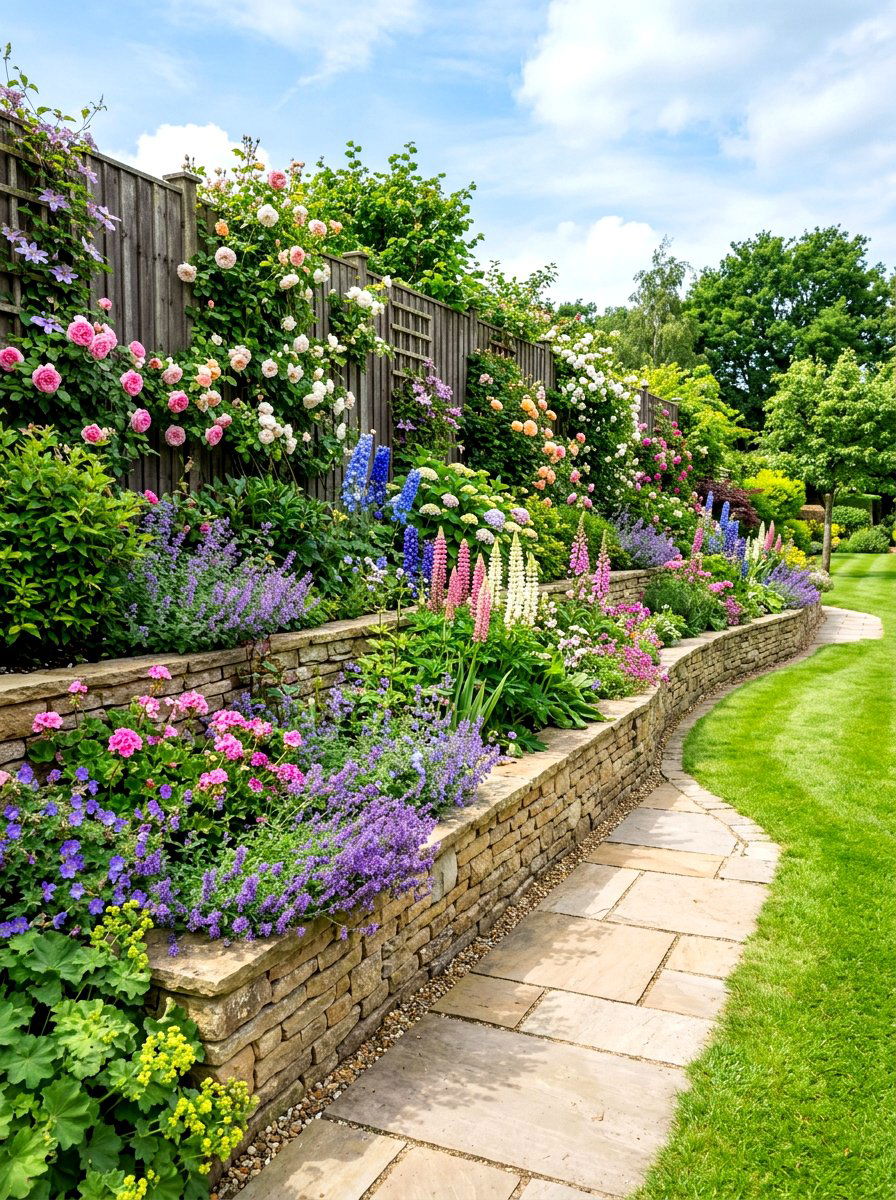
A formal tiered raised border involves building wooden or stone walls along the fence to create different levels for planting. This adds significant architectural interest and allows you to use different soil types for various plants. Raising the plants closer to eye level makes them easier to maintain and enjoy without bending over. You can use the top tier for tall privacy shrubs and the lower tiers for cascading flowers and trailing vines. This structured look is very neat and organized, making it perfect for modern or traditional homes. It also helps with drainage, which is beneficial for many popular garden plants.


25. Coastal theme grass border
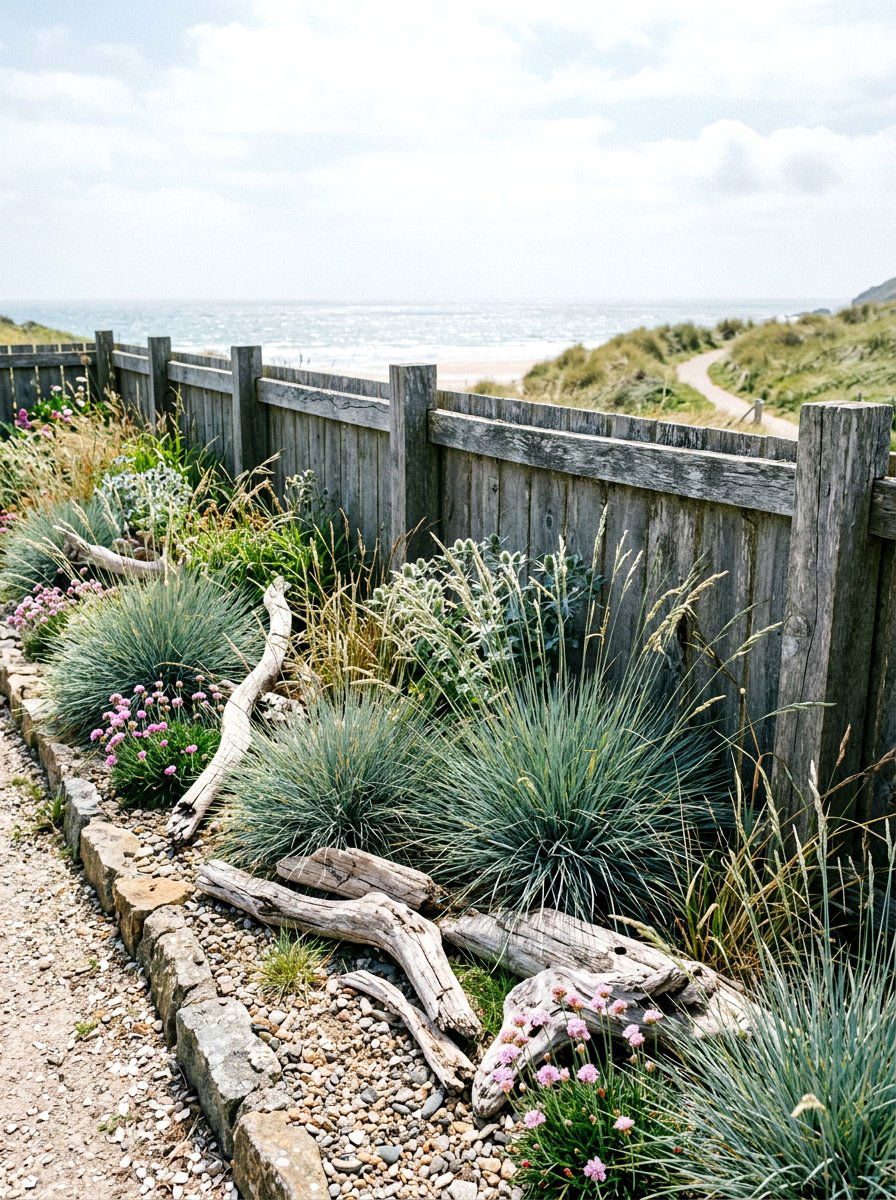
A coastal theme grass border uses salt-tolerant plants and sandy textures to recreate the feeling of being at the beach. Using Blue Oat Grass, Sea Holly, and Lavender creates a color palette of soft blues, silvers, and purples that look stunning against a weathered gray fence. These plants are designed to handle wind and poor soil, making them very resilient. Adding a few pieces of driftwood or large seashells as decorative accents can further enhance the seaside vibe. This style of border feels very airy and light, providing a relaxing backdrop for coastal-style outdoor furniture and light-colored paving stones or decks.
26. Pollinator friendly nectar border
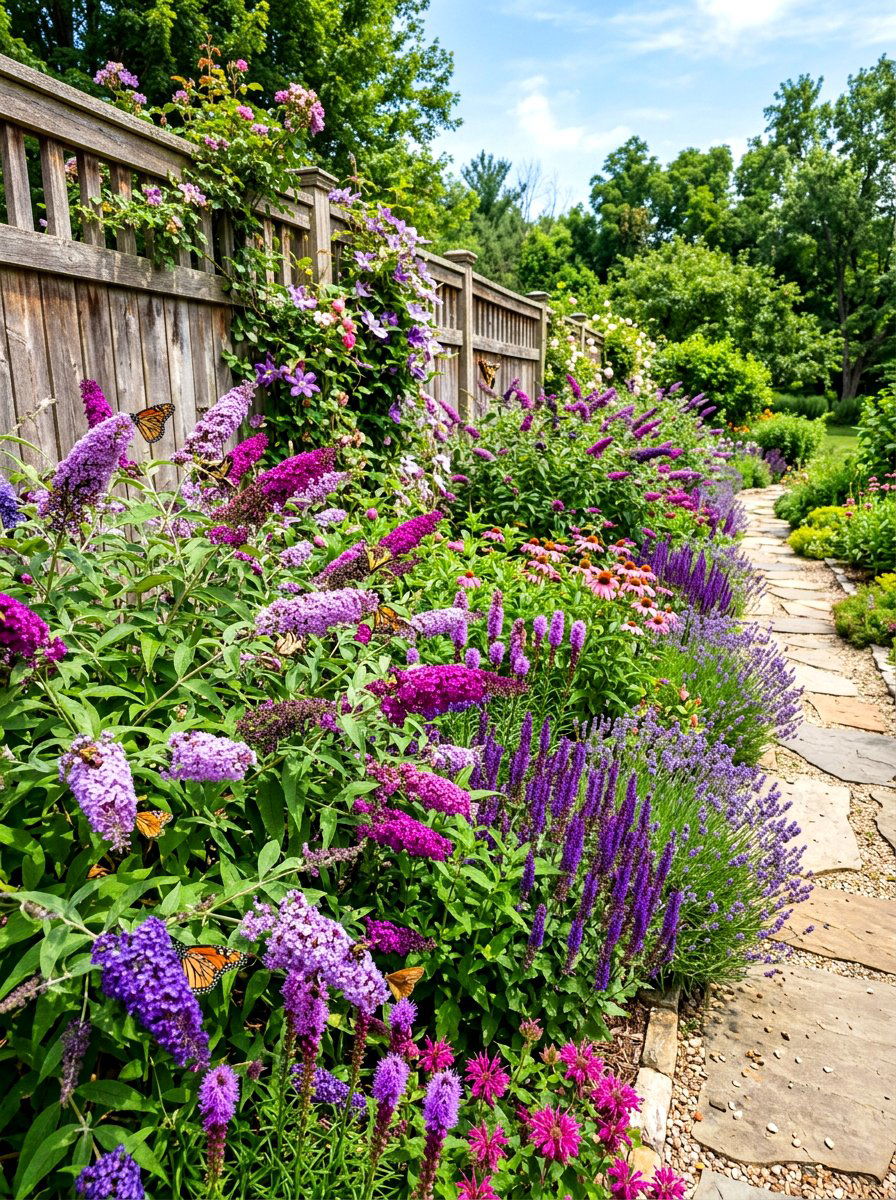
A pollinator friendly nectar border is specifically designed to provide food and shelter for bees, butterflies, and hummingbirds throughout the year. By planting a succession of nectar-rich flowers like bee balm, butterfly bush, and milkweed along your fence, you create a bustling highway for wildlife. It is important to choose plants that bloom at different times so that there is always something for the pollinators to eat. This type of border is not only beautiful to look at but also helps support the local environment. Watching the butterflies flutter along your fence line adds a dynamic and peaceful element to your daily garden experience.
27. Modern geometric gravel border
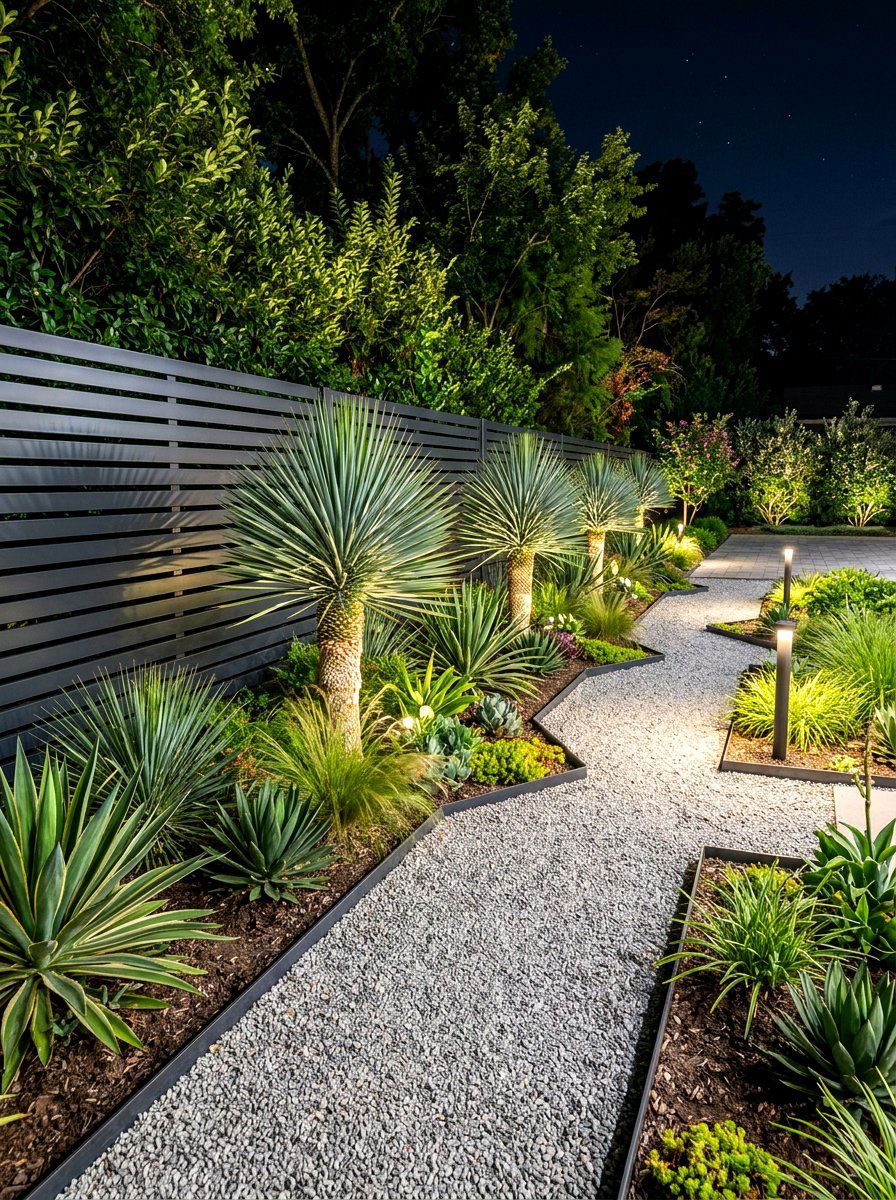
A modern geometric gravel border focuses on sharp angles, clean edges, and a very structured layout along the fence. Instead of organic curves, this style uses straight lines and defined sections filled with different colors of gravel or slate. You can place individual architectural plants like Yuccas or Phormiums at regular intervals to create a rhythmic and sophisticated look. This is the ultimate low-maintenance garden because there is no grass to mow and very few weeds can penetrate the thick layer of landscape fabric and stones. It looks incredibly professional and works perfectly with high-end contemporary fencing materials like composite or metal.
28. Vibrant fall color border
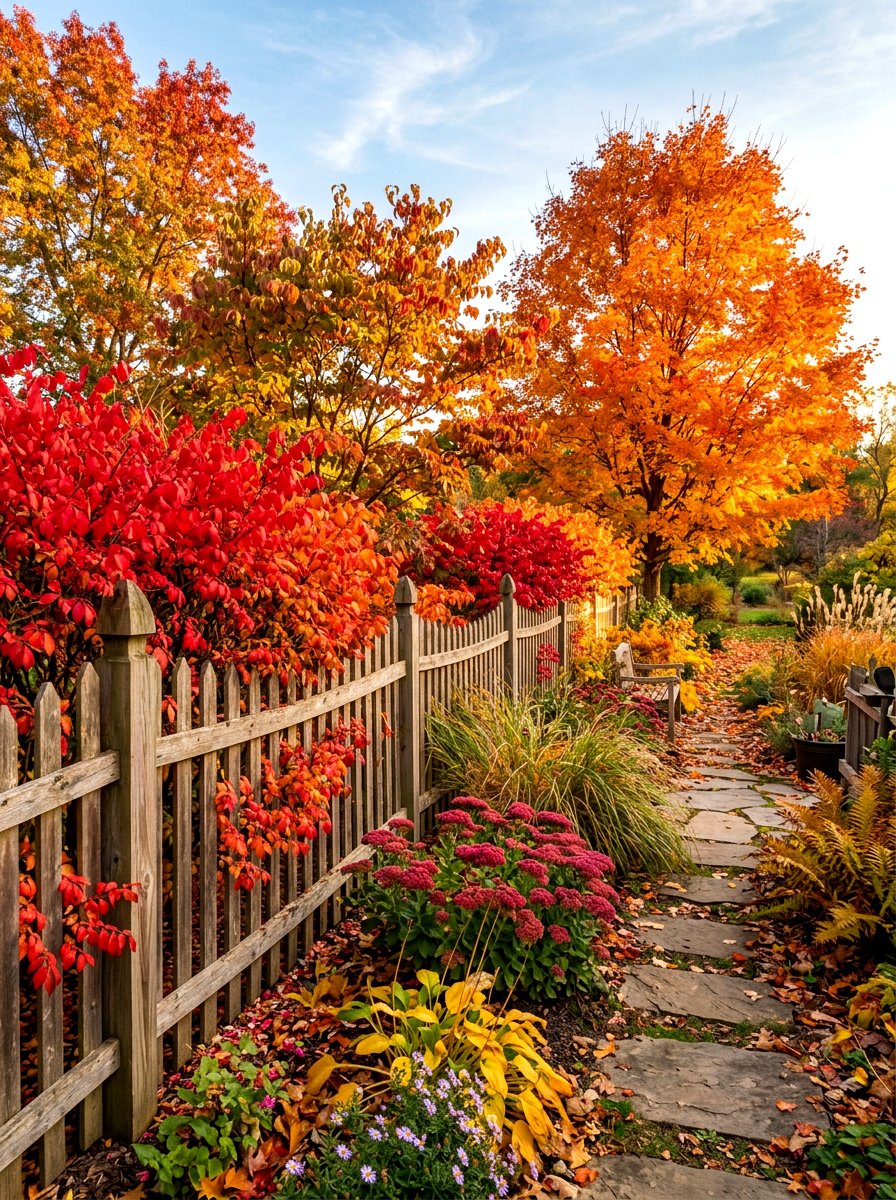
A vibrant fall color border ensures that your garden remains exciting even as the summer flowers begin to fade away. By choosing plants like Burning Bush, Amsonia, and various maples, you can create a fence line that turns into a brilliant display of gold, orange, and red. Ornamental cabbages and late-blooming asters can be added to the front of the border to provide extra pops of color. This approach celebrates the changing seasons and makes your backyard feel cozy and warm during the autumn months. The bright colors look especially striking when the sun is lower in the sky, casting a golden glow over the foliage.
29. Silver and purple theme border
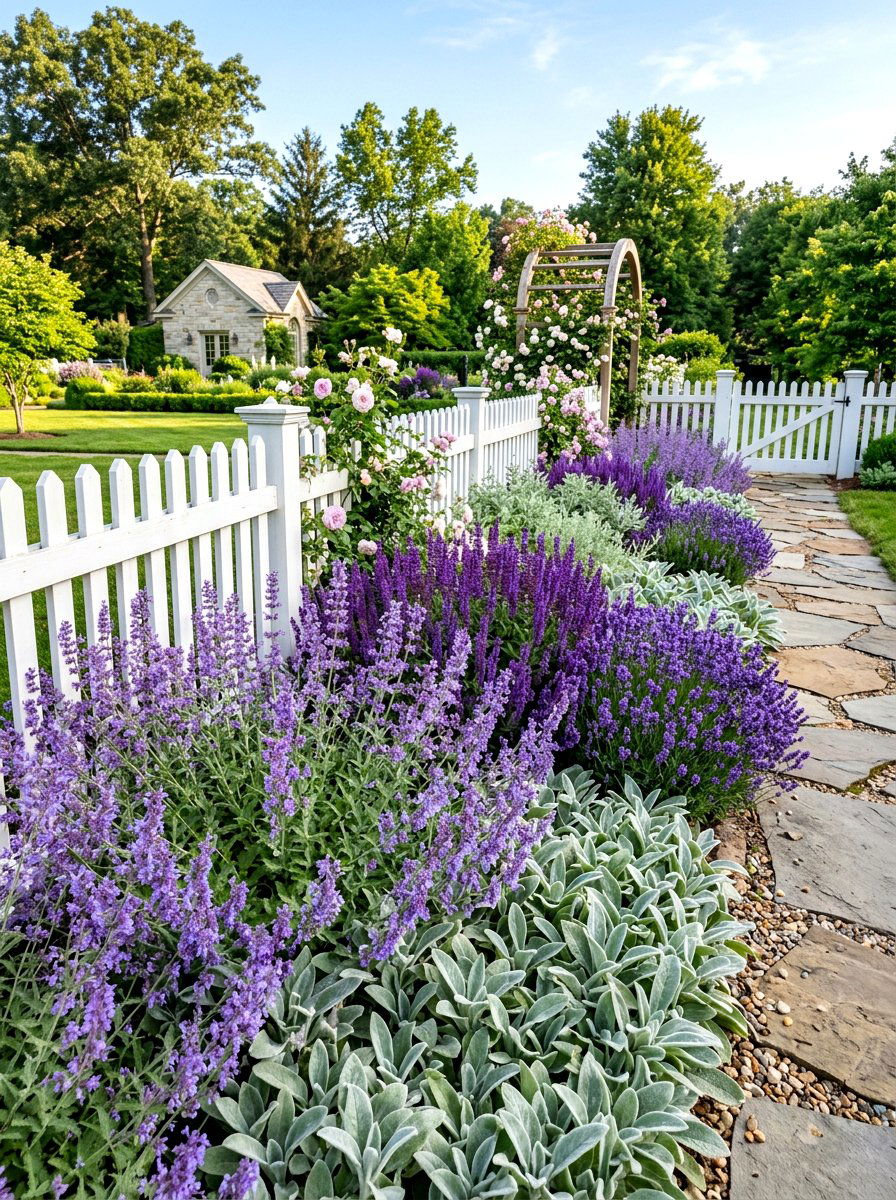
A silver and purple theme border offers a sophisticated and calming color palette that looks expensive and well-thought-out. Combining the silvery leaves of Russian Sage, Artemisia, and Lamb’s Ear with the deep purple flowers of Salvia and Verbena creates a stunning contrast. These colors are very pleasing to the eye and work well in both bright sunlight and partial shade. The silver foliage acts as a neutral base that makes the purple tones appear even more vibrant and rich. This color scheme is often associated with Mediterranean or English country gardens and provides a very elegant frame for a classic wooden or black metal fence.
30. Contemporary dark foliage border
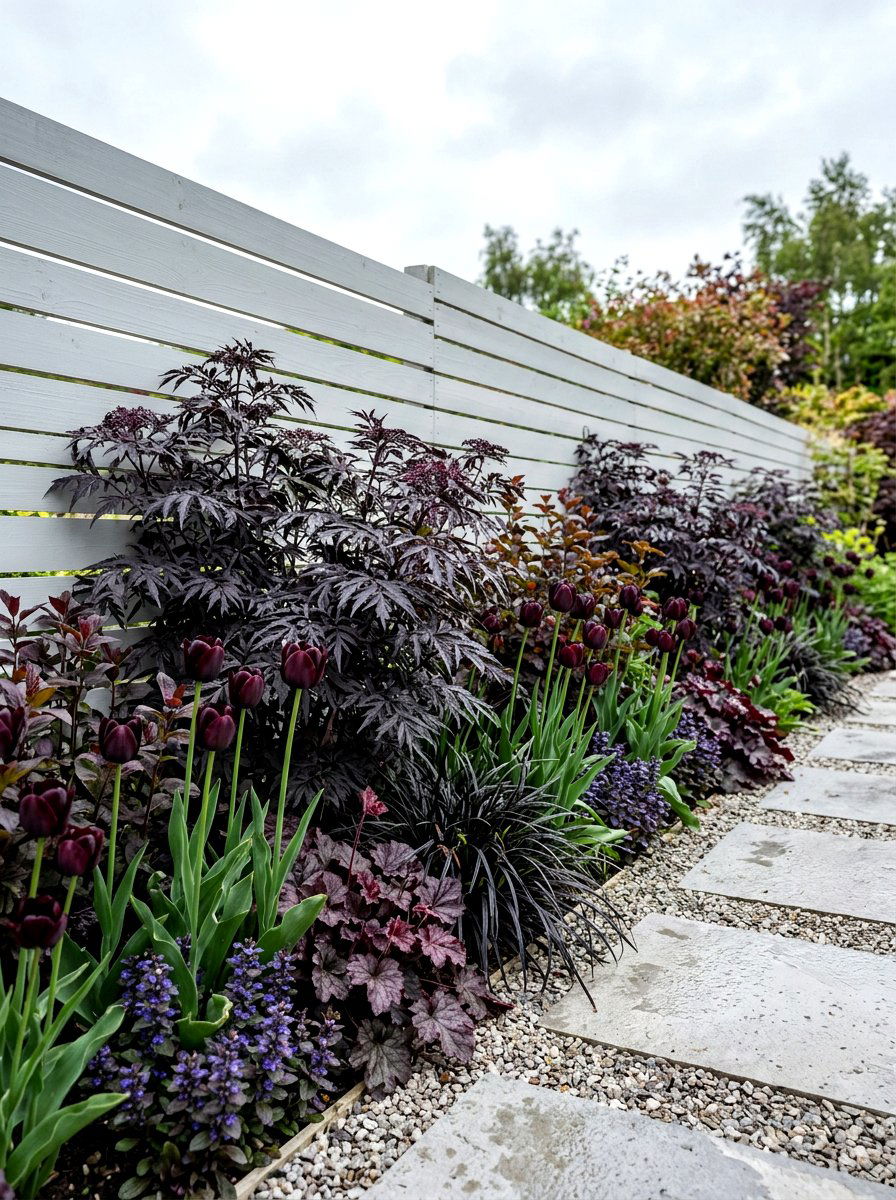
A contemporary dark foliage border uses plants with nearly black or deep burgundy leaves to create a dramatic and moody look along the fence. Plants like 'Black Lace' Elderberry, dark-leaved Heucheras, and 'Queen of Night' Tulips provide a unique aesthetic that is very popular in modern design. These dark tones look incredible when paired with a light-colored fence or bright green lawn, as the contrast is very sharp. During the day, the dark leaves absorb the light, creating a sense of depth and mystery in the garden. This style is perfect for homeowners who want to step away from traditional green landscapes and try something bold.
Conclusion:
Designing a border planting along your fence is a rewarding project that significantly increases the value and enjoyment of your home. By thoughtfully selecting plants that suit your soil, light conditions, and personal style, you can turn a functional boundary into a living work of art. Whether you choose a formal boxwood hedge for structure or a wild cottage garden for romance, the key is consistency and layering. These thirty ideas provide a starting point for any garden size or climate, ensuring your fence line is never boring again. A well-landscaped perimeter provides the privacy, beauty, and tranquility that every homeowner deserves in their backyard.

Related posts: