Transforming your traditional grass into a lush clover front lawn is a brilliant way to embrace sustainability while enhancing curb appeal. For decades, homeowners relied on thirsty turf that required heavy chemicals, but the modern shift toward eco-friendly landscaping has brought clover back into the spotlight. This resilient legume provides a soft, deep green carpet that stays vibrant even during the harshest summer heat. Because clover naturally pulls nitrogen from the air to fertilize the soil, it eliminates the need for expensive synthetic treatments. Whether you want a manicured look with microclover or a whimsical wildflower meadow, these versatile plants offer endless possibilities for a beautiful, low-maintenance front yard.
1. Microclover Front Yard
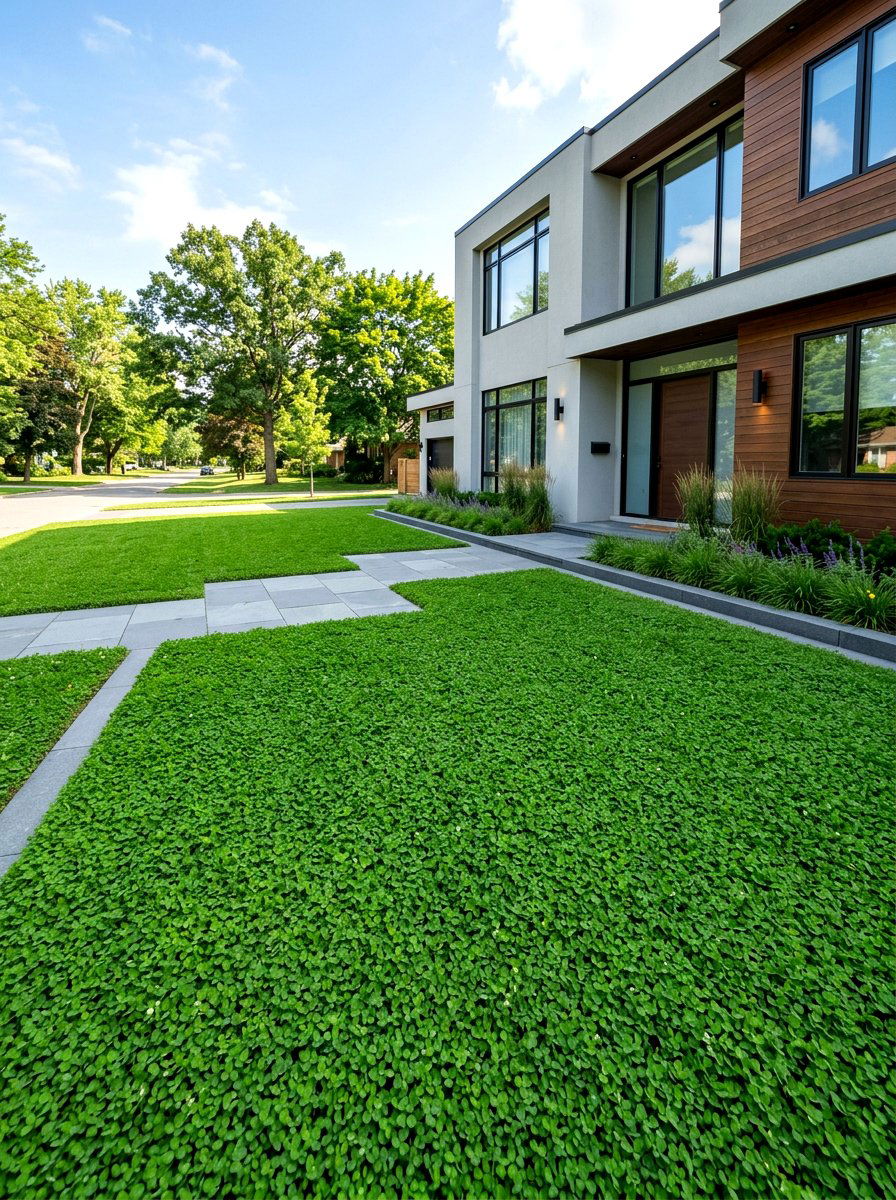
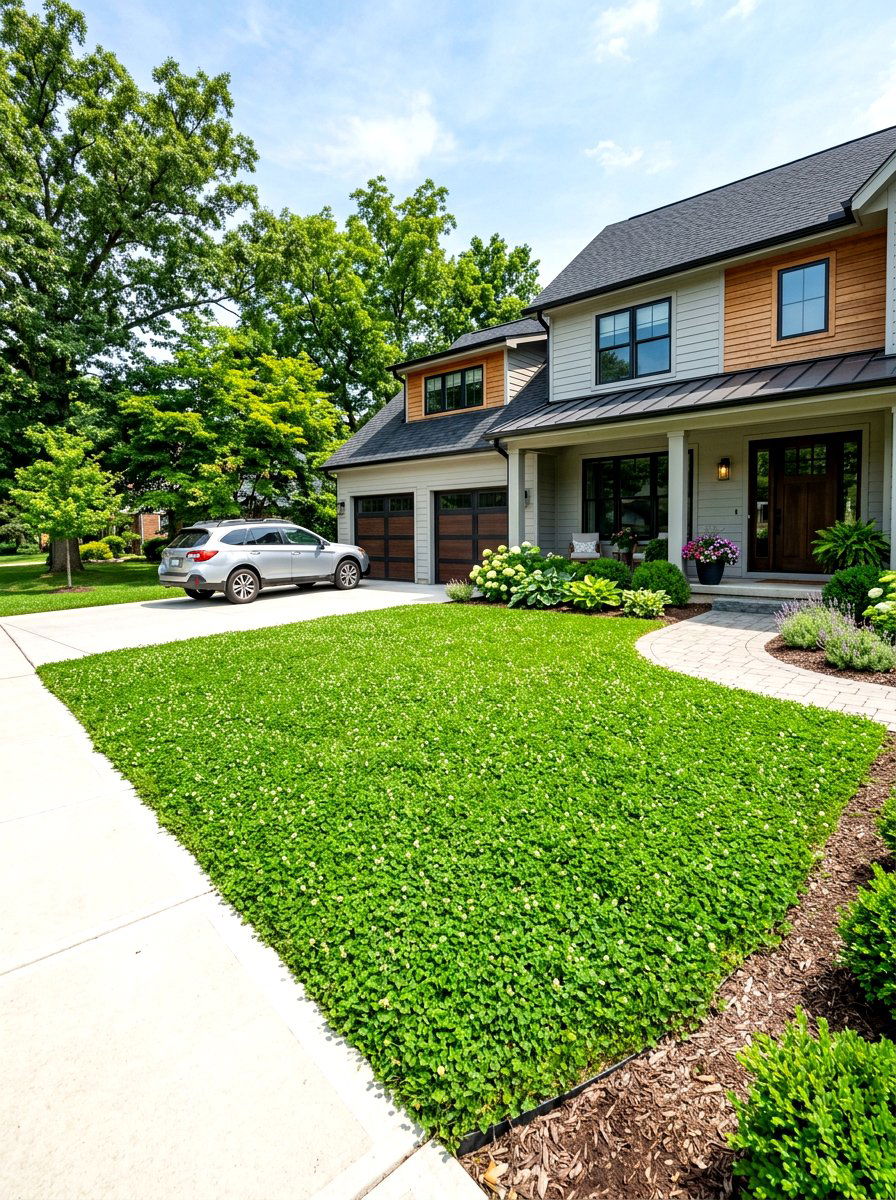
Microclover is a revolutionary choice for modern homeowners who desire a tidy and uniform appearance for their curb appeal. This specific cultivar features much smaller leaves than standard white clover, allowing it to blend seamlessly into a dense, carpet-like texture. Unlike larger varieties, it does not form unsightly clumps and remains at a very low height throughout the growing season. It stays incredibly green during dry spells when traditional grass typically turns brown and dormant. Because it produces fewer flowers, it is ideal for front yards where you want the ecological benefits of a legume without attracting excessive bee activity near your main entryway or sidewalk.
2. White Dutch Clover Turf
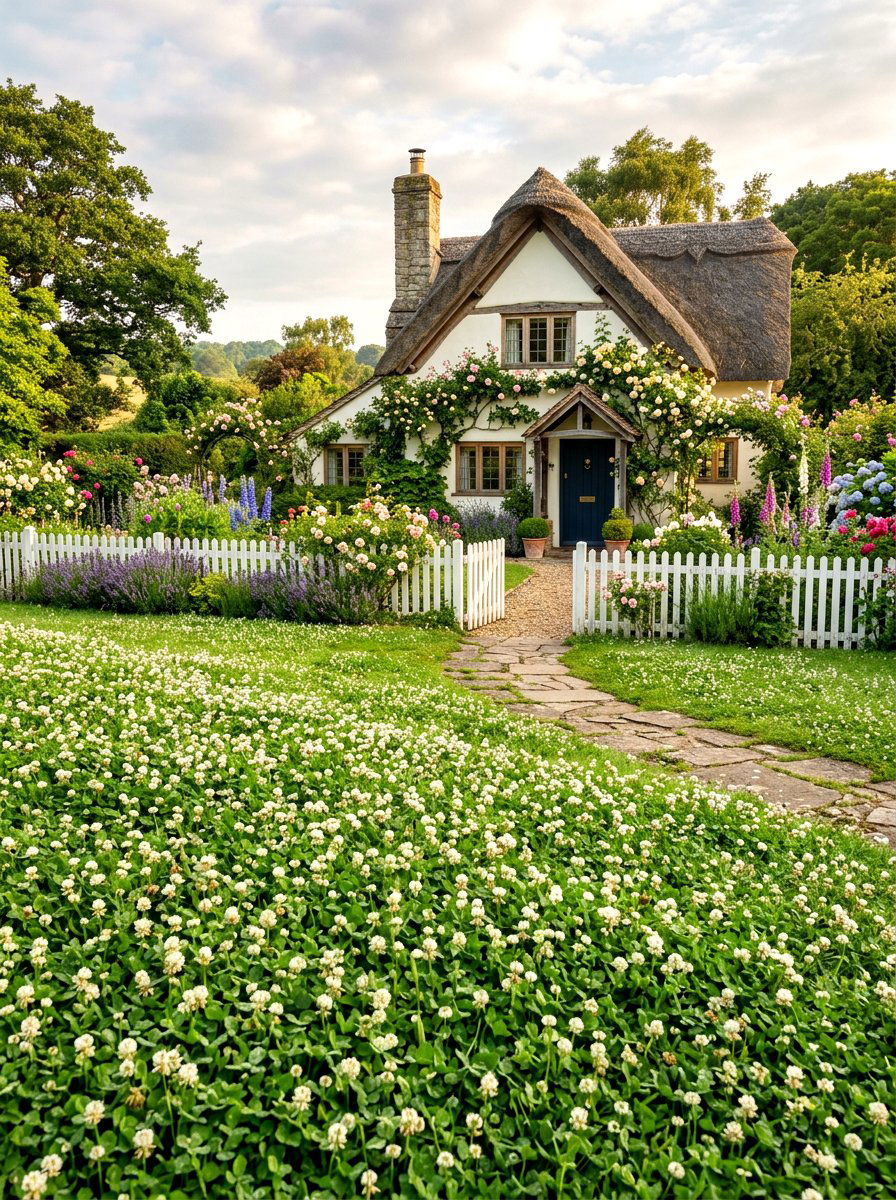
White Dutch clover remains the most popular and classic choice for creating a sustainable alternative to traditional lawn grass. This hardy perennial produces charming white blossoms that add a touch of cottage-inspired beauty to any home exterior. It is remarkably tough and can withstand occasional foot traffic from children or pets playing in the yard. The deep root system allows it to find moisture far below the surface, making it extremely drought-resistant during the hottest months. Homeowners love how this variety naturally suppresses weeds by forming a thick, overlapping canopy of leaves. It creates a welcoming, soft, and naturally lush environment for every visitor.
3. Red Clover Groundcover
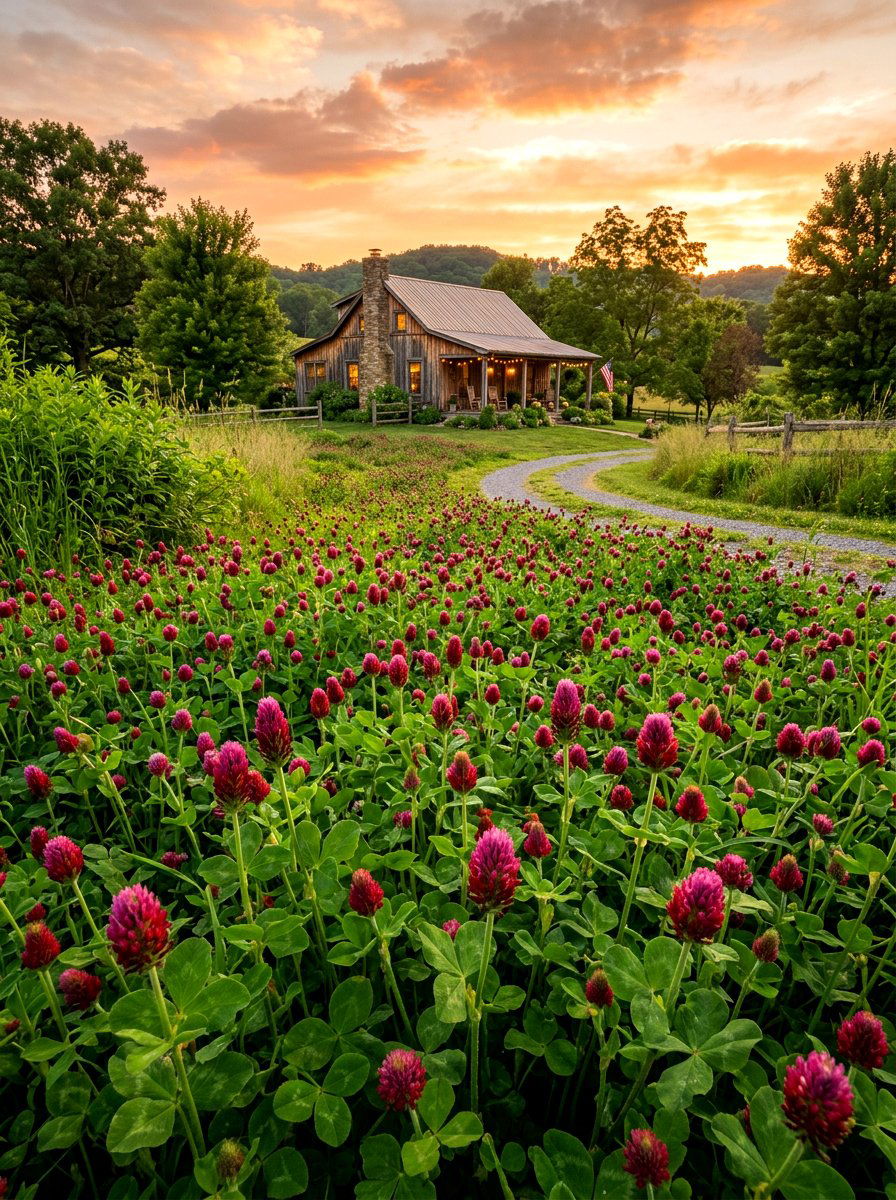
Red clover is an excellent option for those looking to add vertical interest and a splash of color to their front landscape. This variety grows slightly taller than its white counterparts and features striking reddish-purple flower heads that stand out beautifully against green foliage. It is a powerhouse for soil health because it reaches deep into the earth to break up compacted dirt and add vital nutrients. While it may require occasional trimming to keep a neat look, its ability to thrive in poor soil makes it a problem-solver for difficult yards. The vibrant blooms serve as a stunning focal point in any eco-friendly yard.
4. Clover Grass Seed Mix
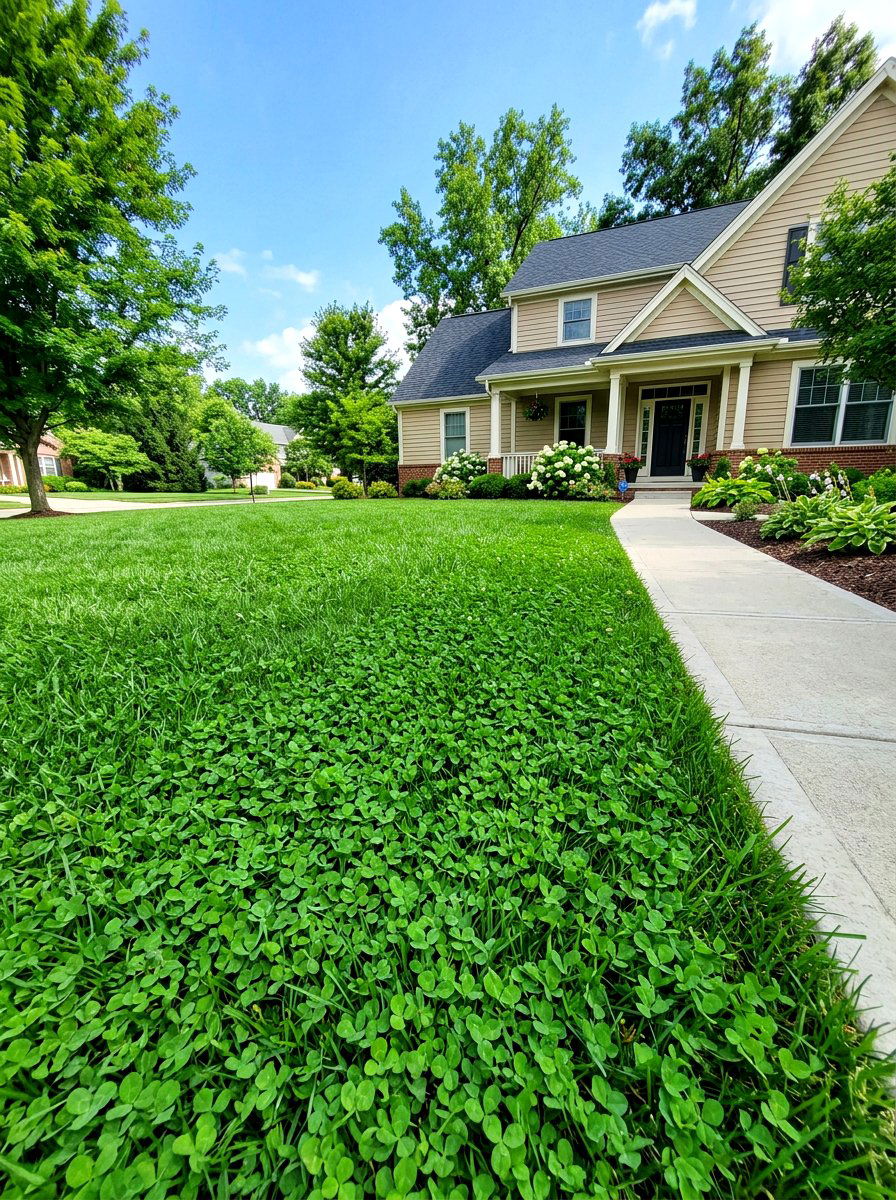
Mixing clover with traditional fescue or bluegrass is a smart strategy for achieving a durable and resilient hybrid lawn. This combination provides the structure of grass with the self-fertilizing benefits of a legume. The clover acts as a living mulch, shading the soil to keep the grass roots cool and moist during intense sun. You will find that this mix requires significantly less water and fertilizer than a standard turf lawn. It creates a diverse ecosystem that is much more resistant to common pests and lawn diseases. This balanced approach ensures your front yard remains thick, green, and healthy throughout the changing seasons.
5. No Mow Clover Lawn
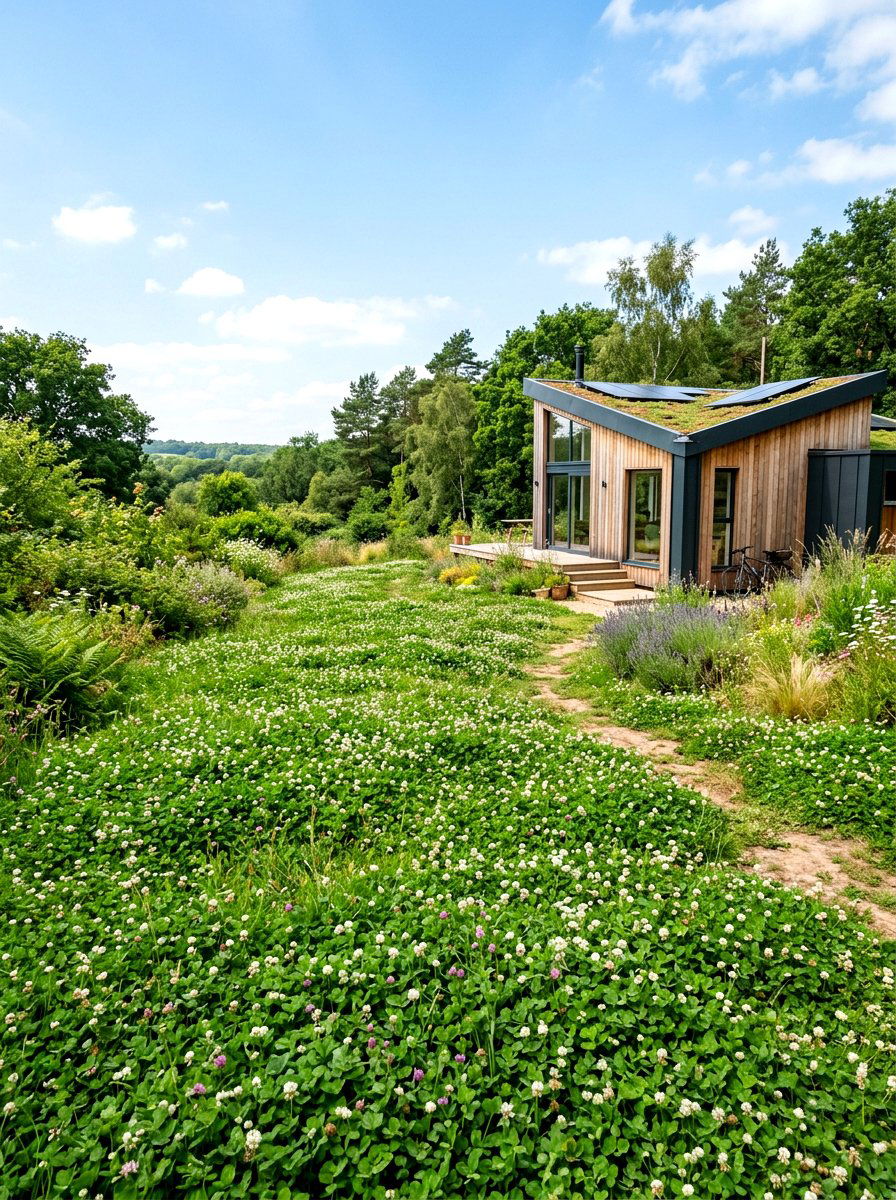
A no mow clover lawn is the ultimate solution for anyone who wants to ditch the weekend chores of yard maintenance. By choosing low-growing varieties like microclover, you can effectively eliminate the need for a lawnmower entirely. This type of lawn naturally peaks at a height of just a few inches, maintaining a soft and pillowy look without intervention. It is a fantastic choice for busy professionals or retirees who would rather spend their time enjoying their outdoor space than working on it. The result is a naturalistic, slightly wild aesthetic that looks perfectly intentional and stays effortlessly green all year long.
6. Drought Resistant Clover Yard
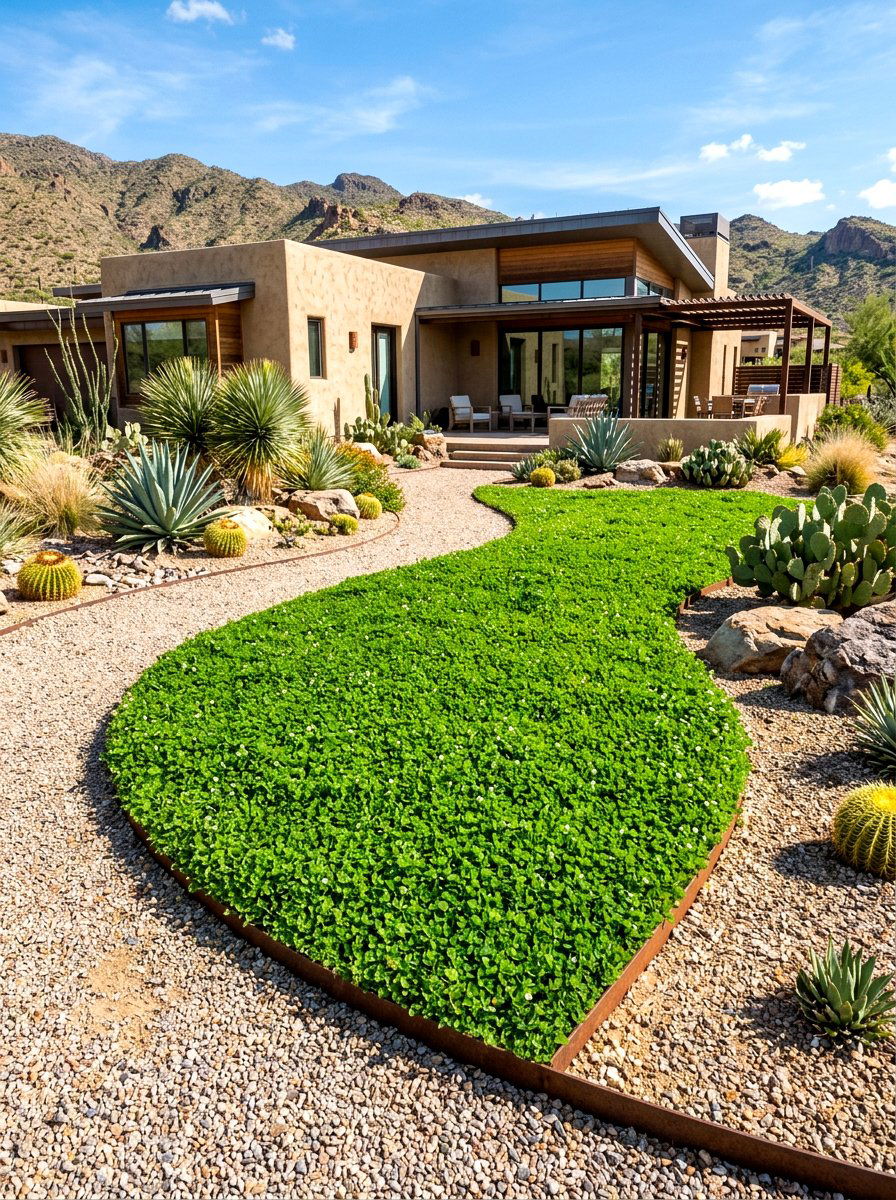
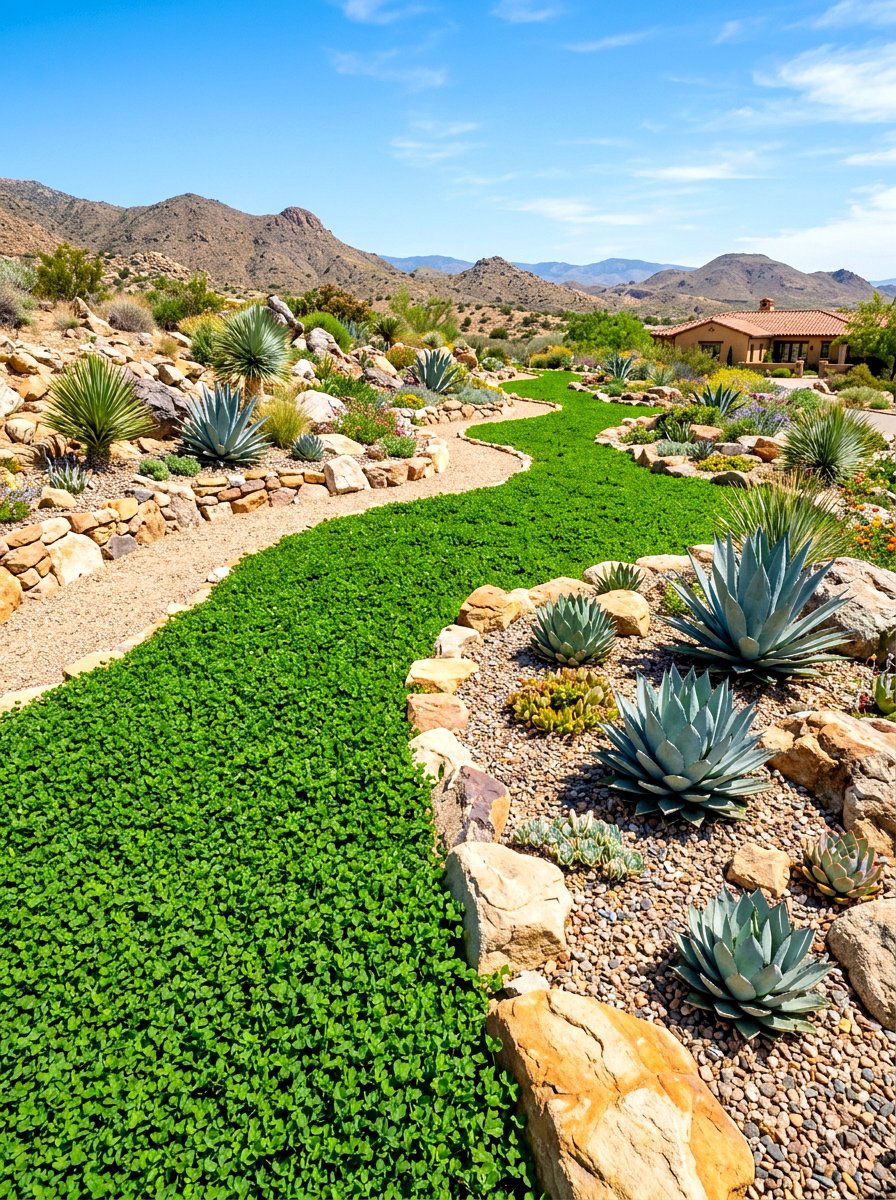
If you live in a region with strict water restrictions, a drought-resistant clover yard is a game-changing landscaping alternative. Clover possesses a unique physiological structure that allows it to stay hydrated and green long after traditional grass has withered. It requires very little supplemental watering once the root system is fully established in the soil. This makes it an environmentally conscious choice that also helps you save money on monthly utility bills. You can enjoy a lush, verdant view from your front window without the guilt of wasting precious water resources. It is a sustainable and beautiful way to handle dry climates.
7. Bee Friendly Clover Lawn
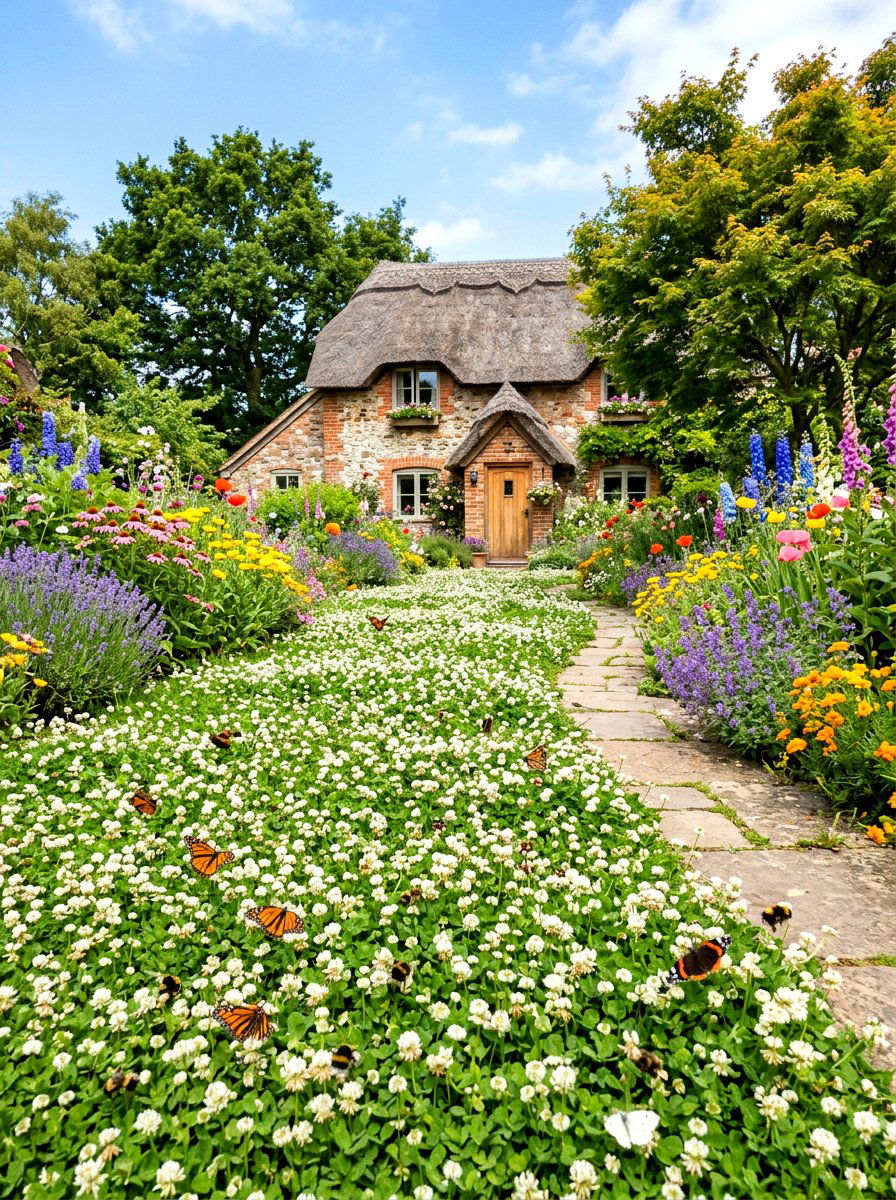
Creating a bee-friendly clover lawn is a wonderful way to support local pollinators while beautifying your home property. White and strawberry clover varieties are famous for their nectar-rich blossoms that provide essential food for honeybees and butterflies. By allowing your clover to flower, you turn your front yard into a mini nature sanctuary that buzzes with life. This approach is perfect for gardeners who value biodiversity and want to contribute to the health of their local environment. The sight of tiny white or pink flowers scattered across a sea of green adds a cheerful and lively energy to your home.
8. Crimson Clover Meadow
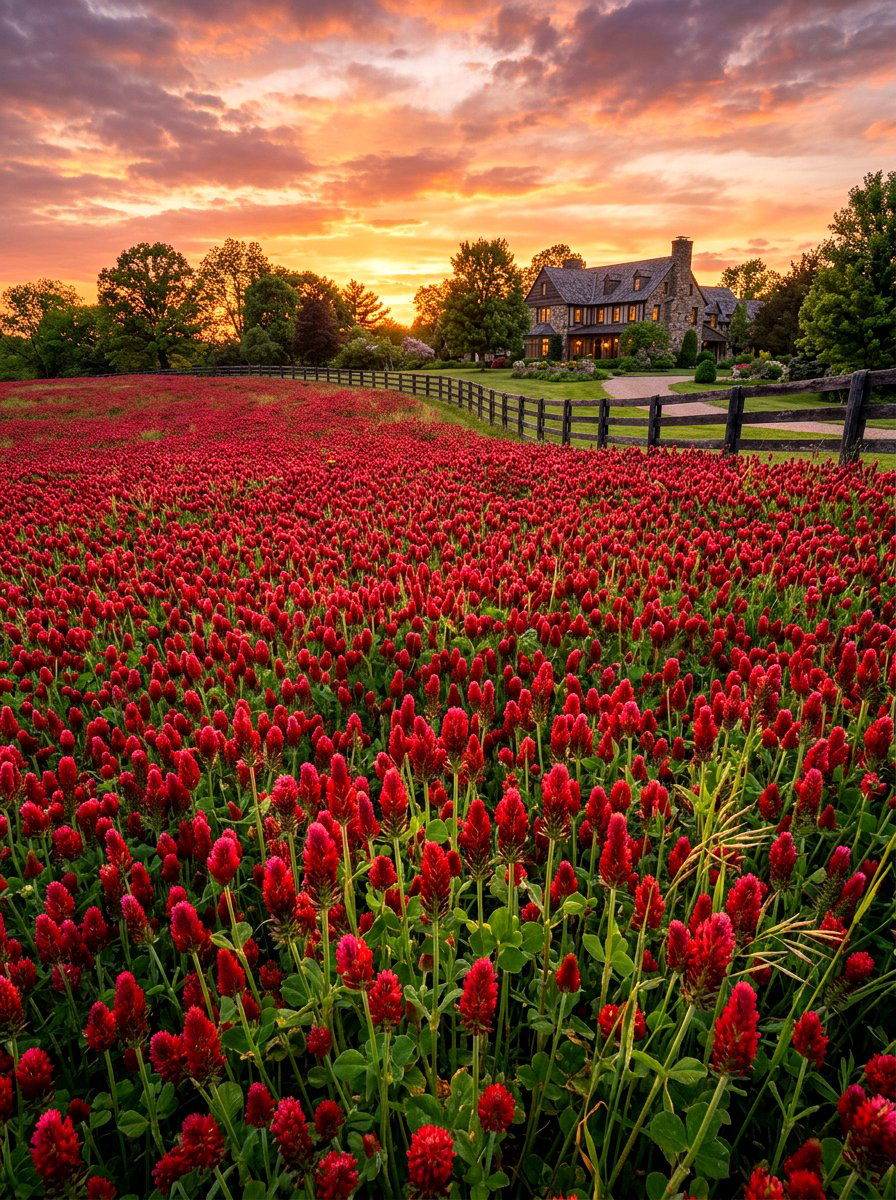
For a bold and dramatic front yard statement, a crimson clover meadow offers an unforgettable display of deep red color. This annual variety is often used for its striking upright flower spikes that look like vibrant candles across the lawn. It is particularly effective for large front yards or sloped areas where you want to create a meadow-like atmosphere. While it is an annual, it often self-seeds, ensuring that the beautiful display returns the following year. The dense growth pattern provides excellent erosion control and prevents invasive weeds from taking over your landscape. It creates a stunning, high-impact look for any property.
9. Strawberry Clover Lawn
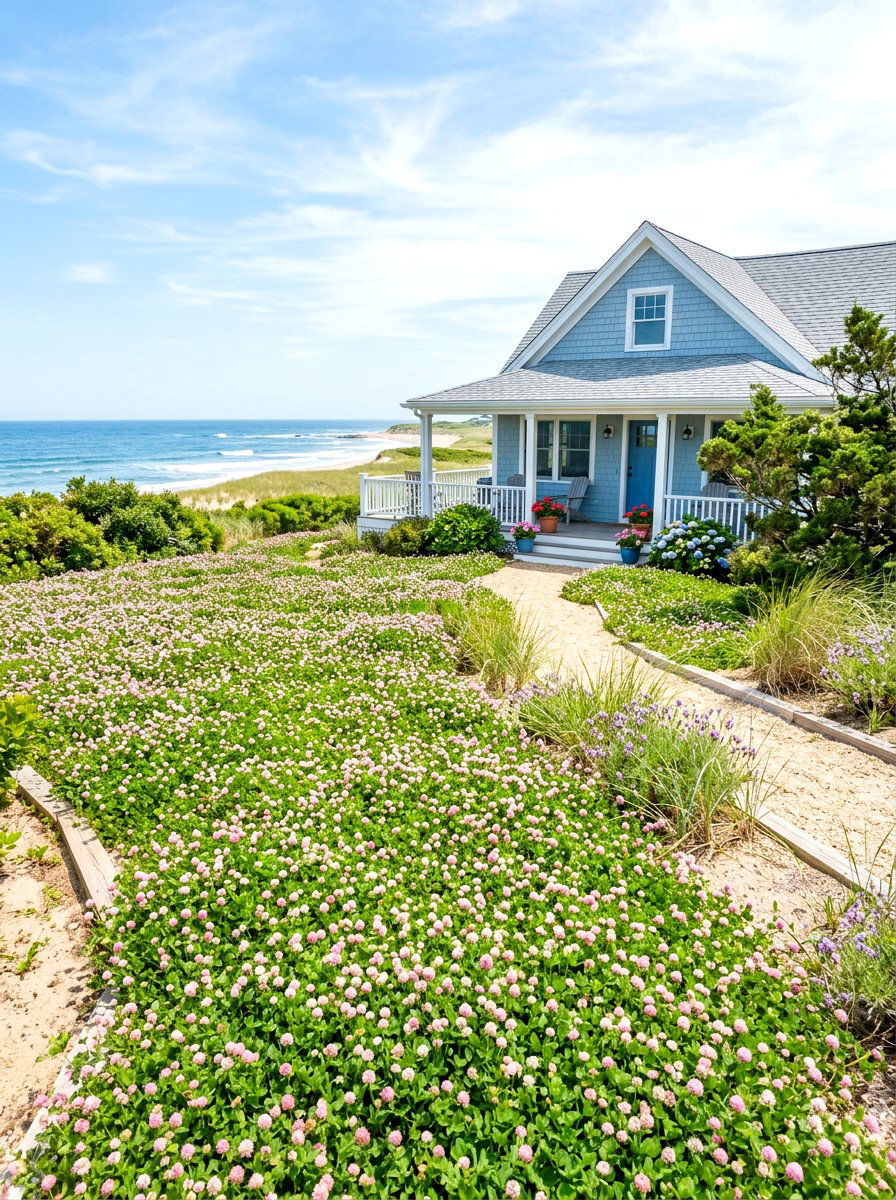
Strawberry clover is a unique and resilient variety that is prized for its beautiful pink, globe-shaped flowers. It gets its name from the way the seed heads resemble tiny strawberries as they mature on the plant. This type is particularly well-suited for coastal areas or yards with salty soil where other plants struggle to grow. It is very low-growing and spreads through creeping stems, creating a dense and soft mat that feels wonderful under bare feet. The delicate pink hue of the blossoms provides a soft, romantic touch to your front landscaping that sets your home apart from the neighbors.
10. Shady Spot Clover Groundcover
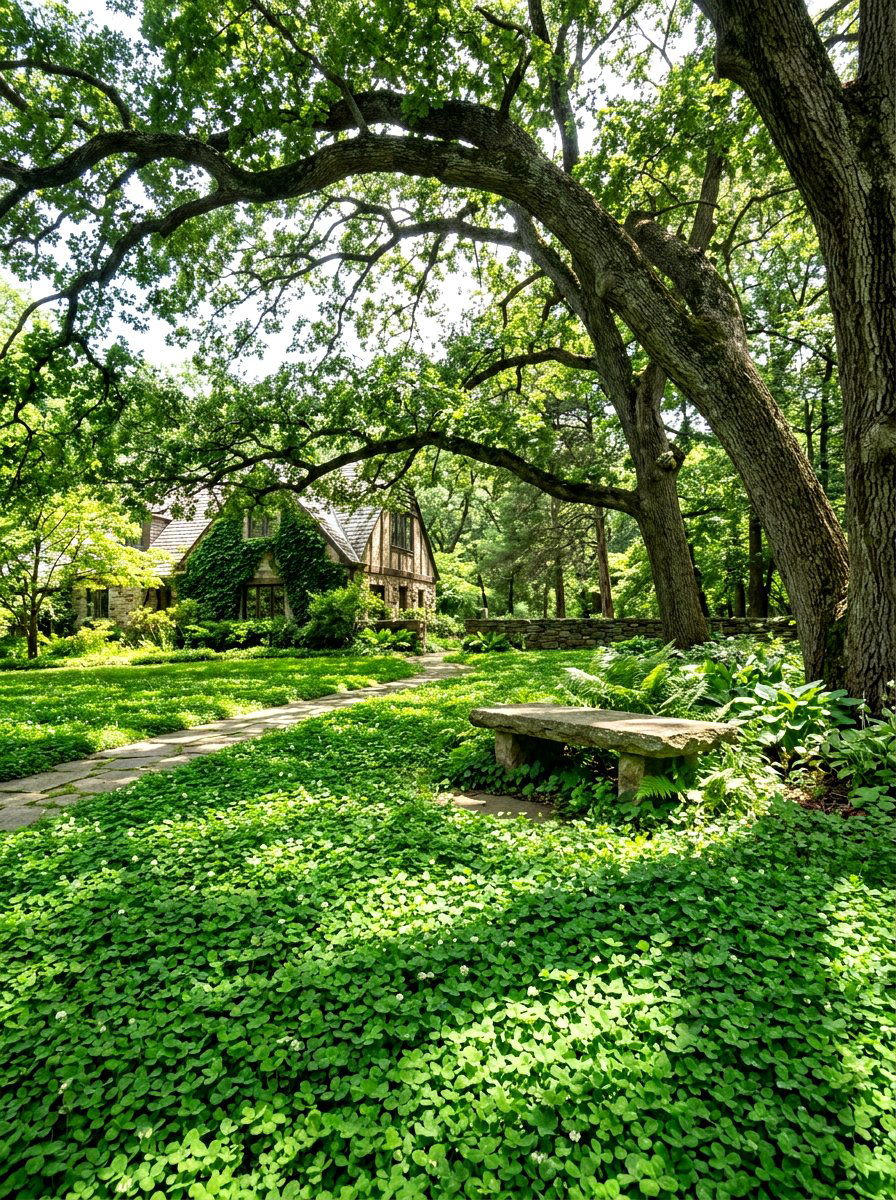
Finding a groundcover that thrives in the shadows of large trees can be a challenge for many homeowners. Fortunately, certain clover varieties are surprisingly tolerant of partial shade and can fill in those bare, dusty spots. Clover creates a lush green carpet where traditional sun-loving grasses often thin out and die. It helps to protect the root zones of your trees by retaining soil moisture and preventing temperature fluctuations. Using clover in these areas ensures a consistent look across your entire front yard, regardless of light levels. It transforms dark corners into vibrant and healthy parts of your home landscape.
11. High Traffic Microclover
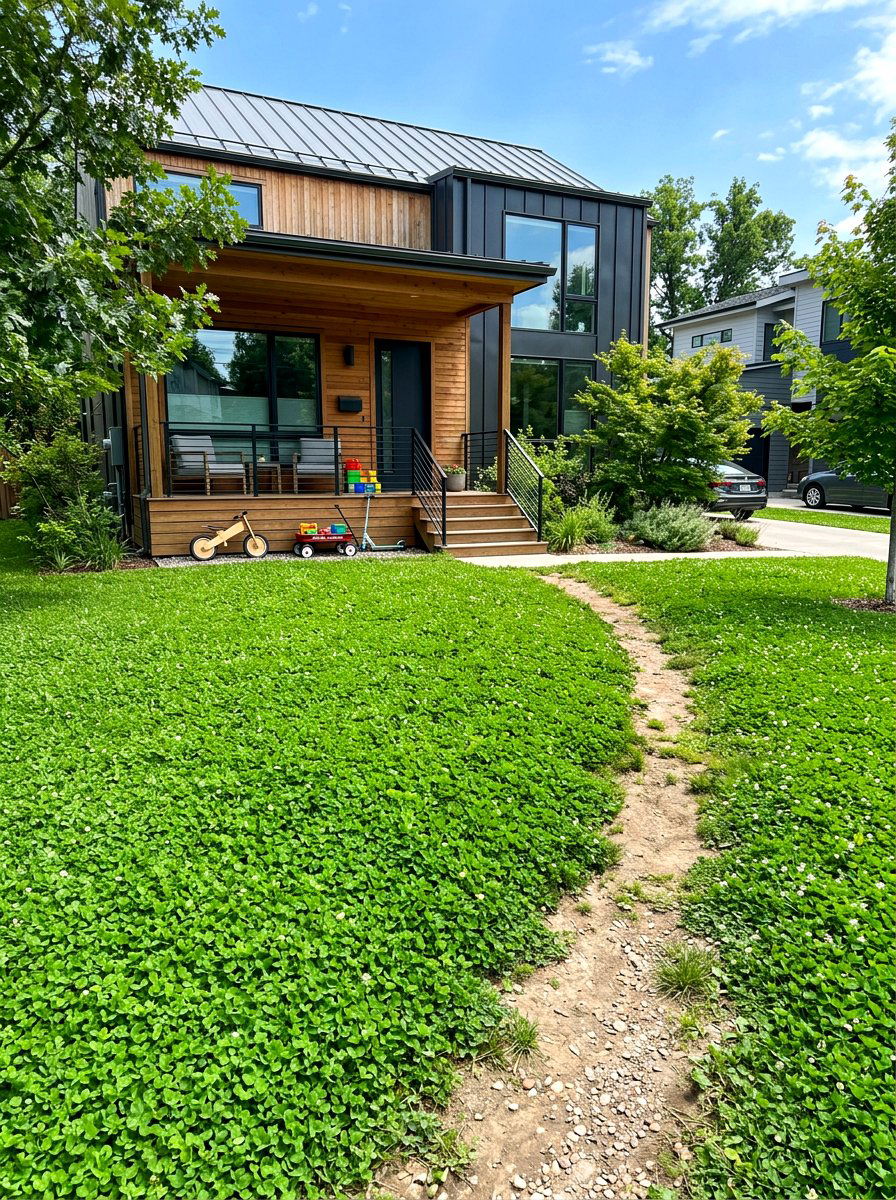
Even though clover is soft, modern microclover varieties are engineered to handle the daily wear and tear of a busy front yard. This hardy plant can bounce back quickly from footsteps, making it a viable option for areas where children and pets play. Its dense growth habit prevents the soil from becoming compacted, which is a common problem with traditional turf in high-use zones. You can walk across your lawn with confidence, knowing that the small leaves will remain resilient and green. It provides a durable surface that combines the beauty of a garden with the functionality of a high-performance sports field.
12. Nitrogen Fixing Clover Yard
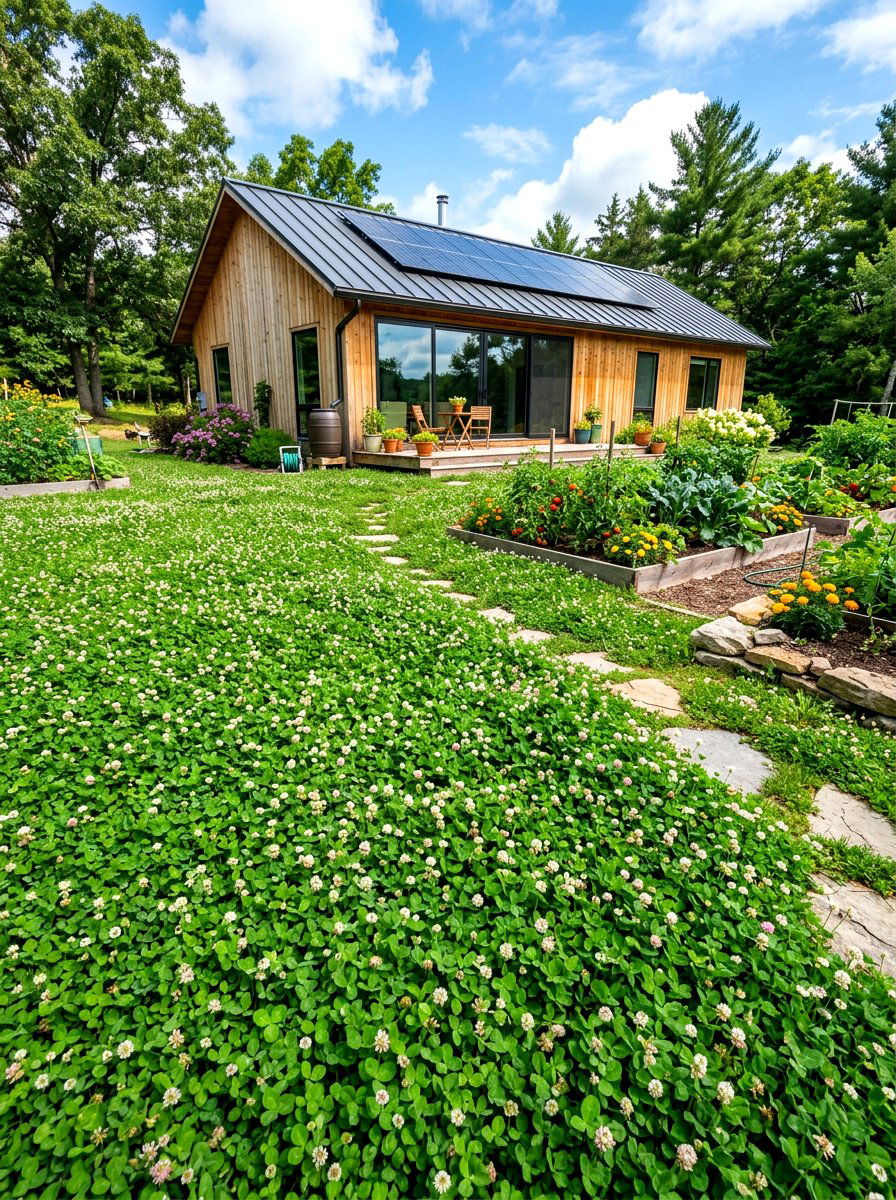
The most impressive biological feature of a clover lawn is its natural ability to perform nitrogen fixation. Clover houses beneficial bacteria in its roots that pull nitrogen from the atmosphere and convert it into plant food. This process creates a self-sustaining cycle that naturally fertilizes the entire yard, including any grass mixed into the lawn. You can say goodbye to the hassle of spreading chemical fertilizers and the worry of runoff polluting local waterways. A nitrogen-fixing yard is a gift to the environment and your soil, ensuring long-term fertility and health without any extra effort or cost from you.
13. Dog Safe Clover Lawn
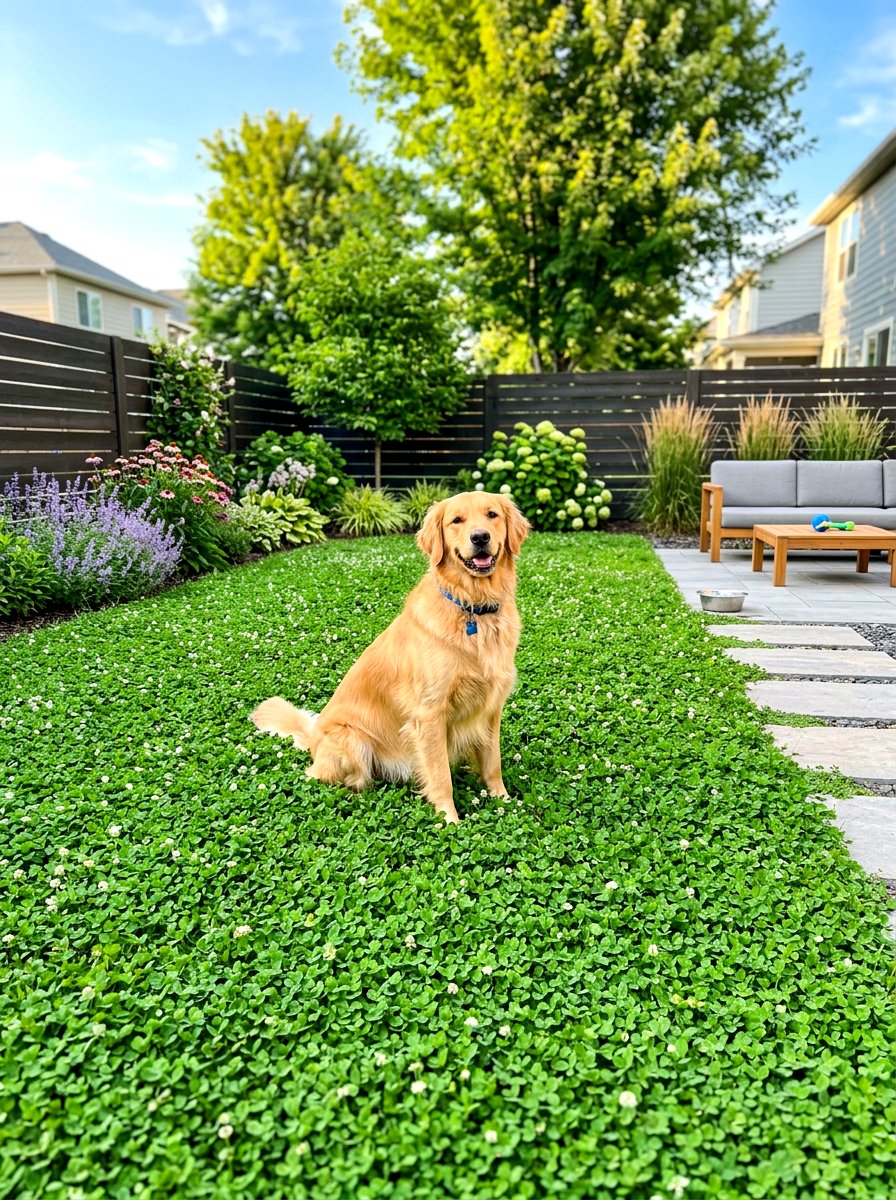
Dog owners often struggle with yellow spots on their grass caused by the acidity in pet urine. A dog-safe clover lawn solves this problem because clover is remarkably resistant to urine burns and maintains its color perfectly. The soft texture is gentle on paws, making it a comfortable surface for your furry friends to lounge on. Additionally, clover is non-toxic and safe if a curious pet decides to take a nibble of the leaves. Switching to clover creates a worry-free environment where your pets can play freely without ruining the aesthetic beauty of your carefully maintained front yard landscape.
14. Clover and Fescue Lawn
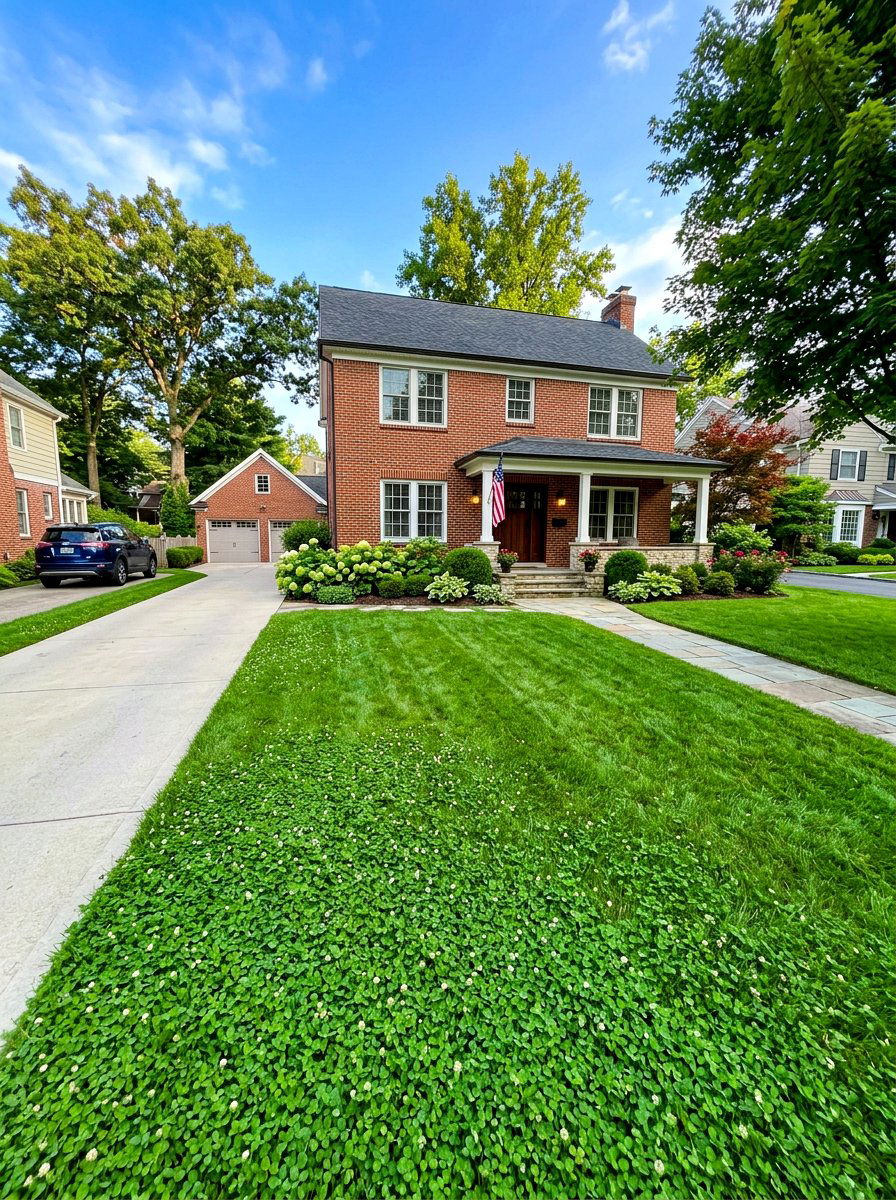
Combining clover with fescue grass creates a tough, year-round green lawn that offers the best of both worlds. Fescue provides a strong, upright structure that helps the lawn handle heavy use, while clover fills in the gaps with its spreading leaves. This mixture is particularly effective for homeowners who want to maintain a traditional look while reducing their environmental footprint. The fescue benefits from the natural nitrogen provided by the clover, resulting in a deeper green color without added chemicals. This duo is highly adaptable to various soil types, ensuring a successful and beautiful lawn regardless of your specific yard conditions.
15. Small Leaved Microclover
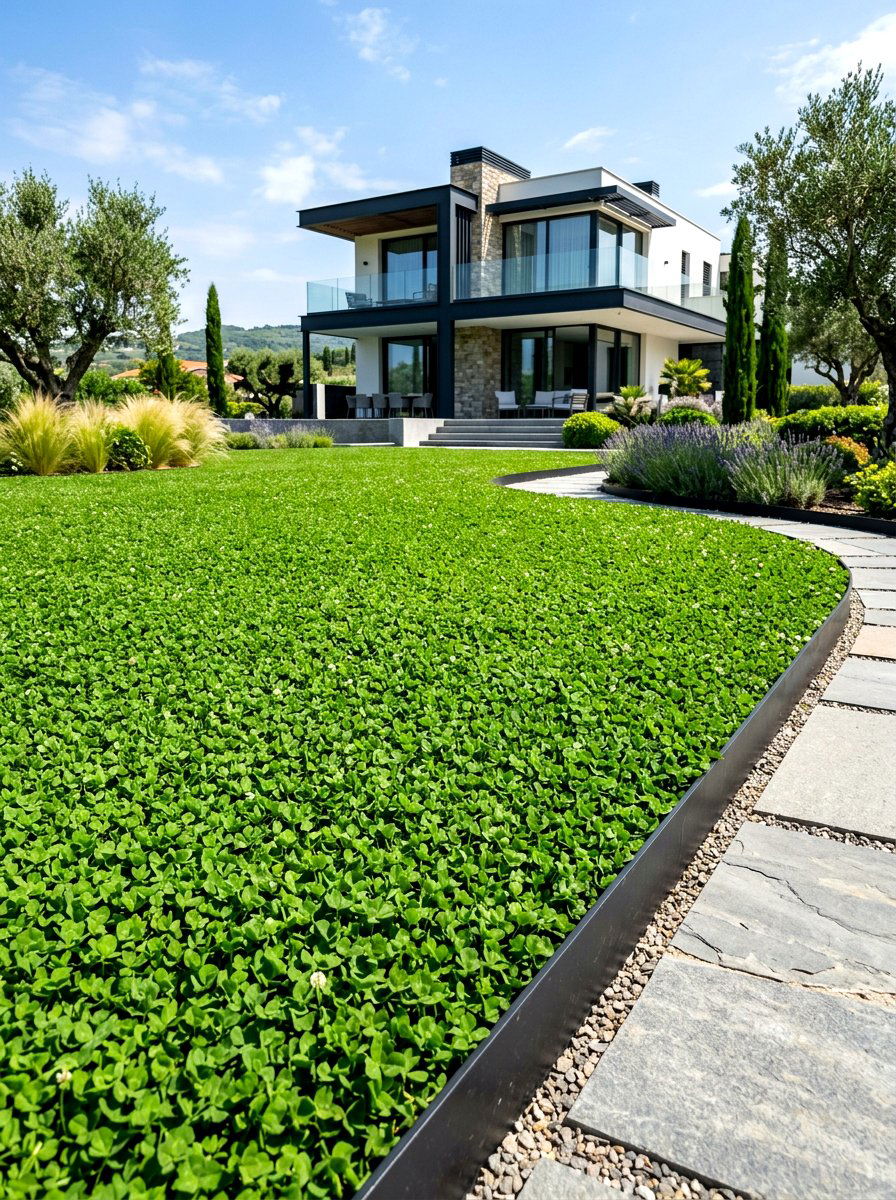
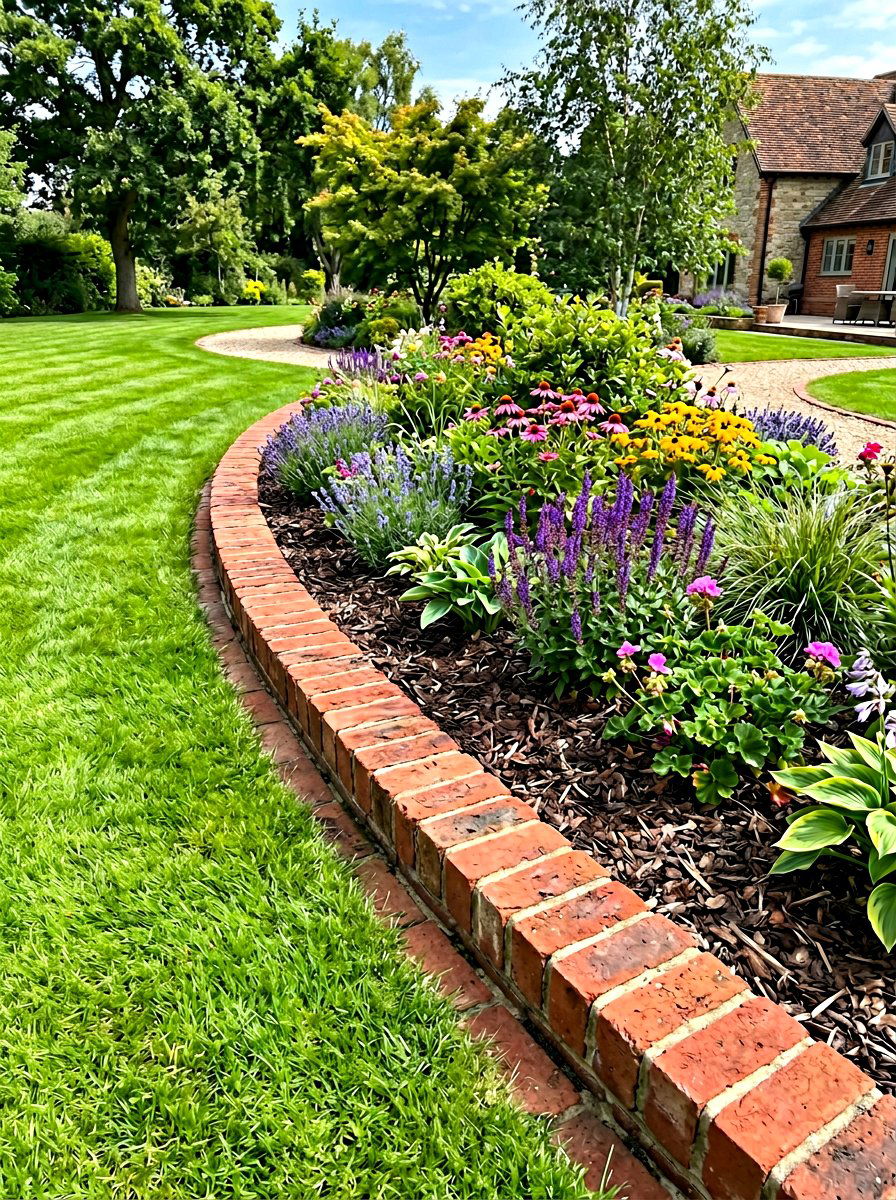
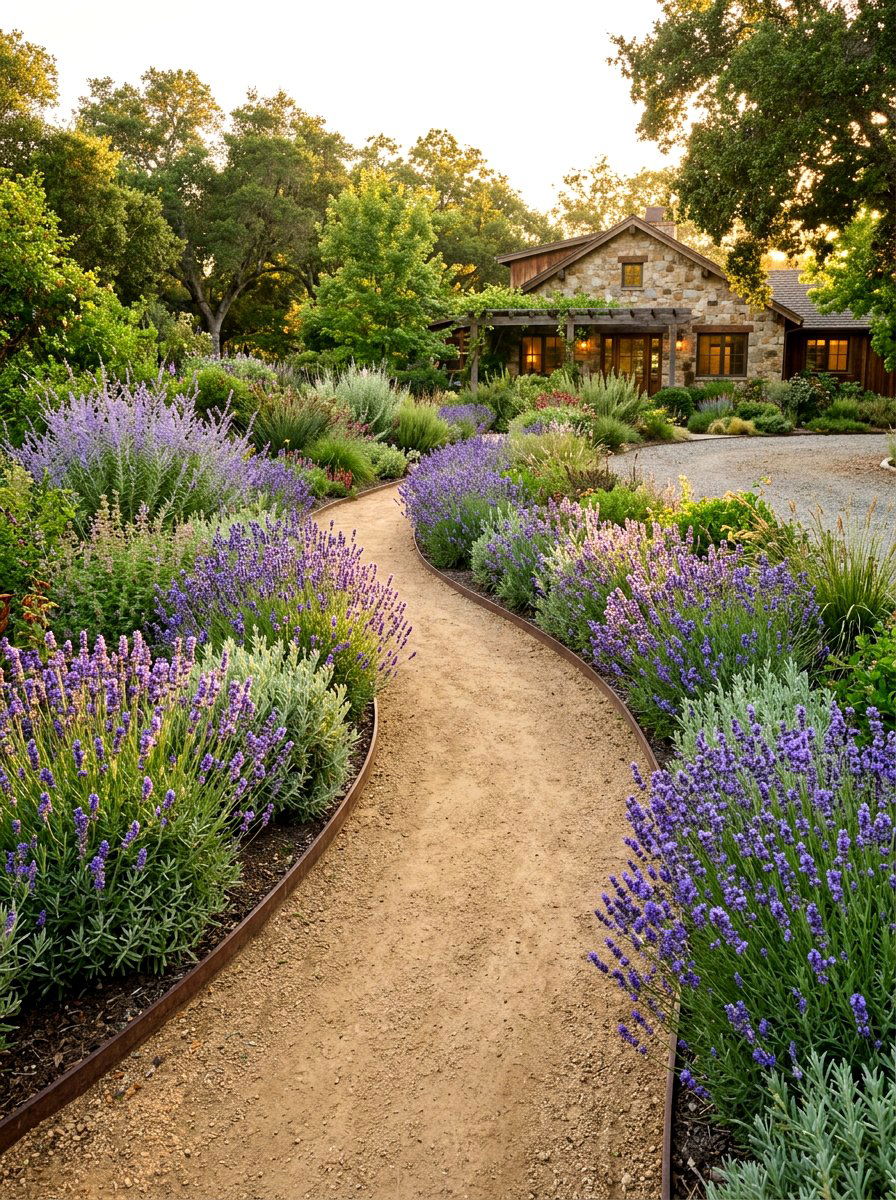
Choosing a small-leaved microclover variety is the best way to achieve a sophisticated and manicured look for a front yard. These plants have been specifically bred to stay very short and produce tiny, delicate foliage that creates a velvet-like texture. When viewed from the street, this type of lawn looks like a perfectly groomed golf course but requires only a fraction of the work. It is an excellent choice for modern architectural styles where clean lines and simple textures are prioritized. The small leaves ensure that the lawn remains dense and weed-free, providing a premium aesthetic that enhances your home value.
16. Purple Flower Clover Yard
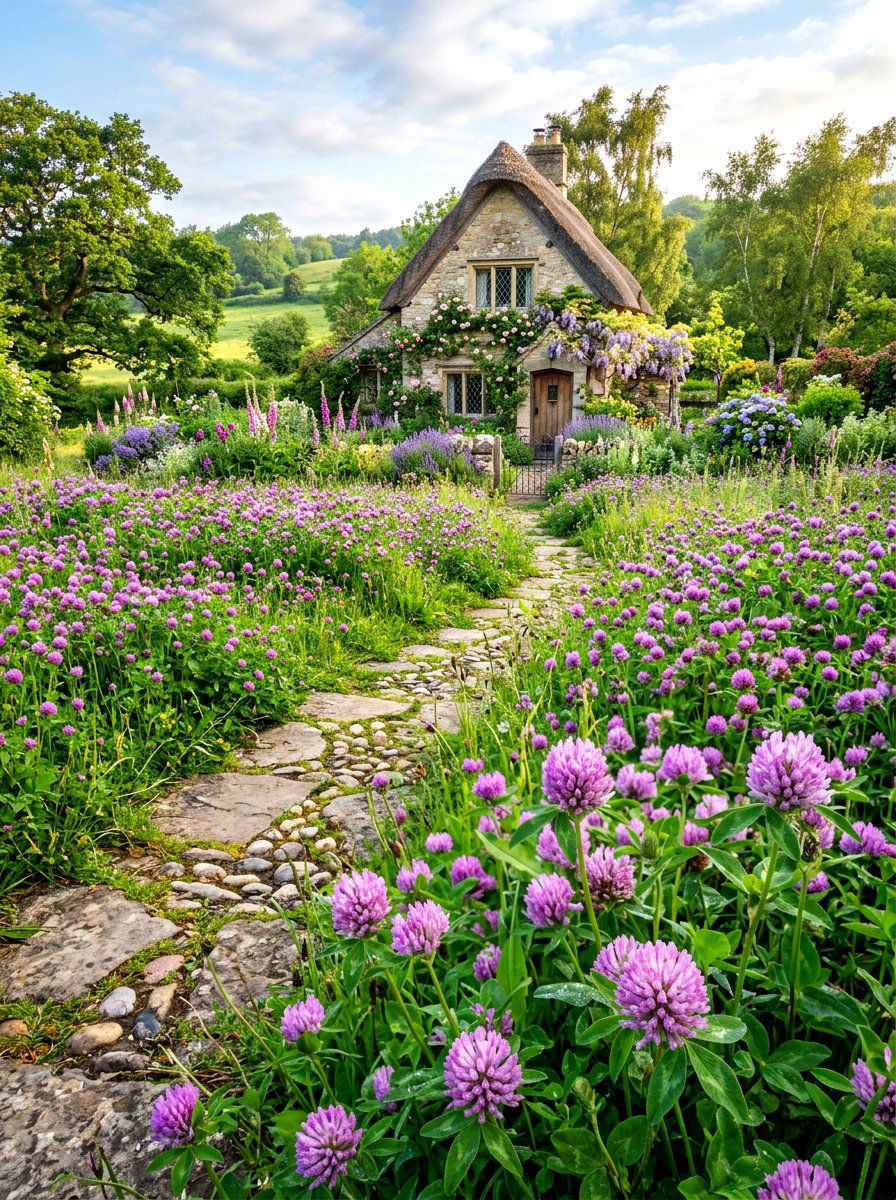
For those who want a front yard that feels like a fairy tale, a purple flower clover variety is a perfect choice. Often associated with red or crimson varieties, these clovers produce soft lilac to deep magenta blooms that add a magical touch to the landscape. The color contrast against the dark green leaves creates a visual depth that traditional grass simply cannot match. This type of lawn is especially beautiful in the spring when the flowers are in full bloom, attracting hummingbirds and butterflies. It creates a vibrant, colorful, and enchanting entryway that will delight everyone who passes by your home.
17. Evergreen Clover Front Yard
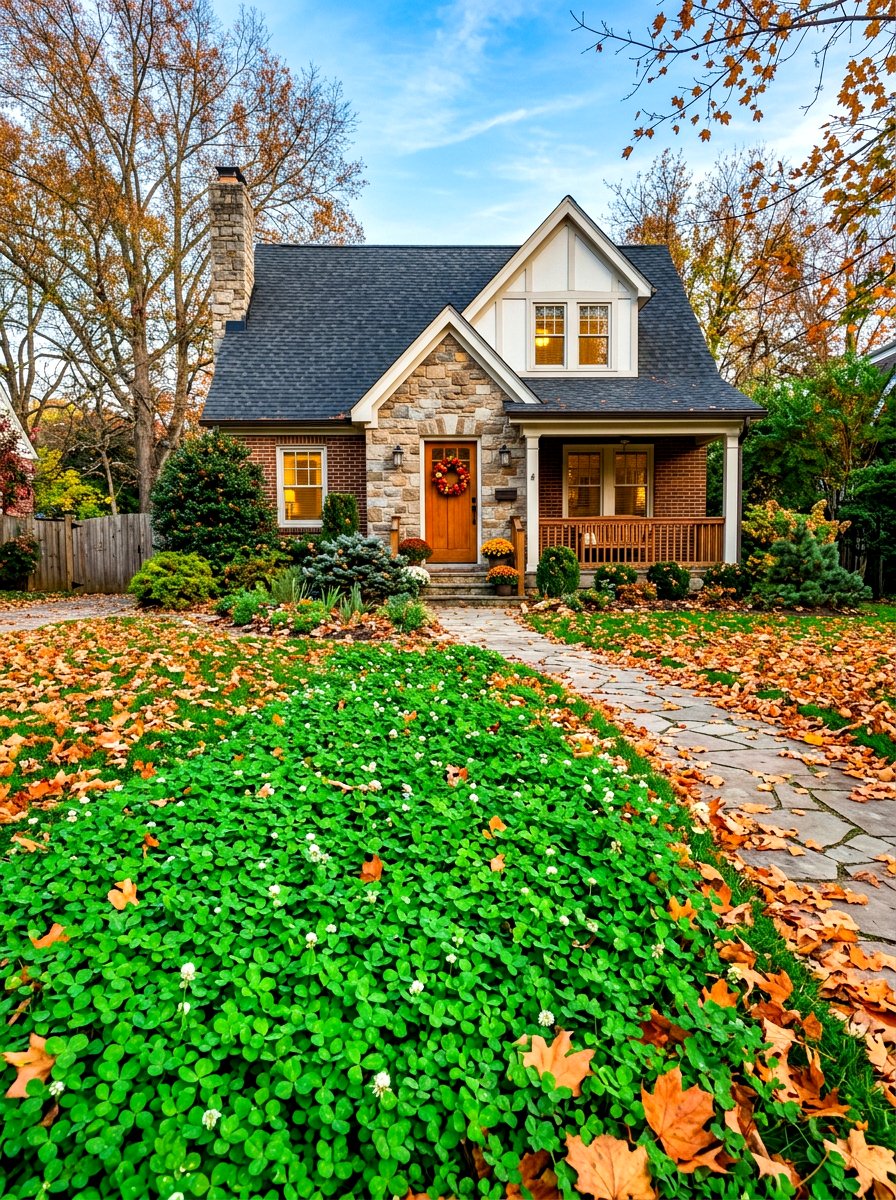
One of the biggest advantages of clover is its ability to stay green much longer into the winter than many cool-season grasses. An evergreen clover front yard provides a refreshing splash of color when the rest of the neighborhood has turned brown and dormant. While clover may go dormant in extremely cold climates, it usually bounces back at the first sign of spring warmth. This long-lasting color ensures that your home always looks inviting and well-cared for, regardless of the month. It provides a constant foundation of greenery that highlights your architectural features and other evergreen shrubs in your landscape design.
18. Native Wildflower Clover Mix
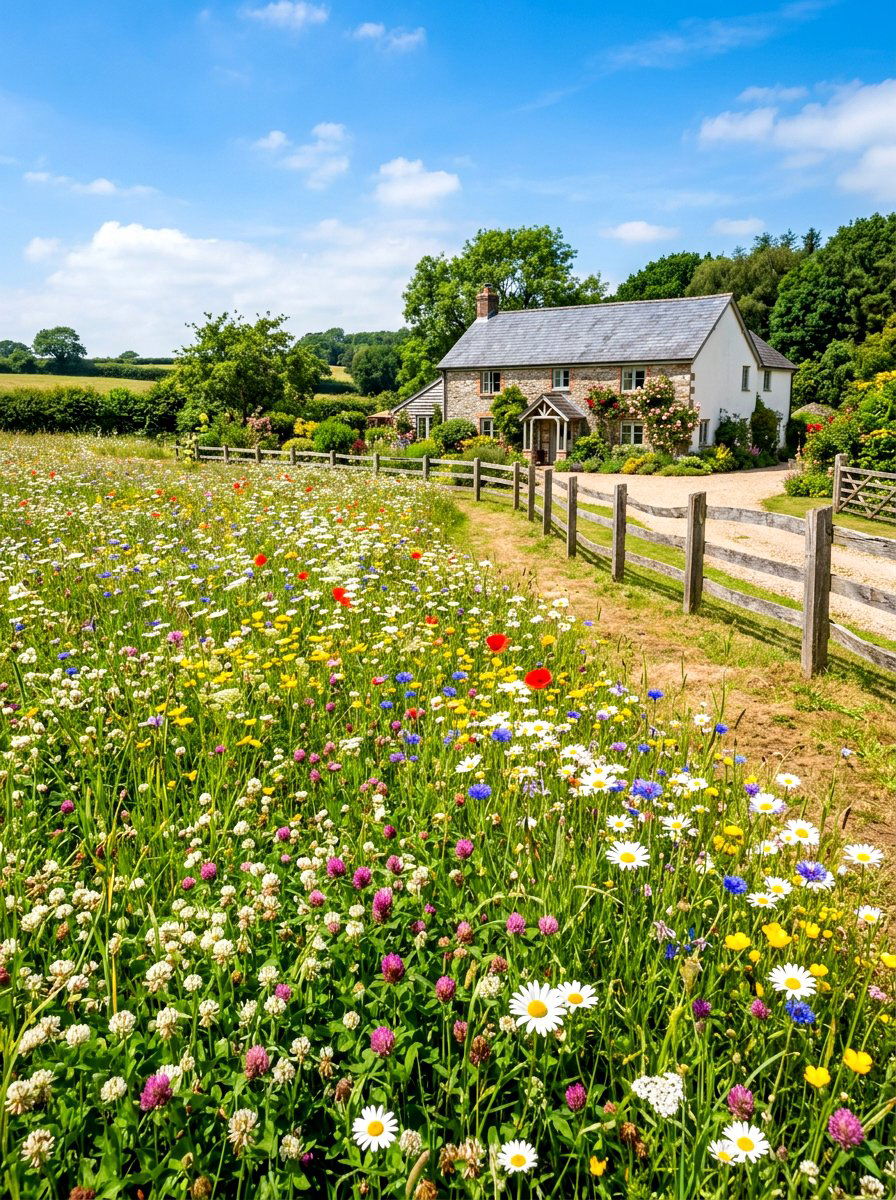
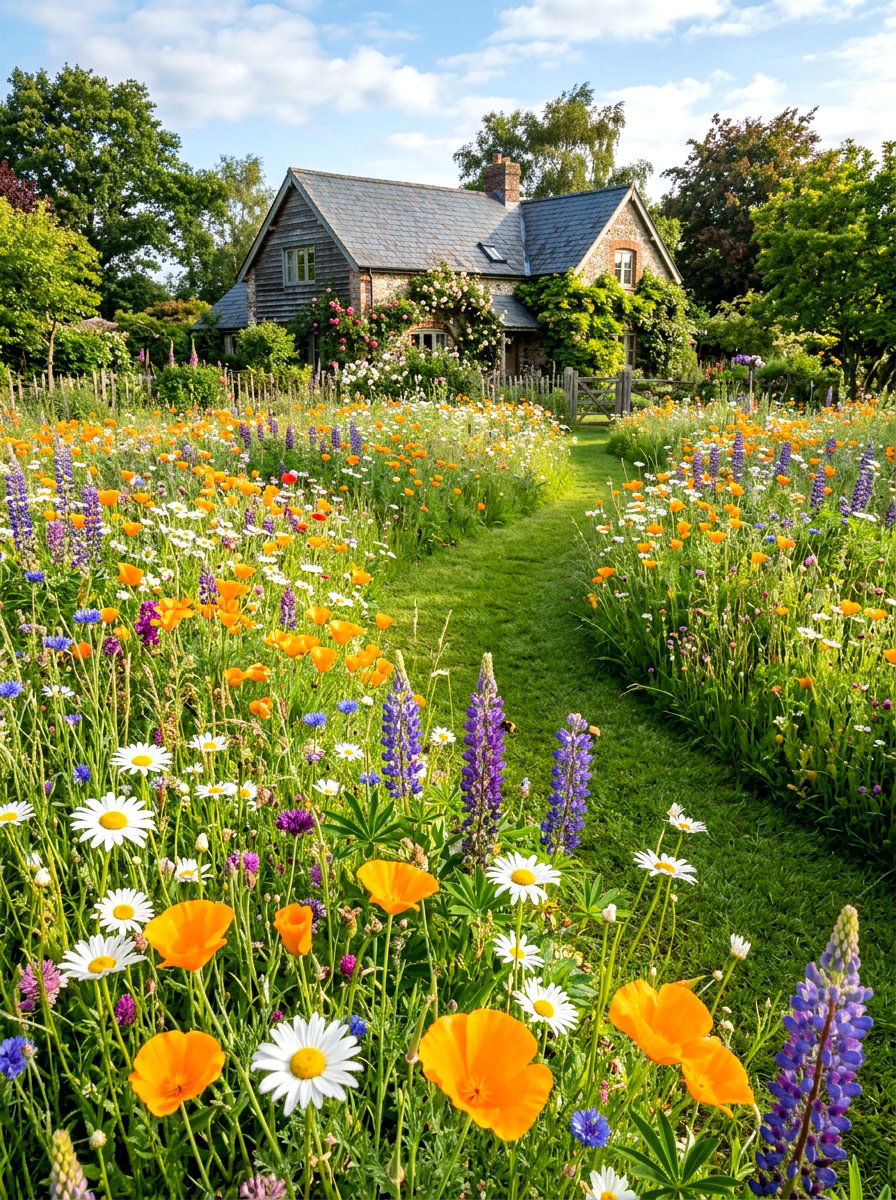
Blending clover with native wildflowers creates a stunning, ecological meadow that serves as a beautiful alternative to a mowed lawn. This mix allows for a rotating display of colors and textures as different plants bloom throughout the spring and summer seasons. It is a low-maintenance approach that celebrates the local environment and provides a habitat for various beneficial insects. The clover acts as a sturdy base, filling in the spaces between taller flowers to keep the soil covered and moist. This naturalistic style is perfect for cottage-style homes or properties where a relaxed and organic aesthetic is the primary design goal.
19. Low Water Clover Turf
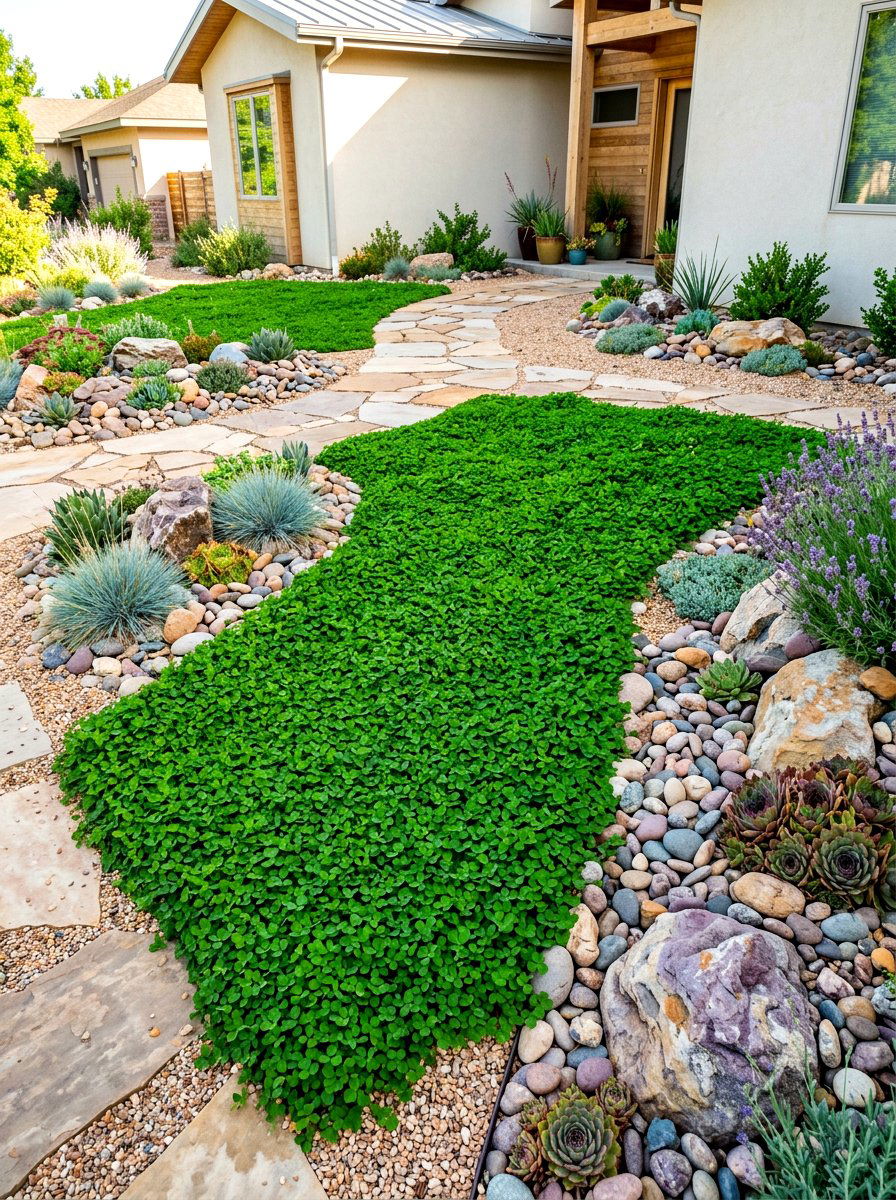
Reducing water consumption is a top priority for sustainable living, and low water clover turf is an ideal solution. This type of lawn requires very little irrigation once established, as the deep roots tap into underground water sources that grass cannot reach. It is an incredibly resilient choice for areas prone to summer droughts or high temperatures. You will save a significant amount of time and money by not having to move sprinklers around every evening. This eco-friendly turf choice allows you to maintain a beautiful green space without putting a strain on the local water supply or your wallet.
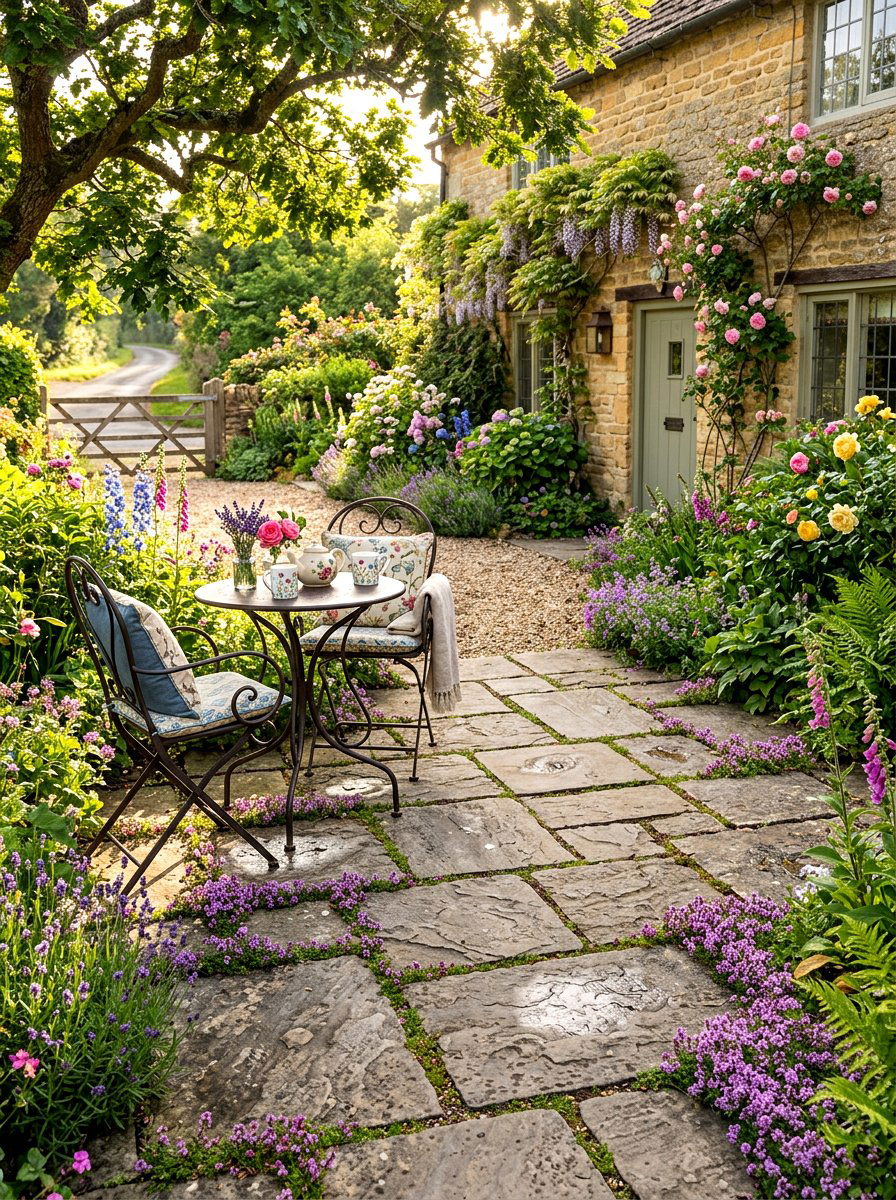
20. Stepping Stone Clover Path
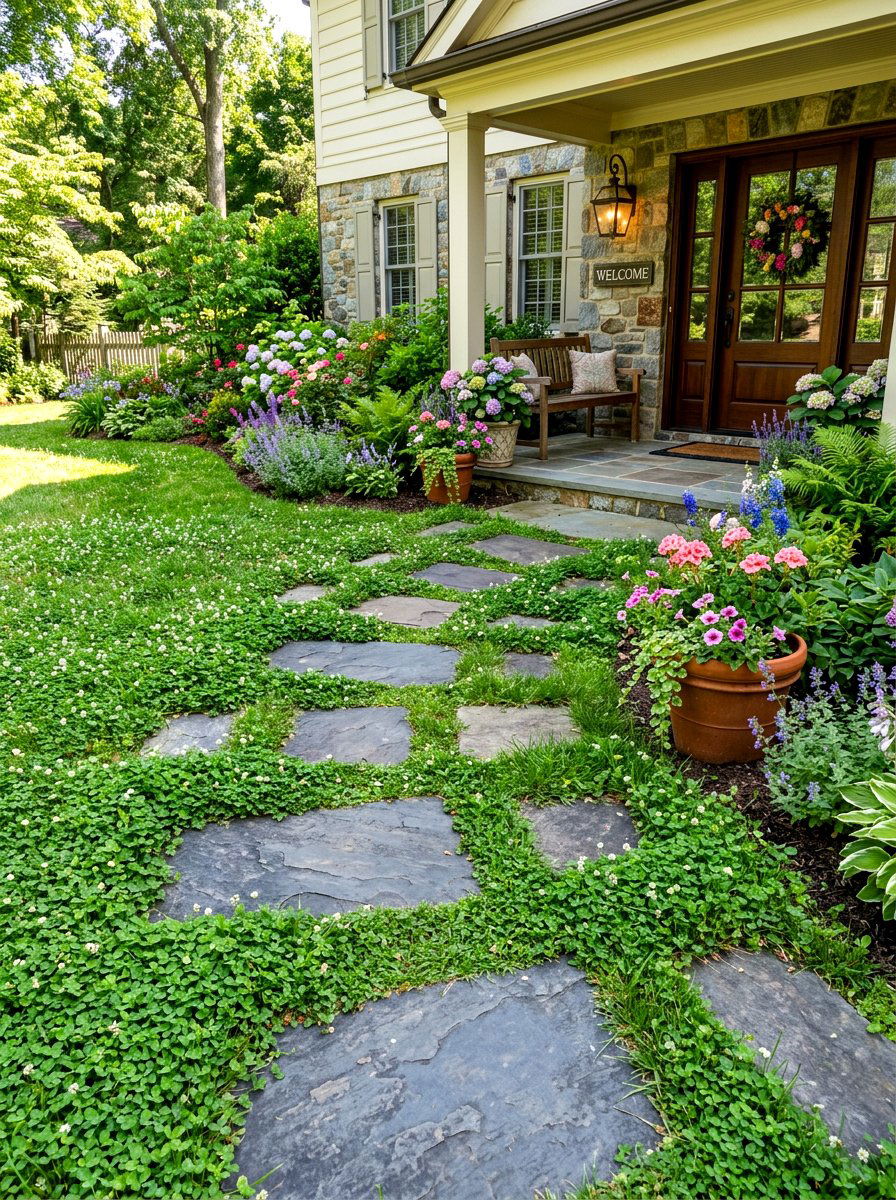
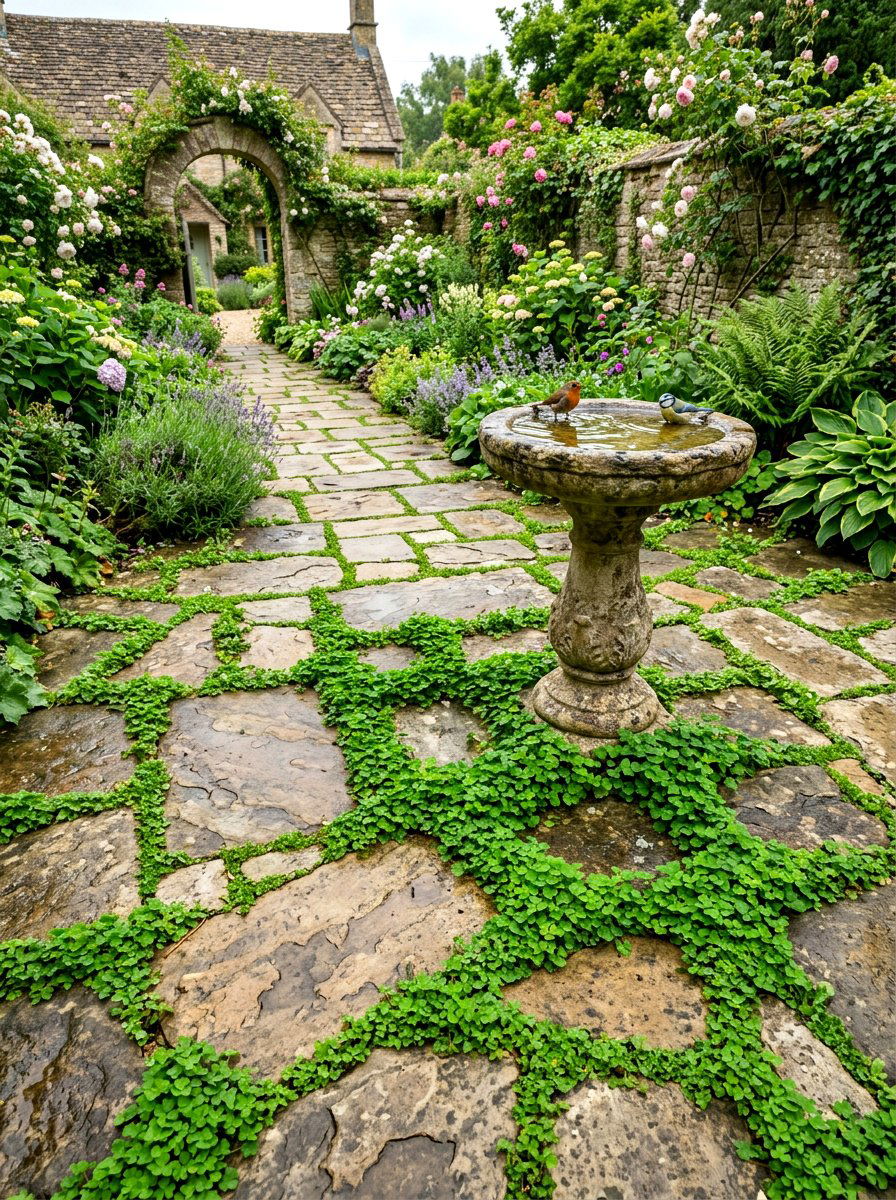
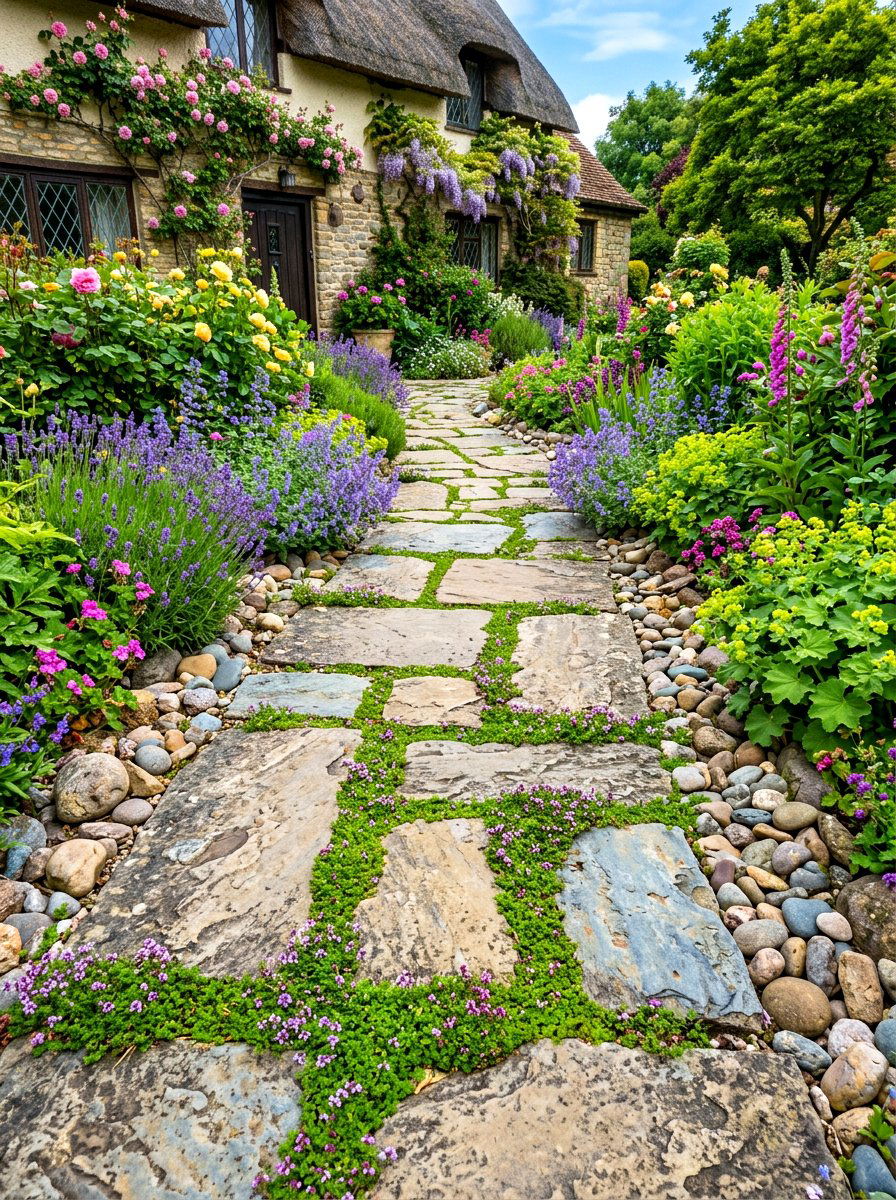
Using clover as a living groundcover around a stepping stone path is a beautiful way to soften the hard lines of a walkway. The clover fills the gaps between the stones, creating a lush green frame that looks both natural and intentional. This design prevents weeds from growing in the cracks and eliminates the need for messy gravel or mulch. It is a soft and fragrant surface that releases a pleasant scent when occasionally brushed by your feet. This combination of stone and clover creates a charming, timeless look for your front entrance that feels like a peaceful walk through a hidden garden.
21. Sloped Front Yard Clover
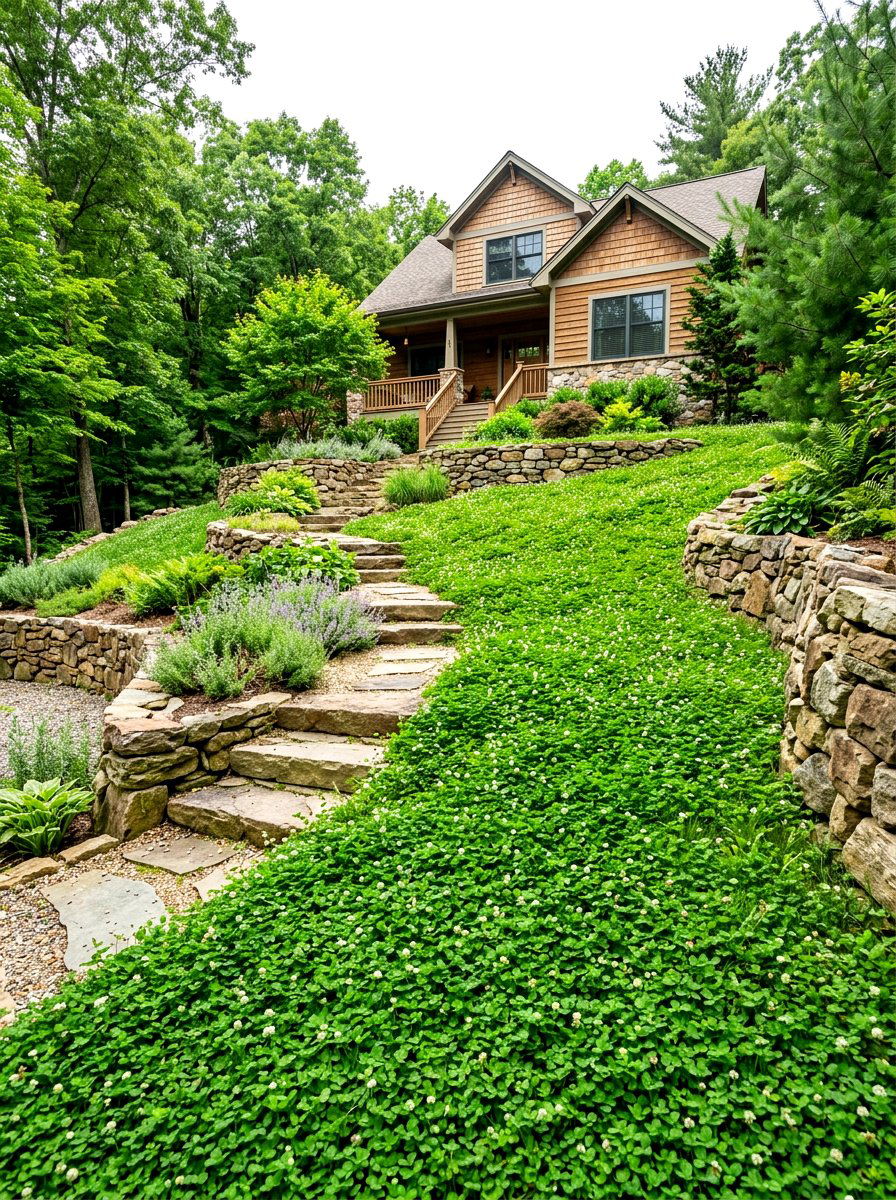
Landscaping a sloped front yard can be difficult because traditional grass often struggles with erosion and uneven watering. Clover is the perfect candidate for hillsides because its aggressive root system holds the soil firmly in place, preventing washouts during heavy rain. It spreads quickly to cover bare spots, ensuring that the entire slope remains green and stable. Because clover requires less frequent mowing, it also removes the danger of trying to operate a heavy mower on an incline. This practical and beautiful solution turns a challenging landscape feature into a lush, maintenance-free asset that enhances the overall beauty of your home.
22. Modern Clover Landscaping
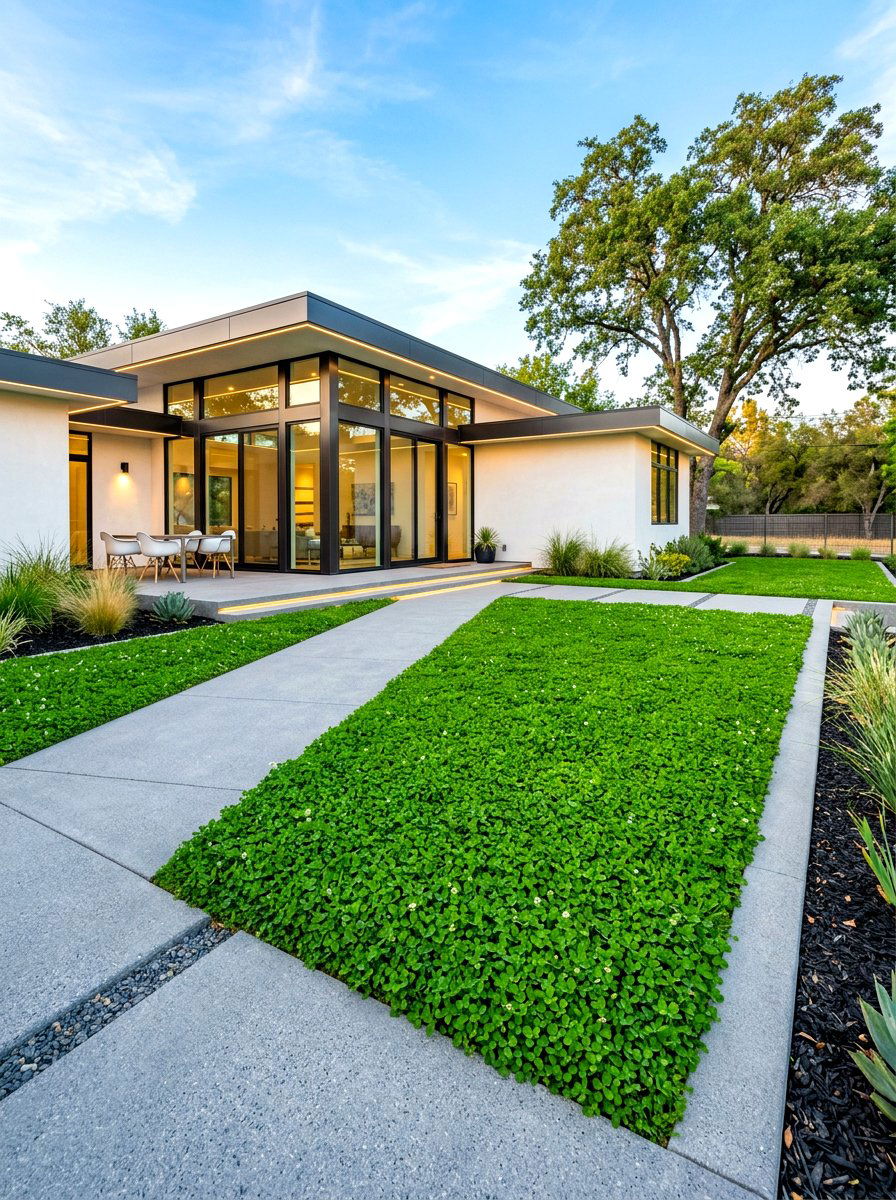
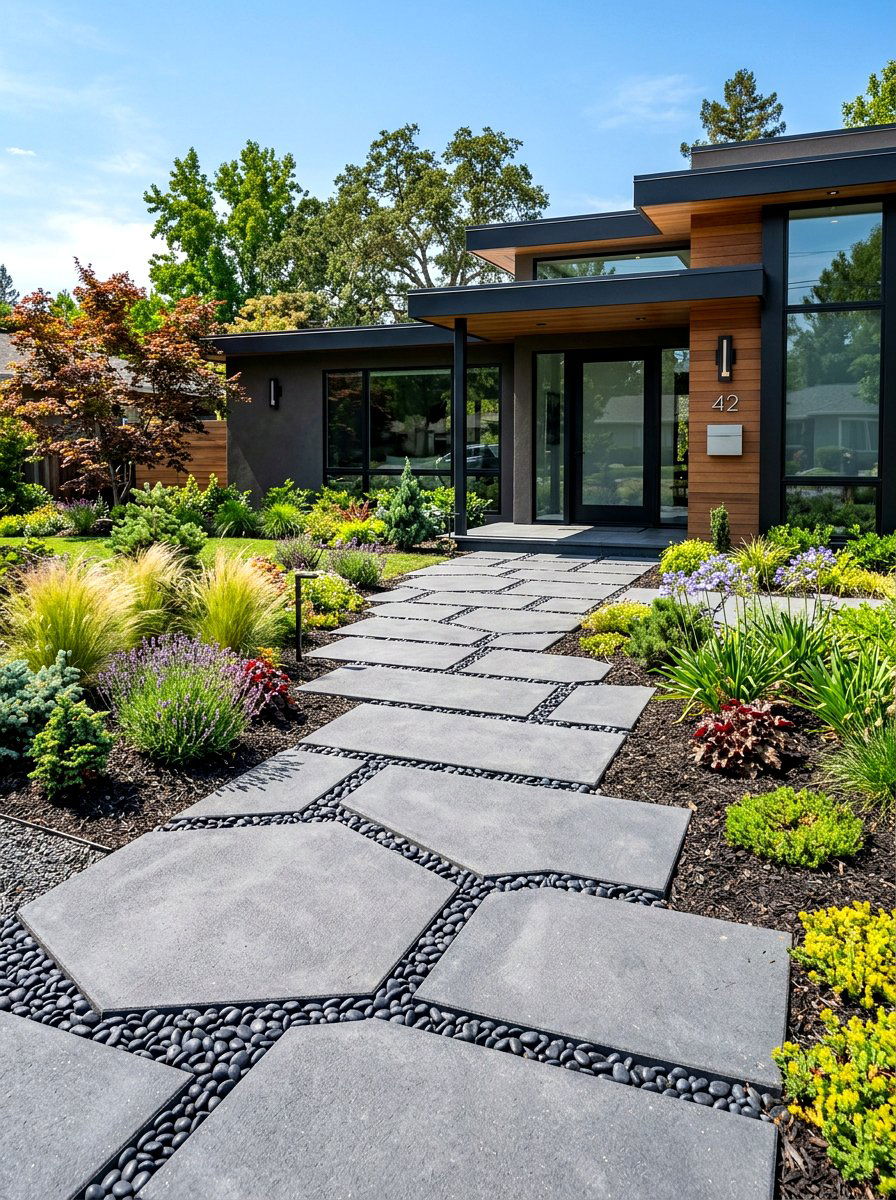
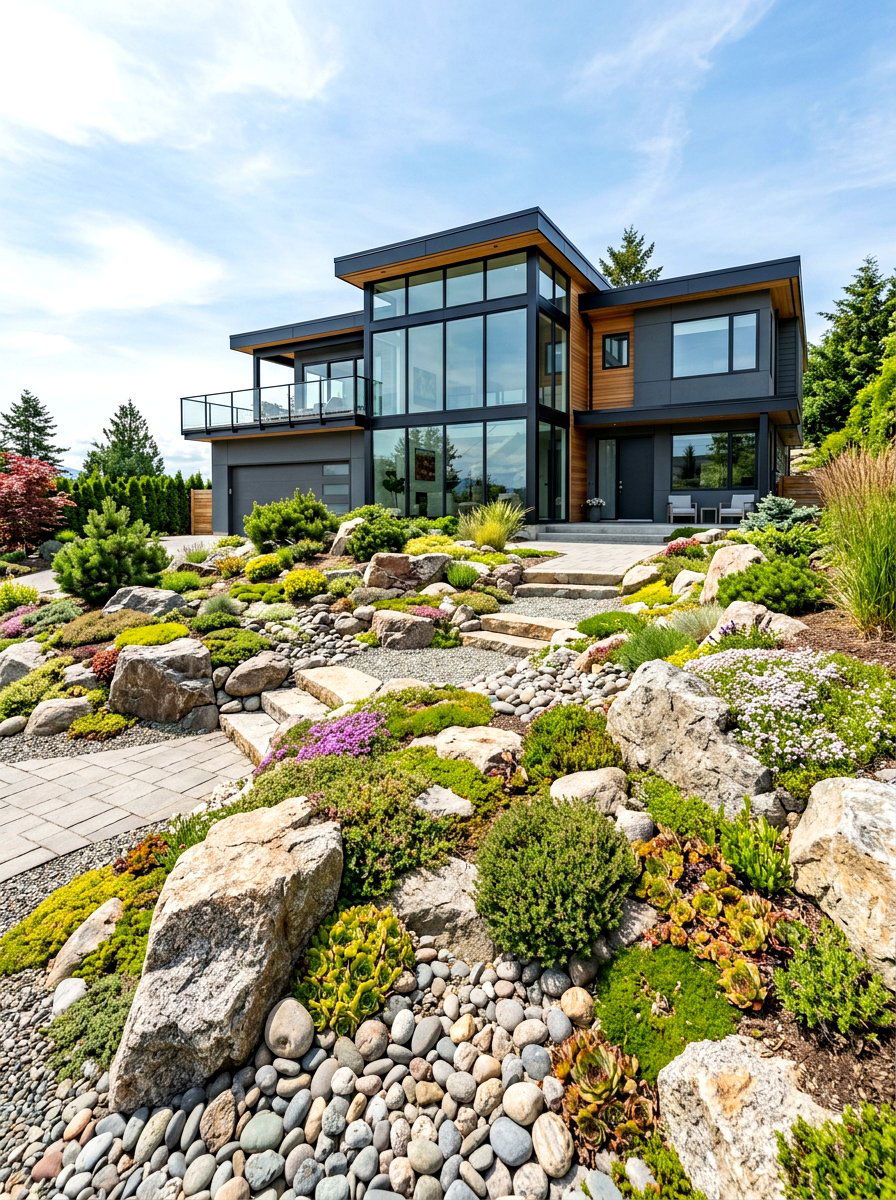
Modern home designs often benefit from the clean, minimalist look of a full microclover lawn. The uniform height and deep emerald color provide a sleek backdrop that complements contemporary architecture and sharp lines. By using metal or stone edging to define the lawn area, you can create a high-contrast look that feels very intentional and high-end. This style of landscaping prioritizes texture and color over complex flower beds, allowing the natural beauty of the clover to take center stage. It is a sophisticated way to embrace eco-friendly practices without sacrificing the polished appearance of a professionally designed and managed modern front yard.
23. Cottage Style Clover Lawn
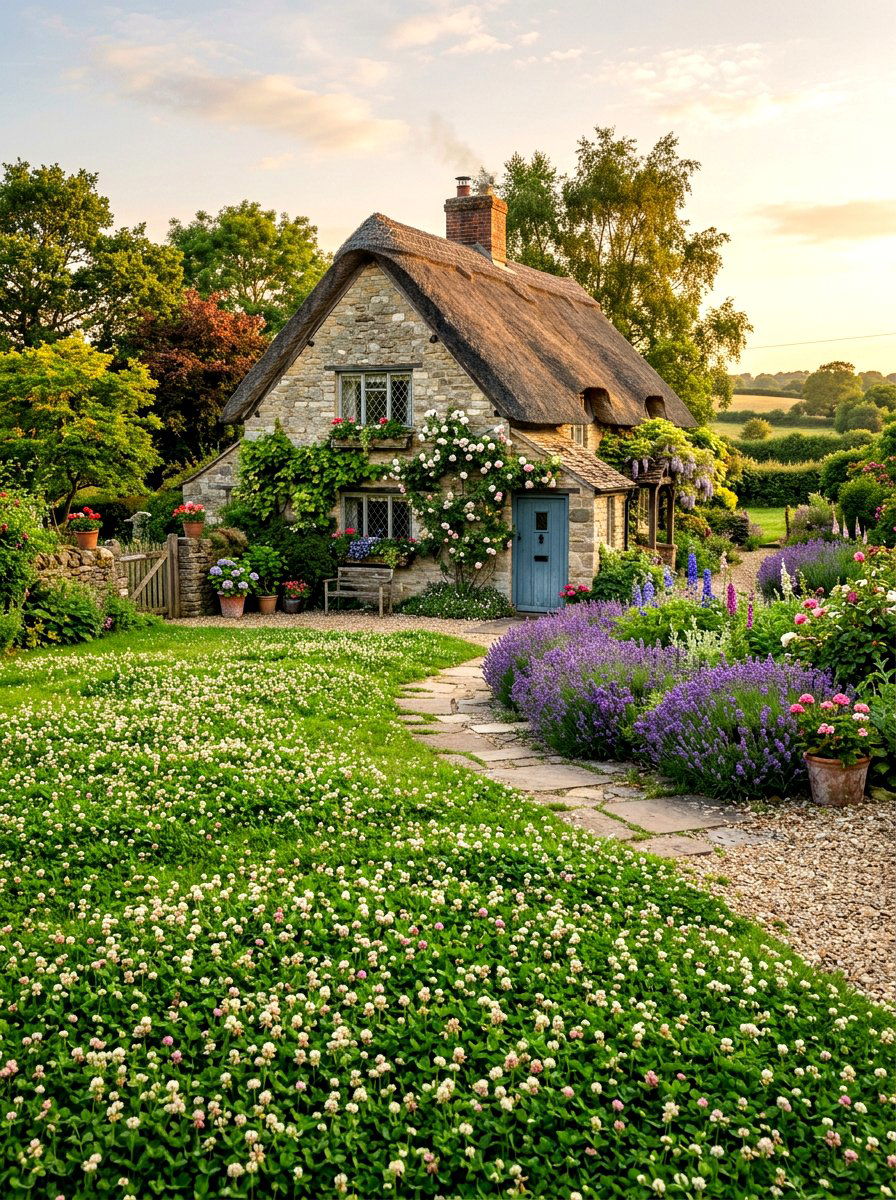
A clover lawn is the quintessential choice for a charming cottage-style front yard. The soft, rounded leaves and delicate white flowers pair perfectly with picket fences, climbing roses, and overflowing flower borders. This type of lawn encourages a relaxed and welcoming atmosphere that feels lived-in and comfortable. It looks best when allowed to grow slightly taller, creating a pillowy texture that invites you to walk barefoot through the grass. The addition of clover brings a sense of nostalgia and natural beauty to your property, making your home feel like a cozy retreat from the fast-paced world outside your garden gate.
24. Organic Clover Front Yard
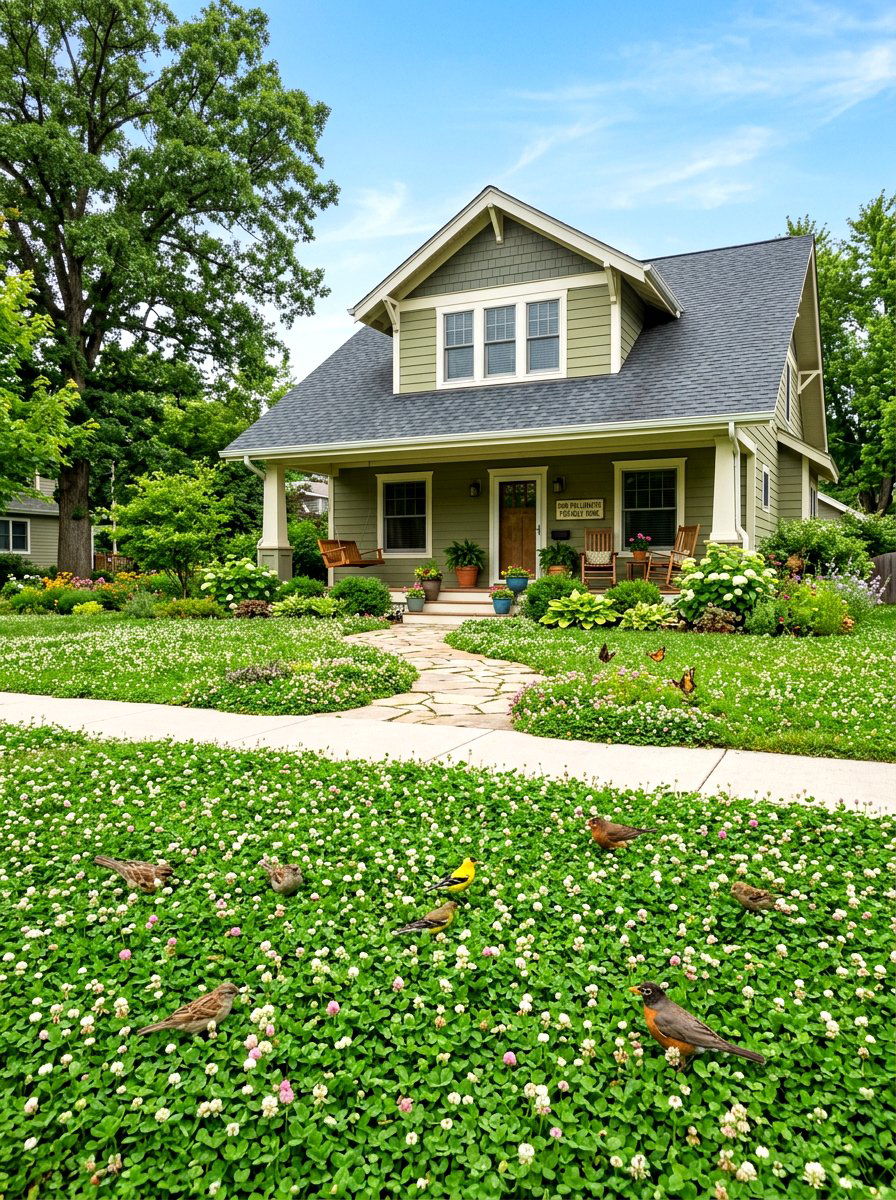
Switching to an organic clover front yard is the best way to ensure a chemical-free environment for your family and the planet. Because clover provides its own nutrients, you never have to use synthetic fertilizers that can harm soil health over time. It also naturally outcompetes weeds, which means you can eliminate the use of toxic herbicides in your landscape. This organic approach fosters a healthy soil microbiome, leading to stronger plants and a more resilient ecosystem. You can take pride in knowing that your beautiful green lawn is safe for children to play on and supportive of the natural world around you.
25. Frost Tolerant Clover Lawn
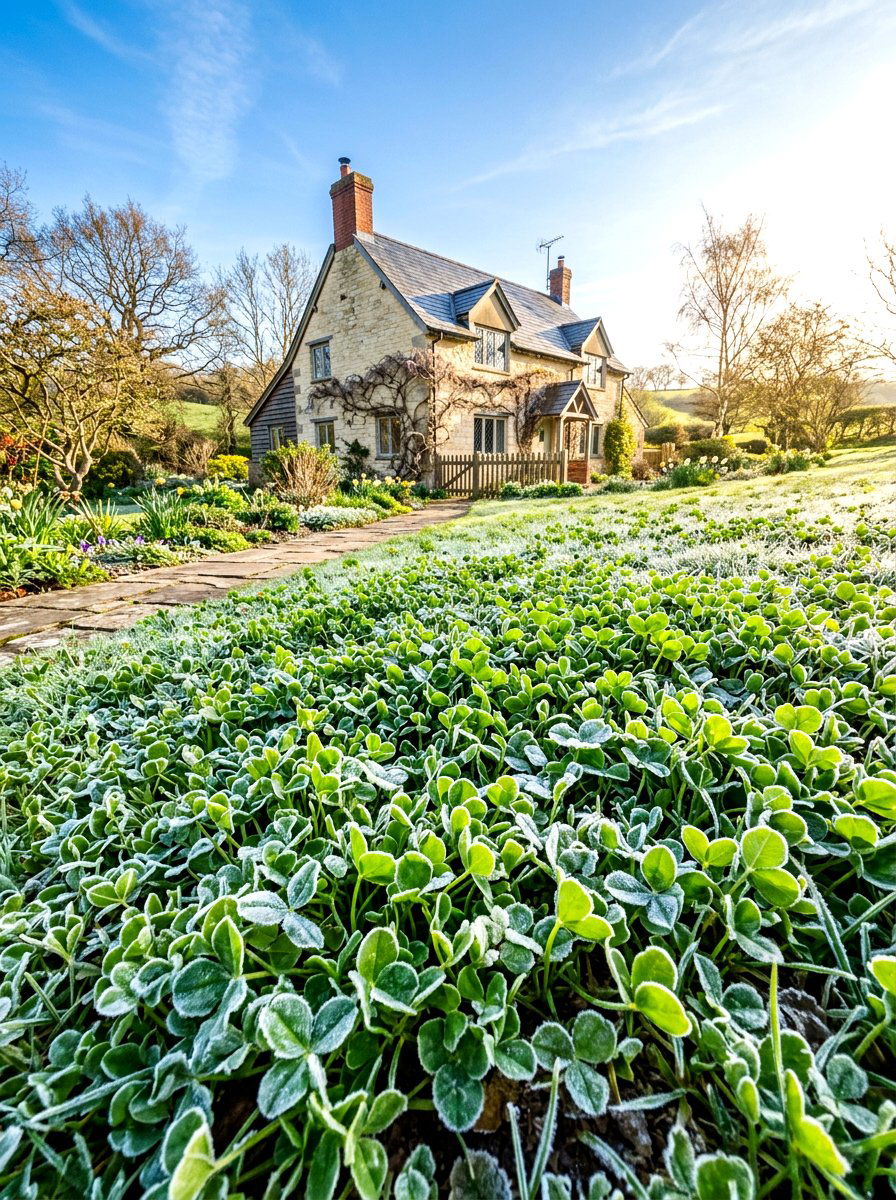
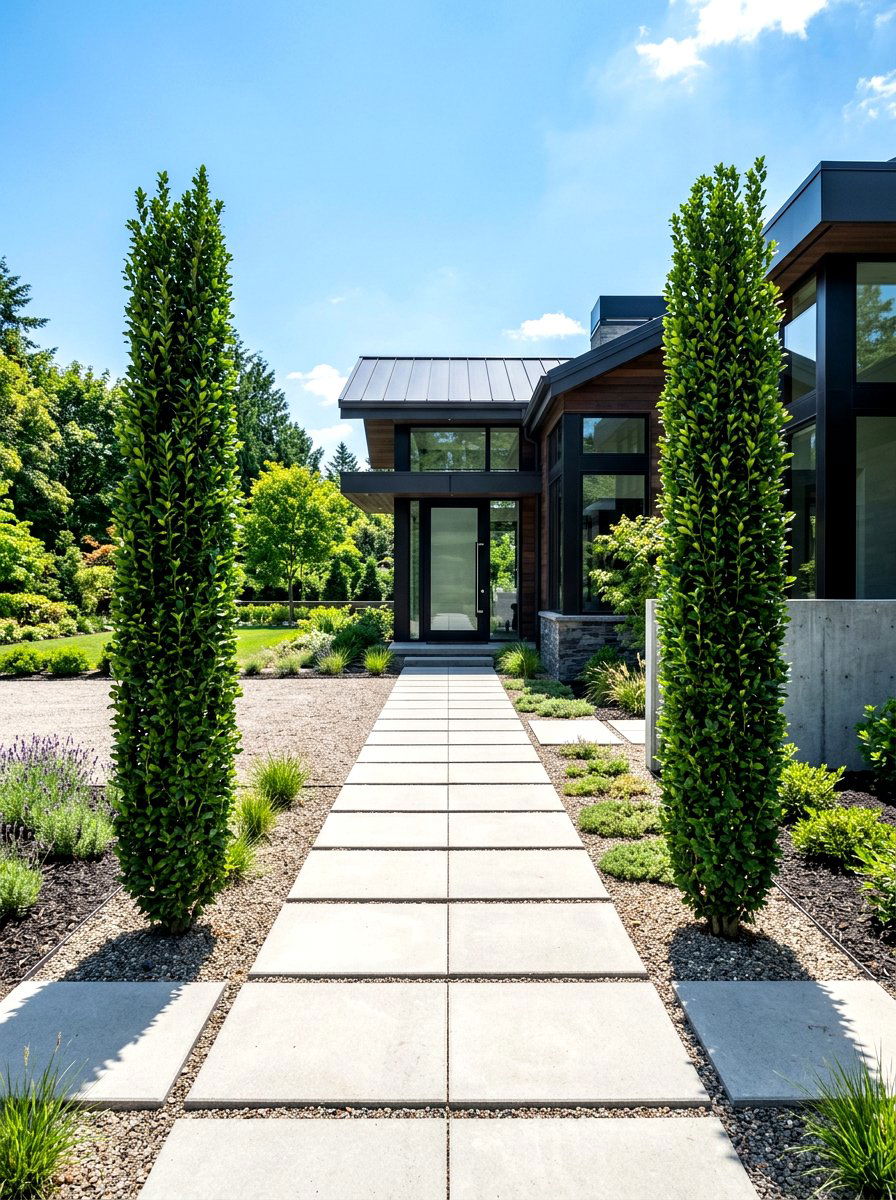
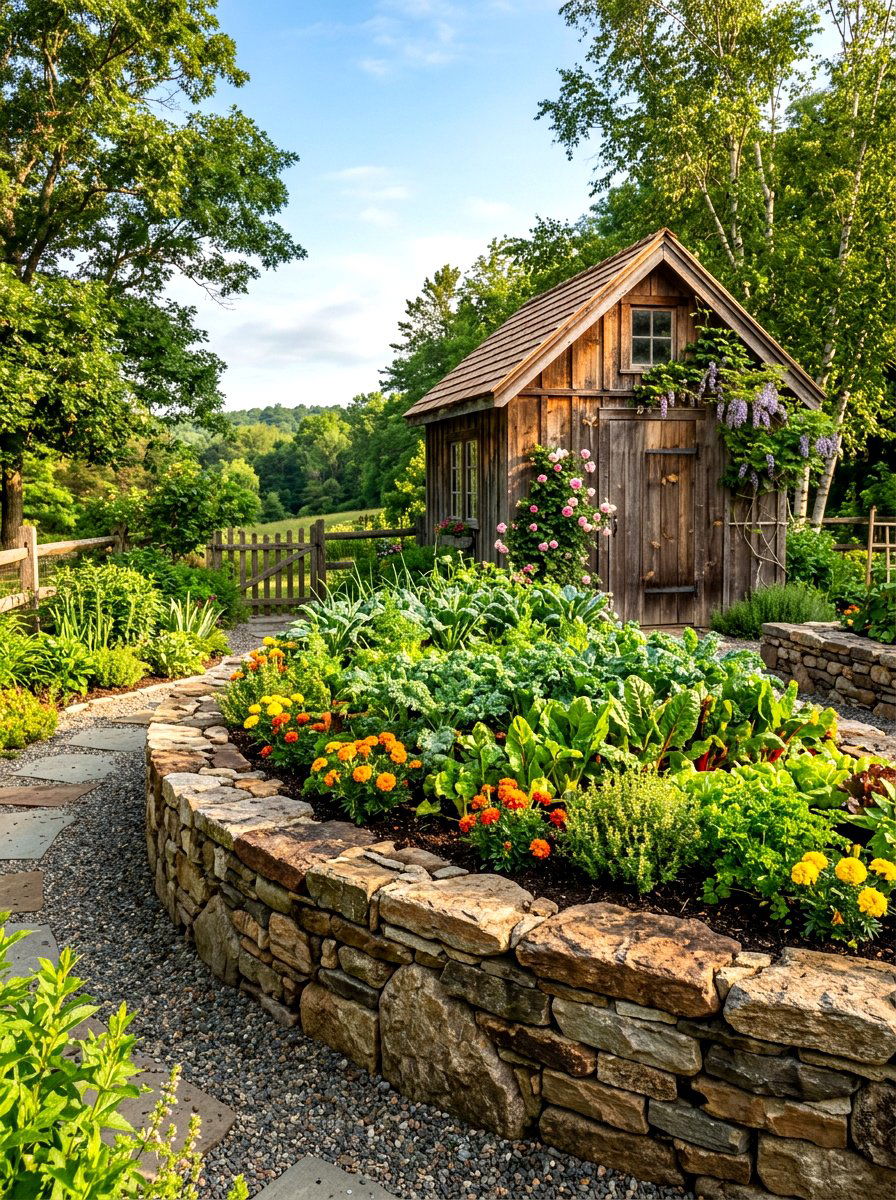
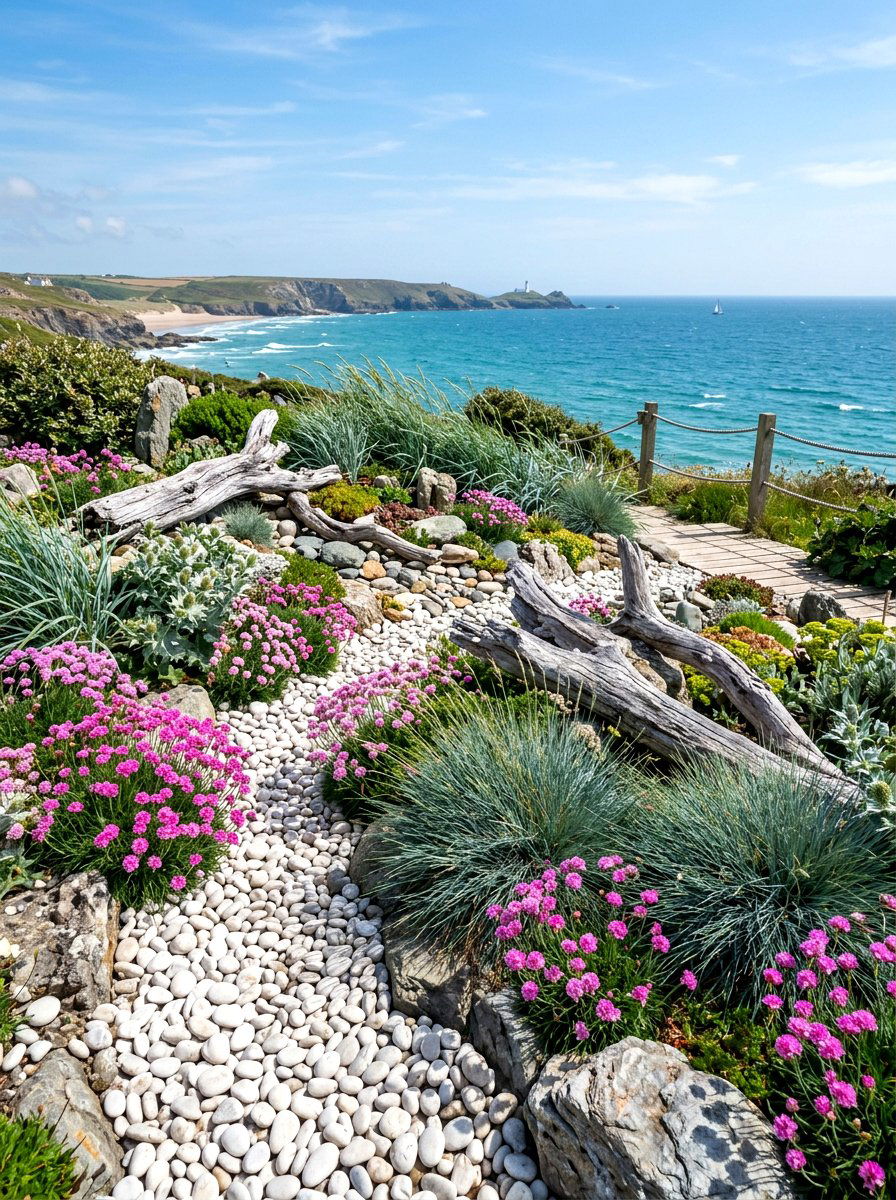
Many people worry that clover will die off at the first sign of winter, but many varieties are surprisingly frost tolerant. These hardy plants can survive cold snaps and maintain their root health even under a layer of snow. While they may lose some of their lushness in deep winter, they are among the first plants to green up as soon as the ground thaws in the spring. This quick recovery time gives your home an early boost of curb appeal compared to traditional grass lawns. A frost-tolerant clover lawn ensures a durable and long-lived landscape that thrives in diverse and changing weather conditions.
26. Dense Green Clover Carpet
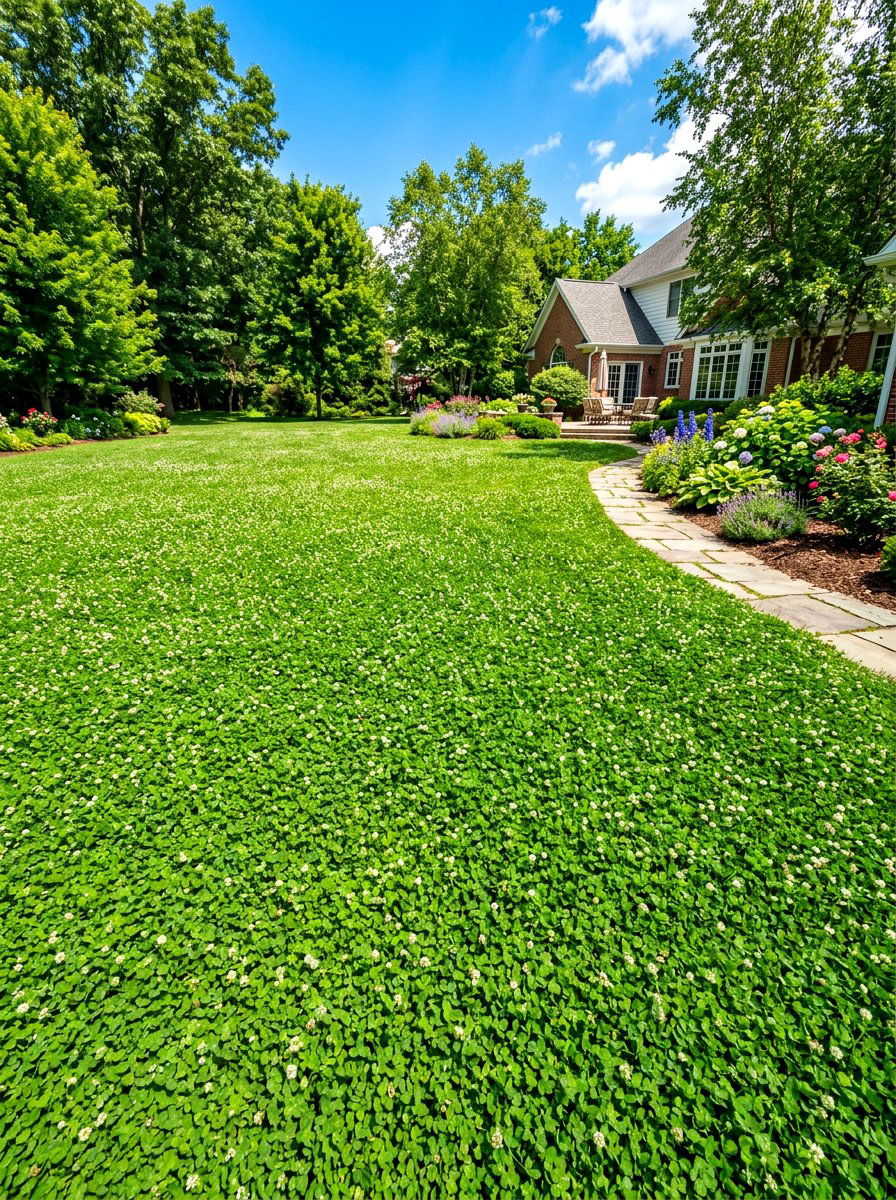
Achieving a dense green clover carpet requires proper soil preparation and consistent seeding, but the results are truly spectacular. A thick mat of clover leaves creates a luxurious texture that feels like walking on a high-end rug. This density is excellent for suppressing weeds, as it leaves no room for sunlight to reach the soil surface. It also helps to keep the ground cool, reducing evaporation and keeping your yard hydrated during the summer months. A well-established clover carpet provides a consistent and vibrant sea of green that serves as the perfect foundation for all your other front yard landscaping elements.
27. Pollinator Habitat Clover Lawn
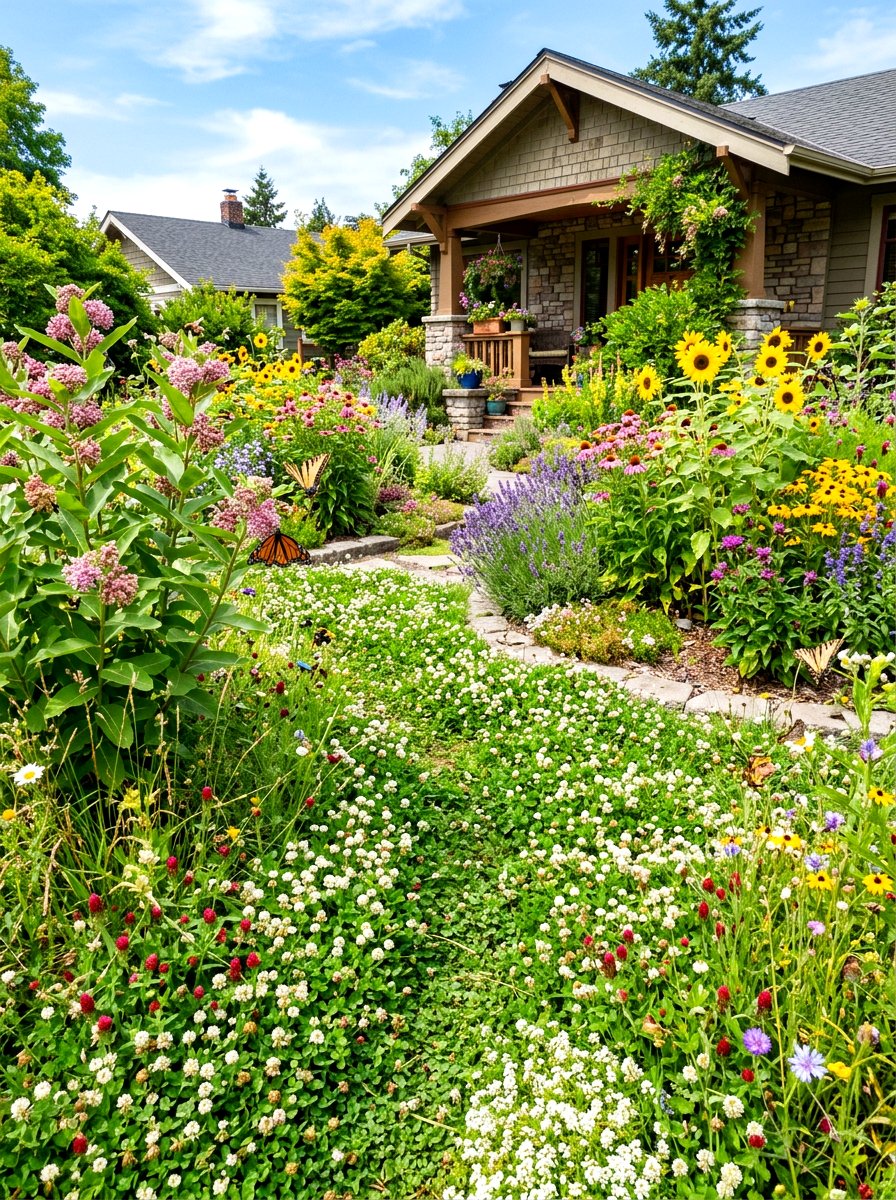
A pollinator habitat clover lawn is a dedicated space designed to support the local ecosystem by providing consistent food sources for insects. By mixing various types of clover with native flowering plants, you create a diverse environment that attracts bees, butterflies, and ladybugs. This type of lawn is a beautiful way to bring more nature to your doorstep and can even help improve the yield of nearby vegetable gardens. It is a living, breathing landscape that changes with the seasons, offering a fascinating look into the natural world. This purposeful design transforms a simple front yard into a vital and thriving ecological resource.
28. Minimalist Clover Front Yard
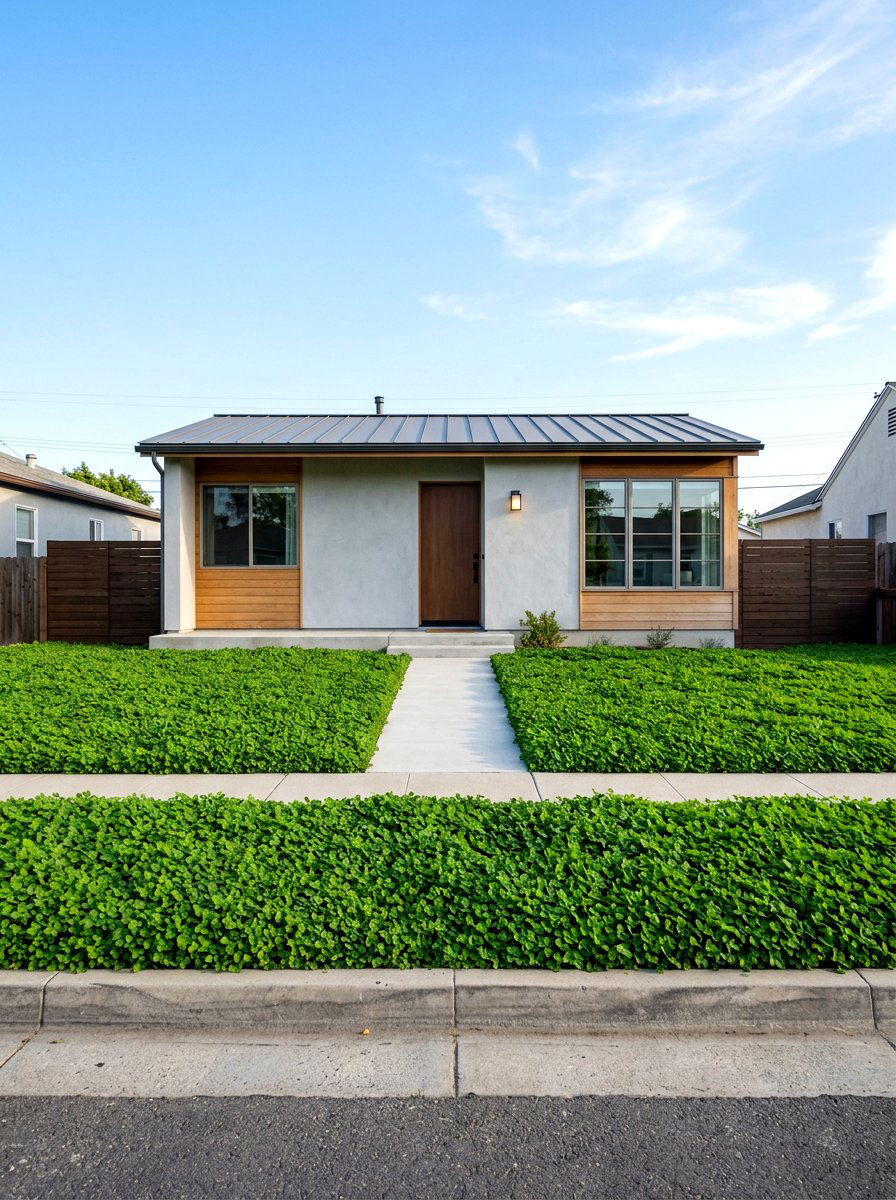
For a minimalist approach, a single-species clover lawn provides a calm and uncluttered aesthetic that emphasizes simplicity. By removing complex garden beds and focusing on a wide expanse of green, you create a sense of space and tranquility. This look is particularly effective for small front yards where multiple elements can make the area feel cramped. The soft texture of the clover adds visual interest without the need for additional decor or plants. It is a low-stress landscaping solution that offers a clean and modern look while requiring very little effort to maintain its beautiful and serene appearance throughout the year.
29. Naturalized Clover Meadow
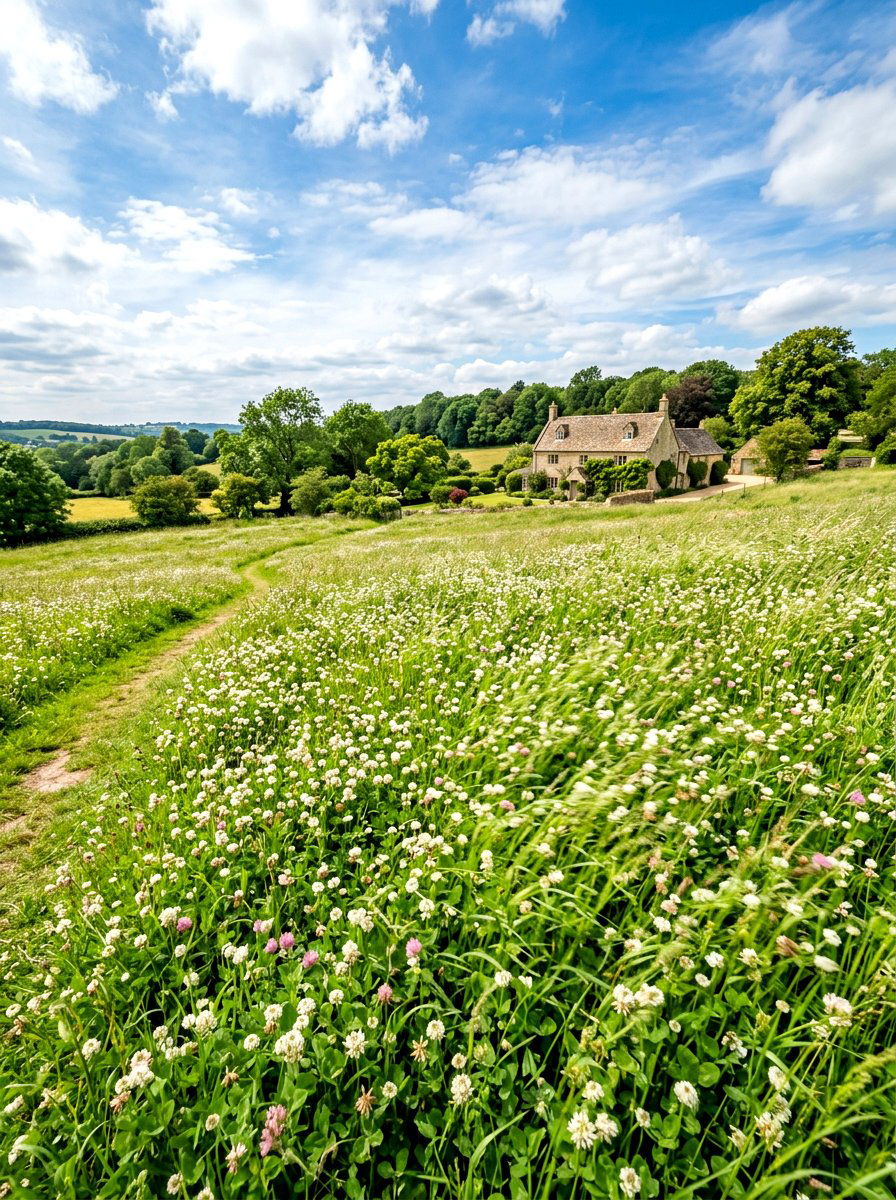
A naturalized clover meadow is a wonderful choice for homeowners who want to embrace a wilder and more organic front yard. This style involves letting the clover grow to its full height and allowing other beneficial plants to intermingle naturally. The result is a soft, wavy landscape that moves beautifully in the breeze and feels like a piece of the countryside. This approach is excellent for large properties where mowing a traditional lawn would be time-consuming and expensive. A naturalized meadow creates a peaceful and scenic view that changes throughout the day as light and shadows dance across the tall, green stems.
30. Moss and Clover Lawn
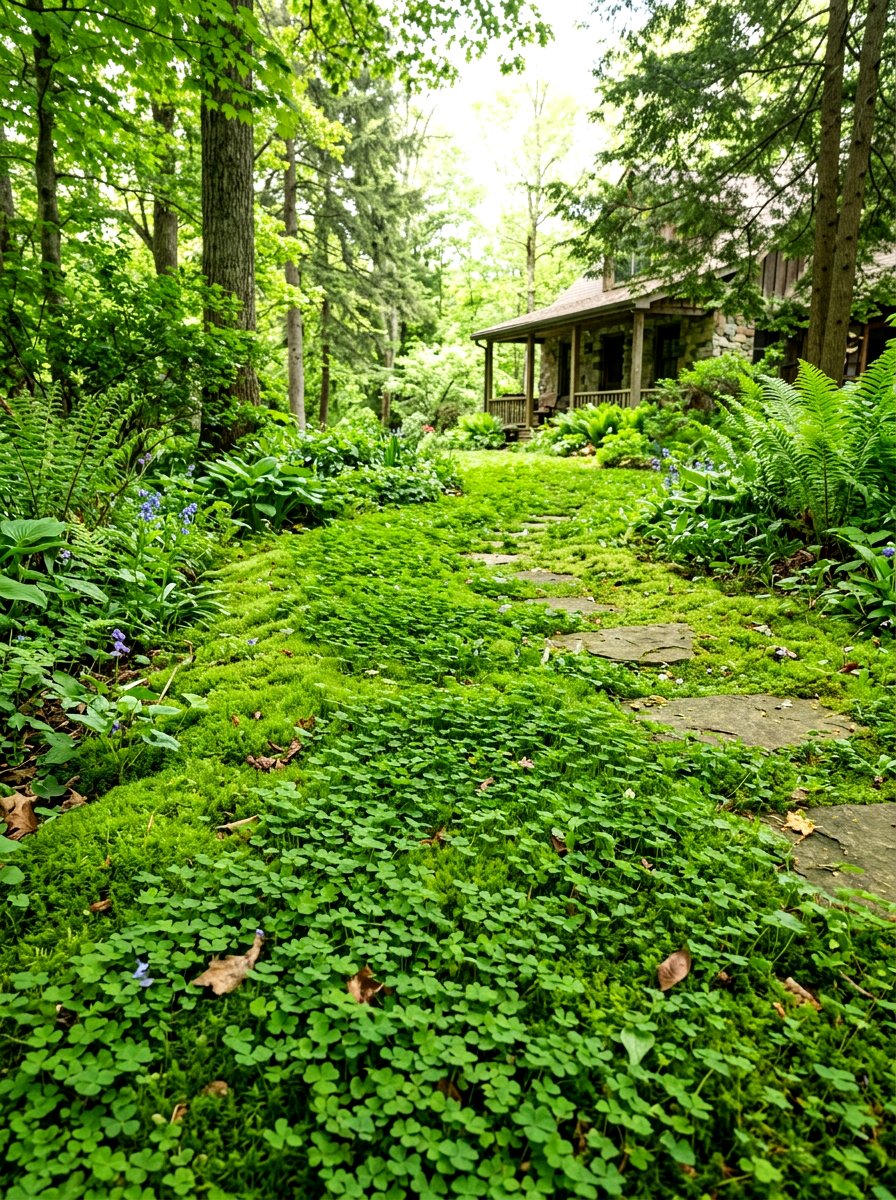
In damp or shady areas where even clover might need a partner, a moss and clover mix creates an incredibly soft and verdant landscape. These two groundcovers work together to fill every corner of the yard with deep green color and interesting textures. The moss provides a velvety base, while the clover adds height and delicate leaves on top. This combination is perfect for creating a woodland-inspired front yard that feels cool and refreshing. It is a low-maintenance duo that thrives with very little intervention, offering a unique and beautiful alternative to traditional turf in challenging or moisture-prone environmental conditions.
Conclusion:
Choosing a clover front lawn is a powerful step toward a more sustainable and beautiful home environment. These 30 ideas demonstrate that clover is not just a weed but a versatile landscaping tool that can adapt to any style or climate. Whether you prefer the manicured look of microclover or the vibrant energy of a crimson meadow, there is a perfect variety for your property. By embracing these low-maintenance alternatives, you save time, reduce water usage, and support the local ecosystem. Your front yard becomes more than just a space to mow; it becomes a thriving, green sanctuary that enhances your home’s charm.

Related posts: