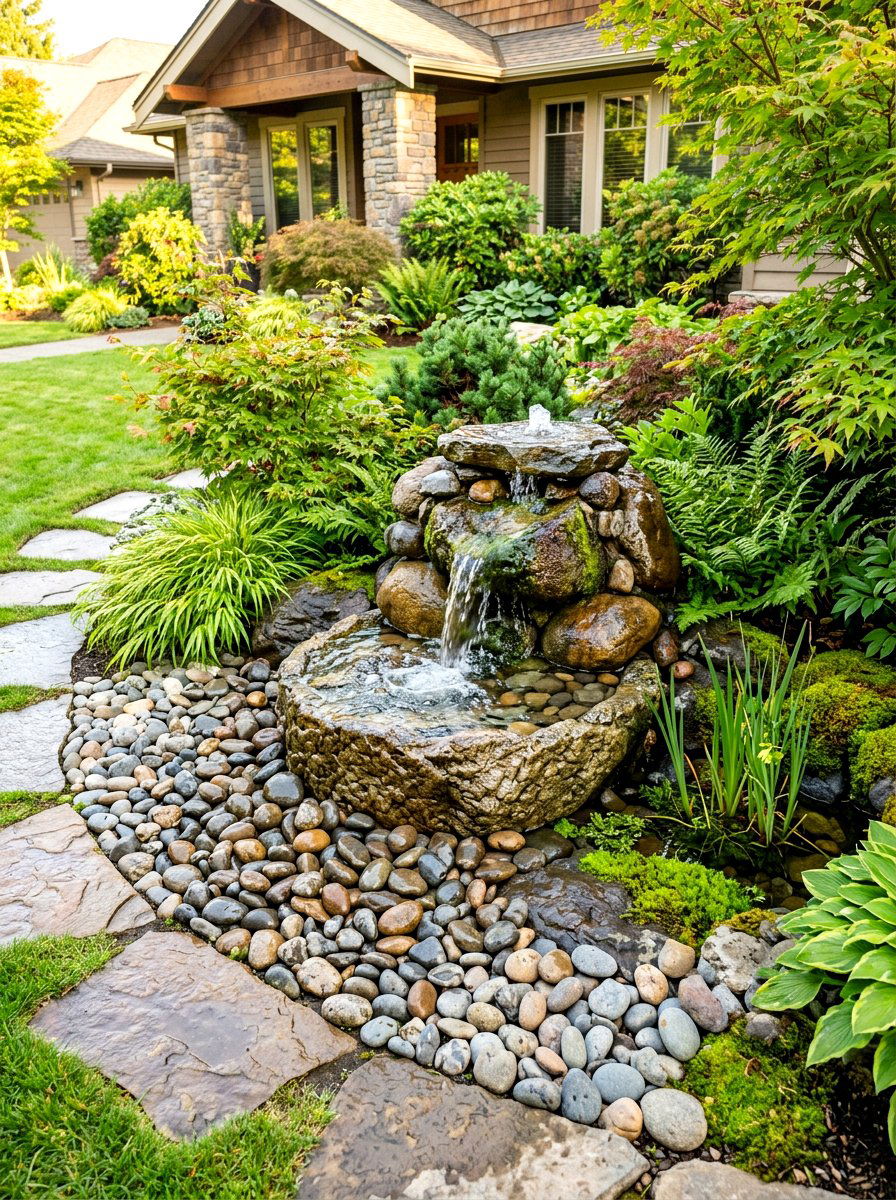
Lawn edging is an essential component for any homeowner looking to elevate their property’s curb appeal while simplifying yard maintenance. By creating a distinct physical barrier between your grass and garden beds, you prevent invasive roots from creeping into your flowers. This subtle yet powerful design choice adds a professional, finished look to any outdoor space, making it feel more organized and intentional. From rustic wooden logs to sleek modern metal strips, the variety of materials available allows you to customize your landscape to match your home’s architectural style perfectly. Choosing the right border will ensure your mulch stays in place and your pathways remain clearly defined for years.
1. Brick lawn edging
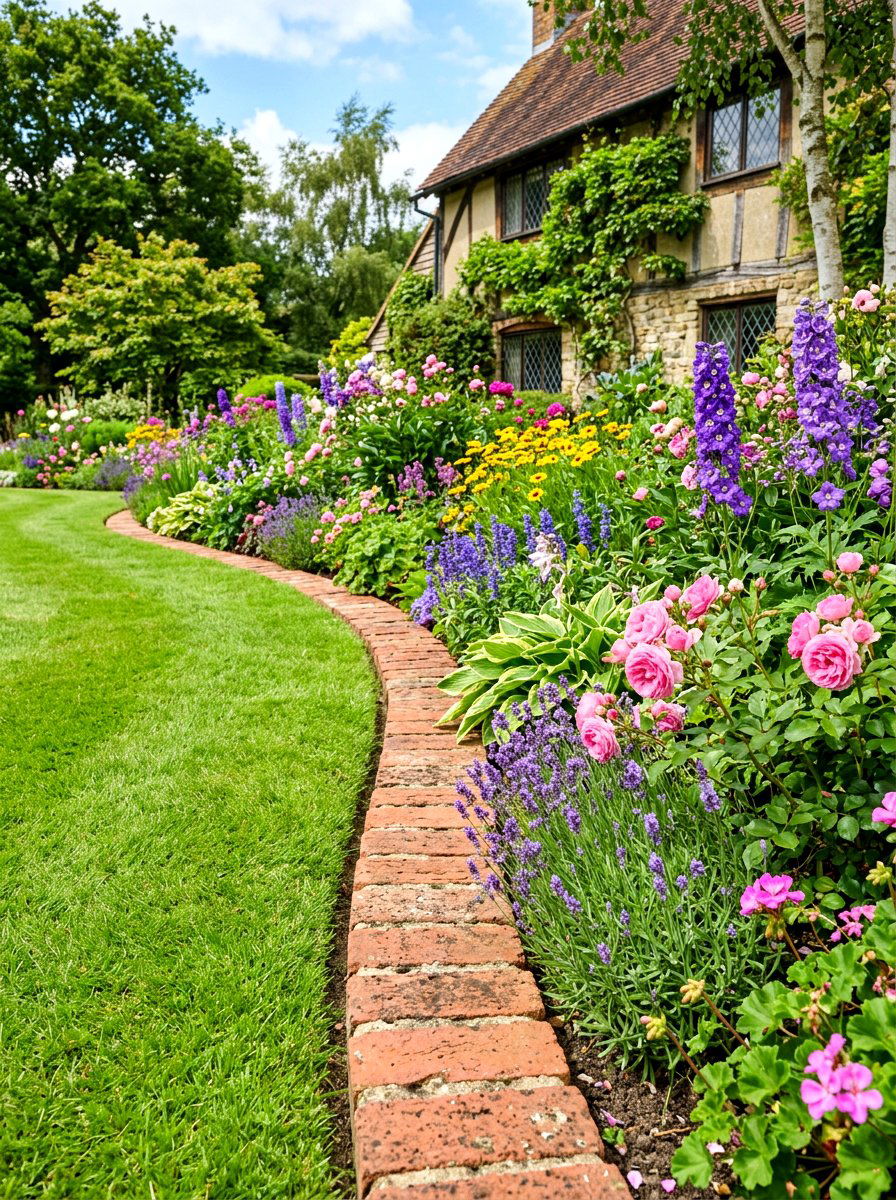
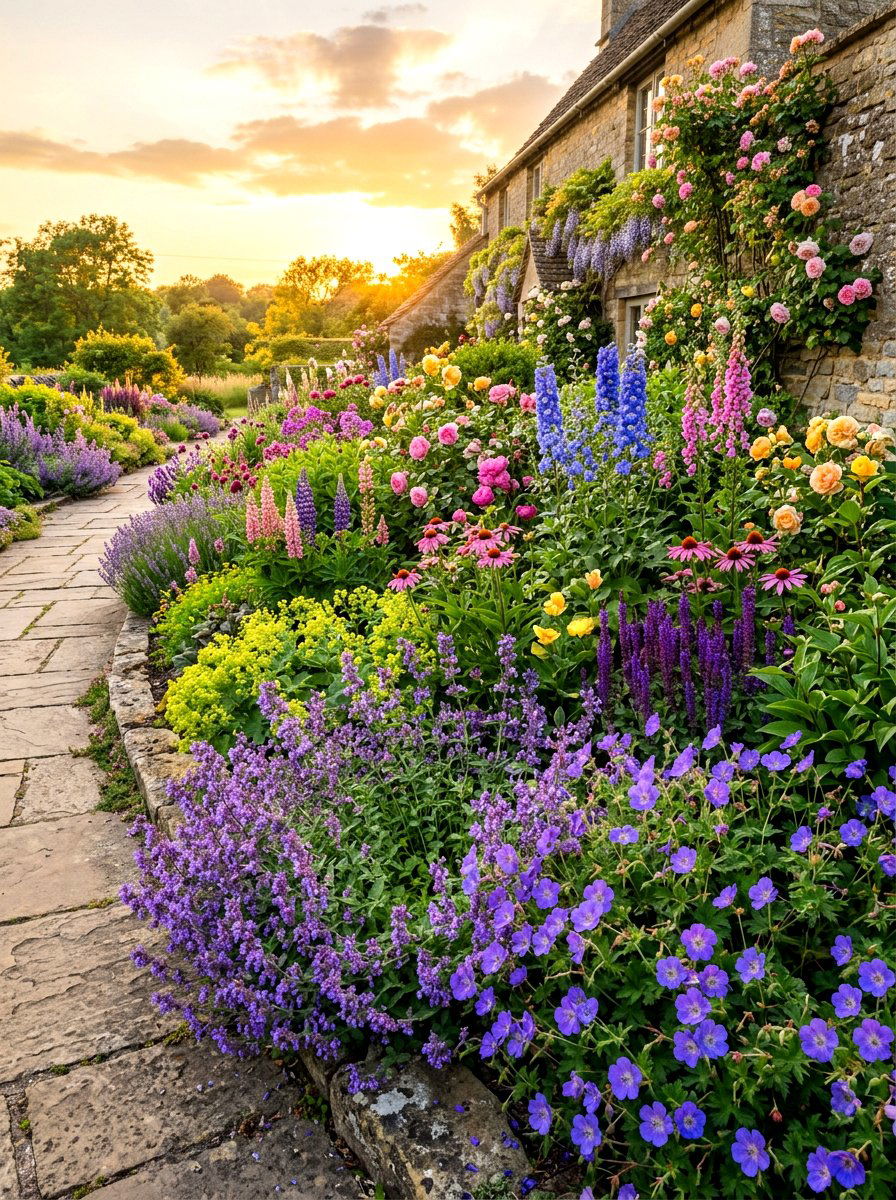
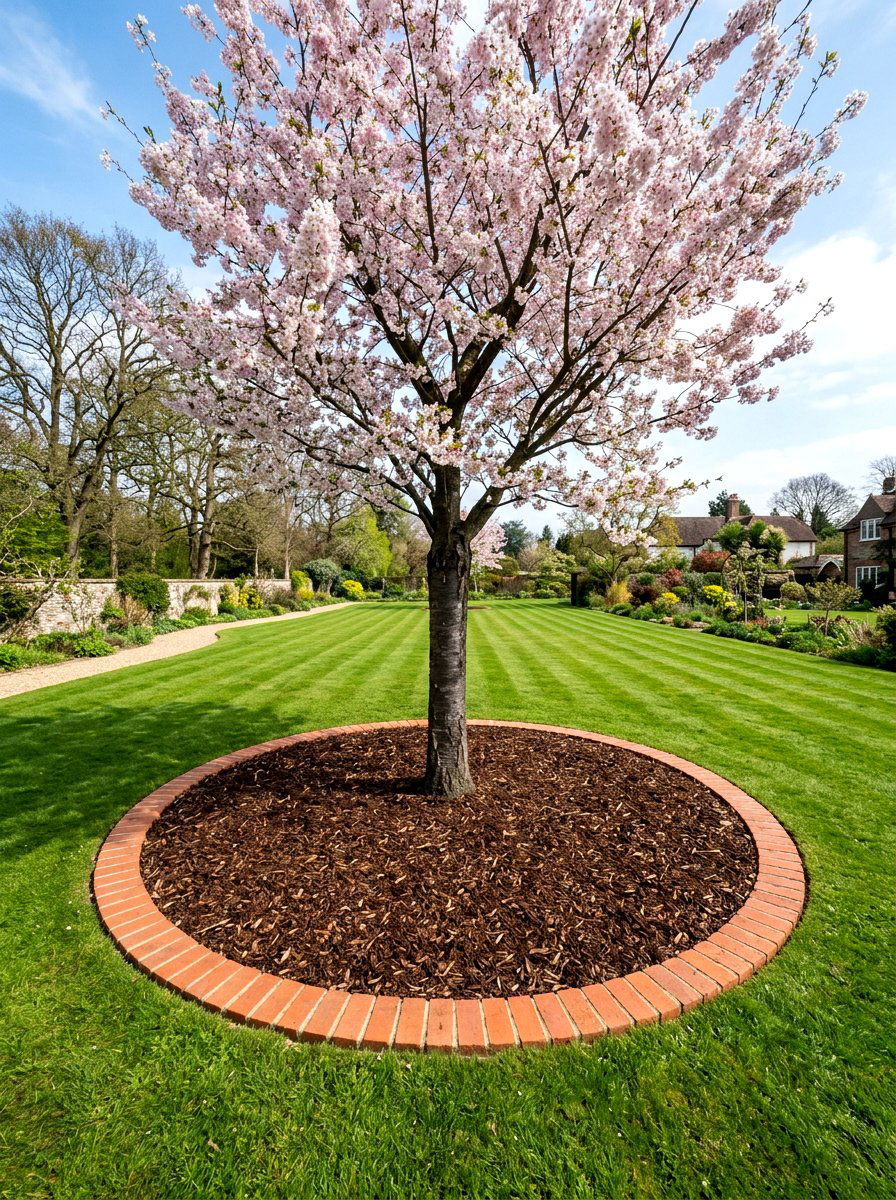
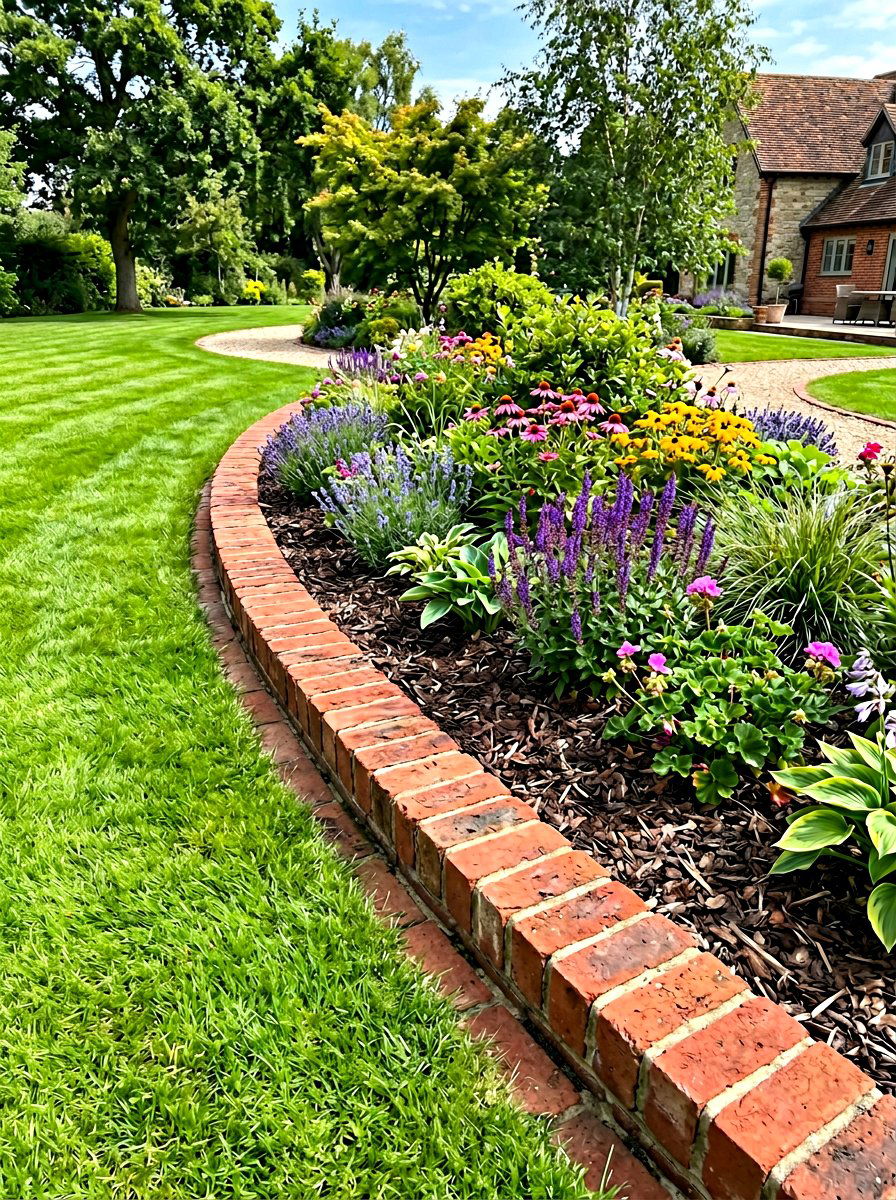
Brick lawn edging remains a favorite choice for many traditional and cottage-style gardens due to its timeless aesthetic and remarkable durability. These sturdy blocks can be laid in several different patterns, such as a simple running bond or a more decorative sawtooth arrangement, to add visual texture to your yard. When installed flush with the ground, bricks create a convenient mowing strip that allows your lawnmower wheels to glide right over the surface. This eliminates the need for tedious string trimming and keeps your grass looking sharp. Whether you use new red bricks or reclaimed vintage ones, this material offers a classic charm that never goes out of style.
2. Metal garden borders
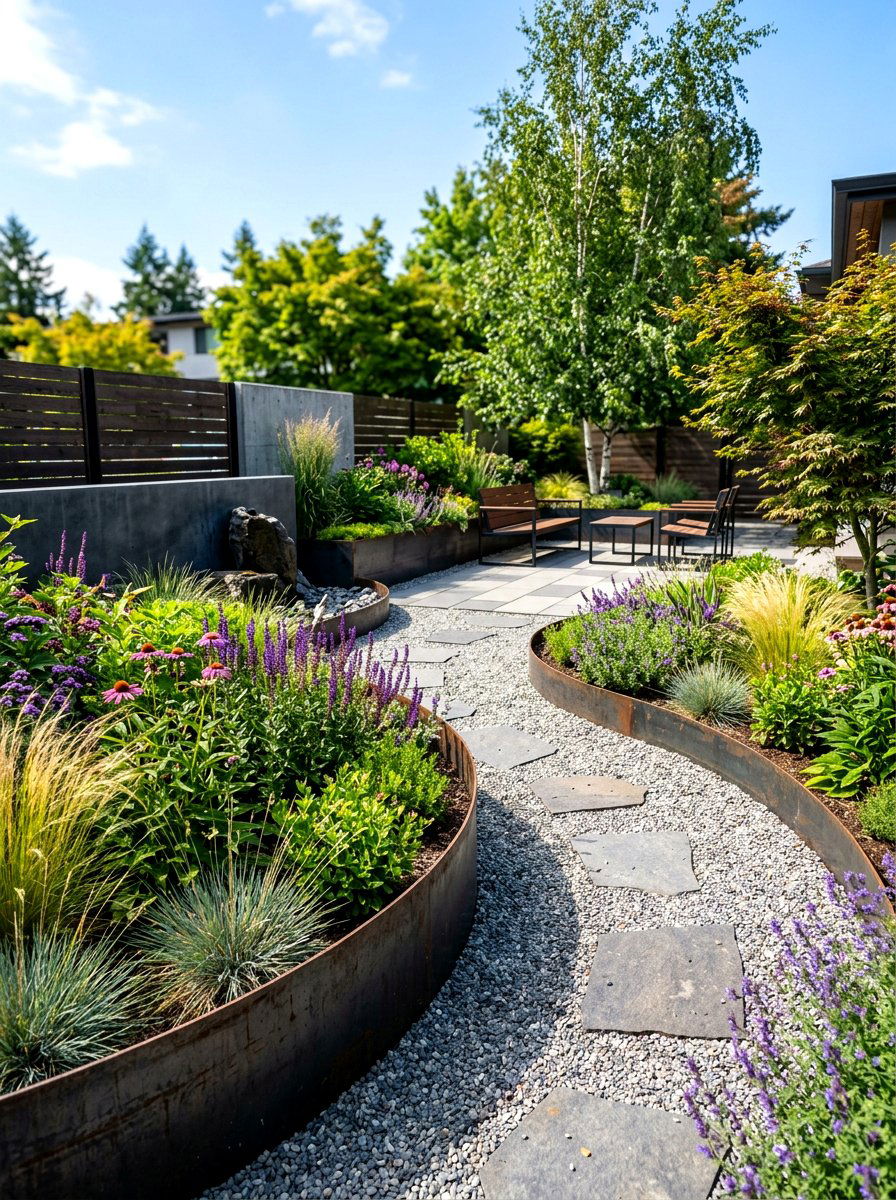
Metal garden borders are the ideal solution for homeowners who prefer a minimalist and contemporary aesthetic in their outdoor spaces. Often made from flexible steel or lightweight aluminum, these thin strips are perfect for creating crisp, clean lines or sweeping curves around flower beds. One of the biggest advantages of metal is its low-profile design, which provides a professional finish without being visually overwhelming. Corten steel is especially popular right now because it develops a beautiful rust-colored patina over time, adding an industrial yet organic feel to the landscape. Because they are so thin, these borders are incredibly easy to install by simply hammering them into the soil.
3. Natural stone edging
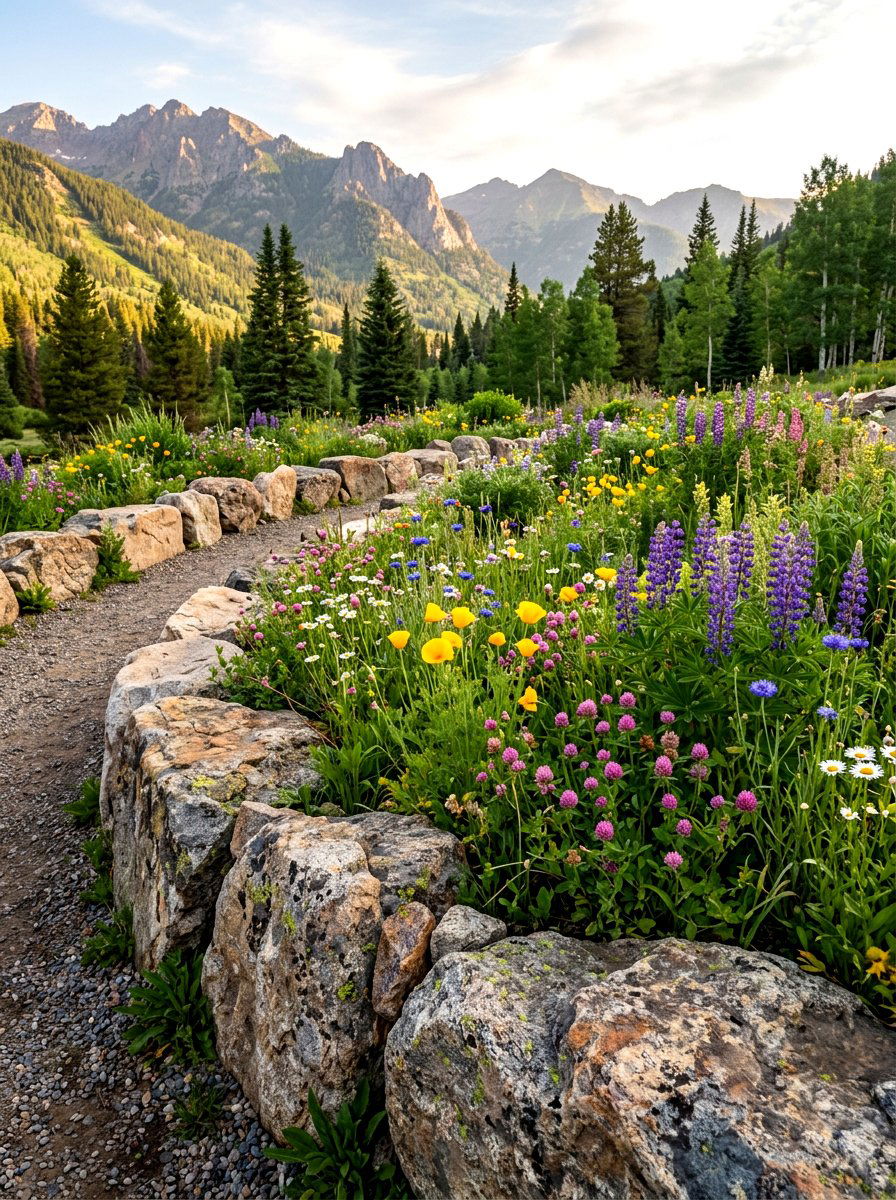
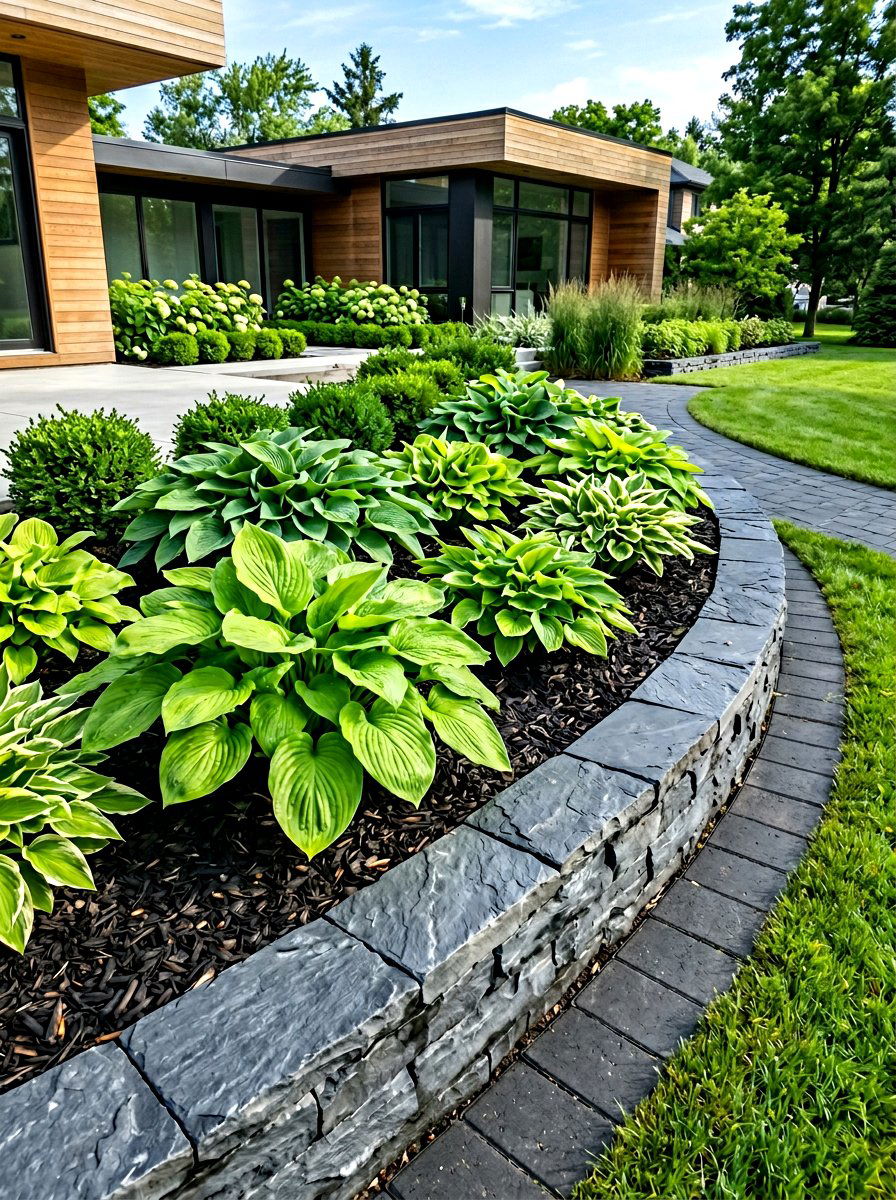
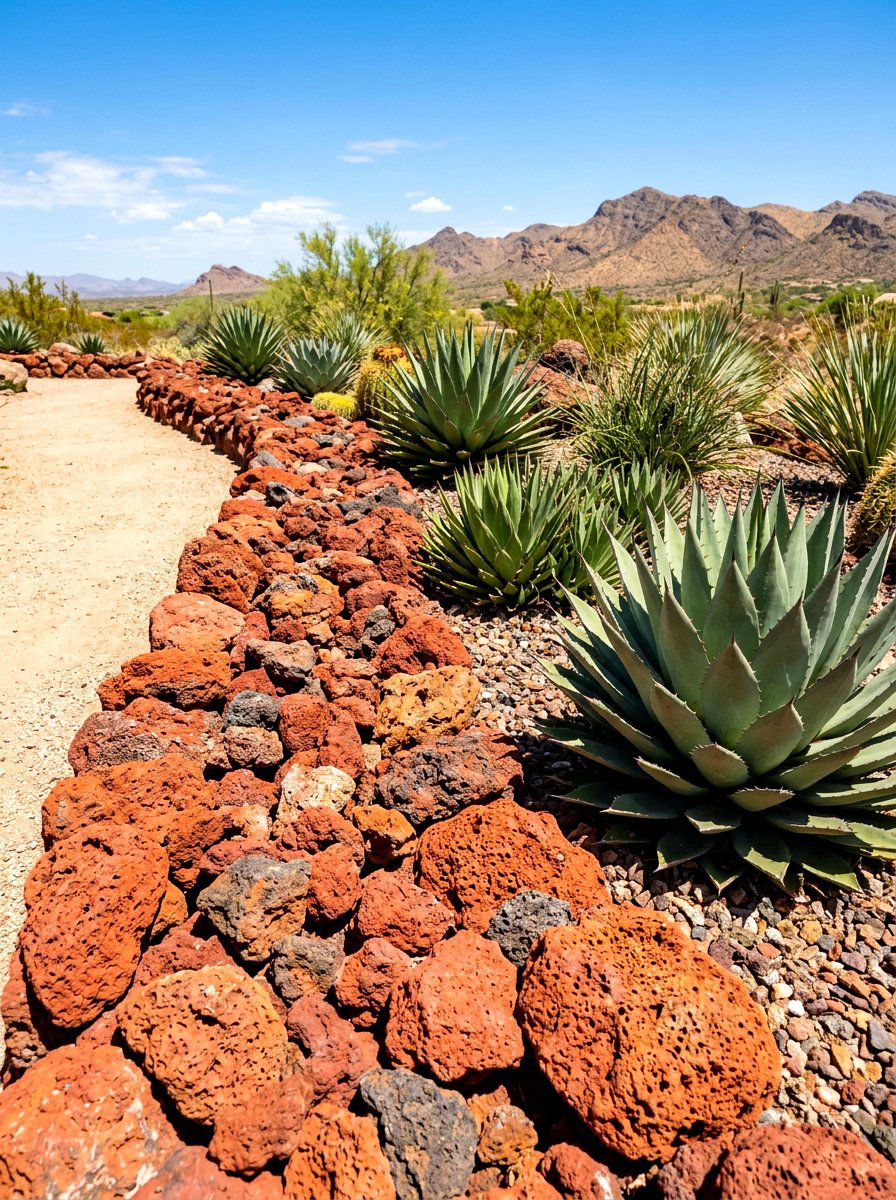
Natural stone edging brings an organic and rugged beauty to any backyard, making it feel like an extension of the natural environment. You can use various types of stones, such as limestone, sandstone, or fieldstone, to create a border that feels both permanent and grounded. Large boulders can be used for a dramatic, rustic effect, while smaller, stacked flat stones offer a more refined and structured look. This material is exceptionally durable and can withstand extreme weather conditions for decades without losing its appeal. Because stones come in unique shapes and sizes, no two garden borders will look exactly the same, providing a truly custom feel to your yard.
4. Plastic landscape borders
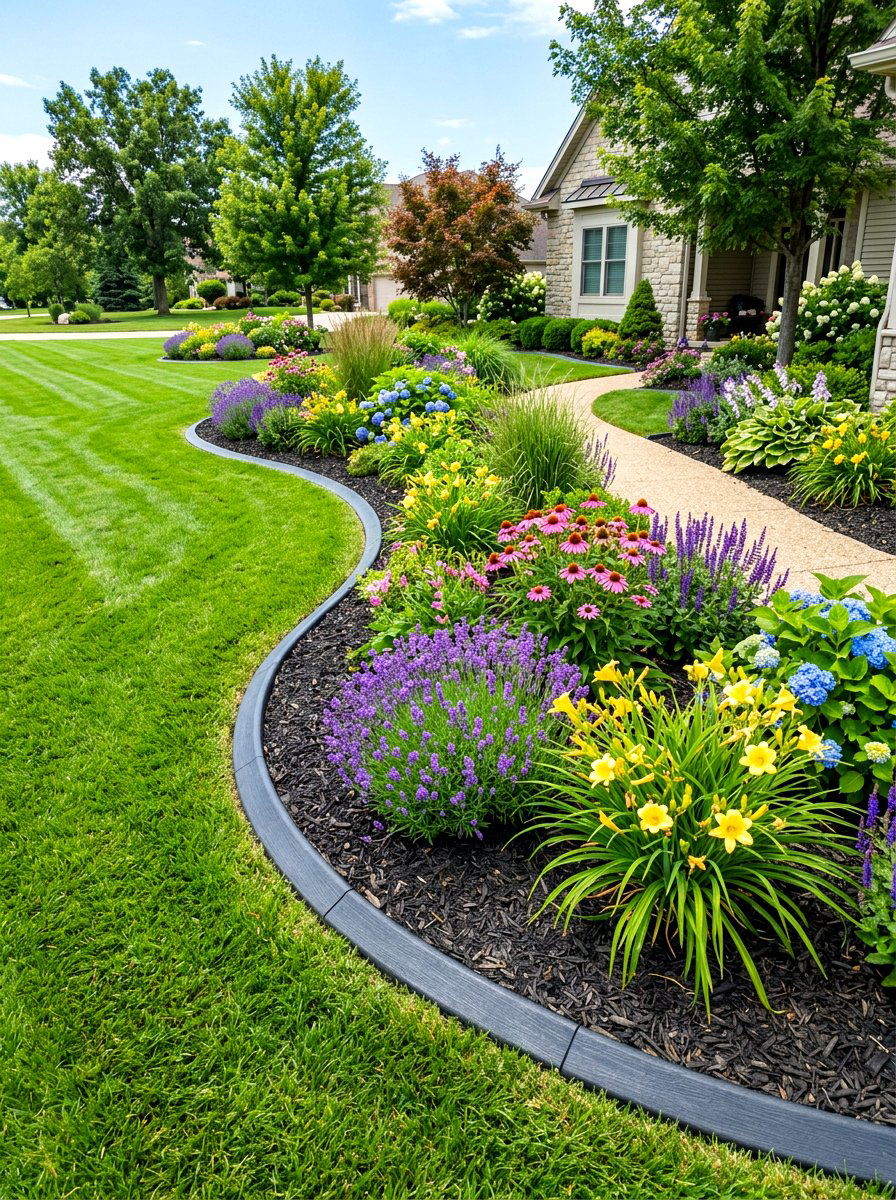
Plastic landscape borders are a budget-friendly and highly versatile option for those who want a quick and easy DIY project. Modern plastic edging is designed to be much more durable than older versions, often featuring UV protection to prevent cracking or fading in the sun. It is particularly useful for creating fluid, winding shapes because the material is so flexible and easy to manipulate around tight corners. Many varieties are designed to be "no-dig, " meaning you can simply secure them into place using heavy-duty stakes. While it is more subtle than stone or brick, it effectively keeps mulch in place and prevents grass from invading your garden beds.
5. Wood sleeper edging
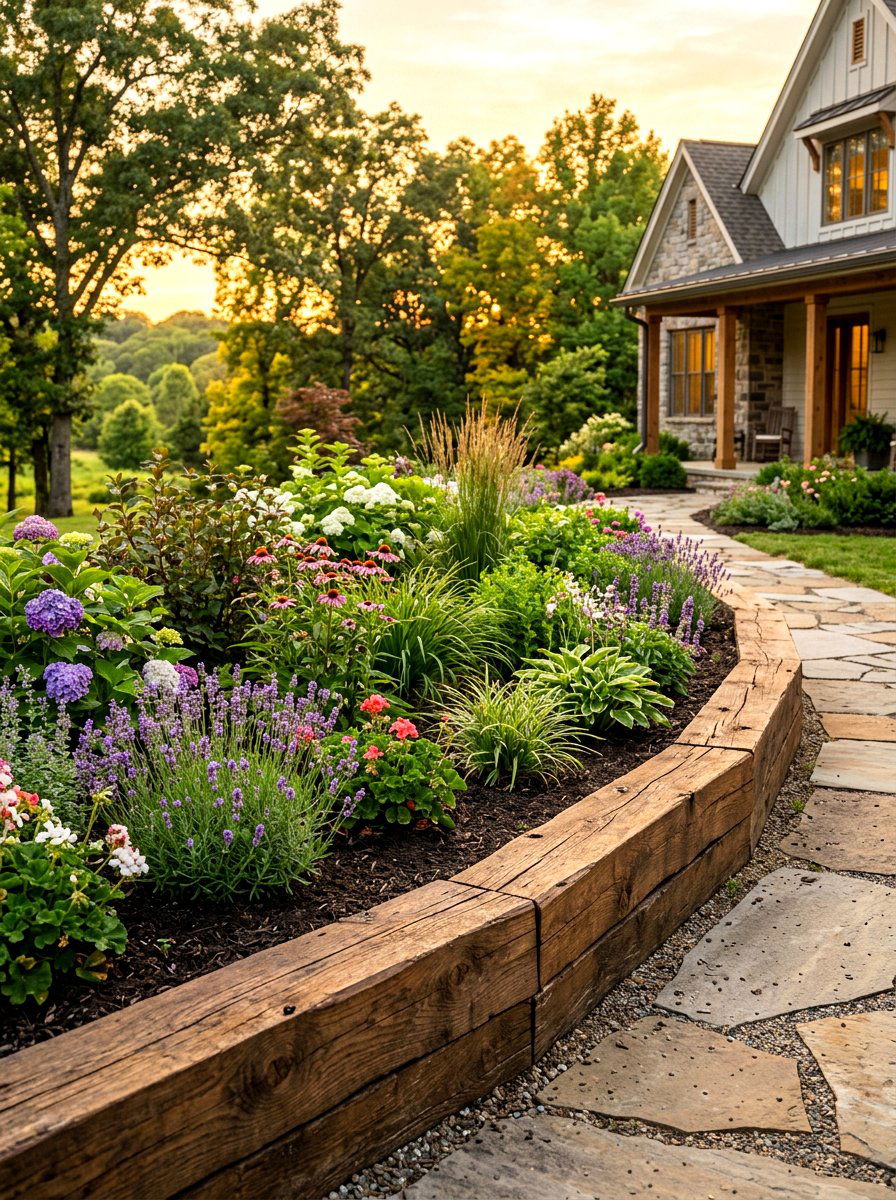
Wood sleeper edging provides a bold and structural look that works wonderfully in large, open landscapes or modern rustic designs. These thick beams, often referred to as railway sleepers, are excellent for creating straight lines and raised garden beds that add height to your yard. Because of their significant weight and size, they provide a very clear sense of definition and can even serve as low seating areas when properly installed. It is important to choose pressure-treated wood or naturally rot-resistant species like cedar or redwood to ensure the border lasts for many years. The natural grain and warm tones of wood create a cozy, inviting atmosphere.
6. Cobblestone garden borders
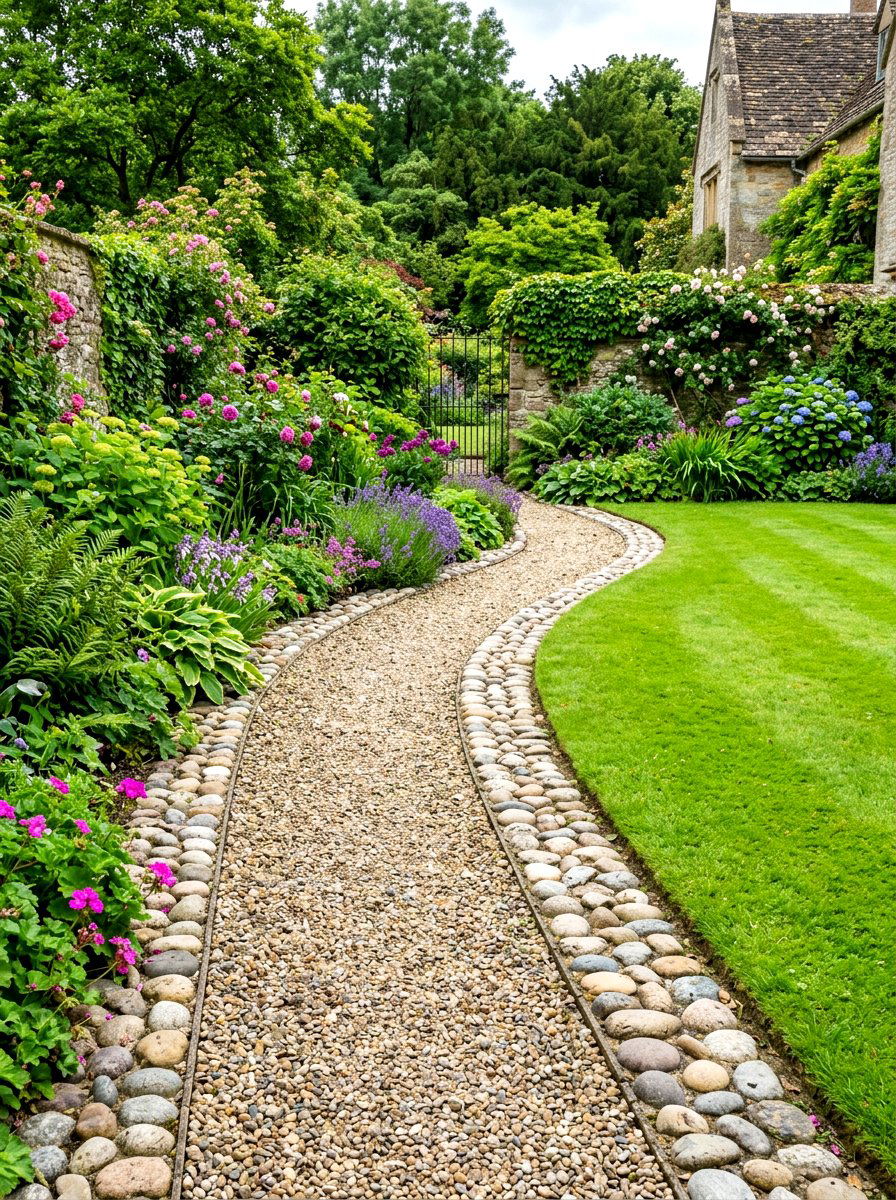
Cobblestone garden borders evoke a sense of old-world charm and European elegance that can make any driveway or walkway feel more sophisticated. These small, rounded stones are typically set in a shallow trench and can be secured with mortar for a more permanent and sturdy finish. They are perfect for framing traditional flower beds or separating a lush green lawn from a gravel path. Cobblestones are incredibly tough and can handle heavy foot traffic or the occasional nudge from a lawnmower without shifting. Their irregular shapes and varied gray tones provide a beautiful contrast against vibrant green grass and colorful flowering plants in your garden.
7. Concrete lawn edging
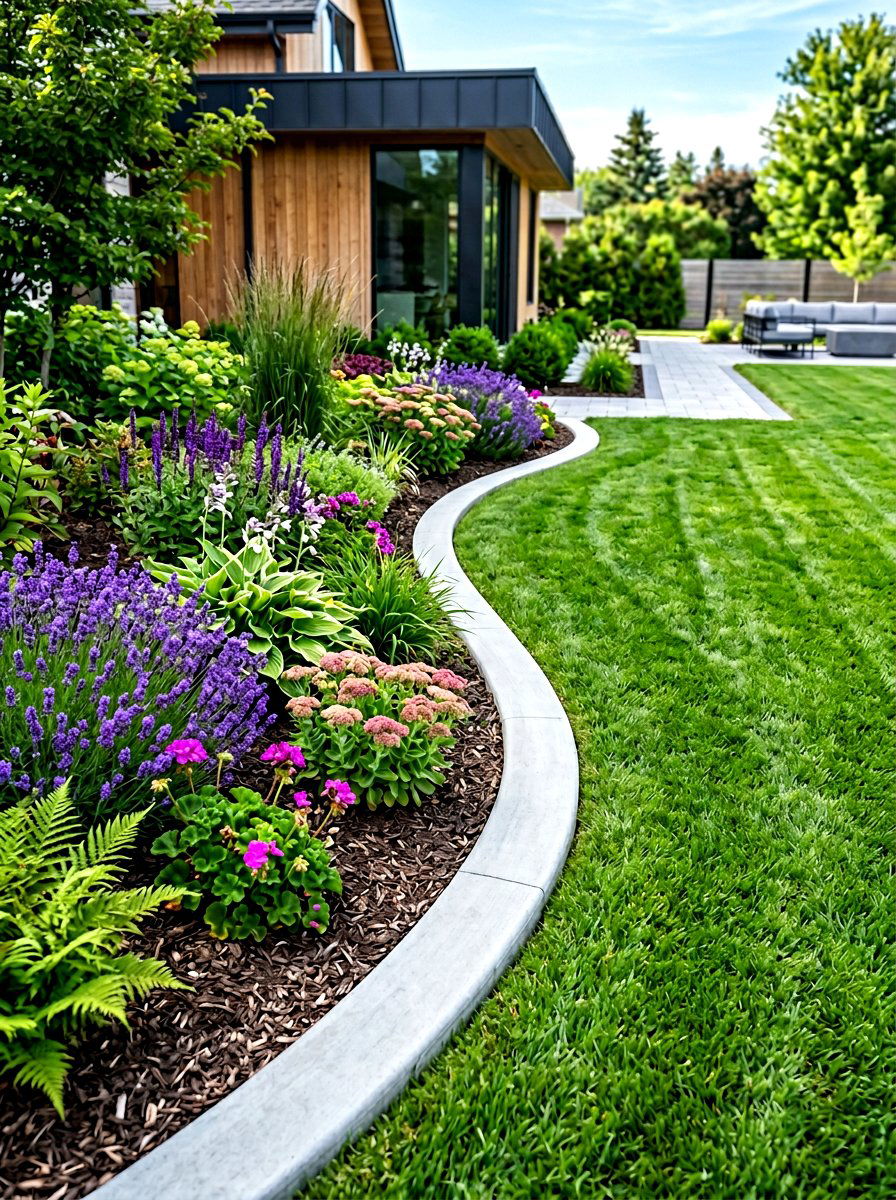
Concrete lawn edging is one of the most permanent and low-maintenance solutions available for homeowners who want a long-lasting border. You can choose from pre-cast concrete blocks that resemble stone or have a professional pour a continuous concrete curb for a seamless look. Poured concrete is particularly effective at blocking weeds and grass because it has no gaps or joints where seeds can take root. It also provides a very solid surface for mower wheels, making garden upkeep much faster and easier. With the ability to stamp or tint the concrete, you can customize the color and texture to perfectly match your home's exterior design.
8. Rubber landscape edging
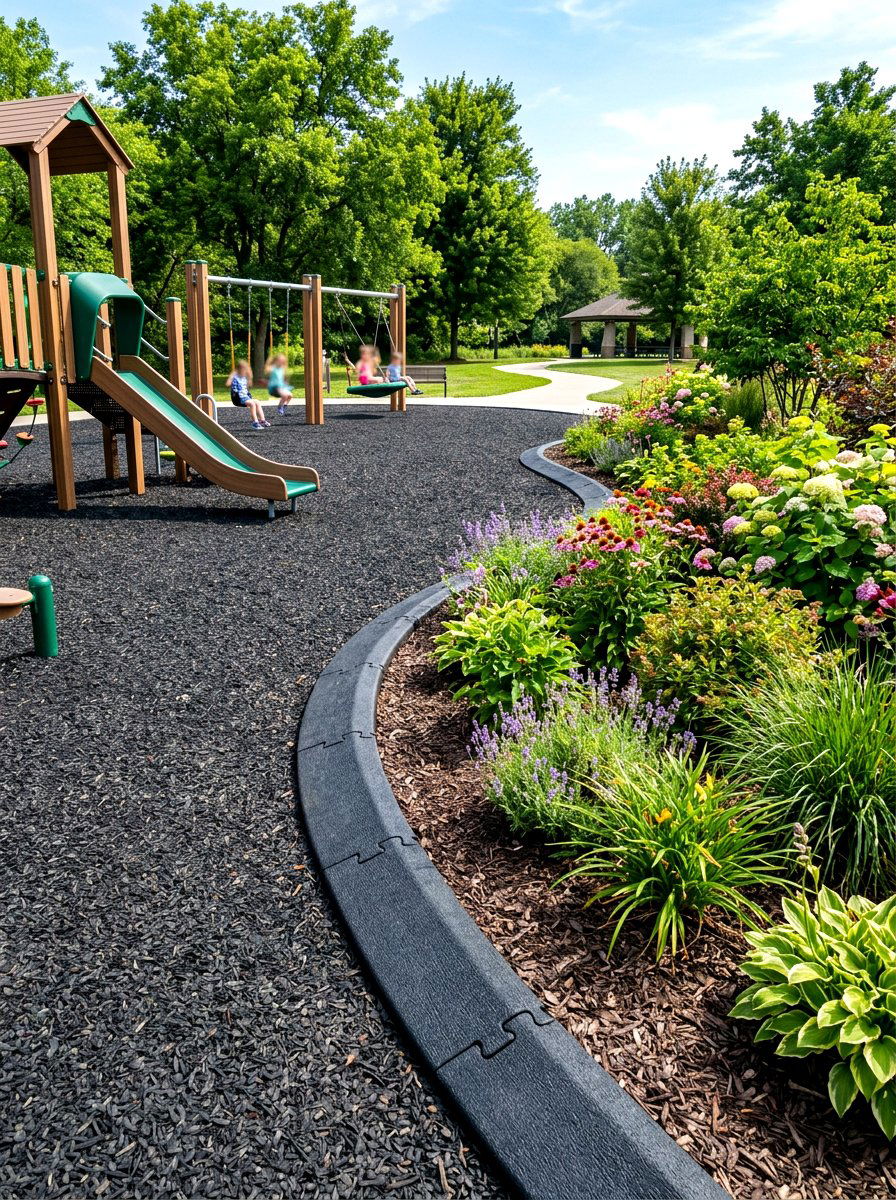
Rubber landscape edging is an innovative and eco-friendly choice that is often made from recycled tires, making it a sustainable option for your yard. This material is surprisingly durable and flexible, allowing it to withstand extreme temperature changes without cracking or becoming brittle. It often comes in long, easy-to-install rolls or strips that can be cut to the exact length you need for your garden beds. Many homeowners appreciate the soft texture of rubber, which is safer for children and pets compared to sharp metal or hard stone. It typically features a realistic wood or stone-grain texture, providing a natural look with significantly less maintenance.
9. Woven willow edging
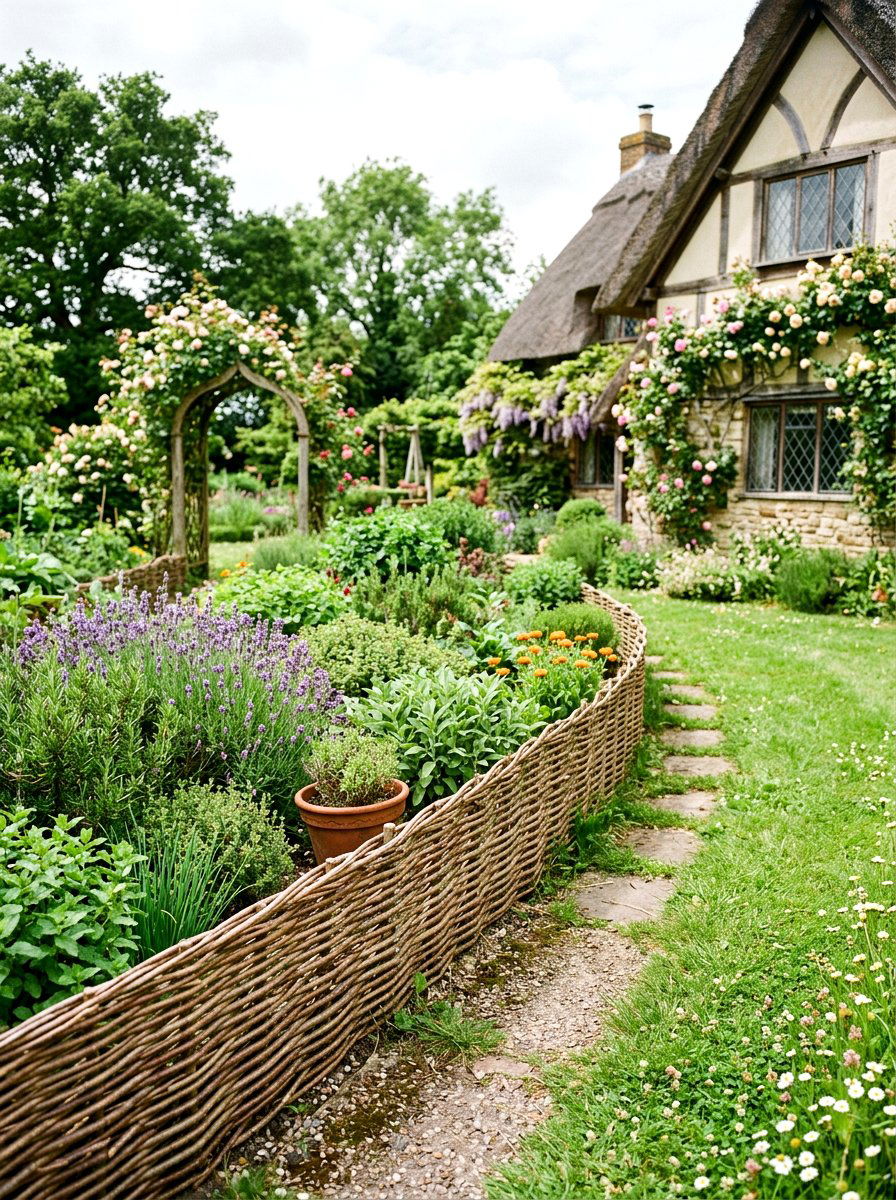
Woven willow edging offers a charming, rustic, and highly decorative touch that is perfect for cottage-style gardens or English-inspired landscapes. These low panels are made by weaving flexible willow branches together, creating a natural and textured barrier that blends seamlessly with plants. They are incredibly easy to install, as they usually come with built-in stakes that can be pushed directly into soft soil. While willow is not as permanent as stone or metal, it provides a unique aesthetic that adds instant character to your yard. It is a fantastic choice for defining vegetable patches or creating a soft boundary for delicate wildflower beds and herbs.
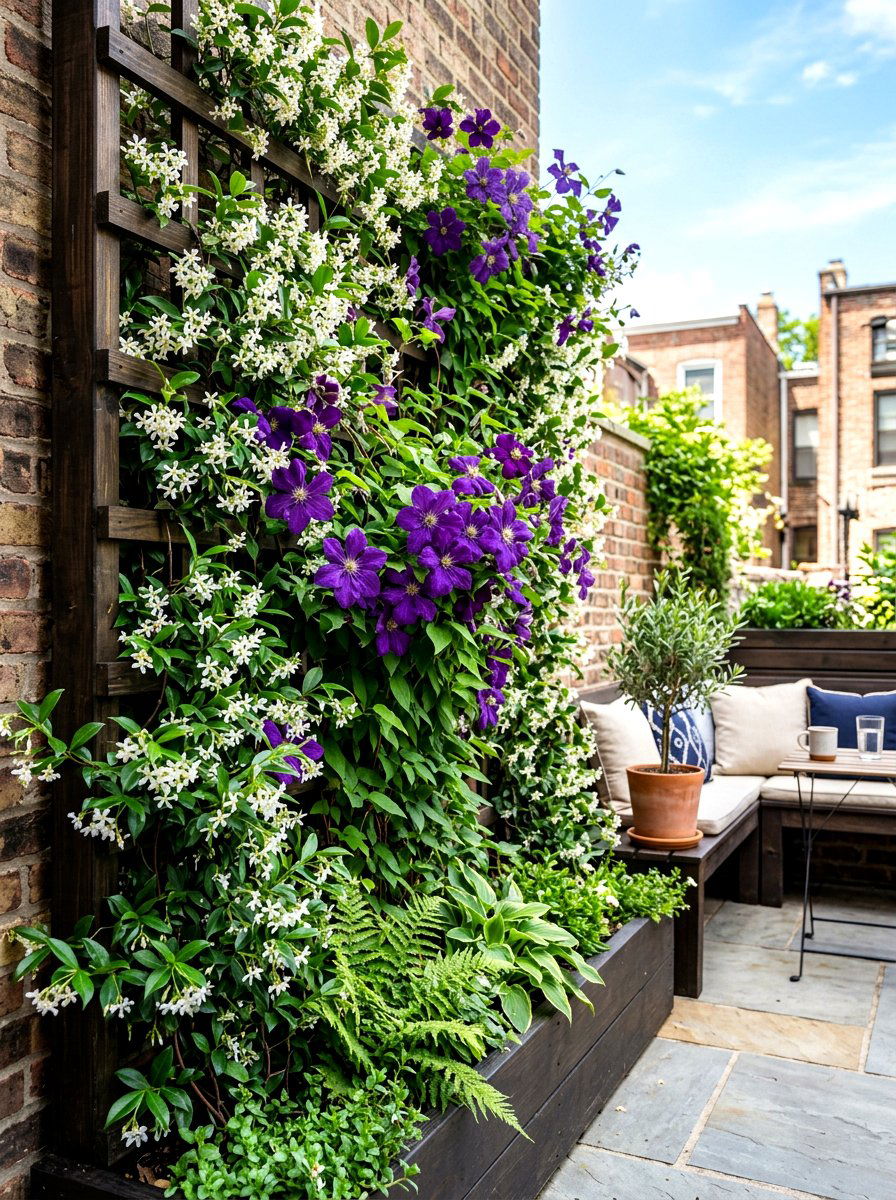
10. River rock garden borders
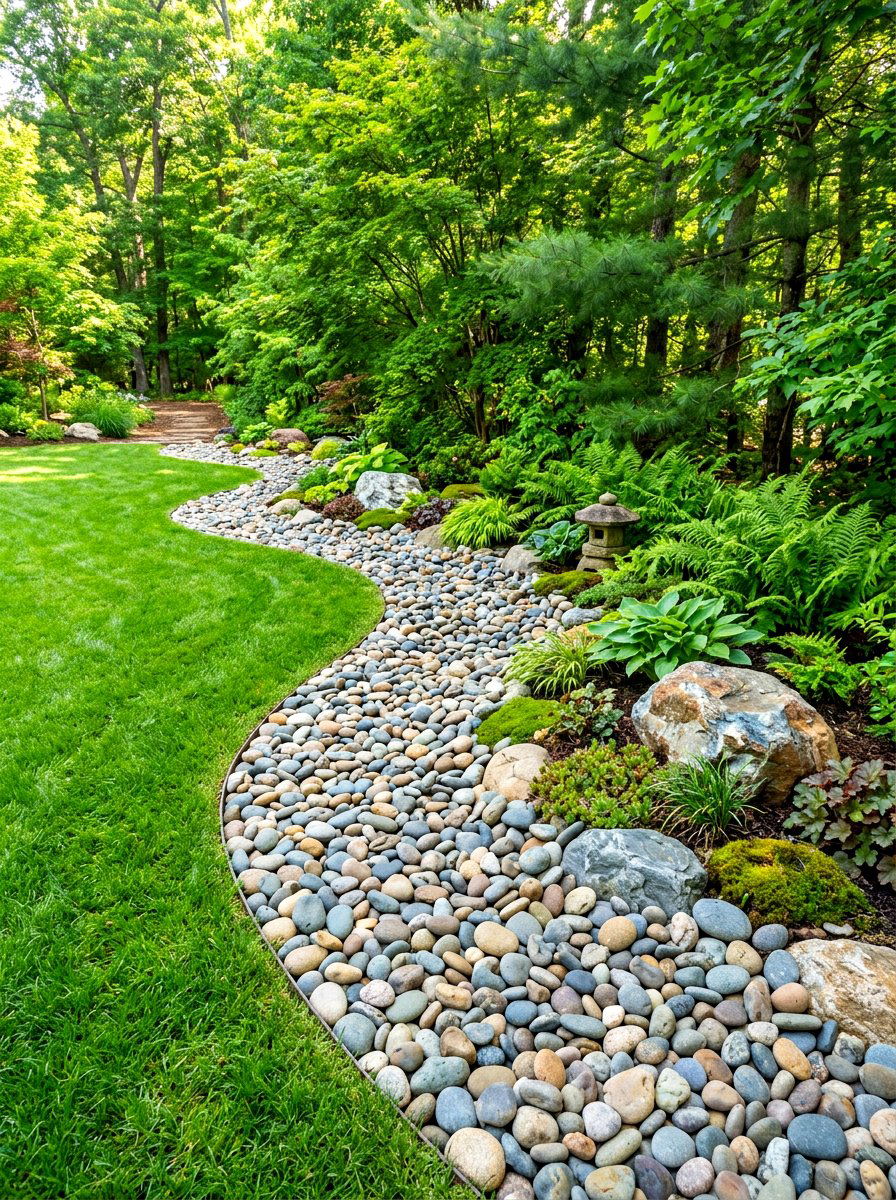
River rock garden borders use smooth, water-worn stones to create a serene and natural transition between different areas of your landscape. These stones come in a variety of sizes and earthy colors, ranging from soft grays to warm tans and deep blues. Laying a wide band of river rocks creates a visual "dry creek bed" effect that is both beautiful and functional for drainage. This type of edging works exceptionally well in Zen gardens or modern landscapes where texture and movement are prioritized. Because the rocks are loose, they are very easy to rearrange if you decide to change the shape of your flower beds later.
11. Paver lawn edging
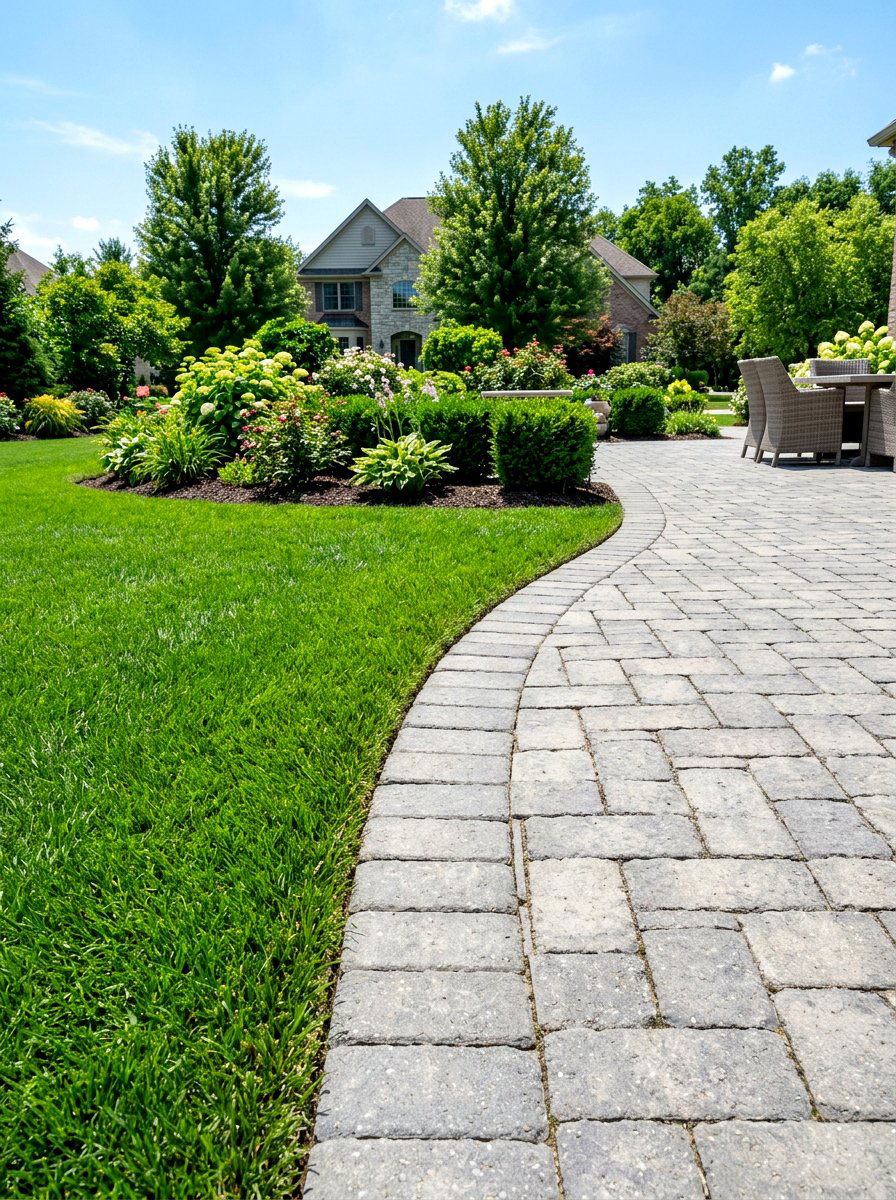
Paver lawn edging is a highly versatile and popular choice because it allows you to coordinate your garden borders with your existing patio or walkway. These manufactured stones come in a vast array of colors, sizes, and finishes, giving you complete control over the final look of your yard. You can lay pavers horizontally to create a wide mowing strip or stand them vertically for a more traditional border appearance. They are designed to fit together tightly, which helps to create a clean and structured line that looks very professional. Pavers are durable enough to handle the weight of garden equipment and provide a very stable edge.
12. Log lawn borders
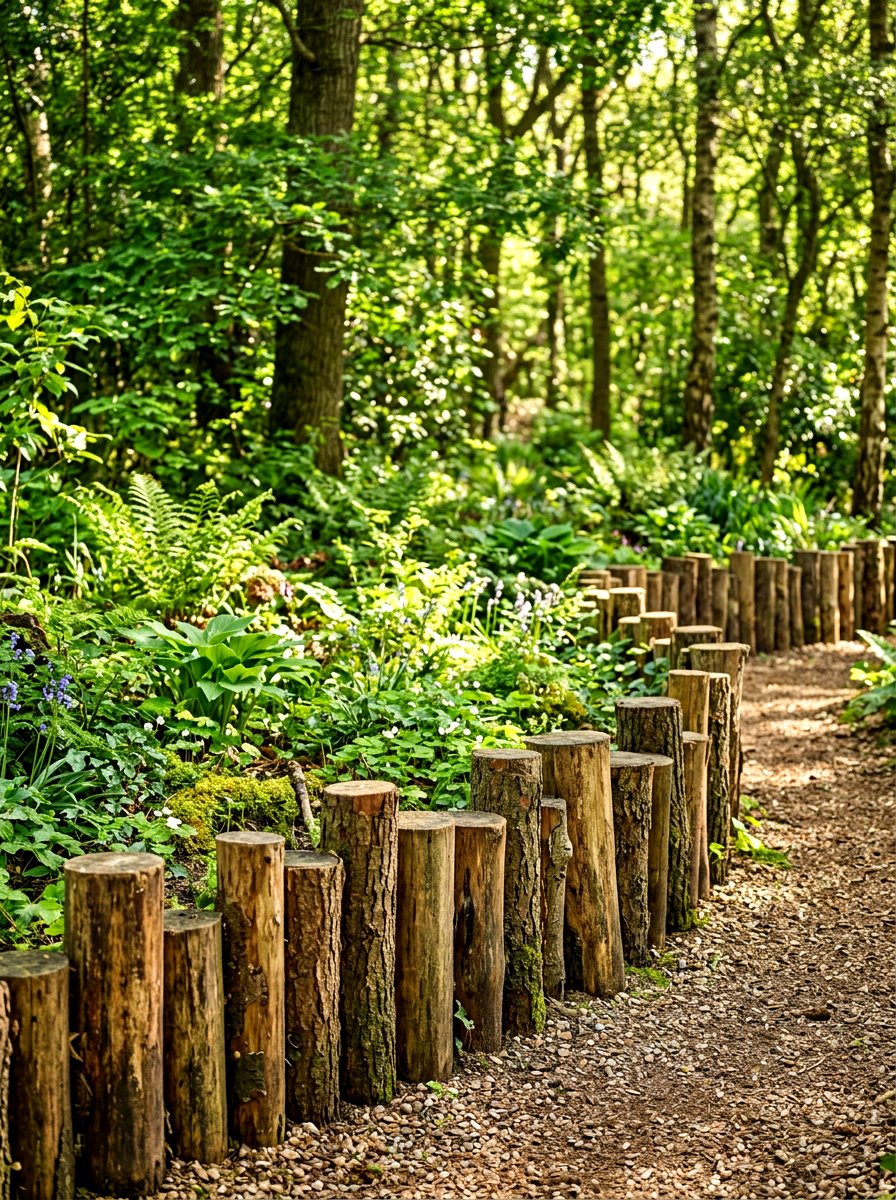
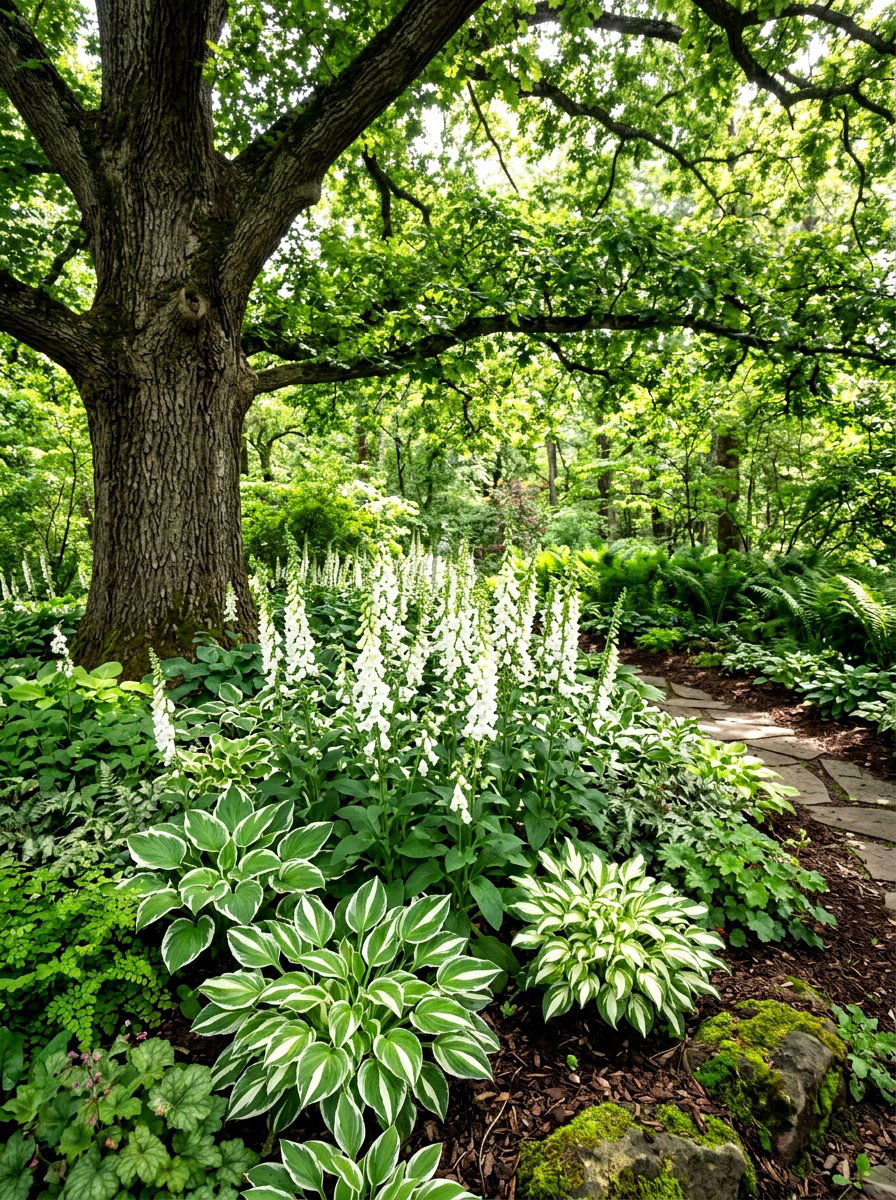
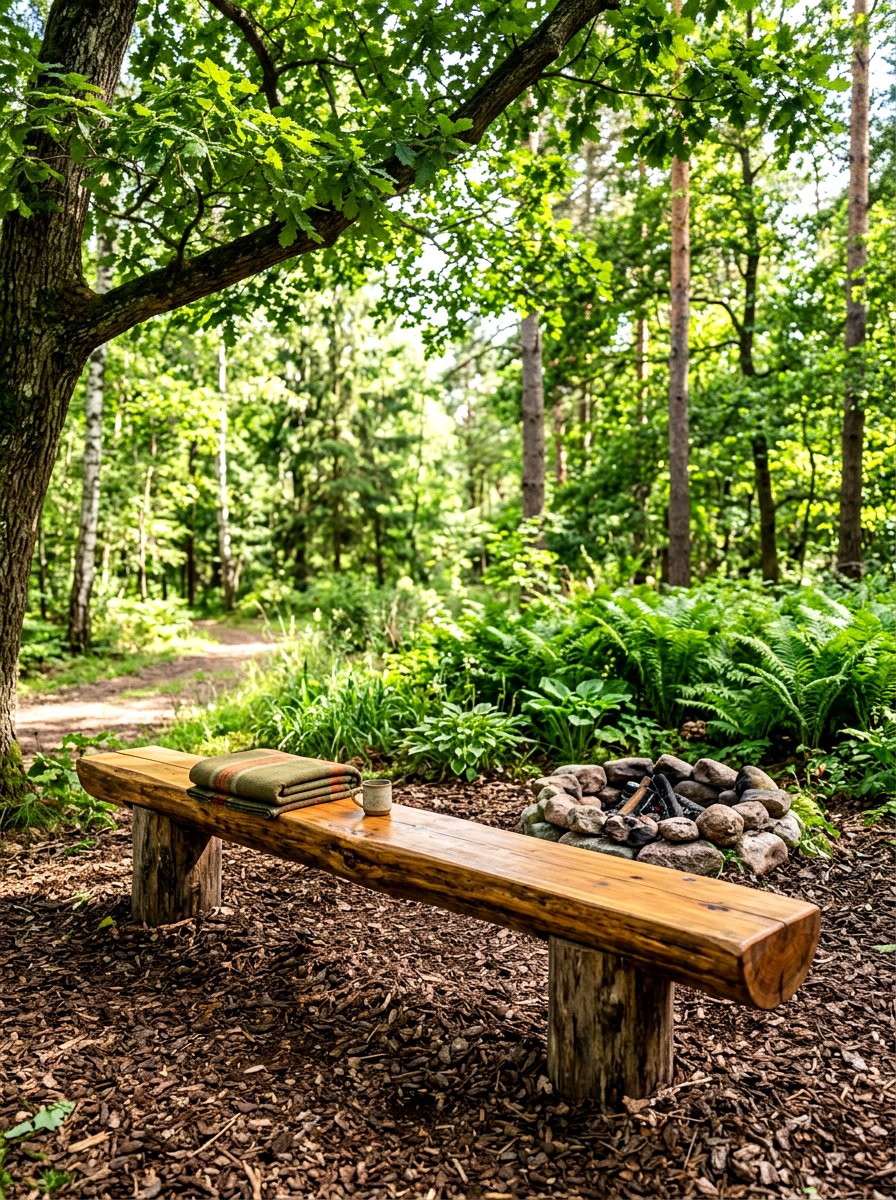
Log lawn borders are an excellent way to bring a woodland or rustic feel to your property, especially if you have a lot of mature trees. You can use small, vertical log segments of varying heights to create a whimsical, undulating border that adds a sense of depth to your landscape. Alternatively, laying longer logs horizontally creates a simple and sturdy frame for large garden beds. This material is often very affordable, especially if you can source logs from your own property or a local tree service. Over time, the wood will naturally weather to a soft gray, allowing it to blend even more harmoniously with nature.
13. Terracotta tile edging
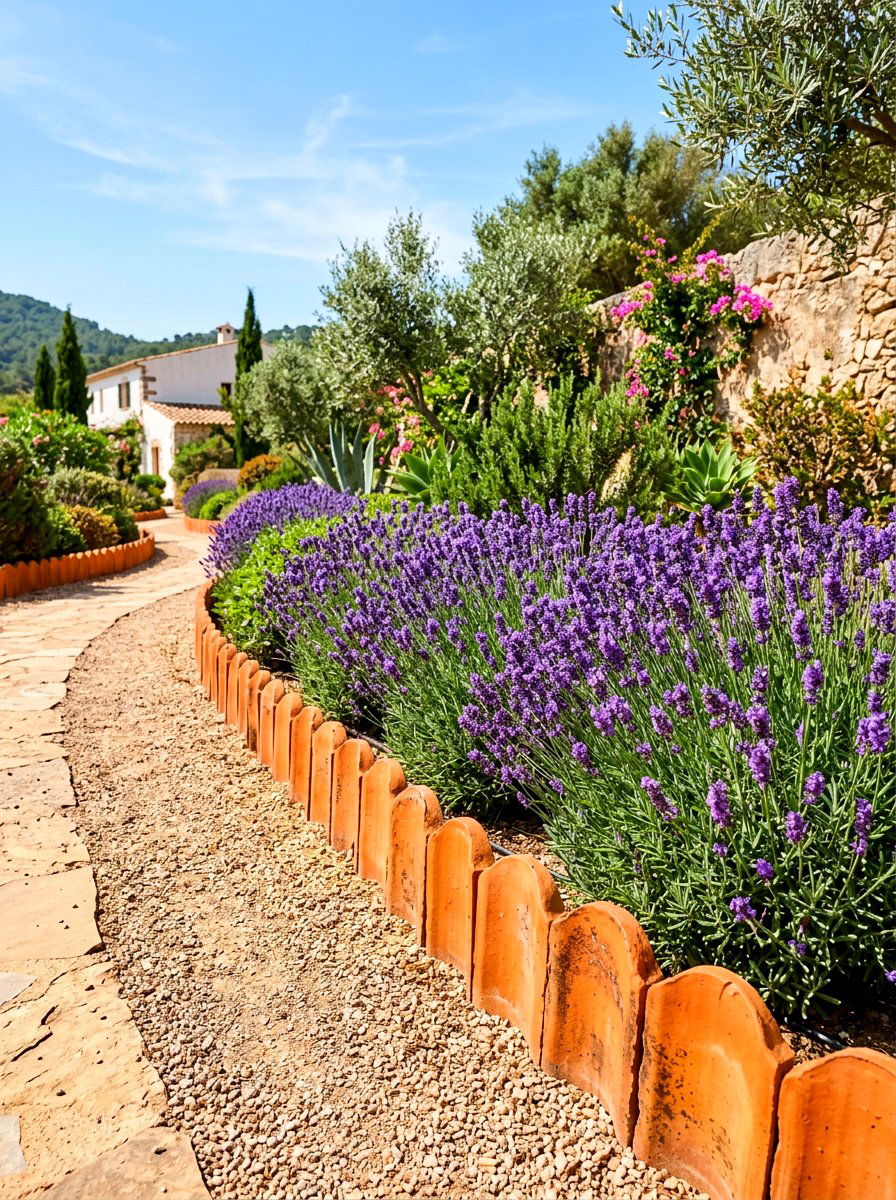
Terracotta tile edging brings a warm, Mediterranean vibe to your garden with its rich orange and red hues. These decorative tiles often feature beautiful scalloped edges or intricate patterns that add a touch of artistry to your flower beds. They are typically installed by burying the bottom half of the tile in the soil, leaving the decorative top portion visible. Terracotta is a natural clay material that breathes well, making it a healthy choice for surrounding your favorite plants. While it can be more fragile than stone, it offers a unique and colorful aesthetic that works beautifully in sunny, vibrant landscapes filled with lavender or succulents.
14. Gabion garden borders
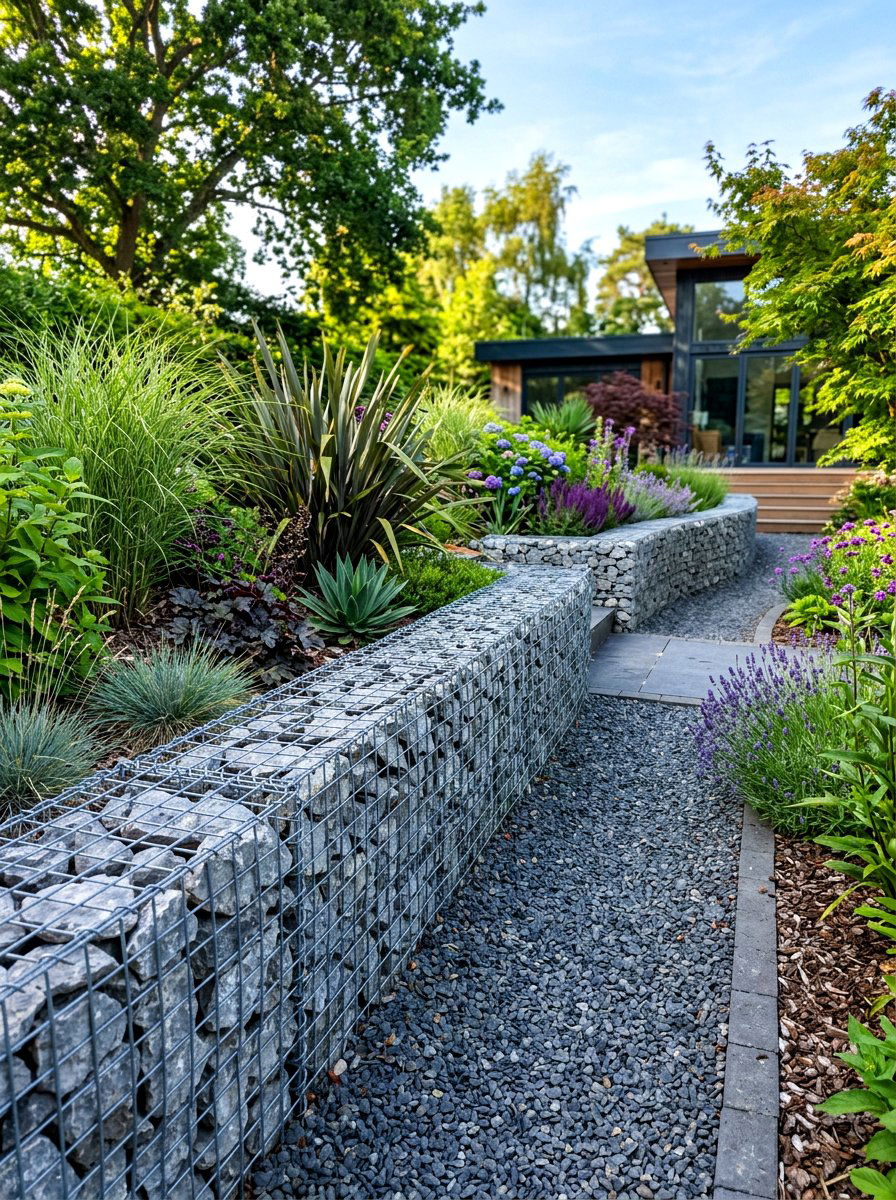
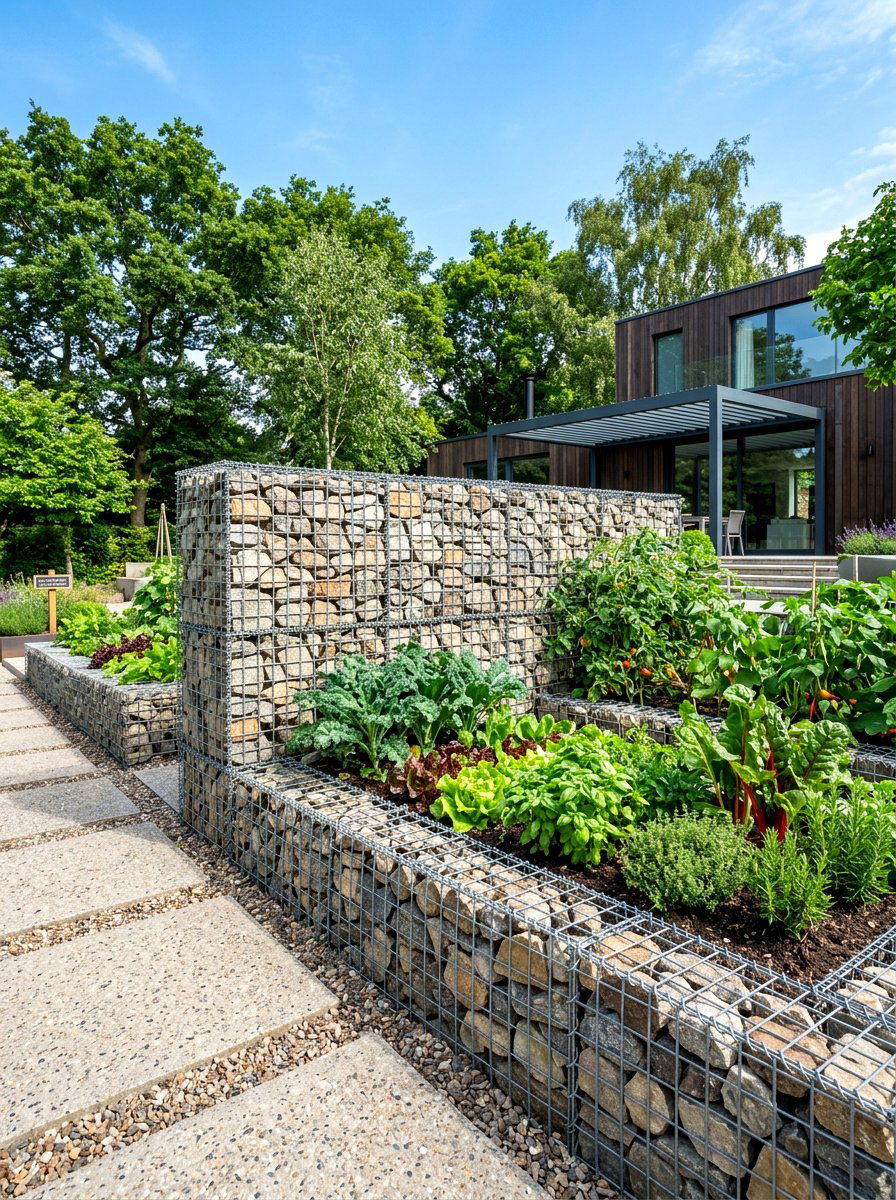
Gabion garden borders consist of wire mesh cages filled with rocks, creating a modern and industrial look that is gaining popularity in contemporary landscaping. These borders are incredibly strong and provide excellent drainage, making them as functional as they are stylish. You can customize the look of your gabion walls by choosing different types of stone fill, such as white marble chips for a clean look or dark basalt for contrast. This type of edging also adds significant vertical interest and can even be used to create low walls or outdoor benches. It is a bold design choice that provides a very high-end and architectural feel.
15. Slate lawn edging
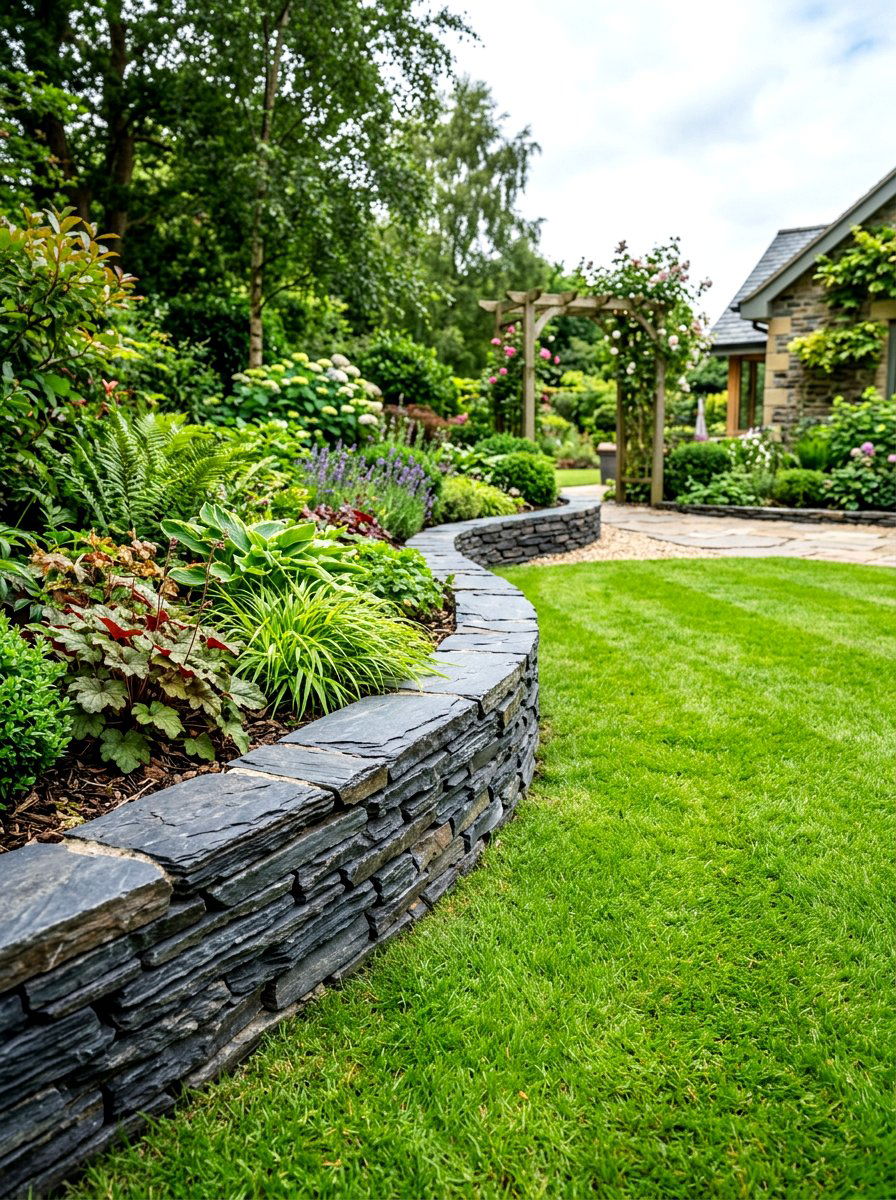
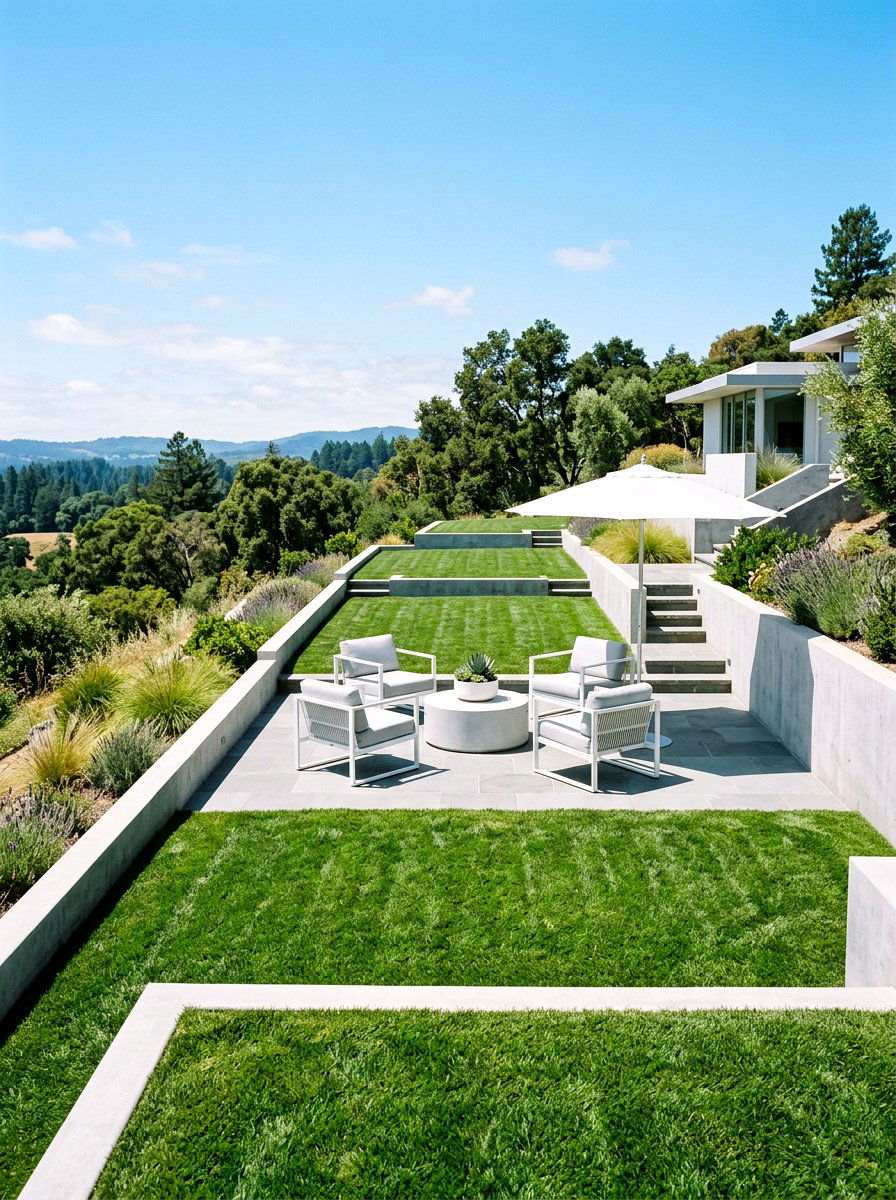
Slate lawn edging is prized for its sleek, dark tones and naturally layered texture, making it a sophisticated choice for modern or minimalist yards. The flat, thin pieces of slate can be stacked horizontally to create a low wall or placed vertically for a sharp, defined edge. Its deep gray and blue-black colors look particularly striking when paired with bright green grass or white decorative gravel. Slate is a very durable material that does not fade in the sun and is resistant to most weather damage. Using large slabs of slate can create a dramatic and permanent border that adds a touch of luxury to your outdoor living area.
16. Bamboo garden borders
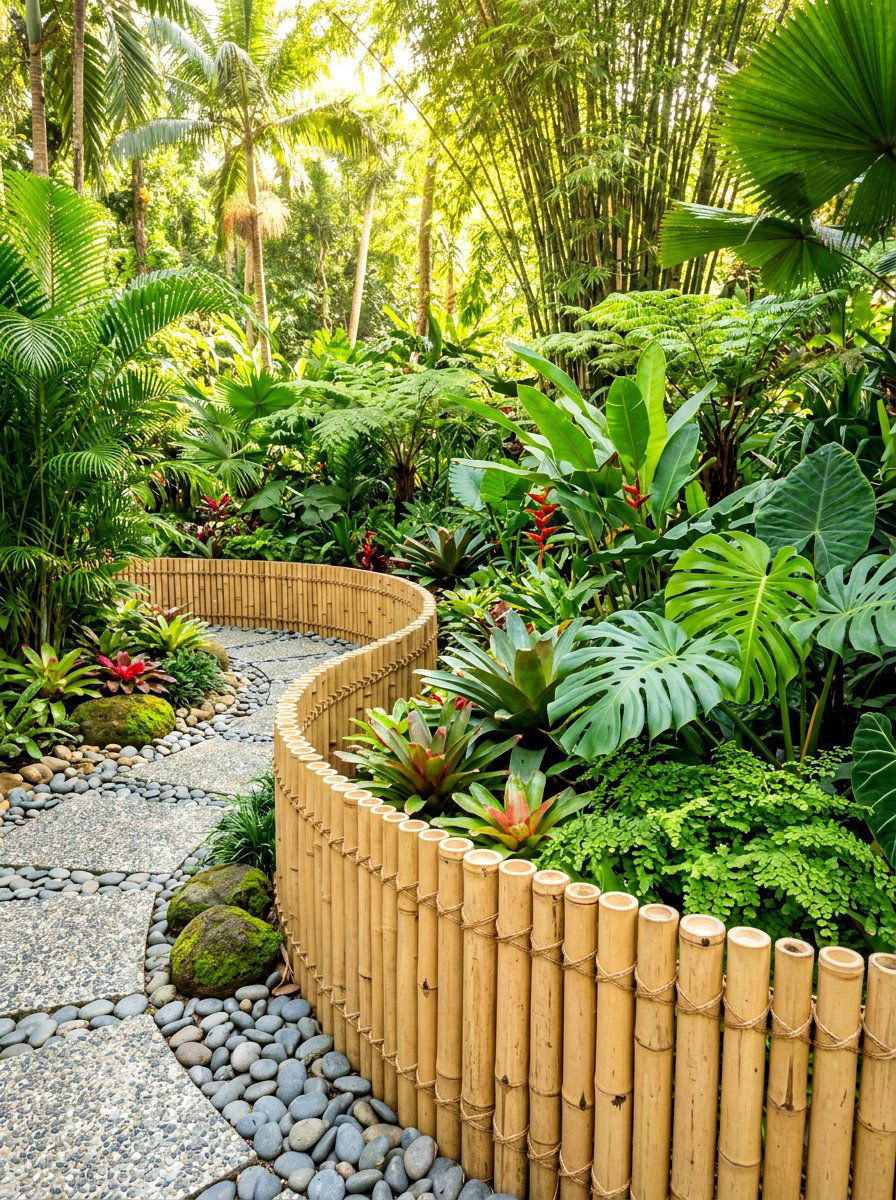
Bamboo garden borders are a sustainable and eco-friendly option that adds a tropical or Zen-like atmosphere to any backyard space. This fast-growing material is surprisingly strong and provides a unique texture that differentiates it from traditional wood or stone borders. Most bamboo edging comes in pre-connected rolls that are very simple to install around curved or straight garden beds. It is particularly effective for creating a sense of height and privacy in smaller garden sections or around water features. The light tan color of the bamboo provides a bright and airy feel that complements lush green tropical foliage and colorful exotic flowers very well.
17. Steel landscape edging
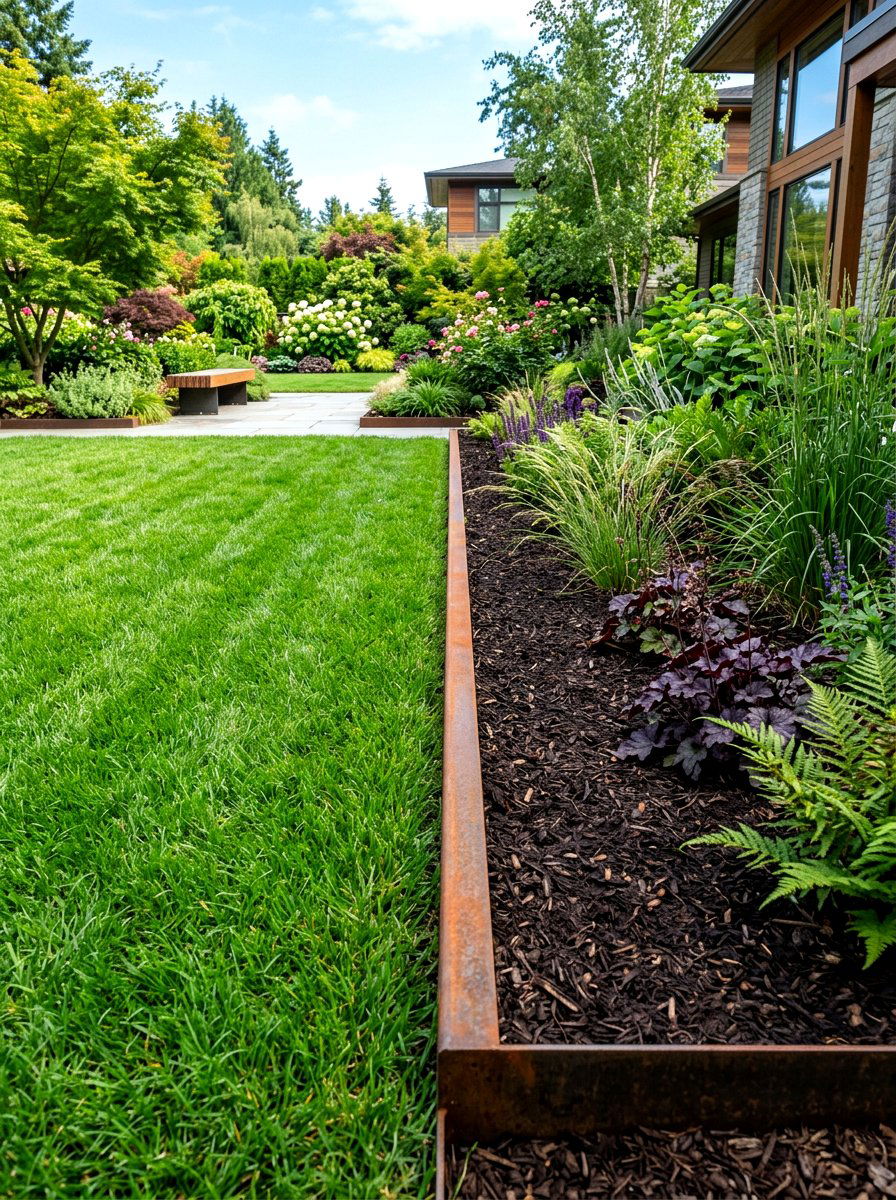
Steel landscape edging is the go-to choice for professional landscapers who want to achieve perfectly straight lines and incredibly sharp corners. Unlike plastic, steel will not warp or bend over time, ensuring that your garden beds maintain their intended shape for many years. It is thin enough to remain nearly invisible if desired, or it can be left slightly above the soil line to serve as a decorative element. Many steel products are treated with a powder coating to prevent rust, while others are designed to weather naturally for a more organic look. This material is exceptionally durable and can withstand accidental hits from lawn equipment.
18. Flagstone lawn borders
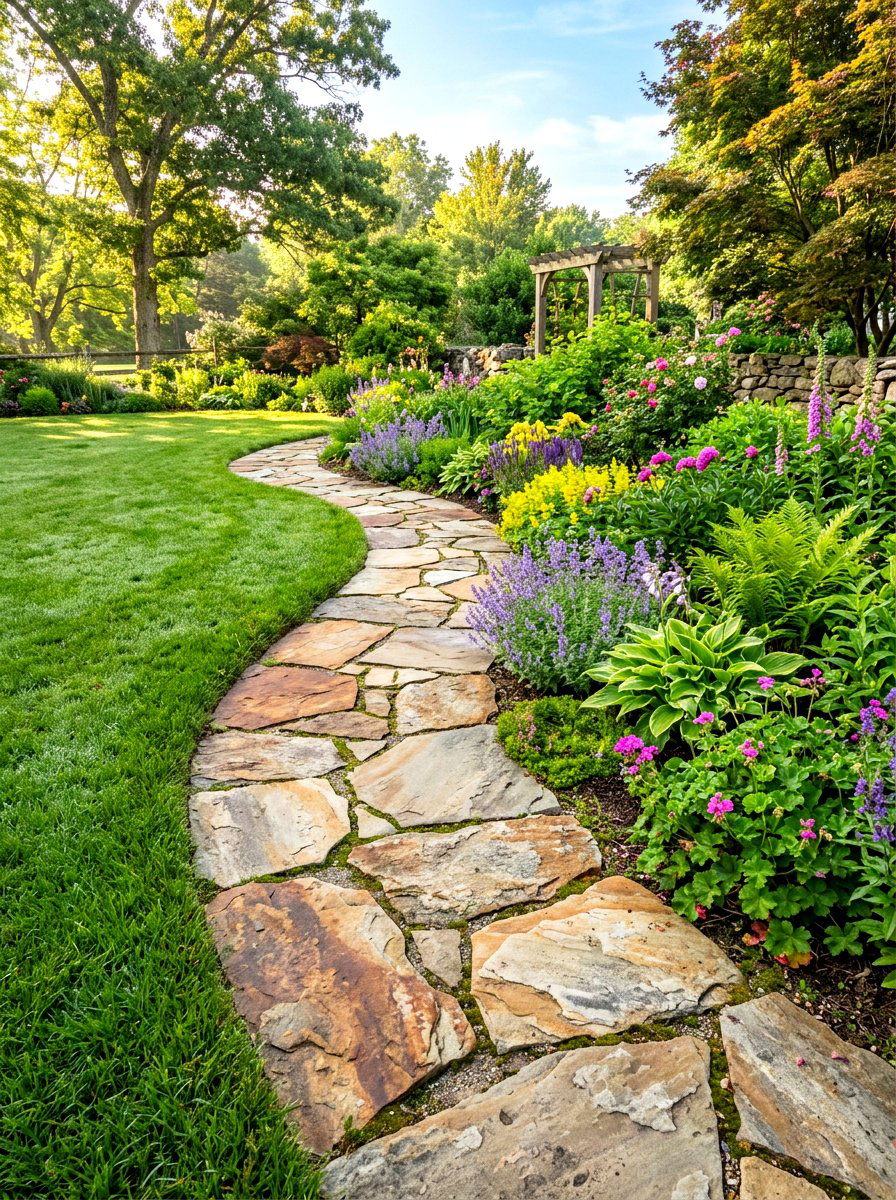
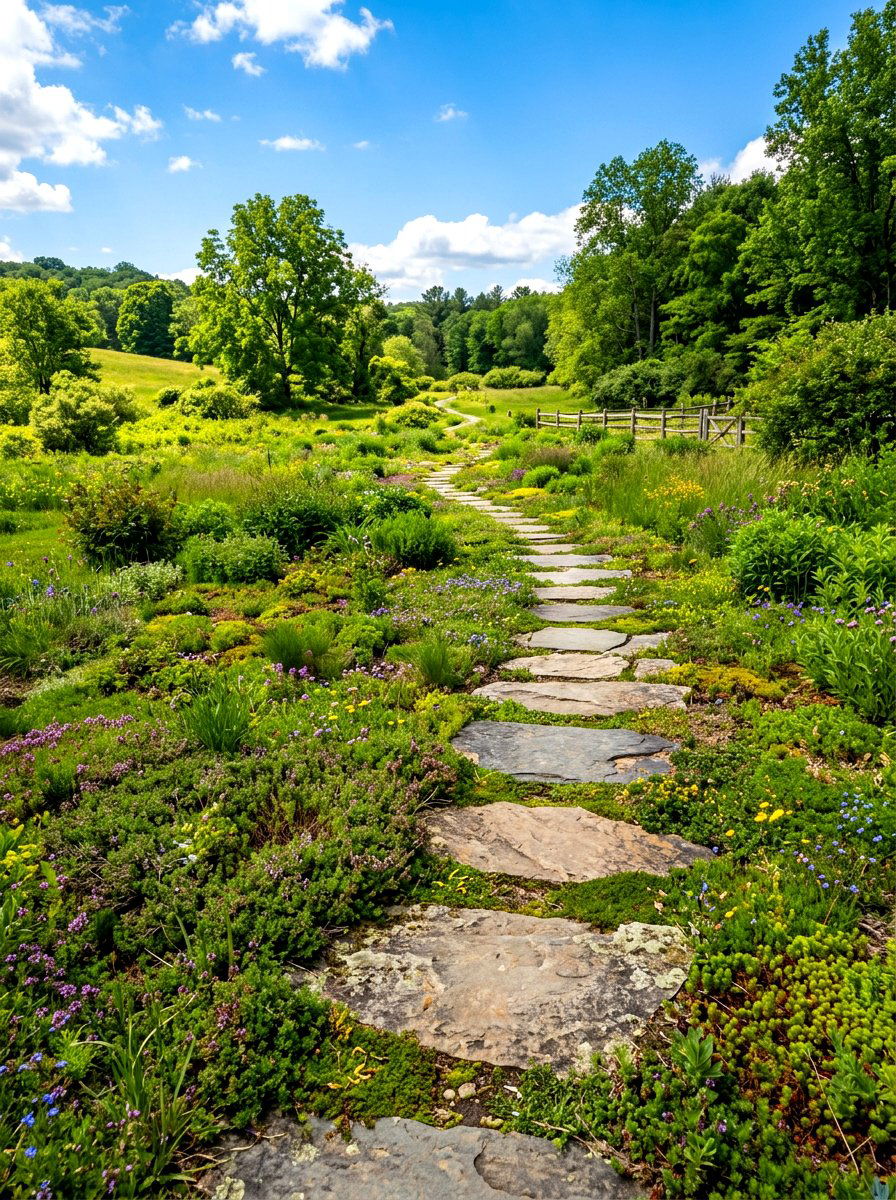
Flagstone lawn borders offer a beautiful, irregular look that feels much more natural and artisanal than standard manufactured pavers. These large, flat stones come in various shapes and sizes, allowing you to piece them together like a puzzle to create a unique border. The varied earthy tones of flagstone, including tans, browns, and grays, help to ground your garden design and make it feel more established. This material is very heavy and stays in place well without the need for additional adhesives or mortar. It is a fantastic choice for bordering a patio or creating a transition between a lush lawn and a wooded area.
19. Shell garden edging
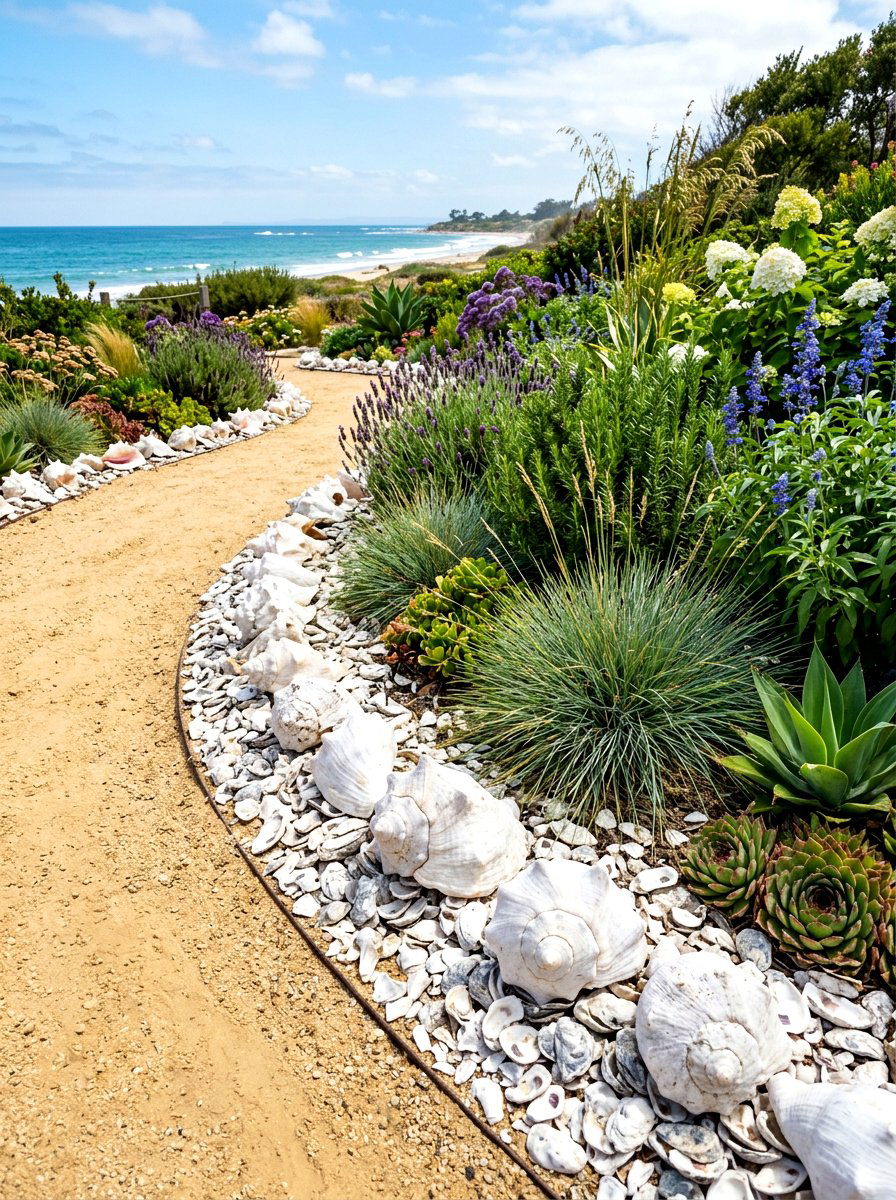
Shell garden edging is a creative and coastal-inspired idea that works perfectly for homes near the beach or for anyone wanting a nautical theme. You can use large conch shells as individual decorative markers or create a wide border using crushed oyster shells and scallops. The bright white and iridescent colors of the shells provide a stunning contrast against dark soil or green foliage. This type of edging is not only beautiful but can also provide a small amount of calcium to the surrounding soil as the shells slowly break down. It creates a relaxed, breezy atmosphere that makes every day feel like a trip to the shore.
20. Recycled bottle edging
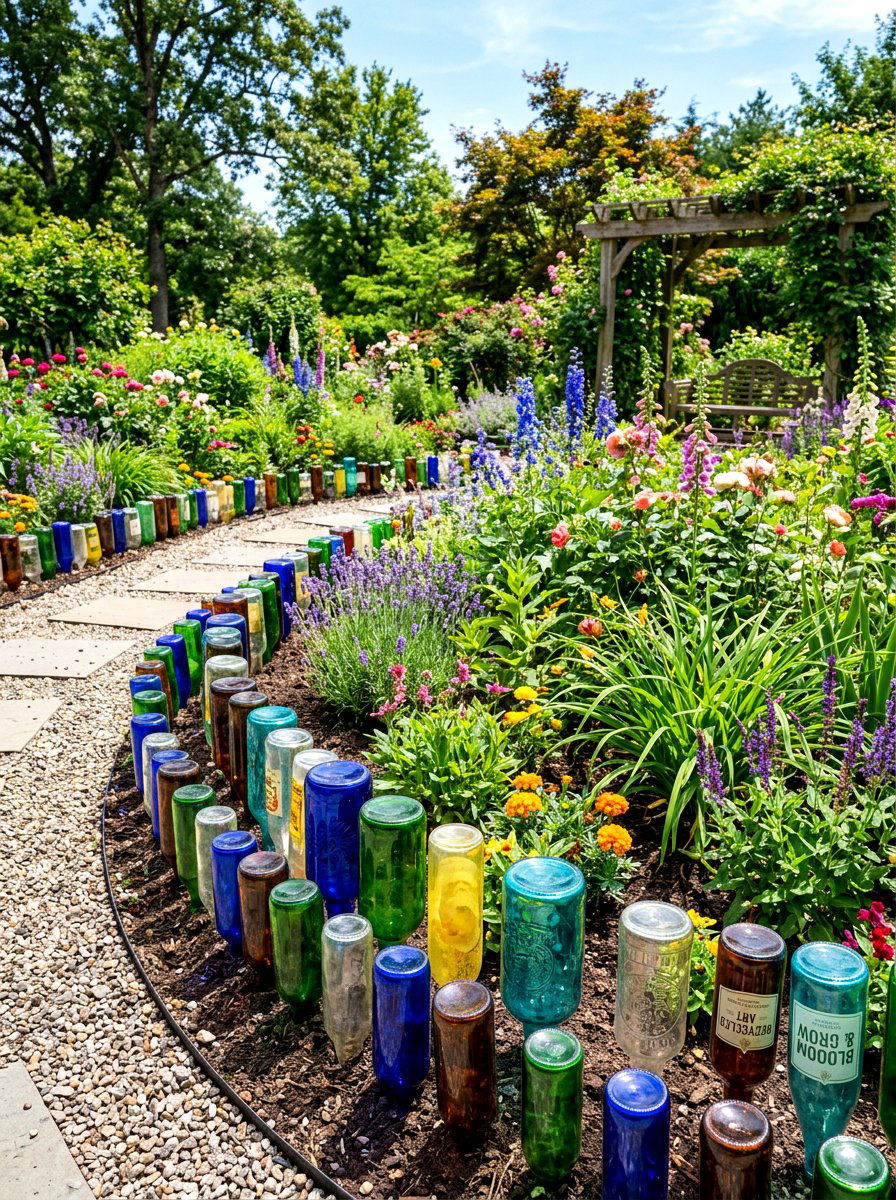
Recycled bottle edging is a colorful and whimsical way to repurpose old glass while adding a unique artistic flair to your garden. By burying empty wine or soda bottles neck-down into the soil, you create a shimmering border that catches the sunlight throughout the day. This is a very budget-friendly DIY project that allows you to get creative with different colors, shapes, and sizes of glass. When grouped together, the bottles create a sturdy and surprisingly effective barrier that keeps mulch contained. It is a great conversation piece that shows off your personality and commitment to sustainability while brightening up your backyard flower beds.
21. Rope lawn borders
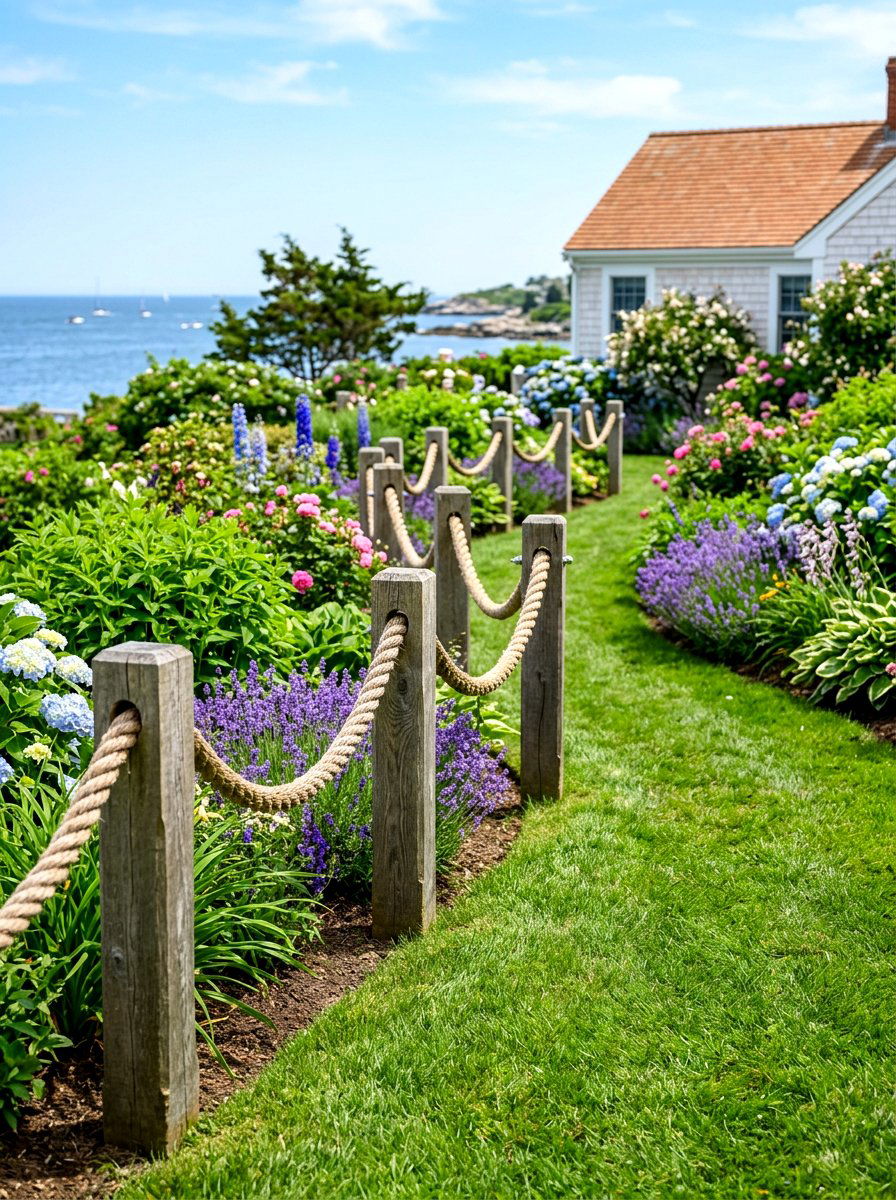
Rope lawn borders provide a soft and maritime aesthetic that is perfect for casual gardens or coastal properties. Using thick, heavy-duty nautical rope draped between low wooden posts creates a gentle boundary that defines spaces without obstructing the view. This style of edging is more about visual suggestion than physical containment, making it ideal for walkways or separating different zones of a large yard. It is very easy to install and can be adjusted quickly if you decide to change the layout of your garden. The natural fibers of the rope weather beautifully over time, adding to the rustic and lived-in charm of your outdoor space.
22. Gravel garden edging
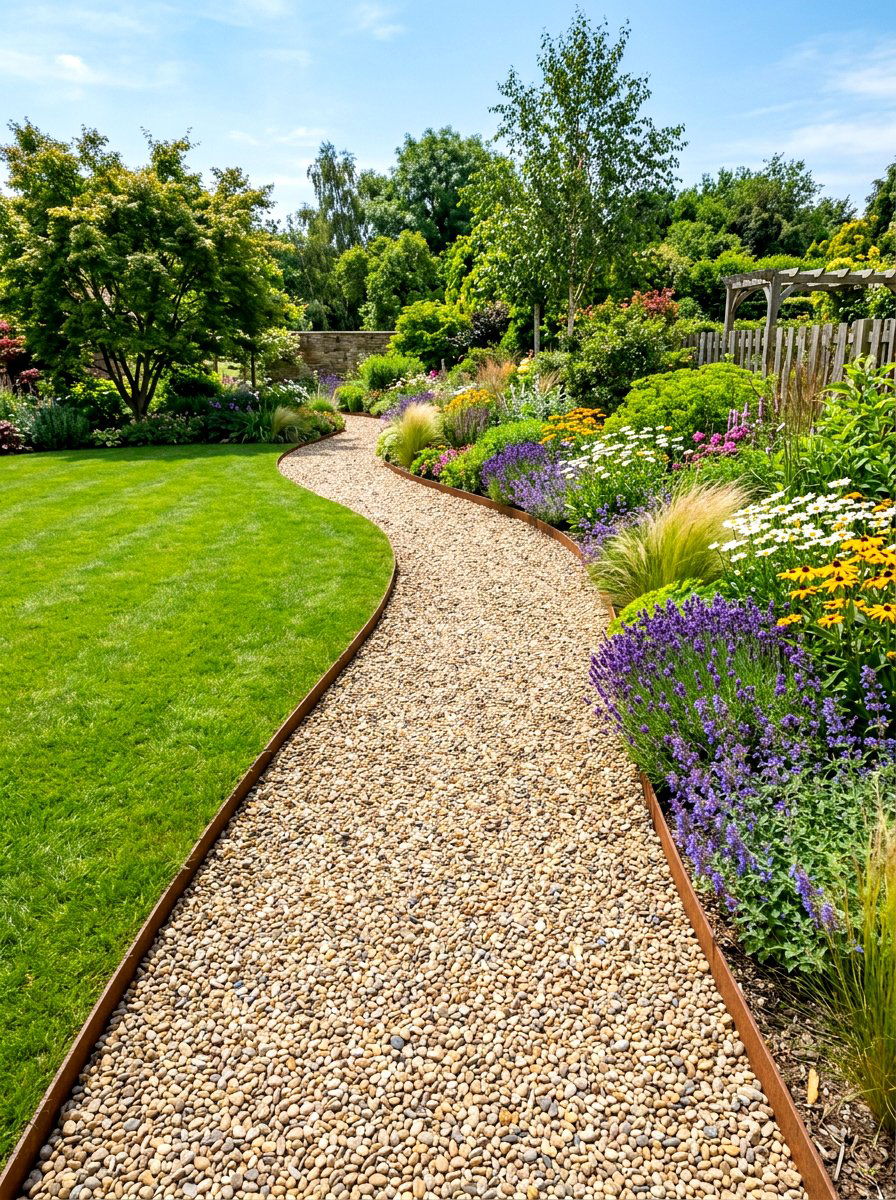
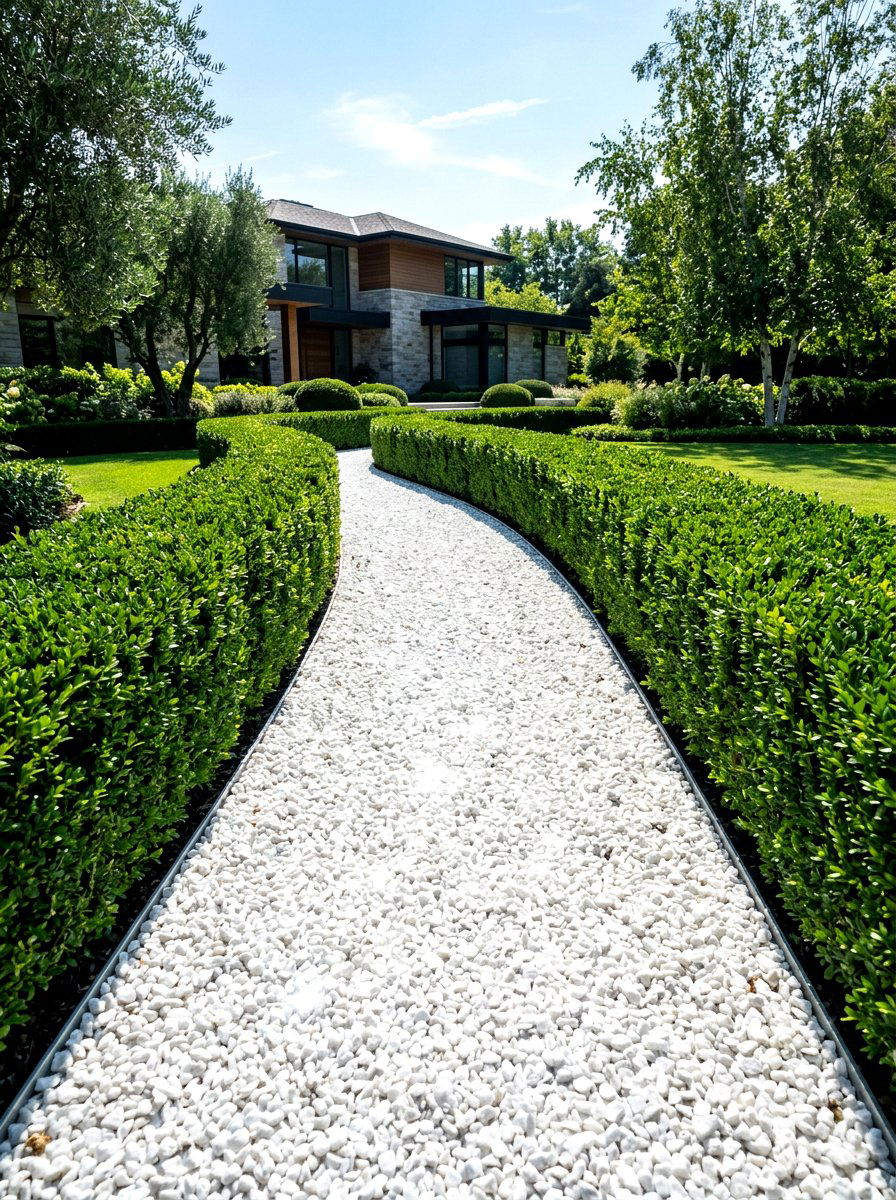
Gravel garden edging is a practical and low-maintenance solution that helps with drainage while providing a very clean and modern look. By digging a shallow trench and filling it with pea gravel or crushed stone, you create a wide buffer zone between your lawn and garden beds. This makes it much easier to keep grass from spreading and provides a clear path for walking around your plants. You can choose from a variety of gravel colors to either blend in with your surroundings or provide a bold contrast. This type of border works exceptionally well in drought-tolerant landscapes or areas where water runoff is a concern.
23. Composite landscape borders
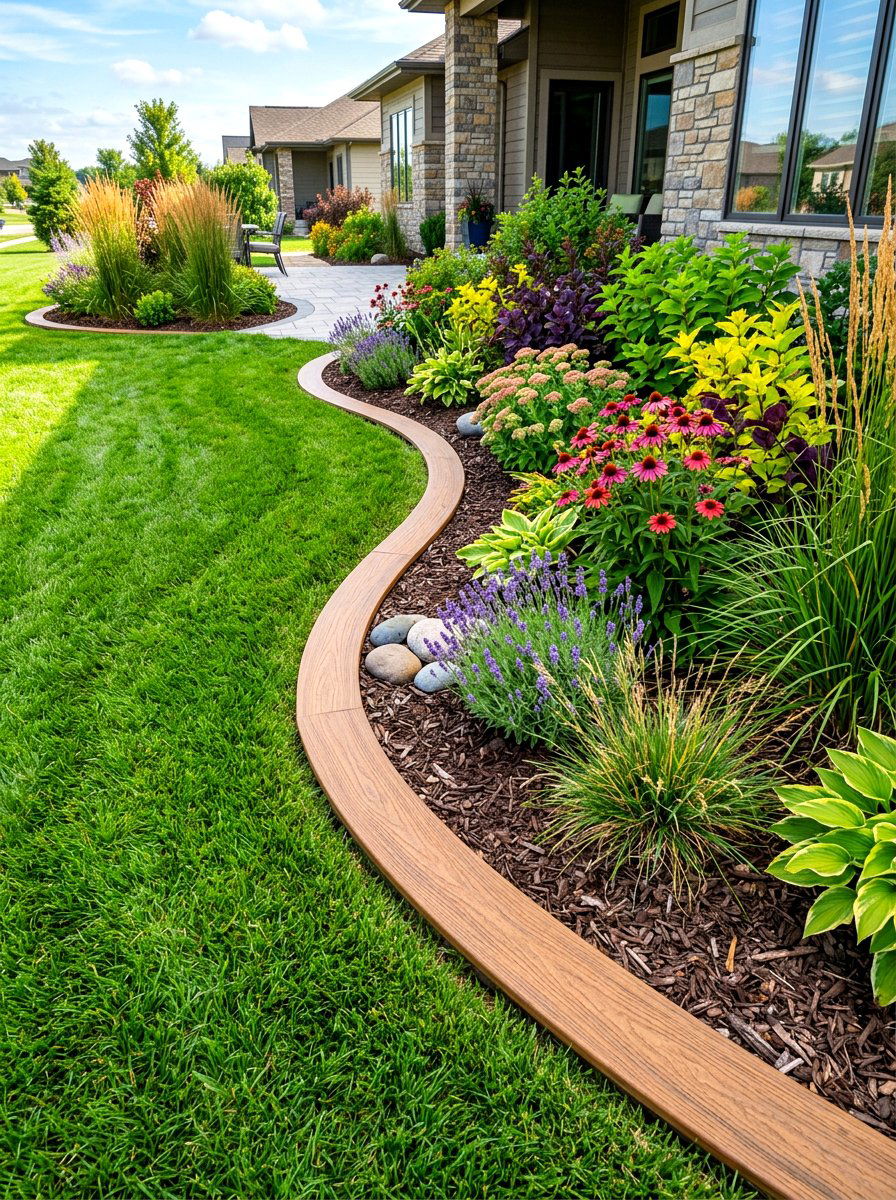
Composite landscape borders are made from a blend of recycled plastic and wood fibers, offering the best of both worlds in terms of beauty and durability. This material looks very similar to real wood but will never rot, warp, or attract insects, making it a very long-lasting choice. It is available in various colors and finishes that mimic popular wood species like teak or cedar. Composite edging is flexible enough to handle slight curves but rigid enough to maintain a very clean and structured line. It is a fantastic low-maintenance alternative for homeowners who love the look of wood but want a border that stays pristine.
24. Cinder block lawn edging
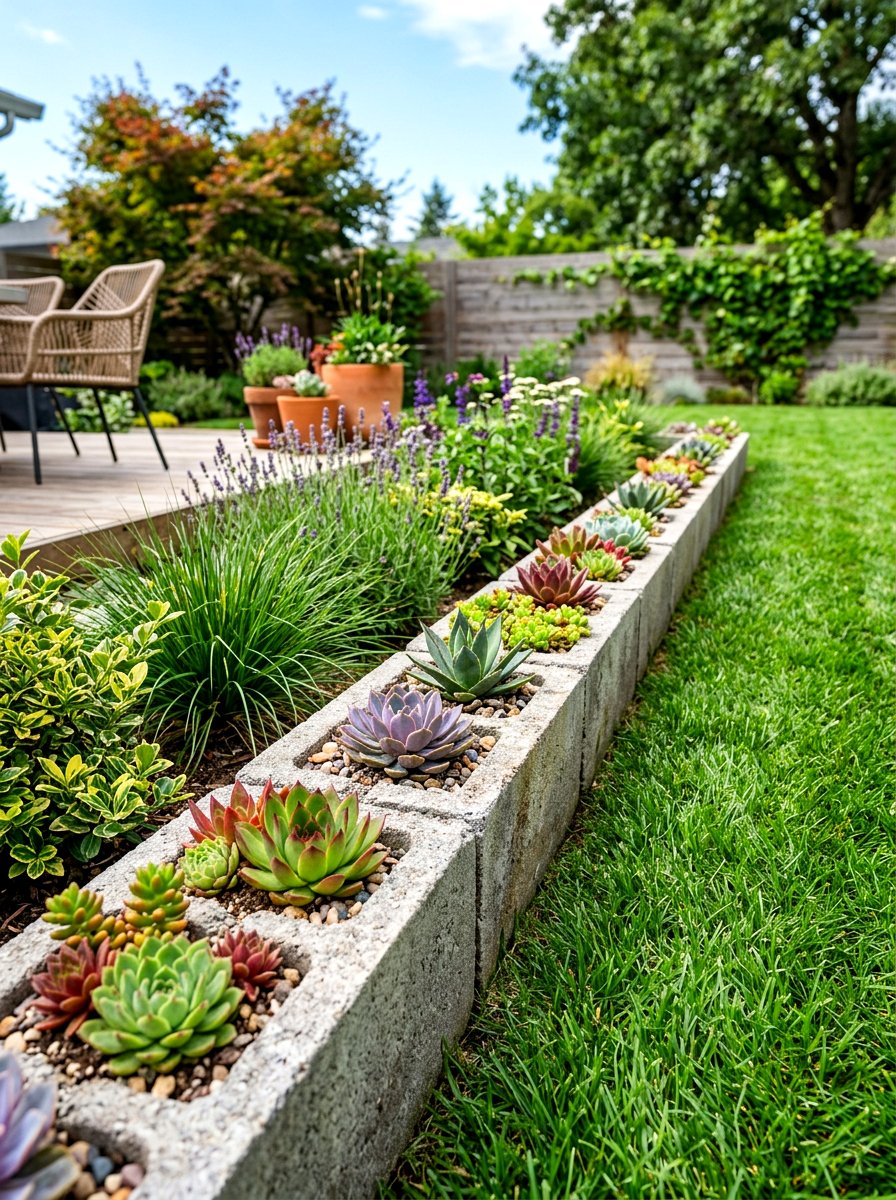
Cinder block lawn edging is a very affordable and modern-industrial way to define your garden beds while adding a functional element. By turning the blocks on their sides so the hollow centers face upward, you create mini-planters that can be filled with small succulents or colorful annual flowers. This "double-duty" edging provides a thick and very sturdy border that will not move or shift over time. The neutral gray color of the concrete blocks works well with contemporary home designs and provides a great backdrop for vibrant green plants. You can even paint the blocks to add a pop of color to your landscape design.
25. Scalloped garden borders
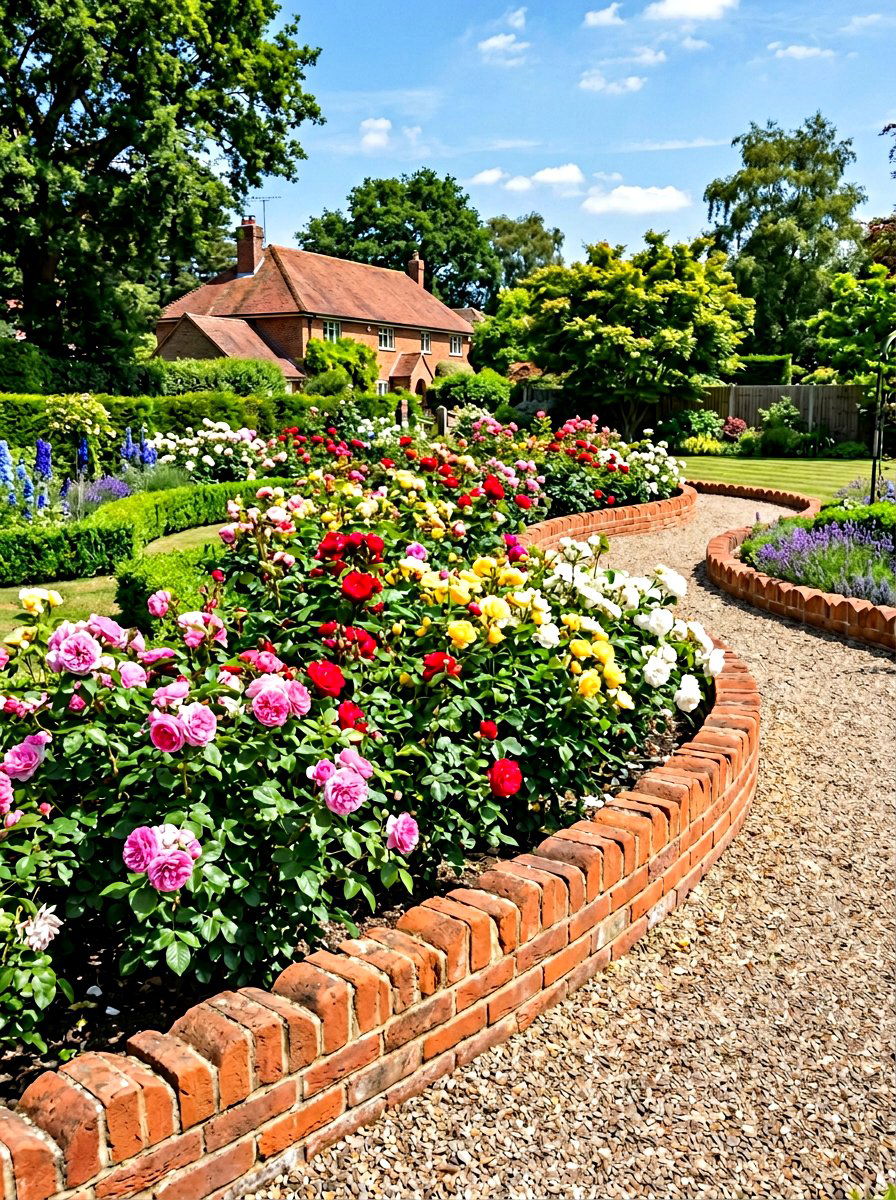
Scalloped garden borders feature a classic decorative edge that adds a touch of femininity and traditional charm to your flower beds. These pre-cast concrete or plastic pieces are designed to interlock, making them very easy to install in a straight or slightly curved line. The rounded, repeating pattern creates a sense of rhythm and movement that draws the eye along the perimeter of your garden. This style of edging is perfect for formal rose gardens or traditional suburban yards where a neat and tidy appearance is the goal. They are available in various colors, including terra cotta, gray, and white, to match your existing outdoor decor.
26. Hidden lawn edging
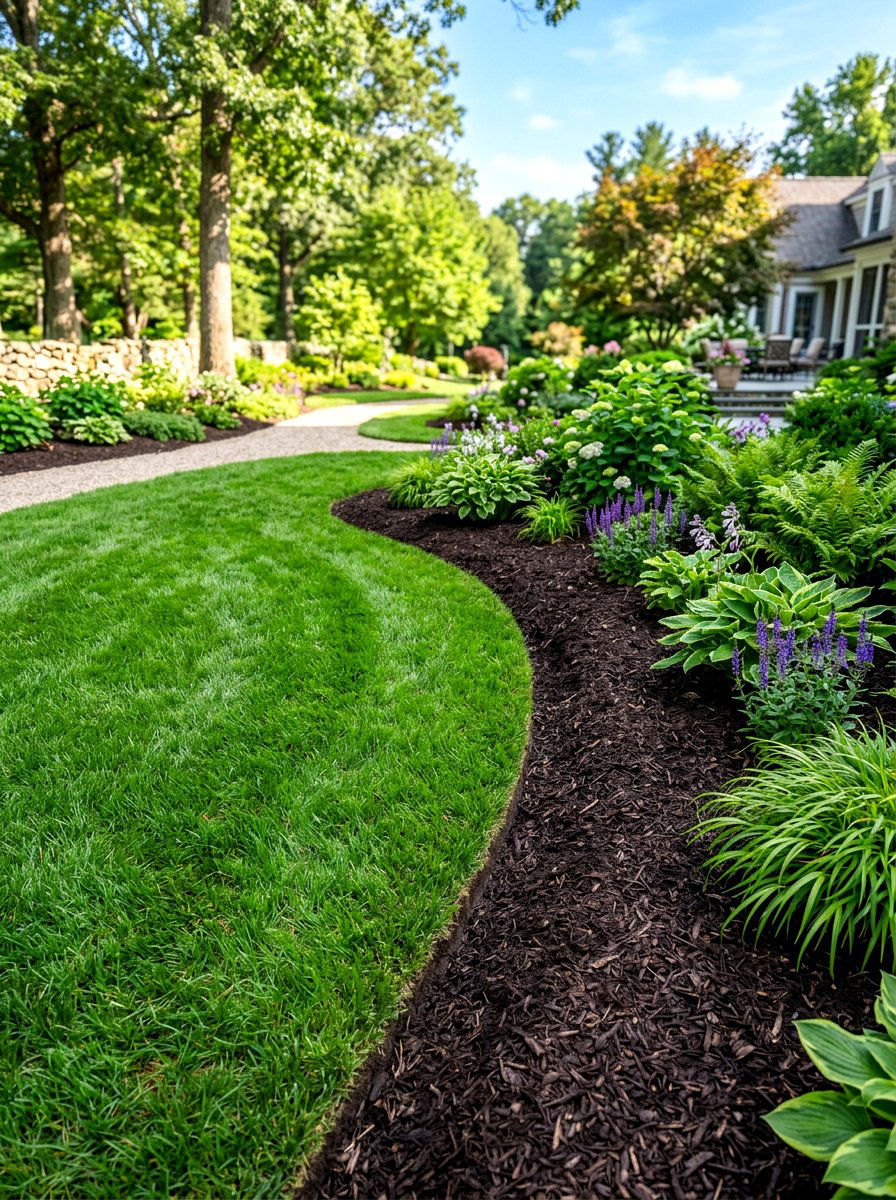
Hidden lawn edging is the ultimate choice for those who want the benefits of a physical barrier without the visible distraction of a border. Typically made from thin plastic or metal, this edging is installed entirely below the soil line, with only a tiny fraction visible at the surface. It serves the critical function of stopping grass roots from spreading into garden beds while maintaining a seamless, natural look between the lawn and the mulch. This "invisible" boundary is perfect for minimalist landscapes or for gardeners who want their plants to be the sole focus of the yard without any man-made structures in sight.
27. Flat stone borders
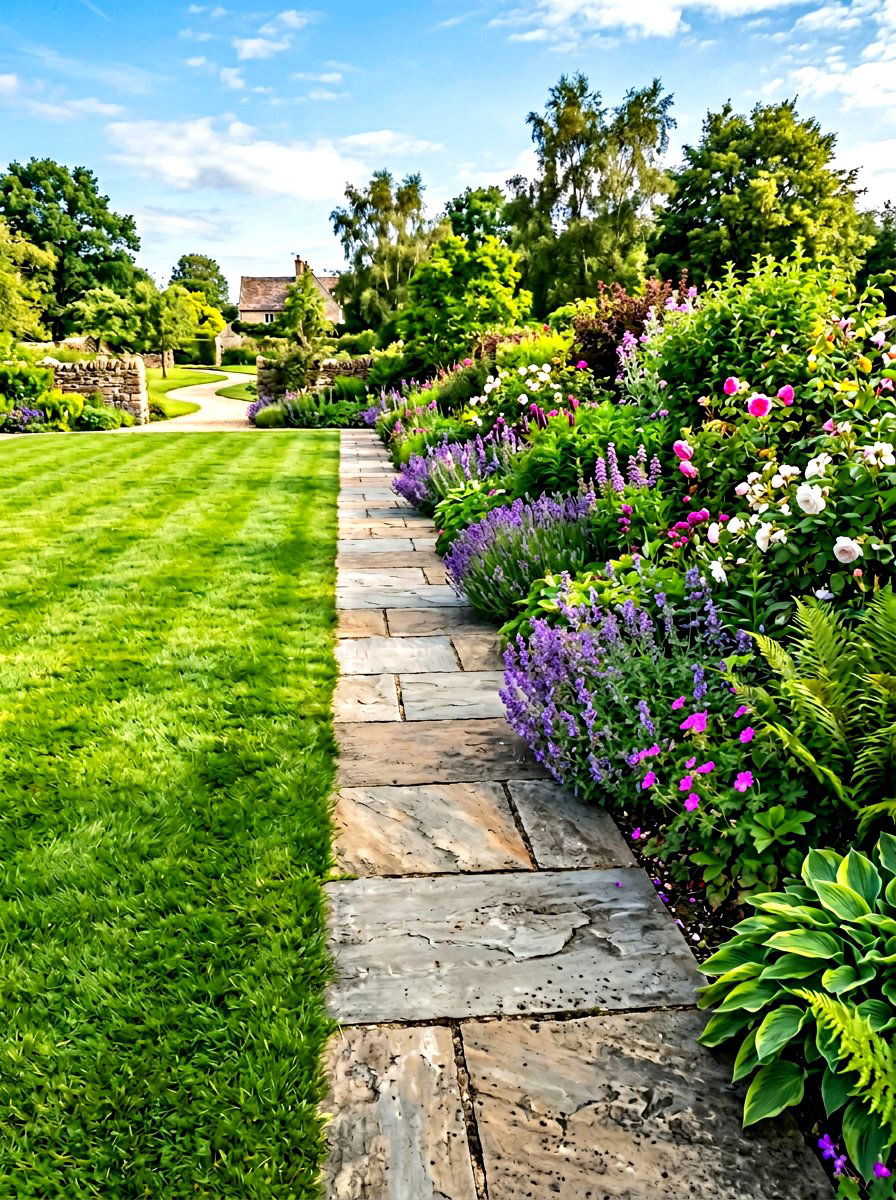
Flat stone borders use thin, horizontal slabs of rock to create a low-profile and very stable edge that is easy to mow around. Unlike upright stones, flat borders provide a wide surface that acts as a natural mowing strip for your garden equipment. This style of edging feels very grounded and permanent, making it a great choice for framing large trees or expansive flower beds. You can use slate, flagstone, or even large pieces of flat fieldstone to achieve this look. The horizontal orientation of the stones adds a sense of calmness and stability to your landscape, helping to lead the eye through the garden space.
28. Timber lawn edging
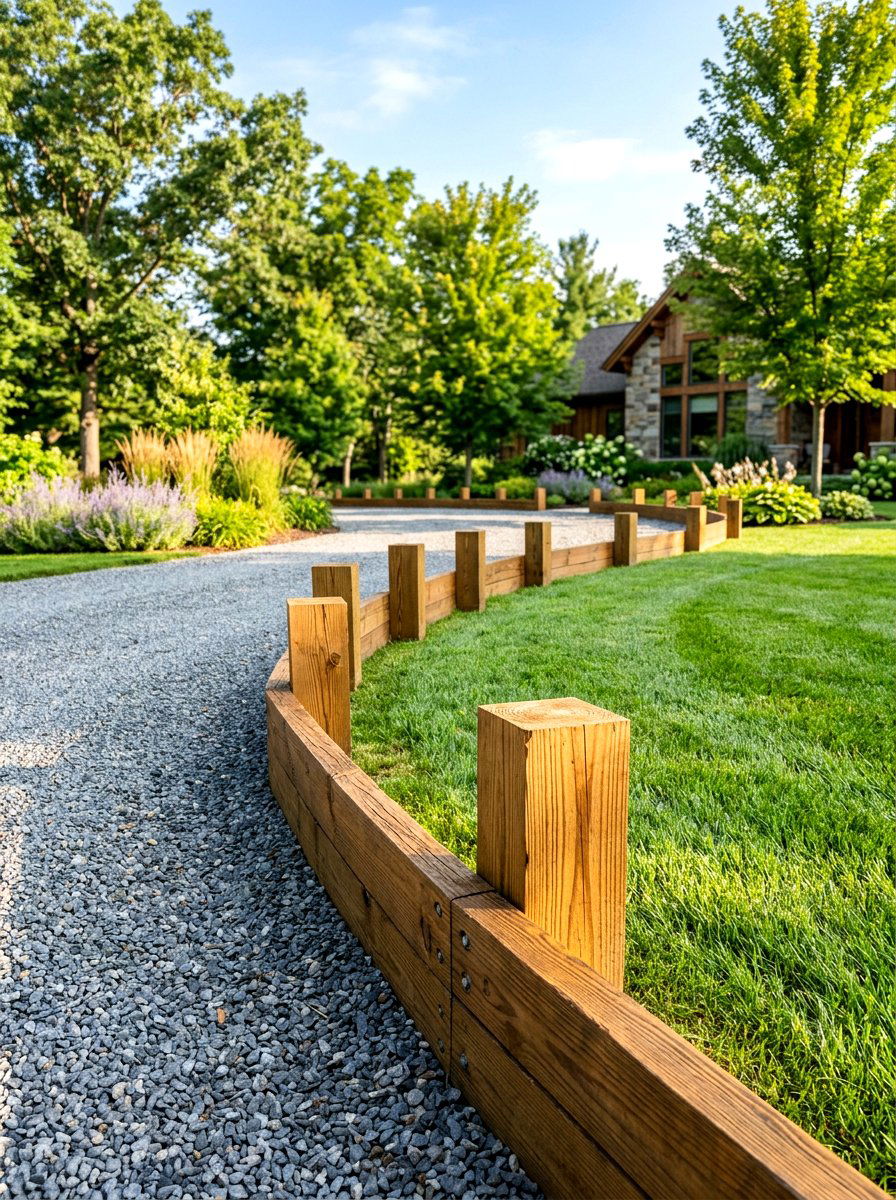
Timber lawn edging uses smaller pieces of wood, such as 4x4 posts or treated landscape timbers, to create a structured and very clean border. This material is excellent for creating sharp, ninety-degree corners and long straight runs along driveways or property lines. Timber is very easy to work with and can be secured into the ground using long metal spikes or rebar. It provides a more substantial and architectural feel than thin metal or plastic strips, making it a great choice for defining large, multi-leveled garden beds. When stained or painted, timber edging can become a beautiful highlight that complements your home’s trim and siding.
29. Granite garden borders
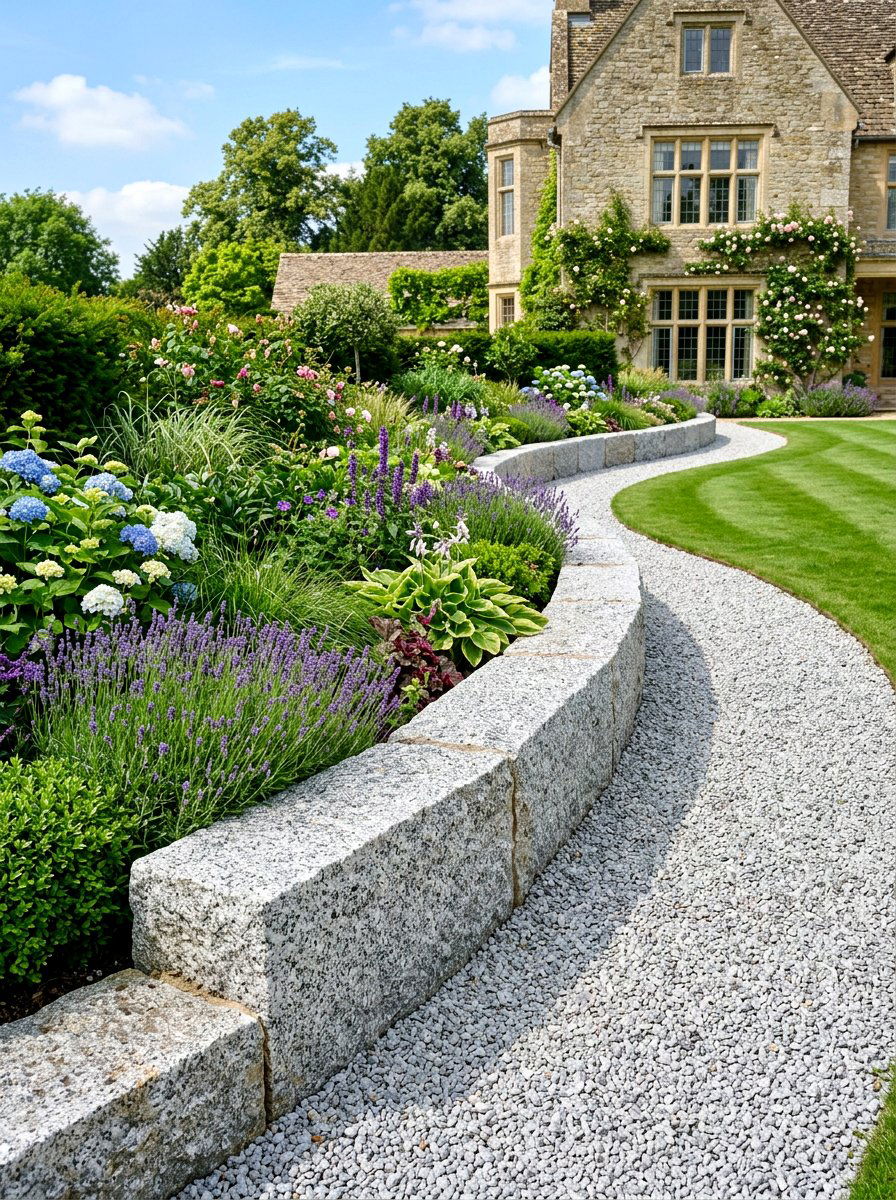
Granite garden borders are the height of luxury and durability, offering a high-end look that will truly last a lifetime. Granite is one of the hardest natural stones available, meaning it will not chip, crack, or fade even in the harshest winter climates. It is available in various finishes, from rough-hewn blocks for a rustic look to polished strips for a modern aesthetic. The natural speckling and crystalline structure of granite provide a subtle sparkle that looks beautiful in the sunlight. While it is one of the more expensive edging options, its timeless beauty and extreme longevity make it a very worthwhile investment for any property.
30. Corrugated metal edging
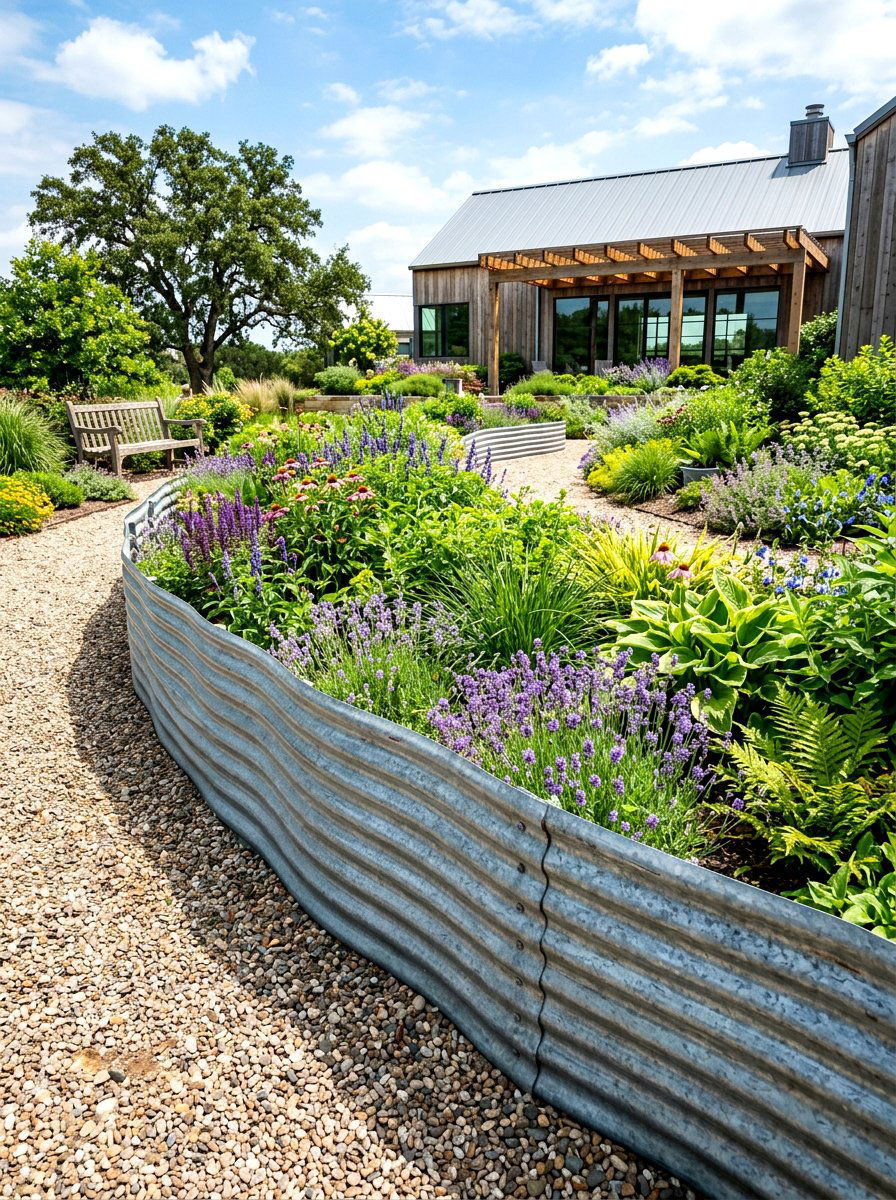
Corrugated metal edging is a trendy and industrial choice that adds a lot of texture and visual interest to a modern or farmhouse-style yard. The wavy, galvanized steel panels provide a unique rhythmic pattern that contrasts beautifully against soft, organic plants and flowers. This material is very durable and resistant to rust, making it a practical choice for long-term use. You can use it to create raised garden beds or low borders that have a very distinct and edgy personality. It works particularly well in urban gardens or creative landscapes where you want to incorporate more unconventional materials for a bold and memorable look.
Conclusion:
Selecting the perfect lawn edging is a transformative step that balances practical garden management with stunning visual appeal. A well-defined border does more than just separate the grass from the flowers; it provides the structure and organization that makes a landscape feel truly complete. Whether you choose the rustic warmth of natural wood, the timeless elegance of brick, or the sleek precision of modern metal, your decision will significantly impact the overall mood of your outdoor space. By investing time into choosing and installing the right edging, you ensure a lower-maintenance yard and a beautiful, professional-looking garden that will continue to impress for many years.

Related posts: