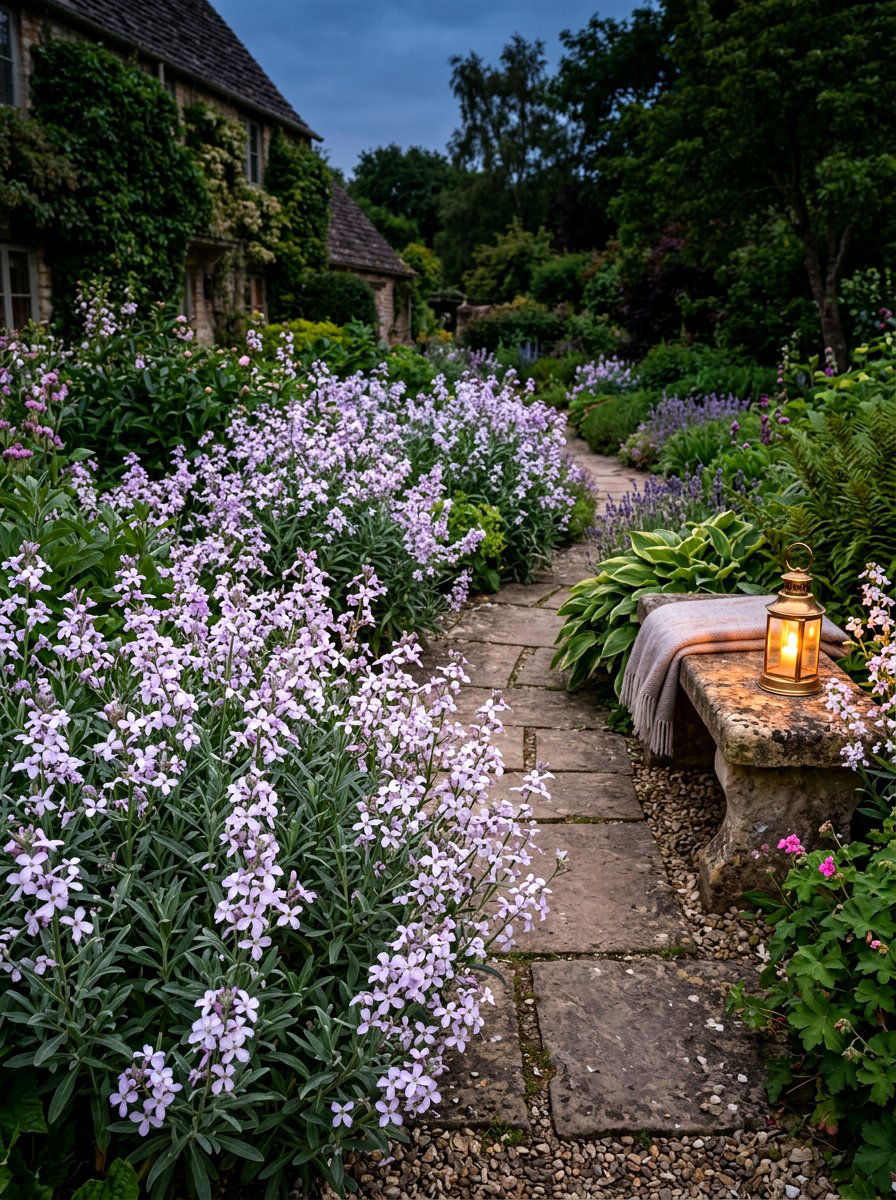
Creating a lavender walkway is one of the most rewarding garden projects because it combines visual beauty with an incredible sensory experience. Imagine walking to your front door or through your backyard while being surrounded by the soothing scent of blooming purple flowers. Lavender is not only beautiful but also incredibly hardy and drought-tolerant, making it a sustainable choice for many climates. Whether you prefer a formal English garden look or a wilder Mediterranean vibe, these purple blooms can transform a simple path into a stunning focal point. This guide explores thirty unique ways to incorporate lavender into your landscape to create a dreamy, fragrant journey through your outdoor space.
1. English Lavender Walkway
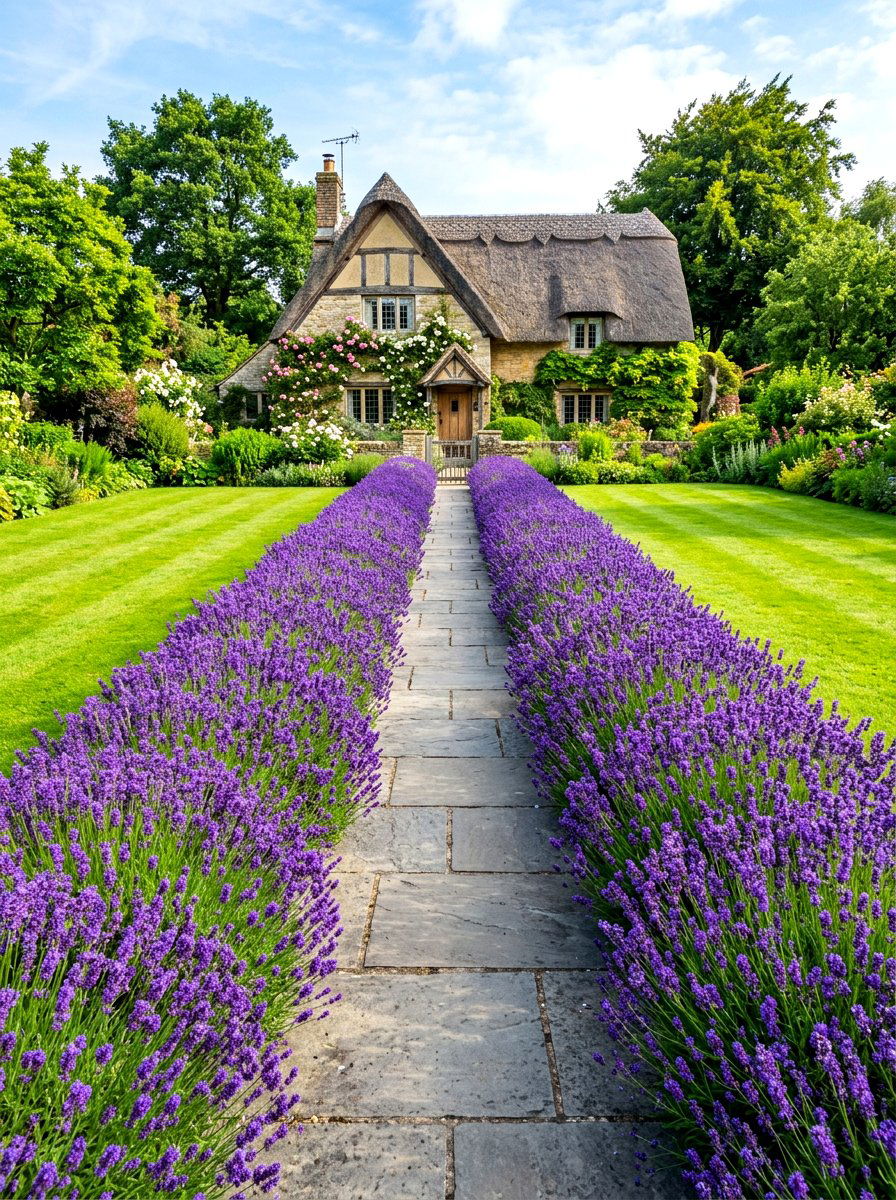
English lavender is the gold standard for creating a classic, structured border along any garden path. These plants typically grow in compact, neat mounds that stay green throughout the winter in many zones, providing year-round interest. When planted closely together, they form a continuous ribbon of purple that spills slightly over the edges of the walkway. This creates a soft, romantic effect that balances the hard lines of stone or concrete. You should space them about twelve inches apart to ensure they grow into a seamless hedge. This style works perfectly for traditional homes where a sense of timeless elegance and order is desired in the landscaping.
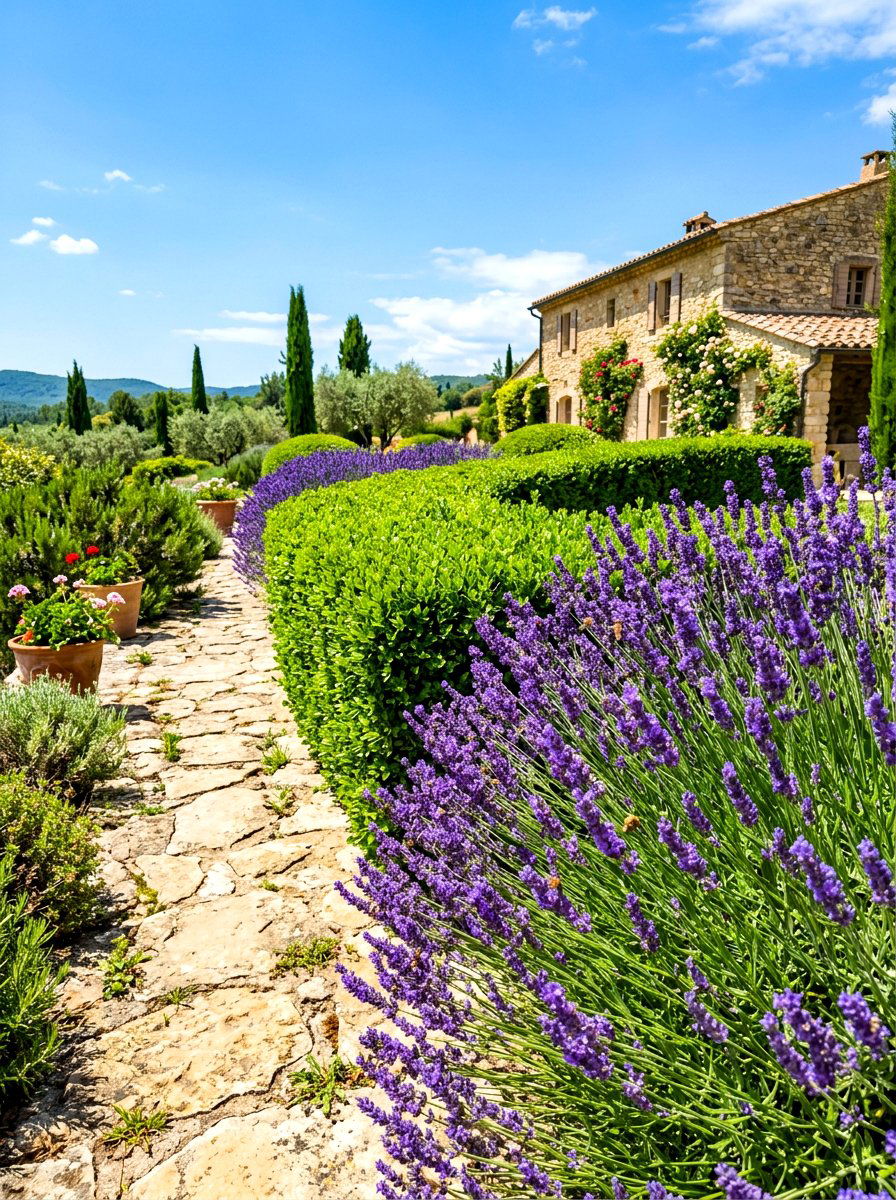
2. Flagstone Lavender Path
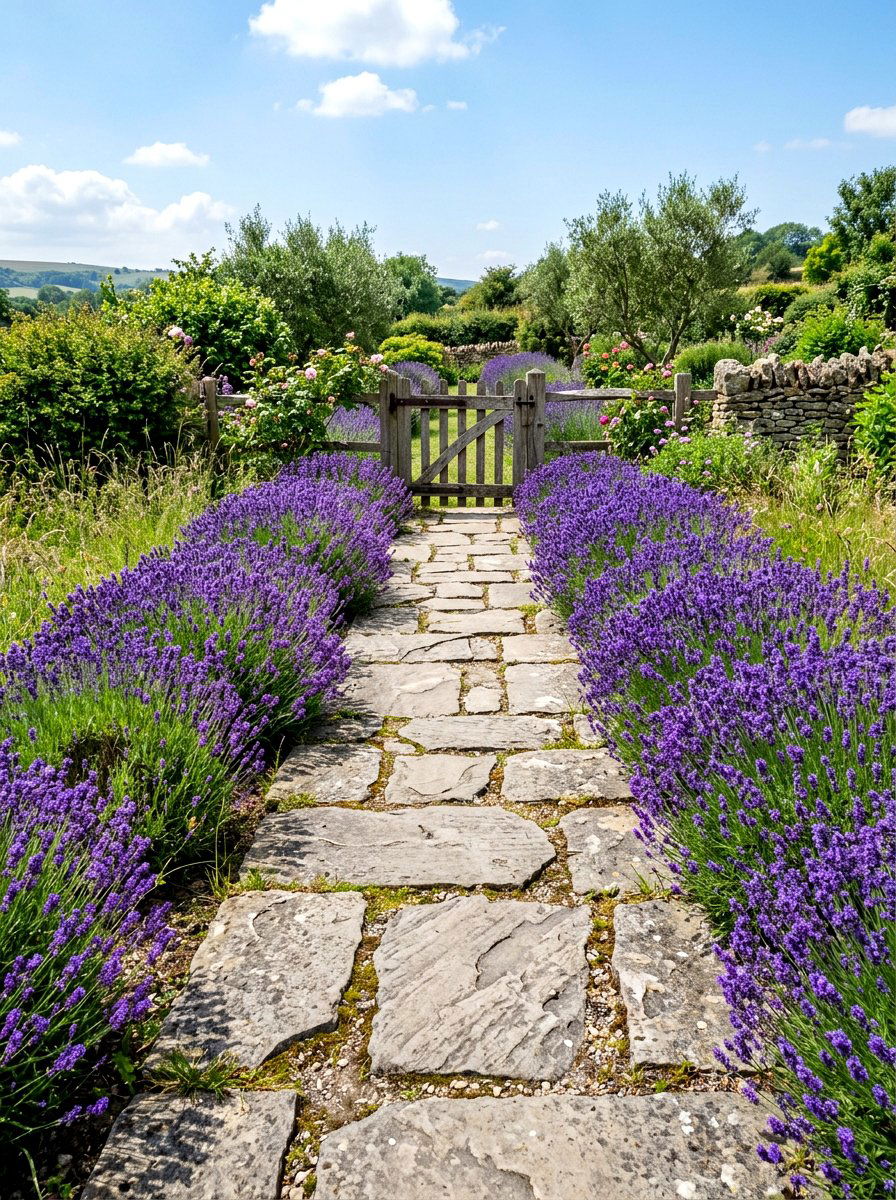
Flagstone provides a natural and organic look that pairs beautifully with the wild texture of lavender. Large, irregular stones create a stable walking surface while leaving small gaps where lavender can occasionally lean in. This design feels grounded and timeless, especially when using earthy tones like tan, gray, or slate. The silver-green foliage of the lavender contrasts sharply against the flat, solid surfaces of the stone. For the best results, use a variety like Hidcote or Munstead to keep the height manageable. This combination is ideal for side yards or paths leading to a hidden patio where a relaxed, rustic atmosphere is most appreciated.
3. Gravel Lavender Walkway
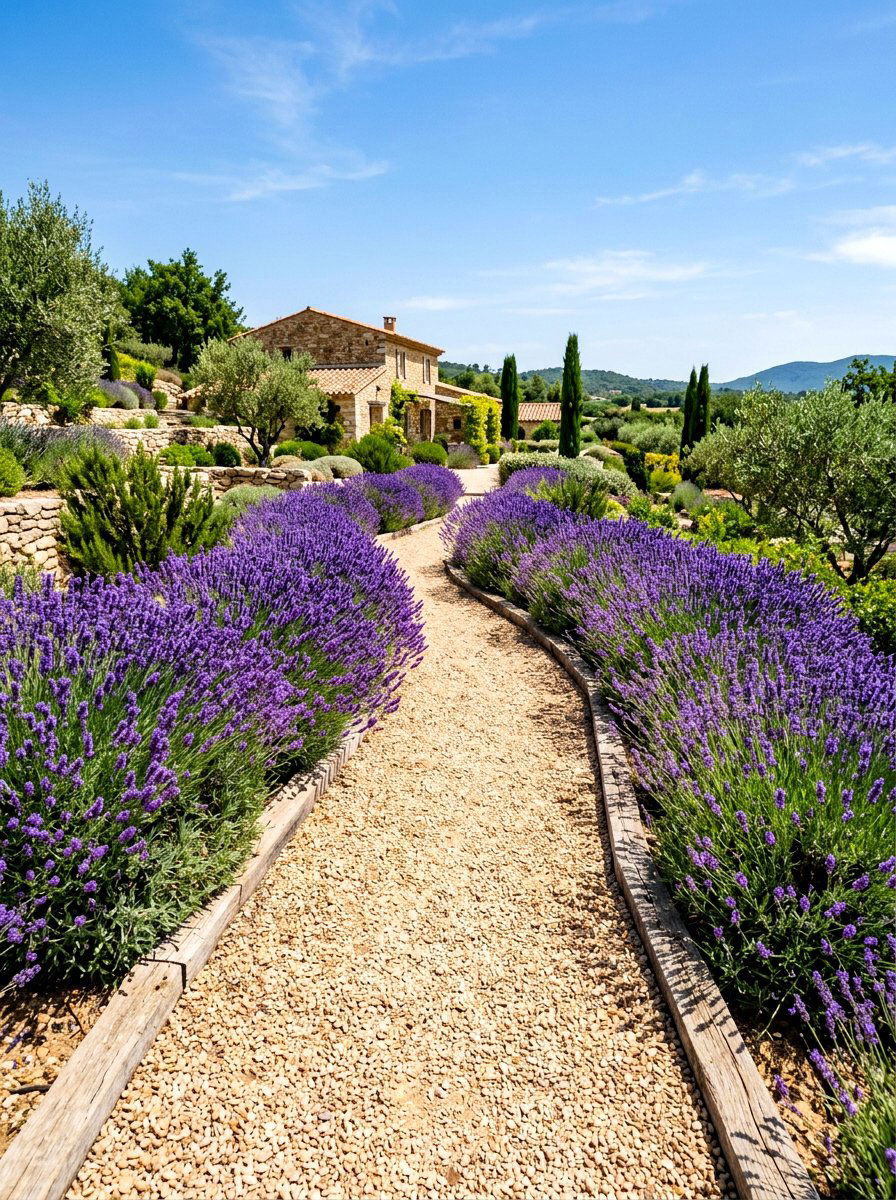
Gravel is an excellent choice for lavender because it provides the sharp drainage that these Mediterranean plants crave. Using a light-colored pea gravel or crushed granite helps reflect light onto the plants, promoting more vigorous blooms. The crunch of the gravel underfoot combined with the fragrance of the lavender creates a multi-sensory experience that is hard to beat. You can edge the path with larger stones or timber to keep the gravel contained. This low-maintenance option is perfect for xeriscaping and drought-prone areas. It gives your home a sun-baked, coastal feel that looks professional yet feels incredibly inviting and warm.
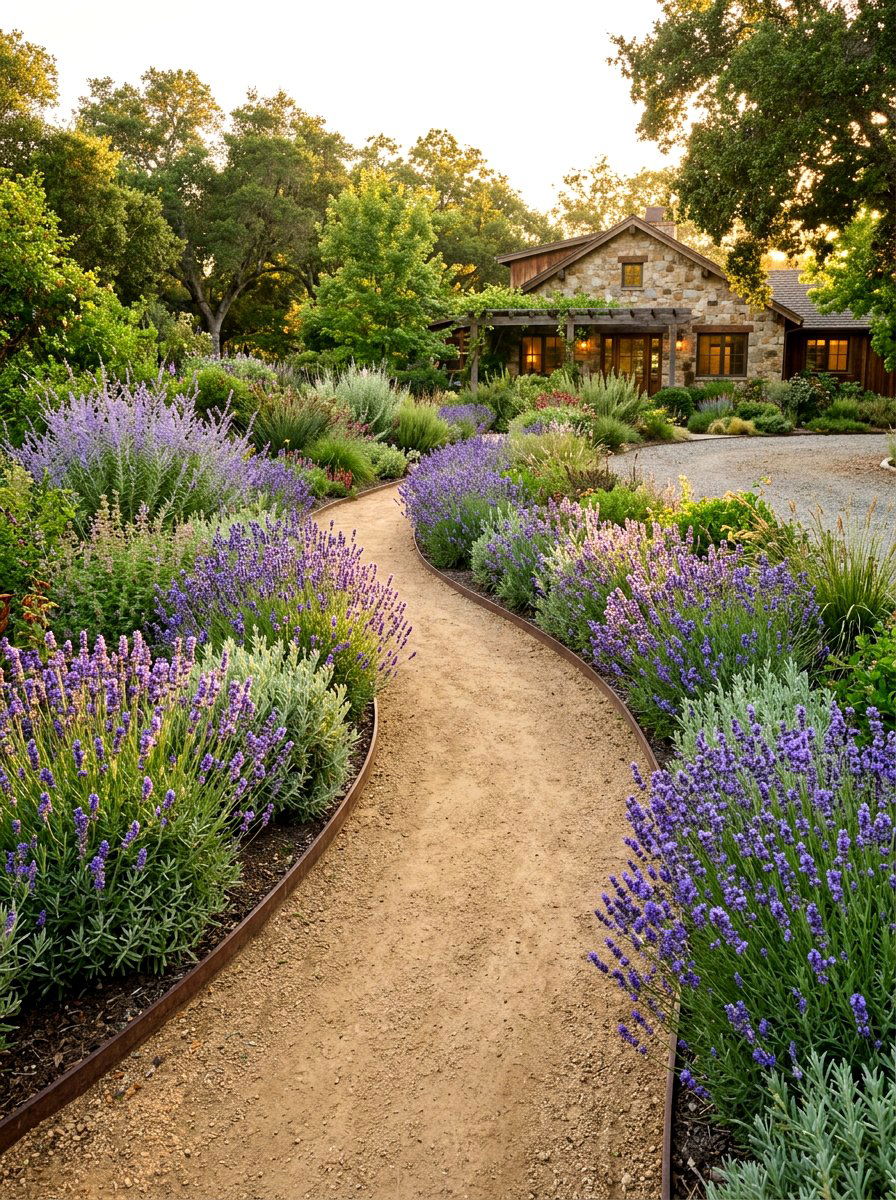
4. Curved Lavender Path
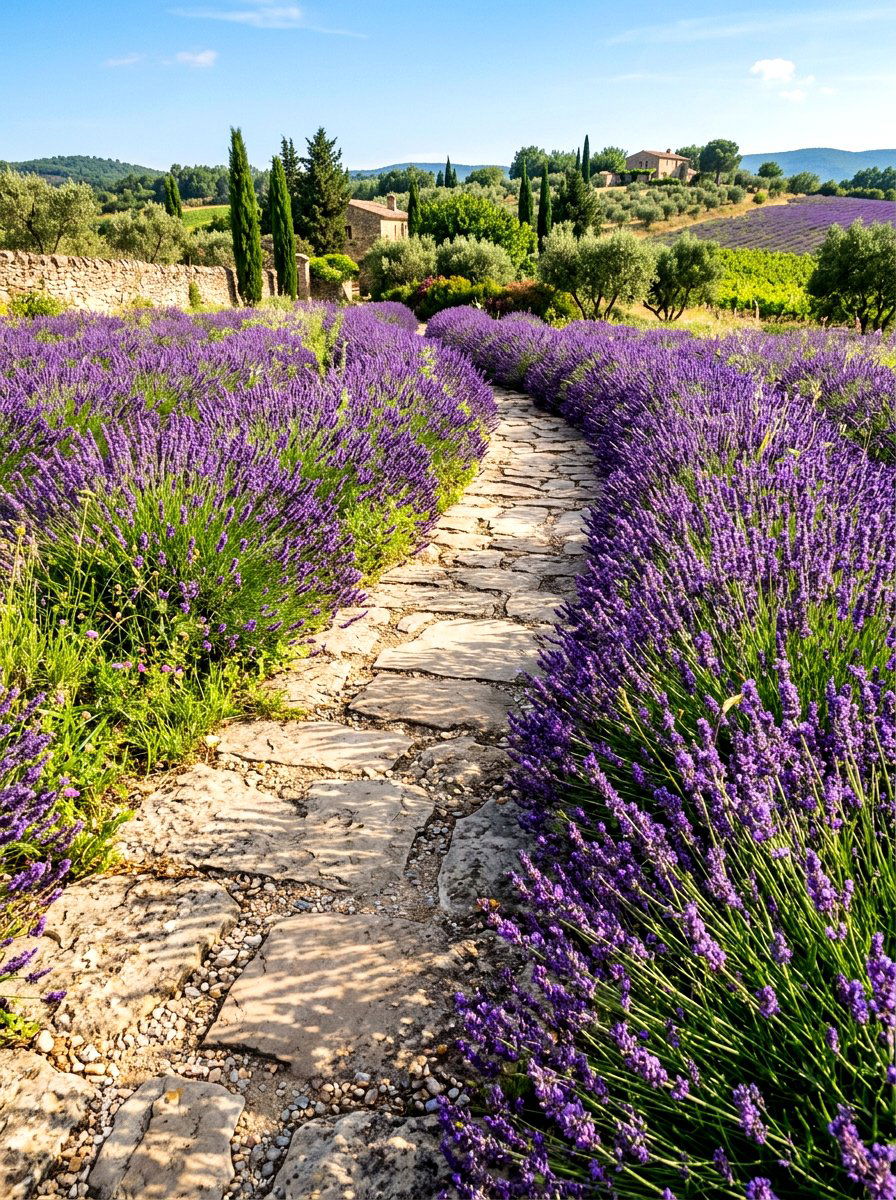
A curved path adds a sense of mystery and movement to your garden layout. Instead of a straight line, a gentle "S" curve allows the lavender to appear more natural and abundant. As you walk, the lavender seems to wrap around you, intensifying the aromatic experience. This design technique makes a small garden feel larger by obscuring the final destination. Use flexible edging materials like steel or plastic to define the curve before planting. Thick clusters of lavender along the bends create a lush, overflowing look that draws the eye forward. It is a fantastic way to break up the rigid lines of a standard rectangular lawn.
5. Lavender and Rose Walkway
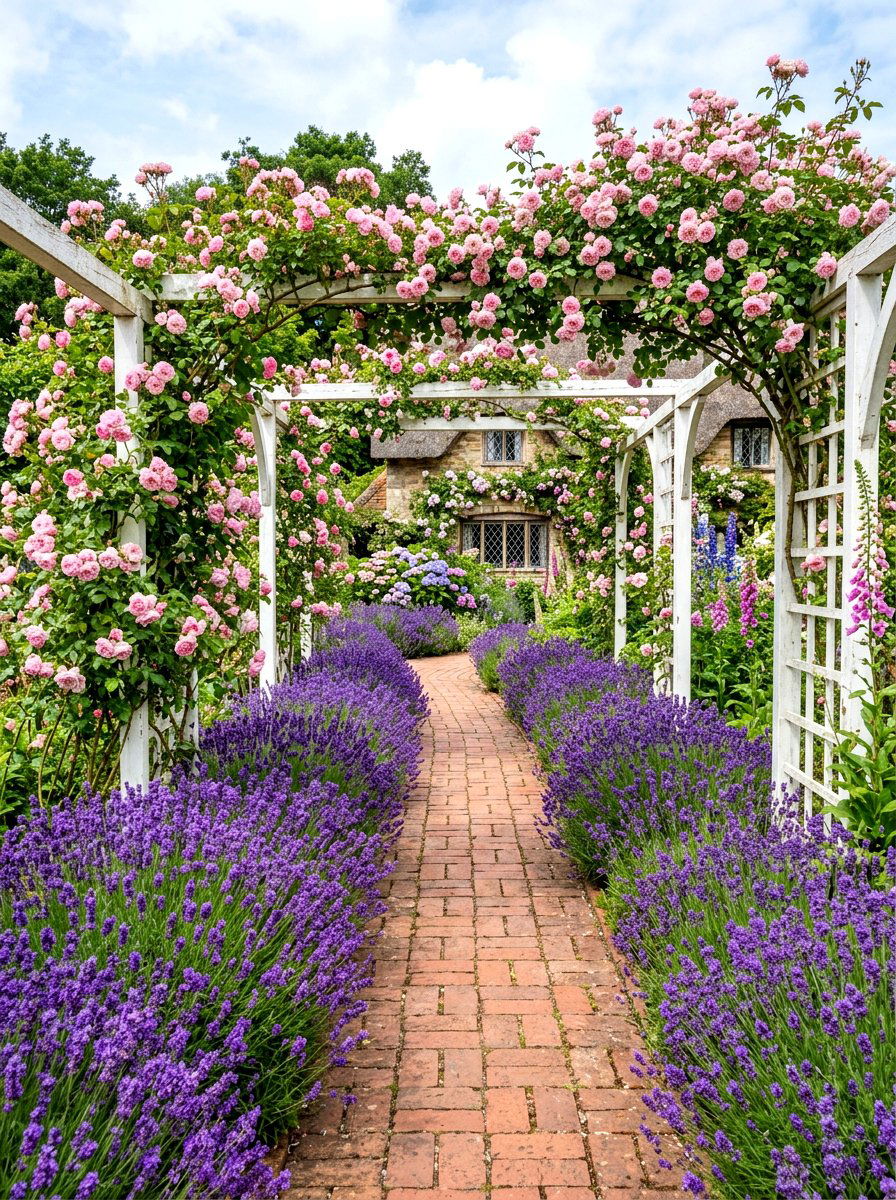
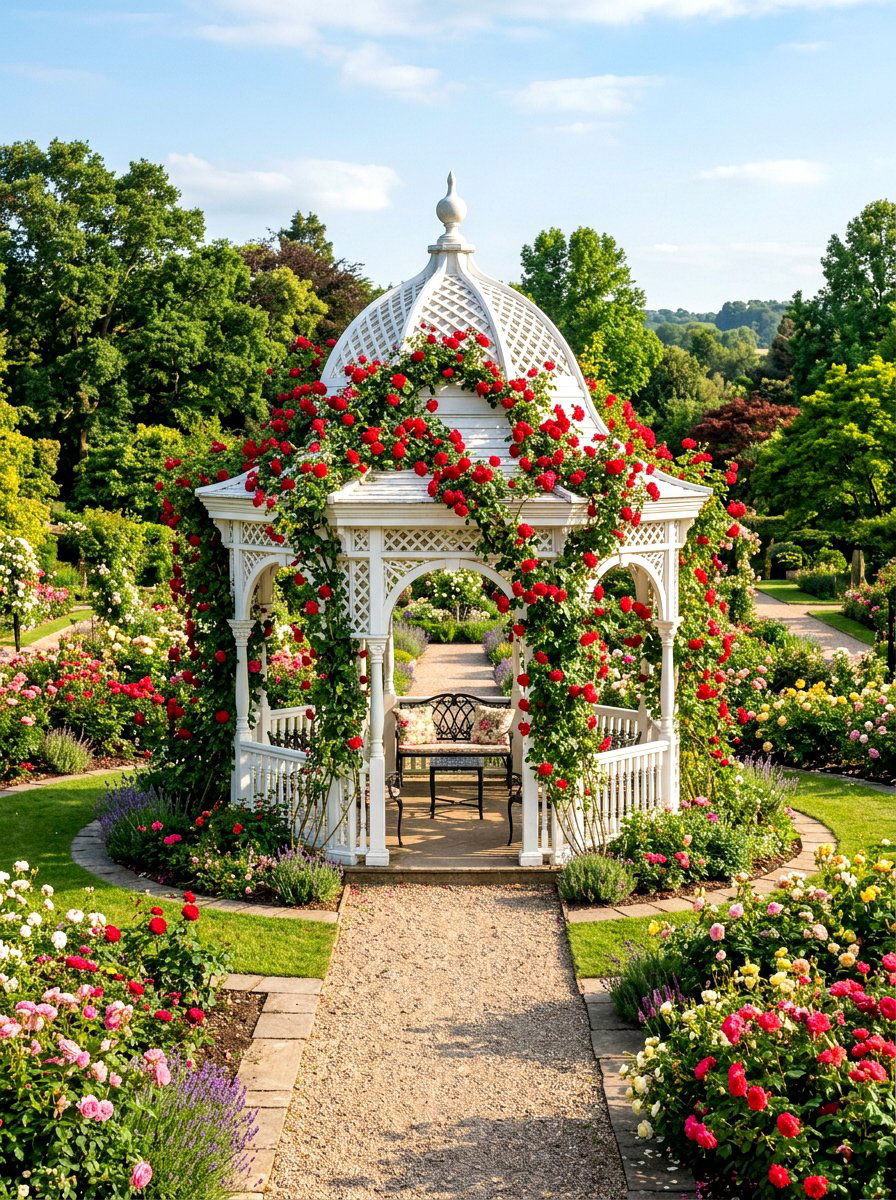
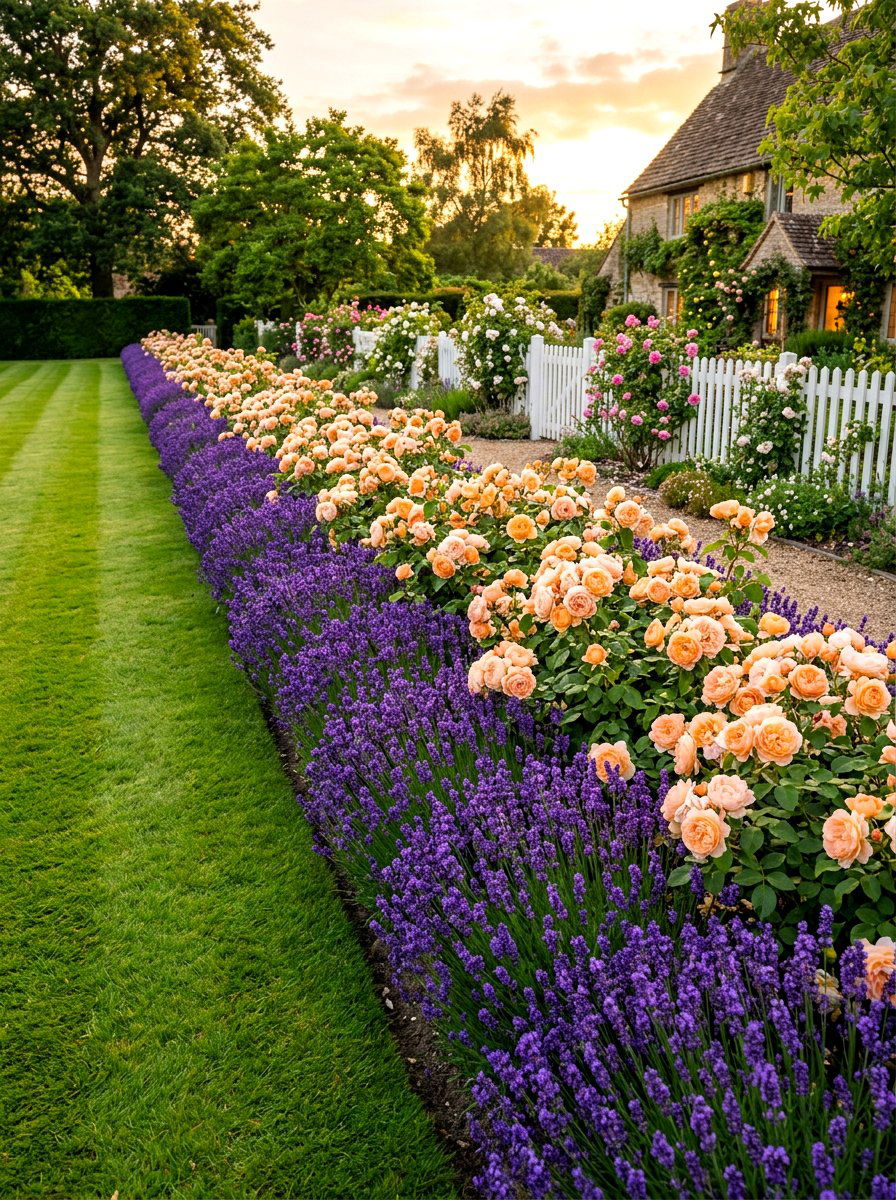
Combining lavender with roses is a classic design choice that offers unparalleled romance and fragrance. The soft purple spikes of the lavender act as a perfect "filler" around the base of leggy rose bushes. This duo thrives in similar conditions, as both plants love full sun and well-drained soil. You can choose white roses for a clean, sophisticated look or pink roses for a more traditional cottage vibe. The lavender also helps deter certain pests from the roses, making it a functional companion. This walkway style is best suited for front entrances where you want to make a bold, beautiful, and highly fragrant first impression.
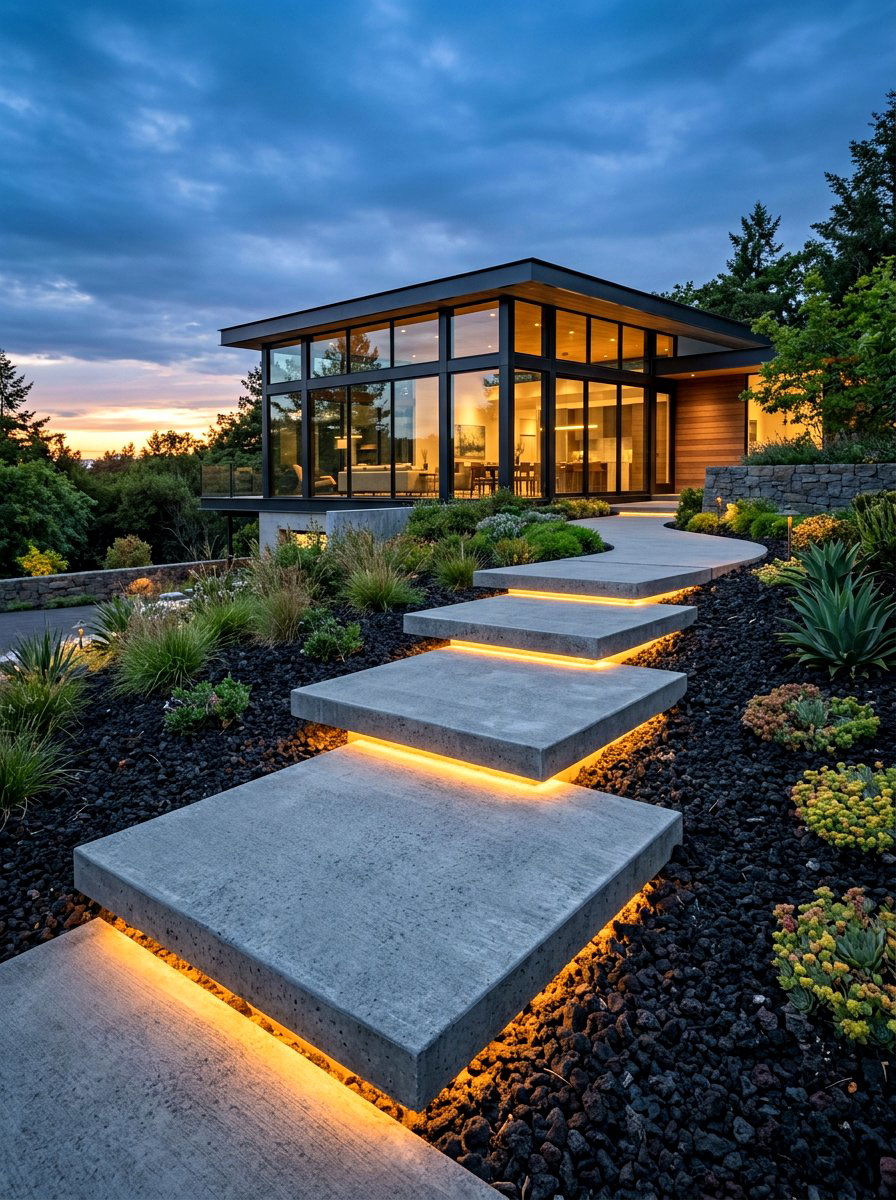
6. Modern Lavender Path
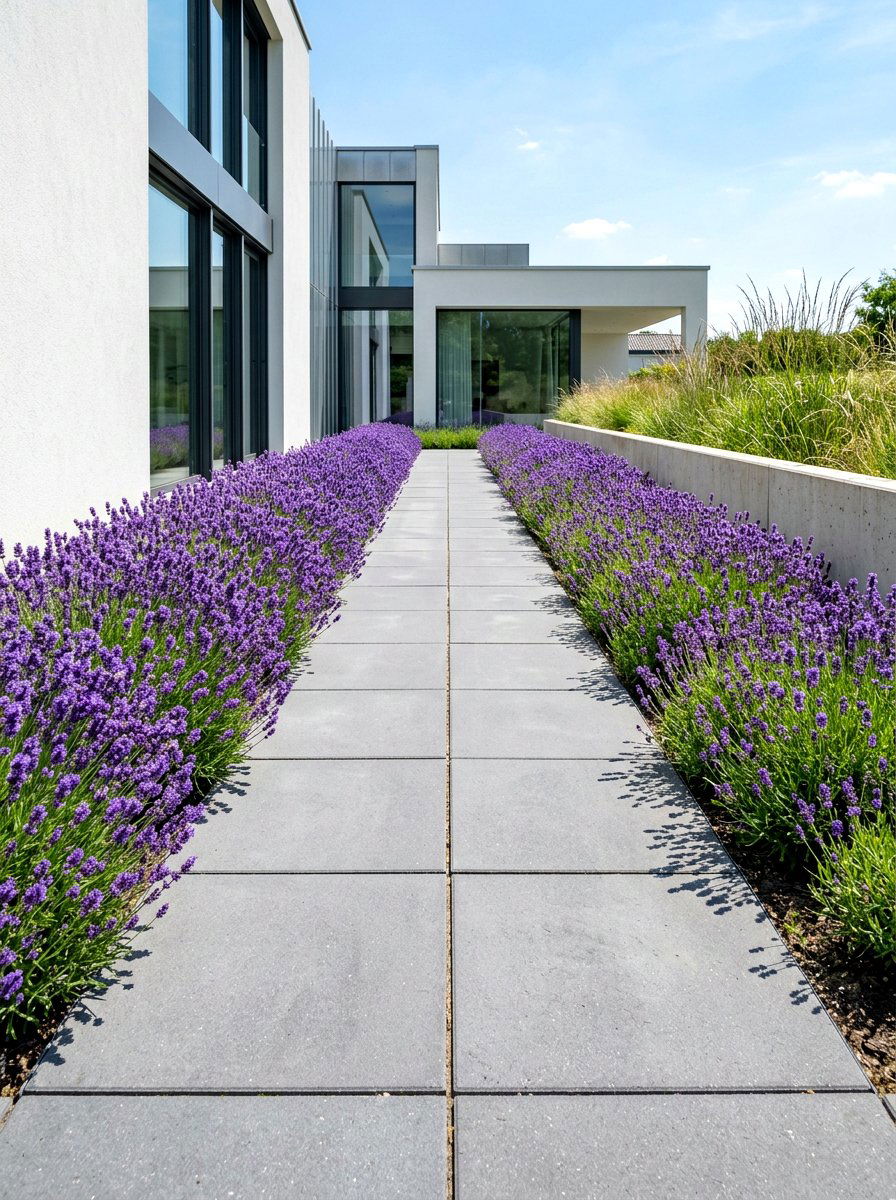
For a modern aesthetic, use clean lines and symmetrical planting to create a sense of architectural order. Pair lavender with smooth concrete pavers or dark basalt stone for a high-contrast look that feels very contemporary. The key to this style is precision; ensure each lavender plant is perfectly spaced and pruned into a consistent shape. This creates a rhythmic pattern that complements minimalist architecture. The silver-toned foliage works exceptionally well with cool-toned building materials like steel and glass. This approach turns a traditional herb into a sleek design element that adds softness to a modern home without cluttering the visual landscape.
7. Cottage Lavender Walkway
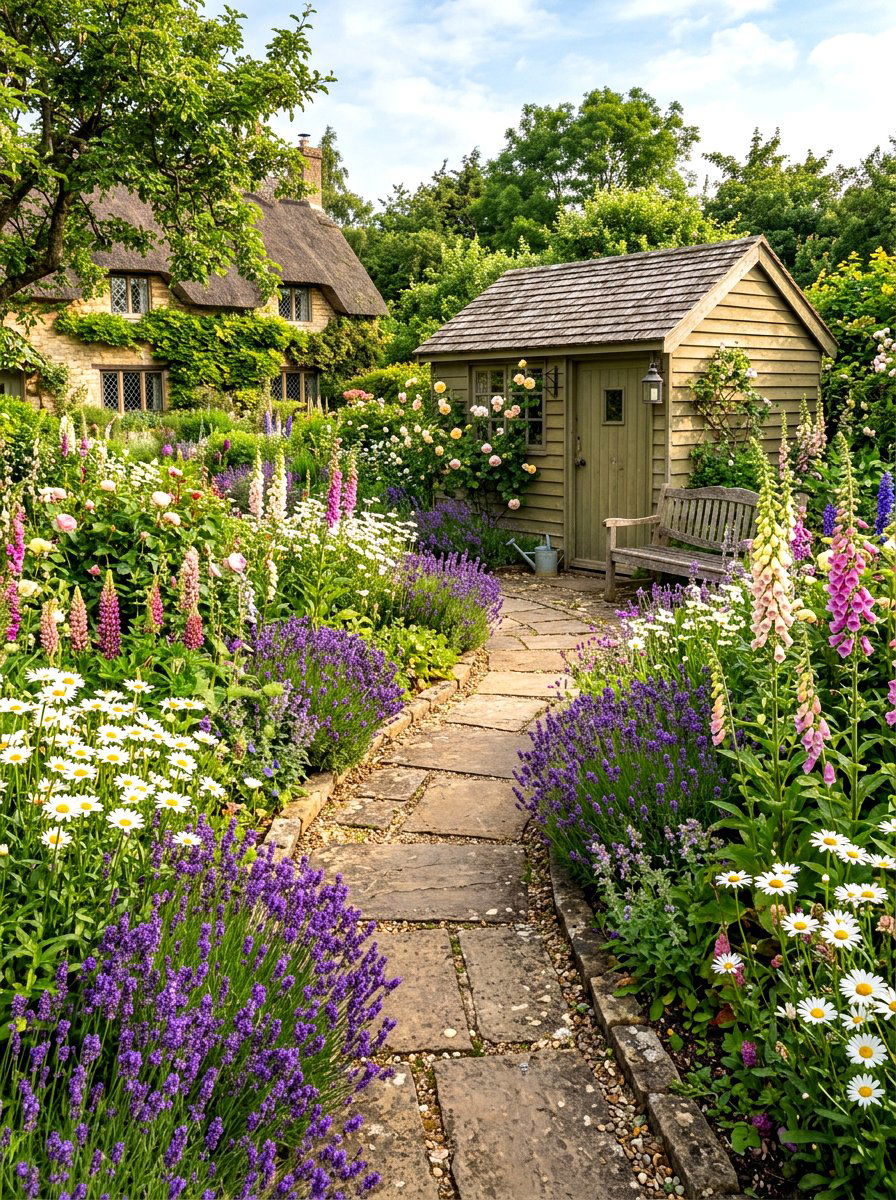
The cottage garden style embraces a "wild but intentional" look that is charming and cozy. Allow your lavender to grow freely and spill over onto a brick or stone path. Mixing in other classic perennials like foxgloves and daisies creates a layered, colorful tapestry. This design is less about perfection and more about abundance and life. The dense planting helps suppress weeds and creates a habitat for beneficial pollinators. A cottage-style walkway feels like a step back in time, offering a nostalgic and whimsical atmosphere. It is the perfect choice for older homes or anyone wanting a garden that feels lived-in and deeply personal.
8. Brick Lavender Path
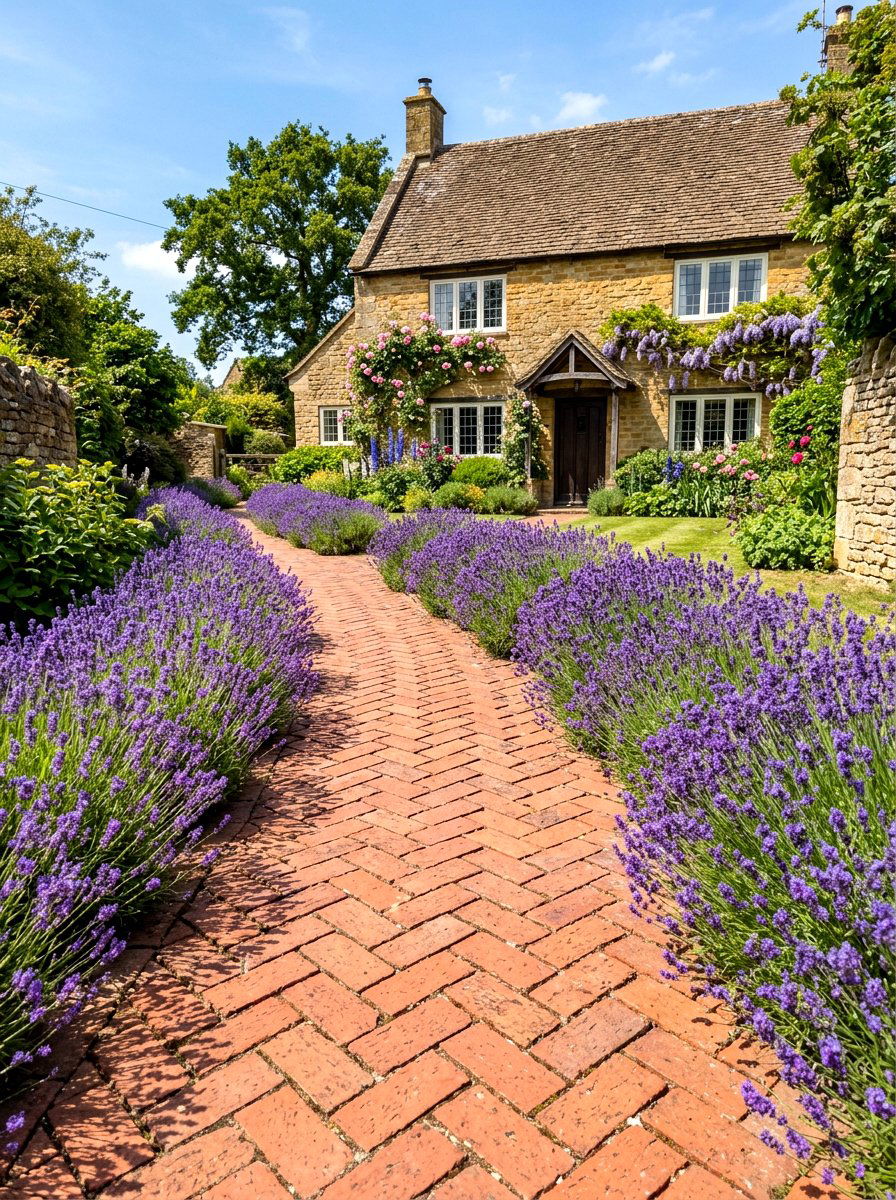
Brick walkways offer a warm, traditional feel that complements the cool tones of lavender perfectly. The red or orange hues of the brick provide a striking color contrast against the purple flowers and silvery leaves. You can lay the bricks in a herringbone or basketweave pattern to add extra visual interest to the ground. Lavender planted along the edges of a brick path softens the hard corners and creates a more weathered, established look. This combination is particularly effective for historic homes or traditional suburban yards. It provides a sturdy, permanent feel while the lavender adds a layer of soft, fleeting beauty every summer.
9. French Lavender Walkway
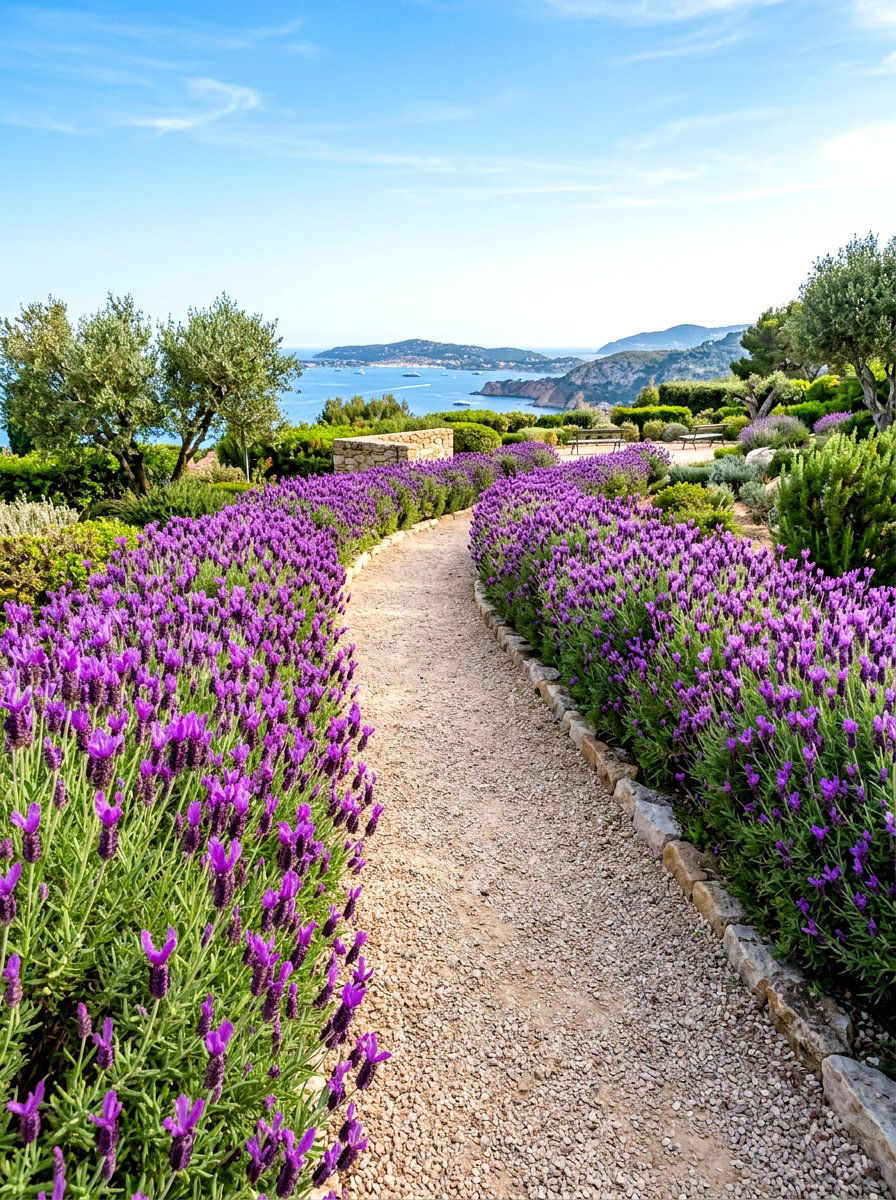
French lavender, known for its distinct "ears" or bracts on top of the flower spikes, offers a unique texture. This variety typically grows larger and more theatrical than English lavender, making it great for a bolder walkway. The fragrance is slightly more camphor-like but still very pleasant and refreshing. Planting French lavender along a wide path allows its large, showy blooms to take center stage. Because it is slightly less cold-hardy, this style is best for warmer climates or coastal regions. The jagged, silver leaves provide a beautiful architectural quality even when the plant is not in full bloom, ensuring the walkway looks great.
10. Lavender and Boxwood Path
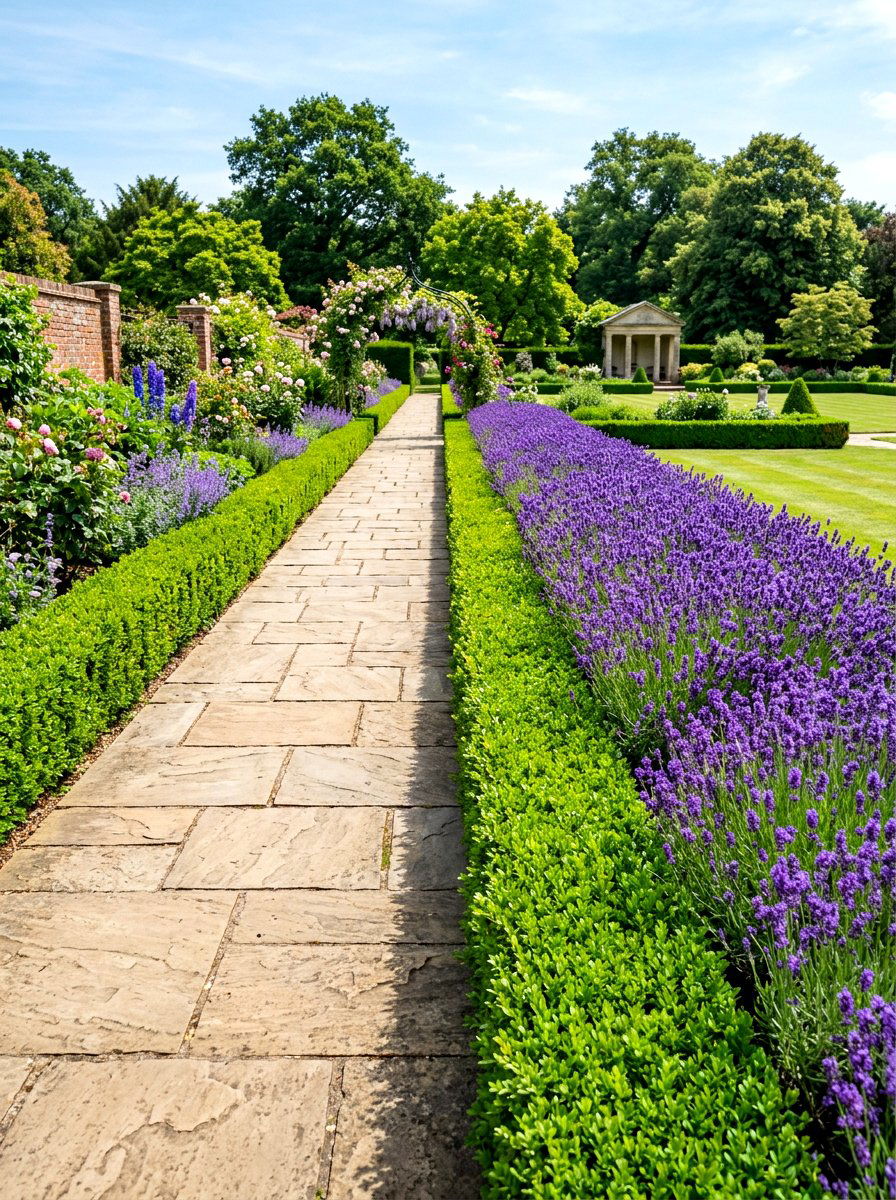
Pairing lavender with boxwood creates a formal and sophisticated garden structure. The evergreen boxwood provides a permanent green frame that looks good all year, while the lavender adds seasonal color and scent. You can plant a low boxwood hedge directly against the walkway with the lavender growing just behind it. This layered effect adds depth and a professional finish to the landscape. The contrast between the dark, glossy boxwood leaves and the soft, matte lavender foliage is visually stunning. This design is perfect for those who want a structured garden that still feels airy and fragrant during the warmer summer months.
11. Mediterranean Lavender Walkway
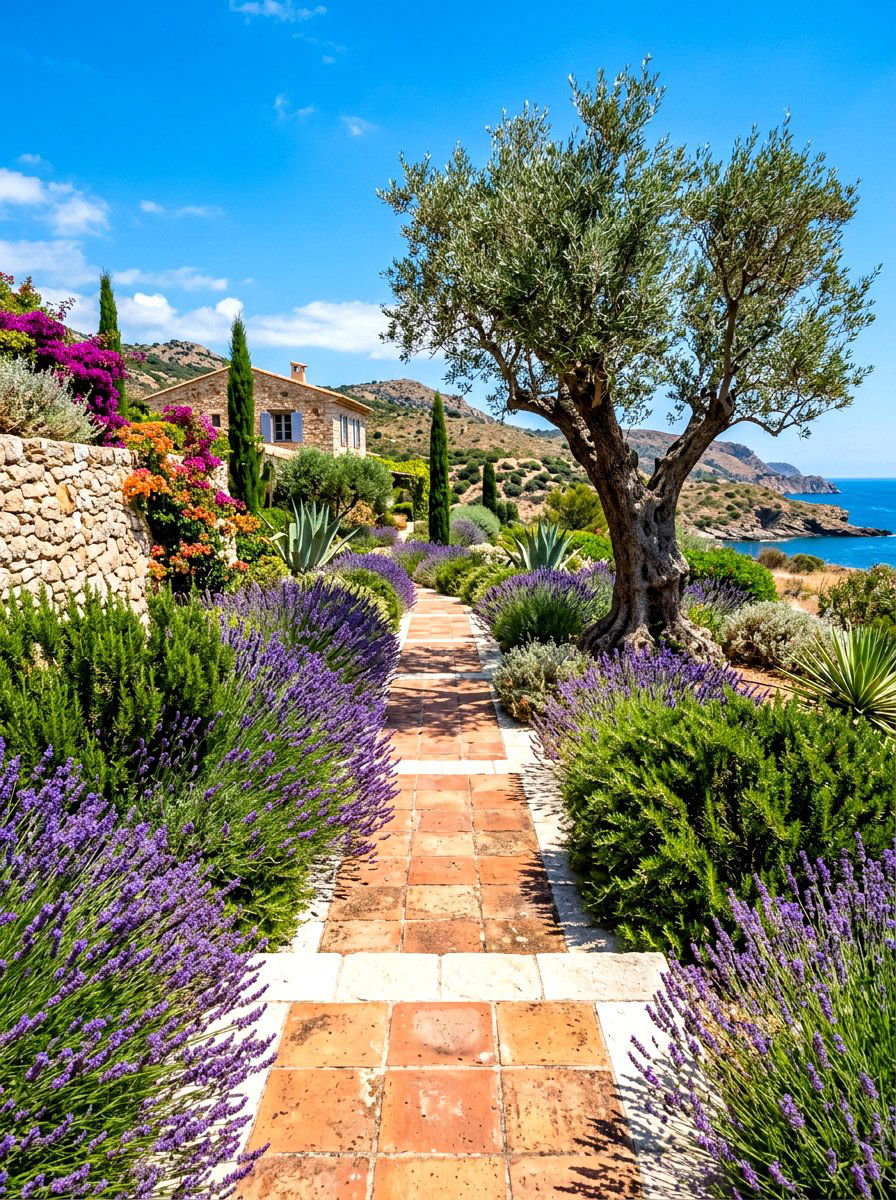
A Mediterranean walkway focuses on drought-tolerant plants and natural materials like terracotta or limestone. Lavender is the star of this style, often paired with other sun-loving plants like olive trees or rosemary. Use warm-toned gravel or stone to mimic the sun-drenched landscapes of southern Europe. This design is not only beautiful but also highly sustainable in dry climates. The silvery tones of the lavender foliage reflect the sun and help the garden stay cool. Adding a few terracotta pots along the path can enhance the authentic Mediterranean feel. It is a low-water, high-impact design that brings a vacation-like atmosphere to your own backyard.
12. Stepping Stone Lavender Path
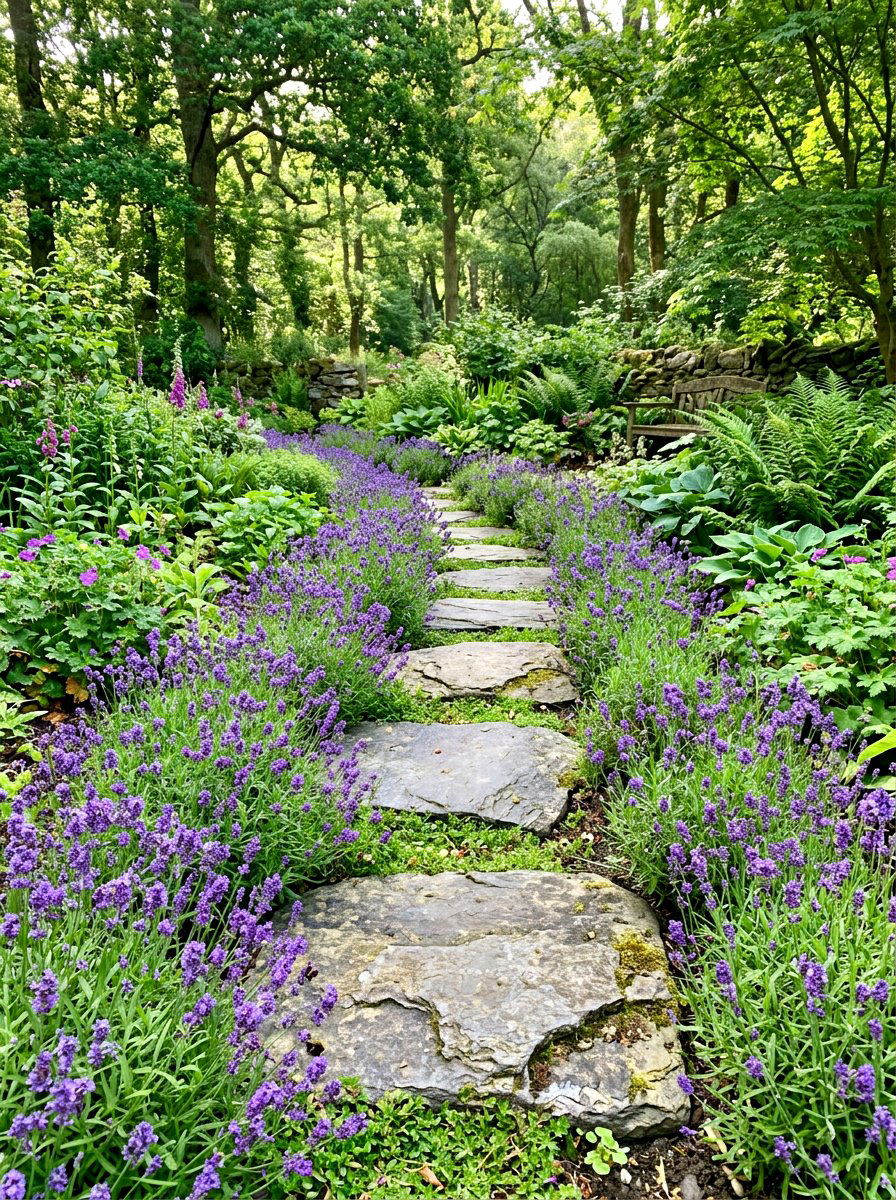
Stepping stones placed within a bed of lavender create a magical "walking on clouds" effect. Instead of a solid path, use large flat stones spaced at a comfortable walking distance. Plant low-growing lavender varieties like "Thumbelina Leigh" in the spaces around the stones. As you step from stone to stone, the lavender gently brushes against your ankles, releasing its calming scent. This design works well for secondary paths or transition areas between different garden rooms. It feels more intimate and less formal than a standard walkway. The combination of hard stone and soft purple flowers creates a balanced and serene environment.
13. Scented Lavender Walkway
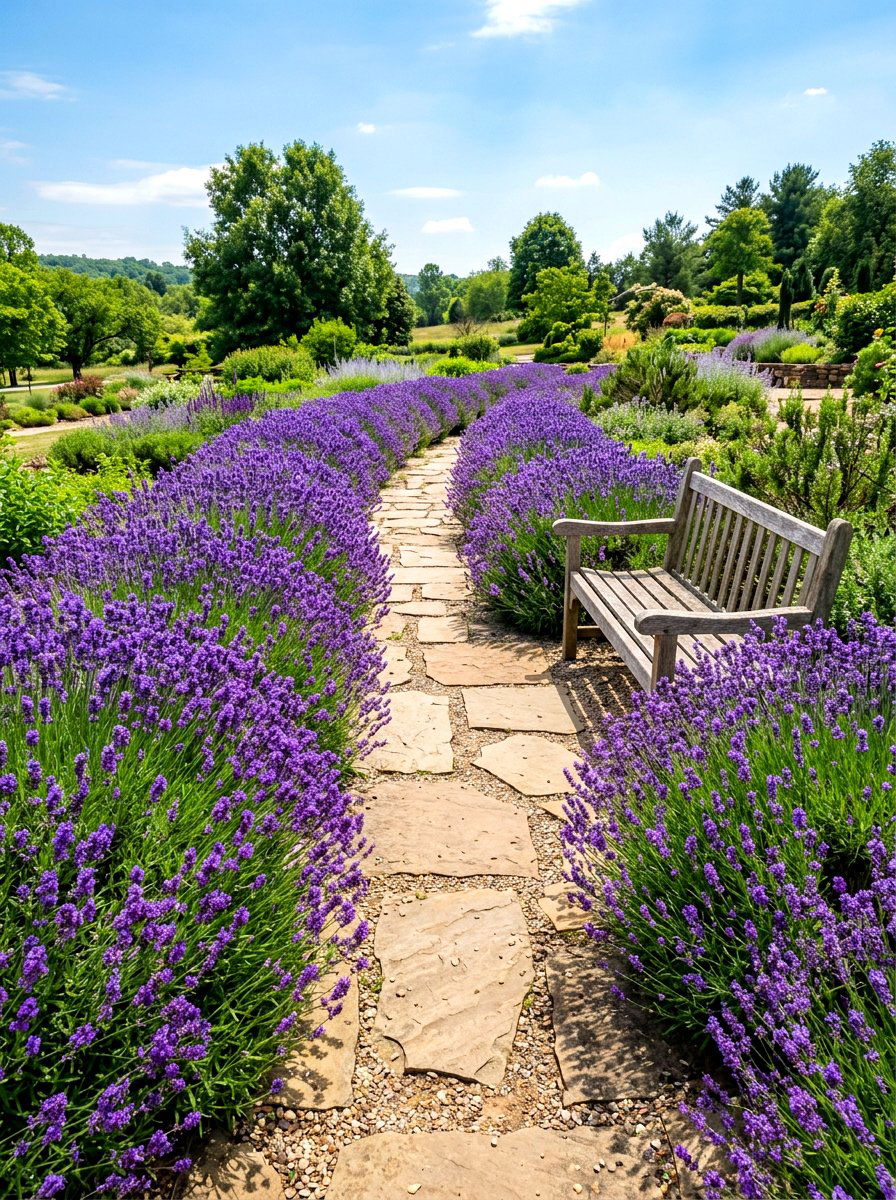
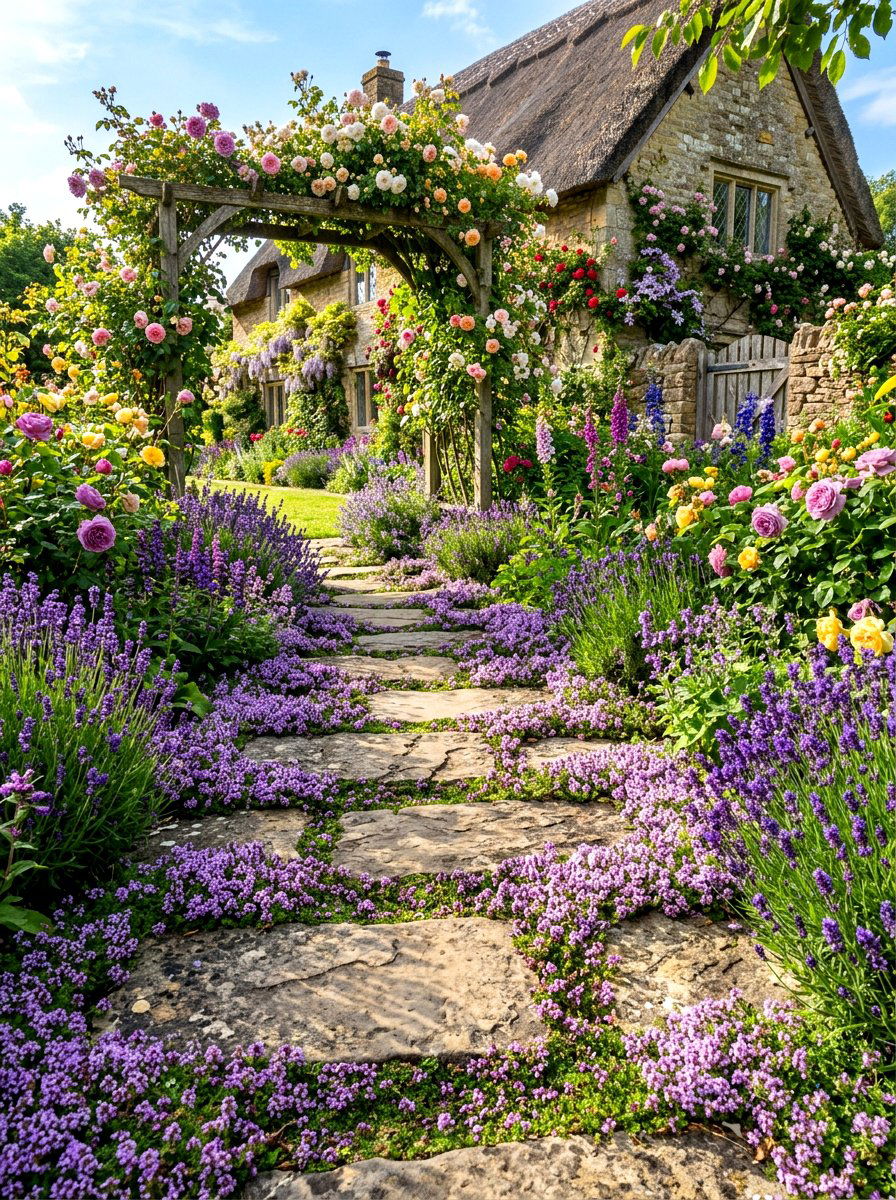
While all lavender is fragrant, a dedicated scented walkway prioritizes varieties known for high oil content. Interplanting different types of lavender, such as English and Lavandin, ensures a complex and layering aroma. Place the plants close enough to the path so that passersby naturally brush against them. This physical contact is the best way to release the essential oils into the air. You can also mix in other aromatic herbs like creeping thyme between the walkway stones. This design turns a simple walk into a therapeutic experience. It is especially effective near seating areas or bedroom windows where the scent can drift inside.
14. Lavender and Grass Path
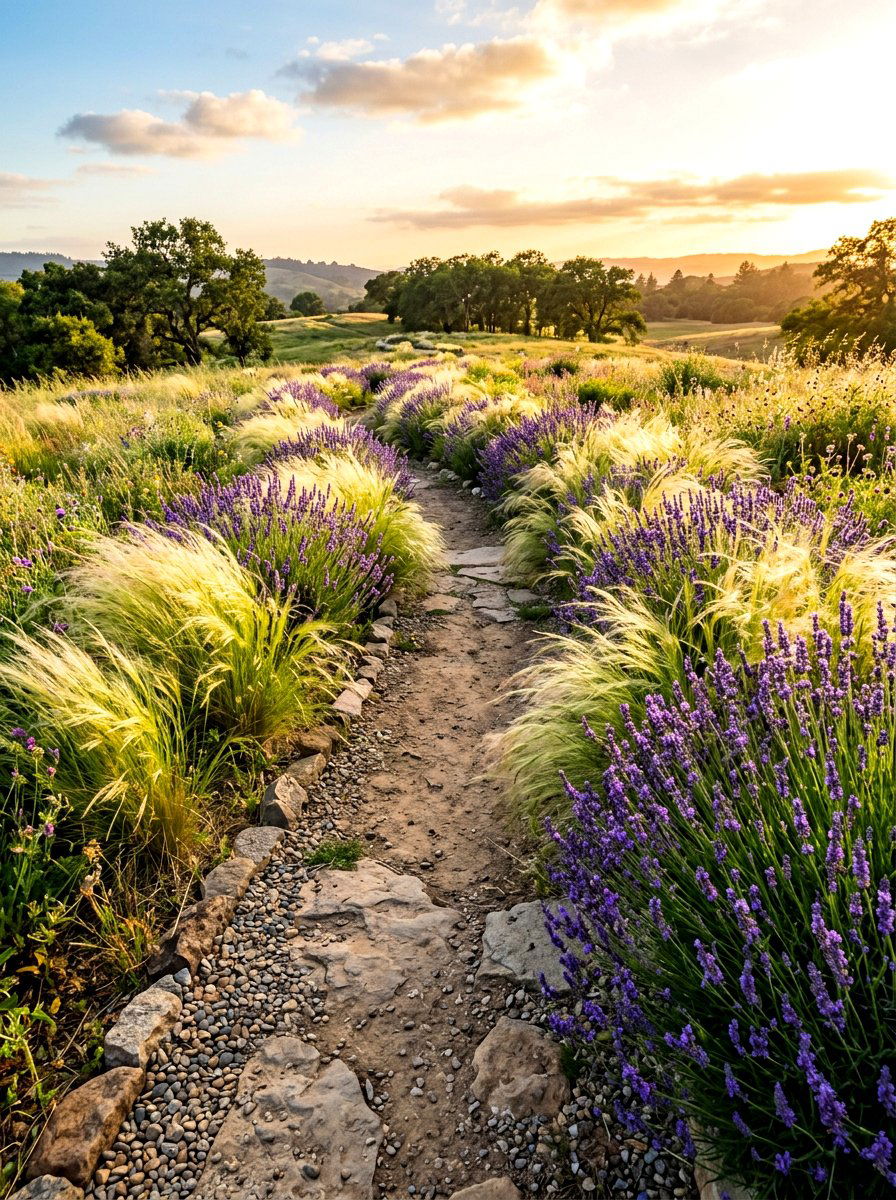
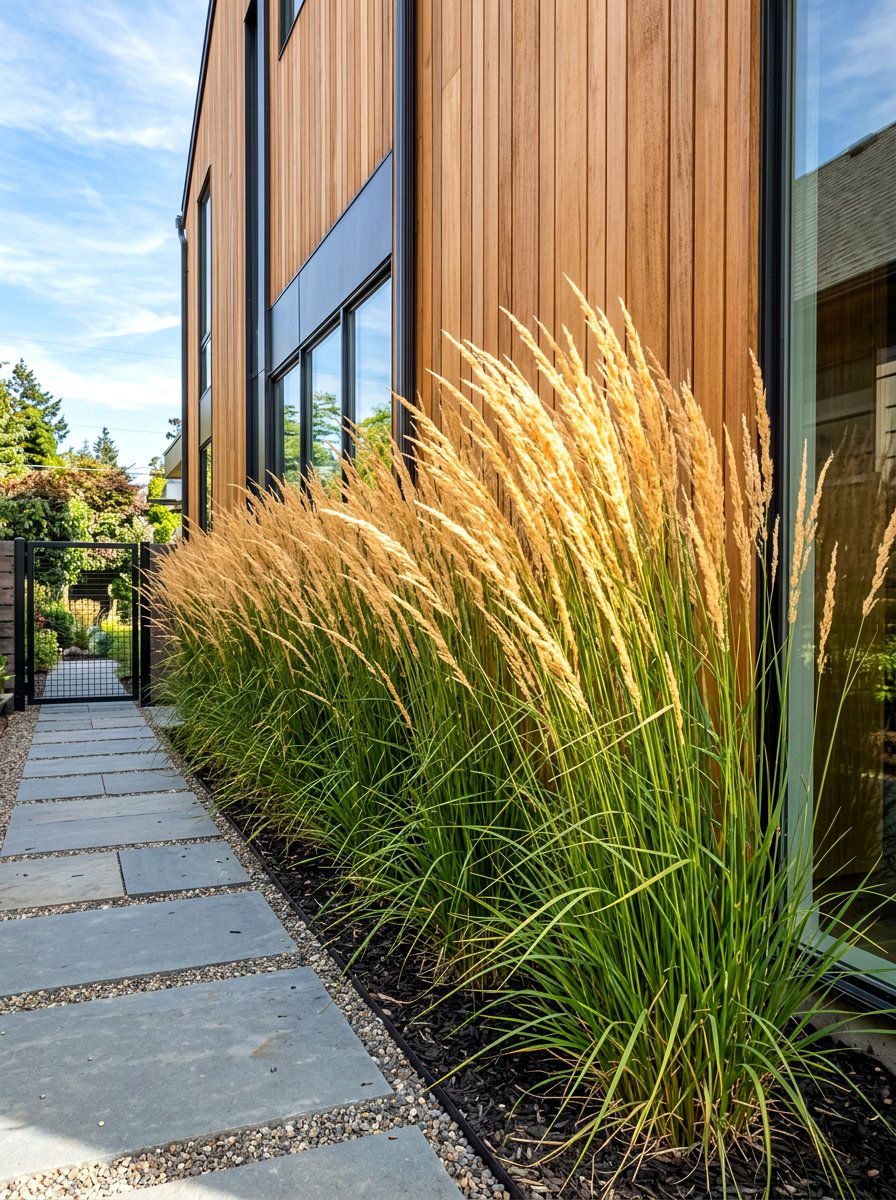
For a more natural and soft look, try a lavender and ornamental grass walkway. Grasses like Mexican Feather Grass or Blue Fescue add height, movement, and a delicate texture that contrasts with the sturdy lavender mounds. The way the grass sways in the breeze alongside the upright lavender spikes creates a dynamic and living landscape. This style works well in large open spaces or meadow-style gardens. The neutral tones of the grass allow the purple of the lavender to pop more intensely. It is a low-maintenance design that feels very modern yet deeply connected to the natural world and its cycles.
15. Picket Fence Lavender Walkway
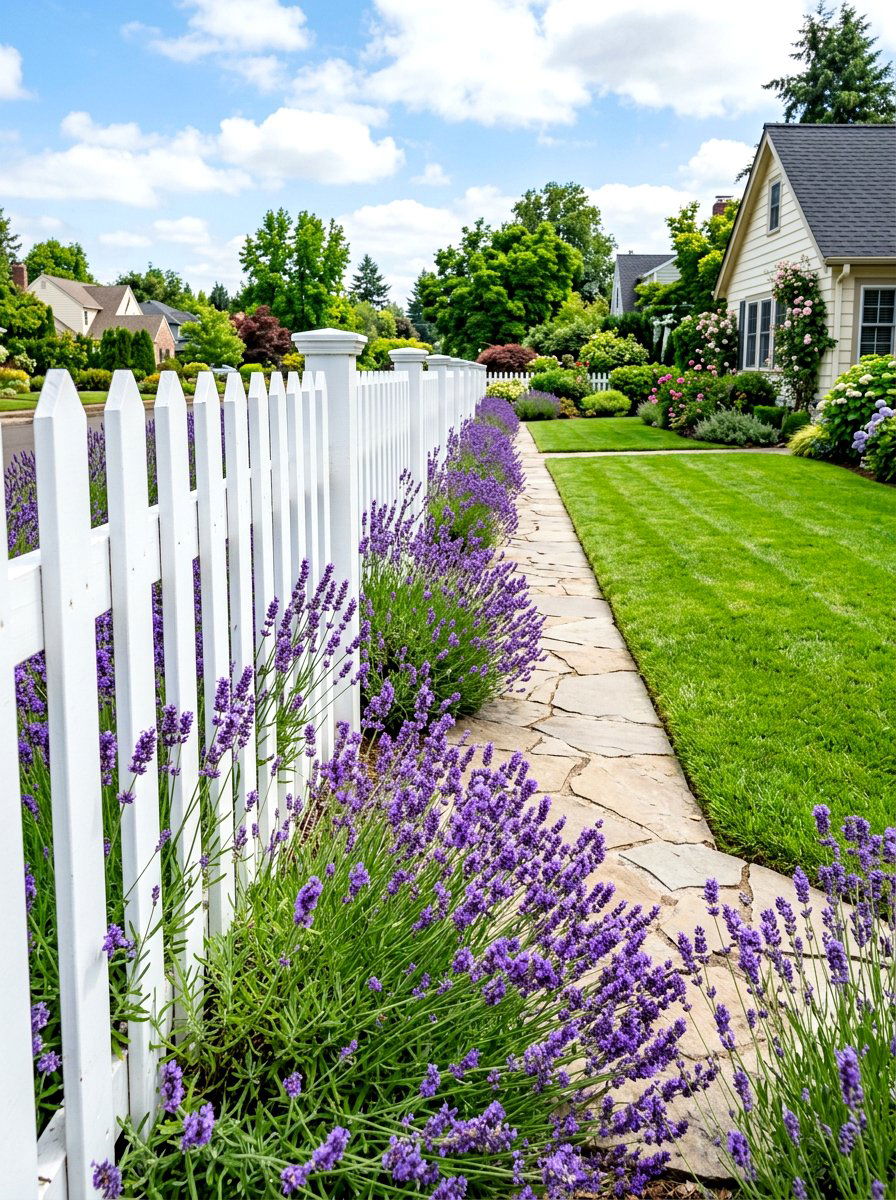
A white picket fence lined with lavender is the epitome of classic curb appeal. The lavender should be planted on the outside of the fence, allowing the purple flowers to peek through the slats. This creates a charming, welcoming entrance that feels like it belongs in a storybook. The rigid vertical lines of the fence provide a great backdrop for the soft, rounded shape of the lavender bushes. This design is excellent for defining property lines without feeling closed off or unfriendly. It invites neighbors and guests to enjoy the fragrance as they walk by, making your home a neighborhood favorite.
16. Sloped Lavender Path
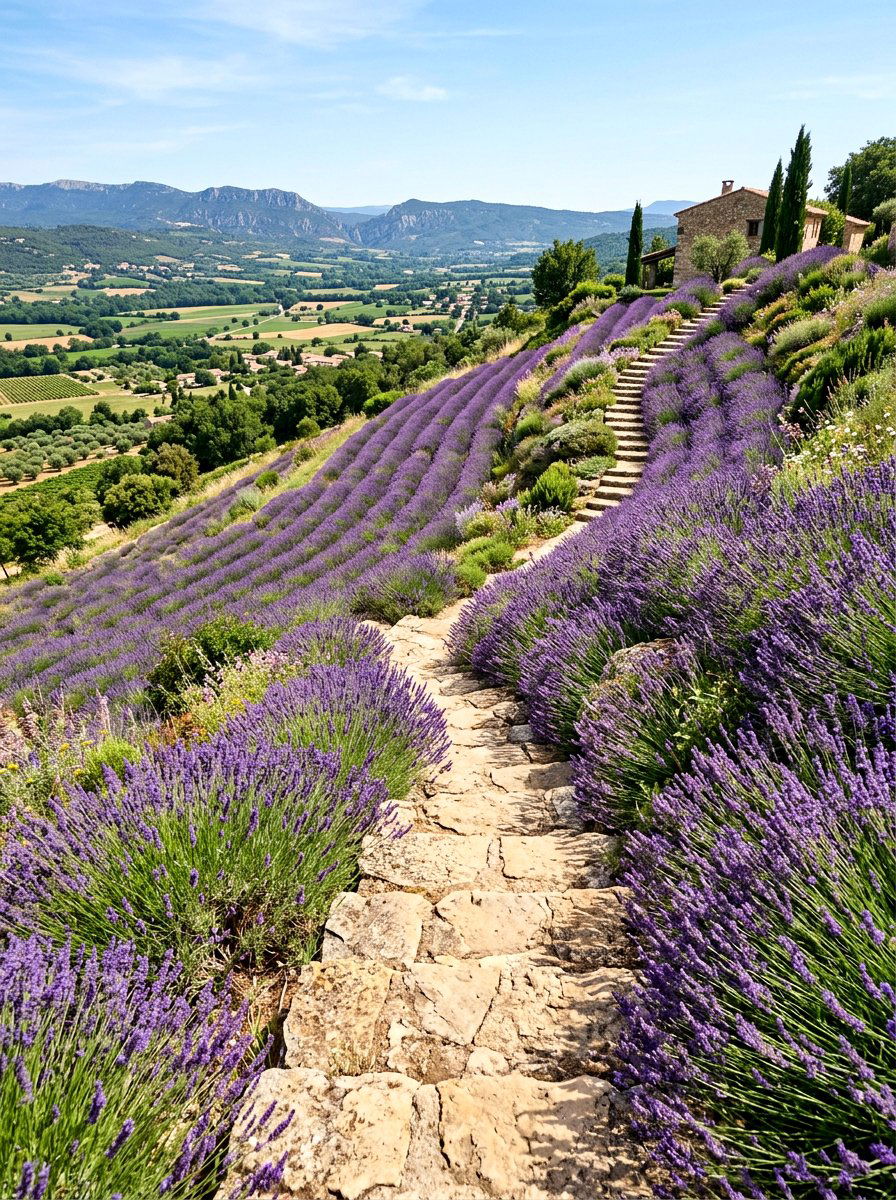
Lavender is an ideal plant for sloped walkways because its deep root system helps with soil erosion. Planting lavender in tiers or drifts along a hillside path creates a stunning "wave" of purple when viewed from below. This turns a difficult landscaping challenge into a major design feature. Use stone retaining walls to create flat planting pockets if the slope is very steep. The natural drainage of a hill is perfect for lavender health, preventing the root rot that can happen in flat, soggy areas. This design provides a grand, estate-like feel and makes the most of every inch of your vertical garden space.
17. White Pebble Lavender Walkway
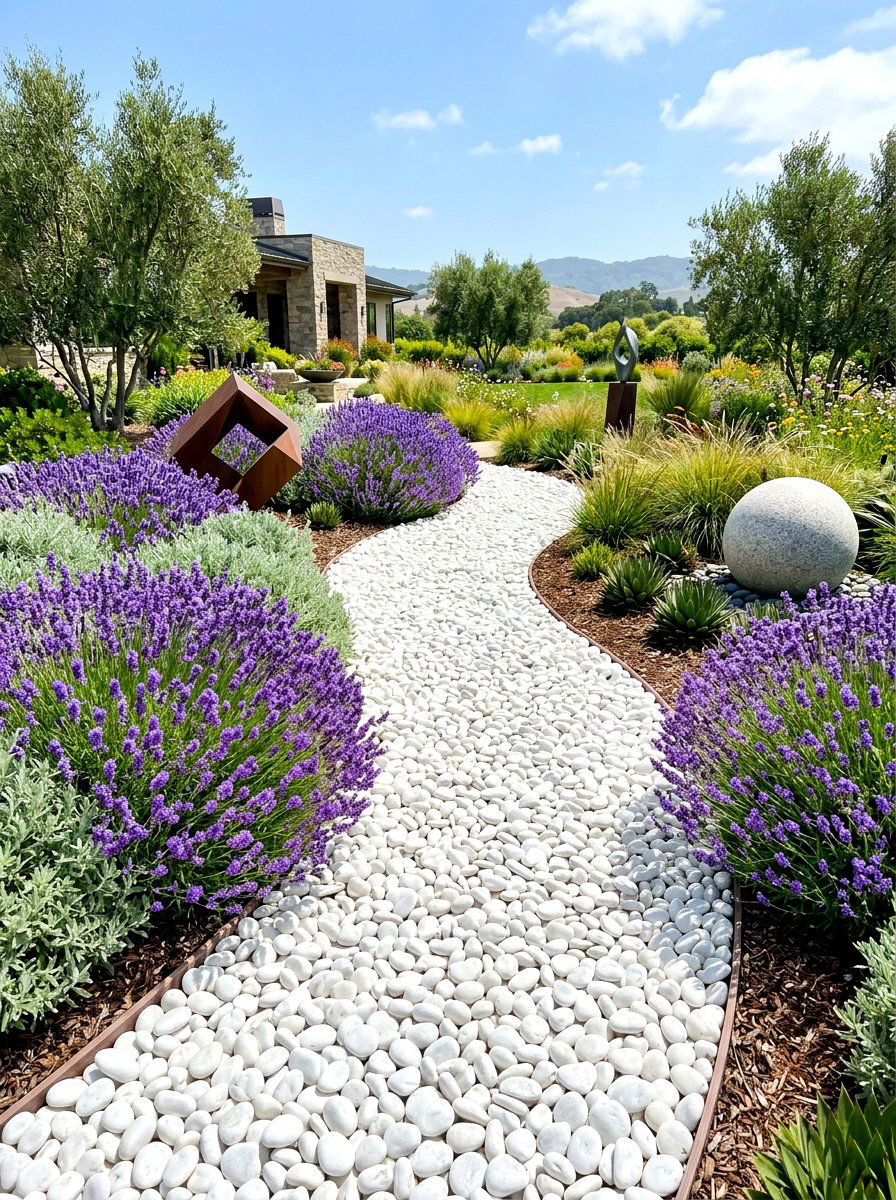
Using bright white pebbles for your walkway creates a striking Mediterranean or modern look. The white stones reflect the sunlight, making the purple lavender blooms appear even more vibrant and saturated. This color palette of white, silver, and purple is clean, refreshing, and very high-end. The pebbles also provide a neat, weed-free surface that is easy to maintain. This style is particularly effective in small courtyards or urban gardens where you want to maximize the light. The sharp contrast gives the walkway a crisp, professional appearance that stays looking great even in the heat of summer. It is a bold and stylish choice.
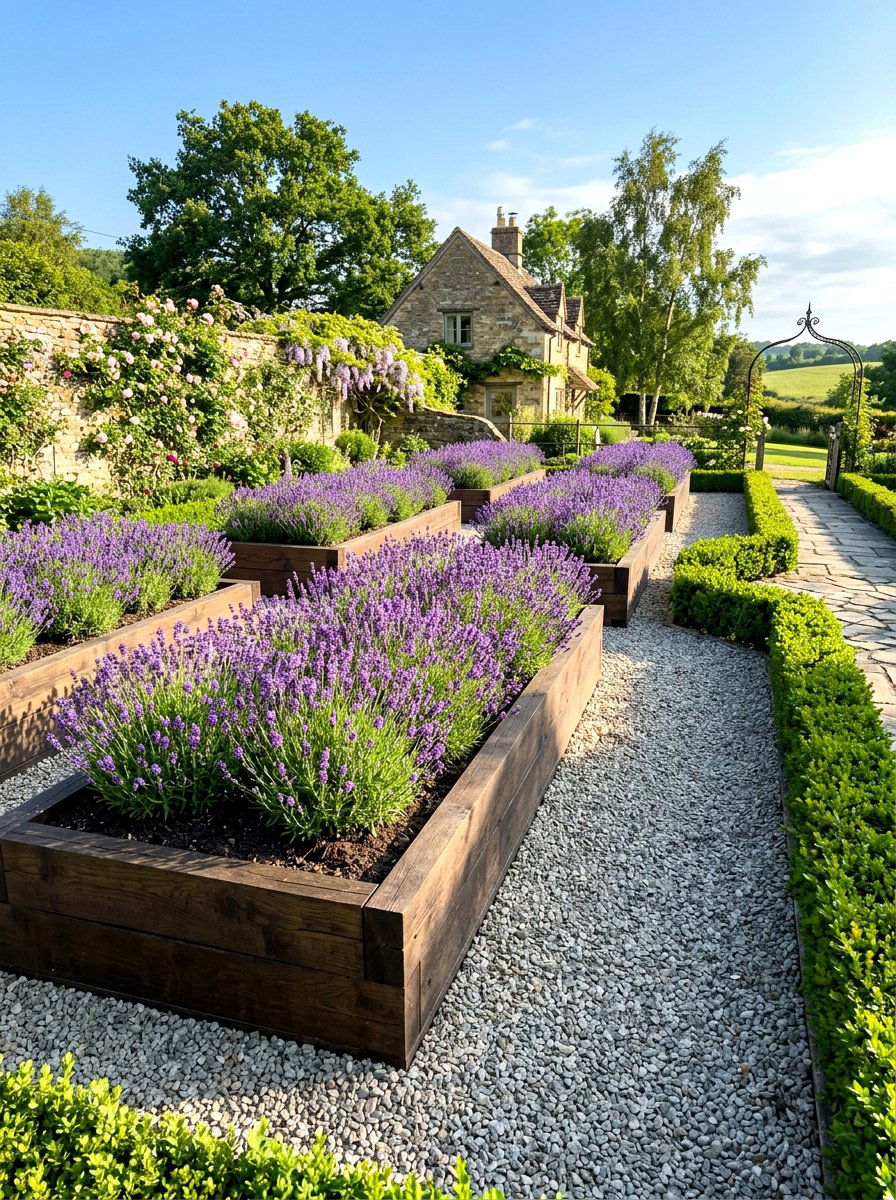
18. Raised Bed Lavender Walkway
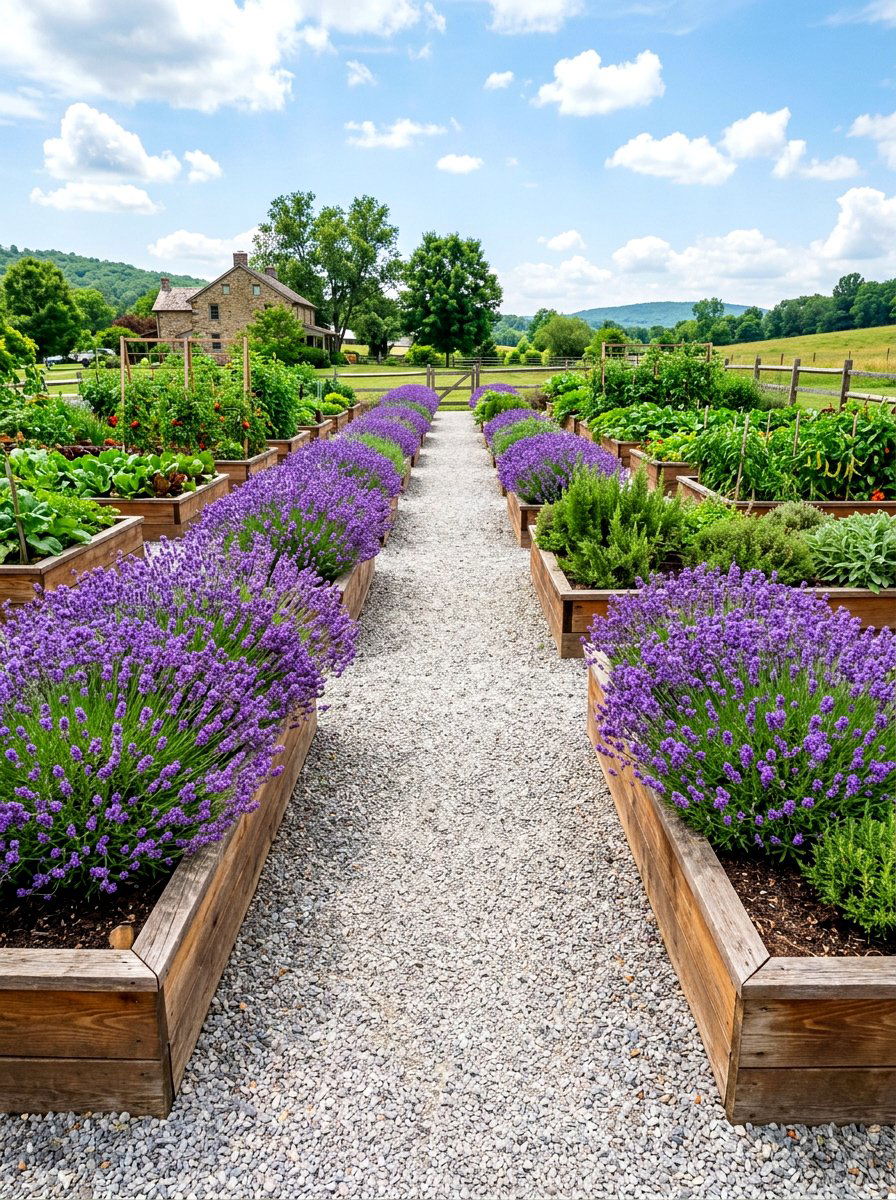
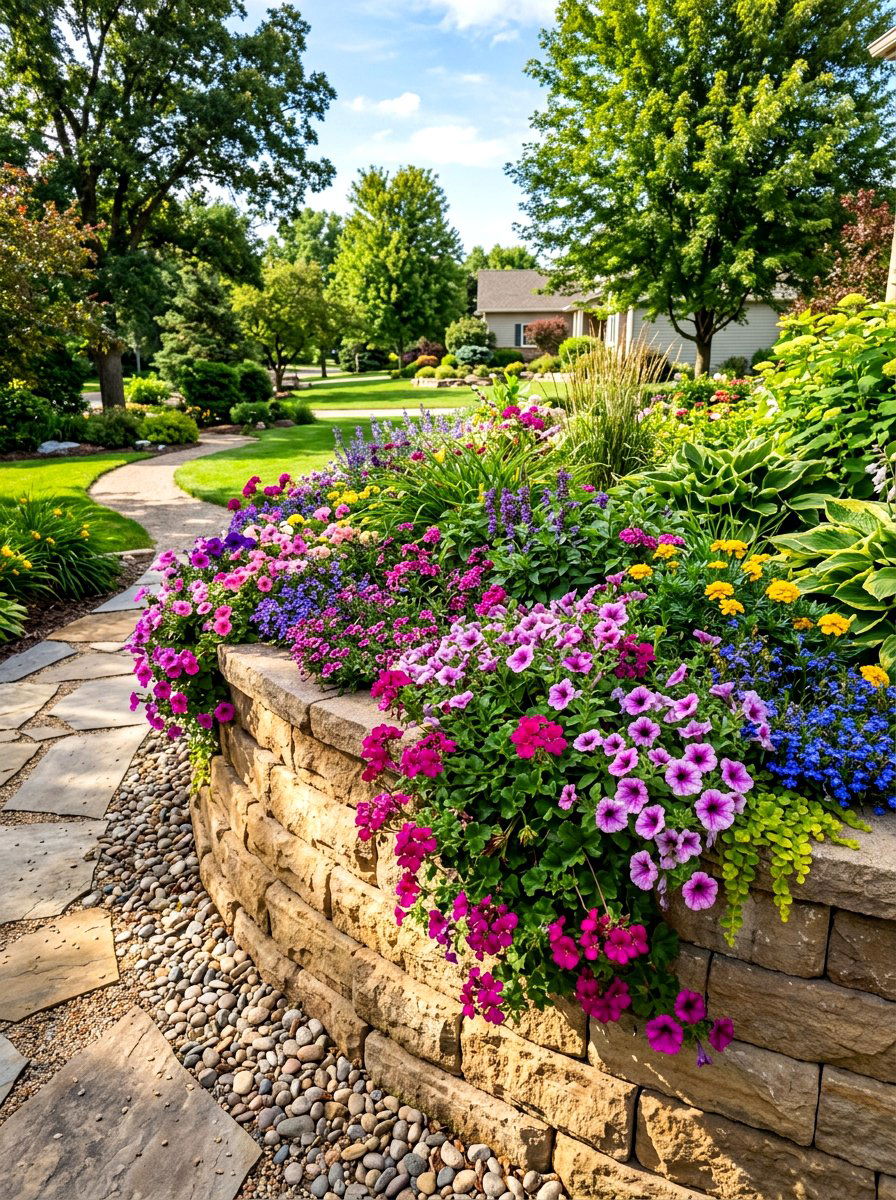
If your native soil is heavy clay, planting lavender in raised beds along a walkway is the perfect solution. Raised beds allow you to control the soil quality and ensure the excellent drainage that lavender requires. You can build the beds out of wood, stone, or brick to match your home’s architecture. Elevating the lavender also brings the fragrance closer to nose level, enhancing the sensory experience as you walk by. The structured look of the beds adds a sense of order and cleanliness to the garden. This design is also easier on the back, making maintenance and harvesting a much simpler task.
19. Drought Tolerant Lavender Landscaping
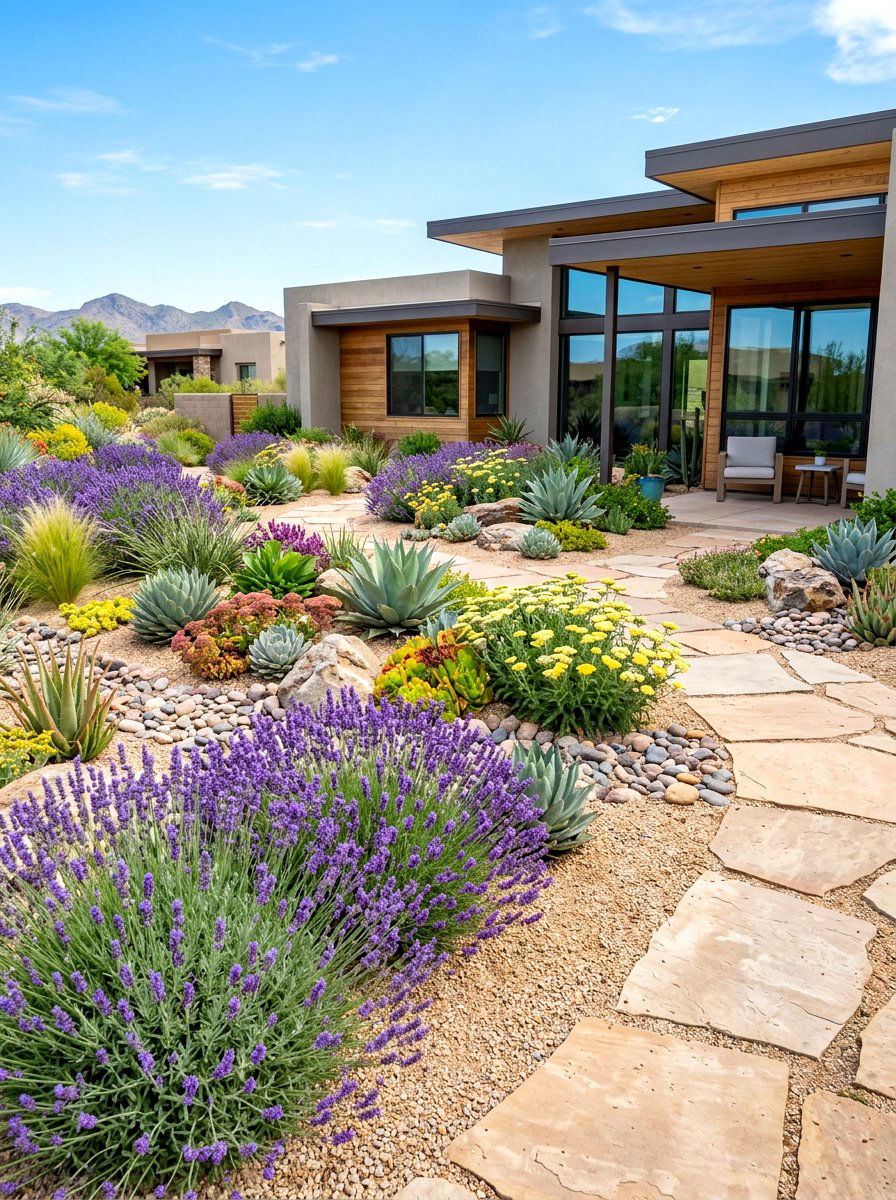
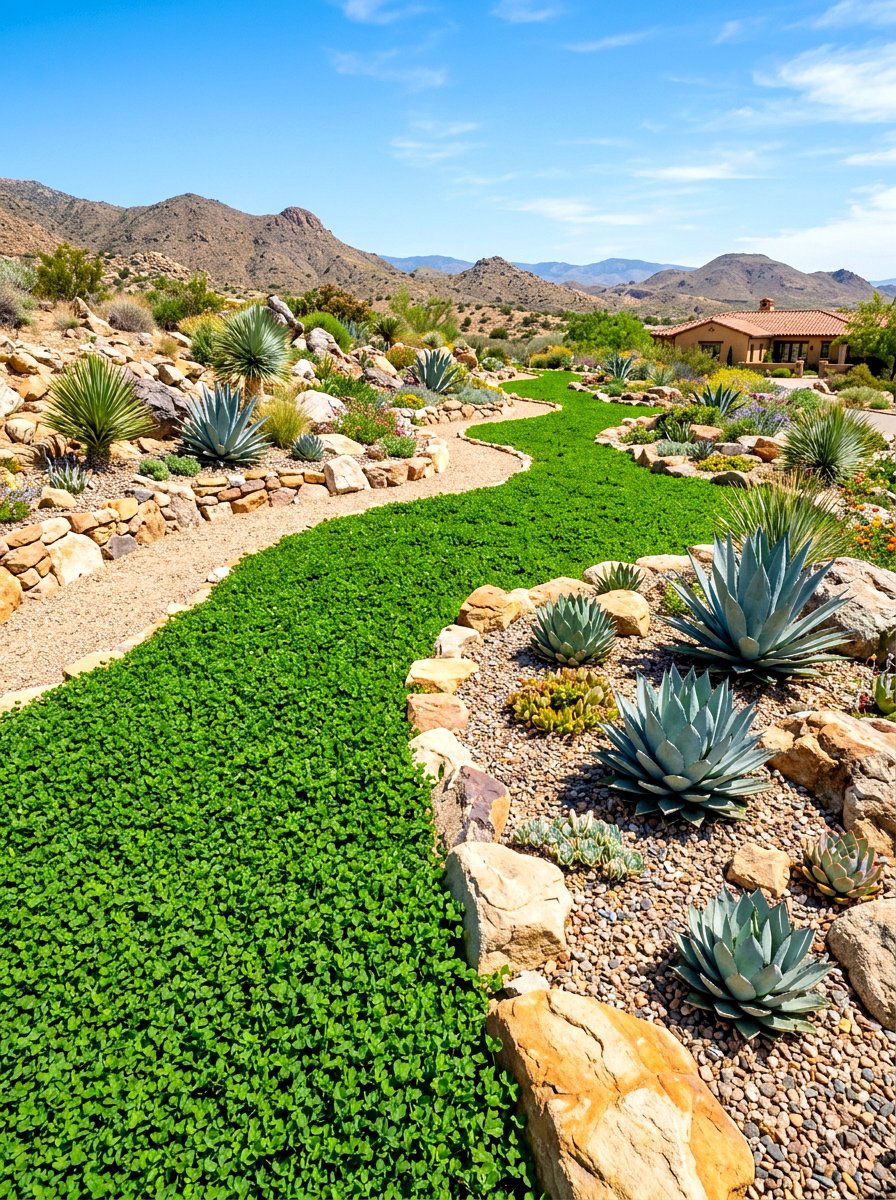
A drought-tolerant walkway is both beautiful and environmentally responsible. Pair lavender with other water-wise plants like succulents, yarrow, and sage to create a resilient landscape. Use a base of crushed rock or decomposed granite to keep the garden looking tidy without the need for a thirsty lawn. This style of walkway is perfect for regions with water restrictions or for busy homeowners who want a "set it and forget it" garden. The silver and gray tones common in drought-tolerant plants create a sophisticated, cohesive color palette. It proves that you do not need a lot of water to have a lush, colorful entrance.
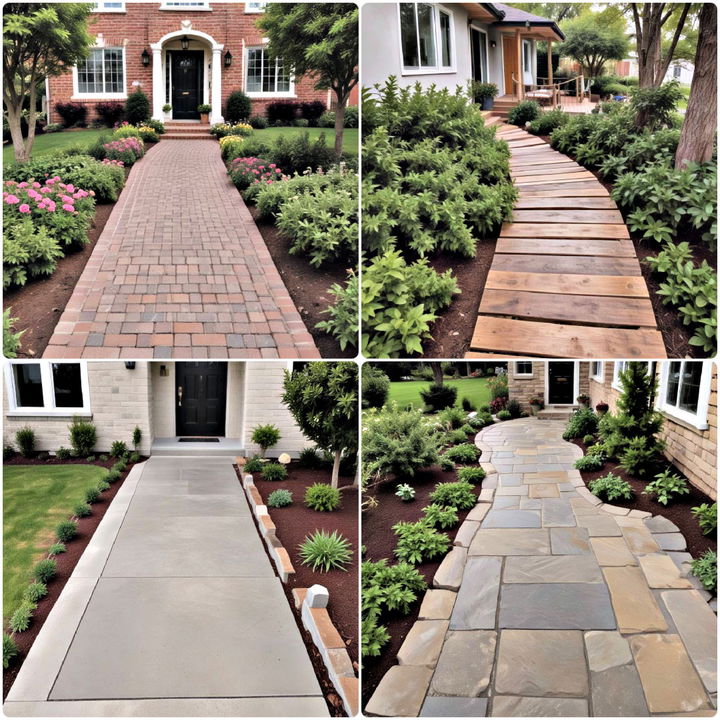
20. Allium and Lavender Path
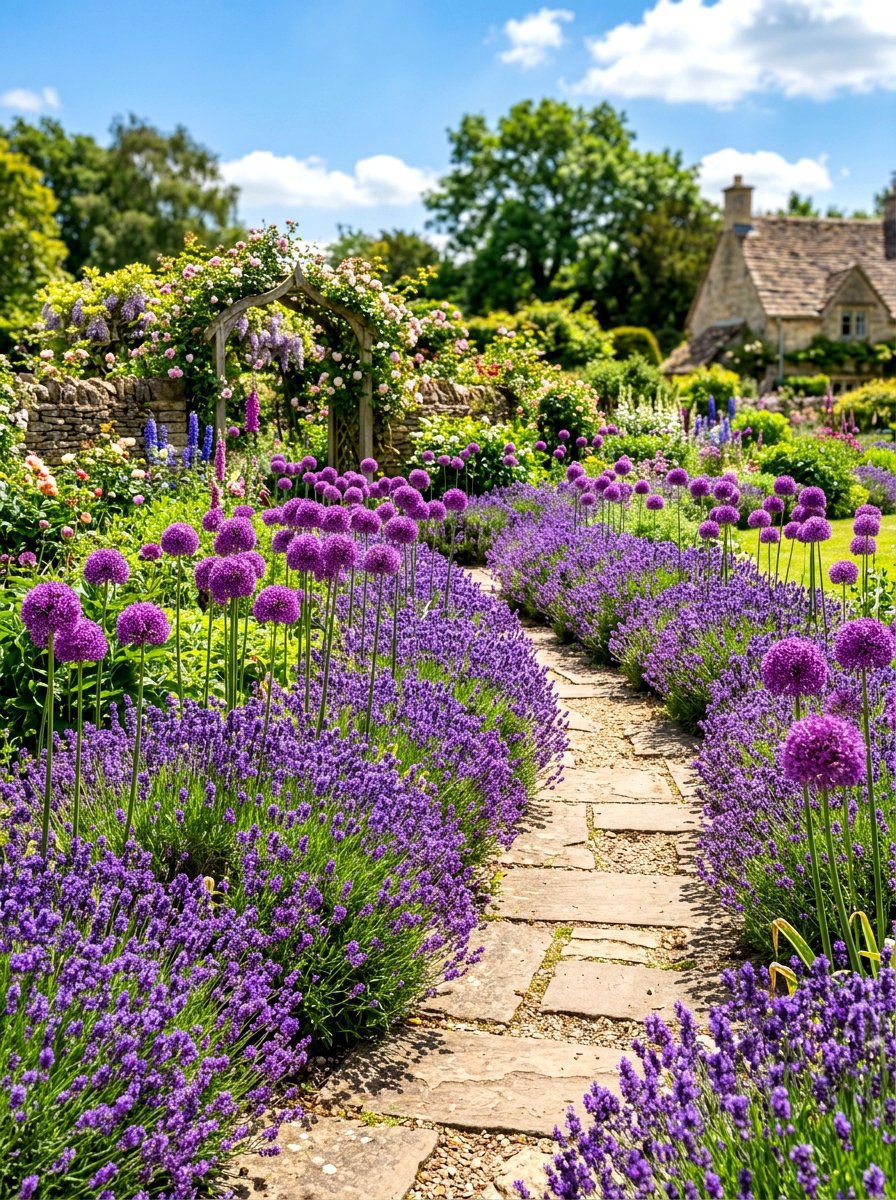
For a whimsical and high-contrast look, interplant your lavender with tall purple alliums. The large, globe-shaped allium flowers tower over the lavender mounds, creating a multi-level purple display. This combination is visually stunning and attracts a wide variety of pollinators, including bees and butterflies. The alliums bloom in late spring, just as the lavender is beginning to wake up, extending the season of color. Both plants share similar soil and sun requirements, making them easy garden companions. This design adds a touch of artistic flair to any walkway and is sure to be a conversation starter for guests and visitors to your home.
21. Formal Lavender Walkway
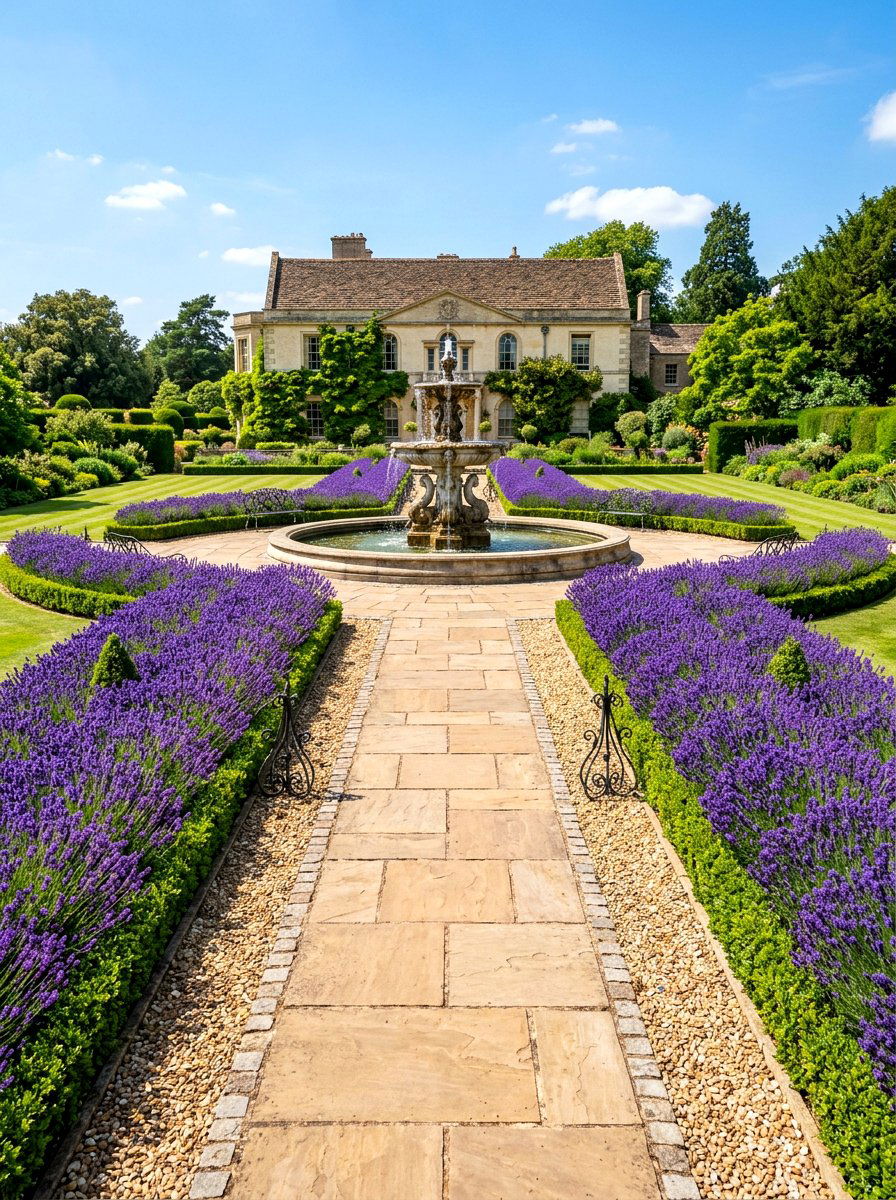
A formal walkway uses perfect symmetry and straight lines to create a sense of grandeur. Plant identical rows of lavender on both sides of a wide, paved path leading to a central focal point like a fountain or a statue. Keep the lavender neatly clipped to maintain a uniform, hedge-like appearance. This style is inspired by traditional European estates and provides a very high-end, polished look. The repetition of the plants creates a calming rhythm for the eye. This design is best for large properties or front yards where you want to establish a strong sense of structure and timeless architectural elegance.
22. Salvia and Lavender Border
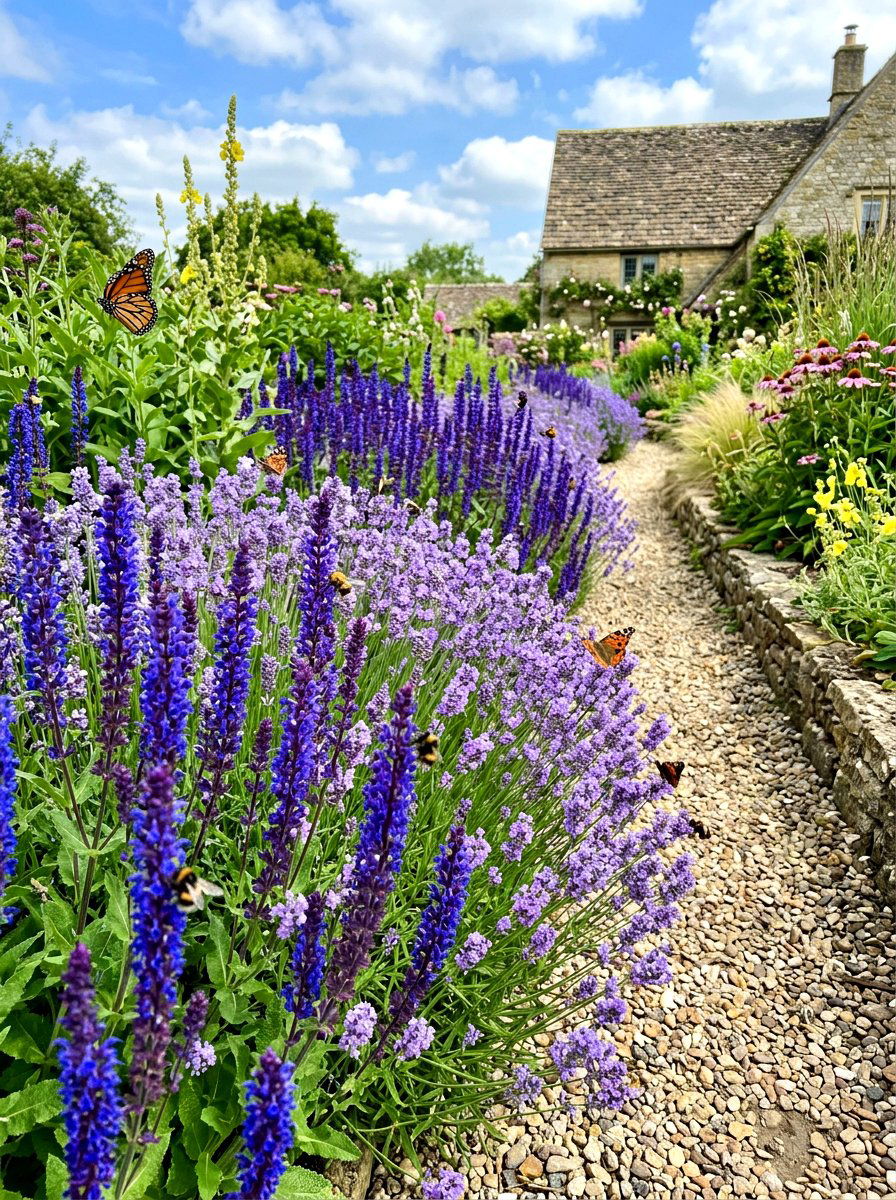
Salvia and lavender are a powerhouse duo for any sunny walkway. While they both feature purple tones, salvia often offers a deeper, more blue-toned spike that complements the softer hues of lavender. They have different bloom times and flower shapes, which adds variety and interest to the border throughout the summer. Both plants are heat-loving and extremely attractive to hummingbirds and bees. Mixing these two ensures that if one plant has a slow week, the other is there to provide color. This design is a favorite for nature lovers who want their walkway to be a buzzing hub of local garden wildlife.
23. Rustic Lavender Walkway
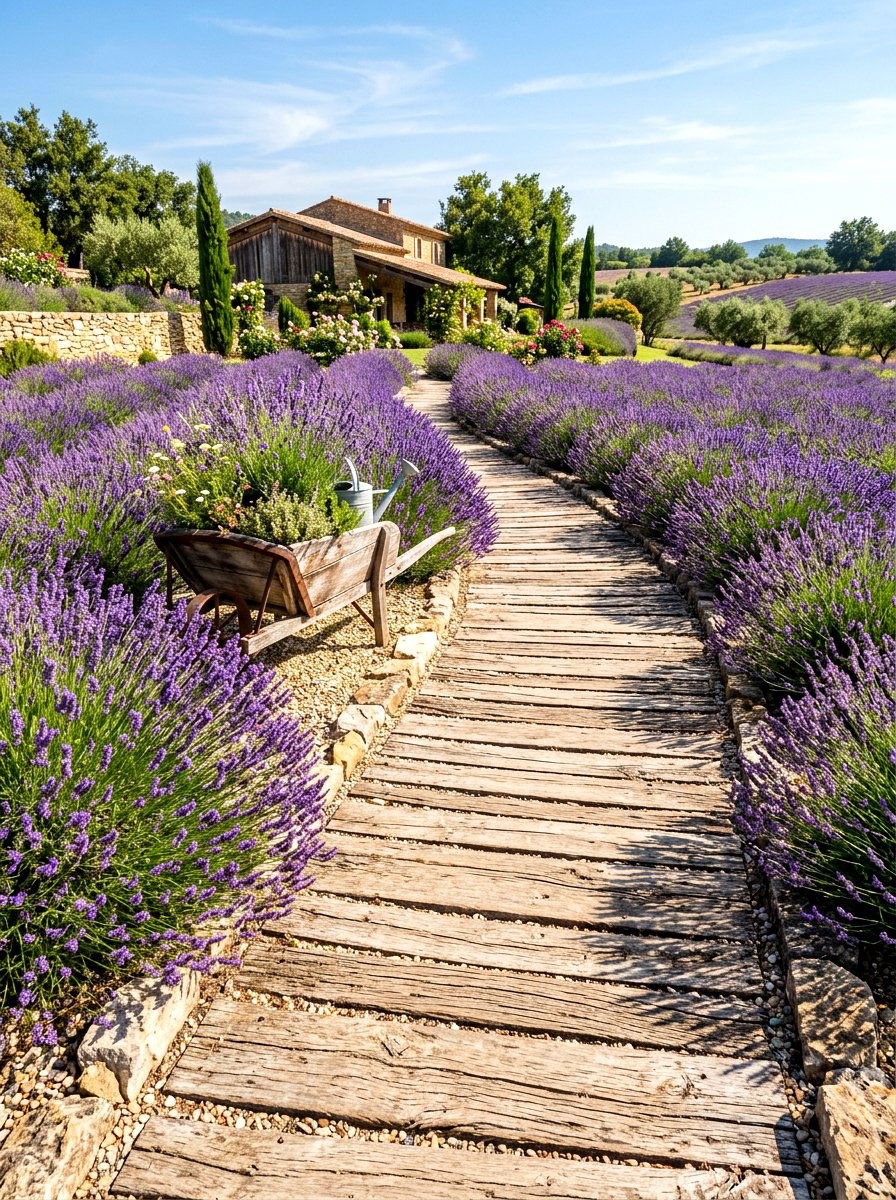
A rustic walkway uses weathered materials like old railroad ties or reclaimed wood to create a lived-in, farmhouse feel. The soft purple of the lavender looks beautiful against the gray, textured wood of the path. This style is perfect for country homes or backyards with a more relaxed, naturalistic vibe. Allow the lavender to grow a bit larger and more unkempt to match the rustic aesthetic. The contrast between the rugged wood and the delicate flowers is very pleasing. Adding a few vintage garden tools or a wooden bench nearby can complete the look. It is a cozy and unpretentious way to enjoy lavender.
24. Perennial Lavender Path
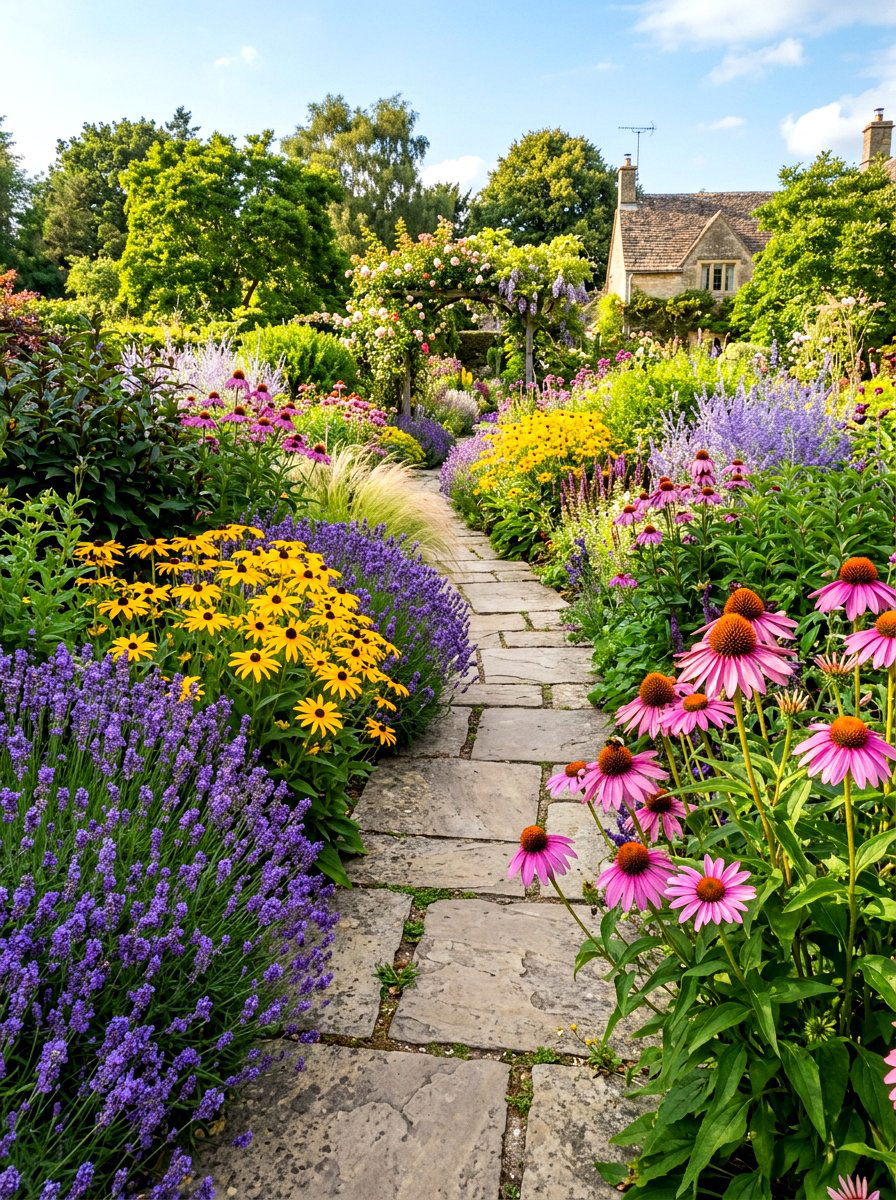
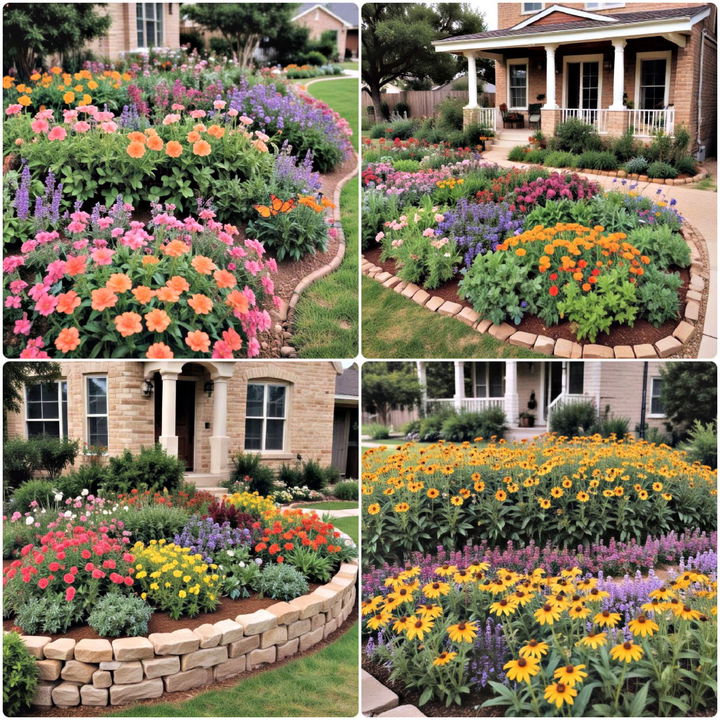
Creating a perennial walkway means mixing lavender with a variety of other long-lived flowering plants. Consider adding echinacea, black-eyed Susans, and coreopsis for a vibrant, multi-colored border that changes throughout the season. The lavender provides a steady, silver-green base that ties the different colors together. This diverse planting approach is better for the environment as it supports a wider range of insects. The result is a lush, overflowing garden path that feels like a floral meadow. It is a great choice for those who love color and want a garden that feels dynamic and full of life from spring until the first frost.
25. Concrete Lavender Walkway
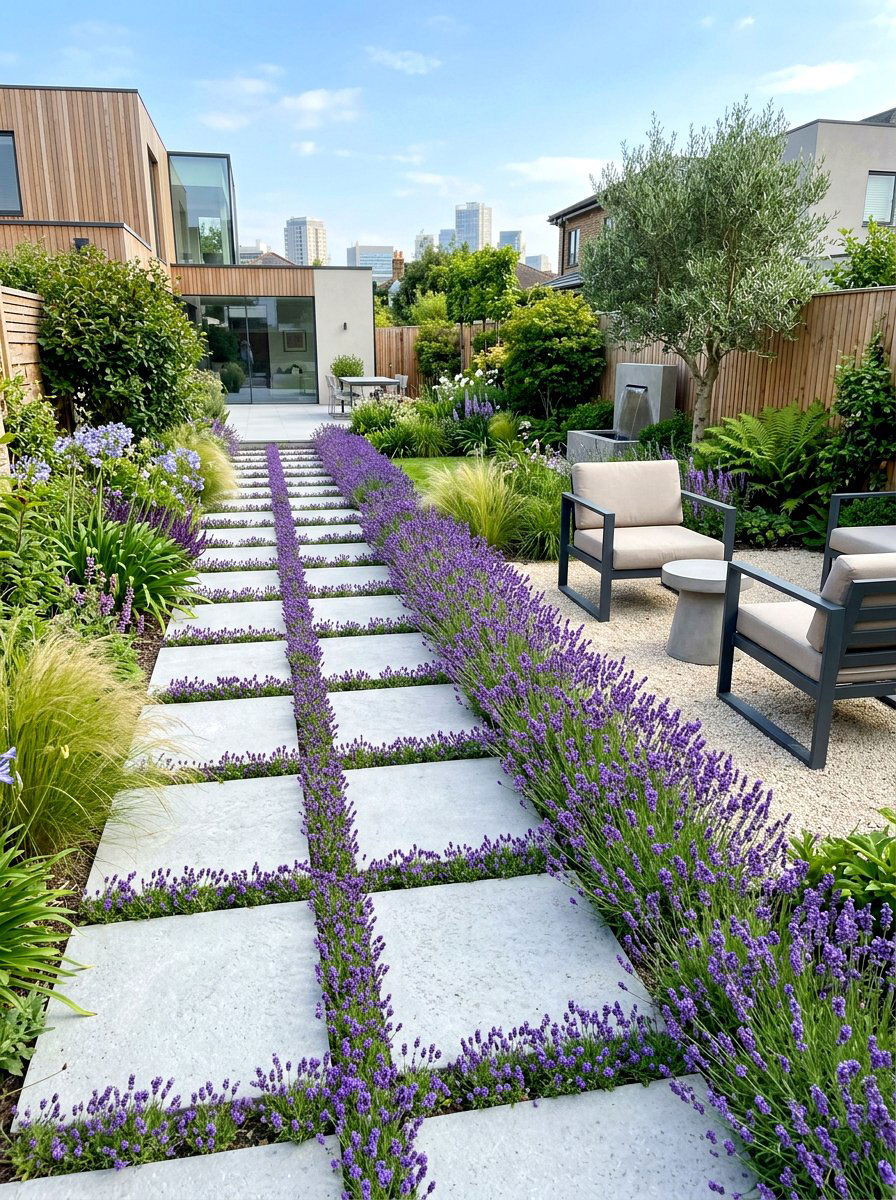
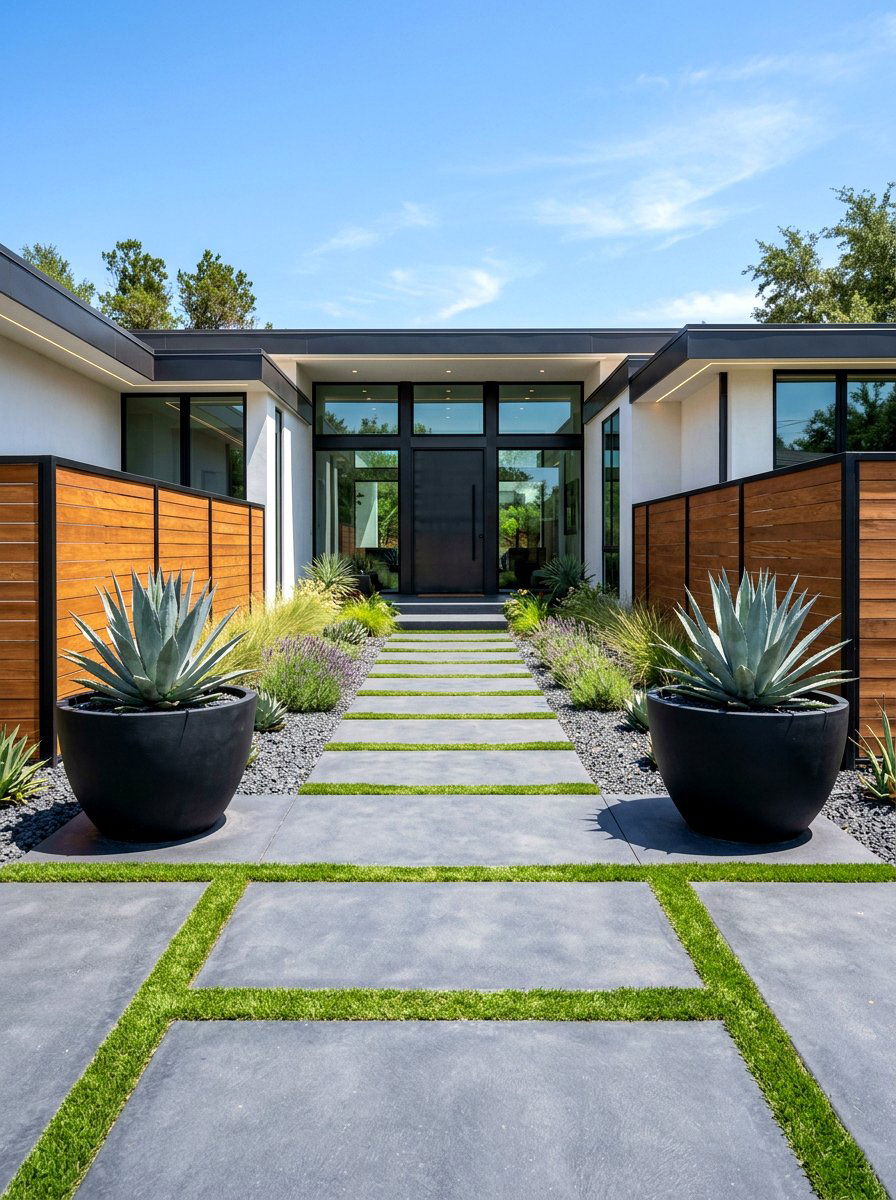
Poured concrete or large concrete slabs provide a clean, industrial backdrop that makes lavender look incredibly fresh. The smooth, gray surface of the concrete is the perfect neutral canvas for the vibrant purple flowers. You can leave narrow planting strips between concrete sections to grow low-profile lavender, creating a "grid" effect. This design is very popular in contemporary urban landscapes because it is durable and easy to clean. The heat that radiates off the concrete in the summer can actually help the lavender thrive, as long as the plants have enough water. It is a sleek, low-maintenance, and very stylish modern design option.
26. Rosemary and Lavender Path
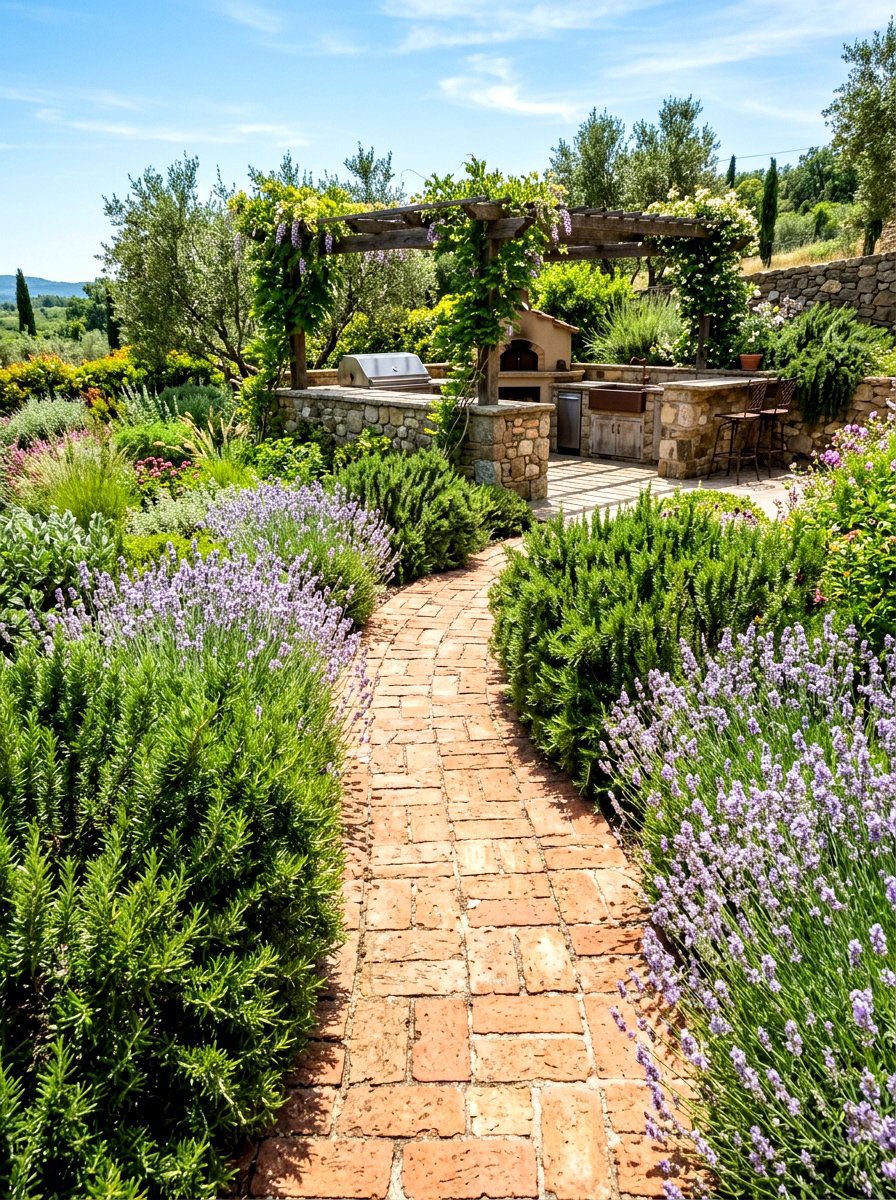
Rosemary and lavender are natural best friends that both hail from the Mediterranean coast. They share the same love for sun, sandy soil, and infrequent watering. Mixing these two along a walkway creates a powerhouse of fragrance that is both floral and herbal. Rosemary provides a darker green, needle-like foliage that contrasts well with the softer, silvery lavender leaves. Both can be pruned into neat hedges or left to grow in their natural, bushy shapes. This duo is also functional, as both can be harvested for cooking or DIY projects. It is a smart, sustainable, and highly aromatic choice for any home.
27. Front Yard Lavender Entrance
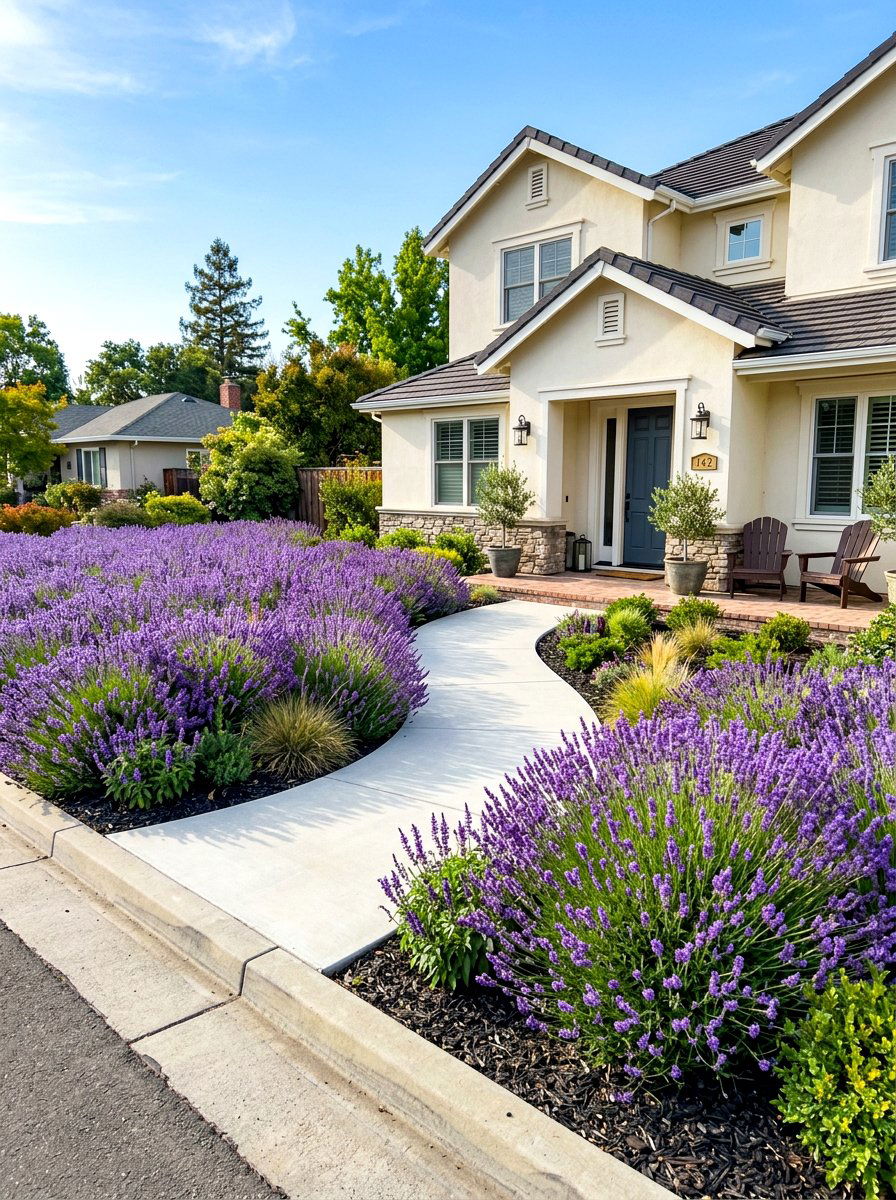
Replacing a boring front lawn with a lavender walkway is a great way to boost curb appeal. Instead of just a path, create wide beds of lavender that fill the entire front yard area. This creates a massive block of color that is visible from down the street. It is much more water-efficient than grass and requires no mowing. Guests will be greeted by a sea of purple and a heavenly scent before they even reach your front door. This bold landscaping move makes your home stand out and creates a sense of luxury. It is a sophisticated way to manage a front yard space effectively.
28. Zen Lavender Path
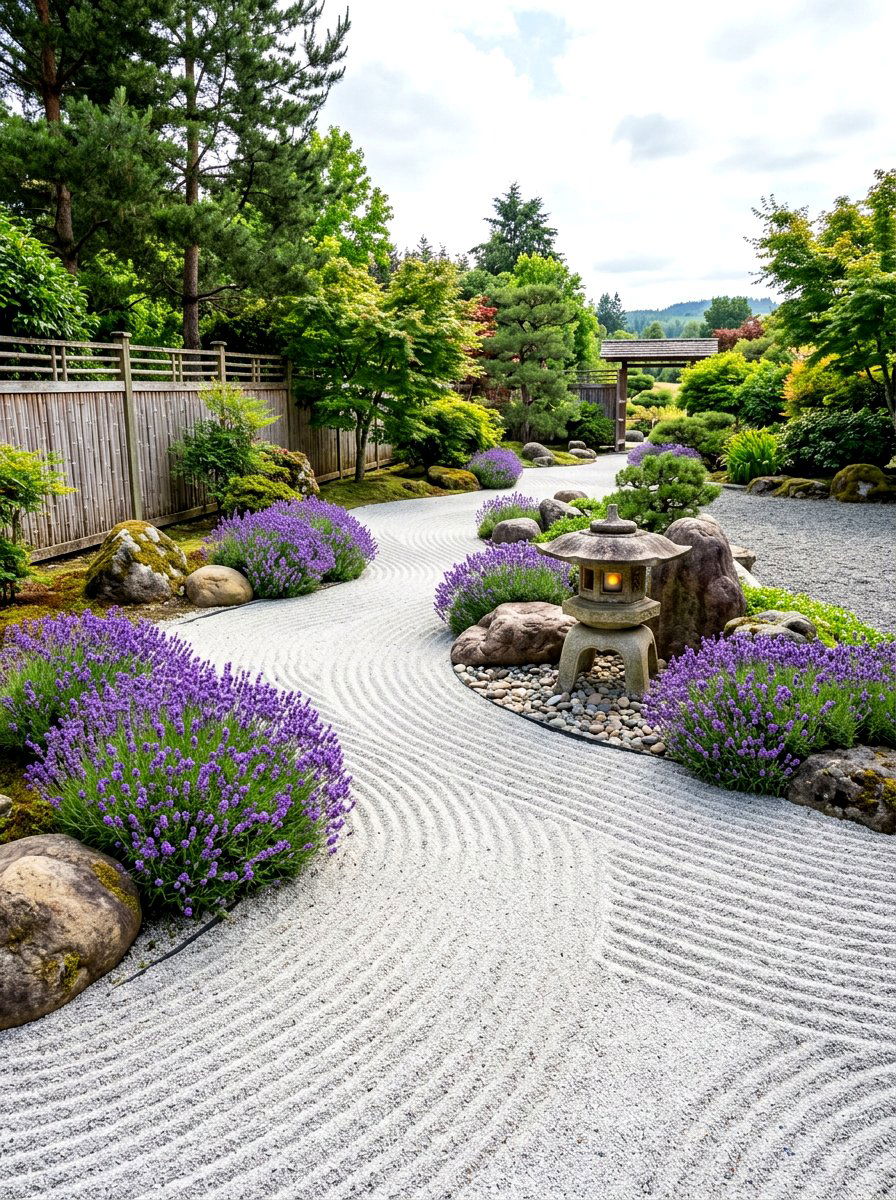
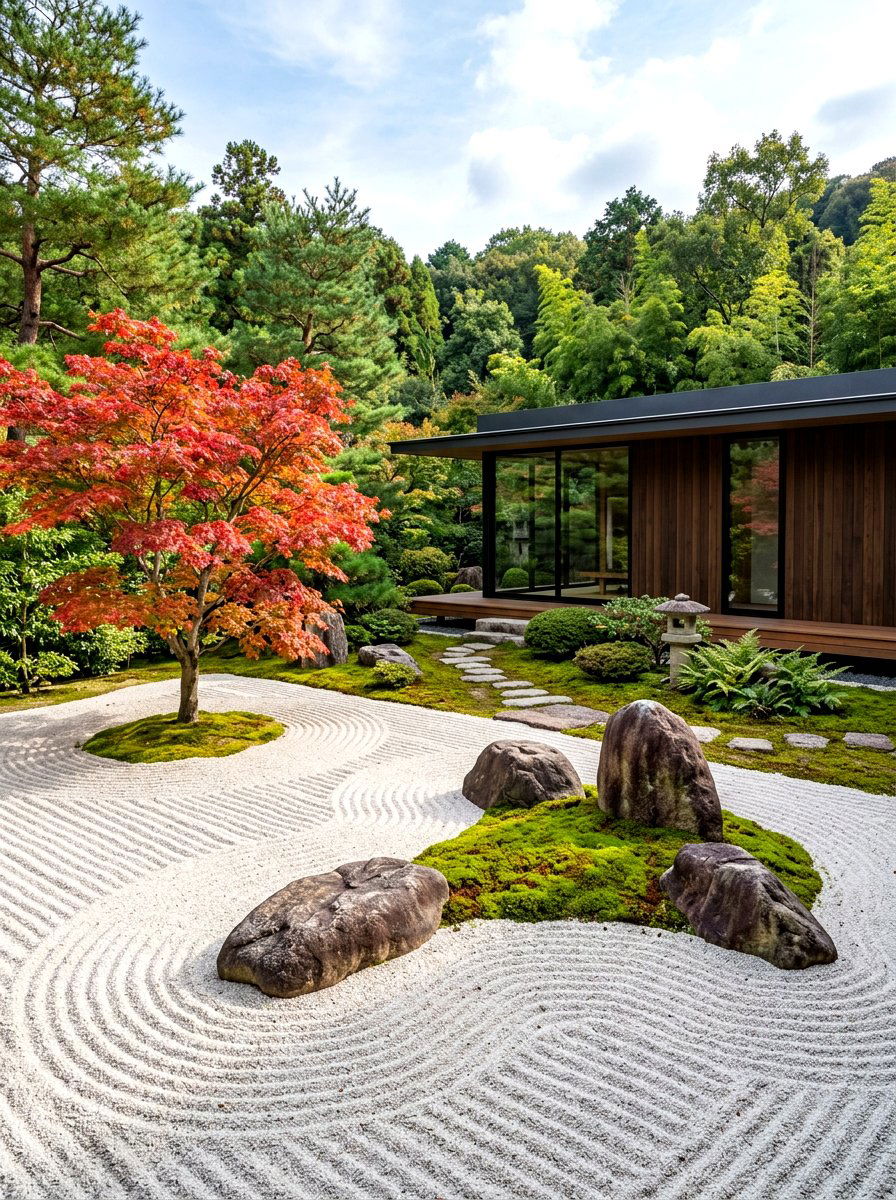
A Zen-inspired walkway uses lavender to create a peaceful, meditative space. Pair the plants with fine raked gravel, smooth river stones, and a few carefully placed boulders. The calming scent of lavender is the perfect addition to a garden designed for relaxation and reflection. Keep the color palette simple, focusing on purple, gray, and green. The structured yet soft nature of the lavender mounds fits perfectly with the balanced aesthetic of Japanese-style gardens. This design is ideal for a quiet corner of the backyard where you go to unwind. It turns your walkway into a journey toward peace and mental clarity every day.
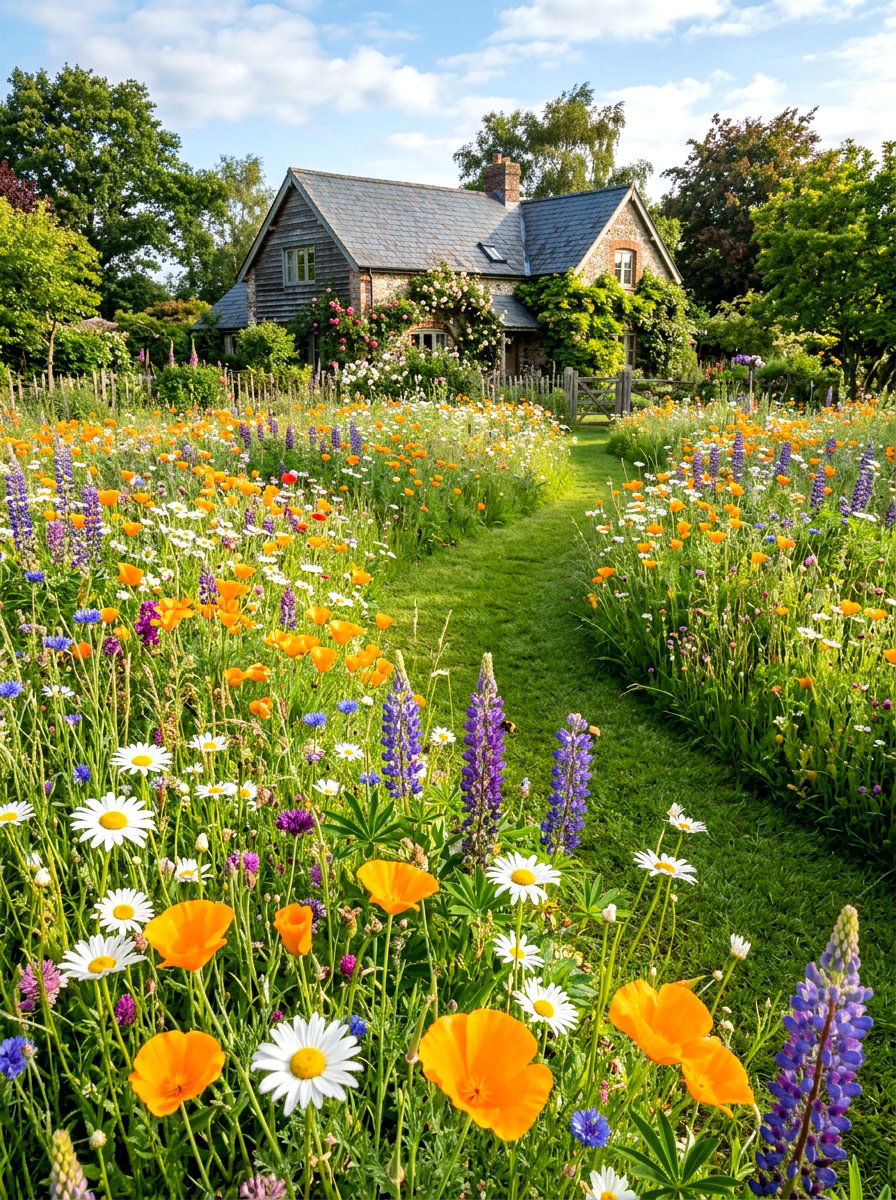
29. Wildflower Lavender Walkway
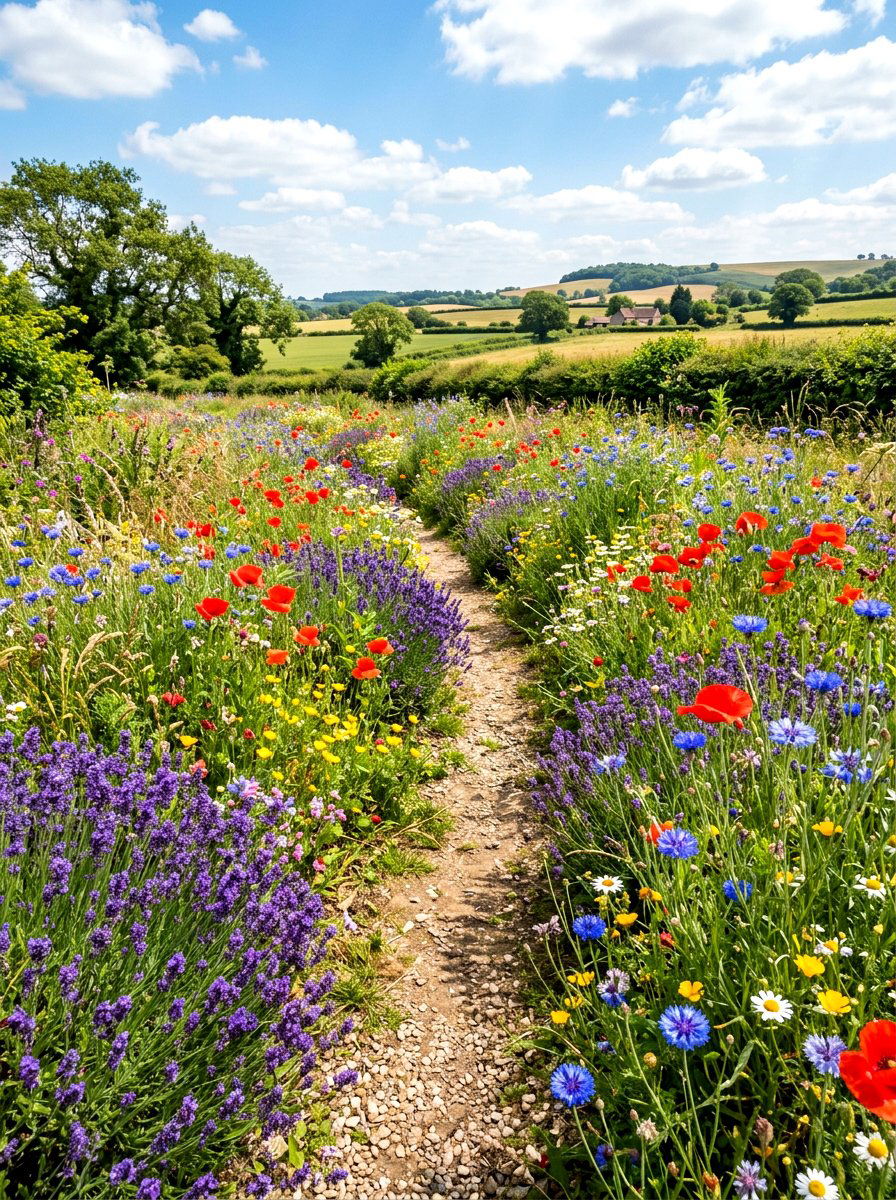
For a more ecological and "untamed" look, mix lavender with a variety of local wildflowers. This creates a loose, airy border that feels like a natural path through a field. The key is to choose wildflowers that also enjoy full sun and well-drained soil, such as poppies or cosmos. This style of walkway is a haven for pollinators and provides a constantly changing display of colors and textures. It is a low-maintenance approach that celebrates the beauty of nature’s randomness. A wildflower lavender path feels light, cheerful, and full of surprises, making every walk through the garden a new and exciting experience.
30. Hydrangea and Lavender Path
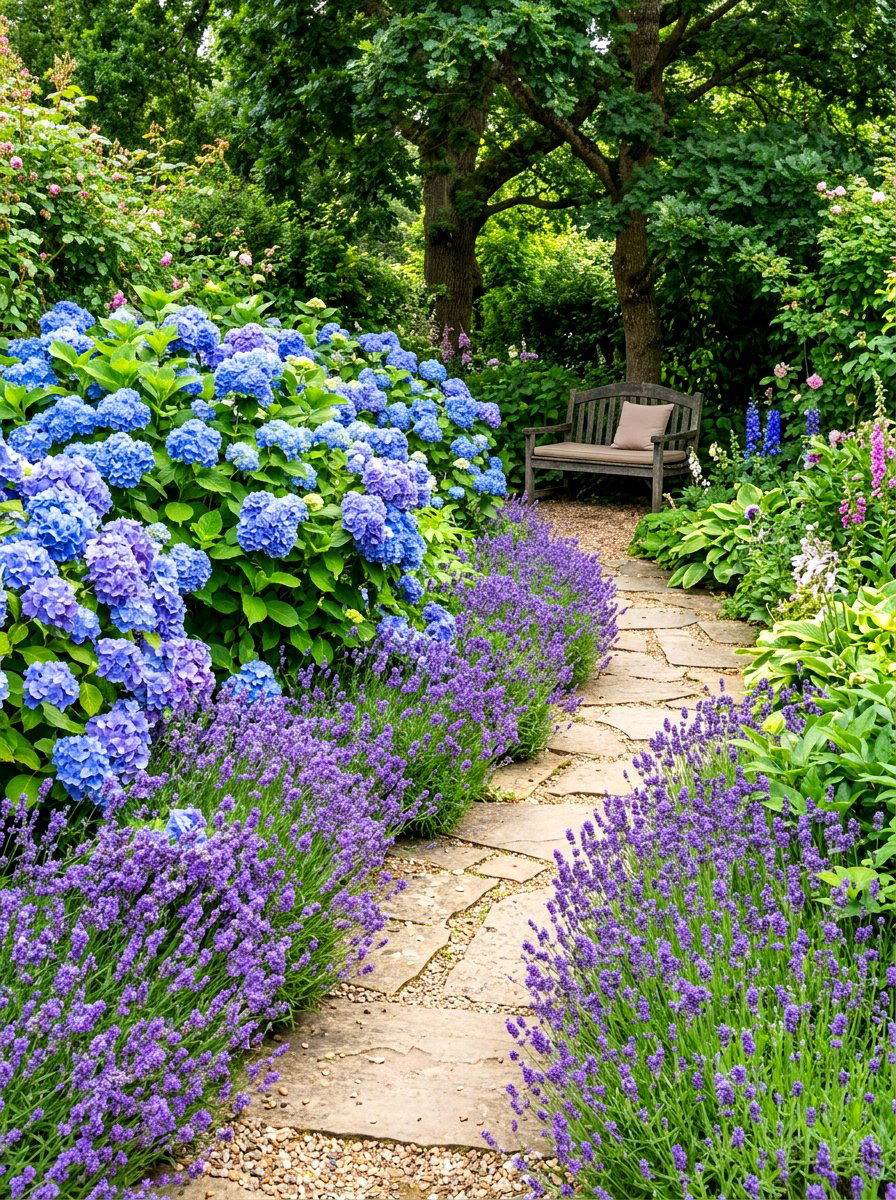
While they have slightly different water needs, planting lavender in front of a hydrangea hedge can create a stunning layered effect. The massive, billowy blooms of the hydrangea provide a dramatic backdrop for the delicate spikes of the lavender. This combination is particularly beautiful in a "blue and purple" garden theme. Ensure the hydrangeas are positioned to provide some afternoon shade while the lavender stays in the sun. The contrast in leaf size and flower shape is visually captivating. This design offers a lush, full-bodied look that feels very upscale and romantic. It is perfect for larger gardens where you have space for deep, layered borders.
Conclusion:
Investing in a lavender walkway is about more than just adding plants; it is about creating an atmosphere of peace and relaxation in your own backyard. These thirty diverse concepts demonstrate that purple blooms can suit any architectural style, from rustic farmhouses to sleek modern estates. As you plan your project, remember to prioritize drainage and sunlight, as lavender thrives in bright, airy conditions. The result will be a stunning landscape feature that welcomes guests with fragrance and serves as a sanctuary for local pollinators like bees and butterflies. Your garden path will become a cherished part of your daily routine, offering a moment of calm every time you step outside.

Related posts: