Greenhouse gardening transforms the way you interact with plants by providing a stable environment for growth, but maintaining consistent moisture levels remains the biggest challenge for most enthusiasts. Finding the perfect greenhouse watering setup requires a balance between automation, efficiency, and the specific needs of your various plant species. Whether you are managing delicate tropical ferns or hardy vegetable starts, a reliable system saves time and prevents the stress of underwatering during hot summer days. Modern irrigation technology now offers everything from simple gravity-fed solutions to high-tech sensors that monitor soil moisture in real-time. Exploring these diverse options helps you create a thriving, lush sanctuary where every plant receives exactly what it needs to flourish.
1. Automatic Drip Irrigation Kit
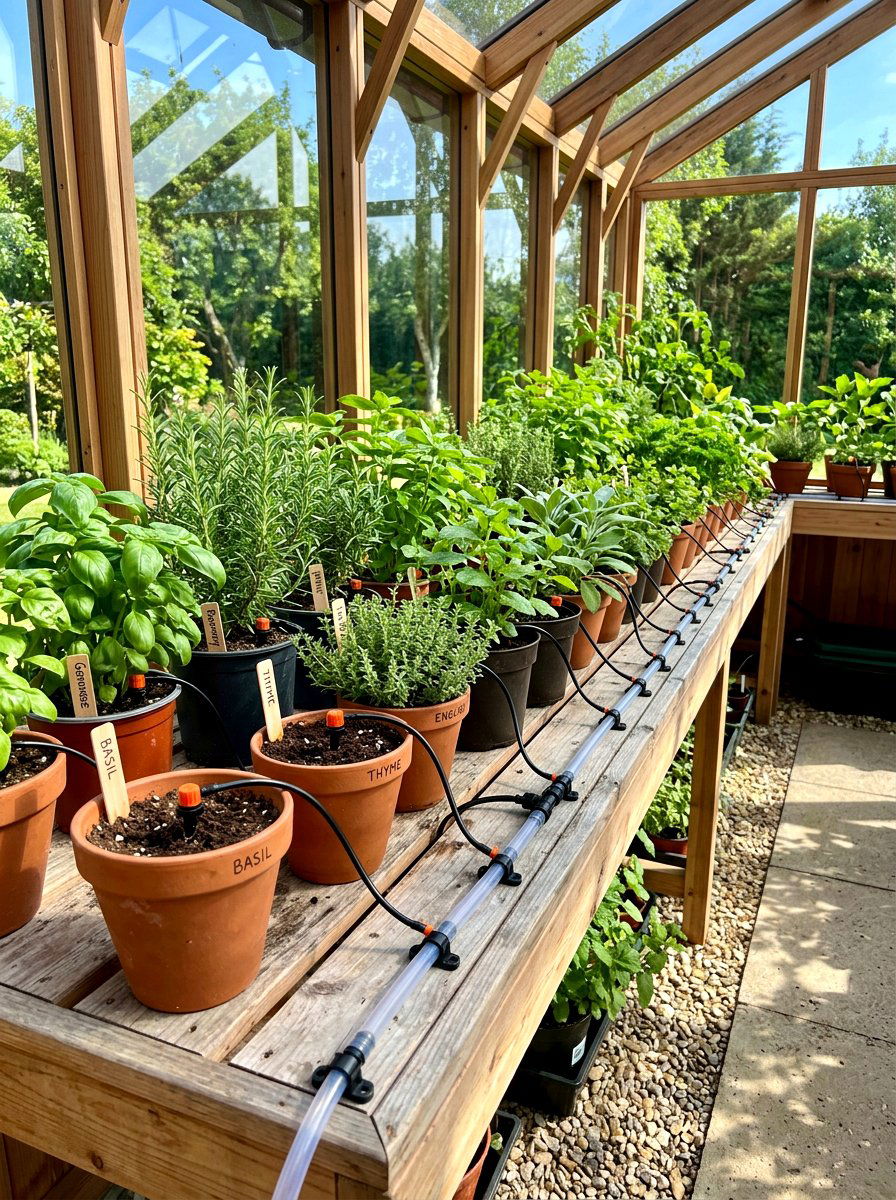
An automatic drip irrigation kit is one of the most efficient ways to manage your greenhouse plants without constant manual labor. This system uses a network of thin plastic tubing that delivers water directly to the base of each individual pot or planting bed. By using pressure-compensating emitters, you ensure that every plant receives the exact same amount of moisture regardless of its location in the line. This setup is perfect for busy gardeners who want to conserve water while maintaining optimal soil moisture levels. You can easily connect this to a battery-powered timer for a completely hands-off experience that keeps your greenhouse thriving throughout the entire year.
2. Overhead Greenhouse Misting System
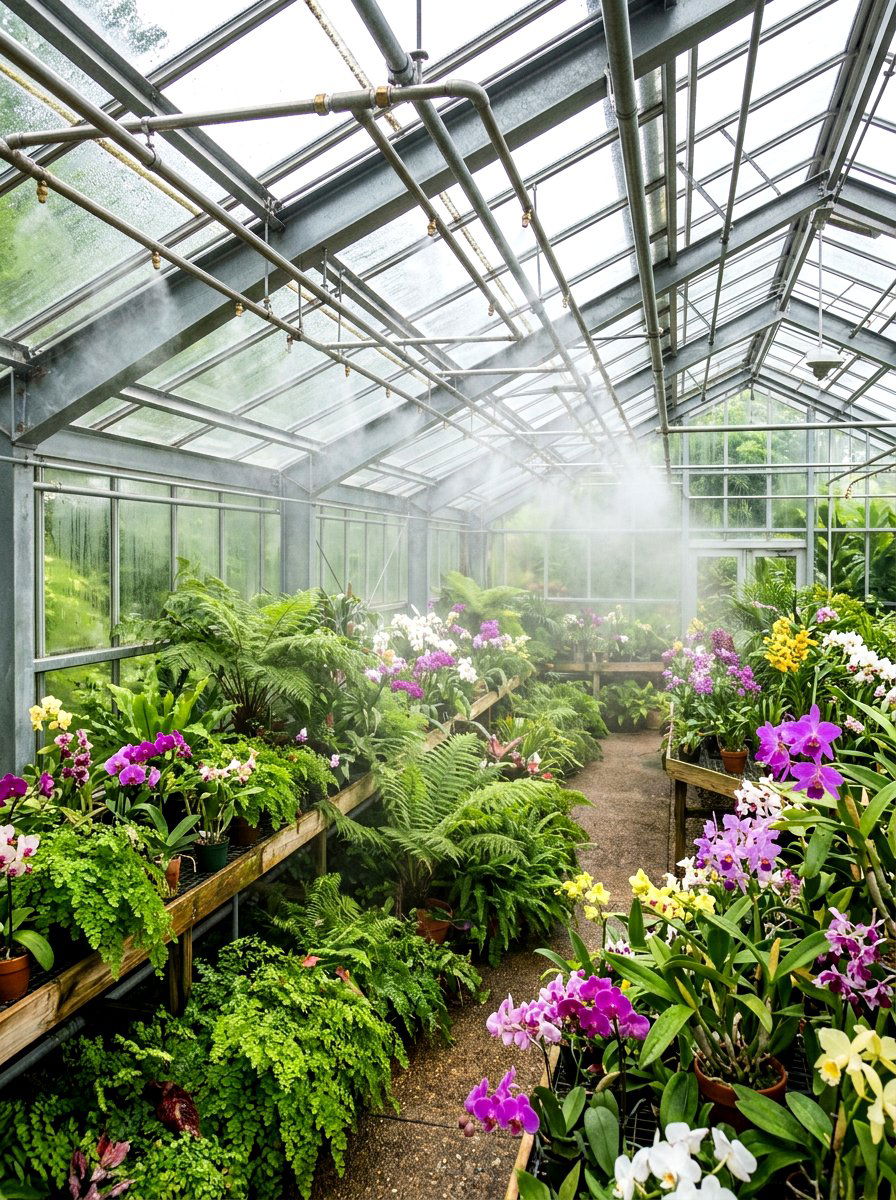
An overhead greenhouse misting system is essential for growers who specialize in tropical plants, orchids, or starting delicate seeds from scratch. These systems feature high-pressure nozzles mounted along the ceiling that release a fine fog of water into the air. This not only hydrates the foliage but also helps to significantly lower the ambient temperature during peak afternoon sun. Misting is particularly helpful for maintaining the high humidity levels that many exotic species require to produce healthy new growth. The fine droplets evaporate quickly, cooling the environment without completely soaking the soil or causing dangerous water runoff issues on your greenhouse floor.
3. Capillary Matting Watering Tray
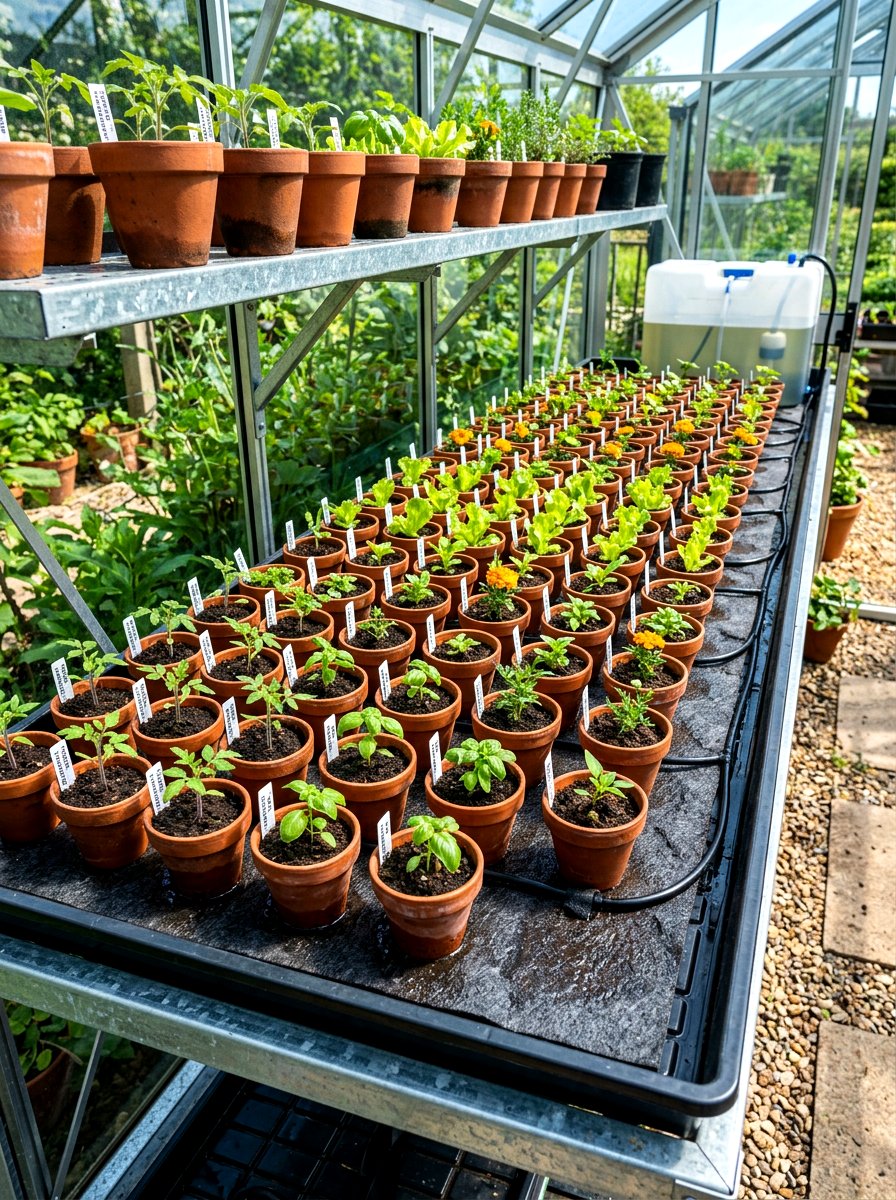
Capillary matting provides a clever bottom-up watering solution that is ideal for small pots and seed starting trays on greenhouse benches. You lay a thick, absorbent felt mat across your shelving and keep it consistently saturated with water from a nearby reservoir. Your potted plants sit directly on this mat, and the soil naturally wicks up moisture through the drainage holes as it is needed. This method prevents the leaves from getting wet, which drastically reduces the risk of fungal diseases and foliage rot. It is a low-maintenance approach that ensures your young seedlings never dry out while you are away during the day.
4. Solar Powered Irrigation Pump
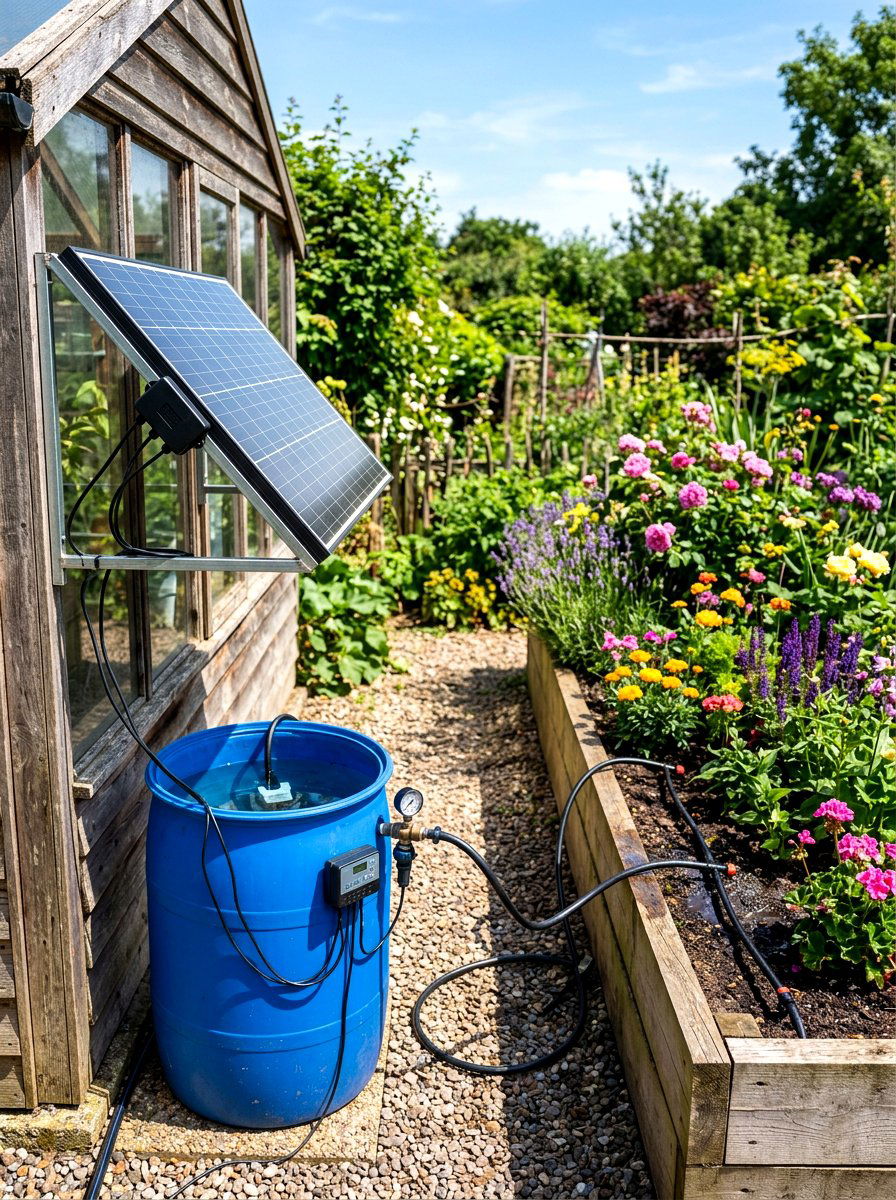
A solar powered irrigation pump is the perfect eco-friendly solution for off-grid greenhouses or setups located far from an outdoor electrical outlet. This system utilizes a small solar panel to charge a battery that runs a submersible pump inside a water barrel or cistern. You can program the controller to run the pump at specific intervals, ensuring your plants stay hydrated using renewable energy. It is an excellent way to automate your watering cycle without increasing your monthly utility bills. These kits are often very easy to install and can be scaled up with larger panels if your greenhouse needs more water volume.
5. Rainwater Harvesting Collection Barrel
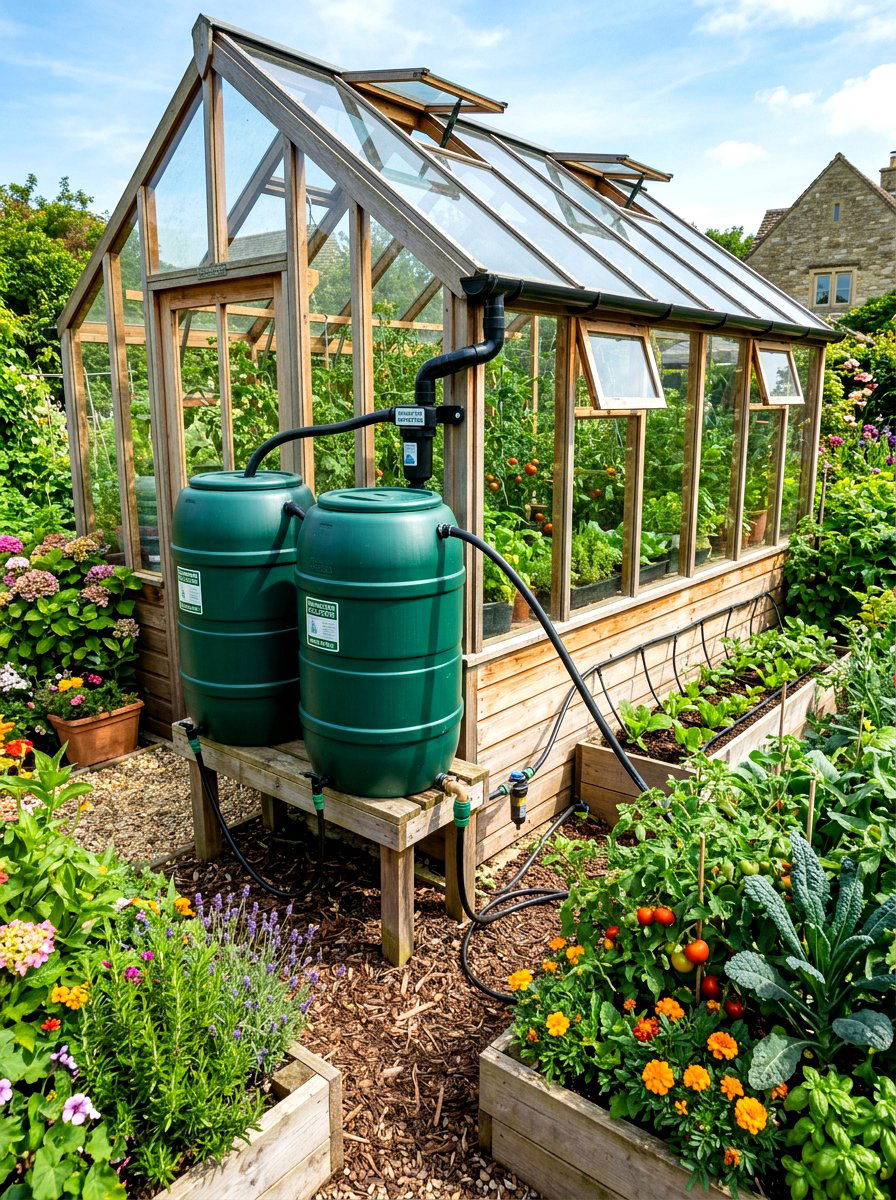
Integrating a rainwater harvesting collection barrel into your greenhouse setup is a sustainable way to provide high-quality water to your plants. By installing a simple gutter system on the roof of your greenhouse, you can divert natural rainfall directly into large storage containers. Rainwater is often better for plants than treated tap water because it lacks harsh chemicals like chlorine and fluoride. You can elevate these barrels on blocks to create natural pressure or use a small pump to distribute the water through your existing irrigation lines. It is a cost-effective strategy that makes the most of natural resources while reducing your environmental footprint.
6. Gravity Fed Drip System
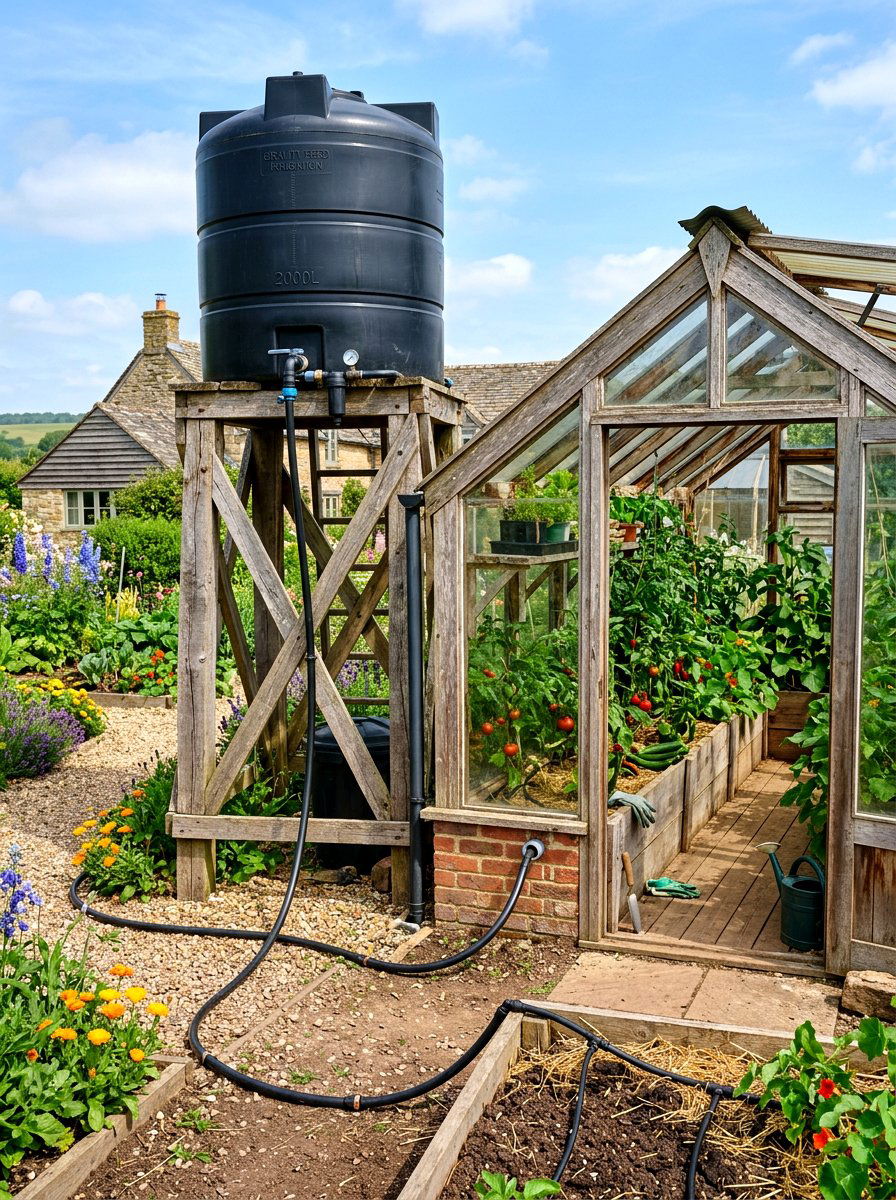
The gravity fed drip system is a reliable and low-tech watering method that does not require any electricity or high-pressure water lines. By placing a large water reservoir at a higher elevation than your plants, you use the natural force of gravity to push water through your tubing. This setup is incredibly dependable because there are no mechanical pumps to fail or batteries to replace. You simply need to ensure the tank is refilled periodically to keep the flow consistent. It is a favorite among traditional gardeners who prefer simple, effective solutions that can be easily repaired with basic tools if a clog ever occurs.
7. Smart Wifi Sprinkler Controller
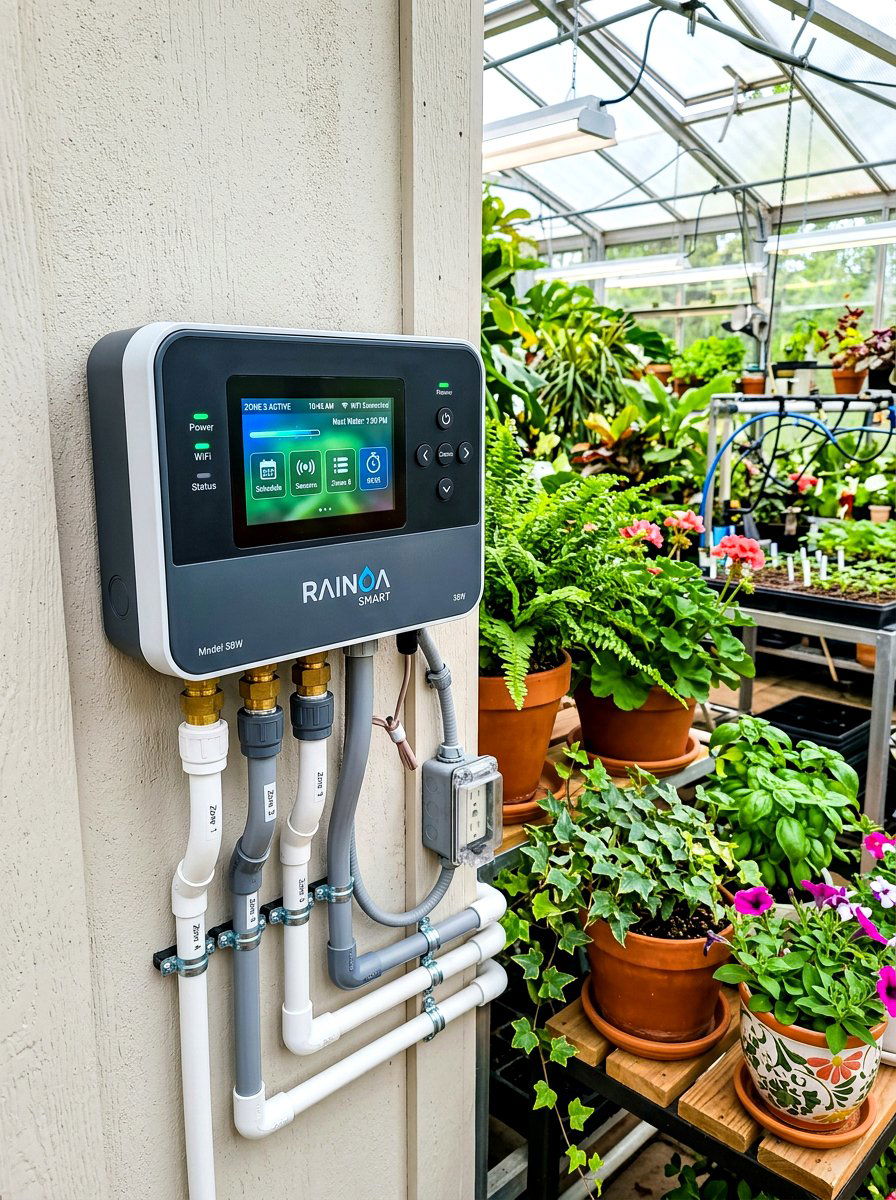
A smart wifi sprinkler controller brings your greenhouse into the modern age by allowing you to manage watering cycles directly from your smartphone. These devices connect to your home network and can be programmed with complex schedules tailored to different plant zones. Many of these controllers even use local weather data to skip watering sessions when it is raining or particularly humid outside. This level of precision helps prevent overwatering and ensures your greenhouse remains in peak condition even when you are traveling. The ability to manually trigger a cooling misting session from your office provides incredible peace of mind during unexpected heatwaves.
8. Self Watering Plant Spike
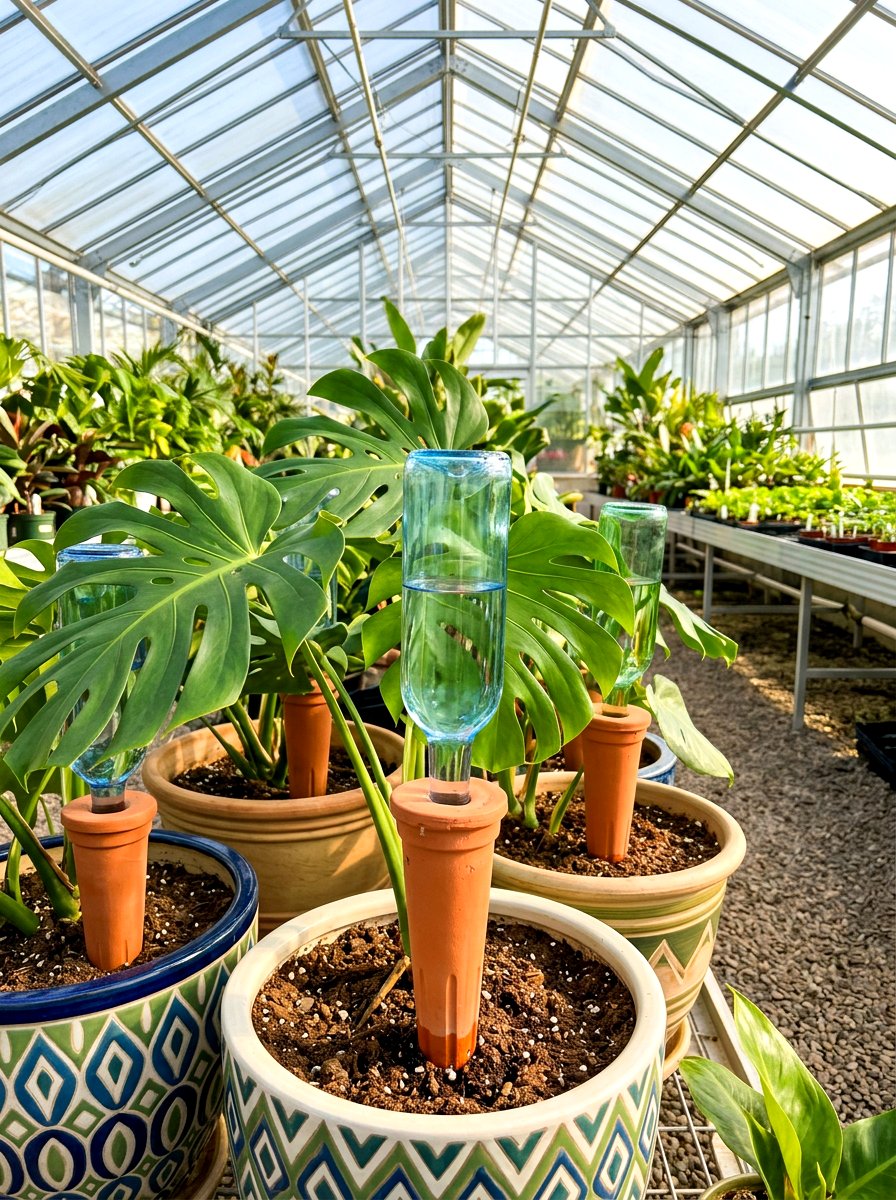
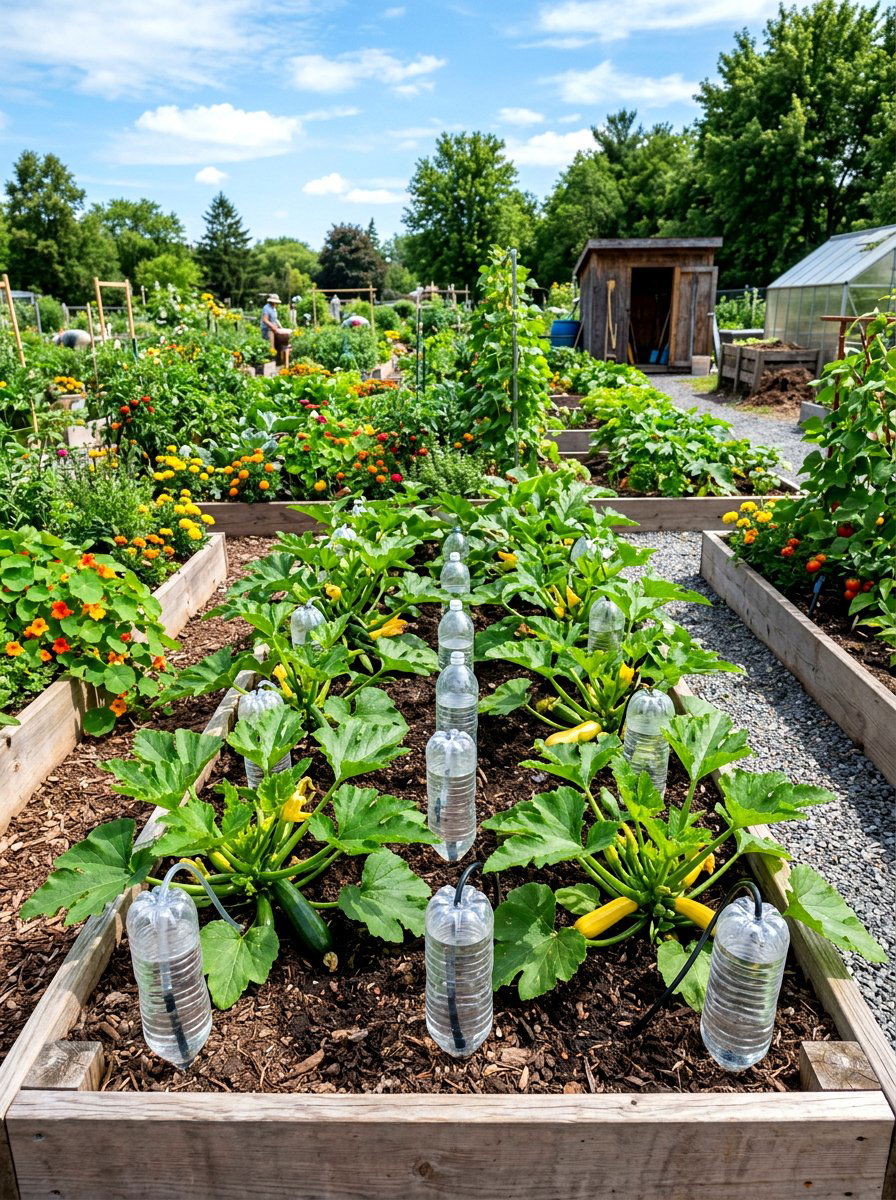
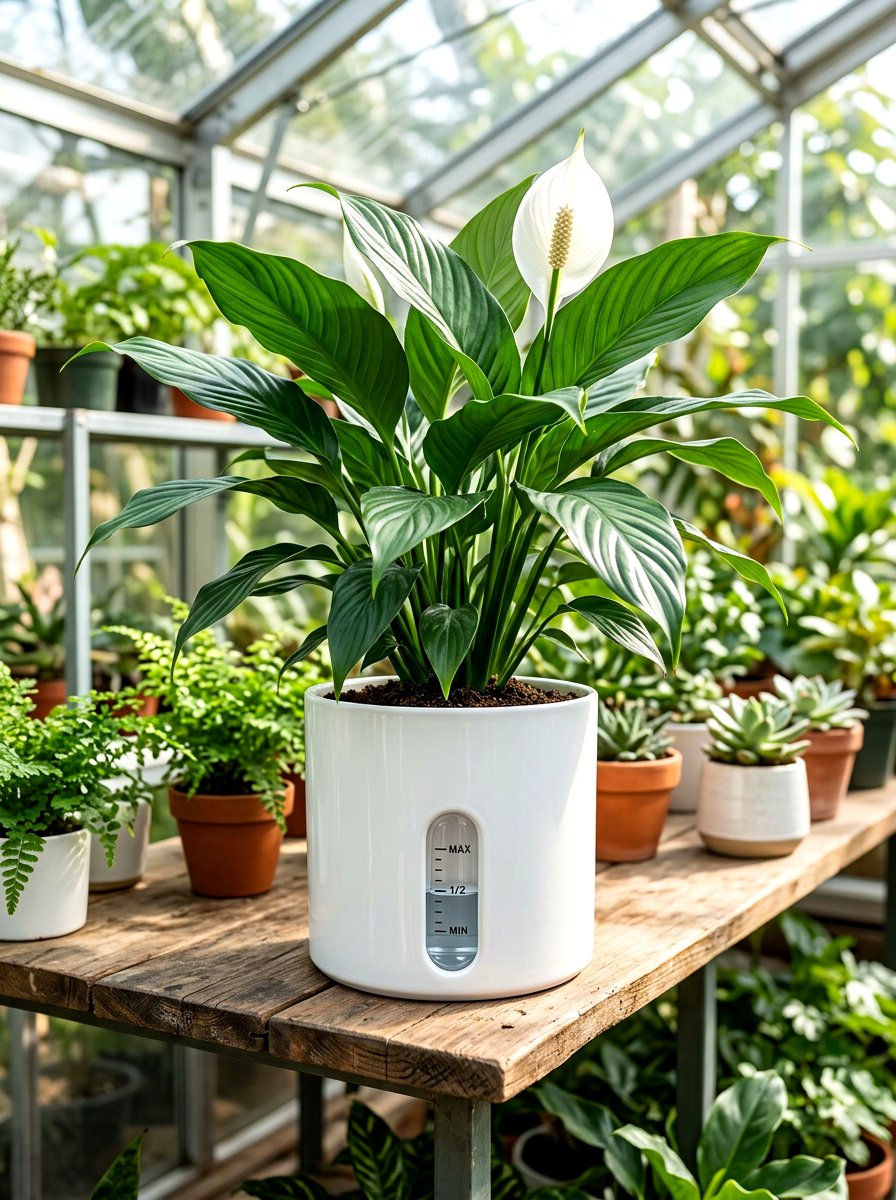
Self watering plant spikes offer a targeted and affordable way to keep individual specimen plants hydrated without installing a complex full-room system. These spikes are typically made of porous terracotta or plastic and are inserted directly into the soil next to the plant 's roots. You then attach a standard plastic bottle filled with water to the top of the spike. The water slowly seeps through the material at a rate dictated by the soil' s dryness, providing a steady supply of moisture for several days. They are particularly useful for large floor plants or hanging baskets that tend to dry out faster than others.
9. Greenhouse Wicking Bed Setup
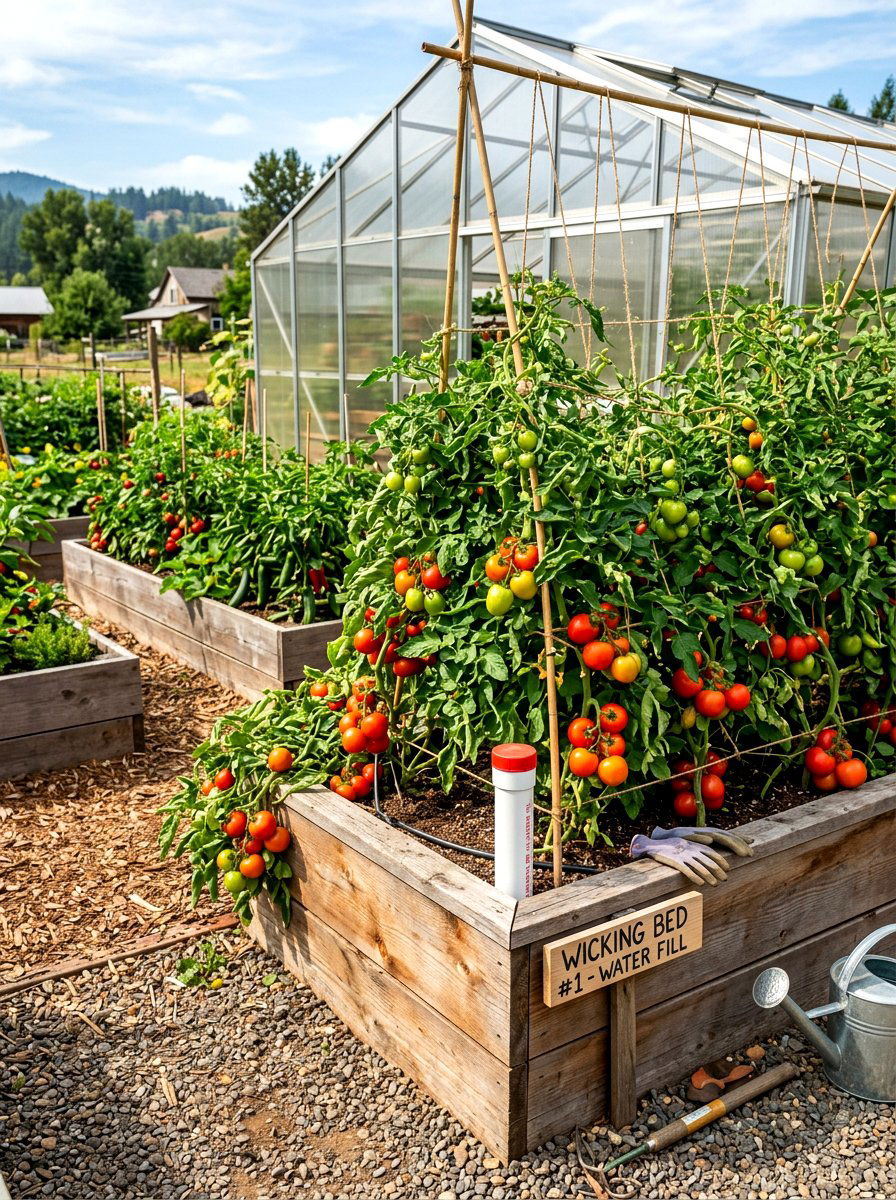
A greenhouse wicking bed is a specialized raised garden container that features a built-in water reservoir at the very bottom. A layer of gravel or plastic crates holds the water, while a moisture-permeable barrier separates it from the soil above. The plants grow their roots down toward the water source, which is pulled upward through the soil via capillary action. This setup creates a very stable moisture environment that is perfect for heavy feeders like tomatoes or cucumbers. Because the water is stored underground, evaporation is minimal, making it one of the most water-efficient ways to grow vegetables in a greenhouse.
10. Soaker Hose Irrigation Line
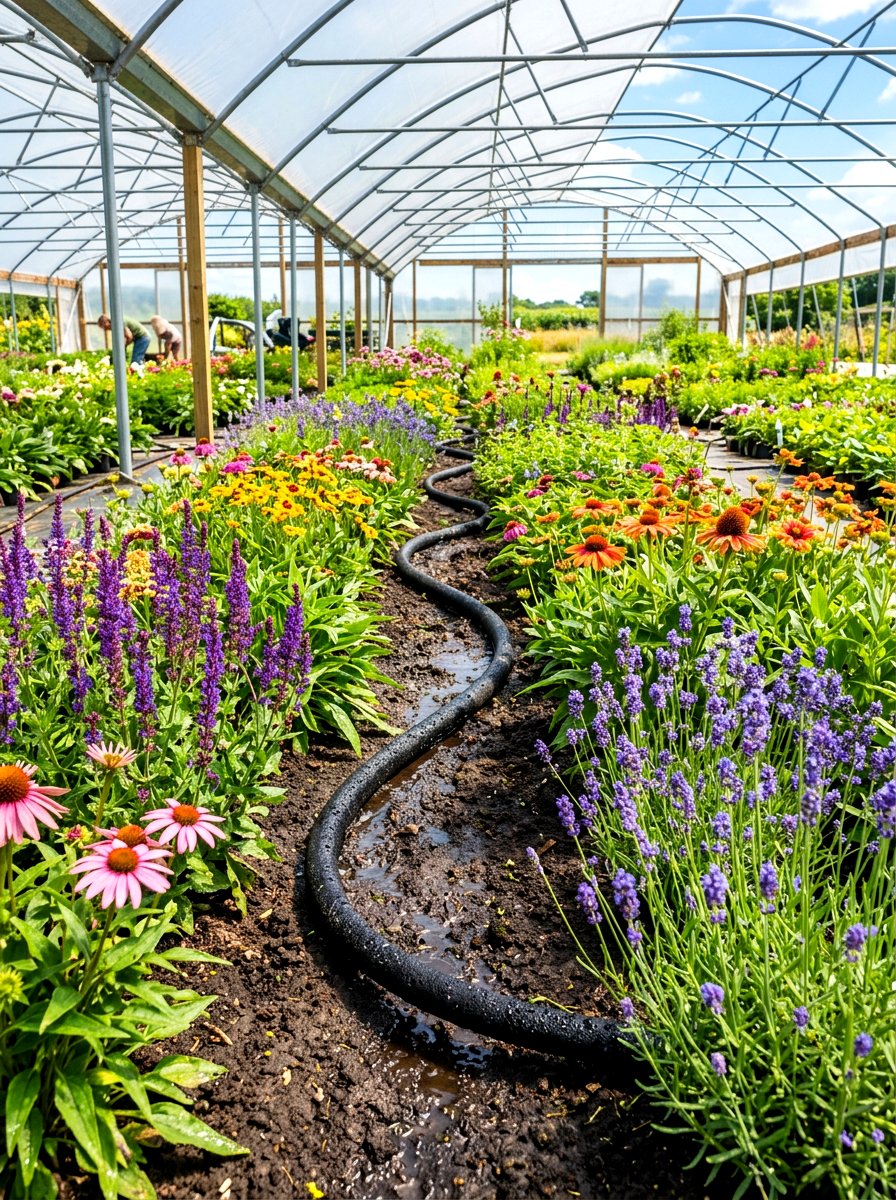
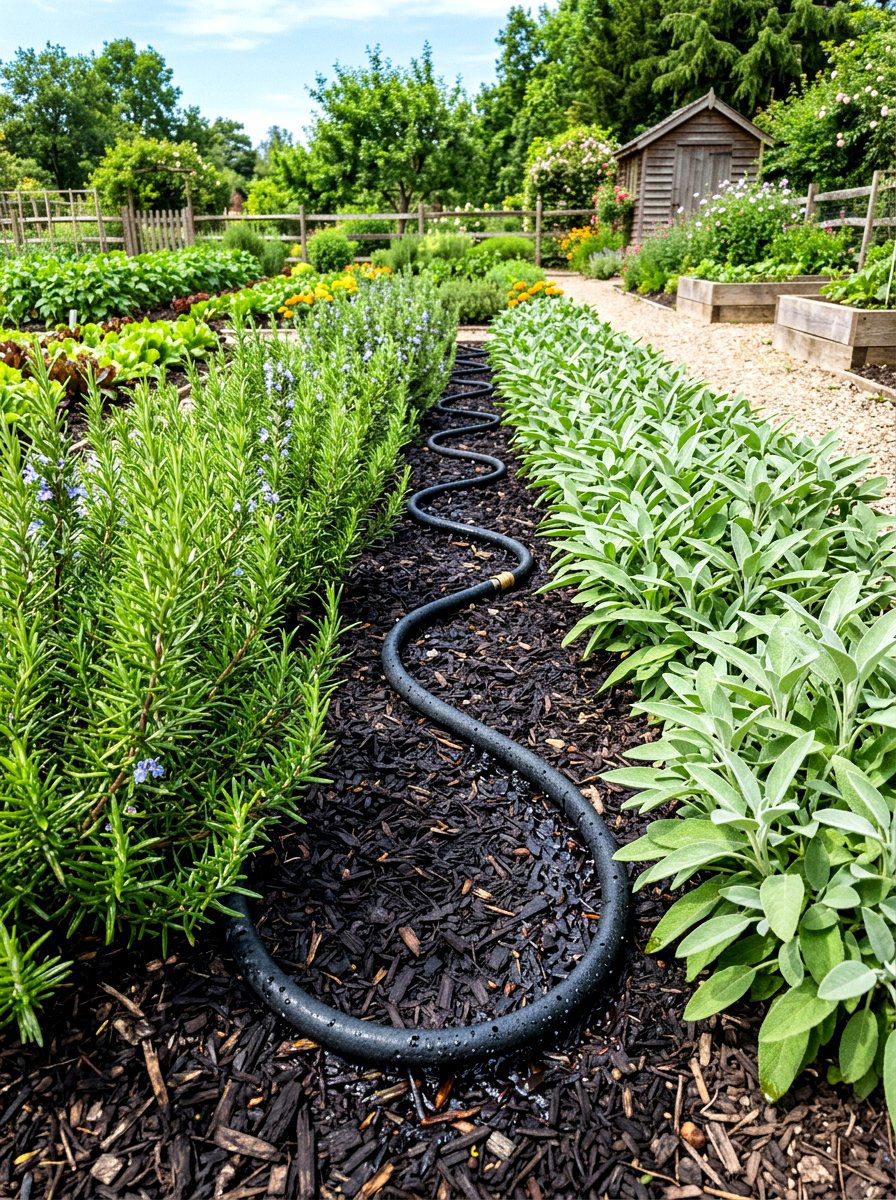
Soaker hose irrigation lines are a practical choice for greenhouse owners who have large raised beds or long rows of ground-planted crops. These hoses are made from recycled rubber and feature thousands of tiny pores that allow water to weep slowly along the entire length of the tube. This provides a deep, thorough soaking of the root zone without the high-pressure spray that can disturb delicate soil structures. You can snake the hose around the base of your plants and cover it with a thin layer of mulch to further reduce evaporation. It is an inexpensive and highly durable watering solution.
11. Vertical Garden Drip Irrigation
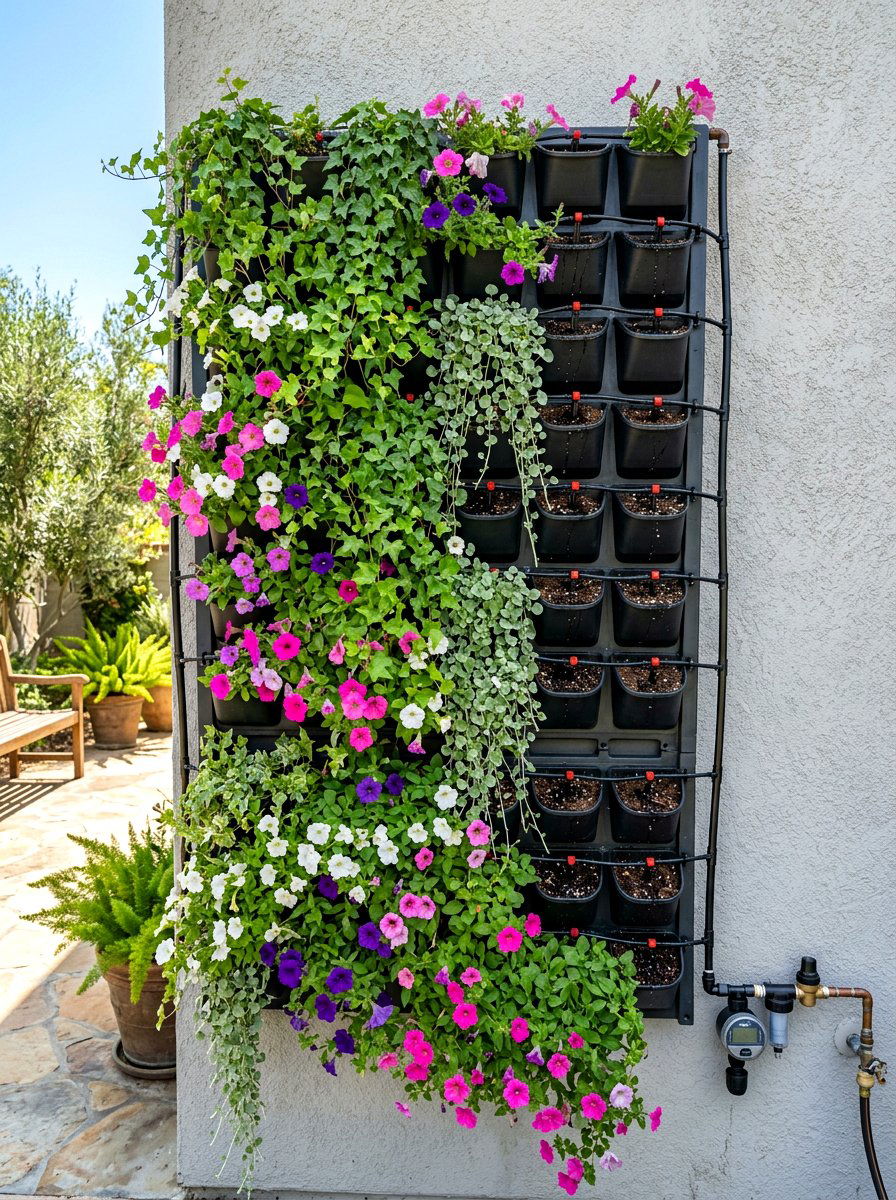
Vertical garden drip irrigation is specifically designed to handle the unique challenges of watering plants grown on walls or tiered shelving units. In a greenhouse where space is limited, vertical setups are popular, but they often suffer from uneven drainage. This system uses a series of micro-tubes that run to each individual pocket or planter, ensuring that the top plants don't stay dry while the bottom ones get flooded. By controlling the flow at every level, you can maintain a lush green wall that thrives from top to bottom. It is a clean, organized way to maximize your growing area vertically.
12. Ebb And Flow Flood Table
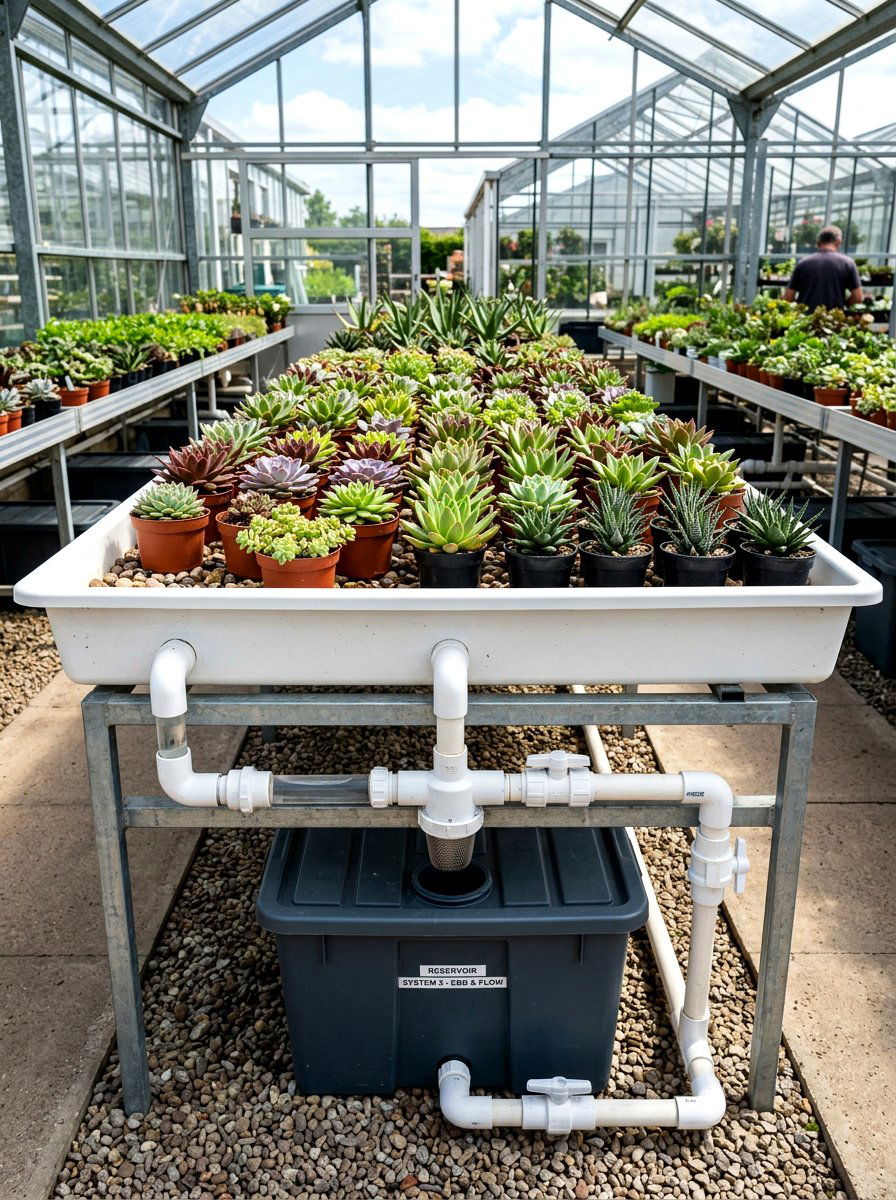
An ebb and flow flood table is a professional-grade setup often used for hydroponics or large-scale seedling production in a greenhouse. The plants sit in pots on a large, shallow tray that is periodically flooded with nutrient-rich water from a reservoir below. After a set amount of time, the water drains back into the tank, allowing the roots to breathe and preventing rot. This cycling of water and air encourages rapid, healthy root development and ensures that every plant is watered uniformly. It is a highly efficient system that recycles water, making it a sustainable choice for serious greenhouse growers.
13. Micro Spray Nozzle System
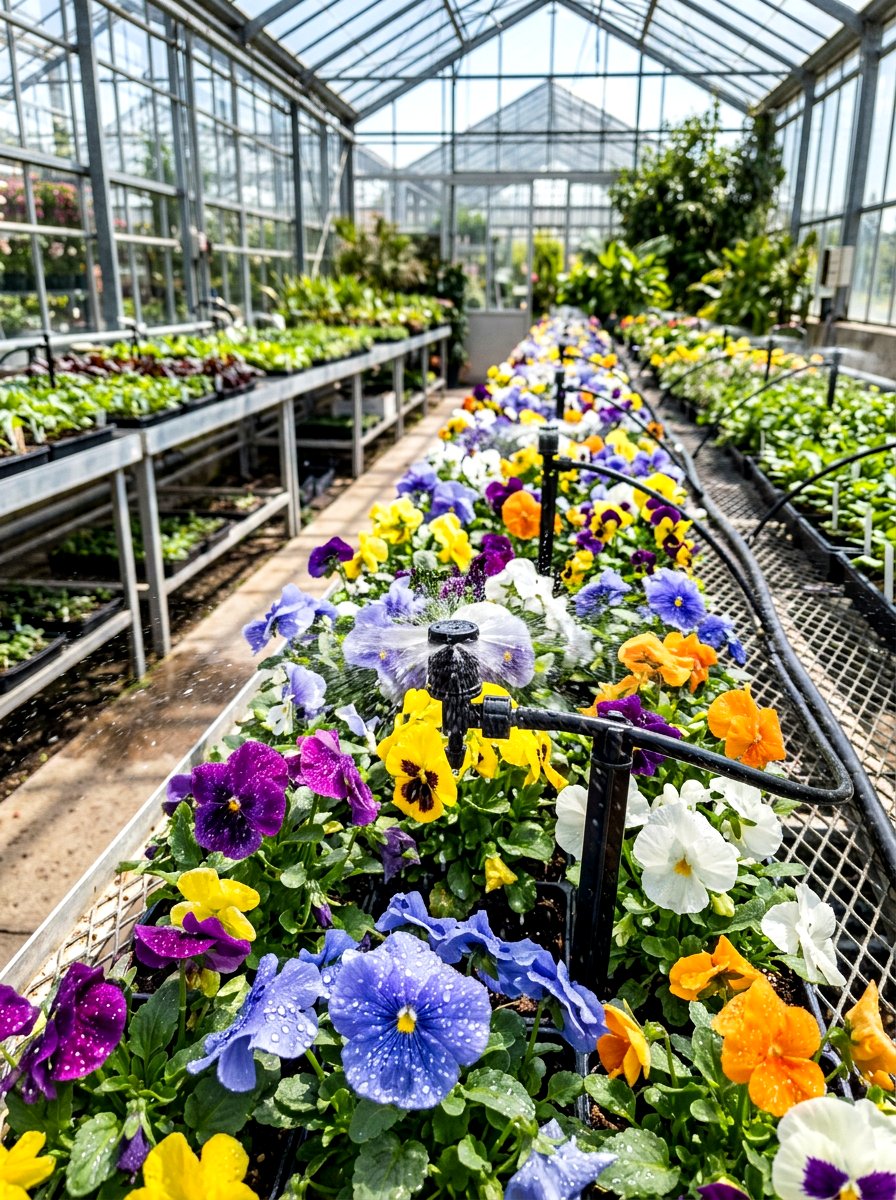
A micro spray nozzle system provides a gentle, rain-like coverage that is perfect for greenhouses filled with a wide variety of plant sizes. These small emitters are attached to stakes or suspended from overhead lines and can be adjusted to spray in full circles or half-moons. They deliver more water than a mister but are much softer than a standard outdoor sprinkler, making them safe for delicate flowers. This setup is excellent for creating a consistent moisture microclimate across a large bench of mixed perennials. You can easily swap out the nozzles to customize the spray pattern as your plant layout changes.
14. Pot To Pot Irrigation Hookup
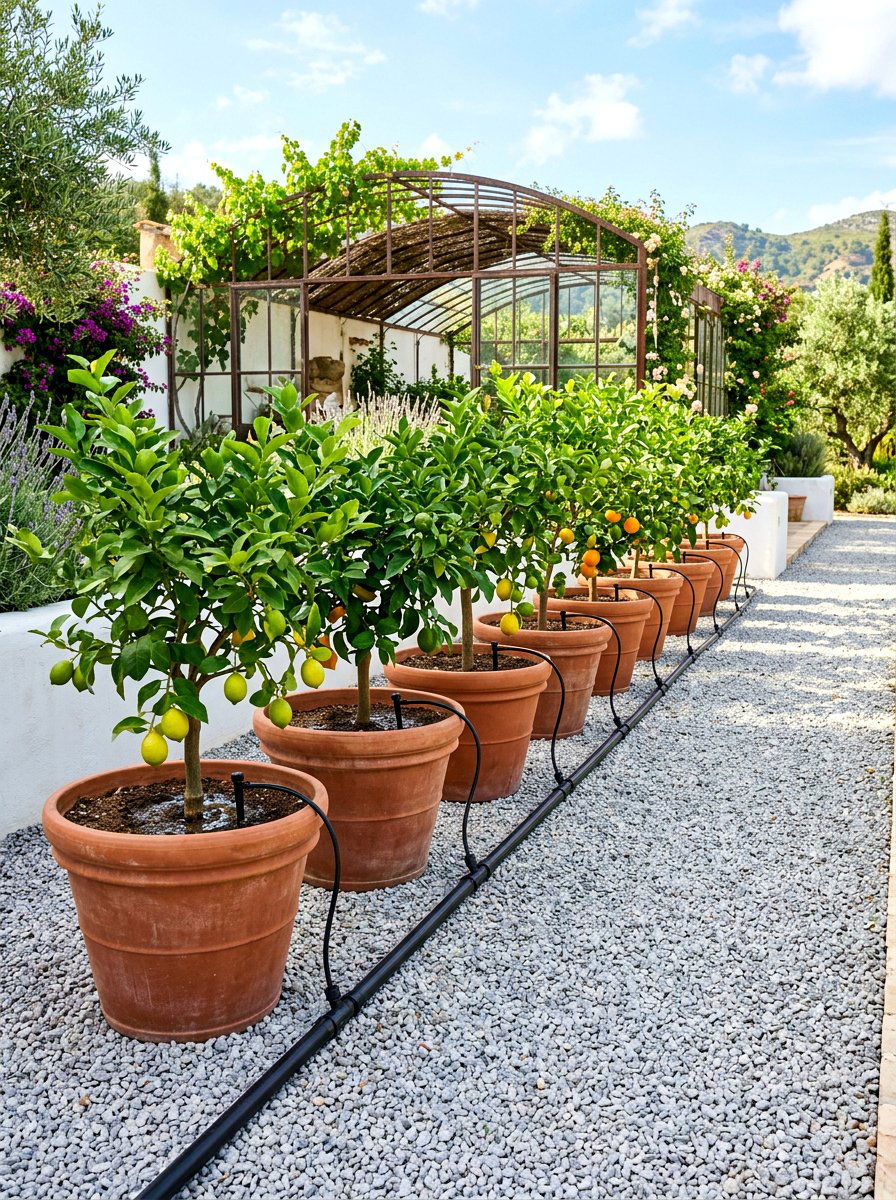
The pot to pot irrigation hookup is a modular system that allows you to connect individual containers in a single, continuous chain. This is particularly useful for greenhouses with large decorative pots or citrus trees that are moved around throughout the seasons. Each pot has its own dedicated emitter, and the main supply line is hidden neatly behind the containers. This setup ensures that no individual plant is forgotten during the watering process. It provides a professional, uncluttered look while giving you the flexibility to add or remove plants from the irrigation circuit as your collection grows or changes over time.
15. Deep Water Culture Reservoir
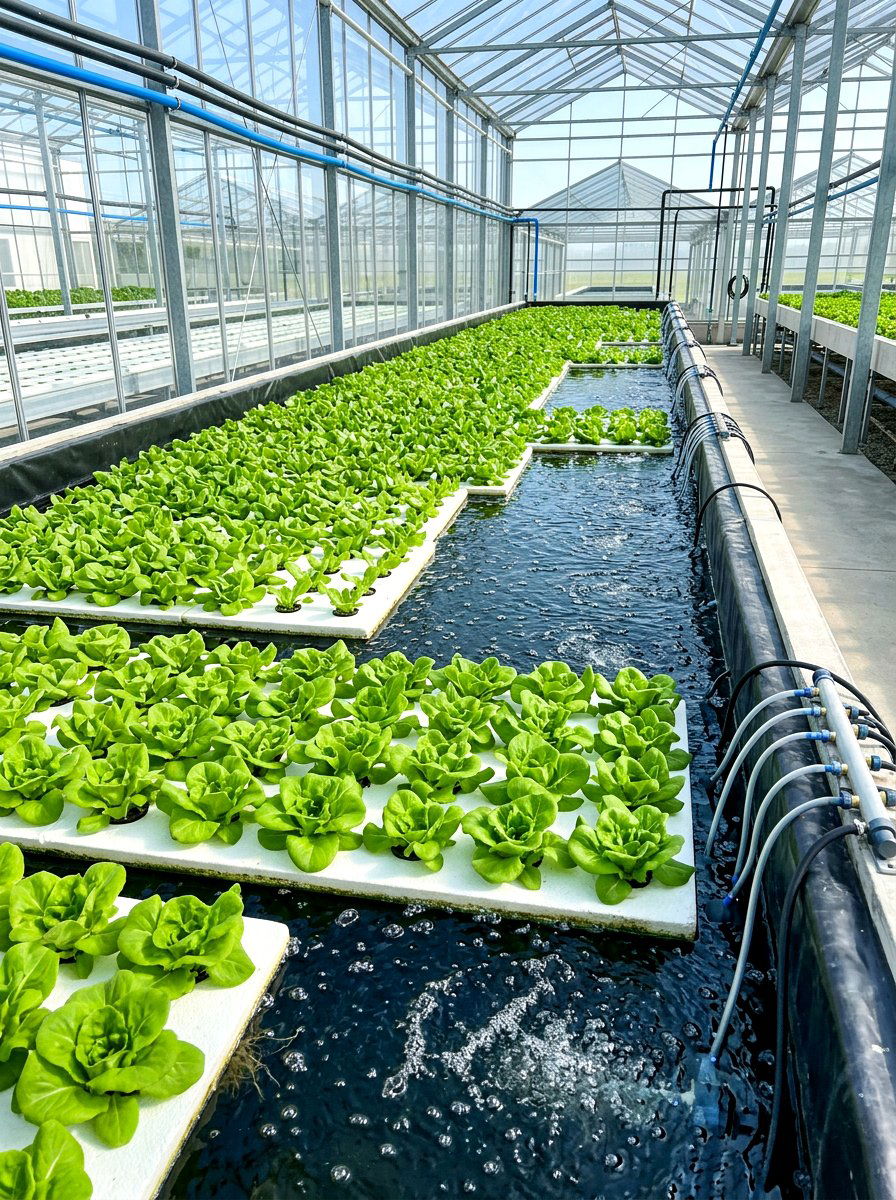
A deep water culture reservoir is a watering setup where plants are grown with their roots submerged directly in a highly oxygenated nutrient solution. In a greenhouse, this often involves large tanks or troughs with floating rafts that hold the plants in place. This method provides the ultimate level of hydration and nutrient access, leading to incredibly fast growth rates for leafy greens and herbs. The system requires an air pump to keep the water moving and prevent stagnation. It is a fascinating and productive way to use greenhouse space if you are interested in soil-free gardening and high-efficiency food production.
16. Automated Greenhouse Fogging System
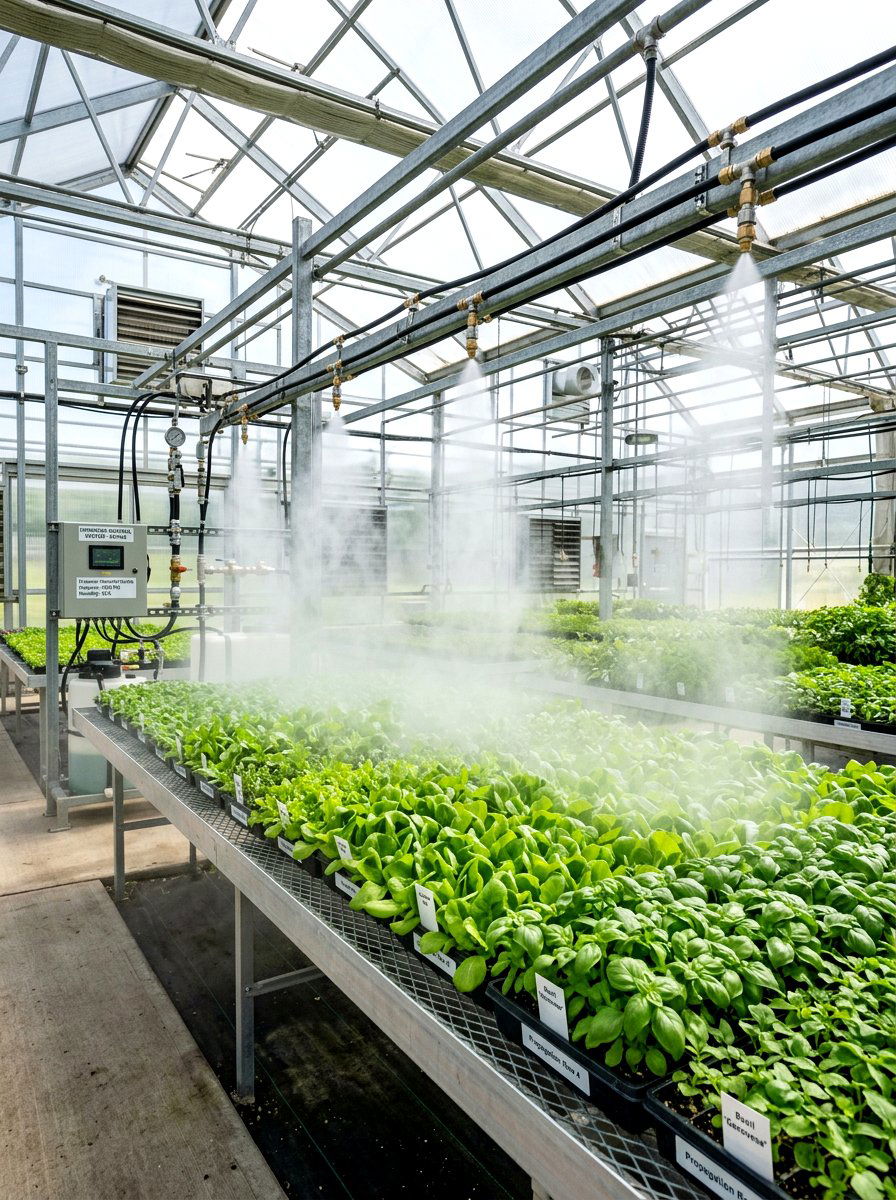
An automated greenhouse fogging system is the high-performance cousin of the standard mister, designed to create a literal cloud of moisture. These systems use ultra-fine nozzles and high-pressure pumps to atomize water into particles so small they stay suspended in the air. This is the gold standard for cooling a greenhouse during extreme summer heat, as the flash evaporation can drop temperatures by twenty degrees or more. It is also perfect for propagating difficult cuttings that need nearly one hundred percent humidity to survive. The automated controller ensures the fog only activates when specific temperature or humidity thresholds are met by the sensors.
17. Individual Plant Bubbler Emitter
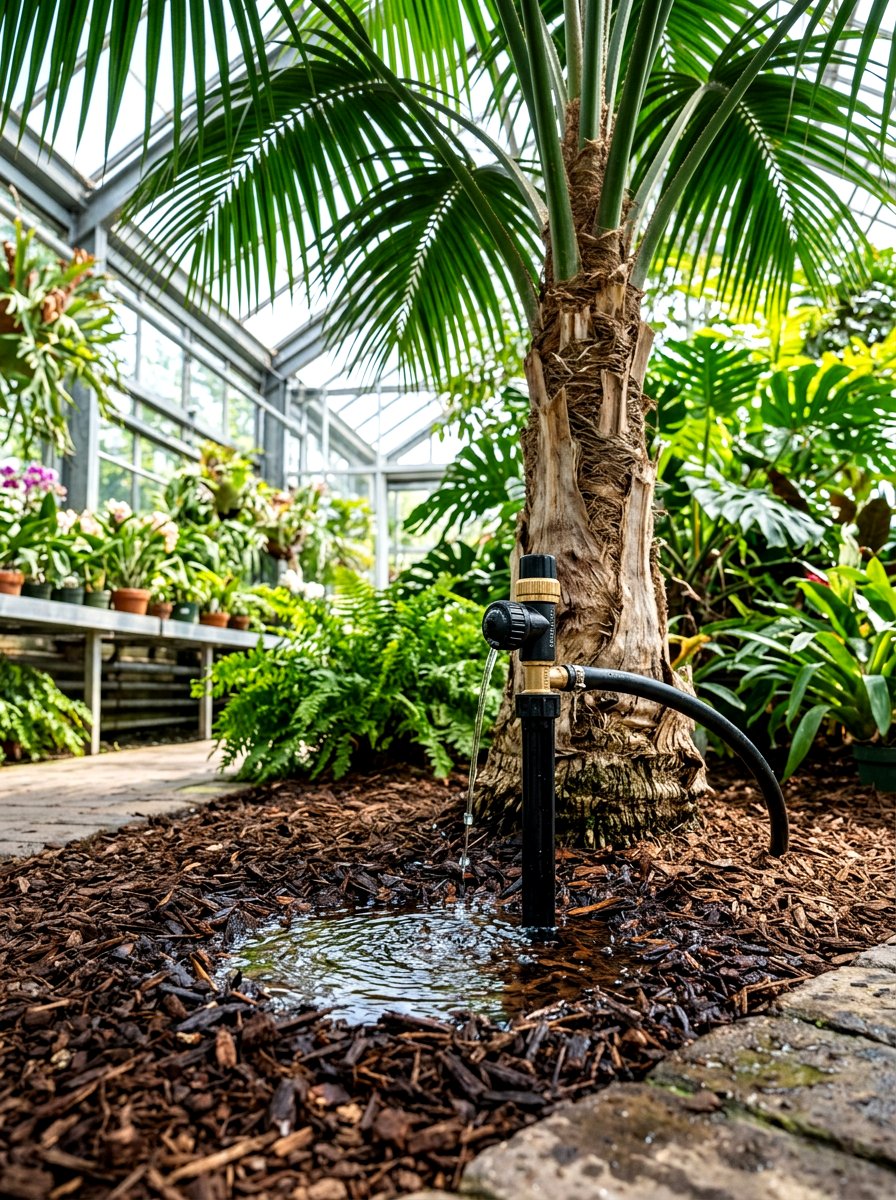
Individual plant bubbler emitters are designed for large greenhouse plants that require a high volume of water in a short amount of time. Unlike a drip emitter that slowly leaks water, a bubbler produces a small, gentle stream that pools around the base of the plant. This is ideal for large shrubs, small trees, or deep-rooted vegetables like squash that need deep saturation to reach the lower soil levels. You can adjust the flow rate on each individual bubbler to match the specific thirst of the plant it serves. It provides a thorough soaking that mimics the effect of deep, manual watering.
18. Handheld Long Reach Watering Wand
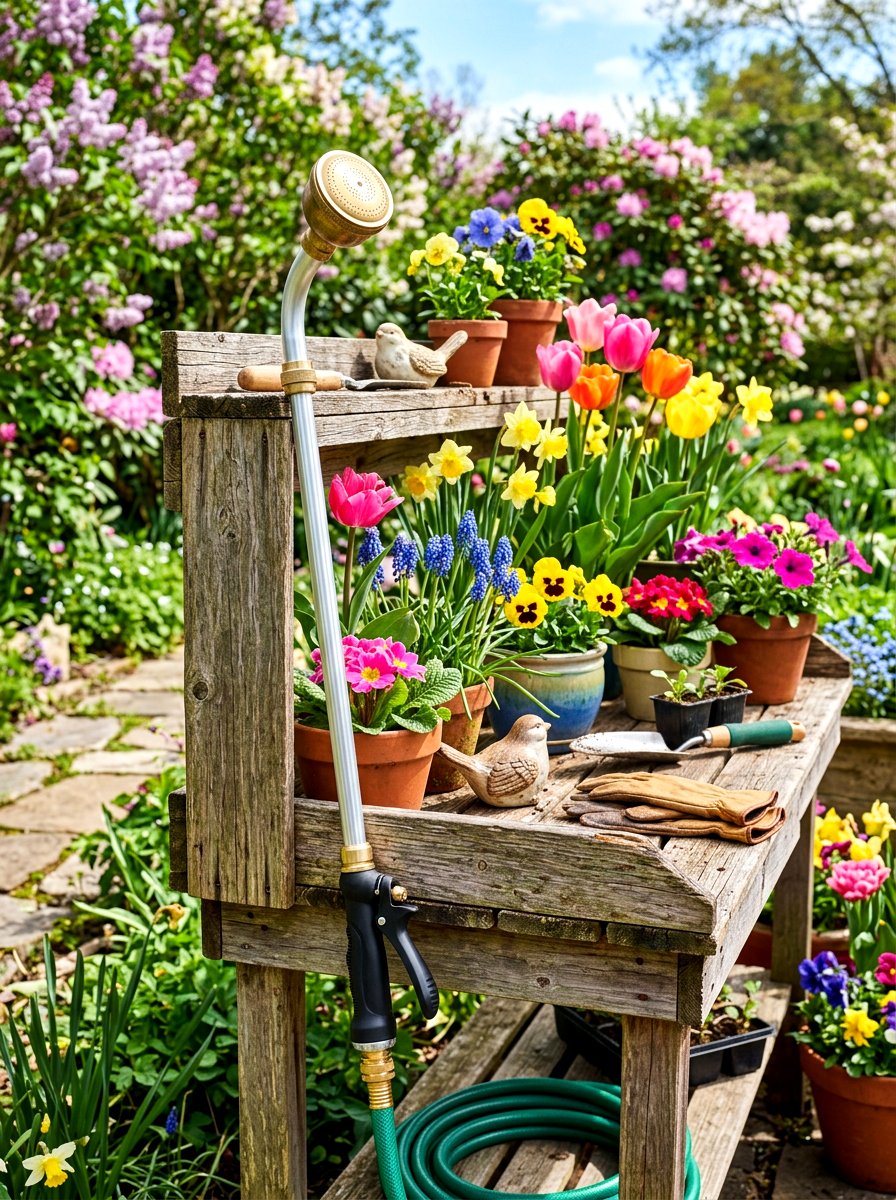
A handheld long reach watering wand remains a staple tool for any greenhouse gardener who enjoys the therapeutic process of manual care. These wands feature a long aluminum neck and a soft-spray "shower" head that allows you to reach the back of deep benches without straining. The gentle flow mimics a soft rain, which prevents the soil from being washed away and protects delicate seedlings from being crushed. Modern wands often include a thumb-operated valve for easy flow control, making it simple to switch between a heavy soak and a light mist as you move between different types of greenhouse plants.
19. Digital Greenhouse Water Timer
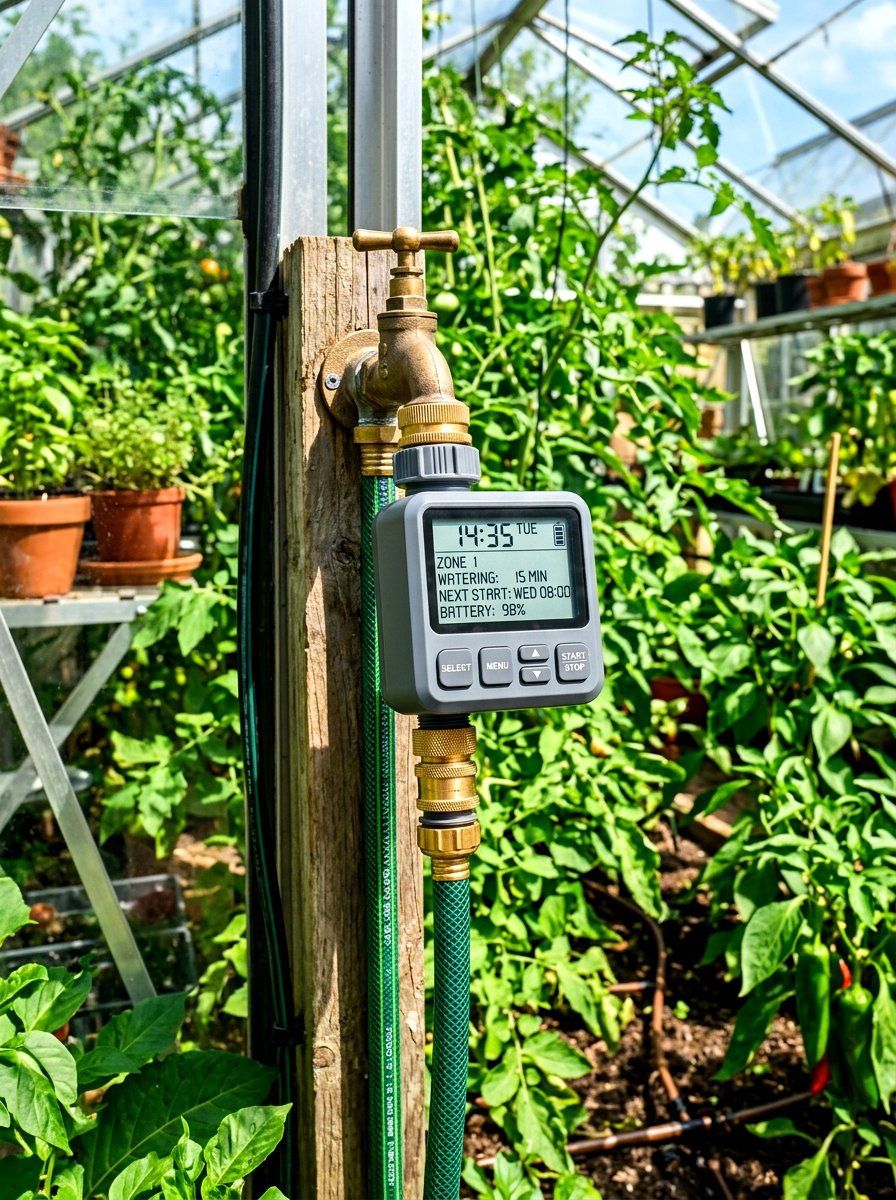
A digital greenhouse water timer is a simple yet powerful device that attaches directly to your outdoor faucet or interior water line. It allows you to set specific start times, durations, and frequencies for your irrigation system, ensuring your plants never miss a drink. These timers are usually battery-operated and feature easy-to-read LCD screens for quick programming. Using a timer is the easiest way to prevent the common mistake of forgetting to turn the water off, which can lead to flooding and wasted resources. It provides a reliable foundation for any automated greenhouse setup, giving you freedom from a strict daily schedule.
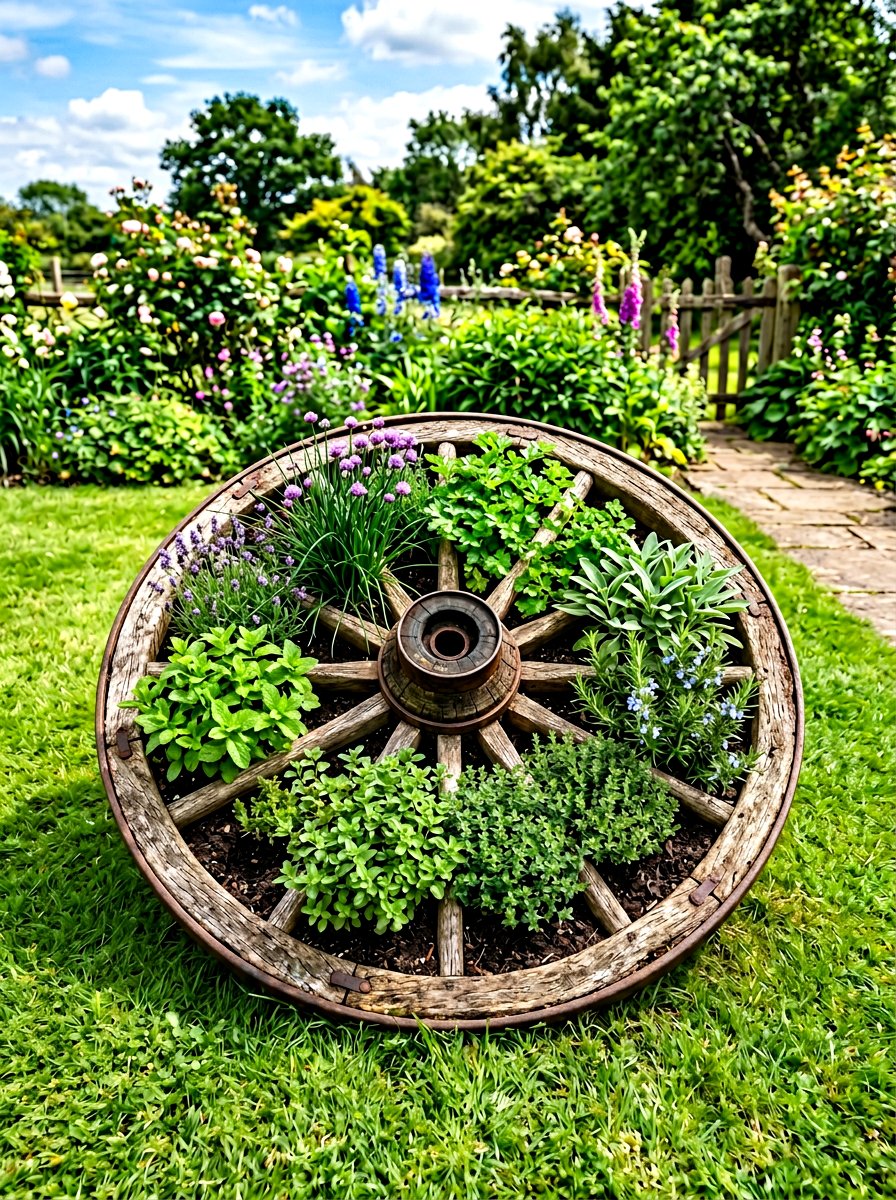

20. Indoor Water Storage Cistern
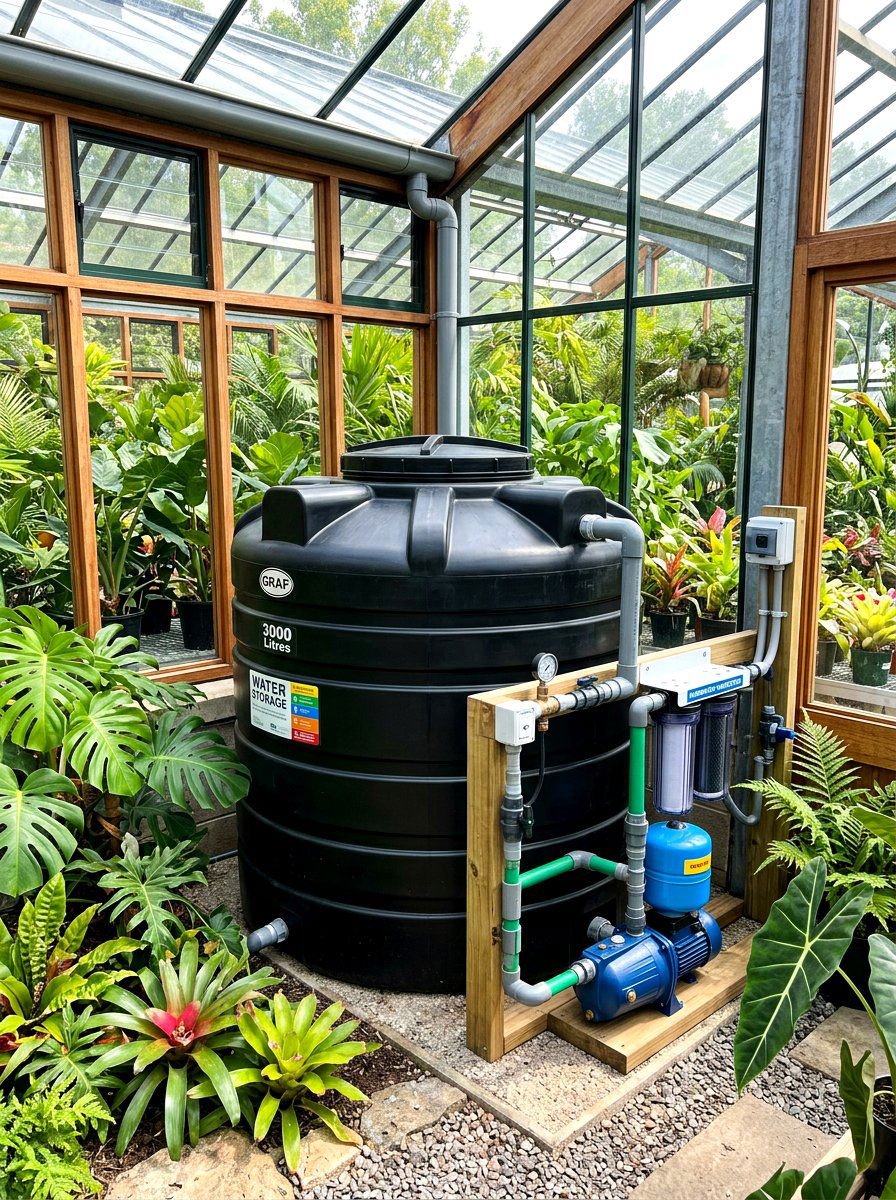
Installing an indoor water storage cistern inside your greenhouse is a smart way to manage water temperature for sensitive tropical plants. Cold tap water can often shock the root systems of exotic species, leading to stunted growth or dropped leaves. By storing water in a large tank within the greenhouse, it naturally warms up to the ambient room temperature before being applied to the plants. You can also use this cistern to pre-mix fertilizers, ensuring a consistent nutrient delivery across your entire collection. It acts as a reliable buffer, providing a ready supply of tempered water even if your main line is temporarily unavailable.
21. Aquaponic Fish Tank Irrigation
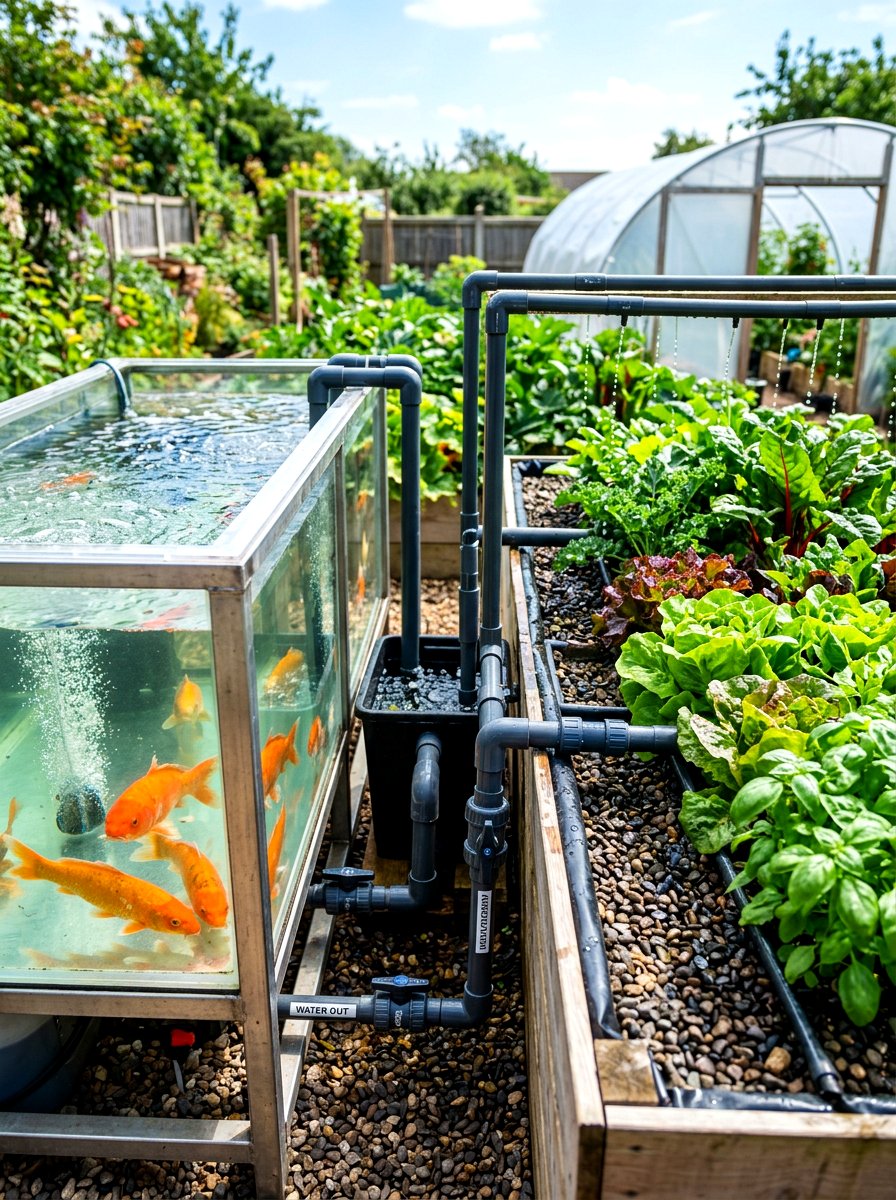
Aquaponic fish tank irrigation is a sophisticated biological system that uses nutrient-rich waste from fish to fertilize and water your greenhouse crops. The water from the fish tank is pumped through grow beds where plants act as a natural filter, cleaning the water before it returns to the fish. This closed-loop system creates a perfect harmony between animal and plant life, resulting in incredibly healthy organic produce. It is a fascinating setup for those interested in sustainable ecosystems and self-sufficiency. In a greenhouse, the stable temperatures help keep both the fish and the plants thriving throughout the changing seasons of the year.
22. Raised Bed Irrigation Grid
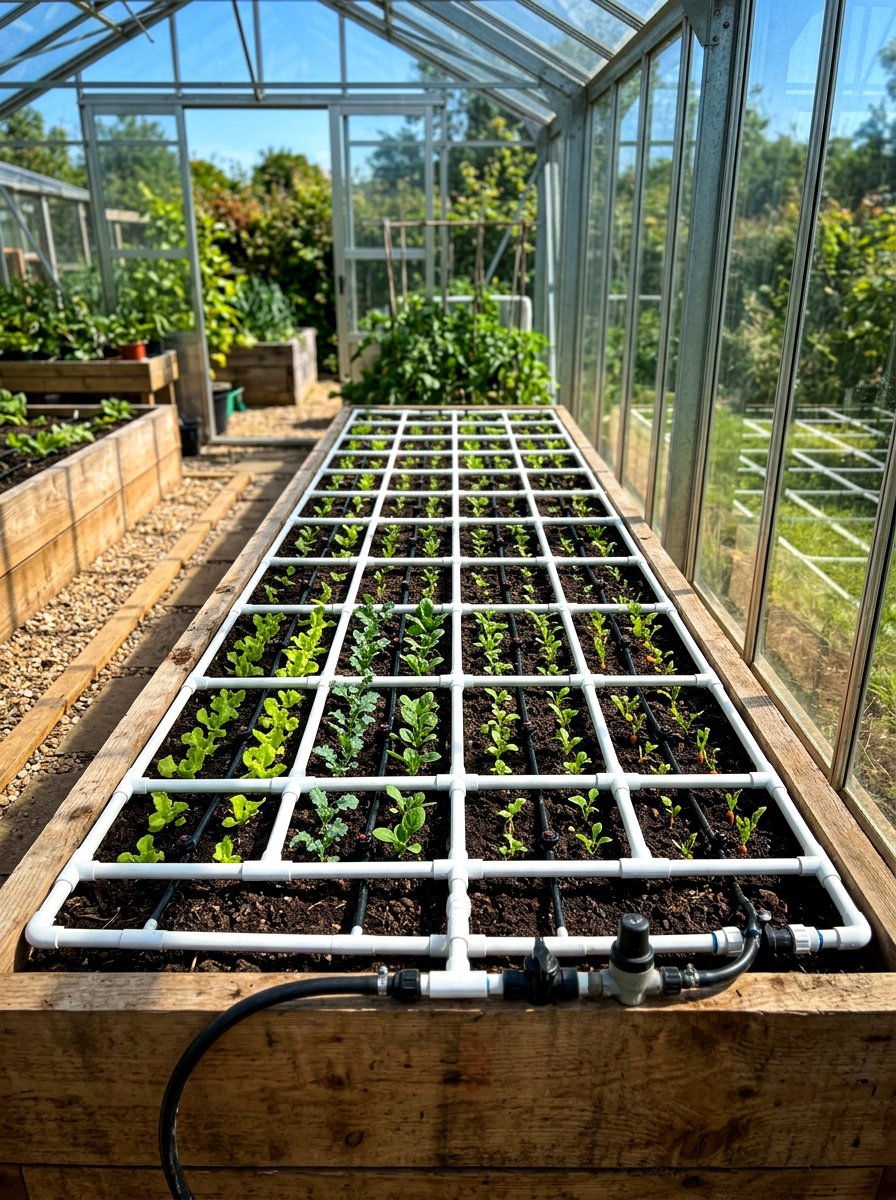
A raised bed irrigation grid is a structured layout of PVC pipes or specialized hoses that provides perfectly even coverage across a specific gardening area. These grids are often custom-built to fit the dimensions of your greenhouse beds, with holes drilled at precise intervals. This ensure that every square inch of the soil receives water, eliminating dry spots that can hinder plant growth. It is a very organized look that keeps your greenhouse floor clear of messy, tangled hoses. The grid can be easily connected to a central timer, making it a highly efficient way to manage a productive vegetable greenhouse setup.
23. Buried Terracotta Olla Jar
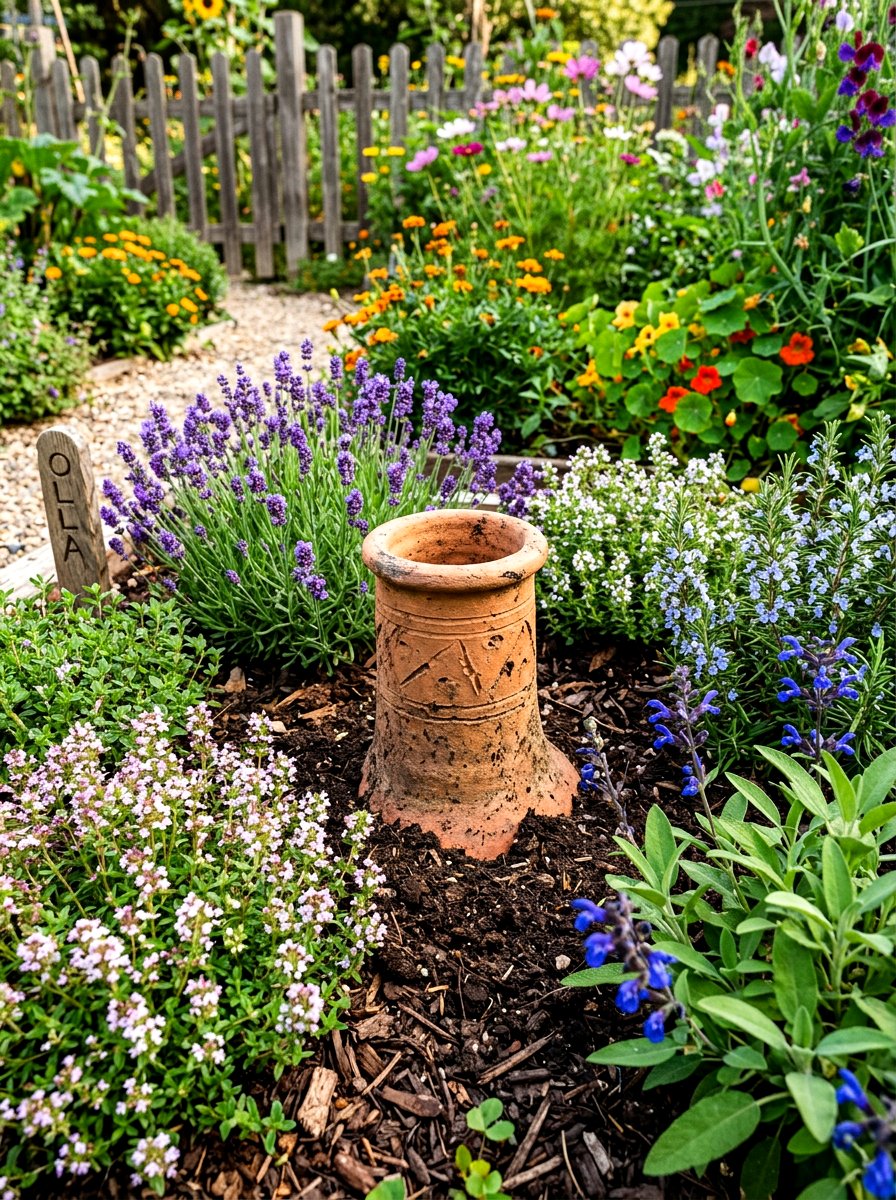
The buried terracotta olla jar is an ancient, low-tech watering method that is seeing a major resurgence in modern greenhouse design. You bury a large, unglazed clay pot in the center of a planting bed and fill it with water. The porous walls of the terracotta allow moisture to seep slowly into the surrounding soil only when the ground is dry. The roots of nearby plants will eventually grow around the jar, sipping water directly from the source. This is one of the most efficient ways to water because there is almost zero evaporation, and it is impossible to overwater your plants.
24. Greenhouse Hose Reel Station
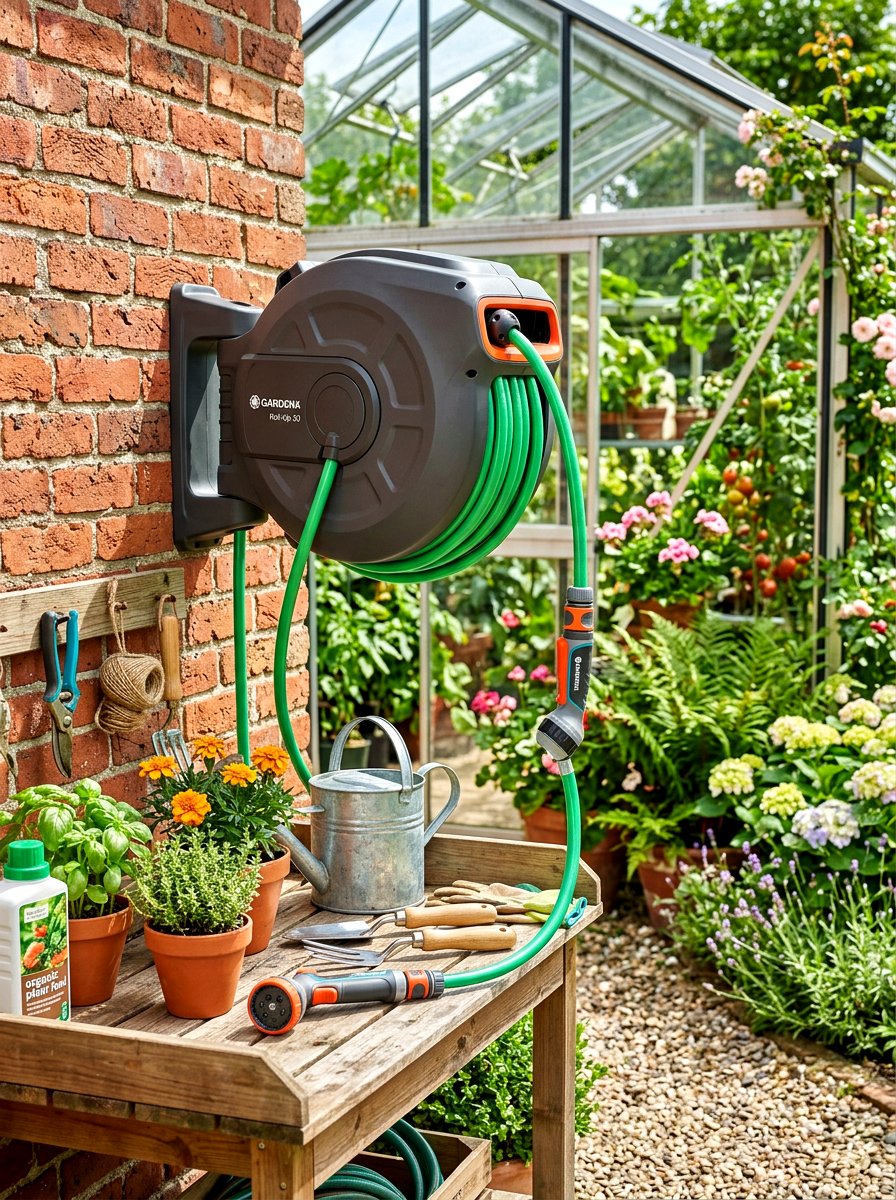
A greenhouse hose reel station provides a dedicated, organized hub for all your manual watering needs. Instead of leaving hoses tangled on the floor where they create a tripping hazard, a high-quality retractable reel keeps everything neat and tidy. You can mount the reel on a central post or wall to ensure the hose reaches every corner of the greenhouse with ease. Many modern reels feature a slow-retraction mechanism to prevent damage to delicate pots as the hose is pulled back. Having a dedicated station with high-quality spray nozzles and quick-connect fittings makes the daily task of hand-watering much more enjoyable and efficient.
25. Fertilizer Injector Venturi System
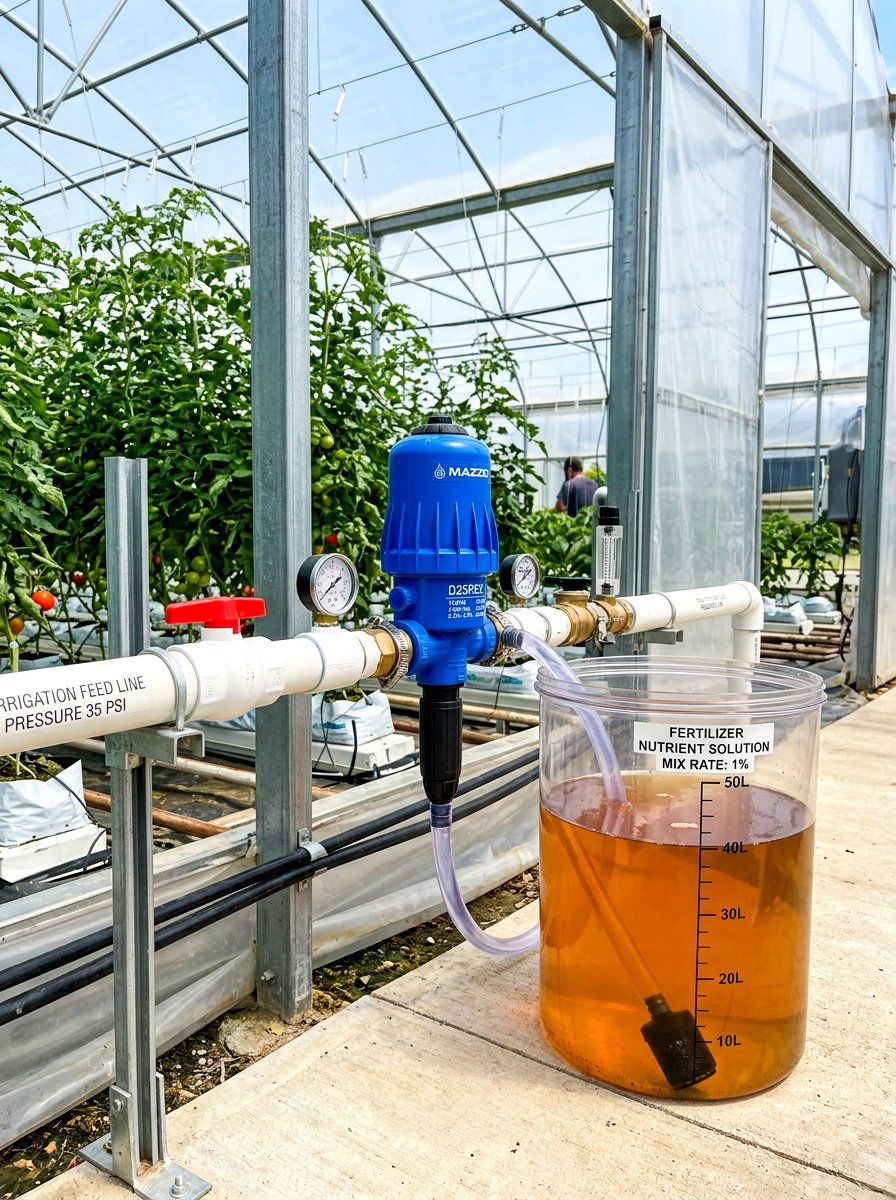
A fertilizer injector venturi system allows you to combine watering and feeding into one simple, automated step known as fertigation. This device is installed into your main irrigation line and uses a vacuum effect to pull a precise amount of liquid fertilizer from a concentrated tank. As the water flows through the line, it mixes with the nutrients and delivers a perfectly balanced solution to every plant in your greenhouse. This ensures your crops receive a steady supply of food, which is much more effective than occasional heavy feedings. It is a game-changer for producing professional-quality blooms and high-yield vegetable harvests.
26. Wireless Soil Moisture Sensor
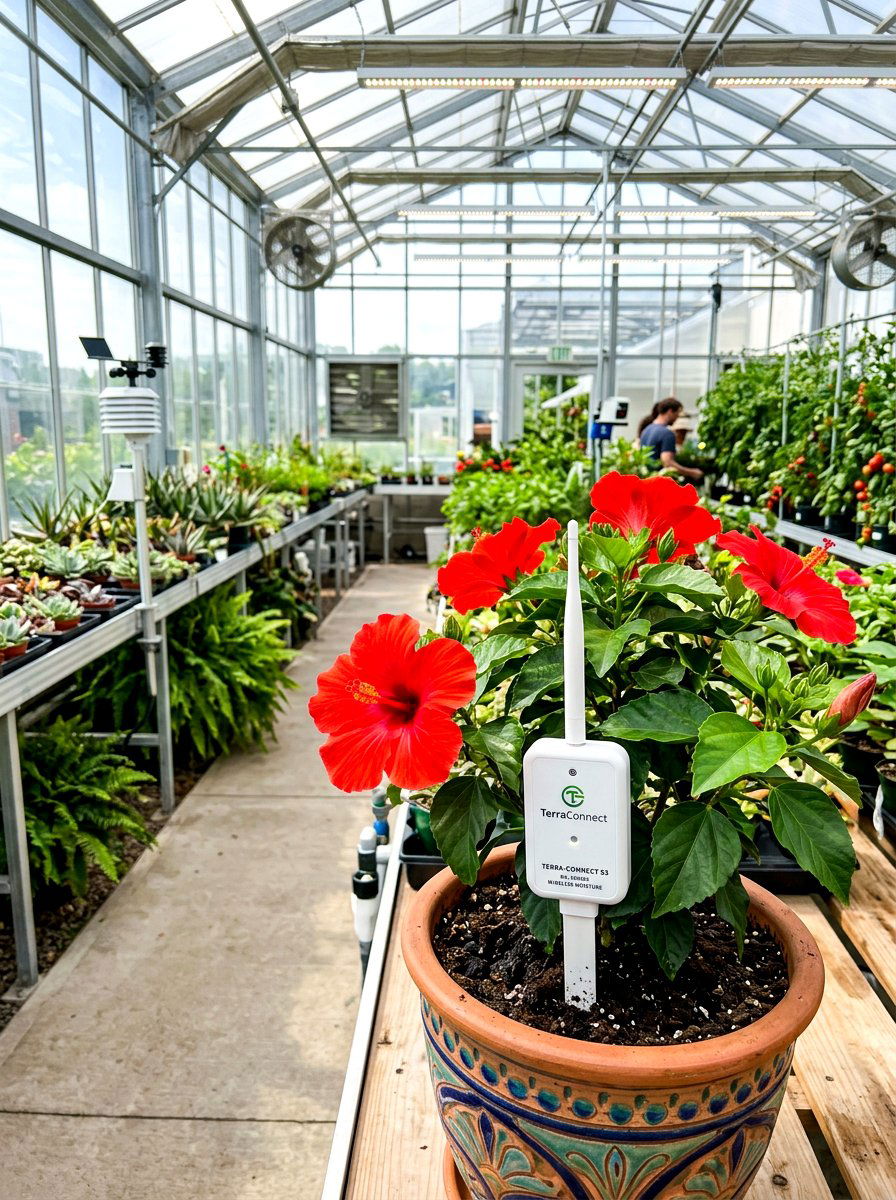
Integrating a wireless soil moisture sensor into your greenhouse setup takes the guesswork out of knowing when to water. These small probes are inserted into the soil of your most sensitive plants and send real-time data to a central hub or your smartphone. By monitoring the actual moisture levels at the root zone, you can prevent both the stress of drought and the dangers of overwatering. Some advanced sensors can even be linked directly to your smart irrigation controller to trigger watering cycles automatically only when the soil reaches a certain level of dryness. It is a high-tech approach to precision gardening.
27. Gray Water Recycling Unit
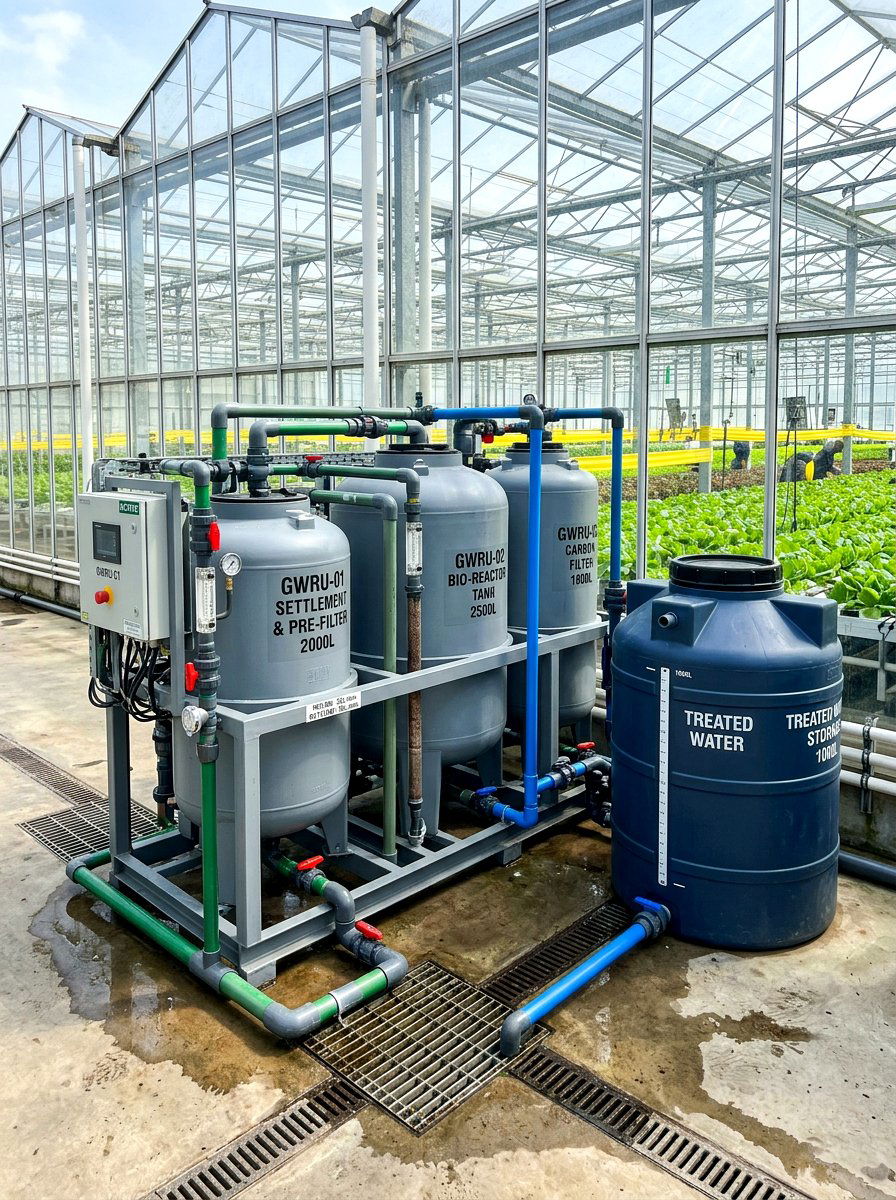
A gray water recycling unit is a sustainable setup that filters and reuses water from other household or greenhouse tasks for irrigation purposes. In a greenhouse, this might involve collecting the runoff from sink workstations or floor cleaning and passing it through a simple filtration system. Once cleaned of debris and soap, the water is stored in a tank and pumped back into your drip lines. This setup significantly reduces your overall water consumption and is a great choice for eco-conscious gardeners. It requires a bit more initial plumbing work, but the long-term environmental benefits and cost savings make it a worthwhile investment.
28. Wall Mounted Hose Guide
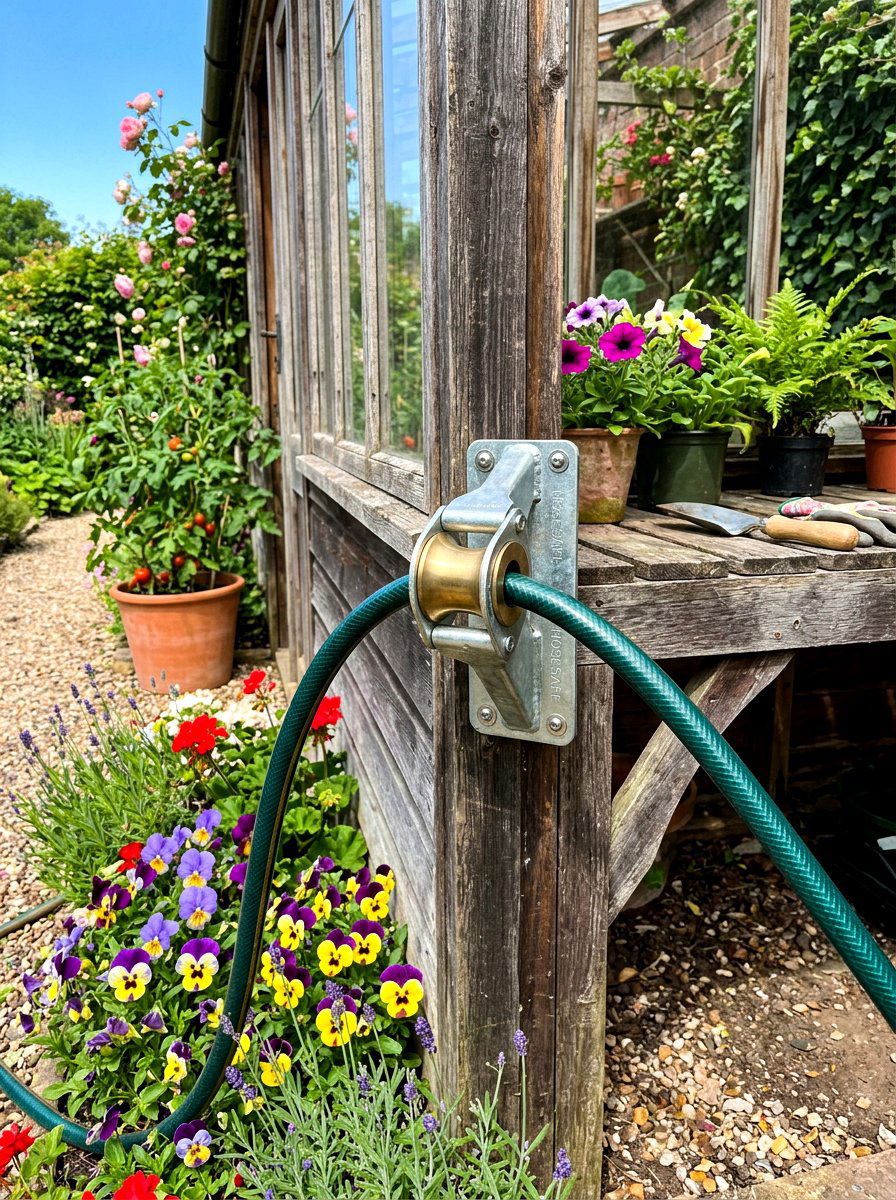
A wall mounted hose guide is a simple but essential accessory for any greenhouse that uses long hoses for manual watering. These guides are small rollers or brackets installed at the corners of benches and near doorways to keep the hose from crushing delicate plants as you pull it along. They allow the hose to glide smoothly around obstacles, preventing it from getting snagged on pot edges or structural supports. By directing the path of your hose, you can move freely through the greenhouse without constantly looking back to see if you have accidentally knocked over a tray of expensive seedlings or fragile flowers.
29. Greenhouse Sink Potting Station
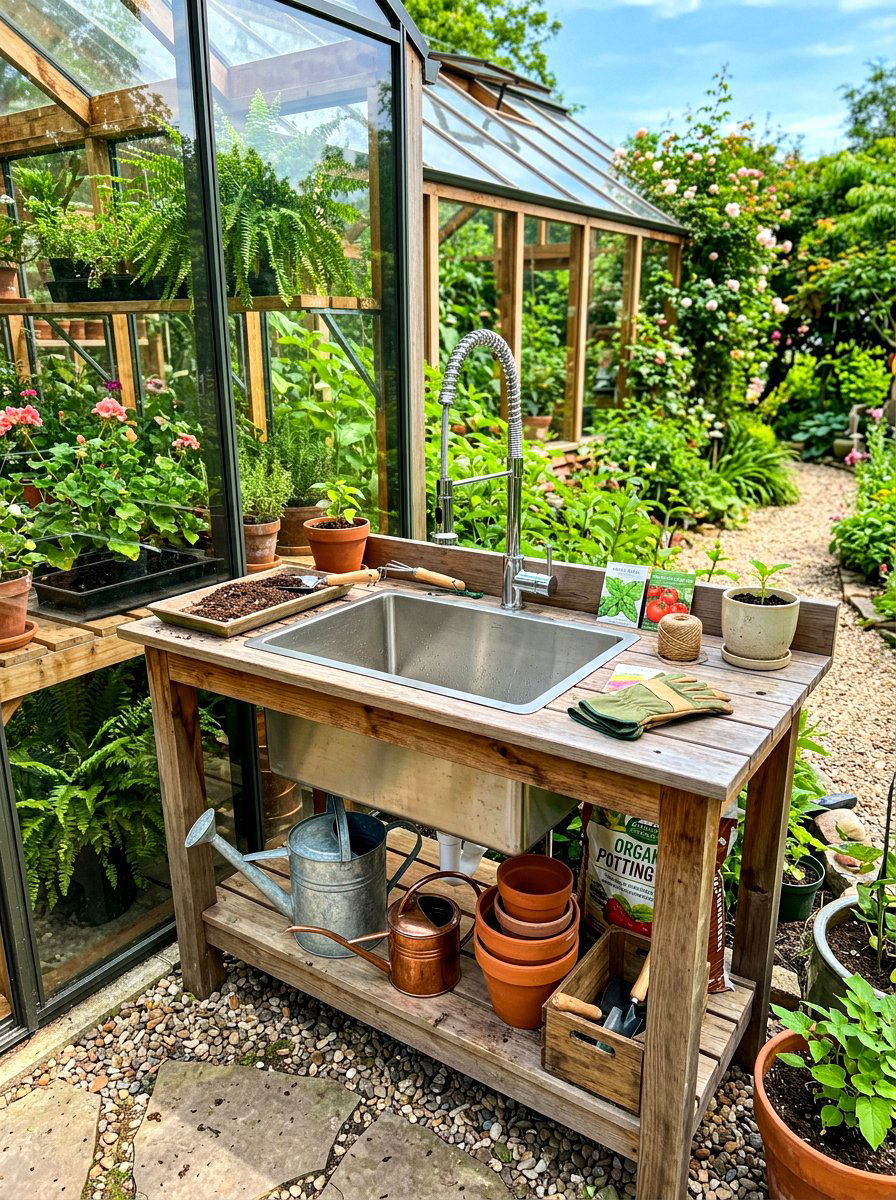
A greenhouse sink potting station is a functional addition that provides a convenient place for cleaning tools, washing hands, and filling watering cans. Having a dedicated water source right at your workspace saves you from constantly walking back and forth to an outdoor tap. You can install a deep utility sink with a high-arched faucet to make it easy to fill tall containers or rinse off large root balls. The drainage from the sink can even be diverted into a gray water system or used to water floor-level plants. It creates a professional and highly organized environment for all your potting and maintenance tasks.
30. Multi Zone Irrigation Manifold
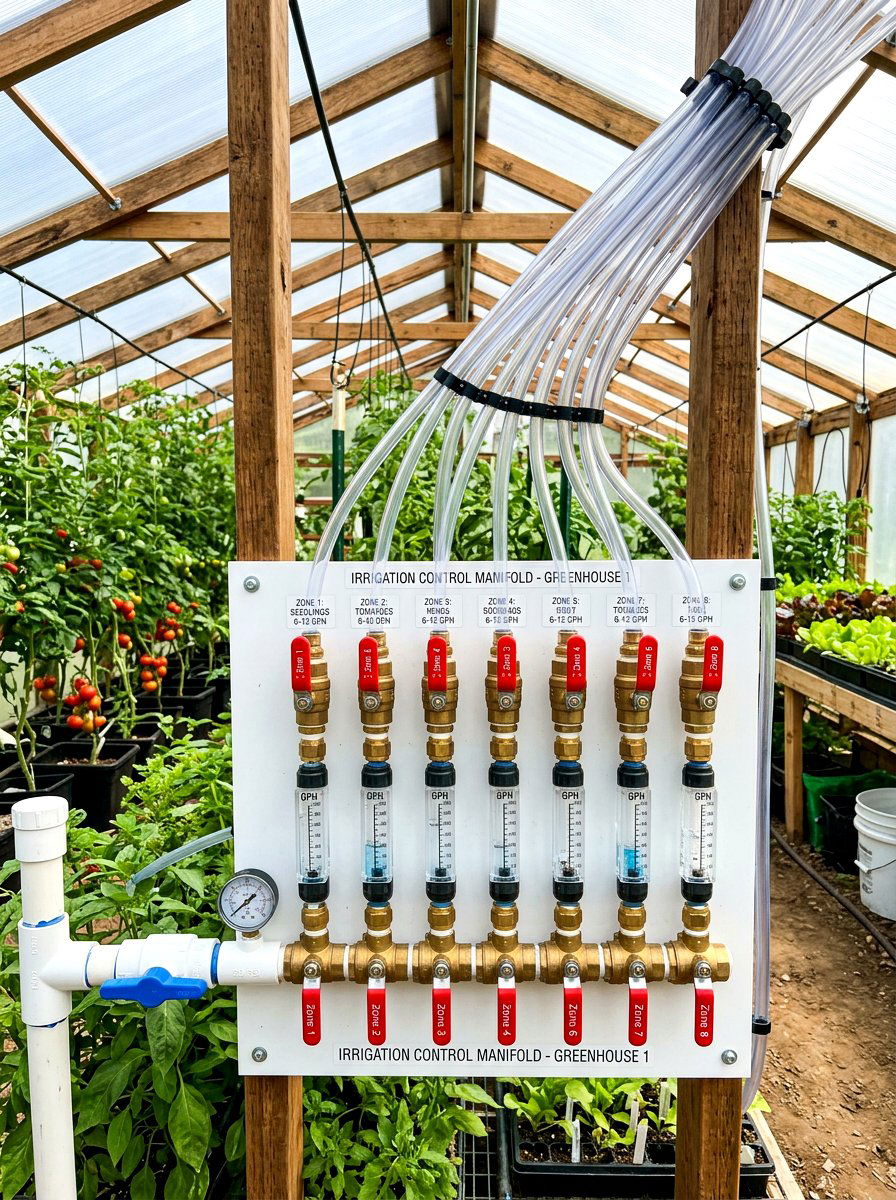
A multi zone irrigation manifold is the "brain" of a complex greenhouse watering system, allowing you to manage different groups of plants with unique needs. For example, you can set one zone for thirsty tomatoes and another for drought-tolerant succulents, all from a single water source. The manifold features a series of valves that can be opened or closed manually or via an automated controller. This level of customization is vital for greenhouses that house a diverse collection of species. It gives you total control over the moisture microclimates within your space, ensuring that every plant receives its own tailored watering schedule.
Conclusion:
Setting up the right greenhouse watering system is a transformative step that moves you away from the daily grind of manual labor and toward a more precise, scientific approach to gardening. From the simplicity of ancient terracotta ollas to the advanced technology of WiFi-enabled sensors, there is a solution to fit every budget and greenhouse size. By automating these processes, you ensure that your plants remain healthy and vibrant even when life gets busy. Investing in a reliable irrigation setup not only protects your precious botanical collection but also makes the entire experience of greenhouse gardening more relaxing, efficient, and ultimately successful for years to come.

Related posts: