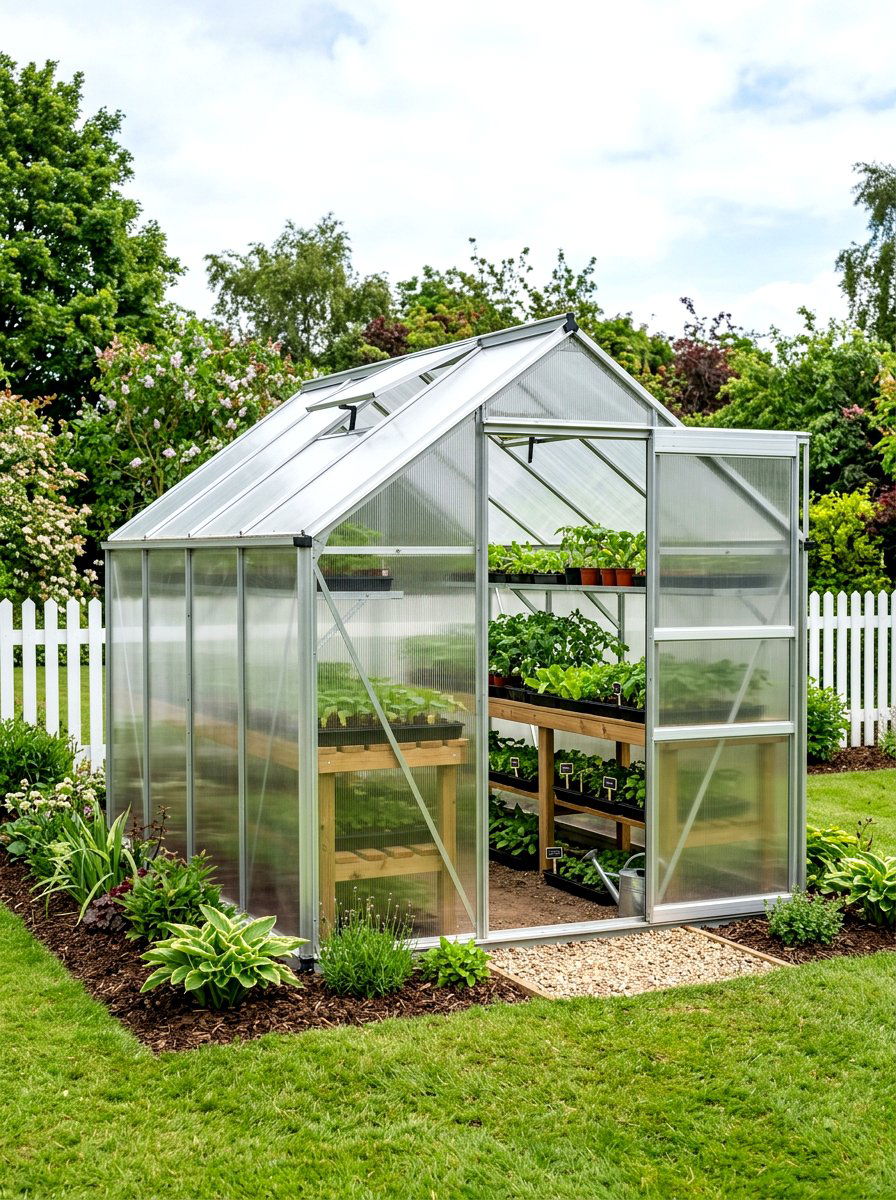
Maximizing the efficiency of your greenhouse starts with choosing a layout that prioritizes organization and light exposure for every single plant in your collection. A well-designed interior ensures that your gardening tasks become more streamlined while providing a healthy environment for delicate seedlings to flourish year-round. Whether you are managing a small backyard hobby space or a sprawling glass structure, the right shelving configuration can significantly increase your growing capacity without feeling cramped. Strategic placement of racks, benches, and vertical tiers allows you to create specific microclimates tailored to different species. By focusing on durable materials and ergonomic heights, you can transform your greenhouse into a professional-grade sanctuary that stays tidy and productive throughout the changing seasons.
1. Vertical Greenhouse Shelving
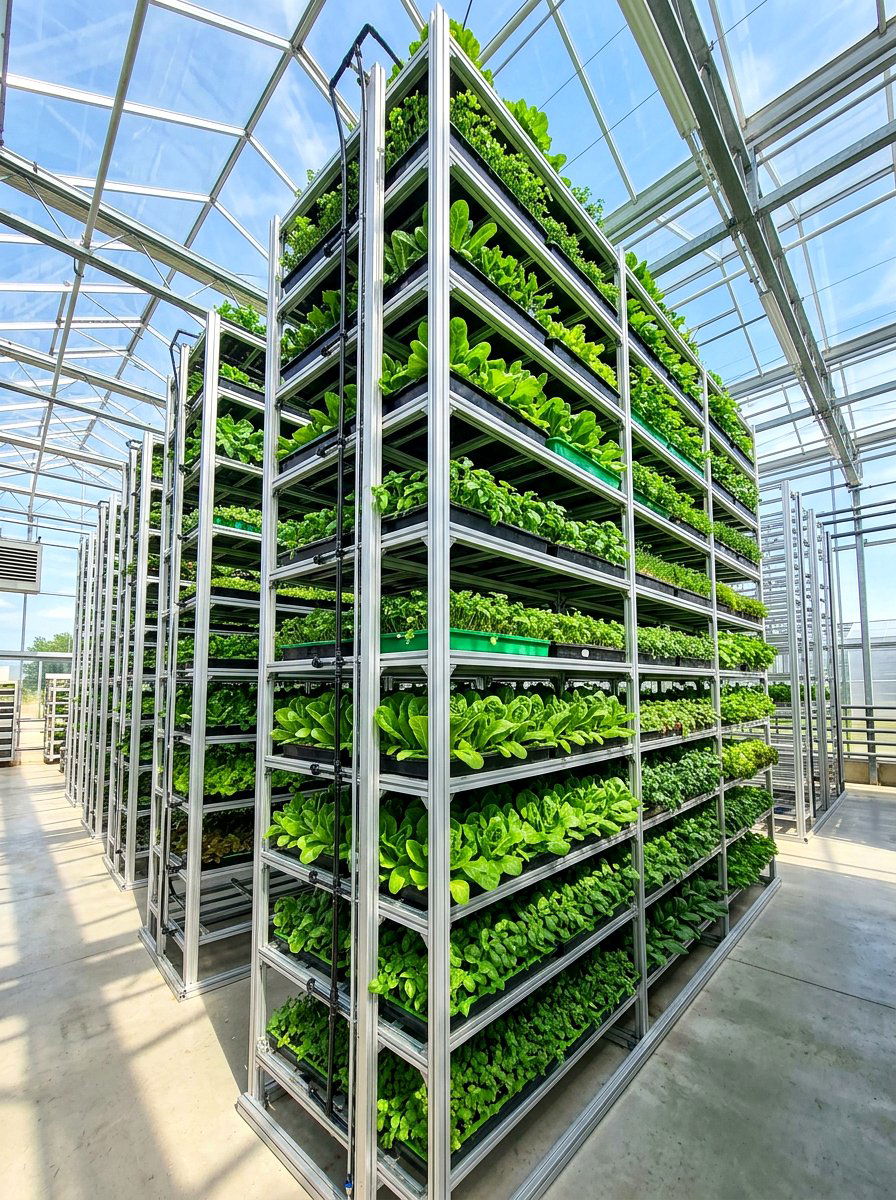
Vertical greenhouse shelving is an essential strategy for anyone working within a compact or narrow structure. By utilizing the height of your greenhouse, you can significantly increase the number of plants you grow without expanding the footprint of the building. This layout often involves tall, narrow frames that reach toward the ceiling, allowing light to filter through to the lower levels. It is particularly effective for small seedlings or tray-based gardening where you need high-density storage. Using durable materials like aluminum or treated wood ensures that the structure remains stable under the weight of multiple pots and moist soil. This vertical approach also encourages better air circulation around the plants, which is crucial for preventing mold growth.
2. Tiered Plant Staging
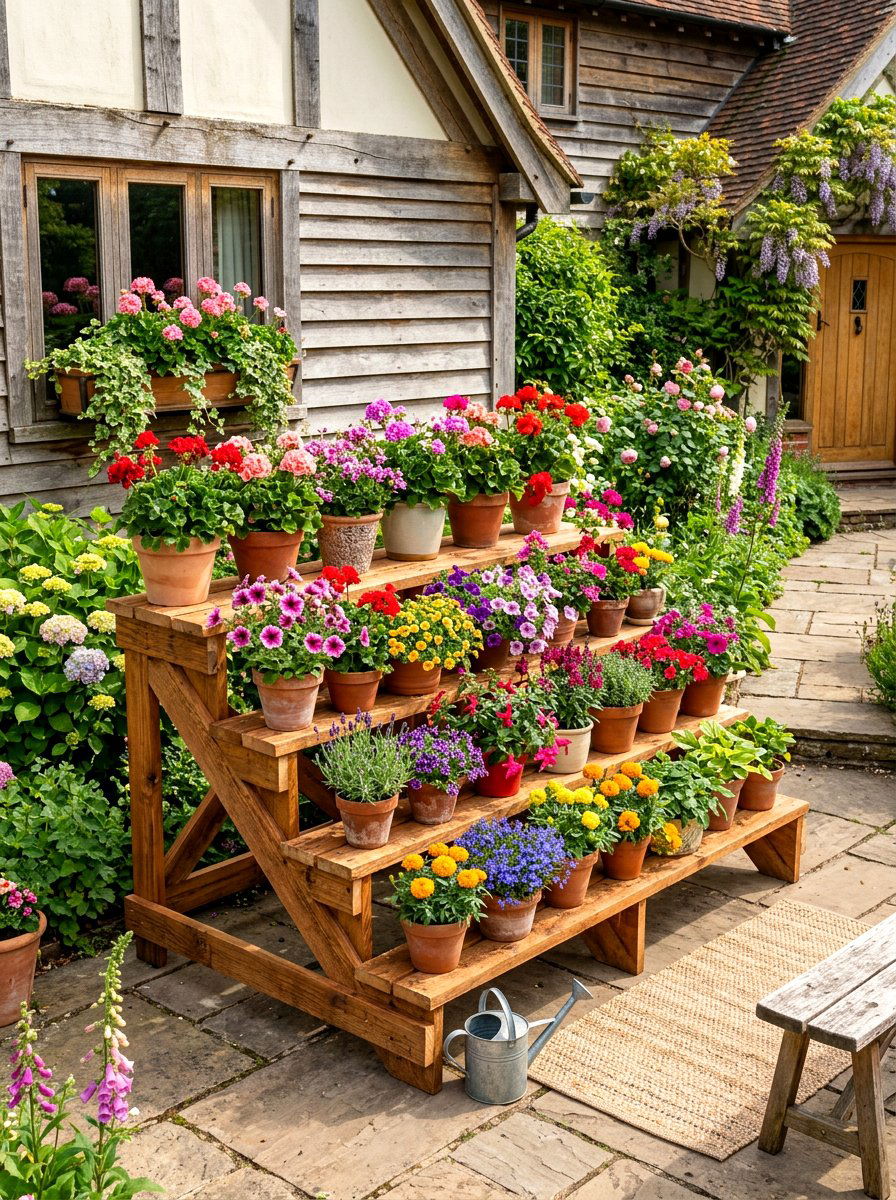
Tiered plant staging offers a theatrical way to display your greenery while ensuring that every leaf captures its share of the sun. This configuration looks like a set of stairs, with the lowest shelf in the front and the highest at the back near the glass. This stair-step design prevents taller plants from casting shadows on smaller ones, which is a common issue in flat layouts. It works beautifully for showcasing flowering species or maintaining a diverse collection of succulents. Many gardeners prefer this setup because it makes watering and inspecting individual pots much easier. The graduated levels create a sense of depth and abundance, making your greenhouse feel like a lush, organized botanical gallery.
3. Greenhouse Potting Bench
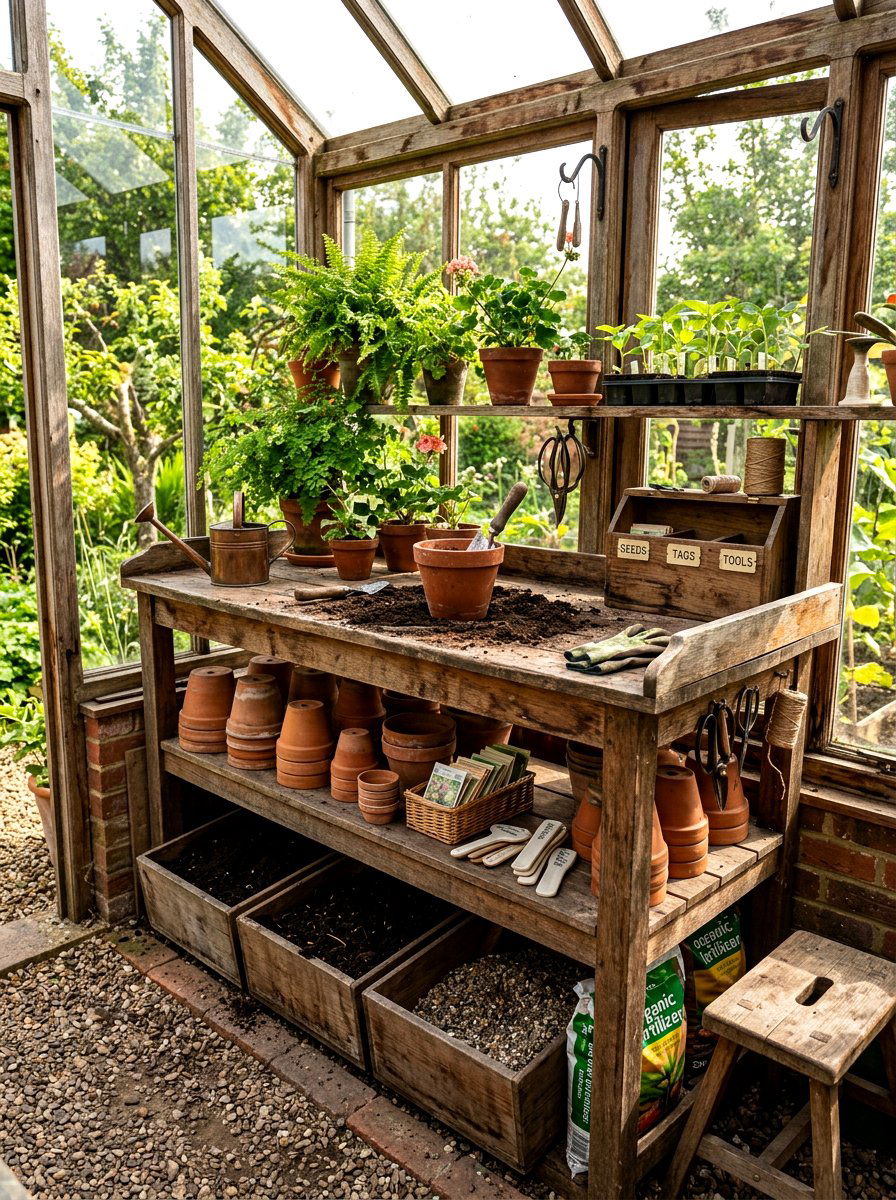
A greenhouse potting bench serves as the central command center for all your transplanting and soil mixing needs. This layout typically features a wide, waist-high surface that reduces back strain during long hours of garden work. Most models include integrated lower shelves for storing bags of compost, extra pots, and watering cans, keeping everything within arm's reach. Some sophisticated designs even incorporate a built-in sink or soil bins to keep the workspace clean and efficient. Placing this bench near the entrance or a water source maximizes convenience. Having a dedicated zone for messy tasks prevents dirt from spreading throughout the entire structure, helping you maintain a professional and tidy environment for growing.
4. Wall Mounted Garden Racks
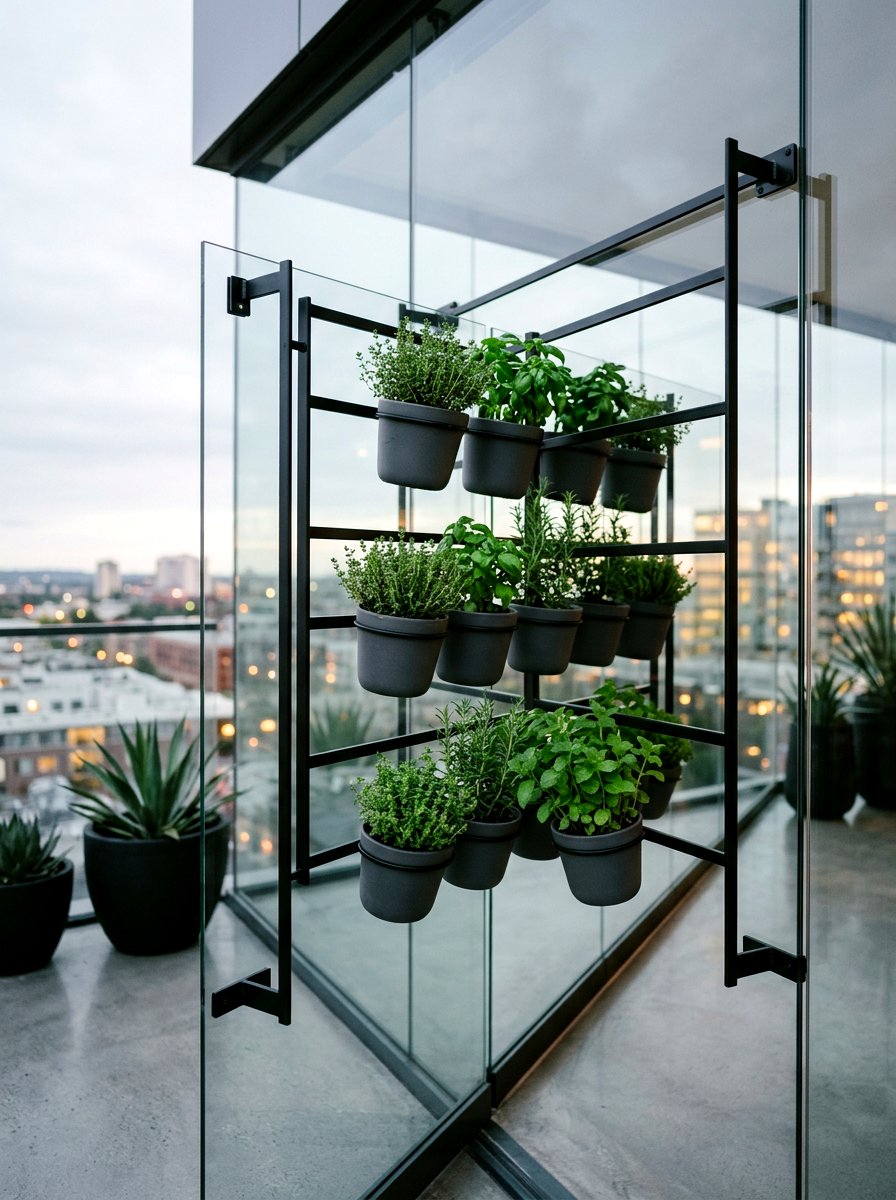
Wall mounted garden racks are a brilliant solution for keeping the floor area clear and unobstructed for larger floor-standing pots. These shelves are secured directly to the greenhouse frame or the rear gable wall, providing a sturdy platform for lighter trays and tools. By lifting your plants off the ground, you protect them from potential pests and create a cleaner visual look. This layout is especially useful in glass-to-ground greenhouses where you want to keep the bottom clear for light penetration. You can adjust the height of these racks to accommodate changing plant sizes throughout the growing season. This flexible system allows you to adapt your space as your garden collection evolves.
5. Modular Greenhouse System
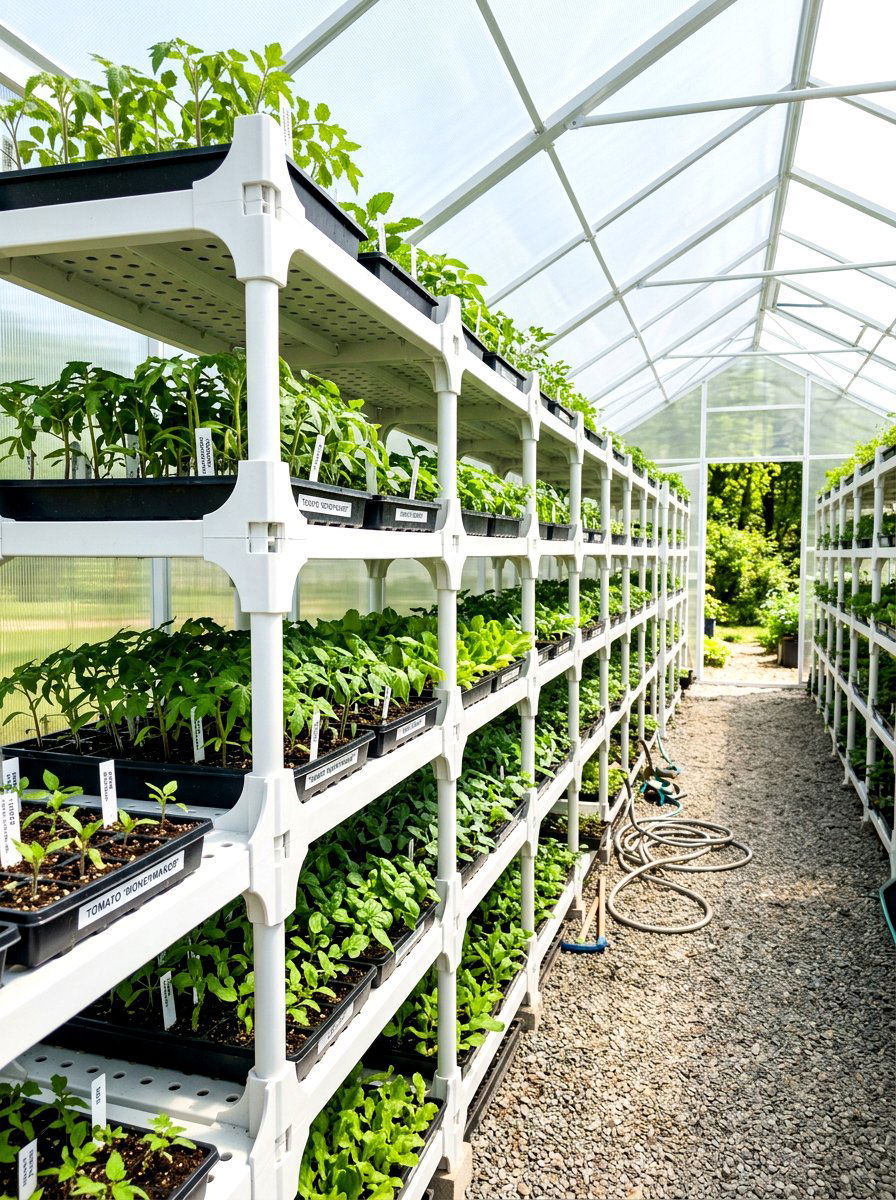
A modular greenhouse system provides the ultimate flexibility for gardeners who like to reconfigure their space as the seasons change. These units consist of interchangeable parts that you can stack, expand, or move depending on your current needs. During the busy spring seed-starting season, you can add more tiers to hold hundreds of small plugs. As summer arrives and your plants grow larger, you can remove sections to create room for tall tomato vines or bushy peppers. This adaptability ensures that you are never stuck with a layout that no longer works for your specific crops. Modular designs often feature lightweight materials that are easy to sanitize and rearrange without professional help.
6. Freestanding Plant Stands
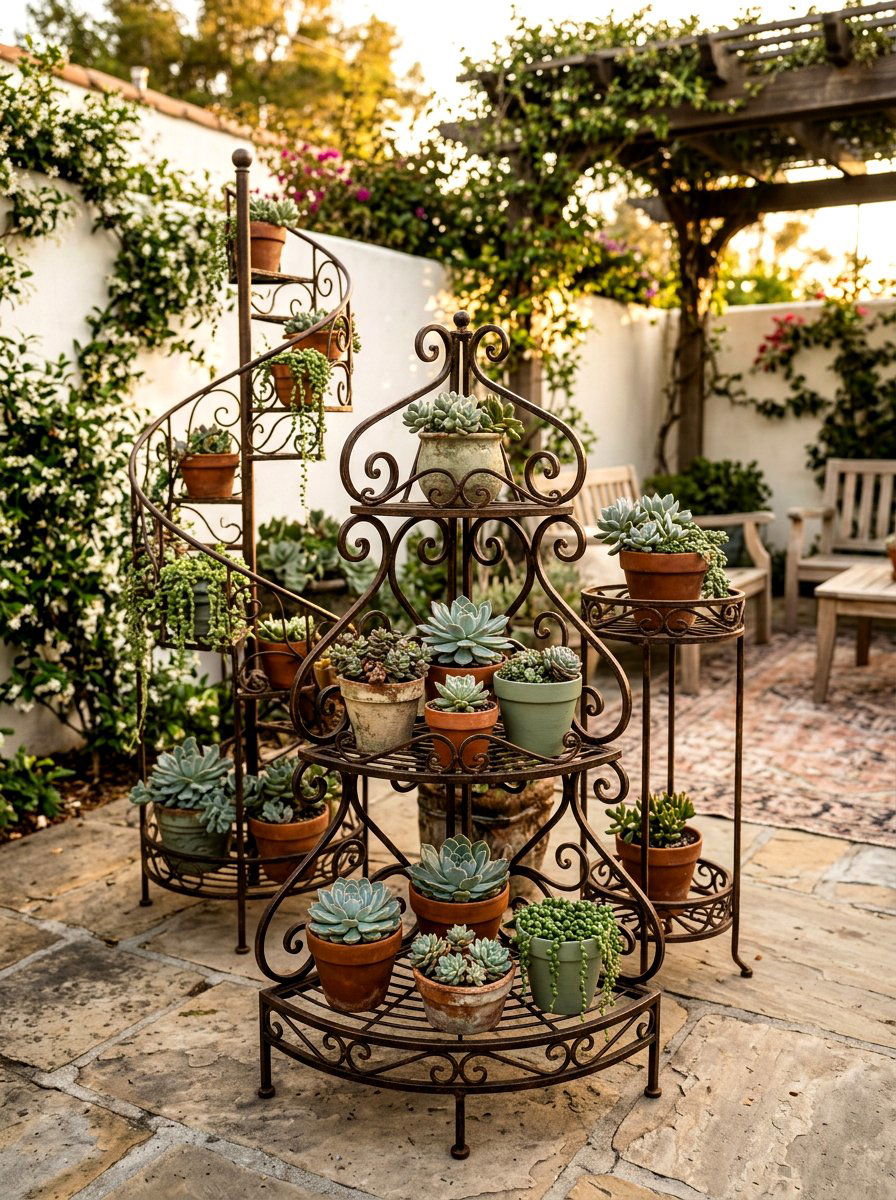
Freestanding plant stands offer a mobile and versatile way to organize your greenhouse without permanent installation. These units can be positioned anywhere in the room, making them ideal for filling empty spots or creating temporary displays. Many of these stands feature decorative metalwork or simple wooden frames that add a touch of style to the functional space. Because they are not attached to the walls, you can easily rotate them to ensure your plants get even light exposure from all sides. They are perfect for housing special "specimen" plants that require extra attention or a specific microclimate. Their portability makes cleaning the greenhouse floor a much simpler task during the off-season.
7. Hanging Greenhouse Baskets
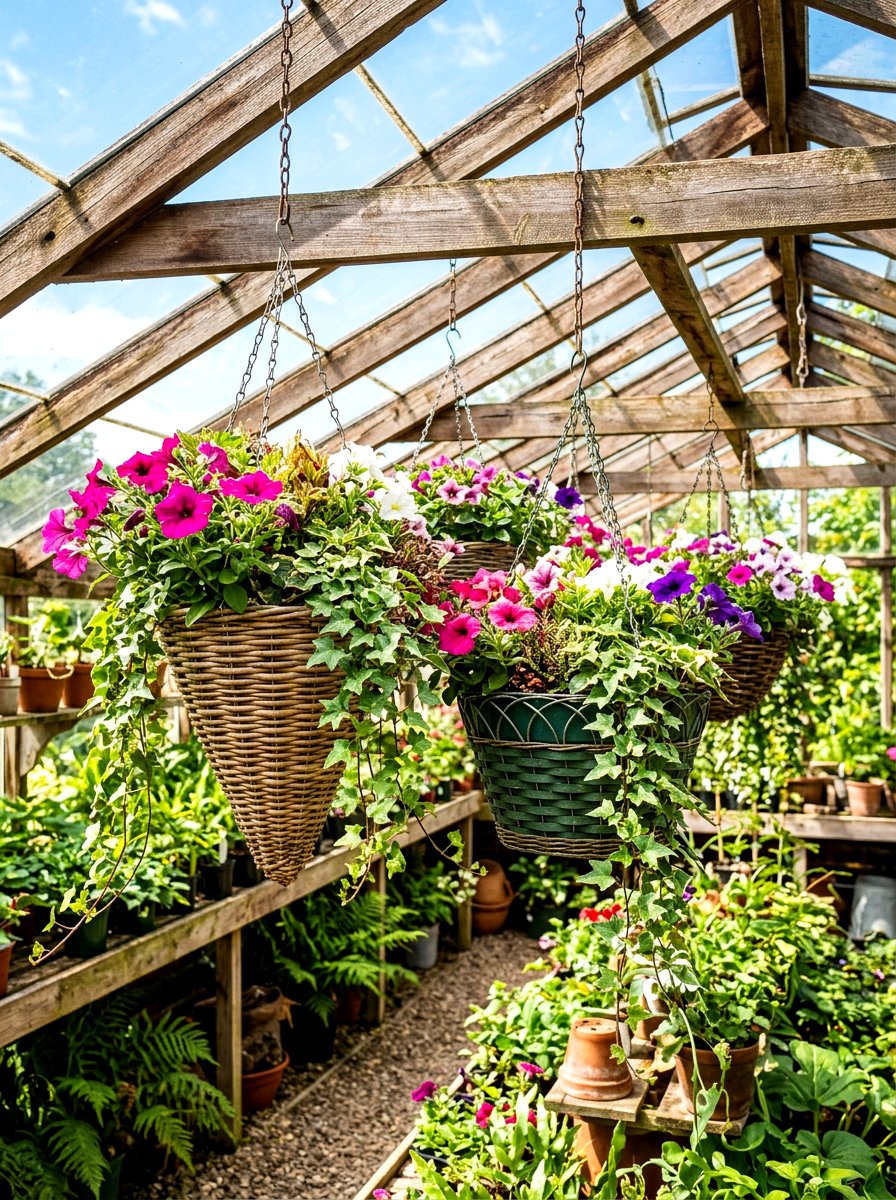
Hanging greenhouse baskets utilize the often-ignored space near the roof, creating a lush canopy of greenery overhead. This layout is perfect for trailing plants like ivy, strawberries, or certain types of ferns that look best when allowed to spill over the sides. By suspending these containers from the internal rafters, you free up valuable bench space for seedlings and heavy pots. It is important to ensure that the greenhouse frame is strong enough to support the weight of wet soil and heavy foliage. Installing a pulley system can make watering these high-altitude plants much easier and safer. This vertical layer adds a beautiful, immersive dimension to your overall greenhouse design.
8. Corner Plant Shelving
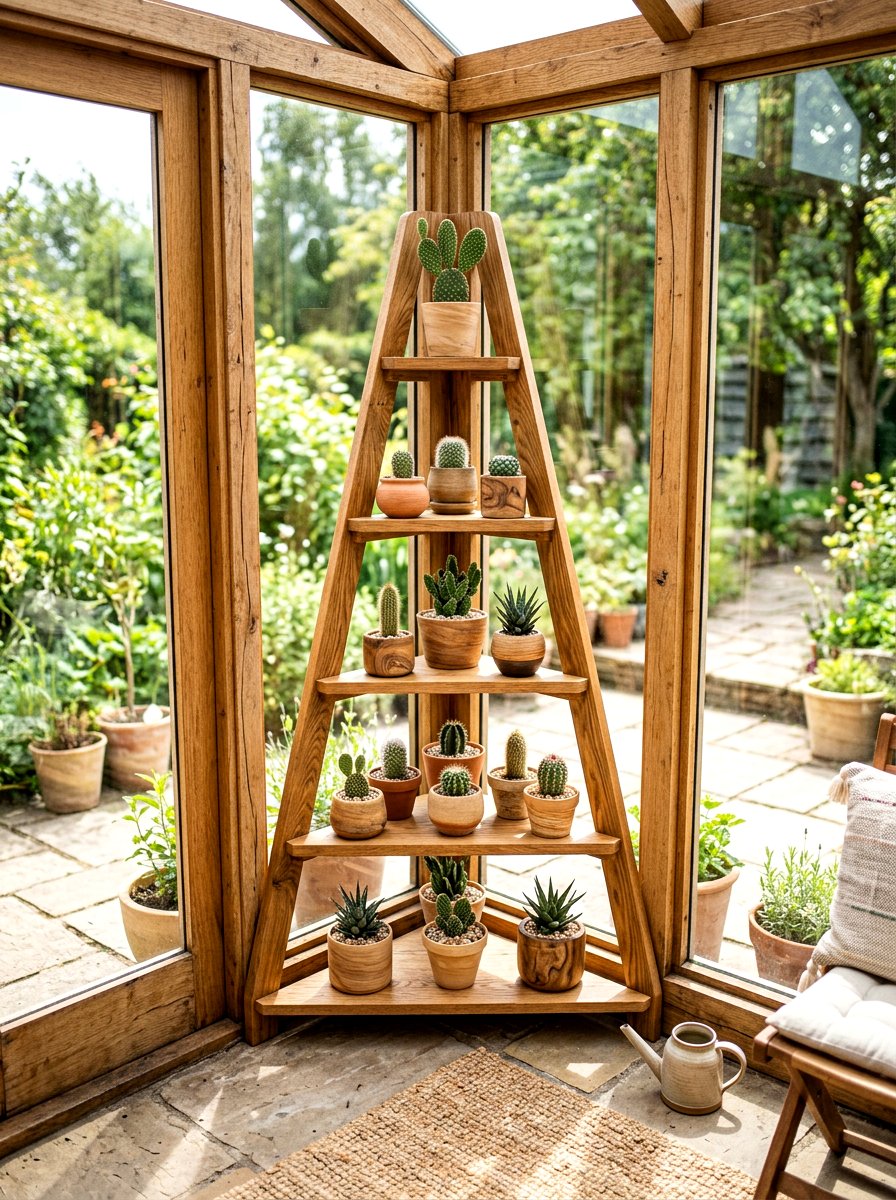
Corner plant shelving is a smart way to reclaim lost space in the angled parts of your greenhouse structure. Corners are often neglected, but custom-fitted triangular shelves can turn these areas into productive zones for small pots or tools. This layout wraps around the interior perimeter, creating a seamless flow that maximizes the available square footage. It is an excellent spot for housing humidity-loving plants that might benefit from the slightly more sheltered environment of a corner. You can use these sections to store essential supplies like gloves, labels, and small hand trowels that usually get lost on larger benches. Utilizing every inch ensures your greenhouse remains organized and clutter-free.
9. Central Greenhouse Island
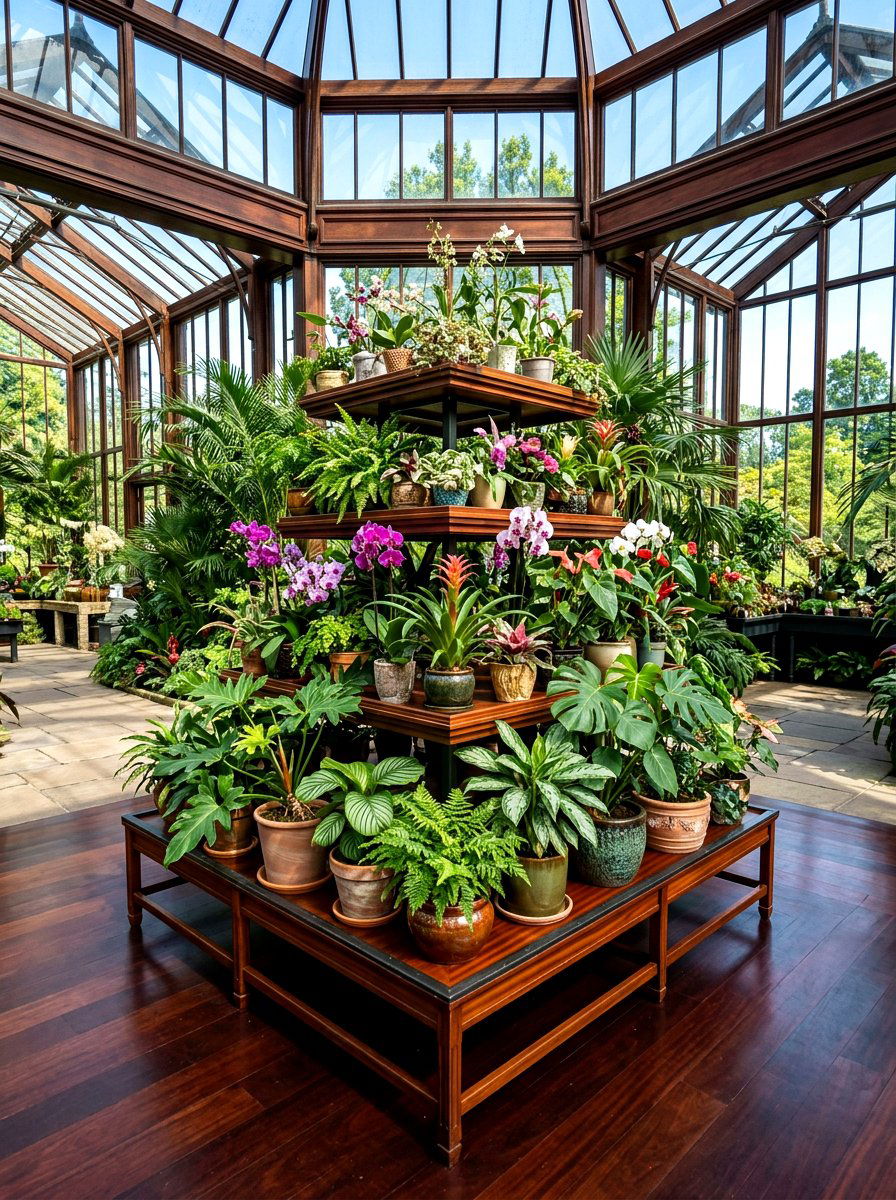
A central greenhouse island creates a stunning focal point while providing 360-degree access to your most important plants. This layout involves placing a large, sturdy table or a tiered shelving unit in the middle of the room, with walkways circling around it. This configuration is ideal for larger greenhouses where you have enough space to move freely around all sides of the island. It allows you to tend to your plants without having to reach across deep benches, which is better for your posture. An island also serves as a great social space if you enjoy showing your garden to guests. It provides a generous workspace for large-scale potting projects.

10. Metal Mesh Shelving
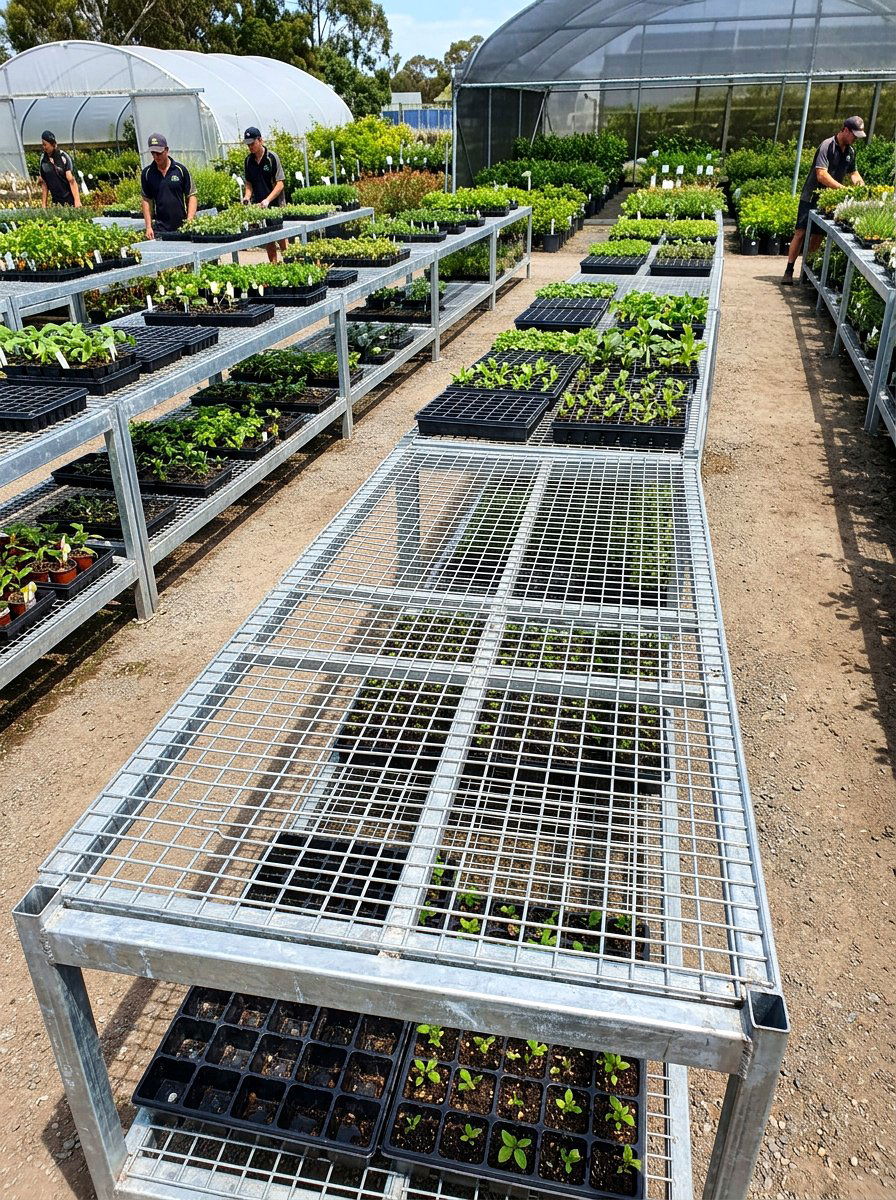
Metal mesh shelving is highly prized by experienced gardeners because it offers superior drainage and excellent air circulation. The open-grid design allows excess water to fall through to the ground rather than pooling around the bottom of the pots. This feature is vital for preventing root rot and maintaining a healthy humidity level within the structure. Additionally, the mesh allows light to pass through to the levels below, ensuring that even the bottom shelves receive adequate sun. These racks are typically made from galvanized steel or aluminum, making them incredibly durable and resistant to the constant moisture of a greenhouse. They are easy to spray down and keep clean.
11. Cedar Wood Plant Shelves
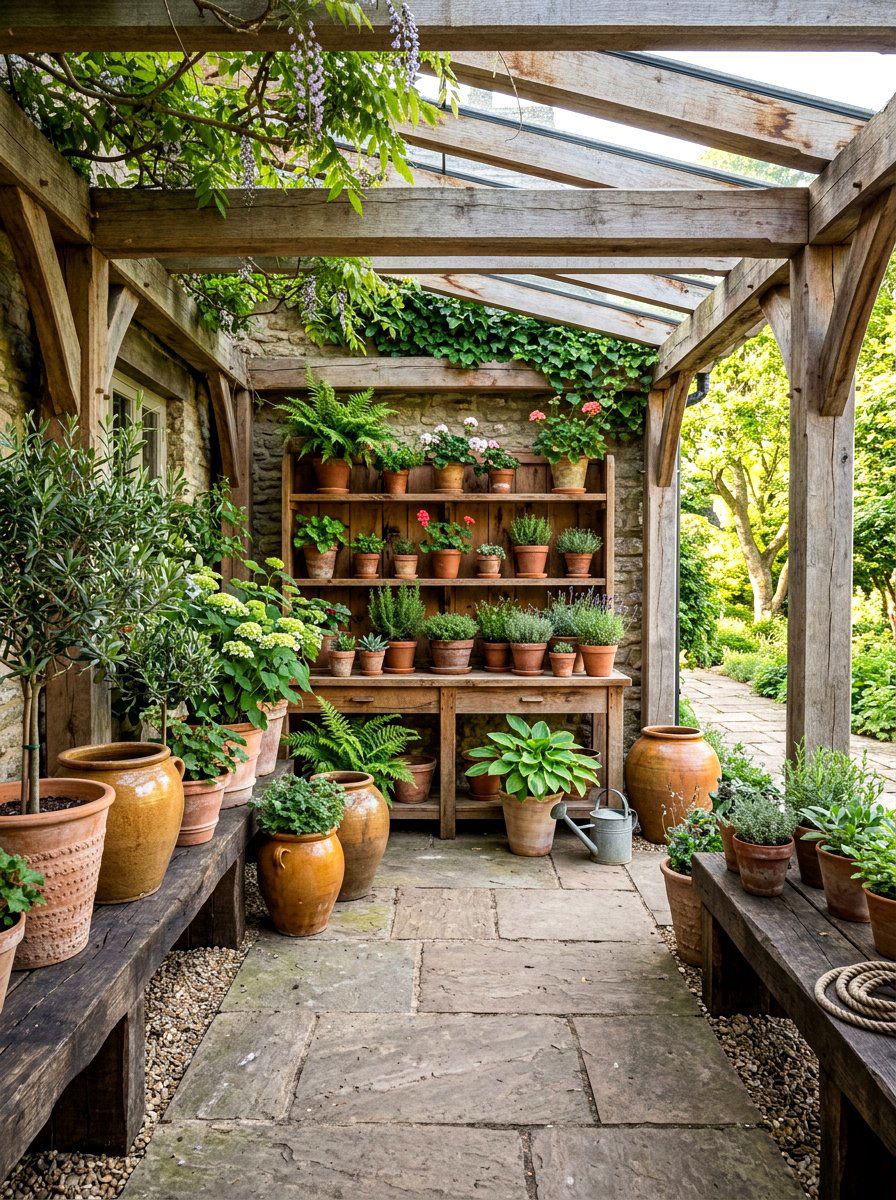
Cedar wood plant shelves bring a warm, natural aesthetic to your greenhouse while offering impressive resistance to rot and decay. Cedar contains natural oils that protect the wood from the high humidity and frequent watering typical of an indoor garden environment. This material feels much more traditional and rustic than metal or plastic, creating a cozy atmosphere for your gardening hobby. The wood remains cool to the touch even in direct sunlight, which can be beneficial for certain sensitive plant varieties. Over time, cedar develops a beautiful silvery-gray patina if left untreated, or it can be stained to match your existing outdoor decor. It provides a sturdy, reliable foundation for heavy ceramic pots.
12. Seed Starting Station
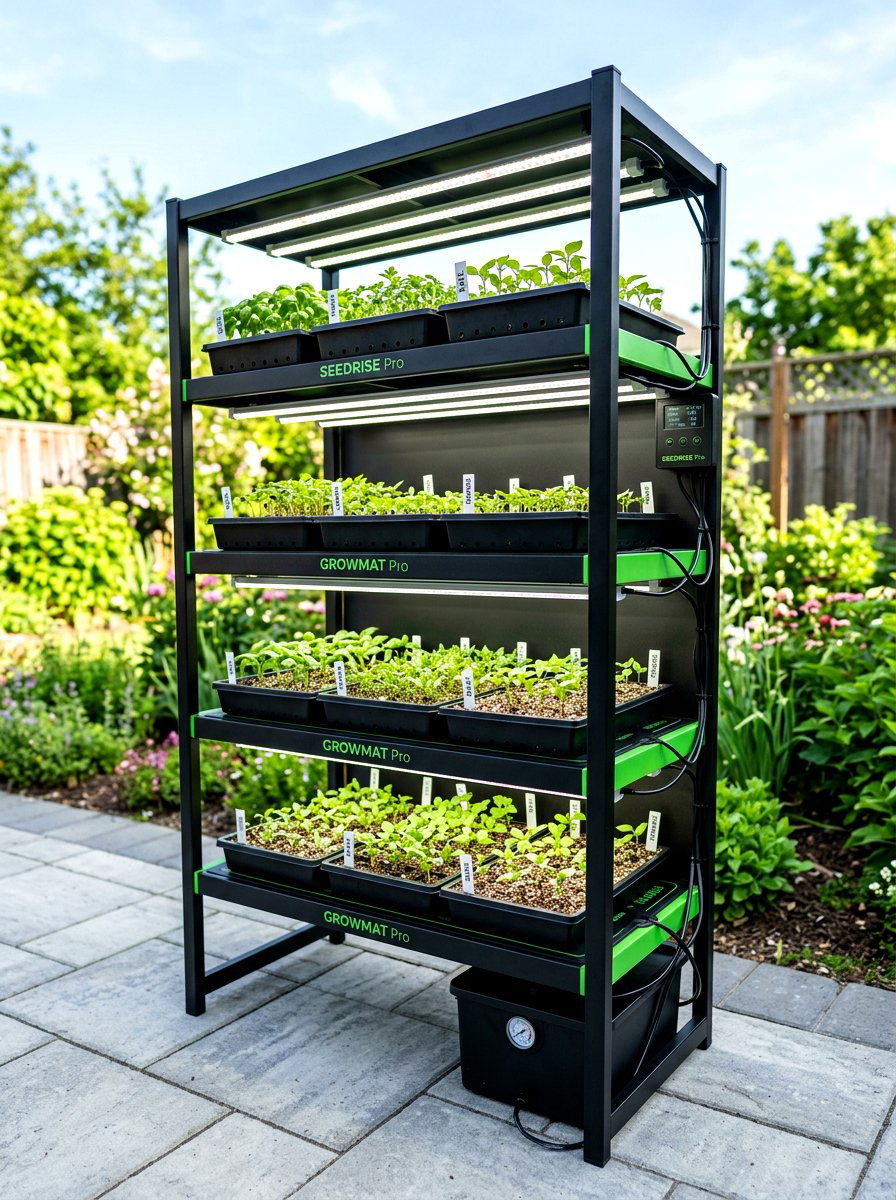
A dedicated seed starting station is a specialized layout designed to provide the perfect conditions for germination. This setup usually features narrow shelves equipped with integrated grow lights to supplement natural sunshine during the dark winter months. Many stations also include heat mats to keep the soil at a consistent temperature, which is crucial for finicky seeds. The shelves are often spaced closely together to maximize the number of trays you can fit into a small area. Keeping all your young plants in one zone makes it easier to monitor their progress and provide the precise care they need. This organized approach leads to higher success rates for your garden.
13. Greenhouse Workbench
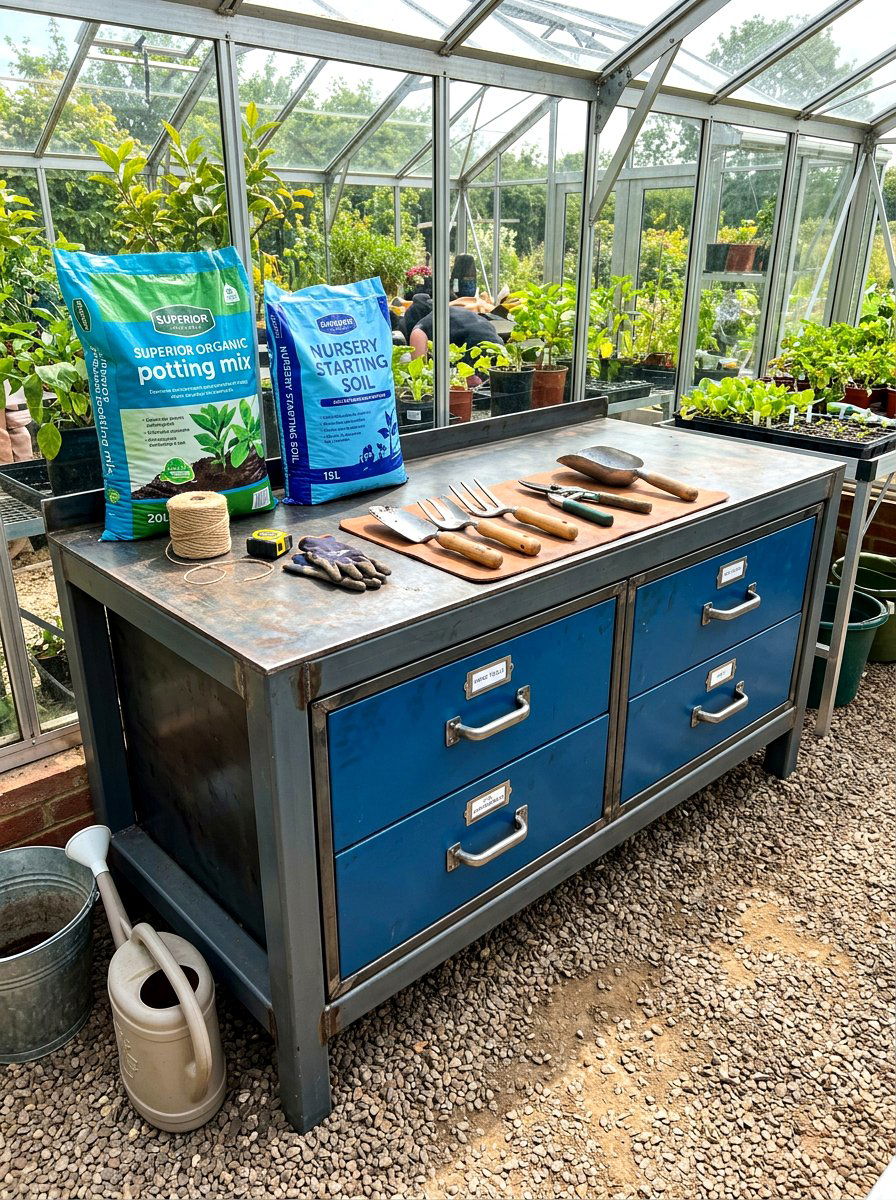
A greenhouse workbench is a heavy-duty addition that focuses on utility and structural strength for serious gardening projects. Unlike a decorative shelf, this bench is built to handle the weight of large containers, bags of soil, and heavy tools. It often features a solid top made of treated wood or metal that can be easily scrubbed clean after a long day of work. Below the main surface, you might find deep drawers or open cubbies for storing everything from organic fertilizers to irrigation parts. Having a dedicated, sturdy surface allows you to perform complex tasks like grafting or pruning with precision. It serves as a permanent anchor for your greenhouse organization.
14. Ladder Plant Display
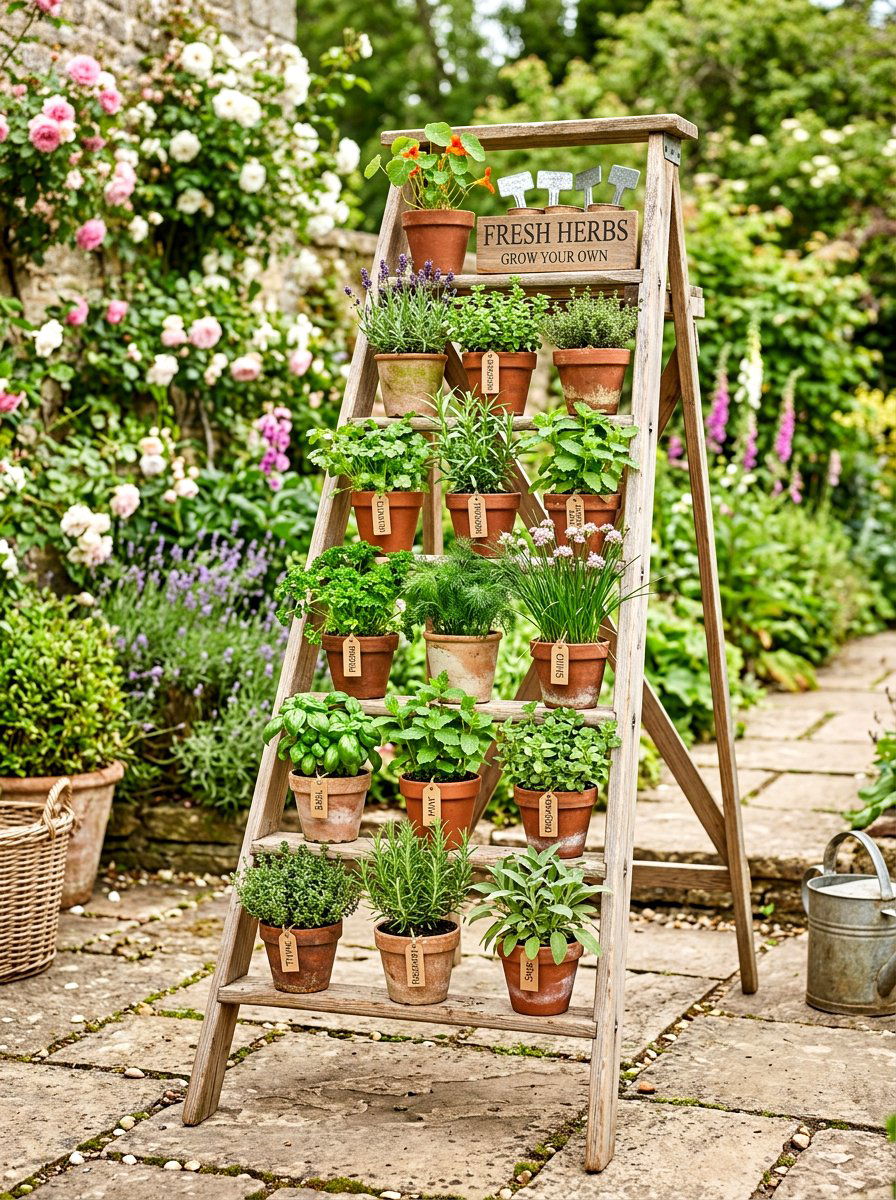
A ladder plant display is a charming and space-saving layout that works exceptionally well in smaller greenhouses. This design mimics the look of a folding ladder, with progressively narrower shelves as you move toward the top. It provides a unique vertical interest and allows you to group plants by size or light requirements. The open structure of a ladder shelf ensures that air can move freely around every pot, reducing the risk of stagnant air pockets. This style is often used for displaying decorative flowers or a collection of culinary herbs near the greenhouse door. Its lightweight nature means you can easily move it around to catch the best light.
15. Industrial Greenhouse Racks
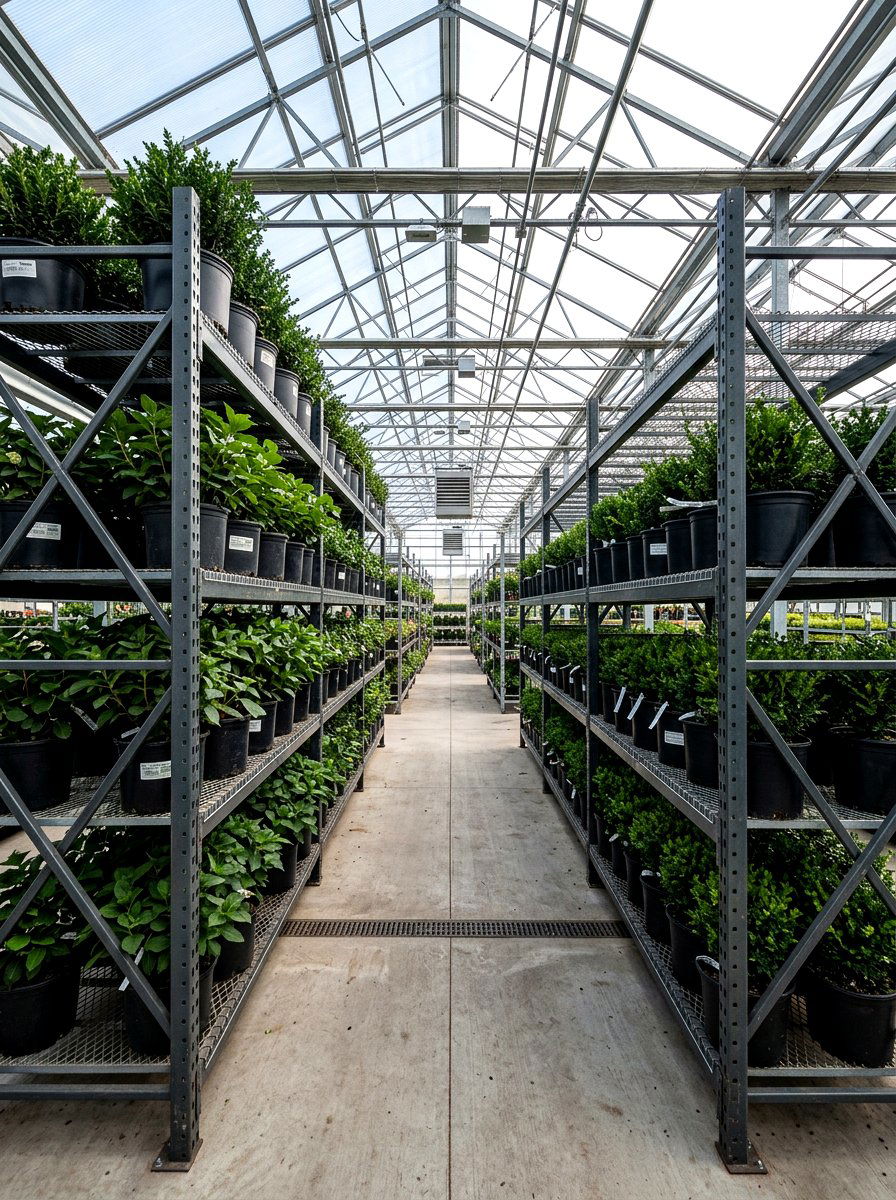
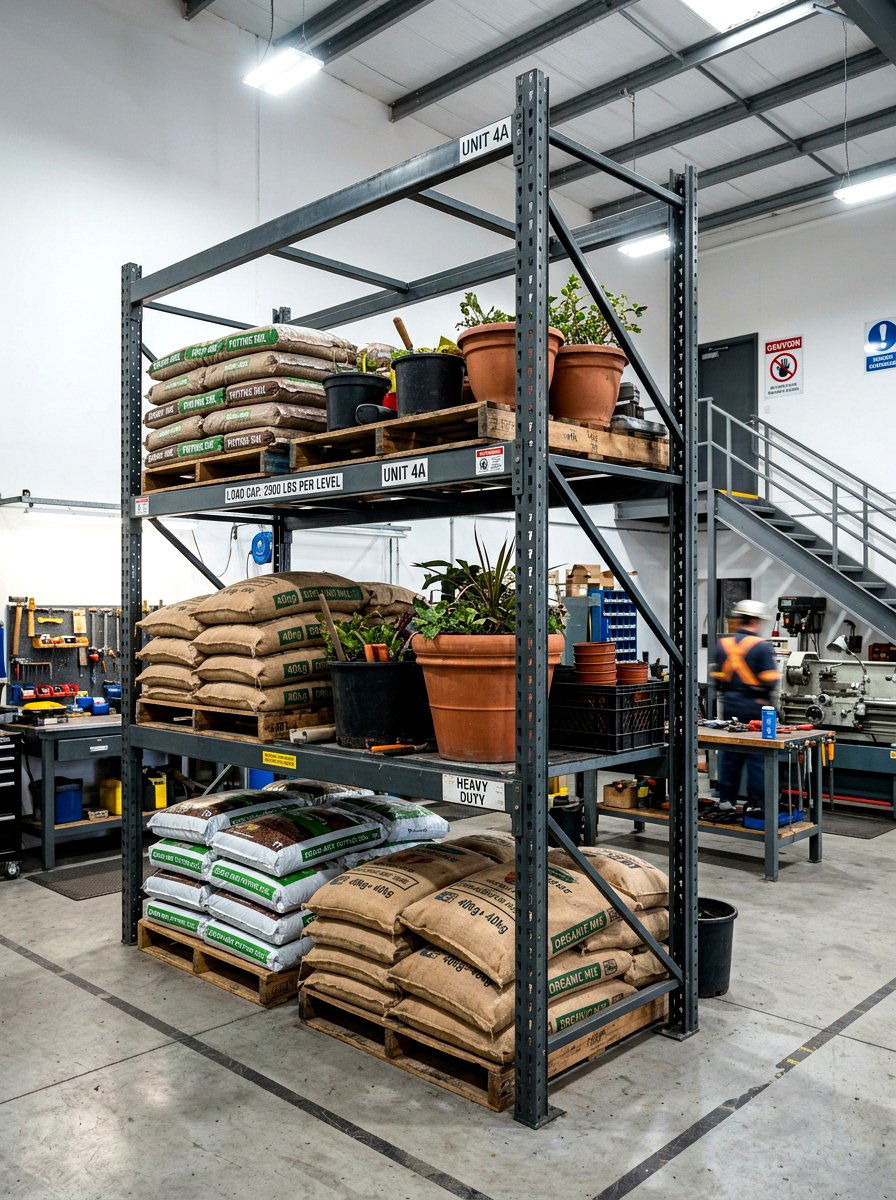
Industrial greenhouse racks are the go-to choice for gardeners who prioritize durability and high-capacity storage. These units are often made from heavy-gauge steel and are designed to hold hundreds of pounds without bending or swaying. This layout is perfect for storing heavy overwintering plants or large bags of growing media that would crush lighter shelving options. Many industrial racks are adjustable, allowing you to change the distance between shelves to fit tall shrubs or short trays. The clean, utilitarian look of these racks creates an organized, professional vibe in any greenhouse. They are built to last for decades, even in the most demanding and humid gardening conditions.
16. Folding Plant Shelving
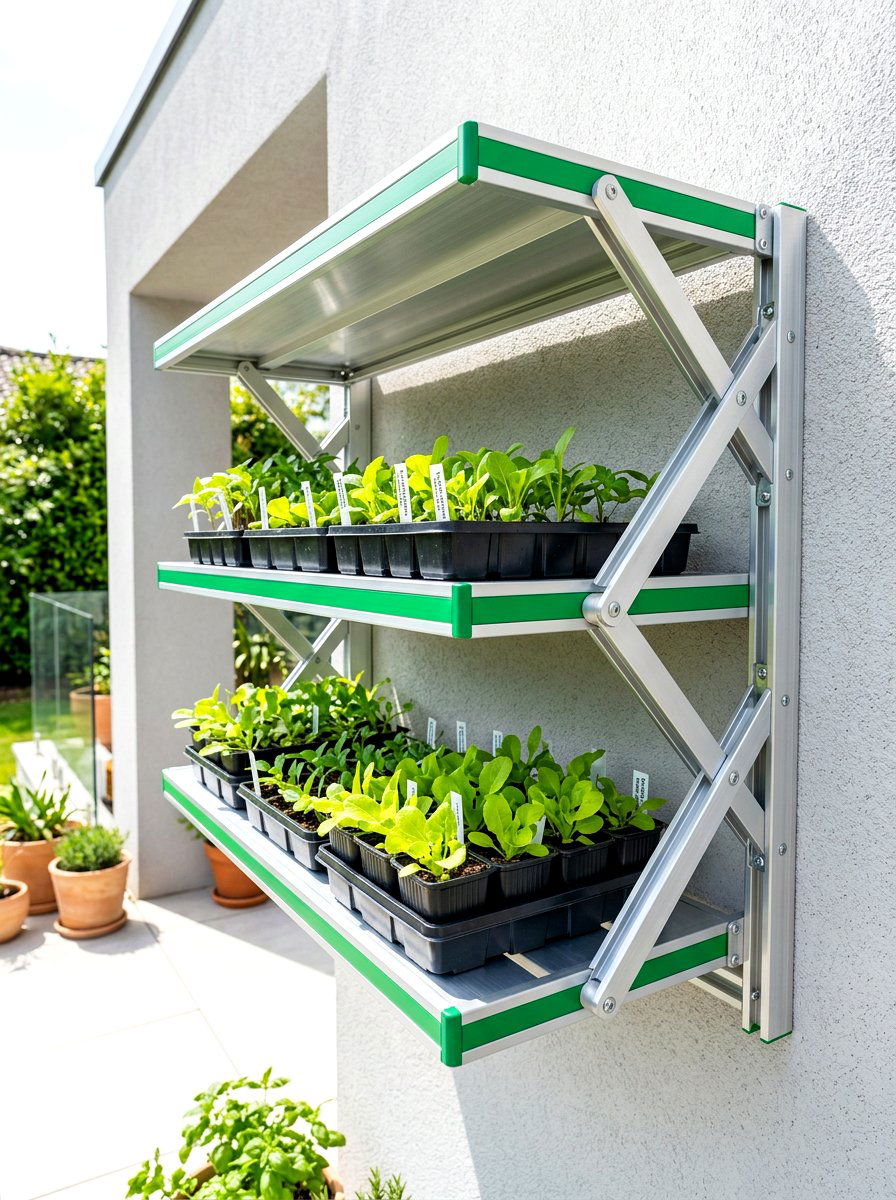
Folding plant shelving is a genius solution for greenhouses that experience dramatic shifts in plant volume throughout the year. These shelves can be popped up during the spring rush when you have thousands of seedlings and then folded flat against the wall when they are not needed. This layout allows you to reclaim your floor space for larger summer crops like floor-grown cucumbers or melons. It is especially helpful in smaller structures where every foot of space is precious. Most folding designs are made from lightweight aluminum, making them easy to operate with one hand. This on-demand storage ensures your greenhouse always feels spacious and never overly cluttered.
17. Overhead Greenhouse Storage
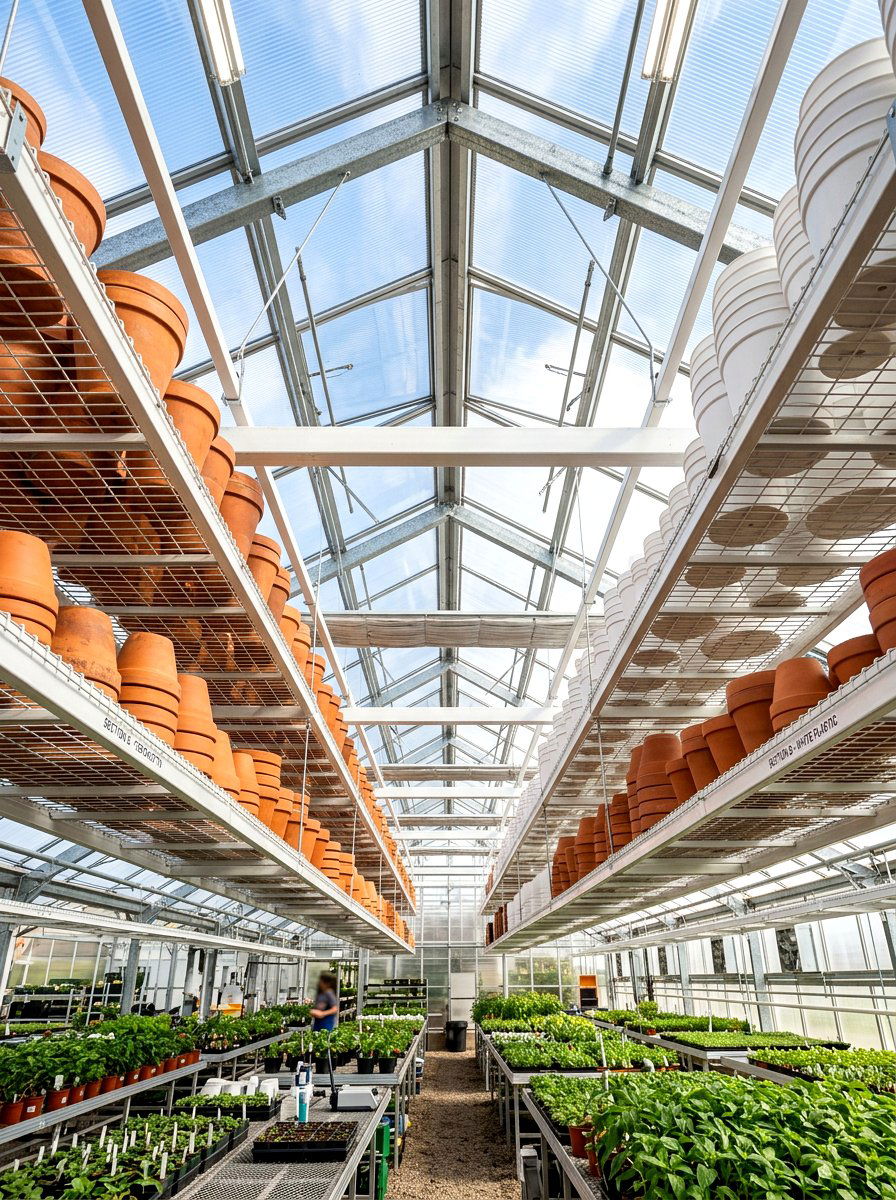
Overhead greenhouse storage is an often-overlooked layout that provides a home for items you don't use every day. By installing high-level racks near the roof peaks, you can store empty pots, extra rolls of shade cloth, and seasonal tools out of the way. This keeps the main growing areas clear for your plants and makes the entire space feel much more organized. It is important to keep these shelves lightweight to avoid putting too much stress on the greenhouse frame. Using clear plastic bins can help you see what is stored up high without having to climb a ladder. This high-level organization is the secret to a professional-looking garden.
18. Greenhouse Pallet Shelving
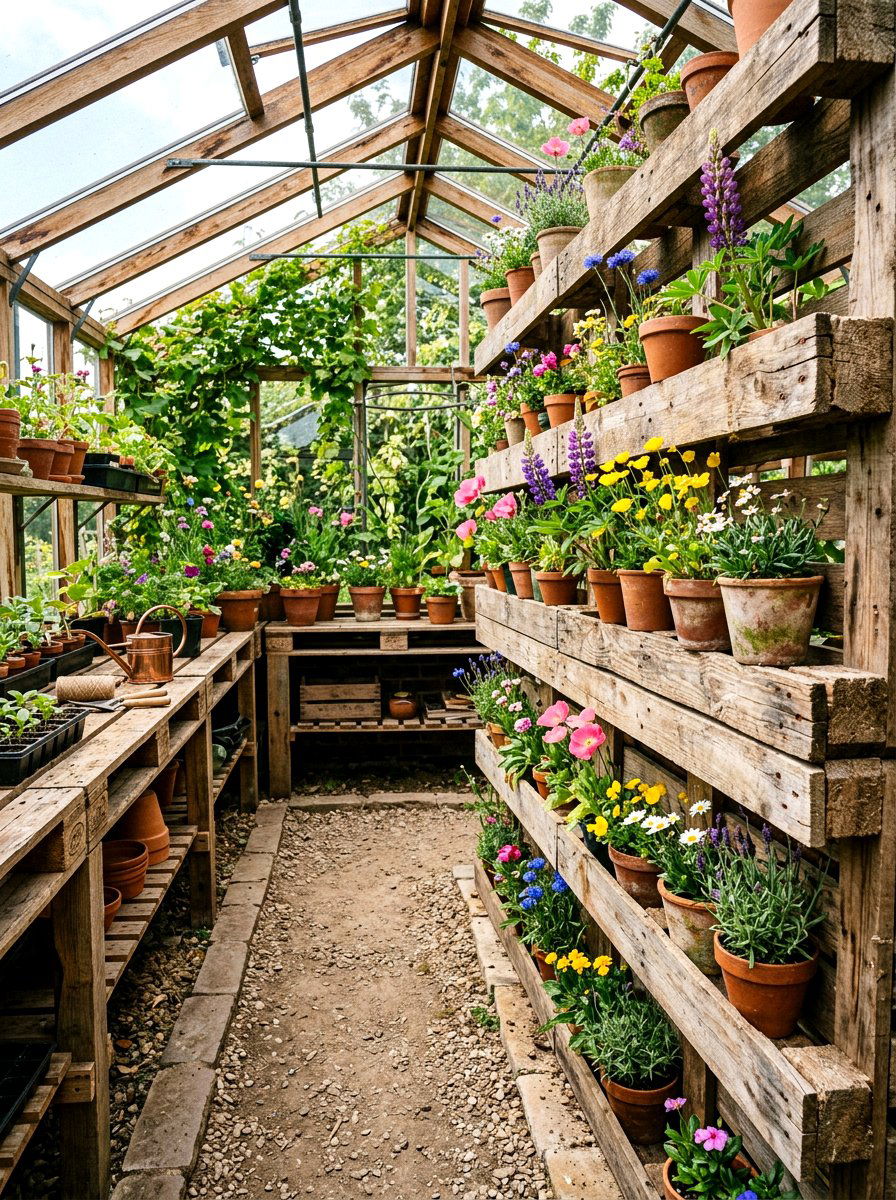
Greenhouse pallet shelving is a popular and cost-effective DIY layout that adds a rustic, recycled charm to your growing space. By upcycling old wooden pallets, you can create sturdy benches and vertical wall displays for very little money. The gaps between the slats provide natural drainage for your pots, which is essential for plant health. This layout can be easily customized with a bit of paint or wood sealer to match your personal style. It is a fantastic option for beginner gardeners who want to get organized without spending a fortune on high-end shelving systems. Pallet wood is surprisingly durable and can handle the weight of many medium-sized plants.
19. Rolling Plant Carts
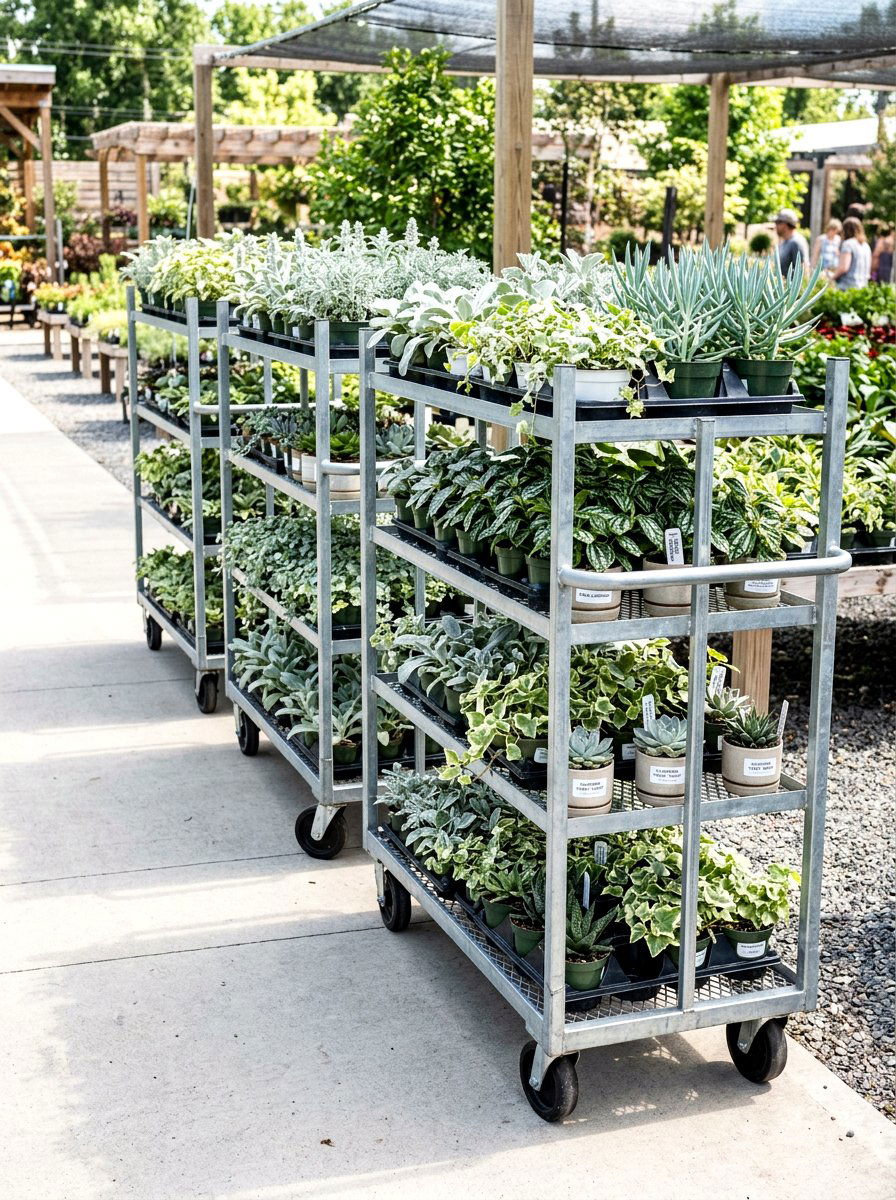
Rolling plant carts introduce a dynamic element to your greenhouse layout, allowing you to move entire groups of plants with ease. These carts feature heavy-duty casters that can navigate greenhouse floors, making it simple to chase the sun or move plants out of the way for cleaning. This is particularly useful for large, heavy tropical plants that are difficult to lift by hand. You can also use rolling carts as mobile potting stations that move to wherever the work is needed. This flexibility is a game-changer for those with limited mobility or those who manage a high volume of plants. It allows you to optimize your space instantly.
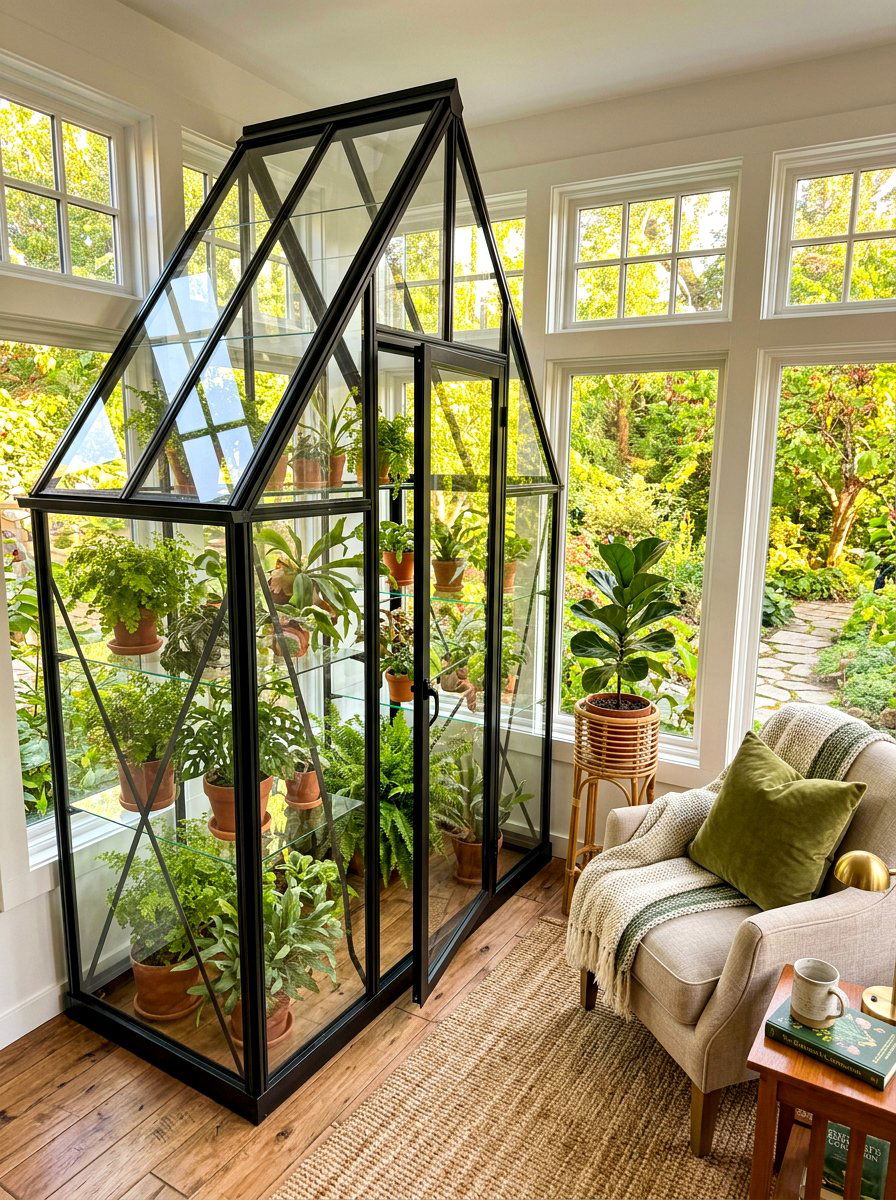
20. Slatted Wood Shelving
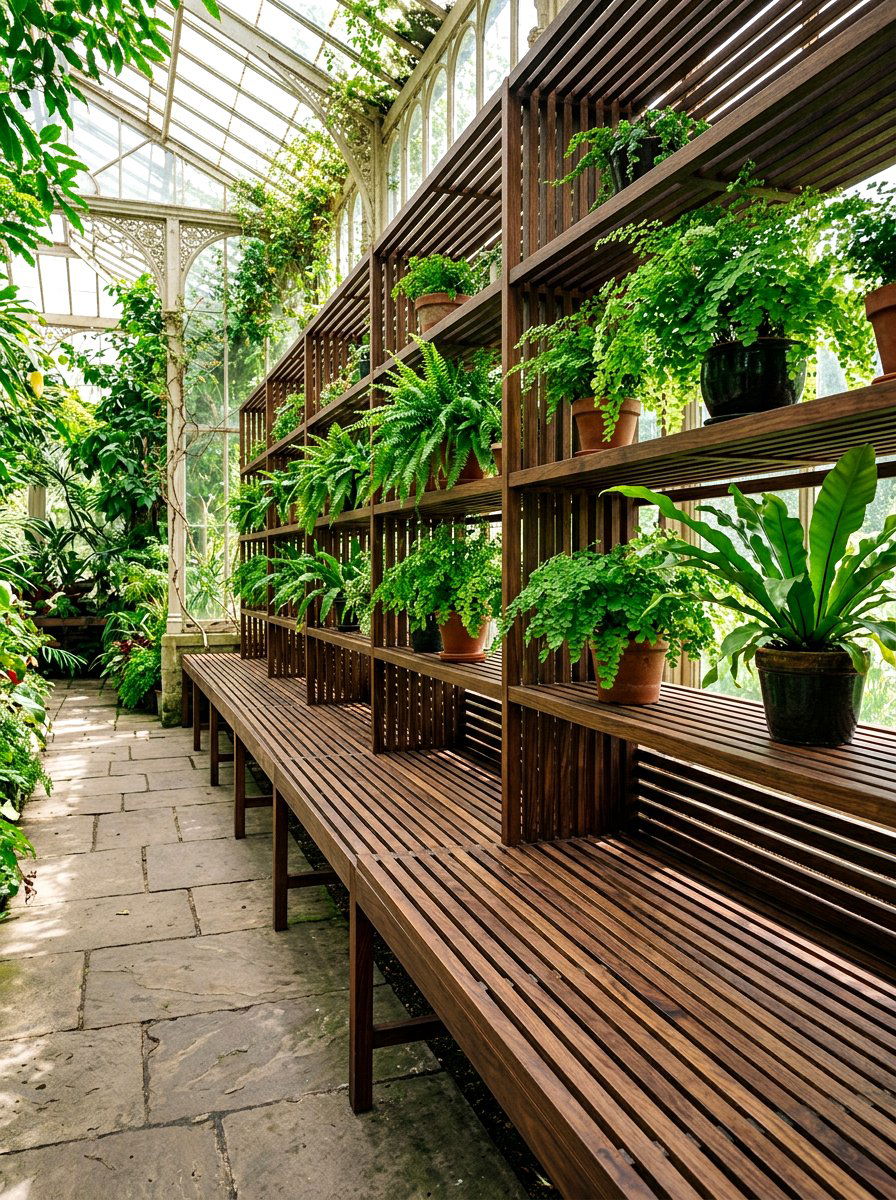
Slatted wood shelving is a classic choice for greenhouses because it balances traditional beauty with practical functionality. The narrow gaps between the wooden boards allow water to drain freely and air to circulate around the roots of your plants. This layout helps prevent the buildup of mold and mildew, which can thrive in a humid greenhouse environment. Slatted shelves also allow a small amount of light to filter through to the ground level, which is beneficial for shade-loving species kept below the benches. Whether made from cedar, teak, or treated pine, these shelves provide a warm and inviting look that makes your greenhouse feel like a true garden retreat.
21. Galvanized Steel Shelves
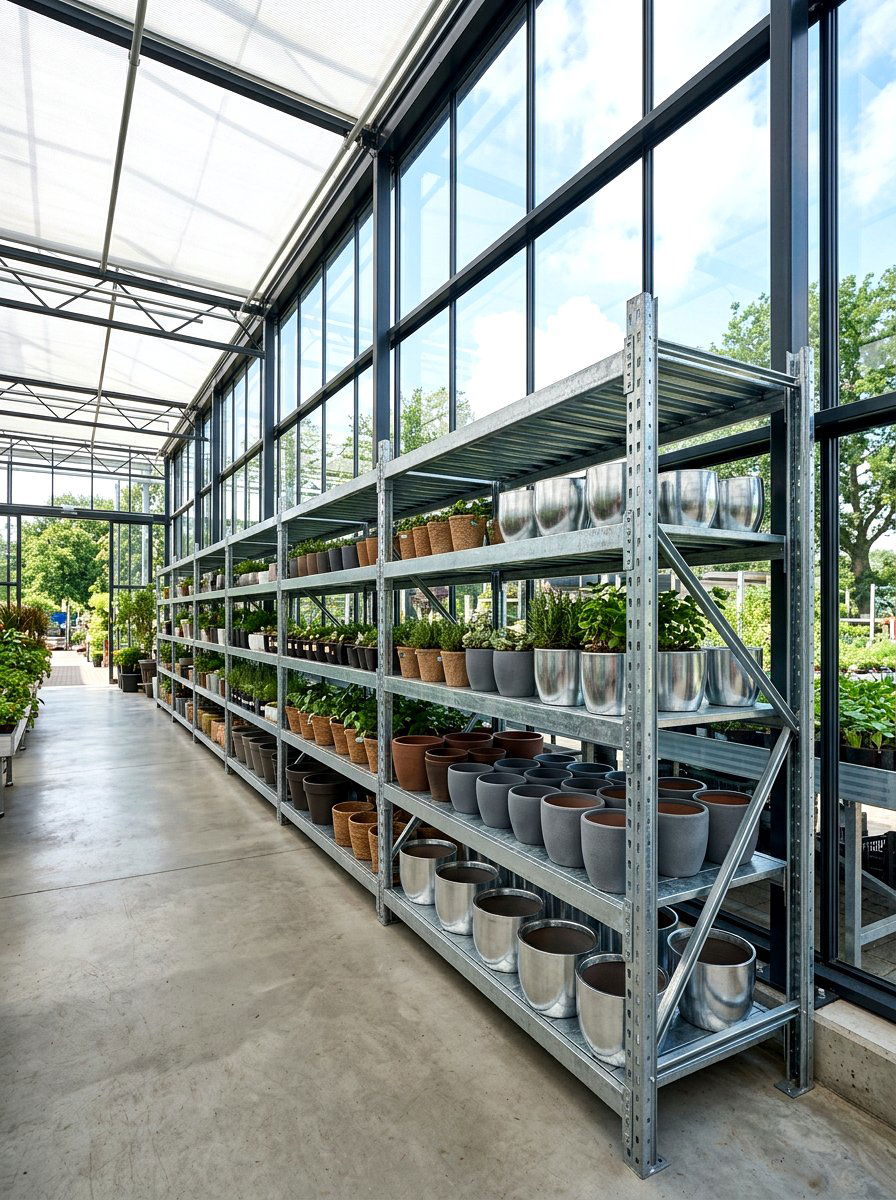
Galvanized steel shelves are the gold standard for longevity in a high-moisture greenhouse environment. The zinc coating protects the metal from rust and corrosion, ensuring that the shelves remain strong and clean-looking for many years. This layout is very low-maintenance, requiring only an occasional wipe-down or spray with a hose. The thin profile of the steel allows for maximum light penetration, ensuring that your plants aren't shaded by bulky structural elements. These shelves are often available in modular kits that can be expanded as your garden grows. They provide a sleek, modern look that contrasts beautifully with the organic shapes and vibrant colors of your plants.
22. Recycled Greenhouse Shelving
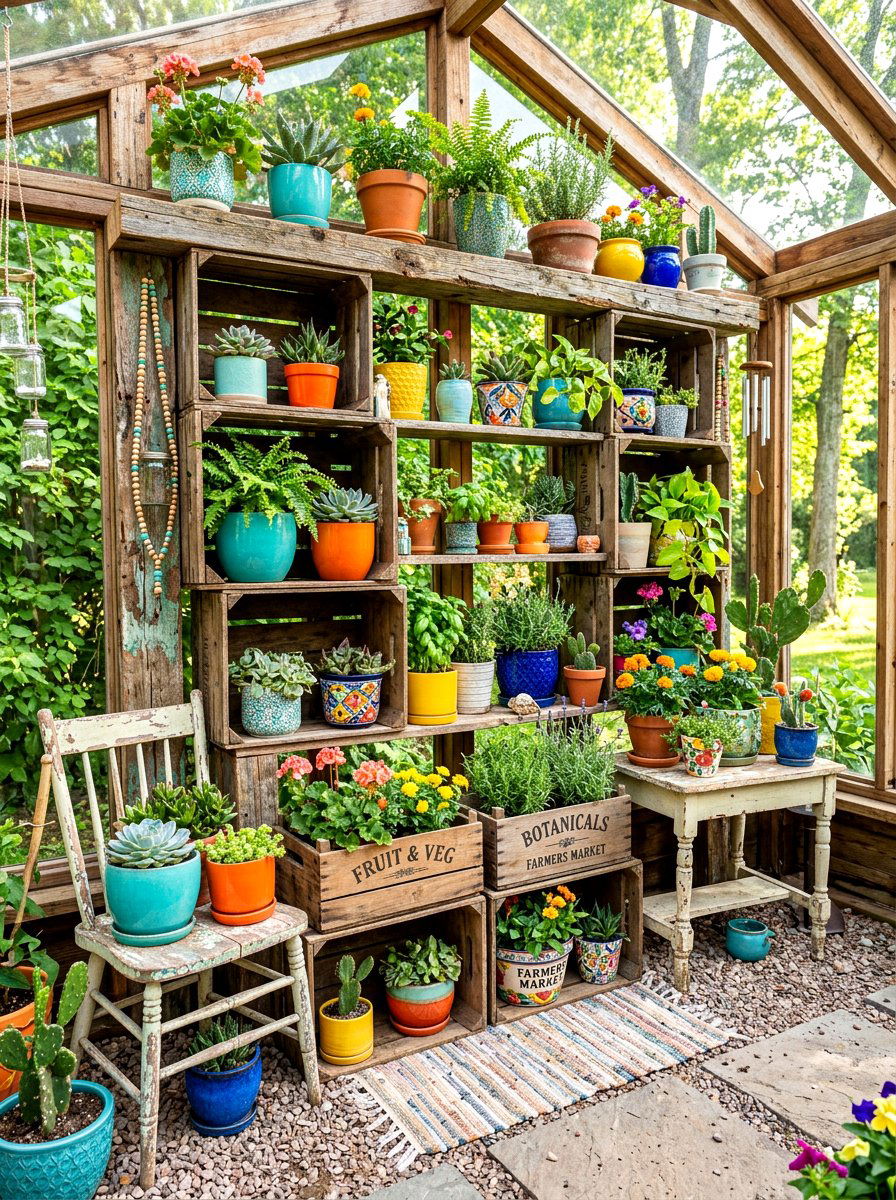
Recycled greenhouse shelving is an eco-friendly layout that uses repurposed materials like old ladders, crates, or vintage furniture to house your plants. This approach gives your greenhouse a unique, eclectic personality that reflects your creative spirit. Using old wooden crates stacked on their sides creates a beautiful cubby system for small pots and gardening books. A vintage baker's rack can be transformed into a stunning display for orchids or succulents. This layout is not only sustainable but also allows you to build a functional space on a very tight budget. It turns your greenhouse into a gallery of both botanical beauty and interesting, repurposed history.
23. A-Frame Plant Stands
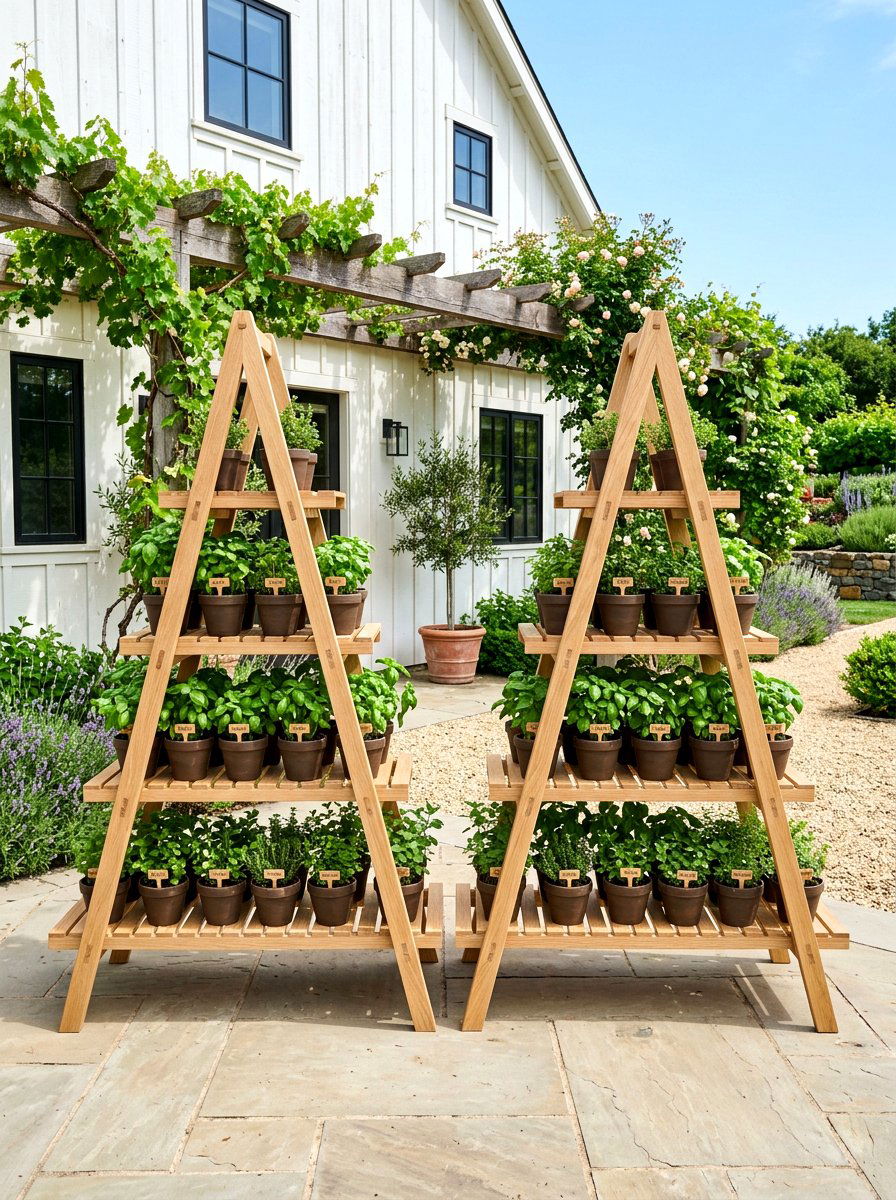
A-frame plant stands are a structurally sound and visually appealing way to organize plants in the center of a greenhouse. This layout features two sloping sides that meet at a point, providing multiple levels of shelving in a relatively small footprint. The angled design ensures that every level receives plenty of light, as the shelves get narrower toward the top. This setup is perfect for displaying a large collection of uniform-sized pots, such as herbs or decorative flowers. A-frame stands are very stable and less likely to tip over than narrow vertical towers. They create a beautiful sense of symmetry and order within the lush chaos of a garden.
24. Greenhouse Shelf Lighting
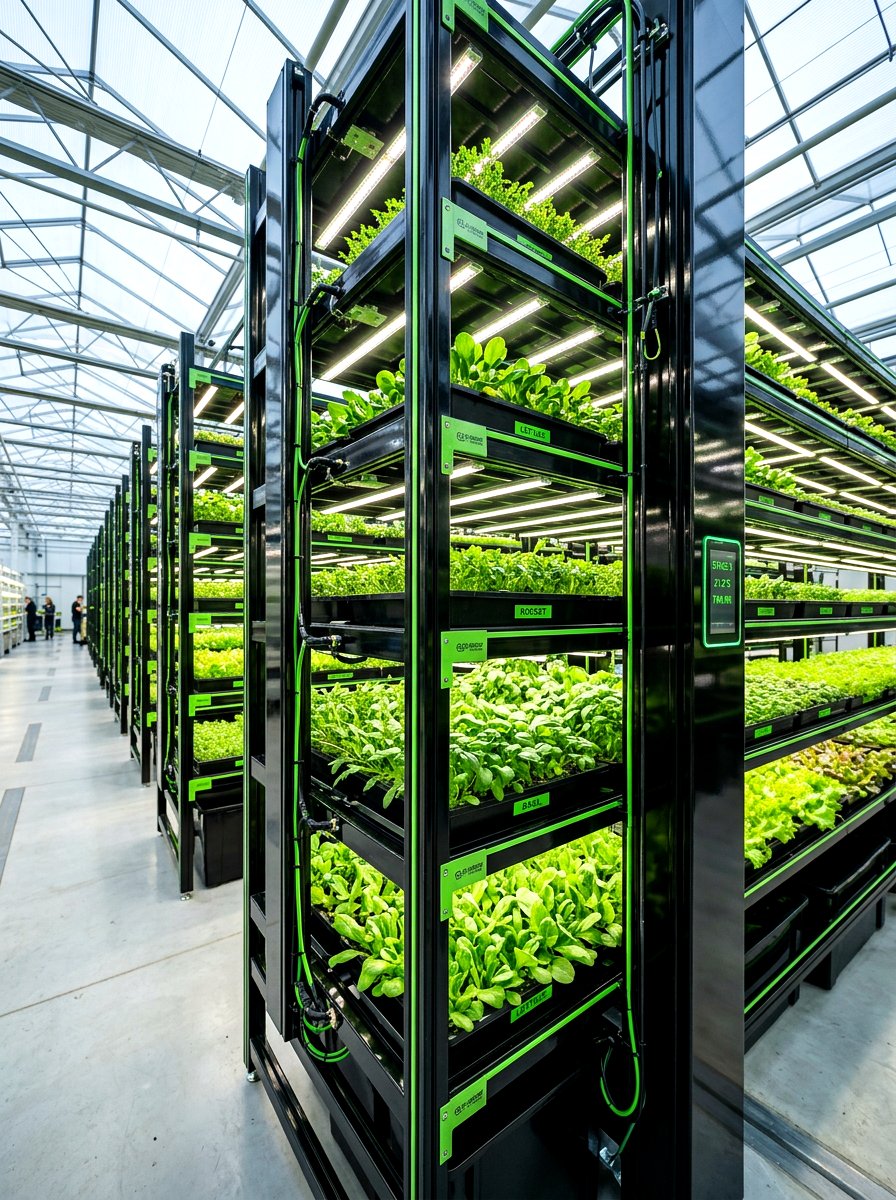
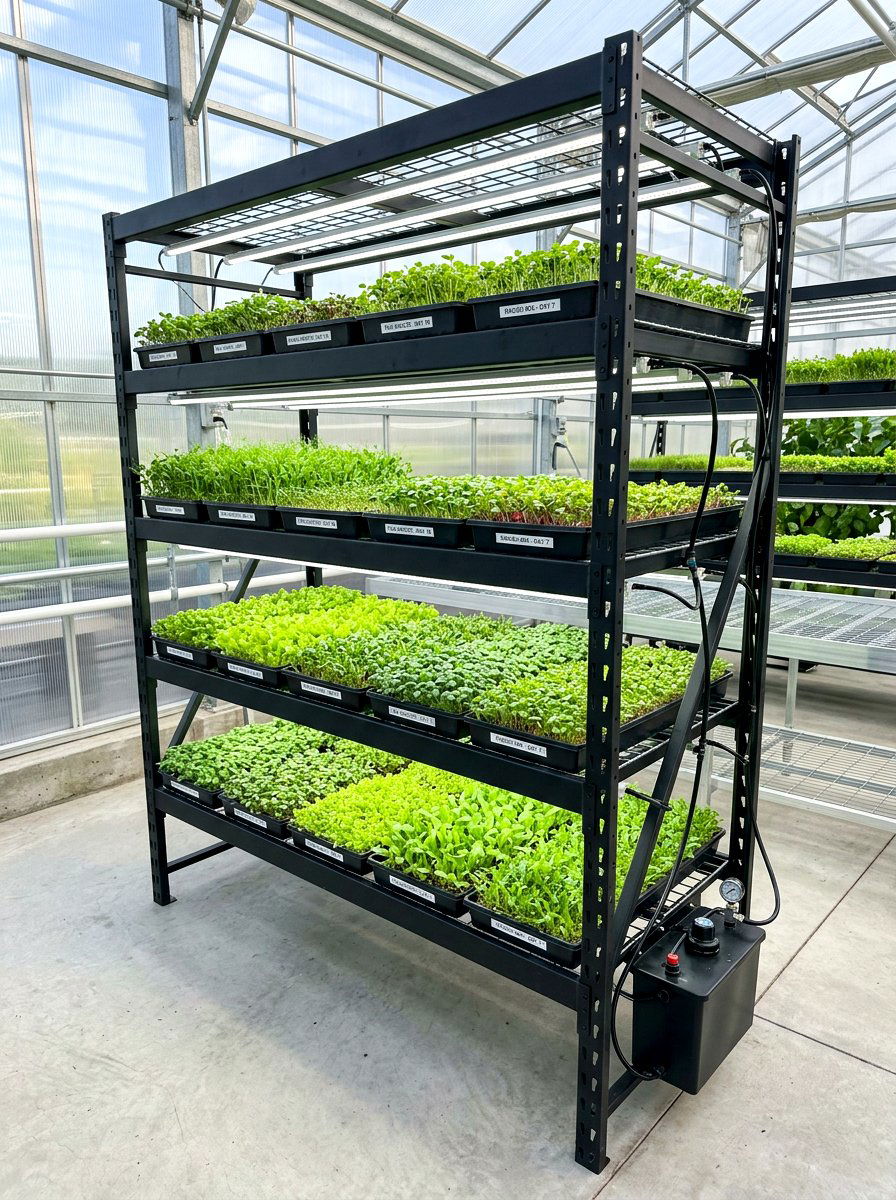
Greenhouse shelf lighting is a layout upgrade that incorporates LED or fluorescent grow lights directly into the shelving units. This is particularly beneficial for multi-tiered systems where the lower shelves might be shaded by the ones above. By adding integrated lighting, you can utilize every single shelf for high-light plants, effectively doubling or tripling your productive growing space. This setup is essential for year-round gardeners who want to keep their plants thriving during short winter days. Modern LED strips are thin and energy-efficient, making them easy to install without adding heat to the greenhouse. This technology transforms a simple shelf into a high-performance growing environment.
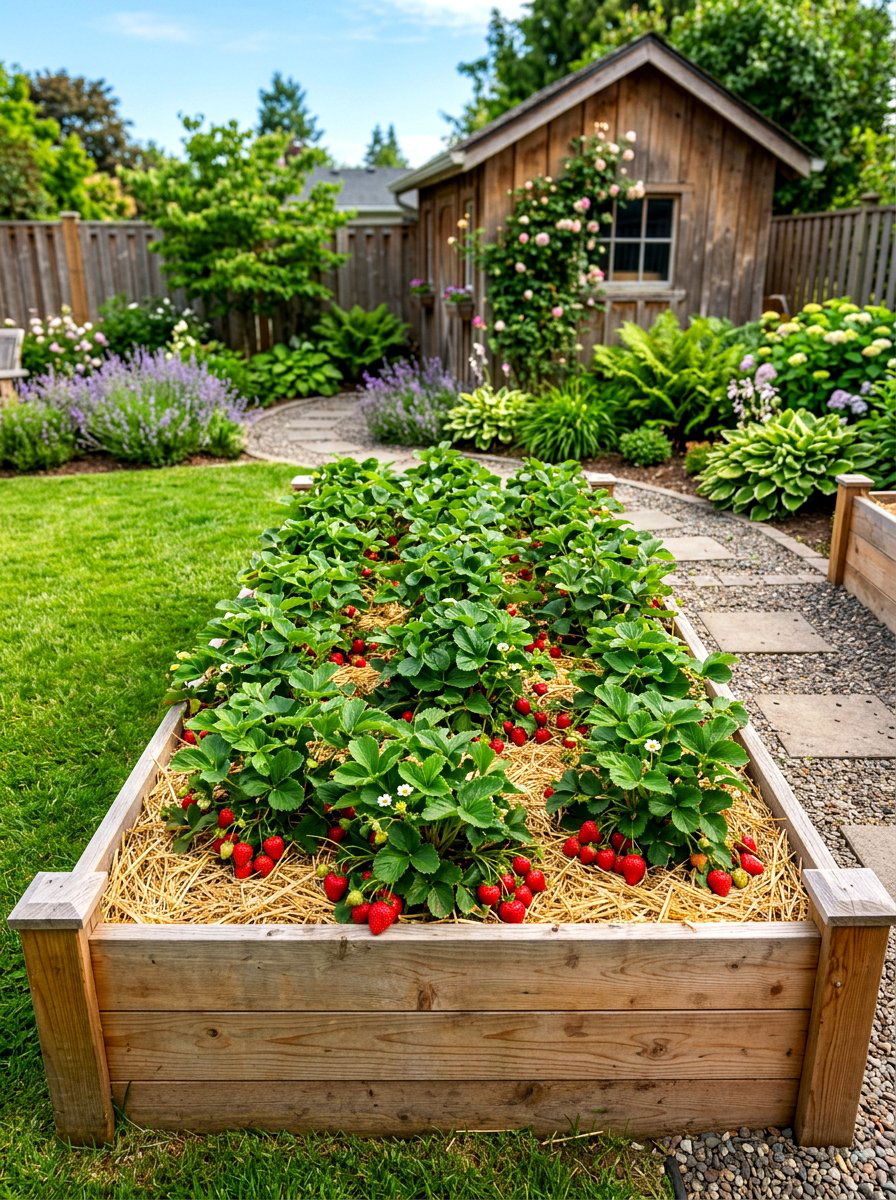

25. Narrow Greenhouse Shelving
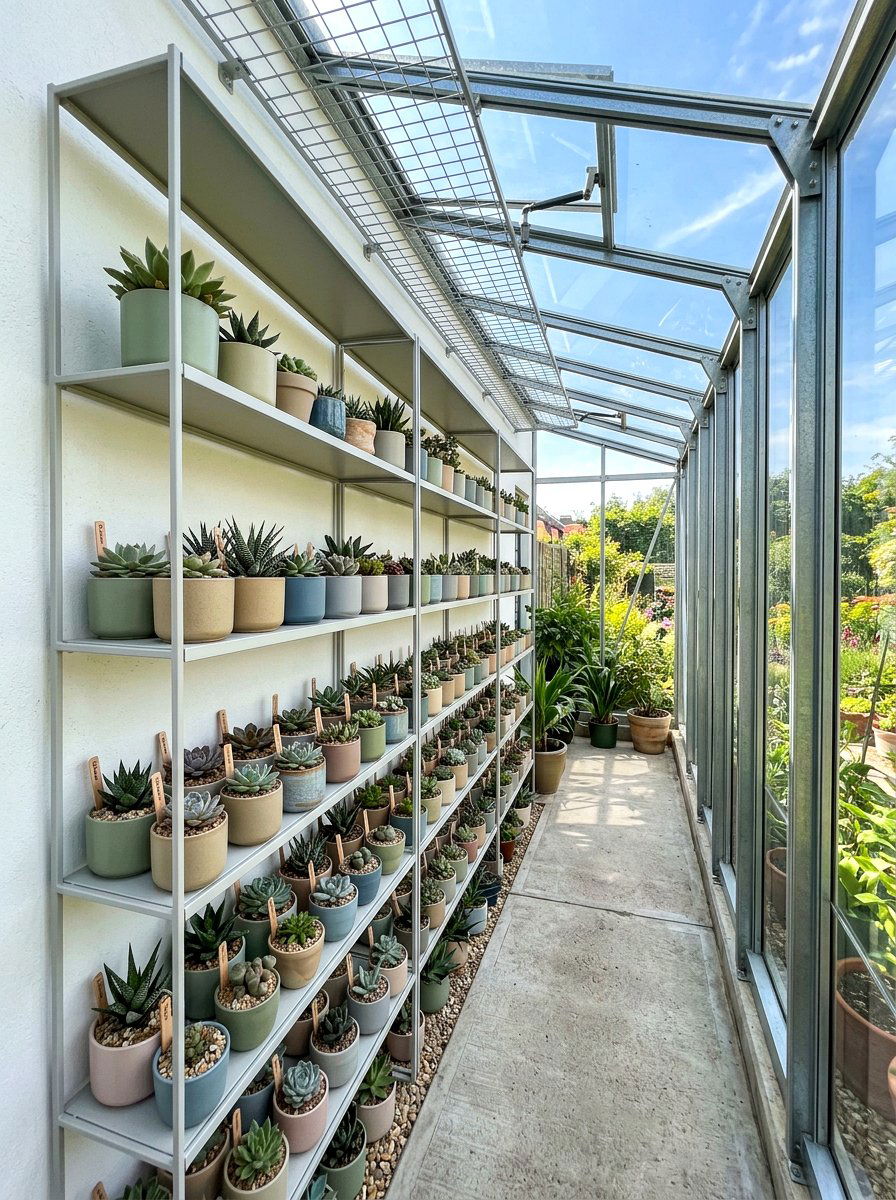
Narrow greenhouse shelving is a specific layout designed for "lean-to" structures or very small hobby greenhouses. These shelves are usually only 8 to 12 inches deep, allowing them to fit along a wall without blocking the central walkway. This configuration is perfect for small succulents, cacti, or starter trays that don 't require much space. By keeping the shelves shallow, you ensure that every plant is easy to reach and monitor. This layout helps prevent the "lost plant" syndrome where items at the back of a deep shelf are forgotten. It is a masterclass in space efficiency, proving that you don' t need a large building to be a successful gardener.
26. Deep Potting Shelves
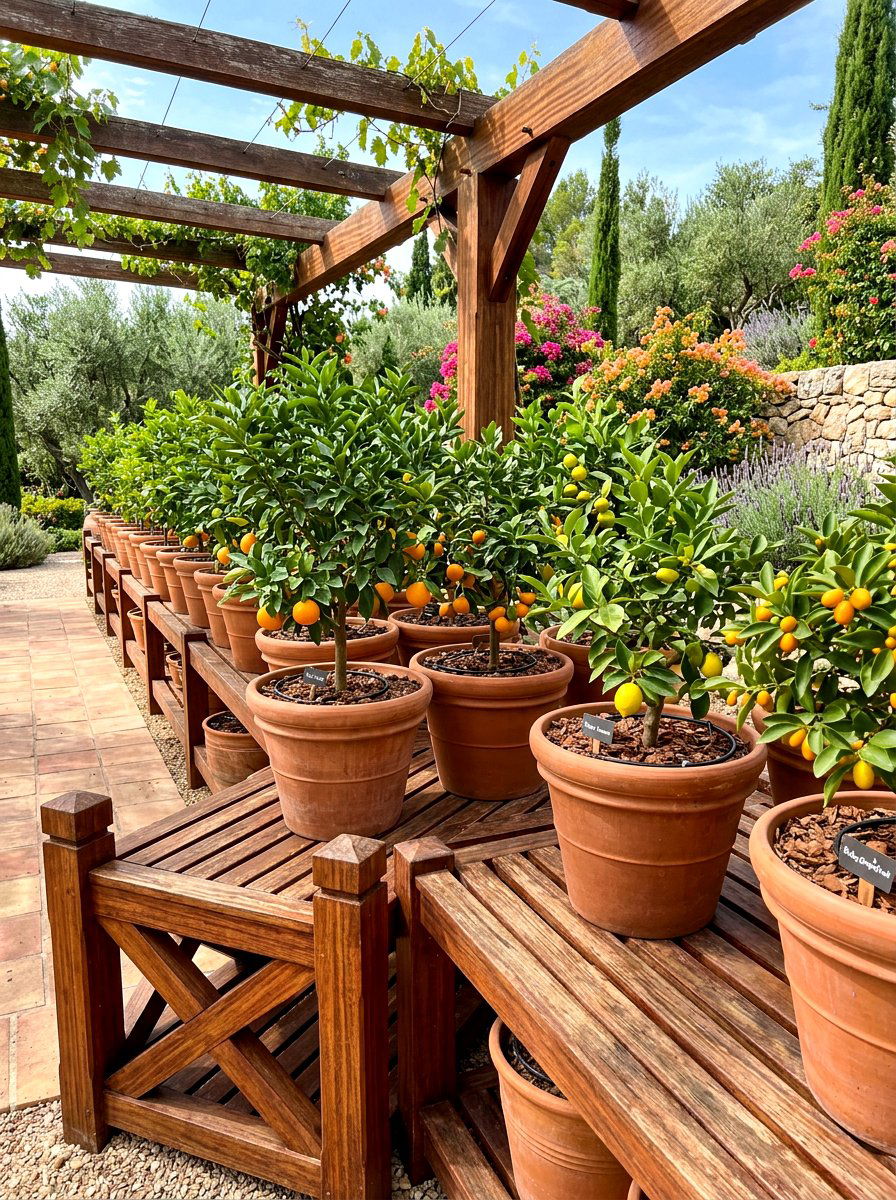
Deep potting shelves are designed for gardeners who work with large-scale containers or bushy shrubs that need extra room. These benches are typically 24 to 36 inches deep, providing a massive surface area for big pots and sprawling foliage. This layout is often placed along the back wall of a greenhouse where there is the most room to maneuver. Because these shelves are so deep, they are often equipped with heavy-duty supports to prevent sagging over time. They provide the perfect home for "mother plants" used for taking cuttings or for large citrus trees. Having a few deep sections allows you to accommodate a diverse range of plant sizes easily.
27. Integrated Greenhouse Staging
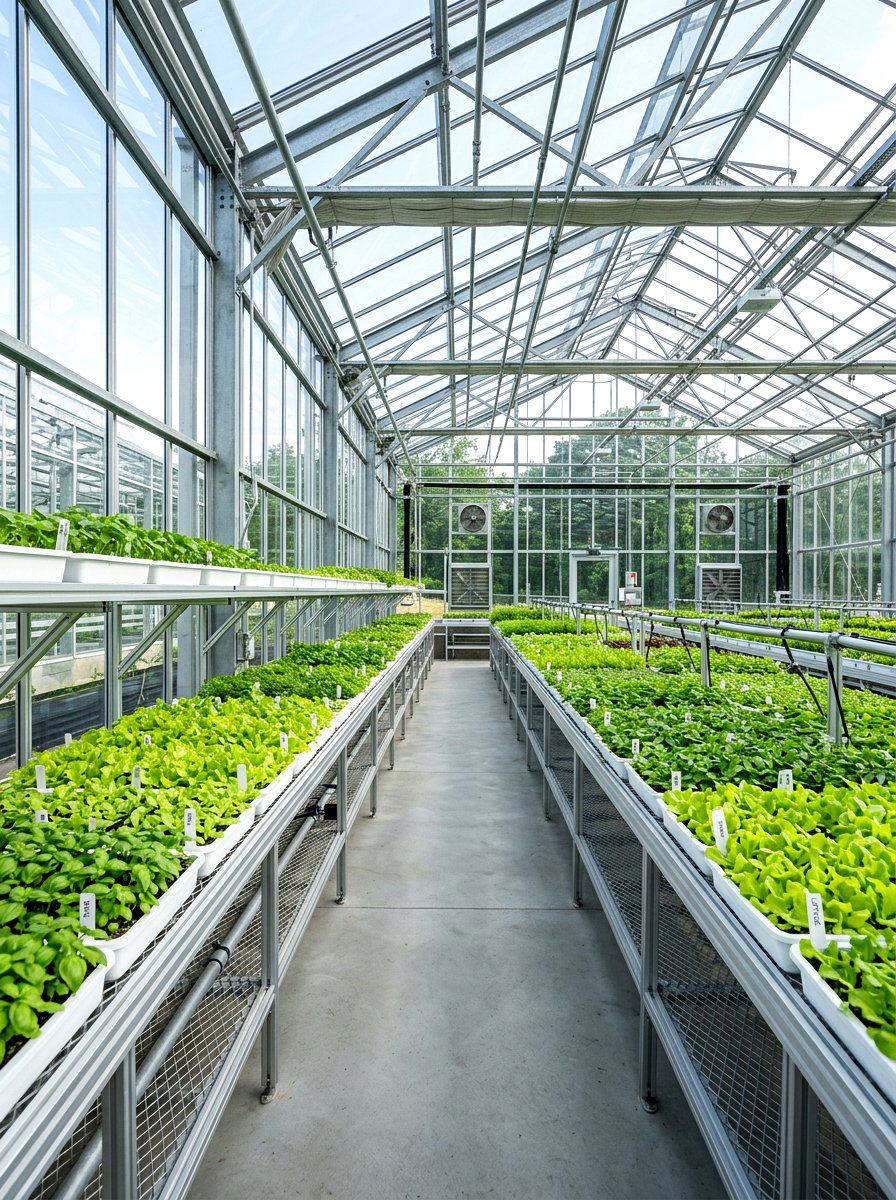
Integrated greenhouse staging involves shelving that is built directly into the frame of the greenhouse during its initial construction. This layout offers a seamless, professional look as the shelves match the material and color of the structure perfectly. Because they are integrated, these benches are incredibly strong and can often hold more weight than freestanding units. This permanent setup ensures that your greenhouse is always ready for planting and requires no assembly on your part. It is a popular choice for high-end glasshouses where aesthetics and structural integrity are top priorities. This built-in approach maximizes the functional life of your interior gardening workspace.
28. Hydroponic Shelving Setup
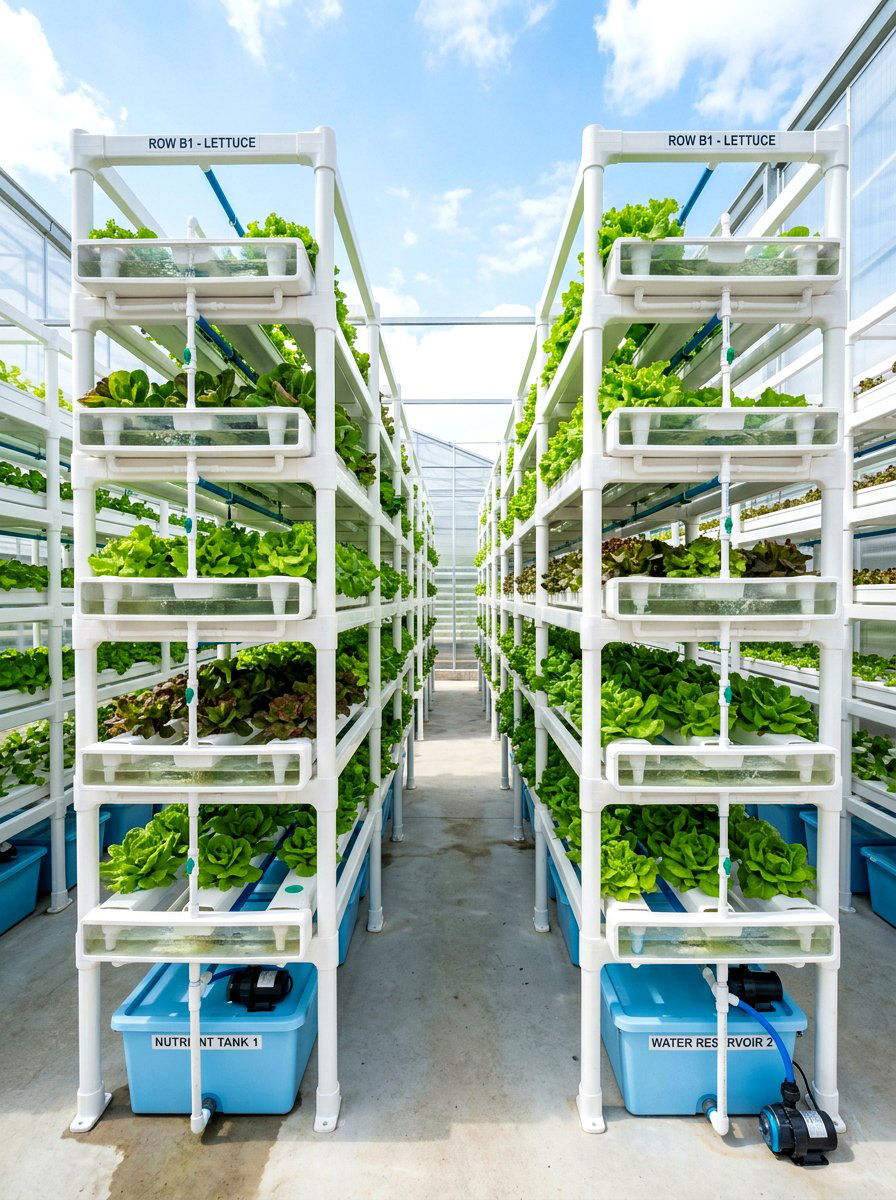
A hydroponic shelving setup is a specialized layout designed to hold water-based growing systems rather than traditional pots and soil. These shelves are often reinforced to handle the significant weight of water reservoirs and nutrient tanks. The layout usually includes dedicated paths for tubing and electrical cords to keep the space safe and organized. This modern approach to gardening allows you to grow huge amounts of leafy greens and herbs in a very small area. The shelving is typically made from plastic or stainless steel to resist the constant exposure to moisture and nutrients. It represents the cutting edge of efficient, high-tech greenhouse organization and production.
29. Greenhouse Tool Storage
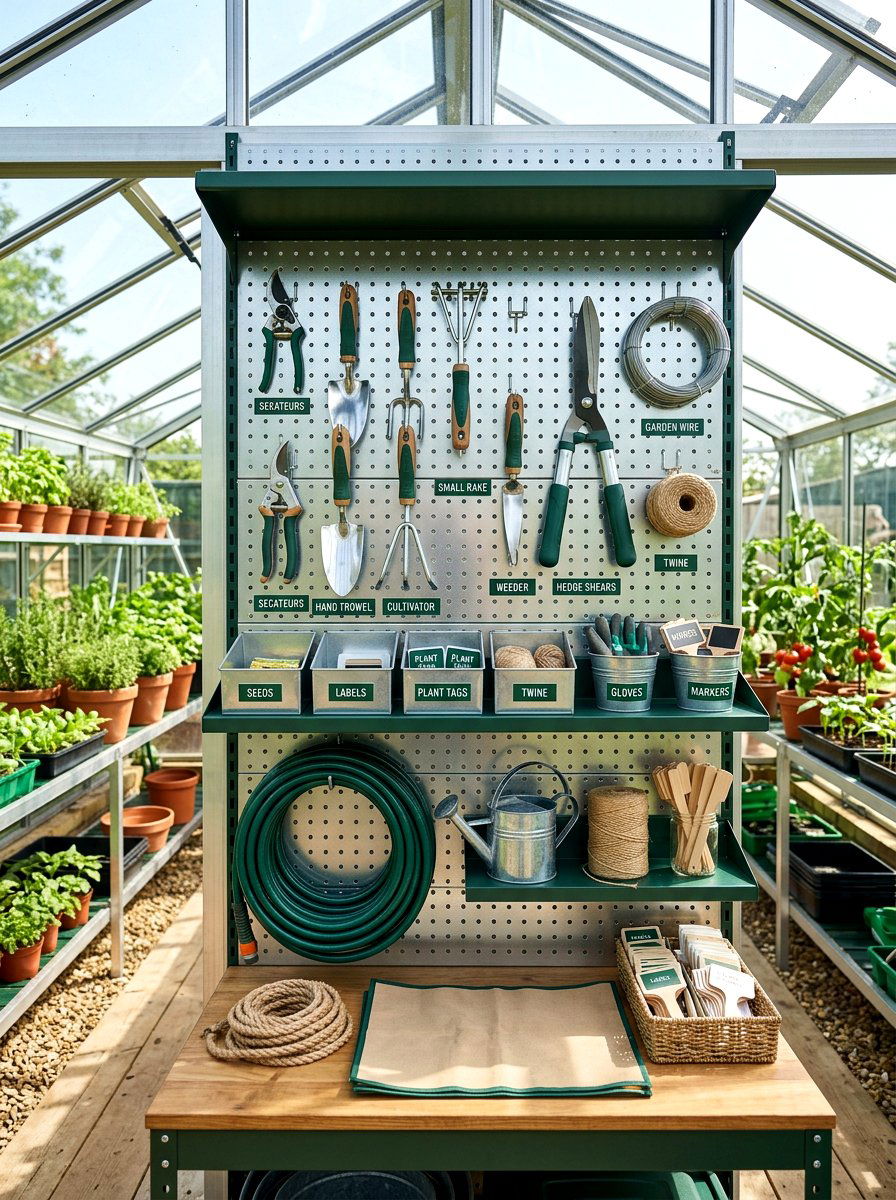
Greenhouse tool storage is a functional layout that prioritizes organization for the gardener rather than the plants. This section often features pegboards, hooks, and small drawers integrated into the shelving units to keep hand tools, twine, and labels in order. By having a designated spot for your gear, you save time and reduce frustration when working in the garden. This layout is best placed near the entrance or the potting bench for maximum efficiency. Keeping tools off the benches leaves more room for plants and prevents accidental damage to delicate leaves. A well-organized tool zone is the hallmark of a disciplined and successful greenhouse manager.
30. Decorative Plant Shelving
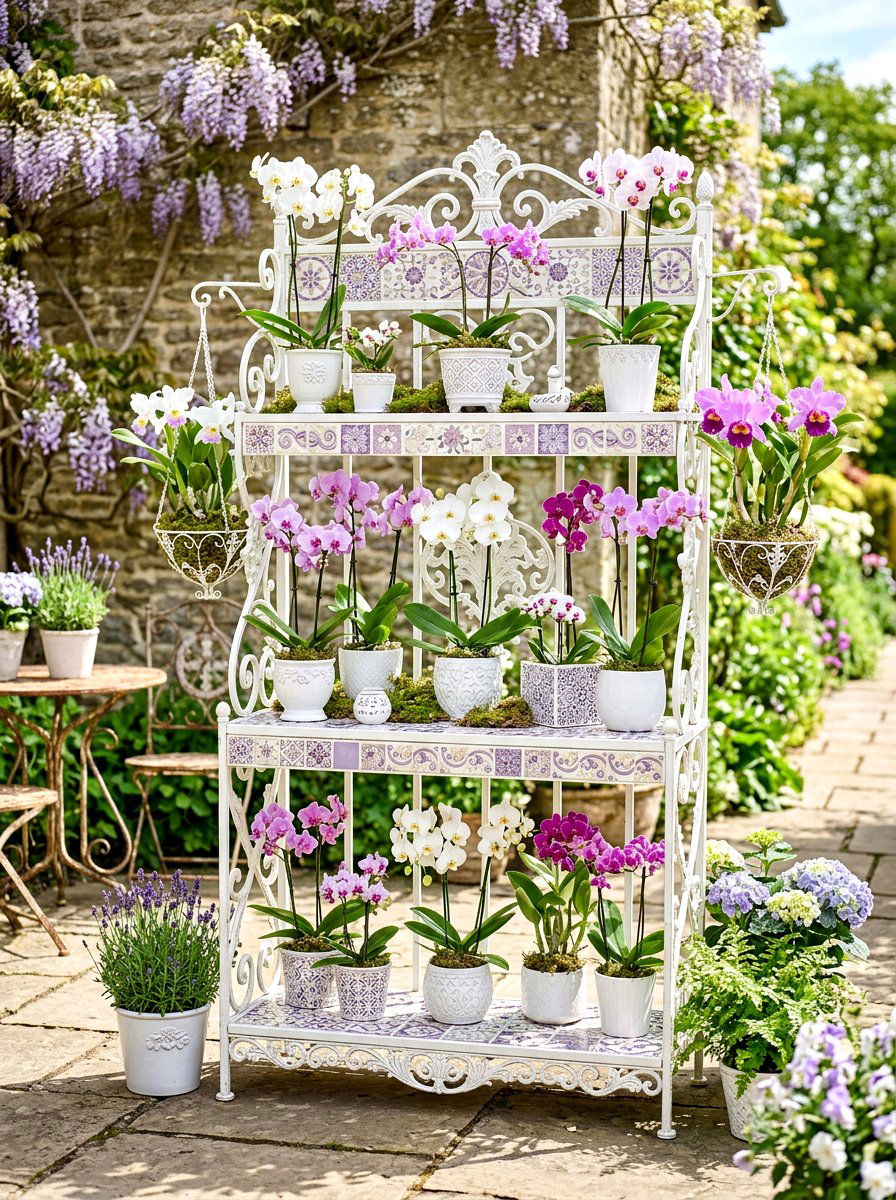
Decorative plant shelving focuses on creating a beautiful, Pinterest-worthy aesthetic inside your greenhouse. This layout might include ornate wrought iron racks, painted wooden shelves, or tiered displays featuring decorative mosaic tiles. While still functional, the primary goal here is to create a serene and visually stunning environment for relaxation and hobby gardening. This style is perfect for greenhouses that double as an outdoor living room or tea house. You can arrange your plants by color, texture, or height to create a living work of art. This layout reminds us that a greenhouse can be a place of immense beauty as well as a practical workspace for growth.
Conclusion:
Organizing your greenhouse with the right shelving layout is the key to creating a space that is both beautiful and highly functional. From vertical racks that maximize height to central islands that provide ample workspace, each layout offers unique benefits tailored to different gardening styles and needs. By selecting the right materials and configurations, you can ensure your plants receive the optimal amount of light and ventilation they require to thrive year-round. A well-organized greenhouse not only makes your gardening tasks more enjoyable but also helps you keep track of your plant health more effectively. Investing time in planning your layout will pay off in the form of a more productive and serene gardening environment. Your greenhouse should be a place of inspiration where every plant has its perfect spot to grow.

Related posts: