Designing a greenhouse is about more than just selecting the right plants and glass panels; it involves creating a functional flow that enhances your gardening experience. A well-planned walkway serves as the spine of your sanctuary, connecting potting benches to seed trays while keeping your feet dry and stable. The right path material manages humidity, prevents soil compaction, and adds a distinct personality to your indoor garden. Whether you prefer the rustic charm of weathered timber or the sleek look of modern pavers, your choice influences the overall climate and aesthetic of the space. Investing time into your layout ensures that every inch of your greenhouse remains accessible and visually cohesive year-round.

1. Brick Herringbone
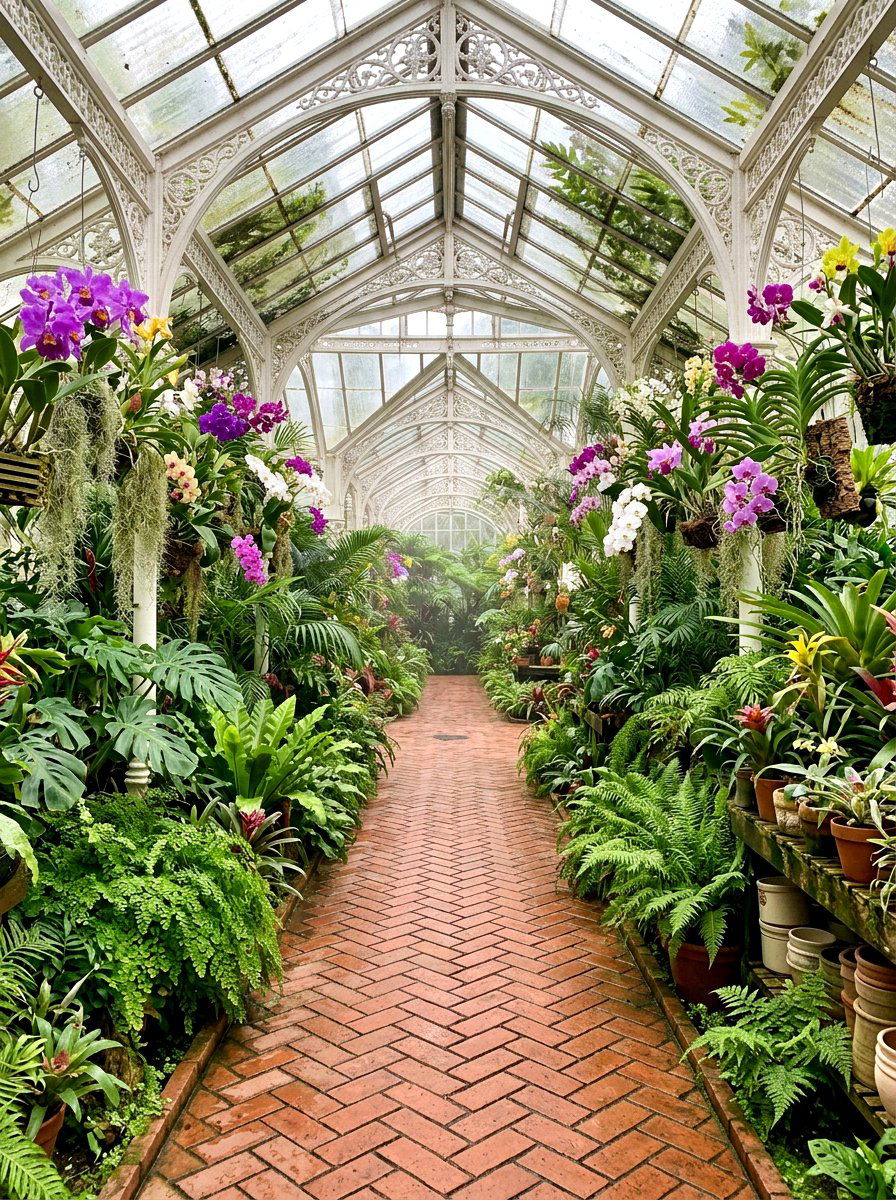
A classic brick herringbone layout provides a timeless foundation for a traditional English-style greenhouse. This intricate pattern involves placing rectangular bricks at forty-five-degree angles to create a stable, interlocking surface that resists shifting over time. The porous nature of clay bricks is excellent for moisture regulation, as they absorb excess water during misting and slowly release it to maintain humidity. This specific design pairs beautifully with white-framed glass structures and dark green foliage, offering a sophisticated, high-end look. Because the bricks are heavy and durable, they easily support the weight of heavy ceramic pots and rolling garden carts. It is a perfect choice for gardeners who prioritize both style and long-term structural integrity.
2. Pea Gravel
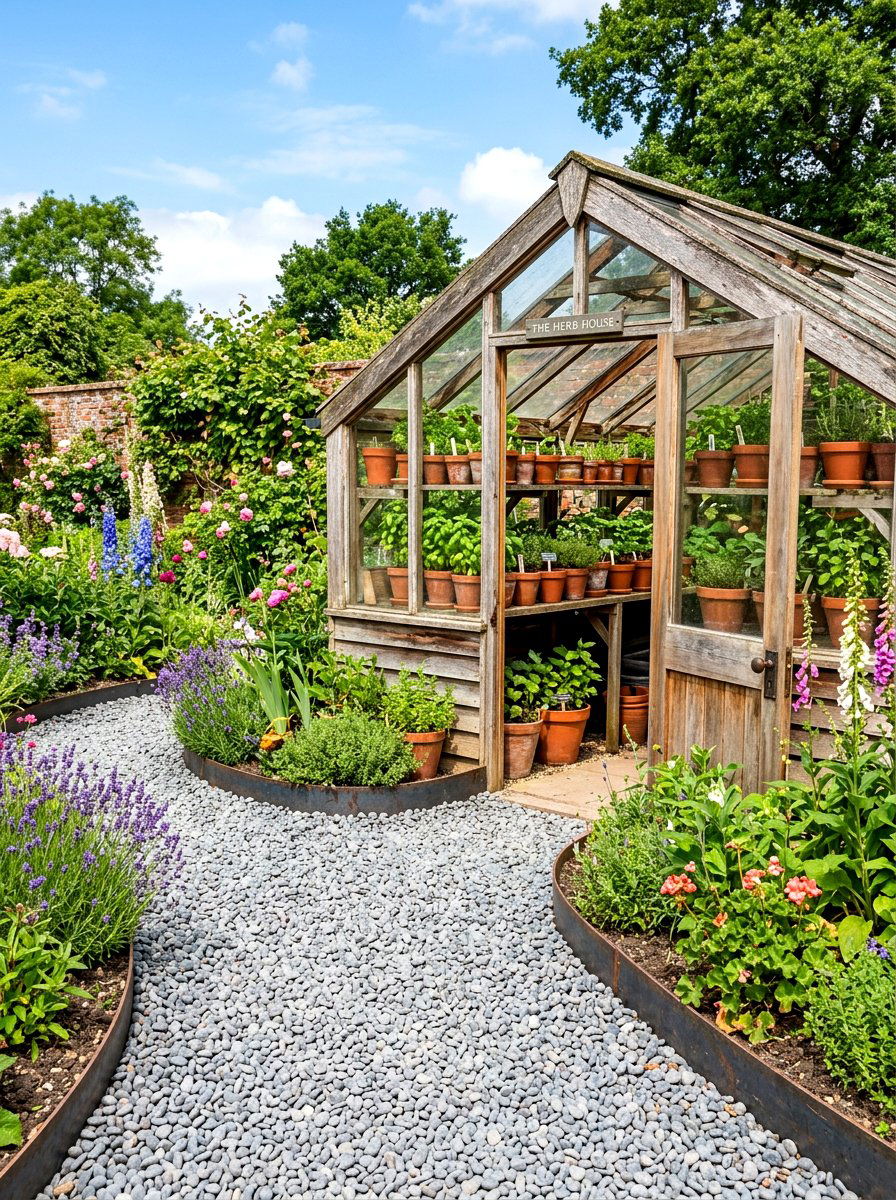
For a softer and more organic feel, pea gravel is an affordable option that offers exceptional drainage capabilities. The small, rounded stones provide a satisfying crunch underfoot, which many gardeners find therapeutic as they move through their plant collection. Because the stones are loose, this path type allows water to disappear instantly, preventing puddles from forming during heavy watering sessions. To keep the space looking tidy, use metal or plastic edging to contain the gravel within the central walkway. This look works exceptionally well in rustic or cottage-core greenhouses where a relaxed, informal atmosphere is desired. It also helps with insulation by absorbing heat from the sun during the day and radiating it at night.
3. Wood Slice Walkway
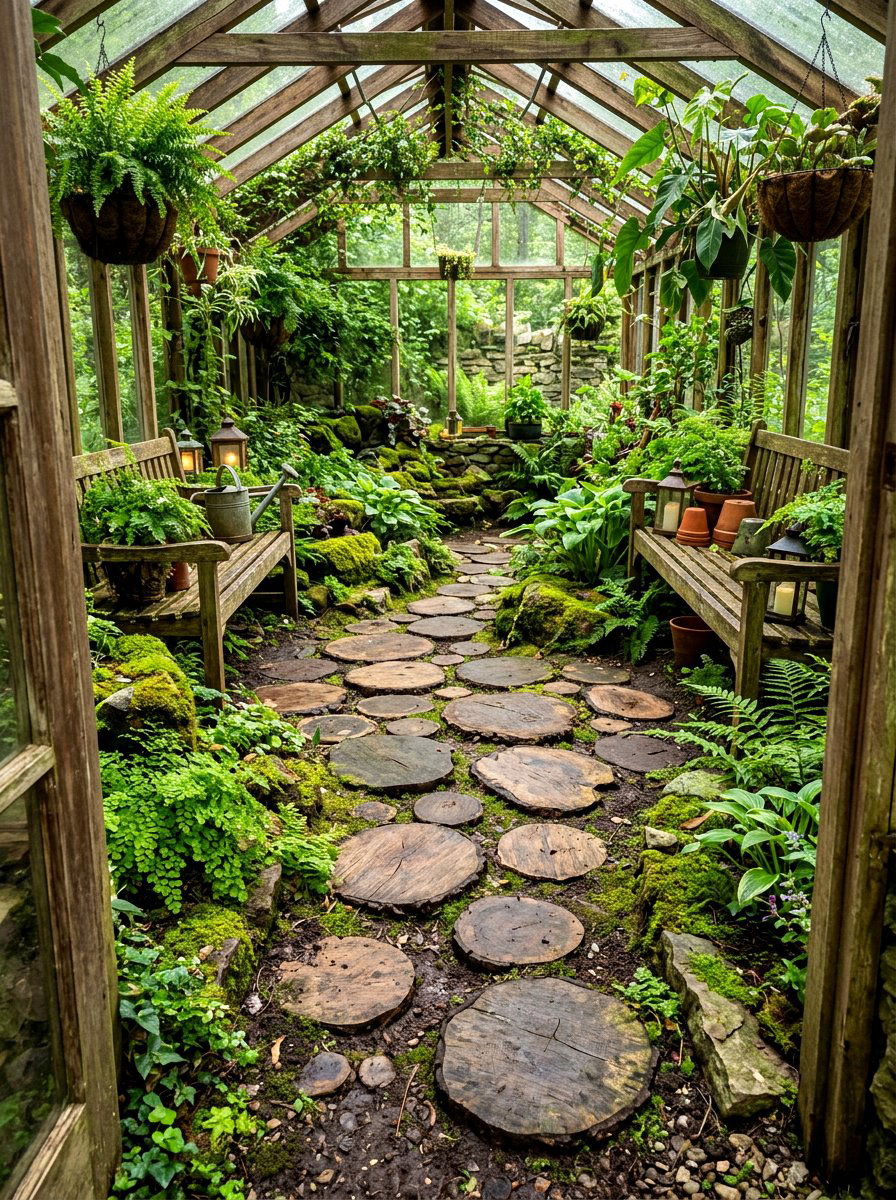
Integrating wood slices or "tree cookies" into your greenhouse floor creates an enchanting, forest-like atmosphere that feels deeply connected to nature. These circular timber cross-sections are typically set into a bed of sand or fine gravel to ensure they remain level and secure. The natural wood grain and varied sizes of the slices add organic texture that complements tropical ferns and mossy displays. To prevent rot in the humid environment, it is essential to treat the wood with a plant-safe sealant or choose rot-resistant species like cedar. This design path is ideal for hobbyists who want their greenhouse to feel like a whimsical retreat rather than a sterile laboratory or industrial growing space.
4. Slate Paver
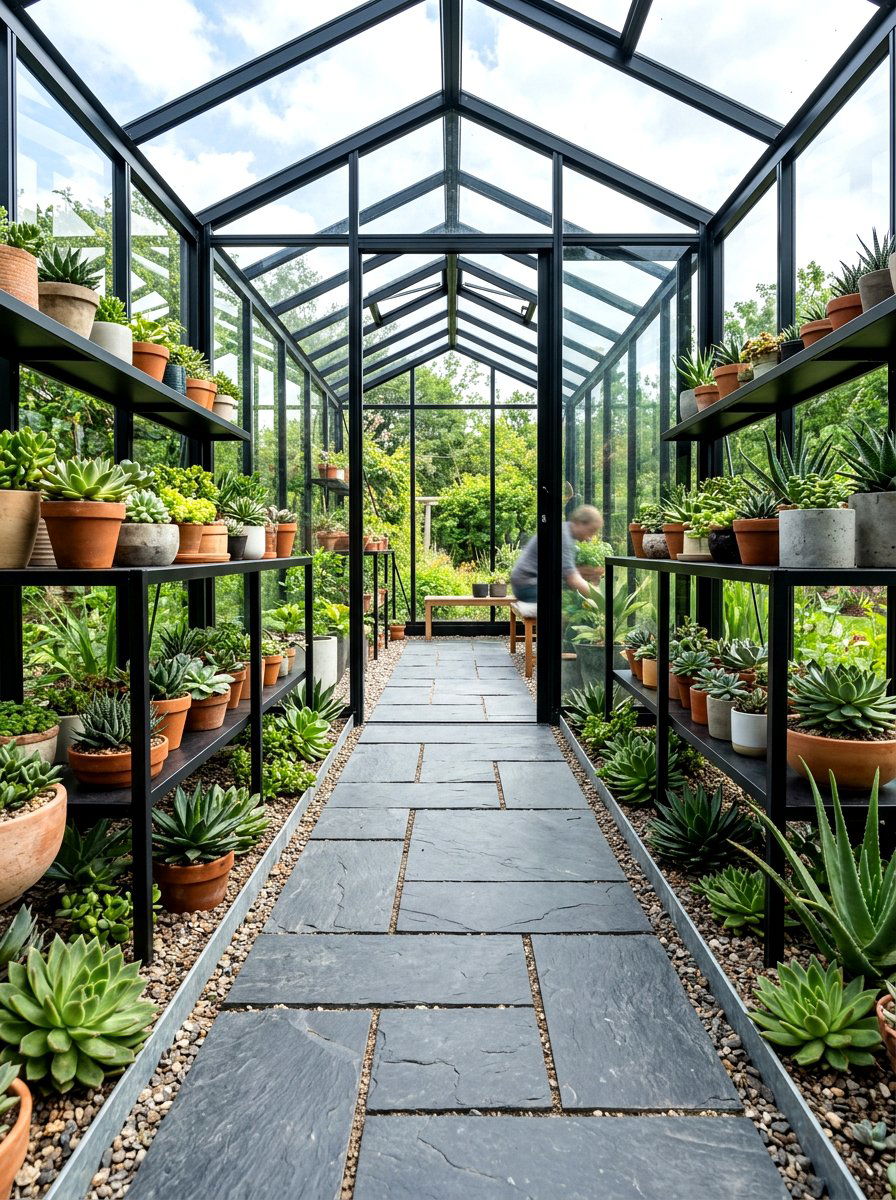
Slate pavers offer a sleek and modern aesthetic that brings a touch of contemporary luxury to any indoor growing environment. The naturally dark, cool tones of slate provide a stunning contrast against vibrant green succulents and colorful blooming orchids. These large, flat stones are easy to clean and provide a very stable surface for walking or standing for long periods while pruning. Slate is also incredibly durable and can withstand the constant moisture and varying temperatures found inside a glass house. By using large format pavers, you can make a small greenhouse appear much larger and more open. This material choice is perfect for minimalist designs where clean lines and high-quality finishes are the main focus.
5. Reclaimed Timber
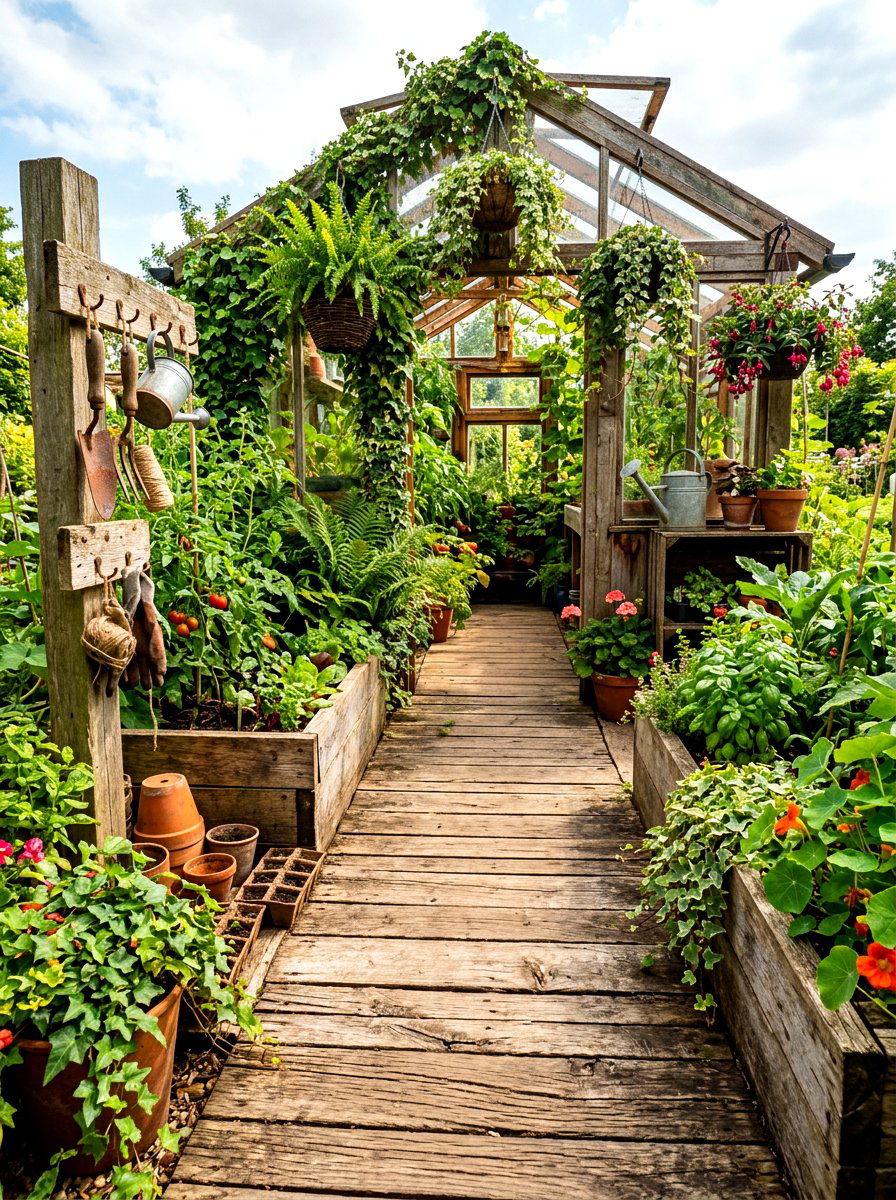
Using reclaimed timber for your greenhouse walkway is an eco-friendly way to add character and history to your gardening space. These weathered planks, often salvaged from old barns or shipping pallets, provide a rugged and rustic charm that looks better as it ages. The textured surface of old wood offers natural slip resistance, which is a major safety benefit in a humid environment. To ensure longevity, the timber should be elevated slightly on a gravel base to allow for airflow and prevent constant contact with wet soil. This design direction is perfect for the sustainable gardener who loves the look of upcycled materials and wants a warm, inviting feel in their sanctuary.
6. Concrete Stepping Stone
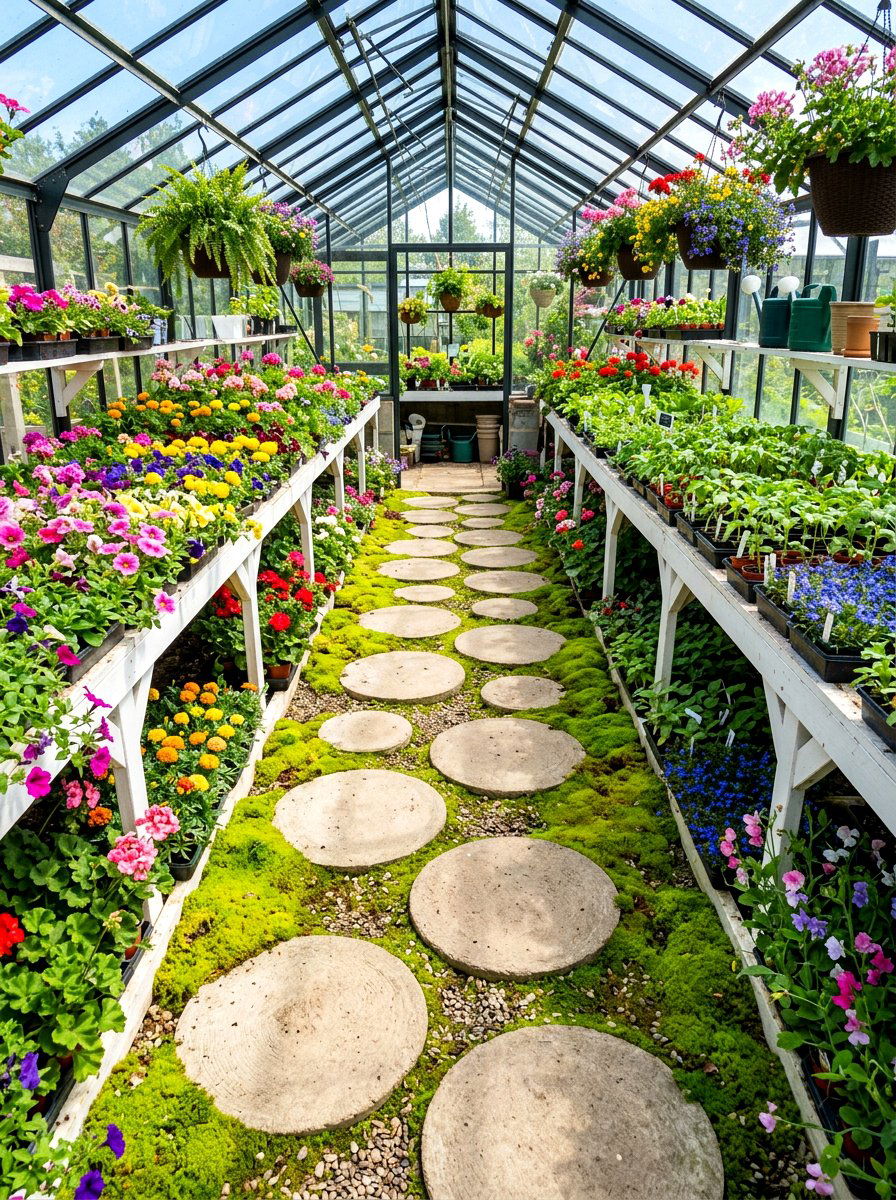
Concrete stepping stones are a versatile and budget-friendly solution for creating a clear path through a lushly planted greenhouse. These pre-cast stones come in various shapes and sizes, allowing you to customize the rhythm and flow of your walkway. You can nestle them into a bed of moss or low-growing groundcover to create a "floating" effect that looks integrated with the interior landscape. The smooth surface of concrete is very easy to sweep and keep clear of spilled soil or fallen leaves. This path style is especially effective in smaller greenhouses where you want to maintain a sense of openness by showing more of the ground material between the solid steps.
7. Cobblestone
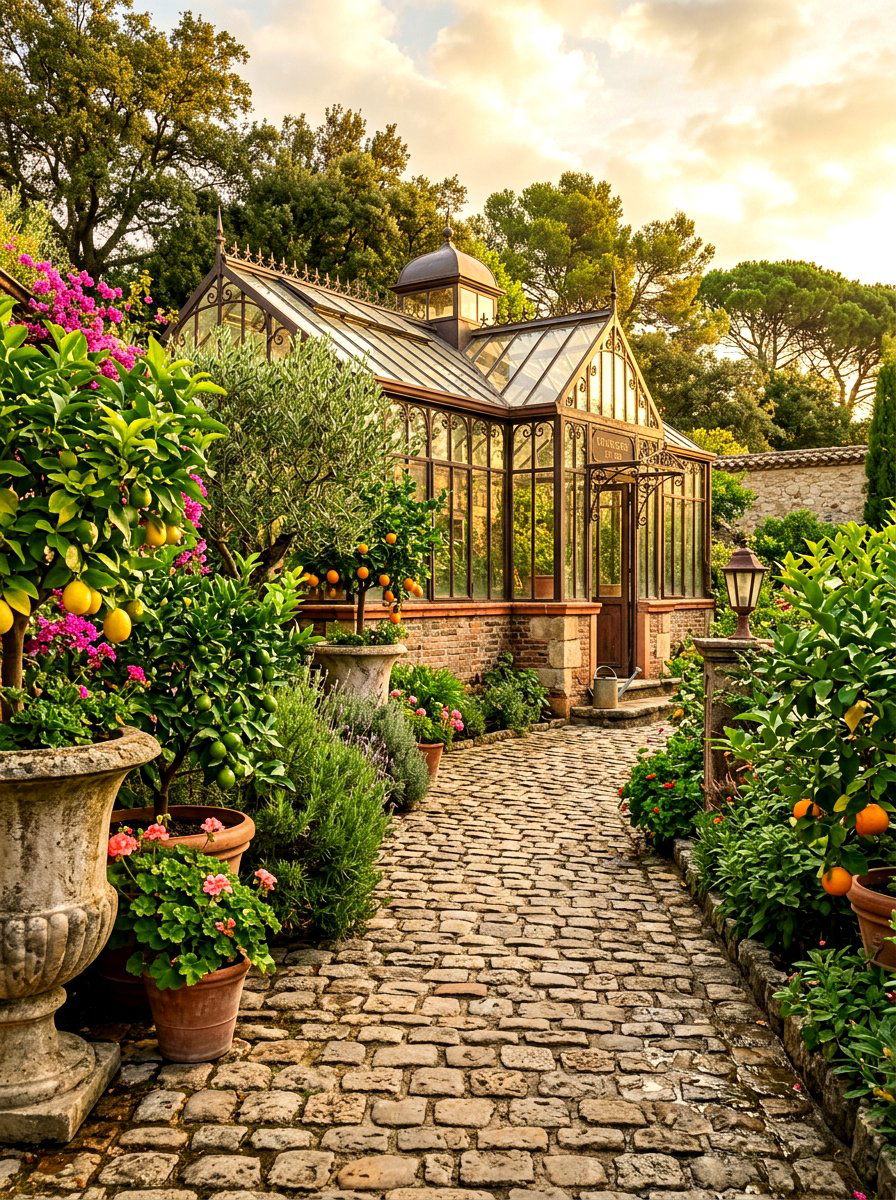
If you are aiming for an Old World European aesthetic, cobblestones are an unmatched choice for adding texture and weight to your greenhouse layout. These rounded, tumbled stones evoke the feeling of a historic botanical garden and provide a very sturdy, permanent walkway. The uneven surface of cobblestone adds a layer of visual interest that keeps the eye moving throughout the space. While they require a bit more effort to install than flat pavers, the result is a highly durable floor that can last for decades. Cobblestones are excellent for heat retention, acting as a thermal mass that helps keep the greenhouse warm during cooler evenings after the sun has gone down.
8. Crushed Shell
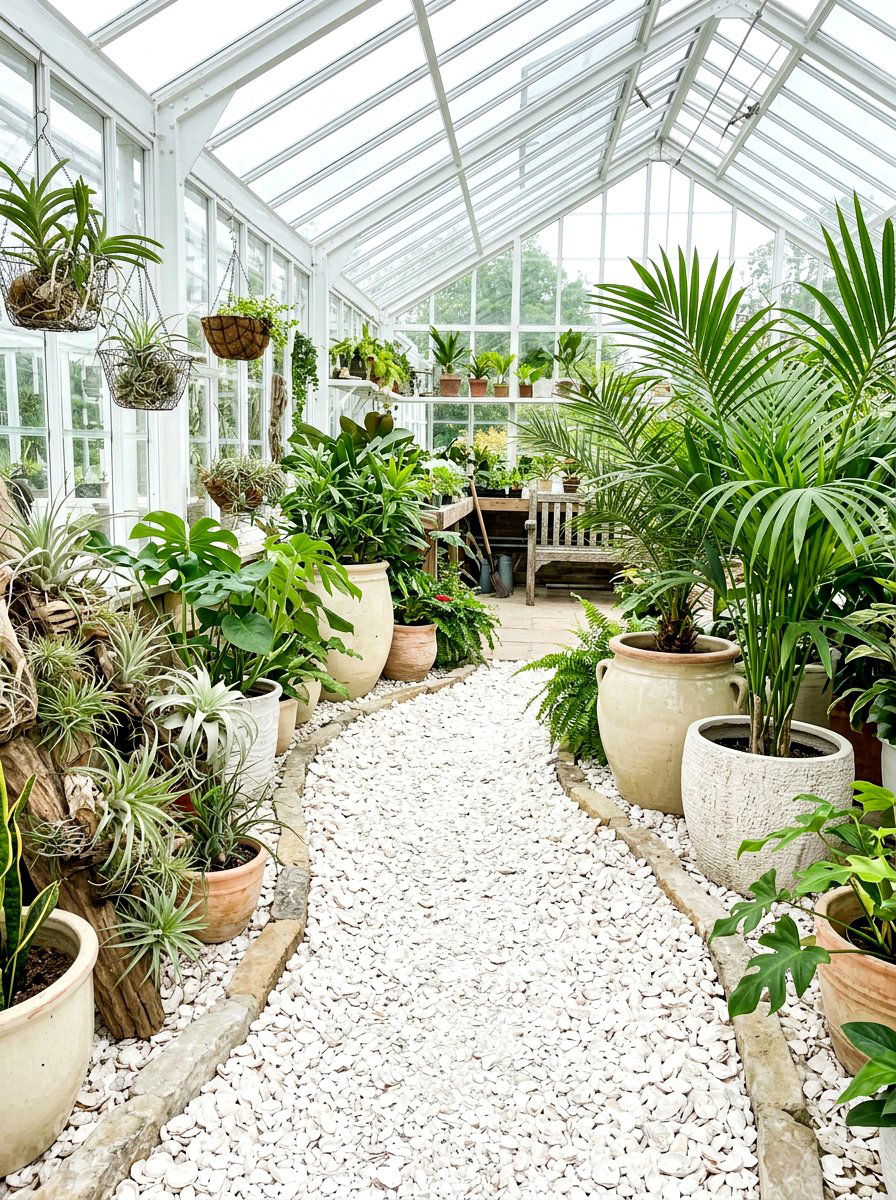
Crushed shells provide a unique and bright alternative to traditional stone or gravel, bringing a coastal or Mediterranean vibe to your greenhouse. The white and tan fragments reflect light upward, which can be beneficial for plants situated on lower shelves or in darker corners. This material is highly permeable, ensuring that drainage is never an issue even in the most humid conditions. As you walk on the shells, they gradually break down and pack together, creating a firmer surface over time while still maintaining a casual look. This is a fantastic choice for air-plant displays or greenhouses that feature a lot of citrus trees and other sun-loving, coastal-inspired botanical collections.
9. Cedar Plank
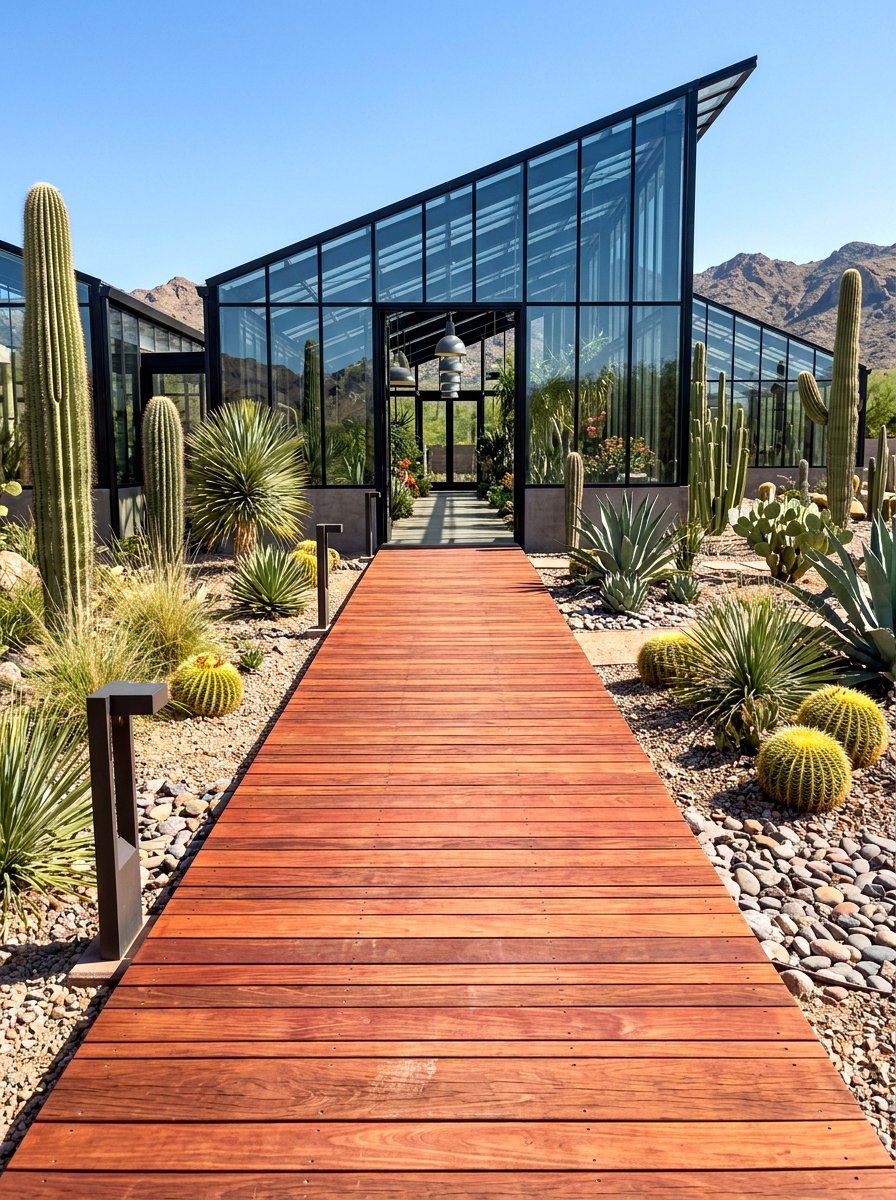
Cedar is naturally resistant to rot and insects, making it one of the best wood choices for a high-moisture greenhouse environment. Building a boardwalk-style path with cedar planks gives your space a clean, architectural look that feels very intentional and organized. The warm reddish hues of the wood provide a beautiful backdrop for deep green tropical plants and architectural cacti. Cedar also emits a pleasant, natural fragrance that enhances the sensory experience of spending time inside your glass house. This design is perfect for those who want a flat, even surface that is comfortable to walk on while still maintaining a warm, organic aesthetic that feels high-end and custom-made.

10. Patterned Tile
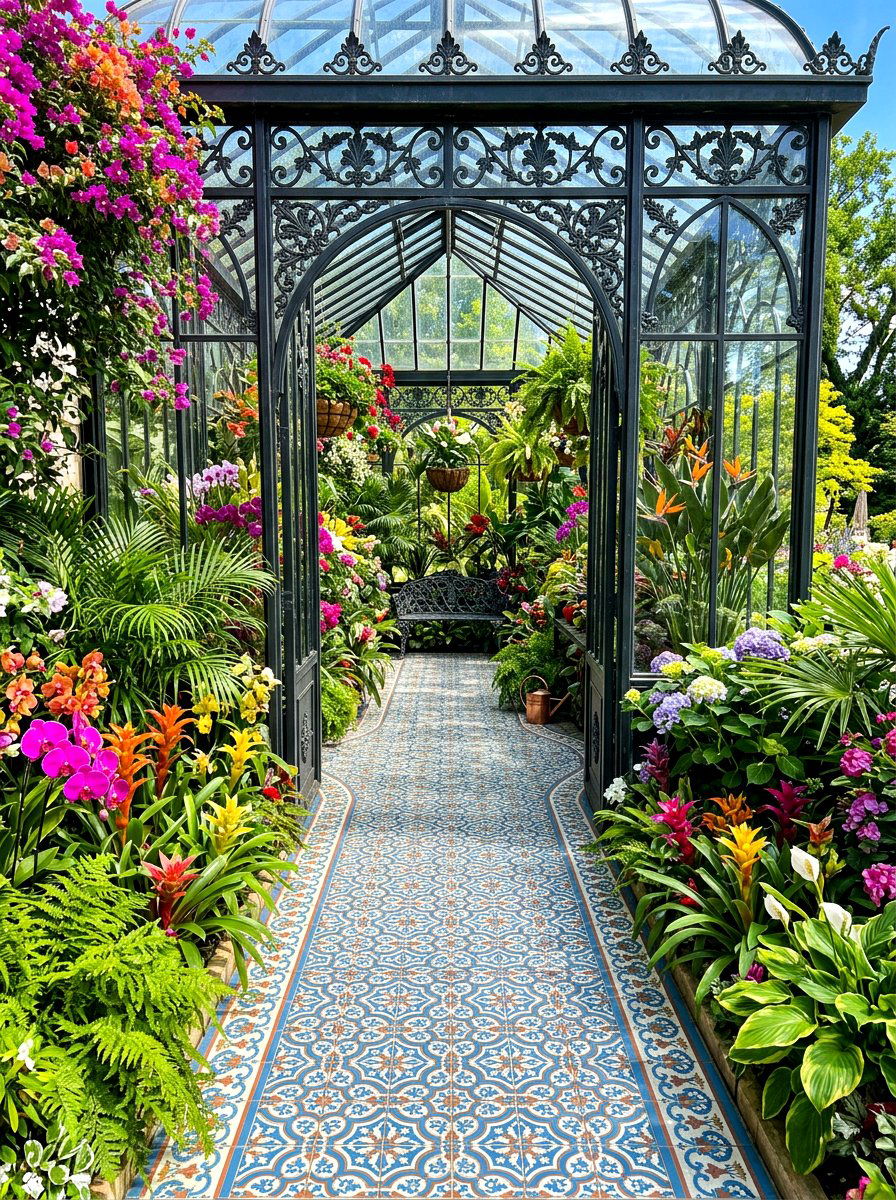
For a bold and artistic greenhouse, patterned ceramic or encaustic tiles can transform a simple walkway into a stunning focal point. These tiles allow you to introduce color and intricate geometry that contrasts beautifully with the organic shapes of your plant collection. To ensure safety, it is vital to select tiles with a high slip-resistance rating, as glazed surfaces can become quite dangerous when wet. This design choice is often seen in Victorian-style conservatories where the floor is treated with as much decorative importance as the architecture itself. It is a brilliant way to express your personal style while creating a durable and easy-to-clean floor that handles spills with ease.
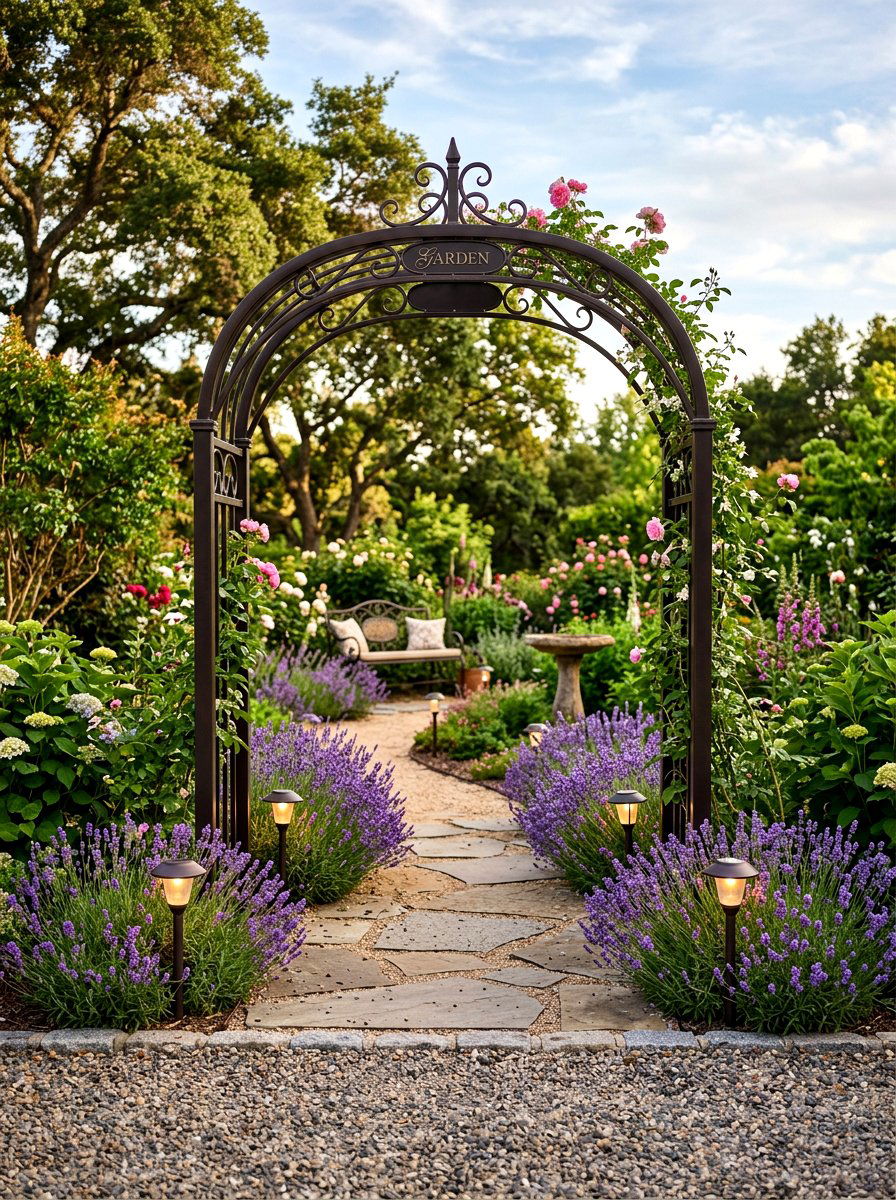
11. Flagstone
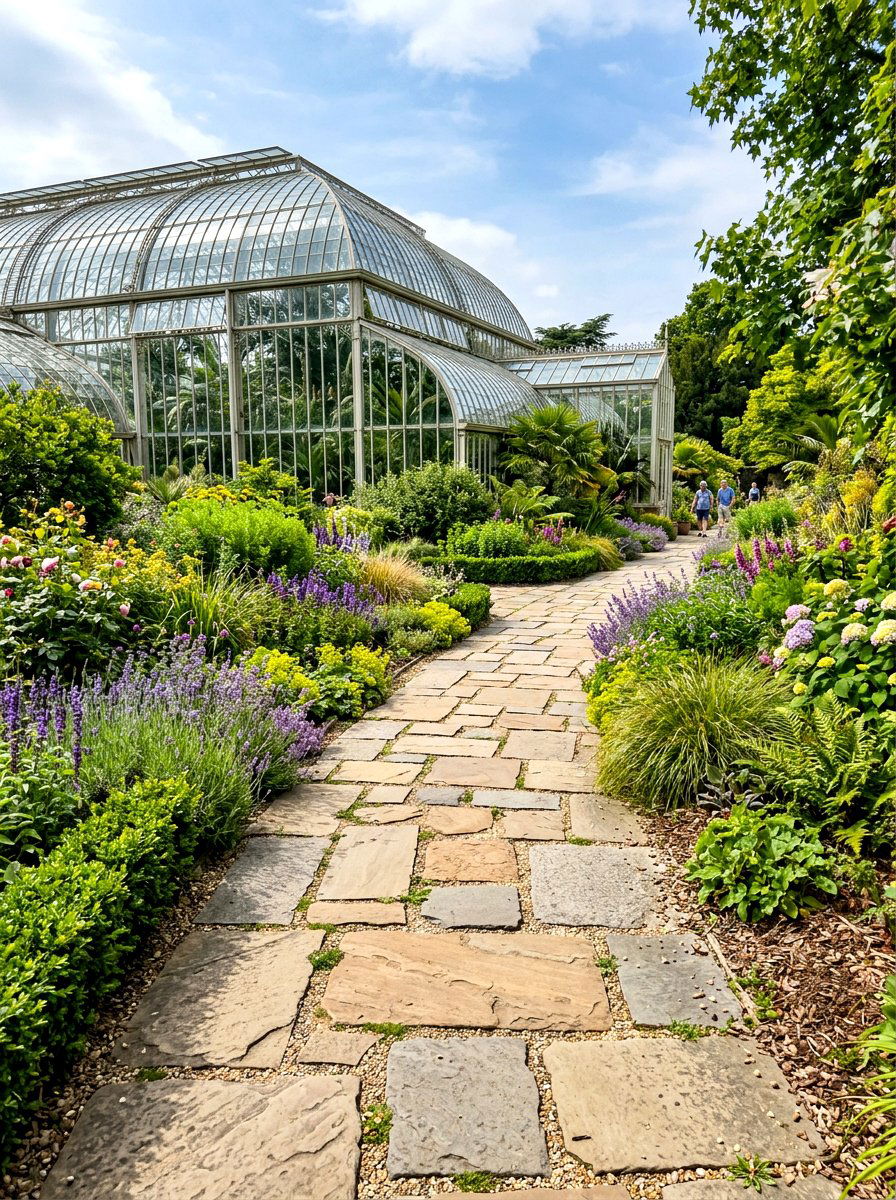
Flagstone paths are celebrated for their natural, irregular shapes that create a relaxed and organic flow within a greenhouse. These large, flat stones are typically made of sandstone or limestone and offer a very stable and comfortable walking surface. Because no two stones are exactly alike, each flagstone path is a unique work of art that grounds the greenhouse in a rugged, earth-toned beauty. The wide joints between the stones can be filled with fine gravel or even a hearty moss to soften the edges and add more greenery. This material is ideal for a large, sprawling greenhouse where you want the walkway to feel like a natural extension of the garden outside.
12. Recycled Brick
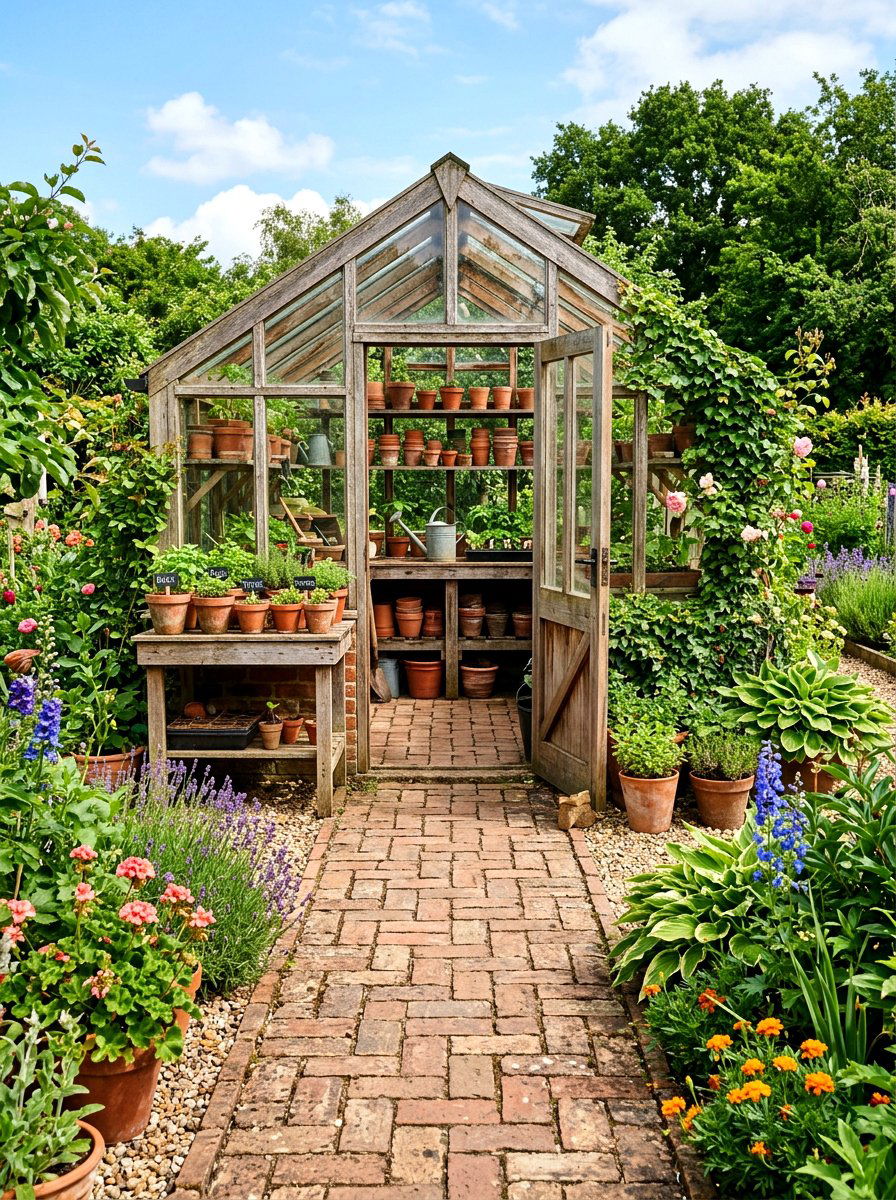
Repurposing old bricks for your greenhouse floor is a sustainable choice that adds instant vintage appeal and a sense of history. These weathered bricks often feature varied colors and slightly chipped edges, which contributes to a cozy, lived-in feel. Laying them in a simple running bond or basketweave pattern keeps the design organized without appearing too formal or rigid. Recycled bricks are an excellent thermal mass, helping to stabilize the interior temperature by soaking up daytime heat. This path style is perfect for a DIY greenhouse project where you want to save money while still achieving a professional and aesthetically pleasing result that complements a wide range of plant types.
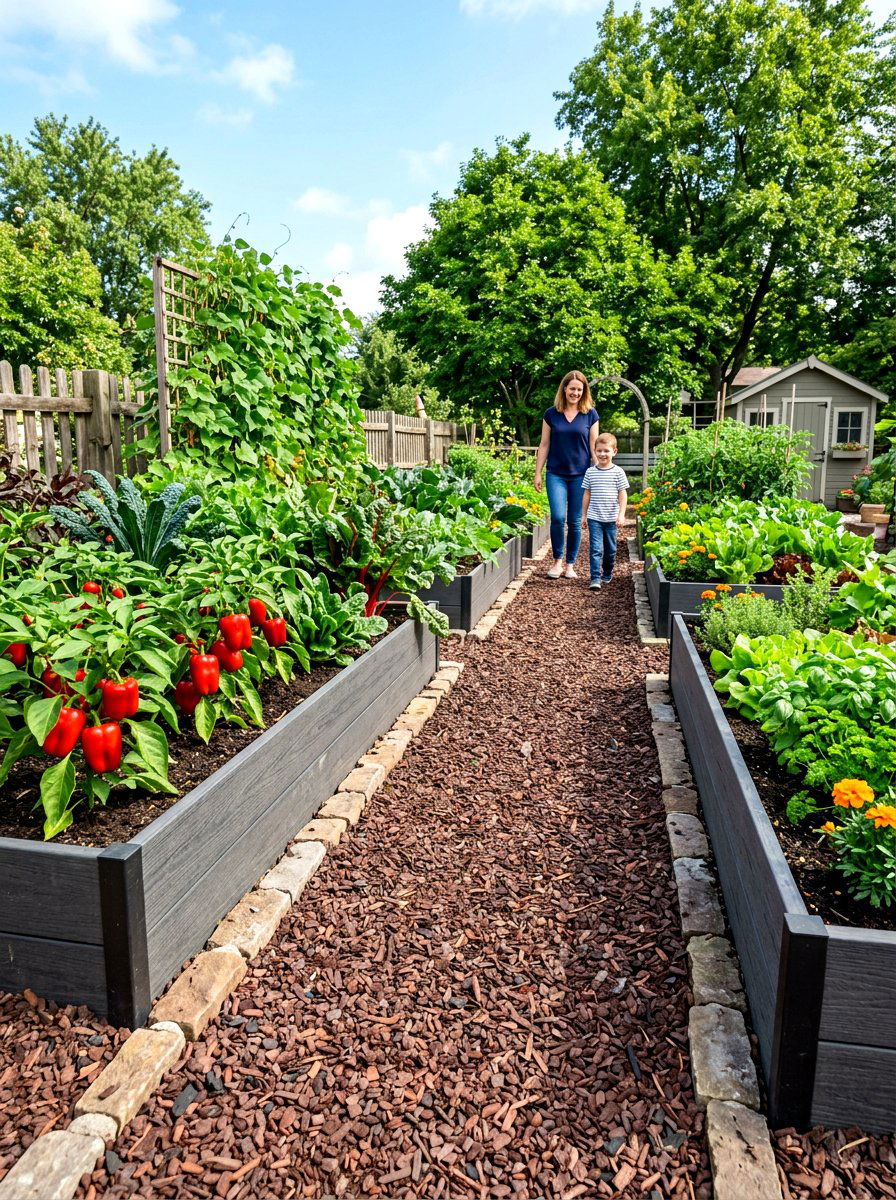
13. Wood Mulch
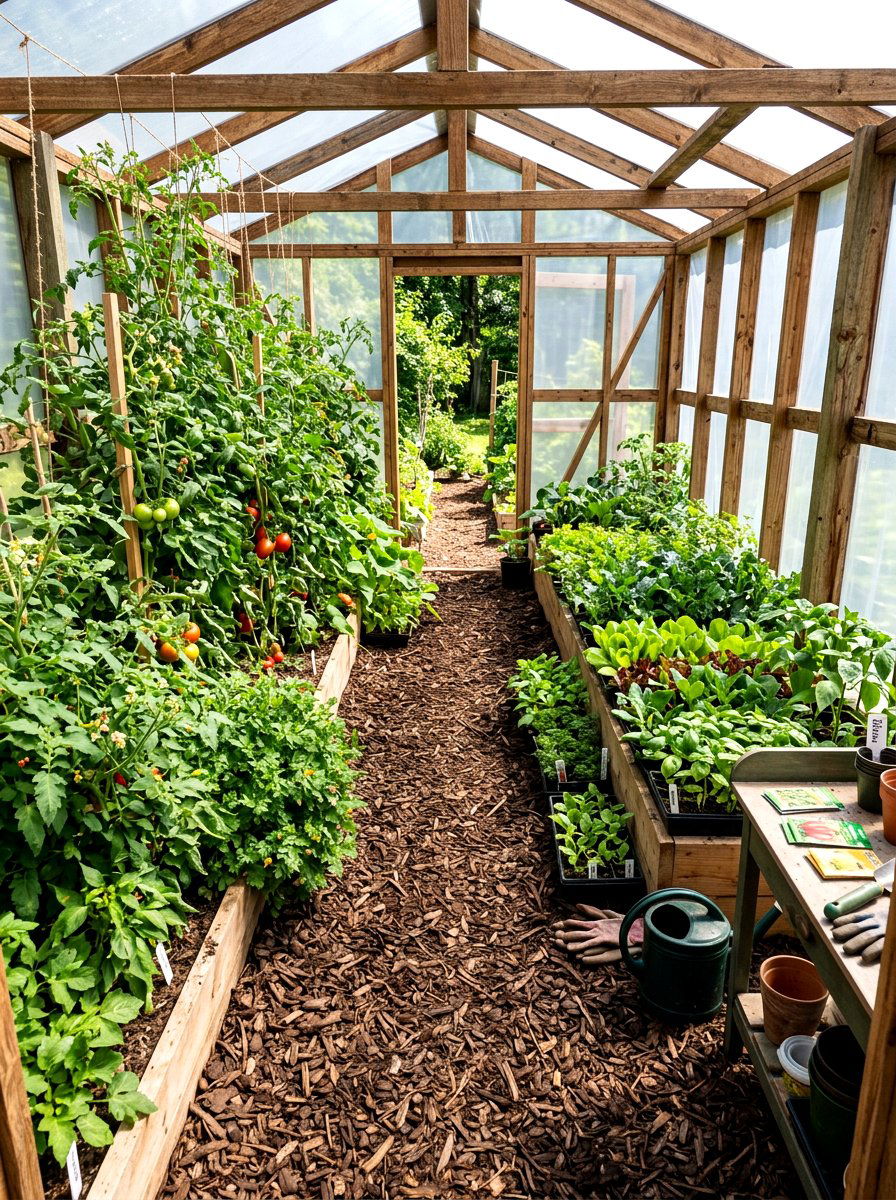
Using wood mulch for a greenhouse path is perhaps the most cost-effective and easiest way to define a walking area. This material offers a very soft, cushioned surface that is easy on the joints during long hours of potting and planting. Mulch naturally absorbs moisture, which can help maintain high humidity levels for tropical plants that thrive in damp air. While it does need to be replenished every year or two as it decomposes, it adds a wonderful earthy scent and a rich, dark color to the floor. This path is best suited for rustic greenhouses or temporary structures where a quick and functional solution is needed to keep the mud at bay.
14. Concrete Slabs
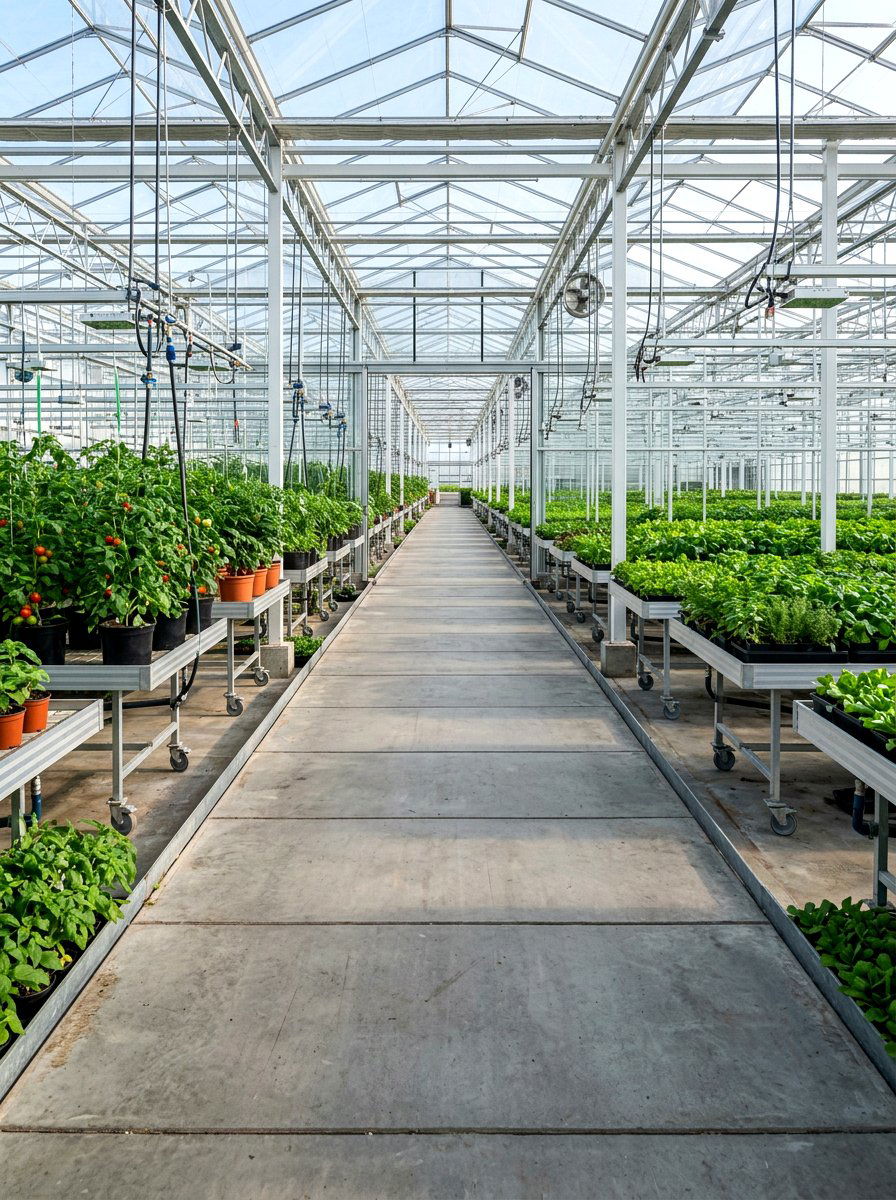
Large-format concrete slabs are the gold standard for modern, high-performance greenhouses that prioritize cleanliness and ease of movement. These oversized squares or rectangles create a smooth, level surface that is perfect for moving heavy equipment, benches on wheels, or large plant trolleys. The neutral grey of the concrete allows the colors of your flowers and foliage to truly pop without any visual competition from the floor. Concrete is also incredibly easy to sanitize, which is important if you are focused on starting delicate seedlings or preventing the spread of plant diseases. This design is perfect for the serious grower who wants a professional-grade workspace that is both functional and aesthetically minimal.

15. Terracotta Tile
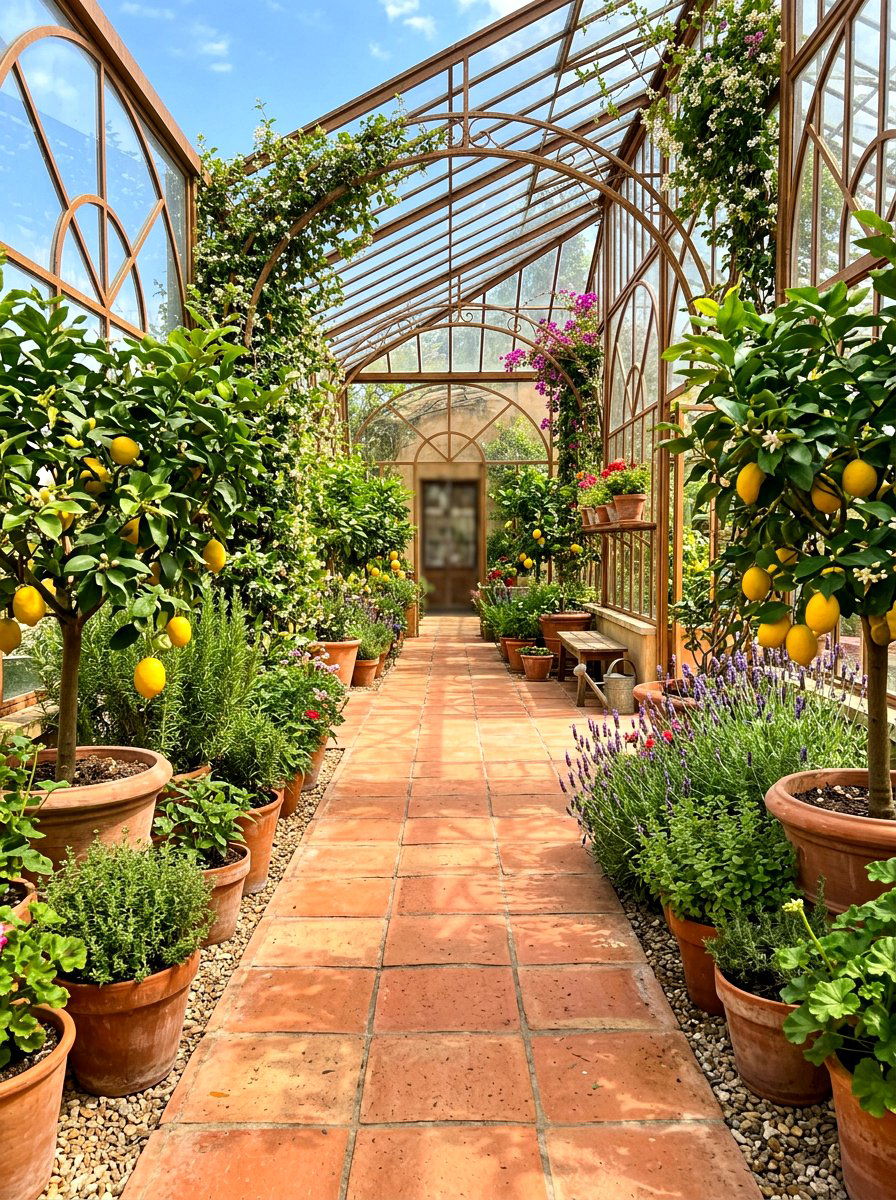
Terracotta tiles bring a warm, sun-baked aesthetic to a greenhouse that instantly evokes the feeling of a classic Italian garden. These unglazed clay tiles are highly porous, which means they can absorb water and then slowly release it through evaporation, helping to cool the air on hot days. The rich orange and red tones of terracotta provide a vibrant and earthy contrast to the lush green leaves of citrus trees and Mediterranean herbs. Because they are baked at high temperatures, these tiles are quite durable, though they do require a level subfloor for proper installation. This is a wonderful choice for those who want a traditional, timeless look that feels incredibly inviting.
16. River Rock
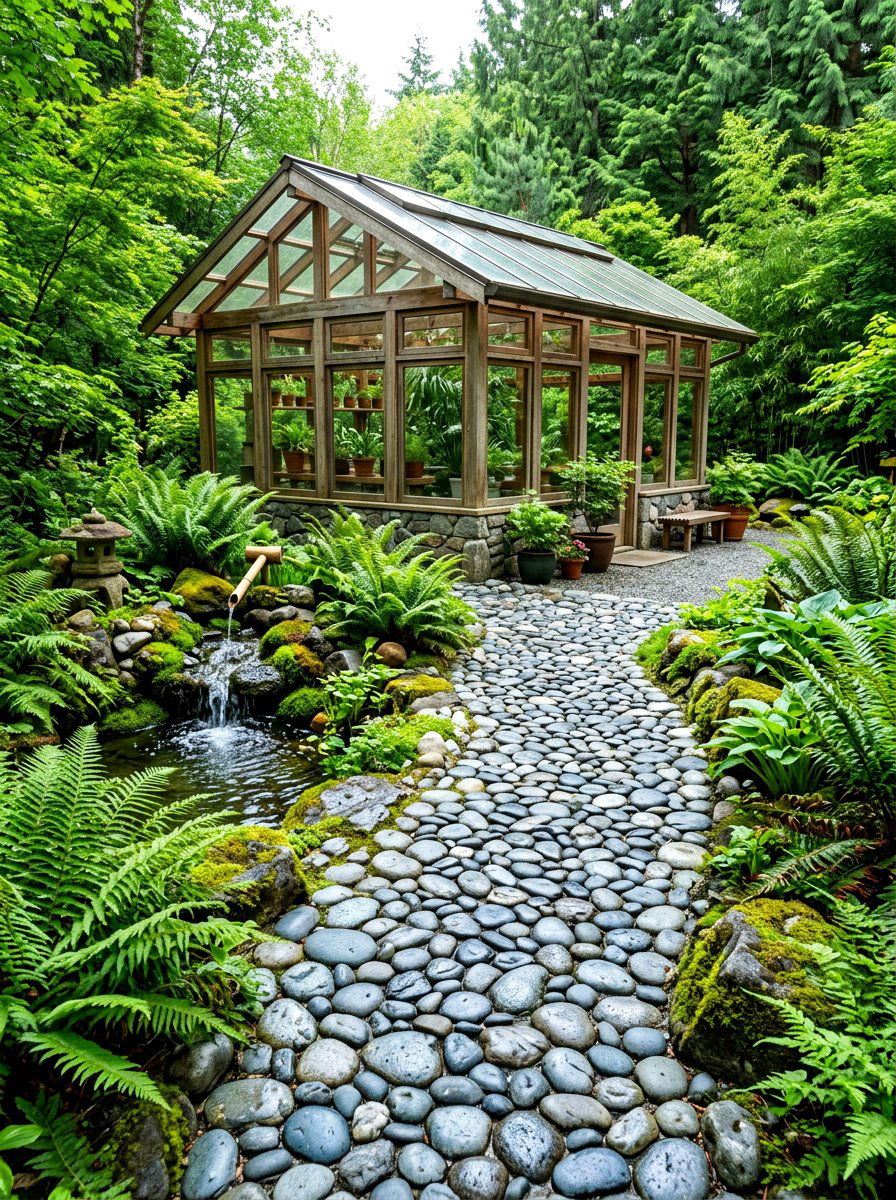
Using smooth, rounded river rocks to create a greenhouse path adds a serene and meditative quality to your indoor gardening space. These stones are naturally polished by water and come in a variety of soft greys, tans, and blues that look beautiful when wet. Creating a "dry creek" style path with larger rocks on the edges and smaller ones in the center can help guide the eye through the greenhouse. This material provides excellent drainage and stays cool to the touch, which is pleasant during the peak of summer. It is an ideal choice for a Zen-inspired greenhouse or a space dedicated to water-loving plants and indoor koi ponds or fountains.
17. Grass Path
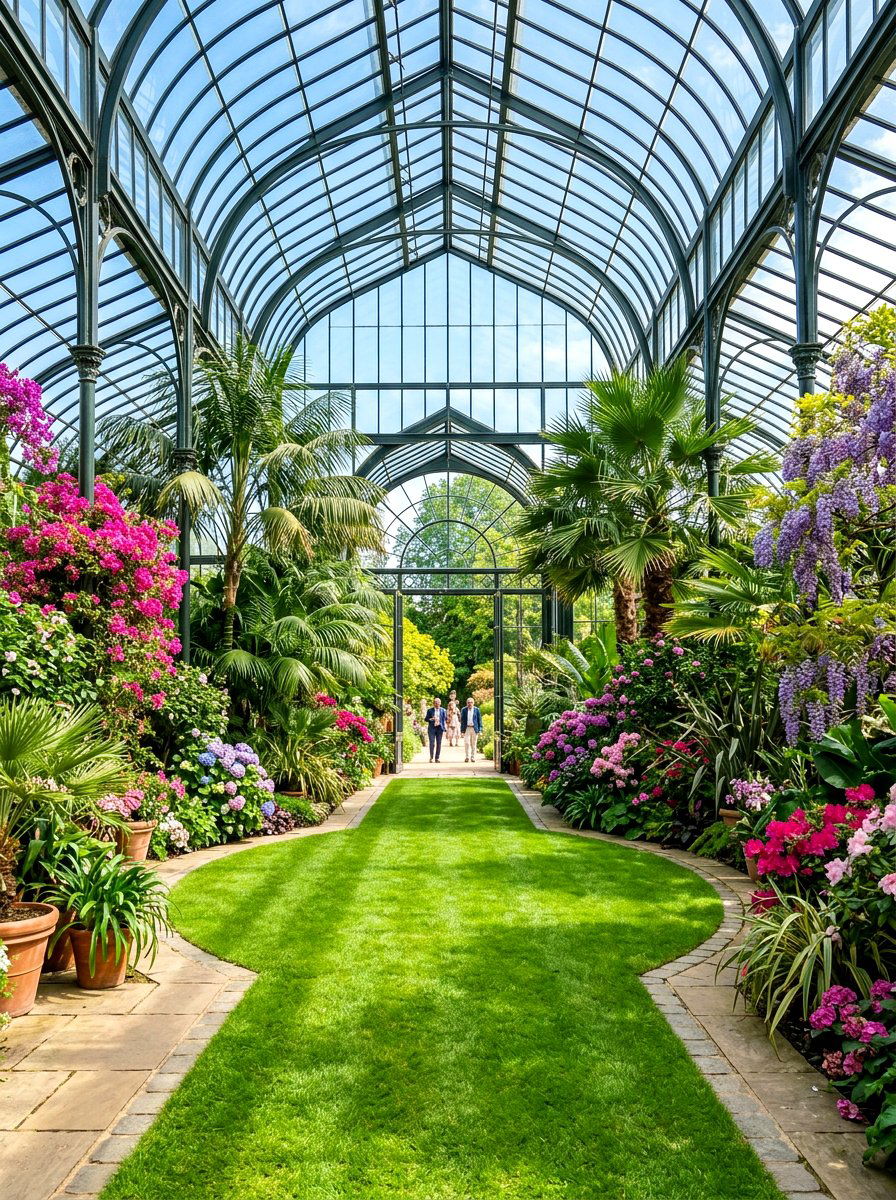
While less common, a living grass path inside a greenhouse can create a lush and seamless transition between the indoor and outdoor garden. This design requires a greenhouse with high light levels and excellent ventilation to keep the turf healthy and prevent fungal issues. Walking barefoot on a cool grass path while tending to your plants is a luxurious sensory experience that few other materials can match. To maintain this look, you will need to use a small push mower or hand shears to keep the blades at a manageable height. This path is perfect for large, airy glass houses that are used more as a lifestyle extension or sunroom than a heavy-duty production space.
18. Moss Walkway
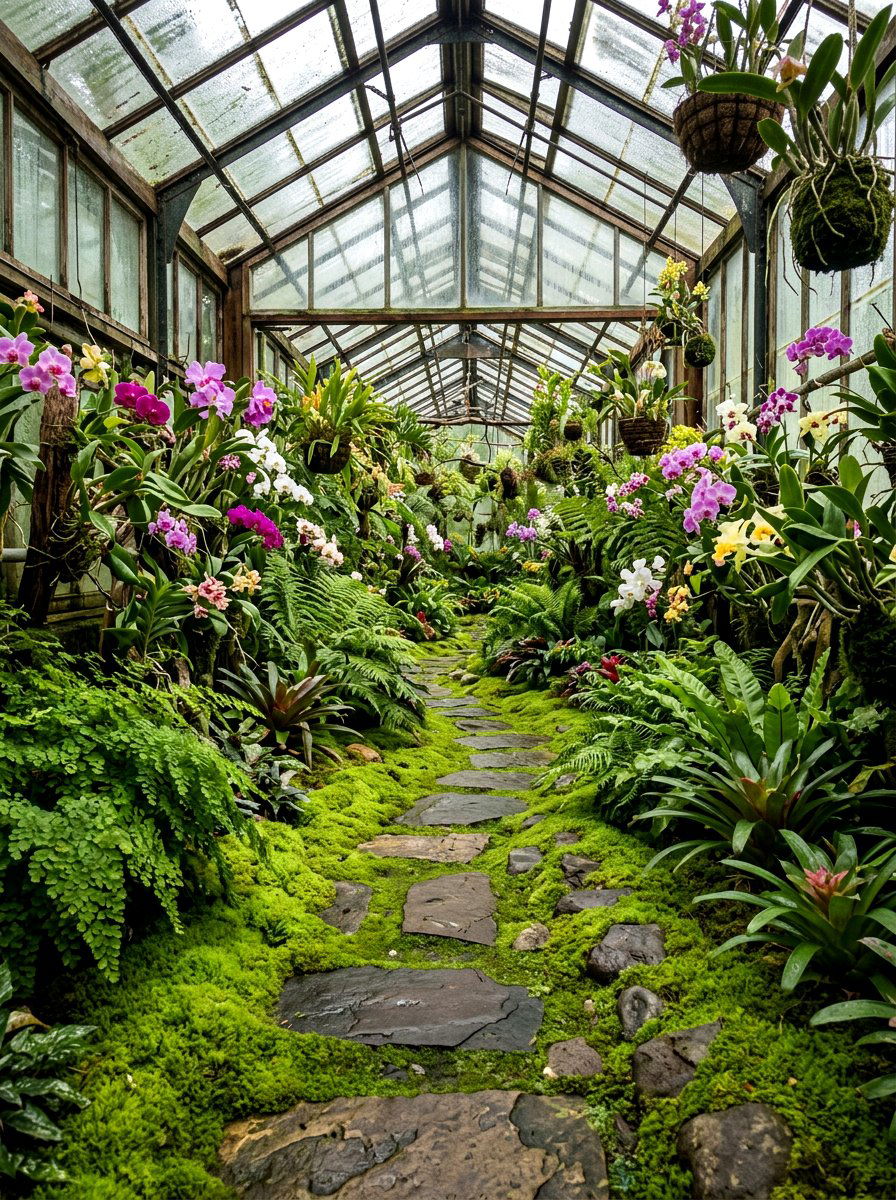
A moss walkway is the ultimate choice for a shaded or north-facing greenhouse where moisture is abundant and light is soft. This velvety green carpet feels incredibly soft underfoot and adds a layer of ancient, woodland charm to your plant collection. Moss thrives in the humid conditions of a greenhouse and requires very little maintenance other than consistent misting to keep it vibrant. To create a stable walking surface, you can place small, flat stones within the moss to act as anchors for your feet. This ethereal design is perfect for those who grow delicate ferns, orchids, or carnivorous plants and want their greenhouse to feel like a magical, hidden grotto.
19. Decomposed Granite
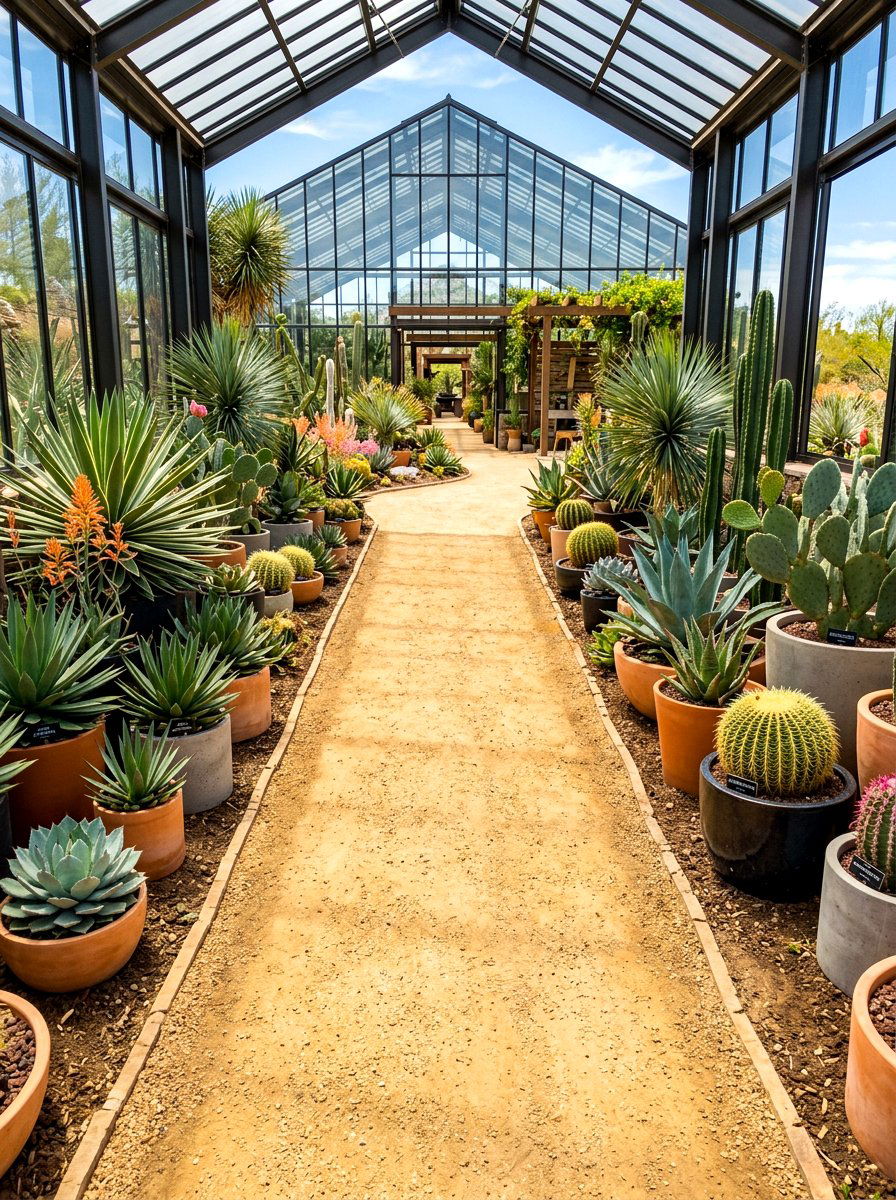
Decomposed granite is a popular choice for greenhouse paths because it provides a very firm and stable surface while still being permeable. This material consists of tiny granite particles that pack down tightly, creating a walkway that feels almost as solid as concrete but with a more natural, sandy texture. It is available in various colors, from golden tans to cool greys, allowing you to match the floor to your greenhouse frame or surrounding landscape. Because it is so stable, it is an excellent choice for pathways that need to accommodate wheelchairs or heavy garden carts. It offers a clean, professional look that works well in both modern and traditional designs.

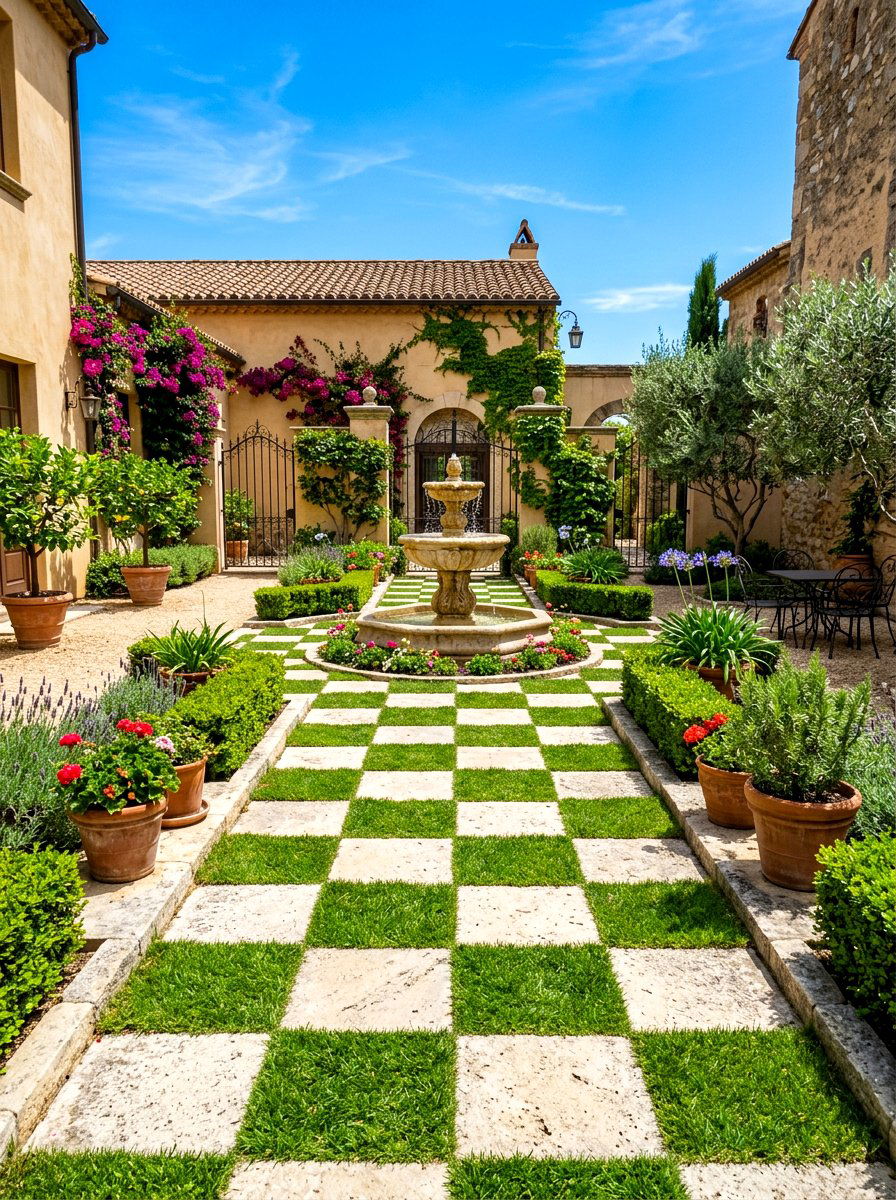
20. Checkerboard Paver
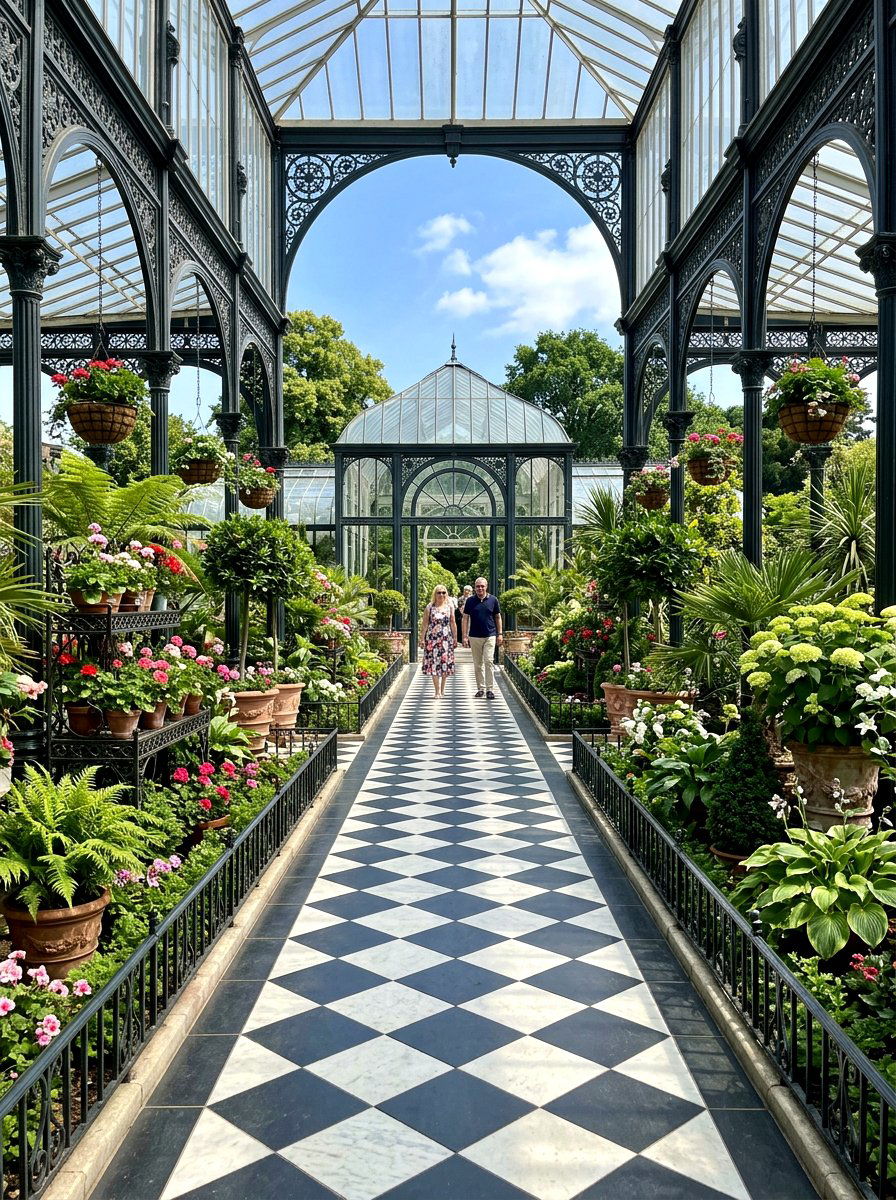
A checkerboard pattern using alternating colors of square pavers creates a playful and classic visual rhythm in a greenhouse. This design typically uses black and white or grey and tan stones to create a focal point that draws the eye toward the end of the walkway. The geometric precision of a checkerboard floor provides a structured contrast to the wild and organic growth of the plants above it. This style is often found in grand or historical greenhouses where architectural detail is a priority. It is a fantastic way to make a statement and give your gardening space a sense of formality and elegance that makes every visit feel like a special occasion.
21. Pallet Wood
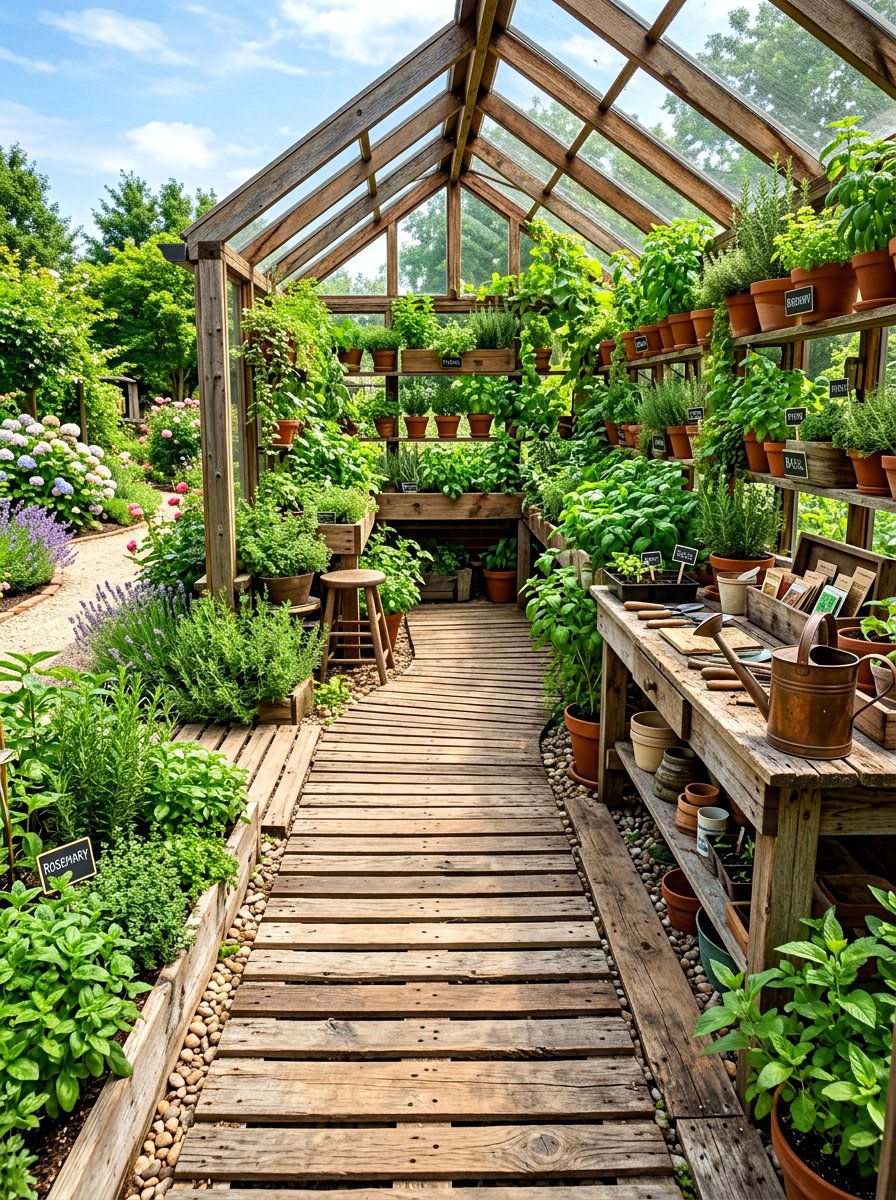
For the budget-conscious gardener, pallet wood can be disassembled and repurposed to create a functional and charming boardwalk path. These narrow slats can be laid horizontally across a frame to create a sturdy surface that keeps your feet well above any damp soil. The varied colors and textures of the wood give the greenhouse a rustic, handcrafted feel that is full of personality. Since pallet wood is often treated, it is important to ensure it is safe for use around edible plants or to seal it with a non-toxic finish. This is an excellent weekend DIY project that adds a cozy, homesteading vibe to any backyard greenhouse or small potting shed.
22. Crushed Limestone
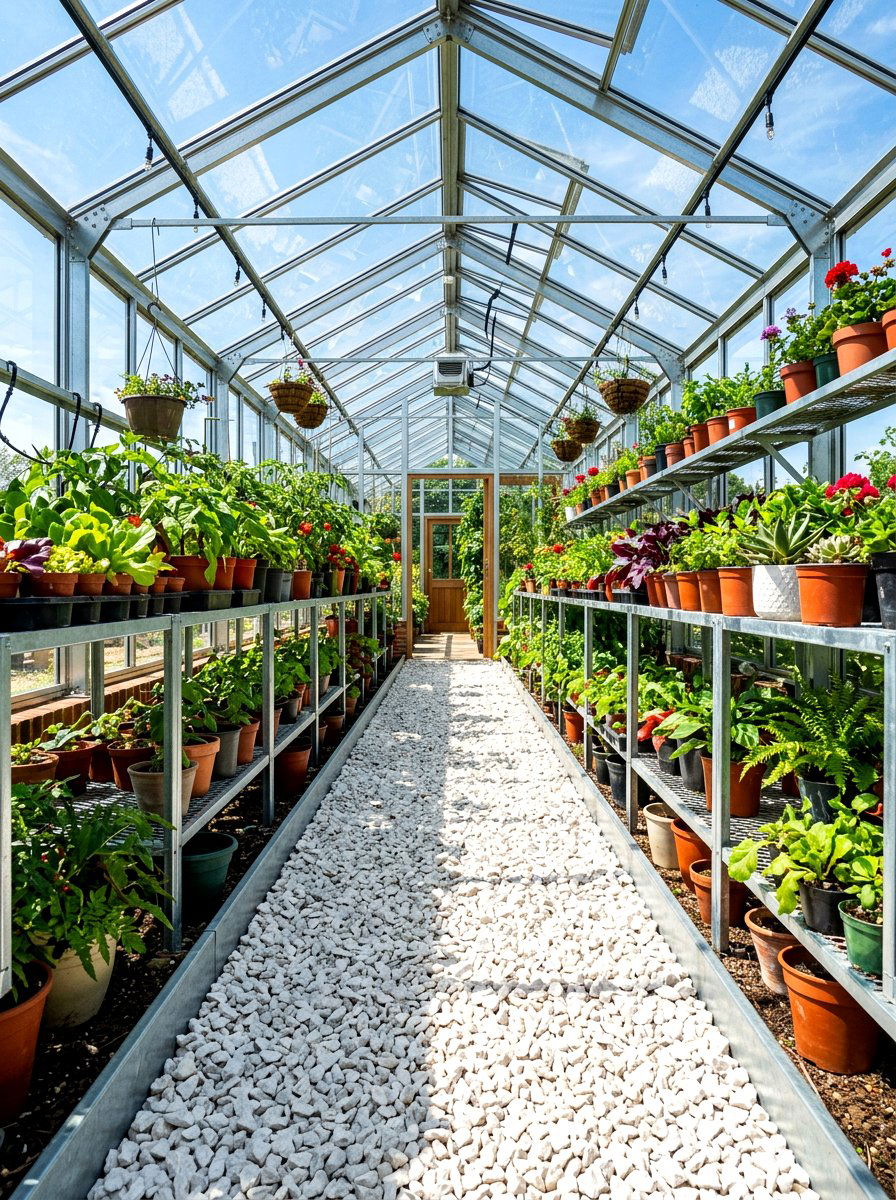
Crushed limestone is a bright and practical material that offers a clean, high-contrast look for a greenhouse walkway. The sharp, angular edges of the crushed stone lock together when compacted, creating a very stable and non-slip surface for walking. The light color of limestone reflects sunlight, which can help illuminate the lower tiers of your plant benches and boost overall light levels. Limestone is also naturally alkaline, which can be beneficial if you are growing plants that prefer a higher pH balance. This material provides a neat and tidy appearance that is very easy to maintain, as it suppresses weeds and drains water quickly and efficiently.
23. Mosaic Pebble
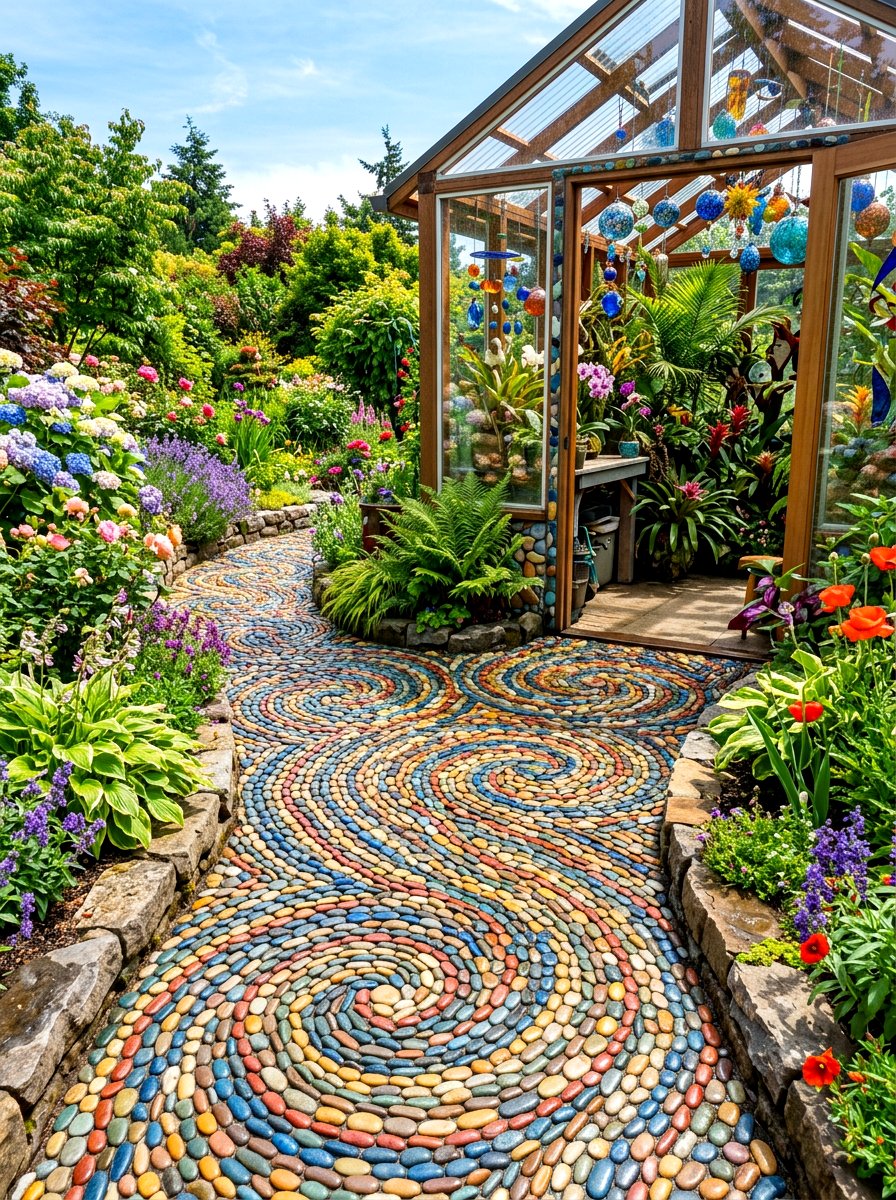
A mosaic pebble path allows you to turn your greenhouse floor into a unique and permanent work of art. By hand-setting small, colorful pebbles into a bed of mortar, you can create intricate swirls, floral patterns, or geometric borders that reflect your personal creativity. This design adds an incredible amount of texture and visual depth to the space, making the floor as interesting as the plants themselves. While it is a labor-intensive project, a pebble mosaic is extremely durable and easy to clean with a simple hose-down. It is a perfect choice for a boutique greenhouse or a creative retreat where every detail is meant to inspire and delight the senses.
24. Flagstone And Moss
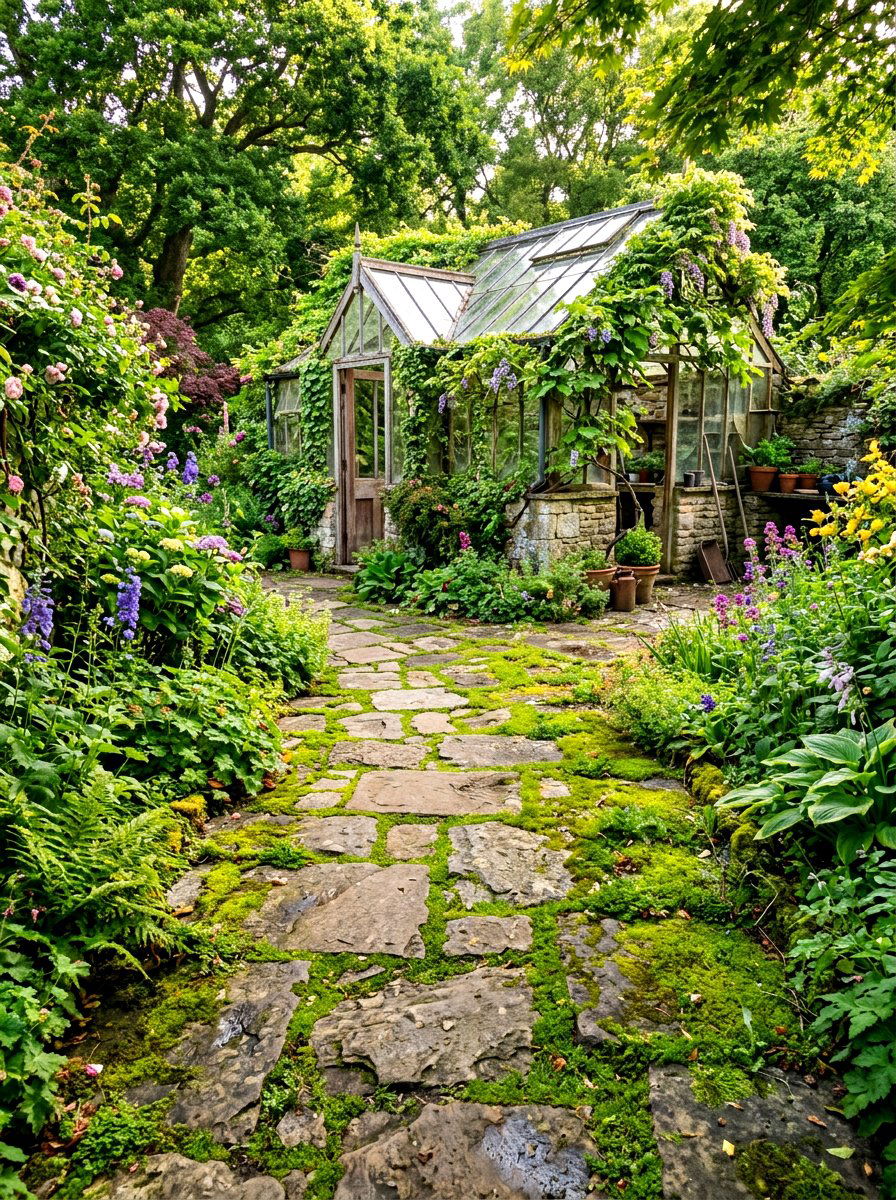
Combining the structural stability of flagstone with the soft, organic texture of moss creates a beautifully balanced and "aged" look. In this design, large flat stones are spaced a few inches apart, and the gaps are filled with lush green moss that thrives in the humid greenhouse air. This technique softens the hard edges of the stone and makes the walkway look like it has been there for decades. The moss helps to retain moisture in the air, while the flagstone provides a clean and solid place to step. This is a top choice for traditional or rustic greenhouses where a harmonious blend of hardscape and softscape is the primary goal.

25. Porcelain Outdoor Tile
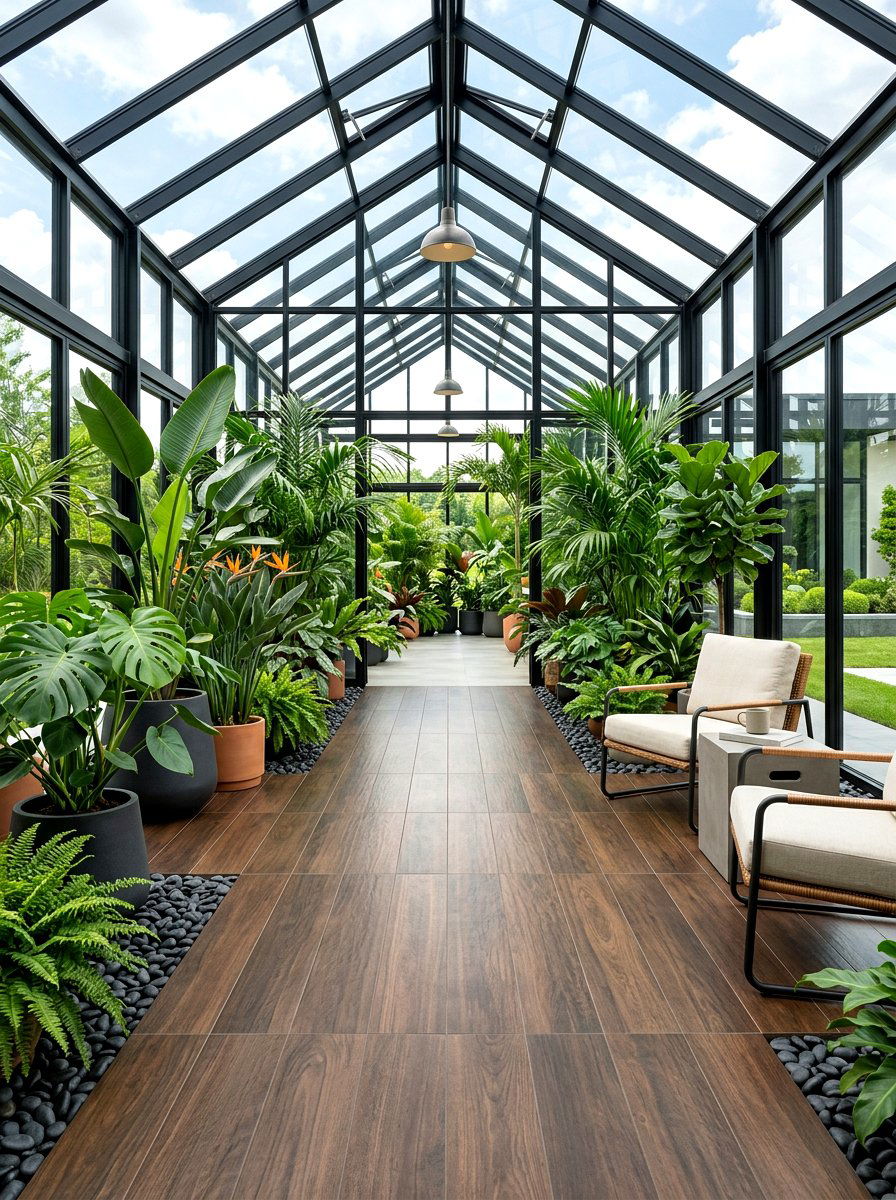
Porcelain outdoor tiles are a high-performance option for those who want a completely waterproof and incredibly durable greenhouse floor. These tiles are fired at extremely high temperatures, making them non-porous and resistant to stains, scratches, and fading from UV rays. Many modern porcelain tiles are designed to look exactly like natural stone or wood but without the maintenance requirements. They provide a perfectly level and easy-to-clean surface that is ideal for a professional potting area or a high-end conservatory. With a wide variety of finishes and patterns available, porcelain tiles allow for complete customization of your greenhouse's interior style while offering unmatched longevity and safety.
26. Bluestone Paver
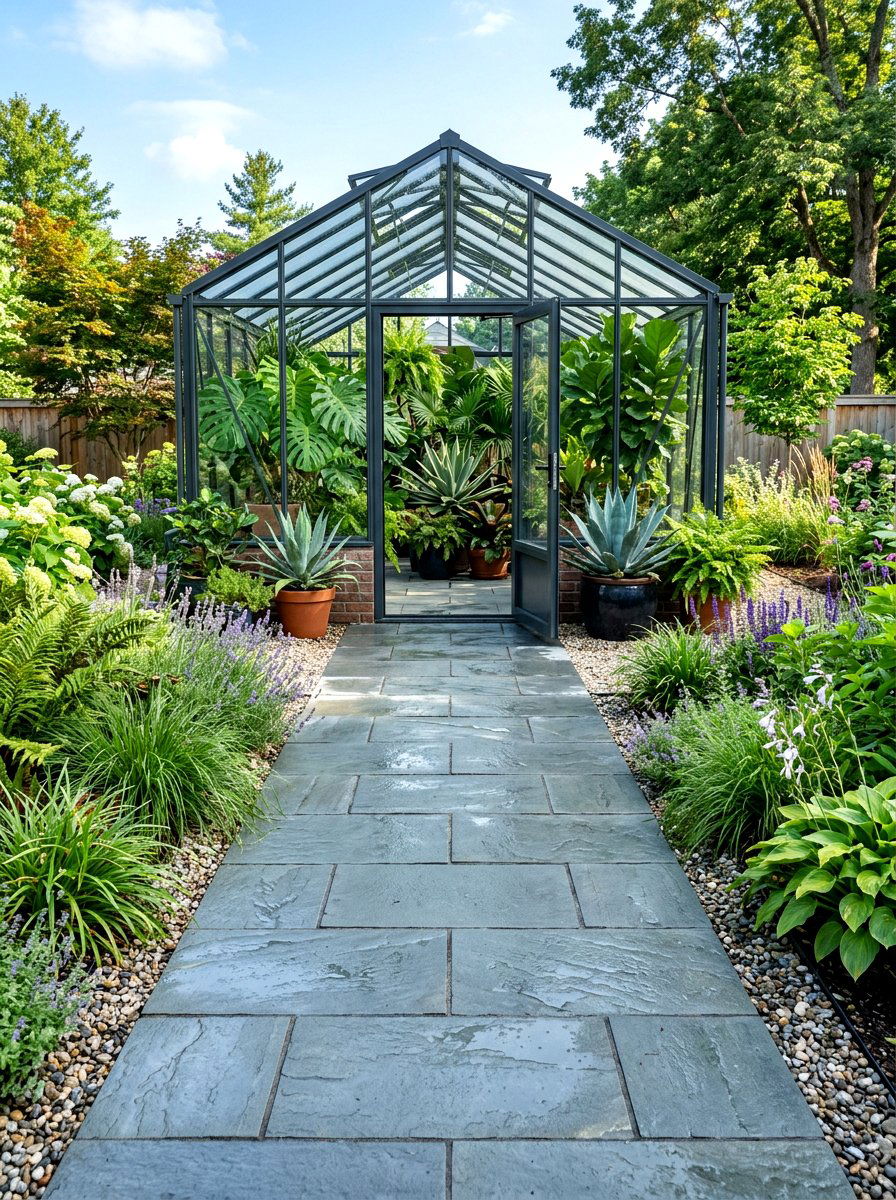
Bluestone is a type of sandstone known for its beautiful deep blue and grey hues that add a cool and calming feel to a greenhouse. These pavers are typically cut into precise rectangles, which allows for a clean and organized layout that feels very intentional. Bluestone has a naturally cleft surface that provides excellent grip even when wet, making it a very safe choice for a high-moisture environment. The stone's dense structure makes it a fantastic thermal mass, helping to regulate temperature swings throughout the day and night. This material is perfect for gardeners who want a high-quality, natural stone floor that feels substantial and sophisticated.
27. Gravel And Timber
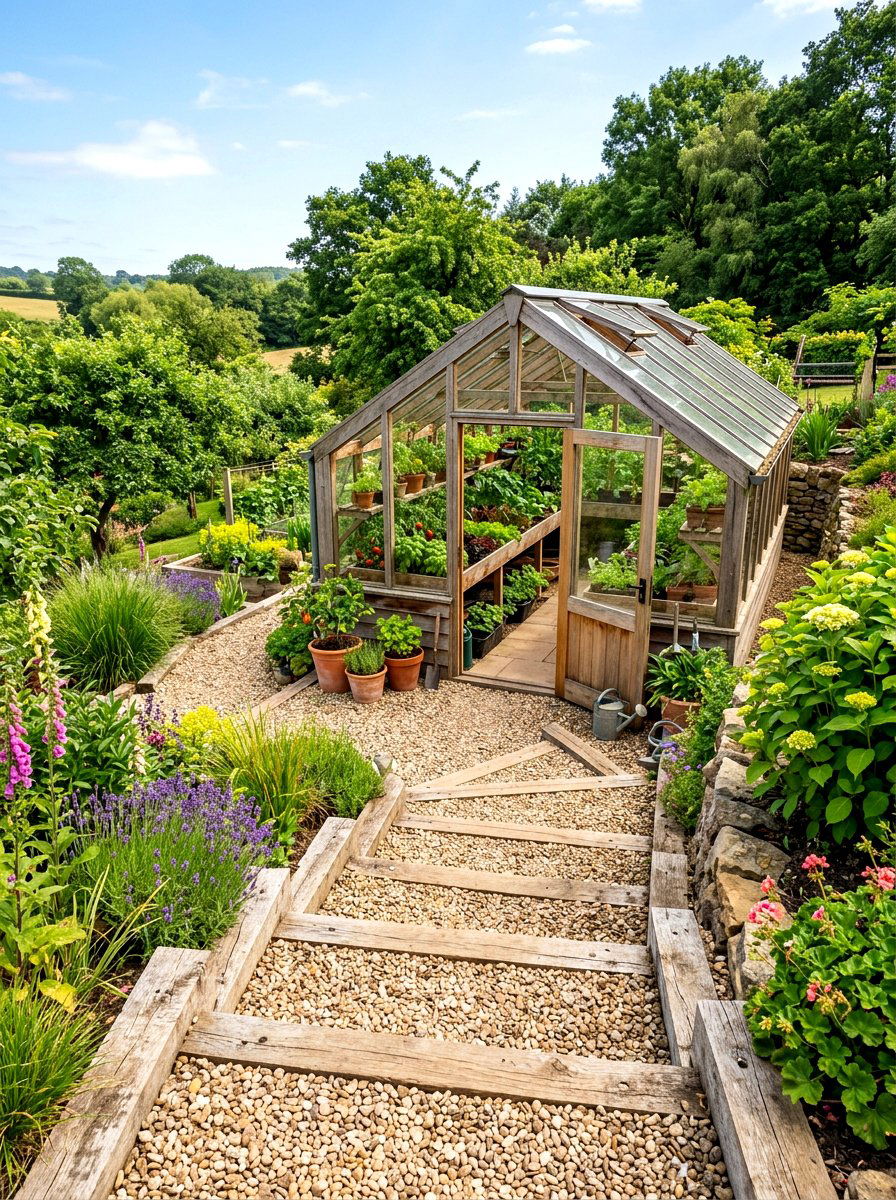
A combination of gravel and timber creates a textured and visually interesting "stepped" path that is both functional and attractive. In this design, timber beams are used as "risers" or frames to hold sections of gravel in place, creating a series of shallow steps or defined segments. This approach is excellent for greenhouses built on a slight slope or for those who want to add a sense of structure to a loose gravel path. The contrast between the warm wood and the cool, crunchy stones adds a layers of design depth that works well in any style of greenhouse. It is a sturdy and reliable system that offers great drainage and a professional finish.
28. Travertine Tile
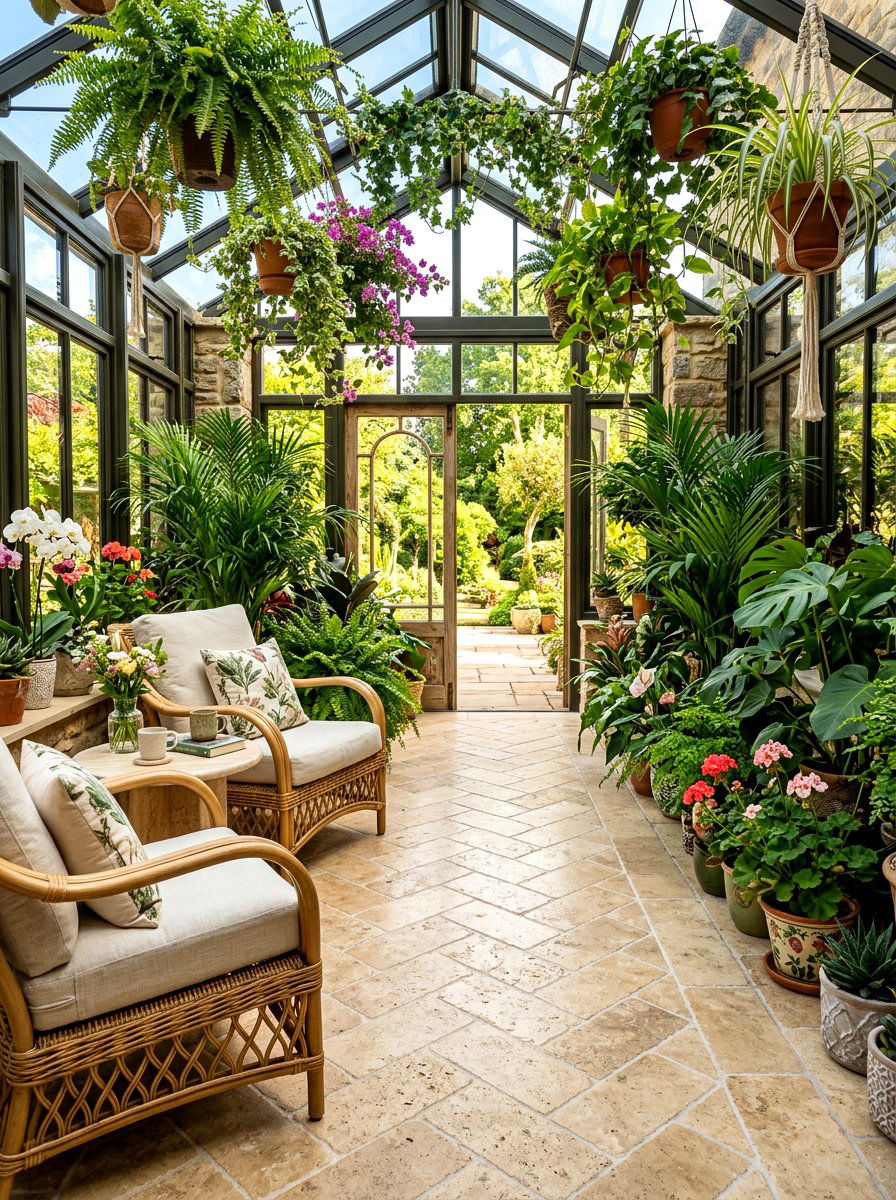
Travertine tiles offer a soft, creamy color palette and a unique pitted texture that brings a luxurious Mediterranean feel to an indoor garden. This natural stone is highly valued for its ability to stay cool even under direct sunlight, making it comfortable to walk on during hot summer afternoons. The subtle variations in beige, tan, and ivory tones provide a warm and bright backdrop that makes a greenhouse feel airy and expansive. While travertine is a softer stone, it is very durable when properly installed on a solid base. It is an ideal choice for a sunroom-style greenhouse where you want a high-end, elegant floor that feels like an extension of the home.
29. Sandstone Flagging
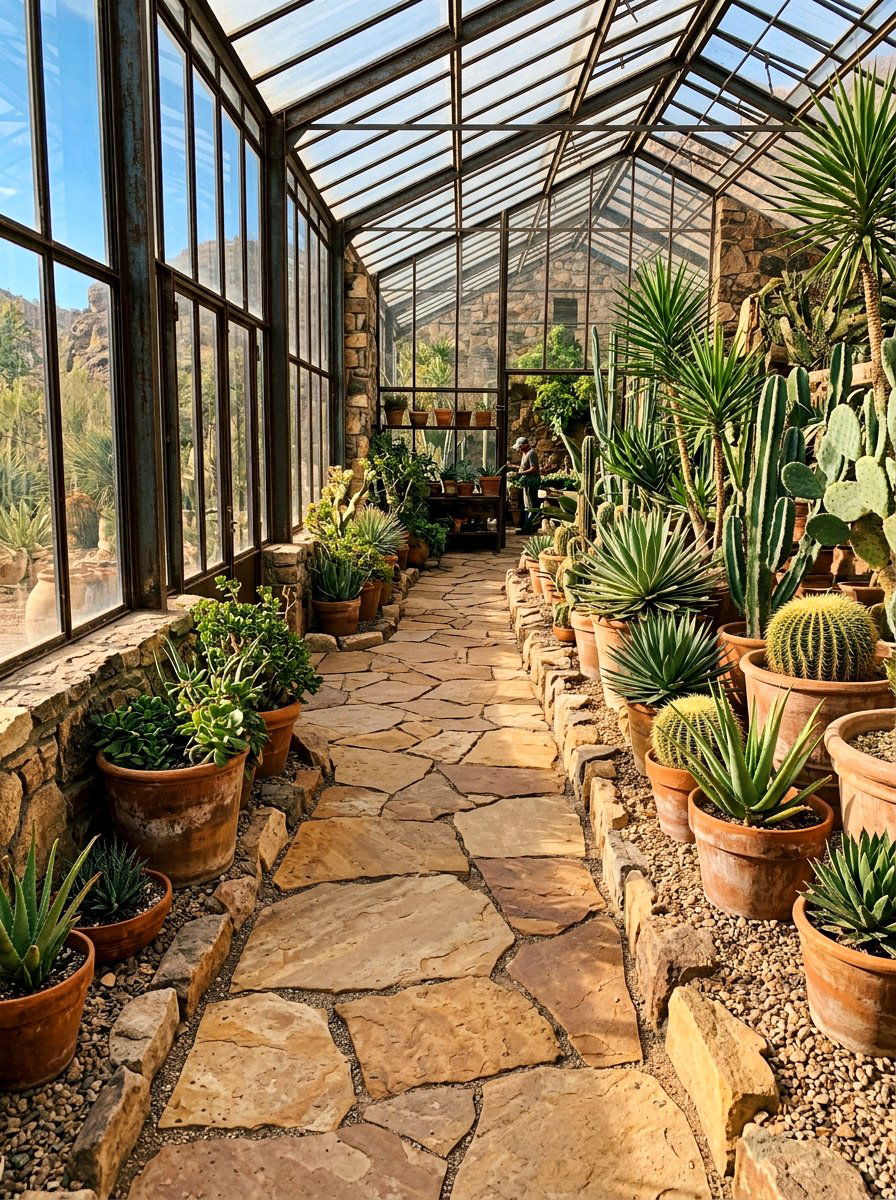
Sandstone flagging is characterized by its beautiful earthy tones and naturally layered texture that adds a rugged, desert-inspired beauty to the floor. These large, flat stones are often split along natural lines, giving them a slightly uneven surface that provides a great non-slip grip. Sandstone is very durable and holds up well to the constant humidity and temperature changes found inside a glass structure. The warm yellows, oranges, and browns found in sandstone complement a wide variety of terracotta pots and wooden plant stands. This is a fantastic material for creating a path that feels grounded and connected to the natural landscape, offering a very stable and permanent walking surface.
30. Red Clay Brick
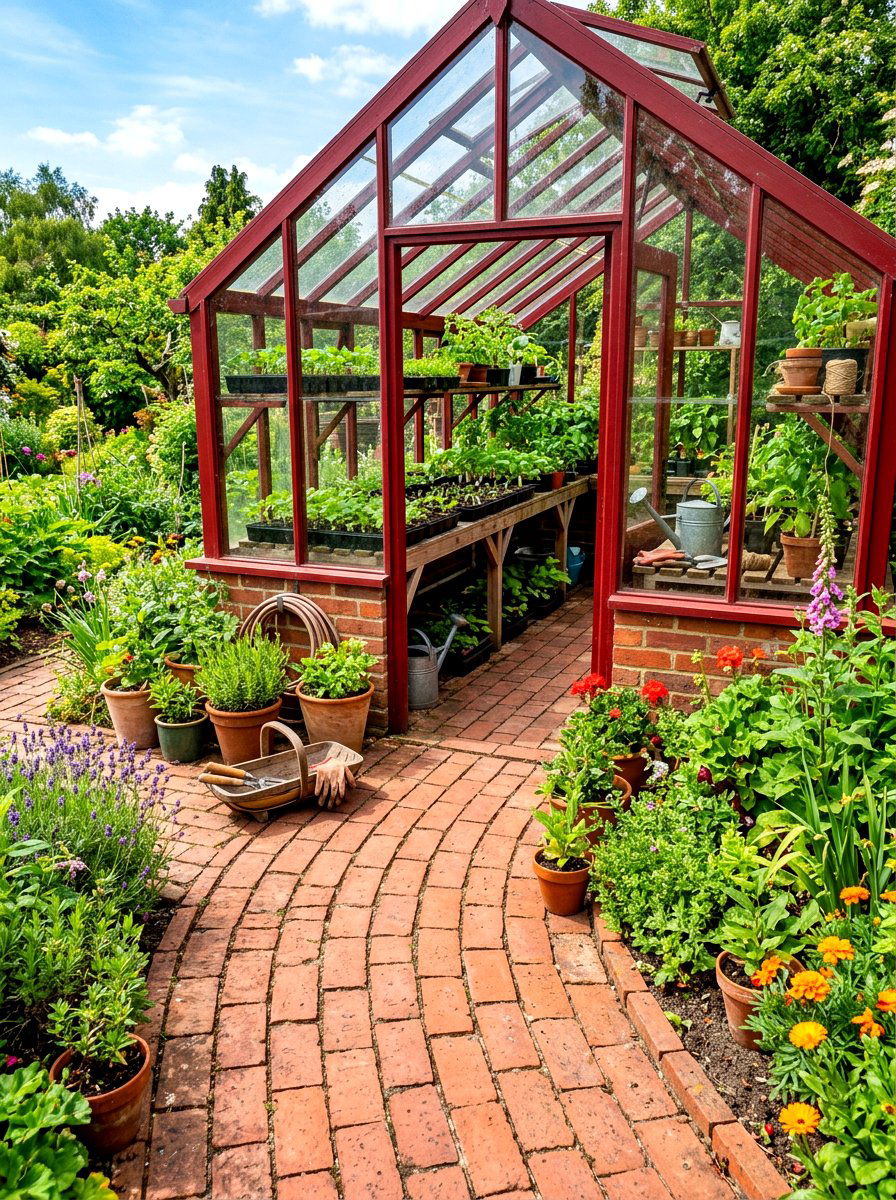
Red clay bricks are the quintessential choice for a traditional and hardworking greenhouse floor. Whether laid in a simple stack bond or a more complex basketweave, these bricks provide a sturdy and reliable surface that only gets better with age. The deep red color of the clay provides a vibrant contrast to green foliage and helps the greenhouse feel cozy and warm even in the middle of winter. Bricks are easy to replace if one happens to crack, and they offer excellent moisture management by absorbing spills. This is a timeless design that works perfectly for everything from a small backyard hobby house to a large, professional growing facility.
Conclusion:
Choosing the right path for your greenhouse is a critical decision that balances functionality with your personal design aesthetic. A well-constructed walkway not only protects your plants by preventing soil compaction but also ensures your safety in a humid, potentially slippery environment. From the thermal benefits of heavy stone and brick to the rapid drainage of pea gravel and crushed shell, each material offers unique advantages for your specific climate. By considering factors like maintenance, budget, and the types of plants you grow, you can create a space that is as beautiful as it is productive. Your greenhouse path is the journey through your garden, so make it a path worth walking every single day.

Related posts: