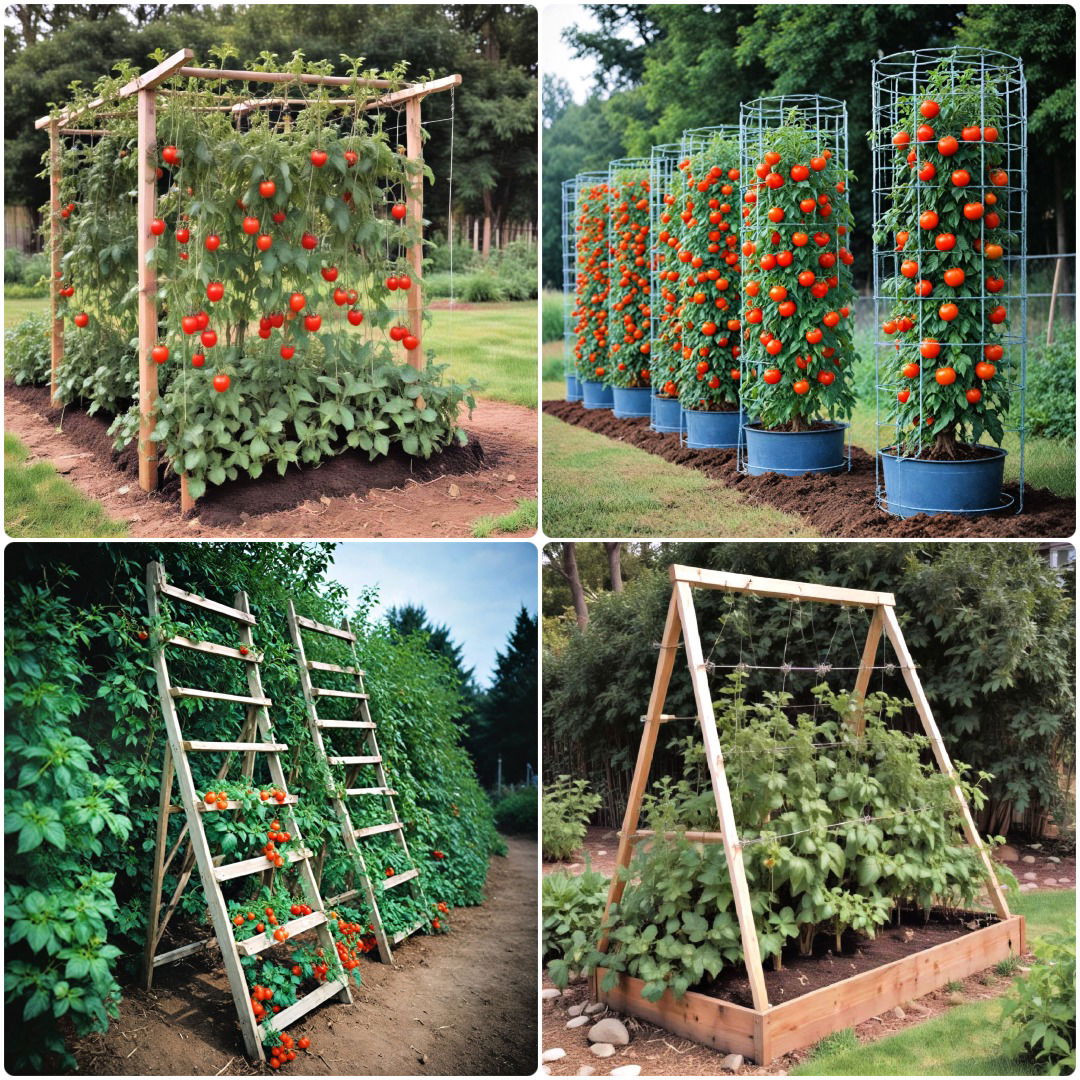
Transforming a sloped or uneven yard into a functional and beautiful oasis often starts with the right landscaping foundation. Garden retaining walls are much more than simple structural barriers designed to hold back soil; they are essential design elements that define your outdoor living space. Whether you are dealing with a steep hillside, preventing erosion, or simply looking to create stunning terraced flower beds, these structures offer endless possibilities. From the rustic charm of natural stone to the sleek, modern aesthetic of steel, the choice of material can reinvent your home's exterior appeal. By carefully planning your layout, you can turn a challenging landscape into inviting, level zones for relaxation, gardening, and entertaining guests.
1. Natural Stone Garden Wall
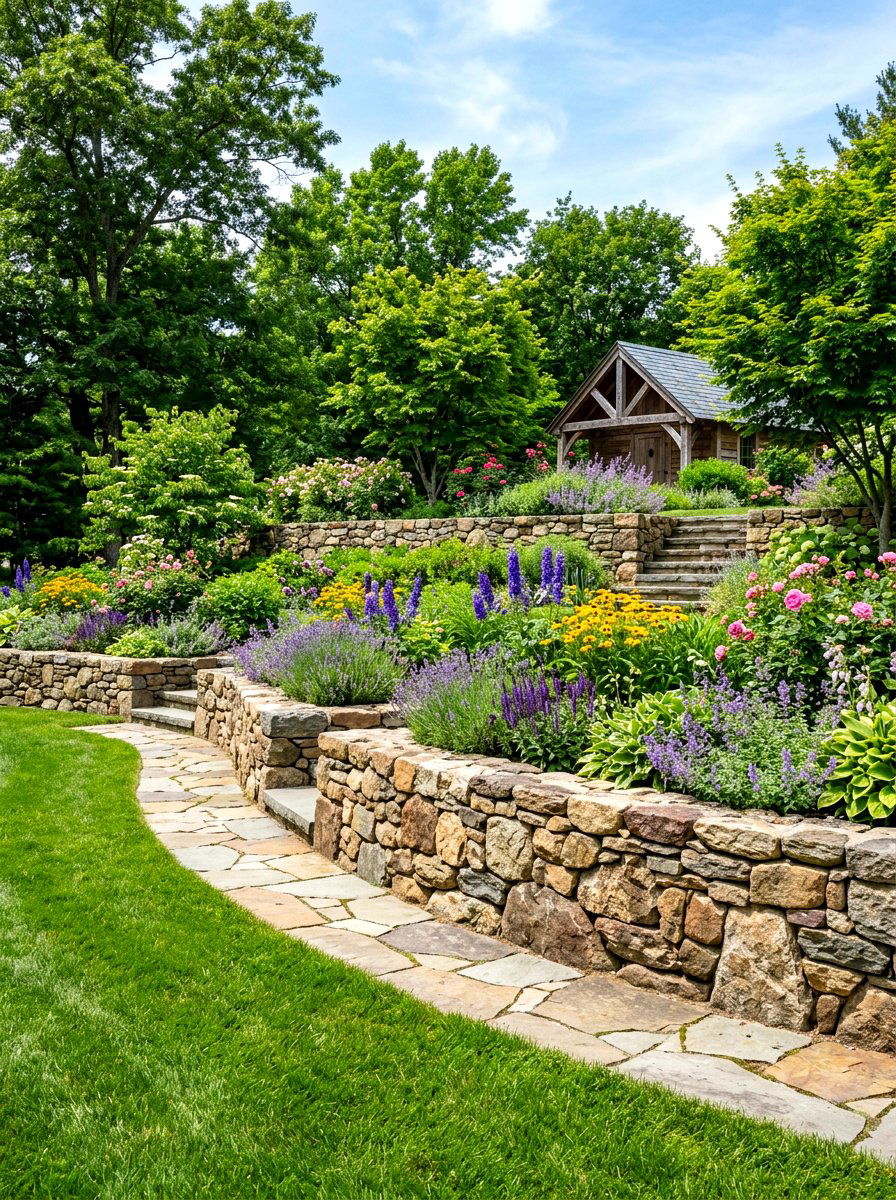
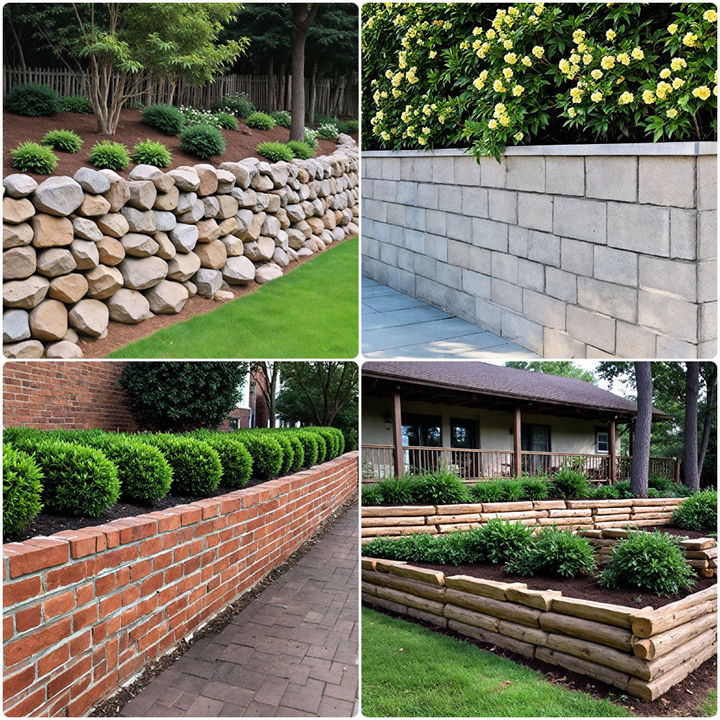
Building a garden on a slope can feel like a major challenge until you discover the beauty of a natural stone garden wall. This style uses organic shapes and varying sizes of rocks to create a structure that looks like it has always been part of the landscape. You can choose from local fieldstone or quarried limestone to match your home’s exterior perfectly. These walls are fantastic for creating multi-level planting beds that add depth to a flat yard. They also help manage soil erosion while providing a home for tiny alpine plants in the crevices. The rugged texture of the stones contrasts beautifully against soft, green lawns.
2. Timber Sleeper Retaining Wall
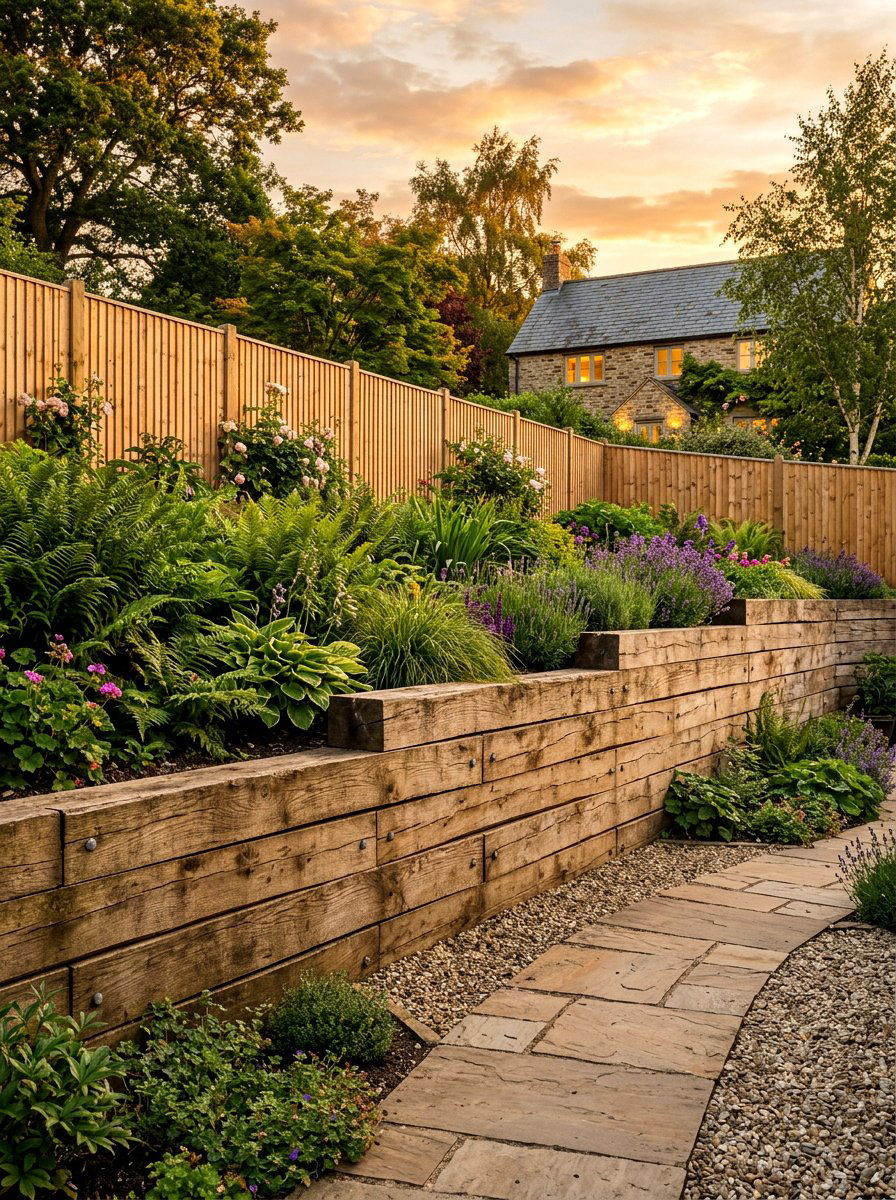
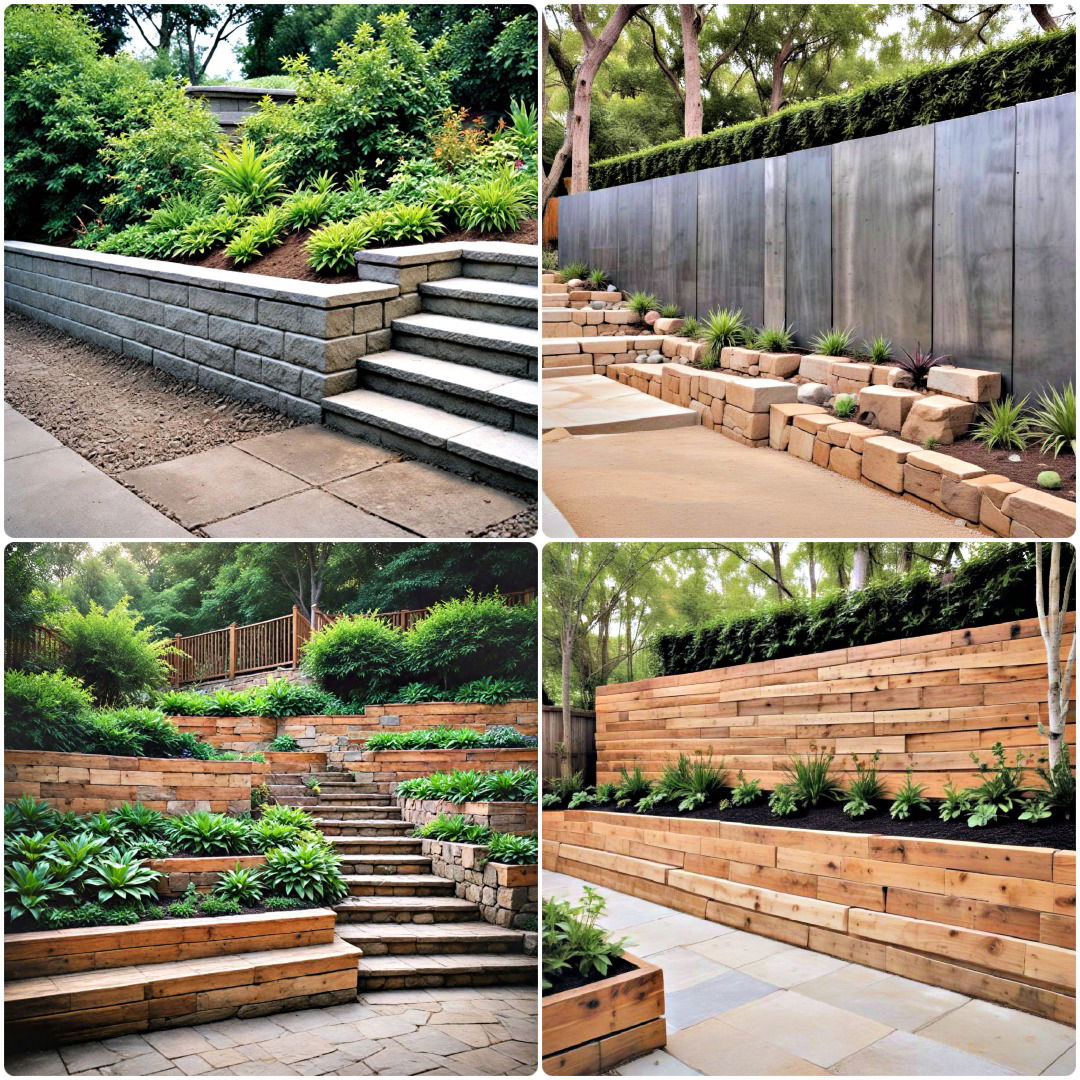
Using wooden beams or sleepers is a classic way to bring a warm, rustic feel to your backyard layout. Timber sleeper retaining walls are particularly popular for DIY enthusiasts because they are relatively easy to cut and stack into straight, clean lines. These wooden structures work wonderfully in traditional or cottage-style gardens where you want the landscaping to feel soft and approachable. To ensure longevity, always use pressure-treated wood or durable hardwoods like cedar or redwood that resist rot and insect damage. The natural wood grain provides a stunning backdrop for vibrant green ferns or flowering shrubs, making your garden beds truly stand out.
3. Corten Steel Garden Edging
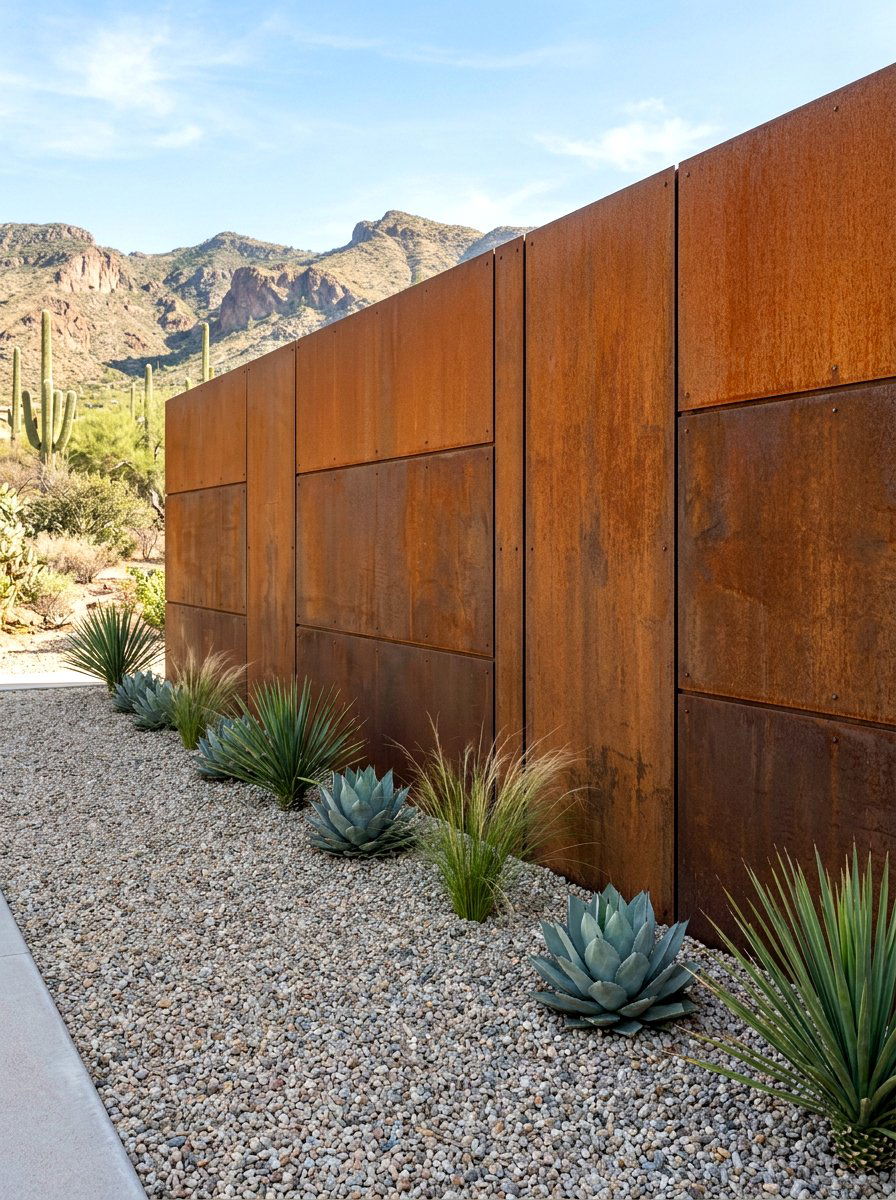
If you prefer a modern or industrial aesthetic, a Corten steel garden wall is an excellent choice for your next project. This material is famous for its weathered, rust-like appearance that actually protects the metal from further corrosion over time. The deep orange and brown tones of the steel create a striking visual contrast against bright green foliage and dark soil. These thin, durable walls are perfect for creating sharp, clean lines and geometric shapes in a contemporary landscape. Because steel takes up very little horizontal space, it is an ideal solution for small urban gardens where every square inch of planting room counts.
4. Gabion Basket Wall
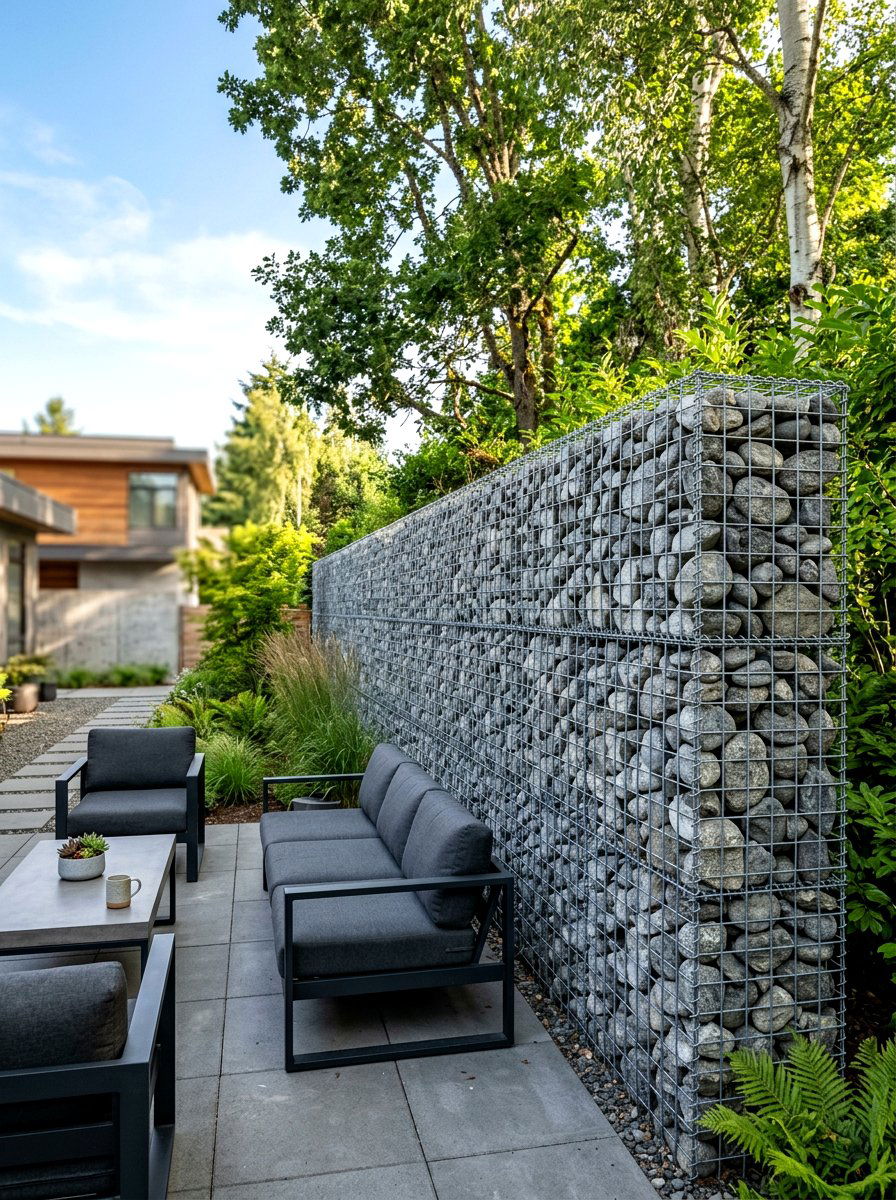
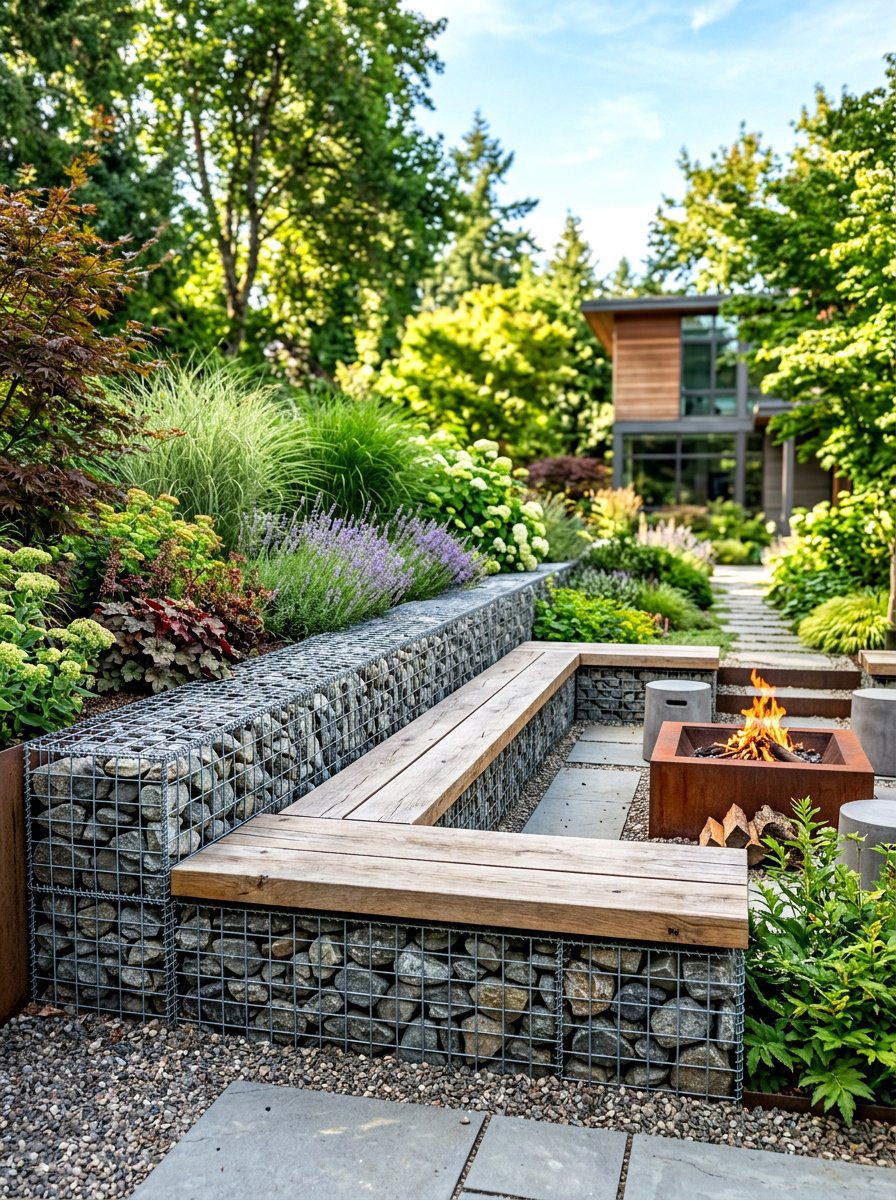
For a unique and highly durable structural solution, consider installing a gabion basket wall in your outdoor area. These walls consist of sturdy galvanized steel wire cages filled with rocks, pebbles, or even recycled concrete chunks. They are incredibly effective at managing water drainage because the gaps between the stones allow moisture to flow through easily. This prevents the buildup of hydrostatic pressure which often causes solid walls to lean or crack over time. Beyond their functional benefits, gabions offer a heavy, textured look that works well in both modern and rugged, naturalistic garden designs. You can even customize the filler color.
5. Interlocking Concrete Block Wall
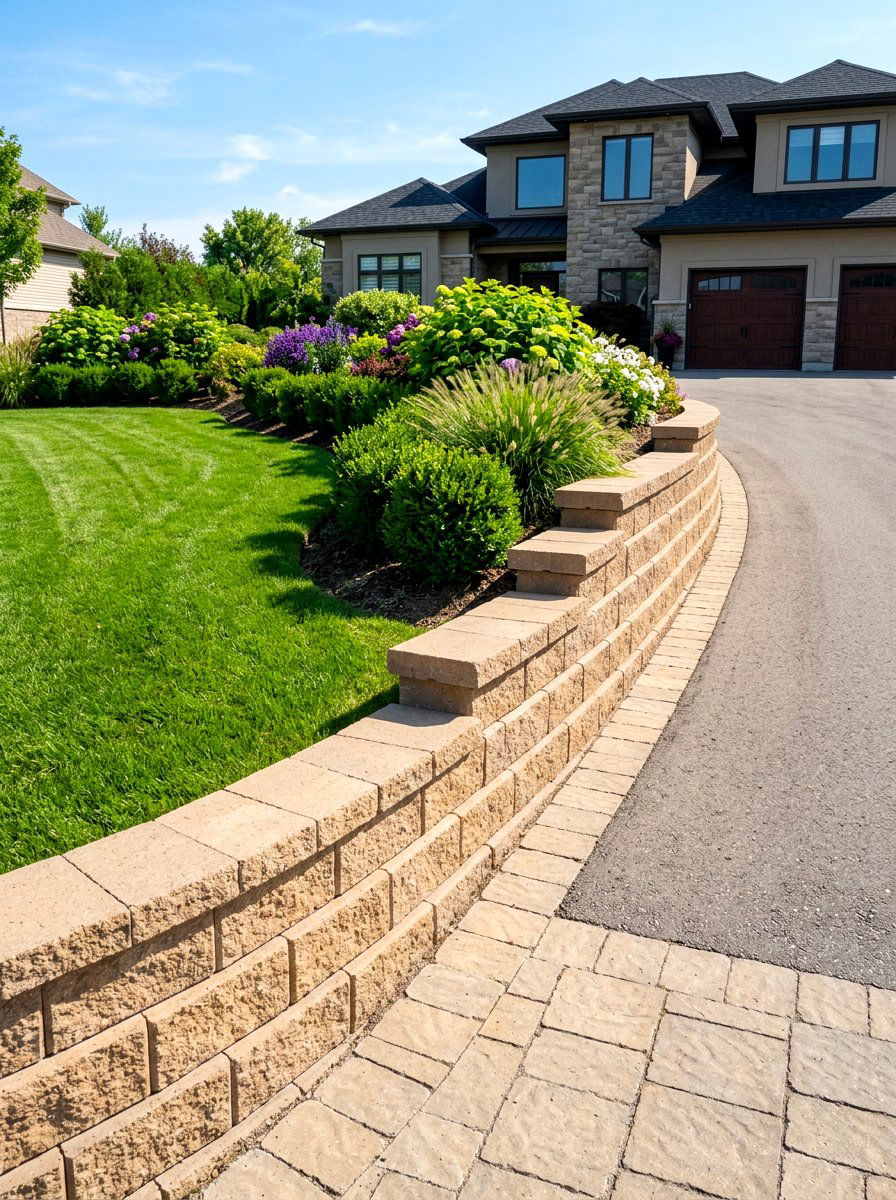
Creating a sturdy and professional-looking barrier is made much easier when you use an interlocking concrete block wall system. These manufactured blocks are designed with a lip or a pinning system that allows them to lock together without the need for messy mortar. They come in a wide variety of colors, from sandy beige to deep charcoal, allowing you to match your existing patio or driveway. Because they are engineered for strength, they are a top choice for taller walls that need to support significant weight. The uniform appearance of the blocks provides a very clean, organized look for any suburban front yard.
6. Red Brick Garden Wall
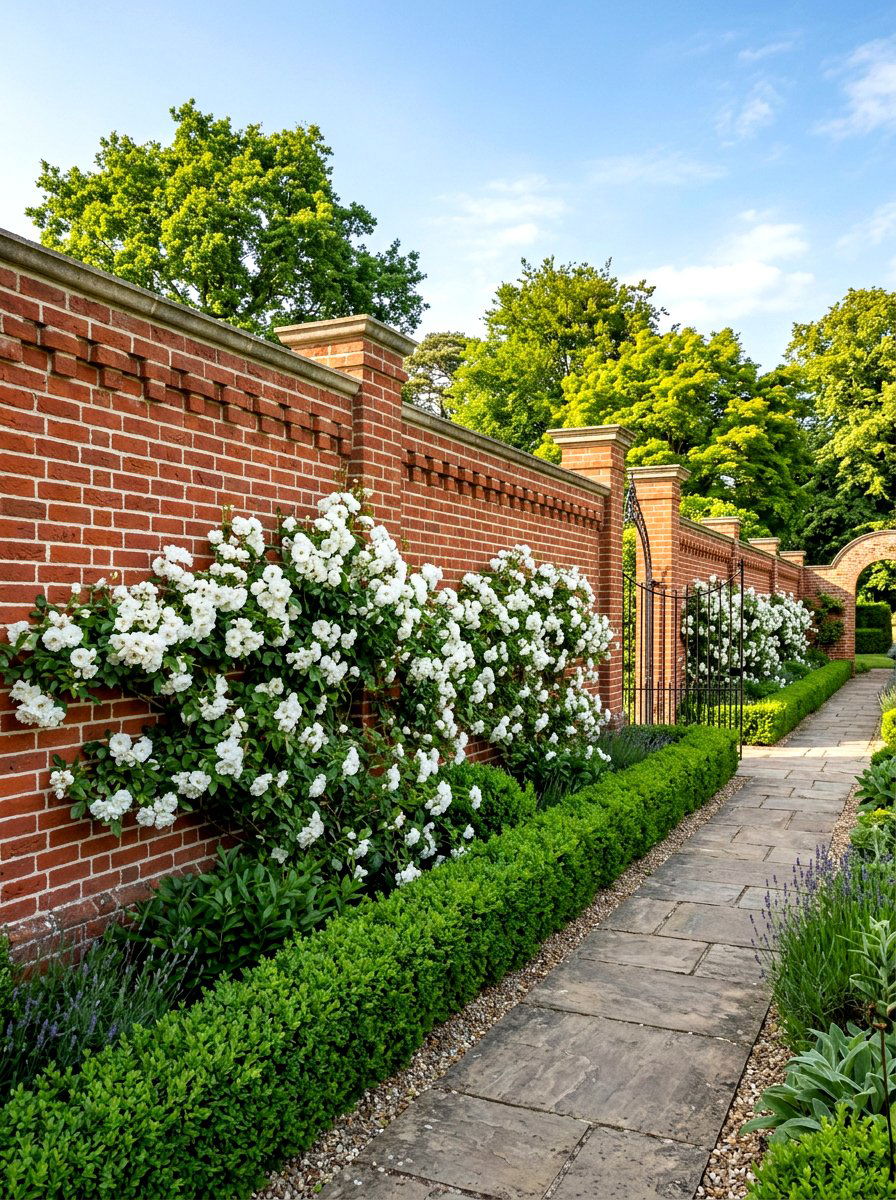
Nothing beats the timeless and formal elegance provided by a classic red brick garden wall in a residential setting. Bricks offer a sense of permanence and tradition that complements older homes or historic architectural styles beautifully. You can build these walls in various patterns, such as a running bond or a herringbone style, to add extra visual interest to your landscape. Brick walls are also excellent for creating low borders around flower beds or defining the edges of a formal patio area. When paired with white mortar, the rich red tones of the clay bricks pop, creating a sophisticated frame for your favorite roses.
7. Terraced Backyard Slope
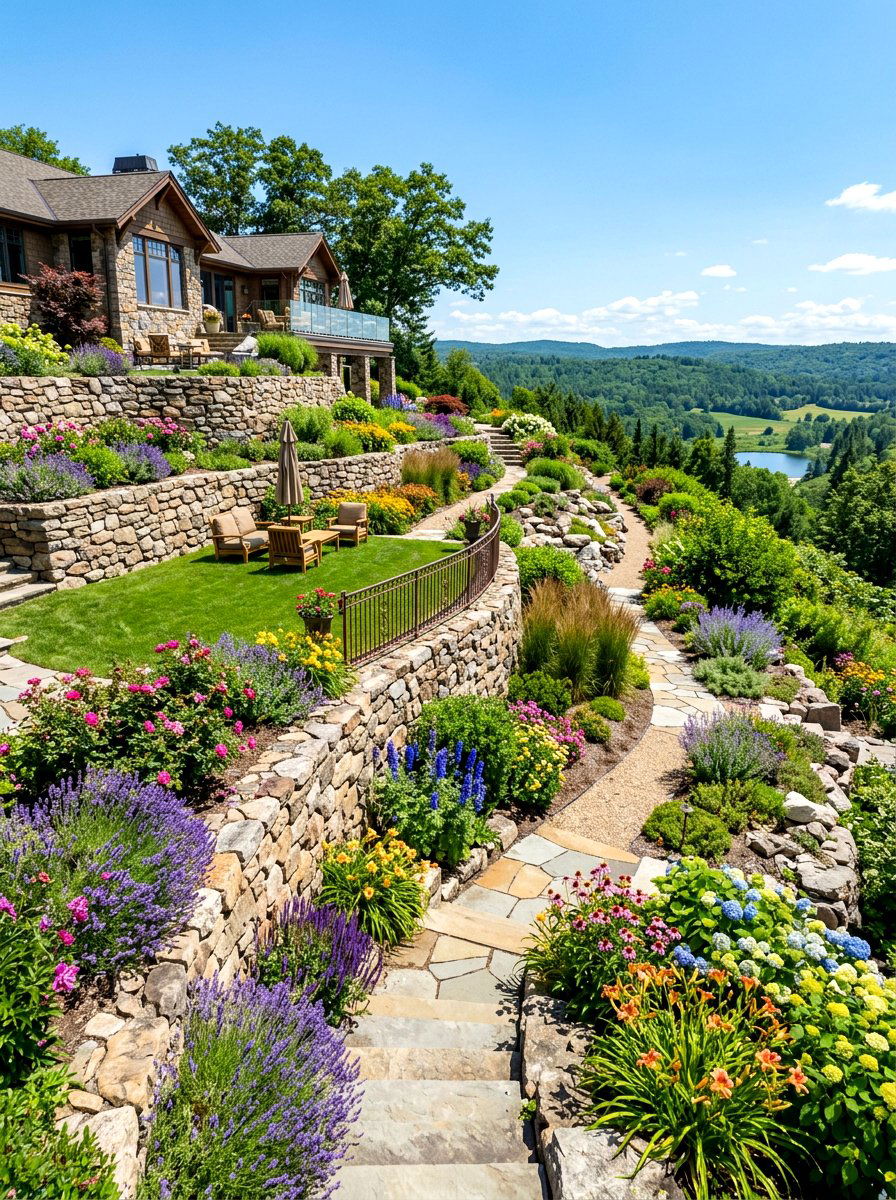
When you are faced with a very steep backyard, a terraced backyard slope design is the most effective way to gain usable space. Instead of building one massive, intimidating wall, you can create a series of smaller, stepped levels that move up the hill. This approach reduces the pressure on each individual wall and makes the entire landscape feel much more approachable and less imposing. Each level can serve a different purpose, such as a flat lawn on the bottom, a vegetable garden in the middle, and a seating area at the top. This tiered look adds incredible architectural depth and dimension.
8. Curved Rock Wall
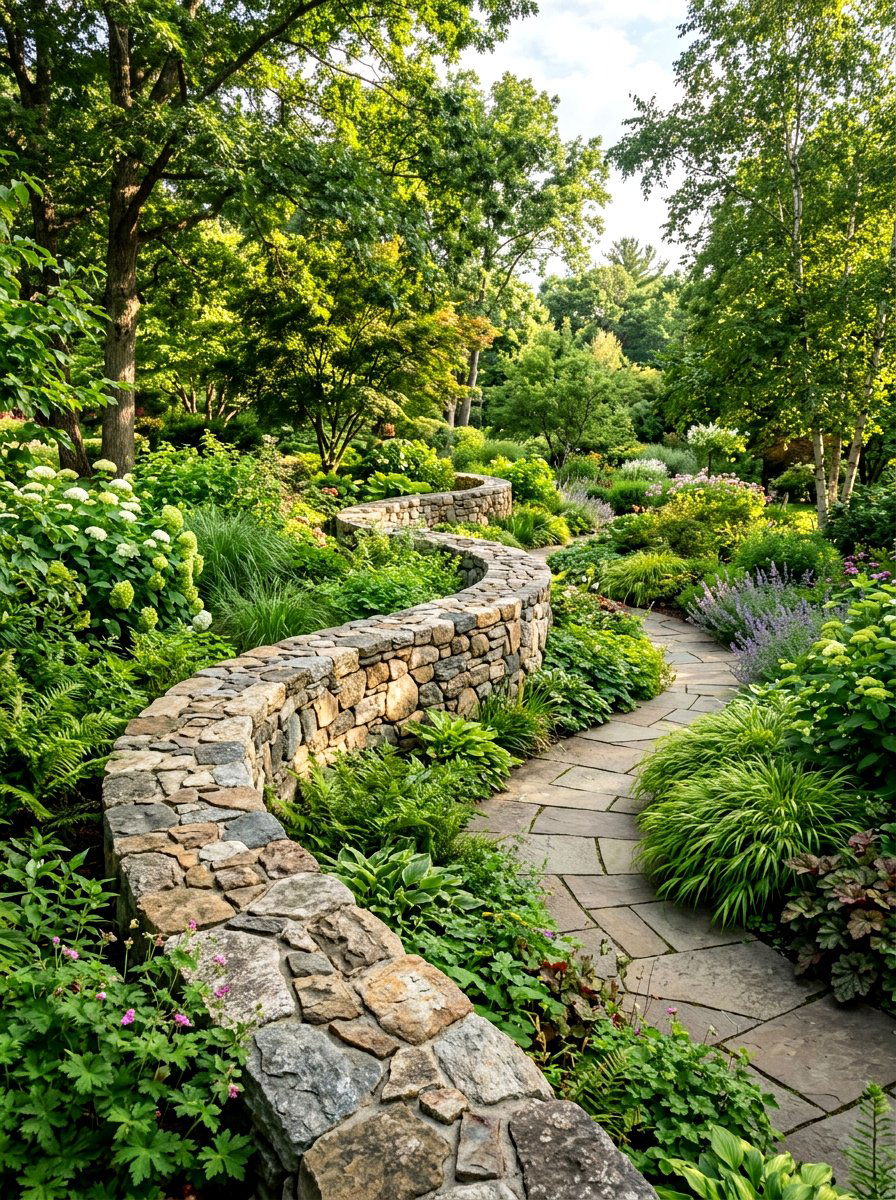
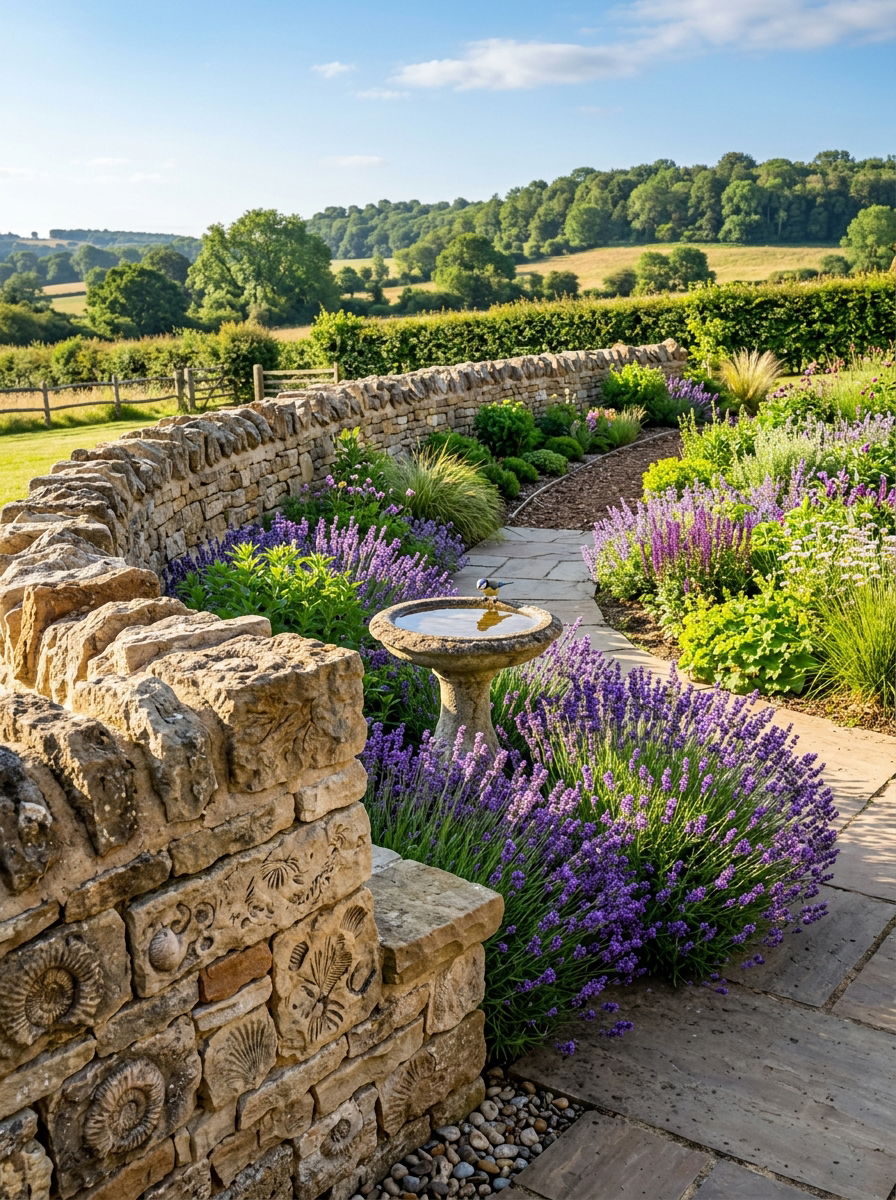
Softening the hard lines of your property is easily achieved by incorporating a curved rock wall into your garden design. While straight walls are functional, a gentle curve mimics the natural flow of the earth and creates a more organic, relaxing atmosphere. Using smaller stones or flexible wall systems allows you to follow the contours of your garden paths or circular patios perfectly. This design choice is particularly effective for guiding the eye through the space and making a small garden feel much larger than it actually is. It also creates cozy, tucked-away corners where you can plant specialty shrubs or install a birdbath.
9. Built In Bench Wall
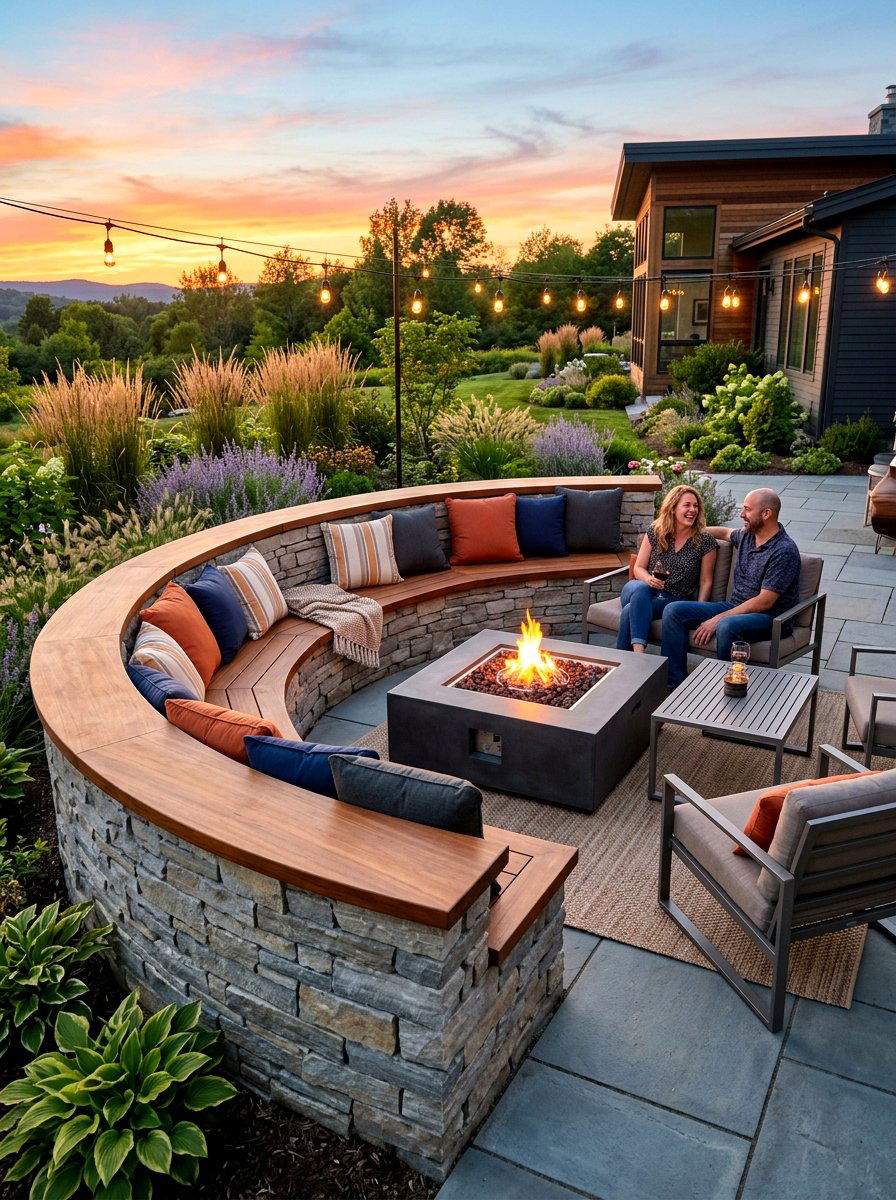
Maximize the functionality of your outdoor living area by choosing a built in bench wall for your patio perimeter. This design combines the structural necessity of a retaining wall with the practical benefit of permanent outdoor seating. By capping the top of a low wall with smooth stone or wood, you create a comfortable place for guests to sit during a backyard barbecue. This is a brilliant space-saving solution for smaller yards where bulky patio furniture might feel too crowded. You can even add outdoor cushions or integrated lighting under the lip of the bench to create an inviting ambiance for evening gatherings.
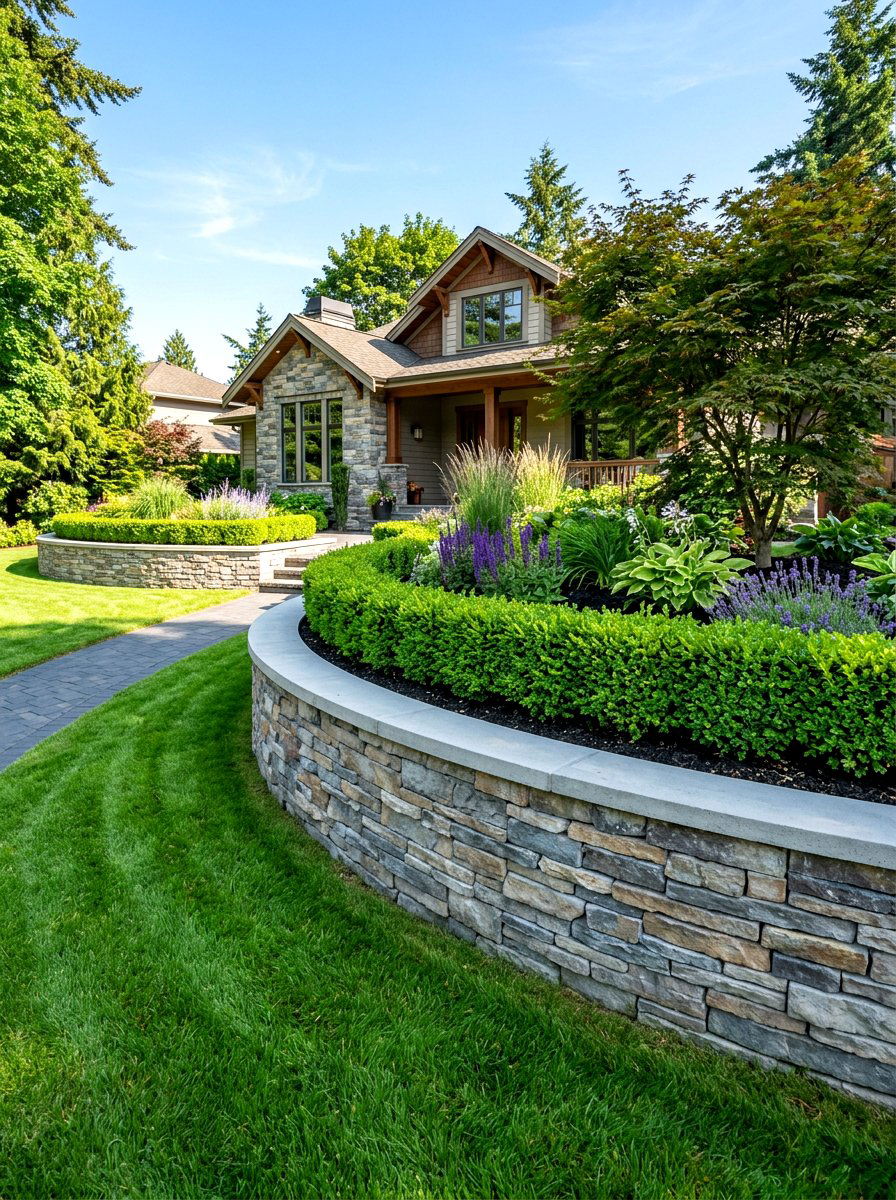
10. Dry Stack Stone Wall
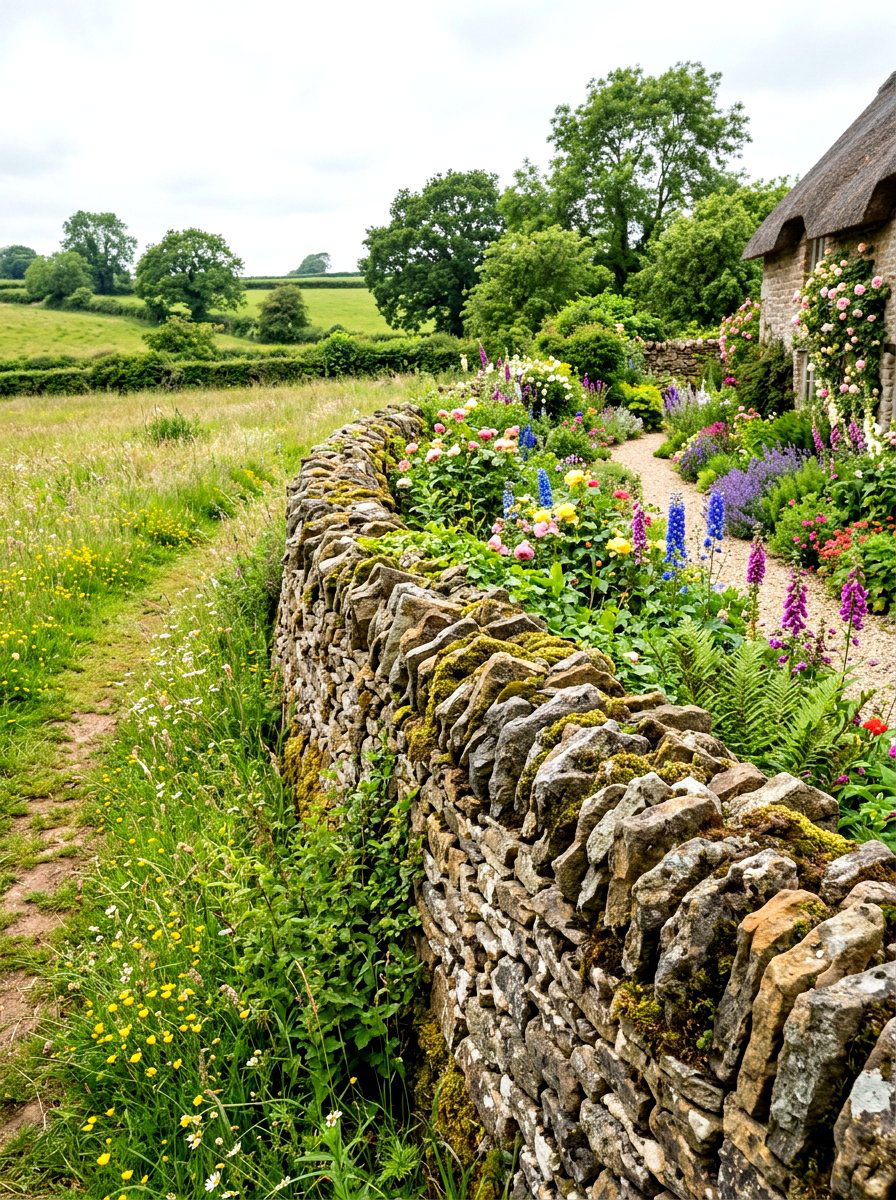
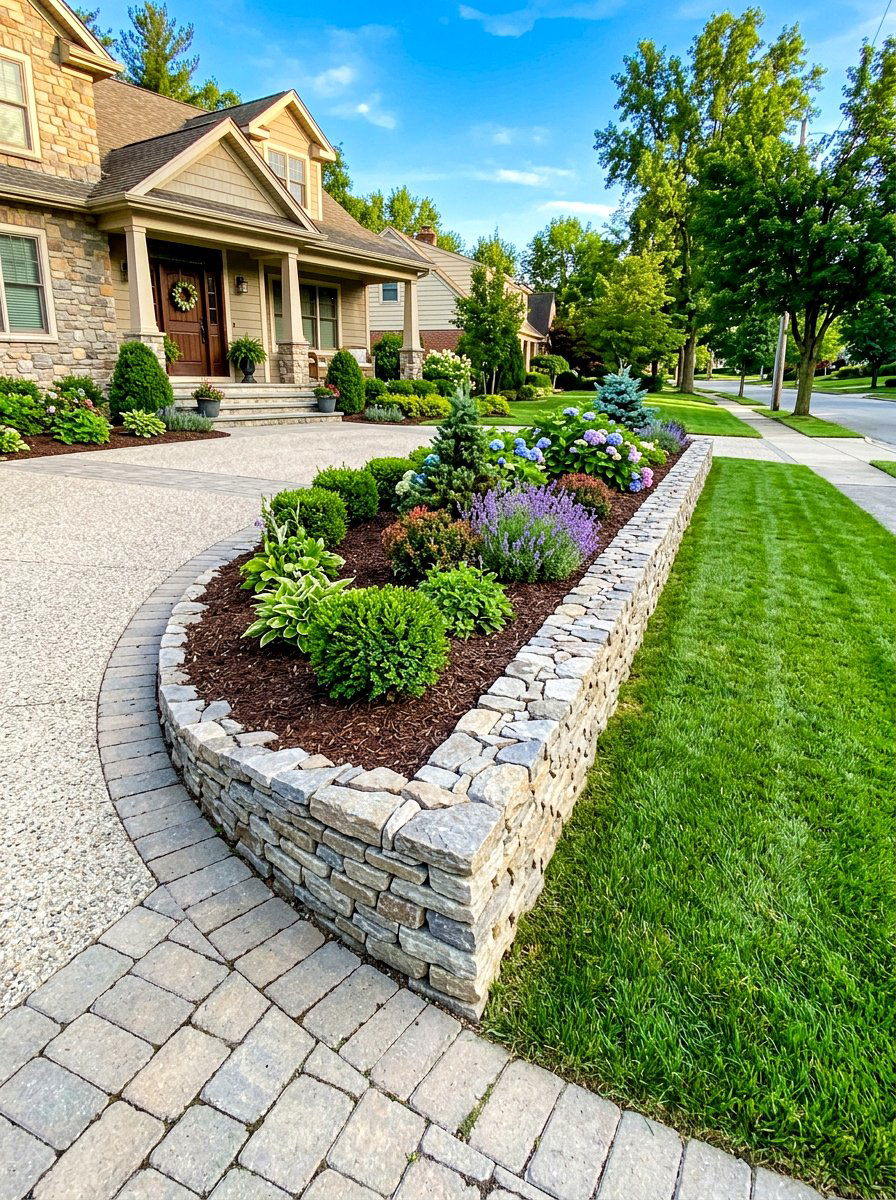
A dry stack stone wall is the ultimate choice for homeowners who appreciate traditional craftsmanship and a natural aesthetic. This construction method involves carefully fitting stones together without using any mortar or glue to hold them in place. The weight of the stones and the friction between them create a solid structure that is surprisingly durable and long-lasting. Because there is no mortar to crack, these walls can shift slightly with the natural movement of the ground without sustaining damage. This style is perfect for a rustic, country-style garden and provides plenty of nooks for moss and small plants to grow.
11. Vertical Planter Wall
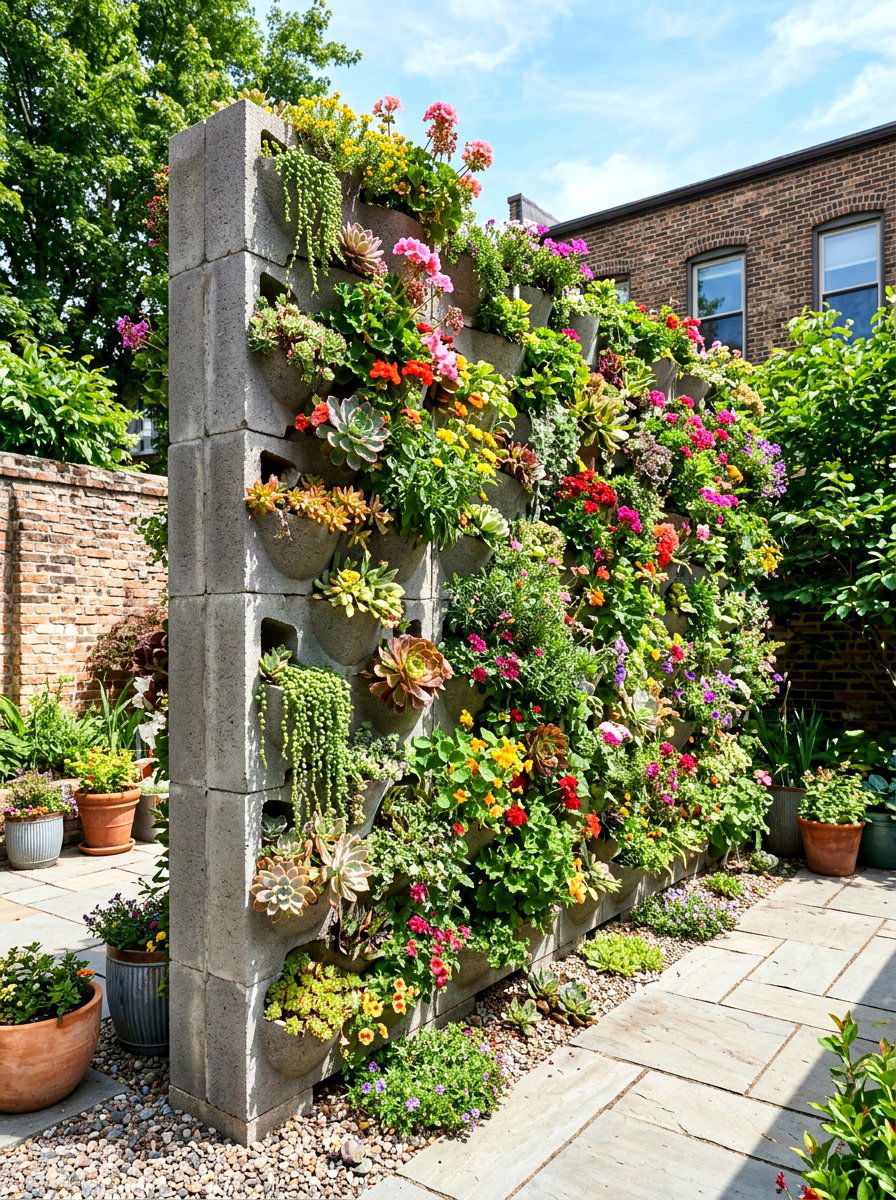
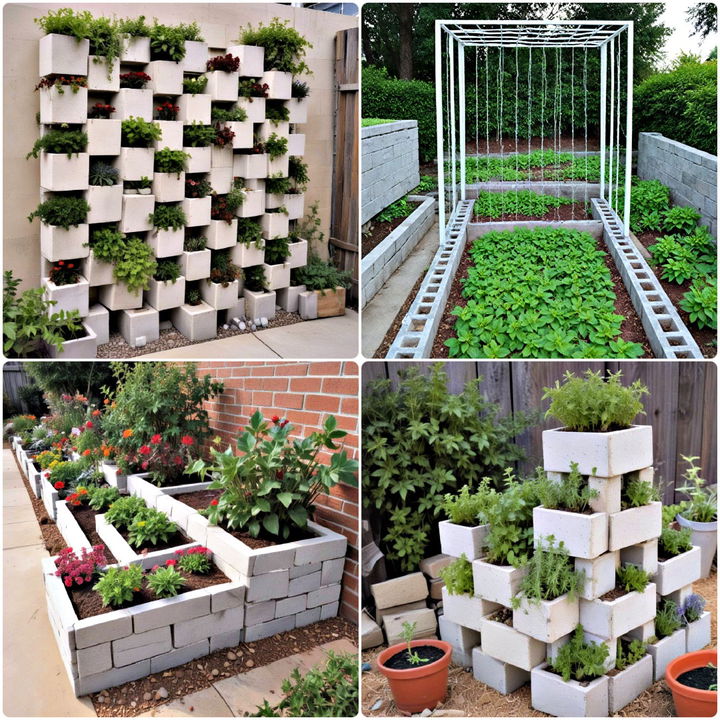
Turn your structural barrier into a living piece of art by designing a vertical planter wall for your garden. Many modern retaining wall systems now include specialized blocks with built-in pockets or hollow centers designed specifically for planting. This allows you to cover the hard surface of the wall with cascading vines, colorful flowers, or even fresh kitchen herbs. It is a fantastic way to introduce more greenery into a space dominated by hardscaping or concrete. A living wall not only looks stunning but also helps to cool the surrounding area and improve air quality, making your backyard feel like a lush, private sanctuary.
12. Large Boulder Wall
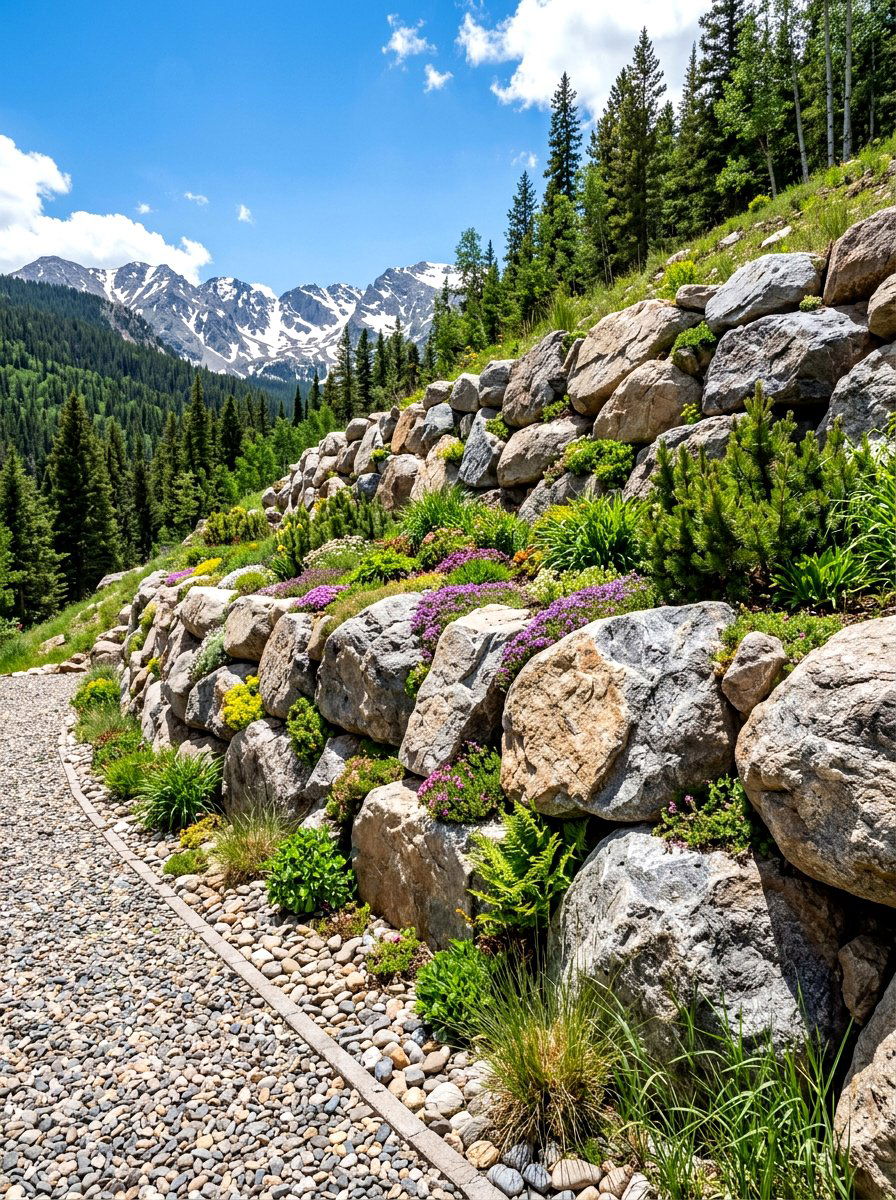
For a rugged and high-impact look that feels like it was carved out of a mountain, consider a large boulder wall. This style uses massive, heavy rocks that are strategically placed to hold back soil while creating a dramatic focal point. Because of their sheer size and weight, these boulders are incredibly stable and require very little maintenance once they are properly installed. This design works best on large properties or in naturalistic landscapes where you want to mimic the appearance of a rocky outcrop. The gaps between boulders can be filled with gravel, groundcover plants, or smaller accent stones for texture.
13. Limestone Retaining Wall
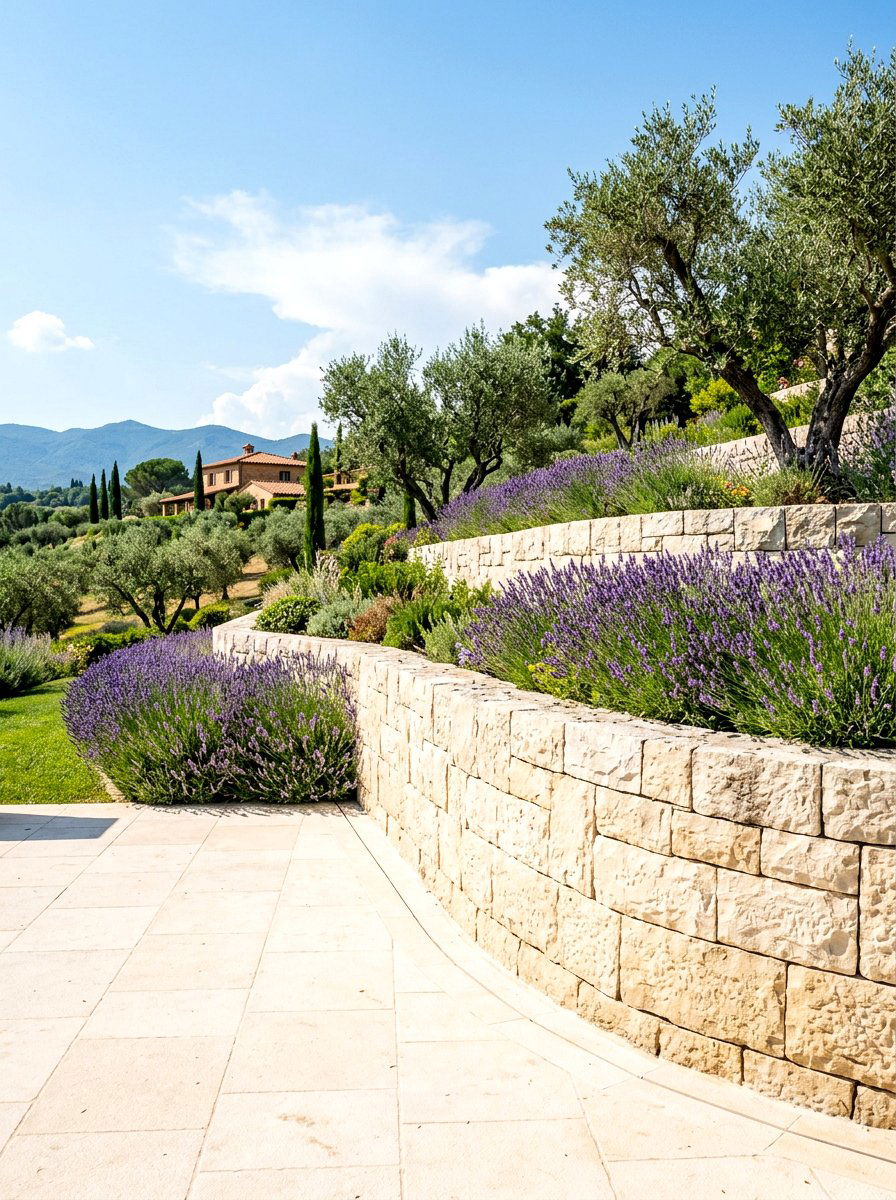
A limestone retaining wall offers a bright, clean, and sophisticated look that is perfect for Mediterranean or contemporary garden styles. Limestone is a popular choice because of its light cream and tan colors, which reflect sunlight and help brighten up shaded parts of the yard. It can be cut into precise, rectangular blocks for a formal look or used in its natural, rough-hewn state for a more relaxed feel. This material is highly durable and stands up well to various weather conditions, making it a smart long-term investment. Its neutral tones provide a beautiful contrast against deep purple or bright blue flowers.
14. Smooth Poured Concrete Wall
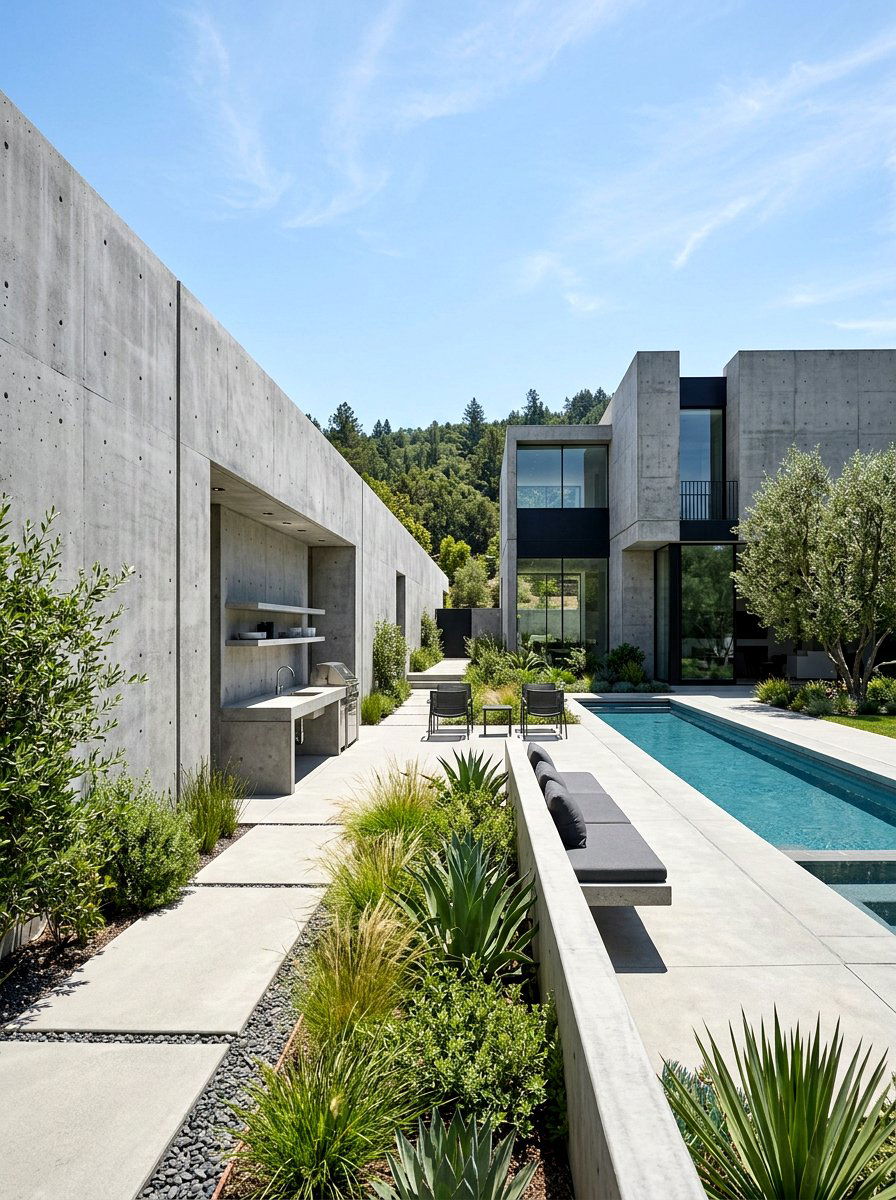
Homeowners looking for a minimalist or brutalist design should consider the clean lines of a smooth poured concrete wall. This method involves creating a wooden form and pouring wet concrete into it to create a single, solid structure. Once the forms are removed, you are left with a perfectly smooth surface that looks incredibly sleek and modern. You can even add pigments to the concrete to achieve a custom color or use textured liners to create a unique pattern on the face. These walls are exceptionally strong and are ideal for modern homes with a focus on simple, geometric architectural forms.
15. Railroad Tie Garden Wall
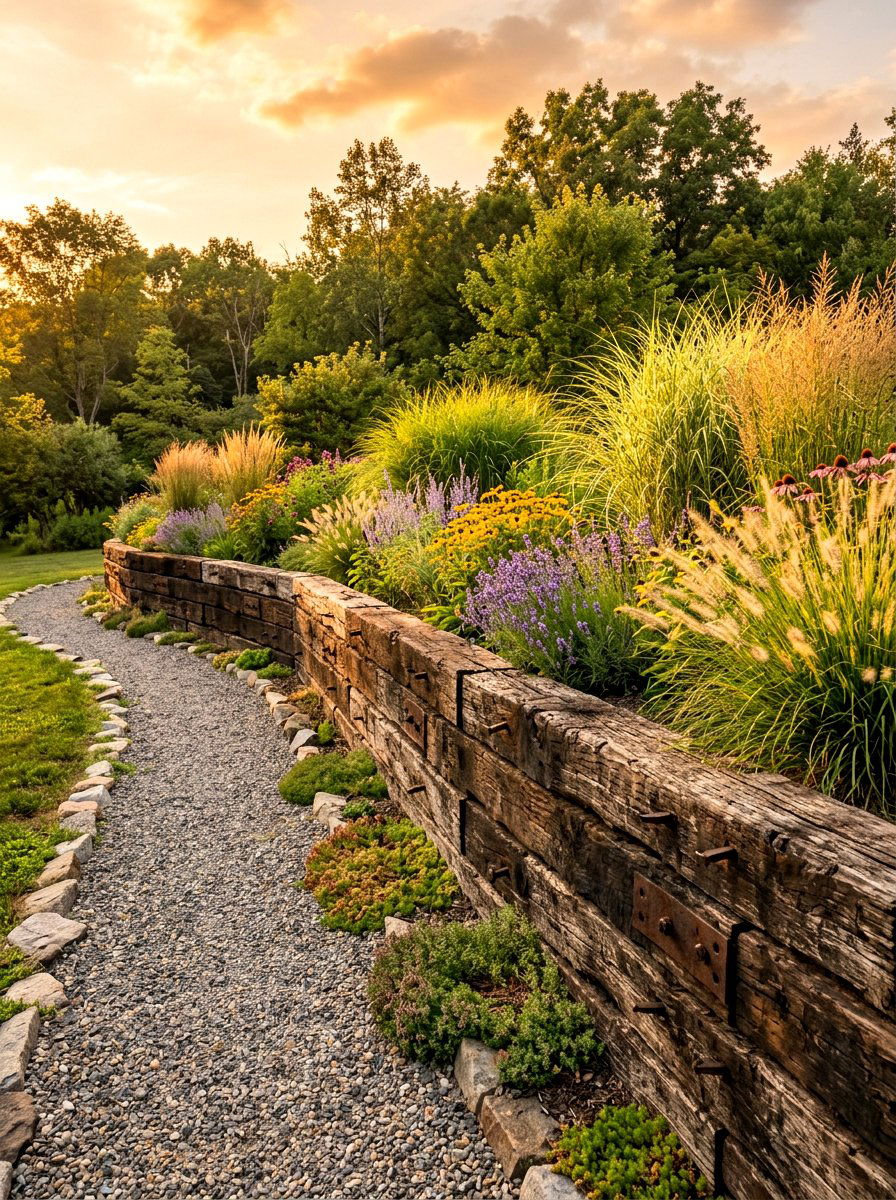
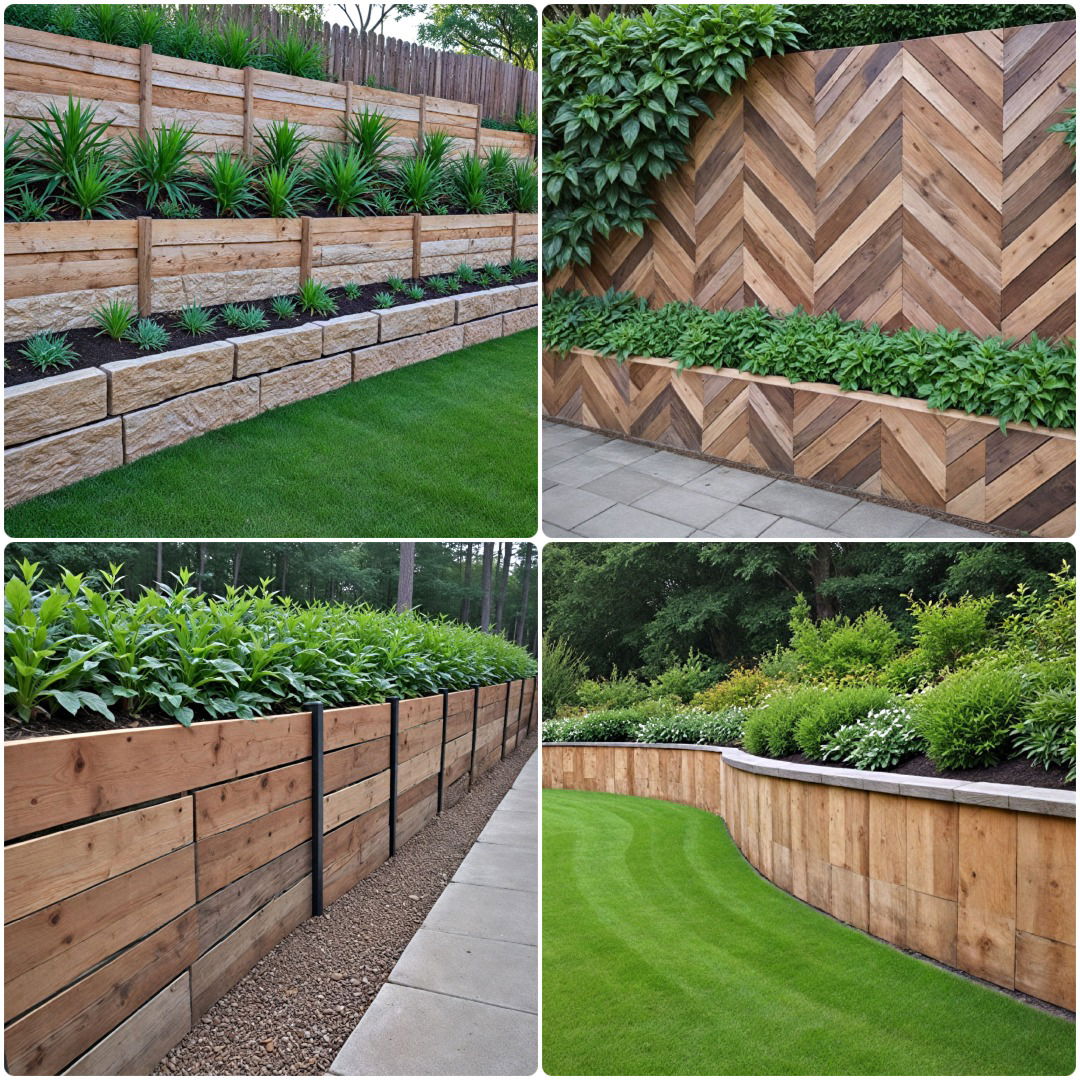
If you are looking for a cost-effective and rugged solution, a railroad tie garden wall provides a heavy-duty, industrial-chic appearance. These thick, reclaimed wooden beams are often treated to withstand harsh outdoor elements for many years. Their dark, weathered color and chunky shape make them perfect for creating bold borders around large garden beds or driveways. While they are very heavy and require some muscle to install, their straight edges make them easy to stack and secure with long metal spikes. This style is particularly well-suited for rustic farmhouses or properties with an edgy, reclaimed aesthetic that values recycled building materials.
16. Flagstone Retaining Wall
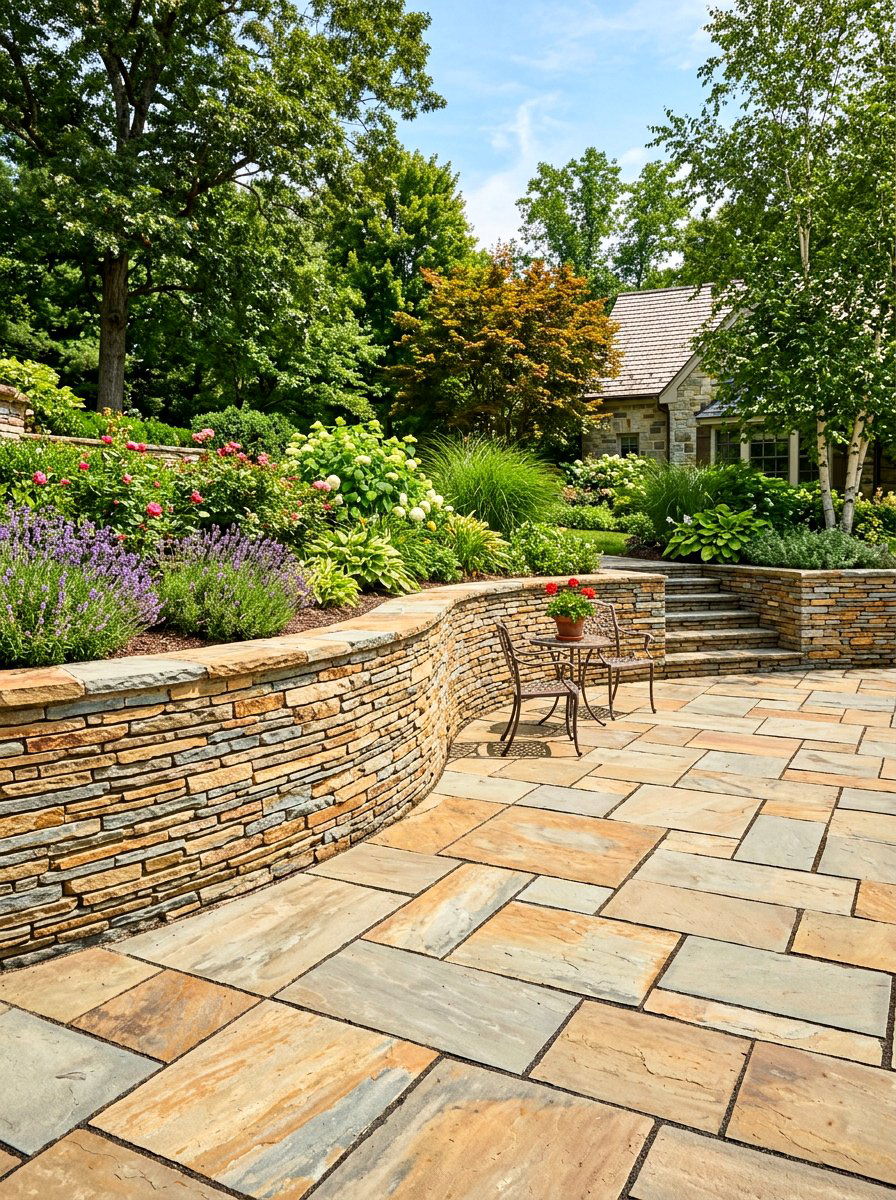
A flagstone retaining wall is an excellent choice for creating a layered, textured look that feels elegant and high-end. Flagstones are naturally flat, thin slabs of stone that can be stacked on top of one another to build a very stable and visually interesting barrier. You can choose to use mortar for a polished, clean finish or go with a dry-stack method for a more natural appearance. The variations in color within the stone, ranging from blue-gray to warm orange, ensure that no two walls look exactly the same. This style works perfectly next to a flagstone patio for a cohesive design.
17. Tiered Flower Bed Wall
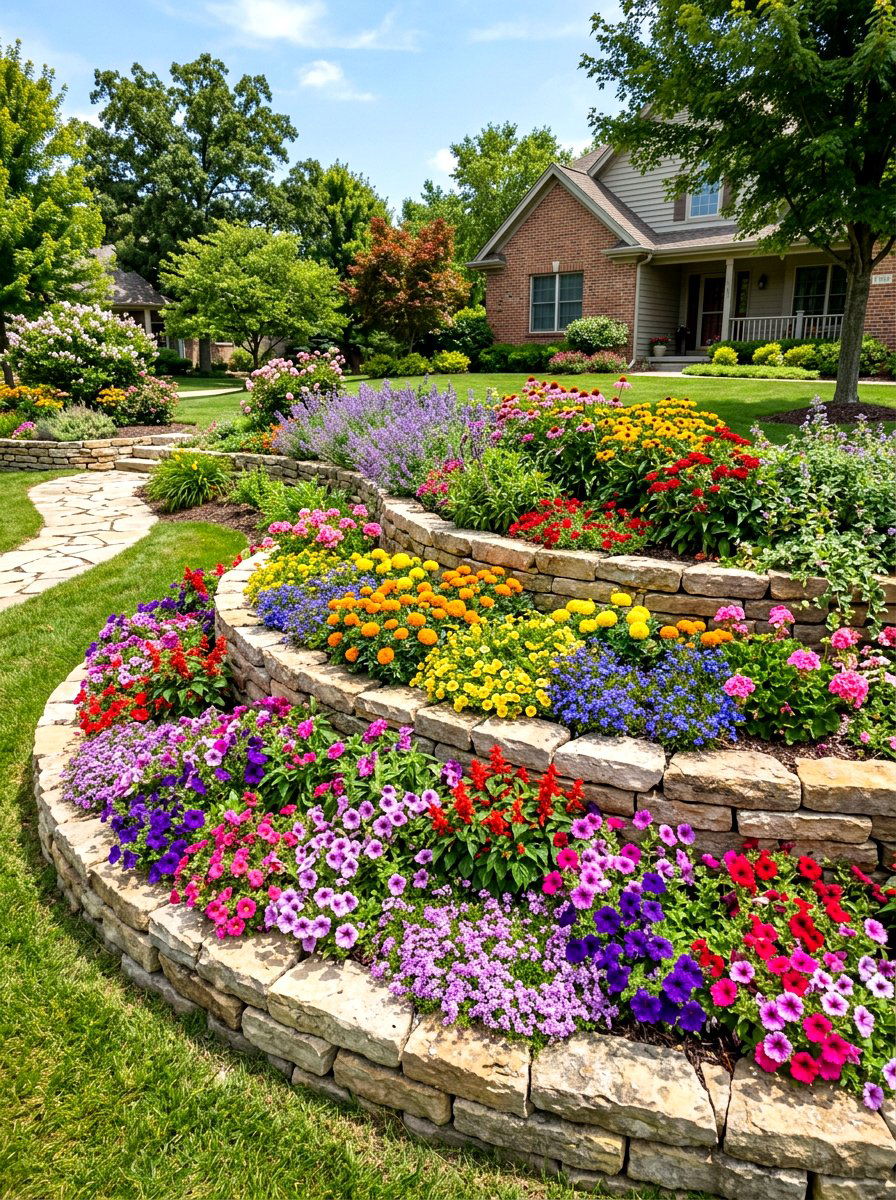
Enhance your curb appeal by installing a tiered flower bed wall that showcases your favorite seasonal plants at different heights. This design typically uses low walls to create two or three levels of planting space, making it easy to see every bloom from the street. Tiered beds are perfect for organizing your garden by plant size, with taller shrubs in the back and cascading groundcovers in the front. This approach also makes gardening much easier on your back, as the raised levels reduce the amount of bending required. It is a brilliant way to add color and life to a flat front lawn.
18. Stacked Slate Wall
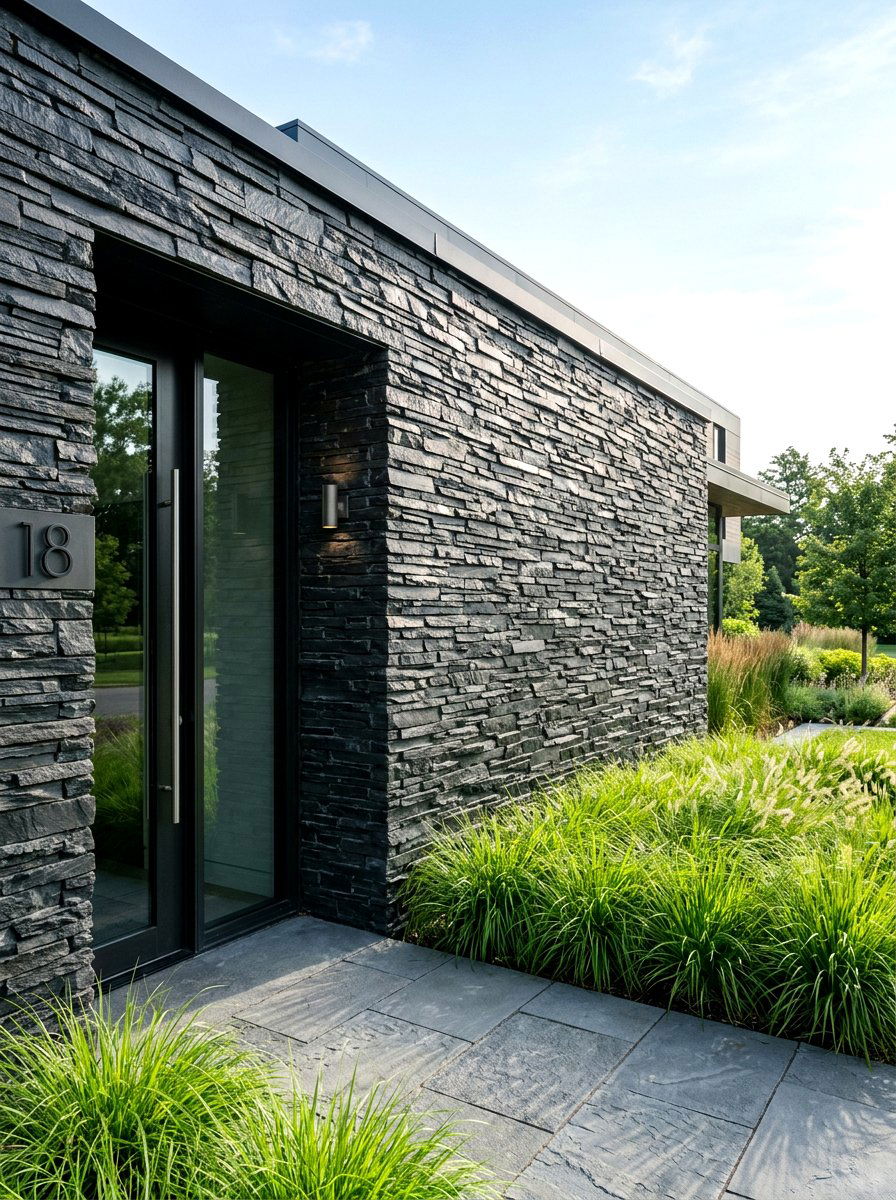
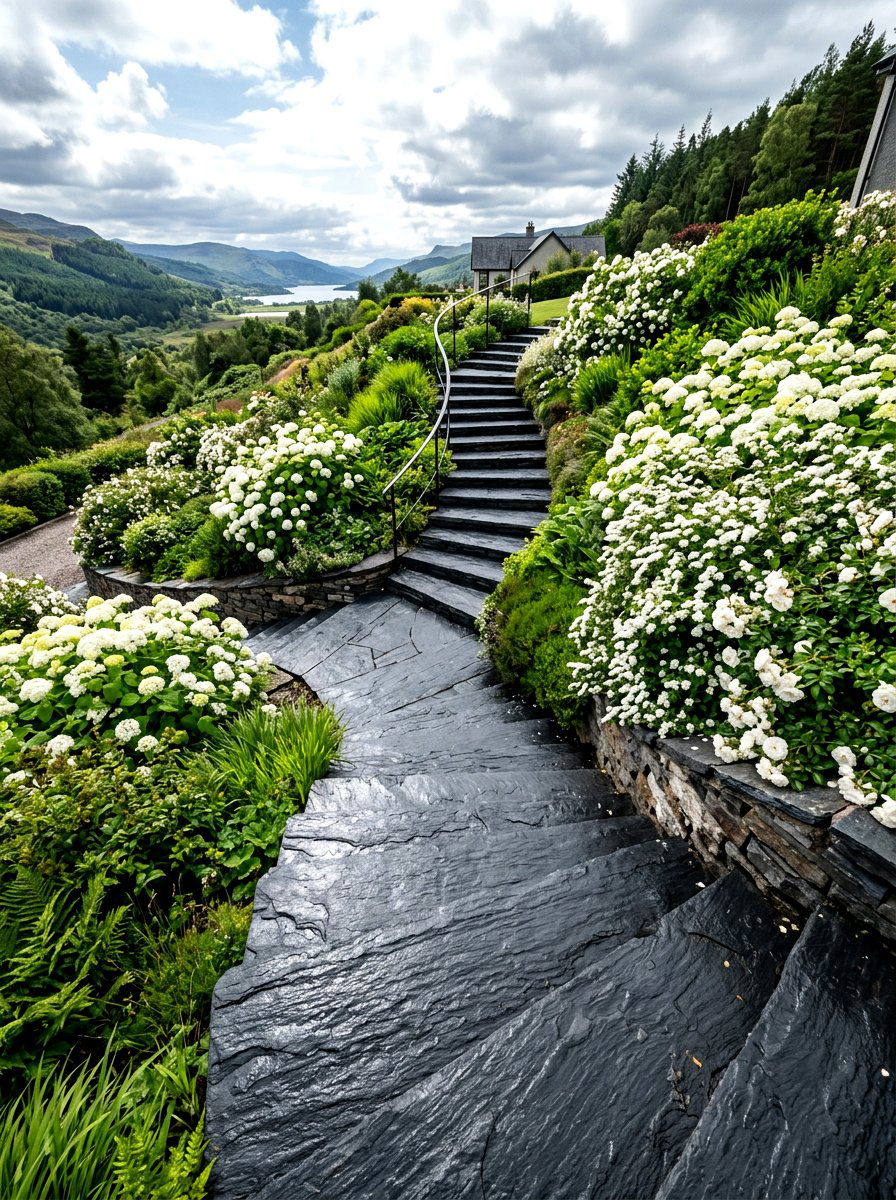
For a sophisticated and highly detailed look, a stacked slate wall provides a unique texture that is hard to match with other materials. Slate can be split into very thin, uniform pieces that are then stacked tightly together to create a wall with hundreds of tiny layers. This creates a shimmering effect when the sun hits the surface, especially if the slate has a natural blue or charcoal tint. This style is often used in modern luxury landscapes or as a decorative feature wall near a front entrance. The dark, moody tones of slate provide a dramatic backdrop for bright green ornamental grasses.
19. Segmental Retaining Wall Block
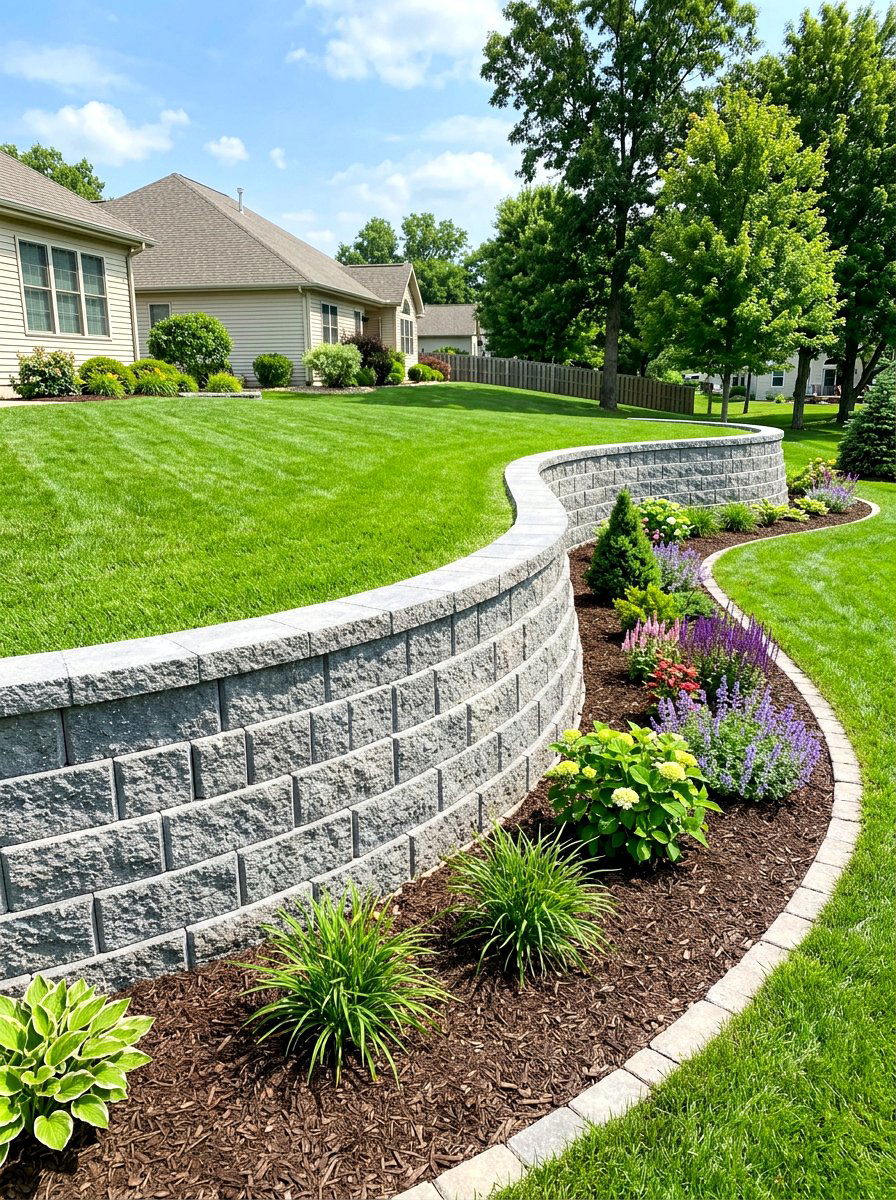
Using a segmental retaining wall block system is one of the most reliable ways to build a long-lasting and structurally sound barrier. These blocks are factory-made and engineered to fit together perfectly, often featuring a hollow core that can be filled with gravel for extra stability and drainage. Because they are uniform in size, they are very easy to calculate and plan for your specific yard dimensions. They are available in many different face textures, including some that mimic the look of natural split-rock. This versatility makes them a favorite for both professional landscapers and ambitious homeowners working on a weekend project.
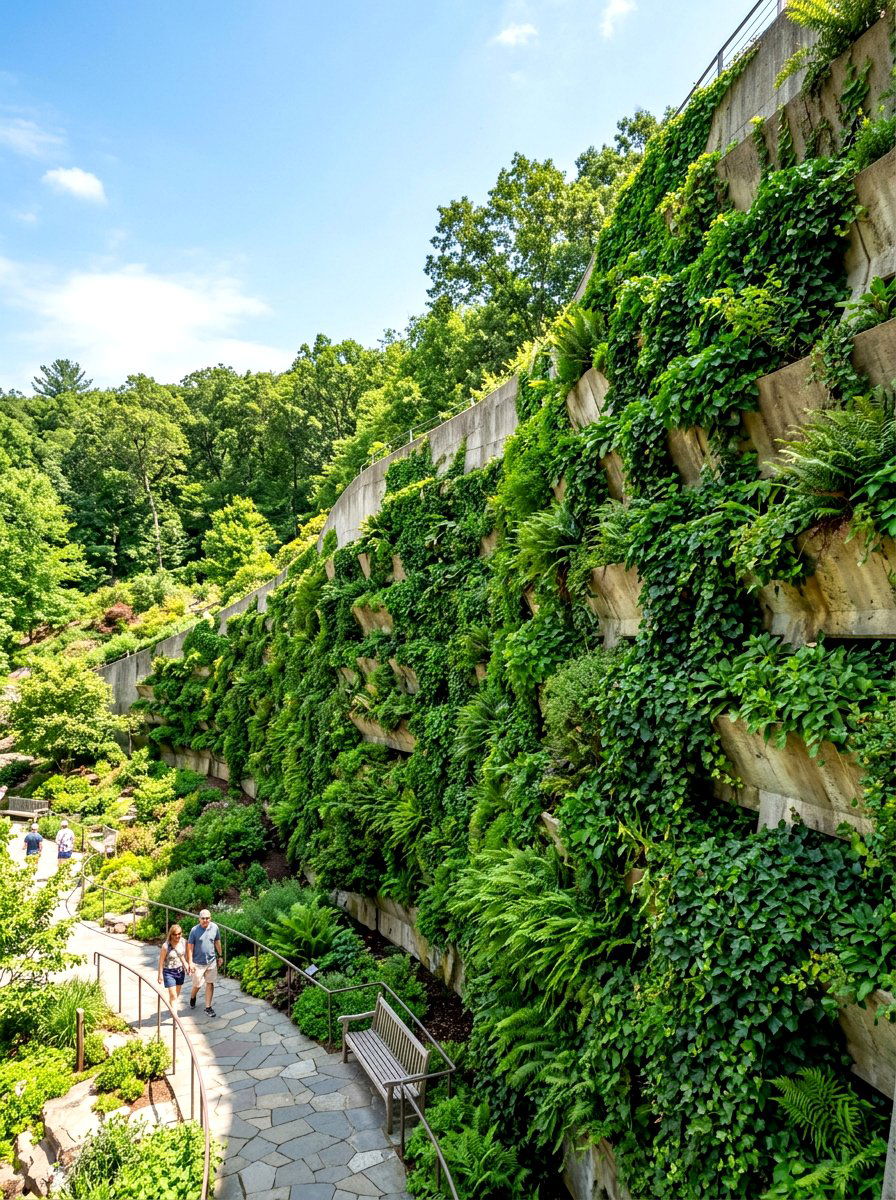
20. Raised Vegetable Bed Wall
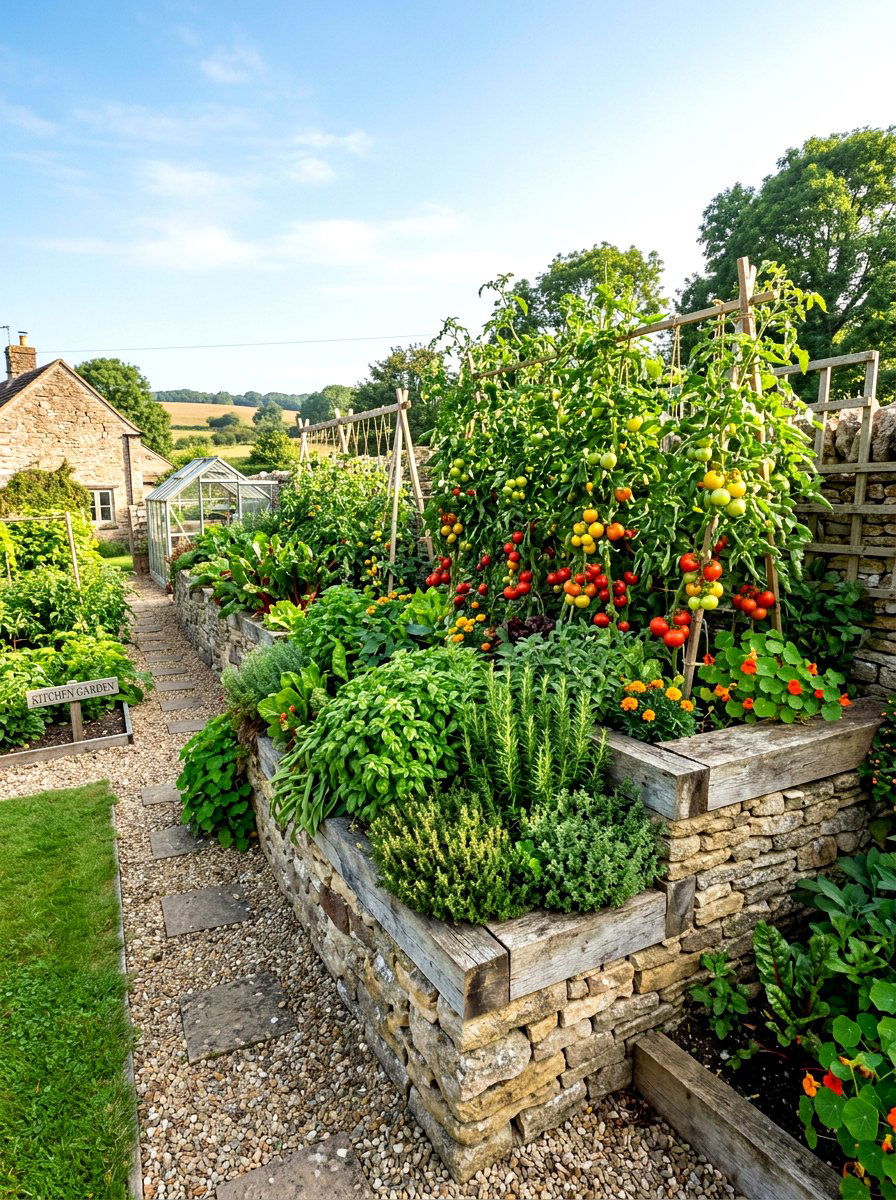
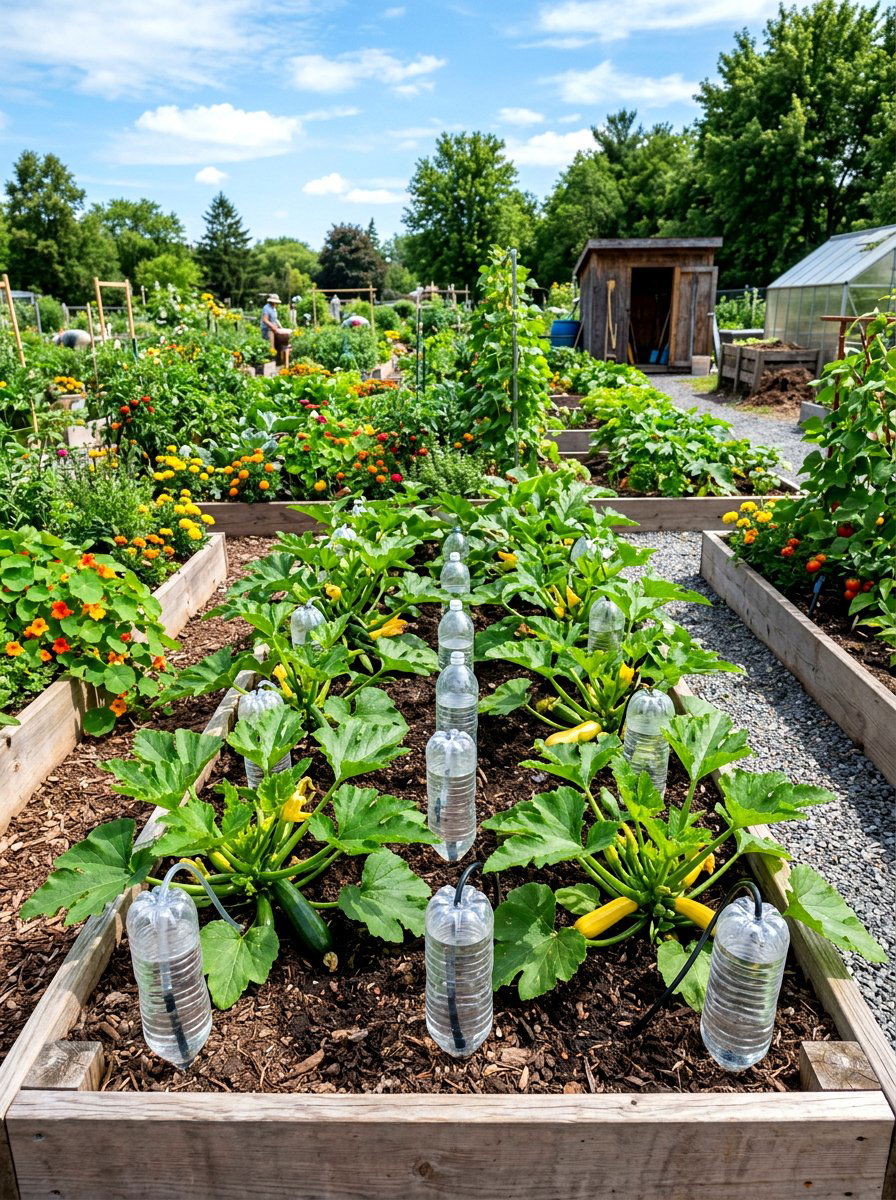
If you want to combine beauty with utility, a raised vegetable bed wall is a perfect addition to any backyard. Using stones or timber to create a high-walled garden bed protects your crops from pests and keeps the soil warmer for a longer growing season. These walls also define your vegetable patch as a deliberate part of the landscape rather than just a messy corner of the yard. By building the walls at waist height, you can enjoy a more comfortable gardening experience without constant kneeling. It is a functional design that makes growing your own food a stylish and organized endeavor.
21. River Rock Retaining Wall
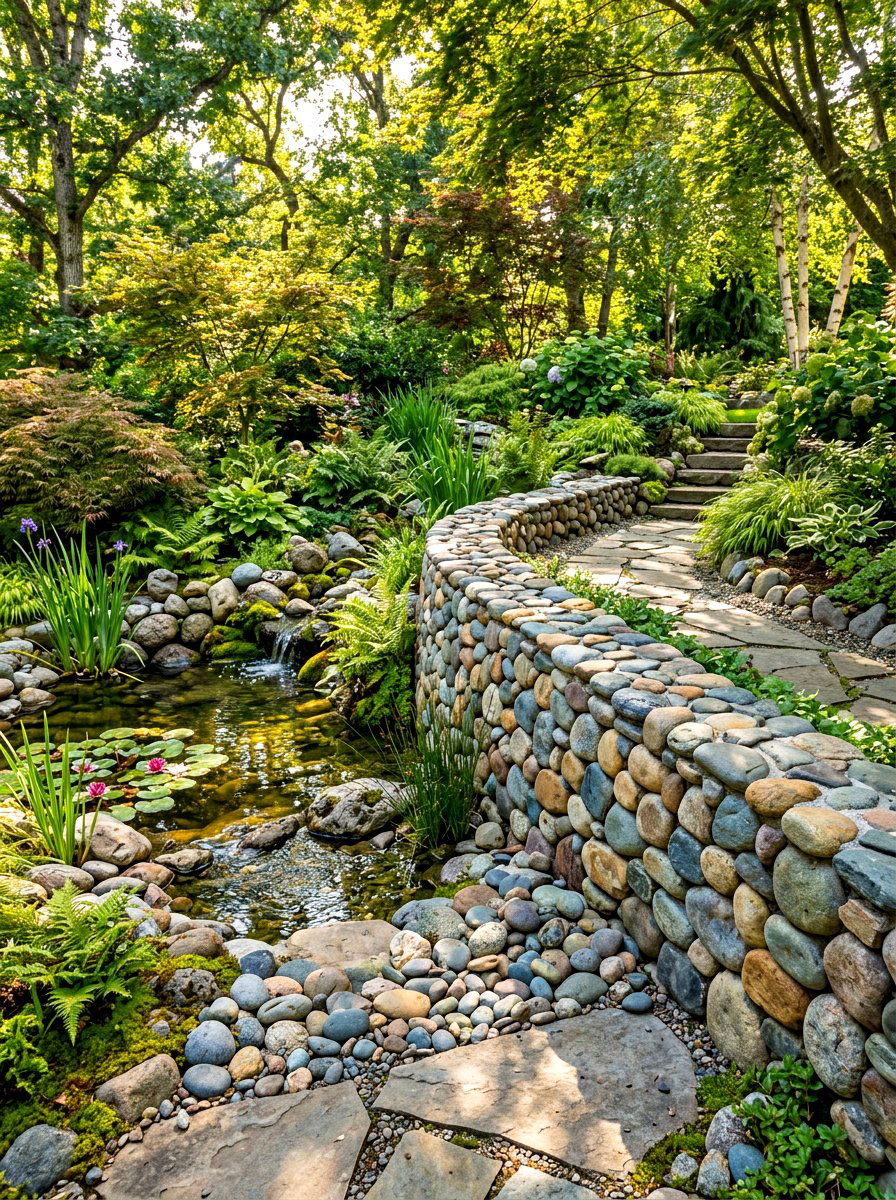
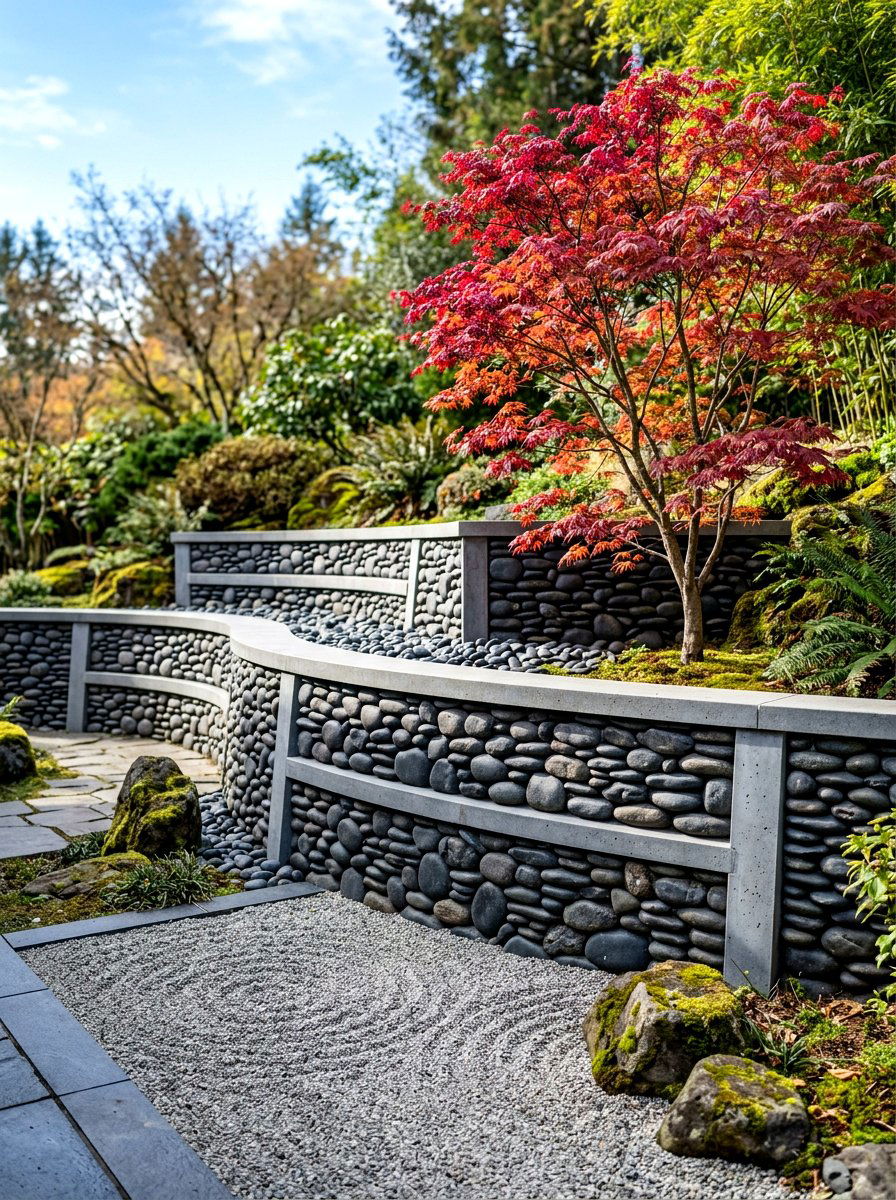
Create a serene and water-inspired atmosphere by choosing a river rock retaining wall for your garden. This style uses smooth, rounded stones of various sizes that have been shaped by water over many years. Because river rocks are naturally polished, they have a soft appearance that works wonderfully around ponds, pools, or shaded garden paths. These walls are usually held together with mortar to ensure the round stones stay in place. The mix of gray, tan, and cream tones creates a calming palette that blends seamlessly into a woodland or Zen-style garden. It is a beautiful way to bring a touch of nature closer.
22. Sandstone Garden Wall
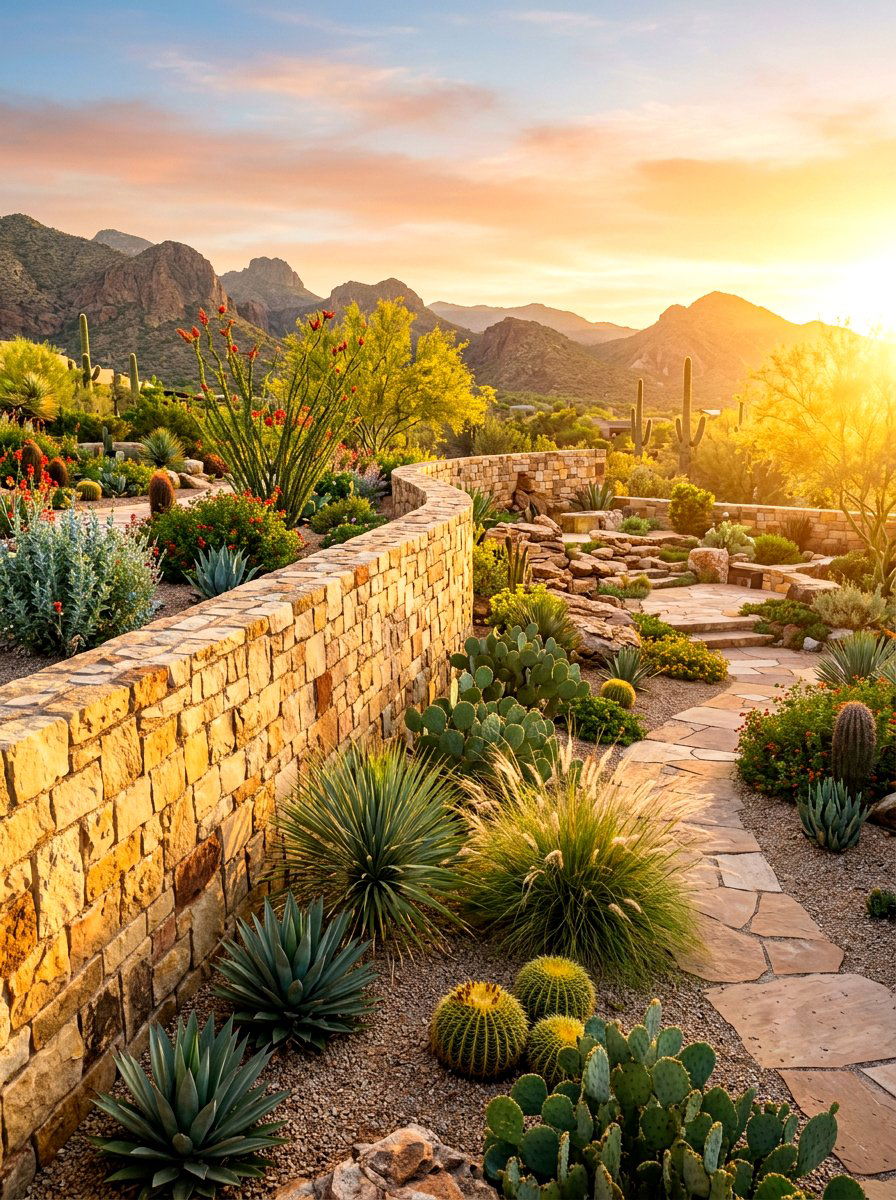
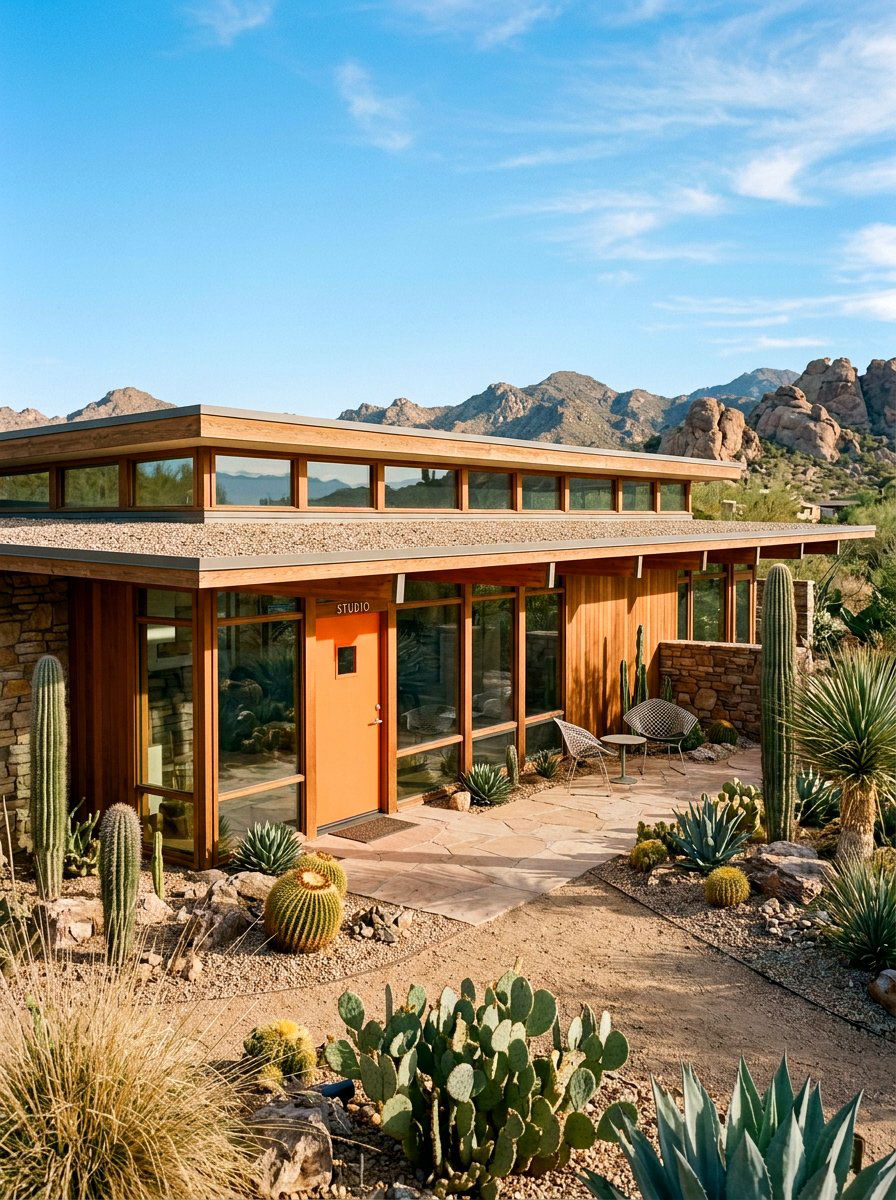
A sandstone garden wall is a fantastic way to introduce warm, earthy tones into your outdoor environment. Sandstone is prized for its beautiful natural grain and colors that range from soft yellow to deep desert red. It is relatively easy to carve, meaning you can get precisely cut blocks for a very neat and tidy appearance. This material is especially popular in regions with a lot of sunshine, as the warm colors glow beautifully during the golden hour. Whether used for a low border or a tall structural wall, sandstone adds a touch of sun-drenched elegance that makes any garden feel more inviting.
23. Granite Block Wall
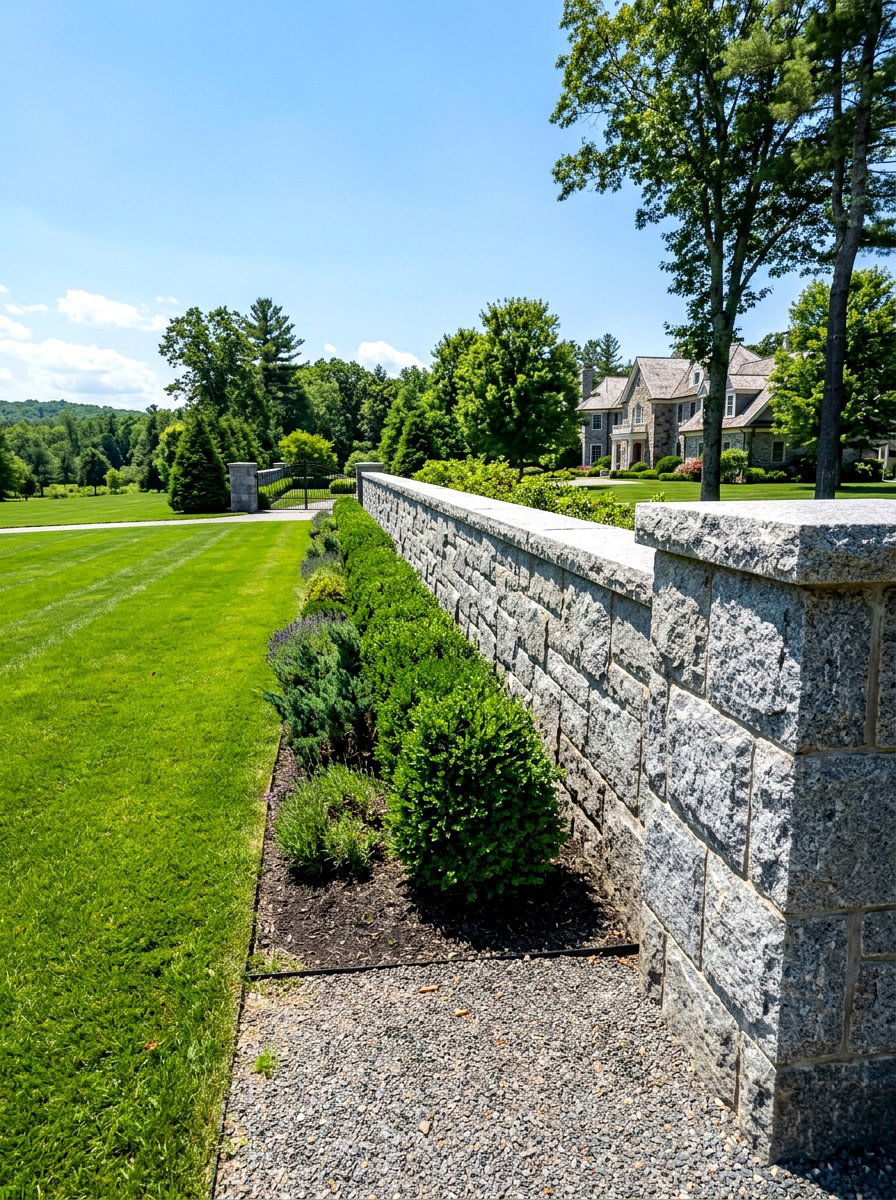
When strength and durability are your top priorities, a granite block wall is the ultimate landscaping choice. Granite is one of the hardest natural stones available, making it nearly impervious to weathering, cracking, or fading over time. These walls often use large, rectangular blocks that give a sense of power and permanence to your property. While it can be a more expensive option, the timeless look of granite never goes out of style and requires almost zero maintenance. The salt-and-pepper speckled appearance of the stone provides a neutral, high-end look that complements almost any home color or architectural style with ease.
24. Stucco Finished Wall
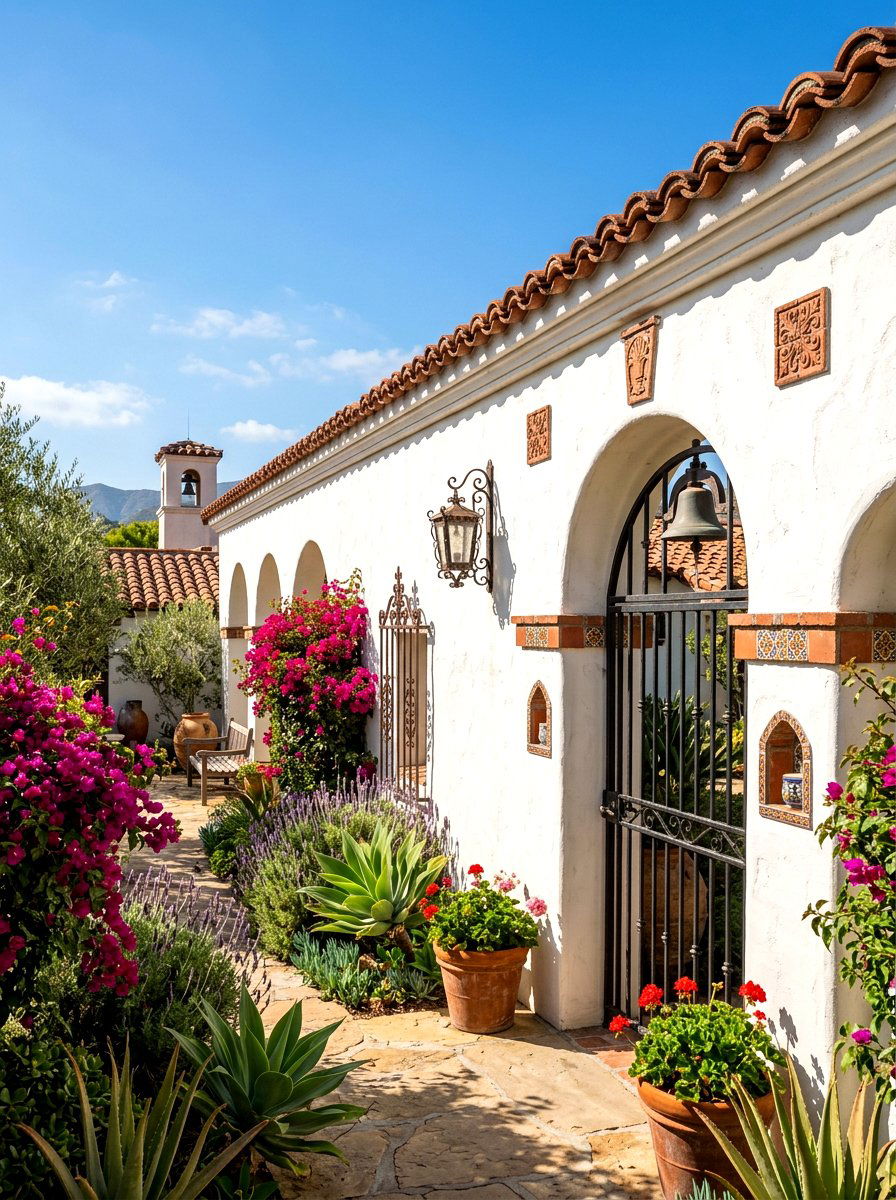
For a smooth and clean look that matches a Southwestern or Mediterranean home, a stucco finished wall is a brilliant design choice. This style involves building a core wall out of concrete blocks and then applying a layer of stucco over the surface to create a seamless finish. You can paint the stucco in any color you choose, from classic white to warm terracotta, to perfectly match your house. This is a great way to hide inexpensive building materials while achieving a high-end, custom look. The smooth surface is also easy to clean and provides a perfect canvas for wall-mounted outdoor art.
25. Fieldstone Retaining Wall
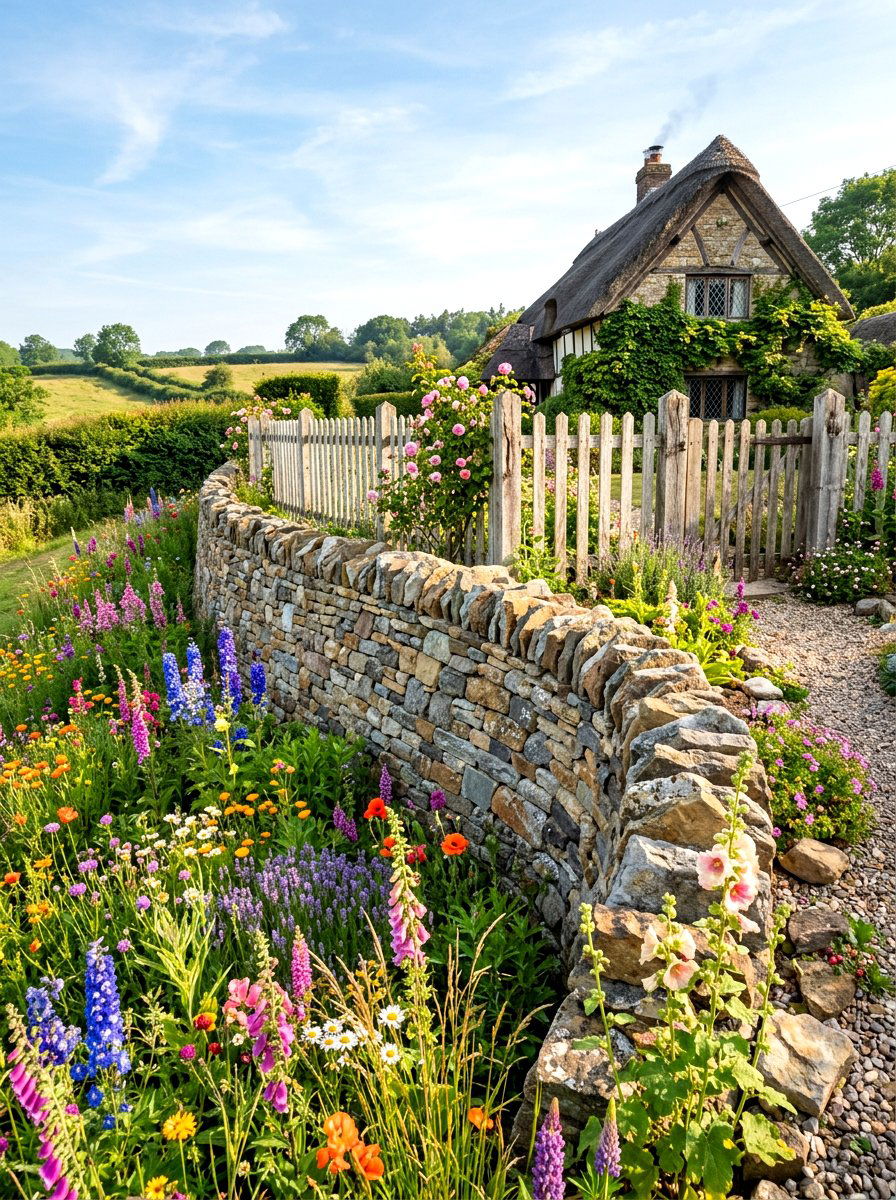
A fieldstone retaining wall brings a charming, old-world feel to your garden that is reminiscent of historic farmsteads and countryside estates. This style uses stones that are literally gathered from fields, meaning they come in a wide variety of shapes, sizes, and colors. The random arrangement of these natural stones creates a look that is full of character and visual interest. These walls are typically built with mortar to ensure stability while maintaining their rugged, unfinished appearance. This is the perfect choice for a cottage garden filled with wildflowers, as the rustic stones provide a beautiful and naturalistic frame for the messy blooms.
26. Trellis Retaining Wall
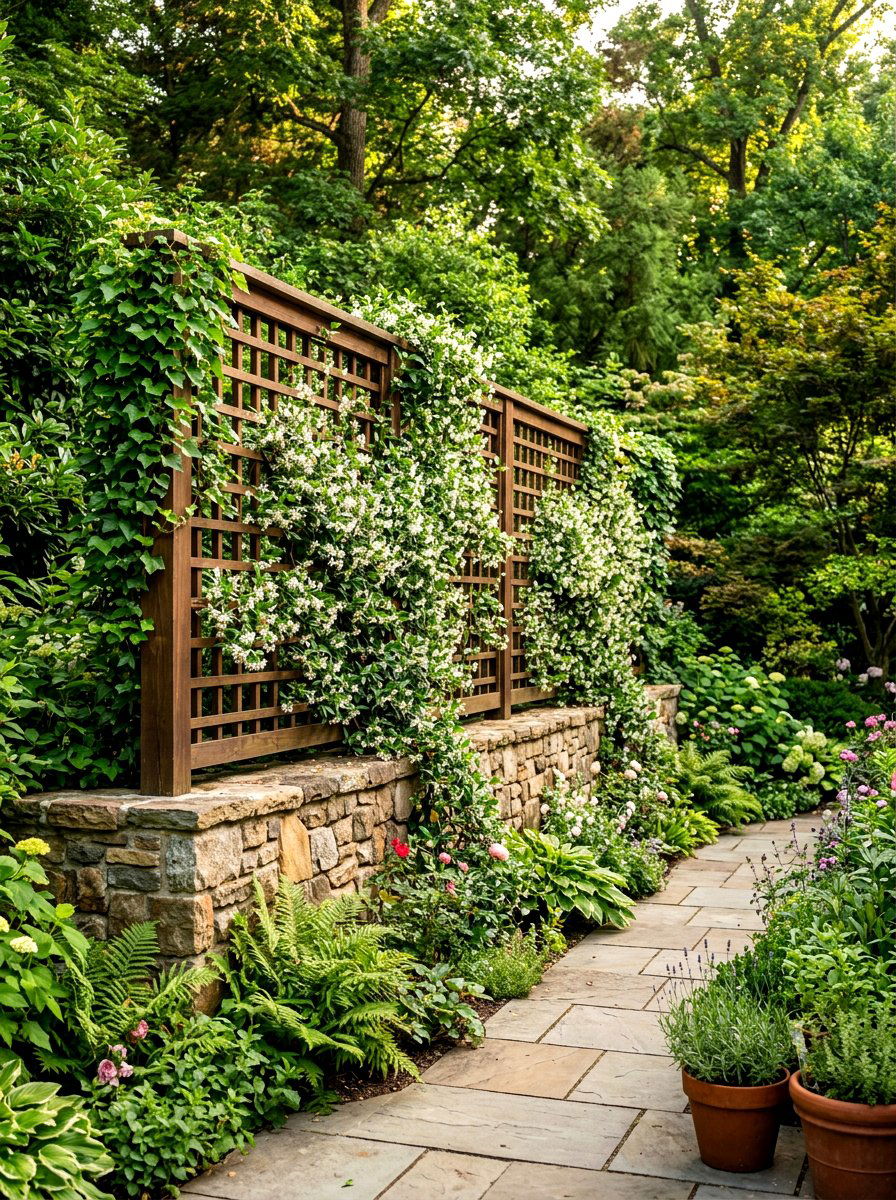
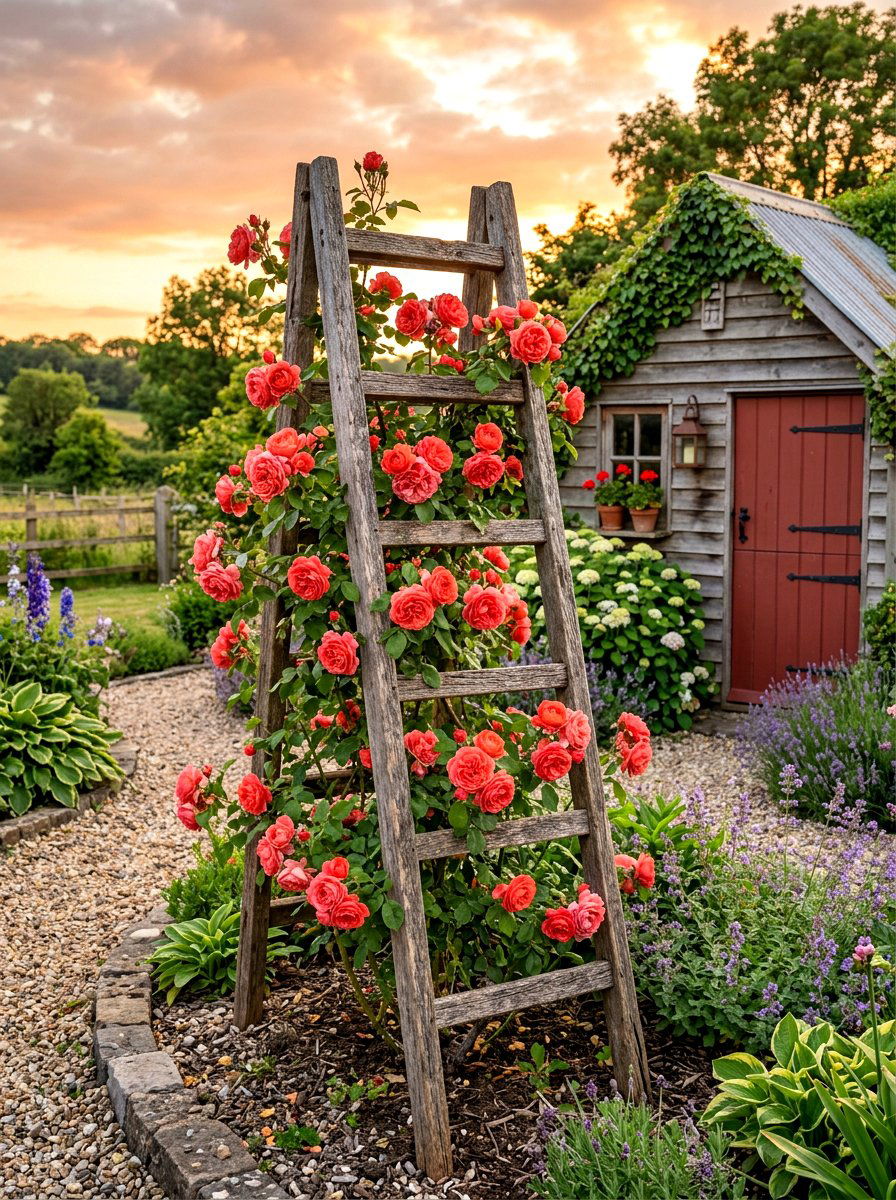
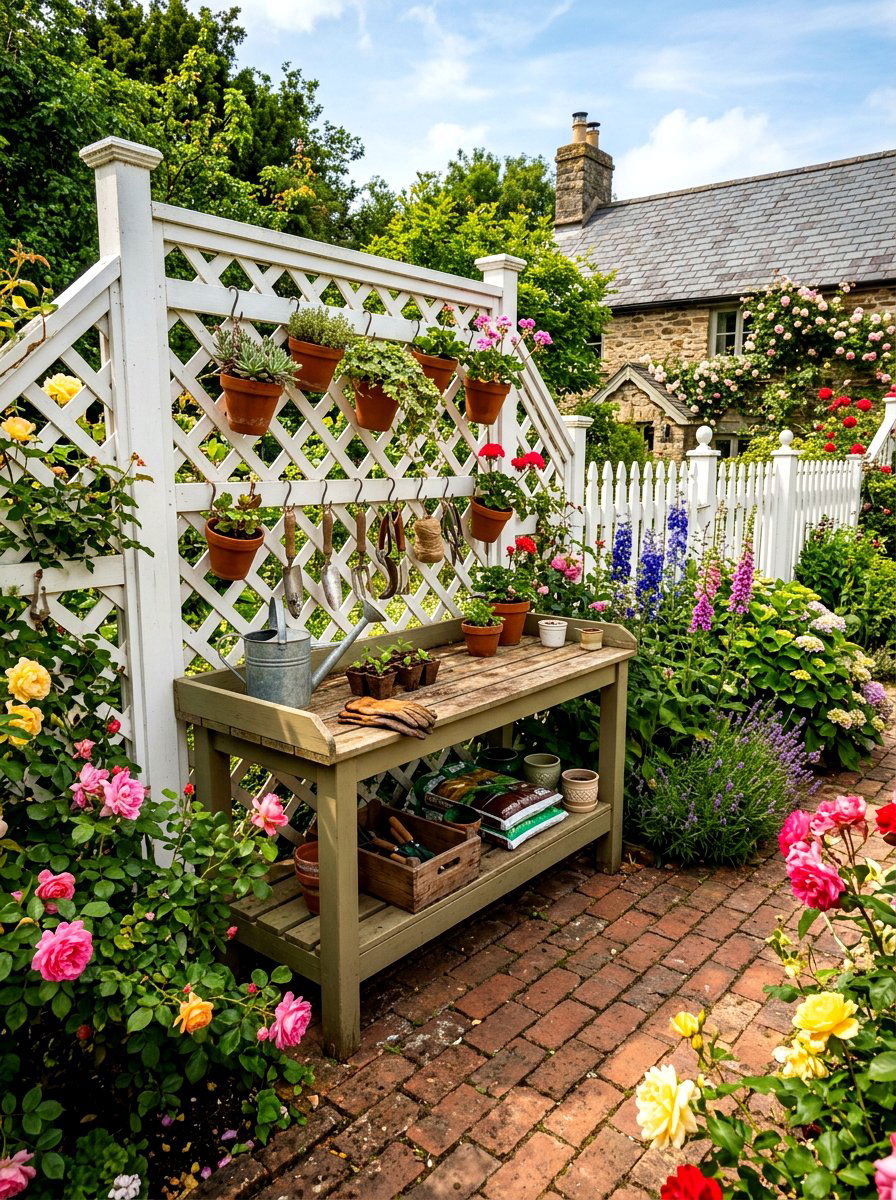
Add privacy and vertical interest to your backyard by installing a trellis retaining wall. This design involves building a standard retaining wall and then attaching a wooden or metal trellis to the top or the face of the structure. This allows you to grow climbing plants like ivy, jasmine, or climbing roses directly on the wall, turning a hard surface into a lush green screen. This is an excellent solution for urban yards where you want to block the view of a neighbor's house while also managing a slope. The combination of hard stone and soft climbing vines is always visually stunning.
27. Waterfall Retaining Wall
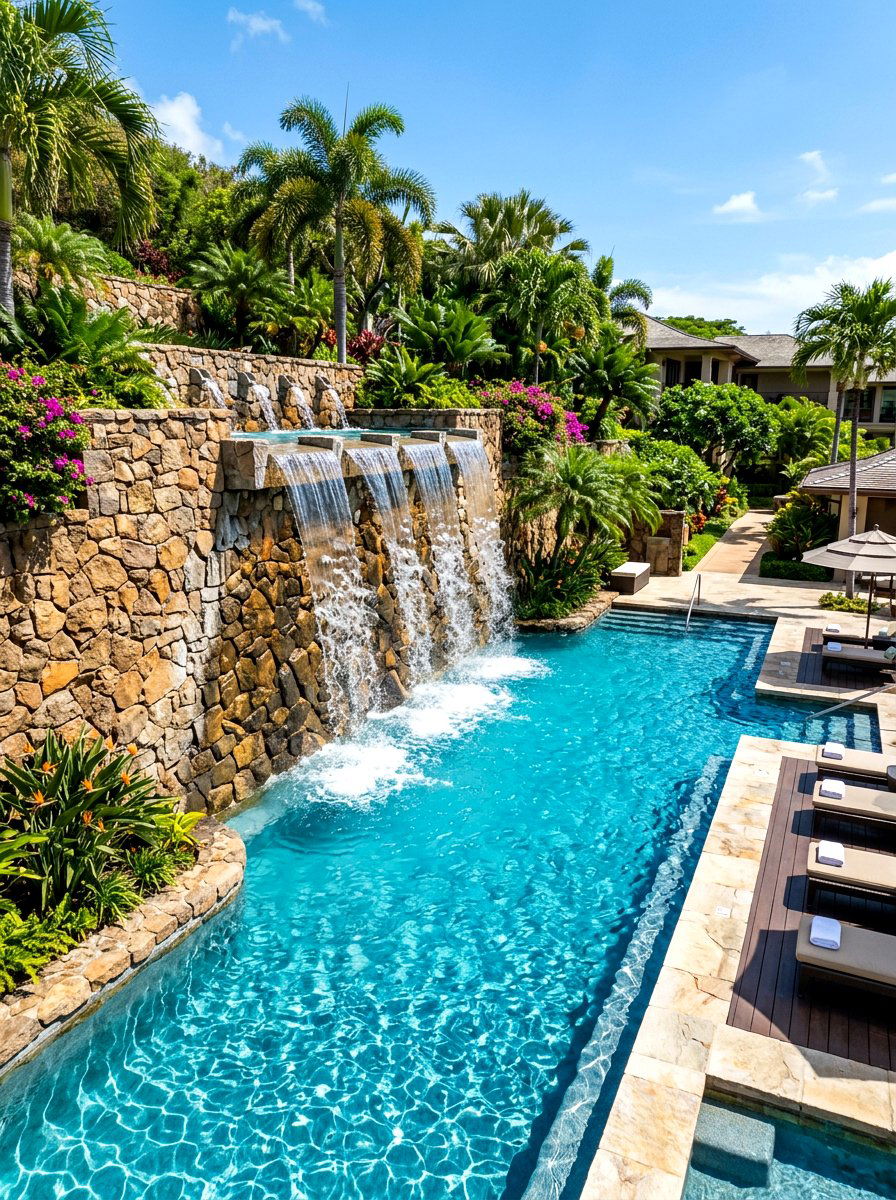
Transform your backyard into a luxury resort by incorporating a waterfall retaining wall into your landscape plan. This design features a built-in spillway or sheer descent that allows water to flow gracefully over the face of the wall into a pool or basin below. Not only does this create a breathtaking visual focal point, but the sound of running water also provides a relaxing soundtrack for your outdoor space. It is a clever way to mask unwanted noise from nearby streets or neighbors. You can use LED lighting to illuminate the water at night, creating a magical atmosphere for late-evening relaxation and entertaining.
28. Integrated Light Wall
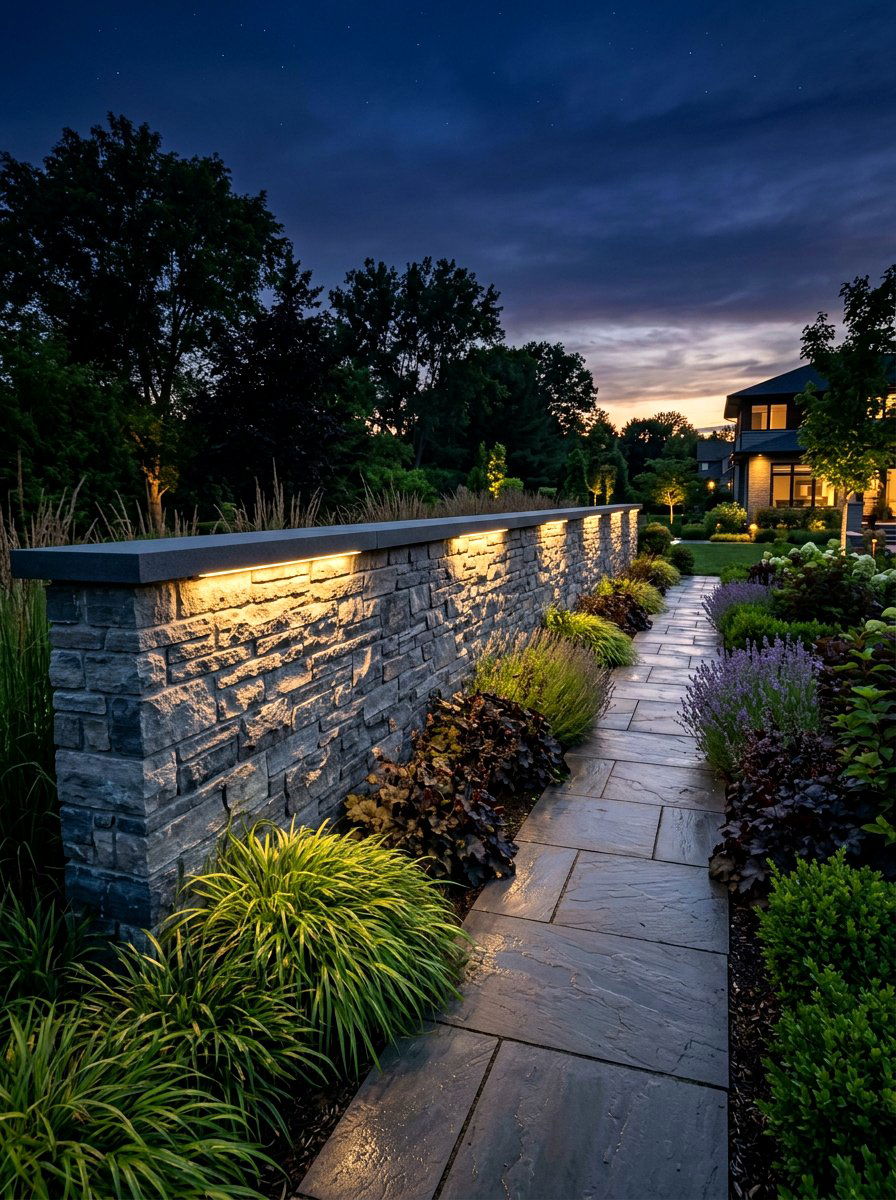
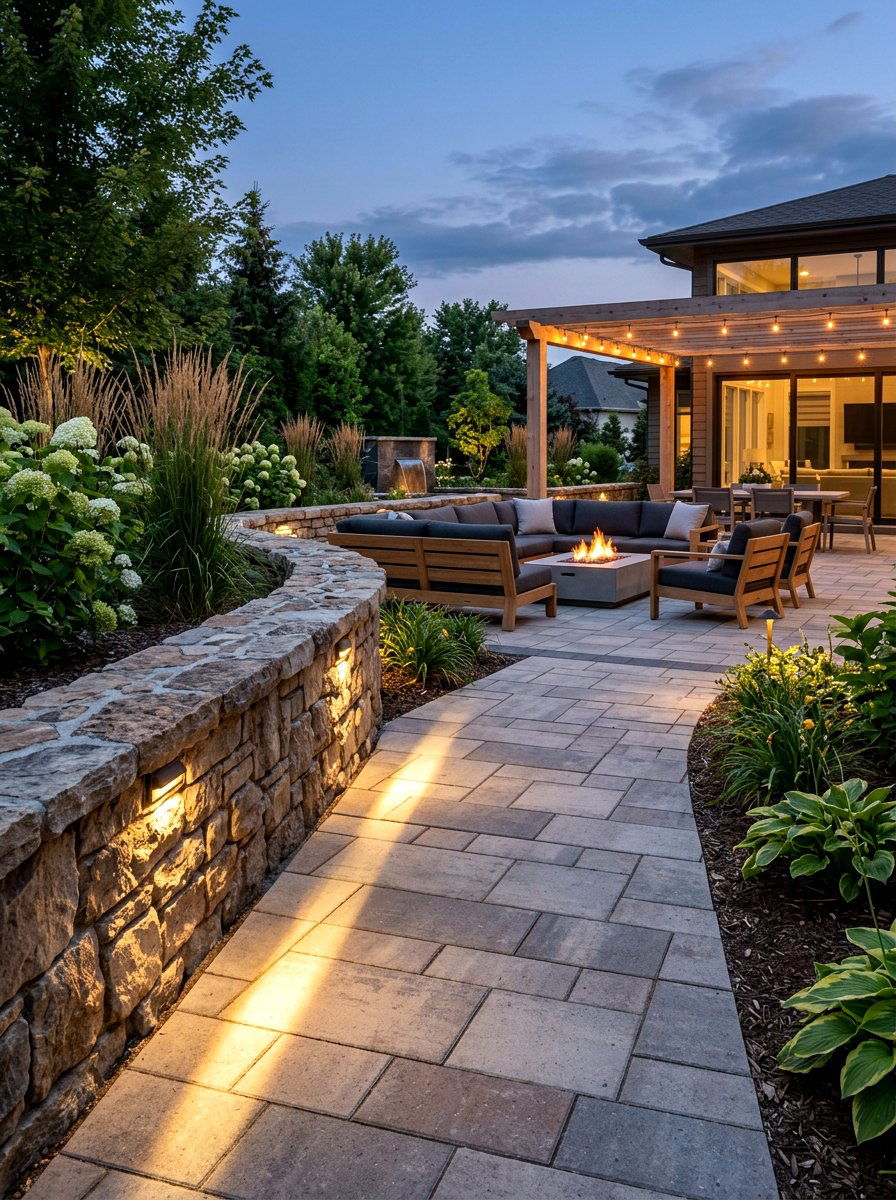
Make your garden safer and more beautiful after the sun goes down by building an integrated light wall. This modern design features small LED light fixtures that are recessed directly into the face or under the lip of the retaining wall caps. These lights provide a soft, downward glow that illuminates your paths and walkways without being too bright or distracting. It is a fantastic way to highlight the texture of your wall materials and create a sense of depth in the landscape at night. This functional upgrade ensures that your outdoor living spaces remain usable and inviting long after the daylight fades.
29. Wood And Stone Wall
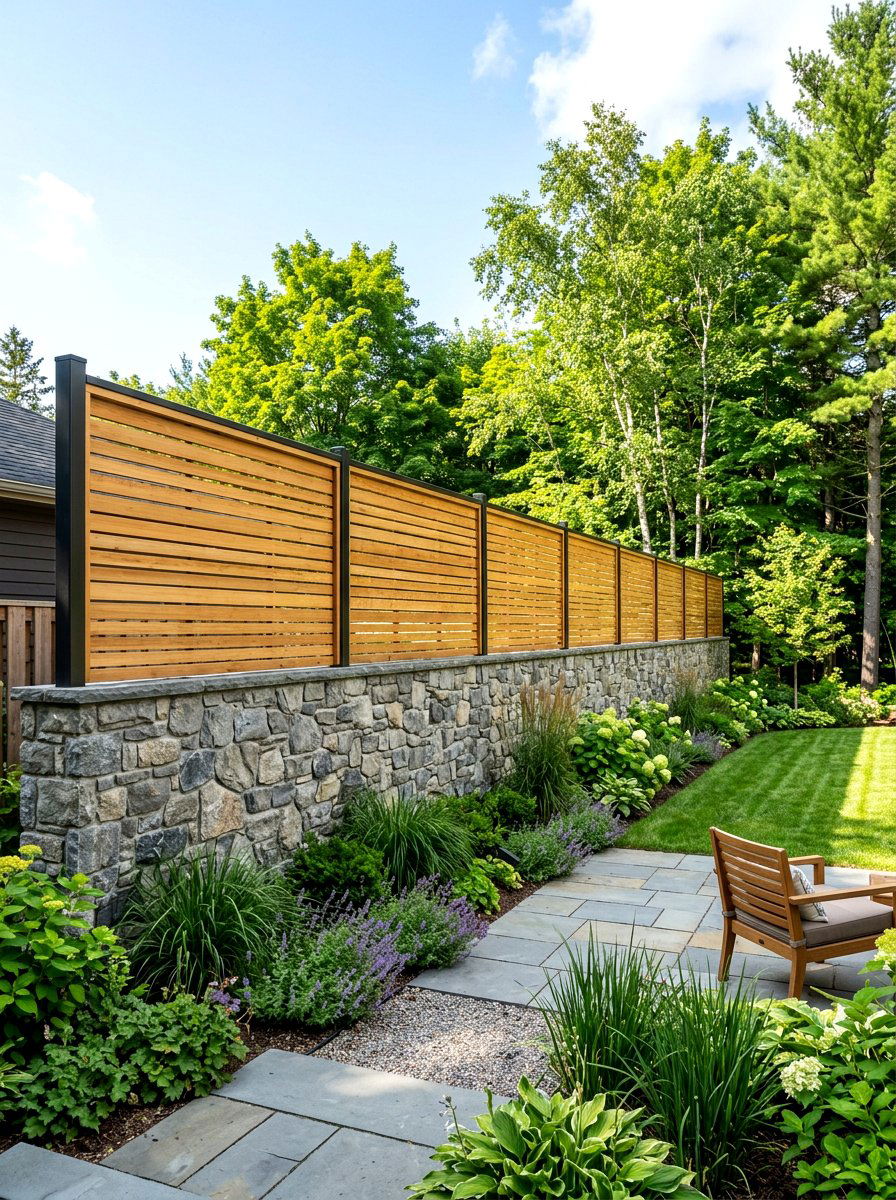
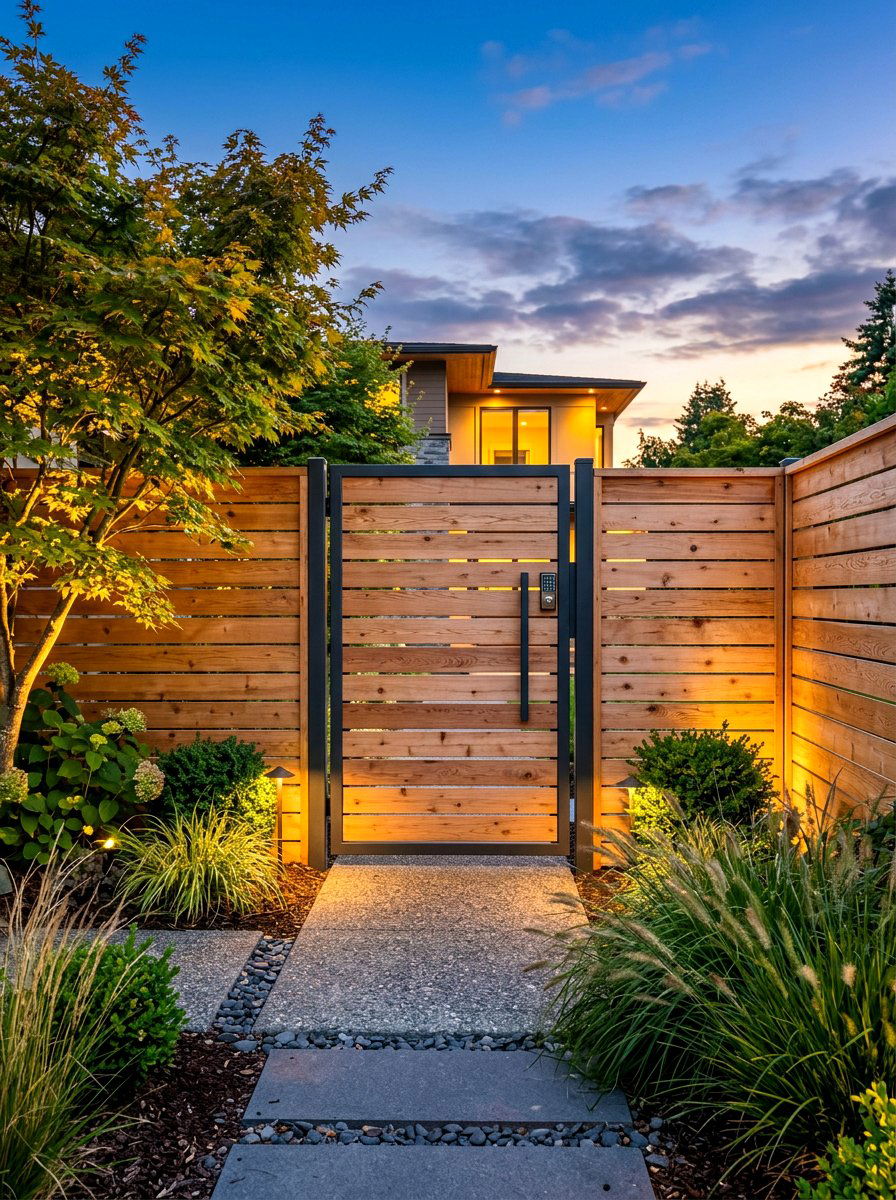
Combining different materials can create a sophisticated and custom look, such as a wood and stone wall design. This approach might feature a sturdy stone base for structural integrity with a beautiful wooden horizontal slat fence or bench on top. The contrast between the cold, hard texture of the stone and the warm, organic feel of the wood adds a layer of design complexity to your yard. This style is very popular in modern and transitional landscapes where homeowners want a mix of materials to define different zones. It allows you to enjoy the durability of masonry with the aesthetic warmth of timber.
30. Stone Step Wall
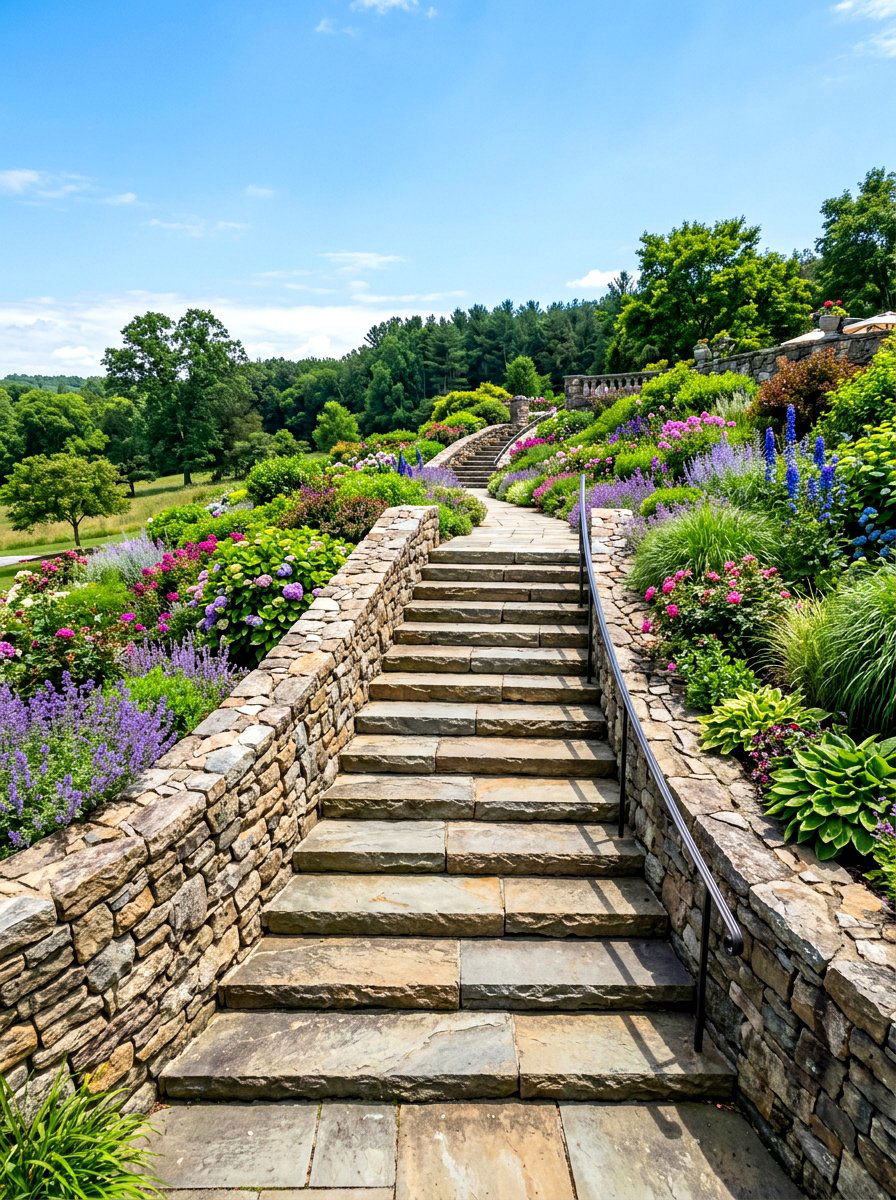
Solve the problem of navigating a steep slope while adding architectural beauty by building a stone step wall. This design integrates wide, flat stone stairs directly into the retaining wall structure, creating a seamless path from one level of your yard to the next. By using the same material for both the steps and the wall, you create a cohesive and grand entrance to your upper garden or patio. These steps should be deep and low to ensure they are easy to climb for guests of all ages. This is a practical and stunning way to make your entire property more accessible.
Conclusion:
Selecting the perfect garden retaining wall is a vital step in creating a landscape that is both functional and visually captivating. Whether you choose the rugged, timeless appeal of natural boulders or the sleek, contemporary lines of poured concrete, your choice will anchor the entire design of your outdoor space. These structures do more than just manage soil and prevent erosion; they provide the essential framework for beautiful gardens, cozy seating areas, and impressive multi-level layouts. By considering your home's architecture and your personal style, you can build a lasting feature that adds significant value and enjoyment to your property for many years to come.

Related posts: