Designing a functional and beautiful outdoor space often starts with structural elements that provide both support and style. Retaining walls are the unsung heroes of landscape design, offering vital erosion control while creating distinct levels in a sloped yard. Whether you are dealing with a steep incline or simply want to define your garden beds, these structures add a sophisticated architectural touch to any property. From the rustic charm of natural stone to the sleek, industrial look of poured concrete, the options are virtually endless. This guide explores a wide variety of materials and layouts to help you transform your backyard into an organized, stunning oasis that maximizes every square foot of your land.
1. Natural Stone Wall
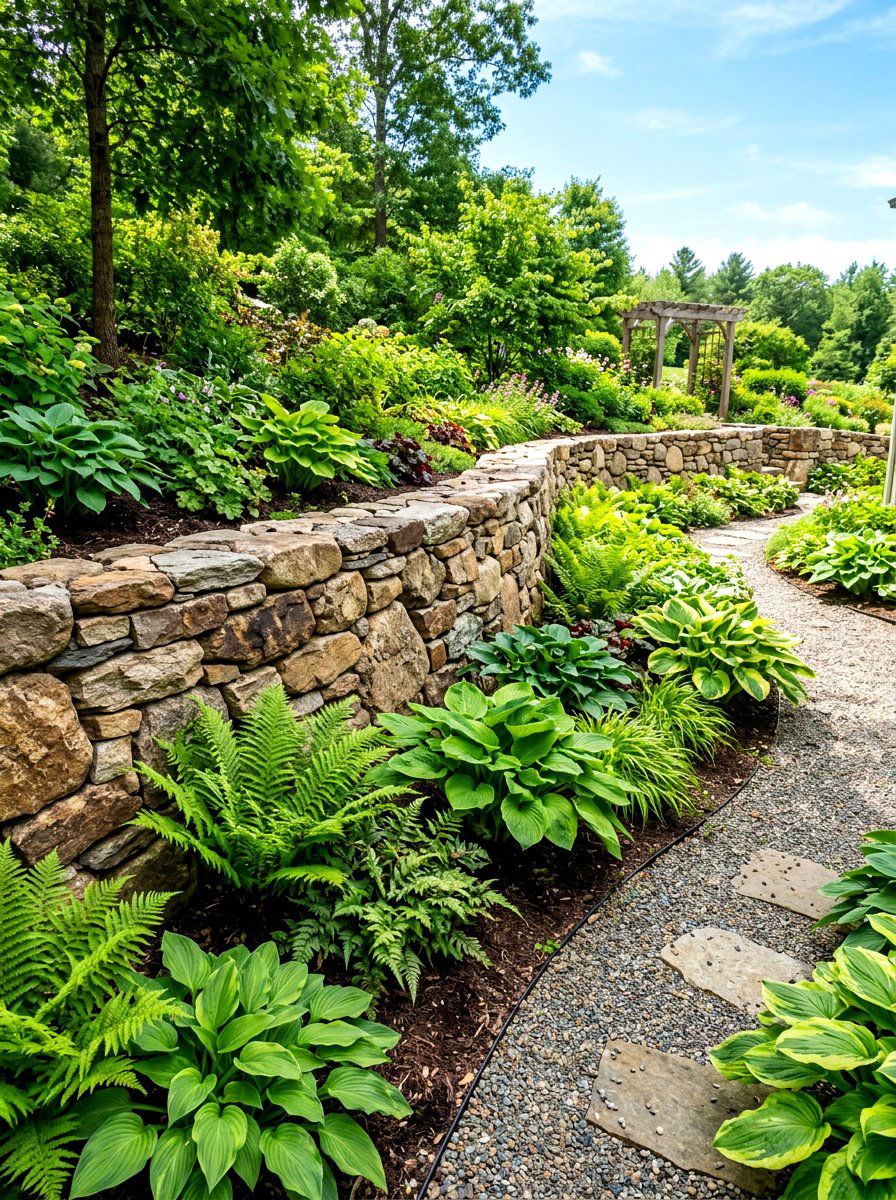
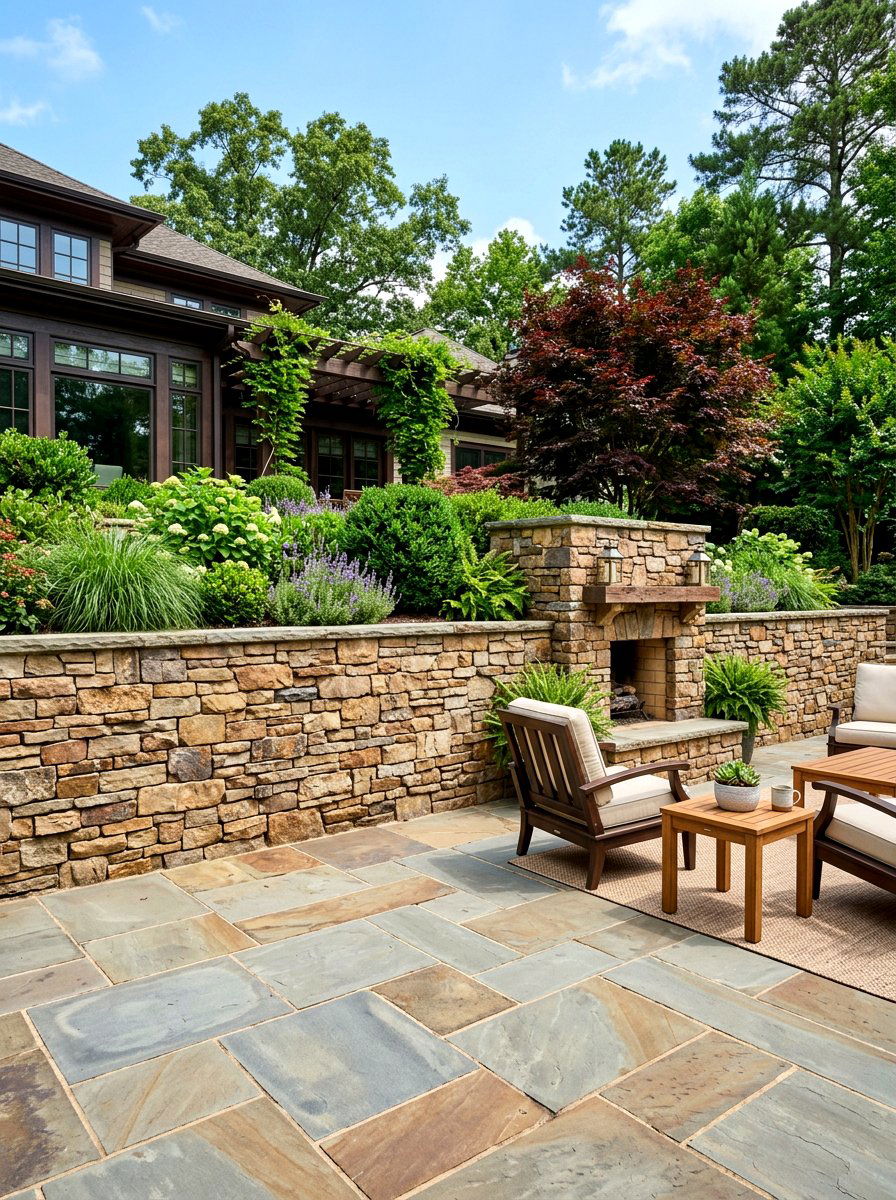
Imagine the timeless elegance of hand-picked stones carefully stacked to hold back a lush hillside. Natural stone walls offer an organic look that blends seamlessly with the surrounding environment, making them a top choice for traditional and rustic landscapes. Each stone features unique textures and colors, ensuring that no two walls look exactly alike. This design usually incorporates larger boulders at the base for stability, tapering slightly as the wall rises. You can fill the crevices with creeping thyme or moss to create a soft, living structure that feels like it has been part of the earth for centuries. It is a durable and beautiful solution for any luxury garden.
2. Timber Sleeper Wall
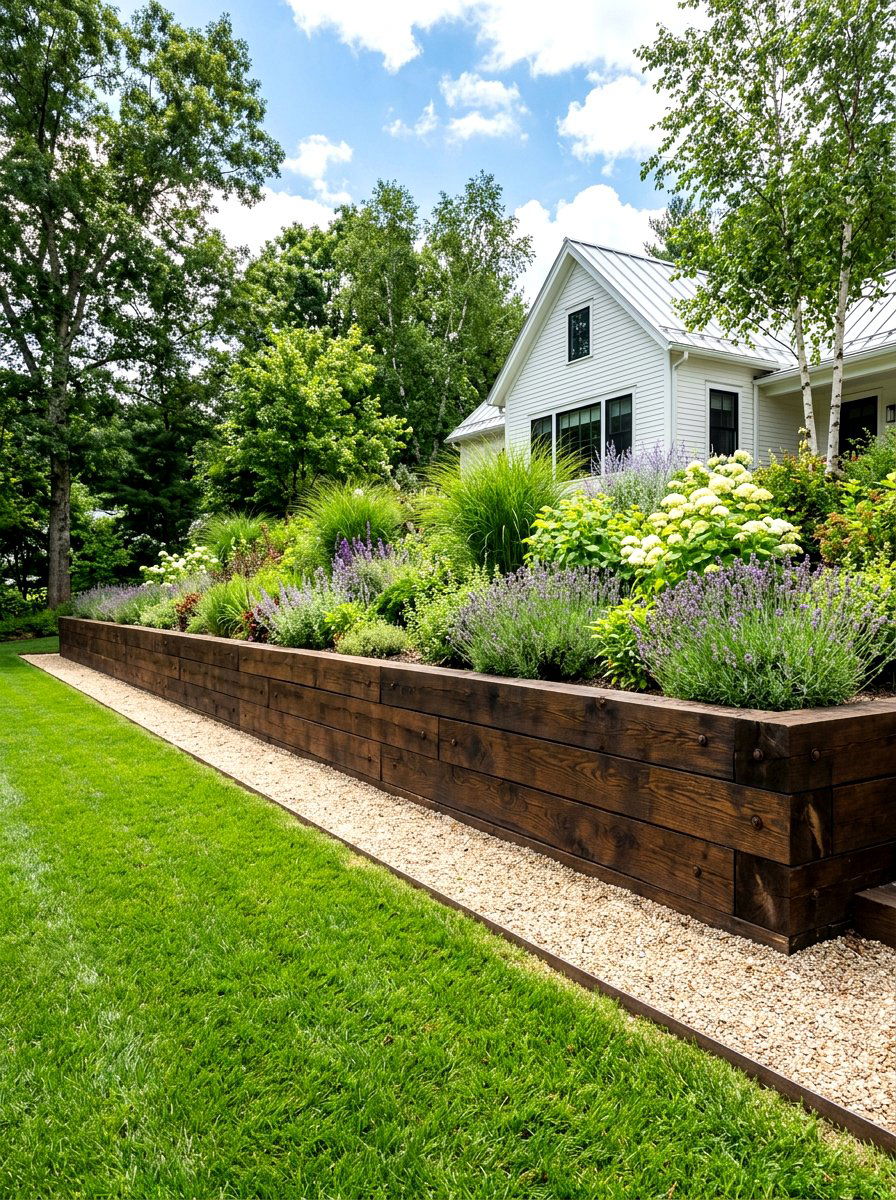
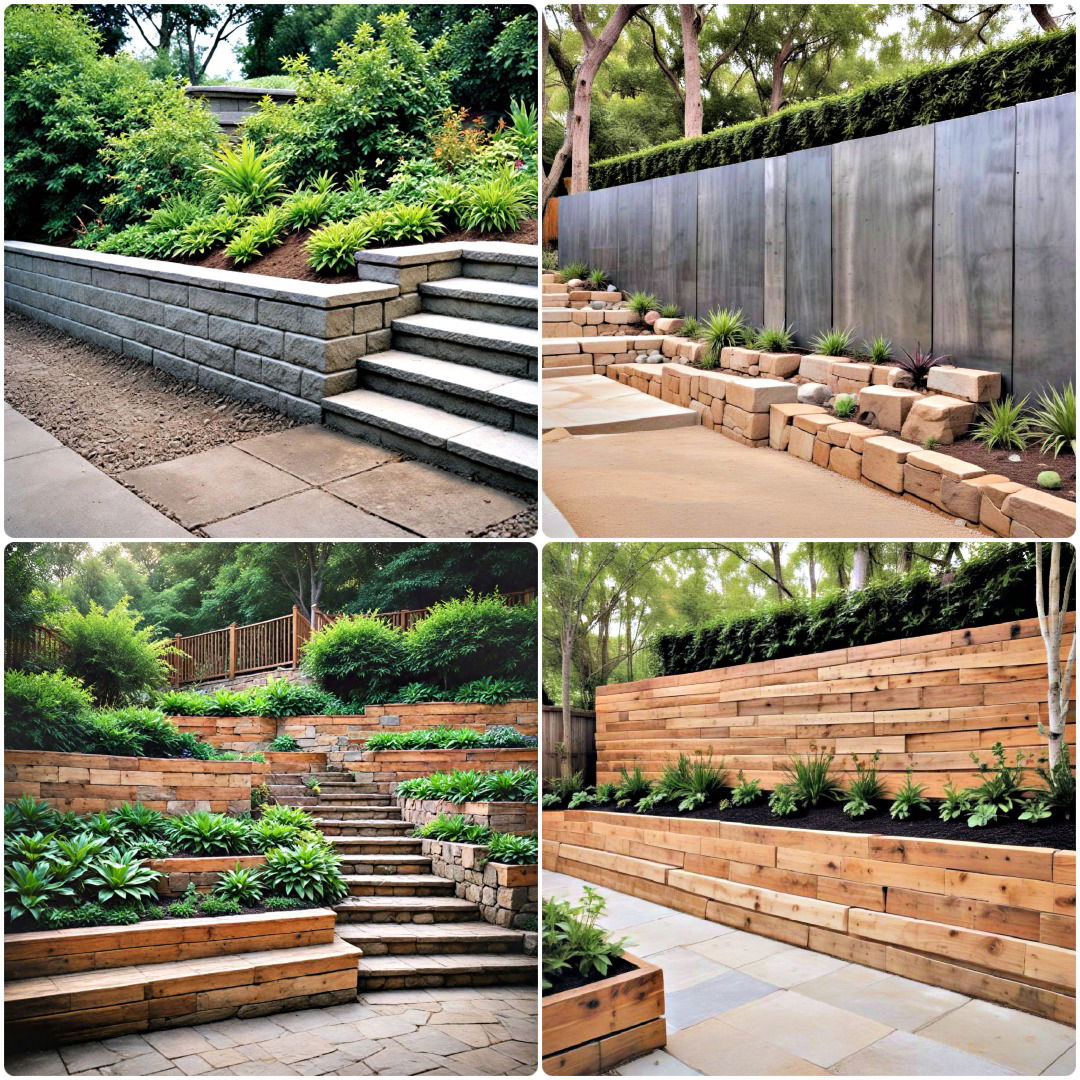
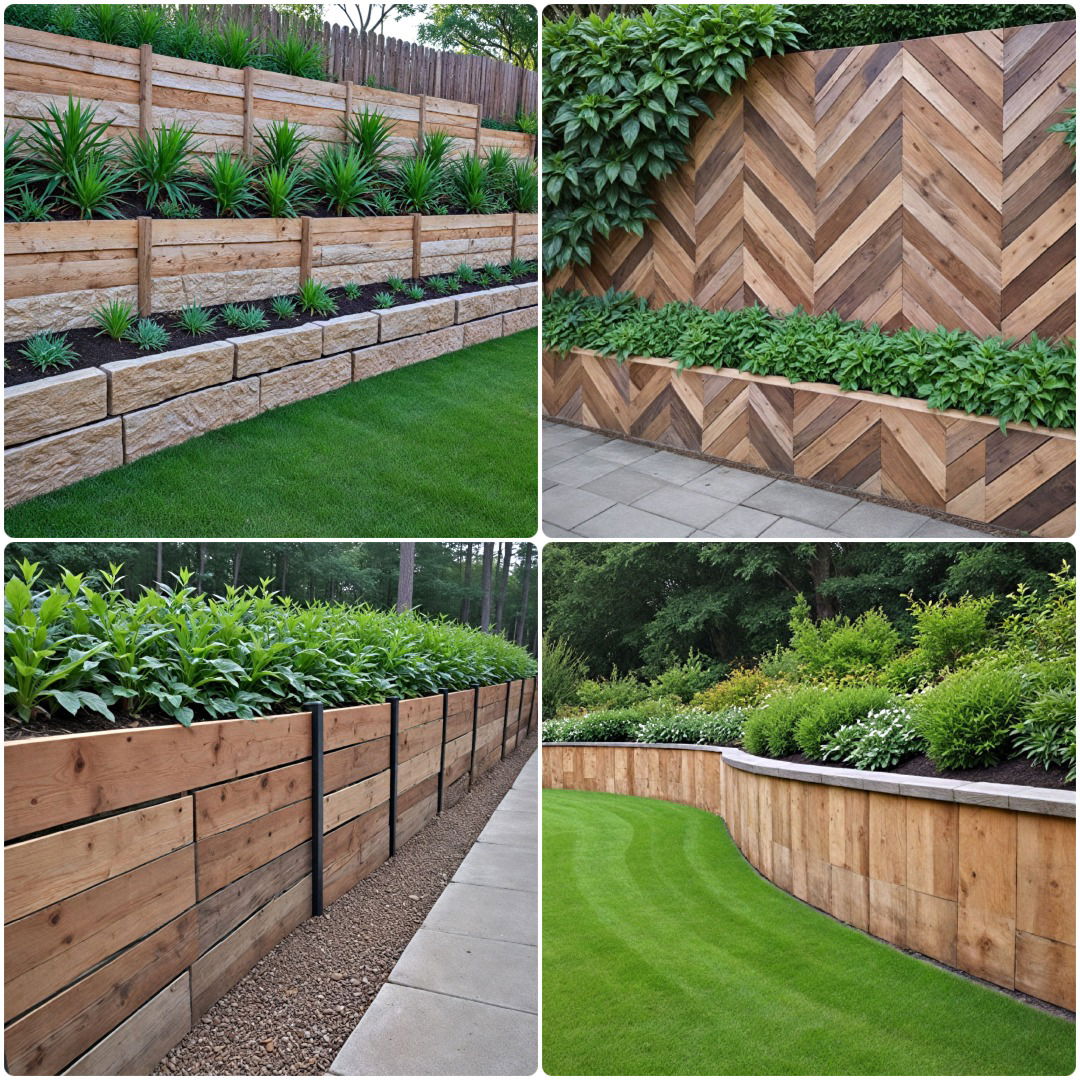
Have you ever considered the warmth and natural appeal of wood for your landscape boundaries? Timber sleeper walls are incredibly popular because they are cost-effective and relatively easy to install for DIY enthusiasts. These thick, pressure-treated wooden beams create a sturdy barrier that looks fantastic in modern and farmhouse-style gardens alike. The horizontal lines of the sleepers provide a clean, structured look that contrasts beautifully against soft green foliage. When installed correctly with proper drainage and galvanized steel posts, these walls can last for many years. You can leave the wood to weather into a natural silver-grey or stain it a deep chocolate brown to match your existing deck.
3. Concrete Block Wall
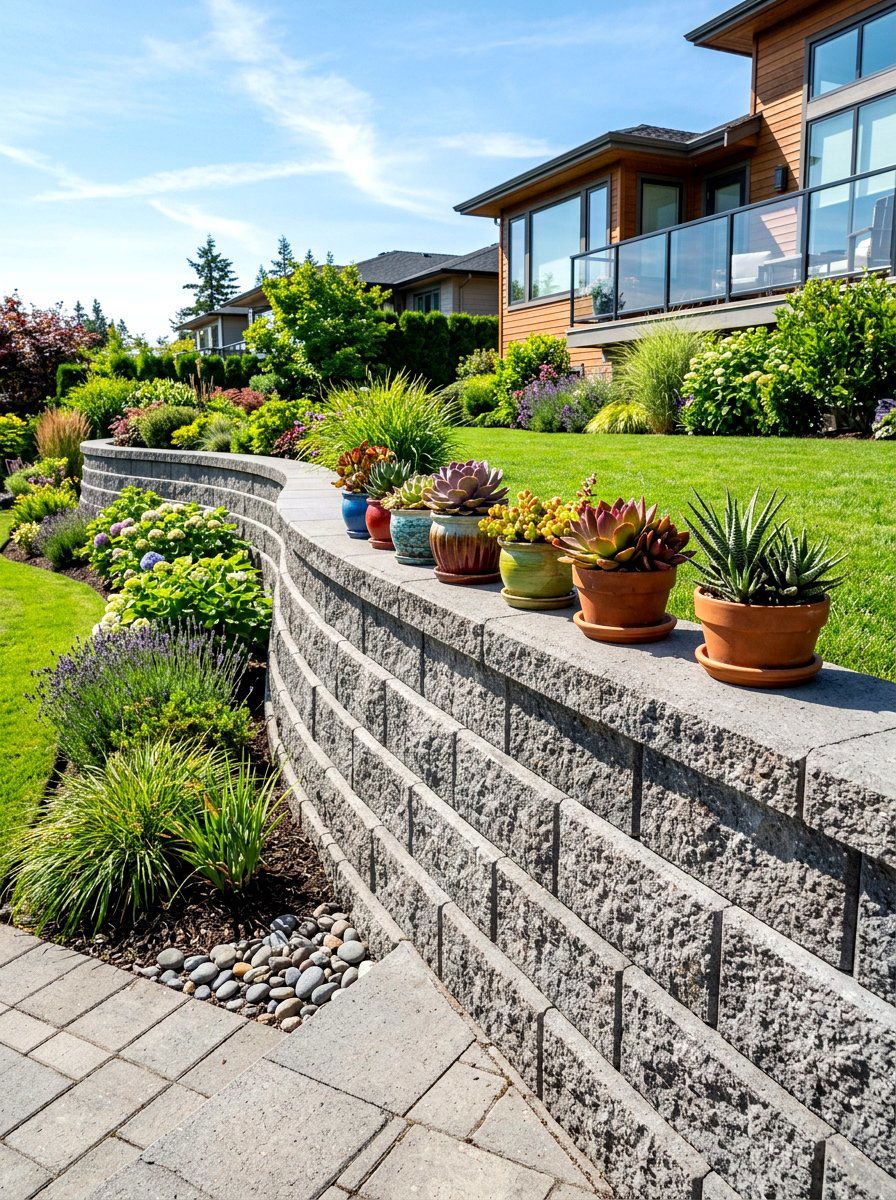
Stability meets versatility when you choose a concrete block wall for your next backyard project. These modular units are engineered for strength, making them the perfect choice for high slopes that require significant structural support. Modern concrete blocks come in a variety of finishes, from smooth contemporary surfaces to split-face textures that mimic the appearance of natural stone. You can easily incorporate curves and corners into the design due to their uniform size and interlocking capabilities. For a cohesive look, many homeowners top these walls with matching capstones that double as extra ledge space for potted plants. This solution is practical, long-lasting, and offers a very clean aesthetic.
4. Gabion Basket Wall
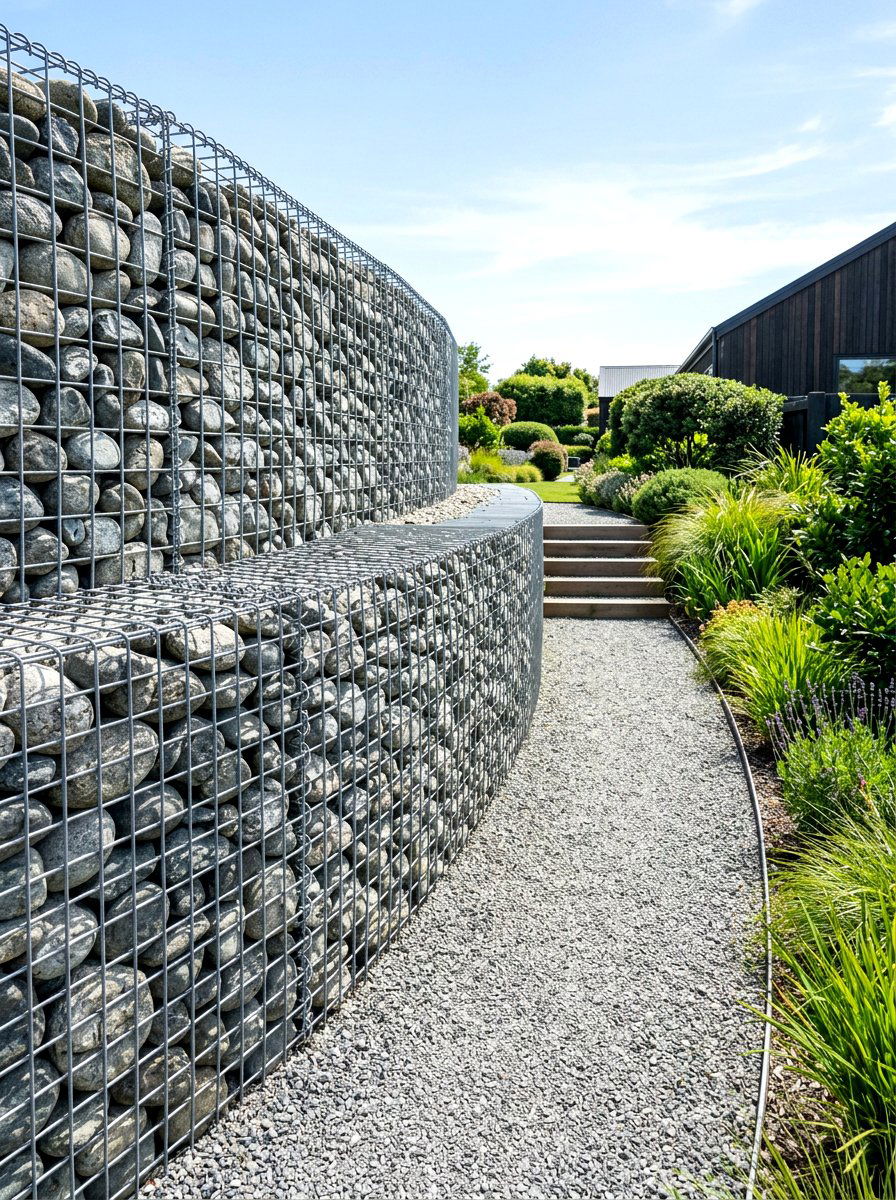
Are you looking for a modern, industrial look that also provides exceptional drainage? Gabion basket walls consist of heavy-duty wire cages filled with rocks, glass, or even recycled concrete chunks. This design is highly functional because it allows water to flow through freely, preventing the pressure buildup that often damages solid walls. Beyond their utility, gabion walls serve as a striking visual feature with a unique texture that stands out in contemporary garden designs. You can customize the look by choosing specific stone colors or layering different materials within the baskets. They are incredibly durable and require almost zero maintenance once they are properly positioned and filled.
5. Poured Concrete Wall
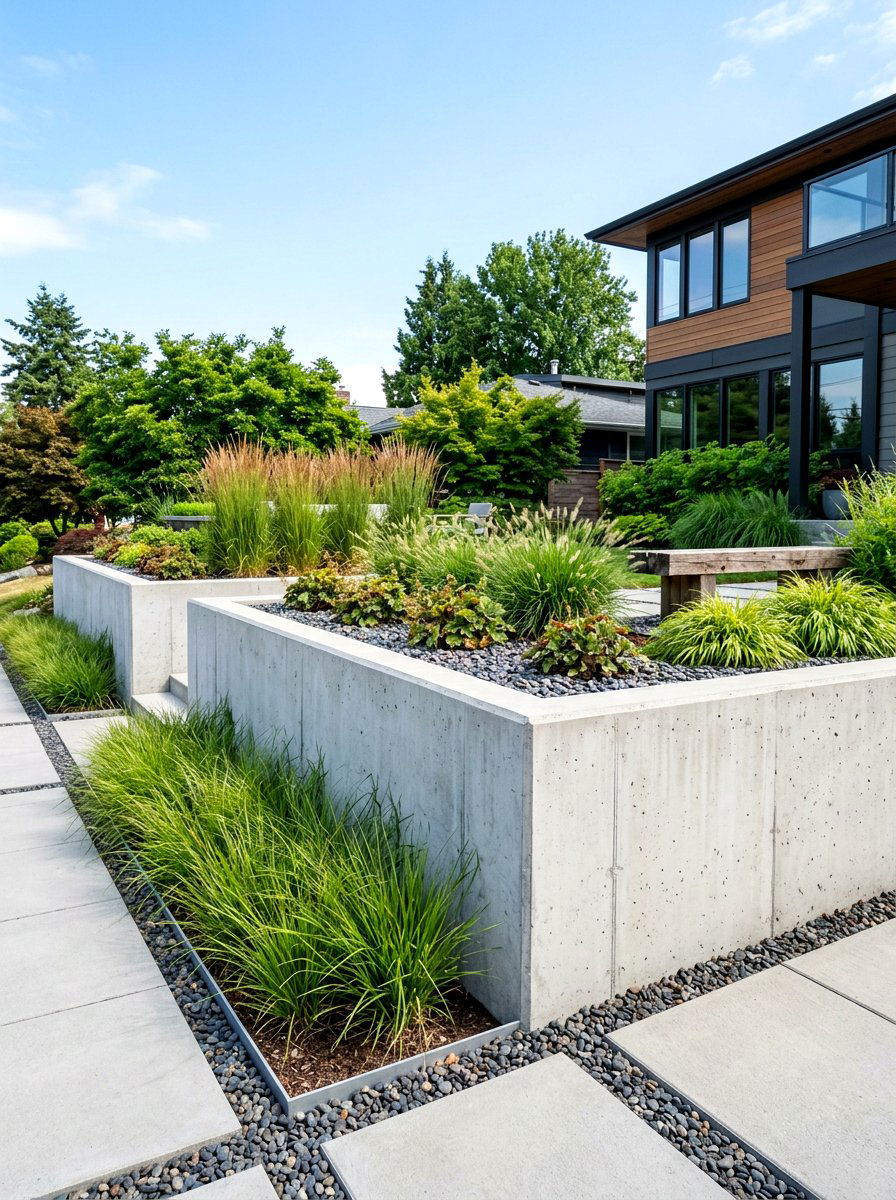
For a sleek and ultra-modern aesthetic, nothing beats the clean lines of a poured concrete wall. This design offers a seamless finish that works perfectly in minimalist landscapes or urban outdoor spaces. Because the concrete is poured into forms on-site, you have complete control over the shape, height, and even the surface texture. You can choose a smooth, polished look or opt for a board-formed finish that leaves behind a beautiful wood-grain impression. These walls are incredibly strong and can be reinforced with steel for maximum longevity. They provide a neutral backdrop that allows your colorful flowers and architectural plants to truly take center stage.
6. Red Brick Wall
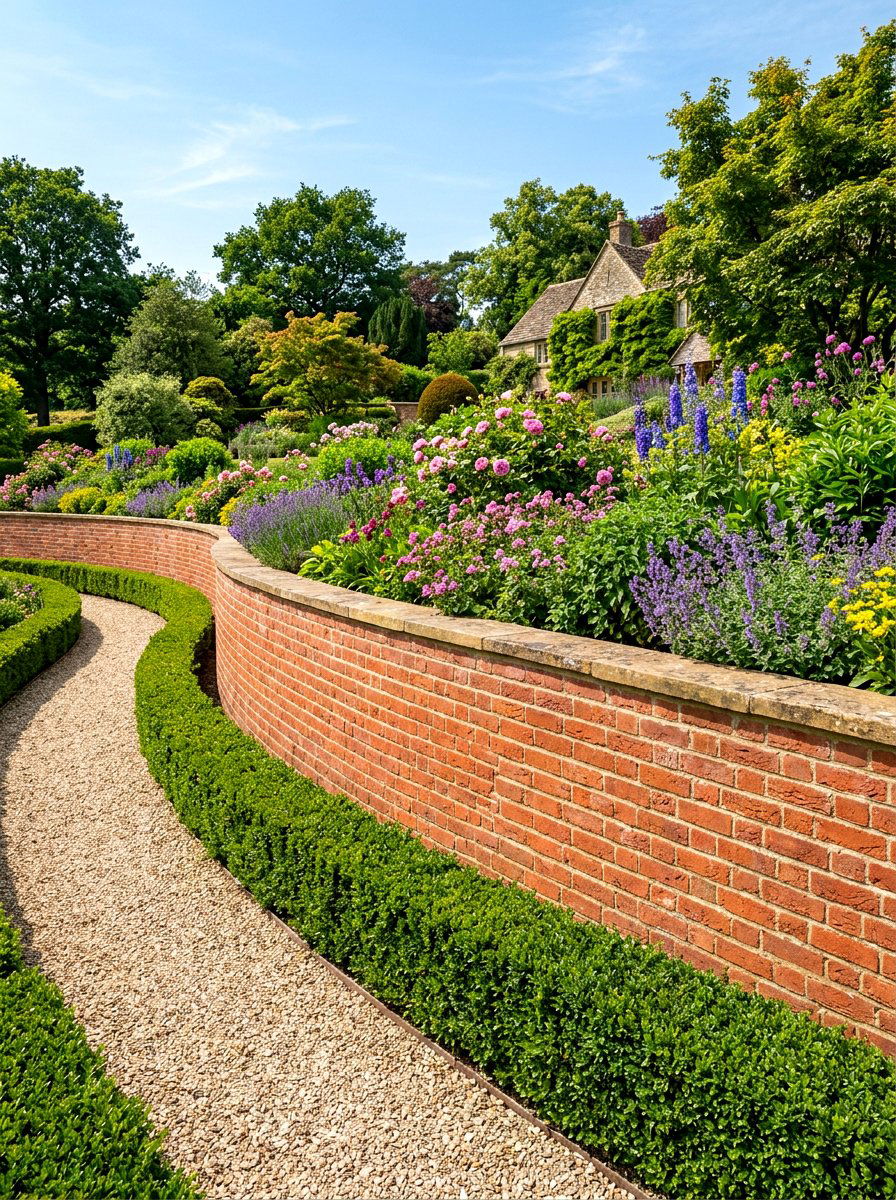
Traditional charm and classic sophistication come together in a well-built red brick wall. This material has been a staple in garden design for centuries, offering a sense of permanence and history to any property. The uniform size of the bricks allows for intricate patterns, such as herringbone or basketweave, which add a layer of decorative detail to your retaining structure. Brick walls look especially stunning when paired with wrought iron gates or traditional English garden plantings like roses and boxwood. They are perfect for creating formal boundaries or tiered garden beds. When properly mortared and capped, a brick wall remains a sturdy and elegant feature for decades.
7. Corten Steel Wall
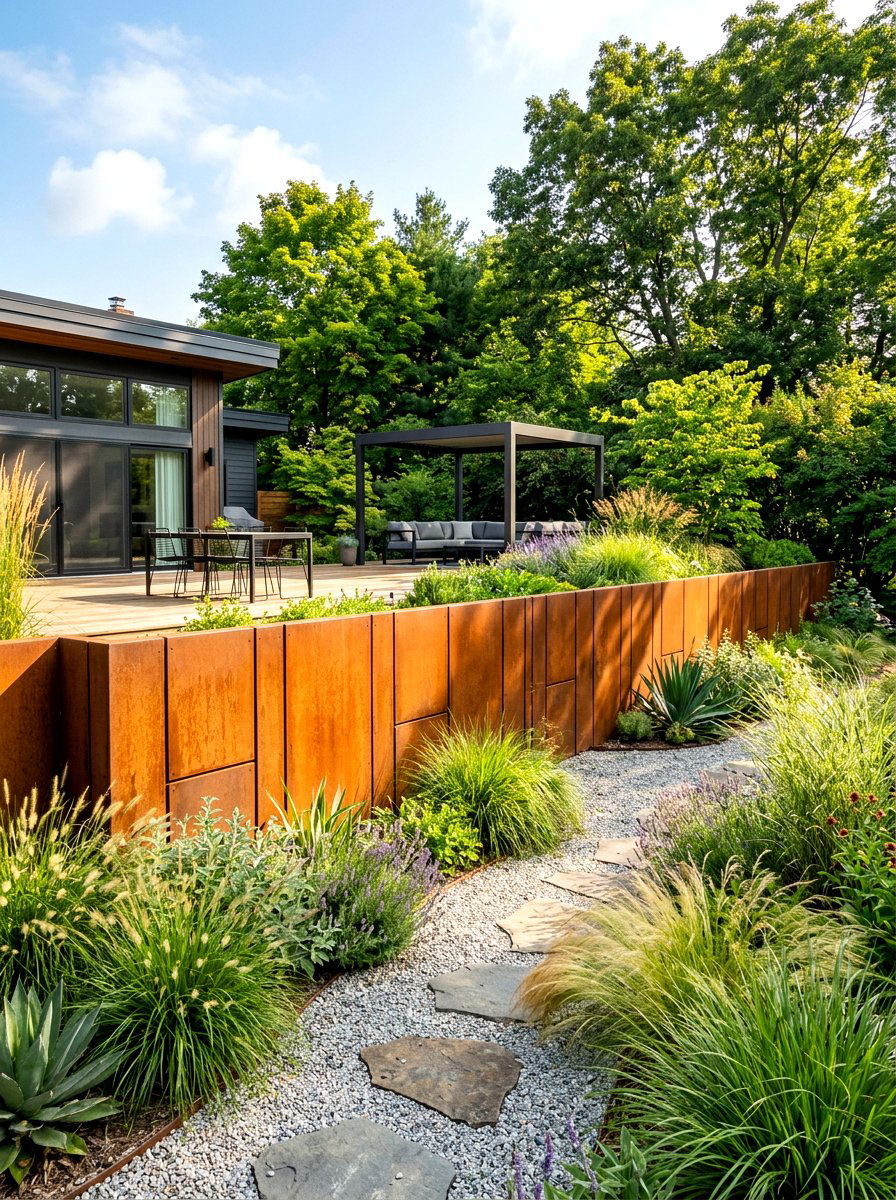
If you want to make a bold statement, consider the industrial and artistic appeal of a Corten steel wall. This specialized steel develops a protective, rust-like patina over time, resulting in a rich orange and brown finish that looks stunning against green grass. Steel walls are incredibly thin compared to stone or concrete, making them an excellent choice for tight spaces where every inch counts. They offer a sharp, clean edge that defines different garden levels with precision. The warm, metallic tones provide a beautiful contrast to both modern and desert-style landscapes. These walls are extremely durable and naturally resistant to the elements without needing paint.
8. Dry Stack Stone Wall
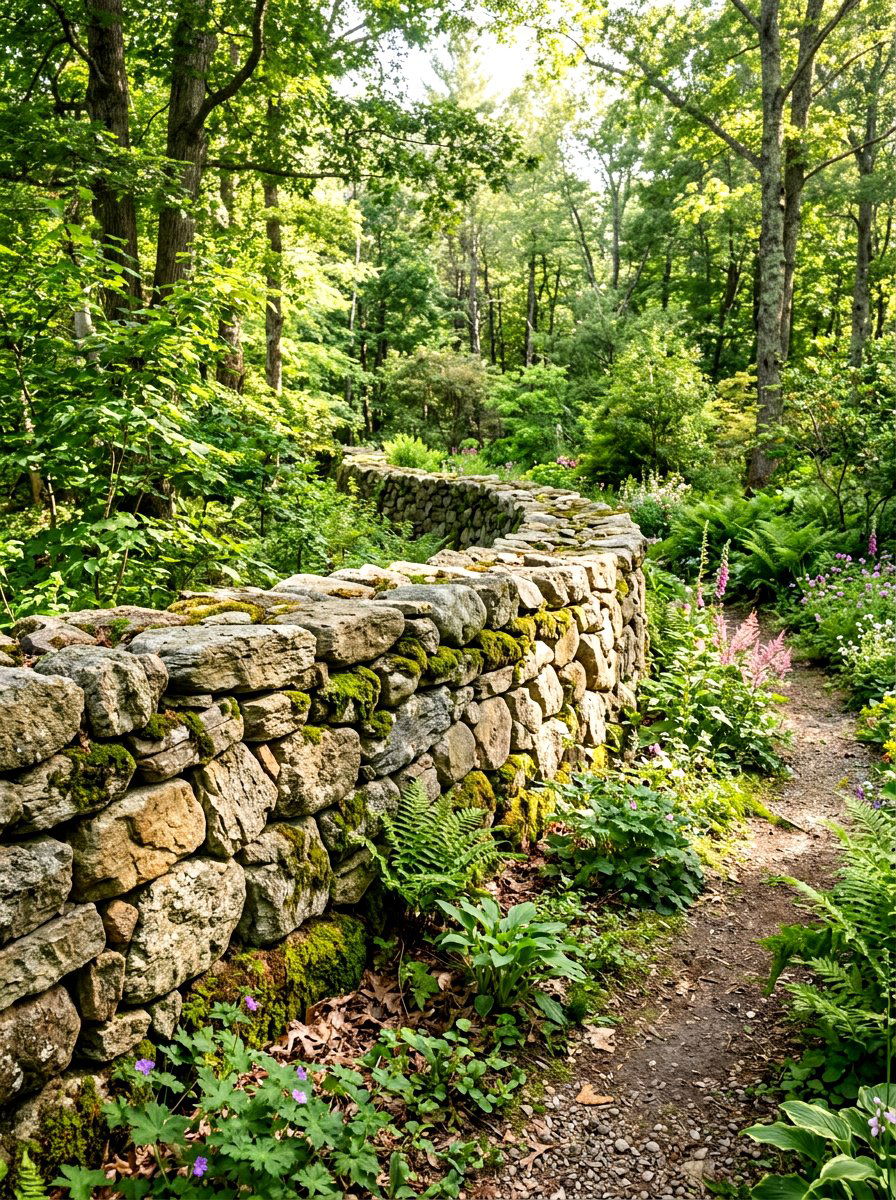
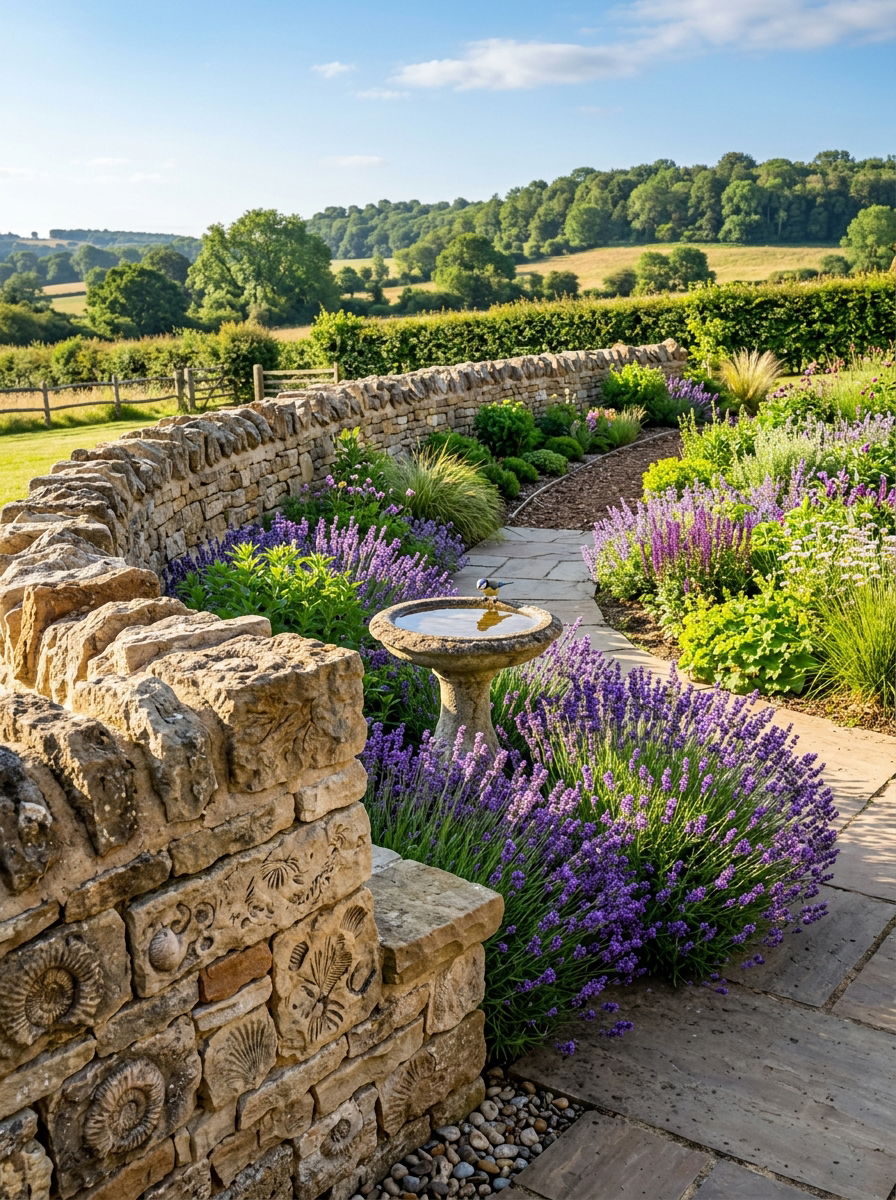
There is something deeply satisfying about a dry stack stone wall that relies on gravity and expert placement rather than mortar. This ancient building technique creates a wall with a highly textured and authentic look that fits perfectly in cottage or woodland gardens. Because there is no mortar, the wall can move slightly with the natural shifting of the earth, which often prevents the cracking seen in solid structures. You can plant small alpines or succulents directly into the small gaps between the stones to create a living wall. This design choice feels timeless and artisanal, providing a rugged beauty that only improves as it ages naturally.
9. Boulder Retaining Wall
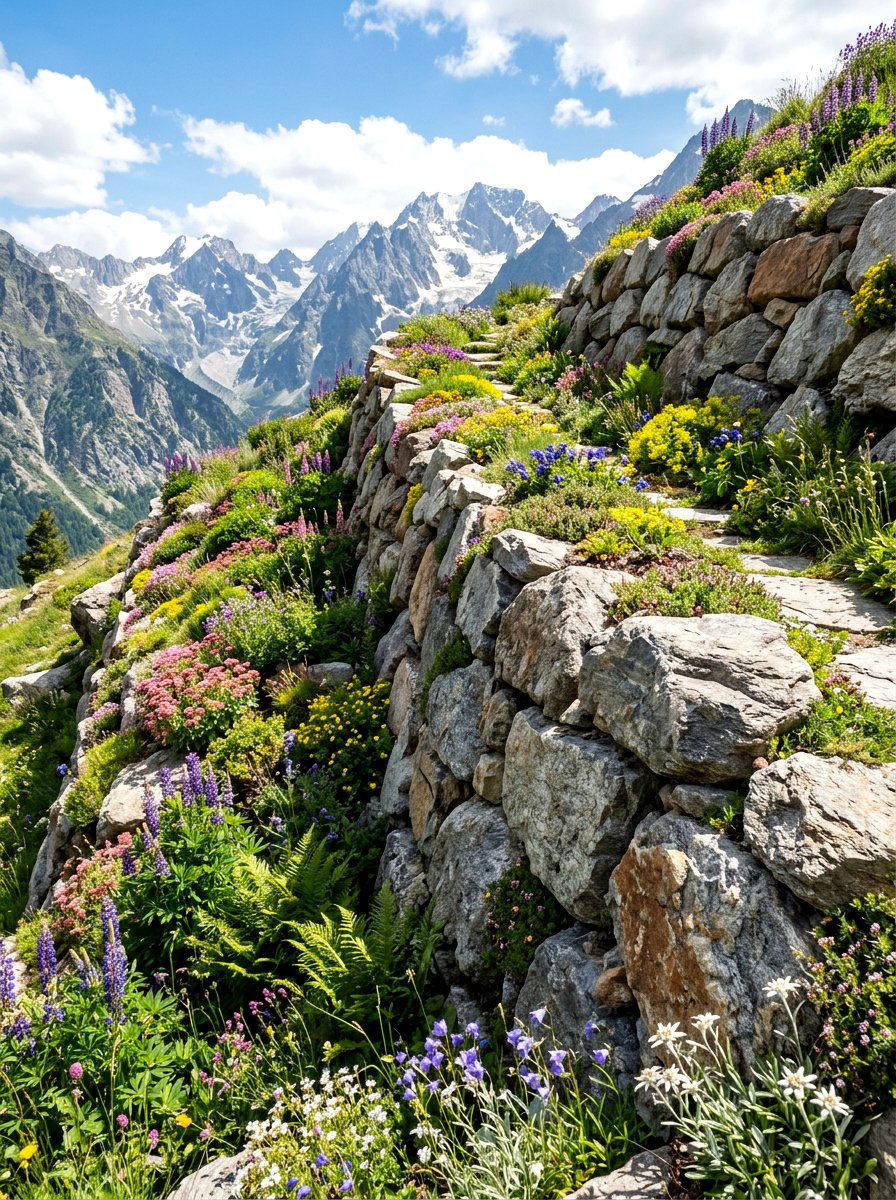
Massive boulders can transform a steep slope into a dramatic and natural-looking rockery. A boulder retaining wall uses large, heavy rocks to hold back soil, creating a rugged aesthetic that mimics a mountain landscape. This style is particularly effective in large properties where the scale of the rocks can be truly appreciated. The gaps between the boulders provide excellent spots for planting cascading flowers or hardy evergreens, softening the hard edges of the stone. Because each boulder has its own shape and color, the resulting wall is a one-of-a-kind masterpiece. It is a highly durable and low-maintenance option for those who love organic design.
10. Tiered Garden Wall
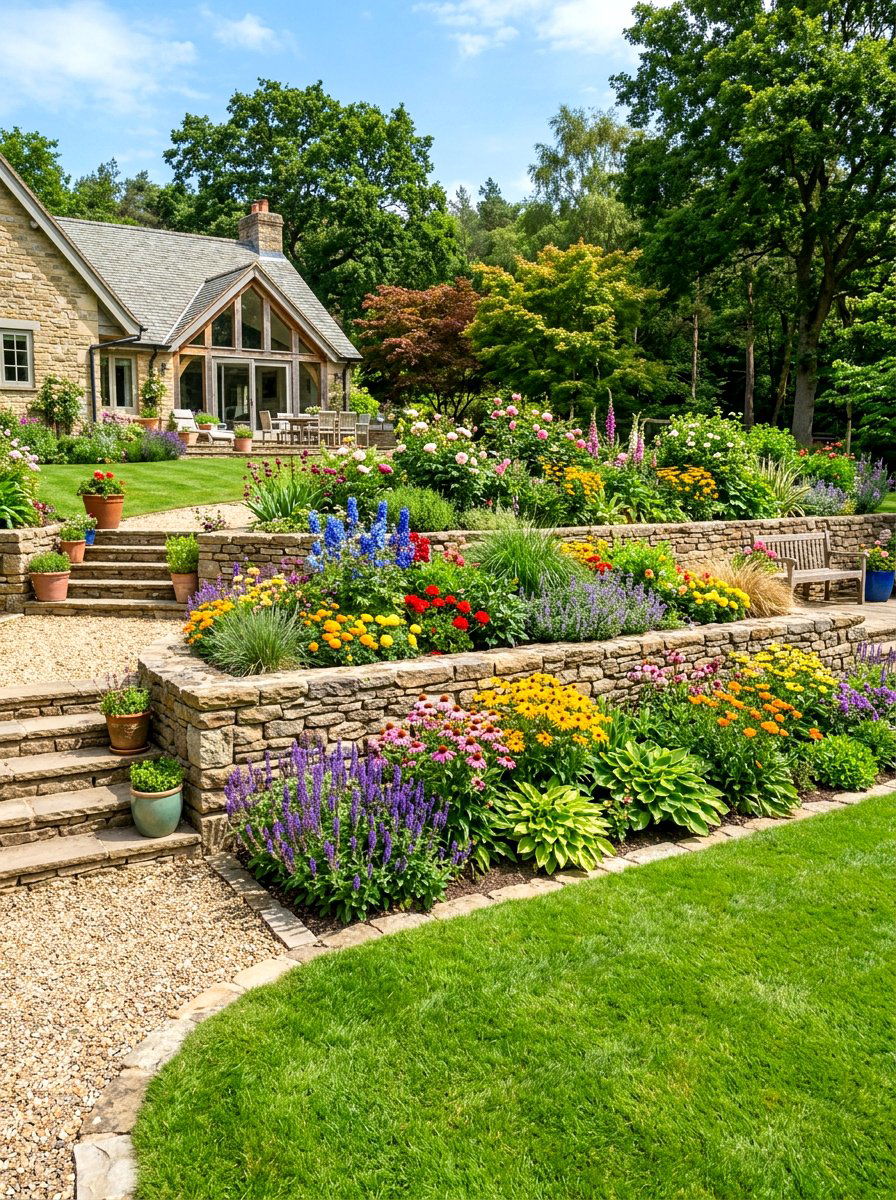
A tiered garden wall system is the ultimate solution for turning a steep, unusable hillside into a functional paradise. By breaking one high wall into several smaller levels, you create multiple flat zones for planting, seating, or even a small patio. This approach reduces the pressure on each individual wall, making the entire structure more stable and easier to maintain. You can use different materials for each tier or keep them uniform for a clean, cascading look. Terracing also allows you to organize your garden by plant type or color, creating a visual journey as you move from the bottom level to the top.
11. Curved Retaining Wall
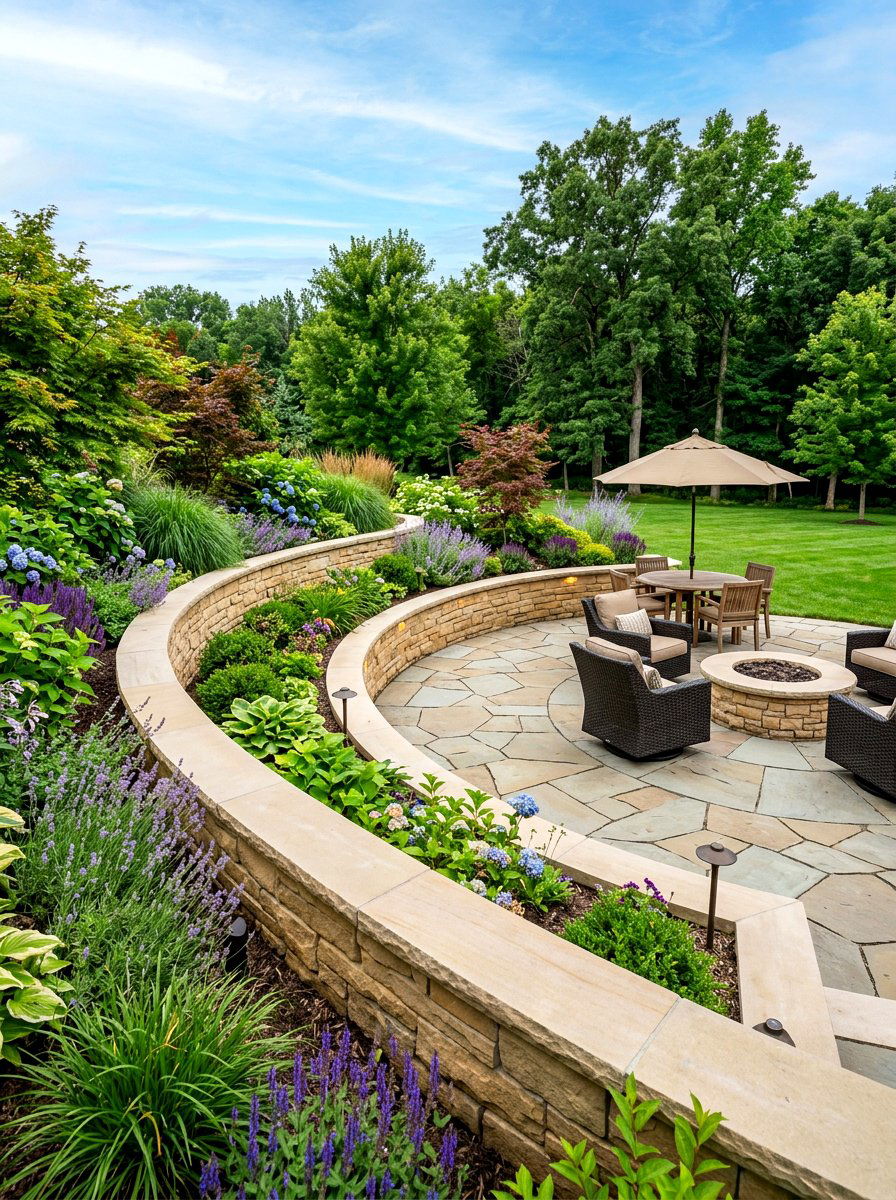
Break away from rigid straight lines by incorporating a curved retaining wall into your landscape. Curves create a more natural and fluid movement in the garden, mimicking the organic shapes found in nature. This design is excellent for wrapping around a circular patio or following the natural contours of your land. Many modular concrete blocks are specifically designed to create smooth arcs without the need for complex cutting. A curved wall can soften the overall look of your backyard, making it feel more inviting and less structured. It adds a professional, custom-designed feel to your property while providing all the necessary structural support for your soil.
12. Flagstone Retaining Wall
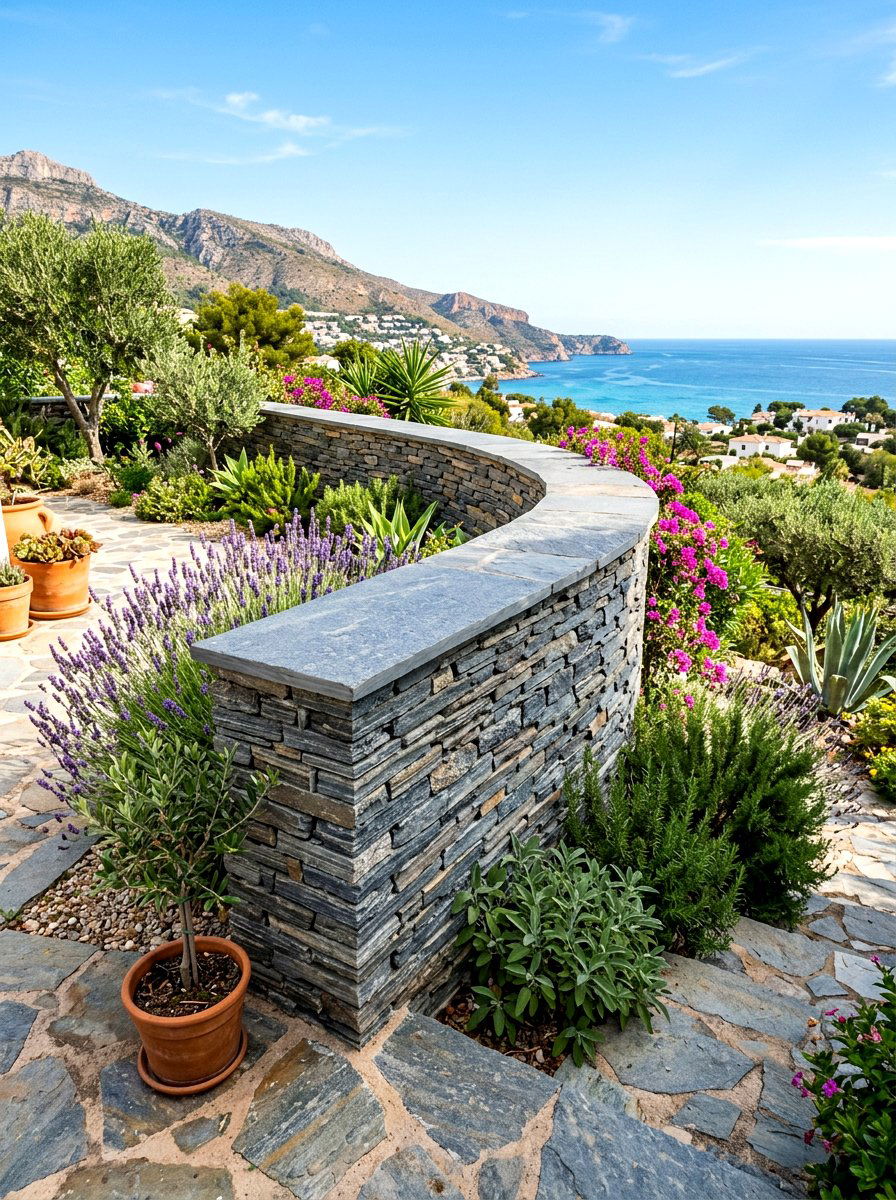
Flagstone is a premium material that brings a sophisticated, multi-tonal look to your outdoor space. These flat, thin stones are typically stacked horizontally to create a wall with a beautiful layered appearance. The natural variations in color, from deep blues and greys to warm tans, add incredible depth and visual interest to the structure. Flagstone walls are often finished with a matching capstone to provide a clean and polished top edge. This style works beautifully in Mediterranean or coastal-inspired gardens where natural textures are a priority. It is a high-end choice that significantly boosts the curb appeal and value of your home through timeless style.
13. Wood Panel Wall
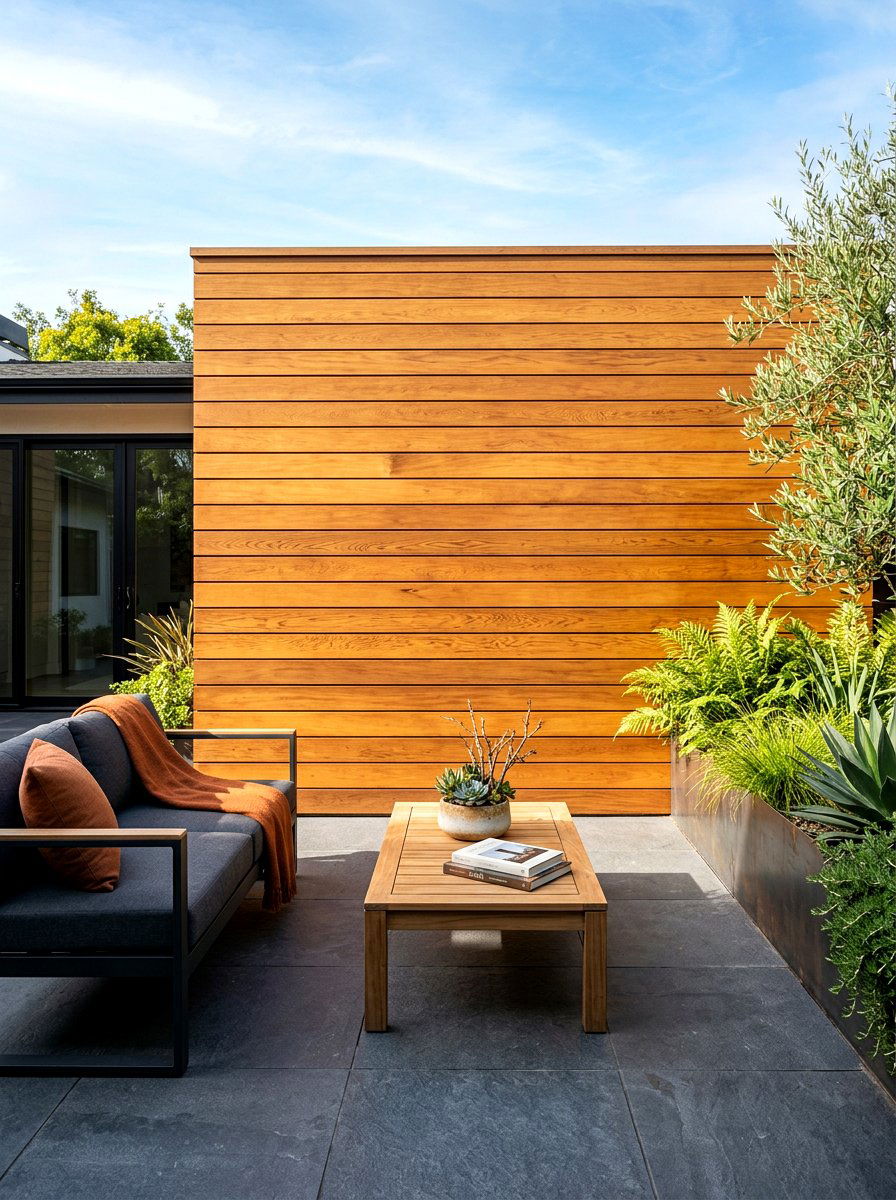
For a contemporary and sleek alternative to heavy stone, a wood panel wall offers a refined architectural look. This design often utilizes horizontal planks of cedar or redwood mounted to a hidden structural frame. The result is a clean, furniture-grade finish that feels more like an extension of your interior design than a standard garden wall. Wood panel walls are perfect for modern backyards where you want to create a warm, cozy atmosphere. You can play with different plank widths or even add spacing between them for a more airy feel. When treated with high-quality oils, these walls retain their rich color and provide a stunning backdrop.
14. Stone Veneer Wall
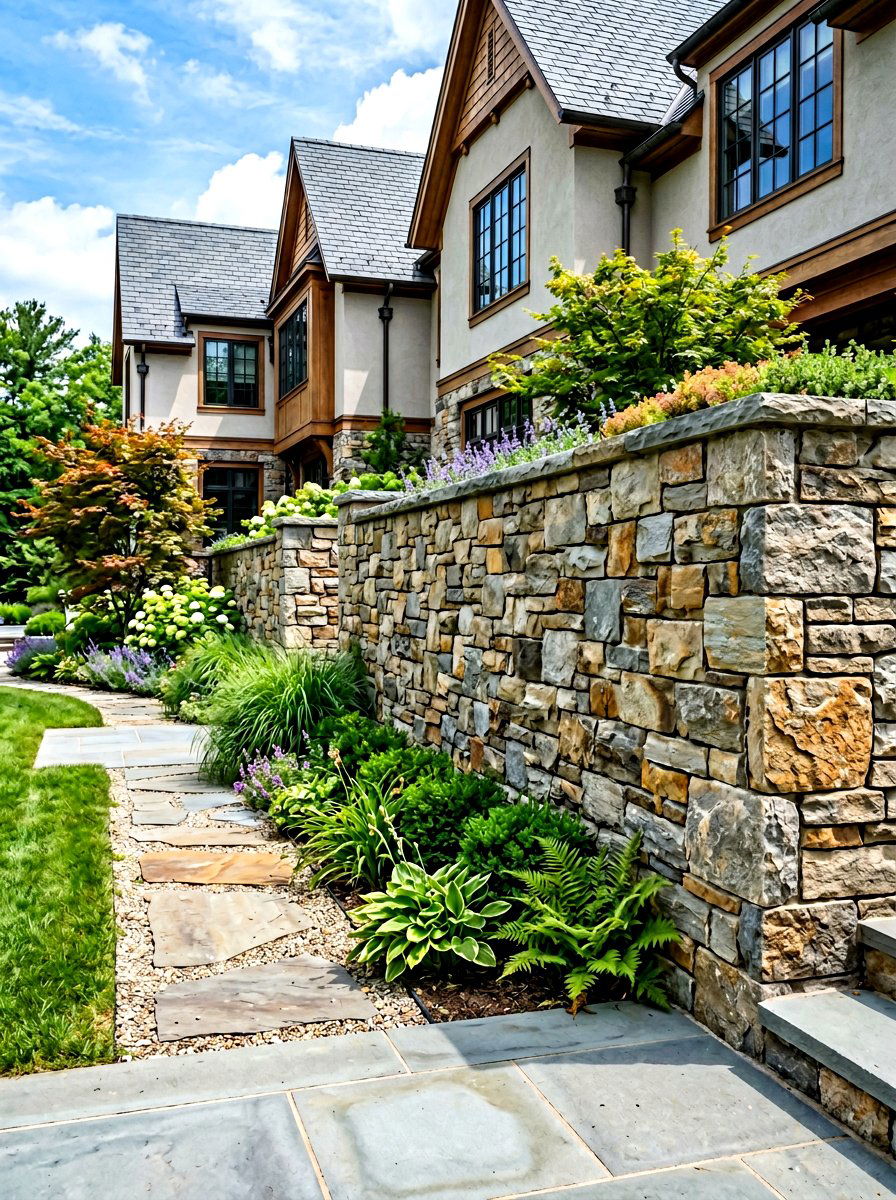
You can achieve the look of a solid stone wall without the massive weight and expense by using stone veneer. This design involves building a core wall out of concrete blocks and then applying a thin layer of real or manufactured stone to the surface. Veneer allows for incredible precision and a wide variety of styles, from rugged ledgestone to smooth, modern tiles. It is a great way to match your retaining wall to the exterior stone on your house, creating a cohesive and well-planned look. Stone veneer is durable and weather-resistant, giving you the high-end aesthetic of natural masonry with a more straightforward construction process.
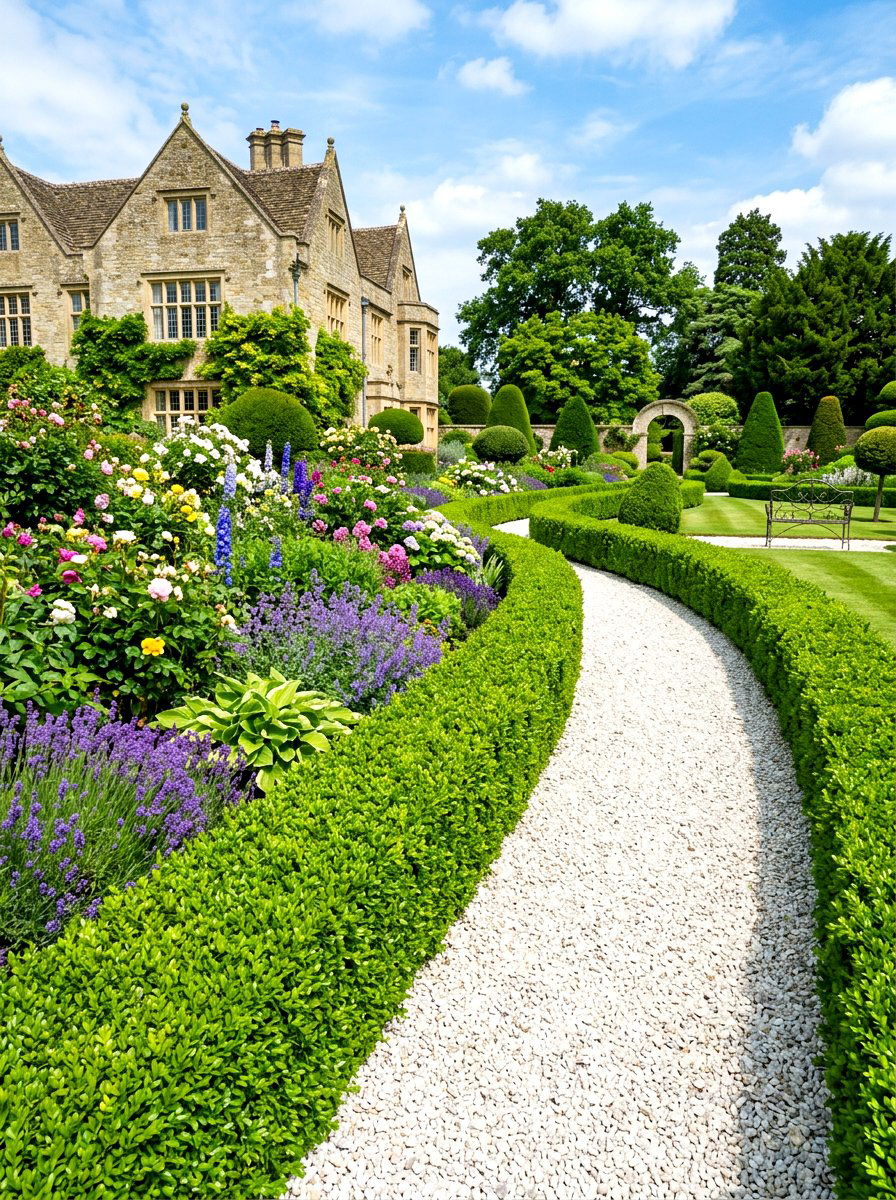
15. Interlocking Block Wall
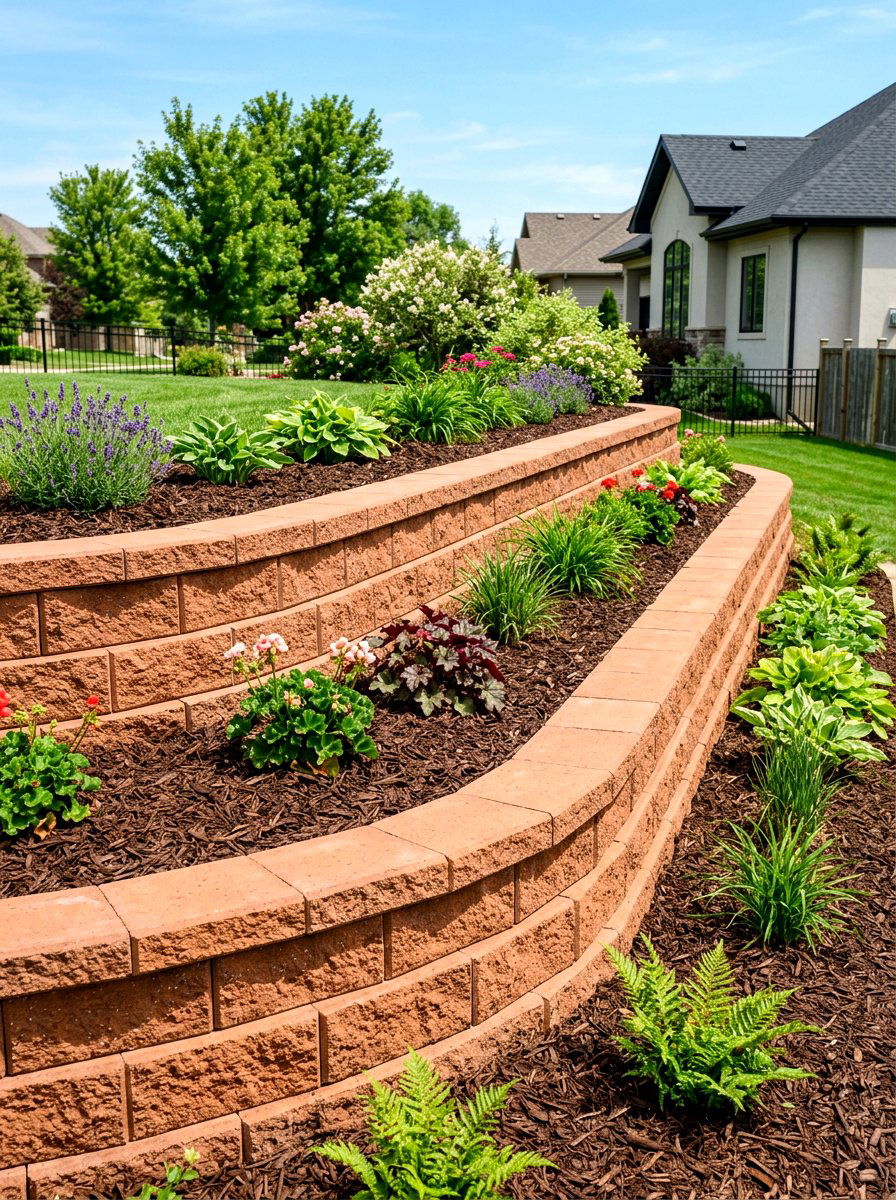
Simplicity and strength are the hallmarks of an interlocking block wall system. These pre-engineered concrete units feature a lip or a pin system that allows them to lock together securely as you stack them. This design ensures that the wall leans slightly back into the soil, which provides superior resistance against earth pressure. Interlocking blocks come in many colors and textures, allowing you to find a style that matches your home perfectly. They are an ideal choice for DIY projects because they do not require mortar or specialized masonry skills. The result is a tidy, professional-looking wall that offers reliable performance for many decades to come.
16. Limestone Retaining Wall
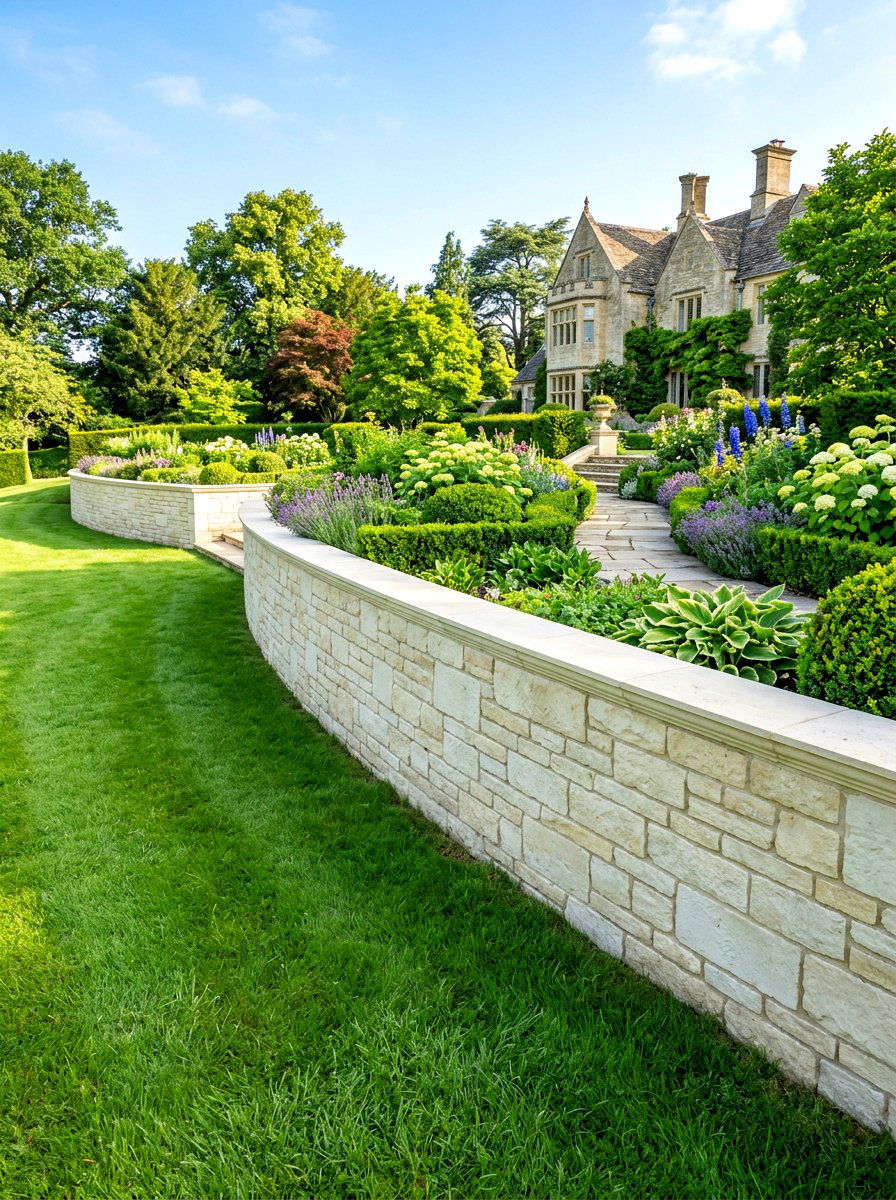
Limestone is a classic choice for those who want a bright, clean, and elegant garden feature. Its naturally light color, ranging from creamy whites to soft greys, reflects sunlight and can make a small backyard feel much larger and more open. Limestone blocks are easy to shape, allowing for very tight joints and a neat, orderly appearance. Over time, limestone develops a beautiful weathered look that adds character to the landscape. It pairs exceptionally well with vibrant green lawns and colorful flower beds. Whether you choose large, rugged blocks or smaller, cut stones, limestone provides a high-quality finish that exudes luxury and timeless sophistication.
17. Granite Stone Wall
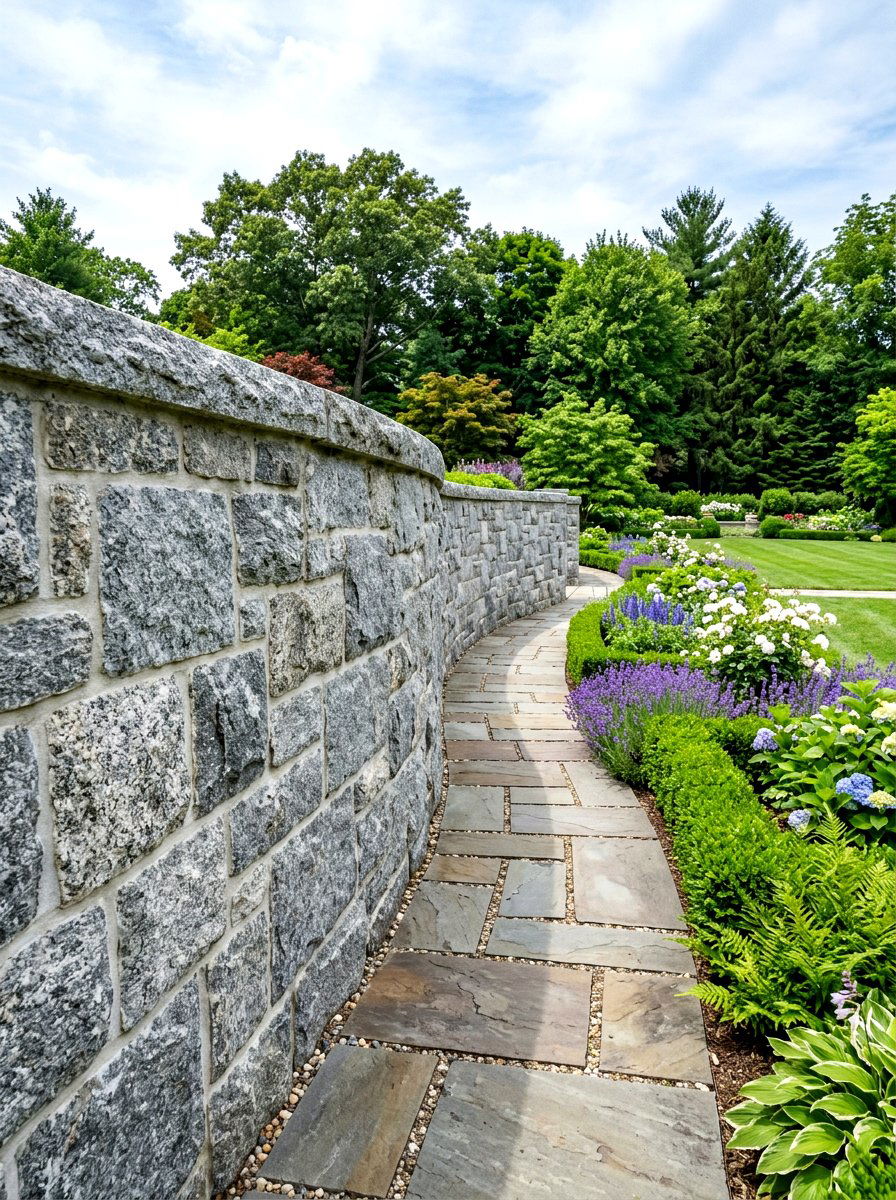
If durability is your primary concern, a granite stone wall is practically indestructible. Granite is one of the hardest natural stones available, making it resistant to chipping, cracking, and weathering even in the harshest climates. Its speckled texture and variety of shades, from salt-and-pepper grey to deep pinks, provide a sophisticated and high-end look. Granite walls are often built using large, irregular pieces for a rustic feel or precisely cut blocks for a more formal aesthetic. Because of its density, granite is excellent for heavy-duty soil retention. While it may be a bigger investment, the longevity and stunning beauty of granite make it a worthwhile choice.
18. Sandstone Retaining Wall
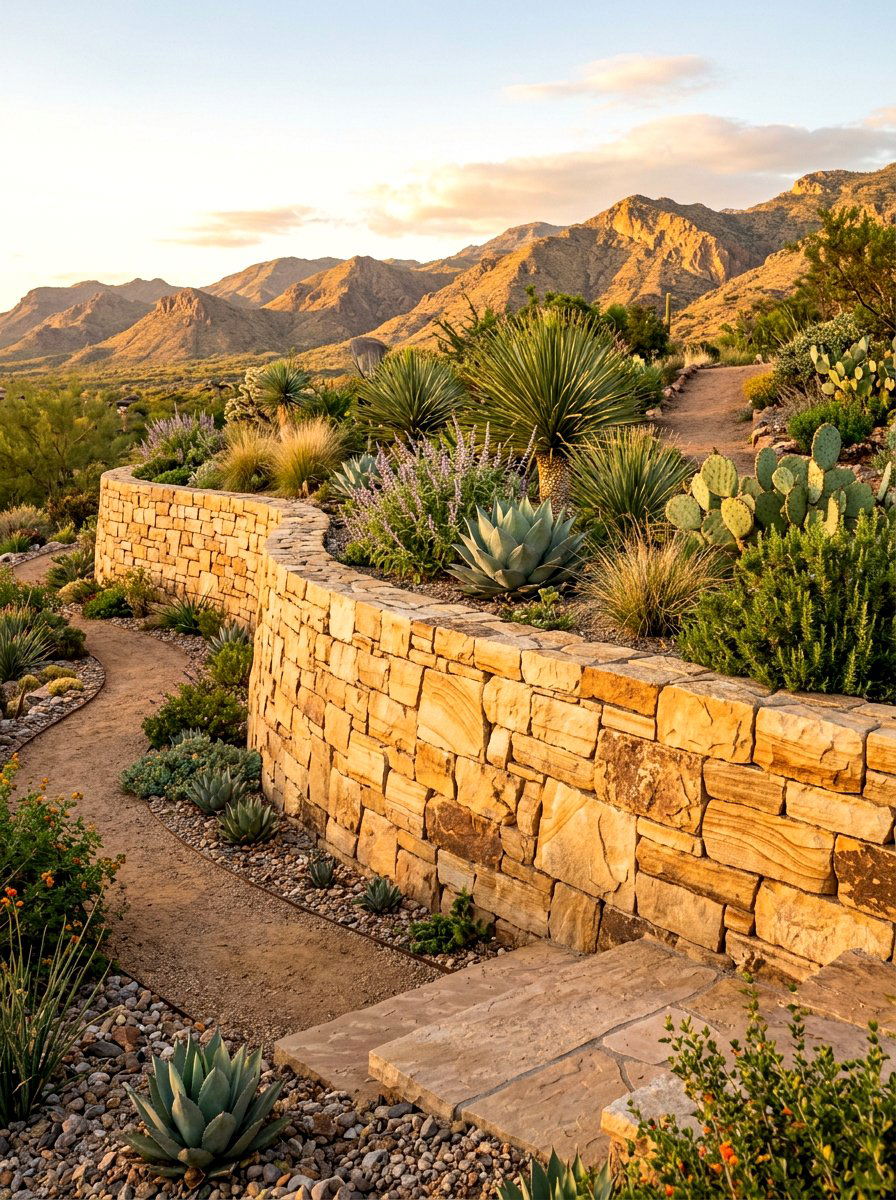
Sandstone brings a warm, earthy palette to your garden with its beautiful swirls of gold, tan, and red. This sedimentary rock has a soft, natural texture that feels very inviting and grounded. It is a popular choice for traditional and desert-style landscapes where you want the structure to blend in with the natural geology. Sandstone can be easily split into flat layers, making it ideal for creating stacked walls with a consistent height. The variations in each block ensure that your wall has plenty of visual movement and character. It is a versatile material that works well for both low garden borders and taller structural retaining systems.
19. Fieldstone Retaining Wall
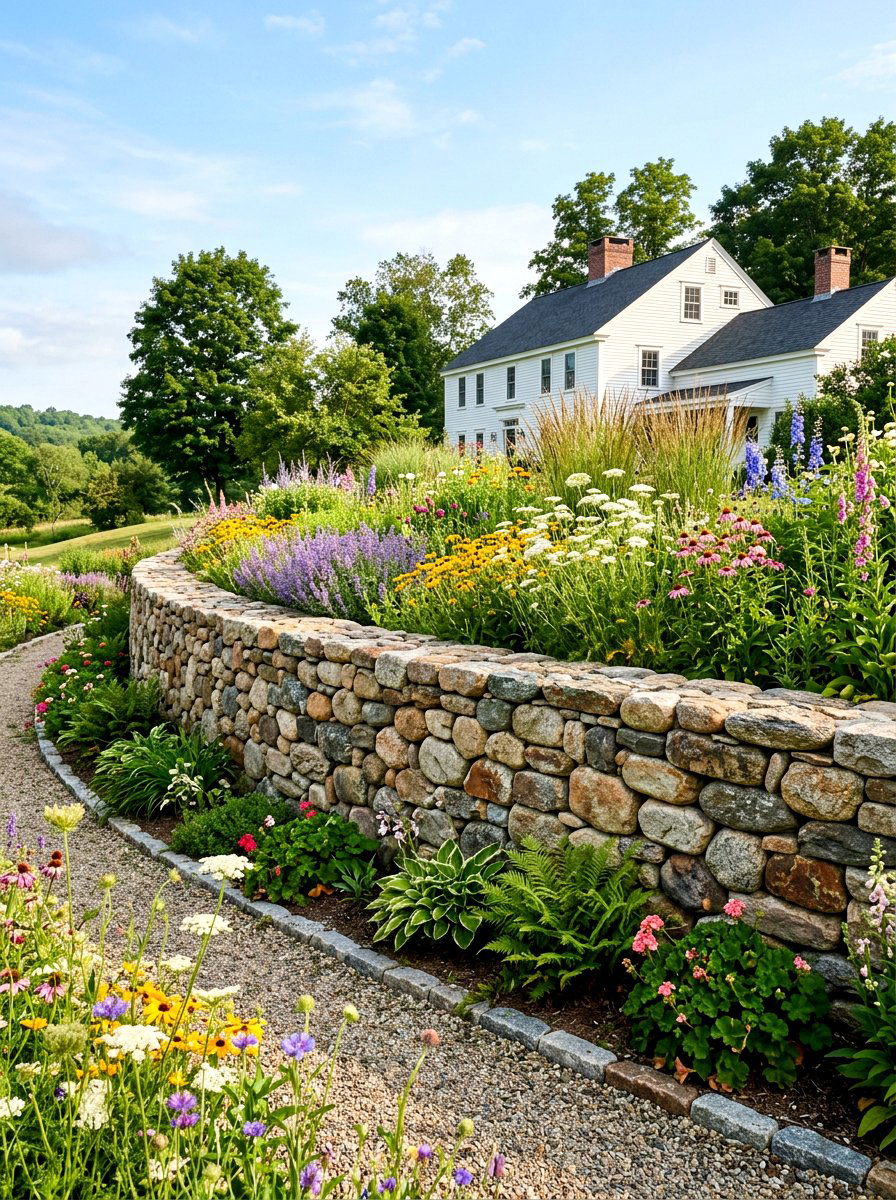
Fieldstone walls offer a charming, "found-on-the-farm" look that is perfect for traditional or colonial-style homes. These stones are typically rounded and irregular, having been gathered from the surface of the earth rather than quarried. Building with fieldstone requires a careful eye for puzzle-like placement, resulting in a wall that feels artisanal and historically authentic. The mix of shapes and sizes creates a busy, interesting texture that looks beautiful when surrounded by wilder, more naturalistic plantings. Fieldstone walls are great for creating low-profile garden dividers or holding back small slopes. They provide an unpretentious, rustic beauty that feels deeply connected to the local landscape and its history.
20. Reclaimed Wood Wall
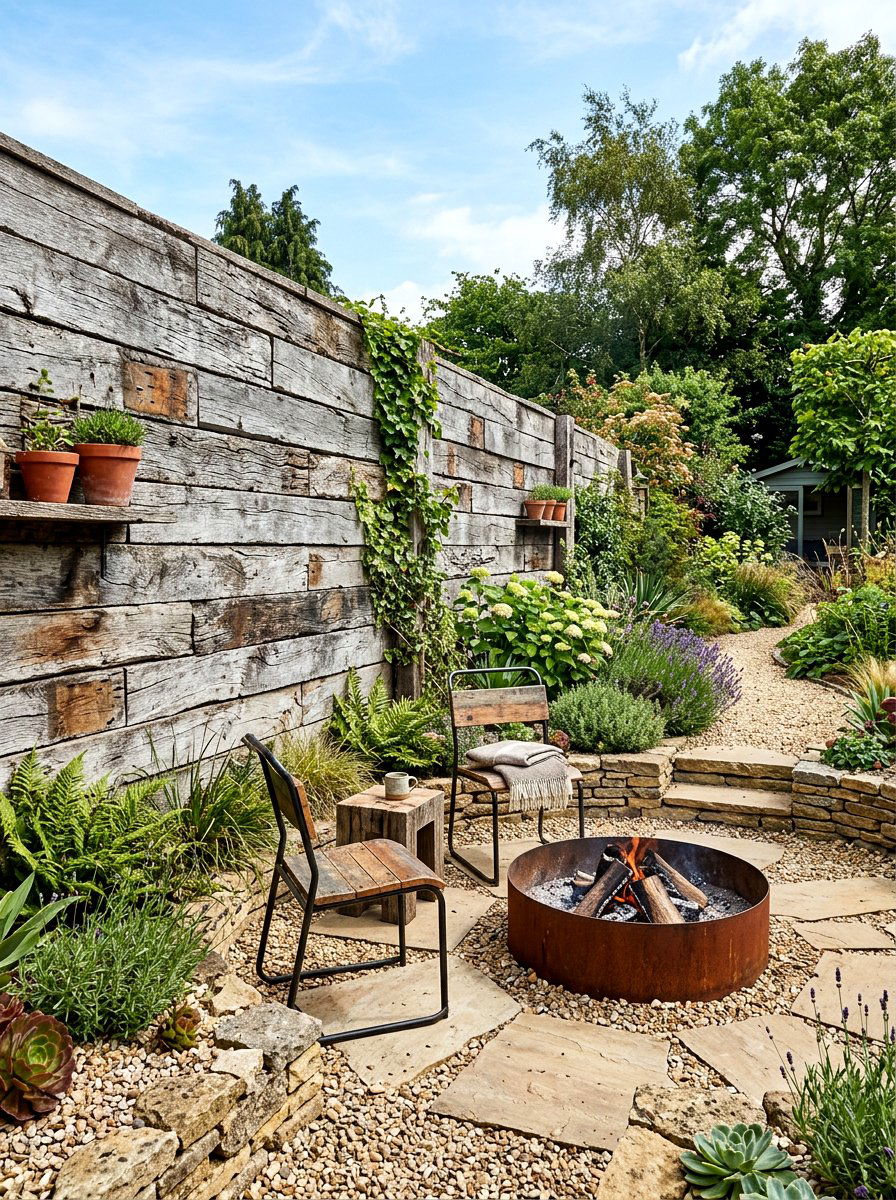
For the eco-conscious homeowner, a reclaimed wood wall is a sustainable and stylish choice. Using old barn wood, railway sleepers, or salvaged timber gives your garden a unique story and an instantly aged look. The weathered textures and varied wood grains provide a level of character that new materials simply cannot replicate. This design fits perfectly into "shabby chic" or rustic industrial outdoor spaces. It is important to ensure the wood is properly treated for ground contact to prevent rot, but the result is a warm and inviting structure. Reclaimed wood adds a sense of history and warmth to your backyard while keeping useful materials out of landfills.
21. Modern Stucco Wall
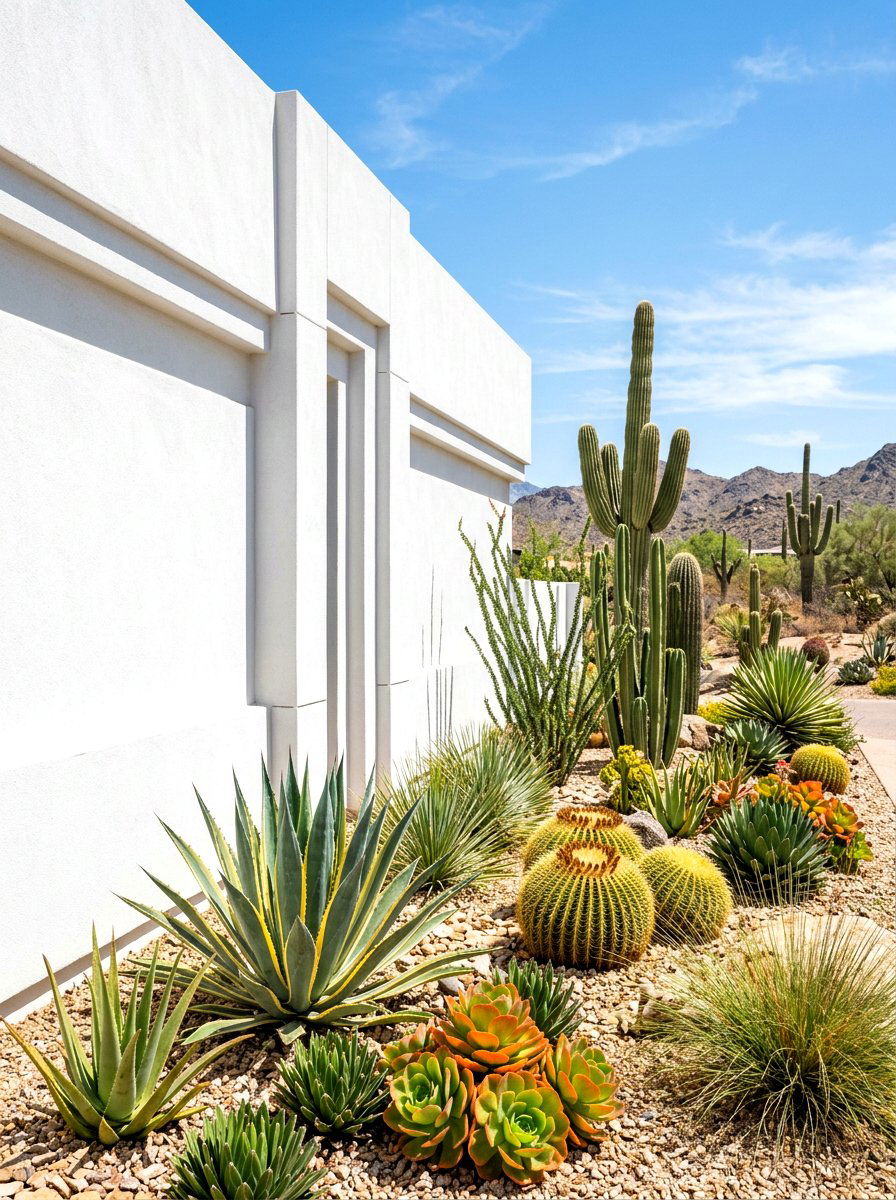
Achieve a Mediterranean or desert-modern vibe with a smooth, plastered stucco wall. This design starts with a concrete block core that is covered in a durable stucco finish, which can be tinted to almost any color. White or light beige stucco looks stunning against the deep greens of succulents or the vibrant purples of bougainvillea. The seamless, matte finish provides a very clean and architectural look that hides the individual blocks underneath. Stucco walls are excellent for creating a minimalist backdrop for outdoor art or lighting. They offer a high-end, custom look that feels very integrated into the overall architecture of your home and outdoor living area.
22. Decorative Tile Wall
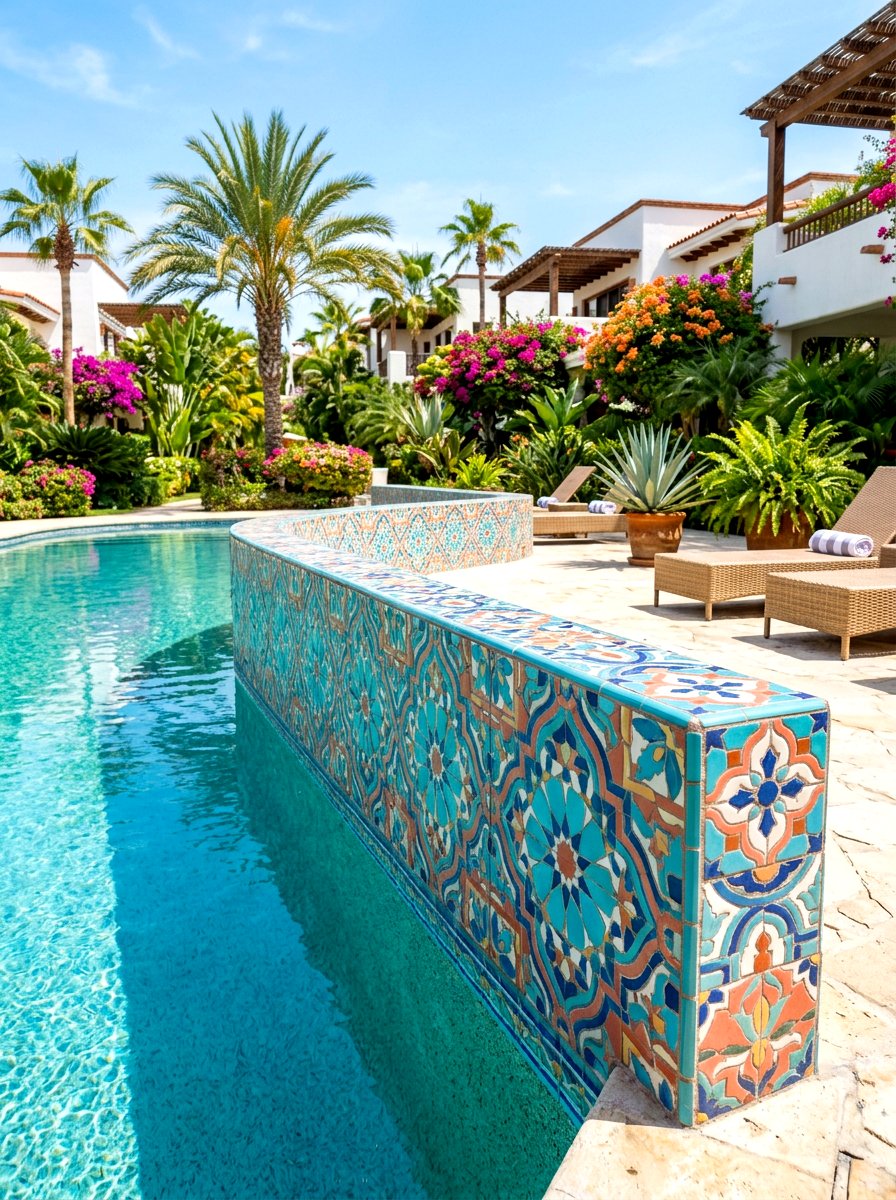
Why settle for plain stone when you can turn your retaining wall into a work of art with decorative tiles? This design allows you to add pops of color, pattern, and personality to your landscape. You can use colorful mosaic tiles for a bohemian feel or sleek, large-format porcelain tiles for a contemporary look. Tiling is typically done on a smooth concrete or cinder block surface, ensuring a flat and stable base. This approach is perfect for feature walls near a patio or pool where the wall is highly visible. It transforms a functional structure into a stunning focal point that reflects your personal style and design flair.
23. Built In Seating Wall
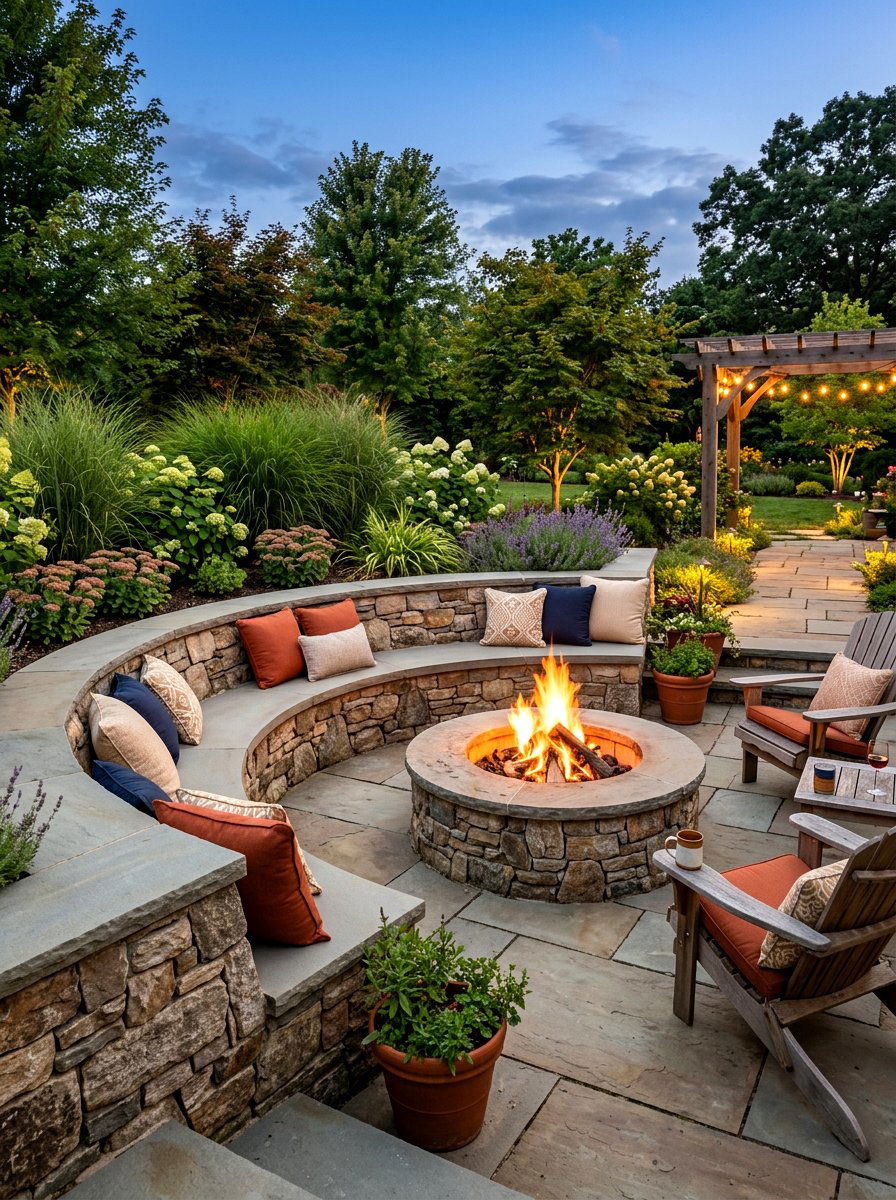
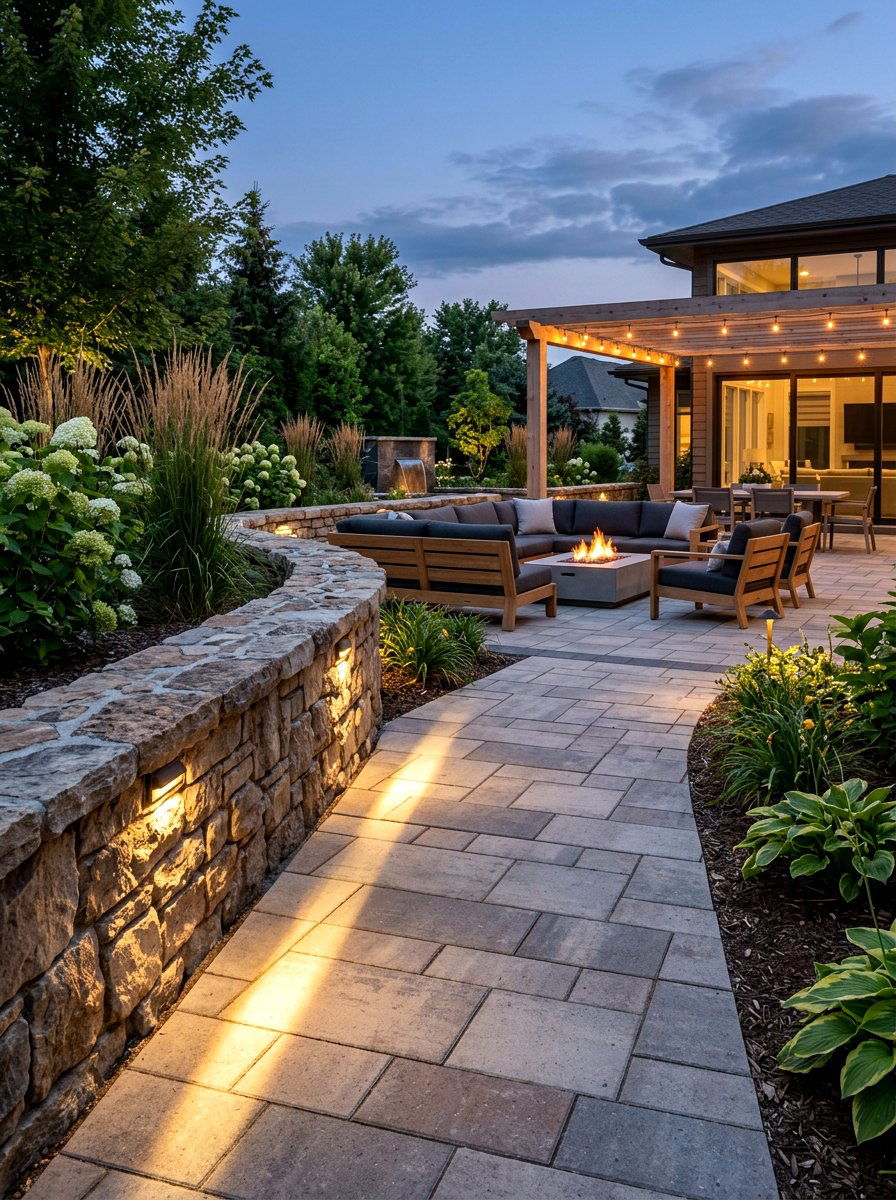
Maximize the functionality of your yard by turning your retaining wall into a comfortable place to sit. A seating wall is typically built to a height of about 18 to 24 inches and finished with a smooth, wide capstone that serves as a bench. This design is perfect for surrounding a fire pit or lining the edge of a patio, providing extra seating for guests without the need for bulky furniture. You can add outdoor cushions for extra comfort or leave the stone exposed for a clean look. It is a clever way to save space while adding a high-end, resort-style feel to your backyard entertainment area.
24. Raised Flower Bed Wall
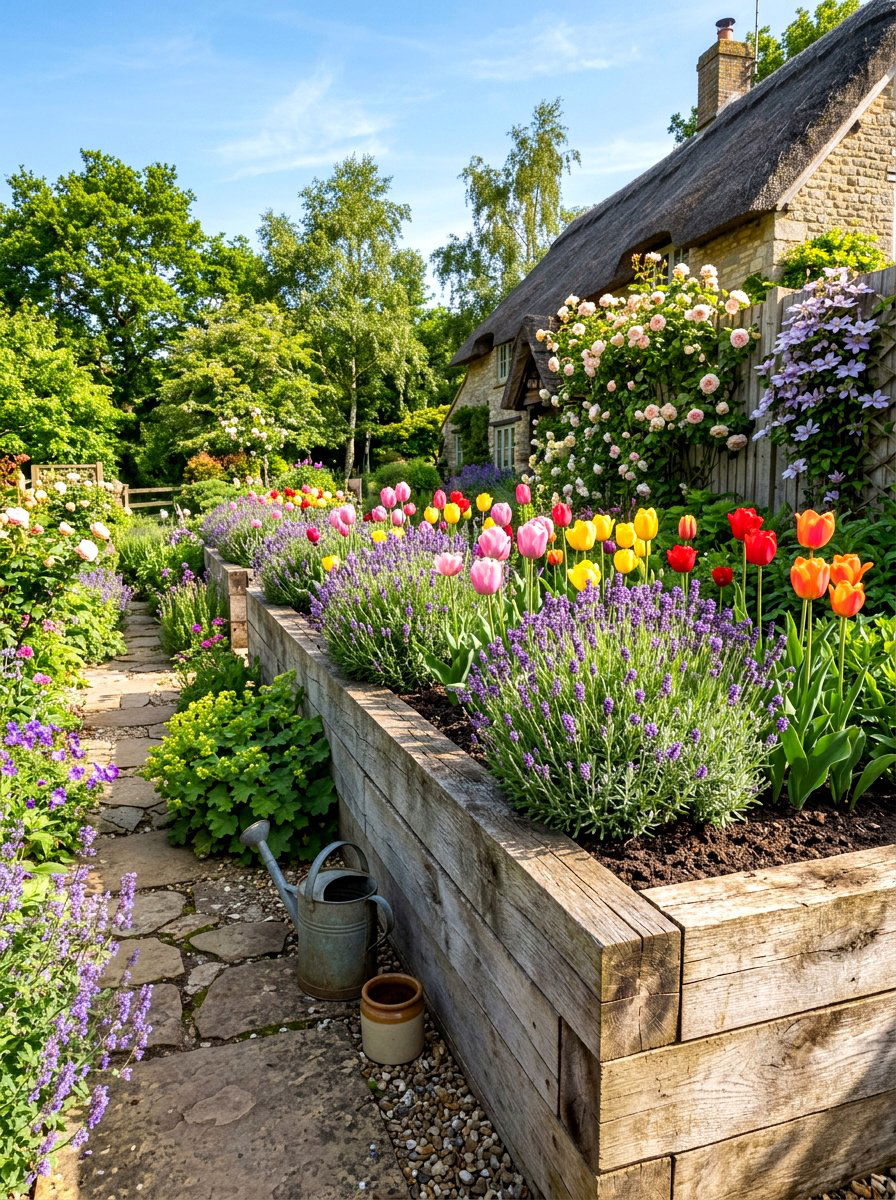
Transform your retaining wall into a vibrant growing space by designing it as a raised flower bed. This dual-purpose structure holds back a slope while providing a flat, elevated area for planting your favorite perennials or vegetables. Raised beds offer better drainage and easier access for gardening, reducing the need to bend over. You can build these walls from stone, timber, or concrete blocks to match your existing landscape. A series of these walls at different heights can create a stunning terraced garden that overflows with color and life. It is a practical and beautiful way to organize your garden and showcase your favorite botanical displays.
25. Vertical Garden Wall
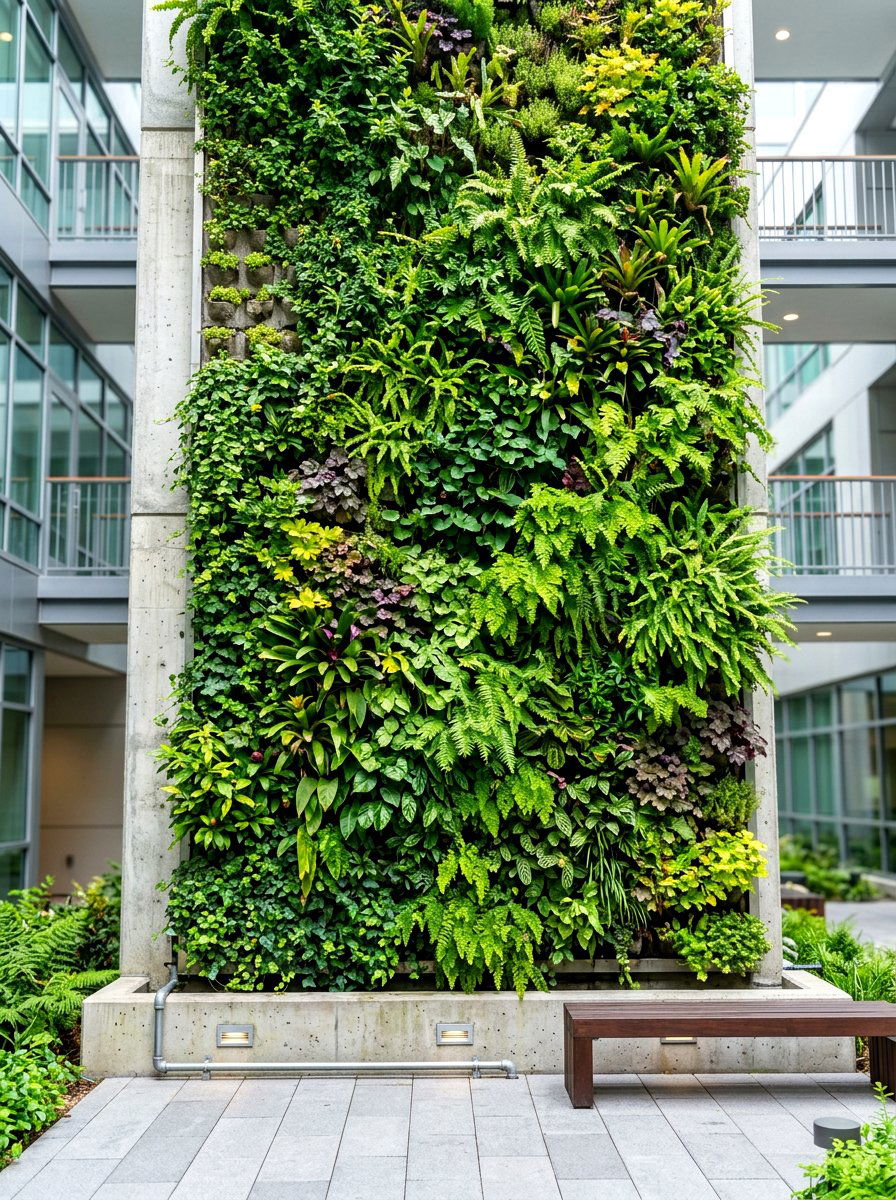
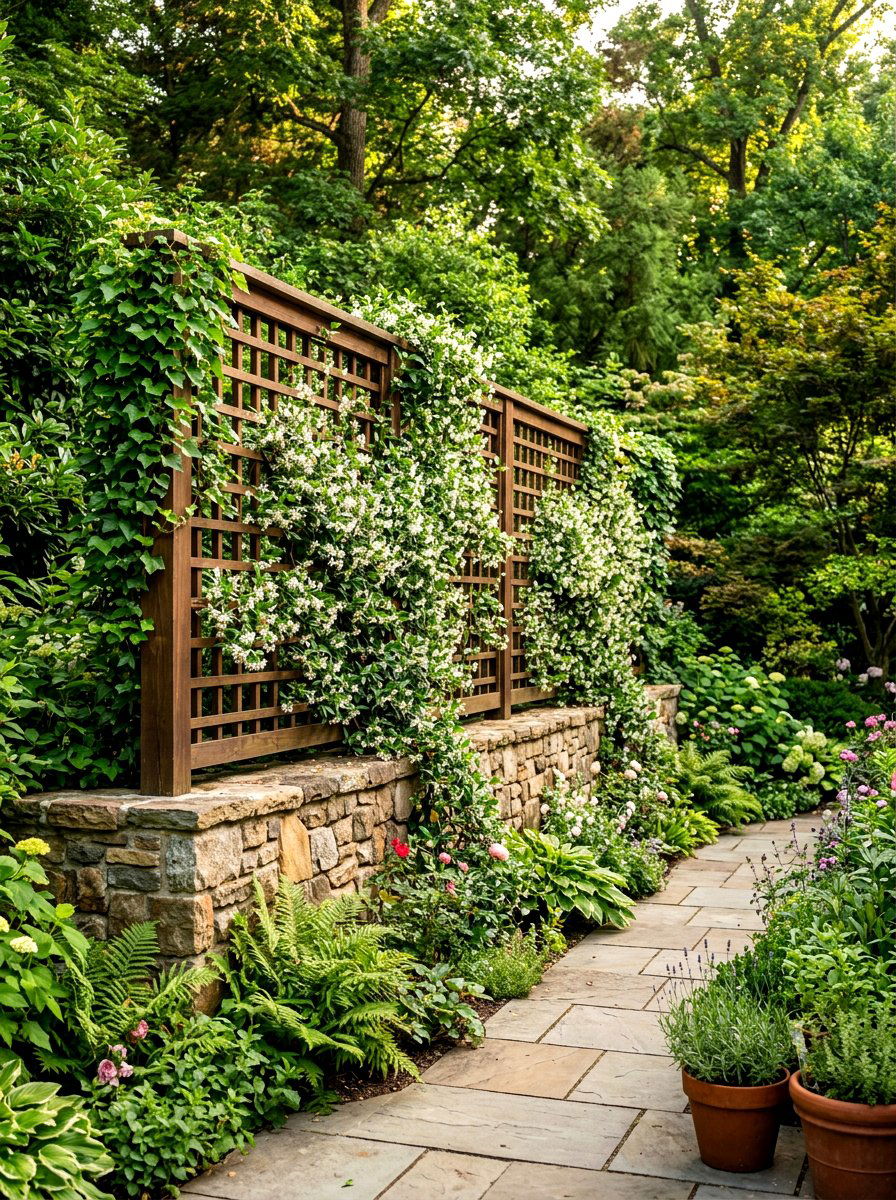
If you have a tall, plain retaining wall, why not turn it into a lush, living masterpiece? A vertical garden wall involves attaching planters or a specialized felt system to the face of the structure to support climbing plants and ferns. This design softens the hard appearance of stone or concrete and adds a massive amount of greenery to your space without taking up floor area. It is perfect for small urban yards where horizontal space is limited. Integrated irrigation systems ensure your plants stay hydrated with minimal effort. A living wall provides natural cooling, improves air quality, and creates a breathtaking focal point that changes with the seasons.
26. Staircase Retaining Wall
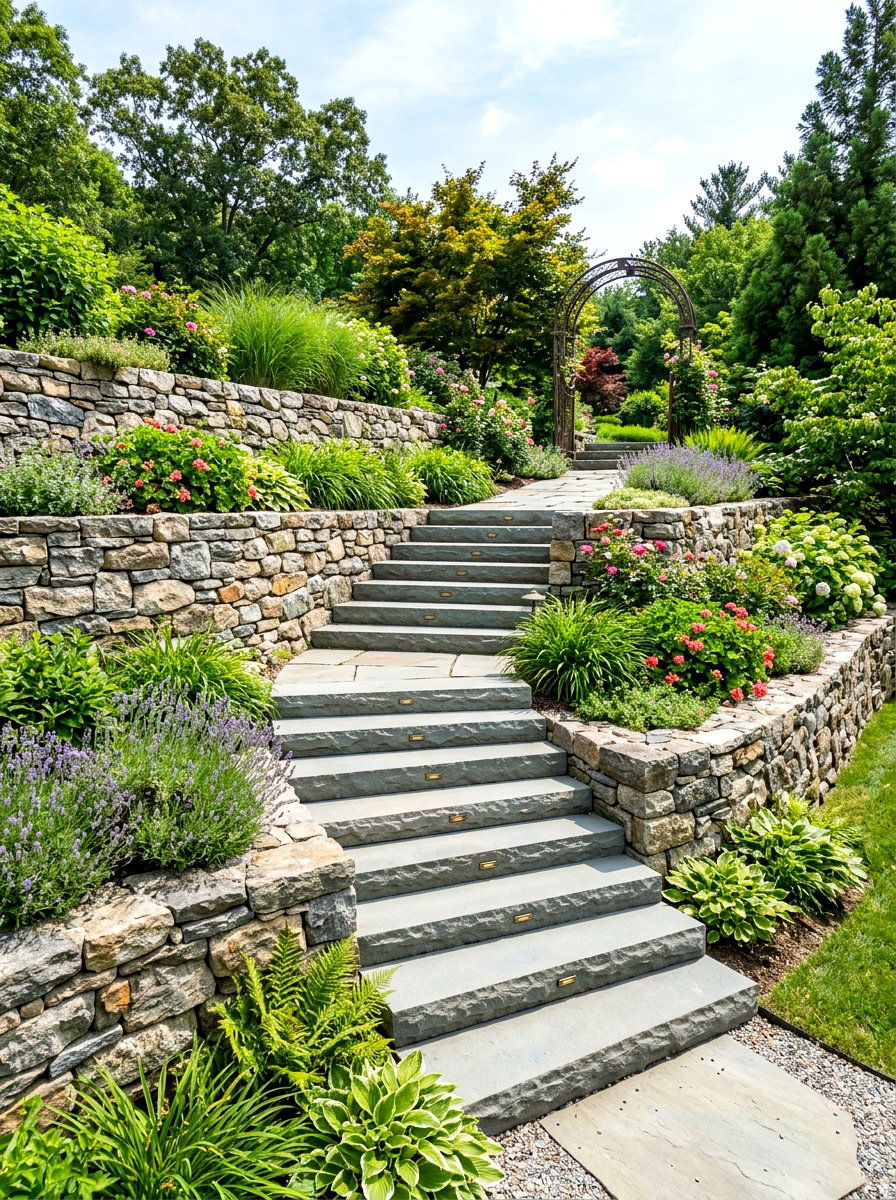
Connecting different levels of your yard becomes much easier and more attractive when you integrate a staircase directly into your retaining wall. This design uses the same materials for both the wall and the steps, creating a seamless and cohesive transition between tiers. Wide, stone steps built into a hillside wall provide a grand and inviting entrance to the upper parts of your garden. You can flank the staircase with colorful plantings or add recessed LED lighting for safety and drama at night. This approach turns a necessary functional element into a beautiful architectural feature that improves the flow and accessibility of your entire outdoor living space.
27. Low Profile Stone Wall
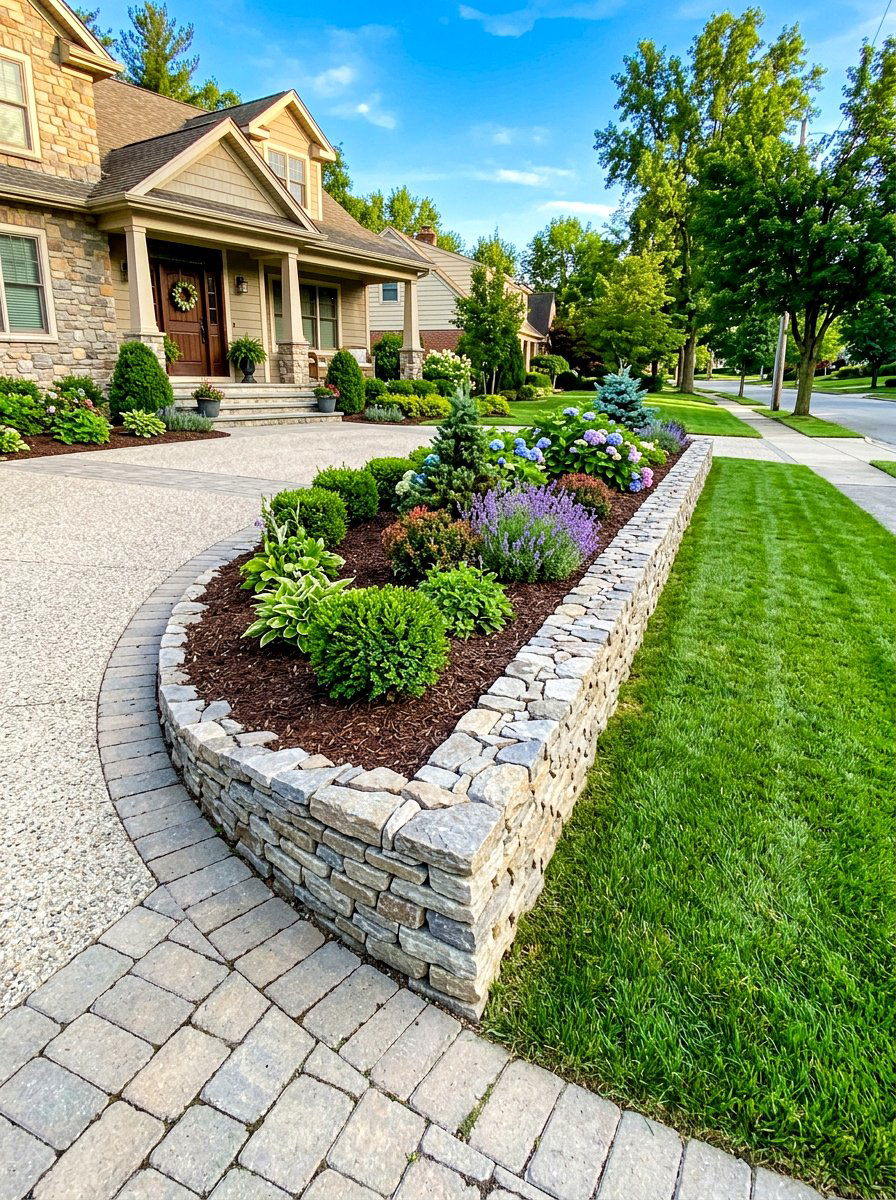
Sometimes, a subtle touch is all you need to define a space. A low-profile stone wall usually stands less than two feet tall and is perfect for edging a driveway, bordering a lawn, or creating a slight elevation for a garden bed. Because they are not holding back massive amounts of weight, these walls can be built with smaller, more delicate stones or even decorative bricks. They provide a tidy and organized look to your property without blocking views or making the space feel enclosed. These walls are a great way to add structure and "curb appeal" to your front yard while keeping the overall design open and airy.
28. River Rock Wall
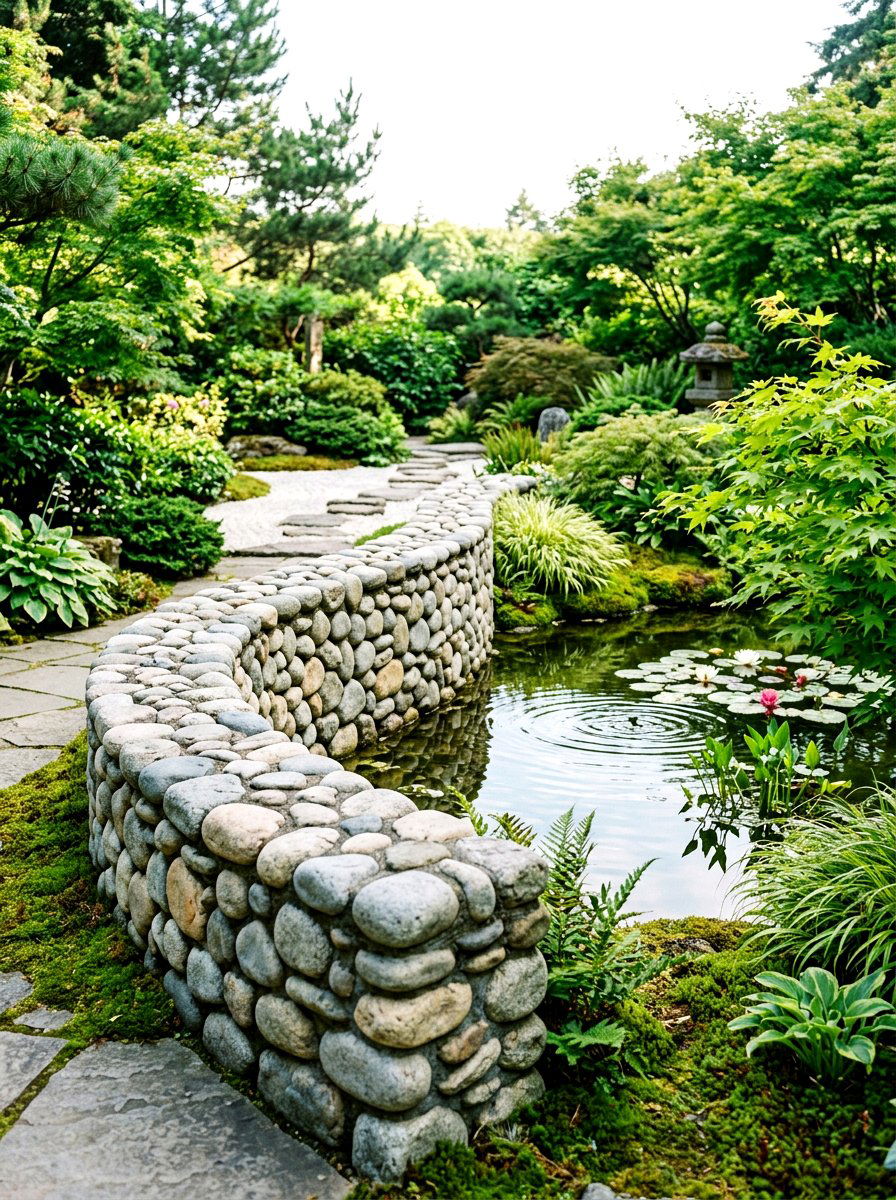
For a soft and organic look that reminds you of a tranquil stream, a river rock wall is an excellent choice. These walls use smooth, rounded stones of various sizes to create a textured and naturalistic barrier. Because river rocks are rounded, they are often held in place by mortar or used inside gabion baskets for stability. The mix of greys, tans, and blues found in natural river stones provides a calming color palette that works beautifully in Zen-inspired or coastal gardens. This style is perfect for areas near water features or where you want to emphasize a soft, flowing aesthetic that blends harmoniously with nature.
29. Slate Retaining Wall
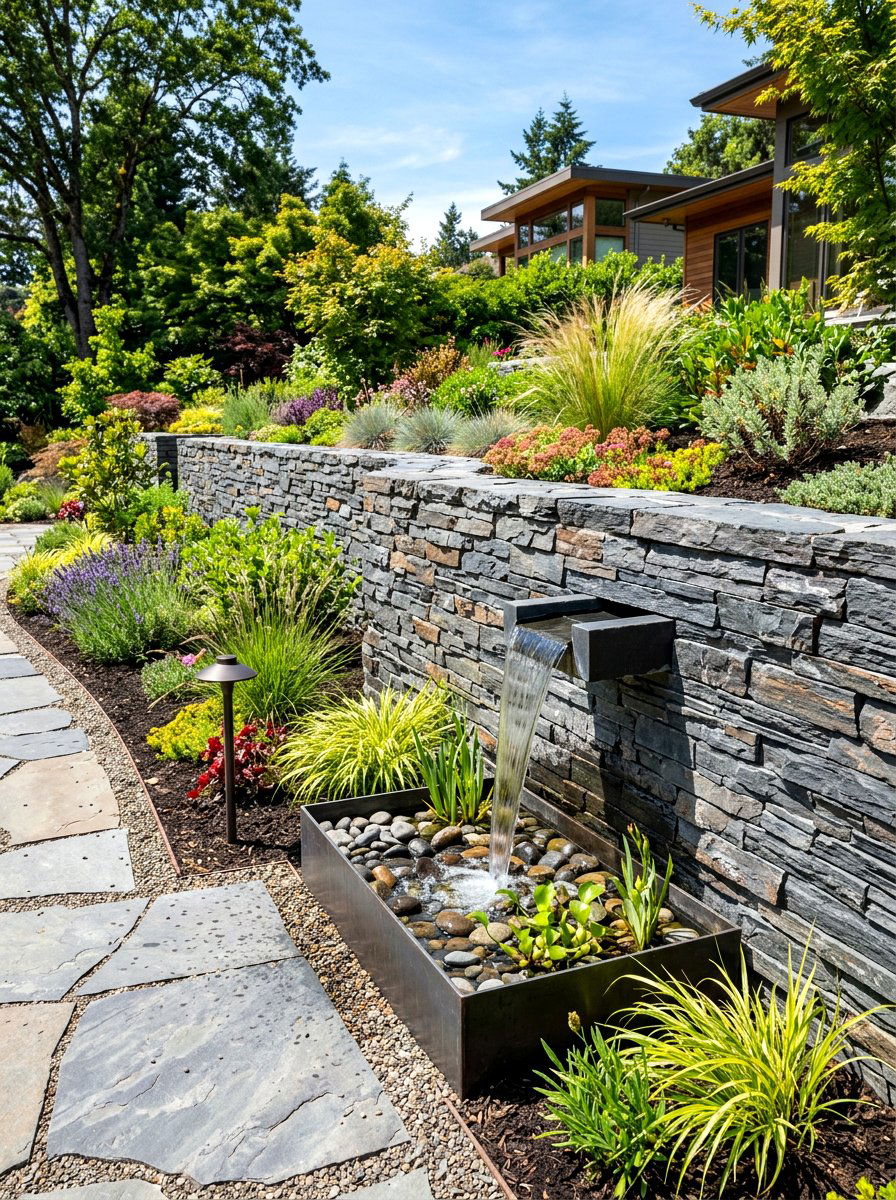
Slate is a highly sophisticated material known for its unique layered texture and deep, rich colors. A slate retaining wall offers a contemporary and slightly edgy look that stands out in any landscape. The flat, thin pieces of slate can be stacked tightly to create a wall with a high level of detail and shadow play. Usually available in dark greys, blacks, and purples, slate provides a dramatic contrast to bright green foliage and light-colored pavers. It is a durable and weather-resistant stone that maintains its sleek appearance for years. This is a premium choice for modern homes where architectural textures and bold colors are desired.
30. Terraced Slope Wall
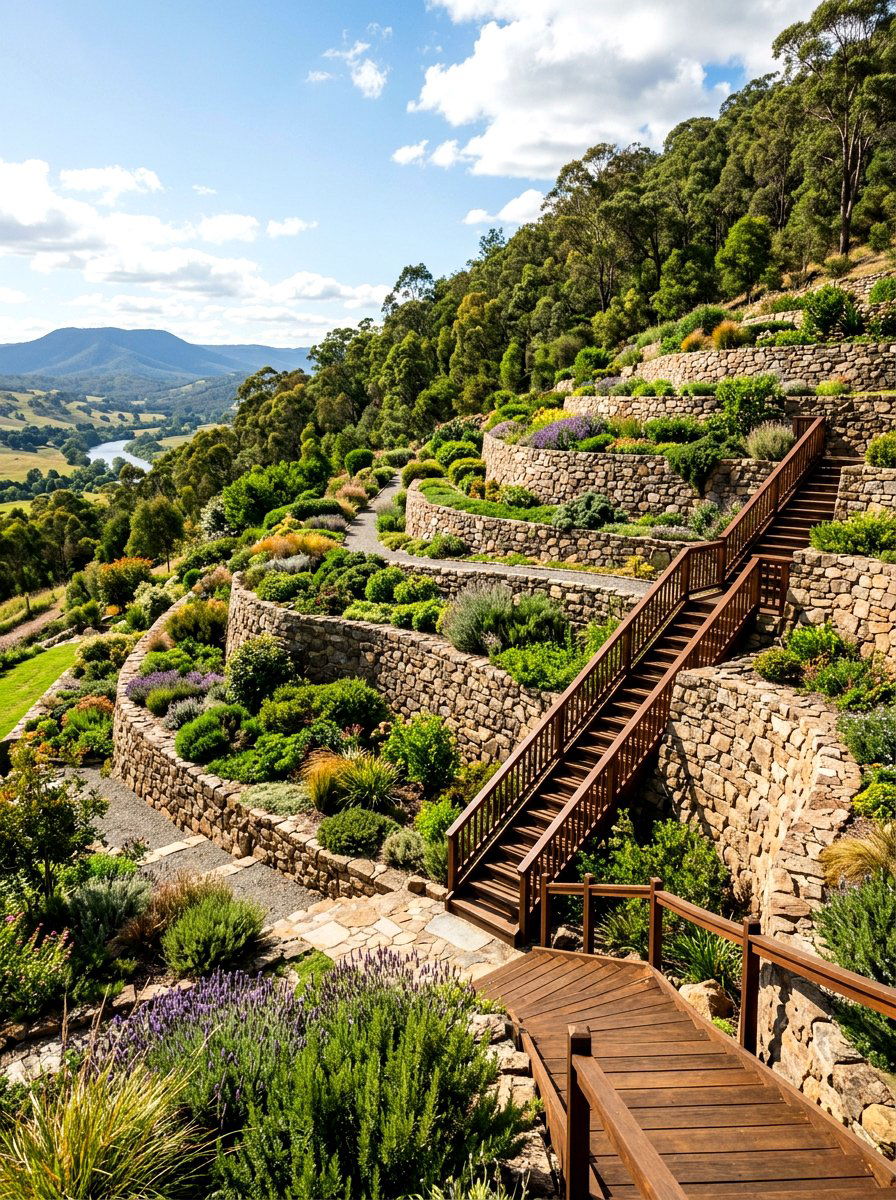
How do you turn a steep, unusable hillside into a functional masterpiece of landscape design? A terraced slope wall system breaks up a large incline into several smaller, manageable levels. This approach prevents soil erosion while creating multiple flat tiers for planting, seating, or even a small play area. You can mix and match materials like stone and wood to create visual interest throughout the different levels. Incorporating wide steps between the tiers allows for easy navigation through the garden. This design transforms a difficult topographical challenge into a multi-dimensional outdoor living space. It adds significant depth to your yard while providing various pockets for diverse plant life to thrive.
Conclusion:
Finding the right balance between structural necessity and visual appeal is the key to a successful landscaping project. As we have explored, retaining walls are far more than just functional barriers; they are essential design elements that shape your outdoor environment. Whether you prefer the industrial edge of steel or the soft, traditional look of fieldstone, there is a solution for every backyard. Remember to prioritize proper drainage and foundation work to ensure your wall stands the test of time. By selecting a style that complements your home’s architecture, you create a seamless transition between your indoor and outdoor living areas. Your garden will surely become a more organized and inviting sanctuary for years.

Related posts: