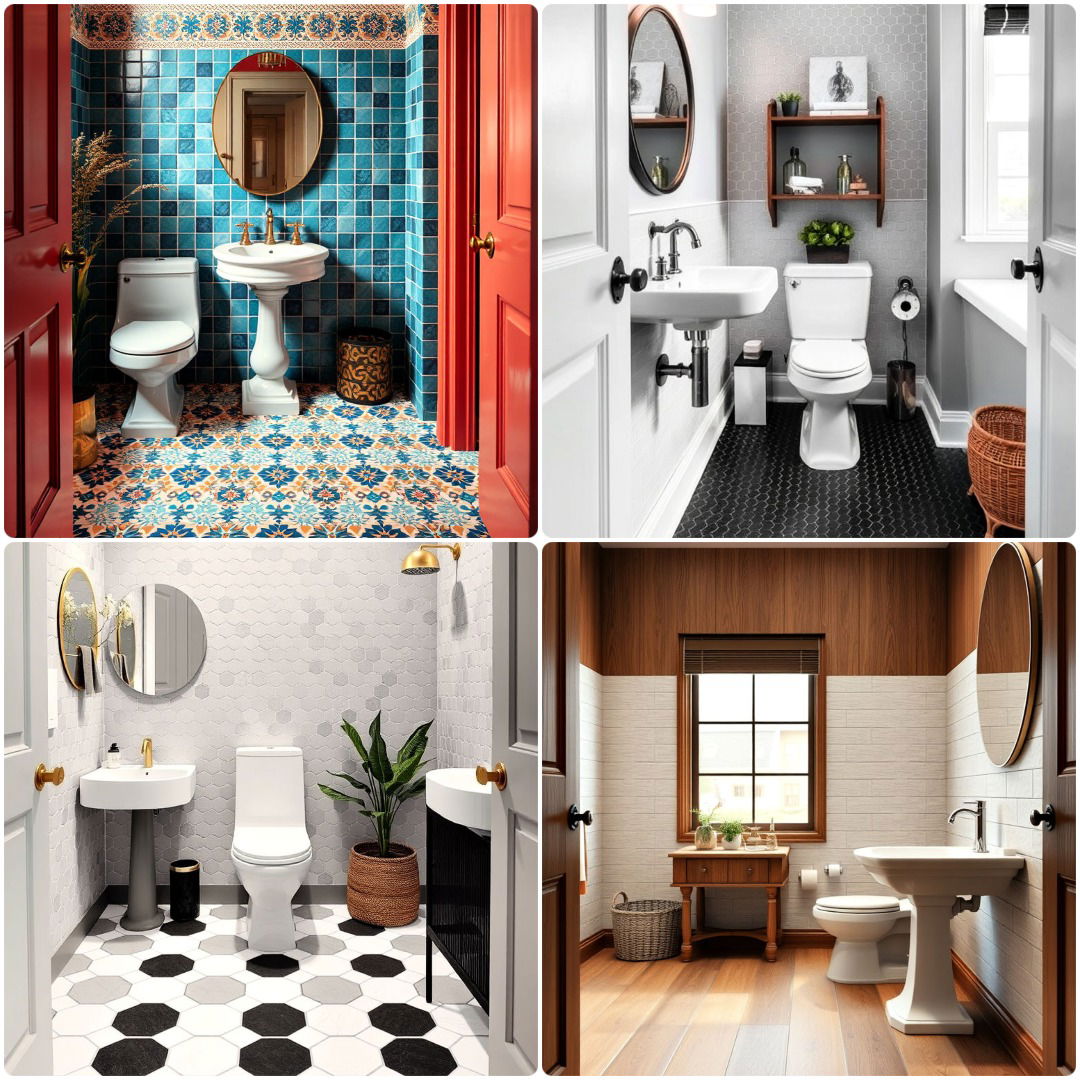
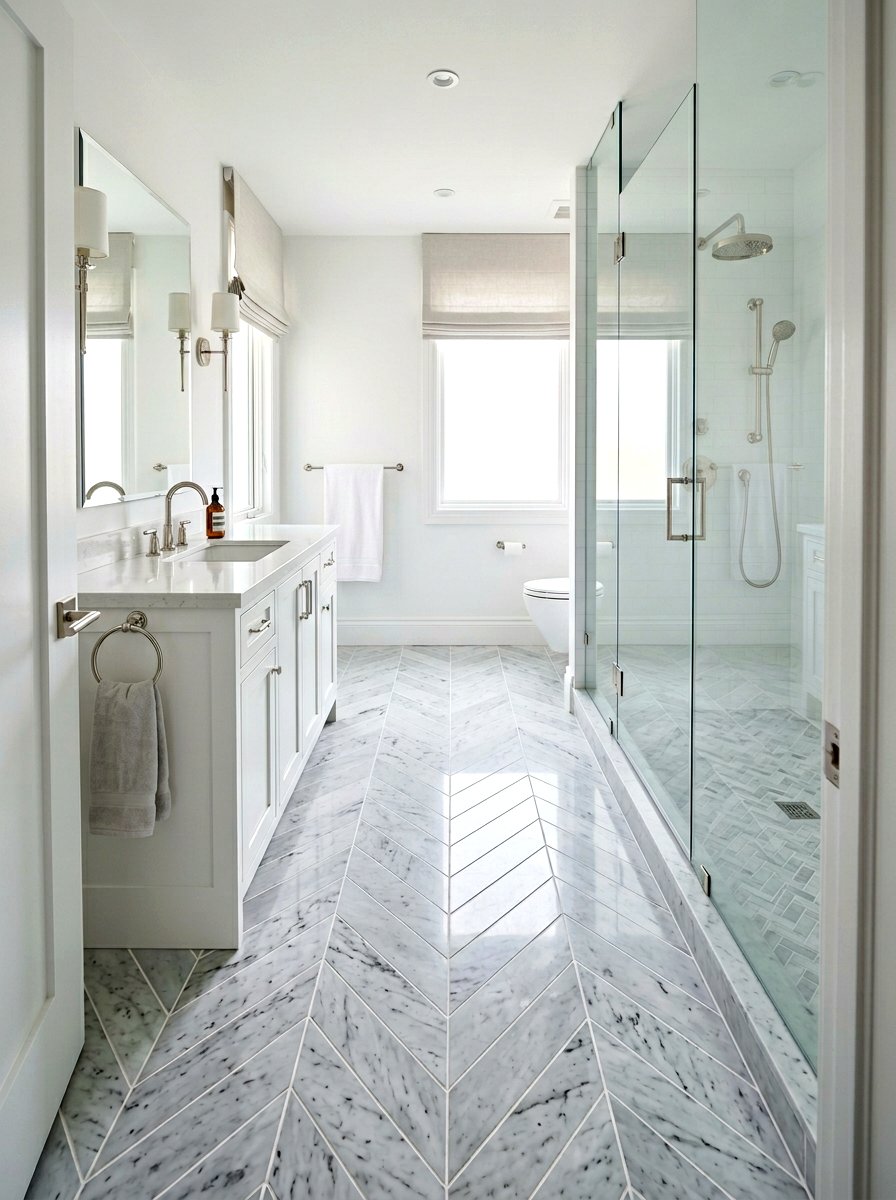
Choosing the perfect flooring is a pivotal decision for any homeowner aiming to create a beautiful and functional space. The pattern you choose acts as the foundation of your room's personality, influencing the visual flow and the overall ambiance. Whether you are dealing with a small bathroom or a sprawling living area, the right tile arrangement can make a significant impact on how the space is perceived. By understanding different layouts, you can highlight specific architectural features or draw the eye toward a focal point. Modern trends blend classic durability with innovative geometric shapes and bold color palettes. Exploring these options allows you to customize your home to perfectly suit your unique lifestyle and aesthetic.
1. Herringbone Tile Floor
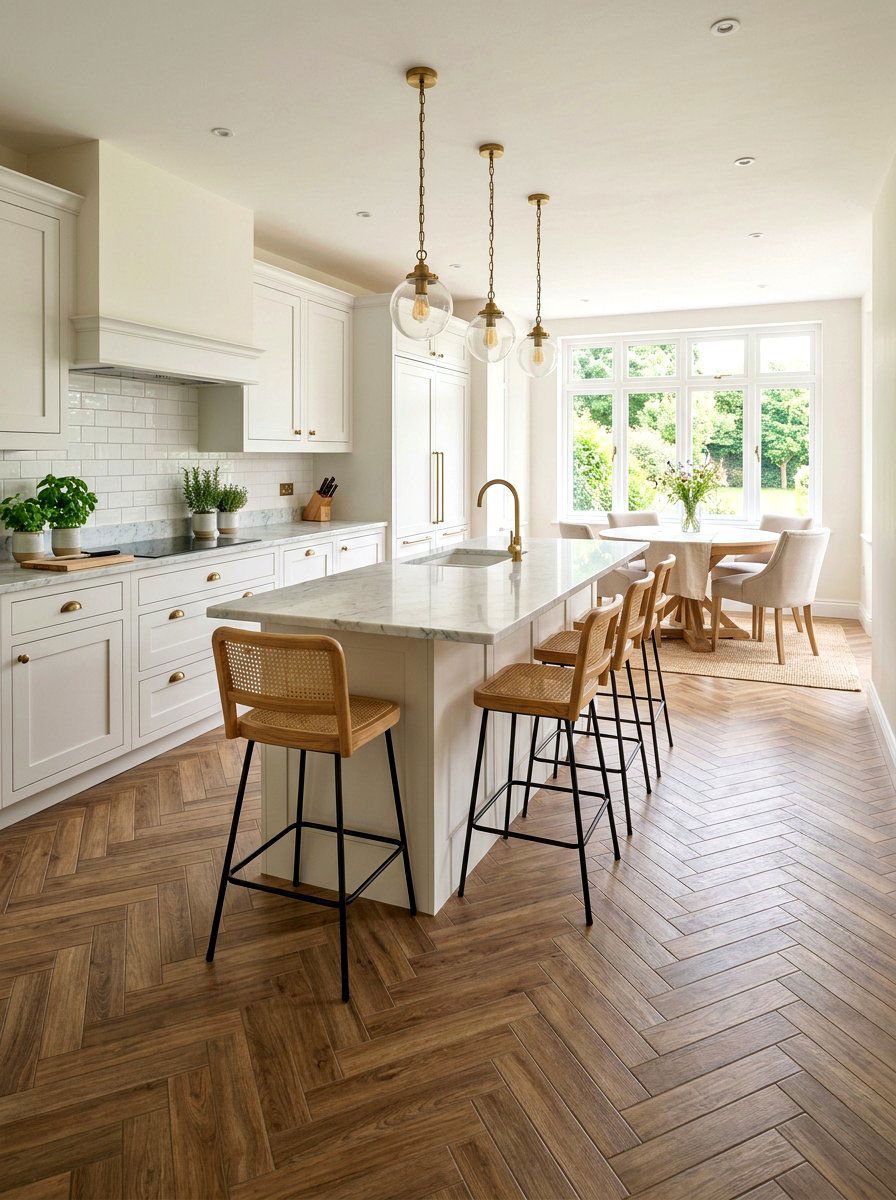
Have you ever walked into a room and felt an immediate sense of sophisticated movement beneath your feet? The herringbone layout is a timeless classic created by interlocking rectangular tiles at a ninety-degree angle to form a distinctive V-shape. This pattern is exceptionally popular in entryways and kitchens because it adds a layer of architectural interest without overwhelming the senses. Because the lines point toward a specific direction, it can effectively lead the eye through a hallway or toward a focal point like a fireplace. Using high-contrast grout can further emphasize the geometric precision, while matching grout creates a subtle, elegant texture that feels high-end.
2. Chevron Tile Floor
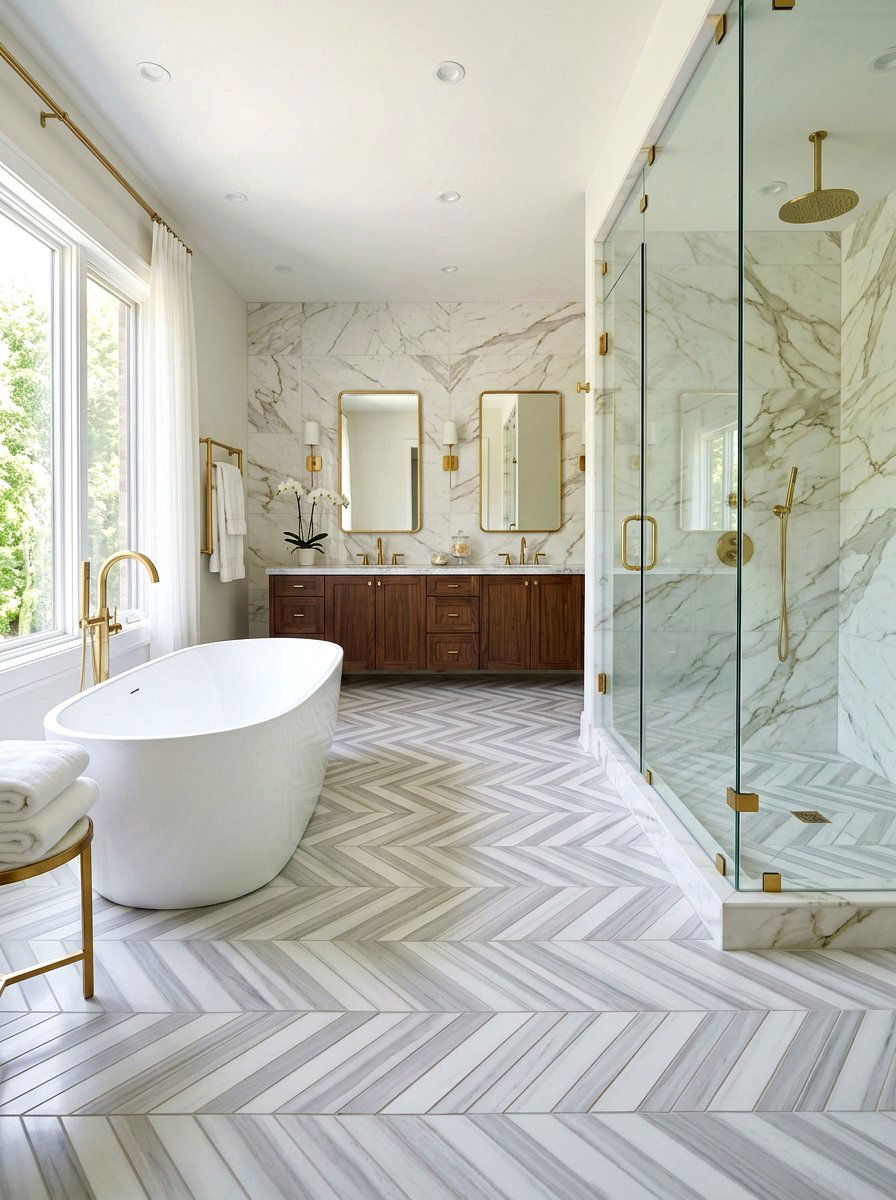
Imagine the sharp, clean lines of a perfectly aligned mountain range translated onto your living room floor. Unlike the overlapping ends of herringbone, chevron tiles are cut at an angle so the ends meet perfectly to form a continuous zigzag line. This creates a very intentional and modern look that feels incredibly upscale and tailor-made for contemporary homes. It is an excellent choice for widening a narrow space, as the horizontal V-shapes pull the gaze outward toward the walls. When executed with wood-look porcelain or light-colored marble, the chevron pattern offers a luxurious feel that elevates the entire room’s design and overall perceived value.
3. Checkerboard Tile Floor
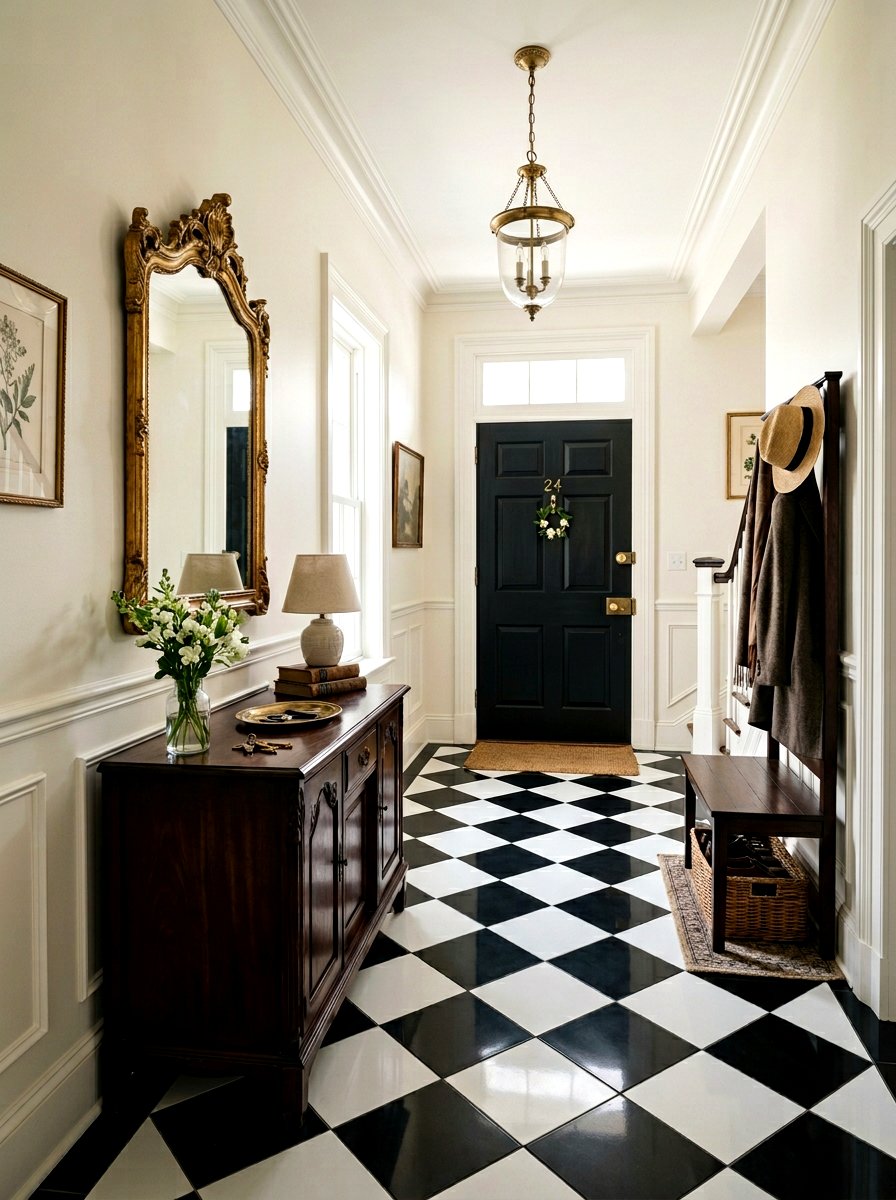
Does anything evoke a sense of classic nostalgia quite like the bold, alternating rhythm of a checkerboard floor? This iconic pattern typically uses two contrasting colors, most famously black and white, to create a striking visual grid. While it is a staple in vintage kitchens and grand foyers, modern interpretations often use softer tones like beige and cream for a more subtle, transitional look. Placing the tiles diagonally can make a small room feel much larger by breaking up the boxy feel of the walls. It is a versatile choice that anchors a room, providing a solid graphic base that complements both minimalist furniture and eclectic decor styles.
4. Hexagon Tile Floor
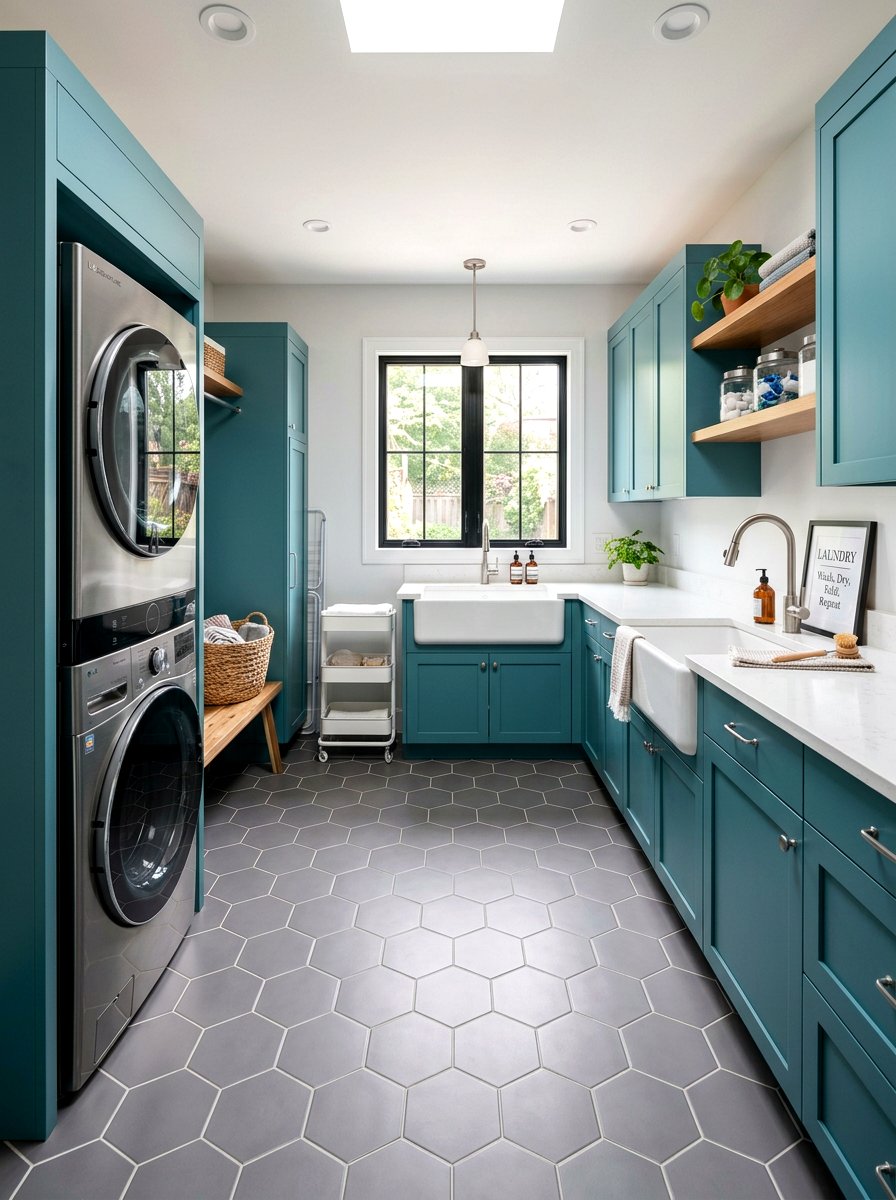
Walking across a floor adorned with honeycombed shapes instantly makes a space feel both organic and trend-forward. Hexagon tiles have made a massive comeback in interior design, particularly in bathrooms and laundry rooms, due to their unique six-sided structure. This pattern provides a break from the standard four-sided grid, adding a playful yet sophisticated geometric element to the floor. You can create a monochromatic look for a clean, Scandinavian vibe or mix different shades of the same color for a pixelated, mosaic effect. Their numerous grout lines also provide extra grip, making them a practical and stylish choice for wet areas in the home.
5. Basketweave Tile Floor
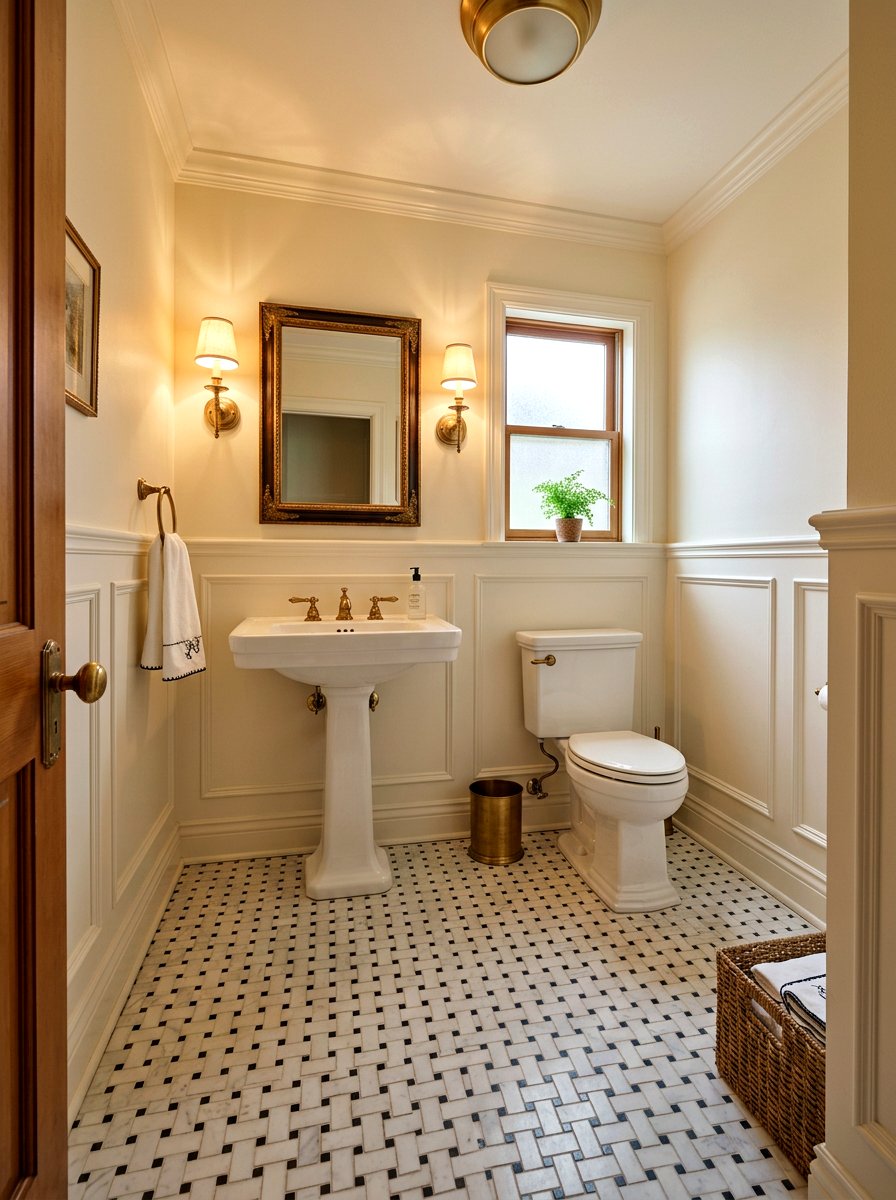
Can a floor really mimic the intricate texture of a hand-woven basket using only hard ceramic materials? The basketweave pattern achieves this by grouping rectangular tiles together to form small squares that appear to tuck under and over one another. This layout often includes small, contrasting square "dots" to fill the gaps, adding a traditional and decorative flair to the design. It is frequently seen in traditional bathrooms or historic home renovations where a touch of vintage elegance is desired. The complexity of the pattern provides a rich visual depth that makes even a small floor area feel detailed, intentional, and remarkably well-crafted for any space.
6. Windmill Tile Floor
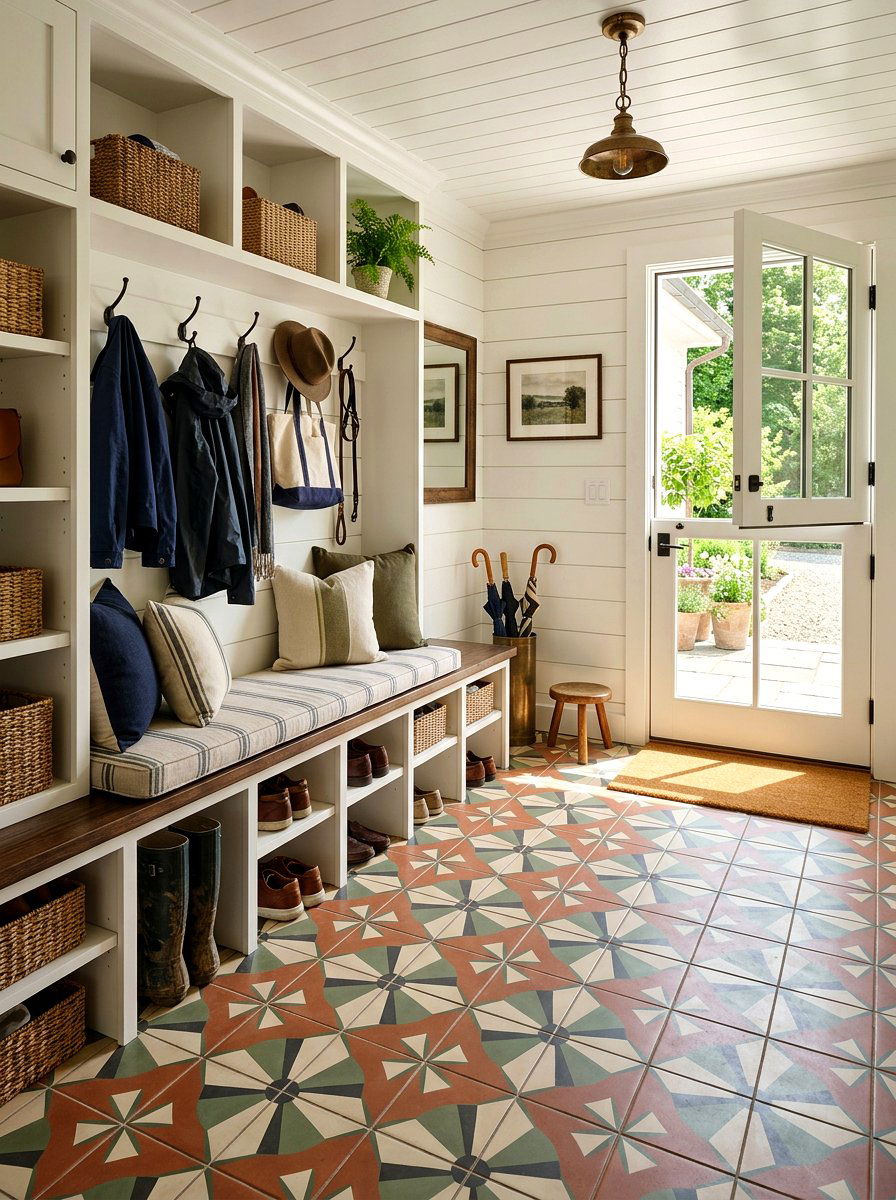
Step into a room where the floor feels like a carefully arranged puzzle that keeps the eye wandering. The windmill pattern is a charming and somewhat rare layout that places four rectangular tiles around a small central square tile. This arrangement creates a series of interlocking "fans" or windmill shapes that offer a delightful sense of symmetry. It works best in smaller areas like powder rooms or foyers where the detail can be appreciated up close. By using a different color or material for the center square, you can create a jewelry-like effect on the floor that serves as a conversation piece for guests.
7. Pinwheel Tile Floor
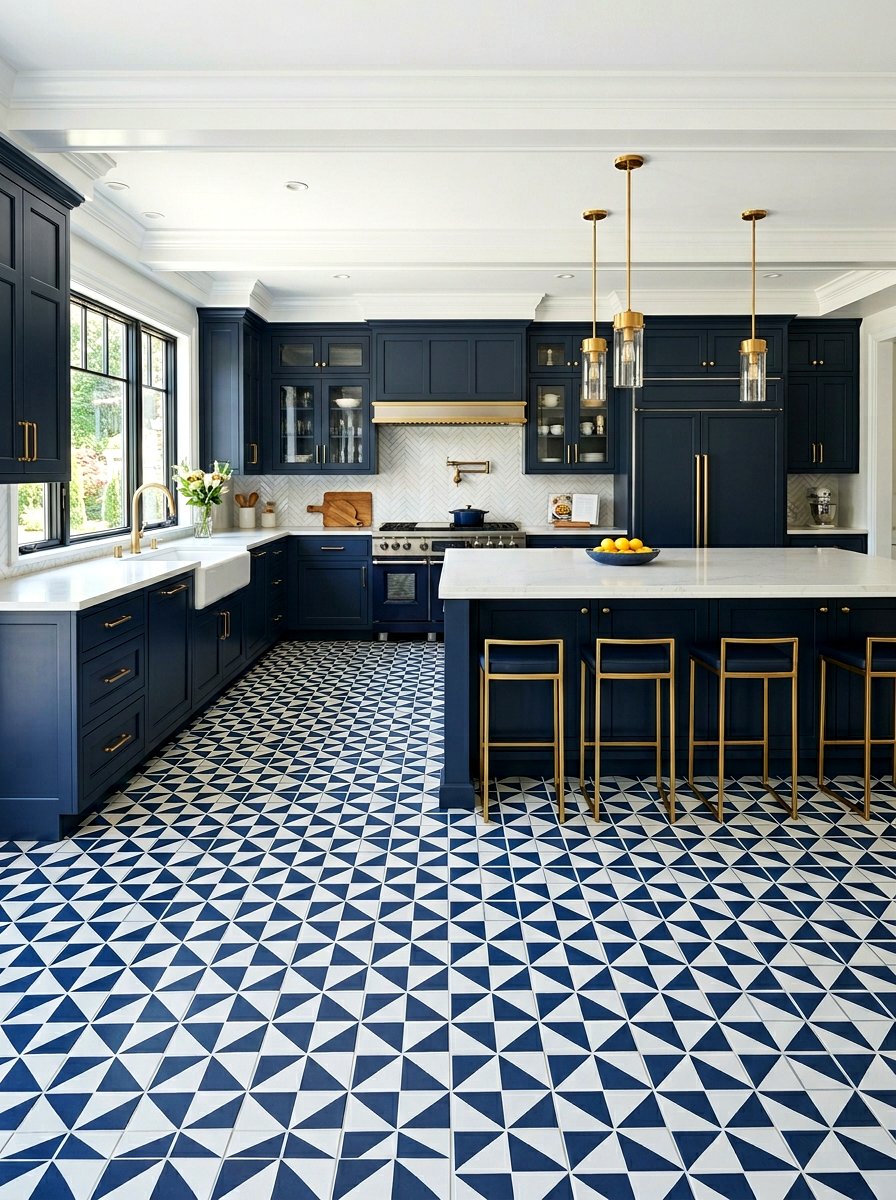
Have you ever seen a floor that looks like it is constantly in a state of gentle rotation? Similar to the windmill, the pinwheel layout uses a small square tile surrounded by larger rectangular or square tiles to create a spinning effect. This pattern is often referred to as a "hopscotch" layout and is favored for its ability to break up the monotony of large floor surfaces. It offers a wonderful opportunity to play with color contrast, such as using a dark marble center with light limestone outer tiles. This creates a rhythmic, decorative surface that feels more customized than a standard straight-lay grid or a basic brick pattern.
8. Versailles Tile Floor
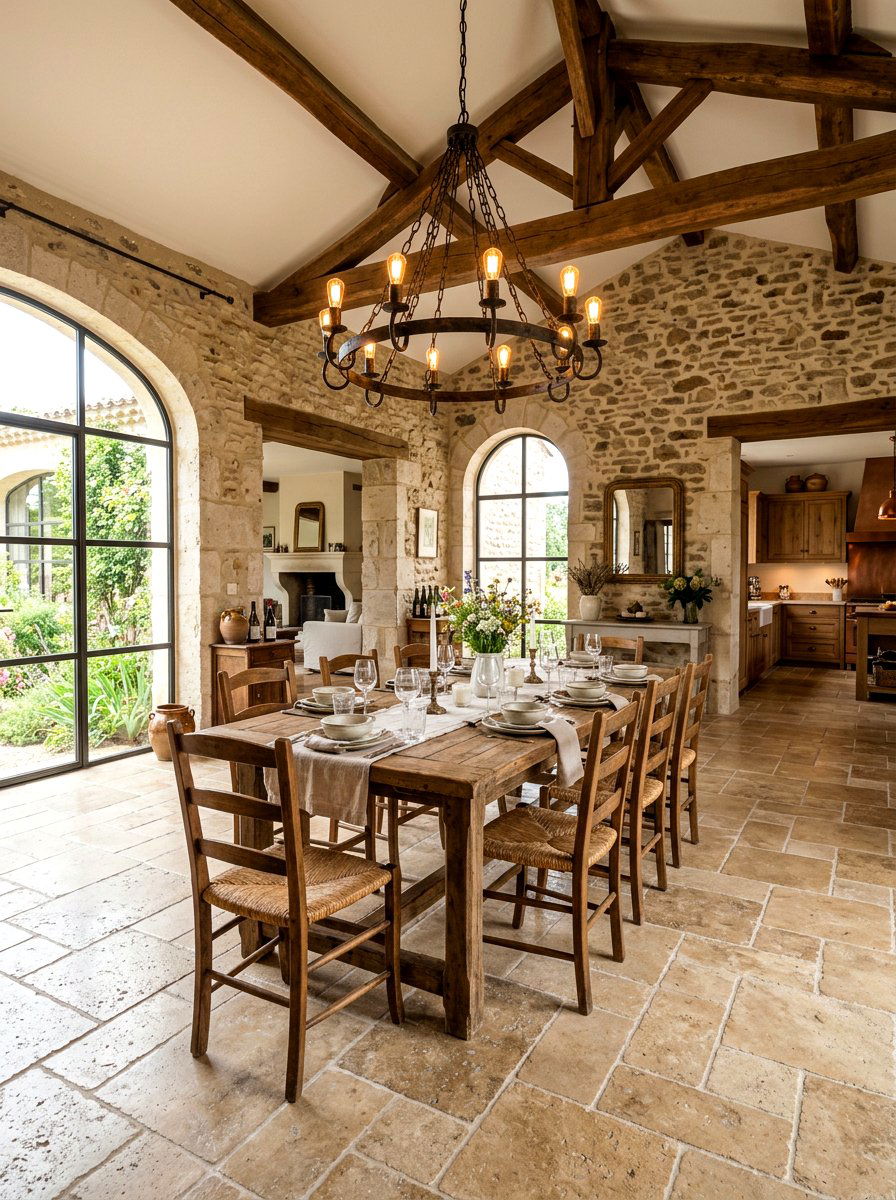
How would it feel to have the grandeur of a French palace right under your own kitchen table? The Versailles pattern, also known as the French pattern, utilizes four different sizes of tiles — usually squares and rectangles — to create a complex, modular arrangement. This layout is specifically designed to look random and organic while maintaining a structured repeating unit. It is most commonly used with natural stone like travertine or slate to enhance a rustic or old-world aesthetic. The lack of continuous straight lines makes it perfect for large open-concept areas, as it creates a seamless and sprawling look that hides imperfections and adds character.
9. Running Bond Tile Floor
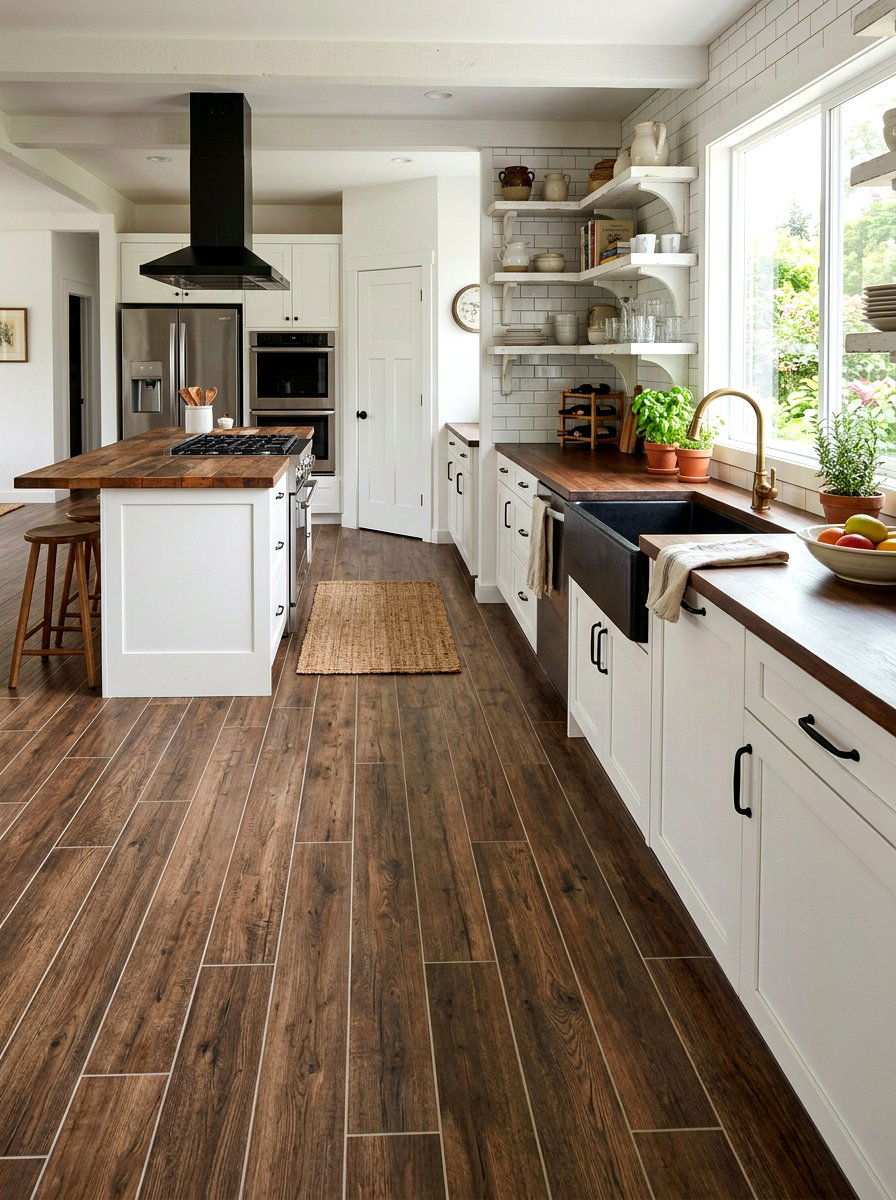
Is there a more reliable and classic way to lay tiles than the traditional brick-style arrangement? Often called the running bond, this pattern offsets each row of tiles by exactly half the width of the tile below it. This simple shift breaks up long grout lines and creates a sturdy, timeless appearance that works with almost any tile shape. It is particularly effective with rectangular subway tiles or long wood-look planks, as it mimics the natural appearance of masonry or hardwood. This layout is great for hiding uneven walls or slightly crooked floors, making it a favorite for DIY enthusiasts and professional contractors alike.
10. Stack Bond Tile Floor
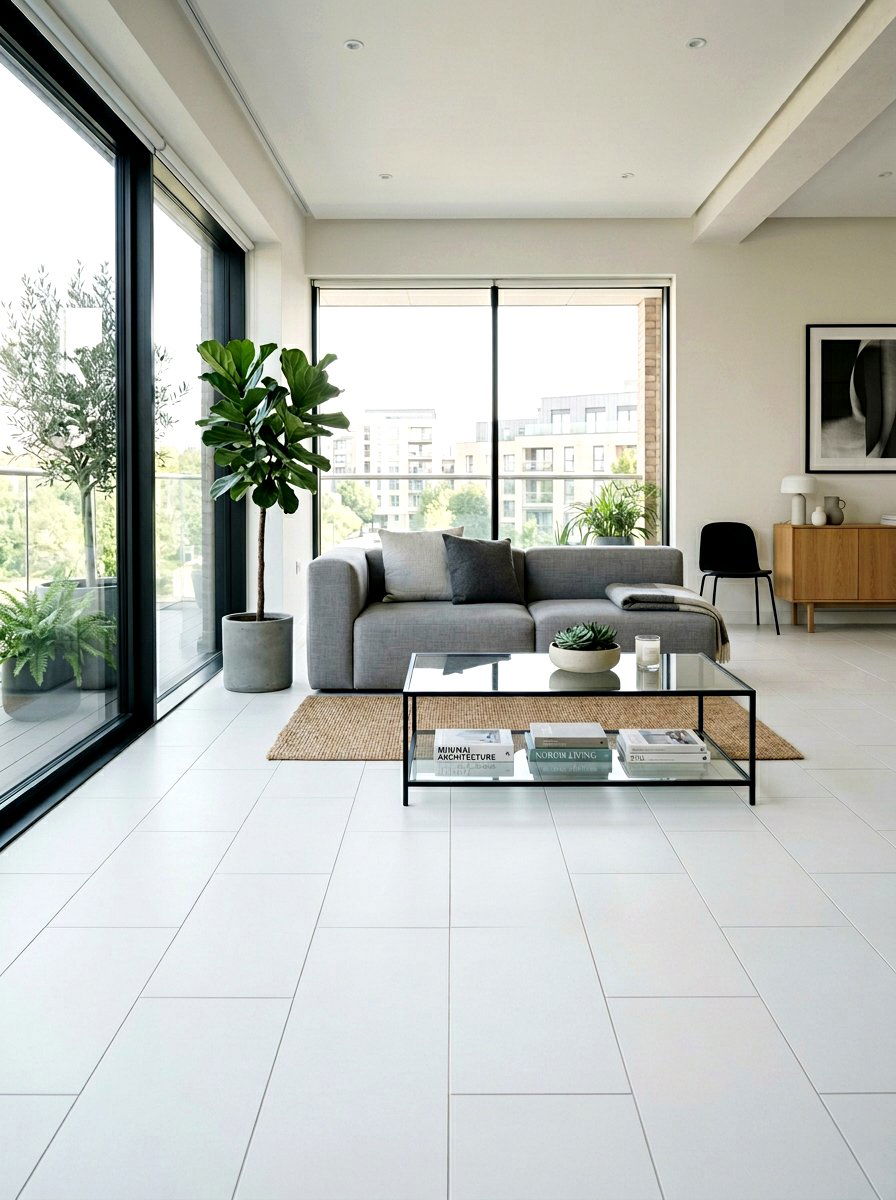
If you prefer a look that is strictly modern and unapologetically clean, the stack bond might be your perfect match. In this layout, every tile is aligned perfectly both horizontally and vertically, creating a continuous grid of straight lines. This emphasizes the geometry of the tiles themselves and works exceptionally well with square or large rectangular formats. Because of its extreme simplicity, it requires precise installation to ensure every line is perfectly straight. It is a fantastic choice for minimalist or industrial-style homes where the goal is to create a calm, orderly environment that feels spacious, contemporary, and completely free of any visual clutter.
11. Diagonal Tile Floor
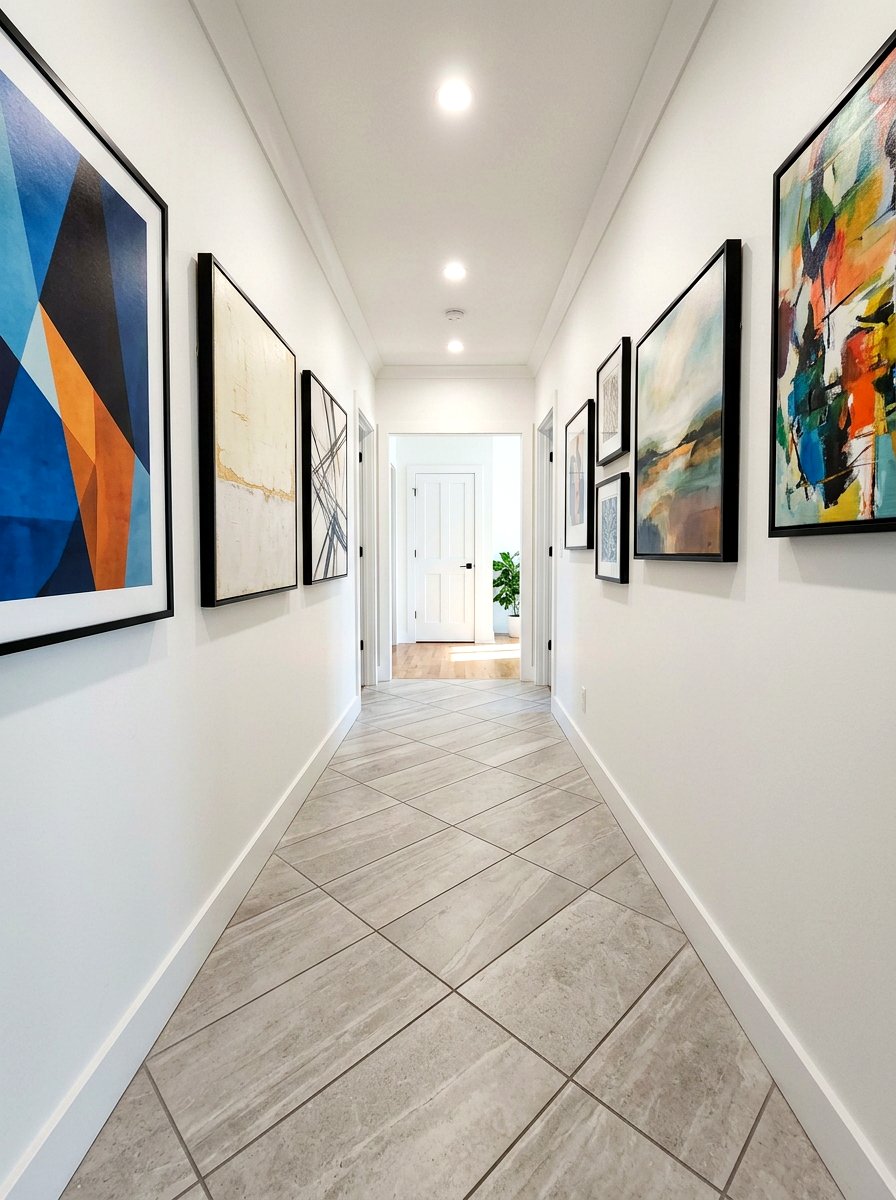
Turning your perspective by just forty-five degrees can completely change how you experience the size of a room. A diagonal tile layout takes a standard square grid and rotates it, making the corners of the tiles point toward the walls. This simple trick creates longer visual lines that draw the eye across the widest part of the floor, effectively making narrow hallways or small bathrooms feel more expansive. It is a classic technique used by designers to add a touch of formality and elegance to a space. While it requires more cuts during installation, the payoff is a floor that feels more dynamic and high-end.
12. Moroccan Tile Floor
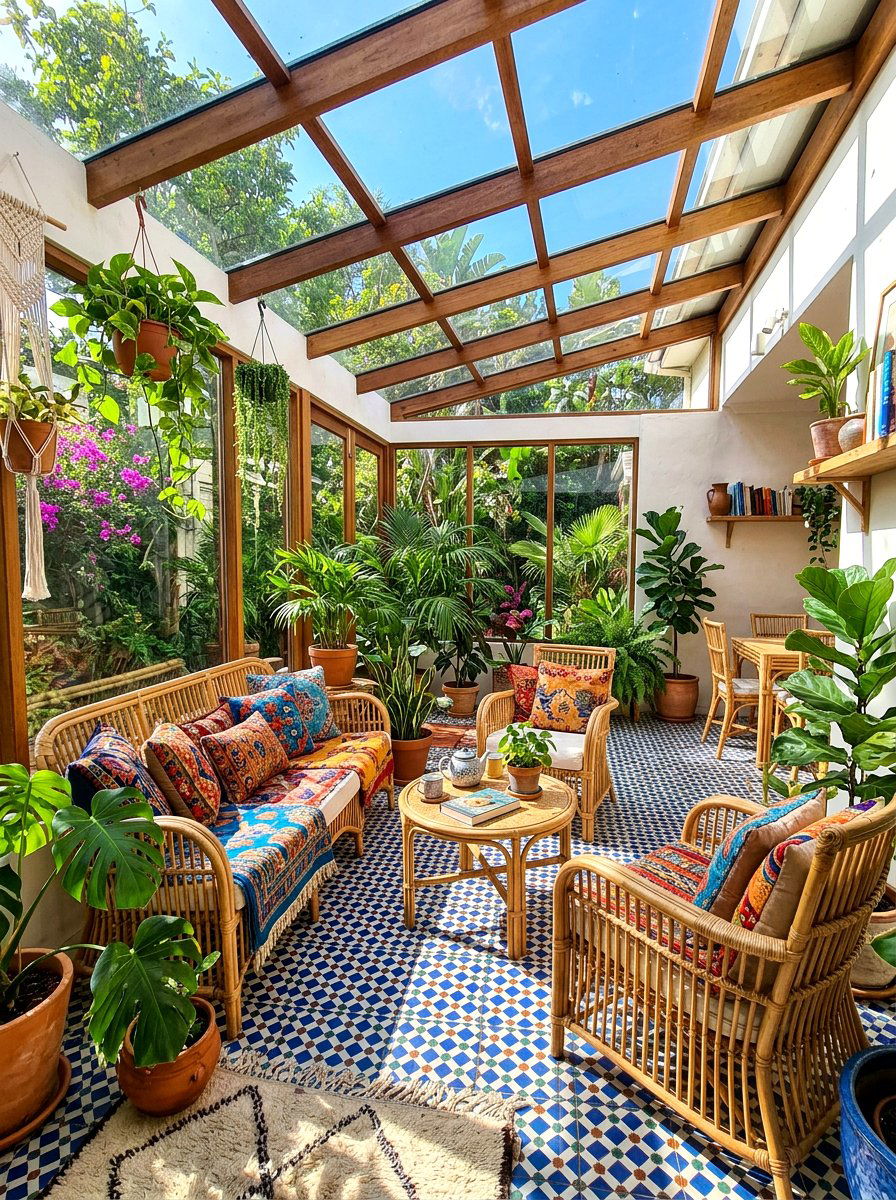
Does your home need a burst of vibrant energy and intricate artistry that feels like a global escape? Moroccan patterns often involve hand-painted or encaustic tiles featuring complex geometric stars, floral motifs, and bold color palettes. These designs are perfect for creating a "tile rug" effect in an entryway or adding a splash of personality to a laundry room. The repetitive, interlocking shapes create a mesmerizing rhythm that can anchor a room’s entire design scheme. Using these patterns on the floor allows the rest of the decor to remain simple, as the floor itself acts as the primary piece of art in the space.
13. Encaustic Tile Floor
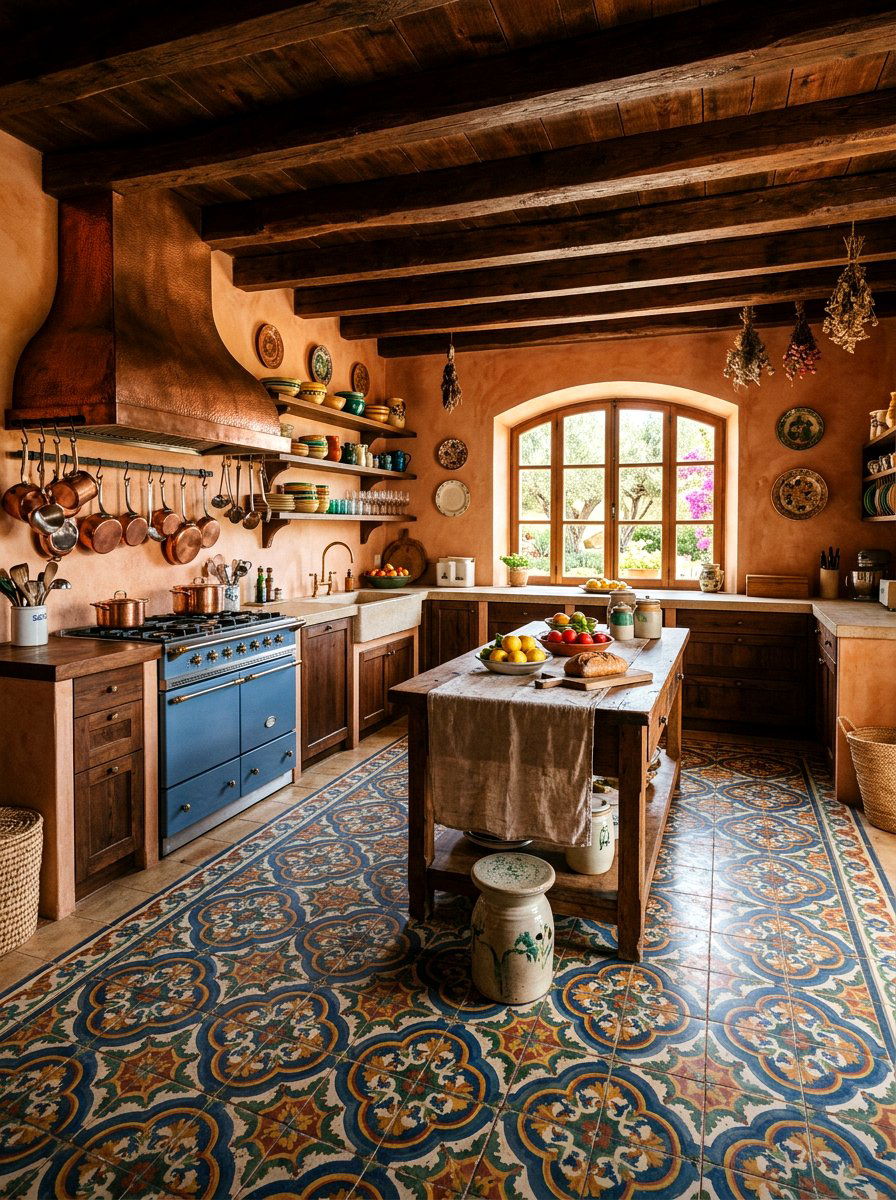
Imagine a floor where the color isn't just on the surface, but baked deep into the material itself. Encaustic tiles are made using different colors of clay to create permanent patterns that never fade, even after decades of heavy foot traffic. These tiles often feature bold, matte designs ranging from Victorian florals to modern abstracts. They provide a tactile, artisanal quality that adds immense warmth and history to a kitchen or sunroom. Because they are typically thicker than standard ceramic, they feel substantial underfoot. Their unique texture and handcrafted appearance make every installation feel one-of-a-kind and deeply connected to traditional craftsmanship.
14. Penny Tile Floor
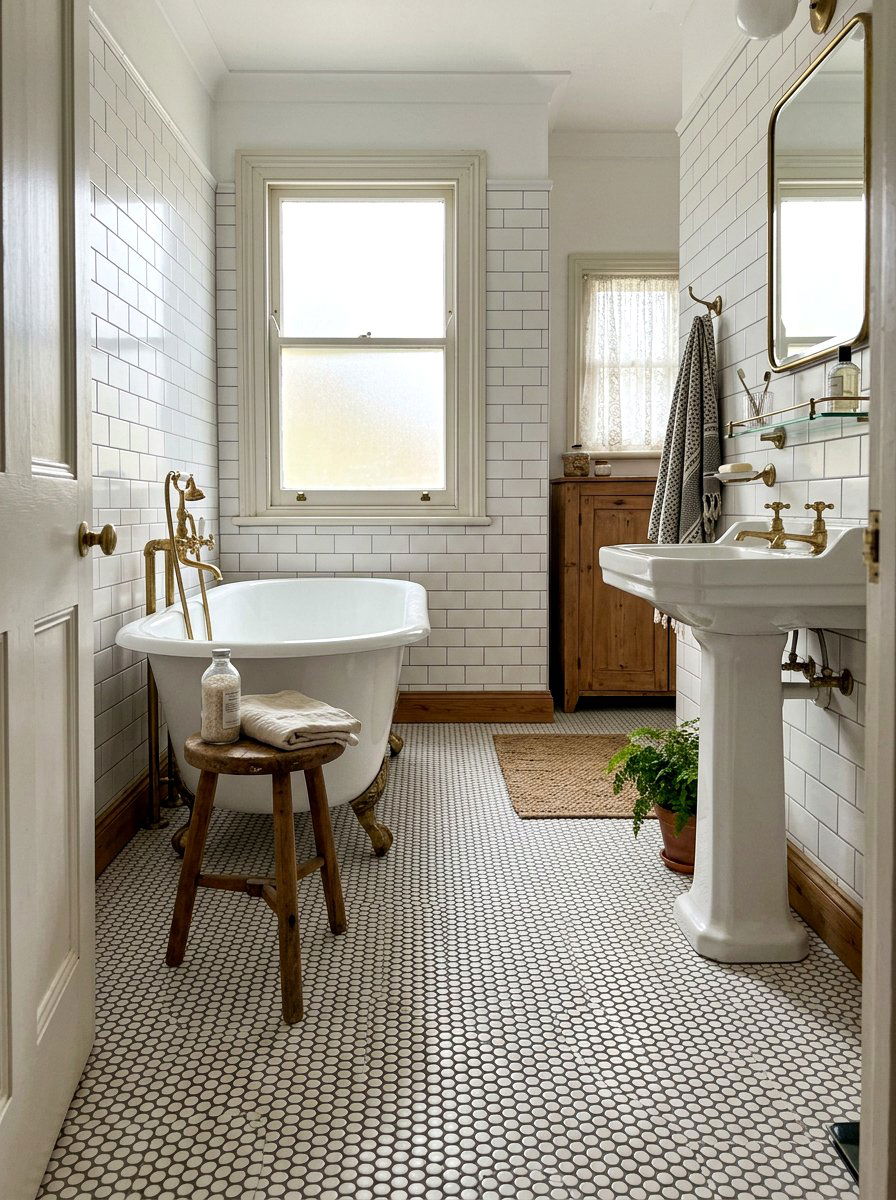
Can thousands of tiny, round circles come together to create a surface that is both cute and incredibly durable? Penny tiles are small, coin-sized discs usually mounted on mesh sheets for easier installation. This pattern is a vintage favorite for bathrooms because the high volume of grout lines provides excellent slip resistance. Beyond safety, they offer a unique texture that feels soft and interesting to walk on. You can use a single color for a clean, retro vibe or create custom borders and words for a personalized touch. Their small scale makes them perfect for curved surfaces or small, irregularly shaped floor areas.
15. Fish Scale Tile Floor
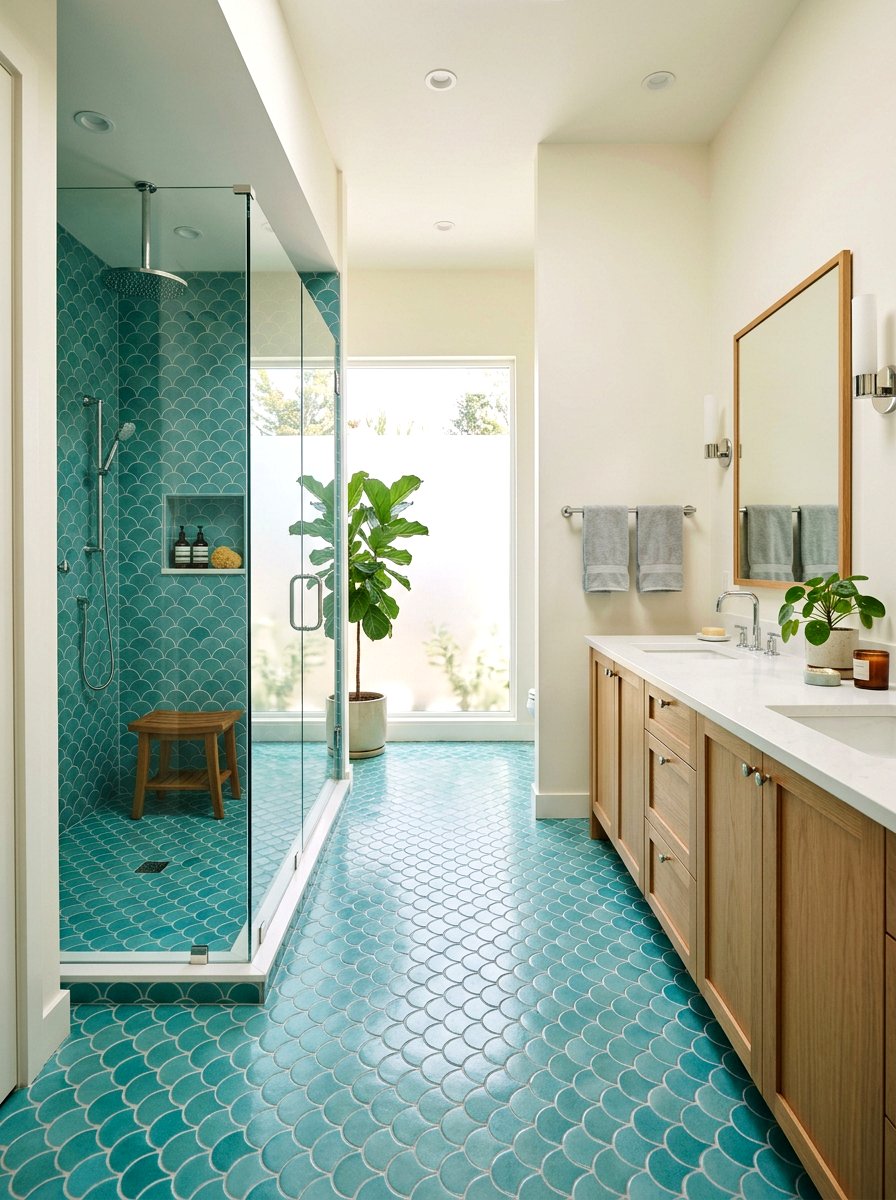
Would you like to bring a sense of oceanic wonder and graceful curves into your interior home design? Also known as fan tiles, the fish scale pattern consists of tiles with a rounded top and a tapered bottom that overlap or interlock. This creates a soft, rhythmic wave effect that is visually soothing and incredibly unique compared to sharp-edged geometric patterns. While often seen on backsplashes, using them on a bathroom floor creates a spa-like retreat that feels luxurious and artistic. In shades of teal, blue, or even neutral white, these tiles provide a fluid motion that makes any floor surface feel more alive.
16. Arabesque Tile Floor
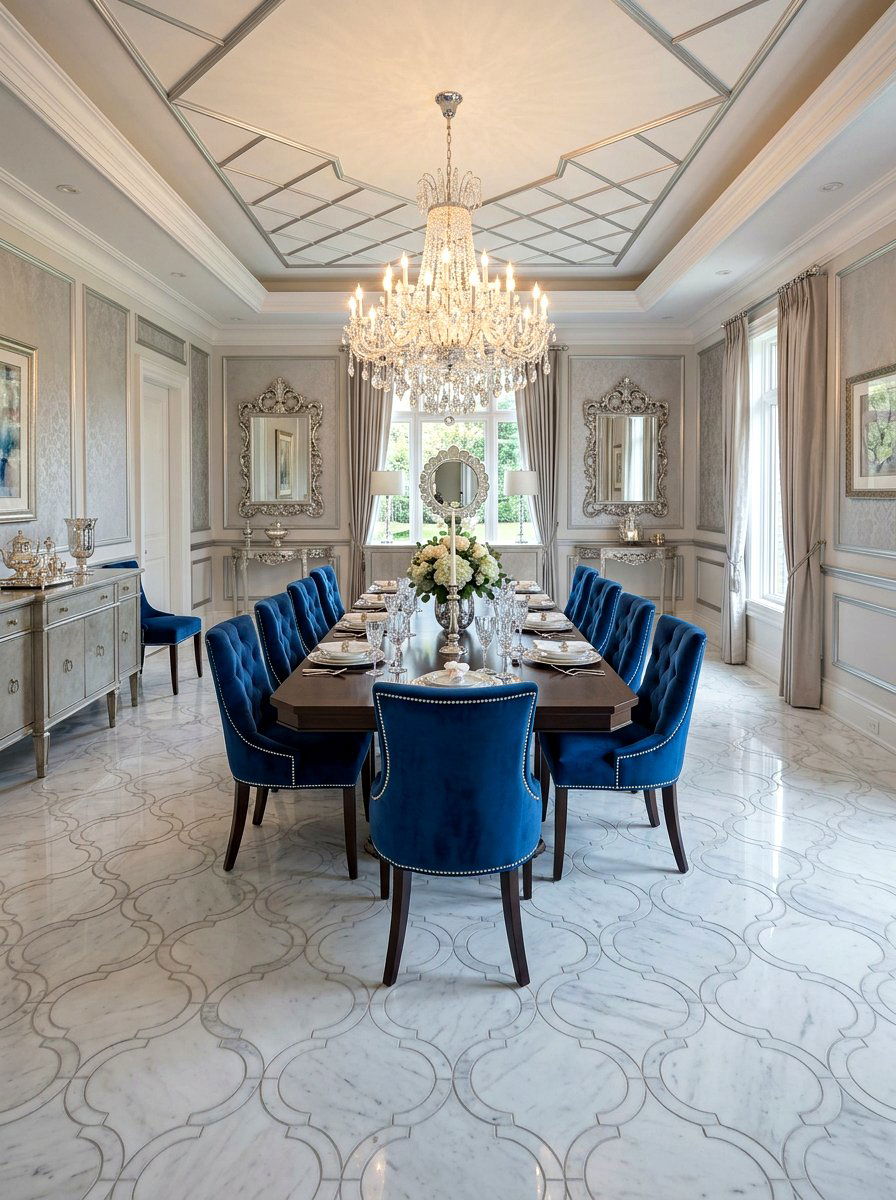
If you want to introduce a touch of Mediterranean elegance, the arabesque pattern offers an exotic and curvaceous alternative. This interlocking shape features four or more curved sides that fit together perfectly to create a decorative, lace-like appearance. It is a sophisticated choice for someone who wants a pattern that feels feminine and graceful. Because the shapes are intricate, using a matching grout color keeps the look subtle and refined, while a contrasting grout highlights the beautiful lanterns or onion-like silhouettes. It works beautifully in master bathrooms or formal dining areas where you want to emphasize a sense of timeless luxury and detailed design.
17. Large Format Tile Floor
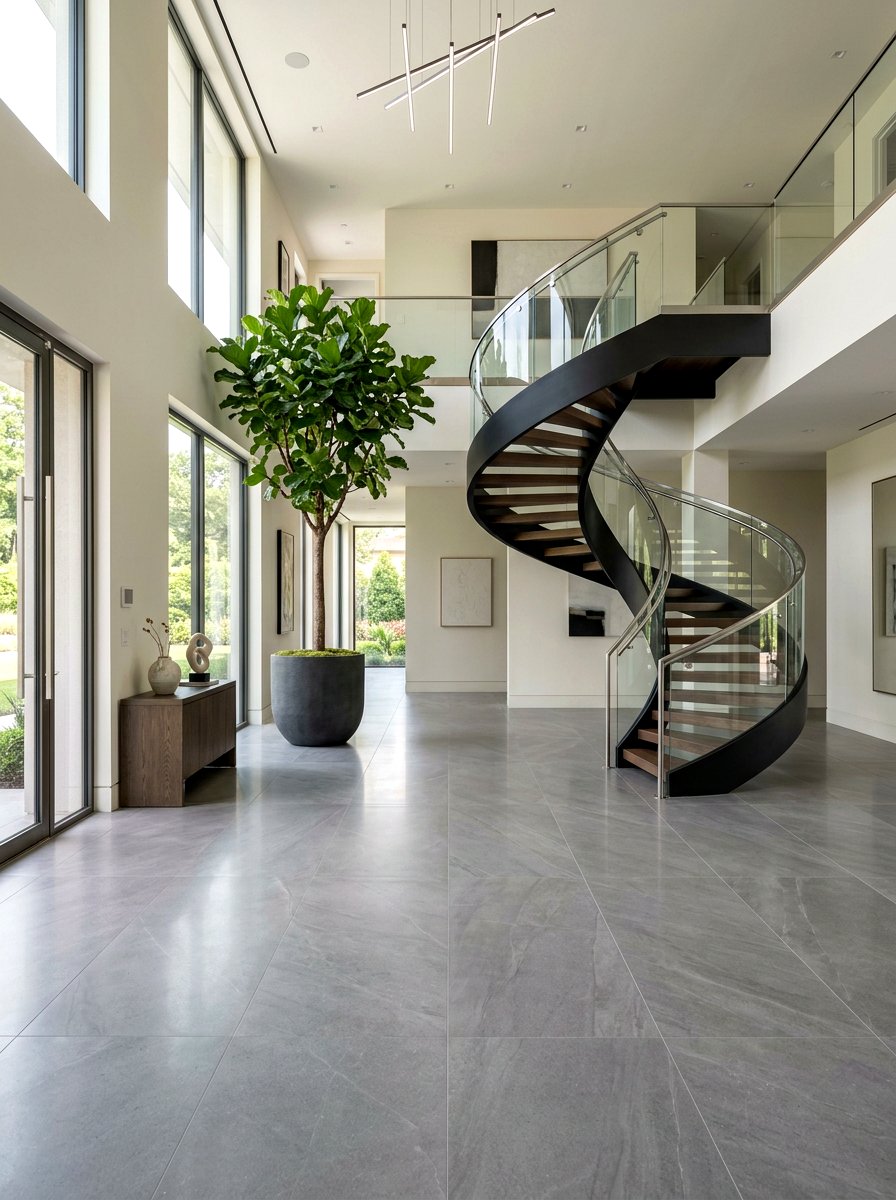
Are you looking for a way to make your open-concept living area feel like a continuous, seamless stone slab? Large format tiles, which are typically defined as being larger than fifteen inches on any side, minimize the number of grout lines on your floor. This creates a sleek, high-end look that is incredibly easy to clean and maintain. Because there are fewer visual interruptions, the floor looks more expansive and calmer. This trend is perfect for modern homes that prioritize clean lines and a sense of "quiet luxury. " When paired with a matching grout, the transitions become nearly invisible, mimicking the look of poured concrete.
18. Terrazzo Tile Floor
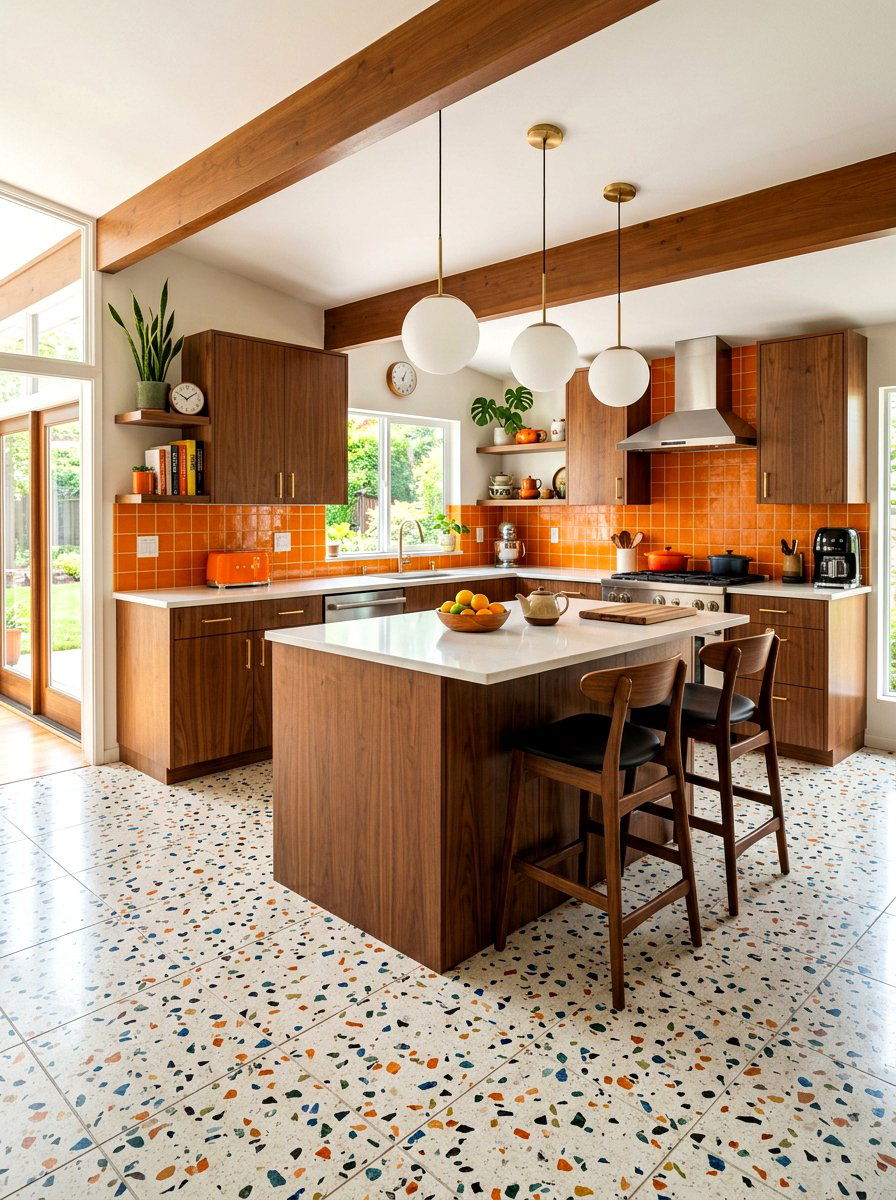
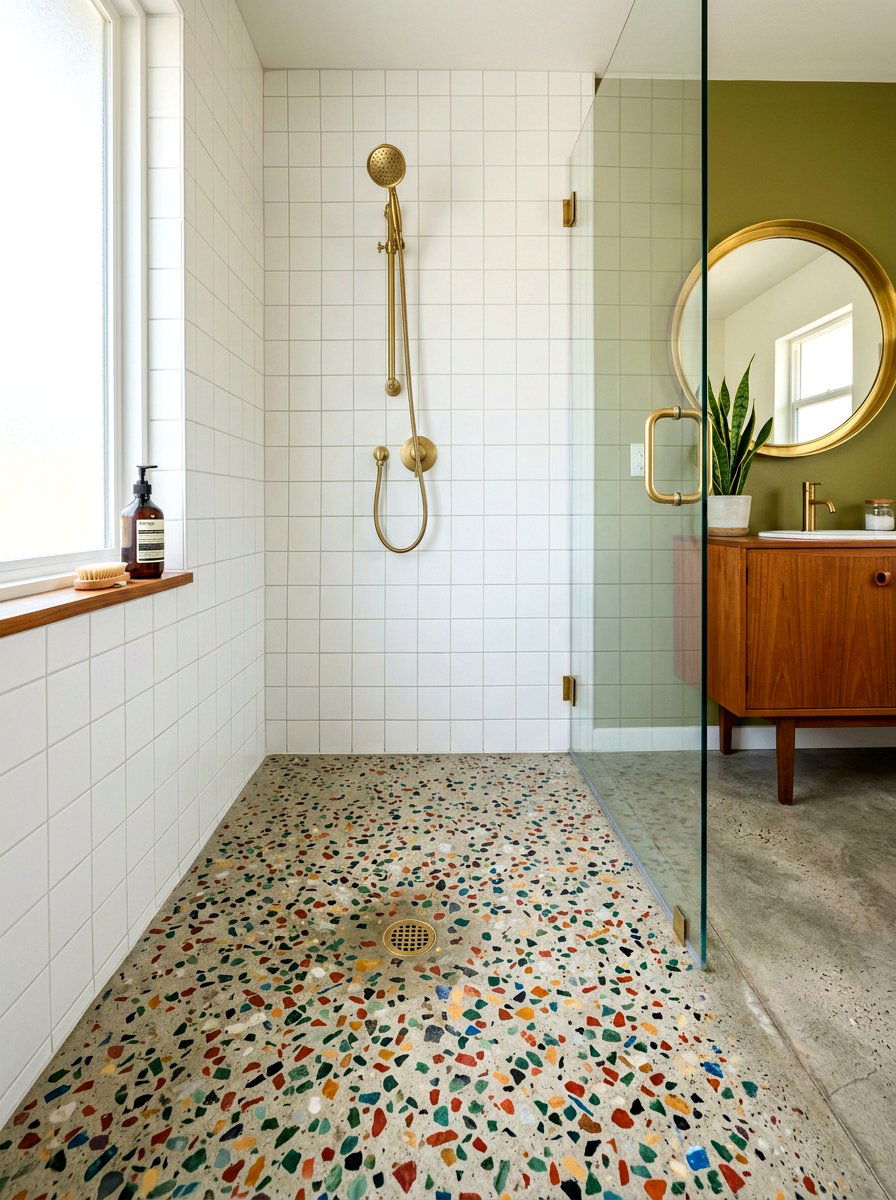
Why choose just one color when you can have a floor speckled with a beautiful galaxy of marble and glass? Terrazzo tile consists of chips of stone, glass, or quartz embedded in a cement or resin base and then polished to a high shine. This creates a playful yet sophisticated multi-tonal surface that is incredibly durable and hides dirt or pet hair exceptionally well. Originally popular in mid-century modern design, terrazzo has seen a massive resurgence in contemporary homes. It offers a unique texture that pairs perfectly with minimalist furniture, providing a colorful and artistic foundation that feels both historic and modern.
19. Octagon And Dot Tile Floor
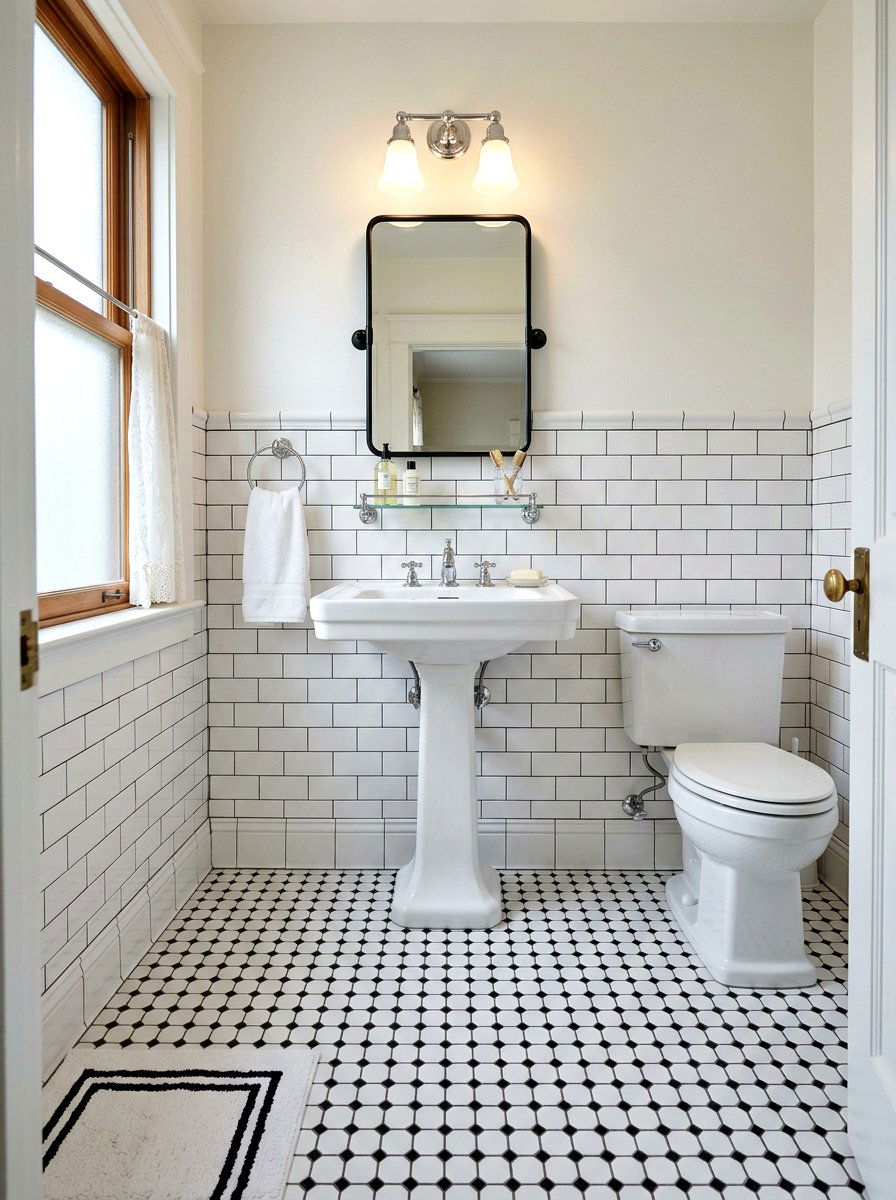
Is there any pattern more classic for a vintage-inspired bathroom than the charming octagon and dot? This layout uses large eight-sided tiles with small square "dots" placed at the intersecting corners. Most commonly seen in white with black dots, this pattern provides a clean, graphic look that has remained popular for over a century. It adds a touch of historical character to a home without feeling dated or overly cluttered. The geometric interplay between the large shapes and the small accents creates a pleasing visual rhythm that works perfectly in smaller spaces like powder rooms or historic mudroom areas.
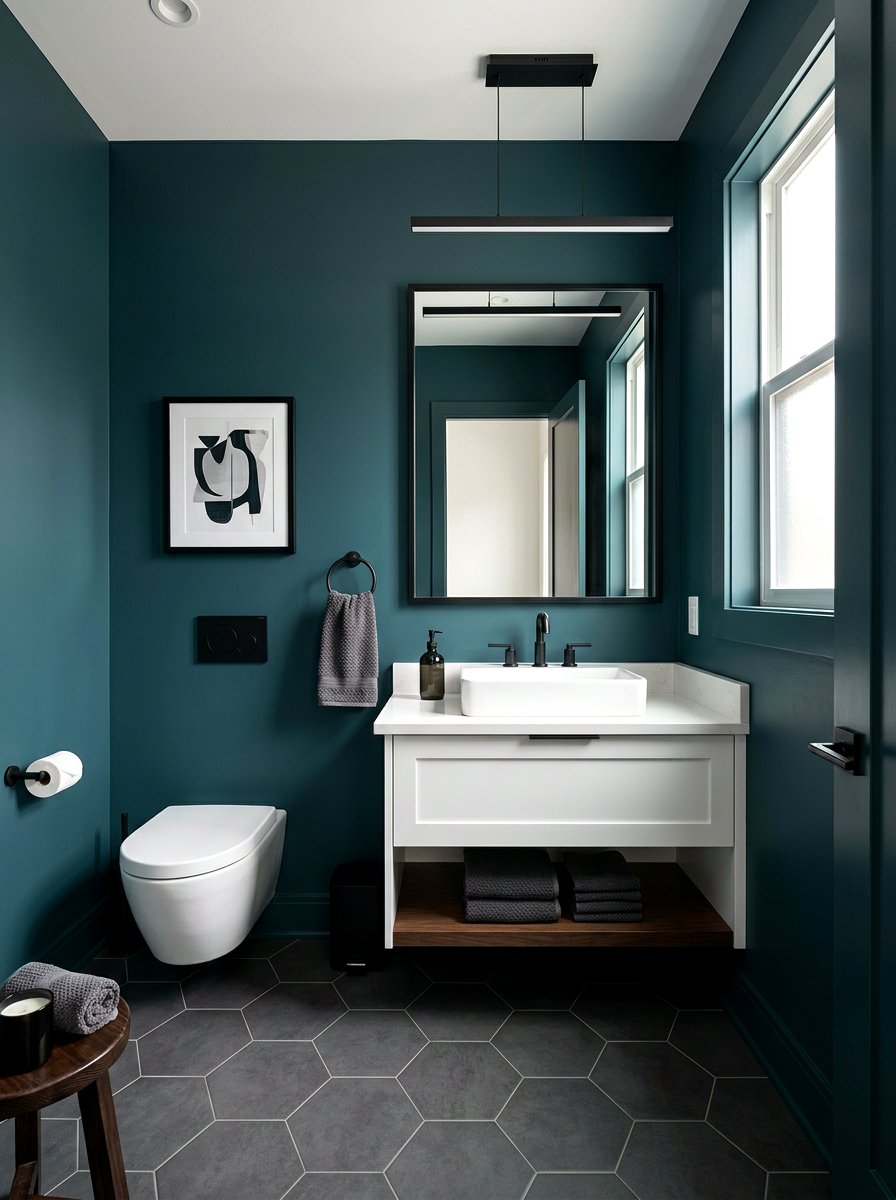
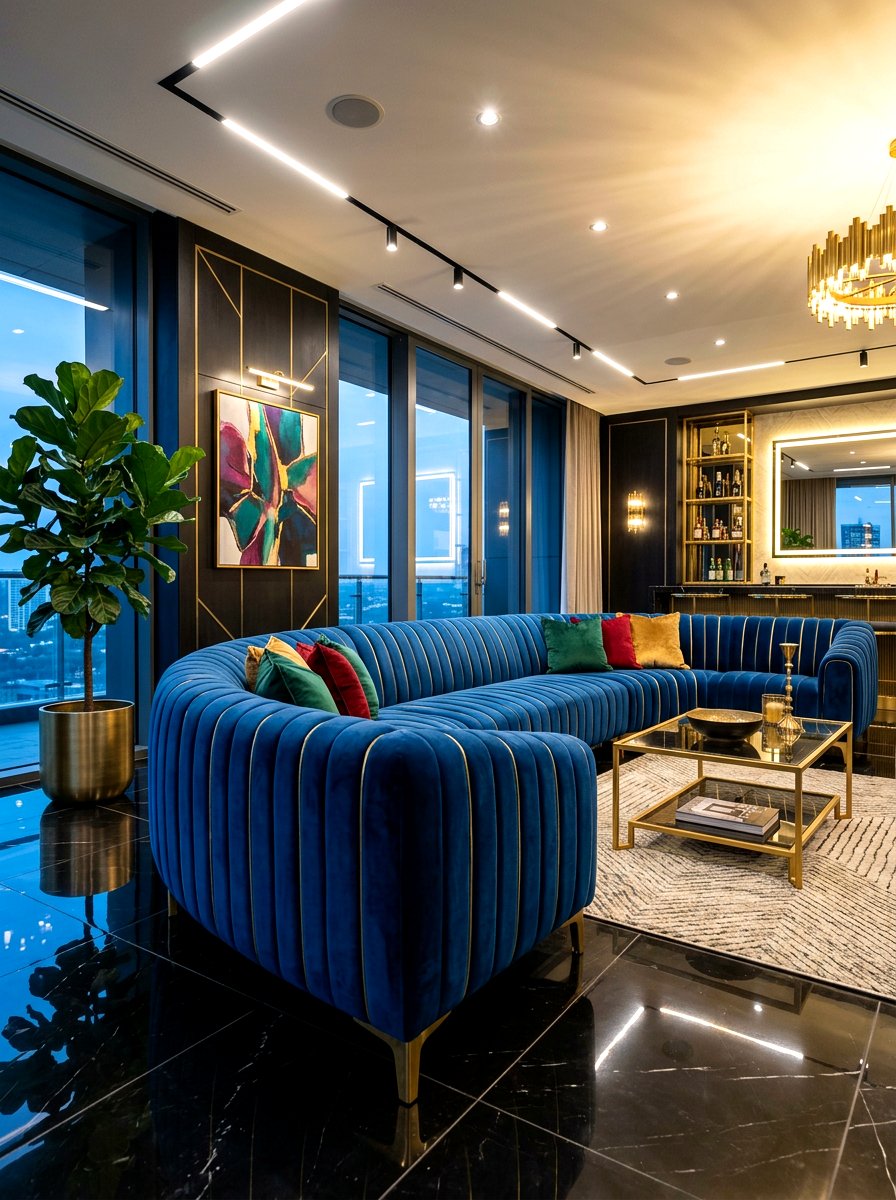
20. French Pattern Tile Floor
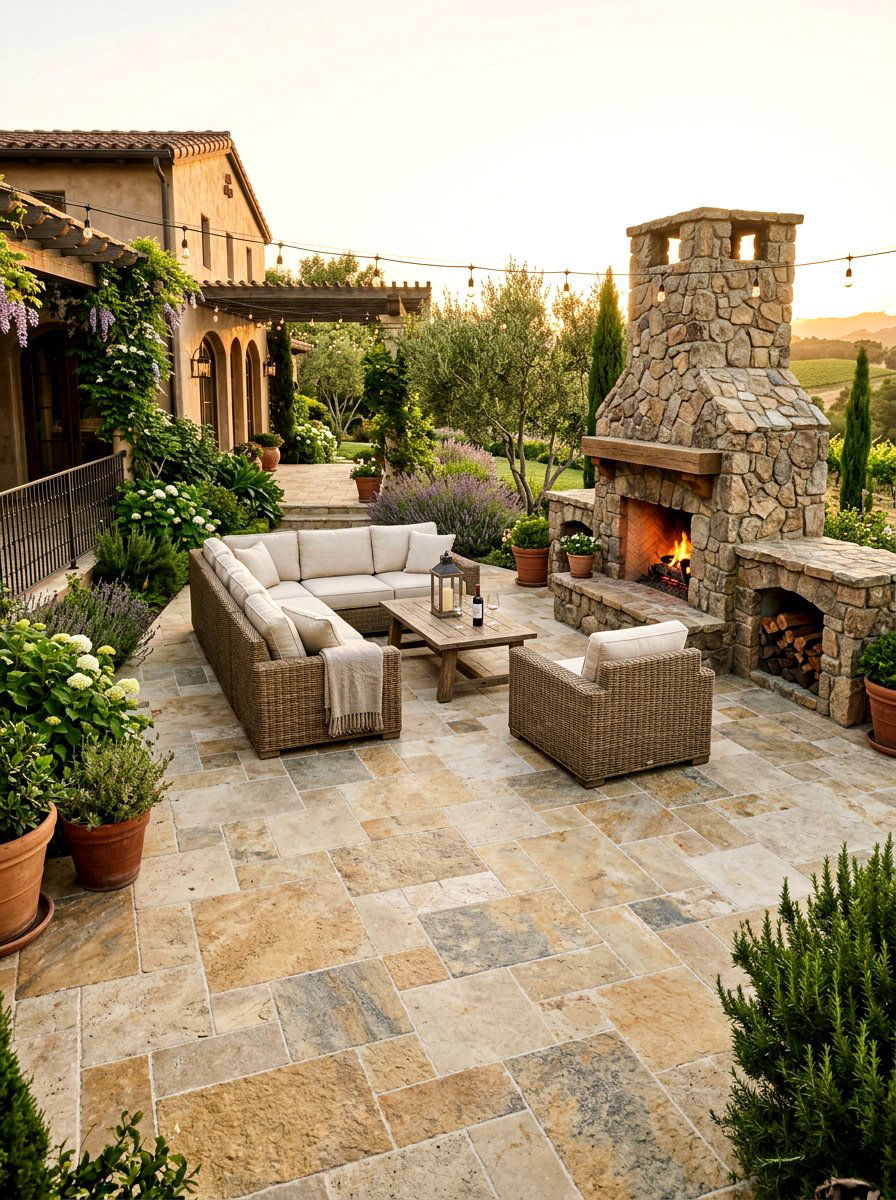
How can you achieve a floor that looks like it was harvested from a rustic European farmhouse centuries ago? The French pattern uses a specific modular layout of four different sizes of square and rectangular tiles. This arrangement is designed to break up linear patterns, creating a more natural and scattered look that feels relaxed and unpretentious. It is the gold standard for outdoor patios and rustic indoor kitchens using travertine or limestone. The variation in tile sizes adds an organic complexity to the floor, making it look much more expensive and custom-built than a simple grid of identical square tiles.
21. Modular Tile Floor
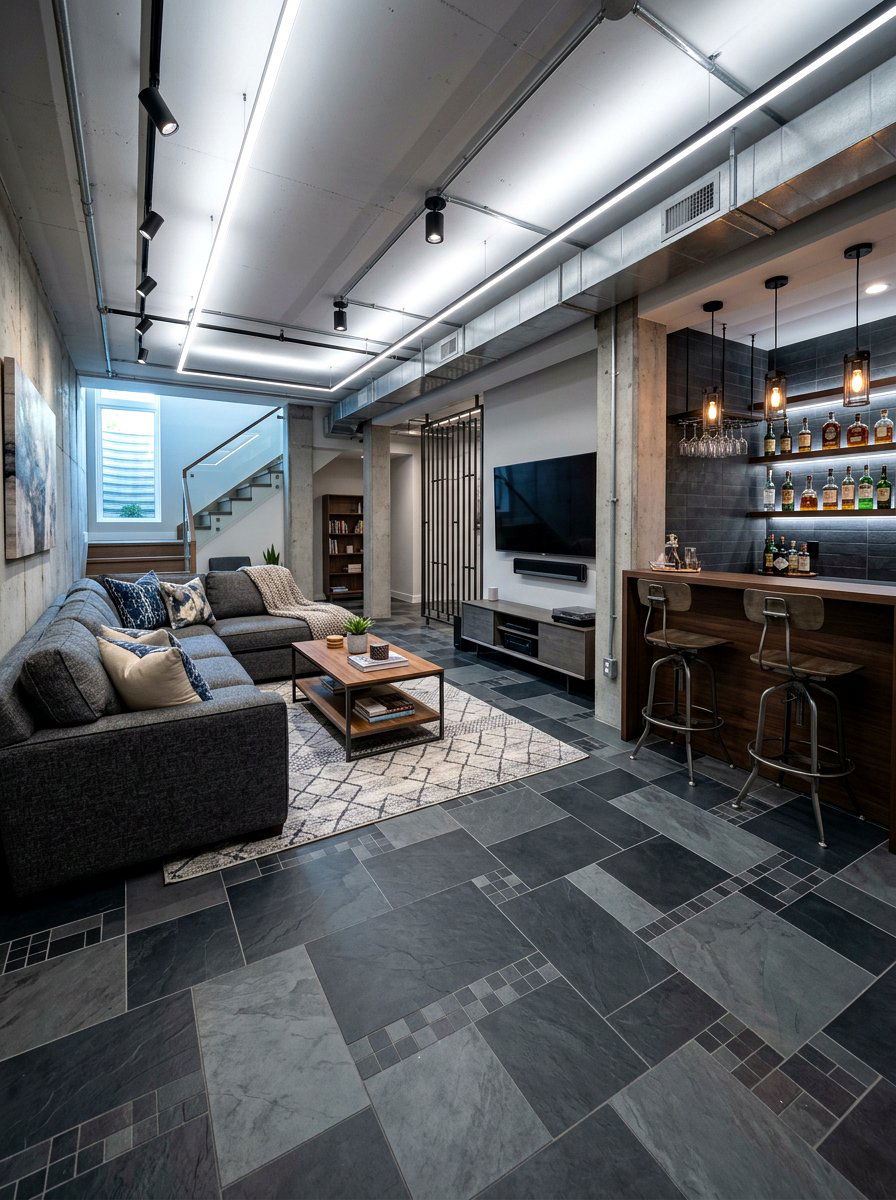
If you enjoy the idea of a structured grid but want a little more visual variety, modular layouts are a fantastic choice. This pattern involves using tiles of different sizes — such as large squares, small squares, and rectangles — that fit together in a repeating geometric unit. Unlike the French pattern, which feels more rustic, modular layouts can look very modern and organized depending on the tile material used. It is an excellent way to add "texture" to a large floor area without needing to use different colors. The subtle shift in tile sizes keeps the floor from looking flat or monotonous over long distances.
22. Harlequin Tile Floor
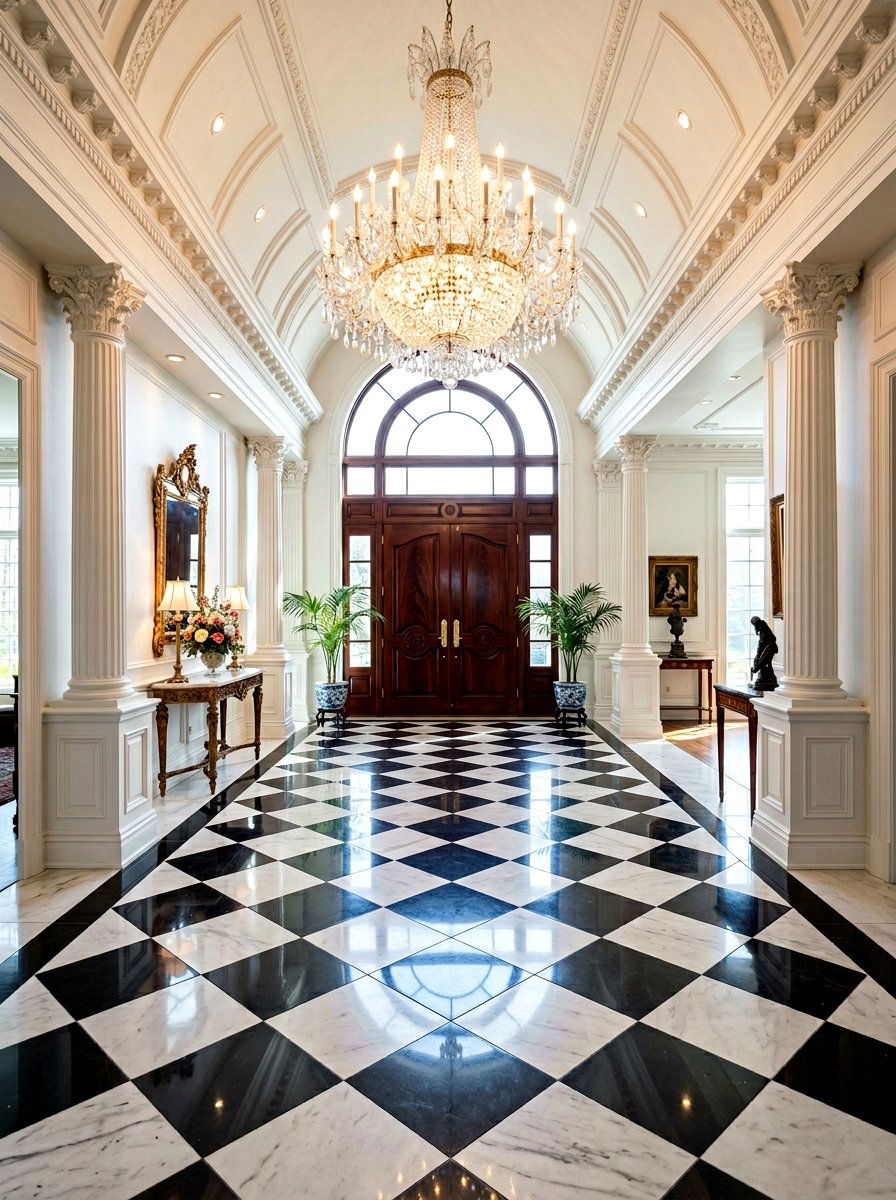
Do you want to make a bold, theatrical statement that instantly draws everyone's attention to the floor? The harlequin pattern is essentially a checkerboard layout rotated forty-five degrees to create elongated diamond shapes instead of squares. This subtle rotation adds a sense of height and drama to the room, making it a favorite for grand entryways and luxury hallways. While traditionally done in black and white, using two shades of grey or a mix of matte and glossy tiles can create a sophisticated, modern version of this timeless look. It acts as a powerful visual anchor that defines the character of the entire space.
23. Random Plank Tile Floor
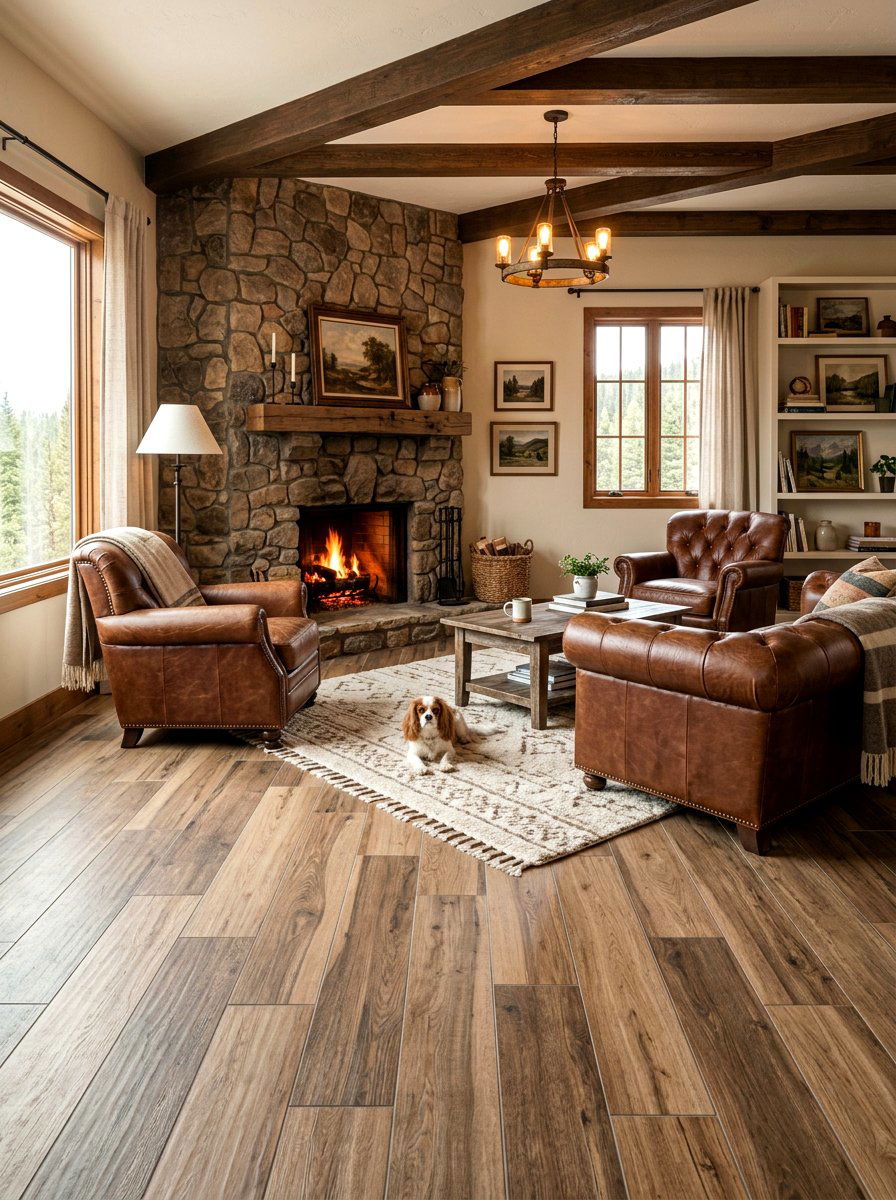
Can you get the warmth and character of real hardwood while enjoying the waterproof durability of porcelain? The random plank pattern uses long, wood-look tiles of varying lengths or widths laid in a staggered, non-repeating fashion. This avoids the "stair-step" look of a perfect running bond and makes the floor look much more like authentic timber. It is the perfect choice for kitchens and bathrooms where real wood might warp from moisture. By varying the starting point of each row, you create a natural flow that feels cozy and grounded, providing a beautiful rustic base for any modern farmhouse or traditional home.
24. Diamond Tile Floor
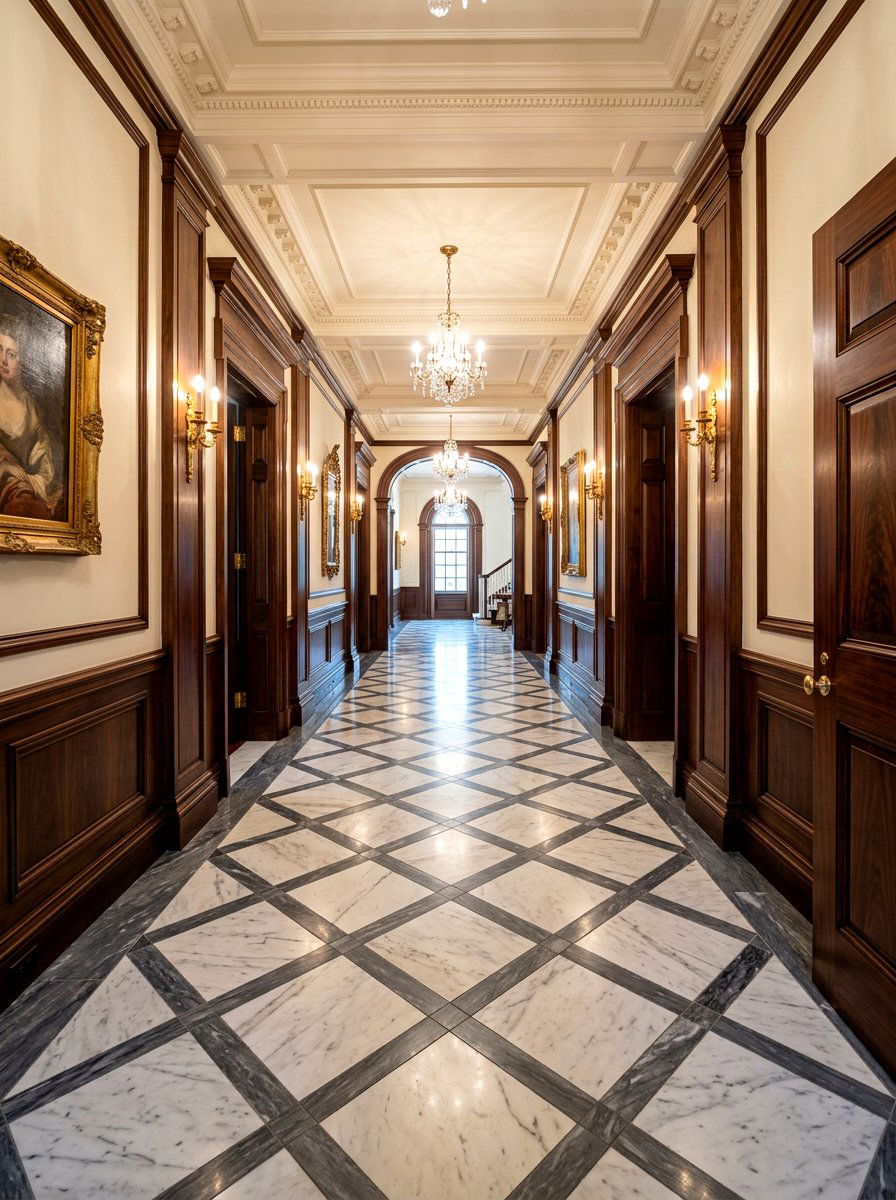
What if you could give your standard square tiles a luxury upgrade just by changing their orientation on the floor? A diamond layout takes square tiles and sets them with their corners pointing up and down, creating a series of diamonds. This pattern is incredibly effective at making a room feel wider and more formal. It is a popular choice for larger foyers or living rooms because it adds a layer of geometric sophistication that a standard grid lacks. When used with marble-look tiles, the diagonal veining can create a stunning visual effect that mimics the floors of high-end European hotels and galleries.
25. Grid Tile Floor
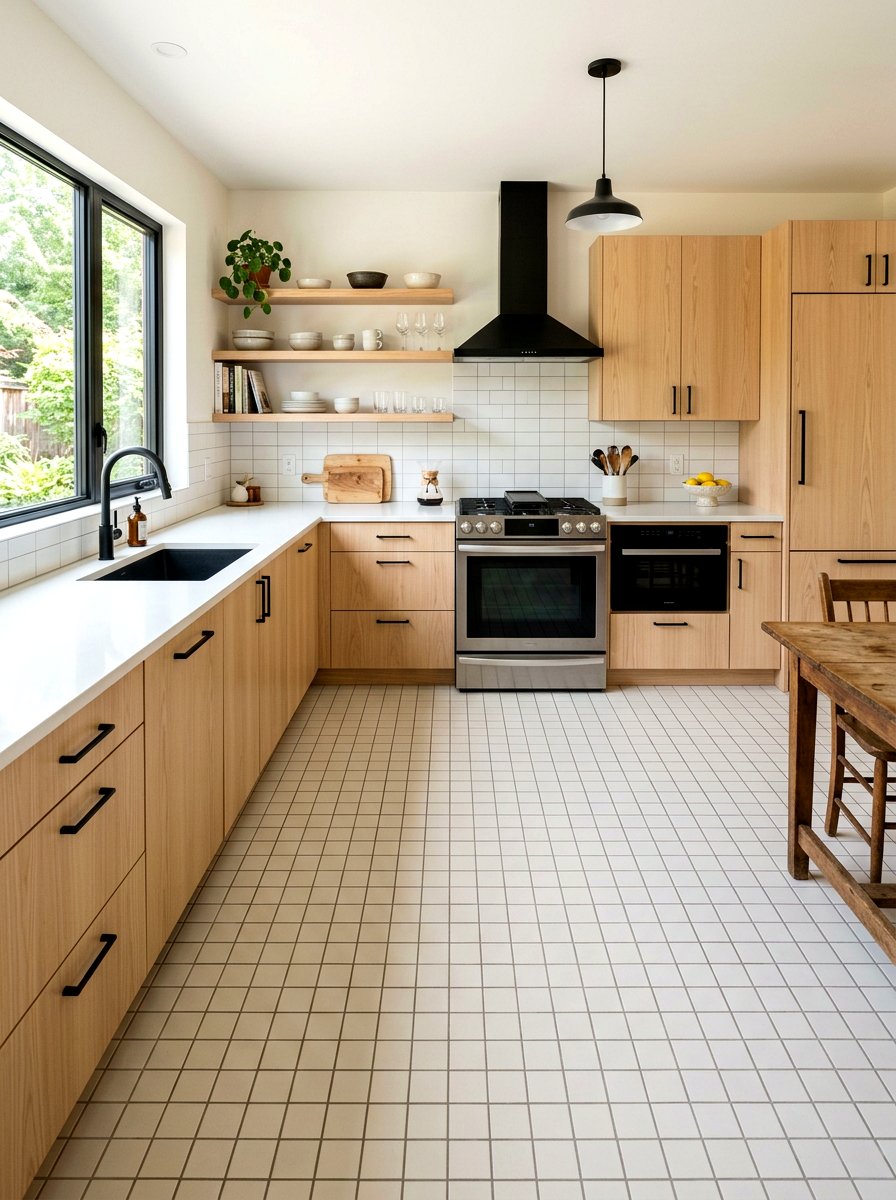
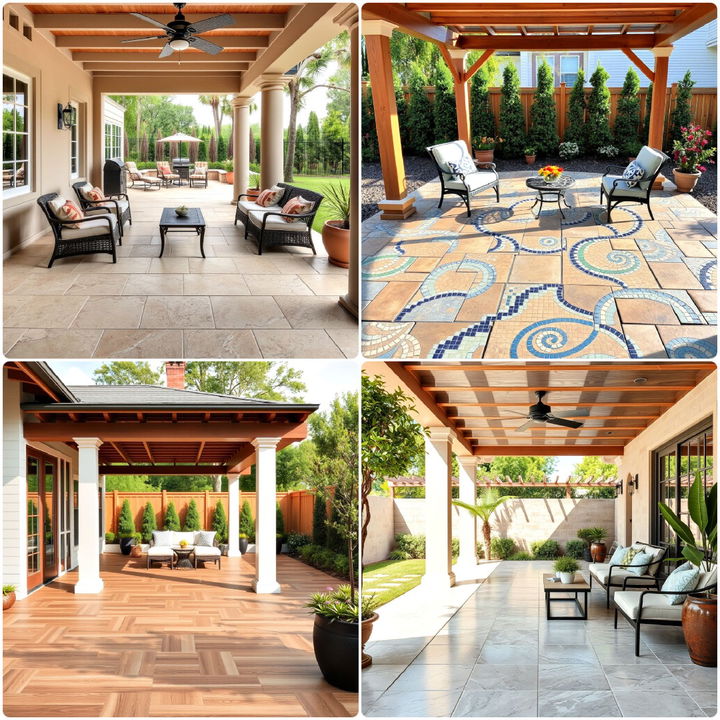
Is there beauty in the absolute simplicity of a perfectly aligned square grid? The grid pattern, or straight-lay, is the most straightforward tile installation, where every tile is aligned exactly with the one next to it. While it might sound basic, it is the ultimate choice for minimalist and mid-century modern interiors. Using large, high-quality tiles in a grid pattern creates a sense of calm and order that is visually restful. It also allows the furniture and wall decor to take center stage. To add interest, you can use a colored grout or choose a tile with a heavy natural texture to create depth.
26. Wood Look Tile Floor
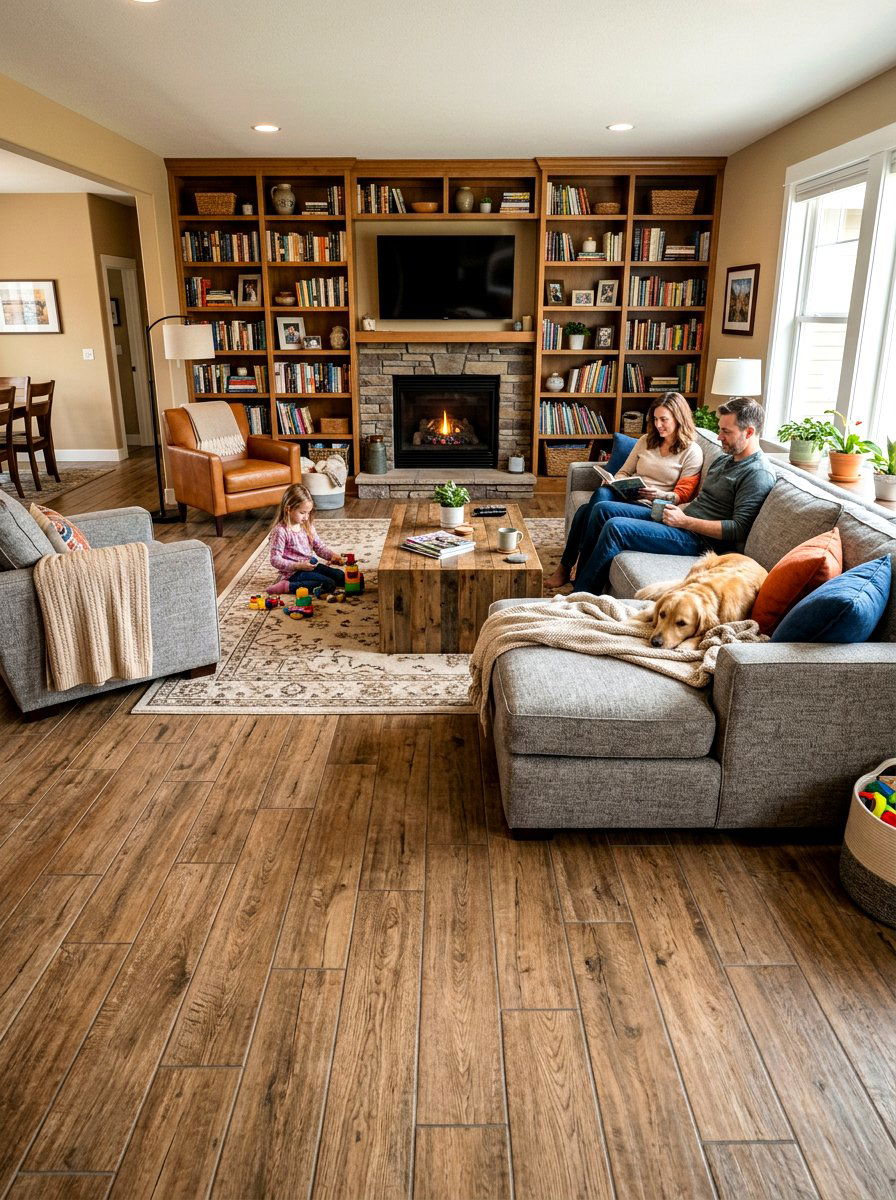
Have you ever wished for a floor that combines the cozy aesthetic of oak with the toughness of stone? Wood-look tile has revolutionized interior design by offering hyper-realistic textures and grain patterns on durable porcelain slabs. When laid in long, staggered rows, these tiles provide a seamless and warm appearance that is perfect for high-traffic family homes. Unlike real wood, these floors are scratch-resistant and completely waterproof, making them ideal for mudrooms or basement renovations. They provide a beautiful, organic foundation that pairs easily with any color palette, from light and airy whites to deep, moody blues and forest greens.
27. Marble Tile Floor
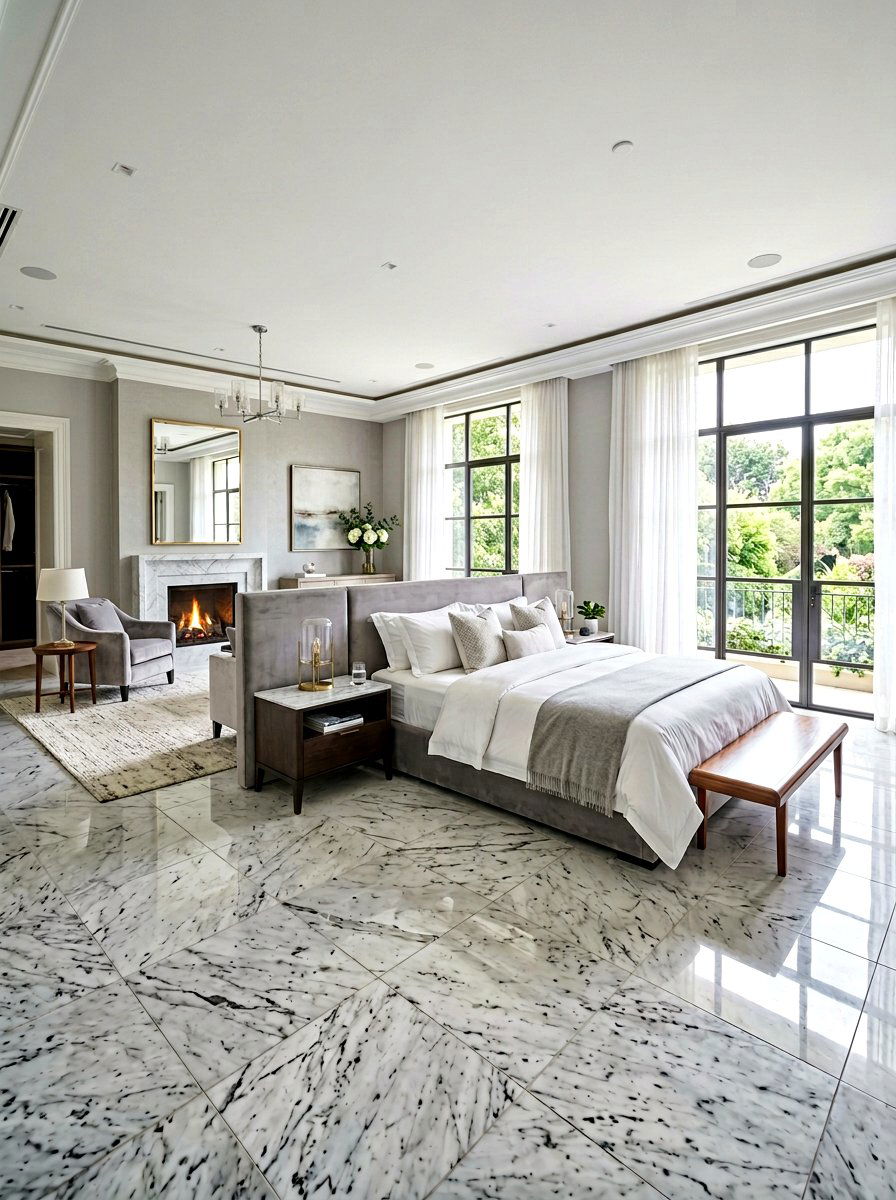
Imagine waking up every morning and stepping onto a floor that feels like a piece of timeless art. Marble tiles are prized for their unique veining and luxurious luminosity, which can brighten any room by reflecting natural light. Whether laid in a classic grid or a sophisticated herringbone, the natural variations in the stone ensure that no two floors look exactly alike. This material adds an immediate sense of "old money" elegance and high-end value to master bathrooms and formal foyers. While it requires a bit more care than ceramic, the sheer beauty of a marble floor is an investment that never goes out of style.
28. Mosaic Tile Floor
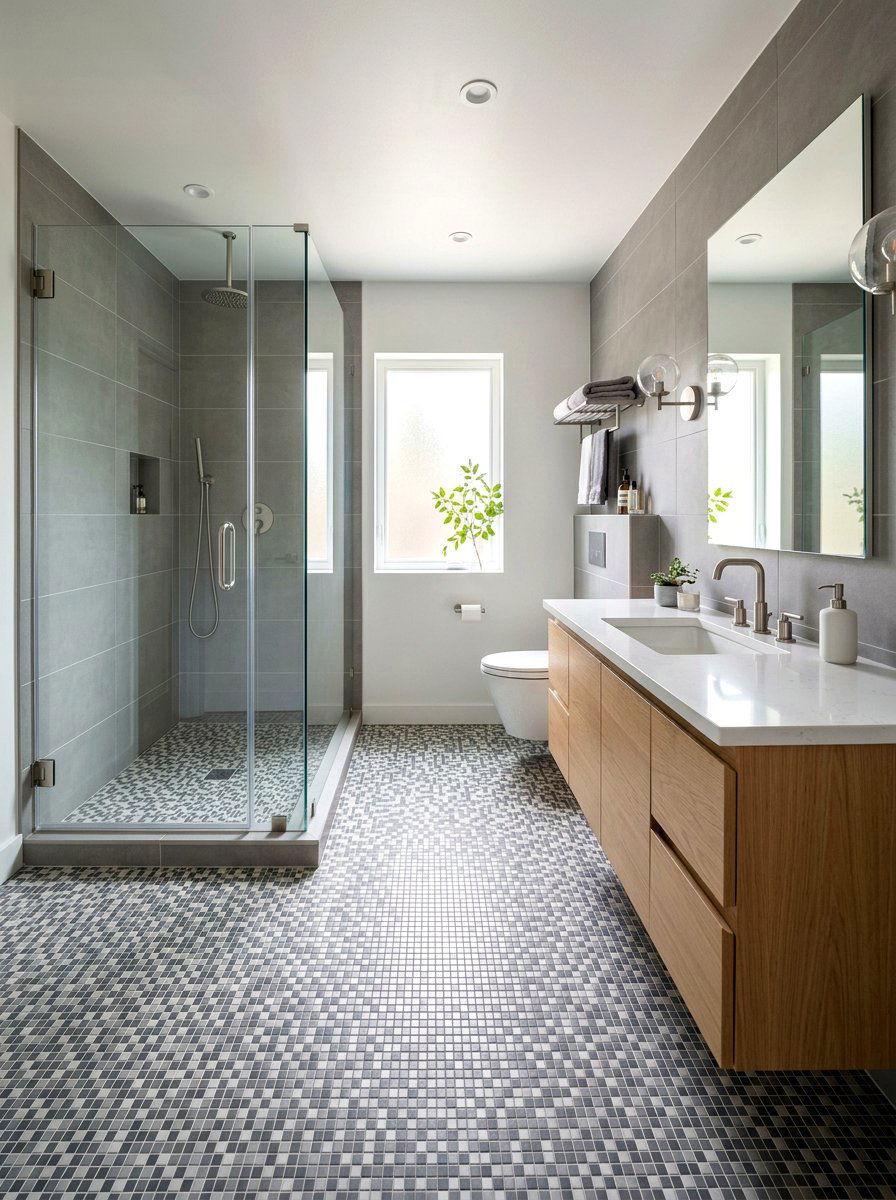
Can small pieces of stone and glass come together to tell a story or create a stunning focal point? Mosaic tile floors use small tiles, often less than two inches, to create intricate patterns, borders, or even custom illustrations. This is a popular choice for shower floors because the numerous grout lines offer superior slip resistance and safety. Beyond the practical benefits, mosaics allow for incredible creativity, from classic Roman-style borders to modern ombre gradients. They add a tactile, jewelry-like quality to the floor that makes a space feel deeply personal and artisanally crafted, turning a functional surface into a beautiful decorative feature.
29. Cobblestone Tile Floor
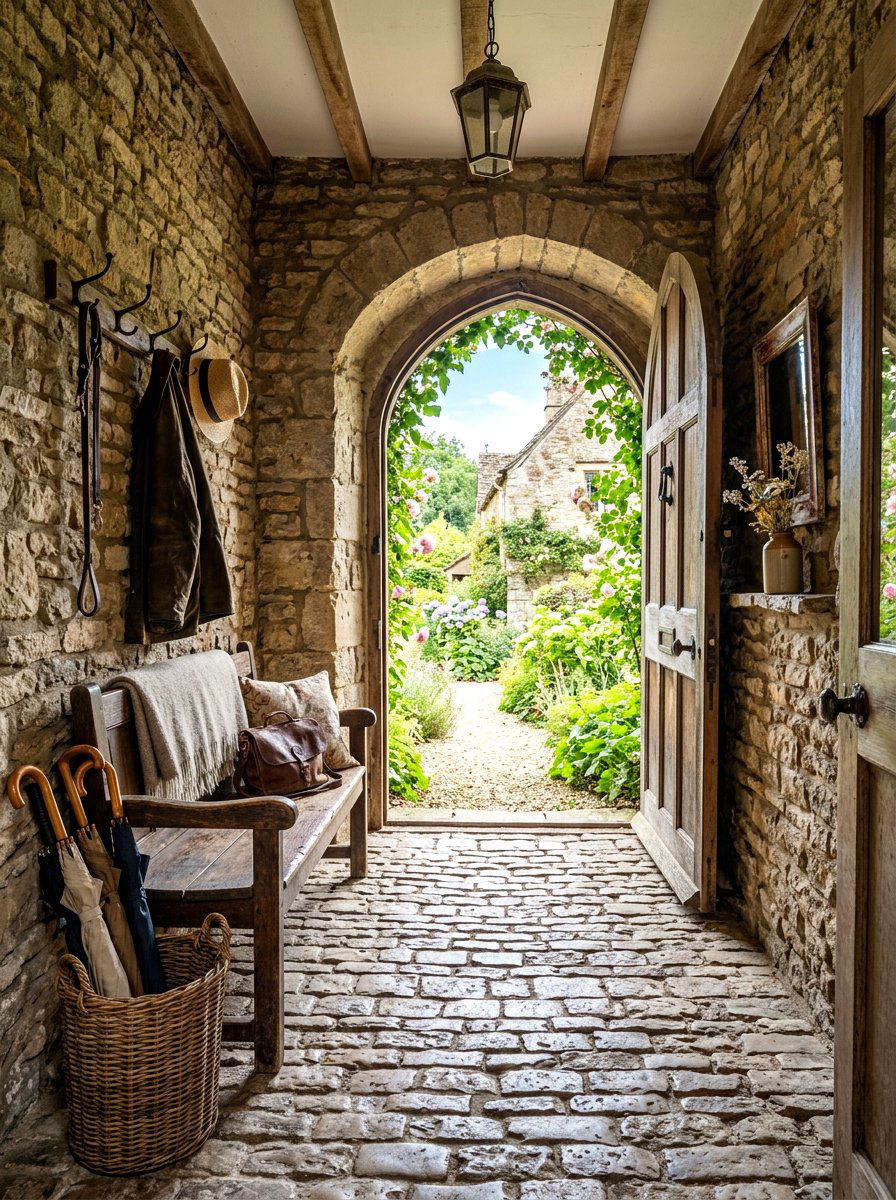
Would you like to bring the charm of an old European street right into your sunroom or entryway? Cobblestone-style tiles use rounded or irregular shapes to mimic the appearance of traditional stone paving. This pattern provides a heavy texture and a rustic, grounded feel that is perfect for creating an indoor-outdoor transition. It works exceptionally well in mudrooms where a bit of "organized chaos" in the floor design can easily hide dirt and debris. The irregular grout lines add character and a sense of history, making even a new home feel like it has stories to tell from many years of use.
30. Victorian Tile Floor
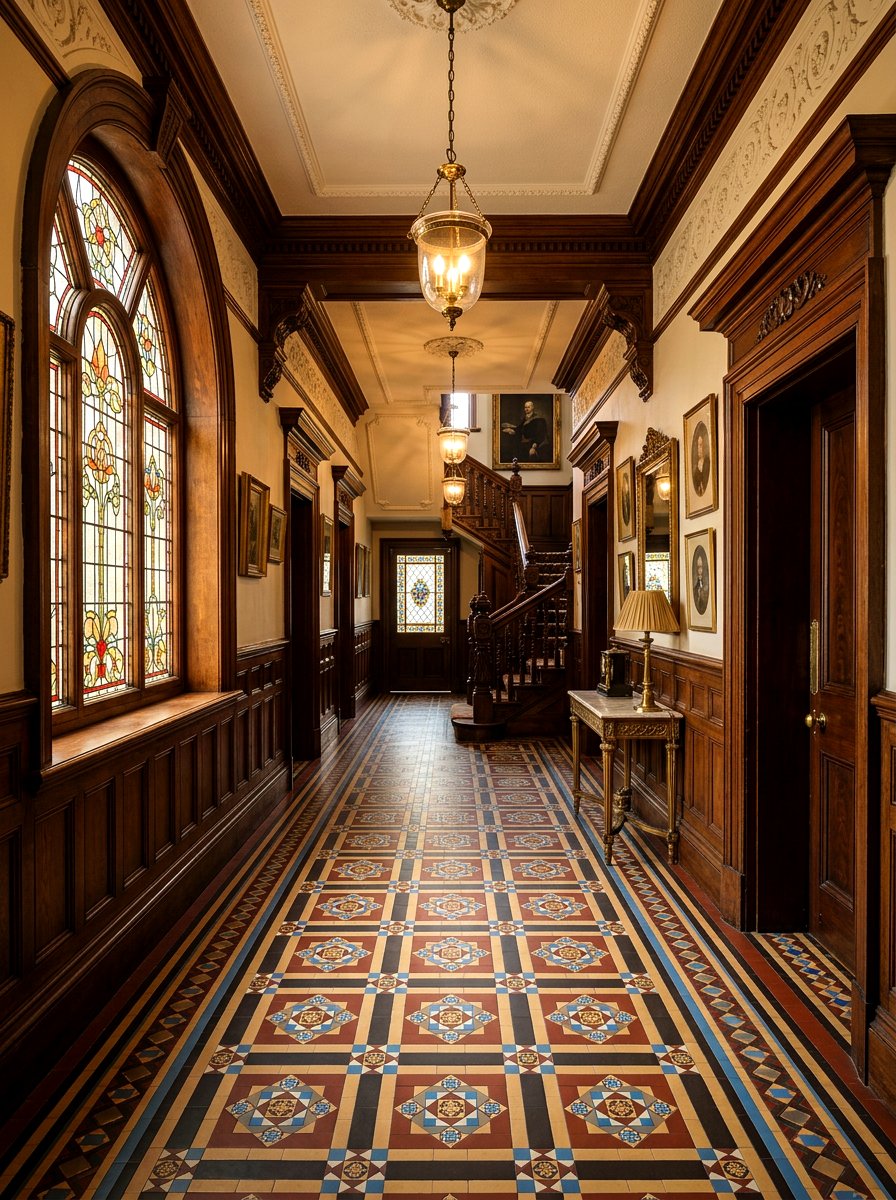
Do you dream of a home that feels like a beautifully preserved piece of architectural history? Victorian tile patterns are famous for their incredibly intricate, multi-colored geometric designs that often include borders and floral motifs. These layouts use small, unglazed porcelain tiles in shades of terracotta, blue, white, and black to create a carpet-like effect on the floor. They are particularly popular in the entryways of historic homes or as a statement floor in a modern kitchen. The sheer level of detail in a Victorian layout creates a sense of craftsmanship and permanence that is hard to achieve with any other flooring type.
Conclusion:
Selecting the right tile floor pattern is more than just a functional choice; it is a creative opportunity to define the character of your home. As we have explored, the way you orient and arrange your tiles can drastically alter the perception of space, light, and style. From the geometric precision of a herringbone layout to the rustic charm of a French pattern, each option offers a unique way to express your personality. By carefully considering the scale of the room and the desired mood, you can create a floor that is both durable and visually stunning. Remember that a well-chosen floor pattern provides the ultimate foundation for your interior design, ensuring your home feels cohesive, intentional, and timeless for many years to come.

Related posts: