Gardening is one of the most rewarding hobbies you can undertake, but it often comes with a significant amount of clutter from pots, soil bags, and hand tools. A well-designed potting bench serves as the ultimate command center for your outdoor space, providing a dedicated area for transplanting seedlings and organizing your essential supplies. By incorporating smart storage solutions, you transform a simple wooden table into a highly functional workspace that saves you time and physical strain. Whether you have a massive backyard or a tiny balcony, having a designated spot for every trowel and seed packet makes the entire process much more enjoyable and efficient for every gardener.
1. Potting Bench Pegboard
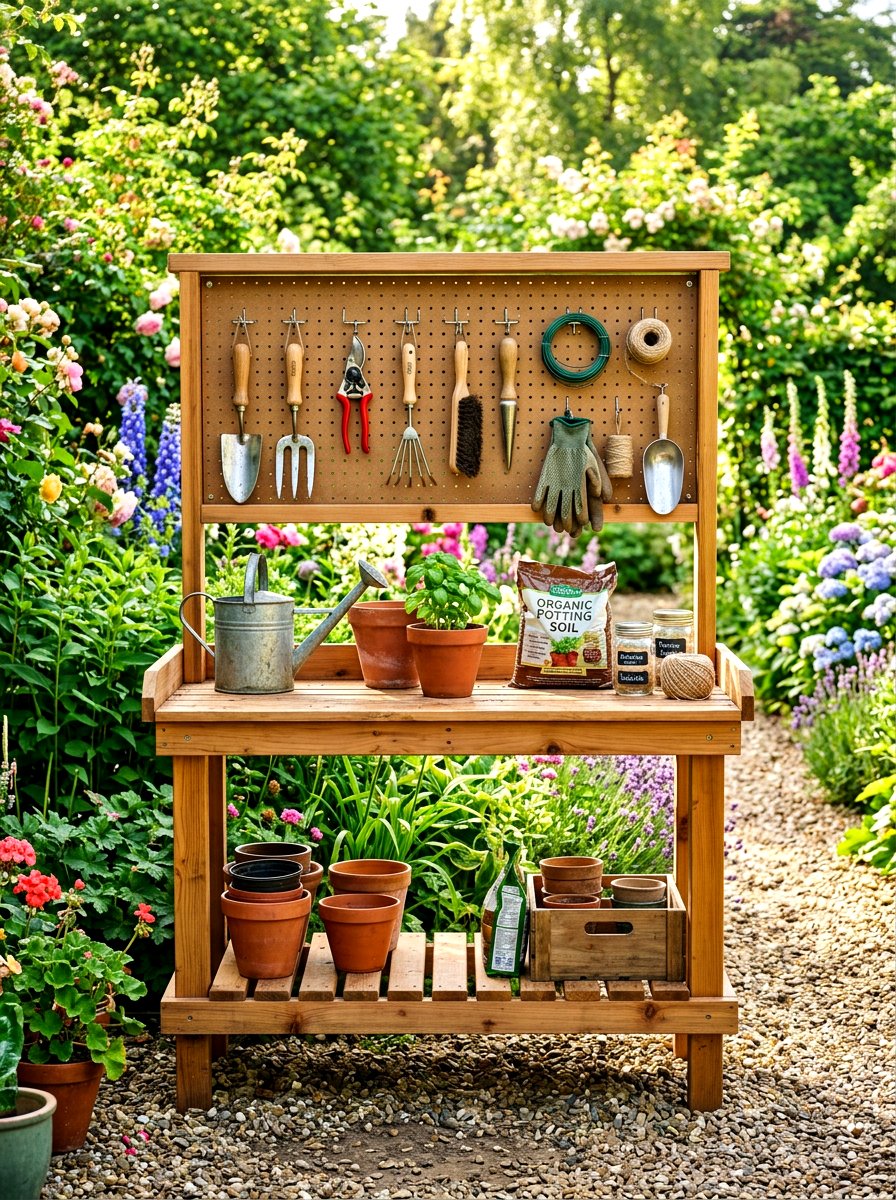
Installing a pegboard on the back of your potting bench is a brilliant way to keep small hand tools within reach. This vertical storage solution allows you to use various hooks and clips to secure trowels, pruners, and gardening gloves in a visible and organized manner. You can easily rearrange the layout as your tool collection grows or your needs change throughout the seasons. A pegboard also helps in drying out wet tools after use, preventing rust and prolonging their lifespan significantly. It maximizes the footprint of your station by moving items off the primary work surface, giving you more room for messy potting tasks and larger containers.
2. Soil Storage Bin
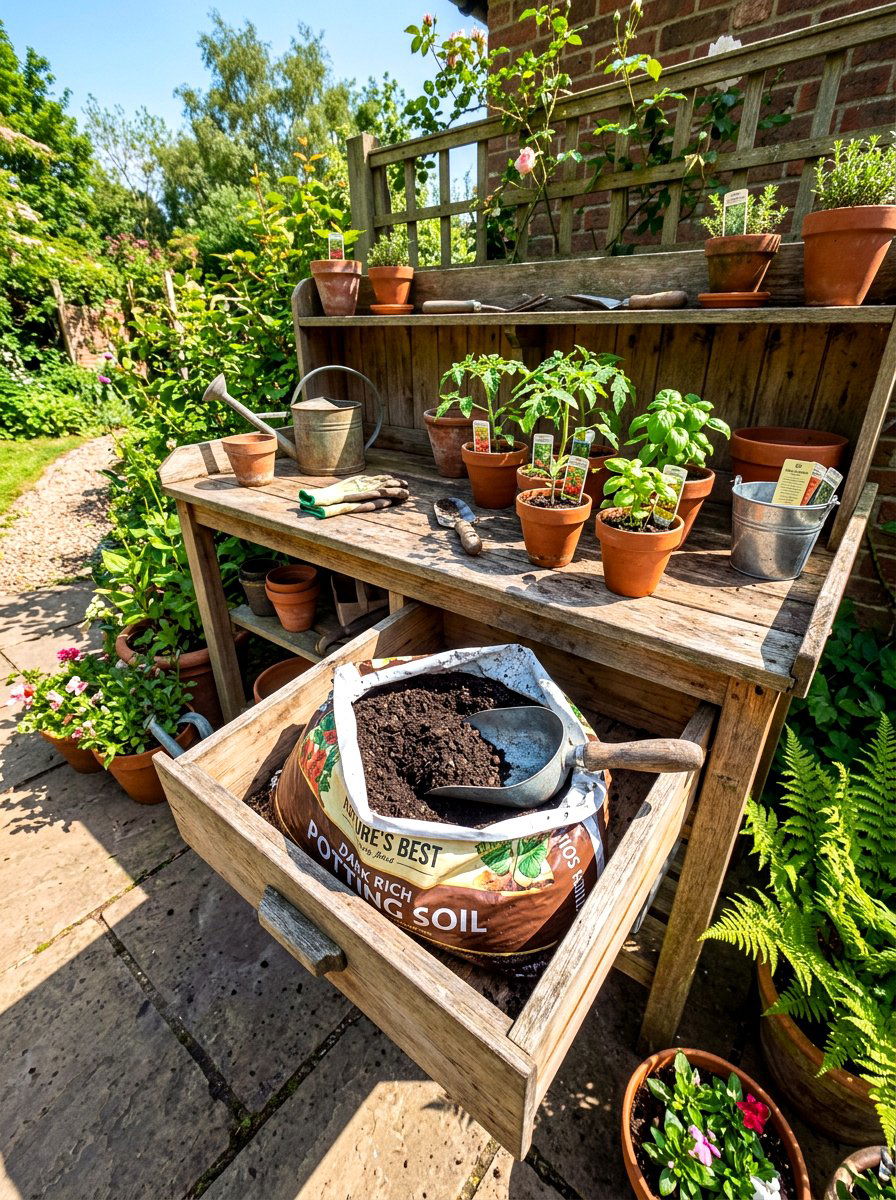
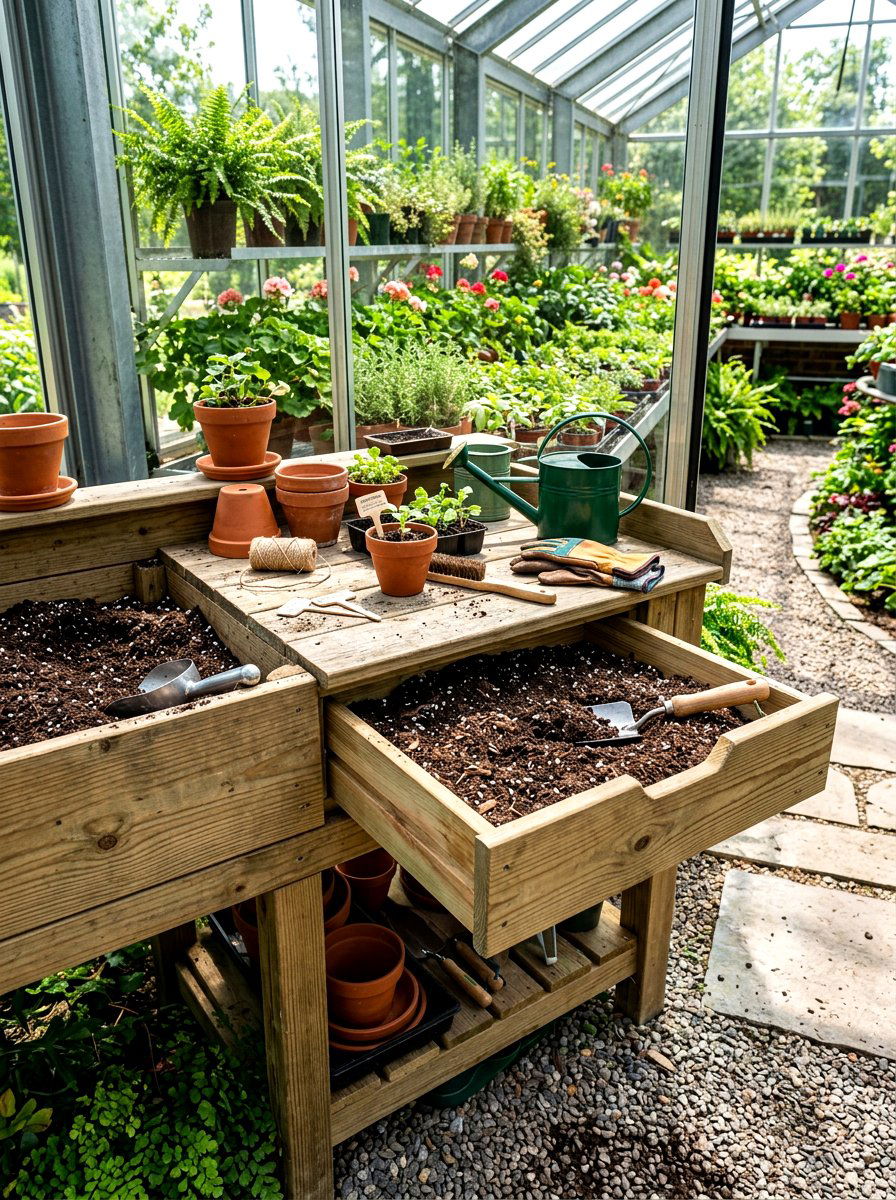
A dedicated soil storage bin integrated directly into the potting bench structure makes the messy task of filling pots much cleaner and faster. These bins are often designed as deep drawers or tilt-out compartments that can hold a full bag of potting mix or compost comfortably. Having the soil at waist height eliminates the need for constant bending and lifting of heavy bags, which protects your back during long gardening sessions. Some designs even feature a removable plastic liner for easy cleaning and refilling. This keeps your workspace tidy while ensuring that your most essential medium is always ready and protected from moisture or garden pests.
3. Potting Bench Hooks
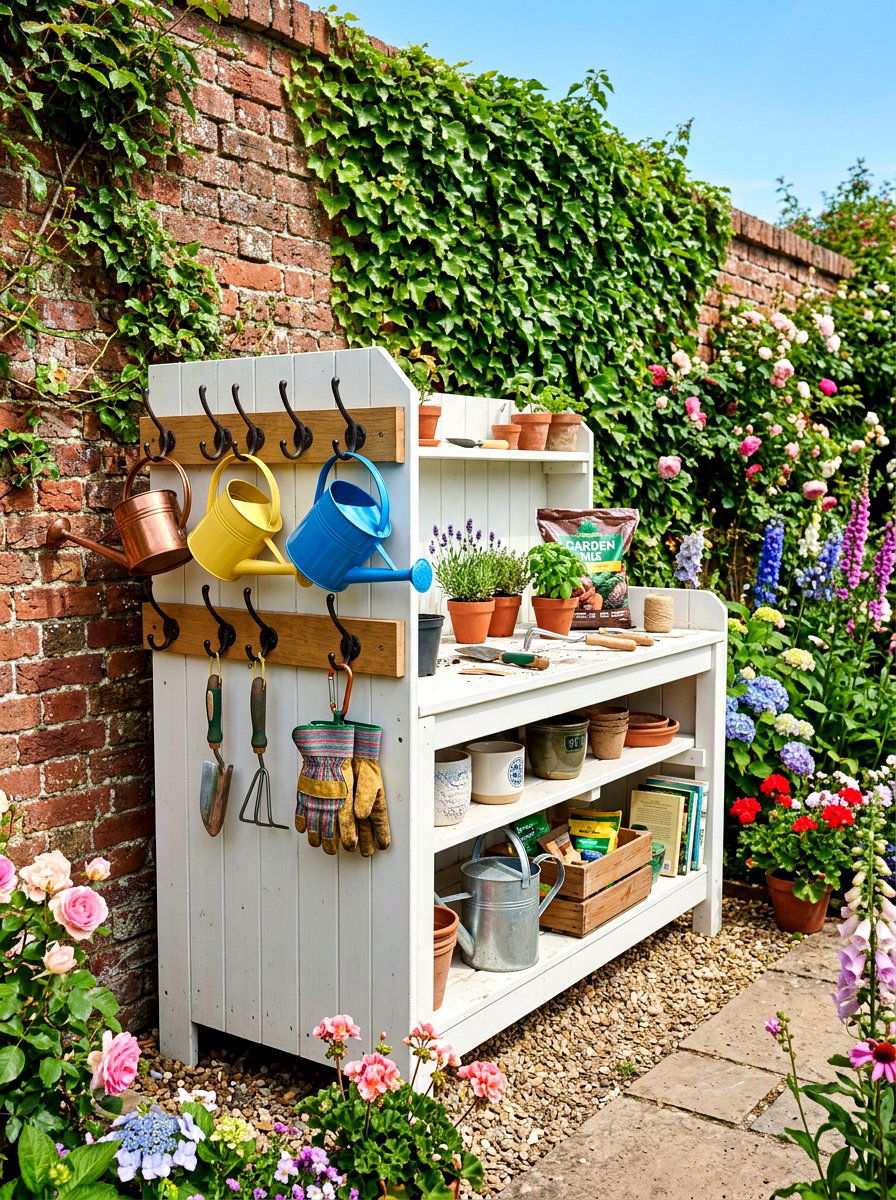
Simple metal hooks mounted to the sides or front of your bench provide instant storage for frequently used items like watering cans and hand rakes. This small addition makes use of otherwise wasted space on the exterior of the frame. Heavy-duty S-hooks are particularly useful for hanging bulky items such as coils of twine or large brushes. By keeping these items off the ground, you prevent them from becoming tripping hazards or getting buried under soil debris. Choosing weather-resistant materials like stainless steel or coated iron ensures the hooks remain functional and attractive even when exposed to outdoor humidity and fluctuating temperatures.
4. Slatted Wood Shelf
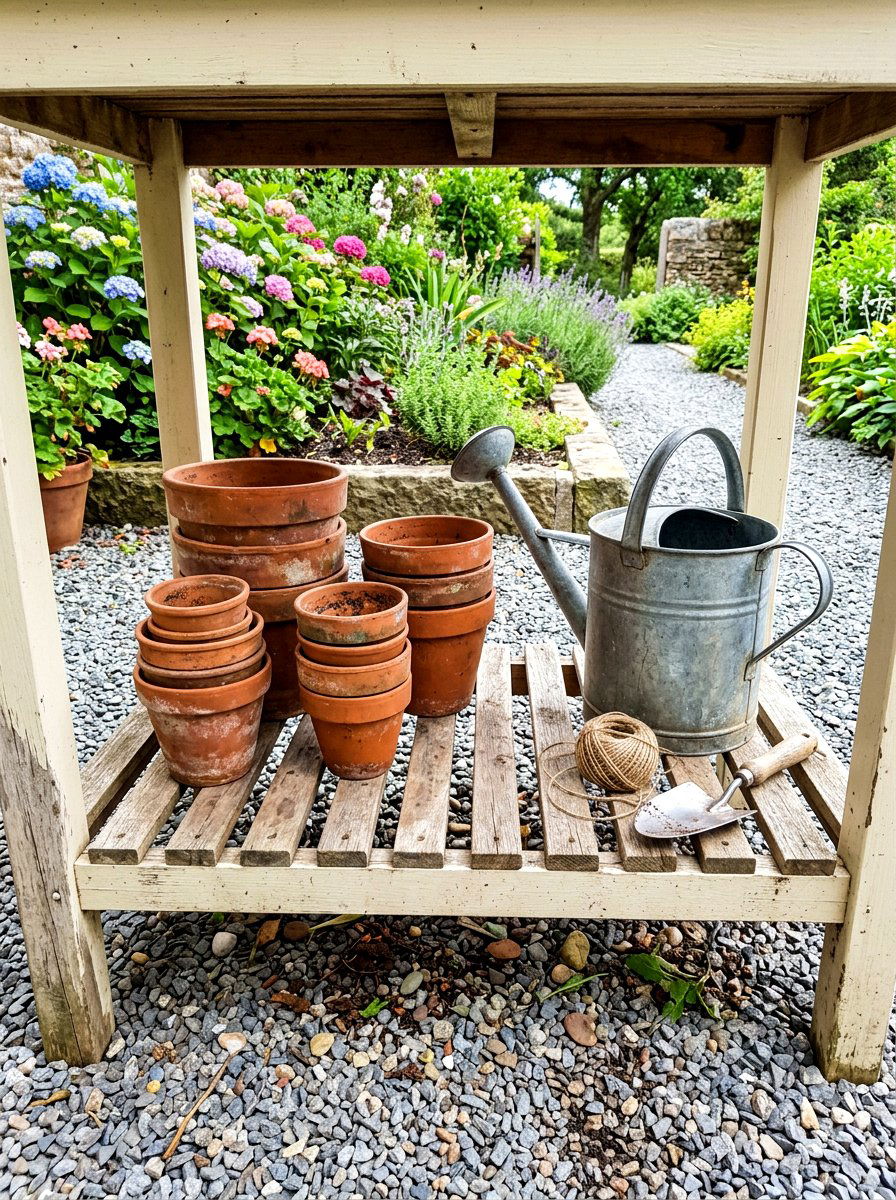
An open slatted wood shelf at the bottom of your potting bench is essential for storing heavy items and allowing for proper drainage. The gaps between the wooden slats ensure that loose dirt and spilled water fall through to the ground rather than accumulating on the storage surface. This feature is perfect for stacking large ceramic pots, bags of mulch, or plastic nursery trays that need to stay dry and ventilated. The sturdy construction of a lower shelf provides stability to the entire bench while keeping your primary workspace clear of bulky inventory that can be easily accessed from a low-profile reaching position.
5. Potting Bench Drawer
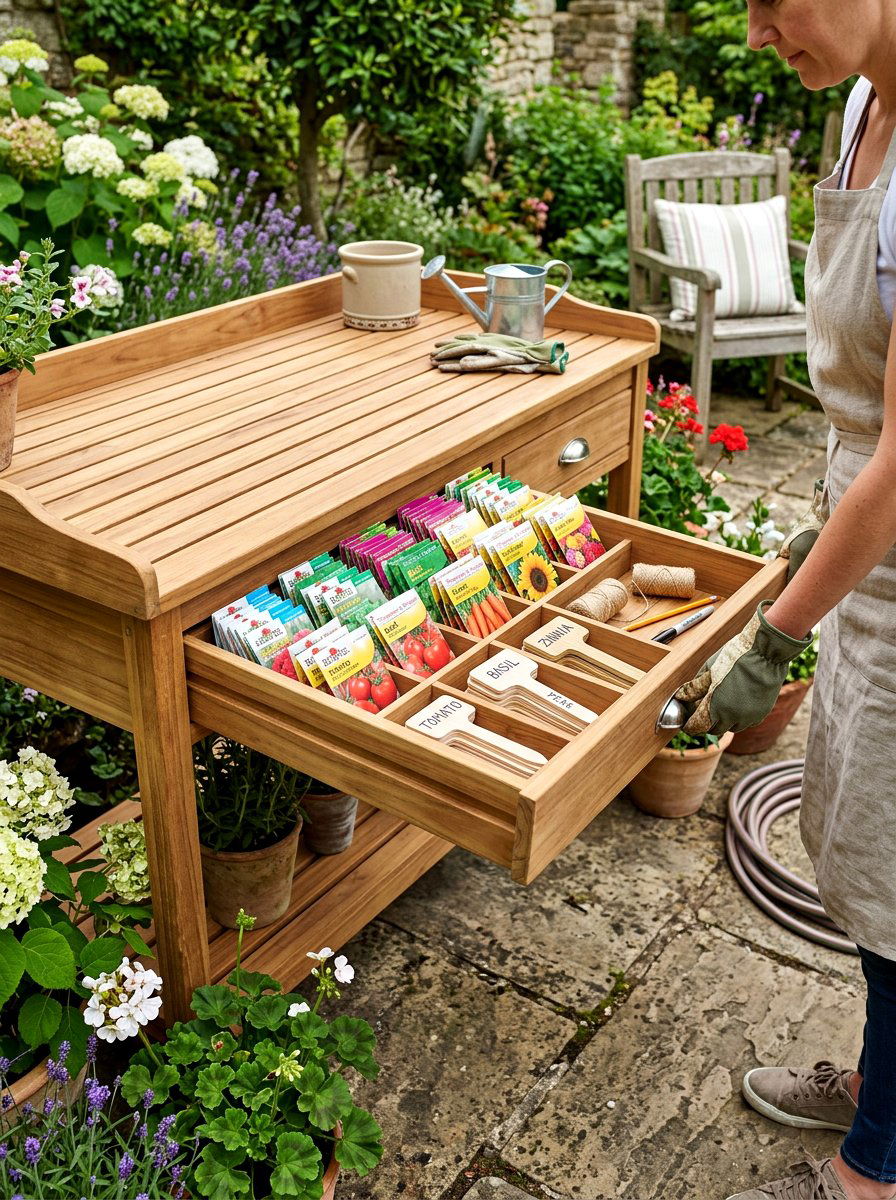
Incorporating a shallow drawer beneath the main work surface provides a protected space for delicate items like seed packets, plant labels, and markers. Drawers keep these small essentials organized and shielded from wind or sudden rain showers that might occur while you are working outdoors. You can use internal dividers to categorize different types of seeds or tools, making it much easier to find exactly what you need without rummaging. A smooth-gliding drawer mechanism ensures that even with dirty hands, you can quickly access your supplies. This hidden storage element helps maintain a sleek and professional appearance for your entire potting station.
6. Mesh Back Panel
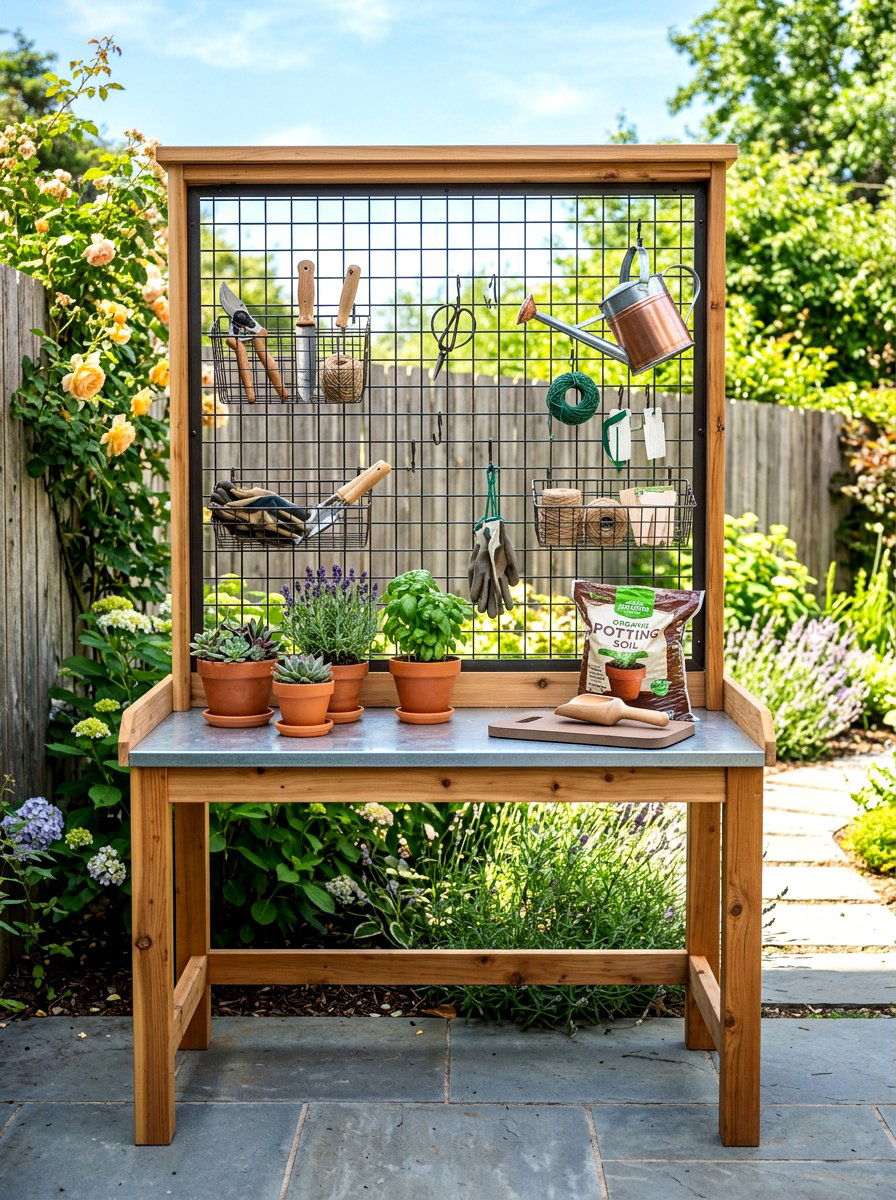
Replacing a solid backboard with a mesh back panel offers a modern look and incredible versatility for hanging various garden accessories. The wire grid allows you to clip on small baskets for fertilizer bottles or twine dispensers anywhere across the surface. This design promotes excellent airflow, which is beneficial for drying out damp gloves or herb bundles that you might hang to cure. The transparent nature of the mesh also makes the potting bench feel less bulky in smaller garden spaces or on narrow patios. It provides a sturdy structure for support without blocking light or obstructing the view of your beautiful backyard plants.
7. Potting Bench Sink
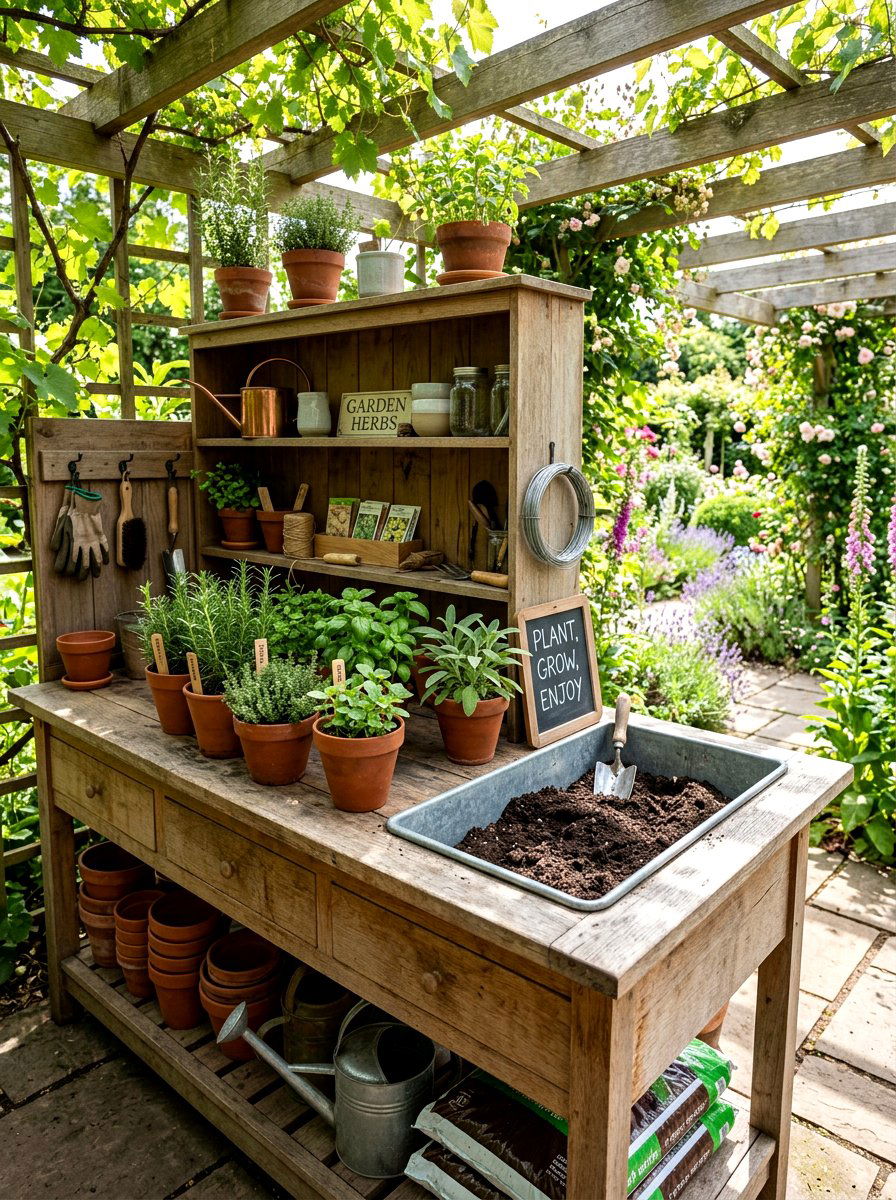
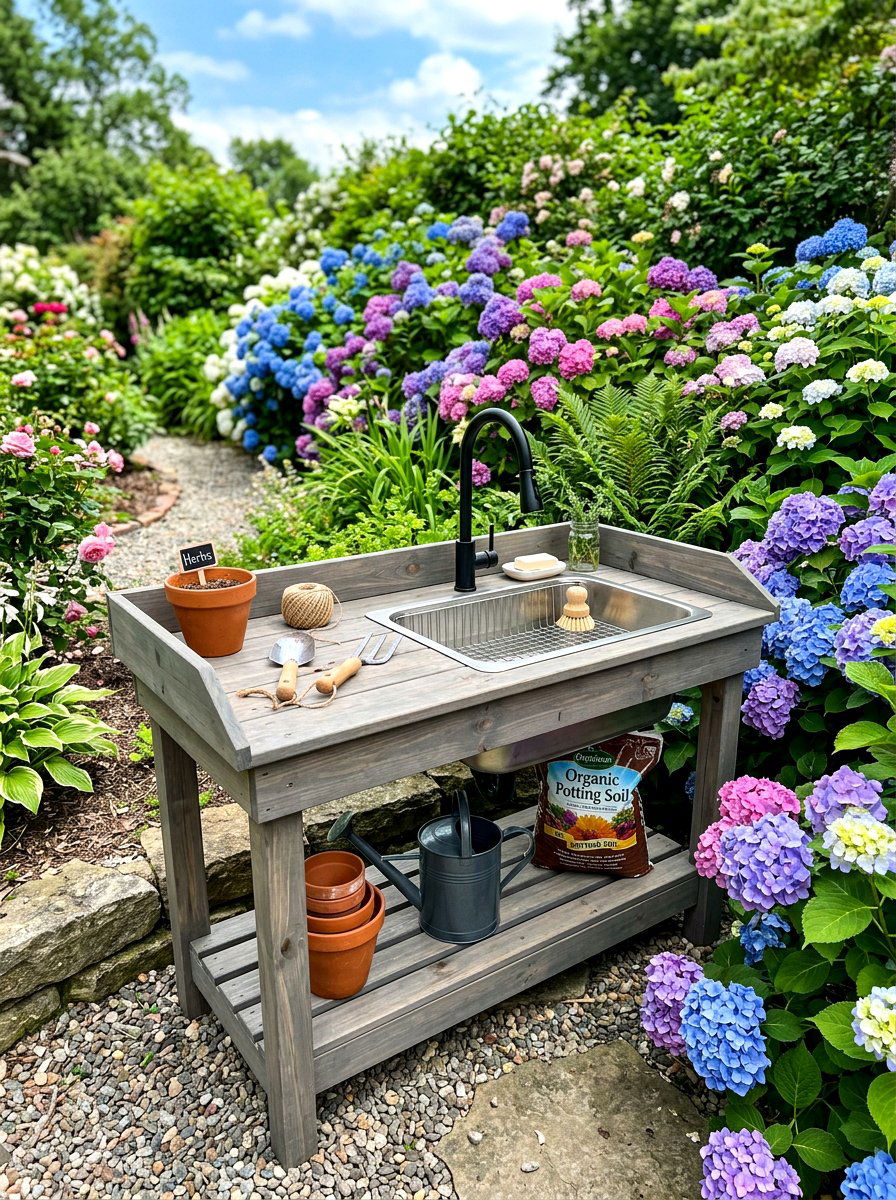
A built-in sink basin is a luxury feature that significantly improves the functionality of any gardening station for cleaning tasks. Whether it is a dry sink for catching loose soil or a plumbed version for rinsing vegetables, having a basin prevents messes from spreading. A dry sink allows you to sweep excess potting mix directly into a bucket below, saving money by reclaiming spilled materials. If you choose a wet sink, you can quickly wash off garden tools or clean your hands without heading inside the house. This addition turns the bench into a comprehensive utility zone that handles every stage of the planting process.
8. Galvanized Steel Worktop
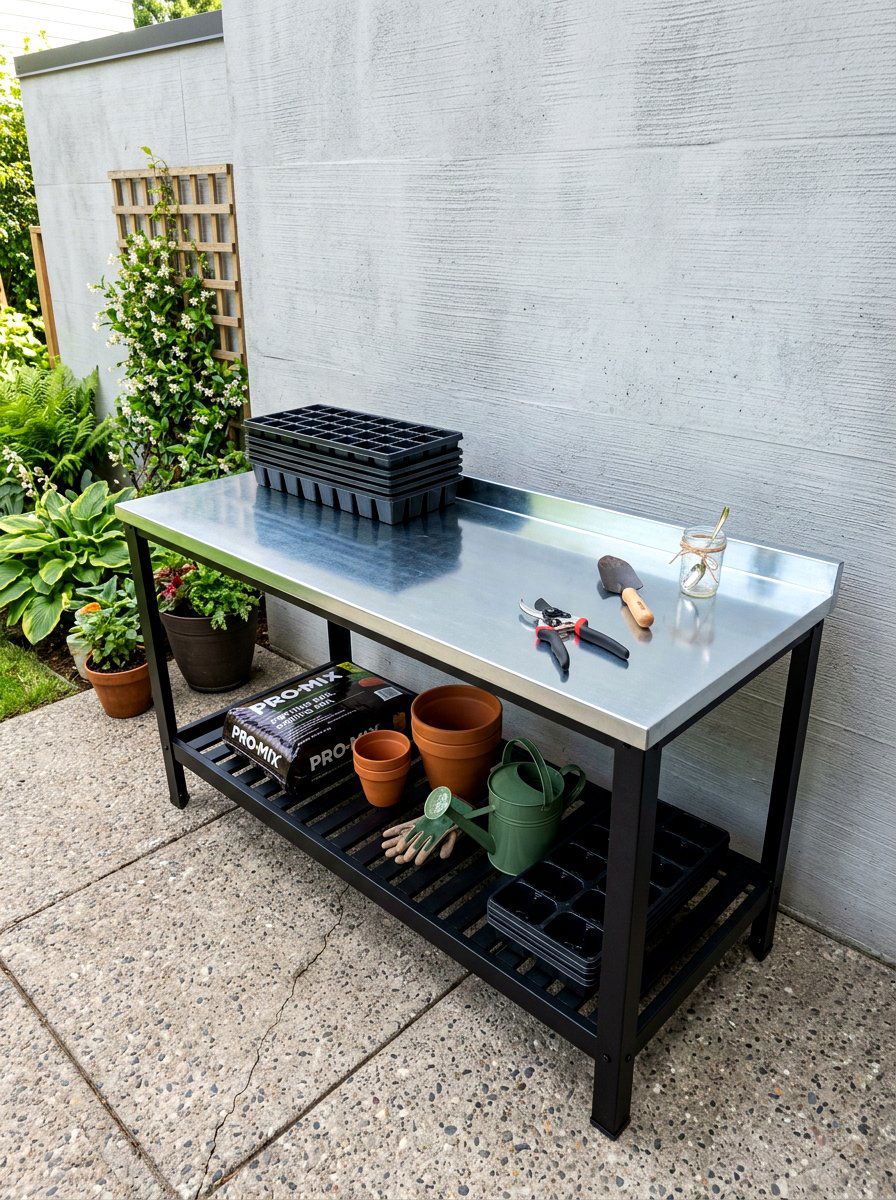
Choosing a galvanized steel worktop for your bench ensures a durable and easy-to-clean surface that can withstand heavy use and constant moisture. Metal tops are resistant to rust and do not absorb liquids, making them the perfect choice for mixing fertilizers or working with wet soil. Unlike wood, steel will not rot or warp over time when exposed to the elements, providing a perfectly level surface for years to come. The reflective quality of the metal also helps brighten the workspace under shaded porches or in greenhouses. Simply wiping the surface with a damp cloth after a long day of planting leaves it looking brand new.
9. Potting Bench Wheels
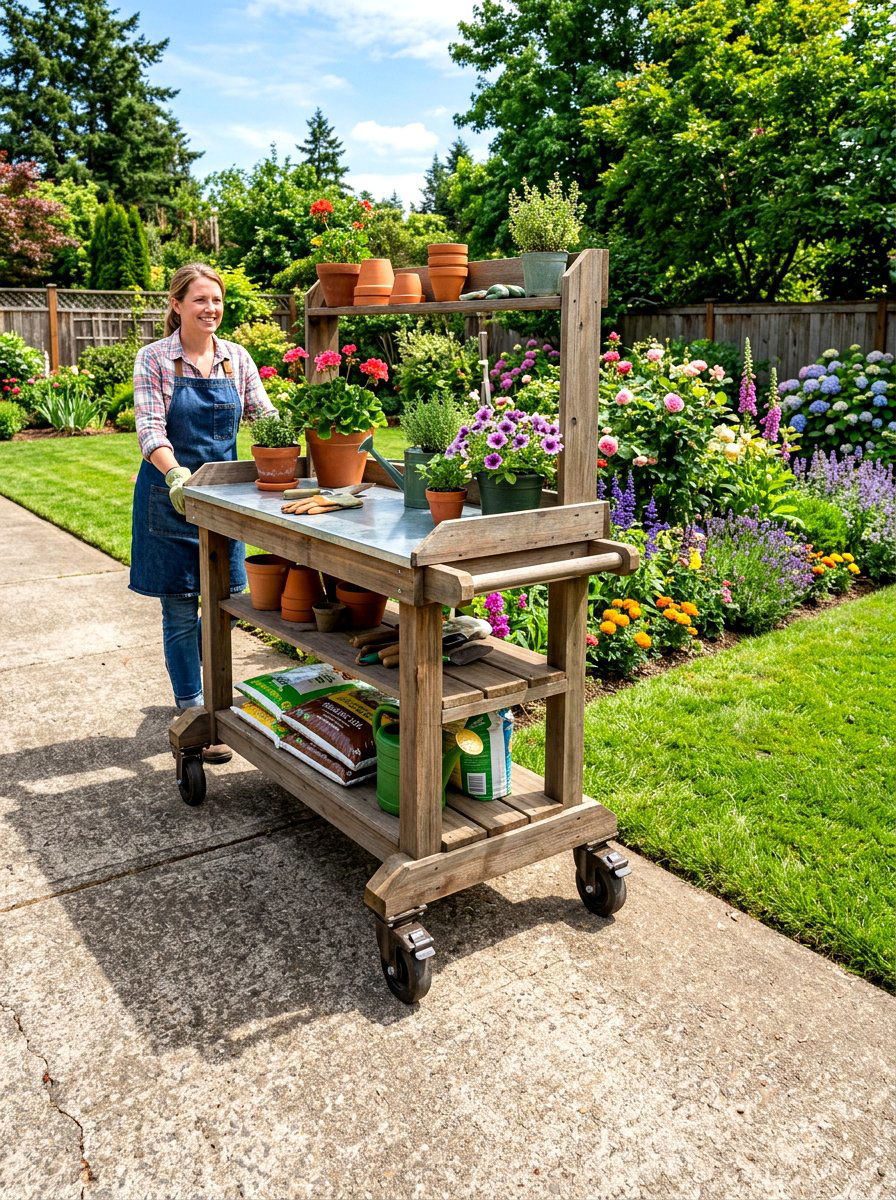
Adding heavy-duty locking casters to the legs of your potting bench allows you to move your entire workspace to different areas of the garden. This mobility is particularly useful for following the sun during seed starting or moving into the shade during the hottest parts of the day. You can easily roll the bench onto a patio for social plant-potting sessions or tuck it away in a garage during the winter months. Locking wheels ensure that the bench stays firmly in place once you have found the perfect spot, providing a stable platform for heavy lifting. It offers the ultimate flexibility for changing outdoor layouts.
10. Seed Packet Organizer
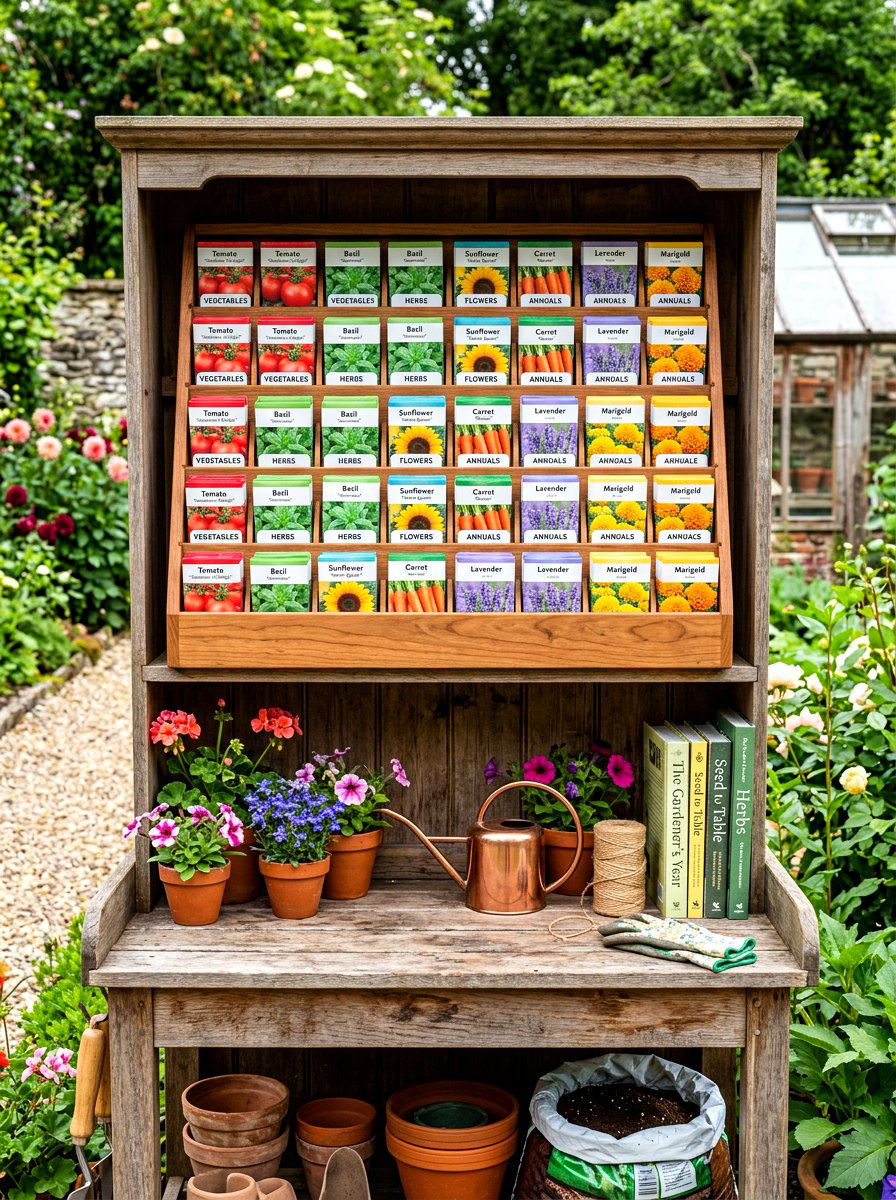
A specialized seed packet organizer, such as a repurposed spice rack or small tiered shelving unit, keeps your planting schedule on track. This dedicated storage area prevents small envelopes from getting lost among large tools or buried under heavy soil bags. By arranging your seeds by planting month or plant type, you can clearly see your inventory at a glance and avoid over-purchasing. Some gardeners use clear acrylic bins or weather-resistant boxes to keep the packets dry and visible. This level of organization ensures that you never miss a window for sowing your favorite vegetables or flowers throughout the growing season.
11. Lattice Trellis Backing
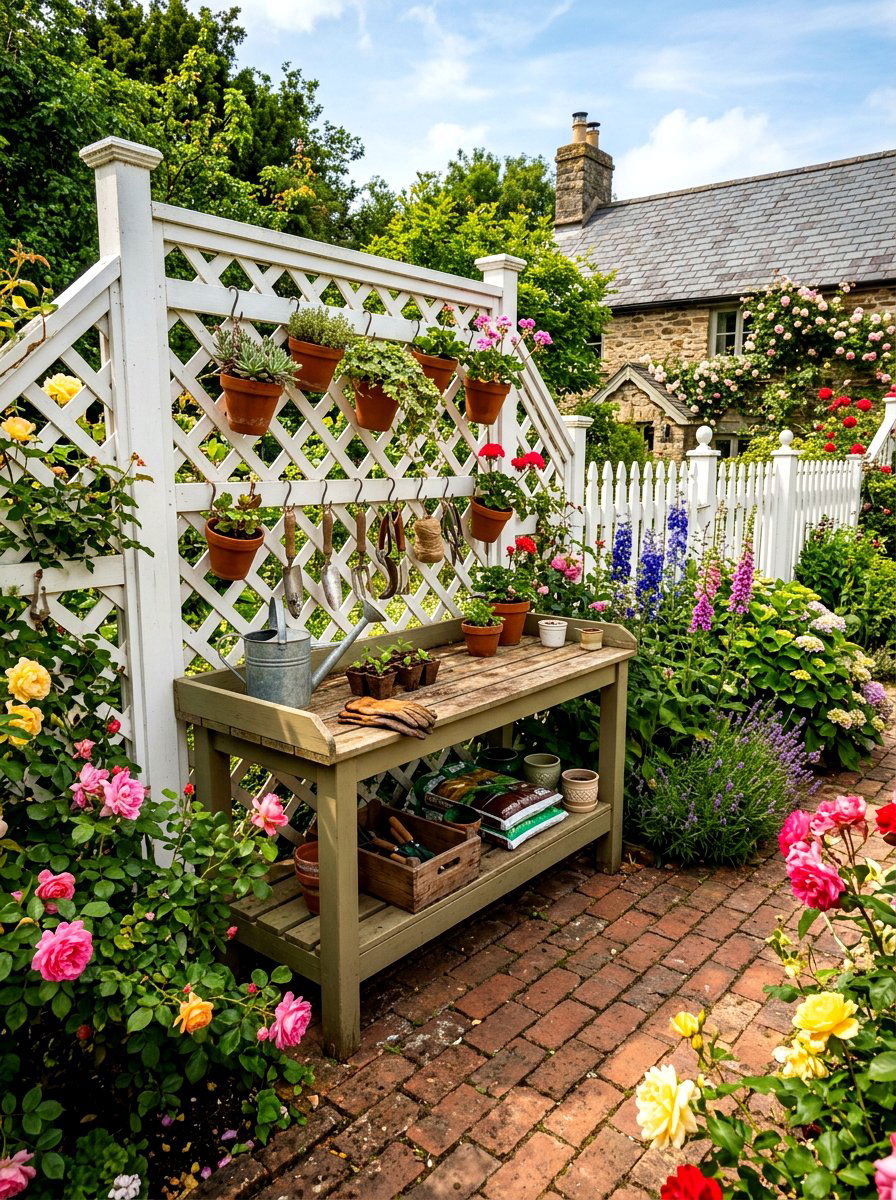
A lattice trellis backing serves as both a decorative element and a functional grid for hanging various lightweight gardening tools and accessories. The traditional diamond or square patterns of the lattice provide countless points for attaching hooks, ties, or even small climbing plants. This feature adds a charming, cottage-style aesthetic to your potting bench while maximizing vertical storage potential in a very cost-effective way. It allows for plenty of light and air to pass through, keeping your workspace feeling open and integrated with the garden. You can easily zip-tie containers to the lattice to hold plant markers or small pruning shears for quick access.
12. Magnetic Tool Holder
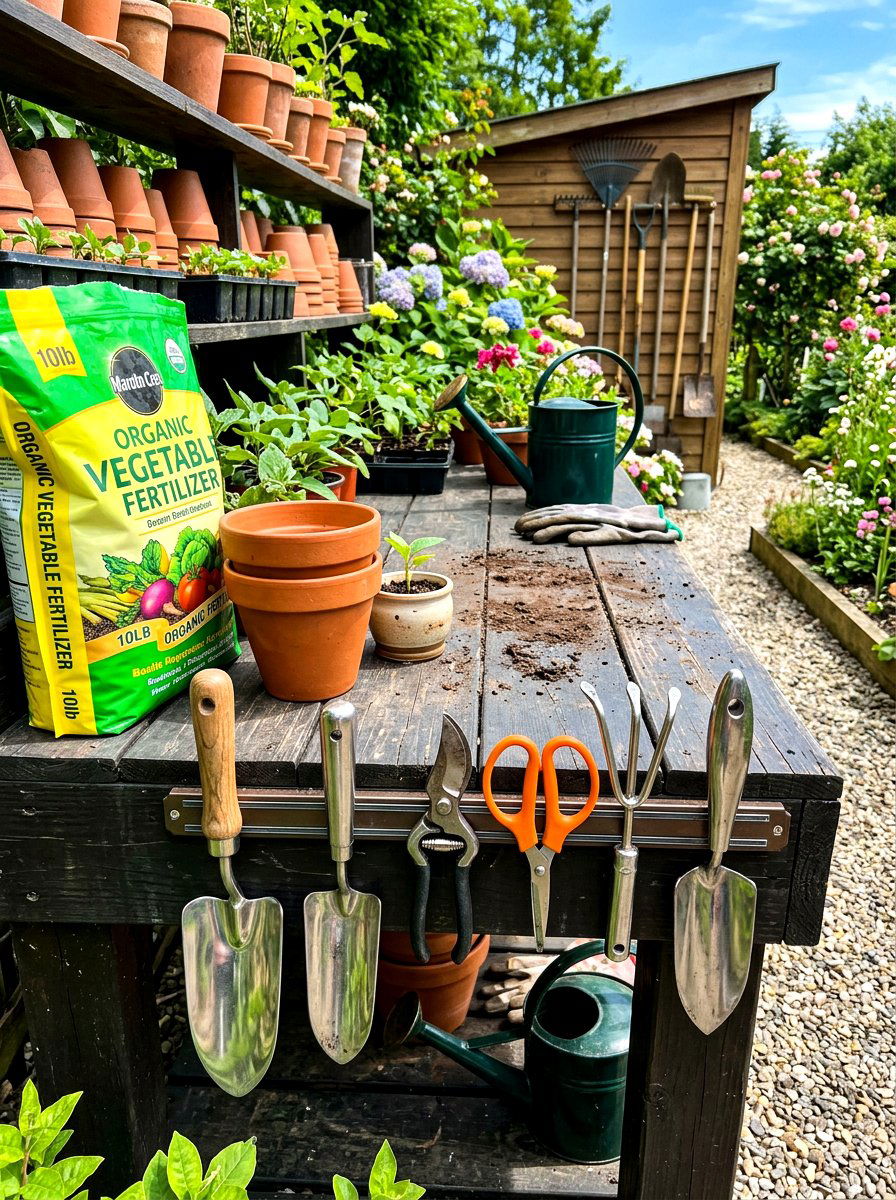
Mounting a heavy-duty magnetic tool holder to the front or side of your potting bench is a modern solution for securing metal tools. This strip keeps trowels, scissors, and metal hand rakes firmly in place, preventing them from sliding around on the work surface. The strong magnetic pull allows for one-handed operation, which is incredibly helpful when you are busy holding a plant or a pot in your other hand. It provides a clean, minimalist look that keeps sharp blades safely stored and clearly visible. This simple addition ensures that your most-used metal implements are always exactly where you need them for every task.
13. Under Bench Cubby
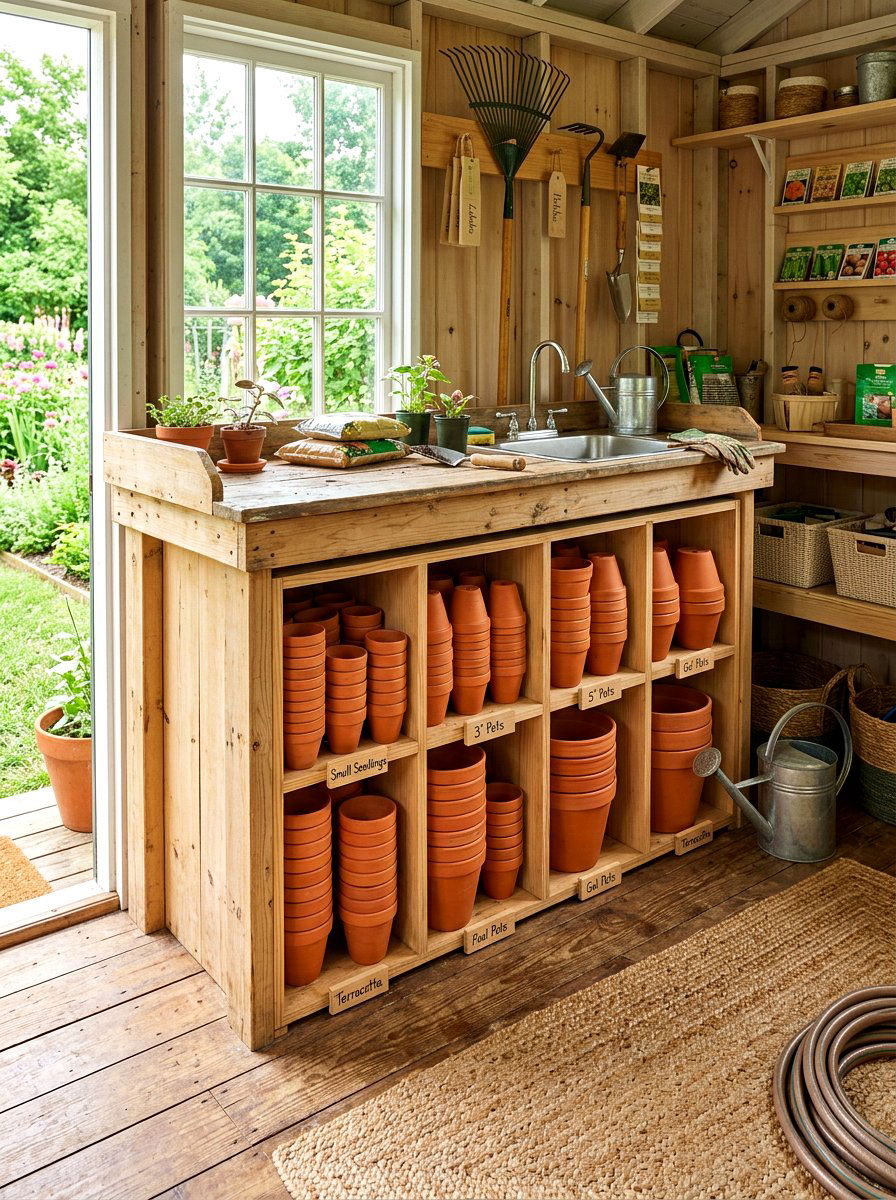
An under-bench cubby system provides structured compartments for organizing different sizes of empty pots and containers. Instead of having a messy pile of plastic and ceramic pots, you can sort them by diameter or material into dedicated cubby holes. This keeps your inventory neat and makes it much easier to select the right container for a new plant without having to dig through a stack. The organized look of cubbies adds a sense of professional order to your garden shed or patio. It also protects fragile terracotta pots from getting bumped or broken by keeping them tucked securely within their own designated spaces.
14. Potting Bench Cabinet
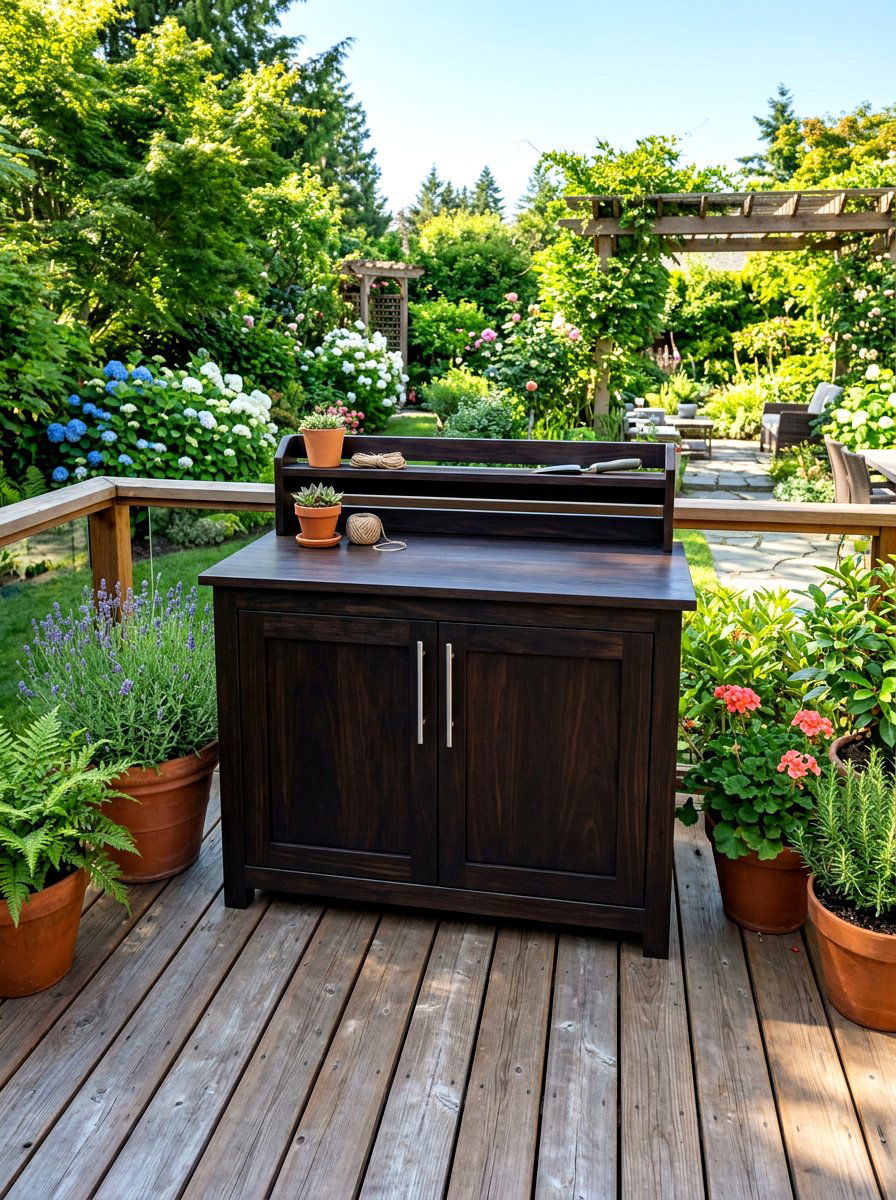
A potting bench with an enclosed cabinet offers a secure and weather-protected space for items that should not be exposed to the elements. This is the ideal place to store expensive fertilizers, organic pesticides, or power tools that need to stay dry and safe. Doors keep the interior of your bench looking tidy by hiding away bulky or unsightly supplies from view. Many cabinets feature adjustable shelving, allowing you to customize the internal space based on the height of your bottles and bags. Locking handles can be added for extra security if you store valuable items or need to keep chemicals away from pets.
15. Side Tool Rack
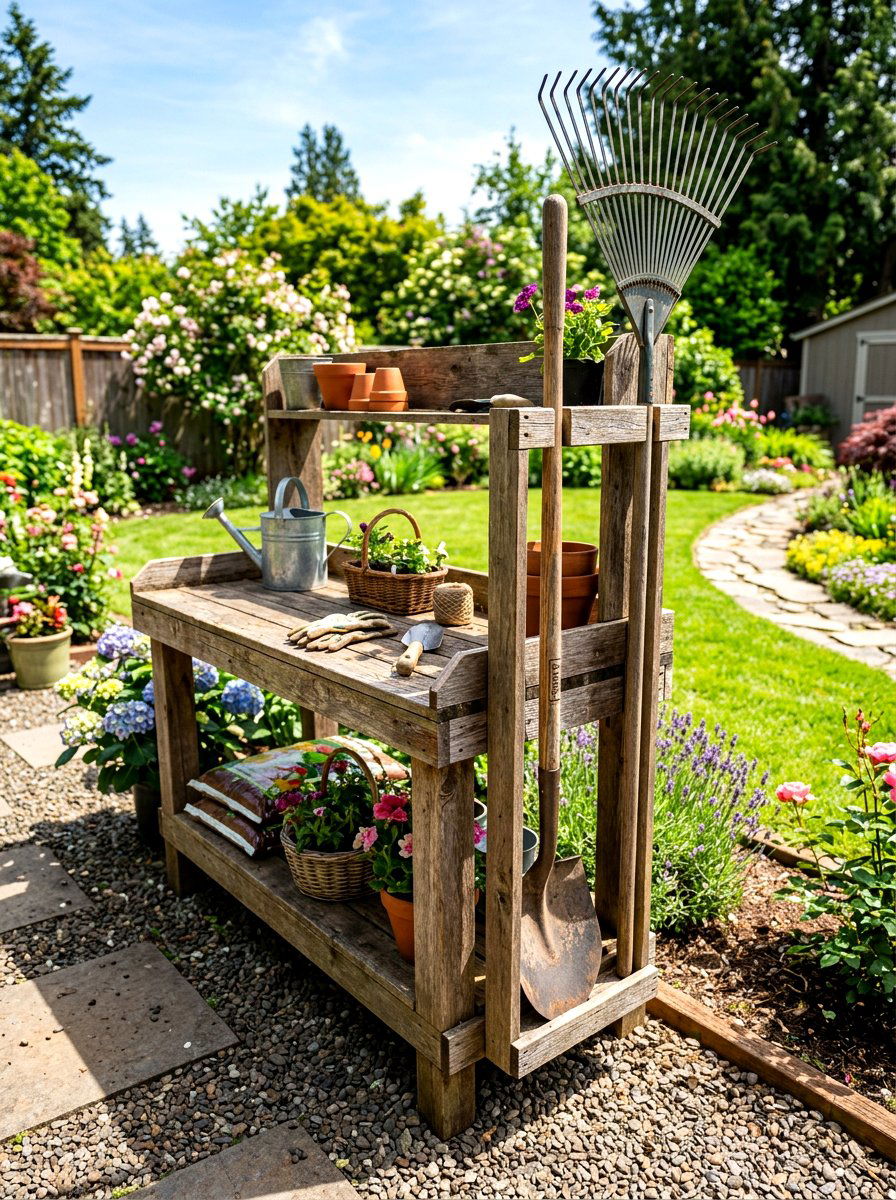
A side-mounted tool rack is designed to hold long-handled implements like shovels, rakes, and hoes right next to your main workstation. This keeps your large equipment organized and off the ground, where they can become damaged or pose a safety risk. Many racks feature vertical slots or large rings that allow the handles to slide through while the heads rest securely on top. By keeping your large tools at the bench, you create a centralized hub for all your gardening chores. This eliminates the need to run back and forth to a shed or garage when you realize you need a larger digging tool.
16. Hanging Pot Rail
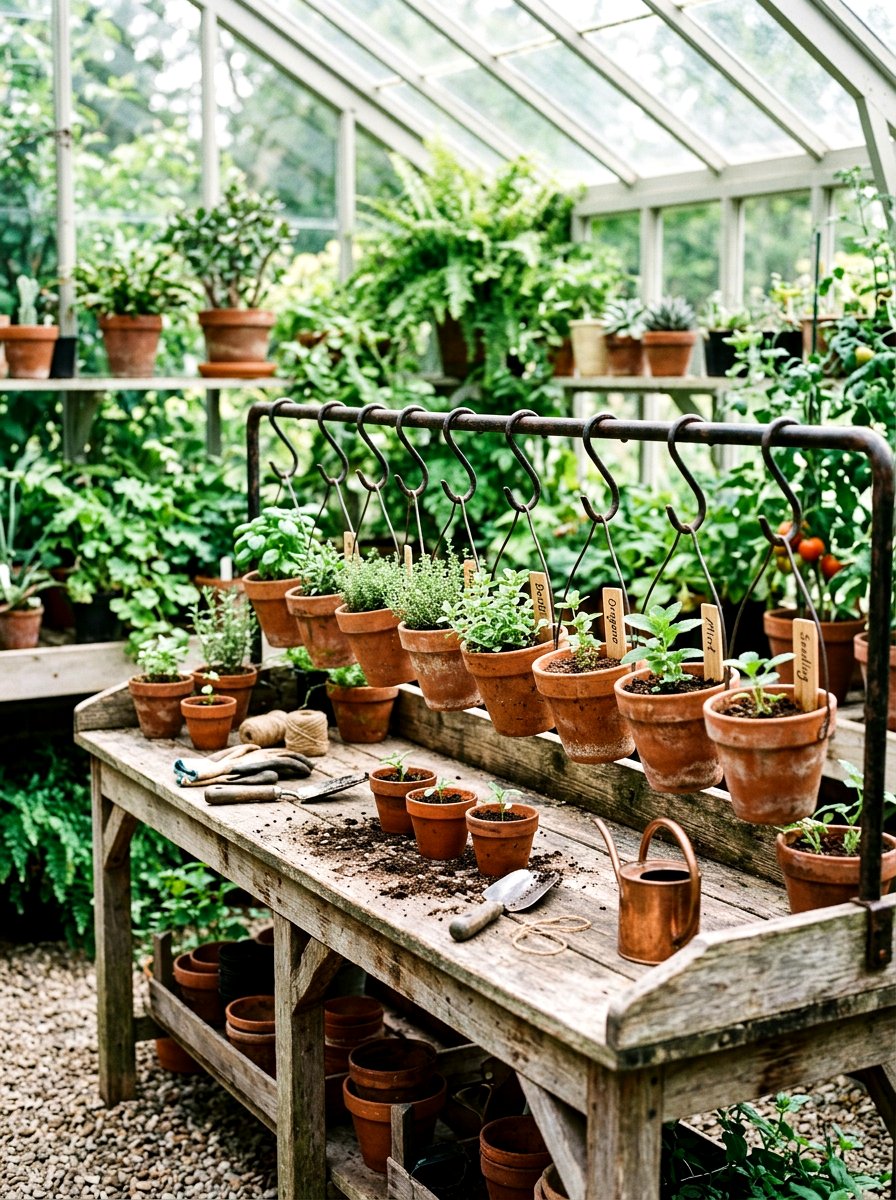
Installing a sturdy metal rail across the back or sides of your potting bench allows you to hang small pots with integrated hooks. This is a fantastic way to display seedlings or keep small herb pots off the main work surface while you are busy transplanting. The rail can also support S-hooks for hanging gardening gloves or a small towel for drying your hands. This storage method utilizes vertical space efficiently and adds a layered, professional look to your gardening setup. It keeps your most delicate young plants at eye level, where you can easily monitor their moisture levels and growth progress every day.
17. Potting Bench Hutch
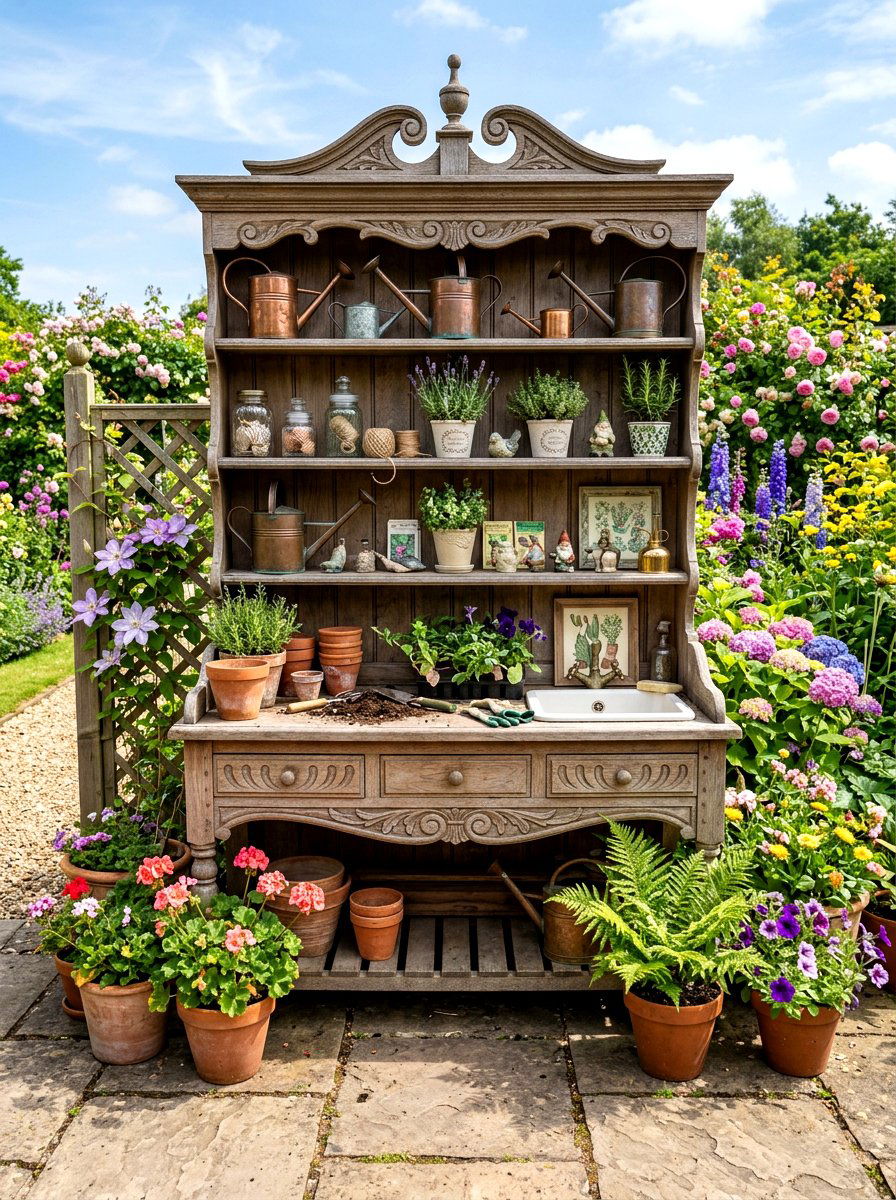
A potting bench hutch adds a decorative upper section with multiple small shelves and compartments for a variety of gardening accessories. This traditional design provides a sophisticated look while offering specialized spots for watering cans, decorative birdhouses, or small containers of twine. The hutch design effectively doubles the available storage space without increasing the footprint of the bench on your patio or lawn. It creates a beautiful focal point in the garden that looks like a piece of high-end furniture. The upper shelves are perfect for displaying your favorite potted plants or storing items that you use less frequently but want to keep visible.
18. Fold Down Table
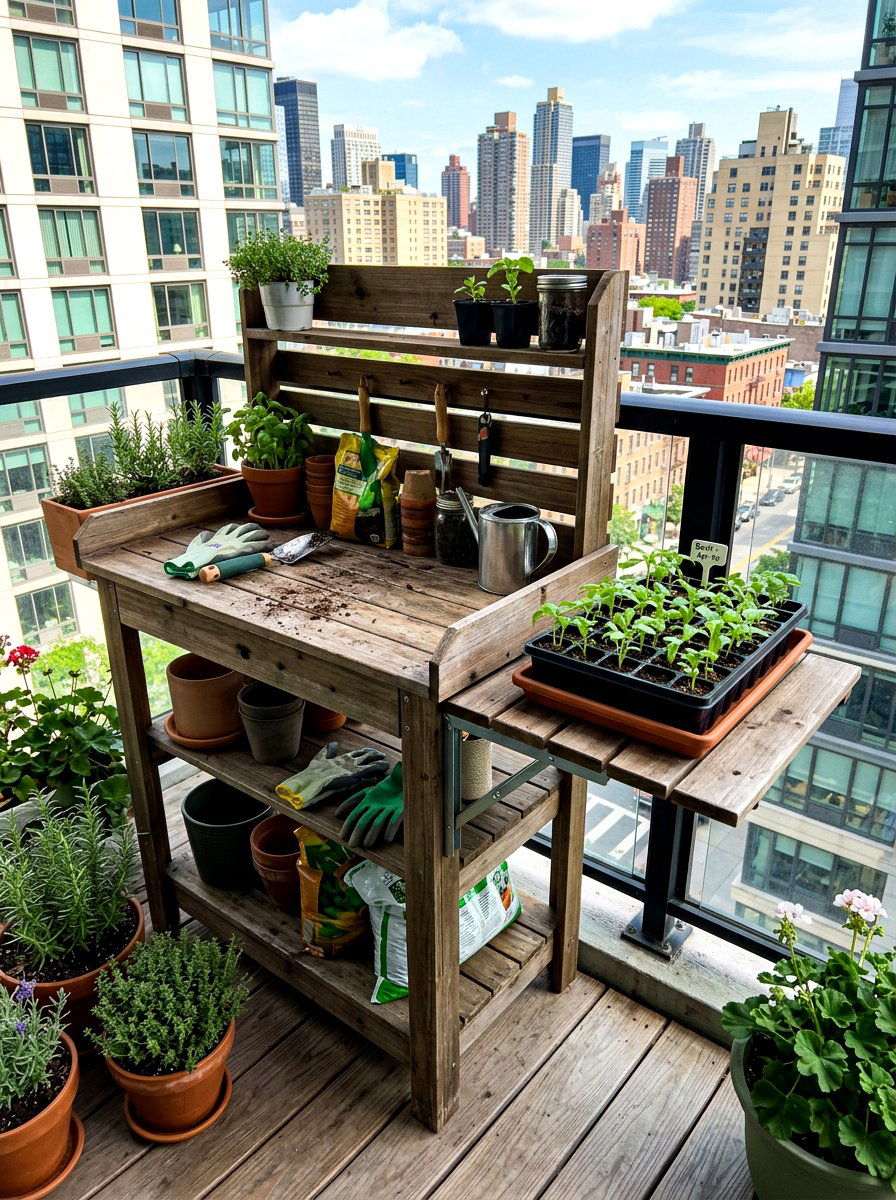
A fold-down table extension is a space-saving marvel that provides extra work surface only when you actually need it for larger projects. When folded up, it locks securely against the side of the bench, making the unit much more compact for storage in tight spaces. This is perfect for gardeners who occasionally need to handle large flats of seedlings or arrange large floral bouquets but have limited square footage. The sturdy hinge mechanism allows the extension to handle significant weight without wobbling. It offers the flexibility of a large professional workstation without the permanent footprint of a massive piece of outdoor furniture.
19. Mason Jar Organizer
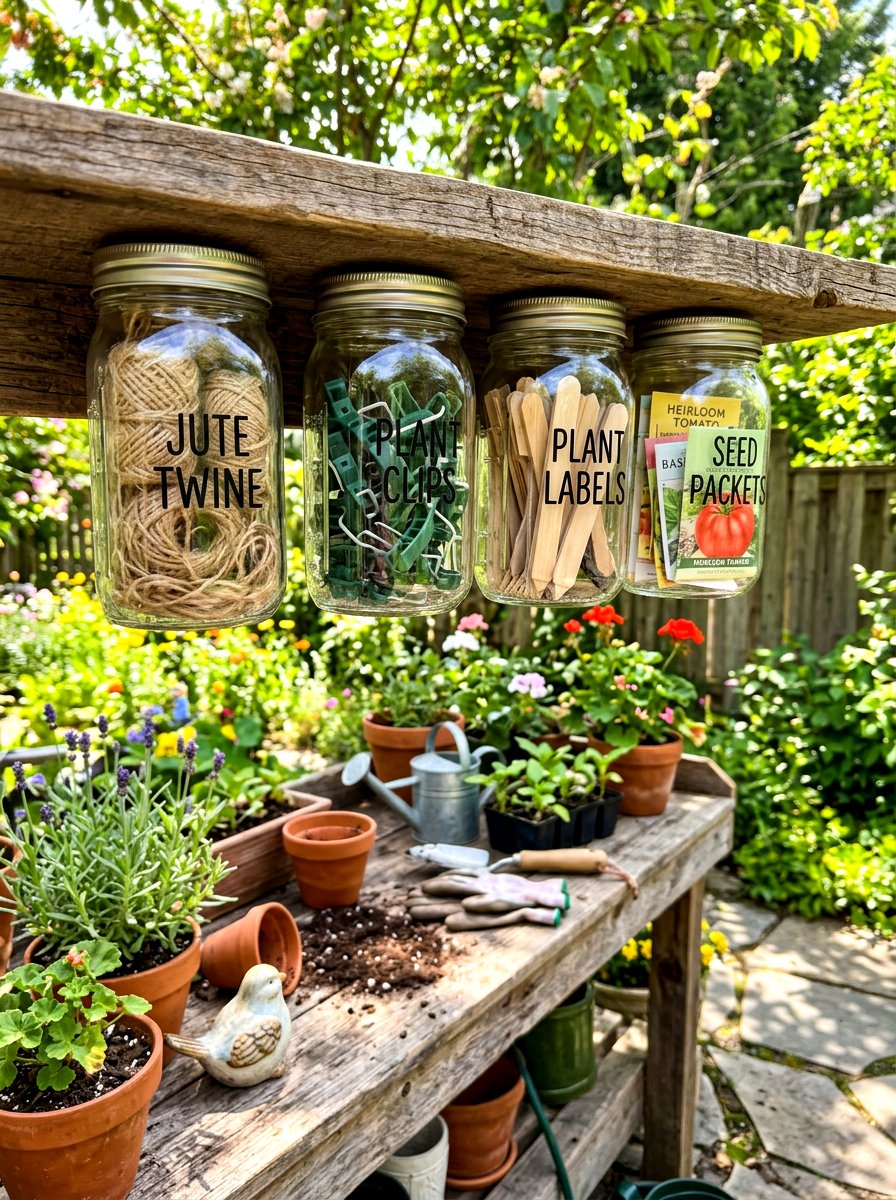
Using glass mason jars as organizers for small hardware like nails, screws, and plant clips is a charming and practical storage solution. You can mount the lids to the underside of an upper shelf, allowing you to simply screw the jars on and off for easy access. This clear storage method lets you see exactly what is inside each jar without having to open them or use labels. It is an excellent way to keep small items dry and organized in an outdoor environment where they might otherwise rust or get lost. The vintage look of the glass adds a lovely aesthetic touch to any potting bench.
20. Chalkboard Label Plate
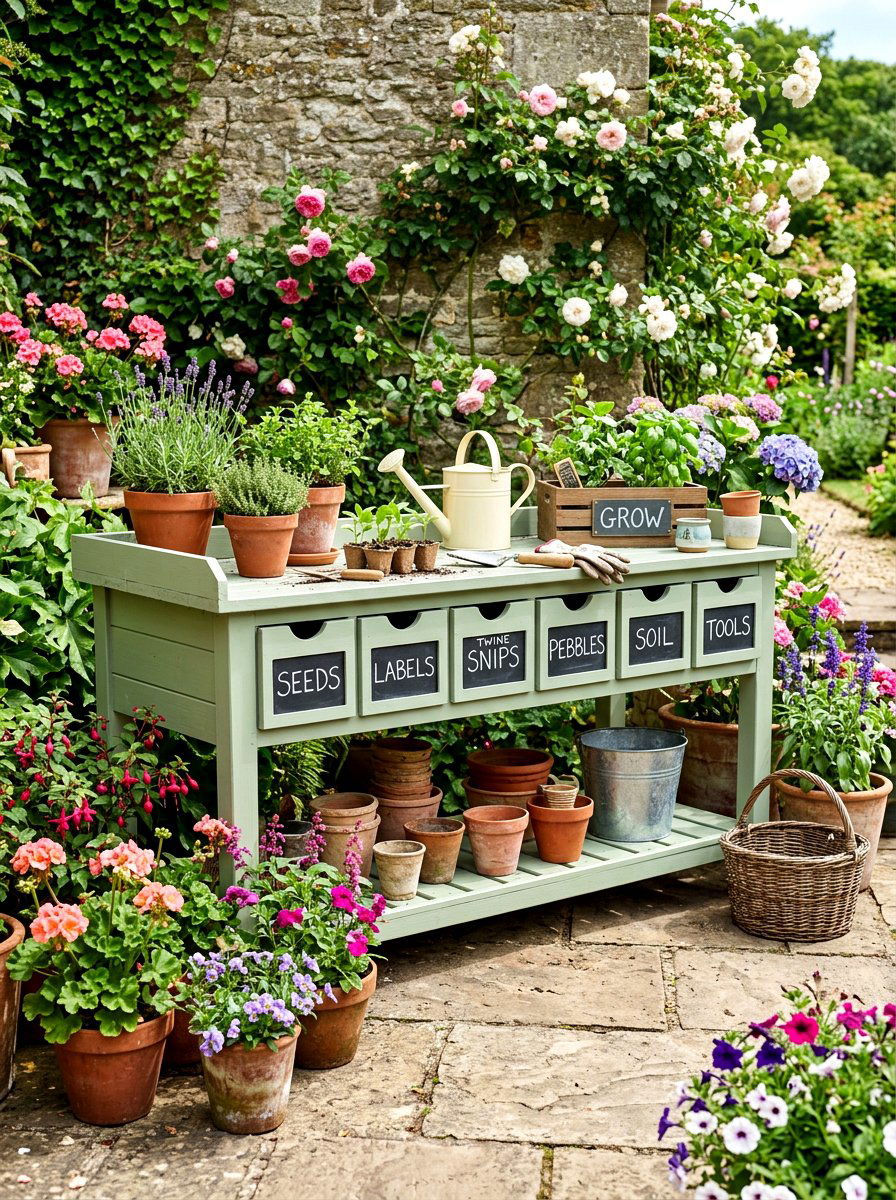
Small chalkboard label plates attached to drawers and cubbies allow you to easily identify the contents of your storage compartments. This is particularly helpful for keeping track of different types of soil, fertilizer, or seasonal bulbs that are tucked away. You can quickly wipe away the old text and write something new as your gardening needs change throughout the year. The black background and white chalk provide a high-contrast look that is easy to read even from a distance. These labels add a touch of rustic charm and functional organization that makes your potting station look like a well-run professional nursery or florist.
21. Copper Pipe Rail
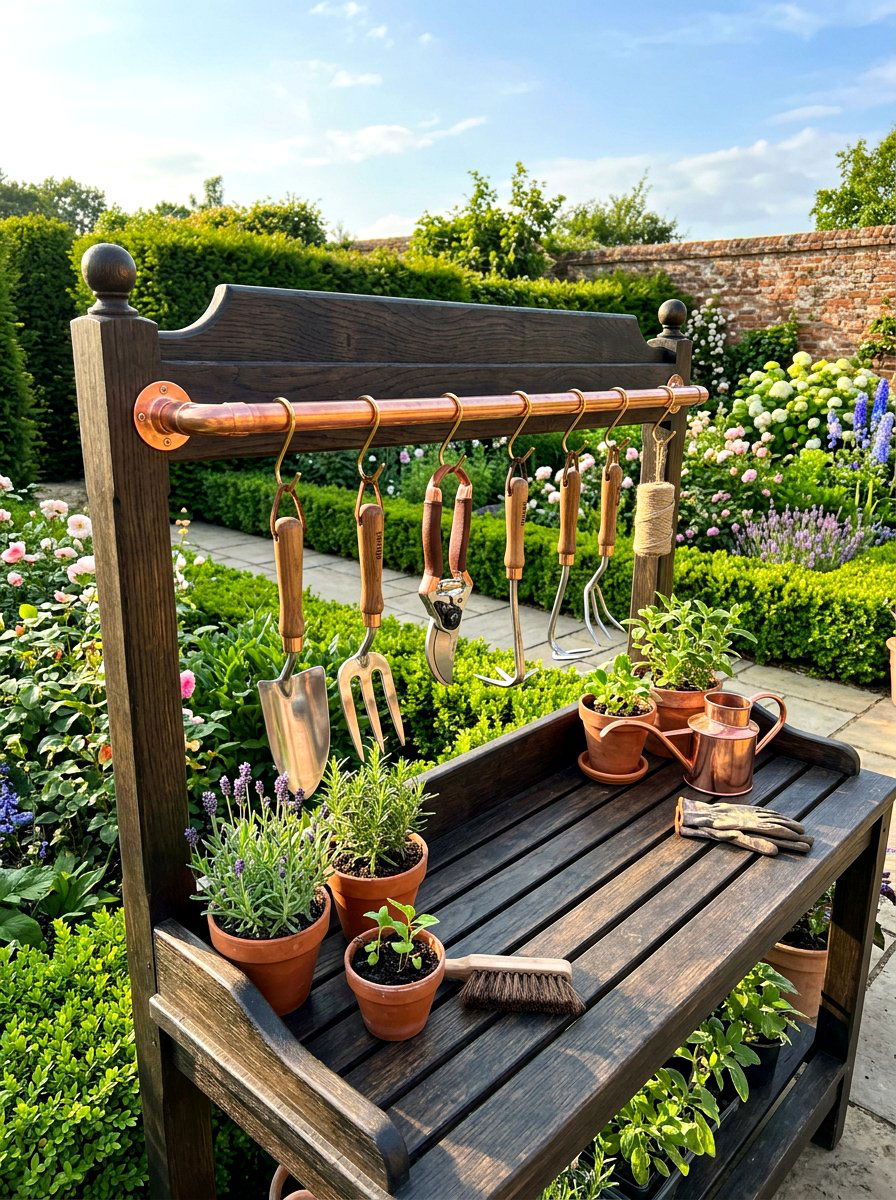
A copper pipe rail provides a durable and stylish mounting point for various hooks and hanging storage containers. Copper is a fantastic material for outdoor use because it develops a beautiful patina over time while remaining extremely strong and resistant to corrosion. You can use the rail to hang bundles of dried herbs, heavy-duty gardening shears, or even a customized holder for your garden hose. The warm metallic tones of the copper contrast beautifully with natural wood benches and green foliage. This custom rail can be built to fit the exact width of your bench, offering a tailored storage solution that looks incredibly high-end.
22. Reclaimed Wood Bench
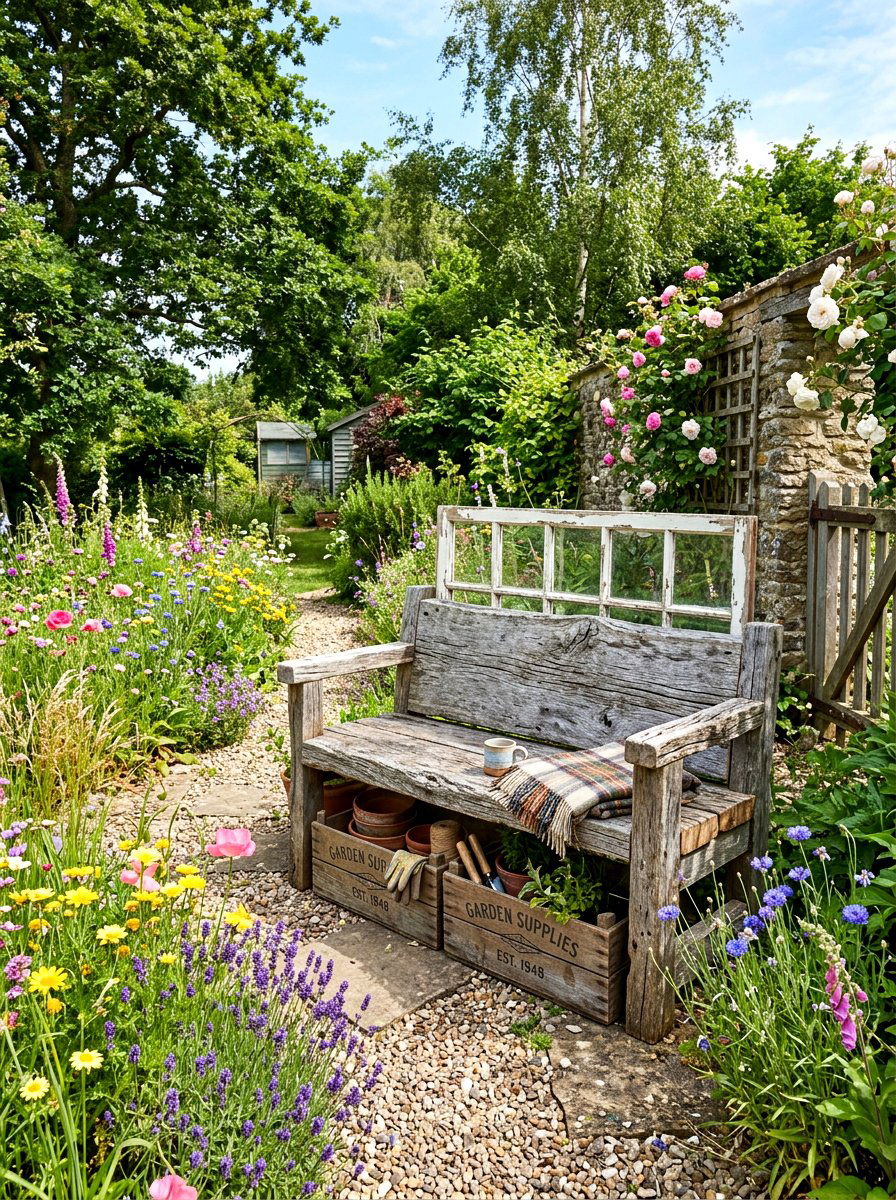
A potting bench made from reclaimed wood offers a sustainable and character-filled storage solution for your garden. The naturally weathered texture of old barn wood or pallets provides a rustic aesthetic that blends perfectly with an outdoor environment. These benches often feature unique storage elements like old window frames used as backboards or vintage crates integrated as drawers. Reclaimed wood is typically very sturdy and can be treated with eco-friendly sealants to ensure it lasts for many years. Choosing this style of bench adds a piece of history to your garden while providing a highly functional workspace that is completely unique and environmentally responsible.
23. Potting Bench Lighting
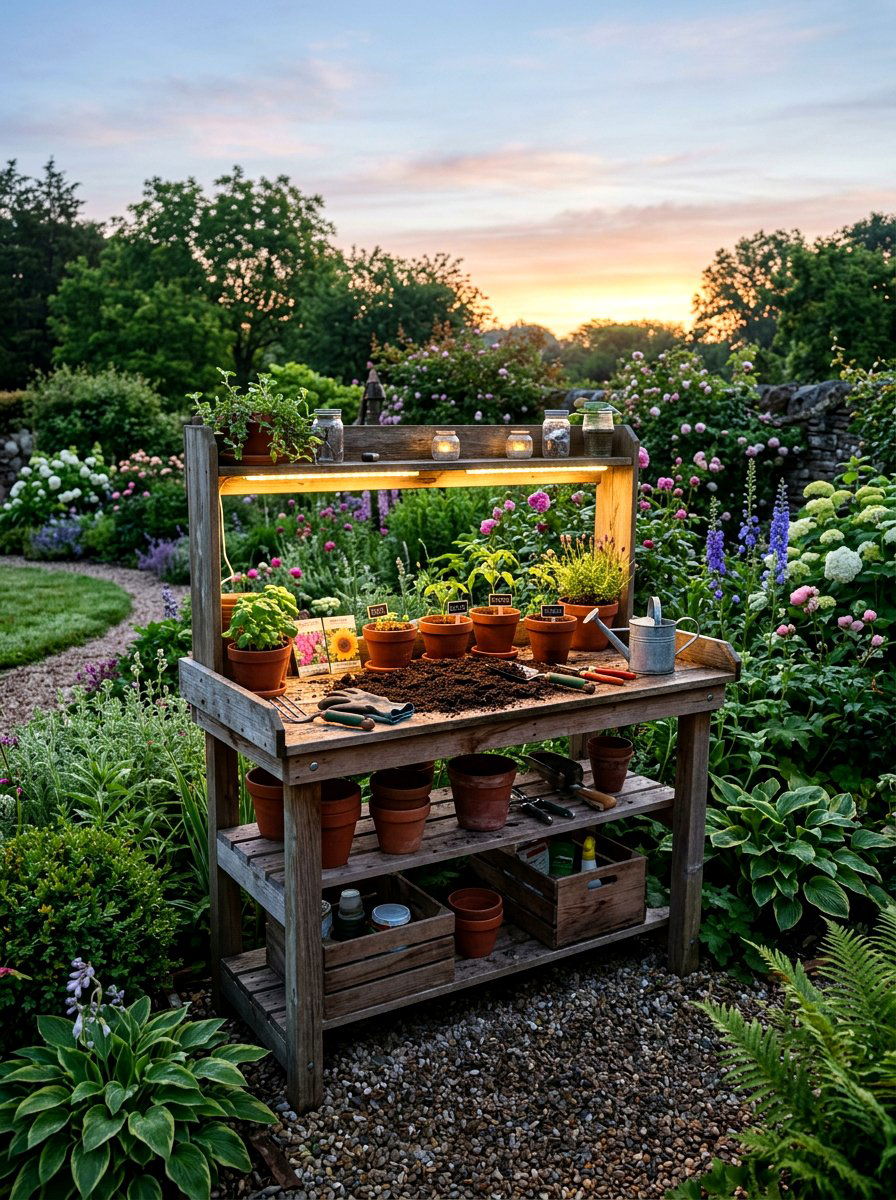
Integrating lighting into your potting bench allows you to extend your gardening sessions into the early morning or late evening hours. Small LED strip lights or vintage-style lanterns mounted to the hutch provide focused illumination on your work surface for detailed tasks like seed sowing. Solar-powered options are particularly convenient for outdoor benches that are not located near a power outlet, as they charge during the day and glow at night. Good lighting also helps you stay organized by making it easier to find small tools tucked in the back of shelves. It creates a cozy and inviting atmosphere for your outdoor work area.
24. Vertical Tool Slots
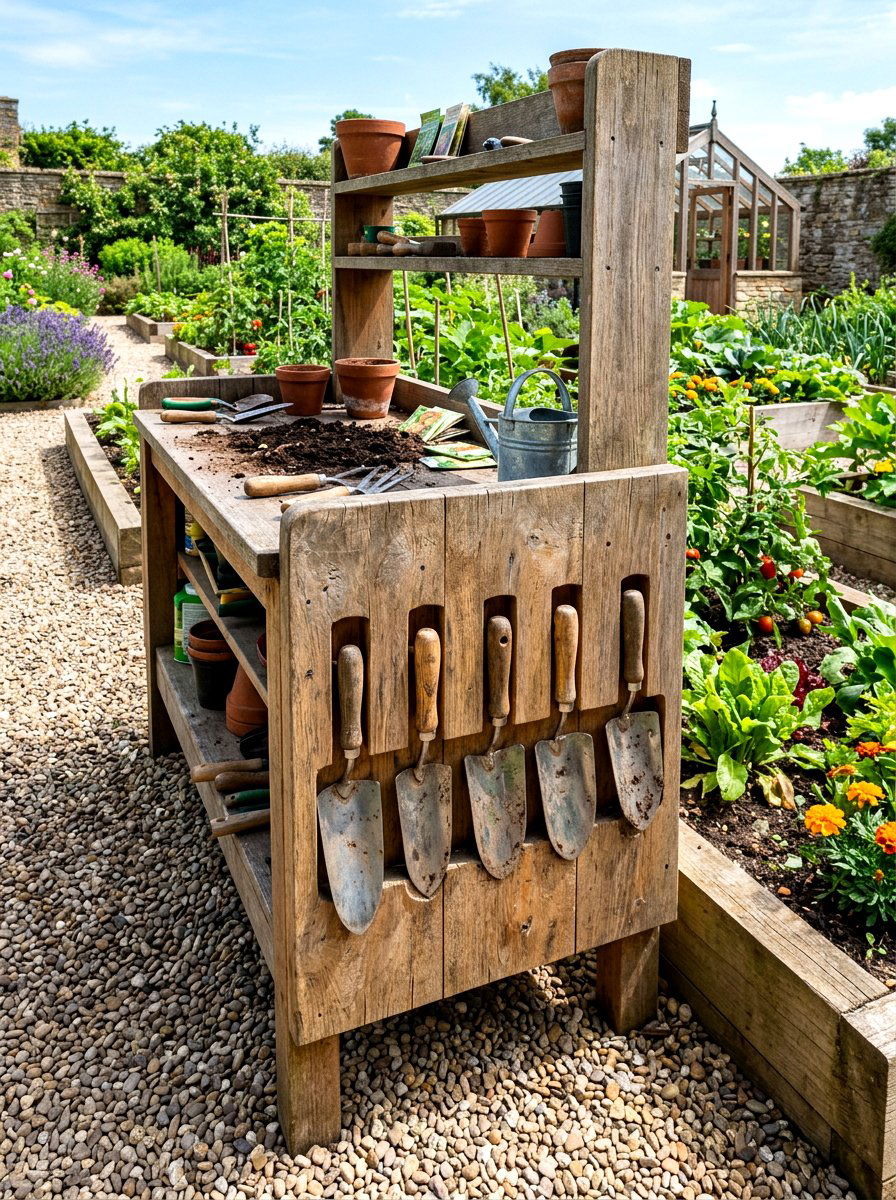
Vertical tool slots cut directly into the side of the workbench offer a secure and organized way to store hand tools with handles. This design allows trowels and cultivators to hang vertically, which saves space on the flat worktop and keeps sharp edges safely tucked away. The slots prevent tools from clumping together in a messy pile, making it easy to grab the specific one you need for the task at hand. This feature is simple to incorporate into a DIY bench build and provides a dedicated home for each essential tool. It ensures that your workspace remains uncluttered and professional-looking during even the busiest planting days.
25. Hidden Trash Can
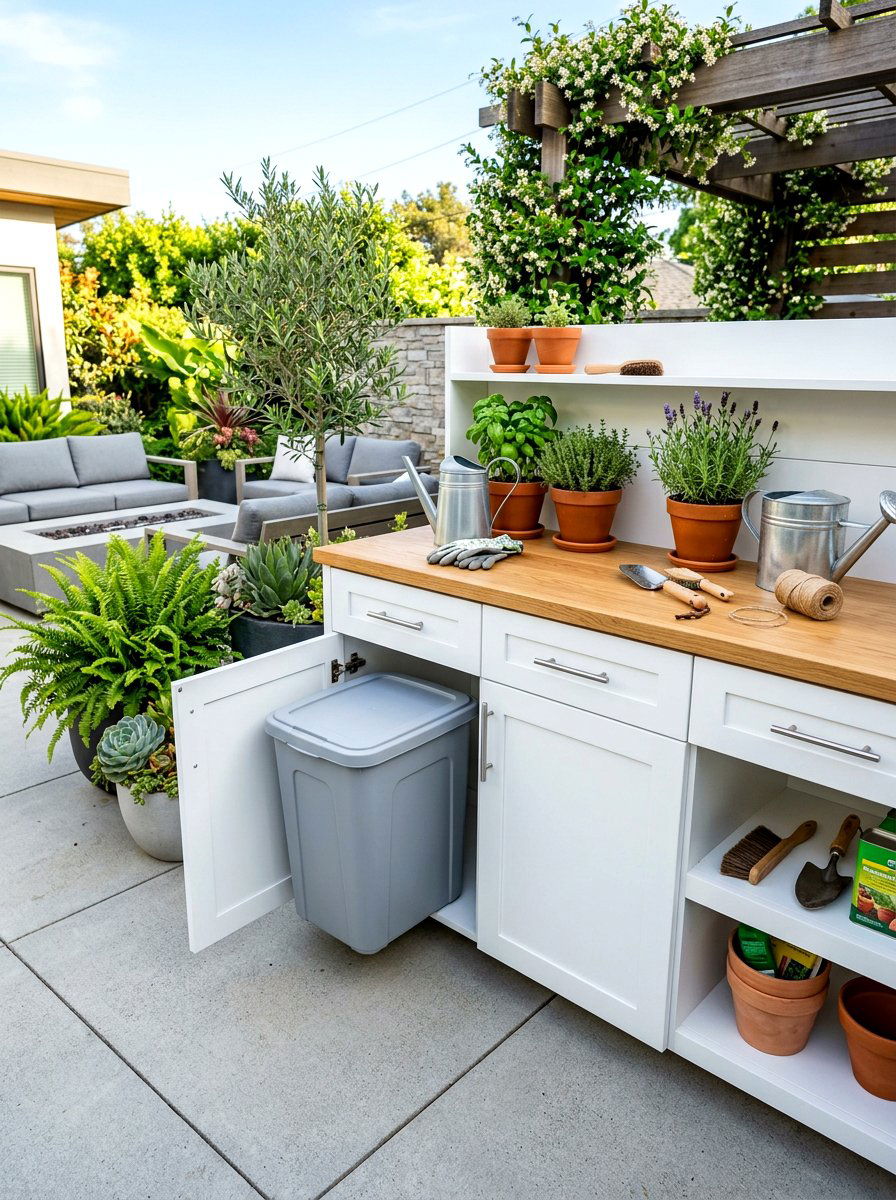
A hidden trash can compartment keeps your potting area looking pristine by concealing garden waste like plastic tags and empty soil bags. This feature is often designed as a tilt-out cabinet or a dedicated space behind a door that houses a standard plastic bin. Having a trash receptacle right at your workstation prevents clutter from piling up on your work surface and reduces the number of trips you have to make to the main garbage bin. Some gardeners use a dual-bin system to separate recyclables from compostable organic waste. This clever integration ensures that your garden station remains a clean and productive environment for all your projects.
26. Pull Out Tray
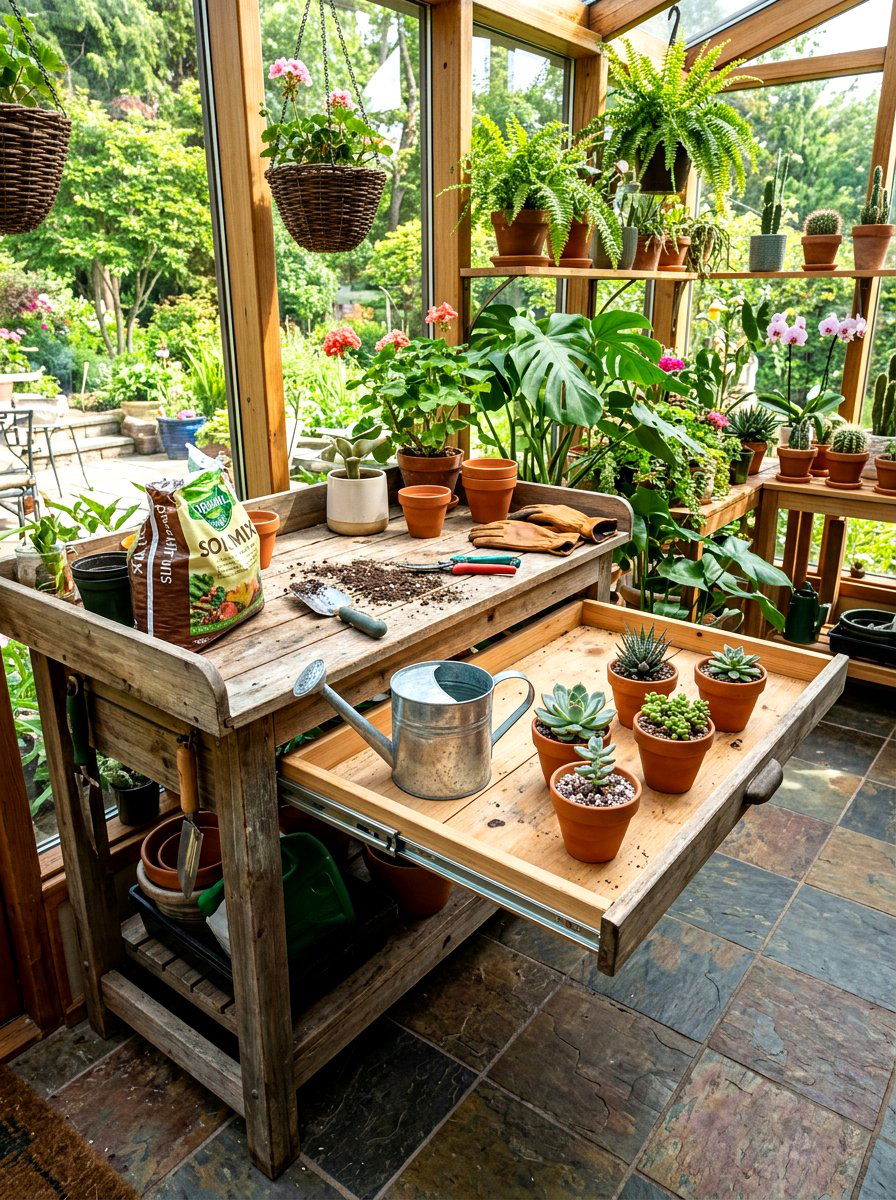
A pull-out tray located just beneath the main countertop provides a secondary surface for holding small pots or delicate seedlings while you work. This sliding feature allows you to keep the main work area clear for messy tasks like mixing soil or handling large containers. The tray can be pushed back in when not in use, maintaining a compact profile for the bench. Many gardeners find this particularly useful for staging plants before they are moved to their permanent locations in the garden. It adds another layer of functionality that makes the most of the existing structure without requiring any additional floor space in your garden shed.
27. Tiered Plant Stand
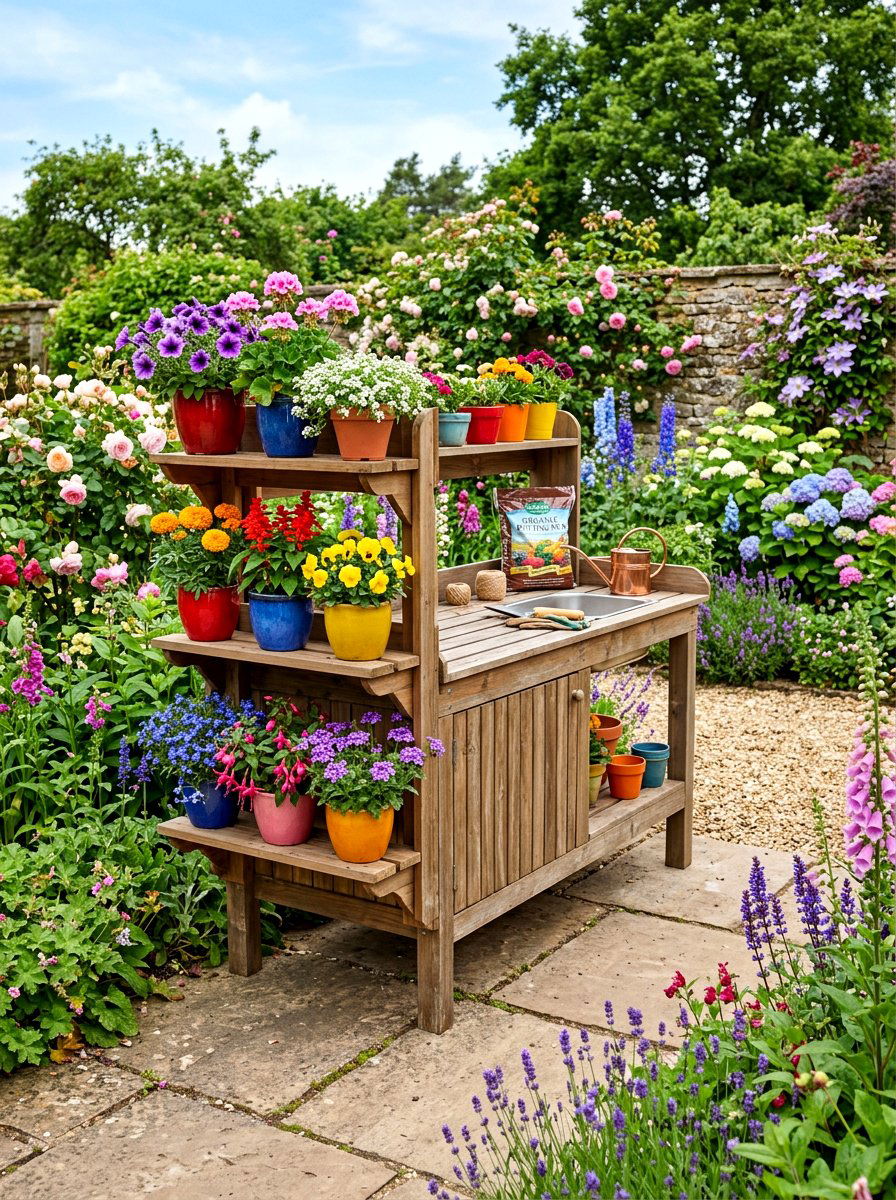
A tiered plant stand integrated into the side or top of a potting bench provides a beautiful way to display your latest potting successes. These multi-level shelves allow you to arrange plants of different heights, ensuring that each one receives adequate sunlight and air circulation. This feature is perfect for showing off colorful annuals or a collection of potted succulents that you have recently propagated. The vertical arrangement maximizes your display area while keeping the floor around the bench clear and easy to navigate. It turns your functional workspace into a stunning visual feature that enhances the overall beauty of your entire garden or patio area.
28. Weatherproof Storage Box
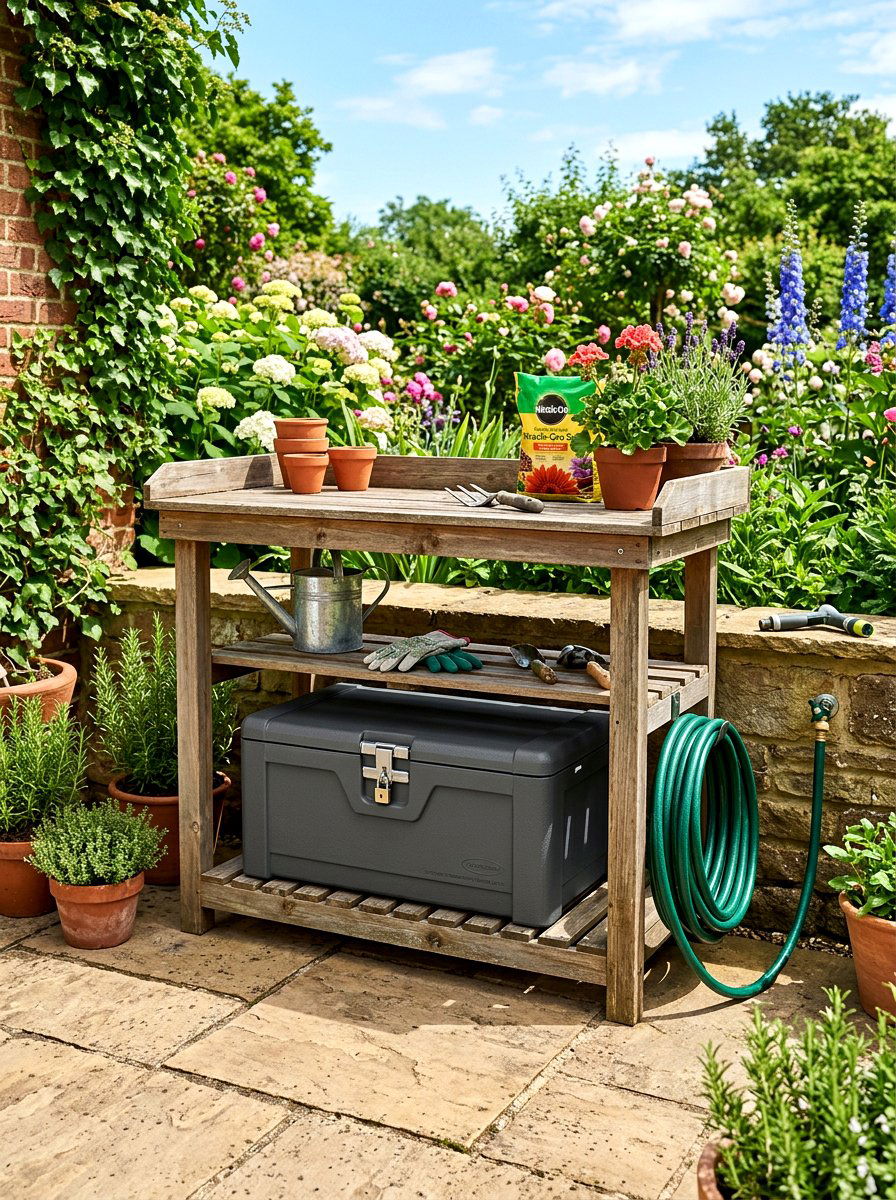
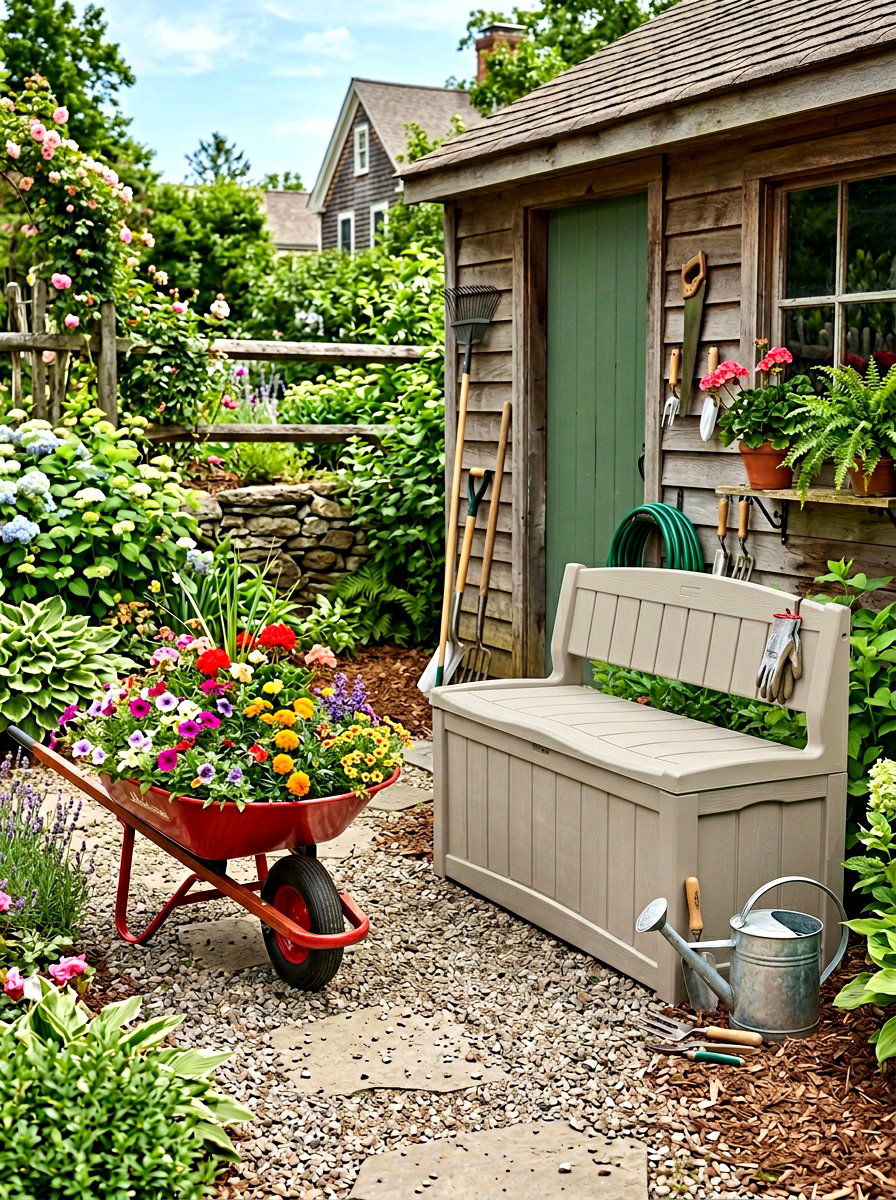
A weatherproof storage box mounted to the lower shelf of your bench provides a completely dry environment for sensitive supplies like birdseed or organic fertilizer. These durable plastic or metal boxes feature tight-sealing lids that prevent moisture, insects, and rodents from accessing the contents. This is a critical feature for outdoor potting stations that are exposed to heavy rain or high humidity levels. The boxes can be easily pulled out for cleaning or refilling, offering a portable storage solution that integrates seamlessly with your stationary bench. This keeps your most vulnerable garden amendments safe and effective for much longer periods throughout the growing seasons.
29. Corner Potting Station
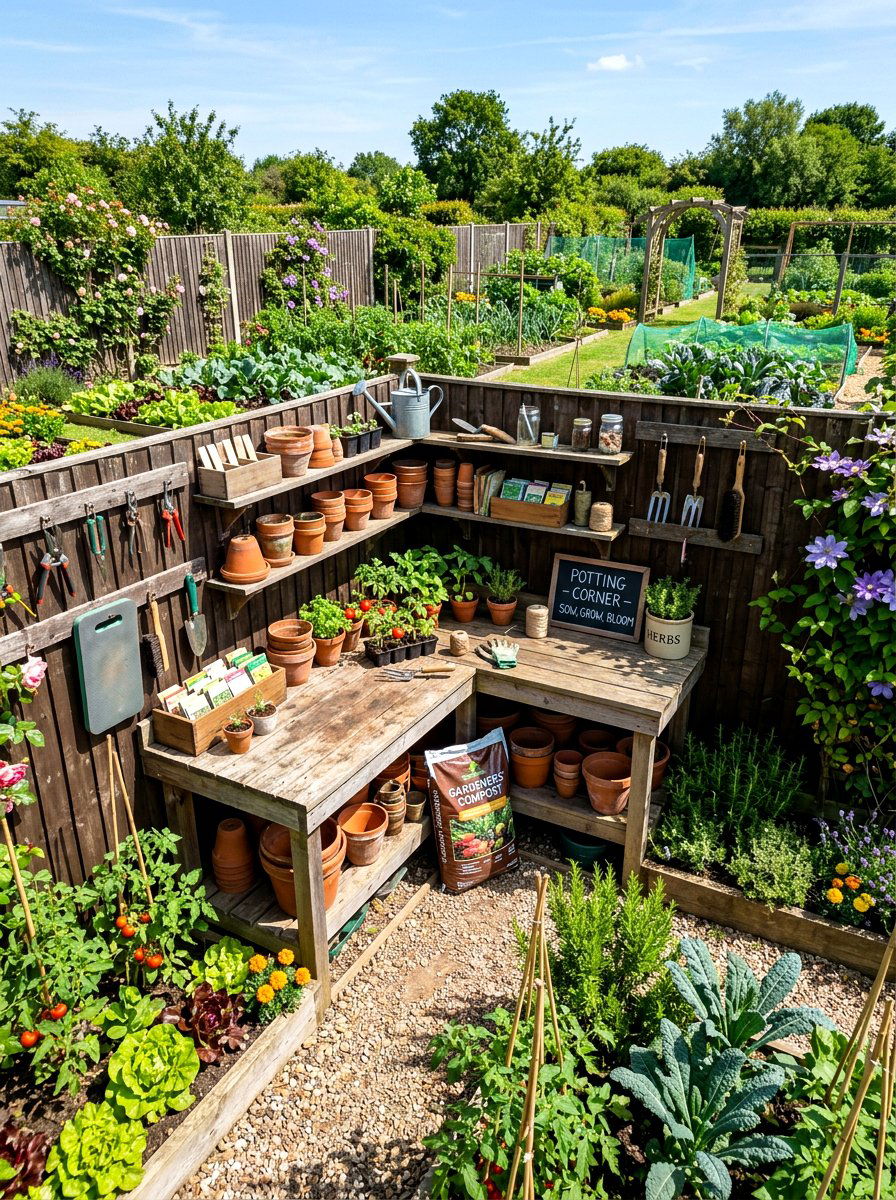
A corner potting station is a smart design choice for small gardens or patios where space is at a premium. By utilizing the 90-degree angle of two walls or a fence, you can create a spacious work area that fits snugly into otherwise unused space. This layout often provides more storage than a standard linear bench because it can incorporate wrap-around shelving and cabinets. The corner configuration keeps all your tools within an easy rotating reach, making your gardening tasks much more efficient. It creates a cozy and protected nook that feels like a private sanctuary for all your planting and transplanting activities throughout the year.
30. Corrugated Metal Back
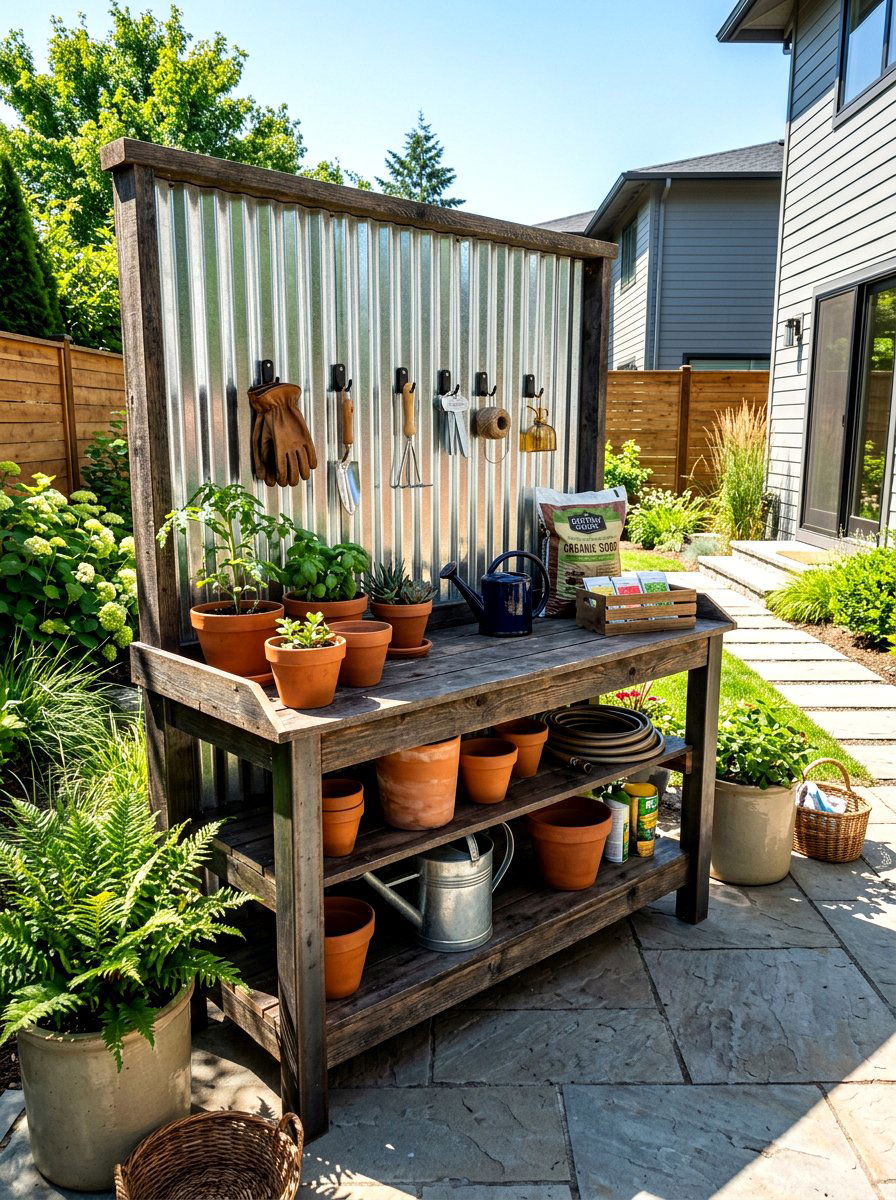
Using corrugated metal for the backboard of a potting bench provides a modern, industrial look that is incredibly durable and easy to maintain. The ridged surface of the metal is resistant to water and can be easily wiped clean after a day of messy potting. You can use magnetic clips to attach seed packets and instructions directly to the metal surface for easy viewing while you work. The reflective nature of the material helps bounce light onto your work area, which is beneficial for detailed gardening tasks. This material adds a unique architectural element to your garden while providing a functional and nearly indestructible storage surface.
Conclusion:
A potting bench is far more than just a table for plants; it is a personalized organizational hub that enhances your entire gardening experience. By carefully selecting the right combination of shelving, drawers, and vertical storage, you can create a workspace that perfectly suits your specific needs and aesthetic preferences. These ideas demonstrate how even the smallest additions, like hooks or magnetic strips, can significantly improve the efficiency of your garden chores. Investing time into organizing your potting station pays off in the long run by protecting your tools and making every planting project a more joyful and stress-free endeavor for years to come.

Related posts: