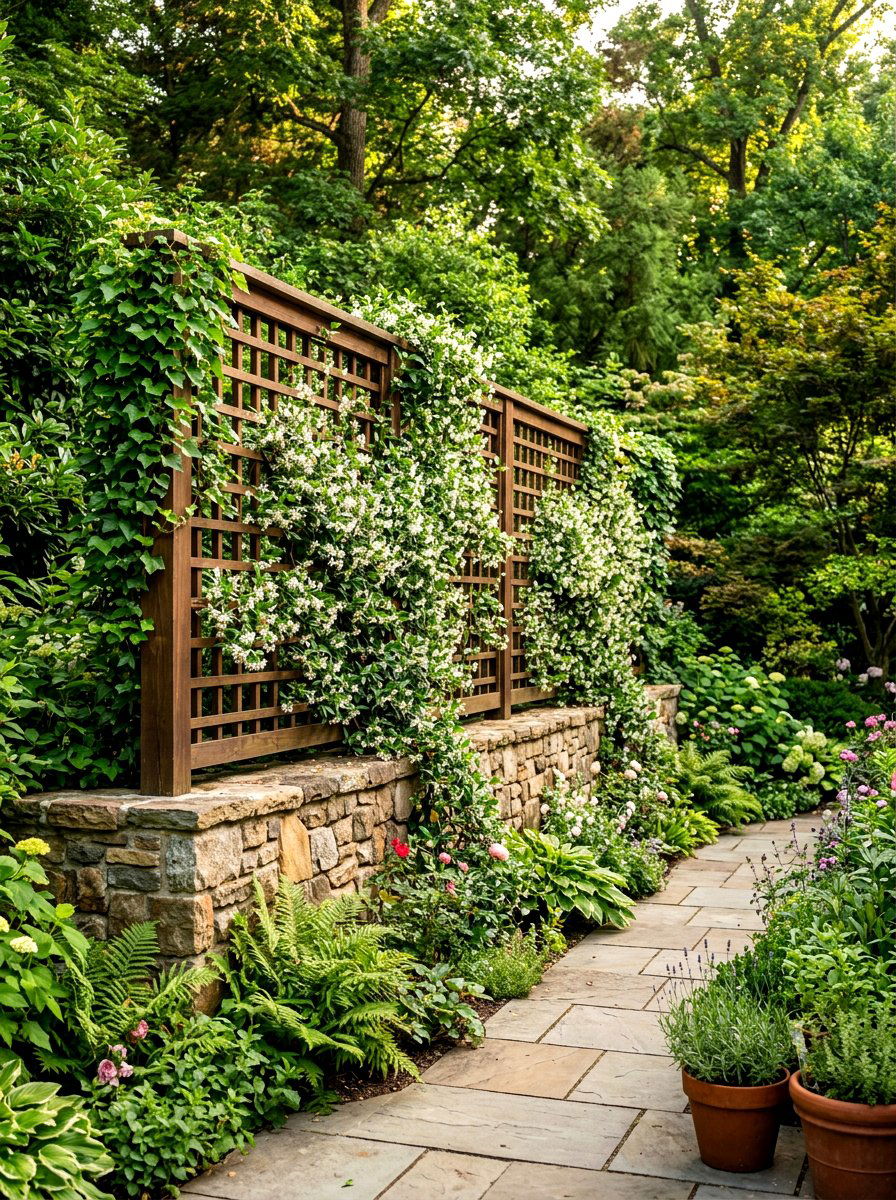
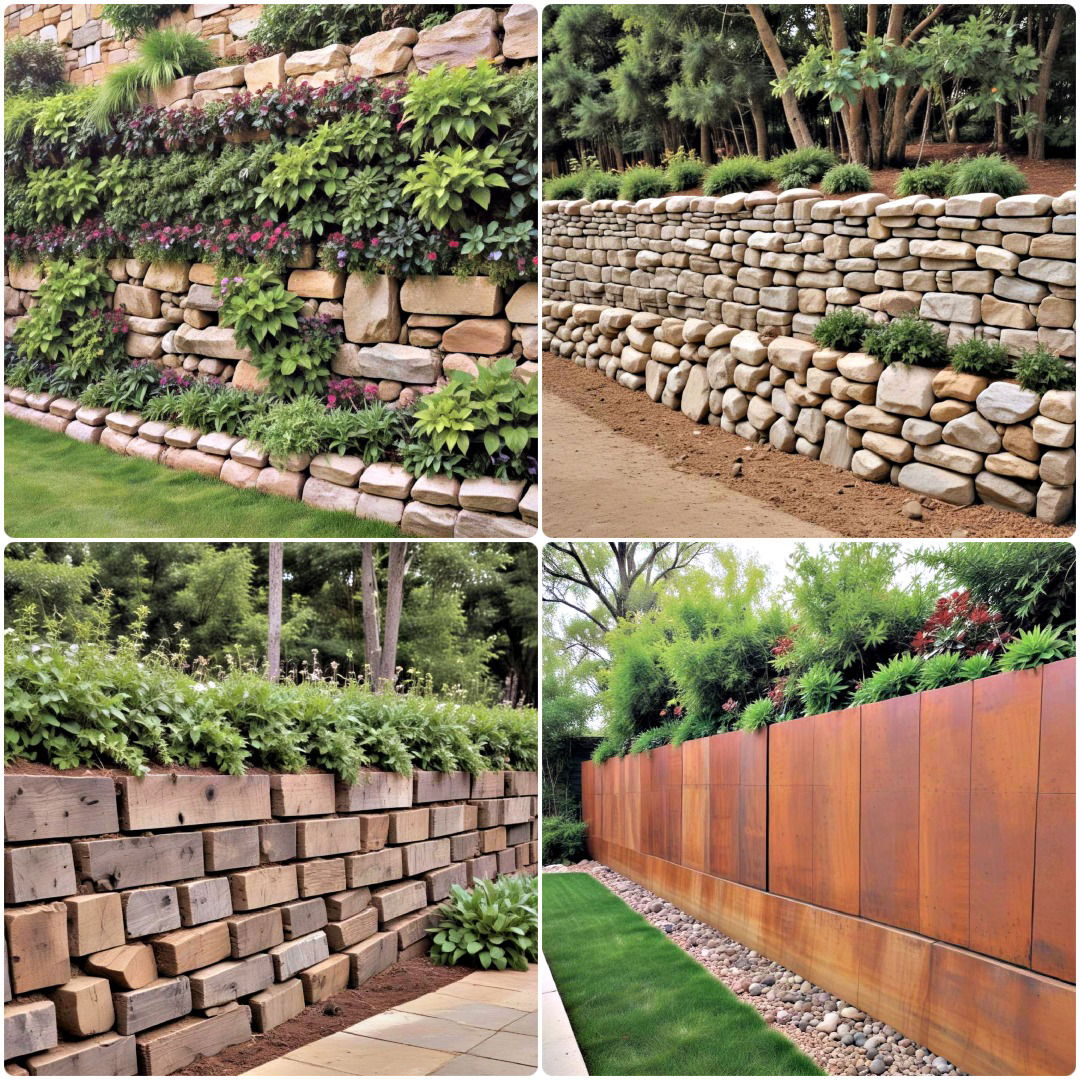
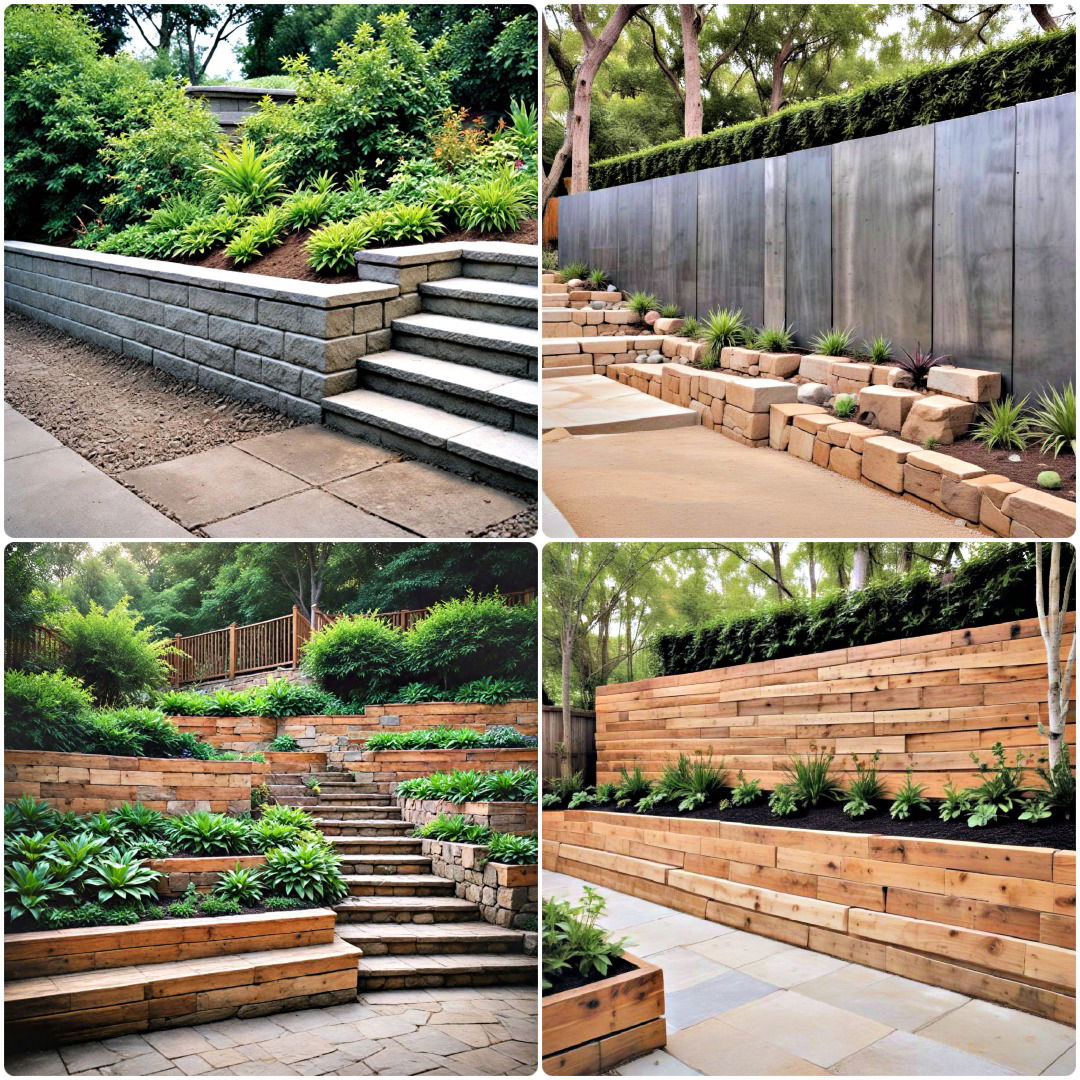
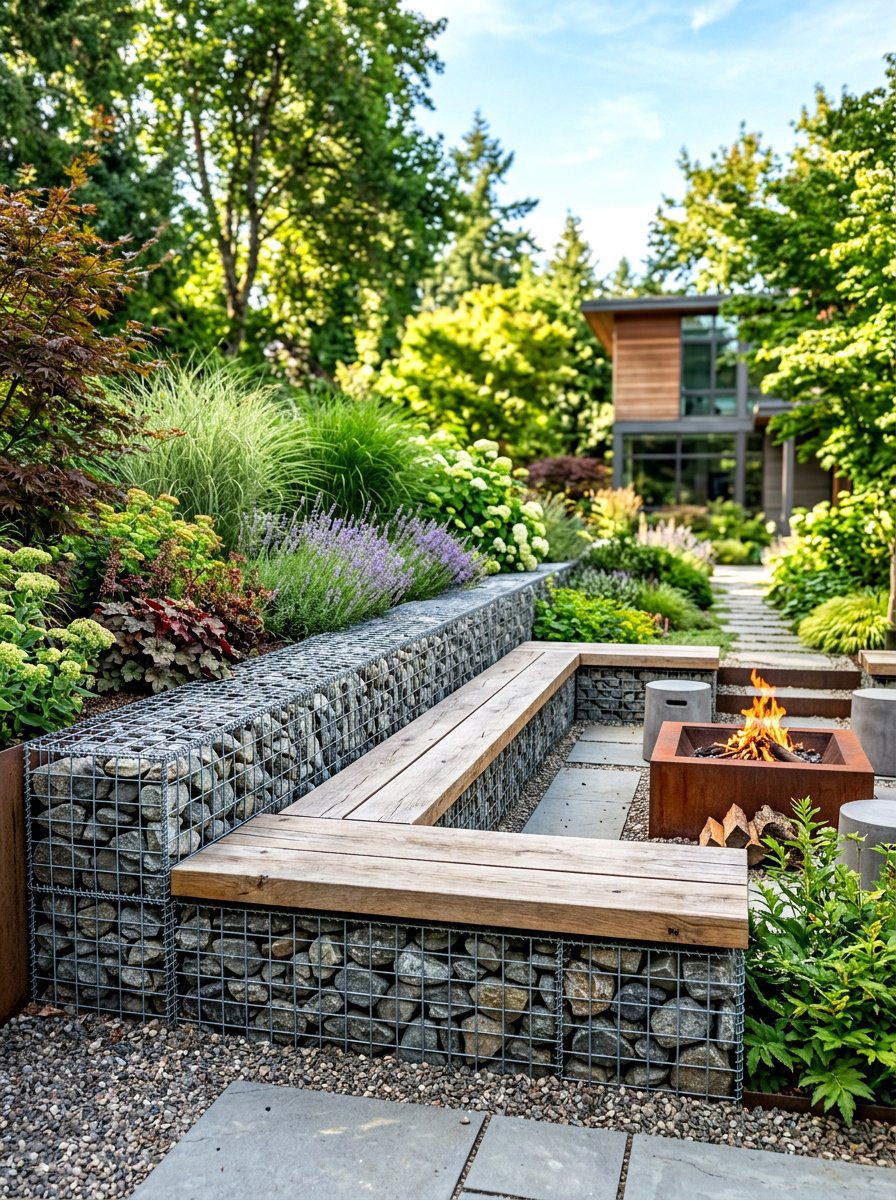
Creating a beautiful landscape on a sloped property can feel like a difficult challenge for many homeowners today. However, adding retaining wall stairs is one of the most effective ways to turn a steep hill into a functional masterpiece. These structural elements do more than just hold back soil; they provide safe passage and visual interest to your outdoor living space. Whether you prefer the rugged look of natural boulders or the clean lines of modern concrete, there are endless ways to style these transitions. Well-designed stairs can significantly increase your property value while making your garden much easier to navigate. This guide explores thirty unique ways to integrate stairs into your retaining walls for a stunning result.
1. Natural Stone Steps
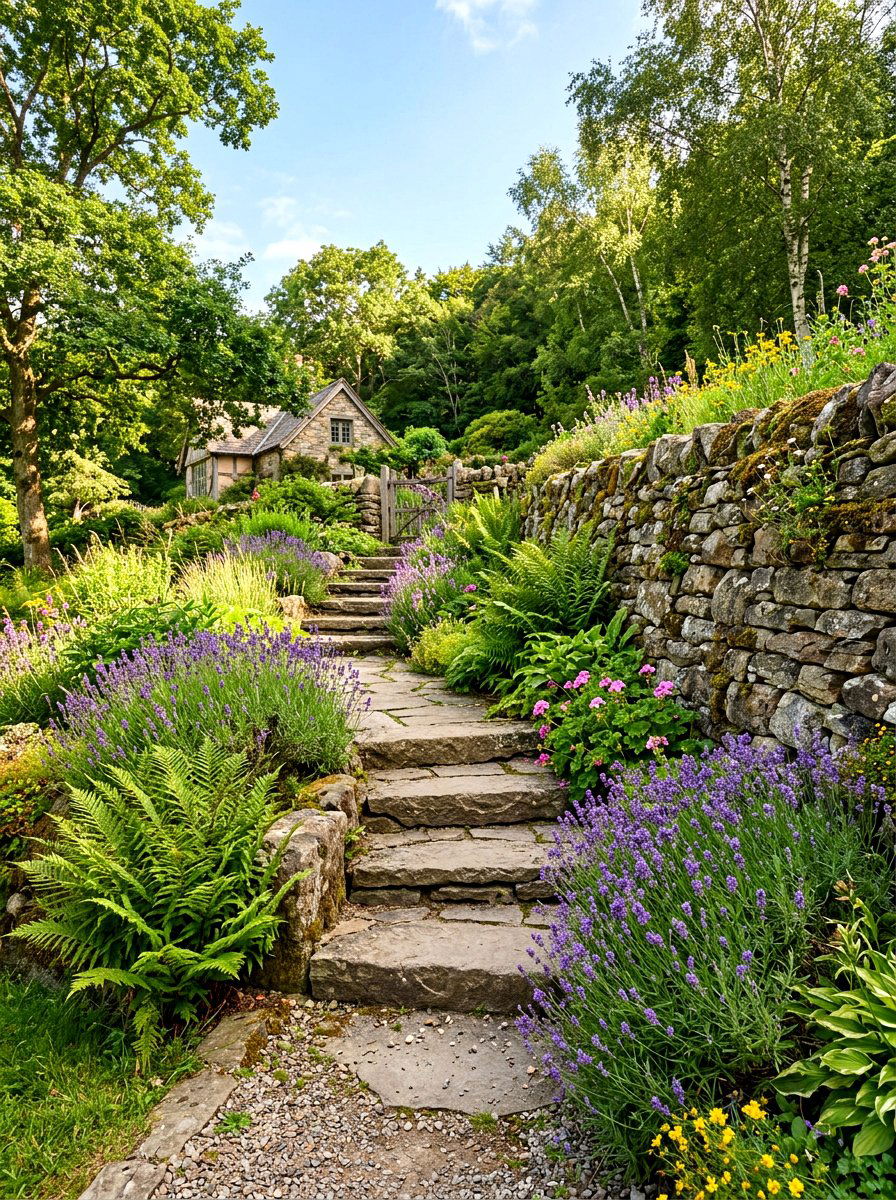
Natural stone steps offer an unmatched level of durability and beauty for any sloped backyard or front garden area. These heavy slabs are often sourced locally to ensure they blend seamlessly with the surrounding environment and existing rock formations. You can use large pieces of granite or flat fieldstone to create a path that feels like it has been there for centuries. Because each stone is unique, the staircase will have its own personality with varied textures and earthy colors. This style works exceptionally well in cottage-style gardens or rustic landscapes where a formal look is not desired. Proper installation involves setting each stone deeply into the hillside to ensure complete safety and stability.
2. Timber Sleeper Stairs
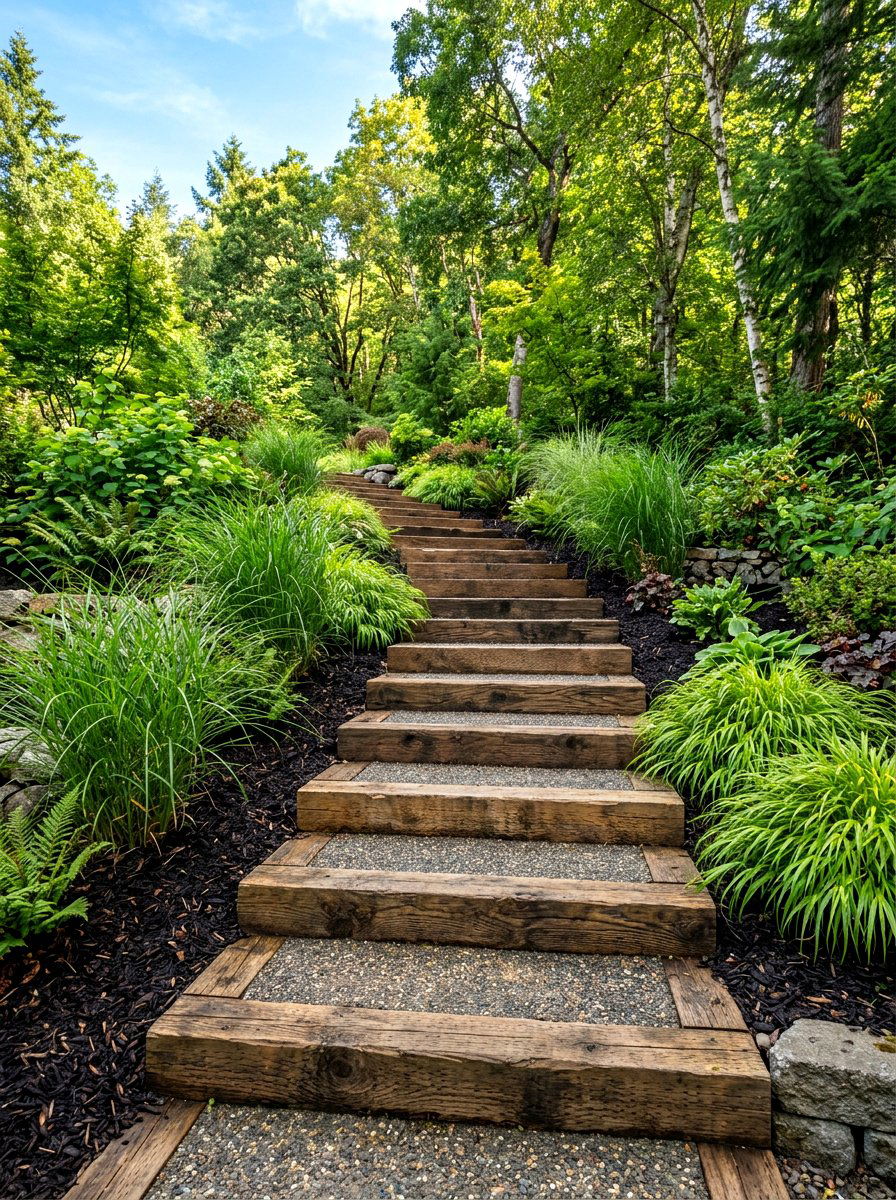
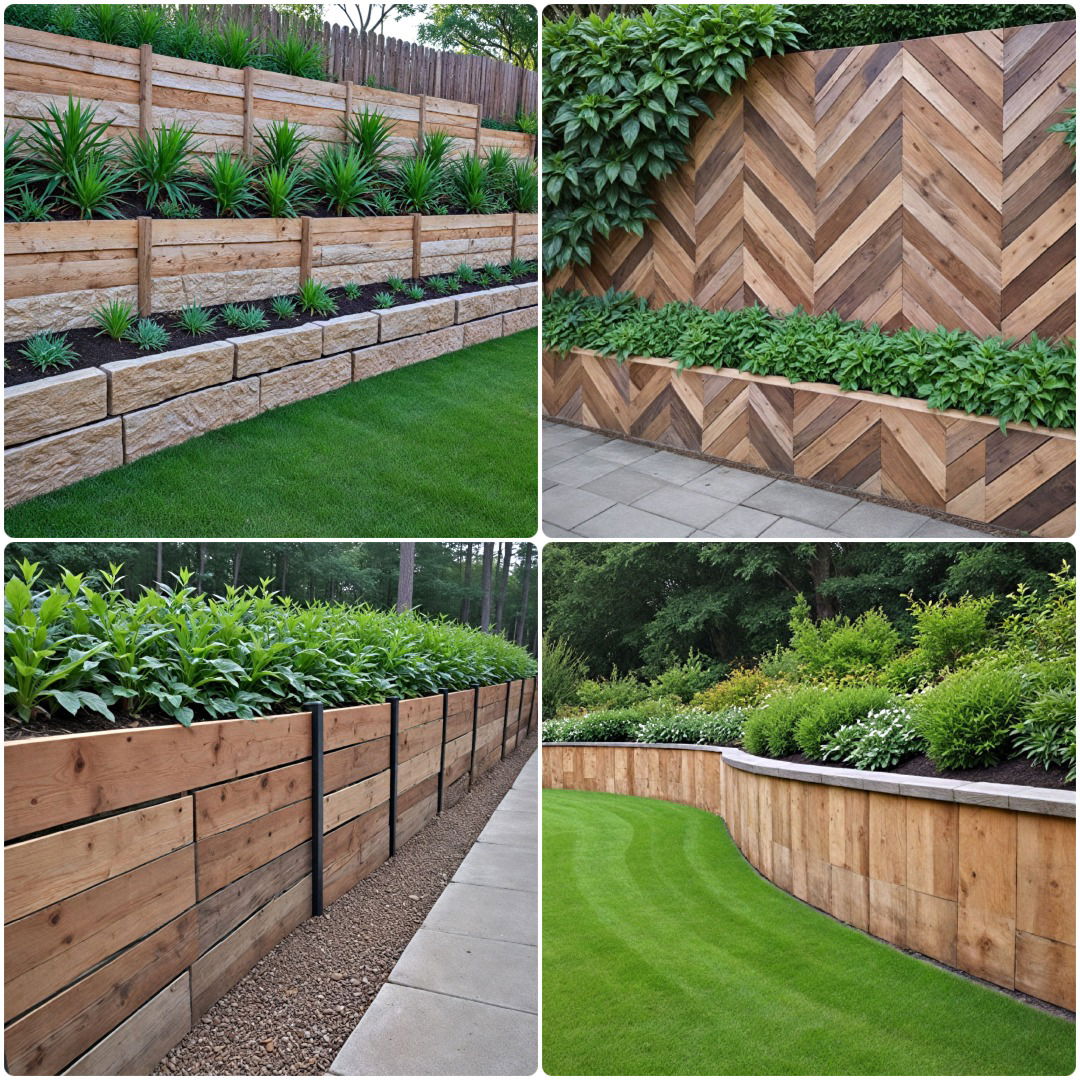
Timber sleeper stairs provide a warm and organic feel that perfectly complements a woodland or rustic landscape design. These thick wooden beams are typically pressure-treated to resist rot and insects, ensuring they last for many decades in damp soil. You can stack the sleepers to create high risers or lay them flat for a more subtle transition between garden levels. The natural wood grain adds a soft texture that contrasts beautifully against green foliage and colorful flowers. To enhance the look, you can fill the area around the wood with dark mulch or light-colored river rocks. This affordable option is ideal for DIY projects and smaller backyard renovations.
3. Concrete Block Staircase
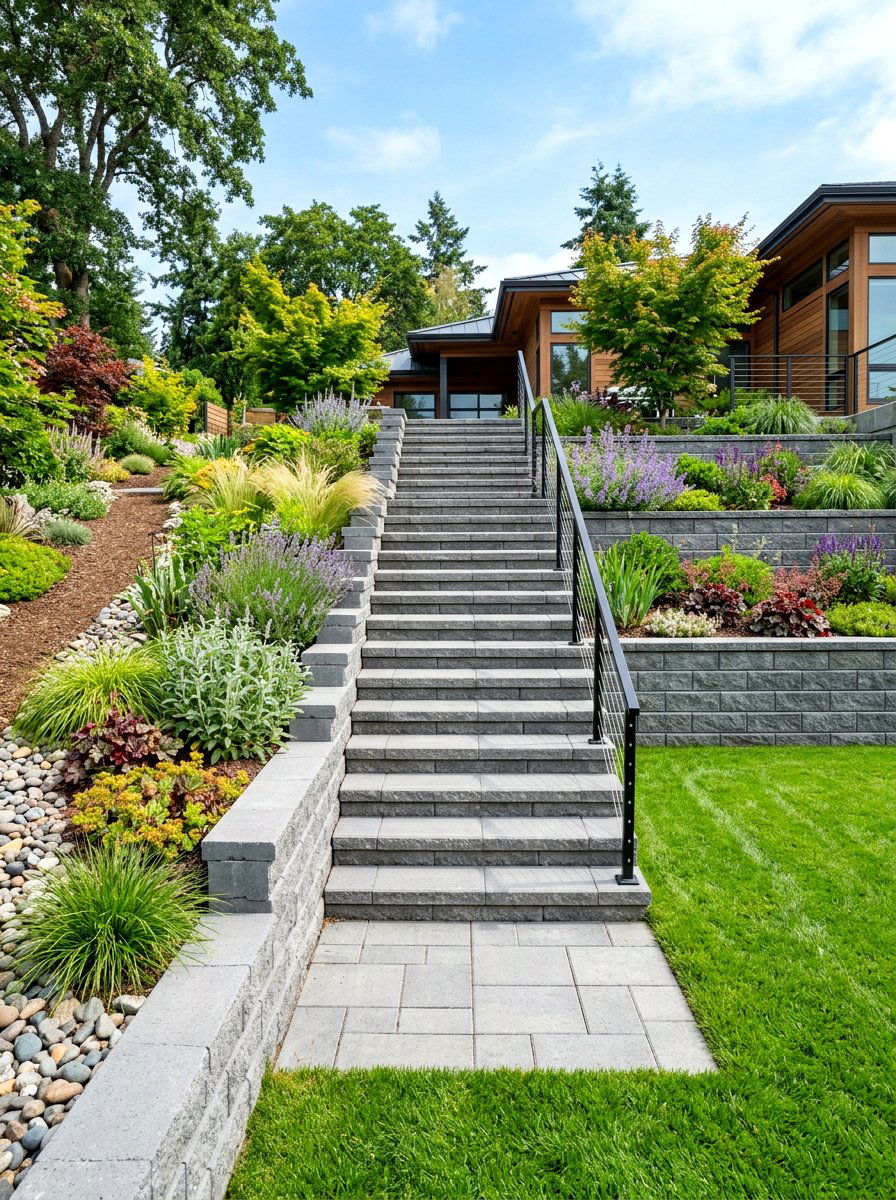
A concrete block staircase is a popular choice for homeowners who want a clean, modern, and highly durable outdoor entrance. These interlocking blocks come in various colors and finishes, allowing you to match them with your existing patio or retaining wall system. The uniform shape of the blocks makes installation straightforward and ensures that every step is level and safe for walking. You can choose smooth faces for a contemporary vibe or split-faced blocks for a more traditional, stone-like appearance. This design is excellent for creating wide, grand entrances that lead down to a pool area or a large outdoor kitchen. It provides long-lasting structural support.
4. Modern Floating Stairs
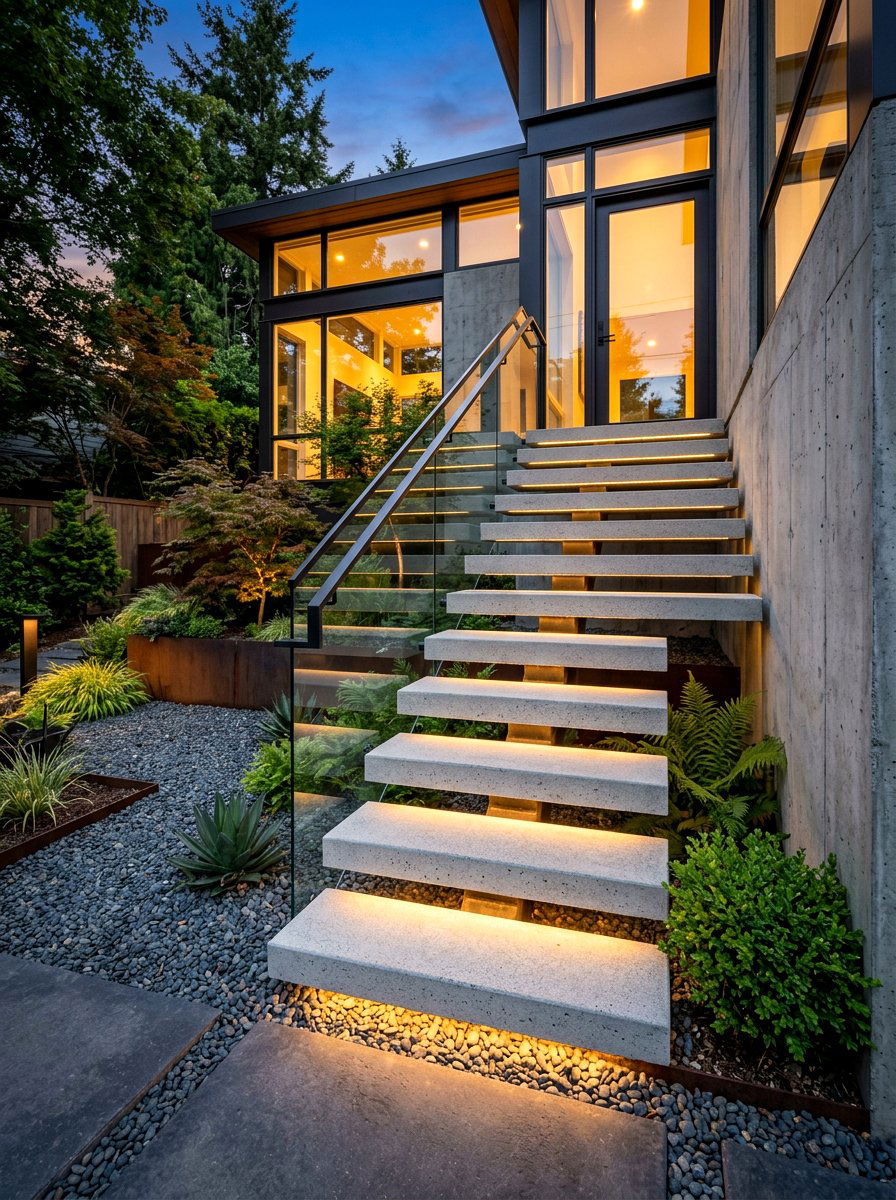
Modern floating stairs create a sleek and minimalist look that is perfect for contemporary homes with tiered garden layouts. These steps are typically made from thick concrete slabs or heavy stone that appears to hover above the ground. By leaving a small gap beneath each tread, you create a sense of lightness and architectural interest in the yard. This design often features hidden LED lighting underneath the lip of each step to enhance safety and provide a dramatic glow at night. The surrounding landscape usually consists of clean lines, architectural plants, and minimalist gravel beds. It is a high-end look that turns a functional path into a piece of art.
5. Brick Retaining Wall Steps
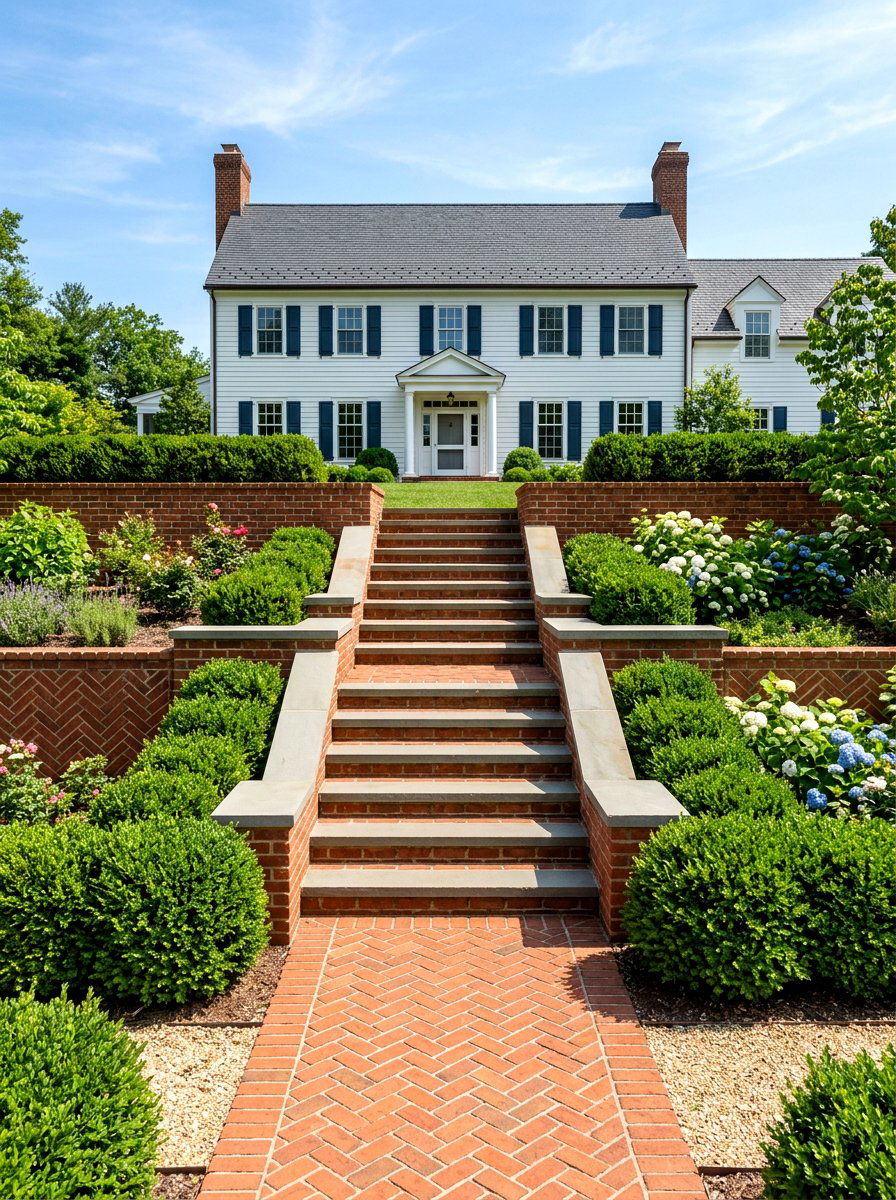
Brick retaining wall steps bring a classic and timeless elegance to traditional homes or historic colonial-style landscapes. The warm red or orange hues of the bricks create a cozy atmosphere that feels both sturdy and inviting to guests. You can arrange the bricks in various patterns, such as herringbone or basketweave, to add extra detail to the treads. This style works best when paired with a matching brick retaining wall or a weathered metal gate for a cohesive look. Because bricks are small, they are perfect for creating curved staircases that follow the natural contour of a hill. They offer a refined finish for any garden entrance.
6. Large Boulder Staircase
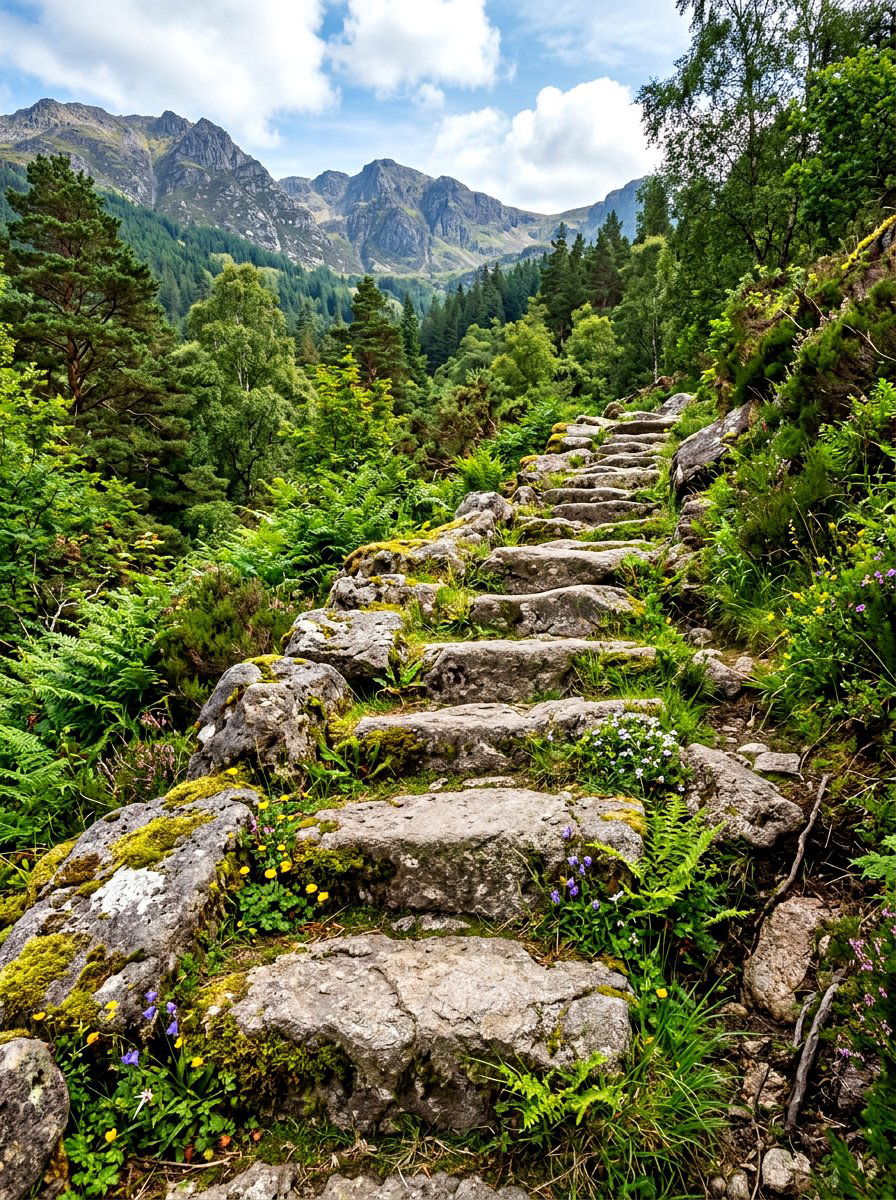
A large boulder staircase is the ultimate choice for a rugged and naturalistic landscape that mimics the beauty of a mountain trail. Instead of flat slabs, this design uses massive, irregular rocks to form wide and sturdy steps up a steep slope. The gaps between the boulders can be planted with creeping thyme or moss to soften the look and blend with the earth. This style requires heavy machinery for installation but results in a structure that will likely last for generations without shifting. It looks spectacular when paired with a cascading waterfall or a dry creek bed nearby. The boulders provide a permanent and impressive focal point.
7. Poured Concrete Steps
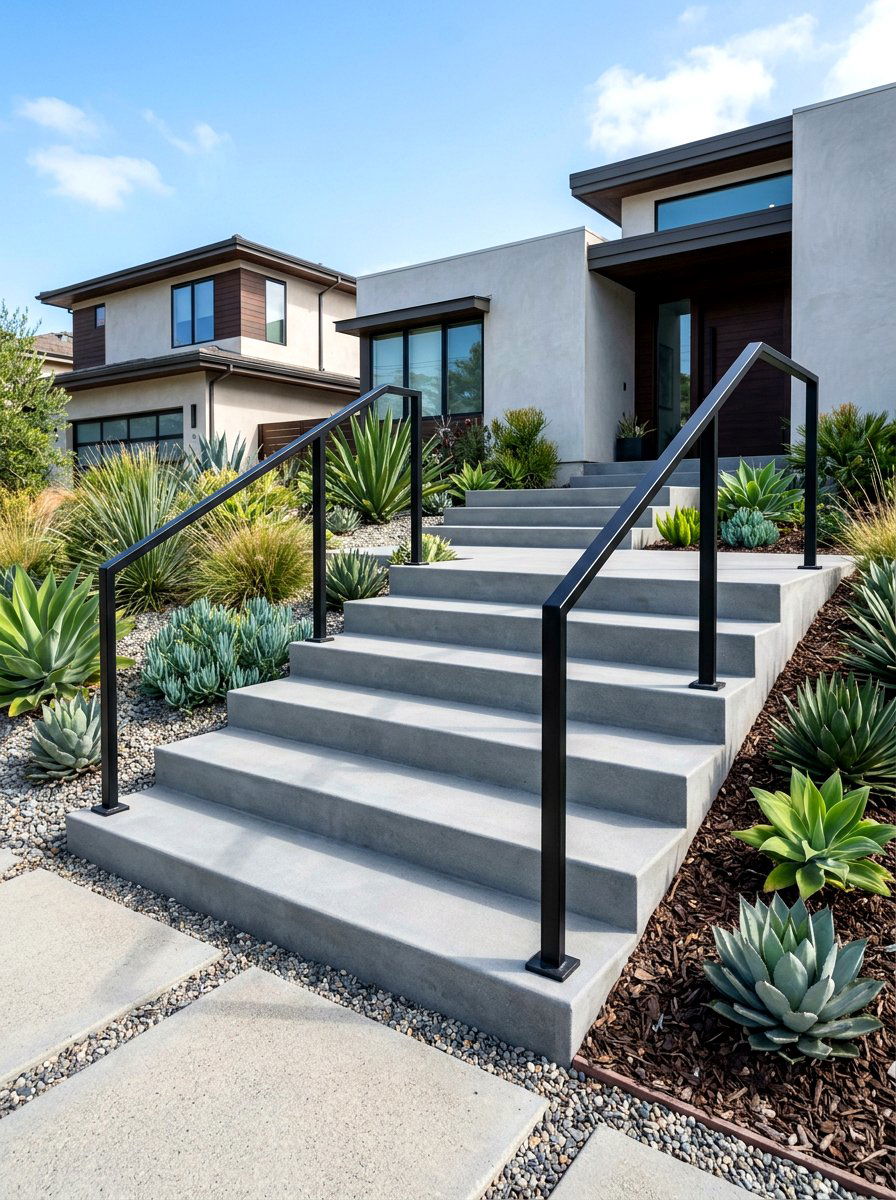
Poured concrete steps offer a custom and seamless look that can be molded into almost any shape or size for your yard. This material is incredibly versatile, as it can be stamped with patterns or stained with various colors to mimic stone or wood. Many designers choose a broom finish for extra traction or a polished look for a very high-end aesthetic. These stairs are built as a single solid unit, which prevents individual steps from shifting or settling over time. This design is ideal for steep driveways or modern entryways where a smooth and consistent surface is required. It provides a very clean and organized appearance.
8. Gabion Basket Stairs
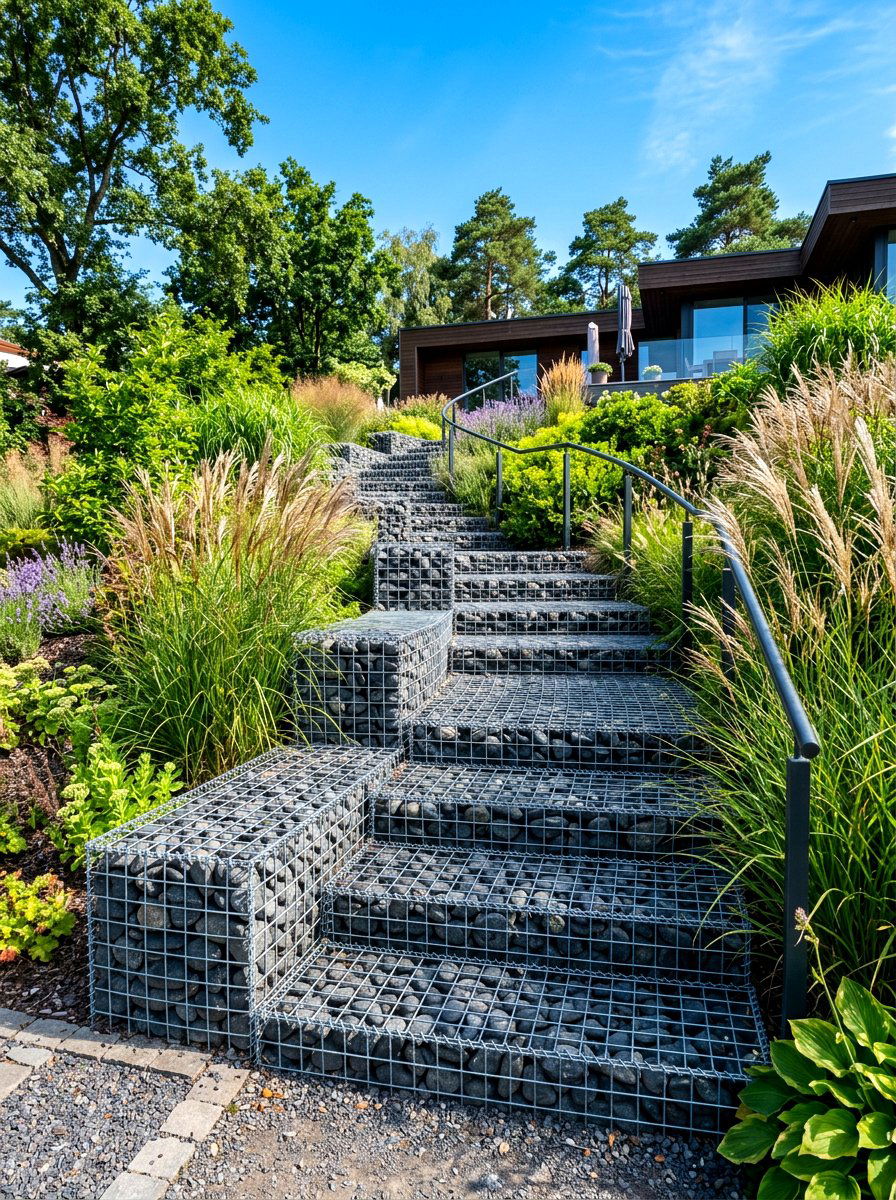
Gabion basket stairs are a unique and industrial-inspired design that uses wire cages filled with loose rocks to create steps. This method is excellent for erosion control and provides exceptional drainage for gardens that experience heavy rainfall throughout the year. The wire mesh gives the staircase a modern, edgy look that contrasts well with soft green grasses and wildflowers. You can use different types of stone fill, such as limestone or river rock, to change the color and texture of the stairs. This design is very sustainable and can often be built using rocks found directly on your property. It is a bold architectural choice for any garden.
9. Gravel Wood Steps
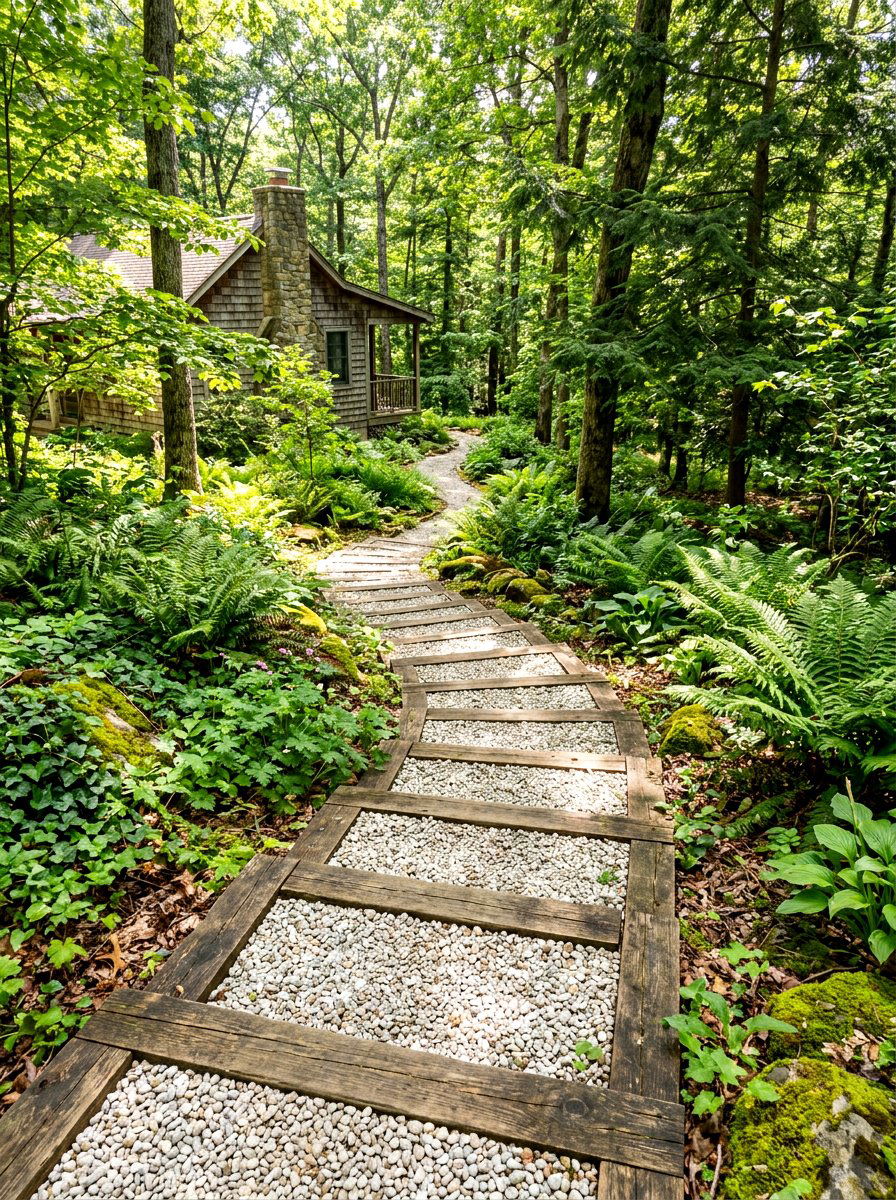
Gravel wood steps combine natural timber frames with crushed stone infill to create a budget-friendly and charming garden path. This design is perfect for casual backyard trails or paths that lead to a hidden fire pit area. The wooden risers hold the gravel in place, while the porous surface allows water to soak directly into the ground. You can use light-colored pea gravel for a bright look or dark crushed basalt for a more modern feel. This style is very easy to maintain and can be adjusted over time if the landscape shifts. It creates a soft crunch underfoot that adds a sensory element to your garden walks.
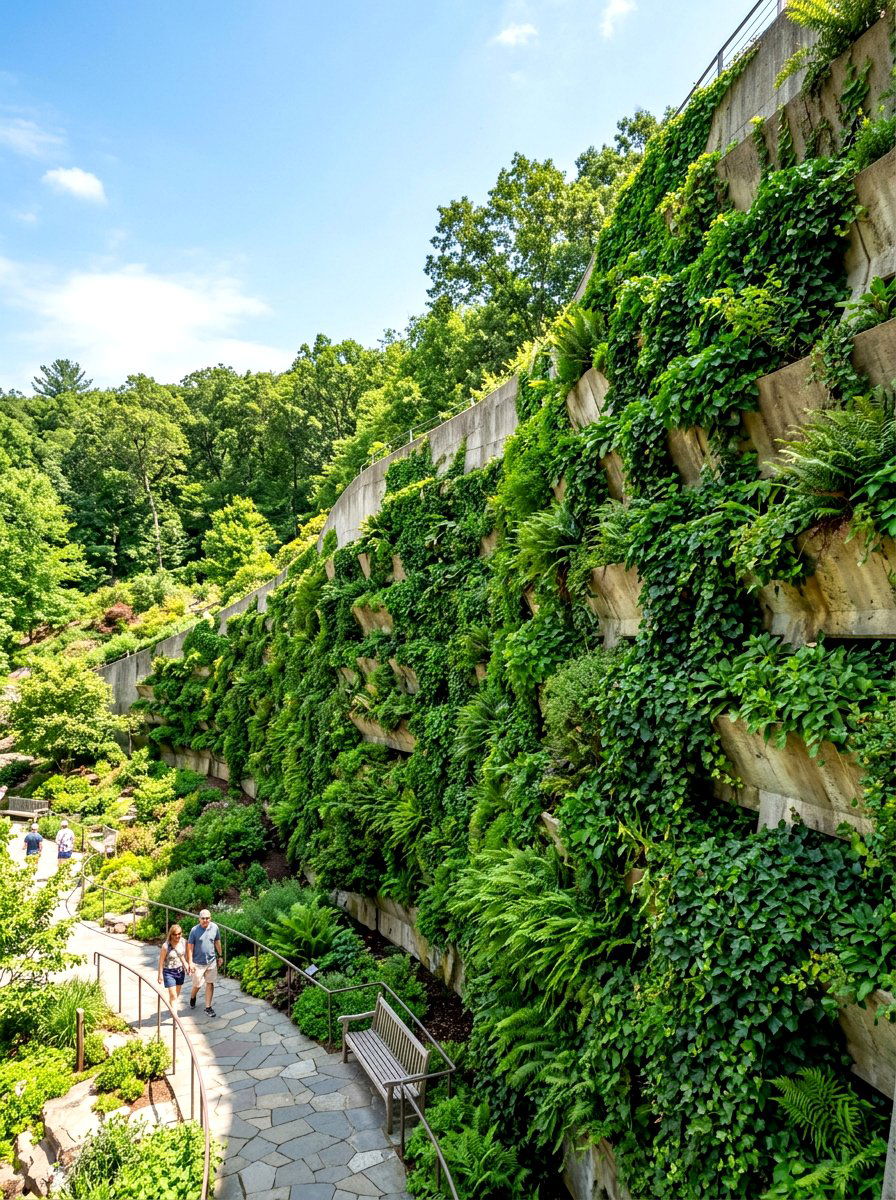
10. Curved Stone Steps
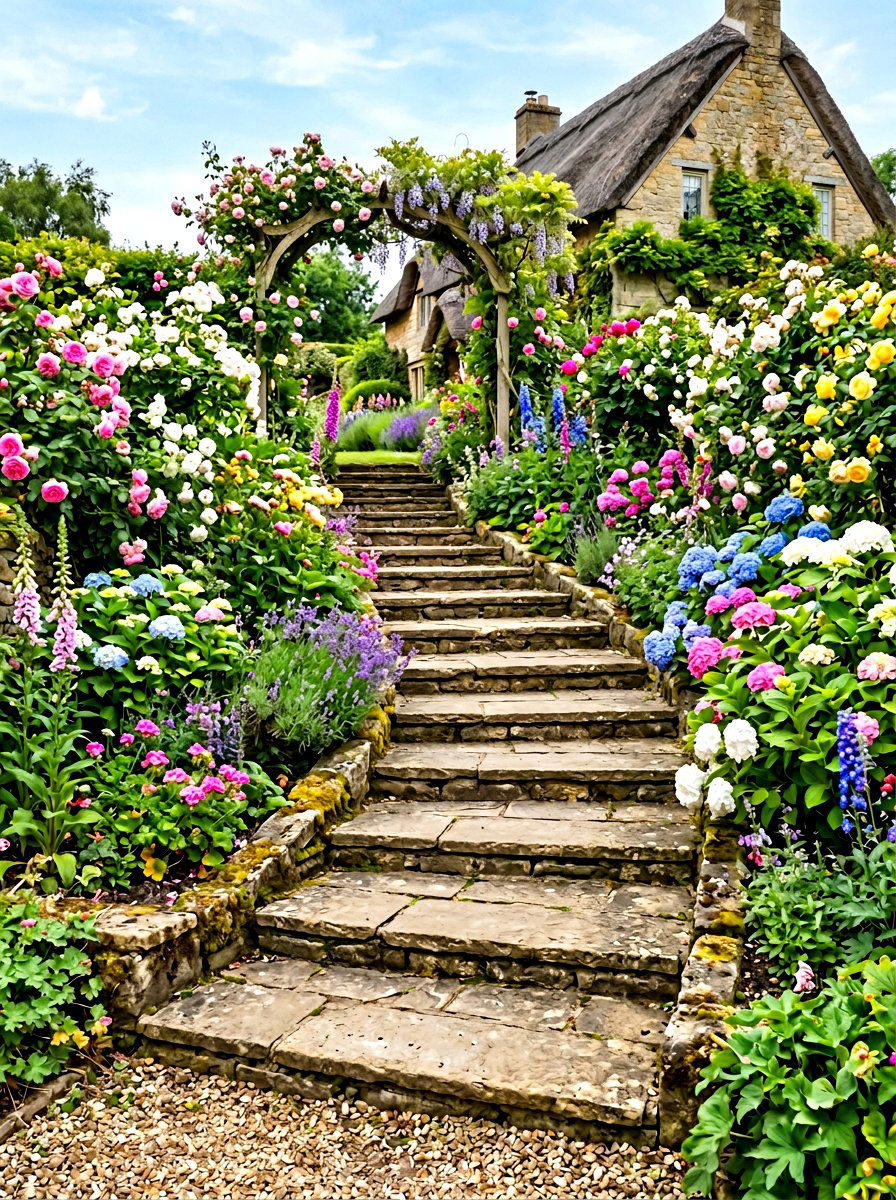
Curved stone steps add a sense of movement and grace to a landscape by breaking up the rigid lines of a typical yard. Instead of a straight climb, these stairs gently wind around a hill or garden bed, creating a more inviting journey. This design is often used to frame a central focal point, such as a fountain or a specimen tree. Using wedge-shaped stones or small pavers allows the builder to create smooth transitions and elegant arcs. The curved shape feels more natural and less engineered, making it a favorite for lush, English-style gardens. It softens the overall look of a large retaining wall system.
11. Flagstone Garden Stairs
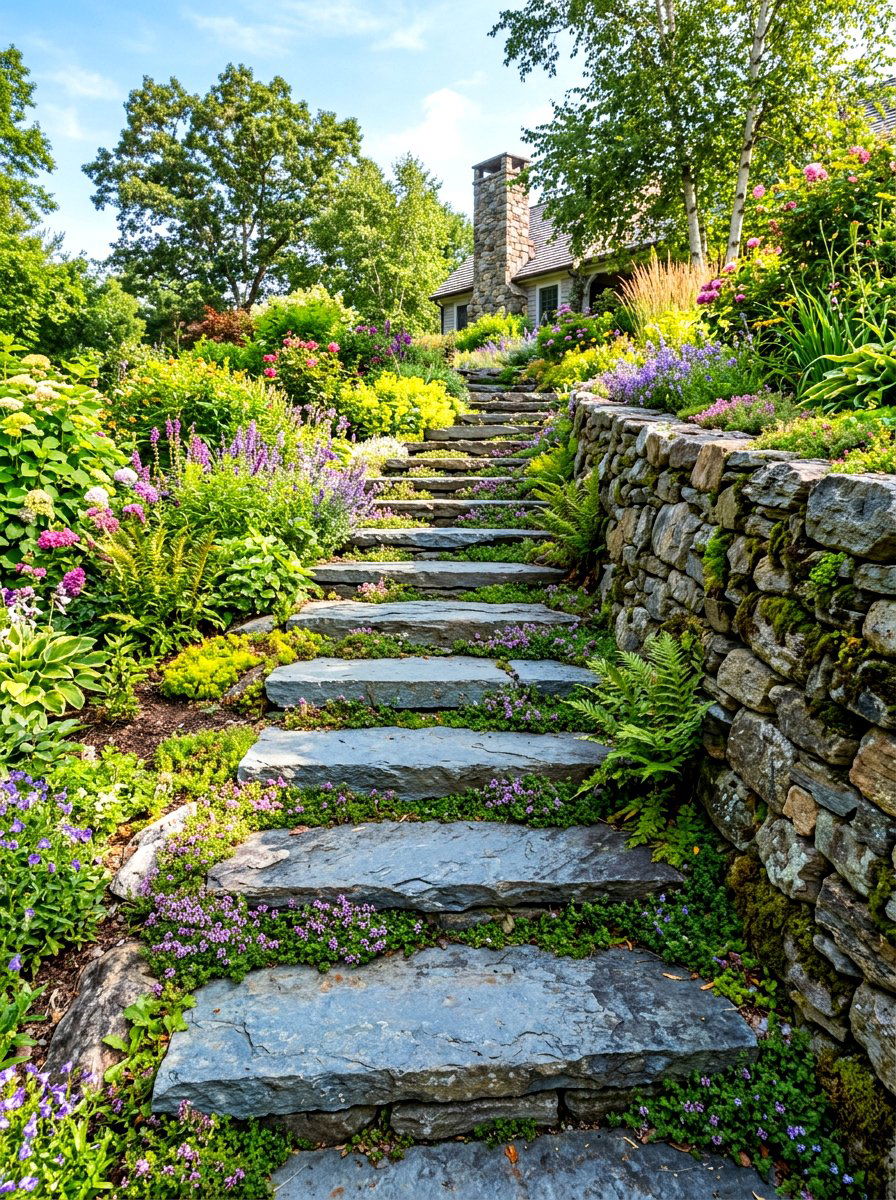
Flagstone garden stairs are known for their beautiful, irregular shapes and natural color variations that range from blue-gray to warm tan. These thin, flat slabs are stacked on top of each other to create a layered and textured staircase. This style is perfect for a whimsical or fairy-tale garden where you want the hardscaping to look organic. The rough surface of the flagstone provides excellent natural grip, making it a safe choice for rainy climates. You can fill the joints with small pebbles or low-growing succulents to integrate the stairs further into the landscape. It offers a very relaxed and artistic vibe for your outdoor space.
12. Cor-Ten Steel Steps
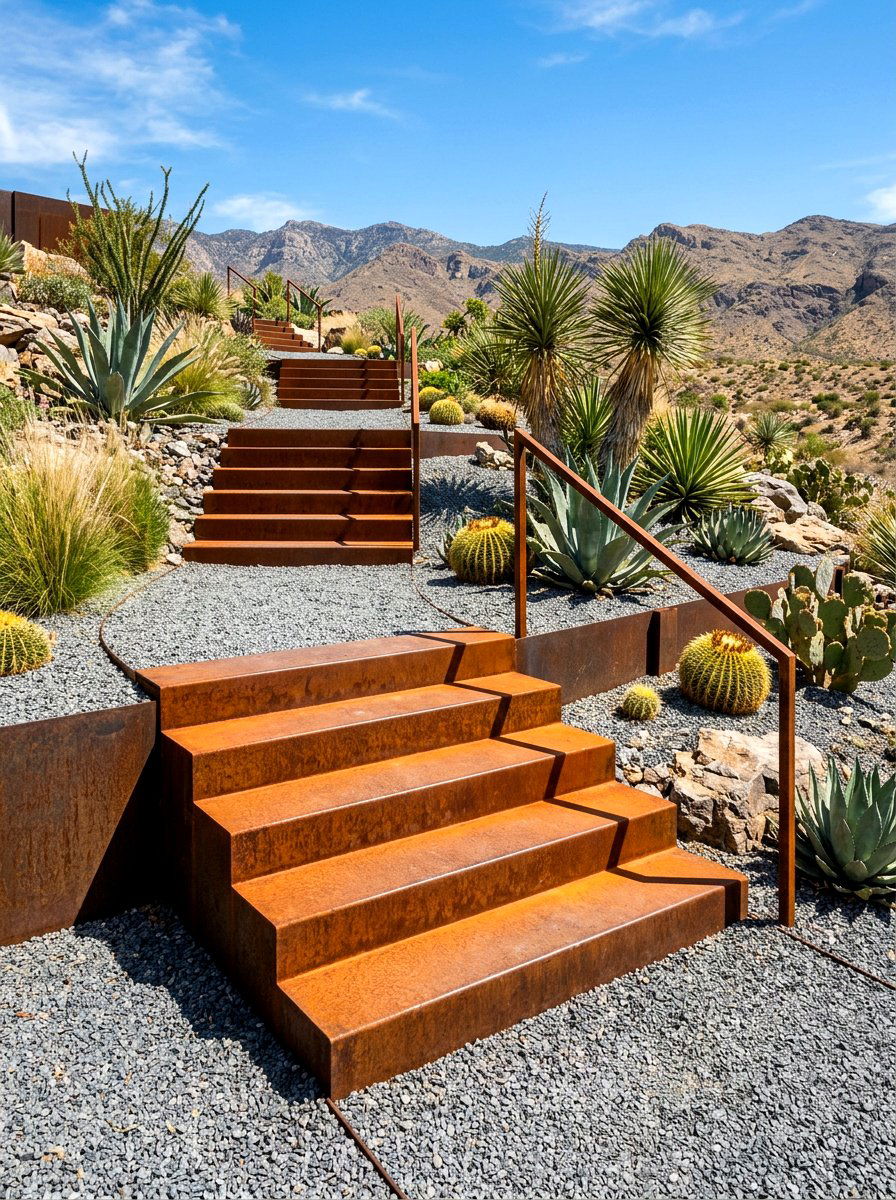
Cor-Ten steel steps are a bold and modern choice for homeowners who love industrial design and low-maintenance materials. This type of steel develops a beautiful, protective layer of rust over time that turns a deep orange-brown color. The thin profile of the steel allows for sharp, crisp lines that look incredibly striking against green lawn or gray gravel. These steps are often used in contemporary xeriscapes where water conservation and durability are the top priorities. The steel is extremely strong and can be used to create cantilevered steps that appear to stick out from a wall. It is a high-contrast and very stylish landscape feature.
13. Bluestone Masonry Stairs
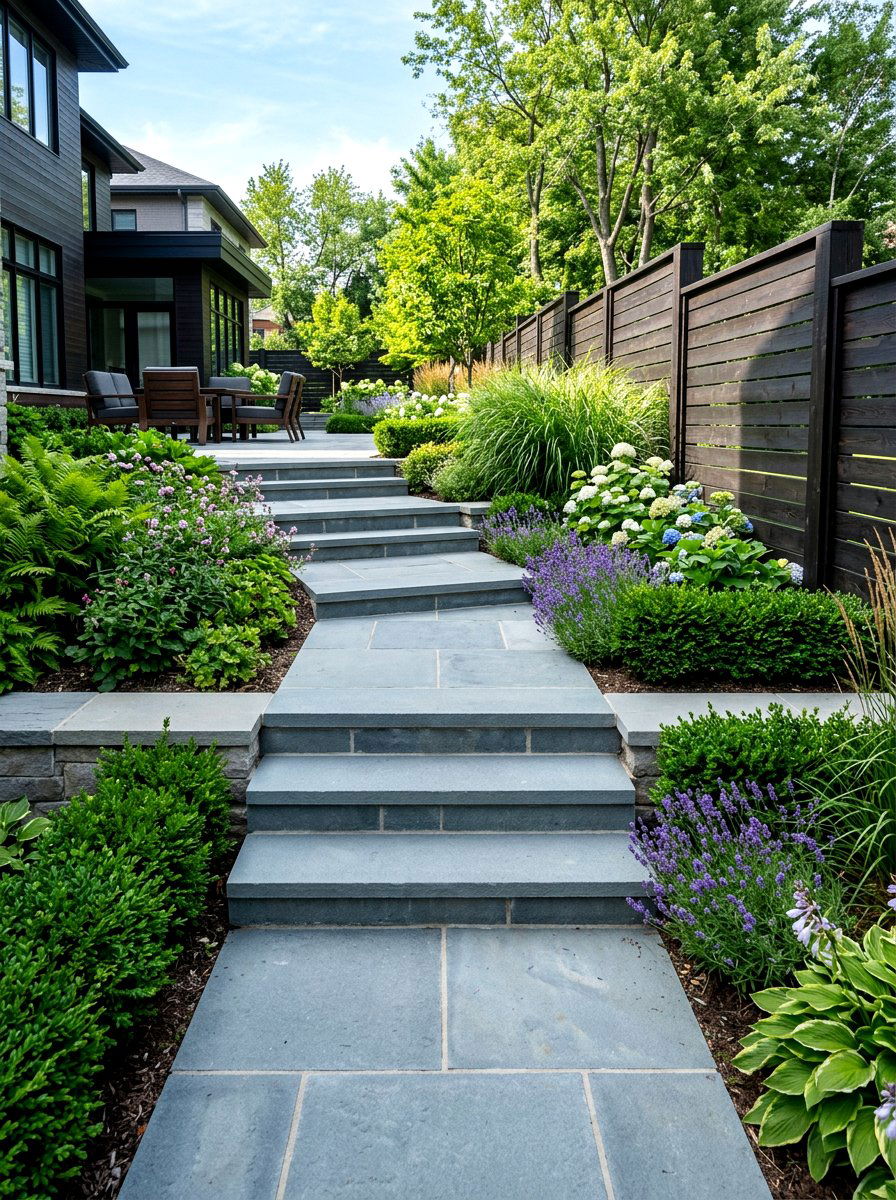
Bluestone masonry stairs offer a premium and sophisticated look with a consistent color palette that looks stunning in any weather. This natural sandstone is prized for its cool blue and gray tones, which provide a very calming effect in a garden. The stones are typically cut into precise rectangles for a formal look or left with natural edges for a more relaxed feel. This material is very dense and stays cool under the sun, making it comfortable for bare feet in the summer. It is often paired with white trim or dark wood accents on the house for a classic and high-end aesthetic. It is a timeless landscape investment.
14. Fieldstone Landscape Steps
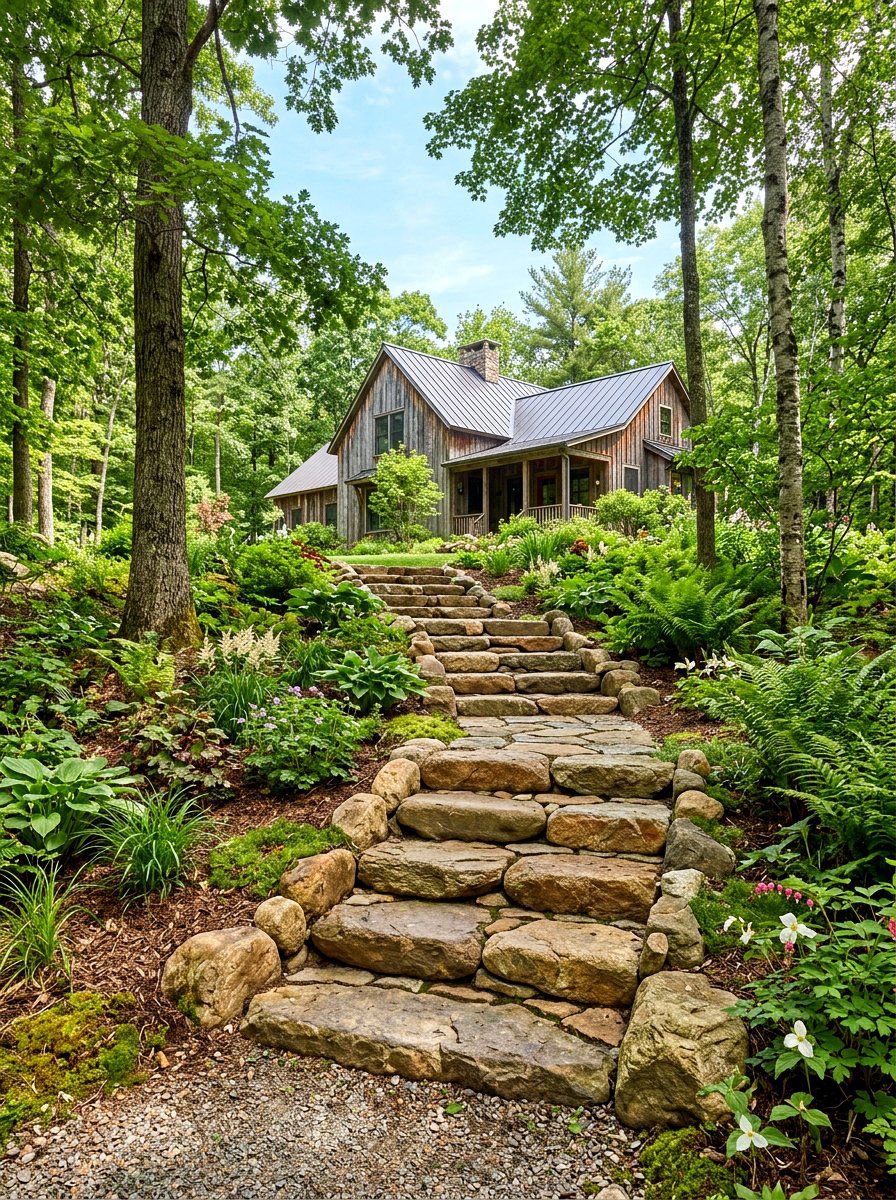
Fieldstone landscape steps use rounded, weather-worn rocks that look like they were gathered from a local meadow or forest floor. This design is perfect for creating a rugged, "old-world" feel in a large backyard or rural property. The irregular sizes of the stones require a skilled mason to fit them together like a puzzle for a stable walking surface. This style looks best when surrounded by native plants, ferns, and wildflowers that can grow in the small crevices between rocks. It creates a very grounded and authentic look that honors the natural history of the land. It is a beautiful way to manage a steep grade.
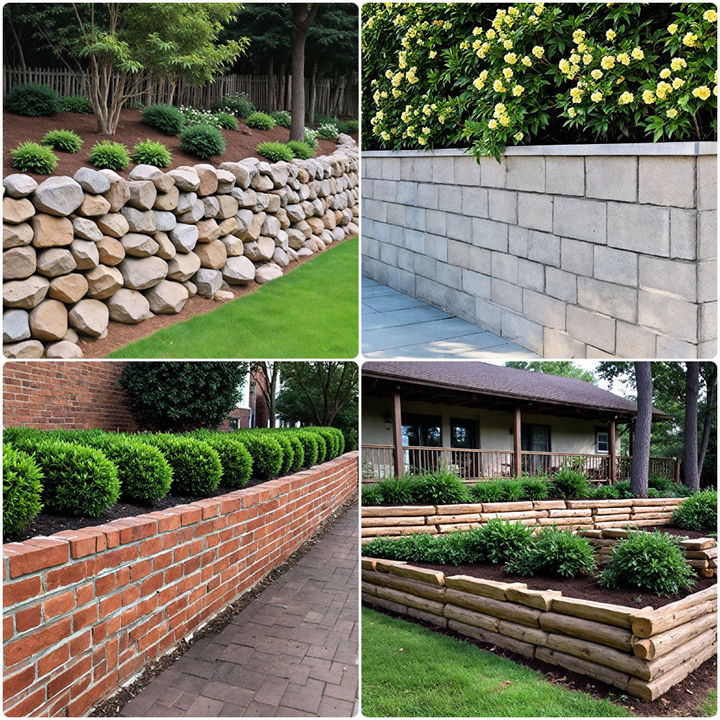
15. Paver Retaining Wall Stairs
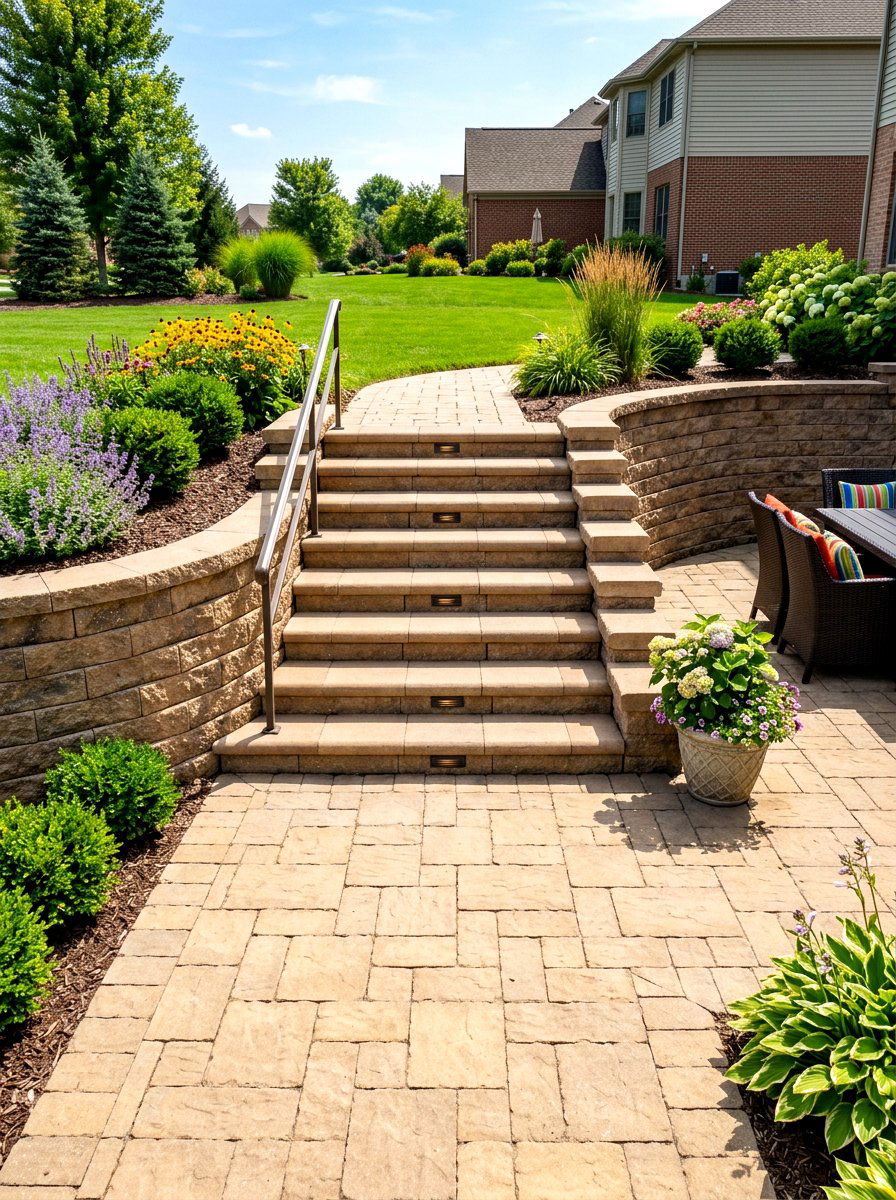
Paver retaining wall stairs use manufactured stones that are designed to match perfectly with popular patio paver collections. This ensures that your entire outdoor living area has a unified and professionally designed appearance from top to bottom. These pavers are available in a wide range of textures, including some that mimic the look of aged cobblestone or smooth slate. Because they are engineered, the steps are perfectly uniform in height, which minimizes tripping hazards for children and elderly guests. You can add contrasting border stones to the edges of the treads to define the path clearly. It is a versatile and very reliable landscaping solution.
16. Slate Stone Staircase
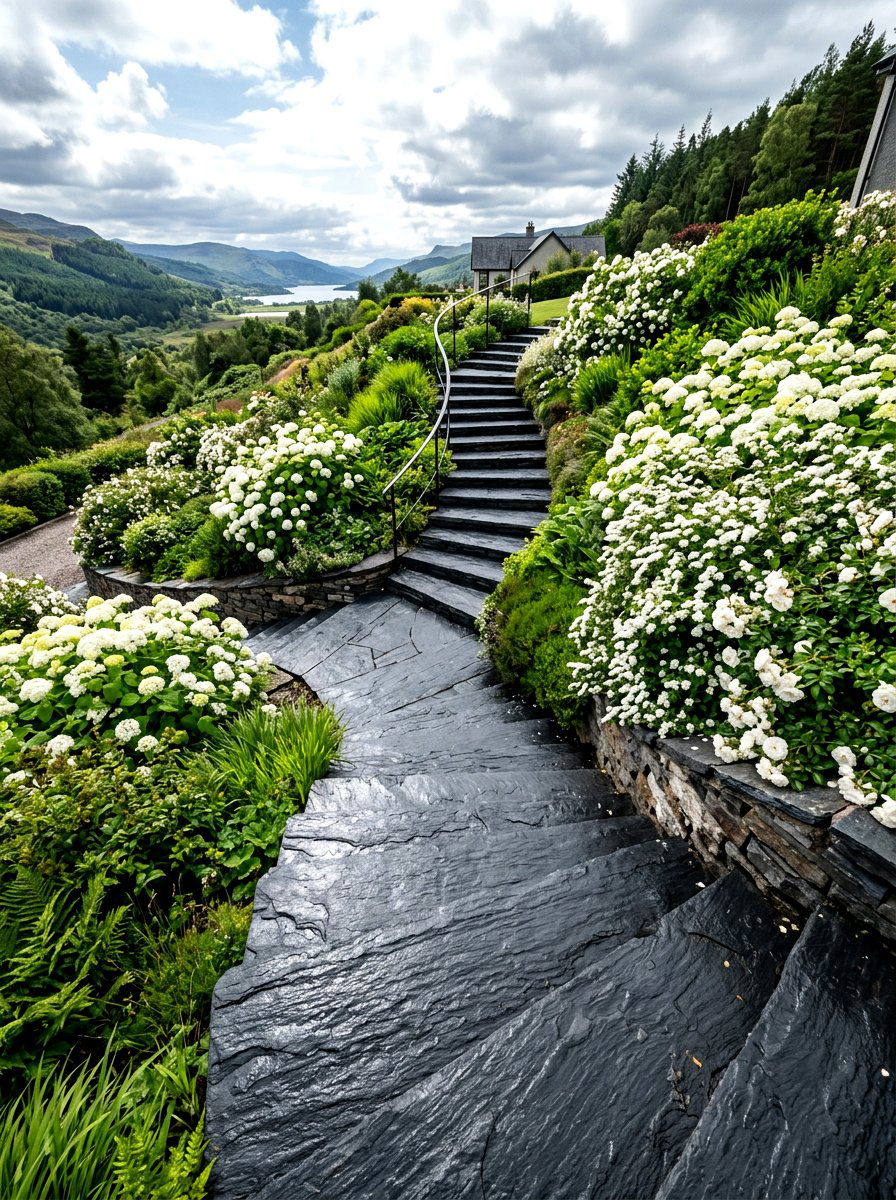
A slate stone staircase provides a dark and dramatic look that stands out beautifully against bright green grass and white flowering shrubs. Slate is known for its unique layered texture and its ability to split into flat, thin sheets that are perfect for treads. The colors often include deep charcoal, purple, and hints of green, providing a sophisticated and moody aesthetic. This material looks particularly striking when wet, making it a great choice for areas near a pool or a pond. While slate can be slippery when polished, natural cleft slate offers plenty of traction for safe outdoor use. It adds a touch of luxury to any yard.
17. Integrated Planter Stairs
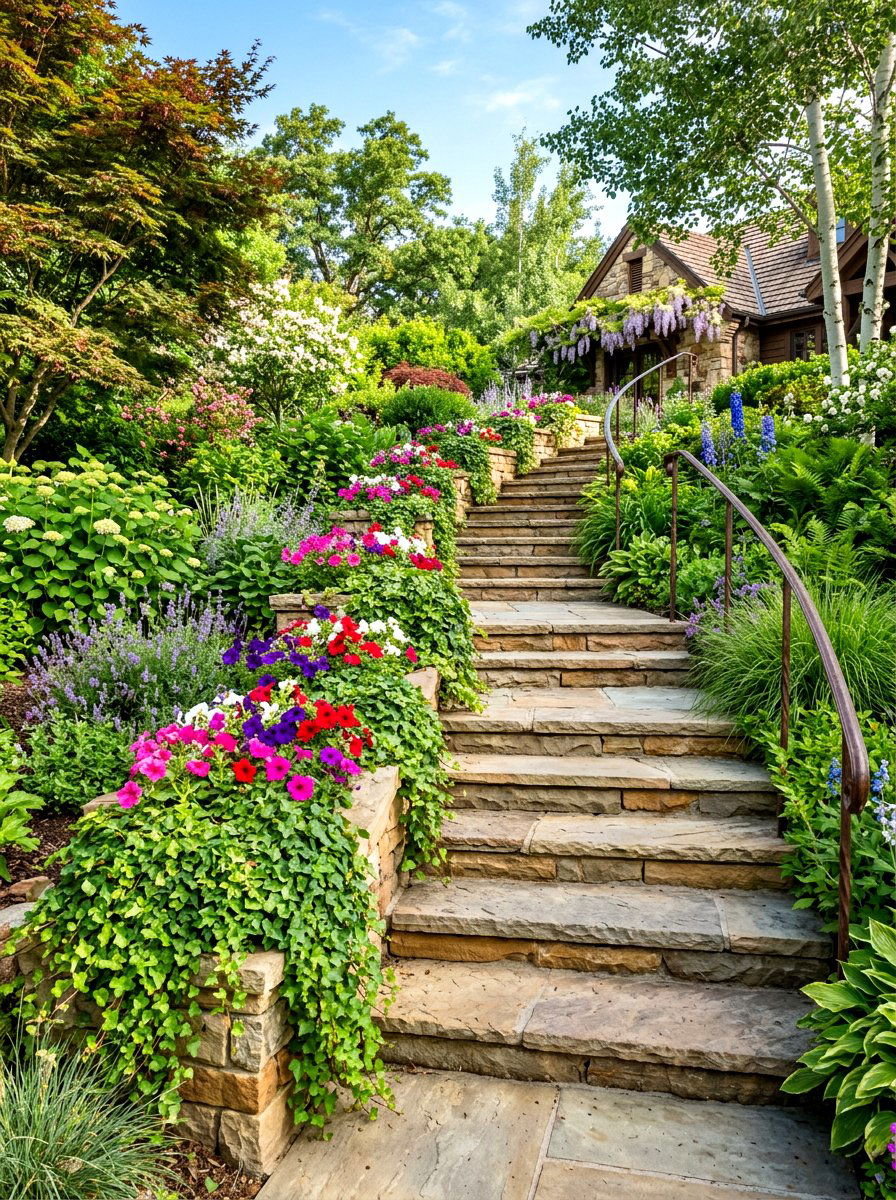
Integrated planter stairs combine functionality with lush greenery by building flower boxes directly into the sides of the staircase. This design allows you to surround yourself with fragrant herbs or colorful blooms as you move between different levels of your yard. The planters help to soften the transition between the hard stone steps and the rest of the garden. You can use trailing plants like ivy or creeping jenny to spill over the edges for a romantic, overgrown look. This style is perfect for small yards where you want to maximize every inch of space for both walking and planting. It turns a staircase into a vertical garden.
18. Terraced Garden Steps
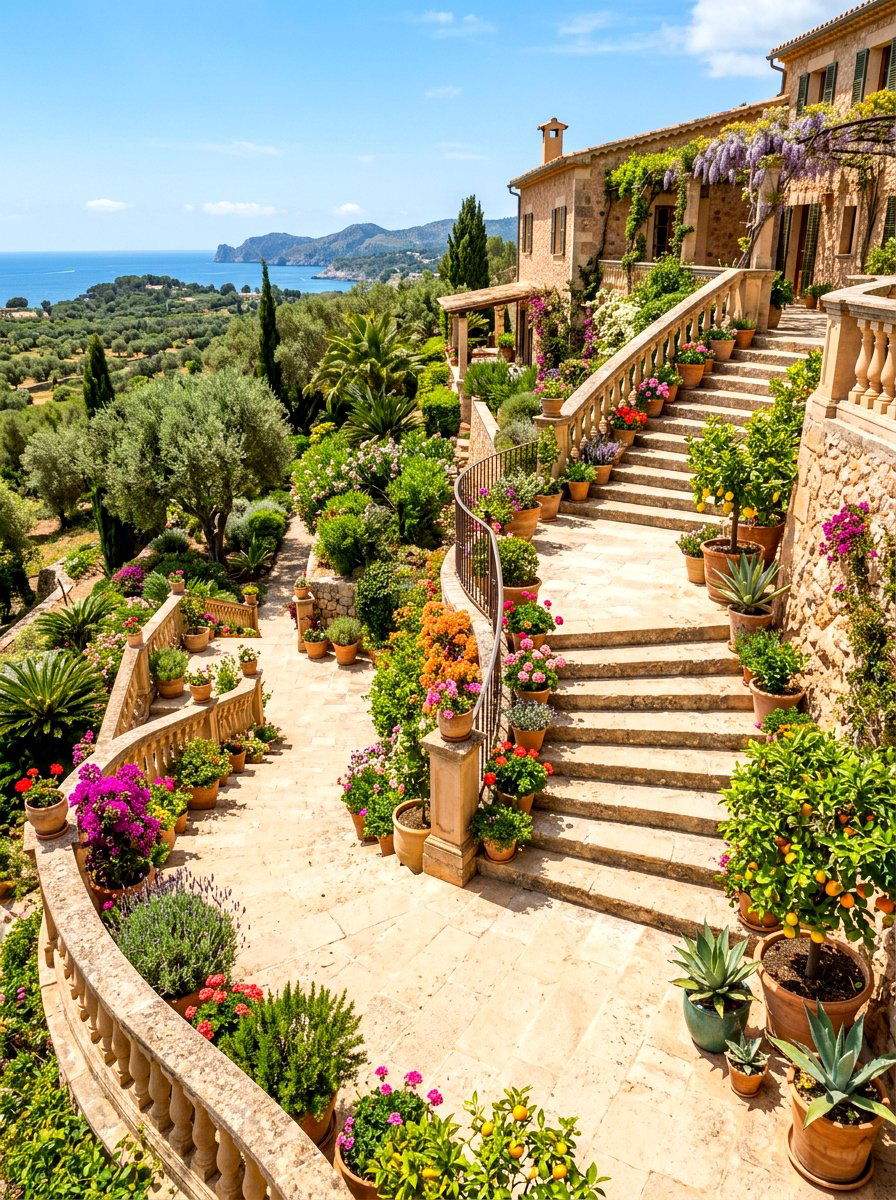
Terraced garden steps are designed as a series of wide landings and short flights of stairs that move gradually up a hillside. This approach is much easier to climb than a long, continuous staircase and provides plenty of space for decorative elements. Each landing can serve as a small patio for a bench, a piece of art, or a collection of potted plants. This design helps to break up a very steep slope into manageable sections that feel like separate garden rooms. It is a grand and architectural way to handle significant elevation changes while adding a lot of character. The wide spaces make the yard feel bigger.
19. Granite Slab Stairs
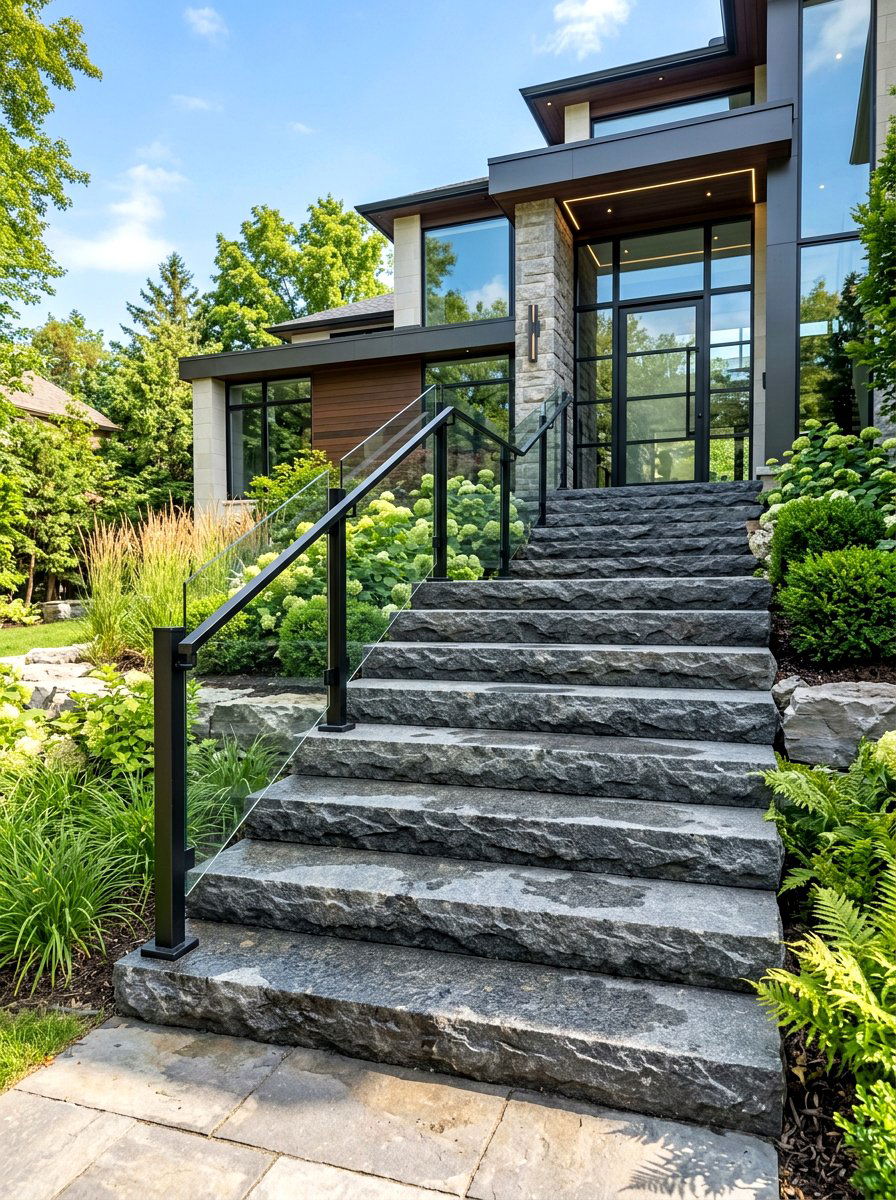
Granite slab stairs are the gold standard for durability and high-end style in modern and traditional landscape designs alike. Granite is one of the hardest natural stones available, meaning it will not chip, crack, or fade even in the harshest winter climates. The slabs can be flamed or sandblasted to create a non-slip surface that is safe for all family members to use. With its speckled texture and wide range of colors, granite adds a sense of permanence and luxury to a home’s exterior. It is an excellent choice for front entryways where you want to make a strong and lasting first impression on guests.
20. Limestone Block Steps
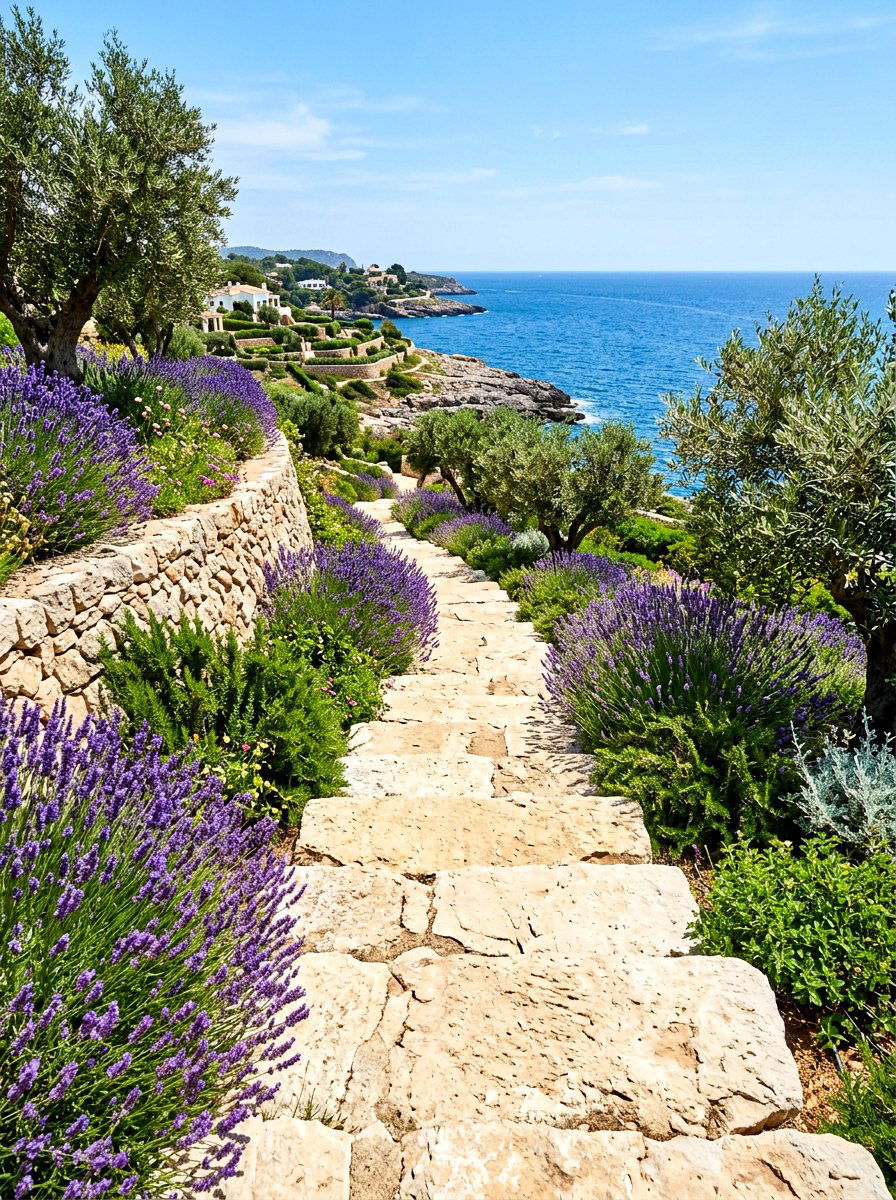
Limestone block steps offer a bright and airy look with soft beige, cream, and light gray tones that reflect the sunlight beautifully. This stone is often used in Mediterranean or coastal-style landscapes to create a warm and sun-drenched atmosphere. The blocks are typically cut into large, chunky rectangles that give the staircase a very solid and architectural feel. Over time, limestone will develop a natural patina that adds to its historic charm and character. It looks wonderful when paired with olive trees, lavender, and terracotta pots for a complete vacation-at-home vibe. It is a cheerful and elegant material choice for any sunny garden.
21. Recessed Wall Stairs
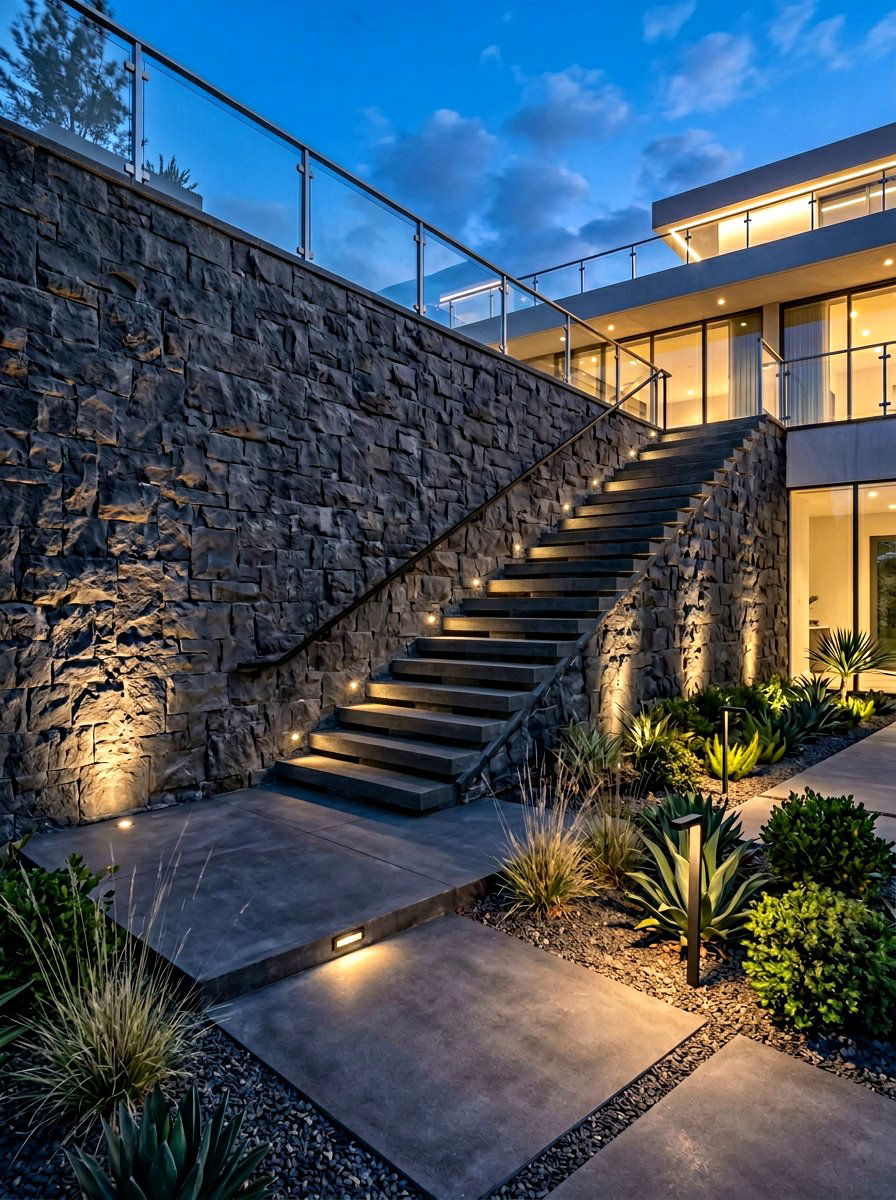
Recessed wall stairs are built directly into the face of a retaining wall rather than projecting out into the yard space. This clever design saves a lot of room and creates a very clean, flush look that is perfect for tight urban gardens. The stairs appear as a carved-out path through the wall, which adds a sense of mystery and modern architectural flair. You can use contrasting materials for the steps to make the path stand out, or use the same material for a seamless effect. This style is often used in high-end luxury homes to create a minimalist and sophisticated outdoor environment. It is very space-efficient.
22. Sandstone Garden Steps
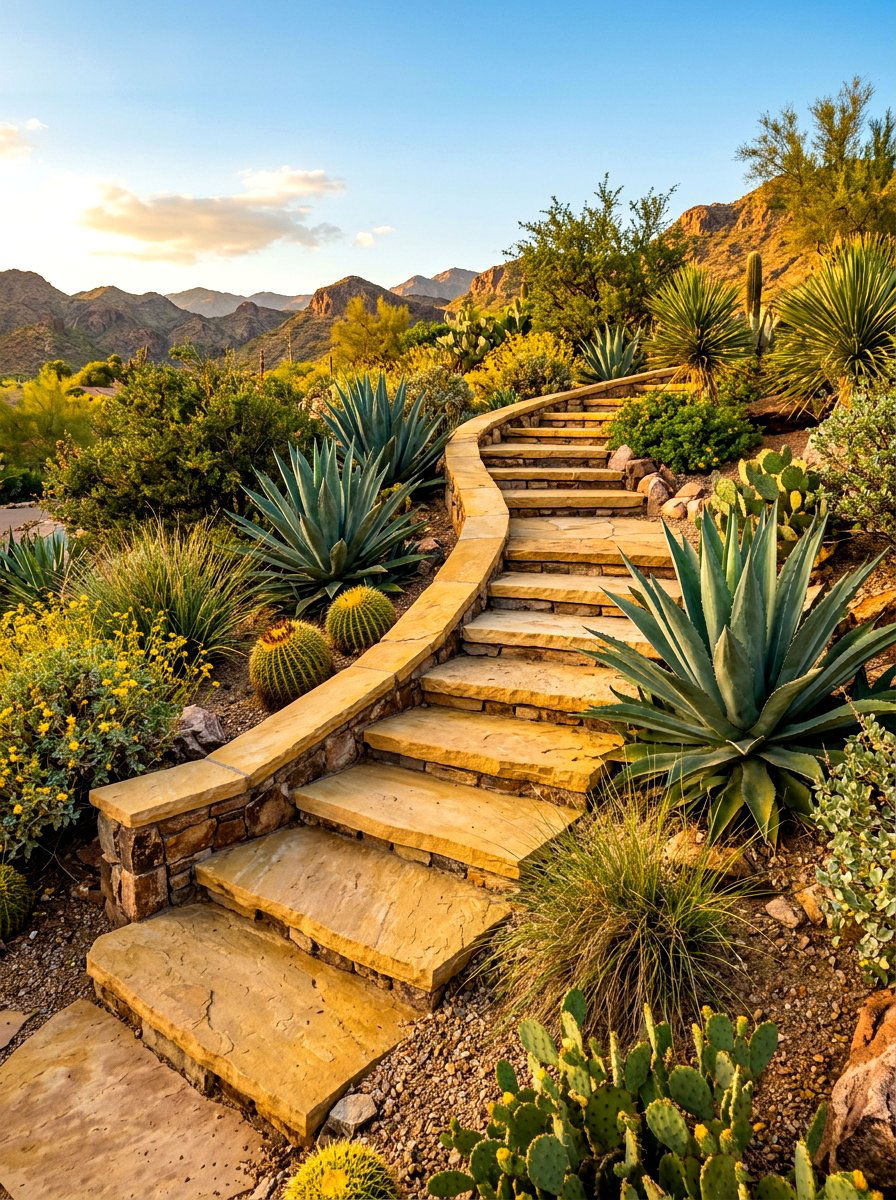
Sandstone garden steps provide a soft and earthy aesthetic with warm yellow, tan, and brown tones that feel very natural. This stone is relatively easy to carve, allowing for beautiful hand-finished edges and custom shapes that fit your specific landscape. The porous nature of sandstone gives it a very organic feel that blends well with sand, gravel, and drought-tolerant plantings. It is a favorite for desert-style landscapes or beach houses where a rugged, wind-swept look is desired. The natural variations in the stone ensure that no two steps look exactly the same. It brings a gentle and grounded energy to your backyard transition.
23. Travertine Outdoor Stairs
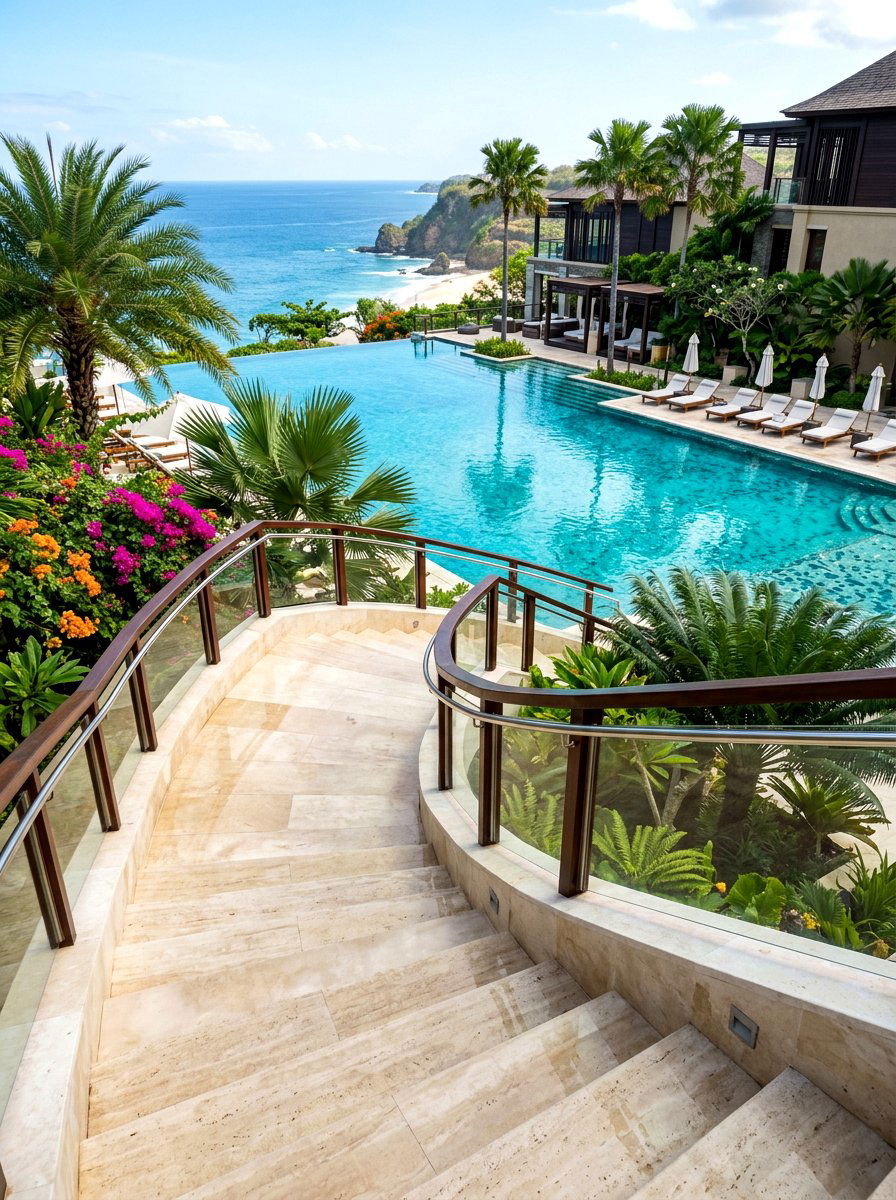
Travertine outdoor stairs bring the luxury of a high-end resort to your own backyard with their smooth texture and elegant porous markings. This natural stone is famous for its durability and its ability to stay cool under the hot summer sun. The light colors, such as ivory and walnut, create a bright and clean look that pairs perfectly with blue pool water. While it looks delicate, travertine is actually quite strong and can handle a lot of foot traffic over many years. It is an ideal choice for creating a seamless transition from an indoor living area to an outdoor patio or pool deck.
24. Cobblestone Path Steps
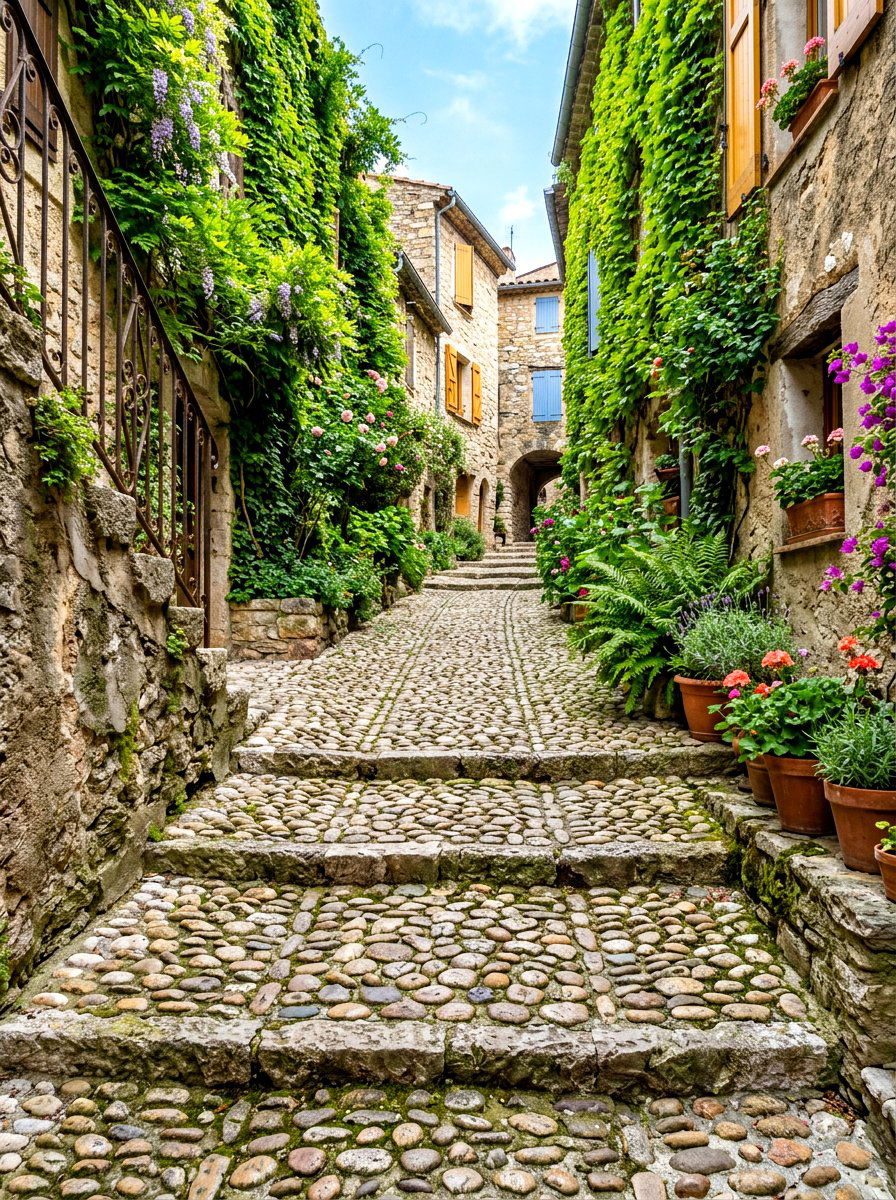
Cobblestone path steps offer an old-world European charm that makes your garden feel like a historic village in France or Italy. These small, rounded stones are set into a mortar or sand base to create a textured and highly durable walking surface. This style is perfect for narrow garden paths or steep walkways where a large, flat slab might look too modern or bulky. The irregular surface of the cobblestones provides excellent natural grip and a beautiful play of light and shadow. You can edge the steps with larger stones or bricks to keep the smaller cobbles securely in place for a lifetime.

25. Precast Concrete Stairs
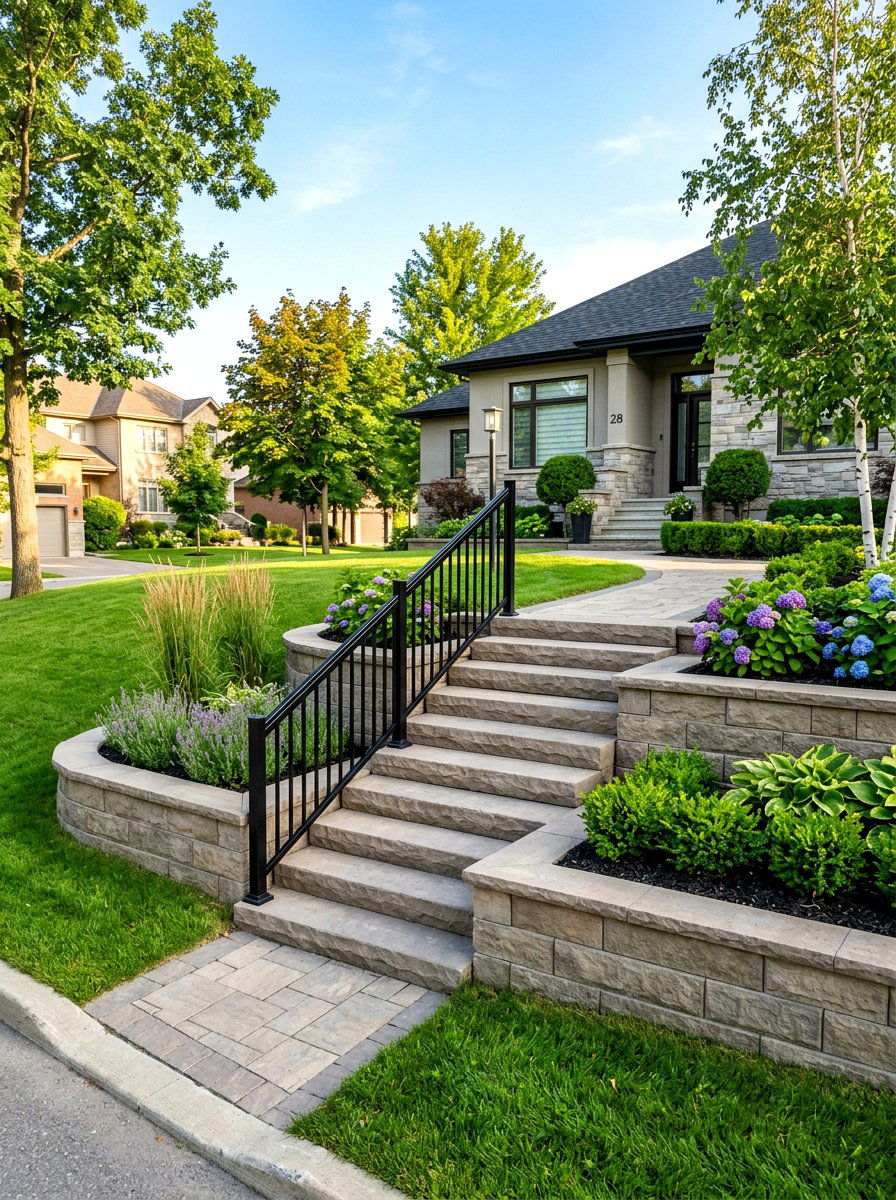
Precast concrete stairs are a smart and efficient choice for homeowners who want the look of high-end stone without the high price tag. These steps are manufactured in a factory to ensure perfect quality and consistency before being delivered and installed on your site. They come in many different styles, including some that look exactly like weathered timber or natural limestone. Because they are reinforced with steel, they are incredibly strong and resistant to the freeze-thaw cycles of colder climates. This design is very fast to install and provides an immediate transformation for any sloped yard or driveway area. It is a practical solution.
26. Decking Wood Stairs
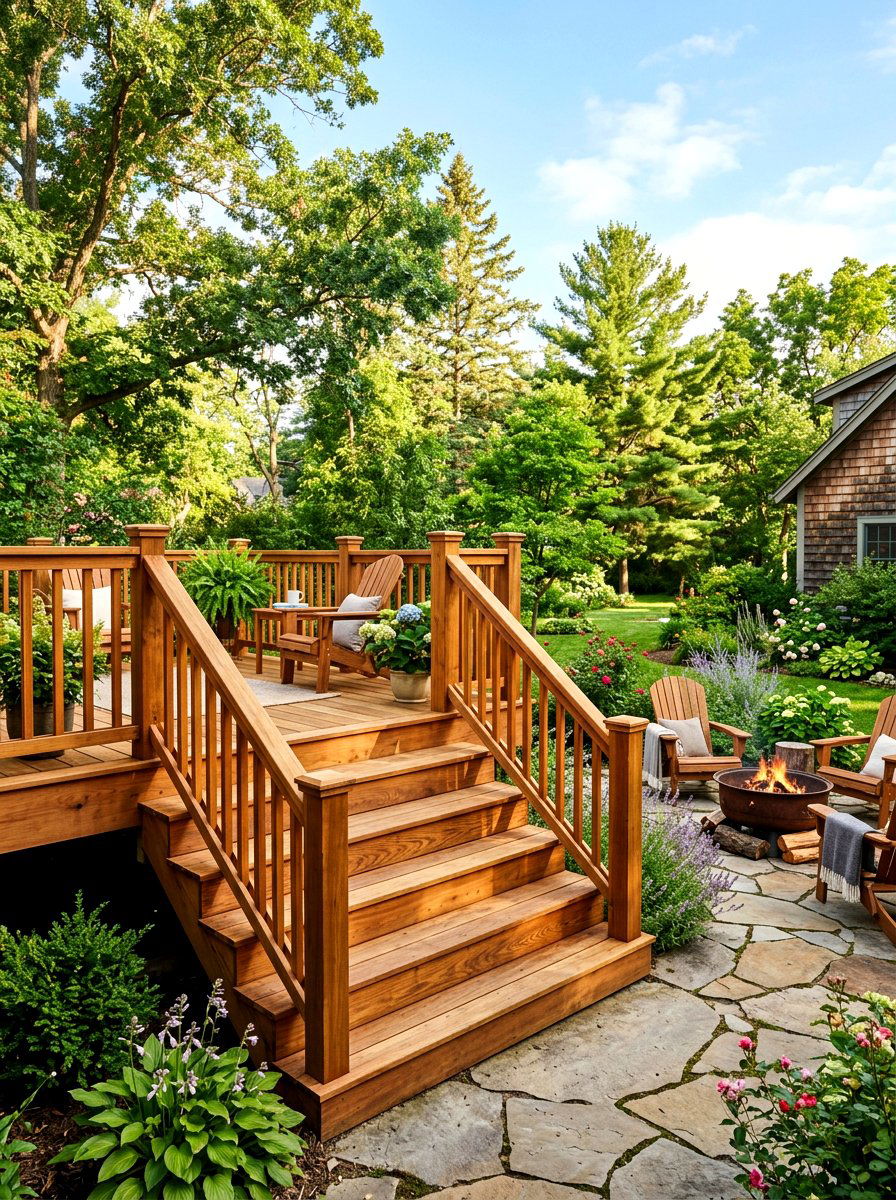
Decking wood stairs are the perfect choice when you want your retaining wall steps to match your existing wooden deck or porch. Using materials like cedar, redwood, or durable composite boards ensures a consistent look that ties the whole backyard together. These stairs are typically built on a wooden frame, allowing them to bridge over uneven ground or existing concrete walls easily. You can add matching railings and built-in lighting to the steps to increase safety and improve the overall design. This style feels very comfortable underfoot and adds a warm, lived-in feel to a modern or traditional home landscape. It is very inviting.
27. Grass Stone Steps
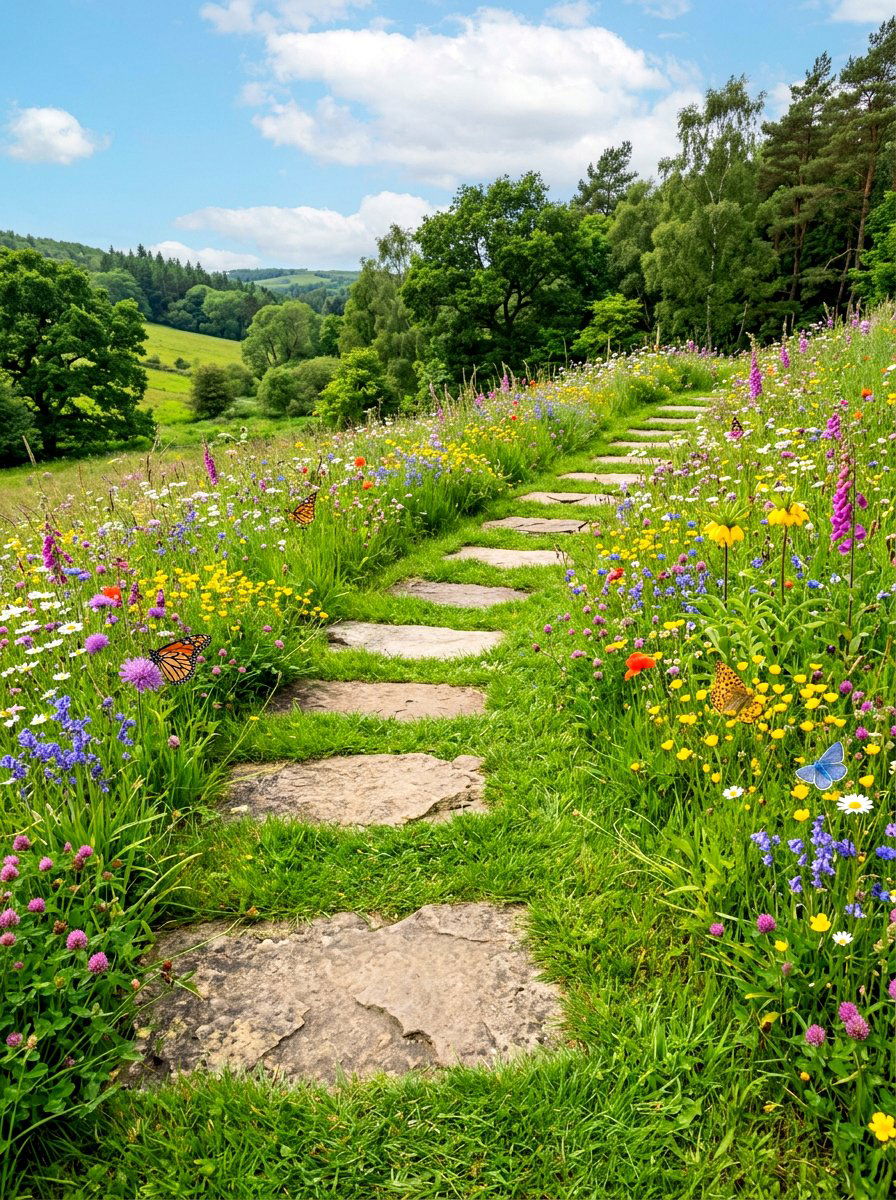
Grass stone steps offer a soft and eco-friendly design that blends the hard lines of a staircase with the beauty of a lush lawn. Large, flat stones are set into a grassy slope with space left between them for the grass to grow through and around. This creates a very natural look that is perfect for casual backyards or areas where you want to maintain as much greenery as possible. This style helps to reduce runoff and allows rainwater to soak into the soil naturally. It is a wonderful choice for low-traffic areas where you want a path that feels like part of the meadow.
28. Multi-Level Landing Stairs
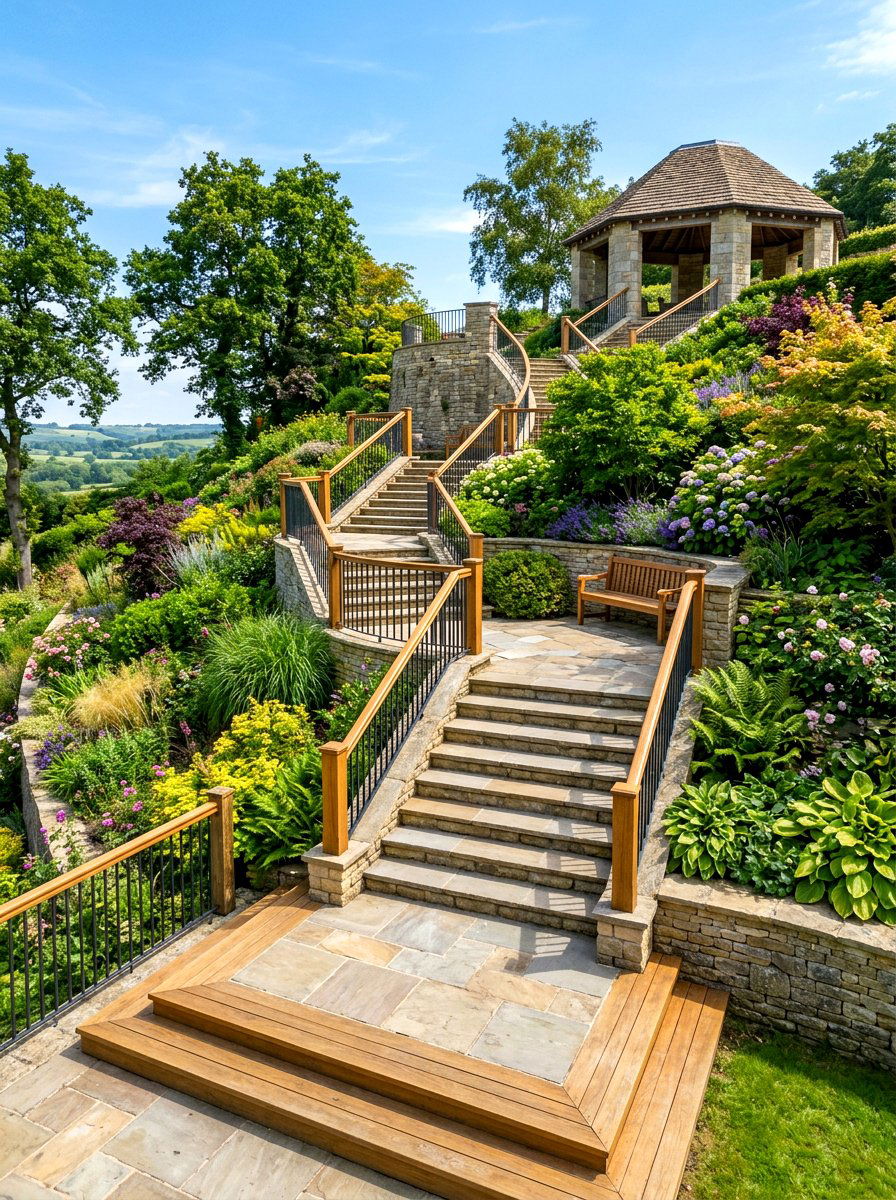
Multi-level landing stairs are a grand design choice for properties with very high retaining walls and significant changes in elevation. This staircase features several large platforms or landings that break up the climb and provide a space to rest and enjoy the view. Each landing can be styled with different materials, such as a mix of wood and stone, to add visual variety. This design is perfect for creating an impressive entrance to a hilltop home or a tiered backyard entertainment space. The landings make the staircase feel like a series of small terraces rather than just a way to get from top to bottom.
29. Cantilevered Stone Steps
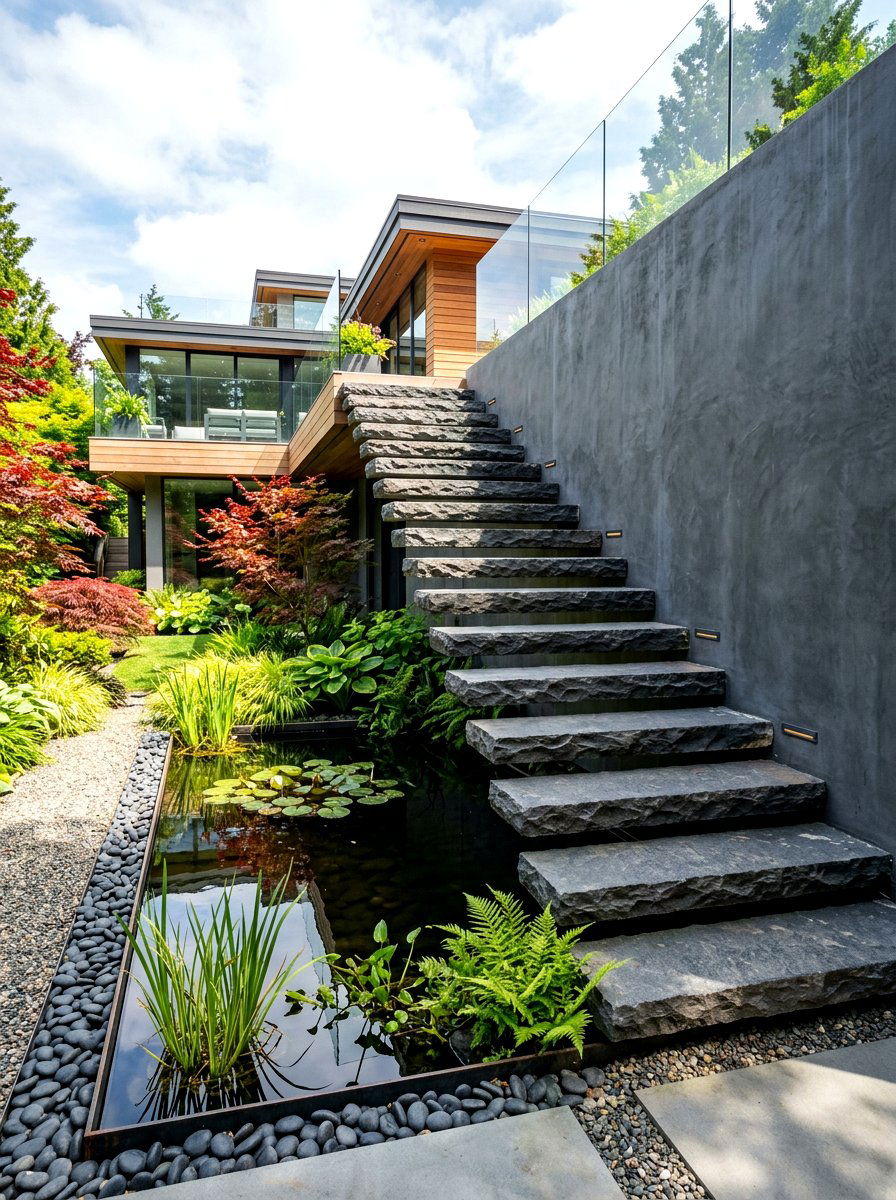
Cantilevered stone steps are a marvel of modern engineering that creates a stunning and minimalist look for contemporary landscapes. These steps are anchored into a hidden concrete wall, allowing them to stick out without any visible support underneath. This creates a "floating" effect that is incredibly striking and clean, especially when paired with simple glass railings or no railings at all. This design is best for high-end homes where the landscape is meant to be a bold architectural statement. The shadows created beneath each step add depth and drama to the yard during the day and night. It is a very sophisticated and high-end look.
30. Rustic Log Stairs
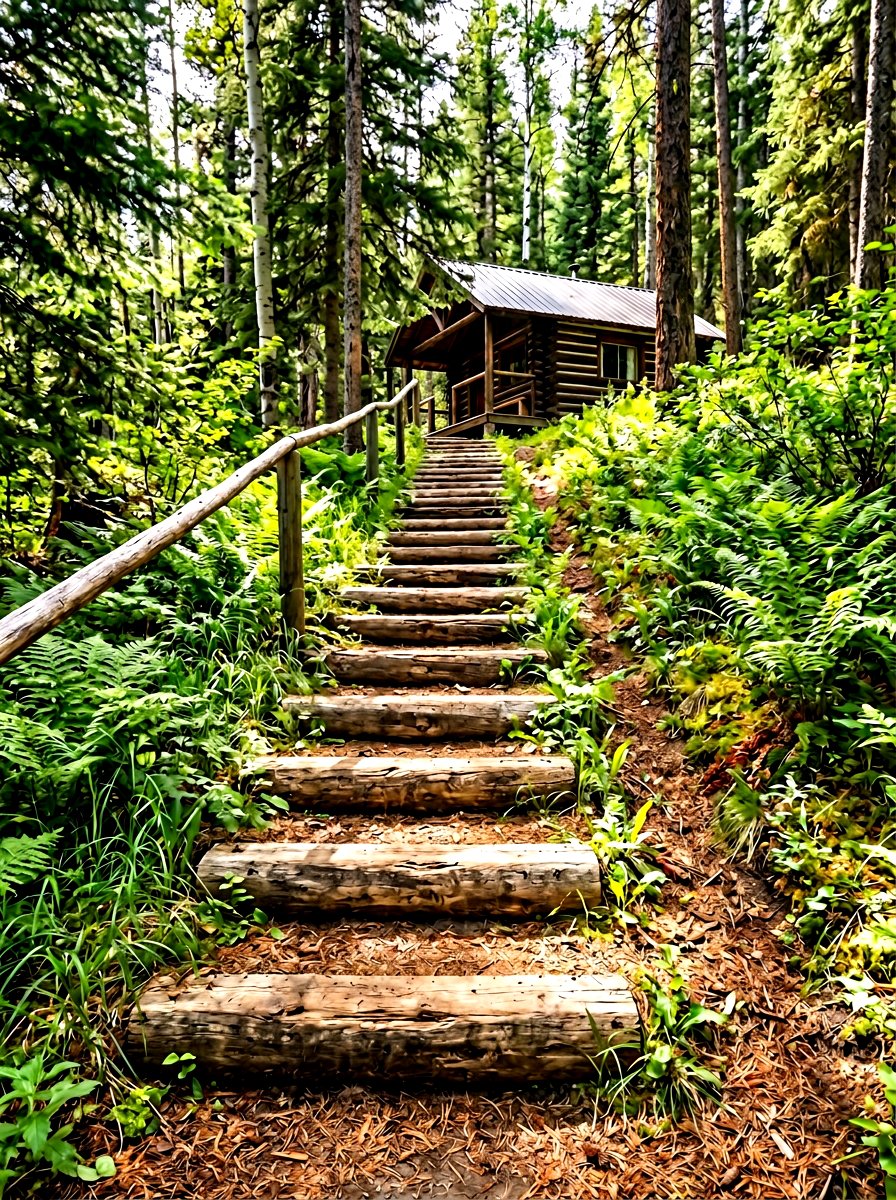
Rustic log stairs are the most natural and affordable way to create a path through a wooded area or a wild garden. This design uses half-logs or thick branches that are secured into the hillside with wooden stakes or rebar. The steps are then filled with soil, mulch, or wood chips to create a level and comfortable walking surface. This style is perfect for DIY enthusiasts who want to use materials found on their own land to improve accessibility. The logs will slowly age and weather, blending perfectly into the forest floor over time. It provides a charming and humble transition for any cabin.
Conclusion:
Adding a well-designed staircase to your retaining wall is a transformative project that brings both safety and style to your home landscape. From the rugged beauty of natural boulders to the sleek sophistication of cantilevered stone, these thirty ideas show that there is a solution for every property. Choosing the right materials and layout ensures that your yard is not only easier to navigate but also more visually appealing for guests. A thoughtful design can turn a difficult, sloped yard into a series of beautiful outdoor rooms that you can enjoy for many years to come. Start your renovation today and elevate your outdoor living experience.

Related posts: