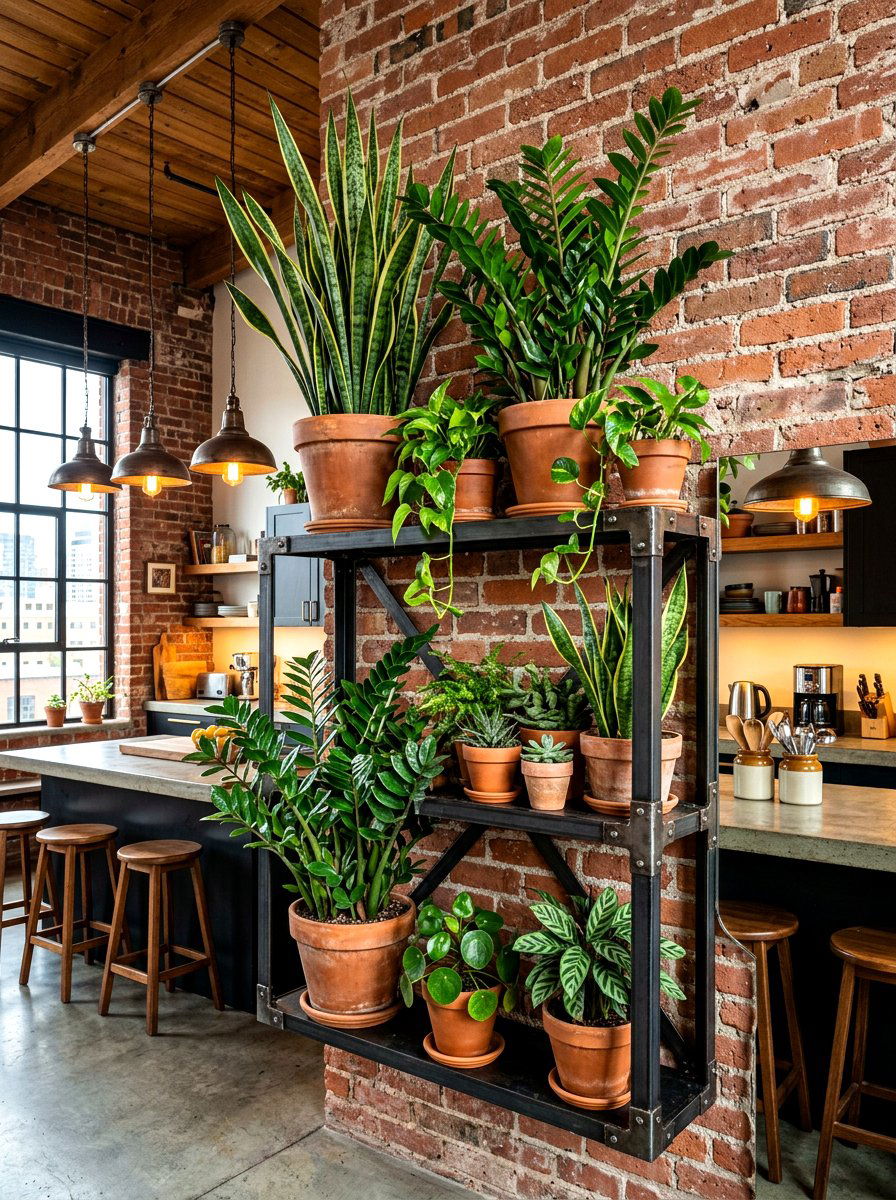
As the temperatures drop and vibrant summer blooms fade away, your outdoor space often begins to look a bit barren and gray. However, the arrival of frost does not mean your gardening journey has to end until the spring thaw. Winter container gardening offers a wonderful opportunity to maintain curb appeal and bring life to your porch throughout the coldest months of the year. By utilizing hardy evergreens, colorful twigs, and resilient winter berries, you can create stunning displays that stand up to snow and ice. These arrangements act as focal points, providing much-needed texture and greenery when the rest of the landscape is sleeping quietly under a blanket of winter white.
1. Spruce Top Planter
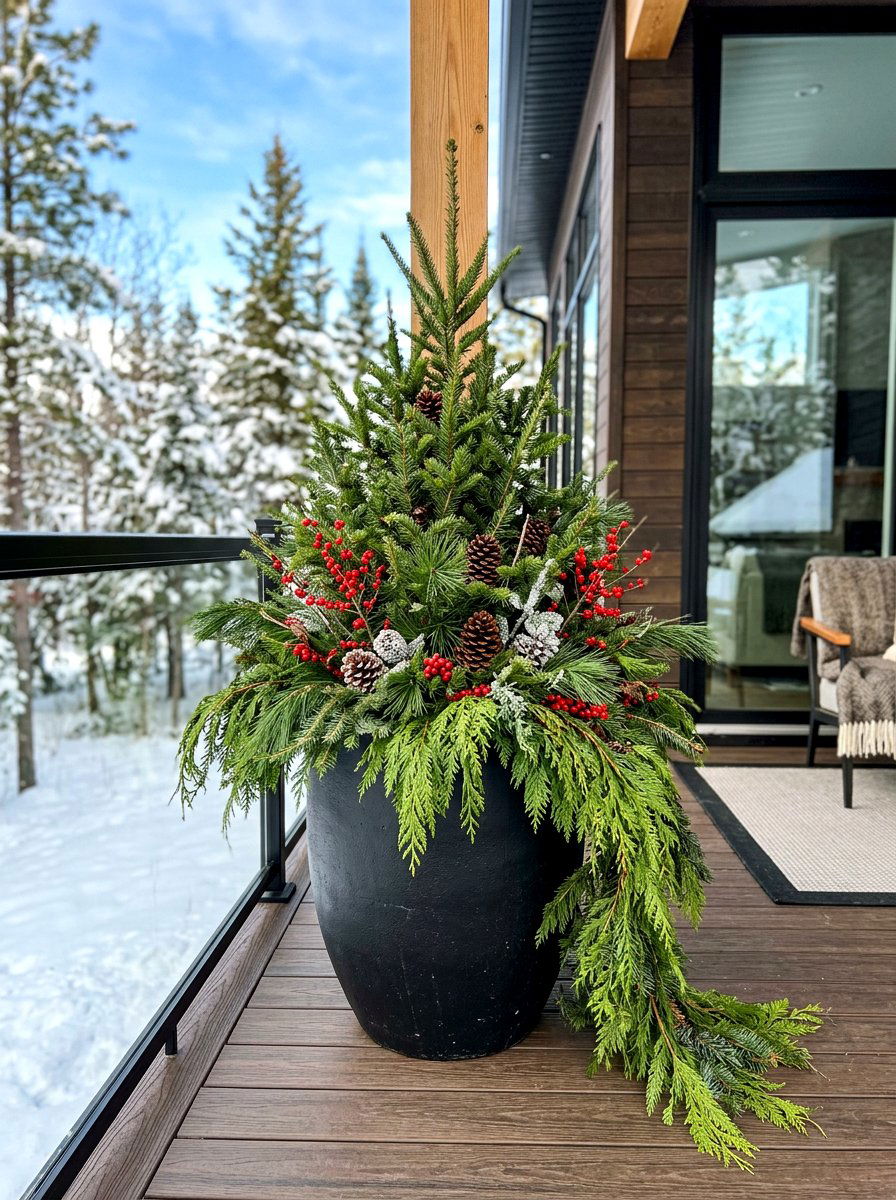
Spruce tops are a classic choice for creating height and structure in any winter container. These small evergreen boughs are typically harvested from the tops of mature spruce trees and sold in bundles at local nurseries. When you arrange them in a large pot, they mimic the look of miniature Christmas trees. You should push the stems deep into the soil to ensure they stay upright during heavy winds. Adding a few trailing cedar branches around the base creates a beautiful spilling effect. This design provides a lush, full look that stays vibrant even in sub-zero temperatures. It is a reliable way to keep your front porch looking fresh and green all season long.
2. Winter Berry Container
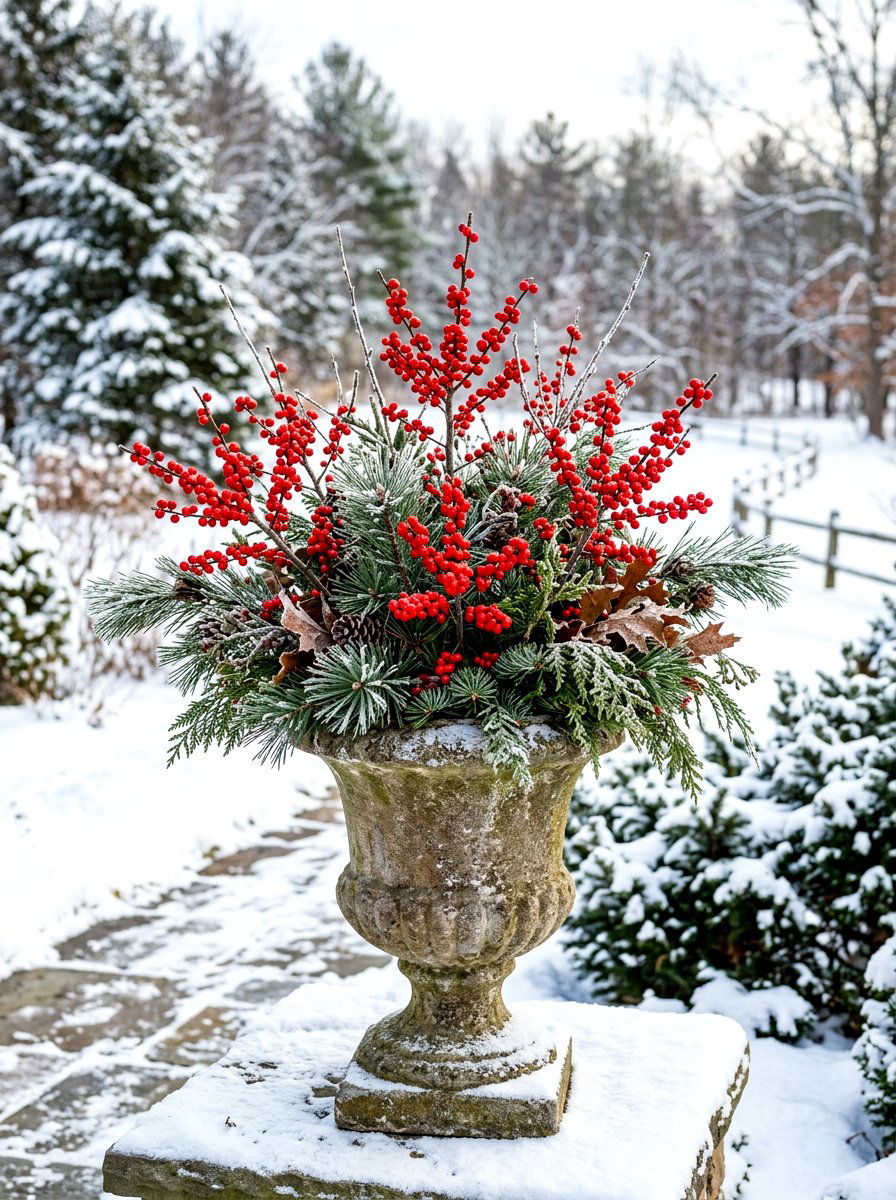
Bright red berries offer a striking contrast against the dark green of evergreen needles during the winter months. You can use real winterberry holly or ilex branches to add a pop of natural color to your outdoor pots. These branches are known for holding their fruit long after the leaves have fallen, making them perfect for late-season interest. Place the berry-laden stems in the center of your arrangement to act as a bold focal point. Surround them with variegated boxwood or pine boughs to fill out the space. This simple combination is highly effective at attracting songbirds to your yard. It creates a cheerful, festive atmosphere that feels both traditional and very natural.
3. Birch Pole Arrangement
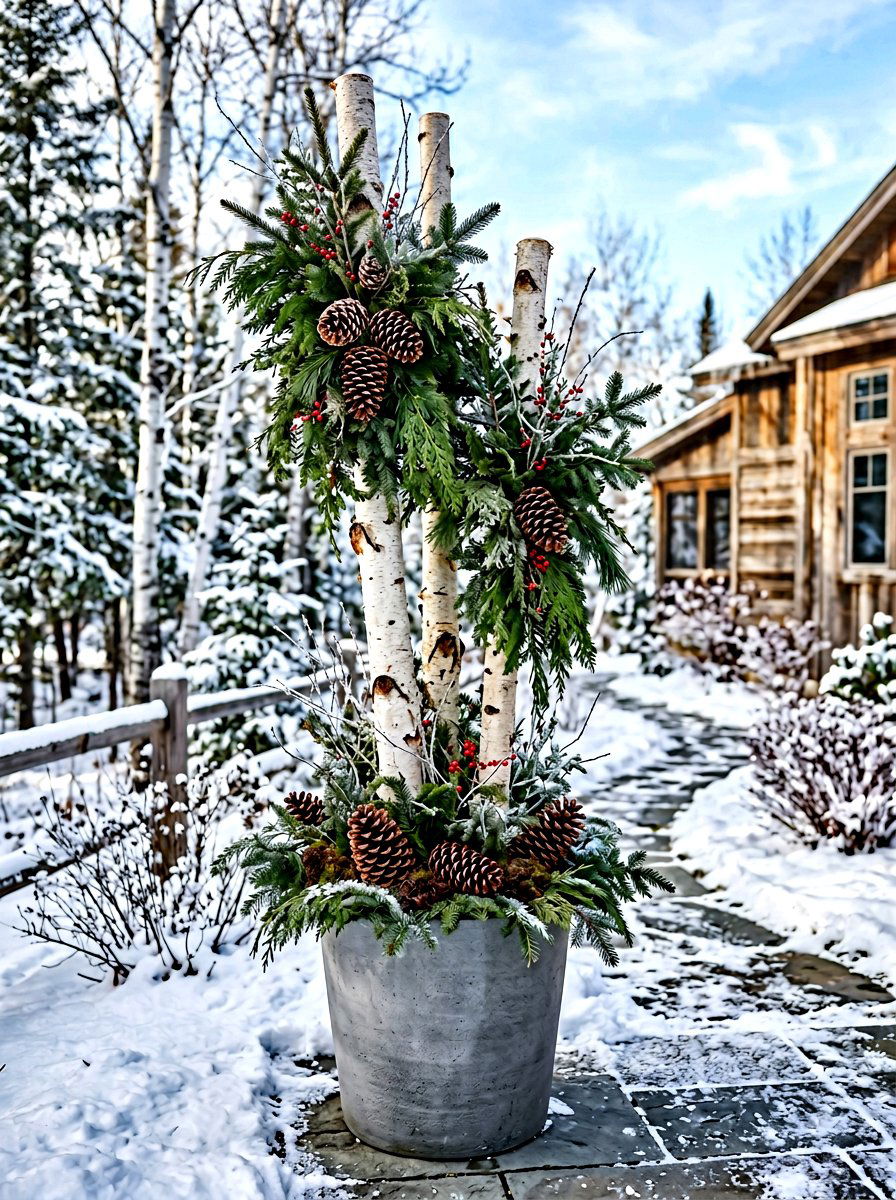
White birch poles bring a unique architectural element to winter containers through their distinct papery bark and bright color. You can use three poles of varying heights to create a sense of vertical movement in a large stone or ceramic pot. The bright white bark stands out beautifully against a backdrop of dark green fir or juniper branches. To finish the look, tuck in some large pinecones and silver-sprayed twigs around the base of the poles. This design looks particularly sophisticated in modern or minimalist garden settings. It provides a clean, crisp aesthetic that complements snowy landscapes perfectly. Using these natural wood elements ensures your display has interesting textures even when it is not in bloom.
4. Red Dogwood Twig Pot
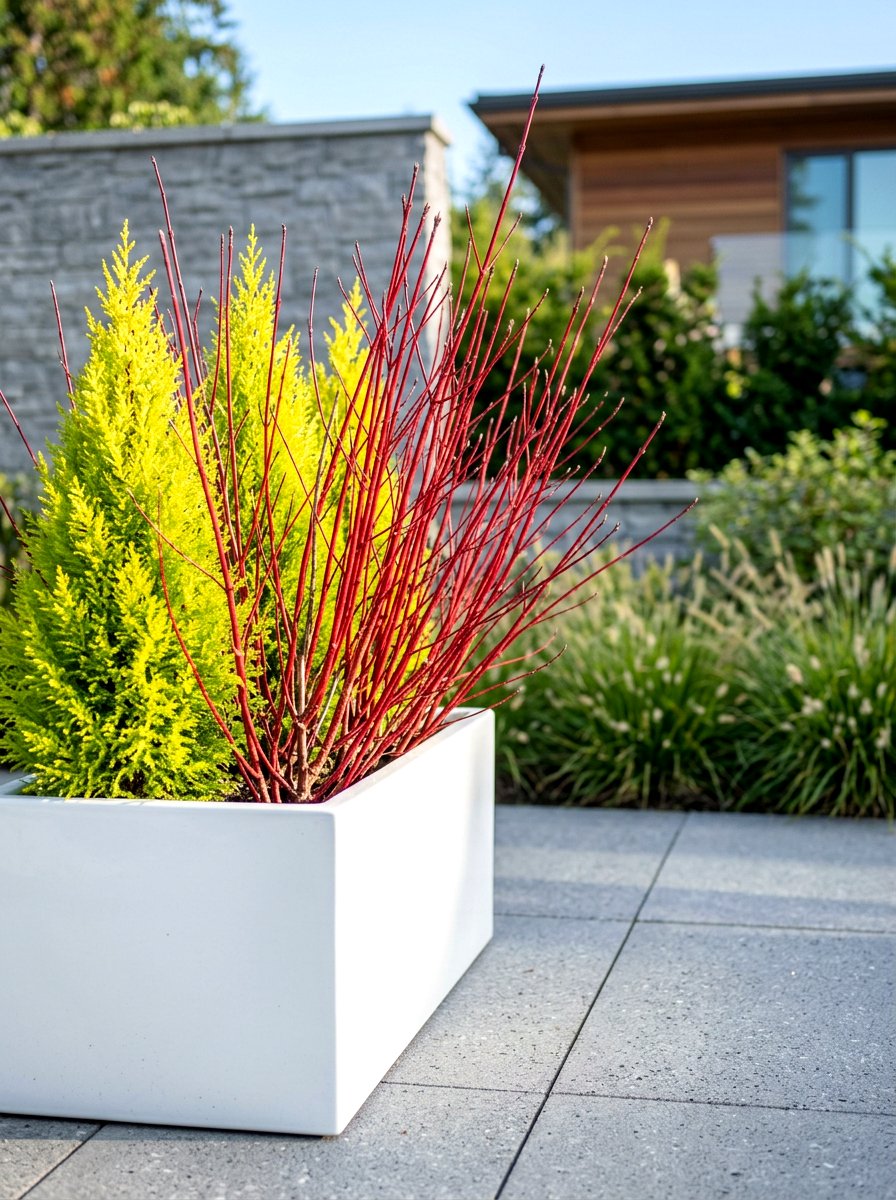
Red-twig dogwood stems are prized for their brilliant crimson bark, which becomes even more vibrant as the weather turns colder. These slender branches provide excellent height and a modern, airy feel to any container arrangement. You can bundle several stems together in the center of a pot to create a dramatic burst of color. Pairing them with chartreuse-colored evergreens, like lemon cypress, creates a stunning visual contrast. The vertical lines of the dogwood help draw the eye upward, making small spaces feel larger. Because these stems are hardy, they maintain their intense red hue throughout the entire winter season. This idea is perfect for anyone wanting to add a bold, contemporary touch to their porch.
5. Ornamental Cabbage Display
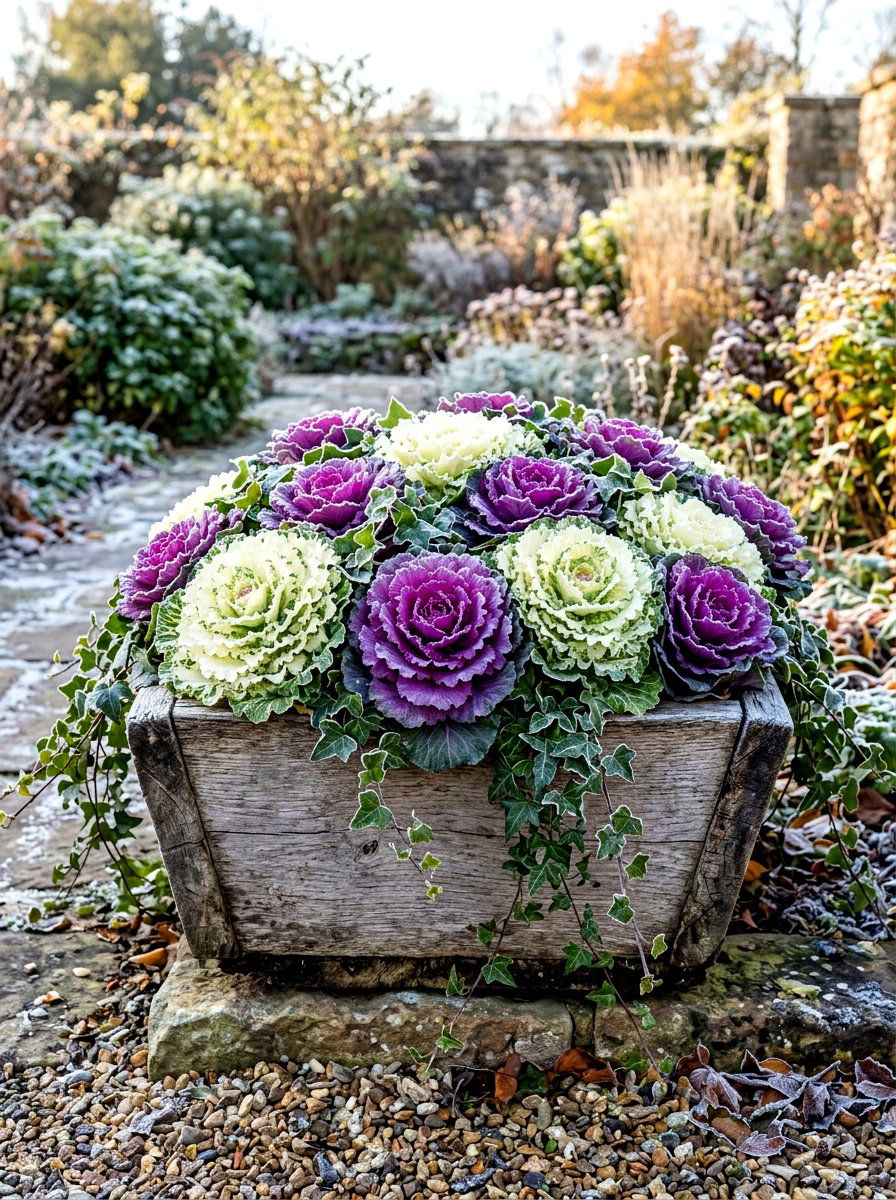
Ornamental cabbage and kale are incredibly resilient plants that thrive in chilly temperatures. Their thick, ruffled leaves come in beautiful shades of purple, rose, and creamy white. As the frost hits, the colors of these plants actually become more intense and vibrant. You can plant several large heads of cabbage in a shallow trough or a wide bowl for a low-profile look. Surround them with trailing ivy to soften the edges of the container. These plants are excellent for adding a "flowering" look to your winter garden without needing delicate blooms. They stay looking fresh and sturdy through early winter freezes. This display offers a unique, leafy texture that most other winter plants cannot provide.
6. Winter Pansy Window Box
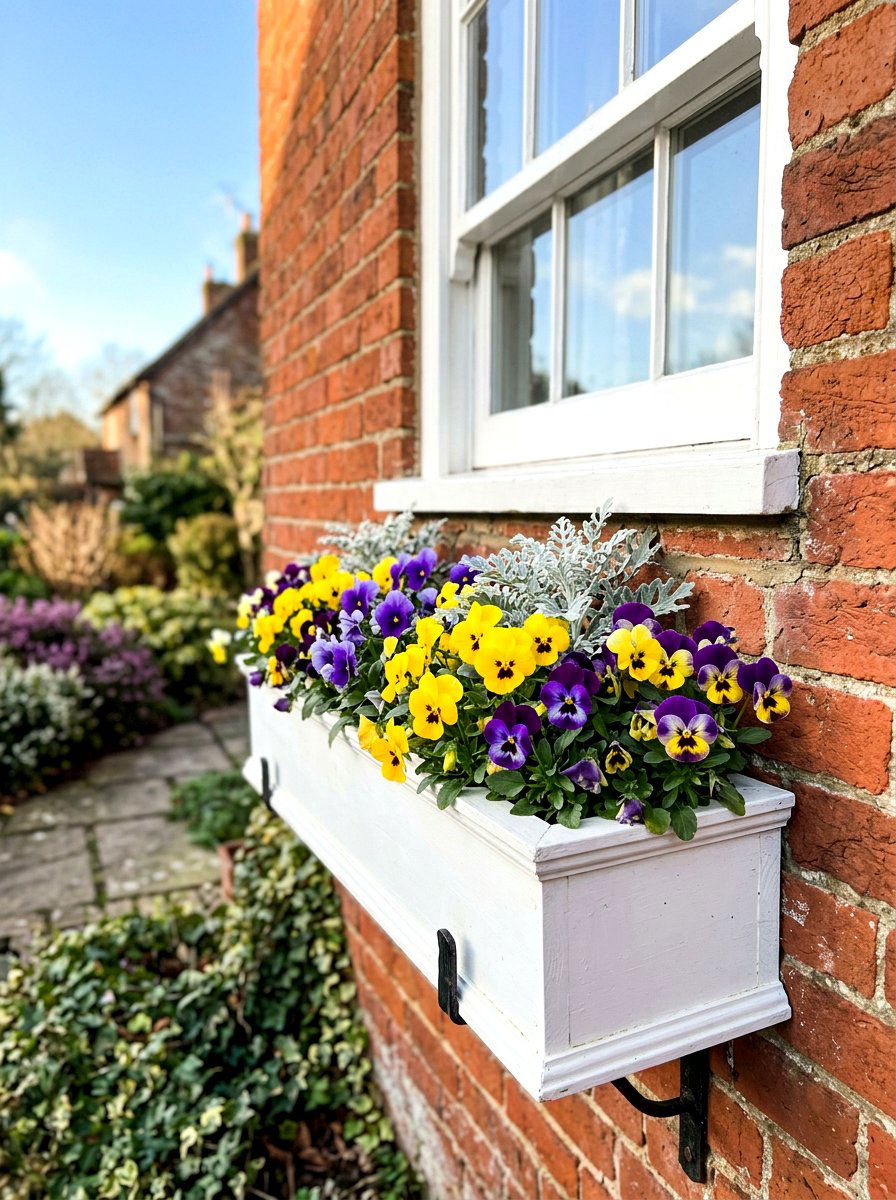
Pansies and violas are surprisingly tough little flowers that can handle light snow and freezing nights. Choosing cold-hardy varieties allows you to keep some floral color on your windowsills during the transition into winter. Plant them closely together to create a dense carpet of color in your window boxes. Mix in some dusty miller for a silvery, frosted foliage effect that complements the bright pansy petals. These flowers often "nod" during deep freezes but will perk back up once the sun comes out. They bring a delicate, cheerful charm to your home's exterior. Keeping them in a sheltered spot helps them last longer. This is a great way to maintain a welcoming look at your entryway.
7. Hellebore Patio Pot
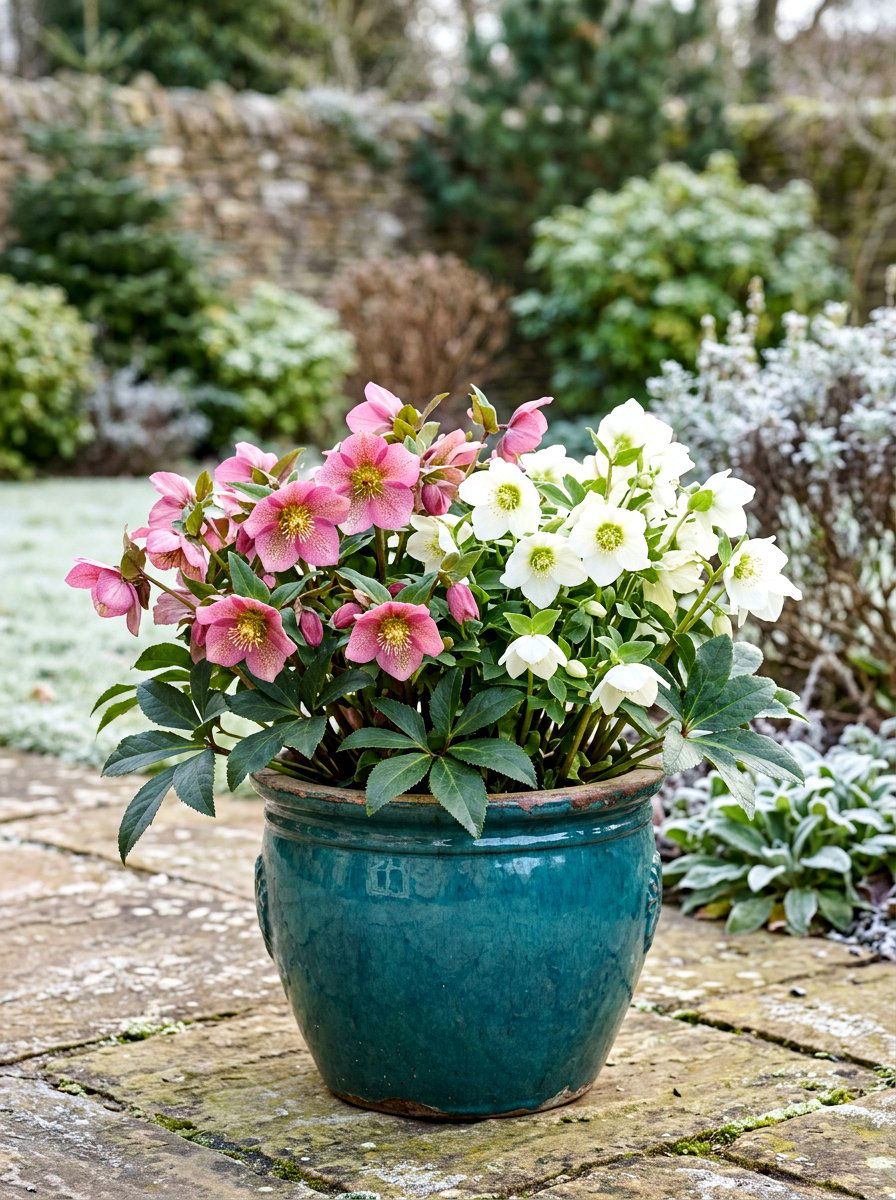
Hellebores, often called Lenten roses, are one of the few plants that actually bloom during the tail end of winter. Their elegant, cup-shaped flowers appear in shades of dusky pink, deep purple, and pure white. Planting them in a large patio pot allows you to enjoy their blooms up close near a door or window. The evergreen foliage is thick and leathery, providing a nice green base even when the plant is not flowering. Hellebores prefer slightly shaded spots, making them ideal for north-facing porches. They are very long-lived and will come back every year if cared for properly. This plant adds a touch of sophisticated, early-spring hope to a cold winter landscape.
8. Boxwood Winter Urn
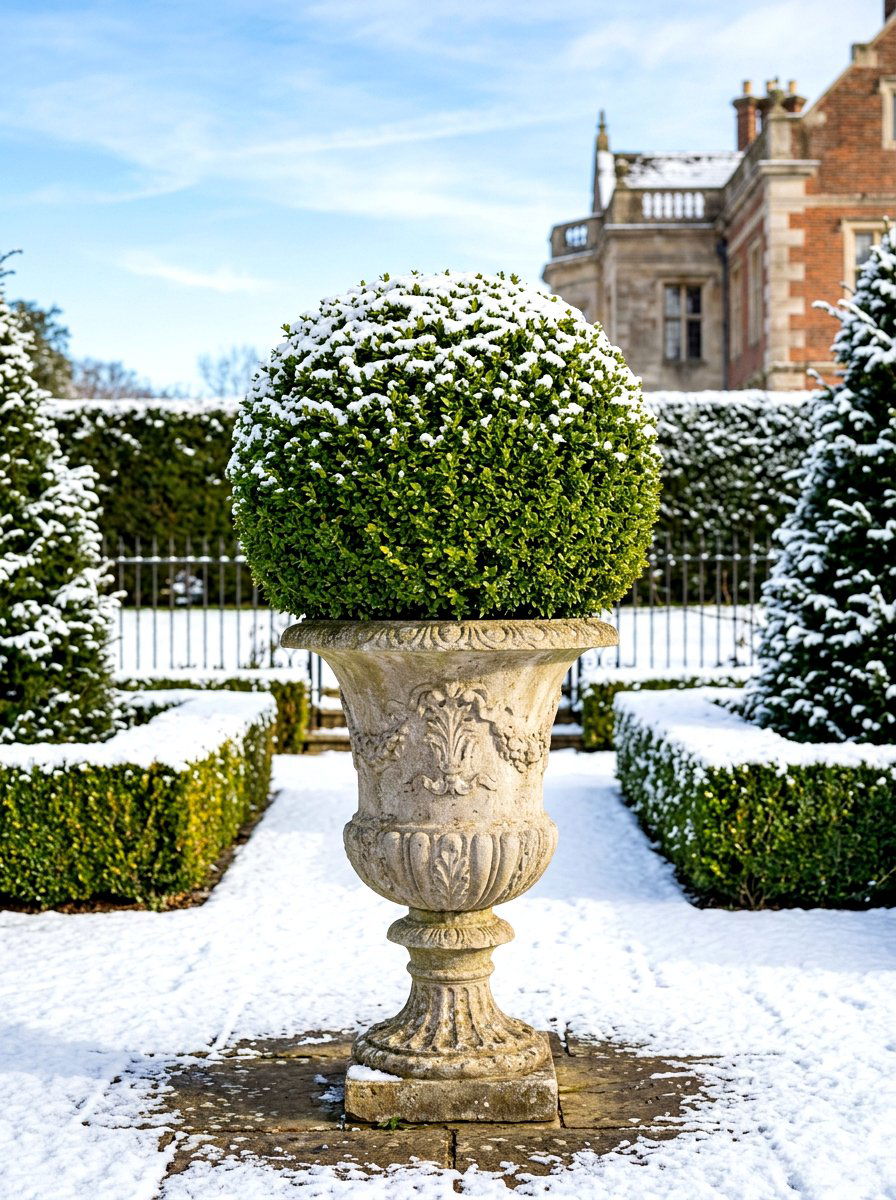
Boxwood is the gold standard for creating a formal and structured look in garden containers. These evergreen shrubs maintain their neat, rounded shape all year long, which is perfect for traditional stone urns. You can use a single large boxwood as a centerpiece or group smaller ones for a fuller effect. During the winter, the green leaves look beautiful when dusted with a light layer of frost or snow. To add interest, you can tuck in some faux berries or large pinecones among the branches. Boxwood is very hardy and requires minimal maintenance once established in a pot. This classic choice ensures your home looks polished and elegant throughout the entire holiday season and beyond.
9. Pinecone Container Decor
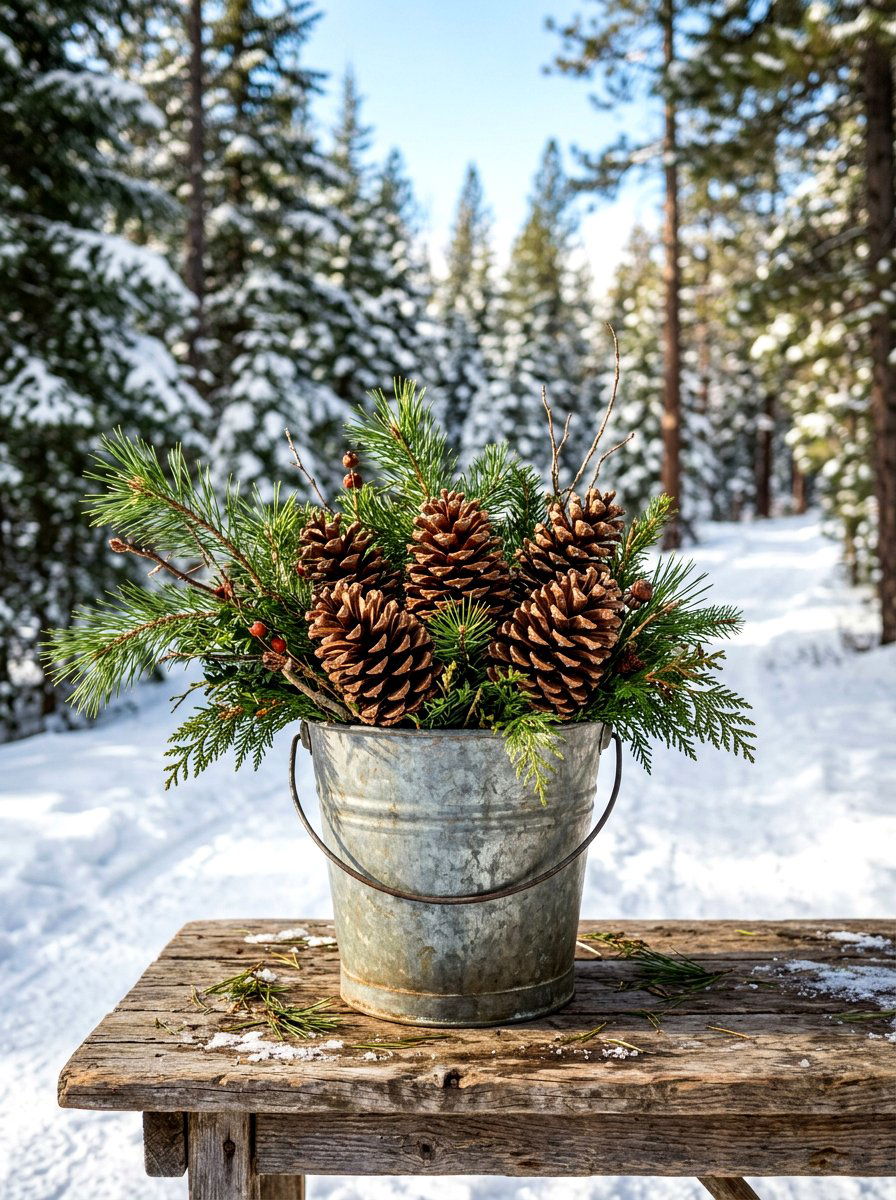
Pinecones are a versatile and free resource that can fill gaps in any winter container arrangement. You can use giant sugar pinecones for a dramatic statement or smaller hemlock cones for a more subtle look. Grouping them together at the base of evergreen branches adds a wonderful woodland texture. For a bit of extra flair, you can lightly tip the edges with white paint to mimic a snowy finish. They look fantastic when paired with rustic wooden barrels or galvanized metal buckets. Because they are not living, you never have to worry about them wilting or needing water. This is an easy way to add bulk and visual interest to your pots without spending a lot.
10. Skimmia Winter Garden
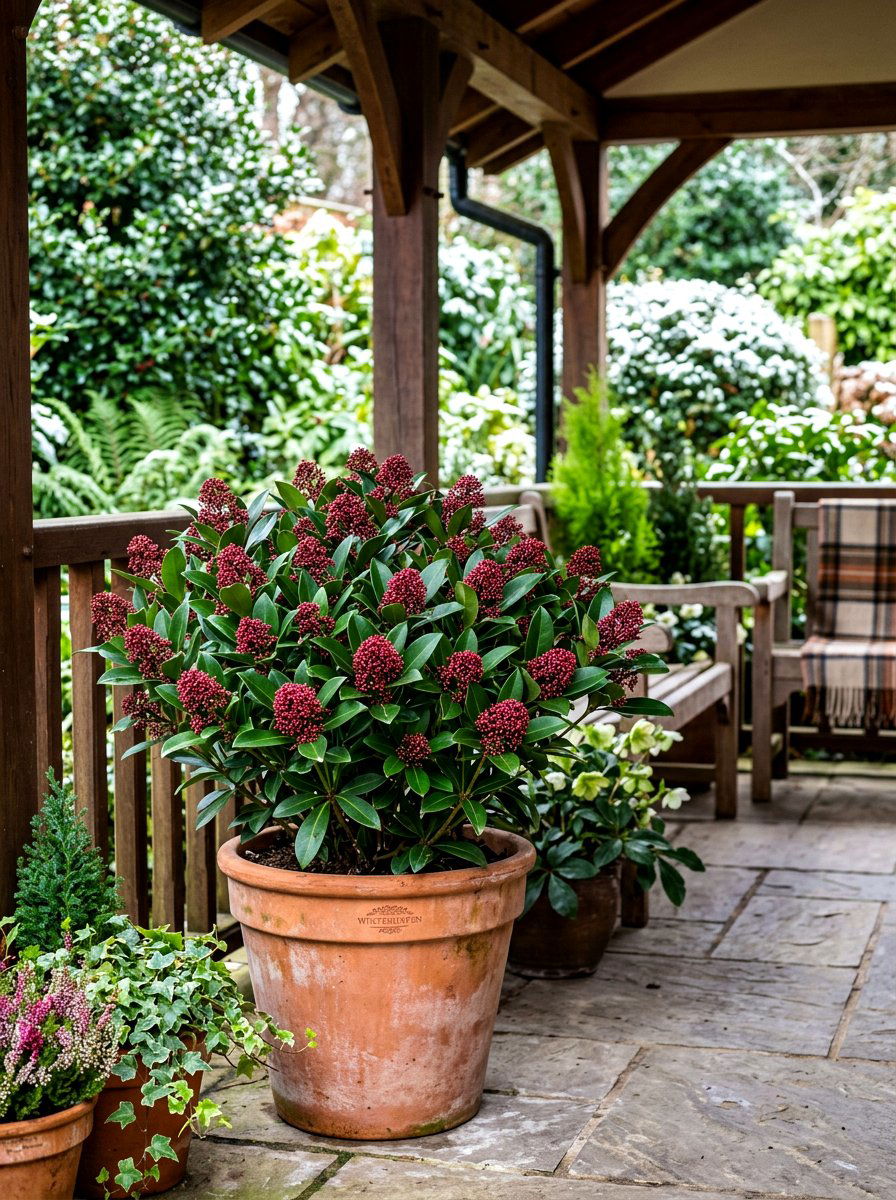
Japanese Skimmia is a fantastic evergreen shrub that offers multiple points of interest throughout the winter. It produces tight clusters of tiny red flower buds in the autumn that remain on the plant all season. These buds eventually open into fragrant white flowers in the spring, but they look like red berries during the cold months. The glossy, dark green leaves provide a very healthy and lush background for other plants. Skimmia stays compact, making it an excellent choice for medium-sized pots on a patio. It is a very slow-growing plant, so it will not outgrow its container quickly. This plant is perfect for adding a refined, high-end look to your shaded winter garden areas.
11. Winter Cyclamen Pot
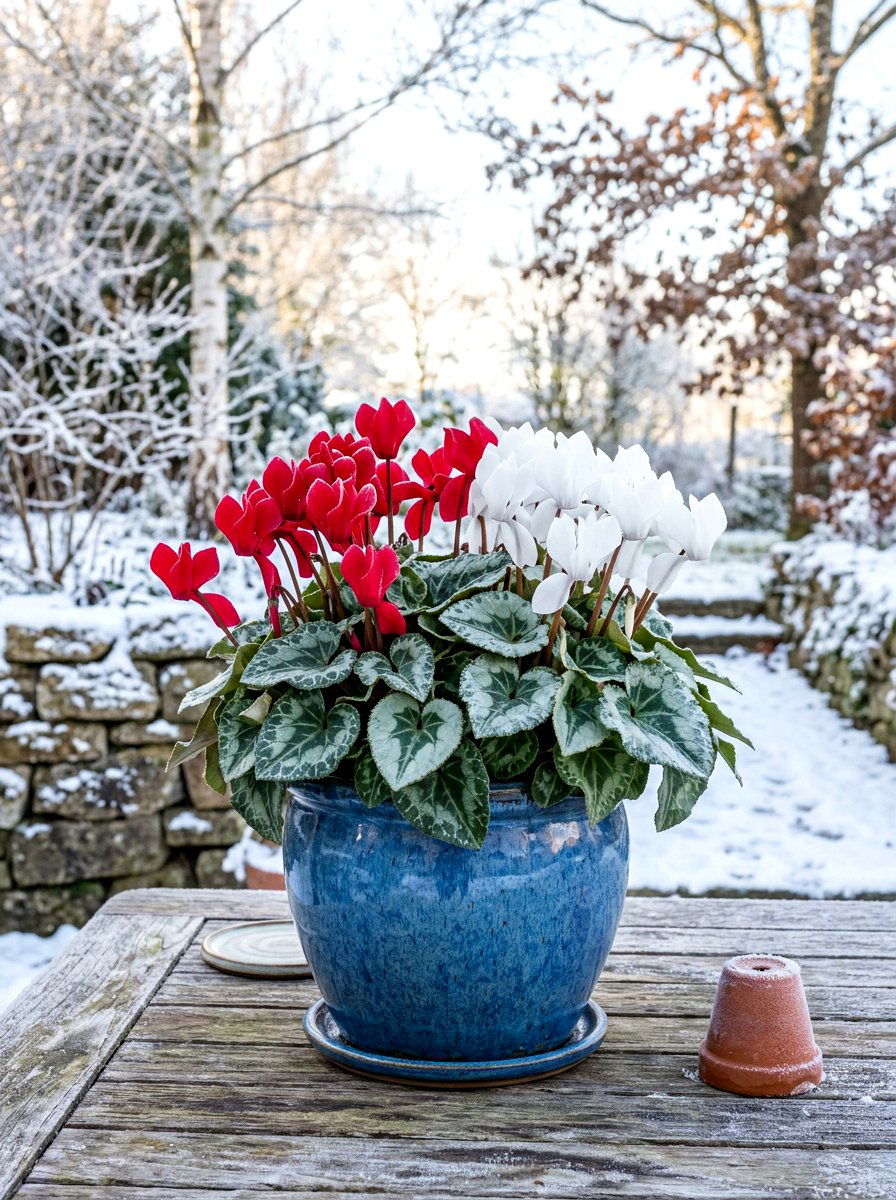
Cyclamen are popular for their unique, swept-back petals and beautifully marbled, heart-shaped leaves. While often kept as houseplants, certain varieties are hardy enough for outdoor containers in milder winter climates. Their flowers come in vivid shades of red, pink, and white, which stand out beautifully against the silver-patterned foliage. Planting cyclamen in a decorative ceramic pot creates a lovely focal point for an outdoor tabletop. They prefer cool temperatures and should be kept in a spot protected from harsh, drying winds. These plants bring a delicate and artistic flair to your winter garden. They look best when grouped together to create a concentrated splash of color. This choice is ideal for adding a feminine, soft touch to your porch.
12. Gaultheria Berry Planter
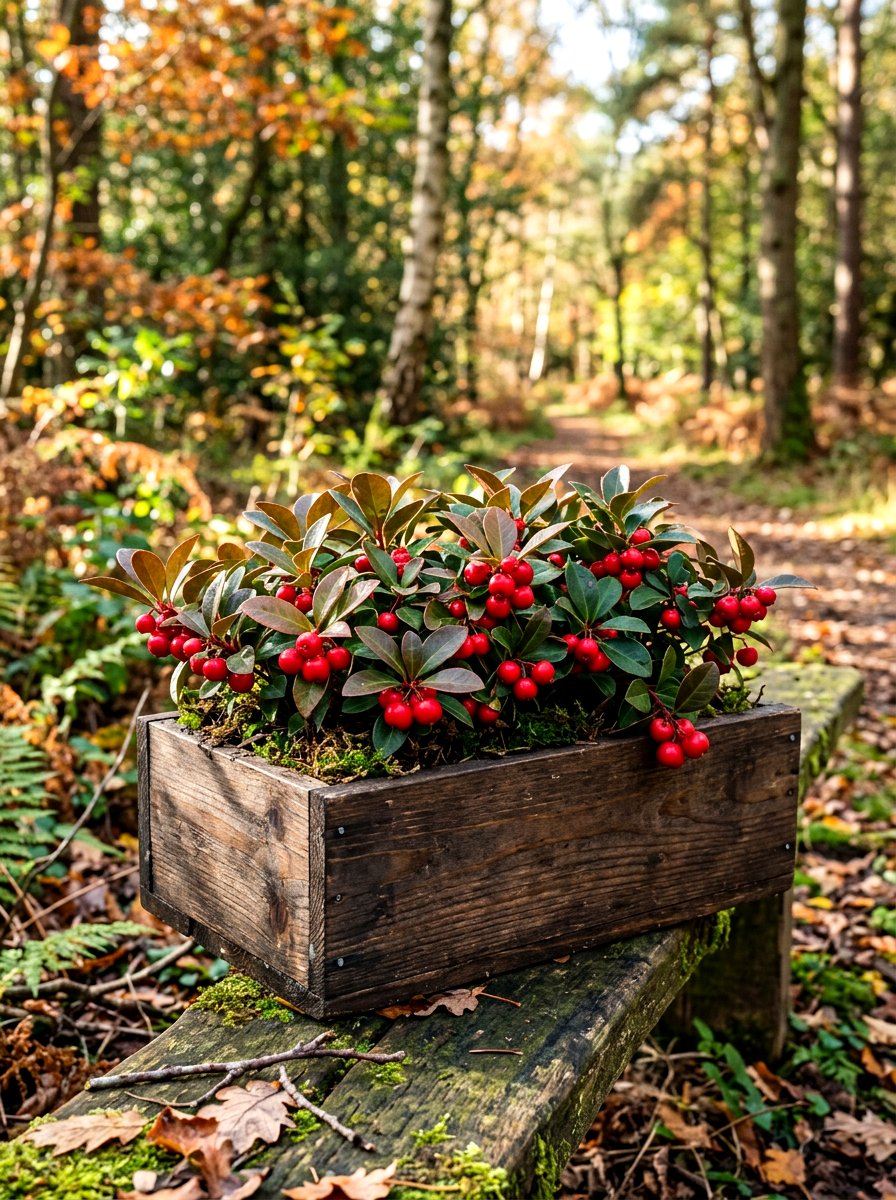
Gaultheria, also known as wintergreen, is a charming low-growing evergreen that is famous for its bright red berries. The berries are quite large compared to the size of the plant and last all winter long. Its small, leathery leaves often take on a reddish or bronze tint as the weather gets colder. This plant is perfect for the "spiller" role in a winter container, as it can creep over the edges of the pot. It releases a pleasant, minty scent when the leaves are crushed or brushed against. Gaultheria is very hardy and thrives in acidic soil, making it a great companion for pine or spruce boughs. It adds a lovely, traditional woodland feel to any small garden arrangement.
13. Rustic Log Container
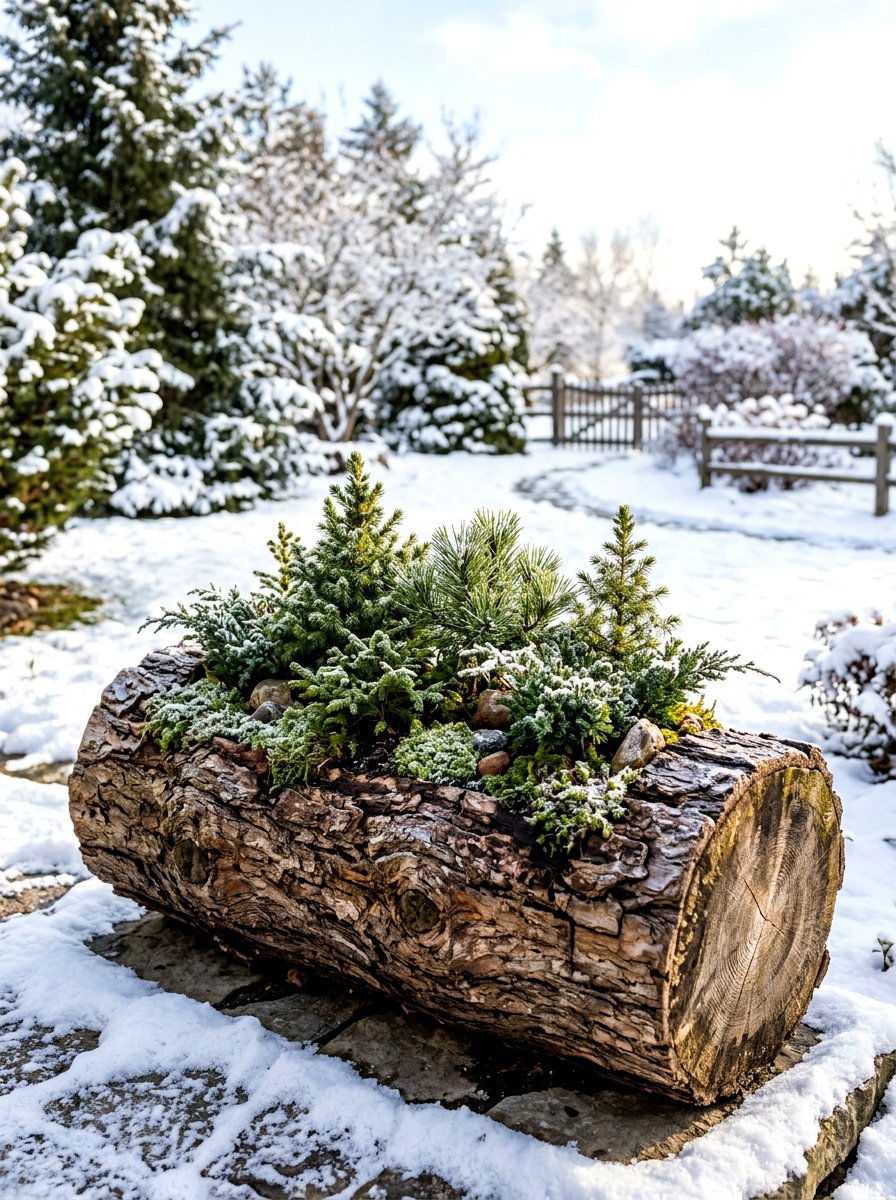
Using natural wood elements like hollowed-out logs or cedar stumps creates a very rustic and organic winter display. You can fill the center of a log with soil and plant various cold-hardy evergreens and mosses. This type of container blends seamlessly into a natural or cottage-style garden setting. The rough texture of the bark provides a beautiful contrast to the soft needles of fir and cedar. You can enhance the look by adding dried seed heads or branches foraged from your own backyard. This approach is very budget-friendly and allows for a high level of creativity. It captures the quiet, peaceful essence of a winter forest right on your own front porch or patio.
14. Eucalyptus Winter Mix
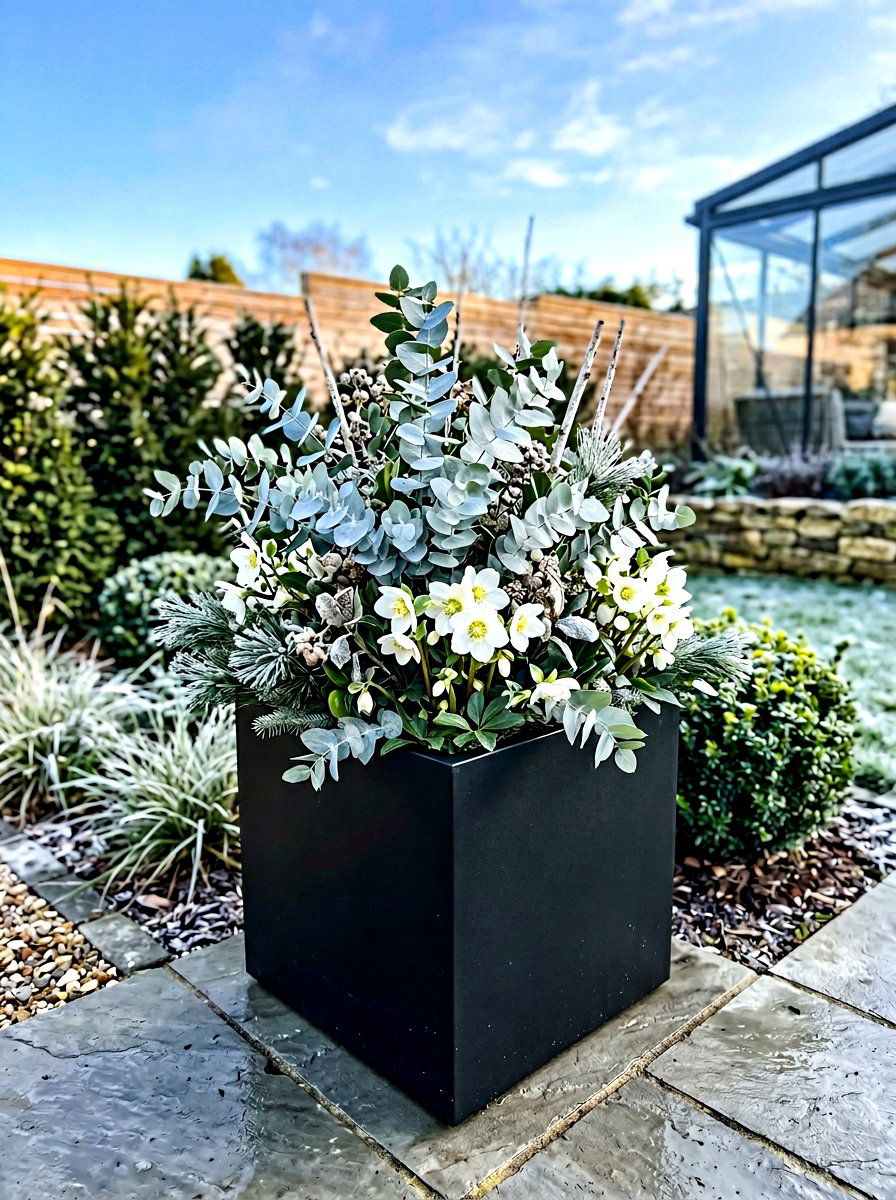
Eucalyptus branches are a trendy addition to winter containers because of their unique silvery-blue color and wonderful fragrance. The round, coin-shaped leaves add a different texture that contrasts well with the needle-like foliage of traditional evergreens. You can use preserved or fresh eucalyptus stems to add height and a touch of modern elegance to your pots. They pair beautifully with white flowers like hellebores or white pansies for a "frosted" color palette. The scent of eucalyptus is refreshing and can help brighten up a gloomy winter day. These branches are also very sturdy and will maintain their shape and color even after they have dried out. This is a sophisticated choice for a contemporary winter garden.
15. Cypress Tree Container
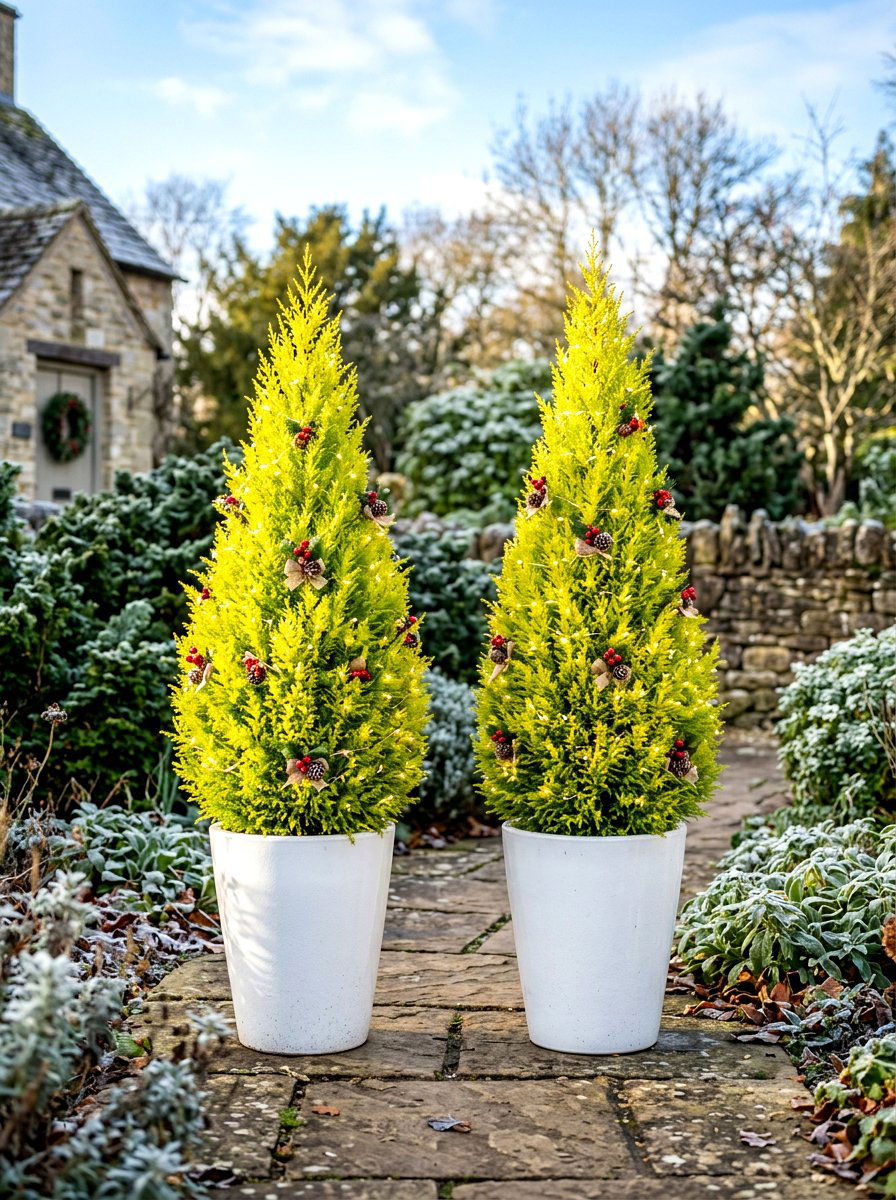
Lemon cypress or other dwarf cypress varieties are excellent for adding a bright pop of chartreuse to a dark winter corner. These trees have a natural conical shape that looks like a perfectly manicured topiary. Their needle-like foliage is soft to the touch and releases a pleasant citrus scent when handled. Planting a pair of these trees in matching pots is a classic way to frame a front door or entryway. The vibrant yellow-green color is a refreshing change from the usual dark green of winter evergreens. They look especially festive when wrapped with a simple strand of warm white fairy lights. This design provides a clean, modern, and very cheerful look for the entire winter.
16. Winter Succulent Pot
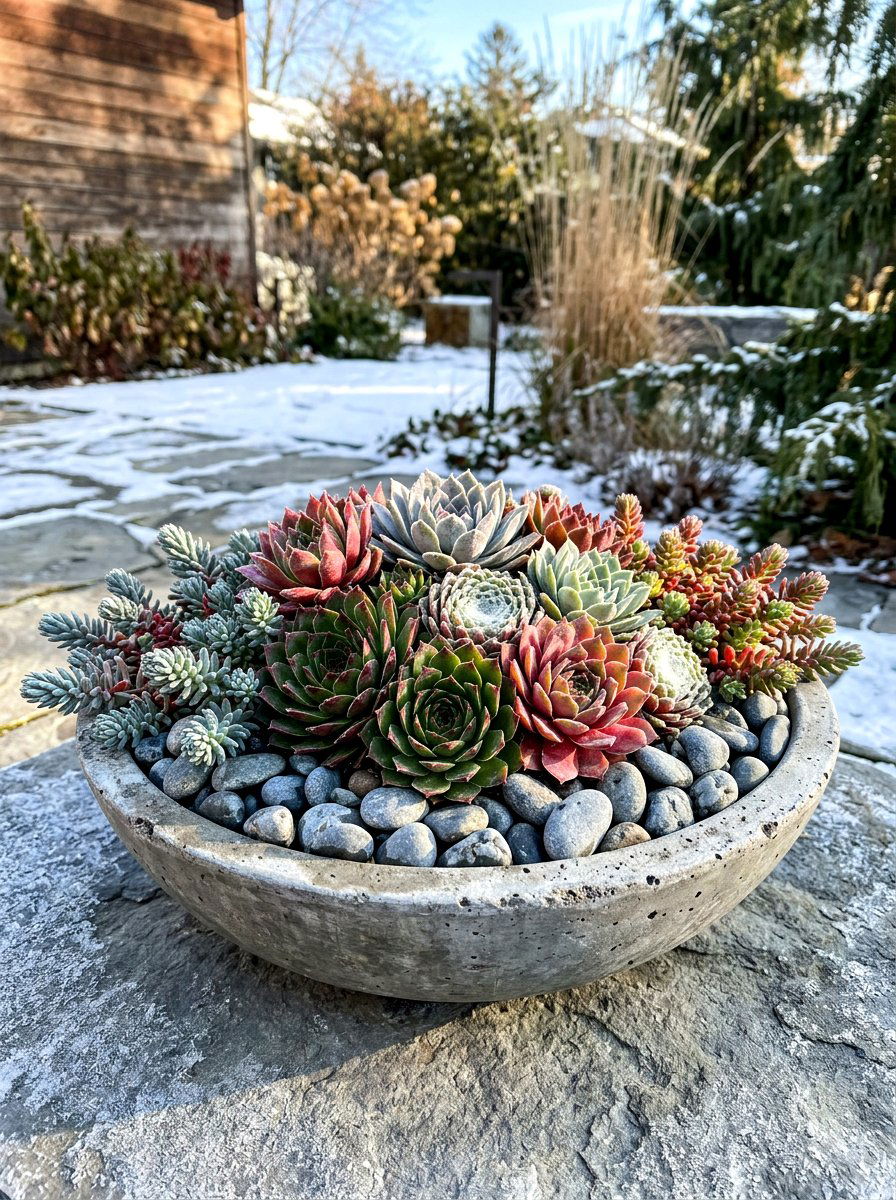
Many people are surprised to learn that certain succulents, like hens and chicks or stonecrop, are extremely cold-hardy. These plants can survive being frozen solid and will still look great once the sun warms them up. You can create a modern, low-water winter container by grouping different varieties of hardy succulents together. Their geometric shapes and fleshy leaves provide a unique architectural look that differs from traditional winter plants. Using a shallow concrete or stone bowl enhances the modern aesthetic of the arrangement. You can finish the look by adding some smooth river stones or decorative gravel between the plants. This is a low-maintenance option that stays interesting and structured all winter long.
17. Holly Branch Arrangement
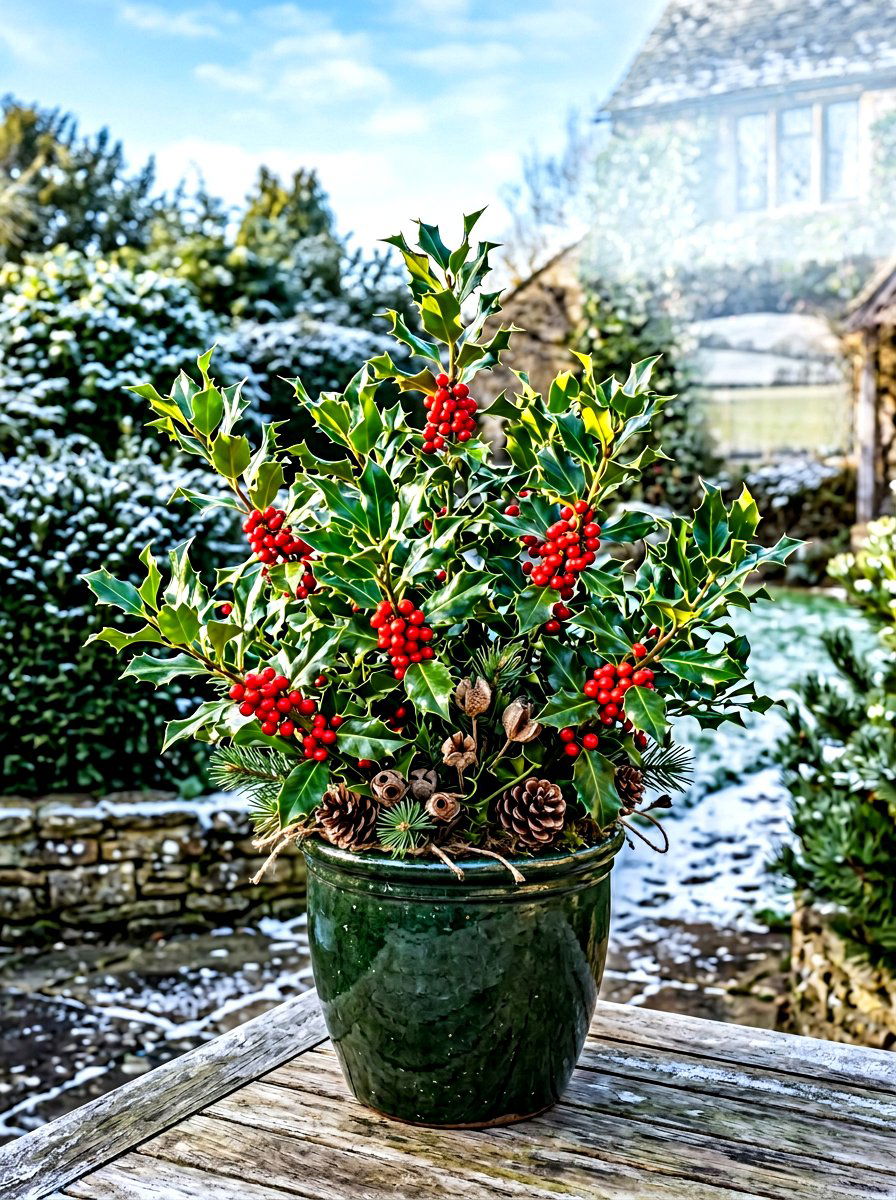
Holly is perhaps the most iconic winter plant, known for its glossy, prickly leaves and vibrant red fruit. If you do not have a holly bush in your yard, you can buy bundles of cut holly branches to use in your containers. Sticking these branches into a pot filled with moist soil or floral foam allows them to stay fresh for weeks. They provide an instant classic look that feels both festive and natural. The dark, shiny leaves reflect light beautifully, especially when it is sunny or when you add outdoor lights. Holly branches are very sturdy and can hold up well against heavy snow. This is a timeless choice that never goes out of style for winter decorating.
18. Magnolia Leaf Planter
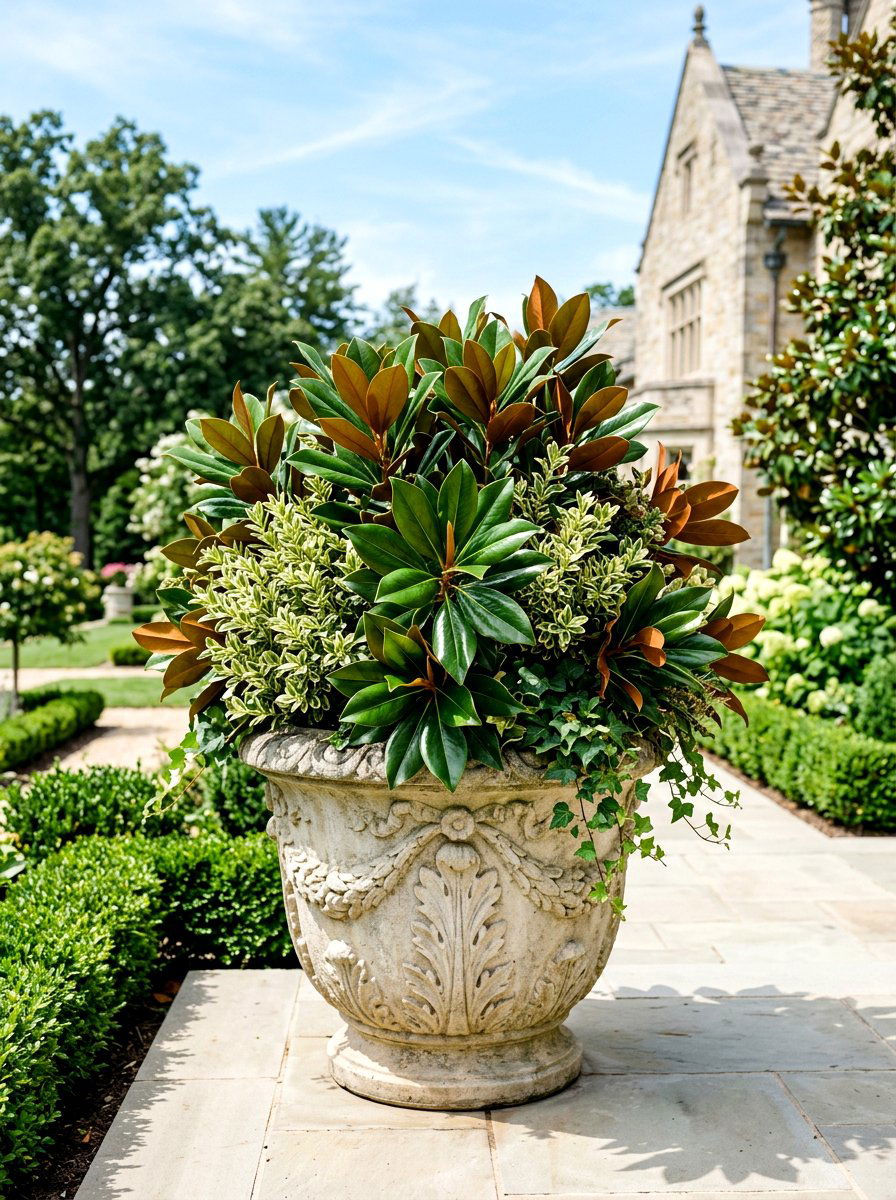
Magnolia leaves are prized in winter design for their large size and dual-toned appearance. The top of the leaf is a glossy, deep green, while the underside is a warm, velvety copper or brown. Using these leaves in a container arrangement adds a sense of luxury and rich texture. You can tuck them around the edges of a pot to act as a "filler" or stand them up for vertical interest. They look fantastic when paired with other broadleaf evergreens like boxwood or laurel. Magnolia leaves are very durable and will stay looking fresh throughout the coldest months. This idea is perfect for creating a sophisticated, high-end display that feels substantial and very elegant.
19. Juniper Winter Box
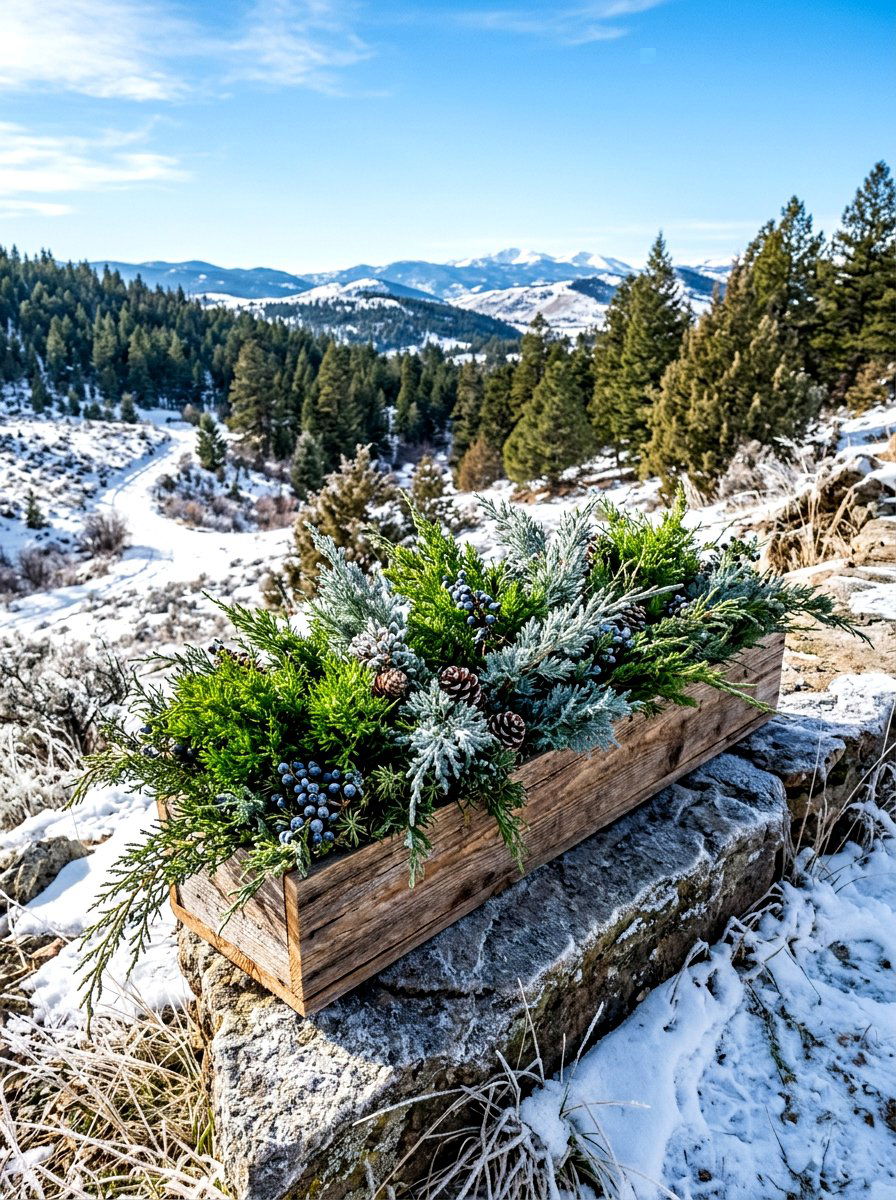
Juniper is a tough evergreen that comes in many different forms, from upright trees to low, spreading groundcovers. Using a variety of juniper types in a long wooden planter box creates a beautiful textured landscape. Many junipers produce small, blue-tinted berries that add a subtle touch of color to the greenery. The foliage can range from deep green to a soft, silvery-blue, allowing you to create a monochromatic yet interesting look. Junipers are incredibly hardy and can withstand the drying winds of winter better than many other plants. They offer a rugged, natural beauty that fits perfectly in a casual or rustic outdoor setting. This choice is both practical and very visually appealing.
20. Dusty Miller Container
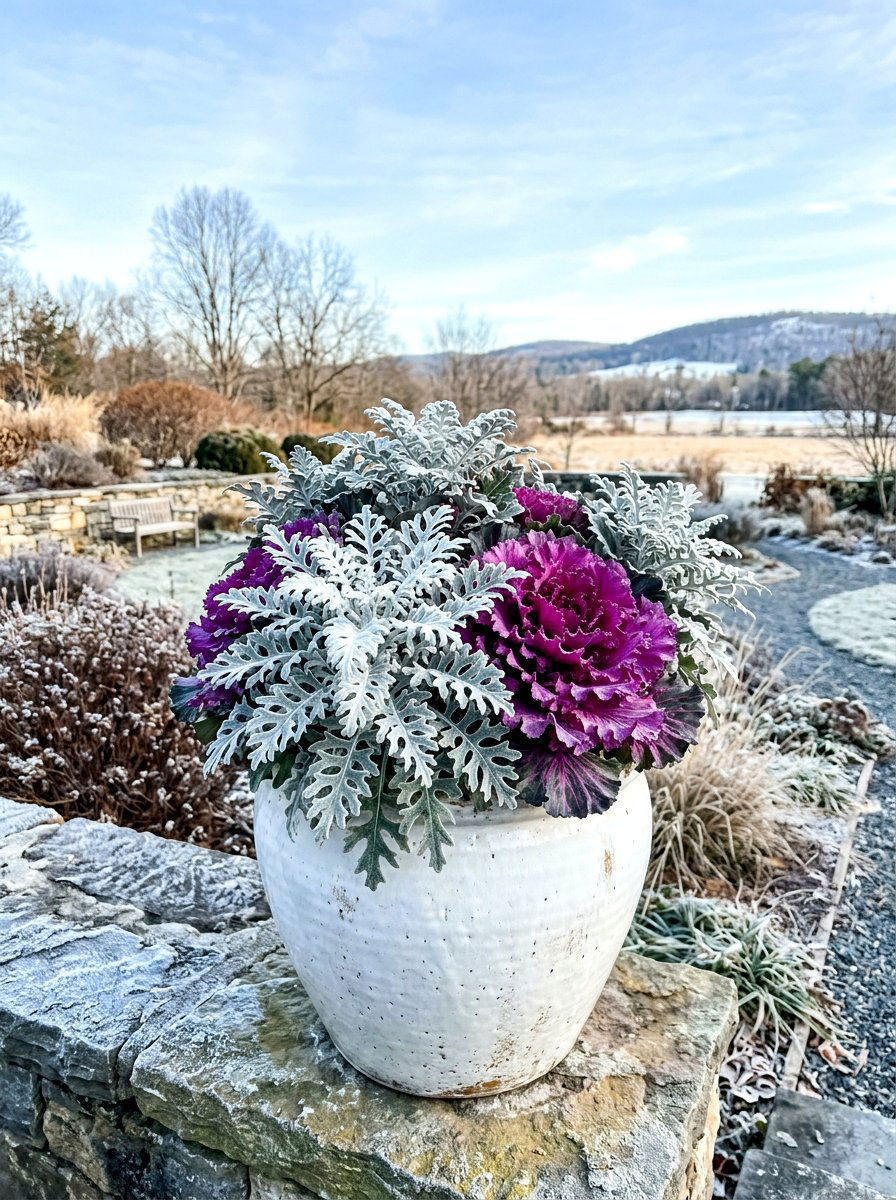
Dusty miller is often used as a summer bedding plant, but its silver-gray, lacy foliage is actually quite cold-tolerant. It looks like it has been permanently touched by a light frost, making it a perfect addition to a winter-themed container. You can pair it with white pansies or purple ornamental kale for a beautiful "cool" color scheme. The soft, velvety texture of the leaves provides a nice contrast to the sharp needles of pine and spruce. Dusty miller tends to stay compact, so it works well at the front of an arrangement. It brings a bright, luminous quality to your pots, especially on gray and cloudy winter days. This plant is an easy way to add light and contrast.
21. Heuchera Winter Pot
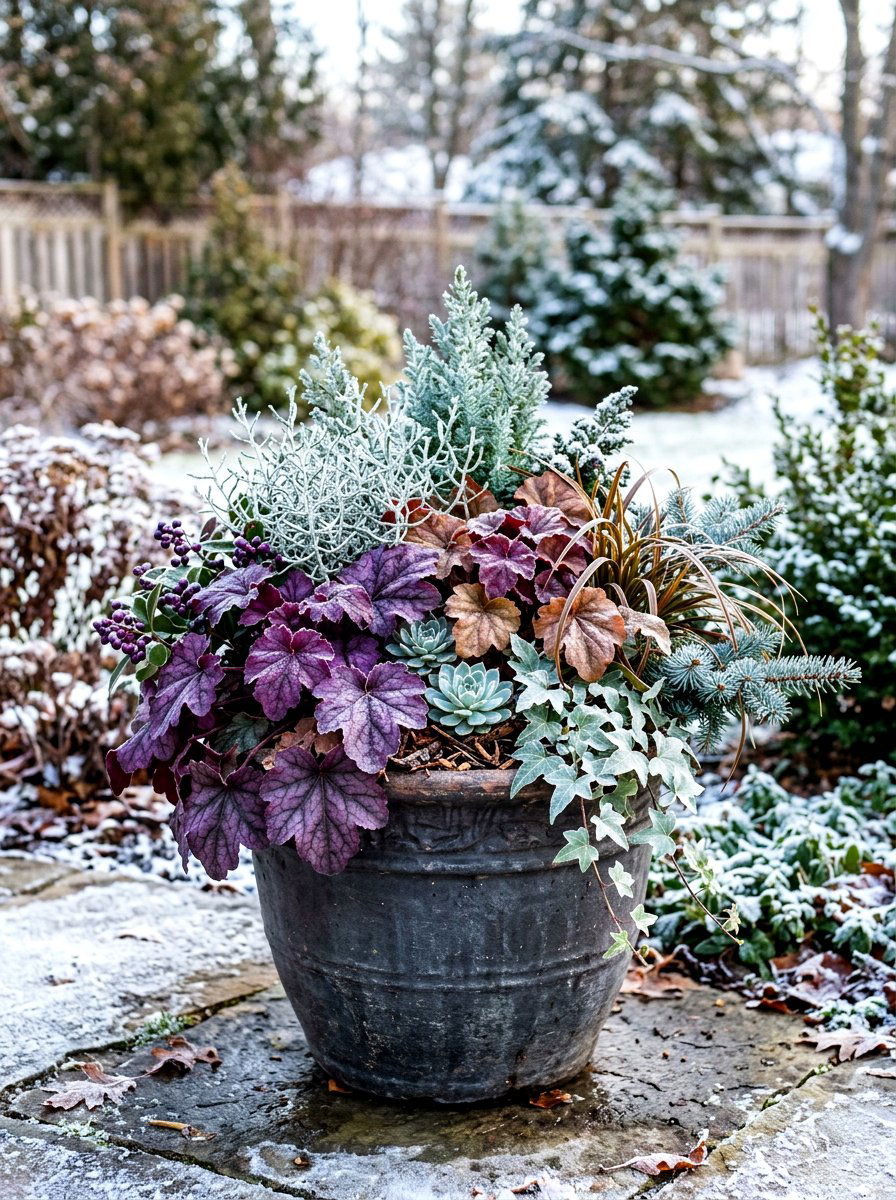
Heuchera, also known as coral bells, are famous for their incredible range of foliage colors, including deep purple, bronze, and lime green. Many varieties are semi-evergreen or fully evergreen, depending on your climate, and can survive well into the winter. Their large, ruffled leaves add a big splash of color to a pot when most other things are brown. You can use a dark purple variety to create a dramatic, moody look alongside silver-toned evergreens. The leaves often take on a deeper, more intense hue as the temperatures drop. Heuchera is very easy to care for and stays low to the ground, making it a great "filler" plant. This is a wonderful way to keep your containers looking colorful and interesting.
22. Ivy Winter Hanging Basket
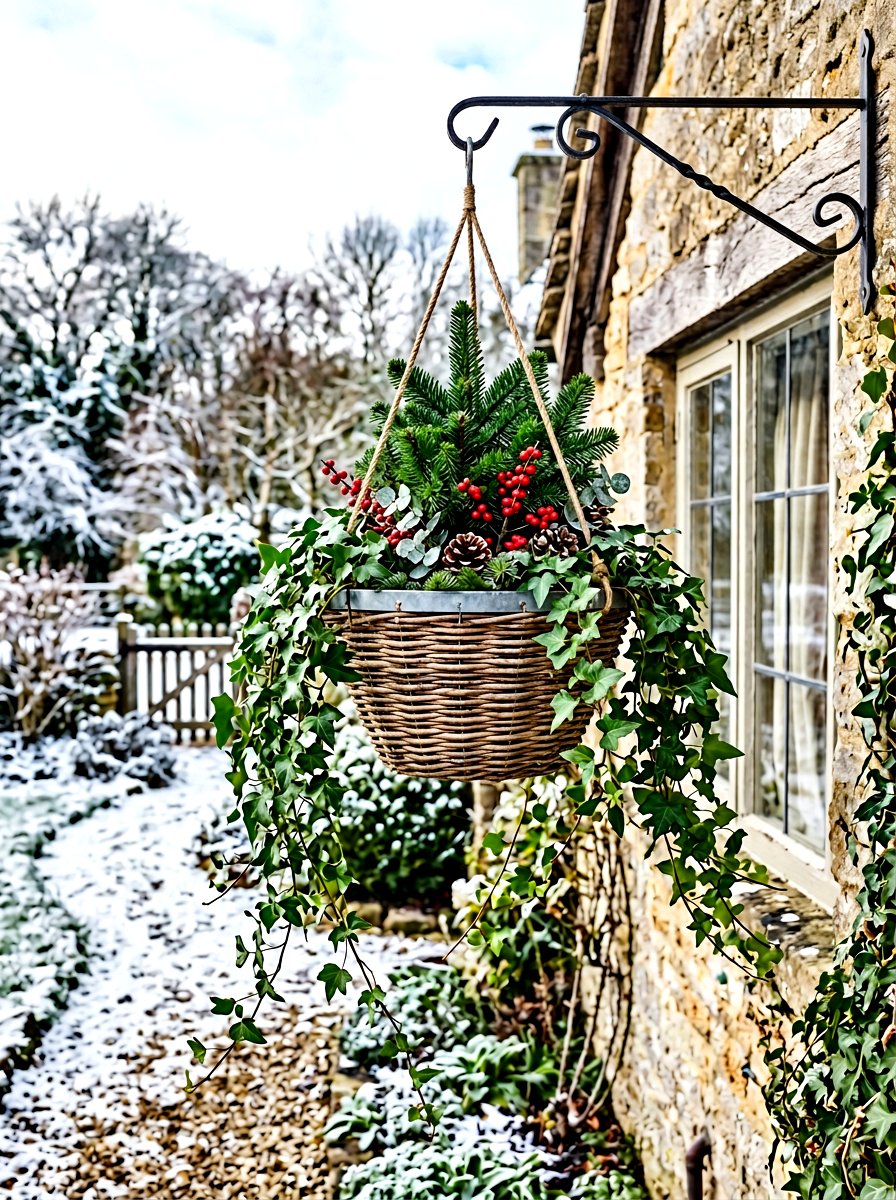
Ivy is a classic "spiller" plant that looks beautiful trailing down the sides of a winter hanging basket or a tall pedestal pot. It is very hardy and maintains its green color even in the dead of winter. You can use variegated ivy with white or yellow edges to add a bit of brightness to your arrangement. To create a full look, fill the center of the basket with upright spruce tops or pine branches. The contrast between the stiff evergreens and the flowing ivy creates a very balanced and professional-looking design. Ivy is also very easy to find and inexpensive, making it a practical choice for large-scale winter decorating. It brings a touch of traditional English garden charm.
23. Silver Fir Arrangement
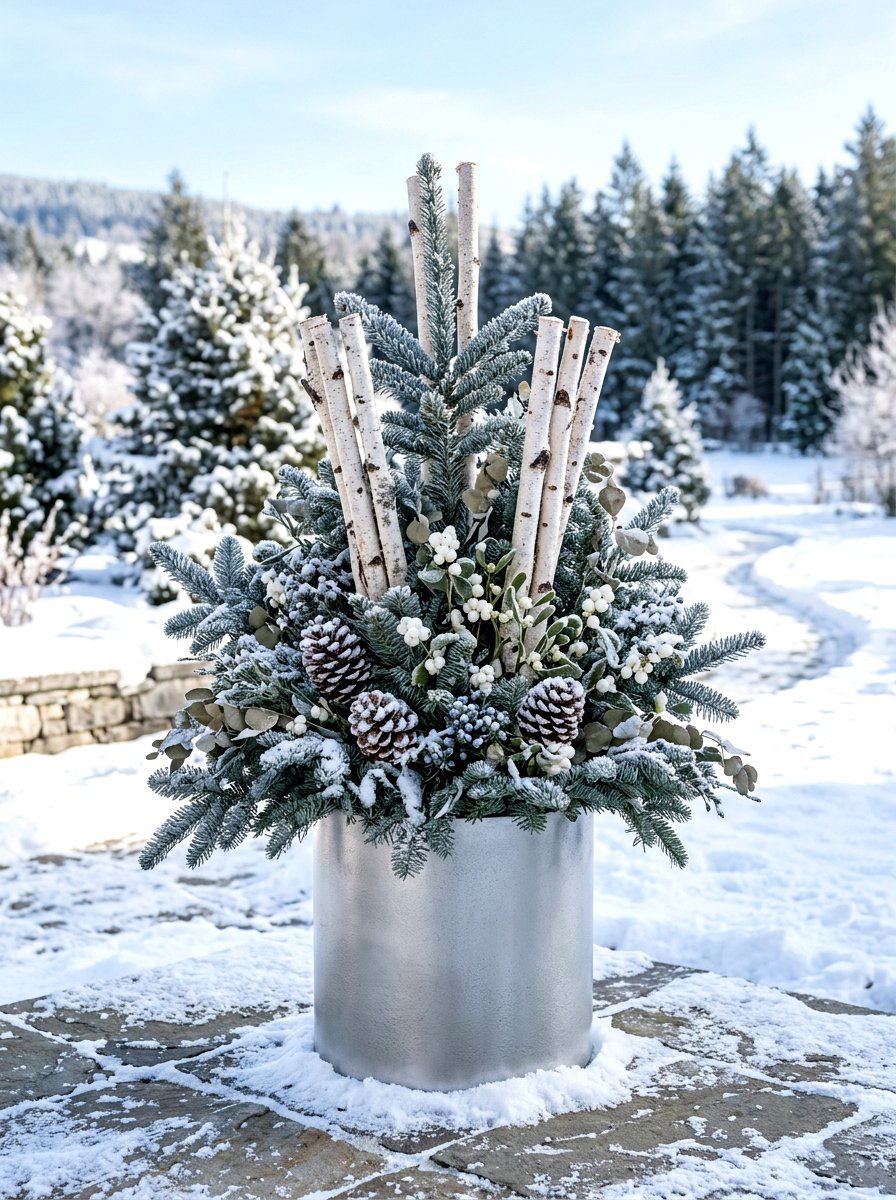
Silver fir branches are known for their incredibly soft needles and beautiful blue-gray color. The underside of the needles often has a bright white stripe, which gives the whole branch a shimmering, frosted appearance. Using these boughs in a large container creates a very elegant and cool-toned display. They have a lovely, classic evergreen scent that adds to the sensory experience of your winter garden. You can pair them with white birch poles and silver ornaments for a very cohesive and sophisticated look. Silver fir is a high-quality evergreen that holds its needles well, even when cut. This makes it a great choice for long-lasting winter pots that need to look good for several months.
24. Cedar Branch Planter
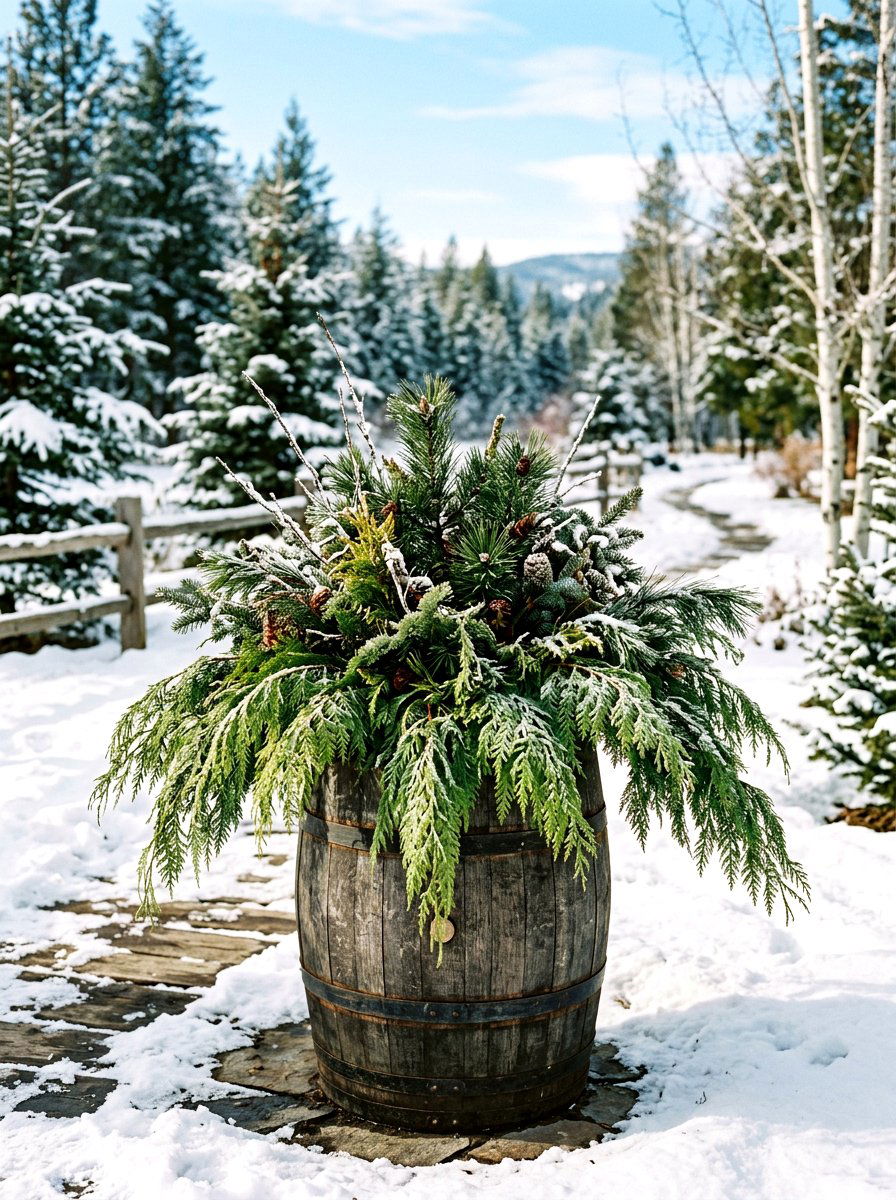
Cedar branches have a wonderful, feathery texture and a graceful, drooping habit that makes them ideal for winter containers. They work perfectly as a "spiller" plant, draped over the edges of a pot to soften the overall look. The bright green color is very fresh and looks beautiful when paired with the darker tones of pine or fir. Cedar also has a very distinct and pleasant aroma that many people associate with the holiday season. Because the branches are so flexible, they are easy to arrange and tuck into tight spots. They are very resilient and stay green for a long time, even without a root system. This is a must-have element for any lush winter arrangement.
25. Dried Hydrangea Winter Pot
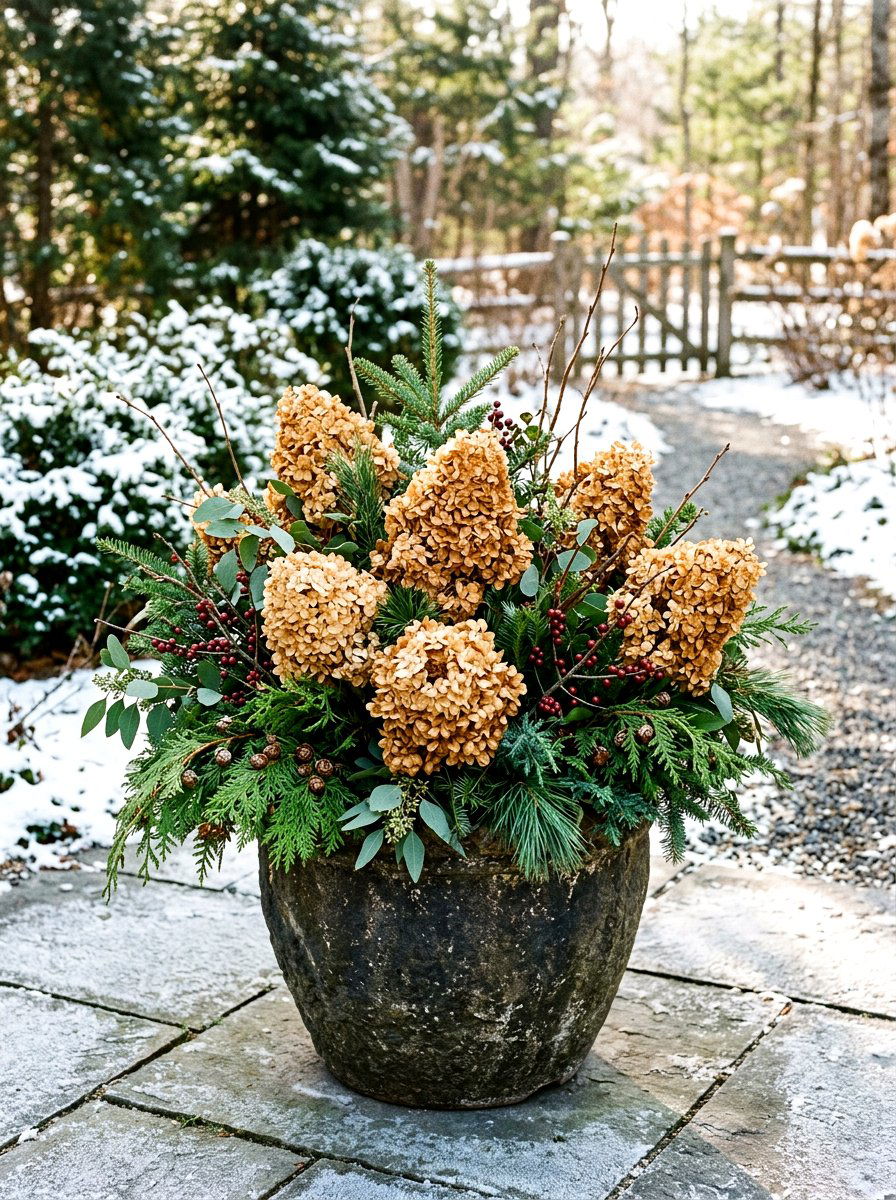
If you have hydrangea bushes in your garden, do not cut off the spent blooms in the fall. These dried flower heads can be used to add a unique, vintage texture to your winter containers. They turn a beautiful papery tan or soft brown color that looks lovely against green evergreens. You can spray them with a bit of silver or gold paint if you want a more festive or polished look. Grouping several large flower heads together creates a bold, rounded focal point in the middle of a pot. They are very lightweight and easy to work with, adding bulk without the need for soil. This is a great way to recycle materials from your own garden for winter decor.
26. Blue Spruce Container
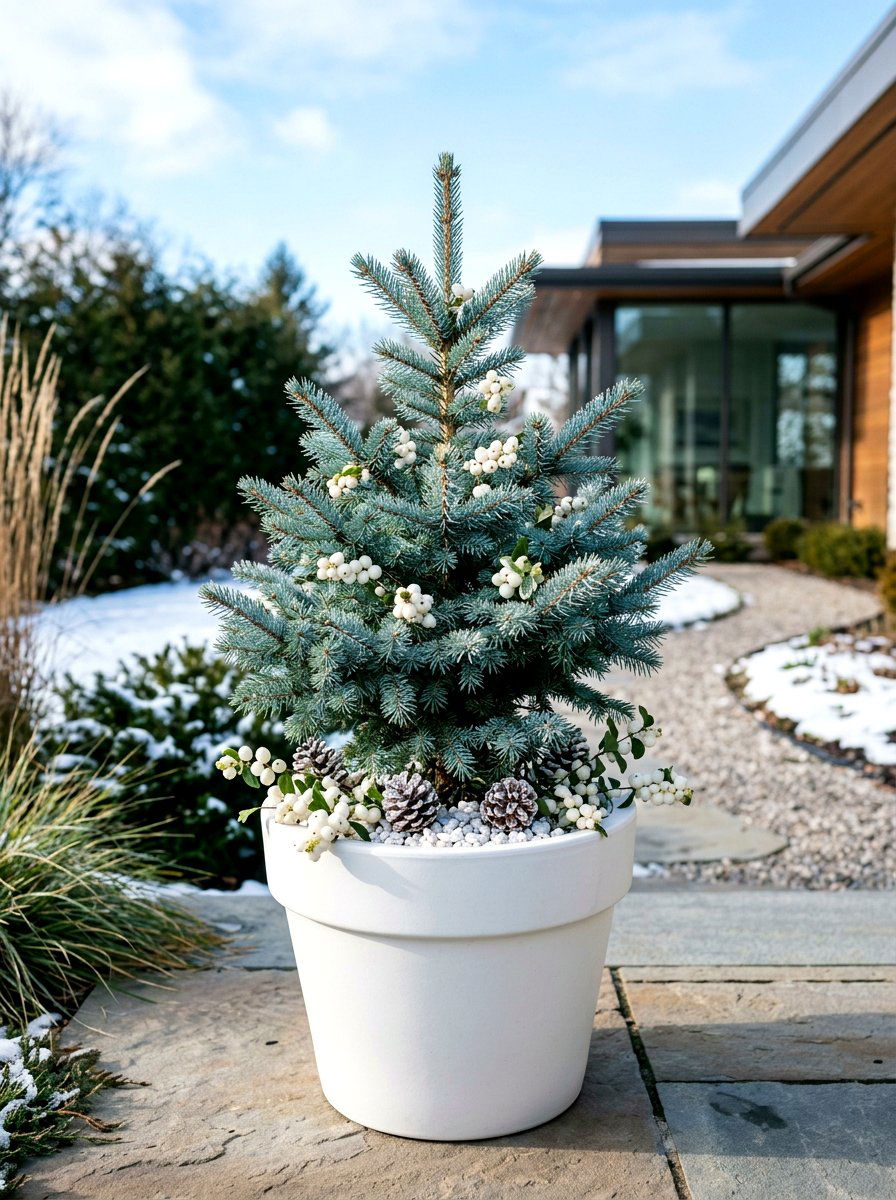
Colorado blue spruce is a favorite for winter gardening because of its unique and striking steel-blue color. This evergreen provides a cool, sophisticated tone that stands out from the typical dark green landscape. You can use a small, potted blue spruce as a permanent container plant or use cut branches for a temporary arrangement. The needles are quite stiff and sharp, which helps them hold up well under the weight of heavy snow. Pairing blue spruce with white accents, like white berries or birch sticks, creates a very clean and modern look. It is a very hardy plant that can survive extremely cold temperatures. This choice brings a high level of visual impact to any winter porch.
27. Heather Winter Garden
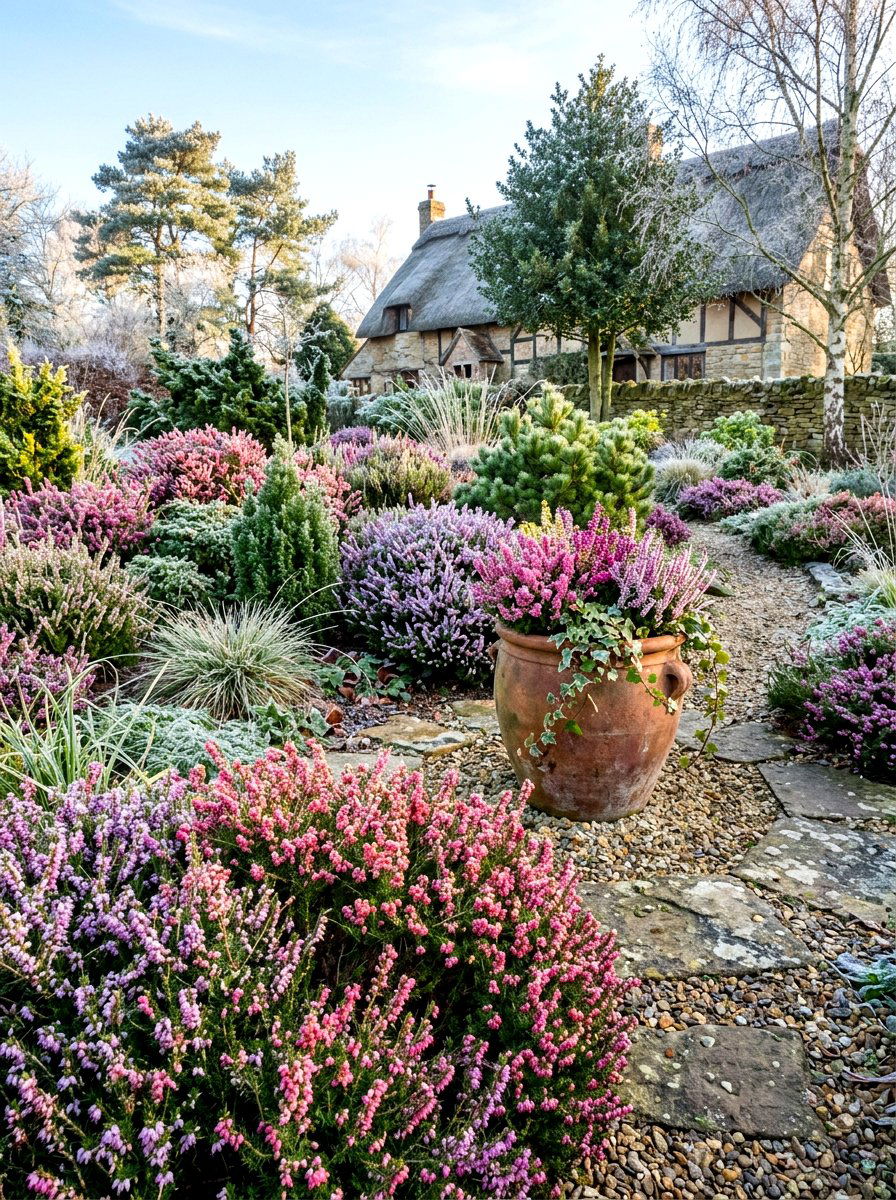
Winter-blooming heather is a fantastic plant that produces masses of tiny, bell-shaped flowers during the coldest months. The flowers come in shades of white, pink, and purple, and they can last for a very long time. The foliage is needle-like and evergreen, providing year-round interest even when the plant is not in bloom. Heather prefers acidic soil and a sunny spot, making it a great companion for other evergreens. Planting a few heathers in a wide, low pot creates a beautiful "meadow" look that feels very natural and cozy. These plants are very tough and can handle frost and snow with ease. They add a delicate and colorful touch to a winter garden.
28. Winter Fern Arrangement
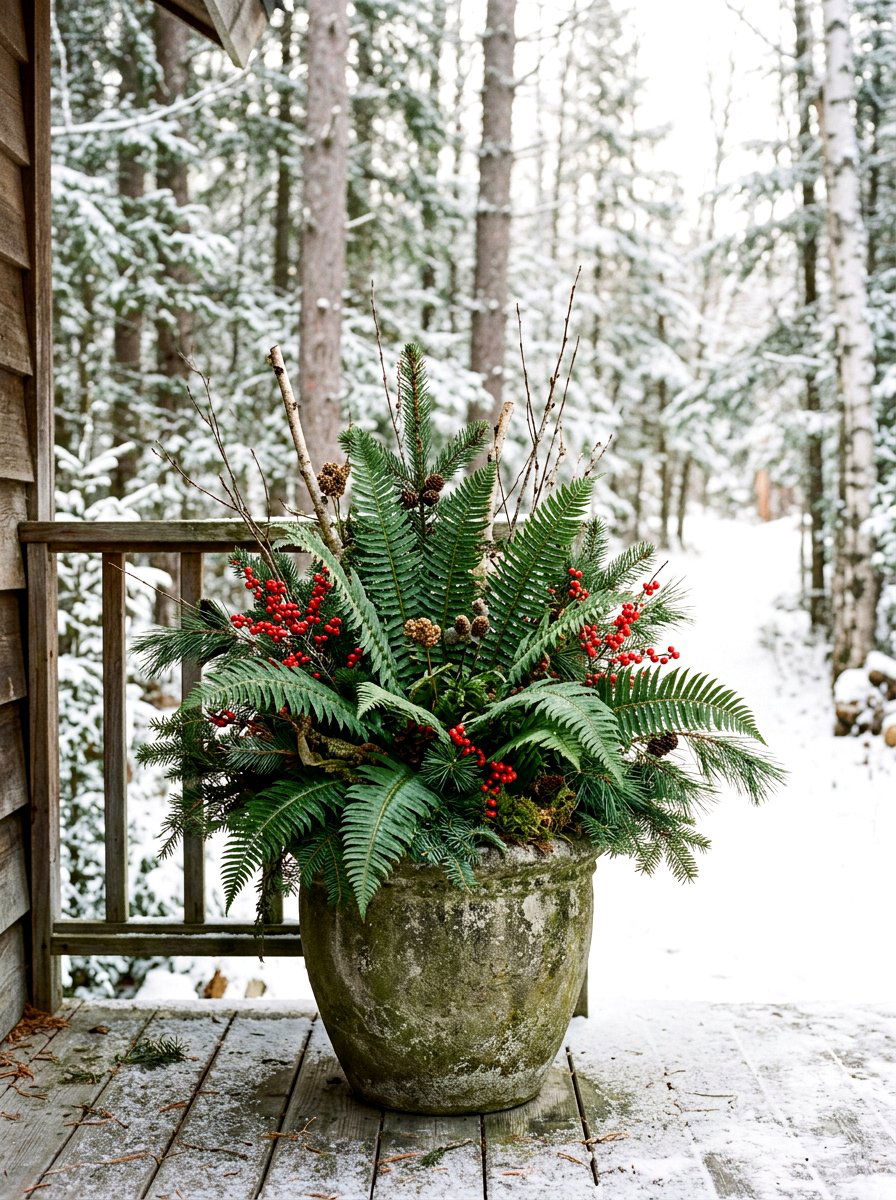
While many ferns die back in the winter, there are several evergreen varieties that stay green all year long. The Christmas fern and the harts-tongue fern are two excellent choices for winter container gardening. Their arching fronds add a wonderful architectural shape and a soft, forest-like texture to a pot. You can plant them at the base of taller evergreens to fill in the lower part of the arrangement. They prefer shaded spots, so they are perfect for covered porches or north-facing entryways. The green fronds look particularly beautiful when they are dusted with a light layer of snow. This is a sophisticated and slightly unexpected choice for a winter display.
29. Dwarf Conifer Pot
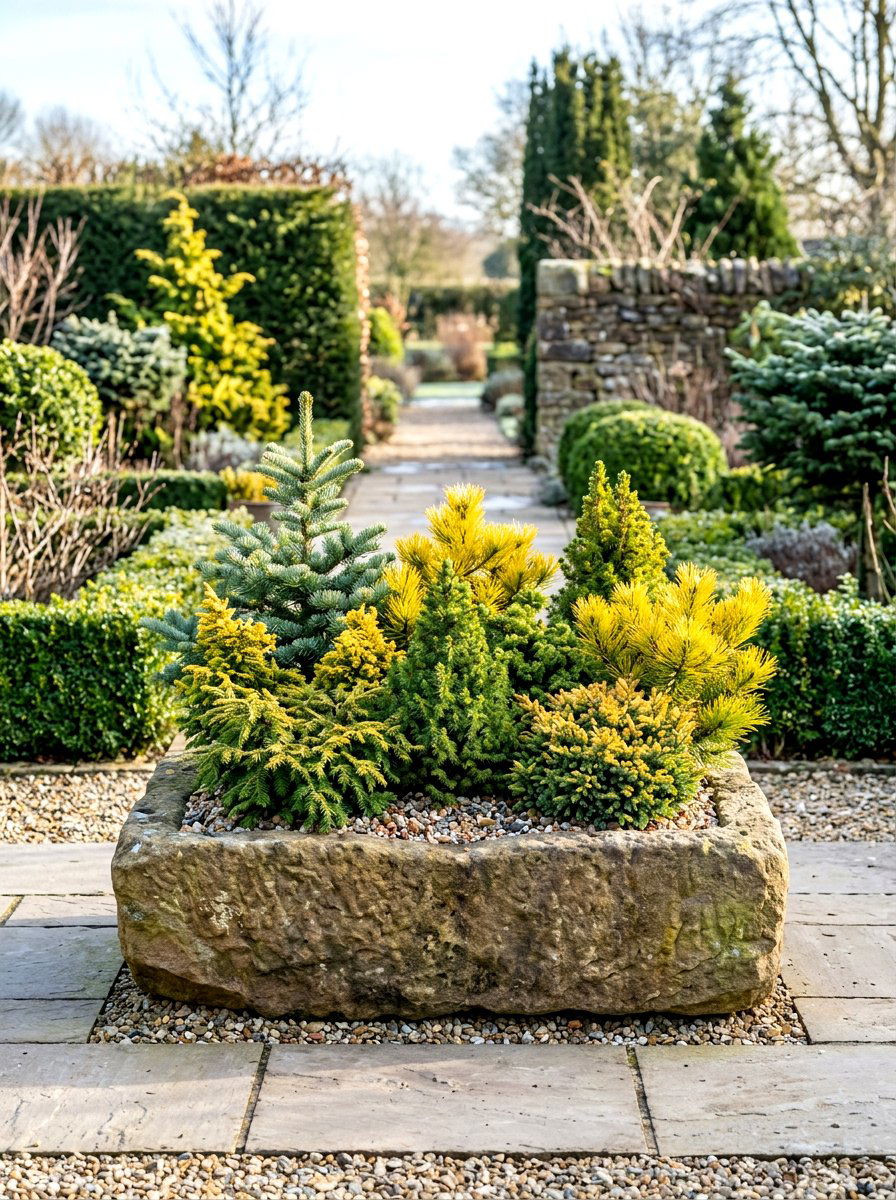
Dwarf conifers are specially bred to stay small, making them perfect for long-term container gardening. These miniature trees come in a huge variety of shapes, from perfect spheres to weeping towers. You can find them in many different colors, including deep green, bright gold, and silvery blue. Grouping several different types of dwarf conifers together in a large trough creates a miniature evergreen forest. Because they are slow-growing, you can keep them in the same pot for several years. They provide a very high-end and structured look that requires almost no maintenance once planted. This is an excellent investment for anyone wanting a permanent winter display that looks professional and very polished.
30. White Pine Trough
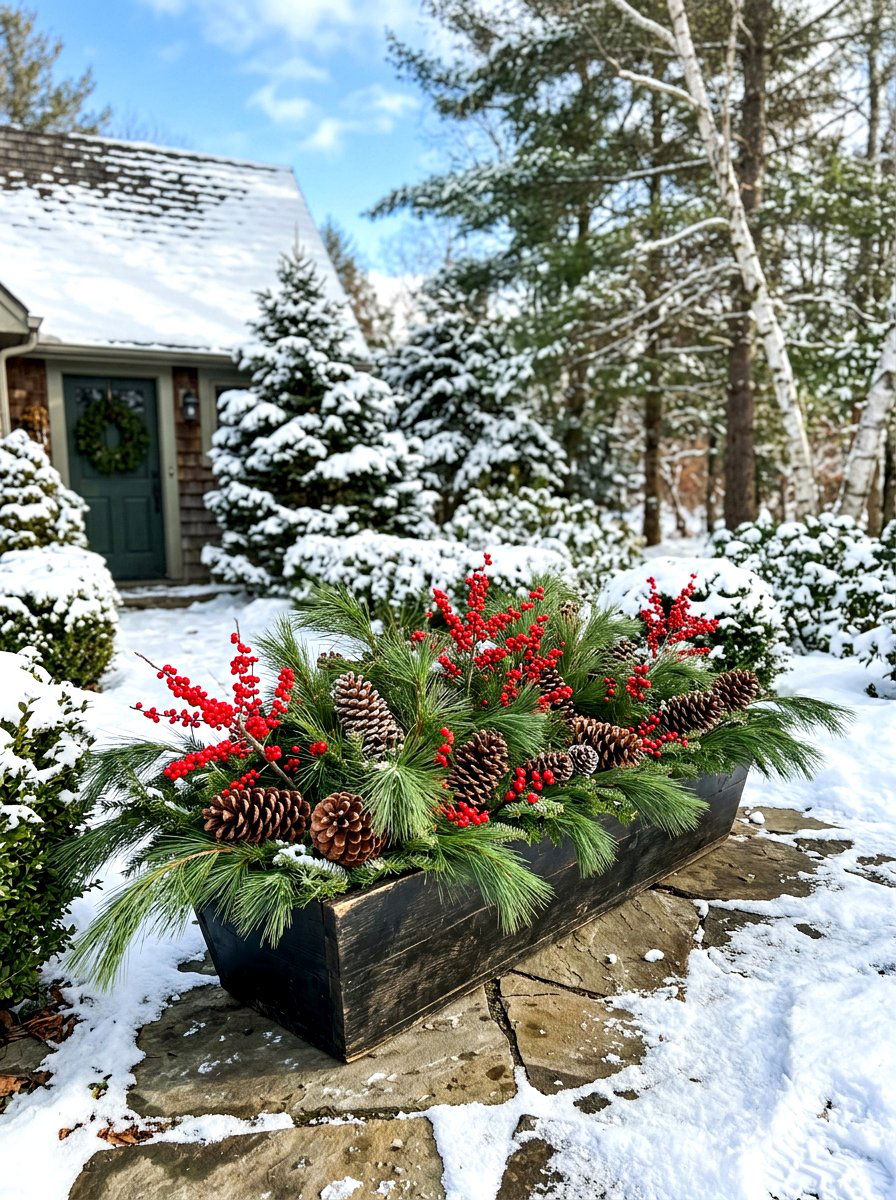
White pine is known for its long, soft, and flexible needles that have a very elegant and graceful look. Unlike the stiff needles of spruce or fir, white pine boughs have a much softer and more flowing texture. Using these branches in a long trough planter creates a very lush and full display that feels very welcoming. The needles are a beautiful blue-green color that looks great in any lighting. You can mix in some large pinecones and red berries to add a bit of traditional winter color. White pine is very hardy and holds its needles for a long time, making it a reliable choice for the whole season. It brings a classic, soft, and natural beauty to your porch.
Conclusion:
Creating a winter container garden is a rewarding way to keep your home’s exterior looking beautiful during the long, cold months. By carefully selecting hardy plants like evergreens, berries, and colorful twigs, you can build arrangements that thrive in freezing temperatures. These containers do more than just add curb appeal; they provide a sense of life and continuity when the rest of the natural world is dormant. Whether you prefer a formal, structured look or a rustic, woodland-inspired display, there are endless ways to express your creativity. Investing a little time into your winter pots ensures that your garden remains a source of joy and inspiration all year round.

Related posts: