A woodland shade garden is a magical way to transform a dim, neglected backyard corner into a lush, thriving sanctuary of peace. Many homeowners struggle with areas where grass refuses to grow, but these shadows actually offer the perfect environment for a diverse range of forest plants. By mimicking the natural layers of a forest floor, you can create a low-maintenance ecosystem that supports local wildlife while providing a cool retreat during hot summer months. These gardens rely on rich textures, varying shades of green, and delicate pops of color that glow in the dappled sunlight. Embracing the shade allows you to explore unique plant varieties that bring a timeless, organic beauty to your landscape.
1. Woodland Fern Garden
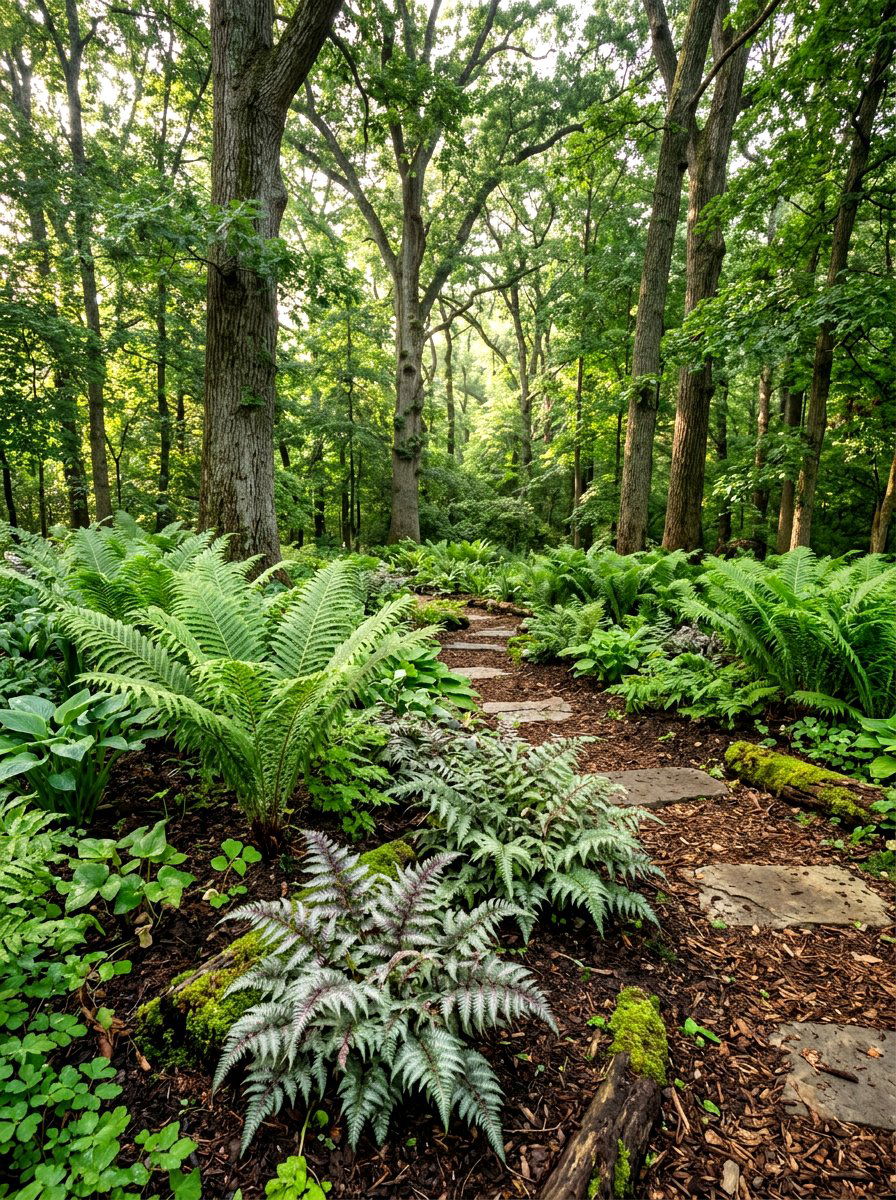
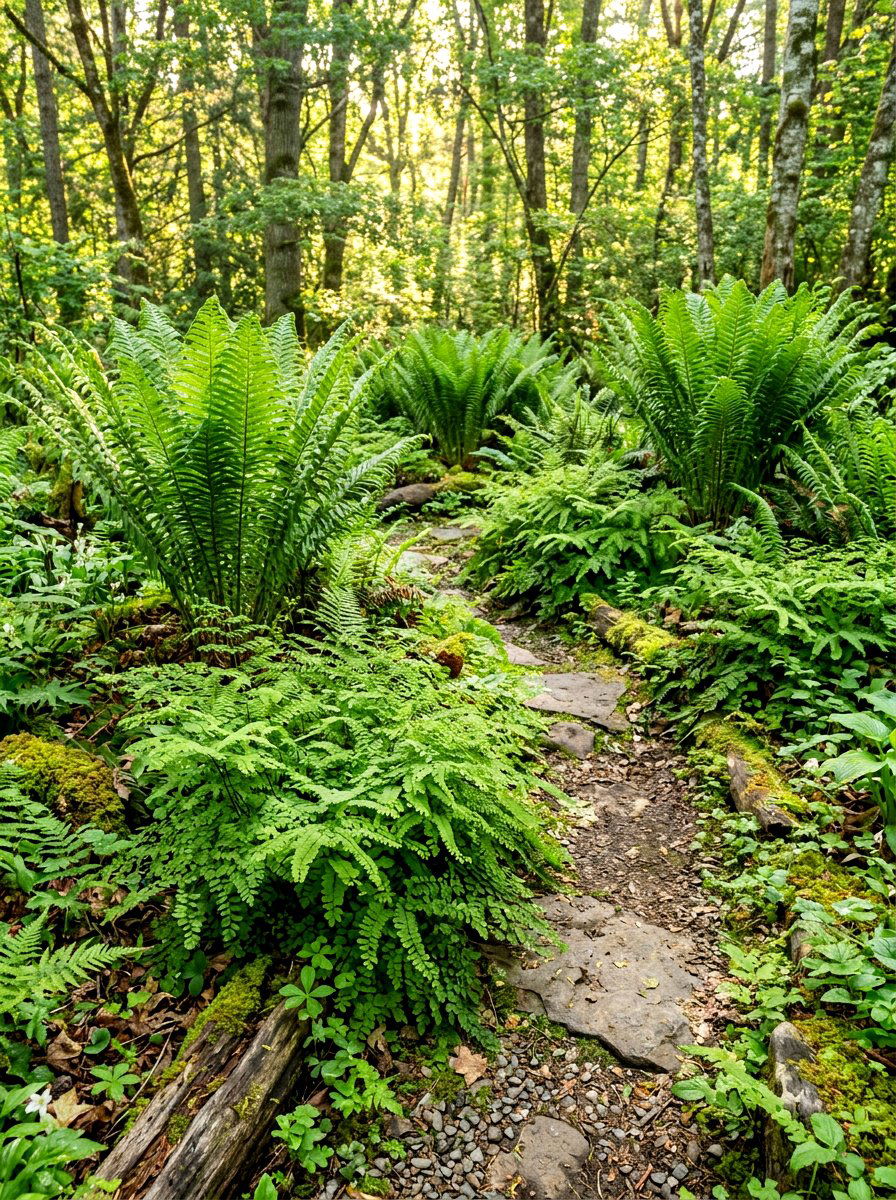
Ferns are the quintessential foundation for any shaded area because they offer unmatched prehistoric elegance and lush green textures. Have you ever noticed how a simple cluster of ostrich ferns can instantly make a space feel like a hidden ancient forest? These plants thrive in moist, acidic soil and love the protection of tall deciduous trees. You can mix different varieties like the delicate maidenhair or the bold Japanese painted fern to create visual interest through varying leaf shapes and colors. Since they are incredibly resilient, ferns require very little care once they are established in their new home. They provide a dense, feathery backdrop that highlights smaller woodland flowers beautifully.
2. Shade Hosta Garden
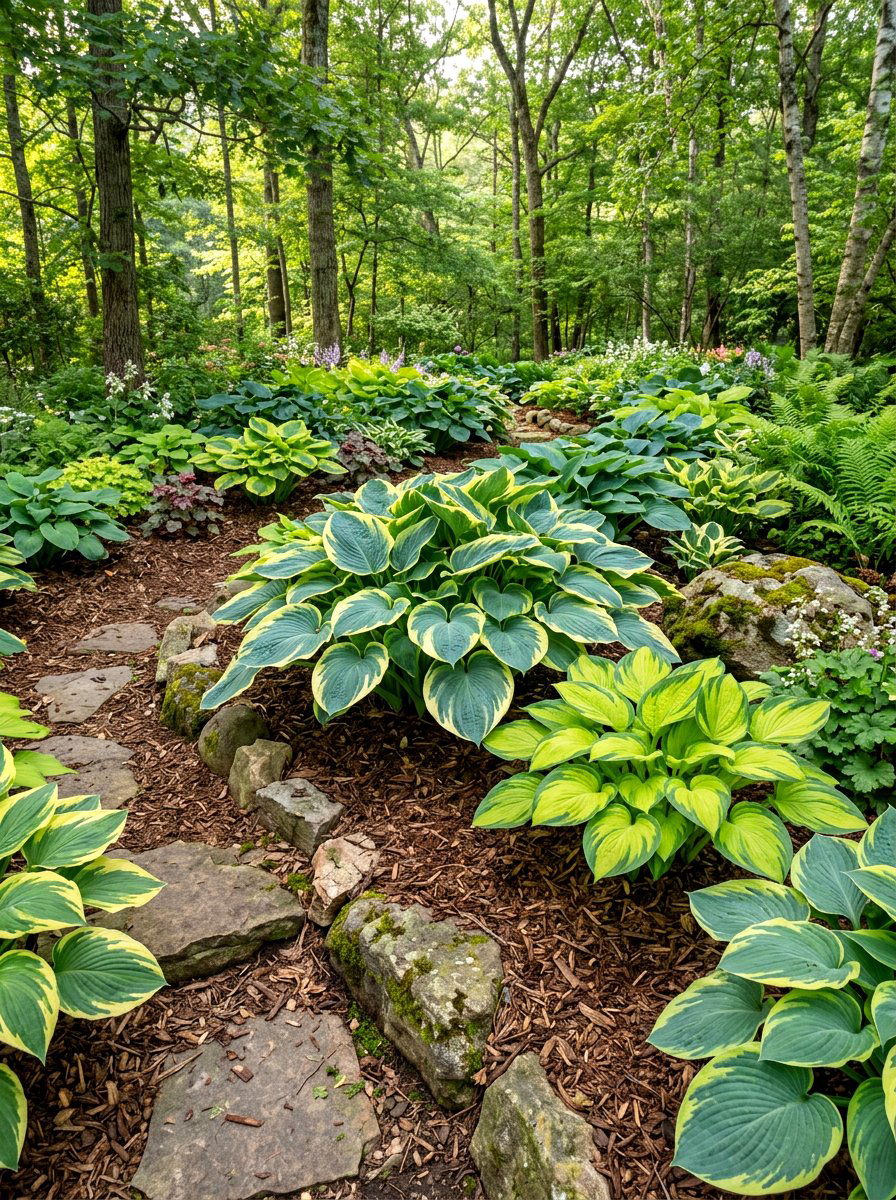
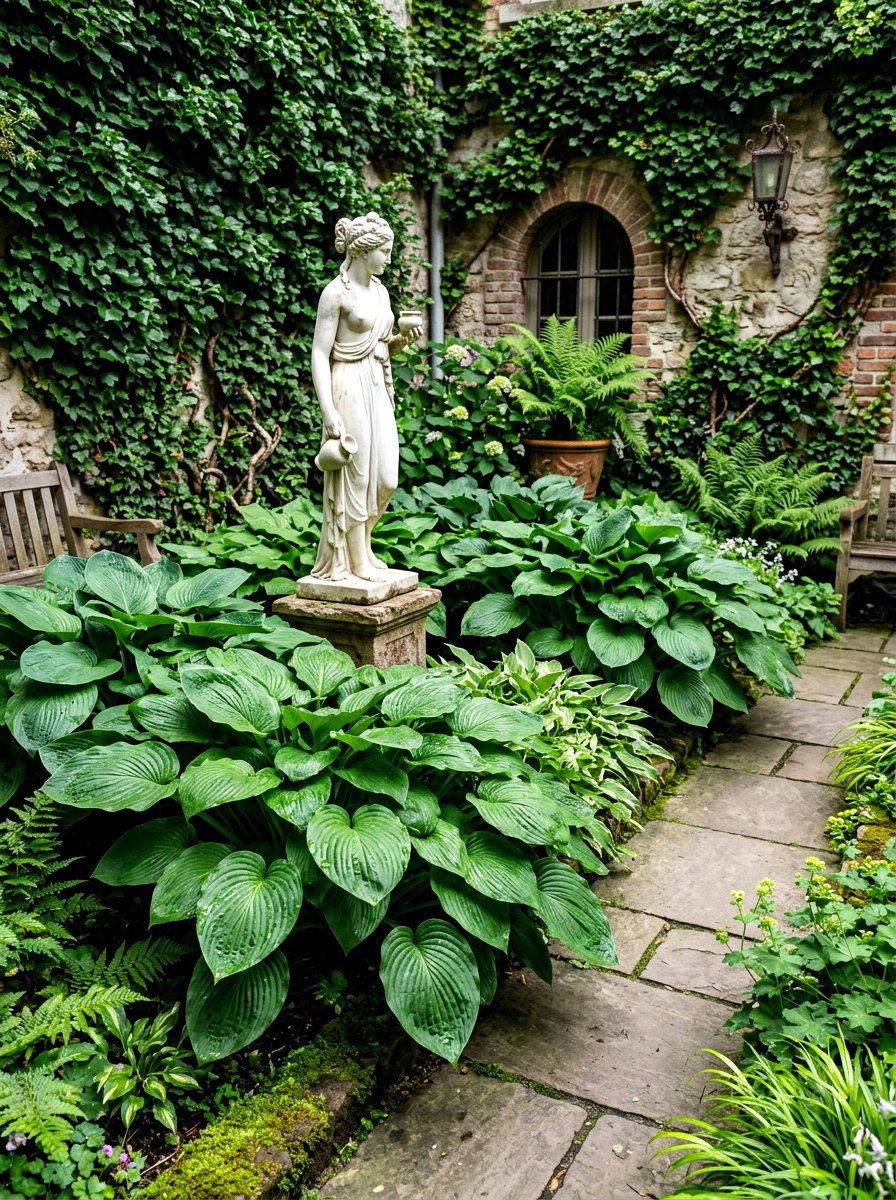
Hostas are incredibly popular for a reason; they bring massive leaves and stunning variegation to the darkest parts of your yard. These perennials come in an endless array of sizes, from tiny miniatures to giant specimens that can span several feet across. Imagine the impact of deep blue-green leaves next to a variety with bright yellow edges or crisp white centers. They act as the perfect anchor for a shade bed, providing a solid structure that balances the finer textures of neighboring plants. While they bloom with delicate stalks of purple or white flowers, the real attraction is the foliage that remains lush throughout the entire growing season.
3. Natural Moss Pathway
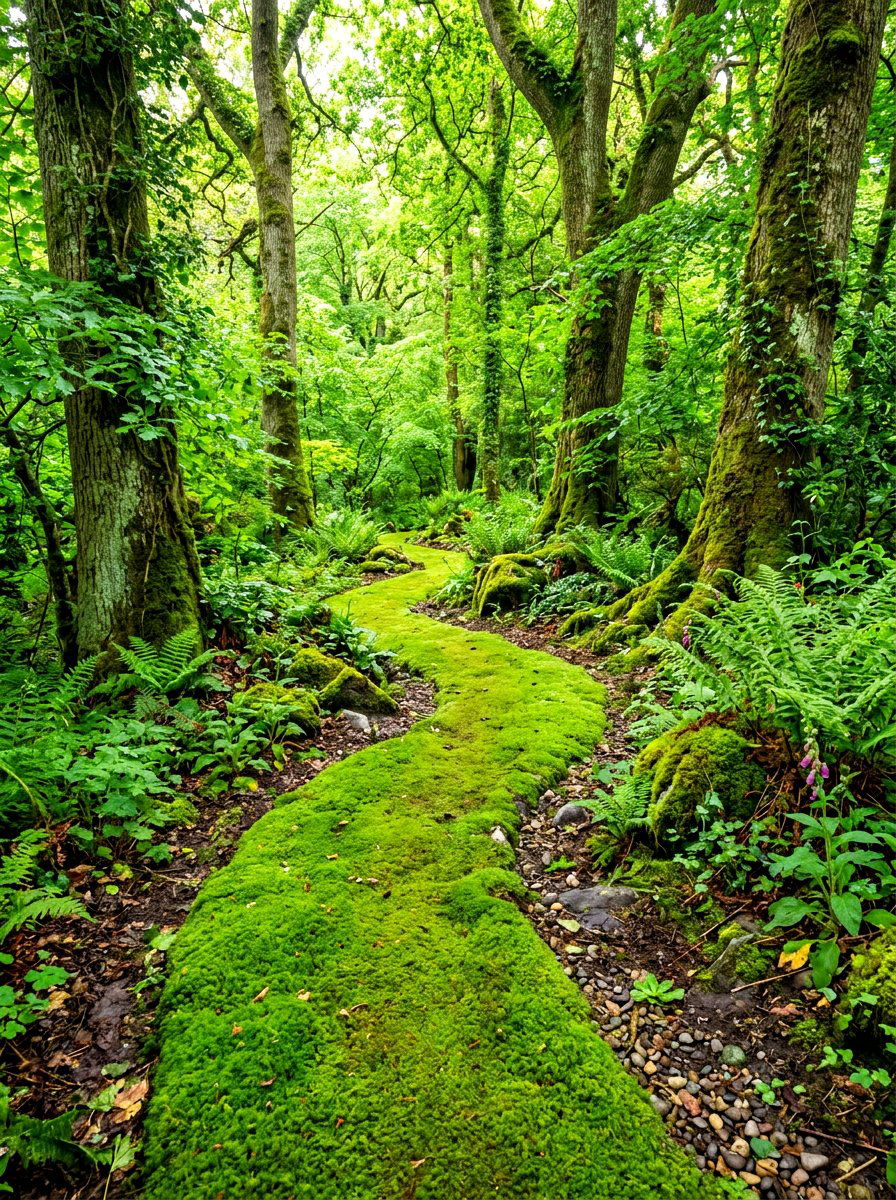
A natural moss pathway is a dreamy addition that makes your garden feel like it belongs in a fairytale. Unlike hard stone or gravel, moss provides a soft, emerald-green carpet that feels wonderful underfoot and remains vibrant even in the deepest shade. To encourage moss growth, you should keep the soil slightly acidic and consistently moist, allowing the spores to naturally colonize the area over time. You can also transplant small patches of moss from other parts of your property to speed up the process. This living walkway blends seamlessly into the surroundings, creating a quiet and serene transition between different areas of your woodland retreat.
4. Woodland Stumpery Feature
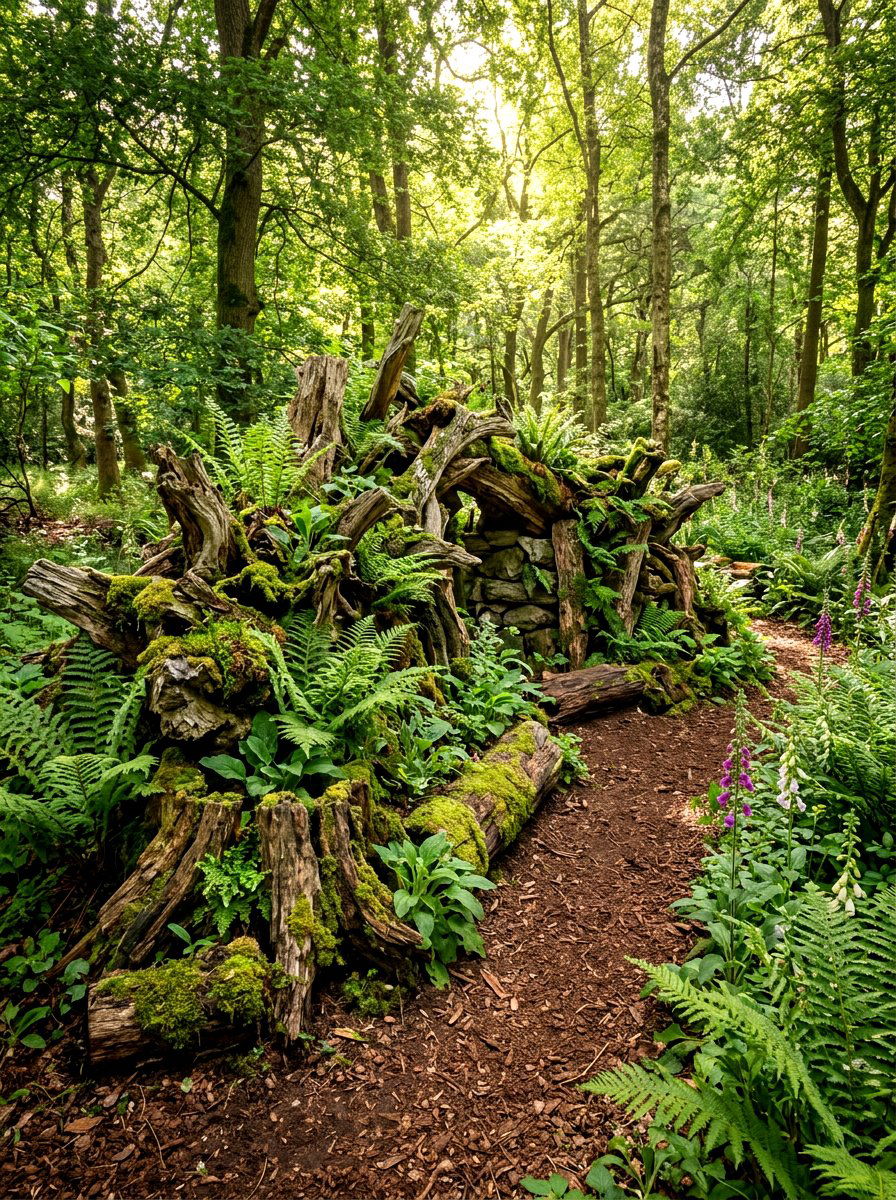
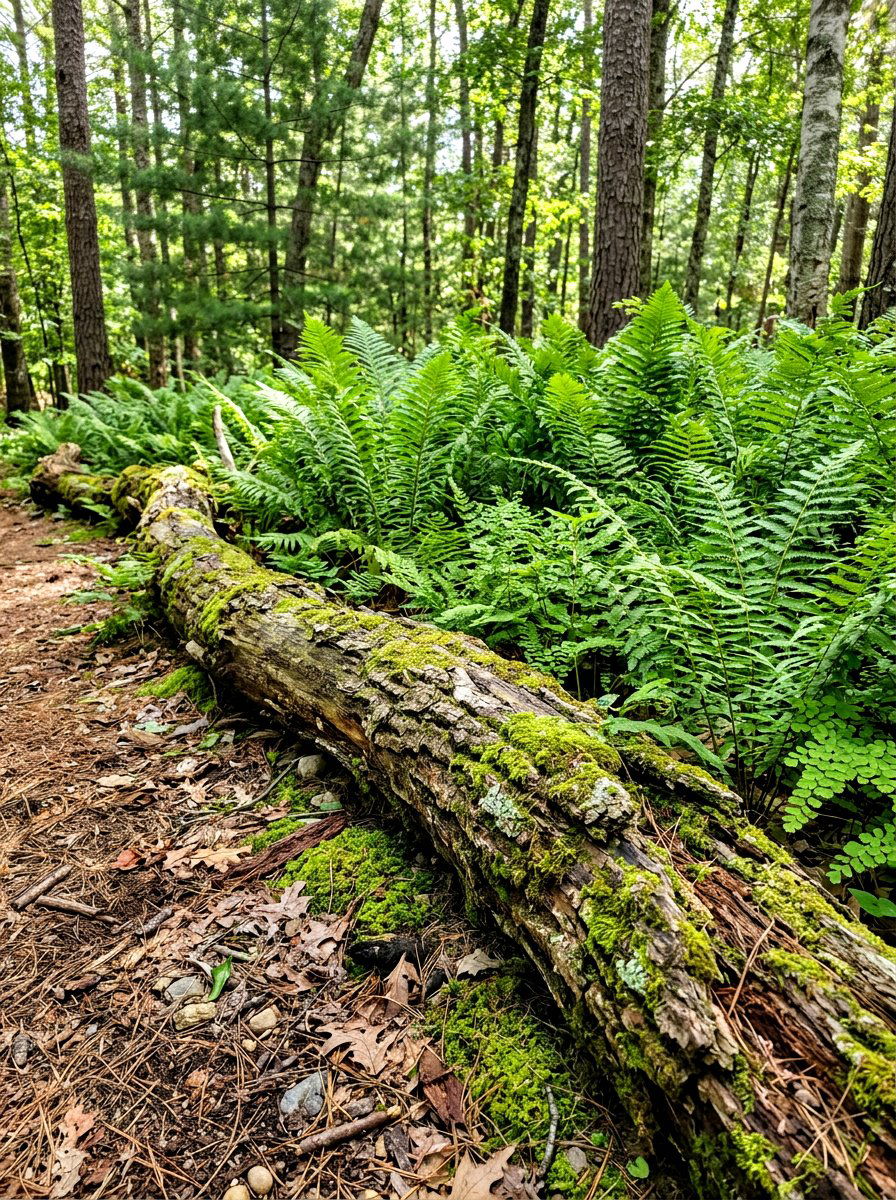
Creating a woodland stumpery is an artistic way to recycle old logs and tree roots into a stunning focal point. This traditional Victorian technique involves stacking organic wooden elements to create crevices where ferns, mosses, and liverworts can thrive. As the wood slowly decays over the years, it provides essential nutrients back into the soil and creates a habitat for beneficial insects and small wildlife. A stumpery adds a sense of ancient history and architectural drama to your garden, making it look established and wild. It is the perfect solution for areas with difficult soil where traditional digging might be a challenge for new plants.
5. Native Wildflower Patch
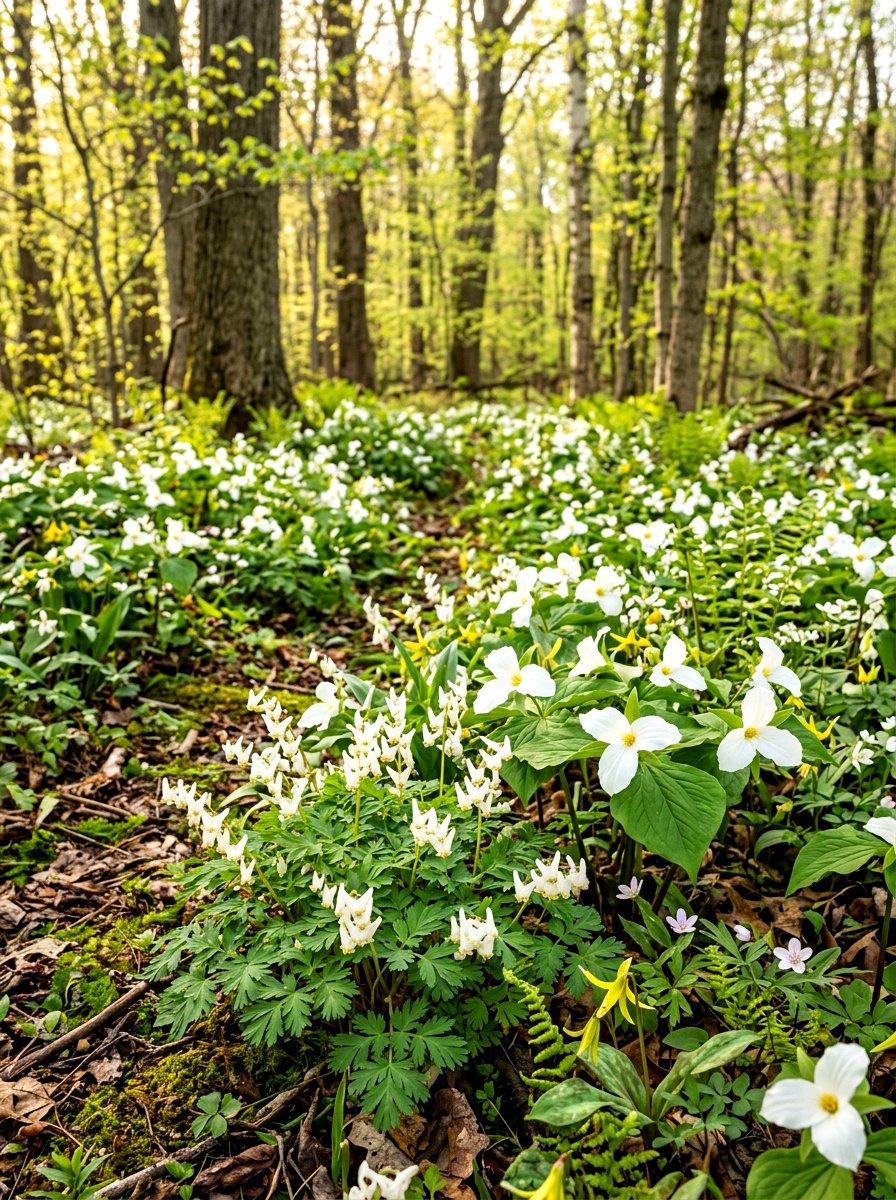
A native wildflower patch brings a burst of seasonal charm and ecological value to your shaded landscape. Choosing local species ensures that your garden is well-adapted to the specific climate and soil conditions of your region. Spring ephemerals, such as Dutchman's breeches or spring beauties, offer delicate blooms before the trees fully leaf out in the early months. These flowers provide critical early-season nectar for pollinators and add a whimsical, naturalized look to the forest floor. By allowing these plants to self-seed and spread, you can create a dynamic and ever-changing display that celebrates the unique biodiversity of your local woodland environment.
6. Japanese Maple Shade
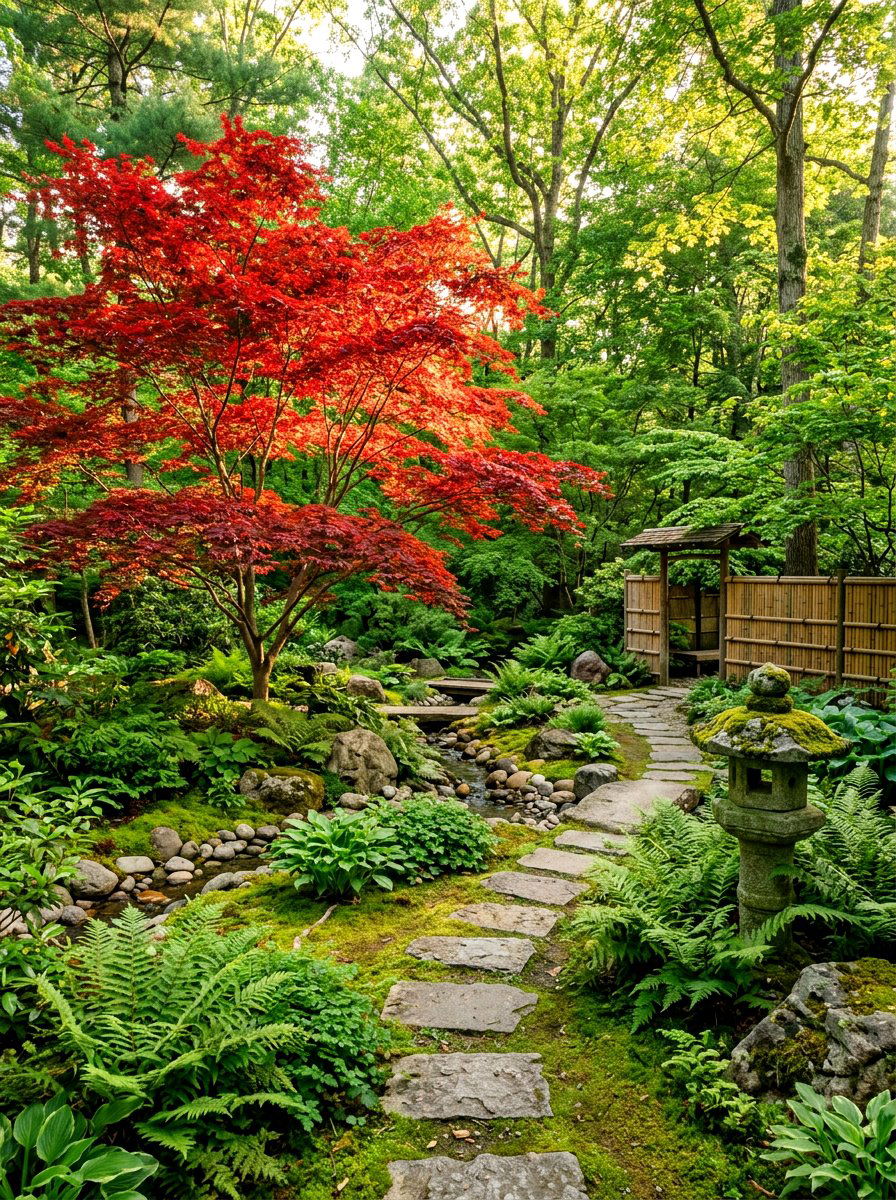
Incorporating a Japanese maple is a brilliant way to add a sophisticated understory tree that provides structure and stunning color. These trees are famous for their intricate, lacy leaves and their ability to thrive in dappled light or partial shade. During the spring and summer, they offer a cool canopy for smaller perennials, while their autumn foliage turns into a breathtaking display of fiery reds, oranges, and golds. Their compact size makes them ideal for smaller gardens or as a specimen plant near a quiet seating area. A Japanese maple serves as a living sculpture that anchors your woodland design with grace and year-round interest.
7. Woodland Dry Creek
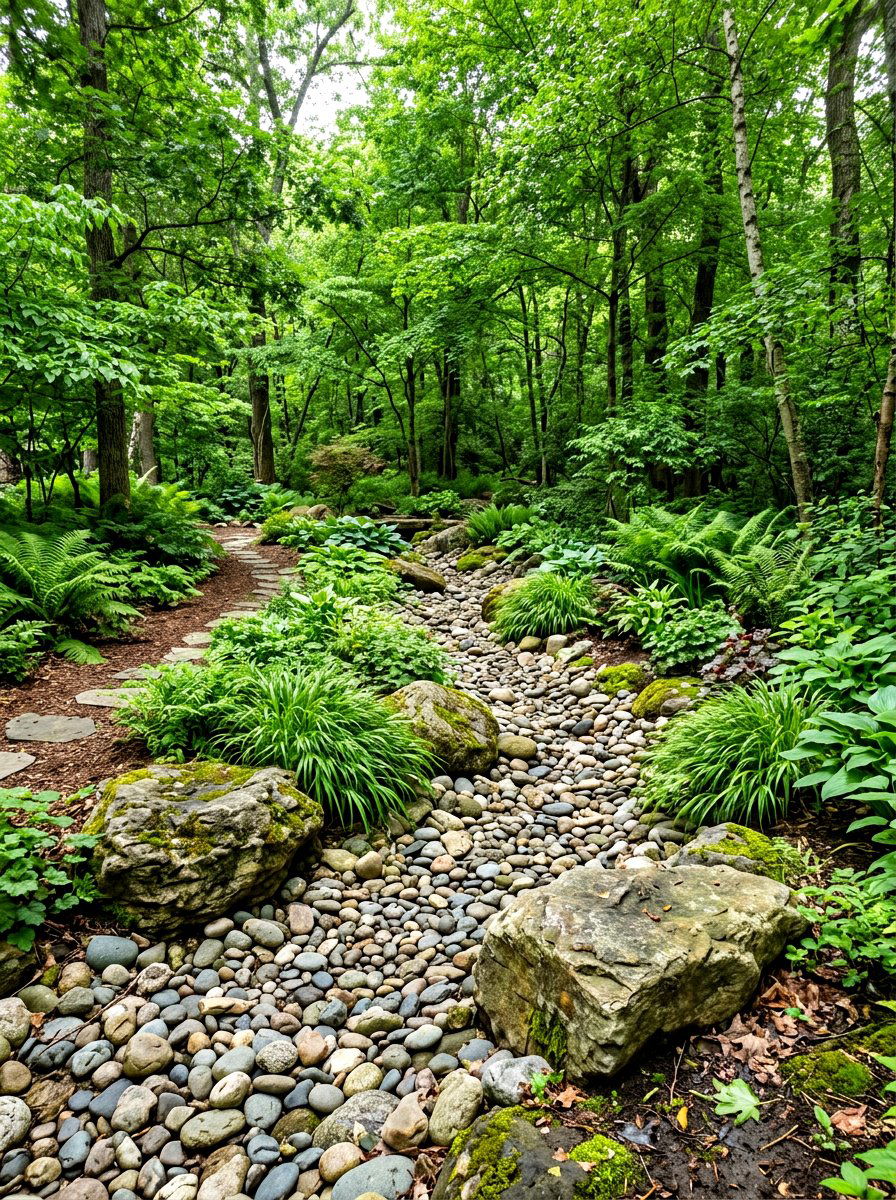
A woodland dry creek bed serves both a functional and aesthetic purpose by managing drainage while adding a naturalistic water-like element. By using a mix of smooth river stones, jagged fieldstones, and smaller pebbles, you can mimic the appearance of a dried-up forest stream. This feature breaks up large expanses of green foliage and provides a visual path for the eye to follow through the garden. You can plant moisture-loving species like sedges or primroses along the "banks" to enhance the illusion. During heavy rain, the creek bed safely directs excess water away from your home, preventing erosion and keeping your garden healthy.
8. Stone Birdbath Area
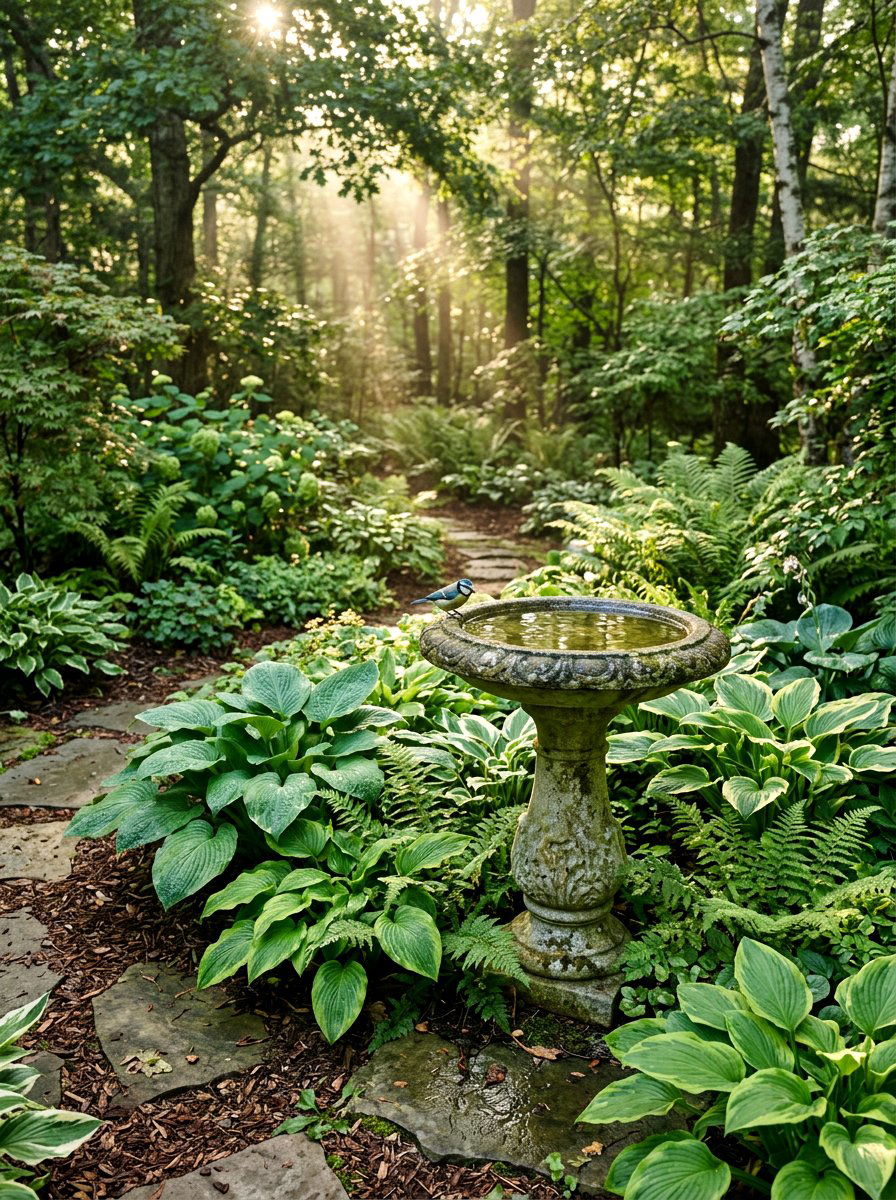
Adding a stone birdbath creates a peaceful focal point that invites local birds and beneficial insects into your shaded sanctuary. Placing it in a quiet corner surrounded by low-growing ferns or hostas makes the space feel like a natural woodland clearing. Water is an essential element for any wildlife-friendly garden, and the sight of birds bathing adds a sense of movement and joy to the landscape. Choose a rustic, weathered stone design to ensure it blends perfectly with the organic feel of the woodland. The sound of birds chirping and the shimmering water will instantly enhance the relaxing atmosphere of your outdoor retreat.
9. Hellebore Winter Garden
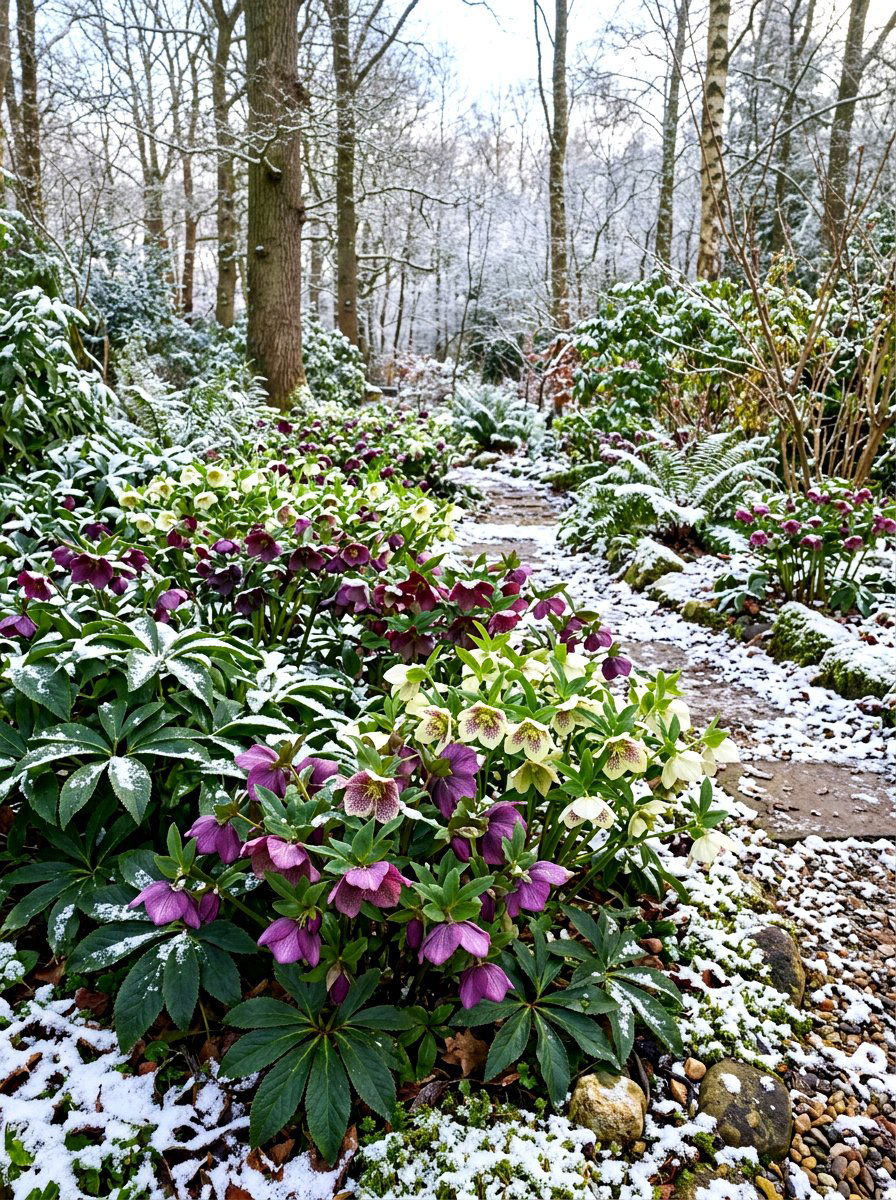
Hellebores, also known as Lenten roses, are the absolute stars of the early spring and late winter woodland garden. These incredibly tough perennials produce elegant, nodding blooms in shades of cream, pink, and deep purple when most other plants are still dormant. Their evergreen foliage provides a consistent green presence throughout the year, ensuring that your shaded beds never look bare. Hellebores are remarkably easy to grow and are generally resistant to deer and rabbits, making them a reliable choice for forest-edge landscapes. Planting them in large drifts creates a carpet of color that signals the end of winter and the start of spring.
10. Primrose Shade Border
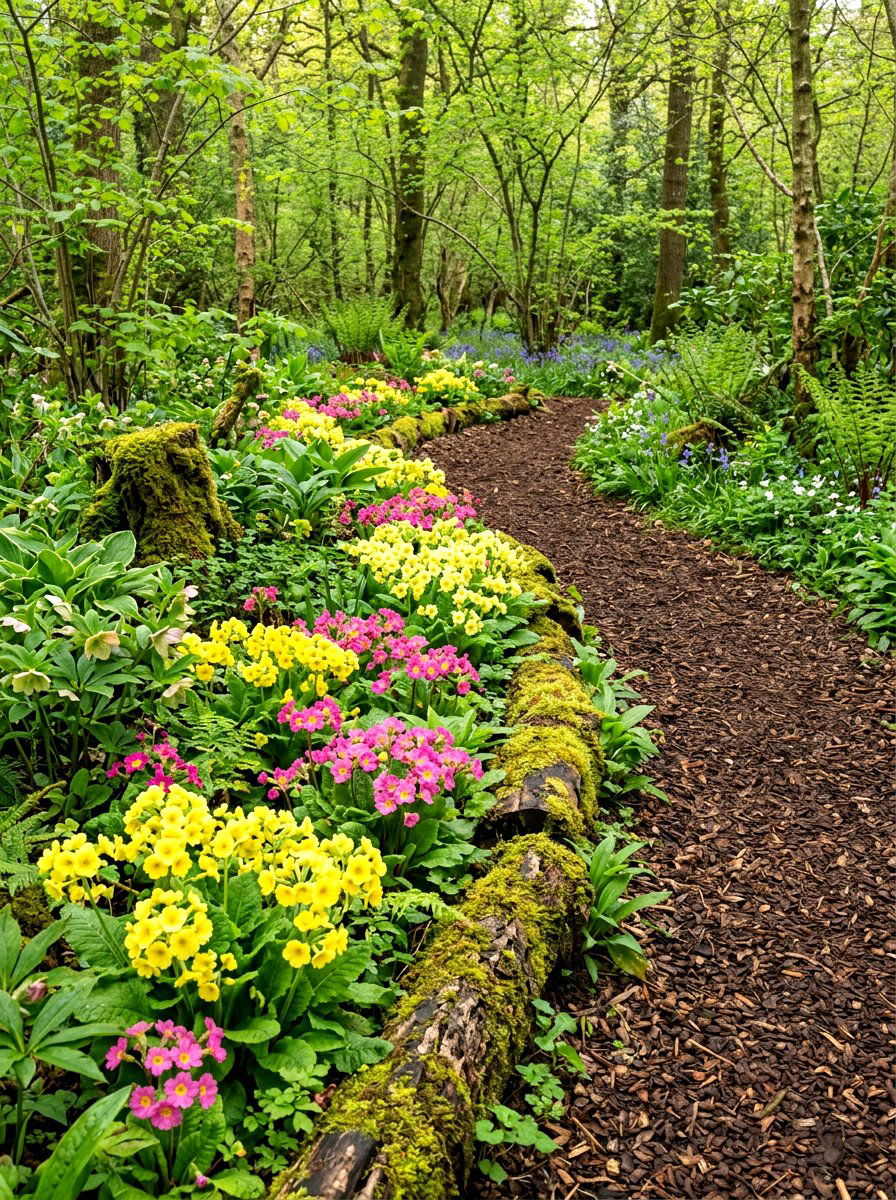
A primrose shade border adds a charming touch of old-world beauty and vibrant color to the edges of your garden paths. These delicate flowers come in almost every color imaginable, and many varieties offer a sweet, subtle fragrance that drifts through the air. They thrive in the cool, moist conditions found under a leafy canopy and look best when planted in clusters. Primroses are excellent for filling in small gaps between larger shrubs or trees, providing a detailed layer of interest at ground level. Their bright petals catch the light and provide a cheerful contrast against the dark greens of ferns and mossy logs.
11. Woodland Seating Area
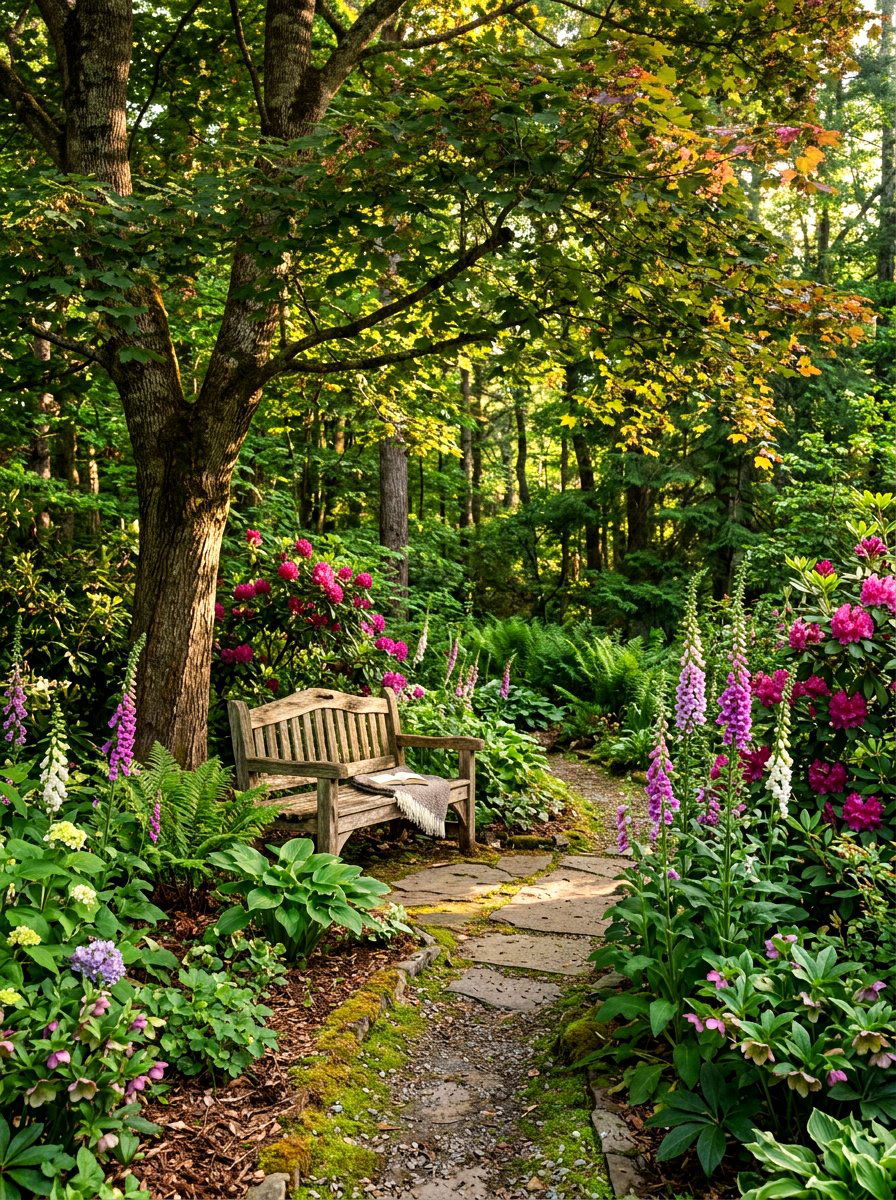
Designing a woodland seating area allows you to fully immerse yourself in the tranquil environment you have created. A simple wooden bench or a set of rustic Adirondack chairs tucked under a large tree provides the perfect spot for reading or meditation. To make the space feel more secluded, you can surround the seating with tall perennials like foxgloves or shrubs like rhododendrons. Using natural materials like cedar or weathered stone for the seating ensures it harmonizes with the forest aesthetic. This intimate corner becomes a private getaway where you can escape the noise of daily life and enjoy the surrounding nature.
12. Bleeding Heart Patch
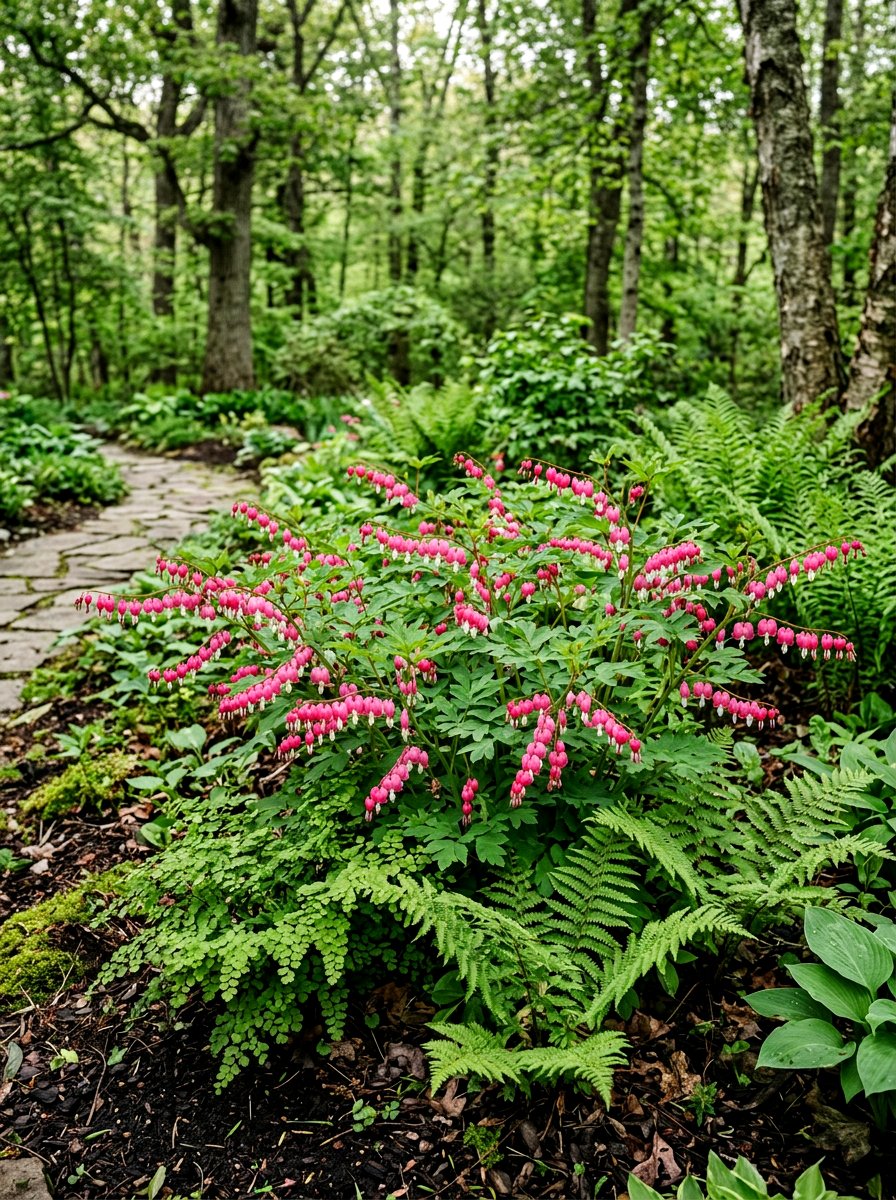
Bleeding hearts are iconic woodland plants that feature unique, heart-shaped flowers hanging gracefully from arching stems. These spring ephemerals bring a sense of romance and whimsy to any shaded garden bed with their bright pink or pure white blooms. They prefer cool, moist soil and dappled light, making them perfect companions for ferns and hostas. While the foliage may go dormant during the heat of summer, the dramatic show they provide in the spring is well worth the space. Planting them behind later-emerging perennials allows other plants to fill the gap once the bleeding hearts have finished their spectacular seasonal performance.
13. Astilbe Shade Bed
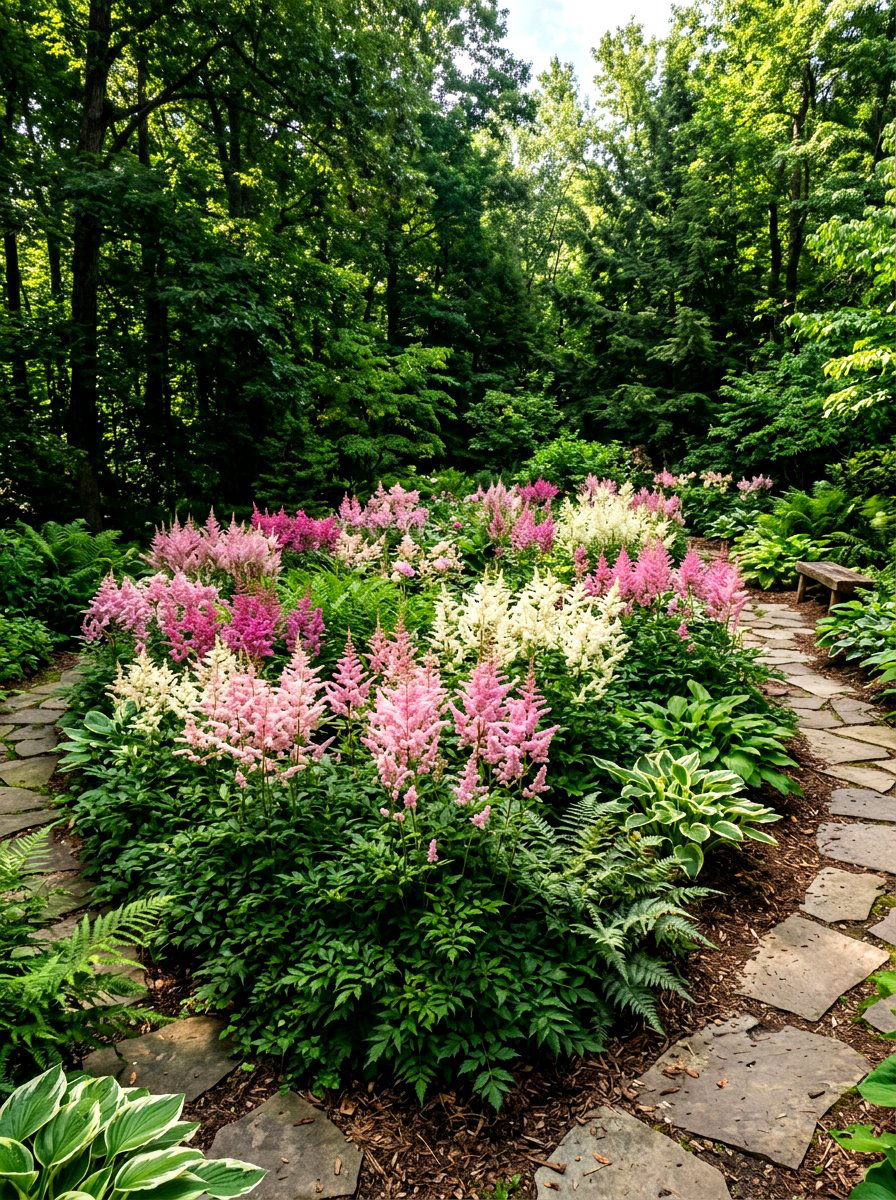
An astilbe shade bed offers a soft, feathery texture and vertical interest that contrasts beautifully with broad-leafed plants. These perennials produce tall plumes of tiny flowers in shades of white, pink, red, and lavender during the mid-summer months. Their fern-like foliage remains attractive even when the plants are not in bloom, providing a dense green groundcover. Astilbes love moisture and will thrive in areas where the soil stays consistently damp throughout the year. Grouping different colors together creates a vibrant tapestry that brightens up the shadows. They are excellent for adding a touch of elegance and movement to your woodland garden design.
14. Natural Log Edging
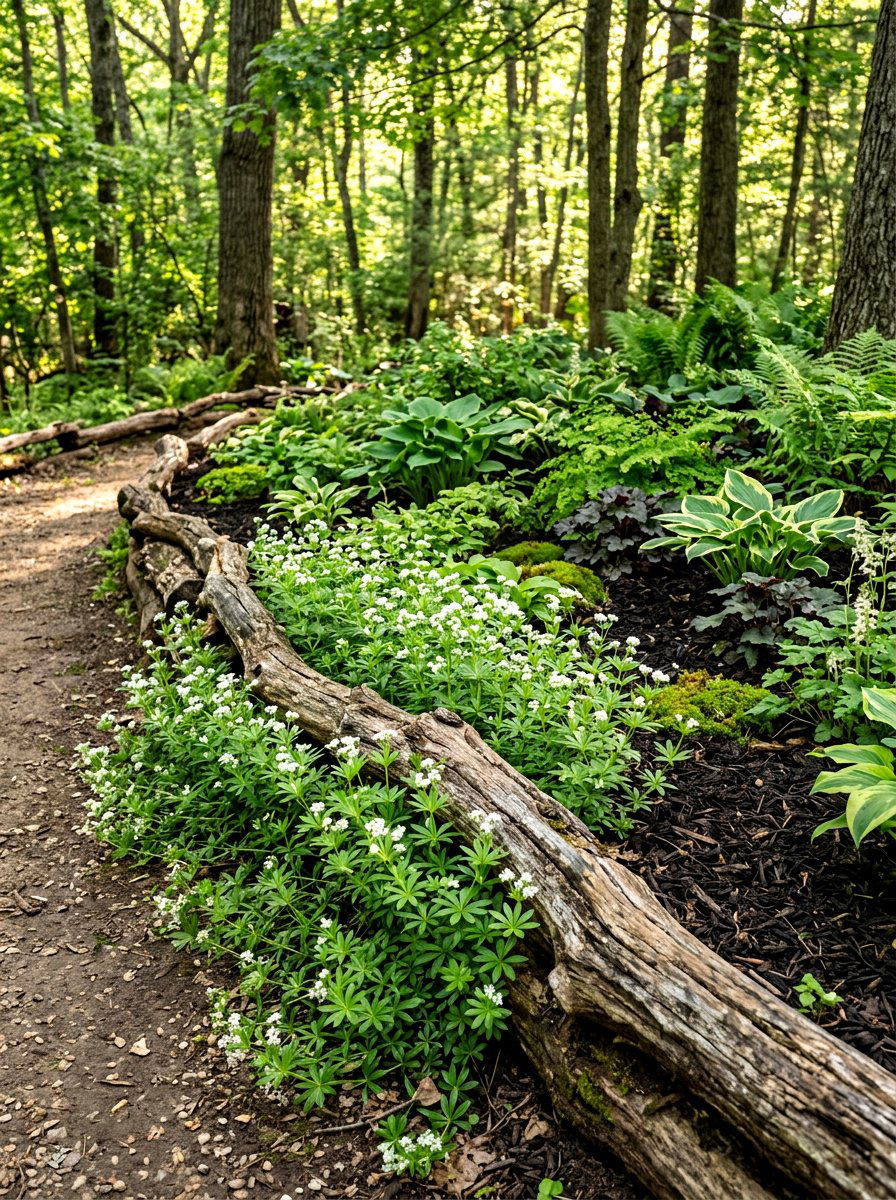
Using natural log edging is a sustainable and rustic way to define your garden beds and pathways. Instead of using plastic or metal borders, old branches or fallen logs provide an organic transition that looks perfectly at home in a woodland setting. This technique helps keep mulch in place and prevents soil from washing away during heavy rains. Over time, the wood will naturally weather and provide a home for beneficial organisms that improve the health of your soil. Log edging also creates a perfect backdrop for low-growing plants like sweet woodruff or creeping phlox to spill over, softening the overall look of the space.
15. Heuchera Foliage Garden
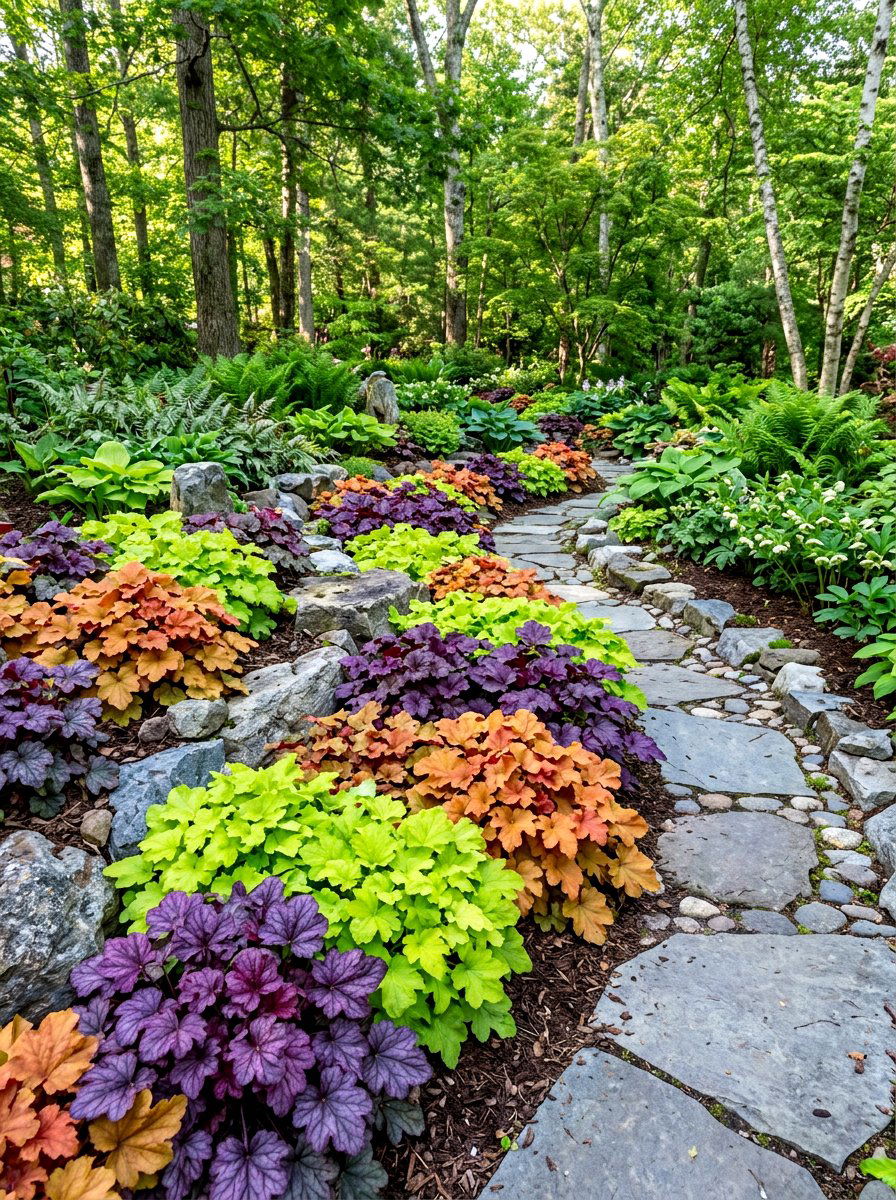
A heuchera foliage garden is the ultimate way to inject a rainbow of color into your shaded landscape without relying on flowers. Also known as coral bells, these plants are prized for their stunning leaves, which come in shades of deep purple, lime green, burnt orange, and silver. They form tidy mounds of foliage that look fantastic when planted along a border or in a mass grouping. Heucheras are generally evergreen in many climates, providing visual interest even during the colder months. Their low-maintenance nature and diverse color palette make them a favorite for gardeners looking to add year-round drama to the shade.
16. Natural Waterfall Feature
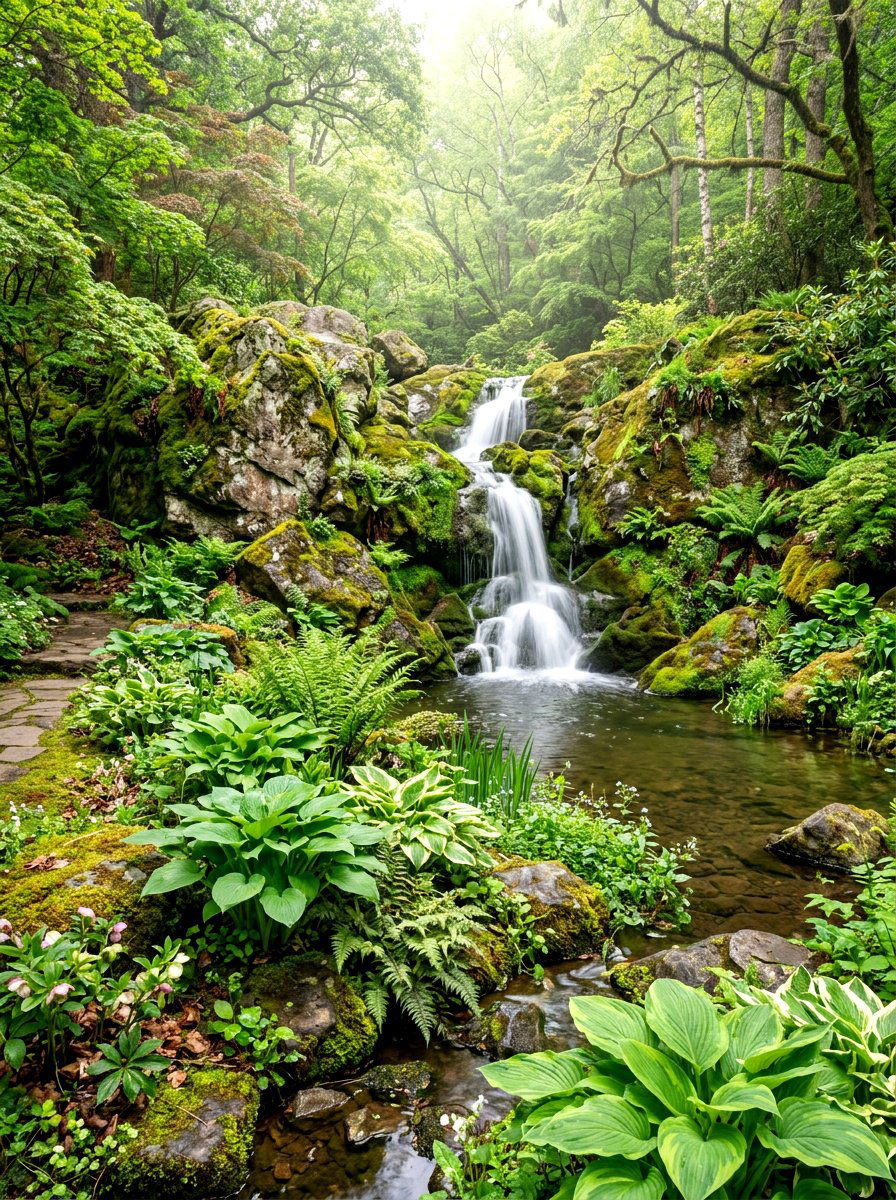
A natural waterfall feature brings the soothing sound of running water into your woodland garden, creating a multisensory experience. By using native stones and clever landscaping, you can build a small cascade that looks like it has been part of the forest for decades. The moisture from the waterfall creates a unique microclimate that allows delicate mosses and moisture-loving ferns to flourish right at the water's edge. This feature also serves as a drinking station for local wildlife, from colorful birds to thirsty pollinators. The peaceful hum of the water masks neighborhood noise, turning your backyard into a truly secluded and private forest retreat.
17. Rhododendron Shade Garden
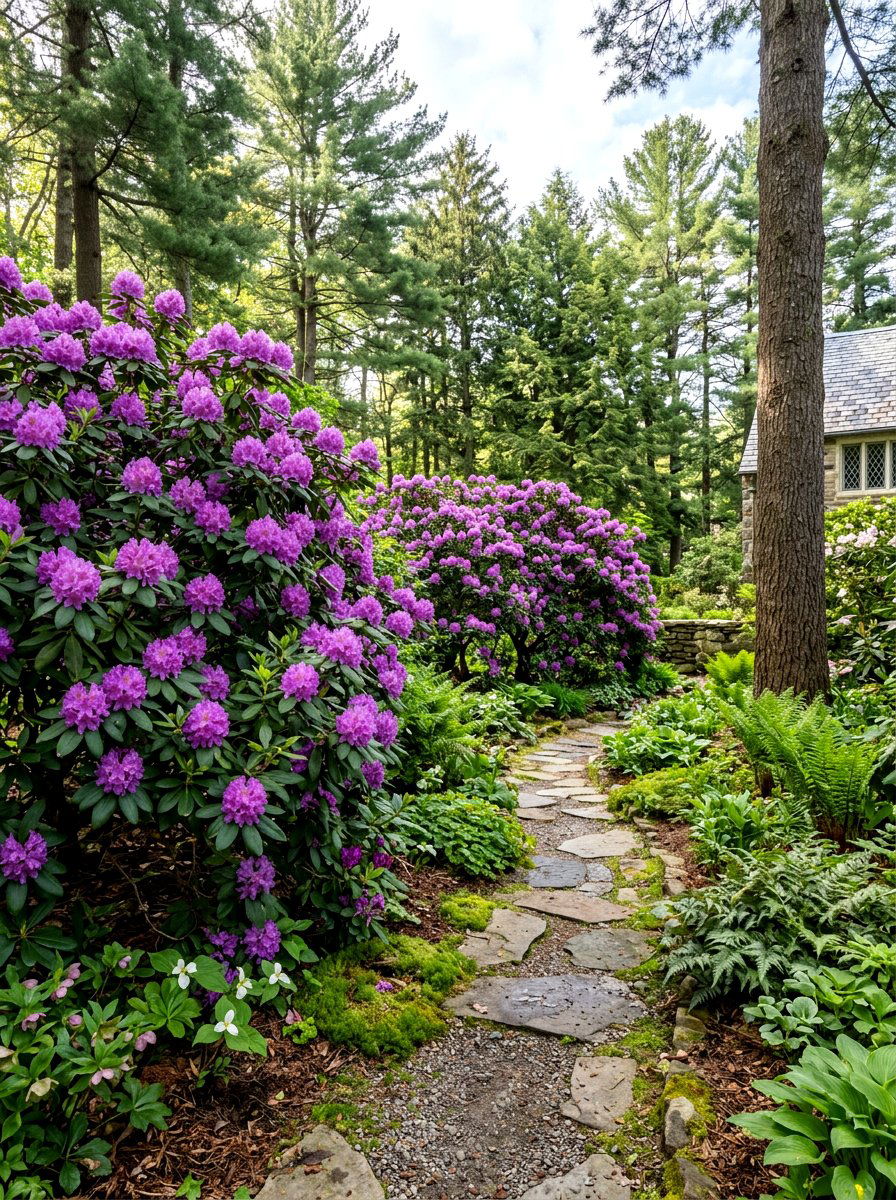
Rhododendrons are the royalty of the shade garden, offering large, leathery evergreen leaves and massive clusters of spectacular spring flowers. These shrubs come in a wide range of sizes, from compact dwarf varieties to large plants that can act as a privacy screen. They thrive in acidic soil and dappled sunlight, making them ideal for the understory of a mature tree canopy. The vibrant blooms in shades of purple, pink, and white create a massive impact during their flowering season. Even when they are not blooming, their structural presence and deep green foliage provide a reliable and handsome background for smaller woodland perennials.
18. Bluebell Forest Floor
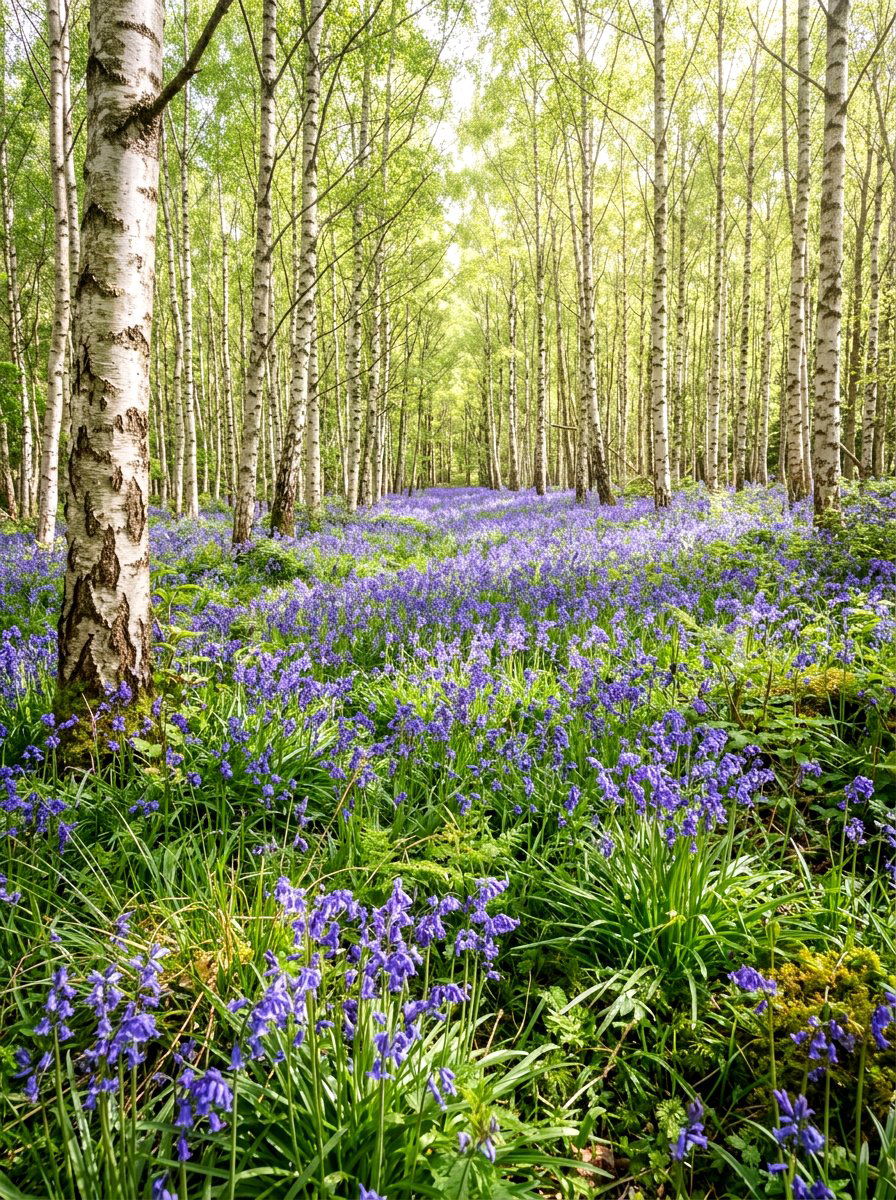
Planting a bluebell forest floor is a classic way to achieve that quintessential English woodland look in your own yard. In the mid-spring, these bulbs erupt into a stunning carpet of nodding violet-blue flowers that look absolutely breathtaking under a canopy of trees. They naturalize easily, meaning they will slowly spread and fill in larger areas over the years with very little effort from the gardener. Bluebells work perfectly when planted among ferns or late-emerging hostas, as their foliage will fade away just as the other plants are filling in. This seasonal display creates an unforgettable and magical atmosphere that celebrates springtime.
19. Foxglove Shade Garden
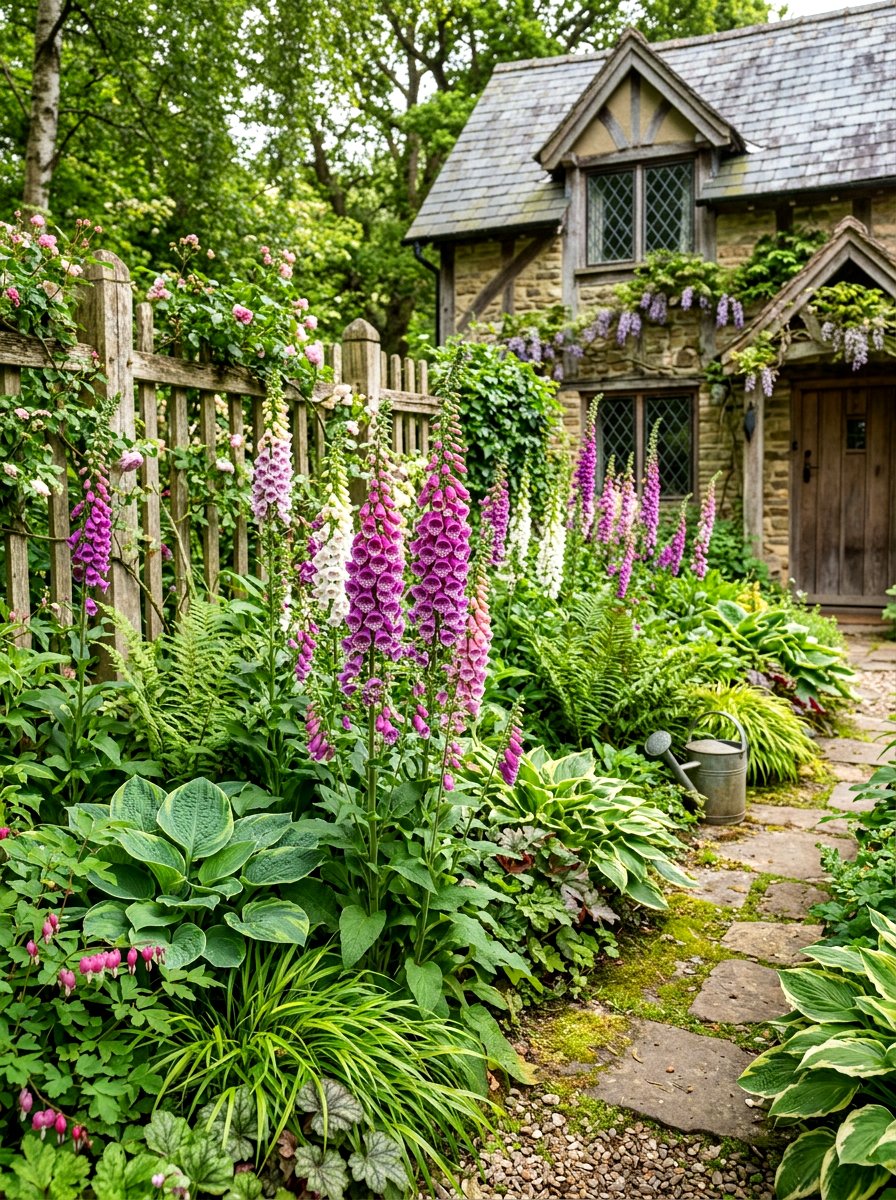
A foxglove shade garden provides dramatic height and a sense of vertical movement that is hard to achieve with other plants. These tall, stately spikes are covered in bell-shaped flowers that often feature intricate spotted patterns inside the blooms. Foxgloves are classic cottage garden favorites that look right at home in a semi-shaded woodland setting. They are biennial or short-lived perennials, but they readily self-seed, ensuring a fresh supply of flowers year after year. Their towering presence creates a focal point that draws the eye upward, making the garden feel more expansive and layered. They are especially loved by bumblebees and other important pollinators.
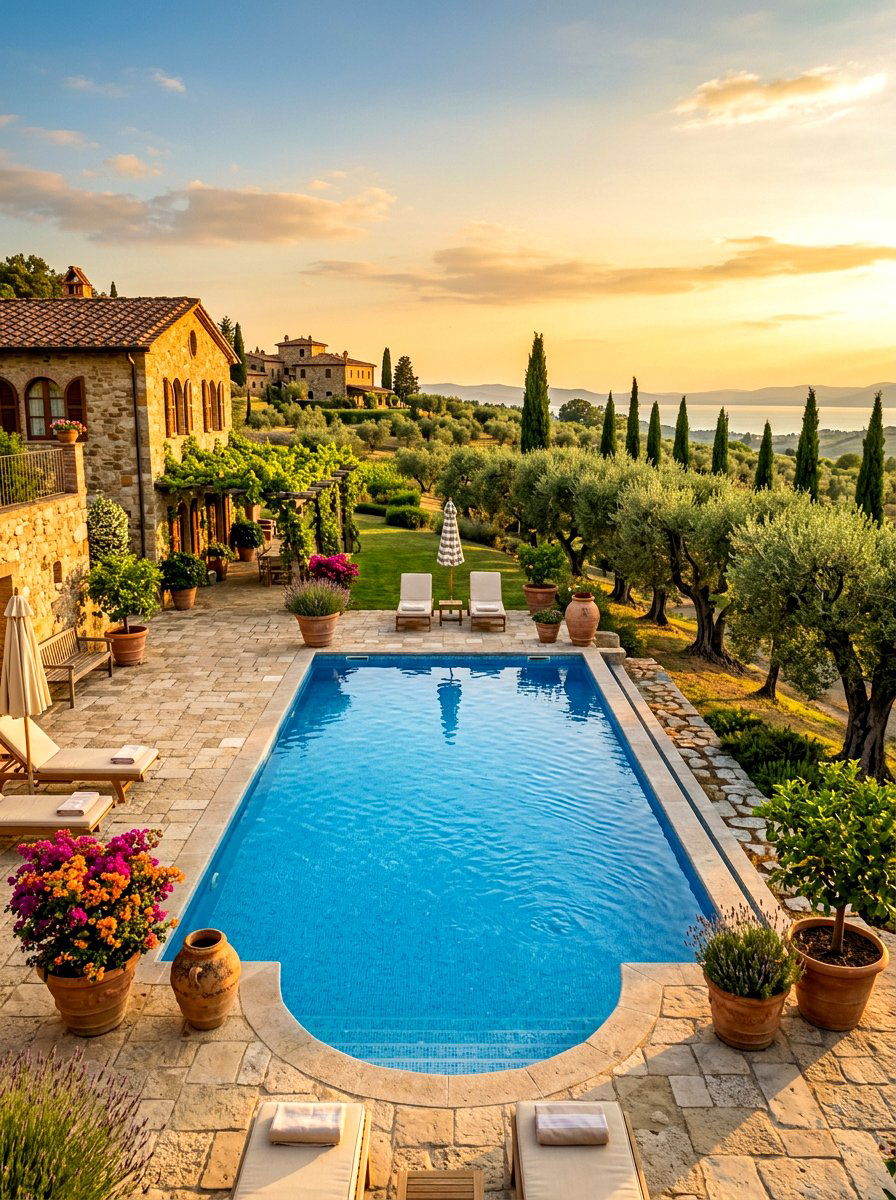
20. Woodland Mulch Path
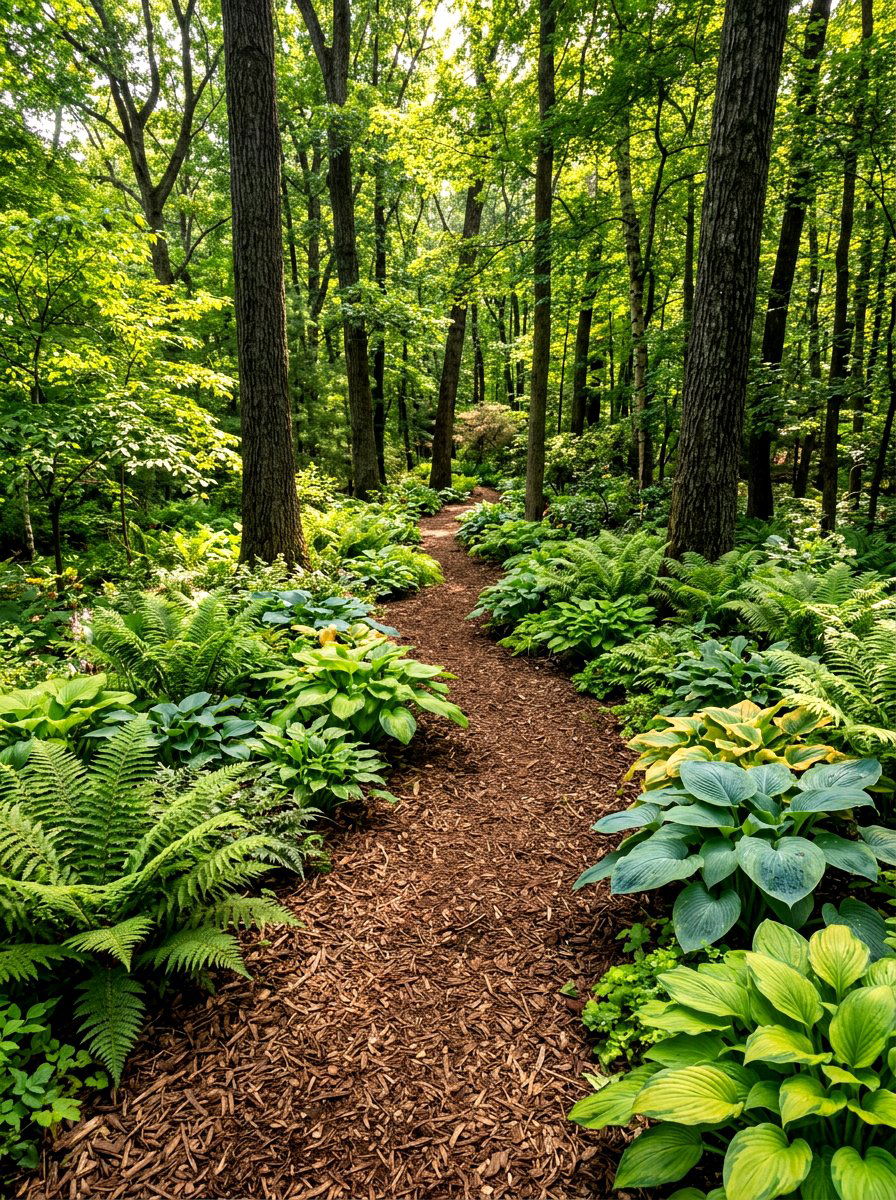
A woodland mulch path is a practical and budget-friendly way to navigate through your shaded garden while protecting the soil. Using wood chips or shredded bark creates a soft, natural surface that suppresses weeds and retains moisture for nearby plants. Unlike formal concrete or brick, a mulch path has an informal, meandering feel that encourages exploration and wandering. It is easy to install and can be shaped to follow the natural contours of your landscape. As the mulch breaks down over time, it enriches the soil beneath, contributing to the overall health and fertility of your woodland ecosystem and garden beds.
21. Trillium Native Garden
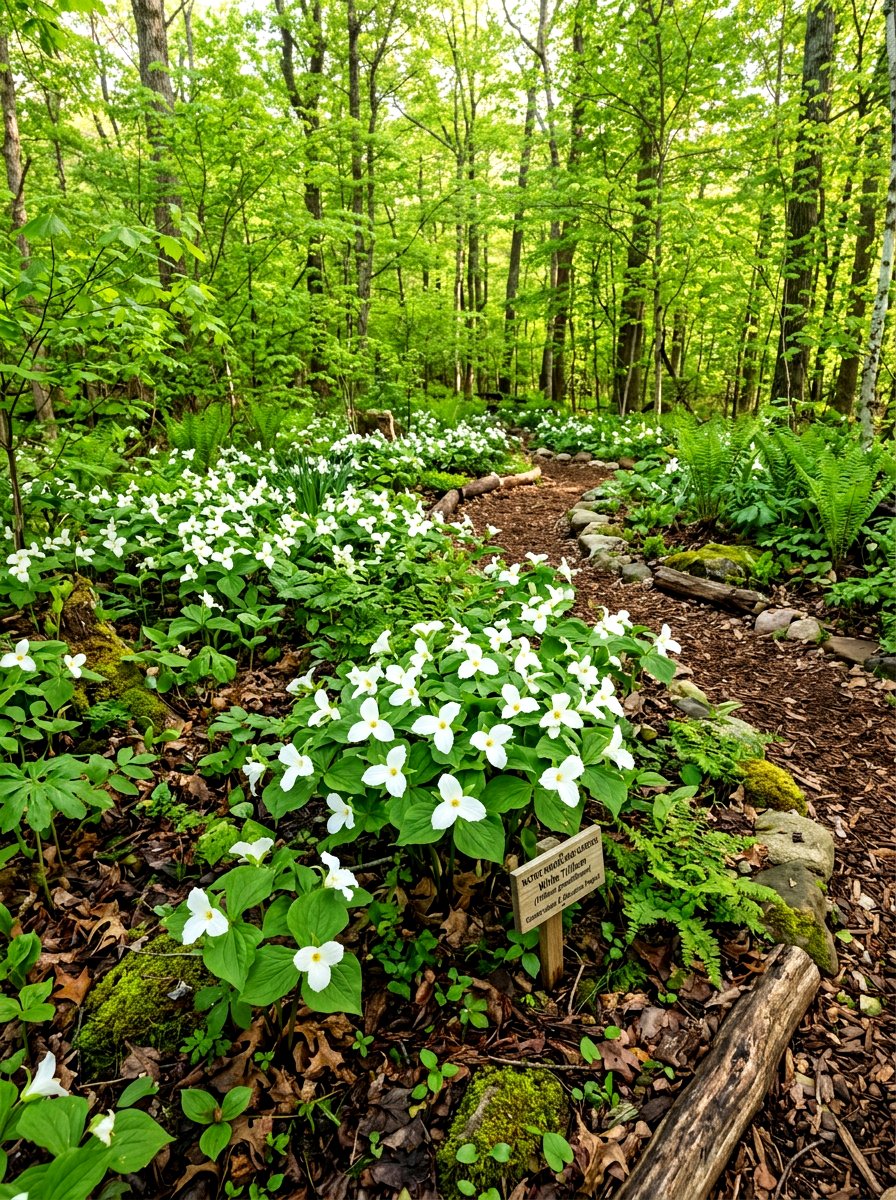
A trillium native garden showcases some of the most elegant and sought-after wildflowers of the North American forest. These slow-growing perennials are easily recognized by their three-petaled flowers and three-leaved structure, which gives them a unique and balanced appearance. Trilliums prefer rich, moist soil and the protection of a leafy canopy, where they can bloom in the early spring months. Because they are delicate and slow to establish, they represent a true commitment to woodland gardening. Protecting these native gems helps preserve local biodiversity while adding a touch of rare, natural beauty to your landscape that few other plants can provide.
22. Wild Ginger Groundcover
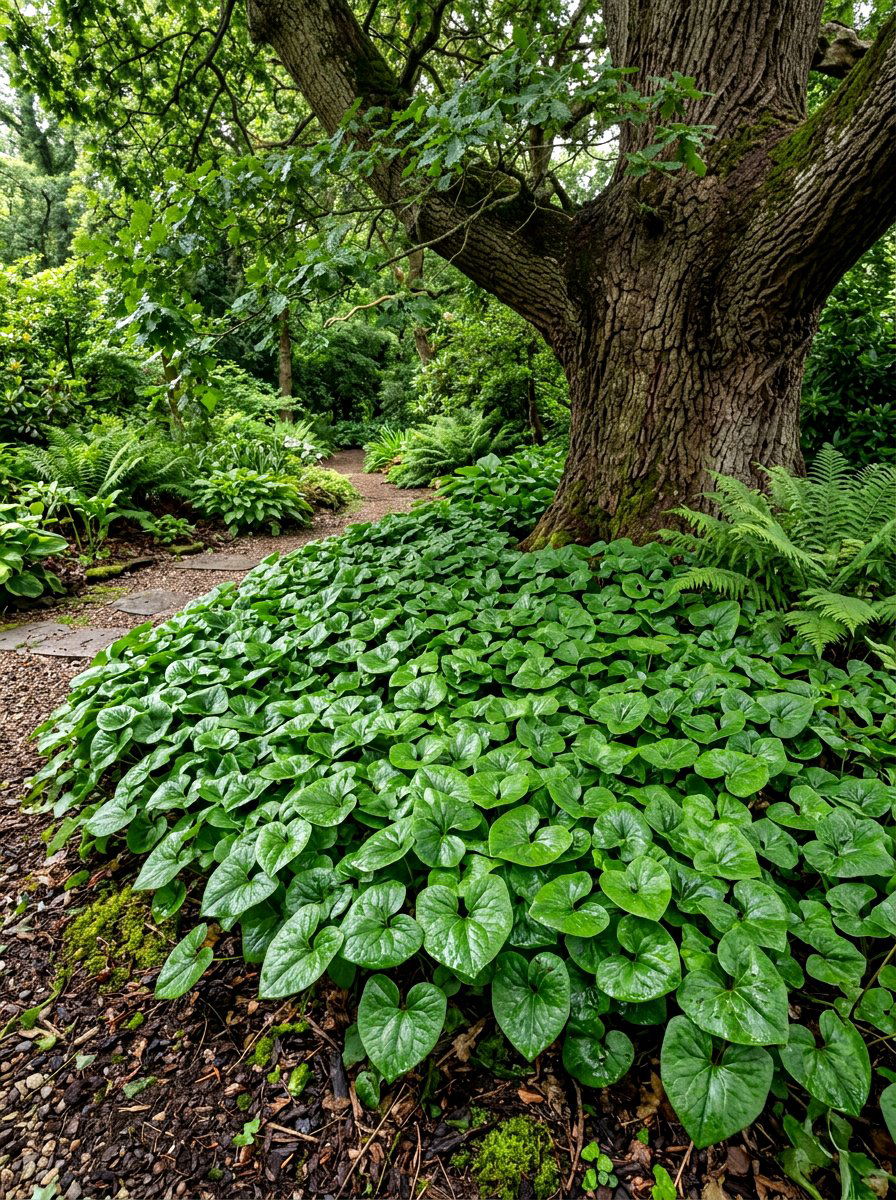
Wild ginger is an exceptional groundcover for deep shade, offering a dense mat of heart-shaped, glossy leaves that look beautiful all season. While its small, brownish-red flowers are often hidden under the foliage, the plant is primarily grown for its lush and durable carpet of green. It spreads slowly via underground rhizomes, making it an excellent choice for filling in large areas under trees where grass cannot survive. Wild ginger is also deer-resistant and thrives in moist, well-drained soil. This low-growing plant provides a clean and finished look to the garden floor, acting as a living mulch that keeps the soil cool.
23. Jack In The Pulpit Garden
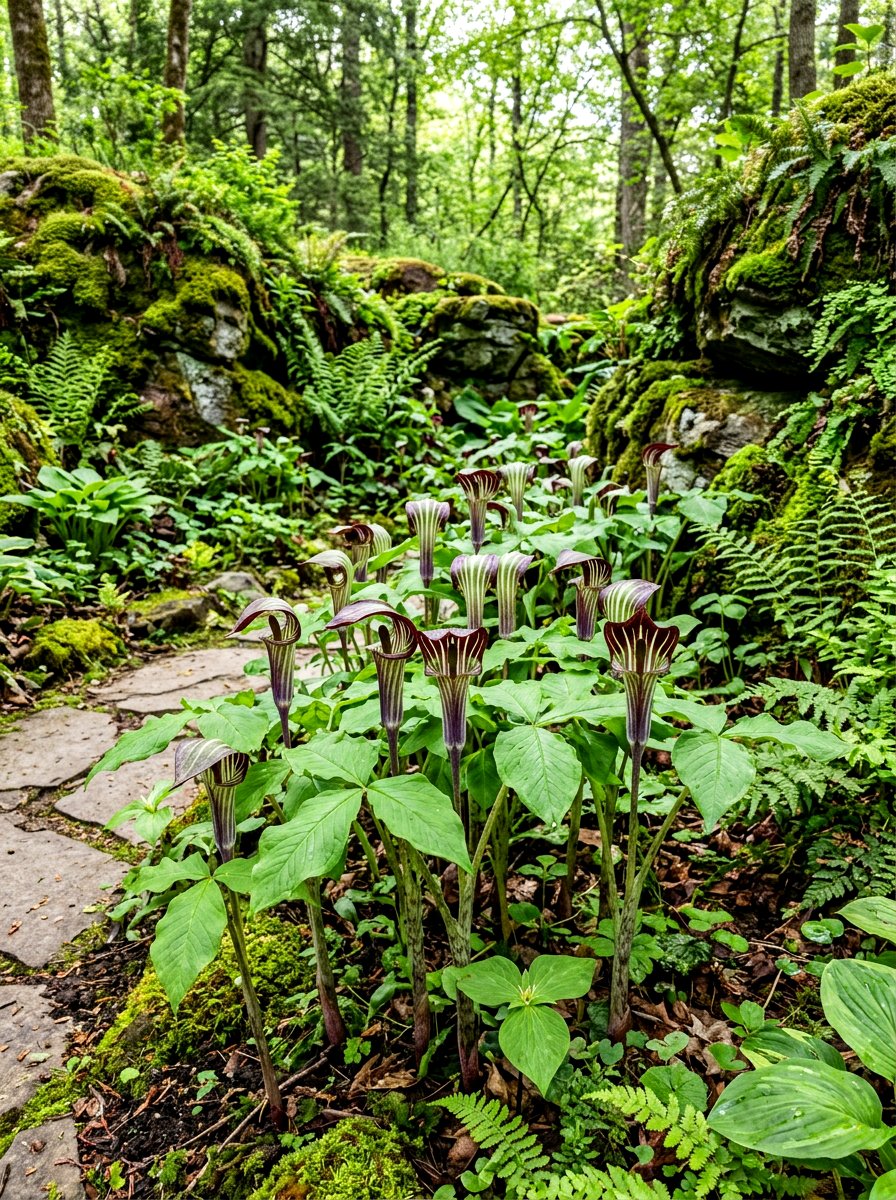
A Jack in the pulpit garden features one of the most unusual and architecturally interesting plants found in the woodland. This native perennial produces a unique hooded flower structure that encloses a central spike, resembling a figure in a pulpit. In late summer, the flowers are replaced by clusters of bright red berries that provide a striking pop of color in the shadows. These plants love damp, shady locations and look fantastic when planted near water features or in moist low spots. Their exotic appearance makes them a great conversation piece and adds a sense of discovery to your shaded garden beds.
24. Shade Hydrangea Garden
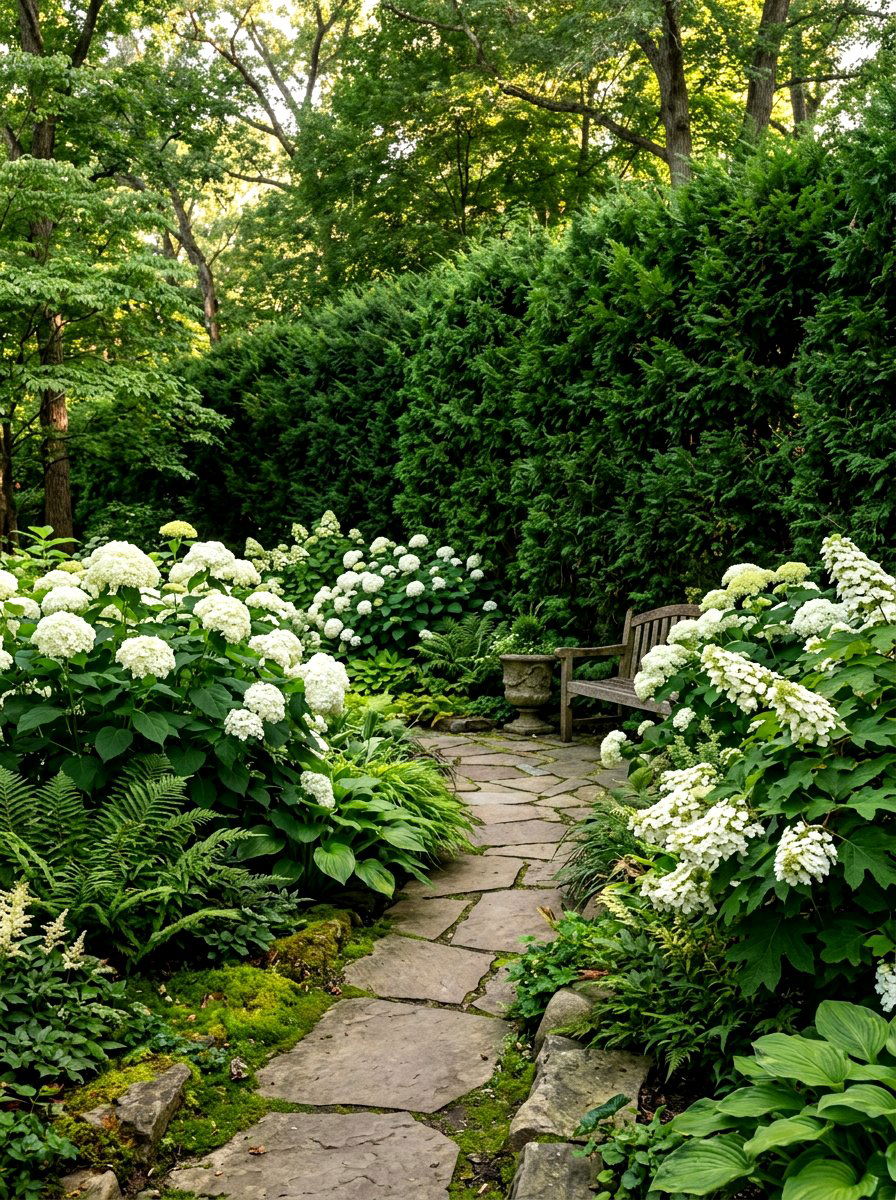
A shade hydrangea garden brings massive blooms and a sense of abundance to the cooler corners of your property. Varieties like the oakleaf hydrangea or the classic mophead thrive in partial shade, providing huge clusters of flowers throughout the summer months. The oakleaf variety is especially suited for woodland gardens, as it offers beautiful peeling bark and stunning fall foliage in addition to its white blossom panicles. Hydrangeas are excellent for filling large spaces and creating a soft, flowering hedge or backdrop. Their presence adds a touch of classic elegance and a cooling visual effect during the hottest parts of the year.
25. Wood Anemone Patch
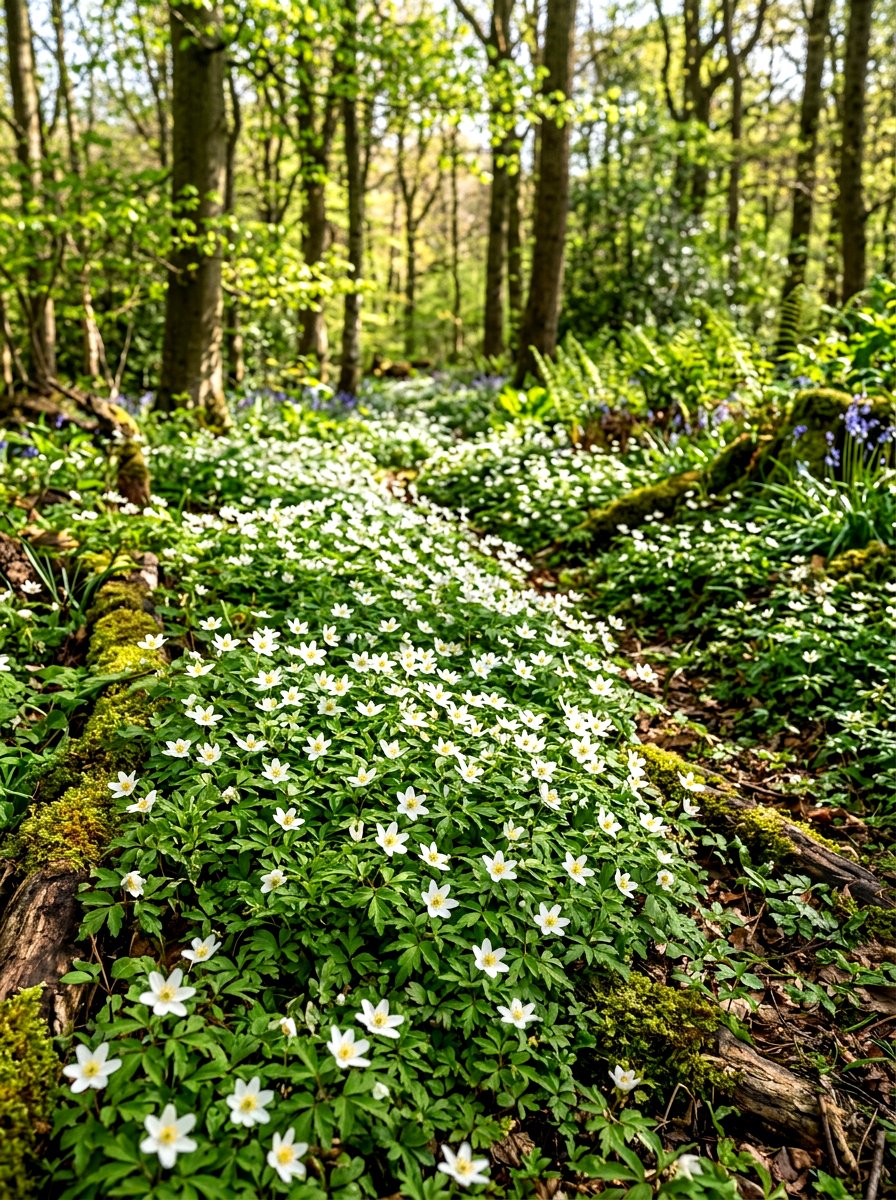
A wood anemone patch creates a delicate and airy display of starry white or pale pink flowers in the early spring. these small, charming plants form low colonies that carpet the ground just as the forest begins to wake up from its winter slumber. They are true spring ephemerals, meaning they complete their growth cycle before the trees above provide too much shade. Planting them in drifts along the edge of a wooded area gives the space a wild and naturalized appearance. Their fine foliage and dainty blooms provide a soft texture that contrasts well with larger, bolder woodland plants like hostas.
26. Solomon's Seal Garden
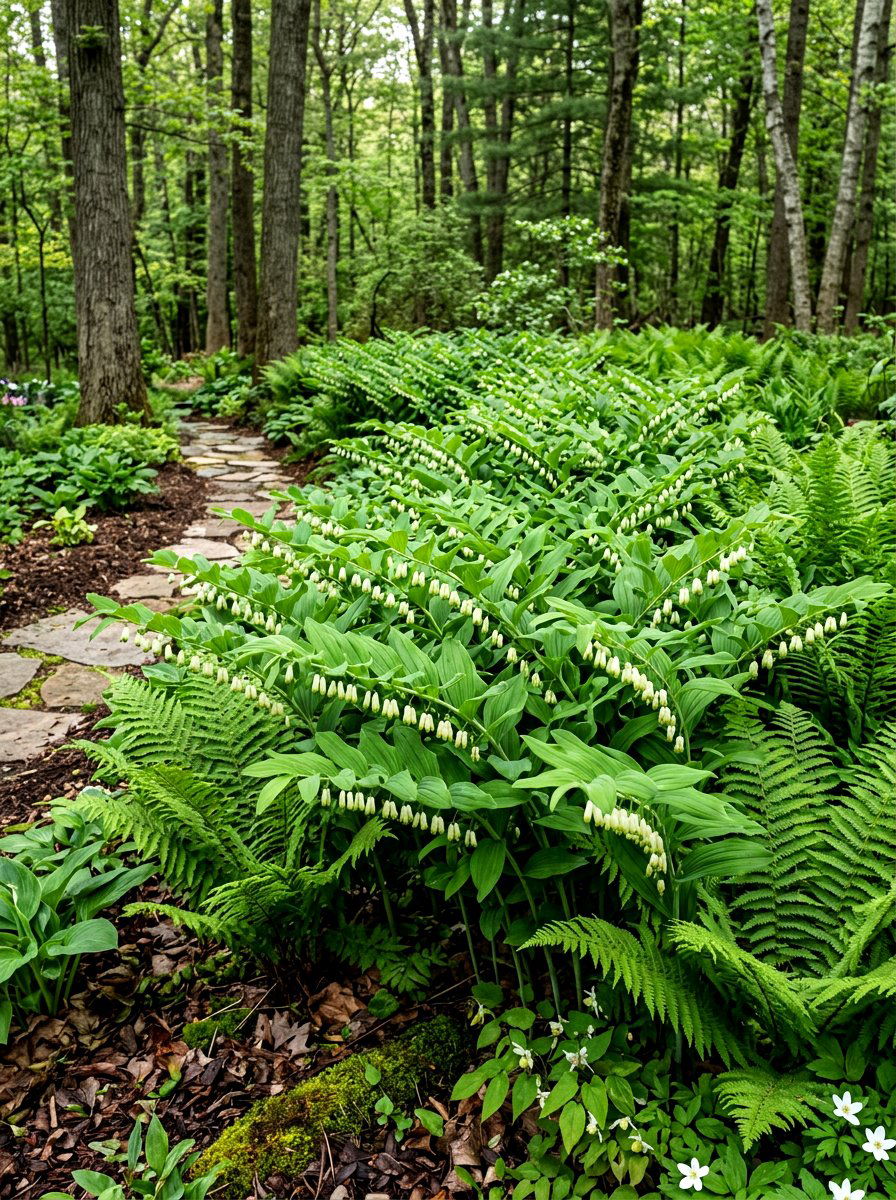
Solomon 's seal is a graceful perennial that features elegant, arching stems lined with pairs of light green leaves. In the spring, tiny white bell-shaped flowers dangle underneath the stems, followed by dark blue berries in the fall. This plant is prized for its architectural form and its ability to thrive in even the deepest shade. It looks particularly effective when planted in large groups, where the arching stems create a sense of rhythm and movement. Solomon' s seal is a low-maintenance choice that slowly spreads to form a beautiful and reliable thicket of green, adding height and texture to the garden beds.
27. Lungwort Shade Bed
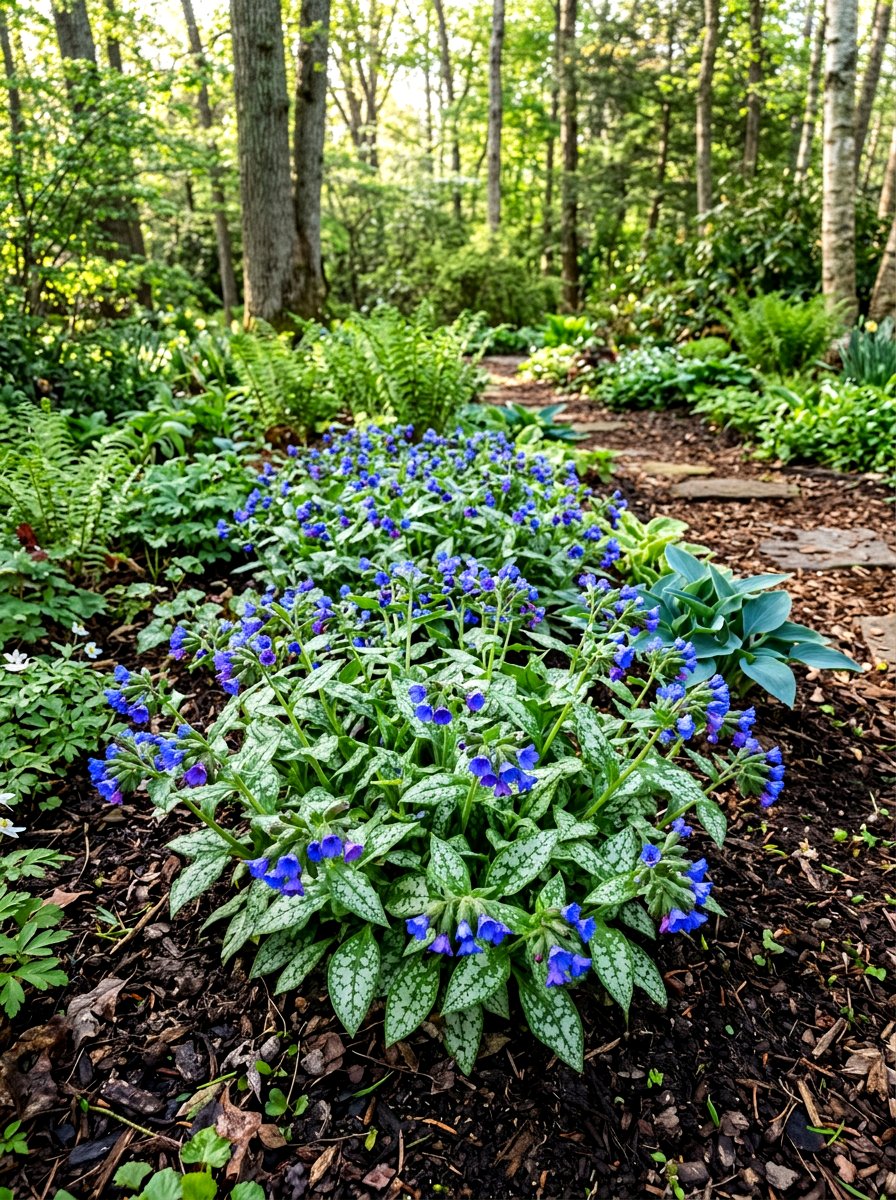
A lungwort shade bed offers some of the most interesting foliage patterns in the garden, with leaves often covered in silvery-white spots or splotches. Also known as pulmonaria, these low-growing perennials produce clusters of small flowers in the spring that often change color from pink to blue as they age. Their unique leaves remain attractive all season long, providing a bright and luminous quality to dark corners. Lungwort is a tough plant that can handle a variety of soil conditions and is generally ignored by deer. It is an excellent choice for adding detailed interest and a touch of light to the forest floor.
28. Epimedium Shade Groundcover
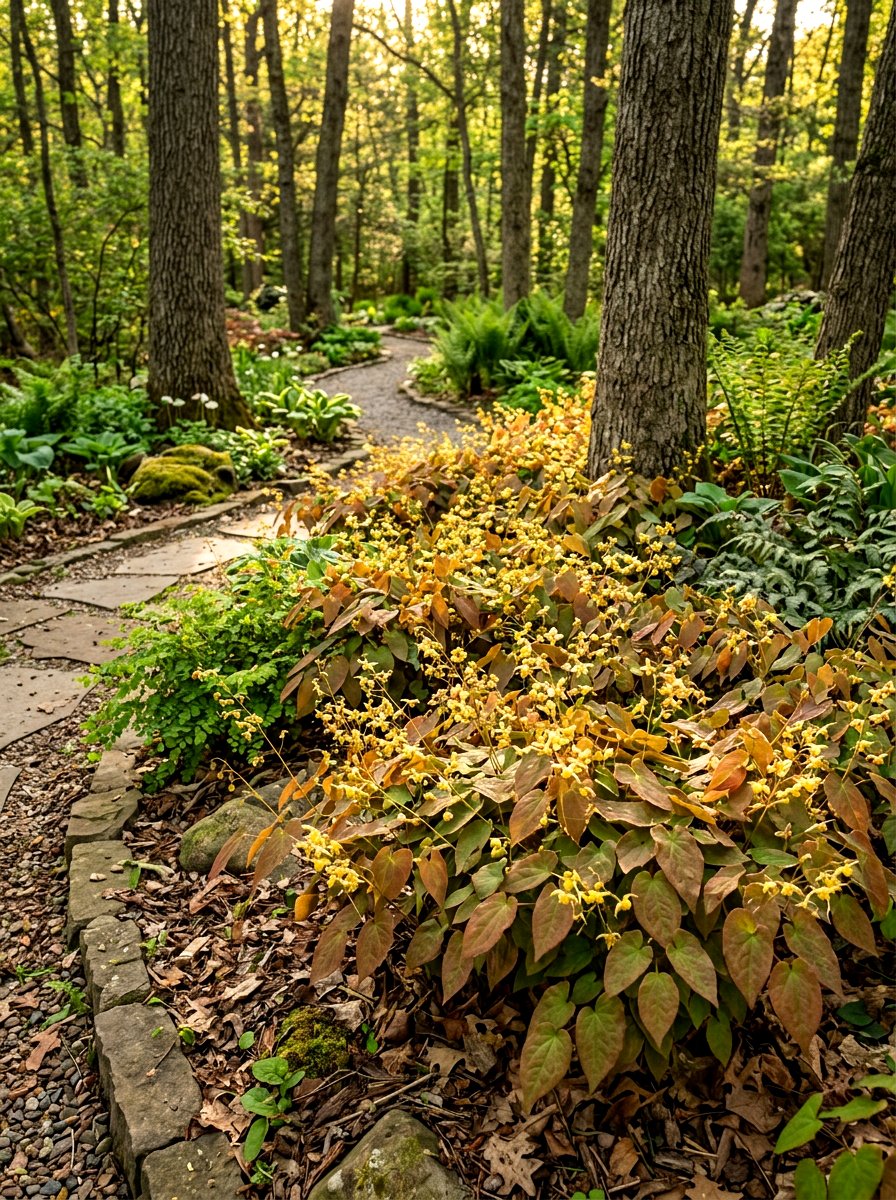
Epimediums, also called barrenwort, are some of the hardest-working plants for dry shade and difficult soil conditions. These semi-evergreen perennials form a dense mat of heart-shaped leaves that often feature beautiful bronze or red tints in the spring. Their tiny, delicate flowers resemble miniature columbines and appear in airy clusters above the foliage. Once they are established, epimediums are incredibly drought-tolerant and can compete with tree roots, making them perfect for planting directly under large canopy trees. They provide a tidy and reliable groundcover that keeps the garden looking full and healthy with very little supplemental watering or specialized care.
29. Sweet Woodruff Lawn
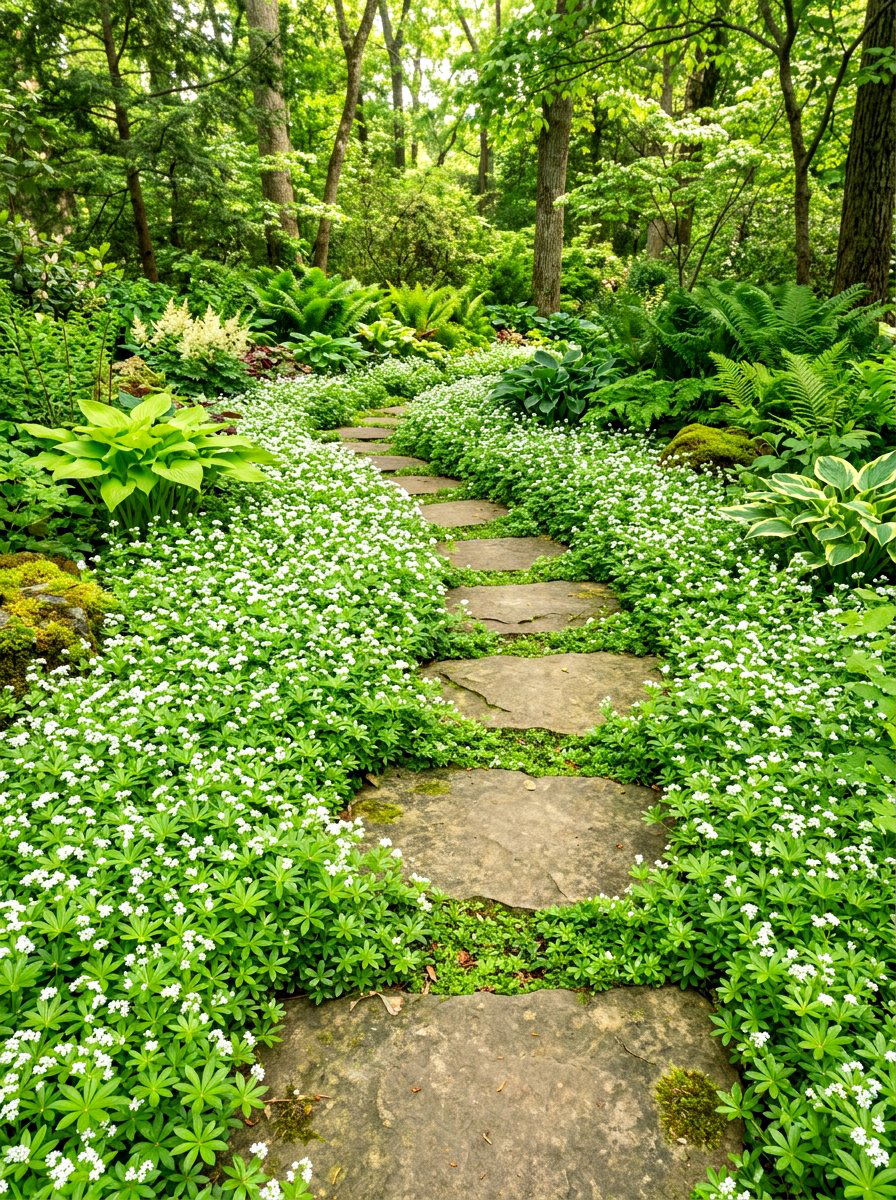
A sweet woodruff lawn is a fragrant and charming alternative to traditional grass in a shaded garden setting. This low-growing groundcover features whorls of bright green leaves and produces a cloud of tiny, star-shaped white flowers in the spring. When crushed, the leaves release a sweet scent reminiscent of freshly mown hay or vanilla. Sweet woodruff spreads easily to form a lush and soft carpet that is perfect for filling the spaces between stepping stones or under shrubs. It thrives in moist, well-drained soil and provides a clean, uniform look that ties the various elements of your woodland garden together beautifully.
30. Woodland Bridge Feature
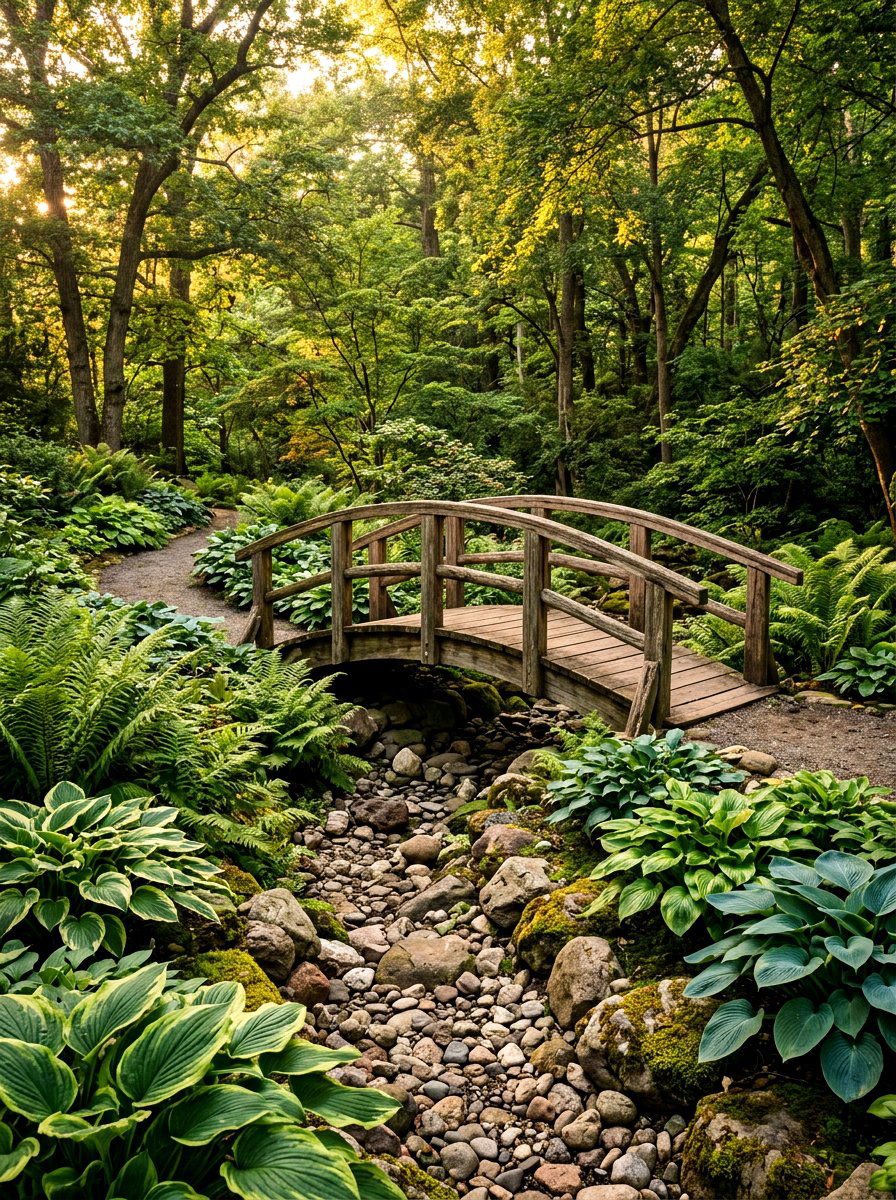
A woodland bridge feature adds a sense of adventure and architectural interest to your garden landscape. Even if you do not have a real stream, a small decorative bridge can be placed over a dry creek bed or a low-lying area filled with ferns. This structure creates a clear path for visitors and provides a higher vantage point to appreciate the detailed layers of your shaded planting. Using rustic materials like cedar logs or weathered stone ensures the bridge looks like a natural part of the environment. It serves as a romantic and inviting element that completes the feeling of a secluded forest journey.
Conclusion:
Designing a woodland shade garden is a rewarding journey that allows you to embrace the quiet beauty of nature. By focusing on layered plantings, rich textures, and sustainable features, you can turn a challenging shady spot into the most enchanting part of your home. These spaces offer a unique opportunity to grow rare and delicate plants that thrive away from the harsh sun. Whether you are installing a winding path or a stone birdbath, every element contributes to a peaceful atmosphere that benefits both humans and local wildlife. Your garden will become a timeless sanctuary that grows more beautiful and established with each passing season.

Related posts: