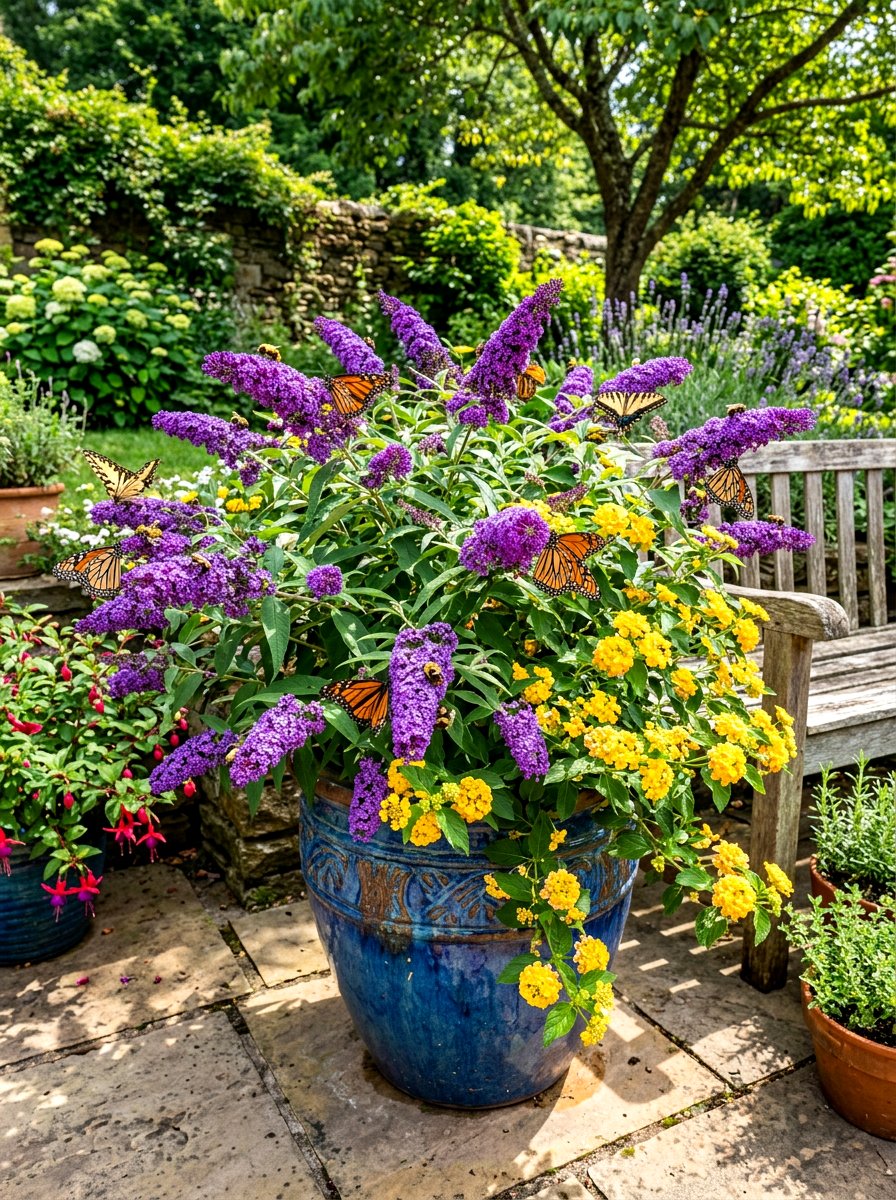
Creating a beautiful garden in a dark or dim corner can feel like a real challenge for many homeowners. However, shade container gardening offers a wonderful way to bring life to porches, covered patios, and North-facing entryways. These spaces often lack direct sunlight, but they can still thrive with the right selection of plants. By using pots, you gain complete control over the soil quality and moisture levels, which is vital for many shade-loving species. You can easily experiment with rich textures, vibrant foliage colors, and delicate blooms that prefer cooler, filtered light. This guide will walk you through thirty creative ways to transform your shaded outdoor areas into lush, inviting retreats that look professional and well-curated.
1. Hosta Shade Pot
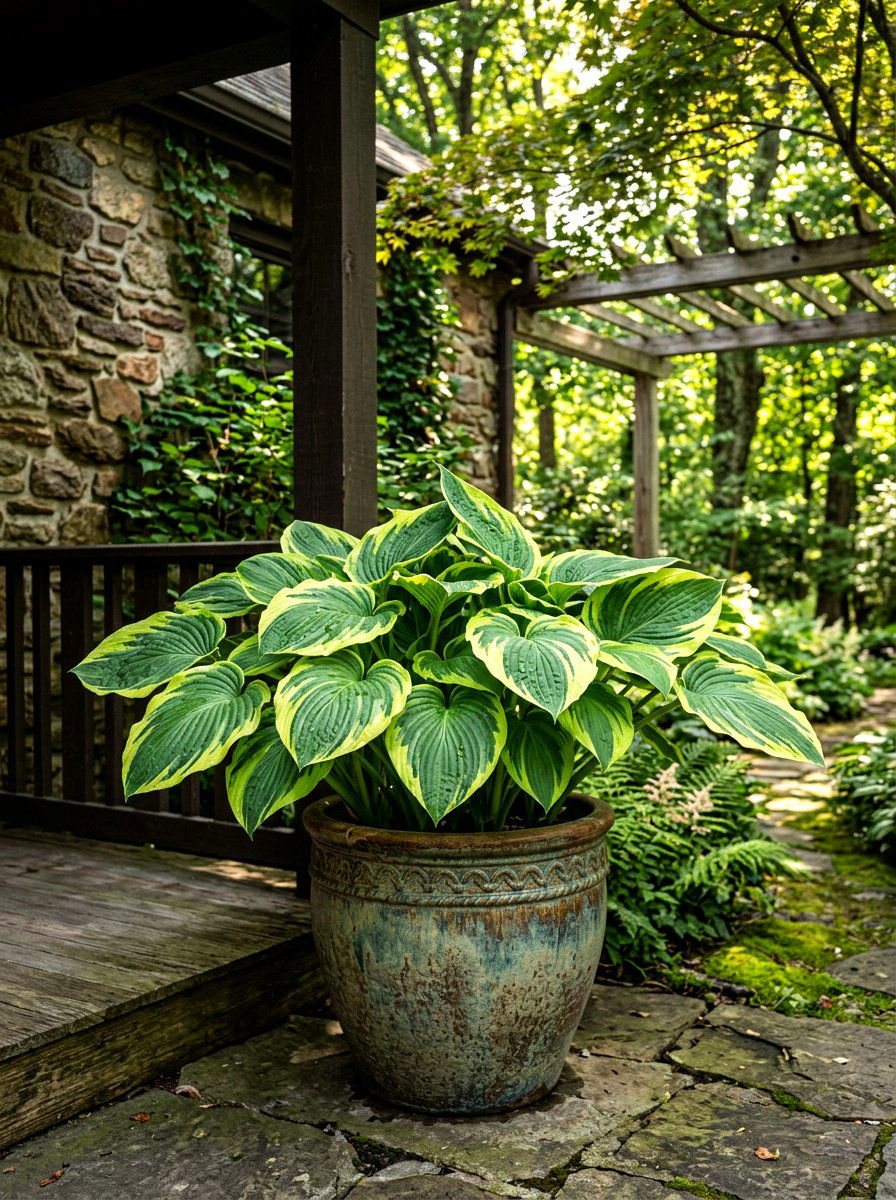
Hostas are the undisputed kings of the shade garden because they offer such incredible leaf diversity and structural impact. For a stunning container, choose a large ceramic pot and plant a variety like "June" or "Guacamole" to serve as a bold focal point. These plants love the consistent moisture that a deep pot provides. You can surround the base with smaller hosta varieties to create a layered, full look that fills the entire space. Their broad, heart-shaped leaves come in shades ranging from deep blue-green to bright chartreuse. This simple design creates a calm and sophisticated atmosphere on a shaded deck or under a leafy tree canopy.
2. Fern Garden Container
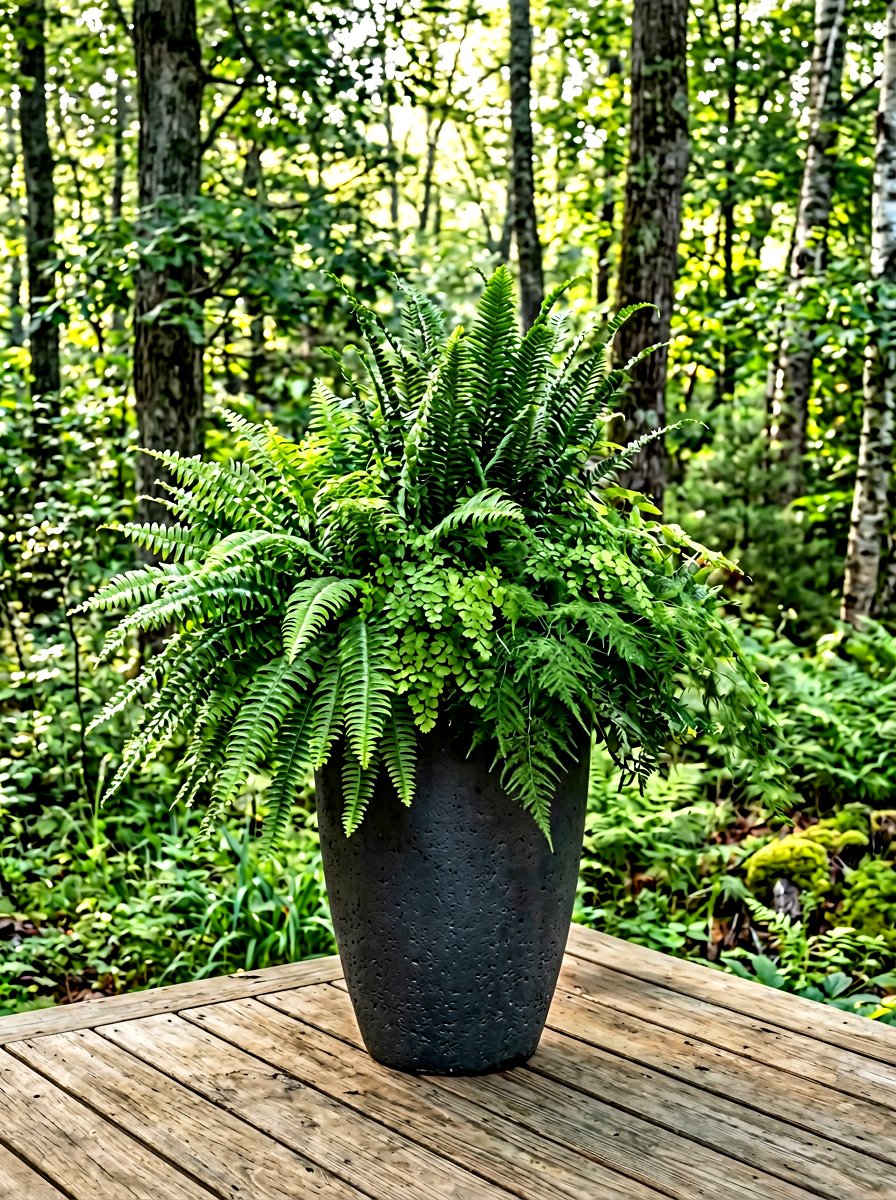
Ferns are essential for adding an airy and delicate texture to any shaded patio or balcony area. A classic fern arrangement often uses the Boston fern or the Kimberly Queen fern as a primary centerpiece. These plants provide height and a soft, feathery appearance that moves beautifully with the slightest breeze. To make the container look more complete, you can tuck in some Asparagus ferns or Ostrich ferns around the edges. This creates a lush, woodland vibe that feels cool and refreshing during the hot summer months. Ferns require regular misting and consistent watering, but the visual reward of their vibrant green fronds is well worth the effort.
3. Begonia Flower Planter
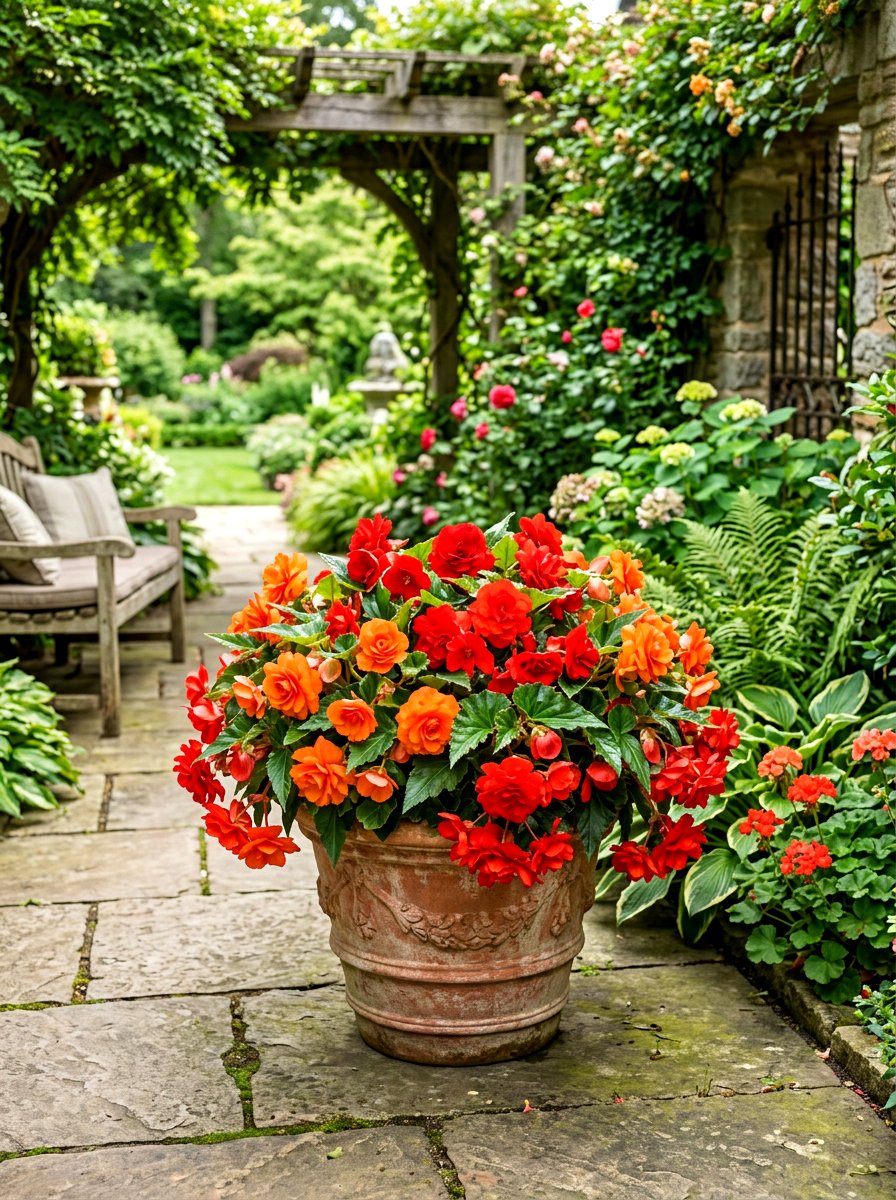
Begonias are a fantastic choice for those who want vibrant flower colors in areas that receive very little direct sunlight. Tuberous begonias, in particular, produce large, rose-like blooms in stunning shades of orange, red, pink, and white. To design a professional-looking planter, combine these flowering beauties with trailing silver-leafed plants to make the colors pop. The waxy foliage of the begonias also adds a nice glossy texture to the overall composition. These plants prefer well-draining soil and a bit of protection from heavy rain. When placed in a decorative pot on a front porch, they provide a warm and welcoming splash of color.
4. Coleus Foliage Pot
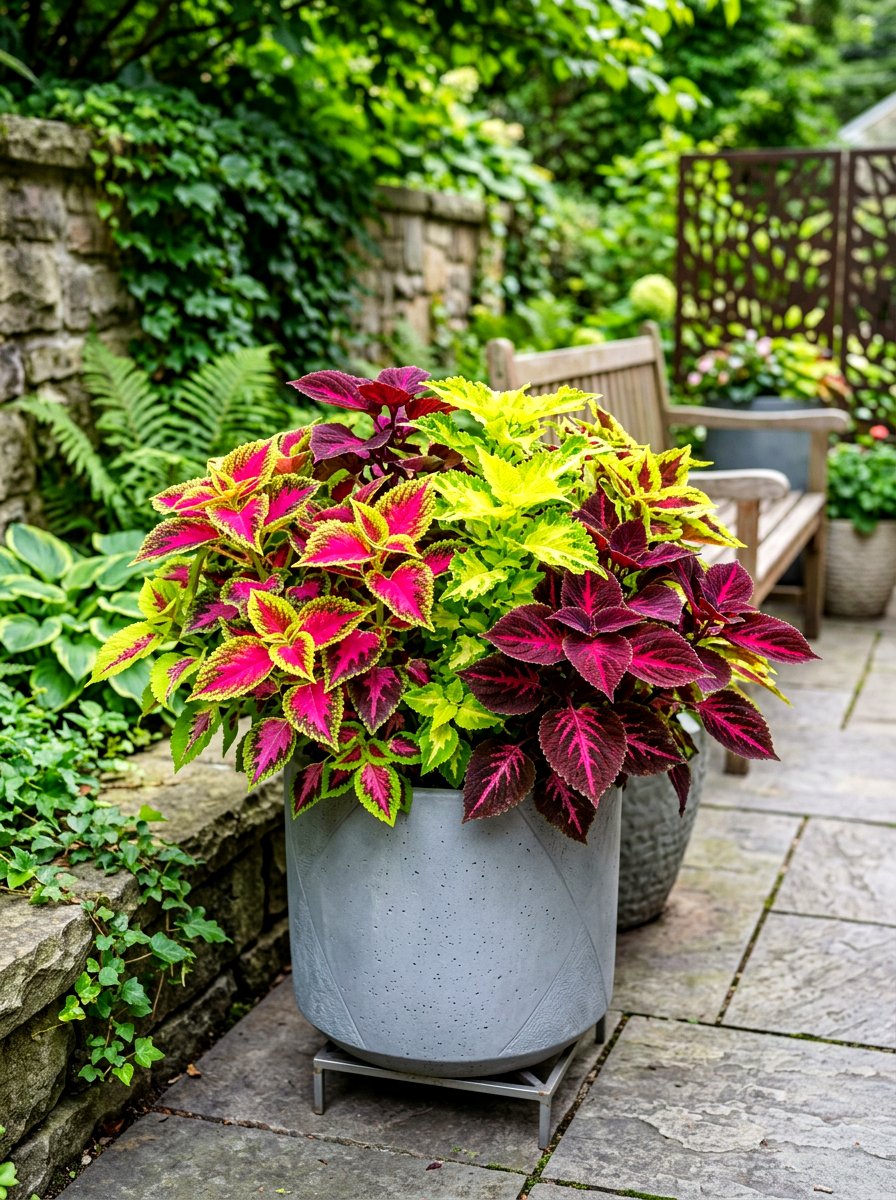
If you prefer a garden that focuses on leaf color rather than traditional flowers, a coleus foliage pot is the perfect solution. Coleus plants come in an almost endless variety of patterns, including neon greens, deep burgundies, and electric pinks. To create a cohesive look, choose three different varieties that share a common color thread. Plant the tallest variety in the center and the shorter, bushier types around the perimeter. This creates a dense, multi-colored display that looks great from late spring all the way until the first frost. These plants are incredibly easy to care for and only require regular watering to stay lush.
5. Caladium Shade Arrangement
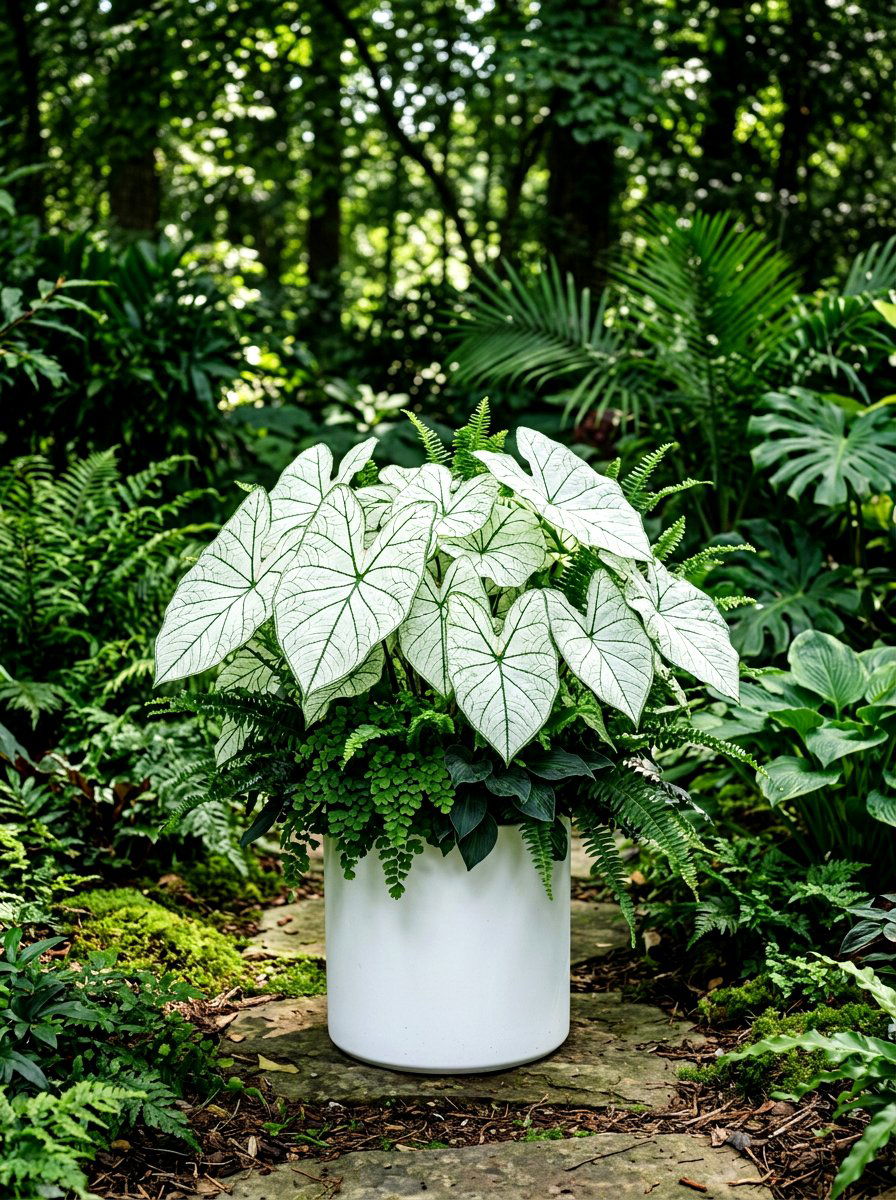
Caladiums are famous for their large, heart-shaped leaves that look almost like they have been hand-painted with delicate veins and splashes of color. For a high-impact shade arrangement, use a clean, modern white planter to accentuate the white and green variegation of varieties like "White Christmas. " You can mix in a few dark green ferns to provide a sharp contrast to the bright caladium leaves. These plants thrive in warm, humid conditions and add a touch of tropical elegance to any shaded corner. Because they grow from tubers, they provide a very full and upright structure that easily anchors a large container display.
6. Heuchera Color Bowl
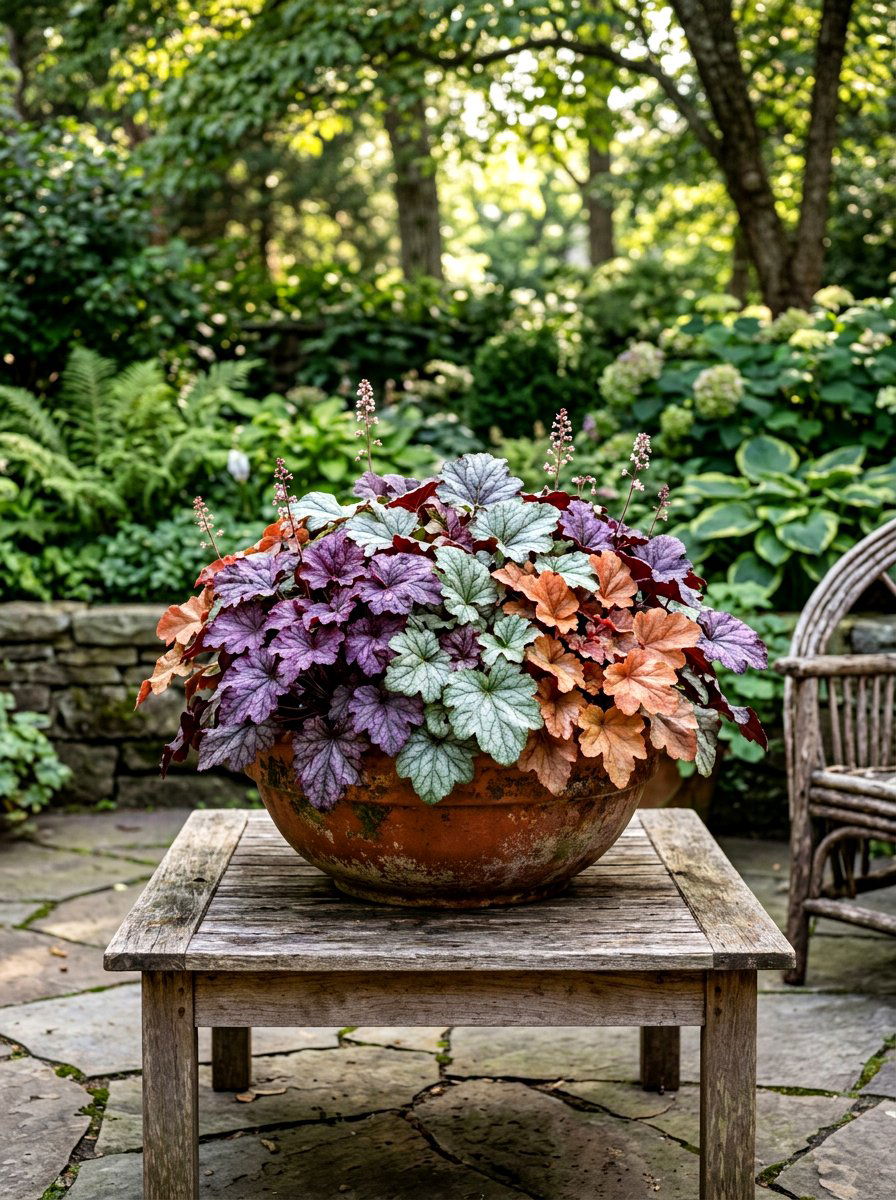
Heuchera, also known as coral bells, are prized for their stunning ruffled foliage that comes in shades of purple, silver, and copper. For a low-profile but high-interest design, try creating a "color bowl" by grouping several different heuchera varieties in a wide, shallow container. This allows the intricate leaf patterns and varying heights to become the main attraction. The plants produce tiny, bell-shaped flowers on tall stems during the summer, which add a delicate vertical element to the arrangement. This design is particularly effective on a coffee table in a covered outdoor living room or as a border along a shaded garden path.
7. Impatiens Window Box
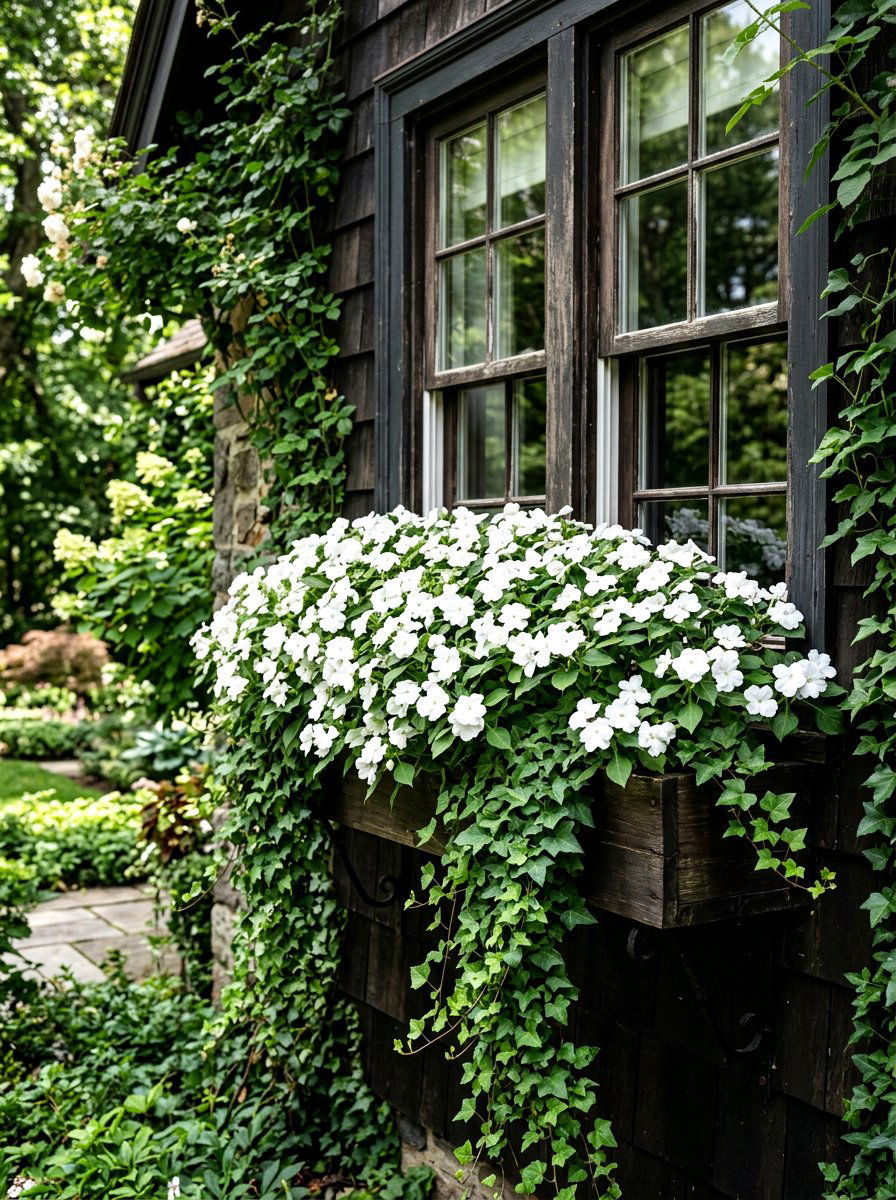
Impatiens are the go-to flower for brightening up long, narrow spaces like window boxes or balcony railings in the shade. These prolific bloomers will cover themselves in small flowers for the entire growing season without needing much maintenance. For a sophisticated look, try a monochromatic theme by using only white or light pink impatiens against a dark-colored window box. You can also mix in some variegated ivy to trail over the edges, adding movement and depth to the display. These plants love consistent moisture, so ensuring the window box has a self-watering feature can help keep them looking vibrant and full all summer.
8. Fuchsia Hanging Basket
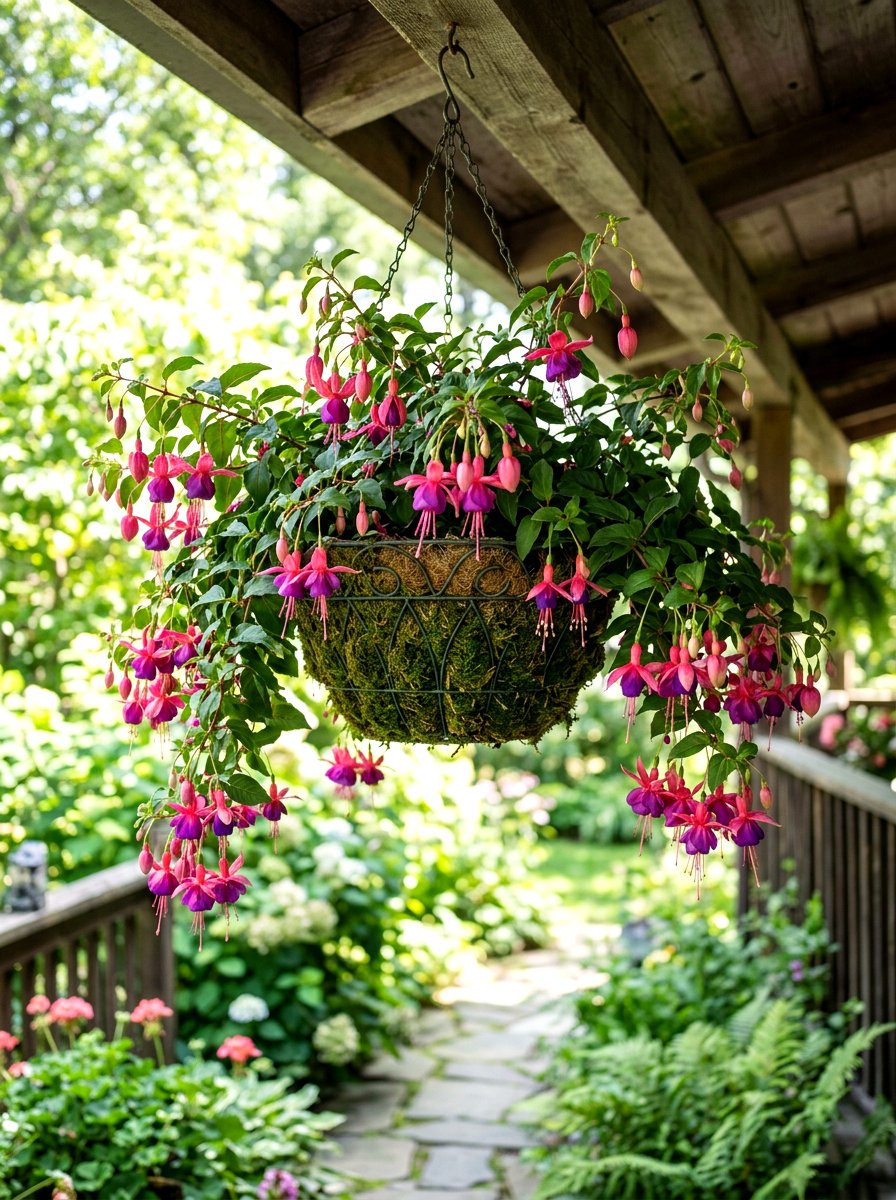
Fuchsia is a classic shade-loving plant that is famous for its exotic, bell-shaped flowers that dangle beautifully from trailing stems. These plants are most effective when grown in a hanging basket, where the blooms can be viewed from below at eye level. To create a full, lush look, plant several fuchsia starts in a single basket and pinch the tips early in the season to encourage branching. Their vibrant bicolor petals in shades of purple and pink are highly attractive to hummingbirds. Keeping these plants in a sheltered, shaded spot will prevent their delicate flowers from wilting in the heat of the afternoon sun.
9. Japanese Forest Grass Planter
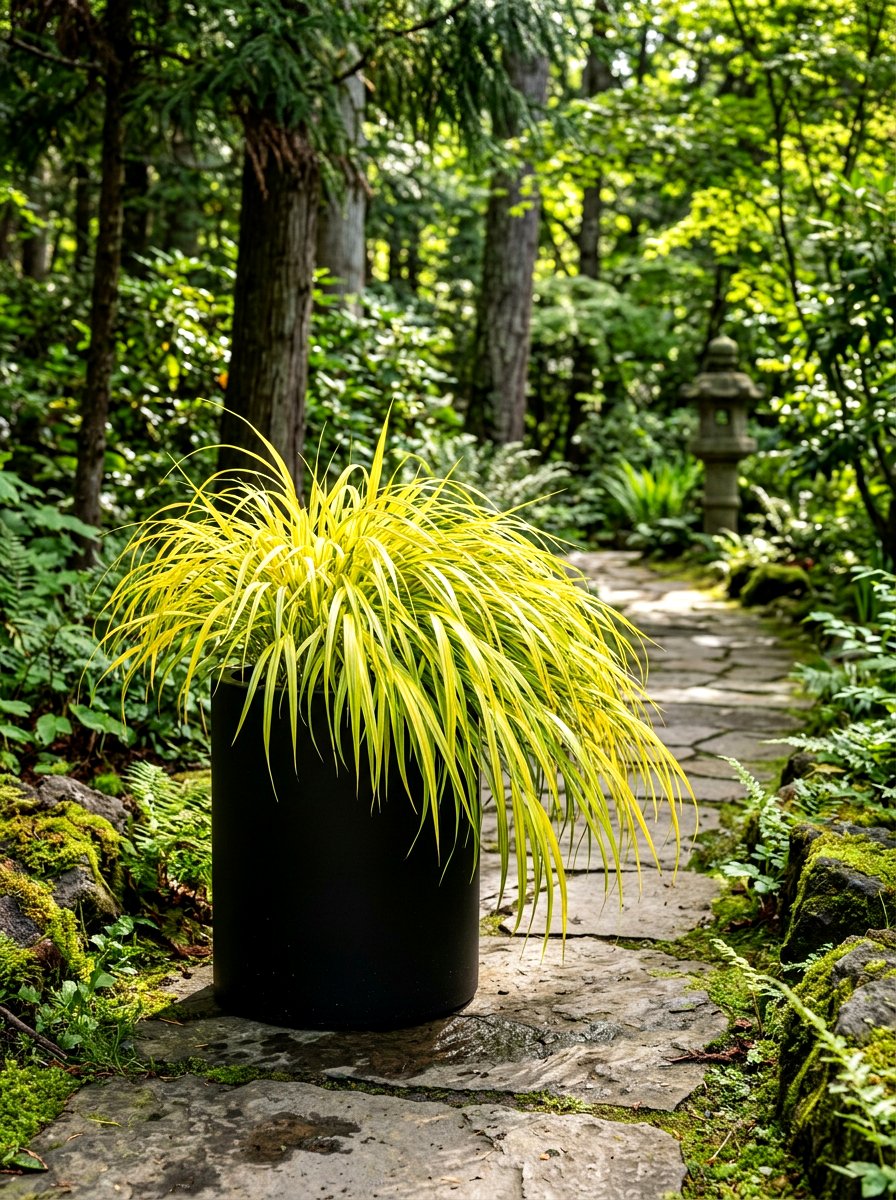
Japanese forest grass, or Hakonechloa, is one of the few grasses that truly thrives in full shade and brings a sense of motion to the garden. Its long, slender blades cascade over the edges of a pot like a golden waterfall, especially if you choose a variegated yellow variety. This plant looks stunning when used as a solitary specimen in a tall, sleek planter that highlights its weeping habit. The bright chartreuse color is excellent for illuminating dark corners under eaves or large trees. It is a slow-growing perennial that provides a soft, elegant texture that contrasts beautifully with broad-leafed plants like hostas.
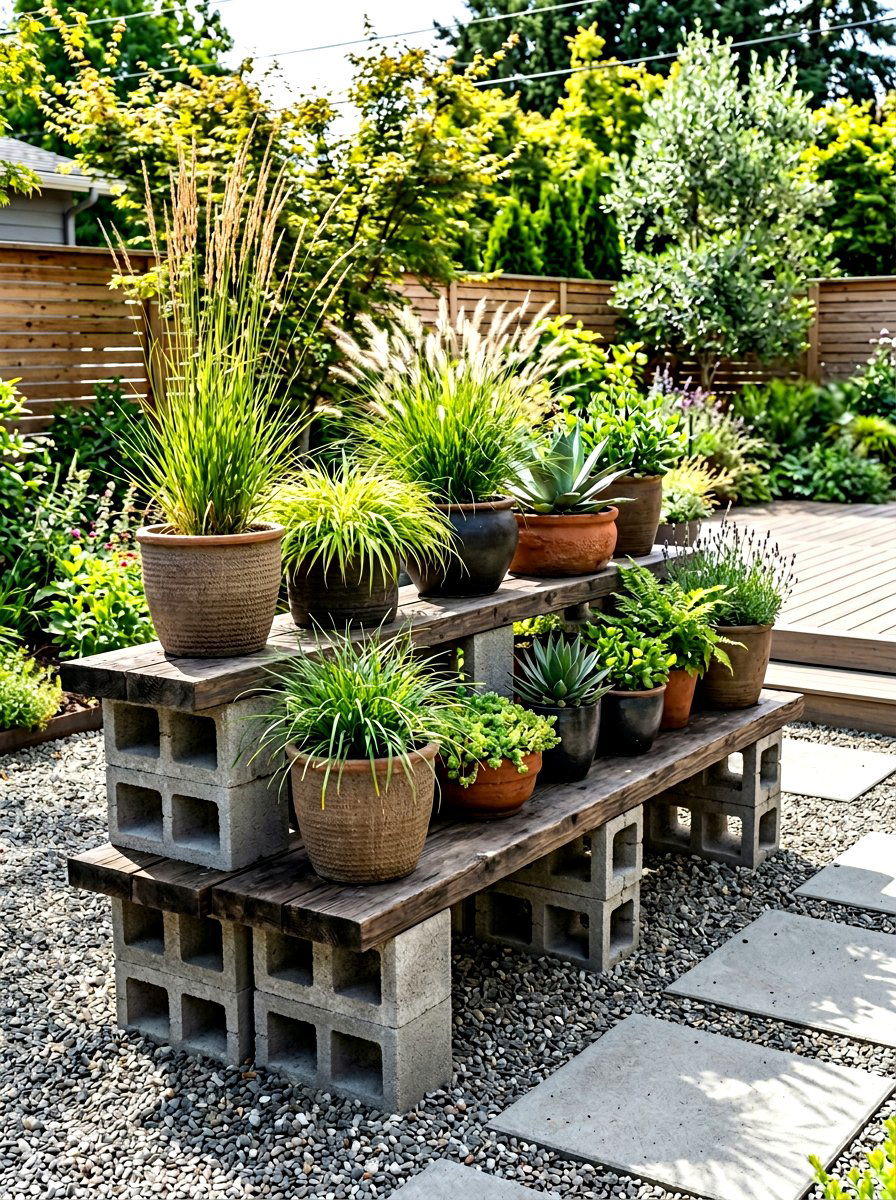
10. Astilbe Texture Container
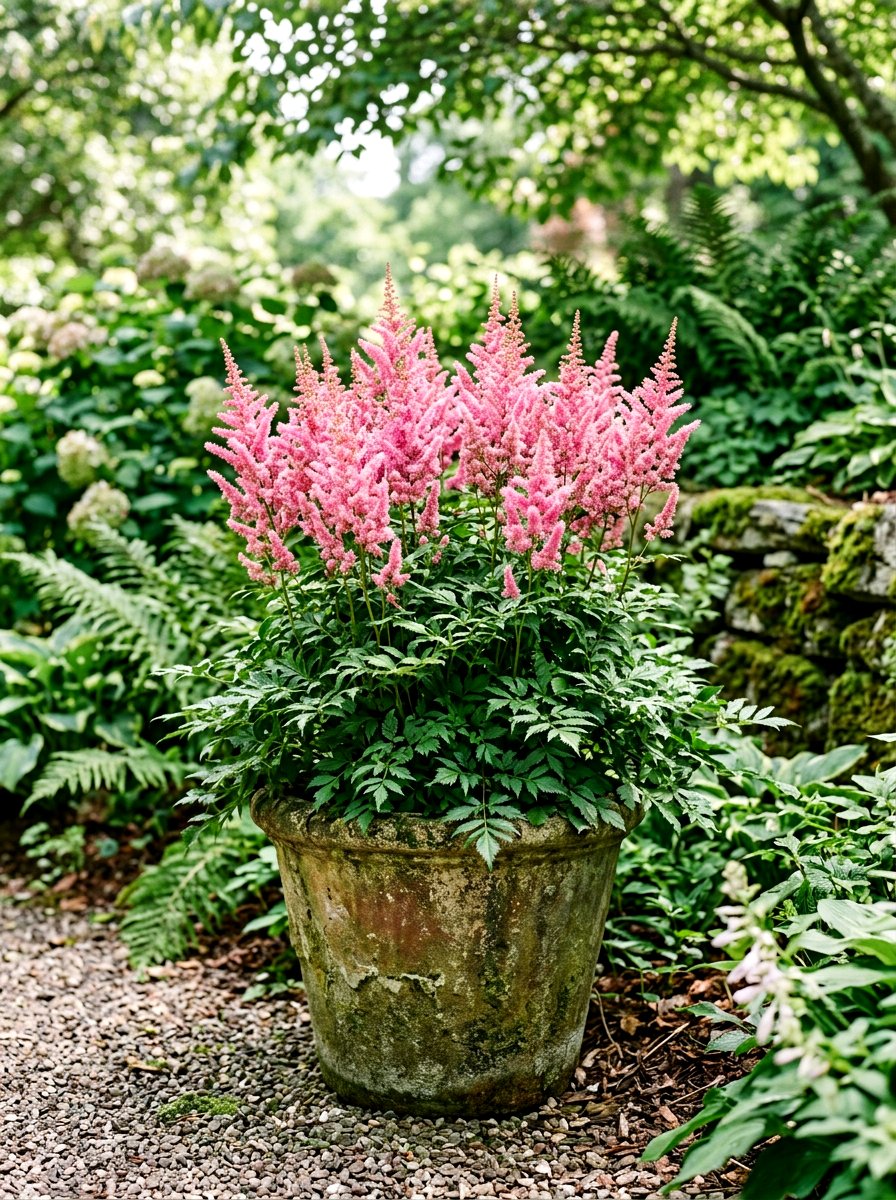
Astilbe plants are beloved for their feathery, plume-like flowers that rise high above their fern-like foliage in mid-summer. For a container design that emphasizes vertical interest, plant a group of astilbes in a large, sturdy pot with rich, moist soil. The spikes of pink, red, or white flowers provide a soft, hazy appearance that looks ethereal in the dim light of a shade garden. Even when the plants are not in bloom, the deeply cut leaves provide excellent textural interest. This design works well when placed at the end of a shaded hallway or as part of a larger cluster of mixed foliage pots.
11. Hydrangea Porch Pot
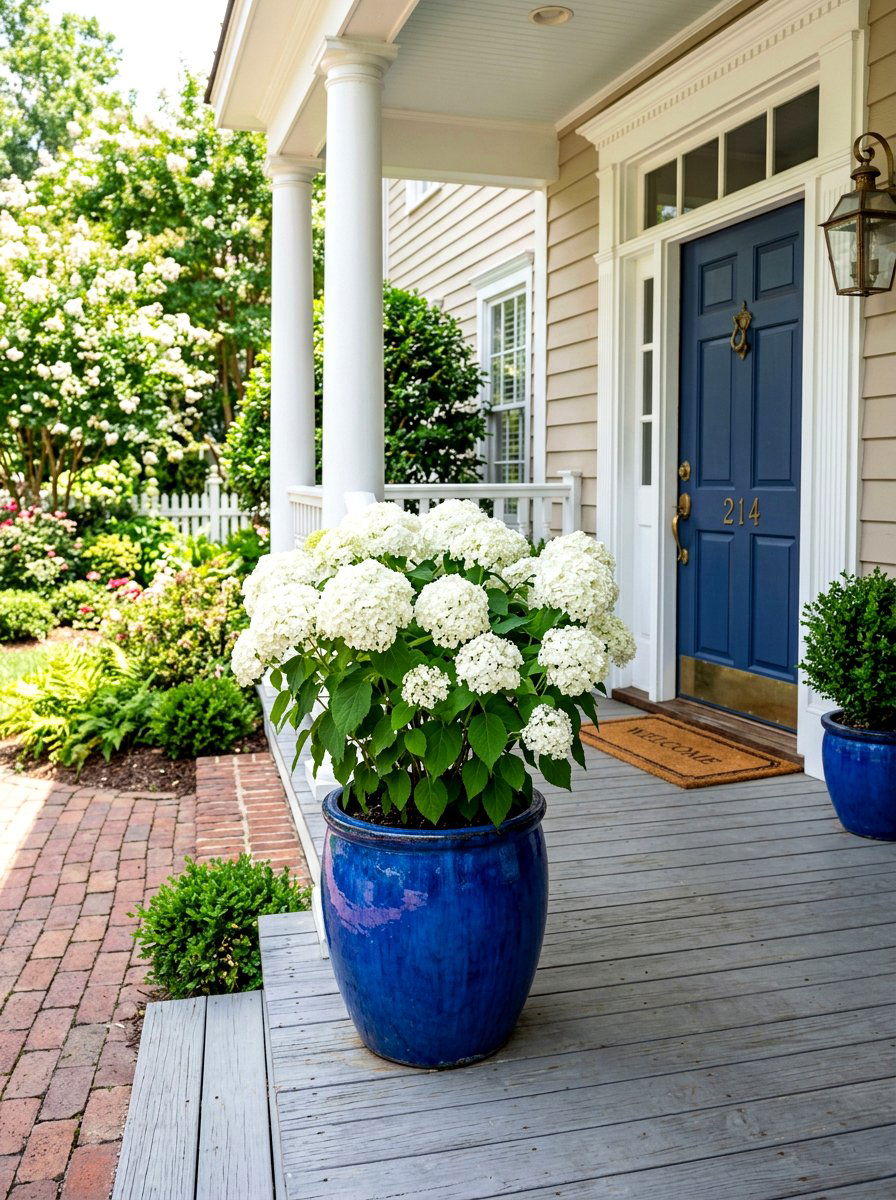
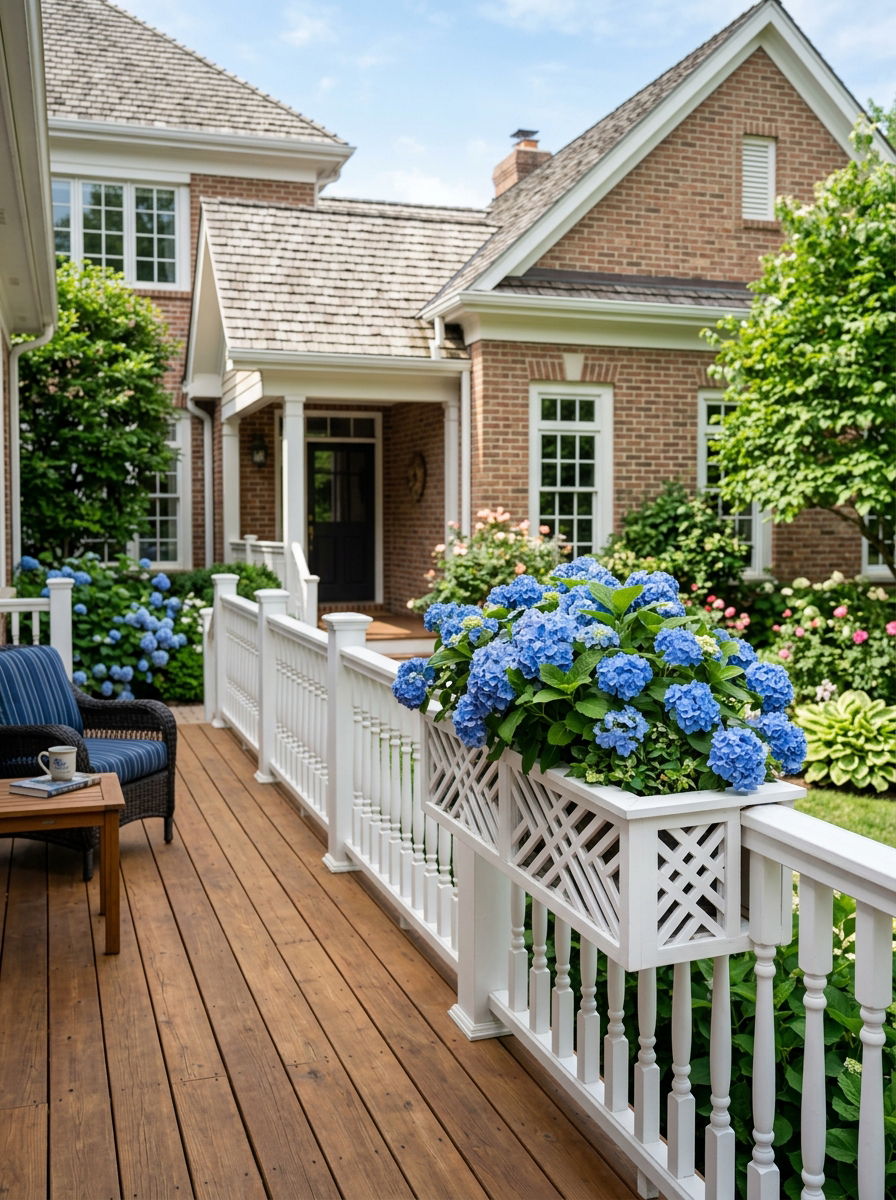
Dwarf hydrangea varieties make excellent container specimens for a shaded front porch or a large covered patio area. These shrubs produce massive, rounded flower heads that offer a sense of grandeur and traditional charm. When planting a hydrangea in a pot, ensure the container is large enough to accommodate its root system and hold plenty of moisture. Varieties like the "Invincibelle Wee White" stay compact and produce white blooms that seem to glow in the shadows. This single-shrub design is simple but incredibly effective at creating a luxurious and welcoming atmosphere for guests as they enter your home during the summer.
12. Bleeding Heart Spring Planter
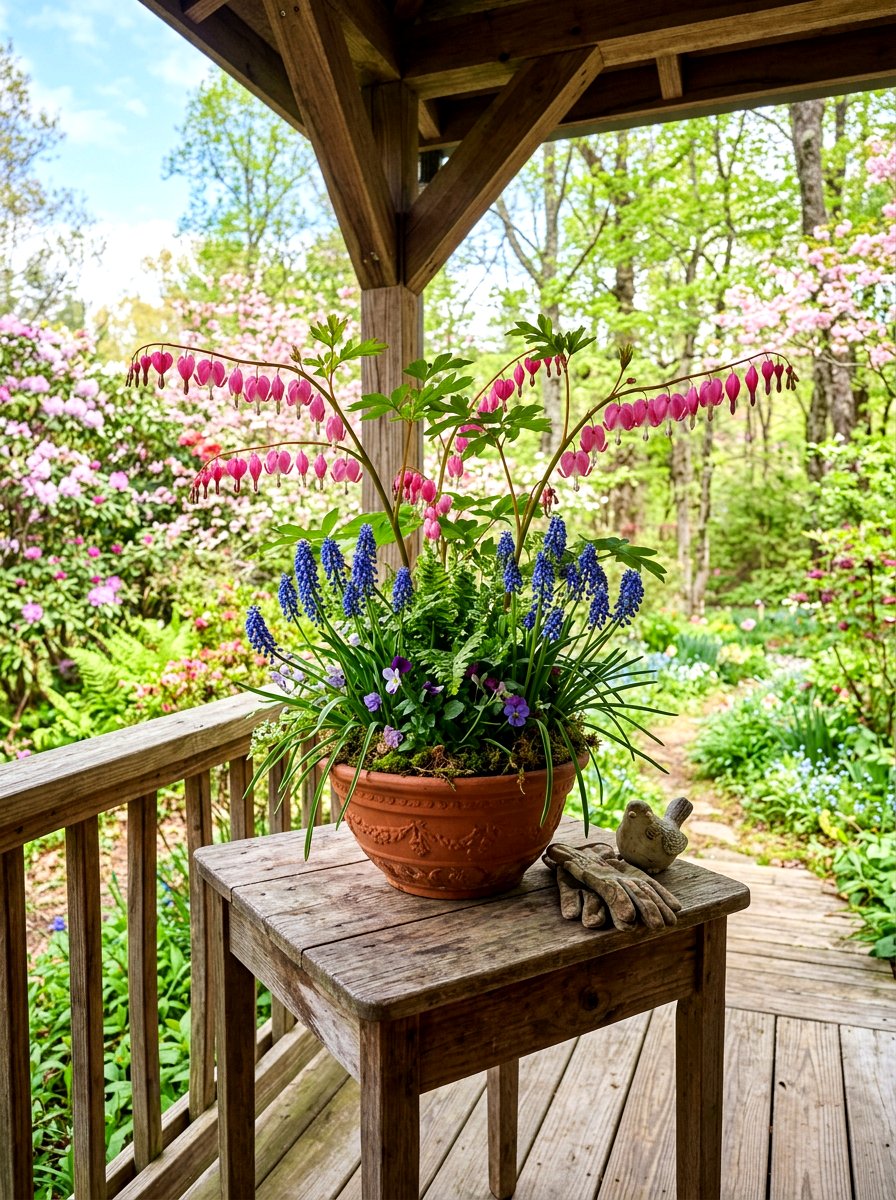
Bleeding hearts are a nostalgic favorite for spring shade gardens, featuring unique heart-shaped flowers that dangle from arching stems. While these plants often go dormant in the heat of summer, they make a spectacular focal point for a spring-themed container. Pair them with early-season bulbs like grape hyacinths or primroses to create a multi-layered floral display. The delicate, fringed foliage of the bleeding heart adds a soft, woodland feel to the pot. This arrangement is perfect for a side table on a porch where you can enjoy the intricate details of the blooms up close during the cooler months of the early year.
13. Hellebore Winter Pot
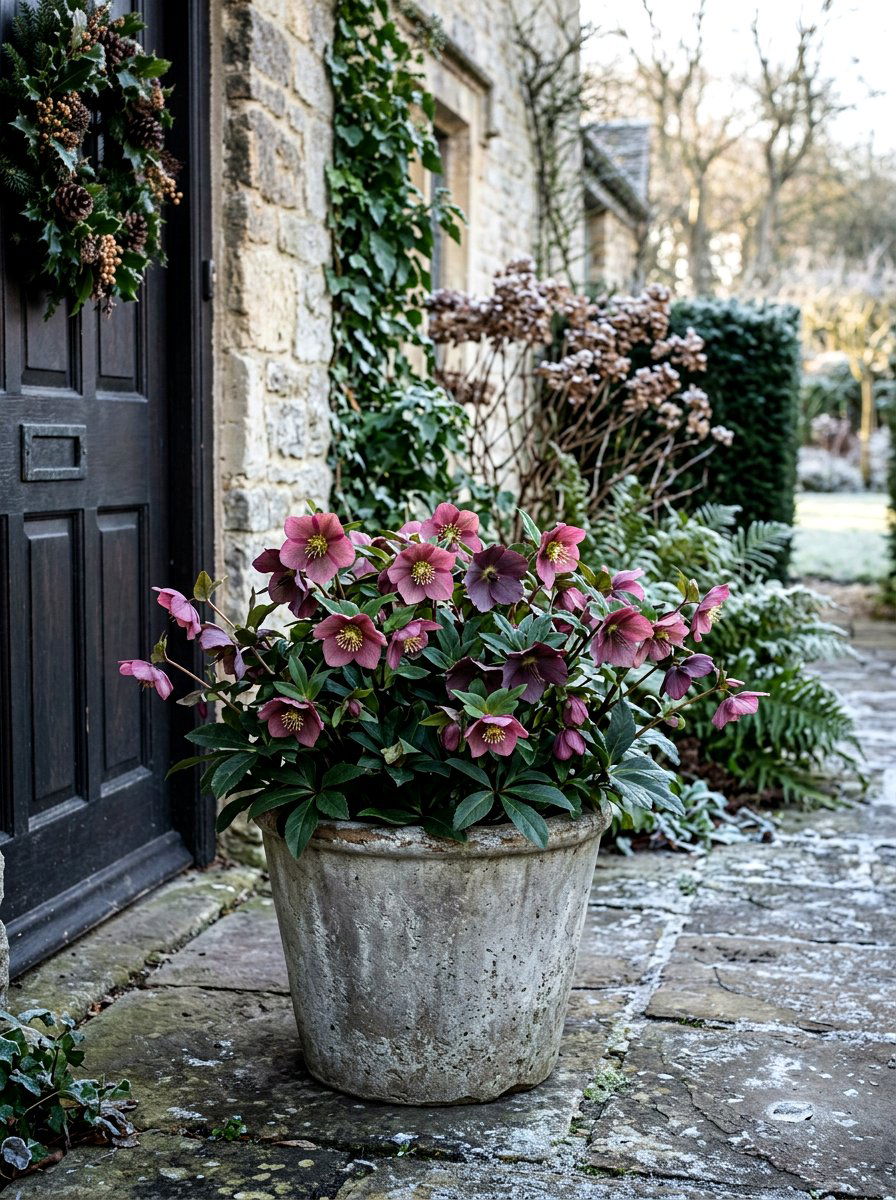
Hellebores, also known as Lenten roses, are the stars of the late winter and early spring garden, offering blooms when most other plants are still dormant. For a sophisticated winter container, plant hellebores in a stone or concrete pot to highlight their rugged, evergreen foliage and nodding, cup-shaped flowers. The blooms come in moody shades of dusty rose, creamy white, and deep plum. This design provides much-needed visual interest during the coldest months and requires very little maintenance once established. Placing these pots near an entryway allows you to enjoy their subtle beauty every time you walk through the door during the winter season.
14. Coral Bells Foliage Arrangement
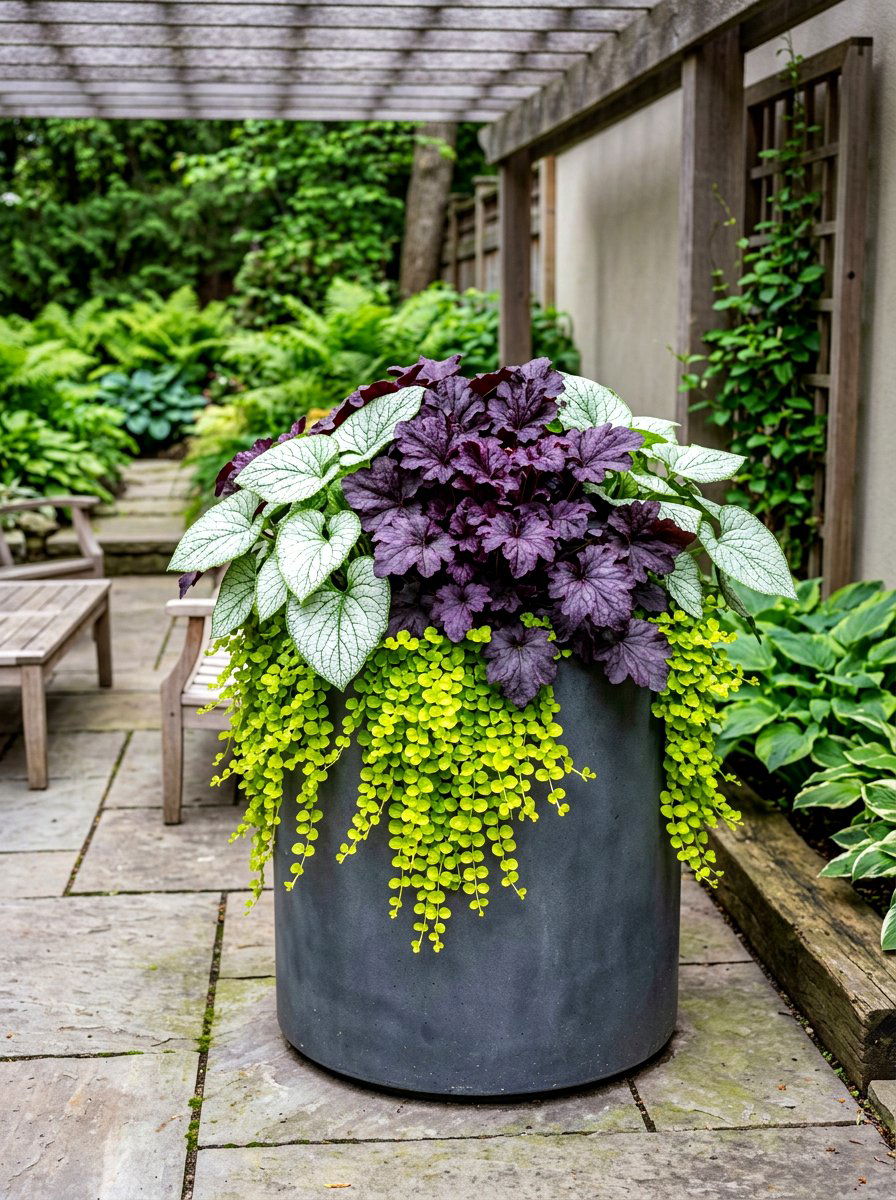
While we mentioned them in a color bowl, coral bells also work beautifully as a "thriller" or "filler" in a larger, multi-species arrangement. Combine a dark, chocolate-colored heuchera with bright green creeping Jenny and a silver-leafed brunnera for a high-contrast foliage display. This combination relies entirely on the interplay of different leaf shapes and colors rather than fleeting flowers. The result is a consistent, professional-looking pot that maintains its beauty from spring until the first snow. These plants are hardy and adaptable, making them a reliable choice for gardeners who want a long-lasting and low-maintenance shade container that always looks fresh and vibrant.
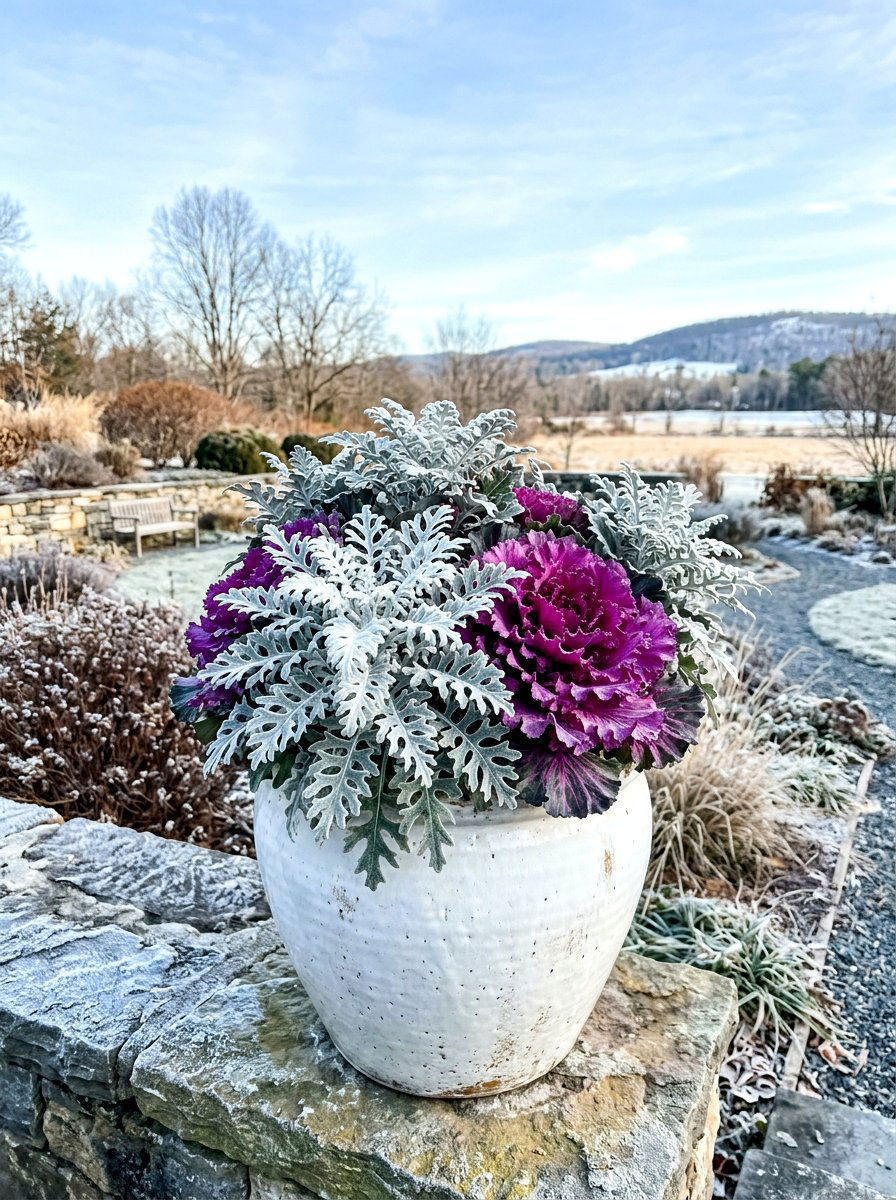
15. Sweet Potato Vine Spiller
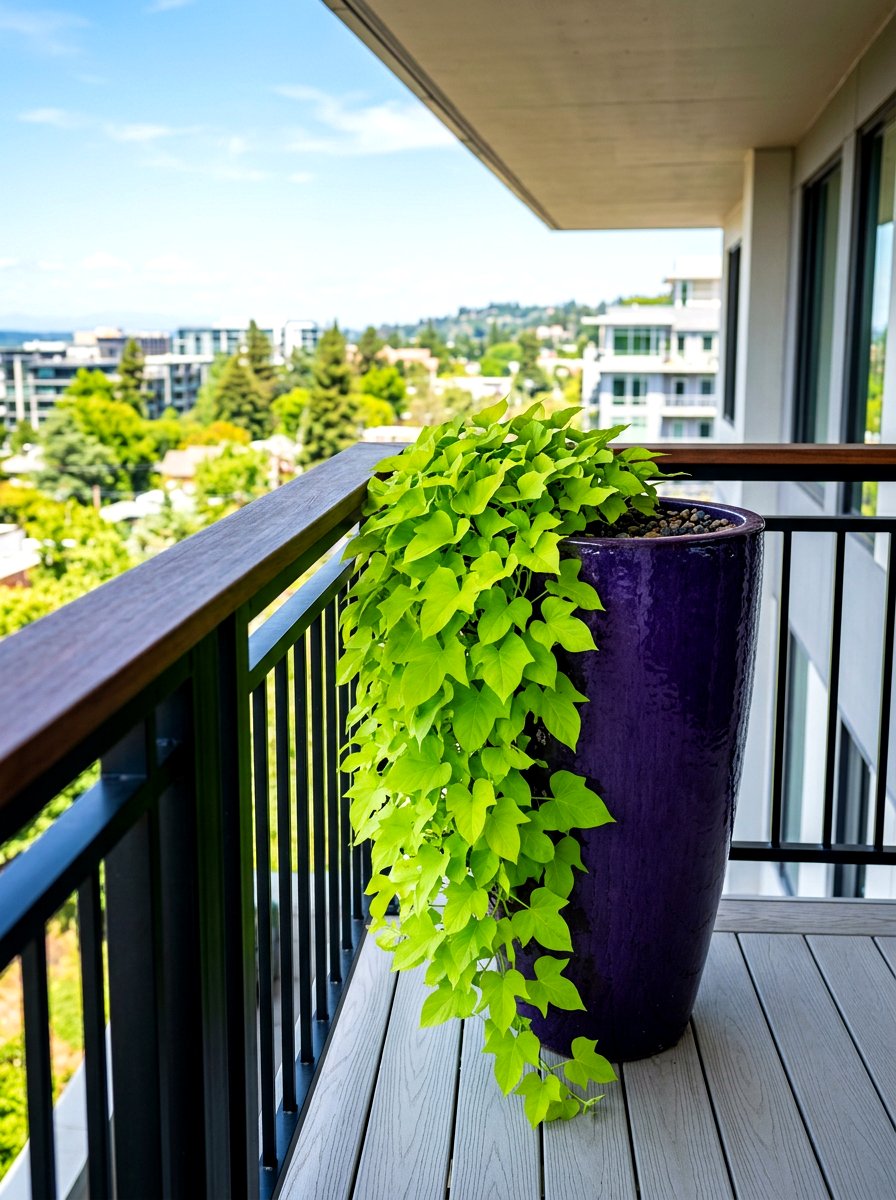
Sweet potato vine is one of the most popular "spiller" plants because it grows rapidly and creates a thick curtain of foliage over the sides of a container. In a shade garden, the lime-green variety is particularly useful for adding a bright, electric pop of color to a dark area. You can pair it with purple-leafed plants like Persian shield or dark coleus to create a bold, high-contrast look that feels modern and energetic. This vine is very thirsty, so it will need regular watering to keep its lush appearance throughout the summer. It is a great way to soften the edges of a large rectangular planter.
16. Oxalis Purple Planter
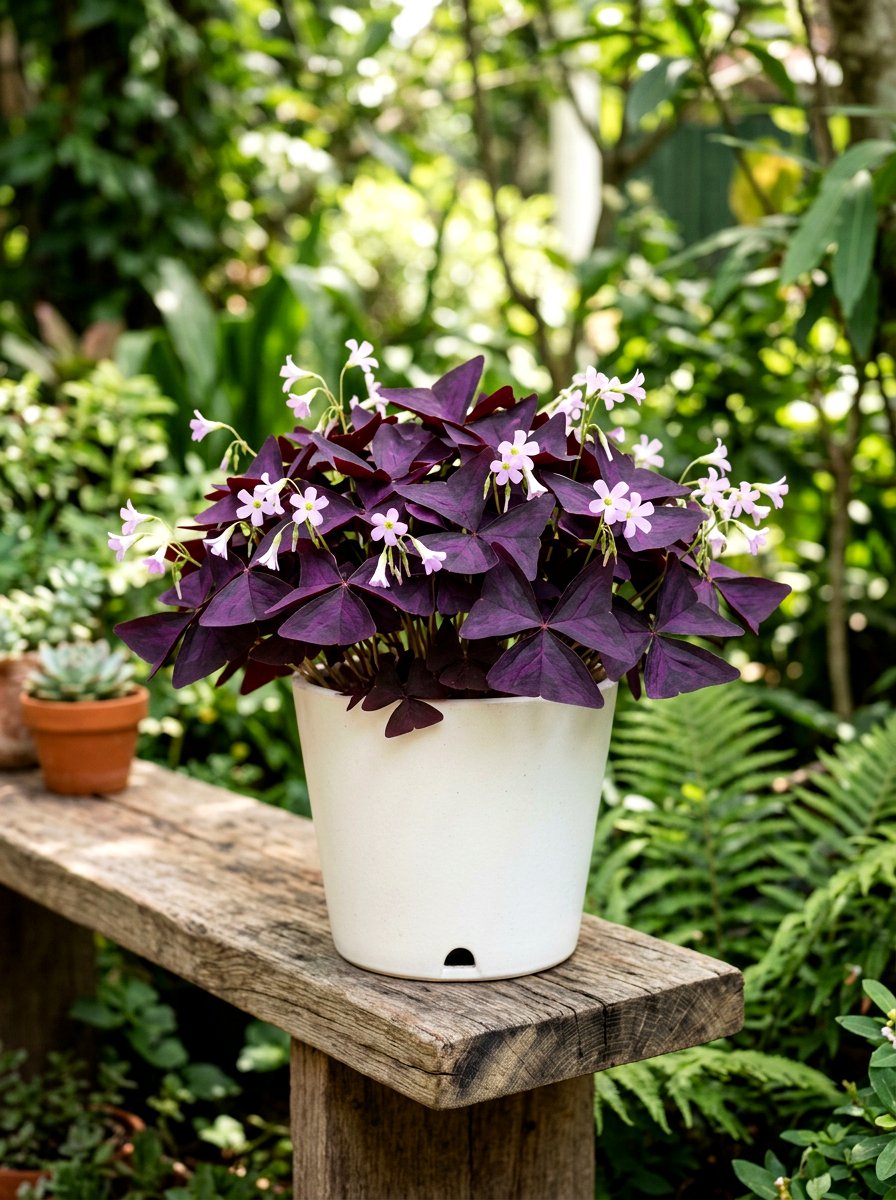
Oxalis, commonly known as false shamrock, features stunning triangular leaves in deep shades of purple or maroon that look like delicate butterflies. For a unique shade container, plant a dense cluster of oxalis in a simple terracotta or white pot to let the dark foliage stand out. The plants also produce dainty pink or white flowers that provide a soft contrast to the dark leaves. One of the most interesting features of this plant is that the leaves fold up at night and open back up in the morning. This adds a sense of life and movement to your shaded patio or a sheltered garden shelf.
17. Lamium Groundcover Pot
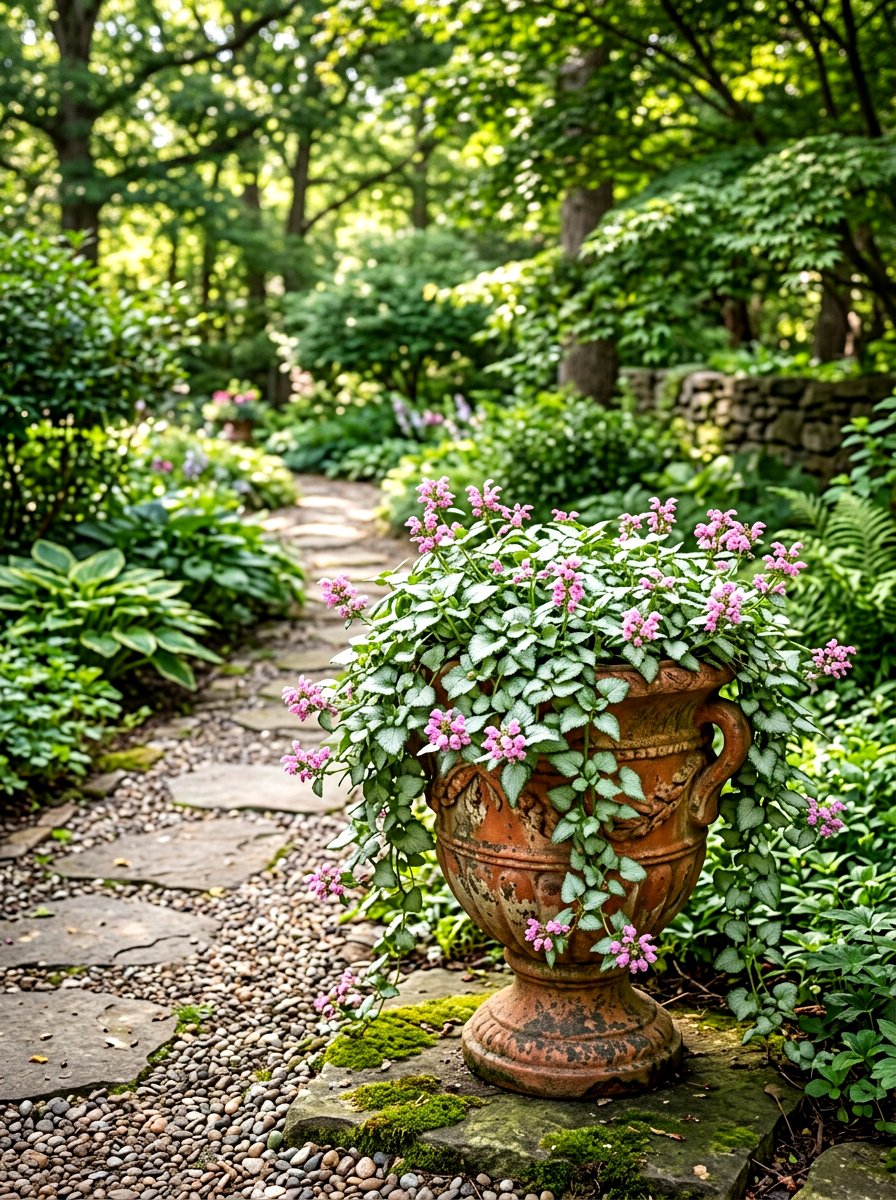
Lamium, or dead nettle, is a tough and beautiful perennial that makes an excellent spiller or filler in shade containers. The variety "Beacon Silver" features shimmering silver leaves with a thin green margin, which creates a luminous effect in dark corners. It produces clusters of small, snapdragon-like flowers in pink or white during the late spring. When grown in a pot, it will quickly trail over the edges, creating a soft, silvery skirt around taller plants like ferns or hostas. This is a very low-maintenance plant that can tolerate a range of soil conditions and helps to brighten the overall look of a shaded arrangement.
18. Torenia Wishbone Flower Container
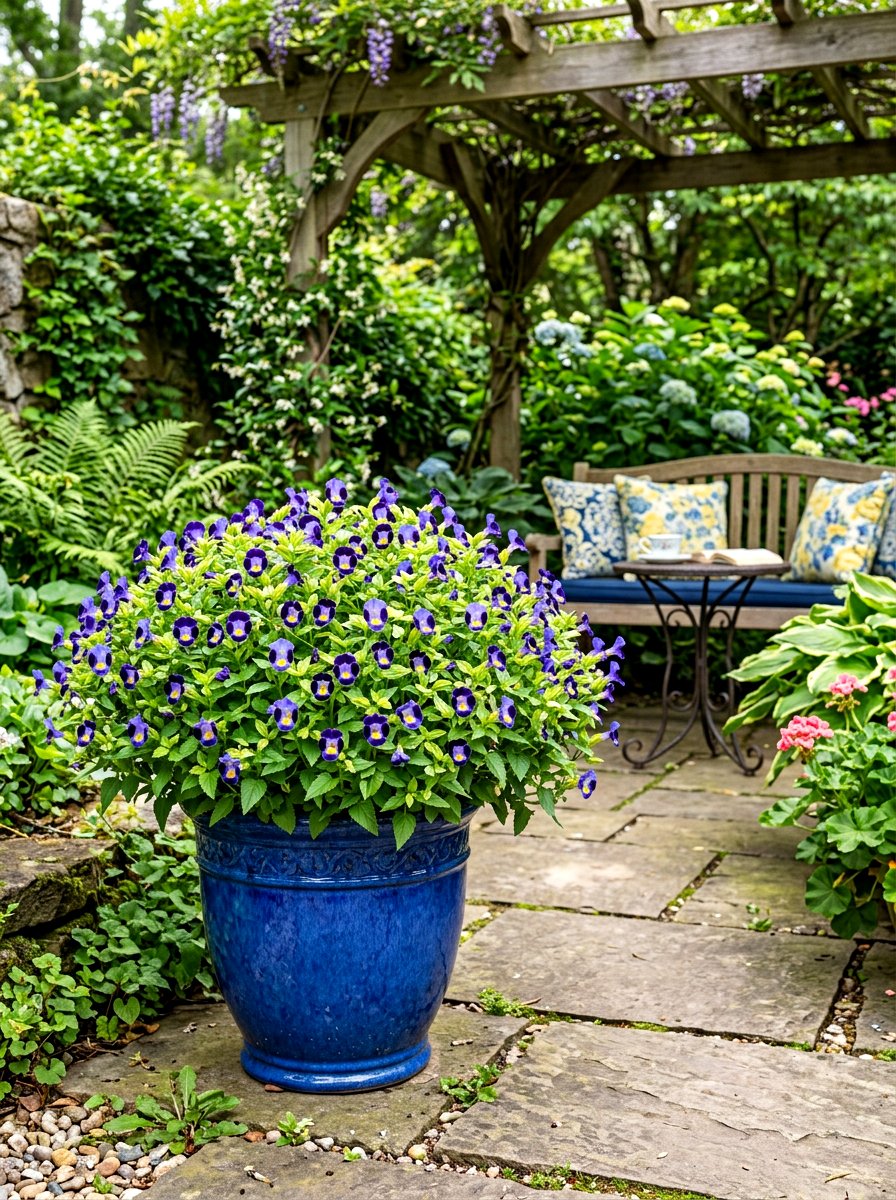
Torenia, often called the wishbone flower, is a charming annual that thrives in the shade and produces a profusion of bicolor blooms. The flowers have a unique shape with a small "wishbone" structure inside, and they come in lovely shades of blue, purple, and yellow. This plant has a mounding and trailing habit, making it perfect for the edges of a mixed container or a hanging basket. It is a great alternative to impatiens if you are looking for something a bit more unusual. Torenia stays neat and compact, providing a steady stream of color throughout the warmest parts of the summer and early autumn.
19. Bromeliad Tropical Shade Pot
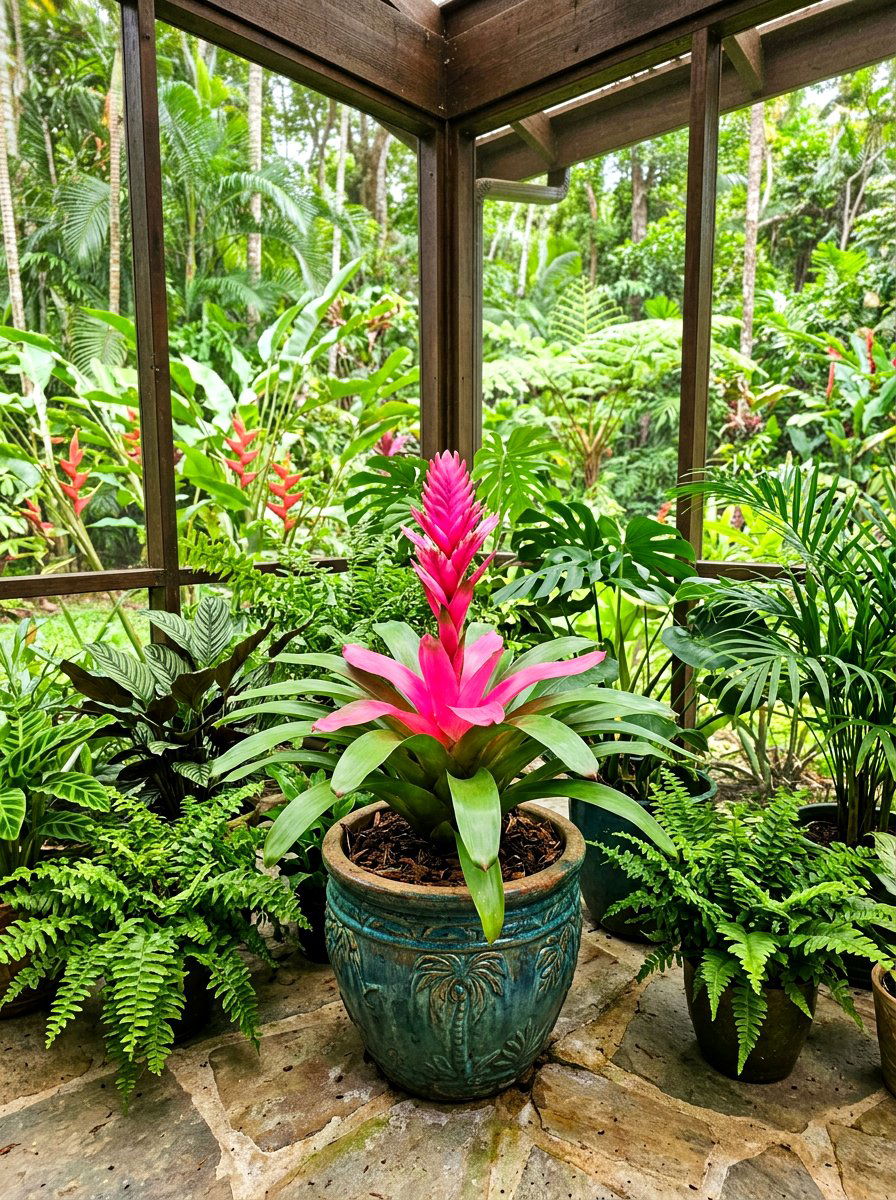
For a bold and architectural look, use a bromeliad as the centerpiece of a tropical-themed shade container. These plants have stiff, strap-like leaves and produce long-lasting, brightly colored bracts that look like exotic flowers. Surround the bromeliad with smaller tropical foliage plants like philodendrons or spider plants to complete the lush, jungle-inspired aesthetic. This design is perfect for a covered deck or a screened-in porch where the air is somewhat humid. Bromeliads are very low-maintenance and only require a bit of water in their central "cup. " They bring a sophisticated, high-end resort feel to even the smallest shaded outdoor seating areas.
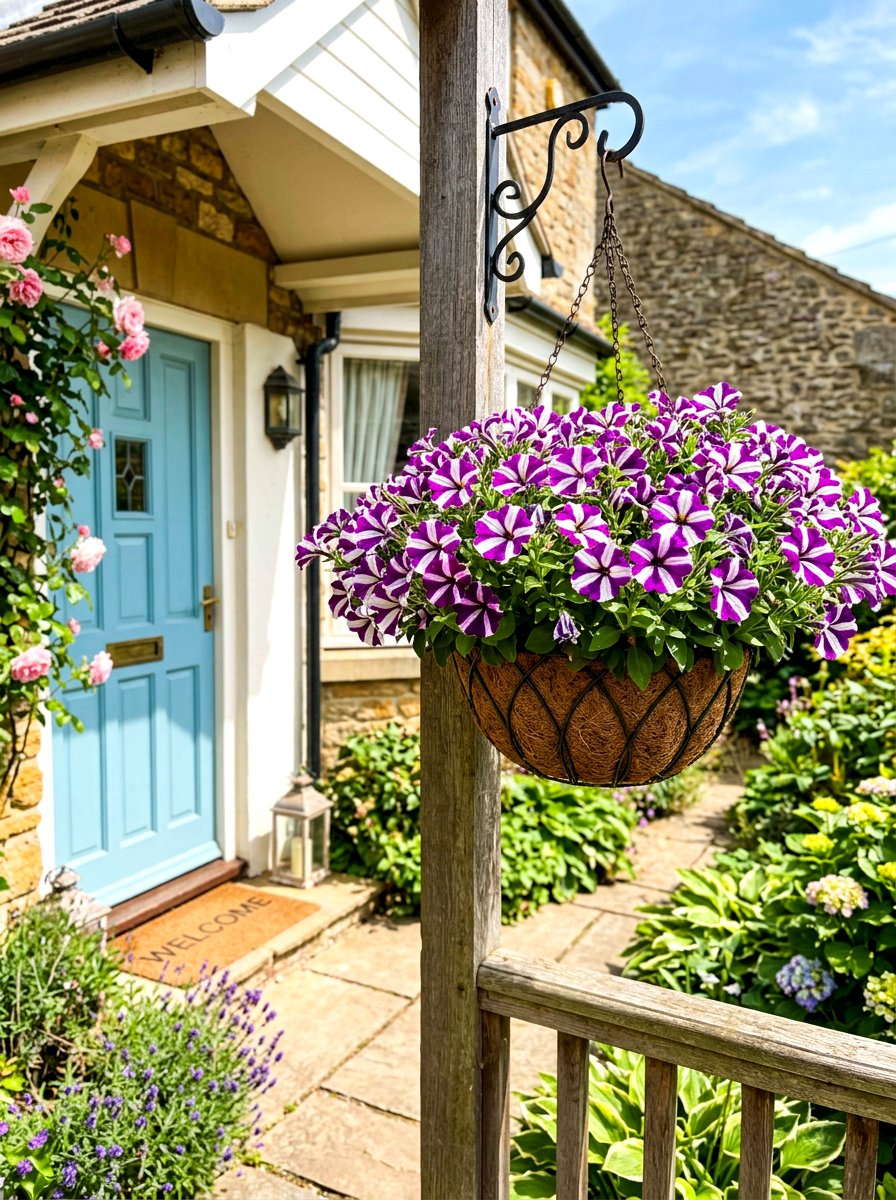
20. Ivy Trailing Basket
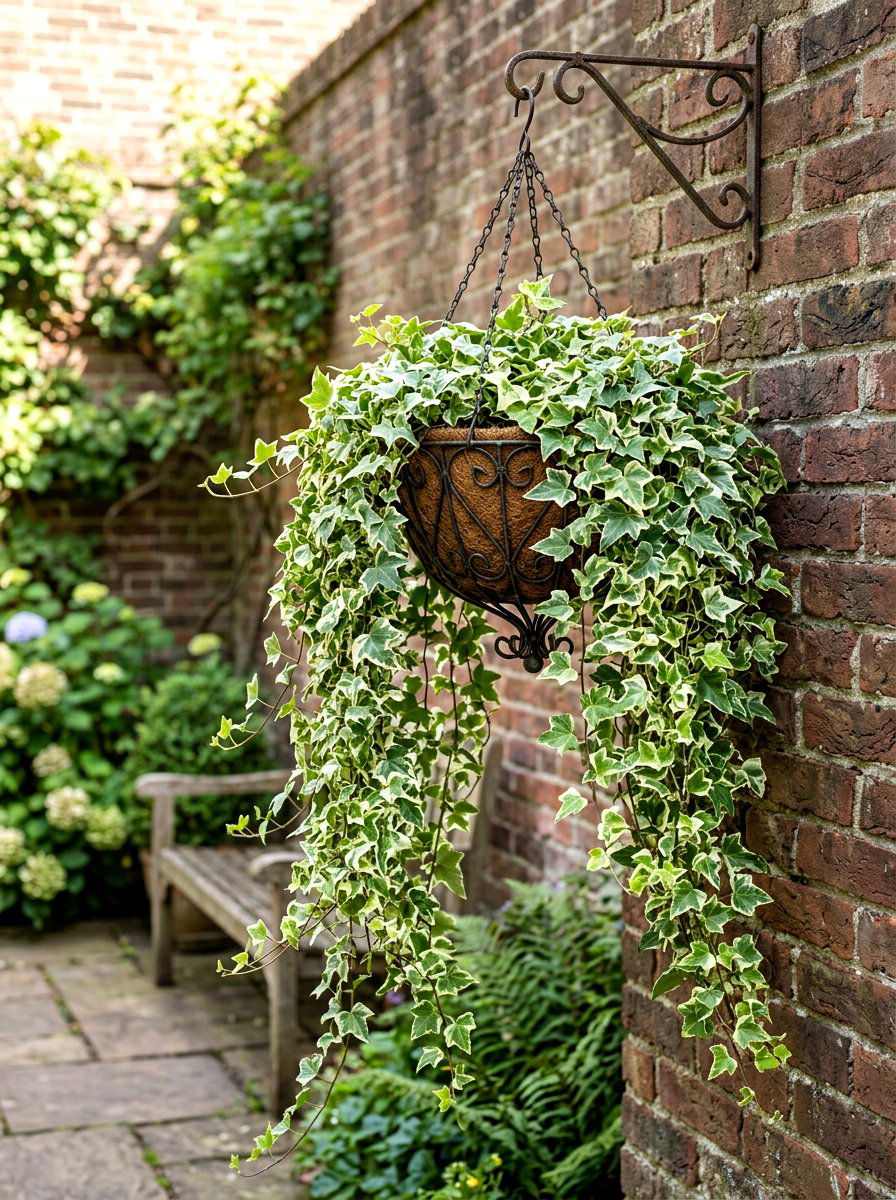
English ivy is a classic choice for a timeless and elegant shade container, especially when allowed to trail long and full from a high-quality planter. You can create a simple but stunning look by planting several ivy starts in a single large urn and letting them spill down the sides. For added interest, choose a variegated variety with white or cream edges to help the green leaves pop in the shadows. Ivy is incredibly hardy and stays green year-round in many climates, making it a great choice for permanent porch displays. It provides a soft, romantic feel that pairs well with traditional architectural styles.
21. Moss Tabletop Garden
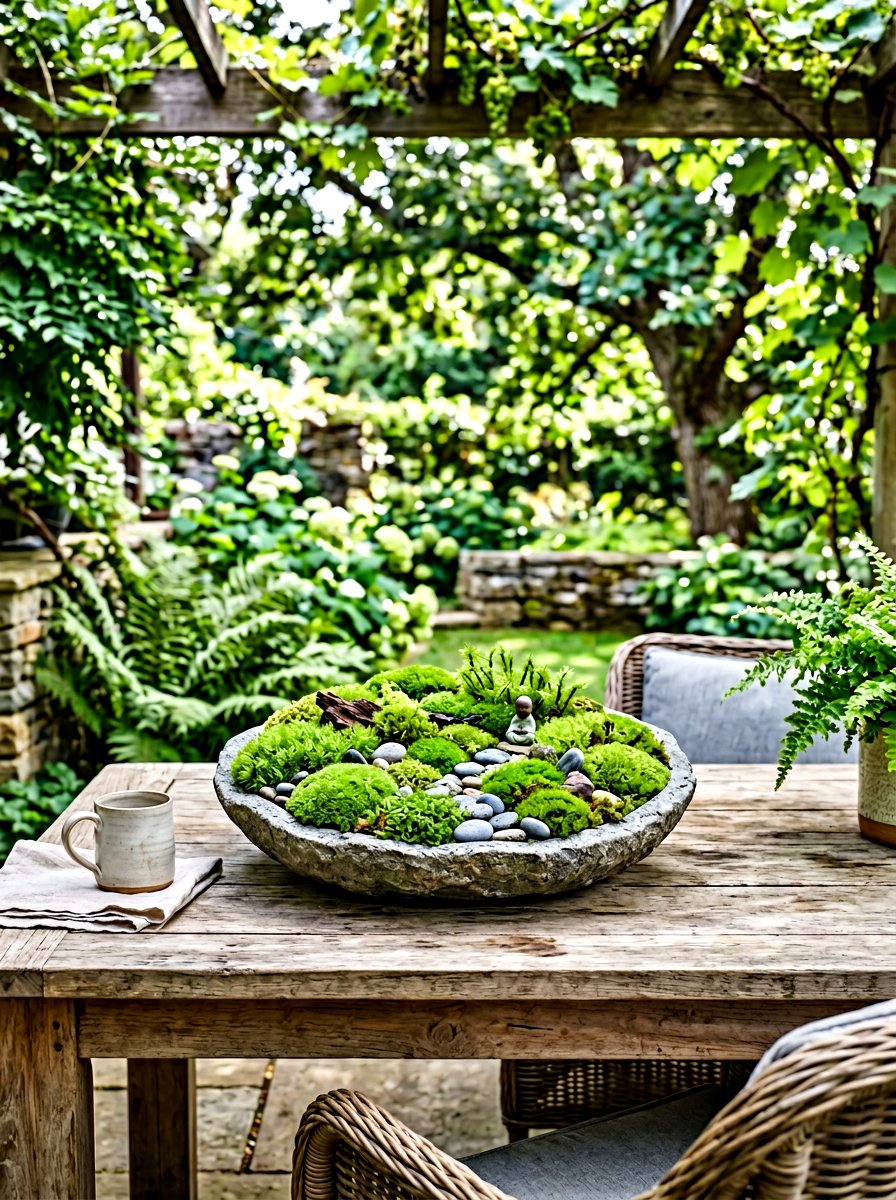
A moss garden is a unique and peaceful way to decorate a shaded outdoor dining table or a low shelf. Using a shallow stone bowl, you can create a miniature landscape using different types of living moss, small pebbles, and perhaps a tiny fern. This design celebrates the quiet beauty of the forest floor and feels incredibly refreshing to look at. Moss requires very little soil but needs frequent misting to stay green and lush in its container. This minimalist and organic approach to shade gardening is perfect for those who enjoy a Zen-like atmosphere and want to bring a bit of nature closer to their seating.
22. Creeping Jenny Bright Planter
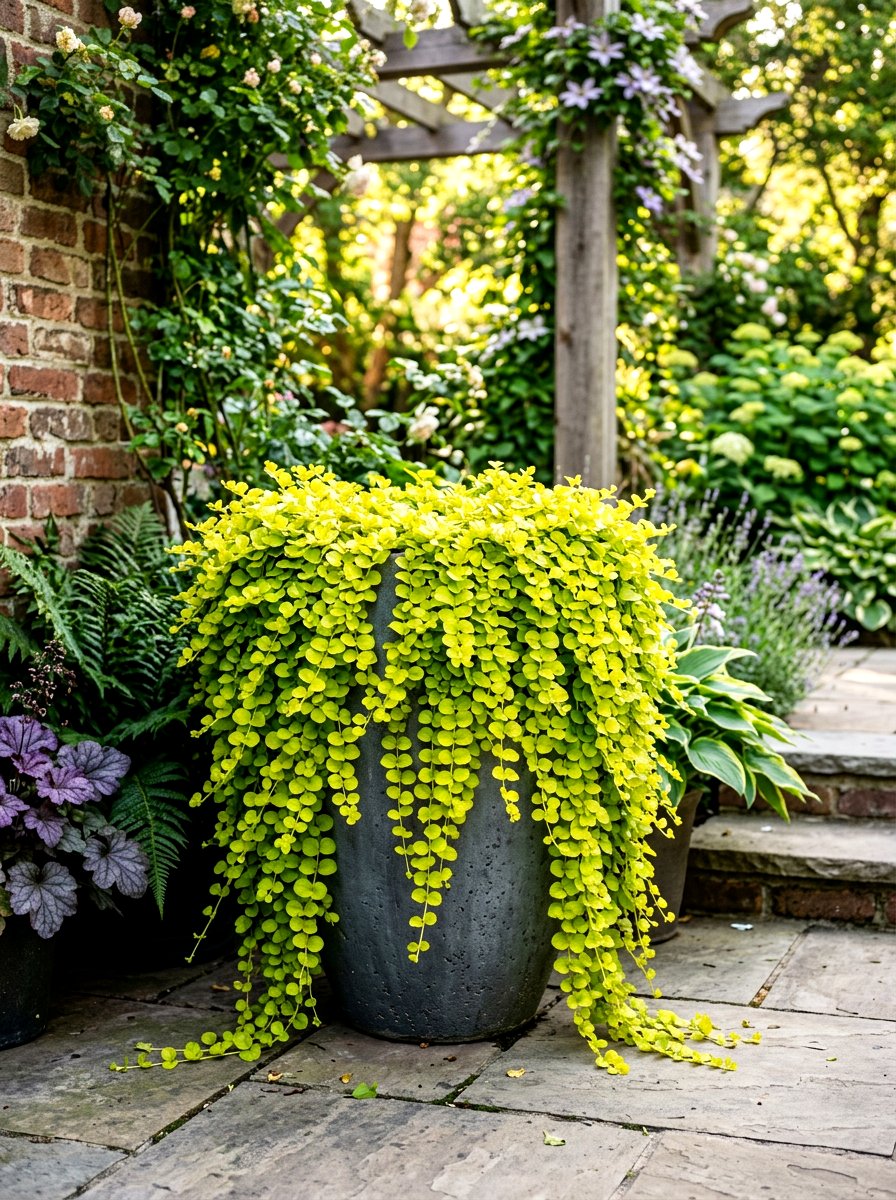
Creeping Jenny is a versatile spiller plant that is prized for its round, coin-shaped leaves and vibrant chartreuse color. In a shade container, it acts like a highlighter, drawing the eye to the pot and brightening the surrounding area. It looks fantastic when paired with deep purple flowers or dark foliage, creating a high-energy color palette. The stems will grow quite long and trail elegantly down the sides of a tall pot or a hanging basket. This plant is very easy to grow and can even handle wet soil, making it a reliable choice for gardeners who might occasionally overwater their container plants.
23. Japanese Maple Specimen Pot
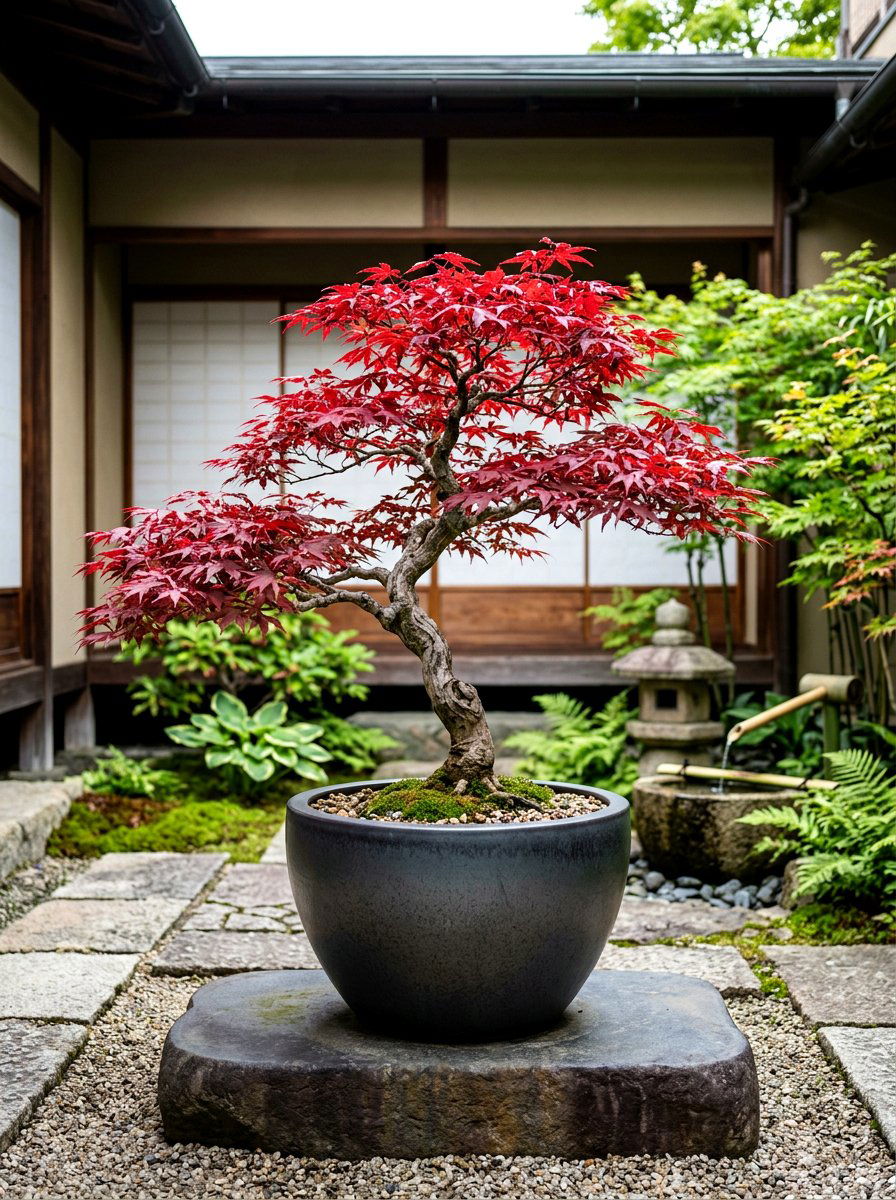
A dwarf Japanese maple can serve as a spectacular permanent resident for a large shade container on a patio or deck. These small trees offer beautiful, lacy foliage and an elegant branch structure that provides year-round interest. During the spring and summer, the leaves come in shades of green, red, or variegated patterns, often turning brilliant colors in the autumn. Choosing a sleek, high-quality ceramic pot will elevate the look and turn the tree into a true work of art. This is a great way to add height and a sense of maturity to a shaded outdoor room without needing a lot of ground space.
24. Boxwood Formal Shade Planter
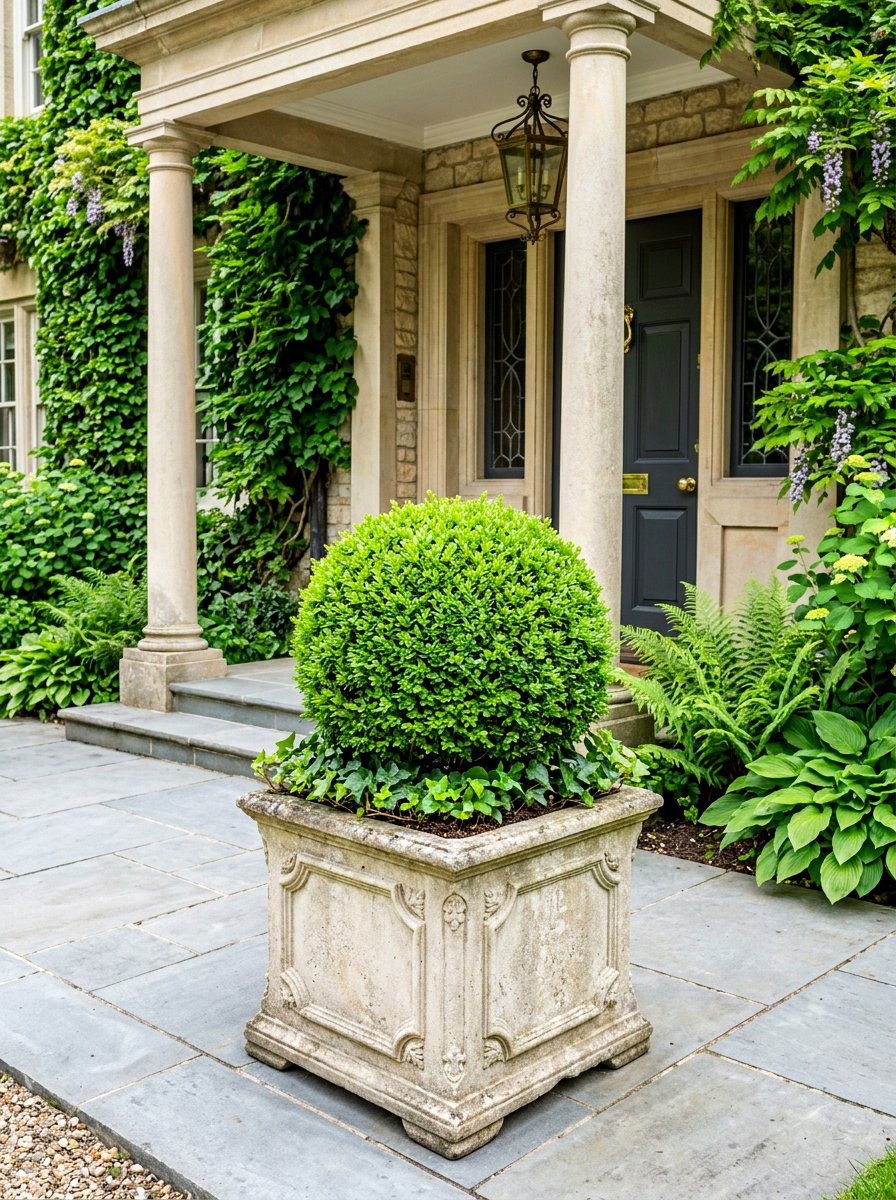
For a classic and formal look, a boxwood shrub in a stately square or round planter is a perfect choice for a shaded entryway. Boxwoods are evergreen and can be sheared into neat spheres or pyramids, providing a sense of structure and order to the space. They are very shade-tolerant and maintain their deep green color throughout the entire year. This simple, single-plant design looks best when used in pairs to flank a doorway or a set of stairs. It is a low-maintenance option that provides instant curb appeal and a timeless aesthetic that works well with both modern and traditional home designs.
25. Polka Dot Plant Arrangement
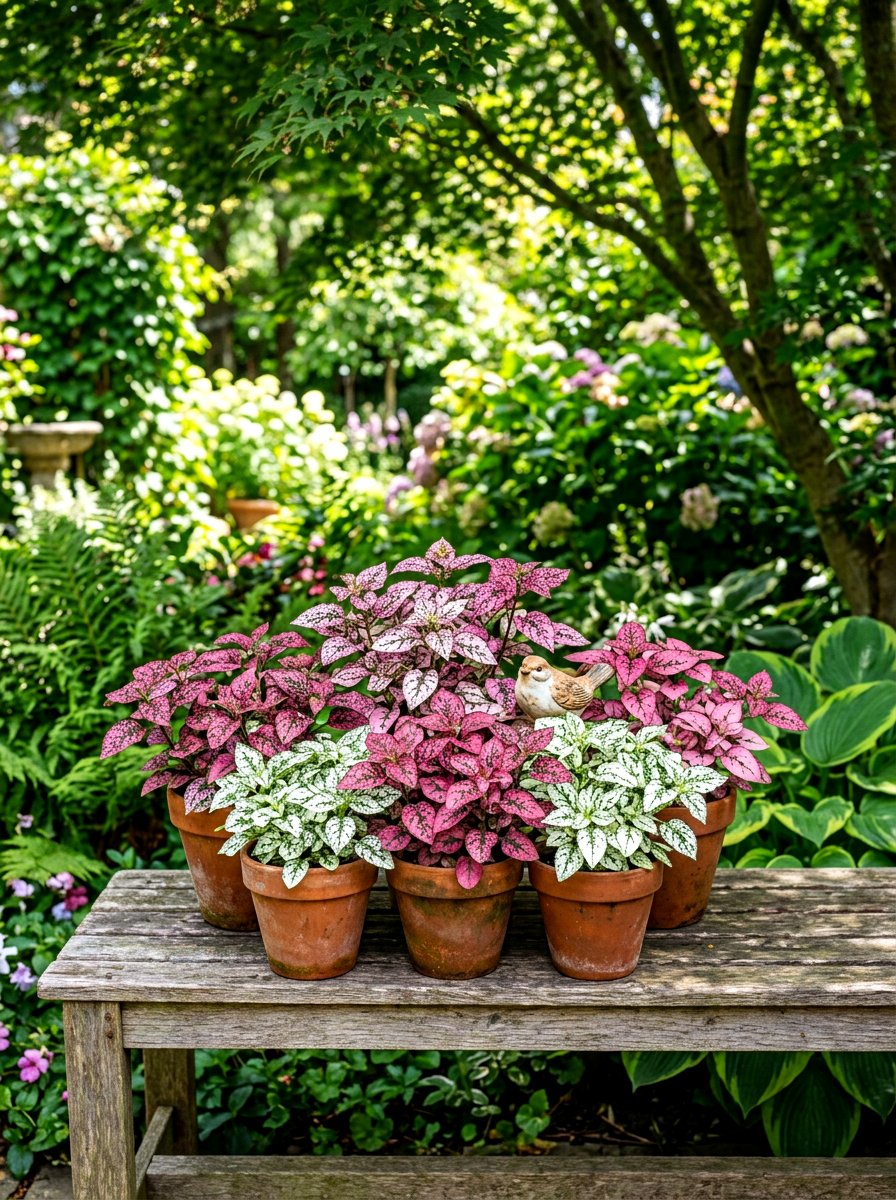
The polka dot plant, or Hypoestes, is a fun and whimsical choice for adding small-scale patterns to a shaded container garden. Its leaves are splashed with spots of pink, red, or white, making it look like it was decorated for a party. To create a full arrangement, group several polka dot plants together in a medium-sized pot and keep them pinched back to maintain a bushy shape. They look wonderful when paired with simple green ferns or solid-colored coleus. This plant is a great way to add a bit of personality and playful color to a shaded balcony or a small side table on a porch.
26. Lobelia Blue Flower Pot
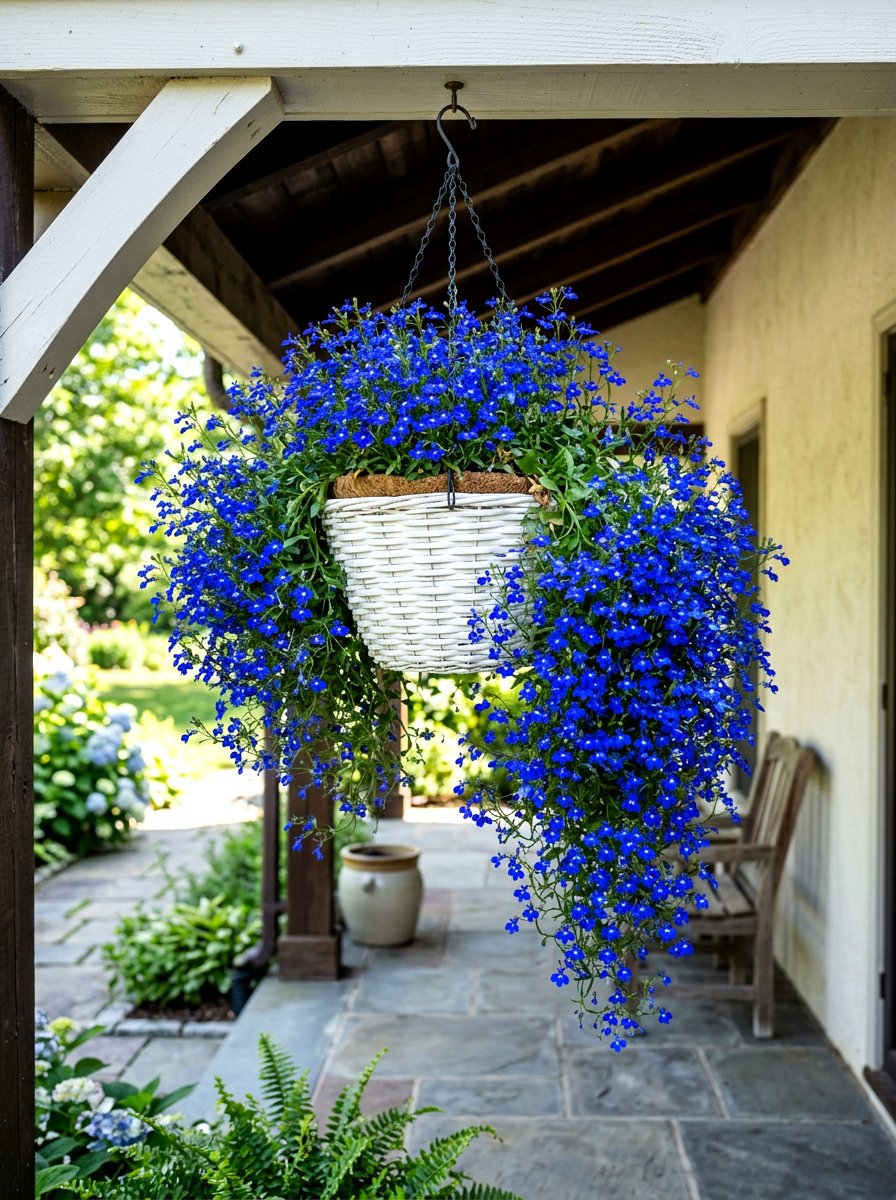
Trailing lobelia is one of the few plants that provides a true, deep blue color for shaded garden containers and hanging baskets. The tiny flowers are produced in such abundance that they can almost hide the foliage of the plant entirely. For a classic look, pair blue lobelia with white petunias or white impatiens in a window box to create a crisp and clean color scheme. The plant has a delicate, wispy habit that looks lovely as it spills over the edges of a pot. It prefers cooler temperatures, so it is particularly well-suited for shaded areas that stay a bit more temperate during the summer.
27. Ajuga Shade Container
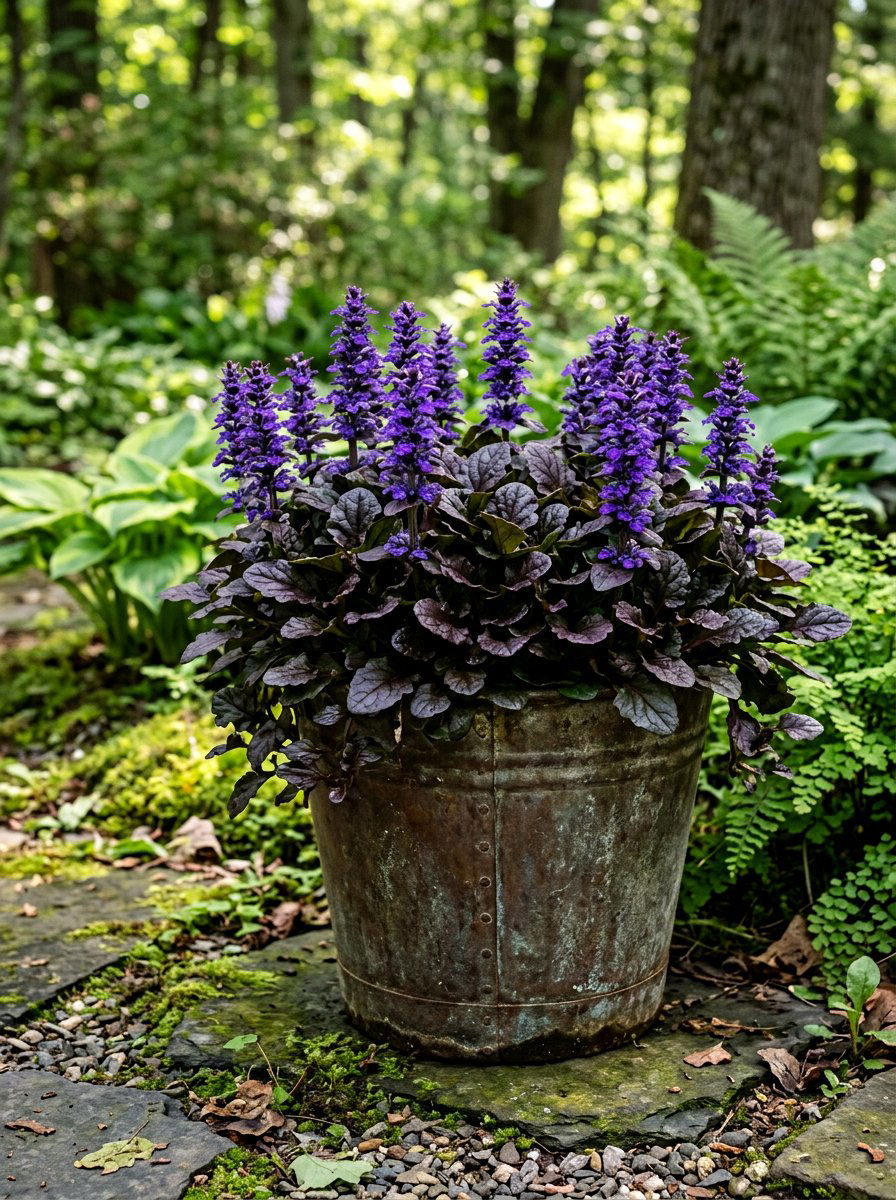
Ajuga, also known as bugleweed, is a low-growing perennial that features glossy, dark foliage and spikes of blue or purple flowers in the spring. While often used as a groundcover, it makes an excellent filler or spiller for shade containers. Varieties like "Black Scallop" have nearly black leaves that provide a dramatic and moody backdrop for other plants. When grown in a pot, the runners will eventually trail over the edge, adding a unique texture and color to the overall display. It is a very hardy plant that can withstand a variety of conditions, making it a great "set it and forget it" option for shade.
28. Cyclamen Winter Garden
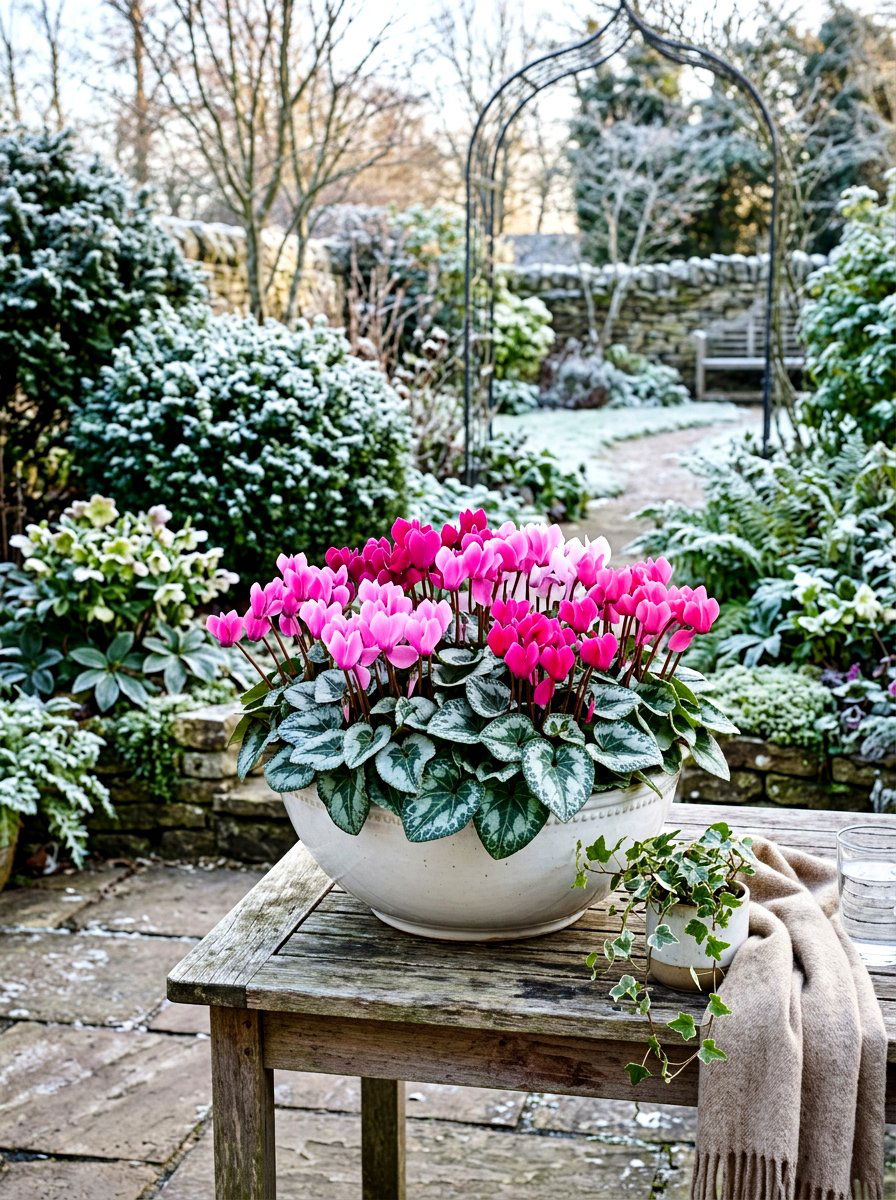
Cyclamen are beautiful cool-season plants that thrive in the shade and produce unique, swept-back flowers in shades of red, pink, and white. Their silver-patterned, heart-shaped leaves are just as attractive as the blooms, making them a great choice for a winter or early spring container. Plant them in a small, decorative pot on an outdoor table where you can admire the intricate details of their foliage and flowers. Cyclamen prefer to be kept on the cooler side and need well-draining soil to prevent their tubers from rotting. They bring a touch of elegance and delicate beauty to the garden during the transition between the seasons.
29. Wood Fern Log
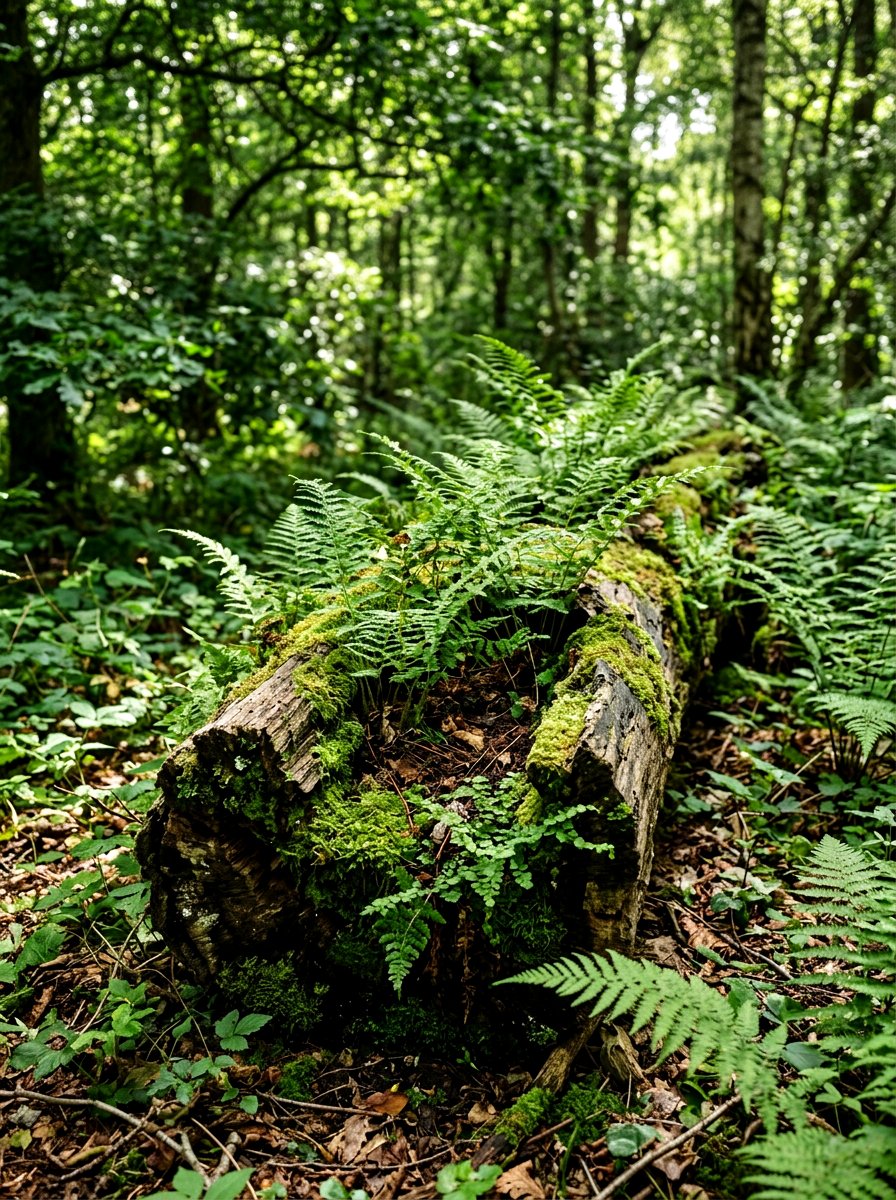
For a truly natural and rustic shade garden idea, try planting a variety of wood ferns or maidenhair ferns inside a hollowed-out log or a rustic wooden trough. This design mimics the look of a forest floor and creates a charming, woodland vibe on a shaded patio or under a large tree. Fill the hollow space with rich potting soil and tuck the ferns in tightly, adding a bit of moss around the edges to help retain moisture. The combination of the weathered wood and the delicate green fronds creates a beautiful, organic aesthetic that feels like a small piece of the wild has been brought into your home.
30. Primrose Pot
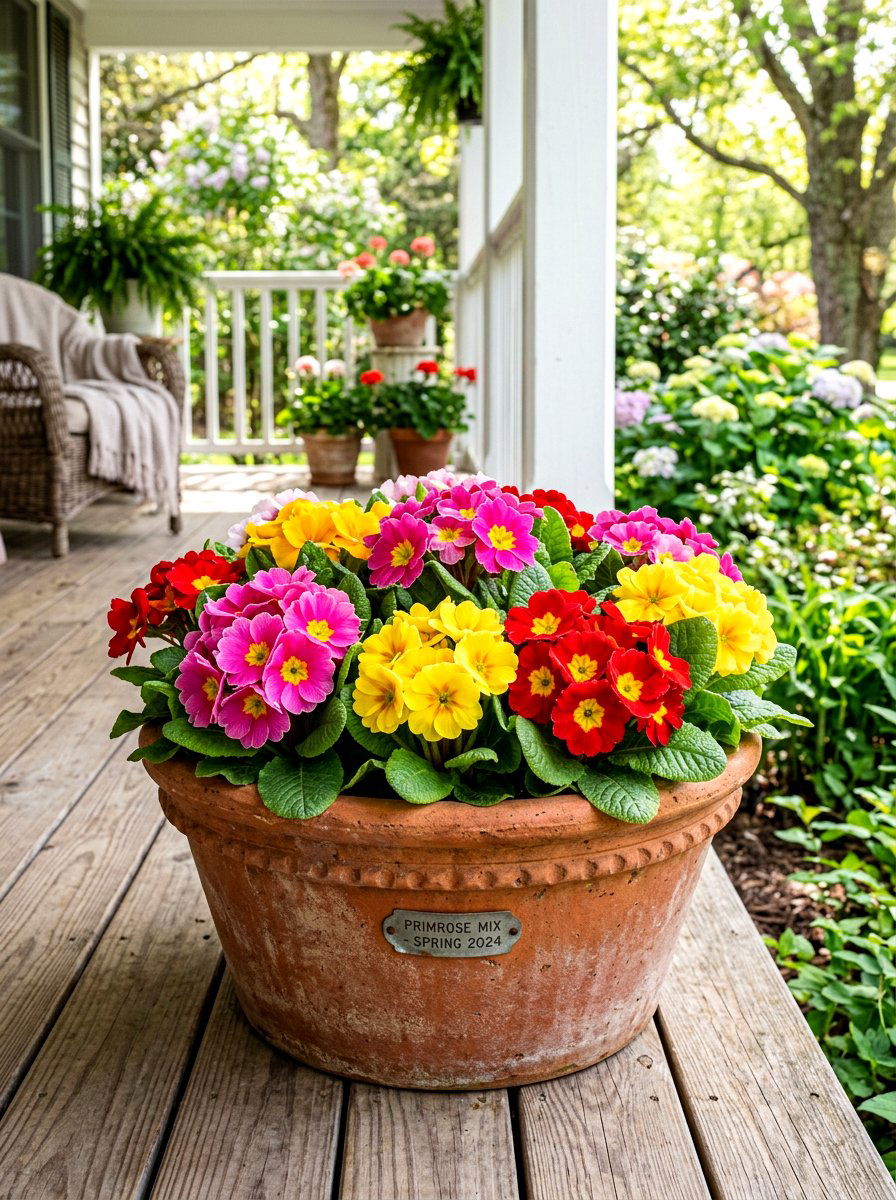
Primroses are among the first flowers to bloom in the spring and are perfect for adding a bright, cheerful pop of color to a shaded container. They come in almost every color of the rainbow and often have a contrasting "eye" in the center of each bloom. To create a high-impact display, plant several different colors of primroses together in a wide, low bowl. Their crinkled, dark green leaves provide a nice base for the vibrant flowers. This arrangement is a great way to celebrate the end of winter and bring a sense of joy and renewal to a shaded porch or a covered entryway.
Conclusion:
Creating a stunning garden in the shade does not mean you have to sacrifice beauty or variety in your outdoor spaces. These thirty container ideas demonstrate that low-light areas can be just as vibrant and textured as any sunny border or flower bed. By focusing on foliage color, leaf shape, and varying plant heights, you can create professional-looking displays that last throughout the growing season. Remember to check the moisture levels frequently, as shaded pots can sometimes stay damp longer or dry out unexpectedly under covered eaves. Whether you prefer a modern minimalist look or a lush tropical feel, these shade-loving combinations will certainly elevate your home’s curb appeal and ambiance.

Related posts: