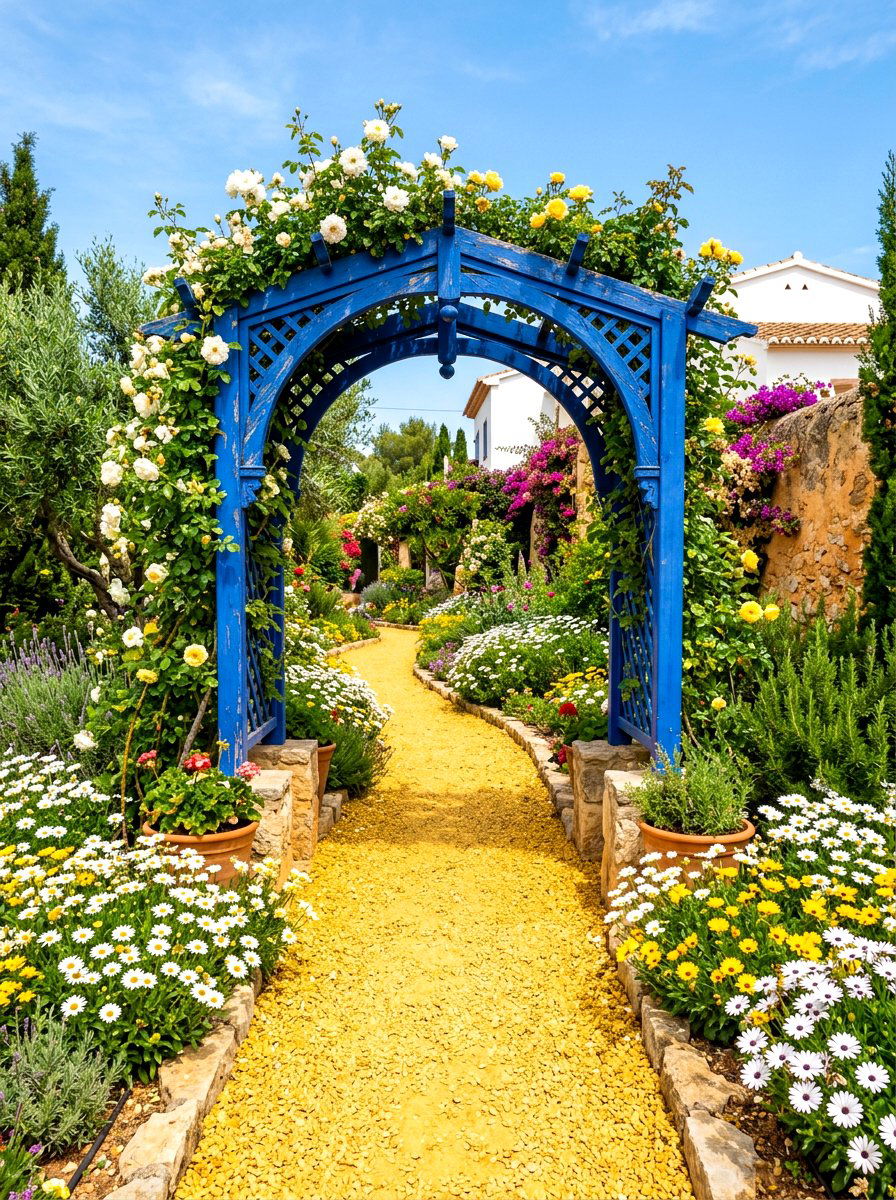
Transforming your shaded garden spaces into a lush oasis begins with the timeless beauty of hostas. These versatile perennials are prized for their stunning foliage, ranging from deep blues to vibrant chartreuse and variegated patterns. Creating a hosta border is a brilliant way to define walkways, frame garden beds, or soften the hard edges of your home's foundation. Because they thrive in low-light conditions where most flowering plants struggle, they offer a reliable solution for those tricky corners of your yard. Whether you prefer giant, architectural varieties or dainty miniature types, hostas provide a consistent texture that anchors your landscape. This guide explores creative ways to use these shade-loving favorites to enhance your outdoor living space effectively.
1. Shade garden hosta edging
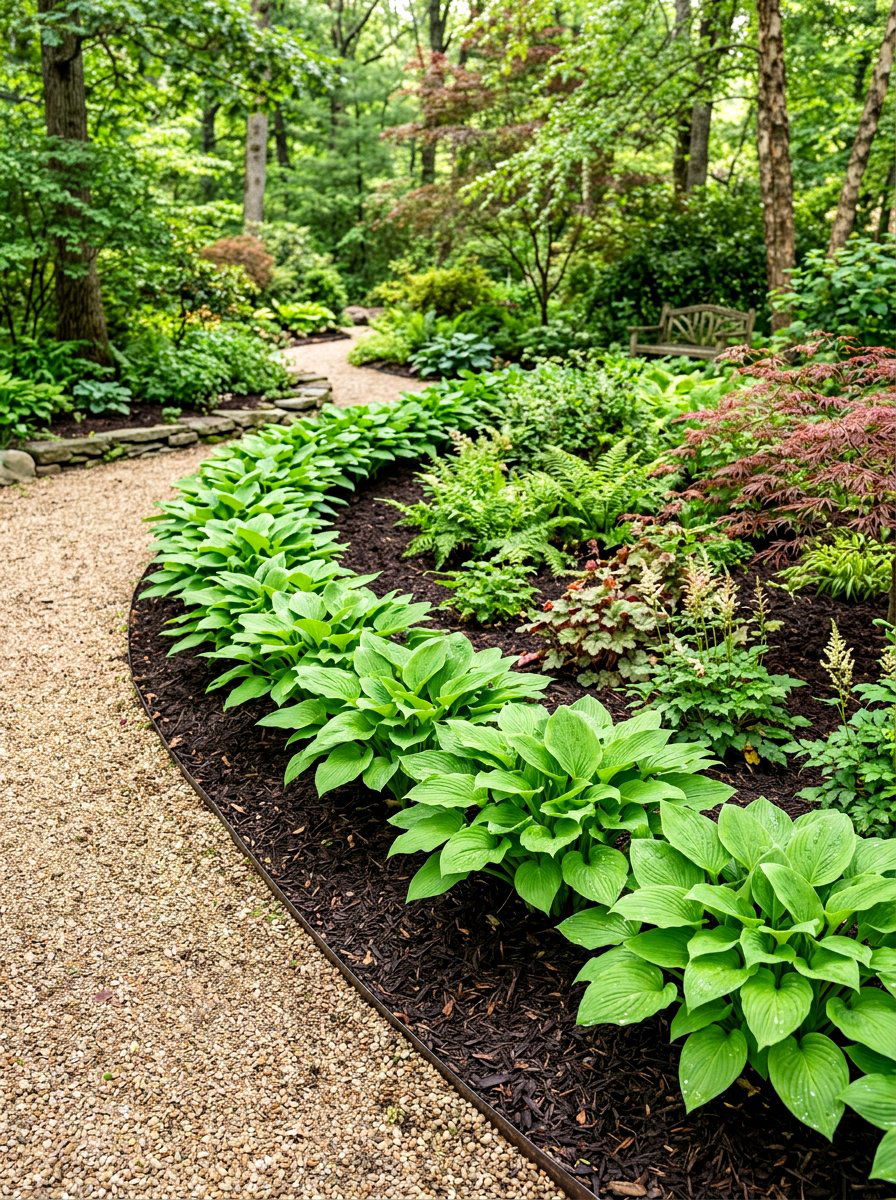
Establishing a clean line in your outdoor space often starts with a shade garden hosta edging. This specific approach uses uniform plant sizes to create a sense of order and structure along the perimeter of your flower beds. When you select a single variety for the entire length, the repetition creates a calm, professional look that guides the eye naturally through the landscape. These plants are exceptionally hardy and fill in gaps quickly, which helps to suppress weeds and reduce your overall maintenance time. You can choose deep green leaves for a subtle look or variegated leaves to add a splash of brightness to darker corners. The mounded shape of the foliage provides a soft transition between your lawn and your taller perennial plants.
2. Variegated hosta walkway
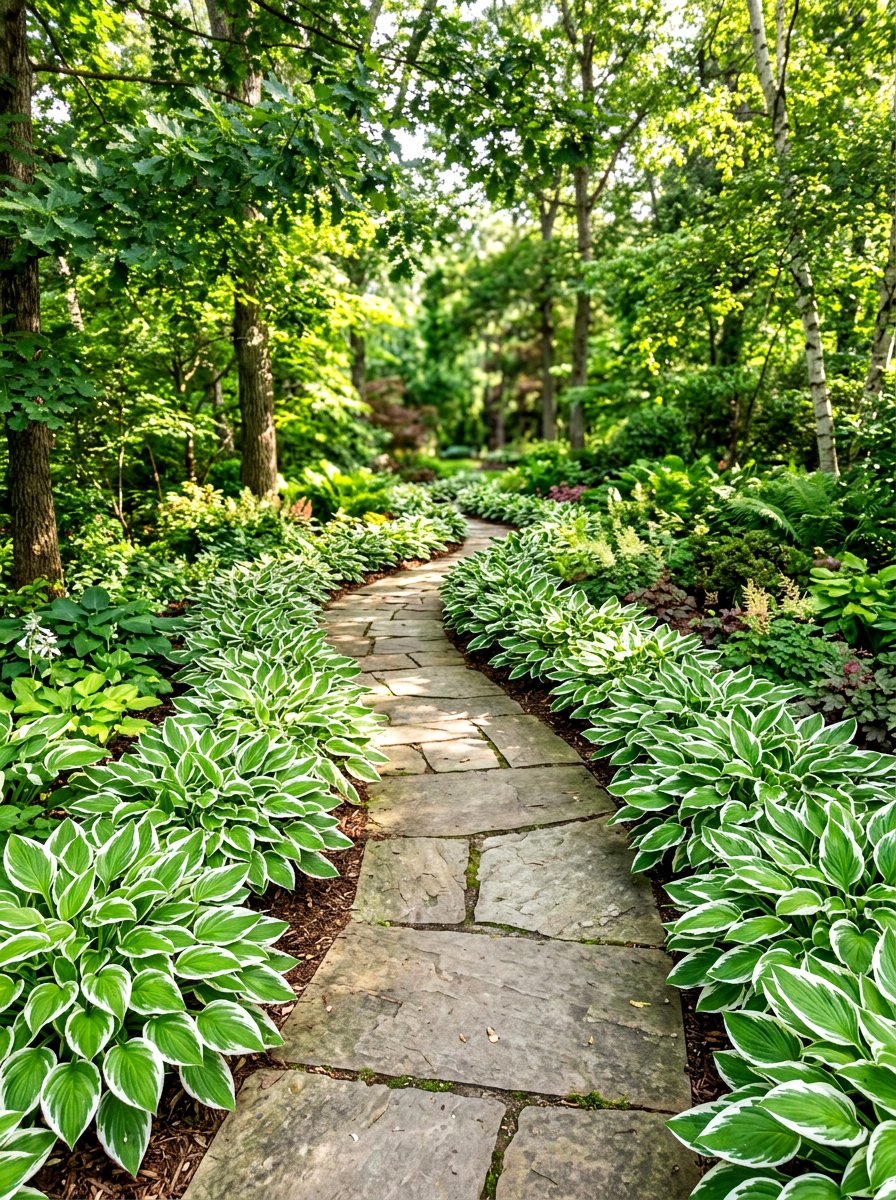
Designing a variegated hosta walkway is an excellent way to illuminate a dim path without needing electrical lighting. The white or cream margins on the leaves act as natural reflectors, catching what little light reaches the ground and making the path feel safer and more inviting. As you walk along the trail, the rhythmic pattern of the leaves creates a sense of movement and visual rhythm. These varieties often have a more delicate appearance but are just as tough as their solid-green cousins. To make the most of this design, space the plants so they just touch at maturity, creating a continuous ribbon of color. This effect softens the hard edges of stone or concrete paths, blending the built environment with nature seamlessly.
3. Blue hosta garden bed
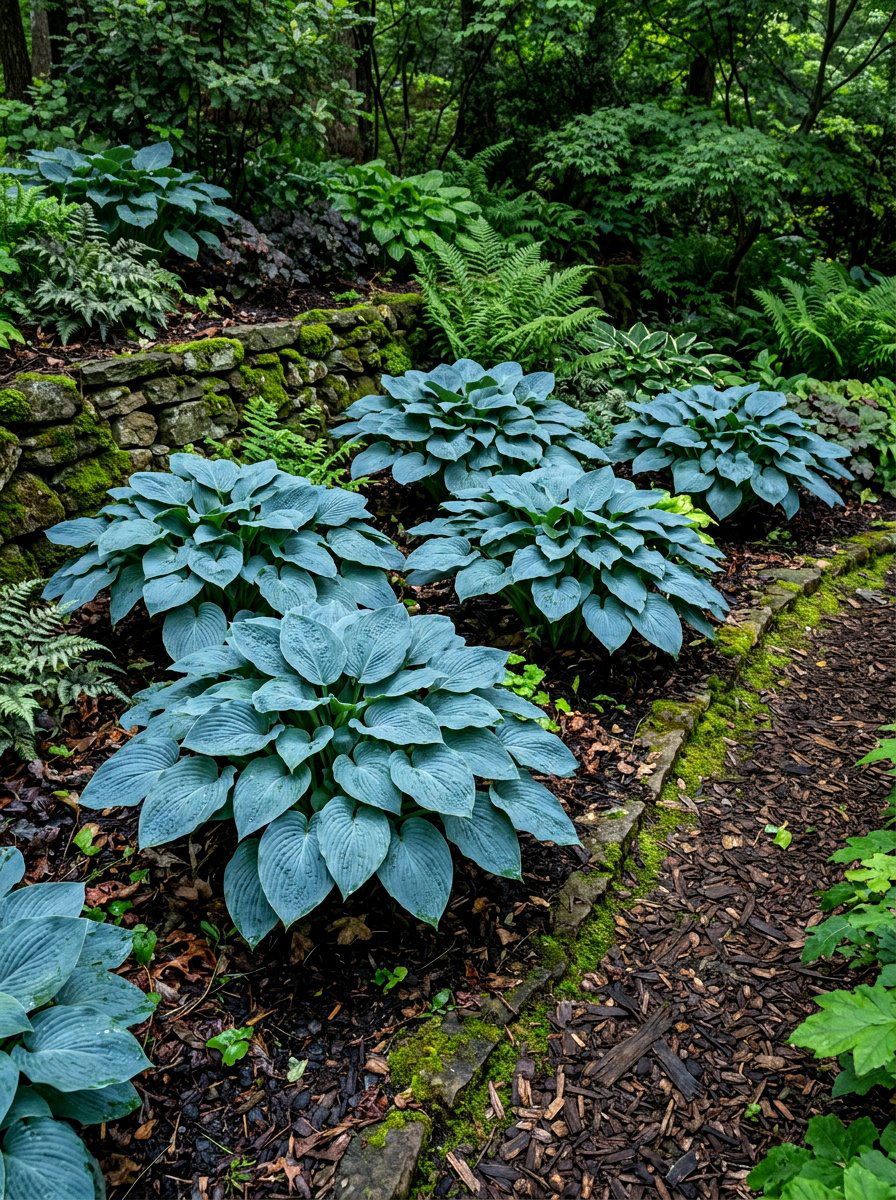
A blue hosta garden bed offers a cooling effect that is perfect for hot summer days. The unique waxy coating on the leaves of varieties like Halcyon gives them a dusty, powder-blue appearance that stands out against traditional green foliage. To maximize the impact, group several blue varieties together to create a sea of cool tones in a deeply shaded area. This look is particularly effective when placed near a sitting area where you can appreciate the subtle color shifts throughout the day. The thick leaves of most blue hostas are also naturally more resistant to pests, ensuring your border stays looking pristine. Pair them with silver-foliaged companions to enhance the ethereal, misty mood of the space for a professional landscape finish.
4. Giant hosta foundation planting
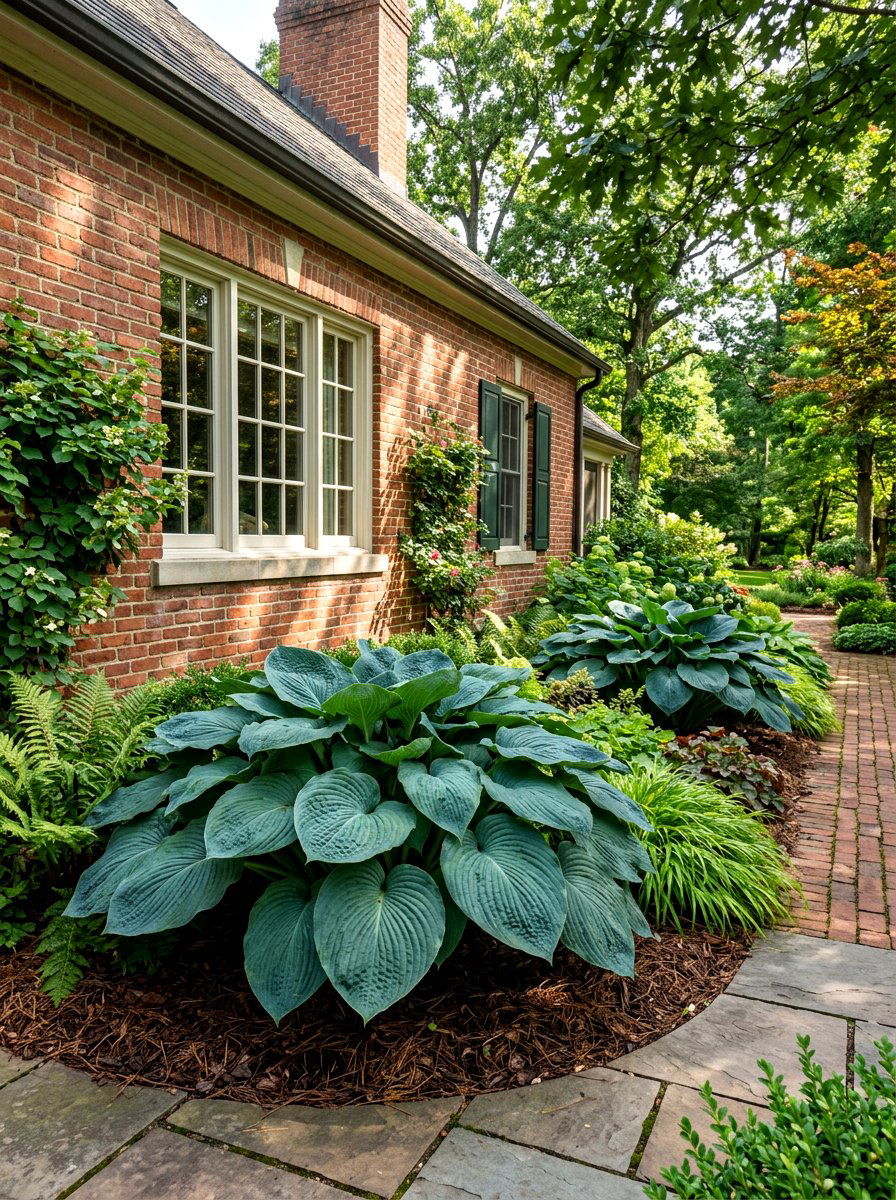
Using a giant hosta foundation planting is a bold strategy for large homes or expansive backyards. Varieties such as Empress Wu can reach massive proportions, acting more like a shrub than a typical perennial. When placed against the base of a house, these large-scale plants hide unsightly concrete and provide a lush, green backdrop for smaller plants. Their massive leaves create a sense of drama and permanence that smaller plants simply cannot achieve. This design works best in corners or under large windows where the plants have plenty of room to spread out without being crowded. Because of their size, they require more water but reward you with a magnificent architectural presence that defines the entire boundary of your home’s outdoor architecture.
5. Miniature hosta rock garden
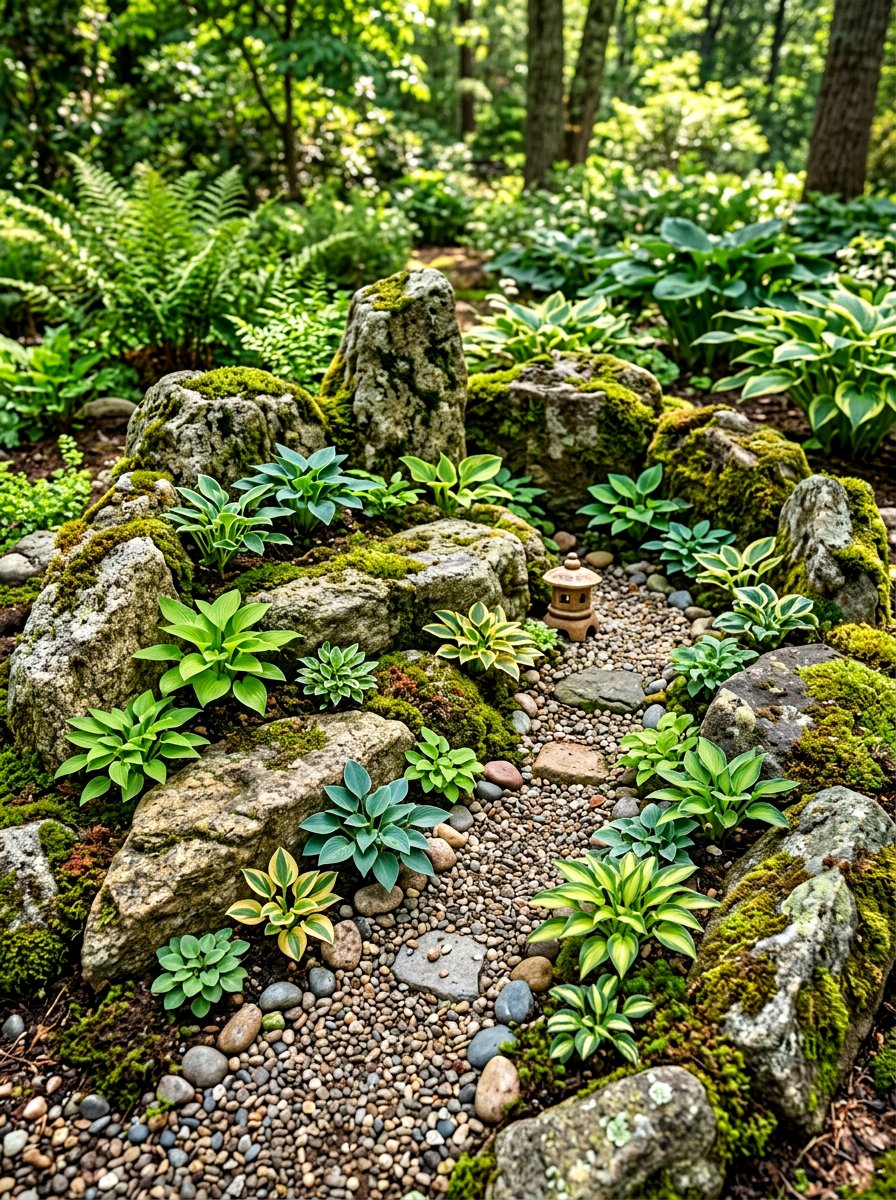
A miniature hosta rock garden is the perfect solution for small spaces or specialized garden features. These tiny plants, often no more than a few inches tall, thrive in the crevices between stones where larger plants might struggle to find a foothold. Using them in a border along a rocky outcrop or a stone wall adds a level of detail that draws visitors in for a closer look. Despite their small size, they often have the same intricate patterns and textures as their larger counterparts. This design allows you to showcase a variety of different leaf shapes in a compact area. It is especially useful for framing a small patio or adding interest to a container garden where space is at a premium.
6. Hosta and fern border
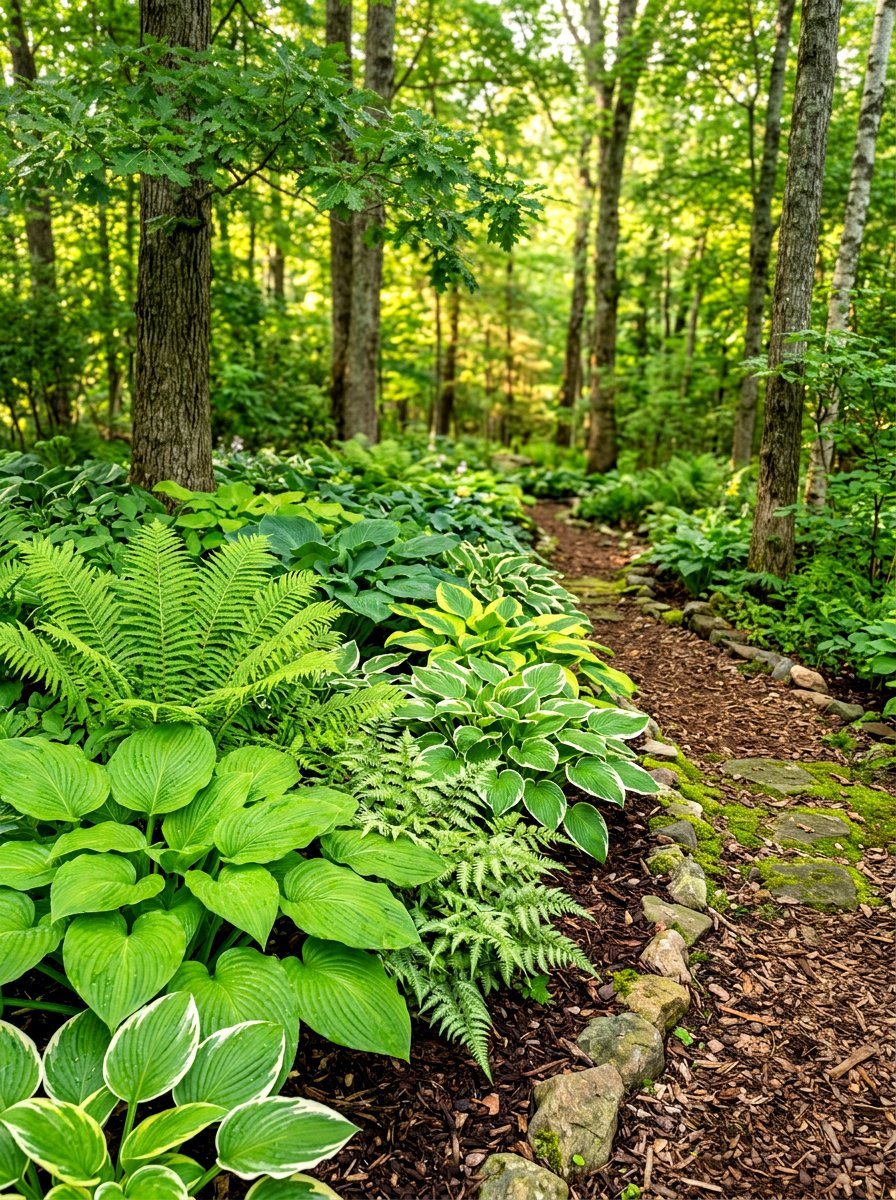
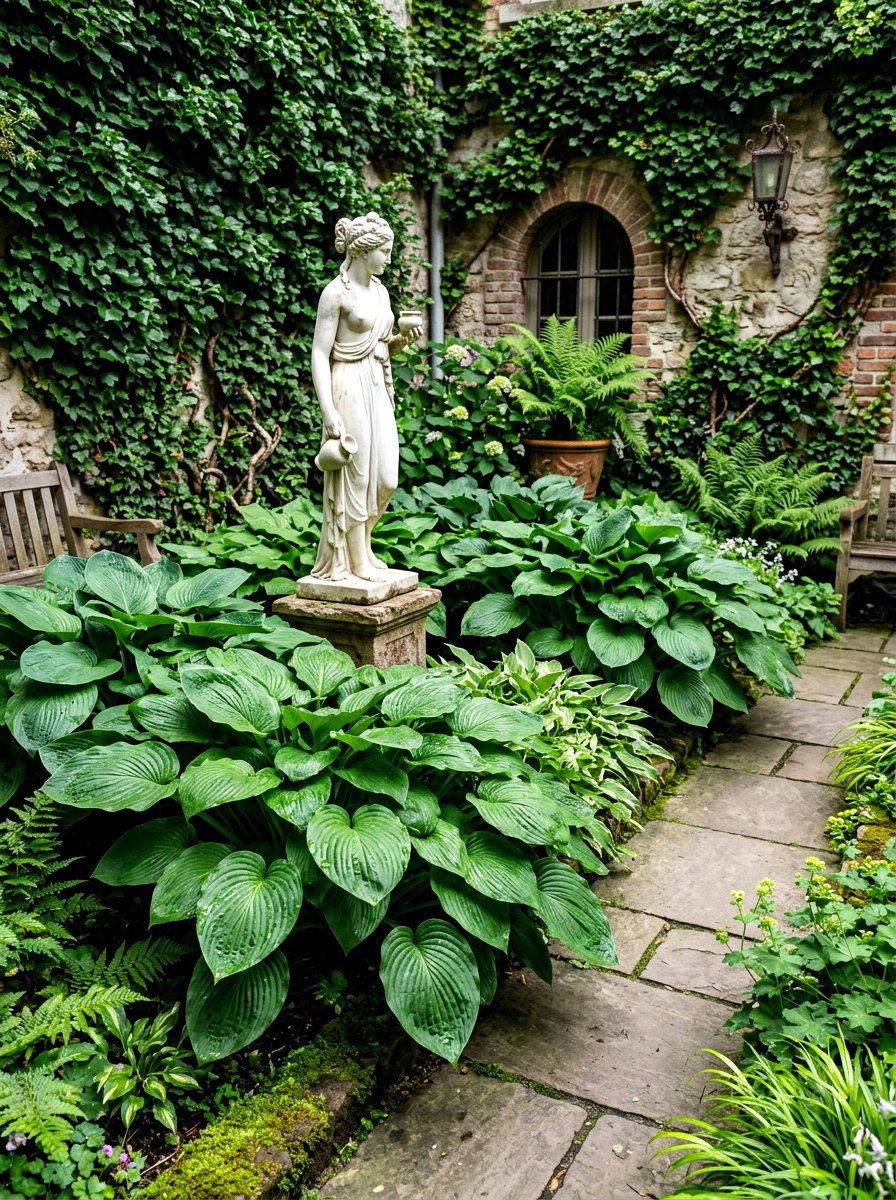
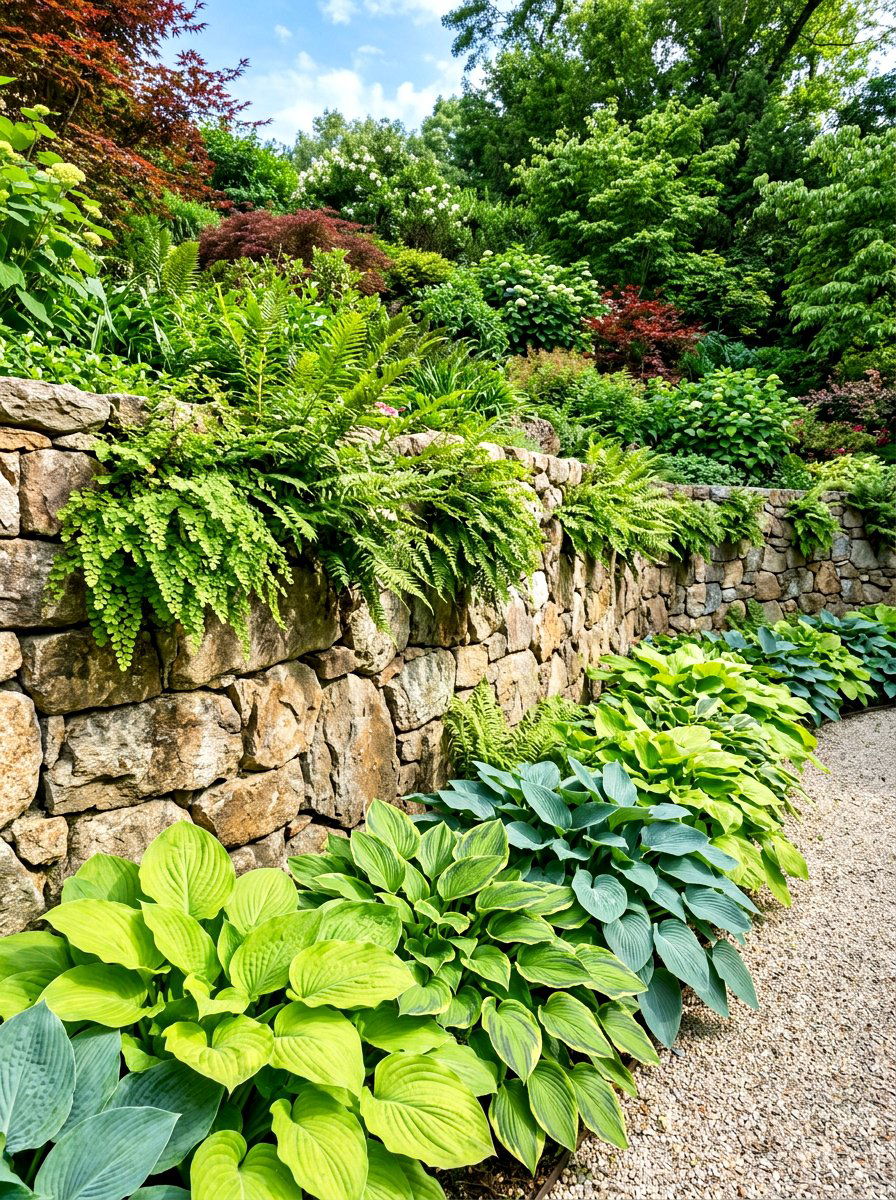
Creating a hosta and fern border combines two of the most popular shade-loving plants for a classic woodland aesthetic. The broad, solid leaves of the hosta provide a perfect contrast to the delicate, feathery fronds of the ferns. This pairing works beautifully because both plants enjoy the same moist, cool conditions found under a forest canopy. When arranged in a border, the ferns can be tucked behind the hostas to add height and an airy texture, or they can be intermingled for a more naturalized, wild look. This combination ensures that the garden remains visually interesting even when flowers are not in bloom. The different shades of green create a sophisticated, monochromatic palette that feels lush, calm, and incredibly well-established.
7. Hosta and heuchera mix
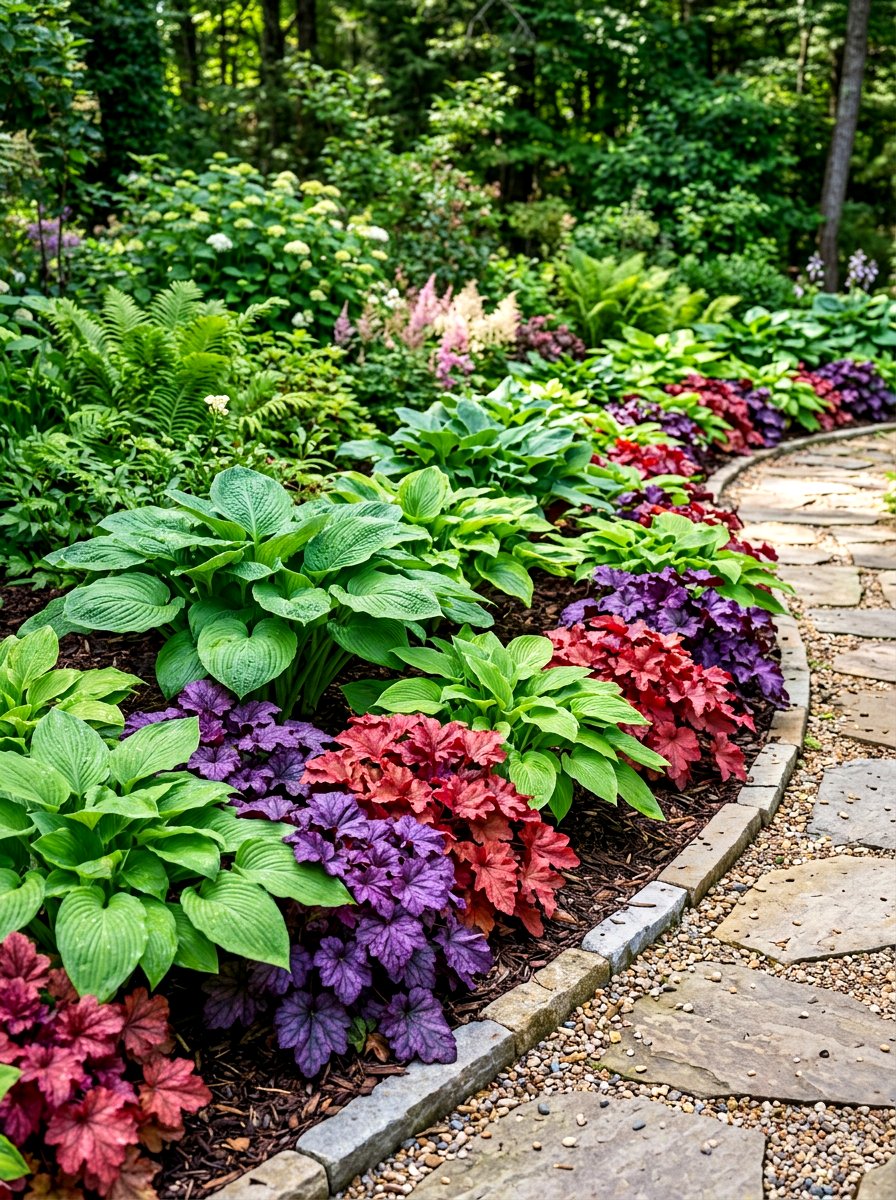
A hosta and heuchera mix is one of the best ways to introduce a wide spectrum of color into a shade border. While hostas bring various shades of green, blue, and gold, heucheras — also known as coral bells — offer vibrant purples, reds, and oranges. By alternating these two plants along a border, you create a tapestry of color that remains consistent from spring through fall. The mounded growth habit of both plants makes them ideal partners, as they share a similar scale and shape. This design is perfect for front-of-the-border applications where the varied leaf textures can be seen clearly. The interplay between the glossy hosta leaves and the matte, colorful heuchera foliage adds a professional touch to any garden.
8. Wooded path hosta lining
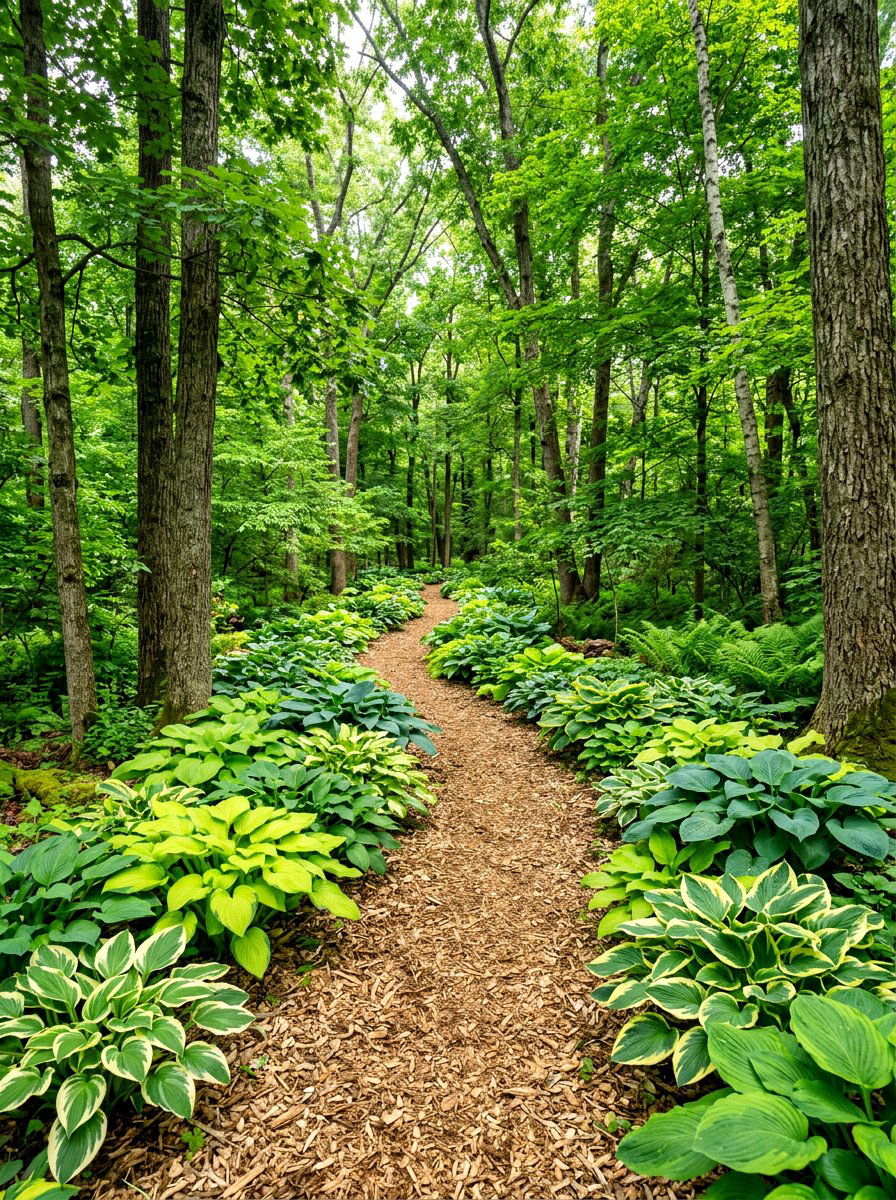
Installing a wooded path hosta lining transforms a simple walk through the trees into a curated experience. In a woodland setting, the dappled sunlight is ideal for hostas, allowing them to grow to their full potential without the risk of leaf scorch. Lining the path with hostas helps to define the walking area, preventing guests from wandering into sensitive areas of the garden. The low-growing foliage hides the messy bases of trees and creates a transition between the wild forest and the more maintained areas of your property. This approach works best when using a variety of different hostas to mimic the natural diversity of a forest floor. It creates a lush, green tunnel effect that feels private and incredibly serene.
9. Hosta under tree ring
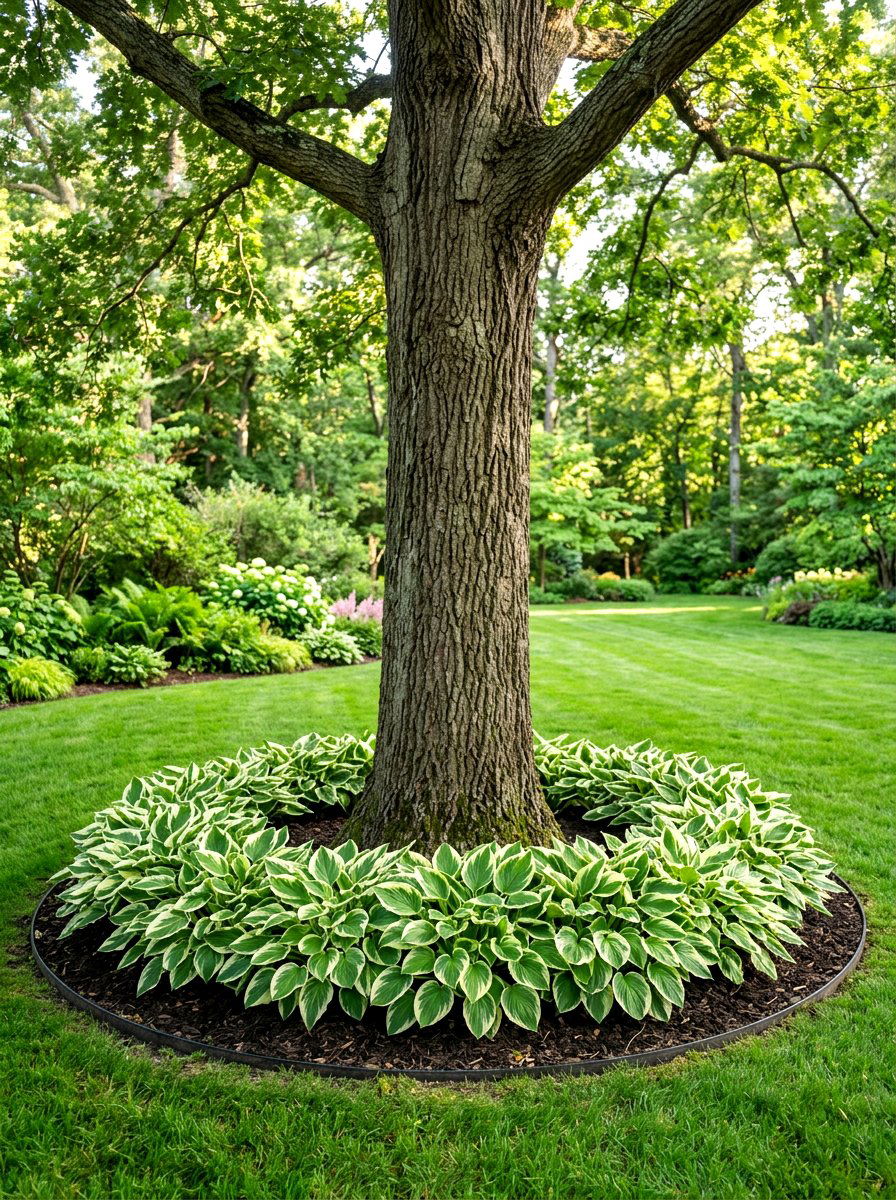
Creating a hosta under tree ring is a practical and beautiful way to landscape around the base of large deciduous trees. Grass often struggles to grow in the deep shade and competitive root systems of big trees, but hostas are remarkably resilient in these conditions. By planting a circular border of hostas around the trunk, you create a clean, intentional look that solves a common lawn problem. This design also protects the tree trunk from mower damage by providing a wide buffer zone. Choose varieties with different leaf sizes to create layers within the ring, or keep it simple with a single, uniform variety for a formal look. The result is a lush, self-sustaining island of greenery that improves the tree's health.
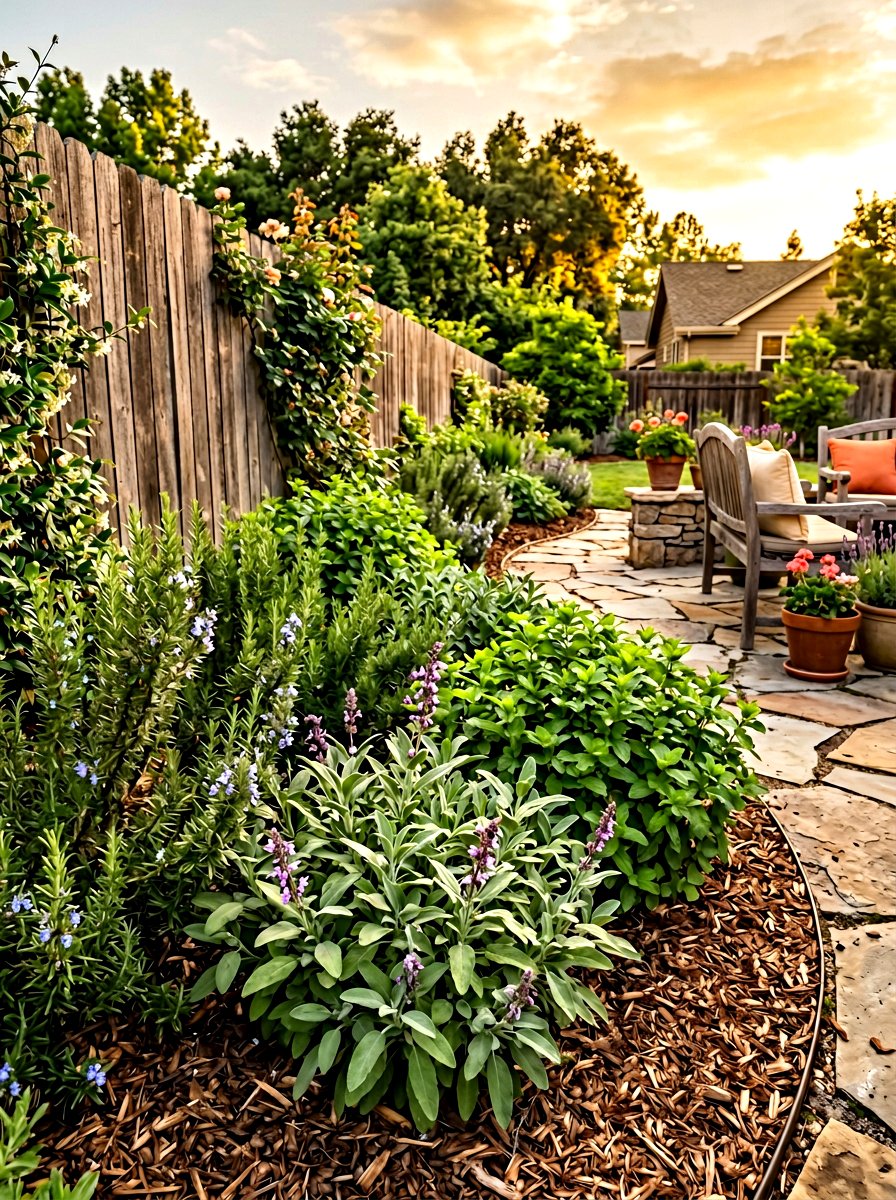
10. White margin hosta border
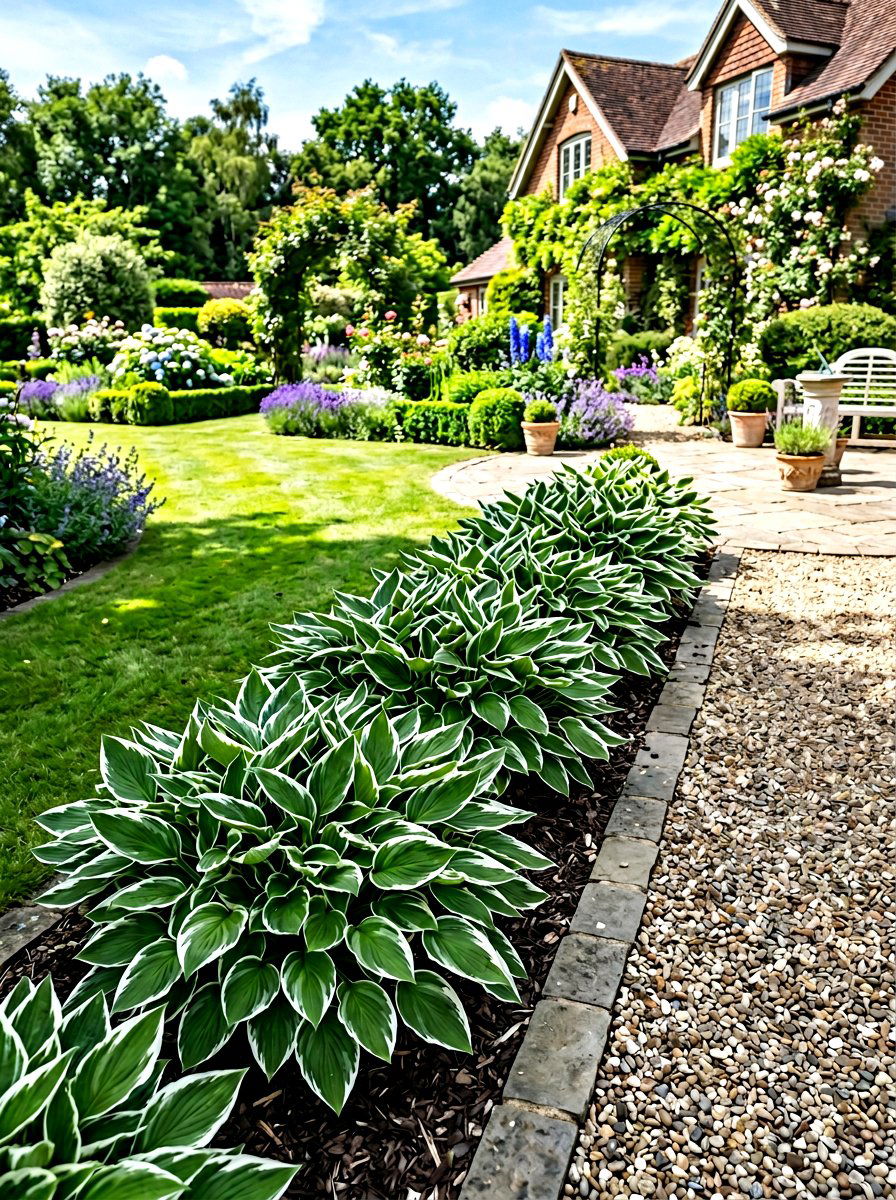
A white margin hosta border is a classic design choice that adds a crisp, clean look to any landscape. Varieties with white edges, such as Patriot or Francee, are incredibly popular because they pop against dark mulch or green lawns. When planted in a long, continuous border, they create a bright "glow" that is especially noticeable during the twilight hours. This type of border is excellent for framing a formal garden or adding a touch of elegance to a suburban backyard. The white variegation helps to visually expand small, dark spaces, making the garden feel larger and more open. This design choice is timeless and works well with almost any architectural style, from traditional colonial to modern minimalist homes.
11. Chartreuse hosta bright accent
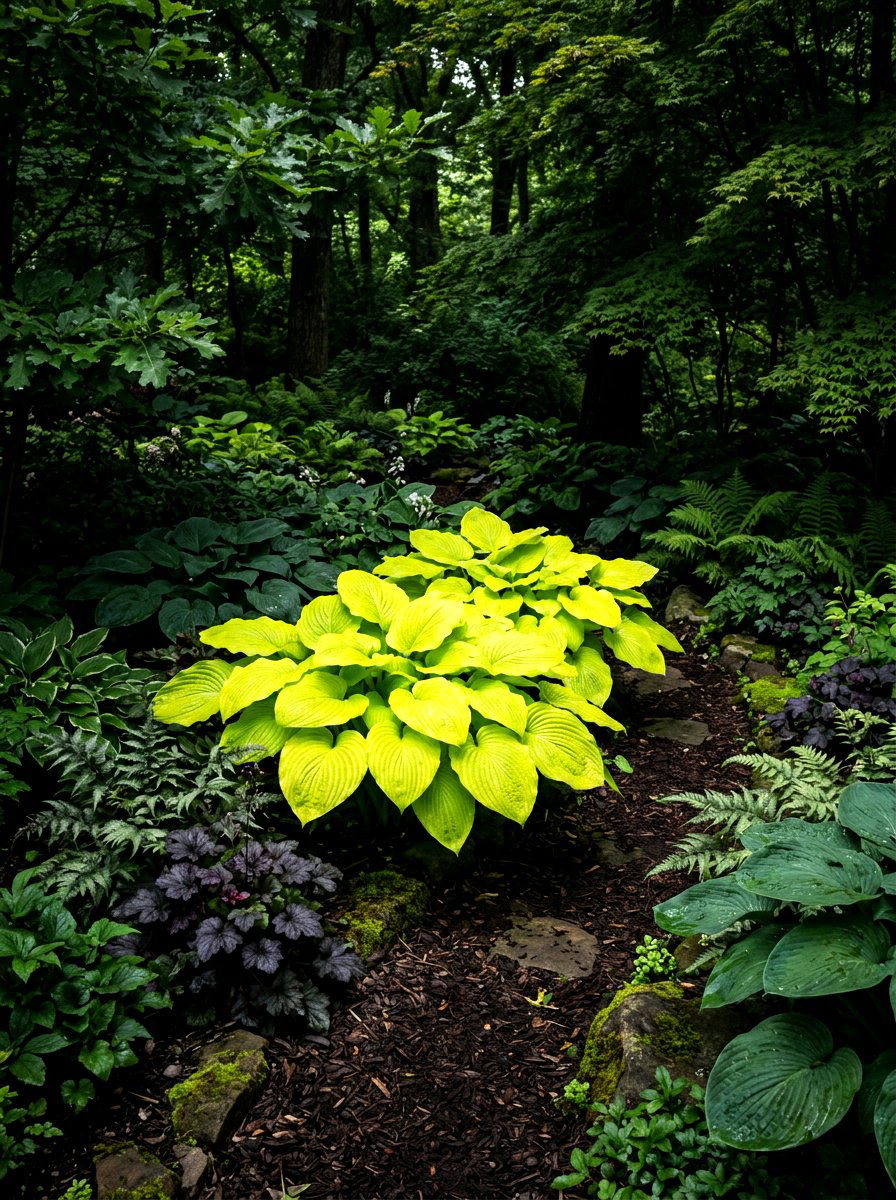
Using a chartreuse hosta bright accent can completely change the energy of a shady border. Plants with neon-green or golden foliage, like Sum and Substance, act as a focal point that draws the eye immediately. In a sea of dark green shade plants, these bright varieties provide a much-needed contrast that prevents the garden from looking too heavy or somber. When used as a border, they create a sunny, cheerful atmosphere even on cloudy days. This design is particularly effective when placed against dark-colored fences or brick walls, where the bright leaves can truly shine. Pairing them with purple-foliaged companions can further enhance the color contrast, making your garden border a vibrant and energetic part of your outdoor living area.
12. Hosta and astilbe pairing
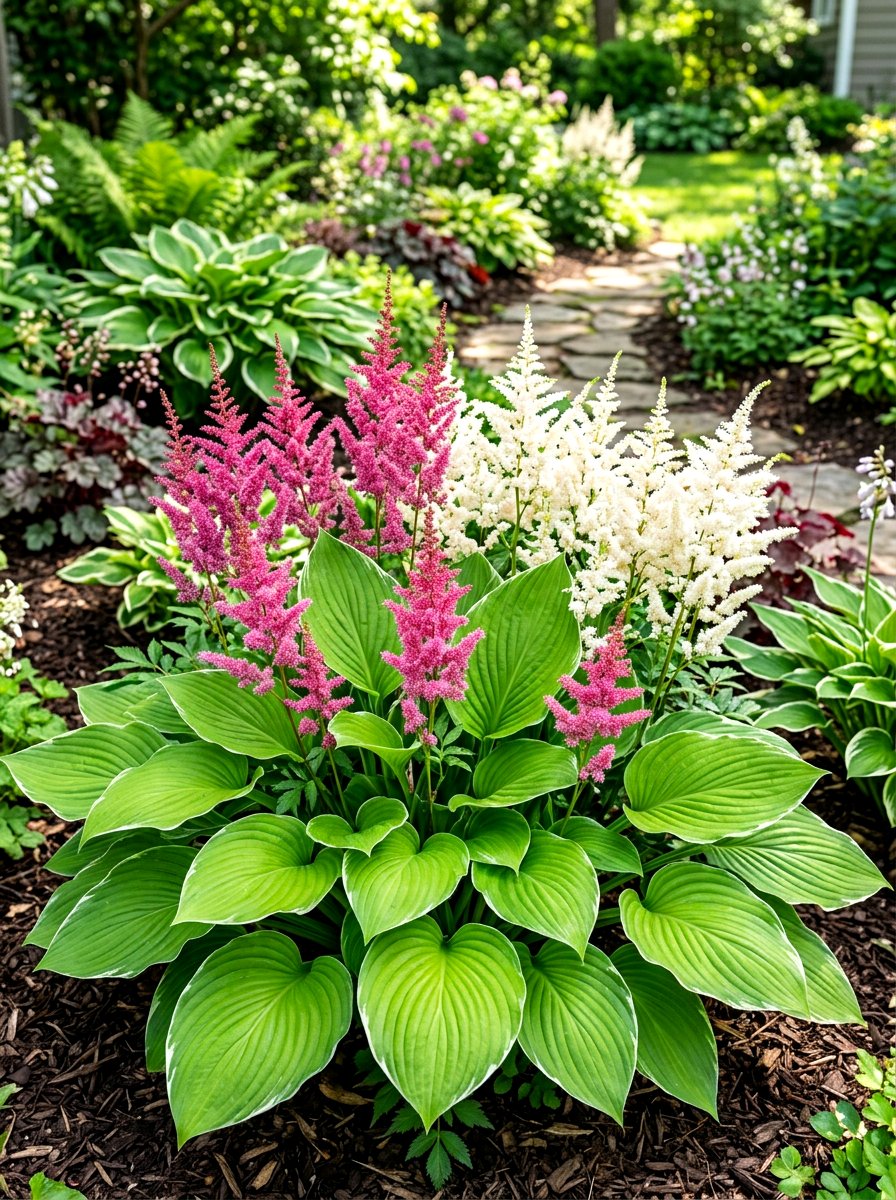
A hosta and astilbe pairing is a favorite among gardeners who want to add both vertical interest and floral beauty to their borders. While hostas are grown primarily for their leaves, astilbes provide tall, feathery plumes of flowers in shades of pink, white, and red. The lacy foliage of the astilbe sits beautifully next to the broad, heavy leaves of the hosta, creating a sophisticated texture play. Because both plants love moist soil and shade, they thrive together with very little extra effort. Planting them in alternating groups along a border creates a rhythmic pattern of color and form that lasts all season long. This combination is perfect for areas near water features or damp spots where other plants might struggle.
13. Slug resistant hosta garden
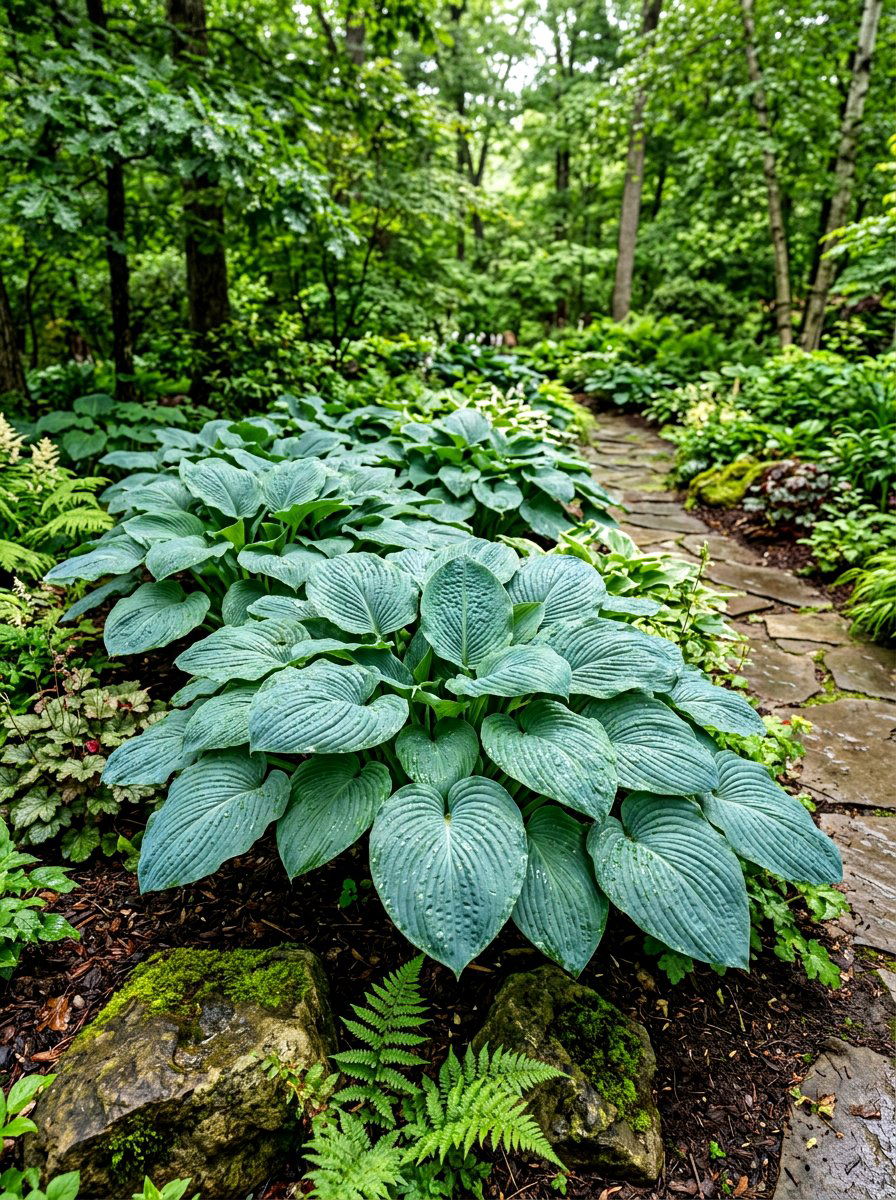
Planning a slug resistant hosta garden is essential if you live in a damp climate where pests are a common problem. Many gardeners avoid hostas because of slug damage, but by choosing varieties with thick, puckered, or "corrugated" leaves, you can create a beautiful border that stays hole-free. Varieties like Abiqua Drinking Gourd or Sieboldiana have a tough texture that slugs find difficult to eat. When you use these varieties as your primary border plants, you reduce the need for chemical baits and keep your garden looking healthy and lush. This design focus ensures that your investment in landscaping remains beautiful throughout the entire growing season. The interesting, textured leaves add an extra layer of visual depth to your garden beds.
14. Hosta driveway border
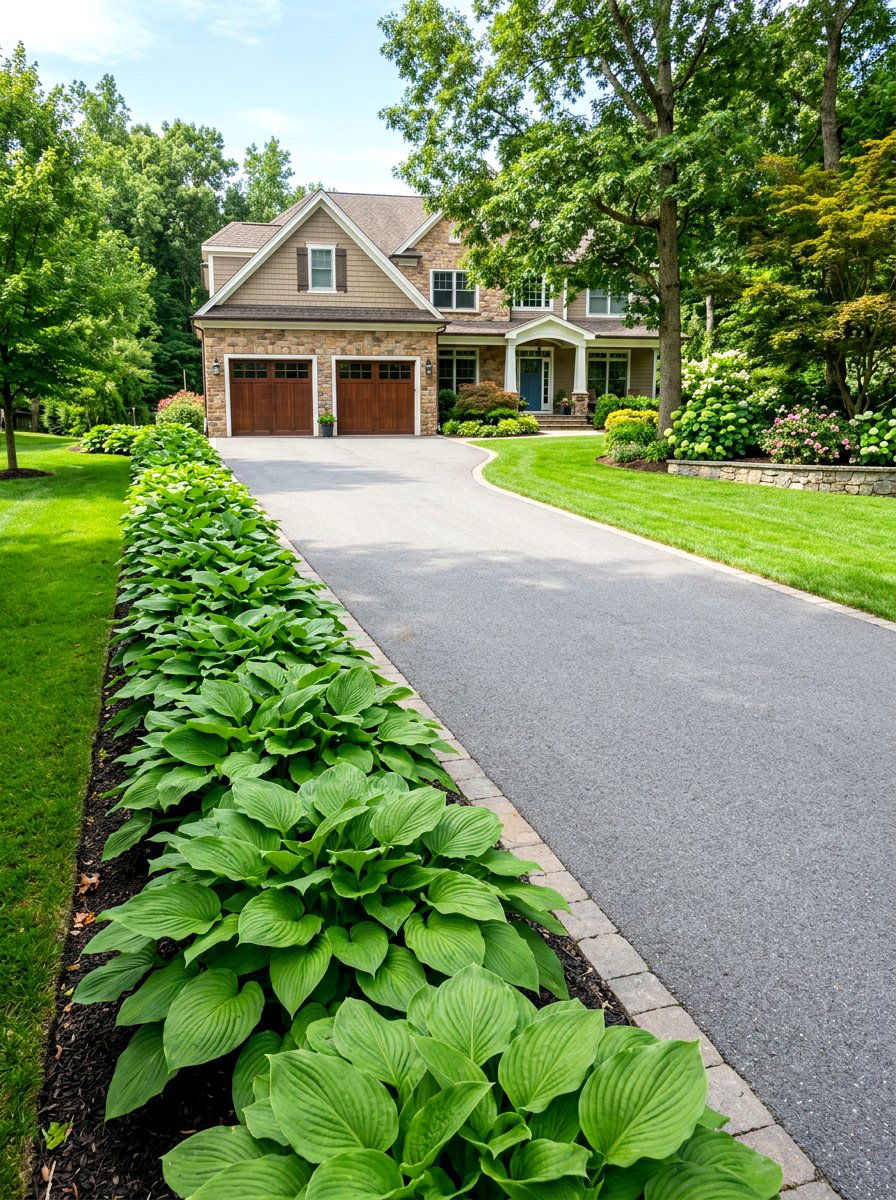
A hosta driveway border is an excellent way to improve the curb appeal of your home. Driveways are often harsh, utilitarian spaces, but a soft border of hostas can make the entrance to your property feel much more welcoming. Because hostas are low-growing, they won't obstruct your view when backing out, making them a safe choice for edging. They are also remarkably salt-tolerant in some cases, which is helpful in colder climates where de-icing is necessary. This design creates a consistent look that ties your front yard together and provides a clear transition between the pavement and the rest of the landscape. Choose hardy, medium-sized varieties that can withstand the occasional stray tire or footstep for a long-lasting, durable border.

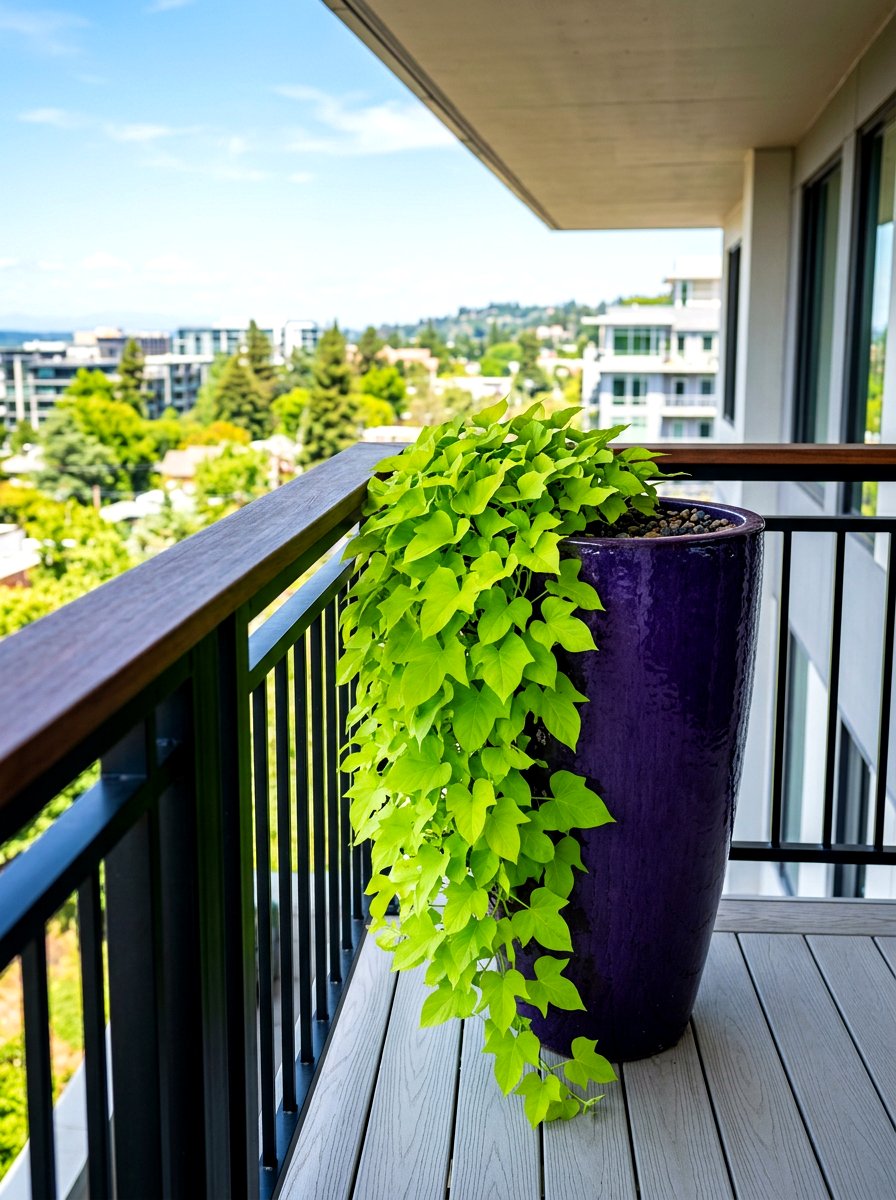
15. Potted hosta porch edge
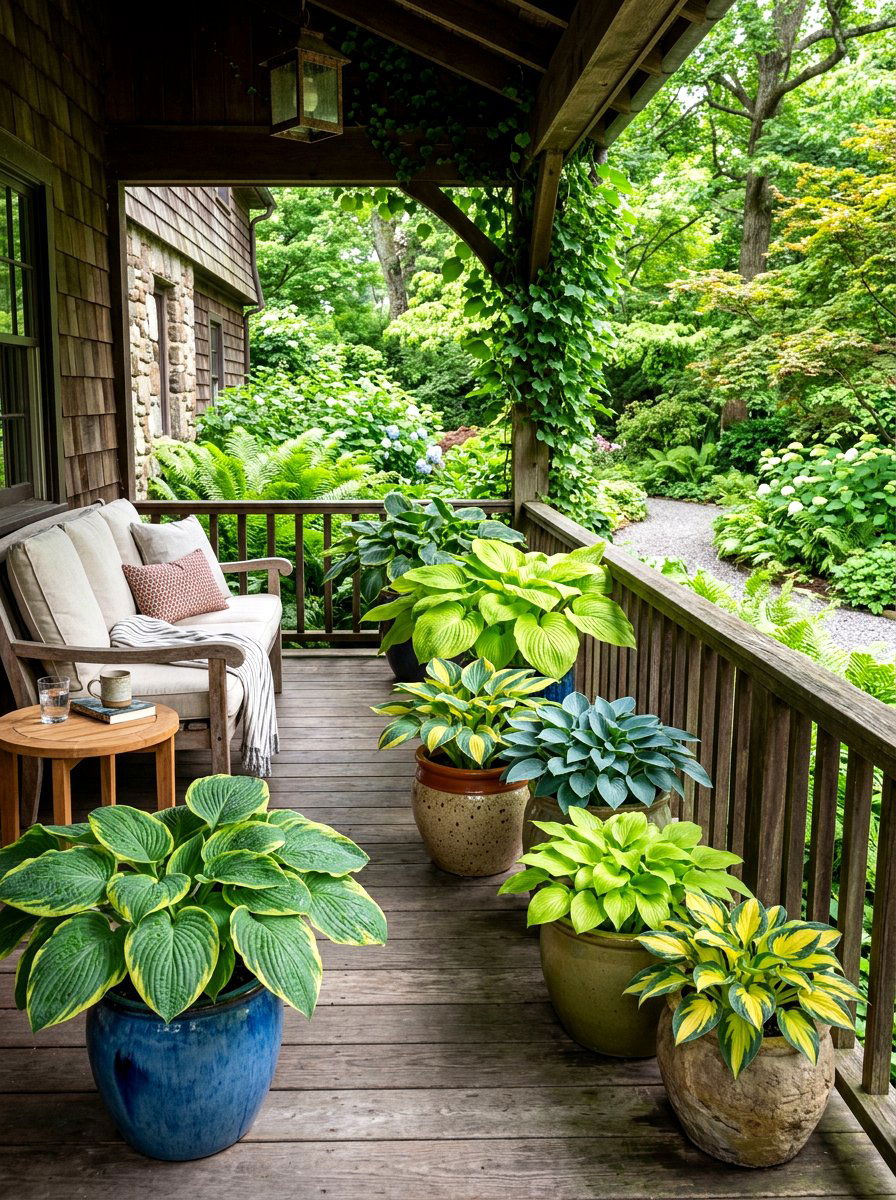
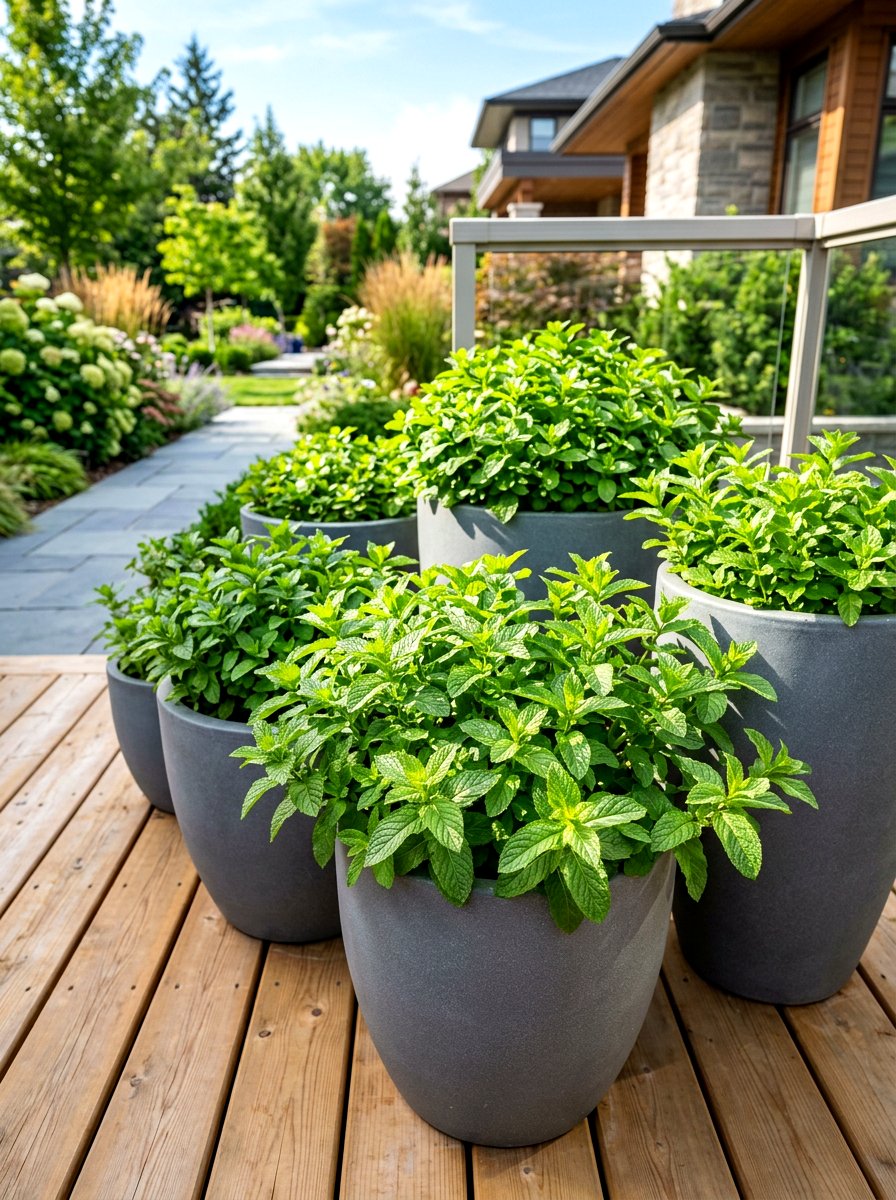
For those with limited ground space, a potted hosta porch edge offers a flexible way to create a lush border. Lining the edge of a shaded porch or deck with containers filled with different hosta varieties creates a living railing that feels private and cozy. Containers allow you to control the soil quality and drainage perfectly, which can lead to even larger and more vibrant leaves than ground planting. This design also allows you to move the plants around to refresh the look or protect them from extreme weather. Using decorative pots that match your home’s decor can further enhance the aesthetic. This approach is ideal for urban dwellers or anyone looking to add greenery to their hardscaped outdoor living areas.
16. Tiered hosta retaining wall
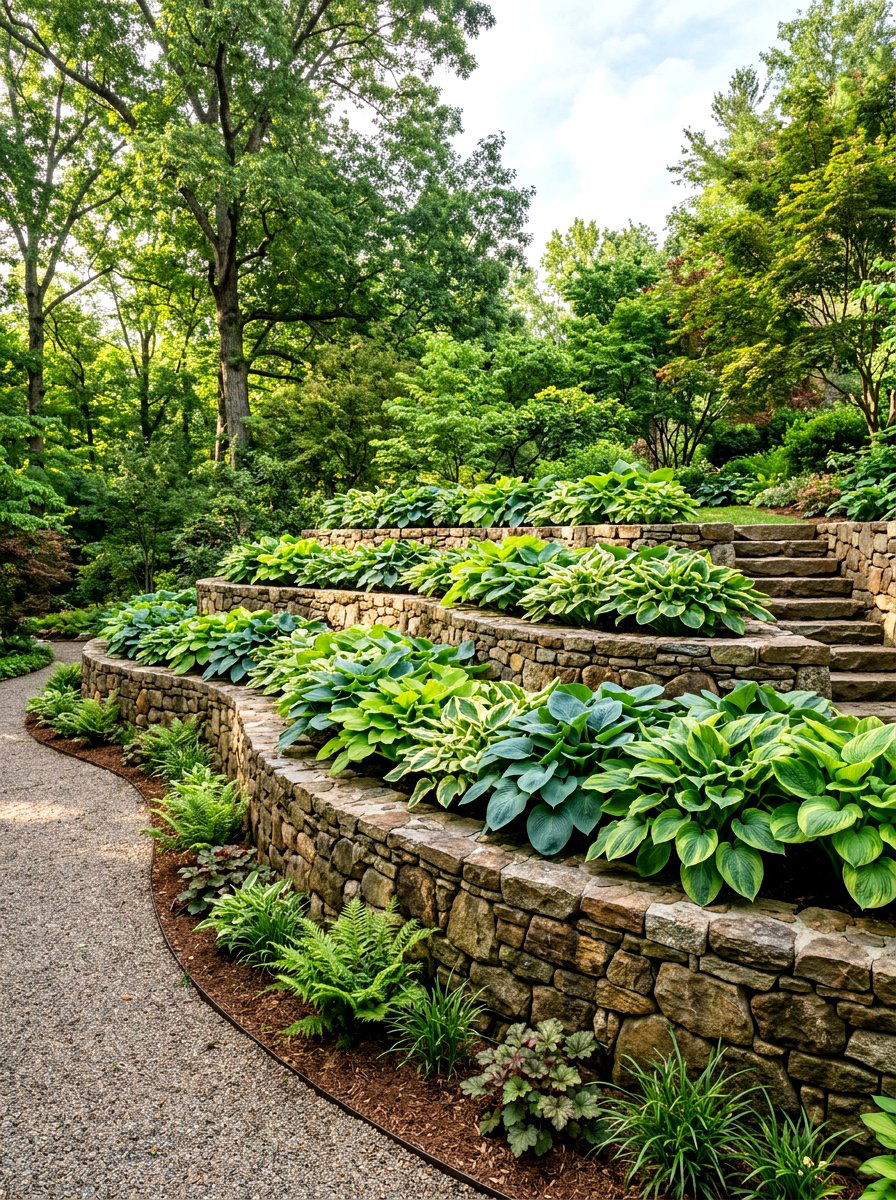
A tiered hosta retaining wall turns a functional slope into a cascading waterfall of foliage. Retaining walls can often look stark and industrial, but planting hostas along the different levels softens the stone and integrates the structure into the garden. As the hostas grow, their large leaves spill over the edges of the wall, creating a lush, tiered effect that hides the hard lines of the masonry. This design is perfect for dealing with changes in elevation while adding a massive amount of greenery to your yard. You can use different colors on each tier — for example, blue hostas on top and variegated ones on the bottom — to create a sense of depth and intentional design that highlights the unique architecture of your landscape.
17. Hosta and hydrangea border
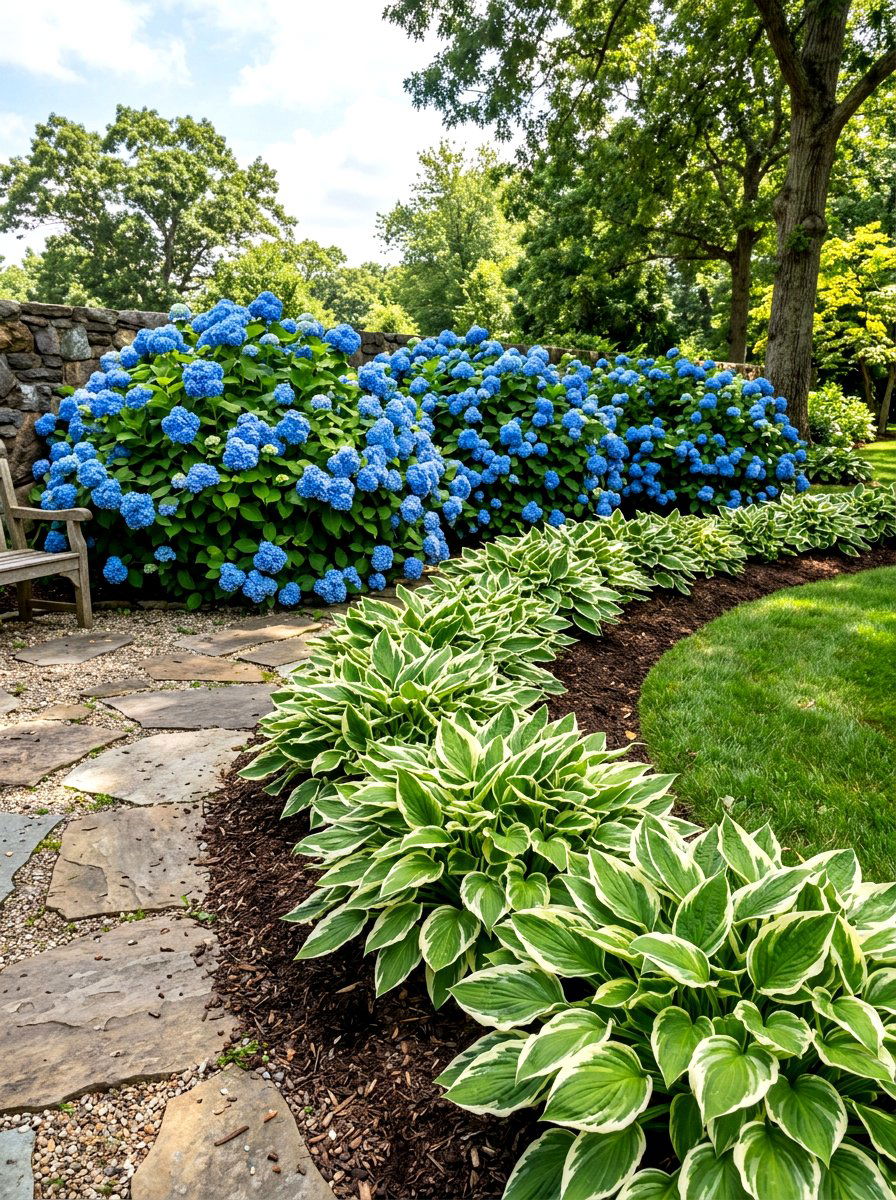
The hosta and hydrangea border is a classic combination that exudes southern charm and elegance. Hydrangeas provide large, showy blooms and height, while hostas fill in the space around their feet with beautiful foliage. This multi-layered approach creates a dense wall of greenery and flowers that can act as a natural screen or a beautiful backdrop for a patio. Since both plants prefer similar lighting and water conditions, they are natural companions. The large, round flowers of the hydrangea look stunning when paired with the various shapes of hosta leaves. This design choice is perfect for creating a lush, romantic garden space that feels like a private sanctuary. It is a reliable way to ensure your border has both color and structure.
18. Sun tolerant hosta bed
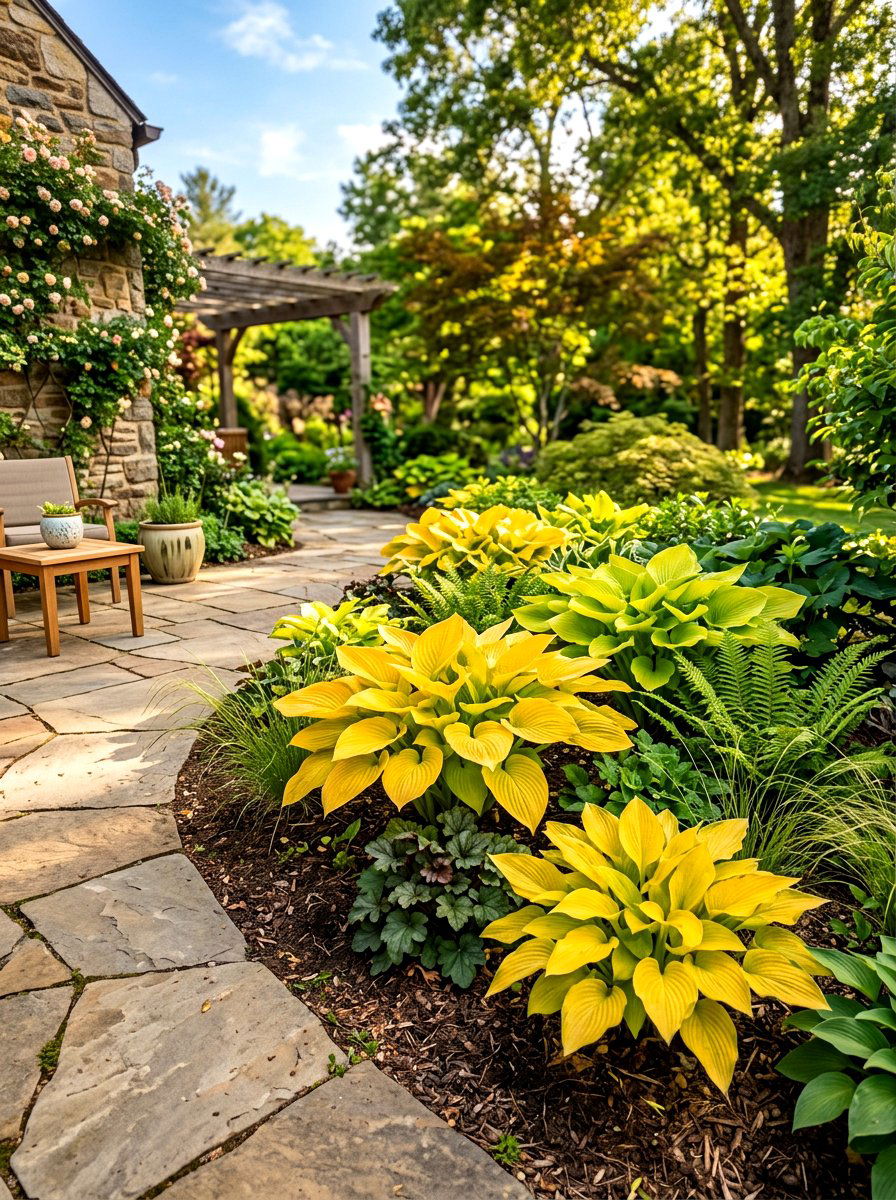
Creating a sun tolerant hosta bed allows you to bring the beauty of these plants into areas that receive more light than a typical shade garden. While most hostas prefer full shade, certain varieties like Guacamole or Sum and Substance can handle several hours of direct sun, especially in cooler climates. These varieties often have lighter, more golden leaves that actually look better with a bit of sunlight to bring out their color. When used as a border in a partially sunny area, they provide a consistent, low-maintenance alternative to sun-loving annuals. This design is perfect for transitioning from a shady area of the yard into a sunnier space, providing a cohesive look that ties the different zones of your landscape together beautifully.
19. Hosta and boxwood hedge
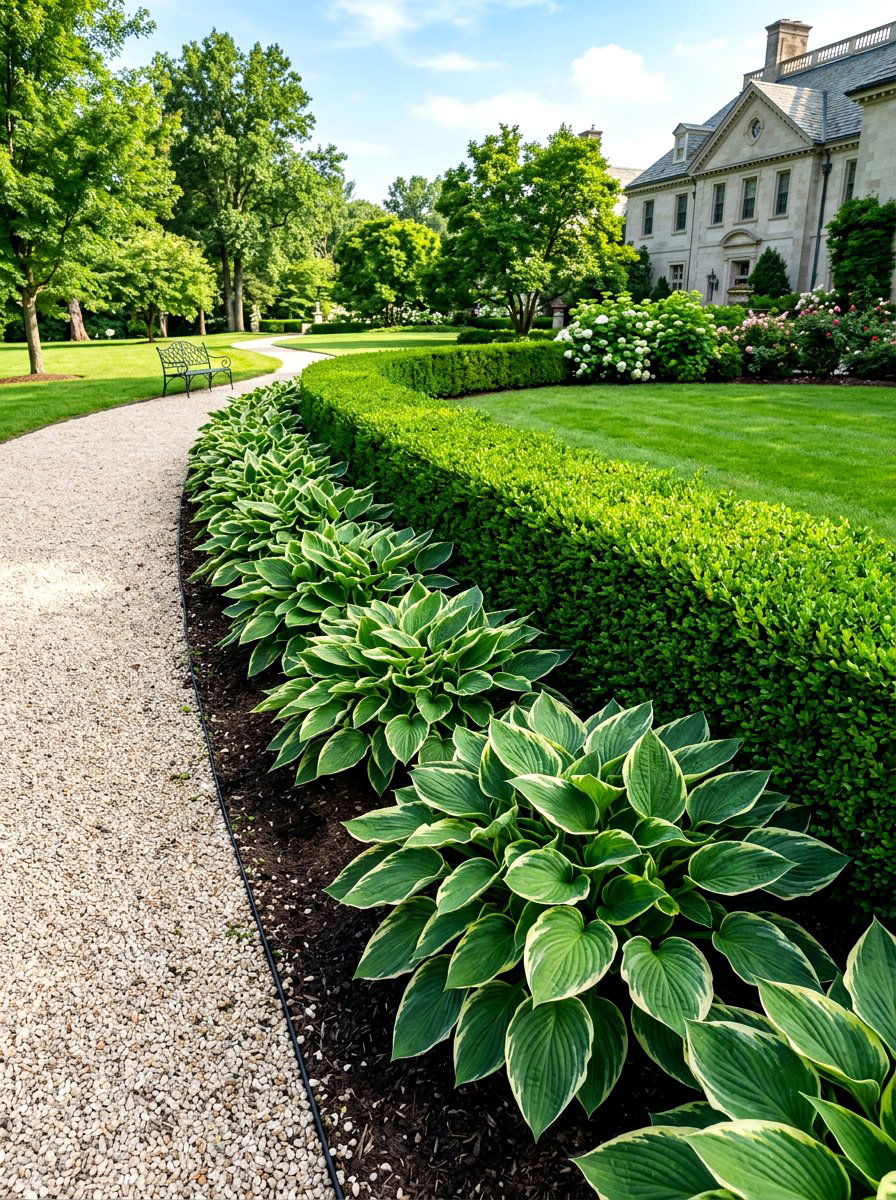
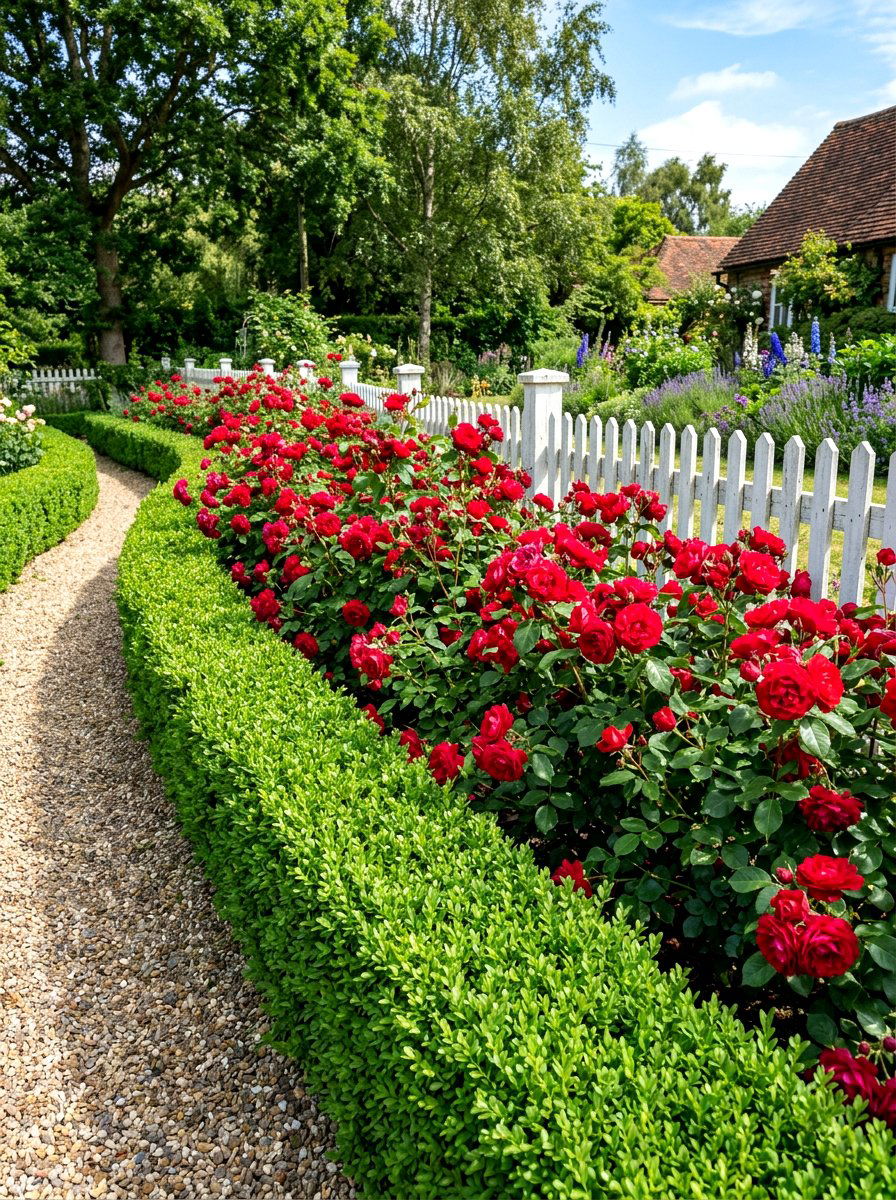
A hosta and boxwood hedge combines formal structure with soft, organic textures for a sophisticated garden border. Boxwoods provide a year-round green framework that keeps the garden looking tidy even in the winter, while hostas add seasonal interest and variety. Planting hostas in front of a low boxwood hedge creates a layered look that is common in high-end landscape design. The contrasting leaf shapes — tiny and round for the boxwood, large and broad for the hosta — make each plant stand out more clearly. This design is excellent for framing an entryway or defining the edge of a formal patio. It provides a clean, polished appearance that requires relatively little maintenance once the plants are established in their specific locations.
20. Perennial hosta cottage garden
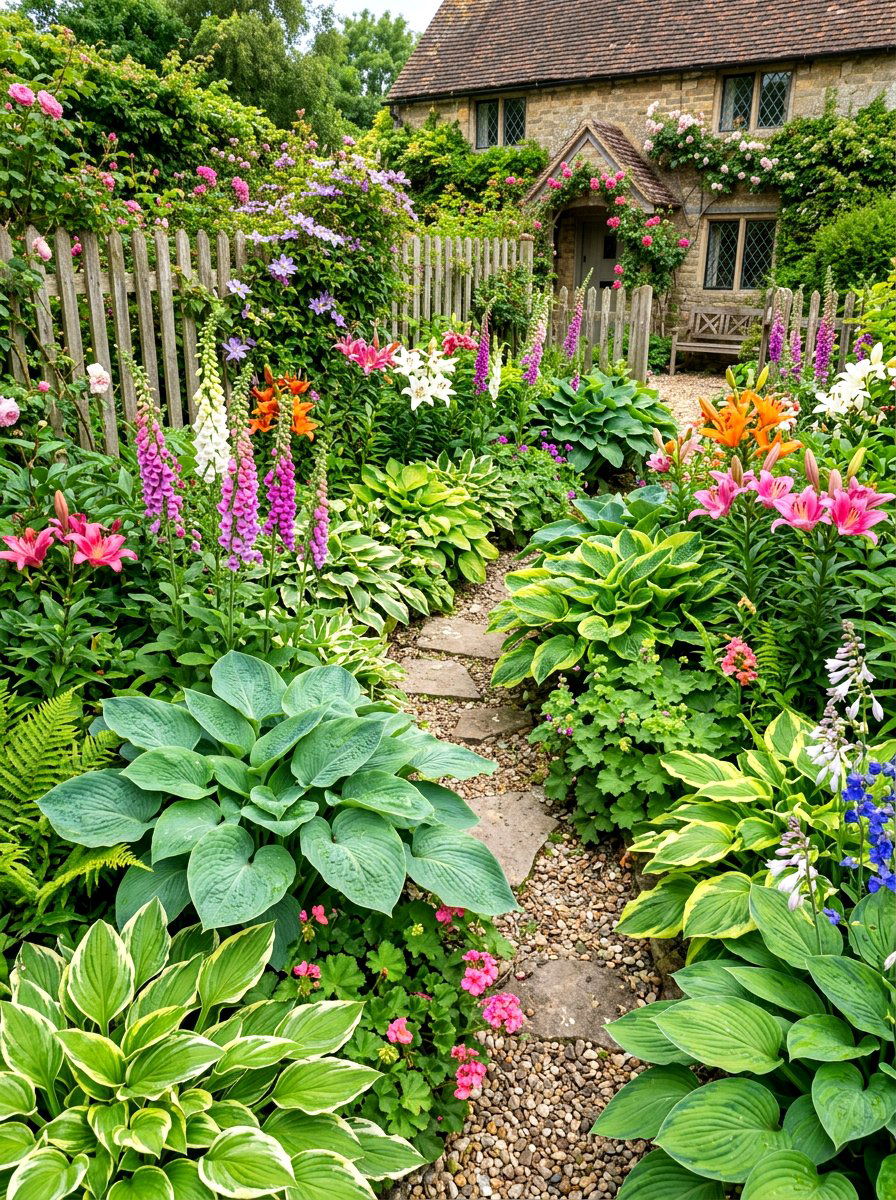
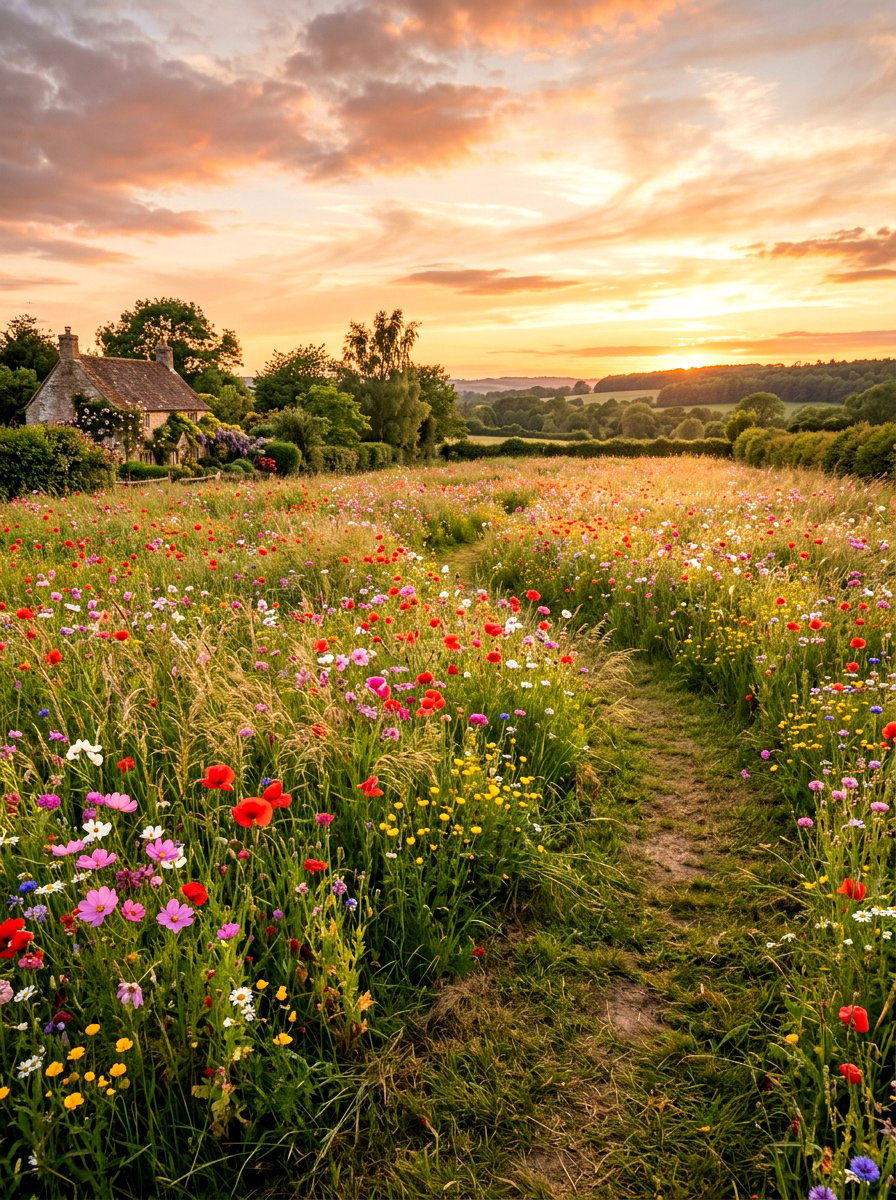
In a perennial hosta cottage garden, the goal is to create a relaxed, overflowing border that feels natural and unforced. Hostas are the perfect "filler" plants for this style, as they can grow in between taller lilies, roses, and foxgloves. Their large leaves help to ground the more chaotic, airy flowers of a traditional cottage garden. By using a mix of many different hosta varieties, you contribute to the diverse, tapestry-like feel of the space. This design is all about abundance and variety, so don't be afraid to pack the plants in closely. The result is a lush, romantic border that changes throughout the season and provides a habitat for various pollinators while keeping the ground covered and the soil cool.
21. Hosta ground cover border
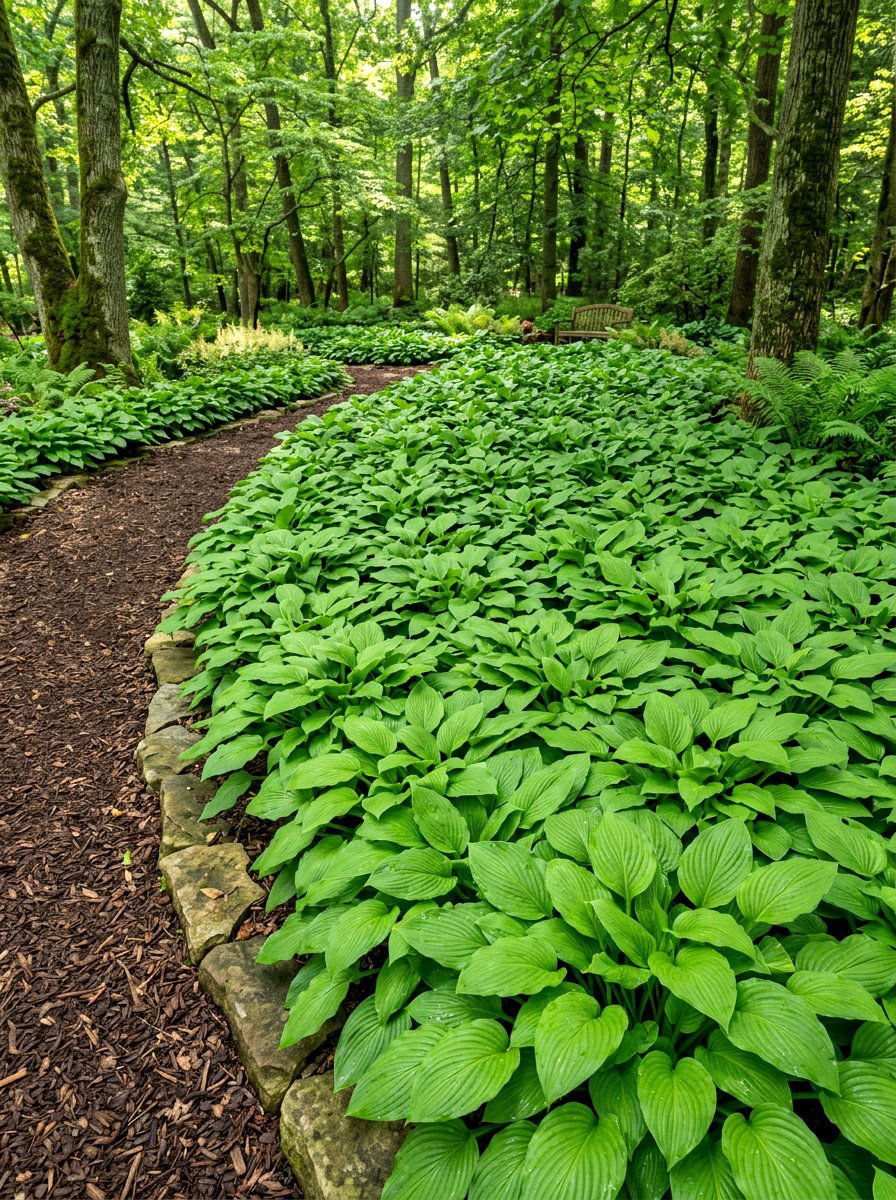
A hosta ground cover border is a highly functional way to manage large areas where grass won't grow. By mass-planting a single, vigorous hosta variety, you create a dense carpet of leaves that chokes out weeds and stabilizes the soil. This approach is much more visually appealing than traditional mulch and requires far less maintenance over time. When used along the edge of a property or a large garden bed, it creates a sense of scale and unity. The solid green or blue varieties work best for this purpose, as they provide a calm, consistent background for the rest of your landscaping features. This design is both practical and beautiful, offering a lush solution for difficult gardening spots in your backyard.
22. Fragrant hosta walkway
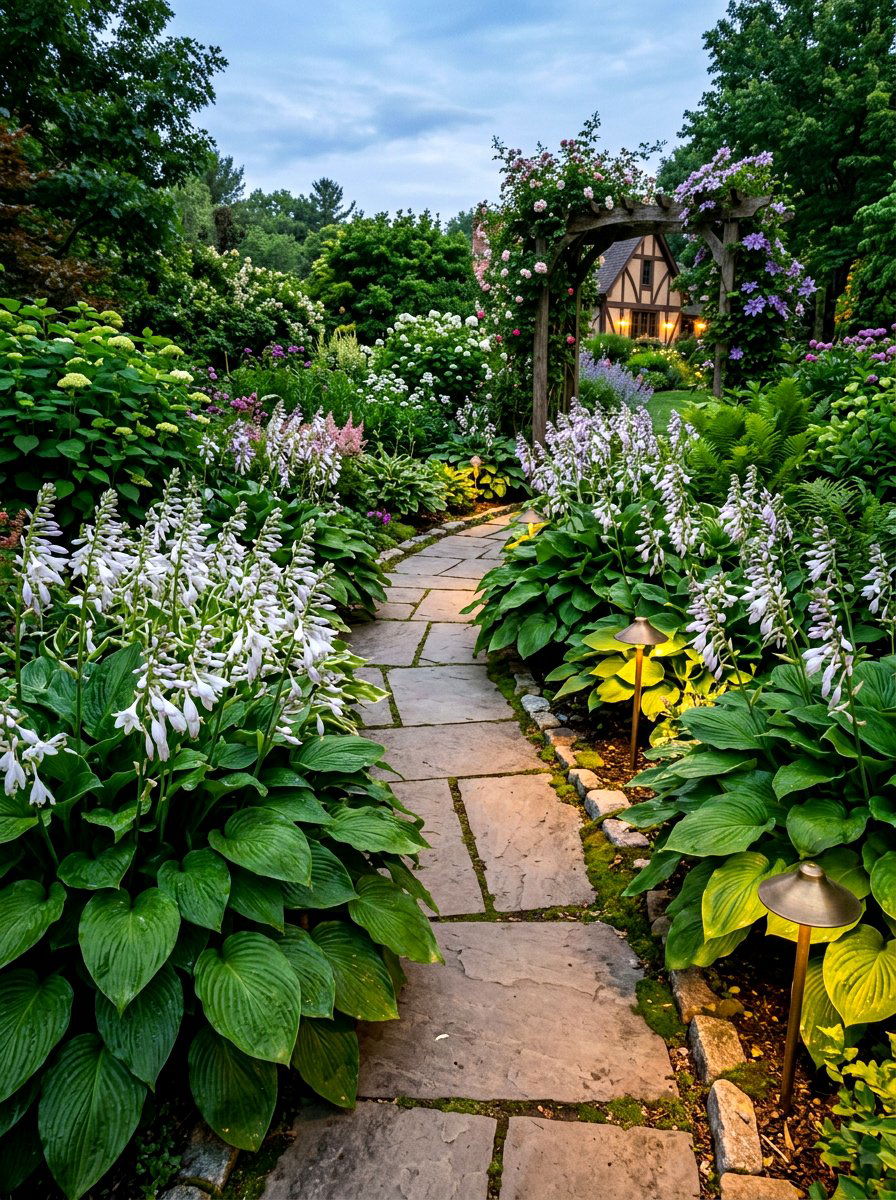
Designing a fragrant hosta walkway adds an extra sensory dimension to your garden. Many people don't realize that some hostas, particularly those with Hosta plantaginea heritage, have large, white flowers that produce a sweet, lily-like scent in late summer. Planting these varieties along a path ensures that every time you walk by, you are greeted with a pleasant aroma. This is a wonderful way to enhance the evening experience of your garden, as the fragrance is often strongest after the sun goes down. The large, glossy green leaves of these varieties also provide a clean, healthy look throughout the season. This design choice combines visual beauty with a delightful scent, making your garden border a truly memorable part of your home.
23. Hosta and Japanese forest grass
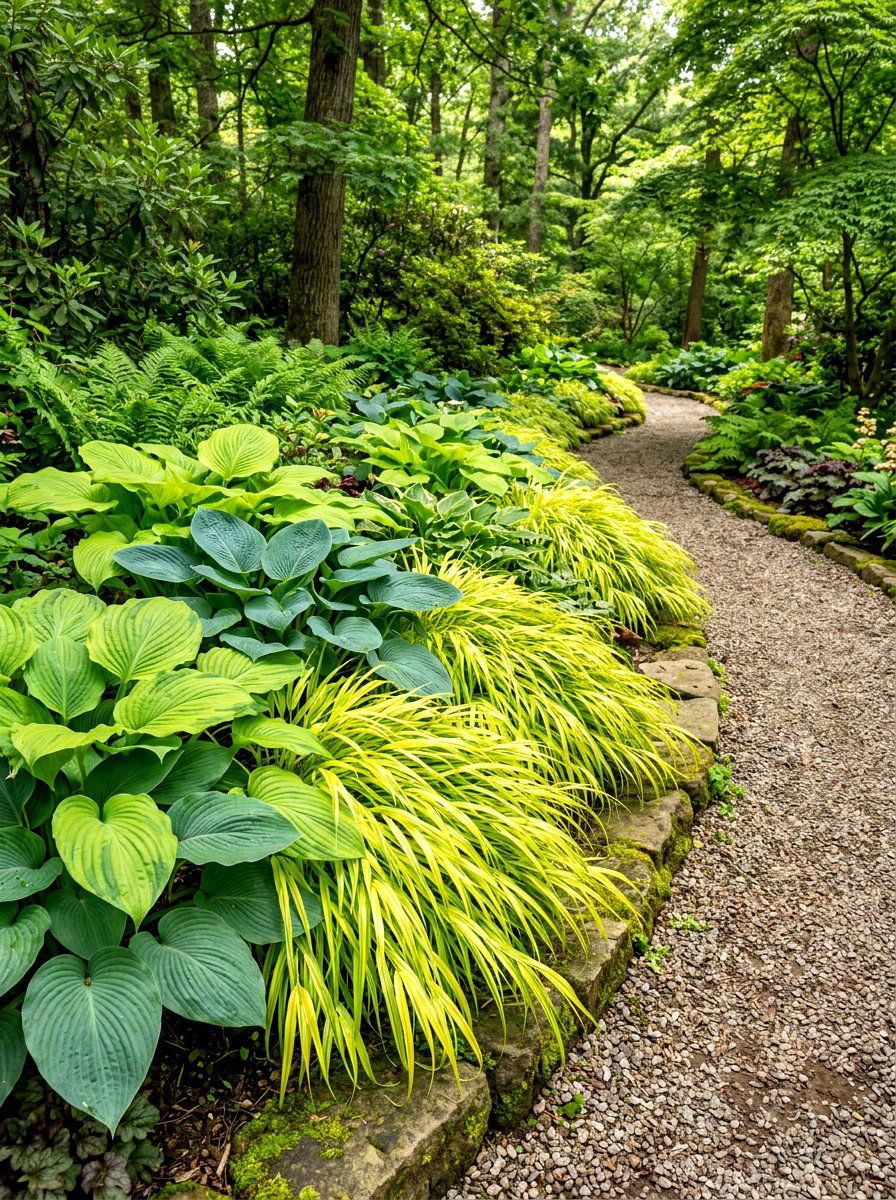
The combination of hosta and Japanese forest grass is a masterclass in texture and movement. Japanese forest grass — or Hakonechloa — has a unique, cascading habit that looks like a waterfall of golden or green blades. When planted next to the broad, static leaves of a hosta, the grass provides a sense of motion that makes the border feel alive. This pairing is particularly effective on slopes or along the edges of paths where the grass can spill over gracefully. Both plants thrive in the same moist, shady conditions, making them easy to maintain together. The bright, often chartreuse color of the grass highlights the deeper tones of the hostas, creating a vibrant and modern look that is popular in contemporary landscape design.
24. Modern minimalist hosta border
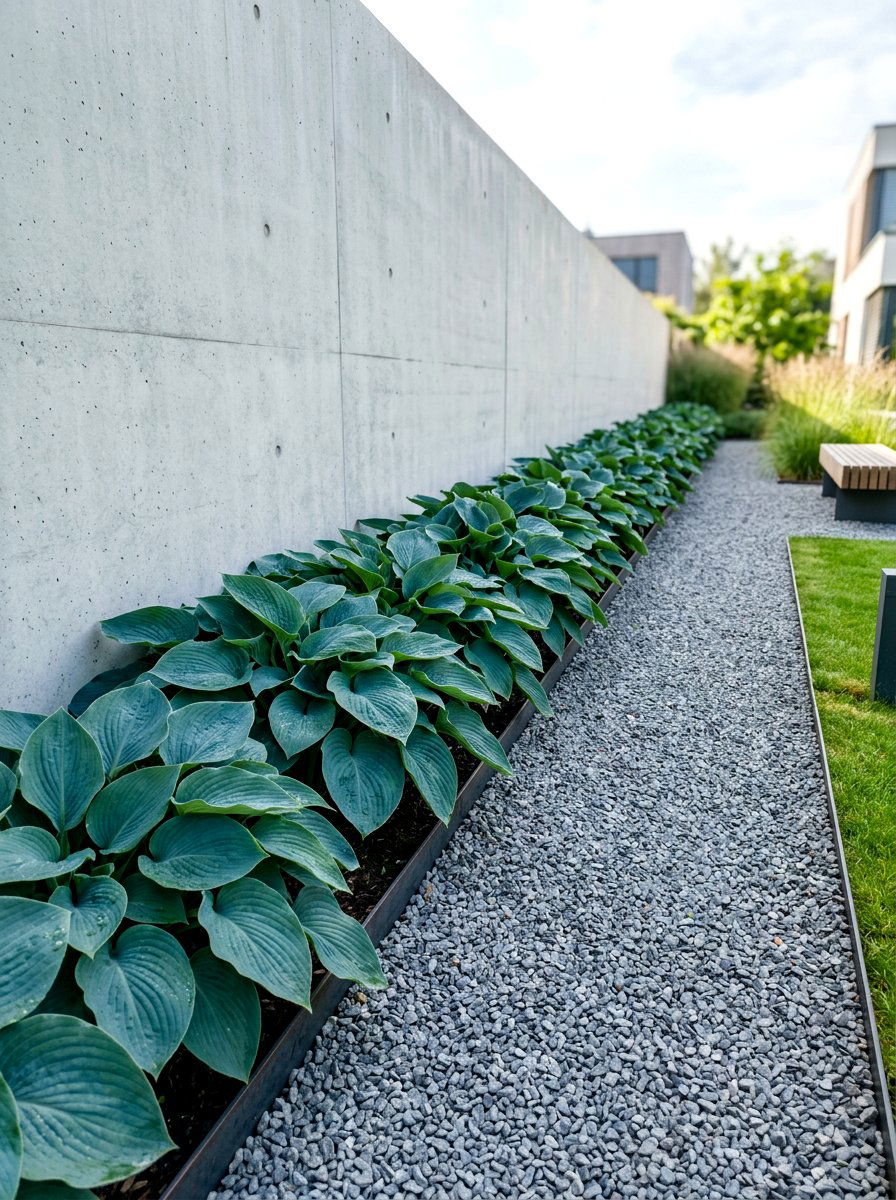
A modern minimalist hosta border focuses on simplicity, clean lines, and a limited color palette. To achieve this look, choose one or two hosta varieties and plant them in a perfectly straight line or a precise geometric pattern. Using large, blue-foliaged hostas against a background of dark grey stones or a sleek concrete wall creates a high-contrast, architectural look that is perfect for modern homes. This design emphasizes the individual form of the plant rather than a mix of different colors and textures. It is an excellent choice for those who want a low-maintenance but high-impact landscape. The simplicity of the design provides a sense of calm and order that complements the clean lines of modern architectural structures perfectly.
25. Hosta and bleeding heart bed
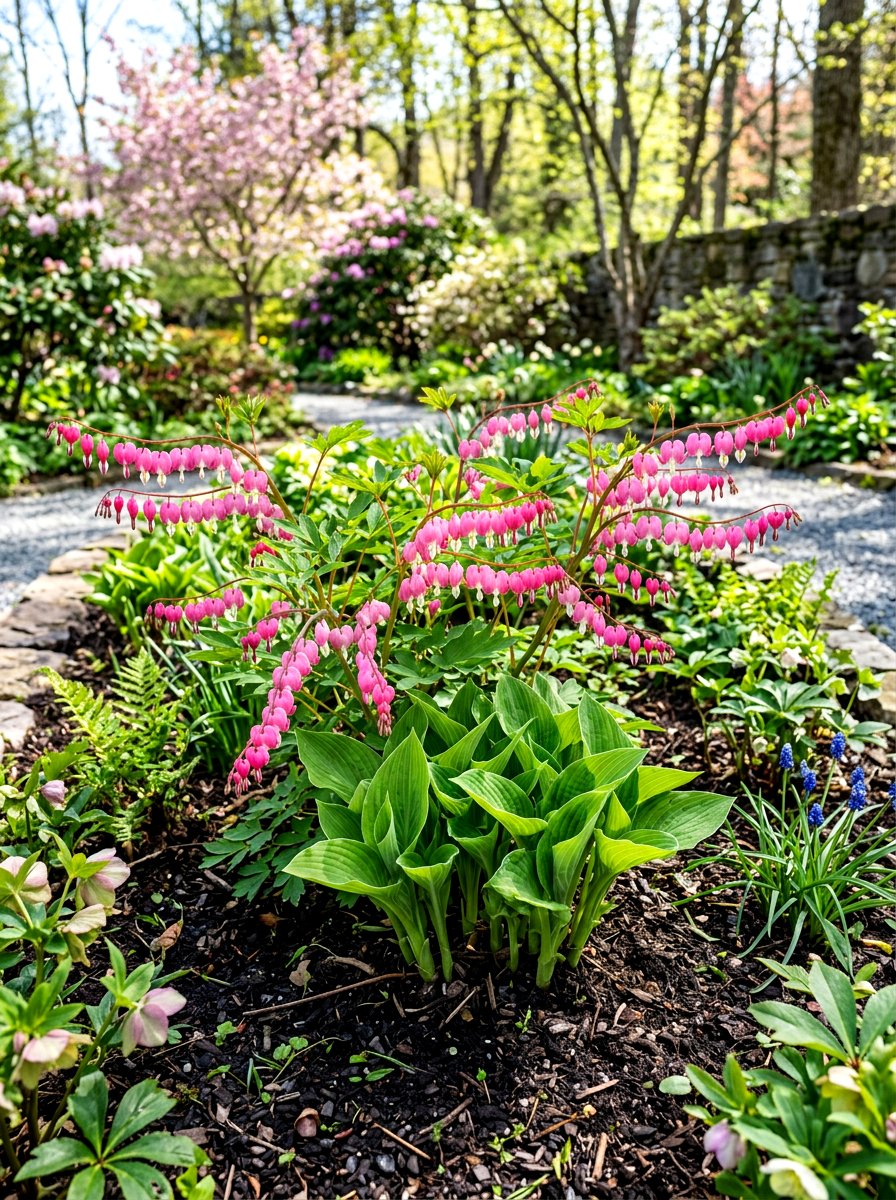
A hosta and bleeding heart bed is a classic spring favorite that brings a touch of whimsy to the garden. Bleeding hearts are among the first plants to bloom in the spring, with their unique heart-shaped flowers hanging from arched stems. As the bleeding hearts begin to fade and go dormant in the heat of summer, the hostas are just reaching their full size, filling in the gaps and keeping the border looking lush. This natural succession ensures that your garden bed never looks empty or neglected. The soft, delicate foliage of the bleeding heart provides a beautiful contrast to the heavy hosta leaves during the spring months. This pairing is a reliable way to get multiple seasons of interest from a single border.
26. Curved hosta lawn edge
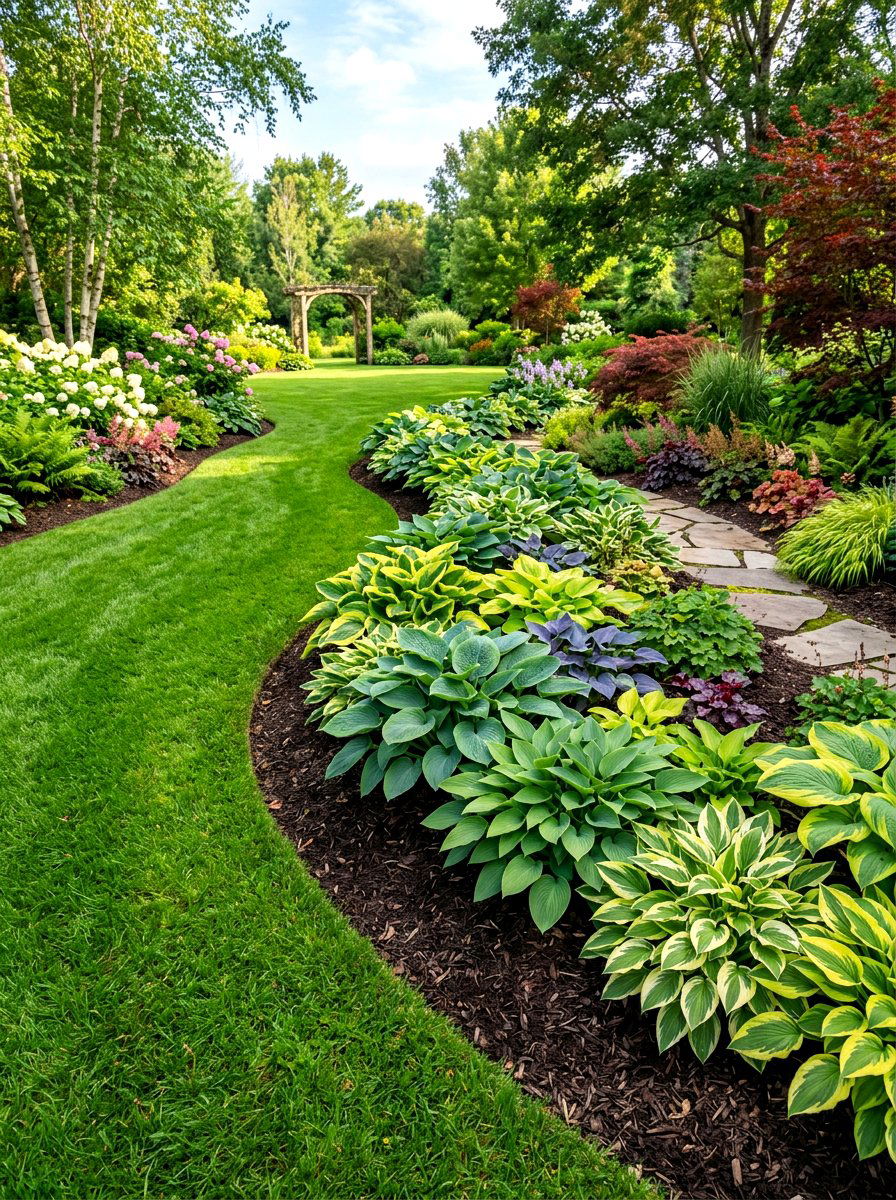
Creating a curved hosta lawn edge is an effective way to soften the transition between your grass and your garden beds. While straight lines can feel rigid and formal, gentle curves feel more natural and help to guide the eye through the space. Hostas are perfect for this because their mounded shape naturally follows a curved line, creating a soft, undulating border. This design can also help to hide small imperfections in the lawn's edge, providing a clean and professional look. Use a mix of medium-sized hostas with different leaf patterns to add visual interest along the entire length of the curve. This approach makes your backyard feel more like a curated park and adds a sense of flow to your landscape.
27. Hosta and coral bells border
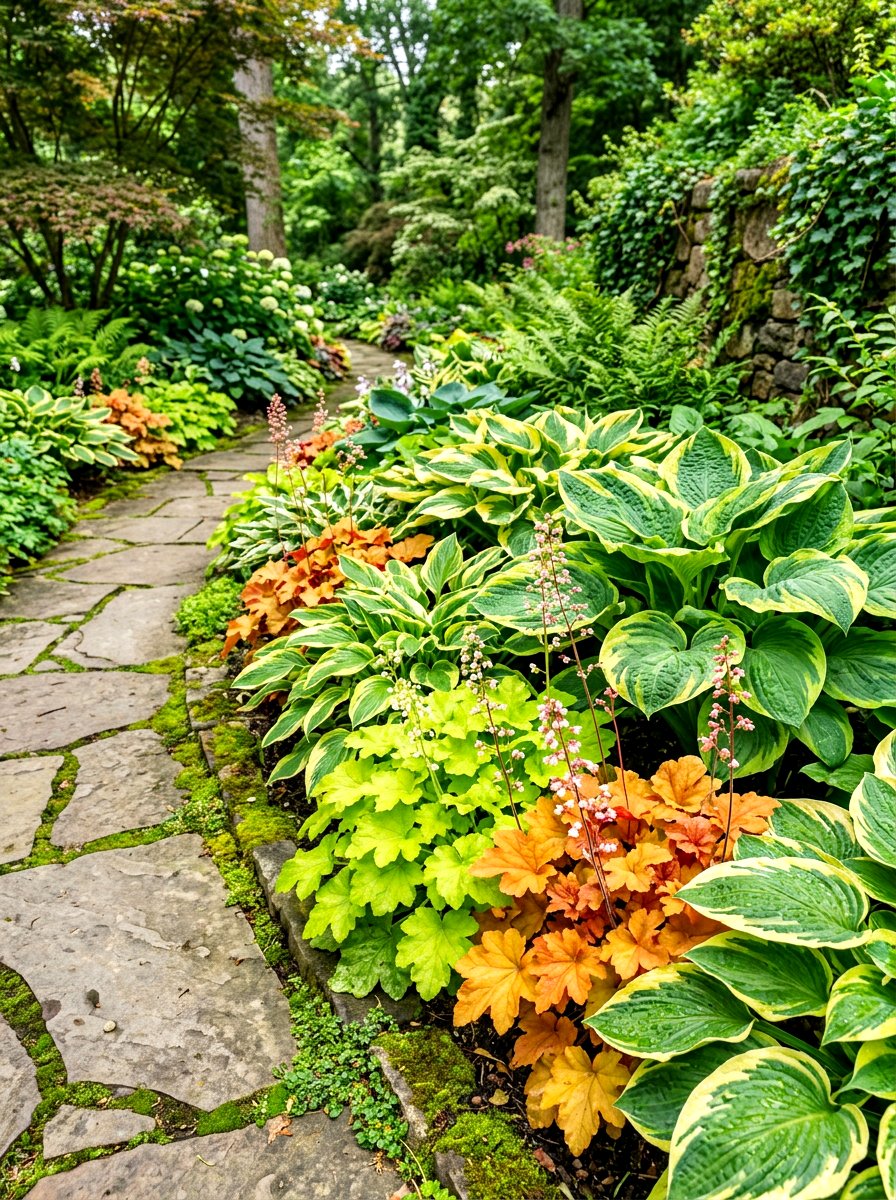
A hosta and coral bells border is a powerhouse of foliage color and texture. While both plants have a similar mounded growth habit, their leaves are vastly different, providing a sophisticated contrast. Coral bells — or Heuchera — come in an incredible array of colors, from dark purple and silver to bright lime and orange. When interplanted with hostas, they create a colorful tapestry that doesn't rely on flowers for its beauty. This is particularly useful for shaded borders where bloom times can be short. This combination is very low-maintenance and stays looking great from the first thaw of spring until the first hard frost of autumn. It is a foolproof way to ensure your garden border is always a focal point.
28. Tropical look hosta garden
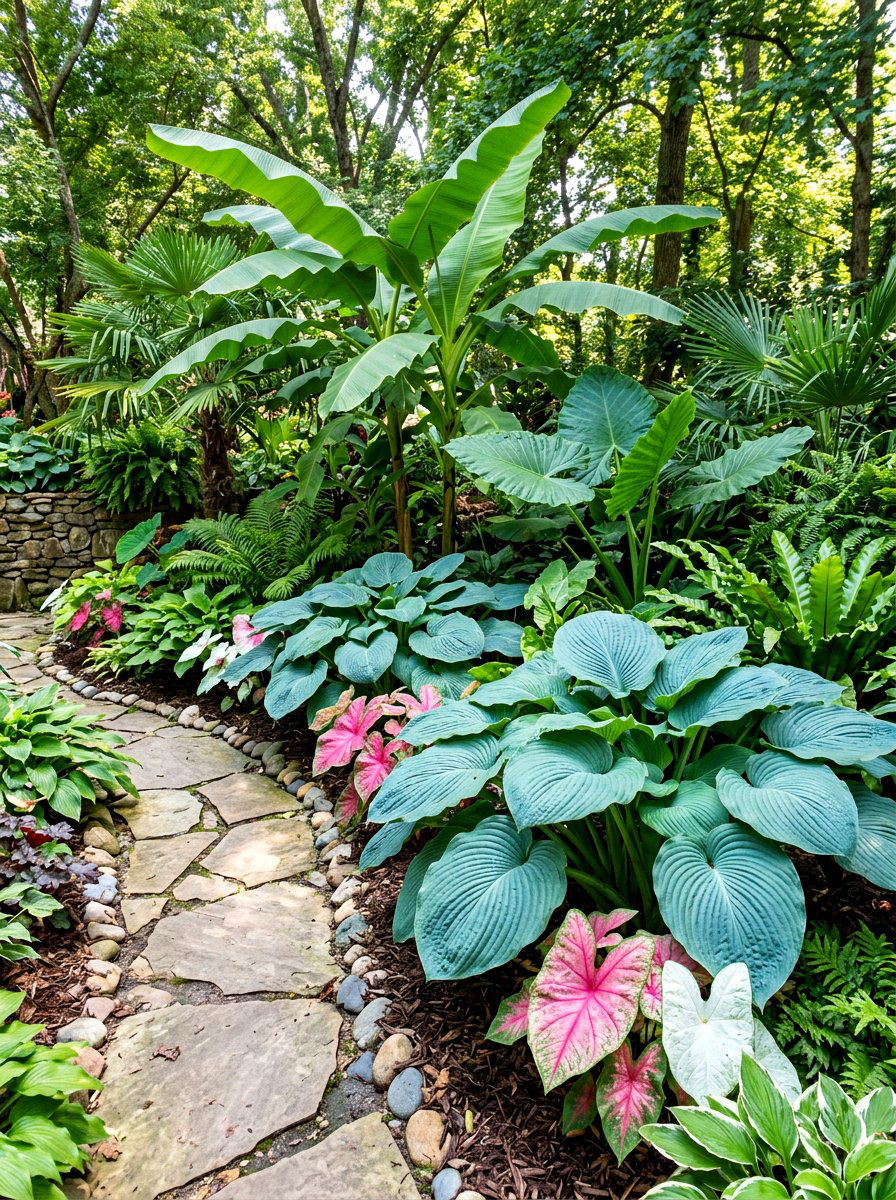
Creating a tropical look hosta garden is possible even in cold climates by using large-leaved, exotic-looking hostas. Varieties like Sum and Substance or Big Daddy have massive, deeply textured leaves that mimic the look of tropical plants like elephant ears or bananas. By grouping these large hostas with other shade-loving plants with bold foliage — such as broad-leaved caladiums or upright canna lilies — you can create a lush, jungle-like atmosphere in your own backyard. This design works best in protected areas where the large leaves won 't be damaged by wind. The result is a high-drama, high-impact border that makes you feel like you' ve been transported to a tropical paradise, all while using hardy, reliable perennials that return every year.
29. Hosta and hellebore planting
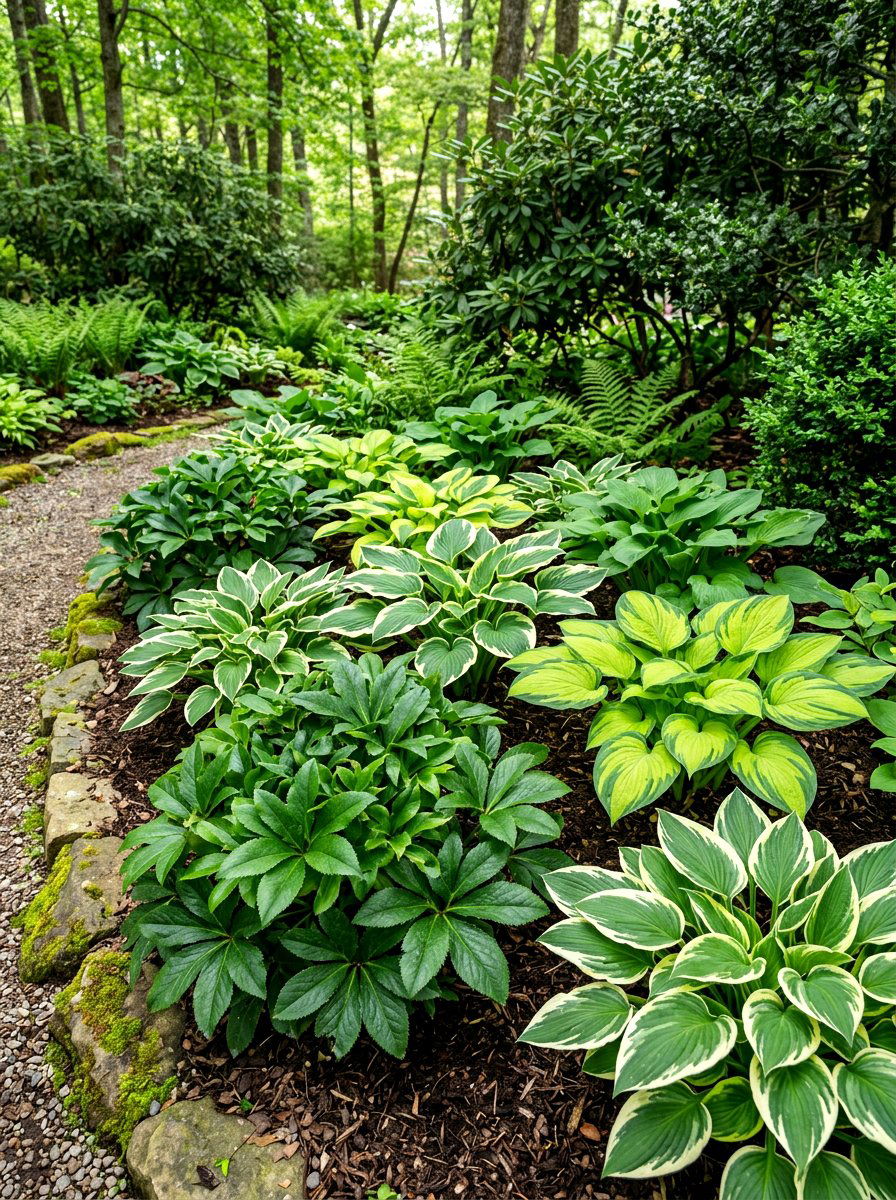
A hosta and hellebore planting is the ultimate low-maintenance solution for deep shade. Hellebores, also known as Lenten roses, are evergreen in many climates and bloom in the very early spring, often while snow is still on the ground. By the time the hellebore flowers are fading, the hostas are beginning to unfurl their leaves, providing a fresh layer of greenery for the summer months. Both plants are incredibly long-lived and require almost no attention once they are established. The thick, leathery leaves of the hellebore provide a nice contrast to the softer, more varied leaves of the hosta. This design ensures your garden border has structure and interest for the entire twelve months of the year, regardless of the weather.
30. Dense hosta privacy border
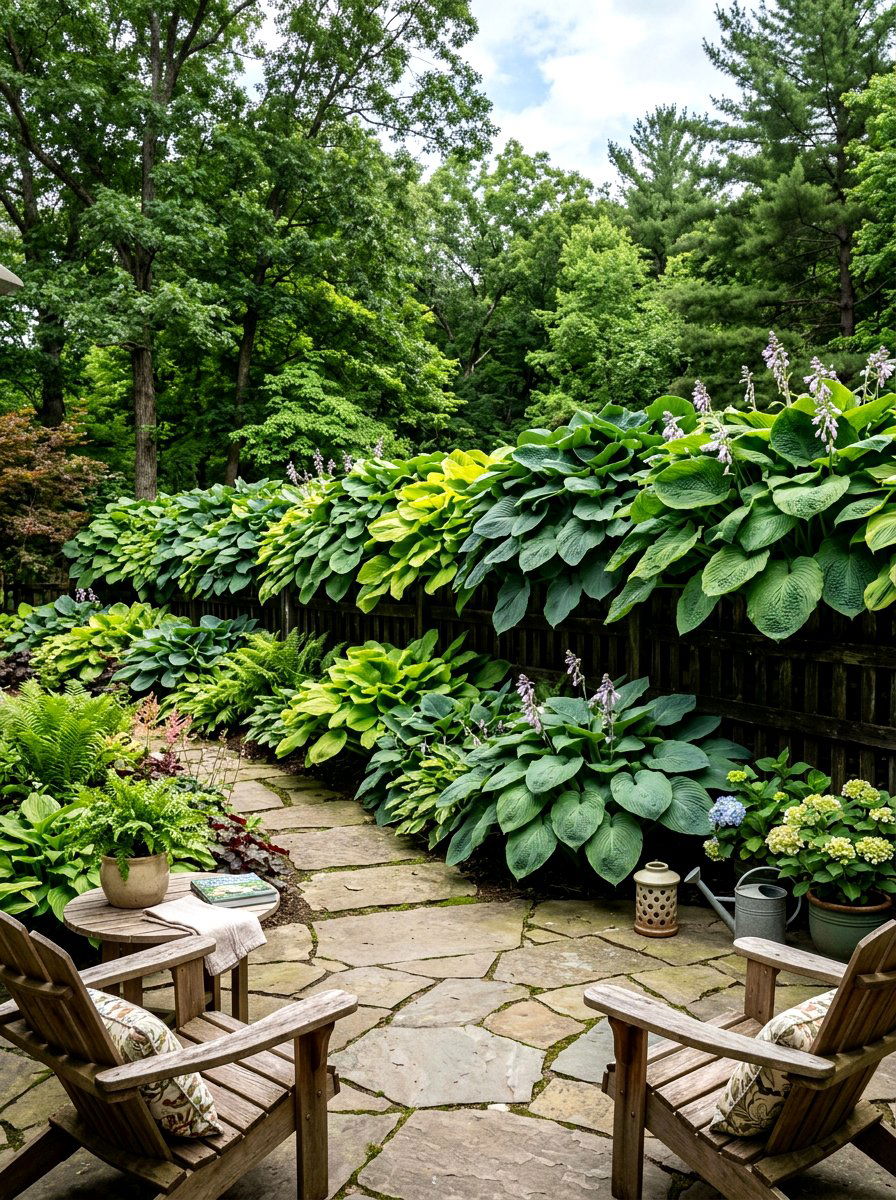
A dense hosta privacy border is a creative way to define the boundaries of your property without building a fence. By mass-planting large and giant hosta varieties in a thick, multi-layered row, you create a living wall of greenery that blocks the view and provides a sense of seclusion. This is particularly effective for low-level privacy around a patio or seating area. The overlapping leaves create a solid barrier that also helps to muffle noise from neighbors or nearby streets. Because hostas grow so densely, they also act as a natural weed barrier, making this a very low-maintenance way to manage your property line. The result is a lush, private sanctuary that feels integrated with the rest of your garden.
Conclusion:
A well-planned hosta border is one of the most rewarding additions you can make to your home landscape. These versatile plants solve numerous gardening challenges, from filling deep shade to creating architectural interest along walkways. By carefully selecting varieties based on their size, color, and texture, you can design a space that feels professional, lush, and incredibly inviting. Whether you choose to pair them with colorful perennials like heuchera or structural shrubs like boxwood, hostas provide the reliable foundation every garden needs. Their low-maintenance nature and long lifespan ensure that your investment will continue to grow and beautify your outdoor living space for many years to come.

Related posts: