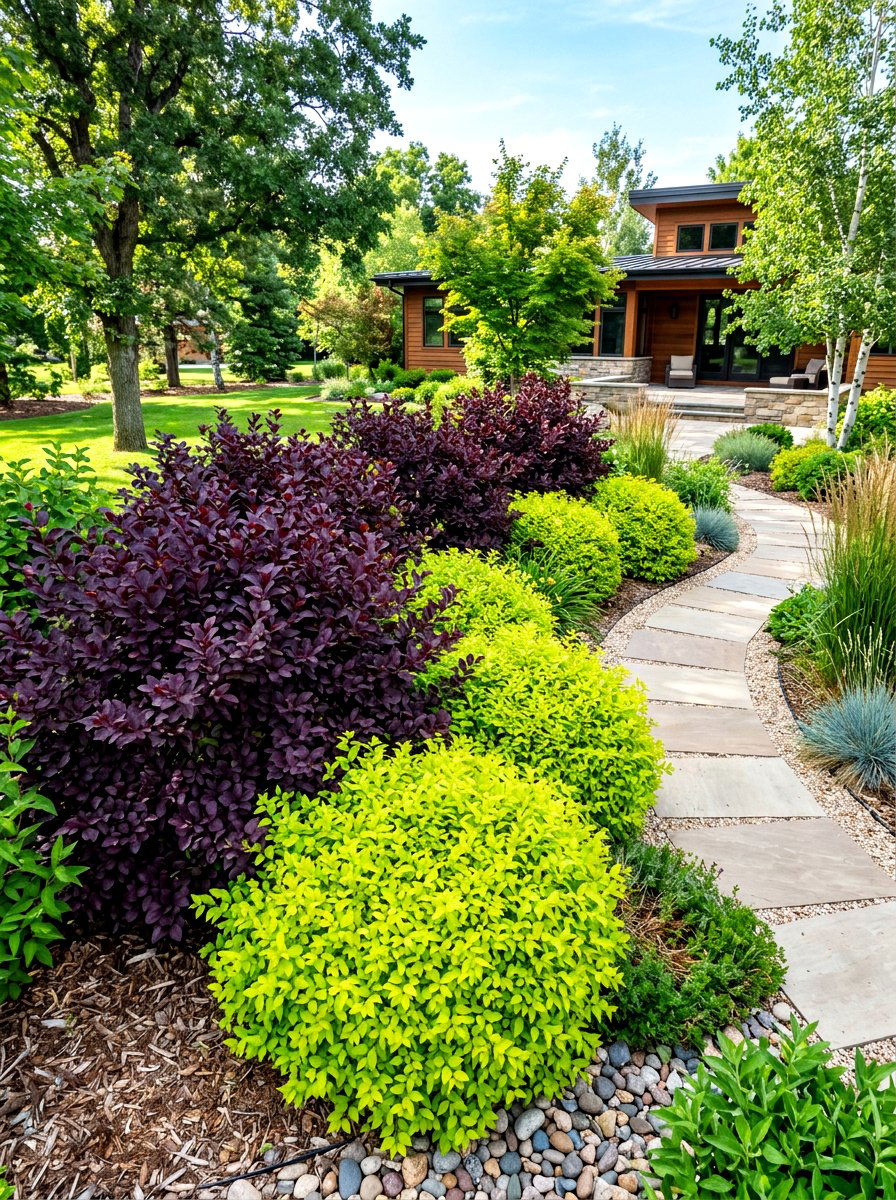
Transforming your outdoor space often starts with defining the boundaries of your garden beds and walkways. Boxwoods are the ultimate choice for this task because they offer year-round greenery and a structured look that never goes out of style. Whether you prefer a formal English garden aesthetic or a more relaxed contemporary vibe, these versatile evergreens can be shaped to fit any vision. Their dense foliage provides a beautiful backdrop for colorful perennials and helps maintain a neat appearance throughout every season. In this guide, we explore various ways to incorporate these classic shrubs into your landscape to enhance curb appeal and organization. These living borders create lasting beauty and value.
1. Low Boxwood Hedge
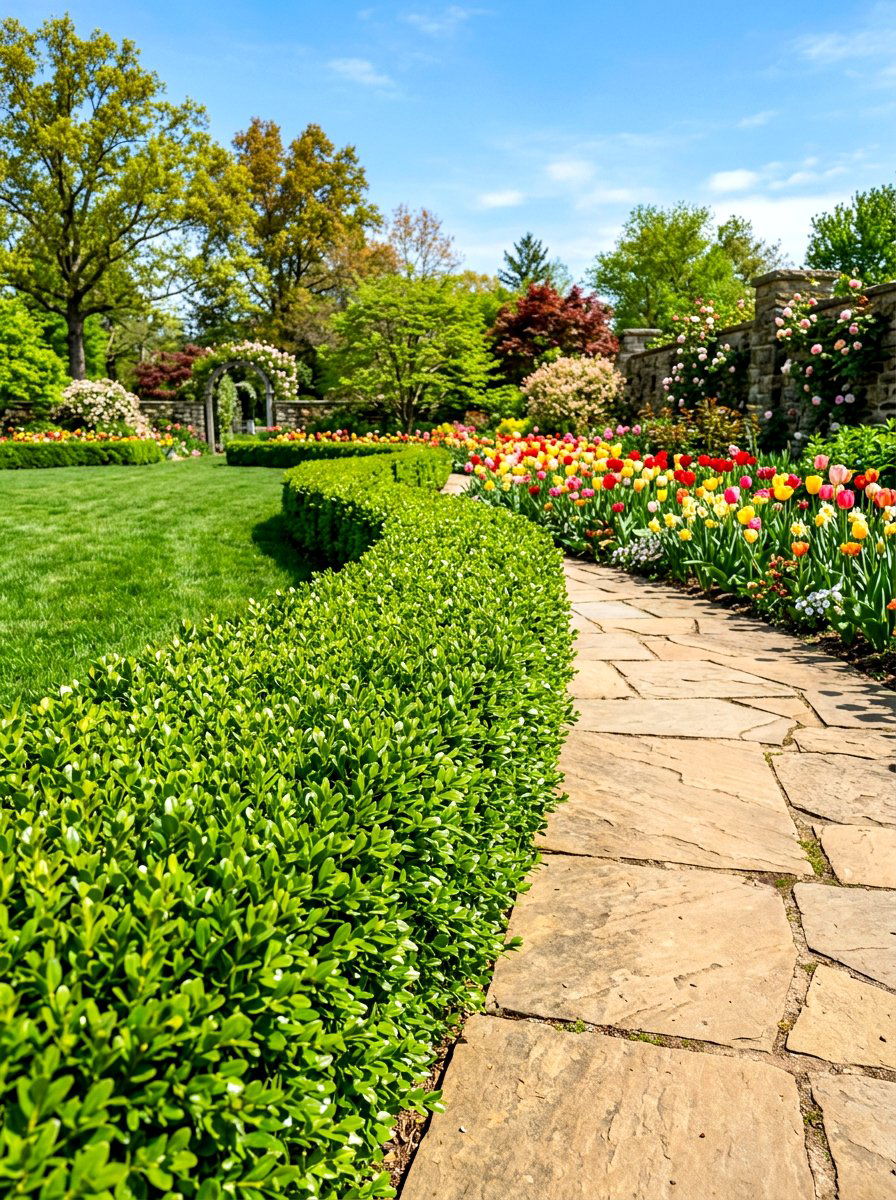
A low boxwood hedge serves as a crisp architectural element that anchors the entire landscape design. By keeping the shrubs trimmed to a height of about twelve inches, you create a neat frame that highlights the beauty of the plants behind it. This technique is particularly effective for lining a front walkway or bordering a formal flower bed filled with seasonal blooms. The compact nature of these evergreens ensures that they do not overwhelm smaller garden spaces. You can achieve a very clean and tidy look by using a level string line when pruning to maintain a perfectly straight top surface throughout the seasons.
2. Boxwood Garden Path
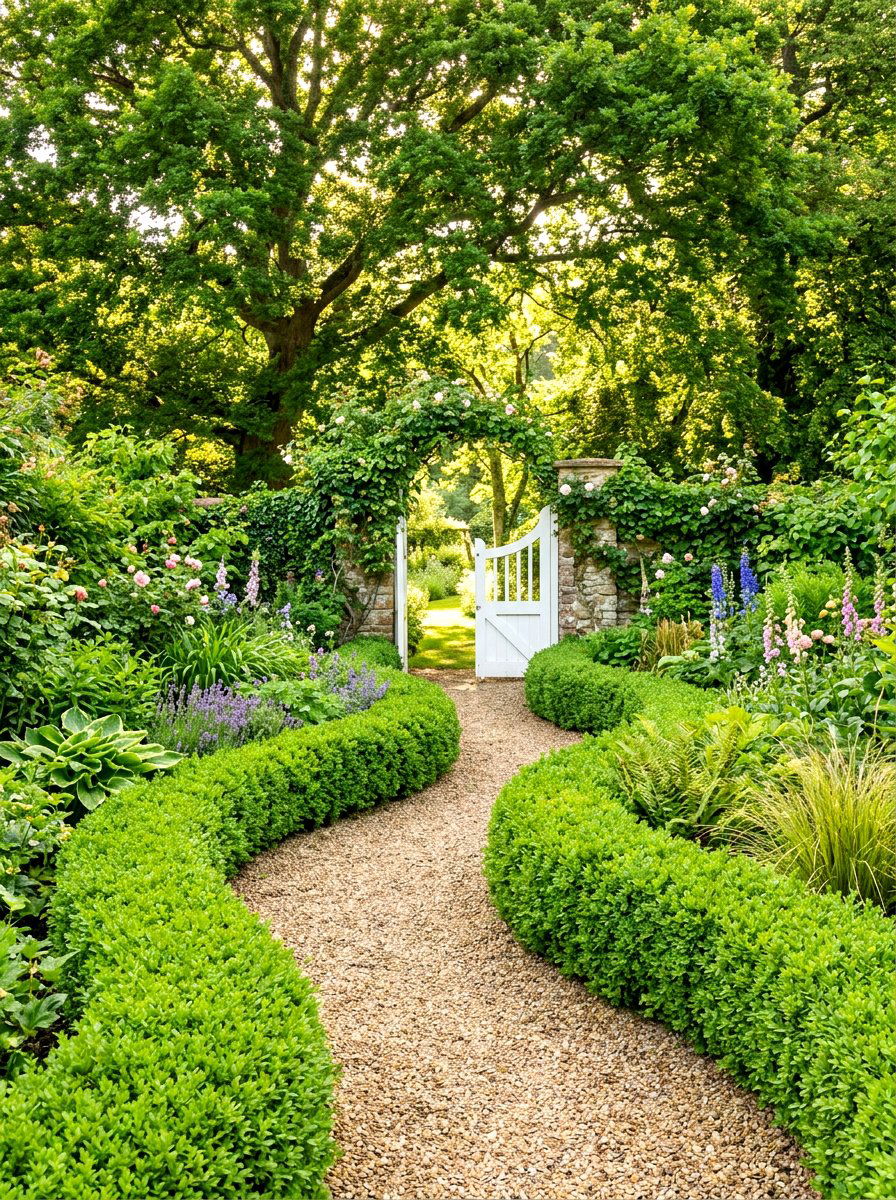
Creating a boxwood garden path involves lining a walkway with dense green foliage to guide guests through your outdoor sanctuary. This design uses the repetition of small shrubs to create a sense of rhythm and flow in the landscape. Whether your path is made of pea gravel, flagstone, or brick, the green borders provide a soft yet structured transition. It prevents mulch or soil from spilling onto the walkway, keeping the area looking pristine. You can choose to prune them into a continuous low wall or leave them as individual rounded mounds for a more natural and relaxed walking experience.
3. Boxwood Flower Bed
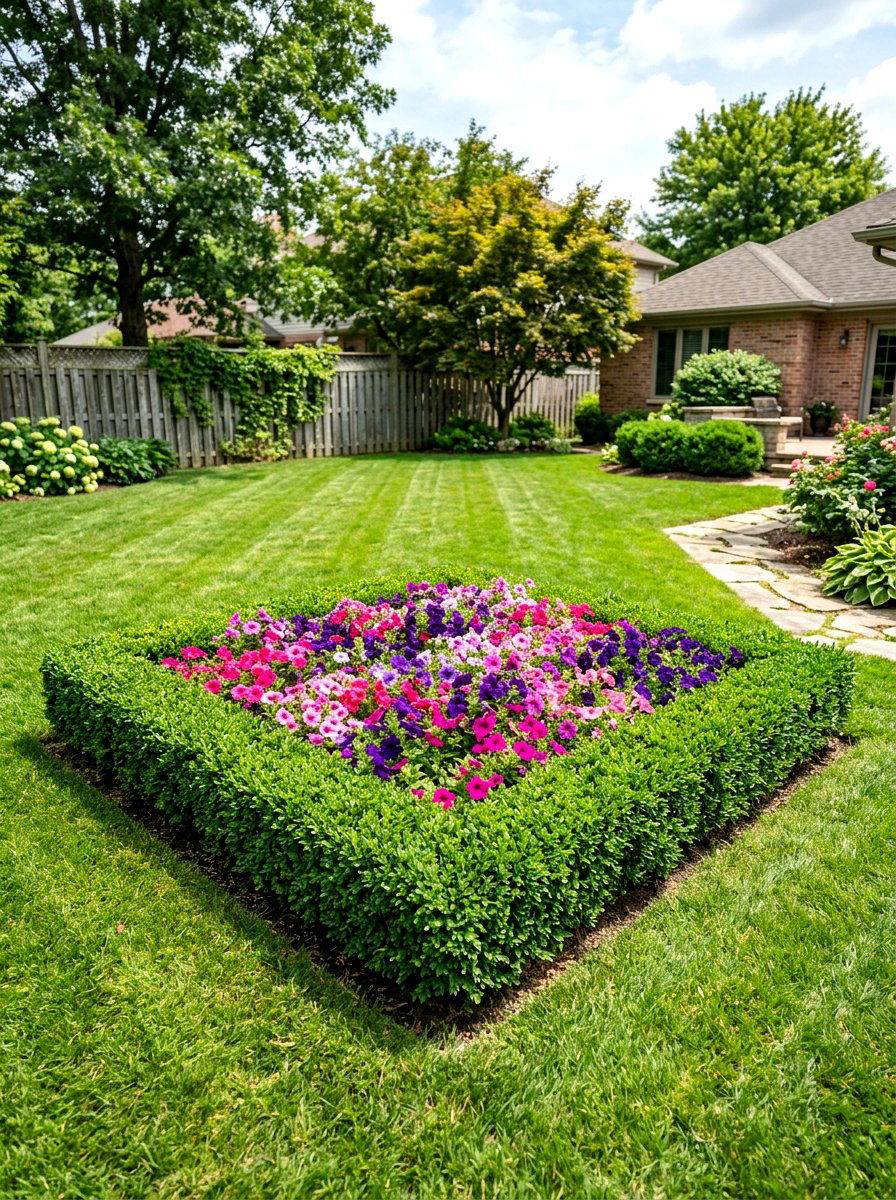
A boxwood flower bed uses the evergreen foliage to provide a permanent structure for shifting seasonal colors. By surrounding your flowering plants with a boxwood frame, you ensure the garden looks intentional even when the flowers are not in bloom. This design works exceptionally well in front yards where a neat appearance is highly valued. The deep green leaves of the boxwood offer a stunning contrast to bright tulips in spring or vibrant zinnias in summer. It acts as a living container that keeps your floral arrangements organized and prevents taller plants from flopping over onto the lawn during heavy rain.
4. Boxwood Walkway Lining
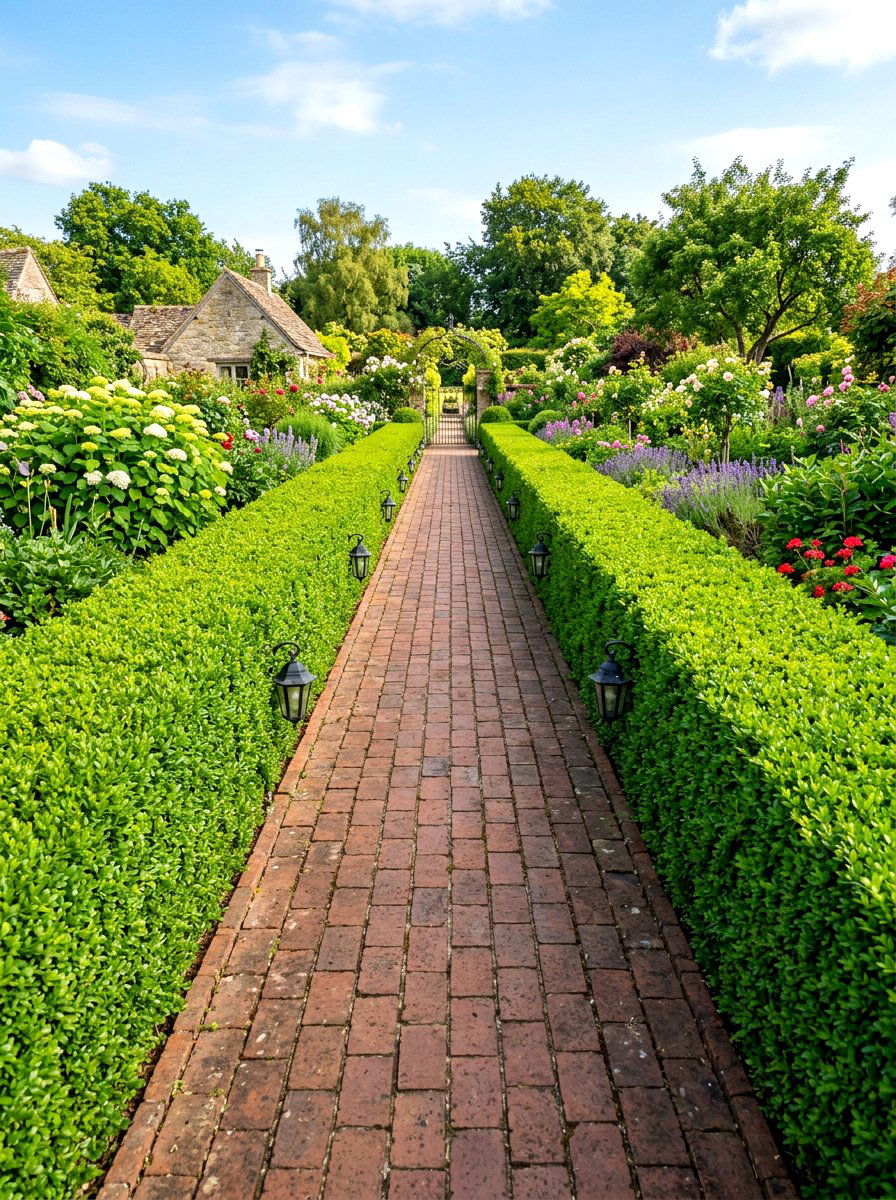
Lining a long walkway with boxwoods adds an immediate sense of grandeur and formality to any home entrance. This design choice creates a clear visual boundary between the hardscape and the surrounding lawn or planting areas. Because boxwoods are slow-growing, they are easy to maintain at a specific width so they do not crowd the path. You can enhance this look by adding low-voltage path lighting nestled among the shrubs, which creates a magical glow at night. The consistent green color provides a classic look that complements both traditional brick homes and more modern architectural styles with clean, straight lines.
5. Boxwood Parterre Garden
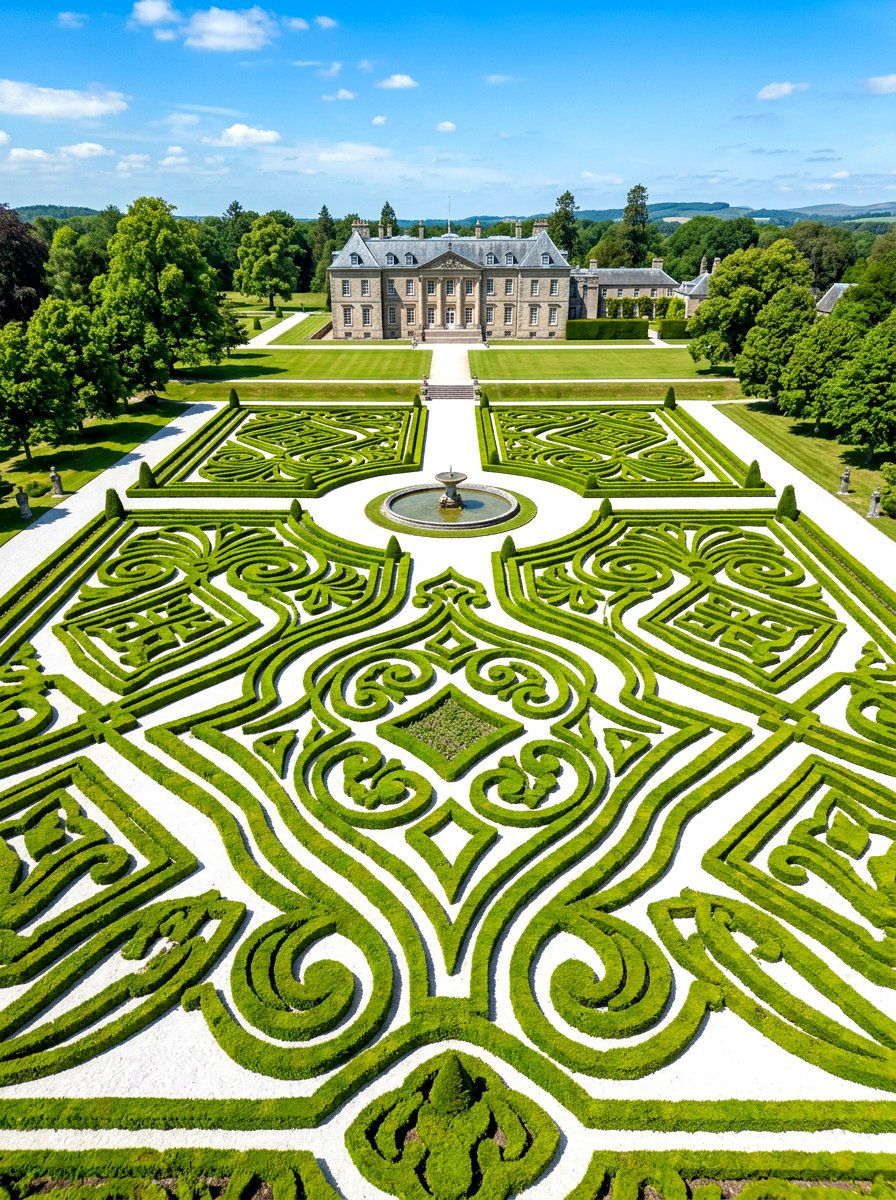
A boxwood parterre garden is the pinnacle of formal landscape design, featuring intricate geometric patterns made entirely of low-clipped hedges. These gardens are typically viewed from above, such as from a porch or second-story window, to appreciate the symmetry. The spaces between the boxwood lines are often filled with gravel, colored mulch, or low-growing flowers like pansies. This style brings a touch of European elegance to your backyard and creates a sophisticated outdoor room. While it requires more frequent pruning to keep the lines sharp, the result is a breathtaking display of horticultural art that remains beautiful throughout the winter.
6. Boxwood Front Entryway
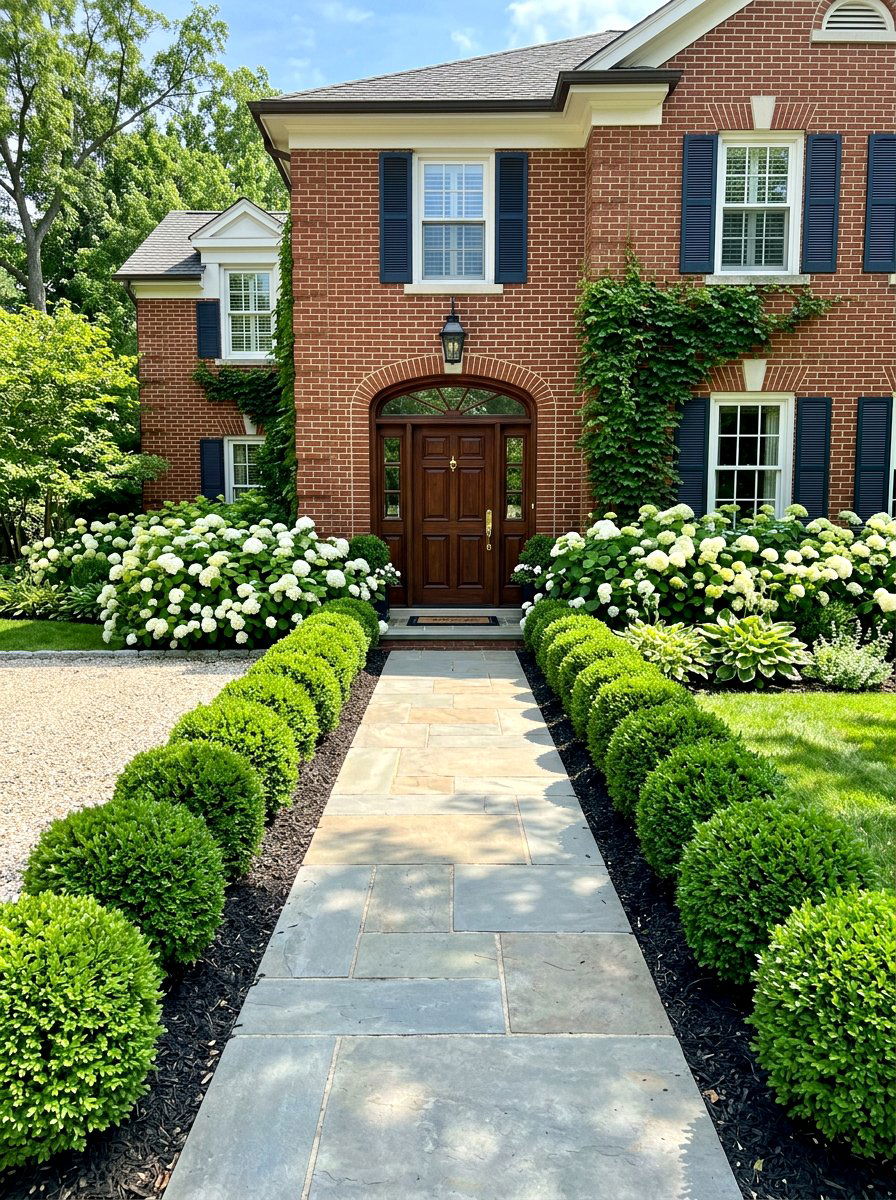
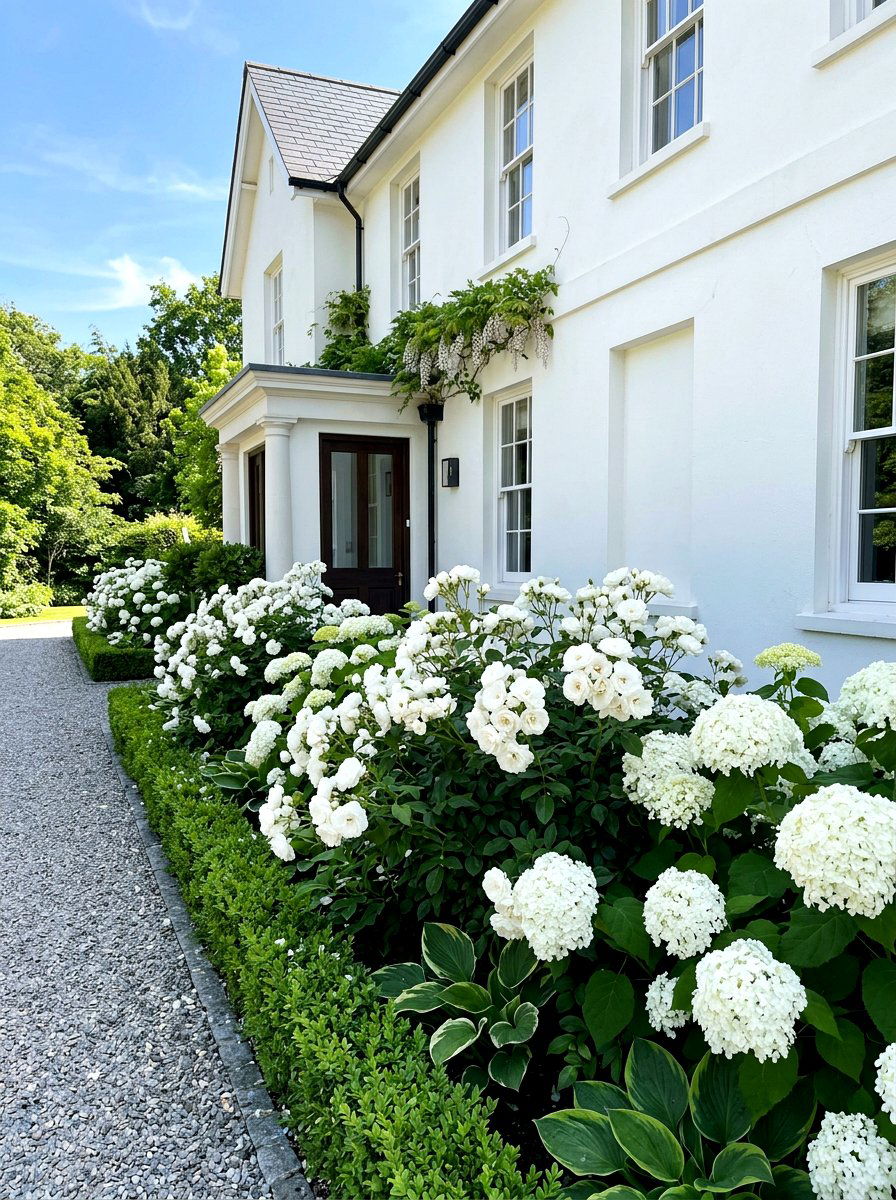
Framing your front entryway with boxwoods creates a welcoming and symmetrical look that boosts your home's curb appeal. You can plant them in identical rows on either side of the front door or use them to line the porch steps. This design anchors the house to the ground and provides a year-round green foundation. Mixing boxwoods with white-flowering plants like roses or hydrangeas creates a timeless and elegant color palette. By keeping the heights consistent, you draw the eye directly to your front door. It is a simple yet effective way to make a great first impression on every visitor.
7. Boxwood Rose Border
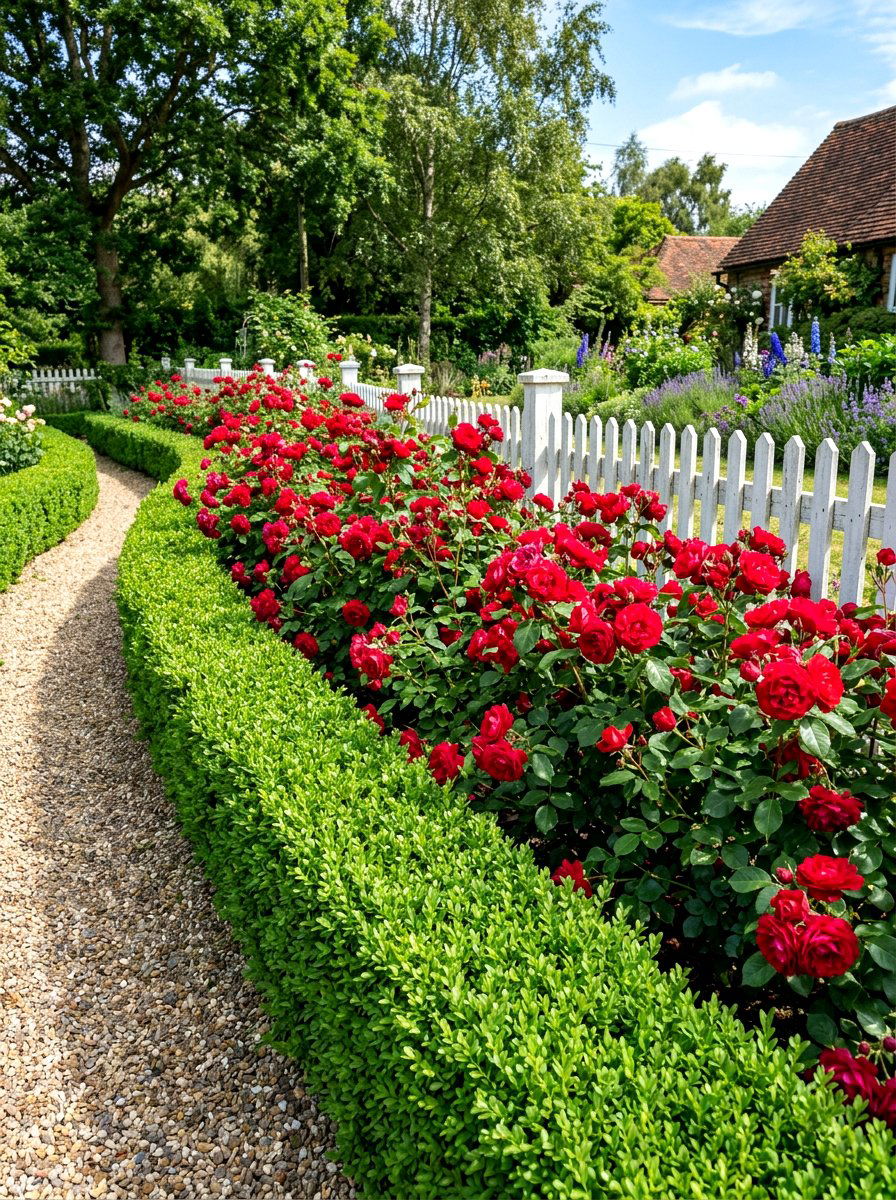
A boxwood rose border combines the structure of evergreens with the romantic beauty of blooming roses. The low boxwood hedge acts as a "skirt" that hides the often leggy and thorny stems of the rose bushes. This creates a much tidier look for the rose bed and provides a lush green background that makes the rose colors pop. Since roses go dormant in the winter, the evergreen boxwood ensures that the garden bed still has plenty of visual interest during the colder months. It is a classic pairing found in some of the most famous cottage gardens around the world.
8. Curved Boxwood Border
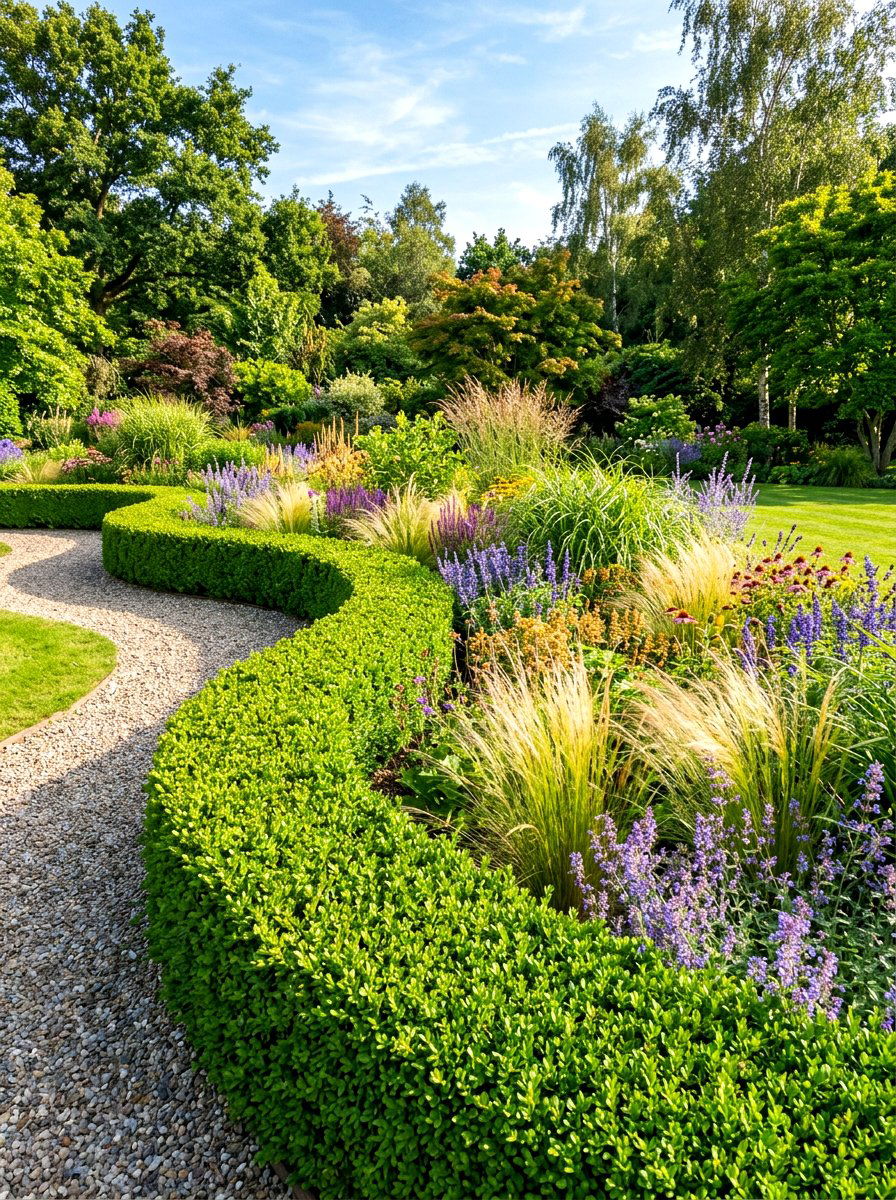
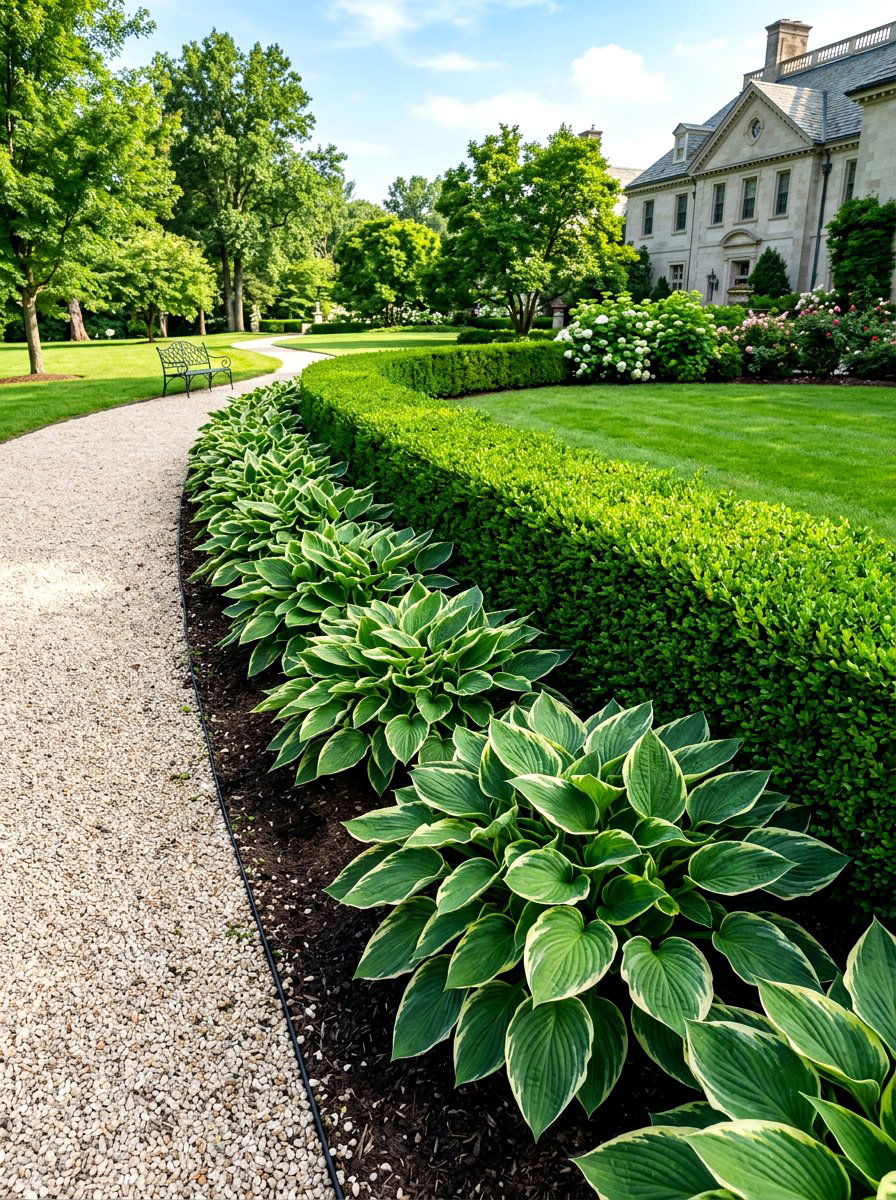
A curved boxwood border adds a sense of organic movement and softness to your landscape design. Instead of rigid straight lines, these hedges follow the natural contours of your garden beds or the sweep of your lawn. This style is perfect for more relaxed or naturalistic gardens where you want to break up the harsh angles of a house or fence. Clipping the boxwoods into soft, rounded shapes further enhances this flowing aesthetic. These curves can lead the eye toward a focal point, like a birdbath or a large specimen tree, making the entire backyard feel more inviting and spacious.
9. Boxwood Driveway Lining
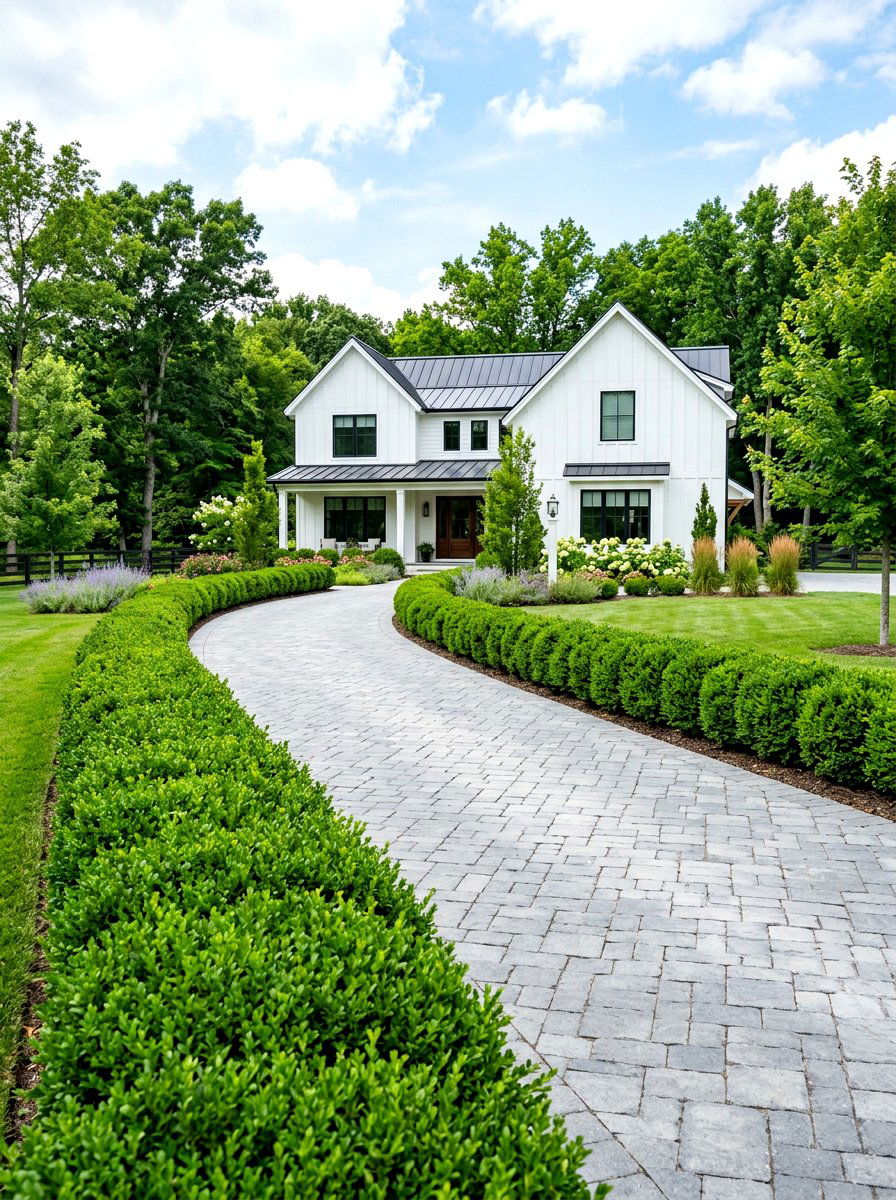
Lining a driveway with a boxwood border creates a professional and polished look for your property's exterior. It provides a clear physical barrier that prevents cars from accidentally driving onto the grass while adding a layer of greenery to the hardscape. For longer driveways, this repetition creates a stunning visual "allee" that feels very upscale and expensive. You can plant them in a continuous hedge for a formal look or space them out with ornamental grasses in between for a more contemporary feel. These hardy shrubs handle the heat reflected from the pavement remarkably well once they are established.
10. Boxwood Patio Edging
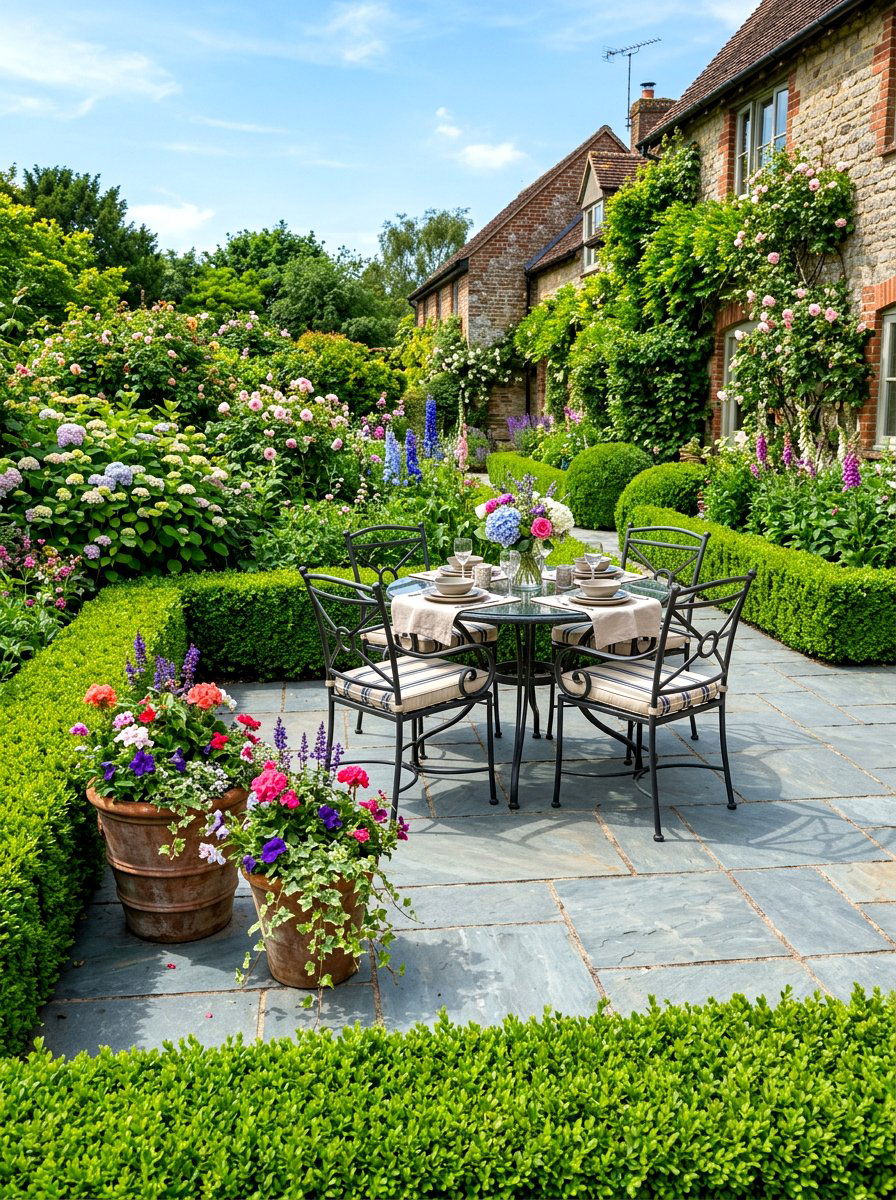
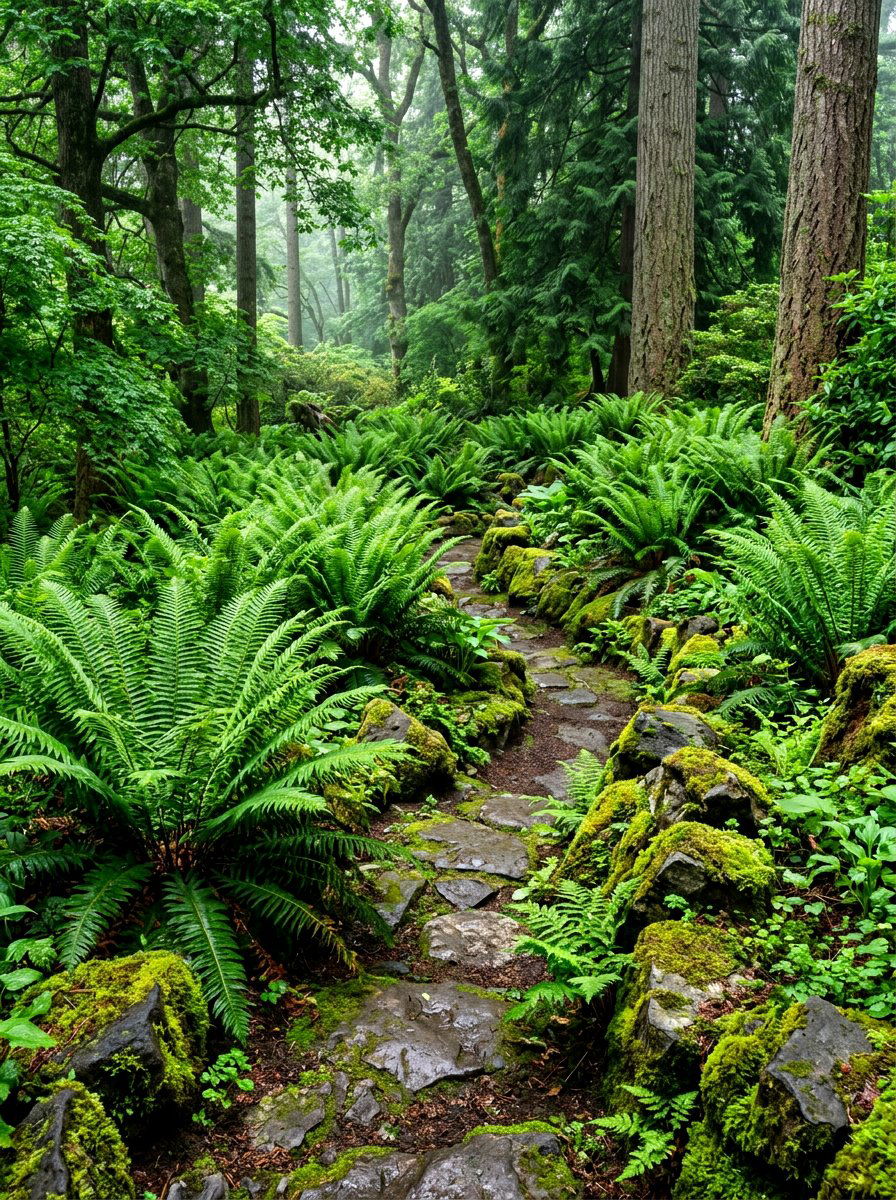
Boxwood patio edging helps to define your outdoor living space and makes it feel like a true outdoor room. By planting a low hedge around the perimeter of your stone or concrete patio, you create a sense of enclosure and intimacy. This border separates the dining or lounging area from the rest of the yard, providing a cozy atmosphere for entertaining. The evergreen foliage acts as a natural buffer against wind and provides a soft edge to the hard materials of the patio. It also keeps lawn debris and grass clippings from blowing onto your clean outdoor furniture and flooring.
11. Boxwood Pool Border
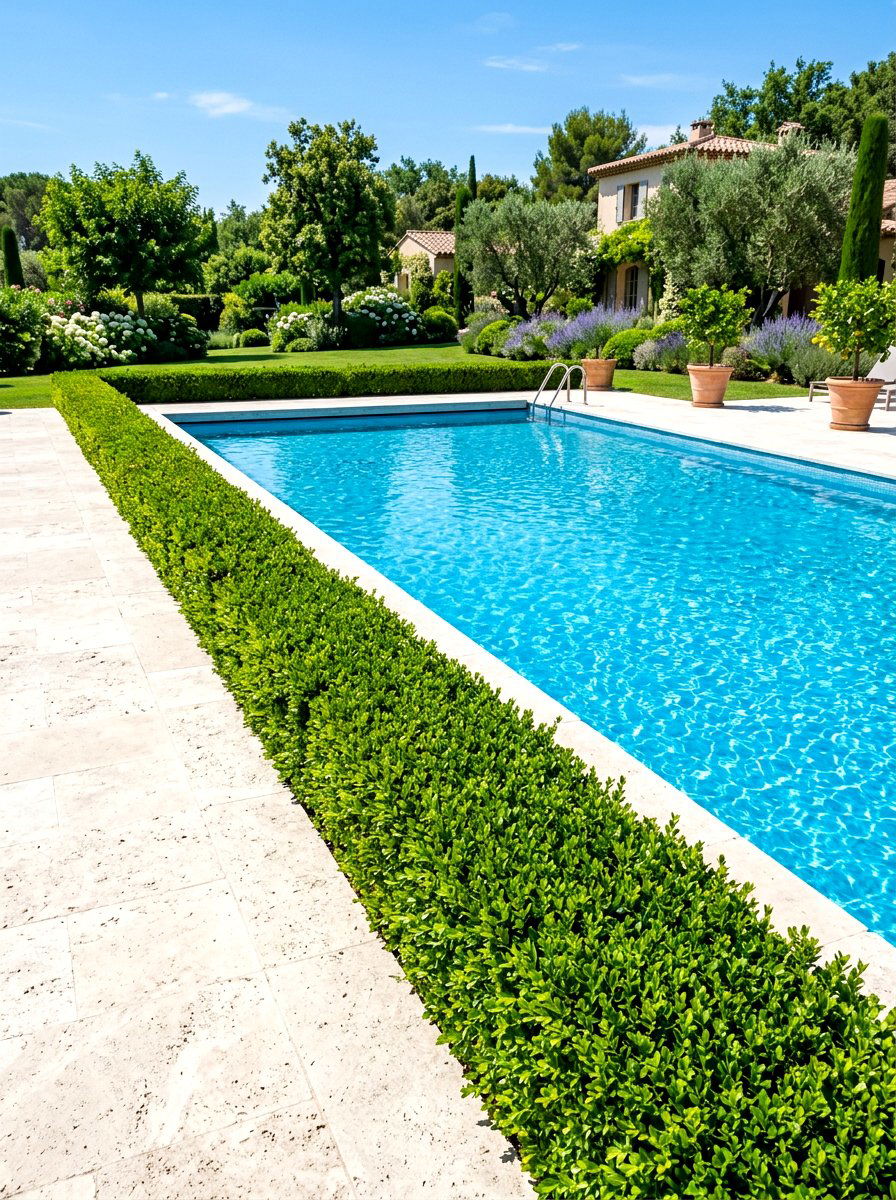
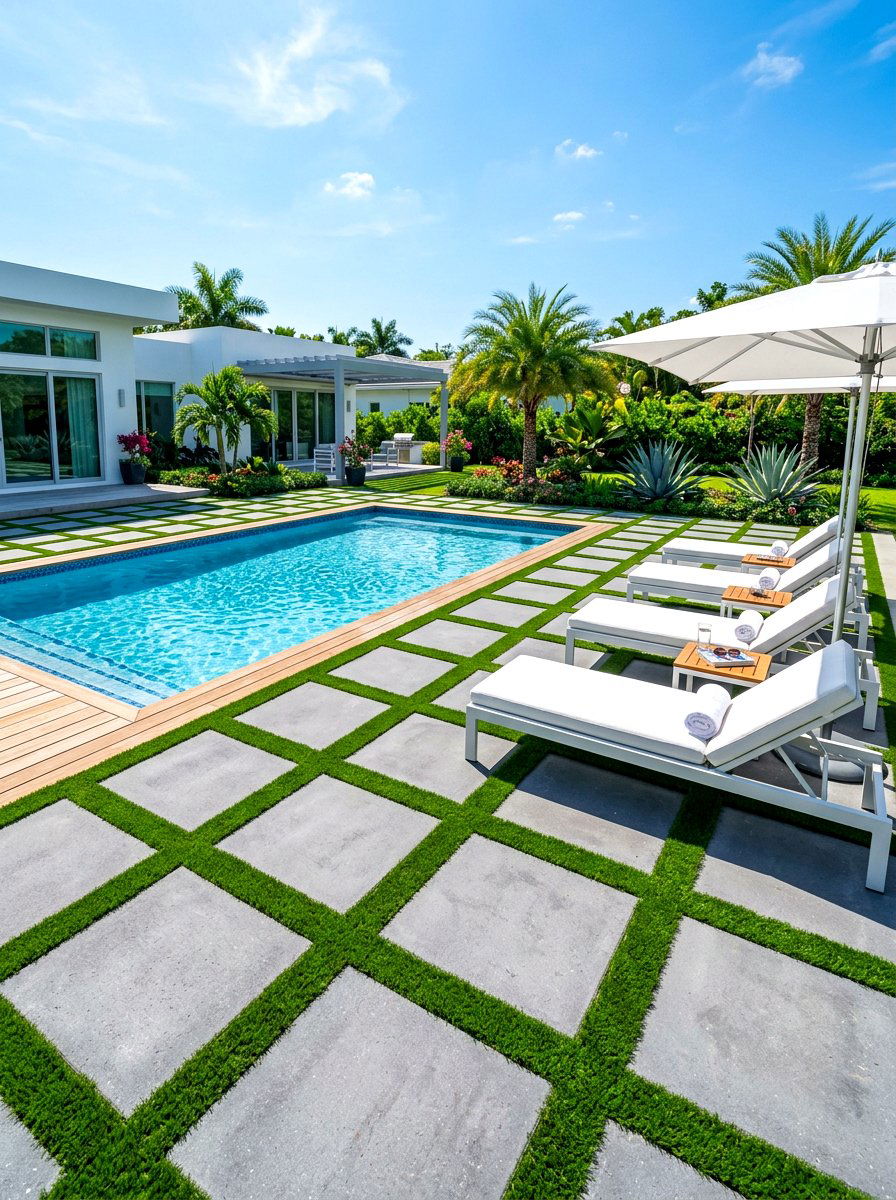
A boxwood pool border is an excellent choice for creating a clean and debris-free environment around your swimming area. Unlike many other shrubs, boxwoods do not drop messy flowers or large leaves that can clog pool filters or stain the deck. Their dense, evergreen foliage provides a beautiful green contrast to the blue water and light-colored stone surround. You can use low hedges to frame the pool area or taller varieties to provide a bit of low-level privacy for swimmers. This design ensures that your pool area looks manicured and luxurious, resembling a high-end resort garden all year long.
12. Boxwood Foundation Hedge
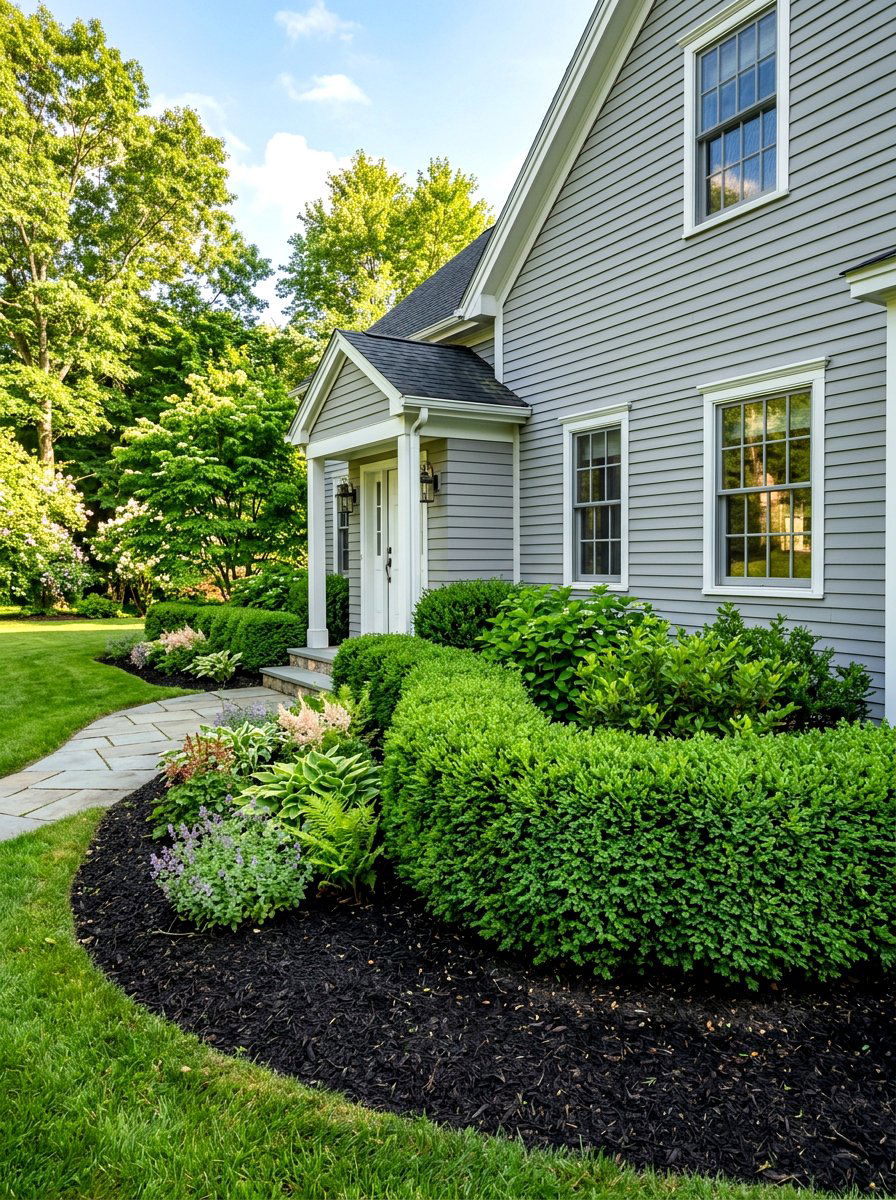
A boxwood foundation hedge is a classic landscaping solution used to hide the concrete base of a house. These shrubs provide a soft transition between the vertical walls of the building and the horizontal plane of the yard. Because they are evergreen, they provide consistent color and coverage, unlike deciduous plants that look bare in the winter. You can layer them by planting taller boxwoods in the back and shorter ones in the front to create depth. This layered approach adds visual interest and prevents the foundation planting from looking like a flat green wall against your home.
13. Double Row Boxwood
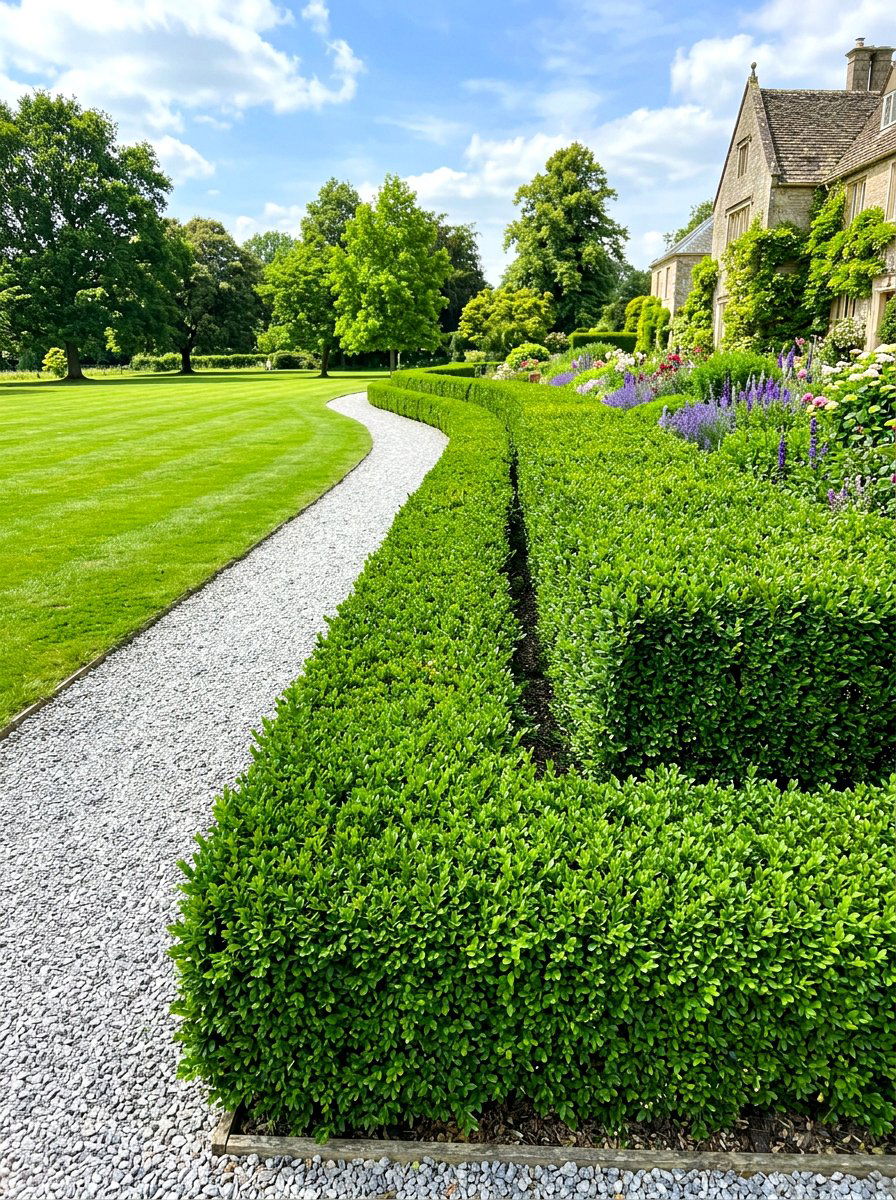
Using a double row boxwood design adds extra thickness and a sense of luxury to your garden borders. This involves planting two parallel lines of boxwoods, often at slightly different heights, to create a tiered effect. The front row might be kept very low while the back row is allowed to grow a few inches taller. This technique creates a very lush and substantial border that can stand up to large houses or expansive lawns. It is a great way to make a bold statement and provides a very high-end, professionally designed look that is sure to impress your neighbors.
14. Boxwood Knot Garden
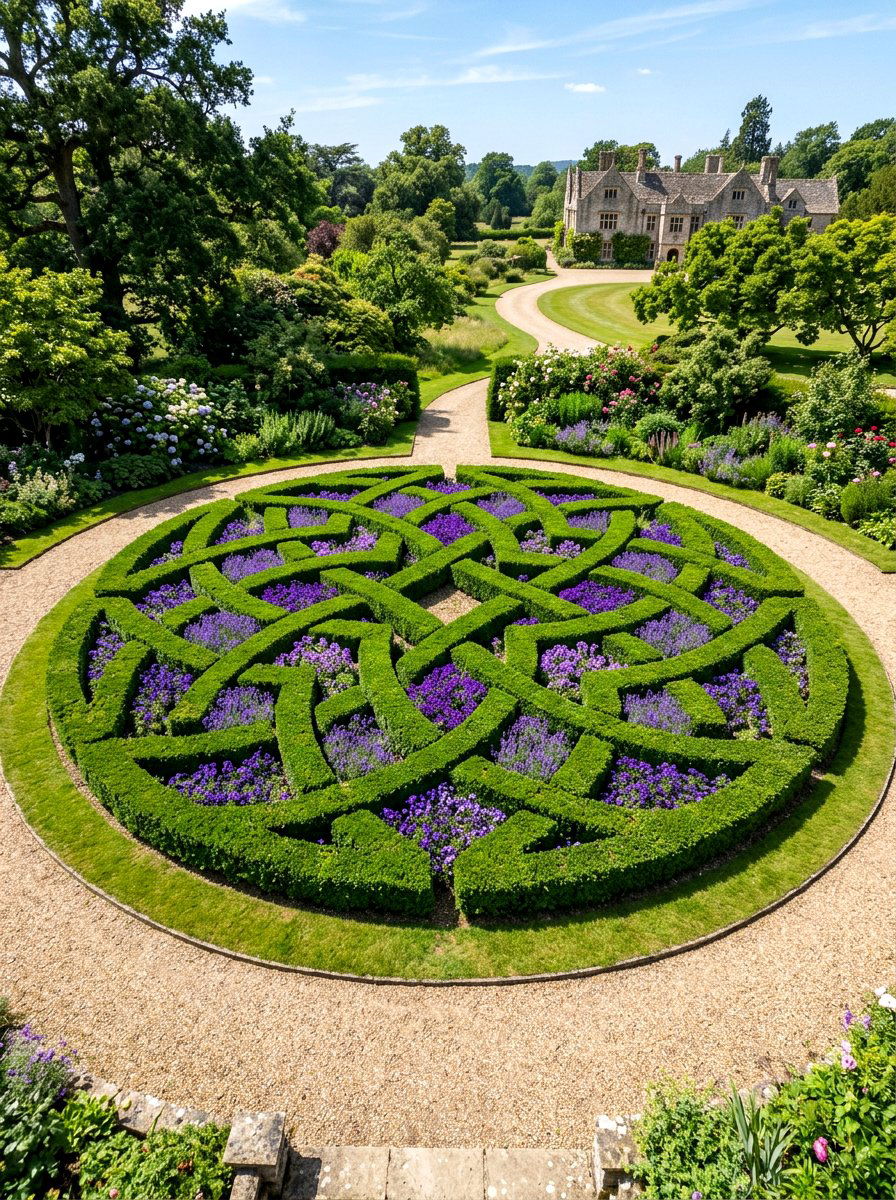
A boxwood knot garden is a traditional English design where different varieties of boxwood are woven together to look like overlapping ribbons. This creates a stunning focal point in a central part of the yard. By using varieties with slightly different shades of green or variegation, you can make the "over and under" effect of the knot even more visible. These gardens are often accented with gravel paths or colorful annuals in the openings of the knot. It is a sophisticated way to show off your gardening skills and brings a sense of history and artistry to your landscape.
15. Boxwood Herb Garden
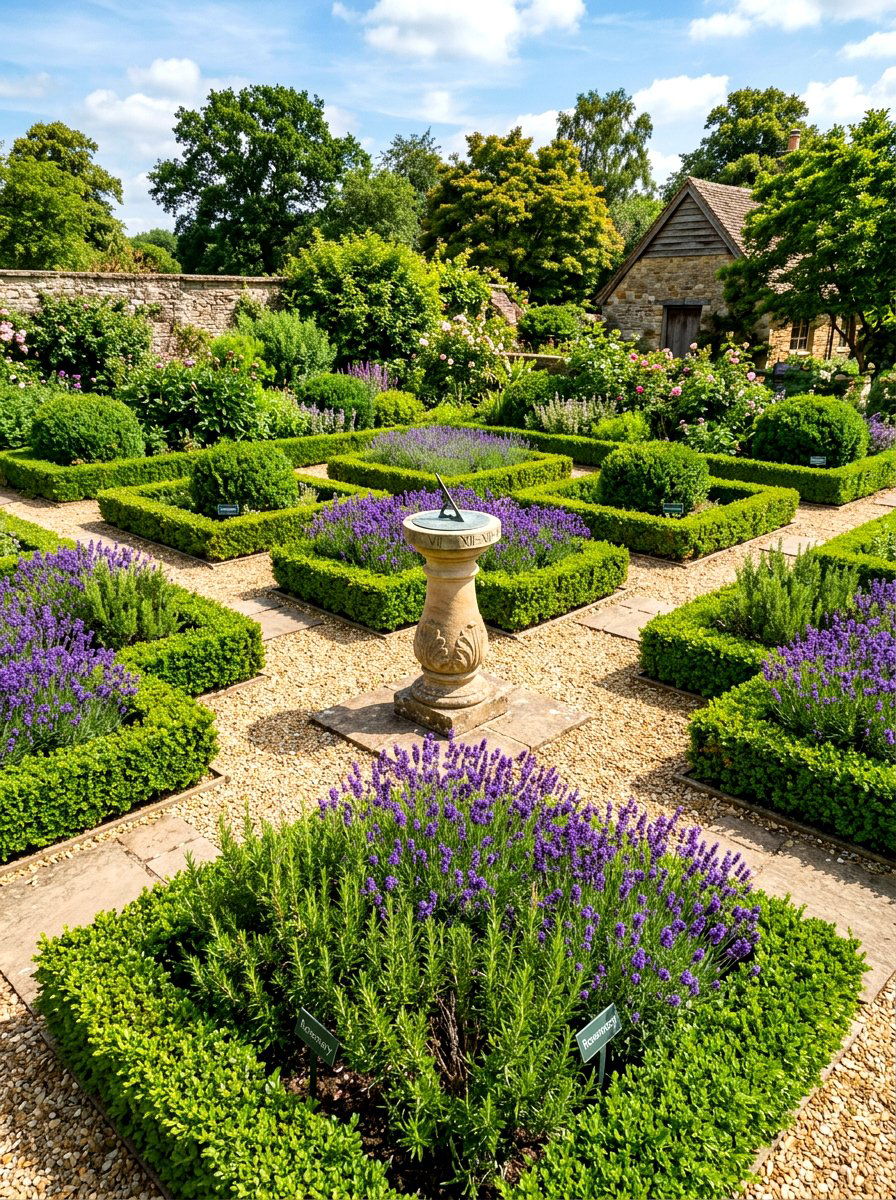
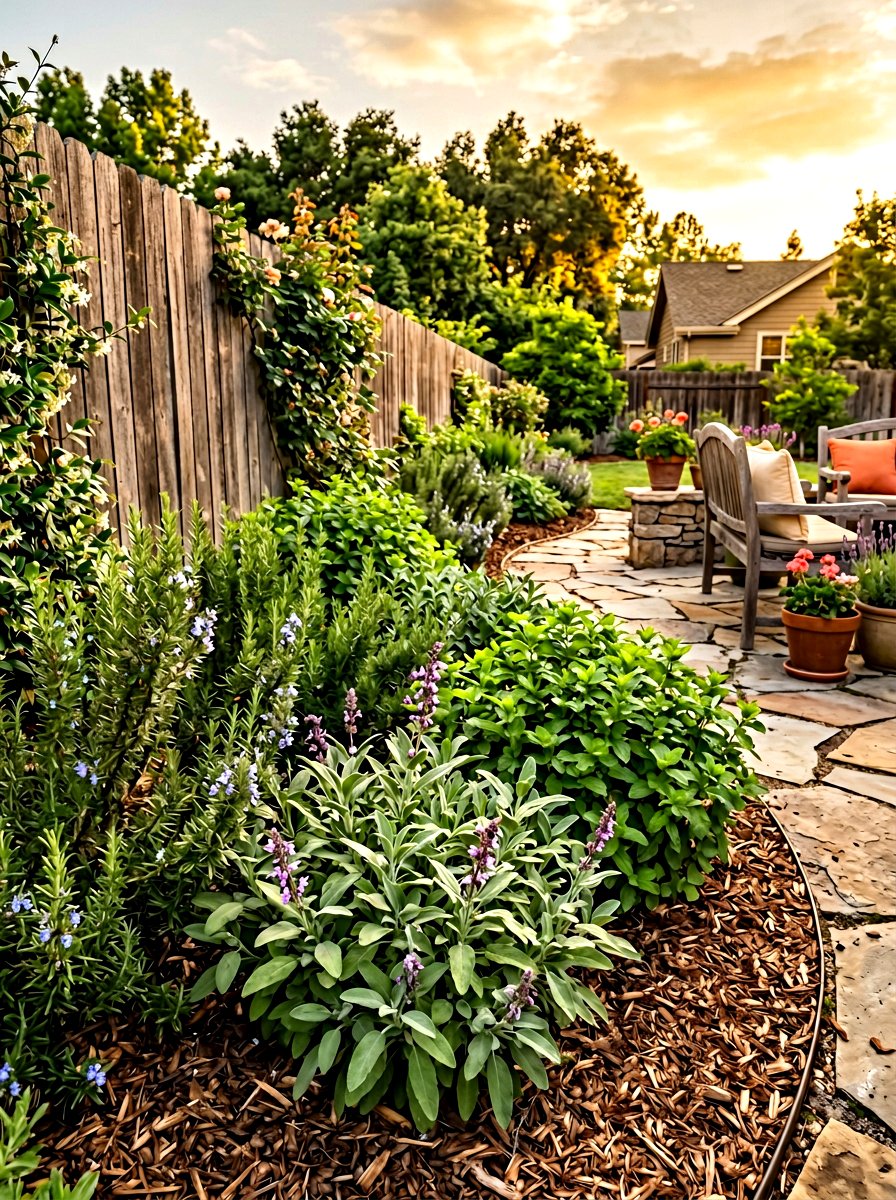
A boxwood herb garden uses evergreen borders to organize various culinary plants into neat, accessible sections. This traditional "potager" style keeps sprawling herbs like rosemary, thyme, and mint contained within a beautiful green framework. The boxwood border provides a consistent look even when certain herbs are harvested or die back in the winter. It creates a very functional yet ornamental space that is perfect for placing near a kitchen door. The contrast between the fine-textured herbs and the glossy boxwood leaves makes the garden feel abundant and well-tended, turning a simple food source into a major landscape feature.
16. Boxwood Wall Border
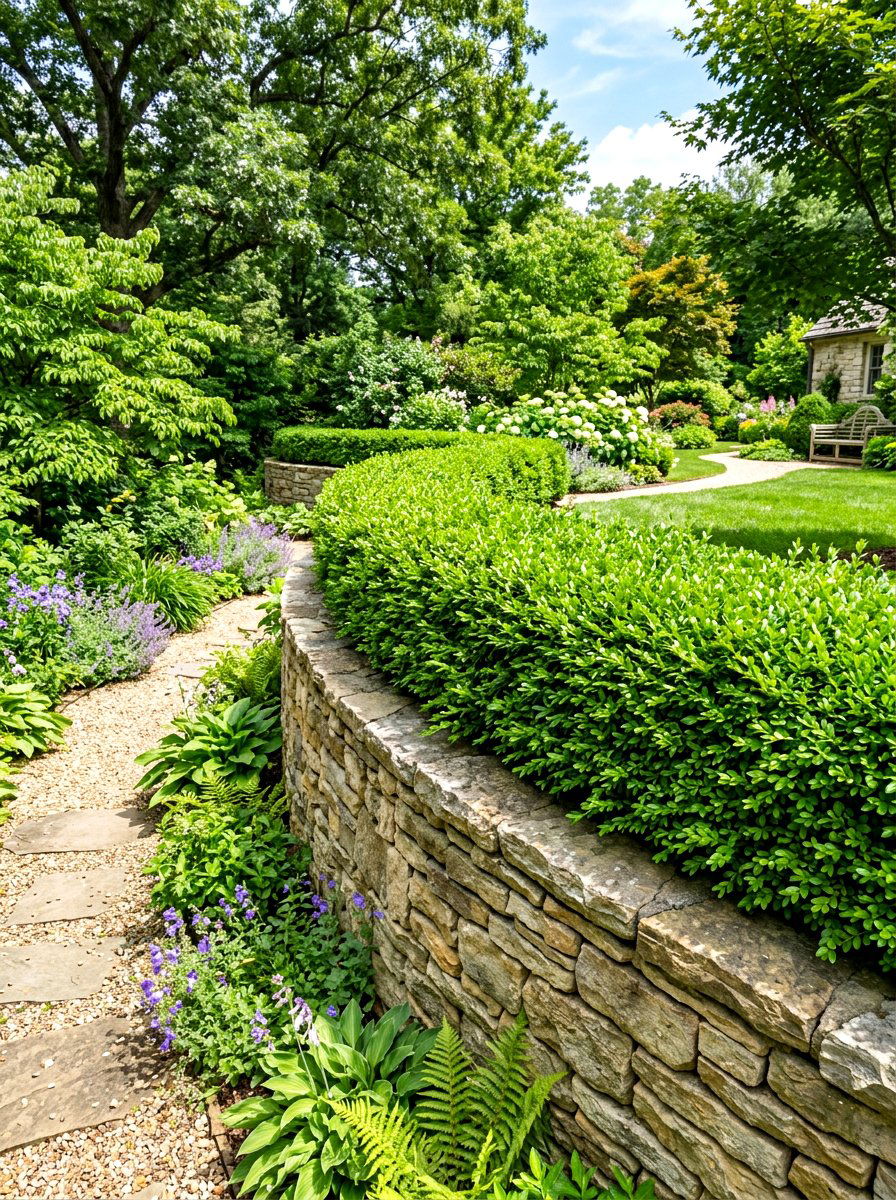
A boxwood wall border involves planting a hedge directly against a stone or brick retaining wall to soften the hard materials. This design helps to blend the man-made structures with the natural environment of the garden. You can plant the boxwoods at the base of the wall to hide the joint where it meets the ground, or along the top edge to create a green railing effect. This adds a layer of safety and beauty to changes in elevation throughout your property. The dark green foliage against the textured stone creates a timeless look that works well in any climate.
17. Boxwood Hydrangea Border
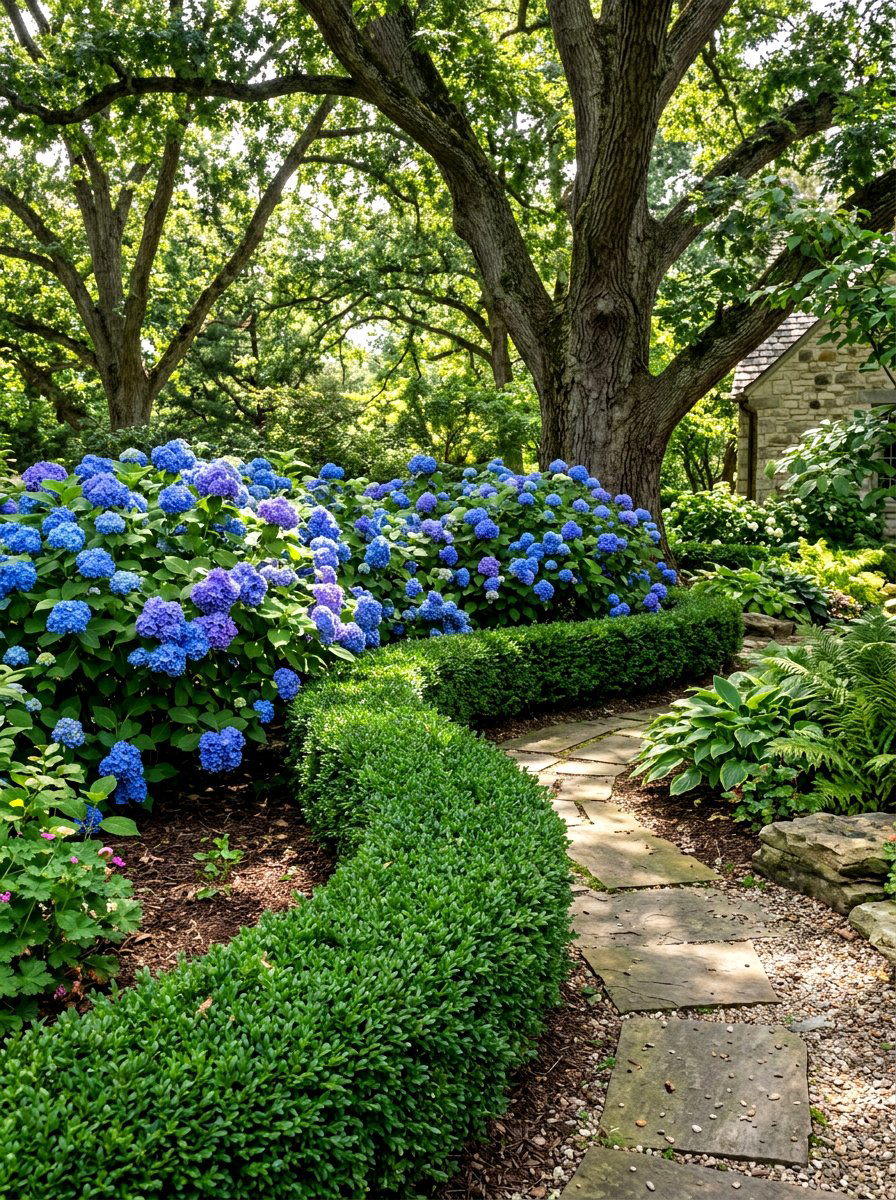
A boxwood hydrangea border is a favorite among designers because it perfectly balances structure and soft, romantic blooms. The boxwoods provide a solid green frame that stays beautiful all year, while the hydrangeas offer massive bursts of color during the summer. Since hydrangeas can become quite large and floppy, the boxwood hedge acts as a sturdy support to keep the flowers from leaning too far forward. This combination is ideal for the shady side of a house or under large trees. The transition from the small boxwood leaves to the large hydrangea foliage adds wonderful texture to the garden.
18. Boxwood Privacy Border
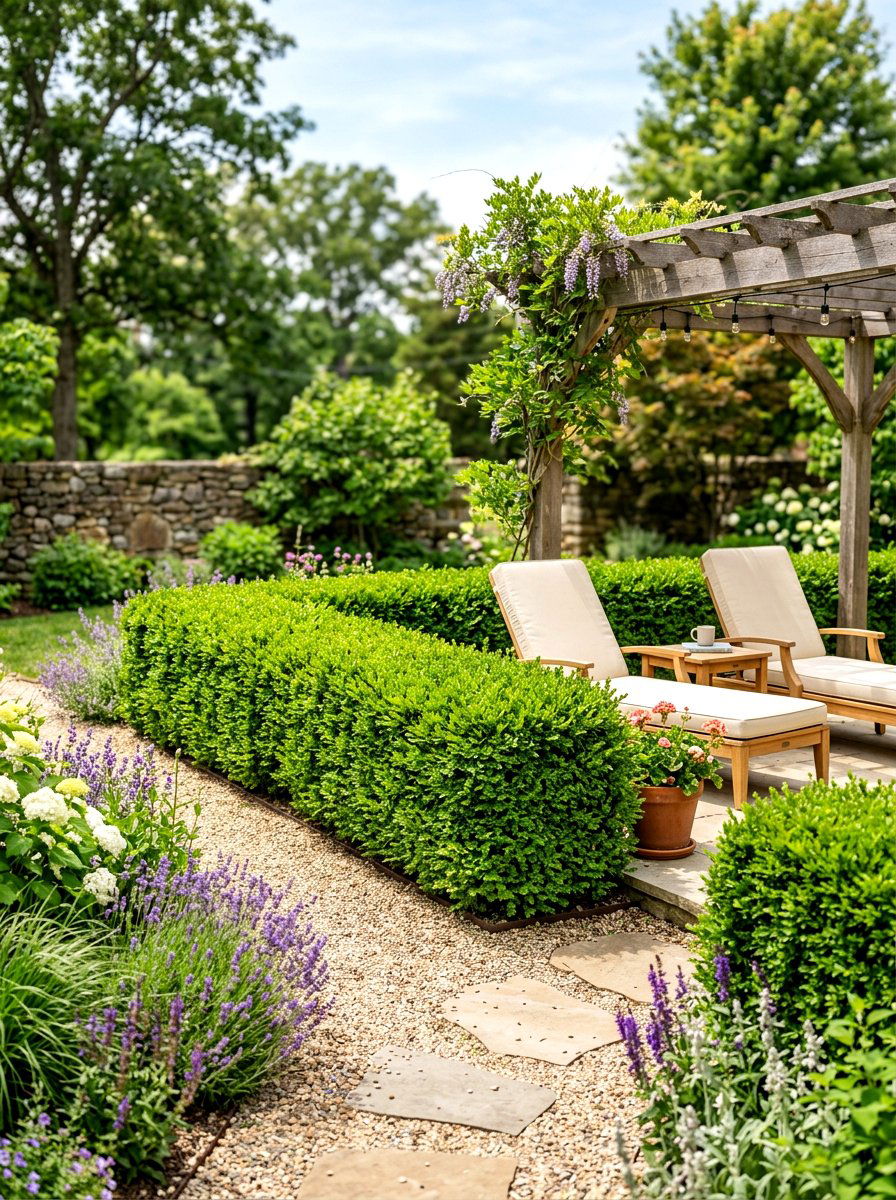
A boxwood privacy border utilizes taller varieties of this shrub to create a living wall that blocks unwanted views. Unlike a wooden fence, a boxwood screen feels soft and natural while still providing a solid barrier. You can grow these hedges to five or six feet tall to shield a patio or backyard from neighbors. The dense growth habit of the boxwood also helps to dampen noise from nearby streets, creating a quieter and more peaceful outdoor environment. Because they are evergreen, you maintain your privacy throughout the winter, which is a major advantage over deciduous privacy plants.
19. Boxwood Vegetable Garden
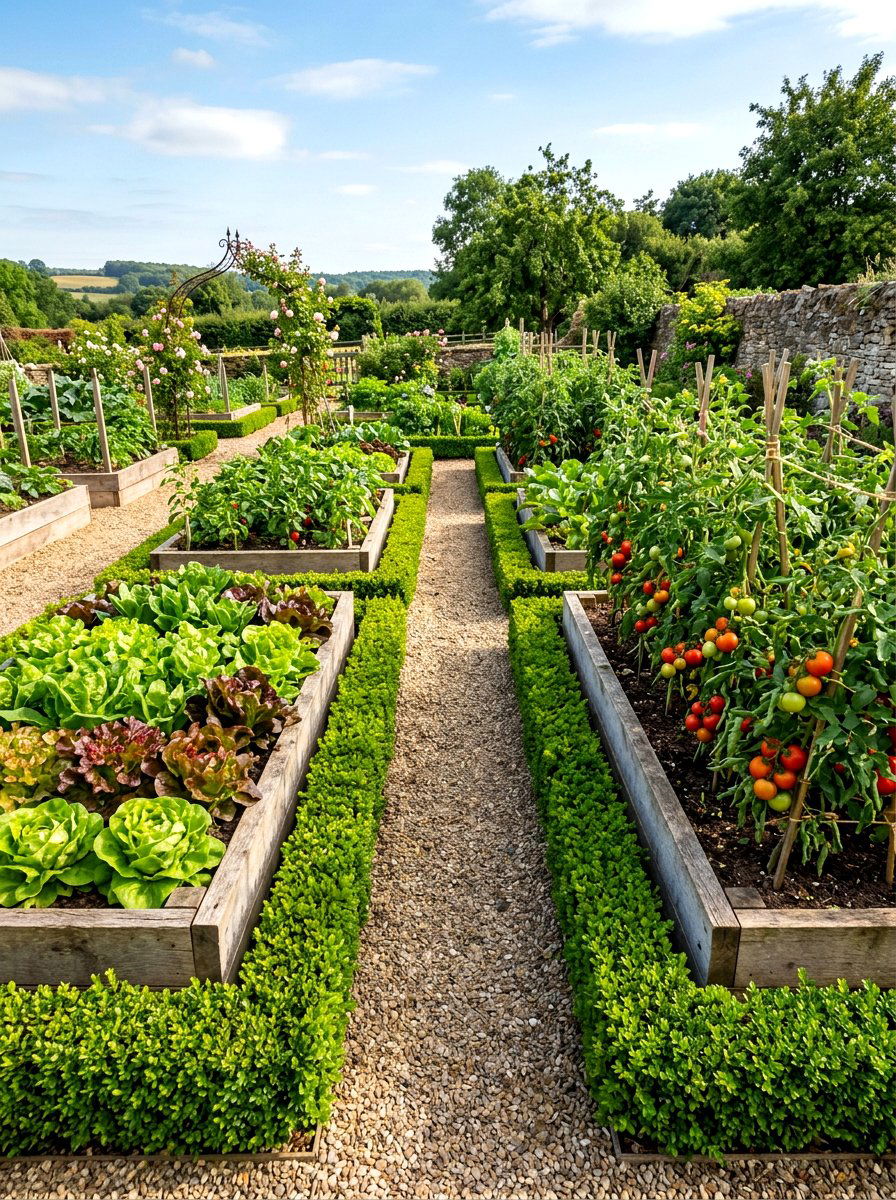
A boxwood vegetable garden brings a sense of order and beauty to a typically messy part of the yard. By bordering your raised beds or in-ground vegetable patches with boxwoods, you create a garden that looks like a formal display rather than just a production area. This border helps to define the walking paths and keeps the vegetables contained. It also acts as a minor deterrent for some small animals that might want to snack on your produce. The evergreen frame ensures that the garden area remains attractive even in the off-season when the vegetable beds are empty and brown.
20. Boxwood Terrace Lining
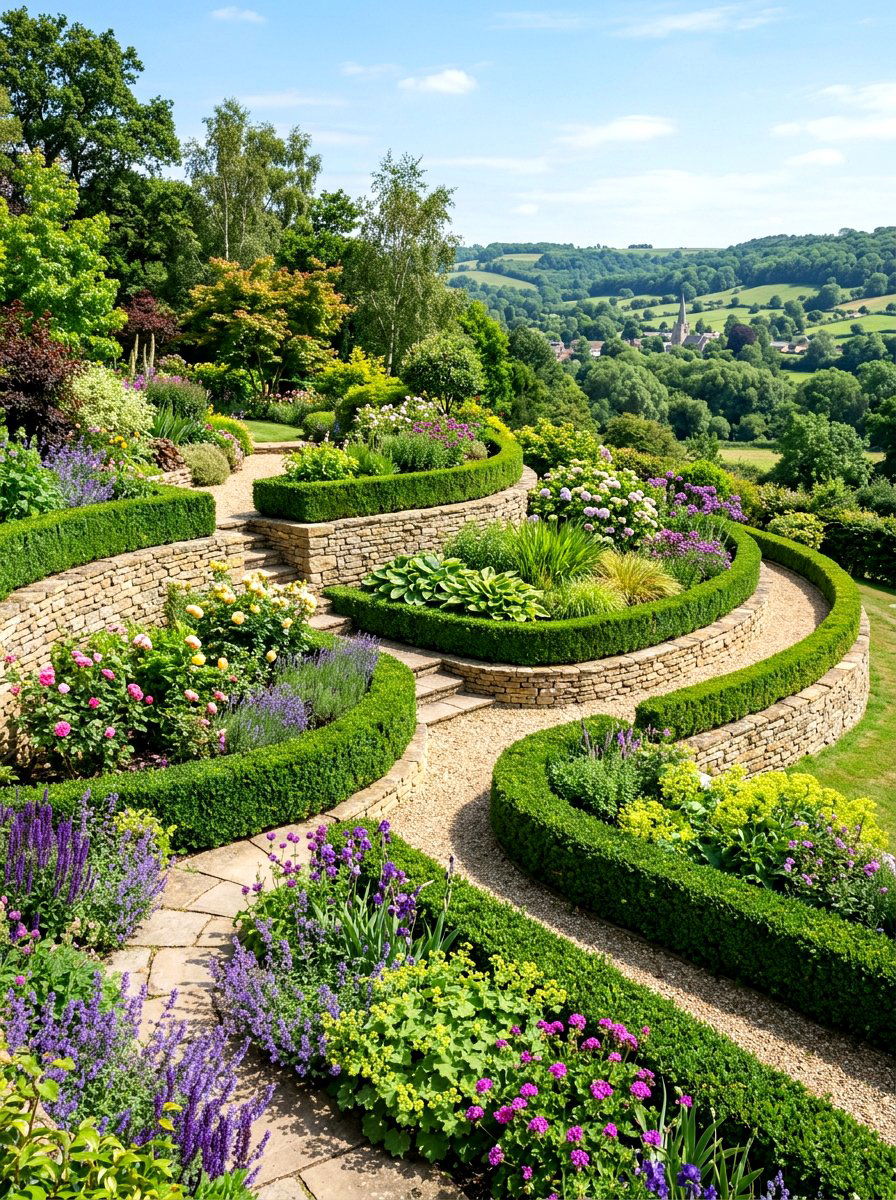
Lining a multi-level terrace with boxwoods helps to emphasize the architectural layers of your landscape. Each level can be framed with a low hedge, which highlights the steps and changes in elevation. This creates a very grand and dramatic look for hillside properties. The green borders provide a consistent visual thread that ties the different terrace levels together into one cohesive design. You can also use these borders to prevent soil erosion on the edges of the terraces. It is a practical and beautiful way to make a sloped yard feel more organized and intentionally designed for luxury.
21. Modern Boxwood Edging
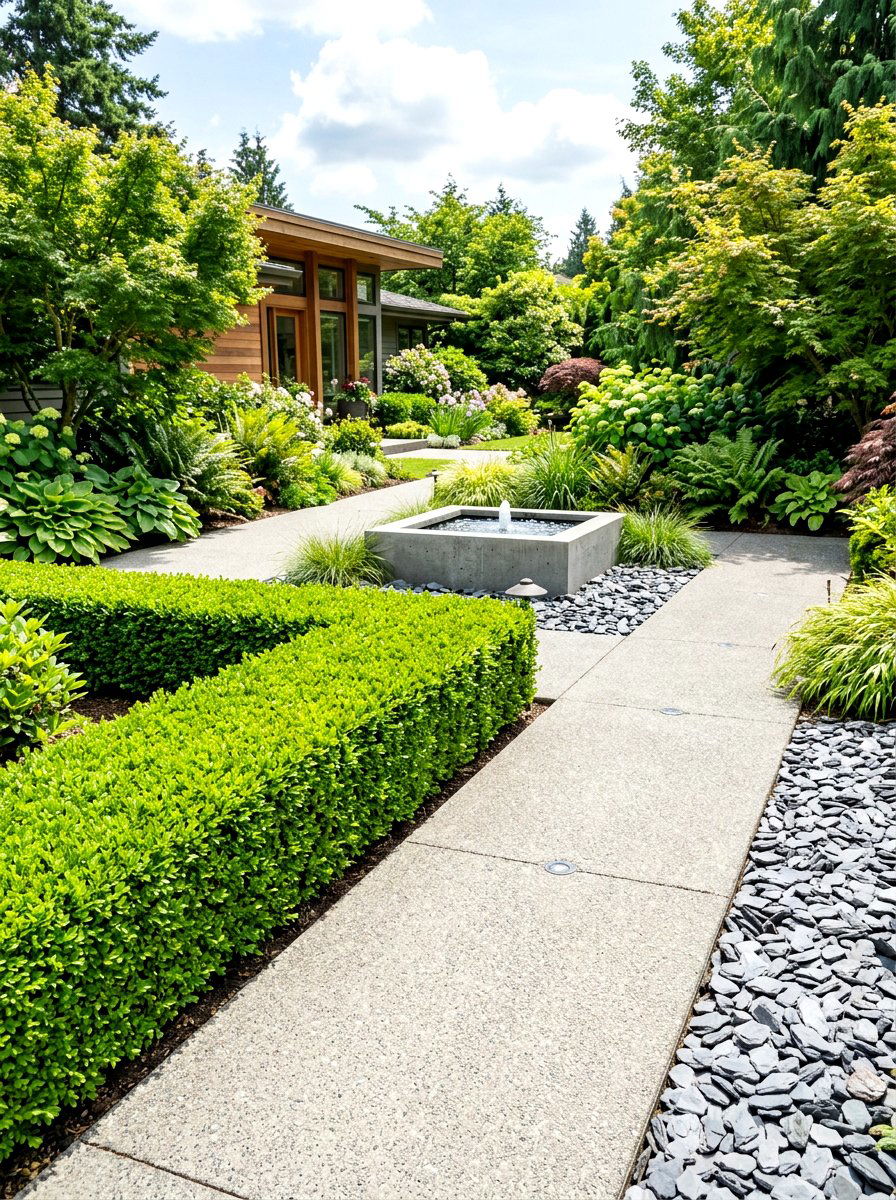
Modern boxwood edging focuses on clean, sharp lines and minimalist planting schemes to complement contemporary architecture. Instead of fluffy or rounded shapes, the boxwoods are clipped into perfect rectangles or squares with very flat tops and sides. This style looks incredible when paired with modern materials like steel, concrete, or dark wood decking. Often, these borders are used to frame simple groundcovers or even decorative rocks like white marble chips. This high-contrast look is very trendy and emphasizes the geometric forms of the home. It requires regular maintenance, but the resulting sleek appearance is worth the extra effort.
22. Boxwood Outdoor Steps
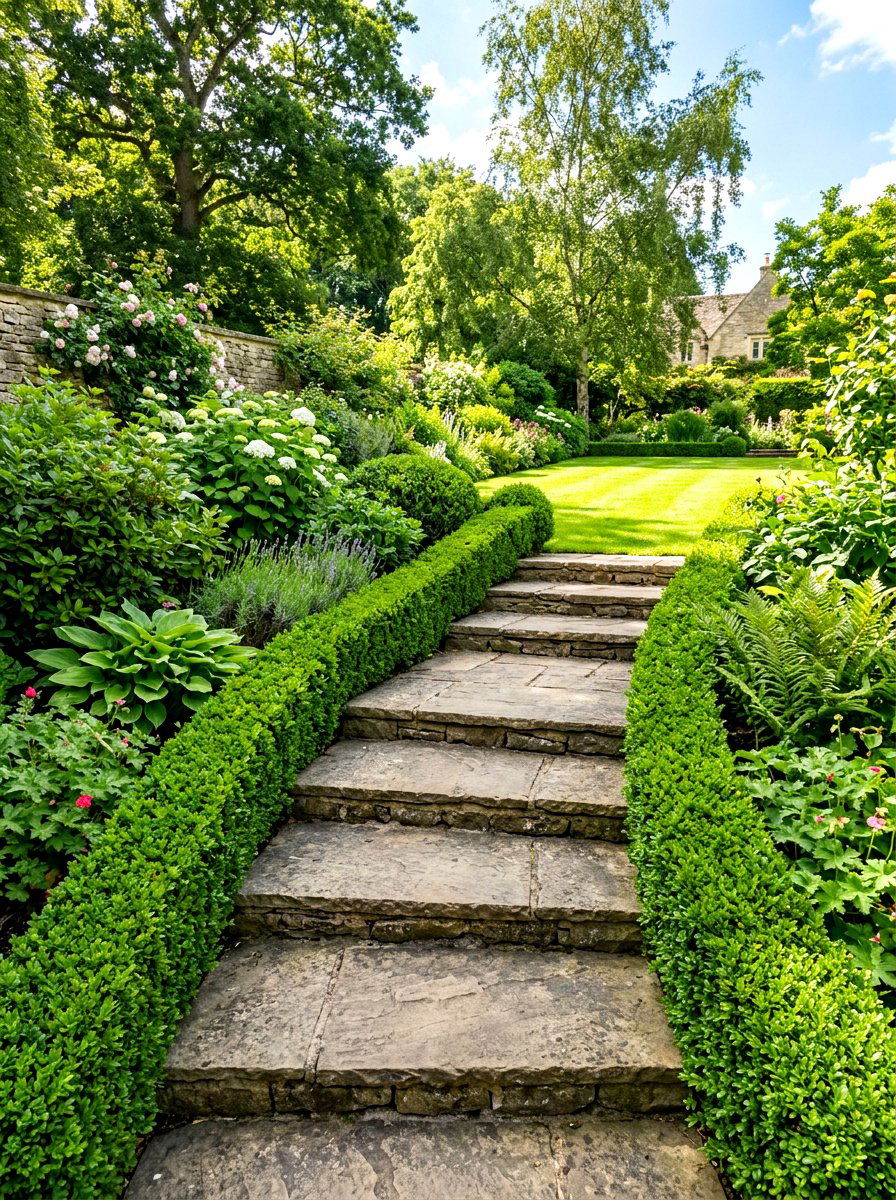
Framing outdoor steps with boxwoods makes a simple functional element into a beautiful landscape feature. You can plant the shrubs along the sides of the stairs to create a green banister that guides people safely up or down. This design works well for both grand front entrances and smaller steps leading to a hidden part of the backyard. Using rounded boxwood balls at the top and bottom of the stairs can serve as elegant "end caps" for the border. This adds a touch of classic sophistication and ensures that the staircase feels integrated into the surrounding garden rather than just sitting on top of it.
23. Boxwood Around Fountain
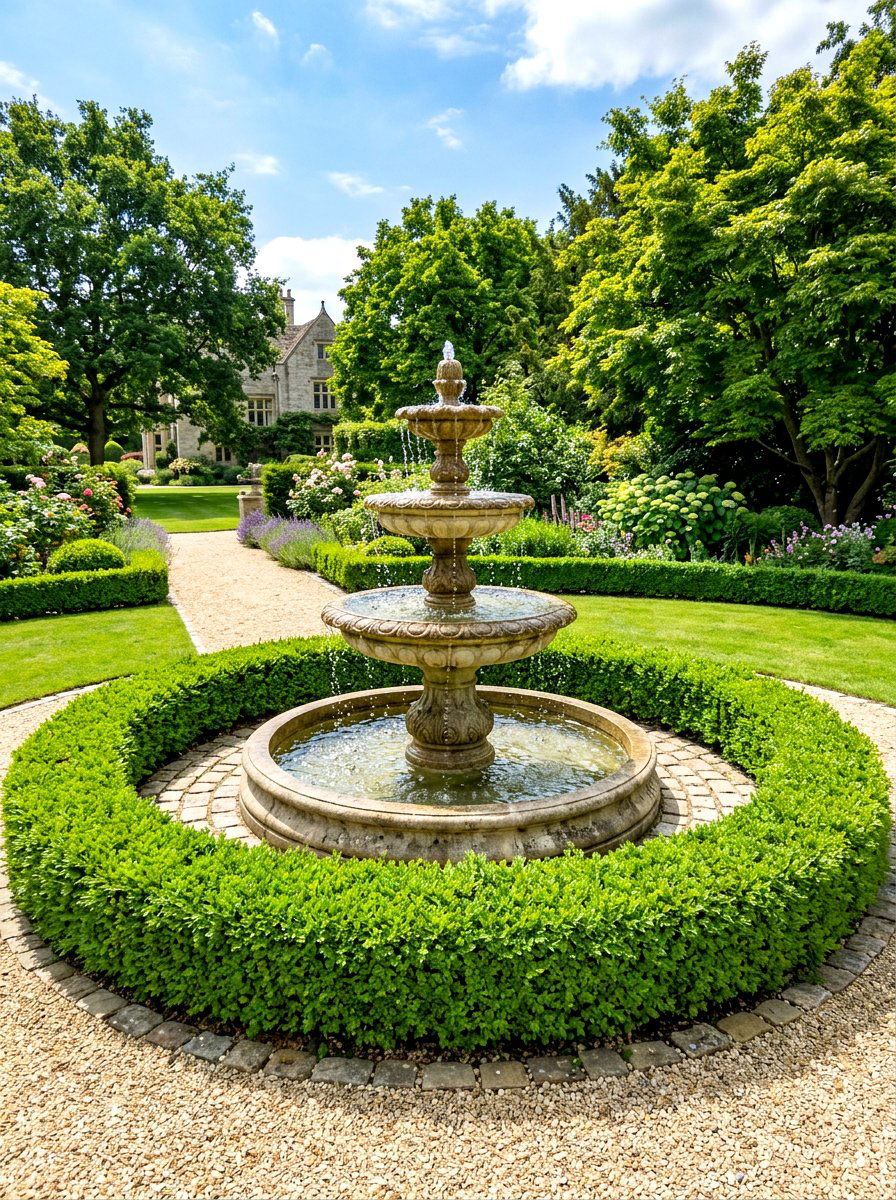
Planting boxwood around a fountain creates a formal and tranquil centerpiece for your garden. The low green border follows the shape of the fountain base, whether it is circular, square, or octagonal. This frames the water feature and makes it feel more substantial and grounded in the landscape. The evergreen foliage provides a beautiful backdrop for the moving water and can help hide any plumbing or electrical components. Adding a few taller boxwoods in the corners of the fountain area can add height and drama, making the entire water feature area feel like a private and sacred outdoor sanctuary.
24. Boxwood Planter Border
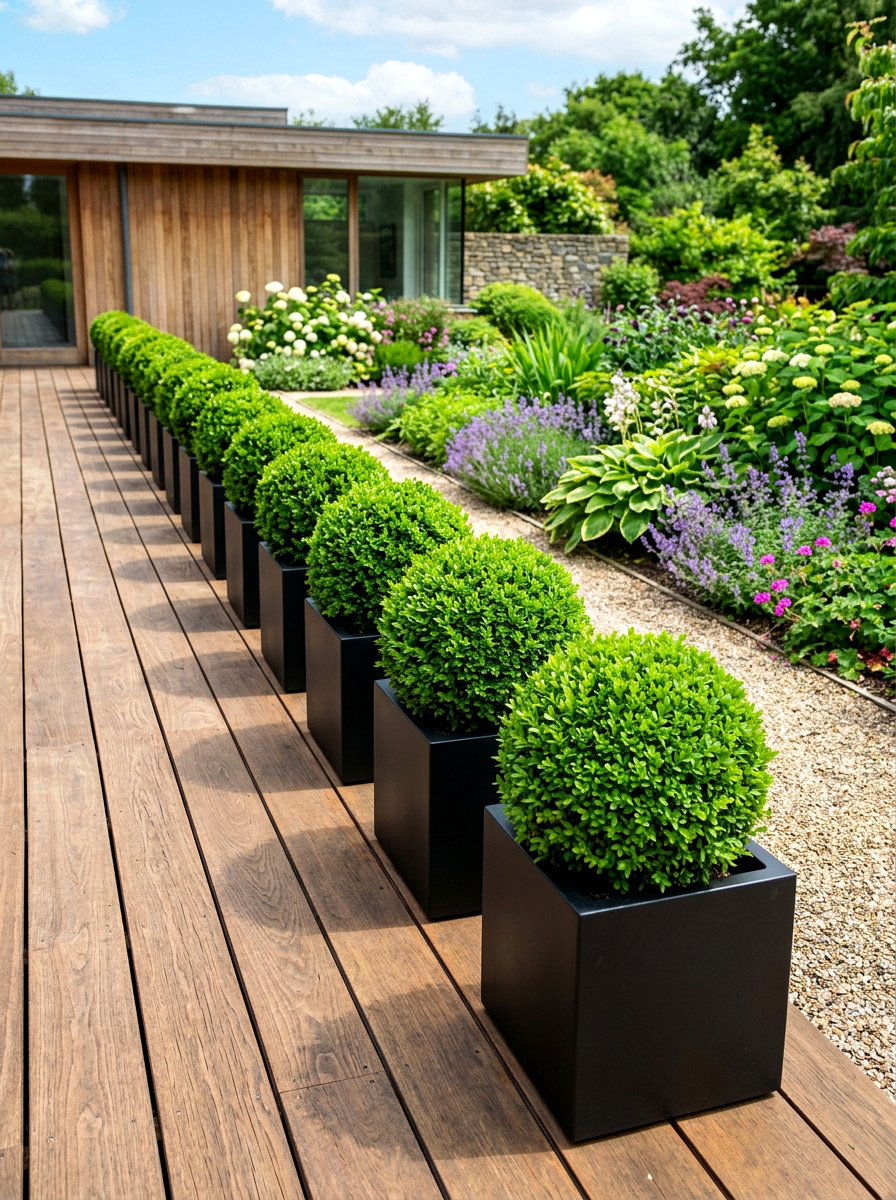
A boxwood planter border involves using large containers to hold your boxwoods, which are then placed in a row to create a portable hedge. This is a perfect solution for renters or for those with large paved areas like balconies and roof decks where you cannot plant in the ground. You can use identical pots for a formal look or vary the sizes for something more eclectic. These planters can be used to divide an outdoor space or to provide a green border along a deck railing. Because they are in pots, you can easily rearrange the layout whenever you want a new look.
25. Boxwood Ball Border
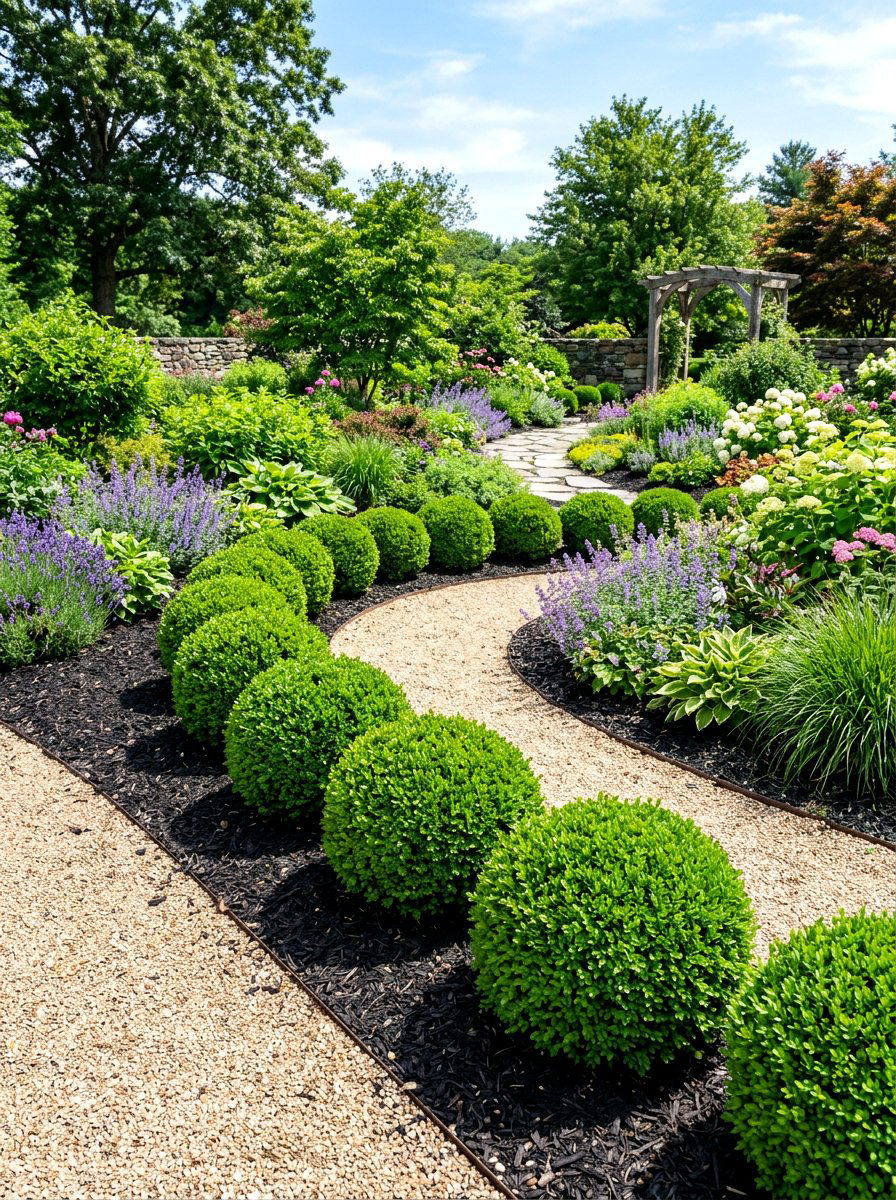
A boxwood ball border is a playful and modern take on the traditional continuous hedge. Instead of a solid wall, you plant individual boxwood shrubs and prune them into perfect spheres spaced a few inches apart. This creates a "bubbly" and textured border that feels lighter and more whimsical. It is a great way to add visual interest to a straight walkway or a flat lawn. The gaps between the balls allow for air circulation and can be filled with low-growing groundcovers or seasonal flowers. This style is very popular in contemporary European gardens and adds a high-design feel to any yard.
26. Boxwood Lavender Hedge
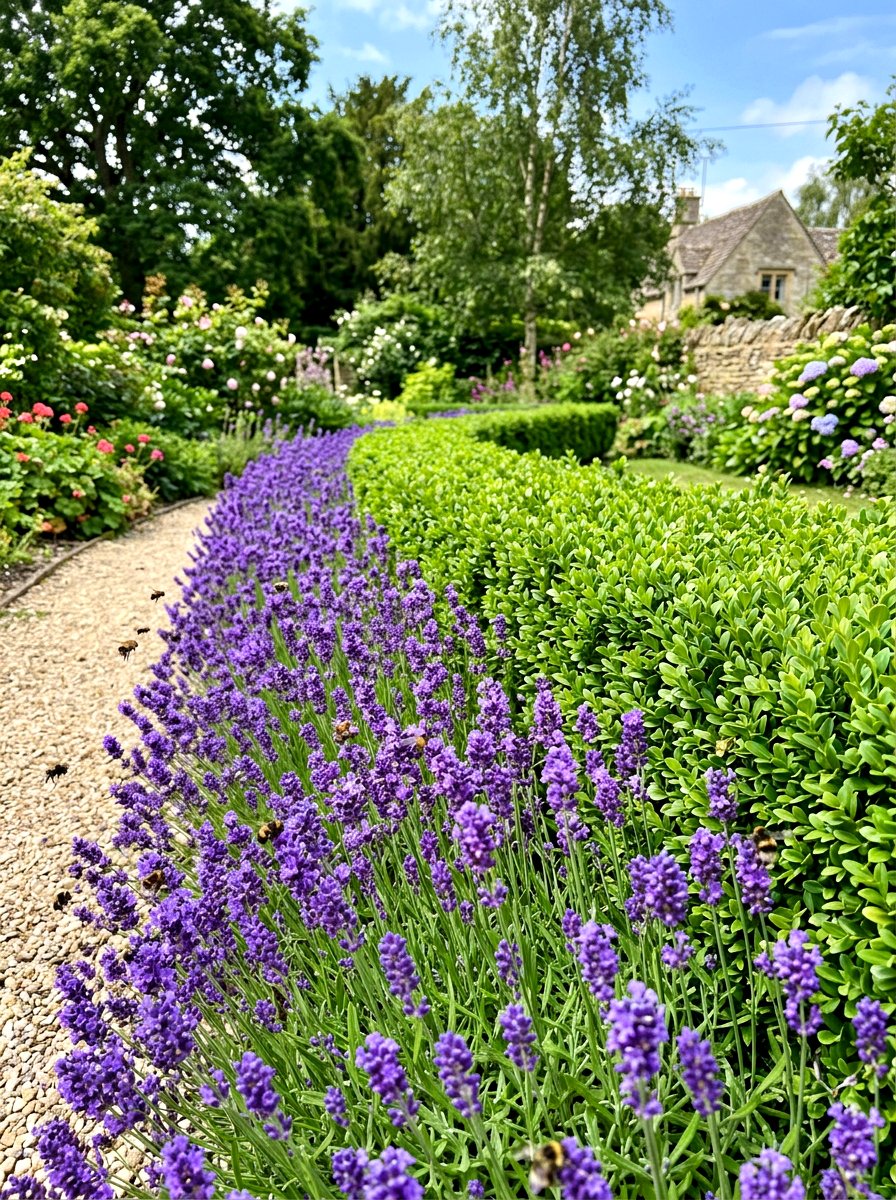
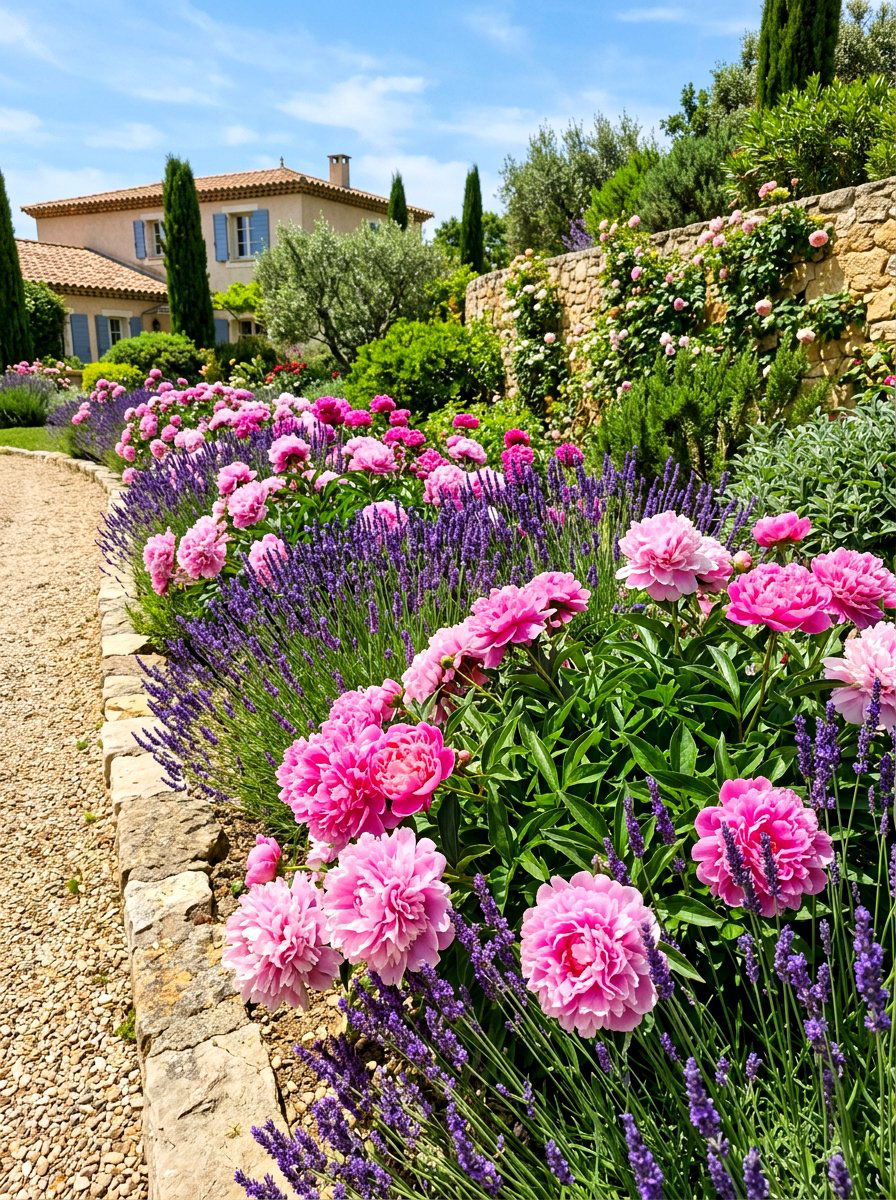
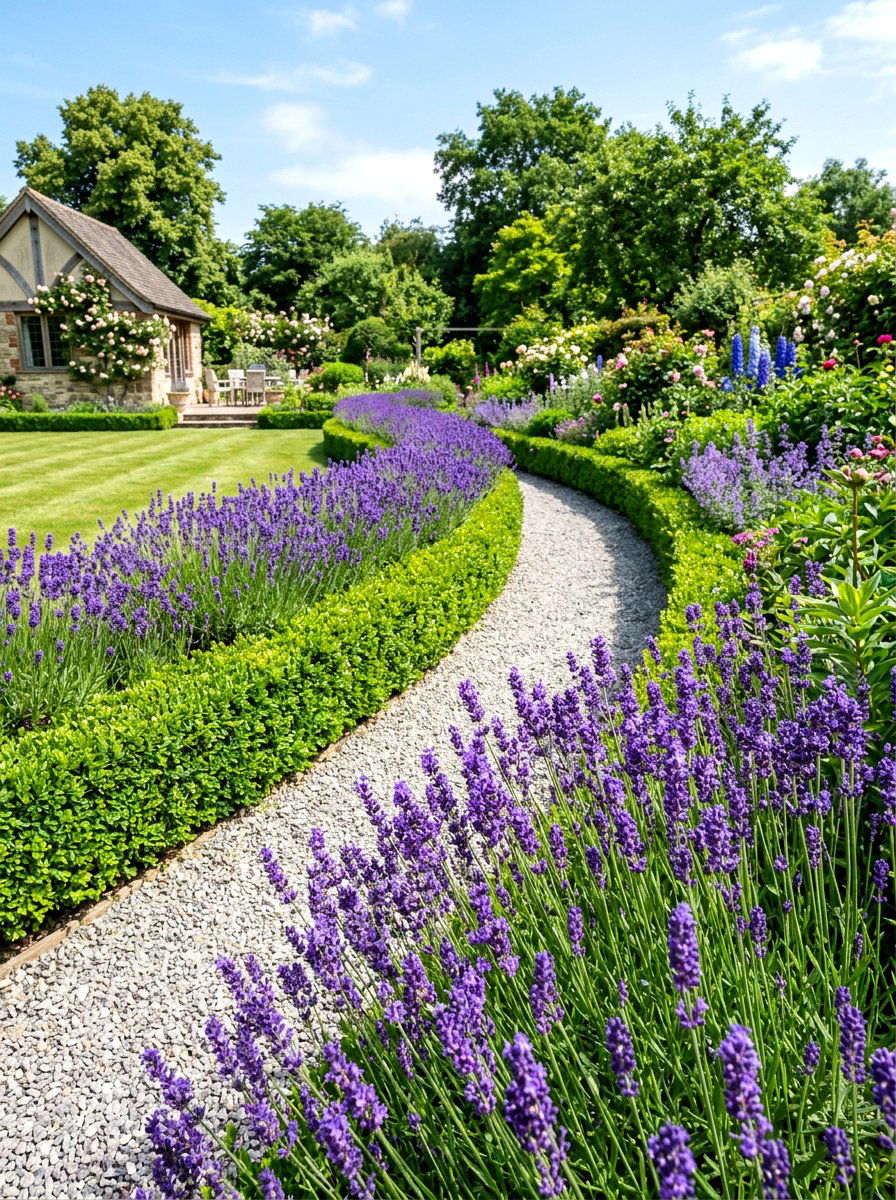
Combining boxwood with lavender creates a border that appeals to both the eyes and the nose. In this design, a low boxwood hedge is planted behind a row of fragrant lavender. The sturdy green boxwood provides a permanent structure that supports the softer, sometimes floppier lavender stems. During the summer, the purple flowers of the lavender look stunning against the deep green boxwood leaves. This pairing is a staple of Mediterranean and French country styles. When you walk past this border, the scent of the lavender is released, making your garden feel like a luxurious spa retreat in your own backyard.
27. Boxwood Small Courtyard
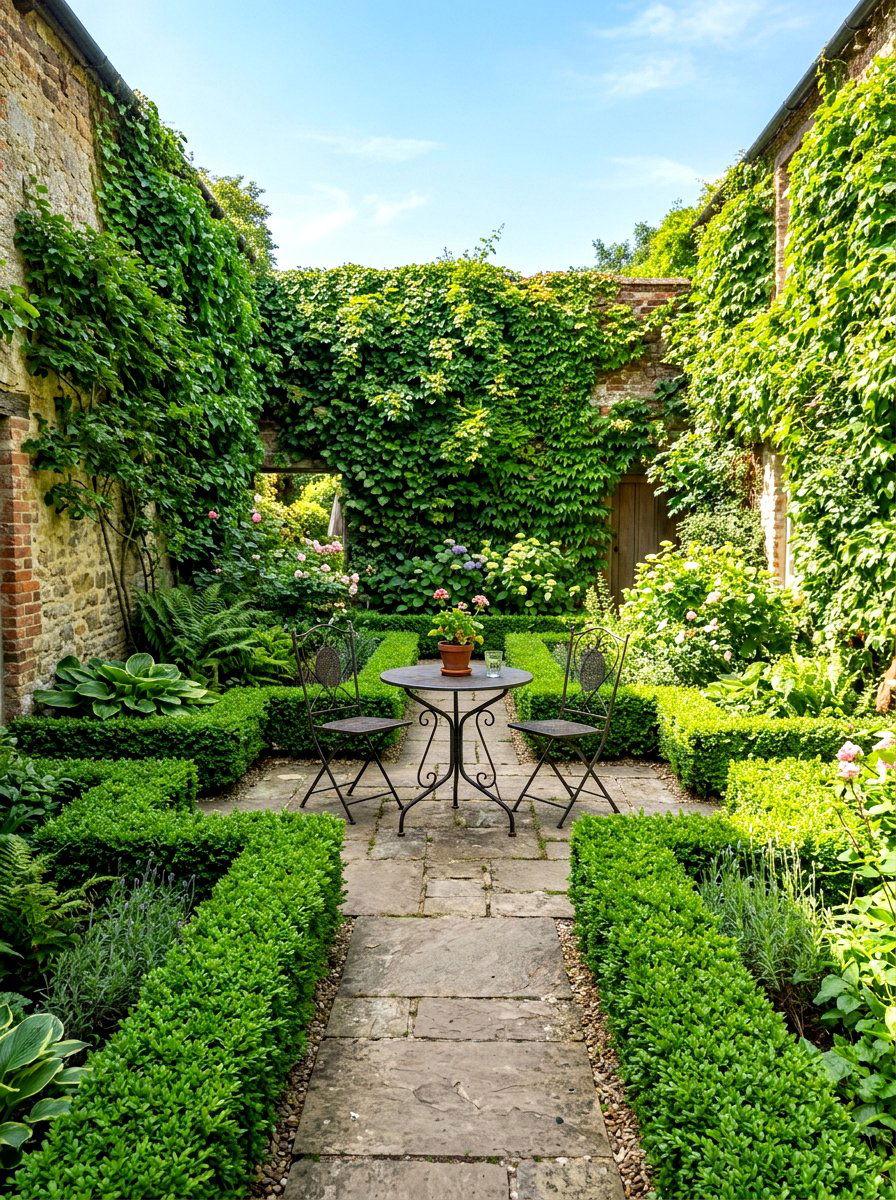
A boxwood small courtyard uses evergreen borders to maximize the style of a limited space. By lining the walls of a small enclosed patio or courtyard with boxwoods, you create a lush "green room" effect. This makes the space feel larger and more vibrant than if it were just bare walls and pavement. You can use thin, columnar boxwood varieties to save space while still getting the height you need for privacy. Adding a small bistro set in the center of the boxwood-framed area creates a perfect spot for morning coffee. It turns a tiny, forgotten nook into a stylish outdoor escape.
28. Boxwood Garden Sculpture
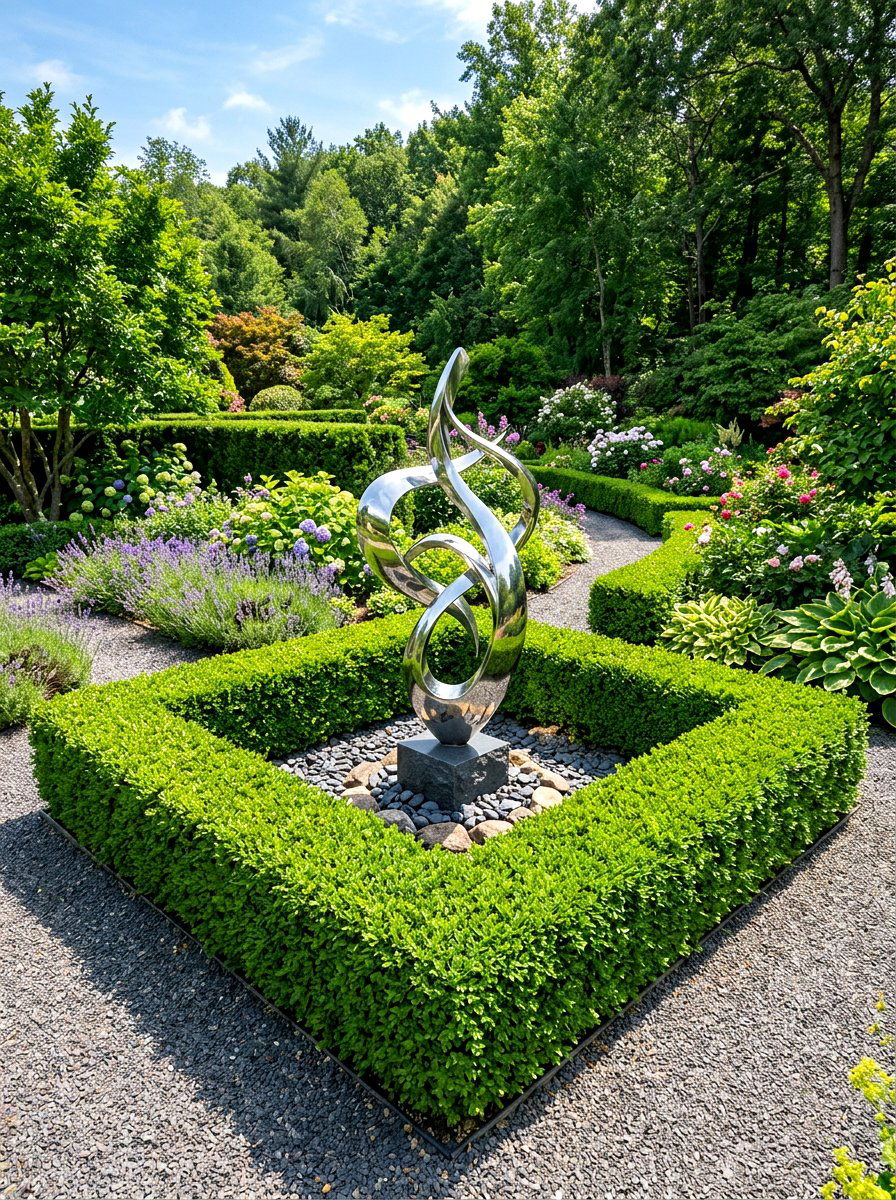
Using boxwood borders to frame a garden sculpture helps to elevate the art and make it a true focal point. A low, circular or square boxwood hedge provides a formal base that makes the sculpture look like it belongs in a museum gallery. This prevents the artwork from being swallowed up by other plants or lost in a large lawn. The consistent green color of the boxwood ensures that the sculpture remains the star of the show. It is an excellent way to showcase anything from a classic stone statue to a modern metal abstract piece, giving your garden a sophisticated, curated feel.
29. Tiered Boxwood Border
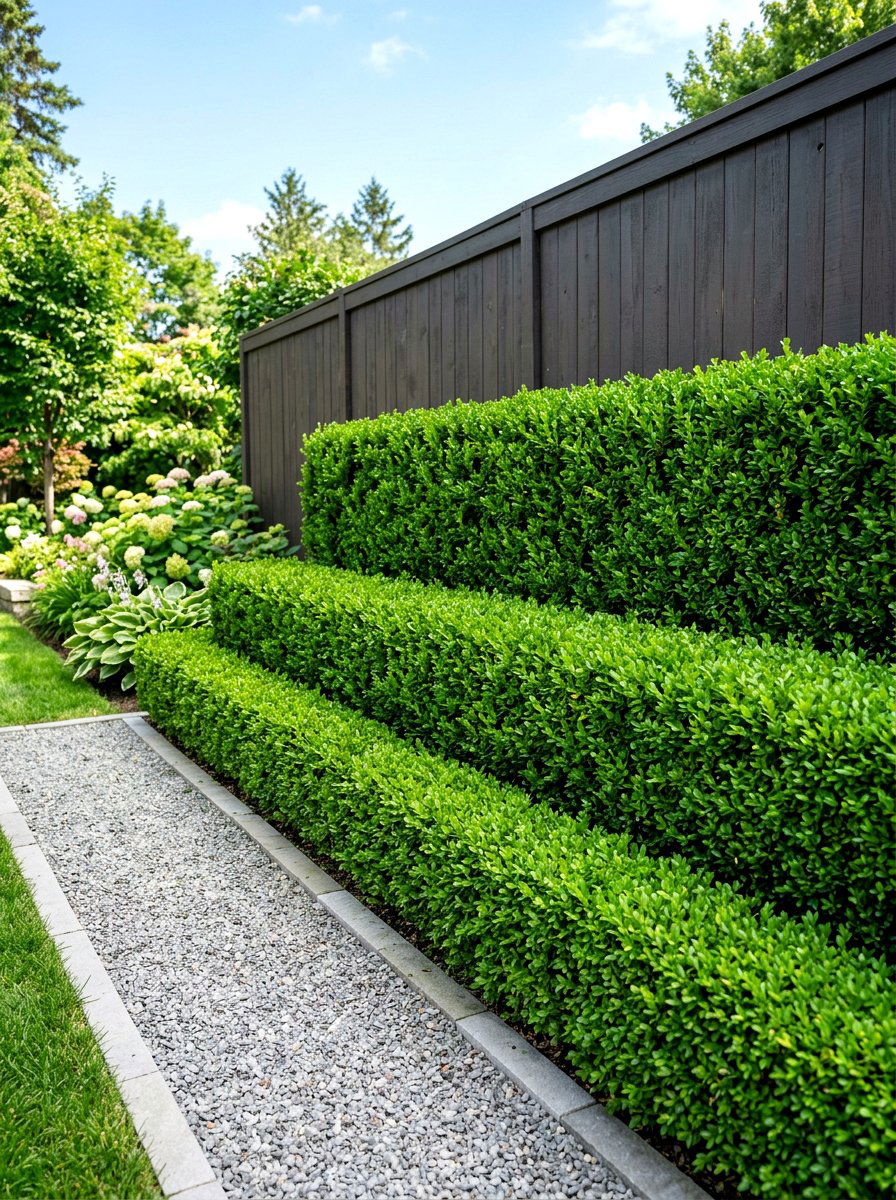
A tiered boxwood border uses different varieties of boxwood with varying natural heights to create a step-down effect. You might plant a tall variety against a fence, a medium variety in the middle, and a dwarf variety at the very front. This creates a dense wall of greenery with a lot of depth and texture. It is a fantastic way to fill a wide garden bed without needing many other types of plants. This all-green approach is very calming and provides a rich, textured look that stays perfect all year. It is a low-maintenance way to achieve a very high-end and professional landscape look.
30. Boxwood House Corner
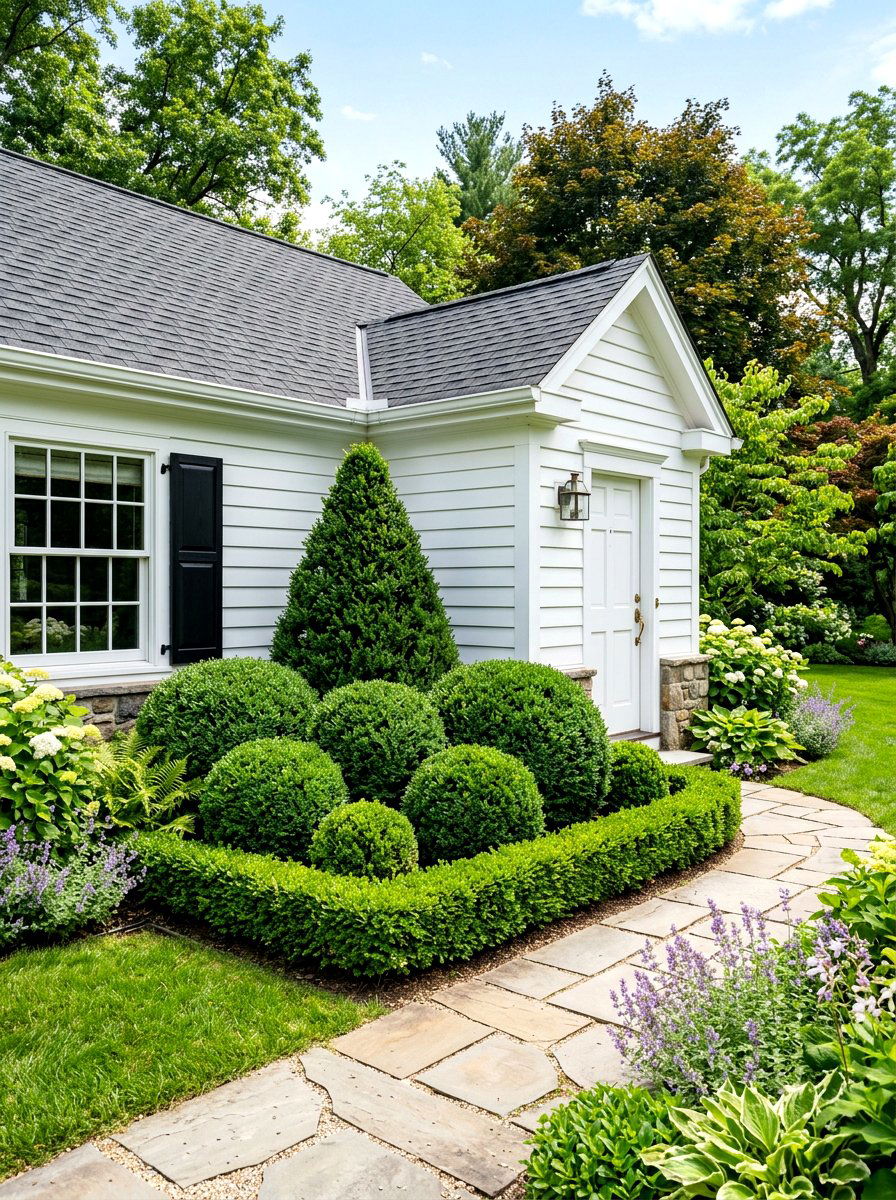
Framing the corner of your house with a boxwood border helps to anchor the structure and soften the sharp vertical lines of the building. This design usually involves a grouping of boxwoods of different sizes to create a rounded, organic shape. It transitions the eye from the flat lawn to the tall house wall smoothly. You can accent the corner planting with a taller specimen tree or a large decorative urn to add height. This foundation planting ensures that your home looks well-integrated with its surroundings. It is a simple landscape trick that provides a sense of permanence and classic beauty to your property.
Conclusion:
Incorporating boxwood borders into your landscape is one of the most effective ways to add permanent structure and timeless elegance to your property. These versatile evergreens offer a unique blend of durability and beauty that works in almost any climate or garden style. Whether you choose a formal parterre or a relaxed curved border, you are making an investment that will enhance your home's curb appeal for years to come. By following these ideas, you can create an organized and inviting outdoor space that remains green and vibrant throughout every season. Start small with a simple walkway lining and watch your garden transform into a masterpiece.

Related posts: