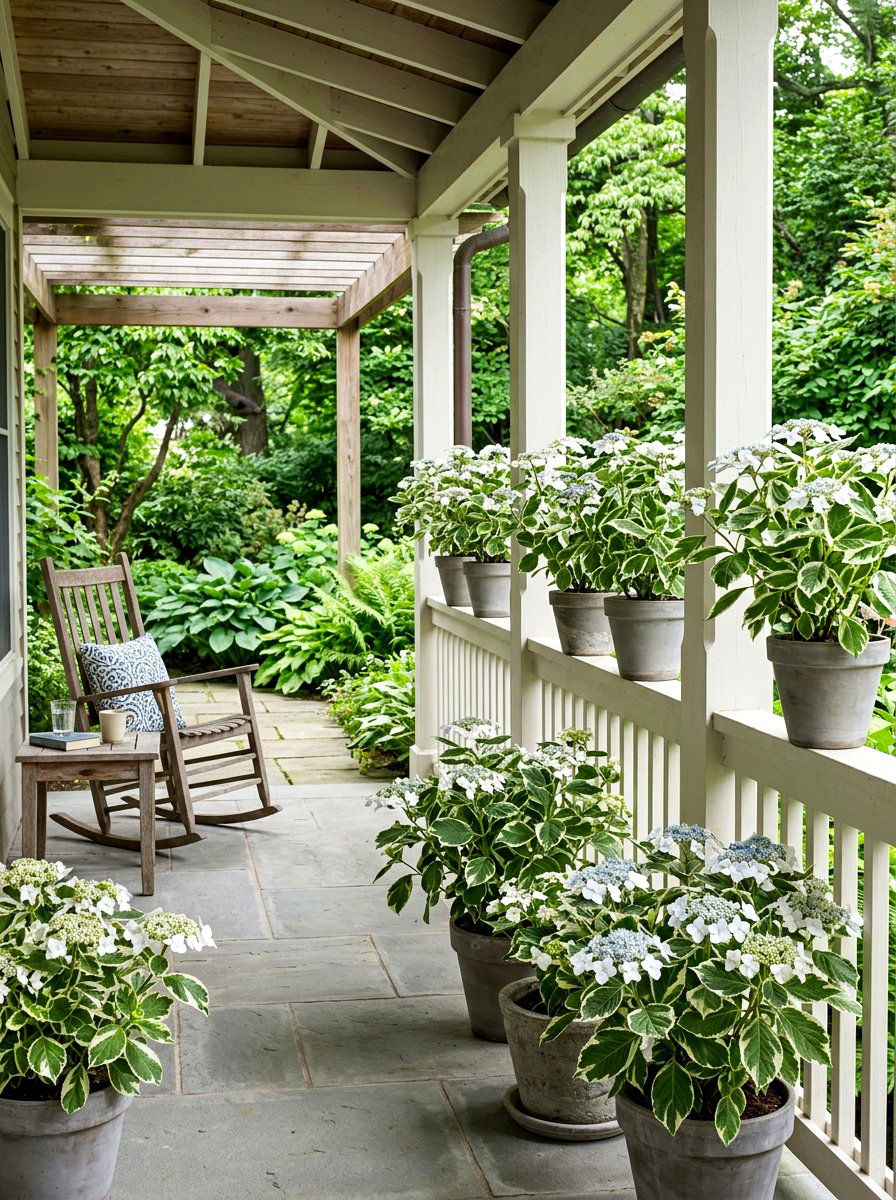
Hydrangeas are the undisputed stars of the summer garden, offering an unparalleled abundance of lush blooms and vibrant foliage. Creating a hydrangea border is one of the most effective ways to add structure, color, and a sense of luxury to your outdoor space. Whether you are looking for a formal hedge to define your property line or a whimsical cottage-style edge for a winding path, these versatile shrubs can do it all. With their ability to thrive in various light conditions and soil types, hydrangeas provide a reliable foundation for any landscape design. This guide explores thirty creative ways to incorporate these stunning plants into your garden borders for a truly viral look.
1. Limelight hydrangea hedge
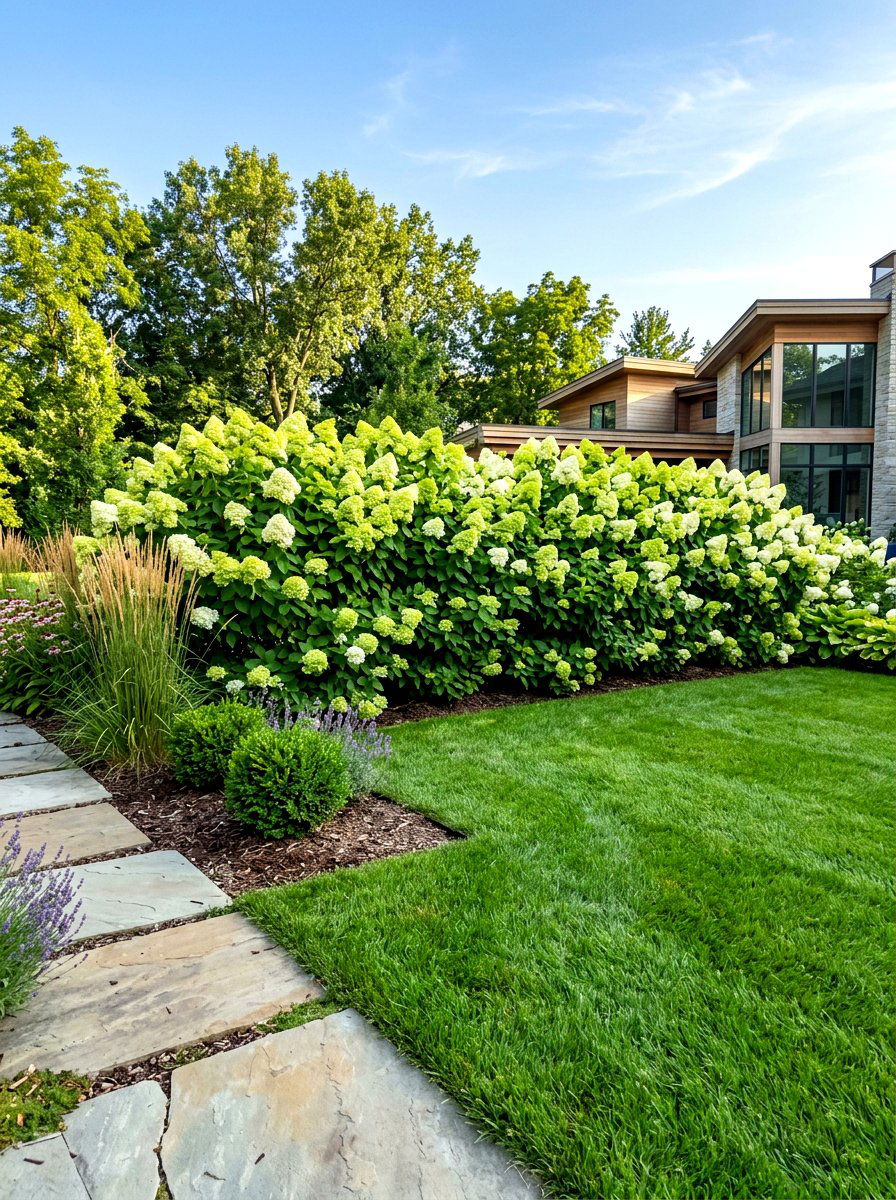
Limelight hydrangeas are iconic for a reason. These stunning shrubs produce massive cone-shaped blooms that start as a refreshing lime green. They slowly transition to a brilliant white and eventually fade to a soft pink in the autumn. Using them as a hedge creates a sophisticated and uniform look along any property line. They grow quite tall, making them perfect for adding privacy to your backyard. You should plant them in a sunny spot to ensure the stems stay strong and upright. Their sturdy nature means they rarely flop over even after heavy rain. This makes them a reliable choice for structural garden borders. The cooling green tones offer a very clean and modern aesthetic for contemporary homes.
2. Hydrangea and boxwood border
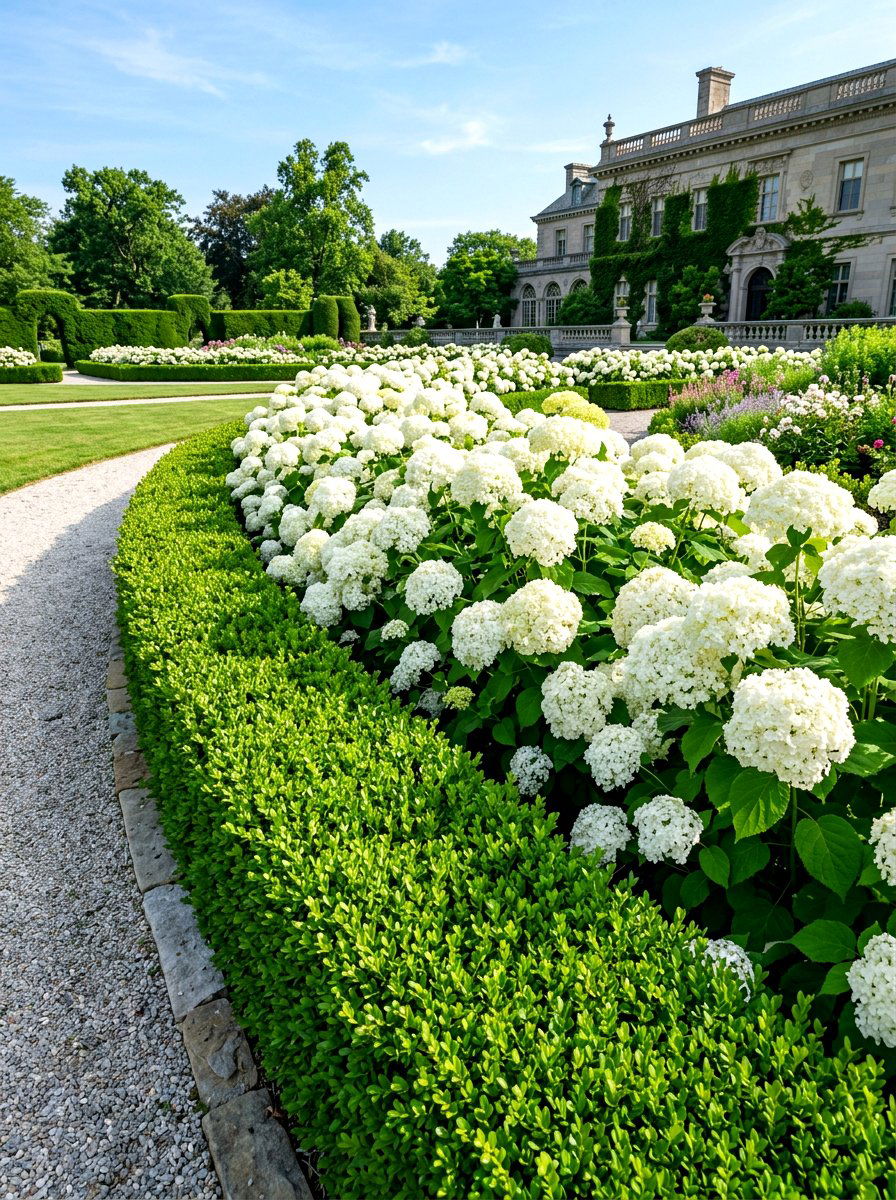
The combination of hydrangeas and boxwoods is a classic garden design that never goes out of style. This pairing offers a perfect balance between the loose, billowy texture of the flowers and the crisp, structured form of the evergreens. By planting a row of low-clipped boxwoods in front of taller hydrangeas, you create a layered look that remains attractive year-round. Even when the hydrangeas lose their leaves in the winter, the boxwoods provide essential greenery and architectural interest. This design is particularly effective for formal front yard landscapes. It frames the house beautifully and provides a sense of order. The contrast between the dark green boxwood leaves and bright hydrangea blooms is simply stunning.
3. Blue hydrangea walkway
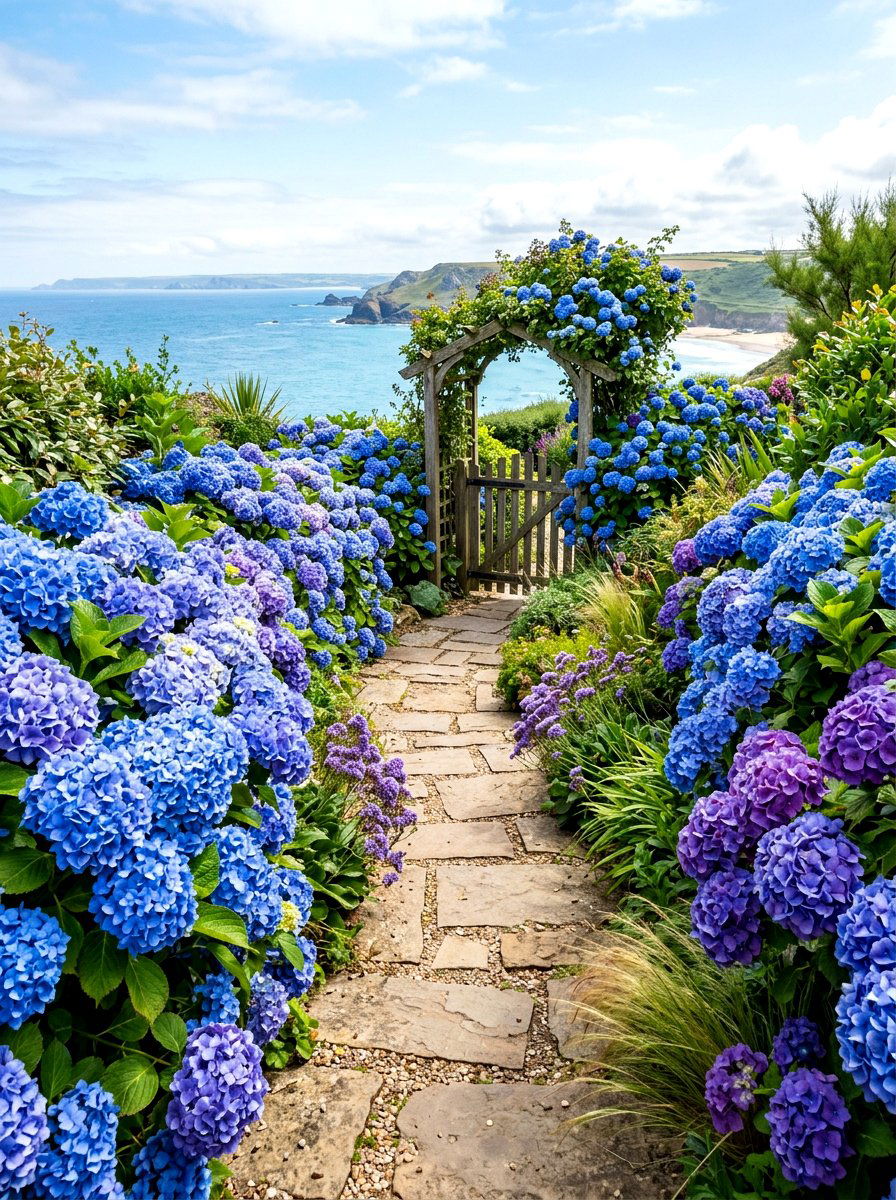
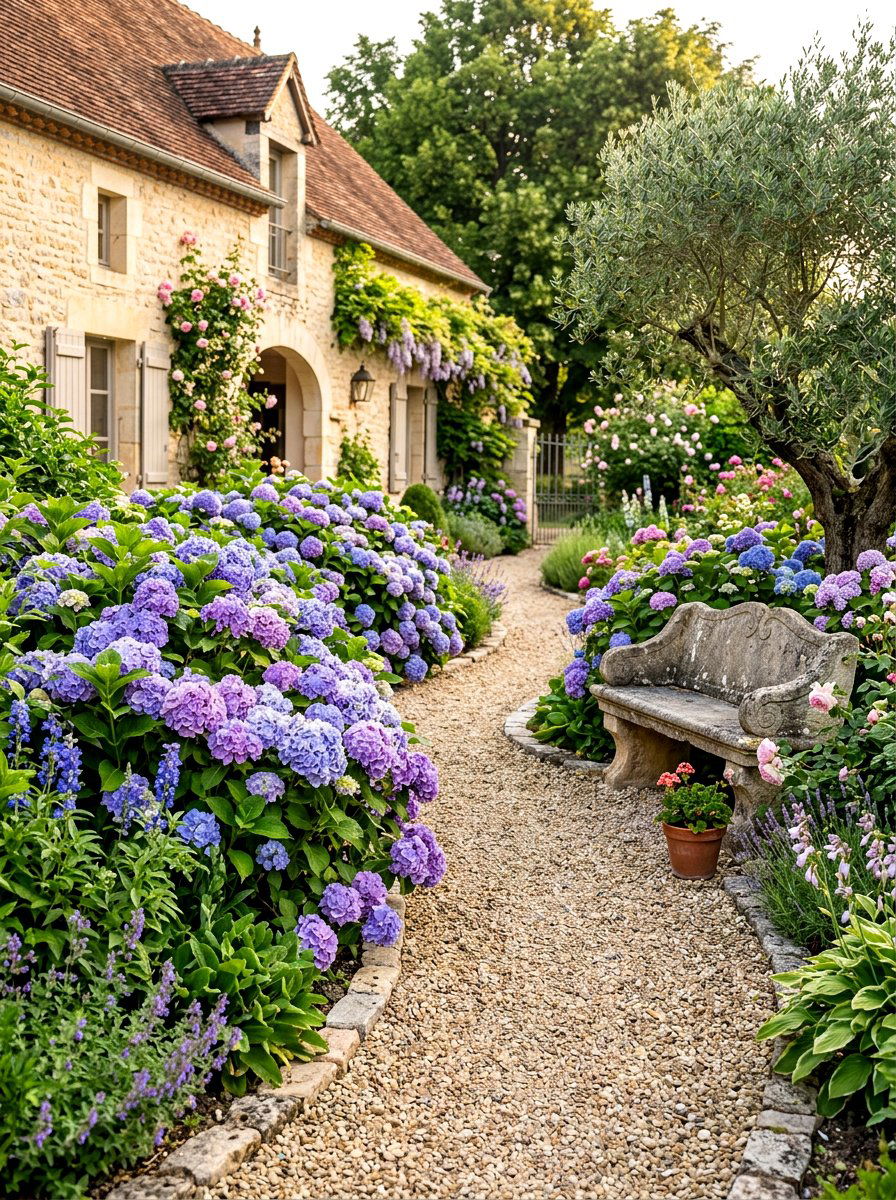
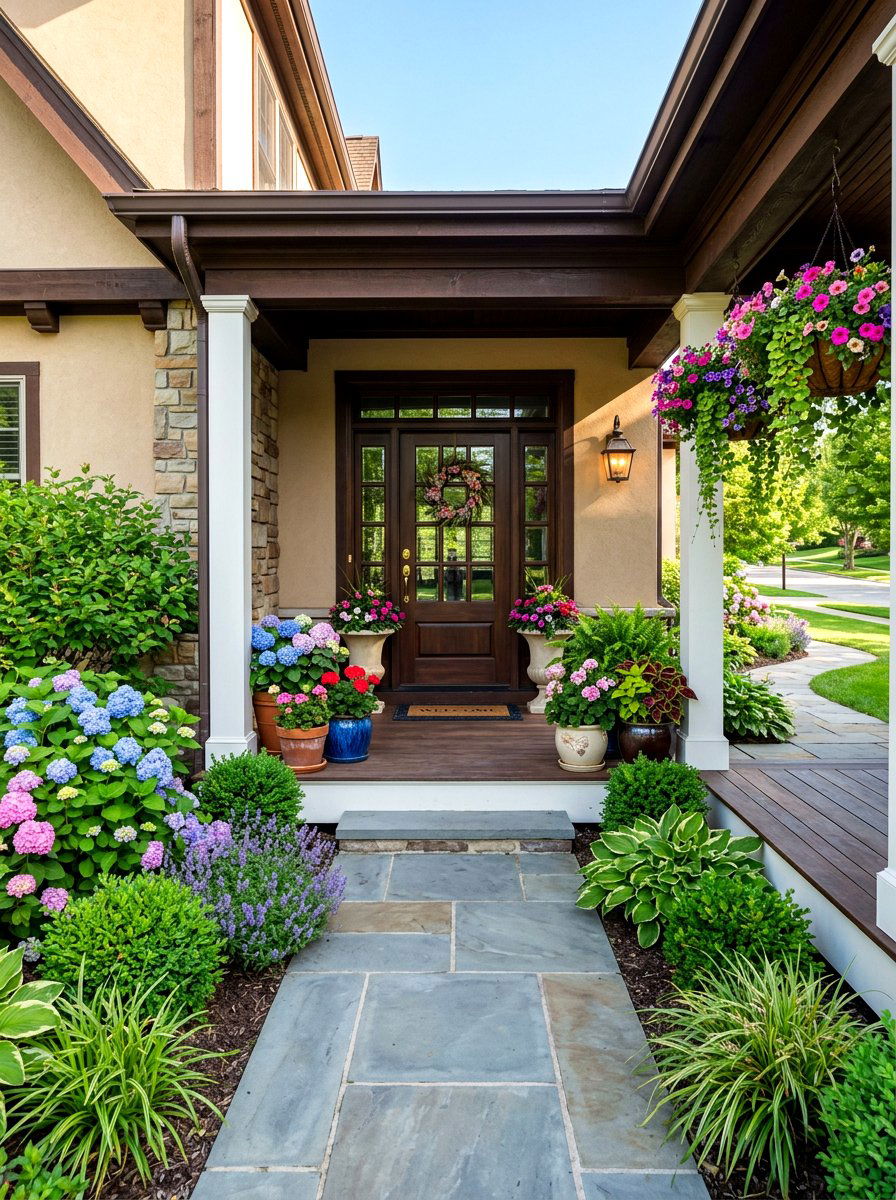
Lining a stone or gravel walkway with blue mophead hydrangeas creates a serene and inviting entrance to any home. The vibrant blue hues are often achieved by maintaining acidic soil, which adds a magical quality to the landscape. As you walk down the path, the large, rounded flower heads spill over the edges, softening the hard lines of the stone. This design works exceptionally well in coastal areas or cottage gardens where a relaxed, breezy atmosphere is desired. You can pair them with white gravel to make the blue colors pop even more. The repetition of the same color along the entire length of the walkway provides a cohesive and very professionally designed appearance.
4. Oakleaf hydrangea shade garden
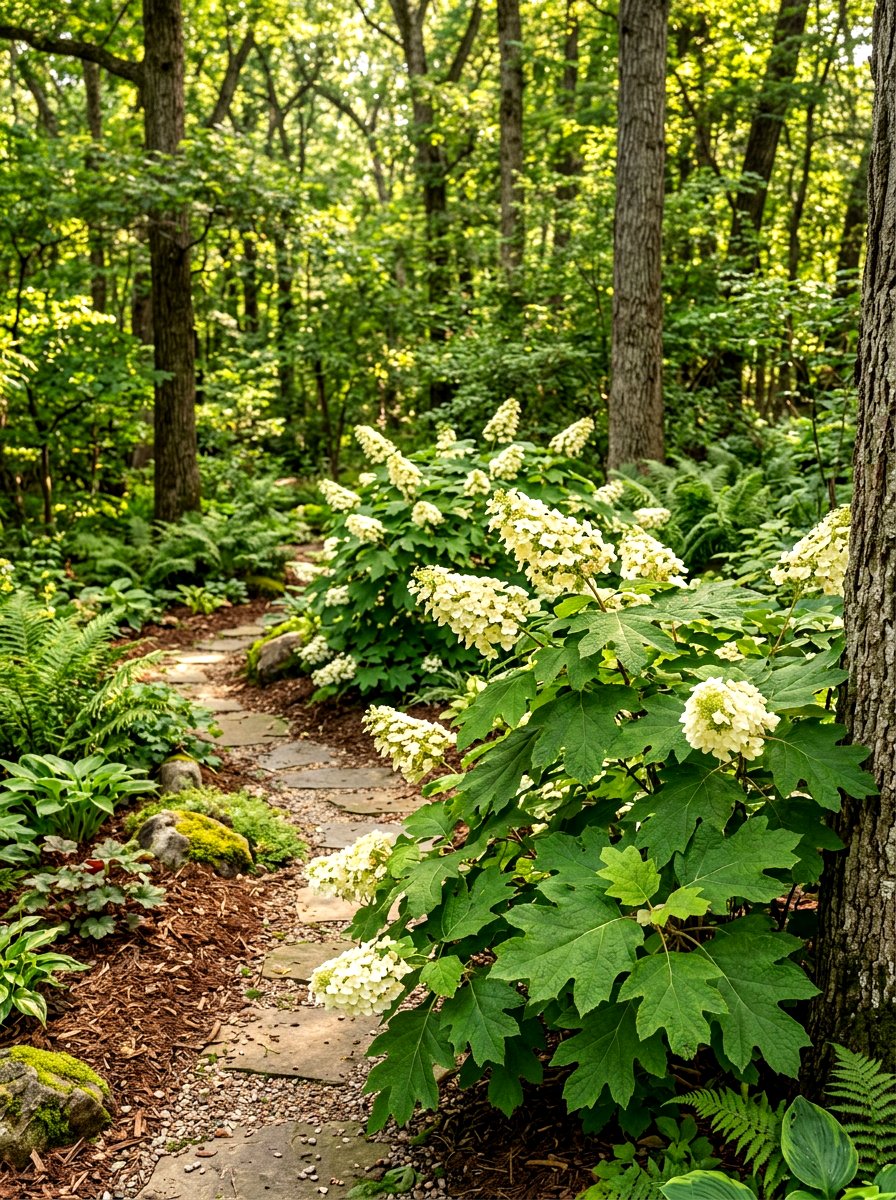
Oakleaf hydrangeas are the perfect solution for garden borders that receive a significant amount of shade. Unlike many other varieties, these plants feature unique, lobed leaves that resemble those of an oak tree. They produce long, cream-colored flower panicles that stand out beautifully against deep green foliage. In the autumn, the leaves turn stunning shades of bronze, orange, and mahogany, providing multi-seasonal interest. Planting them along a woodland edge or a shaded fence line creates a naturalistic and textured border. They are quite hardy and require very little maintenance once they are established. Their peeling bark also adds a lovely architectural element to the garden during the dormant winter months.
5. Dwarf hydrangea flower bed
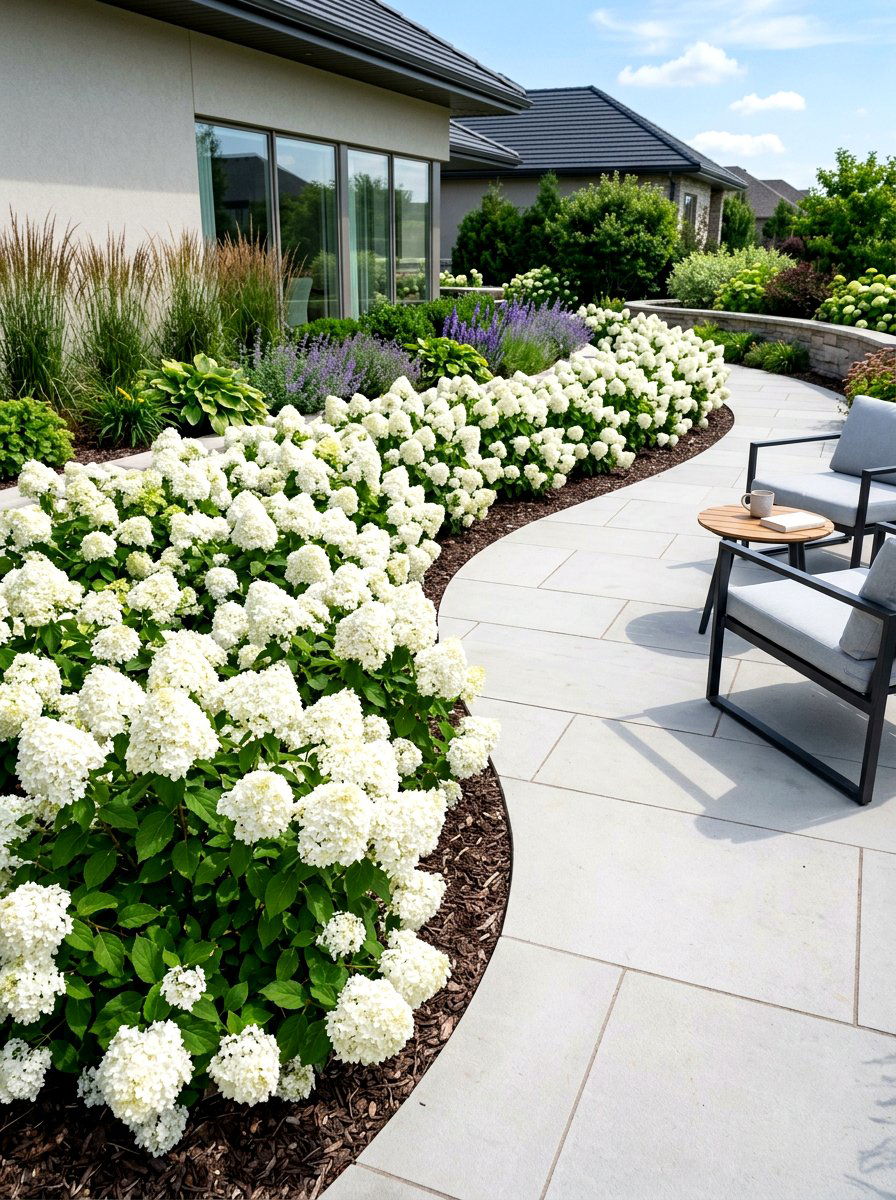
For homeowners with limited space, a dwarf hydrangea flower bed offers all the beauty of traditional varieties in a much more compact form. Varieties like Bobo or Invincibelle Wee White stay small, making them ideal for the front of a garden border. You can mass them together to create a low-growing carpet of flowers that covers the ground effectively. This prevents weeds from growing while providing a massive burst of color. These miniature shrubs are perfect for edging smaller patios or lining narrow garden beds along a porch. They pack a heavy floral punch without overwhelming the surrounding plants. Their compact nature also makes them excellent choices for low-maintenance landscaping schemes.
6. White hydrangea driveway border
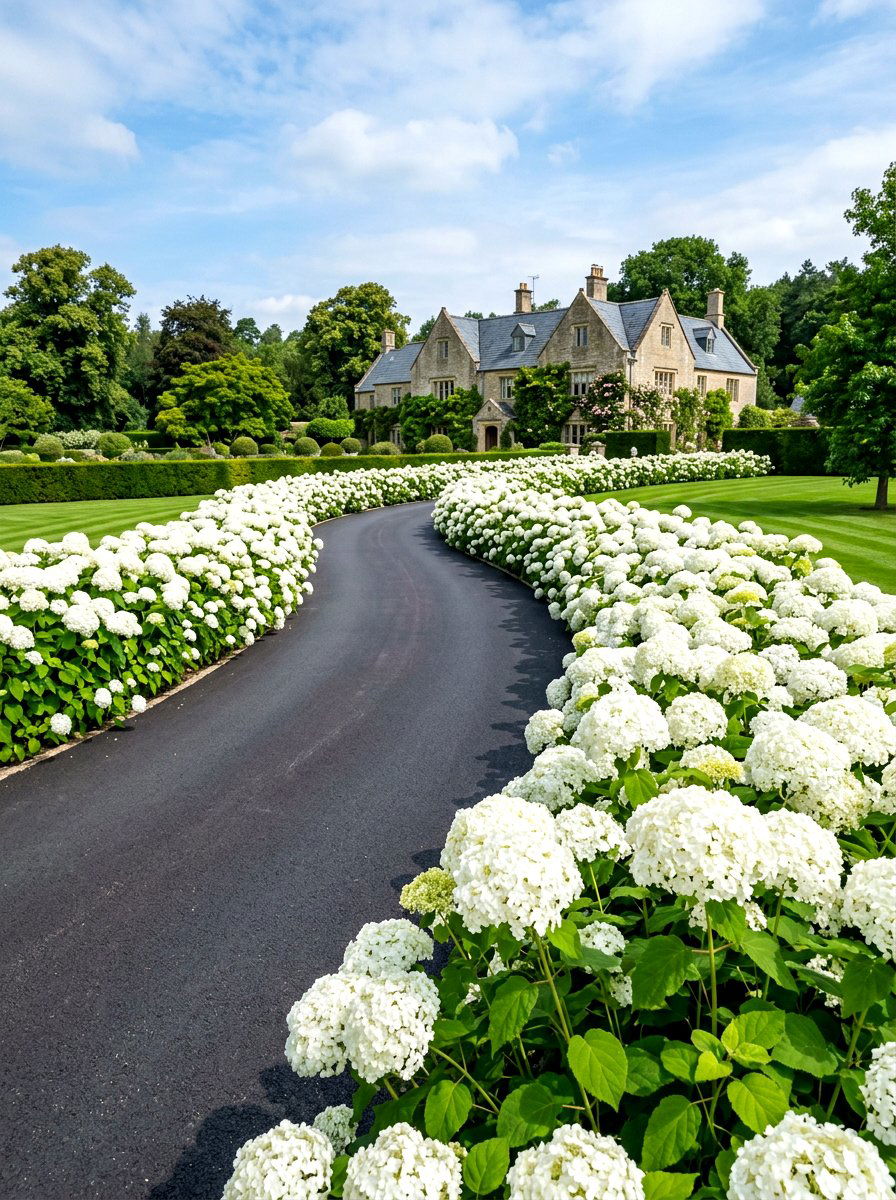
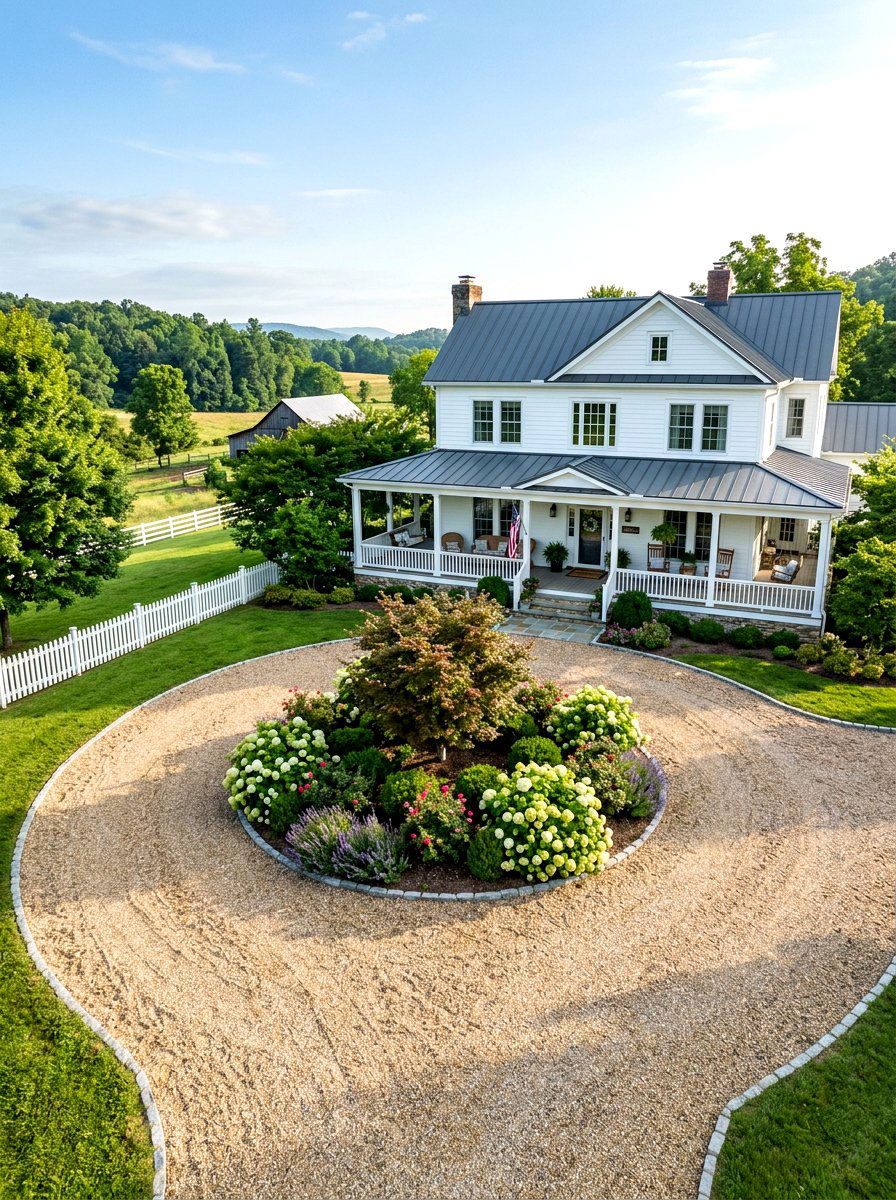
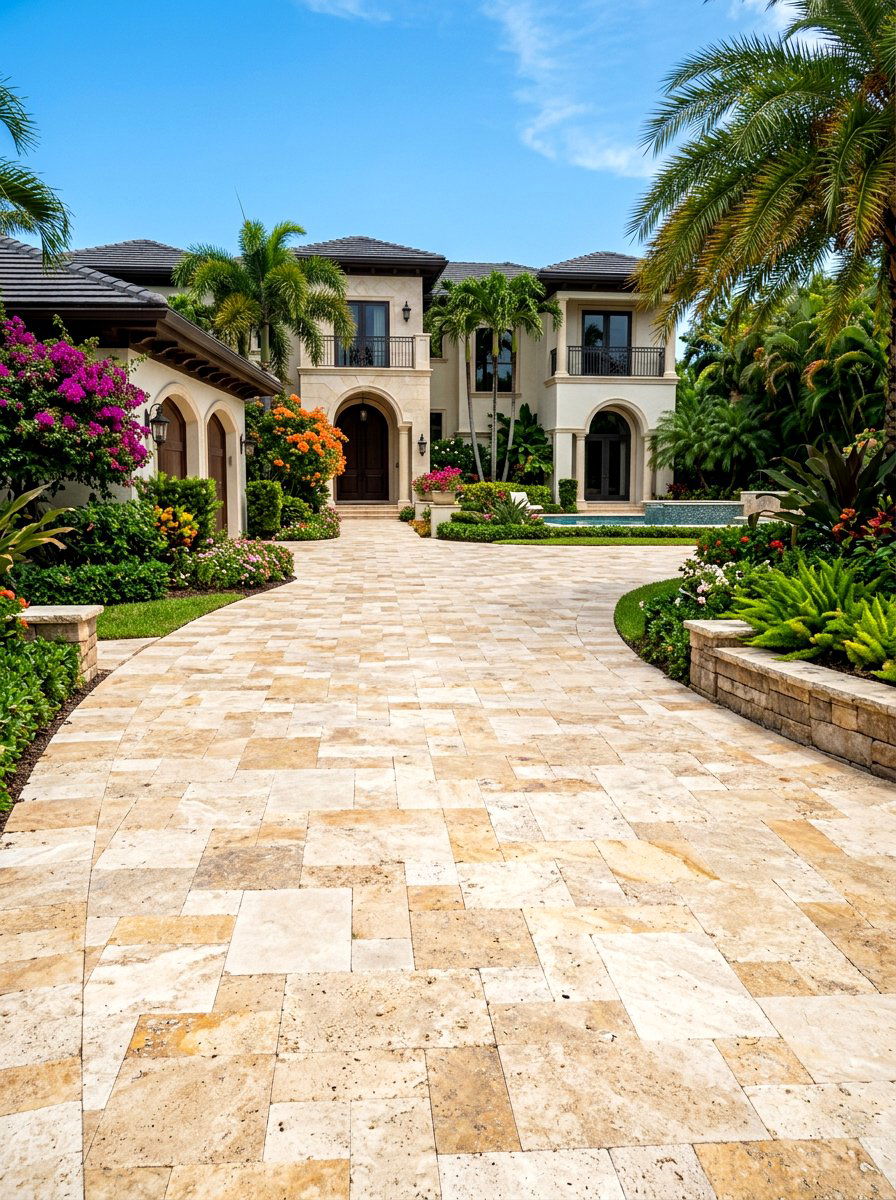
Transform your home's curb appeal by installing a white hydrangea driveway border. Using pure white varieties like Annabelle or Incrediball creates a high-contrast look against dark asphalt or grey pavers. These hydrangeas produce massive, snowball-like blooms that remain visible even at dusk, giving your home a luminous glow. Planting them in a straight line along the driveway adds a sense of grandeur and formality. They act as a soft barrier between the hard surface of the drive and the rest of the lawn. To keep them looking their best, ensure they have plenty of water during the hot summer months. The white color palette is timeless and complements almost any home exterior style.
7. Hydrangea and hosta border
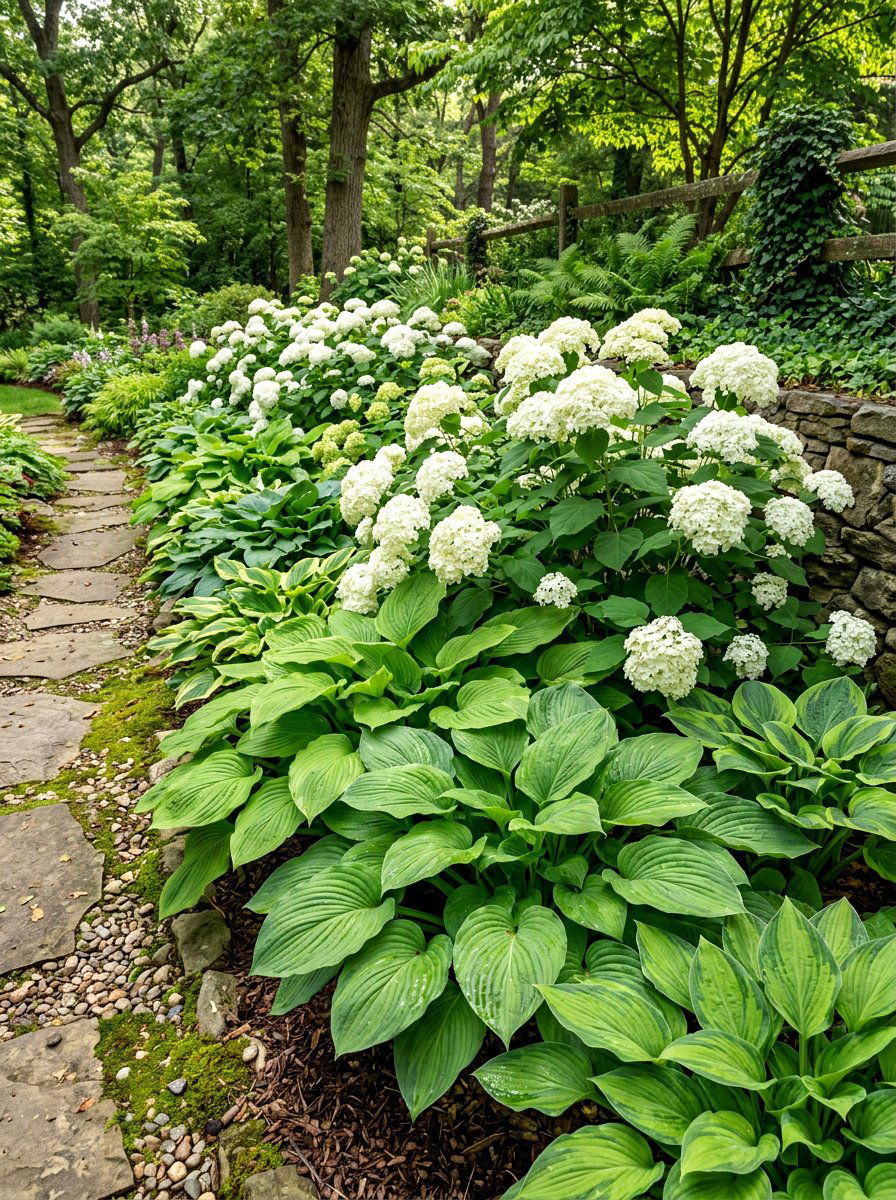
Creating a hydrangea and hosta border is a brilliant way to play with different leaf textures in a partially shaded area. While the hydrangeas provide height and spectacular blooms, the hostas offer a lush, leafy ground cover that fills in the space below. Choose hosta varieties with variegated leaves to add extra light and interest to the border. This combination thrives in moist, well-drained soil and creates a very full, established look quickly. The large, heart-shaped hosta leaves contrast beautifully with the delicate petals of the hydrangea flowers. This design is perfect for the side of a house or under a large canopy tree where many other flowering plants might struggle.
8. Mixed hydrangea perennial bed
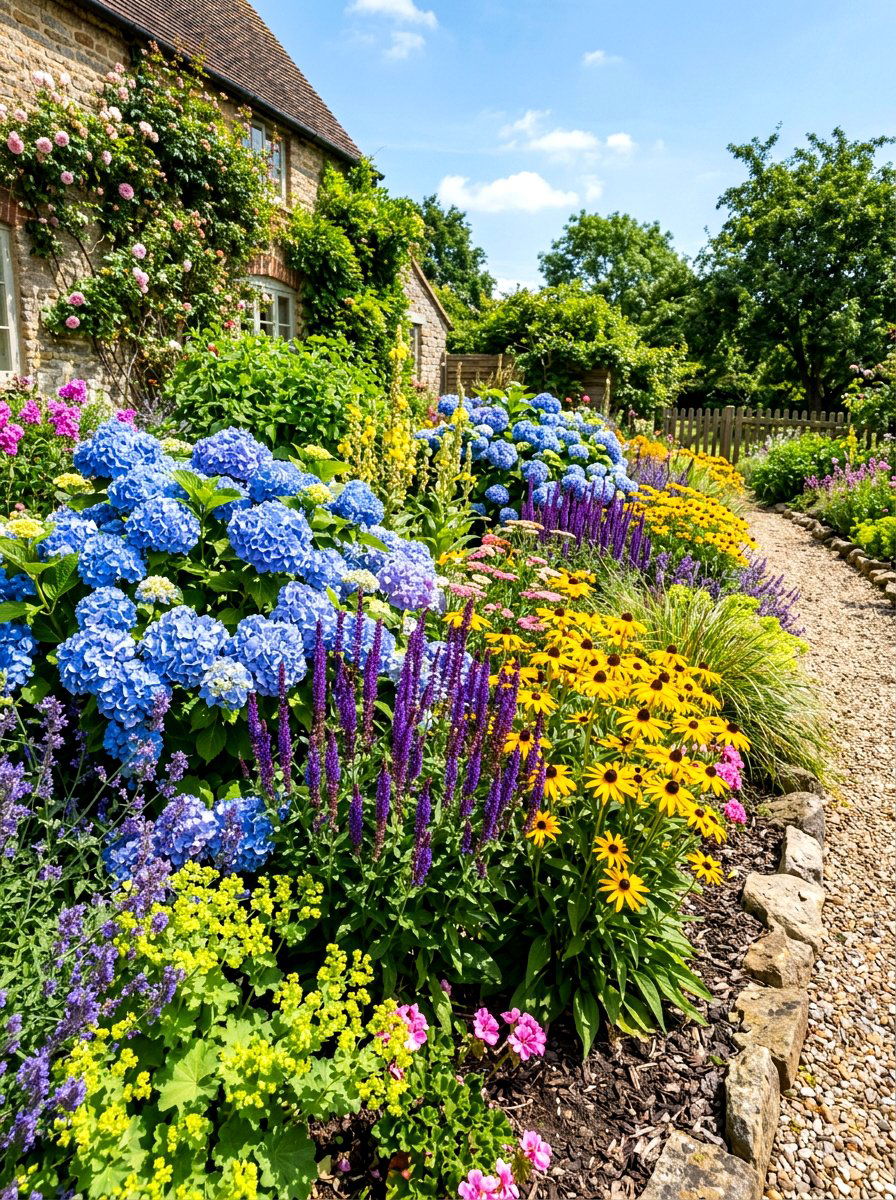
A mixed hydrangea perennial bed allows you to enjoy a variety of colors and textures throughout the entire growing season. By interplanting hydrangeas with other sun-loving perennials like salvia, coneflowers, and black-eyed Susans, you ensure that there is always something in bloom. The hydrangeas serve as the structural backbone of the bed, while the smaller perennials fill the gaps with contrasting colors. This approach creates a very biodiverse and pollinator-friendly garden border. You can experiment with different heights to create a tiered effect that leads the eye through the landscape. The mix of woody shrubs and herbaceous perennials provides a dynamic and ever-changing view from your window or patio area.
9. Annabelle hydrangea garden edge
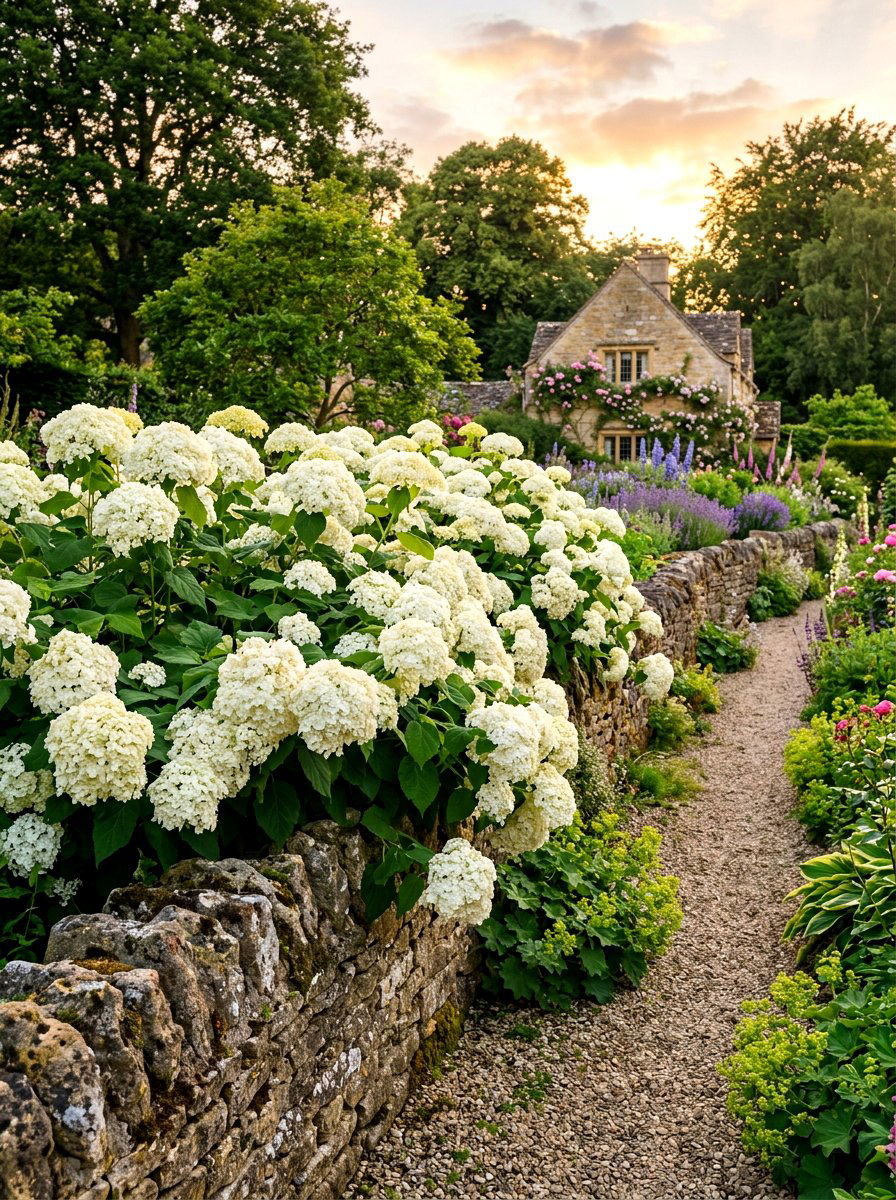
Annabelle hydrangeas are famous for their giant, rounded white flower heads that can reach up to twelve inches in diameter. Using them to edge a garden creates a soft, cloud-like effect that is incredibly romantic. These plants are very reliable and will bloom every year even after a harsh winter. Because they have a bit of a floppy habit, they look best when allowed to spill over a low stone wall or a decorative fence. This natural movement adds a relaxed and informal feel to the garden. They are particularly effective when planted in large groups to create a massive wave of white flowers. Their simplicity makes them a favorite for many modern designers.
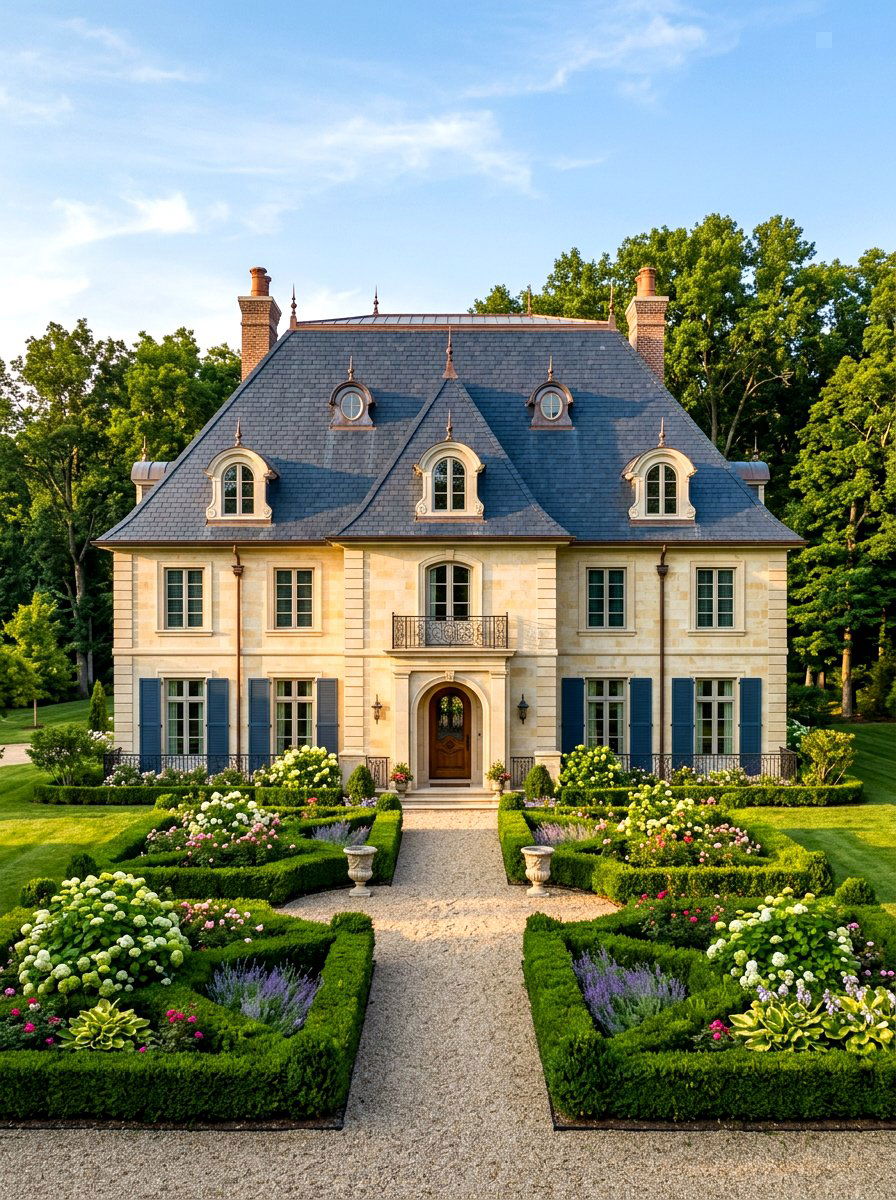
10. Pink hydrangea front yard
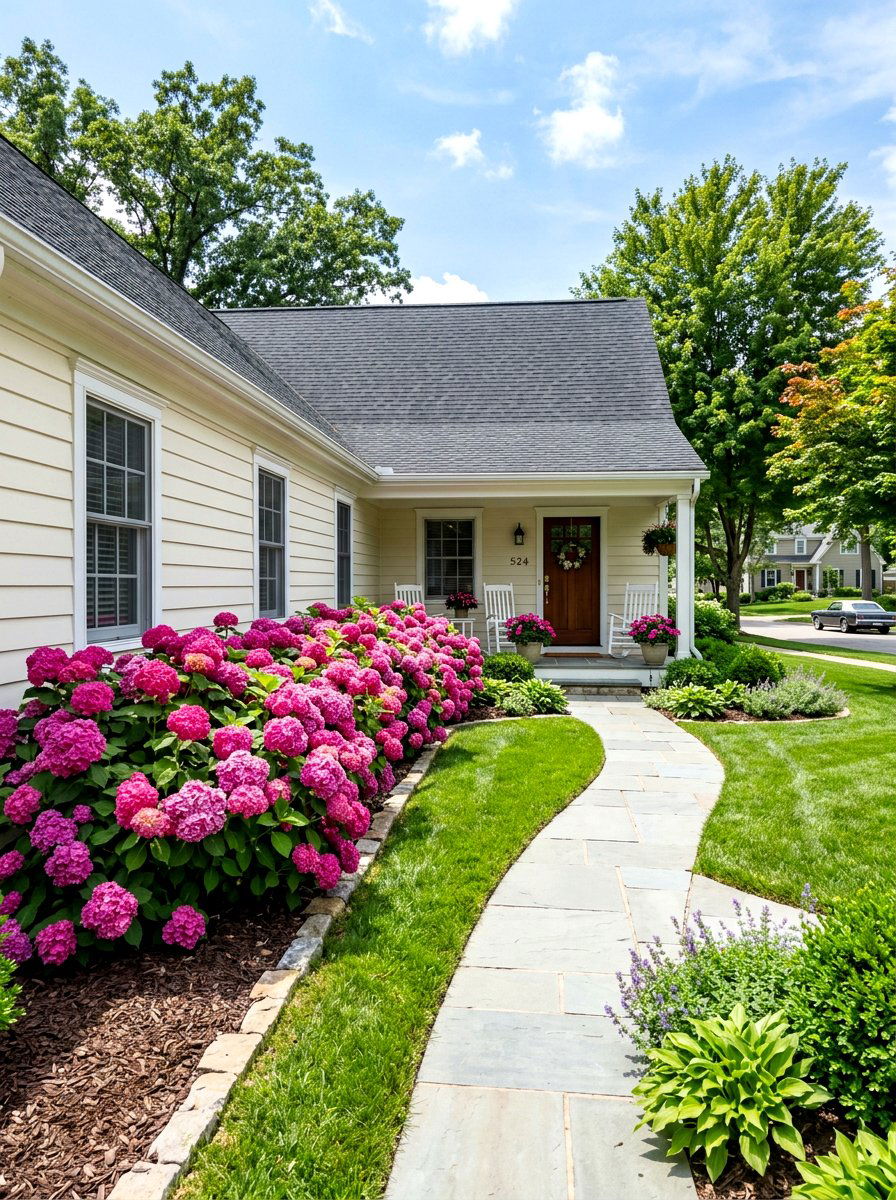
If you want to make a bold statement, consider a pink hydrangea front yard border. By adjusting the soil pH to be more alkaline, you can achieve deep, rich pink tones that catch everyone's eye. Planting these along the front foundation of your home adds a warm and welcoming touch to the property. They look stunning when paired with grey or white siding, as the pink color stands out vividly. You can mix different shades of pink to create a gradient effect along the border. These shrubs provide a dense screen of foliage that hides any unsightly vents or pipes at the base of the house. It is a very cheerful landscaping choice.
11. Hydrangea privacy screen
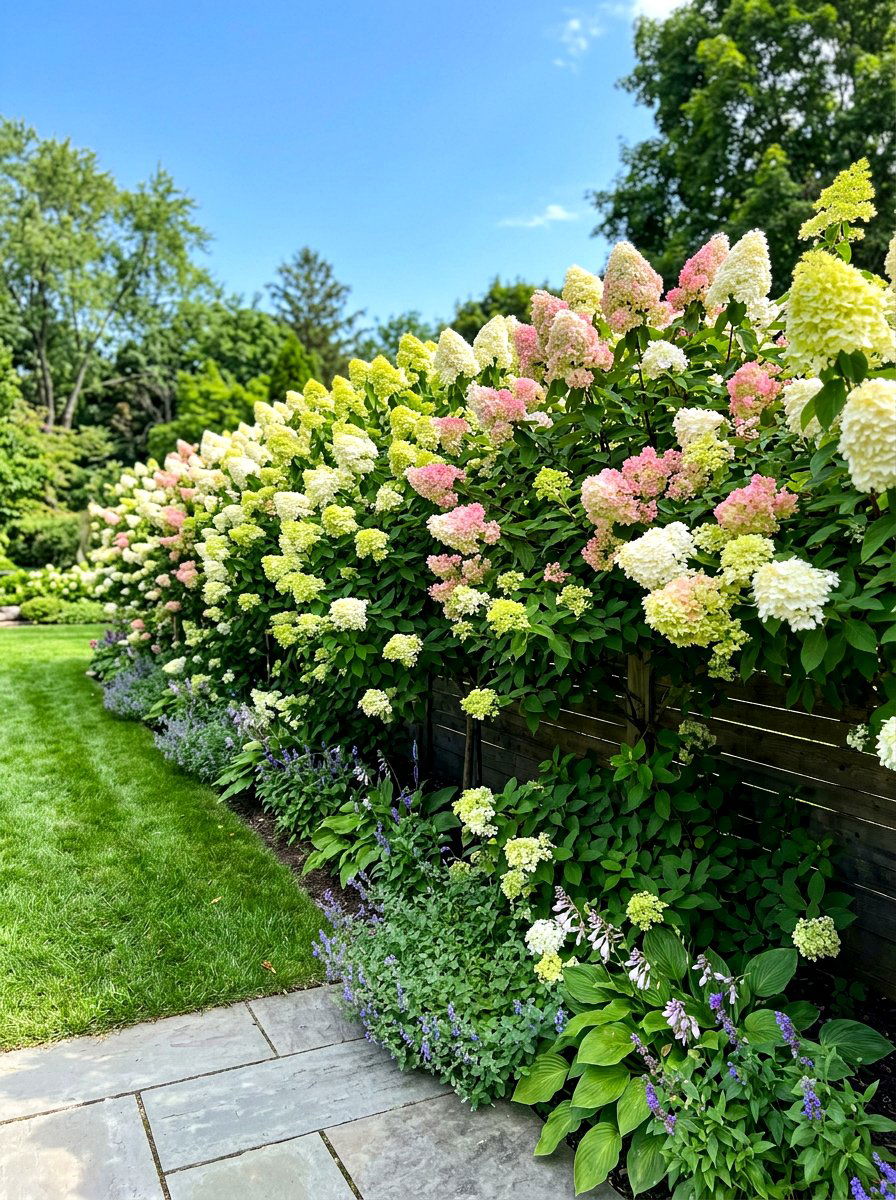
A hydrangea privacy screen is a beautiful alternative to traditional wooden fences or tall evergreen hedges. Large panicle varieties like Phantom or Silver Dollar can reach heights of eight to ten feet, providing an effective visual barrier. When planted closely together in a row, their dense foliage and massive flower heads create a solid wall of greenery and color. This is an excellent way to block out neighbors or hide a busy street while adding beauty to your backyard. Unlike a static fence, a hydrangea screen changes with the seasons, offering fresh green leaves in spring and dried flower heads in winter. It creates a private sanctuary that feels lush and alive.
12. Cascading hydrangea retaining wall
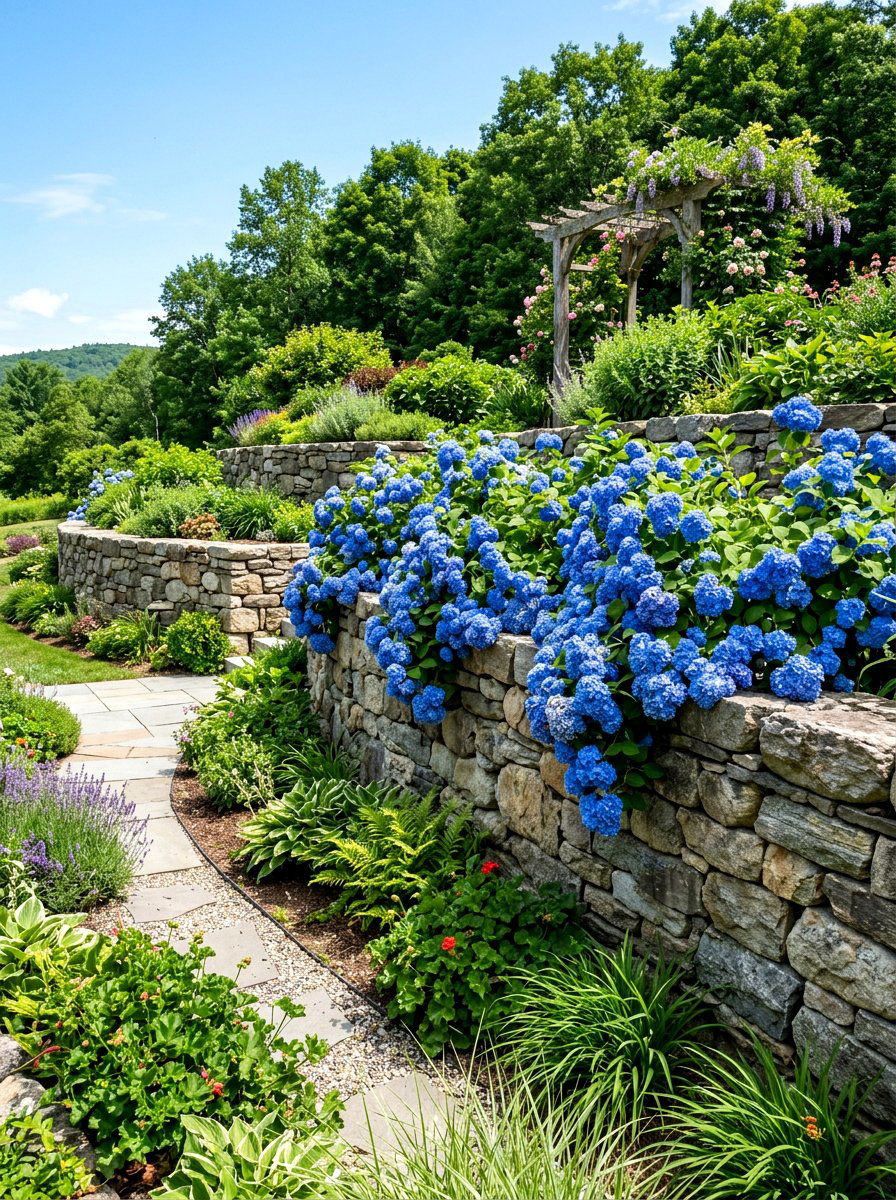
Using hydrangeas along a retaining wall adds a layer of softness to hard landscaping materials like stone or concrete blocks. Planting them at the top of the wall allows the heavy flower heads to cascade over the edge, creating a waterfall of blooms. This design is perfect for sloped yards where you want to break up the vertical lines of the wall. Mophead varieties are particularly good for this, as their weight naturally encourages them to lean forward. This creates a more integrated and natural look between the structure and the plants. It also helps to hide the appearance of the wall itself, focusing the attention on the beautiful flowers instead.
13. Hydrangea cottage garden border
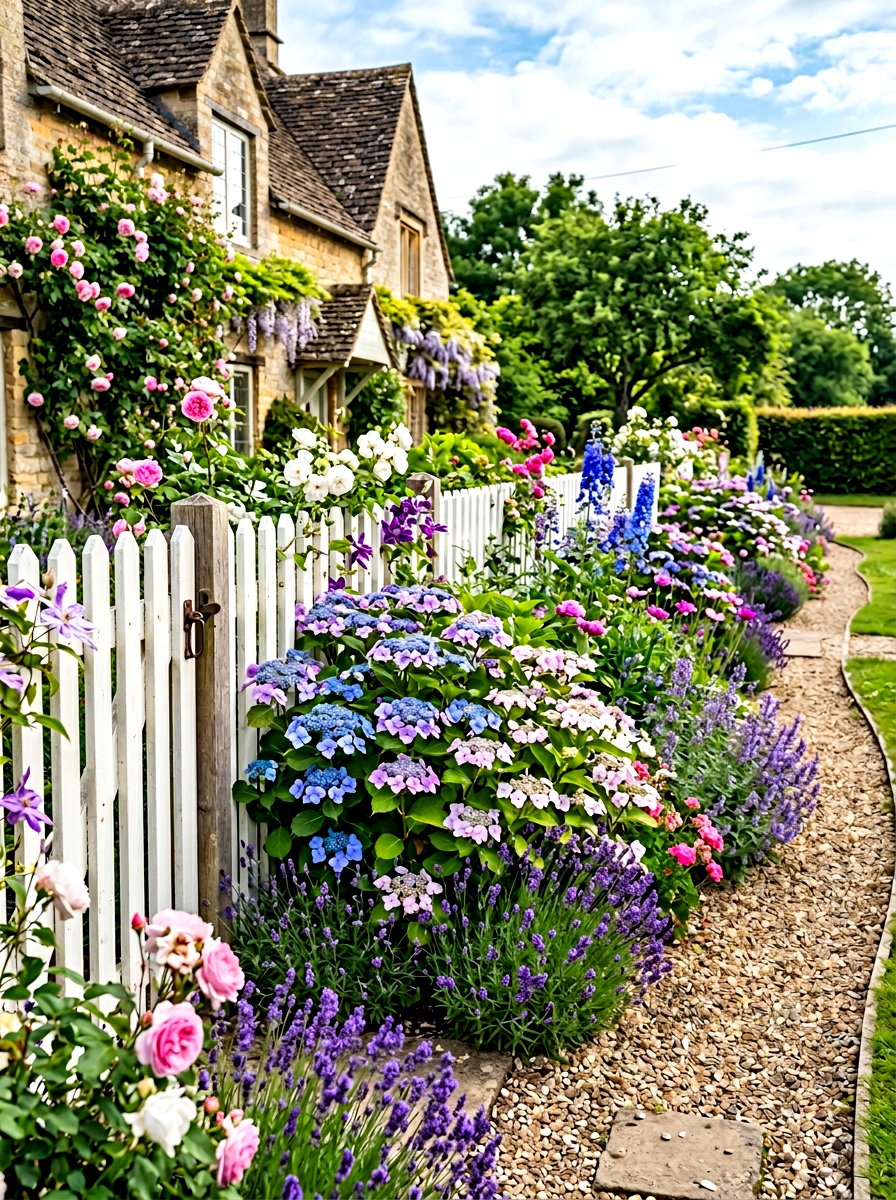
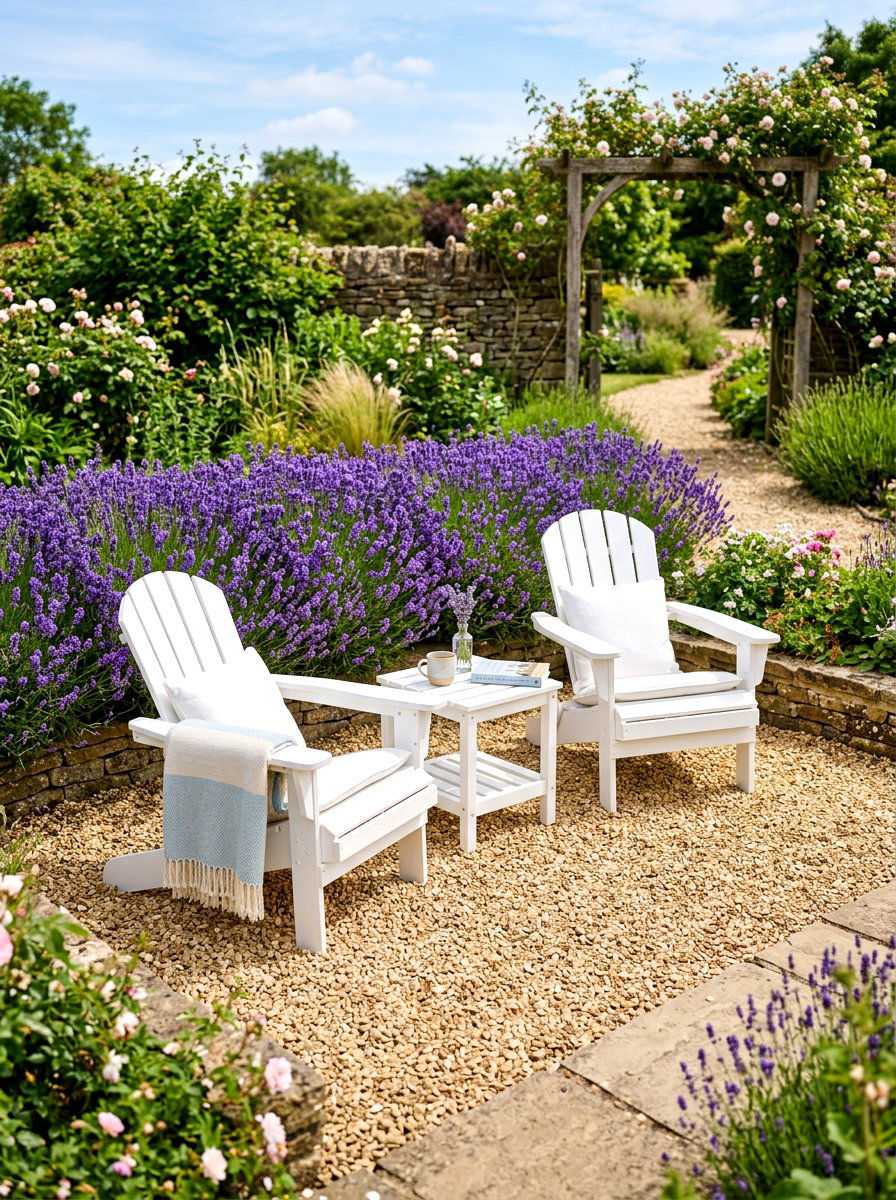
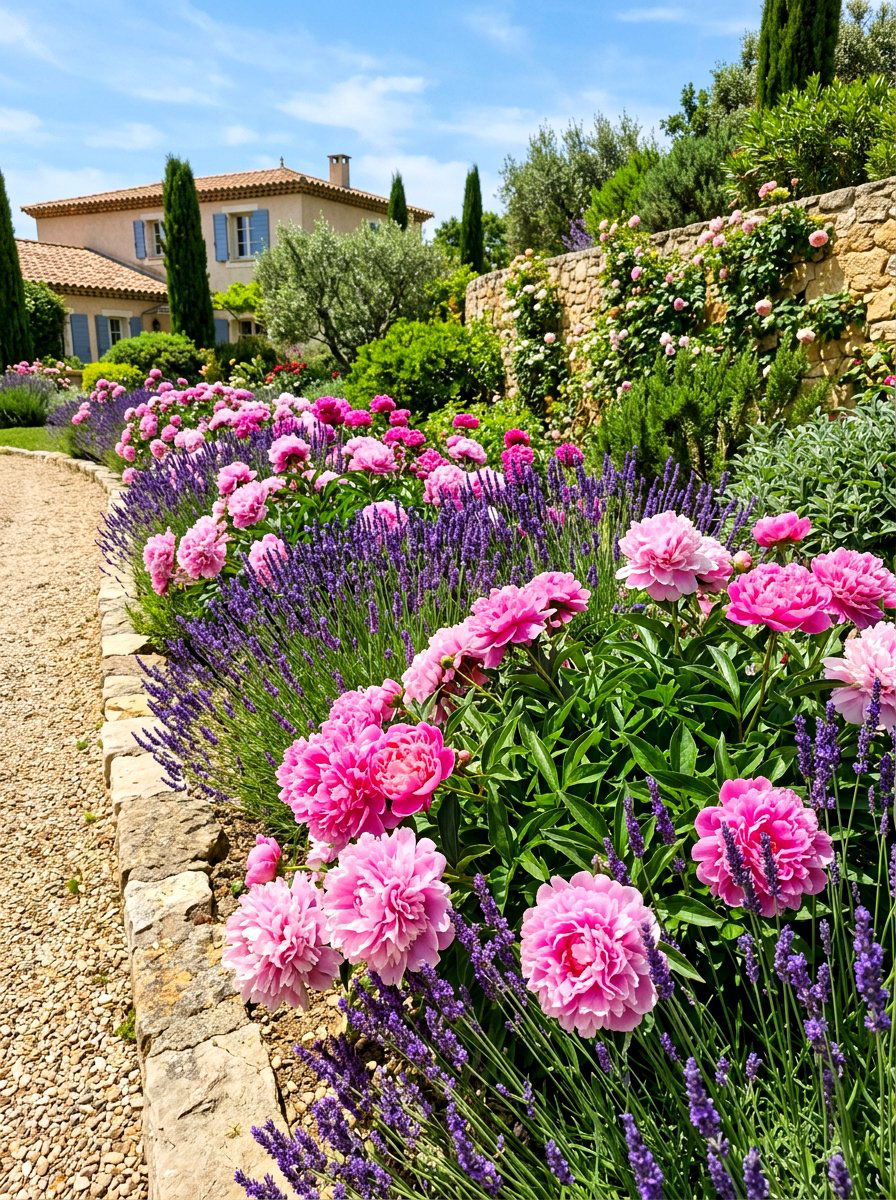
Nothing says cottage garden like a border overflowing with hydrangeas, roses, and lavender. This classic style focuses on abundance and a slightly wild, unscripted appearance. Use a variety of hydrangea types, such as lacecaps and mopheads, to create a tapestry of different flower shapes. The hydrangeas provide a sturdy mid-height layer that supports the more delicate stems of surrounding flowers. Planting them near a picket fence or a garden gate enhances the charming, old-fashioned aesthetic. The scent of the lavender and the beauty of the hydrangeas create a sensory experience that is truly delightful. This type of border feels cozy, intimate, and perfectly suited for a relaxed backyard retreat.
14. Panicle hydrangea backyard path
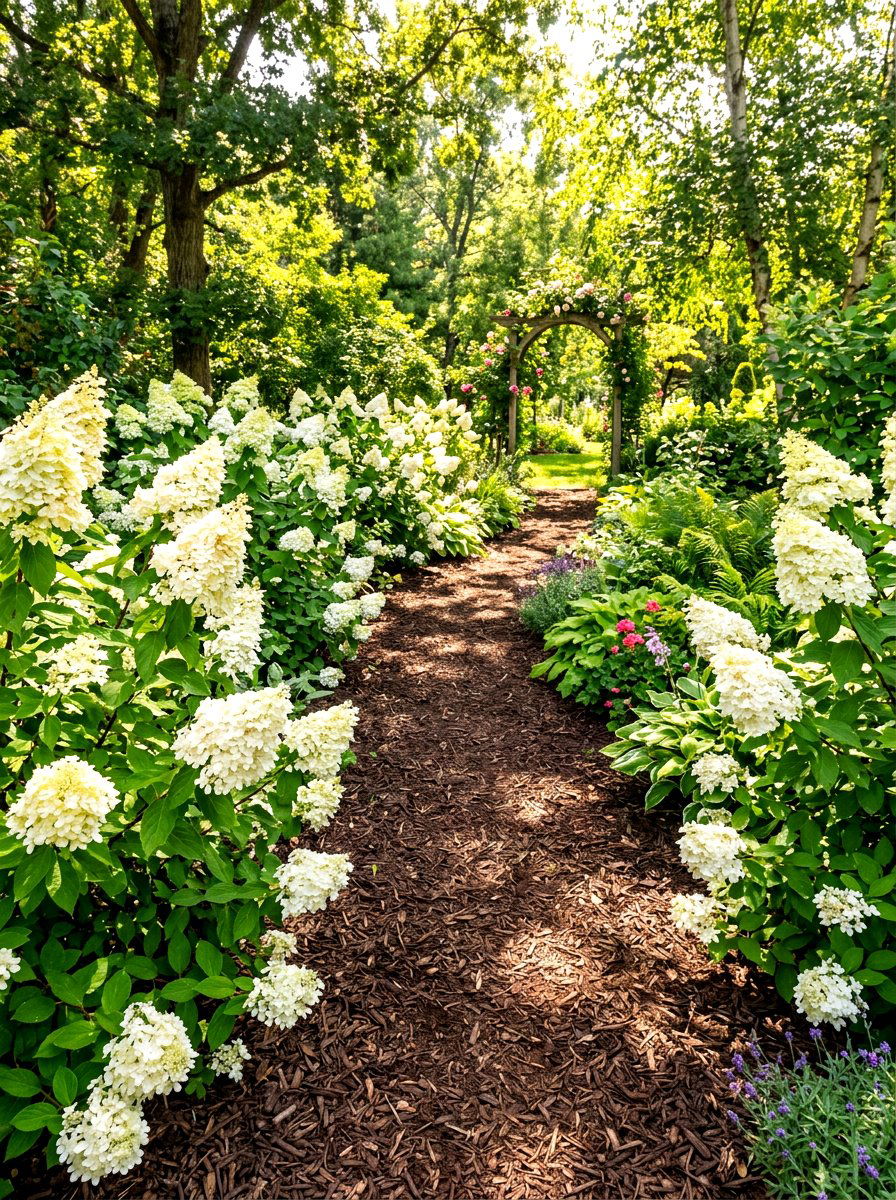
Lining a backyard path with panicle hydrangeas creates a dramatic and high-impact transition between different garden zones. These varieties are known for their upright growth and large, pointed flower clusters. As you walk along the path, you are surrounded by a sea of blooms that often change from white to pink as the season progresses. This design adds a sense of destination and purpose to the walkway. You can use mulch or stepping stones for the path itself to keep the look clean and professional. The height of the panicle hydrangeas creates a semi-enclosed feeling that makes the walk through the garden feel like a private and very special experience.
15. Endless Summer hydrangea border
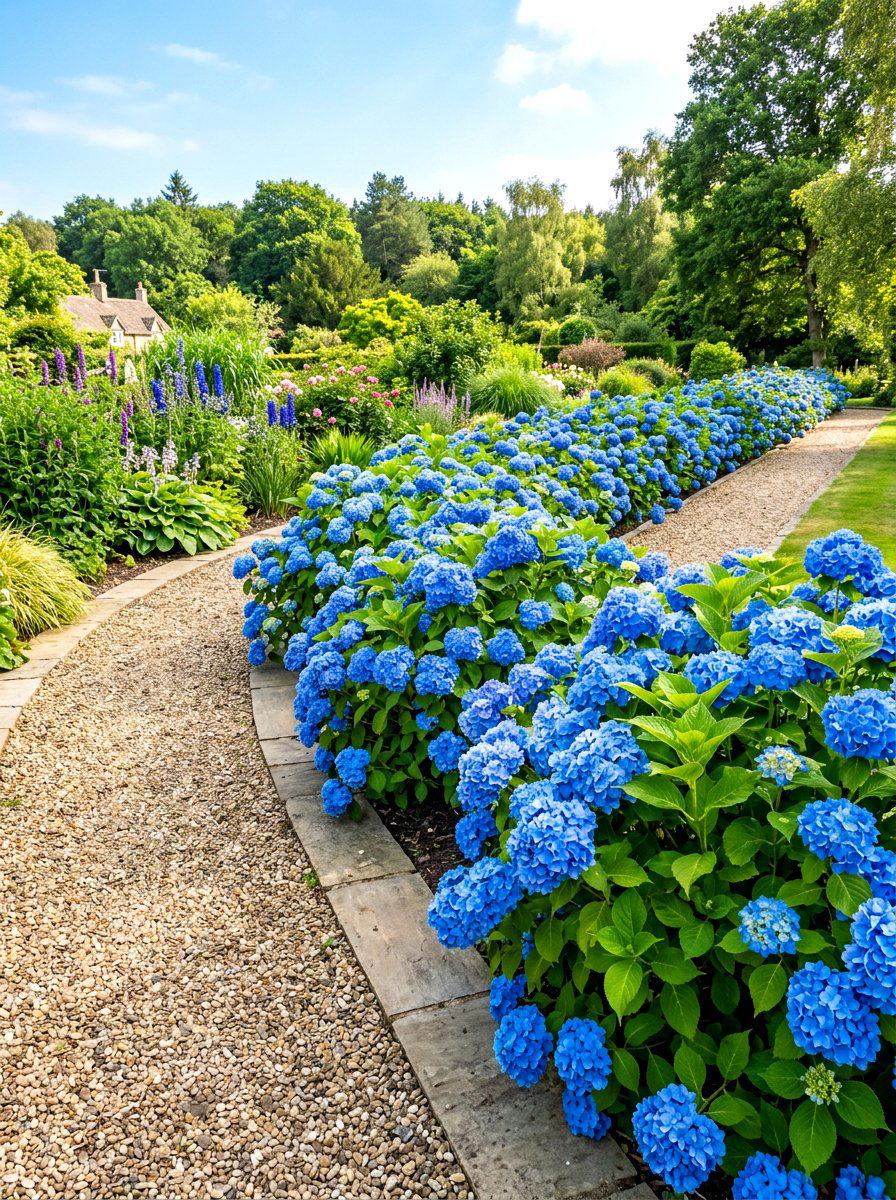
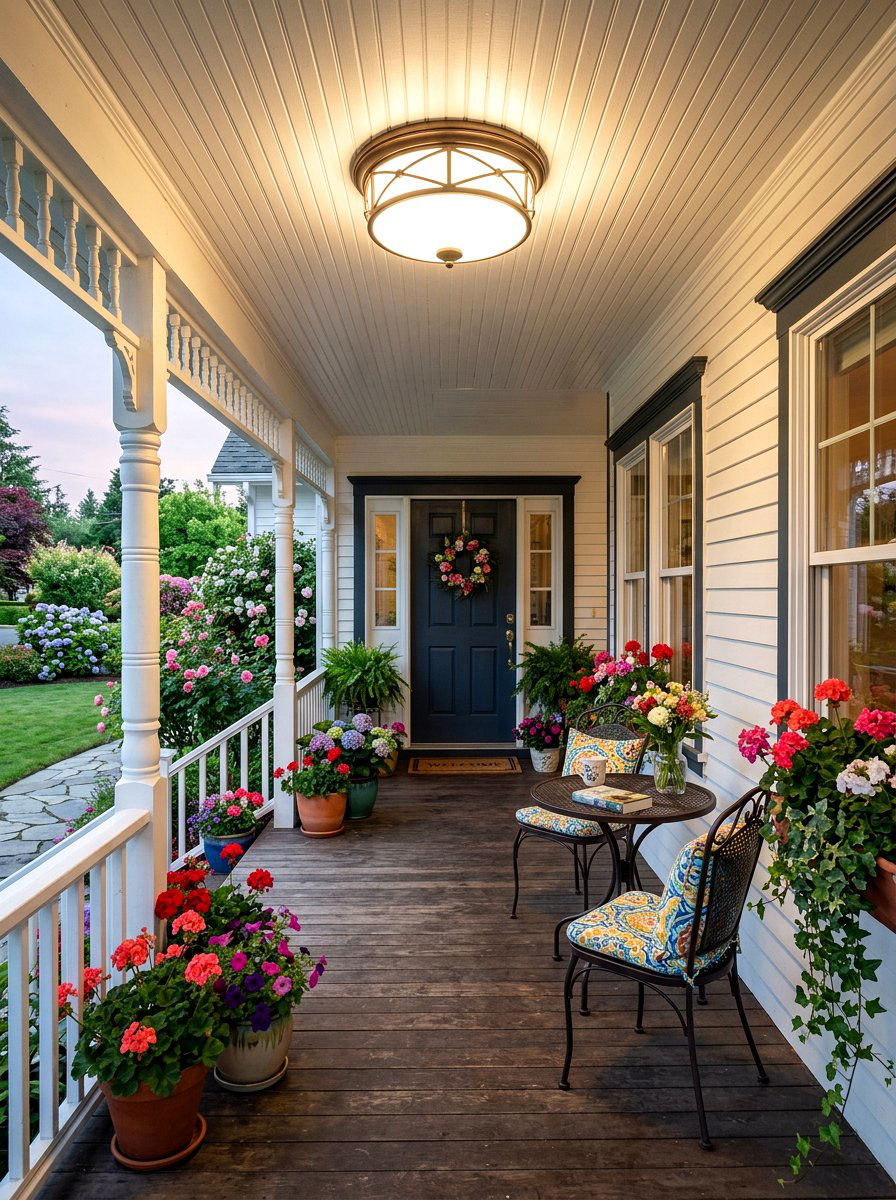
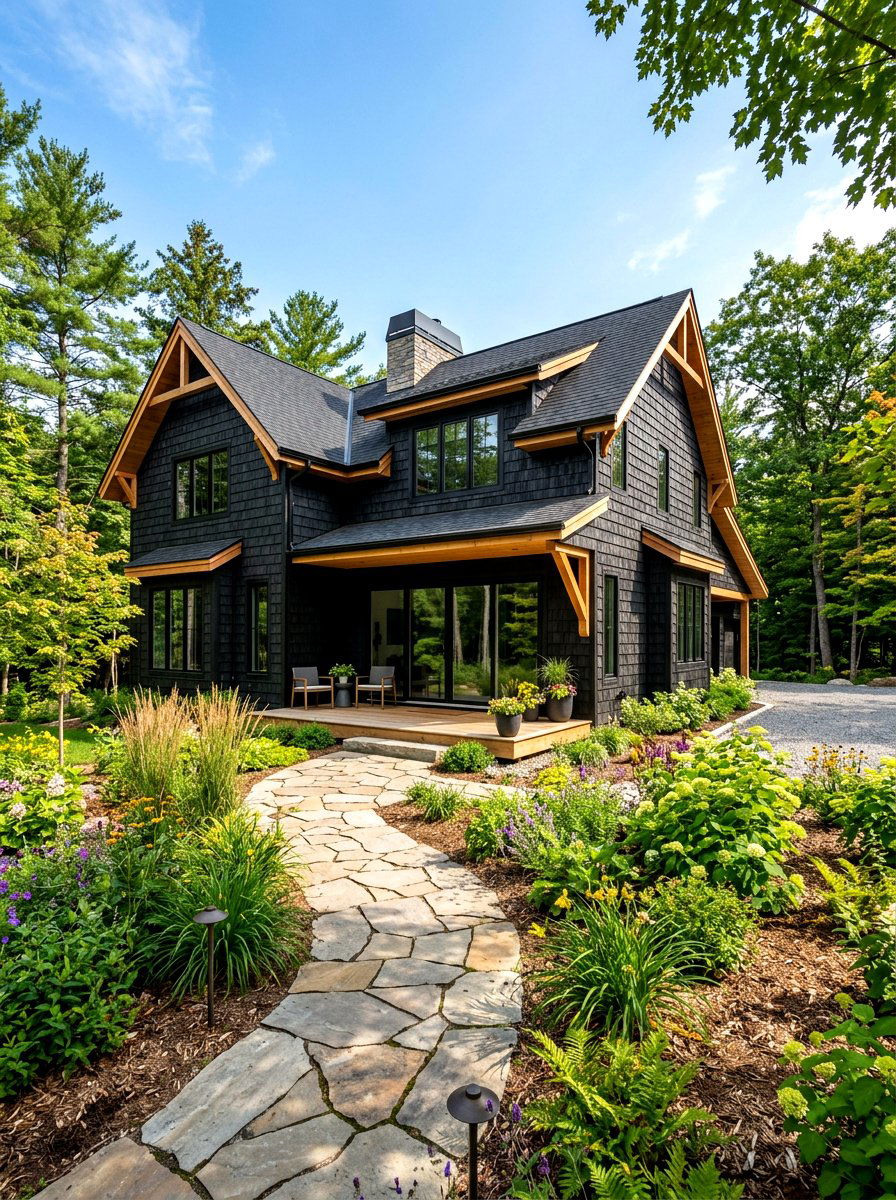
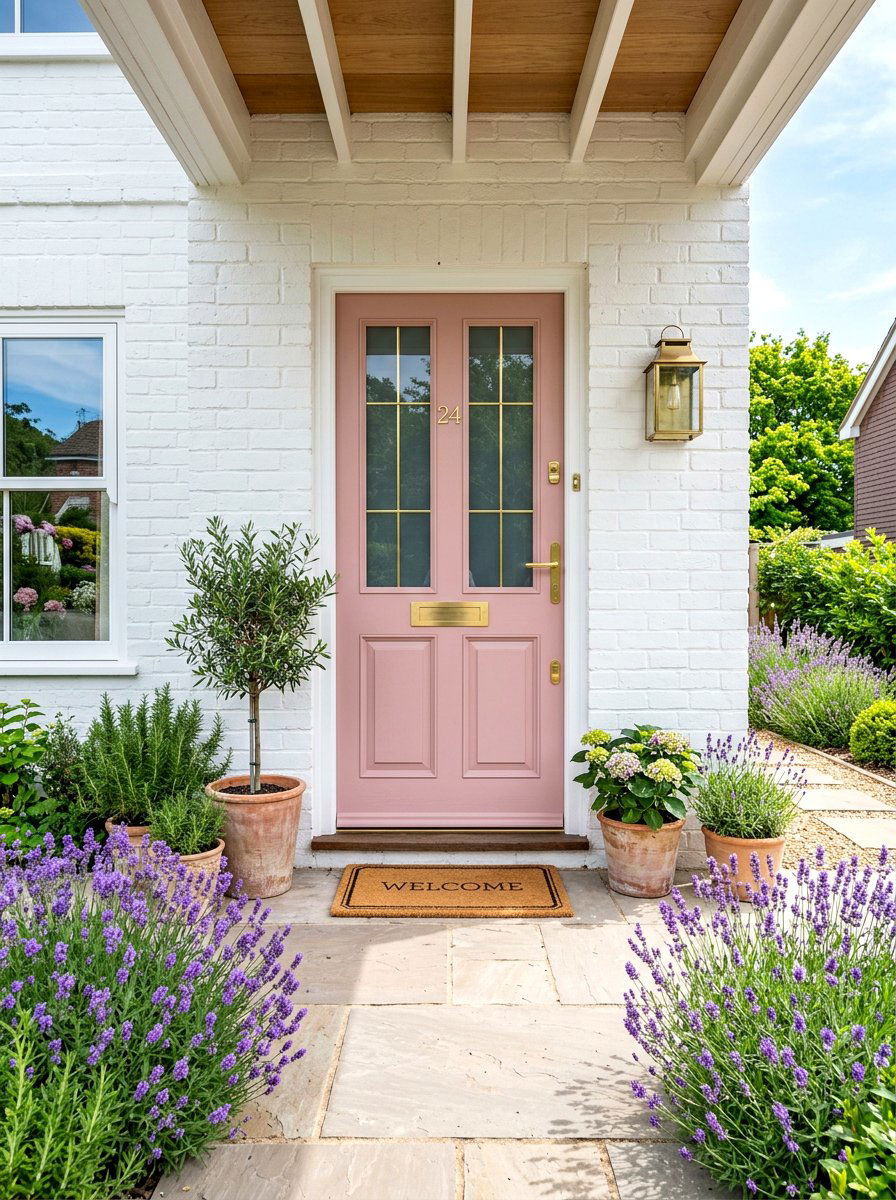
The Endless Summer hydrangea is a game-changer for garden borders because it blooms on both old and new wood. This means you get flowers all summer long, even if a late frost damages the early buds. Creating a border with these plants ensures a consistent display of color from June until the first frost. They are typically available in shades of blue or pink, allowing you to customize the look to match your home’s color scheme. Planting them in a continuous row creates a very lush and dependable border that requires minimal deadheading. Their ability to rebloom makes them one of the most valuable plants for any high-visibility garden area.
16. Pee Gee hydrangea landscaping
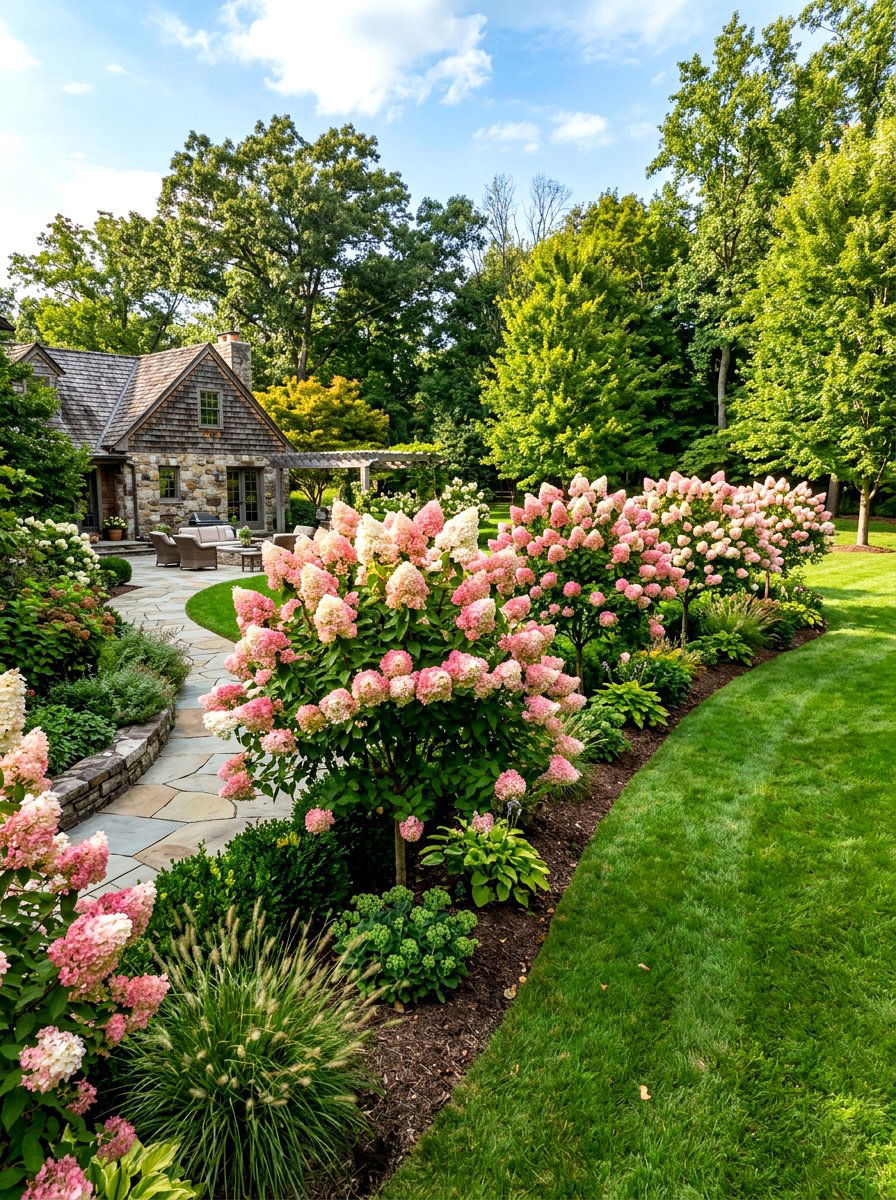
Pee Gee hydrangeas are some of the largest and most robust varieties available, often reaching the size of small trees. In landscaping, they are frequently used as massive specimen plants or part of a very large-scale border. Their enormous cone-shaped flowers start white and turn a beautiful bronzy-pink in the late fall. Because they are so large, they are best suited for spacious backyards or as a backdrop for smaller plants. You can prune them into a tree-like shape to create a focal point within the border. This allows you to plant lower-growing perennials or ground covers underneath their canopy. They are incredibly hardy and can withstand very cold winter temperatures.
17. Hydrangea and lavender garden
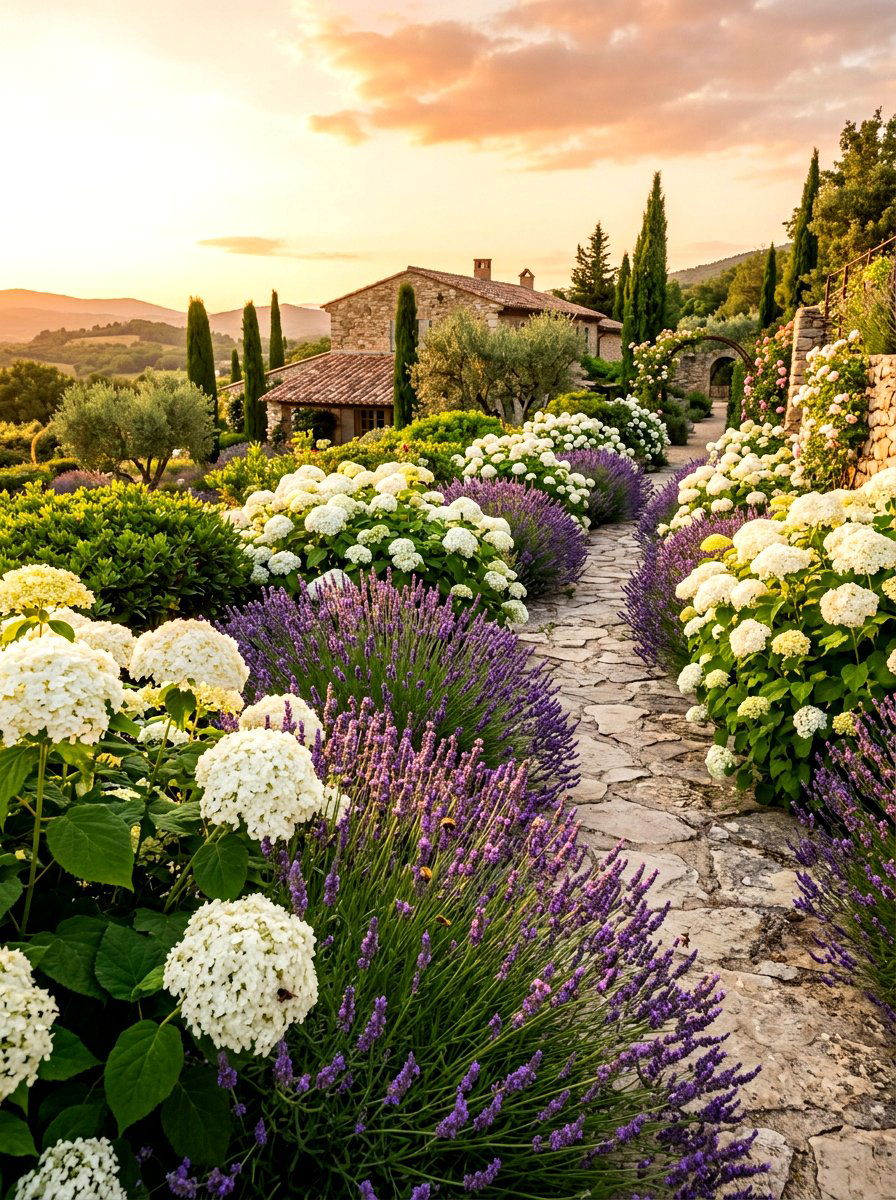
The pairing of hydrangeas and lavender offers a stunning contrast in both color and form. The soft, rounded mopheads of the hydrangeas sit beautifully next to the tall, spiky purple stems of the lavender. This combination is not only visually appealing but also provides a wonderful fragrance for your garden border. Lavender thrives in the sunnier, drier spots at the front of the border, while the hydrangeas can sit slightly behind them. The silver-green foliage of the lavender also helps to highlight the deep green leaves of the hydrangea shrubs. This design is perfect for a sunny Mediterranean-style garden or a modern farmhouse landscape that values simplicity and natural beauty.
18. Incrediball hydrangea hedge
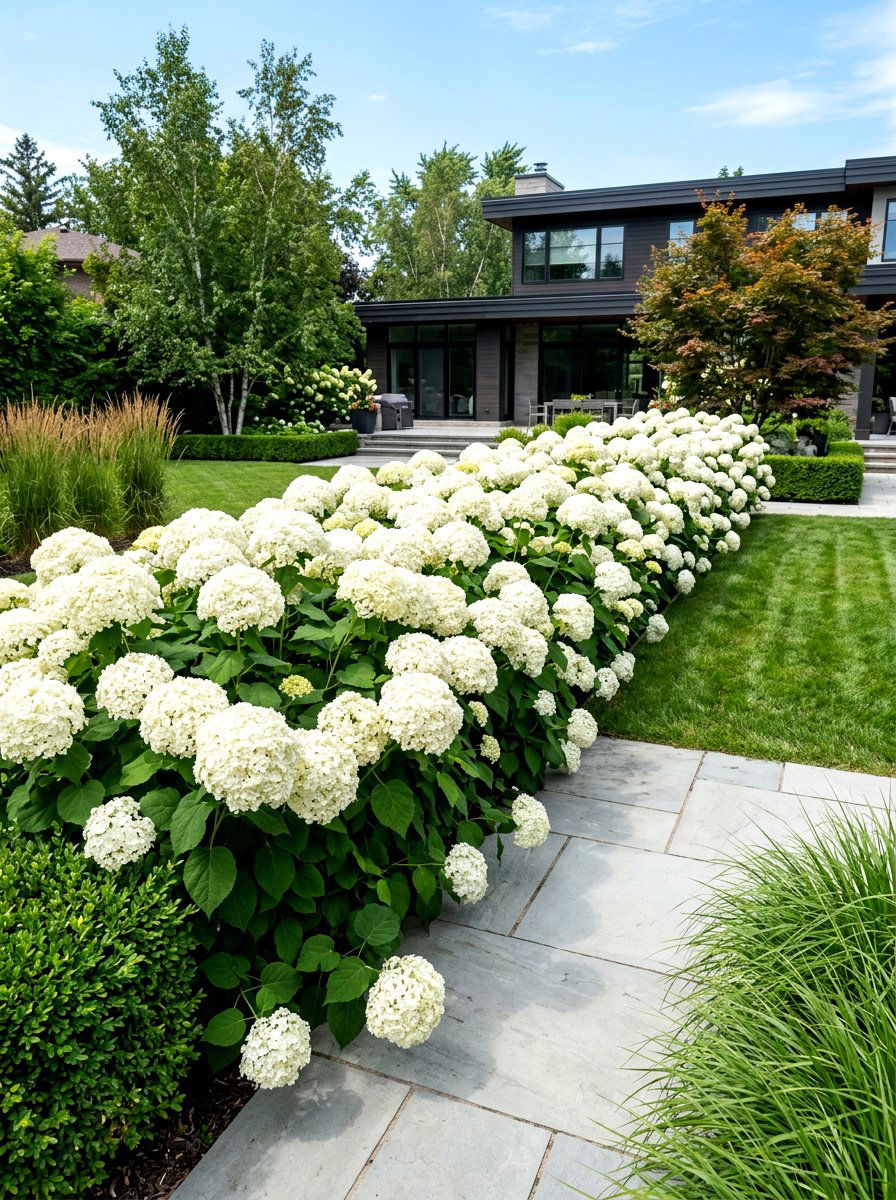
The Incrediball hydrangea is an improved version of the classic Annabelle, featuring even larger blooms and much sturdier stems. Creating a hedge with Incrediballs means you won't have to worry about the flowers flopping over after a summer storm. These massive white blooms create a stunning, high-impact wall of color that looks incredible from a distance. The hedge provides a very clean and uniform appearance that is perfect for bordering a large lawn or defining a property boundary. Their reliable performance and massive floral display make them a favorite for viral Pinterest garden designs. They bring a touch of elegance and modern flair to any outdoor space with very little effort.
19. Climbing hydrangea wall
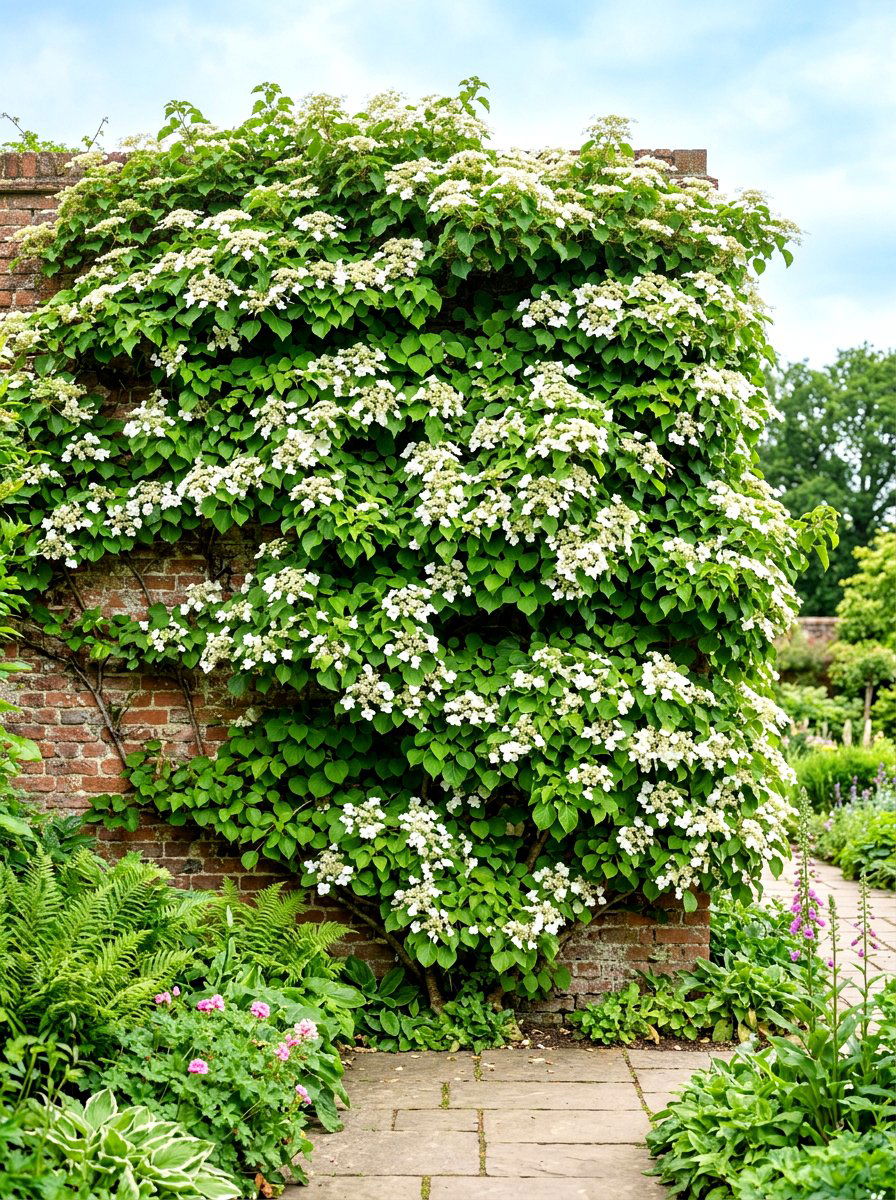
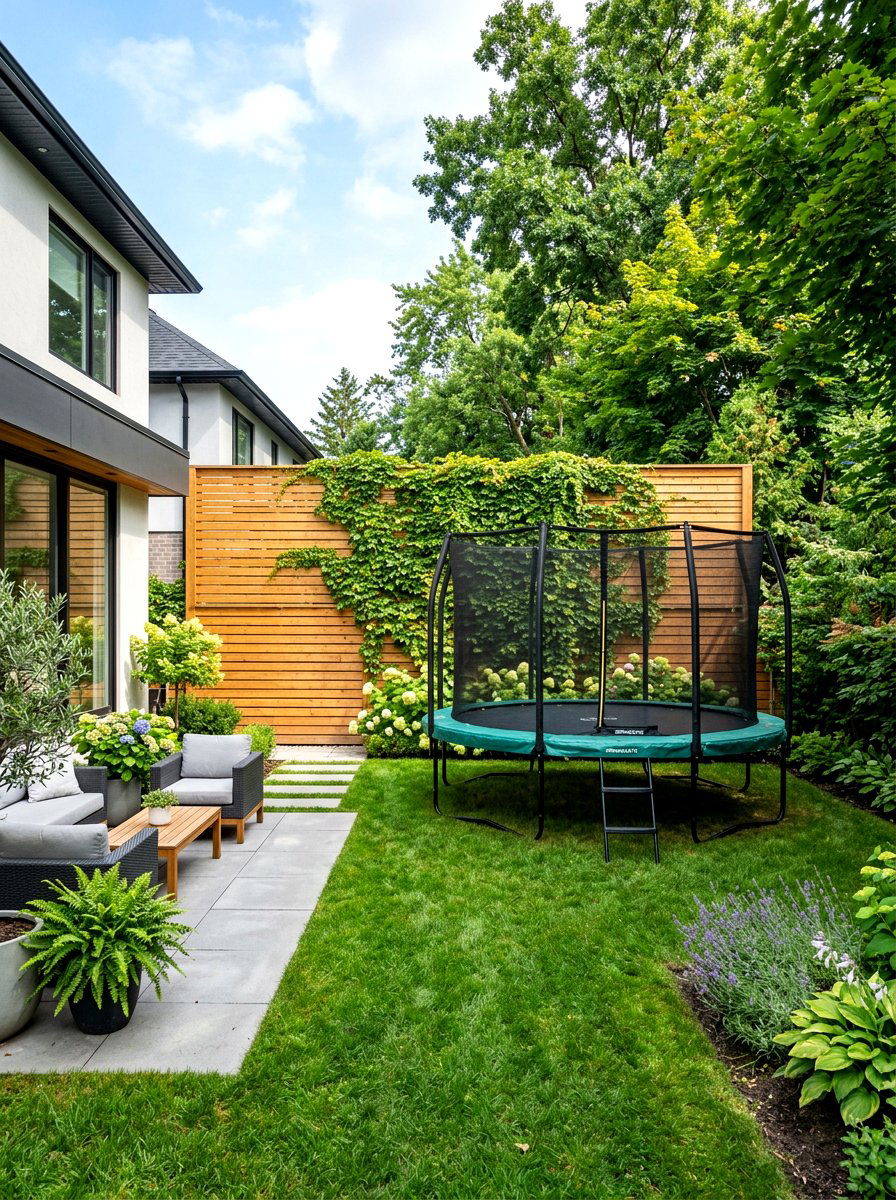
While most hydrangeas are shrubs, the climbing variety offers a unique way to create a vertical border against a wall or fence. This plant uses small rootlets to attach itself to surfaces, eventually covering them in a lush blanket of green leaves and white lacecap flowers. Using a climbing hydrangea is a brilliant way to hide an ugly brick wall or add interest to a plain wooden fence. It takes a few years to get established, but once it does, it provides a spectacular and very different kind of hydrangea border. The heart-shaped leaves and peeling winter bark ensure that this vertical garden looks attractive throughout the entire year.
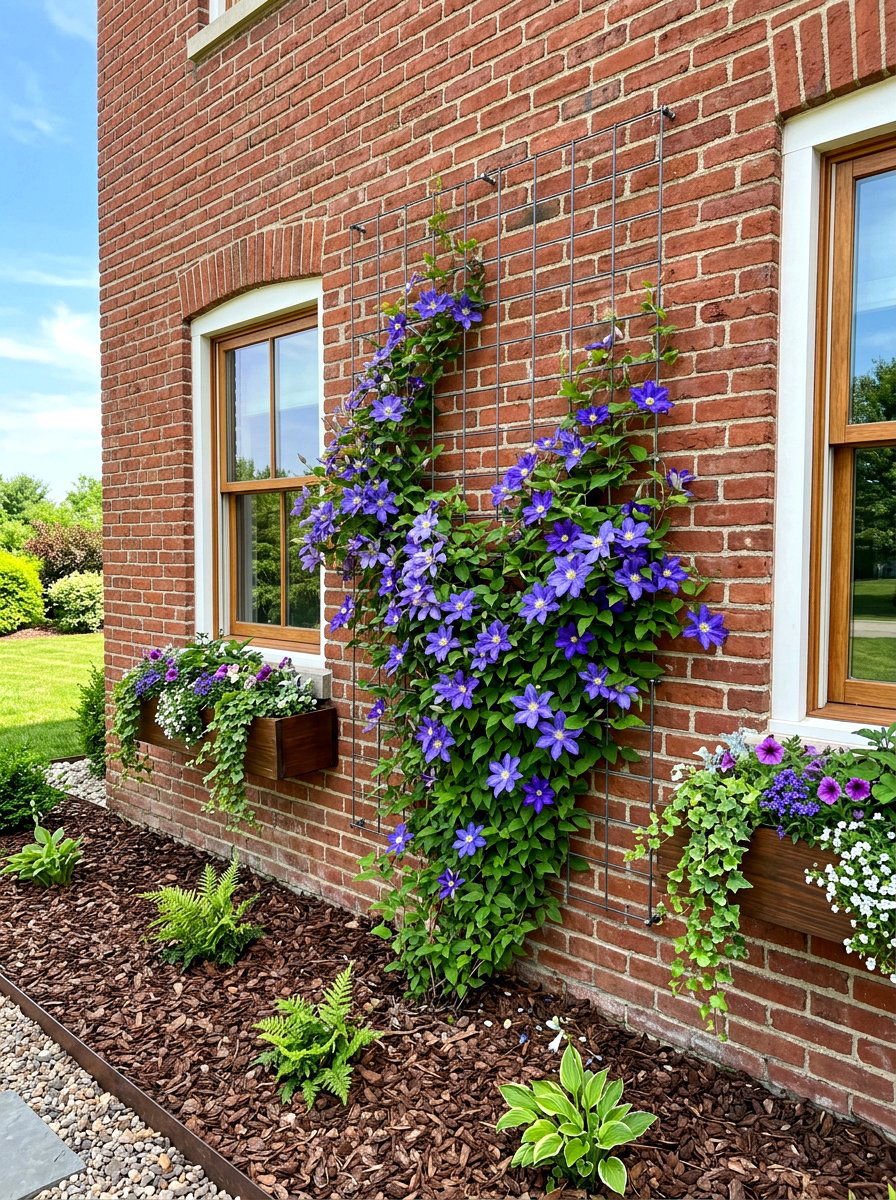
20. Purple hydrangea garden border
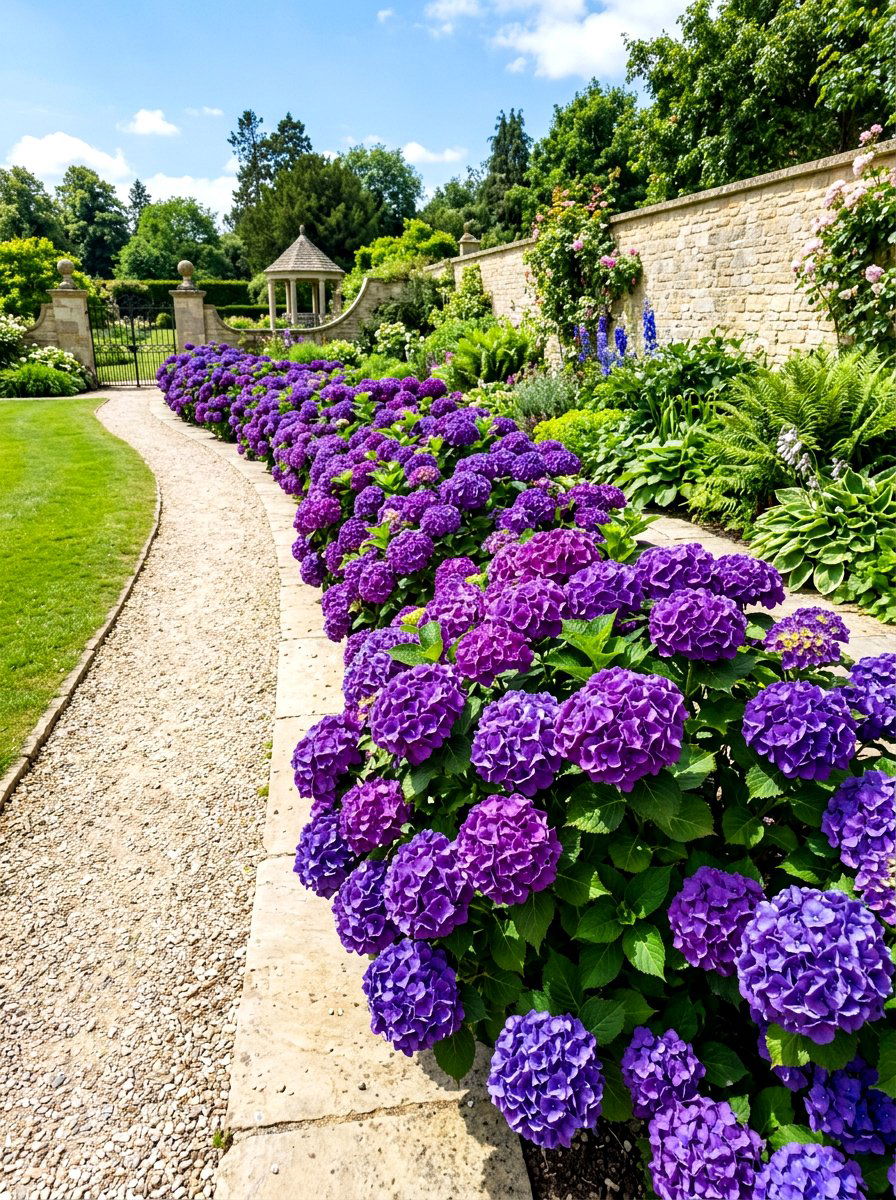
To achieve a royal and sophisticated look, consider a purple hydrangea garden border. This deep, rich color is usually found in mophead varieties and occurs when the soil is slightly acidic but not as much as for blue flowers. Purple hydrangeas add a sense of mystery and depth to the landscape. They look particularly striking when planted against a light-colored background, such as a white fence or a beige stone wall. You can pair them with silver-foliaged plants like lamb's ear to make the purple tones stand out even more. This color choice is unique and often becomes the main conversation piece of the entire garden design.
21. Hydrangea and fern shade border
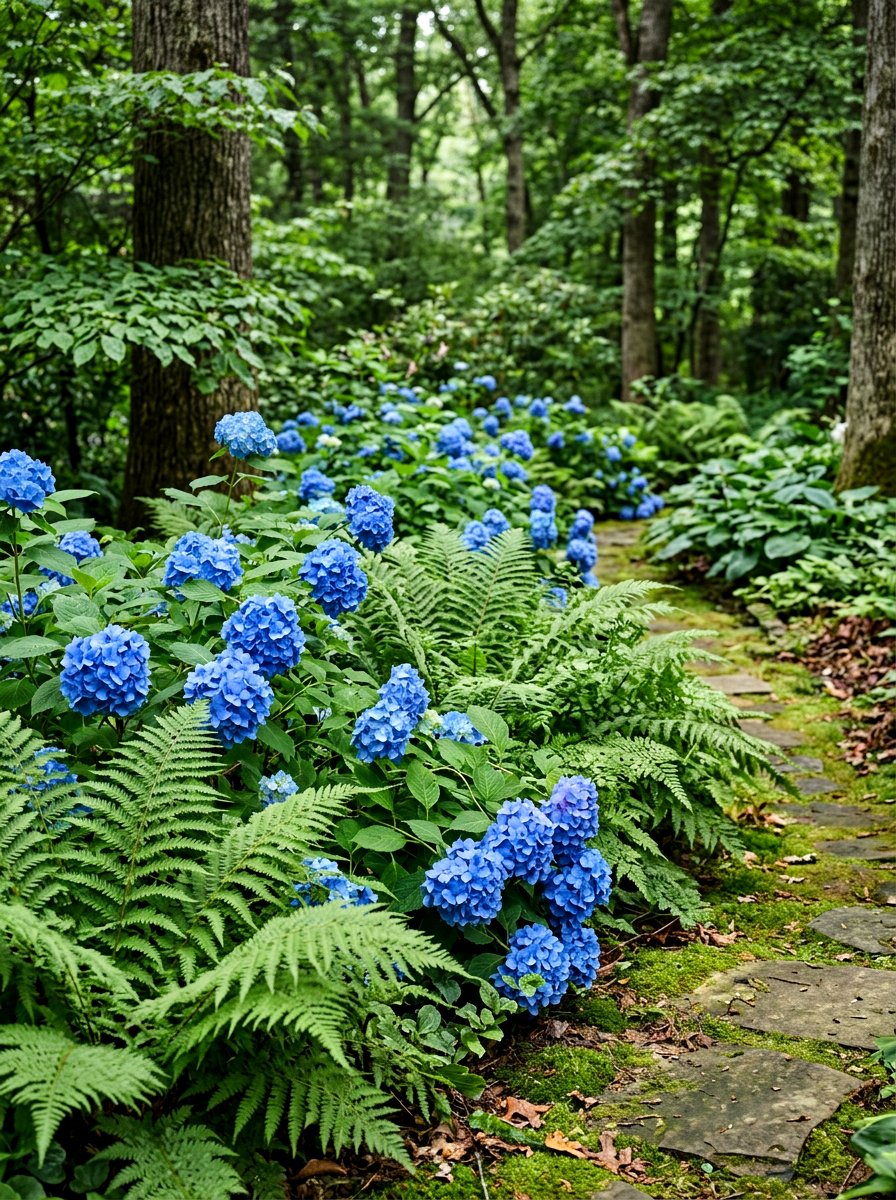
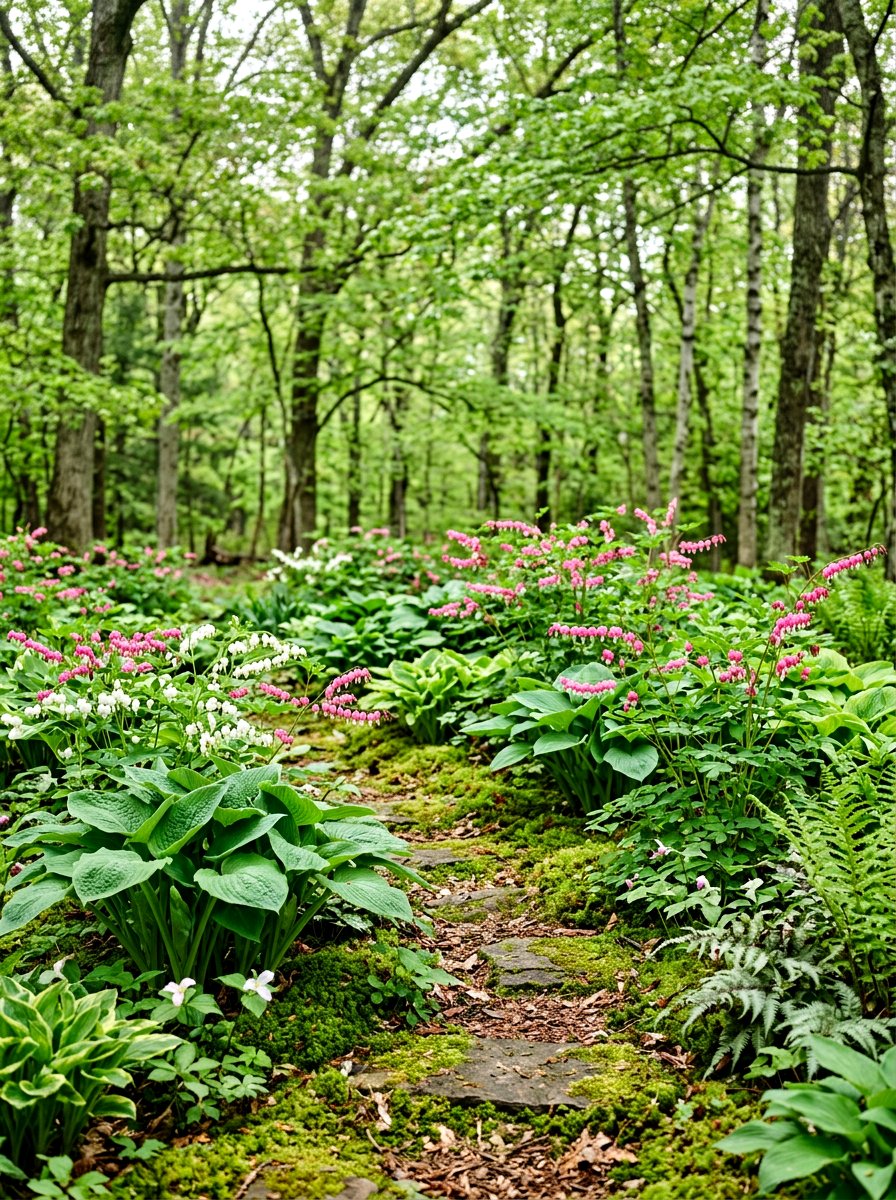
For a tranquil and forest-like atmosphere, try a hydrangea and fern shade border. This combination thrives in the cool, moist conditions found in shady parts of the yard. The delicate, lacy texture of the ferns provides a beautiful contrast to the large, bold leaves and heavy blooms of the hydrangeas. This design feels very lush and cooling, making it a perfect retreat during the hot summer months. You can use different types of ferns, such as ostrich or maidenhair, to add variety to the ground layer. This border requires very little direct sun and is an excellent way to bring life to a north-facing wall or a wooded corner.
22. Bobo hydrangea low border
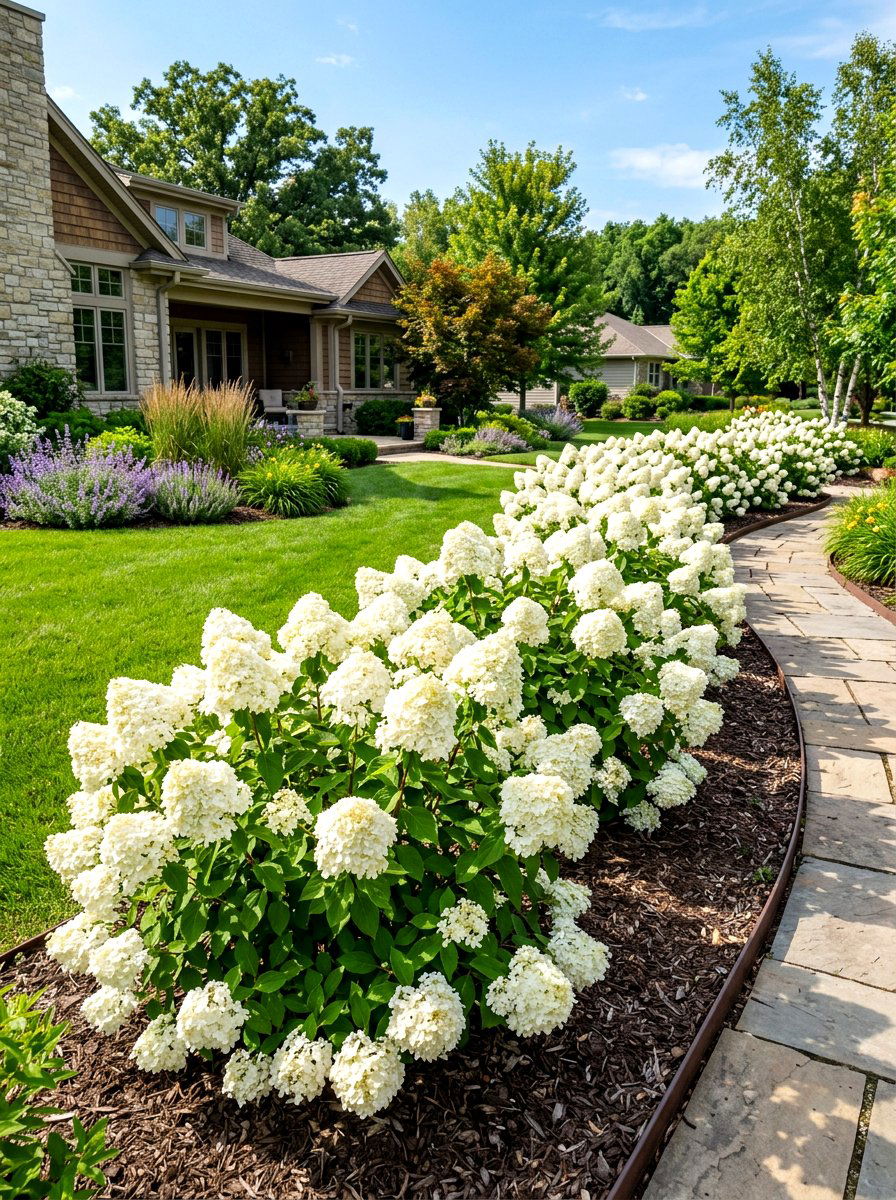
Bobo hydrangeas are a dwarf panicle variety that is specifically bred to stay short and compact. This makes them the perfect choice for a low border along a driveway or a front walkway. They are completely covered in white flowers from top to bottom, often appearing as if they are just a solid mass of blooms. As the season ends, the flowers turn a soft, dusty pink. Because they don 't grow very tall, they won' t block the view of your house or other landscaping features. They are incredibly easy to maintain and fit perfectly into small modern gardens. This low border adds a refined and very tidy look to your home’s exterior.
23. Little Lime hydrangea walkway
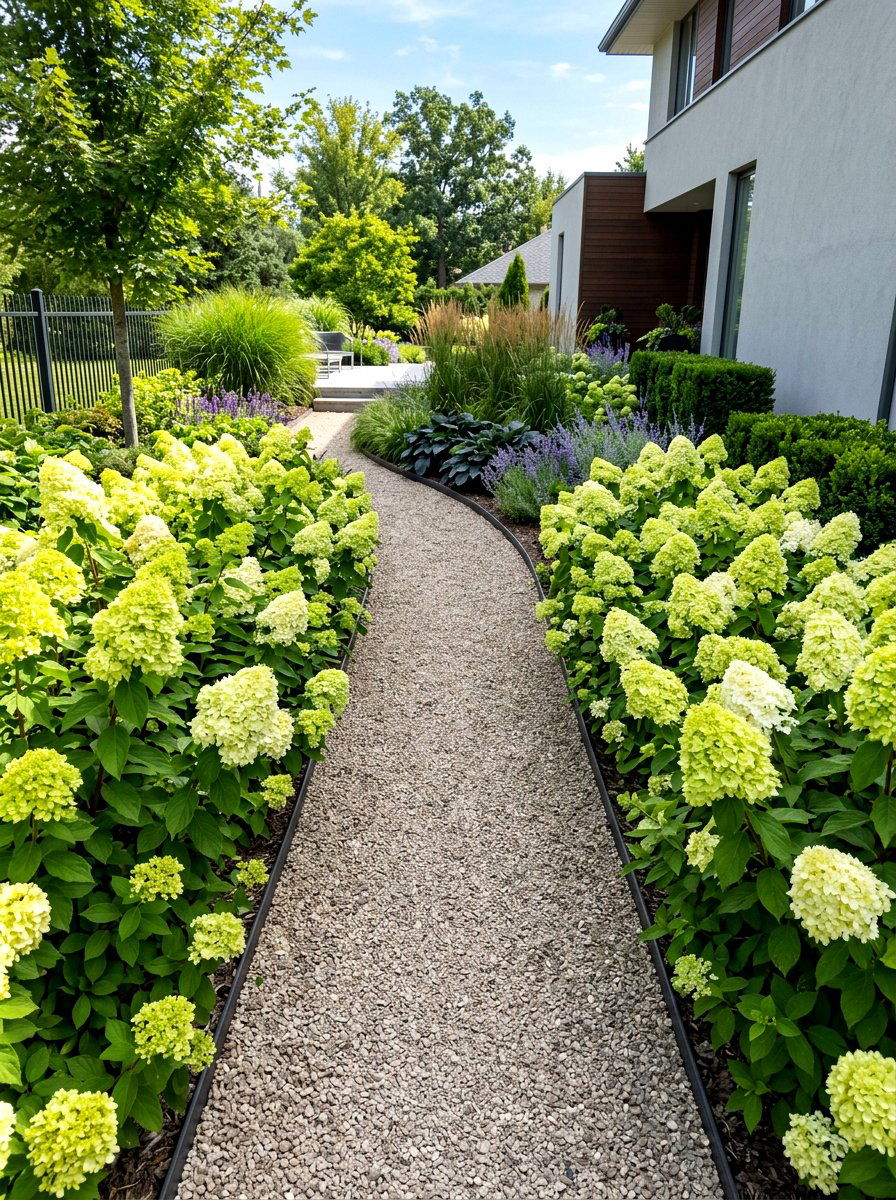
Little Lime is a smaller version of the famous Limelight hydrangea, offering the same stunning lime-green to white color transition in a more manageable size. Using these to line a walkway creates a bright and refreshing path through your garden. They have very strong stems that hold the flower heads upright, ensuring a neat and polished appearance at all times. This design is ideal for mid-sized yards where you want the impact of a panicle hydrangea without the massive height. The cooling colors are very pleasing to the eye and work well with both traditional and modern architectural styles. It is a reliable and very popular choice for professional landscapers.
24. Hydrangea foundation planting
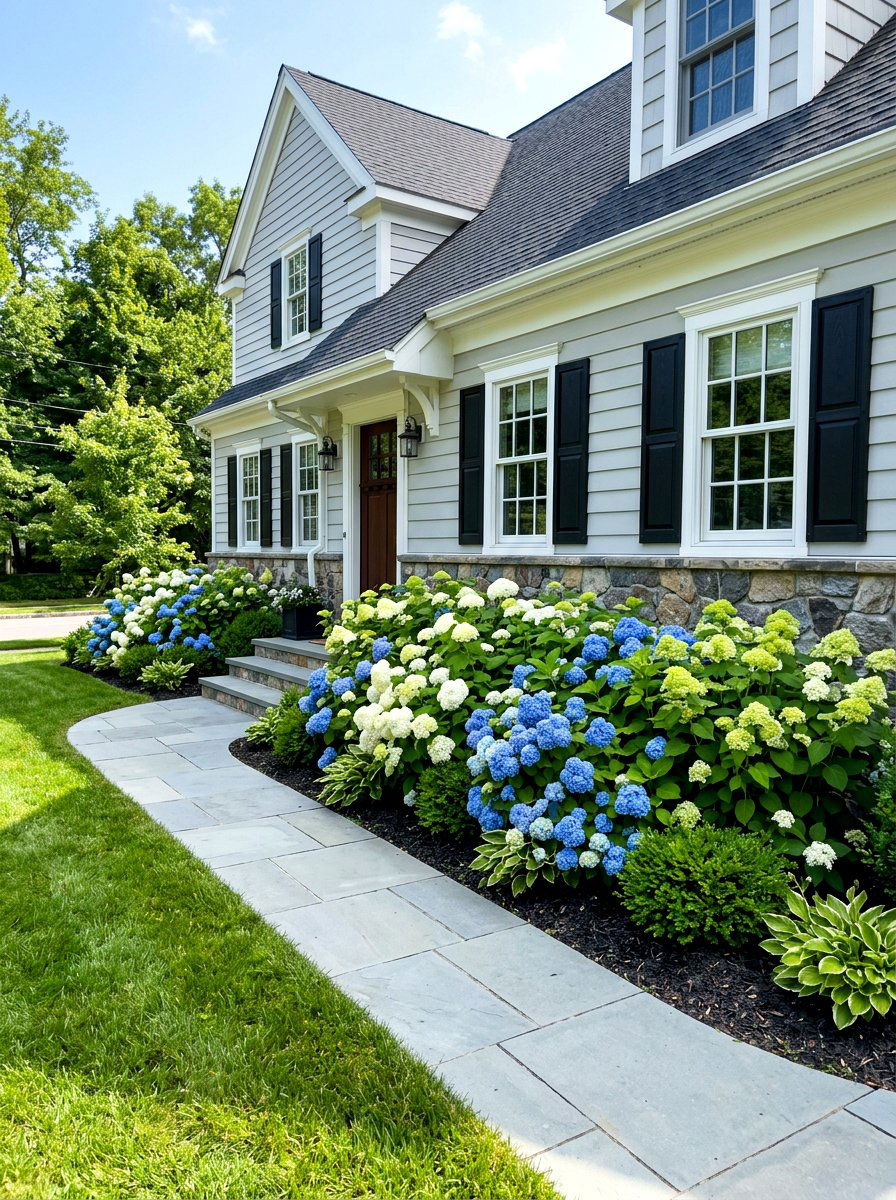
Using hydrangeas as a foundation planting is a classic way to soften the transition between your house and the lawn. These shrubs are large enough to hide the concrete base of the home while providing a beautiful backdrop for lower-growing annuals or perennials. Choose varieties that match the scale of your house; for example, use larger mopheads for a two-story home and dwarf varieties for a ranch-style house. The lush foliage and abundant flowers create a very established and high-end look for your property. This approach also helps to regulate the temperature near the house by providing shade to the foundation during the hot summer afternoon.
25. Hydrangea and rose flower bed
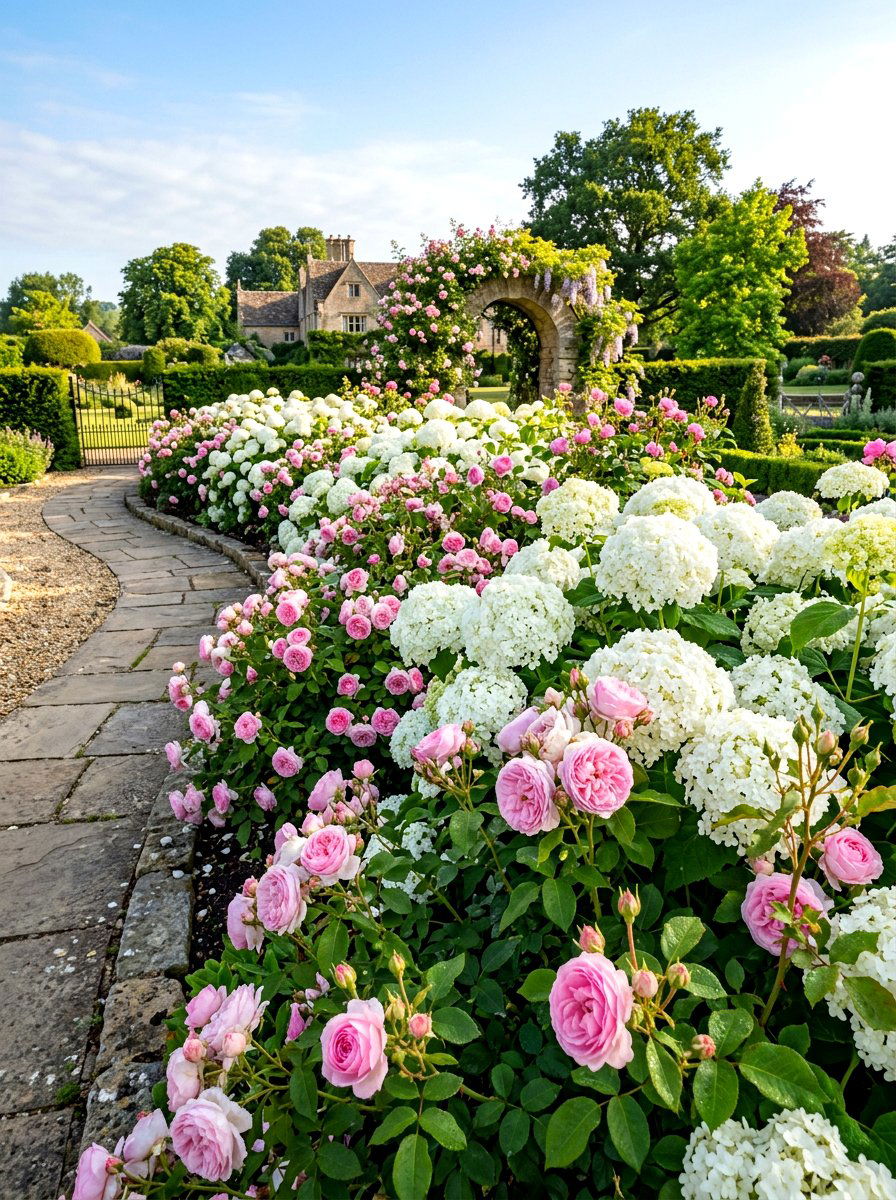
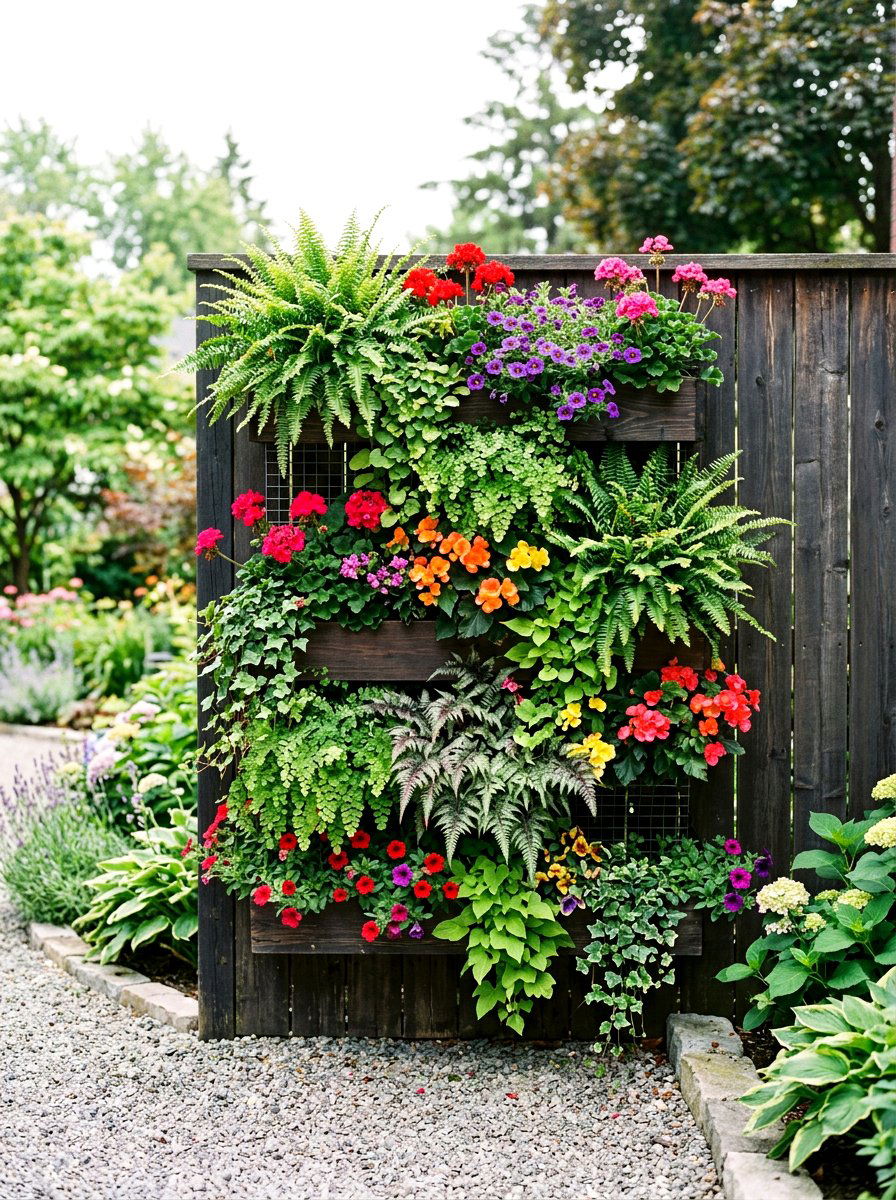
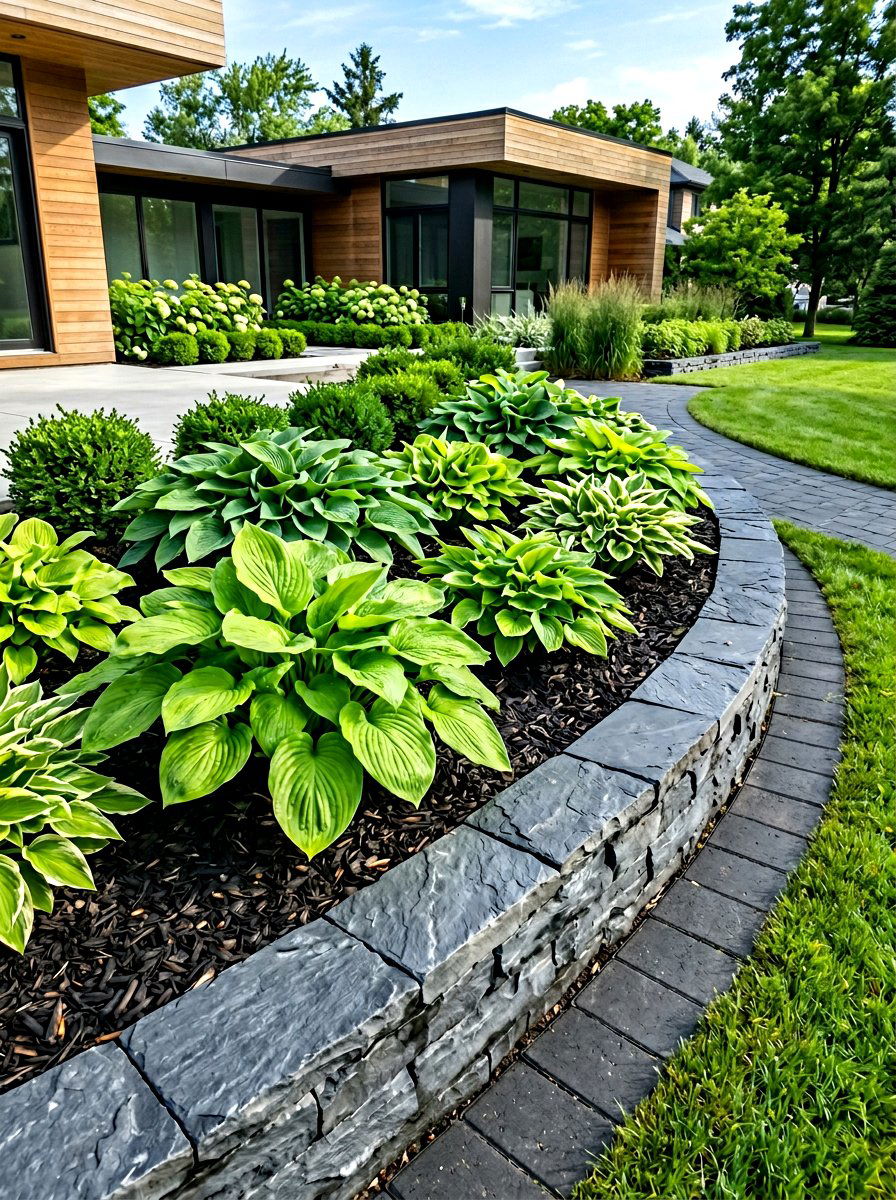
Combining hydrangeas and roses in a single flower bed creates a truly luxurious and romantic garden border. The large, billowy hydrangea blooms provide a sturdy foundation for the elegant and fragrant rose flowers. This pairing works best in a spot that receives plenty of morning sun but some afternoon shade to protect the hydrangeas from wilting. Choose roses in complementary colors, such as white, pink, or soft yellow, to create a harmonious look. The different flower shapes and foliage textures add a lot of visual interest to the bed. This is a high-impact design that brings a sense of classic English garden beauty to any American backyard or front yard.
26. Mountain hydrangea woodland border
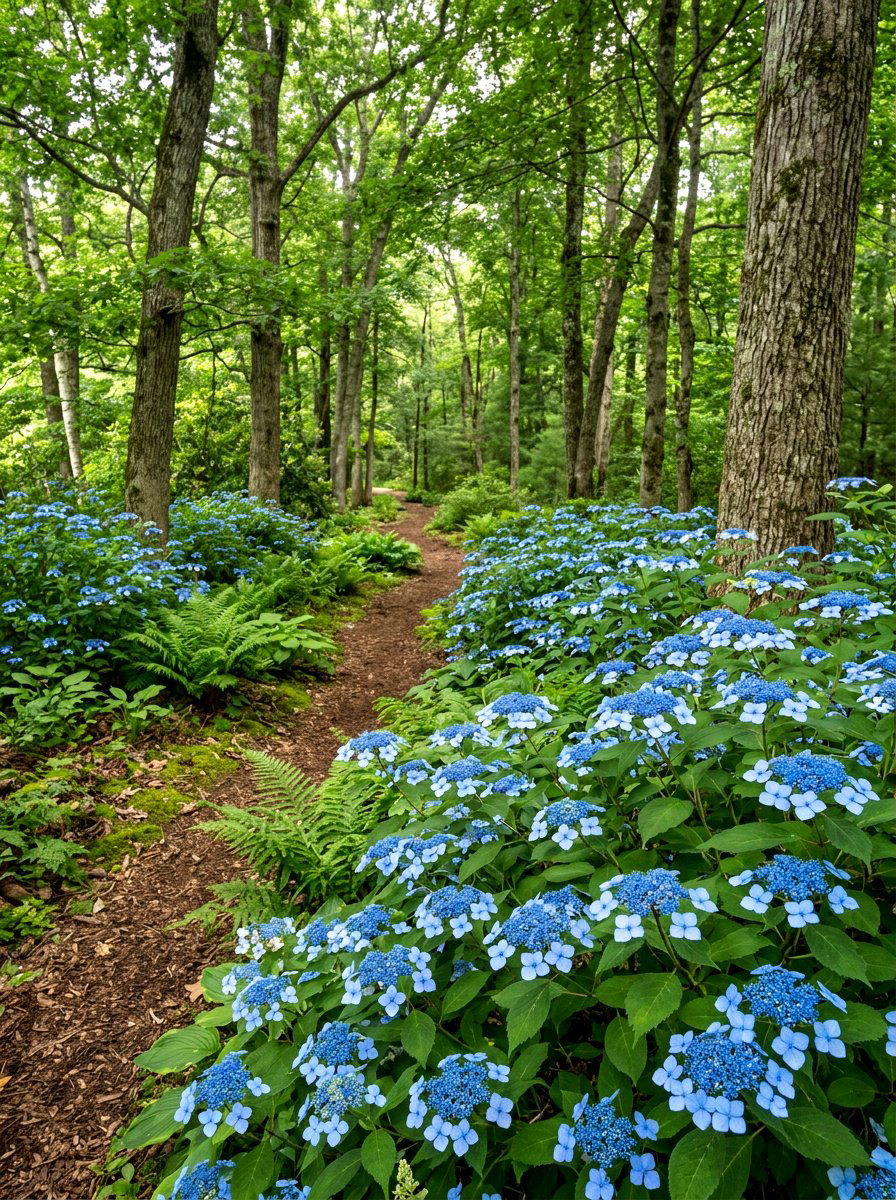
Mountain hydrangeas, or Hydrangea serrata, are a bit more delicate and refined than their bigleaf cousins. They are perfect for a woodland border where a more subtle and natural look is desired. These plants typically feature lacecap-style flowers in soft shades of blue, pink, or white. They are generally more cold-hardy and thrive in the dappled light found under large trees. Planting them along a winding woodland path creates a serene and understated border that feels as if it has always been there. Their smaller leaves and dainty flowers make them a great choice for gardeners who prefer a more naturalistic and less "showy" landscape design.
27. Strawberry Sundae hydrangea garden
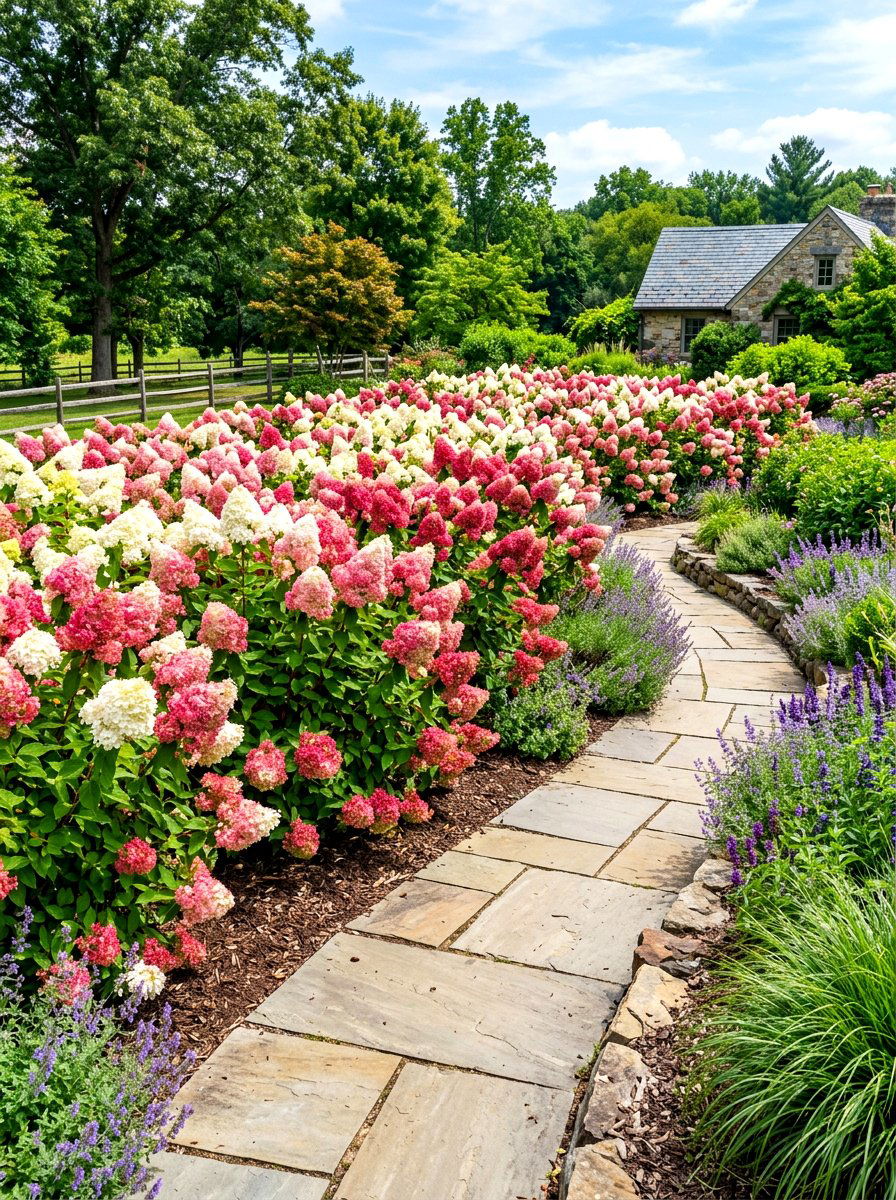
Strawberry Sundae is a fantastic panicle hydrangea that starts white and quickly changes to a delicious shade of strawberry pink. Using these in a garden border adds a playful and colorful touch to the landscape. The compact size of this variety makes it easy to incorporate into most backyard designs without it taking over. As the blooms mature throughout the summer, the color becomes deeper and more vibrant, providing a constantly changing display. This variety looks amazing when planted in a mass grouping, creating a sea of pink and white flowers. It is a very cheerful choice that brings a lot of personality to the garden.
28. Hydrangea and ornamental grass border
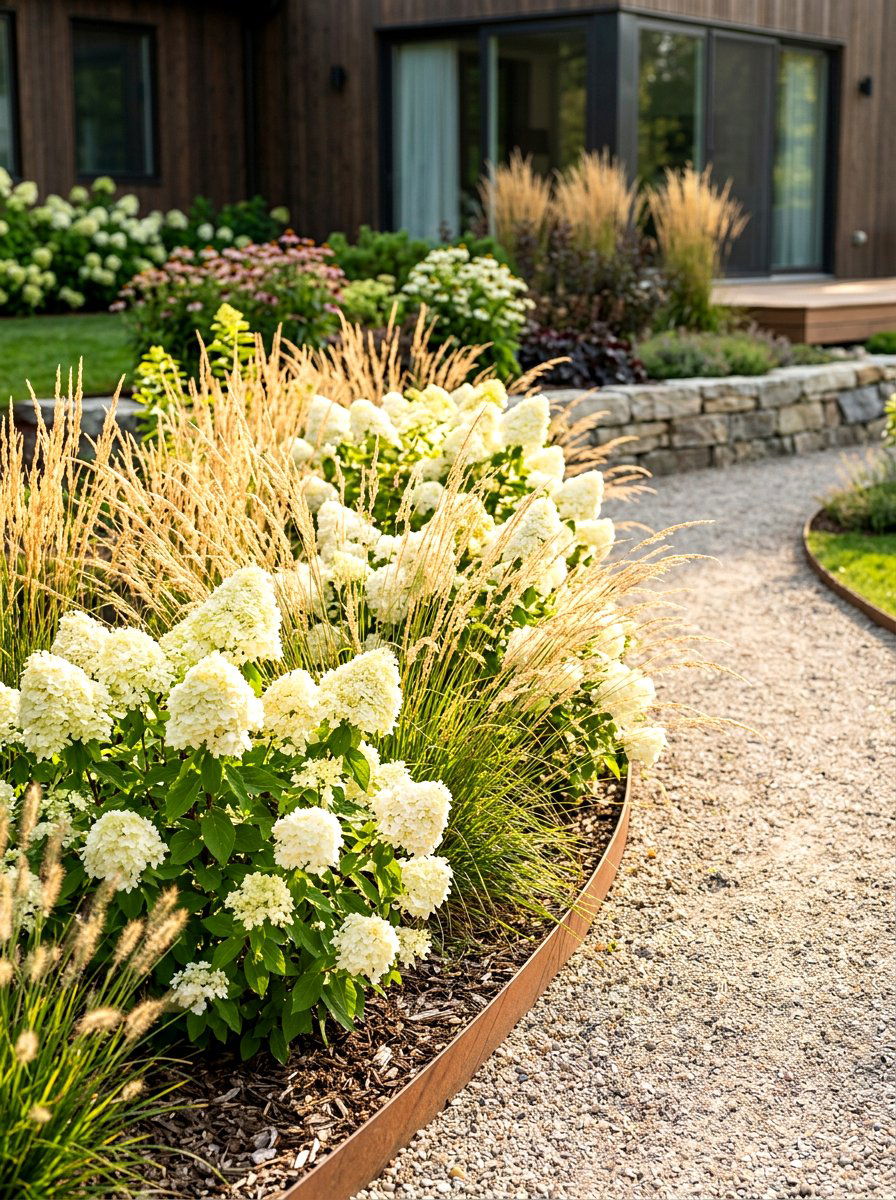
For a modern and textured look, try a hydrangea and ornamental grass border. The soft, wispy blades of the grass contrast perfectly with the solid, bold form of the hydrangea shrubs. This combination adds a lot of movement to the garden, as the grasses sway in the wind. Use taller grasses like Karl Foerster as a backdrop or lower-growing varieties like Japanese forest grass at the front. This design is particularly effective in the autumn when the grasses turn golden and the hydrangea flowers fade to rustic tones. It is a low-maintenance and very stylish way to add year-round interest to your garden borders.
29. Cityline hydrangea patio edge
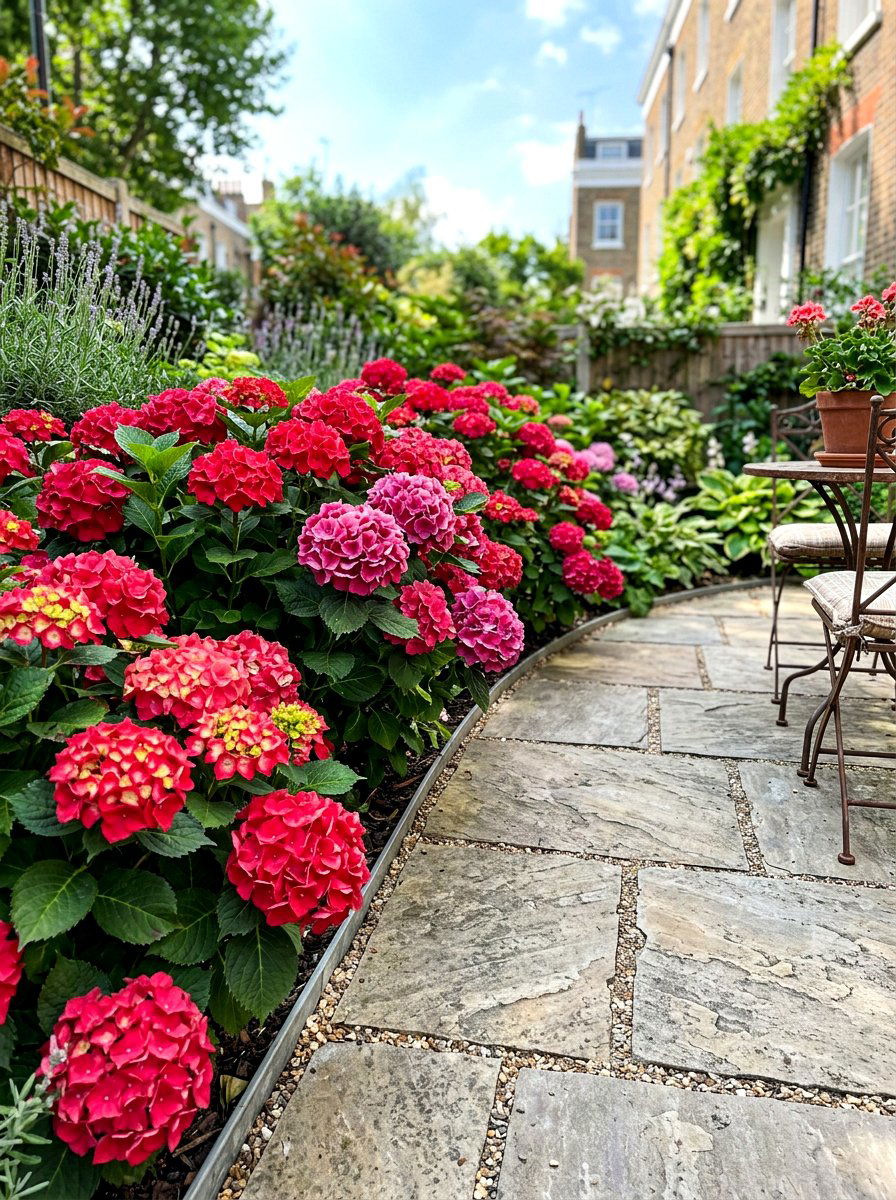
Cityline hydrangeas are a series of compact mopheads that were specifically bred for small urban spaces and patio borders. They have very tight, sturdy growth and large, vivid flowers in shades of red, pink, or blue. Planting them right at the edge of a patio creates a lush and colorful frame for your outdoor seating area. Because they stay small, they won't grow over the furniture or block your path. Their intense colors make them a great focal point for a small backyard or balcony. They also perform very well in large containers, allowing you to move the border around to suit your needs throughout the summer season.
30. Quick Fire hydrangea hedge
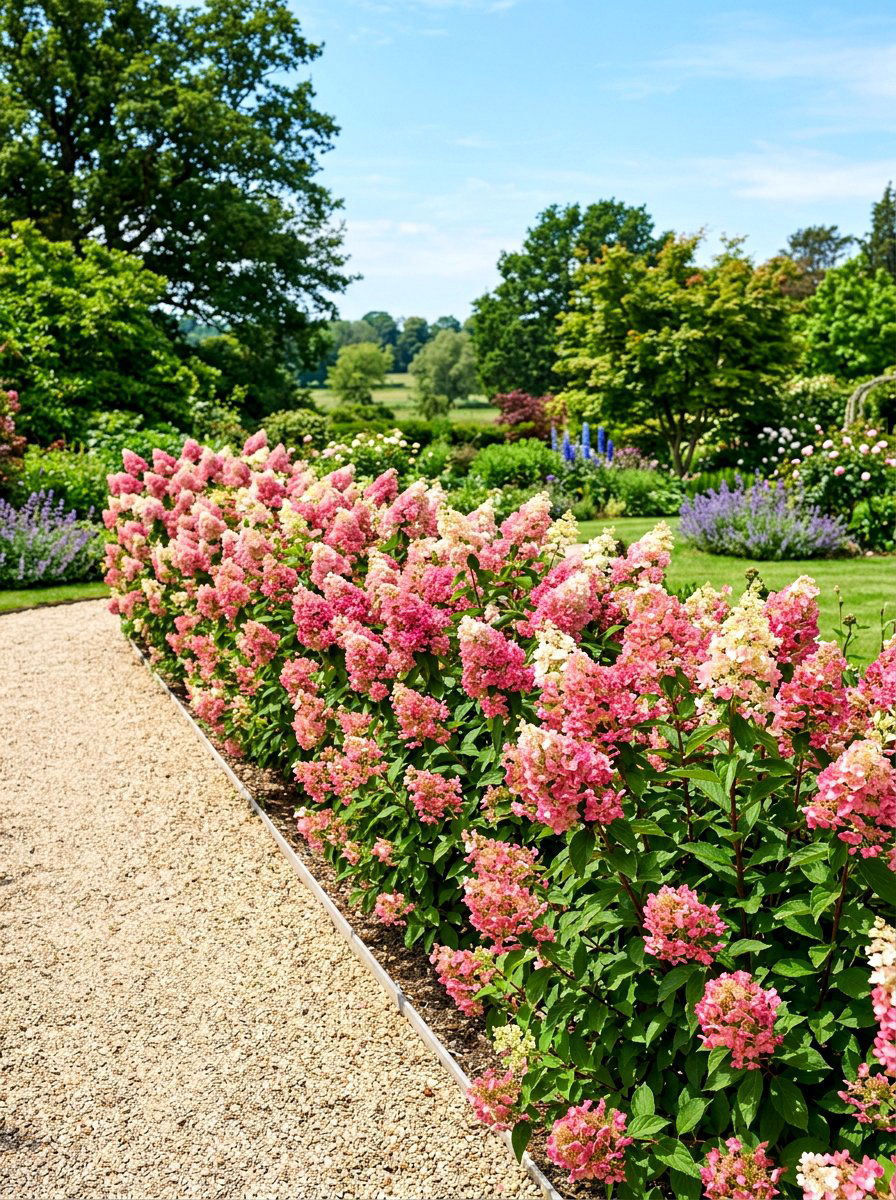
Quick Fire hydrangeas are unique because they bloom much earlier in the season than other panicle varieties. Using them for a hedge ensures that you have beautiful flowers in your garden starting in early summer. The blooms begin as white and rapidly turn to a deep, rosy pink. This early start extends the hydrangea season significantly, giving you more time to enjoy the colorful border. They have a very upright and open habit that feels a bit more airy and light than the dense Limelight variety. This makes them a great choice for a hedge that provides structure without feeling too heavy or overwhelming in a smaller garden space.
Conclusion:
Designing a hydrangea border is a rewarding way to enhance your landscape's beauty and value. From the towering presence of a panicle hedge to the delicate charm of a dwarf flower bed, these plants offer endless possibilities for every type of garden. By carefully selecting the right variety for your light and soil conditions, you can create a stunning floral display that lasts for many years. Whether you prefer the classic look of white snowballs or the vibrant pop of blue and purple mopheads, hydrangeas provide a reliable and versatile solution. Start planning your border today to transform your outdoor space into a lush and inviting sanctuary.

Related posts: